Oakland NAACP Partners With City and Police to Recruit New Officers
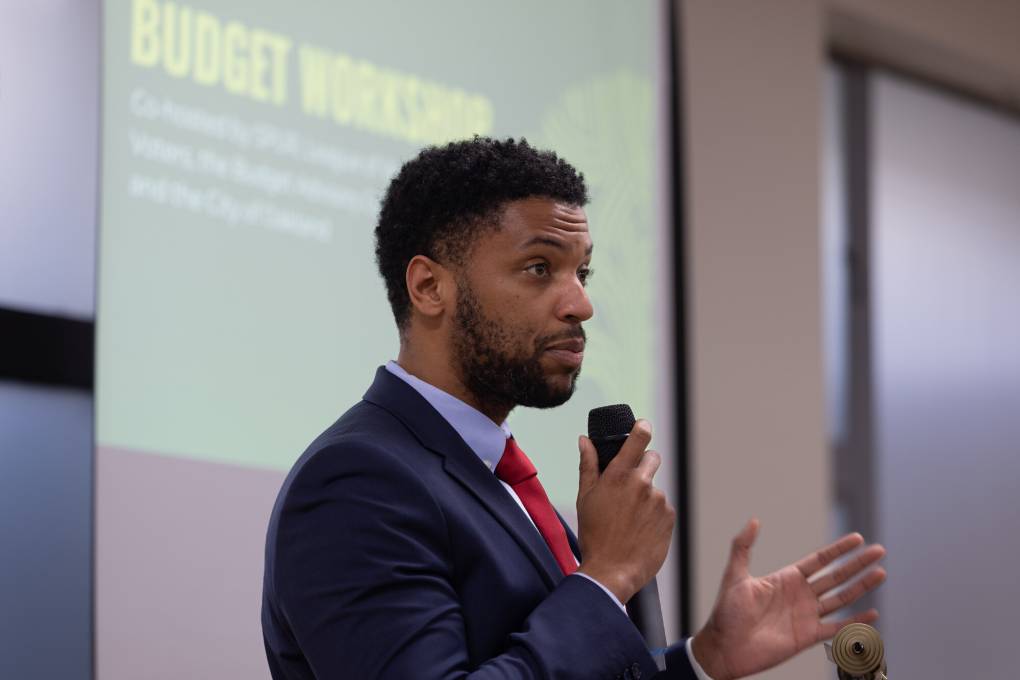
Oakland’s Interim Mayor Shakes Up City Hall With Move to Fire Thao Staffers
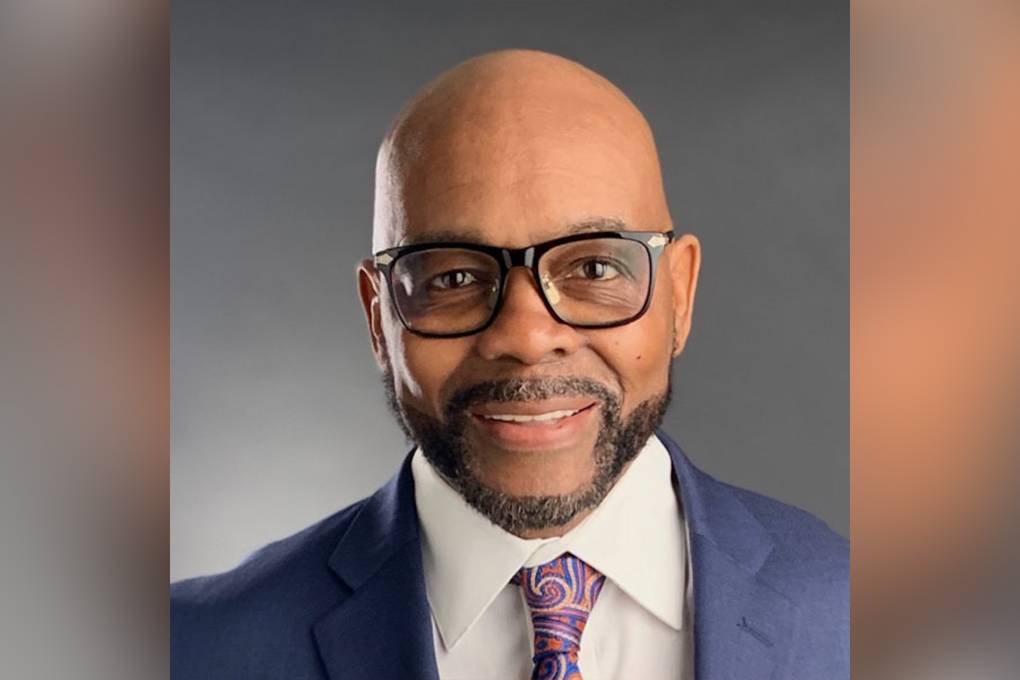
'A Shining Star': Civil Rights Leader Rev. Jethroe Moore II to Be Honored at Memorial Saturday
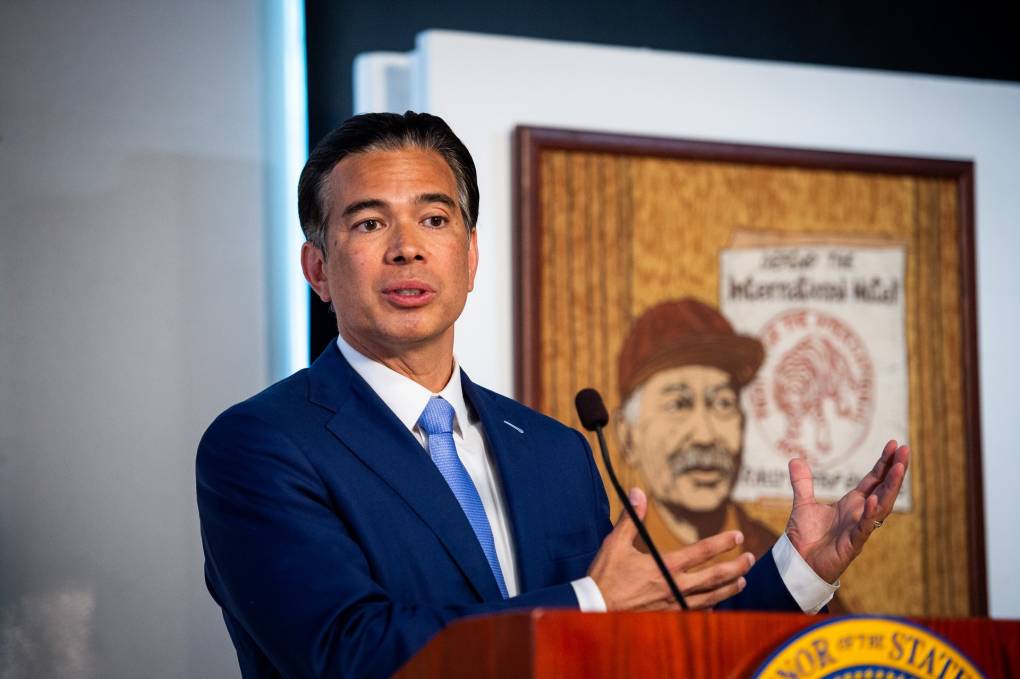
New California Crime Data Shows an 'Epidemic of Hate,' Says California Attorney General Bonta
California NAACP President Aids Corporate Prop Campaigns — Collects $1.2 Million and Counting
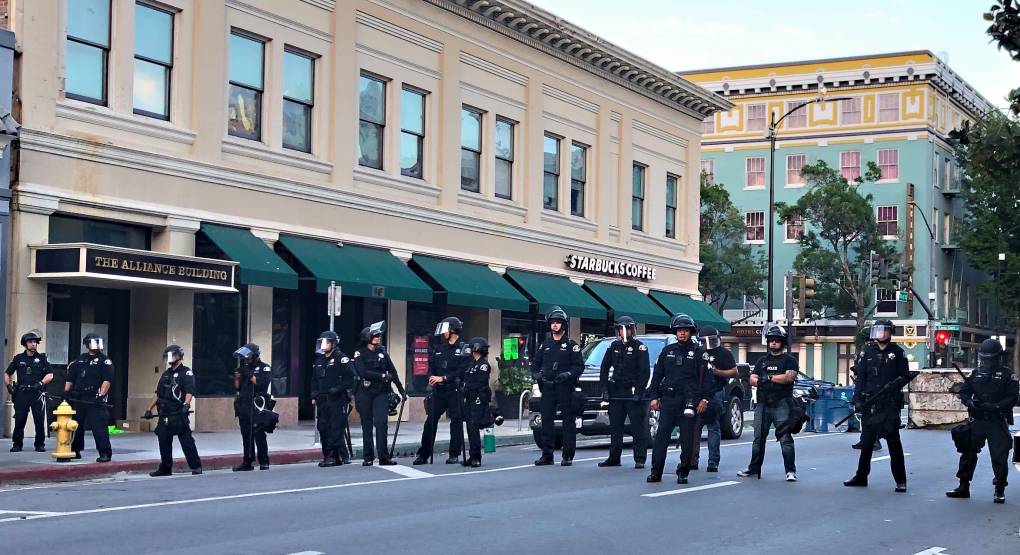
'Inadequate at Best': San Jose Activists Question Mayor's Police Reform Plan
Are California Police Departments Quietly Backing Away from Predictive Policing?
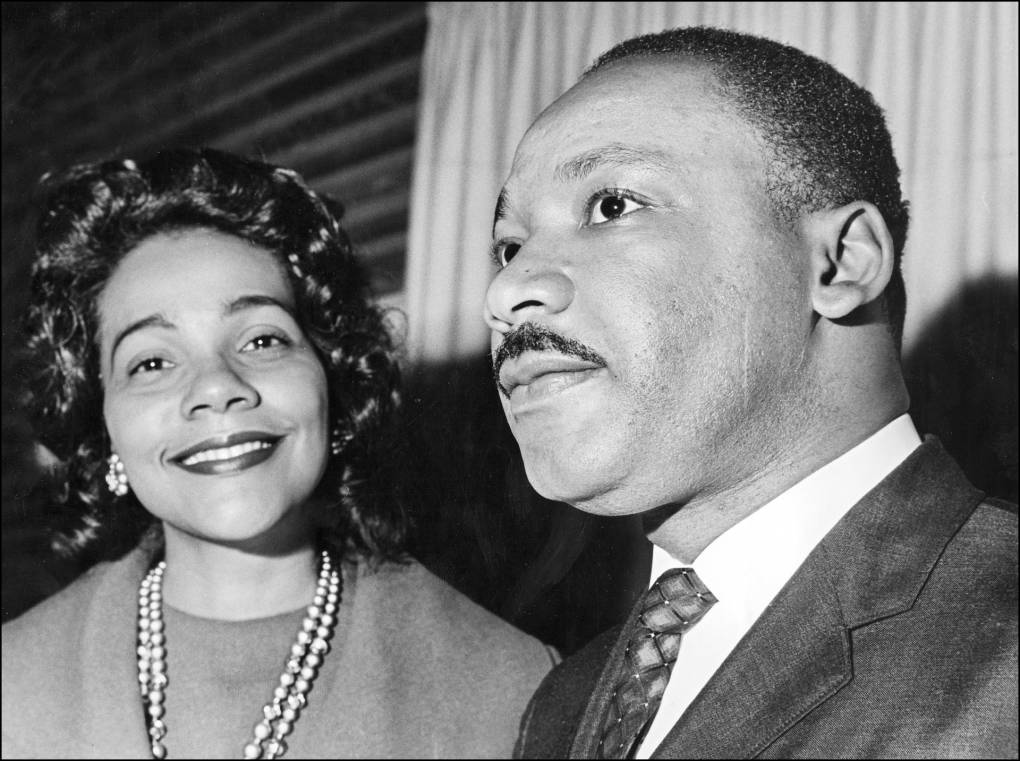
When Martin Luther King Jr. Spoke Out Against the Vietnam War
San Francisco's Black Leaders Call on City to Use Tax Funds for Reparations
Sponsored
Player sponsored by
window.__IS_SSR__=true
window.__INITIAL_STATE__={
"attachmentsReducer": {
"audio_0": {
"type": "attachments",
"id": "audio_0",
"imgSizes": {
"kqedFullSize": {
"file": "https://ww2.kqed.org/news/wp-content/themes/KQED-unified/img/audio_bgs/background0.jpg"
}
}
},
"audio_1": {
"type": "attachments",
"id": "audio_1",
"imgSizes": {
"kqedFullSize": {
"file": "https://ww2.kqed.org/news/wp-content/themes/KQED-unified/img/audio_bgs/background1.jpg"
}
}
},
"audio_2": {
"type": "attachments",
"id": "audio_2",
"imgSizes": {
"kqedFullSize": {
"file": "https://ww2.kqed.org/news/wp-content/themes/KQED-unified/img/audio_bgs/background2.jpg"
}
}
},
"audio_3": {
"type": "attachments",
"id": "audio_3",
"imgSizes": {
"kqedFullSize": {
"file": "https://ww2.kqed.org/news/wp-content/themes/KQED-unified/img/audio_bgs/background3.jpg"
}
}
},
"audio_4": {
"type": "attachments",
"id": "audio_4",
"imgSizes": {
"kqedFullSize": {
"file": "https://ww2.kqed.org/news/wp-content/themes/KQED-unified/img/audio_bgs/background4.jpg"
}
}
},
"placeholder": {
"type": "attachments",
"id": "placeholder",
"imgSizes": {
"thumbnail": {
"file": "https://cdn.kqed.org/wp-content/uploads/2024/12/KQED-Default-Image-816638274-2000x1333-1-160x107.jpg",
"width": 160,
"height": 107,
"mimeType": "image/jpeg"
},
"medium": {
"file": "https://cdn.kqed.org/wp-content/uploads/2024/12/KQED-Default-Image-816638274-2000x1333-1-800x533.jpg",
"width": 800,
"height": 533,
"mimeType": "image/jpeg"
},
"medium_large": {
"file": "https://cdn.kqed.org/wp-content/uploads/2024/12/KQED-Default-Image-816638274-2000x1333-1-768x512.jpg",
"width": 768,
"height": 512,
"mimeType": "image/jpeg"
},
"large": {
"file": "https://cdn.kqed.org/wp-content/uploads/2024/12/KQED-Default-Image-816638274-2000x1333-1-1020x680.jpg",
"width": 1020,
"height": 680,
"mimeType": "image/jpeg"
},
"1536x1536": {
"file": "https://cdn.kqed.org/wp-content/uploads/2024/12/KQED-Default-Image-816638274-2000x1333-1-1536x1024.jpg",
"width": 1536,
"height": 1024,
"mimeType": "image/jpeg"
},
"fd-lrg": {
"file": "https://cdn.kqed.org/wp-content/uploads/2024/12/KQED-Default-Image-816638274-2000x1333-1-1536x1024.jpg",
"width": 1536,
"height": 1024,
"mimeType": "image/jpeg"
},
"fd-med": {
"file": "https://cdn.kqed.org/wp-content/uploads/2024/12/KQED-Default-Image-816638274-2000x1333-1-1020x680.jpg",
"width": 1020,
"height": 680,
"mimeType": "image/jpeg"
},
"fd-sm": {
"file": "https://cdn.kqed.org/wp-content/uploads/2024/12/KQED-Default-Image-816638274-2000x1333-1-800x533.jpg",
"width": 800,
"height": 533,
"mimeType": "image/jpeg"
},
"post-thumbnail": {
"file": "https://cdn.kqed.org/wp-content/uploads/2024/12/KQED-Default-Image-816638274-2000x1333-1-672x372.jpg",
"width": 672,
"height": 372,
"mimeType": "image/jpeg"
},
"twentyfourteen-full-width": {
"file": "https://cdn.kqed.org/wp-content/uploads/2024/12/KQED-Default-Image-816638274-2000x1333-1-1038x576.jpg",
"width": 1038,
"height": 576,
"mimeType": "image/jpeg"
},
"xxsmall": {
"file": "https://cdn.kqed.org/wp-content/uploads/2024/12/KQED-Default-Image-816638274-2000x1333-1-160x107.jpg",
"width": 160,
"height": 107,
"mimeType": "image/jpeg"
},
"xsmall": {
"file": "https://cdn.kqed.org/wp-content/uploads/2024/12/KQED-Default-Image-816638274-2000x1333-1-672x372.jpg",
"width": 672,
"height": 372,
"mimeType": "image/jpeg"
},
"small": {
"file": "https://cdn.kqed.org/wp-content/uploads/2024/12/KQED-Default-Image-816638274-2000x1333-1-672x372.jpg",
"width": 672,
"height": 372,
"mimeType": "image/jpeg"
},
"xlarge": {
"file": "https://cdn.kqed.org/wp-content/uploads/2024/12/KQED-Default-Image-816638274-2000x1333-1-1020x680.jpg",
"width": 1020,
"height": 680,
"mimeType": "image/jpeg"
},
"full-width": {
"file": "https://cdn.kqed.org/wp-content/uploads/2024/12/KQED-Default-Image-816638274-2000x1333-1-1920x1280.jpg",
"width": 1920,
"height": 1280,
"mimeType": "image/jpeg"
},
"guest-author-32": {
"file": "https://cdn.kqed.org/wp-content/uploads/2025/01/KQED-Default-Image-816638274-1333x1333-1-160x160.jpg",
"width": 32,
"height": 32,
"mimeType": "image/jpeg"
},
"guest-author-50": {
"file": "https://cdn.kqed.org/wp-content/uploads/2025/01/KQED-Default-Image-816638274-1333x1333-1-160x160.jpg",
"width": 50,
"height": 50,
"mimeType": "image/jpeg"
},
"guest-author-64": {
"file": "https://cdn.kqed.org/wp-content/uploads/2025/01/KQED-Default-Image-816638274-1333x1333-1-160x160.jpg",
"width": 64,
"height": 64,
"mimeType": "image/jpeg"
},
"guest-author-96": {
"file": "https://cdn.kqed.org/wp-content/uploads/2025/01/KQED-Default-Image-816638274-1333x1333-1-160x160.jpg",
"width": 96,
"height": 96,
"mimeType": "image/jpeg"
},
"guest-author-128": {
"file": "https://cdn.kqed.org/wp-content/uploads/2025/01/KQED-Default-Image-816638274-1333x1333-1-160x160.jpg",
"width": 128,
"height": 128,
"mimeType": "image/jpeg"
},
"detail": {
"file": "https://cdn.kqed.org/wp-content/uploads/2025/01/KQED-Default-Image-816638274-1333x1333-1-160x160.jpg",
"width": 160,
"height": 160,
"mimeType": "image/jpeg"
},
"kqedFullSize": {
"file": "https://cdn.kqed.org/wp-content/uploads/2024/12/KQED-Default-Image-816638274-2000x1333-1.jpg",
"width": 2000,
"height": 1333
}
}
},
"news_12038002": {
"type": "attachments",
"id": "news_12038002",
"meta": {
"index": "attachments_1716263798",
"site": "news",
"id": "12038002",
"found": true
},
"title": "An Oakland Police Department squad car in downtown Oakland on April 28, 2025.",
"publishDate": 1745884766,
"status": "inherit",
"parent": 12042539,
"modified": 1748986081,
"caption": "An Oakland Police Department squad car in downtown Oakland on April 28, 2025. The NAACP Oakland chapter announced an OPD recruitment effort on Sept. 22, 2025.",
"credit": "Martin do Nascimento/KQED",
"altTag": null,
"description": null,
"imgSizes": {
"medium": {
"file": "https://cdn.kqed.org/wp-content/uploads/sites/10/2025/04/250428-OPD-FILE-MD-01-KQED-1-800x533.jpg",
"width": 800,
"height": 533,
"mimeType": "image/jpeg"
},
"large": {
"file": "https://cdn.kqed.org/wp-content/uploads/sites/10/2025/04/250428-OPD-FILE-MD-01-KQED-1-1020x680.jpg",
"width": 1020,
"height": 680,
"mimeType": "image/jpeg"
},
"thumbnail": {
"file": "https://cdn.kqed.org/wp-content/uploads/sites/10/2025/04/250428-OPD-FILE-MD-01-KQED-1-160x107.jpg",
"width": 160,
"height": 107,
"mimeType": "image/jpeg"
},
"1536x1536": {
"file": "https://cdn.kqed.org/wp-content/uploads/sites/10/2025/04/250428-OPD-FILE-MD-01-KQED-1-1536x1024.jpg",
"width": 1536,
"height": 1024,
"mimeType": "image/jpeg"
},
"post-thumbnail": {
"file": "https://cdn.kqed.org/wp-content/uploads/sites/10/2025/04/250428-OPD-FILE-MD-01-KQED-1-672x372.jpg",
"width": 672,
"height": 372,
"mimeType": "image/jpeg"
},
"twentyfourteen-full-width": {
"file": "https://cdn.kqed.org/wp-content/uploads/sites/10/2025/04/250428-OPD-FILE-MD-01-KQED-1-1038x576.jpg",
"width": 1038,
"height": 576,
"mimeType": "image/jpeg"
},
"full-width": {
"file": "https://cdn.kqed.org/wp-content/uploads/sites/10/2025/04/250428-OPD-FILE-MD-01-KQED-1-1920x1280.jpg",
"width": 1920,
"height": 1280,
"mimeType": "image/jpeg"
},
"kqedFullSize": {
"file": "https://cdn.kqed.org/wp-content/uploads/sites/10/2025/04/250428-OPD-FILE-MD-01-KQED-1.jpg",
"width": 2000,
"height": 1333
}
},
"fetchFailed": false,
"isLoading": false
},
"news_12034725": {
"type": "attachments",
"id": "news_12034725",
"meta": {
"index": "attachments_1716263798",
"site": "news",
"id": "12034725",
"found": true
},
"title": "20250311_Oakland-Budget_DMB_00008_qed",
"publishDate": 1744046339,
"status": "inherit",
"parent": 12034722,
"modified": 1744046403,
"caption": "Interim Mayor Kevin Jenkins addresses Oakland residents at an educational workshop about Oakland’s biennial budget process at the Main Library on March 11, 2025. ",
"credit": "David M. Barreda/KQED",
"altTag": null,
"description": null,
"imgSizes": {
"medium": {
"file": "https://cdn.kqed.org/wp-content/uploads/sites/10/2025/04/20250311_Oakland-Budget_DMB_00008_qed-800x533.jpg",
"width": 800,
"height": 533,
"mimeType": "image/jpeg"
},
"large": {
"file": "https://cdn.kqed.org/wp-content/uploads/sites/10/2025/04/20250311_Oakland-Budget_DMB_00008_qed-1020x680.jpg",
"width": 1020,
"height": 680,
"mimeType": "image/jpeg"
},
"thumbnail": {
"file": "https://cdn.kqed.org/wp-content/uploads/sites/10/2025/04/20250311_Oakland-Budget_DMB_00008_qed-160x107.jpg",
"width": 160,
"height": 107,
"mimeType": "image/jpeg"
},
"1536x1536": {
"file": "https://cdn.kqed.org/wp-content/uploads/sites/10/2025/04/20250311_Oakland-Budget_DMB_00008_qed-1536x1024.jpg",
"width": 1536,
"height": 1024,
"mimeType": "image/jpeg"
},
"post-thumbnail": {
"file": "https://cdn.kqed.org/wp-content/uploads/sites/10/2025/04/20250311_Oakland-Budget_DMB_00008_qed-672x372.jpg",
"width": 672,
"height": 372,
"mimeType": "image/jpeg"
},
"twentyfourteen-full-width": {
"file": "https://cdn.kqed.org/wp-content/uploads/sites/10/2025/04/20250311_Oakland-Budget_DMB_00008_qed-1038x576.jpg",
"width": 1038,
"height": 576,
"mimeType": "image/jpeg"
},
"full-width": {
"file": "https://cdn.kqed.org/wp-content/uploads/sites/10/2025/04/20250311_Oakland-Budget_DMB_00008_qed-1920x1280.jpg",
"width": 1920,
"height": 1280,
"mimeType": "image/jpeg"
},
"kqedFullSize": {
"file": "https://cdn.kqed.org/wp-content/uploads/sites/10/2025/04/20250311_Oakland-Budget_DMB_00008_qed.jpg",
"width": 1999,
"height": 1333
}
},
"fetchFailed": false,
"isLoading": false
},
"news_12021351": {
"type": "attachments",
"id": "news_12021351",
"meta": {
"index": "attachments_1716263798",
"site": "news",
"id": "12021351",
"found": true
},
"title": "Moore2",
"publishDate": 1736469648,
"status": "inherit",
"parent": 12021350,
"modified": 1736469707,
"caption": "Rev. Jethroe Moore II.",
"credit": "Courtesy of San José/Silicon Valley NAACP",
"altTag": null,
"description": null,
"imgSizes": {
"medium": {
"file": "https://cdn.kqed.org/wp-content/uploads/sites/10/2025/01/Moore2-800x533.jpg",
"width": 800,
"height": 533,
"mimeType": "image/jpeg"
},
"large": {
"file": "https://cdn.kqed.org/wp-content/uploads/sites/10/2025/01/Moore2-1020x680.jpg",
"width": 1020,
"height": 680,
"mimeType": "image/jpeg"
},
"thumbnail": {
"file": "https://cdn.kqed.org/wp-content/uploads/sites/10/2025/01/Moore2-160x107.jpg",
"width": 160,
"height": 107,
"mimeType": "image/jpeg"
},
"1536x1536": {
"file": "https://cdn.kqed.org/wp-content/uploads/sites/10/2025/01/Moore2-1536x1024.jpg",
"width": 1536,
"height": 1024,
"mimeType": "image/jpeg"
},
"post-thumbnail": {
"file": "https://cdn.kqed.org/wp-content/uploads/sites/10/2025/01/Moore2-672x372.jpg",
"width": 672,
"height": 372,
"mimeType": "image/jpeg"
},
"twentyfourteen-full-width": {
"file": "https://cdn.kqed.org/wp-content/uploads/sites/10/2025/01/Moore2-1038x576.jpg",
"width": 1038,
"height": 576,
"mimeType": "image/jpeg"
},
"kqedFullSize": {
"file": "https://cdn.kqed.org/wp-content/uploads/sites/10/2025/01/Moore2.jpg",
"width": 1920,
"height": 1280
}
},
"fetchFailed": false,
"isLoading": false
},
"news_11918219": {
"type": "attachments",
"id": "news_11918219",
"meta": {
"index": "attachments_1716263798",
"site": "news",
"id": "11918219",
"found": true
},
"parent": 11918196,
"imgSizes": {
"twentyfourteen-full-width": {
"file": "https://ww2.kqed.org/app/uploads/sites/10/2022/06/Rob-Bonta-RS48071_015_SanFrancisco_NewsomBontaPressConference_03242021-qut-1038x576.jpg",
"width": 1038,
"mimeType": "image/jpeg",
"height": 576
},
"thumbnail": {
"file": "https://ww2.kqed.org/app/uploads/sites/10/2022/06/Rob-Bonta-RS48071_015_SanFrancisco_NewsomBontaPressConference_03242021-qut-160x107.jpg",
"width": 160,
"mimeType": "image/jpeg",
"height": 107
},
"post-thumbnail": {
"file": "https://ww2.kqed.org/app/uploads/sites/10/2022/06/Rob-Bonta-RS48071_015_SanFrancisco_NewsomBontaPressConference_03242021-qut-672x372.jpg",
"width": 672,
"mimeType": "image/jpeg",
"height": 372
},
"kqedFullSize": {
"file": "https://ww2.kqed.org/app/uploads/sites/10/2022/06/Rob-Bonta-RS48071_015_SanFrancisco_NewsomBontaPressConference_03242021-qut.jpg",
"width": 1920,
"height": 1278
},
"large": {
"file": "https://ww2.kqed.org/app/uploads/sites/10/2022/06/Rob-Bonta-RS48071_015_SanFrancisco_NewsomBontaPressConference_03242021-qut-1020x679.jpg",
"width": 1020,
"mimeType": "image/jpeg",
"height": 679
},
"1536x1536": {
"file": "https://ww2.kqed.org/app/uploads/sites/10/2022/06/Rob-Bonta-RS48071_015_SanFrancisco_NewsomBontaPressConference_03242021-qut-1536x1022.jpg",
"width": 1536,
"mimeType": "image/jpeg",
"height": 1022
},
"medium": {
"file": "https://ww2.kqed.org/app/uploads/sites/10/2022/06/Rob-Bonta-RS48071_015_SanFrancisco_NewsomBontaPressConference_03242021-qut-800x533.jpg",
"width": 800,
"mimeType": "image/jpeg",
"height": 533
}
},
"publishDate": 1656452985,
"modified": 1656459514,
"caption": "California Attorney General Rob Bonta speaks during a press conference in San Francisco on March 24, 2021. On June 28, 2022, Bonta released the \"2021 Hate Crime in California\" report.",
"description": null,
"title": "Rob-Bonta-RS48071_015_SanFrancisco_NewsomBontaPressConference_03242021-qut",
"credit": "Beth LaBerge/KQED",
"status": "inherit",
"altTag": "California Attorney General Rob Bonta wears a blue suit and blue tie and stands behind a podium at a press concerence.",
"fetchFailed": false,
"isLoading": false
},
"news_11839902": {
"type": "attachments",
"id": "news_11839902",
"meta": {
"index": "attachments_1716263798",
"site": "news",
"id": "11839902",
"found": true
},
"parent": 11839892,
"imgSizes": {
"apple_news_ca_landscape_5_5": {
"file": "https://ww2.kqed.org/app/uploads/sites/10/2020/09/010820_Prop13presser_AW_sized_05-1-1044x783.jpg",
"width": 1044,
"mimeType": "image/jpeg",
"height": 783
},
"apple_news_ca_square_4_0": {
"file": "https://ww2.kqed.org/app/uploads/sites/10/2020/09/010820_Prop13presser_AW_sized_05-1-470x470.jpg",
"width": 470,
"mimeType": "image/jpeg",
"height": 470
},
"twentyfourteen-full-width": {
"file": "https://ww2.kqed.org/app/uploads/sites/10/2020/09/010820_Prop13presser_AW_sized_05-1-1038x576.jpg",
"width": 1038,
"mimeType": "image/jpeg",
"height": 576
},
"thumbnail": {
"file": "https://ww2.kqed.org/app/uploads/sites/10/2020/09/010820_Prop13presser_AW_sized_05-1-160x107.jpg",
"width": 160,
"mimeType": "image/jpeg",
"height": 107
},
"post-thumbnail": {
"file": "https://ww2.kqed.org/app/uploads/sites/10/2020/09/010820_Prop13presser_AW_sized_05-1-672x372.jpg",
"width": 672,
"mimeType": "image/jpeg",
"height": 372
},
"kqedFullSize": {
"file": "https://ww2.kqed.org/app/uploads/sites/10/2020/09/010820_Prop13presser_AW_sized_05-1.jpg",
"width": 1500,
"height": 1000
},
"apple_news_ca_landscape_4_7": {
"file": "https://ww2.kqed.org/app/uploads/sites/10/2020/09/010820_Prop13presser_AW_sized_05-1-632x474.jpg",
"width": 632,
"mimeType": "image/jpeg",
"height": 474
},
"large": {
"file": "https://ww2.kqed.org/app/uploads/sites/10/2020/09/010820_Prop13presser_AW_sized_05-1-1020x680.jpg",
"width": 1020,
"mimeType": "image/jpeg",
"height": 680
},
"apple_news_ca_landscape_4_0": {
"file": "https://ww2.kqed.org/app/uploads/sites/10/2020/09/010820_Prop13presser_AW_sized_05-1-536x402.jpg",
"width": 536,
"mimeType": "image/jpeg",
"height": 402
},
"apple_news_ca_portrait_12_9": {
"file": "https://ww2.kqed.org/app/uploads/sites/10/2020/09/010820_Prop13presser_AW_sized_05-1-1122x1000.jpg",
"width": 1122,
"mimeType": "image/jpeg",
"height": 1000
},
"medium": {
"file": "https://ww2.kqed.org/app/uploads/sites/10/2020/09/010820_Prop13presser_AW_sized_05-1-800x533.jpg",
"width": 800,
"mimeType": "image/jpeg",
"height": 533
},
"apple_news_ca_portrait_4_0": {
"file": "https://ww2.kqed.org/app/uploads/sites/10/2020/09/010820_Prop13presser_AW_sized_05-1-354x472.jpg",
"width": 354,
"mimeType": "image/jpeg",
"height": 472
},
"apple_news_ca_portrait_9_7": {
"file": "https://ww2.kqed.org/app/uploads/sites/10/2020/09/010820_Prop13presser_AW_sized_05-1-840x1000.jpg",
"width": 840,
"mimeType": "image/jpeg",
"height": 1000
},
"apple_news_ca_square_9_7": {
"file": "https://ww2.kqed.org/app/uploads/sites/10/2020/09/010820_Prop13presser_AW_sized_05-1-1104x1000.jpg",
"width": 1104,
"mimeType": "image/jpeg",
"height": 1000
},
"apple_news_ca_portrait_4_7": {
"file": "https://ww2.kqed.org/app/uploads/sites/10/2020/09/010820_Prop13presser_AW_sized_05-1-414x552.jpg",
"width": 414,
"mimeType": "image/jpeg",
"height": 552
},
"apple_news_ca_square_12_9": {
"file": "https://ww2.kqed.org/app/uploads/sites/10/2020/09/010820_Prop13presser_AW_sized_05-1-1472x1000.jpg",
"width": 1472,
"mimeType": "image/jpeg",
"height": 1000
},
"apple_news_ca_portrait_5_5": {
"file": "https://ww2.kqed.org/app/uploads/sites/10/2020/09/010820_Prop13presser_AW_sized_05-1-687x916.jpg",
"width": 687,
"mimeType": "image/jpeg",
"height": 916
},
"apple_news_ca_square_4_7": {
"file": "https://ww2.kqed.org/app/uploads/sites/10/2020/09/010820_Prop13presser_AW_sized_05-1-550x550.jpg",
"width": 550,
"mimeType": "image/jpeg",
"height": 550
},
"apple_news_ca_landscape_9_7": {
"file": "https://ww2.kqed.org/app/uploads/sites/10/2020/09/010820_Prop13presser_AW_sized_05-1-1376x1000.jpg",
"width": 1376,
"mimeType": "image/jpeg",
"height": 1000
},
"apple_news_ca_square_5_5": {
"file": "https://ww2.kqed.org/app/uploads/sites/10/2020/09/010820_Prop13presser_AW_sized_05-1-912x912.jpg",
"width": 912,
"mimeType": "image/jpeg",
"height": 912
}
},
"publishDate": 1601152890,
"modified": 1601152935,
"caption": "Alice Huffman, a political consultant and president of the California NAACP, has been paid more than $1.2 million so far this year by ballot measure campaigns that have been endorsed by the state NAACP.",
"description": "Alice Huffman, a political consultant and president of the California NAACP, has been paid more than $1.2 million so far this year by ballot measure campaigns that have been endorsed by the state NAACP.",
"title": "010820_Prop13presser_AW_sized_05",
"credit": "Anne Wernikoff/CalMatters",
"status": "inherit",
"fetchFailed": false,
"isLoading": false
},
"news_11828879": {
"type": "attachments",
"id": "news_11828879",
"meta": {
"index": "attachments_1716263798",
"site": "news",
"id": "11828879",
"found": true
},
"parent": 11827779,
"imgSizes": {
"apple_news_ca_landscape_5_5": {
"file": "https://ww2.kqed.org/app/uploads/sites/10/2020/07/IMG_8281-2-1044x783.jpg",
"width": 1044,
"mimeType": "image/jpeg",
"height": 783
},
"apple_news_ca_square_4_0": {
"file": "https://ww2.kqed.org/app/uploads/sites/10/2020/07/IMG_8281-2-470x470.jpg",
"width": 470,
"mimeType": "image/jpeg",
"height": 470
},
"twentyfourteen-full-width": {
"file": "https://ww2.kqed.org/app/uploads/sites/10/2020/07/IMG_8281-2-1038x576.jpg",
"width": 1038,
"mimeType": "image/jpeg",
"height": 576
},
"thumbnail": {
"file": "https://ww2.kqed.org/app/uploads/sites/10/2020/07/IMG_8281-2-160x87.jpg",
"width": 160,
"mimeType": "image/jpeg",
"height": 87
},
"post-thumbnail": {
"file": "https://ww2.kqed.org/app/uploads/sites/10/2020/07/IMG_8281-2-672x372.jpg",
"width": 672,
"mimeType": "image/jpeg",
"height": 372
},
"kqedFullSize": {
"file": "https://ww2.kqed.org/app/uploads/sites/10/2020/07/IMG_8281-2.jpg",
"width": 2347,
"height": 1276
},
"2048x2048": {
"file": "https://ww2.kqed.org/app/uploads/sites/10/2020/07/IMG_8281-2-2048x1113.jpg",
"width": 2048,
"mimeType": "image/jpeg",
"height": 1113
},
"apple_news_ca_landscape_4_7": {
"file": "https://ww2.kqed.org/app/uploads/sites/10/2020/07/IMG_8281-2-632x474.jpg",
"width": 632,
"mimeType": "image/jpeg",
"height": 474
},
"large": {
"file": "https://ww2.kqed.org/app/uploads/sites/10/2020/07/IMG_8281-2-1020x555.jpg",
"width": 1020,
"mimeType": "image/jpeg",
"height": 555
},
"apple_news_ca_landscape_4_0": {
"file": "https://ww2.kqed.org/app/uploads/sites/10/2020/07/IMG_8281-2-536x402.jpg",
"width": 536,
"mimeType": "image/jpeg",
"height": 402
},
"apple_news_ca_portrait_12_9": {
"file": "https://ww2.kqed.org/app/uploads/sites/10/2020/07/IMG_8281-2-1122x1276.jpg",
"width": 1122,
"mimeType": "image/jpeg",
"height": 1276
},
"medium": {
"file": "https://ww2.kqed.org/app/uploads/sites/10/2020/07/IMG_8281-2-800x435.jpg",
"width": 800,
"mimeType": "image/jpeg",
"height": 435
},
"apple_news_ca_portrait_4_0": {
"file": "https://ww2.kqed.org/app/uploads/sites/10/2020/07/IMG_8281-2-354x472.jpg",
"width": 354,
"mimeType": "image/jpeg",
"height": 472
},
"apple_news_ca_portrait_9_7": {
"file": "https://ww2.kqed.org/app/uploads/sites/10/2020/07/IMG_8281-2-840x1120.jpg",
"width": 840,
"mimeType": "image/jpeg",
"height": 1120
},
"apple_news_ca_landscape_12_9": {
"file": "https://ww2.kqed.org/app/uploads/sites/10/2020/07/IMG_8281-2-1832x1276.jpg",
"width": 1832,
"mimeType": "image/jpeg",
"height": 1276
},
"apple_news_ca_square_9_7": {
"file": "https://ww2.kqed.org/app/uploads/sites/10/2020/07/IMG_8281-2-1104x1104.jpg",
"width": 1104,
"mimeType": "image/jpeg",
"height": 1104
},
"1536x1536": {
"file": "https://ww2.kqed.org/app/uploads/sites/10/2020/07/IMG_8281-2-1536x835.jpg",
"width": 1536,
"mimeType": "image/jpeg",
"height": 835
},
"apple_news_ca_portrait_4_7": {
"file": "https://ww2.kqed.org/app/uploads/sites/10/2020/07/IMG_8281-2-414x552.jpg",
"width": 414,
"mimeType": "image/jpeg",
"height": 552
},
"apple_news_ca_square_12_9": {
"file": "https://ww2.kqed.org/app/uploads/sites/10/2020/07/IMG_8281-2-1472x1276.jpg",
"width": 1472,
"mimeType": "image/jpeg",
"height": 1276
},
"apple_news_ca_portrait_5_5": {
"file": "https://ww2.kqed.org/app/uploads/sites/10/2020/07/IMG_8281-2-687x916.jpg",
"width": 687,
"mimeType": "image/jpeg",
"height": 916
},
"full-width": {
"file": "https://ww2.kqed.org/app/uploads/sites/10/2020/07/IMG_8281-2-1920x1044.jpg",
"width": 1920,
"mimeType": "image/jpeg",
"height": 1044
},
"apple_news_ca_square_4_7": {
"file": "https://ww2.kqed.org/app/uploads/sites/10/2020/07/IMG_8281-2-550x550.jpg",
"width": 550,
"mimeType": "image/jpeg",
"height": 550
},
"apple_news_ca_landscape_9_7": {
"file": "https://ww2.kqed.org/app/uploads/sites/10/2020/07/IMG_8281-2-1376x1032.jpg",
"width": 1376,
"mimeType": "image/jpeg",
"height": 1032
},
"apple_news_ca_square_5_5": {
"file": "https://ww2.kqed.org/app/uploads/sites/10/2020/07/IMG_8281-2-912x912.jpg",
"width": 912,
"mimeType": "image/jpeg",
"height": 912
}
},
"publishDate": 1594700057,
"modified": 1594700096,
"caption": "Police officers in riot gear block off a street in downtown San Jose on May 29, 2020, in advance of a large protest against police brutality, spurred by the death of George Floyd at the hands of Minneapolis police.",
"description": null,
"title": "IMG_8281",
"credit": "Adhiti Bandlamudi/KQED",
"status": "inherit",
"fetchFailed": false,
"isLoading": false
},
"news_11828626": {
"type": "attachments",
"id": "news_11828626",
"meta": {
"index": "attachments_1716263798",
"site": "news",
"id": "11828626",
"found": true
},
"parent": 11828568,
"imgSizes": {
"apple_news_ca_square_4_0": {
"file": "https://ww2.kqed.org/app/uploads/sites/10/2020/07/1920_Santa_Cruz-470x470.jpg",
"width": 470,
"mimeType": "image/jpeg",
"height": 470
},
"twentyfourteen-full-width": {
"file": "https://ww2.kqed.org/app/uploads/sites/10/2020/07/1920_Santa_Cruz-797x576.jpg",
"width": 797,
"mimeType": "image/jpeg",
"height": 576
},
"thumbnail": {
"file": "https://ww2.kqed.org/app/uploads/sites/10/2020/07/1920_Santa_Cruz-160x120.jpg",
"width": 160,
"mimeType": "image/jpeg",
"height": 120
},
"post-thumbnail": {
"file": "https://ww2.kqed.org/app/uploads/sites/10/2020/07/1920_Santa_Cruz-672x372.jpg",
"width": 672,
"mimeType": "image/jpeg",
"height": 372
},
"kqedFullSize": {
"file": "https://ww2.kqed.org/app/uploads/sites/10/2020/07/1920_Santa_Cruz.jpg",
"width": 797,
"height": 598
},
"apple_news_ca_landscape_4_7": {
"file": "https://ww2.kqed.org/app/uploads/sites/10/2020/07/1920_Santa_Cruz-632x474.jpg",
"width": 632,
"mimeType": "image/jpeg",
"height": 474
},
"apple_news_ca_portrait_4_7": {
"file": "https://ww2.kqed.org/app/uploads/sites/10/2020/07/1920_Santa_Cruz-414x552.jpg",
"width": 414,
"mimeType": "image/jpeg",
"height": 552
},
"apple_news_ca_portrait_5_5": {
"file": "https://ww2.kqed.org/app/uploads/sites/10/2020/07/1920_Santa_Cruz-687x598.jpg",
"width": 687,
"mimeType": "image/jpeg",
"height": 598
},
"apple_news_ca_square_4_7": {
"file": "https://ww2.kqed.org/app/uploads/sites/10/2020/07/1920_Santa_Cruz-550x550.jpg",
"width": 550,
"mimeType": "image/jpeg",
"height": 550
},
"apple_news_ca_landscape_4_0": {
"file": "https://ww2.kqed.org/app/uploads/sites/10/2020/07/1920_Santa_Cruz-536x402.jpg",
"width": 536,
"mimeType": "image/jpeg",
"height": 402
},
"apple_news_ca_portrait_4_0": {
"file": "https://ww2.kqed.org/app/uploads/sites/10/2020/07/1920_Santa_Cruz-354x472.jpg",
"width": 354,
"mimeType": "image/jpeg",
"height": 472
}
},
"publishDate": 1594502246,
"modified": 1594502322,
"caption": "A police escort on July 22, 2007.",
"description": null,
"title": "1920_Santa_Cruz",
"credit": "Sgrace / Flickr",
"status": "inherit",
"fetchFailed": false,
"isLoading": false
},
"news_11796740": {
"type": "attachments",
"id": "news_11796740",
"meta": {
"index": "attachments_1716263798",
"site": "news",
"id": "11796740",
"found": true
},
"parent": 11796609,
"imgSizes": {
"apple_news_ca_landscape_5_5": {
"file": "https://ww2.kqed.org/app/uploads/sites/10/2020/01/RS40761_GettyImages-51419417-qut-1044x783.jpg",
"width": 1044,
"mimeType": "image/jpeg",
"height": 783
},
"apple_news_ca_square_4_0": {
"file": "https://ww2.kqed.org/app/uploads/sites/10/2020/01/RS40761_GettyImages-51419417-qut-470x470.jpg",
"width": 470,
"mimeType": "image/jpeg",
"height": 470
},
"twentyfourteen-full-width": {
"file": "https://ww2.kqed.org/app/uploads/sites/10/2020/01/RS40761_GettyImages-51419417-qut-1038x576.jpg",
"width": 1038,
"mimeType": "image/jpeg",
"height": 576
},
"thumbnail": {
"file": "https://ww2.kqed.org/app/uploads/sites/10/2020/01/RS40761_GettyImages-51419417-qut-160x119.jpg",
"width": 160,
"mimeType": "image/jpeg",
"height": 119
},
"post-thumbnail": {
"file": "https://ww2.kqed.org/app/uploads/sites/10/2020/01/RS40761_GettyImages-51419417-qut-672x372.jpg",
"width": 672,
"mimeType": "image/jpeg",
"height": 372
},
"kqedFullSize": {
"file": "https://ww2.kqed.org/app/uploads/sites/10/2020/01/RS40761_GettyImages-51419417-qut.jpg",
"width": 1920,
"height": 1433
},
"apple_news_ca_landscape_4_7": {
"file": "https://ww2.kqed.org/app/uploads/sites/10/2020/01/RS40761_GettyImages-51419417-qut-632x474.jpg",
"width": 632,
"mimeType": "image/jpeg",
"height": 474
},
"large": {
"file": "https://ww2.kqed.org/app/uploads/sites/10/2020/01/RS40761_GettyImages-51419417-qut-1020x761.jpg",
"width": 1020,
"mimeType": "image/jpeg",
"height": 761
},
"apple_news_ca_landscape_4_0": {
"file": "https://ww2.kqed.org/app/uploads/sites/10/2020/01/RS40761_GettyImages-51419417-qut-536x402.jpg",
"width": 536,
"mimeType": "image/jpeg",
"height": 402
},
"apple_news_ca_portrait_12_9": {
"file": "https://ww2.kqed.org/app/uploads/sites/10/2020/01/RS40761_GettyImages-51419417-qut-1122x1433.jpg",
"width": 1122,
"mimeType": "image/jpeg",
"height": 1433
},
"medium": {
"file": "https://ww2.kqed.org/app/uploads/sites/10/2020/01/RS40761_GettyImages-51419417-qut-800x597.jpg",
"width": 800,
"mimeType": "image/jpeg",
"height": 597
},
"apple_news_ca_portrait_4_0": {
"file": "https://ww2.kqed.org/app/uploads/sites/10/2020/01/RS40761_GettyImages-51419417-qut-354x472.jpg",
"width": 354,
"mimeType": "image/jpeg",
"height": 472
},
"apple_news_ca_portrait_9_7": {
"file": "https://ww2.kqed.org/app/uploads/sites/10/2020/01/RS40761_GettyImages-51419417-qut-840x1120.jpg",
"width": 840,
"mimeType": "image/jpeg",
"height": 1120
},
"apple_news_ca_landscape_12_9": {
"file": "https://ww2.kqed.org/app/uploads/sites/10/2020/01/RS40761_GettyImages-51419417-qut-1832x1374.jpg",
"width": 1832,
"mimeType": "image/jpeg",
"height": 1374
},
"apple_news_ca_square_9_7": {
"file": "https://ww2.kqed.org/app/uploads/sites/10/2020/01/RS40761_GettyImages-51419417-qut-1104x1104.jpg",
"width": 1104,
"mimeType": "image/jpeg",
"height": 1104
},
"apple_news_ca_portrait_4_7": {
"file": "https://ww2.kqed.org/app/uploads/sites/10/2020/01/RS40761_GettyImages-51419417-qut-414x552.jpg",
"width": 414,
"mimeType": "image/jpeg",
"height": 552
},
"apple_news_ca_square_12_9": {
"file": "https://ww2.kqed.org/app/uploads/sites/10/2020/01/RS40761_GettyImages-51419417-qut-1472x1433.jpg",
"width": 1472,
"mimeType": "image/jpeg",
"height": 1433
},
"apple_news_ca_portrait_5_5": {
"file": "https://ww2.kqed.org/app/uploads/sites/10/2020/01/RS40761_GettyImages-51419417-qut-687x916.jpg",
"width": 687,
"mimeType": "image/jpeg",
"height": 916
},
"full-width": {
"file": "https://ww2.kqed.org/app/uploads/sites/10/2020/01/RS40761_GettyImages-51419417-qut-1920x1433.jpg",
"width": 1920,
"mimeType": "image/jpeg",
"height": 1433
},
"apple_news_ca_square_4_7": {
"file": "https://ww2.kqed.org/app/uploads/sites/10/2020/01/RS40761_GettyImages-51419417-qut-550x550.jpg",
"width": 550,
"mimeType": "image/jpeg",
"height": 550
},
"apple_news_ca_landscape_9_7": {
"file": "https://ww2.kqed.org/app/uploads/sites/10/2020/01/RS40761_GettyImages-51419417-qut-1376x1032.jpg",
"width": 1376,
"mimeType": "image/jpeg",
"height": 1032
},
"apple_news_ca_square_5_5": {
"file": "https://ww2.kqed.org/app/uploads/sites/10/2020/01/RS40761_GettyImages-51419417-qut-912x912.jpg",
"width": 912,
"mimeType": "image/jpeg",
"height": 912
}
},
"publishDate": 1579298906,
"modified": 1579308506,
"caption": "Martin Luther King Jr. was deeply troubled by the Vietnam War for years, but the \"Beyond Vietnam\" speech was his first major policy statement on the issue. His wife, Coretta Scott King, on the other hand, critiqued the war publicly for years before her husband did.",
"description": "Dr. Martin Luther King Jr. was deeply troubled by the Vietnam War for years, but the \"Beyond Vietnam\" speech was his first major policy statement on the issue. His wife, Coretta Scott King, on the other hand, critiqued the war publicly for years before her husband did.",
"title": "Coretta Scott King and her husband Martin Luther King Jr.",
"credit": "AFP via Getty Images",
"status": "inherit",
"fetchFailed": false,
"isLoading": false
}
},
"audioPlayerReducer": {
"postId": "stream_live",
"isPaused": true,
"isPlaying": false,
"pfsActive": false,
"pledgeModalIsOpen": true,
"playerDrawerIsOpen": false
},
"authorsReducer": {
"byline_news_11839892": {
"type": "authors",
"id": "byline_news_11839892",
"meta": {
"override": true
},
"slug": "byline_news_11839892",
"name": "Laurel Rosenhall",
"isLoading": false
},
"rachael-myrow": {
"type": "authors",
"id": "251",
"meta": {
"index": "authors_1716337520",
"id": "251",
"found": true
},
"name": "Rachael Myrow",
"firstName": "Rachael",
"lastName": "Myrow",
"slug": "rachael-myrow",
"email": "rmyrow@kqed.org",
"display_author_email": false,
"staff_mastheads": [
"news"
],
"title": "Senior Editor of KQED's Silicon Valley News Desk",
"bio": "Rachael Myrow is Senior Editor of KQED's Silicon Valley News Desk, reporting on topics like \u003ca href=\"https://www.kqed.org/news/12023367/what-big-tech-sees-in-donald-trump\">what Big Tech sees in President Trump\u003c/a>, \u003ca href=\"https://www.kqed.org/news/12020857/california-lawmaker-ready-revive-fight-regulating-ai\">California's many, many AI bills\u003c/a>, and the \u003ca href=\"https://www.kqed.org/news/12017713/lost-sounds-of-san-francisco\">lost sounds of San Francisco\u003c/a>. You can hear her work on \u003ca href=\"https://www.npr.org/search?query=Rachael%20Myrow&page=1\">NPR\u003c/a>, \u003ca href=\"https://theworld.org/people/rachael-myrow\">The World\u003c/a>, WBUR's \u003ca href=\"https://www.wbur.org/search?q=Rachael%20Myrow\">\u003ci>Here & Now\u003c/i>\u003c/a> and the BBC. \u003c/i>She also guest hosts for KQED's \u003ci>\u003ca href=\"https://www.kqed.org/forum/tag/rachael-myrow\">Forum\u003c/a>\u003c/i>. Over the years, she's talked with Kamau Bell, David Byrne, Kamala Harris, Tony Kushner, Armistead Maupin, Van Dyke Parks, Arnold Schwarzenegger and Tommie Smith, among others.\r\n\r\nBefore all this, she hosted \u003cem>The California Report\u003c/em> for 7+ years.\r\n\r\nAwards? Sure: Peabody, Edward R. Murrow, Regional Edward R. Murrow, RTNDA, Northern California RTNDA, SPJ Northern California Chapter, LA Press Club, Golden Mic. Prior to joining KQED, Rachael worked in Los Angeles at KPCC and Marketplace. She holds degrees in English and journalism from UC Berkeley (where she got her start in public radio on KALX-FM).\r\n\r\nOutside of the studio, you'll find Rachael hiking Bay Area trails and whipping up Instagram-ready meals in her kitchen. More recently, she's taken up native-forward gardening.",
"avatar": "https://secure.gravatar.com/avatar/87bf8cb5874e045cdff430523a6d48b1?s=600&d=blank&r=g",
"twitter": "rachaelmyrow",
"facebook": null,
"instagram": null,
"linkedin": "https://www.linkedin.com/in/rachaelmyrow/",
"sites": [
{
"site": "arts",
"roles": [
"administrator"
]
},
{
"site": "news",
"roles": [
"edit_others_posts",
"editor"
]
},
{
"site": "futureofyou",
"roles": [
"editor"
]
},
{
"site": "bayareabites",
"roles": [
"editor"
]
},
{
"site": "stateofhealth",
"roles": [
"editor"
]
},
{
"site": "science",
"roles": [
"editor"
]
},
{
"site": "food",
"roles": [
"editor"
]
},
{
"site": "forum",
"roles": [
"editor"
]
},
{
"site": "liveblog",
"roles": [
"author"
]
}
],
"headData": {
"title": "Rachael Myrow | KQED",
"description": "Senior Editor of KQED's Silicon Valley News Desk",
"ogImgSrc": "https://secure.gravatar.com/avatar/87bf8cb5874e045cdff430523a6d48b1?s=600&d=blank&r=g",
"twImgSrc": "https://secure.gravatar.com/avatar/87bf8cb5874e045cdff430523a6d48b1?s=600&d=blank&r=g"
},
"isLoading": false,
"link": "/author/rachael-myrow"
},
"scottshafer": {
"type": "authors",
"id": "255",
"meta": {
"index": "authors_1716337520",
"id": "255",
"found": true
},
"name": "Scott Shafer",
"firstName": "Scott",
"lastName": "Shafer",
"slug": "scottshafer",
"email": "sshafer@kqed.org",
"display_author_email": false,
"staff_mastheads": [
"news"
],
"title": "KQED Contributor",
"bio": "Scott Shafer is a senior editor with the KQED Politics and Government desk. He is co-host of Political Breakdown, the award-winning radio show and podcast with a personal take on the world of politics. Scott came to KQED in 1998 to host the statewide\u003cem> California Report\u003c/em>. Prior to that he had extended stints in politics and government\u003cem>.\u003c/em> He uses that inside experience at KQED in his, reporting, hosting and analysis for the politics desk. Scott collaborated \u003cem>Political Breakdown a\u003c/em>nd on \u003cem>The Political Mind of Jerry Brown, \u003c/em>an eight-part series about the life and extraordinary political career of the former governor. For fun, he plays water polo with the San Francisco Tsunami.",
"avatar": "https://secure.gravatar.com/avatar/a62ebae45b79d7aed1a39a0e3bf68104?s=600&d=blank&r=g",
"twitter": "scottshafer",
"facebook": null,
"instagram": null,
"linkedin": null,
"sites": [
{
"site": "news",
"roles": [
"editor"
]
},
{
"site": "stateofhealth",
"roles": [
"author"
]
},
{
"site": "science",
"roles": [
"author"
]
},
{
"site": "forum",
"roles": [
"subscriber"
]
}
],
"headData": {
"title": "Scott Shafer | KQED",
"description": "KQED Contributor",
"ogImgSrc": "https://secure.gravatar.com/avatar/a62ebae45b79d7aed1a39a0e3bf68104?s=600&d=blank&r=g",
"twImgSrc": "https://secure.gravatar.com/avatar/a62ebae45b79d7aed1a39a0e3bf68104?s=600&d=blank&r=g"
},
"isLoading": false,
"link": "/author/scottshafer"
},
"shossaini": {
"type": "authors",
"id": "3214",
"meta": {
"index": "authors_1716337520",
"id": "3214",
"found": true
},
"name": "Sara Hossaini",
"firstName": "Sara",
"lastName": "Hossaini",
"slug": "shossaini",
"email": "shossaini@kqed.org",
"display_author_email": true,
"staff_mastheads": [
"news"
],
"title": "KQED Reporter",
"bio": "Sara Hossaini came to general assignment reporting at KQED in 2013 after two winters reporting at Wyoming Public Radio. She holds a bachelor's degree in broadcast journalism from the University of Nebraska-Lincoln. Her radio romance began after a bitter breakup with documentary film (Ok, maybe it's still complicated). Her first simultaneous jobs in San Francisco were as Associate Producer on a PBS film series through the Center for Asian American Media and as a butler. She likes to trot, plot and make things with her hands.",
"avatar": "https://secure.gravatar.com/avatar/060e9f56b9554e17942e89f413242774?s=600&d=blank&r=g",
"twitter": "mshossaini",
"facebook": null,
"instagram": null,
"linkedin": null,
"sites": [
{
"site": "news",
"roles": [
"author"
]
},
{
"site": "stateofhealth",
"roles": [
"author"
]
}
],
"headData": {
"title": "Sara Hossaini | KQED",
"description": "KQED Reporter",
"ogImgSrc": "https://secure.gravatar.com/avatar/060e9f56b9554e17942e89f413242774?s=600&d=blank&r=g",
"twImgSrc": "https://secure.gravatar.com/avatar/060e9f56b9554e17942e89f413242774?s=600&d=blank&r=g"
},
"isLoading": false,
"link": "/author/shossaini"
},
"ahall": {
"type": "authors",
"id": "11490",
"meta": {
"index": "authors_1716337520",
"id": "11490",
"found": true
},
"name": "Alex Hall",
"firstName": "Alex",
"lastName": "Hall",
"slug": "ahall",
"email": "ahall@kqed.org",
"display_author_email": false,
"staff_mastheads": [
"news"
],
"title": "KQED Enterprise & Accountability Reporter",
"bio": "Alex Hall is KQED's Enterprise and Accountability Reporter. She previously covered the Central Valley for five years from KQED's bureau in Fresno. Before joining KQED, Alex was an investigative reporting fellow at Wisconsin Public Radio and the Wisconsin Center for Investigative Journalism. She has also worked as a bilingual producer for NPR's investigative unit and freelance video producer for Reuters TV on the Latin America desk. She got her start in journalism in South America, where she worked as a radio producer and Spanish-English translator for CNN Chile. Her documentary and investigation into the series of deadly COVID-19 outbreaks at Foster Farms won a national Edward R. Murrow award and was named an Investigative Reporters & Editors award finalist. Alex's reporting for Reveal on the Wisconsin dairy industry's reliance on undocumented immigrant labor was made into a film, Los Lecheros, which won a regional Edward R. Murrow award for best news documentary.",
"avatar": "https://secure.gravatar.com/avatar/defcbeb88b0bf591ff9af41f22644051?s=600&d=blank&r=g",
"twitter": "@chalexhall",
"facebook": null,
"instagram": null,
"linkedin": null,
"sites": [
{
"site": "news",
"roles": [
"editor"
]
},
{
"site": "liveblog",
"roles": [
"author"
]
}
],
"headData": {
"title": "Alex Hall | KQED",
"description": "KQED Enterprise & Accountability Reporter",
"ogImgSrc": "https://secure.gravatar.com/avatar/defcbeb88b0bf591ff9af41f22644051?s=600&d=blank&r=g",
"twImgSrc": "https://secure.gravatar.com/avatar/defcbeb88b0bf591ff9af41f22644051?s=600&d=blank&r=g"
},
"isLoading": false,
"link": "/author/ahall"
},
"katewolffe": {
"type": "authors",
"id": "11523",
"meta": {
"index": "authors_1716337520",
"id": "11523",
"found": true
},
"name": "Kate Wolffe",
"firstName": "Kate",
"lastName": "Wolffe",
"slug": "katewolffe",
"email": "kwolffe@kqed.org",
"display_author_email": true,
"staff_mastheads": [
"news"
],
"title": "KQED Reporter + Weekend Host",
"bio": "Kate Wolffe reports on local Bay Area happenings for KQED, and hosts the news on weekend afternoons. She joined KQED in 2018 as an intern on the Forum team, before moving to cover topics ranging from politics to criminal justice to homelessness. A Bay Area native and UC Berkeley graduate, Kate loves to discover new corners of the region.",
"avatar": "https://secure.gravatar.com/avatar/22455f14db824a03ee252f73052fe939?s=600&d=blank&r=g",
"twitter": "katewolffe",
"facebook": null,
"instagram": null,
"linkedin": null,
"sites": [
{
"site": "arts",
"roles": [
"editor"
]
},
{
"site": "news",
"roles": [
"author",
"edit_others_posts"
]
},
{
"site": "forum",
"roles": [
"editor"
]
}
],
"headData": {
"title": "Kate Wolffe | KQED",
"description": "KQED Reporter + Weekend Host",
"ogImgSrc": "https://secure.gravatar.com/avatar/22455f14db824a03ee252f73052fe939?s=600&d=blank&r=g",
"twImgSrc": "https://secure.gravatar.com/avatar/22455f14db824a03ee252f73052fe939?s=600&d=blank&r=g"
},
"isLoading": false,
"link": "/author/katewolffe"
},
"abandlamudi": {
"type": "authors",
"id": "11672",
"meta": {
"index": "authors_1716337520",
"id": "11672",
"found": true
},
"name": "Adhiti Bandlamudi",
"firstName": "Adhiti",
"lastName": "Bandlamudi",
"slug": "abandlamudi",
"email": "abandlamudi@kqed.org",
"display_author_email": false,
"staff_mastheads": [
"news"
],
"title": "KQED Housing Reporter",
"bio": "Adhiti Bandlamudi reports for KQED's Housing desk. She focuses on how housing gets built across the Bay Area. Before joining KQED in 2020, she reported for WUNC in Durham, North Carolina, WABE in Atlanta, Georgia and Capital Public Radio in Sacramento. In 2017, she was awarded a Kroc Fellowship at NPR where she reported on everything from sprinkles to the Golden State Killer's arrest. When she's not reporting, she's baking new recipes in her kitchen or watching movies with friends and family. She's originally from Georgia and has strong opinions about Great British Bake Off.",
"avatar": "https://secure.gravatar.com/avatar/868129c8b257bb99a3500e2c86a65400?s=600&d=mm&r=g",
"twitter": "oddity_adhiti",
"facebook": null,
"instagram": null,
"linkedin": null,
"sites": [
{
"site": "arts",
"roles": [
"author"
]
},
{
"site": "news",
"roles": [
"editor"
]
},
{
"site": "liveblog",
"roles": [
"author"
]
}
],
"headData": {
"title": "Adhiti Bandlamudi | KQED",
"description": "KQED Housing Reporter",
"ogImgSrc": "https://secure.gravatar.com/avatar/868129c8b257bb99a3500e2c86a65400?s=600&d=mm&r=g",
"twImgSrc": "https://secure.gravatar.com/avatar/868129c8b257bb99a3500e2c86a65400?s=600&d=mm&r=g"
},
"isLoading": false,
"link": "/author/abandlamudi"
},
"jgeha": {
"type": "authors",
"id": "11906",
"meta": {
"index": "authors_1716337520",
"id": "11906",
"found": true
},
"name": "Joseph Geha",
"firstName": "Joseph",
"lastName": "Geha",
"slug": "jgeha",
"email": "jgeha@kqed.org",
"display_author_email": false,
"staff_mastheads": [
"news",
"science"
],
"title": "KQED Contributor",
"bio": null,
"avatar": "https://secure.gravatar.com/avatar/06334764312afacae9c3d6cd48fd9fd7?s=600&d=blank&r=g",
"twitter": null,
"facebook": null,
"instagram": null,
"linkedin": null,
"sites": [
{
"site": "news",
"roles": [
"editor"
]
},
{
"site": "liveblog",
"roles": [
"author"
]
}
],
"headData": {
"title": "Joseph Geha | KQED",
"description": "KQED Contributor",
"ogImgSrc": "https://secure.gravatar.com/avatar/06334764312afacae9c3d6cd48fd9fd7?s=600&d=blank&r=g",
"twImgSrc": "https://secure.gravatar.com/avatar/06334764312afacae9c3d6cd48fd9fd7?s=600&d=blank&r=g"
},
"isLoading": false,
"link": "/author/jgeha"
}
},
"breakingNewsReducer": {},
"pagesReducer": {},
"postsReducer": {
"stream_live": {
"type": "live",
"id": "stream_live",
"audioUrl": "https://streams.kqed.org/kqedradio",
"title": "Live Stream",
"excerpt": "Live Stream information currently unavailable.",
"link": "/radio",
"featImg": "",
"label": {
"name": "KQED Live",
"link": "/"
}
},
"stream_kqedNewscast": {
"type": "posts",
"id": "stream_kqedNewscast",
"audioUrl": "https://www.kqed.org/.stream/anon/radio/RDnews/newscast.mp3?_=1",
"title": "KQED Newscast",
"featImg": "",
"label": {
"name": "88.5 FM",
"link": "/"
}
},
"news_12057073": {
"type": "posts",
"id": "news_12057073",
"meta": {
"index": "posts_1716263798",
"site": "news",
"id": "12057073",
"score": null,
"sort": [
1758582189000
]
},
"guestAuthors": [],
"slug": "oakland-naacp-partners-with-city-and-police-to-recruit-new-officers",
"title": "Oakland NAACP Partners With City and Police to Recruit New Officers",
"publishDate": 1758582189,
"format": "standard",
"headTitle": "Oakland NAACP Partners With City and Police to Recruit New Officers | KQED",
"labelTerm": {
"site": "news"
},
"content": "\u003cp>The Oakland branch of the NAACP announced Monday that it is partnering with the city and \u003ca href=\"https://www.kqed.org/news/tag/oakland-police-department\">police department\u003c/a> to recruit new officers.\u003c/p>\n\u003cp>At a press conference alongside Councilmember Charlene Wang and representatives from Mayor Barbara Lee’s office, local NAACP leaders said volunteers will visit churches and community events to encourage residents to apply to join the force, which is still struggling to emerge from more than 20 years of federal \u003ca href=\"https://www.oaklandca.gov/files/assets/city/v/1/police/documents/opd-policies-and-resources/police-conduct-report-and-reforms-2003/background-fact-sheet-on-negotiated-settlement-agreement.pdf\">oversight\u003c/a>. The department was placed \u003ca href=\"https://www.kqed.org/forum/2010101891855/oakland-police-departments-brutality-corruption-and-cover-up-and-long-road-toward-reform\">under consent decree in 2003\u003c/a> after more than 100 Oakland citizens alleged sadistic beatings, evidence tampering and other abuses by a group of OPD officers known as the Riders.\u003c/p>\n\u003cp>“Now, I know there are many people out there wondering why in the world is the NAACP partnering with OPD, given some of the negative and bad history of OPD in this community,” said retired Alameda County Superior Court Judge Brenda Harbin-Forte, a member of the NAACP executive committee.\u003c/p>\n\u003cp>[ad fullwidth]\u003c/p>\n\u003cp>Harbin-Forte explained that most of the victims she saw while on the criminal court bench were African Americans and other people of color.\u003c/p>\n\u003cp>“We are partnering because our community needs the help, and the NAACP is a community organization.\u003cem>”\u003c/em>\u003c/p>\n\u003cp>According to OPD, the department currently has 644 sworn officers, including 511 available for full-duty, far below the 877, a recent city-commissioned \u003ca href=\"https://www.oaklandca.gov/files/assets/city/v/1/inspector-general/documents/published-reports/pfm-opd-staffing-study.pdf\">study\u003c/a> said are needed. Last week, OPD \u003ca href=\"https://www.oaklandca.gov/News-Releases/Police/OPD-Reassigns-Traffic-Officers-to-Strengthen-Patrol-Coverage?\">announced\u003c/a> it would reassign half a dozen traffic cops to patrol duty due to ongoing staffing challenges.\u003c/p>\n\u003cfigure id=\"attachment_12027694\" class=\"wp-caption aligncenter\" style=\"max-width: 2000px\">\u003cimg loading=\"lazy\" decoding=\"async\" class=\"size-full wp-image-12027694\" src=\"https://cdn.kqed.org/wp-content/uploads/sites/10/2025/02/20250218_Oak-Mayoral_DMB_00029.jpg\" alt=\"\" width=\"2000\" height=\"1333\" srcset=\"https://cdn.kqed.org/wp-content/uploads/sites/10/2025/02/20250218_Oak-Mayoral_DMB_00029.jpg 2000w, https://cdn.kqed.org/wp-content/uploads/sites/10/2025/02/20250218_Oak-Mayoral_DMB_00029-800x533.jpg 800w, https://cdn.kqed.org/wp-content/uploads/sites/10/2025/02/20250218_Oak-Mayoral_DMB_00029-1020x680.jpg 1020w, https://cdn.kqed.org/wp-content/uploads/sites/10/2025/02/20250218_Oak-Mayoral_DMB_00029-160x107.jpg 160w, https://cdn.kqed.org/wp-content/uploads/sites/10/2025/02/20250218_Oak-Mayoral_DMB_00029-1536x1024.jpg 1536w, https://cdn.kqed.org/wp-content/uploads/sites/10/2025/02/20250218_Oak-Mayoral_DMB_00029-1920x1280.jpg 1920w\" sizes=\"auto, (max-width: 2000px) 100vw, 2000px\">\u003cfigcaption class=\"wp-caption-text\">(Left to right) Kara Murray-Badal, Charlene Wang and Kanitha Matoury discuss issues facing voters as they run for a vacant City Council seat at a public forum hosted by Greenbelt Alliance, Housing Action Coalition and East Bay for Everyone, in downtown Oakland, California, on Feb. 18, 2025. \u003ccite>(David M. Barreda/KQED)\u003c/cite>\u003c/figcaption>\u003c/figure>\n\u003cp>Wang, who chairs the city’s Public Safety Committee, said those challenges feel personal.\u003c/p>\n\u003cp>“I still think about the three police officers that came to me in 2018 and saved my life,” she said, describing how she survived an incident of domestic violence. “We need hometown heroes … If you act with integrity, if you want to help us solve this crime, please sign up.”\u003c/p>\n\u003cp>Lee’s office said the recruitment push will draw from existing budget allocations, including funds for five police academies and marketing to fill them.\u003c/p>\n\u003cp>“Mayor Lee is committed to getting to 700 officers as approved by voters under the NN Measure,” said Rev. Damita Davis-Howard, Lee’s public safety director.[aside postID=news_12053148 hero='https://cdn.kqed.org/wp-content/uploads/sites/10/2025/08/250821-OAK-CHINATOWN-ROBBERIES-MD-01-KQED.jpg']Oakland’s NAACP is not completely alone in its decision to help lead a police recruiting campaign — a Baltimore County chapter made a similar \u003ca href=\"https://www.baltimorecountymd.gov/departments/police/news/baltimore-county-police-department-and-randallstown-naacp-launch-innovative\">commitment\u003c/a> in December. But the Bay Area group’s recent positions on public safety have drawn heat from other Black leaders in Oakland who have \u003ca href=\"https://oaklandside.org/2023/09/20/oakland-naacp-hijacked-conservative-black-community-leaders/\">criticized \u003c/a>the NAACP for aligning with conservative political voices, spreading \u003ca href=\"https://www.npr.org/2024/06/24/nx-s1-5018077/black-activists-in-oakland-blame-the-local-naacp-branch-for-misinformation-on-crime\">misinformation \u003c/a>and deviating from the national NAACP’s traditional role as a police watchdog and advocate for reform.\u003c/p>\n\u003cp>In 2023, the group \u003ca href=\"https://www.berkeleyscanner.com/content/files/2023/07/oakland-naacp-op-ed-crime-7272023.pdf?\">called\u003c/a> for a “state of emergency” over rising crime, which members blamed on antipolice rhetoric and progressive politics. Harbin-Forte also led the recall effort against \u003ca href=\"https://www.kqed.org/news/12009524/two-big-recall-elections-in-the-east-bay\">former Oakland Mayor Sheng Thao\u003c/a>, until she stepped down to run for Oakland city attorney.\u003c/p>\n\u003cp>Councilmember Carroll Fife is critical of Oakland’s NAACP leadership but said that she believes Lee “is doing exactly what she was elected to do” in bringing people together, even those with disparate voices.\u003c/p>\n\u003cp>Oakland NAACP President Cynthia Adams agreed.\u003c/p>\n\u003cp>“We are a nonpartisan organization,” she said. “We’re here to make sure that our city is safe for everyone. No more division in Oakland. It’s over as of this day.”\u003c/p>\n\u003cp>The next police academy class begins Nov. 8, and city officials said they hope to fill all 40 seats.\u003c/p>\n\u003cp>\u003cem>Sept. 26: A previous version of this story incorrectly said Harbin-Forte led the recall effort against former Alameda County District Attorney Pamela Price. She led the recall campaign against former Oakland Mayor Sheng Thao, which was backed by the Oakland NAACP. The story has been edited to correct the inaccuracy.\u003c/em>\u003c/p>\n\u003cp>\u003c/p>\n",
"blocks": [],
"excerpt": "The historic civil rights group’s local chapter has caused controversy in Oakland by calling for more police and less progressive politics in the city. ",
"status": "publish",
"parent": 0,
"modified": 1758908892,
"stats": {
"hasAudio": false,
"hasVideo": false,
"hasChartOrMap": false,
"iframeSrcs": [],
"hasGoogleForm": false,
"hasGallery": false,
"hasHearkenModule": false,
"hasPolis": false,
"paragraphCount": 18,
"wordCount": 729
},
"headData": {
"title": "Oakland NAACP Partners With City and Police to Recruit New Officers | KQED",
"description": "The historic civil rights group’s local chapter has caused controversy in Oakland by calling for more police and less progressive politics in the city. ",
"ogTitle": "",
"ogDescription": "",
"ogImgId": "",
"twTitle": "",
"twDescription": "",
"twImgId": "",
"schema": {
"@context": "https://schema.org",
"@type": "NewsArticle",
"headline": "Oakland NAACP Partners With City and Police to Recruit New Officers",
"datePublished": "2025-09-22T16:03:09-07:00",
"dateModified": "2025-09-26T10:48:12-07:00",
"image": "https://cdn.kqed.org/wp-content/uploads/2020/02/KQED-OG-Image@1x.png",
"isAccessibleForFree": "True",
"publisher": {
"@type": "NewsMediaOrganization",
"@id": "https://www.kqed.org/#organization",
"name": "KQED",
"logo": "https://cdn.kqed.org/wp-content/uploads/2020/02/KQED-OG-Image@1x.png",
"url": "https://www.kqed.org",
"sameAs": [
"https://www.facebook.com/KQED",
"https://twitter.com/KQED",
"https://www.instagram.com/kqed/",
"https://www.tiktok.com/@kqedofficial",
"https://www.linkedin.com/company/kqed",
"https://www.youtube.com/channel/UCeC0IOo7i1P_61zVUWbJ4nw"
]
}
}
},
"primaryCategory": {
"termId": 8,
"slug": "news",
"name": "News"
},
"sticky": false,
"nprStoryId": "kqed-12057073",
"templateType": "standard",
"featuredImageType": "standard",
"excludeFromSiteSearch": "Include",
"articleAge": "0",
"path": "/news/12057073/oakland-naacp-partners-with-city-and-police-to-recruit-new-officers",
"audioTrackLength": null,
"parsedContent": [
{
"type": "contentString",
"content": "\u003cdiv class=\"post-body\">\u003cp>\u003cp>The Oakland branch of the NAACP announced Monday that it is partnering with the city and \u003ca href=\"https://www.kqed.org/news/tag/oakland-police-department\">police department\u003c/a> to recruit new officers.\u003c/p>\n\u003cp>At a press conference alongside Councilmember Charlene Wang and representatives from Mayor Barbara Lee’s office, local NAACP leaders said volunteers will visit churches and community events to encourage residents to apply to join the force, which is still struggling to emerge from more than 20 years of federal \u003ca href=\"https://www.oaklandca.gov/files/assets/city/v/1/police/documents/opd-policies-and-resources/police-conduct-report-and-reforms-2003/background-fact-sheet-on-negotiated-settlement-agreement.pdf\">oversight\u003c/a>. The department was placed \u003ca href=\"https://www.kqed.org/forum/2010101891855/oakland-police-departments-brutality-corruption-and-cover-up-and-long-road-toward-reform\">under consent decree in 2003\u003c/a> after more than 100 Oakland citizens alleged sadistic beatings, evidence tampering and other abuses by a group of OPD officers known as the Riders.\u003c/p>\n\u003cp>“Now, I know there are many people out there wondering why in the world is the NAACP partnering with OPD, given some of the negative and bad history of OPD in this community,” said retired Alameda County Superior Court Judge Brenda Harbin-Forte, a member of the NAACP executive committee.\u003c/p>\n\u003cp>\u003c/p>\u003c/div>",
"attributes": {
"named": {},
"numeric": []
}
},
{
"type": "component",
"content": "",
"name": "ad",
"attributes": {
"named": {
"label": "fullwidth"
},
"numeric": [
"fullwidth"
]
}
},
{
"type": "contentString",
"content": "\u003cdiv class=\"post-body\">\u003cp>\u003c/p>\n\u003cp>Harbin-Forte explained that most of the victims she saw while on the criminal court bench were African Americans and other people of color.\u003c/p>\n\u003cp>“We are partnering because our community needs the help, and the NAACP is a community organization.\u003cem>”\u003c/em>\u003c/p>\n\u003cp>According to OPD, the department currently has 644 sworn officers, including 511 available for full-duty, far below the 877, a recent city-commissioned \u003ca href=\"https://www.oaklandca.gov/files/assets/city/v/1/inspector-general/documents/published-reports/pfm-opd-staffing-study.pdf\">study\u003c/a> said are needed. Last week, OPD \u003ca href=\"https://www.oaklandca.gov/News-Releases/Police/OPD-Reassigns-Traffic-Officers-to-Strengthen-Patrol-Coverage?\">announced\u003c/a> it would reassign half a dozen traffic cops to patrol duty due to ongoing staffing challenges.\u003c/p>\n\u003cfigure id=\"attachment_12027694\" class=\"wp-caption aligncenter\" style=\"max-width: 2000px\">\u003cimg loading=\"lazy\" decoding=\"async\" class=\"size-full wp-image-12027694\" src=\"https://cdn.kqed.org/wp-content/uploads/sites/10/2025/02/20250218_Oak-Mayoral_DMB_00029.jpg\" alt=\"\" width=\"2000\" height=\"1333\" srcset=\"https://cdn.kqed.org/wp-content/uploads/sites/10/2025/02/20250218_Oak-Mayoral_DMB_00029.jpg 2000w, https://cdn.kqed.org/wp-content/uploads/sites/10/2025/02/20250218_Oak-Mayoral_DMB_00029-800x533.jpg 800w, https://cdn.kqed.org/wp-content/uploads/sites/10/2025/02/20250218_Oak-Mayoral_DMB_00029-1020x680.jpg 1020w, https://cdn.kqed.org/wp-content/uploads/sites/10/2025/02/20250218_Oak-Mayoral_DMB_00029-160x107.jpg 160w, https://cdn.kqed.org/wp-content/uploads/sites/10/2025/02/20250218_Oak-Mayoral_DMB_00029-1536x1024.jpg 1536w, https://cdn.kqed.org/wp-content/uploads/sites/10/2025/02/20250218_Oak-Mayoral_DMB_00029-1920x1280.jpg 1920w\" sizes=\"auto, (max-width: 2000px) 100vw, 2000px\">\u003cfigcaption class=\"wp-caption-text\">(Left to right) Kara Murray-Badal, Charlene Wang and Kanitha Matoury discuss issues facing voters as they run for a vacant City Council seat at a public forum hosted by Greenbelt Alliance, Housing Action Coalition and East Bay for Everyone, in downtown Oakland, California, on Feb. 18, 2025. \u003ccite>(David M. Barreda/KQED)\u003c/cite>\u003c/figcaption>\u003c/figure>\n\u003cp>Wang, who chairs the city’s Public Safety Committee, said those challenges feel personal.\u003c/p>\n\u003cp>“I still think about the three police officers that came to me in 2018 and saved my life,” she said, describing how she survived an incident of domestic violence. “We need hometown heroes … If you act with integrity, if you want to help us solve this crime, please sign up.”\u003c/p>\n\u003cp>Lee’s office said the recruitment push will draw from existing budget allocations, including funds for five police academies and marketing to fill them.\u003c/p>\n\u003cp>“Mayor Lee is committed to getting to 700 officers as approved by voters under the NN Measure,” said Rev. Damita Davis-Howard, Lee’s public safety director.\u003c/p>\u003c/div>",
"attributes": {
"named": {},
"numeric": []
}
},
{
"type": "component",
"content": "",
"name": "aside",
"attributes": {
"named": {
"postid": "news_12053148",
"hero": "https://cdn.kqed.org/wp-content/uploads/sites/10/2025/08/250821-OAK-CHINATOWN-ROBBERIES-MD-01-KQED.jpg",
"label": ""
},
"numeric": []
}
},
{
"type": "contentString",
"content": "\u003cdiv class=\"post-body\">\u003cp>Oakland’s NAACP is not completely alone in its decision to help lead a police recruiting campaign — a Baltimore County chapter made a similar \u003ca href=\"https://www.baltimorecountymd.gov/departments/police/news/baltimore-county-police-department-and-randallstown-naacp-launch-innovative\">commitment\u003c/a> in December. But the Bay Area group’s recent positions on public safety have drawn heat from other Black leaders in Oakland who have \u003ca href=\"https://oaklandside.org/2023/09/20/oakland-naacp-hijacked-conservative-black-community-leaders/\">criticized \u003c/a>the NAACP for aligning with conservative political voices, spreading \u003ca href=\"https://www.npr.org/2024/06/24/nx-s1-5018077/black-activists-in-oakland-blame-the-local-naacp-branch-for-misinformation-on-crime\">misinformation \u003c/a>and deviating from the national NAACP’s traditional role as a police watchdog and advocate for reform.\u003c/p>\n\u003cp>In 2023, the group \u003ca href=\"https://www.berkeleyscanner.com/content/files/2023/07/oakland-naacp-op-ed-crime-7272023.pdf?\">called\u003c/a> for a “state of emergency” over rising crime, which members blamed on antipolice rhetoric and progressive politics. Harbin-Forte also led the recall effort against \u003ca href=\"https://www.kqed.org/news/12009524/two-big-recall-elections-in-the-east-bay\">former Oakland Mayor Sheng Thao\u003c/a>, until she stepped down to run for Oakland city attorney.\u003c/p>\n\u003cp>Councilmember Carroll Fife is critical of Oakland’s NAACP leadership but said that she believes Lee “is doing exactly what she was elected to do” in bringing people together, even those with disparate voices.\u003c/p>\n\u003cp>Oakland NAACP President Cynthia Adams agreed.\u003c/p>\n\u003cp>“We are a nonpartisan organization,” she said. “We’re here to make sure that our city is safe for everyone. No more division in Oakland. It’s over as of this day.”\u003c/p>\n\u003cp>The next police academy class begins Nov. 8, and city officials said they hope to fill all 40 seats.\u003c/p>\n\u003cp>\u003cem>Sept. 26: A previous version of this story incorrectly said Harbin-Forte led the recall effort against former Alameda County District Attorney Pamela Price. She led the recall campaign against former Oakland Mayor Sheng Thao, which was backed by the Oakland NAACP. The story has been edited to correct the inaccuracy.\u003c/em>\u003c/p>\n\u003cp>\u003c/p>\n\u003c/div>\u003c/p>",
"attributes": {
"named": {},
"numeric": []
}
}
],
"link": "/news/12057073/oakland-naacp-partners-with-city-and-police-to-recruit-new-officers",
"authors": [
"3214"
],
"categories": [
"news_31795",
"news_34551",
"news_28250",
"news_8"
],
"tags": [
"news_18352",
"news_19904",
"news_22841",
"news_17996",
"news_412",
"news_416",
"news_22456"
],
"featImg": "news_12038002",
"label": "news"
},
"news_12034722": {
"type": "posts",
"id": "news_12034722",
"meta": {
"index": "posts_1716263798",
"site": "news",
"id": "12034722",
"score": null,
"sort": [
1744060236000
]
},
"guestAuthors": [],
"slug": "oaklands-interim-mayor-shakes-up-city-hall-move-fire-thao-staffers",
"title": "Oakland’s Interim Mayor Shakes Up City Hall With Move to Fire Thao Staffers",
"publishDate": 1744060236,
"format": "standard",
"headTitle": "Oakland’s Interim Mayor Shakes Up City Hall With Move to Fire Thao Staffers | KQED",
"labelTerm": {
"site": "news"
},
"content": "\u003cp>Most of the \u003ca href=\"https://www.kqed.org/news/tag/oakland-mayor\">Oakland mayor’s office\u003c/a> staff will be let go at the end of the week, interim Mayor Kevin Jenkins said Monday, a day after he fired his chief of staff following the release of a note in which she appeared to refer to Black people as “tokens.”\u003c/p>\n\u003cp>Jenkins, Deputy Mayor Burt Jones, Deputy Mayor LaNiece Jones and the office’s executive assistant and scheduler will remain in the office, with Burt Jones serving as chief of staff, the mayor’s office said in a statement on Monday.\u003c/p>\n\u003cp>“I want to thank everyone who is leaving the office for their service,” Jenkins said in the statement. “It has always been our intention to allow our next Mayor to choose their own staff after the April 15 special election.”\u003c/p>\n\u003cp>[ad fullwidth]\u003c/p>\n\u003cp>The handwritten note by chief of staff Leigh Hanson was included among records the city made public last week related to the FBI’s probe of former Oakland Mayor Sheng Thao, whose recall in November led to \u003ca href=\"https://www.kqed.org/news/12032042/oakland-special-election-candidate-guide-and-how-to-vote\">this month’s special mayoral election\u003c/a>. Hanson was chief of staff for Thao and stayed on after her recall.\u003c/p>\n\u003cp>In the note, which KQED obtained last week, the word “Recall” appears at the top with people and groups known to have financially backed or opposed the recall campaign against Thao jotted down below.\u003c/p>\n\u003cfigure id=\"attachment_12034813\" class=\"wp-caption aligncenter\" style=\"max-width: 2000px\">\u003cimg loading=\"lazy\" decoding=\"async\" class=\"size-full wp-image-12034813\" src=\"https://cdn.kqed.org/wp-content/uploads/sites/10/2025/04/OAK_PRA_0054921.pdf.png\" alt=\"\" width=\"2000\" height=\"1522\" srcset=\"https://cdn.kqed.org/wp-content/uploads/sites/10/2025/04/OAK_PRA_0054921.pdf.png 2000w, https://cdn.kqed.org/wp-content/uploads/sites/10/2025/04/OAK_PRA_0054921.pdf-800x609.png 800w, https://cdn.kqed.org/wp-content/uploads/sites/10/2025/04/OAK_PRA_0054921.pdf-1020x776.png 1020w, https://cdn.kqed.org/wp-content/uploads/sites/10/2025/04/OAK_PRA_0054921.pdf-160x122.png 160w, https://cdn.kqed.org/wp-content/uploads/sites/10/2025/04/OAK_PRA_0054921.pdf-1536x1169.png 1536w, https://cdn.kqed.org/wp-content/uploads/sites/10/2025/04/OAK_PRA_0054921.pdf-1920x1461.png 1920w\" sizes=\"auto, (max-width: 2000px) 100vw, 2000px\">\u003cfigcaption class=\"wp-caption-text\">This handwritten note by chief of staff Leigh Hanson was included among records the city made public last week related to the FBI’s probe of former Oakland Mayor Sheng Thao.\u003c/figcaption>\u003c/figure>\n\u003cp>In the upper right-hand corner, “CM Fife can outreach to NAACP” is written, seemingly referring to Oakland City Councilmember Carroll Fife.\u003c/p>\n\u003cp>Underneath that, the words “use BP as tokens” appear, set off by dashes. Hanson \u003ca href=\"https://www.sfchronicle.com/eastbay/article/leigh-hanson-oakland-20261051.php\">told the \u003cem>San Francisco Chronicle\u003c/em>\u003c/a>, which first reported her firing, that “BP” referred to Black people.\u003c/p>\n\u003cp>In a text message to KQED on Monday, Hanson said the note was taken out of context.[aside postID=news_12033381 hero='https://cdn.kqed.org/wp-content/uploads/sites/10/2025/03/20250218_Oak-Mayoral_DMB_00156_qed-1020x680.jpg']“These handwritten meeting notes record a group discussion that included proposed messaging points that the anti-recall campaign wanted to provide to potential surrogates,” Hanson said.\u003c/p>\n\u003cp>Hanson said the notes were a reference to recall organizer Seneca Scott, who she said was hired by wealthy white \u003ca href=\"https://www.kqed.org/news/11998651/a-hedge-fund-manager-is-funding-bid-to-oust-oaklands-mayor-and-its-not-his-first-recall\">funders of the effort\u003c/a> to obscure the public’s understanding of the campaign’s political origins. According to Hanson, Thao and her political team believed that the paid involvement of Scott, who is Black, in the recall campaign constituted tokenization — when a member of an underrepresented group is used to create the appearance of diversity.\u003c/p>\n\u003cp>“I regret that my short-hand note-taking has been taken out of context on social media and inadvertently harmed close friends, colleagues and members of my community who have been marginalized by our political system,” Hanson said.\u003c/p>\n\u003cp>At a press conference on Monday morning, the Oakland chapter of the NAACP thanked Jenkins.\u003c/p>\n\u003cp>“I never dreamed in Oakland, California, that we would be called a token,” said Cynthia Adams, president of the chapter. “I just want to thank our interim mayor Kevin Jenkins for having courage to do what he did, to make a stand for the people of Oakland and for his Black community.”\u003c/p>\n\u003cfigure id=\"attachment_12012869\" class=\"wp-caption aligncenter\" style=\"max-width: 2000px\">\u003cimg loading=\"lazy\" decoding=\"async\" class=\"wp-image-12012869 size-full\" src=\"https://cdn.kqed.org/wp-content/uploads/sites/10/2024/11/241105-ELECTIONNIGHT-CC-7-KQED_1.jpg\" alt=\"\" width=\"2000\" height=\"1334\" srcset=\"https://cdn.kqed.org/wp-content/uploads/sites/10/2024/11/241105-ELECTIONNIGHT-CC-7-KQED_1.jpg 2000w, https://cdn.kqed.org/wp-content/uploads/sites/10/2024/11/241105-ELECTIONNIGHT-CC-7-KQED_1-800x534.jpg 800w, https://cdn.kqed.org/wp-content/uploads/sites/10/2024/11/241105-ELECTIONNIGHT-CC-7-KQED_1-1020x680.jpg 1020w, https://cdn.kqed.org/wp-content/uploads/sites/10/2024/11/241105-ELECTIONNIGHT-CC-7-KQED_1-160x107.jpg 160w, https://cdn.kqed.org/wp-content/uploads/sites/10/2024/11/241105-ELECTIONNIGHT-CC-7-KQED_1-1536x1025.jpg 1536w, https://cdn.kqed.org/wp-content/uploads/sites/10/2024/11/241105-ELECTIONNIGHT-CC-7-KQED_1-1920x1281.jpg 1920w\" sizes=\"auto, (max-width: 2000px) 100vw, 2000px\">\u003cfigcaption class=\"wp-caption-text\">Cynthia Adams, president of the Oakland NAACP chapter, smiles at the election watch party organized by the Oakland NAACP chapter pro-recall group at Scott’s Seafood Grill and Bar in Jack London Square in Oakland on election night, Nov. 5, 2024. \u003ccite>(Camille Cohen for KQED)\u003c/cite>\u003c/figcaption>\u003c/figure>\n\u003cp>Standing behind Adams at the press conference were Scott and fellow Thao recall organizer Brenda Harbin-Forte; Brenda Grisham and Carl Chan, organizers of the \u003ca href=\"https://www.kqed.org/news/12017506/these-maps-show-where-pamela-price-lost-the-most-support-from-voters-in-the-recall-election\">recall of former Alameda County District Attorney Pamela Price\u003c/a>; and Oakland mayoral candidate \u003ca href=\"https://www.kqed.org/news/12033381/fake-news-oakland-election-ads-raise-concerns-over-misleading-headlines\">Loren Taylor\u003c/a>.\u003c/p>\n\u003cp>Asked about the note’s reference to Fife reaching out to the NAACP, Adams said the chapter had not heard from the councilmember for years.\u003c/p>\n\u003cp>“It’s darkness what’s in that City Hall. I was wondering why it was so dark over there. It was dark because it was a lot of darkness going on. But now, it’s light,” Adams said.\u003c/p>\n\u003cp>Fife did not respond to a request for comment Monday.\u003c/p>\n\u003cp>Brandon Harami, another staffer in the mayor’s office who served under Thao, told KQED he was informed in a meeting on Monday morning that he was being placed on leave and would be terminated Friday. Deputy Mayor Burt Jones and City Administrator Jestin Johnson were both in the meeting, he said.[aside postID=news_12031370 hero='https://cdn.kqed.org/wp-content/uploads/sites/10/2025/03/20250311_Oakland-Budget_DMB_00061-1020x680.jpg']“This is clearly retaliatory action in response to an inaccurate and misleading release from the leadership of the Oakland NAACP, who has reason to dislike me after I landed a settlement with one of their officers for harassment,” Harami said in a statement, referring to Scott. “I am pursuing next steps with both my Union and other avenues.”\u003c/p>\n\u003cp>In December, the city filed a petition for a workplace violence restraining order against Scott after he posted Harami’s address and cellphone number on social media and accused Harami of being a pedophile, according to court records. Scott agreed in a Feb. 6 settlement not to post Harami’s contact information or location, or accuse him of being a pedophile or of being abused by his parents. Harami also agreed not to post Scott’s contact information or home address, although the settlement notes he had not previously done so. \u003c/p>\n\u003cp>Adams declined to comment on Harami’s claim of retaliation, saying that she didn’t know anything about that. A city spokesperson also declined, saying the city does not comment on personnel matters.\u003c/p>\n\u003cp>Oakland City Councilmember Janani Ramachandran said she was glad to see Hanson go, criticizing her involvement in and defense of the decision to tie the city’s budget \u003ca href=\"https://www.kqed.org/news/12030157/supervisors-aim-to-finalize-coliseum-sale-offering-hope-for-oaklands-budget-woes\">to the sale of the Coliseum\u003c/a>.\u003c/p>\n\u003cp>“I do think that the office led by Leigh Hanson as a whole was responsible for some very destructive decisions in the city, and I’m glad she is gone,” Ramachandran said. “I fully stand by the mayor and his decisions to fire many of these people associated with two years of some really horrible decisions for the city – on many fronts.”\u003c/p>\n\u003cp>Other council members did not respond to KQED’s requests for comment.\u003c/p>\n\u003cp>Hanson’s note appeared in a trove of documents released last week after the city produced them in response to Department of Justice subpoenas last year following the FBI’s raid of Thao’s home and addresses tied to the Duong family, which owns California Waste Solutions, Oakland’s recycling contractor.\u003c/p>\n\u003cp>Thao \u003ca href=\"https://www.kqed.org/news/12022612/ex-oakland-mayor-sheng-thao-3-others-charged-with-bribery-sprawling-corruption-probe\">was indicted\u003c/a> in January on bribery and fraud charges, alongside her boyfriend, Andre Jones, California Waste Solutions CEO David Duong and his son, Andy Duong. All four have pleaded not guilty.\u003c/p>\n\u003cp>[ad floatright]\u003c/p>\n",
"blocks": [],
"excerpt": "Interim Oakland Mayor Kevin Jenkins announced the move a day after he fired his chief of staff following the release of a note in which she appeared to refer to Black people as “tokens.”",
"status": "publish",
"parent": 0,
"modified": 1744069697,
"stats": {
"hasAudio": false,
"hasVideo": false,
"hasChartOrMap": false,
"iframeSrcs": [],
"hasGoogleForm": false,
"hasGallery": false,
"hasHearkenModule": false,
"hasPolis": false,
"paragraphCount": 26,
"wordCount": 1212
},
"headData": {
"title": "Oakland’s Interim Mayor Shakes Up City Hall With Move to Fire Thao Staffers | KQED",
"description": "Interim Oakland Mayor Kevin Jenkins announced the move a day after he fired his chief of staff following the release of a note in which she appeared to refer to Black people as “tokens.”",
"ogTitle": "",
"ogDescription": "",
"ogImgId": "",
"twTitle": "",
"twDescription": "",
"twImgId": "",
"schema": {
"@context": "https://schema.org",
"@type": "NewsArticle",
"headline": "Oakland’s Interim Mayor Shakes Up City Hall With Move to Fire Thao Staffers",
"datePublished": "2025-04-07T14:10:36-07:00",
"dateModified": "2025-04-07T16:48:17-07:00",
"image": "https://cdn.kqed.org/wp-content/uploads/2020/02/KQED-OG-Image@1x.png",
"isAccessibleForFree": "True",
"publisher": {
"@type": "NewsMediaOrganization",
"@id": "https://www.kqed.org/#organization",
"name": "KQED",
"logo": "https://cdn.kqed.org/wp-content/uploads/2020/02/KQED-OG-Image@1x.png",
"url": "https://www.kqed.org",
"sameAs": [
"https://www.facebook.com/KQED",
"https://twitter.com/KQED",
"https://www.instagram.com/kqed/",
"https://www.tiktok.com/@kqedofficial",
"https://www.linkedin.com/company/kqed",
"https://www.youtube.com/channel/UCeC0IOo7i1P_61zVUWbJ4nw"
]
}
}
},
"sticky": false,
"nprStoryId": "kqed-12034722",
"templateType": "standard",
"featuredImageType": "standard",
"excludeFromSiteSearch": "Include",
"articleAge": "0",
"path": "/news/12034722/oaklands-interim-mayor-shakes-up-city-hall-move-fire-thao-staffers",
"audioTrackLength": null,
"parsedContent": [
{
"type": "contentString",
"content": "\u003cdiv class=\"post-body\">\u003cp>\u003cp>Most of the \u003ca href=\"https://www.kqed.org/news/tag/oakland-mayor\">Oakland mayor’s office\u003c/a> staff will be let go at the end of the week, interim Mayor Kevin Jenkins said Monday, a day after he fired his chief of staff following the release of a note in which she appeared to refer to Black people as “tokens.”\u003c/p>\n\u003cp>Jenkins, Deputy Mayor Burt Jones, Deputy Mayor LaNiece Jones and the office’s executive assistant and scheduler will remain in the office, with Burt Jones serving as chief of staff, the mayor’s office said in a statement on Monday.\u003c/p>\n\u003cp>“I want to thank everyone who is leaving the office for their service,” Jenkins said in the statement. “It has always been our intention to allow our next Mayor to choose their own staff after the April 15 special election.”\u003c/p>\n\u003cp>\u003c/p>\u003c/div>",
"attributes": {
"named": {},
"numeric": []
}
},
{
"type": "component",
"content": "",
"name": "ad",
"attributes": {
"named": {
"label": "fullwidth"
},
"numeric": [
"fullwidth"
]
}
},
{
"type": "contentString",
"content": "\u003cdiv class=\"post-body\">\u003cp>\u003c/p>\n\u003cp>The handwritten note by chief of staff Leigh Hanson was included among records the city made public last week related to the FBI’s probe of former Oakland Mayor Sheng Thao, whose recall in November led to \u003ca href=\"https://www.kqed.org/news/12032042/oakland-special-election-candidate-guide-and-how-to-vote\">this month’s special mayoral election\u003c/a>. Hanson was chief of staff for Thao and stayed on after her recall.\u003c/p>\n\u003cp>In the note, which KQED obtained last week, the word “Recall” appears at the top with people and groups known to have financially backed or opposed the recall campaign against Thao jotted down below.\u003c/p>\n\u003cfigure id=\"attachment_12034813\" class=\"wp-caption aligncenter\" style=\"max-width: 2000px\">\u003cimg loading=\"lazy\" decoding=\"async\" class=\"size-full wp-image-12034813\" src=\"https://cdn.kqed.org/wp-content/uploads/sites/10/2025/04/OAK_PRA_0054921.pdf.png\" alt=\"\" width=\"2000\" height=\"1522\" srcset=\"https://cdn.kqed.org/wp-content/uploads/sites/10/2025/04/OAK_PRA_0054921.pdf.png 2000w, https://cdn.kqed.org/wp-content/uploads/sites/10/2025/04/OAK_PRA_0054921.pdf-800x609.png 800w, https://cdn.kqed.org/wp-content/uploads/sites/10/2025/04/OAK_PRA_0054921.pdf-1020x776.png 1020w, https://cdn.kqed.org/wp-content/uploads/sites/10/2025/04/OAK_PRA_0054921.pdf-160x122.png 160w, https://cdn.kqed.org/wp-content/uploads/sites/10/2025/04/OAK_PRA_0054921.pdf-1536x1169.png 1536w, https://cdn.kqed.org/wp-content/uploads/sites/10/2025/04/OAK_PRA_0054921.pdf-1920x1461.png 1920w\" sizes=\"auto, (max-width: 2000px) 100vw, 2000px\">\u003cfigcaption class=\"wp-caption-text\">This handwritten note by chief of staff Leigh Hanson was included among records the city made public last week related to the FBI’s probe of former Oakland Mayor Sheng Thao.\u003c/figcaption>\u003c/figure>\n\u003cp>In the upper right-hand corner, “CM Fife can outreach to NAACP” is written, seemingly referring to Oakland City Councilmember Carroll Fife.\u003c/p>\n\u003cp>Underneath that, the words “use BP as tokens” appear, set off by dashes. Hanson \u003ca href=\"https://www.sfchronicle.com/eastbay/article/leigh-hanson-oakland-20261051.php\">told the \u003cem>San Francisco Chronicle\u003c/em>\u003c/a>, which first reported her firing, that “BP” referred to Black people.\u003c/p>\n\u003cp>In a text message to KQED on Monday, Hanson said the note was taken out of context.\u003c/p>\u003c/div>",
"attributes": {
"named": {},
"numeric": []
}
},
{
"type": "component",
"content": "",
"name": "aside",
"attributes": {
"named": {
"postid": "news_12033381",
"hero": "https://cdn.kqed.org/wp-content/uploads/sites/10/2025/03/20250218_Oak-Mayoral_DMB_00156_qed-1020x680.jpg",
"label": ""
},
"numeric": []
}
},
{
"type": "contentString",
"content": "\u003cdiv class=\"post-body\">\u003cp>“These handwritten meeting notes record a group discussion that included proposed messaging points that the anti-recall campaign wanted to provide to potential surrogates,” Hanson said.\u003c/p>\n\u003cp>Hanson said the notes were a reference to recall organizer Seneca Scott, who she said was hired by wealthy white \u003ca href=\"https://www.kqed.org/news/11998651/a-hedge-fund-manager-is-funding-bid-to-oust-oaklands-mayor-and-its-not-his-first-recall\">funders of the effort\u003c/a> to obscure the public’s understanding of the campaign’s political origins. According to Hanson, Thao and her political team believed that the paid involvement of Scott, who is Black, in the recall campaign constituted tokenization — when a member of an underrepresented group is used to create the appearance of diversity.\u003c/p>\n\u003cp>“I regret that my short-hand note-taking has been taken out of context on social media and inadvertently harmed close friends, colleagues and members of my community who have been marginalized by our political system,” Hanson said.\u003c/p>\n\u003cp>At a press conference on Monday morning, the Oakland chapter of the NAACP thanked Jenkins.\u003c/p>\n\u003cp>“I never dreamed in Oakland, California, that we would be called a token,” said Cynthia Adams, president of the chapter. “I just want to thank our interim mayor Kevin Jenkins for having courage to do what he did, to make a stand for the people of Oakland and for his Black community.”\u003c/p>\n\u003cfigure id=\"attachment_12012869\" class=\"wp-caption aligncenter\" style=\"max-width: 2000px\">\u003cimg loading=\"lazy\" decoding=\"async\" class=\"wp-image-12012869 size-full\" src=\"https://cdn.kqed.org/wp-content/uploads/sites/10/2024/11/241105-ELECTIONNIGHT-CC-7-KQED_1.jpg\" alt=\"\" width=\"2000\" height=\"1334\" srcset=\"https://cdn.kqed.org/wp-content/uploads/sites/10/2024/11/241105-ELECTIONNIGHT-CC-7-KQED_1.jpg 2000w, https://cdn.kqed.org/wp-content/uploads/sites/10/2024/11/241105-ELECTIONNIGHT-CC-7-KQED_1-800x534.jpg 800w, https://cdn.kqed.org/wp-content/uploads/sites/10/2024/11/241105-ELECTIONNIGHT-CC-7-KQED_1-1020x680.jpg 1020w, https://cdn.kqed.org/wp-content/uploads/sites/10/2024/11/241105-ELECTIONNIGHT-CC-7-KQED_1-160x107.jpg 160w, https://cdn.kqed.org/wp-content/uploads/sites/10/2024/11/241105-ELECTIONNIGHT-CC-7-KQED_1-1536x1025.jpg 1536w, https://cdn.kqed.org/wp-content/uploads/sites/10/2024/11/241105-ELECTIONNIGHT-CC-7-KQED_1-1920x1281.jpg 1920w\" sizes=\"auto, (max-width: 2000px) 100vw, 2000px\">\u003cfigcaption class=\"wp-caption-text\">Cynthia Adams, president of the Oakland NAACP chapter, smiles at the election watch party organized by the Oakland NAACP chapter pro-recall group at Scott’s Seafood Grill and Bar in Jack London Square in Oakland on election night, Nov. 5, 2024. \u003ccite>(Camille Cohen for KQED)\u003c/cite>\u003c/figcaption>\u003c/figure>\n\u003cp>Standing behind Adams at the press conference were Scott and fellow Thao recall organizer Brenda Harbin-Forte; Brenda Grisham and Carl Chan, organizers of the \u003ca href=\"https://www.kqed.org/news/12017506/these-maps-show-where-pamela-price-lost-the-most-support-from-voters-in-the-recall-election\">recall of former Alameda County District Attorney Pamela Price\u003c/a>; and Oakland mayoral candidate \u003ca href=\"https://www.kqed.org/news/12033381/fake-news-oakland-election-ads-raise-concerns-over-misleading-headlines\">Loren Taylor\u003c/a>.\u003c/p>\n\u003cp>Asked about the note’s reference to Fife reaching out to the NAACP, Adams said the chapter had not heard from the councilmember for years.\u003c/p>\n\u003cp>“It’s darkness what’s in that City Hall. I was wondering why it was so dark over there. It was dark because it was a lot of darkness going on. But now, it’s light,” Adams said.\u003c/p>\n\u003cp>Fife did not respond to a request for comment Monday.\u003c/p>\n\u003cp>Brandon Harami, another staffer in the mayor’s office who served under Thao, told KQED he was informed in a meeting on Monday morning that he was being placed on leave and would be terminated Friday. Deputy Mayor Burt Jones and City Administrator Jestin Johnson were both in the meeting, he said.\u003c/p>\u003c/div>",
"attributes": {
"named": {},
"numeric": []
}
},
{
"type": "component",
"content": "",
"name": "aside",
"attributes": {
"named": {
"postid": "news_12031370",
"hero": "https://cdn.kqed.org/wp-content/uploads/sites/10/2025/03/20250311_Oakland-Budget_DMB_00061-1020x680.jpg",
"label": ""
},
"numeric": []
}
},
{
"type": "contentString",
"content": "\u003cdiv class=\"post-body\">\u003cp>“This is clearly retaliatory action in response to an inaccurate and misleading release from the leadership of the Oakland NAACP, who has reason to dislike me after I landed a settlement with one of their officers for harassment,” Harami said in a statement, referring to Scott. “I am pursuing next steps with both my Union and other avenues.”\u003c/p>\n\u003cp>In December, the city filed a petition for a workplace violence restraining order against Scott after he posted Harami’s address and cellphone number on social media and accused Harami of being a pedophile, according to court records. Scott agreed in a Feb. 6 settlement not to post Harami’s contact information or location, or accuse him of being a pedophile or of being abused by his parents. Harami also agreed not to post Scott’s contact information or home address, although the settlement notes he had not previously done so. \u003c/p>\n\u003cp>Adams declined to comment on Harami’s claim of retaliation, saying that she didn’t know anything about that. A city spokesperson also declined, saying the city does not comment on personnel matters.\u003c/p>\n\u003cp>Oakland City Councilmember Janani Ramachandran said she was glad to see Hanson go, criticizing her involvement in and defense of the decision to tie the city’s budget \u003ca href=\"https://www.kqed.org/news/12030157/supervisors-aim-to-finalize-coliseum-sale-offering-hope-for-oaklands-budget-woes\">to the sale of the Coliseum\u003c/a>.\u003c/p>\n\u003cp>“I do think that the office led by Leigh Hanson as a whole was responsible for some very destructive decisions in the city, and I’m glad she is gone,” Ramachandran said. “I fully stand by the mayor and his decisions to fire many of these people associated with two years of some really horrible decisions for the city – on many fronts.”\u003c/p>\n\u003cp>Other council members did not respond to KQED’s requests for comment.\u003c/p>\n\u003cp>Hanson’s note appeared in a trove of documents released last week after the city produced them in response to Department of Justice subpoenas last year following the FBI’s raid of Thao’s home and addresses tied to the Duong family, which owns California Waste Solutions, Oakland’s recycling contractor.\u003c/p>\n\u003cp>Thao \u003ca href=\"https://www.kqed.org/news/12022612/ex-oakland-mayor-sheng-thao-3-others-charged-with-bribery-sprawling-corruption-probe\">was indicted\u003c/a> in January on bribery and fraud charges, alongside her boyfriend, Andre Jones, California Waste Solutions CEO David Duong and his son, Andy Duong. All four have pleaded not guilty.\u003c/p>\n\u003cp>\u003c/p>\u003c/div>",
"attributes": {
"named": {},
"numeric": []
}
},
{
"type": "component",
"content": "",
"name": "ad",
"attributes": {
"named": {
"label": "floatright"
},
"numeric": [
"floatright"
]
}
},
{
"type": "contentString",
"content": "\u003cdiv class=\"post-body\">\u003cp>\u003c/p>\n\u003c/div>\u003c/p>",
"attributes": {
"named": {},
"numeric": []
}
}
],
"link": "/news/12034722/oaklands-interim-mayor-shakes-up-city-hall-move-fire-thao-staffers",
"authors": [
"11490"
],
"categories": [
"news_31795",
"news_8",
"news_13"
],
"tags": [
"news_22185",
"news_18352",
"news_27626",
"news_34377",
"news_35116",
"news_22841",
"news_34054",
"news_34661",
"news_210",
"news_17968",
"news_31962"
],
"featImg": "news_12034725",
"label": "news"
},
"news_12021350": {
"type": "posts",
"id": "news_12021350",
"meta": {
"index": "posts_1716263798",
"site": "news",
"id": "12021350",
"score": null,
"sort": [
1736517639000
]
},
"guestAuthors": [],
"slug": "a-shining-star-civil-rights-leader-rev-jethroe-moore-ii-to-be-honored-at-memorial-saturday",
"title": "'A Shining Star': Civil Rights Leader Rev. Jethroe Moore II to Be Honored at Memorial Saturday",
"publishDate": 1736517639,
"format": "standard",
"headTitle": "‘A Shining Star’: Civil Rights Leader Rev. Jethroe Moore II to Be Honored at Memorial Saturday | KQED",
"labelTerm": {
"site": "news"
},
"content": "\u003cp>Memorial services for Rev. Jethroe Moore II, a widely respected civil rights leader and justice advocate in the South Bay and beyond, will be held Saturday morning in San José.\u003c/p>\n\u003cp>Moore died Dec. 26 at his home in Georgia, where he had moved in recent years, according to his friends and colleagues. He was 66.\u003c/p>\n\u003cp>Those wishing to honor his life can attend a memorial service being held Saturday, Jan. 11, at 11 a.m. at Cathedral of Faith in San José.\u003c/p>\n\u003cp>Moore, who was born in Virginia and grew up in San José, served as president of the San José/Silicon Valley NAACP from 2008 through late 2024, holding the role longer than anyone else in the chapter’s history.\u003c/p>\n\u003cp>[ad fullwidth]\u003c/p>\n\u003cp>He also previously served as 1st Vice President of the California/Hawaii NAACP and was a co-founder and co-chair of the Black Leadership Kitchen Cabinet of Silicon Valley, among his many other leadership roles on local boards and commissions.\u003c/p>\n\u003cp>Moore’s friends and peers said he earned and retained the respect of people everywhere because of his commitment to lifting up those who were facing civil rights or human rights challenges.\u003c/p>\n\u003cp>“He was always looking out for the best interest of not just African and African Ancestry people, but Latino people, women, LGBTQ, everyone whose rights have been abridged,” said Walter Wilson, a South Bay civil rights advocate and friend of Moore. “And Jeff would always be the first one there. He was just an amazing, kind, warm, loving person.”\u003c/p>\n\u003cp>Moore often spoke out on critical issues impacting people in his community, including policing, racial inequalities, affordable housing and homelessness.\u003c/p>\n\u003cp>He harshly \u003ca href=\"https://www.kqed.org/news/11864376/san-jose-demonstrators-sue-accuse-police-of-excessive-force-during-george-floyd-protests\">criticized \u003c/a>San José police officers for their \u003ca href=\"https://www.kqed.org/news/11864376/san-jose-demonstrators-sue-accuse-police-of-excessive-force-during-george-floyd-protests\">aggressive\u003c/a> and violent response to protests following the murder of George Floyd and called for better leadership in the department. Moore, at one point, stood between protesters and officers as he tried to ease tensions in downtown San José.\u003c/p>\n\u003cp>Under his leadership, the NAACP also filed a lawsuit against the city in support of a group of protesters who were victims of police violence. The city later settled for more than $3 million.\u003c/p>\n\u003cp>Those who knew him best said Moore was unafraid to lend his voice to discussions about particular policies or practices, even if it meant, at times, challenging the views of someone he had worked closely with or considered a friend.\u003c/p>\n\u003cp>Santa Clara County Board of Supervisors President Susan Ellenberg said Moore was highly regarded because he was consistently well-read on the issues he advocated for and because of his respect for the humanity of others.\u003c/p>\n\u003cp>“He absolutely argued and got into it and was vociferous and pounded on the table. But it was always, always about issues,” Ellenberg said. “I never once heard Rev. Moore make an ad hominem attack or try to take away someone’s personal credibility.”\u003c/p>\n\u003cp>Ellenberg said Moore helped her better understand certain things that she initially had different views on, such as the need to \u003ca href=\"https://sd15.senate.ca.gov/news/santa-clara-county-celebrates-first-juneteenth-county-holiday\">make Juneteenth a paid county holiday\u003c/a>, which supervisors approved in 2021.\u003c/p>\n\u003cp>Moore attended Silver Creek High School and Evergreen Valley College and later earned a theology degree from San Jose Christian College, later known as Jessup University.\u003c/p>\n\u003cp>As a young man, Moore became a line worker at UPS and was eventually promoted to management-level positions. He later worked as a community school specialist for the East Side Union High School District.\u003c/p>\n\u003cp>He served as interim pastor at Emmanuel Baptist Church in San José, following the retirement of Rev. Willie T. Gaines, and later founded the nearby Rehoboth Christian Center.[aside label=\"Related Stories\" postID=\"arts_13965913,news_12017511,news_12019051,news_11989705\"]As a man of the cloth, Moore was always driven to support what he felt was right, said Wilson, the civil rights advocate.\u003c/p>\n\u003cp>“You have people in the struggle who are out here fighting because they hate Trump, or they hate the enemies. But Jeff operated from a different perspective,” Wilson said. “He operated from a much stronger position, which is the position of love.”\u003c/p>\n\u003cp>Moore relocated to Georgia with his family in 2021 due to the high cost of living in Silicon Valley, but frequently returned to San José and continued to lead its NAACP chapter until last year.\u003c/p>\n\u003cp>Moore was a “shining star” who was comfortable functioning in any community and any group of people, recalled Sean Allen, a retired Santa Clara County Sheriff’s Department sergeant and local justice advocate, who replaced Moore as president of the local chapter. “He was just a leader among leaders, and he spoke with a reverence that people respected.”\u003c/p>\n\u003cp>Allen said Moore taught him an immense amount and that it would be “almost impossible” for someone to single-handedly replicate what Moore brought to the community.\u003c/p>\n\u003cp>“It’s going to take a lot more than one person to fill the shoes of Rev. Jethroe Moore,” he said. “I’ve seen very few leaders of that magnitude in my lifetime.”\u003c/p>\n\u003cp>Moore is survived by his wife and two sons, his mother, and two siblings.\u003c/p>\n\u003cp>Cathedral of Faith is located at 2315 Canoas Garden Ave., in San José. Doors for the memorial services will open at 10 a.m.\u003c/p>\n\u003cp>\u003c/p>\n",
"blocks": [],
"excerpt": "A memorial service will be held Saturday for Moore, a civil rights leader who fought for justice across the South Bay. ",
"status": "publish",
"parent": 0,
"modified": 1736540175,
"stats": {
"hasAudio": false,
"hasVideo": false,
"hasChartOrMap": false,
"iframeSrcs": [],
"hasGoogleForm": false,
"hasGallery": false,
"hasHearkenModule": false,
"hasPolis": false,
"paragraphCount": 26,
"wordCount": 900
},
"headData": {
"title": "'A Shining Star': Civil Rights Leader Rev. Jethroe Moore II to Be Honored at Memorial Saturday | KQED",
"description": "A memorial service will be held Saturday for Moore, a civil rights leader who fought for justice across the South Bay. ",
"ogTitle": "",
"ogDescription": "",
"ogImgId": "",
"twTitle": "",
"twDescription": "",
"twImgId": "",
"schema": {
"@context": "https://schema.org",
"@type": "NewsArticle",
"headline": "'A Shining Star': Civil Rights Leader Rev. Jethroe Moore II to Be Honored at Memorial Saturday",
"datePublished": "2025-01-10T06:00:39-08:00",
"dateModified": "2025-01-10T12:16:15-08:00",
"image": "https://cdn.kqed.org/wp-content/uploads/2020/02/KQED-OG-Image@1x.png",
"isAccessibleForFree": "True",
"publisher": {
"@type": "NewsMediaOrganization",
"@id": "https://www.kqed.org/#organization",
"name": "KQED",
"logo": "https://cdn.kqed.org/wp-content/uploads/2020/02/KQED-OG-Image@1x.png",
"url": "https://www.kqed.org",
"sameAs": [
"https://www.facebook.com/KQED",
"https://twitter.com/KQED",
"https://www.instagram.com/kqed/",
"https://www.tiktok.com/@kqedofficial",
"https://www.linkedin.com/company/kqed",
"https://www.youtube.com/channel/UCeC0IOo7i1P_61zVUWbJ4nw"
]
}
}
},
"audioUrl": "https://traffic.omny.fm/d/clips/0af137ef-751e-4b19-a055-aaef00d2d578/ffca7e9f-6831-41c5-bcaf-aaef00f5a073/0bdc73d3-171c-4199-a92f-b26101134fc6/audio.mp3",
"sticky": false,
"nprStoryId": "kqed-12021350",
"excludeFromSiteSearch": "Include",
"articleAge": "0",
"path": "/news/12021350/a-shining-star-civil-rights-leader-rev-jethroe-moore-ii-to-be-honored-at-memorial-saturday",
"audioTrackLength": null,
"parsedContent": [
{
"type": "contentString",
"content": "\u003cdiv class=\"post-body\">\u003cp>\u003cp>Memorial services for Rev. Jethroe Moore II, a widely respected civil rights leader and justice advocate in the South Bay and beyond, will be held Saturday morning in San José.\u003c/p>\n\u003cp>Moore died Dec. 26 at his home in Georgia, where he had moved in recent years, according to his friends and colleagues. He was 66.\u003c/p>\n\u003cp>Those wishing to honor his life can attend a memorial service being held Saturday, Jan. 11, at 11 a.m. at Cathedral of Faith in San José.\u003c/p>\n\u003cp>Moore, who was born in Virginia and grew up in San José, served as president of the San José/Silicon Valley NAACP from 2008 through late 2024, holding the role longer than anyone else in the chapter’s history.\u003c/p>\n\u003cp>\u003c/p>\u003c/div>",
"attributes": {
"named": {},
"numeric": []
}
},
{
"type": "component",
"content": "",
"name": "ad",
"attributes": {
"named": {
"label": "fullwidth"
},
"numeric": [
"fullwidth"
]
}
},
{
"type": "contentString",
"content": "\u003cdiv class=\"post-body\">\u003cp>\u003c/p>\n\u003cp>He also previously served as 1st Vice President of the California/Hawaii NAACP and was a co-founder and co-chair of the Black Leadership Kitchen Cabinet of Silicon Valley, among his many other leadership roles on local boards and commissions.\u003c/p>\n\u003cp>Moore’s friends and peers said he earned and retained the respect of people everywhere because of his commitment to lifting up those who were facing civil rights or human rights challenges.\u003c/p>\n\u003cp>“He was always looking out for the best interest of not just African and African Ancestry people, but Latino people, women, LGBTQ, everyone whose rights have been abridged,” said Walter Wilson, a South Bay civil rights advocate and friend of Moore. “And Jeff would always be the first one there. He was just an amazing, kind, warm, loving person.”\u003c/p>\n\u003cp>Moore often spoke out on critical issues impacting people in his community, including policing, racial inequalities, affordable housing and homelessness.\u003c/p>\n\u003cp>He harshly \u003ca href=\"https://www.kqed.org/news/11864376/san-jose-demonstrators-sue-accuse-police-of-excessive-force-during-george-floyd-protests\">criticized \u003c/a>San José police officers for their \u003ca href=\"https://www.kqed.org/news/11864376/san-jose-demonstrators-sue-accuse-police-of-excessive-force-during-george-floyd-protests\">aggressive\u003c/a> and violent response to protests following the murder of George Floyd and called for better leadership in the department. Moore, at one point, stood between protesters and officers as he tried to ease tensions in downtown San José.\u003c/p>\n\u003cp>Under his leadership, the NAACP also filed a lawsuit against the city in support of a group of protesters who were victims of police violence. The city later settled for more than $3 million.\u003c/p>\n\u003cp>Those who knew him best said Moore was unafraid to lend his voice to discussions about particular policies or practices, even if it meant, at times, challenging the views of someone he had worked closely with or considered a friend.\u003c/p>\n\u003cp>Santa Clara County Board of Supervisors President Susan Ellenberg said Moore was highly regarded because he was consistently well-read on the issues he advocated for and because of his respect for the humanity of others.\u003c/p>\n\u003cp>“He absolutely argued and got into it and was vociferous and pounded on the table. But it was always, always about issues,” Ellenberg said. “I never once heard Rev. Moore make an ad hominem attack or try to take away someone’s personal credibility.”\u003c/p>\n\u003cp>Ellenberg said Moore helped her better understand certain things that she initially had different views on, such as the need to \u003ca href=\"https://sd15.senate.ca.gov/news/santa-clara-county-celebrates-first-juneteenth-county-holiday\">make Juneteenth a paid county holiday\u003c/a>, which supervisors approved in 2021.\u003c/p>\n\u003cp>Moore attended Silver Creek High School and Evergreen Valley College and later earned a theology degree from San Jose Christian College, later known as Jessup University.\u003c/p>\n\u003cp>As a young man, Moore became a line worker at UPS and was eventually promoted to management-level positions. He later worked as a community school specialist for the East Side Union High School District.\u003c/p>\n\u003cp>He served as interim pastor at Emmanuel Baptist Church in San José, following the retirement of Rev. Willie T. Gaines, and later founded the nearby Rehoboth Christian Center.\u003c/p>\u003c/div>",
"attributes": {
"named": {},
"numeric": []
}
},
{
"type": "component",
"content": "",
"name": "aside",
"attributes": {
"named": {
"label": "Related Stories ",
"postid": "arts_13965913,news_12017511,news_12019051,news_11989705"
},
"numeric": []
}
},
{
"type": "contentString",
"content": "\u003cdiv class=\"post-body\">\u003cp>As a man of the cloth, Moore was always driven to support what he felt was right, said Wilson, the civil rights advocate.\u003c/p>\n\u003cp>“You have people in the struggle who are out here fighting because they hate Trump, or they hate the enemies. But Jeff operated from a different perspective,” Wilson said. “He operated from a much stronger position, which is the position of love.”\u003c/p>\n\u003cp>Moore relocated to Georgia with his family in 2021 due to the high cost of living in Silicon Valley, but frequently returned to San José and continued to lead its NAACP chapter until last year.\u003c/p>\n\u003cp>Moore was a “shining star” who was comfortable functioning in any community and any group of people, recalled Sean Allen, a retired Santa Clara County Sheriff’s Department sergeant and local justice advocate, who replaced Moore as president of the local chapter. “He was just a leader among leaders, and he spoke with a reverence that people respected.”\u003c/p>\n\u003cp>Allen said Moore taught him an immense amount and that it would be “almost impossible” for someone to single-handedly replicate what Moore brought to the community.\u003c/p>\n\u003cp>“It’s going to take a lot more than one person to fill the shoes of Rev. Jethroe Moore,” he said. “I’ve seen very few leaders of that magnitude in my lifetime.”\u003c/p>\n\u003cp>Moore is survived by his wife and two sons, his mother, and two siblings.\u003c/p>\n\u003cp>Cathedral of Faith is located at 2315 Canoas Garden Ave., in San José. Doors for the memorial services will open at 10 a.m.\u003c/p>\n\u003cp>\u003c/p>\n\u003c/div>\u003c/p>",
"attributes": {
"named": {},
"numeric": []
}
}
],
"link": "/news/12021350/a-shining-star-civil-rights-leader-rev-jethroe-moore-ii-to-be-honored-at-memorial-saturday",
"authors": [
"11906"
],
"categories": [
"news_8"
],
"tags": [
"news_22060",
"news_4750",
"news_22841",
"news_856",
"news_18541",
"news_34586",
"news_21285"
],
"featImg": "news_12021351",
"label": "news"
},
"news_11918196": {
"type": "posts",
"id": "news_11918196",
"meta": {
"index": "posts_1716263798",
"site": "news",
"id": "11918196",
"score": null,
"sort": [
1656453894000
]
},
"guestAuthors": [],
"slug": "new-california-crime-data-show-an-epidemic-of-hate-says-california-attorney-general-bonta",
"title": "New California Crime Data Shows an 'Epidemic of Hate,' Says California Attorney General Bonta",
"publishDate": 1656453894,
"format": "standard",
"headTitle": "New California Crime Data Shows an ‘Epidemic of Hate,’ Says California Attorney General Bonta | KQED",
"labelTerm": {
"site": "news"
},
"content": "\u003cp>Calling it an “epidemic of hate,” Attorney General Rob Bonta on Tuesday released the \u003ca href=\"https://oag.ca.gov/system/files/attachments/press-docs/Hate%20Crime%20In%20CA%202021%20FINAL.pdf\">2021 Hate Crime in California\u003c/a> report, showing hate crimes spiking by 33% last year.\u003c/p>\n\u003cp>“In fact, a level we haven’t seen in California since the aftermath of the terrorist attacks of Sept. 11,” said Bonta at a press conference in Sacramento.\u003c/p>\n\u003cp>The total number of bias-based events in California was 1,763 in 2021, with crimes targeting Black people being most prevalent, increasing 12.5% from 456 in 2020 to 513 in 2021.\u003c/p>\n\u003cp>Anti-Asian hate crimes rose a staggering 177% after a 107% increase the year before, “and these statistics hit very close to home for me personally,” said Bonta, the first Filipino American to be California’s attorney general.\u003c/p>\n\u003cp>Reported hate crimes based on sexual orientation spiked 48%, while anti-Latino bias events rose nearly 30% in 2021. Among hate crime events based on religion, anti-Jewish bias increased 32%.\u003c/p>\n\u003cp>[ad fullwidth]\u003c/p>\n\u003cp>Although the number of cases filed for prosecution by local prosecutors increased by 30%, Bonta noted that hate crimes are often underreported, and his office cautioned against comparing data among California counties due to differences in reporting and charging decisions.\u003c/p>\n\u003cp>“Each of these incidents represents an attack on a person, a neighbor, a family member, a fellow Californian,” said Bonta. “And worse, we know our statistics likely are not exhaustive” since some victims decline to come forward.\u003c/p>\n\u003cp>The attorney general also made clear what he thinks is responsible for the skyrocketing incidents of hatred.[pullquote size='medium' align='right' citation=\"California Attorney General Rob Bonta\"]‘The pandemic gave way to an epidemic of hate. We saw the bigoted words of our former president turn a trickle of hate into a flood that remains with us.’[/pullquote]“The pandemic gave way to an epidemic of hate. We saw the bigoted words of our former president turn a trickle of hate into a flood that remains with us,” Bonta noted.\u003c/p>\n\u003cp>Bonta also announced the creation of a statewide hate crime coordinator position to be the point person between the California Department of Justice and local law enforcement officials to oversee and assist with the reporting and prosecution of hate crimes.\u003c/p>\n\u003cp>Bonta was joined by several representatives of anti-hate groups, including Jimmie Jackson, director of the North Area branch of the NAACP, which includes Hawaii and parts of Northern California.\u003c/p>\n\u003cp>“We are all tired of seeing our brothers and sisters of color being targets of hatred, discrimination and racism,” Jackson said. “And we are all in this fight to stay. We’re all in this fight together. And I hope everybody will join us in this effort.”\u003c/p>\n\u003cp>Cirian Villavicencio with the California Commission on Asian and Pacific Islander American Affairs noted that anti-Asian hate crimes have been targeted at his community for decades. “Our communities have been historically marginalized and stereotyped as perpetual foreigners,” he said.\u003c/p>\n\u003cp>“It will take all of us, all of us here working together in partnership, to bring justice, healing and peace to all of our communities,” he added.[pullquote size='medium' align='right' citation=\"Commissioner Cirian Villavicencio, California Commission on Asian and Pacific Islander American Affairs\"]‘It will take all of us, all of us here working together in partnership, to bring justice, healing and peace to all of our communities.’[/pullquote]Last year’s annual report showed a similarly high increase — 31% — with anti-Black bias making up the bulk of incidents in a state where African Americans are 6% of the population. The 2020 report also showed a startling increase in bias crimes against Asian Americans following the emergence of the coronavirus in China.\u003c/p>\n\u003cp>In San Francisco, the 2021 death of an 84-year-old Thai grandfather is headed to trial although the district attorney’s office has not filed hate crime charges in that case.\u003c/p>\n\u003cp>In May, a white gunman killed 10 Black shoppers and workers at a supermarket in Buffalo, New York. A steep rise in anti-Asian bias since 2020 included the March 2021 killing of eight people at Atlanta-area massage businesses, including six women of Asian descent.\u003c/p>\n\u003cp>A hate crime is motivated by the victim’s gender, nationality, race or ethnicity, religion, sexual orientation or disability. Hate incidents such as name-calling are not necessarily criminal. The state’s department of justice has collected and reported statewide data on hate crimes since 1995.\u003c/p>\n\u003cp>\u003c/p>\n\u003cp>\u003cem>The Associated Press contributed to this report.\u003c/em>\u003c/p>\n\n",
"blocks": [],
"excerpt": "The total number of bias-based events in California was 1,763 in 2021, with crimes targeting Black people being most prevalent, increasing 12.5% from 456 in 2020 to 513 in 2021.",
"status": "publish",
"parent": 0,
"modified": 1730493338,
"stats": {
"hasAudio": false,
"hasVideo": false,
"hasChartOrMap": false,
"iframeSrcs": [],
"hasGoogleForm": false,
"hasGallery": false,
"hasHearkenModule": false,
"hasPolis": false,
"paragraphCount": 19,
"wordCount": 774
},
"headData": {
"title": "New California Crime Data Shows an 'Epidemic of Hate,' Says California Attorney General Bonta | KQED",
"description": "The total number of bias-based events in California was 1,763 in 2021, with crimes targeting Black people being most prevalent, increasing 12.5% from 456 in 2020 to 513 in 2021.",
"ogTitle": "",
"ogDescription": "",
"ogImgId": "",
"twTitle": "",
"twDescription": "",
"twImgId": "",
"schema": {
"@context": "https://schema.org",
"@type": "NewsArticle",
"headline": "New California Crime Data Shows an 'Epidemic of Hate,' Says California Attorney General Bonta",
"datePublished": "2022-06-28T15:04:54-07:00",
"dateModified": "2024-11-01T13:35:38-07:00",
"image": "https://cdn.kqed.org/wp-content/uploads/2020/02/KQED-OG-Image@1x.png",
"isAccessibleForFree": "True",
"publisher": {
"@type": "NewsMediaOrganization",
"@id": "https://www.kqed.org/#organization",
"name": "KQED",
"logo": "https://cdn.kqed.org/wp-content/uploads/2020/02/KQED-OG-Image@1x.png",
"url": "https://www.kqed.org",
"sameAs": [
"https://www.facebook.com/KQED",
"https://twitter.com/KQED",
"https://www.instagram.com/kqed/",
"https://www.tiktok.com/@kqedofficial",
"https://www.linkedin.com/company/kqed",
"https://www.youtube.com/channel/UCeC0IOo7i1P_61zVUWbJ4nw"
]
}
}
},
"sticky": false,
"excludeFromSiteSearch": "Include",
"path": "/news/11918196/new-california-crime-data-show-an-epidemic-of-hate-says-california-attorney-general-bonta",
"audioTrackLength": null,
"parsedContent": [
{
"type": "contentString",
"content": "\u003cdiv class=\"post-body\">\u003cp>\u003cp>Calling it an “epidemic of hate,” Attorney General Rob Bonta on Tuesday released the \u003ca href=\"https://oag.ca.gov/system/files/attachments/press-docs/Hate%20Crime%20In%20CA%202021%20FINAL.pdf\">2021 Hate Crime in California\u003c/a> report, showing hate crimes spiking by 33% last year.\u003c/p>\n\u003cp>“In fact, a level we haven’t seen in California since the aftermath of the terrorist attacks of Sept. 11,” said Bonta at a press conference in Sacramento.\u003c/p>\n\u003cp>The total number of bias-based events in California was 1,763 in 2021, with crimes targeting Black people being most prevalent, increasing 12.5% from 456 in 2020 to 513 in 2021.\u003c/p>\n\u003cp>Anti-Asian hate crimes rose a staggering 177% after a 107% increase the year before, “and these statistics hit very close to home for me personally,” said Bonta, the first Filipino American to be California’s attorney general.\u003c/p>\n\u003cp>Reported hate crimes based on sexual orientation spiked 48%, while anti-Latino bias events rose nearly 30% in 2021. Among hate crime events based on religion, anti-Jewish bias increased 32%.\u003c/p>\n\u003cp>\u003c/p>\u003c/div>",
"attributes": {
"named": {},
"numeric": []
}
},
{
"type": "component",
"content": "",
"name": "ad",
"attributes": {
"named": {
"label": "fullwidth"
},
"numeric": [
"fullwidth"
]
}
},
{
"type": "contentString",
"content": "\u003cdiv class=\"post-body\">\u003cp>\u003c/p>\n\u003cp>Although the number of cases filed for prosecution by local prosecutors increased by 30%, Bonta noted that hate crimes are often underreported, and his office cautioned against comparing data among California counties due to differences in reporting and charging decisions.\u003c/p>\n\u003cp>“Each of these incidents represents an attack on a person, a neighbor, a family member, a fellow Californian,” said Bonta. “And worse, we know our statistics likely are not exhaustive” since some victims decline to come forward.\u003c/p>\n\u003cp>The attorney general also made clear what he thinks is responsible for the skyrocketing incidents of hatred.\u003c/p>\u003c/div>",
"attributes": {
"named": {},
"numeric": []
}
},
{
"type": "component",
"content": "‘The pandemic gave way to an epidemic of hate. We saw the bigoted words of our former president turn a trickle of hate into a flood that remains with us.’",
"name": "pullquote",
"attributes": {
"named": {
"size": "medium",
"align": "right",
"citation": "California Attorney General Rob Bonta",
"label": ""
},
"numeric": []
}
},
{
"type": "contentString",
"content": "\u003cdiv class=\"post-body\">\u003cp>“The pandemic gave way to an epidemic of hate. We saw the bigoted words of our former president turn a trickle of hate into a flood that remains with us,” Bonta noted.\u003c/p>\n\u003cp>Bonta also announced the creation of a statewide hate crime coordinator position to be the point person between the California Department of Justice and local law enforcement officials to oversee and assist with the reporting and prosecution of hate crimes.\u003c/p>\n\u003cp>Bonta was joined by several representatives of anti-hate groups, including Jimmie Jackson, director of the North Area branch of the NAACP, which includes Hawaii and parts of Northern California.\u003c/p>\n\u003cp>“We are all tired of seeing our brothers and sisters of color being targets of hatred, discrimination and racism,” Jackson said. “And we are all in this fight to stay. We’re all in this fight together. And I hope everybody will join us in this effort.”\u003c/p>\n\u003cp>Cirian Villavicencio with the California Commission on Asian and Pacific Islander American Affairs noted that anti-Asian hate crimes have been targeted at his community for decades. “Our communities have been historically marginalized and stereotyped as perpetual foreigners,” he said.\u003c/p>\n\u003cp>“It will take all of us, all of us here working together in partnership, to bring justice, healing and peace to all of our communities,” he added.\u003c/p>\u003c/div>",
"attributes": {
"named": {},
"numeric": []
}
},
{
"type": "component",
"content": "‘It will take all of us, all of us here working together in partnership, to bring justice, healing and peace to all of our communities.’",
"name": "pullquote",
"attributes": {
"named": {
"size": "medium",
"align": "right",
"citation": "Commissioner Cirian Villavicencio, California Commission on Asian and Pacific Islander American Affairs",
"label": ""
},
"numeric": []
}
},
{
"type": "contentString",
"content": "\u003cdiv class=\"post-body\">\u003cp>Last year’s annual report showed a similarly high increase — 31% — with anti-Black bias making up the bulk of incidents in a state where African Americans are 6% of the population. The 2020 report also showed a startling increase in bias crimes against Asian Americans following the emergence of the coronavirus in China.\u003c/p>\n\u003cp>In San Francisco, the 2021 death of an 84-year-old Thai grandfather is headed to trial although the district attorney’s office has not filed hate crime charges in that case.\u003c/p>\n\u003cp>In May, a white gunman killed 10 Black shoppers and workers at a supermarket in Buffalo, New York. A steep rise in anti-Asian bias since 2020 included the March 2021 killing of eight people at Atlanta-area massage businesses, including six women of Asian descent.\u003c/p>\n\u003cp>A hate crime is motivated by the victim’s gender, nationality, race or ethnicity, religion, sexual orientation or disability. Hate incidents such as name-calling are not necessarily criminal. The state’s department of justice has collected and reported statewide data on hate crimes since 1995.\u003c/p>\n\u003cp>\u003c/p>\n\u003cp>\u003cem>The Associated Press contributed to this report.\u003c/em>\u003c/p>\n\n\u003c/div>\u003c/p>",
"attributes": {
"named": {},
"numeric": []
}
}
],
"link": "/news/11918196/new-california-crime-data-show-an-epidemic-of-hate-says-california-attorney-general-bonta",
"authors": [
"255"
],
"categories": [
"news_6188",
"news_8"
],
"tags": [
"news_29173",
"news_27626",
"news_4273",
"news_22841",
"news_17968",
"news_3674"
],
"featImg": "news_11918219",
"label": "news"
},
"news_11839892": {
"type": "posts",
"id": "news_11839892",
"meta": {
"index": "posts_1716263798",
"site": "news",
"id": "11839892",
"score": null,
"sort": [
1601154199000
]
},
"guestAuthors": [],
"slug": "california-naacp-president-aids-corporate-prop-campaigns-collects-1-2-million-and-counting",
"title": "California NAACP President Aids Corporate Prop Campaigns — Collects $1.2 Million and Counting",
"publishDate": 1601154199,
"format": "standard",
"headTitle": "California NAACP President Aids Corporate Prop Campaigns — Collects $1.2 Million and Counting | KQED",
"labelTerm": {},
"content": "\u003cp>Read through the voter handbook for California’s November election, and a name pops up over and over again: Alice Huffman. As leader of the California NAACP, Huffman has weighed in with positions that critics say run counter to the historic civil rights organization’s mission to advance racial equality in education, housing and criminal justice.\u003c/p>\n\u003cp>Should voters raise commercial property taxes to pour billions of dollars into schools? Should they make it easier for cities to pass rent control ordinances? Should California outlaw the use of cash bail?\u003c/p>\n\u003cp>No, no and no, Huffman argues in the \u003ca href=\"https://vig.cdn.sos.ca.gov/2020/general/pdf/complete-vig.pdf\">ballot handbook\u003c/a>, where she is repeatedly identified as president of the California State Conference of the NAACP (National Association for the Advancement of Colored People).\u003c/p>\n\u003cp>What the guide doesn’t tell voters is that Huffman’s \u003ca href=\"http://acpublicaffairs.com/\">political consulting firm\u003c/a> has been paid more than $1.2 million so far this year by ballot measure campaigns that she or the California NAACP has endorsed. She’s been paid by campaigns funded by commercial property owners fighting the tax increase, corporate landlords opposed to expanding rent control and bail bondsmen who want to keep the cash bail system.\u003c/p>\n\u003cp>Huffman’s dual roles as both a paid campaign consultant and leader of a vaunted civil rights group amount to an unusual — but legal — arrangement. Though she has held both positions for many years, Huffman was especially sought after this year, as political campaigns respond to the national reckoning over race and frame many of their messages with themes of justice and equity. The small firm Huffman runs with her sister is being paid by five ballot measure campaigns this year, public records show — more than it has taken on in previous elections. Many of them are funded by corporate interests at war with labor unions.\u003c/p>\n\u003cp>[ad fullwidth]\u003c/p>\n\u003cp>While it’s common for political campaigns to hire strategists to help them communicate with specific constituencies, those consultants usually do not come with a brand as well-known as the NAACP is for its work fighting discrimination over the last century. Huffman’s approach — making money from the campaigns that also wind up with an NAACP seal of approval — is stirring controversy in some Black communities. Critics say it appears the endorsement of the renowned civil rights organization is essentially up for sale.[aside tag=\"politics\" label=\"More political coverage\"]\u003c/p>\n\u003cp>“I feel like it’s a conflict of interest and I think it’s misleading to the public,” said Carroll Fife, an officer of the Oakland chapter of the NAACP who disagrees with the state organization on several ballot measure endorsements. “It’s unfortunate. Politics is gross.”\u003c/p>\n\u003cp>Fife works as the executive director of the Alliance of Californians for Community Empowerment, a nonprofit that is campaigning for \u003ca href=\"https://calmatters.org/election-2020-guide/proposition-15-property-tax-big-business/\">Proposition 15\u003c/a> to raise commercial property taxes and boost funding for schools. She also supports\u003ca href=\"https://calmatters.org/election-2020-guide/proposition-21-rent-control/\"> Prop. 21\u003c/a> to make it easier for cities to expand rent control, and says both measures would help California’s Black communities. Two-thirds of Black households in the state are renters, census data shows, and many Black students are \u003ca href=\"https://calmatters.org/explainers/achievement-gap-california-explainer-schools-education-disparities-explained/\">concentrated in high-poverty schools\u003c/a>.\u003c/p>\n\u003cp>Huffman declined to be interviewed for this article, as did other members of the California NAACP \u003ca href=\"http://www.ca-naacp.org/index.php/about/leadership\">executive board\u003c/a>.\u003c/p>\n\u003cp>In the ballot handbook, Huffman \u003ca href=\"https://vig.cdn.sos.ca.gov/2020/general/pdf/complete-vig.pdf\">argues the measures\u003c/a> would hurt low-income Californians because commercial property owners would pass their higher costs onto consumers and small-business tenants, and expanded rent control could shrink the supply of affordable housing. Huffman’s Sacramento-based firm, AC Public Affairs, has been paid $590,000 so far by the No on Prop. 15 campaign and $280,000 by the No on Prop. 21 campaign, \u003ca href=\"http://dbsearch.sos.ca.gov/ExpendCodeSearch.aspx\">public records show\u003c/a>.\u003c/p>\n\u003cp>“She has the right to make money as we all do,” said Anthony Thigpenn, a community organizer in Los Angeles who heads the California Calls advocacy group and supports Prop. 15. “But when it’s something that’s using a community-based organization’s brand, and particularly when it’s taking positions… that are not in the interest of the communities that organization has advocated for and championed, that is disappointing and sad.”\u003c/p>\n\u003cp>Thigpenn said he believes increasing commercial property taxes with the so-called “split-roll” approach in Prop. 15 is a matter of racial justice.\u003c/p>\n\u003cp>“Black communities in California suffer most from the lack of funding for schools and community colleges, which are typically gateways for people to have career paths and livable wages and good jobs,” he said.\u003c/p>\n\u003ch3>Sacramento insider\u003c/h3>\n\u003cp>Well-known in Sacramento as a political powerhouse with a \u003ca href=\"https://www.sacbee.com/news/politics-government/capitol-alert/article111682772.html\">career that’s spanned some 50 years\u003c/a>, Huffman worked for then-Gov. Jerry Brown in the 1970s. She became close with Willie Brown during the 1980s and 1990s, when he was Assembly speaker and she was a \u003ca href=\"https://www.latimes.com/archives/la-xpm-1991-06-24-mn-809-story.html\">lobbyist for the California Teachers Association\u003c/a>. She opened her public affairs firm in 1988, and \u003ca href=\"https://www.naacp.org/naacp-board-of-directors/alice-a-huffman/\">was elected president\u003c/a> of the California NAACP in 1999. Her firm helps political campaigns build coalitions and get their messages out through media, advertising and a newsletter called the “\u003ca href=\"http://acpublicaffairs.com/?page_id=52\">Minority News\u003c/a>.” Many of the messages \u003ca href=\"https://calmatters.org/wp-content/uploads/2020/09/Gmail-Prop-22.pdf\">feature Huffman\u003c/a> and her role with the NAACP.\u003c/p>\n\u003cp>Over the years, Huffman’s consulting business and the California NAACP’s endorsements have aligned many times. As she was paid by Indian tribes, \u003ca href=\"https://www.latimes.com/archives/la-xpm-2005-nov-04-me-pharma4-story.html\">pharmaceutical companies\u003c/a> and \u003ca href=\"https://www.latimes.com/archives/la-xpm-2006-oct-22-me-spokesmodel22-story.html\">cigarette makers\u003c/a> trying to pass or defeat ballot measures in the early 2000s, the California NAACP endorsed those campaigns. The same thing happened in 2018, when Huffman’s firm was paid nearly $900,000 \u003ca href=\"https://www.sfchronicle.com/politics/article/Rent-control-foes-hire-California-NAACP-leader-13144448.php\">by the campaign fighting a rent control measure\u003c/a>, and $90,000 by dialysis companies opposing an initiative that would have increased their cost of doing business.\u003c/p>\n\u003cp>Both measures failed in 2018 but are back on the ballot this year, and the campaigns trying to defeat them have again hired Huffman. Michael Bustamante, a spokesman for the campaign against the \u003ca href=\"https://calmatters.org/election-2020-guide/proposition-21-rent-control/\">Prop. 21\u003c/a> rent control measure, said Huffman is motivated by what’s best for Black Californians.\u003c/p>\n\u003cp>“In 2018, she was passionate in her opposition to Prop. 10 because of what it would do to the African American community,” he said, referring to opponents’ argument that more rent control would drive up the cost of housing by discouraging developers from building.\u003c/p>\n\u003cp>“Over and over again she talked about how homeownership… enables African American families to get a toehold to better their future.”\u003c/p>\n\u003cp>Bustamante, who is also a spokesperson for the campaign against raising commercial property taxes, said in a statement that “the NAACP took its position in opposition to Prop. 15 based on clear facts that they outlined in their March 2nd report,”\u003ca href=\"http://www.ca-naacp.org/images/Forms/NAACP_-Social_Justice_Study_two.pdf\"> which says\u003c/a> social justice advocates should be concerned that the measure would increase costs for consumers and doesn’t do enough to protect small businesses.[pullquote size=\"medium\" align=\"right\" citation=\"Carol Fife, Oakland NAACP officer\"]““I feel like it’s a conflict of interest and I think it’s misleading to the public.””[/pullquote]\u003c/p>\n\u003cp>Campaign finance records show the anti-Prop. 15 campaign made its first payment to Huffman’s firm, of $70,000, on Feb. 25.\u003c/p>\n\u003cp>The campaign funded by dialysis companies opposing an initiative that would require their clinics to have a doctor on site hired Huffman to educate African American voters “about the dangers of Prop. 23,” said campaign spokesperson Kathy Fairbanks.\u003c/p>\n\u003cp>“Prop. 23 is particularly dangerous for communities of color because they suffer from kidney disease and need dialysis at higher rates,” she said in a statement. “Prop. 23 would force the shutdown of many clinics, jeopardizing the life-saving dialysis patients need.”\u003c/p>\n\u003cp>Huffman has told reporters in the past that she only takes on political clients whose campaigns are aligned with the California NAACP’s positions. But it’s not clear how the organization arrives at endorsement decisions. Its website doesn’t explain a procedure and hasn’t posted ballot measure endorsements since the\u003ca href=\"http://www.ca-naacp.org/index.php/advocacy\"> 2016 election\u003c/a>. CalMatters contacted its six statewide executive committee members including Huffman; three of them declined interview requests and three did not return messages.\u003c/p>\n\u003cp>Fife, the Oakland NAACP officer, said her local chapter doesn’t know how the statewide conference decides what to endorse.\u003c/p>\n\u003cp>“It’s not transparent,” she said.\u003c/p>\n\u003cfigure id=\"attachment_11839896\" class=\"wp-caption alignnone\" style=\"max-width: 800px\">\u003cimg loading=\"lazy\" decoding=\"async\" class=\"size-medium wp-image-11839896\" src=\"https://ww2.kqed.org/app/uploads/sites/10/2020/09/092220_CarrollFife_AW_02_1-800x533.jpg\" alt=\"\" width=\"800\" height=\"533\" srcset=\"https://cdn.kqed.org/wp-content/uploads/sites/10/2020/09/092220_CarrollFife_AW_02_1-800x533.jpg 800w, https://cdn.kqed.org/wp-content/uploads/sites/10/2020/09/092220_CarrollFife_AW_02_1-1020x679.jpg 1020w, https://cdn.kqed.org/wp-content/uploads/sites/10/2020/09/092220_CarrollFife_AW_02_1-160x107.jpg 160w, https://cdn.kqed.org/wp-content/uploads/sites/10/2020/09/092220_CarrollFife_AW_02_1.jpg 1024w\" sizes=\"(max-width: 800px) 100vw, 800px\">\u003cfigcaption class=\"wp-caption-text\">Carroll Fife, housing advocate and officer for the Oakland chapter of the NAACP, supports Prop 15. \u003ccite>(Anne Wernikoff/CalMatters)\u003c/cite>\u003c/figcaption>\u003c/figure>\n\u003cp>The president of the San Jose chapter of the NAACP said he had been reprimanded by the state conference for recently writing an \u003ca href=\"https://www.mercurynews.com/2020/09/15/opinion-prop-15-will-build-a-better-future-for-california/\">op-ed supporting Prop. 15\u003c/a>, the split-roll property tax measure. Rev. Jethroe Moore II said he wrote the piece to express his personal opinion, and was surprised to see his affiliation with the San Jose NAACP included when it was published.\u003c/p>\n\u003cp>“These are my personal beliefs,” he said. “Alice is the president of the statewide NAACP and all the branches understand they have to support the positions that they take. I accept my responsibility for stepping out as an individual person in the community to take my stand as an American citizen.”\u003c/p>\n\u003cp>Huffman’s been re-elected president of the state conference several times, according to \u003ca href=\"https://naacp.org/naacp-board-of-directors/alice-a-huffman/\">her bio\u003c/a>. Delegates from local NAACP chapters vote for state officers every other year, \u003ca href=\"https://www.naacp.org/wp-content/uploads/2016/04/2014_Bylaws_for_Units.pdf\">the group’s bylaws state\u003c/a>.\u003c/p>\n\u003cp>The national office of the NAACP did not respond to several requests for comment. In the past, it has criticized state chapters for advocating for energy policies that benefit their corporate donors at the expense of the safety of Black neighborhoods. \u003ca href=\"https://www.nytimes.com/2020/01/05/business/energy-environment/naacp-utility-donations.html\">The New York Times cited\u003c/a> Huffman’s signature on a 2018 letter opposing a renewable energy program as part of a trend that led the NAACP national office to publish \u003ca href=\"https://live-naacp-site.pantheonsite.io/wp-content/uploads/2019/04/Fossil-Fueled-Foolery-An-Illustrated-Primer-on-the-Top-10-Manipulation-Tactics-of-the-Fossil-Fuel-Industry-FINAL-1.pdf\">a report\u003c/a> on the “Top 10 Manipulation Tactics of the Fossil Fuel Industry.”\u003c/p>\n\u003ch3>Celebrated endorsement\u003c/h3>\n\u003cp>Racial equity has emerged as a theme in several campaigns on the California ballot this fall, including some that the NAACP has not weighed in on. \u003ca href=\"https://calmatters.org/election-2020-guide/proposition-17-parole-vote/\">Prop. 17\u003c/a> would grant voting rights to people who are on parole following a prison sentence. Though it was \u003ca href=\"https://calmatters.org/projects/california-parolees-voting-rights-nunez-aca6/\">a priority for the Legislature’s Black caucus\u003c/a> — because African Americans make up 26% of the parole population but only 6% of California adults — the NAACP has not \u003ca href=\"https://yeson17.vote/endorsements-3/\">publicly endorsed\u003c/a> Prop. 17.\u003c/p>\n\u003cp>On the other hand, the NAACP has endorsed the campaign aiming to maintain the cash bail system that some advocates see as unfair to many people of color. The No on Prop. 25 campaign, funded by the bail bonds industry, is asking voters to overturn a law that would end the use of money in determining who goes free while awaiting trial. It has paid Huffman $45,000 so far this year.\u003c/p>\n\u003cp>State Sen. Steve Bradford, vice chair of the Black caucus, said he’s surprised both that the California NAACP is opposed to eliminating cash bail, and that it has not taken a position on whether parolees should have the right to vote.\u003c/p>\n\u003cp>“I would hope that in the next 40 days they would weigh in strongly because the NAACP was founded on securing the right to vote for people of color,” said Bradford, a Los Angeles Democrat who describes himself as a longtime NAACP member.\u003c/p>\n\u003cp>Bradford said he supports\u003ca href=\"https://calmatters.org/election-2020-guide/proposition-25-cash-bail/\"> Prop. 25\u003c/a> to eliminate cash bail because “it’s created somewhat of a debtors prison where poor folks are in jail, while rich folks can post bail for more serious crimes and be scot-free until their day in court.”\u003c/p>\n\u003cfigure id=\"attachment_11839897\" class=\"wp-caption alignnone\" style=\"max-width: 780px\">\u003cimg loading=\"lazy\" decoding=\"async\" class=\"size-full wp-image-11839897\" src=\"https://ww2.kqed.org/app/uploads/sites/10/2020/09/010820_Prop13Presser_AW_sized_02.jpg\" alt=\"\" width=\"780\" height=\"524\" srcset=\"https://cdn.kqed.org/wp-content/uploads/sites/10/2020/09/010820_Prop13Presser_AW_sized_02.jpg 780w, https://cdn.kqed.org/wp-content/uploads/sites/10/2020/09/010820_Prop13Presser_AW_sized_02-160x107.jpg 160w\" sizes=\"(max-width: 780px) 100vw, 780px\">\u003cfigcaption class=\"wp-caption-text\">Alice Huffman, President of the California State Conference of the NAACP, speaks as part of a coalition in support of proposition 13 at the California Capitol on January 8, 2020. \u003ccite>(Anne Wernikoff/CalMatters)\u003c/cite>\u003c/figcaption>\u003c/figure>\n\u003cp>Though ending the use of money bail has been a goal for progressives, the final version of the California law wound up \u003ca href=\"https://calmatters.org/politics/2018/08/california-bail-reform-splinters-left/\">splintering the left\u003c/a> because it leaves a lot of discretion to judges. In \u003ca href=\"https://vig.cdn.sos.ca.gov/2020/general/pdf/complete-vig.pdf\">the ballot argument\u003c/a> against Prop. 25, Huffman argues that the risk analysis that would replace bail in determining if someone has to be locked up before trial amounts to “computer profiling [that] has been shown to discriminate against minorities and people from neighborhoods with higher concentrations of immigrants and low-income residents.”\u003c/p>\n\u003cp>Huffman has also appeared in ads urging voters to support\u003ca href=\"https://calmatters.org/election-2020-guide/proposition-22-gig-workers-ab-5/\"> Prop. 22\u003c/a>, a campaign funded by Uber, Lyft and Doordash that seeks an exemption from state labor law allowing them to treat their drivers as independent contractors instead of employees. She was featured in\u003ca href=\"https://calmatters.org/wp-content/uploads/2020/09/Gmail-Prop-22.pdf\"> an email\u003c/a> Uber sent to its customers titled “Why communities of color support Prop. 22.” And she wrote an op-ed in the Observer, a Black newspaper in Southern California, saying the Legislature failed Black and Brown gig workers by passing the labor law that Prop. 22 seeks to change.\u003c/p>\n\u003cp>“In the face of such indifference to the economic wellbeing of people of color, the only response is action,” \u003ca href=\"https://ognsc.com/2020/09/08/white-collar-white-professionals-get-ab5-exemptions-why-dont-black-and-brown-app-based-drivers/\">she wrote\u003c/a>. “If the politicians won’t stand up for us, we have to stand up for ourselves by passing Prop. 22.”\u003c/p>\n\u003cp>Huffman’s public affairs firm has been paid $85,000 so far by the Yes on Prop. 22 campaign.\u003c/p>\n\u003cp>“Alice Huffman is working with the Yes on Prop. 22 campaign to support outreach efforts in communities of color because of the significant impact the loss of app-based rideshare and delivery services will have on Black and Brown Californians,” campaign spokesperson Geoff Vetter said by email.[pullquote size=\"large\" align=\"right\" citation=\"April D. Verrett, SEIU Local 2015 president\"]“As a Black woman, I know well that the Black community is not a monolith.”[/pullquote]\u003c/p>\n\u003cp>Though Huffman spent much of her career with the teachers union, her consulting work now consists largely of helping corporate campaigns that are fighting against organized labor. Unions are against changing the labor law \u003ca href=\"https://calmatters.org/election-2020-guide/proposition-22-gig-workers-ab-5/\">with Prop. 22\u003c/a>, and for raising commercial property taxes with Prop. 15, adding new requirements on dialysis clinics with Prop. 23 and ending cash bail with Prop. 25.\u003c/p>\n\u003cp>April D. Verrett, president of the SEIU Local 2015 union that represents nursing home workers, said she has never been involved with the NAACP and doesn’t expect all Black voters to see issues the same way.\u003c/p>\n\u003cp>“As a Black woman, I know well that the Black community is not a monolith,” she said.\u003c/p>\n\u003cp>Still, in her mind, several questions on the ballot — money for schools, overhauling the bail system, repealing the ban on affirmative action and granting voting rights to parolees — should galvanize voters who want to advance racial justice.\u003c/p>\n\u003cp>“All of these inequities disproportionately affect people of color,” Verrett said. “Our country seems to want to have a real conversation about race and inequities. This election in California gives us an opportunity to really begin changing things.”\u003c/p>\n\u003cp>But ballot measures can be confusing, and deciding how to vote on them is difficult for many voters, said Jessica Levinson, a professor at Loyola Law School of Los Angeles.\u003c/p>\n\u003cp>“Endorsements really matter because you can’t look at a living breathing candidate and assess them,” she said. “So voters use helpers to try to figure out (how to vote) — and a lot of voters just look to a couple of people or organizations that they trust and that is how they make their decision.”\u003c/p>\n\u003cp>[ad floatright]\u003c/p>\n\u003cp>While it’s legal for campaigns to pay for endorsements, Levinson said, voters should be told when that’s the case. Otherwise, she said, “it robs voters of a meaningful ability to assess how they’re going to vote, if these endorsements are just paid for.”\u003c/p>\n\n",
"blocks": [],
"excerpt": "A ranking member of the California NAACP's political consulting firm has been paid more than $1.2 million so far this year by ballot measure campaigns that she or the California NAACP has endorsed.",
"status": "publish",
"parent": 0,
"modified": 1725922916,
"stats": {
"hasAudio": false,
"hasVideo": false,
"hasChartOrMap": false,
"iframeSrcs": [],
"hasGoogleForm": false,
"hasGallery": false,
"hasHearkenModule": false,
"hasPolis": false,
"paragraphCount": 49,
"wordCount": 2681
},
"headData": {
"title": "California NAACP President Aids Corporate Prop Campaigns — Collects $1.2 Million and Counting | KQED",
"description": "A ranking member of the California NAACP's political consulting firm has been paid more than $1.2 million so far this year by ballot measure campaigns that she or the California NAACP has endorsed.",
"ogTitle": "",
"ogDescription": "",
"ogImgId": "",
"twTitle": "",
"twDescription": "",
"twImgId": "",
"schema": {
"@context": "https://schema.org",
"@type": "NewsArticle",
"headline": "California NAACP President Aids Corporate Prop Campaigns — Collects $1.2 Million and Counting",
"datePublished": "2020-09-26T14:03:19-07:00",
"dateModified": "2024-09-09T16:01:56-07:00",
"image": "https://cdn.kqed.org/wp-content/uploads/2020/02/KQED-OG-Image@1x.png",
"isAccessibleForFree": "True",
"publisher": {
"@type": "NewsMediaOrganization",
"@id": "https://www.kqed.org/#organization",
"name": "KQED",
"logo": "https://cdn.kqed.org/wp-content/uploads/2020/02/KQED-OG-Image@1x.png",
"url": "https://www.kqed.org",
"sameAs": [
"https://www.facebook.com/KQED",
"https://twitter.com/KQED",
"https://www.instagram.com/kqed/",
"https://www.tiktok.com/@kqedofficial",
"https://www.linkedin.com/company/kqed",
"https://www.youtube.com/channel/UCeC0IOo7i1P_61zVUWbJ4nw"
]
}
}
},
"source": "CalMatters",
"sourceUrl": "http://calmatters.org",
"sticky": false,
"nprByline": "Laurel Rosenhall",
"path": "/news/11839892/california-naacp-president-aids-corporate-prop-campaigns-collects-1-2-million-and-counting",
"audioTrackLength": null,
"parsedContent": [
{
"type": "contentString",
"content": "\u003cdiv class=\"post-body\">\u003cp>\u003cp>Read through the voter handbook for California’s November election, and a name pops up over and over again: Alice Huffman. As leader of the California NAACP, Huffman has weighed in with positions that critics say run counter to the historic civil rights organization’s mission to advance racial equality in education, housing and criminal justice.\u003c/p>\n\u003cp>Should voters raise commercial property taxes to pour billions of dollars into schools? Should they make it easier for cities to pass rent control ordinances? Should California outlaw the use of cash bail?\u003c/p>\n\u003cp>No, no and no, Huffman argues in the \u003ca href=\"https://vig.cdn.sos.ca.gov/2020/general/pdf/complete-vig.pdf\">ballot handbook\u003c/a>, where she is repeatedly identified as president of the California State Conference of the NAACP (National Association for the Advancement of Colored People).\u003c/p>\n\u003cp>What the guide doesn’t tell voters is that Huffman’s \u003ca href=\"http://acpublicaffairs.com/\">political consulting firm\u003c/a> has been paid more than $1.2 million so far this year by ballot measure campaigns that she or the California NAACP has endorsed. She’s been paid by campaigns funded by commercial property owners fighting the tax increase, corporate landlords opposed to expanding rent control and bail bondsmen who want to keep the cash bail system.\u003c/p>\n\u003cp>Huffman’s dual roles as both a paid campaign consultant and leader of a vaunted civil rights group amount to an unusual — but legal — arrangement. Though she has held both positions for many years, Huffman was especially sought after this year, as political campaigns respond to the national reckoning over race and frame many of their messages with themes of justice and equity. The small firm Huffman runs with her sister is being paid by five ballot measure campaigns this year, public records show — more than it has taken on in previous elections. Many of them are funded by corporate interests at war with labor unions.\u003c/p>\n\u003cp>\u003c/p>\u003c/div>",
"attributes": {
"named": {},
"numeric": []
}
},
{
"type": "component",
"content": "",
"name": "ad",
"attributes": {
"named": {
"label": "fullwidth"
},
"numeric": [
"fullwidth"
]
}
},
{
"type": "contentString",
"content": "\u003cdiv class=\"post-body\">\u003cp>\u003c/p>\n\u003cp>While it’s common for political campaigns to hire strategists to help them communicate with specific constituencies, those consultants usually do not come with a brand as well-known as the NAACP is for its work fighting discrimination over the last century. Huffman’s approach — making money from the campaigns that also wind up with an NAACP seal of approval — is stirring controversy in some Black communities. Critics say it appears the endorsement of the renowned civil rights organization is essentially up for sale.\u003c/p>\u003c/div>",
"attributes": {
"named": {},
"numeric": []
}
},
{
"type": "component",
"content": "",
"name": "aside",
"attributes": {
"named": {
"tag": "politics",
"label": "More political coverage "
},
"numeric": []
}
},
{
"type": "contentString",
"content": "\u003cdiv class=\"post-body\">\u003cp>\u003c/p>\n\u003cp>“I feel like it’s a conflict of interest and I think it’s misleading to the public,” said Carroll Fife, an officer of the Oakland chapter of the NAACP who disagrees with the state organization on several ballot measure endorsements. “It’s unfortunate. Politics is gross.”\u003c/p>\n\u003cp>Fife works as the executive director of the Alliance of Californians for Community Empowerment, a nonprofit that is campaigning for \u003ca href=\"https://calmatters.org/election-2020-guide/proposition-15-property-tax-big-business/\">Proposition 15\u003c/a> to raise commercial property taxes and boost funding for schools. She also supports\u003ca href=\"https://calmatters.org/election-2020-guide/proposition-21-rent-control/\"> Prop. 21\u003c/a> to make it easier for cities to expand rent control, and says both measures would help California’s Black communities. Two-thirds of Black households in the state are renters, census data shows, and many Black students are \u003ca href=\"https://calmatters.org/explainers/achievement-gap-california-explainer-schools-education-disparities-explained/\">concentrated in high-poverty schools\u003c/a>.\u003c/p>\n\u003cp>Huffman declined to be interviewed for this article, as did other members of the California NAACP \u003ca href=\"http://www.ca-naacp.org/index.php/about/leadership\">executive board\u003c/a>.\u003c/p>\n\u003cp>In the ballot handbook, Huffman \u003ca href=\"https://vig.cdn.sos.ca.gov/2020/general/pdf/complete-vig.pdf\">argues the measures\u003c/a> would hurt low-income Californians because commercial property owners would pass their higher costs onto consumers and small-business tenants, and expanded rent control could shrink the supply of affordable housing. Huffman’s Sacramento-based firm, AC Public Affairs, has been paid $590,000 so far by the No on Prop. 15 campaign and $280,000 by the No on Prop. 21 campaign, \u003ca href=\"http://dbsearch.sos.ca.gov/ExpendCodeSearch.aspx\">public records show\u003c/a>.\u003c/p>\n\u003cp>“She has the right to make money as we all do,” said Anthony Thigpenn, a community organizer in Los Angeles who heads the California Calls advocacy group and supports Prop. 15. “But when it’s something that’s using a community-based organization’s brand, and particularly when it’s taking positions… that are not in the interest of the communities that organization has advocated for and championed, that is disappointing and sad.”\u003c/p>\n\u003cp>Thigpenn said he believes increasing commercial property taxes with the so-called “split-roll” approach in Prop. 15 is a matter of racial justice.\u003c/p>\n\u003cp>“Black communities in California suffer most from the lack of funding for schools and community colleges, which are typically gateways for people to have career paths and livable wages and good jobs,” he said.\u003c/p>\n\u003ch3>Sacramento insider\u003c/h3>\n\u003cp>Well-known in Sacramento as a political powerhouse with a \u003ca href=\"https://www.sacbee.com/news/politics-government/capitol-alert/article111682772.html\">career that’s spanned some 50 years\u003c/a>, Huffman worked for then-Gov. Jerry Brown in the 1970s. She became close with Willie Brown during the 1980s and 1990s, when he was Assembly speaker and she was a \u003ca href=\"https://www.latimes.com/archives/la-xpm-1991-06-24-mn-809-story.html\">lobbyist for the California Teachers Association\u003c/a>. She opened her public affairs firm in 1988, and \u003ca href=\"https://www.naacp.org/naacp-board-of-directors/alice-a-huffman/\">was elected president\u003c/a> of the California NAACP in 1999. Her firm helps political campaigns build coalitions and get their messages out through media, advertising and a newsletter called the “\u003ca href=\"http://acpublicaffairs.com/?page_id=52\">Minority News\u003c/a>.” Many of the messages \u003ca href=\"https://calmatters.org/wp-content/uploads/2020/09/Gmail-Prop-22.pdf\">feature Huffman\u003c/a> and her role with the NAACP.\u003c/p>\n\u003cp>Over the years, Huffman’s consulting business and the California NAACP’s endorsements have aligned many times. As she was paid by Indian tribes, \u003ca href=\"https://www.latimes.com/archives/la-xpm-2005-nov-04-me-pharma4-story.html\">pharmaceutical companies\u003c/a> and \u003ca href=\"https://www.latimes.com/archives/la-xpm-2006-oct-22-me-spokesmodel22-story.html\">cigarette makers\u003c/a> trying to pass or defeat ballot measures in the early 2000s, the California NAACP endorsed those campaigns. The same thing happened in 2018, when Huffman’s firm was paid nearly $900,000 \u003ca href=\"https://www.sfchronicle.com/politics/article/Rent-control-foes-hire-California-NAACP-leader-13144448.php\">by the campaign fighting a rent control measure\u003c/a>, and $90,000 by dialysis companies opposing an initiative that would have increased their cost of doing business.\u003c/p>\n\u003cp>Both measures failed in 2018 but are back on the ballot this year, and the campaigns trying to defeat them have again hired Huffman. Michael Bustamante, a spokesman for the campaign against the \u003ca href=\"https://calmatters.org/election-2020-guide/proposition-21-rent-control/\">Prop. 21\u003c/a> rent control measure, said Huffman is motivated by what’s best for Black Californians.\u003c/p>\n\u003cp>“In 2018, she was passionate in her opposition to Prop. 10 because of what it would do to the African American community,” he said, referring to opponents’ argument that more rent control would drive up the cost of housing by discouraging developers from building.\u003c/p>\n\u003cp>“Over and over again she talked about how homeownership… enables African American families to get a toehold to better their future.”\u003c/p>\n\u003cp>Bustamante, who is also a spokesperson for the campaign against raising commercial property taxes, said in a statement that “the NAACP took its position in opposition to Prop. 15 based on clear facts that they outlined in their March 2nd report,”\u003ca href=\"http://www.ca-naacp.org/images/Forms/NAACP_-Social_Justice_Study_two.pdf\"> which says\u003c/a> social justice advocates should be concerned that the measure would increase costs for consumers and doesn’t do enough to protect small businesses.\u003c/p>\u003c/div>",
"attributes": {
"named": {},
"numeric": []
}
},
{
"type": "component",
"content": "““I feel like it’s a conflict of interest and I think it’s misleading to the public.””",
"name": "pullquote",
"attributes": {
"named": {
"size": "medium",
"align": "right",
"citation": "Carol Fife, Oakland NAACP officer",
"label": ""
},
"numeric": []
}
},
{
"type": "contentString",
"content": "\u003cdiv class=\"post-body\">\u003cp>\u003c/p>\n\u003cp>Campaign finance records show the anti-Prop. 15 campaign made its first payment to Huffman’s firm, of $70,000, on Feb. 25.\u003c/p>\n\u003cp>The campaign funded by dialysis companies opposing an initiative that would require their clinics to have a doctor on site hired Huffman to educate African American voters “about the dangers of Prop. 23,” said campaign spokesperson Kathy Fairbanks.\u003c/p>\n\u003cp>“Prop. 23 is particularly dangerous for communities of color because they suffer from kidney disease and need dialysis at higher rates,” she said in a statement. “Prop. 23 would force the shutdown of many clinics, jeopardizing the life-saving dialysis patients need.”\u003c/p>\n\u003cp>Huffman has told reporters in the past that she only takes on political clients whose campaigns are aligned with the California NAACP’s positions. But it’s not clear how the organization arrives at endorsement decisions. Its website doesn’t explain a procedure and hasn’t posted ballot measure endorsements since the\u003ca href=\"http://www.ca-naacp.org/index.php/advocacy\"> 2016 election\u003c/a>. CalMatters contacted its six statewide executive committee members including Huffman; three of them declined interview requests and three did not return messages.\u003c/p>\n\u003cp>Fife, the Oakland NAACP officer, said her local chapter doesn’t know how the statewide conference decides what to endorse.\u003c/p>\n\u003cp>“It’s not transparent,” she said.\u003c/p>\n\u003cfigure id=\"attachment_11839896\" class=\"wp-caption alignnone\" style=\"max-width: 800px\">\u003cimg loading=\"lazy\" decoding=\"async\" class=\"size-medium wp-image-11839896\" src=\"https://ww2.kqed.org/app/uploads/sites/10/2020/09/092220_CarrollFife_AW_02_1-800x533.jpg\" alt=\"\" width=\"800\" height=\"533\" srcset=\"https://cdn.kqed.org/wp-content/uploads/sites/10/2020/09/092220_CarrollFife_AW_02_1-800x533.jpg 800w, https://cdn.kqed.org/wp-content/uploads/sites/10/2020/09/092220_CarrollFife_AW_02_1-1020x679.jpg 1020w, https://cdn.kqed.org/wp-content/uploads/sites/10/2020/09/092220_CarrollFife_AW_02_1-160x107.jpg 160w, https://cdn.kqed.org/wp-content/uploads/sites/10/2020/09/092220_CarrollFife_AW_02_1.jpg 1024w\" sizes=\"(max-width: 800px) 100vw, 800px\">\u003cfigcaption class=\"wp-caption-text\">Carroll Fife, housing advocate and officer for the Oakland chapter of the NAACP, supports Prop 15. \u003ccite>(Anne Wernikoff/CalMatters)\u003c/cite>\u003c/figcaption>\u003c/figure>\n\u003cp>The president of the San Jose chapter of the NAACP said he had been reprimanded by the state conference for recently writing an \u003ca href=\"https://www.mercurynews.com/2020/09/15/opinion-prop-15-will-build-a-better-future-for-california/\">op-ed supporting Prop. 15\u003c/a>, the split-roll property tax measure. Rev. Jethroe Moore II said he wrote the piece to express his personal opinion, and was surprised to see his affiliation with the San Jose NAACP included when it was published.\u003c/p>\n\u003cp>“These are my personal beliefs,” he said. “Alice is the president of the statewide NAACP and all the branches understand they have to support the positions that they take. I accept my responsibility for stepping out as an individual person in the community to take my stand as an American citizen.”\u003c/p>\n\u003cp>Huffman’s been re-elected president of the state conference several times, according to \u003ca href=\"https://naacp.org/naacp-board-of-directors/alice-a-huffman/\">her bio\u003c/a>. Delegates from local NAACP chapters vote for state officers every other year, \u003ca href=\"https://www.naacp.org/wp-content/uploads/2016/04/2014_Bylaws_for_Units.pdf\">the group’s bylaws state\u003c/a>.\u003c/p>\n\u003cp>The national office of the NAACP did not respond to several requests for comment. In the past, it has criticized state chapters for advocating for energy policies that benefit their corporate donors at the expense of the safety of Black neighborhoods. \u003ca href=\"https://www.nytimes.com/2020/01/05/business/energy-environment/naacp-utility-donations.html\">The New York Times cited\u003c/a> Huffman’s signature on a 2018 letter opposing a renewable energy program as part of a trend that led the NAACP national office to publish \u003ca href=\"https://live-naacp-site.pantheonsite.io/wp-content/uploads/2019/04/Fossil-Fueled-Foolery-An-Illustrated-Primer-on-the-Top-10-Manipulation-Tactics-of-the-Fossil-Fuel-Industry-FINAL-1.pdf\">a report\u003c/a> on the “Top 10 Manipulation Tactics of the Fossil Fuel Industry.”\u003c/p>\n\u003ch3>Celebrated endorsement\u003c/h3>\n\u003cp>Racial equity has emerged as a theme in several campaigns on the California ballot this fall, including some that the NAACP has not weighed in on. \u003ca href=\"https://calmatters.org/election-2020-guide/proposition-17-parole-vote/\">Prop. 17\u003c/a> would grant voting rights to people who are on parole following a prison sentence. Though it was \u003ca href=\"https://calmatters.org/projects/california-parolees-voting-rights-nunez-aca6/\">a priority for the Legislature’s Black caucus\u003c/a> — because African Americans make up 26% of the parole population but only 6% of California adults — the NAACP has not \u003ca href=\"https://yeson17.vote/endorsements-3/\">publicly endorsed\u003c/a> Prop. 17.\u003c/p>\n\u003cp>On the other hand, the NAACP has endorsed the campaign aiming to maintain the cash bail system that some advocates see as unfair to many people of color. The No on Prop. 25 campaign, funded by the bail bonds industry, is asking voters to overturn a law that would end the use of money in determining who goes free while awaiting trial. It has paid Huffman $45,000 so far this year.\u003c/p>\n\u003cp>State Sen. Steve Bradford, vice chair of the Black caucus, said he’s surprised both that the California NAACP is opposed to eliminating cash bail, and that it has not taken a position on whether parolees should have the right to vote.\u003c/p>\n\u003cp>“I would hope that in the next 40 days they would weigh in strongly because the NAACP was founded on securing the right to vote for people of color,” said Bradford, a Los Angeles Democrat who describes himself as a longtime NAACP member.\u003c/p>\n\u003cp>Bradford said he supports\u003ca href=\"https://calmatters.org/election-2020-guide/proposition-25-cash-bail/\"> Prop. 25\u003c/a> to eliminate cash bail because “it’s created somewhat of a debtors prison where poor folks are in jail, while rich folks can post bail for more serious crimes and be scot-free until their day in court.”\u003c/p>\n\u003cfigure id=\"attachment_11839897\" class=\"wp-caption alignnone\" style=\"max-width: 780px\">\u003cimg loading=\"lazy\" decoding=\"async\" class=\"size-full wp-image-11839897\" src=\"https://ww2.kqed.org/app/uploads/sites/10/2020/09/010820_Prop13Presser_AW_sized_02.jpg\" alt=\"\" width=\"780\" height=\"524\" srcset=\"https://cdn.kqed.org/wp-content/uploads/sites/10/2020/09/010820_Prop13Presser_AW_sized_02.jpg 780w, https://cdn.kqed.org/wp-content/uploads/sites/10/2020/09/010820_Prop13Presser_AW_sized_02-160x107.jpg 160w\" sizes=\"(max-width: 780px) 100vw, 780px\">\u003cfigcaption class=\"wp-caption-text\">Alice Huffman, President of the California State Conference of the NAACP, speaks as part of a coalition in support of proposition 13 at the California Capitol on January 8, 2020. \u003ccite>(Anne Wernikoff/CalMatters)\u003c/cite>\u003c/figcaption>\u003c/figure>\n\u003cp>Though ending the use of money bail has been a goal for progressives, the final version of the California law wound up \u003ca href=\"https://calmatters.org/politics/2018/08/california-bail-reform-splinters-left/\">splintering the left\u003c/a> because it leaves a lot of discretion to judges. In \u003ca href=\"https://vig.cdn.sos.ca.gov/2020/general/pdf/complete-vig.pdf\">the ballot argument\u003c/a> against Prop. 25, Huffman argues that the risk analysis that would replace bail in determining if someone has to be locked up before trial amounts to “computer profiling [that] has been shown to discriminate against minorities and people from neighborhoods with higher concentrations of immigrants and low-income residents.”\u003c/p>\n\u003cp>Huffman has also appeared in ads urging voters to support\u003ca href=\"https://calmatters.org/election-2020-guide/proposition-22-gig-workers-ab-5/\"> Prop. 22\u003c/a>, a campaign funded by Uber, Lyft and Doordash that seeks an exemption from state labor law allowing them to treat their drivers as independent contractors instead of employees. She was featured in\u003ca href=\"https://calmatters.org/wp-content/uploads/2020/09/Gmail-Prop-22.pdf\"> an email\u003c/a> Uber sent to its customers titled “Why communities of color support Prop. 22.” And she wrote an op-ed in the Observer, a Black newspaper in Southern California, saying the Legislature failed Black and Brown gig workers by passing the labor law that Prop. 22 seeks to change.\u003c/p>\n\u003cp>“In the face of such indifference to the economic wellbeing of people of color, the only response is action,” \u003ca href=\"https://ognsc.com/2020/09/08/white-collar-white-professionals-get-ab5-exemptions-why-dont-black-and-brown-app-based-drivers/\">she wrote\u003c/a>. “If the politicians won’t stand up for us, we have to stand up for ourselves by passing Prop. 22.”\u003c/p>\n\u003cp>Huffman’s public affairs firm has been paid $85,000 so far by the Yes on Prop. 22 campaign.\u003c/p>\n\u003cp>“Alice Huffman is working with the Yes on Prop. 22 campaign to support outreach efforts in communities of color because of the significant impact the loss of app-based rideshare and delivery services will have on Black and Brown Californians,” campaign spokesperson Geoff Vetter said by email.\u003c/p>\u003c/div>",
"attributes": {
"named": {},
"numeric": []
}
},
{
"type": "component",
"content": "“As a Black woman, I know well that the Black community is not a monolith.”",
"name": "pullquote",
"attributes": {
"named": {
"size": "large",
"align": "right",
"citation": "April D. Verrett, SEIU Local 2015 president",
"label": ""
},
"numeric": []
}
},
{
"type": "contentString",
"content": "\u003cdiv class=\"post-body\">\u003cp>\u003c/p>\n\u003cp>Though Huffman spent much of her career with the teachers union, her consulting work now consists largely of helping corporate campaigns that are fighting against organized labor. Unions are against changing the labor law \u003ca href=\"https://calmatters.org/election-2020-guide/proposition-22-gig-workers-ab-5/\">with Prop. 22\u003c/a>, and for raising commercial property taxes with Prop. 15, adding new requirements on dialysis clinics with Prop. 23 and ending cash bail with Prop. 25.\u003c/p>\n\u003cp>April D. Verrett, president of the SEIU Local 2015 union that represents nursing home workers, said she has never been involved with the NAACP and doesn’t expect all Black voters to see issues the same way.\u003c/p>\n\u003cp>“As a Black woman, I know well that the Black community is not a monolith,” she said.\u003c/p>\n\u003cp>Still, in her mind, several questions on the ballot — money for schools, overhauling the bail system, repealing the ban on affirmative action and granting voting rights to parolees — should galvanize voters who want to advance racial justice.\u003c/p>\n\u003cp>“All of these inequities disproportionately affect people of color,” Verrett said. “Our country seems to want to have a real conversation about race and inequities. This election in California gives us an opportunity to really begin changing things.”\u003c/p>\n\u003cp>But ballot measures can be confusing, and deciding how to vote on them is difficult for many voters, said Jessica Levinson, a professor at Loyola Law School of Los Angeles.\u003c/p>\n\u003cp>“Endorsements really matter because you can’t look at a living breathing candidate and assess them,” she said. “So voters use helpers to try to figure out (how to vote) — and a lot of voters just look to a couple of people or organizations that they trust and that is how they make their decision.”\u003c/p>\n\u003cp>\u003c/p>\u003c/div>",
"attributes": {
"named": {},
"numeric": []
}
},
{
"type": "component",
"content": "",
"name": "ad",
"attributes": {
"named": {
"label": "floatright"
},
"numeric": [
"floatright"
]
}
},
{
"type": "contentString",
"content": "\u003cdiv class=\"post-body\">\u003cp>\u003c/p>\n\u003cp>While it’s legal for campaigns to pay for endorsements, Levinson said, voters should be told when that’s the case. Otherwise, she said, “it robs voters of a meaningful ability to assess how they’re going to vote, if these endorsements are just paid for.”\u003c/p>\n\n\u003c/div>\u003c/p>",
"attributes": {
"named": {},
"numeric": []
}
}
],
"link": "/news/11839892/california-naacp-president-aids-corporate-prop-campaigns-collects-1-2-million-and-counting",
"authors": [
"byline_news_11839892"
],
"categories": [
"news_6266",
"news_8",
"news_13"
],
"tags": [
"news_19522",
"news_23394",
"news_1775",
"news_22841",
"news_17968"
],
"featImg": "news_11839902",
"label": "source_news_11839892"
},
"news_11827779": {
"type": "posts",
"id": "news_11827779",
"meta": {
"index": "posts_1716263798",
"site": "news",
"id": "11827779",
"score": null,
"sort": [
1594728105000
]
},
"guestAuthors": [],
"slug": "community-activists-in-san-jose-dubious-about-mayors-police-reform-plan",
"title": "'Inadequate at Best': San Jose Activists Question Mayor's Police Reform Plan",
"publishDate": 1594728105,
"format": "audio",
"headTitle": "‘Inadequate at Best’: San Jose Activists Question Mayor’s Police Reform Plan | KQED",
"labelTerm": {
"site": "news"
},
"content": "\u003cp>After a couple of weeks to chew on San Jose Mayor Sam Liccardo’s nine-point \u003ca href=\"https://www.sanjoseca.gov/Home/Components/News/News/1480/4959\">proposal\u003c/a> to reform the city’s police department, the verdict from many community activists is… \u003cem>meh\u003c/em>.\u003c/p>\n\u003cp>Take the Rev. Jethroe Moore II, president of the \u003ca href=\"http://www.sanjosenaacp.org/\">San Jose/Silicon Valley NAACP\u003c/a>, who described the plan as, “inadequate at best.”\u003c/p>\n\u003cp>“It falls short of the expectations and the desire of many, I would say, most of the community members,” he added. “We want change. We want substantial change.”\u003c/p>\n\u003cp>Liccardo’s proposal, which he released in late June amid ongoing protests against police brutality, included the following measures:\u003c/p>\n\u003col>\n\u003cli>Expand public transparency for arbitration over termination and disciplinary decisions\u003c/li>\n\u003cli>Conduct Independent investigation of police misconduct\u003c/li>\n\u003cli>Expand authority of the \u003ca href=\"https://www.sanjoseca.gov/your-government/appointees/independent-police-auditor\" target=\"_blank\" rel=\"noopener noreferrer\">independent police auditor\u003c/a> over “use of force” allegations\u003c/li>\n\u003cli>Grant college scholarships to local youth who agree to join the San Jose Police Department following graduation\u003c/li>\n\u003cli>Direct $100,000 for a community engagement process to reimagine how the city might rely more on civilian responses for a variety of non-criminal calls for service\u003c/li>\n\u003cli>Ban the use of rubber bullets ban and conduct a full review of SJPD’s use-of-force policy\u003c/li>\n\u003cli>Make police subject to direction of elected leadership\u003c/li>\n\u003cli>Leverage data to improve recruiting, training and early intervention\u003c/li>\n\u003cli>Audit police expenditures\u003c/li>\n\u003c/ol>\n\u003cp>The mayor’s office said some proposals will take years to properly formulate, even as the City Council begins addressing some items, such as an expansive rubber bullet ban, which it’ll consider in August.\u003c/p>\n\u003cp>[pullquote align=\"right\" size=\"medium\" citation=\"Raj Jayadev, Silicon Valley De-Bug\"]‘What the people in San Jose have been saying is that this isn’t an issue of just a few rogue actors. This is a system issue’[/pullquote]\u003c/p>\n\u003cp>“These are several very substantive changes which are proposed for how we will ensure that San Jose continues to be at the forefront of police accountability,” Liccardo said in a press conference unveiling the plan. In an interview with KQED, he noted that he had consulted with faith leaders and members of civil rights organizations in San Jose.\u003c/p>\n\u003cp>Moore was on that list, but said his organization wasn’t very involved.\u003c/p>\n\u003cp>“There were a group of community meetings that were held and I think a member from my organization attended,” Moore said. “But we did not give a thumbs up to any policies.”\u003c/p>\n\u003cp>Moore’s organization wants the SJPD to stop using carotid chokeholds and no longer apply for federally provided military equipment, among other reforms. But he isn’t waiting on these changes to come from the local level, he said, because some may soon be addressed in state or \u003ca href=\"https://www.nytimes.com/2020/06/01/us/politics/police-military-gear.html\">national legislation\u003c/a>.\u003c/p>\n\u003cp>“If we get it passed statewide, they’ll have to fall in,” Moore said.\u003c/p>\n\u003cp>\u003ca href=\"https://leginfo.legislature.ca.gov/faces/billTextClient.xhtml?bill_id=201920200AB1196\">AB 1196\u003c/a>, for example, would ban police from using chokeholds. Another, \u003ca href=\"https://leginfo.legislature.ca.gov/faces/billTextClient.xhtml?bill_id=201920200AB66\">AB 66\u003c/a>, would ban police from not only firing rubber bullets into a crowd, but also using tear gas and pepper spray.\u003c/p>\n\u003cp>“Oftentimes local governments can be more nimble,” said state Assemblyman Ash Kalra, D-San Jose, who introduced AB 66. “But I would say that on an issue of this nature, it makes sense to have a statewide standard so you don’t have one police department or one city responding in one manner and then you go a few miles over to another city and they’re handling protests in a different nature.”\u003c/p>\n\u003cp>But Jack Glaser, a UC Berkeley criminal justice professor, disagrees. “Policing is largely regulated at the local level anyway,” he said.\u003c/p>\n\u003cp>[ad fullwidth]\u003c/p>\n\u003cp>Glaser is most excited about Liccardo’s plan to expand the Police Department’s \u003ca href=\"http://www.sjpd.org/bfo/community/cso/\">Community Service Officer\u003c/a> program, he said. The program now consists of 62 unarmed officers who respond to low-level crimes like burglary, vandalism and road hazards. Under the mayor’s proposal, mental and behavioral health care workers would also begin responding to most mental health crises.\u003c/p>\n\u003cp>The proposal sets aside $100,000 to set up conversations with the public on what the new program would look like. But Glaser says he wants to see a much bigger budget bolster the promise of the proposal.\u003c/p>\n\u003cp>“The idea that you can just shift resources over from a police department and there would be this one-to-one substitution is probably naive,” he said. “There should be an expectation of at least initial investment.”\u003c/p>\n\u003cp>Glaser said he expects opposition from police unions on every proposal in the nine-point plan. “Police unions have a lot of influence over how these structures get put into place and what they look like,” he said.\u003c/p>\n\u003cp>But the San Jose Police Officers Association, the union representing SJPD officers, said it’s \u003ca href=\"https://mcusercontent.com/6a0707887484bfcead01dcf9d/files/2d22b0f5-f07e-4f24-b2e3-340157b97944/BAN0006491356_01_hr_1_.pdf\">on board\u003c/a> with these reforms.\u003c/p>\n\u003cp>“We are also interested in how we can improve police-community outcomes,” said Tom Saggau, a spokesman for the union. “If that’s the goal, the POA is going to be in lockstep with people who have reasonable proposals, ideas and suggestions.”\u003c/p>\n\u003cp>[aside label=\"related coverage\" tag=\"police-reform\"]Saggau emphasized, however, that the POA does not support calls to “defund the SJPD”, like those coming from Silicon Valley De-Bug, a civil rights organization based out of San Jose that recently circulated a \u003ca href=\"https://www.siliconvalleydebug.org/stories/to-the-city-of-san-jose-divest-from-police-and-invest-in-community\">petition\u003c/a> signed by 2,600 residents.\u003c/p>\n\u003cp>“What the people in San Jose have been saying is that this isn’t an issue of just a few rogue actors. This is a system issue,” said Raj Jayadev, the group’s cofounder. “This is about systemic racism.”\u003c/p>\n\u003cp>Rosie Chavez also helped craft the petition, which called to dismantle policing units such as the Mayor’s Gang Prevention Task Force and the Covert Response and Street Crimes Units that she believes target young Black and brown men. Her nephew, \u003ca href=\"https://www.mercurynews.com/2017/09/18/san-jose-police-deadly-shooting-of-unarmed-robbery-drive-by-suspect-capped-lengthy-cat-and-mouse-pursuit/\">Jacob Dominguez,\u003c/a> was killed by San Jose police in 2017.\u003c/p>\n\u003cp>“I just feel like (Liccardo) didn’t listen or even read what we were asking of him divesting (from the SJPD) and investing in the community,” Chavez said.\u003c/p>\n\u003cp>Judge LaDoris Cordell, a former SJPD watchdog, is also skeptical of these proposals. “I have no quarrel with the proposed reforms,” she said. “They just don’t go far enough.”\u003c/p>\n\u003cp>Cordell pointed to Liccardo’s proposal to expand the role of the city’s independent police auditor, which the city of San Jose will vote on in November. Before then, the City Council is holding a special meeting on July 28 to vote on the language that will appear on the ballot. Even still, that position merely reviews the department’s internal investigations and lacks any real enforcement power, she said.\u003c/p>\n\u003cp>“The IPA has no authority to make findings that are binding on the department,” Cordell said, adding that amending the city’s charter would be the only way to effectively change the position. “While reforms of the SJPD will help keep the public safe from the police use of excessive force, the culture of the department is so infected with systemic racism that reforms are inefficient.”\u003c/p>\n\u003cp>\u003cem>\u003cstrong>CORRECTIONS\u003c/strong>: The original version of this story misstated the following details: \u003c/em>\u003c/p>\n\u003cul>\n\u003cli>\u003cem>There are 62 community service officers on the SJPD, not 72. Ten more will soon be added to the department through a reallocation of $1.4 million from the police overtime budget.\u003c/em>\u003c/li>\n\u003cli>\u003cem>One of the policing units that activists want to dismantle is the Mayor’s Gang Prevention Task Force, not the Mayor’s Youth Gang Task Force, as previously stated.\u003c/em>\u003c/li>\n\u003cli>\u003cem>The City Council will vote on the language for the independent police auditor ballot measure in late July, not November. The public will vote on the measure in November.\u003c/em>\u003c/li>\n\u003c/ul>\n\u003cp>[ad floatright]\u003c/p>\n",
"blocks": [],
"excerpt": "San Jose Mayor Sam Liccardo's proposal to reform the city's police department has been met with skepticism from a number local civil rights activists. ",
"status": "publish",
"parent": 0,
"modified": 1729028125,
"stats": {
"hasAudio": false,
"hasVideo": false,
"hasChartOrMap": false,
"iframeSrcs": [],
"hasGoogleForm": false,
"hasGallery": false,
"hasHearkenModule": false,
"hasPolis": false,
"paragraphCount": 30,
"wordCount": 1337
},
"headData": {
"title": "'Inadequate at Best': San Jose Activists Question Mayor's Police Reform Plan | KQED",
"description": "San Jose Mayor Sam Liccardo's proposal to reform the city's police department has been met with skepticism from a number local civil rights activists. ",
"ogTitle": "",
"ogDescription": "",
"ogImgId": "",
"twTitle": "",
"twDescription": "",
"twImgId": "",
"schema": {
"@context": "https://schema.org",
"@type": "NewsArticle",
"headline": "'Inadequate at Best': San Jose Activists Question Mayor's Police Reform Plan",
"datePublished": "2020-07-14T05:01:45-07:00",
"dateModified": "2024-10-15T14:35:25-07:00",
"image": "https://cdn.kqed.org/wp-content/uploads/2020/02/KQED-OG-Image@1x.png",
"isAccessibleForFree": "True",
"publisher": {
"@type": "NewsMediaOrganization",
"@id": "https://www.kqed.org/#organization",
"name": "KQED",
"logo": "https://cdn.kqed.org/wp-content/uploads/2020/02/KQED-OG-Image@1x.png",
"url": "https://www.kqed.org",
"sameAs": [
"https://www.facebook.com/KQED",
"https://twitter.com/KQED",
"https://www.instagram.com/kqed/",
"https://www.tiktok.com/@kqedofficial",
"https://www.linkedin.com/company/kqed",
"https://www.youtube.com/channel/UCeC0IOo7i1P_61zVUWbJ4nw"
]
}
}
},
"audioUrl": "https://traffic.omny.fm/d/clips/0af137ef-751e-4b19-a055-aaef00d2d578/ffca7e9f-6831-41c5-bcaf-aaef00f5a073/b1fc5534-bc8e-44d6-ae14-abf80122369b/audio.mp3",
"sticky": false,
"path": "/news/11827779/community-activists-in-san-jose-dubious-about-mayors-police-reform-plan",
"audioTrackLength": null,
"parsedContent": [
{
"type": "contentString",
"content": "\u003cdiv class=\"post-body\">\u003cp>\u003cp>After a couple of weeks to chew on San Jose Mayor Sam Liccardo’s nine-point \u003ca href=\"https://www.sanjoseca.gov/Home/Components/News/News/1480/4959\">proposal\u003c/a> to reform the city’s police department, the verdict from many community activists is… \u003cem>meh\u003c/em>.\u003c/p>\n\u003cp>Take the Rev. Jethroe Moore II, president of the \u003ca href=\"http://www.sanjosenaacp.org/\">San Jose/Silicon Valley NAACP\u003c/a>, who described the plan as, “inadequate at best.”\u003c/p>\n\u003cp>“It falls short of the expectations and the desire of many, I would say, most of the community members,” he added. “We want change. We want substantial change.”\u003c/p>\n\u003cp>Liccardo’s proposal, which he released in late June amid ongoing protests against police brutality, included the following measures:\u003c/p>\n\u003col>\n\u003cli>Expand public transparency for arbitration over termination and disciplinary decisions\u003c/li>\n\u003cli>Conduct Independent investigation of police misconduct\u003c/li>\n\u003cli>Expand authority of the \u003ca href=\"https://www.sanjoseca.gov/your-government/appointees/independent-police-auditor\" target=\"_blank\" rel=\"noopener noreferrer\">independent police auditor\u003c/a> over “use of force” allegations\u003c/li>\n\u003cli>Grant college scholarships to local youth who agree to join the San Jose Police Department following graduation\u003c/li>\n\u003cli>Direct $100,000 for a community engagement process to reimagine how the city might rely more on civilian responses for a variety of non-criminal calls for service\u003c/li>\n\u003cli>Ban the use of rubber bullets ban and conduct a full review of SJPD’s use-of-force policy\u003c/li>\n\u003cli>Make police subject to direction of elected leadership\u003c/li>\n\u003cli>Leverage data to improve recruiting, training and early intervention\u003c/li>\n\u003cli>Audit police expenditures\u003c/li>\n\u003c/ol>\n\u003cp>The mayor’s office said some proposals will take years to properly formulate, even as the City Council begins addressing some items, such as an expansive rubber bullet ban, which it’ll consider in August.\u003c/p>\n\u003cp>\u003c/p>\u003c/div>",
"attributes": {
"named": {},
"numeric": []
}
},
{
"type": "component",
"content": "‘What the people in San Jose have been saying is that this isn’t an issue of just a few rogue actors. This is a system issue’",
"name": "pullquote",
"attributes": {
"named": {
"align": "right",
"size": "medium",
"citation": "Raj Jayadev, Silicon Valley De-Bug",
"label": ""
},
"numeric": []
}
},
{
"type": "contentString",
"content": "\u003cdiv class=\"post-body\">\u003cp>\u003c/p>\n\u003cp>“These are several very substantive changes which are proposed for how we will ensure that San Jose continues to be at the forefront of police accountability,” Liccardo said in a press conference unveiling the plan. In an interview with KQED, he noted that he had consulted with faith leaders and members of civil rights organizations in San Jose.\u003c/p>\n\u003cp>Moore was on that list, but said his organization wasn’t very involved.\u003c/p>\n\u003cp>“There were a group of community meetings that were held and I think a member from my organization attended,” Moore said. “But we did not give a thumbs up to any policies.”\u003c/p>\n\u003cp>Moore’s organization wants the SJPD to stop using carotid chokeholds and no longer apply for federally provided military equipment, among other reforms. But he isn’t waiting on these changes to come from the local level, he said, because some may soon be addressed in state or \u003ca href=\"https://www.nytimes.com/2020/06/01/us/politics/police-military-gear.html\">national legislation\u003c/a>.\u003c/p>\n\u003cp>“If we get it passed statewide, they’ll have to fall in,” Moore said.\u003c/p>\n\u003cp>\u003ca href=\"https://leginfo.legislature.ca.gov/faces/billTextClient.xhtml?bill_id=201920200AB1196\">AB 1196\u003c/a>, for example, would ban police from using chokeholds. Another, \u003ca href=\"https://leginfo.legislature.ca.gov/faces/billTextClient.xhtml?bill_id=201920200AB66\">AB 66\u003c/a>, would ban police from not only firing rubber bullets into a crowd, but also using tear gas and pepper spray.\u003c/p>\n\u003cp>“Oftentimes local governments can be more nimble,” said state Assemblyman Ash Kalra, D-San Jose, who introduced AB 66. “But I would say that on an issue of this nature, it makes sense to have a statewide standard so you don’t have one police department or one city responding in one manner and then you go a few miles over to another city and they’re handling protests in a different nature.”\u003c/p>\n\u003cp>But Jack Glaser, a UC Berkeley criminal justice professor, disagrees. “Policing is largely regulated at the local level anyway,” he said.\u003c/p>\n\u003cp>\u003c/p>\u003c/div>",
"attributes": {
"named": {},
"numeric": []
}
},
{
"type": "component",
"content": "",
"name": "ad",
"attributes": {
"named": {
"label": "fullwidth"
},
"numeric": [
"fullwidth"
]
}
},
{
"type": "contentString",
"content": "\u003cdiv class=\"post-body\">\u003cp>\u003c/p>\n\u003cp>Glaser is most excited about Liccardo’s plan to expand the Police Department’s \u003ca href=\"http://www.sjpd.org/bfo/community/cso/\">Community Service Officer\u003c/a> program, he said. The program now consists of 62 unarmed officers who respond to low-level crimes like burglary, vandalism and road hazards. Under the mayor’s proposal, mental and behavioral health care workers would also begin responding to most mental health crises.\u003c/p>\n\u003cp>The proposal sets aside $100,000 to set up conversations with the public on what the new program would look like. But Glaser says he wants to see a much bigger budget bolster the promise of the proposal.\u003c/p>\n\u003cp>“The idea that you can just shift resources over from a police department and there would be this one-to-one substitution is probably naive,” he said. “There should be an expectation of at least initial investment.”\u003c/p>\n\u003cp>Glaser said he expects opposition from police unions on every proposal in the nine-point plan. “Police unions have a lot of influence over how these structures get put into place and what they look like,” he said.\u003c/p>\n\u003cp>But the San Jose Police Officers Association, the union representing SJPD officers, said it’s \u003ca href=\"https://mcusercontent.com/6a0707887484bfcead01dcf9d/files/2d22b0f5-f07e-4f24-b2e3-340157b97944/BAN0006491356_01_hr_1_.pdf\">on board\u003c/a> with these reforms.\u003c/p>\n\u003cp>“We are also interested in how we can improve police-community outcomes,” said Tom Saggau, a spokesman for the union. “If that’s the goal, the POA is going to be in lockstep with people who have reasonable proposals, ideas and suggestions.”\u003c/p>\n\u003cp>\u003c/p>\u003c/div>",
"attributes": {
"named": {},
"numeric": []
}
},
{
"type": "component",
"content": "",
"name": "aside",
"attributes": {
"named": {
"label": "related coverage ",
"tag": "police-reform"
},
"numeric": []
}
},
{
"type": "contentString",
"content": "\u003cdiv class=\"post-body\">\u003cp>Saggau emphasized, however, that the POA does not support calls to “defund the SJPD”, like those coming from Silicon Valley De-Bug, a civil rights organization based out of San Jose that recently circulated a \u003ca href=\"https://www.siliconvalleydebug.org/stories/to-the-city-of-san-jose-divest-from-police-and-invest-in-community\">petition\u003c/a> signed by 2,600 residents.\u003c/p>\n\u003cp>“What the people in San Jose have been saying is that this isn’t an issue of just a few rogue actors. This is a system issue,” said Raj Jayadev, the group’s cofounder. “This is about systemic racism.”\u003c/p>\n\u003cp>Rosie Chavez also helped craft the petition, which called to dismantle policing units such as the Mayor’s Gang Prevention Task Force and the Covert Response and Street Crimes Units that she believes target young Black and brown men. Her nephew, \u003ca href=\"https://www.mercurynews.com/2017/09/18/san-jose-police-deadly-shooting-of-unarmed-robbery-drive-by-suspect-capped-lengthy-cat-and-mouse-pursuit/\">Jacob Dominguez,\u003c/a> was killed by San Jose police in 2017.\u003c/p>\n\u003cp>“I just feel like (Liccardo) didn’t listen or even read what we were asking of him divesting (from the SJPD) and investing in the community,” Chavez said.\u003c/p>\n\u003cp>Judge LaDoris Cordell, a former SJPD watchdog, is also skeptical of these proposals. “I have no quarrel with the proposed reforms,” she said. “They just don’t go far enough.”\u003c/p>\n\u003cp>Cordell pointed to Liccardo’s proposal to expand the role of the city’s independent police auditor, which the city of San Jose will vote on in November. Before then, the City Council is holding a special meeting on July 28 to vote on the language that will appear on the ballot. Even still, that position merely reviews the department’s internal investigations and lacks any real enforcement power, she said.\u003c/p>\n\u003cp>“The IPA has no authority to make findings that are binding on the department,” Cordell said, adding that amending the city’s charter would be the only way to effectively change the position. “While reforms of the SJPD will help keep the public safe from the police use of excessive force, the culture of the department is so infected with systemic racism that reforms are inefficient.”\u003c/p>\n\u003cp>\u003cem>\u003cstrong>CORRECTIONS\u003c/strong>: The original version of this story misstated the following details: \u003c/em>\u003c/p>\n\u003cul>\n\u003cli>\u003cem>There are 62 community service officers on the SJPD, not 72. Ten more will soon be added to the department through a reallocation of $1.4 million from the police overtime budget.\u003c/em>\u003c/li>\n\u003cli>\u003cem>One of the policing units that activists want to dismantle is the Mayor’s Gang Prevention Task Force, not the Mayor’s Youth Gang Task Force, as previously stated.\u003c/em>\u003c/li>\n\u003cli>\u003cem>The City Council will vote on the language for the independent police auditor ballot measure in late July, not November. The public will vote on the measure in November.\u003c/em>\u003c/li>\n\u003c/ul>\n\u003cp>\u003c/p>\u003c/div>",
"attributes": {
"named": {},
"numeric": []
}
},
{
"type": "component",
"content": "",
"name": "ad",
"attributes": {
"named": {
"label": "floatright"
},
"numeric": [
"floatright"
]
}
},
{
"type": "contentString",
"content": "\u003cdiv class=\"post-body\">\u003cp>\u003c/p>\n\u003c/div>\u003c/p>",
"attributes": {
"named": {},
"numeric": []
}
}
],
"link": "/news/11827779/community-activists-in-san-jose-dubious-about-mayors-police-reform-plan",
"authors": [
"11672"
],
"categories": [
"news_34167",
"news_6188",
"news_28250",
"news_8",
"news_13",
"news_248"
],
"tags": [
"news_18538",
"news_17725",
"news_28105",
"news_27626",
"news_22841",
"news_22050",
"news_20081",
"news_6413",
"news_18541",
"news_667",
"news_1631"
],
"featImg": "news_11828879",
"label": "news"
},
"news_11828568": {
"type": "posts",
"id": "news_11828568",
"meta": {
"index": "posts_1716263798",
"site": "news",
"id": "11828568",
"score": null,
"sort": [
1594562406000
]
},
"guestAuthors": [],
"slug": "a-technical-fix-may-not-help-address-systematic-racism-in-predictive-policing",
"title": "Are California Police Departments Quietly Backing Away from Predictive Policing?",
"publishDate": 1594562406,
"format": "audio",
"headTitle": "Are California Police Departments Quietly Backing Away from Predictive Policing? | KQED",
"labelTerm": {},
"content": "\u003cp>Nearly a decade ago, Santa Cruz was one of the first cities in the U.S. to adopt what’s called “\u003ca href=\"https://www.kqed.org/forum/201201171000/predictive-policing\" target=\"_blank\" rel=\"noopener noreferrer\">predictive policing\u003c/a>.” Now it’s one of the first to enact a ban. That may be because police departments are beginning to quietly back away from the practice.\u003c/p>\n\u003cp>In truth, the Santa Cruz Police Department dropped predictive policing in 2017, when Andy Mills started as police chief. From the beginning, he spoke of a more community focused approach to the job. Interviewed for a story about his first day on the job, he told local TV news station \u003ca href=\"https://www.ksbw.com/article/santa-cruzs-new-top-cop-andrew-mills/10394315\" target=\"_blank\" rel=\"noopener noreferrer\">KSBW\u003c/a> he wanted to focus on “tactical deescalation.” He was one of a number of California police chiefs to \u003ca href=\"https://twitter.com/SantaCruzPolice/status/1266841397497221120?s=20\" target=\"_blank\" rel=\"noopener noreferrer\">take a knee\u003c/a> with Black Lives Matter protestors this past spring.\u003c/p>\n\u003cp>https://twitter.com/SantaCruzPolice/status/1266841397497221120?s=20\u003c/p>\n\u003cp>When the Santa Cruz city council took up a new ordinance banning predictive policing and facial recognition software on June 23, 2020, Chief Mills expressed unreserved support. “Predictive policing has been shown over time to put officers in conflict with communities rather than working with the communities,” he said. He spoke in support of the mayor to ban the technologies “until such time that it can be peer reviewed and scientifically proven.” The vote for the ban was unanimous.\u003c/p>\n\u003cp>Among those watching from elsewhere in the Bay was Brian Hofer, who chairs Oakland’s \u003ca href=\"https://www.oaklandca.gov/boards-commissions/privacy-advisory-board\" target=\"_blank\" rel=\"noopener noreferrer\">privacy commission\u003c/a> and heads the nonprofit \u003ca href=\"https://secure-justice.org\" target=\"_blank\" rel=\"noopener noreferrer\">Secure Justice\u003c/a>. He sees the vote in Santa Cruz as the latest referendum on the effectiveness of predictive policing.\u003c/p>\n\u003cp>[ad fullwidth]\u003c/p>\n\u003cp>“You guys told us this was going to save lives. Where’s the data?” he said, noting conversations bubbling up in Oakland and San Diego that may evolve into efforts to ban predictive policing elsewhere in California. Hofer helped craft \u003ca href=\"https://www.kqed.org/news/11761849/oakland-city-council-votes-to-ban-facial-recognition-software\" target=\"_blank\" rel=\"noopener noreferrer\">Oakland’s ban on facial recognition\u003c/a> technology, and consults with other cities reassessing their policing contracts and policies.\u003c/p>\n\u003cfigure id=\"attachment_11828595\" class=\"wp-caption alignright\" style=\"max-width: 800px\">\u003cimg loading=\"lazy\" decoding=\"async\" class=\"wp-image-11828595 size-medium\" src=\"https://ww2.kqed.org/app/uploads/sites/10/2020/07/636833394040830000-800x1023.jpeg\" alt=\"Santa Cruz Mayor Justin Cummings proposed the ban on predictive policing, unanimously approved by the city council on June 23, 2020.\" width=\"800\" height=\"1023\" srcset=\"https://cdn.kqed.org/wp-content/uploads/sites/10/2020/07/636833394040830000-800x1023.jpeg 800w, https://cdn.kqed.org/wp-content/uploads/sites/10/2020/07/636833394040830000-1020x1304.jpeg 1020w, https://cdn.kqed.org/wp-content/uploads/sites/10/2020/07/636833394040830000-160x205.jpeg 160w, https://cdn.kqed.org/wp-content/uploads/sites/10/2020/07/636833394040830000-1201x1536.jpeg 1201w, https://cdn.kqed.org/wp-content/uploads/sites/10/2020/07/636833394040830000.jpeg 1493w\" sizes=\"(max-width: 800px) 100vw, 800px\">\u003cfigcaption class=\"wp-caption-text\">Santa Cruz Mayor Justin Cummings proposed the ban on predictive policing, unanimously approved by the city council on June 23, 2020. \u003ccite>(Courtesy of the City of Santa Cruz)\u003c/cite>\u003c/figcaption>\u003c/figure>\n\u003cp>“We fall for the marketing hype, go release this stuff out into the wild without understanding it, and then never really demand a cost benefit analysis,” Hofer said, noting a number of studies and audits in recent years have found predictive policing and other data-driven policing solutions sold by Silicon Valley companies like PredPol and Palantir have yet to deliver on their promises.\u003c/p>\n\u003cp>\u003ca href=\"https://www.nij.gov/topics/law-enforcement/strategies/predictive-policing/Pages/welcome.aspx\" target=\"_blank\" rel=\"noopener noreferrer\">Predictive policing\u003c/a> uses computer modeling to anticipate crime and to manage when and where police officers are deployed. Algorithms analyze historical data to predict where certain crimes may occur (aka “hotspots”) and possibly who may be involved in a future crime. That, at least, is the promise.\u003c/p>\n\u003cp>“It is a common fallacy that police data is objective and reflects actual criminal behavior, patterns, or other indicators of concern to public safety in a given jurisdiction,” researchers from New York University wrote in a 2019 study they titled \u003ca href=\"https://papers.ssrn.com/sol3/papers.cfm?abstract_id=3333423\" target=\"_blank\" rel=\"noopener noreferrer\">\u003cem>Dirty Data, Bad Predictions\u003c/em>\u003c/a>. “In reality, police data reflects the practices, policies, biases, and political and financial accounting needs of a given department,” they wrote.\u003c/p>\n\u003cp>Santa Cruz Mayor Justin Cummings referenced this consensus growing among academics as well as activists when he brought the ban proposal forward in June. “If policing itself is biased, then the data that’s informing those models will be biased,” he said.\u003c/p>\n\u003ch2>Not Just Santa Cruz\u003c/h2>\n\u003cp>Former LAPD Chief and New York City Police Commissioner Bill Bratton was the biggest early booster of predictive policing on the national stage, starting in 1994. First, with the crime tracking system CompStat, later with a host of analytical software products and strategies, he’s championed what he describes as the “evolution of policing.”\u003c/p>\n\u003cp>Bratton was brought in first to consult and later to head the LAPD in 2002 by then-Mayor Jim Hahn. A decade later, he led an investigation into Oakland’s implementation of CompStat, and issued a scathing \u003ca href=\"https://www.kqed.org/news/96648/bratton-report-findings-highly-critical-of-oakland-police-department\" target=\"_blank\" rel=\"noopener noreferrer\">critique\u003c/a> in 2012.\u003c/p>\n\u003cp>But while his data-driven reforms were praised at the time, the NYPD has since been \u003ca href=\"https://www.brennancenter.org/our-work/analysis-opinion/court-public-deserves-know-how-nypd-uses-predictive-policing-software\" target=\"_blank\" rel=\"noopener noreferrer\">court-ordered\u003c/a> to produce records about testing, development, and use of predictive analytics tools, and just a few months ago, the LAPD \u003ca href=\"https://www.buzzfeednews.com/article/carolinehaskins1/los-angeles-police-department-dumping-predpol-predictive\" target=\"_blank\" rel=\"noopener noreferrer\">pulled out of two of its predictive policing contracts\u003c/a>, including one with \u003ca href=\"https://www.predpol.com\" target=\"_blank\" rel=\"noopener noreferrer\">PredPol\u003c/a>, the same company Santa Cruz was using.\u003c/p>\n\u003cp>LAPD publicly blamed pandemic era budget restrictions for ending the contract, but as \u003ca href=\"https://www.muckrock.com/news/archives/2019/mar/12/algorithms-lapd-predpol/\" target=\"_blank\" rel=\"noopener noreferrer\">Muckrock reported\u003c/a>, internal auditing couldn’t determine the programs were effective. The 48-page report from the office of Inspector General Mark Smith issued last March, found the department needs tougher standards for data collection, record keeping, and communicating its policies to the public to guard against targeting minorities and certain neighborhoods.\u003c/p>\n\u003cp>“After ten years, with enough public pressure and community concern, it was an easy decision to just pull the plug,” said Andrew Ferguson, a law professor at American University and author of \u003cem>The Rise of Big Data Policing: Surveillance, Race, and the Future of Law Enforcement\u003c/em>.\u003c/p>\n\u003cp>Whether one takes issue with data-driven policing itself or the way it’s implemented, there have been a host of issues with the way many California police departments have gathered and maintained databases.\u003c/p>\n\u003cp>A 2016 state audit of California’s \u003ca href=\"https://www.documentcloud.org/documents/3010637-CalGang-Audit.html\" target=\"_blank\" rel=\"noopener noreferrer\">CalGang database\u003c/a>, for instance, found a multitude of errors, unsubstantiated claims of gang involvement, and hundreds of files lingering long after their legally mandated purge date.\u003c/p>\n\u003cp>In a statement, PredPol CEO Brian Macdonald took issue with the way predictive policing has been characterized in recent debates. “It should be noted that the ‘predictive’ aspect is only a small part of what we do,” Macdonald said. “PredPol is all about bringing greater transparency to patrol operations… We allow departments to set missions — crime types to focus on — so the community can see what police resources are focused on.”\u003c/p>\n\u003cp>Macdonald clarified what they do by saying they never use arrest data in predictions, and “never predict for crime types that allow for the possibility of officer bias (e.g. drug crimes).” He said they only work with crimes involving “a clear victim” such as vehicle theft, break-ins, and robberies. “We never use any demographic, racial, or personally identifiable information,” he added.\u003c/p>\n\u003cp>But if appraisals on predictive policing are popping up on city council agendas across California this summer, Andrew Ferguson at American University warns many police officers, politicians and members of the public are still fascinated with the idea that technology is the ticket to 21st century crime fighting, and he has this prediction for us.\u003c/p>\n\u003cp>[ad floatright]\u003c/p>\n\u003cp>“The next thing we’re going to see is a response to this demand for police accountability to sort of turn the surveillance gaze on police,” Ferguson said. “It’s sort of the Silicon Valley way to see an opening and try to pitch it.”\u003c/p>\n\n",
"blocks": [],
"excerpt": "Academics and activists argue predictive policing is failing to prove itself as a shortcut to addressing systemic racism.",
"status": "publish",
"parent": 0,
"modified": 1729028128,
"stats": {
"hasAudio": false,
"hasVideo": false,
"hasChartOrMap": false,
"iframeSrcs": [],
"hasGoogleForm": false,
"hasGallery": false,
"hasHearkenModule": false,
"hasPolis": false,
"paragraphCount": 22,
"wordCount": 1193
},
"headData": {
"title": "Are California Police Departments Quietly Backing Away from Predictive Policing? | KQED",
"description": "Academics and activists argue predictive policing is failing to prove itself as a shortcut to addressing systemic racism.",
"ogTitle": "",
"ogDescription": "",
"ogImgId": "",
"twTitle": "",
"twDescription": "",
"twImgId": "",
"schema": {
"@context": "https://schema.org",
"@type": "NewsArticle",
"headline": "Are California Police Departments Quietly Backing Away from Predictive Policing?",
"datePublished": "2020-07-12T07:00:06-07:00",
"dateModified": "2024-10-15T14:35:28-07:00",
"image": "https://cdn.kqed.org/wp-content/uploads/2020/02/KQED-OG-Image@1x.png",
"isAccessibleForFree": "True",
"publisher": {
"@type": "NewsMediaOrganization",
"@id": "https://www.kqed.org/#organization",
"name": "KQED",
"logo": "https://cdn.kqed.org/wp-content/uploads/2020/02/KQED-OG-Image@1x.png",
"url": "https://www.kqed.org",
"sameAs": [
"https://www.facebook.com/KQED",
"https://twitter.com/KQED",
"https://www.instagram.com/kqed/",
"https://www.tiktok.com/@kqedofficial",
"https://www.linkedin.com/company/kqed",
"https://www.youtube.com/channel/UCeC0IOo7i1P_61zVUWbJ4nw"
]
}
}
},
"source": "News",
"sourceUrl": "http://kqed.org/",
"audioUrl": "https://www.kqed.org/.stream/anon/radio/RDnews/2020/07/MyrowPredictivePolicing.mp3",
"sticky": false,
"path": "/news/11828568/a-technical-fix-may-not-help-address-systematic-racism-in-predictive-policing",
"audioTrackLength": null,
"parsedContent": [
{
"type": "contentString",
"content": "\u003cdiv class=\"post-body\">\u003cp>\u003cp>Nearly a decade ago, Santa Cruz was one of the first cities in the U.S. to adopt what’s called “\u003ca href=\"https://www.kqed.org/forum/201201171000/predictive-policing\" target=\"_blank\" rel=\"noopener noreferrer\">predictive policing\u003c/a>.” Now it’s one of the first to enact a ban. That may be because police departments are beginning to quietly back away from the practice.\u003c/p>\n\u003cp>In truth, the Santa Cruz Police Department dropped predictive policing in 2017, when Andy Mills started as police chief. From the beginning, he spoke of a more community focused approach to the job. Interviewed for a story about his first day on the job, he told local TV news station \u003ca href=\"https://www.ksbw.com/article/santa-cruzs-new-top-cop-andrew-mills/10394315\" target=\"_blank\" rel=\"noopener noreferrer\">KSBW\u003c/a> he wanted to focus on “tactical deescalation.” He was one of a number of California police chiefs to \u003ca href=\"https://twitter.com/SantaCruzPolice/status/1266841397497221120?s=20\" target=\"_blank\" rel=\"noopener noreferrer\">take a knee\u003c/a> with Black Lives Matter protestors this past spring.\u003c/p>\u003c/p>\u003c/div>",
"attributes": {
"named": {},
"numeric": []
}
},
{
"type": "component",
"content": "",
"name": "singleTwitterStatus",
"attributes": {
"named": {
"id": "1266841397497221120"
},
"numeric": []
}
},
{
"type": "contentString",
"content": "\u003cdiv class=\"post-body\">\u003cp>\n\u003cp>When the Santa Cruz city council took up a new ordinance banning predictive policing and facial recognition software on June 23, 2020, Chief Mills expressed unreserved support. “Predictive policing has been shown over time to put officers in conflict with communities rather than working with the communities,” he said. He spoke in support of the mayor to ban the technologies “until such time that it can be peer reviewed and scientifically proven.” The vote for the ban was unanimous.\u003c/p>\n\u003cp>Among those watching from elsewhere in the Bay was Brian Hofer, who chairs Oakland’s \u003ca href=\"https://www.oaklandca.gov/boards-commissions/privacy-advisory-board\" target=\"_blank\" rel=\"noopener noreferrer\">privacy commission\u003c/a> and heads the nonprofit \u003ca href=\"https://secure-justice.org\" target=\"_blank\" rel=\"noopener noreferrer\">Secure Justice\u003c/a>. He sees the vote in Santa Cruz as the latest referendum on the effectiveness of predictive policing.\u003c/p>\n\u003cp>\u003c/p>\u003c/div>",
"attributes": {
"named": {},
"numeric": []
}
},
{
"type": "component",
"content": "",
"name": "ad",
"attributes": {
"named": {
"label": "fullwidth"
},
"numeric": [
"fullwidth"
]
}
},
{
"type": "contentString",
"content": "\u003cdiv class=\"post-body\">\u003cp>\u003c/p>\n\u003cp>“You guys told us this was going to save lives. Where’s the data?” he said, noting conversations bubbling up in Oakland and San Diego that may evolve into efforts to ban predictive policing elsewhere in California. Hofer helped craft \u003ca href=\"https://www.kqed.org/news/11761849/oakland-city-council-votes-to-ban-facial-recognition-software\" target=\"_blank\" rel=\"noopener noreferrer\">Oakland’s ban on facial recognition\u003c/a> technology, and consults with other cities reassessing their policing contracts and policies.\u003c/p>\n\u003cfigure id=\"attachment_11828595\" class=\"wp-caption alignright\" style=\"max-width: 800px\">\u003cimg loading=\"lazy\" decoding=\"async\" class=\"wp-image-11828595 size-medium\" src=\"https://ww2.kqed.org/app/uploads/sites/10/2020/07/636833394040830000-800x1023.jpeg\" alt=\"Santa Cruz Mayor Justin Cummings proposed the ban on predictive policing, unanimously approved by the city council on June 23, 2020.\" width=\"800\" height=\"1023\" srcset=\"https://cdn.kqed.org/wp-content/uploads/sites/10/2020/07/636833394040830000-800x1023.jpeg 800w, https://cdn.kqed.org/wp-content/uploads/sites/10/2020/07/636833394040830000-1020x1304.jpeg 1020w, https://cdn.kqed.org/wp-content/uploads/sites/10/2020/07/636833394040830000-160x205.jpeg 160w, https://cdn.kqed.org/wp-content/uploads/sites/10/2020/07/636833394040830000-1201x1536.jpeg 1201w, https://cdn.kqed.org/wp-content/uploads/sites/10/2020/07/636833394040830000.jpeg 1493w\" sizes=\"(max-width: 800px) 100vw, 800px\">\u003cfigcaption class=\"wp-caption-text\">Santa Cruz Mayor Justin Cummings proposed the ban on predictive policing, unanimously approved by the city council on June 23, 2020. \u003ccite>(Courtesy of the City of Santa Cruz)\u003c/cite>\u003c/figcaption>\u003c/figure>\n\u003cp>“We fall for the marketing hype, go release this stuff out into the wild without understanding it, and then never really demand a cost benefit analysis,” Hofer said, noting a number of studies and audits in recent years have found predictive policing and other data-driven policing solutions sold by Silicon Valley companies like PredPol and Palantir have yet to deliver on their promises.\u003c/p>\n\u003cp>\u003ca href=\"https://www.nij.gov/topics/law-enforcement/strategies/predictive-policing/Pages/welcome.aspx\" target=\"_blank\" rel=\"noopener noreferrer\">Predictive policing\u003c/a> uses computer modeling to anticipate crime and to manage when and where police officers are deployed. Algorithms analyze historical data to predict where certain crimes may occur (aka “hotspots”) and possibly who may be involved in a future crime. That, at least, is the promise.\u003c/p>\n\u003cp>“It is a common fallacy that police data is objective and reflects actual criminal behavior, patterns, or other indicators of concern to public safety in a given jurisdiction,” researchers from New York University wrote in a 2019 study they titled \u003ca href=\"https://papers.ssrn.com/sol3/papers.cfm?abstract_id=3333423\" target=\"_blank\" rel=\"noopener noreferrer\">\u003cem>Dirty Data, Bad Predictions\u003c/em>\u003c/a>. “In reality, police data reflects the practices, policies, biases, and political and financial accounting needs of a given department,” they wrote.\u003c/p>\n\u003cp>Santa Cruz Mayor Justin Cummings referenced this consensus growing among academics as well as activists when he brought the ban proposal forward in June. “If policing itself is biased, then the data that’s informing those models will be biased,” he said.\u003c/p>\n\u003ch2>Not Just Santa Cruz\u003c/h2>\n\u003cp>Former LAPD Chief and New York City Police Commissioner Bill Bratton was the biggest early booster of predictive policing on the national stage, starting in 1994. First, with the crime tracking system CompStat, later with a host of analytical software products and strategies, he’s championed what he describes as the “evolution of policing.”\u003c/p>\n\u003cp>Bratton was brought in first to consult and later to head the LAPD in 2002 by then-Mayor Jim Hahn. A decade later, he led an investigation into Oakland’s implementation of CompStat, and issued a scathing \u003ca href=\"https://www.kqed.org/news/96648/bratton-report-findings-highly-critical-of-oakland-police-department\" target=\"_blank\" rel=\"noopener noreferrer\">critique\u003c/a> in 2012.\u003c/p>\n\u003cp>But while his data-driven reforms were praised at the time, the NYPD has since been \u003ca href=\"https://www.brennancenter.org/our-work/analysis-opinion/court-public-deserves-know-how-nypd-uses-predictive-policing-software\" target=\"_blank\" rel=\"noopener noreferrer\">court-ordered\u003c/a> to produce records about testing, development, and use of predictive analytics tools, and just a few months ago, the LAPD \u003ca href=\"https://www.buzzfeednews.com/article/carolinehaskins1/los-angeles-police-department-dumping-predpol-predictive\" target=\"_blank\" rel=\"noopener noreferrer\">pulled out of two of its predictive policing contracts\u003c/a>, including one with \u003ca href=\"https://www.predpol.com\" target=\"_blank\" rel=\"noopener noreferrer\">PredPol\u003c/a>, the same company Santa Cruz was using.\u003c/p>\n\u003cp>LAPD publicly blamed pandemic era budget restrictions for ending the contract, but as \u003ca href=\"https://www.muckrock.com/news/archives/2019/mar/12/algorithms-lapd-predpol/\" target=\"_blank\" rel=\"noopener noreferrer\">Muckrock reported\u003c/a>, internal auditing couldn’t determine the programs were effective. The 48-page report from the office of Inspector General Mark Smith issued last March, found the department needs tougher standards for data collection, record keeping, and communicating its policies to the public to guard against targeting minorities and certain neighborhoods.\u003c/p>\n\u003cp>“After ten years, with enough public pressure and community concern, it was an easy decision to just pull the plug,” said Andrew Ferguson, a law professor at American University and author of \u003cem>The Rise of Big Data Policing: Surveillance, Race, and the Future of Law Enforcement\u003c/em>.\u003c/p>\n\u003cp>Whether one takes issue with data-driven policing itself or the way it’s implemented, there have been a host of issues with the way many California police departments have gathered and maintained databases.\u003c/p>\n\u003cp>A 2016 state audit of California’s \u003ca href=\"https://www.documentcloud.org/documents/3010637-CalGang-Audit.html\" target=\"_blank\" rel=\"noopener noreferrer\">CalGang database\u003c/a>, for instance, found a multitude of errors, unsubstantiated claims of gang involvement, and hundreds of files lingering long after their legally mandated purge date.\u003c/p>\n\u003cp>In a statement, PredPol CEO Brian Macdonald took issue with the way predictive policing has been characterized in recent debates. “It should be noted that the ‘predictive’ aspect is only a small part of what we do,” Macdonald said. “PredPol is all about bringing greater transparency to patrol operations… We allow departments to set missions — crime types to focus on — so the community can see what police resources are focused on.”\u003c/p>\n\u003cp>Macdonald clarified what they do by saying they never use arrest data in predictions, and “never predict for crime types that allow for the possibility of officer bias (e.g. drug crimes).” He said they only work with crimes involving “a clear victim” such as vehicle theft, break-ins, and robberies. “We never use any demographic, racial, or personally identifiable information,” he added.\u003c/p>\n\u003cp>But if appraisals on predictive policing are popping up on city council agendas across California this summer, Andrew Ferguson at American University warns many police officers, politicians and members of the public are still fascinated with the idea that technology is the ticket to 21st century crime fighting, and he has this prediction for us.\u003c/p>\n\u003cp>\u003c/p>\u003c/div>",
"attributes": {
"named": {},
"numeric": []
}
},
{
"type": "component",
"content": "",
"name": "ad",
"attributes": {
"named": {
"label": "floatright"
},
"numeric": [
"floatright"
]
}
},
{
"type": "contentString",
"content": "\u003cdiv class=\"post-body\">\u003cp>\u003c/p>\n\u003cp>“The next thing we’re going to see is a response to this demand for police accountability to sort of turn the surveillance gaze on police,” Ferguson said. “It’s sort of the Silicon Valley way to see an opening and try to pitch it.”\u003c/p>\n\n\u003c/div>\u003c/p>",
"attributes": {
"named": {},
"numeric": []
}
}
],
"link": "/news/11828568/a-technical-fix-may-not-help-address-systematic-racism-in-predictive-policing",
"authors": [
"251"
],
"categories": [
"news_6188",
"news_8",
"news_248"
],
"tags": [
"news_350",
"news_28242",
"news_23800",
"news_27626",
"news_22841",
"news_116",
"news_2011",
"news_721",
"news_1631"
],
"featImg": "news_11828626",
"label": "source_news_11828568"
},
"news_11796609": {
"type": "posts",
"id": "news_11796609",
"meta": {
"index": "posts_1716263798",
"site": "news",
"id": "11796609",
"score": null,
"sort": [
1579304451000
]
},
"parent": 0,
"labelTerm": {
"site": "news",
"term": 72
},
"blocks": [],
"publishDate": 1579304451,
"format": "standard",
"disqusTitle": "When Martin Luther King Jr. Spoke Out Against the Vietnam War",
"title": "When Martin Luther King Jr. Spoke Out Against the Vietnam War",
"headTitle": "The California Report | KQED News",
"content": "\u003cp>\u003cem>\"Why are you speaking about the war, Dr. King? Why are you joining the voices of dissent? Peace and civil rights don’t mix, they say. Aren’t you hurting the cause of your people, they ask.\" — Dr. Martin Luther King Jr.\u003c/em>\u003c/p>\n\u003cp>Stanford’s \u003ca href=\"https://kinginstitute.stanford.edu\" target=\"_blank\" rel=\"noopener noreferrer\">Martin Luther King, Jr. Research and Education Institute\u003c/a> is marking this coming Martin Luther King Jr. Day with a newly released recording of the most controversial speech he ever gave — against the war in Vietnam.\u003c/p>\n\u003cp>[pullquote size='medium' align='right' citation='Dr. Martin Luther King Jr.']'We were taking the black, young men who had been crippled by our society and sending them 8,000 miles away to guarantee liberties in Southeast Asia which they had not found in southwest Georgia and East Harlem.'[/pullquote] For years, historians had to muddle through a \u003ca href=\"http://okra.stanford.edu/media/audio/1967_04_04_beyond_vietnam.mp3\" target=\"_blank\" rel=\"noopener noreferrer\">recording\u003c/a> probably made too far away from the pulpit where the civil rights leader spoke. But then the \u003ca href=\"https://www.trcnyc.org\" target=\"_blank\" rel=\"noopener noreferrer\">Riverside Church\u003c/a> in New York City digitized their audio archives, and found\u003ca href=\"https://kinginstitute.stanford.edu/news/never-released-recordings-dr-king-riverside-church-1961-1967\" target=\"_blank\" rel=\"noopener noreferrer\"> six clean recordings\u003c/a> of various speeches King gave at the church from 1961 to 1967.\u003c/p>\n\u003cp>The other five recordings include: “Paul’s Letter to American Christians,” “The Dimensions of a Complete Life,” “A Knock at Midnight,” “The Man Who Was a Fool,” and “Transformed Nonconformist.”\u003c/p>\n\u003ch2>A Speech That Took a Stand\u003c/h2>\n\u003cp>But arguably “Beyond Vietnam” was the most famous, and widely denounced, since it came before the Tet Offensive and the massacre at My Lai — which turned public opinion in the U.S. broadly against the war.\u003c/p>\n\u003cp>King, who anticipated those concerns and addressed them preemptively in his speech, didn't see the cause of civil rights as separate from the cause of peace — for a few reasons.\u003c/p>\n\u003cp>First, it was clear to him, (and ultimately \u003ca href=\"https://www.vietnamwar50th.com/assets/1/7/African_Americans_in_the_Vietnam_War.pdf\" target=\"_blank\" rel=\"noopener noreferrer\">proven\u003c/a> by research) that African American men were dying at disproportionate rates to defend a country that wasn’t doing right by them at home.\u003c/p>\n\u003cblockquote>\u003cp>We were taking the black, young men who had been crippled by our society and sending them 8,000 miles away to guarantee liberties in Southeast Asia which they had not found in southwest Georgia and East Harlem. So, we have been repeatedly faced with the cruel irony of watching Negro and white boys on TV screens as they kill and die together for a nation that has been unable to seat them together in the same schools. So, we watch them in brutal solidarity burning the huts of a poor village, but we realize that they would hardly live on the same block in Chicago.\u003c/p>\u003c/blockquote>\n\u003cp>King also remarked on the way the nation's budget for war abroad gutted its budget at home for struggling Americans.\u003c/p>\n\u003cblockquote>\u003cp>It seemed as if there was a real promise of hope for the poor, both black and white, through the poverty program. There were experiments, hopes, new beginnings. Then came the buildup in Vietnam, and I watched this program broken and eviscerated as if it were some idle political plaything of a society gone mad on war. And I knew that America would never invest the necessary funds or energies in rehabilitation of its poor so long as adventures like Vietnam continued to draw men and skills and money like some demonic, destructive suction tube. So, I was increasingly compelled to see the war as an enemy of the poor and to attack it as such.\u003c/p>\u003c/blockquote>\n\u003cp>But King’s concerns ranged far beyond Vietnam. Speaking with what he called “the fierce urgency of now,” he decried \"a deeper malady within the American spirit.\" Specifically, he saw a series of presidential administrations embroiling themselves in armed conflicts across the globe for the wrong reason, which he defined as corporate profit at the expense of human life.\u003c/p>\n\u003cp>\"When machines and computers, profit motives and property rights, are considered more important than people, the giant triplets of racism, extreme materialism and militarism are incapable of being conquered,\" he said.\u003c/p>\n\u003cp>Clayborne Carson, who directs the Stanford Institute, said: \"He was concerned less about the war itself. More about what it said about our priorities.\"\u003c/p>\n\u003cp>\"I think he’s telling us if those resources could be devoted to making American society more just, more democratic, that would mean so much more to the security of the United States than anything that we could do abroad,\" he added.\u003c/p>\n\u003cfigure id=\"attachment_11719450\" class=\"wp-caption aligncenter\" style=\"max-width: 1186px\">\u003cimg class=\"size-full wp-image-11719450\" src=\"https://ww2.kqed.org/app/uploads/sites/10/2019/01/e0e81fb2-screen-shot-2019-01-15-at-8.46.17-pm.png\" alt=\"Martin Luther King Jr. at Stanford on April 14, 1967. The University is now home to the Martin Luther King, Jr. Research and Education Institute, which has released recently discovered recordings of his speeches at Riverside Church in New York City.\" width=\"1186\" height=\"672\" srcset=\"https://ww2.kqed.org/app/uploads/sites/10/2019/01/e0e81fb2-screen-shot-2019-01-15-at-8.46.17-pm.png 1186w, https://ww2.kqed.org/app/uploads/sites/10/2019/01/e0e81fb2-screen-shot-2019-01-15-at-8.46.17-pm-160x91.png 160w, https://ww2.kqed.org/app/uploads/sites/10/2019/01/e0e81fb2-screen-shot-2019-01-15-at-8.46.17-pm-800x453.png 800w, https://ww2.kqed.org/app/uploads/sites/10/2019/01/e0e81fb2-screen-shot-2019-01-15-at-8.46.17-pm-1020x578.png 1020w\" sizes=\"(max-width: 1186px) 100vw, 1186px\">\u003cfigcaption class=\"wp-caption-text\">Martin Luther King Jr. \u003ca href=\"https://www.kqed.org/news/11719386/remembering-martin-luther-king-jr-s-fight-against-poverty-and-the-vietnam-war\" target=\"_blank\" rel=\"noopener noreferrer\">at Stanford\u003c/a> on April 14, 1967. The university is now home to the Martin Luther King, Jr. Research and Education Institute, which has released recently discovered recordings of his speeches at Riverside Church in New York City. \u003ccite>(Courtesy of Stanford University Libraries)\u003c/cite>\u003c/figcaption>\u003c/figure>\n\u003ch2>Negative Reaction, Even From His Allies\u003c/h2>\n\u003cp>In an editorial titled “\u003ca href=\"https://www.nytimes.com/1967/04/07/archives/dr-kings-error.html\" target=\"_blank\" rel=\"noopener noreferrer\">Dr. King’s Error,\u003c/a>” The New York Times wrote, “There are no simple or easy answers to the war in Vietnam or to racial injustice in this country.”\u003c/p>\n\u003cp>The Times, like other papers, took issue with King's fusing of the two problems.\u003c/p>\n\u003cp>[pullquote size='medium' align='right' citation='Clayborne Carson, director of Stanford’s Martin Luther King, Jr. Research and Education Institute']'He was concerned less about the war itself. More about what it said about our priorities.'[/pullquote]\"By drawing them together, Dr. King has done a disservice to both. The moral issues in Vietnam are less clear-cut than he suggests; the political strategy of uniting the peace movement and the civil rights movement could very well be disastrous for both causes,\" the Times wrote.\u003c/p>\n\u003cp>King was also attacked by civil rights groups, including the \u003ca href=\"https://www.nytimes.com/1967/04/11/archives/naacp-decries-stand-of-dr-king-on-vietnam-calls-it-a-serious.html\" target=\"_blank\" rel=\"noopener noreferrer\">NAACP.\u003c/a> As reported by The New York Times, the organization's 60-member board voted unanimously to issue a resolution condemning the speech, calling it \"a serious tactical mistake.\"\u003c/p>\n\u003cp>[aside tag='martin-luther-king-jr' label='More Coverage']\"We are, of course, for a just peace. But there already exist dedicated organizations whose No. 1 task is to work for peace, just as our No. 1 job is to work for civil rights,\" the group said.\u003c/p>\n\u003cp>\"They felt he was doing harm to the movement,\" Carson said.\u003c/p>\n\u003cp>But it should have come as no surprise to King's allies that he was deeply troubled by the Vietnam War: He made multiple casual comments in the two years previous to \"Beyond Vietnam.\" His wife, Coretta Scott King, also spoke publicly against the war and was active in \u003ca href=\"https://kinginstitute.stanford.edu/encyclopedia/king-coretta-scott\" target=\"_blank\" rel=\"noopener noreferrer\">Women's Strike for Peace\u003c/a>.\u003c/p>\n\u003cp>\"To some degree, he was a latecomer,\" Carson said.\u003c/p>\n\u003cp>What prompted King to finally \"come out\" about his feelings towards the war? A photo essay in \u003ca href=\"https://ratical.org/ratville/JFK/ChildrenOfVietnam.html\" target=\"_blank\" rel=\"noopener noreferrer\">Ramparts Extra\u003c/a> magazine in early 1967, according to Carson. \"He realized at that point that he just had to speak out — simply seeing what napalm does to children.\"\u003c/p>\n\u003cp>[ad fullwidth]\u003c/p>\n\u003cp>[ad floatright]\u003c/p>\n",
"disqusIdentifier": "11796609 https://ww2.kqed.org/news/?p=11796609",
"disqusUrl": "https://ww2.kqed.org/news/2020/01/17/when-martin-luther-king-jr-spoke-out-against-the-vietnam-war/",
"stats": {
"hasVideo": false,
"hasChartOrMap": false,
"hasAudio": false,
"hasPolis": false,
"wordCount": 1153,
"hasGoogleForm": false,
"hasGallery": false,
"hasHearkenModule": false,
"iframeSrcs": [],
"paragraphCount": 25
},
"modified": 1641913296,
"excerpt": "The Martin Luther King, Jr. Research and Education Institute at Stanford University has released recently discovered recordings of his speeches at Riverside Church.",
"headData": {
"twImgId": "",
"twTitle": "",
"ogTitle": "",
"ogImgId": "",
"twDescription": "",
"description": "The Martin Luther King, Jr. Research and Education Institute at Stanford University has released recently discovered recordings of his speeches at Riverside Church.",
"title": "When Martin Luther King Jr. Spoke Out Against the Vietnam War | KQED",
"ogDescription": "",
"schema": {
"@context": "https://schema.org",
"@type": "NewsArticle",
"headline": "When Martin Luther King Jr. Spoke Out Against the Vietnam War",
"datePublished": "2020-01-17T15:40:51-08:00",
"dateModified": "2022-01-11T07:01:36-08:00",
"image": "https://cdn.kqed.org/wp-content/uploads/2020/02/KQED-OG-Image@1x.png",
"isAccessibleForFree": "True",
"publisher": {
"@type": "NewsMediaOrganization",
"@id": "https://www.kqed.org/#organization",
"name": "KQED",
"logo": "https://cdn.kqed.org/wp-content/uploads/2020/02/KQED-OG-Image@1x.png",
"url": "https://www.kqed.org",
"sameAs": [
"https://www.facebook.com/KQED",
"https://twitter.com/KQED",
"https://www.instagram.com/kqed/",
"https://www.tiktok.com/@kqedofficial",
"https://www.linkedin.com/company/kqed",
"https://www.youtube.com/channel/UCeC0IOo7i1P_61zVUWbJ4nw"
]
}
}
},
"guestAuthors": [],
"slug": "when-martin-luther-king-jr-spoke-out-against-the-vietnam-war",
"status": "publish",
"audioUrl": "https://www.kqed.org/.stream/anon/radio/RDnews/2020/01/MyrowMLKVietnamSpeech.mp3",
"excludeFromSiteSearch": "Include",
"audioTrackLength": 161,
"path": "/news/11796609/when-martin-luther-king-jr-spoke-out-against-the-vietnam-war",
"audioDuration": 161000,
"parsedContent": [
{
"type": "contentString",
"content": "\u003cdiv class=\"post-body\">\u003cp>\u003cp>\u003cem>\"Why are you speaking about the war, Dr. King? Why are you joining the voices of dissent? Peace and civil rights don’t mix, they say. Aren’t you hurting the cause of your people, they ask.\" — Dr. Martin Luther King Jr.\u003c/em>\u003c/p>\n\u003cp>Stanford’s \u003ca href=\"https://kinginstitute.stanford.edu\" target=\"_blank\" rel=\"noopener noreferrer\">Martin Luther King, Jr. Research and Education Institute\u003c/a> is marking this coming Martin Luther King Jr. Day with a newly released recording of the most controversial speech he ever gave — against the war in Vietnam.\u003c/p>\n\u003cp>\u003c/p>\u003c/div>",
"attributes": {
"named": {},
"numeric": []
}
},
{
"type": "component",
"content": "'We were taking the black, young men who had been crippled by our society and sending them 8,000 miles away to guarantee liberties in Southeast Asia which they had not found in southwest Georgia and East Harlem.'",
"name": "pullquote",
"attributes": {
"named": {
"size": "medium",
"align": "right",
"citation": "Dr. Martin Luther King Jr.",
"label": ""
},
"numeric": []
}
},
{
"type": "contentString",
"content": "\u003cdiv class=\"post-body\">\u003cp> For years, historians had to muddle through a \u003ca href=\"http://okra.stanford.edu/media/audio/1967_04_04_beyond_vietnam.mp3\" target=\"_blank\" rel=\"noopener noreferrer\">recording\u003c/a> probably made too far away from the pulpit where the civil rights leader spoke. But then the \u003ca href=\"https://www.trcnyc.org\" target=\"_blank\" rel=\"noopener noreferrer\">Riverside Church\u003c/a> in New York City digitized their audio archives, and found\u003ca href=\"https://kinginstitute.stanford.edu/news/never-released-recordings-dr-king-riverside-church-1961-1967\" target=\"_blank\" rel=\"noopener noreferrer\"> six clean recordings\u003c/a> of various speeches King gave at the church from 1961 to 1967.\u003c/p>\n\u003cp>The other five recordings include: “Paul’s Letter to American Christians,” “The Dimensions of a Complete Life,” “A Knock at Midnight,” “The Man Who Was a Fool,” and “Transformed Nonconformist.”\u003c/p>\n\u003ch2>A Speech That Took a Stand\u003c/h2>\n\u003cp>But arguably “Beyond Vietnam” was the most famous, and widely denounced, since it came before the Tet Offensive and the massacre at My Lai — which turned public opinion in the U.S. broadly against the war.\u003c/p>\n\u003cp>King, who anticipated those concerns and addressed them preemptively in his speech, didn't see the cause of civil rights as separate from the cause of peace — for a few reasons.\u003c/p>\n\u003cp>First, it was clear to him, (and ultimately \u003ca href=\"https://www.vietnamwar50th.com/assets/1/7/African_Americans_in_the_Vietnam_War.pdf\" target=\"_blank\" rel=\"noopener noreferrer\">proven\u003c/a> by research) that African American men were dying at disproportionate rates to defend a country that wasn’t doing right by them at home.\u003c/p>\n\u003cblockquote>\u003cp>We were taking the black, young men who had been crippled by our society and sending them 8,000 miles away to guarantee liberties in Southeast Asia which they had not found in southwest Georgia and East Harlem. So, we have been repeatedly faced with the cruel irony of watching Negro and white boys on TV screens as they kill and die together for a nation that has been unable to seat them together in the same schools. So, we watch them in brutal solidarity burning the huts of a poor village, but we realize that they would hardly live on the same block in Chicago.\u003c/p>\u003c/blockquote>\n\u003cp>King also remarked on the way the nation's budget for war abroad gutted its budget at home for struggling Americans.\u003c/p>\n\u003cblockquote>\u003cp>It seemed as if there was a real promise of hope for the poor, both black and white, through the poverty program. There were experiments, hopes, new beginnings. Then came the buildup in Vietnam, and I watched this program broken and eviscerated as if it were some idle political plaything of a society gone mad on war. And I knew that America would never invest the necessary funds or energies in rehabilitation of its poor so long as adventures like Vietnam continued to draw men and skills and money like some demonic, destructive suction tube. So, I was increasingly compelled to see the war as an enemy of the poor and to attack it as such.\u003c/p>\u003c/blockquote>\n\u003cp>But King’s concerns ranged far beyond Vietnam. Speaking with what he called “the fierce urgency of now,” he decried \"a deeper malady within the American spirit.\" Specifically, he saw a series of presidential administrations embroiling themselves in armed conflicts across the globe for the wrong reason, which he defined as corporate profit at the expense of human life.\u003c/p>\n\u003cp>\"When machines and computers, profit motives and property rights, are considered more important than people, the giant triplets of racism, extreme materialism and militarism are incapable of being conquered,\" he said.\u003c/p>\n\u003cp>Clayborne Carson, who directs the Stanford Institute, said: \"He was concerned less about the war itself. More about what it said about our priorities.\"\u003c/p>\n\u003cp>\"I think he’s telling us if those resources could be devoted to making American society more just, more democratic, that would mean so much more to the security of the United States than anything that we could do abroad,\" he added.\u003c/p>\n\u003cfigure id=\"attachment_11719450\" class=\"wp-caption aligncenter\" style=\"max-width: 1186px\">\u003cimg class=\"size-full wp-image-11719450\" src=\"https://ww2.kqed.org/app/uploads/sites/10/2019/01/e0e81fb2-screen-shot-2019-01-15-at-8.46.17-pm.png\" alt=\"Martin Luther King Jr. at Stanford on April 14, 1967. The University is now home to the Martin Luther King, Jr. Research and Education Institute, which has released recently discovered recordings of his speeches at Riverside Church in New York City.\" width=\"1186\" height=\"672\" srcset=\"https://ww2.kqed.org/app/uploads/sites/10/2019/01/e0e81fb2-screen-shot-2019-01-15-at-8.46.17-pm.png 1186w, https://ww2.kqed.org/app/uploads/sites/10/2019/01/e0e81fb2-screen-shot-2019-01-15-at-8.46.17-pm-160x91.png 160w, https://ww2.kqed.org/app/uploads/sites/10/2019/01/e0e81fb2-screen-shot-2019-01-15-at-8.46.17-pm-800x453.png 800w, https://ww2.kqed.org/app/uploads/sites/10/2019/01/e0e81fb2-screen-shot-2019-01-15-at-8.46.17-pm-1020x578.png 1020w\" sizes=\"(max-width: 1186px) 100vw, 1186px\">\u003cfigcaption class=\"wp-caption-text\">Martin Luther King Jr. \u003ca href=\"https://www.kqed.org/news/11719386/remembering-martin-luther-king-jr-s-fight-against-poverty-and-the-vietnam-war\" target=\"_blank\" rel=\"noopener noreferrer\">at Stanford\u003c/a> on April 14, 1967. The university is now home to the Martin Luther King, Jr. Research and Education Institute, which has released recently discovered recordings of his speeches at Riverside Church in New York City. \u003ccite>(Courtesy of Stanford University Libraries)\u003c/cite>\u003c/figcaption>\u003c/figure>\n\u003ch2>Negative Reaction, Even From His Allies\u003c/h2>\n\u003cp>In an editorial titled “\u003ca href=\"https://www.nytimes.com/1967/04/07/archives/dr-kings-error.html\" target=\"_blank\" rel=\"noopener noreferrer\">Dr. King’s Error,\u003c/a>” The New York Times wrote, “There are no simple or easy answers to the war in Vietnam or to racial injustice in this country.”\u003c/p>\n\u003cp>The Times, like other papers, took issue with King's fusing of the two problems.\u003c/p>\n\u003cp>\u003c/p>\u003c/div>",
"attributes": {
"named": {},
"numeric": []
}
},
{
"type": "component",
"content": "'He was concerned less about the war itself. More about what it said about our priorities.'",
"name": "pullquote",
"attributes": {
"named": {
"size": "medium",
"align": "right",
"citation": "Clayborne Carson, director of Stanford’s Martin Luther King, Jr. Research and Education Institute",
"label": ""
},
"numeric": []
}
},
{
"type": "contentString",
"content": "\u003cdiv class=\"post-body\">\u003cp>\"By drawing them together, Dr. King has done a disservice to both. The moral issues in Vietnam are less clear-cut than he suggests; the political strategy of uniting the peace movement and the civil rights movement could very well be disastrous for both causes,\" the Times wrote.\u003c/p>\n\u003cp>King was also attacked by civil rights groups, including the \u003ca href=\"https://www.nytimes.com/1967/04/11/archives/naacp-decries-stand-of-dr-king-on-vietnam-calls-it-a-serious.html\" target=\"_blank\" rel=\"noopener noreferrer\">NAACP.\u003c/a> As reported by The New York Times, the organization's 60-member board voted unanimously to issue a resolution condemning the speech, calling it \"a serious tactical mistake.\"\u003c/p>\n\u003cp>\u003c/p>\u003c/div>",
"attributes": {
"named": {},
"numeric": []
}
},
{
"type": "component",
"content": "",
"name": "aside",
"attributes": {
"named": {
"tag": "martin-luther-king-jr",
"label": "More Coverage "
},
"numeric": []
}
},
{
"type": "contentString",
"content": "\u003cdiv class=\"post-body\">\u003cp>\"We are, of course, for a just peace. But there already exist dedicated organizations whose No. 1 task is to work for peace, just as our No. 1 job is to work for civil rights,\" the group said.\u003c/p>\n\u003cp>\"They felt he was doing harm to the movement,\" Carson said.\u003c/p>\n\u003cp>But it should have come as no surprise to King's allies that he was deeply troubled by the Vietnam War: He made multiple casual comments in the two years previous to \"Beyond Vietnam.\" His wife, Coretta Scott King, also spoke publicly against the war and was active in \u003ca href=\"https://kinginstitute.stanford.edu/encyclopedia/king-coretta-scott\" target=\"_blank\" rel=\"noopener noreferrer\">Women's Strike for Peace\u003c/a>.\u003c/p>\n\u003cp>\"To some degree, he was a latecomer,\" Carson said.\u003c/p>\n\u003cp>What prompted King to finally \"come out\" about his feelings towards the war? A photo essay in \u003ca href=\"https://ratical.org/ratville/JFK/ChildrenOfVietnam.html\" target=\"_blank\" rel=\"noopener noreferrer\">Ramparts Extra\u003c/a> magazine in early 1967, according to Carson. \"He realized at that point that he just had to speak out — simply seeing what napalm does to children.\"\u003c/p>\n\u003cp>\u003c/p>\u003c/div>",
"attributes": {
"named": {},
"numeric": []
}
},
{
"type": "component",
"content": "",
"name": "ad",
"attributes": {
"named": {
"label": "fullwidth"
},
"numeric": [
"fullwidth"
]
}
},
{
"type": "contentString",
"content": "\u003cdiv class=\"post-body\">\u003cp>\u003c/p>\n\u003cp>\u003c/p>\u003c/div>",
"attributes": {
"named": {},
"numeric": []
}
},
{
"type": "component",
"content": "",
"name": "ad",
"attributes": {
"named": {
"label": "floatright"
},
"numeric": [
"floatright"
]
}
},
{
"type": "contentString",
"content": "\u003cdiv class=\"post-body\">\u003cp>\u003c/p>\n\u003c/div>\u003c/p>",
"attributes": {
"named": {},
"numeric": []
}
}
],
"link": "/news/11796609/when-martin-luther-king-jr-spoke-out-against-the-vietnam-war",
"authors": [
"251"
],
"programs": [
"news_72"
],
"categories": [
"news_223",
"news_18540",
"news_8"
],
"tags": [
"news_4750",
"news_20013",
"news_20755",
"news_22841",
"news_2011",
"news_178",
"news_5067"
],
"featImg": "news_11796740",
"label": "news_72"
},
"news_11790609": {
"type": "posts",
"id": "news_11790609",
"meta": {
"index": "posts_1716263798",
"site": "news",
"id": "11790609",
"score": null,
"sort": [
1576099724000
]
},
"guestAuthors": [],
"slug": "san-franciscos-black-leaders-call-on-city-to-use-tax-funds-for-reparations",
"title": "San Francisco's Black Leaders Call on City to Use Tax Funds for Reparations",
"publishDate": 1576099724,
"format": "standard",
"headTitle": "San Francisco’s Black Leaders Call on City to Use Tax Funds for Reparations | KQED",
"labelTerm": {
"site": "news"
},
"content": "\u003cp>Leaders of San Francisco’s African American community are calling on the city to use income from hotel and marijuana taxes to pay reparations to black residents.\u003c/p>\n\u003cp>The funds would be used to make amends for the city’s historic discrimination against African Americans that led to the displacement of much of the former black community, according to the NAACP San Francisco branch, which is leading the effort.\u003c/p>\n\u003cp>“Here we are at the end of 2019, and in San Francisco blacks are still suffering from the fallout of the human degradation of slavery and the treatment of their ancestors as tools and not human beings,” said the Rev. Amos Brown, the San Francisco NAACP’s president and pastor of the Third Baptist Church. Brown addressed a small rally of supporters Tuesday in front of City Hall in advance of the Board of Supervisors meeting, where members of the group advocated for the reparations proposal.\u003c/p>\n\u003cp>[pullquote size='medium' align='right' citation=\"Dan Daniels, Sr., NAACP\"]‘The majority of black folks that live here are on welfare and struggling and being forced out of a community that most of them grew up in.’[/pullquote]\u003c/p>\n\u003cp>Brown said he was inspired by city leaders in Evanston, Illinois, who pushed lawmakers to approve the first \u003ca href=\"https://www.washingtonpost.com/nation/2019/12/02/evanston-illinois-reparations-plan-african-americans-is-marijuana-tax/\" target=\"_blank\" rel=\"noopener noreferrer\">reparations legislation\u003c/a> in the nation earlier this month. That plan will funnel tax revenue from recently legalized marijuana sales into a reparations fund aimed at creating additional opportunities for black people in the Chicago suburb.\u003c/p>\n\u003cp>“We have all these billionaires in San Francisco,” Brown said. “It looks like somebody ought to have a heart to say: ‘We are going to do what we did for the Japanese, what we did for the Jews in Germany.’ That was reparations. The same thing can be done for African Americans.”\u003c/p>\n\u003cp>The NAACP wants to use the additional tax revenue to fund new tutoring and mentoring programs and other support services for the city’s black public school students, many of whom, it says, face unique challenges to academic success, including elevated rates of depression and other mental health issues that stem from high rates of poverty and violence in their communities.\u003c/p>\n\u003cp>[ad fullwidth]\u003c/p>\n\u003cp>The group is also asking that taxes be used to help support former black residents of San Francisco who have been displaced because of widespread gentrification and urban renewal projects, and to fund a new housing lottery system that would give black residents preference in the city’s nonprofit, public and affordable housing developments. Additionally, the group is pushing to restore the historically black Fillmore District, in the city’s Western Addition, to the “vibrant black community” it once was by investing in new black-owned businesses and cultural institutions.\u003c/p>\n\u003cp>[aside postID=arts_13859508,arts_13858829 label='Related Stories']“San Francisco at that time, particularly Western Addition, was filled with families, thousands of families, that lived here and worked here and paid taxes here,” said Maddie Scott, who lost her son to gun violence in 1996. “And then the violence happened. The guns and drugs were dumped in our neighborhoods and that’s when all hell broke loose. And now here we are, 22 years later, and families now can’t even afford to live here.”\u003c/p>\n\u003cp>This local reparations effort comes amid a \u003ca href=\"https://www.nytimes.com/2019/05/23/business/economy/reparations-slavery.html\" target=\"_blank\" rel=\"noopener noreferrer\">national campaign\u003c/a> to compensate black Americans for the suffering they experienced under slavery and subsequent racial injustices. The issue has been raised during recent presidential debates, and several Democratic hopefuls, including Sen. Elizabeth Warren of Massachusetts, Sen. Cory Booker of New Jersey and former Housing and Urban Development Secretary Julián Castro, have declared their support for legislation that would commission a study on reparations.\u003c/p>\n\u003cp>San Francisco, the NAACP emphasized, is one of the wealthiest cities in the nation, and has an obligation to address its ongoing failure to provide equal opportunity to black residents, who have been forced out in droves. The group notes that African Americans today make up less than 5% of the city’s population, down from about 13% in the 1970s. And while an estimated 10% of all San Francisco residents live in poverty, that rate hovers above 30% for its black residents, according to \u003ca href=\"https://sfgov.org/scorecards/safety-net/poverty-san-francisco\" target=\"_blank\" rel=\"noopener noreferrer\">city figures\u003c/a> from 2018.\u003c/p>\n\u003cp>Reparations could help the city’s remaining black population stay here and flourish, the group said.\u003c/p>\n\u003cp>“Right now the numbers are so low. And it’s all by design,” said Dan Daniels Sr., coastal area director of the NAACP’s California & Hawaii State Conference. “They’ve done it through racism, through rent control, through other initiatives that have been designed, allegedly designed, to improve the quality of life for citizens of San Francisco. But it has not helped black folks. The majority of black folks that live here are on welfare and struggling and being forced out of a community that most of them grew up in.”\u003c/p>\n\u003cp>Supervisors Hillary Ronen and Vallie Brown said they support the movement but have no plans to draft legislation.\u003c/p>\n\u003cp>\u003cem>Additional reporting from Bay City News’ Daniel Montes\u003c/em>\u003c/p>\n\u003cp>\u003c/p>\n",
"blocks": [],
"excerpt": "Members of the NAACP San Francisco branch beseeched the city to use marijuana and hotel taxes to fund education and housing programs for black residents.",
"status": "publish",
"parent": 0,
"modified": 1721118451,
"stats": {
"hasAudio": false,
"hasVideo": false,
"hasChartOrMap": false,
"iframeSrcs": [],
"hasGoogleForm": false,
"hasGallery": false,
"hasHearkenModule": false,
"hasPolis": false,
"paragraphCount": 17,
"wordCount": 864
},
"headData": {
"title": "San Francisco's Black Leaders Call on City to Use Tax Funds for Reparations | KQED",
"description": "Members of the NAACP San Francisco branch beseeched the city to use marijuana and hotel taxes to fund education and housing programs for black residents.",
"ogTitle": "",
"ogDescription": "",
"ogImgId": "",
"twTitle": "",
"twDescription": "",
"twImgId": "",
"schema": {
"@context": "https://schema.org",
"@type": "NewsArticle",
"headline": "San Francisco's Black Leaders Call on City to Use Tax Funds for Reparations",
"datePublished": "2019-12-11T13:28:44-08:00",
"dateModified": "2024-07-16T01:27:31-07:00",
"image": "https://cdn.kqed.org/wp-content/uploads/2020/02/KQED-OG-Image@1x.png",
"isAccessibleForFree": "True",
"publisher": {
"@type": "NewsMediaOrganization",
"@id": "https://www.kqed.org/#organization",
"name": "KQED",
"logo": "https://cdn.kqed.org/wp-content/uploads/2020/02/KQED-OG-Image@1x.png",
"url": "https://www.kqed.org",
"sameAs": [
"https://www.facebook.com/KQED",
"https://twitter.com/KQED",
"https://www.instagram.com/kqed/",
"https://www.tiktok.com/@kqedofficial",
"https://www.linkedin.com/company/kqed",
"https://www.youtube.com/channel/UCeC0IOo7i1P_61zVUWbJ4nw"
]
}
}
},
"audioUrl": "https://www.kqed.org/.stream/anon/radio/tcr/2019/12/WolffeReparations.mp3",
"sticky": false,
"audioTrackLength": 113,
"path": "/news/11790609/san-franciscos-black-leaders-call-on-city-to-use-tax-funds-for-reparations",
"parsedContent": [
{
"type": "contentString",
"content": "\u003cdiv class=\"post-body\">\u003cp>\u003cp>Leaders of San Francisco’s African American community are calling on the city to use income from hotel and marijuana taxes to pay reparations to black residents.\u003c/p>\n\u003cp>The funds would be used to make amends for the city’s historic discrimination against African Americans that led to the displacement of much of the former black community, according to the NAACP San Francisco branch, which is leading the effort.\u003c/p>\n\u003cp>“Here we are at the end of 2019, and in San Francisco blacks are still suffering from the fallout of the human degradation of slavery and the treatment of their ancestors as tools and not human beings,” said the Rev. Amos Brown, the San Francisco NAACP’s president and pastor of the Third Baptist Church. Brown addressed a small rally of supporters Tuesday in front of City Hall in advance of the Board of Supervisors meeting, where members of the group advocated for the reparations proposal.\u003c/p>\n\u003cp>\u003c/p>\u003c/div>",
"attributes": {
"named": {},
"numeric": []
}
},
{
"type": "component",
"content": "‘The majority of black folks that live here are on welfare and struggling and being forced out of a community that most of them grew up in.’",
"name": "pullquote",
"attributes": {
"named": {
"size": "medium",
"align": "right",
"citation": "Dan Daniels, Sr., NAACP",
"label": ""
},
"numeric": []
}
},
{
"type": "contentString",
"content": "\u003cdiv class=\"post-body\">\u003cp>\u003c/p>\n\u003cp>Brown said he was inspired by city leaders in Evanston, Illinois, who pushed lawmakers to approve the first \u003ca href=\"https://www.washingtonpost.com/nation/2019/12/02/evanston-illinois-reparations-plan-african-americans-is-marijuana-tax/\" target=\"_blank\" rel=\"noopener noreferrer\">reparations legislation\u003c/a> in the nation earlier this month. That plan will funnel tax revenue from recently legalized marijuana sales into a reparations fund aimed at creating additional opportunities for black people in the Chicago suburb.\u003c/p>\n\u003cp>“We have all these billionaires in San Francisco,” Brown said. “It looks like somebody ought to have a heart to say: ‘We are going to do what we did for the Japanese, what we did for the Jews in Germany.’ That was reparations. The same thing can be done for African Americans.”\u003c/p>\n\u003cp>The NAACP wants to use the additional tax revenue to fund new tutoring and mentoring programs and other support services for the city’s black public school students, many of whom, it says, face unique challenges to academic success, including elevated rates of depression and other mental health issues that stem from high rates of poverty and violence in their communities.\u003c/p>\n\u003cp>\u003c/p>\u003c/div>",
"attributes": {
"named": {},
"numeric": []
}
},
{
"type": "component",
"content": "",
"name": "ad",
"attributes": {
"named": {
"label": "fullwidth"
},
"numeric": [
"fullwidth"
]
}
},
{
"type": "contentString",
"content": "\u003cdiv class=\"post-body\">\u003cp>\u003c/p>\n\u003cp>The group is also asking that taxes be used to help support former black residents of San Francisco who have been displaced because of widespread gentrification and urban renewal projects, and to fund a new housing lottery system that would give black residents preference in the city’s nonprofit, public and affordable housing developments. Additionally, the group is pushing to restore the historically black Fillmore District, in the city’s Western Addition, to the “vibrant black community” it once was by investing in new black-owned businesses and cultural institutions.\u003c/p>\n\u003cp>\u003c/p>\u003c/div>",
"attributes": {
"named": {},
"numeric": []
}
},
{
"type": "component",
"content": "",
"name": "aside",
"attributes": {
"named": {
"postid": "arts_13859508,arts_13858829",
"label": "Related Stories "
},
"numeric": []
}
},
{
"type": "contentString",
"content": "\u003cdiv class=\"post-body\">\u003cp>“San Francisco at that time, particularly Western Addition, was filled with families, thousands of families, that lived here and worked here and paid taxes here,” said Maddie Scott, who lost her son to gun violence in 1996. “And then the violence happened. The guns and drugs were dumped in our neighborhoods and that’s when all hell broke loose. And now here we are, 22 years later, and families now can’t even afford to live here.”\u003c/p>\n\u003cp>This local reparations effort comes amid a \u003ca href=\"https://www.nytimes.com/2019/05/23/business/economy/reparations-slavery.html\" target=\"_blank\" rel=\"noopener noreferrer\">national campaign\u003c/a> to compensate black Americans for the suffering they experienced under slavery and subsequent racial injustices. The issue has been raised during recent presidential debates, and several Democratic hopefuls, including Sen. Elizabeth Warren of Massachusetts, Sen. Cory Booker of New Jersey and former Housing and Urban Development Secretary Julián Castro, have declared their support for legislation that would commission a study on reparations.\u003c/p>\n\u003cp>San Francisco, the NAACP emphasized, is one of the wealthiest cities in the nation, and has an obligation to address its ongoing failure to provide equal opportunity to black residents, who have been forced out in droves. The group notes that African Americans today make up less than 5% of the city’s population, down from about 13% in the 1970s. And while an estimated 10% of all San Francisco residents live in poverty, that rate hovers above 30% for its black residents, according to \u003ca href=\"https://sfgov.org/scorecards/safety-net/poverty-san-francisco\" target=\"_blank\" rel=\"noopener noreferrer\">city figures\u003c/a> from 2018.\u003c/p>\n\u003cp>Reparations could help the city’s remaining black population stay here and flourish, the group said.\u003c/p>\n\u003cp>“Right now the numbers are so low. And it’s all by design,” said Dan Daniels Sr., coastal area director of the NAACP’s California & Hawaii State Conference. “They’ve done it through racism, through rent control, through other initiatives that have been designed, allegedly designed, to improve the quality of life for citizens of San Francisco. But it has not helped black folks. The majority of black folks that live here are on welfare and struggling and being forced out of a community that most of them grew up in.”\u003c/p>\n\u003cp>Supervisors Hillary Ronen and Vallie Brown said they support the movement but have no plans to draft legislation.\u003c/p>\n\u003cp>\u003cem>Additional reporting from Bay City News’ Daniel Montes\u003c/em>\u003c/p>\n\u003cp>\u003c/p>\n\u003c/div>\u003c/p>",
"attributes": {
"named": {},
"numeric": []
}
}
],
"link": "/news/11790609/san-franciscos-black-leaders-call-on-city-to-use-tax-funds-for-reparations",
"authors": [
"11523"
],
"categories": [
"news_1758",
"news_6266",
"news_8"
],
"tags": [
"news_22210",
"news_24298",
"news_5605",
"news_22841",
"news_2923",
"news_196"
],
"featImg": "news_11790759",
"label": "news"
}
},
"programsReducer": {
"all-things-considered": {
"id": "all-things-considered",
"title": "All Things Considered",
"info": "Every weekday, \u003cem>All Things Considered\u003c/em> hosts Robert Siegel, Audie Cornish, Ari Shapiro, and Kelly McEvers present the program's trademark mix of news, interviews, commentaries, reviews, and offbeat features. Michel Martin hosts on the weekends.",
"airtime": "MON-FRI 1pm-2pm, 4:30pm-6:30pm\u003cbr />SAT-SUN 5pm-6pm",
"imageSrc": "https://cdn.kqed.org/wp-content/uploads/2024/04/All-Things-Considered-Podcast-Tile-360x360-1.jpg",
"officialWebsiteLink": "https://www.npr.org/programs/all-things-considered/",
"meta": {
"site": "news",
"source": "npr"
},
"link": "/radio/program/all-things-considered"
},
"american-suburb-podcast": {
"id": "american-suburb-podcast",
"title": "American Suburb: The Podcast",
"tagline": "The flip side of gentrification, told through one town",
"info": "Gentrification is changing cities across America, forcing people from neighborhoods they have long called home. Call them the displaced. Now those priced out of the Bay Area are looking for a better life in an unlikely place. American Suburb follows this migration to one California town along the Delta, 45 miles from San Francisco. But is this once sleepy suburb ready for them?",
"imageSrc": "https://cdn.kqed.org/wp-content/uploads/2024/04/American-Suburb-Podcast-Tile-703x703-1.jpg",
"officialWebsiteLink": "/news/series/american-suburb-podcast",
"meta": {
"site": "news",
"source": "kqed",
"order": 19
},
"link": "/news/series/american-suburb-podcast/",
"subscribe": {
"npr": "https://rpb3r.app.goo.gl/RBrW",
"apple": "https://itunes.apple.com/WebObjects/MZStore.woa/wa/viewPodcast?mt=2&id=1287748328",
"tuneIn": "https://tunein.com/radio/American-Suburb-p1086805/",
"rss": "https://ww2.kqed.org/news/series/american-suburb-podcast/feed/podcast",
"google": "https://podcasts.google.com/feed/aHR0cHM6Ly9mZWVkcy5tZWdhcGhvbmUuZm0vS1FJTkMzMDExODgxNjA5"
}
},
"baycurious": {
"id": "baycurious",
"title": "Bay Curious",
"tagline": "Exploring the Bay Area, one question at a time",
"info": "KQED’s new podcast, Bay Curious, gets to the bottom of the mysteries — both profound and peculiar — that give the Bay Area its unique identity. And we’ll do it with your help! You ask the questions. You decide what Bay Curious investigates. And you join us on the journey to find the answers.",
"imageSrc": "https://cdn.kqed.org/wp-content/uploads/2024/04/Bay-Curious-Podcast-Tile-703x703-1.jpg",
"imageAlt": "\"KQED Bay Curious",
"officialWebsiteLink": "/news/series/baycurious",
"meta": {
"site": "news",
"source": "kqed",
"order": 3
},
"link": "/podcasts/baycurious",
"subscribe": {
"apple": "https://podcasts.apple.com/us/podcast/bay-curious/id1172473406",
"npr": "https://www.npr.org/podcasts/500557090/bay-curious",
"rss": "https://ww2.kqed.org/news/category/bay-curious-podcast/feed/podcast",
"google": "https://podcasts.google.com/feed/aHR0cHM6Ly93dzIua3FlZC5vcmcvbmV3cy9jYXRlZ29yeS9iYXktY3VyaW91cy1wb2RjYXN0L2ZlZWQvcG9kY2FzdA",
"stitcher": "https://www.stitcher.com/podcast/kqed/bay-curious",
"spotify": "https://open.spotify.com/show/6O76IdmhixfijmhTZLIJ8k"
}
},
"bbc-world-service": {
"id": "bbc-world-service",
"title": "BBC World Service",
"info": "The day's top stories from BBC News compiled twice daily in the week, once at weekends.",
"airtime": "MON-FRI 9pm-10pm, TUE-FRI 1am-2am",
"imageSrc": "https://cdn.kqed.org/wp-content/uploads/2024/04/BBC-World-Service-Podcast-Tile-360x360-1.jpg",
"officialWebsiteLink": "https://www.bbc.co.uk/sounds/play/live:bbc_world_service",
"meta": {
"site": "news",
"source": "BBC World Service"
},
"link": "/radio/program/bbc-world-service",
"subscribe": {
"apple": "https://itunes.apple.com/us/podcast/global-news-podcast/id135067274?mt=2",
"tuneIn": "https://tunein.com/radio/BBC-World-Service-p455581/",
"rss": "https://podcasts.files.bbci.co.uk/p02nq0gn.rss"
}
},
"californiareport": {
"id": "californiareport",
"title": "The California Report",
"tagline": "California, day by day",
"info": "KQED’s statewide radio news program providing daily coverage of issues, trends and public policy decisions.",
"imageSrc": "https://cdn.kqed.org/wp-content/uploads/2024/04/The-California-Report-Podcast-Tile-703x703-1.jpg",
"imageAlt": "KQED The California Report",
"officialWebsiteLink": "/californiareport",
"meta": {
"site": "news",
"source": "kqed",
"order": 8
},
"link": "/californiareport",
"subscribe": {
"apple": "https://podcasts.apple.com/us/podcast/kqeds-the-california-report/id79681292",
"google": "https://podcasts.google.com/feed/aHR0cHM6Ly9mZWVkcy5tZWdhcGhvbmUuZm0vS1FJTkM1MDAyODE4NTgz",
"npr": "https://www.npr.org/podcasts/432285393/the-california-report",
"stitcher": "https://www.stitcher.com/podcast/kqedfm-kqeds-the-california-report-podcast-8838",
"rss": "https://ww2.kqed.org/news/tag/tcram/feed/podcast"
}
},
"californiareportmagazine": {
"id": "californiareportmagazine",
"title": "The California Report Magazine",
"tagline": "Your state, your stories",
"info": "Every week, The California Report Magazine takes you on a road trip for the ears: to visit the places and meet the people who make California unique. The in-depth storytelling podcast from the California Report.",
"airtime": "FRI 4:30pm-5pm, 6:30pm-7pm, 11pm-11:30pm",
"imageSrc": "https://cdn.kqed.org/wp-content/uploads/2024/04/The-California-Report-Magazine-Podcast-Tile-703x703-1.jpg",
"imageAlt": "KQED The California Report Magazine",
"officialWebsiteLink": "/californiareportmagazine",
"meta": {
"site": "news",
"source": "kqed",
"order": 10
},
"link": "/californiareportmagazine",
"subscribe": {
"apple": "https://podcasts.apple.com/us/podcast/the-california-report-magazine/id1314750545",
"google": "https://podcasts.google.com/feed/aHR0cHM6Ly9mZWVkcy5tZWdhcGhvbmUuZm0vS1FJTkM3NjkwNjk1OTAz",
"npr": "https://www.npr.org/podcasts/564733126/the-california-report-magazine",
"stitcher": "https://www.stitcher.com/podcast/kqed/the-california-report-magazine",
"rss": "https://ww2.kqed.org/news/tag/tcrmag/feed/podcast"
}
},
"city-arts": {
"id": "city-arts",
"title": "City Arts & Lectures",
"info": "A one-hour radio program to hear celebrated writers, artists and thinkers address contemporary ideas and values, often discussing the creative process. Please note: tapes or transcripts are not available",
"imageSrc": "https://ww2.kqed.org/radio/wp-content/uploads/sites/50/2018/05/cityartsandlecture-300x300.jpg",
"officialWebsiteLink": "https://www.cityarts.net/",
"airtime": "SUN 1pm-2pm, TUE 10pm, WED 1am",
"meta": {
"site": "news",
"source": "City Arts & Lectures"
},
"link": "https://www.cityarts.net",
"subscribe": {
"tuneIn": "https://tunein.com/radio/City-Arts-and-Lectures-p692/",
"rss": "https://www.cityarts.net/feed/"
}
},
"closealltabs": {
"id": "closealltabs",
"title": "Close All Tabs",
"tagline": "Your irreverent guide to the trends redefining our world",
"info": "Close All Tabs breaks down how digital culture shapes our world through thoughtful insights and irreverent humor.",
"imageSrc": "https://cdn.kqed.org/wp-content/uploads/2025/02/CAT_2_Tile-scaled.jpg",
"imageAlt": "\"KQED Close All Tabs",
"officialWebsiteLink": "/podcasts/closealltabs",
"meta": {
"site": "news",
"source": "kqed",
"order": 1
},
"link": "/podcasts/closealltabs",
"subscribe": {
"apple": "https://podcasts.apple.com/us/podcast/close-all-tabs/id214663465",
"rss": "https://feeds.megaphone.fm/KQINC6993880386",
"amazon": "https://music.amazon.com/podcasts/92d9d4ac-67a3-4eed-b10a-fb45d45b1ef2/close-all-tabs",
"spotify": "https://open.spotify.com/show/6LAJFHnGK1pYXYzv6SIol6?si=deb0cae19813417c"
}
},
"code-switch-life-kit": {
"id": "code-switch-life-kit",
"title": "Code Switch / Life Kit",
"info": "\u003cem>Code Switch\u003c/em>, which listeners will hear in the first part of the hour, has fearless and much-needed conversations about race. Hosted by journalists of color, the show tackles the subject of race head-on, exploring how it impacts every part of society — from politics and pop culture to history, sports and more.\u003cbr />\u003cbr />\u003cem>Life Kit\u003c/em>, which will be in the second part of the hour, guides you through spaces and feelings no one prepares you for — from finances to mental health, from workplace microaggressions to imposter syndrome, from relationships to parenting. The show features experts with real world experience and shares their knowledge. Because everyone needs a little help being human.\u003cbr />\u003cbr />\u003ca href=\"https://www.npr.org/podcasts/510312/codeswitch\">\u003cem>Code Switch\u003c/em> offical site and podcast\u003c/a>\u003cbr />\u003ca href=\"https://www.npr.org/lifekit\">\u003cem>Life Kit\u003c/em> offical site and podcast\u003c/a>\u003cbr />",
"airtime": "SUN 9pm-10pm",
"imageSrc": "https://cdn.kqed.org/wp-content/uploads/2024/04/Code-Switch-Life-Kit-Podcast-Tile-360x360-1.jpg",
"meta": {
"site": "radio",
"source": "npr"
},
"link": "/radio/program/code-switch-life-kit",
"subscribe": {
"apple": "https://podcasts.apple.com/podcast/1112190608?mt=2&at=11l79Y&ct=nprdirectory",
"google": "https://podcasts.google.com/feed/aHR0cHM6Ly93d3cubnByLm9yZy9yc3MvcG9kY2FzdC5waHA_aWQ9NTEwMzEy",
"spotify": "https://open.spotify.com/show/3bExJ9JQpkwNhoHvaIIuyV",
"rss": "https://feeds.npr.org/510312/podcast.xml"
}
},
"commonwealth-club": {
"id": "commonwealth-club",
"title": "Commonwealth Club of California Podcast",
"info": "The Commonwealth Club of California is the nation's oldest and largest public affairs forum. As a non-partisan forum, The Club brings to the public airwaves diverse viewpoints on important topics. The Club's weekly radio broadcast - the oldest in the U.S., dating back to 1924 - is carried across the nation on public radio stations and is now podcasting. Our website archive features audio of our recent programs, as well as selected speeches from our long and distinguished history. This podcast feed is usually updated twice a week and is always un-edited.",
"airtime": "THU 10pm, FRI 1am",
"imageSrc": "https://cdn.kqed.org/wp-content/uploads/2024/04/Commonwealth-Club-Podcast-Tile-360x360-1.jpg",
"officialWebsiteLink": "https://www.commonwealthclub.org/podcasts",
"meta": {
"site": "news",
"source": "Commonwealth Club of California"
},
"link": "/radio/program/commonwealth-club",
"subscribe": {
"apple": "https://itunes.apple.com/us/podcast/commonwealth-club-of-california-podcast/id976334034?mt=2",
"google": "https://podcasts.google.com/feed/aHR0cDovL3d3dy5jb21tb253ZWFsdGhjbHViLm9yZy9hdWRpby9wb2RjYXN0L3dlZWtseS54bWw",
"tuneIn": "https://tunein.com/radio/Commonwealth-Club-of-California-p1060/"
}
},
"forum": {
"id": "forum",
"title": "Forum",
"tagline": "The conversation starts here",
"info": "KQED’s live call-in program discussing local, state, national and international issues, as well as in-depth interviews.",
"airtime": "MON-FRI 9am-11am, 10pm-11pm",
"imageSrc": "https://cdn.kqed.org/wp-content/uploads/2024/04/Forum-Podcast-Tile-703x703-1.jpg",
"imageAlt": "KQED Forum with Mina Kim and Alexis Madrigal",
"officialWebsiteLink": "/forum",
"meta": {
"site": "news",
"source": "kqed",
"order": 9
},
"link": "/forum",
"subscribe": {
"apple": "https://podcasts.apple.com/us/podcast/kqeds-forum/id73329719",
"google": "https://podcasts.google.com/feed/aHR0cHM6Ly9mZWVkcy5tZWdhcGhvbmUuZm0vS1FJTkM5NTU3MzgxNjMz",
"npr": "https://www.npr.org/podcasts/432307980/forum",
"stitcher": "https://www.stitcher.com/podcast/kqedfm-kqeds-forum-podcast",
"rss": "https://feeds.megaphone.fm/KQINC9557381633"
}
},
"freakonomics-radio": {
"id": "freakonomics-radio",
"title": "Freakonomics Radio",
"info": "Freakonomics Radio is a one-hour award-winning podcast and public-radio project hosted by Stephen Dubner, with co-author Steve Levitt as a regular guest. It is produced in partnership with WNYC.",
"imageSrc": "https://ww2.kqed.org/news/wp-content/uploads/sites/10/2018/05/freakonomicsRadio.png",
"officialWebsiteLink": "http://freakonomics.com/",
"airtime": "SUN 1am-2am, SAT 3pm-4pm",
"meta": {
"site": "radio",
"source": "WNYC"
},
"link": "/radio/program/freakonomics-radio",
"subscribe": {
"npr": "https://rpb3r.app.goo.gl/4s8b",
"apple": "https://itunes.apple.com/us/podcast/freakonomics-radio/id354668519",
"tuneIn": "https://tunein.com/podcasts/WNYC-Podcasts/Freakonomics-Radio-p272293/",
"rss": "https://feeds.feedburner.com/freakonomicsradio"
}
},
"fresh-air": {
"id": "fresh-air",
"title": "Fresh Air",
"info": "Hosted by Terry Gross, \u003cem>Fresh Air from WHYY\u003c/em> is the Peabody Award-winning weekday magazine of contemporary arts and issues. One of public radio's most popular programs, Fresh Air features intimate conversations with today's biggest luminaries.",
"airtime": "MON-FRI 7pm-8pm",
"imageSrc": "https://cdn.kqed.org/wp-content/uploads/2024/04/Fresh-Air-Podcast-Tile-360x360-1.jpg",
"officialWebsiteLink": "https://www.npr.org/programs/fresh-air/",
"meta": {
"site": "radio",
"source": "npr"
},
"link": "/radio/program/fresh-air",
"subscribe": {
"npr": "https://rpb3r.app.goo.gl/4s8b",
"apple": "https://itunes.apple.com/WebObjects/MZStore.woa/wa/viewPodcast?s=143441&mt=2&id=214089682&at=11l79Y&ct=nprdirectory",
"tuneIn": "https://tunein.com/radio/Fresh-Air-p17/",
"rss": "https://feeds.npr.org/381444908/podcast.xml"
}
},
"here-and-now": {
"id": "here-and-now",
"title": "Here & Now",
"info": "A live production of NPR and WBUR Boston, in collaboration with stations across the country, Here & Now reflects the fluid world of news as it's happening in the middle of the day, with timely, in-depth news, interviews and conversation. Hosted by Robin Young, Jeremy Hobson and Tonya Mosley.",
"airtime": "MON-THU 11am-12pm",
"imageSrc": "https://cdn.kqed.org/wp-content/uploads/2024/04/Here-And-Now-Podcast-Tile-360x360-1.jpg",
"officialWebsiteLink": "http://www.wbur.org/hereandnow",
"meta": {
"site": "news",
"source": "npr"
},
"link": "/radio/program/here-and-now",
"subsdcribe": {
"apple": "https://itunes.apple.com/WebObjects/MZStore.woa/wa/viewPodcast?mt=2&id=426698661",
"tuneIn": "https://tunein.com/radio/Here--Now-p211/",
"rss": "https://feeds.npr.org/510051/podcast.xml"
}
},
"hidden-brain": {
"id": "hidden-brain",
"title": "Hidden Brain",
"info": "Shankar Vedantam uses science and storytelling to reveal the unconscious patterns that drive human behavior, shape our choices and direct our relationships.",
"imageSrc": "https://ww2.kqed.org/radio/wp-content/uploads/sites/50/2018/05/hiddenbrain.jpg",
"officialWebsiteLink": "https://www.npr.org/series/423302056/hidden-brain",
"airtime": "SUN 7pm-8pm",
"meta": {
"site": "news",
"source": "NPR"
},
"link": "/radio/program/hidden-brain",
"subscribe": {
"apple": "https://itunes.apple.com/us/podcast/hidden-brain/id1028908750?mt=2",
"tuneIn": "https://tunein.com/podcasts/Science-Podcasts/Hidden-Brain-p787503/",
"rss": "https://feeds.npr.org/510308/podcast.xml"
}
},
"how-i-built-this": {
"id": "how-i-built-this",
"title": "How I Built This with Guy Raz",
"info": "Guy Raz dives into the stories behind some of the world's best known companies. How I Built This weaves a narrative journey about innovators, entrepreneurs and idealists—and the movements they built.",
"imageSrc": "https://ww2.kqed.org/news/wp-content/uploads/sites/10/2018/05/howIBuiltThis.png",
"officialWebsiteLink": "https://www.npr.org/podcasts/510313/how-i-built-this",
"airtime": "SUN 7:30pm-8pm",
"meta": {
"site": "news",
"source": "npr"
},
"link": "/radio/program/how-i-built-this",
"subscribe": {
"npr": "https://rpb3r.app.goo.gl/3zxy",
"apple": "https://itunes.apple.com/us/podcast/how-i-built-this-with-guy-raz/id1150510297?mt=2",
"tuneIn": "https://tunein.com/podcasts/Arts--Culture-Podcasts/How-I-Built-This-p910896/",
"rss": "https://feeds.npr.org/510313/podcast.xml"
}
},
"hyphenacion": {
"id": "hyphenacion",
"title": "Hyphenación",
"tagline": "Where conversation and cultura meet",
"info": "What kind of no sabo word is Hyphenación? For us, it’s about living within a hyphenation. Like being a third-gen Mexican-American from the Texas border now living that Bay Area Chicano life. Like Xorje! Each week we bring together a couple of hyphenated Latinos to talk all about personal life choices: family, careers, relationships, belonging … everything is on the table. ",
"imageSrc": "https://cdn.kqed.org/wp-content/uploads/2025/03/Hyphenacion_FinalAssets_PodcastTile.png",
"imageAlt": "KQED Hyphenación",
"officialWebsiteLink": "/podcasts/hyphenacion",
"meta": {
"site": "news",
"source": "kqed",
"order": 15
},
"link": "/podcasts/hyphenacion",
"subscribe": {
"apple": "https://podcasts.apple.com/us/podcast/hyphenaci%C3%B3n/id1191591838",
"spotify": "https://open.spotify.com/show/2p3Fifq96nw9BPcmFdIq0o?si=39209f7b25774f38",
"youtube": "https://www.youtube.com/c/kqedarts",
"amazon": "https://music.amazon.com/podcasts/6c3dd23c-93fb-4aab-97ba-1725fa6315f1/hyphenaci%C3%B3n",
"rss": "https://feeds.megaphone.fm/KQINC2275451163"
}
},
"jerrybrown": {
"id": "jerrybrown",
"title": "The Political Mind of Jerry Brown",
"tagline": "Lessons from a lifetime in politics",
"info": "The Political Mind of Jerry Brown brings listeners the wisdom of the former Governor, Mayor, and presidential candidate. Scott Shafer interviewed Brown for more than 40 hours, covering the former governor's life and half-century in the political game – and Brown has some lessons he'd like to share. ",
"imageSrc": "https://cdn.kqed.org/wp-content/uploads/2024/04/The-Political-Mind-of-Jerry-Brown-Podcast-Tile-703x703-1.jpg",
"imageAlt": "KQED The Political Mind of Jerry Brown",
"officialWebsiteLink": "/podcasts/jerrybrown",
"meta": {
"site": "news",
"source": "kqed",
"order": 18
},
"link": "/podcasts/jerrybrown",
"subscribe": {
"npr": "https://www.npr.org/podcasts/790253322/the-political-mind-of-jerry-brown",
"apple": "https://itunes.apple.com/us/podcast/id1492194549",
"rss": "https://ww2.kqed.org/news/series/jerrybrown/feed/podcast/",
"tuneIn": "http://tun.in/pjGcK",
"stitcher": "https://www.stitcher.com/podcast/kqed/the-political-mind-of-jerry-brown",
"spotify": "https://open.spotify.com/show/54C1dmuyFyKMFttY6X2j6r?si=K8SgRCoISNK6ZbjpXrX5-w",
"google": "https://podcasts.google.com/feed/aHR0cHM6Ly93dzIua3FlZC5vcmcvbmV3cy9zZXJpZXMvamVycnlicm93bi9mZWVkL3BvZGNhc3Qv"
}
},
"latino-usa": {
"id": "latino-usa",
"title": "Latino USA",
"airtime": "MON 1am-2am, SUN 6pm-7pm",
"info": "Latino USA, the radio journal of news and culture, is the only national, English-language radio program produced from a Latino perspective.",
"imageSrc": "https://ww2.kqed.org/radio/wp-content/uploads/sites/50/2018/04/latinoUsa.jpg",
"officialWebsiteLink": "http://latinousa.org/",
"meta": {
"site": "news",
"source": "npr"
},
"link": "/radio/program/latino-usa",
"subscribe": {
"npr": "https://rpb3r.app.goo.gl/xtTd",
"apple": "https://itunes.apple.com/WebObjects/MZStore.woa/wa/viewPodcast?s=143441&mt=2&id=79681317&at=11l79Y&ct=nprdirectory",
"tuneIn": "https://tunein.com/radio/Latino-USA-p621/",
"rss": "https://feeds.npr.org/510016/podcast.xml"
}
},
"marketplace": {
"id": "marketplace",
"title": "Marketplace",
"info": "Our flagship program, helmed by Kai Ryssdal, examines what the day in money delivered, through stories, conversations, newsworthy numbers and more. Updated Monday through Friday at about 3:30 p.m. PT.",
"airtime": "MON-FRI 4pm-4:30pm, MON-WED 6:30pm-7pm",
"imageSrc": "https://cdn.kqed.org/wp-content/uploads/2024/04/Marketplace-Podcast-Tile-360x360-1.jpg",
"officialWebsiteLink": "https://www.marketplace.org/",
"meta": {
"site": "news",
"source": "American Public Media"
},
"link": "/radio/program/marketplace",
"subscribe": {
"apple": "https://itunes.apple.com/WebObjects/MZStore.woa/wa/viewPodcast?s=143441&mt=2&id=201853034&at=11l79Y&ct=nprdirectory",
"tuneIn": "https://tunein.com/radio/APM-Marketplace-p88/",
"rss": "https://feeds.publicradio.org/public_feeds/marketplace-pm/rss/rss"
}
},
"masters-of-scale": {
"id": "masters-of-scale",
"title": "Masters of Scale",
"info": "Masters of Scale is an original podcast in which LinkedIn co-founder and Greylock Partner Reid Hoffman sets out to describe and prove theories that explain how great entrepreneurs take their companies from zero to a gazillion in ingenious fashion.",
"airtime": "Every other Wednesday June 12 through October 16 at 8pm (repeats Thursdays at 2am)",
"imageSrc": "https://cdn.kqed.org/wp-content/uploads/2024/04/Masters-of-Scale-Podcast-Tile-360x360-1.jpg",
"officialWebsiteLink": "https://mastersofscale.com/",
"meta": {
"site": "radio",
"source": "WaitWhat"
},
"link": "/radio/program/masters-of-scale",
"subscribe": {
"apple": "http://mastersofscale.app.link/",
"rss": "https://rss.art19.com/masters-of-scale"
}
},
"mindshift": {
"id": "mindshift",
"title": "MindShift",
"tagline": "A podcast about the future of learning and how we raise our kids",
"info": "The MindShift podcast explores the innovations in education that are shaping how kids learn. Hosts Ki Sung and Katrina Schwartz introduce listeners to educators, researchers, parents and students who are developing effective ways to improve how kids learn. We cover topics like how fed-up administrators are developing surprising tactics to deal with classroom disruptions; how listening to podcasts are helping kids develop reading skills; the consequences of overparenting; and why interdisciplinary learning can engage students on all ends of the traditional achievement spectrum. This podcast is part of the MindShift education site, a division of KQED News. KQED is an NPR/PBS member station based in San Francisco. You can also visit the MindShift website for episodes and supplemental blog posts or tweet us \u003ca href=\"https://twitter.com/MindShiftKQED\">@MindShiftKQED\u003c/a> or visit us at \u003ca href=\"/mindshift\">MindShift.KQED.org\u003c/a>",
"imageSrc": "https://cdn.kqed.org/wp-content/uploads/2024/04/Mindshift-Podcast-Tile-703x703-1.jpg",
"imageAlt": "KQED MindShift: How We Will Learn",
"officialWebsiteLink": "/mindshift/",
"meta": {
"site": "news",
"source": "kqed",
"order": 12
},
"link": "/podcasts/mindshift",
"subscribe": {
"apple": "https://podcasts.apple.com/us/podcast/mindshift-podcast/id1078765985",
"google": "https://podcasts.google.com/feed/aHR0cHM6Ly9mZWVkcy5tZWdhcGhvbmUuZm0vS1FJTkM1NzY0NjAwNDI5",
"npr": "https://www.npr.org/podcasts/464615685/mind-shift-podcast",
"stitcher": "https://www.stitcher.com/podcast/kqed/stories-teachers-share",
"spotify": "https://open.spotify.com/show/0MxSpNYZKNprFLCl7eEtyx"
}
},
"morning-edition": {
"id": "morning-edition",
"title": "Morning Edition",
"info": "\u003cem>Morning Edition\u003c/em> takes listeners around the country and the world with multi-faceted stories and commentaries every weekday. Hosts Steve Inskeep, David Greene and Rachel Martin bring you the latest breaking news and features to prepare you for the day.",
"airtime": "MON-FRI 3am-9am",
"imageSrc": "https://cdn.kqed.org/wp-content/uploads/2024/04/Morning-Edition-Podcast-Tile-360x360-1.jpg",
"officialWebsiteLink": "https://www.npr.org/programs/morning-edition/",
"meta": {
"site": "news",
"source": "npr"
},
"link": "/radio/program/morning-edition"
},
"onourwatch": {
"id": "onourwatch",
"title": "On Our Watch",
"tagline": "Deeply-reported investigative journalism",
"info": "For decades, the process for how police police themselves has been inconsistent – if not opaque. In some states, like California, these proceedings were completely hidden. After a new police transparency law unsealed scores of internal affairs files, our reporters set out to examine these cases and the shadow world of police discipline. On Our Watch brings listeners into the rooms where officers are questioned and witnesses are interrogated to find out who this system is really protecting. Is it the officers, or the public they've sworn to serve?",
"imageSrc": "https://cdn.kqed.org/wp-content/uploads/2024/04/On-Our-Watch-Podcast-Tile-703x703-1.jpg",
"imageAlt": "On Our Watch from NPR and KQED",
"officialWebsiteLink": "/podcasts/onourwatch",
"meta": {
"site": "news",
"source": "kqed",
"order": 11
},
"link": "/podcasts/onourwatch",
"subscribe": {
"apple": "https://podcasts.apple.com/podcast/id1567098962",
"google": "https://podcasts.google.com/feed/aHR0cHM6Ly9mZWVkcy5ucHIub3JnLzUxMDM2MC9wb2RjYXN0LnhtbD9zYz1nb29nbGVwb2RjYXN0cw",
"npr": "https://rpb3r.app.goo.gl/onourwatch",
"spotify": "https://open.spotify.com/show/0OLWoyizopu6tY1XiuX70x",
"tuneIn": "https://tunein.com/radio/On-Our-Watch-p1436229/",
"stitcher": "https://www.stitcher.com/show/on-our-watch",
"rss": "https://feeds.npr.org/510360/podcast.xml"
}
},
"on-the-media": {
"id": "on-the-media",
"title": "On The Media",
"info": "Our weekly podcast explores how the media 'sausage' is made, casts an incisive eye on fluctuations in the marketplace of ideas, and examines threats to the freedom of information and expression in America and abroad. For one hour a week, the show tries to lift the veil from the process of \"making media,\" especially news media, because it's through that lens that we see the world and the world sees us",
"airtime": "SUN 2pm-3pm, MON 12am-1am",
"imageSrc": "https://ww2.kqed.org/radio/wp-content/uploads/sites/50/2018/04/onTheMedia.png",
"officialWebsiteLink": "https://www.wnycstudios.org/shows/otm",
"meta": {
"site": "news",
"source": "wnyc"
},
"link": "/radio/program/on-the-media",
"subscribe": {
"apple": "https://itunes.apple.com/us/podcast/on-the-media/id73330715?mt=2",
"tuneIn": "https://tunein.com/radio/On-the-Media-p69/",
"rss": "http://feeds.wnyc.org/onthemedia"
}
},
"pbs-newshour": {
"id": "pbs-newshour",
"title": "PBS NewsHour",
"info": "Analysis, background reports and updates from the PBS NewsHour putting today's news in context.",
"airtime": "MON-FRI 3pm-4pm",
"imageSrc": "https://cdn.kqed.org/wp-content/uploads/2024/04/PBS-News-Hour-Podcast-Tile-360x360-1.jpg",
"officialWebsiteLink": "https://www.pbs.org/newshour/",
"meta": {
"site": "news",
"source": "pbs"
},
"link": "/radio/program/pbs-newshour",
"subscribe": {
"apple": "https://itunes.apple.com/us/podcast/pbs-newshour-full-show/id394432287?mt=2",
"tuneIn": "https://tunein.com/radio/PBS-NewsHour---Full-Show-p425698/",
"rss": "https://www.pbs.org/newshour/feeds/rss/podcasts/show"
}
},
"perspectives": {
"id": "perspectives",
"title": "Perspectives",
"tagline": "KQED's series of daily listener commentaries since 1991",
"info": "KQED's series of daily listener commentaries since 1991.",
"imageSrc": "https://cdn.kqed.org/wp-content/uploads/2025/01/Perspectives_Tile_Final.jpg",
"officialWebsiteLink": "/perspectives/",
"meta": {
"site": "radio",
"source": "kqed",
"order": 14
},
"link": "/perspectives",
"subscribe": {
"apple": "https://podcasts.apple.com/us/podcast/id73801135",
"npr": "https://www.npr.org/podcasts/432309616/perspectives",
"rss": "https://ww2.kqed.org/perspectives/category/perspectives/feed/",
"google": "https://podcasts.google.com/feed/aHR0cHM6Ly93dzIua3FlZC5vcmcvcGVyc3BlY3RpdmVzL2NhdGVnb3J5L3BlcnNwZWN0aXZlcy9mZWVkLw"
}
},
"planet-money": {
"id": "planet-money",
"title": "Planet Money",
"info": "The economy explained. Imagine you could call up a friend and say, Meet me at the bar and tell me what's going on with the economy. Now imagine that's actually a fun evening.",
"airtime": "SUN 3pm-4pm",
"imageSrc": "https://ww2.kqed.org/radio/wp-content/uploads/sites/50/2018/04/planetmoney.jpg",
"officialWebsiteLink": "https://www.npr.org/sections/money/",
"meta": {
"site": "news",
"source": "npr"
},
"link": "/radio/program/planet-money",
"subscribe": {
"npr": "https://rpb3r.app.goo.gl/M4f5",
"apple": "https://itunes.apple.com/us/podcast/planet-money/id290783428?mt=2",
"tuneIn": "https://tunein.com/podcasts/Business--Economics-Podcasts/Planet-Money-p164680/",
"rss": "https://feeds.npr.org/510289/podcast.xml"
}
},
"politicalbreakdown": {
"id": "politicalbreakdown",
"title": "Political Breakdown",
"tagline": "Politics from a personal perspective",
"info": "Political Breakdown is a new series that explores the political intersection of California and the nation. Each week hosts Scott Shafer and Marisa Lagos are joined with a new special guest to unpack politics -- with personality — and offer an insider’s glimpse at how politics happens.",
"airtime": "THU 6:30pm-7pm",
"imageSrc": "https://cdn.kqed.org/wp-content/uploads/2024/04/Political-Breakdown-2024-Podcast-Tile-703x703-1.jpg",
"imageAlt": "KQED Political Breakdown",
"officialWebsiteLink": "/podcasts/politicalbreakdown",
"meta": {
"site": "radio",
"source": "kqed",
"order": 5
},
"link": "/podcasts/politicalbreakdown",
"subscribe": {
"apple": "https://podcasts.apple.com/us/podcast/political-breakdown/id1327641087",
"google": "https://podcasts.google.com/feed/aHR0cHM6Ly9mZWVkcy5tZWdhcGhvbmUuZm0vS1FJTkM5Nzk2MzI2MTEx",
"npr": "https://www.npr.org/podcasts/572155894/political-breakdown",
"stitcher": "https://www.stitcher.com/podcast/kqed/political-breakdown",
"spotify": "https://open.spotify.com/show/07RVyIjIdk2WDuVehvBMoN",
"rss": "https://ww2.kqed.org/news/tag/political-breakdown/feed/podcast"
}
},
"possible": {
"id": "possible",
"title": "Possible",
"info": "Possible is hosted by entrepreneur Reid Hoffman and writer Aria Finger. Together in Possible, Hoffman and Finger lead enlightening discussions about building a brighter collective future. The show features interviews with visionary guests like Trevor Noah, Sam Altman and Janette Sadik-Khan. Possible paints an optimistic portrait of the world we can create through science, policy, business, art and our shared humanity. It asks: What if everything goes right for once? How can we get there? Each episode also includes a short fiction story generated by advanced AI GPT-4, serving as a thought-provoking springboard to speculate how humanity could leverage technology for good.",
"airtime": "SUN 2pm",
"imageSrc": "https://cdn.kqed.org/wp-content/uploads/2024/04/Possible-Podcast-Tile-360x360-1.jpg",
"officialWebsiteLink": "https://www.possible.fm/",
"meta": {
"site": "news",
"source": "Possible"
},
"link": "/radio/program/possible",
"subscribe": {
"apple": "https://podcasts.apple.com/us/podcast/possible/id1677184070",
"spotify": "https://open.spotify.com/show/730YpdUSNlMyPQwNnyjp4k"
}
},
"pri-the-world": {
"id": "pri-the-world",
"title": "PRI's The World: Latest Edition",
"info": "Each weekday, host Marco Werman and his team of producers bring you the world's most interesting stories in an hour of radio that reminds us just how small our planet really is.",
"airtime": "MON-FRI 2pm-3pm",
"imageSrc": "https://cdn.kqed.org/wp-content/uploads/2024/04/The-World-Podcast-Tile-360x360-1.jpg",
"officialWebsiteLink": "https://www.pri.org/programs/the-world",
"meta": {
"site": "news",
"source": "PRI"
},
"link": "/radio/program/pri-the-world",
"subscribe": {
"apple": "https://itunes.apple.com/us/podcast/pris-the-world-latest-edition/id278196007?mt=2",
"tuneIn": "https://tunein.com/podcasts/News--Politics-Podcasts/PRIs-The-World-p24/",
"rss": "http://feeds.feedburner.com/pri/theworld"
}
},
"radiolab": {
"id": "radiolab",
"title": "Radiolab",
"info": "A two-time Peabody Award-winner, Radiolab is an investigation told through sounds and stories, and centered around one big idea. In the Radiolab world, information sounds like music and science and culture collide. Hosted by Jad Abumrad and Robert Krulwich, the show is designed for listeners who demand skepticism, but appreciate wonder. WNYC Studios is the producer of other leading podcasts including Freakonomics Radio, Death, Sex & Money, On the Media and many more.",
"airtime": "SUN 12am-1am, SAT 2pm-3pm",
"imageSrc": "https://ww2.kqed.org/radio/wp-content/uploads/sites/50/2018/04/radiolab1400.png",
"officialWebsiteLink": "https://www.wnycstudios.org/shows/radiolab/",
"meta": {
"site": "science",
"source": "WNYC"
},
"link": "/radio/program/radiolab",
"subscribe": {
"apple": "https://itunes.apple.com/us/podcast/radiolab/id152249110?mt=2",
"tuneIn": "https://tunein.com/radio/RadioLab-p68032/",
"rss": "https://feeds.wnyc.org/radiolab"
}
},
"reveal": {
"id": "reveal",
"title": "Reveal",
"info": "Created by The Center for Investigative Reporting and PRX, Reveal is public radios first one-hour weekly radio show and podcast dedicated to investigative reporting. Credible, fact based and without a partisan agenda, Reveal combines the power and artistry of driveway moment storytelling with data-rich reporting on critically important issues. The result is stories that inform and inspire, arming our listeners with information to right injustices, hold the powerful accountable and improve lives.Reveal is hosted by Al Letson and showcases the award-winning work of CIR and newsrooms large and small across the nation. In a radio and podcast market crowded with choices, Reveal focuses on important and often surprising stories that illuminate the world for our listeners.",
"airtime": "SAT 4pm-5pm",
"imageSrc": "https://ww2.kqed.org/radio/wp-content/uploads/sites/50/2018/04/reveal300px.png",
"officialWebsiteLink": "https://www.revealnews.org/episodes/",
"meta": {
"site": "news",
"source": "npr"
},
"link": "/radio/program/reveal",
"subscribe": {
"apple": "https://itunes.apple.com/us/podcast/reveal/id886009669",
"tuneIn": "https://tunein.com/radio/Reveal-p679597/",
"rss": "http://feeds.revealradio.org/revealpodcast"
}
},
"rightnowish": {
"id": "rightnowish",
"title": "Rightnowish",
"tagline": "Art is where you find it",
"info": "Rightnowish digs into life in the Bay Area right now… ish. Journalist Pendarvis Harshaw takes us to galleries painted on the sides of liquor stores in West Oakland. We'll dance in warehouses in the Bayview, make smoothies with kids in South Berkeley, and listen to classical music in a 1984 Cutlass Supreme in Richmond. Every week, Pen talks to movers and shakers about how the Bay Area shapes what they create, and how they shape the place we call home.",
"imageSrc": "https://cdn.kqed.org/wp-content/uploads/2024/04/Rightnowish-Podcast-Tile-500x500-1.jpg",
"imageAlt": "KQED Rightnowish with Pendarvis Harshaw",
"officialWebsiteLink": "/podcasts/rightnowish",
"meta": {
"site": "arts",
"source": "kqed",
"order": 16
},
"link": "/podcasts/rightnowish",
"subscribe": {
"npr": "https://www.npr.org/podcasts/721590300/rightnowish",
"rss": "https://ww2.kqed.org/arts/programs/rightnowish/feed/podcast",
"apple": "https://podcasts.apple.com/us/podcast/rightnowish/id1482187648",
"stitcher": "https://www.stitcher.com/podcast/kqed/rightnowish",
"google": "https://podcasts.google.com/feed/aHR0cHM6Ly9mZWVkcy5tZWdhcGhvbmUuZm0vS1FJTkMxMjU5MTY3NDc4",
"spotify": "https://open.spotify.com/show/7kEJuafTzTVan7B78ttz1I"
}
},
"science-friday": {
"id": "science-friday",
"title": "Science Friday",
"info": "Science Friday is a weekly science talk show, broadcast live over public radio stations nationwide. Each week, the show focuses on science topics that are in the news and tries to bring an educated, balanced discussion to bear on the scientific issues at hand. Panels of expert guests join host Ira Flatow, a veteran science journalist, to discuss science and to take questions from listeners during the call-in portion of the program.",
"airtime": "FRI 11am-1pm",
"imageSrc": "https://cdn.kqed.org/wp-content/uploads/2024/04/Science-Friday-Podcast-Tile-360x360-1.jpg",
"officialWebsiteLink": "https://www.wnycstudios.org/shows/science-friday",
"meta": {
"site": "news",
"source": "npr"
},
"link": "/radio/program/science-friday",
"subscribe": {
"apple": "https://itunes.apple.com/WebObjects/MZStore.woa/wa/viewPodcast?s=143441&mt=2&id=73329284&at=11l79Y&ct=nprdirectory",
"tuneIn": "https://tunein.com/radio/Science-Friday-p394/",
"rss": "http://feeds.wnyc.org/science-friday"
}
},
"snap-judgment": {
"id": "snap-judgment",
"title": "Snap Judgment",
"tagline": "Real stories with killer beats",
"info": "The Snap Judgment radio show and podcast mixes real stories with killer beats to produce cinematic, dramatic radio. Snap's musical brand of storytelling dares listeners to see the world through the eyes of another. This is storytelling... with a BEAT!! Snap first aired on public radio stations nationwide in July 2010. Today, Snap Judgment airs on over 450 public radio stations and is brought to the airwaves by KQED & PRX.",
"airtime": "SAT 1pm-2pm, 9pm-10pm",
"imageSrc": "https://cdn.kqed.org/wp-content/uploads/2024/05/Snap-Judgment-Podcast-Tile-703x703-1.jpg",
"officialWebsiteLink": "https://snapjudgment.org",
"meta": {
"site": "arts",
"source": "kqed",
"order": 4
},
"link": "https://snapjudgment.org",
"subscribe": {
"apple": "https://podcasts.apple.com/us/podcast/snap-judgment/id283657561",
"npr": "https://www.npr.org/podcasts/449018144/snap-judgment",
"stitcher": "https://www.pandora.com/podcast/snap-judgment/PC:241?source=stitcher-sunset",
"spotify": "https://open.spotify.com/show/3Cct7ZWmxHNAtLgBTqjC5v",
"rss": "https://snap.feed.snapjudgment.org/"
}
},
"soldout": {
"id": "soldout",
"title": "SOLD OUT: Rethinking Housing in America",
"tagline": "A new future for housing",
"info": "Sold Out: Rethinking Housing in America",
"imageSrc": "https://cdn.kqed.org/wp-content/uploads/2024/04/Sold-Out-Podcast-Tile-703x703-1.jpg",
"imageAlt": "KQED Sold Out: Rethinking Housing in America",
"officialWebsiteLink": "/podcasts/soldout",
"meta": {
"site": "news",
"source": "kqed",
"order": 13
},
"link": "/podcasts/soldout",
"subscribe": {
"npr": "https://www.npr.org/podcasts/911586047/s-o-l-d-o-u-t-a-new-future-for-housing",
"apple": "https://podcasts.apple.com/us/podcast/introducing-sold-out-rethinking-housing-in-america/id1531354937",
"rss": "https://feeds.megaphone.fm/soldout",
"spotify": "https://open.spotify.com/show/38dTBSk2ISFoPiyYNoKn1X",
"stitcher": "https://www.stitcher.com/podcast/kqed/sold-out-rethinking-housing-in-america",
"tunein": "https://tunein.com/radio/SOLD-OUT-Rethinking-Housing-in-America-p1365871/",
"google": "https://podcasts.google.com/feed/aHR0cHM6Ly9mZWVkcy5tZWdhcGhvbmUuZm0vc29sZG91dA"
}
},
"spooked": {
"id": "spooked",
"title": "Spooked",
"tagline": "True-life supernatural stories",
"info": "",
"imageSrc": "https://cdn.kqed.org/wp-content/uploads/2024/10/Spooked-Podcast-Tile-703x703-1.jpg",
"imageAlt": "",
"officialWebsiteLink": "https://spookedpodcast.org/",
"meta": {
"site": "news",
"source": "kqed",
"order": 7
},
"link": "https://spookedpodcast.org/",
"subscribe": {
"apple": "https://podcasts.apple.com/us/podcast/spooked/id1279361017",
"npr": "https://www.npr.org/podcasts/549547848/snap-judgment-presents-spooked",
"spotify": "https://open.spotify.com/show/76571Rfl3m7PLJQZKQIGCT",
"rss": "https://feeds.simplecast.com/TBotaapn"
}
},
"tech-nation": {
"id": "tech-nation",
"title": "Tech Nation Radio Podcast",
"info": "Tech Nation is a weekly public radio program, hosted by Dr. Moira Gunn. Founded in 1993, it has grown from a simple interview show to a multi-faceted production, featuring conversations with noted technology and science leaders, and a weekly science and technology-related commentary.",
"airtime": "FRI 10pm",
"imageSrc": "https://cdn.kqed.org/wp-content/uploads/2024/04/Tech-Nation-Radio-Podcast-Tile-360x360-1.jpg",
"officialWebsiteLink": "http://technation.podomatic.com/",
"meta": {
"site": "science",
"source": "Tech Nation Media"
},
"link": "/radio/program/tech-nation",
"subscribe": {
"rss": "https://technation.podomatic.com/rss2.xml"
}
},
"ted-radio-hour": {
"id": "ted-radio-hour",
"title": "TED Radio Hour",
"info": "The TED Radio Hour is a journey through fascinating ideas, astonishing inventions, fresh approaches to old problems, and new ways to think and create.",
"airtime": "SUN 3pm-4pm, SAT 10pm-11pm",
"imageSrc": "https://ww2.kqed.org/radio/wp-content/uploads/sites/50/2018/04/tedRadioHour.jpg",
"officialWebsiteLink": "https://www.npr.org/programs/ted-radio-hour/?showDate=2018-06-22",
"meta": {
"site": "news",
"source": "npr"
},
"link": "/radio/program/ted-radio-hour",
"subscribe": {
"npr": "https://rpb3r.app.goo.gl/8vsS",
"apple": "https://itunes.apple.com/WebObjects/MZStore.woa/wa/viewPodcast?s=143441&mt=2&id=523121474&at=11l79Y&ct=nprdirectory",
"tuneIn": "https://tunein.com/radio/TED-Radio-Hour-p418021/",
"rss": "https://feeds.npr.org/510298/podcast.xml"
}
},
"thebay": {
"id": "thebay",
"title": "The Bay",
"tagline": "Local news to keep you rooted",
"info": "Host Devin Katayama walks you through the biggest story of the day with reporters and newsmakers.",
"imageSrc": "https://cdn.kqed.org/wp-content/uploads/2024/04/The-Bay-Podcast-Tile-703x703-1.jpg",
"imageAlt": "KQED The Bay",
"officialWebsiteLink": "/podcasts/thebay",
"meta": {
"site": "radio",
"source": "kqed",
"order": 2
},
"link": "/podcasts/thebay",
"subscribe": {
"apple": "https://podcasts.apple.com/us/podcast/the-bay/id1350043452",
"google": "https://podcasts.google.com/feed/aHR0cHM6Ly9mZWVkcy5tZWdhcGhvbmUuZm0vS1FJTkM4MjU5Nzg2MzI3",
"npr": "https://www.npr.org/podcasts/586725995/the-bay",
"stitcher": "https://www.stitcher.com/podcast/kqed/the-bay",
"spotify": "https://open.spotify.com/show/4BIKBKIujizLHlIlBNaAqQ",
"rss": "https://feeds.megaphone.fm/KQINC8259786327"
}
},
"thelatest": {
"id": "thelatest",
"title": "The Latest",
"tagline": "Trusted local news in real time",
"info": "",
"imageSrc": "https://cdn.kqed.org/wp-content/uploads/2025/05/The-Latest-2025-Podcast-Tile-703x703-1.jpg",
"imageAlt": "KQED The Latest",
"officialWebsiteLink": "/thelatest",
"meta": {
"site": "news",
"source": "kqed",
"order": 6
},
"link": "/thelatest",
"subscribe": {
"apple": "https://podcasts.apple.com/us/podcast/the-latest-from-kqed/id1197721799",
"npr": "https://www.npr.org/podcasts/1257949365/the-latest-from-k-q-e-d",
"spotify": "https://open.spotify.com/show/5KIIXMgM9GTi5AepwOYvIZ?si=bd3053fec7244dba",
"rss": "https://feeds.megaphone.fm/KQINC9137121918"
}
},
"theleap": {
"id": "theleap",
"title": "The Leap",
"tagline": "What if you closed your eyes, and jumped?",
"info": "Stories about people making dramatic, risky changes, told by award-winning public radio reporter Judy Campbell.",
"imageSrc": "https://cdn.kqed.org/wp-content/uploads/2024/04/The-Leap-Podcast-Tile-703x703-1.jpg",
"imageAlt": "KQED The Leap",
"officialWebsiteLink": "/podcasts/theleap",
"meta": {
"site": "news",
"source": "kqed",
"order": 17
},
"link": "/podcasts/theleap",
"subscribe": {
"apple": "https://podcasts.apple.com/us/podcast/the-leap/id1046668171",
"google": "https://podcasts.google.com/feed/aHR0cHM6Ly9mZWVkcy5tZWdhcGhvbmUuZm0vS1FJTkM0NTcwODQ2MjY2",
"npr": "https://www.npr.org/podcasts/447248267/the-leap",
"stitcher": "https://www.stitcher.com/podcast/kqed/the-leap",
"spotify": "https://open.spotify.com/show/3sSlVHHzU0ytLwuGs1SD1U",
"rss": "https://ww2.kqed.org/news/programs/the-leap/feed/podcast"
}
},
"the-moth-radio-hour": {
"id": "the-moth-radio-hour",
"title": "The Moth Radio Hour",
"info": "Since its launch in 1997, The Moth has presented thousands of true stories, told live and without notes, to standing-room-only crowds worldwide. Moth storytellers stand alone, under a spotlight, with only a microphone and a roomful of strangers. The storyteller and the audience embark on a high-wire act of shared experience which is both terrifying and exhilarating. Since 2008, The Moth podcast has featured many of our favorite stories told live on Moth stages around the country. For information on all of our programs and live events, visit themoth.org.",
"airtime": "SAT 8pm-9pm and SUN 11am-12pm",
"imageSrc": "https://ww2.kqed.org/radio/wp-content/uploads/sites/50/2018/04/theMoth.jpg",
"officialWebsiteLink": "https://themoth.org/",
"meta": {
"site": "arts",
"source": "prx"
},
"link": "/radio/program/the-moth-radio-hour",
"subscribe": {
"apple": "https://itunes.apple.com/us/podcast/the-moth-podcast/id275699983?mt=2",
"tuneIn": "https://tunein.com/radio/The-Moth-p273888/",
"rss": "http://feeds.themoth.org/themothpodcast"
}
},
"the-new-yorker-radio-hour": {
"id": "the-new-yorker-radio-hour",
"title": "The New Yorker Radio Hour",
"info": "The New Yorker Radio Hour is a weekly program presented by the magazine's editor, David Remnick, and produced by WNYC Studios and The New Yorker. Each episode features a diverse mix of interviews, profiles, storytelling, and an occasional burst of humor inspired by the magazine, and shaped by its writers, artists, and editors. This isn't a radio version of a magazine, but something all its own, reflecting the rich possibilities of audio storytelling and conversation. Theme music for the show was composed and performed by Merrill Garbus of tUnE-YArDs.",
"airtime": "SAT 10am-11am",
"imageSrc": "https://cdn.kqed.org/wp-content/uploads/2024/04/The-New-Yorker-Podcast-Tile-360x360-1.jpg",
"officialWebsiteLink": "https://www.wnycstudios.org/shows/tnyradiohour",
"meta": {
"site": "arts",
"source": "WNYC"
},
"link": "/radio/program/the-new-yorker-radio-hour",
"subscribe": {
"apple": "https://itunes.apple.com/us/podcast/id1050430296",
"tuneIn": "https://tunein.com/podcasts/WNYC-Podcasts/New-Yorker-Radio-Hour-p803804/",
"rss": "https://feeds.feedburner.com/newyorkerradiohour"
}
},
"the-sam-sanders-show": {
"id": "the-sam-sanders-show",
"title": "The Sam Sanders Show",
"info": "One of public radio's most dynamic voices, Sam Sanders helped launch The NPR Politics Podcast and hosted NPR's hit show It's Been A Minute. Now, the award-winning host returns with something brand new, The Sam Sanders Show. Every week, Sam Sanders and friends dig into the culture that shapes our lives: what's driving the biggest trends, how artists really think, and even the memes you can't stop scrolling past. Sam is beloved for his way of unpacking the world and bringing you up close to fresh currents and engaging conversations. The Sam Sanders Show is smart, funny and always a good time.",
"airtime": "FRI 12-1pm AND SAT 11am-12pm",
"imageSrc": "https://cdn.kqed.org/wp-content/uploads/2025/11/The-Sam-Sanders-Show-Podcast-Tile-400x400-1.jpg",
"officialWebsiteLink": "https://www.kcrw.com/shows/the-sam-sanders-show/latest",
"meta": {
"site": "arts",
"source": "KCRW"
},
"link": "https://www.kcrw.com/shows/the-sam-sanders-show/latest",
"subscribe": {
"rss": "https://feed.cdnstream1.com/zjb/feed/download/ac/28/59/ac28594c-e1d0-4231-8728-61865cdc80e8.xml"
}
},
"the-splendid-table": {
"id": "the-splendid-table",
"title": "The Splendid Table",
"info": "\u003cem>The Splendid Table\u003c/em> hosts our nation's conversations about cooking, sustainability and food culture.",
"imageSrc": "https://cdn.kqed.org/wp-content/uploads/2024/04/The-Splendid-Table-Podcast-Tile-360x360-1.jpg",
"officialWebsiteLink": "https://www.splendidtable.org/",
"airtime": "SUN 10-11 pm",
"meta": {
"site": "radio",
"source": "npr"
},
"link": "/radio/program/the-splendid-table"
},
"this-american-life": {
"id": "this-american-life",
"title": "This American Life",
"info": "This American Life is a weekly public radio show, heard by 2.2 million people on more than 500 stations. Another 2.5 million people download the weekly podcast. It is hosted by Ira Glass, produced in collaboration with Chicago Public Media, delivered to stations by PRX The Public Radio Exchange, and has won all of the major broadcasting awards.",
"airtime": "SAT 12pm-1pm, 7pm-8pm",
"imageSrc": "https://ww2.kqed.org/radio/wp-content/uploads/sites/50/2018/04/thisAmericanLife.png",
"officialWebsiteLink": "https://www.thisamericanlife.org/",
"meta": {
"site": "news",
"source": "wbez"
},
"link": "/radio/program/this-american-life",
"subscribe": {
"apple": "https://itunes.apple.com/WebObjects/MZStore.woa/wa/viewPodcast?s=143441&mt=2&id=201671138&at=11l79Y&ct=nprdirectory",
"rss": "https://www.thisamericanlife.org/podcast/rss.xml"
}
},
"tinydeskradio": {
"id": "tinydeskradio",
"title": "Tiny Desk Radio",
"info": "We're bringing the best of Tiny Desk to the airwaves, only on public radio.",
"airtime": "SUN 8pm and SAT 9pm",
"imageSrc": "https://cdn.kqed.org/wp-content/uploads/2025/04/300x300-For-Member-Station-Logo-Tiny-Desk-Radio-@2x.png",
"officialWebsiteLink": "https://www.npr.org/series/g-s1-52030/tiny-desk-radio",
"meta": {
"site": "news",
"source": "npr"
},
"link": "/radio/program/tinydeskradio",
"subscribe": {
"rss": "https://feeds.npr.org/g-s1-52030/rss.xml"
}
},
"wait-wait-dont-tell-me": {
"id": "wait-wait-dont-tell-me",
"title": "Wait Wait... Don't Tell Me!",
"info": "Peter Sagal and Bill Kurtis host the weekly NPR News quiz show alongside some of the best and brightest news and entertainment personalities.",
"airtime": "SUN 10am-11am, SAT 11am-12pm, SAT 6pm-7pm",
"imageSrc": "https://cdn.kqed.org/wp-content/uploads/2024/04/Wait-Wait-Podcast-Tile-300x300-1.jpg",
"officialWebsiteLink": "https://www.npr.org/programs/wait-wait-dont-tell-me/",
"meta": {
"site": "news",
"source": "npr"
},
"link": "/radio/program/wait-wait-dont-tell-me",
"subscribe": {
"npr": "https://rpb3r.app.goo.gl/Xogv",
"apple": "https://itunes.apple.com/WebObjects/MZStore.woa/wa/viewPodcast?s=143441&mt=2&id=121493804&at=11l79Y&ct=nprdirectory",
"tuneIn": "https://tunein.com/radio/Wait-Wait-Dont-Tell-Me-p46/",
"rss": "https://feeds.npr.org/344098539/podcast.xml"
}
},
"weekend-edition-saturday": {
"id": "weekend-edition-saturday",
"title": "Weekend Edition Saturday",
"info": "Weekend Edition Saturday wraps up the week's news and offers a mix of analysis and features on a wide range of topics, including arts, sports, entertainment, and human interest stories. The two-hour program is hosted by NPR's Peabody Award-winning Scott Simon.",
"airtime": "SAT 5am-10am",
"imageSrc": "https://cdn.kqed.org/wp-content/uploads/2024/04/Weekend-Edition-Podcast-Tile-360x360-1.jpg",
"officialWebsiteLink": "https://www.npr.org/programs/weekend-edition-saturday/",
"meta": {
"site": "news",
"source": "npr"
},
"link": "/radio/program/weekend-edition-saturday"
},
"weekend-edition-sunday": {
"id": "weekend-edition-sunday",
"title": "Weekend Edition Sunday",
"info": "Weekend Edition Sunday features interviews with newsmakers, artists, scientists, politicians, musicians, writers, theologians and historians. The program has covered news events from Nelson Mandela's 1990 release from a South African prison to the capture of Saddam Hussein.",
"airtime": "SUN 5am-10am",
"imageSrc": "https://cdn.kqed.org/wp-content/uploads/2024/04/Weekend-Edition-Podcast-Tile-360x360-1.jpg",
"officialWebsiteLink": "https://www.npr.org/programs/weekend-edition-sunday/",
"meta": {
"site": "news",
"source": "npr"
},
"link": "/radio/program/weekend-edition-sunday"
}
},
"racesReducer": {},
"racesGenElectionReducer": {},
"radioSchedulesReducer": {},
"listsReducer": {
"posts/news?tag=naacp": {
"isFetching": false,
"latestQuery": {
"from": 0,
"postsToRender": 9
},
"tag": null,
"vitalsOnly": true,
"totalRequested": 9,
"isLoading": false,
"isLoadingMore": true,
"total": {
"value": 15,
"relation": "eq"
},
"items": [
"news_12057073",
"news_12034722",
"news_12021350",
"news_11918196",
"news_11839892",
"news_11827779",
"news_11828568",
"news_11796609",
"news_11790609"
]
}
},
"recallGuideReducer": {
"intros": {},
"policy": {},
"candidates": {}
},
"savedArticleReducer": {
"articles": [],
"status": {}
},
"pfsSessionReducer": {},
"subscriptionsReducer": {},
"termsReducer": {
"about": {
"name": "About",
"type": "terms",
"id": "about",
"slug": "about",
"link": "/about",
"taxonomy": "site"
},
"arts": {
"name": "Arts & Culture",
"grouping": [
"arts",
"pop",
"trulyca"
],
"description": "KQED Arts provides daily in-depth coverage of the Bay Area's music, art, film, performing arts, literature and arts news, as well as cultural commentary and criticism.",
"type": "terms",
"id": "arts",
"slug": "arts",
"link": "/arts",
"taxonomy": "site"
},
"artschool": {
"name": "Art School",
"parent": "arts",
"type": "terms",
"id": "artschool",
"slug": "artschool",
"link": "/artschool",
"taxonomy": "site"
},
"bayareabites": {
"name": "KQED food",
"grouping": [
"food",
"bayareabites",
"checkplease"
],
"parent": "food",
"type": "terms",
"id": "bayareabites",
"slug": "bayareabites",
"link": "/food",
"taxonomy": "site"
},
"bayareahiphop": {
"name": "Bay Area Hiphop",
"type": "terms",
"id": "bayareahiphop",
"slug": "bayareahiphop",
"link": "/bayareahiphop",
"taxonomy": "site"
},
"campaign21": {
"name": "Campaign 21",
"type": "terms",
"id": "campaign21",
"slug": "campaign21",
"link": "/campaign21",
"taxonomy": "site"
},
"checkplease": {
"name": "KQED food",
"grouping": [
"food",
"bayareabites",
"checkplease"
],
"parent": "food",
"type": "terms",
"id": "checkplease",
"slug": "checkplease",
"link": "/food",
"taxonomy": "site"
},
"education": {
"name": "Education",
"grouping": [
"education"
],
"type": "terms",
"id": "education",
"slug": "education",
"link": "/education",
"taxonomy": "site"
},
"elections": {
"name": "Elections",
"type": "terms",
"id": "elections",
"slug": "elections",
"link": "/elections",
"taxonomy": "site"
},
"events": {
"name": "Events",
"type": "terms",
"id": "events",
"slug": "events",
"link": "/events",
"taxonomy": "site"
},
"event": {
"name": "Event",
"alias": "events",
"type": "terms",
"id": "event",
"slug": "event",
"link": "/event",
"taxonomy": "site"
},
"filmschoolshorts": {
"name": "Film School Shorts",
"type": "terms",
"id": "filmschoolshorts",
"slug": "filmschoolshorts",
"link": "/filmschoolshorts",
"taxonomy": "site"
},
"food": {
"name": "KQED food",
"grouping": [
"food",
"bayareabites",
"checkplease"
],
"type": "terms",
"id": "food",
"slug": "food",
"link": "/food",
"taxonomy": "site"
},
"forum": {
"name": "Forum",
"relatedContentQuery": "posts/forum?",
"parent": "news",
"type": "terms",
"id": "forum",
"slug": "forum",
"link": "/forum",
"taxonomy": "site"
},
"futureofyou": {
"name": "Future of You",
"grouping": [
"science",
"futureofyou"
],
"parent": "science",
"type": "terms",
"id": "futureofyou",
"slug": "futureofyou",
"link": "/futureofyou",
"taxonomy": "site"
},
"jpepinheart": {
"name": "KQED food",
"relatedContentQuery": "posts/food,bayareabites,checkplease",
"parent": "food",
"type": "terms",
"id": "jpepinheart",
"slug": "jpepinheart",
"link": "/food",
"taxonomy": "site"
},
"liveblog": {
"name": "Live Blog",
"type": "terms",
"id": "liveblog",
"slug": "liveblog",
"link": "/liveblog",
"taxonomy": "site"
},
"livetv": {
"name": "Live TV",
"parent": "tv",
"type": "terms",
"id": "livetv",
"slug": "livetv",
"link": "/livetv",
"taxonomy": "site"
},
"lowdown": {
"name": "The Lowdown",
"relatedContentQuery": "posts/lowdown?",
"parent": "news",
"type": "terms",
"id": "lowdown",
"slug": "lowdown",
"link": "/lowdown",
"taxonomy": "site"
},
"mindshift": {
"name": "Mindshift",
"parent": "news",
"description": "MindShift explores the future of education by highlighting the innovative – and sometimes counterintuitive – ways educators and parents are helping all children succeed.",
"type": "terms",
"id": "mindshift",
"slug": "mindshift",
"link": "/mindshift",
"taxonomy": "site"
},
"news": {
"name": "News",
"grouping": [
"news",
"forum"
],
"type": "terms",
"id": "news",
"slug": "news",
"link": "/news",
"taxonomy": "site"
},
"perspectives": {
"name": "Perspectives",
"parent": "radio",
"type": "terms",
"id": "perspectives",
"slug": "perspectives",
"link": "/perspectives",
"taxonomy": "site"
},
"podcasts": {
"name": "Podcasts",
"type": "terms",
"id": "podcasts",
"slug": "podcasts",
"link": "/podcasts",
"taxonomy": "site"
},
"pop": {
"name": "Pop",
"parent": "arts",
"type": "terms",
"id": "pop",
"slug": "pop",
"link": "/pop",
"taxonomy": "site"
},
"pressroom": {
"name": "Pressroom",
"type": "terms",
"id": "pressroom",
"slug": "pressroom",
"link": "/pressroom",
"taxonomy": "site"
},
"quest": {
"name": "Quest",
"parent": "science",
"type": "terms",
"id": "quest",
"slug": "quest",
"link": "/quest",
"taxonomy": "site"
},
"radio": {
"name": "Radio",
"grouping": [
"forum",
"perspectives"
],
"description": "Listen to KQED Public Radio – home of Forum and The California Report – on 88.5 FM in San Francisco, 89.3 FM in Sacramento, 88.3 FM in Santa Rosa and 88.1 FM in Martinez.",
"type": "terms",
"id": "radio",
"slug": "radio",
"link": "/radio",
"taxonomy": "site"
},
"root": {
"name": "KQED",
"image": "https://ww2.kqed.org/app/uploads/2020/02/KQED-OG-Image@1x.png",
"imageWidth": 1200,
"imageHeight": 630,
"headData": {
"title": "KQED | News, Radio, Podcasts, TV | Public Media for Northern California",
"description": "KQED provides public radio, television, and independent reporting on issues that matter to the Bay Area. We’re the NPR and PBS member station for Northern California."
},
"type": "terms",
"id": "root",
"slug": "root",
"link": "/root",
"taxonomy": "site"
},
"science": {
"name": "Science",
"grouping": [
"science",
"futureofyou"
],
"description": "KQED Science brings you award-winning science and environment coverage from the Bay Area and beyond.",
"type": "terms",
"id": "science",
"slug": "science",
"link": "/science",
"taxonomy": "site"
},
"stateofhealth": {
"name": "State of Health",
"parent": "science",
"type": "terms",
"id": "stateofhealth",
"slug": "stateofhealth",
"link": "/stateofhealth",
"taxonomy": "site"
},
"support": {
"name": "Support",
"type": "terms",
"id": "support",
"slug": "support",
"link": "/support",
"taxonomy": "site"
},
"thedolist": {
"name": "The Do List",
"parent": "arts",
"type": "terms",
"id": "thedolist",
"slug": "thedolist",
"link": "/thedolist",
"taxonomy": "site"
},
"trulyca": {
"name": "Truly CA",
"grouping": [
"arts",
"pop",
"trulyca"
],
"parent": "arts",
"type": "terms",
"id": "trulyca",
"slug": "trulyca",
"link": "/trulyca",
"taxonomy": "site"
},
"tv": {
"name": "TV",
"type": "terms",
"id": "tv",
"slug": "tv",
"link": "/tv",
"taxonomy": "site"
},
"voterguide": {
"name": "Voter Guide",
"parent": "elections",
"alias": "elections",
"type": "terms",
"id": "voterguide",
"slug": "voterguide",
"link": "/voterguide",
"taxonomy": "site"
},
"guiaelectoral": {
"name": "Guia Electoral",
"parent": "elections",
"alias": "elections",
"type": "terms",
"id": "guiaelectoral",
"slug": "guiaelectoral",
"link": "/guiaelectoral",
"taxonomy": "site"
},
"news_22841": {
"type": "terms",
"id": "news_22841",
"meta": {
"index": "terms_1716263798",
"site": "news",
"id": "22841",
"found": true
},
"relationships": {},
"featImg": null,
"name": "NAACP",
"description": null,
"taxonomy": "tag",
"headData": {
"twImgId": null,
"twTitle": null,
"ogTitle": null,
"ogImgId": null,
"twDescription": null,
"description": null,
"title": "NAACP Archives | KQED News",
"ogDescription": null,
"imageData": {
"ogImageSize": {
"file": "https://cdn.kqed.org/wp-content/uploads/2020/02/KQED-OG-Image@1x.png",
"width": 1200,
"height": 630
},
"twImageSize": {
"file": "https://cdn.kqed.org/wp-content/uploads/2020/02/KQED-OG-Image@1x.png"
},
"twitterCard": "summary_large_image"
}
},
"ttid": 22858,
"slug": "naacp",
"isLoading": false,
"link": "/news/tag/naacp"
},
"source_news_11839892": {
"type": "terms",
"id": "source_news_11839892",
"meta": {
"override": true
},
"name": "CalMatters",
"link": "http://calmatters.org",
"isLoading": false
},
"source_news_11828568": {
"type": "terms",
"id": "source_news_11828568",
"meta": {
"override": true
},
"name": "News",
"link": "http://kqed.org/",
"isLoading": false
},
"news_31795": {
"type": "terms",
"id": "news_31795",
"meta": {
"index": "terms_1716263798",
"site": "news",
"id": "31795",
"found": true
},
"relationships": {},
"featImg": null,
"name": "California",
"description": null,
"taxonomy": "category",
"headData": {
"twImgId": null,
"twTitle": null,
"ogTitle": null,
"ogImgId": null,
"twDescription": null,
"description": null,
"title": "California Archives | KQED News",
"ogDescription": null
},
"ttid": 31812,
"slug": "california",
"isLoading": false,
"link": "/news/category/california"
},
"news_34551": {
"type": "terms",
"id": "news_34551",
"meta": {
"index": "terms_1716263798",
"site": "news",
"id": "34551",
"found": true
},
"relationships": {},
"name": "Labor",
"slug": "labor",
"taxonomy": "category",
"description": "We examine worker safety, workplace regulation, employment trends and union organizing.",
"featImg": null,
"headData": {
"title": "Labor | KQED News",
"description": "We examine worker safety, workplace regulation, employment trends and union organizing.",
"ogTitle": null,
"ogDescription": null,
"ogImgId": null,
"twTitle": null,
"twDescription": null,
"twImgId": null
},
"ttid": 34568,
"isLoading": false,
"link": "/news/category/labor"
},
"news_28250": {
"type": "terms",
"id": "news_28250",
"meta": {
"index": "terms_1716263798",
"site": "news",
"id": "28250",
"found": true
},
"relationships": {},
"featImg": null,
"name": "Local",
"description": null,
"taxonomy": "category",
"headData": {
"twImgId": null,
"twTitle": null,
"ogTitle": null,
"ogImgId": null,
"twDescription": null,
"description": null,
"title": "Local Archives | KQED News",
"ogDescription": null
},
"ttid": 28267,
"slug": "local",
"isLoading": false,
"link": "/news/category/local"
},
"news_8": {
"type": "terms",
"id": "news_8",
"meta": {
"index": "terms_1716263798",
"site": "news",
"id": "8",
"found": true
},
"relationships": {},
"featImg": null,
"name": "News",
"description": null,
"taxonomy": "category",
"headData": {
"twImgId": null,
"twTitle": null,
"ogTitle": null,
"ogImgId": null,
"twDescription": null,
"description": null,
"title": "News Archives | KQED News",
"ogDescription": null
},
"ttid": 8,
"slug": "news",
"isLoading": false,
"link": "/news/category/news"
},
"news_18352": {
"type": "terms",
"id": "news_18352",
"meta": {
"index": "terms_1716263798",
"site": "news",
"id": "18352",
"found": true
},
"relationships": {},
"featImg": null,
"name": "East Bay",
"description": null,
"taxonomy": "tag",
"headData": {
"twImgId": null,
"twTitle": null,
"ogTitle": null,
"ogImgId": null,
"twDescription": null,
"description": null,
"title": "East Bay Archives | KQED News",
"ogDescription": null
},
"ttid": 18386,
"slug": "east-bay",
"isLoading": false,
"link": "/news/tag/east-bay"
},
"news_19904": {
"type": "terms",
"id": "news_19904",
"meta": {
"index": "terms_1716263798",
"site": "news",
"id": "19904",
"found": true
},
"relationships": {},
"name": "Labor",
"slug": "labor",
"taxonomy": "tag",
"description": null,
"featImg": null,
"headData": {
"title": "Labor | KQED News",
"description": null,
"ogTitle": null,
"ogDescription": null,
"ogImgId": null,
"twTitle": null,
"twDescription": null,
"twImgId": null
},
"ttid": 19921,
"isLoading": false,
"link": "/news/tag/labor"
},
"news_17996": {
"type": "terms",
"id": "news_17996",
"meta": {
"index": "terms_1716263798",
"site": "news",
"id": "17996",
"found": true
},
"relationships": {},
"featImg": null,
"name": "News",
"description": null,
"taxonomy": "tag",
"headData": {
"twImgId": null,
"twTitle": null,
"ogTitle": null,
"ogImgId": null,
"twDescription": null,
"description": null,
"title": "News Archives | KQED News",
"ogDescription": null
},
"ttid": 18030,
"slug": "news",
"isLoading": false,
"link": "/news/tag/news"
},
"news_412": {
"type": "terms",
"id": "news_412",
"meta": {
"index": "terms_1716263798",
"site": "news",
"id": "412",
"found": true
},
"relationships": {},
"featImg": null,
"name": "Oakland police",
"description": null,
"taxonomy": "tag",
"headData": {
"twImgId": null,
"twTitle": null,
"ogTitle": null,
"ogImgId": null,
"twDescription": null,
"description": null,
"title": "Oakland police Archives | KQED News",
"ogDescription": null
},
"ttid": 421,
"slug": "oakland-police",
"isLoading": false,
"link": "/news/tag/oakland-police"
},
"news_416": {
"type": "terms",
"id": "news_416",
"meta": {
"index": "terms_1716263798",
"site": "news",
"id": "416",
"found": true
},
"relationships": {},
"featImg": null,
"name": "Oakland Police Department",
"description": null,
"taxonomy": "tag",
"headData": {
"twImgId": null,
"twTitle": null,
"ogTitle": null,
"ogImgId": null,
"twDescription": null,
"description": null,
"title": "Oakland Police Department Archives | KQED News",
"ogDescription": null
},
"ttid": 425,
"slug": "oakland-police-department",
"isLoading": false,
"link": "/news/tag/oakland-police-department"
},
"news_22456": {
"type": "terms",
"id": "news_22456",
"meta": {
"index": "terms_1716263798",
"site": "news",
"id": "22456",
"found": true
},
"relationships": {},
"featImg": null,
"name": "public safety",
"description": null,
"taxonomy": "tag",
"headData": {
"twImgId": null,
"twTitle": null,
"ogTitle": null,
"ogImgId": null,
"twDescription": null,
"description": null,
"title": "public safety Archives | KQED News",
"ogDescription": null
},
"ttid": 22473,
"slug": "public-safety",
"isLoading": false,
"link": "/news/tag/public-safety"
},
"news_33745": {
"type": "terms",
"id": "news_33745",
"meta": {
"index": "terms_1716263798",
"site": "news",
"id": "33745",
"found": true
},
"relationships": {},
"featImg": null,
"name": "Criminal Justice",
"description": null,
"taxonomy": "interest",
"headData": {
"twImgId": null,
"twTitle": null,
"ogTitle": null,
"ogImgId": null,
"twDescription": null,
"description": null,
"title": "Criminal Justice Archives | KQED News",
"ogDescription": null
},
"ttid": 33762,
"slug": "criminal-justice",
"isLoading": false,
"link": "/news/interest/criminal-justice"
},
"news_33733": {
"type": "terms",
"id": "news_33733",
"meta": {
"index": "terms_1716263798",
"site": "news",
"id": "33733",
"found": true
},
"relationships": {},
"featImg": null,
"name": "News",
"description": null,
"taxonomy": "interest",
"headData": {
"twImgId": null,
"twTitle": null,
"ogTitle": null,
"ogImgId": null,
"twDescription": null,
"description": null,
"title": "News Archives | KQED News",
"ogDescription": null
},
"ttid": 33750,
"slug": "news",
"isLoading": false,
"link": "/news/interest/news"
},
"news_33730": {
"type": "terms",
"id": "news_33730",
"meta": {
"index": "terms_1716263798",
"site": "news",
"id": "33730",
"found": true
},
"relationships": {},
"featImg": null,
"name": "Oakland",
"description": null,
"taxonomy": "interest",
"headData": {
"twImgId": null,
"twTitle": null,
"ogTitle": null,
"ogImgId": null,
"twDescription": null,
"description": null,
"title": "Oakland Archives | KQED News",
"ogDescription": null
},
"ttid": 33747,
"slug": "oakland",
"isLoading": false,
"link": "/news/interest/oakland"
},
"news_13": {
"type": "terms",
"id": "news_13",
"meta": {
"index": "terms_1716263798",
"site": "news",
"id": "13",
"found": true
},
"relationships": {},
"name": "Politics",
"slug": "politics",
"taxonomy": "category",
"description": null,
"featImg": null,
"headData": {
"title": "Politics | KQED News",
"description": null,
"ogTitle": null,
"ogDescription": null,
"ogImgId": null,
"twTitle": null,
"twDescription": null,
"twImgId": null
},
"ttid": 13,
"isLoading": false,
"link": "/news/category/politics"
},
"news_22185": {
"type": "terms",
"id": "news_22185",
"meta": {
"index": "terms_1716263798",
"site": "news",
"id": "22185",
"found": true
},
"relationships": {},
"featImg": null,
"name": "Barbara Lee",
"description": null,
"taxonomy": "tag",
"headData": {
"twImgId": null,
"twTitle": null,
"ogTitle": null,
"ogImgId": null,
"twDescription": null,
"description": null,
"title": "Barbara Lee Archives | KQED News",
"ogDescription": null
},
"ttid": 22202,
"slug": "barbara-lee",
"isLoading": false,
"link": "/news/tag/barbara-lee"
},
"news_27626": {
"type": "terms",
"id": "news_27626",
"meta": {
"index": "terms_1716263798",
"site": "news",
"id": "27626",
"found": true
},
"relationships": {},
"featImg": null,
"name": "featured-news",
"description": null,
"taxonomy": "tag",
"headData": {
"twImgId": null,
"twTitle": null,
"ogTitle": null,
"ogImgId": null,
"twDescription": null,
"description": null,
"title": "featured-news Archives | KQED News",
"ogDescription": null
},
"ttid": 27643,
"slug": "featured-news",
"isLoading": false,
"link": "/news/tag/featured-news"
},
"news_34377": {
"type": "terms",
"id": "news_34377",
"meta": {
"index": "terms_1716263798",
"site": "news",
"id": "34377",
"found": true
},
"relationships": {},
"name": "featured-politics",
"slug": "featured-politics",
"taxonomy": "tag",
"description": null,
"featImg": null,
"headData": {
"title": "featured-politics Archives | KQED News",
"description": null,
"ogTitle": null,
"ogDescription": null,
"ogImgId": null,
"twTitle": null,
"twDescription": null,
"twImgId": null
},
"ttid": 34394,
"isLoading": false,
"link": "/news/tag/featured-politics"
},
"news_35116": {
"type": "terms",
"id": "news_35116",
"meta": {
"index": "terms_1716263798",
"site": "news",
"id": "35116",
"found": true
},
"relationships": {},
"name": "loren taylor",
"slug": "loren-taylor",
"taxonomy": "tag",
"description": null,
"featImg": null,
"headData": {
"title": "loren taylor | KQED News",
"description": null,
"ogTitle": null,
"ogDescription": null,
"ogImgId": null,
"twTitle": null,
"twDescription": null,
"twImgId": null
},
"ttid": 35133,
"isLoading": false,
"link": "/news/tag/loren-taylor"
},
"news_34054": {
"type": "terms",
"id": "news_34054",
"meta": {
"index": "terms_1716263798",
"site": "news",
"id": "34054",
"found": true
},
"relationships": {},
"featImg": null,
"name": "oakland",
"description": null,
"taxonomy": "tag",
"headData": {
"twImgId": null,
"twTitle": null,
"ogTitle": null,
"ogImgId": null,
"twDescription": null,
"description": null,
"title": "oakland Archives | KQED News",
"ogDescription": null
},
"ttid": 34071,
"slug": "oakland",
"isLoading": false,
"link": "/news/tag/oakland"
},
"news_34661": {
"type": "terms",
"id": "news_34661",
"meta": {
"index": "terms_1716263798",
"site": "news",
"id": "34661",
"found": true
},
"relationships": {},
"name": "Oakland Mayor",
"slug": "oakland-mayor",
"taxonomy": "tag",
"description": null,
"featImg": null,
"headData": {
"title": "Oakland Mayor | KQED News",
"description": null,
"ogTitle": null,
"ogDescription": null,
"ogImgId": null,
"twTitle": null,
"twDescription": null,
"twImgId": null
},
"ttid": 34678,
"isLoading": false,
"link": "/news/tag/oakland-mayor"
},
"news_210": {
"type": "terms",
"id": "news_210",
"meta": {
"index": "terms_1716263798",
"site": "news",
"id": "210",
"found": true
},
"relationships": {},
"name": "Oakland Mayor Election",
"slug": "oakland-mayor-election",
"taxonomy": "tag",
"description": null,
"featImg": null,
"headData": {
"title": "Oakland Mayor Election | KQED News",
"description": null,
"ogTitle": null,
"ogDescription": null,
"ogImgId": null,
"twTitle": null,
"twDescription": null,
"twImgId": null
},
"ttid": 218,
"isLoading": false,
"link": "/news/tag/oakland-mayor-election"
},
"news_17968": {
"type": "terms",
"id": "news_17968",
"meta": {
"index": "terms_1716263798",
"site": "news",
"id": "17968",
"found": true
},
"relationships": {},
"name": "Politics",
"slug": "politics",
"taxonomy": "tag",
"description": null,
"featImg": null,
"headData": {
"title": "Politics | KQED News",
"description": null,
"ogTitle": null,
"ogDescription": null,
"ogImgId": null,
"twTitle": null,
"twDescription": null,
"twImgId": null
},
"ttid": 18002,
"isLoading": false,
"link": "/news/tag/politics"
},
"news_31962": {
"type": "terms",
"id": "news_31962",
"meta": {
"index": "terms_1716263798",
"site": "news",
"id": "31962",
"found": true
},
"relationships": {},
"name": "Sheng Thao",
"slug": "sheng-thao",
"taxonomy": "tag",
"description": null,
"featImg": null,
"headData": {
"title": "Sheng Thao Archives | KQED News",
"description": null,
"ogTitle": null,
"ogDescription": null,
"ogImgId": null,
"twTitle": null,
"twDescription": null,
"twImgId": null
},
"ttid": 31979,
"isLoading": false,
"link": "/news/tag/sheng-thao"
},
"news_33734": {
"type": "terms",
"id": "news_33734",
"meta": {
"index": "terms_1716263798",
"site": "news",
"id": "33734",
"found": true
},
"relationships": {},
"featImg": null,
"name": "Local Politics",
"description": null,
"taxonomy": "interest",
"headData": {
"twImgId": null,
"twTitle": null,
"ogTitle": null,
"ogImgId": null,
"twDescription": null,
"description": null,
"title": "Local Politics Archives | KQED News",
"ogDescription": null
},
"ttid": 33751,
"slug": "local-politics",
"isLoading": false,
"link": "/news/interest/local-politics"
},
"news_22060": {
"type": "terms",
"id": "news_22060",
"meta": {
"index": "terms_1716263798",
"site": "news",
"id": "22060",
"found": true
},
"relationships": {},
"featImg": null,
"name": "church",
"description": null,
"taxonomy": "tag",
"headData": {
"twImgId": null,
"twTitle": null,
"ogTitle": null,
"ogImgId": null,
"twDescription": null,
"description": null,
"title": "church Archives | KQED News",
"ogDescription": null
},
"ttid": 22077,
"slug": "church",
"isLoading": false,
"link": "/news/tag/church"
},
"news_4750": {
"type": "terms",
"id": "news_4750",
"meta": {
"index": "terms_1716263798",
"site": "news",
"id": "4750",
"found": true
},
"relationships": {},
"featImg": null,
"name": "civil rights",
"description": null,
"taxonomy": "tag",
"headData": {
"twImgId": null,
"twTitle": null,
"ogTitle": null,
"ogImgId": null,
"twDescription": null,
"description": null,
"title": "civil rights Archives | KQED News",
"ogDescription": null
},
"ttid": 4769,
"slug": "civil-rights",
"isLoading": false,
"link": "/news/tag/civil-rights"
},
"news_856": {
"type": "terms",
"id": "news_856",
"meta": {
"index": "terms_1716263798",
"site": "news",
"id": "856",
"found": true
},
"relationships": {},
"featImg": null,
"name": "Religion",
"description": null,
"taxonomy": "tag",
"headData": {
"twImgId": null,
"twTitle": null,
"ogTitle": null,
"ogImgId": null,
"twDescription": null,
"description": null,
"title": "Religion Archives | KQED News",
"ogDescription": null
},
"ttid": 866,
"slug": "religion",
"isLoading": false,
"link": "/news/tag/religion"
},
"news_18541": {
"type": "terms",
"id": "news_18541",
"meta": {
"index": "terms_1716263798",
"site": "news",
"id": "18541",
"found": true
},
"relationships": {},
"featImg": null,
"name": "San Jose",
"description": null,
"taxonomy": "tag",
"headData": {
"twImgId": null,
"twTitle": null,
"ogTitle": null,
"ogImgId": null,
"twDescription": null,
"description": null,
"title": "San Jose Archives | KQED News",
"ogDescription": null
},
"ttid": 91,
"slug": "san-jose",
"isLoading": false,
"link": "/news/tag/san-jose"
},
"news_34586": {
"type": "terms",
"id": "news_34586",
"meta": {
"index": "terms_1716263798",
"site": "news",
"id": "34586",
"found": true
},
"relationships": {},
"name": "Silicon Valley",
"slug": "silicon-valley",
"taxonomy": "tag",
"description": null,
"featImg": null,
"headData": {
"title": "Silicon Valley | KQED News",
"description": null,
"ogTitle": null,
"ogDescription": null,
"ogImgId": null,
"twTitle": null,
"twDescription": null,
"twImgId": null
},
"ttid": 34603,
"isLoading": false,
"link": "/news/tag/silicon-valley"
},
"news_21285": {
"type": "terms",
"id": "news_21285",
"meta": {
"index": "terms_1716263798",
"site": "news",
"id": "21285",
"found": true
},
"relationships": {},
"featImg": null,
"name": "South Bay",
"description": null,
"taxonomy": "tag",
"headData": {
"twImgId": null,
"twTitle": null,
"ogTitle": null,
"ogImgId": null,
"twDescription": null,
"description": null,
"title": "South Bay Archives | KQED News",
"ogDescription": null
},
"ttid": 21302,
"slug": "south-bay",
"isLoading": false,
"link": "/news/tag/south-bay"
},
"news_33731": {
"type": "terms",
"id": "news_33731",
"meta": {
"index": "terms_1716263798",
"site": "news",
"id": "33731",
"found": true
},
"relationships": {},
"featImg": null,
"name": "South Bay",
"description": null,
"taxonomy": "interest",
"headData": {
"twImgId": null,
"twTitle": null,
"ogTitle": null,
"ogImgId": null,
"twDescription": null,
"description": null,
"title": "South Bay Archives | KQED News",
"ogDescription": null
},
"ttid": 33748,
"slug": "south-bay",
"isLoading": false,
"link": "/news/interest/south-bay"
},
"news_6188": {
"type": "terms",
"id": "news_6188",
"meta": {
"index": "terms_1716263798",
"site": "news",
"id": "6188",
"found": true
},
"relationships": {},
"featImg": null,
"name": "Law and Justice",
"description": null,
"taxonomy": "category",
"headData": {
"twImgId": null,
"twTitle": null,
"ogTitle": null,
"ogImgId": null,
"twDescription": null,
"description": null,
"title": "Law and Justice Archives | KQED News",
"ogDescription": null
},
"ttid": 6212,
"slug": "law-and-justice",
"isLoading": false,
"link": "/news/category/law-and-justice"
},
"news_29173": {
"type": "terms",
"id": "news_29173",
"meta": {
"index": "terms_1716263798",
"site": "news",
"id": "29173",
"found": true
},
"relationships": {},
"featImg": null,
"name": "anti-Asian attacks",
"description": null,
"taxonomy": "tag",
"headData": {
"twImgId": null,
"twTitle": null,
"ogTitle": null,
"ogImgId": null,
"twDescription": null,
"description": null,
"title": "anti-Asian attacks Archives | KQED News",
"ogDescription": null
},
"ttid": 29190,
"slug": "anti-asian-attacks",
"isLoading": false,
"link": "/news/tag/anti-asian-attacks"
},
"news_4273": {
"type": "terms",
"id": "news_4273",
"meta": {
"index": "terms_1716263798",
"site": "news",
"id": "4273",
"found": true
},
"relationships": {},
"featImg": null,
"name": "hate crimes",
"description": null,
"taxonomy": "tag",
"headData": {
"twImgId": null,
"twTitle": null,
"ogTitle": null,
"ogImgId": null,
"twDescription": null,
"description": null,
"title": "hate crimes Archives | KQED News",
"ogDescription": null
},
"ttid": 4292,
"slug": "hate-crimes",
"isLoading": false,
"link": "/news/tag/hate-crimes"
},
"news_3674": {
"type": "terms",
"id": "news_3674",
"meta": {
"index": "terms_1716263798",
"site": "news",
"id": "3674",
"found": true
},
"relationships": {},
"featImg": null,
"name": "Rob Bonta",
"description": null,
"taxonomy": "tag",
"headData": {
"twImgId": null,
"twTitle": null,
"ogTitle": null,
"ogImgId": null,
"twDescription": null,
"description": null,
"title": "Rob Bonta Archives | KQED News",
"ogDescription": null
},
"ttid": 3692,
"slug": "rob-bonta",
"isLoading": false,
"link": "/news/tag/rob-bonta"
},
"news_6266": {
"type": "terms",
"id": "news_6266",
"meta": {
"index": "terms_1716263798",
"site": "news",
"id": "6266",
"found": true
},
"relationships": {},
"featImg": null,
"name": "Housing",
"description": null,
"taxonomy": "category",
"headData": {
"twImgId": null,
"twTitle": null,
"ogTitle": null,
"ogImgId": null,
"twDescription": null,
"description": null,
"title": "Housing Archives | KQED News",
"ogDescription": null
},
"ttid": 6290,
"slug": "housing",
"isLoading": false,
"link": "/news/category/housing"
},
"news_19522": {
"type": "terms",
"id": "news_19522",
"meta": {
"index": "terms_1716263798",
"site": "news",
"id": "19522",
"found": true
},
"relationships": {},
"featImg": null,
"name": "corruption",
"description": null,
"taxonomy": "tag",
"headData": {
"twImgId": null,
"twTitle": null,
"ogTitle": null,
"ogImgId": null,
"twDescription": null,
"description": null,
"title": "corruption Archives | KQED News",
"ogDescription": null
},
"ttid": 19539,
"slug": "corruption",
"isLoading": false,
"link": "/news/tag/corruption"
},
"news_23394": {
"type": "terms",
"id": "news_23394",
"meta": {
"index": "terms_1716263798",
"site": "news",
"id": "23394",
"found": true
},
"relationships": {},
"featImg": null,
"name": "elections",
"description": null,
"taxonomy": "tag",
"headData": {
"twImgId": null,
"twTitle": null,
"ogTitle": null,
"ogImgId": null,
"twDescription": null,
"description": null,
"title": "elections Archives | KQED News",
"ogDescription": null
},
"ttid": 23411,
"slug": "elections",
"isLoading": false,
"link": "/news/tag/elections"
},
"news_1775": {
"type": "terms",
"id": "news_1775",
"meta": {
"index": "terms_1716263798",
"site": "news",
"id": "1775",
"found": true
},
"relationships": {},
"featImg": null,
"name": "housing",
"description": null,
"taxonomy": "tag",
"headData": {
"twImgId": null,
"twTitle": null,
"ogTitle": null,
"ogImgId": null,
"twDescription": null,
"description": null,
"title": "housing Archives | KQED News",
"ogDescription": null
},
"ttid": 1790,
"slug": "housing",
"isLoading": false,
"link": "/news/tag/housing"
},
"news_34167": {
"type": "terms",
"id": "news_34167",
"meta": {
"index": "terms_1716263798",
"site": "news",
"id": "34167",
"found": true
},
"relationships": {},
"name": "Criminal Justice",
"slug": "criminal-justice",
"taxonomy": "category",
"description": null,
"featImg": null,
"headData": {
"title": "Criminal Justice Archives | KQED News",
"description": null,
"ogTitle": null,
"ogDescription": null,
"ogImgId": null,
"twTitle": null,
"twDescription": null,
"twImgId": null
},
"ttid": 34184,
"isLoading": false,
"link": "/news/category/criminal-justice"
},
"news_248": {
"type": "terms",
"id": "news_248",
"meta": {
"index": "terms_1716263798",
"site": "news",
"id": "248",
"found": true
},
"relationships": {},
"featImg": null,
"name": "Technology",
"description": null,
"taxonomy": "category",
"headData": {
"twImgId": null,
"twTitle": null,
"ogTitle": null,
"ogImgId": null,
"twDescription": null,
"description": null,
"title": "Technology Archives | KQED News",
"ogDescription": null
},
"ttid": 256,
"slug": "technology",
"isLoading": false,
"link": "/news/category/technology"
},
"news_18538": {
"type": "terms",
"id": "news_18538",
"meta": {
"index": "terms_1716263798",
"site": "news",
"id": "18538",
"found": true
},
"relationships": {},
"featImg": null,
"name": "California",
"description": null,
"taxonomy": "tag",
"headData": {
"twImgId": null,
"twTitle": null,
"ogTitle": null,
"ogImgId": null,
"twDescription": null,
"description": null,
"title": "California Archives | KQED News",
"ogDescription": null
},
"ttid": 31,
"slug": "california",
"isLoading": false,
"link": "/news/tag/california"
},
"news_17725": {
"type": "terms",
"id": "news_17725",
"meta": {
"index": "terms_1716263798",
"site": "news",
"id": "17725",
"found": true
},
"relationships": {},
"featImg": null,
"name": "criminal justice",
"description": null,
"taxonomy": "tag",
"headData": {
"twImgId": null,
"twTitle": null,
"ogTitle": null,
"ogImgId": null,
"twDescription": null,
"description": null,
"title": "criminal justice Archives | KQED News",
"ogDescription": null
},
"ttid": 17759,
"slug": "criminal-justice",
"isLoading": false,
"link": "/news/tag/criminal-justice"
},
"news_28105": {
"type": "terms",
"id": "news_28105",
"meta": {
"index": "terms_1716263798",
"site": "news",
"id": "28105",
"found": true
},
"relationships": {},
"featImg": null,
"name": "defund the police",
"description": null,
"taxonomy": "tag",
"headData": {
"twImgId": null,
"twTitle": null,
"ogTitle": null,
"ogImgId": null,
"twDescription": null,
"description": null,
"title": "defund the police Archives | KQED News",
"ogDescription": null
},
"ttid": 28122,
"slug": "defund-the-police",
"isLoading": false,
"link": "/news/tag/defund-the-police"
},
"news_22050": {
"type": "terms",
"id": "news_22050",
"meta": {
"index": "terms_1716263798",
"site": "news",
"id": "22050",
"found": true
},
"relationships": {},
"featImg": null,
"name": "police brutality",
"description": null,
"taxonomy": "tag",
"headData": {
"twImgId": null,
"twTitle": null,
"ogTitle": null,
"ogImgId": null,
"twDescription": null,
"description": null,
"title": "police brutality Archives | KQED News",
"ogDescription": null
},
"ttid": 22067,
"slug": "police-brutality",
"isLoading": false,
"link": "/news/tag/police-brutality"
},
"news_20081": {
"type": "terms",
"id": "news_20081",
"meta": {
"index": "terms_1716263798",
"site": "news",
"id": "20081",
"found": true
},
"relationships": {},
"featImg": null,
"name": "police reform",
"description": null,
"taxonomy": "tag",
"headData": {
"twImgId": null,
"twTitle": null,
"ogTitle": null,
"ogImgId": null,
"twDescription": null,
"description": null,
"title": "police reform Archives | KQED News",
"ogDescription": null
},
"ttid": 20098,
"slug": "police-reform",
"isLoading": false,
"link": "/news/tag/police-reform"
},
"news_6413": {
"type": "terms",
"id": "news_6413",
"meta": {
"index": "terms_1716263798",
"site": "news",
"id": "6413",
"found": true
},
"relationships": {},
"featImg": null,
"name": "Sam Liccardo",
"description": null,
"taxonomy": "tag",
"headData": {
"twImgId": null,
"twTitle": null,
"ogTitle": null,
"ogImgId": null,
"twDescription": null,
"description": null,
"title": "Sam Liccardo Archives | KQED News",
"ogDescription": null
},
"ttid": 6437,
"slug": "sam-liccardo",
"isLoading": false,
"link": "/news/tag/sam-liccardo"
},
"news_667": {
"type": "terms",
"id": "news_667",
"meta": {
"index": "terms_1716263798",
"site": "news",
"id": "667",
"found": true
},
"relationships": {},
"featImg": null,
"name": "San Jose police",
"description": null,
"taxonomy": "tag",
"headData": {
"twImgId": null,
"twTitle": null,
"ogTitle": null,
"ogImgId": null,
"twDescription": null,
"description": null,
"title": "San Jose police Archives | KQED News",
"ogDescription": null
},
"ttid": 676,
"slug": "san-jose-police",
"isLoading": false,
"link": "/news/tag/san-jose-police"
},
"news_1631": {
"type": "terms",
"id": "news_1631",
"meta": {
"index": "terms_1716263798",
"site": "news",
"id": "1631",
"found": true
},
"relationships": {},
"name": "Technology",
"slug": "technology",
"taxonomy": "tag",
"description": null,
"featImg": null,
"headData": {
"title": "Technology | KQED News",
"description": null,
"ogTitle": null,
"ogDescription": null,
"ogImgId": null,
"twTitle": null,
"twDescription": null,
"twImgId": null
},
"ttid": 1643,
"isLoading": false,
"link": "/news/tag/technology"
},
"news_350": {
"type": "terms",
"id": "news_350",
"meta": {
"index": "terms_1716263798",
"site": "news",
"id": "350",
"found": true
},
"relationships": {},
"featImg": null,
"name": "ACLU",
"description": null,
"taxonomy": "tag",
"headData": {
"twImgId": null,
"twTitle": null,
"ogTitle": null,
"ogImgId": null,
"twDescription": null,
"description": null,
"title": "ACLU Archives | KQED News",
"ogDescription": null
},
"ttid": 358,
"slug": "aclu",
"isLoading": false,
"link": "/news/tag/aclu"
},
"news_28242": {
"type": "terms",
"id": "news_28242",
"meta": {
"index": "terms_1716263798",
"site": "news",
"id": "28242",
"found": true
},
"relationships": {},
"name": "community policing",
"slug": "community-policing",
"taxonomy": "tag",
"description": null,
"featImg": null,
"headData": {
"title": "community policing | KQED News",
"description": null,
"ogTitle": null,
"ogDescription": null,
"ogImgId": null,
"twTitle": null,
"twDescription": null,
"twImgId": null,
"metaRobotsNoIndex": "noindex"
},
"ttid": 28259,
"isLoading": false,
"link": "/news/tag/community-policing"
},
"news_23800": {
"type": "terms",
"id": "news_23800",
"meta": {
"index": "terms_1716263798",
"site": "news",
"id": "23800",
"found": true
},
"relationships": {},
"featImg": null,
"name": "facial recognition",
"description": null,
"taxonomy": "tag",
"headData": {
"twImgId": null,
"twTitle": null,
"ogTitle": null,
"ogImgId": null,
"twDescription": null,
"description": null,
"title": "facial recognition Archives | KQED News",
"ogDescription": null
},
"ttid": 23817,
"slug": "facial-recognition",
"isLoading": false,
"link": "/news/tag/facial-recognition"
},
"news_116": {
"type": "terms",
"id": "news_116",
"meta": {
"index": "terms_1716263798",
"site": "news",
"id": "116",
"found": true
},
"relationships": {},
"featImg": null,
"name": "police",
"description": null,
"taxonomy": "tag",
"headData": {
"twImgId": null,
"twTitle": null,
"ogTitle": null,
"ogImgId": null,
"twDescription": null,
"description": null,
"title": "police Archives | KQED News",
"ogDescription": null
},
"ttid": 120,
"slug": "police",
"isLoading": false,
"link": "/news/tag/police"
},
"news_2011": {
"type": "terms",
"id": "news_2011",
"meta": {
"index": "terms_1716263798",
"site": "news",
"id": "2011",
"found": true
},
"relationships": {},
"featImg": null,
"name": "Rachael Myrow",
"description": null,
"taxonomy": "tag",
"headData": {
"twImgId": null,
"twTitle": null,
"ogTitle": null,
"ogImgId": null,
"twDescription": null,
"description": null,
"title": "Rachael Myrow Archives | KQED News",
"ogDescription": null
},
"ttid": 2026,
"slug": "rachael-myrow-2",
"isLoading": false,
"link": "/news/tag/rachael-myrow-2"
},
"news_721": {
"type": "terms",
"id": "news_721",
"meta": {
"index": "terms_1716263798",
"site": "news",
"id": "721",
"found": true
},
"relationships": {},
"featImg": null,
"name": "Santa Cruz",
"description": null,
"taxonomy": "tag",
"headData": {
"twImgId": null,
"twTitle": null,
"ogTitle": null,
"ogImgId": null,
"twDescription": null,
"description": null,
"title": "Santa Cruz Archives | KQED News",
"ogDescription": null
},
"ttid": 730,
"slug": "santa-cruz",
"isLoading": false,
"link": "/news/tag/santa-cruz"
},
"news_72": {
"type": "terms",
"id": "news_72",
"meta": {
"index": "terms_1716263798",
"site": "news",
"id": "72",
"found": true
},
"relationships": {},
"featImg": "https://ww2.kqed.org/app/uploads/sites/10/2014/10/TCR-2-Logo-Web-Banners-03.png",
"name": "The California Report",
"description": null,
"taxonomy": "program",
"headData": {
"twImgId": null,
"twTitle": null,
"ogTitle": null,
"ogImgId": null,
"twDescription": null,
"description": null,
"title": "The California Report Archives | KQED News",
"ogDescription": null
},
"ttid": 6969,
"slug": "the-california-report",
"isLoading": false,
"link": "/news/program/the-california-report"
},
"news_223": {
"type": "terms",
"id": "news_223",
"meta": {
"index": "terms_1716263798",
"site": "news",
"id": "223",
"found": true
},
"relationships": {},
"featImg": null,
"name": "Arts and Culture",
"description": null,
"taxonomy": "category",
"headData": {
"twImgId": null,
"twTitle": null,
"ogTitle": null,
"ogImgId": null,
"twDescription": null,
"description": null,
"title": "Arts and Culture Archives | KQED News",
"ogDescription": null
},
"ttid": 231,
"slug": "arts-and-culture",
"isLoading": false,
"link": "/news/category/arts-and-culture"
},
"news_18540": {
"type": "terms",
"id": "news_18540",
"meta": {
"index": "terms_1716263798",
"site": "news",
"id": "18540",
"found": true
},
"relationships": {},
"featImg": null,
"name": "Education",
"description": null,
"taxonomy": "category",
"headData": {
"twImgId": null,
"twTitle": null,
"ogTitle": null,
"ogImgId": null,
"twDescription": null,
"description": null,
"title": "Education Archives | KQED News",
"ogDescription": null
},
"ttid": 2595,
"slug": "education",
"isLoading": false,
"link": "/news/category/education"
},
"news_20013": {
"type": "terms",
"id": "news_20013",
"meta": {
"index": "terms_1716263798",
"site": "news",
"id": "20013",
"found": true
},
"relationships": {},
"featImg": null,
"name": "education",
"description": null,
"taxonomy": "tag",
"headData": {
"twImgId": null,
"twTitle": null,
"ogTitle": null,
"ogImgId": null,
"twDescription": null,
"description": null,
"title": "education Archives | KQED News",
"ogDescription": null
},
"ttid": 20030,
"slug": "education",
"isLoading": false,
"link": "/news/tag/education"
},
"news_20755": {
"type": "terms",
"id": "news_20755",
"meta": {
"index": "terms_1716263798",
"site": "news",
"id": "20755",
"found": true
},
"relationships": {},
"featImg": null,
"name": "Martin Luther King Jr.",
"description": null,
"taxonomy": "tag",
"headData": {
"twImgId": null,
"twTitle": null,
"ogTitle": null,
"ogImgId": null,
"twDescription": null,
"description": null,
"title": "Martin Luther King Jr. Archives | KQED News",
"ogDescription": null
},
"ttid": 20772,
"slug": "martin-luther-king-jr",
"isLoading": false,
"link": "/news/tag/martin-luther-king-jr"
},
"news_178": {
"type": "terms",
"id": "news_178",
"meta": {
"index": "terms_1716263798",
"site": "news",
"id": "178",
"found": true
},
"relationships": {},
"featImg": null,
"name": "Stanford",
"description": null,
"taxonomy": "tag",
"headData": {
"twImgId": null,
"twTitle": null,
"ogTitle": null,
"ogImgId": null,
"twDescription": null,
"description": null,
"title": "Stanford Archives | KQED News",
"ogDescription": null
},
"ttid": 185,
"slug": "stanford",
"isLoading": false,
"link": "/news/tag/stanford"
},
"news_5067": {
"type": "terms",
"id": "news_5067",
"meta": {
"index": "terms_1716263798",
"site": "news",
"id": "5067",
"found": true
},
"relationships": {},
"featImg": null,
"name": "Vietnam War",
"description": null,
"taxonomy": "tag",
"headData": {
"twImgId": null,
"twTitle": null,
"ogTitle": null,
"ogImgId": null,
"twDescription": null,
"description": null,
"title": "Vietnam War Archives | KQED News",
"ogDescription": null
},
"ttid": 5088,
"slug": "vietnam-war",
"isLoading": false,
"link": "/news/tag/vietnam-war"
},
"news_1758": {
"type": "terms",
"id": "news_1758",
"meta": {
"index": "terms_1716263798",
"site": "news",
"id": "1758",
"found": true
},
"relationships": {},
"featImg": null,
"name": "Economy",
"description": null,
"taxonomy": "category",
"headData": {
"twImgId": null,
"twTitle": null,
"ogTitle": null,
"ogImgId": null,
"twDescription": null,
"description": "Full coverage of the economy",
"title": "Economy Archives | KQED News",
"ogDescription": null
},
"ttid": 2648,
"slug": "economy",
"isLoading": false,
"link": "/news/category/economy"
},
"news_22210": {
"type": "terms",
"id": "news_22210",
"meta": {
"index": "terms_1716263798",
"site": "news",
"id": "22210",
"found": true
},
"relationships": {},
"featImg": null,
"name": "Fillmore District",
"description": null,
"taxonomy": "tag",
"headData": {
"twImgId": null,
"twTitle": null,
"ogTitle": null,
"ogImgId": null,
"twDescription": null,
"description": null,
"title": "Fillmore District Archives | KQED News",
"ogDescription": null
},
"ttid": 22227,
"slug": "fillmore-district",
"isLoading": false,
"link": "/news/tag/fillmore-district"
},
"news_24298": {
"type": "terms",
"id": "news_24298",
"meta": {
"index": "terms_1716263798",
"site": "news",
"id": "24298",
"found": true
},
"relationships": {},
"featImg": null,
"name": "hillary ronen",
"description": null,
"taxonomy": "tag",
"headData": {
"twImgId": null,
"twTitle": null,
"ogTitle": null,
"ogImgId": null,
"twDescription": null,
"description": null,
"title": "hillary ronen Archives | KQED News",
"ogDescription": null
},
"ttid": 24315,
"slug": "hillary-ronen",
"isLoading": false,
"link": "/news/tag/hillary-ronen"
},
"news_5605": {
"type": "terms",
"id": "news_5605",
"meta": {
"index": "terms_1716263798",
"site": "news",
"id": "5605",
"found": true
},
"relationships": {},
"featImg": null,
"name": "inequality",
"description": null,
"taxonomy": "tag",
"headData": {
"twImgId": null,
"twTitle": null,
"ogTitle": null,
"ogImgId": null,
"twDescription": null,
"description": null,
"title": "inequality Archives | KQED News",
"ogDescription": null
},
"ttid": 5629,
"slug": "inequality",
"isLoading": false,
"link": "/news/tag/inequality"
},
"news_2923": {
"type": "terms",
"id": "news_2923",
"meta": {
"index": "terms_1716263798",
"site": "news",
"id": "2923",
"found": true
},
"relationships": {},
"featImg": null,
"name": "reparations",
"description": null,
"taxonomy": "tag",
"headData": {
"twImgId": null,
"twTitle": null,
"ogTitle": null,
"ogImgId": null,
"twDescription": null,
"description": null,
"title": "reparations Archives | KQED News",
"ogDescription": null
},
"ttid": 2941,
"slug": "reparations",
"isLoading": false,
"link": "/news/tag/reparations"
},
"news_196": {
"type": "terms",
"id": "news_196",
"meta": {
"index": "terms_1716263798",
"site": "news",
"id": "196",
"found": true
},
"relationships": {},
"featImg": null,
"name": "San Francisco Board of Supervisors",
"description": null,
"taxonomy": "tag",
"headData": {
"twImgId": null,
"twTitle": null,
"ogTitle": null,
"ogImgId": null,
"twDescription": null,
"description": null,
"title": "San Francisco Board of Supervisors Archives | KQED News",
"ogDescription": null
},
"ttid": 204,
"slug": "san-francisco-board-of-supervisors",
"isLoading": false,
"link": "/news/tag/san-francisco-board-of-supervisors"
}
},
"userAgentReducer": {
"userAgent": "Mozilla/5.0 AppleWebKit/537.36 (KHTML, like Gecko; compatible; ClaudeBot/1.0; +claudebot@anthropic.com)",
"isBot": true
},
"userPermissionsReducer": {
"wpLoggedIn": false
},
"localStorageReducer": {},
"browserHistoryReducer": [],
"eventsReducer": {},
"fssReducer": {},
"tvDailyScheduleReducer": {},
"tvWeeklyScheduleReducer": {},
"tvPrimetimeScheduleReducer": {},
"tvMonthlyScheduleReducer": {},
"userAccountReducer": {
"user": {
"email": null,
"emailStatus": "EMAIL_UNVALIDATED",
"loggedStatus": "LOGGED_OUT",
"loggingChecked": false,
"articles": [],
"firstName": null,
"lastName": null,
"phoneNumber": null,
"fetchingMembership": false,
"membershipError": false,
"memberships": [
{
"id": null,
"startDate": null,
"firstName": null,
"lastName": null,
"familyNumber": null,
"memberNumber": null,
"memberSince": null,
"expirationDate": null,
"pfsEligible": false,
"isSustaining": false,
"membershipLevel": "Prospect",
"membershipStatus": "Non Member",
"lastGiftDate": null,
"renewalDate": null,
"lastDonationAmount": null
}
]
},
"authModal": {
"isOpen": false,
"view": "LANDING_VIEW"
},
"error": null
},
"youthMediaReducer": {},
"checkPleaseReducer": {
"filterData": {},
"restaurantData": []
},
"location": {
"pathname": "/news/tag/naacp",
"previousPathname": "/"
}
}