window.__IS_SSR__=true
window.__INITIAL_STATE__={
"attachmentsReducer": {
"audio_0": {
"type": "attachments",
"id": "audio_0",
"imgSizes": {
"kqedFullSize": {
"file": "https://ww2.kqed.org/news/wp-content/themes/KQED-unified/img/audio_bgs/background0.jpg"
}
}
},
"audio_1": {
"type": "attachments",
"id": "audio_1",
"imgSizes": {
"kqedFullSize": {
"file": "https://ww2.kqed.org/news/wp-content/themes/KQED-unified/img/audio_bgs/background1.jpg"
}
}
},
"audio_2": {
"type": "attachments",
"id": "audio_2",
"imgSizes": {
"kqedFullSize": {
"file": "https://ww2.kqed.org/news/wp-content/themes/KQED-unified/img/audio_bgs/background2.jpg"
}
}
},
"audio_3": {
"type": "attachments",
"id": "audio_3",
"imgSizes": {
"kqedFullSize": {
"file": "https://ww2.kqed.org/news/wp-content/themes/KQED-unified/img/audio_bgs/background3.jpg"
}
}
},
"audio_4": {
"type": "attachments",
"id": "audio_4",
"imgSizes": {
"kqedFullSize": {
"file": "https://ww2.kqed.org/news/wp-content/themes/KQED-unified/img/audio_bgs/background4.jpg"
}
}
},
"placeholder": {
"type": "attachments",
"id": "placeholder",
"imgSizes": {
"thumbnail": {
"file": "https://cdn.kqed.org/wp-content/uploads/2024/12/KQED-Default-Image-816638274-2000x1333-1-160x107.jpg",
"width": 160,
"height": 107,
"mimeType": "image/jpeg"
},
"medium": {
"file": "https://cdn.kqed.org/wp-content/uploads/2024/12/KQED-Default-Image-816638274-2000x1333-1-800x533.jpg",
"width": 800,
"height": 533,
"mimeType": "image/jpeg"
},
"medium_large": {
"file": "https://cdn.kqed.org/wp-content/uploads/2024/12/KQED-Default-Image-816638274-2000x1333-1-768x512.jpg",
"width": 768,
"height": 512,
"mimeType": "image/jpeg"
},
"large": {
"file": "https://cdn.kqed.org/wp-content/uploads/2024/12/KQED-Default-Image-816638274-2000x1333-1-1020x680.jpg",
"width": 1020,
"height": 680,
"mimeType": "image/jpeg"
},
"1536x1536": {
"file": "https://cdn.kqed.org/wp-content/uploads/2024/12/KQED-Default-Image-816638274-2000x1333-1-1536x1024.jpg",
"width": 1536,
"height": 1024,
"mimeType": "image/jpeg"
},
"fd-lrg": {
"file": "https://cdn.kqed.org/wp-content/uploads/2024/12/KQED-Default-Image-816638274-2000x1333-1-1536x1024.jpg",
"width": 1536,
"height": 1024,
"mimeType": "image/jpeg"
},
"fd-med": {
"file": "https://cdn.kqed.org/wp-content/uploads/2024/12/KQED-Default-Image-816638274-2000x1333-1-1020x680.jpg",
"width": 1020,
"height": 680,
"mimeType": "image/jpeg"
},
"fd-sm": {
"file": "https://cdn.kqed.org/wp-content/uploads/2024/12/KQED-Default-Image-816638274-2000x1333-1-800x533.jpg",
"width": 800,
"height": 533,
"mimeType": "image/jpeg"
},
"post-thumbnail": {
"file": "https://cdn.kqed.org/wp-content/uploads/2024/12/KQED-Default-Image-816638274-2000x1333-1-672x372.jpg",
"width": 672,
"height": 372,
"mimeType": "image/jpeg"
},
"twentyfourteen-full-width": {
"file": "https://cdn.kqed.org/wp-content/uploads/2024/12/KQED-Default-Image-816638274-2000x1333-1-1038x576.jpg",
"width": 1038,
"height": 576,
"mimeType": "image/jpeg"
},
"xxsmall": {
"file": "https://cdn.kqed.org/wp-content/uploads/2024/12/KQED-Default-Image-816638274-2000x1333-1-160x107.jpg",
"width": 160,
"height": 107,
"mimeType": "image/jpeg"
},
"xsmall": {
"file": "https://cdn.kqed.org/wp-content/uploads/2024/12/KQED-Default-Image-816638274-2000x1333-1-672x372.jpg",
"width": 672,
"height": 372,
"mimeType": "image/jpeg"
},
"small": {
"file": "https://cdn.kqed.org/wp-content/uploads/2024/12/KQED-Default-Image-816638274-2000x1333-1-672x372.jpg",
"width": 672,
"height": 372,
"mimeType": "image/jpeg"
},
"xlarge": {
"file": "https://cdn.kqed.org/wp-content/uploads/2024/12/KQED-Default-Image-816638274-2000x1333-1-1020x680.jpg",
"width": 1020,
"height": 680,
"mimeType": "image/jpeg"
},
"full-width": {
"file": "https://cdn.kqed.org/wp-content/uploads/2024/12/KQED-Default-Image-816638274-2000x1333-1-1920x1280.jpg",
"width": 1920,
"height": 1280,
"mimeType": "image/jpeg"
},
"guest-author-32": {
"file": "https://cdn.kqed.org/wp-content/uploads/2025/01/KQED-Default-Image-816638274-1333x1333-1-160x160.jpg",
"width": 32,
"height": 32,
"mimeType": "image/jpeg"
},
"guest-author-50": {
"file": "https://cdn.kqed.org/wp-content/uploads/2025/01/KQED-Default-Image-816638274-1333x1333-1-160x160.jpg",
"width": 50,
"height": 50,
"mimeType": "image/jpeg"
},
"guest-author-64": {
"file": "https://cdn.kqed.org/wp-content/uploads/2025/01/KQED-Default-Image-816638274-1333x1333-1-160x160.jpg",
"width": 64,
"height": 64,
"mimeType": "image/jpeg"
},
"guest-author-96": {
"file": "https://cdn.kqed.org/wp-content/uploads/2025/01/KQED-Default-Image-816638274-1333x1333-1-160x160.jpg",
"width": 96,
"height": 96,
"mimeType": "image/jpeg"
},
"guest-author-128": {
"file": "https://cdn.kqed.org/wp-content/uploads/2025/01/KQED-Default-Image-816638274-1333x1333-1-160x160.jpg",
"width": 128,
"height": 128,
"mimeType": "image/jpeg"
},
"detail": {
"file": "https://cdn.kqed.org/wp-content/uploads/2025/01/KQED-Default-Image-816638274-1333x1333-1-160x160.jpg",
"width": 160,
"height": 160,
"mimeType": "image/jpeg"
},
"kqedFullSize": {
"file": "https://cdn.kqed.org/wp-content/uploads/2024/12/KQED-Default-Image-816638274-2000x1333-1.jpg",
"width": 2000,
"height": 1333
}
}
},
"news_11662455": {
"type": "attachments",
"id": "news_11662455",
"meta": {
"index": "attachments_1716263798",
"site": "news",
"id": "11662455",
"found": true
},
"parent": 11662453,
"imgSizes": {
"small": {
"file": "https://ww2.kqed.org/app/uploads/sites/10/2018/04/GettyImages-946416208-520x331.jpg",
"width": 520,
"mimeType": "image/jpeg",
"height": 331
},
"twentyfourteen-full-width": {
"file": "https://ww2.kqed.org/app/uploads/sites/10/2018/04/GettyImages-946416208-1038x576.jpg",
"width": 1038,
"mimeType": "image/jpeg",
"height": 576
},
"thumbnail": {
"file": "https://ww2.kqed.org/app/uploads/sites/10/2018/04/GettyImages-946416208-160x102.jpg",
"width": 160,
"mimeType": "image/jpeg",
"height": 102
},
"fd-sm": {
"file": "https://ww2.kqed.org/app/uploads/sites/10/2018/04/GettyImages-946416208-960x610.jpg",
"width": 960,
"mimeType": "image/jpeg",
"height": 610
},
"post-thumbnail": {
"file": "https://ww2.kqed.org/app/uploads/sites/10/2018/04/GettyImages-946416208-672x372.jpg",
"width": 672,
"mimeType": "image/jpeg",
"height": 372
},
"xsmall": {
"file": "https://ww2.kqed.org/app/uploads/sites/10/2018/04/GettyImages-946416208-375x238.jpg",
"width": 375,
"mimeType": "image/jpeg",
"height": 238
},
"kqedFullSize": {
"file": "https://ww2.kqed.org/app/uploads/sites/10/2018/04/GettyImages-946416208.jpg",
"width": 1708,
"height": 1086
},
"large": {
"file": "https://ww2.kqed.org/app/uploads/sites/10/2018/04/GettyImages-946416208-1020x649.jpg",
"width": 1020,
"mimeType": "image/jpeg",
"height": 649
},
"xlarge": {
"file": "https://ww2.kqed.org/app/uploads/sites/10/2018/04/GettyImages-946416208-1180x750.jpg",
"width": 1180,
"mimeType": "image/jpeg",
"height": 750
},
"complete_open_graph": {
"file": "https://ww2.kqed.org/app/uploads/sites/10/2018/04/GettyImages-946416208-1200x763.jpg",
"width": 1200,
"mimeType": "image/jpeg",
"height": 763
},
"guest-author-50": {
"file": "https://ww2.kqed.org/app/uploads/sites/10/2018/04/GettyImages-946416208-50x50.jpg",
"width": 50,
"mimeType": "image/jpeg",
"height": 50
},
"guest-author-96": {
"file": "https://ww2.kqed.org/app/uploads/sites/10/2018/04/GettyImages-946416208-96x96.jpg",
"width": 96,
"mimeType": "image/jpeg",
"height": 96
},
"medium": {
"file": "https://ww2.kqed.org/app/uploads/sites/10/2018/04/GettyImages-946416208-800x509.jpg",
"width": 800,
"mimeType": "image/jpeg",
"height": 509
},
"guest-author-64": {
"file": "https://ww2.kqed.org/app/uploads/sites/10/2018/04/GettyImages-946416208-64x64.jpg",
"width": 64,
"mimeType": "image/jpeg",
"height": 64
},
"guest-author-32": {
"file": "https://ww2.kqed.org/app/uploads/sites/10/2018/04/GettyImages-946416208-32x32.jpg",
"width": 32,
"mimeType": "image/jpeg",
"height": 32
},
"fd-med": {
"file": "https://ww2.kqed.org/app/uploads/sites/10/2018/04/GettyImages-946416208-1180x750.jpg",
"width": 1180,
"mimeType": "image/jpeg",
"height": 750
},
"detail": {
"file": "https://ww2.kqed.org/app/uploads/sites/10/2018/04/GettyImages-946416208-150x150.jpg",
"width": 150,
"mimeType": "image/jpeg",
"height": 150
},
"guest-author-128": {
"file": "https://ww2.kqed.org/app/uploads/sites/10/2018/04/GettyImages-946416208-128x128.jpg",
"width": 128,
"mimeType": "image/jpeg",
"height": 128
},
"xxsmall": {
"file": "https://ww2.kqed.org/app/uploads/sites/10/2018/04/GettyImages-946416208-240x153.jpg",
"width": 240,
"mimeType": "image/jpeg",
"height": 153
}
},
"publishDate": 1523818260,
"modified": 1523818303,
"caption": "Beyonce Knowles performs onstage during 2018 Coachella Valley Music And Arts Festival Weekend 1 at the Empire Polo Field on April 14, 2018 in Indio, California. ",
"description": "Beyonce Knowles performs onstage during 2018 Coachella Valley Music And Arts Festival Weekend 1 at the Empire Polo Field on April 14, 2018 in Indio, California. ",
"title": "2018 Coachella Valley Music And Arts Festival - Weekend 1 - Day 2",
"credit": "Kevin Winter/Getty Images for Coachella",
"status": "inherit",
"isLoading": false,
"fetchFailed": false
},
"news_11643811": {
"type": "attachments",
"id": "news_11643811",
"meta": {
"index": "attachments_1716263798",
"site": "news",
"id": "11643811",
"found": true
},
"parent": 11643794,
"imgSizes": {
"small": {
"file": "https://ww2.kqed.org/app/uploads/sites/10/2018/01/RS28970_dscf53305_warmer_full-qut-520x347.jpg",
"width": 520,
"mimeType": "image/jpeg",
"height": 347
},
"twentyfourteen-full-width": {
"file": "https://ww2.kqed.org/app/uploads/sites/10/2018/01/RS28970_dscf53305_warmer_full-qut-1038x576.jpg",
"width": 1038,
"mimeType": "image/jpeg",
"height": 576
},
"thumbnail": {
"file": "https://ww2.kqed.org/app/uploads/sites/10/2018/01/RS28970_dscf53305_warmer_full-qut-160x107.jpg",
"width": 160,
"mimeType": "image/jpeg",
"height": 107
},
"fd-sm": {
"file": "https://ww2.kqed.org/app/uploads/sites/10/2018/01/RS28970_dscf53305_warmer_full-qut-960x640.jpg",
"width": 960,
"mimeType": "image/jpeg",
"height": 640
},
"post-thumbnail": {
"file": "https://ww2.kqed.org/app/uploads/sites/10/2018/01/RS28970_dscf53305_warmer_full-qut-672x372.jpg",
"width": 672,
"mimeType": "image/jpeg",
"height": 372
},
"xsmall": {
"file": "https://ww2.kqed.org/app/uploads/sites/10/2018/01/RS28970_dscf53305_warmer_full-qut-375x250.jpg",
"width": 375,
"mimeType": "image/jpeg",
"height": 250
},
"kqedFullSize": {
"file": "https://ww2.kqed.org/app/uploads/sites/10/2018/01/RS28970_dscf53305_warmer_full-qut.jpg",
"width": 1920,
"height": 1280
},
"large": {
"file": "https://ww2.kqed.org/app/uploads/sites/10/2018/01/RS28970_dscf53305_warmer_full-qut-1020x680.jpg",
"width": 1020,
"mimeType": "image/jpeg",
"height": 680
},
"xlarge": {
"file": "https://ww2.kqed.org/app/uploads/sites/10/2018/01/RS28970_dscf53305_warmer_full-qut-1180x787.jpg",
"width": 1180,
"mimeType": "image/jpeg",
"height": 787
},
"guest-author-50": {
"file": "https://ww2.kqed.org/app/uploads/sites/10/2018/01/RS28970_dscf53305_warmer_full-qut-50x50.jpg",
"width": 50,
"mimeType": "image/jpeg",
"height": 50
},
"guest-author-96": {
"file": "https://ww2.kqed.org/app/uploads/sites/10/2018/01/RS28970_dscf53305_warmer_full-qut-96x96.jpg",
"width": 96,
"mimeType": "image/jpeg",
"height": 96
},
"medium": {
"file": "https://ww2.kqed.org/app/uploads/sites/10/2018/01/RS28970_dscf53305_warmer_full-qut-800x533.jpg",
"width": 800,
"mimeType": "image/jpeg",
"height": 533
},
"guest-author-64": {
"file": "https://ww2.kqed.org/app/uploads/sites/10/2018/01/RS28970_dscf53305_warmer_full-qut-64x64.jpg",
"width": 64,
"mimeType": "image/jpeg",
"height": 64
},
"guest-author-32": {
"file": "https://ww2.kqed.org/app/uploads/sites/10/2018/01/RS28970_dscf53305_warmer_full-qut-32x32.jpg",
"width": 32,
"mimeType": "image/jpeg",
"height": 32
},
"fd-lrg": {
"file": "https://ww2.kqed.org/app/uploads/sites/10/2018/01/RS28970_dscf53305_warmer_full-qut-1920x1280.jpg",
"width": 1920,
"mimeType": "image/jpeg",
"height": 1280
},
"fd-med": {
"file": "https://ww2.kqed.org/app/uploads/sites/10/2018/01/RS28970_dscf53305_warmer_full-qut-1180x787.jpg",
"width": 1180,
"mimeType": "image/jpeg",
"height": 787
},
"full-width": {
"file": "https://ww2.kqed.org/app/uploads/sites/10/2018/01/RS28970_dscf53305_warmer_full-qut-1920x1280.jpg",
"width": 1920,
"mimeType": "image/jpeg",
"height": 1280
},
"detail": {
"file": "https://ww2.kqed.org/app/uploads/sites/10/2018/01/RS28970_dscf53305_warmer_full-qut-150x150.jpg",
"width": 150,
"mimeType": "image/jpeg",
"height": 150
},
"guest-author-128": {
"file": "https://ww2.kqed.org/app/uploads/sites/10/2018/01/RS28970_dscf53305_warmer_full-qut-128x128.jpg",
"width": 128,
"mimeType": "image/jpeg",
"height": 128
},
"xxsmall": {
"file": "https://ww2.kqed.org/app/uploads/sites/10/2018/01/RS28970_dscf53305_warmer_full-qut-240x160.jpg",
"width": 240,
"mimeType": "image/jpeg",
"height": 160
}
},
"publishDate": 1516747565,
"modified": 1517618134,
"caption": "Musician Inara George explores death, aging and family in her new and surprisingly upbeat album.",
"description": "Musician Inara George explores death, aging, and family in her new and surprisingly upbeat album.",
"title": "RS28970_dscf53305_warmer_full-qut",
"credit": "Alexa Nikol Curran",
"status": "inherit",
"isLoading": false,
"fetchFailed": false
},
"news_11644596": {
"type": "attachments",
"id": "news_11644596",
"meta": {
"index": "attachments_1716263798",
"site": "news",
"id": "11644596",
"found": true
},
"parent": 11644364,
"imgSizes": {
"small": {
"file": "https://ww2.kqed.org/app/uploads/sites/10/2018/01/RS29028_Schoenberg-1-qut-520x390.jpg",
"width": 520,
"mimeType": "image/jpeg",
"height": 390
},
"twentyfourteen-full-width": {
"file": "https://ww2.kqed.org/app/uploads/sites/10/2018/01/RS29028_Schoenberg-1-qut-1038x576.jpg",
"width": 1038,
"mimeType": "image/jpeg",
"height": 576
},
"thumbnail": {
"file": "https://ww2.kqed.org/app/uploads/sites/10/2018/01/RS29028_Schoenberg-1-qut-160x120.jpg",
"width": 160,
"mimeType": "image/jpeg",
"height": 120
},
"fd-sm": {
"file": "https://ww2.kqed.org/app/uploads/sites/10/2018/01/RS29028_Schoenberg-1-qut-960x720.jpg",
"width": 960,
"mimeType": "image/jpeg",
"height": 720
},
"post-thumbnail": {
"file": "https://ww2.kqed.org/app/uploads/sites/10/2018/01/RS29028_Schoenberg-1-qut-672x372.jpg",
"width": 672,
"mimeType": "image/jpeg",
"height": 372
},
"xsmall": {
"file": "https://ww2.kqed.org/app/uploads/sites/10/2018/01/RS29028_Schoenberg-1-qut-375x281.jpg",
"width": 375,
"mimeType": "image/jpeg",
"height": 281
},
"kqedFullSize": {
"file": "https://ww2.kqed.org/app/uploads/sites/10/2018/01/RS29028_Schoenberg-1-qut.jpg",
"width": 1920,
"height": 1440
},
"large": {
"file": "https://ww2.kqed.org/app/uploads/sites/10/2018/01/RS29028_Schoenberg-1-qut-1020x765.jpg",
"width": 1020,
"mimeType": "image/jpeg",
"height": 765
},
"xlarge": {
"file": "https://ww2.kqed.org/app/uploads/sites/10/2018/01/RS29028_Schoenberg-1-qut-1180x885.jpg",
"width": 1180,
"mimeType": "image/jpeg",
"height": 885
},
"guest-author-50": {
"file": "https://ww2.kqed.org/app/uploads/sites/10/2018/01/RS29028_Schoenberg-1-qut-50x50.jpg",
"width": 50,
"mimeType": "image/jpeg",
"height": 50
},
"guest-author-96": {
"file": "https://ww2.kqed.org/app/uploads/sites/10/2018/01/RS29028_Schoenberg-1-qut-96x96.jpg",
"width": 96,
"mimeType": "image/jpeg",
"height": 96
},
"medium": {
"file": "https://ww2.kqed.org/app/uploads/sites/10/2018/01/RS29028_Schoenberg-1-qut-800x600.jpg",
"width": 800,
"mimeType": "image/jpeg",
"height": 600
},
"guest-author-64": {
"file": "https://ww2.kqed.org/app/uploads/sites/10/2018/01/RS29028_Schoenberg-1-qut-64x64.jpg",
"width": 64,
"mimeType": "image/jpeg",
"height": 64
},
"guest-author-32": {
"file": "https://ww2.kqed.org/app/uploads/sites/10/2018/01/RS29028_Schoenberg-1-qut-32x32.jpg",
"width": 32,
"mimeType": "image/jpeg",
"height": 32
},
"fd-lrg": {
"file": "https://ww2.kqed.org/app/uploads/sites/10/2018/01/RS29028_Schoenberg-1-qut-1920x1440.jpg",
"width": 1920,
"mimeType": "image/jpeg",
"height": 1440
},
"fd-med": {
"file": "https://ww2.kqed.org/app/uploads/sites/10/2018/01/RS29028_Schoenberg-1-qut-1180x885.jpg",
"width": 1180,
"mimeType": "image/jpeg",
"height": 885
},
"full-width": {
"file": "https://ww2.kqed.org/app/uploads/sites/10/2018/01/RS29028_Schoenberg-1-qut-1920x1440.jpg",
"width": 1920,
"mimeType": "image/jpeg",
"height": 1440
},
"detail": {
"file": "https://ww2.kqed.org/app/uploads/sites/10/2018/01/RS29028_Schoenberg-1-qut-150x150.jpg",
"width": 150,
"mimeType": "image/jpeg",
"height": 150
},
"guest-author-128": {
"file": "https://ww2.kqed.org/app/uploads/sites/10/2018/01/RS29028_Schoenberg-1-qut-128x128.jpg",
"width": 128,
"mimeType": "image/jpeg",
"height": 128
},
"xxsmall": {
"file": "https://ww2.kqed.org/app/uploads/sites/10/2018/01/RS29028_Schoenberg-1-qut-240x180.jpg",
"width": 240,
"mimeType": "image/jpeg",
"height": 180
}
},
"publishDate": 1516996323,
"modified": 1517007646,
"caption": "Grammy nominee and assistant professor Adam Schoenberg in his studio at Occidental College.",
"description": "Grammy nominee and assistant professor Adam Schoenberg in his studio at Occidental College.",
"title": "RS29028_Schoenberg 1-qut",
"credit": "Peter Gilstrap/KQED",
"status": "inherit",
"isLoading": false,
"fetchFailed": false
},
"news_11642040": {
"type": "attachments",
"id": "news_11642040",
"meta": {
"index": "attachments_1716263798",
"site": "news",
"id": "11642040",
"found": true
},
"parent": 11642039,
"imgSizes": {
"small": {
"file": "https://ww2.kqed.org/app/uploads/sites/10/2018/01/figureskater_wide-4057165d0e972e68347f25e1f1cc471ce48a38a6-520x292.jpg",
"width": 520,
"mimeType": "image/jpeg",
"height": 292
},
"twentyfourteen-full-width": {
"file": "https://ww2.kqed.org/app/uploads/sites/10/2018/01/figureskater_wide-4057165d0e972e68347f25e1f1cc471ce48a38a6-1038x576.jpg",
"width": 1038,
"mimeType": "image/jpeg",
"height": 576
},
"thumbnail": {
"file": "https://ww2.kqed.org/app/uploads/sites/10/2018/01/figureskater_wide-4057165d0e972e68347f25e1f1cc471ce48a38a6-160x90.jpg",
"width": 160,
"mimeType": "image/jpeg",
"height": 90
},
"fd-sm": {
"file": "https://ww2.kqed.org/app/uploads/sites/10/2018/01/figureskater_wide-4057165d0e972e68347f25e1f1cc471ce48a38a6-960x540.jpg",
"width": 960,
"mimeType": "image/jpeg",
"height": 540
},
"post-thumbnail": {
"file": "https://ww2.kqed.org/app/uploads/sites/10/2018/01/figureskater_wide-4057165d0e972e68347f25e1f1cc471ce48a38a6-672x372.jpg",
"width": 672,
"mimeType": "image/jpeg",
"height": 372
},
"xsmall": {
"file": "https://ww2.kqed.org/app/uploads/sites/10/2018/01/figureskater_wide-4057165d0e972e68347f25e1f1cc471ce48a38a6-375x211.jpg",
"width": 375,
"mimeType": "image/jpeg",
"height": 211
},
"kqedFullSize": {
"file": "https://ww2.kqed.org/app/uploads/sites/10/2018/01/figureskater_wide-4057165d0e972e68347f25e1f1cc471ce48a38a6-e1515984012221.jpg",
"width": 1920,
"height": 1080
},
"large": {
"file": "https://ww2.kqed.org/app/uploads/sites/10/2018/01/figureskater_wide-4057165d0e972e68347f25e1f1cc471ce48a38a6-1020x574.jpg",
"width": 1020,
"mimeType": "image/jpeg",
"height": 574
},
"xlarge": {
"file": "https://ww2.kqed.org/app/uploads/sites/10/2018/01/figureskater_wide-4057165d0e972e68347f25e1f1cc471ce48a38a6-1180x664.jpg",
"width": 1180,
"mimeType": "image/jpeg",
"height": 664
},
"guest-author-50": {
"file": "https://ww2.kqed.org/app/uploads/sites/10/2018/01/figureskater_wide-4057165d0e972e68347f25e1f1cc471ce48a38a6-50x50.jpg",
"width": 50,
"mimeType": "image/jpeg",
"height": 50
},
"guest-author-96": {
"file": "https://ww2.kqed.org/app/uploads/sites/10/2018/01/figureskater_wide-4057165d0e972e68347f25e1f1cc471ce48a38a6-96x96.jpg",
"width": 96,
"mimeType": "image/jpeg",
"height": 96
},
"medium": {
"file": "https://ww2.kqed.org/app/uploads/sites/10/2018/01/figureskater_wide-4057165d0e972e68347f25e1f1cc471ce48a38a6-800x450.jpg",
"width": 800,
"mimeType": "image/jpeg",
"height": 450
},
"guest-author-64": {
"file": "https://ww2.kqed.org/app/uploads/sites/10/2018/01/figureskater_wide-4057165d0e972e68347f25e1f1cc471ce48a38a6-64x64.jpg",
"width": 64,
"mimeType": "image/jpeg",
"height": 64
},
"guest-author-32": {
"file": "https://ww2.kqed.org/app/uploads/sites/10/2018/01/figureskater_wide-4057165d0e972e68347f25e1f1cc471ce48a38a6-32x32.jpg",
"width": 32,
"mimeType": "image/jpeg",
"height": 32
},
"fd-lrg": {
"file": "https://ww2.kqed.org/app/uploads/sites/10/2018/01/figureskater_wide-4057165d0e972e68347f25e1f1cc471ce48a38a6-1920x1080.jpg",
"width": 1920,
"mimeType": "image/jpeg",
"height": 1080
},
"fd-med": {
"file": "https://ww2.kqed.org/app/uploads/sites/10/2018/01/figureskater_wide-4057165d0e972e68347f25e1f1cc471ce48a38a6-1180x664.jpg",
"width": 1180,
"mimeType": "image/jpeg",
"height": 664
},
"full-width": {
"file": "https://ww2.kqed.org/app/uploads/sites/10/2018/01/figureskater_wide-4057165d0e972e68347f25e1f1cc471ce48a38a6-1920x1080.jpg",
"width": 1920,
"mimeType": "image/jpeg",
"height": 1080
},
"detail": {
"file": "https://ww2.kqed.org/app/uploads/sites/10/2018/01/figureskater_wide-4057165d0e972e68347f25e1f1cc471ce48a38a6-150x150.jpg",
"width": 150,
"mimeType": "image/jpeg",
"height": 150
},
"guest-author-128": {
"file": "https://ww2.kqed.org/app/uploads/sites/10/2018/01/figureskater_wide-4057165d0e972e68347f25e1f1cc471ce48a38a6-128x128.jpg",
"width": 128,
"mimeType": "image/jpeg",
"height": 128
},
"xxsmall": {
"file": "https://ww2.kqed.org/app/uploads/sites/10/2018/01/figureskater_wide-4057165d0e972e68347f25e1f1cc471ce48a38a6-240x135.jpg",
"width": 240,
"mimeType": "image/jpeg",
"height": 135
}
},
"publishDate": 1515983231,
"modified": 1515983999,
"caption": "Jason Brown competed in the men's short program during the 2018 U.S. Figure Skating Championships in San Jose, Calif., with a song from Hamilton, the musical.",
"description": "Jason Brown competed in the men's short program during the 2018 U.S. Figure Skating Championships in San Jose, Calif., with a song from \u003cem>Hamilton,\u003c/em> the musical.",
"title": "Jason Brown competed in the men's short program during the 2018 U.S. Figure Skating Championships in San Jose, Calif., with a song from Hamilton, the musical.",
"credit": "Matthew Stockman/Getty Images",
"status": "inherit",
"isLoading": false,
"fetchFailed": false
},
"news_11641437": {
"type": "attachments",
"id": "news_11641437",
"meta": {
"index": "attachments_1716263798",
"site": "news",
"id": "11641437",
"found": true
},
"parent": 11641425,
"imgSizes": {
"small": {
"file": "https://ww2.kqed.org/app/uploads/sites/10/2018/01/RS28840_InCar2-qut-520x293.jpg",
"width": 520,
"mimeType": "image/jpeg",
"height": 293
},
"twentyfourteen-full-width": {
"file": "https://ww2.kqed.org/app/uploads/sites/10/2018/01/RS28840_InCar2-qut-1038x576.jpg",
"width": 1038,
"mimeType": "image/jpeg",
"height": 576
},
"thumbnail": {
"file": "https://ww2.kqed.org/app/uploads/sites/10/2018/01/RS28840_InCar2-qut-160x90.jpg",
"width": 160,
"mimeType": "image/jpeg",
"height": 90
},
"fd-sm": {
"file": "https://ww2.kqed.org/app/uploads/sites/10/2018/01/RS28840_InCar2-qut-960x540.jpg",
"width": 960,
"mimeType": "image/jpeg",
"height": 540
},
"post-thumbnail": {
"file": "https://ww2.kqed.org/app/uploads/sites/10/2018/01/RS28840_InCar2-qut-672x372.jpg",
"width": 672,
"mimeType": "image/jpeg",
"height": 372
},
"xsmall": {
"file": "https://ww2.kqed.org/app/uploads/sites/10/2018/01/RS28840_InCar2-qut-375x211.jpg",
"width": 375,
"mimeType": "image/jpeg",
"height": 211
},
"kqedFullSize": {
"file": "https://ww2.kqed.org/app/uploads/sites/10/2018/01/RS28840_InCar2-qut.jpg",
"width": 1920,
"height": 1080
},
"large": {
"file": "https://ww2.kqed.org/app/uploads/sites/10/2018/01/RS28840_InCar2-qut-1020x574.jpg",
"width": 1020,
"mimeType": "image/jpeg",
"height": 574
},
"xlarge": {
"file": "https://ww2.kqed.org/app/uploads/sites/10/2018/01/RS28840_InCar2-qut-1180x664.jpg",
"width": 1180,
"mimeType": "image/jpeg",
"height": 664
},
"guest-author-50": {
"file": "https://ww2.kqed.org/app/uploads/sites/10/2018/01/RS28840_InCar2-qut-50x50.jpg",
"width": 50,
"mimeType": "image/jpeg",
"height": 50
},
"guest-author-96": {
"file": "https://ww2.kqed.org/app/uploads/sites/10/2018/01/RS28840_InCar2-qut-96x96.jpg",
"width": 96,
"mimeType": "image/jpeg",
"height": 96
},
"medium": {
"file": "https://ww2.kqed.org/app/uploads/sites/10/2018/01/RS28840_InCar2-qut-800x450.jpg",
"width": 800,
"mimeType": "image/jpeg",
"height": 450
},
"guest-author-64": {
"file": "https://ww2.kqed.org/app/uploads/sites/10/2018/01/RS28840_InCar2-qut-64x64.jpg",
"width": 64,
"mimeType": "image/jpeg",
"height": 64
},
"guest-author-32": {
"file": "https://ww2.kqed.org/app/uploads/sites/10/2018/01/RS28840_InCar2-qut-32x32.jpg",
"width": 32,
"mimeType": "image/jpeg",
"height": 32
},
"fd-lrg": {
"file": "https://ww2.kqed.org/app/uploads/sites/10/2018/01/RS28840_InCar2-qut-1920x1080.jpg",
"width": 1920,
"mimeType": "image/jpeg",
"height": 1080
},
"fd-med": {
"file": "https://ww2.kqed.org/app/uploads/sites/10/2018/01/RS28840_InCar2-qut-1180x664.jpg",
"width": 1180,
"mimeType": "image/jpeg",
"height": 664
},
"full-width": {
"file": "https://ww2.kqed.org/app/uploads/sites/10/2018/01/RS28840_InCar2-qut-1920x1080.jpg",
"width": 1920,
"mimeType": "image/jpeg",
"height": 1080
},
"detail": {
"file": "https://ww2.kqed.org/app/uploads/sites/10/2018/01/RS28840_InCar2-qut-150x150.jpg",
"width": 150,
"mimeType": "image/jpeg",
"height": 150
},
"guest-author-128": {
"file": "https://ww2.kqed.org/app/uploads/sites/10/2018/01/RS28840_InCar2-qut-128x128.jpg",
"width": 128,
"mimeType": "image/jpeg",
"height": 128
},
"xxsmall": {
"file": "https://ww2.kqed.org/app/uploads/sites/10/2018/01/RS28840_InCar2-qut-240x135.jpg",
"width": 240,
"mimeType": "image/jpeg",
"height": 135
}
},
"publishDate": 1515694432,
"modified": 1515695405,
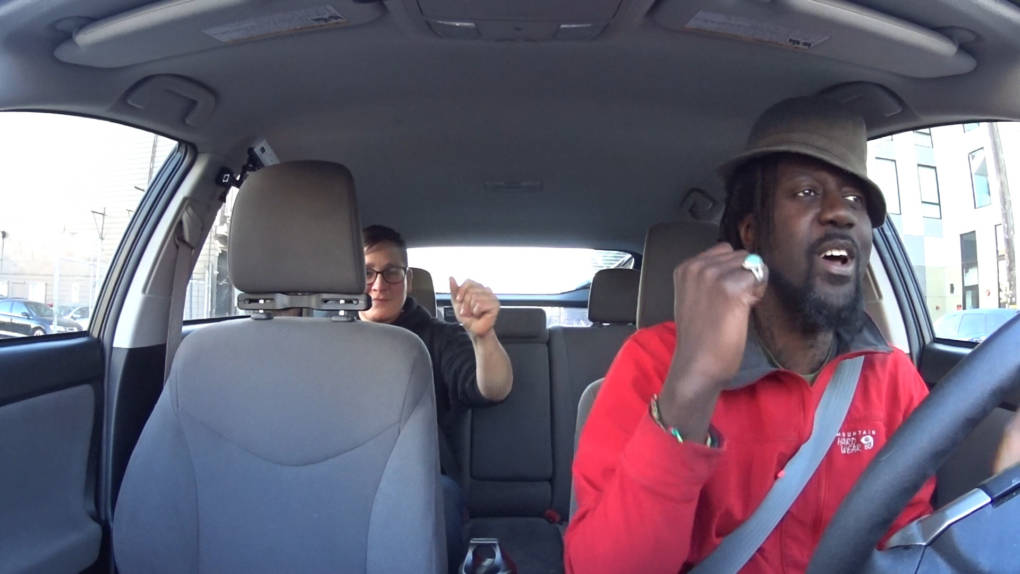
"caption": "Ashel Eldridge calls himself the Lyft Rapper, freestyling for passengers about goofy topics and more serious issues.",
"description": null,
"title": "RS28840_InCar2-qut",
"credit": "Ashel Eldridge",
"status": "inherit",
"isLoading": false,
"fetchFailed": false
},
"news_11636122": {
"type": "attachments",
"id": "news_11636122",
"meta": {
"index": "attachments_1716263798",
"site": "news",
"id": "11636122",
"found": true
},
"parent": 11636121,
"imgSizes": {
"small": {
"file": "https://ww2.kqed.org/app/uploads/sites/10/2017/12/Calonico-520x390.jpg",
"width": 520,
"mimeType": "image/jpeg",
"height": 390
},
"twentyfourteen-full-width": {
"file": "https://ww2.kqed.org/app/uploads/sites/10/2017/12/Calonico-1038x576.jpg",
"width": 1038,
"mimeType": "image/jpeg",
"height": 576
},
"thumbnail": {
"file": "https://ww2.kqed.org/app/uploads/sites/10/2017/12/Calonico-160x120.jpg",
"width": 160,
"mimeType": "image/jpeg",
"height": 120
},
"fd-sm": {
"file": "https://ww2.kqed.org/app/uploads/sites/10/2017/12/Calonico-960x720.jpg",
"width": 960,
"mimeType": "image/jpeg",
"height": 720
},
"post-thumbnail": {
"file": "https://ww2.kqed.org/app/uploads/sites/10/2017/12/Calonico-672x372.jpg",
"width": 672,
"mimeType": "image/jpeg",
"height": 372
},
"xsmall": {
"file": "https://ww2.kqed.org/app/uploads/sites/10/2017/12/Calonico-375x281.jpg",
"width": 375,
"mimeType": "image/jpeg",
"height": 281
},
"kqedFullSize": {
"file": "https://ww2.kqed.org/app/uploads/sites/10/2017/12/Calonico.jpg",
"width": 2048,
"height": 1536
},
"large": {
"file": "https://ww2.kqed.org/app/uploads/sites/10/2017/12/Calonico-1020x765.jpg",
"width": 1020,
"mimeType": "image/jpeg",
"height": 765
},
"xlarge": {
"file": "https://ww2.kqed.org/app/uploads/sites/10/2017/12/Calonico-1180x885.jpg",
"width": 1180,
"mimeType": "image/jpeg",
"height": 885
},
"guest-author-50": {
"file": "https://ww2.kqed.org/app/uploads/sites/10/2017/12/Calonico-50x50.jpg",
"width": 50,
"mimeType": "image/jpeg",
"height": 50
},
"guest-author-96": {
"file": "https://ww2.kqed.org/app/uploads/sites/10/2017/12/Calonico-96x96.jpg",
"width": 96,
"mimeType": "image/jpeg",
"height": 96
},
"medium": {
"file": "https://ww2.kqed.org/app/uploads/sites/10/2017/12/Calonico-800x600.jpg",
"width": 800,
"mimeType": "image/jpeg",
"height": 600
},
"guest-author-64": {
"file": "https://ww2.kqed.org/app/uploads/sites/10/2017/12/Calonico-64x64.jpg",
"width": 64,
"mimeType": "image/jpeg",
"height": 64
},
"guest-author-32": {
"file": "https://ww2.kqed.org/app/uploads/sites/10/2017/12/Calonico-32x32.jpg",
"width": 32,
"mimeType": "image/jpeg",
"height": 32
},
"fd-lrg": {
"file": "https://ww2.kqed.org/app/uploads/sites/10/2017/12/Calonico-1920x1440.jpg",
"width": 1920,
"mimeType": "image/jpeg",
"height": 1440
},
"fd-med": {
"file": "https://ww2.kqed.org/app/uploads/sites/10/2017/12/Calonico-1180x885.jpg",
"width": 1180,
"mimeType": "image/jpeg",
"height": 885
},
"full-width": {
"file": "https://ww2.kqed.org/app/uploads/sites/10/2017/12/Calonico-1920x1440.jpg",
"width": 1920,
"mimeType": "image/jpeg",
"height": 1440
},
"detail": {
"file": "https://ww2.kqed.org/app/uploads/sites/10/2017/12/Calonico-150x150.jpg",
"width": 150,
"mimeType": "image/jpeg",
"height": 150
},
"guest-author-128": {
"file": "https://ww2.kqed.org/app/uploads/sites/10/2017/12/Calonico-128x128.jpg",
"width": 128,
"mimeType": "image/jpeg",
"height": 128
},
"xxsmall": {
"file": "https://ww2.kqed.org/app/uploads/sites/10/2017/12/Calonico-240x180.jpg",
"width": 240,
"mimeType": "image/jpeg",
"height": 180
}
},
"publishDate": 1512871214,
"modified": 1513034285,
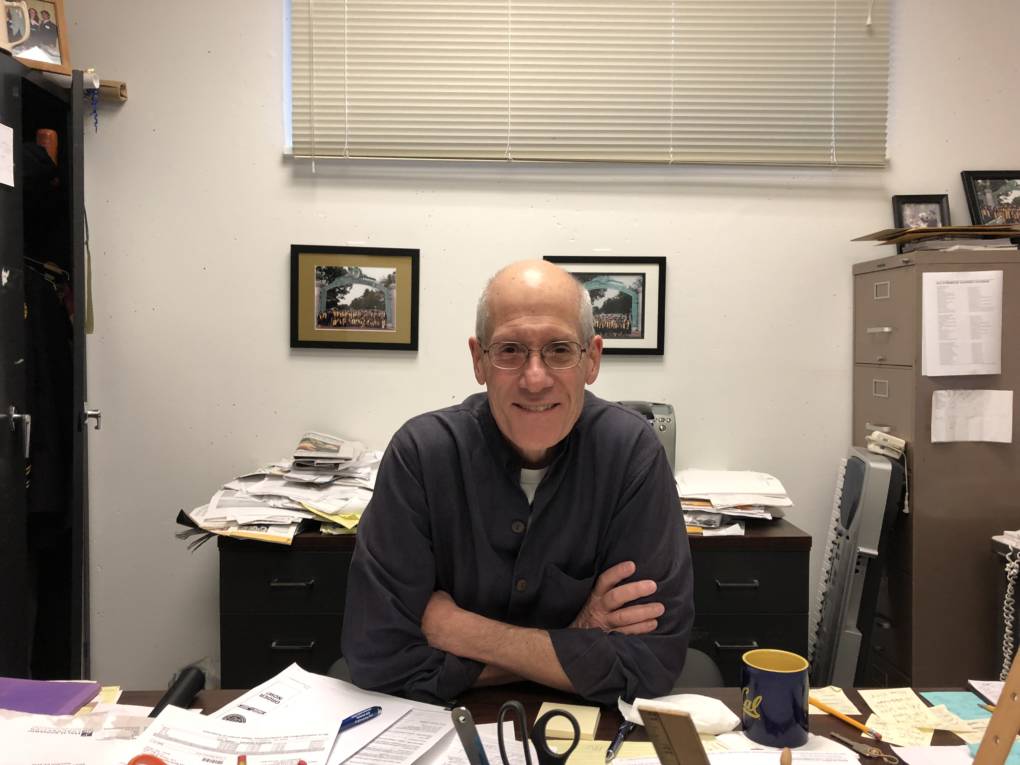
"caption": "Dr. Robert Calonico sits in his UC Berkeley office on Friday, Dec. 8, 2017.",
"description": null,
"title": "Calonico",
"credit": "Jeremy Siegel/KQED",
"status": "inherit",
"isLoading": false,
"fetchFailed": false
},
"news_11633014": {
"type": "attachments",
"id": "news_11633014",
"meta": {
"index": "attachments_1716263798",
"site": "news",
"id": "11633014",
"found": true
},
"parent": 11632699,
"imgSizes": {
"small": {
"file": "https://ww2.kqed.org/app/uploads/sites/10/2017/11/band2-520x374.jpg",
"width": 520,
"mimeType": "image/jpeg",
"height": 374
},
"twentyfourteen-full-width": {
"file": "https://ww2.kqed.org/app/uploads/sites/10/2017/11/band2-1038x576.jpg",
"width": 1038,
"mimeType": "image/jpeg",
"height": 576
},
"thumbnail": {
"file": "https://ww2.kqed.org/app/uploads/sites/10/2017/11/band2-160x115.jpg",
"width": 160,
"mimeType": "image/jpeg",
"height": 115
},
"fd-sm": {
"file": "https://ww2.kqed.org/app/uploads/sites/10/2017/11/band2-960x690.jpg",
"width": 960,
"mimeType": "image/jpeg",
"height": 690
},
"post-thumbnail": {
"file": "https://ww2.kqed.org/app/uploads/sites/10/2017/11/band2-672x372.jpg",
"width": 672,
"mimeType": "image/jpeg",
"height": 372
},
"xsmall": {
"file": "https://ww2.kqed.org/app/uploads/sites/10/2017/11/band2-375x269.jpg",
"width": 375,
"mimeType": "image/jpeg",
"height": 269
},
"kqedFullSize": {
"file": "https://ww2.kqed.org/app/uploads/sites/10/2017/11/band2-e1511380297663.jpg",
"width": 1920,
"height": 1379
},
"large": {
"file": "https://ww2.kqed.org/app/uploads/sites/10/2017/11/band2-1020x733.jpg",
"width": 1020,
"mimeType": "image/jpeg",
"height": 733
},
"xlarge": {
"file": "https://ww2.kqed.org/app/uploads/sites/10/2017/11/band2-1180x848.jpg",
"width": 1180,
"mimeType": "image/jpeg",
"height": 848
},
"guest-author-50": {
"file": "https://ww2.kqed.org/app/uploads/sites/10/2017/11/band2-50x50.jpg",
"width": 50,
"mimeType": "image/jpeg",
"height": 50
},
"guest-author-96": {
"file": "https://ww2.kqed.org/app/uploads/sites/10/2017/11/band2-96x96.jpg",
"width": 96,
"mimeType": "image/jpeg",
"height": 96
},
"medium": {
"file": "https://ww2.kqed.org/app/uploads/sites/10/2017/11/band2-800x575.jpg",
"width": 800,
"mimeType": "image/jpeg",
"height": 575
},
"guest-author-64": {
"file": "https://ww2.kqed.org/app/uploads/sites/10/2017/11/band2-64x64.jpg",
"width": 64,
"mimeType": "image/jpeg",
"height": 64
},
"guest-author-32": {
"file": "https://ww2.kqed.org/app/uploads/sites/10/2017/11/band2-32x32.jpg",
"width": 32,
"mimeType": "image/jpeg",
"height": 32
},
"fd-lrg": {
"file": "https://ww2.kqed.org/app/uploads/sites/10/2017/11/band2-1920x1379.jpg",
"width": 1920,
"mimeType": "image/jpeg",
"height": 1379
},
"fd-med": {
"file": "https://ww2.kqed.org/app/uploads/sites/10/2017/11/band2-1180x848.jpg",
"width": 1180,
"mimeType": "image/jpeg",
"height": 848
},
"full-width": {
"file": "https://ww2.kqed.org/app/uploads/sites/10/2017/11/band2-1920x1379.jpg",
"width": 1920,
"mimeType": "image/jpeg",
"height": 1379
},
"detail": {
"file": "https://ww2.kqed.org/app/uploads/sites/10/2017/11/band2-150x150.jpg",
"width": 150,
"mimeType": "image/jpeg",
"height": 150
},
"guest-author-128": {
"file": "https://ww2.kqed.org/app/uploads/sites/10/2017/11/band2-128x128.jpg",
"width": 128,
"mimeType": "image/jpeg",
"height": 128
},
"xxsmall": {
"file": "https://ww2.kqed.org/app/uploads/sites/10/2017/11/band2-240x172.jpg",
"width": 240,
"mimeType": "image/jpeg",
"height": 172
}
},
"publishDate": 1511380165,
"modified": 1511382777,
"caption": "Walter Morgan Jr. performs in the KQED studios on Nov. 21, 2017. He founded the Sons of the Soul Revivers in 1970. He and his brothers have been singing together ever since they were kids in church. They are now finally reaching audiences outside the church walls.",
"description": null,
"title": "band2",
"credit": "Sarah Craig/KQED",
"status": "inherit",
"isLoading": false,
"fetchFailed": false
},
"news_11632117": {
"type": "attachments",
"id": "news_11632117",
"meta": {
"index": "attachments_1716263798",
"site": "news",
"id": "11632117",
"found": true
},
"parent": 11631543,
"imgSizes": {
"small": {
"file": "https://ww2.kqed.org/app/uploads/sites/10/2017/11/DomingoMain-2-520x476.jpg",
"width": 520,
"mimeType": "image/jpeg",
"height": 476
},
"twentyfourteen-full-width": {
"file": "https://ww2.kqed.org/app/uploads/sites/10/2017/11/DomingoMain-2-1038x576.jpg",
"width": 1038,
"mimeType": "image/jpeg",
"height": 576
},
"thumbnail": {
"file": "https://ww2.kqed.org/app/uploads/sites/10/2017/11/DomingoMain-2-160x147.jpg",
"width": 160,
"mimeType": "image/jpeg",
"height": 147
},
"fd-sm": {
"file": "https://ww2.kqed.org/app/uploads/sites/10/2017/11/DomingoMain-2-960x880.jpg",
"width": 960,
"mimeType": "image/jpeg",
"height": 880
},
"post-thumbnail": {
"file": "https://ww2.kqed.org/app/uploads/sites/10/2017/11/DomingoMain-2-672x372.jpg",
"width": 672,
"mimeType": "image/jpeg",
"height": 372
},
"xsmall": {
"file": "https://ww2.kqed.org/app/uploads/sites/10/2017/11/DomingoMain-2-375x344.jpg",
"width": 375,
"mimeType": "image/jpeg",
"height": 344
},
"kqedFullSize": {
"file": "https://ww2.kqed.org/app/uploads/sites/10/2017/11/DomingoMain-2.jpg",
"width": 1920,
"height": 1759
},
"large": {
"file": "https://ww2.kqed.org/app/uploads/sites/10/2017/11/DomingoMain-2-1020x934.jpg",
"width": 1020,
"mimeType": "image/jpeg",
"height": 934
},
"xlarge": {
"file": "https://ww2.kqed.org/app/uploads/sites/10/2017/11/DomingoMain-2-1180x1081.jpg",
"width": 1180,
"mimeType": "image/jpeg",
"height": 1081
},
"guest-author-50": {
"file": "https://ww2.kqed.org/app/uploads/sites/10/2017/11/DomingoMain-2-50x50.jpg",
"width": 50,
"mimeType": "image/jpeg",
"height": 50
},
"guest-author-96": {
"file": "https://ww2.kqed.org/app/uploads/sites/10/2017/11/DomingoMain-2-96x96.jpg",
"width": 96,
"mimeType": "image/jpeg",
"height": 96
},
"medium": {
"file": "https://ww2.kqed.org/app/uploads/sites/10/2017/11/DomingoMain-2-800x733.jpg",
"width": 800,
"mimeType": "image/jpeg",
"height": 733
},
"guest-author-64": {
"file": "https://ww2.kqed.org/app/uploads/sites/10/2017/11/DomingoMain-2-64x64.jpg",
"width": 64,
"mimeType": "image/jpeg",
"height": 64
},
"guest-author-32": {
"file": "https://ww2.kqed.org/app/uploads/sites/10/2017/11/DomingoMain-2-32x32.jpg",
"width": 32,
"mimeType": "image/jpeg",
"height": 32
},
"fd-lrg": {
"file": "https://ww2.kqed.org/app/uploads/sites/10/2017/11/DomingoMain-2-1920x1759.jpg",
"width": 1920,
"mimeType": "image/jpeg",
"height": 1759
},
"fd-med": {
"file": "https://ww2.kqed.org/app/uploads/sites/10/2017/11/DomingoMain-2-1180x1081.jpg",
"width": 1180,
"mimeType": "image/jpeg",
"height": 1081
},
"full-width": {
"file": "https://ww2.kqed.org/app/uploads/sites/10/2017/11/DomingoMain-2-1920x1759.jpg",
"width": 1920,
"mimeType": "image/jpeg",
"height": 1759
},
"detail": {
"file": "https://ww2.kqed.org/app/uploads/sites/10/2017/11/DomingoMain-2-150x150.jpg",
"width": 150,
"mimeType": "image/jpeg",
"height": 150
},
"guest-author-128": {
"file": "https://ww2.kqed.org/app/uploads/sites/10/2017/11/DomingoMain-2-128x128.jpg",
"width": 128,
"mimeType": "image/jpeg",
"height": 128
},
"xxsmall": {
"file": "https://ww2.kqed.org/app/uploads/sites/10/2017/11/DomingoMain-2-240x220.jpg",
"width": 240,
"mimeType": "image/jpeg",
"height": 220
}
},
"publishDate": 1510973498,
"modified": 1510973525,
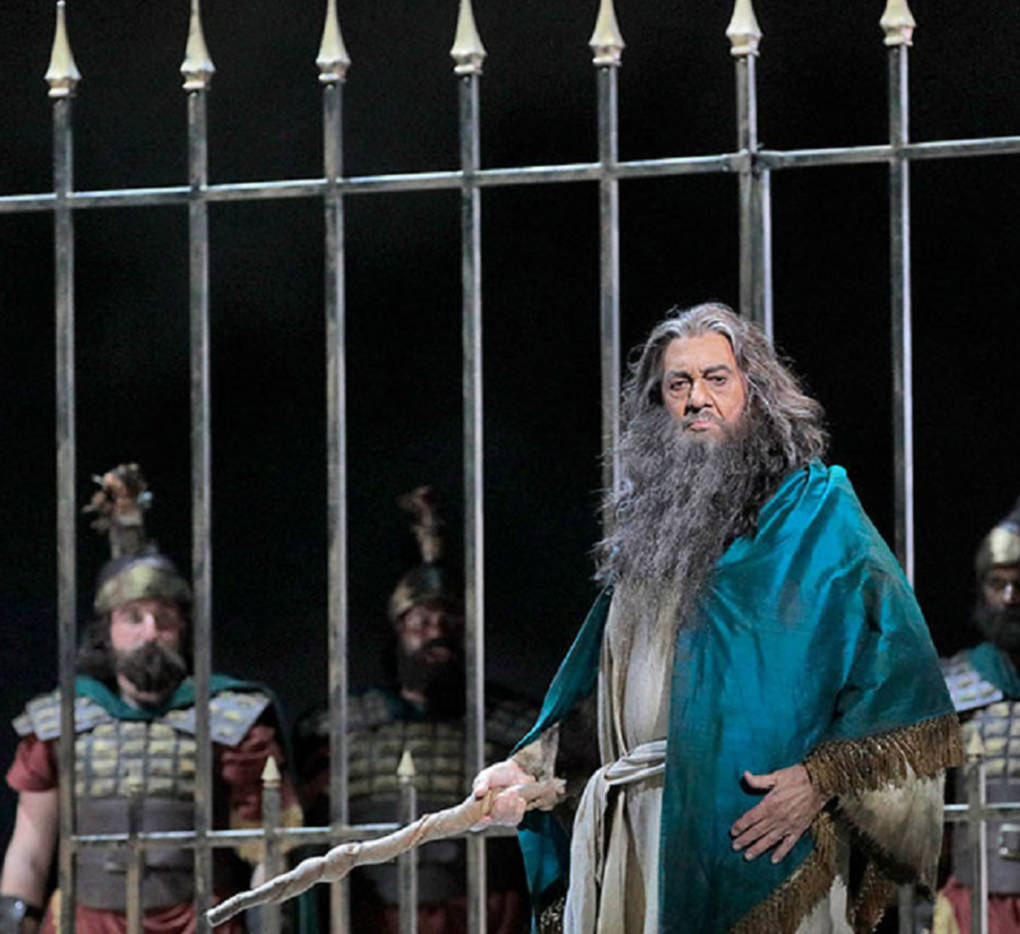
"caption": "Plácido Domingo in LA Opera’s 2017 production of Giuseppe Verdi’s ‘Nabucco.'",
"description": "Plácido Domingo in LA Opera’s 2017 production of Giuseppe Verdi’s ‘Nabucco.'",
"title": "DomingoMain",
"credit": "Ken Howard/LA Opera",
"status": "inherit",
"isLoading": false,
"fetchFailed": false
},
"news_11616730": {
"type": "attachments",
"id": "news_11616730",
"meta": {
"index": "attachments_1716263798",
"site": "news",
"id": "11616730",
"found": true
},
"parent": 11616723,
"imgSizes": {
"small": {
"file": "https://ww2.kqed.org/app/uploads/sites/10/2017/09/Thelonious-Monk_MJF6_1963_cRay-Avery_CTS-Images-520x347.jpg",
"width": 520,
"mimeType": "image/jpeg",
"height": 347
},
"twentyfourteen-full-width": {
"file": "https://ww2.kqed.org/app/uploads/sites/10/2017/09/Thelonious-Monk_MJF6_1963_cRay-Avery_CTS-Images-1038x576.jpg",
"width": 1038,
"mimeType": "image/jpeg",
"height": 576
},
"thumbnail": {
"file": "https://ww2.kqed.org/app/uploads/sites/10/2017/09/Thelonious-Monk_MJF6_1963_cRay-Avery_CTS-Images-160x107.jpg",
"width": 160,
"mimeType": "image/jpeg",
"height": 107
},
"fd-sm": {
"file": "https://ww2.kqed.org/app/uploads/sites/10/2017/09/Thelonious-Monk_MJF6_1963_cRay-Avery_CTS-Images-960x641.jpg",
"width": 960,
"mimeType": "image/jpeg",
"height": 641
},
"post-thumbnail": {
"file": "https://ww2.kqed.org/app/uploads/sites/10/2017/09/Thelonious-Monk_MJF6_1963_cRay-Avery_CTS-Images-672x372.jpg",
"width": 672,
"mimeType": "image/jpeg",
"height": 372
},
"xsmall": {
"file": "https://ww2.kqed.org/app/uploads/sites/10/2017/09/Thelonious-Monk_MJF6_1963_cRay-Avery_CTS-Images-375x250.jpg",
"width": 375,
"mimeType": "image/jpeg",
"height": 250
},
"kqedFullSize": {
"file": "https://ww2.kqed.org/app/uploads/sites/10/2017/09/Thelonious-Monk_MJF6_1963_cRay-Avery_CTS-Images.jpg",
"width": 1280,
"height": 854
},
"large": {
"file": "https://ww2.kqed.org/app/uploads/sites/10/2017/09/Thelonious-Monk_MJF6_1963_cRay-Avery_CTS-Images-1020x681.jpg",
"width": 1020,
"mimeType": "image/jpeg",
"height": 681
},
"xlarge": {
"file": "https://ww2.kqed.org/app/uploads/sites/10/2017/09/Thelonious-Monk_MJF6_1963_cRay-Avery_CTS-Images-1180x787.jpg",
"width": 1180,
"mimeType": "image/jpeg",
"height": 787
},
"guest-author-50": {
"file": "https://ww2.kqed.org/app/uploads/sites/10/2017/09/Thelonious-Monk_MJF6_1963_cRay-Avery_CTS-Images-50x50.jpg",
"width": 50,
"mimeType": "image/jpeg",
"height": 50
},
"guest-author-96": {
"file": "https://ww2.kqed.org/app/uploads/sites/10/2017/09/Thelonious-Monk_MJF6_1963_cRay-Avery_CTS-Images-96x96.jpg",
"width": 96,
"mimeType": "image/jpeg",
"height": 96
},
"medium": {
"file": "https://ww2.kqed.org/app/uploads/sites/10/2017/09/Thelonious-Monk_MJF6_1963_cRay-Avery_CTS-Images-800x534.jpg",
"width": 800,
"mimeType": "image/jpeg",
"height": 534
},
"guest-author-64": {
"file": "https://ww2.kqed.org/app/uploads/sites/10/2017/09/Thelonious-Monk_MJF6_1963_cRay-Avery_CTS-Images-64x64.jpg",
"width": 64,
"mimeType": "image/jpeg",
"height": 64
},
"guest-author-32": {
"file": "https://ww2.kqed.org/app/uploads/sites/10/2017/09/Thelonious-Monk_MJF6_1963_cRay-Avery_CTS-Images-32x32.jpg",
"width": 32,
"mimeType": "image/jpeg",
"height": 32
},
"fd-med": {
"file": "https://ww2.kqed.org/app/uploads/sites/10/2017/09/Thelonious-Monk_MJF6_1963_cRay-Avery_CTS-Images-1180x787.jpg",
"width": 1180,
"mimeType": "image/jpeg",
"height": 787
},
"detail": {
"file": "https://ww2.kqed.org/app/uploads/sites/10/2017/09/Thelonious-Monk_MJF6_1963_cRay-Avery_CTS-Images-150x150.jpg",
"width": 150,
"mimeType": "image/jpeg",
"height": 150
},
"guest-author-128": {
"file": "https://ww2.kqed.org/app/uploads/sites/10/2017/09/Thelonious-Monk_MJF6_1963_cRay-Avery_CTS-Images-128x128.jpg",
"width": 128,
"mimeType": "image/jpeg",
"height": 128
},
"xxsmall": {
"file": "https://ww2.kqed.org/app/uploads/sites/10/2017/09/Thelonious-Monk_MJF6_1963_cRay-Avery_CTS-Images-240x160.jpg",
"width": 240,
"mimeType": "image/jpeg",
"height": 160
}
},
"publishDate": 1505337937,
"modified": 1505338032,
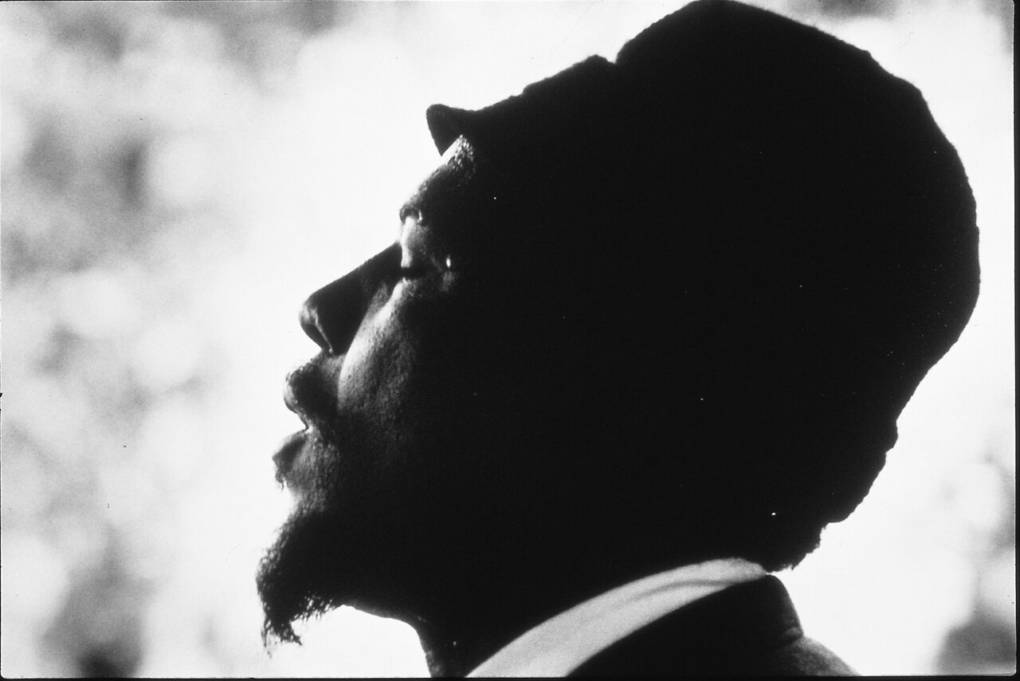
"caption": "The Monterey Jazz Festival celebrates the 100th birthday of Thelonious Monk, captured here at his festival debut in 1963. Photo by Ray Avery. ",
"description": null,
"title": "Thelonious Monk_MJF6_1963_(c)Ray Avery_CTS Images",
"credit": null,
"status": "inherit",
"isLoading": false,
"fetchFailed": false
},
"news_11614784": {
"type": "attachments",
"id": "news_11614784",
"meta": {
"index": "attachments_1716263798",
"site": "news",
"id": "11614784",
"found": true
},
"parent": 11613883,
"imgSizes": {
"small": {
"file": "https://ww2.kqed.org/app/uploads/sites/10/2017/08/DouyeOrange-520x425.jpg",
"width": 520,
"mimeType": "image/jpeg",
"height": 425
},
"twentyfourteen-full-width": {
"file": "https://ww2.kqed.org/app/uploads/sites/10/2017/08/DouyeOrange-1038x576.jpg",
"width": 1038,
"mimeType": "image/jpeg",
"height": 576
},
"thumbnail": {
"file": "https://ww2.kqed.org/app/uploads/sites/10/2017/08/DouyeOrange-160x131.jpg",
"width": 160,
"mimeType": "image/jpeg",
"height": 131
},
"fd-sm": {
"file": "https://ww2.kqed.org/app/uploads/sites/10/2017/08/DouyeOrange-960x784.jpg",
"width": 960,
"mimeType": "image/jpeg",
"height": 784
},
"post-thumbnail": {
"file": "https://ww2.kqed.org/app/uploads/sites/10/2017/08/DouyeOrange-672x372.jpg",
"width": 672,
"mimeType": "image/jpeg",
"height": 372
},
"xsmall": {
"file": "https://ww2.kqed.org/app/uploads/sites/10/2017/08/DouyeOrange-375x306.jpg",
"width": 375,
"mimeType": "image/jpeg",
"height": 306
},
"kqedFullSize": {
"file": "https://ww2.kqed.org/app/uploads/sites/10/2017/08/DouyeOrange.jpg",
"width": 1920,
"height": 1568
},
"large": {
"file": "https://ww2.kqed.org/app/uploads/sites/10/2017/08/DouyeOrange-1020x833.jpg",
"width": 1020,
"mimeType": "image/jpeg",
"height": 833
},
"xlarge": {
"file": "https://ww2.kqed.org/app/uploads/sites/10/2017/08/DouyeOrange-1180x964.jpg",
"width": 1180,
"mimeType": "image/jpeg",
"height": 964
},
"guest-author-50": {
"file": "https://ww2.kqed.org/app/uploads/sites/10/2017/08/DouyeOrange-50x50.jpg",
"width": 50,
"mimeType": "image/jpeg",
"height": 50
},
"guest-author-96": {
"file": "https://ww2.kqed.org/app/uploads/sites/10/2017/08/DouyeOrange-96x96.jpg",
"width": 96,
"mimeType": "image/jpeg",
"height": 96
},
"medium": {
"file": "https://ww2.kqed.org/app/uploads/sites/10/2017/08/DouyeOrange-800x653.jpg",
"width": 800,
"mimeType": "image/jpeg",
"height": 653
},
"guest-author-64": {
"file": "https://ww2.kqed.org/app/uploads/sites/10/2017/08/DouyeOrange-64x64.jpg",
"width": 64,
"mimeType": "image/jpeg",
"height": 64
},
"guest-author-32": {
"file": "https://ww2.kqed.org/app/uploads/sites/10/2017/08/DouyeOrange-32x32.jpg",
"width": 32,
"mimeType": "image/jpeg",
"height": 32
},
"fd-lrg": {
"file": "https://ww2.kqed.org/app/uploads/sites/10/2017/08/DouyeOrange-1920x1568.jpg",
"width": 1920,
"mimeType": "image/jpeg",
"height": 1568
},
"fd-med": {
"file": "https://ww2.kqed.org/app/uploads/sites/10/2017/08/DouyeOrange-1180x964.jpg",
"width": 1180,
"mimeType": "image/jpeg",
"height": 964
},
"full-width": {
"file": "https://ww2.kqed.org/app/uploads/sites/10/2017/08/DouyeOrange-1920x1568.jpg",
"width": 1920,
"mimeType": "image/jpeg",
"height": 1568
},
"detail": {
"file": "https://ww2.kqed.org/app/uploads/sites/10/2017/08/DouyeOrange-150x150.jpg",
"width": 150,
"mimeType": "image/jpeg",
"height": 150
},
"guest-author-128": {
"file": "https://ww2.kqed.org/app/uploads/sites/10/2017/08/DouyeOrange-128x128.jpg",
"width": 128,
"mimeType": "image/jpeg",
"height": 128
},
"xxsmall": {
"file": "https://ww2.kqed.org/app/uploads/sites/10/2017/08/DouyeOrange-240x196.jpg",
"width": 240,
"mimeType": "image/jpeg",
"height": 196
}
},
"publishDate": 1504131835,
"modified": 1504131866,
"caption": "After starting her career singing R & B, Douyé' takes on jazz standards on her new album \"Daddy Said So.\"",
"description": null,
"title": "DouyeOrange",
"credit": null,
"status": "inherit",
"isLoading": false,
"fetchFailed": false
},
"news_11612419": {
"type": "attachments",
"id": "news_11612419",
"meta": {
"index": "attachments_1716263798",
"site": "news",
"id": "11612419",
"found": true
},
"parent": 11612321,
"imgSizes": {
"small": {
"file": "https://ww2.kqed.org/app/uploads/sites/10/2017/08/RS26234_IMG_2775-qut-520x347.jpg",
"width": 520,
"mimeType": "image/jpeg",
"height": 347
},
"twentyfourteen-full-width": {
"file": "https://ww2.kqed.org/app/uploads/sites/10/2017/08/RS26234_IMG_2775-qut-1038x576.jpg",
"width": 1038,
"mimeType": "image/jpeg",
"height": 576
},
"thumbnail": {
"file": "https://ww2.kqed.org/app/uploads/sites/10/2017/08/RS26234_IMG_2775-qut-160x107.jpg",
"width": 160,
"mimeType": "image/jpeg",
"height": 107
},
"fd-sm": {
"file": "https://ww2.kqed.org/app/uploads/sites/10/2017/08/RS26234_IMG_2775-qut-960x640.jpg",
"width": 960,
"mimeType": "image/jpeg",
"height": 640
},
"post-thumbnail": {
"file": "https://ww2.kqed.org/app/uploads/sites/10/2017/08/RS26234_IMG_2775-qut-672x372.jpg",
"width": 672,
"mimeType": "image/jpeg",
"height": 372
},
"xsmall": {
"file": "https://ww2.kqed.org/app/uploads/sites/10/2017/08/RS26234_IMG_2775-qut-375x250.jpg",
"width": 375,
"mimeType": "image/jpeg",
"height": 250
},
"kqedFullSize": {
"file": "https://ww2.kqed.org/app/uploads/sites/10/2017/08/RS26234_IMG_2775-qut.jpg",
"width": 1363,
"height": 909
},
"large": {
"file": "https://ww2.kqed.org/app/uploads/sites/10/2017/08/RS26234_IMG_2775-qut-1020x680.jpg",
"width": 1020,
"mimeType": "image/jpeg",
"height": 680
},
"xlarge": {
"file": "https://ww2.kqed.org/app/uploads/sites/10/2017/08/RS26234_IMG_2775-qut-1180x787.jpg",
"width": 1180,
"mimeType": "image/jpeg",
"height": 787
},
"guest-author-50": {
"file": "https://ww2.kqed.org/app/uploads/sites/10/2017/08/RS26234_IMG_2775-qut-50x50.jpg",
"width": 50,
"mimeType": "image/jpeg",
"height": 50
},
"guest-author-96": {
"file": "https://ww2.kqed.org/app/uploads/sites/10/2017/08/RS26234_IMG_2775-qut-96x96.jpg",
"width": 96,
"mimeType": "image/jpeg",
"height": 96
},
"medium": {
"file": "https://ww2.kqed.org/app/uploads/sites/10/2017/08/RS26234_IMG_2775-qut-800x534.jpg",
"width": 800,
"mimeType": "image/jpeg",
"height": 534
},
"guest-author-64": {
"file": "https://ww2.kqed.org/app/uploads/sites/10/2017/08/RS26234_IMG_2775-qut-64x64.jpg",
"width": 64,
"mimeType": "image/jpeg",
"height": 64
},
"guest-author-32": {
"file": "https://ww2.kqed.org/app/uploads/sites/10/2017/08/RS26234_IMG_2775-qut-32x32.jpg",
"width": 32,
"mimeType": "image/jpeg",
"height": 32
},
"fd-med": {
"file": "https://ww2.kqed.org/app/uploads/sites/10/2017/08/RS26234_IMG_2775-qut-1180x787.jpg",
"width": 1180,
"mimeType": "image/jpeg",
"height": 787
},
"detail": {
"file": "https://ww2.kqed.org/app/uploads/sites/10/2017/08/RS26234_IMG_2775-qut-150x150.jpg",
"width": 150,
"mimeType": "image/jpeg",
"height": 150
},
"guest-author-128": {
"file": "https://ww2.kqed.org/app/uploads/sites/10/2017/08/RS26234_IMG_2775-qut-128x128.jpg",
"width": 128,
"mimeType": "image/jpeg",
"height": 128
},
"xxsmall": {
"file": "https://ww2.kqed.org/app/uploads/sites/10/2017/08/RS26234_IMG_2775-qut-240x160.jpg",
"width": 240,
"mimeType": "image/jpeg",
"height": 160
}
},
"publishDate": 1502923786,
"modified": 1503011955,
"caption": "Lily Gutierrez plays an instrument at the Sound Museum.",
"description": "Lily Gutierrez plays an instrument at the Sound Museum.",
"title": "RS26234_IMG_2775-qut",
"credit": "Tom McFadden",
"status": "inherit",
"isLoading": false,
"fetchFailed": false
},
"news_11612699": {
"type": "attachments",
"id": "news_11612699",
"meta": {
"index": "attachments_1716263798",
"site": "news",
"id": "11612699",
"found": true
},
"parent": 11612695,
"imgSizes": {
"small": {
"file": "https://ww2.kqed.org/app/uploads/sites/10/2017/08/CommonMain-520x326.jpg",
"width": 520,
"mimeType": "image/jpeg",
"height": 326
},
"twentyfourteen-full-width": {
"file": "https://ww2.kqed.org/app/uploads/sites/10/2017/08/CommonMain-1038x576.jpg",
"width": 1038,
"mimeType": "image/jpeg",
"height": 576
},
"thumbnail": {
"file": "https://ww2.kqed.org/app/uploads/sites/10/2017/08/CommonMain-160x100.jpg",
"width": 160,
"mimeType": "image/jpeg",
"height": 100
},
"fd-sm": {
"file": "https://ww2.kqed.org/app/uploads/sites/10/2017/08/CommonMain-960x603.jpg",
"width": 960,
"mimeType": "image/jpeg",
"height": 603
},
"post-thumbnail": {
"file": "https://ww2.kqed.org/app/uploads/sites/10/2017/08/CommonMain-672x372.jpg",
"width": 672,
"mimeType": "image/jpeg",
"height": 372
},
"xsmall": {
"file": "https://ww2.kqed.org/app/uploads/sites/10/2017/08/CommonMain-375x235.jpg",
"width": 375,
"mimeType": "image/jpeg",
"height": 235
},
"kqedFullSize": {
"file": "https://ww2.kqed.org/app/uploads/sites/10/2017/08/CommonMain.jpg",
"width": 1920,
"height": 1205
},
"large": {
"file": "https://ww2.kqed.org/app/uploads/sites/10/2017/08/CommonMain-1020x640.jpg",
"width": 1020,
"mimeType": "image/jpeg",
"height": 640
},
"xlarge": {
"file": "https://ww2.kqed.org/app/uploads/sites/10/2017/08/CommonMain-1180x741.jpg",
"width": 1180,
"mimeType": "image/jpeg",
"height": 741
},
"guest-author-50": {
"file": "https://ww2.kqed.org/app/uploads/sites/10/2017/08/CommonMain-50x50.jpg",
"width": 50,
"mimeType": "image/jpeg",
"height": 50
},
"guest-author-96": {
"file": "https://ww2.kqed.org/app/uploads/sites/10/2017/08/CommonMain-96x96.jpg",
"width": 96,
"mimeType": "image/jpeg",
"height": 96
},
"medium": {
"file": "https://ww2.kqed.org/app/uploads/sites/10/2017/08/CommonMain-800x502.jpg",
"width": 800,
"mimeType": "image/jpeg",
"height": 502
},
"guest-author-64": {
"file": "https://ww2.kqed.org/app/uploads/sites/10/2017/08/CommonMain-64x64.jpg",
"width": 64,
"mimeType": "image/jpeg",
"height": 64
},
"guest-author-32": {
"file": "https://ww2.kqed.org/app/uploads/sites/10/2017/08/CommonMain-32x32.jpg",
"width": 32,
"mimeType": "image/jpeg",
"height": 32
},
"fd-lrg": {
"file": "https://ww2.kqed.org/app/uploads/sites/10/2017/08/CommonMain-1920x1205.jpg",
"width": 1920,
"mimeType": "image/jpeg",
"height": 1205
},
"fd-med": {
"file": "https://ww2.kqed.org/app/uploads/sites/10/2017/08/CommonMain-1180x741.jpg",
"width": 1180,
"mimeType": "image/jpeg",
"height": 741
},
"full-width": {
"file": "https://ww2.kqed.org/app/uploads/sites/10/2017/08/CommonMain-1920x1205.jpg",
"width": 1920,
"mimeType": "image/jpeg",
"height": 1205
},
"detail": {
"file": "https://ww2.kqed.org/app/uploads/sites/10/2017/08/CommonMain-150x150.jpg",
"width": 150,
"mimeType": "image/jpeg",
"height": 150
},
"guest-author-128": {
"file": "https://ww2.kqed.org/app/uploads/sites/10/2017/08/CommonMain-128x128.jpg",
"width": 128,
"mimeType": "image/jpeg",
"height": 128
},
"xxsmall": {
"file": "https://ww2.kqed.org/app/uploads/sites/10/2017/08/CommonMain-240x151.jpg",
"width": 240,
"mimeType": "image/jpeg",
"height": 151
}
},
"publishDate": 1503004654,
"modified": 1504056018,
"caption": "Hip-hop artist Common meets with inmates at a California prison. ",
"description": "Hip-hop artist Common meets with inmates at a California prison. ",
"title": "CommonMain",
"credit": "Sade C. Joseph",
"status": "inherit",
"isLoading": false,
"fetchFailed": false
}
},
"audioPlayerReducer": {
"postId": "stream_live",
"isPaused": true,
"isPlaying": false,
"pfsActive": false,
"pledgeModalIsOpen": true,
"playerDrawerIsOpen": false,
"liveAudioPlayStartedAt": 0,
"liveAudioPlayContext": ""
},
"authorsReducer": {
"byline_news_11662453": {
"type": "authors",
"id": "byline_news_11662453",
"meta": {
"override": true
},
"slug": "byline_news_11662453",
"name": "Associated Press",
"isLoading": false
},
"byline_news_11642039": {
"type": "authors",
"id": "byline_news_11642039",
"meta": {
"override": true
},
"slug": "byline_news_11642039",
"name": "\u003cstrong/>Wynne Davis\u003c/strong>",
"isLoading": false
},
"byline_news_11641425": {
"type": "authors",
"id": "byline_news_11641425",
"meta": {
"override": true
},
"slug": "byline_news_11641425",
"name": "Allen Young",
"isLoading": false
},
"byline_news_11612695": {
"type": "authors",
"id": "byline_news_11612695",
"meta": {
"override": true
},
"slug": "byline_news_11612695",
"name": "\u003cstrong>\u003ca href=\"https://calmatters.org/articles/author/laurel-rosenhall/\">Laurel Rosenhall\u003c/a>\u003c/strong>",
"isLoading": false
},
"agilbert": {
"type": "authors",
"id": "86",
"meta": {
"index": "authors_1716337520",
"id": "86",
"found": true
},
"name": "Andrew Gilbert",
"firstName": "Andrew",
"lastName": "Gilbert",
"slug": "agilbert",
"email": "jazzscribe@aol.com",
"display_author_email": false,
"staff_mastheads": [],
"title": "KQED Contributor",
"bio": "A Los Angeles native based in the Berkeley area since 1996, Andrew Gilbert covers jazz, international music and dance for KQED's \u003ci>California Report, \u003c/i>the\u003ci> Mercury News\u003c/i>, \u003ci>San Francisco Chronicle\u003c/i>, \u003ci>Berkeleyside.com\u003c/i>, and other publications. He is available for weddings and bar and bat mitzvahs. #jazzscribe",
"avatar": "https://secure.gravatar.com/avatar/d7bcafdbefdd39e9a68f88724ca616eb4e7a5a6bff9cdfb62de652a1e1751471?s=600&d=blank&r=g",
"twitter": null,
"bluesky": null,
"facebook": null,
"instagram": null,
"linkedin": null,
"sites": [
{
"site": "arts",
"roles": [
"Contributor",
"author"
]
},
{
"site": "news",
"roles": [
"author"
]
}
],
"headData": {
"title": "Andrew Gilbert | KQED",
"description": "KQED Contributor",
"ogImgSrc": "https://secure.gravatar.com/avatar/d7bcafdbefdd39e9a68f88724ca616eb4e7a5a6bff9cdfb62de652a1e1751471?s=600&d=blank&r=g",
"twImgSrc": "https://secure.gravatar.com/avatar/d7bcafdbefdd39e9a68f88724ca616eb4e7a5a6bff9cdfb62de652a1e1751471?s=600&d=blank&r=g"
},
"isLoading": false,
"link": "/author/agilbert"
},
"sasha-khokha": {
"type": "authors",
"id": "254",
"meta": {
"index": "authors_1716337520",
"id": "254",
"found": true
},
"name": "Sasha Khokha",
"firstName": "Sasha",
"lastName": "Khokha",
"slug": "sasha-khokha",
"email": "skhokha@kqed.org",
"display_author_email": true,
"staff_mastheads": [
"news"
],
"title": "Host, The California Report Magazine",
"bio": "Sasha Khokha is the host of \u003cem>The California Report's \u003c/em> weekly magazine program, which takes listeners on sound-rich excursions to meet the people that make the Golden State unique -- through audio documentaries and long-form stories. As \u003cem>The California Report's\u003c/em> Central Valley Bureau Chief based in Fresno for nearly a dozen years, Sasha brought the lives and concerns of rural Californians to listeners around the state. Her reporting helped expose the hidden price immigrant women janitors and farmworkers may pay to keep their jobs: sexual assault at work. It inspired two new California laws to protect them from sexual harassment. She was a key member of the reporting team for the Frontline film \u003cem>Rape on the Night Shift, \u003c/em>which was nominated for two national Emmys. Sasha has also won a national Edward R. Murrow and a national PRNDI award for investigative reporting, as well as multiple prizes from the Society for Professional Journalists. Sasha is a proud alum of the UC Berkeley Graduate School of Journalism and Brown University and a member of the South Asian Journalists Association.",
"avatar": "https://secure.gravatar.com/avatar/e4b5e1541aaeea2aa356aa1fb2a68950?s=600&d=blank&r=g",
"twitter": "KQEDSashaKhokha",
"facebook": null,
"instagram": null,
"linkedin": null,
"sites": [
{
"site": "news",
"roles": [
"editor"
]
},
{
"site": "stateofhealth",
"roles": [
"author"
]
},
{
"site": "science",
"roles": [
"author"
]
},
{
"site": "quest",
"roles": [
"subscriber"
]
}
],
"headData": {
"title": "Sasha Khokha | KQED",
"description": "Host, The California Report Magazine",
"ogImgSrc": "https://secure.gravatar.com/avatar/e4b5e1541aaeea2aa356aa1fb2a68950?s=600&d=blank&r=g",
"twImgSrc": "https://secure.gravatar.com/avatar/e4b5e1541aaeea2aa356aa1fb2a68950?s=600&d=blank&r=g"
},
"isLoading": false,
"link": "/author/sasha-khokha"
},
"scuevas": {
"type": "authors",
"id": "2600",
"meta": {
"index": "authors_1716337520",
"id": "2600",
"found": true
},
"name": "Steven Cuevas",
"firstName": "Steven",
"lastName": "Cuevas",
"slug": "scuevas",
"email": "scuevas@kqed.org",
"display_author_email": false,
"staff_mastheads": [],
"title": "KQED Contributor",
"bio": "Steven is a former Los Angeles bureau chief for The California Report.\r\n\r\nHe reports on an array of issues across the Southland, from immigration and regional politics to religion, the performing arts and pop culture.\r\n\r\nPrior to joining KQED in 2012, Steven covered Inland southern California for KPCC in Pasadena. He also helped establish the first newsroom at \u003ca href=\"http://kut.org/\">KUT\u003c/a> in Austin, Texas where he was a general assignment reporter.\r\n\r\nSteven has received numerous awards for his reporting including an RTNDA Edward R. Murrow Award for investigative reporting in addition to awards from the LA Press Club, the Associated Press and the Society for Professional Journalists.\r\n\r\nSteven grew up in and around San Francisco and now lives in Pasadena just a short jog from the foot of the San Gabriel Mountains.",
"avatar": "https://secure.gravatar.com/avatar/2d253580794f8e026100fae05cfabbbd4889b4fe15146146cacb82a01974c538?s=600&d=blank&r=g",
"twitter": null,
"bluesky": null,
"facebook": null,
"instagram": null,
"linkedin": null,
"sites": [
{
"site": "news",
"roles": [
"subscriber"
]
}
],
"headData": {
"title": "Steven Cuevas | KQED",
"description": "KQED Contributor",
"ogImgSrc": "https://secure.gravatar.com/avatar/2d253580794f8e026100fae05cfabbbd4889b4fe15146146cacb82a01974c538?s=600&d=blank&r=g",
"twImgSrc": "https://secure.gravatar.com/avatar/2d253580794f8e026100fae05cfabbbd4889b4fe15146146cacb82a01974c538?s=600&d=blank&r=g"
},
"isLoading": false,
"link": "/author/scuevas"
},
"jeremysiegel": {
"type": "authors",
"id": "11258",
"meta": {
"index": "authors_1716337520",
"id": "11258",
"found": true
},
"name": "Jeremy Siegel",
"firstName": "Jeremy",
"lastName": "Siegel",
"slug": "jeremysiegel",
"email": "jsiegel@kqed.org",
"display_author_email": false,
"staff_mastheads": [],
"title": "KQED Contributor",
"bio": "Jeremy Siegel is is the weekend afternoon news anchor for KQED. His reporting can be heard on KQED News, Morning Edition, All Things Considered and The California Report. Jeremy's coverage of the Camp Fire in Butte County won the 2019 Society of Professional Journalists, Northern California Chapter, Excellence in Journalism Award for Breaking News. Jeremy grew up in Cincinnati, Ohio, and graduated from UC Berkeley.",
"avatar": "https://secure.gravatar.com/avatar/3921a64ceb9ed5d0ba47d9ae9782f1ab?s=600&d=blank&r=g",
"twitter": "jersiegel",
"facebook": null,
"instagram": null,
"linkedin": null,
"sites": [
{
"site": "arts",
"roles": []
},
{
"site": "news",
"roles": [
"subscriber"
]
},
{
"site": "science",
"roles": []
}
],
"headData": {
"title": "Jeremy Siegel | KQED",
"description": "KQED Contributor",
"ogImgSrc": "https://secure.gravatar.com/avatar/3921a64ceb9ed5d0ba47d9ae9782f1ab?s=600&d=blank&r=g",
"twImgSrc": "https://secure.gravatar.com/avatar/3921a64ceb9ed5d0ba47d9ae9782f1ab?s=600&d=blank&r=g"
},
"isLoading": false,
"link": "/author/jeremysiegel"
},
"pgilstrap": {
"type": "authors",
"id": "11275",
"meta": {
"index": "authors_1716337520",
"id": "11275",
"found": true
},
"name": "Peter Gilstrap",
"firstName": "Peter",
"lastName": "Gilstrap",
"slug": "pgilstrap",
"email": "pgilstrap@sbcglobal.net",
"display_author_email": false,
"staff_mastheads": [],
"title": null,
"bio": null,
"avatar": "https://secure.gravatar.com/avatar/2bf93e4a8c1e35493845045175273916?s=600&d=blank&r=g",
"twitter": null,
"facebook": null,
"instagram": null,
"linkedin": null,
"sites": [
{
"site": "news",
"roles": [
"author"
]
}
],
"headData": {
"title": "Peter Gilstrap | KQED",
"description": null,
"ogImgSrc": "https://secure.gravatar.com/avatar/2bf93e4a8c1e35493845045175273916?s=600&d=blank&r=g",
"twImgSrc": "https://secure.gravatar.com/avatar/2bf93e4a8c1e35493845045175273916?s=600&d=blank&r=g"
},
"isLoading": false,
"link": "/author/pgilstrap"
},
"btaylor": {
"type": "authors",
"id": "11365",
"meta": {
"index": "authors_1716337520",
"id": "11365",
"found": true
},
"name": "Bianca Taylor",
"firstName": "Bianca",
"lastName": "Taylor",
"slug": "btaylor",
"email": "btaylor@KQED.org",
"display_author_email": false,
"staff_mastheads": [
"news"
],
"title": "Host and Producer ",
"bio": "Bianca Taylor is a news producer and host of KQED's The Latest podcast.\r\n\r\nHer work with KQED has been honored by the Society of Professional Journalists NorCal, the Webby's, the Regional Murrow Awards, and ONA. She has also worked with NPR, the BBC World Service, and the Washington Post Creative Group.\r\n\r\nBianca is represented by SAG-AFTRA.",
"avatar": "https://secure.gravatar.com/avatar/6b9d3f6552dd10470c5d1c2e58cfe717?s=600&d=blank&r=g",
"twitter": "SoundsLkeBianca",
"facebook": null,
"instagram": null,
"linkedin": null,
"sites": [
{
"site": "arts",
"roles": [
"editor"
]
},
{
"site": "news",
"roles": [
"edit_others_posts",
"editor"
]
},
{
"site": "pop",
"roles": [
"editor"
]
},
{
"site": "bayareabites",
"roles": [
"author"
]
},
{
"site": "science",
"roles": [
"editor"
]
},
{
"site": "forum",
"roles": [
"editor"
]
},
{
"site": "radio",
"roles": [
"editor"
]
},
{
"site": "podcasts",
"roles": [
"editor"
]
}
],
"headData": {
"title": "Bianca Taylor | KQED",
"description": "Host and Producer ",
"ogImgSrc": "https://secure.gravatar.com/avatar/6b9d3f6552dd10470c5d1c2e58cfe717?s=600&d=blank&r=g",
"twImgSrc": "https://secure.gravatar.com/avatar/6b9d3f6552dd10470c5d1c2e58cfe717?s=600&d=blank&r=g"
},
"isLoading": false,
"link": "/author/btaylor"
}
},
"pagesReducer": {
"news_tag_music": {
"type": "terms",
"id": "news_1425",
"meta": {
"index": "terms_1716263798",
"site": "news",
"id": "1425",
"score": 6.847839
},
"featImg": null,
"name": "music",
"description": null,
"taxonomy": "tag",
"headData": {
"twImgId": null,
"twTitle": null,
"ogTitle": null,
"ogImgId": null,
"twDescription": null,
"description": null,
"title": "music Archives | KQED News",
"ogDescription": null
},
"ttid": 1437,
"slug": "music",
"isLoading": false,
"title": "music",
"pageMeta": {
"site": "news",
"WpPageTemplate": "page-topic-editorial",
"currentPage": 14
},
"blocks": [
{
"blockName": "kqed/post-list",
"attrs": {
"layout": "cardArticle2",
"query": "posts/news?tag=music",
"seeMore": false,
"paginated": true,
"page": 14
}
},
{
"blockName": "kqed/ad"
}
]
}
},
"pfsSessionReducer": {},
"postsReducer": {
"stream_live": {
"type": "live",
"id": "stream_live",
"audioUrl": "https://streams.kqed.org/kqedradio",
"title": "Live Stream",
"excerpt": "Live Stream information currently unavailable.",
"link": "/radio",
"featImg": "",
"label": {
"name": "KQED Live",
"link": "/"
}
},
"stream_kqedNewscast": {
"type": "posts",
"id": "stream_kqedNewscast",
"audioUrl": "https://www.kqed.org/.stream/anon/radio/RDnews/newscast.mp3?_=1",
"title": "KQED Newscast",
"featImg": "",
"label": {
"name": "88.5 FM",
"link": "/"
}
},
"news_11662453": {
"type": "posts",
"id": "news_11662453",
"meta": {
"index": "posts_1716263798",
"site": "news",
"id": "11662453",
"score": null,
"sort": [
1523822888000
]
},
"guestAuthors": [],
"slug": "photos-beyonce-turns-coachella-into-beychella",
"title": "PHOTOS: Beyoncé Turns Coachella into 'Beychella'",
"publishDate": 1523822888,
"format": "image",
"headTitle": "PHOTOS: Beyoncé Turns Coachella into ‘Beychella’ | KQED",
"labelTerm": {},
"content": "\u003cp>Beyoncé was supposed to headline last year’s Coachella Valley Music and Arts Festival, but had to reschedule for this year because she was pregnant with her twins, Sir and Rumi.\u003c/p>\n\u003cp>It was worth the wait.\u003c/p>\n\u003cp>In her rousing two-hour set, Beyoncé paid tribute to historically black colleges and universities, performed with her husband Jay-Z and reunited with her old group Destiny’s Child.\u003c/p>\n\u003cfigure id=\"attachment_11662458\" class=\"wp-caption aligncenter\" style=\"max-width: 800px\">\u003cimg loading=\"lazy\" decoding=\"async\" class=\"size-medium wp-image-11662458\" src=\"https://ww2.kqed.org/news/wp-content/uploads/sites/10/2018/04/GettyImages-946417964-800x522.jpg\" alt=\"Beyonce's entrance as the headliner at Coachella 2018's first weekend. Her performance had been delayed for a year because of pregnancy.\" width=\"800\" height=\"522\" srcset=\"https://cdn.kqed.org/wp-content/uploads/sites/10/2018/04/GettyImages-946417964-800x522.jpg 800w, https://cdn.kqed.org/wp-content/uploads/sites/10/2018/04/GettyImages-946417964-160x104.jpg 160w, https://cdn.kqed.org/wp-content/uploads/sites/10/2018/04/GettyImages-946417964-1020x666.jpg 1020w, https://cdn.kqed.org/wp-content/uploads/sites/10/2018/04/GettyImages-946417964-1200x784.jpg 1200w, https://cdn.kqed.org/wp-content/uploads/sites/10/2018/04/GettyImages-946417964-1920x1254.jpg 1920w, https://cdn.kqed.org/wp-content/uploads/sites/10/2018/04/GettyImages-946417964-1180x771.jpg 1180w, https://cdn.kqed.org/wp-content/uploads/sites/10/2018/04/GettyImages-946417964-960x627.jpg 960w, https://cdn.kqed.org/wp-content/uploads/sites/10/2018/04/GettyImages-946417964-240x157.jpg 240w, https://cdn.kqed.org/wp-content/uploads/sites/10/2018/04/GettyImages-946417964-375x245.jpg 375w, https://cdn.kqed.org/wp-content/uploads/sites/10/2018/04/GettyImages-946417964-520x340.jpg 520w\" sizes=\"(max-width: 800px) 100vw, 800px\">\u003cfigcaption class=\"wp-caption-text\">Beyoncé’s entrance as the headliner at Coachella 2018’s first weekend. Her performance had been delayed for a year because of pregnancy. \u003ccite>(Larry Busacca/Getty Images)\u003c/cite>\u003c/figcaption>\u003c/figure>\n\u003cp>She spent most of her time on stage being backed by marching bands, dance troupes and step teams at HBCUs. She also performed “Lift Every Voice and Sing,” known as the national black anthem.\u003c/p>\n\u003cp>https://twitter.com/FredTJoseph/status/985499978855534592\u003c/p>\n\u003cp>[ad fullwidth]\u003c/p>\n\u003cp>https://twitter.com/MatthewACherry/status/985576333794099200\u003c/p>\n\u003cfigure id=\"attachment_11662457\" class=\"wp-caption aligncenter\" style=\"max-width: 800px\">\u003cimg loading=\"lazy\" decoding=\"async\" class=\"size-medium wp-image-11662457\" src=\"https://ww2.kqed.org/news/wp-content/uploads/sites/10/2018/04/GettyImages-946417950-800x533.jpg\" alt=\"Beyoncé Knowles performs onstage during 2018 Coachella.\" width=\"800\" height=\"533\" srcset=\"https://cdn.kqed.org/wp-content/uploads/sites/10/2018/04/GettyImages-946417950-800x533.jpg 800w, https://cdn.kqed.org/wp-content/uploads/sites/10/2018/04/GettyImages-946417950-160x107.jpg 160w, https://cdn.kqed.org/wp-content/uploads/sites/10/2018/04/GettyImages-946417950-1020x680.jpg 1020w, https://cdn.kqed.org/wp-content/uploads/sites/10/2018/04/GettyImages-946417950-1200x800.jpg 1200w, https://cdn.kqed.org/wp-content/uploads/sites/10/2018/04/GettyImages-946417950-1920x1280.jpg 1920w, https://cdn.kqed.org/wp-content/uploads/sites/10/2018/04/GettyImages-946417950-1180x787.jpg 1180w, https://cdn.kqed.org/wp-content/uploads/sites/10/2018/04/GettyImages-946417950-960x640.jpg 960w, https://cdn.kqed.org/wp-content/uploads/sites/10/2018/04/GettyImages-946417950-240x160.jpg 240w, https://cdn.kqed.org/wp-content/uploads/sites/10/2018/04/GettyImages-946417950-375x250.jpg 375w, https://cdn.kqed.org/wp-content/uploads/sites/10/2018/04/GettyImages-946417950-520x347.jpg 520w\" sizes=\"(max-width: 800px) 100vw, 800px\">\u003cfigcaption class=\"wp-caption-text\">Beyoncé Knowles performs onstage during 2018 Coachella.\u003c/figcaption>\u003c/figure>\n\u003cp>Jon Caramanica wrote in his \u003ca href=\"https://www.nytimes.com/2018/04/15/arts/music/beyonce-coachella-review.html\" target=\"_blank\" rel=\"noopener\">New York Times review\u003c/a> of the performance that, “There’s not likely to be a more meaningful, absorbing, forceful and radical performance by an American musician this year, or any year soon,” than Beyoncé’s turn as the first black woman to headline Coachella.\u003c/p>\n\u003cblockquote>\u003cp>It was rich with history, potently political and visually grand. By turns uproarious, rowdy, and lush. A gobsmacking marvel of choreography and musical direction.\u003c/p>\n\u003cp>And not unimportantly, it obliterated the ideology of the relaxed festival, the idea that musicians exist to perform in service of a greater vibe. That is one of the more tragic side effects of the spread of festival culture over the last two decades. Beyoncé was having none of it. The Coachella main stage, on the grounds of the Empire Polo Club here, was her platform, yes, but her show was in countless ways a rebuke.\u003c/p>\u003c/blockquote>\n\u003cp>Kelly Rowland and Michelle Williams brought back Destiny’s Child for one night as the trio sang their smash “Say My Name,” and husband Jay-Z also came out for a collaboration.\u003c/p>\n\u003cp>https://twitter.com/Phil_Lewis_/status/985479101388677120\u003c/p>\n\u003cp>Beyoncé is due to return for her second performance as Coachella returns for its second run next weekend.\u003c/p>\n\u003cp>Beyoncé’s fans took to social media to express their love for the performance, with many renaming the event “Beychella” and discussing admission to the “HBeyCU.”\u003c/p>\n\u003cp>https://twitter.com/mtfarnsworth/status/985592354227732480\u003c/p>\n\u003cp>https://twitter.com/KarenCivil/status/985519690276454400\u003c/p>\n\u003cp>If you want to watch the performance, the official Coachella feed is below. Fast-forward to 3 hours and 50 minutes.\u003c/p>\n\u003cp>\u003c/p>\n\u003cp>https://youtu.be/9TUBf6l7FBg?t=3h50m55s\u003c/p>\n\n",
"blocks": [],
"excerpt": "Beyoncé paid tribute to historically black colleges and universities and reunited with Destiny's Child during her headlining performance at Coachella.",
"status": "publish",
"parent": 0,
"modified": 1721113470,
"stats": {
"hasAudio": false,
"hasVideo": false,
"hasChartOrMap": false,
"iframeSrcs": [],
"hasGoogleForm": false,
"hasGallery": false,
"hasHearkenModule": false,
"hasPolis": false,
"paragraphCount": 13,
"wordCount": 444
},
"headData": {
"title": "PHOTOS: Beyoncé Turns Coachella into 'Beychella' | KQED",
"description": "Beyoncé paid tribute to historically black colleges and universities and reunited with Destiny's Child during her headlining performance at Coachella.",
"ogTitle": "",
"ogDescription": "",
"ogImgId": "",
"twTitle": "",
"twDescription": "",
"twImgId": "",
"schema": {
"@context": "https://schema.org",
"@type": "NewsArticle",
"headline": "PHOTOS: Beyoncé Turns Coachella into 'Beychella'",
"datePublished": "2018-04-15T13:08:08-07:00",
"dateModified": "2024-07-16T00:04:30-07:00",
"image": "https://cdn.kqed.org/wp-content/uploads/2020/02/KQED-OG-Image@1x.png",
"isAccessibleForFree": "True",
"publisher": {
"@type": "NewsMediaOrganization",
"@id": "https://www.kqed.org/#organization",
"name": "KQED",
"logo": "https://cdn.kqed.org/wp-content/uploads/2020/02/KQED-OG-Image@1x.png",
"url": "https://www.kqed.org",
"sameAs": [
"https://www.facebook.com/KQED",
"https://twitter.com/KQED",
"https://www.instagram.com/kqed/",
"https://www.tiktok.com/@kqedofficial",
"https://www.linkedin.com/company/kqed",
"https://www.youtube.com/channel/UCeC0IOo7i1P_61zVUWbJ4nw"
]
}
}
},
"source": "Associated Press",
"sticky": false,
"nprByline": "Associated Press",
"path": "/news/11662453/photos-beyonce-turns-coachella-into-beychella",
"audioTrackLength": null,
"parsedContent": [
{
"type": "contentString",
"content": "\u003cdiv class=\"post-body\">\u003cp>\u003cp>Beyoncé was supposed to headline last year’s Coachella Valley Music and Arts Festival, but had to reschedule for this year because she was pregnant with her twins, Sir and Rumi.\u003c/p>\n\u003cp>It was worth the wait.\u003c/p>\n\u003cp>In her rousing two-hour set, Beyoncé paid tribute to historically black colleges and universities, performed with her husband Jay-Z and reunited with her old group Destiny’s Child.\u003c/p>\n\u003cfigure id=\"attachment_11662458\" class=\"wp-caption aligncenter\" style=\"max-width: 800px\">\u003cimg loading=\"lazy\" decoding=\"async\" class=\"size-medium wp-image-11662458\" src=\"https://ww2.kqed.org/news/wp-content/uploads/sites/10/2018/04/GettyImages-946417964-800x522.jpg\" alt=\"Beyonce's entrance as the headliner at Coachella 2018's first weekend. Her performance had been delayed for a year because of pregnancy.\" width=\"800\" height=\"522\" srcset=\"https://cdn.kqed.org/wp-content/uploads/sites/10/2018/04/GettyImages-946417964-800x522.jpg 800w, https://cdn.kqed.org/wp-content/uploads/sites/10/2018/04/GettyImages-946417964-160x104.jpg 160w, https://cdn.kqed.org/wp-content/uploads/sites/10/2018/04/GettyImages-946417964-1020x666.jpg 1020w, https://cdn.kqed.org/wp-content/uploads/sites/10/2018/04/GettyImages-946417964-1200x784.jpg 1200w, https://cdn.kqed.org/wp-content/uploads/sites/10/2018/04/GettyImages-946417964-1920x1254.jpg 1920w, https://cdn.kqed.org/wp-content/uploads/sites/10/2018/04/GettyImages-946417964-1180x771.jpg 1180w, https://cdn.kqed.org/wp-content/uploads/sites/10/2018/04/GettyImages-946417964-960x627.jpg 960w, https://cdn.kqed.org/wp-content/uploads/sites/10/2018/04/GettyImages-946417964-240x157.jpg 240w, https://cdn.kqed.org/wp-content/uploads/sites/10/2018/04/GettyImages-946417964-375x245.jpg 375w, https://cdn.kqed.org/wp-content/uploads/sites/10/2018/04/GettyImages-946417964-520x340.jpg 520w\" sizes=\"(max-width: 800px) 100vw, 800px\">\u003cfigcaption class=\"wp-caption-text\">Beyoncé’s entrance as the headliner at Coachella 2018’s first weekend. Her performance had been delayed for a year because of pregnancy. \u003ccite>(Larry Busacca/Getty Images)\u003c/cite>\u003c/figcaption>\u003c/figure>\n\u003cp>She spent most of her time on stage being backed by marching bands, dance troupes and step teams at HBCUs. She also performed “Lift Every Voice and Sing,” known as the national black anthem.\u003c/p>\u003c/p>\u003c/div>",
"attributes": {
"named": {},
"numeric": []
}
},
{
"type": "component",
"content": "",
"name": "singleTwitterStatus",
"attributes": {
"named": {
"id": "985499978855534592"
},
"numeric": []
}
},
{
"type": "contentString",
"content": "\u003cdiv class=\"post-body\">\u003cp>\n\u003cp>\u003c/p>\u003c/div>",
"attributes": {
"named": {},
"numeric": []
}
},
{
"type": "component",
"content": "",
"name": "ad",
"attributes": {
"named": {
"label": "fullwidth"
},
"numeric": [
"fullwidth"
]
}
},
{
"type": "contentString",
"content": "\u003cdiv class=\"post-body\">\u003cp>\u003c/p>\u003c/p>\u003c/div>",
"attributes": {
"named": {},
"numeric": []
}
},
{
"type": "component",
"content": "",
"name": "singleTwitterStatus",
"attributes": {
"named": {
"id": "985576333794099200"
},
"numeric": []
}
},
{
"type": "contentString",
"content": "\u003cdiv class=\"post-body\">\u003cp>\n\u003cfigure id=\"attachment_11662457\" class=\"wp-caption aligncenter\" style=\"max-width: 800px\">\u003cimg loading=\"lazy\" decoding=\"async\" class=\"size-medium wp-image-11662457\" src=\"https://ww2.kqed.org/news/wp-content/uploads/sites/10/2018/04/GettyImages-946417950-800x533.jpg\" alt=\"Beyoncé Knowles performs onstage during 2018 Coachella.\" width=\"800\" height=\"533\" srcset=\"https://cdn.kqed.org/wp-content/uploads/sites/10/2018/04/GettyImages-946417950-800x533.jpg 800w, https://cdn.kqed.org/wp-content/uploads/sites/10/2018/04/GettyImages-946417950-160x107.jpg 160w, https://cdn.kqed.org/wp-content/uploads/sites/10/2018/04/GettyImages-946417950-1020x680.jpg 1020w, https://cdn.kqed.org/wp-content/uploads/sites/10/2018/04/GettyImages-946417950-1200x800.jpg 1200w, https://cdn.kqed.org/wp-content/uploads/sites/10/2018/04/GettyImages-946417950-1920x1280.jpg 1920w, https://cdn.kqed.org/wp-content/uploads/sites/10/2018/04/GettyImages-946417950-1180x787.jpg 1180w, https://cdn.kqed.org/wp-content/uploads/sites/10/2018/04/GettyImages-946417950-960x640.jpg 960w, https://cdn.kqed.org/wp-content/uploads/sites/10/2018/04/GettyImages-946417950-240x160.jpg 240w, https://cdn.kqed.org/wp-content/uploads/sites/10/2018/04/GettyImages-946417950-375x250.jpg 375w, https://cdn.kqed.org/wp-content/uploads/sites/10/2018/04/GettyImages-946417950-520x347.jpg 520w\" sizes=\"(max-width: 800px) 100vw, 800px\">\u003cfigcaption class=\"wp-caption-text\">Beyoncé Knowles performs onstage during 2018 Coachella.\u003c/figcaption>\u003c/figure>\n\u003cp>Jon Caramanica wrote in his \u003ca href=\"https://www.nytimes.com/2018/04/15/arts/music/beyonce-coachella-review.html\" target=\"_blank\" rel=\"noopener\">New York Times review\u003c/a> of the performance that, “There’s not likely to be a more meaningful, absorbing, forceful and radical performance by an American musician this year, or any year soon,” than Beyoncé’s turn as the first black woman to headline Coachella.\u003c/p>\n\u003cblockquote>\u003cp>It was rich with history, potently political and visually grand. By turns uproarious, rowdy, and lush. A gobsmacking marvel of choreography and musical direction.\u003c/p>\n\u003cp>And not unimportantly, it obliterated the ideology of the relaxed festival, the idea that musicians exist to perform in service of a greater vibe. That is one of the more tragic side effects of the spread of festival culture over the last two decades. Beyoncé was having none of it. The Coachella main stage, on the grounds of the Empire Polo Club here, was her platform, yes, but her show was in countless ways a rebuke.\u003c/p>\u003c/blockquote>\n\u003cp>Kelly Rowland and Michelle Williams brought back Destiny’s Child for one night as the trio sang their smash “Say My Name,” and husband Jay-Z also came out for a collaboration.\u003c/p>\u003c/p>\u003c/div>",
"attributes": {
"named": {},
"numeric": []
}
},
{
"type": "component",
"content": "",
"name": "singleTwitterStatus",
"attributes": {
"named": {
"id": "985479101388677120"
},
"numeric": []
}
},
{
"type": "contentString",
"content": "\u003cdiv class=\"post-body\">\u003cp>\n\u003cp>Beyoncé is due to return for her second performance as Coachella returns for its second run next weekend.\u003c/p>\n\u003cp>Beyoncé’s fans took to social media to express their love for the performance, with many renaming the event “Beychella” and discussing admission to the “HBeyCU.”\u003c/p>\u003c/p>\u003c/div>",
"attributes": {
"named": {},
"numeric": []
}
},
{
"type": "component",
"content": "",
"name": "singleTwitterStatus",
"attributes": {
"named": {
"id": "985592354227732480"
},
"numeric": []
}
},
{
"type": "contentString",
"content": "\u003cdiv class=\"post-body\">\u003cp>\u003c/p>\u003c/div>",
"attributes": {
"named": {},
"numeric": []
}
},
{
"type": "component",
"content": "",
"name": "singleTwitterStatus",
"attributes": {
"named": {
"id": "985519690276454400"
},
"numeric": []
}
},
{
"type": "contentString",
"content": "\u003cdiv class=\"post-body\">\u003cp>\n\u003cp>If you want to watch the performance, the official Coachella feed is below. Fast-forward to 3 hours and 50 minutes.\u003c/p>\n\u003cp>\u003c/p>\u003c/p>\u003cp>\u003cspan class='utils-parseShortcode-shortcodes-__youtubeShortcode__embedYoutube'>\n \u003cspan class='utils-parseShortcode-shortcodes-__youtubeShortcode__embedYoutubeInside'>\n \u003ciframe\n loading='lazy'\n class='utils-parseShortcode-shortcodes-__youtubeShortcode__youtubePlayer'\n type='text/html'\n src='//www.youtube.com/embed/9TUBf6l7FBg'\n title='//www.youtube.com/embed/9TUBf6l7FBg'\n allowfullscreen='true'\n style='border:0;'>\u003c/iframe>\n \u003c/span>\n \u003c/span>\u003c/p>\u003cp>\n\u003c/div>\u003c/p>",
"attributes": {
"named": {},
"numeric": []
}
}
],
"link": "/news/11662453/photos-beyonce-turns-coachella-into-beychella",
"authors": [
"byline_news_11662453"
],
"programs": [
"news_72"
],
"categories": [
"news_223",
"news_8"
],
"tags": [
"news_19133",
"news_23000",
"news_20000",
"news_1425",
"news_17286"
],
"featImg": "news_11662455",
"label": "source_news_11662453"
},
"news_11643794": {
"type": "posts",
"id": "news_11643794",
"meta": {
"index": "posts_1716263798",
"site": "news",
"id": "11643794",
"score": null,
"sort": [
1517601981000
]
},
"guestAuthors": [],
"slug": "inara-georges-songs-of-love-and-loss-shine-on",
"title": "Inara George's Songs of Love and Loss Shine on 'Dearest Everybody'",
"publishDate": 1517601981,
"format": "audio",
"headTitle": "Inara George’s Songs of Love and Loss Shine on ‘Dearest Everybody’ | KQED",
"labelTerm": {
"term": 72,
"site": "news"
},
"content": "\u003cp>\u003ca href=\"http://inarageorge.com/news/\" target=\"_blank\" rel=\"noopener\">Inara George\u003c/a> was born into the music business.\u003c/p>\n\u003cp>Her dad, \u003ca href=\"https://en.wikipedia.org/wiki/Lowell_George\" target=\"_blank\" rel=\"noopener\">Lowell George\u003c/a>, was the founder of the late ’70s rock band \u003ca href=\"http://www.littlefeat.net/\" target=\"_blank\" rel=\"noopener\">Little Feat\u003c/a>. But she’s followed her own creative path as an artist, with her long-running duo, \u003ca href=\"http://www.thebirdandthebee.com/news/\" target=\"_blank\" rel=\"noopener\">The Bird And The Bee\u003c/a>, the harmony-laden trio \u003ca href=\"https://www.npr.org/artists/126220776/the-living-sisters\" target=\"_blank\" rel=\"noopener\">The Living Sisters\u003c/a> and an orchestral collaboration with pop auteur \u003ca href=\"https://www.allmusic.com/artist/van-dyke-parks-mn0000838241/biography\" target=\"_blank\" rel=\"noopener\">Van Dyke Parks\u003c/a>.\u003c/p>\n\u003cp>The California Report Magazine’s Sasha Khokha talked to George about the themes of love and loss on her new solo album, “Dearest Everybody,” and the changing perspective that comes with age.\u003c/p>\n\u003cp>\u003cimg loading=\"lazy\" decoding=\"async\" class=\"wp-image-11643815 alignleft\" src=\"https://ww2.kqed.org/news/wp-content/uploads/sites/10/2018/01/RS28969_dearest_everybody_hi_res-qut-800x800.jpg\" alt=\"\" width=\"296\" height=\"296\" srcset=\"https://cdn.kqed.org/wp-content/uploads/sites/10/2018/01/RS28969_dearest_everybody_hi_res-qut-800x800.jpg 800w, https://cdn.kqed.org/wp-content/uploads/sites/10/2018/01/RS28969_dearest_everybody_hi_res-qut-160x160.jpg 160w, https://cdn.kqed.org/wp-content/uploads/sites/10/2018/01/RS28969_dearest_everybody_hi_res-qut-1020x1020.jpg 1020w, https://cdn.kqed.org/wp-content/uploads/sites/10/2018/01/RS28969_dearest_everybody_hi_res-qut.jpg 1920w, https://cdn.kqed.org/wp-content/uploads/sites/10/2018/01/RS28969_dearest_everybody_hi_res-qut-1180x1180.jpg 1180w, https://cdn.kqed.org/wp-content/uploads/sites/10/2018/01/RS28969_dearest_everybody_hi_res-qut-960x960.jpg 960w, https://cdn.kqed.org/wp-content/uploads/sites/10/2018/01/RS28969_dearest_everybody_hi_res-qut-240x240.jpg 240w, https://cdn.kqed.org/wp-content/uploads/sites/10/2018/01/RS28969_dearest_everybody_hi_res-qut-375x375.jpg 375w, https://cdn.kqed.org/wp-content/uploads/sites/10/2018/01/RS28969_dearest_everybody_hi_res-qut-520x520.jpg 520w, https://cdn.kqed.org/wp-content/uploads/sites/10/2018/01/RS28969_dearest_everybody_hi_res-qut-32x32.jpg 32w, https://cdn.kqed.org/wp-content/uploads/sites/10/2018/01/RS28969_dearest_everybody_hi_res-qut-50x50.jpg 50w, https://cdn.kqed.org/wp-content/uploads/sites/10/2018/01/RS28969_dearest_everybody_hi_res-qut-64x64.jpg 64w, https://cdn.kqed.org/wp-content/uploads/sites/10/2018/01/RS28969_dearest_everybody_hi_res-qut-96x96.jpg 96w, https://cdn.kqed.org/wp-content/uploads/sites/10/2018/01/RS28969_dearest_everybody_hi_res-qut-128x128.jpg 128w, https://cdn.kqed.org/wp-content/uploads/sites/10/2018/01/RS28969_dearest_everybody_hi_res-qut-150x150.jpg 150w\" sizes=\"(max-width: 296px) 100vw, 296px\">\u003c/p>\n\u003cp>\u003cem>On the influence of her father, who passed away when Inara was 5 years old:\u003c/em>\u003c/p>\n\u003cp>[ad fullwidth]\u003c/p>\n\u003cp>I feel very settled and comfortable knowing that I don’t have a father … and I’ve always been open about talking about him. I’m very proud to be his daughter, but [I] always [wanted] to kind of pave my own way and make music that reflected me.\u003c/p>\n\u003cp>When you’re the daughter of or the son of somebody — especially in the same field you’re going into — for a long time you’re always that: You’re the daughter of somebody. And so I think when I started out in music, that’s who I was. [The song ‘\u003ca href=\"https://www.youtube.com/watch?v=SLG_Zw4o90c\" target=\"_blank\" rel=\"noopener\">Young Adult’\u003c/a> is about] my first experience with music, and then slowly rolling out who I was, who I wanted to be, and how I wanted to express myself.\u003c/p>\n\u003cp>\u003ciframe loading=\"lazy\" title=\"Inara George - Young Adult (Official Video)\" width=\"500\" height=\"281\" src=\"https://www.youtube.com/embed/SLG_Zw4o90c?feature=oembed\" frameborder=\"0\" allow=\"accelerometer; autoplay; clipboard-write; encrypted-media; gyroscope; picture-in-picture; web-share\" referrerpolicy=\"strict-origin-when-cross-origin\" allowfullscreen>\u003c/iframe>\u003c/p>\n\u003cp>\u003cem>On the importance of being comfortable with the uncomfortable:\u003c/em>\u003c/p>\n\u003cp>I wrote the song ‘\u003ca href=\"https://www.youtube.com/watch?v=IFsiDYBNaZc\" target=\"_blank\" rel=\"noopener\">Release Me’\u003c/a> for my mom. When you’ve been with somebody who’s larger than life, even though you feel like you’re moving on [after their death], people don’t always let you do that.\u003c/p>\n\u003cp>I didn’t think I was going to put it on the record. I felt like I was a little too personal … but then my producer thought I should, so I did! It’s very honest and emotional and sometimes uncomfortable, but [something] I’ve discovered about myself is, if you’re not uncomfortable, I don’t think it’s necessarily worth doing all the time.\u003c/p>\n\u003cp>\u003ciframe loading=\"lazy\" title=\"Inara George - Release Me (Official Video)\" width=\"500\" height=\"281\" src=\"https://www.youtube.com/embed/IFsiDYBNaZc?feature=oembed\" frameborder=\"0\" allow=\"accelerometer; autoplay; clipboard-write; encrypted-media; gyroscope; picture-in-picture; web-share\" referrerpolicy=\"strict-origin-when-cross-origin\" allowfullscreen>\u003c/iframe>\u003c/p>\n\u003cp>\u003cem>On playing sad songs in front of an audience:\u003c/em>\u003c/p>\n\u003cp>I remember the first time we played these songs in front of an audience, I was really nervous. I was nervous about being so forthcoming about my own experiences. And then once I played them, it was actually really cathartic. Especially because I feel like death is something that I’ve experienced a lot in my life from a young age. And it’s painful and hard, but sometimes it’s very beautiful and just as important to celebrate as birth is.\u003c/p>\n\u003cfigure id=\"attachment_11643853\" class=\"wp-caption alignleft\" style=\"max-width: 226px\">\u003cimg loading=\"lazy\" decoding=\"async\" class=\" wp-image-11643853\" src=\"https://ww2.kqed.org/news/wp-content/uploads/sites/10/2018/01/RS28971_inara1_full-qut-800x1200.jpg\" alt=\"\" width=\"226\" height=\"339\" srcset=\"https://cdn.kqed.org/wp-content/uploads/sites/10/2018/01/RS28971_inara1_full-qut-800x1200.jpg 800w, https://cdn.kqed.org/wp-content/uploads/sites/10/2018/01/RS28971_inara1_full-qut-160x240.jpg 160w, https://cdn.kqed.org/wp-content/uploads/sites/10/2018/01/RS28971_inara1_full-qut-1020x1530.jpg 1020w, https://cdn.kqed.org/wp-content/uploads/sites/10/2018/01/RS28971_inara1_full-qut.jpg 1920w, https://cdn.kqed.org/wp-content/uploads/sites/10/2018/01/RS28971_inara1_full-qut-1180x1770.jpg 1180w, https://cdn.kqed.org/wp-content/uploads/sites/10/2018/01/RS28971_inara1_full-qut-960x1440.jpg 960w, https://cdn.kqed.org/wp-content/uploads/sites/10/2018/01/RS28971_inara1_full-qut-240x360.jpg 240w, https://cdn.kqed.org/wp-content/uploads/sites/10/2018/01/RS28971_inara1_full-qut-375x563.jpg 375w, https://cdn.kqed.org/wp-content/uploads/sites/10/2018/01/RS28971_inara1_full-qut-520x780.jpg 520w\" sizes=\"(max-width: 226px) 100vw, 226px\">\u003cfigcaption class=\"wp-caption-text\">Inara George believes that “death is just as important to celebrate as birth is.” \u003ccite>(Alexa Nikol Curran)\u003c/cite>\u003c/figcaption>\u003c/figure>\n\u003cp>\u003cem>On being a musician in her 40s:\u003c/em>\u003c/p>\n\u003cp>\u003c/p>\n\u003cp>Getting older can be complicated. It’s not that I don’t think that you can still be fun-loving and spontaneous and dance like there’s no tomorrow. But there is a difference in who we are, and how we grow and how we age. That was kind of the idea of the song ‘Slow Dance,’ [about dancing with a younger man]. That sort of painful feeling of growing, and leaving this younger version of ourselves behind.\u003c/p>\n\n",
"blocks": [],
"excerpt": "The album is an ode to people in the singer-songwriter's life who have passed away. ",
"status": "publish",
"parent": 0,
"modified": 1721152904,
"stats": {
"hasAudio": false,
"hasVideo": true,
"hasChartOrMap": false,
"iframeSrcs": [],
"hasGoogleForm": false,
"hasGallery": false,
"hasHearkenModule": false,
"hasPolis": false,
"paragraphCount": 18,
"wordCount": 597
},
"headData": {
"title": "Inara George's Songs of Love and Loss Shine on 'Dearest Everybody' | KQED",
"description": "The album is an ode to people in the singer-songwriter's life who have passed away. ",
"ogTitle": "",
"ogDescription": "",
"ogImgId": "",
"twTitle": "",
"twDescription": "",
"twImgId": "",
"schema": {
"@context": "https://schema.org",
"@type": "NewsArticle",
"headline": "Inara George's Songs of Love and Loss Shine on 'Dearest Everybody'",
"datePublished": "2018-02-02T12:06:21-08:00",
"dateModified": "2024-07-16T11:01:44-07:00",
"image": "https://cdn.kqed.org/wp-content/uploads/2020/02/KQED-OG-Image@1x.png",
"isAccessibleForFree": "True",
"publisher": {
"@type": "NewsMediaOrganization",
"@id": "https://www.kqed.org/#organization",
"name": "KQED",
"logo": "https://cdn.kqed.org/wp-content/uploads/2020/02/KQED-OG-Image@1x.png",
"url": "https://www.kqed.org",
"sameAs": [
"https://www.facebook.com/KQED",
"https://twitter.com/KQED",
"https://www.instagram.com/kqed/",
"https://www.tiktok.com/@kqedofficial",
"https://www.linkedin.com/company/kqed",
"https://www.youtube.com/channel/UCeC0IOo7i1P_61zVUWbJ4nw"
]
}
}
},
"audioUrl": "https://www.kqed.org/.stream/anon/radio/tcrmag/2018/02/20180202btcrmag.mp3",
"sticky": false,
"path": "/news/11643794/inara-georges-songs-of-love-and-loss-shine-on",
"audioDuration": 426000,
"audioTrackLength": null,
"parsedContent": [
{
"type": "contentString",
"content": "\u003cdiv class=\"post-body\">\u003cp>\u003cp>\u003ca href=\"http://inarageorge.com/news/\" target=\"_blank\" rel=\"noopener\">Inara George\u003c/a> was born into the music business.\u003c/p>\n\u003cp>Her dad, \u003ca href=\"https://en.wikipedia.org/wiki/Lowell_George\" target=\"_blank\" rel=\"noopener\">Lowell George\u003c/a>, was the founder of the late ’70s rock band \u003ca href=\"http://www.littlefeat.net/\" target=\"_blank\" rel=\"noopener\">Little Feat\u003c/a>. But she’s followed her own creative path as an artist, with her long-running duo, \u003ca href=\"http://www.thebirdandthebee.com/news/\" target=\"_blank\" rel=\"noopener\">The Bird And The Bee\u003c/a>, the harmony-laden trio \u003ca href=\"https://www.npr.org/artists/126220776/the-living-sisters\" target=\"_blank\" rel=\"noopener\">The Living Sisters\u003c/a> and an orchestral collaboration with pop auteur \u003ca href=\"https://www.allmusic.com/artist/van-dyke-parks-mn0000838241/biography\" target=\"_blank\" rel=\"noopener\">Van Dyke Parks\u003c/a>.\u003c/p>\n\u003cp>The California Report Magazine’s Sasha Khokha talked to George about the themes of love and loss on her new solo album, “Dearest Everybody,” and the changing perspective that comes with age.\u003c/p>\n\u003cp>\u003cimg loading=\"lazy\" decoding=\"async\" class=\"wp-image-11643815 alignleft\" src=\"https://ww2.kqed.org/news/wp-content/uploads/sites/10/2018/01/RS28969_dearest_everybody_hi_res-qut-800x800.jpg\" alt=\"\" width=\"296\" height=\"296\" srcset=\"https://cdn.kqed.org/wp-content/uploads/sites/10/2018/01/RS28969_dearest_everybody_hi_res-qut-800x800.jpg 800w, https://cdn.kqed.org/wp-content/uploads/sites/10/2018/01/RS28969_dearest_everybody_hi_res-qut-160x160.jpg 160w, https://cdn.kqed.org/wp-content/uploads/sites/10/2018/01/RS28969_dearest_everybody_hi_res-qut-1020x1020.jpg 1020w, https://cdn.kqed.org/wp-content/uploads/sites/10/2018/01/RS28969_dearest_everybody_hi_res-qut.jpg 1920w, https://cdn.kqed.org/wp-content/uploads/sites/10/2018/01/RS28969_dearest_everybody_hi_res-qut-1180x1180.jpg 1180w, https://cdn.kqed.org/wp-content/uploads/sites/10/2018/01/RS28969_dearest_everybody_hi_res-qut-960x960.jpg 960w, https://cdn.kqed.org/wp-content/uploads/sites/10/2018/01/RS28969_dearest_everybody_hi_res-qut-240x240.jpg 240w, https://cdn.kqed.org/wp-content/uploads/sites/10/2018/01/RS28969_dearest_everybody_hi_res-qut-375x375.jpg 375w, https://cdn.kqed.org/wp-content/uploads/sites/10/2018/01/RS28969_dearest_everybody_hi_res-qut-520x520.jpg 520w, https://cdn.kqed.org/wp-content/uploads/sites/10/2018/01/RS28969_dearest_everybody_hi_res-qut-32x32.jpg 32w, https://cdn.kqed.org/wp-content/uploads/sites/10/2018/01/RS28969_dearest_everybody_hi_res-qut-50x50.jpg 50w, https://cdn.kqed.org/wp-content/uploads/sites/10/2018/01/RS28969_dearest_everybody_hi_res-qut-64x64.jpg 64w, https://cdn.kqed.org/wp-content/uploads/sites/10/2018/01/RS28969_dearest_everybody_hi_res-qut-96x96.jpg 96w, https://cdn.kqed.org/wp-content/uploads/sites/10/2018/01/RS28969_dearest_everybody_hi_res-qut-128x128.jpg 128w, https://cdn.kqed.org/wp-content/uploads/sites/10/2018/01/RS28969_dearest_everybody_hi_res-qut-150x150.jpg 150w\" sizes=\"(max-width: 296px) 100vw, 296px\">\u003c/p>\n\u003cp>\u003cem>On the influence of her father, who passed away when Inara was 5 years old:\u003c/em>\u003c/p>\n\u003cp>\u003c/p>\u003c/div>",
"attributes": {
"named": {},
"numeric": []
}
},
{
"type": "component",
"content": "",
"name": "ad",
"attributes": {
"named": {
"label": "fullwidth"
},
"numeric": [
"fullwidth"
]
}
},
{
"type": "contentString",
"content": "\u003cdiv class=\"post-body\">\u003cp>\u003c/p>\n\u003cp>I feel very settled and comfortable knowing that I don’t have a father … and I’ve always been open about talking about him. I’m very proud to be his daughter, but [I] always [wanted] to kind of pave my own way and make music that reflected me.\u003c/p>\n\u003cp>When you’re the daughter of or the son of somebody — especially in the same field you’re going into — for a long time you’re always that: You’re the daughter of somebody. And so I think when I started out in music, that’s who I was. [The song ‘\u003ca href=\"https://www.youtube.com/watch?v=SLG_Zw4o90c\" target=\"_blank\" rel=\"noopener\">Young Adult’\u003c/a> is about] my first experience with music, and then slowly rolling out who I was, who I wanted to be, and how I wanted to express myself.\u003c/p>\n\u003cp>\u003ciframe loading=\"lazy\" title=\"Inara George - Young Adult (Official Video)\" width=\"500\" height=\"281\" src=\"https://www.youtube.com/embed/SLG_Zw4o90c?feature=oembed\" frameborder=\"0\" allow=\"accelerometer; autoplay; clipboard-write; encrypted-media; gyroscope; picture-in-picture; web-share\" referrerpolicy=\"strict-origin-when-cross-origin\" allowfullscreen>\u003c/iframe>\u003c/p>\n\u003cp>\u003cem>On the importance of being comfortable with the uncomfortable:\u003c/em>\u003c/p>\n\u003cp>I wrote the song ‘\u003ca href=\"https://www.youtube.com/watch?v=IFsiDYBNaZc\" target=\"_blank\" rel=\"noopener\">Release Me’\u003c/a> for my mom. When you’ve been with somebody who’s larger than life, even though you feel like you’re moving on [after their death], people don’t always let you do that.\u003c/p>\n\u003cp>I didn’t think I was going to put it on the record. I felt like I was a little too personal … but then my producer thought I should, so I did! It’s very honest and emotional and sometimes uncomfortable, but [something] I’ve discovered about myself is, if you’re not uncomfortable, I don’t think it’s necessarily worth doing all the time.\u003c/p>\n\u003cp>\u003ciframe loading=\"lazy\" title=\"Inara George - Release Me (Official Video)\" width=\"500\" height=\"281\" src=\"https://www.youtube.com/embed/IFsiDYBNaZc?feature=oembed\" frameborder=\"0\" allow=\"accelerometer; autoplay; clipboard-write; encrypted-media; gyroscope; picture-in-picture; web-share\" referrerpolicy=\"strict-origin-when-cross-origin\" allowfullscreen>\u003c/iframe>\u003c/p>\n\u003cp>\u003cem>On playing sad songs in front of an audience:\u003c/em>\u003c/p>\n\u003cp>I remember the first time we played these songs in front of an audience, I was really nervous. I was nervous about being so forthcoming about my own experiences. And then once I played them, it was actually really cathartic. Especially because I feel like death is something that I’ve experienced a lot in my life from a young age. And it’s painful and hard, but sometimes it’s very beautiful and just as important to celebrate as birth is.\u003c/p>\n\u003cfigure id=\"attachment_11643853\" class=\"wp-caption alignleft\" style=\"max-width: 226px\">\u003cimg loading=\"lazy\" decoding=\"async\" class=\" wp-image-11643853\" src=\"https://ww2.kqed.org/news/wp-content/uploads/sites/10/2018/01/RS28971_inara1_full-qut-800x1200.jpg\" alt=\"\" width=\"226\" height=\"339\" srcset=\"https://cdn.kqed.org/wp-content/uploads/sites/10/2018/01/RS28971_inara1_full-qut-800x1200.jpg 800w, https://cdn.kqed.org/wp-content/uploads/sites/10/2018/01/RS28971_inara1_full-qut-160x240.jpg 160w, https://cdn.kqed.org/wp-content/uploads/sites/10/2018/01/RS28971_inara1_full-qut-1020x1530.jpg 1020w, https://cdn.kqed.org/wp-content/uploads/sites/10/2018/01/RS28971_inara1_full-qut.jpg 1920w, https://cdn.kqed.org/wp-content/uploads/sites/10/2018/01/RS28971_inara1_full-qut-1180x1770.jpg 1180w, https://cdn.kqed.org/wp-content/uploads/sites/10/2018/01/RS28971_inara1_full-qut-960x1440.jpg 960w, https://cdn.kqed.org/wp-content/uploads/sites/10/2018/01/RS28971_inara1_full-qut-240x360.jpg 240w, https://cdn.kqed.org/wp-content/uploads/sites/10/2018/01/RS28971_inara1_full-qut-375x563.jpg 375w, https://cdn.kqed.org/wp-content/uploads/sites/10/2018/01/RS28971_inara1_full-qut-520x780.jpg 520w\" sizes=\"(max-width: 226px) 100vw, 226px\">\u003cfigcaption class=\"wp-caption-text\">Inara George believes that “death is just as important to celebrate as birth is.” \u003ccite>(Alexa Nikol Curran)\u003c/cite>\u003c/figcaption>\u003c/figure>\n\u003cp>\u003cem>On being a musician in her 40s:\u003c/em>\u003c/p>\n\u003cp>\u003c/p>\n\u003cp>Getting older can be complicated. It’s not that I don’t think that you can still be fun-loving and spontaneous and dance like there’s no tomorrow. But there is a difference in who we are, and how we grow and how we age. That was kind of the idea of the song ‘Slow Dance,’ [about dancing with a younger man]. That sort of painful feeling of growing, and leaving this younger version of ourselves behind.\u003c/p>\n\n\u003c/div>\u003c/p>",
"attributes": {
"named": {},
"numeric": []
}
}
],
"link": "/news/11643794/inara-georges-songs-of-love-and-loss-shine-on",
"authors": [
"11365"
],
"programs": [
"news_72"
],
"categories": [
"news_223",
"news_8"
],
"tags": [
"news_1425",
"news_2320",
"news_17286"
],
"featImg": "news_11643811",
"label": "news_72"
},
"news_11644364": {
"type": "posts",
"id": "news_11644364",
"meta": {
"index": "posts_1716263798",
"site": "news",
"id": "11644364",
"score": null,
"sort": [
1517021737000
]
},
"guestAuthors": [],
"slug": "the-grammy-nominated-classical-star-youve-probably-never-heard-of",
"title": "The Grammy-Nominated Classical Star You've (Probably) Never Heard Of",
"publishDate": 1517021737,
"format": "standard",
"headTitle": "The Grammy-Nominated Classical Star You’ve (Probably) Never Heard Of | KQED",
"labelTerm": {
"term": 72,
"site": "news"
},
"content": "\u003cp>What does \u003ca href=\"http://adamschoenberg.com/\">Adam Schoenberg\u003c/a> have in common with Body Count, Los Amigos Invisibles and the entire cast of Hello Dolly?\u003c/p>\n\u003cp>At the tender age of 37, the classical composer is up for two Grammys this weekend, including Best Contemporary Classical Composition for his work “Picture Studies,” and Best Engineered Album, Classical.\u003c/p>\n\u003cp>You may not be aware of this guy, but in the classical world, Schoenberg’s work is so popular he’s made the annual list of the top 10 most performed living composers in the country. Twice.\u003c/p>\n\u003cp>Since he began composing professionally in 2006 when he was still a doctoral student at Juilliard, his writing has been commissioned by the Los Angeles Philharmonic, the Kansas City Symphony, the Atlanta Symphony Orchestra, among others, and his compositions have premiered at venues like Lincoln Center, the Library of Congress, the Kennedy Center and the Hollywood Bowl.\u003c/p>\n\u003cp>[audio src=\"https://www.kqed.org/.stream/anon/radio/tcrmag/2018/01/GilstrapComposer.mp3\" Image=\"https://ww2.kqed.org/news/wp-content/uploads/sites/10/2018/01/RS29028_Schoenberg-1-qut-1180x885.jpg\" Title=\"The Grammy-Nominated Classical Star You've (Probably) Never Heard Of\" program=\"The California Report\"]\u003c/p>\n\u003cp>Schoenberg combines that life with his work as an assistant professor specializing in composition and film scoring at Occidental College in the small community of Eagle Rock in Los Angeles. It’s also the school where a fellow named Barack Obama spent his first two years of higher education.\u003c/p>\n\u003cp>[ad fullwidth]\u003c/p>\n\u003cp>Walk into the leafy, Zen-like courtyard of the small music building at Occidental, pass the tiered, cascading fountain and it’s not hard to find Adam Schoenberg’s corner studio.\u003c/p>\n\u003cp>Just follow the sounds of the piano. Whether he’s teaching or composing, things for this man pretty much center around 88 keys.\u003c/p>\n\u003cp>Though he’s actually a very distant relation to George Gershwin, Schoenberg’s music is quite close in spirit, and it’s drawn comparisons to his iconic relative and other big names. Not all of them classical.\u003c/p>\n\u003cp>“One of the greatest compliments I’ve ever had is someone came up to me and said, ‘your music sounds like Radiohead meeting Aaron Copland,’” says Schoenberg. “In my car I have Sirius radio and I listen to Lithium, which is Stone Temple Pilots and Nirvana, and Backspin, which is hip-hop from the ‘80’s and ‘90’s. I really do feel my music embraces the pop idiom or hip-hop idiom because it’s part of my DNA. So yeah, I embody the music of our time and put a little twist to it.”\u003c/p>\n\u003cp>[contextly_sidebar id=”IbO0TgUTXm4nc25SH1iEgT1mMZ71tb4d”]\u003c/p>\n\u003cp>Much of Schoenberg’s work has a cinematic feel.\u003c/p>\n\u003cp>“I was drawn to soundtracks, but we didn’t really own soundtracks,” he says. “My father is also a film composer, and when we would go see movies we always stayed to the end of the credits. And we would always listen, we’d be the last people in the theater.”\u003c/p>\n\u003cp>Schoenberg is prolific, but his creative process begins with sitting down and winging it.\u003c/p>\n\u003cp>“I’ll improvise for hours upon hours, record my improvisations and then I’ll extract a chord progression, it could be just a note, it could be a melody, it could be a texture, it could be a rhythm. Then I’ll start to sculpt it and craft it, and at that point I begin to think of myself as an architect building from this base material.”\u003c/p>\n\u003cp>He’s got computers and keyboards to capture those nuggets, but inspiration won’t always wait until a man’s in his studio.\u003c/p>\n\u003cp>“For right now, I basically record on my iPhone,” he says. \u003c/p>\n\u003cp>Sure enough, he’s got all manner of fragments stowed away on his voice memo, bits of singing with his young sons yelling in the background, a few skeletal notes on a piano, chords that repeat over and over as he searches for a path to open up.\u003c/p>\n\u003cp>In fact, from one 27-second bit of humble warbling sprang the opening line of Schoenberg’s upcoming work, “Orchard in Fog.”\u003c/p>\n\u003cfigure id=\"attachment_11644688\" class=\"wp-caption alignright\" style=\"max-width: 800px\">\u003cimg loading=\"lazy\" decoding=\"async\" src=\"https://ww2.kqed.org/news/wp-content/uploads/sites/10/2018/01/AnneAkikoMeyers-800x1149.jpg\" alt=\"Violinist Anne Akiko Meyers commissioned Adam Schoenberg's first violin concerto.\" width=\"800\" height=\"1149\" class=\"size-medium wp-image-11644688\" srcset=\"https://cdn.kqed.org/wp-content/uploads/sites/10/2018/01/AnneAkikoMeyers-800x1149.jpg 800w, https://cdn.kqed.org/wp-content/uploads/sites/10/2018/01/AnneAkikoMeyers-160x230.jpg 160w, https://cdn.kqed.org/wp-content/uploads/sites/10/2018/01/AnneAkikoMeyers-1020x1465.jpg 1020w, https://cdn.kqed.org/wp-content/uploads/sites/10/2018/01/AnneAkikoMeyers.jpg 1920w, https://cdn.kqed.org/wp-content/uploads/sites/10/2018/01/AnneAkikoMeyers-1180x1695.jpg 1180w, https://cdn.kqed.org/wp-content/uploads/sites/10/2018/01/AnneAkikoMeyers-960x1379.jpg 960w, https://cdn.kqed.org/wp-content/uploads/sites/10/2018/01/AnneAkikoMeyers-240x345.jpg 240w, https://cdn.kqed.org/wp-content/uploads/sites/10/2018/01/AnneAkikoMeyers-375x539.jpg 375w, https://cdn.kqed.org/wp-content/uploads/sites/10/2018/01/AnneAkikoMeyers-520x747.jpg 520w\" sizes=\"(max-width: 800px) 100vw, 800px\">\u003cfigcaption class=\"wp-caption-text\">Violinist Anne Akiko Meyers commissioned Adam Schoenberg’s first violin concerto. \u003ccite>(Courtesy David Zentz)\u003c/cite>\u003c/figcaption>\u003c/figure>\n\u003cp>“It’s based on a photograph by Adam Laipson, who’s from the same town in Massachusetts where I grew up, Salem, but not the witch one,” says Schoenberg. “My wife and I got married in an apple orchard on a gorgeous farm, quintessential New England, and Adam happened to take a photograph of the orchard in the winter. It’s haunting and beautiful. It’s in our bedroom and I wake up to it every single morning.”\u003c/p>\n\u003cp>The piece is his first violin concerto, and it will have its world premiere \u003ca href=\"http://purchasing.sandiegosymphony.org/single/eventDetail.aspx?p=6361\">February 10 with the San Diego Symphony\u003c/a> featuring renowned concert violinist Anne Akiko Meyers, who commissioned the piece. But right now it’s still very much a work in progress, and will be so down to the wire.\u003c/p>\n\u003cp>“Oh yeah,” says Schoenberg. “I’ll be in my hotel room in San Diego making changes to this.”\u003c/p>\n\u003cp>“Oh God, I don’t want to hear that!” laughs Meyers. “I really wish you didn’t tell me that! Composers.”\u003c/p>\n\u003cp>But Meyers, the consummate pro, will no doubt come through in the clinch. And after all, she commissioned the work, and she’s a big fan.\u003c/p>\n\u003cp>“His music is easily accessible and I mean that in the best sense,” she says. “Like a lot of other music can be non-transparent, and you feel like you almost need a degree in some kind of science to understand what is going on, but there’s none of that with Adam’s music. It just speaks to you, and it speaks simply and beautifully.”\u003c/p>\n\u003cp>“I think in the 21st Century we’re sort of at this renaissance,” Schoenberg says. “Every kid who gets a laptop can write a track and upload it to Youtube and say, ‘I wrote this.’ And at that point you have to figure out your voice, who you are, what it is you want to say and then how you’re going to distinguish yourself. But that’s a lifelong journey, I suppose.”\u003c/p>\n\u003cp>[ad floatright]\u003c/p>\n\u003cp>At this point, Schoenberg’s well on the road, and the next stop is New York City for the Grammy Awards. After that, it’s back to the piano.\u003c/p>\n\n",
"blocks": [],
"excerpt": "In the classical world, Adam Schoenberg’s work is so popular he’s made the annual list of the top 10 most-performed living composers in the country. Twice.",
"status": "publish",
"parent": 0,
"modified": 1721113910,
"stats": {
"hasAudio": true,
"hasVideo": false,
"hasChartOrMap": false,
"iframeSrcs": [],
"hasGoogleForm": false,
"hasGallery": false,
"hasHearkenModule": false,
"hasPolis": false,
"paragraphCount": 28,
"wordCount": 1143
},
"headData": {
"title": "The Grammy-Nominated Classical Star You've (Probably) Never Heard Of | KQED",
"description": "In the classical world, Adam Schoenberg’s work is so popular he’s made the annual list of the top 10 most-performed living composers in the country. Twice.",
"ogTitle": "",
"ogDescription": "",
"ogImgId": "",
"twTitle": "",
"twDescription": "",
"twImgId": "",
"schema": {
"@context": "https://schema.org",
"@type": "NewsArticle",
"headline": "The Grammy-Nominated Classical Star You've (Probably) Never Heard Of",
"datePublished": "2018-01-26T18:55:37-08:00",
"dateModified": "2024-07-16T00:11:50-07:00",
"image": "https://cdn.kqed.org/wp-content/uploads/2020/02/KQED-OG-Image@1x.png",
"isAccessibleForFree": "True",
"publisher": {
"@type": "NewsMediaOrganization",
"@id": "https://www.kqed.org/#organization",
"name": "KQED",
"logo": "https://cdn.kqed.org/wp-content/uploads/2020/02/KQED-OG-Image@1x.png",
"url": "https://www.kqed.org",
"sameAs": [
"https://www.facebook.com/KQED",
"https://twitter.com/KQED",
"https://www.instagram.com/kqed/",
"https://www.tiktok.com/@kqedofficial",
"https://www.linkedin.com/company/kqed",
"https://www.youtube.com/channel/UCeC0IOo7i1P_61zVUWbJ4nw"
]
}
}
},
"sticky": false,
"path": "/news/11644364/the-grammy-nominated-classical-star-youve-probably-never-heard-of",
"audioUrl": "https://www.kqed.org/.stream/anon/radio/tcrmag/2018/01/GilstrapComposer.mp3",
"audioDuration": 348000,
"audioTrackLength": null,
"parsedContent": [
{
"type": "contentString",
"content": "\u003cdiv class=\"post-body\">\u003cp>\u003cp>What does \u003ca href=\"http://adamschoenberg.com/\">Adam Schoenberg\u003c/a> have in common with Body Count, Los Amigos Invisibles and the entire cast of Hello Dolly?\u003c/p>\n\u003cp>At the tender age of 37, the classical composer is up for two Grammys this weekend, including Best Contemporary Classical Composition for his work “Picture Studies,” and Best Engineered Album, Classical.\u003c/p>\n\u003cp>You may not be aware of this guy, but in the classical world, Schoenberg’s work is so popular he’s made the annual list of the top 10 most performed living composers in the country. Twice.\u003c/p>\n\u003cp>Since he began composing professionally in 2006 when he was still a doctoral student at Juilliard, his writing has been commissioned by the Los Angeles Philharmonic, the Kansas City Symphony, the Atlanta Symphony Orchestra, among others, and his compositions have premiered at venues like Lincoln Center, the Library of Congress, the Kennedy Center and the Hollywood Bowl.\u003c/p>\n\u003cp>\u003c/p>\u003c/div>",
"attributes": {
"named": {},
"numeric": []
}
},
{
"type": "component",
"content": "",
"name": "audio",
"attributes": {
"named": {
"src": "https://www.kqed.org/.stream/anon/radio/tcrmag/2018/01/GilstrapComposer.mp3",
"image": "https://ww2.kqed.org/news/wp-content/uploads/sites/10/2018/01/RS29028_Schoenberg-1-qut-1180x885.jpg",
"title": "The Grammy-Nominated Classical Star You've (Probably) Never Heard Of",
"program": "The California Report",
"label": ""
},
"numeric": []
}
},
{
"type": "contentString",
"content": "\u003cdiv class=\"post-body\">\u003cp>\u003c/p>\n\u003cp>Schoenberg combines that life with his work as an assistant professor specializing in composition and film scoring at Occidental College in the small community of Eagle Rock in Los Angeles. It’s also the school where a fellow named Barack Obama spent his first two years of higher education.\u003c/p>\n\u003cp>\u003c/p>\u003c/div>",
"attributes": {
"named": {},
"numeric": []
}
},
{
"type": "component",
"content": "",
"name": "ad",
"attributes": {
"named": {
"label": "fullwidth"
},
"numeric": [
"fullwidth"
]
}
},
{
"type": "contentString",
"content": "\u003cdiv class=\"post-body\">\u003cp>\u003c/p>\n\u003cp>Walk into the leafy, Zen-like courtyard of the small music building at Occidental, pass the tiered, cascading fountain and it’s not hard to find Adam Schoenberg’s corner studio.\u003c/p>\n\u003cp>Just follow the sounds of the piano. Whether he’s teaching or composing, things for this man pretty much center around 88 keys.\u003c/p>\n\u003cp>Though he’s actually a very distant relation to George Gershwin, Schoenberg’s music is quite close in spirit, and it’s drawn comparisons to his iconic relative and other big names. Not all of them classical.\u003c/p>\n\u003cp>“One of the greatest compliments I’ve ever had is someone came up to me and said, ‘your music sounds like Radiohead meeting Aaron Copland,’” says Schoenberg. “In my car I have Sirius radio and I listen to Lithium, which is Stone Temple Pilots and Nirvana, and Backspin, which is hip-hop from the ‘80’s and ‘90’s. I really do feel my music embraces the pop idiom or hip-hop idiom because it’s part of my DNA. So yeah, I embody the music of our time and put a little twist to it.”\u003c/p>\n\u003cp>\u003c/p>\u003cp>\u003c/p>\u003cp>\u003c/p>\n\u003cp>Much of Schoenberg’s work has a cinematic feel.\u003c/p>\n\u003cp>“I was drawn to soundtracks, but we didn’t really own soundtracks,” he says. “My father is also a film composer, and when we would go see movies we always stayed to the end of the credits. And we would always listen, we’d be the last people in the theater.”\u003c/p>\n\u003cp>Schoenberg is prolific, but his creative process begins with sitting down and winging it.\u003c/p>\n\u003cp>“I’ll improvise for hours upon hours, record my improvisations and then I’ll extract a chord progression, it could be just a note, it could be a melody, it could be a texture, it could be a rhythm. Then I’ll start to sculpt it and craft it, and at that point I begin to think of myself as an architect building from this base material.”\u003c/p>\n\u003cp>He’s got computers and keyboards to capture those nuggets, but inspiration won’t always wait until a man’s in his studio.\u003c/p>\n\u003cp>“For right now, I basically record on my iPhone,” he says. \u003c/p>\n\u003cp>Sure enough, he’s got all manner of fragments stowed away on his voice memo, bits of singing with his young sons yelling in the background, a few skeletal notes on a piano, chords that repeat over and over as he searches for a path to open up.\u003c/p>\n\u003cp>In fact, from one 27-second bit of humble warbling sprang the opening line of Schoenberg’s upcoming work, “Orchard in Fog.”\u003c/p>\n\u003cfigure id=\"attachment_11644688\" class=\"wp-caption alignright\" style=\"max-width: 800px\">\u003cimg loading=\"lazy\" decoding=\"async\" src=\"https://ww2.kqed.org/news/wp-content/uploads/sites/10/2018/01/AnneAkikoMeyers-800x1149.jpg\" alt=\"Violinist Anne Akiko Meyers commissioned Adam Schoenberg's first violin concerto.\" width=\"800\" height=\"1149\" class=\"size-medium wp-image-11644688\" srcset=\"https://cdn.kqed.org/wp-content/uploads/sites/10/2018/01/AnneAkikoMeyers-800x1149.jpg 800w, https://cdn.kqed.org/wp-content/uploads/sites/10/2018/01/AnneAkikoMeyers-160x230.jpg 160w, https://cdn.kqed.org/wp-content/uploads/sites/10/2018/01/AnneAkikoMeyers-1020x1465.jpg 1020w, https://cdn.kqed.org/wp-content/uploads/sites/10/2018/01/AnneAkikoMeyers.jpg 1920w, https://cdn.kqed.org/wp-content/uploads/sites/10/2018/01/AnneAkikoMeyers-1180x1695.jpg 1180w, https://cdn.kqed.org/wp-content/uploads/sites/10/2018/01/AnneAkikoMeyers-960x1379.jpg 960w, https://cdn.kqed.org/wp-content/uploads/sites/10/2018/01/AnneAkikoMeyers-240x345.jpg 240w, https://cdn.kqed.org/wp-content/uploads/sites/10/2018/01/AnneAkikoMeyers-375x539.jpg 375w, https://cdn.kqed.org/wp-content/uploads/sites/10/2018/01/AnneAkikoMeyers-520x747.jpg 520w\" sizes=\"(max-width: 800px) 100vw, 800px\">\u003cfigcaption class=\"wp-caption-text\">Violinist Anne Akiko Meyers commissioned Adam Schoenberg’s first violin concerto. \u003ccite>(Courtesy David Zentz)\u003c/cite>\u003c/figcaption>\u003c/figure>\n\u003cp>“It’s based on a photograph by Adam Laipson, who’s from the same town in Massachusetts where I grew up, Salem, but not the witch one,” says Schoenberg. “My wife and I got married in an apple orchard on a gorgeous farm, quintessential New England, and Adam happened to take a photograph of the orchard in the winter. It’s haunting and beautiful. It’s in our bedroom and I wake up to it every single morning.”\u003c/p>\n\u003cp>The piece is his first violin concerto, and it will have its world premiere \u003ca href=\"http://purchasing.sandiegosymphony.org/single/eventDetail.aspx?p=6361\">February 10 with the San Diego Symphony\u003c/a> featuring renowned concert violinist Anne Akiko Meyers, who commissioned the piece. But right now it’s still very much a work in progress, and will be so down to the wire.\u003c/p>\n\u003cp>“Oh yeah,” says Schoenberg. “I’ll be in my hotel room in San Diego making changes to this.”\u003c/p>\n\u003cp>“Oh God, I don’t want to hear that!” laughs Meyers. “I really wish you didn’t tell me that! Composers.”\u003c/p>\n\u003cp>But Meyers, the consummate pro, will no doubt come through in the clinch. And after all, she commissioned the work, and she’s a big fan.\u003c/p>\n\u003cp>“His music is easily accessible and I mean that in the best sense,” she says. “Like a lot of other music can be non-transparent, and you feel like you almost need a degree in some kind of science to understand what is going on, but there’s none of that with Adam’s music. It just speaks to you, and it speaks simply and beautifully.”\u003c/p>\n\u003cp>“I think in the 21st Century we’re sort of at this renaissance,” Schoenberg says. “Every kid who gets a laptop can write a track and upload it to Youtube and say, ‘I wrote this.’ And at that point you have to figure out your voice, who you are, what it is you want to say and then how you’re going to distinguish yourself. But that’s a lifelong journey, I suppose.”\u003c/p>\n\u003cp>\u003c/p>\u003c/div>",
"attributes": {
"named": {},
"numeric": []
}
},
{
"type": "component",
"content": "",
"name": "ad",
"attributes": {
"named": {
"label": "floatright"
},
"numeric": [
"floatright"
]
}
},
{
"type": "contentString",
"content": "\u003cdiv class=\"post-body\">\u003cp>\u003c/p>\n\u003cp>At this point, Schoenberg’s well on the road, and the next stop is New York City for the Grammy Awards. After that, it’s back to the piano.\u003c/p>\n\n\u003c/div>\u003c/p>",
"attributes": {
"named": {},
"numeric": []
}
}
],
"link": "/news/11644364/the-grammy-nominated-classical-star-youve-probably-never-heard-of",
"authors": [
"11275"
],
"programs": [
"news_72"
],
"categories": [
"news_223",
"news_8"
],
"tags": [
"news_19133",
"news_2299",
"news_1425",
"news_17286"
],
"featImg": "news_11644596",
"label": "news_72"
},
"news_11642039": {
"type": "posts",
"id": "news_11642039",
"meta": {
"index": "posts_1716263798",
"site": "news",
"id": "11642039",
"score": null,
"sort": [
1516024836000
]
},
"guestAuthors": [],
"slug": "it-may-look-the-same-but-olympic-figure-skating-will-sound-different-in-2018",
"title": "It May Look the Same, But Olympic Figure Skating Will Sound Different in 2018",
"publishDate": 1516024836,
"format": "standard",
"headTitle": "It May Look the Same, But Olympic Figure Skating Will Sound Different in 2018 | KQED",
"labelTerm": {},
"content": "\u003cp>During the Pyeongchang 2018 Winter Olympics, figure skaters will still dazzle audiences with triple axles and quadruple salchows and routines presented with elegance.\u003c/p>\n\u003cp>But this year the sport might sound different: Pyeongchang will be the first Olympics where skaters in the men’s, women’s and pairs categories can use vocal music in their routines.\u003c/p>\n\u003cp>The change isn’t new; the International Skating Union voted on the issue in 2012. But the vote included a provision that the change would take place in the 2014-15 season — after the Sochi Olympics finished.\u003c/p>\n\u003cp>The decision came as the governing body hopes to reach a wider audience — and after the U.S. Championships it seems like that may be working.\u003c/p>\n\u003cp>At the U.S. National Championships in San Jose, Calif., skater Jimmy Ma started his short program routine with music that left the commentators disagreeing about what genre it was. Then about halfway through, the bass dropped and Lil Jon’s voice belted out “turn down for what?” That’s when the crowd went crazy.\u003c/p>\n\u003cp>[ad fullwidth]\u003c/p>\n\u003cp>[youtube https://www.youtube.com/watch?v=Ar0e16LVAq8&w=560&h=315]\u003c/p>\n\u003cp>Audiences should expect to see more routines set to music with lyrics, be it from a rapper like Lil Jon or one of the many hits from Hamilton, \u003cem>USA Today \u003c/em>sports reporter Maggie Hendricks told \u003cem>All Things Considered \u003c/em>host Kelly McEvers, adding that it makes for fun, engaging moments on the ice.\u003c/p>\n\u003cp>“And why not? Figure skating should be fun,” she said.\u003c/p>\n\u003cp>[contextly_sidebar id=”FHGrqtBwRHajdjSIVomCn5pFiUSp0LyY”]\u003c/p>\n\u003cp>By allowing music with vocals, Hendricks says the audience can get to know the skaters in more ways than before, pointing out that for Ma chose a piece a very different piece, a composition by Sergei Rachmaninoff, for his long program.\u003c/p>\n\u003cp>“So, you know, we have this balance of skater and learning about who they are in ways that we never could when you were having lyricless music or just classical pieces or opera pieces,” she says. “You’re just getting this whole new side of them.”\u003c/p>\n\u003cp>This is definitely the case with one of Hendricks’ favorite skating performances to vocal music: Last year Yuzuru Hanyu, the reigning world champion and Olympic champion, chose to perform “Let’s Go Crazy” by Prince at the International Skating Union’s Grand Prix in 2016.\u003c/p>\n\u003cp>[youtube https://www.youtube.com/watch?v=yX7TGkEEH2A&w=560&h=315]\u003c/p>\n\u003cp>“He’s one of the best skaters to ever walk this earth,” she says. “He has very much a rock star swagger. In Japan, he is a rock star. The way he brings the spins, you start to see Prince’s music happening on the ice when you see Yuzuru Hanyu skate to it. … And even at one point, he sort of takes his leg behind his head and plays it like he’s playing a guitar.”\u003c/p>\n\u003cp>Though many performances involving vocal music were a hit, Hendricks says sometimes they don’t work out so well.\u003c/p>\n\u003cp>“Tessa Virtue and Scott Moir are Canadian figure skaters … an amazing pair, but in their short program they have — sandwiched between ‘Oye Como Va’ and ‘Sympathy For The Devil,’ — ‘Hotel California’ by The Eagles,” Hendricks says. “It’s just so disappointing.”\u003c/p>\n\u003cp>However, Ma’s performance and others’, including \u003ca href=\"https://www.youtube.com/watch?v=BwhRhgXDajI&t=191s\" target=\"_blank\" rel=\"noopener\">Jason Brown’s\u003c/a> and \u003ca href=\"https://www.youtube.com/watch?v=4vFOcOPq2O0&t=4s\" target=\"_blank\" rel=\"noopener\">Bradie Tennell’s,\u003c/a> did catch the attention of some who expressed their approval of the policy change on Twitter.\u003c/p>\n\u003cp>“When a figure skating program goes viral, there’s somebody watching that somewhere and saying, ‘hey, maybe I can try figure skating,’ And that is a huge part of the Olympics … every sport gets a little bump,” Hendricks says. “It gets some people interested in it and trying it, because they’ve saw it and they saw something in it.\u003c/p>\n\u003cp>\u003c/p>\n\u003cp>“I don’t know if all of the young kids out there would have necessarily seen something of themselves in the Rachmaninoff, but they sure as heck would see it in the Lil Jon version.”\u003c/p>\n\u003cdiv class=\"fullattribution\">Copyright 2018 NPR. To see more, visit http://www.npr.org/.\u003cimg decoding=\"async\" src=\"https://www.google-analytics.com/__utm.gif?utmac=UA-5828686-4&utmdt=It+May+Look+The+Same%2C+But+Olympic+Figure+Skating+Will+Sound+Different+In+2018&utme=8(APIKey)9(MDAxOTAwOTE4MDEyMTkxMDAzNjczZDljZA004)\">\u003c/div>\n\n",
"blocks": [],
"excerpt": "The Winter Olympics in Pyeongchang will be the first to allow figure skaters to perform to vocal music. ",
"status": "publish",
"parent": 0,
"modified": 1721113748,
"stats": {
"hasAudio": false,
"hasVideo": true,
"hasChartOrMap": false,
"iframeSrcs": [],
"hasGoogleForm": false,
"hasGallery": false,
"hasHearkenModule": false,
"hasPolis": false,
"paragraphCount": 21,
"wordCount": 734
},
"headData": {
"title": "It May Look the Same, But Olympic Figure Skating Will Sound Different in 2018 | KQED",
"description": "The Winter Olympics in Pyeongchang will be the first to allow figure skaters to perform to vocal music. ",
"ogTitle": "",
"ogDescription": "",
"ogImgId": "",
"twTitle": "",
"twDescription": "",
"twImgId": "",
"schema": {
"@context": "https://schema.org",
"@type": "NewsArticle",
"headline": "It May Look the Same, But Olympic Figure Skating Will Sound Different in 2018",
"datePublished": "2018-01-15T06:00:36-08:00",
"dateModified": "2024-07-16T00:09:08-07:00",
"image": "https://cdn.kqed.org/wp-content/uploads/2020/02/KQED-OG-Image@1x.png",
"isAccessibleForFree": "True",
"publisher": {
"@type": "NewsMediaOrganization",
"@id": "https://www.kqed.org/#organization",
"name": "KQED",
"logo": "https://cdn.kqed.org/wp-content/uploads/2020/02/KQED-OG-Image@1x.png",
"url": "https://www.kqed.org",
"sameAs": [
"https://www.facebook.com/KQED",
"https://twitter.com/KQED",
"https://www.instagram.com/kqed/",
"https://www.tiktok.com/@kqedofficial",
"https://www.linkedin.com/company/kqed",
"https://www.youtube.com/channel/UCeC0IOo7i1P_61zVUWbJ4nw"
]
}
}
},
"source": "NPR",
"sourceUrl": "www.npr.org",
"sticky": false,
"nprImageCredit": "Matthew Stockman",
"nprByline": "\u003cstrong/>Wynne Davis\u003c/strong>",
"nprImageAgency": "Getty Images",
"nprStoryId": "577405707",
"nprApiLink": "http://api.npr.org/query?id=577405707&apiKey=MDAxOTAwOTE4MDEyMTkxMDAzNjczZDljZA004",
"nprHtmlLink": "https://www.npr.org/sections/thetorch/2018/01/13/577405707/it-may-look-the-same-but-olympic-figure-skating-will-sound-different-in-2018?ft=nprml&f=577405707",
"nprRetrievedStory": "1",
"nprPubDate": "Sat, 13 Jan 2018 10:33:00 -0500",
"nprStoryDate": "Sat, 13 Jan 2018 10:33:25 -0500",
"nprLastModifiedDate": "Sat, 13 Jan 2018 10:41:23 -0500",
"path": "/news/11642039/it-may-look-the-same-but-olympic-figure-skating-will-sound-different-in-2018",
"audioTrackLength": null,
"parsedContent": [
{
"type": "contentString",
"content": "\u003cdiv class=\"post-body\">\u003cp>\u003cp>During the Pyeongchang 2018 Winter Olympics, figure skaters will still dazzle audiences with triple axles and quadruple salchows and routines presented with elegance.\u003c/p>\n\u003cp>But this year the sport might sound different: Pyeongchang will be the first Olympics where skaters in the men’s, women’s and pairs categories can use vocal music in their routines.\u003c/p>\n\u003cp>The change isn’t new; the International Skating Union voted on the issue in 2012. But the vote included a provision that the change would take place in the 2014-15 season — after the Sochi Olympics finished.\u003c/p>\n\u003cp>The decision came as the governing body hopes to reach a wider audience — and after the U.S. Championships it seems like that may be working.\u003c/p>\n\u003cp>At the U.S. National Championships in San Jose, Calif., skater Jimmy Ma started his short program routine with music that left the commentators disagreeing about what genre it was. Then about halfway through, the bass dropped and Lil Jon’s voice belted out “turn down for what?” That’s when the crowd went crazy.\u003c/p>\n\u003cp>\u003c/p>\u003c/div>",
"attributes": {
"named": {},
"numeric": []
}
},
{
"type": "component",
"content": "",
"name": "ad",
"attributes": {
"named": {
"label": "fullwidth"
},
"numeric": [
"fullwidth"
]
}
},
{
"type": "contentString",
"content": "\u003cdiv class=\"post-body\">\u003cp>\u003c/p>\n\u003cp>\u003c/p>\u003cp>\u003cspan class='utils-parseShortcode-shortcodes-__youtubeShortcode__embedYoutube'>\n \u003cspan class='utils-parseShortcode-shortcodes-__youtubeShortcode__embedYoutubeInside'>\n \u003ciframe\n loading='lazy'\n class='utils-parseShortcode-shortcodes-__youtubeShortcode__youtubePlayer'\n type='text/html'\n src='//www.youtube.com/embed/Ar0e16LVAq8'\n title='//www.youtube.com/embed/Ar0e16LVAq8'\n allowfullscreen='true'\n style='border:0;'>\u003c/iframe>\n \u003c/span>\n \u003c/span>\u003c/p>\u003cp>\u003c/p>\n\u003cp>Audiences should expect to see more routines set to music with lyrics, be it from a rapper like Lil Jon or one of the many hits from Hamilton, \u003cem>USA Today \u003c/em>sports reporter Maggie Hendricks told \u003cem>All Things Considered \u003c/em>host Kelly McEvers, adding that it makes for fun, engaging moments on the ice.\u003c/p>\n\u003cp>“And why not? Figure skating should be fun,” she said.\u003c/p>\n\u003cp>\u003c/p>\u003cp>\u003c/p>\u003cp>\u003c/p>\n\u003cp>By allowing music with vocals, Hendricks says the audience can get to know the skaters in more ways than before, pointing out that for Ma chose a piece a very different piece, a composition by Sergei Rachmaninoff, for his long program.\u003c/p>\n\u003cp>“So, you know, we have this balance of skater and learning about who they are in ways that we never could when you were having lyricless music or just classical pieces or opera pieces,” she says. “You’re just getting this whole new side of them.”\u003c/p>\n\u003cp>This is definitely the case with one of Hendricks’ favorite skating performances to vocal music: Last year Yuzuru Hanyu, the reigning world champion and Olympic champion, chose to perform “Let’s Go Crazy” by Prince at the International Skating Union’s Grand Prix in 2016.\u003c/p>\n\u003cp>\u003c/p>\u003cp>\u003cspan class='utils-parseShortcode-shortcodes-__youtubeShortcode__embedYoutube'>\n \u003cspan class='utils-parseShortcode-shortcodes-__youtubeShortcode__embedYoutubeInside'>\n \u003ciframe\n loading='lazy'\n class='utils-parseShortcode-shortcodes-__youtubeShortcode__youtubePlayer'\n type='text/html'\n src='//www.youtube.com/embed/yX7TGkEEH2A'\n title='//www.youtube.com/embed/yX7TGkEEH2A'\n allowfullscreen='true'\n style='border:0;'>\u003c/iframe>\n \u003c/span>\n \u003c/span>\u003c/p>\u003cp>\u003c/p>\n\u003cp>“He’s one of the best skaters to ever walk this earth,” she says. “He has very much a rock star swagger. In Japan, he is a rock star. The way he brings the spins, you start to see Prince’s music happening on the ice when you see Yuzuru Hanyu skate to it. … And even at one point, he sort of takes his leg behind his head and plays it like he’s playing a guitar.”\u003c/p>\n\u003cp>Though many performances involving vocal music were a hit, Hendricks says sometimes they don’t work out so well.\u003c/p>\n\u003cp>“Tessa Virtue and Scott Moir are Canadian figure skaters … an amazing pair, but in their short program they have — sandwiched between ‘Oye Como Va’ and ‘Sympathy For The Devil,’ — ‘Hotel California’ by The Eagles,” Hendricks says. “It’s just so disappointing.”\u003c/p>\n\u003cp>However, Ma’s performance and others’, including \u003ca href=\"https://www.youtube.com/watch?v=BwhRhgXDajI&t=191s\" target=\"_blank\" rel=\"noopener\">Jason Brown’s\u003c/a> and \u003ca href=\"https://www.youtube.com/watch?v=4vFOcOPq2O0&t=4s\" target=\"_blank\" rel=\"noopener\">Bradie Tennell’s,\u003c/a> did catch the attention of some who expressed their approval of the policy change on Twitter.\u003c/p>\n\u003cp>“When a figure skating program goes viral, there’s somebody watching that somewhere and saying, ‘hey, maybe I can try figure skating,’ And that is a huge part of the Olympics … every sport gets a little bump,” Hendricks says. “It gets some people interested in it and trying it, because they’ve saw it and they saw something in it.\u003c/p>\n\u003cp>\u003c/p>\n\u003cp>“I don’t know if all of the young kids out there would have necessarily seen something of themselves in the Rachmaninoff, but they sure as heck would see it in the Lil Jon version.”\u003c/p>\n\u003cdiv class=\"fullattribution\">Copyright 2018 NPR. To see more, visit http://www.npr.org/.\u003cimg decoding=\"async\" src=\"https://www.google-analytics.com/__utm.gif?utmac=UA-5828686-4&utmdt=It+May+Look+The+Same%2C+But+Olympic+Figure+Skating+Will+Sound+Different+In+2018&utme=8(APIKey)9(MDAxOTAwOTE4MDEyMTkxMDAzNjczZDljZA004)\">\u003c/div>\n\n\u003c/div>\u003c/p>",
"attributes": {
"named": {},
"numeric": []
}
}
],
"link": "/news/11642039/it-may-look-the-same-but-olympic-figure-skating-will-sound-different-in-2018",
"authors": [
"byline_news_11642039"
],
"programs": [
"news_6944",
"news_72"
],
"categories": [
"news_223",
"news_8"
],
"tags": [
"news_1425",
"news_2808",
"news_34078"
],
"featImg": "news_11642040",
"label": "source_news_11642039"
},
"news_11641425": {
"type": "posts",
"id": "news_11641425",
"meta": {
"index": "posts_1716263798",
"site": "news",
"id": "11641425",
"score": null,
"sort": [
1515801961000
]
},
"guestAuthors": [],
"slug": "hop-in-your-lyft-rapper-has-arrived",
"title": "Hop in, Your Lyft Rapper Has Arrived",
"publishDate": 1515801961,
"format": "audio",
"headTitle": "Hop in, Your Lyft Rapper Has Arrived | KQED",
"labelTerm": {
"term": 72,
"site": "news"
},
"content": "\u003cp>For anyone who has taken a Lyft ride, the signature bell sound announcing the driver’s arrival might be the only sound they hear for the duration of the trip.\u003c/p>\n\u003cp>Ride-hailing can be a silent and somewhat awkward experience. But one Bay Area driver seeks to establish a human connection with everyone who steps into his white Prius, with some spontaneous entertainment.\u003c/p>\n\u003cfigure id=\"attachment_11641436\" class=\"wp-caption aligncenter\" style=\"max-width: 800px\">\u003cimg loading=\"lazy\" decoding=\"async\" class=\"size-medium wp-image-11641436\" src=\"https://ww2.kqed.org/news/wp-content/uploads/sites/10/2018/01/RS28829_23120117_934141496736552_2567588069972442369_o28129-qut-800x507.jpg\" alt=\"\" width=\"800\" height=\"507\" srcset=\"https://cdn.kqed.org/wp-content/uploads/sites/10/2018/01/RS28829_23120117_934141496736552_2567588069972442369_o28129-qut-800x507.jpg 800w, https://cdn.kqed.org/wp-content/uploads/sites/10/2018/01/RS28829_23120117_934141496736552_2567588069972442369_o28129-qut-160x101.jpg 160w, https://cdn.kqed.org/wp-content/uploads/sites/10/2018/01/RS28829_23120117_934141496736552_2567588069972442369_o28129-qut-1020x646.jpg 1020w, https://cdn.kqed.org/wp-content/uploads/sites/10/2018/01/RS28829_23120117_934141496736552_2567588069972442369_o28129-qut-960x608.jpg 960w, https://cdn.kqed.org/wp-content/uploads/sites/10/2018/01/RS28829_23120117_934141496736552_2567588069972442369_o28129-qut-240x152.jpg 240w, https://cdn.kqed.org/wp-content/uploads/sites/10/2018/01/RS28829_23120117_934141496736552_2567588069972442369_o28129-qut-375x237.jpg 375w, https://cdn.kqed.org/wp-content/uploads/sites/10/2018/01/RS28829_23120117_934141496736552_2567588069972442369_o28129-qut-520x329.jpg 520w, https://cdn.kqed.org/wp-content/uploads/sites/10/2018/01/RS28829_23120117_934141496736552_2567588069972442369_o28129-qut.jpg 1137w\" sizes=\"(max-width: 800px) 100vw, 800px\">\u003cfigcaption class=\"wp-caption-text\">Ashel Eldridge has a YouTube channel called the Legend of the Lyft Rapper. \u003ccite>(Ashel Eldridge)\u003c/cite>\u003c/figcaption>\u003c/figure>\n\u003cp>Oakland-based Ashel Eldridge calls himself The Lyft Rapper. He asks his passengers to come up with a topic and a style of music, and he makes up a song, on the spot, while driving to the destination.\u003c/p>\n\u003cp>Riders often make goofy requests — asking for songs about deli sandwiches, pizza or popcorn — but Eldridge’s freestyle flows often gravitate into more complex commentary about social issues.\u003c/p>\n\u003cp>He says he loves it when riders request songs about immigration, gentrification or community health.\u003c/p>\n\u003cp>[ad fullwidth]\u003c/p>\n\u003cp>https://www.youtube.com/watch?v=LDA1N2Y3gag\u003c/p>\n\u003cp>Elridge, who also goes by the emcee name Seasunz, says his mission is to elevate the consciousness of his community by helping people understand the forces that may be manipulating them.\u003c/p>\n\u003cp>His passengers say they’re startled at first when their Lyft driver begins rapping to them. But after the song, they admit the Lyft Rapper has turned a typically mundane trip into an unforgettable experience.\u003c/p>\n\u003cp>“Clearly I got to witness a very high level of creativity and being able to think on the spot,” said Tom Cheng, a UC Berkeley student.\u003c/p>\n\u003cp>Cheng, who was on his way to take the GRE, asked Eldridge to rap about anxiety and uncertainty.\u003c/p>\n\u003cfigure id=\"attachment_11641433\" class=\"wp-caption aligncenter\" style=\"max-width: 800px\">\u003cimg loading=\"lazy\" decoding=\"async\" class=\"size-medium wp-image-11641433\" src=\"https://ww2.kqed.org/news/wp-content/uploads/sites/10/2018/01/RS28848_TomCheng2-qut-800x450.jpg\" alt=\"\" width=\"800\" height=\"450\" srcset=\"https://cdn.kqed.org/wp-content/uploads/sites/10/2018/01/RS28848_TomCheng2-qut-800x450.jpg 800w, https://cdn.kqed.org/wp-content/uploads/sites/10/2018/01/RS28848_TomCheng2-qut-160x90.jpg 160w, https://cdn.kqed.org/wp-content/uploads/sites/10/2018/01/RS28848_TomCheng2-qut-1020x574.jpg 1020w, https://cdn.kqed.org/wp-content/uploads/sites/10/2018/01/RS28848_TomCheng2-qut.jpg 1920w, https://cdn.kqed.org/wp-content/uploads/sites/10/2018/01/RS28848_TomCheng2-qut-1180x664.jpg 1180w, https://cdn.kqed.org/wp-content/uploads/sites/10/2018/01/RS28848_TomCheng2-qut-960x540.jpg 960w, https://cdn.kqed.org/wp-content/uploads/sites/10/2018/01/RS28848_TomCheng2-qut-240x135.jpg 240w, https://cdn.kqed.org/wp-content/uploads/sites/10/2018/01/RS28848_TomCheng2-qut-375x211.jpg 375w, https://cdn.kqed.org/wp-content/uploads/sites/10/2018/01/RS28848_TomCheng2-qut-520x293.jpg 520w\" sizes=\"(max-width: 800px) 100vw, 800px\">\u003cfigcaption class=\"wp-caption-text\">Tom Cheng was on his way to take the GRE when he met — and was sung to by — the Lyft Rapper. \u003ccite>(Allen Young/KQED)\u003c/cite>\u003c/figcaption>\u003c/figure>\n\u003cp>“I think everyone has a very interesting life story, and [the Lyft Rapper] is definitely one that should be heard,” said Cheng.\u003c/p>\n\u003cp>Eldridge said he started rapping for his ride-hailing passengers a few years ago as a way to pass the time behind the wheel.\u003c/p>\n\u003cp>Eventually, he decided to turn it into a show for his YouTube channel called \u003ca href=\"https://www.youtube.com/channel/UCDc1Jp-2EIDmYsA7q1r-9lQ\" target=\"_blank\" rel=\"noopener\">The Legend of the Lyft Rapper\u003c/a>. The beats are all copyright-free. After the song, passengers give their consent to be recorded.\u003c/p>\n\u003cfigure id=\"attachment_11641440\" class=\"wp-caption aligncenter\" style=\"max-width: 800px\">\u003cimg loading=\"lazy\" decoding=\"async\" class=\"size-medium wp-image-11641440\" src=\"https://ww2.kqed.org/news/wp-content/uploads/sites/10/2018/01/RS28833_12801194_10153934628935270_8627821588379718627_n-qut-800x800.jpg\" alt=\"\" width=\"800\" height=\"800\" srcset=\"https://cdn.kqed.org/wp-content/uploads/sites/10/2018/01/RS28833_12801194_10153934628935270_8627821588379718627_n-qut-800x800.jpg 800w, https://cdn.kqed.org/wp-content/uploads/sites/10/2018/01/RS28833_12801194_10153934628935270_8627821588379718627_n-qut-160x160.jpg 160w, https://cdn.kqed.org/wp-content/uploads/sites/10/2018/01/RS28833_12801194_10153934628935270_8627821588379718627_n-qut.jpg 960w, https://cdn.kqed.org/wp-content/uploads/sites/10/2018/01/RS28833_12801194_10153934628935270_8627821588379718627_n-qut-240x240.jpg 240w, https://cdn.kqed.org/wp-content/uploads/sites/10/2018/01/RS28833_12801194_10153934628935270_8627821588379718627_n-qut-375x375.jpg 375w, https://cdn.kqed.org/wp-content/uploads/sites/10/2018/01/RS28833_12801194_10153934628935270_8627821588379718627_n-qut-520x520.jpg 520w, https://cdn.kqed.org/wp-content/uploads/sites/10/2018/01/RS28833_12801194_10153934628935270_8627821588379718627_n-qut-32x32.jpg 32w, https://cdn.kqed.org/wp-content/uploads/sites/10/2018/01/RS28833_12801194_10153934628935270_8627821588379718627_n-qut-50x50.jpg 50w, https://cdn.kqed.org/wp-content/uploads/sites/10/2018/01/RS28833_12801194_10153934628935270_8627821588379718627_n-qut-64x64.jpg 64w, https://cdn.kqed.org/wp-content/uploads/sites/10/2018/01/RS28833_12801194_10153934628935270_8627821588379718627_n-qut-96x96.jpg 96w, https://cdn.kqed.org/wp-content/uploads/sites/10/2018/01/RS28833_12801194_10153934628935270_8627821588379718627_n-qut-128x128.jpg 128w, https://cdn.kqed.org/wp-content/uploads/sites/10/2018/01/RS28833_12801194_10153934628935270_8627821588379718627_n-qut-150x150.jpg 150w\" sizes=\"(max-width: 800px) 100vw, 800px\">\u003cfigcaption class=\"wp-caption-text\">Eldridge grew up in Chicago, where his grandfather was a preacher. \u003ccite>(Ashel Eldridge)\u003c/cite>\u003c/figcaption>\u003c/figure>\n\u003cp>Eldridge draws inspiration from his family, starting with his grandfather, who was a minister. As a boy growing up in Chicago, Eldridge would sit in church each week and listen to his grandfather preach.\u003c/p>\n\u003cp>“It’s poetry,” said Eldridge, describing his grandfather. “How he [starts] the sermon, how he ends it, what he says and doesn’t say, his pausing, how he raises his voice, all that I was attracted to. … It was the storytelling.”\u003c/p>\n\u003cp>Eldridge said he hopes the stories he’s telling through his songs provide his passengers with a greater awareness of the forces that impact their stress and well-being.\u003c/p>\n\u003cfigure id=\"attachment_11641441\" class=\"wp-caption aligncenter\" style=\"max-width: 800px\">\u003cimg loading=\"lazy\" decoding=\"async\" class=\"size-medium wp-image-11641441\" src=\"https://ww2.kqed.org/news/wp-content/uploads/sites/10/2018/01/RS28830_alt_670-800x373.png\" alt=\"\" width=\"800\" height=\"373\" srcset=\"https://cdn.kqed.org/wp-content/uploads/sites/10/2018/01/RS28830_alt_670-800x373.png 800w, https://cdn.kqed.org/wp-content/uploads/sites/10/2018/01/RS28830_alt_670-160x75.png 160w, https://cdn.kqed.org/wp-content/uploads/sites/10/2018/01/RS28830_alt_670-1020x476.png 1020w, https://cdn.kqed.org/wp-content/uploads/sites/10/2018/01/RS28830_alt_670-1180x551.png 1180w, https://cdn.kqed.org/wp-content/uploads/sites/10/2018/01/RS28830_alt_670-960x448.png 960w, https://cdn.kqed.org/wp-content/uploads/sites/10/2018/01/RS28830_alt_670-240x112.png 240w, https://cdn.kqed.org/wp-content/uploads/sites/10/2018/01/RS28830_alt_670-375x175.png 375w, https://cdn.kqed.org/wp-content/uploads/sites/10/2018/01/RS28830_alt_670-520x243.png 520w, https://cdn.kqed.org/wp-content/uploads/sites/10/2018/01/RS28830_alt_670.png 1665w\" sizes=\"(max-width: 800px) 100vw, 800px\">\u003cfigcaption class=\"wp-caption-text\">Eldridge is part of a nonprofit called Hip Hop is Green, which uses live hip hop to raise awareness about community health. \u003ccite>(Ashel Eldridge)\u003c/cite>\u003c/figcaption>\u003c/figure>\n\u003cp>His activism extends beyond the driver’s seat: Eldridge is part of a nonprofit called Hip Hop is Green, which hosts dinners and uses live hip-hop to raise awareness about community health.\u003c/p>\n\u003cp>He says he learned about the importance of healthy eating from his grandmother, who died of diabetes, and his aunt, Geraldine Eldridge, who was a former member of the Black Panther Party. The Panthers are known in part for creating an array of community social programs, including free breakfasts for school kids.\u003c/p>\n\u003cp>https://www.youtube.com/watch?v=7PJIt4vp1BU\u003c/p>\n\u003cp>Eldridge believes that new forms of in-person performance art will naturally emerge as workers are replaced by machines, including drivers for ride-hailing companies as companies convert to driverless cars.\u003c/p>\n\u003cp>While machines can replace drivers, Eldridge argues that companies won’t be able to replace the human connection that people crave to avoid loneliness throughout the day.\u003c/p>\n\u003cp>“It’s something inherently human to create art, which is based off the moment,” Eldridge said.\u003c/p>\n\u003cp>\u003c/p>\n\u003cp>“It’s based off of the bumps in the road, the left turn or right turn, what we ate today. What’s going in the news, what’s going on in people’s personal lives. All those things are playing into the music.”\u003c/p>\n\n",
"blocks": [],
"excerpt": "Oakland’s Ashel Eldridge calls himself the Lyft Rapper, freestyling for passengers about goofy topics and more serious issues like immigration and gentrification.",
"status": "publish",
"parent": 0,
"modified": 1726009170,
"stats": {
"hasAudio": false,
"hasVideo": true,
"hasChartOrMap": false,
"iframeSrcs": [],
"hasGoogleForm": false,
"hasGallery": false,
"hasHearkenModule": false,
"hasPolis": false,
"paragraphCount": 23,
"wordCount": 764
},
"headData": {
"title": "Hop in, Your Lyft Rapper Has Arrived | KQED",
"description": "Oakland’s Ashel Eldridge calls himself the Lyft Rapper, freestyling for passengers about goofy topics and more serious issues like immigration and gentrification.",
"ogTitle": "",
"ogDescription": "",
"ogImgId": "",
"twTitle": "",
"twDescription": "",
"twImgId": "",
"schema": {
"@context": "https://schema.org",
"@type": "NewsArticle",
"headline": "Hop in, Your Lyft Rapper Has Arrived",
"datePublished": "2018-01-12T16:06:01-08:00",
"dateModified": "2024-09-10T15:59:30-07:00",
"image": "https://cdn.kqed.org/wp-content/uploads/2020/02/KQED-OG-Image@1x.png",
"isAccessibleForFree": "True",
"publisher": {
"@type": "NewsMediaOrganization",
"@id": "https://www.kqed.org/#organization",
"name": "KQED",
"logo": "https://cdn.kqed.org/wp-content/uploads/2020/02/KQED-OG-Image@1x.png",
"url": "https://www.kqed.org",
"sameAs": [
"https://www.facebook.com/KQED",
"https://twitter.com/KQED",
"https://www.instagram.com/kqed/",
"https://www.tiktok.com/@kqedofficial",
"https://www.linkedin.com/company/kqed",
"https://www.youtube.com/channel/UCeC0IOo7i1P_61zVUWbJ4nw"
]
}
}
},
"audioUrl": "https://www.kqed.org/.stream/anon/radio/tcrmag/2018/01/LyftRapper2.mp3",
"sticky": false,
"nprByline": "Allen Young",
"path": "/news/11641425/hop-in-your-lyft-rapper-has-arrived",
"audioTrackLength": null,
"parsedContent": [
{
"type": "contentString",
"content": "\u003cdiv class=\"post-body\">\u003cp>\u003cp>For anyone who has taken a Lyft ride, the signature bell sound announcing the driver’s arrival might be the only sound they hear for the duration of the trip.\u003c/p>\n\u003cp>Ride-hailing can be a silent and somewhat awkward experience. But one Bay Area driver seeks to establish a human connection with everyone who steps into his white Prius, with some spontaneous entertainment.\u003c/p>\n\u003cfigure id=\"attachment_11641436\" class=\"wp-caption aligncenter\" style=\"max-width: 800px\">\u003cimg loading=\"lazy\" decoding=\"async\" class=\"size-medium wp-image-11641436\" src=\"https://ww2.kqed.org/news/wp-content/uploads/sites/10/2018/01/RS28829_23120117_934141496736552_2567588069972442369_o28129-qut-800x507.jpg\" alt=\"\" width=\"800\" height=\"507\" srcset=\"https://cdn.kqed.org/wp-content/uploads/sites/10/2018/01/RS28829_23120117_934141496736552_2567588069972442369_o28129-qut-800x507.jpg 800w, https://cdn.kqed.org/wp-content/uploads/sites/10/2018/01/RS28829_23120117_934141496736552_2567588069972442369_o28129-qut-160x101.jpg 160w, https://cdn.kqed.org/wp-content/uploads/sites/10/2018/01/RS28829_23120117_934141496736552_2567588069972442369_o28129-qut-1020x646.jpg 1020w, https://cdn.kqed.org/wp-content/uploads/sites/10/2018/01/RS28829_23120117_934141496736552_2567588069972442369_o28129-qut-960x608.jpg 960w, https://cdn.kqed.org/wp-content/uploads/sites/10/2018/01/RS28829_23120117_934141496736552_2567588069972442369_o28129-qut-240x152.jpg 240w, https://cdn.kqed.org/wp-content/uploads/sites/10/2018/01/RS28829_23120117_934141496736552_2567588069972442369_o28129-qut-375x237.jpg 375w, https://cdn.kqed.org/wp-content/uploads/sites/10/2018/01/RS28829_23120117_934141496736552_2567588069972442369_o28129-qut-520x329.jpg 520w, https://cdn.kqed.org/wp-content/uploads/sites/10/2018/01/RS28829_23120117_934141496736552_2567588069972442369_o28129-qut.jpg 1137w\" sizes=\"(max-width: 800px) 100vw, 800px\">\u003cfigcaption class=\"wp-caption-text\">Ashel Eldridge has a YouTube channel called the Legend of the Lyft Rapper. \u003ccite>(Ashel Eldridge)\u003c/cite>\u003c/figcaption>\u003c/figure>\n\u003cp>Oakland-based Ashel Eldridge calls himself The Lyft Rapper. He asks his passengers to come up with a topic and a style of music, and he makes up a song, on the spot, while driving to the destination.\u003c/p>\n\u003cp>Riders often make goofy requests — asking for songs about deli sandwiches, pizza or popcorn — but Eldridge’s freestyle flows often gravitate into more complex commentary about social issues.\u003c/p>\n\u003cp>He says he loves it when riders request songs about immigration, gentrification or community health.\u003c/p>\n\u003cp>\u003c/p>\u003c/div>",
"attributes": {
"named": {},
"numeric": []
}
},
{
"type": "component",
"content": "",
"name": "ad",
"attributes": {
"named": {
"label": "fullwidth"
},
"numeric": [
"fullwidth"
]
}
},
{
"type": "contentString",
"content": "\u003cdiv class=\"post-body\">\u003cp>\u003c/p>\u003c/p>\u003cp>\u003cspan class='utils-parseShortcode-shortcodes-__youtubeShortcode__embedYoutube'>\n \u003cspan class='utils-parseShortcode-shortcodes-__youtubeShortcode__embedYoutubeInside'>\n \u003ciframe\n loading='lazy'\n class='utils-parseShortcode-shortcodes-__youtubeShortcode__youtubePlayer'\n type='text/html'\n src='//www.youtube.com/embed/LDA1N2Y3gag'\n title='//www.youtube.com/embed/LDA1N2Y3gag'\n allowfullscreen='true'\n style='border:0;'>\u003c/iframe>\n \u003c/span>\n \u003c/span>\u003c/p>\u003cp>\u003cp>Elridge, who also goes by the emcee name Seasunz, says his mission is to elevate the consciousness of his community by helping people understand the forces that may be manipulating them.\u003c/p>\n\u003cp>His passengers say they’re startled at first when their Lyft driver begins rapping to them. But after the song, they admit the Lyft Rapper has turned a typically mundane trip into an unforgettable experience.\u003c/p>\n\u003cp>“Clearly I got to witness a very high level of creativity and being able to think on the spot,” said Tom Cheng, a UC Berkeley student.\u003c/p>\n\u003cp>Cheng, who was on his way to take the GRE, asked Eldridge to rap about anxiety and uncertainty.\u003c/p>\n\u003cfigure id=\"attachment_11641433\" class=\"wp-caption aligncenter\" style=\"max-width: 800px\">\u003cimg loading=\"lazy\" decoding=\"async\" class=\"size-medium wp-image-11641433\" src=\"https://ww2.kqed.org/news/wp-content/uploads/sites/10/2018/01/RS28848_TomCheng2-qut-800x450.jpg\" alt=\"\" width=\"800\" height=\"450\" srcset=\"https://cdn.kqed.org/wp-content/uploads/sites/10/2018/01/RS28848_TomCheng2-qut-800x450.jpg 800w, https://cdn.kqed.org/wp-content/uploads/sites/10/2018/01/RS28848_TomCheng2-qut-160x90.jpg 160w, https://cdn.kqed.org/wp-content/uploads/sites/10/2018/01/RS28848_TomCheng2-qut-1020x574.jpg 1020w, https://cdn.kqed.org/wp-content/uploads/sites/10/2018/01/RS28848_TomCheng2-qut.jpg 1920w, https://cdn.kqed.org/wp-content/uploads/sites/10/2018/01/RS28848_TomCheng2-qut-1180x664.jpg 1180w, https://cdn.kqed.org/wp-content/uploads/sites/10/2018/01/RS28848_TomCheng2-qut-960x540.jpg 960w, https://cdn.kqed.org/wp-content/uploads/sites/10/2018/01/RS28848_TomCheng2-qut-240x135.jpg 240w, https://cdn.kqed.org/wp-content/uploads/sites/10/2018/01/RS28848_TomCheng2-qut-375x211.jpg 375w, https://cdn.kqed.org/wp-content/uploads/sites/10/2018/01/RS28848_TomCheng2-qut-520x293.jpg 520w\" sizes=\"(max-width: 800px) 100vw, 800px\">\u003cfigcaption class=\"wp-caption-text\">Tom Cheng was on his way to take the GRE when he met — and was sung to by — the Lyft Rapper. \u003ccite>(Allen Young/KQED)\u003c/cite>\u003c/figcaption>\u003c/figure>\n\u003cp>“I think everyone has a very interesting life story, and [the Lyft Rapper] is definitely one that should be heard,” said Cheng.\u003c/p>\n\u003cp>Eldridge said he started rapping for his ride-hailing passengers a few years ago as a way to pass the time behind the wheel.\u003c/p>\n\u003cp>Eventually, he decided to turn it into a show for his YouTube channel called \u003ca href=\"https://www.youtube.com/channel/UCDc1Jp-2EIDmYsA7q1r-9lQ\" target=\"_blank\" rel=\"noopener\">The Legend of the Lyft Rapper\u003c/a>. The beats are all copyright-free. After the song, passengers give their consent to be recorded.\u003c/p>\n\u003cfigure id=\"attachment_11641440\" class=\"wp-caption aligncenter\" style=\"max-width: 800px\">\u003cimg loading=\"lazy\" decoding=\"async\" class=\"size-medium wp-image-11641440\" src=\"https://ww2.kqed.org/news/wp-content/uploads/sites/10/2018/01/RS28833_12801194_10153934628935270_8627821588379718627_n-qut-800x800.jpg\" alt=\"\" width=\"800\" height=\"800\" srcset=\"https://cdn.kqed.org/wp-content/uploads/sites/10/2018/01/RS28833_12801194_10153934628935270_8627821588379718627_n-qut-800x800.jpg 800w, https://cdn.kqed.org/wp-content/uploads/sites/10/2018/01/RS28833_12801194_10153934628935270_8627821588379718627_n-qut-160x160.jpg 160w, https://cdn.kqed.org/wp-content/uploads/sites/10/2018/01/RS28833_12801194_10153934628935270_8627821588379718627_n-qut.jpg 960w, https://cdn.kqed.org/wp-content/uploads/sites/10/2018/01/RS28833_12801194_10153934628935270_8627821588379718627_n-qut-240x240.jpg 240w, https://cdn.kqed.org/wp-content/uploads/sites/10/2018/01/RS28833_12801194_10153934628935270_8627821588379718627_n-qut-375x375.jpg 375w, https://cdn.kqed.org/wp-content/uploads/sites/10/2018/01/RS28833_12801194_10153934628935270_8627821588379718627_n-qut-520x520.jpg 520w, https://cdn.kqed.org/wp-content/uploads/sites/10/2018/01/RS28833_12801194_10153934628935270_8627821588379718627_n-qut-32x32.jpg 32w, https://cdn.kqed.org/wp-content/uploads/sites/10/2018/01/RS28833_12801194_10153934628935270_8627821588379718627_n-qut-50x50.jpg 50w, https://cdn.kqed.org/wp-content/uploads/sites/10/2018/01/RS28833_12801194_10153934628935270_8627821588379718627_n-qut-64x64.jpg 64w, https://cdn.kqed.org/wp-content/uploads/sites/10/2018/01/RS28833_12801194_10153934628935270_8627821588379718627_n-qut-96x96.jpg 96w, https://cdn.kqed.org/wp-content/uploads/sites/10/2018/01/RS28833_12801194_10153934628935270_8627821588379718627_n-qut-128x128.jpg 128w, https://cdn.kqed.org/wp-content/uploads/sites/10/2018/01/RS28833_12801194_10153934628935270_8627821588379718627_n-qut-150x150.jpg 150w\" sizes=\"(max-width: 800px) 100vw, 800px\">\u003cfigcaption class=\"wp-caption-text\">Eldridge grew up in Chicago, where his grandfather was a preacher. \u003ccite>(Ashel Eldridge)\u003c/cite>\u003c/figcaption>\u003c/figure>\n\u003cp>Eldridge draws inspiration from his family, starting with his grandfather, who was a minister. As a boy growing up in Chicago, Eldridge would sit in church each week and listen to his grandfather preach.\u003c/p>\n\u003cp>“It’s poetry,” said Eldridge, describing his grandfather. “How he [starts] the sermon, how he ends it, what he says and doesn’t say, his pausing, how he raises his voice, all that I was attracted to. … It was the storytelling.”\u003c/p>\n\u003cp>Eldridge said he hopes the stories he’s telling through his songs provide his passengers with a greater awareness of the forces that impact their stress and well-being.\u003c/p>\n\u003cfigure id=\"attachment_11641441\" class=\"wp-caption aligncenter\" style=\"max-width: 800px\">\u003cimg loading=\"lazy\" decoding=\"async\" class=\"size-medium wp-image-11641441\" src=\"https://ww2.kqed.org/news/wp-content/uploads/sites/10/2018/01/RS28830_alt_670-800x373.png\" alt=\"\" width=\"800\" height=\"373\" srcset=\"https://cdn.kqed.org/wp-content/uploads/sites/10/2018/01/RS28830_alt_670-800x373.png 800w, https://cdn.kqed.org/wp-content/uploads/sites/10/2018/01/RS28830_alt_670-160x75.png 160w, https://cdn.kqed.org/wp-content/uploads/sites/10/2018/01/RS28830_alt_670-1020x476.png 1020w, https://cdn.kqed.org/wp-content/uploads/sites/10/2018/01/RS28830_alt_670-1180x551.png 1180w, https://cdn.kqed.org/wp-content/uploads/sites/10/2018/01/RS28830_alt_670-960x448.png 960w, https://cdn.kqed.org/wp-content/uploads/sites/10/2018/01/RS28830_alt_670-240x112.png 240w, https://cdn.kqed.org/wp-content/uploads/sites/10/2018/01/RS28830_alt_670-375x175.png 375w, https://cdn.kqed.org/wp-content/uploads/sites/10/2018/01/RS28830_alt_670-520x243.png 520w, https://cdn.kqed.org/wp-content/uploads/sites/10/2018/01/RS28830_alt_670.png 1665w\" sizes=\"(max-width: 800px) 100vw, 800px\">\u003cfigcaption class=\"wp-caption-text\">Eldridge is part of a nonprofit called Hip Hop is Green, which uses live hip hop to raise awareness about community health. \u003ccite>(Ashel Eldridge)\u003c/cite>\u003c/figcaption>\u003c/figure>\n\u003cp>His activism extends beyond the driver’s seat: Eldridge is part of a nonprofit called Hip Hop is Green, which hosts dinners and uses live hip-hop to raise awareness about community health.\u003c/p>\n\u003cp>He says he learned about the importance of healthy eating from his grandmother, who died of diabetes, and his aunt, Geraldine Eldridge, who was a former member of the Black Panther Party. The Panthers are known in part for creating an array of community social programs, including free breakfasts for school kids.\u003c/p>\u003c/p>\u003cp>\u003cspan class='utils-parseShortcode-shortcodes-__youtubeShortcode__embedYoutube'>\n \u003cspan class='utils-parseShortcode-shortcodes-__youtubeShortcode__embedYoutubeInside'>\n \u003ciframe\n loading='lazy'\n class='utils-parseShortcode-shortcodes-__youtubeShortcode__youtubePlayer'\n type='text/html'\n src='//www.youtube.com/embed/7PJIt4vp1BU'\n title='//www.youtube.com/embed/7PJIt4vp1BU'\n allowfullscreen='true'\n style='border:0;'>\u003c/iframe>\n \u003c/span>\n \u003c/span>\u003c/p>\u003cp>\u003cp>Eldridge believes that new forms of in-person performance art will naturally emerge as workers are replaced by machines, including drivers for ride-hailing companies as companies convert to driverless cars.\u003c/p>\n\u003cp>While machines can replace drivers, Eldridge argues that companies won’t be able to replace the human connection that people crave to avoid loneliness throughout the day.\u003c/p>\n\u003cp>“It’s something inherently human to create art, which is based off the moment,” Eldridge said.\u003c/p>\n\u003cp>\u003c/p>\n\u003cp>“It’s based off of the bumps in the road, the left turn or right turn, what we ate today. What’s going in the news, what’s going on in people’s personal lives. All those things are playing into the music.”\u003c/p>\n\n\u003c/div>\u003c/p>",
"attributes": {
"named": {},
"numeric": []
}
}
],
"link": "/news/11641425/hop-in-your-lyft-rapper-has-arrived",
"authors": [
"byline_news_11641425"
],
"programs": [
"news_6944",
"news_72"
],
"categories": [
"news_223",
"news_457",
"news_8"
],
"tags": [
"news_19129",
"news_20013",
"news_18543",
"news_18477",
"news_4524",
"news_1425",
"news_17286"
],
"featImg": "news_11641437",
"label": "news_72"
},
"news_11636121": {
"type": "posts",
"id": "news_11636121",
"meta": {
"index": "posts_1716263798",
"site": "news",
"id": "11636121",
"score": null,
"sort": [
1512892878000
]
},
"parent": 0,
"labelTerm": {
"site": "news",
"term": 72
},
"blocks": [],
"publishDate": 1512892878,
"format": "audio",
"disqusTitle": "From Berkeley to the Great Wall: Cal Band Director to Retire After 28 Years",
"title": "From Berkeley to the Great Wall: Cal Band Director to Retire After 28 Years",
"headTitle": "The California Report | KQED News",
"content": "\u003cp>Robert Calonico bleeds Berkeley blue and gold.\u003c/p>\n\u003cp>He grew up on UC Berkeley's campus, went to college there and has served as director of the school's marching band for 28 years.\u003c/p>\n\u003cp>During his tenure as the school's director of bands -- a position that includes leading the 225-piece \"Pride of California\" marching band and the 60-piece University Wind Ensemble -- Calonico has traveled around the globe with student musicians as they performed at countless school sporting events, all while gaining the respect and admiration of students and faculty from across Berkeley's campus.\u003c/p>\n\u003cp>On Wednesday, Calonico announced that he plans to \u003ca href=\"http://www.eastbaytimes.com/2017/12/06/beloved-cal-band-director-to-retire-on-high-note/\" target=\"_blank\" rel=\"noopener\">step down\u003c/a> from his position in June. I sat down with him in his office to talk about his time at Berkeley.\u003c/p>\n\u003cp>\u003cb>After 28 years of leading Cal’s bands, what’s your favorite memory?\u003c/b>\u003c/p>\n\u003cp>[ad fullwidth]\u003c/p>\n\u003cp>“I’d have to say, with the marching band, performing at the Great Wall of China in 2016.”\u003c/p>\n\u003cp>https://www.youtube.com/watch?v=seuwsrF3hzI\u003c/p>\n\u003cp>\u003cb>I’ve heard that you grew up in Berkeley. So you essentially bleed blue and gold, don’t you?\u003c/b>\u003c/p>\n\u003cp>“You know, a lot of students say, ‘Bob, the first three letters of your last name kind of say it all.’ C-A-L, so there it is. My dad did grad school here, and my mom was an undergrad. That’s where they met. Back in the day, they would tell us, ‘You can apply anywhere you want, but you’re going to Cal.’ ”\u003c/p>\n\u003cp>\u003cb>Can you tell me a little bit about your first time playing with the Cal band?\u003c/b>\u003c/p>\n\u003cp>“My brother was a sophomore here at the time. It was my first year, in 1972. There’s an explosion that goes off at pregame, and my brother didn’t say a word about it. And I marched right over that spot right before the bomb went off, and I must have jumped 6 feet in the air. He never told me until it actually happened. I found him on the sideline and go, ‘You didn’t tell me!’ He goes, ‘Well, of course I didn’t!’ ”\u003c/p>\n\u003cp>\u003cb>Can you tell me a little bit about your experience with students here at Berkeley?\u003c/b>\u003c/p>\n\u003cp>“They are incredible on every level -- just as people, and then as musicians and students. They’re just a joy to be around. With the marching band, it’s student leadership. There are five students who run the band and every aspect of it. And I’m maybe institutional memory -- a guider, if you will, a mentor at times. They chart the course of the band.”\u003c/p>\n\u003cp>\u003cb>I was a student at Berkeley not too long ago. I’ve seen firsthand the sense of community in Cal’s band. When you watch them perform, you see that they love every second of it. Can you tell me about the culture and how it’s evolved over the years?\u003c/b>\u003c/p>\n\u003cp>“That is one of the things I talk to potential students about. Find your community, whatever it is. If it’s gonna be working on the newspaper, or if it’s gonna be a fraternity or sorority -- whatever it is, it makes a place like this a lot smaller. It’s just so strange that I’ve been here all these years, and I can walk across campus, and there isn’t one time where I’ve not seen a student that I teach -- either in the band or in the wind ensemble or something. It’s just uncanny. It does make a community within a very large one.”\u003c/p>\n\u003cp>\u003cb>You’ve been all over the world with these bands. Is there one specific instance you can point to as the moment you were most proud to be director of Cal’s bands?\u003c/b>\u003c/p>\n\u003cp>\u003c/p>\n\u003cp>“Being asked to be in Super Bowl 50. During a recording session with Will Champion, the drummer of Coldplay, he was as kind as can be to my students. And I mean that whole experience. And there was also a memorandum -- we had to not tell anyone that we were selected. So this all occurred in late December, and the performance wasn’t until the second week of February. So for six weeks, my students didn’t say a word. And they were warned: ‘If you do, they may pull you from the show,’ so I think the whole picture -- that whole Super Bowl experience in 2016 -- is probably way up there.”\u003c/p>\n\n",
"disqusIdentifier": "11636121 https://ww2.kqed.org/news/?p=11636121",
"disqusUrl": "https://ww2.kqed.org/news/2017/12/10/beloved-cal-band-director-to-retire-after-28-years/",
"stats": {
"hasVideo": true,
"hasChartOrMap": false,
"hasAudio": false,
"hasPolis": false,
"wordCount": 789,
"hasGoogleForm": false,
"hasGallery": false,
"hasHearkenModule": false,
"iframeSrcs": [],
"paragraphCount": 18
},
"modified": 1513034416,
"excerpt": "Berkeley-bred Robert Calonico reflects on his 28-year career leading bands at Cal. ",
"headData": {
"twImgId": "",
"twTitle": "",
"ogTitle": "",
"ogImgId": "",
"twDescription": "",
"description": "Berkeley-bred Robert Calonico reflects on his 28-year career leading bands at Cal. ",
"title": "From Berkeley to the Great Wall: Cal Band Director to Retire After 28 Years | KQED",
"ogDescription": "",
"schema": {
"@context": "https://schema.org",
"@type": "NewsArticle",
"headline": "From Berkeley to the Great Wall: Cal Band Director to Retire After 28 Years",
"datePublished": "2017-12-10T00:01:18-08:00",
"dateModified": "2017-12-11T15:20:16-08:00",
"image": "https://cdn.kqed.org/wp-content/uploads/2020/02/KQED-OG-Image@1x.png",
"isAccessibleForFree": "True",
"publisher": {
"@type": "NewsMediaOrganization",
"@id": "https://www.kqed.org/#organization",
"name": "KQED",
"logo": "https://cdn.kqed.org/wp-content/uploads/2020/02/KQED-OG-Image@1x.png",
"url": "https://www.kqed.org",
"sameAs": [
"https://www.facebook.com/KQED",
"https://twitter.com/KQED",
"https://www.instagram.com/kqed/",
"https://www.tiktok.com/@kqedofficial",
"https://www.linkedin.com/company/kqed",
"https://www.youtube.com/channel/UCeC0IOo7i1P_61zVUWbJ4nw"
]
}
}
},
"guestAuthors": [],
"slug": "beloved-cal-band-director-to-retire-after-28-years",
"status": "publish",
"audioUrl": "https://www.kqed.org/.stream/anon/radio/RDnews/2017/12/CalBandextendedversion.mp3",
"path": "/news/11636121/beloved-cal-band-director-to-retire-after-28-years",
"audioDuration": 264000,
"audioTrackLength": null,
"parsedContent": [
{
"type": "contentString",
"content": "\u003cdiv class=\"post-body\">\u003cp>\u003cp>Robert Calonico bleeds Berkeley blue and gold.\u003c/p>\n\u003cp>He grew up on UC Berkeley's campus, went to college there and has served as director of the school's marching band for 28 years.\u003c/p>\n\u003cp>During his tenure as the school's director of bands -- a position that includes leading the 225-piece \"Pride of California\" marching band and the 60-piece University Wind Ensemble -- Calonico has traveled around the globe with student musicians as they performed at countless school sporting events, all while gaining the respect and admiration of students and faculty from across Berkeley's campus.\u003c/p>\n\u003cp>On Wednesday, Calonico announced that he plans to \u003ca href=\"http://www.eastbaytimes.com/2017/12/06/beloved-cal-band-director-to-retire-on-high-note/\" target=\"_blank\" rel=\"noopener\">step down\u003c/a> from his position in June. I sat down with him in his office to talk about his time at Berkeley.\u003c/p>\n\u003cp>\u003cb>After 28 years of leading Cal’s bands, what’s your favorite memory?\u003c/b>\u003c/p>\n\u003cp>\u003c/p>\u003c/div>",
"attributes": {
"named": {},
"numeric": []
}
},
{
"type": "component",
"content": "",
"name": "ad",
"attributes": {
"named": {
"label": "fullwidth"
},
"numeric": [
"fullwidth"
]
}
},
{
"type": "contentString",
"content": "\u003cdiv class=\"post-body\">\u003cp>\u003c/p>\n\u003cp>“I’d have to say, with the marching band, performing at the Great Wall of China in 2016.”\u003c/p>\u003c/p>\u003cp>\u003cspan class='utils-parseShortcode-shortcodes-__youtubeShortcode__embedYoutube'>\n \u003cspan class='utils-parseShortcode-shortcodes-__youtubeShortcode__embedYoutubeInside'>\n \u003ciframe\n loading='lazy'\n class='utils-parseShortcode-shortcodes-__youtubeShortcode__youtubePlayer'\n type='text/html'\n src='//www.youtube.com/embed/seuwsrF3hzI'\n title='//www.youtube.com/embed/seuwsrF3hzI'\n allowfullscreen='true'\n style='border:0;'>\u003c/iframe>\n \u003c/span>\n \u003c/span>\u003c/p>\u003cp>\u003cp>\u003cb>I’ve heard that you grew up in Berkeley. So you essentially bleed blue and gold, don’t you?\u003c/b>\u003c/p>\n\u003cp>“You know, a lot of students say, ‘Bob, the first three letters of your last name kind of say it all.’ C-A-L, so there it is. My dad did grad school here, and my mom was an undergrad. That’s where they met. Back in the day, they would tell us, ‘You can apply anywhere you want, but you’re going to Cal.’ ”\u003c/p>\n\u003cp>\u003cb>Can you tell me a little bit about your first time playing with the Cal band?\u003c/b>\u003c/p>\n\u003cp>“My brother was a sophomore here at the time. It was my first year, in 1972. There’s an explosion that goes off at pregame, and my brother didn’t say a word about it. And I marched right over that spot right before the bomb went off, and I must have jumped 6 feet in the air. He never told me until it actually happened. I found him on the sideline and go, ‘You didn’t tell me!’ He goes, ‘Well, of course I didn’t!’ ”\u003c/p>\n\u003cp>\u003cb>Can you tell me a little bit about your experience with students here at Berkeley?\u003c/b>\u003c/p>\n\u003cp>“They are incredible on every level -- just as people, and then as musicians and students. They’re just a joy to be around. With the marching band, it’s student leadership. There are five students who run the band and every aspect of it. And I’m maybe institutional memory -- a guider, if you will, a mentor at times. They chart the course of the band.”\u003c/p>\n\u003cp>\u003cb>I was a student at Berkeley not too long ago. I’ve seen firsthand the sense of community in Cal’s band. When you watch them perform, you see that they love every second of it. Can you tell me about the culture and how it’s evolved over the years?\u003c/b>\u003c/p>\n\u003cp>“That is one of the things I talk to potential students about. Find your community, whatever it is. If it’s gonna be working on the newspaper, or if it’s gonna be a fraternity or sorority -- whatever it is, it makes a place like this a lot smaller. It’s just so strange that I’ve been here all these years, and I can walk across campus, and there isn’t one time where I’ve not seen a student that I teach -- either in the band or in the wind ensemble or something. It’s just uncanny. It does make a community within a very large one.”\u003c/p>\n\u003cp>\u003cb>You’ve been all over the world with these bands. Is there one specific instance you can point to as the moment you were most proud to be director of Cal’s bands?\u003c/b>\u003c/p>\n\u003cp>\u003c/p>\n\u003cp>“Being asked to be in Super Bowl 50. During a recording session with Will Champion, the drummer of Coldplay, he was as kind as can be to my students. And I mean that whole experience. And there was also a memorandum -- we had to not tell anyone that we were selected. So this all occurred in late December, and the performance wasn’t until the second week of February. So for six weeks, my students didn’t say a word. And they were warned: ‘If you do, they may pull you from the show,’ so I think the whole picture -- that whole Super Bowl experience in 2016 -- is probably way up there.”\u003c/p>\n\n\u003c/div>\u003c/p>",
"attributes": {
"named": {},
"numeric": []
}
}
],
"link": "/news/11636121/beloved-cal-band-director-to-retire-after-28-years",
"authors": [
"11258"
],
"programs": [
"news_6944",
"news_72"
],
"categories": [
"news_223",
"news_18540",
"news_8"
],
"tags": [
"news_129",
"news_316",
"news_1425"
],
"featImg": "news_11636122",
"label": "news_72"
},
"news_11632699": {
"type": "posts",
"id": "news_11632699",
"meta": {
"index": "posts_1716263798",
"site": "news",
"id": "11632699",
"score": null,
"sort": [
1511463655000
]
},
"guestAuthors": [],
"slug": "the-sons-of-the-soul-revivers-lifting-up-spirits-outside-the-church-walls",
"title": "The Sons of the Soul Revivers: Lifting Up Spirits, Outside the Church Walls",
"publishDate": 1511463655,
"format": "standard",
"headTitle": "The Sons of the Soul Revivers: Lifting Up Spirits, Outside the Church Walls | KQED",
"labelTerm": {
"term": 72,
"site": "news"
},
"content": "\u003cp>Some families figure out their groove together by making music, like the Vallejo-based gospel quartet, \u003ca href=\"https://www.facebook.com/TheSonsOfTheSoulReviversOfSanFranciscoCA/\" target=\"_blank\" rel=\"noopener\">The Sons of the Soul Revivers\u003c/a>. The Morgan brothers – Dwayne, James and Walter Jr. have been singing together in church since they were kids. Now, together with their nephew Quantae Johnson, they’re moving beyond church walls to reach a broader audience with their new album, \u003ca href=\"https://store.cdbaby.com/cd/thesongsofthesoulreviver\" target=\"_blank\" rel=\"noopener\">Live at Rancho Nicasio\u003c/a>.\u003c/p>\n\u003cp>[audio src=\"https://www.kqed.org/.stream/anon/radio/tcrmag/2017/11/SonsoftheSoulRevivers.mp3\" Image=\"https://ww2.kqed.org/news/wp-content/uploads/sites/10/2017/11/sonsedit-960x427.jpg\" Title=\"The Sons of the Soul Revivers: Lifting Up Spirits, Outside the Church Walls\" program=\"The California Report\"]\u003c/p>\n\u003cp>The following is an excerpt from a conversation with Sasha Khokha, host of the California Report Magazine. They joined her in studio to talk religion, family, and what has kept their music full of life after more than 40 years. They also played a little in-studio concert!\u003c/p>\n\u003cp>\u003cem>On their name:\u003c/em>\u003c/p>\n\u003cp>Walter Morgan, Jr.: “Our fathers were the Soul Revivers, and the year was 1970. I was around the age of eight, and a cousin of mine, we decided we wanted to form a group and we couldn’t think of a name. So we said well temporarily we’ll call ourselves The Sons of the Soul Revivers and the name just stuck.”\u003c/p>\n\u003cp>[ad fullwidth]\u003c/p>\n\u003cp>\u003cimg loading=\"lazy\" decoding=\"async\" class=\"alignnone size-full wp-image-11632781\" src=\"https://ww2.kqed.org/news/wp-content/uploads/sites/10/2017/11/RS28112_sons4-qut.jpg\" alt=\"\" width=\"464\" height=\"528\" srcset=\"https://cdn.kqed.org/wp-content/uploads/sites/10/2017/11/RS28112_sons4-qut.jpg 464w, https://cdn.kqed.org/wp-content/uploads/sites/10/2017/11/RS28112_sons4-qut-160x182.jpg 160w, https://cdn.kqed.org/wp-content/uploads/sites/10/2017/11/RS28112_sons4-qut-240x273.jpg 240w, https://cdn.kqed.org/wp-content/uploads/sites/10/2017/11/RS28112_sons4-qut-375x427.jpg 375w\" sizes=\"(max-width: 464px) 100vw, 464px\">\u003c/p>\n\u003cp>\u003cem>On performing with family members:\u003c/em>\u003c/p>\n\u003cp>James Morgan: “It’s a joy to be able to get up there and sing with my brothers and nephew. The feeling I get when I hit the stage is just hard to describe. I mean it’s just one of the greatest feelings I ever felt. And it’s a blessing; it’s a privilege for me to be a part of this group.”\u003c/p>\n\u003cp>Quantae Johnson: “Man, it’s a dream come true. I was watching these guys since I was a little guy, and so to be able to be on the same level as them, it feels great.”\u003c/p>\n\u003cp>\u003cimg loading=\"lazy\" decoding=\"async\" class=\"alignnone wp-image-11632780 size-full\" src=\"https://ww2.kqed.org/news/wp-content/uploads/sites/10/2017/11/RS28113_sons2-qut.jpg\" alt=\"\" width=\"480\" height=\"401\" srcset=\"https://cdn.kqed.org/wp-content/uploads/sites/10/2017/11/RS28113_sons2-qut.jpg 480w, https://cdn.kqed.org/wp-content/uploads/sites/10/2017/11/RS28113_sons2-qut-160x134.jpg 160w, https://cdn.kqed.org/wp-content/uploads/sites/10/2017/11/RS28113_sons2-qut-240x201.jpg 240w, https://cdn.kqed.org/wp-content/uploads/sites/10/2017/11/RS28113_sons2-qut-375x313.jpg 375w\" sizes=\"(max-width: 480px) 100vw, 480px\">\u003c/p>\n\u003cp>\u003cem>On what inspires them:\u003c/em>\u003c/p>\n\u003cp>Dwayne Morgan: “[Our] belief in Jesus Christ, our Savior. It’s a way for us to express the gospel through song. We just love to sing. And it’s a joy to watch the audience. Sometimes people are down and out, and sometimes a song can be very uplifting. So that’s what we’re all about. We like to spread joy through our music, and we love what we do.”\u003c/p>\n\u003cp>Walter Morgan: “Sometimes the words, through the song, can settle the mind. Whatever you’re going through, it gives you hope. It’s been tough on a lot of folks this year. And when people get so depressed, they don’t where to turn to, you need something to fall back on, a kind word, a beautiful song. Anything that can help lift a burden.”\u003c/p>\n\u003cfigure id=\"attachment_11632743\" class=\"wp-caption alignnone\" style=\"max-width: 800px\">\u003cimg loading=\"lazy\" decoding=\"async\" class=\"size-medium wp-image-11632743\" src=\"https://ww2.kqed.org/news/wp-content/uploads/sites/10/2017/11/RS28111_Son-of-The-Soul-Revivers3500-qut-800x533.jpg\" alt=\"Dwayne, Walter Jr, and James Morgan -- the Sons of the Soul Revivers -- have been singing together for 47 years.\" width=\"800\" height=\"533\" srcset=\"https://cdn.kqed.org/wp-content/uploads/sites/10/2017/11/RS28111_Son-of-The-Soul-Revivers3500-qut-800x533.jpg 800w, https://cdn.kqed.org/wp-content/uploads/sites/10/2017/11/RS28111_Son-of-The-Soul-Revivers3500-qut-160x107.jpg 160w, https://cdn.kqed.org/wp-content/uploads/sites/10/2017/11/RS28111_Son-of-The-Soul-Revivers3500-qut-1020x680.jpg 1020w, https://cdn.kqed.org/wp-content/uploads/sites/10/2017/11/RS28111_Son-of-The-Soul-Revivers3500-qut.jpg 1920w, https://cdn.kqed.org/wp-content/uploads/sites/10/2017/11/RS28111_Son-of-The-Soul-Revivers3500-qut-1180x787.jpg 1180w, https://cdn.kqed.org/wp-content/uploads/sites/10/2017/11/RS28111_Son-of-The-Soul-Revivers3500-qut-960x640.jpg 960w, https://cdn.kqed.org/wp-content/uploads/sites/10/2017/11/RS28111_Son-of-The-Soul-Revivers3500-qut-240x160.jpg 240w, https://cdn.kqed.org/wp-content/uploads/sites/10/2017/11/RS28111_Son-of-The-Soul-Revivers3500-qut-375x250.jpg 375w, https://cdn.kqed.org/wp-content/uploads/sites/10/2017/11/RS28111_Son-of-The-Soul-Revivers3500-qut-520x347.jpg 520w\" sizes=\"(max-width: 800px) 100vw, 800px\">\u003cfigcaption class=\"wp-caption-text\">Dwayne, Walter Jr, and James Morgan — the Sons of the Soul Revivers — have been singing together for 47 years. \u003ccite>(Courtesy of The Sons of the Soul Revivers)\u003c/cite>\u003c/figcaption>\u003c/figure>\n\u003cp>\u003cem>On reaching a broader audience outside of church, through their new album produced by the \u003ca href=\"http://littlevillagefoundation.com/\" target=\"_blank\" rel=\"noopener\">Little Village Foundation:\u003c/a>\u003c/em>\u003c/p>\n\u003cp>James Morgan: “It’s a thrill. What’s cool about it for me is we can be ourselves. We don’t have to pretend to be who we’re not. Sometimes I feel like a rock star. People will be surrounding me. We’re all having a good time. After 47 years of being together as a group, the difference between singing for a traditional church and going to these festivals, it’s incredible. We’re having the time of our lives.”\u003c/p>\n\u003cp>Dwayne Morgan: “It’s wonderful to see people smile. You may not believe it, but there a lot of people that are really searching, looking for that something spiritual. And then you get to be able to share Christ with them, and what we believe in. There’s people that might be suicidal and come to you and say, ‘You know what, I wanted to end my life. But when I heard you sing, I had a change of mind.'”\u003c/p>\n\u003cfigure id=\"attachment_11633011\" class=\"wp-caption alignnone\" style=\"max-width: 800px\">\u003cimg loading=\"lazy\" decoding=\"async\" class=\"size-medium wp-image-11633011\" src=\"https://ww2.kqed.org/news/wp-content/uploads/sites/10/2017/11/band1-800x533.jpg\" alt=\"Quantae Johnson and his uncle, Dwayne Morgan, of the Sons of the Soul Revivers, perform in KQED's studios on Nov. 21, 2017.\" width=\"800\" height=\"533\">\u003cfigcaption class=\"wp-caption-text\">Quantae Johnson and his uncle, Dwayne Morgan, of the Sons of the Soul Revivers, perform in KQED’s studios on Nov. 21, 2017. \u003ccite>(Sarah Craig/KQED)\u003c/cite>\u003c/figcaption>\u003c/figure>\n\u003cp>\u003cem>On having a day job:\u003c/em>\u003c/p>\n\u003cp>Dwayne Morgan: “I’m a school bus driver, but I’m ready to go on the road . And when people hear me sing at the yards, they ask me ‘What are you doing here? Why are you here? Your calling is out there. You know you always talk about faith. You need to have faith and move on and go on the road.'”\u003c/p>\n\u003cp>James Morgan: “I used to deliver uniforms until I slipped and fell on the job. Unfortunately for me, I’m on disability. It is what it is. I’m learning to deal with the pain I’m in. But it has not replaced who I am. It has not replaced my joy.”\u003c/p>\n\u003cp>\u003c/p>\n\u003cp>Quantae Johnson: “I’m a touring musician. I do this for a living. Music is what I do. I breathe it. I’ve been a drummer for Fantastic Negrito, out of Oakland. It’s the same thing, people in the audience are going crazy. But to know what you’re singing about, I can appreciate that more. I like singing with my family.”\u003c/p>\n\n",
"blocks": [],
"excerpt": "After singing together for 47 years, \"The Sons of the Soul Revivers\" are finding fame beyond traditional gospel audiences.",
"status": "publish",
"parent": 0,
"modified": 1721152500,
"stats": {
"hasAudio": true,
"hasVideo": false,
"hasChartOrMap": false,
"iframeSrcs": [],
"hasGoogleForm": false,
"hasGallery": false,
"hasHearkenModule": false,
"hasPolis": false,
"paragraphCount": 21,
"wordCount": 953
},
"headData": {
"title": "The Sons of the Soul Revivers: Lifting Up Spirits, Outside the Church Walls | KQED",
"description": "After singing together for 47 years, "The Sons of the Soul Revivers" are finding fame beyond traditional gospel audiences.",
"ogTitle": "",
"ogDescription": "",
"ogImgId": "",
"twTitle": "",
"twDescription": "",
"twImgId": "",
"schema": {
"@context": "https://schema.org",
"@type": "NewsArticle",
"headline": "The Sons of the Soul Revivers: Lifting Up Spirits, Outside the Church Walls",
"datePublished": "2017-11-23T11:00:55-08:00",
"dateModified": "2024-07-16T10:55:00-07:00",
"image": "https://cdn.kqed.org/wp-content/uploads/2020/02/KQED-OG-Image@1x.png",
"isAccessibleForFree": "True",
"publisher": {
"@type": "NewsMediaOrganization",
"@id": "https://www.kqed.org/#organization",
"name": "KQED",
"logo": "https://cdn.kqed.org/wp-content/uploads/2020/02/KQED-OG-Image@1x.png",
"url": "https://www.kqed.org",
"sameAs": [
"https://www.facebook.com/KQED",
"https://twitter.com/KQED",
"https://www.instagram.com/kqed/",
"https://www.tiktok.com/@kqedofficial",
"https://www.linkedin.com/company/kqed",
"https://www.youtube.com/channel/UCeC0IOo7i1P_61zVUWbJ4nw"
]
}
}
},
"sticky": false,
"path": "/news/11632699/the-sons-of-the-soul-revivers-lifting-up-spirits-outside-the-church-walls",
"audioTrackLength": null,
"parsedContent": [
{
"type": "contentString",
"content": "\u003cdiv class=\"post-body\">\u003cp>\u003cp>Some families figure out their groove together by making music, like the Vallejo-based gospel quartet, \u003ca href=\"https://www.facebook.com/TheSonsOfTheSoulReviversOfSanFranciscoCA/\" target=\"_blank\" rel=\"noopener\">The Sons of the Soul Revivers\u003c/a>. The Morgan brothers – Dwayne, James and Walter Jr. have been singing together in church since they were kids. Now, together with their nephew Quantae Johnson, they’re moving beyond church walls to reach a broader audience with their new album, \u003ca href=\"https://store.cdbaby.com/cd/thesongsofthesoulreviver\" target=\"_blank\" rel=\"noopener\">Live at Rancho Nicasio\u003c/a>.\u003c/p>\n\u003cp>\u003c/p>\u003c/div>",
"attributes": {
"named": {},
"numeric": []
}
},
{
"type": "component",
"content": "",
"name": "audio",
"attributes": {
"named": {
"src": "https://www.kqed.org/.stream/anon/radio/tcrmag/2017/11/SonsoftheSoulRevivers.mp3",
"image": "https://ww2.kqed.org/news/wp-content/uploads/sites/10/2017/11/sonsedit-960x427.jpg",
"title": "The Sons of the Soul Revivers: Lifting Up Spirits, Outside the Church Walls",
"program": "The California Report",
"label": ""
},
"numeric": []
}
},
{
"type": "contentString",
"content": "\u003cdiv class=\"post-body\">\u003cp>\u003c/p>\n\u003cp>The following is an excerpt from a conversation with Sasha Khokha, host of the California Report Magazine. They joined her in studio to talk religion, family, and what has kept their music full of life after more than 40 years. They also played a little in-studio concert!\u003c/p>\n\u003cp>\u003cem>On their name:\u003c/em>\u003c/p>\n\u003cp>Walter Morgan, Jr.: “Our fathers were the Soul Revivers, and the year was 1970. I was around the age of eight, and a cousin of mine, we decided we wanted to form a group and we couldn’t think of a name. So we said well temporarily we’ll call ourselves The Sons of the Soul Revivers and the name just stuck.”\u003c/p>\n\u003cp>\u003c/p>\u003c/div>",
"attributes": {
"named": {},
"numeric": []
}
},
{
"type": "component",
"content": "",
"name": "ad",
"attributes": {
"named": {
"label": "fullwidth"
},
"numeric": [
"fullwidth"
]
}
},
{
"type": "contentString",
"content": "\u003cdiv class=\"post-body\">\u003cp>\u003c/p>\n\u003cp>\u003cimg loading=\"lazy\" decoding=\"async\" class=\"alignnone size-full wp-image-11632781\" src=\"https://ww2.kqed.org/news/wp-content/uploads/sites/10/2017/11/RS28112_sons4-qut.jpg\" alt=\"\" width=\"464\" height=\"528\" srcset=\"https://cdn.kqed.org/wp-content/uploads/sites/10/2017/11/RS28112_sons4-qut.jpg 464w, https://cdn.kqed.org/wp-content/uploads/sites/10/2017/11/RS28112_sons4-qut-160x182.jpg 160w, https://cdn.kqed.org/wp-content/uploads/sites/10/2017/11/RS28112_sons4-qut-240x273.jpg 240w, https://cdn.kqed.org/wp-content/uploads/sites/10/2017/11/RS28112_sons4-qut-375x427.jpg 375w\" sizes=\"(max-width: 464px) 100vw, 464px\">\u003c/p>\n\u003cp>\u003cem>On performing with family members:\u003c/em>\u003c/p>\n\u003cp>James Morgan: “It’s a joy to be able to get up there and sing with my brothers and nephew. The feeling I get when I hit the stage is just hard to describe. I mean it’s just one of the greatest feelings I ever felt. And it’s a blessing; it’s a privilege for me to be a part of this group.”\u003c/p>\n\u003cp>Quantae Johnson: “Man, it’s a dream come true. I was watching these guys since I was a little guy, and so to be able to be on the same level as them, it feels great.”\u003c/p>\n\u003cp>\u003cimg loading=\"lazy\" decoding=\"async\" class=\"alignnone wp-image-11632780 size-full\" src=\"https://ww2.kqed.org/news/wp-content/uploads/sites/10/2017/11/RS28113_sons2-qut.jpg\" alt=\"\" width=\"480\" height=\"401\" srcset=\"https://cdn.kqed.org/wp-content/uploads/sites/10/2017/11/RS28113_sons2-qut.jpg 480w, https://cdn.kqed.org/wp-content/uploads/sites/10/2017/11/RS28113_sons2-qut-160x134.jpg 160w, https://cdn.kqed.org/wp-content/uploads/sites/10/2017/11/RS28113_sons2-qut-240x201.jpg 240w, https://cdn.kqed.org/wp-content/uploads/sites/10/2017/11/RS28113_sons2-qut-375x313.jpg 375w\" sizes=\"(max-width: 480px) 100vw, 480px\">\u003c/p>\n\u003cp>\u003cem>On what inspires them:\u003c/em>\u003c/p>\n\u003cp>Dwayne Morgan: “[Our] belief in Jesus Christ, our Savior. It’s a way for us to express the gospel through song. We just love to sing. And it’s a joy to watch the audience. Sometimes people are down and out, and sometimes a song can be very uplifting. So that’s what we’re all about. We like to spread joy through our music, and we love what we do.”\u003c/p>\n\u003cp>Walter Morgan: “Sometimes the words, through the song, can settle the mind. Whatever you’re going through, it gives you hope. It’s been tough on a lot of folks this year. And when people get so depressed, they don’t where to turn to, you need something to fall back on, a kind word, a beautiful song. Anything that can help lift a burden.”\u003c/p>\n\u003cfigure id=\"attachment_11632743\" class=\"wp-caption alignnone\" style=\"max-width: 800px\">\u003cimg loading=\"lazy\" decoding=\"async\" class=\"size-medium wp-image-11632743\" src=\"https://ww2.kqed.org/news/wp-content/uploads/sites/10/2017/11/RS28111_Son-of-The-Soul-Revivers3500-qut-800x533.jpg\" alt=\"Dwayne, Walter Jr, and James Morgan -- the Sons of the Soul Revivers -- have been singing together for 47 years.\" width=\"800\" height=\"533\" srcset=\"https://cdn.kqed.org/wp-content/uploads/sites/10/2017/11/RS28111_Son-of-The-Soul-Revivers3500-qut-800x533.jpg 800w, https://cdn.kqed.org/wp-content/uploads/sites/10/2017/11/RS28111_Son-of-The-Soul-Revivers3500-qut-160x107.jpg 160w, https://cdn.kqed.org/wp-content/uploads/sites/10/2017/11/RS28111_Son-of-The-Soul-Revivers3500-qut-1020x680.jpg 1020w, https://cdn.kqed.org/wp-content/uploads/sites/10/2017/11/RS28111_Son-of-The-Soul-Revivers3500-qut.jpg 1920w, https://cdn.kqed.org/wp-content/uploads/sites/10/2017/11/RS28111_Son-of-The-Soul-Revivers3500-qut-1180x787.jpg 1180w, https://cdn.kqed.org/wp-content/uploads/sites/10/2017/11/RS28111_Son-of-The-Soul-Revivers3500-qut-960x640.jpg 960w, https://cdn.kqed.org/wp-content/uploads/sites/10/2017/11/RS28111_Son-of-The-Soul-Revivers3500-qut-240x160.jpg 240w, https://cdn.kqed.org/wp-content/uploads/sites/10/2017/11/RS28111_Son-of-The-Soul-Revivers3500-qut-375x250.jpg 375w, https://cdn.kqed.org/wp-content/uploads/sites/10/2017/11/RS28111_Son-of-The-Soul-Revivers3500-qut-520x347.jpg 520w\" sizes=\"(max-width: 800px) 100vw, 800px\">\u003cfigcaption class=\"wp-caption-text\">Dwayne, Walter Jr, and James Morgan — the Sons of the Soul Revivers — have been singing together for 47 years. \u003ccite>(Courtesy of The Sons of the Soul Revivers)\u003c/cite>\u003c/figcaption>\u003c/figure>\n\u003cp>\u003cem>On reaching a broader audience outside of church, through their new album produced by the \u003ca href=\"http://littlevillagefoundation.com/\" target=\"_blank\" rel=\"noopener\">Little Village Foundation:\u003c/a>\u003c/em>\u003c/p>\n\u003cp>James Morgan: “It’s a thrill. What’s cool about it for me is we can be ourselves. We don’t have to pretend to be who we’re not. Sometimes I feel like a rock star. People will be surrounding me. We’re all having a good time. After 47 years of being together as a group, the difference between singing for a traditional church and going to these festivals, it’s incredible. We’re having the time of our lives.”\u003c/p>\n\u003cp>Dwayne Morgan: “It’s wonderful to see people smile. You may not believe it, but there a lot of people that are really searching, looking for that something spiritual. And then you get to be able to share Christ with them, and what we believe in. There’s people that might be suicidal and come to you and say, ‘You know what, I wanted to end my life. But when I heard you sing, I had a change of mind.'”\u003c/p>\n\u003cfigure id=\"attachment_11633011\" class=\"wp-caption alignnone\" style=\"max-width: 800px\">\u003cimg loading=\"lazy\" decoding=\"async\" class=\"size-medium wp-image-11633011\" src=\"https://ww2.kqed.org/news/wp-content/uploads/sites/10/2017/11/band1-800x533.jpg\" alt=\"Quantae Johnson and his uncle, Dwayne Morgan, of the Sons of the Soul Revivers, perform in KQED's studios on Nov. 21, 2017.\" width=\"800\" height=\"533\">\u003cfigcaption class=\"wp-caption-text\">Quantae Johnson and his uncle, Dwayne Morgan, of the Sons of the Soul Revivers, perform in KQED’s studios on Nov. 21, 2017. \u003ccite>(Sarah Craig/KQED)\u003c/cite>\u003c/figcaption>\u003c/figure>\n\u003cp>\u003cem>On having a day job:\u003c/em>\u003c/p>\n\u003cp>Dwayne Morgan: “I’m a school bus driver, but I’m ready to go on the road . And when people hear me sing at the yards, they ask me ‘What are you doing here? Why are you here? Your calling is out there. You know you always talk about faith. You need to have faith and move on and go on the road.'”\u003c/p>\n\u003cp>James Morgan: “I used to deliver uniforms until I slipped and fell on the job. Unfortunately for me, I’m on disability. It is what it is. I’m learning to deal with the pain I’m in. But it has not replaced who I am. It has not replaced my joy.”\u003c/p>\n\u003cp>\u003c/p>\n\u003cp>Quantae Johnson: “I’m a touring musician. I do this for a living. Music is what I do. I breathe it. I’ve been a drummer for Fantastic Negrito, out of Oakland. It’s the same thing, people in the audience are going crazy. But to know what you’re singing about, I can appreciate that more. I like singing with my family.”\u003c/p>\n\n\u003c/div>\u003c/p>",
"attributes": {
"named": {},
"numeric": []
}
}
],
"link": "/news/11632699/the-sons-of-the-soul-revivers-lifting-up-spirits-outside-the-church-walls",
"authors": [
"254"
],
"programs": [
"news_72"
],
"categories": [
"news_223",
"news_8"
],
"tags": [
"news_18143",
"news_1425",
"news_17286",
"news_273"
],
"featImg": "news_11633014",
"label": "news_72"
},
"news_11631543": {
"type": "posts",
"id": "news_11631543",
"meta": {
"index": "posts_1716263798",
"site": "news",
"id": "11631543",
"score": null,
"sort": [
1510973061000
]
},
"guestAuthors": [],
"slug": "legendary-tenor-marks-50-years-as-la-opera-pioneer-and-leader",
"title": "A Legendary Tenor Marks 50 Years as LA Opera Pioneer and Leader",
"publishDate": 1510973061,
"format": "audio",
"headTitle": "A Legendary Tenor Marks 50 Years as LA Opera Pioneer and Leader | KQED",
"labelTerm": {
"term": 72,
"site": "news"
},
"content": "\u003cp>It’s not your typical opera setting. The auditorium is small. The audience didn’t pay a dime to get in. And the performers have limited stage experience — except one.\u003c/p>\n\u003cp>It was a rare opportunity to see \u003ca href=\"http://www.placidodomingo.com/\" target=\"_blank\" rel=\"noopener\">Plácido Domingo\u003c/a>, \u003cem>teacher\u003c/em>, leading a master class at UCLA this past weekend with four young singers including Eric Levintow, a 25-year-old tenor from San Francisco.\u003c/p>\n\u003cp>After listening to Levintow performing the aria “Una Furtiva Lagrima,” from \u003ca href=\"https://en.wikipedia.org/wiki/Gaetano_Donizetti\">Gaetano Donizetti\u003c/a>’s “L’Elisir d’Amore,” Domingo tells him to sing it again. This time he gently interrupts Levintow throughout to discuss character motivation and phrasing. He corrects breathing and posture.\u003c/p>\n\u003cp>Domingo joined UCLA as an adjunct professor in 1994. The master class performance was part of a daylong event honoring his dedication to music education and the arts in Los Angeles — a celebration that included \u003ca href=\"http://newsroom.ucla.edu/stories/opera-legend-placido-domingo-receives-ucla-medal\" rel=\"noopener\" target=\"_blank\">awarding him\u003c/a> the university’s highest honor: the UCLA Medal.\u003c/p>\n\u003cfigure id=\"attachment_11631566\" class=\"wp-caption alignright\" style=\"max-width: 640px\">\u003ca href=\"https://ww2.kqed.org/news/wp-content/uploads/sites/10/2017/11/IMG_3210.jpg\">\u003cimg loading=\"lazy\" decoding=\"async\" src=\"https://ww2.kqed.org/news/wp-content/uploads/sites/10/2017/11/IMG_3210-1020x680.jpg\" alt=\"\" width=\"640\" height=\"427\" class=\"size-large wp-image-11631566\" srcset=\"https://cdn.kqed.org/wp-content/uploads/sites/10/2017/11/IMG_3210-1020x680.jpg 1020w, https://cdn.kqed.org/wp-content/uploads/sites/10/2017/11/IMG_3210-160x107.jpg 160w, https://cdn.kqed.org/wp-content/uploads/sites/10/2017/11/IMG_3210-800x533.jpg 800w, https://cdn.kqed.org/wp-content/uploads/sites/10/2017/11/IMG_3210.jpg 1920w, https://cdn.kqed.org/wp-content/uploads/sites/10/2017/11/IMG_3210-1180x787.jpg 1180w, https://cdn.kqed.org/wp-content/uploads/sites/10/2017/11/IMG_3210-960x640.jpg 960w, https://cdn.kqed.org/wp-content/uploads/sites/10/2017/11/IMG_3210-240x160.jpg 240w, https://cdn.kqed.org/wp-content/uploads/sites/10/2017/11/IMG_3210-375x250.jpg 375w, https://cdn.kqed.org/wp-content/uploads/sites/10/2017/11/IMG_3210-520x347.jpg 520w\" sizes=\"(max-width: 640px) 100vw, 640px\">\u003c/a>\u003cfigcaption class=\"wp-caption-text\">Plácido Domingo with tenor Eric Levintow at a recent master class performance at UCLA. \u003ccite>(Steven Cuevas / KQED)\u003c/cite>\u003c/figcaption>\u003c/figure>\n\u003cp>“When I first came to Los Angeles 50 years ago, I never could’ve imagined that this city would someday become a second home,” he said in prepared remarks. “The world was just beginning to open up for me.”\u003c/p>\n\u003cp>[ad fullwidth]\u003c/p>\n\u003cp>Domingo first set foot on a Los Angeles opera stage in 1967, playing the king \u003ca href=\"http://www.nytimes.com/1964/08/09/ginasteras-don-rodrigo.html\" target=\"_blank\" rel=\"noopener\">Don Rodrigo\u003c/a> in composer Alberto Ginastera’s jagged, modern opera of the same name.\u003c/p>\n\u003cp>“It was my first visit to Los Angeles and when you’re 26 years [old] and you’re coming to Hollywood, it’s very exciting,” he said.\u003c/p>\n\u003cp>Following the medal ceremony, master class and a private reception, Domingo settled into a backstage green room with his wife and opera stage director Marta close by, just as she has been for the past 55 years.\u003c/p>\n\u003cp>“And then I was involved in really forming \u003ca href=\"https://www.laopera.org/\">LA Opera\u003c/a>,” said Domingo. “I [got] the idea that I should move the people to have an opera company. And we did, and here we are.”\u003c/p>\n\u003cp>Before Domingo, opera in Los Angeles battled for a place in the spotlight. Performances tended to be upstaged by the more established Los Angeles Philharmonic. There was an over-reliance on visiting opera companies. But LA Opera CEO Christopher Koelsch says Domingo tapped into a hunger — and rallied a group of local and loyal benefactors who’ve helped grow and sustain LA Opera for over 30 years.\u003c/p>\n\u003cfigure id=\"attachment_11631568\" class=\"wp-caption aligncenter\" style=\"max-width: 800px\">\u003cimg loading=\"lazy\" decoding=\"async\" class=\"size-medium wp-image-11631568\" src=\"https://ww2.kqed.org/news/wp-content/uploads/sites/10/2017/11/IMG_7468-800x600.jpg\" alt=\"\" width=\"800\" height=\"600\" srcset=\"https://cdn.kqed.org/wp-content/uploads/sites/10/2017/11/IMG_7468-800x600.jpg 800w, https://cdn.kqed.org/wp-content/uploads/sites/10/2017/11/IMG_7468-160x120.jpg 160w, https://cdn.kqed.org/wp-content/uploads/sites/10/2017/11/IMG_7468-1020x765.jpg 1020w, https://cdn.kqed.org/wp-content/uploads/sites/10/2017/11/IMG_7468.jpg 1920w, https://cdn.kqed.org/wp-content/uploads/sites/10/2017/11/IMG_7468-1180x885.jpg 1180w, https://cdn.kqed.org/wp-content/uploads/sites/10/2017/11/IMG_7468-960x720.jpg 960w, https://cdn.kqed.org/wp-content/uploads/sites/10/2017/11/IMG_7468-240x180.jpg 240w, https://cdn.kqed.org/wp-content/uploads/sites/10/2017/11/IMG_7468-375x281.jpg 375w, https://cdn.kqed.org/wp-content/uploads/sites/10/2017/11/IMG_7468-520x390.jpg 520w\" sizes=\"(max-width: 800px) 100vw, 800px\">\u003cfigcaption class=\"wp-caption-text\">Plácido and Marta Domingo at a private reception after he received the UCLA Medal on Nov 12. \u003ccite>(Steven Cuevas / KQED)\u003c/cite>\u003c/figcaption>\u003c/figure>\n\u003cp>“I don’t think it’s going too far to say that opera in Los Angeles would not exist without his leadership,” Koelsch said. “I think in the end he’s an evangelist for the art form. I think he saw an incredible opportunity here, a growing density of culture.”\u003c/p>\n\u003cp>While LA Opera took flight in the mid-1980s, Domingo was at his zenith, in demand as both a performer and a conductor across the globe.\u003c/p>\n\u003cp>But as he cut back on performing, his LA Opera duties expanded, from artistic consultant to general director following \u003ca href=\"http://articles.latimes.com/2002/jan/04/local/me-20173\" rel=\"noopener\" target=\"_blank\">the passing\u003c/a> of founding director Peter Hemmings 15 years ago. \u003c/p>\n\u003cp>“I would love very much that the company can grow at the turn of the decade,” said Domingo. “Where we are now about six or seven productions [per season], my dream would be that we can have like eight productions.”\u003c/p>\n\u003cp>LA Opera dialed back on main stage productions during the global economic crisis. But under Domingo’s leadership, the company also launched a program to showcase new, \u003ca href=\"http://www.latimes.com/entertainment/arts/la-et-cm-la-opera-persona-review-20171111-story.html\" target=\"_blank\" rel=\"noopener\">more experimental works\u003c/a> at smaller venues through its Off Grand initiative.\u003c/p>\n\u003cp>“There are still things he wants to accomplish and I have so much respect for that idea of a quest,” Koelsch said. “That’s an incredible energy to organize an opera house around. It pushes the entire entity to try and reach that goal.”\u003c/p>\n\u003cp>This weekend, Domingo wraps up a monthlong engagement at LA Opera playing, as he did 50 years ago, a king. This time however it’s the aging king who descends into madness at the heart of \u003ca href=\"https://www.laopera.org/season/1718-Season/Nabucco/\" target=\"_blank\" rel=\"noopener\">Giuseppe Verdi’s “Nabucco.”\u003c/a>\u003c/p>\n\u003cp>It’s an intensely physical role that has the 76-year-old tenor falling to his knees, getting yanked around by henchmen and delivering one aria while sprawled on his belly.\u003c/p>\n\u003cp>“One is tempted to say that this guy has a bargain with some really important supernatural beings,” laughs \u003ca href=\"https://www.music.ucla.edu/kazaras-peter\" target=\"_blank\" rel=\"noopener\">Peter Kazaras, \u003c/a>the director of Opera UCLA who first saw Domingo on stage in the late 1960s.\u003c/p>\n\u003cfigure id=\"attachment_11631581\" class=\"wp-caption aligncenter\" style=\"max-width: 800px\">\u003cimg loading=\"lazy\" decoding=\"async\" class=\"size-medium wp-image-11631581\" src=\"https://ww2.kqed.org/news/wp-content/uploads/sites/10/2017/11/nab_2497p-800x533.jpg\" alt=\"\" width=\"800\" height=\"533\" srcset=\"https://cdn.kqed.org/wp-content/uploads/sites/10/2017/11/nab_2497p-800x533.jpg 800w, https://cdn.kqed.org/wp-content/uploads/sites/10/2017/11/nab_2497p-160x107.jpg 160w, https://cdn.kqed.org/wp-content/uploads/sites/10/2017/11/nab_2497p-1020x680.jpg 1020w, https://cdn.kqed.org/wp-content/uploads/sites/10/2017/11/nab_2497p.jpg 1920w, https://cdn.kqed.org/wp-content/uploads/sites/10/2017/11/nab_2497p-1180x787.jpg 1180w, https://cdn.kqed.org/wp-content/uploads/sites/10/2017/11/nab_2497p-960x640.jpg 960w, https://cdn.kqed.org/wp-content/uploads/sites/10/2017/11/nab_2497p-240x160.jpg 240w, https://cdn.kqed.org/wp-content/uploads/sites/10/2017/11/nab_2497p-375x250.jpg 375w, https://cdn.kqed.org/wp-content/uploads/sites/10/2017/11/nab_2497p-520x347.jpg 520w\" sizes=\"(max-width: 800px) 100vw, 800px\">\u003cfigcaption class=\"wp-caption-text\">Plácido Domingo in L.A. Opera’s 2017 production of Giuseppe Verdi’s ‘Nabucco’ \u003ccite>(Steven Cuevas / KQED)\u003c/cite>\u003c/figcaption>\u003c/figure>\n\u003cp>“Most people at his age, they physically cannot do it. The apparatus has given out,” Kazaras said. “He’s like a pitcher who is still pitching at the age of 50. So it seems clear that he’ll go for as long as he wants to go.”\u003c/p>\n\u003cp>“Music is my life, opera is my life,” Domingo said softly, his voice quavering a bit during his comments at UCLA. “And I feel blessed to have been given a gift that I can share with other people, and that I can use to bring joy into their lives.”\u003c/p>\n\u003cfigure id=\"attachment_11631584\" class=\"wp-caption alignright\" style=\"max-width: 800px\">\u003cimg loading=\"lazy\" decoding=\"async\" class=\"size-medium wp-image-11631584\" src=\"https://ww2.kqed.org/news/wp-content/uploads/sites/10/2017/11/IMG_3196-800x533.jpg\" alt=\"\" width=\"800\" height=\"533\" srcset=\"https://cdn.kqed.org/wp-content/uploads/sites/10/2017/11/IMG_3196-800x533.jpg 800w, https://cdn.kqed.org/wp-content/uploads/sites/10/2017/11/IMG_3196-160x107.jpg 160w, https://cdn.kqed.org/wp-content/uploads/sites/10/2017/11/IMG_3196-1020x680.jpg 1020w, https://cdn.kqed.org/wp-content/uploads/sites/10/2017/11/IMG_3196.jpg 1920w, https://cdn.kqed.org/wp-content/uploads/sites/10/2017/11/IMG_3196-1180x787.jpg 1180w, https://cdn.kqed.org/wp-content/uploads/sites/10/2017/11/IMG_3196-960x640.jpg 960w, https://cdn.kqed.org/wp-content/uploads/sites/10/2017/11/IMG_3196-240x160.jpg 240w, https://cdn.kqed.org/wp-content/uploads/sites/10/2017/11/IMG_3196-375x250.jpg 375w, https://cdn.kqed.org/wp-content/uploads/sites/10/2017/11/IMG_3196-520x347.jpg 520w\" sizes=\"(max-width: 800px) 100vw, 800px\">\u003cfigcaption class=\"wp-caption-text\">Plácido Domingo delivers remarks after receiving the UCLA Medal on Nov 12. \u003ccite>(Steven Cuevas / KQED)\u003c/cite>\u003c/figcaption>\u003c/figure>\n\u003cp>Despite some recent health setbacks, Domingo continues to perform and conduct around the world, though his main-stage opera performances are getting further and further apart.\u003c/p>\n\u003cp>But Domingo confirms that he intends to perform in the yet to be announced 2018-2019 LA Opera season.\u003c/p>\n\u003cp>“Surely if I am in a good voice and if I am in good health. And if the planet is still here, then yes,” he laughed.\u003c/p>\n\u003cp>\u003c/p>\n\u003cp>Plácido Domingo closes out the LA Opera season this weekend with a 50th anniversary tribute concert and one final performance of Verdi’s “Nabucco.”\u003c/p>\n\n",
"blocks": [],
"excerpt": "Plácido Domingo first appeared on a Los Angeles stage in 1967 -- and became a moving force in creating the city's celebrated company.",
"status": "publish",
"parent": 0,
"modified": 1721110951,
"stats": {
"hasAudio": false,
"hasVideo": false,
"hasChartOrMap": false,
"iframeSrcs": [],
"hasGoogleForm": false,
"hasGallery": false,
"hasHearkenModule": false,
"hasPolis": false,
"paragraphCount": 27,
"wordCount": 1067
},
"headData": {
"title": "A Legendary Tenor Marks 50 Years as LA Opera Pioneer and Leader | KQED",
"description": "Plácido Domingo first appeared on a Los Angeles stage in 1967 -- and became a moving force in creating the city's celebrated company.",
"ogTitle": "",
"ogDescription": "",
"ogImgId": "",
"twTitle": "",
"twDescription": "",
"twImgId": "",
"schema": {
"@context": "https://schema.org",
"@type": "NewsArticle",
"headline": "A Legendary Tenor Marks 50 Years as LA Opera Pioneer and Leader",
"datePublished": "2017-11-17T18:44:21-08:00",
"dateModified": "2024-07-15T23:22:31-07:00",
"image": "https://cdn.kqed.org/wp-content/uploads/2020/02/KQED-OG-Image@1x.png",
"isAccessibleForFree": "True",
"publisher": {
"@type": "NewsMediaOrganization",
"@id": "https://www.kqed.org/#organization",
"name": "KQED",
"logo": "https://cdn.kqed.org/wp-content/uploads/2020/02/KQED-OG-Image@1x.png",
"url": "https://www.kqed.org",
"sameAs": [
"https://www.facebook.com/KQED",
"https://twitter.com/KQED",
"https://www.instagram.com/kqed/",
"https://www.tiktok.com/@kqedofficial",
"https://www.linkedin.com/company/kqed",
"https://www.youtube.com/channel/UCeC0IOo7i1P_61zVUWbJ4nw"
]
}
}
},
"audioUrl": "https://www.kqed.org/.stream/anon/radio/tcrmag/2017/11/TCRMagPlacidoDomingo1.mp3",
"sticky": false,
"path": "/news/11631543/legendary-tenor-marks-50-years-as-la-opera-pioneer-and-leader",
"audioDuration": 385000,
"audioTrackLength": null,
"parsedContent": [
{
"type": "contentString",
"content": "\u003cdiv class=\"post-body\">\u003cp>\u003cp>It’s not your typical opera setting. The auditorium is small. The audience didn’t pay a dime to get in. And the performers have limited stage experience — except one.\u003c/p>\n\u003cp>It was a rare opportunity to see \u003ca href=\"http://www.placidodomingo.com/\" target=\"_blank\" rel=\"noopener\">Plácido Domingo\u003c/a>, \u003cem>teacher\u003c/em>, leading a master class at UCLA this past weekend with four young singers including Eric Levintow, a 25-year-old tenor from San Francisco.\u003c/p>\n\u003cp>After listening to Levintow performing the aria “Una Furtiva Lagrima,” from \u003ca href=\"https://en.wikipedia.org/wiki/Gaetano_Donizetti\">Gaetano Donizetti\u003c/a>’s “L’Elisir d’Amore,” Domingo tells him to sing it again. This time he gently interrupts Levintow throughout to discuss character motivation and phrasing. He corrects breathing and posture.\u003c/p>\n\u003cp>Domingo joined UCLA as an adjunct professor in 1994. The master class performance was part of a daylong event honoring his dedication to music education and the arts in Los Angeles — a celebration that included \u003ca href=\"http://newsroom.ucla.edu/stories/opera-legend-placido-domingo-receives-ucla-medal\" rel=\"noopener\" target=\"_blank\">awarding him\u003c/a> the university’s highest honor: the UCLA Medal.\u003c/p>\n\u003cfigure id=\"attachment_11631566\" class=\"wp-caption alignright\" style=\"max-width: 640px\">\u003ca href=\"https://ww2.kqed.org/news/wp-content/uploads/sites/10/2017/11/IMG_3210.jpg\">\u003cimg loading=\"lazy\" decoding=\"async\" src=\"https://ww2.kqed.org/news/wp-content/uploads/sites/10/2017/11/IMG_3210-1020x680.jpg\" alt=\"\" width=\"640\" height=\"427\" class=\"size-large wp-image-11631566\" srcset=\"https://cdn.kqed.org/wp-content/uploads/sites/10/2017/11/IMG_3210-1020x680.jpg 1020w, https://cdn.kqed.org/wp-content/uploads/sites/10/2017/11/IMG_3210-160x107.jpg 160w, https://cdn.kqed.org/wp-content/uploads/sites/10/2017/11/IMG_3210-800x533.jpg 800w, https://cdn.kqed.org/wp-content/uploads/sites/10/2017/11/IMG_3210.jpg 1920w, https://cdn.kqed.org/wp-content/uploads/sites/10/2017/11/IMG_3210-1180x787.jpg 1180w, https://cdn.kqed.org/wp-content/uploads/sites/10/2017/11/IMG_3210-960x640.jpg 960w, https://cdn.kqed.org/wp-content/uploads/sites/10/2017/11/IMG_3210-240x160.jpg 240w, https://cdn.kqed.org/wp-content/uploads/sites/10/2017/11/IMG_3210-375x250.jpg 375w, https://cdn.kqed.org/wp-content/uploads/sites/10/2017/11/IMG_3210-520x347.jpg 520w\" sizes=\"(max-width: 640px) 100vw, 640px\">\u003c/a>\u003cfigcaption class=\"wp-caption-text\">Plácido Domingo with tenor Eric Levintow at a recent master class performance at UCLA. \u003ccite>(Steven Cuevas / KQED)\u003c/cite>\u003c/figcaption>\u003c/figure>\n\u003cp>“When I first came to Los Angeles 50 years ago, I never could’ve imagined that this city would someday become a second home,” he said in prepared remarks. “The world was just beginning to open up for me.”\u003c/p>\n\u003cp>\u003c/p>\u003c/div>",
"attributes": {
"named": {},
"numeric": []
}
},
{
"type": "component",
"content": "",
"name": "ad",
"attributes": {
"named": {
"label": "fullwidth"
},
"numeric": [
"fullwidth"
]
}
},
{
"type": "contentString",
"content": "\u003cdiv class=\"post-body\">\u003cp>\u003c/p>\n\u003cp>Domingo first set foot on a Los Angeles opera stage in 1967, playing the king \u003ca href=\"http://www.nytimes.com/1964/08/09/ginasteras-don-rodrigo.html\" target=\"_blank\" rel=\"noopener\">Don Rodrigo\u003c/a> in composer Alberto Ginastera’s jagged, modern opera of the same name.\u003c/p>\n\u003cp>“It was my first visit to Los Angeles and when you’re 26 years [old] and you’re coming to Hollywood, it’s very exciting,” he said.\u003c/p>\n\u003cp>Following the medal ceremony, master class and a private reception, Domingo settled into a backstage green room with his wife and opera stage director Marta close by, just as she has been for the past 55 years.\u003c/p>\n\u003cp>“And then I was involved in really forming \u003ca href=\"https://www.laopera.org/\">LA Opera\u003c/a>,” said Domingo. “I [got] the idea that I should move the people to have an opera company. And we did, and here we are.”\u003c/p>\n\u003cp>Before Domingo, opera in Los Angeles battled for a place in the spotlight. Performances tended to be upstaged by the more established Los Angeles Philharmonic. There was an over-reliance on visiting opera companies. But LA Opera CEO Christopher Koelsch says Domingo tapped into a hunger — and rallied a group of local and loyal benefactors who’ve helped grow and sustain LA Opera for over 30 years.\u003c/p>\n\u003cfigure id=\"attachment_11631568\" class=\"wp-caption aligncenter\" style=\"max-width: 800px\">\u003cimg loading=\"lazy\" decoding=\"async\" class=\"size-medium wp-image-11631568\" src=\"https://ww2.kqed.org/news/wp-content/uploads/sites/10/2017/11/IMG_7468-800x600.jpg\" alt=\"\" width=\"800\" height=\"600\" srcset=\"https://cdn.kqed.org/wp-content/uploads/sites/10/2017/11/IMG_7468-800x600.jpg 800w, https://cdn.kqed.org/wp-content/uploads/sites/10/2017/11/IMG_7468-160x120.jpg 160w, https://cdn.kqed.org/wp-content/uploads/sites/10/2017/11/IMG_7468-1020x765.jpg 1020w, https://cdn.kqed.org/wp-content/uploads/sites/10/2017/11/IMG_7468.jpg 1920w, https://cdn.kqed.org/wp-content/uploads/sites/10/2017/11/IMG_7468-1180x885.jpg 1180w, https://cdn.kqed.org/wp-content/uploads/sites/10/2017/11/IMG_7468-960x720.jpg 960w, https://cdn.kqed.org/wp-content/uploads/sites/10/2017/11/IMG_7468-240x180.jpg 240w, https://cdn.kqed.org/wp-content/uploads/sites/10/2017/11/IMG_7468-375x281.jpg 375w, https://cdn.kqed.org/wp-content/uploads/sites/10/2017/11/IMG_7468-520x390.jpg 520w\" sizes=\"(max-width: 800px) 100vw, 800px\">\u003cfigcaption class=\"wp-caption-text\">Plácido and Marta Domingo at a private reception after he received the UCLA Medal on Nov 12. \u003ccite>(Steven Cuevas / KQED)\u003c/cite>\u003c/figcaption>\u003c/figure>\n\u003cp>“I don’t think it’s going too far to say that opera in Los Angeles would not exist without his leadership,” Koelsch said. “I think in the end he’s an evangelist for the art form. I think he saw an incredible opportunity here, a growing density of culture.”\u003c/p>\n\u003cp>While LA Opera took flight in the mid-1980s, Domingo was at his zenith, in demand as both a performer and a conductor across the globe.\u003c/p>\n\u003cp>But as he cut back on performing, his LA Opera duties expanded, from artistic consultant to general director following \u003ca href=\"http://articles.latimes.com/2002/jan/04/local/me-20173\" rel=\"noopener\" target=\"_blank\">the passing\u003c/a> of founding director Peter Hemmings 15 years ago. \u003c/p>\n\u003cp>“I would love very much that the company can grow at the turn of the decade,” said Domingo. “Where we are now about six or seven productions [per season], my dream would be that we can have like eight productions.”\u003c/p>\n\u003cp>LA Opera dialed back on main stage productions during the global economic crisis. But under Domingo’s leadership, the company also launched a program to showcase new, \u003ca href=\"http://www.latimes.com/entertainment/arts/la-et-cm-la-opera-persona-review-20171111-story.html\" target=\"_blank\" rel=\"noopener\">more experimental works\u003c/a> at smaller venues through its Off Grand initiative.\u003c/p>\n\u003cp>“There are still things he wants to accomplish and I have so much respect for that idea of a quest,” Koelsch said. “That’s an incredible energy to organize an opera house around. It pushes the entire entity to try and reach that goal.”\u003c/p>\n\u003cp>This weekend, Domingo wraps up a monthlong engagement at LA Opera playing, as he did 50 years ago, a king. This time however it’s the aging king who descends into madness at the heart of \u003ca href=\"https://www.laopera.org/season/1718-Season/Nabucco/\" target=\"_blank\" rel=\"noopener\">Giuseppe Verdi’s “Nabucco.”\u003c/a>\u003c/p>\n\u003cp>It’s an intensely physical role that has the 76-year-old tenor falling to his knees, getting yanked around by henchmen and delivering one aria while sprawled on his belly.\u003c/p>\n\u003cp>“One is tempted to say that this guy has a bargain with some really important supernatural beings,” laughs \u003ca href=\"https://www.music.ucla.edu/kazaras-peter\" target=\"_blank\" rel=\"noopener\">Peter Kazaras, \u003c/a>the director of Opera UCLA who first saw Domingo on stage in the late 1960s.\u003c/p>\n\u003cfigure id=\"attachment_11631581\" class=\"wp-caption aligncenter\" style=\"max-width: 800px\">\u003cimg loading=\"lazy\" decoding=\"async\" class=\"size-medium wp-image-11631581\" src=\"https://ww2.kqed.org/news/wp-content/uploads/sites/10/2017/11/nab_2497p-800x533.jpg\" alt=\"\" width=\"800\" height=\"533\" srcset=\"https://cdn.kqed.org/wp-content/uploads/sites/10/2017/11/nab_2497p-800x533.jpg 800w, https://cdn.kqed.org/wp-content/uploads/sites/10/2017/11/nab_2497p-160x107.jpg 160w, https://cdn.kqed.org/wp-content/uploads/sites/10/2017/11/nab_2497p-1020x680.jpg 1020w, https://cdn.kqed.org/wp-content/uploads/sites/10/2017/11/nab_2497p.jpg 1920w, https://cdn.kqed.org/wp-content/uploads/sites/10/2017/11/nab_2497p-1180x787.jpg 1180w, https://cdn.kqed.org/wp-content/uploads/sites/10/2017/11/nab_2497p-960x640.jpg 960w, https://cdn.kqed.org/wp-content/uploads/sites/10/2017/11/nab_2497p-240x160.jpg 240w, https://cdn.kqed.org/wp-content/uploads/sites/10/2017/11/nab_2497p-375x250.jpg 375w, https://cdn.kqed.org/wp-content/uploads/sites/10/2017/11/nab_2497p-520x347.jpg 520w\" sizes=\"(max-width: 800px) 100vw, 800px\">\u003cfigcaption class=\"wp-caption-text\">Plácido Domingo in L.A. Opera’s 2017 production of Giuseppe Verdi’s ‘Nabucco’ \u003ccite>(Steven Cuevas / KQED)\u003c/cite>\u003c/figcaption>\u003c/figure>\n\u003cp>“Most people at his age, they physically cannot do it. The apparatus has given out,” Kazaras said. “He’s like a pitcher who is still pitching at the age of 50. So it seems clear that he’ll go for as long as he wants to go.”\u003c/p>\n\u003cp>“Music is my life, opera is my life,” Domingo said softly, his voice quavering a bit during his comments at UCLA. “And I feel blessed to have been given a gift that I can share with other people, and that I can use to bring joy into their lives.”\u003c/p>\n\u003cfigure id=\"attachment_11631584\" class=\"wp-caption alignright\" style=\"max-width: 800px\">\u003cimg loading=\"lazy\" decoding=\"async\" class=\"size-medium wp-image-11631584\" src=\"https://ww2.kqed.org/news/wp-content/uploads/sites/10/2017/11/IMG_3196-800x533.jpg\" alt=\"\" width=\"800\" height=\"533\" srcset=\"https://cdn.kqed.org/wp-content/uploads/sites/10/2017/11/IMG_3196-800x533.jpg 800w, https://cdn.kqed.org/wp-content/uploads/sites/10/2017/11/IMG_3196-160x107.jpg 160w, https://cdn.kqed.org/wp-content/uploads/sites/10/2017/11/IMG_3196-1020x680.jpg 1020w, https://cdn.kqed.org/wp-content/uploads/sites/10/2017/11/IMG_3196.jpg 1920w, https://cdn.kqed.org/wp-content/uploads/sites/10/2017/11/IMG_3196-1180x787.jpg 1180w, https://cdn.kqed.org/wp-content/uploads/sites/10/2017/11/IMG_3196-960x640.jpg 960w, https://cdn.kqed.org/wp-content/uploads/sites/10/2017/11/IMG_3196-240x160.jpg 240w, https://cdn.kqed.org/wp-content/uploads/sites/10/2017/11/IMG_3196-375x250.jpg 375w, https://cdn.kqed.org/wp-content/uploads/sites/10/2017/11/IMG_3196-520x347.jpg 520w\" sizes=\"(max-width: 800px) 100vw, 800px\">\u003cfigcaption class=\"wp-caption-text\">Plácido Domingo delivers remarks after receiving the UCLA Medal on Nov 12. \u003ccite>(Steven Cuevas / KQED)\u003c/cite>\u003c/figcaption>\u003c/figure>\n\u003cp>Despite some recent health setbacks, Domingo continues to perform and conduct around the world, though his main-stage opera performances are getting further and further apart.\u003c/p>\n\u003cp>But Domingo confirms that he intends to perform in the yet to be announced 2018-2019 LA Opera season.\u003c/p>\n\u003cp>“Surely if I am in a good voice and if I am in good health. And if the planet is still here, then yes,” he laughed.\u003c/p>\n\u003cp>\u003c/p>\n\u003cp>Plácido Domingo closes out the LA Opera season this weekend with a 50th anniversary tribute concert and one final performance of Verdi’s “Nabucco.”\u003c/p>\n\n\u003c/div>\u003c/p>",
"attributes": {
"named": {},
"numeric": []
}
}
],
"link": "/news/11631543/legendary-tenor-marks-50-years-as-la-opera-pioneer-and-leader",
"authors": [
"2600"
],
"programs": [
"news_72"
],
"categories": [
"news_223",
"news_8"
],
"tags": [
"news_19133",
"news_4",
"news_1425",
"news_17286"
],
"featImg": "news_11632117",
"label": "news_72"
},
"news_11616723": {
"type": "posts",
"id": "news_11616723",
"meta": {
"index": "posts_1716263798",
"site": "news",
"id": "11616723",
"score": null,
"sort": [
1505524570000
]
},
"parent": 0,
"labelTerm": {
"site": "news",
"term": 72
},
"blocks": [],
"publishDate": 1505524570,
"format": "audio",
"disqusTitle": "Monterey Jazz Festival Celebrates 60 Years",
"title": "Monterey Jazz Festival Celebrates 60 Years",
"headTitle": "The California Report | KQED News",
"content": "\u003cp>Less than two weeks after the attacks of 9/11, a deeply unsettled audience gathered for the Monterey Jazz Festival, then in its 44th year. There were last-minute program changes, because some New York musicians couldn’t make it on time to rehearse a new commission.\u003c/p>\n\u003cp>With planes taking off from the nearby regional airport repeatedly buzzing the Monterey County Fairgrounds, a current of fear and uncertainty was palpable in the main arena. \u003c/p>\n\u003cp>Artistic director Tim Jackson knew he couldn’t do much to assuage the anxiety, but he recalled that the first festival in 1958 had opened with Dizzy Gillespie playing an unaccompanied rendition of “The Star-Spangled Banner.” Somehow his staff located the recording. As the clarion trumpet rang out over the arena, Gillespie’s horn seemed to envelop the crowd in a comforting embrace, connecting the listeners with each other and with an earlier era, one marked by very different troubles.\u003c/p>\n\u003cp>https://www.youtube.com/watch?v=LsFD5Mfl1i0\u003c/p>\n\u003cp>Though rarely in such a dramatic fashion, the \u003ca href=\"http://www.montereyjazzfestival.org\">Monterey Jazz Festival\u003c/a> has always had a knack for drawing on its own history, whether making a point of presenting artists who had first played the fairgrounds as high school students, or celebrating milestone anniversaries of momentous performances. \u003c/p>\n\u003cp>[ad fullwidth]\u003c/p>\n\u003cp>When the nation’s longest consecutively-running jazz festival returns to the fairgrounds for the 60\u003csup>th\u003c/sup> season this weekend, Sept. 15-17, its storied past will be very much part of the present.\u003c/p>\n\u003cp>One of the more anticipated sets will feature pianist and \u003ca href=\"https://www.arts.gov/honors/jazz\">NEA Jazz Master\u003c/a> \u003ca href=\"http://kennybarron.com\" target=\"_blank\" rel=\"noopener noreferrer\">Kenny Barron\u003c/a> leading a centennial tribute to Gillespie on Friday in the main area. Barron made his Monterey debut with the trumpet legend at the age of 20 in 1963, and has returned frequently since then. His trio is joined by several special guests, including trumpeters Sean Jones and Roy Hargrove and Cuban \u003cem>conguero\u003c/em> Pedrito Martinez (highlighting Gillespie’s pioneering role in the creation of Latin jazz, via his seminal recordings with Chano Pozo).\u003c/p>\n\u003cfigure id=\"attachment_11616731\" class=\"wp-caption aligncenter\" style=\"max-width: 800px\">\u003cimg class=\"size-medium wp-image-11616731\" src=\"https://ww2.kqed.org/news/wp-content/uploads/sites/10/2017/09/Sonny-Rollins_MJF_1994_cKen-Rabiroff-800x1106.jpg\" alt=\"\" width=\"800\" height=\"1106\" srcset=\"https://ww2.kqed.org/app/uploads/sites/10/2017/09/Sonny-Rollins_MJF_1994_cKen-Rabiroff-800x1106.jpg 800w, https://ww2.kqed.org/app/uploads/sites/10/2017/09/Sonny-Rollins_MJF_1994_cKen-Rabiroff-160x221.jpg 160w, https://ww2.kqed.org/app/uploads/sites/10/2017/09/Sonny-Rollins_MJF_1994_cKen-Rabiroff-240x332.jpg 240w, https://ww2.kqed.org/app/uploads/sites/10/2017/09/Sonny-Rollins_MJF_1994_cKen-Rabiroff-375x518.jpg 375w, https://ww2.kqed.org/app/uploads/sites/10/2017/09/Sonny-Rollins_MJF_1994_cKen-Rabiroff-520x719.jpg 520w, https://ww2.kqed.org/app/uploads/sites/10/2017/09/Sonny-Rollins_MJF_1994_cKen-Rabiroff.jpg 926w\" sizes=\"(max-width: 800px) 100vw, 800px\">\u003cfigcaption class=\"wp-caption-text\">Saxophonists Jimmy Heath, Joe Lovano, Branford Marsalis, and Joshua Redman come together to celebrate Sonny Rollins at the Monterey Jazz Festival. Photo by Ken Rabiroff.\u003c/figcaption>\u003c/figure>\n\u003cp>Saturday night’s main arena program kicks off with a tribute to retired tenor sax titan \u003ca href=\"http://sonnyrollins.com\">Sonny Rollins\u003c/a>, one of the few surviving artists who played the inaugural festival. (None of the other 1958 veterans, including saxophonist George Coleman, arranger Bill Holman and vocalist Betty Bennett are performing either.) \u003c/p>\n\u003cp>Featuring an all-star trio led by \u003ca href=\"http://geraldclayton.com\" target=\"_blank\" rel=\"noopener noreferrer\">pianist Gerald Clayton\u003c/a>, the ensemble brings together a formidable array of saxophone masters, including \u003ca href=\"https://en.wikipedia.org/wiki/Jimmy_Heath\" target=\"_blank\" rel=\"noopener noreferrer\">90-year-old Jimmy Heath\u003c/a>, Joe Lovano, Branford Marsalis and Joshua Redman, who made his MJF debut with the award-winning Berkeley High Jazz Band in the mid-1980s.\u003c/p>\n\u003cp>Violinist and MacArthur “Genius” Fellow \u003ca href=\"http://reginacarter.com\" target=\"_blank\" rel=\"noopener noreferrer\">Regina Carter\u003c/a> performs a different program every night as the festival’s Showcase Artist, opening in the Main Arena Friday with a centennial tribute to Ella Fitzgerald based on her latest album “Ella: Accentuate the Positive” (OKeh). On Saturday, she plays a set with her quartet in the Night Club, and Sunday hits Dizzy’s Den with her project Southern Comfort, a musical investigation into her family’s roots in the South.\u003c/p>\n\u003cp>https://www.youtube.com/watch?v=fAVEuYk5qiw\u003c/p>\n\u003cp>The festival continues its long history of showcasing Southern California-based big bands with the \u003ca href=\"https://en.wikipedia.org/wiki/Clayton-Hamilton_Jazz_Orchestra\" target=\"_blank\" rel=\"noopener noreferrer\">Clayton-Hamilton Jazz Orchestra\u003c/a>, which premieres bassist John Clayton’s festival commission, “Stories of a Groove: Conception, Evolution, Celebration,” with the Gerald Clayton Trio as special guests. And pianist John Beasley’s MONK’estra celebrates the centennial of pianist/composer Thelonious Monk, whose 1963 and ‘64 performances at Monterey were documented on excellent albums.\u003c/p>\n\u003cp>Monterey wasn’t the first jazz festival. That distinction belongs to the Newport Jazz Festival, launched by George Wein in 1954 with support from the Newport society couple Elaine and Louis Lorillard.\u003c/p>\n\u003cp>Monterey DJ Jimmy Lyons and San Francisco Chronicle music critic Ralph J. Gleason started laying the groundwork for a similar festival a few years later, convincing Monterey city leaders to support the plan after producing a successful series of concerts by popular artists like Erroll Garner and Dave Brubeck.\u003c/p>\n\u003cp>With Modern Jazz Quartet pianist/composer John Lewis serving as advisor, the festival's first decade offered an extraordinary array of jazz talent, ranging from foundational figures like Louis Armstrong, Billie Holiday, Earl “Fatha” Hine, Benny Carter and Coleman Hawkins; to modern jazz patriarchs Dizzy Gillespie, Milt Jackson, and Max Roach; and avant garde pioneers like Ornette Coleman, John Coltrane and Eric Dolphy.\u003c/p>\n\u003cp>In the mid-1960s, as jazz and folk music were swamped by the rock tsunami unleashed by the Beatles, Monterey bucked the market trend by turning several veteran players into bona fide stars. Oakland-reared \u003ca href=\"http://www.johnhandy.com\" target=\"_blank\" rel=\"noopener noreferrer\">saxophonist John Handy\u003c/a> brought a singular quintet (it included violinist Michael White and electric guitarist Jerry Hahn) to the Main Arena in 1965, which you can now hear in the classic album “Recorded Live at the Monterey Jazz Festival,” the first of a series of albums for Columbia.\u003c/p>\n\u003cp>https://www.youtube.com/watch?v=Vm61HiaBFac\u003c/p>\n\u003cp>A year later, in 1966, saxophonist Charles Lloyd recorded the hit album “Forest Flower” (Atlantic) with his quartet, featuring Keith Jarrett, Cecil McBee and Jack DeJohnette, and they became part of Bill Graham’s regular rotation of acts at the Fillmore throughout 1967. Through Gleason’s guidance, the festival anticipated the San Francisco rock explosion, booking Jefferson Airplane and the Paul Butterfield Blues Band in 1966, which paved the way for the \u003ca href=\"https://en.wikipedia.org/wiki/Monterey_Pop_Festival\" target=\"_blank\" rel=\"noopener noreferrer\">Monterey Pop Festival\u003c/a> the following June.\u003c/p>\n\u003cp>The festival doesn’t pack the same kind of punch these days. Nothing does. But it often plays a significant role by introducing artists to the California scene, like Italian-born jazz vocalist Roberta Gambarini, who made a powerful first impression at the festival in 2001, as a special guest with trumpeter Roy Hargrove.\u003c/p>\n\u003cp>[ad floatright]\u003c/p>\n\u003cp>There are too many highlights on this weekend’s program to mention them all, but here are my top five choices among the most-anticipated artists: drummer/composer \u003ca href=\"http://www.montereyjazzfestival.org/artists/matt-wilsons-honey-and-salt\" target=\"_blank\" rel=\"noopener noreferrer\">Matt Wilson’s Honey and Salt \u003c/a>(playing music inspired by the poetry of Carl Sandburg), pianist and NEA Jazz Master \u003ca href=\"https://en.wikipedia.org/wiki/Joanne_Brackeen\" target=\"_blank\" rel=\"noopener noreferrer\">Joanne Brackeen's trio\u003c/a>, the Colombian combo \u003ca href=\"http://www.mperine.com\">Monsieur Periné\u003c/a>, pianist/composer \u003ca href=\"http://vijay-iyer.com/projects/vijay-iyer-sextet/\" target=\"_blank\" rel=\"noopener noreferrer\">Vijay Iyer’s sextet\u003c/a>, and bassist/composer \u003ca href=\"http://lindamayhanoh.com\" target=\"_blank\" rel=\"noopener noreferrer\">Linda May Han Oh’s quintet\u003c/a>.\u003c/p>\n\n",
"disqusIdentifier": "11616723 https://ww2.kqed.org/news/?p=11616723",
"disqusUrl": "https://ww2.kqed.org/news/2017/09/15/monterey-jazz-festival-celebrates-60-years/",
"stats": {
"hasVideo": true,
"hasChartOrMap": false,
"hasAudio": false,
"hasPolis": false,
"wordCount": 1086,
"hasGoogleForm": false,
"hasGallery": false,
"hasHearkenModule": false,
"iframeSrcs": [],
"paragraphCount": 19
},
"modified": 1505524570,
"excerpt": "More than 500 artists will be playing this weekend at the historic fairgrounds. Here's a mini-history of the festival's sounds, scope and significance -- from 1958 through today. ",
"headData": {
"twImgId": "",
"twTitle": "",
"ogTitle": "",
"ogImgId": "",
"twDescription": "",
"description": "More than 500 artists will be playing this weekend at the historic fairgrounds. Here's a mini-history of the festival's sounds, scope and significance -- from 1958 through today. ",
"title": "Monterey Jazz Festival Celebrates 60 Years | KQED",
"ogDescription": "",
"schema": {
"@context": "https://schema.org",
"@type": "NewsArticle",
"headline": "Monterey Jazz Festival Celebrates 60 Years",
"datePublished": "2017-09-15T18:16:10-07:00",
"dateModified": "2017-09-15T18:16:10-07:00",
"image": "https://cdn.kqed.org/wp-content/uploads/2020/02/KQED-OG-Image@1x.png",
"isAccessibleForFree": "True",
"publisher": {
"@type": "NewsMediaOrganization",
"@id": "https://www.kqed.org/#organization",
"name": "KQED",
"logo": "https://cdn.kqed.org/wp-content/uploads/2020/02/KQED-OG-Image@1x.png",
"url": "https://www.kqed.org",
"sameAs": [
"https://www.facebook.com/KQED",
"https://twitter.com/KQED",
"https://www.instagram.com/kqed/",
"https://www.tiktok.com/@kqedofficial",
"https://www.linkedin.com/company/kqed",
"https://www.youtube.com/channel/UCeC0IOo7i1P_61zVUWbJ4nw"
]
}
}
},
"guestAuthors": [],
"slug": "monterey-jazz-festival-celebrates-60-years",
"status": "publish",
"audioUrl": "https://www.kqed.org/.stream/anon/radio/tcrmag/2017/09/TCRPM20170915seg3MontereyJazz60.mp3",
"path": "/news/11616723/monterey-jazz-festival-celebrates-60-years",
"audioDuration": null,
"audioTrackLength": null,
"parsedContent": [
{
"type": "contentString",
"content": "\u003cdiv class=\"post-body\">\u003cp>\u003cp>Less than two weeks after the attacks of 9/11, a deeply unsettled audience gathered for the Monterey Jazz Festival, then in its 44th year. There were last-minute program changes, because some New York musicians couldn’t make it on time to rehearse a new commission.\u003c/p>\n\u003cp>With planes taking off from the nearby regional airport repeatedly buzzing the Monterey County Fairgrounds, a current of fear and uncertainty was palpable in the main arena. \u003c/p>\n\u003cp>Artistic director Tim Jackson knew he couldn’t do much to assuage the anxiety, but he recalled that the first festival in 1958 had opened with Dizzy Gillespie playing an unaccompanied rendition of “The Star-Spangled Banner.” Somehow his staff located the recording. As the clarion trumpet rang out over the arena, Gillespie’s horn seemed to envelop the crowd in a comforting embrace, connecting the listeners with each other and with an earlier era, one marked by very different troubles.\u003c/p>\u003c/p>\u003cp>\u003cspan class='utils-parseShortcode-shortcodes-__youtubeShortcode__embedYoutube'>\n \u003cspan class='utils-parseShortcode-shortcodes-__youtubeShortcode__embedYoutubeInside'>\n \u003ciframe\n loading='lazy'\n class='utils-parseShortcode-shortcodes-__youtubeShortcode__youtubePlayer'\n type='text/html'\n src='//www.youtube.com/embed/LsFD5Mfl1i0'\n title='//www.youtube.com/embed/LsFD5Mfl1i0'\n allowfullscreen='true'\n style='border:0;'>\u003c/iframe>\n \u003c/span>\n \u003c/span>\u003c/p>\u003cp>\u003cp>Though rarely in such a dramatic fashion, the \u003ca href=\"http://www.montereyjazzfestival.org\">Monterey Jazz Festival\u003c/a> has always had a knack for drawing on its own history, whether making a point of presenting artists who had first played the fairgrounds as high school students, or celebrating milestone anniversaries of momentous performances. \u003c/p>\n\u003cp>\u003c/p>\u003c/div>",
"attributes": {
"named": {},
"numeric": []
}
},
{
"type": "component",
"content": "",
"name": "ad",
"attributes": {
"named": {
"label": "fullwidth"
},
"numeric": [
"fullwidth"
]
}
},
{
"type": "contentString",
"content": "\u003cdiv class=\"post-body\">\u003cp>\u003c/p>\n\u003cp>When the nation’s longest consecutively-running jazz festival returns to the fairgrounds for the 60\u003csup>th\u003c/sup> season this weekend, Sept. 15-17, its storied past will be very much part of the present.\u003c/p>\n\u003cp>One of the more anticipated sets will feature pianist and \u003ca href=\"https://www.arts.gov/honors/jazz\">NEA Jazz Master\u003c/a> \u003ca href=\"http://kennybarron.com\" target=\"_blank\" rel=\"noopener noreferrer\">Kenny Barron\u003c/a> leading a centennial tribute to Gillespie on Friday in the main area. Barron made his Monterey debut with the trumpet legend at the age of 20 in 1963, and has returned frequently since then. His trio is joined by several special guests, including trumpeters Sean Jones and Roy Hargrove and Cuban \u003cem>conguero\u003c/em> Pedrito Martinez (highlighting Gillespie’s pioneering role in the creation of Latin jazz, via his seminal recordings with Chano Pozo).\u003c/p>\n\u003cfigure id=\"attachment_11616731\" class=\"wp-caption aligncenter\" style=\"max-width: 800px\">\u003cimg class=\"size-medium wp-image-11616731\" src=\"https://ww2.kqed.org/news/wp-content/uploads/sites/10/2017/09/Sonny-Rollins_MJF_1994_cKen-Rabiroff-800x1106.jpg\" alt=\"\" width=\"800\" height=\"1106\" srcset=\"https://ww2.kqed.org/app/uploads/sites/10/2017/09/Sonny-Rollins_MJF_1994_cKen-Rabiroff-800x1106.jpg 800w, https://ww2.kqed.org/app/uploads/sites/10/2017/09/Sonny-Rollins_MJF_1994_cKen-Rabiroff-160x221.jpg 160w, https://ww2.kqed.org/app/uploads/sites/10/2017/09/Sonny-Rollins_MJF_1994_cKen-Rabiroff-240x332.jpg 240w, https://ww2.kqed.org/app/uploads/sites/10/2017/09/Sonny-Rollins_MJF_1994_cKen-Rabiroff-375x518.jpg 375w, https://ww2.kqed.org/app/uploads/sites/10/2017/09/Sonny-Rollins_MJF_1994_cKen-Rabiroff-520x719.jpg 520w, https://ww2.kqed.org/app/uploads/sites/10/2017/09/Sonny-Rollins_MJF_1994_cKen-Rabiroff.jpg 926w\" sizes=\"(max-width: 800px) 100vw, 800px\">\u003cfigcaption class=\"wp-caption-text\">Saxophonists Jimmy Heath, Joe Lovano, Branford Marsalis, and Joshua Redman come together to celebrate Sonny Rollins at the Monterey Jazz Festival. Photo by Ken Rabiroff.\u003c/figcaption>\u003c/figure>\n\u003cp>Saturday night’s main arena program kicks off with a tribute to retired tenor sax titan \u003ca href=\"http://sonnyrollins.com\">Sonny Rollins\u003c/a>, one of the few surviving artists who played the inaugural festival. (None of the other 1958 veterans, including saxophonist George Coleman, arranger Bill Holman and vocalist Betty Bennett are performing either.) \u003c/p>\n\u003cp>Featuring an all-star trio led by \u003ca href=\"http://geraldclayton.com\" target=\"_blank\" rel=\"noopener noreferrer\">pianist Gerald Clayton\u003c/a>, the ensemble brings together a formidable array of saxophone masters, including \u003ca href=\"https://en.wikipedia.org/wiki/Jimmy_Heath\" target=\"_blank\" rel=\"noopener noreferrer\">90-year-old Jimmy Heath\u003c/a>, Joe Lovano, Branford Marsalis and Joshua Redman, who made his MJF debut with the award-winning Berkeley High Jazz Band in the mid-1980s.\u003c/p>\n\u003cp>Violinist and MacArthur “Genius” Fellow \u003ca href=\"http://reginacarter.com\" target=\"_blank\" rel=\"noopener noreferrer\">Regina Carter\u003c/a> performs a different program every night as the festival’s Showcase Artist, opening in the Main Arena Friday with a centennial tribute to Ella Fitzgerald based on her latest album “Ella: Accentuate the Positive” (OKeh). On Saturday, she plays a set with her quartet in the Night Club, and Sunday hits Dizzy’s Den with her project Southern Comfort, a musical investigation into her family’s roots in the South.\u003c/p>\u003c/p>\u003cp>\u003cspan class='utils-parseShortcode-shortcodes-__youtubeShortcode__embedYoutube'>\n \u003cspan class='utils-parseShortcode-shortcodes-__youtubeShortcode__embedYoutubeInside'>\n \u003ciframe\n loading='lazy'\n class='utils-parseShortcode-shortcodes-__youtubeShortcode__youtubePlayer'\n type='text/html'\n src='//www.youtube.com/embed/fAVEuYk5qiw'\n title='//www.youtube.com/embed/fAVEuYk5qiw'\n allowfullscreen='true'\n style='border:0;'>\u003c/iframe>\n \u003c/span>\n \u003c/span>\u003c/p>\u003cp>\u003cp>The festival continues its long history of showcasing Southern California-based big bands with the \u003ca href=\"https://en.wikipedia.org/wiki/Clayton-Hamilton_Jazz_Orchestra\" target=\"_blank\" rel=\"noopener noreferrer\">Clayton-Hamilton Jazz Orchestra\u003c/a>, which premieres bassist John Clayton’s festival commission, “Stories of a Groove: Conception, Evolution, Celebration,” with the Gerald Clayton Trio as special guests. And pianist John Beasley’s MONK’estra celebrates the centennial of pianist/composer Thelonious Monk, whose 1963 and ‘64 performances at Monterey were documented on excellent albums.\u003c/p>\n\u003cp>Monterey wasn’t the first jazz festival. That distinction belongs to the Newport Jazz Festival, launched by George Wein in 1954 with support from the Newport society couple Elaine and Louis Lorillard.\u003c/p>\n\u003cp>Monterey DJ Jimmy Lyons and San Francisco Chronicle music critic Ralph J. Gleason started laying the groundwork for a similar festival a few years later, convincing Monterey city leaders to support the plan after producing a successful series of concerts by popular artists like Erroll Garner and Dave Brubeck.\u003c/p>\n\u003cp>With Modern Jazz Quartet pianist/composer John Lewis serving as advisor, the festival's first decade offered an extraordinary array of jazz talent, ranging from foundational figures like Louis Armstrong, Billie Holiday, Earl “Fatha” Hine, Benny Carter and Coleman Hawkins; to modern jazz patriarchs Dizzy Gillespie, Milt Jackson, and Max Roach; and avant garde pioneers like Ornette Coleman, John Coltrane and Eric Dolphy.\u003c/p>\n\u003cp>In the mid-1960s, as jazz and folk music were swamped by the rock tsunami unleashed by the Beatles, Monterey bucked the market trend by turning several veteran players into bona fide stars. Oakland-reared \u003ca href=\"http://www.johnhandy.com\" target=\"_blank\" rel=\"noopener noreferrer\">saxophonist John Handy\u003c/a> brought a singular quintet (it included violinist Michael White and electric guitarist Jerry Hahn) to the Main Arena in 1965, which you can now hear in the classic album “Recorded Live at the Monterey Jazz Festival,” the first of a series of albums for Columbia.\u003c/p>\u003c/p>\u003cp>\u003cspan class='utils-parseShortcode-shortcodes-__youtubeShortcode__embedYoutube'>\n \u003cspan class='utils-parseShortcode-shortcodes-__youtubeShortcode__embedYoutubeInside'>\n \u003ciframe\n loading='lazy'\n class='utils-parseShortcode-shortcodes-__youtubeShortcode__youtubePlayer'\n type='text/html'\n src='//www.youtube.com/embed/Vm61HiaBFac'\n title='//www.youtube.com/embed/Vm61HiaBFac'\n allowfullscreen='true'\n style='border:0;'>\u003c/iframe>\n \u003c/span>\n \u003c/span>\u003c/p>\u003cp>\u003cp>A year later, in 1966, saxophonist Charles Lloyd recorded the hit album “Forest Flower” (Atlantic) with his quartet, featuring Keith Jarrett, Cecil McBee and Jack DeJohnette, and they became part of Bill Graham’s regular rotation of acts at the Fillmore throughout 1967. Through Gleason’s guidance, the festival anticipated the San Francisco rock explosion, booking Jefferson Airplane and the Paul Butterfield Blues Band in 1966, which paved the way for the \u003ca href=\"https://en.wikipedia.org/wiki/Monterey_Pop_Festival\" target=\"_blank\" rel=\"noopener noreferrer\">Monterey Pop Festival\u003c/a> the following June.\u003c/p>\n\u003cp>The festival doesn’t pack the same kind of punch these days. Nothing does. But it often plays a significant role by introducing artists to the California scene, like Italian-born jazz vocalist Roberta Gambarini, who made a powerful first impression at the festival in 2001, as a special guest with trumpeter Roy Hargrove.\u003c/p>\n\u003cp>\u003c/p>\u003c/div>",
"attributes": {
"named": {},
"numeric": []
}
},
{
"type": "component",
"content": "",
"name": "ad",
"attributes": {
"named": {
"label": "floatright"
},
"numeric": [
"floatright"
]
}
},
{
"type": "contentString",
"content": "\u003cdiv class=\"post-body\">\u003cp>\u003c/p>\n\u003cp>There are too many highlights on this weekend’s program to mention them all, but here are my top five choices among the most-anticipated artists: drummer/composer \u003ca href=\"http://www.montereyjazzfestival.org/artists/matt-wilsons-honey-and-salt\" target=\"_blank\" rel=\"noopener noreferrer\">Matt Wilson’s Honey and Salt \u003c/a>(playing music inspired by the poetry of Carl Sandburg), pianist and NEA Jazz Master \u003ca href=\"https://en.wikipedia.org/wiki/Joanne_Brackeen\" target=\"_blank\" rel=\"noopener noreferrer\">Joanne Brackeen's trio\u003c/a>, the Colombian combo \u003ca href=\"http://www.mperine.com\">Monsieur Periné\u003c/a>, pianist/composer \u003ca href=\"http://vijay-iyer.com/projects/vijay-iyer-sextet/\" target=\"_blank\" rel=\"noopener noreferrer\">Vijay Iyer’s sextet\u003c/a>, and bassist/composer \u003ca href=\"http://lindamayhanoh.com\" target=\"_blank\" rel=\"noopener noreferrer\">Linda May Han Oh’s quintet\u003c/a>.\u003c/p>\n\n\u003c/div>\u003c/p>",
"attributes": {
"named": {},
"numeric": []
}
}
],
"link": "/news/11616723/monterey-jazz-festival-celebrates-60-years",
"authors": [
"86"
],
"programs": [
"news_72"
],
"categories": [
"news_223",
"news_8"
],
"tags": [
"news_3771",
"news_1425",
"news_17286"
],
"featImg": "news_11616730",
"label": "news_72"
},
"news_11613883": {
"type": "posts",
"id": "news_11613883",
"meta": {
"index": "posts_1716263798",
"site": "news",
"id": "11613883",
"score": null,
"sort": [
1504141314000
]
},
"parent": 0,
"labelTerm": {
"site": "news",
"term": 72
},
"blocks": [],
"publishDate": 1504141314,
"format": "audio",
"disqusTitle": "Family Ties Shape New Albums by Douyé, and The Sons of the Soul Revivers",
"title": "Family Ties Shape New Albums by Douyé, and The Sons of the Soul Revivers",
"headTitle": "The California Report | KQED News",
"content": "\u003cp>Musical traditions are often passed down from one generation to another, but that transmission can take very different forms. New albums by vocalist Douyé and gospel combo The Sons of the Soul Revivers represent exemplary work by artists honoring their families, while walking very different paths.\u003c/p>\n\u003ch3>Douyé\u003c/h3>\n\u003cp>Born in Nigeria,\u003ca href=\"http://douyemusic.com\"> Douyé\u003c/a> (pronounced doe-yay) was well on her way to establishing herself as a Sade-inspired R&B vocalist when she felt the pull of a deathbed request made by her father. While she was growing up in Lagos he filled their house with the sounds of legendary jazz singers Ella Fitzgerald, Billie Holiday, Sarah Vaughan and Dinah Washington. He died when she was only 11, and at the end he beseeched her to follow her love of music into jazz.\u003c/p>\n\u003cp>\u003cimg class=\"wp-image-11614412 alignleft\" src=\"https://ww2.kqed.org/news/wp-content/uploads/sites/10/2017/08/Douye_DSS_HRes-copy-800x728.jpg\" alt=\"\" width=\"300\" height=\"273\" srcset=\"https://ww2.kqed.org/app/uploads/sites/10/2017/08/Douye_DSS_HRes-copy-800x728.jpg 800w, https://ww2.kqed.org/app/uploads/sites/10/2017/08/Douye_DSS_HRes-copy-160x146.jpg 160w, https://ww2.kqed.org/app/uploads/sites/10/2017/08/Douye_DSS_HRes-copy-1020x928.jpg 1020w, https://ww2.kqed.org/app/uploads/sites/10/2017/08/Douye_DSS_HRes-copy-1180x1074.jpg 1180w, https://ww2.kqed.org/app/uploads/sites/10/2017/08/Douye_DSS_HRes-copy-960x874.jpg 960w, https://ww2.kqed.org/app/uploads/sites/10/2017/08/Douye_DSS_HRes-copy-240x218.jpg 240w, https://ww2.kqed.org/app/uploads/sites/10/2017/08/Douye_DSS_HRes-copy-375x341.jpg 375w, https://ww2.kqed.org/app/uploads/sites/10/2017/08/Douye_DSS_HRes-copy-520x473.jpg 520w, https://ww2.kqed.org/app/uploads/sites/10/2017/08/Douye_DSS_HRes-copy.jpg 1500w\" sizes=\"(max-width: 300px) 100vw, 300px\">\u003c/p>\n\u003cp>Her pursuit of a musical education took her to London and then Los Angeles, where she studied at the Musicians Institute and released two sultry albums of slow-burning R&B: 2008’s “Journey” and 2014’s “So Much Love.” But in between those projects she felt the call of her father’s wish and started getting acquainted with the L.A. jazz scene, sitting in at jam sessions at \u003ca href=\"http://www.theworldstage.org\">the World Stage\u003c/a> in Leimert Park.\u003c/p>\n\u003cp>With “Daddy Said So” (Groove Note Records), she more than fulfills her commitment to her father. Teaming up with some of jazz’s greatest musicians, Douyé effectively applies her compressed range and smoky tone to a program of lush ballads. Her cool delivery often brings to mind the understated approach of Chet Baker and Julie London on their definitive 1950s recordings, and she’s well served by her strong cast of arrangers, who create a shifting array of settings for her appealing sound.\u003c/p>\n\u003cp>[ad fullwidth]\u003c/p>\n\u003cp>https://www.youtube.com/watch?v=rrovR1hn838\u003c/p>\n\u003cp>Douyé mines the L.A. scene on “Round Midnight” and “In A Sentimental Mood,” which feature pianist John Beasley’s savvy arrangements and first-call players like saxophonist Bob Sheppard, bassist John Clayton and drummer Roy McCurdy. But she also taps New York talent on “Mood Indigo” and “I Loves You Porgy,” featuring piano great Kenny Barron’s trio. “But Beautiful,” taken at a Shirley Horn time-stopping tempo, and re-harmonized “All the Things You Are,” feature impressive work by Nigerian tenor-saxophonist Zem Audu (and Nigerian-American bassist Essiet Essiet).\u003c/p>\n\u003cp>The album’s only real drawback is the lack of surprises when it comes to repertoire. Douyé brings her less-is-more sensibility to dramatic standards like “Lush Life,” “Autumn Leaves” “I Loves You Porgy,” but doesn’t change the way we hear these familiar tunes (a tall order, given how often they’ve been interpreted by jazz’s greatest artists). She’s definitely fulfilled her promise to her father. It will be interesting to see what she does next, for herself.\u003c/p>\n\u003ch3>The Sons of the Soul Revivers\u003c/h3>\n\u003cp>\u003ca href=\"http://littlevillagefoundation.com/the-sons-of-the-soul-revivers/\">The Sons of the Soul Revivers\u003c/a> are also following in their parents’ footsteps, but their journey started as kids back in the early 1970s (building on the foundation of their family’s well-regarded gospel group the Soul Revivers).\u003c/p>\n\u003cp>\u003cimg class=\"wp-image-11614414 alignleft\" src=\"https://ww2.kqed.org/news/wp-content/uploads/sites/10/2017/08/SOTSR-HR-Cover2-800x799.jpg\" alt=\"\" width=\"301\" height=\"300\" srcset=\"https://ww2.kqed.org/app/uploads/sites/10/2017/08/SOTSR-HR-Cover2-800x799.jpg 800w, https://ww2.kqed.org/app/uploads/sites/10/2017/08/SOTSR-HR-Cover2-160x160.jpg 160w, https://ww2.kqed.org/app/uploads/sites/10/2017/08/SOTSR-HR-Cover2-1020x1019.jpg 1020w, https://ww2.kqed.org/app/uploads/sites/10/2017/08/SOTSR-HR-Cover2-1180x1179.jpg 1180w, https://ww2.kqed.org/app/uploads/sites/10/2017/08/SOTSR-HR-Cover2-960x959.jpg 960w, https://ww2.kqed.org/app/uploads/sites/10/2017/08/SOTSR-HR-Cover2-240x240.jpg 240w, https://ww2.kqed.org/app/uploads/sites/10/2017/08/SOTSR-HR-Cover2-375x375.jpg 375w, https://ww2.kqed.org/app/uploads/sites/10/2017/08/SOTSR-HR-Cover2-520x520.jpg 520w, https://ww2.kqed.org/app/uploads/sites/10/2017/08/SOTSR-HR-Cover2-32x32.jpg 32w, https://ww2.kqed.org/app/uploads/sites/10/2017/08/SOTSR-HR-Cover2-50x50.jpg 50w, https://ww2.kqed.org/app/uploads/sites/10/2017/08/SOTSR-HR-Cover2-64x64.jpg 64w, https://ww2.kqed.org/app/uploads/sites/10/2017/08/SOTSR-HR-Cover2-96x96.jpg 96w, https://ww2.kqed.org/app/uploads/sites/10/2017/08/SOTSR-HR-Cover2-128x128.jpg 128w, https://ww2.kqed.org/app/uploads/sites/10/2017/08/SOTSR-HR-Cover2-150x150.jpg 150w, https://ww2.kqed.org/app/uploads/sites/10/2017/08/SOTSR-HR-Cover2.jpg 1483w\" sizes=\"(max-width: 301px) 100vw, 301px\">\u003c/p>\n\u003cp>A rousing gospel ensemble from Vallejo, the Sons are built around three brothers, James, Dwayne and Walter Morgan Jr., who are steeped in the classic gospel quartet sound that was one of the mightiest currents running through African-American culture in the middle decades of the 20th century.\u003c/p>\n\u003cp>Captured in the heat of the action on “Live! Rancho Nicasio” (Little Village Foundation), the Sons draw directly from the glorious golden-age gospel groups like the Dixie Hummingbirds, the Mighty Clouds of Joy, the Silver Leaf Quartet and the Soul Stirrers, which had huge popular followings and launched the careers of soul pioneers like Sam Cooke (and more recently Raphael Saadiq).\u003c/p>\n\u003cp>On “Rancho Nicasio” the Sons seamlessly mix rollicking arrangements of traditional songs like “Pilgrim and a Stranger” and “Come Over Here” with Dwayne Morgan’s beautifully wrought originals, like the ecstatic “Joy” and roof-raising “Shook.” Imbued with warmth and grit, the brothers’ voices deliver the good news with the authority of masters (augmented by bassist/vocalist DeQuantae Johnson, who lays irresistible grooves with commanding drummer Oliver Calloway).\u003c/p>\n\u003cp>https://www.youtube.com/watch?v=YG9uSWdEmNM\u003c/p>\n\u003cp>They’ve released several acclaimed albums over the years, and made a big impression on the East Bay music scene in the 1980s while providing an early jolt of inspiration for Raphael Saadiq and Tony! Toni! Toné!\u003c/p>\n\u003cp>[contextly_sidebar id=\"duq25hc30AgO3uuNTsHLJVHphXjARe3P\"]\u003c/p>\n\u003cp>But “Rancho Nicasio” seems ideally suited to introduce the Sons to a new audience. Veteran blues organist Jim Pugh, who contributes to the album, launched the \u003ca href=\"http://littlevillagefoundation.com\">Little Village Foundation\u003c/a> label to document roots music in California, and this album is part of a second batch of releases that include excellent albums by blues guitar great Chris Cain, Americana songsmith Maurice Tani and \u003ca href=\"https://ww2.kqed.org/news/2017/07/18/at-17-this-mariachi-veteran-is-releasing-her-first-poetry-album/\" target=\"_blank\" rel=\"noopener noreferrer\">Xochitl Morales\u003c/a>, a 17-year-old mariachi trumpeter, vocalist and slam poet from Delano.\u003c/p>\n\u003cp>\u003c/p>\n\u003cp>More than maintaining a family tradition, the Morgan brothers ensure that a joyous sound woven into the DNA of American music doesn’t get swamped by subsequent styles. Whatever one’s faith, the Sons of Soul Revivers offer a potent cure for the travails of everyday life.\u003c/p>\n\n",
"disqusIdentifier": "11613883 https://ww2.kqed.org/news/?p=11613883",
"disqusUrl": "https://ww2.kqed.org/news/2017/08/30/family-ties-shape-new-albums-by-douye-and-the-sons-of-the-soul-revivers/",
"stats": {
"hasVideo": true,
"hasChartOrMap": false,
"hasAudio": false,
"hasPolis": false,
"wordCount": 936,
"hasGoogleForm": false,
"hasGallery": false,
"hasHearkenModule": false,
"iframeSrcs": [],
"paragraphCount": 18
},
"modified": 1504141087,
"excerpt": "New albums by L.A. vocalist Douyé and Vallejo gospel combo The Sons of the Soul Revivers represent exemplary work by artists honoring their families, while walking very different paths.",
"headData": {
"twImgId": "",
"twTitle": "",
"ogTitle": "",
"ogImgId": "",
"twDescription": "",
"description": "New albums by L.A. vocalist Douyé and Vallejo gospel combo The Sons of the Soul Revivers represent exemplary work by artists honoring their families, while walking very different paths.",
"title": "Family Ties Shape New Albums by Douyé, and The Sons of the Soul Revivers | KQED",
"ogDescription": "",
"schema": {
"@context": "https://schema.org",
"@type": "NewsArticle",
"headline": "Family Ties Shape New Albums by Douyé, and The Sons of the Soul Revivers",
"datePublished": "2017-08-30T18:01:54-07:00",
"dateModified": "2017-08-30T17:58:07-07:00",
"image": "https://cdn.kqed.org/wp-content/uploads/2020/02/KQED-OG-Image@1x.png",
"isAccessibleForFree": "True",
"publisher": {
"@type": "NewsMediaOrganization",
"@id": "https://www.kqed.org/#organization",
"name": "KQED",
"logo": "https://cdn.kqed.org/wp-content/uploads/2020/02/KQED-OG-Image@1x.png",
"url": "https://www.kqed.org",
"sameAs": [
"https://www.facebook.com/KQED",
"https://twitter.com/KQED",
"https://www.instagram.com/kqed/",
"https://www.tiktok.com/@kqedofficial",
"https://www.linkedin.com/company/kqed",
"https://www.youtube.com/channel/UCeC0IOo7i1P_61zVUWbJ4nw"
]
}
}
},
"guestAuthors": [],
"slug": "family-ties-shape-new-albums-by-douye-and-the-sons-of-the-soul-revivers",
"status": "publish",
"audioUrl": "http://www.kqed.org/.stream/anon/radio/tcr/2017/08/MusicReview.mp3",
"path": "/news/11613883/family-ties-shape-new-albums-by-douye-and-the-sons-of-the-soul-revivers",
"audioTrackLength": null,
"parsedContent": [
{
"type": "contentString",
"content": "\u003cdiv class=\"post-body\">\u003cp>\u003cp>Musical traditions are often passed down from one generation to another, but that transmission can take very different forms. New albums by vocalist Douyé and gospel combo The Sons of the Soul Revivers represent exemplary work by artists honoring their families, while walking very different paths.\u003c/p>\n\u003ch3>Douyé\u003c/h3>\n\u003cp>Born in Nigeria,\u003ca href=\"http://douyemusic.com\"> Douyé\u003c/a> (pronounced doe-yay) was well on her way to establishing herself as a Sade-inspired R&B vocalist when she felt the pull of a deathbed request made by her father. While she was growing up in Lagos he filled their house with the sounds of legendary jazz singers Ella Fitzgerald, Billie Holiday, Sarah Vaughan and Dinah Washington. He died when she was only 11, and at the end he beseeched her to follow her love of music into jazz.\u003c/p>\n\u003cp>\u003cimg class=\"wp-image-11614412 alignleft\" src=\"https://ww2.kqed.org/news/wp-content/uploads/sites/10/2017/08/Douye_DSS_HRes-copy-800x728.jpg\" alt=\"\" width=\"300\" height=\"273\" srcset=\"https://ww2.kqed.org/app/uploads/sites/10/2017/08/Douye_DSS_HRes-copy-800x728.jpg 800w, https://ww2.kqed.org/app/uploads/sites/10/2017/08/Douye_DSS_HRes-copy-160x146.jpg 160w, https://ww2.kqed.org/app/uploads/sites/10/2017/08/Douye_DSS_HRes-copy-1020x928.jpg 1020w, https://ww2.kqed.org/app/uploads/sites/10/2017/08/Douye_DSS_HRes-copy-1180x1074.jpg 1180w, https://ww2.kqed.org/app/uploads/sites/10/2017/08/Douye_DSS_HRes-copy-960x874.jpg 960w, https://ww2.kqed.org/app/uploads/sites/10/2017/08/Douye_DSS_HRes-copy-240x218.jpg 240w, https://ww2.kqed.org/app/uploads/sites/10/2017/08/Douye_DSS_HRes-copy-375x341.jpg 375w, https://ww2.kqed.org/app/uploads/sites/10/2017/08/Douye_DSS_HRes-copy-520x473.jpg 520w, https://ww2.kqed.org/app/uploads/sites/10/2017/08/Douye_DSS_HRes-copy.jpg 1500w\" sizes=\"(max-width: 300px) 100vw, 300px\">\u003c/p>\n\u003cp>Her pursuit of a musical education took her to London and then Los Angeles, where she studied at the Musicians Institute and released two sultry albums of slow-burning R&B: 2008’s “Journey” and 2014’s “So Much Love.” But in between those projects she felt the call of her father’s wish and started getting acquainted with the L.A. jazz scene, sitting in at jam sessions at \u003ca href=\"http://www.theworldstage.org\">the World Stage\u003c/a> in Leimert Park.\u003c/p>\n\u003cp>With “Daddy Said So” (Groove Note Records), she more than fulfills her commitment to her father. Teaming up with some of jazz’s greatest musicians, Douyé effectively applies her compressed range and smoky tone to a program of lush ballads. Her cool delivery often brings to mind the understated approach of Chet Baker and Julie London on their definitive 1950s recordings, and she’s well served by her strong cast of arrangers, who create a shifting array of settings for her appealing sound.\u003c/p>\n\u003cp>\u003c/p>\u003c/div>",
"attributes": {
"named": {},
"numeric": []
}
},
{
"type": "component",
"content": "",
"name": "ad",
"attributes": {
"named": {
"label": "fullwidth"
},
"numeric": [
"fullwidth"
]
}
},
{
"type": "contentString",
"content": "\u003cdiv class=\"post-body\">\u003cp>\u003c/p>\u003c/p>\u003cp>\u003cspan class='utils-parseShortcode-shortcodes-__youtubeShortcode__embedYoutube'>\n \u003cspan class='utils-parseShortcode-shortcodes-__youtubeShortcode__embedYoutubeInside'>\n \u003ciframe\n loading='lazy'\n class='utils-parseShortcode-shortcodes-__youtubeShortcode__youtubePlayer'\n type='text/html'\n src='//www.youtube.com/embed/rrovR1hn838'\n title='//www.youtube.com/embed/rrovR1hn838'\n allowfullscreen='true'\n style='border:0;'>\u003c/iframe>\n \u003c/span>\n \u003c/span>\u003c/p>\u003cp>\u003cp>Douyé mines the L.A. scene on “Round Midnight” and “In A Sentimental Mood,” which feature pianist John Beasley’s savvy arrangements and first-call players like saxophonist Bob Sheppard, bassist John Clayton and drummer Roy McCurdy. But she also taps New York talent on “Mood Indigo” and “I Loves You Porgy,” featuring piano great Kenny Barron’s trio. “But Beautiful,” taken at a Shirley Horn time-stopping tempo, and re-harmonized “All the Things You Are,” feature impressive work by Nigerian tenor-saxophonist Zem Audu (and Nigerian-American bassist Essiet Essiet).\u003c/p>\n\u003cp>The album’s only real drawback is the lack of surprises when it comes to repertoire. Douyé brings her less-is-more sensibility to dramatic standards like “Lush Life,” “Autumn Leaves” “I Loves You Porgy,” but doesn’t change the way we hear these familiar tunes (a tall order, given how often they’ve been interpreted by jazz’s greatest artists). She’s definitely fulfilled her promise to her father. It will be interesting to see what she does next, for herself.\u003c/p>\n\u003ch3>The Sons of the Soul Revivers\u003c/h3>\n\u003cp>\u003ca href=\"http://littlevillagefoundation.com/the-sons-of-the-soul-revivers/\">The Sons of the Soul Revivers\u003c/a> are also following in their parents’ footsteps, but their journey started as kids back in the early 1970s (building on the foundation of their family’s well-regarded gospel group the Soul Revivers).\u003c/p>\n\u003cp>\u003cimg class=\"wp-image-11614414 alignleft\" src=\"https://ww2.kqed.org/news/wp-content/uploads/sites/10/2017/08/SOTSR-HR-Cover2-800x799.jpg\" alt=\"\" width=\"301\" height=\"300\" srcset=\"https://ww2.kqed.org/app/uploads/sites/10/2017/08/SOTSR-HR-Cover2-800x799.jpg 800w, https://ww2.kqed.org/app/uploads/sites/10/2017/08/SOTSR-HR-Cover2-160x160.jpg 160w, https://ww2.kqed.org/app/uploads/sites/10/2017/08/SOTSR-HR-Cover2-1020x1019.jpg 1020w, https://ww2.kqed.org/app/uploads/sites/10/2017/08/SOTSR-HR-Cover2-1180x1179.jpg 1180w, https://ww2.kqed.org/app/uploads/sites/10/2017/08/SOTSR-HR-Cover2-960x959.jpg 960w, https://ww2.kqed.org/app/uploads/sites/10/2017/08/SOTSR-HR-Cover2-240x240.jpg 240w, https://ww2.kqed.org/app/uploads/sites/10/2017/08/SOTSR-HR-Cover2-375x375.jpg 375w, https://ww2.kqed.org/app/uploads/sites/10/2017/08/SOTSR-HR-Cover2-520x520.jpg 520w, https://ww2.kqed.org/app/uploads/sites/10/2017/08/SOTSR-HR-Cover2-32x32.jpg 32w, https://ww2.kqed.org/app/uploads/sites/10/2017/08/SOTSR-HR-Cover2-50x50.jpg 50w, https://ww2.kqed.org/app/uploads/sites/10/2017/08/SOTSR-HR-Cover2-64x64.jpg 64w, https://ww2.kqed.org/app/uploads/sites/10/2017/08/SOTSR-HR-Cover2-96x96.jpg 96w, https://ww2.kqed.org/app/uploads/sites/10/2017/08/SOTSR-HR-Cover2-128x128.jpg 128w, https://ww2.kqed.org/app/uploads/sites/10/2017/08/SOTSR-HR-Cover2-150x150.jpg 150w, https://ww2.kqed.org/app/uploads/sites/10/2017/08/SOTSR-HR-Cover2.jpg 1483w\" sizes=\"(max-width: 301px) 100vw, 301px\">\u003c/p>\n\u003cp>A rousing gospel ensemble from Vallejo, the Sons are built around three brothers, James, Dwayne and Walter Morgan Jr., who are steeped in the classic gospel quartet sound that was one of the mightiest currents running through African-American culture in the middle decades of the 20th century.\u003c/p>\n\u003cp>Captured in the heat of the action on “Live! Rancho Nicasio” (Little Village Foundation), the Sons draw directly from the glorious golden-age gospel groups like the Dixie Hummingbirds, the Mighty Clouds of Joy, the Silver Leaf Quartet and the Soul Stirrers, which had huge popular followings and launched the careers of soul pioneers like Sam Cooke (and more recently Raphael Saadiq).\u003c/p>\n\u003cp>On “Rancho Nicasio” the Sons seamlessly mix rollicking arrangements of traditional songs like “Pilgrim and a Stranger” and “Come Over Here” with Dwayne Morgan’s beautifully wrought originals, like the ecstatic “Joy” and roof-raising “Shook.” Imbued with warmth and grit, the brothers’ voices deliver the good news with the authority of masters (augmented by bassist/vocalist DeQuantae Johnson, who lays irresistible grooves with commanding drummer Oliver Calloway).\u003c/p>\u003c/p>\u003cp>\u003cspan class='utils-parseShortcode-shortcodes-__youtubeShortcode__embedYoutube'>\n \u003cspan class='utils-parseShortcode-shortcodes-__youtubeShortcode__embedYoutubeInside'>\n \u003ciframe\n loading='lazy'\n class='utils-parseShortcode-shortcodes-__youtubeShortcode__youtubePlayer'\n type='text/html'\n src='//www.youtube.com/embed/YG9uSWdEmNM'\n title='//www.youtube.com/embed/YG9uSWdEmNM'\n allowfullscreen='true'\n style='border:0;'>\u003c/iframe>\n \u003c/span>\n \u003c/span>\u003c/p>\u003cp>\u003cp>They’ve released several acclaimed albums over the years, and made a big impression on the East Bay music scene in the 1980s while providing an early jolt of inspiration for Raphael Saadiq and Tony! Toni! Toné!\u003c/p>\n\u003cp>\u003c/p>\u003cp>\u003c/p>\u003cp>\u003c/p>\n\u003cp>But “Rancho Nicasio” seems ideally suited to introduce the Sons to a new audience. Veteran blues organist Jim Pugh, who contributes to the album, launched the \u003ca href=\"http://littlevillagefoundation.com\">Little Village Foundation\u003c/a> label to document roots music in California, and this album is part of a second batch of releases that include excellent albums by blues guitar great Chris Cain, Americana songsmith Maurice Tani and \u003ca href=\"https://ww2.kqed.org/news/2017/07/18/at-17-this-mariachi-veteran-is-releasing-her-first-poetry-album/\" target=\"_blank\" rel=\"noopener noreferrer\">Xochitl Morales\u003c/a>, a 17-year-old mariachi trumpeter, vocalist and slam poet from Delano.\u003c/p>\n\u003cp>\u003c/p>\n\u003cp>More than maintaining a family tradition, the Morgan brothers ensure that a joyous sound woven into the DNA of American music doesn’t get swamped by subsequent styles. Whatever one’s faith, the Sons of Soul Revivers offer a potent cure for the travails of everyday life.\u003c/p>\n\n\u003c/div>\u003c/p>",
"attributes": {
"named": {},
"numeric": []
}
}
],
"link": "/news/11613883/family-ties-shape-new-albums-by-douye-and-the-sons-of-the-soul-revivers",
"authors": [
"86"
],
"programs": [
"news_72"
],
"categories": [
"news_223"
],
"tags": [
"news_3771",
"news_1425",
"news_17051",
"news_17286"
],
"featImg": "news_11614784",
"label": "news_72"
},
"news_11612321": {
"type": "posts",
"id": "news_11612321",
"meta": {
"index": "posts_1716263798",
"site": "news",
"id": "11612321",
"score": null,
"sort": [
1503097298000
]
},
"parent": 0,
"labelTerm": {
"site": "news",
"term": 72
},
"blocks": [],
"publishDate": 1503097298,
"format": "audio",
"disqusTitle": "At ‘Sound Maze’ Exhibit in Napa, Everyone Is a Musician",
"title": "At ‘Sound Maze’ Exhibit in Napa, Everyone Is a Musician",
"headTitle": "The California Report | KQED News",
"content": "\u003cp>When stuffy classical music doesn't work for you, make your own instrument. Artist Paul Dresher did exactly that.\u003c/p>\n\u003cp>Dresher is a composer and musician who has been inventing his own musical instruments since high school. His love of all things musical is loud and clear at his latest exhibit at the Napa Valley Museum, called \"\u003ca href=\"http://napavalleymuseum.org/exhibition/sound-maze-by-paul-dresher/\">Sound Maze\u003c/a>.\"\u003c/p>\n\u003cfigure id=\"attachment_11612441\" class=\"wp-caption aligncenter\" style=\"max-width: 800px\">\u003cimg class=\"wp-image-11612441 size-medium\" src=\"https://ww2.kqed.org/news/wp-content/uploads/sites/10/2017/08/RS26235_IMG_2630-qut-800x534.jpg\" alt=\"\" width=\"800\" height=\"534\" srcset=\"https://ww2.kqed.org/app/uploads/sites/10/2017/08/RS26235_IMG_2630-qut-800x534.jpg 800w, https://ww2.kqed.org/app/uploads/sites/10/2017/08/RS26235_IMG_2630-qut-160x107.jpg 160w, https://ww2.kqed.org/app/uploads/sites/10/2017/08/RS26235_IMG_2630-qut-1020x680.jpg 1020w, https://ww2.kqed.org/app/uploads/sites/10/2017/08/RS26235_IMG_2630-qut-1180x787.jpg 1180w, https://ww2.kqed.org/app/uploads/sites/10/2017/08/RS26235_IMG_2630-qut-960x640.jpg 960w, https://ww2.kqed.org/app/uploads/sites/10/2017/08/RS26235_IMG_2630-qut-240x160.jpg 240w, https://ww2.kqed.org/app/uploads/sites/10/2017/08/RS26235_IMG_2630-qut-375x250.jpg 375w, https://ww2.kqed.org/app/uploads/sites/10/2017/08/RS26235_IMG_2630-qut-520x347.jpg 520w, https://ww2.kqed.org/app/uploads/sites/10/2017/08/RS26235_IMG_2630-qut.jpg 1363w\" sizes=\"(max-width: 800px) 100vw, 800px\">\u003cfigcaption class=\"wp-caption-text\">Artist and musician Paul Dresher plays \"A-Frame\", a 17-foot pendulum with instruments attached. \u003ccite>(Tom McFadden)\u003c/cite>\u003c/figcaption>\u003c/figure>\n\u003cp>\"Sound Maze\" doesn't look or sound like anything you're used to seeing at a museum. In the center of the exhibit, a massive 17-foot metal pendulum swings, hitting vintage school bells on one side and snare drums on the other. Nearby, a metal hula hoop spins and clatters to the floor. In the back of the room, a silver pipe organ, its pipes tied together with string, blares.\u003c/p>\n\u003cp>Everything in the Sound Maze is meant to be pressed, spun, strummed, knocked and played by everybody, no matter their musical talent, said Dresher.\u003c/p>\n\u003cp>\"When you put some energy into them, the instruments play themselves,\" he said. \"That's part of the idea of this installation. You don’t have to a skilled musician or practice for years to get interesting sonic results.\"\u003c/p>\n\u003cfigure id=\"attachment_11612469\" class=\"wp-caption aligncenter\" style=\"max-width: 800px\">\u003cimg class=\"size-medium wp-image-11612469\" src=\"https://ww2.kqed.org/news/wp-content/uploads/sites/10/2017/08/RS26238_IMG_2750-qut-800x534.jpg\" alt=\"\" width=\"800\" height=\"534\" srcset=\"https://ww2.kqed.org/app/uploads/sites/10/2017/08/RS26238_IMG_2750-qut-800x534.jpg 800w, https://ww2.kqed.org/app/uploads/sites/10/2017/08/RS26238_IMG_2750-qut-160x107.jpg 160w, https://ww2.kqed.org/app/uploads/sites/10/2017/08/RS26238_IMG_2750-qut-1020x680.jpg 1020w, https://ww2.kqed.org/app/uploads/sites/10/2017/08/RS26238_IMG_2750-qut-1180x787.jpg 1180w, https://ww2.kqed.org/app/uploads/sites/10/2017/08/RS26238_IMG_2750-qut-960x640.jpg 960w, https://ww2.kqed.org/app/uploads/sites/10/2017/08/RS26238_IMG_2750-qut-240x160.jpg 240w, https://ww2.kqed.org/app/uploads/sites/10/2017/08/RS26238_IMG_2750-qut-375x250.jpg 375w, https://ww2.kqed.org/app/uploads/sites/10/2017/08/RS26238_IMG_2750-qut-520x347.jpg 520w, https://ww2.kqed.org/app/uploads/sites/10/2017/08/RS26238_IMG_2750-qut.jpg 1363w\" sizes=\"(max-width: 800px) 100vw, 800px\">\u003cfigcaption class=\"wp-caption-text\">Lily Gutierrez plays the Sound Maze's pipe organ. \u003ccite>(Tom McFadden)\u003c/cite>\u003c/figcaption>\u003c/figure>\n\u003cp>It's 7-year-old Lily Gutierrez's first time at \"Sound Maze\" -- and her first time at any museum, ever -- and she's ready for her turn at the \"Big Wheel.\"\u003c/p>\n\u003cp>[ad fullwidth]\u003c/p>\n\u003cp>The \"Big Wheel\" is a 4-foot-tall wooden wheel filled with golf balls, pingpong balls and wooden balls. When you spin it, the balls bounce around noisily until they get spit out a hole in the back, where they roll down a xylophone that chimes delightfully.\u003c/p>\n\u003cp>She pushes the wheel with both hands and squeals with delight as the balls go flying.\u003c/p>\n\u003cp>\"Oh look it! It's cool, they fall down! They're really jumping!\" she said.\u003c/p>\n\u003cp>After her turn at the \"Big Wheel,\" she moves on to a row of skinny steel rods swaying back and forth with wood blocks on the end. This instrument is called \"Field of Flowers.\" It does look like flowers, too, but out of a \u003ca href=\"https://www.pinterest.com/pin/452119250066052299/\">Dr. Seuss Book\u003c/a> rather than a garden.\u003c/p>\n\u003cfigure id=\"attachment_11612457\" class=\"wp-caption aligncenter\" style=\"max-width: 800px\">\u003cimg class=\"size-medium wp-image-11612457\" src=\"https://ww2.kqed.org/news/wp-content/uploads/sites/10/2017/08/RS26236_alt_611-800x553.jpg\" alt=\"\" width=\"800\" height=\"553\" srcset=\"https://ww2.kqed.org/app/uploads/sites/10/2017/08/RS26236_alt_611-800x553.jpg 800w, https://ww2.kqed.org/app/uploads/sites/10/2017/08/RS26236_alt_611-160x111.jpg 160w, https://ww2.kqed.org/app/uploads/sites/10/2017/08/RS26236_alt_611-1020x705.jpg 1020w, https://ww2.kqed.org/app/uploads/sites/10/2017/08/RS26236_alt_611-1180x815.jpg 1180w, https://ww2.kqed.org/app/uploads/sites/10/2017/08/RS26236_alt_611-960x663.jpg 960w, https://ww2.kqed.org/app/uploads/sites/10/2017/08/RS26236_alt_611-240x166.jpg 240w, https://ww2.kqed.org/app/uploads/sites/10/2017/08/RS26236_alt_611-375x259.jpg 375w, https://ww2.kqed.org/app/uploads/sites/10/2017/08/RS26236_alt_611-520x359.jpg 520w, https://ww2.kqed.org/app/uploads/sites/10/2017/08/RS26236_alt_611.jpg 1290w\" sizes=\"(max-width: 800px) 100vw, 800px\">\u003cfigcaption class=\"wp-caption-text\">Lily plays \"Field of Flowers\", a row of wooden blocks atop steel rods. \u003ccite>(Tom McFadden)\u003c/cite>\u003c/figcaption>\u003c/figure>\n\u003cp>Lily pulls the wooden blocks back and lets them go, listening as they knock together in a rhythmic wave.\u003c/p>\n\u003cp>\"Whoa ... cool...,\" she said.\u003c/p>\n\u003cp>The sound of wooden blocks mixes with the sound of the nearly dozen other instruments being played by people at the exhibit, and the sound swells to a loud din.\u003c/p>\n\u003cp>Dresher uses the word \"cacophony\" to describe all the noise. To him it sounds like kids and adults finding their inner musician. And that, he said, is music to his ears.\u003c/p>\n\u003cp>\u003c/p>\n\u003cp>\u003cem>You can see \"Sound Maze\" for yourself at the \u003ca href=\"http://napavalleymuseum.org/\" target=\"_blank\" rel=\"noopener noreferrer\">Napa Valley Museum\u003c/a> through Sunday, August 20.\u003c/em>\u003c/p>\n\n",
"disqusIdentifier": "11612321 https://ww2.kqed.org/news/?p=11612321",
"disqusUrl": "https://ww2.kqed.org/news/2017/08/18/at-sound-maze-exhibit-in-napa-everyone-is-a-musician/",
"stats": {
"hasVideo": false,
"hasChartOrMap": false,
"hasAudio": false,
"hasPolis": false,
"wordCount": 513,
"hasGoogleForm": false,
"hasGallery": false,
"hasHearkenModule": false,
"iframeSrcs": [],
"paragraphCount": 17
},
"modified": 1503356395,
"excerpt": "Everything in composer Paul Dresher’s experiential exhibit is meant to be pressed, spun, strummed, knocked and played by anyone, no matter their musical talent.",
"headData": {
"twImgId": "",
"twTitle": "",
"ogTitle": "",
"ogImgId": "",
"twDescription": "",
"description": "Everything in composer Paul Dresher’s experiential exhibit is meant to be pressed, spun, strummed, knocked and played by anyone, no matter their musical talent.",
"title": "At ‘Sound Maze’ Exhibit in Napa, Everyone Is a Musician | KQED",
"ogDescription": "",
"schema": {
"@context": "https://schema.org",
"@type": "NewsArticle",
"headline": "At ‘Sound Maze’ Exhibit in Napa, Everyone Is a Musician",
"datePublished": "2017-08-18T16:01:38-07:00",
"dateModified": "2017-08-21T15:59:55-07:00",
"image": "https://cdn.kqed.org/wp-content/uploads/2020/02/KQED-OG-Image@1x.png",
"isAccessibleForFree": "True",
"publisher": {
"@type": "NewsMediaOrganization",
"@id": "https://www.kqed.org/#organization",
"name": "KQED",
"logo": "https://cdn.kqed.org/wp-content/uploads/2020/02/KQED-OG-Image@1x.png",
"url": "https://www.kqed.org",
"sameAs": [
"https://www.facebook.com/KQED",
"https://twitter.com/KQED",
"https://www.instagram.com/kqed/",
"https://www.tiktok.com/@kqedofficial",
"https://www.linkedin.com/company/kqed",
"https://www.youtube.com/channel/UCeC0IOo7i1P_61zVUWbJ4nw"
]
}
}
},
"guestAuthors": [],
"slug": "at-sound-maze-exhibit-in-napa-everyone-is-a-musician",
"status": "publish",
"audioUrl": "http://www.kqed.org/.stream/anon/radio/tcrmag/2017/08/SoundMaze.mp3",
"guestFields": "0",
"path": "/news/11612321/at-sound-maze-exhibit-in-napa-everyone-is-a-musician",
"audioTrackLength": null,
"parsedContent": [
{
"type": "contentString",
"content": "\u003cdiv class=\"post-body\">\u003cp>\u003cp>When stuffy classical music doesn't work for you, make your own instrument. Artist Paul Dresher did exactly that.\u003c/p>\n\u003cp>Dresher is a composer and musician who has been inventing his own musical instruments since high school. His love of all things musical is loud and clear at his latest exhibit at the Napa Valley Museum, called \"\u003ca href=\"http://napavalleymuseum.org/exhibition/sound-maze-by-paul-dresher/\">Sound Maze\u003c/a>.\"\u003c/p>\n\u003cfigure id=\"attachment_11612441\" class=\"wp-caption aligncenter\" style=\"max-width: 800px\">\u003cimg class=\"wp-image-11612441 size-medium\" src=\"https://ww2.kqed.org/news/wp-content/uploads/sites/10/2017/08/RS26235_IMG_2630-qut-800x534.jpg\" alt=\"\" width=\"800\" height=\"534\" srcset=\"https://ww2.kqed.org/app/uploads/sites/10/2017/08/RS26235_IMG_2630-qut-800x534.jpg 800w, https://ww2.kqed.org/app/uploads/sites/10/2017/08/RS26235_IMG_2630-qut-160x107.jpg 160w, https://ww2.kqed.org/app/uploads/sites/10/2017/08/RS26235_IMG_2630-qut-1020x680.jpg 1020w, https://ww2.kqed.org/app/uploads/sites/10/2017/08/RS26235_IMG_2630-qut-1180x787.jpg 1180w, https://ww2.kqed.org/app/uploads/sites/10/2017/08/RS26235_IMG_2630-qut-960x640.jpg 960w, https://ww2.kqed.org/app/uploads/sites/10/2017/08/RS26235_IMG_2630-qut-240x160.jpg 240w, https://ww2.kqed.org/app/uploads/sites/10/2017/08/RS26235_IMG_2630-qut-375x250.jpg 375w, https://ww2.kqed.org/app/uploads/sites/10/2017/08/RS26235_IMG_2630-qut-520x347.jpg 520w, https://ww2.kqed.org/app/uploads/sites/10/2017/08/RS26235_IMG_2630-qut.jpg 1363w\" sizes=\"(max-width: 800px) 100vw, 800px\">\u003cfigcaption class=\"wp-caption-text\">Artist and musician Paul Dresher plays \"A-Frame\", a 17-foot pendulum with instruments attached. \u003ccite>(Tom McFadden)\u003c/cite>\u003c/figcaption>\u003c/figure>\n\u003cp>\"Sound Maze\" doesn't look or sound like anything you're used to seeing at a museum. In the center of the exhibit, a massive 17-foot metal pendulum swings, hitting vintage school bells on one side and snare drums on the other. Nearby, a metal hula hoop spins and clatters to the floor. In the back of the room, a silver pipe organ, its pipes tied together with string, blares.\u003c/p>\n\u003cp>Everything in the Sound Maze is meant to be pressed, spun, strummed, knocked and played by everybody, no matter their musical talent, said Dresher.\u003c/p>\n\u003cp>\"When you put some energy into them, the instruments play themselves,\" he said. \"That's part of the idea of this installation. You don’t have to a skilled musician or practice for years to get interesting sonic results.\"\u003c/p>\n\u003cfigure id=\"attachment_11612469\" class=\"wp-caption aligncenter\" style=\"max-width: 800px\">\u003cimg class=\"size-medium wp-image-11612469\" src=\"https://ww2.kqed.org/news/wp-content/uploads/sites/10/2017/08/RS26238_IMG_2750-qut-800x534.jpg\" alt=\"\" width=\"800\" height=\"534\" srcset=\"https://ww2.kqed.org/app/uploads/sites/10/2017/08/RS26238_IMG_2750-qut-800x534.jpg 800w, https://ww2.kqed.org/app/uploads/sites/10/2017/08/RS26238_IMG_2750-qut-160x107.jpg 160w, https://ww2.kqed.org/app/uploads/sites/10/2017/08/RS26238_IMG_2750-qut-1020x680.jpg 1020w, https://ww2.kqed.org/app/uploads/sites/10/2017/08/RS26238_IMG_2750-qut-1180x787.jpg 1180w, https://ww2.kqed.org/app/uploads/sites/10/2017/08/RS26238_IMG_2750-qut-960x640.jpg 960w, https://ww2.kqed.org/app/uploads/sites/10/2017/08/RS26238_IMG_2750-qut-240x160.jpg 240w, https://ww2.kqed.org/app/uploads/sites/10/2017/08/RS26238_IMG_2750-qut-375x250.jpg 375w, https://ww2.kqed.org/app/uploads/sites/10/2017/08/RS26238_IMG_2750-qut-520x347.jpg 520w, https://ww2.kqed.org/app/uploads/sites/10/2017/08/RS26238_IMG_2750-qut.jpg 1363w\" sizes=\"(max-width: 800px) 100vw, 800px\">\u003cfigcaption class=\"wp-caption-text\">Lily Gutierrez plays the Sound Maze's pipe organ. \u003ccite>(Tom McFadden)\u003c/cite>\u003c/figcaption>\u003c/figure>\n\u003cp>It's 7-year-old Lily Gutierrez's first time at \"Sound Maze\" -- and her first time at any museum, ever -- and she's ready for her turn at the \"Big Wheel.\"\u003c/p>\n\u003cp>\u003c/p>\u003c/div>",
"attributes": {
"named": {},
"numeric": []
}
},
{
"type": "component",
"content": "",
"name": "ad",
"attributes": {
"named": {
"label": "fullwidth"
},
"numeric": [
"fullwidth"
]
}
},
{
"type": "contentString",
"content": "\u003cdiv class=\"post-body\">\u003cp>\u003c/p>\n\u003cp>The \"Big Wheel\" is a 4-foot-tall wooden wheel filled with golf balls, pingpong balls and wooden balls. When you spin it, the balls bounce around noisily until they get spit out a hole in the back, where they roll down a xylophone that chimes delightfully.\u003c/p>\n\u003cp>She pushes the wheel with both hands and squeals with delight as the balls go flying.\u003c/p>\n\u003cp>\"Oh look it! It's cool, they fall down! They're really jumping!\" she said.\u003c/p>\n\u003cp>After her turn at the \"Big Wheel,\" she moves on to a row of skinny steel rods swaying back and forth with wood blocks on the end. This instrument is called \"Field of Flowers.\" It does look like flowers, too, but out of a \u003ca href=\"https://www.pinterest.com/pin/452119250066052299/\">Dr. Seuss Book\u003c/a> rather than a garden.\u003c/p>\n\u003cfigure id=\"attachment_11612457\" class=\"wp-caption aligncenter\" style=\"max-width: 800px\">\u003cimg class=\"size-medium wp-image-11612457\" src=\"https://ww2.kqed.org/news/wp-content/uploads/sites/10/2017/08/RS26236_alt_611-800x553.jpg\" alt=\"\" width=\"800\" height=\"553\" srcset=\"https://ww2.kqed.org/app/uploads/sites/10/2017/08/RS26236_alt_611-800x553.jpg 800w, https://ww2.kqed.org/app/uploads/sites/10/2017/08/RS26236_alt_611-160x111.jpg 160w, https://ww2.kqed.org/app/uploads/sites/10/2017/08/RS26236_alt_611-1020x705.jpg 1020w, https://ww2.kqed.org/app/uploads/sites/10/2017/08/RS26236_alt_611-1180x815.jpg 1180w, https://ww2.kqed.org/app/uploads/sites/10/2017/08/RS26236_alt_611-960x663.jpg 960w, https://ww2.kqed.org/app/uploads/sites/10/2017/08/RS26236_alt_611-240x166.jpg 240w, https://ww2.kqed.org/app/uploads/sites/10/2017/08/RS26236_alt_611-375x259.jpg 375w, https://ww2.kqed.org/app/uploads/sites/10/2017/08/RS26236_alt_611-520x359.jpg 520w, https://ww2.kqed.org/app/uploads/sites/10/2017/08/RS26236_alt_611.jpg 1290w\" sizes=\"(max-width: 800px) 100vw, 800px\">\u003cfigcaption class=\"wp-caption-text\">Lily plays \"Field of Flowers\", a row of wooden blocks atop steel rods. \u003ccite>(Tom McFadden)\u003c/cite>\u003c/figcaption>\u003c/figure>\n\u003cp>Lily pulls the wooden blocks back and lets them go, listening as they knock together in a rhythmic wave.\u003c/p>\n\u003cp>\"Whoa ... cool...,\" she said.\u003c/p>\n\u003cp>The sound of wooden blocks mixes with the sound of the nearly dozen other instruments being played by people at the exhibit, and the sound swells to a loud din.\u003c/p>\n\u003cp>Dresher uses the word \"cacophony\" to describe all the noise. To him it sounds like kids and adults finding their inner musician. And that, he said, is music to his ears.\u003c/p>\n\u003cp>\u003c/p>\n\u003cp>\u003cem>You can see \"Sound Maze\" for yourself at the \u003ca href=\"http://napavalleymuseum.org/\" target=\"_blank\" rel=\"noopener noreferrer\">Napa Valley Museum\u003c/a> through Sunday, August 20.\u003c/em>\u003c/p>\n\n\u003c/div>\u003c/p>",
"attributes": {
"named": {},
"numeric": []
}
}
],
"link": "/news/11612321/at-sound-maze-exhibit-in-napa-everyone-is-a-musician",
"authors": [
"11365"
],
"programs": [
"news_6944",
"news_72"
],
"categories": [
"news_223"
],
"tags": [
"news_1425",
"news_17286"
],
"featImg": "news_11612419",
"label": "news_72"
},
"news_11612695": {
"type": "posts",
"id": "news_11612695",
"meta": {
"index": "posts_1716263798",
"site": "news",
"id": "11612695",
"score": null,
"sort": [
1503041431000
]
},
"parent": 0,
"labelTerm": {},
"blocks": [],
"publishDate": 1503041431,
"format": "image",
"disqusTitle": "From Lyrics to Legislation: Common Comes Rapping on California's Capitol",
"title": "From Lyrics to Legislation: Common Comes Rapping on California's Capitol",
"headTitle": "The California Report | KQED News",
"content": "\u003cp>Inmates at the state prison in Lancaster got an unusual perk this spring: a private meeting with Gov. Jerry Brown’s top aide and a Grammy-award winning rapper.\u003c/p>\n\u003cp>It was one stop in a larger effort that has recently brought Common -- a musician who blends hip-hop with an activist message -- close to key California decision-makers. \u003c/p>\n\u003cp>After an artistic career that propelled him from the south side of Chicago to poetry nights in the Obama White House, the 45-year-old rapper is now working to influence state policy. A resident of Los Angeles, Common is trying to change the criminal justice system in California.\u003c/p>\n\u003cp>In addition to the meeting with Brown \u003ca href=\"https://twitter.com/NancyEMcFadden/status/853332511136464896\">aide Nancy McFadden\u003c/a> at the Southern California prison in March, Common \u003ca href=\"https://twitter.com/LorenaSGonzalez/status/866166798621605888\">met with Democratic lawmakers\u003c/a> at the Capitol in May to talk about bills that would change California’s \u003ca href=\"https://calmatters.org/articles/fix-unfair-bail-system-will-california-copy-kentucky/\">bail system\u003c/a> and juvenile justice procedures. He’ll be back in Sacramento on Monday, when legislators return from summer recess, holding a \u003ca href=\"https://www.eventbrite.com/e/imagine-justice-concert-tickets-36230203514\">free concert\u003c/a> outside the Capitol and lobbying politicians inside.\u003c/p>\n\u003cp>“I have a lot of respect for him because he goes a level deeper than some might think,” said McFadden, who described their meeting in the prison as a round-table with well-behaved inmates serving life sentences for serious violent crimes.\u003c/p>\n\u003cp>[ad fullwidth]\u003c/p>\n\u003cp>“He really is trying to understand the issue. He was just such a good listener, listening to people's stories and then understanding and connecting dots. I was just really impressed with him.”\u003c/p>\n\u003cfigure id=\"attachment_11612707\" class=\"wp-caption aligncenter\" style=\"max-width: 800px\">\u003cimg src=\"https://ww2.kqed.org/news/wp-content/uploads/sites/10/2017/08/CommonWInmates2-800x464.jpg\" alt=\"Common meets with inmates at a California prison.\" width=\"800\" height=\"464\" class=\"size-medium wp-image-11612707\" srcset=\"https://ww2.kqed.org/app/uploads/sites/10/2017/08/CommonWInmates2-800x464.jpg 800w, https://ww2.kqed.org/app/uploads/sites/10/2017/08/CommonWInmates2-160x93.jpg 160w, https://ww2.kqed.org/app/uploads/sites/10/2017/08/CommonWInmates2-1020x592.jpg 1020w, https://ww2.kqed.org/app/uploads/sites/10/2017/08/CommonWInmates2.jpg 1920w, https://ww2.kqed.org/app/uploads/sites/10/2017/08/CommonWInmates2-1180x685.jpg 1180w, https://ww2.kqed.org/app/uploads/sites/10/2017/08/CommonWInmates2-960x557.jpg 960w, https://ww2.kqed.org/app/uploads/sites/10/2017/08/CommonWInmates2-240x139.jpg 240w, https://ww2.kqed.org/app/uploads/sites/10/2017/08/CommonWInmates2-375x218.jpg 375w, https://ww2.kqed.org/app/uploads/sites/10/2017/08/CommonWInmates2-520x302.jpg 520w\" sizes=\"(max-width: 800px) 100vw, 800px\">\u003cfigcaption class=\"wp-caption-text\">Common meets with inmates at a California prison. \u003ccite>(Sade C. Joseph)\u003c/cite>\u003c/figcaption>\u003c/figure>\n\u003cp>Though Common’s music has long carried political messages, his spokesman Michael Latt said policy advocacy is new. Common’s visits to state prisons this year -- where he performed for inmates and held conversations to learn more about their experiences -- are one piece of his effort to try to curb cycles of violence and incarceration, especially in the black community.\u003c/p>\n\u003cp>The advocacy grew out of Common’s work on the soundtrack to the 2014 film “Selma,” which tells the story of civil rights icon Martin Luther King Jr. and the march he led to secure African-Americans the right to vote.\u003c/p>\n\u003cp>“It really pushed me to a new level in wanting to do more,” Common said last year in a televised \u003ca href=\"http://www.cc.com/video-clips/kz9yjm/the-daily-show-with-trevor-noah-exclusive---common-extended-interview\">interview\u003c/a> with Trevor Noah of Comedy Central’s The Daily Show, in which he described King as one of his heroes.\u003c/p>\n\u003cp>“I want to do that work.”\u003c/p>\n\u003cp>Common has long been known for songs that largely eschew the violence and misogyny of gangster rap in favor of messages with positive social messages. But his lyrics have not been controversy-free: Two years ago, a New Jersey college \u003ca href=\"https://www.washingtonpost.com/news/arts-and-entertainment/wp/2015/04/01/common-gets-disinvited-from-new-jersey-universitys-commencement/?utm_term=.645862ede81e\">rescinded an invitation\u003c/a> for Common to speak at graduation after the state troopers’ association complained about an early song in which he praised a member of the revolutionary Black Panthers group who was convicted of killing a New Jersey state trooper. In 2011, President Barack Obama faced criticism for the same reason when he invited Common to perform at the White House.\u003c/p>\n\u003cp>In Sacramento, Common will be lobbying for two juvenile justice bills. \u003ca href=\"http://leginfo.legislature.ca.gov/faces/billNavClient.xhtml?bill_id=201720180SB394\">Senate Bill 394\u003c/a> would give juvenile offenders a shot at parole after 25 years in prison, even if they were sentenced to life without the possibility of parole. \u003ca href=\"http://leginfo.legislature.ca.gov/faces/billNavClient.xhtml?bill_id=201720180SB395\">Senate Bill 395\u003c/a> would require that juveniles consult with an attorney before waiving their Miranda rights and answering questions from authorities.\u003c/p>\n\u003cp>Assemblyman Jim Cooper, who spent 30 years in law enforcement before politics, said he’s not convinced the bill makes sense. Investigators want to interview suspects as soon as possible, he said, while the details of a crime are still fresh.\u003c/p>\n\u003cp>“To actually have an attorney there takes time,” said Cooper, a Democrat from Elk Grove.\u003c/p>\n\u003cp>He emphasized that he doesn’t yet have a formal position on the bill, and said he’s planning to meet with Common next week to hear him out.\u003c/p>\n\u003cp>https://twitter.com/LorenaSGonzalez/status/866166798621605888\u003c/p>\n\u003cp>Common joins a long list of celebrities that pop into the Capitol to pose for photos and try to sway decisions. Earlier this year, actress \u003ca href=\"http://www.sacbee.com/news/politics-government/capitol-alert/article126540799.html\">Lena Dunham advocated\u003c/a> for Planned Parenthood and reality TV star Dog the Bounty Hunter \u003ca href=\"http://www.sacbee.com/news/politics-government/capitol-alert/article145294029.html\">testified against\u003c/a> a bill to change the bail system. In 2013, Jennifer Garner and Halle Berry \u003ca href=\"http://articles.latimes.com/2013/aug/14/local/la-me-ln-halle-berry-jennifer-garner-paparazzi-bill-20130814\">lobbied for a bill\u003c/a> intended to protect children from paparazzi.\u003c/p>\n\u003cp>“Obviously he’s not the first celebrity that’s been to Sacramento lobbying on an issue,” said Assemblywoman Lorena Gonzalez Fletcher, who was among the group of progressive Democrats who met with Common in May. “They can play an important role highlighting an issue.”\u003c/p>\n\u003cp>\u003c/p>\n\u003cp>\u003ca href=\"http://calmatters.org\">\u003cem>CALmatters.org\u003c/em>\u003c/a>\u003cem> is a nonprofit, nonpartisan media venture explaining California policies and politics.\u003c/em>\u003c/p>\n\n",
"disqusIdentifier": "11612695 https://ww2.kqed.org/news/?p=11612695",
"disqusUrl": "https://ww2.kqed.org/news/2017/08/18/from-lyrics-to-legislation-common-comes-rapping-on-californias-capitol/",
"stats": {
"hasVideo": false,
"hasChartOrMap": false,
"hasAudio": false,
"hasPolis": false,
"wordCount": 814,
"hasGoogleForm": false,
"hasGallery": false,
"hasHearkenModule": false,
"iframeSrcs": [],
"paragraphCount": 20
},
"modified": 1504056026,
"excerpt": "The 45-year-old hip-hop artist and L.A. resident is working to change the state's criminal justice system.",
"headData": {
"twImgId": "",
"twTitle": "",
"ogTitle": "",
"ogImgId": "",
"twDescription": "",
"description": "The 45-year-old hip-hop artist and L.A. resident is working to change the state's criminal justice system.",
"title": "From Lyrics to Legislation: Common Comes Rapping on California's Capitol | KQED",
"ogDescription": "",
"schema": {
"@context": "https://schema.org",
"@type": "NewsArticle",
"headline": "From Lyrics to Legislation: Common Comes Rapping on California's Capitol",
"datePublished": "2017-08-18T00:30:31-07:00",
"dateModified": "2017-08-29T18:20:26-07:00",
"image": "https://cdn.kqed.org/wp-content/uploads/2020/02/KQED-OG-Image@1x.png",
"isAccessibleForFree": "True",
"publisher": {
"@type": "NewsMediaOrganization",
"@id": "https://www.kqed.org/#organization",
"name": "KQED",
"logo": "https://cdn.kqed.org/wp-content/uploads/2020/02/KQED-OG-Image@1x.png",
"url": "https://www.kqed.org",
"sameAs": [
"https://www.facebook.com/KQED",
"https://twitter.com/KQED",
"https://www.instagram.com/kqed/",
"https://www.tiktok.com/@kqedofficial",
"https://www.linkedin.com/company/kqed",
"https://www.youtube.com/channel/UCeC0IOo7i1P_61zVUWbJ4nw"
]
}
}
},
"guestAuthors": [],
"slug": "from-lyrics-to-legislation-common-comes-rapping-on-californias-capitol",
"status": "publish",
"sourceUrl": "https://calmatters.org/",
"nprByline": "\u003cstrong>\u003ca href=\"https://calmatters.org/articles/author/laurel-rosenhall/\">Laurel Rosenhall\u003c/a>\u003c/strong>",
"source": "CALmatters",
"path": "/news/11612695/from-lyrics-to-legislation-common-comes-rapping-on-californias-capitol",
"audioTrackLength": null,
"parsedContent": [
{
"type": "contentString",
"content": "\u003cdiv class=\"post-body\">\u003cp>\u003cp>Inmates at the state prison in Lancaster got an unusual perk this spring: a private meeting with Gov. Jerry Brown’s top aide and a Grammy-award winning rapper.\u003c/p>\n\u003cp>It was one stop in a larger effort that has recently brought Common -- a musician who blends hip-hop with an activist message -- close to key California decision-makers. \u003c/p>\n\u003cp>After an artistic career that propelled him from the south side of Chicago to poetry nights in the Obama White House, the 45-year-old rapper is now working to influence state policy. A resident of Los Angeles, Common is trying to change the criminal justice system in California.\u003c/p>\n\u003cp>In addition to the meeting with Brown \u003ca href=\"https://twitter.com/NancyEMcFadden/status/853332511136464896\">aide Nancy McFadden\u003c/a> at the Southern California prison in March, Common \u003ca href=\"https://twitter.com/LorenaSGonzalez/status/866166798621605888\">met with Democratic lawmakers\u003c/a> at the Capitol in May to talk about bills that would change California’s \u003ca href=\"https://calmatters.org/articles/fix-unfair-bail-system-will-california-copy-kentucky/\">bail system\u003c/a> and juvenile justice procedures. He’ll be back in Sacramento on Monday, when legislators return from summer recess, holding a \u003ca href=\"https://www.eventbrite.com/e/imagine-justice-concert-tickets-36230203514\">free concert\u003c/a> outside the Capitol and lobbying politicians inside.\u003c/p>\n\u003cp>“I have a lot of respect for him because he goes a level deeper than some might think,” said McFadden, who described their meeting in the prison as a round-table with well-behaved inmates serving life sentences for serious violent crimes.\u003c/p>\n\u003cp>\u003c/p>\u003c/div>",
"attributes": {
"named": {},
"numeric": []
}
},
{
"type": "component",
"content": "",
"name": "ad",
"attributes": {
"named": {
"label": "fullwidth"
},
"numeric": [
"fullwidth"
]
}
},
{
"type": "contentString",
"content": "\u003cdiv class=\"post-body\">\u003cp>\u003c/p>\n\u003cp>“He really is trying to understand the issue. He was just such a good listener, listening to people's stories and then understanding and connecting dots. I was just really impressed with him.”\u003c/p>\n\u003cfigure id=\"attachment_11612707\" class=\"wp-caption aligncenter\" style=\"max-width: 800px\">\u003cimg src=\"https://ww2.kqed.org/news/wp-content/uploads/sites/10/2017/08/CommonWInmates2-800x464.jpg\" alt=\"Common meets with inmates at a California prison.\" width=\"800\" height=\"464\" class=\"size-medium wp-image-11612707\" srcset=\"https://ww2.kqed.org/app/uploads/sites/10/2017/08/CommonWInmates2-800x464.jpg 800w, https://ww2.kqed.org/app/uploads/sites/10/2017/08/CommonWInmates2-160x93.jpg 160w, https://ww2.kqed.org/app/uploads/sites/10/2017/08/CommonWInmates2-1020x592.jpg 1020w, https://ww2.kqed.org/app/uploads/sites/10/2017/08/CommonWInmates2.jpg 1920w, https://ww2.kqed.org/app/uploads/sites/10/2017/08/CommonWInmates2-1180x685.jpg 1180w, https://ww2.kqed.org/app/uploads/sites/10/2017/08/CommonWInmates2-960x557.jpg 960w, https://ww2.kqed.org/app/uploads/sites/10/2017/08/CommonWInmates2-240x139.jpg 240w, https://ww2.kqed.org/app/uploads/sites/10/2017/08/CommonWInmates2-375x218.jpg 375w, https://ww2.kqed.org/app/uploads/sites/10/2017/08/CommonWInmates2-520x302.jpg 520w\" sizes=\"(max-width: 800px) 100vw, 800px\">\u003cfigcaption class=\"wp-caption-text\">Common meets with inmates at a California prison. \u003ccite>(Sade C. Joseph)\u003c/cite>\u003c/figcaption>\u003c/figure>\n\u003cp>Though Common’s music has long carried political messages, his spokesman Michael Latt said policy advocacy is new. Common’s visits to state prisons this year -- where he performed for inmates and held conversations to learn more about their experiences -- are one piece of his effort to try to curb cycles of violence and incarceration, especially in the black community.\u003c/p>\n\u003cp>The advocacy grew out of Common’s work on the soundtrack to the 2014 film “Selma,” which tells the story of civil rights icon Martin Luther King Jr. and the march he led to secure African-Americans the right to vote.\u003c/p>\n\u003cp>“It really pushed me to a new level in wanting to do more,” Common said last year in a televised \u003ca href=\"http://www.cc.com/video-clips/kz9yjm/the-daily-show-with-trevor-noah-exclusive---common-extended-interview\">interview\u003c/a> with Trevor Noah of Comedy Central’s The Daily Show, in which he described King as one of his heroes.\u003c/p>\n\u003cp>“I want to do that work.”\u003c/p>\n\u003cp>Common has long been known for songs that largely eschew the violence and misogyny of gangster rap in favor of messages with positive social messages. But his lyrics have not been controversy-free: Two years ago, a New Jersey college \u003ca href=\"https://www.washingtonpost.com/news/arts-and-entertainment/wp/2015/04/01/common-gets-disinvited-from-new-jersey-universitys-commencement/?utm_term=.645862ede81e\">rescinded an invitation\u003c/a> for Common to speak at graduation after the state troopers’ association complained about an early song in which he praised a member of the revolutionary Black Panthers group who was convicted of killing a New Jersey state trooper. In 2011, President Barack Obama faced criticism for the same reason when he invited Common to perform at the White House.\u003c/p>\n\u003cp>In Sacramento, Common will be lobbying for two juvenile justice bills. \u003ca href=\"http://leginfo.legislature.ca.gov/faces/billNavClient.xhtml?bill_id=201720180SB394\">Senate Bill 394\u003c/a> would give juvenile offenders a shot at parole after 25 years in prison, even if they were sentenced to life without the possibility of parole. \u003ca href=\"http://leginfo.legislature.ca.gov/faces/billNavClient.xhtml?bill_id=201720180SB395\">Senate Bill 395\u003c/a> would require that juveniles consult with an attorney before waiving their Miranda rights and answering questions from authorities.\u003c/p>\n\u003cp>Assemblyman Jim Cooper, who spent 30 years in law enforcement before politics, said he’s not convinced the bill makes sense. Investigators want to interview suspects as soon as possible, he said, while the details of a crime are still fresh.\u003c/p>\n\u003cp>“To actually have an attorney there takes time,” said Cooper, a Democrat from Elk Grove.\u003c/p>\n\u003cp>He emphasized that he doesn’t yet have a formal position on the bill, and said he’s planning to meet with Common next week to hear him out.\u003c/p>\u003c/p>\u003c/div>",
"attributes": {
"named": {},
"numeric": []
}
},
{
"type": "component",
"content": "",
"name": "singleTwitterStatus",
"attributes": {
"named": {
"id": "866166798621605888"
},
"numeric": []
}
},
{
"type": "contentString",
"content": "\u003cdiv class=\"post-body\">\u003cp>\n\u003cp>Common joins a long list of celebrities that pop into the Capitol to pose for photos and try to sway decisions. Earlier this year, actress \u003ca href=\"http://www.sacbee.com/news/politics-government/capitol-alert/article126540799.html\">Lena Dunham advocated\u003c/a> for Planned Parenthood and reality TV star Dog the Bounty Hunter \u003ca href=\"http://www.sacbee.com/news/politics-government/capitol-alert/article145294029.html\">testified against\u003c/a> a bill to change the bail system. In 2013, Jennifer Garner and Halle Berry \u003ca href=\"http://articles.latimes.com/2013/aug/14/local/la-me-ln-halle-berry-jennifer-garner-paparazzi-bill-20130814\">lobbied for a bill\u003c/a> intended to protect children from paparazzi.\u003c/p>\n\u003cp>“Obviously he’s not the first celebrity that’s been to Sacramento lobbying on an issue,” said Assemblywoman Lorena Gonzalez Fletcher, who was among the group of progressive Democrats who met with Common in May. “They can play an important role highlighting an issue.”\u003c/p>\n\u003cp>\u003c/p>\n\u003cp>\u003ca href=\"http://calmatters.org\">\u003cem>CALmatters.org\u003c/em>\u003c/a>\u003cem> is a nonprofit, nonpartisan media venture explaining California policies and politics.\u003c/em>\u003c/p>\n\n\u003c/div>\u003c/p>",
"attributes": {
"named": {},
"numeric": []
}
}
],
"link": "/news/11612695/from-lyrics-to-legislation-common-comes-rapping-on-californias-capitol",
"authors": [
"byline_news_11612695"
],
"programs": [
"news_6944",
"news_72"
],
"categories": [
"news_223",
"news_6188",
"news_8"
],
"tags": [
"news_1107",
"news_1425",
"news_1471",
"news_17286"
],
"affiliates": [
"news_18481"
],
"featImg": "news_11612699",
"label": "source_news_11612695"
}
},
"podcastsReducer": {
"isFetching": false,
"fetchFailed": false,
"hasFetched": false,
"podcasts": {}
},
"radioProgramsReducer": {
"isFetching": false,
"fetchFailed": false,
"hasFetched": false,
"radioPrograms": {}
},
"radioSearchSegmentsReducer": {},
"programsReducer": {
"all-things-considered": {
"id": "all-things-considered",
"title": "All Things Considered",
"info": "Every weekday, \u003cem>All Things Considered\u003c/em> hosts Robert Siegel, Audie Cornish, Ari Shapiro, and Kelly McEvers present the program's trademark mix of news, interviews, commentaries, reviews, and offbeat features. Michel Martin hosts on the weekends.",
"airtime": "MON-FRI 1pm-2pm, 4:30pm-6:30pm\u003cbr />SAT-SUN 5pm-6pm",
"imageSrc": "https://cdn.kqed.org/wp-content/uploads/2024/04/All-Things-Considered-Podcast-Tile-360x360-1.jpg",
"officialWebsiteLink": "https://www.npr.org/programs/all-things-considered/",
"meta": {
"site": "news",
"source": "npr"
},
"link": "/radio/program/all-things-considered"
},
"american-suburb-podcast": {
"id": "american-suburb-podcast",
"title": "American Suburb: The Podcast",
"tagline": "The flip side of gentrification, told through one town",
"info": "Gentrification is changing cities across America, forcing people from neighborhoods they have long called home. Call them the displaced. Now those priced out of the Bay Area are looking for a better life in an unlikely place. American Suburb follows this migration to one California town along the Delta, 45 miles from San Francisco. But is this once sleepy suburb ready for them?",
"imageSrc": "https://cdn.kqed.org/wp-content/uploads/2024/04/American-Suburb-Podcast-Tile-703x703-1.jpg",
"officialWebsiteLink": "/news/series/american-suburb-podcast",
"meta": {
"site": "news",
"source": "kqed",
"order": 19
},
"link": "/news/series/american-suburb-podcast/",
"subscribe": {
"npr": "https://rpb3r.app.goo.gl/RBrW",
"apple": "https://itunes.apple.com/WebObjects/MZStore.woa/wa/viewPodcast?mt=2&id=1287748328",
"tuneIn": "https://tunein.com/radio/American-Suburb-p1086805/",
"rss": "https://ww2.kqed.org/news/series/american-suburb-podcast/feed/podcast",
"google": "https://podcasts.google.com/feed/aHR0cHM6Ly9mZWVkcy5tZWdhcGhvbmUuZm0vS1FJTkMzMDExODgxNjA5"
}
},
"baycurious": {
"id": "baycurious",
"title": "Bay Curious",
"tagline": "Exploring the Bay Area, one question at a time",
"info": "KQED’s new podcast, Bay Curious, gets to the bottom of the mysteries — both profound and peculiar — that give the Bay Area its unique identity. And we’ll do it with your help! You ask the questions. You decide what Bay Curious investigates. And you join us on the journey to find the answers.",
"imageSrc": "https://cdn.kqed.org/wp-content/uploads/2024/04/Bay-Curious-Podcast-Tile-703x703-1.jpg",
"imageAlt": "KQED Bay Curious",
"officialWebsiteLink": "/news/series/baycurious",
"meta": {
"site": "news",
"source": "kqed",
"order": 3
},
"link": "/podcasts/baycurious",
"subscribe": {
"apple": "https://podcasts.apple.com/us/podcast/bay-curious/id1172473406",
"npr": "https://www.npr.org/podcasts/500557090/bay-curious",
"rss": "https://ww2.kqed.org/news/category/bay-curious-podcast/feed/podcast",
"amazon": "https://music.amazon.com/podcasts/9a90d476-aa04-455d-9a4c-0871ed6216d4/bay-curious",
"stitcher": "https://www.stitcher.com/podcast/kqed/bay-curious",
"spotify": "https://open.spotify.com/show/6O76IdmhixfijmhTZLIJ8k"
}
},
"bbc-world-service": {
"id": "bbc-world-service",
"title": "BBC World Service",
"info": "The day's top stories from BBC News compiled twice daily in the week, once at weekends.",
"airtime": "MON-FRI 9pm-10pm, TUE-FRI 1am-2am",
"imageSrc": "https://cdn.kqed.org/wp-content/uploads/2024/04/BBC-World-Service-Podcast-Tile-360x360-1.jpg",
"officialWebsiteLink": "https://www.bbc.co.uk/sounds/play/live:bbc_world_service",
"meta": {
"site": "news",
"source": "BBC World Service"
},
"link": "/radio/program/bbc-world-service",
"subscribe": {
"apple": "https://itunes.apple.com/us/podcast/global-news-podcast/id135067274?mt=2",
"tuneIn": "https://tunein.com/radio/BBC-World-Service-p455581/",
"rss": "https://podcasts.files.bbci.co.uk/p02nq0gn.rss"
}
},
"californiareport": {
"id": "californiareport",
"title": "The California Report",
"tagline": "California, day by day",
"info": "KQED’s statewide radio news program providing daily coverage of issues, trends and public policy decisions.",
"imageSrc": "https://cdn.kqed.org/wp-content/uploads/2024/04/The-California-Report-Podcast-Tile-703x703-1.jpg",
"imageAlt": "KQED The California Report",
"officialWebsiteLink": "/californiareport",
"meta": {
"site": "news",
"source": "kqed",
"order": 8
},
"link": "/californiareport",
"subscribe": {
"apple": "https://podcasts.apple.com/us/podcast/kqeds-the-california-report/id79681292",
"amazon": "https://music.amazon.com/podcasts/26099305-72af-4542-9dde-ac1807fe36d5/kqed-s-the-california-report",
"npr": "https://www.npr.org/podcasts/432285393/the-california-report",
"stitcher": "https://www.stitcher.com/podcast/kqedfm-kqeds-the-california-report-podcast-8838",
"rss": "https://ww2.kqed.org/news/tag/tcram/feed/podcast"
}
},
"californiareportmagazine": {
"id": "californiareportmagazine",
"title": "The California Report Magazine",
"tagline": "Your state, your stories",
"info": "Every week, The California Report Magazine takes you on a road trip for the ears: to visit the places and meet the people who make California unique. The in-depth storytelling podcast from the California Report.",
"airtime": "FRI 4:30pm-5pm, 6:30pm-7pm, 11pm-11:30pm",
"imageSrc": "https://cdn.kqed.org/wp-content/uploads/2024/04/The-California-Report-Magazine-Podcast-Tile-703x703-1.jpg",
"imageAlt": "KQED The California Report Magazine",
"officialWebsiteLink": "/californiareportmagazine",
"meta": {
"site": "news",
"source": "kqed",
"order": 10
},
"link": "/californiareportmagazine",
"subscribe": {
"apple": "https://podcasts.apple.com/us/podcast/the-california-report-magazine/id1314750545",
"google": "https://podcasts.google.com/feed/aHR0cHM6Ly9mZWVkcy5tZWdhcGhvbmUuZm0vS1FJTkM3NjkwNjk1OTAz",
"npr": "https://www.npr.org/podcasts/564733126/the-california-report-magazine",
"stitcher": "https://www.stitcher.com/podcast/kqed/the-california-report-magazine",
"rss": "https://ww2.kqed.org/news/tag/tcrmag/feed/podcast"
}
},
"city-arts": {
"id": "city-arts",
"title": "City Arts & Lectures",
"info": "A one-hour radio program to hear celebrated writers, artists and thinkers address contemporary ideas and values, often discussing the creative process. Please note: tapes or transcripts are not available",
"imageSrc": "https://ww2.kqed.org/radio/wp-content/uploads/sites/50/2018/05/cityartsandlecture-300x300.jpg",
"officialWebsiteLink": "https://www.cityarts.net/",
"airtime": "SUN 1pm-2pm, TUE 10pm, WED 1am",
"meta": {
"site": "news",
"source": "City Arts & Lectures"
},
"link": "https://www.cityarts.net",
"subscribe": {
"tuneIn": "https://tunein.com/radio/City-Arts-and-Lectures-p692/",
"rss": "https://www.cityarts.net/feed/"
}
},
"closealltabs": {
"id": "closealltabs",
"title": "Close All Tabs",
"tagline": "Your irreverent guide to the trends redefining our world",
"info": "Close All Tabs breaks down how digital culture shapes our world through thoughtful insights and irreverent humor.",
"imageSrc": "https://cdn.kqed.org/wp-content/uploads/2025/02/CAT_2_Tile-scaled.jpg",
"imageAlt": "KQED Close All Tabs",
"officialWebsiteLink": "/podcasts/closealltabs",
"meta": {
"site": "news",
"source": "kqed",
"order": 1
},
"link": "/podcasts/closealltabs",
"subscribe": {
"apple": "https://podcasts.apple.com/us/podcast/close-all-tabs/id214663465",
"rss": "https://feeds.megaphone.fm/KQINC6993880386",
"amazon": "https://music.amazon.com/podcasts/92d9d4ac-67a3-4eed-b10a-fb45d45b1ef2/close-all-tabs",
"spotify": "https://open.spotify.com/show/6LAJFHnGK1pYXYzv6SIol6?si=deb0cae19813417c"
}
},
"code-switch-life-kit": {
"id": "code-switch-life-kit",
"title": "Code Switch / Life Kit",
"info": "\u003cem>Code Switch\u003c/em>, which listeners will hear in the first part of the hour, has fearless and much-needed conversations about race. Hosted by journalists of color, the show tackles the subject of race head-on, exploring how it impacts every part of society — from politics and pop culture to history, sports and more.\u003cbr />\u003cbr />\u003cem>Life Kit\u003c/em>, which will be in the second part of the hour, guides you through spaces and feelings no one prepares you for — from finances to mental health, from workplace microaggressions to imposter syndrome, from relationships to parenting. The show features experts with real world experience and shares their knowledge. Because everyone needs a little help being human.\u003cbr />\u003cbr />\u003ca href=\"https://www.npr.org/podcasts/510312/codeswitch\">\u003cem>Code Switch\u003c/em> offical site and podcast\u003c/a>\u003cbr />\u003ca href=\"https://www.npr.org/lifekit\">\u003cem>Life Kit\u003c/em> offical site and podcast\u003c/a>\u003cbr />",
"airtime": "SUN 9pm-10pm",
"imageSrc": "https://cdn.kqed.org/wp-content/uploads/2024/04/Code-Switch-Life-Kit-Podcast-Tile-360x360-1.jpg",
"meta": {
"site": "radio",
"source": "npr"
},
"link": "/radio/program/code-switch-life-kit",
"subscribe": {
"apple": "https://podcasts.apple.com/podcast/1112190608?mt=2&at=11l79Y&ct=nprdirectory",
"google": "https://podcasts.google.com/feed/aHR0cHM6Ly93d3cubnByLm9yZy9yc3MvcG9kY2FzdC5waHA_aWQ9NTEwMzEy",
"spotify": "https://open.spotify.com/show/3bExJ9JQpkwNhoHvaIIuyV",
"rss": "https://feeds.npr.org/510312/podcast.xml"
}
},
"commonwealth-club": {
"id": "commonwealth-club",
"title": "Commonwealth Club of California Podcast",
"info": "The Commonwealth Club of California is the nation's oldest and largest public affairs forum. As a non-partisan forum, The Club brings to the public airwaves diverse viewpoints on important topics. The Club's weekly radio broadcast - the oldest in the U.S., dating back to 1924 - is carried across the nation on public radio stations and is now podcasting. Our website archive features audio of our recent programs, as well as selected speeches from our long and distinguished history. This podcast feed is usually updated twice a week and is always un-edited.",
"airtime": "THU 10pm, FRI 1am",
"imageSrc": "https://cdn.kqed.org/wp-content/uploads/2024/04/Commonwealth-Club-Podcast-Tile-360x360-1.jpg",
"officialWebsiteLink": "https://www.commonwealthclub.org/podcasts",
"meta": {
"site": "news",
"source": "Commonwealth Club of California"
},
"link": "/radio/program/commonwealth-club",
"subscribe": {
"apple": "https://itunes.apple.com/us/podcast/commonwealth-club-of-california-podcast/id976334034?mt=2",
"google": "https://podcasts.google.com/feed/aHR0cDovL3d3dy5jb21tb253ZWFsdGhjbHViLm9yZy9hdWRpby9wb2RjYXN0L3dlZWtseS54bWw",
"tuneIn": "https://tunein.com/radio/Commonwealth-Club-of-California-p1060/"
}
},
"forum": {
"id": "forum",
"title": "Forum",
"tagline": "The conversation starts here",
"info": "KQED’s live call-in program discussing local, state, national and international issues, as well as in-depth interviews.",
"airtime": "MON-FRI 9am-11am, 10pm-11pm",
"imageSrc": "https://cdn.kqed.org/wp-content/uploads/2024/04/Forum-Podcast-Tile-703x703-1.jpg",
"imageAlt": "KQED Forum with Mina Kim and Alexis Madrigal",
"officialWebsiteLink": "/forum",
"meta": {
"site": "news",
"source": "kqed",
"order": 9
},
"link": "/forum",
"subscribe": {
"apple": "https://podcasts.apple.com/us/podcast/kqeds-forum/id73329719",
"google": "https://podcasts.google.com/feed/aHR0cHM6Ly9mZWVkcy5tZWdhcGhvbmUuZm0vS1FJTkM5NTU3MzgxNjMz",
"npr": "https://www.npr.org/podcasts/432307980/forum",
"stitcher": "https://www.stitcher.com/podcast/kqedfm-kqeds-forum-podcast",
"rss": "https://feeds.megaphone.fm/KQINC9557381633"
}
},
"freakonomics-radio": {
"id": "freakonomics-radio",
"title": "Freakonomics Radio",
"info": "Freakonomics Radio is a one-hour award-winning podcast and public-radio project hosted by Stephen Dubner, with co-author Steve Levitt as a regular guest. It is produced in partnership with WNYC.",
"imageSrc": "https://ww2.kqed.org/news/wp-content/uploads/sites/10/2018/05/freakonomicsRadio.png",
"officialWebsiteLink": "http://freakonomics.com/",
"airtime": "SUN 1am-2am, SAT 3pm-4pm",
"meta": {
"site": "radio",
"source": "WNYC"
},
"link": "/radio/program/freakonomics-radio",
"subscribe": {
"npr": "https://rpb3r.app.goo.gl/4s8b",
"apple": "https://itunes.apple.com/us/podcast/freakonomics-radio/id354668519",
"tuneIn": "https://tunein.com/podcasts/WNYC-Podcasts/Freakonomics-Radio-p272293/",
"rss": "https://feeds.feedburner.com/freakonomicsradio"
}
},
"fresh-air": {
"id": "fresh-air",
"title": "Fresh Air",
"info": "Hosted by Terry Gross, \u003cem>Fresh Air from WHYY\u003c/em> is the Peabody Award-winning weekday magazine of contemporary arts and issues. One of public radio's most popular programs, Fresh Air features intimate conversations with today's biggest luminaries.",
"airtime": "MON-FRI 7pm-8pm",
"imageSrc": "https://cdn.kqed.org/wp-content/uploads/2024/04/Fresh-Air-Podcast-Tile-360x360-1.jpg",
"officialWebsiteLink": "https://www.npr.org/programs/fresh-air/",
"meta": {
"site": "radio",
"source": "npr"
},
"link": "/radio/program/fresh-air",
"subscribe": {
"npr": "https://rpb3r.app.goo.gl/4s8b",
"apple": "https://itunes.apple.com/WebObjects/MZStore.woa/wa/viewPodcast?s=143441&mt=2&id=214089682&at=11l79Y&ct=nprdirectory",
"tuneIn": "https://tunein.com/radio/Fresh-Air-p17/",
"rss": "https://feeds.npr.org/381444908/podcast.xml"
}
},
"here-and-now": {
"id": "here-and-now",
"title": "Here & Now",
"info": "A live production of NPR and WBUR Boston, in collaboration with stations across the country, Here & Now reflects the fluid world of news as it's happening in the middle of the day, with timely, in-depth news, interviews and conversation. Hosted by Robin Young, Jeremy Hobson and Tonya Mosley.",
"airtime": "MON-THU 11am-12pm",
"imageSrc": "https://cdn.kqed.org/wp-content/uploads/2024/04/Here-And-Now-Podcast-Tile-360x360-1.jpg",
"officialWebsiteLink": "http://www.wbur.org/hereandnow",
"meta": {
"site": "news",
"source": "npr"
},
"link": "/radio/program/here-and-now",
"subsdcribe": {
"apple": "https://itunes.apple.com/WebObjects/MZStore.woa/wa/viewPodcast?mt=2&id=426698661",
"tuneIn": "https://tunein.com/radio/Here--Now-p211/",
"rss": "https://feeds.npr.org/510051/podcast.xml"
}
},
"hidden-brain": {
"id": "hidden-brain",
"title": "Hidden Brain",
"info": "Shankar Vedantam uses science and storytelling to reveal the unconscious patterns that drive human behavior, shape our choices and direct our relationships.",
"imageSrc": "https://ww2.kqed.org/radio/wp-content/uploads/sites/50/2018/05/hiddenbrain.jpg",
"officialWebsiteLink": "https://www.npr.org/series/423302056/hidden-brain",
"airtime": "SUN 7pm-8pm",
"meta": {
"site": "news",
"source": "NPR"
},
"link": "/radio/program/hidden-brain",
"subscribe": {
"apple": "https://itunes.apple.com/us/podcast/hidden-brain/id1028908750?mt=2",
"tuneIn": "https://tunein.com/podcasts/Science-Podcasts/Hidden-Brain-p787503/",
"rss": "https://feeds.npr.org/510308/podcast.xml"
}
},
"how-i-built-this": {
"id": "how-i-built-this",
"title": "How I Built This with Guy Raz",
"info": "Guy Raz dives into the stories behind some of the world's best known companies. How I Built This weaves a narrative journey about innovators, entrepreneurs and idealists—and the movements they built.",
"imageSrc": "https://ww2.kqed.org/news/wp-content/uploads/sites/10/2018/05/howIBuiltThis.png",
"officialWebsiteLink": "https://www.npr.org/podcasts/510313/how-i-built-this",
"airtime": "SUN 7:30pm-8pm",
"meta": {
"site": "news",
"source": "npr"
},
"link": "/radio/program/how-i-built-this",
"subscribe": {
"npr": "https://rpb3r.app.goo.gl/3zxy",
"apple": "https://itunes.apple.com/us/podcast/how-i-built-this-with-guy-raz/id1150510297?mt=2",
"tuneIn": "https://tunein.com/podcasts/Arts--Culture-Podcasts/How-I-Built-This-p910896/",
"rss": "https://feeds.npr.org/510313/podcast.xml"
}
},
"hyphenacion": {
"id": "hyphenacion",
"title": "Hyphenación",
"tagline": "Where conversation and cultura meet",
"info": "What kind of no sabo word is Hyphenación? For us, it’s about living within a hyphenation. Like being a third-gen Mexican-American from the Texas border now living that Bay Area Chicano life. Like Xorje! Each week we bring together a couple of hyphenated Latinos to talk all about personal life choices: family, careers, relationships, belonging … everything is on the table. ",
"imageSrc": "https://cdn.kqed.org/wp-content/uploads/2025/03/Hyphenacion_FinalAssets_PodcastTile.png",
"imageAlt": "KQED Hyphenación",
"officialWebsiteLink": "/podcasts/hyphenacion",
"meta": {
"site": "news",
"source": "kqed",
"order": 15
},
"link": "/podcasts/hyphenacion",
"subscribe": {
"apple": "https://podcasts.apple.com/us/podcast/hyphenaci%C3%B3n/id1191591838",
"spotify": "https://open.spotify.com/show/2p3Fifq96nw9BPcmFdIq0o?si=39209f7b25774f38",
"youtube": "https://www.youtube.com/c/kqedarts",
"amazon": "https://music.amazon.com/podcasts/6c3dd23c-93fb-4aab-97ba-1725fa6315f1/hyphenaci%C3%B3n",
"rss": "https://feeds.megaphone.fm/KQINC2275451163"
}
},
"jerrybrown": {
"id": "jerrybrown",
"title": "The Political Mind of Jerry Brown",
"tagline": "Lessons from a lifetime in politics",
"info": "The Political Mind of Jerry Brown brings listeners the wisdom of the former Governor, Mayor, and presidential candidate. Scott Shafer interviewed Brown for more than 40 hours, covering the former governor's life and half-century in the political game – and Brown has some lessons he'd like to share. ",
"imageSrc": "https://cdn.kqed.org/wp-content/uploads/2024/04/The-Political-Mind-of-Jerry-Brown-Podcast-Tile-703x703-1.jpg",
"imageAlt": "KQED The Political Mind of Jerry Brown",
"officialWebsiteLink": "/podcasts/jerrybrown",
"meta": {
"site": "news",
"source": "kqed",
"order": 18
},
"link": "/podcasts/jerrybrown",
"subscribe": {
"npr": "https://www.npr.org/podcasts/790253322/the-political-mind-of-jerry-brown",
"apple": "https://itunes.apple.com/us/podcast/id1492194549",
"rss": "https://ww2.kqed.org/news/series/jerrybrown/feed/podcast/",
"tuneIn": "http://tun.in/pjGcK",
"stitcher": "https://www.stitcher.com/podcast/kqed/the-political-mind-of-jerry-brown",
"spotify": "https://open.spotify.com/show/54C1dmuyFyKMFttY6X2j6r?si=K8SgRCoISNK6ZbjpXrX5-w",
"amazon": "https://music.amazon.com/podcasts/44420f75-3b0e-4301-ab3b-16da6b09e543/the-political-mind-of-jerry-brown"
}
},
"latino-usa": {
"id": "latino-usa",
"title": "Latino USA",
"airtime": "MON 1am-2am, SUN 6pm-7pm",
"info": "Latino USA, the radio journal of news and culture, is the only national, English-language radio program produced from a Latino perspective.",
"imageSrc": "https://ww2.kqed.org/radio/wp-content/uploads/sites/50/2018/04/latinoUsa.jpg",
"officialWebsiteLink": "http://latinousa.org/",
"meta": {
"site": "news",
"source": "npr"
},
"link": "/radio/program/latino-usa",
"subscribe": {
"npr": "https://rpb3r.app.goo.gl/xtTd",
"apple": "https://itunes.apple.com/WebObjects/MZStore.woa/wa/viewPodcast?s=143441&mt=2&id=79681317&at=11l79Y&ct=nprdirectory",
"tuneIn": "https://tunein.com/radio/Latino-USA-p621/",
"rss": "https://feeds.npr.org/510016/podcast.xml"
}
},
"marketplace": {
"id": "marketplace",
"title": "Marketplace",
"info": "Our flagship program, helmed by Kai Ryssdal, examines what the day in money delivered, through stories, conversations, newsworthy numbers and more. Updated Monday through Friday at about 3:30 p.m. PT.",
"airtime": "MON-FRI 4pm-4:30pm, MON-WED 6:30pm-7pm",
"imageSrc": "https://cdn.kqed.org/wp-content/uploads/2024/04/Marketplace-Podcast-Tile-360x360-1.jpg",
"officialWebsiteLink": "https://www.marketplace.org/",
"meta": {
"site": "news",
"source": "American Public Media"
},
"link": "/radio/program/marketplace",
"subscribe": {
"apple": "https://itunes.apple.com/WebObjects/MZStore.woa/wa/viewPodcast?s=143441&mt=2&id=201853034&at=11l79Y&ct=nprdirectory",
"tuneIn": "https://tunein.com/radio/APM-Marketplace-p88/",
"rss": "https://feeds.publicradio.org/public_feeds/marketplace-pm/rss/rss"
}
},
"masters-of-scale": {
"id": "masters-of-scale",
"title": "Masters of Scale",
"info": "Masters of Scale is an original podcast in which LinkedIn co-founder and Greylock Partner Reid Hoffman sets out to describe and prove theories that explain how great entrepreneurs take their companies from zero to a gazillion in ingenious fashion.",
"airtime": "Every other Wednesday June 12 through October 16 at 8pm (repeats Thursdays at 2am)",
"imageSrc": "https://cdn.kqed.org/wp-content/uploads/2024/04/Masters-of-Scale-Podcast-Tile-360x360-1.jpg",
"officialWebsiteLink": "https://mastersofscale.com/",
"meta": {
"site": "radio",
"source": "WaitWhat"
},
"link": "/radio/program/masters-of-scale",
"subscribe": {
"apple": "http://mastersofscale.app.link/",
"rss": "https://rss.art19.com/masters-of-scale"
}
},
"mindshift": {
"id": "mindshift",
"title": "MindShift",
"tagline": "A podcast about the future of learning and how we raise our kids",
"info": "The MindShift podcast explores the innovations in education that are shaping how kids learn. Hosts Ki Sung and Katrina Schwartz introduce listeners to educators, researchers, parents and students who are developing effective ways to improve how kids learn. We cover topics like how fed-up administrators are developing surprising tactics to deal with classroom disruptions; how listening to podcasts are helping kids develop reading skills; the consequences of overparenting; and why interdisciplinary learning can engage students on all ends of the traditional achievement spectrum. This podcast is part of the MindShift education site, a division of KQED News. KQED is an NPR/PBS member station based in San Francisco. You can also visit the MindShift website for episodes and supplemental blog posts or tweet us \u003ca href=\"https://twitter.com/MindShiftKQED\">@MindShiftKQED\u003c/a> or visit us at \u003ca href=\"/mindshift\">MindShift.KQED.org\u003c/a>",
"imageSrc": "https://cdn.kqed.org/wp-content/uploads/2024/04/Mindshift-Podcast-Tile-703x703-1.jpg",
"imageAlt": "KQED MindShift: How We Will Learn",
"officialWebsiteLink": "/mindshift/",
"meta": {
"site": "news",
"source": "kqed",
"order": 12
},
"link": "/podcasts/mindshift",
"subscribe": {
"apple": "https://podcasts.apple.com/us/podcast/mindshift-podcast/id1078765985",
"google": "https://podcasts.google.com/feed/aHR0cHM6Ly9mZWVkcy5tZWdhcGhvbmUuZm0vS1FJTkM1NzY0NjAwNDI5",
"npr": "https://www.npr.org/podcasts/464615685/mind-shift-podcast",
"stitcher": "https://www.stitcher.com/podcast/kqed/stories-teachers-share",
"spotify": "https://open.spotify.com/show/0MxSpNYZKNprFLCl7eEtyx"
}
},
"morning-edition": {
"id": "morning-edition",
"title": "Morning Edition",
"info": "\u003cem>Morning Edition\u003c/em> takes listeners around the country and the world with multi-faceted stories and commentaries every weekday. Hosts Steve Inskeep, David Greene and Rachel Martin bring you the latest breaking news and features to prepare you for the day.",
"airtime": "MON-FRI 3am-9am",
"imageSrc": "https://cdn.kqed.org/wp-content/uploads/2024/04/Morning-Edition-Podcast-Tile-360x360-1.jpg",
"officialWebsiteLink": "https://www.npr.org/programs/morning-edition/",
"meta": {
"site": "news",
"source": "npr"
},
"link": "/radio/program/morning-edition"
},
"onourwatch": {
"id": "onourwatch",
"title": "On Our Watch",
"tagline": "Deeply-reported investigative journalism",
"info": "For decades, the process for how police police themselves has been inconsistent – if not opaque. In some states, like California, these proceedings were completely hidden. After a new police transparency law unsealed scores of internal affairs files, our reporters set out to examine these cases and the shadow world of police discipline. On Our Watch brings listeners into the rooms where officers are questioned and witnesses are interrogated to find out who this system is really protecting. Is it the officers, or the public they've sworn to serve?",
"imageSrc": "https://cdn.kqed.org/wp-content/uploads/2024/04/On-Our-Watch-Podcast-Tile-703x703-1.jpg",
"imageAlt": "On Our Watch from NPR and KQED",
"officialWebsiteLink": "/podcasts/onourwatch",
"meta": {
"site": "news",
"source": "kqed",
"order": 11
},
"link": "/podcasts/onourwatch",
"subscribe": {
"apple": "https://podcasts.apple.com/podcast/id1567098962",
"google": "https://podcasts.google.com/feed/aHR0cHM6Ly9mZWVkcy5ucHIub3JnLzUxMDM2MC9wb2RjYXN0LnhtbD9zYz1nb29nbGVwb2RjYXN0cw",
"npr": "https://rpb3r.app.goo.gl/onourwatch",
"spotify": "https://open.spotify.com/show/0OLWoyizopu6tY1XiuX70x",
"tuneIn": "https://tunein.com/radio/On-Our-Watch-p1436229/",
"stitcher": "https://www.stitcher.com/show/on-our-watch",
"rss": "https://feeds.npr.org/510360/podcast.xml"
}
},
"on-the-media": {
"id": "on-the-media",
"title": "On The Media",
"info": "Our weekly podcast explores how the media 'sausage' is made, casts an incisive eye on fluctuations in the marketplace of ideas, and examines threats to the freedom of information and expression in America and abroad. For one hour a week, the show tries to lift the veil from the process of \"making media,\" especially news media, because it's through that lens that we see the world and the world sees us",
"airtime": "SUN 2pm-3pm, MON 12am-1am",
"imageSrc": "https://ww2.kqed.org/radio/wp-content/uploads/sites/50/2018/04/onTheMedia.png",
"officialWebsiteLink": "https://www.wnycstudios.org/shows/otm",
"meta": {
"site": "news",
"source": "wnyc"
},
"link": "/radio/program/on-the-media",
"subscribe": {
"apple": "https://itunes.apple.com/us/podcast/on-the-media/id73330715?mt=2",
"tuneIn": "https://tunein.com/radio/On-the-Media-p69/",
"rss": "http://feeds.wnyc.org/onthemedia"
}
},
"pbs-newshour": {
"id": "pbs-newshour",
"title": "PBS NewsHour",
"info": "Analysis, background reports and updates from the PBS NewsHour putting today's news in context.",
"airtime": "MON-FRI 3pm-4pm",
"imageSrc": "https://cdn.kqed.org/wp-content/uploads/2024/04/PBS-News-Hour-Podcast-Tile-360x360-1.jpg",
"officialWebsiteLink": "https://www.pbs.org/newshour/",
"meta": {
"site": "news",
"source": "pbs"
},
"link": "/radio/program/pbs-newshour",
"subscribe": {
"apple": "https://itunes.apple.com/us/podcast/pbs-newshour-full-show/id394432287?mt=2",
"tuneIn": "https://tunein.com/radio/PBS-NewsHour---Full-Show-p425698/",
"rss": "https://www.pbs.org/newshour/feeds/rss/podcasts/show"
}
},
"perspectives": {
"id": "perspectives",
"title": "Perspectives",
"tagline": "KQED's series of daily listener commentaries since 1991",
"info": "KQED's series of daily listener commentaries since 1991.",
"imageSrc": "https://cdn.kqed.org/wp-content/uploads/2025/01/Perspectives_Tile_Final.jpg",
"imageAlt": "KQED Perspectives",
"officialWebsiteLink": "/perspectives/",
"meta": {
"site": "radio",
"source": "kqed",
"order": 14
},
"link": "/perspectives",
"subscribe": {
"apple": "https://podcasts.apple.com/us/podcast/id73801135",
"npr": "https://www.npr.org/podcasts/432309616/perspectives",
"rss": "https://ww2.kqed.org/perspectives/category/perspectives/feed/",
"google": "https://podcasts.google.com/feed/aHR0cHM6Ly93dzIua3FlZC5vcmcvcGVyc3BlY3RpdmVzL2NhdGVnb3J5L3BlcnNwZWN0aXZlcy9mZWVkLw"
}
},
"planet-money": {
"id": "planet-money",
"title": "Planet Money",
"info": "The economy explained. Imagine you could call up a friend and say, Meet me at the bar and tell me what's going on with the economy. Now imagine that's actually a fun evening.",
"airtime": "SUN 3pm-4pm",
"imageSrc": "https://ww2.kqed.org/radio/wp-content/uploads/sites/50/2018/04/planetmoney.jpg",
"officialWebsiteLink": "https://www.npr.org/sections/money/",
"meta": {
"site": "news",
"source": "npr"
},
"link": "/radio/program/planet-money",
"subscribe": {
"npr": "https://rpb3r.app.goo.gl/M4f5",
"apple": "https://itunes.apple.com/us/podcast/planet-money/id290783428?mt=2",
"tuneIn": "https://tunein.com/podcasts/Business--Economics-Podcasts/Planet-Money-p164680/",
"rss": "https://feeds.npr.org/510289/podcast.xml"
}
},
"politicalbreakdown": {
"id": "politicalbreakdown",
"title": "Political Breakdown",
"tagline": "Politics from a personal perspective",
"info": "Political Breakdown is a new series that explores the political intersection of California and the nation. Each week hosts Scott Shafer and Marisa Lagos are joined with a new special guest to unpack politics -- with personality — and offer an insider’s glimpse at how politics happens.",
"airtime": "THU 6:30pm-7pm",
"imageSrc": "https://cdn.kqed.org/wp-content/uploads/2024/04/Political-Breakdown-2024-Podcast-Tile-703x703-1.jpg",
"imageAlt": "KQED Political Breakdown",
"officialWebsiteLink": "/podcasts/politicalbreakdown",
"meta": {
"site": "radio",
"source": "kqed",
"order": 5
},
"link": "/podcasts/politicalbreakdown",
"subscribe": {
"apple": "https://podcasts.apple.com/us/podcast/political-breakdown/id1327641087",
"amazon": "https://music.amazon.com/podcasts/e0c2d153-ad36-4c8d-901d-f1da6a724824/political-breakdown",
"npr": "https://www.npr.org/podcasts/572155894/political-breakdown",
"stitcher": "https://www.stitcher.com/podcast/kqed/political-breakdown",
"spotify": "https://open.spotify.com/show/07RVyIjIdk2WDuVehvBMoN",
"rss": "https://ww2.kqed.org/news/tag/political-breakdown/feed/podcast"
}
},
"possible": {
"id": "possible",
"title": "Possible",
"info": "Possible is hosted by entrepreneur Reid Hoffman and writer Aria Finger. Together in Possible, Hoffman and Finger lead enlightening discussions about building a brighter collective future. The show features interviews with visionary guests like Trevor Noah, Sam Altman and Janette Sadik-Khan. Possible paints an optimistic portrait of the world we can create through science, policy, business, art and our shared humanity. It asks: What if everything goes right for once? How can we get there? Each episode also includes a short fiction story generated by advanced AI GPT-4, serving as a thought-provoking springboard to speculate how humanity could leverage technology for good.",
"airtime": "SUN 2pm",
"imageSrc": "https://cdn.kqed.org/wp-content/uploads/2024/04/Possible-Podcast-Tile-360x360-1.jpg",
"officialWebsiteLink": "https://www.possible.fm/",
"meta": {
"site": "news",
"source": "Possible"
},
"link": "/radio/program/possible",
"subscribe": {
"apple": "https://podcasts.apple.com/us/podcast/possible/id1677184070",
"spotify": "https://open.spotify.com/show/730YpdUSNlMyPQwNnyjp4k"
}
},
"pri-the-world": {
"id": "pri-the-world",
"title": "PRI's The World: Latest Edition",
"info": "Each weekday, host Marco Werman and his team of producers bring you the world's most interesting stories in an hour of radio that reminds us just how small our planet really is.",
"airtime": "MON-FRI 2pm-3pm",
"imageSrc": "https://cdn.kqed.org/wp-content/uploads/2024/04/The-World-Podcast-Tile-360x360-1.jpg",
"officialWebsiteLink": "https://www.pri.org/programs/the-world",
"meta": {
"site": "news",
"source": "PRI"
},
"link": "/radio/program/pri-the-world",
"subscribe": {
"apple": "https://itunes.apple.com/us/podcast/pris-the-world-latest-edition/id278196007?mt=2",
"tuneIn": "https://tunein.com/podcasts/News--Politics-Podcasts/PRIs-The-World-p24/",
"rss": "http://feeds.feedburner.com/pri/theworld"
}
},
"radiolab": {
"id": "radiolab",
"title": "Radiolab",
"info": "A two-time Peabody Award-winner, Radiolab is an investigation told through sounds and stories, and centered around one big idea. In the Radiolab world, information sounds like music and science and culture collide. Hosted by Jad Abumrad and Robert Krulwich, the show is designed for listeners who demand skepticism, but appreciate wonder. WNYC Studios is the producer of other leading podcasts including Freakonomics Radio, Death, Sex & Money, On the Media and many more.",
"airtime": "SUN 12am-1am, SAT 2pm-3pm",
"imageSrc": "https://ww2.kqed.org/radio/wp-content/uploads/sites/50/2018/04/radiolab1400.png",
"officialWebsiteLink": "https://www.wnycstudios.org/shows/radiolab/",
"meta": {
"site": "science",
"source": "WNYC"
},
"link": "/radio/program/radiolab",
"subscribe": {
"apple": "https://itunes.apple.com/us/podcast/radiolab/id152249110?mt=2",
"tuneIn": "https://tunein.com/radio/RadioLab-p68032/",
"rss": "https://feeds.wnyc.org/radiolab"
}
},
"reveal": {
"id": "reveal",
"title": "Reveal",
"info": "Created by The Center for Investigative Reporting and PRX, Reveal is public radios first one-hour weekly radio show and podcast dedicated to investigative reporting. Credible, fact based and without a partisan agenda, Reveal combines the power and artistry of driveway moment storytelling with data-rich reporting on critically important issues. The result is stories that inform and inspire, arming our listeners with information to right injustices, hold the powerful accountable and improve lives.Reveal is hosted by Al Letson and showcases the award-winning work of CIR and newsrooms large and small across the nation. In a radio and podcast market crowded with choices, Reveal focuses on important and often surprising stories that illuminate the world for our listeners.",
"airtime": "SAT 4pm-5pm",
"imageSrc": "https://ww2.kqed.org/radio/wp-content/uploads/sites/50/2018/04/reveal300px.png",
"officialWebsiteLink": "https://www.revealnews.org/episodes/",
"meta": {
"site": "news",
"source": "npr"
},
"link": "/radio/program/reveal",
"subscribe": {
"apple": "https://itunes.apple.com/us/podcast/reveal/id886009669",
"tuneIn": "https://tunein.com/radio/Reveal-p679597/",
"rss": "http://feeds.revealradio.org/revealpodcast"
}
},
"rightnowish": {
"id": "rightnowish",
"title": "Rightnowish",
"tagline": "Art is where you find it",
"info": "Rightnowish digs into life in the Bay Area right now… ish. Journalist Pendarvis Harshaw takes us to galleries painted on the sides of liquor stores in West Oakland. We'll dance in warehouses in the Bayview, make smoothies with kids in South Berkeley, and listen to classical music in a 1984 Cutlass Supreme in Richmond. Every week, Pen talks to movers and shakers about how the Bay Area shapes what they create, and how they shape the place we call home.",
"imageSrc": "https://cdn.kqed.org/wp-content/uploads/2024/04/Rightnowish-Podcast-Tile-500x500-1.jpg",
"imageAlt": "KQED Rightnowish with Pendarvis Harshaw",
"officialWebsiteLink": "/podcasts/rightnowish",
"meta": {
"site": "arts",
"source": "kqed",
"order": 16
},
"link": "/podcasts/rightnowish",
"subscribe": {
"npr": "https://www.npr.org/podcasts/721590300/rightnowish",
"rss": "https://ww2.kqed.org/arts/programs/rightnowish/feed/podcast",
"apple": "https://podcasts.apple.com/us/podcast/rightnowish/id1482187648",
"stitcher": "https://www.stitcher.com/podcast/kqed/rightnowish",
"google": "https://podcasts.google.com/feed/aHR0cHM6Ly9mZWVkcy5tZWdhcGhvbmUuZm0vS1FJTkMxMjU5MTY3NDc4",
"spotify": "https://open.spotify.com/show/7kEJuafTzTVan7B78ttz1I"
}
},
"science-friday": {
"id": "science-friday",
"title": "Science Friday",
"info": "Science Friday is a weekly science talk show, broadcast live over public radio stations nationwide. Each week, the show focuses on science topics that are in the news and tries to bring an educated, balanced discussion to bear on the scientific issues at hand. Panels of expert guests join host Ira Flatow, a veteran science journalist, to discuss science and to take questions from listeners during the call-in portion of the program.",
"airtime": "FRI 11am-1pm",
"imageSrc": "https://cdn.kqed.org/wp-content/uploads/2024/04/Science-Friday-Podcast-Tile-360x360-1.jpg",
"officialWebsiteLink": "https://www.wnycstudios.org/shows/science-friday",
"meta": {
"site": "news",
"source": "npr"
},
"link": "/radio/program/science-friday",
"subscribe": {
"apple": "https://itunes.apple.com/WebObjects/MZStore.woa/wa/viewPodcast?s=143441&mt=2&id=73329284&at=11l79Y&ct=nprdirectory",
"tuneIn": "https://tunein.com/radio/Science-Friday-p394/",
"rss": "http://feeds.wnyc.org/science-friday"
}
},
"snap-judgment": {
"id": "snap-judgment",
"title": "Snap Judgment",
"tagline": "Real stories with killer beats",
"info": "The Snap Judgment radio show and podcast mixes real stories with killer beats to produce cinematic, dramatic radio. Snap's musical brand of storytelling dares listeners to see the world through the eyes of another. This is storytelling... with a BEAT!! Snap first aired on public radio stations nationwide in July 2010. Today, Snap Judgment airs on over 450 public radio stations and is brought to the airwaves by KQED & PRX.",
"airtime": "SAT 1pm-2pm, 9pm-10pm",
"imageSrc": "https://cdn.kqed.org/wp-content/uploads/2024/05/Snap-Judgment-Podcast-Tile-703x703-1.jpg",
"imageAlt": "KQED Snap Judgment",
"officialWebsiteLink": "https://snapjudgment.org",
"meta": {
"site": "arts",
"source": "kqed",
"order": 4
},
"link": "https://snapjudgment.org",
"subscribe": {
"apple": "https://podcasts.apple.com/us/podcast/snap-judgment/id283657561",
"npr": "https://www.npr.org/podcasts/449018144/snap-judgment",
"stitcher": "https://www.pandora.com/podcast/snap-judgment/PC:241?source=stitcher-sunset",
"spotify": "https://open.spotify.com/show/3Cct7ZWmxHNAtLgBTqjC5v",
"rss": "https://snap.feed.snapjudgment.org/"
}
},
"soldout": {
"id": "soldout",
"title": "SOLD OUT: Rethinking Housing in America",
"tagline": "A new future for housing",
"info": "Sold Out: Rethinking Housing in America",
"imageSrc": "https://cdn.kqed.org/wp-content/uploads/2024/04/Sold-Out-Podcast-Tile-703x703-1.jpg",
"imageAlt": "KQED Sold Out: Rethinking Housing in America",
"officialWebsiteLink": "/podcasts/soldout",
"meta": {
"site": "news",
"source": "kqed",
"order": 13
},
"link": "/podcasts/soldout",
"subscribe": {
"npr": "https://www.npr.org/podcasts/911586047/s-o-l-d-o-u-t-a-new-future-for-housing",
"apple": "https://podcasts.apple.com/us/podcast/introducing-sold-out-rethinking-housing-in-america/id1531354937",
"rss": "https://feeds.megaphone.fm/soldout",
"spotify": "https://open.spotify.com/show/38dTBSk2ISFoPiyYNoKn1X",
"stitcher": "https://www.stitcher.com/podcast/kqed/sold-out-rethinking-housing-in-america",
"tunein": "https://tunein.com/radio/SOLD-OUT-Rethinking-Housing-in-America-p1365871/"
}
},
"spooked": {
"id": "spooked",
"title": "Spooked",
"tagline": "True-life supernatural stories",
"info": "",
"imageSrc": "https://cdn.kqed.org/wp-content/uploads/2024/10/Spooked-Podcast-Tile-703x703-1.jpg",
"imageAlt": "KQED Spooked",
"officialWebsiteLink": "https://spookedpodcast.org/",
"meta": {
"site": "news",
"source": "kqed",
"order": 7
},
"link": "https://spookedpodcast.org/",
"subscribe": {
"apple": "https://podcasts.apple.com/us/podcast/spooked/id1279361017",
"npr": "https://www.npr.org/podcasts/549547848/snap-judgment-presents-spooked",
"spotify": "https://open.spotify.com/show/76571Rfl3m7PLJQZKQIGCT",
"rss": "https://feeds.simplecast.com/TBotaapn"
}
},
"tech-nation": {
"id": "tech-nation",
"title": "Tech Nation Radio Podcast",
"info": "Tech Nation is a weekly public radio program, hosted by Dr. Moira Gunn. Founded in 1993, it has grown from a simple interview show to a multi-faceted production, featuring conversations with noted technology and science leaders, and a weekly science and technology-related commentary.",
"airtime": "FRI 10pm",
"imageSrc": "https://cdn.kqed.org/wp-content/uploads/2024/04/Tech-Nation-Radio-Podcast-Tile-360x360-1.jpg",
"officialWebsiteLink": "http://technation.podomatic.com/",
"meta": {
"site": "science",
"source": "Tech Nation Media"
},
"link": "/radio/program/tech-nation",
"subscribe": {
"rss": "https://technation.podomatic.com/rss2.xml"
}
},
"ted-radio-hour": {
"id": "ted-radio-hour",
"title": "TED Radio Hour",
"info": "The TED Radio Hour is a journey through fascinating ideas, astonishing inventions, fresh approaches to old problems, and new ways to think and create.",
"airtime": "SUN 3pm-4pm, SAT 10pm-11pm",
"imageSrc": "https://ww2.kqed.org/radio/wp-content/uploads/sites/50/2018/04/tedRadioHour.jpg",
"officialWebsiteLink": "https://www.npr.org/programs/ted-radio-hour/?showDate=2018-06-22",
"meta": {
"site": "news",
"source": "npr"
},
"link": "/radio/program/ted-radio-hour",
"subscribe": {
"npr": "https://rpb3r.app.goo.gl/8vsS",
"apple": "https://itunes.apple.com/WebObjects/MZStore.woa/wa/viewPodcast?s=143441&mt=2&id=523121474&at=11l79Y&ct=nprdirectory",
"tuneIn": "https://tunein.com/radio/TED-Radio-Hour-p418021/",
"rss": "https://feeds.npr.org/510298/podcast.xml"
}
},
"thebay": {
"id": "thebay",
"title": "The Bay",
"tagline": "Local news to keep you rooted",
"info": "Host Devin Katayama walks you through the biggest story of the day with reporters and newsmakers.",
"imageSrc": "https://cdn.kqed.org/wp-content/uploads/2024/04/The-Bay-Podcast-Tile-703x703-1.jpg",
"imageAlt": "KQED The Bay",
"officialWebsiteLink": "/podcasts/thebay",
"meta": {
"site": "radio",
"source": "kqed",
"order": 2
},
"link": "/podcasts/thebay",
"subscribe": {
"apple": "https://podcasts.apple.com/us/podcast/the-bay/id1350043452",
"amazon": "https://music.amazon.com/podcasts/d800ea4c-7a2c-42f2-b861-edaf78a5db0b/the-bay",
"npr": "https://www.npr.org/podcasts/586725995/the-bay",
"stitcher": "https://www.stitcher.com/podcast/kqed/the-bay",
"spotify": "https://open.spotify.com/show/4BIKBKIujizLHlIlBNaAqQ",
"rss": "https://feeds.megaphone.fm/KQINC8259786327"
}
},
"thelatest": {
"id": "thelatest",
"title": "The Latest",
"tagline": "Trusted local news in real time",
"info": "",
"imageSrc": "https://cdn.kqed.org/wp-content/uploads/2025/05/The-Latest-2025-Podcast-Tile-703x703-1.jpg",
"imageAlt": "KQED The Latest",
"officialWebsiteLink": "/thelatest",
"meta": {
"site": "news",
"source": "kqed",
"order": 6
},
"link": "/thelatest",
"subscribe": {
"apple": "https://podcasts.apple.com/us/podcast/the-latest-from-kqed/id1197721799",
"npr": "https://www.npr.org/podcasts/1257949365/the-latest-from-k-q-e-d",
"spotify": "https://open.spotify.com/show/5KIIXMgM9GTi5AepwOYvIZ?si=bd3053fec7244dba",
"rss": "https://feeds.megaphone.fm/KQINC9137121918"
}
},
"theleap": {
"id": "theleap",
"title": "The Leap",
"tagline": "What if you closed your eyes, and jumped?",
"info": "Stories about people making dramatic, risky changes, told by award-winning public radio reporter Judy Campbell.",
"imageSrc": "https://cdn.kqed.org/wp-content/uploads/2024/04/The-Leap-Podcast-Tile-703x703-1.jpg",
"imageAlt": "KQED The Leap",
"officialWebsiteLink": "/podcasts/theleap",
"meta": {
"site": "news",
"source": "kqed",
"order": 17
},
"link": "/podcasts/theleap",
"subscribe": {
"apple": "https://podcasts.apple.com/us/podcast/the-leap/id1046668171",
"npr": "https://www.npr.org/podcasts/447248267/the-leap",
"stitcher": "https://www.stitcher.com/podcast/kqed/the-leap",
"spotify": "https://open.spotify.com/show/3sSlVHHzU0ytLwuGs1SD1U",
"rss": "https://ww2.kqed.org/news/programs/the-leap/feed/podcast"
}
},
"the-moth-radio-hour": {
"id": "the-moth-radio-hour",
"title": "The Moth Radio Hour",
"info": "Since its launch in 1997, The Moth has presented thousands of true stories, told live and without notes, to standing-room-only crowds worldwide. Moth storytellers stand alone, under a spotlight, with only a microphone and a roomful of strangers. The storyteller and the audience embark on a high-wire act of shared experience which is both terrifying and exhilarating. Since 2008, The Moth podcast has featured many of our favorite stories told live on Moth stages around the country. For information on all of our programs and live events, visit themoth.org.",
"airtime": "SAT 8pm-9pm and SUN 11am-12pm",
"imageSrc": "https://ww2.kqed.org/radio/wp-content/uploads/sites/50/2018/04/theMoth.jpg",
"officialWebsiteLink": "https://themoth.org/",
"meta": {
"site": "arts",
"source": "prx"
},
"link": "/radio/program/the-moth-radio-hour",
"subscribe": {
"apple": "https://itunes.apple.com/us/podcast/the-moth-podcast/id275699983?mt=2",
"tuneIn": "https://tunein.com/radio/The-Moth-p273888/",
"rss": "http://feeds.themoth.org/themothpodcast"
}
},
"the-new-yorker-radio-hour": {
"id": "the-new-yorker-radio-hour",
"title": "The New Yorker Radio Hour",
"info": "The New Yorker Radio Hour is a weekly program presented by the magazine's editor, David Remnick, and produced by WNYC Studios and The New Yorker. Each episode features a diverse mix of interviews, profiles, storytelling, and an occasional burst of humor inspired by the magazine, and shaped by its writers, artists, and editors. This isn't a radio version of a magazine, but something all its own, reflecting the rich possibilities of audio storytelling and conversation. Theme music for the show was composed and performed by Merrill Garbus of tUnE-YArDs.",
"airtime": "SAT 10am-11am",
"imageSrc": "https://cdn.kqed.org/wp-content/uploads/2024/04/The-New-Yorker-Podcast-Tile-360x360-1.jpg",
"officialWebsiteLink": "https://www.wnycstudios.org/shows/tnyradiohour",
"meta": {
"site": "arts",
"source": "WNYC"
},
"link": "/radio/program/the-new-yorker-radio-hour",
"subscribe": {
"apple": "https://itunes.apple.com/us/podcast/id1050430296",
"tuneIn": "https://tunein.com/podcasts/WNYC-Podcasts/New-Yorker-Radio-Hour-p803804/",
"rss": "https://feeds.feedburner.com/newyorkerradiohour"
}
},
"the-sam-sanders-show": {
"id": "the-sam-sanders-show",
"title": "The Sam Sanders Show",
"info": "One of public radio's most dynamic voices, Sam Sanders helped launch The NPR Politics Podcast and hosted NPR's hit show It's Been A Minute. Now, the award-winning host returns with something brand new, The Sam Sanders Show. Every week, Sam Sanders and friends dig into the culture that shapes our lives: what's driving the biggest trends, how artists really think, and even the memes you can't stop scrolling past. Sam is beloved for his way of unpacking the world and bringing you up close to fresh currents and engaging conversations. The Sam Sanders Show is smart, funny and always a good time.",
"airtime": "FRI 12-1pm AND SAT 11am-12pm",
"imageSrc": "https://cdn.kqed.org/wp-content/uploads/2025/11/The-Sam-Sanders-Show-Podcast-Tile-400x400-1.jpg",
"officialWebsiteLink": "https://www.kcrw.com/shows/the-sam-sanders-show/latest",
"meta": {
"site": "arts",
"source": "KCRW"
},
"link": "https://www.kcrw.com/shows/the-sam-sanders-show/latest",
"subscribe": {
"rss": "https://feed.cdnstream1.com/zjb/feed/download/ac/28/59/ac28594c-e1d0-4231-8728-61865cdc80e8.xml"
}
},
"the-splendid-table": {
"id": "the-splendid-table",
"title": "The Splendid Table",
"info": "\u003cem>The Splendid Table\u003c/em> hosts our nation's conversations about cooking, sustainability and food culture.",
"imageSrc": "https://cdn.kqed.org/wp-content/uploads/2024/04/The-Splendid-Table-Podcast-Tile-360x360-1.jpg",
"officialWebsiteLink": "https://www.splendidtable.org/",
"airtime": "SUN 10-11 pm",
"meta": {
"site": "radio",
"source": "npr"
},
"link": "/radio/program/the-splendid-table"
},
"this-american-life": {
"id": "this-american-life",
"title": "This American Life",
"info": "This American Life is a weekly public radio show, heard by 2.2 million people on more than 500 stations. Another 2.5 million people download the weekly podcast. It is hosted by Ira Glass, produced in collaboration with Chicago Public Media, delivered to stations by PRX The Public Radio Exchange, and has won all of the major broadcasting awards.",
"airtime": "SAT 12pm-1pm, 7pm-8pm",
"imageSrc": "https://ww2.kqed.org/radio/wp-content/uploads/sites/50/2018/04/thisAmericanLife.png",
"officialWebsiteLink": "https://www.thisamericanlife.org/",
"meta": {
"site": "news",
"source": "wbez"
},
"link": "/radio/program/this-american-life",
"subscribe": {
"apple": "https://itunes.apple.com/WebObjects/MZStore.woa/wa/viewPodcast?s=143441&mt=2&id=201671138&at=11l79Y&ct=nprdirectory",
"rss": "https://www.thisamericanlife.org/podcast/rss.xml"
}
},
"tinydeskradio": {
"id": "tinydeskradio",
"title": "Tiny Desk Radio",
"info": "We're bringing the best of Tiny Desk to the airwaves, only on public radio.",
"airtime": "SUN 8pm and SAT 9pm",
"imageSrc": "https://cdn.kqed.org/wp-content/uploads/2025/04/300x300-For-Member-Station-Logo-Tiny-Desk-Radio-@2x.png",
"officialWebsiteLink": "https://www.npr.org/series/g-s1-52030/tiny-desk-radio",
"meta": {
"site": "news",
"source": "npr"
},
"link": "/radio/program/tinydeskradio",
"subscribe": {
"rss": "https://feeds.npr.org/g-s1-52030/rss.xml"
}
},
"wait-wait-dont-tell-me": {
"id": "wait-wait-dont-tell-me",
"title": "Wait Wait... Don't Tell Me!",
"info": "Peter Sagal and Bill Kurtis host the weekly NPR News quiz show alongside some of the best and brightest news and entertainment personalities.",
"airtime": "SUN 10am-11am, SAT 11am-12pm, SAT 6pm-7pm",
"imageSrc": "https://cdn.kqed.org/wp-content/uploads/2024/04/Wait-Wait-Podcast-Tile-300x300-1.jpg",
"officialWebsiteLink": "https://www.npr.org/programs/wait-wait-dont-tell-me/",
"meta": {
"site": "news",
"source": "npr"
},
"link": "/radio/program/wait-wait-dont-tell-me",
"subscribe": {
"npr": "https://rpb3r.app.goo.gl/Xogv",
"apple": "https://itunes.apple.com/WebObjects/MZStore.woa/wa/viewPodcast?s=143441&mt=2&id=121493804&at=11l79Y&ct=nprdirectory",
"tuneIn": "https://tunein.com/radio/Wait-Wait-Dont-Tell-Me-p46/",
"rss": "https://feeds.npr.org/344098539/podcast.xml"
}
},
"weekend-edition-saturday": {
"id": "weekend-edition-saturday",
"title": "Weekend Edition Saturday",
"info": "Weekend Edition Saturday wraps up the week's news and offers a mix of analysis and features on a wide range of topics, including arts, sports, entertainment, and human interest stories. The two-hour program is hosted by NPR's Peabody Award-winning Scott Simon.",
"airtime": "SAT 5am-10am",
"imageSrc": "https://cdn.kqed.org/wp-content/uploads/2024/04/Weekend-Edition-Podcast-Tile-360x360-1.jpg",
"officialWebsiteLink": "https://www.npr.org/programs/weekend-edition-saturday/",
"meta": {
"site": "news",
"source": "npr"
},
"link": "/radio/program/weekend-edition-saturday"
},
"weekend-edition-sunday": {
"id": "weekend-edition-sunday",
"title": "Weekend Edition Sunday",
"info": "Weekend Edition Sunday features interviews with newsmakers, artists, scientists, politicians, musicians, writers, theologians and historians. The program has covered news events from Nelson Mandela's 1990 release from a South African prison to the capture of Saddam Hussein.",
"airtime": "SUN 5am-10am",
"imageSrc": "https://cdn.kqed.org/wp-content/uploads/2024/04/Weekend-Edition-Podcast-Tile-360x360-1.jpg",
"officialWebsiteLink": "https://www.npr.org/programs/weekend-edition-sunday/",
"meta": {
"site": "news",
"source": "npr"
},
"link": "/radio/program/weekend-edition-sunday"
}
},
"racesReducer": {},
"racesGenElectionReducer": {},
"racesGenElection2026Reducer": {},
"radioSchedulesReducer": {},
"listsReducer": {
"posts/news?tag=music": {
"isFetching": false,
"latestQuery": {
"from": 156,
"size": 12
},
"vitalsOnly": false,
"totalRequested": 12,
"isLoading": false,
"isLoadingMore": true,
"total": {
"value": 266,
"relation": "eq"
},
"items": [
"news_11662453",
"news_11643794",
"news_11644364",
"news_11642039",
"news_11641425",
"news_11636121",
"news_11632699",
"news_11631543",
"news_11616723",
"news_11613883",
"news_11612321",
"news_11612695"
],
"complete": true
}
},
"recallGuideReducer": {
"intros": {},
"policy": {},
"candidates": {}
},
"savedArticleReducer": {
"articles": [],
"status": {}
},
"newslettersReducer": {
"isFetching": false,
"fetchFailed": false,
"hasFetched": false,
"newsletters": {},
"isSubscribing": false,
"isUnsubscribing": false,
"subscribedNewsletters": {}
},
"termsReducer": {
"about": {
"name": "About",
"type": "terms",
"id": "about",
"slug": "about",
"link": "/about",
"taxonomy": "site"
},
"arts": {
"name": "Arts & Culture",
"grouping": [
"arts",
"pop",
"trulyca"
],
"description": "KQED Arts provides daily in-depth coverage of the Bay Area's music, art, film, performing arts, literature and arts news, as well as cultural commentary and criticism.",
"type": "terms",
"id": "arts",
"slug": "arts",
"link": "/arts",
"taxonomy": "site"
},
"artschool": {
"name": "Art School",
"parent": "arts",
"type": "terms",
"id": "artschool",
"slug": "artschool",
"link": "/artschool",
"taxonomy": "site"
},
"bayareabites": {
"name": "KQED food",
"grouping": [
"food",
"bayareabites",
"checkplease"
],
"parent": "food",
"type": "terms",
"id": "bayareabites",
"slug": "bayareabites",
"link": "/food",
"taxonomy": "site"
},
"bayareahiphop": {
"name": "Bay Area Hiphop",
"type": "terms",
"id": "bayareahiphop",
"slug": "bayareahiphop",
"link": "/bayareahiphop",
"taxonomy": "site"
},
"campaign21": {
"name": "Campaign 21",
"type": "terms",
"id": "campaign21",
"slug": "campaign21",
"link": "/campaign21",
"taxonomy": "site"
},
"careers": {
"name": "Careers",
"type": "terms",
"id": "careers",
"slug": "careers",
"link": "/careers",
"taxonomy": "site"
},
"checkplease": {
"name": "KQED food",
"grouping": [
"food",
"bayareabites",
"checkplease"
],
"parent": "food",
"type": "terms",
"id": "checkplease",
"slug": "checkplease",
"link": "/food",
"taxonomy": "site"
},
"education": {
"name": "Education",
"grouping": [
"education"
],
"type": "terms",
"id": "education",
"slug": "education",
"link": "/education",
"taxonomy": "site"
},
"elections": {
"name": "Elections",
"type": "terms",
"id": "elections",
"slug": "elections",
"link": "/elections",
"taxonomy": "site"
},
"events": {
"name": "Events",
"type": "terms",
"id": "events",
"slug": "events",
"link": "/events",
"taxonomy": "site"
},
"event": {
"name": "Event",
"alias": "events",
"type": "terms",
"id": "event",
"slug": "event",
"link": "/event",
"taxonomy": "site"
},
"filmschoolshorts": {
"name": "Film School Shorts",
"type": "terms",
"id": "filmschoolshorts",
"slug": "filmschoolshorts",
"link": "/filmschoolshorts",
"taxonomy": "site"
},
"food": {
"name": "KQED food",
"grouping": [
"food",
"bayareabites",
"checkplease"
],
"type": "terms",
"id": "food",
"slug": "food",
"link": "/food",
"taxonomy": "site"
},
"forum": {
"name": "Forum",
"relatedContentQuery": "posts/forum?",
"parent": "news",
"type": "terms",
"id": "forum",
"slug": "forum",
"link": "/forum",
"taxonomy": "site"
},
"futureofyou": {
"name": "Future of You",
"grouping": [
"science",
"futureofyou"
],
"parent": "science",
"type": "terms",
"id": "futureofyou",
"slug": "futureofyou",
"link": "/futureofyou",
"taxonomy": "site"
},
"jpepinheart": {
"name": "KQED food",
"relatedContentQuery": "posts/food,bayareabites,checkplease",
"parent": "food",
"type": "terms",
"id": "jpepinheart",
"slug": "jpepinheart",
"link": "/food",
"taxonomy": "site"
},
"liveblog": {
"name": "Live Blog",
"type": "terms",
"id": "liveblog",
"slug": "liveblog",
"link": "/liveblog",
"taxonomy": "site"
},
"livetv": {
"name": "Live TV",
"parent": "tv",
"type": "terms",
"id": "livetv",
"slug": "livetv",
"link": "/livetv",
"taxonomy": "site"
},
"lowdown": {
"name": "The Lowdown",
"relatedContentQuery": "posts/lowdown?",
"parent": "news",
"type": "terms",
"id": "lowdown",
"slug": "lowdown",
"link": "/lowdown",
"taxonomy": "site"
},
"mindshift": {
"name": "Mindshift",
"parent": "news",
"description": "MindShift explores the future of education by highlighting the innovative – and sometimes counterintuitive – ways educators and parents are helping all children succeed.",
"type": "terms",
"id": "mindshift",
"slug": "mindshift",
"link": "/mindshift",
"taxonomy": "site"
},
"news": {
"name": "News",
"grouping": [
"news",
"forum"
],
"type": "terms",
"id": "news",
"slug": "news",
"link": "/news",
"taxonomy": "site"
},
"newsletters": {
"name": "newsletters",
"type": "terms",
"id": "newsletters",
"slug": "newsletters",
"link": "/newsletters",
"taxonomy": "site"
},
"perspectives": {
"name": "Perspectives",
"parent": "radio",
"type": "terms",
"id": "perspectives",
"slug": "perspectives",
"link": "/perspectives",
"taxonomy": "site"
},
"podcasts": {
"name": "Podcasts",
"type": "terms",
"id": "podcasts",
"slug": "podcasts",
"link": "/podcasts",
"taxonomy": "site"
},
"pop": {
"name": "Pop",
"parent": "arts",
"type": "terms",
"id": "pop",
"slug": "pop",
"link": "/pop",
"taxonomy": "site"
},
"pressroom": {
"name": "Pressroom",
"type": "terms",
"id": "pressroom",
"slug": "pressroom",
"link": "/pressroom",
"taxonomy": "site"
},
"quest": {
"name": "Quest",
"parent": "science",
"type": "terms",
"id": "quest",
"slug": "quest",
"link": "/quest",
"taxonomy": "site"
},
"radio": {
"name": "Radio",
"grouping": [
"forum",
"perspectives"
],
"description": "Listen to KQED Public Radio – home of Forum and The California Report – on 88.5 FM in San Francisco, 89.3 FM in Sacramento, 88.3 FM in Santa Rosa and 88.1 FM in Martinez.",
"type": "terms",
"id": "radio",
"slug": "radio",
"link": "/radio",
"taxonomy": "site"
},
"root": {
"name": "KQED",
"image": "https://ww2.kqed.org/app/uploads/2020/02/KQED-OG-Image@1x.png",
"imageWidth": 1200,
"imageHeight": 630,
"headData": {
"title": "KQED | News, Radio, Podcasts, TV | Public Media for Northern California",
"description": "KQED provides public radio, television, and independent reporting on issues that matter to the Bay Area. We’re the NPR and PBS member station for Northern California."
},
"type": "terms",
"id": "root",
"slug": "root",
"link": "/root",
"taxonomy": "site"
},
"science": {
"name": "Science",
"grouping": [
"science",
"futureofyou"
],
"description": "KQED Science brings you award-winning science and environment coverage from the Bay Area and beyond.",
"type": "terms",
"id": "science",
"slug": "science",
"link": "/science",
"taxonomy": "site"
},
"stateofhealth": {
"name": "State of Health",
"parent": "science",
"type": "terms",
"id": "stateofhealth",
"slug": "stateofhealth",
"link": "/stateofhealth",
"taxonomy": "site"
},
"support": {
"name": "Support",
"type": "terms",
"id": "support",
"slug": "support",
"link": "/support",
"taxonomy": "site"
},
"thedolist": {
"name": "The Do List",
"parent": "arts",
"type": "terms",
"id": "thedolist",
"slug": "thedolist",
"link": "/thedolist",
"taxonomy": "site"
},
"trulyca": {
"name": "Truly CA",
"grouping": [
"arts",
"pop",
"trulyca"
],
"parent": "arts",
"type": "terms",
"id": "trulyca",
"slug": "trulyca",
"link": "/trulyca",
"taxonomy": "site"
},
"tv": {
"name": "TV",
"type": "terms",
"id": "tv",
"slug": "tv",
"link": "/tv",
"taxonomy": "site"
},
"voterguide": {
"name": "Voter Guide",
"parent": "elections",
"alias": "elections",
"type": "terms",
"id": "voterguide",
"slug": "voterguide",
"link": "/voterguide",
"taxonomy": "site"
},
"guiaelectoral": {
"name": "Guia Electoral",
"parent": "elections",
"alias": "elections",
"type": "terms",
"id": "guiaelectoral",
"slug": "guiaelectoral",
"link": "/guiaelectoral",
"taxonomy": "site"
},
"news_tag_music": {
"isLoading": true
},
"news_1425": {
"type": "terms",
"id": "news_1425",
"meta": {
"index": "terms_1716263798",
"site": "news",
"id": "1425",
"found": true
},
"relationships": {},
"featImg": null,
"name": "music",
"description": null,
"taxonomy": "tag",
"headData": {
"twImgId": null,
"twTitle": null,
"ogTitle": null,
"ogImgId": null,
"twDescription": null,
"description": null,
"title": "music Archives | KQED News",
"ogDescription": null
},
"ttid": 1437,
"slug": "music",
"isLoading": false,
"link": "/news/tag/music"
},
"source_news_11662453": {
"type": "terms",
"id": "source_news_11662453",
"meta": {
"override": true
},
"name": "Associated Press",
"isLoading": false
},
"source_news_11642039": {
"type": "terms",
"id": "source_news_11642039",
"meta": {
"override": true
},
"name": "NPR",
"link": "www.npr.org",
"isLoading": false
},
"source_news_11612695": {
"type": "terms",
"id": "source_news_11612695",
"meta": {
"override": true
},
"name": "CALmatters",
"link": "https://calmatters.org/",
"isLoading": false
},
"news_72": {
"type": "terms",
"id": "news_72",
"meta": {
"index": "terms_1716263798",
"site": "news",
"id": "72",
"found": true
},
"relationships": {},
"featImg": "https://ww2.kqed.org/app/uploads/sites/10/2014/10/TCR-2-Logo-Web-Banners-03.png",
"name": "The California Report",
"description": null,
"taxonomy": "program",
"headData": {
"twImgId": null,
"twTitle": null,
"ogTitle": null,
"ogImgId": null,
"twDescription": null,
"description": null,
"title": "The California Report Archives | KQED News",
"ogDescription": null
},
"ttid": 6969,
"slug": "the-california-report",
"isLoading": false,
"link": "/news/program/the-california-report"
},
"news_223": {
"type": "terms",
"id": "news_223",
"meta": {
"index": "terms_1716263798",
"site": "news",
"id": "223",
"found": true
},
"relationships": {},
"featImg": null,
"name": "Arts and Culture",
"description": null,
"taxonomy": "category",
"headData": {
"twImgId": null,
"twTitle": null,
"ogTitle": null,
"ogImgId": null,
"twDescription": null,
"description": null,
"title": "Arts and Culture Archives | KQED News",
"ogDescription": null
},
"ttid": 231,
"slug": "arts-and-culture",
"isLoading": false,
"link": "/news/category/arts-and-culture"
},
"news_8": {
"type": "terms",
"id": "news_8",
"meta": {
"index": "terms_1716263798",
"site": "news",
"id": "8",
"found": true
},
"relationships": {},
"featImg": null,
"name": "News",
"description": null,
"taxonomy": "category",
"headData": {
"twImgId": null,
"twTitle": null,
"ogTitle": null,
"ogImgId": null,
"twDescription": null,
"description": null,
"title": "News Archives | KQED News",
"ogDescription": null
},
"ttid": 8,
"slug": "news",
"isLoading": false,
"link": "/news/category/news"
},
"news_19133": {
"type": "terms",
"id": "news_19133",
"meta": {
"index": "terms_1716263798",
"site": "news",
"id": "19133",
"found": true
},
"relationships": {},
"featImg": null,
"name": "Arts",
"description": null,
"taxonomy": "tag",
"headData": {
"twImgId": null,
"twTitle": null,
"ogTitle": null,
"ogImgId": null,
"twDescription": null,
"description": null,
"title": "Arts Archives | KQED News",
"ogDescription": null
},
"ttid": 19150,
"slug": "arts",
"isLoading": false,
"link": "/news/tag/arts"
},
"news_23000": {
"type": "terms",
"id": "news_23000",
"meta": {
"index": "terms_1716263798",
"site": "news",
"id": "23000",
"found": true
},
"relationships": {},
"featImg": null,
"name": "Coachella",
"description": null,
"taxonomy": "tag",
"headData": {
"twImgId": null,
"twTitle": null,
"ogTitle": null,
"ogImgId": null,
"twDescription": null,
"description": null,
"title": "Coachella Archives | KQED News",
"ogDescription": null
},
"ttid": 23017,
"slug": "coachella",
"isLoading": false,
"link": "/news/tag/coachella"
},
"news_20000": {
"type": "terms",
"id": "news_20000",
"meta": {
"index": "terms_1716263798",
"site": "news",
"id": "20000",
"found": true
},
"relationships": {},
"featImg": null,
"name": "coachella valley",
"description": null,
"taxonomy": "tag",
"headData": {
"twImgId": null,
"twTitle": null,
"ogTitle": null,
"ogImgId": null,
"twDescription": null,
"description": null,
"title": "coachella valley Archives | KQED News",
"ogDescription": null
},
"ttid": 20017,
"slug": "coachella-valley",
"isLoading": false,
"link": "/news/tag/coachella-valley"
},
"news_17286": {
"type": "terms",
"id": "news_17286",
"meta": {
"index": "terms_1716263798",
"site": "news",
"id": "17286",
"found": true
},
"relationships": {},
"featImg": null,
"name": "tcr",
"description": null,
"taxonomy": "tag",
"headData": {
"twImgId": null,
"twTitle": null,
"ogTitle": null,
"ogImgId": null,
"twDescription": null,
"description": null,
"title": "tcr Archives | KQED News",
"ogDescription": null
},
"ttid": 17318,
"slug": "tcr",
"isLoading": false,
"link": "/news/tag/tcr"
},
"news_2320": {
"type": "terms",
"id": "news_2320",
"meta": {
"index": "terms_1716263798",
"site": "news",
"id": "2320",
"found": true
},
"relationships": {},
"name": "Noise Pop",
"slug": "noise-pop",
"taxonomy": "tag",
"description": null,
"featImg": null,
"headData": {
"title": "Noise Pop | KQED News",
"description": null,
"ogTitle": null,
"ogDescription": null,
"ogImgId": null,
"twTitle": null,
"twDescription": null,
"twImgId": null,
"metaRobotsNoIndex": "noindex"
},
"ttid": 2335,
"isLoading": false,
"link": "/news/tag/noise-pop"
},
"news_2299": {
"type": "terms",
"id": "news_2299",
"meta": {
"index": "terms_1716263798",
"site": "news",
"id": "2299",
"found": true
},
"relationships": {},
"name": "Grammys",
"slug": "grammys",
"taxonomy": "tag",
"description": null,
"featImg": null,
"headData": {
"title": "Grammys | KQED News",
"description": null,
"ogTitle": null,
"ogDescription": null,
"ogImgId": null,
"twTitle": null,
"twDescription": null,
"twImgId": null,
"metaRobotsNoIndex": "noindex"
},
"ttid": 2314,
"isLoading": false,
"link": "/news/tag/grammys"
},
"news_6944": {
"type": "terms",
"id": "news_6944",
"meta": {
"index": "terms_1716263798",
"site": "news",
"id": "6944",
"found": true
},
"relationships": {},
"featImg": "https://ww2.kqed.org/app/uploads/sites/10/2014/10/News-Fix-Logo-Web-Banners-04.png",
"name": "News Fix",
"description": null,
"taxonomy": "program",
"headData": {
"twImgId": null,
"twTitle": null,
"ogTitle": null,
"ogImgId": null,
"twDescription": null,
"description": "The News Fix is a daily news podcast from KQED that breaks down the latest headlines and provides in-depth analysis of the stories that matter to the Bay Area.",
"title": "News Fix - Daily Dose of Bay Area News | KQED",
"ogDescription": null
},
"ttid": 6968,
"slug": "news-fix",
"isLoading": false,
"link": "/news/program/news-fix"
},
"news_2808": {
"type": "terms",
"id": "news_2808",
"meta": {
"index": "terms_1716263798",
"site": "news",
"id": "2808",
"found": true
},
"relationships": {},
"featImg": null,
"name": "Olympics",
"description": null,
"taxonomy": "tag",
"headData": {
"twImgId": null,
"twTitle": null,
"ogTitle": null,
"ogImgId": null,
"twDescription": null,
"description": null,
"title": "Olympics Archives | KQED News",
"ogDescription": null
},
"ttid": 2826,
"slug": "olympics",
"isLoading": false,
"link": "/news/tag/olympics"
},
"news_34078": {
"type": "terms",
"id": "news_34078",
"meta": {
"index": "terms_1716263798",
"site": "news",
"id": "34078",
"found": true
},
"relationships": {},
"featImg": null,
"name": "sports",
"description": null,
"taxonomy": "tag",
"headData": {
"twImgId": null,
"twTitle": null,
"ogTitle": null,
"ogImgId": null,
"twDescription": null,
"description": null,
"title": "sports Archives | KQED News",
"ogDescription": null
},
"ttid": 34095,
"slug": "sports",
"isLoading": false,
"link": "/news/tag/sports"
},
"news_457": {
"type": "terms",
"id": "news_457",
"meta": {
"index": "terms_1716263798",
"site": "news",
"id": "457",
"found": true
},
"relationships": {},
"featImg": null,
"name": "Health",
"description": null,
"taxonomy": "category",
"headData": {
"twImgId": null,
"twTitle": null,
"ogTitle": null,
"ogImgId": null,
"twDescription": null,
"description": null,
"title": "Health Archives | KQED News",
"ogDescription": null
},
"ttid": 16998,
"slug": "health",
"isLoading": false,
"link": "/news/category/health"
},
"news_19129": {
"type": "terms",
"id": "news_19129",
"meta": {
"index": "terms_1716263798",
"site": "news",
"id": "19129",
"found": true
},
"relationships": {},
"featImg": null,
"name": "Black Panthers",
"description": null,
"taxonomy": "tag",
"headData": {
"twImgId": null,
"twTitle": null,
"ogTitle": null,
"ogImgId": null,
"twDescription": null,
"description": null,
"title": "Black Panthers Archives | KQED News",
"ogDescription": null
},
"ttid": 19146,
"slug": "black-panthers",
"isLoading": false,
"link": "/news/tag/black-panthers"
},
"news_20013": {
"type": "terms",
"id": "news_20013",
"meta": {
"index": "terms_1716263798",
"site": "news",
"id": "20013",
"found": true
},
"relationships": {},
"featImg": null,
"name": "education",
"description": null,
"taxonomy": "tag",
"headData": {
"twImgId": null,
"twTitle": null,
"ogTitle": null,
"ogImgId": null,
"twDescription": null,
"description": null,
"title": "education Archives | KQED News",
"ogDescription": null
},
"ttid": 20030,
"slug": "education",
"isLoading": false,
"link": "/news/tag/education"
},
"news_18543": {
"type": "terms",
"id": "news_18543",
"meta": {
"index": "terms_1716263798",
"site": "news",
"id": "18543",
"found": true
},
"relationships": {},
"featImg": null,
"name": "Health",
"description": null,
"taxonomy": "tag",
"headData": {
"twImgId": null,
"twTitle": null,
"ogTitle": null,
"ogImgId": null,
"twDescription": null,
"description": null,
"title": "Health Archives | KQED News",
"ogDescription": null
},
"ttid": 466,
"slug": "health",
"isLoading": false,
"link": "/news/tag/health"
},
"news_18477": {
"type": "terms",
"id": "news_18477",
"meta": {
"index": "terms_1716263798",
"site": "news",
"id": "18477",
"found": true
},
"relationships": {},
"featImg": null,
"name": "hip-hop",
"description": null,
"taxonomy": "tag",
"headData": {
"twImgId": null,
"twTitle": null,
"ogTitle": null,
"ogImgId": null,
"twDescription": null,
"description": null,
"title": "hip-hop Archives | KQED News",
"ogDescription": null
},
"ttid": 18511,
"slug": "hip-hop",
"isLoading": false,
"link": "/news/tag/hip-hop"
},
"news_4524": {
"type": "terms",
"id": "news_4524",
"meta": {
"index": "terms_1716263798",
"site": "news",
"id": "4524",
"found": true
},
"relationships": {},
"featImg": null,
"name": "Lyft",
"description": null,
"taxonomy": "tag",
"headData": {
"twImgId": null,
"twTitle": null,
"ogTitle": null,
"ogImgId": null,
"twDescription": null,
"description": null,
"title": "Lyft Archives | KQED News",
"ogDescription": null
},
"ttid": 4543,
"slug": "lyft",
"isLoading": false,
"link": "/news/tag/lyft"
},
"news_18540": {
"type": "terms",
"id": "news_18540",
"meta": {
"index": "terms_1716263798",
"site": "news",
"id": "18540",
"found": true
},
"relationships": {},
"featImg": null,
"name": "Education",
"description": null,
"taxonomy": "category",
"headData": {
"twImgId": null,
"twTitle": null,
"ogTitle": null,
"ogImgId": null,
"twDescription": null,
"description": null,
"title": "Education Archives | KQED News",
"ogDescription": null
},
"ttid": 2595,
"slug": "education",
"isLoading": false,
"link": "/news/category/education"
},
"news_129": {
"type": "terms",
"id": "news_129",
"meta": {
"index": "terms_1716263798",
"site": "news",
"id": "129",
"found": true
},
"relationships": {},
"featImg": null,
"name": "Berkeley",
"description": null,
"taxonomy": "tag",
"headData": {
"twImgId": null,
"twTitle": null,
"ogTitle": null,
"ogImgId": null,
"twDescription": null,
"description": null,
"title": "Berkeley Archives | KQED News",
"ogDescription": null
},
"ttid": 133,
"slug": "berkeley",
"isLoading": false,
"link": "/news/tag/berkeley"
},
"news_316": {
"type": "terms",
"id": "news_316",
"meta": {
"index": "terms_1716263798",
"site": "news",
"id": "316",
"found": true
},
"relationships": {},
"featImg": null,
"name": "Cal",
"description": null,
"taxonomy": "tag",
"headData": {
"twImgId": null,
"twTitle": null,
"ogTitle": null,
"ogImgId": null,
"twDescription": null,
"description": null,
"title": "Cal Archives | KQED News",
"ogDescription": null
},
"ttid": 324,
"slug": "cal",
"isLoading": false,
"link": "/news/tag/cal"
},
"news_18143": {
"type": "terms",
"id": "news_18143",
"meta": {
"index": "terms_1716263798",
"site": "news",
"id": "18143",
"found": true
},
"relationships": {},
"featImg": null,
"name": "family",
"description": null,
"taxonomy": "tag",
"headData": {
"twImgId": null,
"twTitle": null,
"ogTitle": null,
"ogImgId": null,
"twDescription": null,
"description": null,
"title": "family Archives | KQED News",
"ogDescription": null
},
"ttid": 18177,
"slug": "family",
"isLoading": false,
"link": "/news/tag/family"
},
"news_273": {
"type": "terms",
"id": "news_273",
"meta": {
"index": "terms_1716263798",
"site": "news",
"id": "273",
"found": true
},
"relationships": {},
"featImg": null,
"name": "Vallejo",
"description": null,
"taxonomy": "tag",
"headData": {
"twImgId": null,
"twTitle": null,
"ogTitle": null,
"ogImgId": null,
"twDescription": null,
"description": null,
"title": "Vallejo Archives | KQED News",
"ogDescription": null
},
"ttid": 281,
"slug": "vallejo",
"isLoading": false,
"link": "/news/tag/vallejo"
},
"news_4": {
"type": "terms",
"id": "news_4",
"meta": {
"index": "terms_1716263798",
"site": "news",
"id": "4",
"found": true
},
"relationships": {},
"featImg": null,
"name": "los angeles",
"description": null,
"taxonomy": "tag",
"headData": {
"twImgId": null,
"twTitle": null,
"ogTitle": null,
"ogImgId": null,
"twDescription": null,
"description": null,
"title": "los angeles Archives | KQED News",
"ogDescription": null
},
"ttid": 4,
"slug": "los-angeles",
"isLoading": false,
"link": "/news/tag/los-angeles"
},
"news_3771": {
"type": "terms",
"id": "news_3771",
"meta": {
"index": "terms_1716263798",
"site": "news",
"id": "3771",
"found": true
},
"relationships": {},
"featImg": null,
"name": "jazz",
"description": null,
"taxonomy": "tag",
"headData": {
"twImgId": null,
"twTitle": null,
"ogTitle": null,
"ogImgId": null,
"twDescription": null,
"description": null,
"title": "jazz Archives | KQED News",
"ogDescription": null
},
"ttid": 3789,
"slug": "jazz",
"isLoading": false,
"link": "/news/tag/jazz"
},
"news_17051": {
"type": "terms",
"id": "news_17051",
"meta": {
"index": "terms_1716263798",
"site": "news",
"id": "17051",
"found": true
},
"relationships": {},
"featImg": null,
"name": "Music Review",
"description": null,
"taxonomy": "tag",
"headData": {
"twImgId": null,
"twTitle": null,
"ogTitle": null,
"ogImgId": null,
"twDescription": null,
"description": null,
"title": "Music Review Archives | KQED News",
"ogDescription": null
},
"ttid": 17079,
"slug": "music-review",
"isLoading": false,
"link": "/news/tag/music-review"
},
"news_6188": {
"type": "terms",
"id": "news_6188",
"meta": {
"index": "terms_1716263798",
"site": "news",
"id": "6188",
"found": true
},
"relationships": {},
"featImg": null,
"name": "Law and Justice",
"description": null,
"taxonomy": "category",
"headData": {
"twImgId": null,
"twTitle": null,
"ogTitle": null,
"ogImgId": null,
"twDescription": null,
"description": null,
"title": "Law and Justice Archives | KQED News",
"ogDescription": null
},
"ttid": 6212,
"slug": "law-and-justice",
"isLoading": false,
"link": "/news/category/law-and-justice"
},
"news_1107": {
"type": "terms",
"id": "news_1107",
"meta": {
"index": "terms_1716263798",
"site": "news",
"id": "1107",
"found": true
},
"relationships": {},
"featImg": null,
"name": "juvenile justice",
"description": null,
"taxonomy": "tag",
"headData": {
"twImgId": null,
"twTitle": null,
"ogTitle": null,
"ogImgId": null,
"twDescription": null,
"description": null,
"title": "juvenile justice Archives | KQED News",
"ogDescription": null
},
"ttid": 1118,
"slug": "juvenile-justice",
"isLoading": false,
"link": "/news/tag/juvenile-justice"
},
"news_1471": {
"type": "terms",
"id": "news_1471",
"meta": {
"index": "terms_1716263798",
"site": "news",
"id": "1471",
"found": true
},
"relationships": {},
"featImg": null,
"name": "prisons",
"description": null,
"taxonomy": "tag",
"headData": {
"twImgId": null,
"twTitle": null,
"ogTitle": null,
"ogImgId": null,
"twDescription": null,
"description": null,
"title": "prisons Archives | KQED News",
"ogDescription": null
},
"ttid": 1483,
"slug": "prisons",
"isLoading": false,
"link": "/news/tag/prisons"
},
"news_18481": {
"type": "terms",
"id": "news_18481",
"meta": {
"index": "terms_1716263798",
"site": "news",
"id": "18481",
"found": true
},
"relationships": {},
"featImg": null,
"name": "CALmatters",
"description": null,
"taxonomy": "affiliate",
"headData": {
"twImgId": null,
"twTitle": null,
"ogTitle": null,
"ogImgId": null,
"twDescription": null,
"description": null,
"title": "CALmatters Archives | KQED Arts",
"ogDescription": null
},
"ttid": 18515,
"slug": "calmatters",
"isLoading": false,
"link": "/news/affiliate/calmatters"
}
},
"userPermissionsReducer": {
"wpLoggedIn": false
},
"eventsReducer": {},
"fssReducer": {},
"tvDailyScheduleReducer": {},
"tvWeeklyScheduleReducer": {},
"tvPrimetimeScheduleReducer": {},
"tvMonthlyScheduleReducer": {},
"userAccountReducer": {
"user": {
"email": null,
"emailStatus": "EMAIL_UNVALIDATED",
"loggedStatus": "LOGGED_OUT",
"loggingChecked": false,
"articles": [],
"firstName": null,
"lastName": null,
"phoneNumber": null,
"fetchingMembership": false,
"membershipError": false,
"memberships": [
{
"id": null,
"startDate": null,
"firstName": null,
"lastName": null,
"familyNumber": null,
"memberNumber": null,
"memberSince": null,
"expirationDate": null,
"pfsEligible": false,
"isSustaining": false,
"membershipLevel": "Prospect",
"membershipStatus": "Non Member",
"lastGiftDate": null,
"renewalDate": null,
"lastDonationAmount": null
}
]
},
"authModal": {
"isOpen": false,
"view": "LANDING_VIEW"
},
"error": null
},
"youthMediaReducer": {},
"checkPleaseReducer": {
"filterData": {
"region": {
"key": "Restaurant Region",
"filters": [
"Any Region"
]
},
"cuisine": {
"key": "Restaurant Cuisine",
"filters": [
"Any Cuisine"
]
}
},
"restaurantDataById": {},
"restaurantIdsSorted": [],
"error": null
},
"userAgentReducer": {
"userAgent": "Mozilla/5.0 AppleWebKit/537.36 (KHTML, like Gecko; compatible; ClaudeBot/1.0; +claudebot@anthropic.com)",
"isBot": true
},
"requestOutcomesReducer": {
"notFound": []
}
}