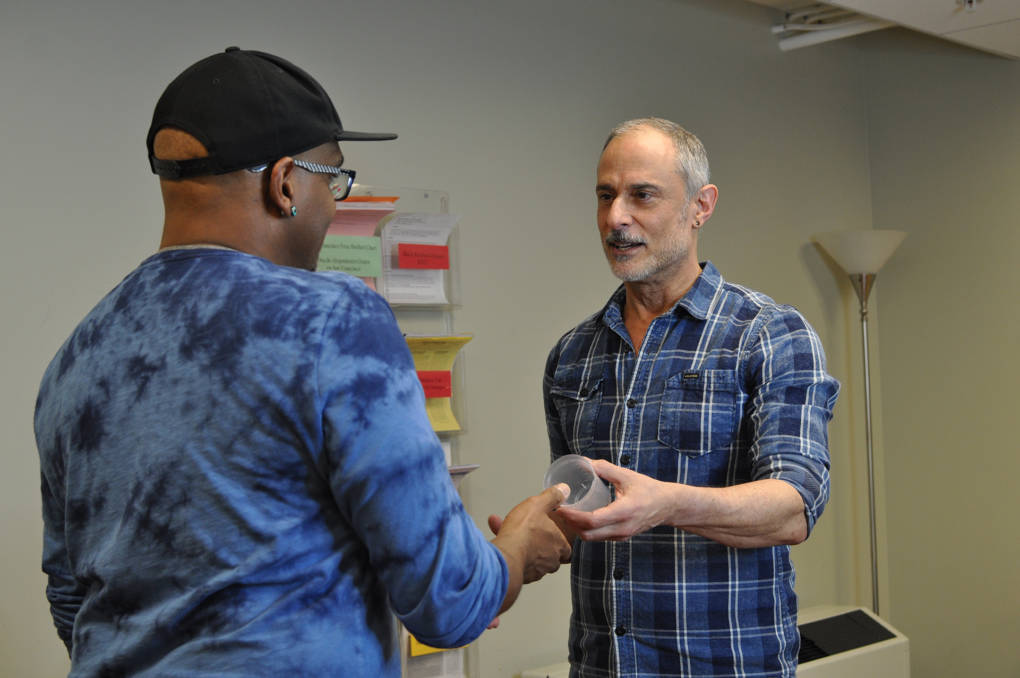
San Francisco Will Use Opioid Settlement to Also Expand Treatment for Meth, Cocaine Use
California Lawmakers Push Feds to Allow a Therapy That Pays Meth Users to Abstain
‘Kamala Harris Is My Fairy Godmother’: A VP Super Fan Says She Saved His Life
New Meth 'Sobering Centers' Top San Francisco's Plans to Address Drug Crisis
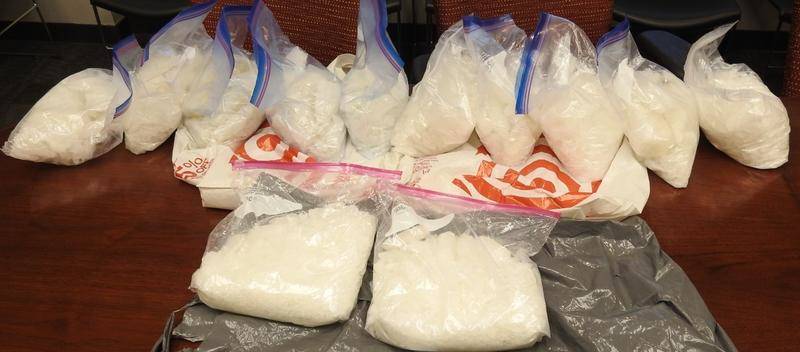
Meth Is Making a Comeback in California – And It’s Hitting the San Joaquin Valley Hard
Meth Mania: From Biker Gangs to the Psych Ward, How Speed Came of Age in California
Stanford Researchers Using MRI Scans to Predict Meth and Cocaine Relapse
Lack of Medication Treatments for Meth Frustrates Doctors
Meth’s Comeback: A New Speed Epidemic Takes Its Toll on San Francisco
Sponsored
Player sponsored by
window.__IS_SSR__=true
window.__INITIAL_STATE__={
"attachmentsReducer": {
"audio_0": {
"type": "attachments",
"id": "audio_0",
"imgSizes": {
"kqedFullSize": {
"file": "https://ww2.kqed.org/news/wp-content/themes/KQED-unified/img/audio_bgs/background0.jpg"
}
}
},
"audio_1": {
"type": "attachments",
"id": "audio_1",
"imgSizes": {
"kqedFullSize": {
"file": "https://ww2.kqed.org/news/wp-content/themes/KQED-unified/img/audio_bgs/background1.jpg"
}
}
},
"audio_2": {
"type": "attachments",
"id": "audio_2",
"imgSizes": {
"kqedFullSize": {
"file": "https://ww2.kqed.org/news/wp-content/themes/KQED-unified/img/audio_bgs/background2.jpg"
}
}
},
"audio_3": {
"type": "attachments",
"id": "audio_3",
"imgSizes": {
"kqedFullSize": {
"file": "https://ww2.kqed.org/news/wp-content/themes/KQED-unified/img/audio_bgs/background3.jpg"
}
}
},
"audio_4": {
"type": "attachments",
"id": "audio_4",
"imgSizes": {
"kqedFullSize": {
"file": "https://ww2.kqed.org/news/wp-content/themes/KQED-unified/img/audio_bgs/background4.jpg"
}
}
},
"placeholder": {
"type": "attachments",
"id": "placeholder",
"imgSizes": {
"thumbnail": {
"file": "https://cdn.kqed.org/wp-content/uploads/2024/12/KQED-Default-Image-816638274-2000x1333-1-160x107.jpg",
"width": 160,
"height": 107,
"mimeType": "image/jpeg"
},
"medium": {
"file": "https://cdn.kqed.org/wp-content/uploads/2024/12/KQED-Default-Image-816638274-2000x1333-1-800x533.jpg",
"width": 800,
"height": 533,
"mimeType": "image/jpeg"
},
"medium_large": {
"file": "https://cdn.kqed.org/wp-content/uploads/2024/12/KQED-Default-Image-816638274-2000x1333-1-768x512.jpg",
"width": 768,
"height": 512,
"mimeType": "image/jpeg"
},
"large": {
"file": "https://cdn.kqed.org/wp-content/uploads/2024/12/KQED-Default-Image-816638274-2000x1333-1-1020x680.jpg",
"width": 1020,
"height": 680,
"mimeType": "image/jpeg"
},
"1536x1536": {
"file": "https://cdn.kqed.org/wp-content/uploads/2024/12/KQED-Default-Image-816638274-2000x1333-1-1536x1024.jpg",
"width": 1536,
"height": 1024,
"mimeType": "image/jpeg"
},
"fd-lrg": {
"file": "https://cdn.kqed.org/wp-content/uploads/2024/12/KQED-Default-Image-816638274-2000x1333-1-1536x1024.jpg",
"width": 1536,
"height": 1024,
"mimeType": "image/jpeg"
},
"fd-med": {
"file": "https://cdn.kqed.org/wp-content/uploads/2024/12/KQED-Default-Image-816638274-2000x1333-1-1020x680.jpg",
"width": 1020,
"height": 680,
"mimeType": "image/jpeg"
},
"fd-sm": {
"file": "https://cdn.kqed.org/wp-content/uploads/2024/12/KQED-Default-Image-816638274-2000x1333-1-800x533.jpg",
"width": 800,
"height": 533,
"mimeType": "image/jpeg"
},
"post-thumbnail": {
"file": "https://cdn.kqed.org/wp-content/uploads/2024/12/KQED-Default-Image-816638274-2000x1333-1-672x372.jpg",
"width": 672,
"height": 372,
"mimeType": "image/jpeg"
},
"twentyfourteen-full-width": {
"file": "https://cdn.kqed.org/wp-content/uploads/2024/12/KQED-Default-Image-816638274-2000x1333-1-1038x576.jpg",
"width": 1038,
"height": 576,
"mimeType": "image/jpeg"
},
"xxsmall": {
"file": "https://cdn.kqed.org/wp-content/uploads/2024/12/KQED-Default-Image-816638274-2000x1333-1-160x107.jpg",
"width": 160,
"height": 107,
"mimeType": "image/jpeg"
},
"xsmall": {
"file": "https://cdn.kqed.org/wp-content/uploads/2024/12/KQED-Default-Image-816638274-2000x1333-1-672x372.jpg",
"width": 672,
"height": 372,
"mimeType": "image/jpeg"
},
"small": {
"file": "https://cdn.kqed.org/wp-content/uploads/2024/12/KQED-Default-Image-816638274-2000x1333-1-672x372.jpg",
"width": 672,
"height": 372,
"mimeType": "image/jpeg"
},
"xlarge": {
"file": "https://cdn.kqed.org/wp-content/uploads/2024/12/KQED-Default-Image-816638274-2000x1333-1-1020x680.jpg",
"width": 1020,
"height": 680,
"mimeType": "image/jpeg"
},
"full-width": {
"file": "https://cdn.kqed.org/wp-content/uploads/2024/12/KQED-Default-Image-816638274-2000x1333-1-1920x1280.jpg",
"width": 1920,
"height": 1280,
"mimeType": "image/jpeg"
},
"guest-author-32": {
"file": "https://cdn.kqed.org/wp-content/uploads/2025/01/KQED-Default-Image-816638274-1333x1333-1-160x160.jpg",
"width": 32,
"height": 32,
"mimeType": "image/jpeg"
},
"guest-author-50": {
"file": "https://cdn.kqed.org/wp-content/uploads/2025/01/KQED-Default-Image-816638274-1333x1333-1-160x160.jpg",
"width": 50,
"height": 50,
"mimeType": "image/jpeg"
},
"guest-author-64": {
"file": "https://cdn.kqed.org/wp-content/uploads/2025/01/KQED-Default-Image-816638274-1333x1333-1-160x160.jpg",
"width": 64,
"height": 64,
"mimeType": "image/jpeg"
},
"guest-author-96": {
"file": "https://cdn.kqed.org/wp-content/uploads/2025/01/KQED-Default-Image-816638274-1333x1333-1-160x160.jpg",
"width": 96,
"height": 96,
"mimeType": "image/jpeg"
},
"guest-author-128": {
"file": "https://cdn.kqed.org/wp-content/uploads/2025/01/KQED-Default-Image-816638274-1333x1333-1-160x160.jpg",
"width": 128,
"height": 128,
"mimeType": "image/jpeg"
},
"detail": {
"file": "https://cdn.kqed.org/wp-content/uploads/2025/01/KQED-Default-Image-816638274-1333x1333-1-160x160.jpg",
"width": 160,
"height": 160,
"mimeType": "image/jpeg"
},
"kqedFullSize": {
"file": "https://cdn.kqed.org/wp-content/uploads/2024/12/KQED-Default-Image-816638274-2000x1333-1.jpg",
"width": 2000,
"height": 1333
}
}
},
"news_11954926": {
"type": "attachments",
"id": "news_11954926",
"meta": {
"index": "attachments_1716263798",
"site": "news",
"id": "11954926",
"found": true
},
"parent": 0,
"imgSizes": {
"twentyfourteen-full-width": {
"file": "https://ww2.kqed.org/app/uploads/sites/10/2023/07/RS66620_20230623-SFAIDSFoundation-004-BL-KQED-1038x576.jpg",
"width": 1038,
"mimeType": "image/jpeg",
"height": 576
},
"thumbnail": {
"file": "https://ww2.kqed.org/app/uploads/sites/10/2023/07/RS66620_20230623-SFAIDSFoundation-004-BL-KQED-160x107.jpg",
"width": 160,
"mimeType": "image/jpeg",
"height": 107
},
"post-thumbnail": {
"file": "https://ww2.kqed.org/app/uploads/sites/10/2023/07/RS66620_20230623-SFAIDSFoundation-004-BL-KQED-672x372.jpg",
"width": 672,
"mimeType": "image/jpeg",
"height": 372
},
"kqedFullSize": {
"file": "https://ww2.kqed.org/app/uploads/sites/10/2023/07/RS66620_20230623-SFAIDSFoundation-004-BL-KQED.jpg",
"width": 2000,
"height": 1333
},
"large": {
"file": "https://ww2.kqed.org/app/uploads/sites/10/2023/07/RS66620_20230623-SFAIDSFoundation-004-BL-KQED-1020x680.jpg",
"width": 1020,
"mimeType": "image/jpeg",
"height": 680
},
"1536x1536": {
"file": "https://ww2.kqed.org/app/uploads/sites/10/2023/07/RS66620_20230623-SFAIDSFoundation-004-BL-KQED-1536x1024.jpg",
"width": 1536,
"mimeType": "image/jpeg",
"height": 1024
},
"full-width": {
"file": "https://ww2.kqed.org/app/uploads/sites/10/2023/07/RS66620_20230623-SFAIDSFoundation-004-BL-KQED-1920x1280.jpg",
"width": 1920,
"mimeType": "image/jpeg",
"height": 1280
},
"medium": {
"file": "https://ww2.kqed.org/app/uploads/sites/10/2023/07/RS66620_20230623-SFAIDSFoundation-004-BL-KQED-800x533.jpg",
"width": 800,
"mimeType": "image/jpeg",
"height": 533
}
},
"publishDate": 1688406610,
"modified": 1688418805,
"caption": "Rick Andrews, director of contingency management, speaks with Tyrone Clifford, PROP coordinator, at the San Francisco AIDS Foundation offices in San Francisco on June 23, 2023.",
"description": null,
"title": "RS66620_20230623-SFAIDSFoundation-004-BL-KQED",
"credit": "Beth LaBerge/KQED",
"status": "inherit",
"altTag": "A middle-aged white man stands behind a desk talking to a middle-aged black man in a chair, inside an office. They both appear to be smiling",
"fetchFailed": false,
"isLoading": false
},
"news_11880413": {
"type": "attachments",
"id": "news_11880413",
"meta": {
"index": "attachments_1716263798",
"site": "news",
"id": "11880413",
"found": true
},
"parent": 11880412,
"imgSizes": {
"twentyfourteen-full-width": {
"file": "https://ww2.kqed.org/app/uploads/sites/10/2021/07/GettyImages-emo018-1024x576.jpg",
"width": 1024,
"mimeType": "image/jpeg",
"height": 576
},
"thumbnail": {
"file": "https://ww2.kqed.org/app/uploads/sites/10/2021/07/GettyImages-emo018-160x108.jpg",
"width": 160,
"mimeType": "image/jpeg",
"height": 108
},
"post-thumbnail": {
"file": "https://ww2.kqed.org/app/uploads/sites/10/2021/07/GettyImages-emo018-672x372.jpg",
"width": 672,
"mimeType": "image/jpeg",
"height": 372
},
"kqedFullSize": {
"file": "https://ww2.kqed.org/app/uploads/sites/10/2021/07/GettyImages-emo018.jpg",
"width": 1024,
"height": 690
},
"large": {
"file": "https://ww2.kqed.org/app/uploads/sites/10/2021/07/GettyImages-emo018-1020x687.jpg",
"width": 1020,
"mimeType": "image/jpeg",
"height": 687
},
"medium": {
"file": "https://ww2.kqed.org/app/uploads/sites/10/2021/07/GettyImages-emo018-800x539.jpg",
"width": 800,
"mimeType": "image/jpeg",
"height": 539
}
},
"publishDate": 1625596329,
"modified": 1625596341,
"caption": null,
"description": null,
"title": "GettyImages-emo018",
"credit": "Tim Teebken/Getty Images",
"status": "inherit",
"altTag": null,
"fetchFailed": false,
"isLoading": false
},
"news_11855860": {
"type": "attachments",
"id": "news_11855860",
"meta": {
"index": "attachments_1716263798",
"site": "news",
"id": "11855860",
"found": true
},
"parent": 11855841,
"imgSizes": {
"apple_news_ca_landscape_5_5": {
"file": "https://ww2.kqed.org/app/uploads/sites/10/2021/01/RS46607_005_SanFrancisco_BillyLemon_01142021-qut-1044x783.jpg",
"width": 1044,
"mimeType": "image/jpeg",
"height": 783
},
"apple_news_ca_square_4_0": {
"file": "https://ww2.kqed.org/app/uploads/sites/10/2021/01/RS46607_005_SanFrancisco_BillyLemon_01142021-qut-470x470.jpg",
"width": 470,
"mimeType": "image/jpeg",
"height": 470
},
"twentyfourteen-full-width": {
"file": "https://ww2.kqed.org/app/uploads/sites/10/2021/01/RS46607_005_SanFrancisco_BillyLemon_01142021-qut-1038x576.jpg",
"width": 1038,
"mimeType": "image/jpeg",
"height": 576
},
"thumbnail": {
"file": "https://ww2.kqed.org/app/uploads/sites/10/2021/01/RS46607_005_SanFrancisco_BillyLemon_01142021-qut-160x107.jpg",
"width": 160,
"mimeType": "image/jpeg",
"height": 107
},
"post-thumbnail": {
"file": "https://ww2.kqed.org/app/uploads/sites/10/2021/01/RS46607_005_SanFrancisco_BillyLemon_01142021-qut-672x372.jpg",
"width": 672,
"mimeType": "image/jpeg",
"height": 372
},
"kqedFullSize": {
"file": "https://ww2.kqed.org/app/uploads/sites/10/2021/01/RS46607_005_SanFrancisco_BillyLemon_01142021-qut.jpg",
"width": 1920,
"height": 1280
},
"apple_news_ca_landscape_4_7": {
"file": "https://ww2.kqed.org/app/uploads/sites/10/2021/01/RS46607_005_SanFrancisco_BillyLemon_01142021-qut-632x474.jpg",
"width": 632,
"mimeType": "image/jpeg",
"height": 474
},
"large": {
"file": "https://ww2.kqed.org/app/uploads/sites/10/2021/01/RS46607_005_SanFrancisco_BillyLemon_01142021-qut-1020x680.jpg",
"width": 1020,
"mimeType": "image/jpeg",
"height": 680
},
"apple_news_ca_landscape_4_0": {
"file": "https://ww2.kqed.org/app/uploads/sites/10/2021/01/RS46607_005_SanFrancisco_BillyLemon_01142021-qut-536x402.jpg",
"width": 536,
"mimeType": "image/jpeg",
"height": 402
},
"apple_news_ca_portrait_12_9": {
"file": "https://ww2.kqed.org/app/uploads/sites/10/2021/01/RS46607_005_SanFrancisco_BillyLemon_01142021-qut-1122x1280.jpg",
"width": 1122,
"mimeType": "image/jpeg",
"height": 1280
},
"medium": {
"file": "https://ww2.kqed.org/app/uploads/sites/10/2021/01/RS46607_005_SanFrancisco_BillyLemon_01142021-qut-800x533.jpg",
"width": 800,
"mimeType": "image/jpeg",
"height": 533
},
"apple_news_ca_portrait_4_0": {
"file": "https://ww2.kqed.org/app/uploads/sites/10/2021/01/RS46607_005_SanFrancisco_BillyLemon_01142021-qut-354x472.jpg",
"width": 354,
"mimeType": "image/jpeg",
"height": 472
},
"apple_news_ca_portrait_9_7": {
"file": "https://ww2.kqed.org/app/uploads/sites/10/2021/01/RS46607_005_SanFrancisco_BillyLemon_01142021-qut-840x1120.jpg",
"width": 840,
"mimeType": "image/jpeg",
"height": 1120
},
"apple_news_ca_landscape_12_9": {
"file": "https://ww2.kqed.org/app/uploads/sites/10/2021/01/RS46607_005_SanFrancisco_BillyLemon_01142021-qut-1832x1280.jpg",
"width": 1832,
"mimeType": "image/jpeg",
"height": 1280
},
"apple_news_ca_square_9_7": {
"file": "https://ww2.kqed.org/app/uploads/sites/10/2021/01/RS46607_005_SanFrancisco_BillyLemon_01142021-qut-1104x1104.jpg",
"width": 1104,
"mimeType": "image/jpeg",
"height": 1104
},
"1536x1536": {
"file": "https://ww2.kqed.org/app/uploads/sites/10/2021/01/RS46607_005_SanFrancisco_BillyLemon_01142021-qut-1536x1024.jpg",
"width": 1536,
"mimeType": "image/jpeg",
"height": 1024
},
"apple_news_ca_portrait_4_7": {
"file": "https://ww2.kqed.org/app/uploads/sites/10/2021/01/RS46607_005_SanFrancisco_BillyLemon_01142021-qut-414x552.jpg",
"width": 414,
"mimeType": "image/jpeg",
"height": 552
},
"apple_news_ca_square_12_9": {
"file": "https://ww2.kqed.org/app/uploads/sites/10/2021/01/RS46607_005_SanFrancisco_BillyLemon_01142021-qut-1472x1280.jpg",
"width": 1472,
"mimeType": "image/jpeg",
"height": 1280
},
"apple_news_ca_portrait_5_5": {
"file": "https://ww2.kqed.org/app/uploads/sites/10/2021/01/RS46607_005_SanFrancisco_BillyLemon_01142021-qut-687x916.jpg",
"width": 687,
"mimeType": "image/jpeg",
"height": 916
},
"apple_news_ca_square_4_7": {
"file": "https://ww2.kqed.org/app/uploads/sites/10/2021/01/RS46607_005_SanFrancisco_BillyLemon_01142021-qut-550x550.jpg",
"width": 550,
"mimeType": "image/jpeg",
"height": 550
},
"apple_news_ca_landscape_9_7": {
"file": "https://ww2.kqed.org/app/uploads/sites/10/2021/01/RS46607_005_SanFrancisco_BillyLemon_01142021-qut-1376x1032.jpg",
"width": 1376,
"mimeType": "image/jpeg",
"height": 1032
},
"apple_news_ca_square_5_5": {
"file": "https://ww2.kqed.org/app/uploads/sites/10/2021/01/RS46607_005_SanFrancisco_BillyLemon_01142021-qut-912x912.jpg",
"width": 912,
"mimeType": "image/jpeg",
"height": 912
}
},
"publishDate": 1611010374,
"modified": 1611031742,
"caption": "Billy Lemon works at the Castro Country Club in San Francisco on Jan. 14, 2021, with Vice President-elect Kamala Harris on a television screen in the background.",
"description": null,
"title": "RS46607_005_SanFrancisco_BillyLemon_01142021-qut",
"credit": "Beth LaBerge/KQED",
"status": "inherit",
"altTag": "Billy Lemon works on a computer with Vice President-elect Kamala Harris on a television screen in the background.",
"fetchFailed": false,
"isLoading": false
},
"news_11782049": {
"type": "attachments",
"id": "news_11782049",
"meta": {
"index": "attachments_1716263798",
"site": "news",
"id": "11782049",
"found": true
},
"parent": 11781929,
"imgSizes": {
"apple_news_ca_landscape_5_5": {
"file": "https://ww2.kqed.org/app/uploads/sites/10/2019/10/London-Breed-Meth-Task-Force-1044x783.jpg",
"width": 1044,
"mimeType": "image/jpeg",
"height": 783
},
"apple_news_ca_square_4_0": {
"file": "https://ww2.kqed.org/app/uploads/sites/10/2019/10/London-Breed-Meth-Task-Force-470x470.jpg",
"width": 470,
"mimeType": "image/jpeg",
"height": 470
},
"twentyfourteen-full-width": {
"file": "https://ww2.kqed.org/app/uploads/sites/10/2019/10/London-Breed-Meth-Task-Force-1038x576.jpg",
"width": 1038,
"mimeType": "image/jpeg",
"height": 576
},
"thumbnail": {
"file": "https://ww2.kqed.org/app/uploads/sites/10/2019/10/London-Breed-Meth-Task-Force-160x113.jpg",
"width": 160,
"mimeType": "image/jpeg",
"height": 113
},
"post-thumbnail": {
"file": "https://ww2.kqed.org/app/uploads/sites/10/2019/10/London-Breed-Meth-Task-Force-672x372.jpg",
"width": 672,
"mimeType": "image/jpeg",
"height": 372
},
"kqedFullSize": {
"file": "https://ww2.kqed.org/app/uploads/sites/10/2019/10/London-Breed-Meth-Task-Force.jpg",
"width": 1920,
"height": 1354
},
"apple_news_ca_landscape_4_7": {
"file": "https://ww2.kqed.org/app/uploads/sites/10/2019/10/London-Breed-Meth-Task-Force-632x474.jpg",
"width": 632,
"mimeType": "image/jpeg",
"height": 474
},
"large": {
"file": "https://ww2.kqed.org/app/uploads/sites/10/2019/10/London-Breed-Meth-Task-Force-1020x719.jpg",
"width": 1020,
"mimeType": "image/jpeg",
"height": 719
},
"complete_open_graph": {
"file": "https://ww2.kqed.org/app/uploads/sites/10/2019/10/London-Breed-Meth-Task-Force-1200x846.jpg",
"width": 1200,
"mimeType": "image/jpeg",
"height": 846
},
"apple_news_ca_landscape_4_0": {
"file": "https://ww2.kqed.org/app/uploads/sites/10/2019/10/London-Breed-Meth-Task-Force-536x402.jpg",
"width": 536,
"mimeType": "image/jpeg",
"height": 402
},
"apple_news_ca_portrait_12_9": {
"file": "https://ww2.kqed.org/app/uploads/sites/10/2019/10/London-Breed-Meth-Task-Force-1122x1354.jpg",
"width": 1122,
"mimeType": "image/jpeg",
"height": 1354
},
"medium": {
"file": "https://ww2.kqed.org/app/uploads/sites/10/2019/10/London-Breed-Meth-Task-Force-800x564.jpg",
"width": 800,
"mimeType": "image/jpeg",
"height": 564
},
"apple_news_ca_portrait_4_0": {
"file": "https://ww2.kqed.org/app/uploads/sites/10/2019/10/London-Breed-Meth-Task-Force-354x472.jpg",
"width": 354,
"mimeType": "image/jpeg",
"height": 472
},
"apple_news_ca_portrait_9_7": {
"file": "https://ww2.kqed.org/app/uploads/sites/10/2019/10/London-Breed-Meth-Task-Force-840x1120.jpg",
"width": 840,
"mimeType": "image/jpeg",
"height": 1120
},
"apple_news_ca_landscape_12_9": {
"file": "https://ww2.kqed.org/app/uploads/sites/10/2019/10/London-Breed-Meth-Task-Force-1832x1354.jpg",
"width": 1832,
"mimeType": "image/jpeg",
"height": 1354
},
"apple_news_ca_square_9_7": {
"file": "https://ww2.kqed.org/app/uploads/sites/10/2019/10/London-Breed-Meth-Task-Force-1104x1104.jpg",
"width": 1104,
"mimeType": "image/jpeg",
"height": 1104
},
"apple_news_ca_portrait_4_7": {
"file": "https://ww2.kqed.org/app/uploads/sites/10/2019/10/London-Breed-Meth-Task-Force-414x552.jpg",
"width": 414,
"mimeType": "image/jpeg",
"height": 552
},
"apple_news_ca_square_12_9": {
"file": "https://ww2.kqed.org/app/uploads/sites/10/2019/10/London-Breed-Meth-Task-Force-1472x1354.jpg",
"width": 1472,
"mimeType": "image/jpeg",
"height": 1354
},
"apple_news_ca_portrait_5_5": {
"file": "https://ww2.kqed.org/app/uploads/sites/10/2019/10/London-Breed-Meth-Task-Force-687x916.jpg",
"width": 687,
"mimeType": "image/jpeg",
"height": 916
},
"full-width": {
"file": "https://ww2.kqed.org/app/uploads/sites/10/2019/10/London-Breed-Meth-Task-Force-1920x1354.jpg",
"width": 1920,
"mimeType": "image/jpeg",
"height": 1354
},
"apple_news_ca_square_4_7": {
"file": "https://ww2.kqed.org/app/uploads/sites/10/2019/10/London-Breed-Meth-Task-Force-550x550.jpg",
"width": 550,
"mimeType": "image/jpeg",
"height": 550
},
"apple_news_ca_landscape_9_7": {
"file": "https://ww2.kqed.org/app/uploads/sites/10/2019/10/London-Breed-Meth-Task-Force-1376x1032.jpg",
"width": 1376,
"mimeType": "image/jpeg",
"height": 1032
},
"apple_news_ca_square_5_5": {
"file": "https://ww2.kqed.org/app/uploads/sites/10/2019/10/London-Breed-Meth-Task-Force-912x912.jpg",
"width": 912,
"mimeType": "image/jpeg",
"height": 912
}
},
"publishDate": 1571858680,
"modified": 1571872894,
"caption": "Mayor London Breed (right) announced the findings of San Francisco's methamphetamine task force on Tuesday. Supervisor Rafael Mandelman (center) and public health director Grant Colfax (left) co-chaired the task force.",
"description": "Mayor London Breed (right) announced the findings of San Francisco's methamphetamine task force on Tuesday. Supervisor Rafael Mandelman (center) and public health director Grant Colfaxt (left) co-chaired the task force.",
"title": "London-Breed-Meth-Task-Force",
"credit": "April Dembosky/KQED",
"status": "inherit",
"fetchFailed": false,
"isLoading": false
},
"news_11758556": {
"type": "attachments",
"id": "news_11758556",
"meta": {
"index": "attachments_1716263798",
"site": "news",
"id": "11758556",
"found": true
},
"parent": 11758552,
"imgSizes": {
"apple_news_ca_square_4_0": {
"file": "https://ww2.kqed.org/app/uploads/sites/10/2019/07/Meth_FresnoSheriff-470x352.jpg",
"width": 470,
"mimeType": "image/jpeg",
"height": 352
},
"thumbnail": {
"file": "https://ww2.kqed.org/app/uploads/sites/10/2019/07/Meth_FresnoSheriff-160x70.jpg",
"width": 160,
"mimeType": "image/jpeg",
"height": 70
},
"post-thumbnail": {
"file": "https://ww2.kqed.org/app/uploads/sites/10/2019/07/Meth_FresnoSheriff-672x352.jpg",
"width": 672,
"mimeType": "image/jpeg",
"height": 352
},
"kqedFullSize": {
"file": "https://ww2.kqed.org/app/uploads/sites/10/2019/07/Meth_FresnoSheriff.jpg",
"width": 800,
"height": 352
},
"apple_news_ca_landscape_4_7": {
"file": "https://ww2.kqed.org/app/uploads/sites/10/2019/07/Meth_FresnoSheriff-632x352.jpg",
"width": 632,
"mimeType": "image/jpeg",
"height": 352
},
"apple_news_ca_portrait_4_7": {
"file": "https://ww2.kqed.org/app/uploads/sites/10/2019/07/Meth_FresnoSheriff-414x352.jpg",
"width": 414,
"mimeType": "image/jpeg",
"height": 352
},
"apple_news_ca_portrait_5_5": {
"file": "https://ww2.kqed.org/app/uploads/sites/10/2019/07/Meth_FresnoSheriff-687x352.jpg",
"width": 687,
"mimeType": "image/jpeg",
"height": 352
},
"apple_news_ca_square_4_7": {
"file": "https://ww2.kqed.org/app/uploads/sites/10/2019/07/Meth_FresnoSheriff-550x352.jpg",
"width": 550,
"mimeType": "image/jpeg",
"height": 352
},
"apple_news_ca_landscape_4_0": {
"file": "https://ww2.kqed.org/app/uploads/sites/10/2019/07/Meth_FresnoSheriff-536x352.jpg",
"width": 536,
"mimeType": "image/jpeg",
"height": 352
},
"medium": {
"file": "https://ww2.kqed.org/app/uploads/sites/10/2019/07/Meth_FresnoSheriff-800x352.jpg",
"width": 800,
"mimeType": "image/jpeg",
"height": 352
},
"apple_news_ca_portrait_4_0": {
"file": "https://ww2.kqed.org/app/uploads/sites/10/2019/07/Meth_FresnoSheriff-354x352.jpg",
"width": 354,
"mimeType": "image/jpeg",
"height": 352
}
},
"publishDate": 1562021369,
"modified": 1562108993,
"caption": "In June 2018, the Fresno County Sheriff's Office and other law enforcement agencies announced they had seized 46 pounds of methamphetamine, as well as marijuana, cash and guns, after an eight-month investigation in Fresno and Modesto.",
"description": "In June 2018, the Fresno County Sheriff's Office and other law enforcement agencies announced they had seized 46 pounds of methamphetamine, as well as marijuana, cash, and guns, after an 8-month investigation in Fresno and Modesto.",
"title": "Meth_FresnoSheriff",
"credit": "Courtesy of Fresno County Sheriff's Office",
"status": "inherit",
"fetchFailed": false,
"isLoading": false
},
"news_11738191": {
"type": "attachments",
"id": "news_11738191",
"meta": {
"index": "attachments_1716263798",
"site": "news",
"id": "11738191",
"found": true
},
"parent": 11737627,
"imgSizes": {
"post-thumbnail": {
"file": "https://ww2.kqed.org/app/uploads/sites/10/2019/04/kim-methamphetamine-672x372.jpg",
"width": 672,
"mimeType": "image/jpeg",
"height": 372
},
"kqedFullSize": {
"file": "https://ww2.kqed.org/app/uploads/sites/10/2019/04/kim-methamphetamine.jpg",
"width": 1920,
"height": 1440
},
"guest-author-50": {
"file": "https://ww2.kqed.org/app/uploads/sites/10/2019/04/kim-methamphetamine-50x50.jpg",
"width": 50,
"mimeType": "image/jpeg",
"height": 50
},
"guest-author-96": {
"file": "https://ww2.kqed.org/app/uploads/sites/10/2019/04/kim-methamphetamine-96x96.jpg",
"width": 96,
"mimeType": "image/jpeg",
"height": 96
},
"apple_news_ca_portrait_12_9": {
"file": "https://ww2.kqed.org/app/uploads/sites/10/2019/04/kim-methamphetamine-1122x1440.jpg",
"width": 1122,
"mimeType": "image/jpeg",
"height": 1440
},
"medium": {
"file": "https://ww2.kqed.org/app/uploads/sites/10/2019/04/kim-methamphetamine-800x600.jpg",
"width": 800,
"mimeType": "image/jpeg",
"height": 600
},
"guest-author-32": {
"file": "https://ww2.kqed.org/app/uploads/sites/10/2019/04/kim-methamphetamine-32x32.jpg",
"width": 32,
"mimeType": "image/jpeg",
"height": 32
},
"apple_news_ca_portrait_9_7": {
"file": "https://ww2.kqed.org/app/uploads/sites/10/2019/04/kim-methamphetamine-840x1120.jpg",
"width": 840,
"mimeType": "image/jpeg",
"height": 1120
},
"apple_news_ca_square_9_7": {
"file": "https://ww2.kqed.org/app/uploads/sites/10/2019/04/kim-methamphetamine-1104x1104.jpg",
"width": 1104,
"mimeType": "image/jpeg",
"height": 1104
},
"apple_news_ca_portrait_4_7": {
"file": "https://ww2.kqed.org/app/uploads/sites/10/2019/04/kim-methamphetamine-414x552.jpg",
"width": 414,
"mimeType": "image/jpeg",
"height": 552
},
"apple_news_ca_square_12_9": {
"file": "https://ww2.kqed.org/app/uploads/sites/10/2019/04/kim-methamphetamine-1472x1440.jpg",
"width": 1472,
"mimeType": "image/jpeg",
"height": 1440
},
"apple_news_ca_portrait_5_5": {
"file": "https://ww2.kqed.org/app/uploads/sites/10/2019/04/kim-methamphetamine-687x916.jpg",
"width": 687,
"mimeType": "image/jpeg",
"height": 916
},
"apple_news_ca_square_4_7": {
"file": "https://ww2.kqed.org/app/uploads/sites/10/2019/04/kim-methamphetamine-550x550.jpg",
"width": 550,
"mimeType": "image/jpeg",
"height": 550
},
"apple_news_ca_square_5_5": {
"file": "https://ww2.kqed.org/app/uploads/sites/10/2019/04/kim-methamphetamine-912x912.jpg",
"width": 912,
"mimeType": "image/jpeg",
"height": 912
},
"apple_news_ca_landscape_5_5": {
"file": "https://ww2.kqed.org/app/uploads/sites/10/2019/04/kim-methamphetamine-1044x783.jpg",
"width": 1044,
"mimeType": "image/jpeg",
"height": 783
},
"apple_news_ca_square_4_0": {
"file": "https://ww2.kqed.org/app/uploads/sites/10/2019/04/kim-methamphetamine-470x470.jpg",
"width": 470,
"mimeType": "image/jpeg",
"height": 470
},
"twentyfourteen-full-width": {
"file": "https://ww2.kqed.org/app/uploads/sites/10/2019/04/kim-methamphetamine-1038x576.jpg",
"width": 1038,
"mimeType": "image/jpeg",
"height": 576
},
"thumbnail": {
"file": "https://ww2.kqed.org/app/uploads/sites/10/2019/04/kim-methamphetamine-160x120.jpg",
"width": 160,
"mimeType": "image/jpeg",
"height": 120
},
"apple_news_ca_landscape_4_7": {
"file": "https://ww2.kqed.org/app/uploads/sites/10/2019/04/kim-methamphetamine-632x474.jpg",
"width": 632,
"mimeType": "image/jpeg",
"height": 474
},
"large": {
"file": "https://ww2.kqed.org/app/uploads/sites/10/2019/04/kim-methamphetamine-1020x765.jpg",
"width": 1020,
"mimeType": "image/jpeg",
"height": 765
},
"complete_open_graph": {
"file": "https://ww2.kqed.org/app/uploads/sites/10/2019/04/kim-methamphetamine-1200x900.jpg",
"width": 1200,
"mimeType": "image/jpeg",
"height": 900
},
"apple_news_ca_landscape_4_0": {
"file": "https://ww2.kqed.org/app/uploads/sites/10/2019/04/kim-methamphetamine-536x402.jpg",
"width": 536,
"mimeType": "image/jpeg",
"height": 402
},
"guest-author-64": {
"file": "https://ww2.kqed.org/app/uploads/sites/10/2019/04/kim-methamphetamine-64x64.jpg",
"width": 64,
"mimeType": "image/jpeg",
"height": 64
},
"apple_news_ca_portrait_4_0": {
"file": "https://ww2.kqed.org/app/uploads/sites/10/2019/04/kim-methamphetamine-354x472.jpg",
"width": 354,
"mimeType": "image/jpeg",
"height": 472
},
"apple_news_ca_landscape_12_9": {
"file": "https://ww2.kqed.org/app/uploads/sites/10/2019/04/kim-methamphetamine-1832x1374.jpg",
"width": 1832,
"mimeType": "image/jpeg",
"height": 1374
},
"full-width": {
"file": "https://ww2.kqed.org/app/uploads/sites/10/2019/04/kim-methamphetamine-1920x1440.jpg",
"width": 1920,
"mimeType": "image/jpeg",
"height": 1440
},
"guest-author-128": {
"file": "https://ww2.kqed.org/app/uploads/sites/10/2019/04/kim-methamphetamine-128x128.jpg",
"width": 128,
"mimeType": "image/jpeg",
"height": 128
},
"apple_news_ca_landscape_9_7": {
"file": "https://ww2.kqed.org/app/uploads/sites/10/2019/04/kim-methamphetamine-1376x1032.jpg",
"width": 1376,
"mimeType": "image/jpeg",
"height": 1032
}
},
"publishDate": 1554494296,
"modified": 1554504146,
"caption": "Kim has been living at the Epiphany Center, a treatment facility in San Francisco for women struggling with addiction, for the last six months. She says her teddy bear is her only material possession left from her past: “Because everything I had, I’ve lost over and over again.”",
"description": null,
"title": "kim-methamphetamine",
"credit": "April Dembosky/KQED",
"status": "inherit",
"fetchFailed": false,
"isLoading": false
},
"news_11728942": {
"type": "attachments",
"id": "news_11728942",
"meta": {
"index": "attachments_1716263798",
"site": "news",
"id": "11728942",
"found": true
},
"parent": 11728856,
"imgSizes": {
"twentyfourteen-full-width": {
"file": "https://ww2.kqed.org/app/uploads/sites/10/2019/02/Stanford-study-coke-1038x576.jpg",
"width": 1038,
"mimeType": "image/jpeg",
"height": 576
},
"thumbnail": {
"file": "https://ww2.kqed.org/app/uploads/sites/10/2019/02/Stanford-study-coke-160x120.jpg",
"width": 160,
"mimeType": "image/jpeg",
"height": 120
},
"post-thumbnail": {
"file": "https://ww2.kqed.org/app/uploads/sites/10/2019/02/Stanford-study-coke-672x372.jpg",
"width": 672,
"mimeType": "image/jpeg",
"height": 372
},
"kqedFullSize": {
"file": "https://ww2.kqed.org/app/uploads/sites/10/2019/02/Stanford-study-coke-e1551146243498.jpg",
"width": 1920,
"height": 1440
},
"large": {
"file": "https://ww2.kqed.org/app/uploads/sites/10/2019/02/Stanford-study-coke-1020x765.jpg",
"width": 1020,
"mimeType": "image/jpeg",
"height": 765
},
"complete_open_graph": {
"file": "https://ww2.kqed.org/app/uploads/sites/10/2019/02/Stanford-study-coke-1200x900.jpg",
"width": 1200,
"mimeType": "image/jpeg",
"height": 900
},
"guest-author-50": {
"file": "https://ww2.kqed.org/app/uploads/sites/10/2019/02/Stanford-study-coke-50x50.jpg",
"width": 50,
"mimeType": "image/jpeg",
"height": 50
},
"guest-author-96": {
"file": "https://ww2.kqed.org/app/uploads/sites/10/2019/02/Stanford-study-coke-96x96.jpg",
"width": 96,
"mimeType": "image/jpeg",
"height": 96
},
"medium": {
"file": "https://ww2.kqed.org/app/uploads/sites/10/2019/02/Stanford-study-coke-800x600.jpg",
"width": 800,
"mimeType": "image/jpeg",
"height": 600
},
"guest-author-64": {
"file": "https://ww2.kqed.org/app/uploads/sites/10/2019/02/Stanford-study-coke-64x64.jpg",
"width": 64,
"mimeType": "image/jpeg",
"height": 64
},
"guest-author-32": {
"file": "https://ww2.kqed.org/app/uploads/sites/10/2019/02/Stanford-study-coke-32x32.jpg",
"width": 32,
"mimeType": "image/jpeg",
"height": 32
},
"full-width": {
"file": "https://ww2.kqed.org/app/uploads/sites/10/2019/02/Stanford-study-coke-1920x1440.jpg",
"width": 1920,
"mimeType": "image/jpeg",
"height": 1440
},
"detail": {
"file": "https://ww2.kqed.org/app/uploads/sites/10/2019/02/Stanford-study-coke-150x150.jpg",
"width": 150,
"mimeType": "image/jpeg",
"height": 150
},
"guest-author-128": {
"file": "https://ww2.kqed.org/app/uploads/sites/10/2019/02/Stanford-study-coke-128x128.jpg",
"width": 128,
"mimeType": "image/jpeg",
"height": 128
}
},
"publishDate": 1551146221,
"modified": 1551196455,
"caption": "Participants in an ongoing study on drug relapse at Stanford rate their desire for the contents of images like these, while researchers record what's happening in their brains.",
"description": null,
"title": "Stanford study coke",
"credit": "April Dembosky/KQED",
"status": "inherit",
"fetchFailed": false,
"isLoading": false
},
"news_11728015": {
"type": "attachments",
"id": "news_11728015",
"meta": {
"index": "attachments_1716263798",
"site": "news",
"id": "11728015",
"found": true
},
"parent": 11728012,
"imgSizes": {
"twentyfourteen-full-width": {
"file": "https://ww2.kqed.org/app/uploads/sites/10/2019/02/Rick-Andrews-at-SF-AIDS-Foundation-1038x576.jpg",
"width": 1038,
"mimeType": "image/jpeg",
"height": 576
},
"thumbnail": {
"file": "https://ww2.kqed.org/app/uploads/sites/10/2019/02/Rick-Andrews-at-SF-AIDS-Foundation-160x106.jpg",
"width": 160,
"mimeType": "image/jpeg",
"height": 106
},
"post-thumbnail": {
"file": "https://ww2.kqed.org/app/uploads/sites/10/2019/02/Rick-Andrews-at-SF-AIDS-Foundation-672x372.jpg",
"width": 672,
"mimeType": "image/jpeg",
"height": 372
},
"kqedFullSize": {
"file": "https://ww2.kqed.org/app/uploads/sites/10/2019/02/Rick-Andrews-at-SF-AIDS-Foundation-e1550805739648.jpg",
"width": 1920,
"height": 1275
},
"large": {
"file": "https://ww2.kqed.org/app/uploads/sites/10/2019/02/Rick-Andrews-at-SF-AIDS-Foundation-1020x678.jpg",
"width": 1020,
"mimeType": "image/jpeg",
"height": 678
},
"complete_open_graph": {
"file": "https://ww2.kqed.org/app/uploads/sites/10/2019/02/Rick-Andrews-at-SF-AIDS-Foundation-1200x797.jpg",
"width": 1200,
"mimeType": "image/jpeg",
"height": 797
},
"guest-author-50": {
"file": "https://ww2.kqed.org/app/uploads/sites/10/2019/02/Rick-Andrews-at-SF-AIDS-Foundation-50x50.jpg",
"width": 50,
"mimeType": "image/jpeg",
"height": 50
},
"guest-author-96": {
"file": "https://ww2.kqed.org/app/uploads/sites/10/2019/02/Rick-Andrews-at-SF-AIDS-Foundation-96x96.jpg",
"width": 96,
"mimeType": "image/jpeg",
"height": 96
},
"medium": {
"file": "https://ww2.kqed.org/app/uploads/sites/10/2019/02/Rick-Andrews-at-SF-AIDS-Foundation-800x531.jpg",
"width": 800,
"mimeType": "image/jpeg",
"height": 531
},
"guest-author-64": {
"file": "https://ww2.kqed.org/app/uploads/sites/10/2019/02/Rick-Andrews-at-SF-AIDS-Foundation-64x64.jpg",
"width": 64,
"mimeType": "image/jpeg",
"height": 64
},
"guest-author-32": {
"file": "https://ww2.kqed.org/app/uploads/sites/10/2019/02/Rick-Andrews-at-SF-AIDS-Foundation-32x32.jpg",
"width": 32,
"mimeType": "image/jpeg",
"height": 32
},
"full-width": {
"file": "https://ww2.kqed.org/app/uploads/sites/10/2019/02/Rick-Andrews-at-SF-AIDS-Foundation-1920x1275.jpg",
"width": 1920,
"mimeType": "image/jpeg",
"height": 1275
},
"detail": {
"file": "https://ww2.kqed.org/app/uploads/sites/10/2019/02/Rick-Andrews-at-SF-AIDS-Foundation-150x150.jpg",
"width": 150,
"mimeType": "image/jpeg",
"height": 150
},
"guest-author-128": {
"file": "https://ww2.kqed.org/app/uploads/sites/10/2019/02/Rick-Andrews-at-SF-AIDS-Foundation-128x128.jpg",
"width": 128,
"mimeType": "image/jpeg",
"height": 128
}
},
"publishDate": 1550805715,
"modified": 1633040846,
"caption": "At the San Francisco AIDS Foundation, staff members Tyrone Clifford (left) and Rick Andrews demonstrate how a contingency management visit typically begins, with a participant picking up a specimen cup for a urine sample. If the sample tests negative for meth or cocaine use, the participant has an incentive dollar amount added to their 'bank,' which can later be traded for a gift card.",
"description": "At the San Francisco AIDS Foundation, staff members Tyrone Clifford (left) and Rick Andrews (right) demonstrate how a contingency management visit typically begins, with a participant picking up a specimen cup for a urine sample. If the sample tests negative for meth or cocaine use, the participant has an incentive dollar amount added to their 'bank' which can later be traded for a gift card.",
"title": "Rick Andrews at SF AIDS Foundation",
"credit": "Courtesy San Francisco AIDS Foundation",
"status": "inherit",
"altTag": "One man hands another an empty plastic cup.",
"fetchFailed": false,
"isLoading": false
},
"news_11724493": {
"type": "attachments",
"id": "news_11724493",
"meta": {
"index": "attachments_1716263798",
"site": "news",
"id": "11724493",
"found": true
},
"parent": 11724407,
"imgSizes": {
"twentyfourteen-full-width": {
"file": "https://ww2.kqed.org/app/uploads/sites/10/2019/02/GettyImages-458902784-1038x576.jpg",
"width": 1038,
"mimeType": "image/jpeg",
"height": 576
},
"thumbnail": {
"file": "https://ww2.kqed.org/app/uploads/sites/10/2019/02/GettyImages-458902784-160x90.jpg",
"width": 160,
"mimeType": "image/jpeg",
"height": 90
},
"post-thumbnail": {
"file": "https://ww2.kqed.org/app/uploads/sites/10/2019/02/GettyImages-458902784-672x372.jpg",
"width": 672,
"mimeType": "image/jpeg",
"height": 372
},
"kqedFullSize": {
"file": "https://ww2.kqed.org/app/uploads/sites/10/2019/02/GettyImages-458902784.jpg",
"width": 1920,
"height": 1080
},
"large": {
"file": "https://ww2.kqed.org/app/uploads/sites/10/2019/02/GettyImages-458902784-1020x574.jpg",
"width": 1020,
"mimeType": "image/jpeg",
"height": 574
},
"complete_open_graph": {
"file": "https://ww2.kqed.org/app/uploads/sites/10/2019/02/GettyImages-458902784-1200x675.jpg",
"width": 1200,
"mimeType": "image/jpeg",
"height": 675
},
"guest-author-50": {
"file": "https://ww2.kqed.org/app/uploads/sites/10/2019/02/GettyImages-458902784-50x50.jpg",
"width": 50,
"mimeType": "image/jpeg",
"height": 50
},
"guest-author-96": {
"file": "https://ww2.kqed.org/app/uploads/sites/10/2019/02/GettyImages-458902784-96x96.jpg",
"width": 96,
"mimeType": "image/jpeg",
"height": 96
},
"medium": {
"file": "https://ww2.kqed.org/app/uploads/sites/10/2019/02/GettyImages-458902784-800x450.jpg",
"width": 800,
"mimeType": "image/jpeg",
"height": 450
},
"guest-author-64": {
"file": "https://ww2.kqed.org/app/uploads/sites/10/2019/02/GettyImages-458902784-64x64.jpg",
"width": 64,
"mimeType": "image/jpeg",
"height": 64
},
"guest-author-32": {
"file": "https://ww2.kqed.org/app/uploads/sites/10/2019/02/GettyImages-458902784-32x32.jpg",
"width": 32,
"mimeType": "image/jpeg",
"height": 32
},
"full-width": {
"file": "https://ww2.kqed.org/app/uploads/sites/10/2019/02/GettyImages-458902784-1920x1080.jpg",
"width": 1920,
"mimeType": "image/jpeg",
"height": 1080
},
"detail": {
"file": "https://ww2.kqed.org/app/uploads/sites/10/2019/02/GettyImages-458902784-150x150.jpg",
"width": 150,
"mimeType": "image/jpeg",
"height": 150
},
"guest-author-128": {
"file": "https://ww2.kqed.org/app/uploads/sites/10/2019/02/GettyImages-458902784-128x128.jpg",
"width": 128,
"mimeType": "image/jpeg",
"height": 128
}
},
"publishDate": 1549573995,
"modified": 1549595354,
"caption": "Methamphetamine is back. The toll the drug is taking on the city’s public health, emergency response and police departments is now spurring Mayor London Breed to address the epidemic.",
"description": null,
"title": "GettyImages-458902784",
"credit": "Daniel Roland/Getty Images",
"status": "inherit",
"fetchFailed": false,
"isLoading": false
}
},
"audioPlayerReducer": {
"postId": "stream_live",
"isPaused": true,
"isPlaying": false,
"pfsActive": false,
"pledgeModalIsOpen": true,
"playerDrawerIsOpen": false
},
"authorsReducer": {
"byline_news_11880412": {
"type": "authors",
"id": "byline_news_11880412",
"meta": {
"override": true
},
"slug": "byline_news_11880412",
"name": "\u003ca href=\"https://californiahealthline.org/news/author/mark-kreidler/\">Mark Kreidler\u003c/a>\u003cbr />California Healthline",
"isLoading": false
},
"byline_news_11758552": {
"type": "authors",
"id": "byline_news_11758552",
"meta": {
"override": true
},
"slug": "byline_news_11758552",
"name": "\u003ca href= \"https://www.kvpr.org/people/kerry-klein\"> Kerry Klein \u003ca/>",
"isLoading": false
},
"adembosky": {
"type": "authors",
"id": "3205",
"meta": {
"index": "authors_1716337520",
"id": "3205",
"found": true
},
"name": "April Dembosky",
"firstName": "April",
"lastName": "Dembosky",
"slug": "adembosky",
"email": "adembosky@kqed.org",
"display_author_email": false,
"staff_mastheads": [
"news",
"science"
],
"title": "KQED Health Correspondent",
"bio": "April Dembosky is the health correspondent for KQED News and a regular contributor to NPR. She specializes in covering altered states of mind, from postpartum depression to methamphetamine-induced psychosis to the insanity defense. Her investigative series on insurance companies sidestepping mental health laws won multiple awards, including first place in beat reporting from the national Association of Health Care Journalists. She is the recipient of numerous other prizes and fellowships, including a national Edward R. Murrow award for investigative reporting, a Society of Professional Journalists award for long-form storytelling, and a Carter Center Fellowship for Mental Health Journalism.\r\n\r\nDembosky reported and produced \u003cem>Soundtrack of Silence\u003c/em>, an audio documentary about music and memory that is currently being made into a feature film by Paramount Pictures.\r\n\r\nBefore joining KQED in 2013, Dembosky covered technology and Silicon Valley for \u003cem>The Financial Times of London,\u003c/em> and contributed business and arts stories to \u003cem>Marketplace \u003c/em>and \u003cem>The New York Times.\u003c/em> She got her undergraduate degree in philosophy from Smith College and her master's in journalism from the University of California, Berkeley. She is a classically trained violinist and proud alum of the first symphony orchestra at Burning Man.",
"avatar": "https://secure.gravatar.com/avatar/ef92999be4ceb9ea60701e7dc276f813?s=600&d=blank&r=g",
"twitter": "adembosky",
"facebook": null,
"instagram": null,
"linkedin": null,
"sites": [
{
"site": "arts",
"roles": [
"author"
]
},
{
"site": "news",
"roles": [
"editor"
]
},
{
"site": "futureofyou",
"roles": [
"author"
]
},
{
"site": "stateofhealth",
"roles": [
"editor"
]
},
{
"site": "science",
"roles": [
"editor"
]
},
{
"site": "forum",
"roles": [
"editor"
]
}
],
"headData": {
"title": "April Dembosky | KQED",
"description": "KQED Health Correspondent",
"ogImgSrc": "https://secure.gravatar.com/avatar/ef92999be4ceb9ea60701e7dc276f813?s=600&d=blank&r=g",
"twImgSrc": "https://secure.gravatar.com/avatar/ef92999be4ceb9ea60701e7dc276f813?s=600&d=blank&r=g"
},
"isLoading": false,
"link": "/author/adembosky"
},
"sjohnson": {
"type": "authors",
"id": "11840",
"meta": {
"index": "authors_1716337520",
"id": "11840",
"found": true
},
"name": "Sydney Johnson",
"firstName": "Sydney",
"lastName": "Johnson",
"slug": "sjohnson",
"email": "sjohnson@kqed.org",
"display_author_email": false,
"staff_mastheads": [
"news"
],
"title": "KQED Reporter",
"bio": "Sydney Johnson is a general assignment reporter at KQED. She previously reported on public health and city government at the San Francisco Examiner, and before that, she covered statewide education policy for EdSource. Her reporting has won multiple local, state and national awards. Sydney is a graduate of the University of California, Berkeley and lives in San Francisco.",
"avatar": "https://secure.gravatar.com/avatar/97855f2719b72ad6190b7c535fe642c8?s=600&d=blank&r=g",
"twitter": "sydneyfjohnson",
"facebook": null,
"instagram": null,
"linkedin": null,
"sites": [
{
"site": "news",
"roles": [
"editor"
]
}
],
"headData": {
"title": "Sydney Johnson | KQED",
"description": "KQED Reporter",
"ogImgSrc": "https://secure.gravatar.com/avatar/97855f2719b72ad6190b7c535fe642c8?s=600&d=blank&r=g",
"twImgSrc": "https://secure.gravatar.com/avatar/97855f2719b72ad6190b7c535fe642c8?s=600&d=blank&r=g"
},
"isLoading": false,
"link": "/author/sjohnson"
}
},
"breakingNewsReducer": {},
"pagesReducer": {},
"postsReducer": {
"stream_live": {
"type": "live",
"id": "stream_live",
"audioUrl": "https://streams.kqed.org/kqedradio",
"title": "Live Stream",
"excerpt": "Live Stream information currently unavailable.",
"link": "/radio",
"featImg": "",
"label": {
"name": "KQED Live",
"link": "/"
}
},
"stream_kqedNewscast": {
"type": "posts",
"id": "stream_kqedNewscast",
"audioUrl": "https://www.kqed.org/.stream/anon/radio/RDnews/newscast.mp3?_=1",
"title": "KQED Newscast",
"featImg": "",
"label": {
"name": "88.5 FM",
"link": "/"
}
},
"news_11954871": {
"type": "posts",
"id": "news_11954871",
"meta": {
"index": "posts_1716263798",
"site": "news",
"id": "11954871",
"score": null,
"sort": [
1688562032000
]
},
"guestAuthors": [],
"slug": "san-francisco-will-use-opioid-settlement-to-also-expand-treatment-for-meth-cocaine-use",
"title": "San Francisco Will Use Opioid Settlement to Also Expand Treatment for Meth, Cocaine Use",
"publishDate": 1688562032,
"format": "standard",
"headTitle": "San Francisco Will Use Opioid Settlement to Also Expand Treatment for Meth, Cocaine Use | KQED",
"labelTerm": {
"site": "news"
},
"content": "\u003cp>Fentanyl and other \u003ca href=\"https://www.kqed.org/news/11948062/newsom-taps-chp-national-guard-to-fight-san-franciscos-fentanyl-crisis\">opioids dominate discussions\u003c/a> about the overdose crisis on the West Coast. But stimulants, like methamphetamine and cocaine, are often involved in fatal drug overdoses, too, especially when they are mixed with opioids like fentanyl, intentionally or not.\u003c/p>\n\u003cp>That’s why San Francisco city leaders are looking to increase access to treatment for stimulant use with the help of the \u003ca href=\"https://www.kqed.org/news/11949888/walgreens-pay-san-francisco-230-million-opioid-crisis\">millions of dollars\u003c/a> the city is receiving through settlements with opioid manufacturers and pharmacies.\u003c/p>\n\u003cp>[aside label=\"Related Stories\" postID=\"news_11945418,science_1982214,news_11944267\"]Wayne Rafus is a manager at a program at the San Francisco AIDS Foundation (SFAF) that helps people change their meth or cocaine use, called PROP 4 All. He said that about 40% of the time, fentanyl is showing up in voluntary drug tests — even though the participants haven’t intended to use that drug. This unintended use of opioids is contributing to the crisis of fatal overdoses. “Fentanyl is showing up in stimulant use, particularly meth and cocaine, which is very sad because sometimes folks are not intentionally wanting to use an opioid,” he said.\u003c/p>\n\u003cp>San Francisco is slated to receive about \u003ca href=\"https://www.kqed.org/news/11949888/walgreens-pay-san-francisco-230-million-opioid-crisis\">$352 million over the next 15 years\u003c/a> through settlements with a number of companies, including Walgreens, CVS, Teva, Allergan and others for their role in the opioid epidemic. The funding is earmarked to address problems that have come out of the opioid crisis, from increased overdoses to dangerous street-level activity.\u003c/p>\n\u003cp>As part of that, Mayor London Breed is proposing to use $56.2 million of the settlement in the 2023–24 fiscal year budget and $46.5 million in the 2024–25 budget. Of that, \u003ca href=\"https://sf.gov/sites/default/files/2023-06/FY%2023-25%20HC%20Memo%20Fourth%20Meeting%20-%206-2-23%20.pdf\">$2 million (PDF)\u003c/a> would be allocated each year for contingency management programs to address stimulant use. These programs use an incentive and positive-reinforcement-based approach to curbing addictions, primarily for stimulants like meth or cocaine.\u003c/p>\n\u003cp>[pullquote align=\"right\" size=\"medium\" citation=\"Wayne Rafus, manager of contingency management at the San Francisco AIDS Foundation\"]‘Fentanyl is showing up in stimulant use, particularly meth and cocaine, which is very sad because sometimes folks are not intentionally wanting to use an opioid.’[/pullquote]San Francisco is simultaneously using settlement funding to increase access to opioid treatments, such as \u003ca href=\"https://www.kqed.org/news/11945418/san-francisco-has-doubled-participants-of-this-opioid-treatment-heres-why\">buprenorphine, suboxone\u003c/a> and \u003ca href=\"https://www.kqed.org/news/11941618/sfs-mobile-clinics-made-opioid-treatment-more-accessible-during-the-pandemic-but-will-they-stay\">methadone\u003c/a> medications, as well as abstinence-based programs and residential facilities.\u003c/p>\n\u003cp>But unlike opioids, there are no federally approved medications to treat stimulant use.\u003c/p>\n\u003cp>Instead, contingency management has been employed by \u003ca href=\"https://www.ncbi.nlm.nih.gov/pmc/articles/PMC6768930/\">Veterans Affairs\u003c/a> for many years as one option that’s shown success; the agency was the first to complete a \u003ca href=\"https://www.ncbi.nlm.nih.gov/pmc/articles/PMC3986725/\">large-scale implementation\u003c/a> of the approach. A \u003ca href=\"https://www.sciencedirect.com/science/article/abs/pii/S0376871618300784\">2018 study\u003c/a> found that, on average, VA patients attended more than half of their counseling sessions, and 91% of participants tested negative for the targeted substance.\u003c/p>\n\u003cp>A \u003ca href=\"https://pubmed.ncbi.nlm.nih.gov/33507776/\">study in 2021\u003c/a> meanwhile found that contingency management showed “long-term benefit in reducing objective indices of drug use, above and beyond other active, evidence-based treatments.”\u003c/p>\n\u003cfigure id=\"attachment_11954572\" class=\"wp-caption aligncenter\" style=\"max-width: 1920px\">\u003ca href=\"https://ww2.kqed.org/news/20230623-sfaidsfoundation-023-bl/\">\u003cimg loading=\"lazy\" decoding=\"async\" class=\"size-full wp-image-11954572\" src=\"https://ww2.kqed.org/app/uploads/sites/10/2023/06/20230623-SFAIDSFoundation-023-BL.jpg\" alt=\"A hand holds a brightly colored flyer that reads 'PROP'\" width=\"1920\" height=\"1280\" srcset=\"https://cdn.kqed.org/wp-content/uploads/sites/10/2023/06/20230623-SFAIDSFoundation-023-BL.jpg 1920w, https://cdn.kqed.org/wp-content/uploads/sites/10/2023/06/20230623-SFAIDSFoundation-023-BL-800x533.jpg 800w, https://cdn.kqed.org/wp-content/uploads/sites/10/2023/06/20230623-SFAIDSFoundation-023-BL-1020x680.jpg 1020w, https://cdn.kqed.org/wp-content/uploads/sites/10/2023/06/20230623-SFAIDSFoundation-023-BL-160x107.jpg 160w, https://cdn.kqed.org/wp-content/uploads/sites/10/2023/06/20230623-SFAIDSFoundation-023-BL-1536x1024.jpg 1536w\" sizes=\"auto, (max-width: 1920px) 100vw, 1920px\">\u003c/a>\u003cfigcaption class=\"wp-caption-text\">Rick Andrews holds a flyer with information about PROP, or the Positive Reinforcement Opportunity Project. \u003ccite>(Beth LaBerge/KQED)\u003c/cite>\u003c/figcaption>\u003c/figure>\n\u003cp>Rick Andrews, director of contingency management at SFAF, said that some participants are also enrolled in Alcoholics Anonymous, Crystal Meth Anonymous, other 12-step recovery programs or additional counseling while they are at PROP. Graduates often transfer to longer-term treatment after they complete the program.\u003c/p>\n\u003cp>“We have folks in CMA, AA and other programs working in conjunction with us as well,” said Andrews. “And folks who are not ready for abstinence, what’s great for them is that they can come here, feel like they are trying to do something, and be around people. They get something to eat, counseling and community, even if they aren’t ready now.”\u003c/p>\n\u003cp>[pullquote align=\"right\" size=\"medium\" citation=\"Rick Andrews, director of contingency management, San Francisco AIDS Foundation\"]‘[F]olks who are not ready for abstinence, what’s great for them is that they can come here, feel like they are trying to do something, and be around people. They get something to eat, counseling and community, even if they aren’t ready now.’[/pullquote]Addiction experts say that tackling meth and cocaine addiction is crucial as the city works to address its overdose crisis, because those substances also appear in a large portion of fatal accidental overdoses, according to data from the San Francisco Office of the Chief Medical Examiner.\u003c/p>\n\u003cp>“Meth is a big, big problem that gets overshadowed by opioids, but a significant percentage of people who are using drugs in our streets are using meth, either alone or in combination with other drugs,” said Sen. Scott Wiener (D-San Francisco), who has advocated for expanding approaches to treat meth addiction. “Contingency management is an incredibly important and impactful approach or treatment for meth addiction.”\u003c/p>\n\u003ch2>How contingency management can lead to big changes\u003c/h2>\n\u003cp>At PROP 4 All and PROP, a similar program at SFAF that focuses on the gay male community, participants attend weekly group sessions in a calmingly dim conference room off Market Street. They discuss their use patterns, challenges and goals for how they want to adjust their use.\u003c/p>\n\u003cp>They also are given the option to take a drug test, and if it comes back negative, they can earn a cash incentive in the form of gift cards. After the 12-week program, participants often transition to longer-term counseling and care, depending on their specific goals and needs.\u003c/p>\n\u003cp>Participants can earn up to $330 in gift cards, if they test negative throughout the entire 12-week program. The cash may start as a draw, but leaders and participants said that what keeps people coming is having a new community, finding stability and getting connected to other services, like housing or longer-term treatment programs.\u003c/p>\n\u003cp>Tyrone Clifford was a participant at PROP before becoming a manager of contingency management at the program. On his 21st birthday, just before moving to San Francisco, he found out he was HIV-positive and was told he had maybe two years to live. Clifford then began partying and using more drugs in an effort to cope with the diagnosis.\u003c/p>\n\u003cp>But after he far outlived the prognosis, his doctor encouraged him to reevaluate his relationship to meth. Clifford had been thinking about changing his drug use, so the encouragement spurred him to give contingency management a try.\u003c/p>\n\u003cfigure id=\"attachment_11954578\" class=\"wp-caption aligncenter\" style=\"max-width: 1920px\">\u003ca href=\"https://ww2.kqed.org/news/20230623-sfaidsfoundation-003-bl/\">\u003cimg loading=\"lazy\" decoding=\"async\" class=\"wp-image-11954578 size-full\" src=\"https://ww2.kqed.org/app/uploads/sites/10/2023/06/20230623-SFAIDSFoundation-003-BL.jpg\" alt=\"A middle-aged Black man in jeans and a flannel shirt sits on a chair in an empty conference room with stacked chairs behind him. He appears to have stud earrings in both ears, and has a bald head and a mostly white goatee and mustache.\" width=\"1920\" height=\"1280\" srcset=\"https://cdn.kqed.org/wp-content/uploads/sites/10/2023/06/20230623-SFAIDSFoundation-003-BL.jpg 1920w, https://cdn.kqed.org/wp-content/uploads/sites/10/2023/06/20230623-SFAIDSFoundation-003-BL-800x533.jpg 800w, https://cdn.kqed.org/wp-content/uploads/sites/10/2023/06/20230623-SFAIDSFoundation-003-BL-1020x680.jpg 1020w, https://cdn.kqed.org/wp-content/uploads/sites/10/2023/06/20230623-SFAIDSFoundation-003-BL-160x107.jpg 160w, https://cdn.kqed.org/wp-content/uploads/sites/10/2023/06/20230623-SFAIDSFoundation-003-BL-1536x1024.jpg 1536w\" sizes=\"auto, (max-width: 1920px) 100vw, 1920px\">\u003c/a>\u003cfigcaption class=\"wp-caption-text\">Tyrone Clifford, manager of contingency management at PROP, sits in the San Francisco AIDS Foundation offices in San Francisco on June 23, 2023. \u003ccite>(Beth LaBerge/KQED)\u003c/cite>\u003c/figcaption>\u003c/figure>\n\u003cp>The weekly visits and community he built helped Clifford keep his promises to himself, he said, and gave him a chance to stabilize from the everyday chaos that heavy meth use can bring. The substance can keep users up for days, straining sleep and eating schedules, and lead to other physical and emotional harm in the long run.\u003c/p>\n\u003cp>“Being in the group, it helped me to stay balanced, you know, helping to appreciate the lives of others and to understand that we’re all doing the same thing. But we all have different reasons for why we do it. We’re all looking to do it to help us get through different things,” said Clifford.\u003c/p>\n\u003ch2>The need for more treatment programs\u003c/h2>\n\u003cp>In coordination with UCSF and nonprofits, the San Francisco Department of Public Health provides contingency management at the \u003ca href=\"https://citywide.ucsf.edu/stimulant-treatment-outpatient-program-stop\">Citywide Clinic’s Stimulant Treatment Outpatient Program\u003c/a>, the \u003ca href=\"https://psych.ucsf.edu/news/office-based-buprenorphine-induction-clinics-work-highlighted-national-magazine\">Office-Based Buprenorphine Induction Clinic\u003c/a> and \u003ca href=\"https://sf.gov/reports/october-2022/overdose-prevention-plan-2022\">Project HOUDINI LINK\u003c/a> (Hospital Opioid Use Disorder treatment INItiation and LINKage to care).\u003c/p>\n\u003cp>To date, the expansion of San Francisco’s contingency management programs has come from Prop. C, which passed in 2018 to provide funds to address homelessness. But the Department of Public Health’s \u003ca href=\"https://sf.gov/reports/october-2022/overdose-prevention-plan-2022\">overdose prevention plan\u003c/a> suggests that these programs won’t be sufficiently utilized without sustained longer-term funding.\u003c/p>\n\u003cp>Now, San Francisco is looking to add at least one additional contingency management program and increase the number of overall participants by 25% in the next four years, according to the overdose prevention plan.\u003c/p>\n\u003cp>Those efforts are paralleled by a statewide initiative. In 2021, California became the first state to cover contingency management through Medi-Cal, potentially opening doors for people who may have struggled to afford residential treatment or other treatment options.\u003c/p>\n\u003cp>The state also allocated $58.5 million to pilot contingency management programs in \u003ca href=\"https://www.dhcs.ca.gov/Pages/DMC-ODS-Contingency-Management.aspx\">nearly two dozen other California counties\u003c/a>. Each patient receives a maximum of $599 over six months, after which they are referred for follow-up recovery programs and services.\u003c/p>\n\u003cp>Still, it can be hard to find or even know about contingency management program options. Many people at PROP, for example, arrive through word of mouth, court-ordered treatment or referrals from doctors, like Clifford did. But advocates say it’s an under-utilized approach that more people could benefit from.\u003c/p>\n\u003cp>That’s particularly concerning for experts looking at the overlap between homelessness and substance-use disorder.\u003c/p>\n\u003cp>[pullquote align=\"right\" size=\"medium\" citation=\"State Sen. Scott Wiener (D-San Francisco)\"]‘The state has been really slow in rolling out these pilot programs … but we need to do whatever we can to help people suffering from meth addiction.’[/pullquote]\u003ca href=\"https://www.kqed.org/news/11953216/lack-of-affordable-housing-is-driving-older-californians-into-homelessness\">Meth is almost three times more commonly used than nonprescribed opioids among people experiencing homelessness in California\u003c/a>, a recent UCSF study found. Of a representative sample of unhoused adults in the state, 31% reported regular use of methamphetamines, 11% used nonprescribed opioids such as fentanyl, and 3% reported cocaine, the study found.\u003c/p>\n\u003cp>“Methamphetamine kept them awake and alert, but it obviously comes at a big cost,” said Dr. Margot Kushel, lead author of the study, which also found that about 20% of participants wanted and were ready to enter drug treatment but could not access it.\u003c/p>\n\u003cp>Wiener stressed that the efforts to expand contingency management need to accelerate to meet the current and urgent need. PROP, as just one example, has 12 people on its waitlist right now.\u003c/p>\n\u003cp>In 2021, he authored \u003ca href=\"https://www.kqed.org/news/11854373/state-lawmakers-move-to-expand-effective-but-controversial-treatment-for-meth-addiction\">a bill that aimed to expand contingency management\u003c/a>, SB 110, but Gov. Gavin Newsom vetoed it to instead launch the current statewide pilot program.\u003c/p>\n\u003cp>“The state has been really slow in rolling out these pilot programs,” Wiener said, “but we need to do whatever we can to help people suffering from meth addiction.”\u003c/p>\n\u003cp>\u003cem>This story has been updated.\u003c/em>\u003c/p>\n\u003cp>[ad fullwidth]\u003c/p>\n\u003cp>[ad floatright]\u003c/p>\n",
"blocks": [],
"excerpt": "Experts say tackling the overdose crisis will require increasing treatment for both opioids and stimulants.",
"status": "publish",
"parent": 0,
"modified": 1738095921,
"stats": {
"hasAudio": false,
"hasVideo": false,
"hasChartOrMap": false,
"iframeSrcs": [],
"hasGoogleForm": false,
"hasGallery": false,
"hasHearkenModule": false,
"hasPolis": false,
"paragraphCount": 35,
"wordCount": 1749
},
"headData": {
"title": "San Francisco Will Use Opioid Settlement to Also Expand Treatment for Meth, Cocaine Use | KQED",
"description": "Experts say tackling the overdose crisis will require increasing treatment for both opioids and stimulants.",
"ogTitle": "",
"ogDescription": "",
"ogImgId": "",
"twTitle": "",
"twDescription": "",
"twImgId": "",
"schema": {
"@context": "https://schema.org",
"@type": "NewsArticle",
"headline": "San Francisco Will Use Opioid Settlement to Also Expand Treatment for Meth, Cocaine Use",
"datePublished": "2023-07-05T06:00:32-07:00",
"dateModified": "2025-01-28T12:25:21-08:00",
"image": "https://cdn.kqed.org/wp-content/uploads/2020/02/KQED-OG-Image@1x.png",
"isAccessibleForFree": "True",
"publisher": {
"@type": "NewsMediaOrganization",
"@id": "https://www.kqed.org/#organization",
"name": "KQED",
"logo": "https://cdn.kqed.org/wp-content/uploads/2020/02/KQED-OG-Image@1x.png",
"url": "https://www.kqed.org",
"sameAs": [
"https://www.facebook.com/KQED",
"https://twitter.com/KQED",
"https://www.instagram.com/kqed/",
"https://www.tiktok.com/@kqedofficial",
"https://www.linkedin.com/company/kqed",
"https://www.youtube.com/channel/UCeC0IOo7i1P_61zVUWbJ4nw"
]
}
}
},
"audioUrl": "https://omny.fm/shows/kqed-segmented-audio/kqed-newscast-07f0d5c6-6165-458a-840d-fc69976f60a8",
"sticky": false,
"excludeFromSiteSearch": "Include",
"articleAge": "0",
"path": "/news/11954871/san-francisco-will-use-opioid-settlement-to-also-expand-treatment-for-meth-cocaine-use",
"audioTrackLength": null,
"parsedContent": [
{
"type": "contentString",
"content": "\u003cdiv class=\"post-body\">\u003cp>\u003cp>Fentanyl and other \u003ca href=\"https://www.kqed.org/news/11948062/newsom-taps-chp-national-guard-to-fight-san-franciscos-fentanyl-crisis\">opioids dominate discussions\u003c/a> about the overdose crisis on the West Coast. But stimulants, like methamphetamine and cocaine, are often involved in fatal drug overdoses, too, especially when they are mixed with opioids like fentanyl, intentionally or not.\u003c/p>\n\u003cp>That’s why San Francisco city leaders are looking to increase access to treatment for stimulant use with the help of the \u003ca href=\"https://www.kqed.org/news/11949888/walgreens-pay-san-francisco-230-million-opioid-crisis\">millions of dollars\u003c/a> the city is receiving through settlements with opioid manufacturers and pharmacies.\u003c/p>\n\u003cp>\u003c/p>\u003c/div>",
"attributes": {
"named": {},
"numeric": []
}
},
{
"type": "component",
"content": "",
"name": "aside",
"attributes": {
"named": {
"label": "Related Stories ",
"postid": "news_11945418,science_1982214,news_11944267"
},
"numeric": []
}
},
{
"type": "contentString",
"content": "\u003cdiv class=\"post-body\">\u003cp>Wayne Rafus is a manager at a program at the San Francisco AIDS Foundation (SFAF) that helps people change their meth or cocaine use, called PROP 4 All. He said that about 40% of the time, fentanyl is showing up in voluntary drug tests — even though the participants haven’t intended to use that drug. This unintended use of opioids is contributing to the crisis of fatal overdoses. “Fentanyl is showing up in stimulant use, particularly meth and cocaine, which is very sad because sometimes folks are not intentionally wanting to use an opioid,” he said.\u003c/p>\n\u003cp>San Francisco is slated to receive about \u003ca href=\"https://www.kqed.org/news/11949888/walgreens-pay-san-francisco-230-million-opioid-crisis\">$352 million over the next 15 years\u003c/a> through settlements with a number of companies, including Walgreens, CVS, Teva, Allergan and others for their role in the opioid epidemic. The funding is earmarked to address problems that have come out of the opioid crisis, from increased overdoses to dangerous street-level activity.\u003c/p>\n\u003cp>As part of that, Mayor London Breed is proposing to use $56.2 million of the settlement in the 2023–24 fiscal year budget and $46.5 million in the 2024–25 budget. Of that, \u003ca href=\"https://sf.gov/sites/default/files/2023-06/FY%2023-25%20HC%20Memo%20Fourth%20Meeting%20-%206-2-23%20.pdf\">$2 million (PDF)\u003c/a> would be allocated each year for contingency management programs to address stimulant use. These programs use an incentive and positive-reinforcement-based approach to curbing addictions, primarily for stimulants like meth or cocaine.\u003c/p>\n\u003cp>\u003c/p>\u003c/div>",
"attributes": {
"named": {},
"numeric": []
}
},
{
"type": "component",
"content": "‘Fentanyl is showing up in stimulant use, particularly meth and cocaine, which is very sad because sometimes folks are not intentionally wanting to use an opioid.’",
"name": "pullquote",
"attributes": {
"named": {
"align": "right",
"size": "medium",
"citation": "Wayne Rafus, manager of contingency management at the San Francisco AIDS Foundation",
"label": ""
},
"numeric": []
}
},
{
"type": "contentString",
"content": "\u003cdiv class=\"post-body\">\u003cp>San Francisco is simultaneously using settlement funding to increase access to opioid treatments, such as \u003ca href=\"https://www.kqed.org/news/11945418/san-francisco-has-doubled-participants-of-this-opioid-treatment-heres-why\">buprenorphine, suboxone\u003c/a> and \u003ca href=\"https://www.kqed.org/news/11941618/sfs-mobile-clinics-made-opioid-treatment-more-accessible-during-the-pandemic-but-will-they-stay\">methadone\u003c/a> medications, as well as abstinence-based programs and residential facilities.\u003c/p>\n\u003cp>But unlike opioids, there are no federally approved medications to treat stimulant use.\u003c/p>\n\u003cp>Instead, contingency management has been employed by \u003ca href=\"https://www.ncbi.nlm.nih.gov/pmc/articles/PMC6768930/\">Veterans Affairs\u003c/a> for many years as one option that’s shown success; the agency was the first to complete a \u003ca href=\"https://www.ncbi.nlm.nih.gov/pmc/articles/PMC3986725/\">large-scale implementation\u003c/a> of the approach. A \u003ca href=\"https://www.sciencedirect.com/science/article/abs/pii/S0376871618300784\">2018 study\u003c/a> found that, on average, VA patients attended more than half of their counseling sessions, and 91% of participants tested negative for the targeted substance.\u003c/p>\n\u003cp>A \u003ca href=\"https://pubmed.ncbi.nlm.nih.gov/33507776/\">study in 2021\u003c/a> meanwhile found that contingency management showed “long-term benefit in reducing objective indices of drug use, above and beyond other active, evidence-based treatments.”\u003c/p>\n\u003cfigure id=\"attachment_11954572\" class=\"wp-caption aligncenter\" style=\"max-width: 1920px\">\u003ca href=\"https://ww2.kqed.org/news/20230623-sfaidsfoundation-023-bl/\">\u003cimg loading=\"lazy\" decoding=\"async\" class=\"size-full wp-image-11954572\" src=\"https://ww2.kqed.org/app/uploads/sites/10/2023/06/20230623-SFAIDSFoundation-023-BL.jpg\" alt=\"A hand holds a brightly colored flyer that reads 'PROP'\" width=\"1920\" height=\"1280\" srcset=\"https://cdn.kqed.org/wp-content/uploads/sites/10/2023/06/20230623-SFAIDSFoundation-023-BL.jpg 1920w, https://cdn.kqed.org/wp-content/uploads/sites/10/2023/06/20230623-SFAIDSFoundation-023-BL-800x533.jpg 800w, https://cdn.kqed.org/wp-content/uploads/sites/10/2023/06/20230623-SFAIDSFoundation-023-BL-1020x680.jpg 1020w, https://cdn.kqed.org/wp-content/uploads/sites/10/2023/06/20230623-SFAIDSFoundation-023-BL-160x107.jpg 160w, https://cdn.kqed.org/wp-content/uploads/sites/10/2023/06/20230623-SFAIDSFoundation-023-BL-1536x1024.jpg 1536w\" sizes=\"auto, (max-width: 1920px) 100vw, 1920px\">\u003c/a>\u003cfigcaption class=\"wp-caption-text\">Rick Andrews holds a flyer with information about PROP, or the Positive Reinforcement Opportunity Project. \u003ccite>(Beth LaBerge/KQED)\u003c/cite>\u003c/figcaption>\u003c/figure>\n\u003cp>Rick Andrews, director of contingency management at SFAF, said that some participants are also enrolled in Alcoholics Anonymous, Crystal Meth Anonymous, other 12-step recovery programs or additional counseling while they are at PROP. Graduates often transfer to longer-term treatment after they complete the program.\u003c/p>\n\u003cp>“We have folks in CMA, AA and other programs working in conjunction with us as well,” said Andrews. “And folks who are not ready for abstinence, what’s great for them is that they can come here, feel like they are trying to do something, and be around people. They get something to eat, counseling and community, even if they aren’t ready now.”\u003c/p>\n\u003cp>\u003c/p>\u003c/div>",
"attributes": {
"named": {},
"numeric": []
}
},
{
"type": "component",
"content": "‘[F]olks who are not ready for abstinence, what’s great for them is that they can come here, feel like they are trying to do something, and be around people. They get something to eat, counseling and community, even if they aren’t ready now.’",
"name": "pullquote",
"attributes": {
"named": {
"align": "right",
"size": "medium",
"citation": "Rick Andrews, director of contingency management, San Francisco AIDS Foundation",
"label": ""
},
"numeric": []
}
},
{
"type": "contentString",
"content": "\u003cdiv class=\"post-body\">\u003cp>Addiction experts say that tackling meth and cocaine addiction is crucial as the city works to address its overdose crisis, because those substances also appear in a large portion of fatal accidental overdoses, according to data from the San Francisco Office of the Chief Medical Examiner.\u003c/p>\n\u003cp>“Meth is a big, big problem that gets overshadowed by opioids, but a significant percentage of people who are using drugs in our streets are using meth, either alone or in combination with other drugs,” said Sen. Scott Wiener (D-San Francisco), who has advocated for expanding approaches to treat meth addiction. “Contingency management is an incredibly important and impactful approach or treatment for meth addiction.”\u003c/p>\n\u003ch2>How contingency management can lead to big changes\u003c/h2>\n\u003cp>At PROP 4 All and PROP, a similar program at SFAF that focuses on the gay male community, participants attend weekly group sessions in a calmingly dim conference room off Market Street. They discuss their use patterns, challenges and goals for how they want to adjust their use.\u003c/p>\n\u003cp>They also are given the option to take a drug test, and if it comes back negative, they can earn a cash incentive in the form of gift cards. After the 12-week program, participants often transition to longer-term counseling and care, depending on their specific goals and needs.\u003c/p>\n\u003cp>Participants can earn up to $330 in gift cards, if they test negative throughout the entire 12-week program. The cash may start as a draw, but leaders and participants said that what keeps people coming is having a new community, finding stability and getting connected to other services, like housing or longer-term treatment programs.\u003c/p>\n\u003cp>Tyrone Clifford was a participant at PROP before becoming a manager of contingency management at the program. On his 21st birthday, just before moving to San Francisco, he found out he was HIV-positive and was told he had maybe two years to live. Clifford then began partying and using more drugs in an effort to cope with the diagnosis.\u003c/p>\n\u003cp>But after he far outlived the prognosis, his doctor encouraged him to reevaluate his relationship to meth. Clifford had been thinking about changing his drug use, so the encouragement spurred him to give contingency management a try.\u003c/p>\n\u003cfigure id=\"attachment_11954578\" class=\"wp-caption aligncenter\" style=\"max-width: 1920px\">\u003ca href=\"https://ww2.kqed.org/news/20230623-sfaidsfoundation-003-bl/\">\u003cimg loading=\"lazy\" decoding=\"async\" class=\"wp-image-11954578 size-full\" src=\"https://ww2.kqed.org/app/uploads/sites/10/2023/06/20230623-SFAIDSFoundation-003-BL.jpg\" alt=\"A middle-aged Black man in jeans and a flannel shirt sits on a chair in an empty conference room with stacked chairs behind him. He appears to have stud earrings in both ears, and has a bald head and a mostly white goatee and mustache.\" width=\"1920\" height=\"1280\" srcset=\"https://cdn.kqed.org/wp-content/uploads/sites/10/2023/06/20230623-SFAIDSFoundation-003-BL.jpg 1920w, https://cdn.kqed.org/wp-content/uploads/sites/10/2023/06/20230623-SFAIDSFoundation-003-BL-800x533.jpg 800w, https://cdn.kqed.org/wp-content/uploads/sites/10/2023/06/20230623-SFAIDSFoundation-003-BL-1020x680.jpg 1020w, https://cdn.kqed.org/wp-content/uploads/sites/10/2023/06/20230623-SFAIDSFoundation-003-BL-160x107.jpg 160w, https://cdn.kqed.org/wp-content/uploads/sites/10/2023/06/20230623-SFAIDSFoundation-003-BL-1536x1024.jpg 1536w\" sizes=\"auto, (max-width: 1920px) 100vw, 1920px\">\u003c/a>\u003cfigcaption class=\"wp-caption-text\">Tyrone Clifford, manager of contingency management at PROP, sits in the San Francisco AIDS Foundation offices in San Francisco on June 23, 2023. \u003ccite>(Beth LaBerge/KQED)\u003c/cite>\u003c/figcaption>\u003c/figure>\n\u003cp>The weekly visits and community he built helped Clifford keep his promises to himself, he said, and gave him a chance to stabilize from the everyday chaos that heavy meth use can bring. The substance can keep users up for days, straining sleep and eating schedules, and lead to other physical and emotional harm in the long run.\u003c/p>\n\u003cp>“Being in the group, it helped me to stay balanced, you know, helping to appreciate the lives of others and to understand that we’re all doing the same thing. But we all have different reasons for why we do it. We’re all looking to do it to help us get through different things,” said Clifford.\u003c/p>\n\u003ch2>The need for more treatment programs\u003c/h2>\n\u003cp>In coordination with UCSF and nonprofits, the San Francisco Department of Public Health provides contingency management at the \u003ca href=\"https://citywide.ucsf.edu/stimulant-treatment-outpatient-program-stop\">Citywide Clinic’s Stimulant Treatment Outpatient Program\u003c/a>, the \u003ca href=\"https://psych.ucsf.edu/news/office-based-buprenorphine-induction-clinics-work-highlighted-national-magazine\">Office-Based Buprenorphine Induction Clinic\u003c/a> and \u003ca href=\"https://sf.gov/reports/october-2022/overdose-prevention-plan-2022\">Project HOUDINI LINK\u003c/a> (Hospital Opioid Use Disorder treatment INItiation and LINKage to care).\u003c/p>\n\u003cp>To date, the expansion of San Francisco’s contingency management programs has come from Prop. C, which passed in 2018 to provide funds to address homelessness. But the Department of Public Health’s \u003ca href=\"https://sf.gov/reports/october-2022/overdose-prevention-plan-2022\">overdose prevention plan\u003c/a> suggests that these programs won’t be sufficiently utilized without sustained longer-term funding.\u003c/p>\n\u003cp>Now, San Francisco is looking to add at least one additional contingency management program and increase the number of overall participants by 25% in the next four years, according to the overdose prevention plan.\u003c/p>\n\u003cp>Those efforts are paralleled by a statewide initiative. In 2021, California became the first state to cover contingency management through Medi-Cal, potentially opening doors for people who may have struggled to afford residential treatment or other treatment options.\u003c/p>\n\u003cp>The state also allocated $58.5 million to pilot contingency management programs in \u003ca href=\"https://www.dhcs.ca.gov/Pages/DMC-ODS-Contingency-Management.aspx\">nearly two dozen other California counties\u003c/a>. Each patient receives a maximum of $599 over six months, after which they are referred for follow-up recovery programs and services.\u003c/p>\n\u003cp>Still, it can be hard to find or even know about contingency management program options. Many people at PROP, for example, arrive through word of mouth, court-ordered treatment or referrals from doctors, like Clifford did. But advocates say it’s an under-utilized approach that more people could benefit from.\u003c/p>\n\u003cp>That’s particularly concerning for experts looking at the overlap between homelessness and substance-use disorder.\u003c/p>\n\u003cp>\u003c/p>\u003c/div>",
"attributes": {
"named": {},
"numeric": []
}
},
{
"type": "component",
"content": "‘The state has been really slow in rolling out these pilot programs … but we need to do whatever we can to help people suffering from meth addiction.’",
"name": "pullquote",
"attributes": {
"named": {
"align": "right",
"size": "medium",
"citation": "State Sen. Scott Wiener (D-San Francisco)",
"label": ""
},
"numeric": []
}
},
{
"type": "contentString",
"content": "\u003cdiv class=\"post-body\">\u003cp>\u003ca href=\"https://www.kqed.org/news/11953216/lack-of-affordable-housing-is-driving-older-californians-into-homelessness\">Meth is almost three times more commonly used than nonprescribed opioids among people experiencing homelessness in California\u003c/a>, a recent UCSF study found. Of a representative sample of unhoused adults in the state, 31% reported regular use of methamphetamines, 11% used nonprescribed opioids such as fentanyl, and 3% reported cocaine, the study found.\u003c/p>\n\u003cp>“Methamphetamine kept them awake and alert, but it obviously comes at a big cost,” said Dr. Margot Kushel, lead author of the study, which also found that about 20% of participants wanted and were ready to enter drug treatment but could not access it.\u003c/p>\n\u003cp>Wiener stressed that the efforts to expand contingency management need to accelerate to meet the current and urgent need. PROP, as just one example, has 12 people on its waitlist right now.\u003c/p>\n\u003cp>In 2021, he authored \u003ca href=\"https://www.kqed.org/news/11854373/state-lawmakers-move-to-expand-effective-but-controversial-treatment-for-meth-addiction\">a bill that aimed to expand contingency management\u003c/a>, SB 110, but Gov. Gavin Newsom vetoed it to instead launch the current statewide pilot program.\u003c/p>\n\u003cp>“The state has been really slow in rolling out these pilot programs,” Wiener said, “but we need to do whatever we can to help people suffering from meth addiction.”\u003c/p>\n\u003cp>\u003cem>This story has been updated.\u003c/em>\u003c/p>\n\u003cp>\u003c/p>\u003c/div>",
"attributes": {
"named": {},
"numeric": []
}
},
{
"type": "component",
"content": "",
"name": "ad",
"attributes": {
"named": {
"label": "fullwidth"
},
"numeric": [
"fullwidth"
]
}
},
{
"type": "contentString",
"content": "\u003cdiv class=\"post-body\">\u003cp>\u003c/p>\n\u003cp>\u003c/p>\u003c/div>",
"attributes": {
"named": {},
"numeric": []
}
},
{
"type": "component",
"content": "",
"name": "ad",
"attributes": {
"named": {
"label": "floatright"
},
"numeric": [
"floatright"
]
}
},
{
"type": "contentString",
"content": "\u003cdiv class=\"post-body\">\u003cp>\u003c/p>\n\u003c/div>\u003c/p>",
"attributes": {
"named": {},
"numeric": []
}
}
],
"link": "/news/11954871/san-francisco-will-use-opioid-settlement-to-also-expand-treatment-for-meth-cocaine-use",
"authors": [
"11840"
],
"categories": [
"news_8"
],
"tags": [
"news_31834",
"news_25968",
"news_26003",
"news_23051",
"news_25076",
"news_24982",
"news_22774",
"news_29747",
"news_38"
],
"featImg": "news_11954926",
"label": "news"
},
"news_11880412": {
"type": "posts",
"id": "news_11880412",
"meta": {
"index": "posts_1716263798",
"site": "news",
"id": "11880412",
"score": null,
"sort": [
1625601240000
]
},
"guestAuthors": [],
"slug": "california-lawmakers-push-feds-to-allow-a-therapy-that-pays-meth-users-to-abstain",
"title": "California Lawmakers Push Feds to Allow a Therapy That Pays Meth Users to Abstain",
"publishDate": 1625601240,
"format": "standard",
"headTitle": "California Lawmakers Push Feds to Allow a Therapy That Pays Meth Users to Abstain | KQED",
"labelTerm": {},
"content": "\u003cp>In his multiple attempts to overcome a methamphetamine addiction that ground through two decades of his life, Tyrone Clifford Jr. remembers well the closest he came. “The most success I had,” he said, “is when my dealer was in jail.”\u003c/p>\n\u003cp>Then, Clifford walked into a rehab clinic in San Francisco called PROP, the Positive Reinforcement Opportunity Project. There, he encountered an approach so simple he sounds slightly bemused explaining it. The secret? The program paid him to show up and stay clean.\u003c/p>\n\u003cp>“It wasn’t much money — very little, in fact, and I didn’t really need it,” said Clifford, 52. “But I did need the support. I did need the connection. I was doing something positive for the first time in a long, long time, and it changed my outlook.”\u003c/p>\n\u003cp>The concept of a reward for sobriety — known as contingency management — lies at the heart of many an addiction therapy success story. \u003ca href=\"https://www.ncbi.nlm.nih.gov/pmc/articles/PMC3083448/#ref1\">Research\u003c/a> showing it’s a highly effective tool for managing substance use disorder, especially for stimulants, goes back decades.\u003c/p>\n\u003cp>[aside tag=\"methamphetamine\" label=\"Related Stories\"]\u003c/p>\n\u003cp>The Department of Veterans Affairs has \u003ca href=\"https://blogs.va.gov/VAntage/64870/how-va-uses-contingency-management-help-veterans-stay-drug-free/\">long employed\u003c/a> the therapy, providing it to more than 5,600 veterans. Some 92% of the 72,000 urine samples collected during treatment tested negative for the targeted drug, said Dominick DePhilippis, a clinical psychologist and researcher who helped launch the VA’s program in 2011.\u003c/p>\n\u003cp>But outside of the VA? “It is used almost zero,” said Richard Rawson, a professor emeritus at UCLA who has researched the therapy for \u003ca href=\"https://pubmed.ncbi.nlm.nih.gov/7931857/\">nearly 30 years\u003c/a>. Providers worry that by paying patients they’ll violate \u003ca href=\"https://www.healthaffairs.org/do/10.1377/hblog20200305.965186/full/\">anti-kickback regulations\u003c/a> and thus jeopardize their federal funding through Medicaid.\u003c/p>\n\u003cp>But California appears poised to challenge the regulations. On June 1, the state Senate \u003ca href=\"https://leginfo.legislature.ca.gov/faces/billTextClient.xhtml?bill_id=202120220SB110\">unanimously passed\u003c/a> Senate Bill 110, introduced by state Sen. Scott Wiener, D-San Francisco, which declares contingency management (CM) a legal practice and authorizes its funding by adding it to the list of drug treatment services offered through Medi-Cal, the state’s version of Medicaid. The price tag for the bill depends on how many patients use the therapy, but it would cost only about $179,000 a year to include the approach in treatment for 1,000 people trying to kick stimulant use, according to a \u003ca href=\"https://leginfo.legislature.ca.gov/faces/billAnalysisClient.xhtml?bill_id=202120220SB110\">financial analysis\u003c/a>.\u003c/p>\n\u003cp>California’s latest budget, passed by the state Legislature in late June but subject to continuing modifications, may ultimately include money for a CM pilot program for next year. Wiener’s standalone bill would provide permanent funding — if, that is, Medi-Cal can get federal signoff on the practice.\u003c/p>\n\u003cp>The federal anti-kickback statute prohibits offering an inducement to a patient to choose a specific program or type of treatment. The Department of Health and Human Services’ Office of the Inspector General has to this point agreed with the Centers for Medicare & Medicaid Services that a violation would occur at any monetary incentive beyond $75 a year, which contingency management experts say isn’t enough to get results.\u003c/p>\n\u003cp>More than a dozen organizations have written to the Department of Health and Human Services to ask for a waiver of the anti-kickback statute as it pertains to the therapy. A group led by Dr. Westley Clark, former director of the federal Center for Substance Abuse Treatment, is asking Congress to instruct HHS to allow the treatment in Medicaid programs.\u003c/p>\n\u003cp>[ad fullwidth]\u003c/p>\n\u003cp>In response to questions from Kaiser Health News, a spokesman for the HHS Office of the Inspector General declined to comment on specific “waivers in development,” but said the OIG “recognizes that contingency management interventions are the most effective currently available treatment for stimulant use disorders.” Any CM program put in place would be evaluated on a case-by-case basis, he said, and going over the $75 annual limit “does not mean that such incentive automatically violates the statute and is illegal.”\u003c/p>\n\u003cp>The VA can ignore the OIG’s interpretation of the rule because the department’s budget covers all its costs. “VA is in many ways the ideal setting for [the therapy’s] implementation,” said DePhilippis. “We’re not subject to the funding concerns that I hear expressed by my colleagues in programs outside of the VA.”\u003c/p>\n\u003cp>As the name implies, patients in a CM program are rewarded on a contingency basis for modifying their behavior — specifically, by not missing recovery meetings or failing a drug test. While the approach can be employed to treat any type of substance addiction, it’s been especially useful for stimulants like meth and cocaine, for which there is no well-established addiction-combating medication, such as methadone for an addiction to opioids.\u003c/p>\n\u003cp>[pullquote size=\"medium\" align=\"right\" citation=\"Tyrone Clifford Jr., 52, attended the Positive Reinforcement Opportunity Project (PROP) clinic in San Francisco\"]‘It wasn’t much money — very little, in fact, and I didn’t really need it. But I did need the support. I did need the connection. I was doing something positive for the first time in a long, long time, and it changed my outlook.’[/pullquote]\u003c/p>\n\u003cp>Patients at VA recovery sessions draw from a plastic fishbowl that holds 500 slips of paper. Half of those slips contain positive messages: “Good job.” “Way to go.” Another 209 slips are worth $1, while 40 are worth $20 and one “jumbo” prize of $100 lurks in every bowl. As patients continue to stay clean, the number of slips they get to draw increases, to a maximum of eight. If they skip meetings or test positive, they go back to drawing a single slip. The money is paid in the form of vouchers that can be used through the VA’s canteen system to buy food and other items, but not alcohol or tobacco.\u003c/p>\n\u003cp>In other programs that employ the approach, including the one Tyrone Clifford Jr. found in San Francisco in 2011, patients receive gift cards worth $300 to $400 over 12 weeks in exchange for regularly attending meetings and producing clean tests. Most of the incentive programs are designed to end after three months, on the theory that patients have used the time to regularly attend counseling and therapy sessions and kick-start their recoveries.\u003c/p>\n\u003cp>That is what happened to Clifford, who fell into meth use after learning he was HIV-positive at age 21. He and his partner (now husband) soon moved from Georgia to San Francisco, where his use spiraled out of control until he was advised to visit PROP, administered through the San Francisco AIDS Foundation.\u003c/p>\n\u003cp>“The money wasn’t the main thing for me — but it is for some of the guys who come in here,” Clifford said. “They may need that small amount to keep a cellphone bill paid. They may need that for a doctor. I hear people say, ‘Why should we pay a drug user to stop using drugs?’ My answer is that it works. You keep coming in, week after week, and pretty soon you’re back on your feet.”\u003c/p>\n\u003cp>Some critics have moral qualms about paying a patient for good behavior, and therapists are sometimes wary of the approach. But effective approaches are needed. In San Francisco, the meth overdose death rate \u003ca href=\"https://www.sfdph.org/dph/comupg/knowlcol/MethTaskForce/default.asp\">has increased more than 500%\u003c/a> since 2008, and half of all psychiatric emergency room admissions at San Francisco General Hospital are now meth-related.\u003c/p>\n\u003cp>“As a gay man in San Francisco, my community has been deeply affected by meth use,” Wiener said. Meth use \u003ca href=\"https://thehill.com/policy/healthcare/public-global-health/515530-meth-use-rose-across-us-during-pandemics-early-days\">spiked 20% nationally\u003c/a> among those tested in the early months of the pandemic.\u003c/p>\n\u003cp>Those who’ve seen the approach used successfully in treating meth addiction are befuddled by its unavailability, especially now that states \u003ca href=\"https://www.nga.org/center/publications/covid-19-vaccine-incentives/\">offer everything\u003c/a> from marijuana to Yankees tickets to persuade people to get vaccinated against COVID-19.\u003c/p>\n\u003cp>Still, Rawson said he doubts California’s bill can override the HHS restrictions as currently written. Wiener, on the other hand, doesn’t believe the use of therapy was ever in violation of anti-kickback statutes.\u003c/p>\n\u003cp>Clifford simply knows it works.\u003c/p>\n\u003cp>“I see it now from the other side,” said Clifford, who is 10 years sober and now counsels those trying to kick meth addiction through the San Francisco AIDS Foundation. “Guys keep coming back. You can see it building every week.”\u003c/p>\n\u003cp>\u003cem>Update: A response from the HHS Office of the Inspector General has been added to this story.\u003c/em>\u003c/p>\n\u003cp>\u003cem>This story was produced by \u003ca href=\"https://californiahealthline.org/news/article/california-lawmakers-push-feds-to-allow-a-therapy-that-pays-meth-users-to-abstain/\">Kaiser Health News\u003c/a>, which publishes \u003ca href=\"https://californiahealthline.org/news/article/california-lawmakers-push-feds-to-allow-a-therapy-that-pays-meth-users-to-abstain/\">California Healthline\u003c/a>, an editorially independent service of the California Health Care Foundation.\u003c/em>\u003c/p>\n\u003cp>[ad floatright]\u003c/p>\n",
"blocks": [],
"excerpt": "The concept of a reward for sobriety — known as contingency management — lies at the heart of many an addiction therapy success story.",
"status": "publish",
"parent": 0,
"modified": 1726006292,
"stats": {
"hasAudio": false,
"hasVideo": false,
"hasChartOrMap": false,
"iframeSrcs": [],
"hasGoogleForm": false,
"hasGallery": false,
"hasHearkenModule": false,
"hasPolis": false,
"paragraphCount": 29,
"wordCount": 1482
},
"headData": {
"title": "California Lawmakers Push Feds to Allow a Therapy That Pays Meth Users to Abstain | KQED",
"description": "The concept of a reward for sobriety — known as contingency management — lies at the heart of many an addiction therapy success story.",
"ogTitle": "",
"ogDescription": "",
"ogImgId": "",
"twTitle": "",
"twDescription": "",
"twImgId": "",
"schema": {
"@context": "https://schema.org",
"@type": "NewsArticle",
"headline": "California Lawmakers Push Feds to Allow a Therapy That Pays Meth Users to Abstain",
"datePublished": "2021-07-06T12:54:00-07:00",
"dateModified": "2024-09-10T15:11:32-07:00",
"image": "https://cdn.kqed.org/wp-content/uploads/2020/02/KQED-OG-Image@1x.png",
"isAccessibleForFree": "True",
"publisher": {
"@type": "NewsMediaOrganization",
"@id": "https://www.kqed.org/#organization",
"name": "KQED",
"logo": "https://cdn.kqed.org/wp-content/uploads/2020/02/KQED-OG-Image@1x.png",
"url": "https://www.kqed.org",
"sameAs": [
"https://www.facebook.com/KQED",
"https://twitter.com/KQED",
"https://www.instagram.com/kqed/",
"https://www.tiktok.com/@kqedofficial",
"https://www.linkedin.com/company/kqed",
"https://www.youtube.com/channel/UCeC0IOo7i1P_61zVUWbJ4nw"
]
}
}
},
"source": "California Healthline",
"sourceUrl": "https://californiahealthline.org/",
"sticky": false,
"nprByline": "\u003ca href=\"https://californiahealthline.org/news/author/mark-kreidler/\">Mark Kreidler\u003c/a>\u003cbr />California Healthline",
"path": "/news/11880412/california-lawmakers-push-feds-to-allow-a-therapy-that-pays-meth-users-to-abstain",
"audioTrackLength": null,
"parsedContent": [
{
"type": "contentString",
"content": "\u003cdiv class=\"post-body\">\u003cp>\u003cp>In his multiple attempts to overcome a methamphetamine addiction that ground through two decades of his life, Tyrone Clifford Jr. remembers well the closest he came. “The most success I had,” he said, “is when my dealer was in jail.”\u003c/p>\n\u003cp>Then, Clifford walked into a rehab clinic in San Francisco called PROP, the Positive Reinforcement Opportunity Project. There, he encountered an approach so simple he sounds slightly bemused explaining it. The secret? The program paid him to show up and stay clean.\u003c/p>\n\u003cp>“It wasn’t much money — very little, in fact, and I didn’t really need it,” said Clifford, 52. “But I did need the support. I did need the connection. I was doing something positive for the first time in a long, long time, and it changed my outlook.”\u003c/p>\n\u003cp>The concept of a reward for sobriety — known as contingency management — lies at the heart of many an addiction therapy success story. \u003ca href=\"https://www.ncbi.nlm.nih.gov/pmc/articles/PMC3083448/#ref1\">Research\u003c/a> showing it’s a highly effective tool for managing substance use disorder, especially for stimulants, goes back decades.\u003c/p>\n\u003cp>\u003c/p>\u003c/div>",
"attributes": {
"named": {},
"numeric": []
}
},
{
"type": "component",
"content": "",
"name": "aside",
"attributes": {
"named": {
"tag": "methamphetamine",
"label": "Related Stories "
},
"numeric": []
}
},
{
"type": "contentString",
"content": "\u003cdiv class=\"post-body\">\u003cp>\u003c/p>\n\u003cp>The Department of Veterans Affairs has \u003ca href=\"https://blogs.va.gov/VAntage/64870/how-va-uses-contingency-management-help-veterans-stay-drug-free/\">long employed\u003c/a> the therapy, providing it to more than 5,600 veterans. Some 92% of the 72,000 urine samples collected during treatment tested negative for the targeted drug, said Dominick DePhilippis, a clinical psychologist and researcher who helped launch the VA’s program in 2011.\u003c/p>\n\u003cp>But outside of the VA? “It is used almost zero,” said Richard Rawson, a professor emeritus at UCLA who has researched the therapy for \u003ca href=\"https://pubmed.ncbi.nlm.nih.gov/7931857/\">nearly 30 years\u003c/a>. Providers worry that by paying patients they’ll violate \u003ca href=\"https://www.healthaffairs.org/do/10.1377/hblog20200305.965186/full/\">anti-kickback regulations\u003c/a> and thus jeopardize their federal funding through Medicaid.\u003c/p>\n\u003cp>But California appears poised to challenge the regulations. On June 1, the state Senate \u003ca href=\"https://leginfo.legislature.ca.gov/faces/billTextClient.xhtml?bill_id=202120220SB110\">unanimously passed\u003c/a> Senate Bill 110, introduced by state Sen. Scott Wiener, D-San Francisco, which declares contingency management (CM) a legal practice and authorizes its funding by adding it to the list of drug treatment services offered through Medi-Cal, the state’s version of Medicaid. The price tag for the bill depends on how many patients use the therapy, but it would cost only about $179,000 a year to include the approach in treatment for 1,000 people trying to kick stimulant use, according to a \u003ca href=\"https://leginfo.legislature.ca.gov/faces/billAnalysisClient.xhtml?bill_id=202120220SB110\">financial analysis\u003c/a>.\u003c/p>\n\u003cp>California’s latest budget, passed by the state Legislature in late June but subject to continuing modifications, may ultimately include money for a CM pilot program for next year. Wiener’s standalone bill would provide permanent funding — if, that is, Medi-Cal can get federal signoff on the practice.\u003c/p>\n\u003cp>The federal anti-kickback statute prohibits offering an inducement to a patient to choose a specific program or type of treatment. The Department of Health and Human Services’ Office of the Inspector General has to this point agreed with the Centers for Medicare & Medicaid Services that a violation would occur at any monetary incentive beyond $75 a year, which contingency management experts say isn’t enough to get results.\u003c/p>\n\u003cp>More than a dozen organizations have written to the Department of Health and Human Services to ask for a waiver of the anti-kickback statute as it pertains to the therapy. A group led by Dr. Westley Clark, former director of the federal Center for Substance Abuse Treatment, is asking Congress to instruct HHS to allow the treatment in Medicaid programs.\u003c/p>\n\u003cp>\u003c/p>\u003c/div>",
"attributes": {
"named": {},
"numeric": []
}
},
{
"type": "component",
"content": "",
"name": "ad",
"attributes": {
"named": {
"label": "fullwidth"
},
"numeric": [
"fullwidth"
]
}
},
{
"type": "contentString",
"content": "\u003cdiv class=\"post-body\">\u003cp>\u003c/p>\n\u003cp>In response to questions from Kaiser Health News, a spokesman for the HHS Office of the Inspector General declined to comment on specific “waivers in development,” but said the OIG “recognizes that contingency management interventions are the most effective currently available treatment for stimulant use disorders.” Any CM program put in place would be evaluated on a case-by-case basis, he said, and going over the $75 annual limit “does not mean that such incentive automatically violates the statute and is illegal.”\u003c/p>\n\u003cp>The VA can ignore the OIG’s interpretation of the rule because the department’s budget covers all its costs. “VA is in many ways the ideal setting for [the therapy’s] implementation,” said DePhilippis. “We’re not subject to the funding concerns that I hear expressed by my colleagues in programs outside of the VA.”\u003c/p>\n\u003cp>As the name implies, patients in a CM program are rewarded on a contingency basis for modifying their behavior — specifically, by not missing recovery meetings or failing a drug test. While the approach can be employed to treat any type of substance addiction, it’s been especially useful for stimulants like meth and cocaine, for which there is no well-established addiction-combating medication, such as methadone for an addiction to opioids.\u003c/p>\n\u003cp>\u003c/p>\u003c/div>",
"attributes": {
"named": {},
"numeric": []
}
},
{
"type": "component",
"content": "‘It wasn’t much money — very little, in fact, and I didn’t really need it. But I did need the support. I did need the connection. I was doing something positive for the first time in a long, long time, and it changed my outlook.’",
"name": "pullquote",
"attributes": {
"named": {
"size": "medium",
"align": "right",
"citation": "Tyrone Clifford Jr., 52, attended the Positive Reinforcement Opportunity Project (PROP) clinic in San Francisco",
"label": ""
},
"numeric": []
}
},
{
"type": "contentString",
"content": "\u003cdiv class=\"post-body\">\u003cp>\u003c/p>\n\u003cp>Patients at VA recovery sessions draw from a plastic fishbowl that holds 500 slips of paper. Half of those slips contain positive messages: “Good job.” “Way to go.” Another 209 slips are worth $1, while 40 are worth $20 and one “jumbo” prize of $100 lurks in every bowl. As patients continue to stay clean, the number of slips they get to draw increases, to a maximum of eight. If they skip meetings or test positive, they go back to drawing a single slip. The money is paid in the form of vouchers that can be used through the VA’s canteen system to buy food and other items, but not alcohol or tobacco.\u003c/p>\n\u003cp>In other programs that employ the approach, including the one Tyrone Clifford Jr. found in San Francisco in 2011, patients receive gift cards worth $300 to $400 over 12 weeks in exchange for regularly attending meetings and producing clean tests. Most of the incentive programs are designed to end after three months, on the theory that patients have used the time to regularly attend counseling and therapy sessions and kick-start their recoveries.\u003c/p>\n\u003cp>That is what happened to Clifford, who fell into meth use after learning he was HIV-positive at age 21. He and his partner (now husband) soon moved from Georgia to San Francisco, where his use spiraled out of control until he was advised to visit PROP, administered through the San Francisco AIDS Foundation.\u003c/p>\n\u003cp>“The money wasn’t the main thing for me — but it is for some of the guys who come in here,” Clifford said. “They may need that small amount to keep a cellphone bill paid. They may need that for a doctor. I hear people say, ‘Why should we pay a drug user to stop using drugs?’ My answer is that it works. You keep coming in, week after week, and pretty soon you’re back on your feet.”\u003c/p>\n\u003cp>Some critics have moral qualms about paying a patient for good behavior, and therapists are sometimes wary of the approach. But effective approaches are needed. In San Francisco, the meth overdose death rate \u003ca href=\"https://www.sfdph.org/dph/comupg/knowlcol/MethTaskForce/default.asp\">has increased more than 500%\u003c/a> since 2008, and half of all psychiatric emergency room admissions at San Francisco General Hospital are now meth-related.\u003c/p>\n\u003cp>“As a gay man in San Francisco, my community has been deeply affected by meth use,” Wiener said. Meth use \u003ca href=\"https://thehill.com/policy/healthcare/public-global-health/515530-meth-use-rose-across-us-during-pandemics-early-days\">spiked 20% nationally\u003c/a> among those tested in the early months of the pandemic.\u003c/p>\n\u003cp>Those who’ve seen the approach used successfully in treating meth addiction are befuddled by its unavailability, especially now that states \u003ca href=\"https://www.nga.org/center/publications/covid-19-vaccine-incentives/\">offer everything\u003c/a> from marijuana to Yankees tickets to persuade people to get vaccinated against COVID-19.\u003c/p>\n\u003cp>Still, Rawson said he doubts California’s bill can override the HHS restrictions as currently written. Wiener, on the other hand, doesn’t believe the use of therapy was ever in violation of anti-kickback statutes.\u003c/p>\n\u003cp>Clifford simply knows it works.\u003c/p>\n\u003cp>“I see it now from the other side,” said Clifford, who is 10 years sober and now counsels those trying to kick meth addiction through the San Francisco AIDS Foundation. “Guys keep coming back. You can see it building every week.”\u003c/p>\n\u003cp>\u003cem>Update: A response from the HHS Office of the Inspector General has been added to this story.\u003c/em>\u003c/p>\n\u003cp>\u003cem>This story was produced by \u003ca href=\"https://californiahealthline.org/news/article/california-lawmakers-push-feds-to-allow-a-therapy-that-pays-meth-users-to-abstain/\">Kaiser Health News\u003c/a>, which publishes \u003ca href=\"https://californiahealthline.org/news/article/california-lawmakers-push-feds-to-allow-a-therapy-that-pays-meth-users-to-abstain/\">California Healthline\u003c/a>, an editorially independent service of the California Health Care Foundation.\u003c/em>\u003c/p>\n\u003cp>\u003c/p>\u003c/div>",
"attributes": {
"named": {},
"numeric": []
}
},
{
"type": "component",
"content": "",
"name": "ad",
"attributes": {
"named": {
"label": "floatright"
},
"numeric": [
"floatright"
]
}
},
{
"type": "contentString",
"content": "\u003cdiv class=\"post-body\">\u003cp>\u003c/p>\n\u003c/div>\u003c/p>",
"attributes": {
"named": {},
"numeric": []
}
}
],
"link": "/news/11880412/california-lawmakers-push-feds-to-allow-a-therapy-that-pays-meth-users-to-abstain",
"authors": [
"byline_news_11880412"
],
"categories": [
"news_457",
"news_8"
],
"tags": [
"news_27626",
"news_18543",
"news_25076",
"news_24982"
],
"affiliates": [
"news_20286"
],
"featImg": "news_11880413",
"label": "source_news_11880412"
},
"news_11855841": {
"type": "posts",
"id": "news_11855841",
"meta": {
"index": "posts_1716263798",
"site": "news",
"id": "11855841",
"score": null,
"sort": [
1611057668000
]
},
"parent": 0,
"labelTerm": {
"site": "news",
"term": 26731
},
"blocks": [],
"publishDate": 1611057668,
"format": "audio",
"disqusTitle": "‘Kamala Harris Is My Fairy Godmother’: A VP Super Fan Says She Saved His Life",
"title": "‘Kamala Harris Is My Fairy Godmother’: A VP Super Fan Says She Saved His Life",
"headTitle": "The California Report Magazine | KQED News",
"content": "\u003cp>Growing up in Modesto in the 1970s, Billy Lemon was popular and outgoing. He was a good Catholic boy, and a bit of a jock.\u003c/p>\n\u003cp>But all that was a cover-up.\u003c/p>\n\u003cp>“I really wanted to be a backup dancer for '\u003ca href=\"https://www.playbill.com/production/a-chorus-line-gerald-schoenfeld-theatre-vault-0000009540\">A Chorus Line\u003c/a>.' But I didn't want you to know that,” he says, referring to the iconic musical about dancers auditioning for a Broadway show. “So I would secretly listen to 'A Chorus Line' at home, by myself, when my parents and my sisters were gone. To hide all that stuff all the time is exhausting.”\u003c/p>\n\u003cp>His reckoning came when he was 27. He was still in college, studying abroad in Europe, and got an invitation to see mass at the Vatican on Christmas Day. He was sitting in row 12, staring up at Pope John Paul.\u003c/p>\n\u003cp>“I could have thrown a paper airplane and hit him. And I was like, this is the closest I am ever going to be to what I know as God, I'm just going to have a frank conversation with Him,” Billy remembers. “I said, ‘OK, I'm gay. I’m putting it out there, I know that I am gay.’ That was the moment. The next week I was wearing a fake ostrich-feather coat and I was listening to Madonna.”\u003c/p>\n\u003cp>[ad fullwidth]\u003c/p>\n\u003cp>When Billy came back to California, he headed straight for San Francisco. He was 30, but he says it was like he was 16, discovering his sexuality for the first time. He dove into the party scene.\u003c/p>\n\u003cp>“It was like gay paradise, it was Mecca,” he says. “You’re in a dance club with a thousand men, they’re all basically naked, and a good majority of them are high. It was off-the-wall crazy.”\u003c/p>\n\u003cp>Billy developed a taste for crystal meth. It erased his shame, his inner critic. And it gave him the sex drive of a 16-year-old. It was fun. Until it wasn’t. After the World Trade Center fell on 9/11, he lost his bartending job.\u003c/p>\n\u003cp>“Hospitality here in the city came to a screeching halt,” he remembers. “It's kind of like now, to a lesser degree. And that's when I started selling.”\u003c/p>\n\u003ch3>\u003cstrong>'Breaking Bad' With Show Tunes\u003c/strong>\u003c/h3>\n\u003cp>At first, he sold small amounts, just to support his own habit. But eventually, he was shipping pounds of meth across the country.\u003c/p>\n\u003cp>[pullquote size=\"medium\" align=\"right\" citation=\"Billy Lemon\"]'She has no idea that she saved my life, but she saved my life. She gave me my second chance.'[/pullquote]He would go to Boudin Bakery on Fisherman’s Wharf to buy bread bowls, hollow out the break, line the inside of the sourdough with meth, then cover it back up and shrink wrap it, he says, adding “some accoutrement from Fisherman's Wharf, so it looked like a care package,” then shipped it to Boston. Then his customers would send back $16,000 in $20 or $100 bills via FedEx.\u003c/p>\n\u003cp>“No exaggeration, my life was 'Breaking Bad' with show tunes,” he says, referring to the \u003ca href=\"https://en.wikipedia.org/wiki/Breaking_Bad\">television show\u003c/a> about an entrepreneurial meth cook. “That sounds fun and funny, but it wasn't. It was that bad. There were guns and people getting robbed. Stolen cars, people getting beat up. It was bad.”\u003c/p>\n\u003cp>Though Billy was never caught for the cross-country care packages, he was arrested three times over his 10-year drug career for possession or intent to sell. The first two times, he served a month or so in jail, then skipped out on probation. The third time, he got caught with a half-pound of meth and was facing a mandatory sentence in state prison.\u003c/p>\n\u003cp>The day he was scheduled to go before the judge, he sat in his jail cell at 850 Bryant St. in San Francisco, desperately bargaining with himself, with God, with the universe: \"Please, please, anything. Is there anything you can do to get me out of this?\"\u003c/p>\n\u003cp>Billy was escorted to the courtroom in his orange jumpsuit and shackles.\u003c/p>\n\u003cp>And the judge dismissed his case.\u003c/p>\n\u003cp>“I was released that day,” Billy says.\u003c/p>\n\u003ch3>\u003cstrong>The Kamala Harris Twist\u003c/strong>\u003c/h3>\n\u003cp>This was 2010. Kamala Harris was the district attorney of San Francisco and her office was swept up in a scandal involving the San Francisco Police Department’s drug crime lab: a 60-year old lab technician was suspected of \u003ca href=\"https://abc7news.com/archive/7454049/\">skimming cocaine out of the evidence room for her own use\u003c/a>, throwing the integrity of about 1,000 drug cases into question.\u003c/p>\n\u003cp>Harris’ office, which relied on this evidence and the testimony of technicians in drug prosecutions, came under fire for failing to disclose the tainted evidence to defense teams, and for failing to have a policy in place for how to handle potentially exculpatory information like this.\u003c/p>\n\u003cp>Though her office initially tried to minimize the number of cases affected and fought hard to keep them alive in court, Harris ultimately decided to drop them.\u003c/p>\n\u003cp>“It was like Christmas for drug addicts. Everybody was getting released,” Billy remembers. “I was the lucky beneficiary of one of those cases.”\u003c/p>\n\u003cp>To Billy, it was the answer to his prayer. A sign that the universe wanted something different for him. He committed that day to stop selling drugs, he says, and he made his way to rehab.[pullquote size=\"medium\" align=\"right\" citation=\"Billy Lemon\"]'A lot of us gay men that grew up in kind of strict religious dogma, the idea of God is just kind of gross ... The idea of a goddess actually sounds really kind of awesome.'[/pullquote]\u003c/p>\n\u003cp>Through \u003ca href=\"https://www.kqed.org/news/11854373/state-lawmakers-move-to-expand-effective-but-controversial-treatment-for-meth-addiction\">years of therapy\u003c/a>, Billy unpacked all the shame, trauma and internalized homophobia underlying his addiction. He’s been sober for eight years and now runs the Castro Country Club, helping other gay men get off drugs. Billy says it’s all because of Harris.\u003c/p>\n\u003cp>“She literally saved my life,” he says. “She has no idea that she saved my life, but she saved my life. She gave me my second chance.”\u003c/p>\n\u003cp>Billy continued to draw inspiration from Harris as her political career advanced,\u003ca href=\"https://www.kqed.org/news/11836106/kamala-harris-tricky-balancing-act-between-top-cop-and-criminal-justice-reformer\"> from DA to attorney general\u003c/a> to senator. It’s as though each of her successes was an affirmation of his own small triumphs toward recovery. When she announced her run for president, Billy’s friend told him it was time to take the next step.\u003c/p>\n\u003cfigure id=\"attachment_11855858\" class=\"wp-caption alignnone\" style=\"max-width: 800px\">\u003cimg class=\"size-medium wp-image-11855858\" src=\"https://ww2.kqed.org/app/uploads/sites/10/2021/01/RS46611_009_SanFrancisco_BillyLemon_01142021-qut-800x533.jpg\" alt=\"\" width=\"800\" height=\"533\" srcset=\"https://ww2.kqed.org/app/uploads/sites/10/2021/01/RS46611_009_SanFrancisco_BillyLemon_01142021-qut-800x533.jpg 800w, https://ww2.kqed.org/app/uploads/sites/10/2021/01/RS46611_009_SanFrancisco_BillyLemon_01142021-qut-1020x680.jpg 1020w, https://ww2.kqed.org/app/uploads/sites/10/2021/01/RS46611_009_SanFrancisco_BillyLemon_01142021-qut-160x107.jpg 160w, https://ww2.kqed.org/app/uploads/sites/10/2021/01/RS46611_009_SanFrancisco_BillyLemon_01142021-qut-1536x1024.jpg 1536w, https://ww2.kqed.org/app/uploads/sites/10/2021/01/RS46611_009_SanFrancisco_BillyLemon_01142021-qut.jpg 1920w\" sizes=\"(max-width: 800px) 100vw, 800px\">\u003cfigcaption class=\"wp-caption-text\">Executive Director Billy Lemon of the Castro Country Club at the sober social space in San Francisco on Jan. 14, 2021. \u003ccite>(Beth LaBerge/KQED)\u003c/cite>\u003c/figcaption>\u003c/figure>\n\u003cp>“He’s like, ‘Girl, you got to work on her campaign X amount of hours to pay back the fact that she kept you out of prison and doesn't even know it,’ ” he says. “And I was like, oh, yeah, I'm already making a shirt.”\u003c/p>\n\u003cp>Billy canvassed and raised money for Harris’ campaign. He says she’s a fighter for folks who struggle. And that smile — it conveys strength and compassion, he says, drawing him in every time.\u003c/p>\n\u003ch3>\u003cstrong>The Fairy Godmother Phenom\u003c/strong>\u003c/h3>\n\u003cp>Of course, other people have mixed reviews about Harris and her record as DA. In San Francisco, she had to \u003ca href=\"https://www.kqed.org/news/11836106/kamala-harris-tricky-balancing-act-between-top-cop-and-criminal-justice-reformer\">walk the line\u003c/a> between being the city’s “top cop” and living up to her more progressive promises. Either way, dropping those cases was not an act of benevolence for drug offenders. She was not in the business of handing out “get out of jail free” cards.\u003c/p>\n\u003cp>Billy knows this, but he sets it aside. He’s got his narrative about her role in his life and he’s sticking with it.[aside postID=\"news_11724407,news_11854373,news_11855838\" label=\"Related Coverage\"]\u003c/p>\n\u003cp>“It was easy for me to put her on a pedestal. And since putting her on that pedestal, she’s only gotten bigger,” he says. “I feel this weird fairy godmother kind of connection to her.”\u003c/p>\n\u003cp>The gay community has had a steady run of celebrity fairy godmothers over the years: Judy Garland, Madonna, Beyonce.\u003c/p>\n\u003cp>Especially for men of Billy Lemon’s generation, who’ve been rejected by their families or the church, they’ve elected these famous women to fill the role of nurturer and advocate.\u003c/p>\n\u003cp>“A lot of us gay men that grew up in kind of strict religious dogma, the idea of God is just kind of gross,” he says. “The idea of a goddess actually sounds really kind of awesome.”\u003c/p>\n\u003cp>So for Billy, a former Catholic who began to forsake his conventional God at the Vatican itself, it is fully fitting that he deify Kamala Harris. Especially now that \u003ca href=\"https://www.kqed.org/news/11845298/as-first-female-vice-president-elect-kamala-harris-rewrites-script-for-presidential-politics\">she will be vice president\u003c/a> and \u003ca href=\"https://www.kqed.org/news/11855838/vice-president-elect-harris-formally-resigns-senate-seat-gov-newsom-appoints-replacement\">the tie-breaking vote in the Senate\u003c/a>, responsible for some of the biggest decisions in the country.\u003c/p>\n\u003cp>“It’s kind of rad, like, super rad. The first 50-50 vote that they have, and they get to zoom in on her gaveling in the vote, is kind of badass,\" he said. \"I’m kind of inspired by that.\"\u003c/p>\n\u003cp>Whether it was intentional or not, Billy says he turned his life around because of a decision Harris made.\u003c/p>\n\u003cp>[ad floatright]\u003c/p>\n\u003cp>Her ascension to power is just another sign that he made the right decision to believe in her — even if she is just the human symbol of a massive lucky break.\u003c/p>\n\n",
"disqusIdentifier": "11855841 https://ww2.kqed.org/news/?p=11855841",
"disqusUrl": "https://ww2.kqed.org/news/2021/01/19/kamala-harris-is-my-fairy-godmother-a-vp-super-fan-says-she-saved-his-life/",
"stats": {
"hasVideo": false,
"hasChartOrMap": false,
"hasAudio": false,
"hasPolis": false,
"wordCount": 1619,
"hasGoogleForm": false,
"hasGallery": false,
"hasHearkenModule": false,
"iframeSrcs": [],
"paragraphCount": 39
},
"modified": 1611089155,
"excerpt": "Struggling with meth addiction, Billy Lemon says his life was ''Breaking Bad' with show tunes.' Then his path crossed with Kamala Harris' and everything changed.",
"headData": {
"twImgId": "",
"twTitle": "",
"ogTitle": "",
"ogImgId": "",
"twDescription": "",
"description": "Struggling with meth addiction, Billy Lemon says his life was ''Breaking Bad' with show tunes.' Then his path crossed with Kamala Harris' and everything changed.",
"title": "‘Kamala Harris Is My Fairy Godmother’: A VP Super Fan Says She Saved His Life | KQED",
"ogDescription": "",
"schema": {
"@context": "https://schema.org",
"@type": "NewsArticle",
"headline": "‘Kamala Harris Is My Fairy Godmother’: A VP Super Fan Says She Saved His Life",
"datePublished": "2021-01-19T04:01:08-08:00",
"dateModified": "2021-01-19T12:45:55-08:00",
"image": "https://cdn.kqed.org/wp-content/uploads/2020/02/KQED-OG-Image@1x.png",
"isAccessibleForFree": "True",
"publisher": {
"@type": "NewsMediaOrganization",
"@id": "https://www.kqed.org/#organization",
"name": "KQED",
"logo": "https://cdn.kqed.org/wp-content/uploads/2020/02/KQED-OG-Image@1x.png",
"url": "https://www.kqed.org",
"sameAs": [
"https://www.facebook.com/KQED",
"https://twitter.com/KQED",
"https://www.instagram.com/kqed/",
"https://www.tiktok.com/@kqedofficial",
"https://www.linkedin.com/company/kqed",
"https://www.youtube.com/channel/UCeC0IOo7i1P_61zVUWbJ4nw"
]
}
}
},
"guestAuthors": [],
"slug": "kamala-harris-is-my-fairy-godmother-a-vp-super-fan-says-she-saved-his-life",
"status": "publish",
"audioUrl": "https://traffic.omny.fm/d/clips/0af137ef-751e-4b19-a055-aaef00d2d578/ffca7e9f-6831-41c5-bcaf-aaef00f5a073/436ffe92-6d03-46e4-9df9-acb2001e8bd4/audio.mp3",
"path": "/news/11855841/kamala-harris-is-my-fairy-godmother-a-vp-super-fan-says-she-saved-his-life",
"audioDuration": 543000,
"audioTrackLength": null,
"parsedContent": [
{
"type": "contentString",
"content": "\u003cdiv class=\"post-body\">\u003cp>\u003cp>Growing up in Modesto in the 1970s, Billy Lemon was popular and outgoing. He was a good Catholic boy, and a bit of a jock.\u003c/p>\n\u003cp>But all that was a cover-up.\u003c/p>\n\u003cp>“I really wanted to be a backup dancer for '\u003ca href=\"https://www.playbill.com/production/a-chorus-line-gerald-schoenfeld-theatre-vault-0000009540\">A Chorus Line\u003c/a>.' But I didn't want you to know that,” he says, referring to the iconic musical about dancers auditioning for a Broadway show. “So I would secretly listen to 'A Chorus Line' at home, by myself, when my parents and my sisters were gone. To hide all that stuff all the time is exhausting.”\u003c/p>\n\u003cp>His reckoning came when he was 27. He was still in college, studying abroad in Europe, and got an invitation to see mass at the Vatican on Christmas Day. He was sitting in row 12, staring up at Pope John Paul.\u003c/p>\n\u003cp>“I could have thrown a paper airplane and hit him. And I was like, this is the closest I am ever going to be to what I know as God, I'm just going to have a frank conversation with Him,” Billy remembers. “I said, ‘OK, I'm gay. I’m putting it out there, I know that I am gay.’ That was the moment. The next week I was wearing a fake ostrich-feather coat and I was listening to Madonna.”\u003c/p>\n\u003cp>\u003c/p>\u003c/div>",
"attributes": {
"named": {},
"numeric": []
}
},
{
"type": "component",
"content": "",
"name": "ad",
"attributes": {
"named": {
"label": "fullwidth"
},
"numeric": [
"fullwidth"
]
}
},
{
"type": "contentString",
"content": "\u003cdiv class=\"post-body\">\u003cp>\u003c/p>\n\u003cp>When Billy came back to California, he headed straight for San Francisco. He was 30, but he says it was like he was 16, discovering his sexuality for the first time. He dove into the party scene.\u003c/p>\n\u003cp>“It was like gay paradise, it was Mecca,” he says. “You’re in a dance club with a thousand men, they’re all basically naked, and a good majority of them are high. It was off-the-wall crazy.”\u003c/p>\n\u003cp>Billy developed a taste for crystal meth. It erased his shame, his inner critic. And it gave him the sex drive of a 16-year-old. It was fun. Until it wasn’t. After the World Trade Center fell on 9/11, he lost his bartending job.\u003c/p>\n\u003cp>“Hospitality here in the city came to a screeching halt,” he remembers. “It's kind of like now, to a lesser degree. And that's when I started selling.”\u003c/p>\n\u003ch3>\u003cstrong>'Breaking Bad' With Show Tunes\u003c/strong>\u003c/h3>\n\u003cp>At first, he sold small amounts, just to support his own habit. But eventually, he was shipping pounds of meth across the country.\u003c/p>\n\u003cp>\u003c/p>\u003c/div>",
"attributes": {
"named": {},
"numeric": []
}
},
{
"type": "component",
"content": "'She has no idea that she saved my life, but she saved my life. She gave me my second chance.'",
"name": "pullquote",
"attributes": {
"named": {
"size": "medium",
"align": "right",
"citation": "Billy Lemon",
"label": ""
},
"numeric": []
}
},
{
"type": "contentString",
"content": "\u003cdiv class=\"post-body\">\u003cp>He would go to Boudin Bakery on Fisherman’s Wharf to buy bread bowls, hollow out the break, line the inside of the sourdough with meth, then cover it back up and shrink wrap it, he says, adding “some accoutrement from Fisherman's Wharf, so it looked like a care package,” then shipped it to Boston. Then his customers would send back $16,000 in $20 or $100 bills via FedEx.\u003c/p>\n\u003cp>“No exaggeration, my life was 'Breaking Bad' with show tunes,” he says, referring to the \u003ca href=\"https://en.wikipedia.org/wiki/Breaking_Bad\">television show\u003c/a> about an entrepreneurial meth cook. “That sounds fun and funny, but it wasn't. It was that bad. There were guns and people getting robbed. Stolen cars, people getting beat up. It was bad.”\u003c/p>\n\u003cp>Though Billy was never caught for the cross-country care packages, he was arrested three times over his 10-year drug career for possession or intent to sell. The first two times, he served a month or so in jail, then skipped out on probation. The third time, he got caught with a half-pound of meth and was facing a mandatory sentence in state prison.\u003c/p>\n\u003cp>The day he was scheduled to go before the judge, he sat in his jail cell at 850 Bryant St. in San Francisco, desperately bargaining with himself, with God, with the universe: \"Please, please, anything. Is there anything you can do to get me out of this?\"\u003c/p>\n\u003cp>Billy was escorted to the courtroom in his orange jumpsuit and shackles.\u003c/p>\n\u003cp>And the judge dismissed his case.\u003c/p>\n\u003cp>“I was released that day,” Billy says.\u003c/p>\n\u003ch3>\u003cstrong>The Kamala Harris Twist\u003c/strong>\u003c/h3>\n\u003cp>This was 2010. Kamala Harris was the district attorney of San Francisco and her office was swept up in a scandal involving the San Francisco Police Department’s drug crime lab: a 60-year old lab technician was suspected of \u003ca href=\"https://abc7news.com/archive/7454049/\">skimming cocaine out of the evidence room for her own use\u003c/a>, throwing the integrity of about 1,000 drug cases into question.\u003c/p>\n\u003cp>Harris’ office, which relied on this evidence and the testimony of technicians in drug prosecutions, came under fire for failing to disclose the tainted evidence to defense teams, and for failing to have a policy in place for how to handle potentially exculpatory information like this.\u003c/p>\n\u003cp>Though her office initially tried to minimize the number of cases affected and fought hard to keep them alive in court, Harris ultimately decided to drop them.\u003c/p>\n\u003cp>“It was like Christmas for drug addicts. Everybody was getting released,” Billy remembers. “I was the lucky beneficiary of one of those cases.”\u003c/p>\n\u003cp>To Billy, it was the answer to his prayer. A sign that the universe wanted something different for him. He committed that day to stop selling drugs, he says, and he made his way to rehab.\u003c/p>\u003c/div>",
"attributes": {
"named": {},
"numeric": []
}
},
{
"type": "component",
"content": "'A lot of us gay men that grew up in kind of strict religious dogma, the idea of God is just kind of gross ... The idea of a goddess actually sounds really kind of awesome.'",
"name": "pullquote",
"attributes": {
"named": {
"size": "medium",
"align": "right",
"citation": "Billy Lemon",
"label": ""
},
"numeric": []
}
},
{
"type": "contentString",
"content": "\u003cdiv class=\"post-body\">\u003cp>\u003c/p>\n\u003cp>Through \u003ca href=\"https://www.kqed.org/news/11854373/state-lawmakers-move-to-expand-effective-but-controversial-treatment-for-meth-addiction\">years of therapy\u003c/a>, Billy unpacked all the shame, trauma and internalized homophobia underlying his addiction. He’s been sober for eight years and now runs the Castro Country Club, helping other gay men get off drugs. Billy says it’s all because of Harris.\u003c/p>\n\u003cp>“She literally saved my life,” he says. “She has no idea that she saved my life, but she saved my life. She gave me my second chance.”\u003c/p>\n\u003cp>Billy continued to draw inspiration from Harris as her political career advanced,\u003ca href=\"https://www.kqed.org/news/11836106/kamala-harris-tricky-balancing-act-between-top-cop-and-criminal-justice-reformer\"> from DA to attorney general\u003c/a> to senator. It’s as though each of her successes was an affirmation of his own small triumphs toward recovery. When she announced her run for president, Billy’s friend told him it was time to take the next step.\u003c/p>\n\u003cfigure id=\"attachment_11855858\" class=\"wp-caption alignnone\" style=\"max-width: 800px\">\u003cimg class=\"size-medium wp-image-11855858\" src=\"https://ww2.kqed.org/app/uploads/sites/10/2021/01/RS46611_009_SanFrancisco_BillyLemon_01142021-qut-800x533.jpg\" alt=\"\" width=\"800\" height=\"533\" srcset=\"https://ww2.kqed.org/app/uploads/sites/10/2021/01/RS46611_009_SanFrancisco_BillyLemon_01142021-qut-800x533.jpg 800w, https://ww2.kqed.org/app/uploads/sites/10/2021/01/RS46611_009_SanFrancisco_BillyLemon_01142021-qut-1020x680.jpg 1020w, https://ww2.kqed.org/app/uploads/sites/10/2021/01/RS46611_009_SanFrancisco_BillyLemon_01142021-qut-160x107.jpg 160w, https://ww2.kqed.org/app/uploads/sites/10/2021/01/RS46611_009_SanFrancisco_BillyLemon_01142021-qut-1536x1024.jpg 1536w, https://ww2.kqed.org/app/uploads/sites/10/2021/01/RS46611_009_SanFrancisco_BillyLemon_01142021-qut.jpg 1920w\" sizes=\"(max-width: 800px) 100vw, 800px\">\u003cfigcaption class=\"wp-caption-text\">Executive Director Billy Lemon of the Castro Country Club at the sober social space in San Francisco on Jan. 14, 2021. \u003ccite>(Beth LaBerge/KQED)\u003c/cite>\u003c/figcaption>\u003c/figure>\n\u003cp>“He’s like, ‘Girl, you got to work on her campaign X amount of hours to pay back the fact that she kept you out of prison and doesn't even know it,’ ” he says. “And I was like, oh, yeah, I'm already making a shirt.”\u003c/p>\n\u003cp>Billy canvassed and raised money for Harris’ campaign. He says she’s a fighter for folks who struggle. And that smile — it conveys strength and compassion, he says, drawing him in every time.\u003c/p>\n\u003ch3>\u003cstrong>The Fairy Godmother Phenom\u003c/strong>\u003c/h3>\n\u003cp>Of course, other people have mixed reviews about Harris and her record as DA. In San Francisco, she had to \u003ca href=\"https://www.kqed.org/news/11836106/kamala-harris-tricky-balancing-act-between-top-cop-and-criminal-justice-reformer\">walk the line\u003c/a> between being the city’s “top cop” and living up to her more progressive promises. Either way, dropping those cases was not an act of benevolence for drug offenders. She was not in the business of handing out “get out of jail free” cards.\u003c/p>\n\u003cp>Billy knows this, but he sets it aside. He’s got his narrative about her role in his life and he’s sticking with it.\u003c/p>\u003c/div>",
"attributes": {
"named": {},
"numeric": []
}
},
{
"type": "component",
"content": "",
"name": "aside",
"attributes": {
"named": {
"postid": "news_11724407,news_11854373,news_11855838",
"label": "Related Coverage "
},
"numeric": []
}
},
{
"type": "contentString",
"content": "\u003cdiv class=\"post-body\">\u003cp>\u003c/p>\n\u003cp>“It was easy for me to put her on a pedestal. And since putting her on that pedestal, she’s only gotten bigger,” he says. “I feel this weird fairy godmother kind of connection to her.”\u003c/p>\n\u003cp>The gay community has had a steady run of celebrity fairy godmothers over the years: Judy Garland, Madonna, Beyonce.\u003c/p>\n\u003cp>Especially for men of Billy Lemon’s generation, who’ve been rejected by their families or the church, they’ve elected these famous women to fill the role of nurturer and advocate.\u003c/p>\n\u003cp>“A lot of us gay men that grew up in kind of strict religious dogma, the idea of God is just kind of gross,” he says. “The idea of a goddess actually sounds really kind of awesome.”\u003c/p>\n\u003cp>So for Billy, a former Catholic who began to forsake his conventional God at the Vatican itself, it is fully fitting that he deify Kamala Harris. Especially now that \u003ca href=\"https://www.kqed.org/news/11845298/as-first-female-vice-president-elect-kamala-harris-rewrites-script-for-presidential-politics\">she will be vice president\u003c/a> and \u003ca href=\"https://www.kqed.org/news/11855838/vice-president-elect-harris-formally-resigns-senate-seat-gov-newsom-appoints-replacement\">the tie-breaking vote in the Senate\u003c/a>, responsible for some of the biggest decisions in the country.\u003c/p>\n\u003cp>“It’s kind of rad, like, super rad. The first 50-50 vote that they have, and they get to zoom in on her gaveling in the vote, is kind of badass,\" he said. \"I’m kind of inspired by that.\"\u003c/p>\n\u003cp>Whether it was intentional or not, Billy says he turned his life around because of a decision Harris made.\u003c/p>\n\u003cp>\u003c/p>\u003c/div>",
"attributes": {
"named": {},
"numeric": []
}
},
{
"type": "component",
"content": "",
"name": "ad",
"attributes": {
"named": {
"label": "floatright"
},
"numeric": [
"floatright"
]
}
},
{
"type": "contentString",
"content": "\u003cdiv class=\"post-body\">\u003cp>\u003c/p>\n\u003cp>Her ascension to power is just another sign that he made the right decision to believe in her — even if she is just the human symbol of a massive lucky break.\u003c/p>\n\n\u003c/div>\u003c/p>",
"attributes": {
"named": {},
"numeric": []
}
}
],
"link": "/news/11855841/kamala-harris-is-my-fairy-godmother-a-vp-super-fan-says-she-saved-his-life",
"authors": [
"3205"
],
"programs": [
"news_26731"
],
"categories": [
"news_457",
"news_8",
"news_13"
],
"tags": [
"news_21434",
"news_25968",
"news_27626",
"news_61",
"news_25076",
"news_24982",
"news_29051"
],
"featImg": "news_11855860",
"label": "news_26731"
},
"news_11781929": {
"type": "posts",
"id": "news_11781929",
"meta": {
"index": "posts_1716263798",
"site": "news",
"id": "11781929",
"score": null,
"sort": [
1571858721000
]
},
"parent": 0,
"labelTerm": {
"site": "news"
},
"blocks": [],
"publishDate": 1571858721,
"format": "audio",
"disqusTitle": "New Meth 'Sobering Centers' Top San Francisco's Plans to Address Drug Crisis",
"title": "New Meth 'Sobering Centers' Top San Francisco's Plans to Address Drug Crisis",
"headTitle": "KQED News",
"content": "\u003cp>San Francisco Mayor London Breed convened a task force in February to address the fast-growing numbers of \u003ca href=\"https://www.kqed.org/news/11724407/meths-comeback-a-new-speed-epidemic-takes-its-toll-on-san-francisco\" target=\"_blank\" rel=\"noopener\">meth overdoses and hospitalizations\u003c/a>, and on Tuesday the force issued its report, detailing \u003ca href=\"https://www.sfdph.org/dph/files/MethTaskForce/Meth%20Task%20Force%20Final%20Report_FULL.pdf\" target=\"_blank\" rel=\"noopener\">17 recommendations\u003c/a> on how to improve crisis response and treatment options for people with problematic meth use.\u003c/p>\n\u003cp>[pullquote size=\"medium\" align=\"right\" citation=\"Rafael Mandelman, San Francisco supervisor\"]'We need places that are not psychiatric emergency services, that are not emergency rooms, and that are not jail for people who are meth intoxicated.'[/pullquote]\u003c/p>\n\u003cp>The number one recommendation, and one the mayor is acting on immediately, is to open a meth sobering center, a safe place where people who are too high or experiencing meth-induced psychosis can safely come down.\u003c/p>\n\u003cp>“We need places that are not psychiatric emergency services, that are not emergency rooms, and that are not jail for people who are meth intoxicated,” said Rafael Mandelman, San Francisco District 8 supervisor and co-chair of the task force.\u003c/p>\n\u003cp>Public health officials say a sobering center will ease the burden on San Francisco General Hospital’s psychiatric emergency services, where almost \u003ca href=\"https://www.kqed.org/news/11737627/meth-mania-from-biker-gangs-to-the-psych-ward-how-speed-came-of-age-in-california\" target=\"_blank\" rel=\"noopener\">half the patients admitted every year\u003c/a> are high on meth, and instead direct them to a less intensive and less costly place to sober up and learn about long-term treatment options.\u003c/p>\n\u003cp>[ad fullwidth]\u003c/p>\n\u003cp>“We've operated a sobering center — mainly for people who use alcohol — since 2003, and we will build on what we've learned from that to implement this sobering center and others,” said Grant Colfax, director of the city’s public health department and a co-chair on the task force.\u003c/p>\n\u003cp>The city is working “furiously” to figure out where these centers can go, Colfax said, with the plan to open the first one in the next three to six months.\u003c/p>\n\u003cp>The second-highest recommendation was to strengthen the city’s behavioral health crisis response protocol.\u003c/p>\n\u003cp>“I hear from constituents every day who are seeing folks in distress, folks in psychosis, and they have no idea what to do, who to call, how to get a response,” Mandelman said. “They 3-1-1 it, it doesn’t work. They feel nervous about calling the police.”\u003c/p>\n\u003cp>[aside postID=news_11724407 label='The Methamphetamine Crisis' hero=\"https://ww2.kqed.org/news/wp-content/uploads/sites/10/2019/02/GettyImages-458902784-1038x576.jpg\"]Instead of 311 or 911, the city plans to set up a separate number and mobile app where people can get a real-time response from street medicine team workers who are trained to recognize and de-escalate people on meth, and who generally have more success convincing people with problematic use to enter treatment.\u003c/p>\n\u003cp>The task force met four times between April and September and included officials from government, public health, drug treatment services and law enforcement. Focus groups with business owners and residents surfaced complaints of violent encounters, property damage and thefts related to meth use. This year, methamphetamine has been the drug most frequently involved in drug arrests in San Francisco, and among people in the city’s jails, meth is the second-highest reported substance used after alcohol.\u003c/p>\n\u003cp>“We know that progress is not moving fast enough,” said Breed, who has come under fire from other supervisors who say she is not acting fast enough to address the city’s mental health care needs. “But we need to be responsible in how we coordinate the right system, so it actually delivers the results we need.”\u003c/p>\n\u003cp>Breed says her plan, Urgent Care SF, will also address the meth crisis. She wants to add 1,000 beds to the city’s mental health system, add more providers and case management services, and expand the city’s conservatorship program to force meth users with repeat hospital admissions into treatment.\u003c/p>\n\u003cp>“We know that among people with at least eight 5150 psychiatric holds, nearly nine in 10 are users of meth,” she said.\u003c/p>\n\u003cfigure id=\"attachment_11781934\" class=\"wp-caption alignnone\" style=\"max-width: 1920px\">\u003cimg class=\"size-full wp-image-11781934\" src=\"https://ww2.kqed.org/news/wp-content/uploads/sites/10/2019/10/Meth-task-force-poster-e1571854716490.jpg\" alt=\"\" width=\"1920\" height=\"1440\">\u003cfigcaption class=\"wp-caption-text\">The meth task force issued 17 recommendations to improve treatment, crisis response and access to housing. \u003ccite>(April Dembosky/KQED)\u003c/cite>\u003c/figcaption>\u003c/figure>\n\u003cp>Other recommendations include improving access to treatment, by loosening \u003ca href=\"https://www.kqed.org/news/11754493/in-san-francisco-new-drug-treatment-money-also-means-new-rules\" target=\"_blank\" rel=\"noopener\">restrictions on length of stay and number of stays\u003c/a> in residential programs, and by creating lower threshold treatment options for people who are not ready for the intensity of a residential program.\u003c/p>\n\u003cp>\u003ca href=\"https://www.kqed.org/news/11728012/lack-of-medication-treatments-for-meth-frustrates-doctors\" target=\"_blank\" rel=\"noopener\">Contingency management\u003c/a> is one of these lower threshold treatments that got a lot of attention in the task force meetings. It involves giving people vouchers or small financial incentives to reduce or abstain from meth use over a 12-week period. Research shows that it works, but the city will have to cover the full costs, or negotiate with the state over reimbursement policies, because the Medi-Cal program for low-income Californians does not currently pay for this kind of treatment.\u003c/p>\n\u003cp>Housing was another key focus of the task force. Lack of housing is a driver of problematic use and relapse, it prevents people from seeking treatment at all, and it fuels meth use in public spaces, according to the task force’s \u003ca href=\"https://www.sfdph.org/dph/files/MethTaskForce/Meth%20Task%20Force%20Final%20Report_FULL.pdf\" target=\"_blank\" rel=\"noopener\">final report\u003c/a>.\u003c/p>\n\u003cp>“Something like 44 percent of homeless people who come out of a treatment program go to a shelter or the streets upon their exit,” Mandelman said. “We’ve got to do better than that.”\u003c/p>\n\u003cp>They recommend creating a fund to provide housing subsidies for people who voluntarily enter treatment, helping people find housing before exiting residential treatment, and helping those in recovery defend against evictions.\u003c/p>\n\u003cp>\u003c/p>\n\u003cp>Though Breed is already acting on a few of the recommendations, she said the next steps her office will take will be to carefully review the rest of the recommendations made by the task force and determine which ones will move forward.\u003c/p>\n\n",
"disqusIdentifier": "11781929 https://ww2.kqed.org/news/?p=11781929",
"disqusUrl": "https://ww2.kqed.org/news/2019/10/23/new-meth-sobering-centers-top-san-franciscos-plans-to-address-drug-crisis/",
"stats": {
"hasVideo": false,
"hasChartOrMap": false,
"hasAudio": false,
"hasPolis": false,
"wordCount": 975,
"hasGoogleForm": false,
"hasGallery": false,
"hasHearkenModule": false,
"iframeSrcs": [],
"paragraphCount": 22
},
"modified": 1571872998,
"excerpt": "Mayor London Breed convened a task force earlier this year to look for better ways to stem the spike in methamphetamine-related deaths, ER visits and arrests.",
"headData": {
"twImgId": "",
"twTitle": "",
"ogTitle": "",
"ogImgId": "",
"twDescription": "",
"description": "Mayor London Breed convened a task force earlier this year to look for better ways to stem the spike in methamphetamine-related deaths, ER visits and arrests.",
"title": "New Meth 'Sobering Centers' Top San Francisco's Plans to Address Drug Crisis | KQED",
"ogDescription": "",
"schema": {
"@context": "https://schema.org",
"@type": "NewsArticle",
"headline": "New Meth 'Sobering Centers' Top San Francisco's Plans to Address Drug Crisis",
"datePublished": "2019-10-23T12:25:21-07:00",
"dateModified": "2019-10-23T16:23:18-07:00",
"image": "https://cdn.kqed.org/wp-content/uploads/2020/02/KQED-OG-Image@1x.png",
"isAccessibleForFree": "True",
"publisher": {
"@type": "NewsMediaOrganization",
"@id": "https://www.kqed.org/#organization",
"name": "KQED",
"logo": "https://cdn.kqed.org/wp-content/uploads/2020/02/KQED-OG-Image@1x.png",
"url": "https://www.kqed.org",
"sameAs": [
"https://www.facebook.com/KQED",
"https://twitter.com/KQED",
"https://www.instagram.com/kqed/",
"https://www.tiktok.com/@kqedofficial",
"https://www.linkedin.com/company/kqed",
"https://www.youtube.com/channel/UCeC0IOo7i1P_61zVUWbJ4nw"
]
}
}
},
"guestAuthors": [],
"slug": "new-meth-sobering-centers-top-san-franciscos-plans-to-address-drug-crisis",
"status": "publish",
"audioUrl": "https://www.kqed.org/.stream/anon/radio/RDnews/2019/10/DemboskyMethTaskForce.mp3",
"audioTrackLength": 136,
"path": "/news/11781929/new-meth-sobering-centers-top-san-franciscos-plans-to-address-drug-crisis",
"audioDuration": 135000,
"parsedContent": [
{
"type": "contentString",
"content": "\u003cdiv class=\"post-body\">\u003cp>\u003cp>San Francisco Mayor London Breed convened a task force in February to address the fast-growing numbers of \u003ca href=\"https://www.kqed.org/news/11724407/meths-comeback-a-new-speed-epidemic-takes-its-toll-on-san-francisco\" target=\"_blank\" rel=\"noopener\">meth overdoses and hospitalizations\u003c/a>, and on Tuesday the force issued its report, detailing \u003ca href=\"https://www.sfdph.org/dph/files/MethTaskForce/Meth%20Task%20Force%20Final%20Report_FULL.pdf\" target=\"_blank\" rel=\"noopener\">17 recommendations\u003c/a> on how to improve crisis response and treatment options for people with problematic meth use.\u003c/p>\n\u003cp>\u003c/p>\u003c/div>",
"attributes": {
"named": {},
"numeric": []
}
},
{
"type": "component",
"content": "'We need places that are not psychiatric emergency services, that are not emergency rooms, and that are not jail for people who are meth intoxicated.'",
"name": "pullquote",
"attributes": {
"named": {
"size": "medium",
"align": "right",
"citation": "Rafael Mandelman, San Francisco supervisor",
"label": ""
},
"numeric": []
}
},
{
"type": "contentString",
"content": "\u003cdiv class=\"post-body\">\u003cp>\u003c/p>\n\u003cp>The number one recommendation, and one the mayor is acting on immediately, is to open a meth sobering center, a safe place where people who are too high or experiencing meth-induced psychosis can safely come down.\u003c/p>\n\u003cp>“We need places that are not psychiatric emergency services, that are not emergency rooms, and that are not jail for people who are meth intoxicated,” said Rafael Mandelman, San Francisco District 8 supervisor and co-chair of the task force.\u003c/p>\n\u003cp>Public health officials say a sobering center will ease the burden on San Francisco General Hospital’s psychiatric emergency services, where almost \u003ca href=\"https://www.kqed.org/news/11737627/meth-mania-from-biker-gangs-to-the-psych-ward-how-speed-came-of-age-in-california\" target=\"_blank\" rel=\"noopener\">half the patients admitted every year\u003c/a> are high on meth, and instead direct them to a less intensive and less costly place to sober up and learn about long-term treatment options.\u003c/p>\n\u003cp>\u003c/p>\u003c/div>",
"attributes": {
"named": {},
"numeric": []
}
},
{
"type": "component",
"content": "",
"name": "ad",
"attributes": {
"named": {
"label": "fullwidth"
},
"numeric": [
"fullwidth"
]
}
},
{
"type": "contentString",
"content": "\u003cdiv class=\"post-body\">\u003cp>\u003c/p>\n\u003cp>“We've operated a sobering center — mainly for people who use alcohol — since 2003, and we will build on what we've learned from that to implement this sobering center and others,” said Grant Colfax, director of the city’s public health department and a co-chair on the task force.\u003c/p>\n\u003cp>The city is working “furiously” to figure out where these centers can go, Colfax said, with the plan to open the first one in the next three to six months.\u003c/p>\n\u003cp>The second-highest recommendation was to strengthen the city’s behavioral health crisis response protocol.\u003c/p>\n\u003cp>“I hear from constituents every day who are seeing folks in distress, folks in psychosis, and they have no idea what to do, who to call, how to get a response,” Mandelman said. “They 3-1-1 it, it doesn’t work. They feel nervous about calling the police.”\u003c/p>\n\u003cp>\u003c/p>\u003c/div>",
"attributes": {
"named": {},
"numeric": []
}
},
{
"type": "component",
"content": "",
"name": "aside",
"attributes": {
"named": {
"postid": "news_11724407",
"label": "The Methamphetamine Crisis ",
"hero": "https://ww2.kqed.org/news/wp-content/uploads/sites/10/2019/02/GettyImages-458902784-1038x576.jpg"
},
"numeric": []
}
},
{
"type": "contentString",
"content": "\u003cdiv class=\"post-body\">\u003cp>Instead of 311 or 911, the city plans to set up a separate number and mobile app where people can get a real-time response from street medicine team workers who are trained to recognize and de-escalate people on meth, and who generally have more success convincing people with problematic use to enter treatment.\u003c/p>\n\u003cp>The task force met four times between April and September and included officials from government, public health, drug treatment services and law enforcement. Focus groups with business owners and residents surfaced complaints of violent encounters, property damage and thefts related to meth use. This year, methamphetamine has been the drug most frequently involved in drug arrests in San Francisco, and among people in the city’s jails, meth is the second-highest reported substance used after alcohol.\u003c/p>\n\u003cp>“We know that progress is not moving fast enough,” said Breed, who has come under fire from other supervisors who say she is not acting fast enough to address the city’s mental health care needs. “But we need to be responsible in how we coordinate the right system, so it actually delivers the results we need.”\u003c/p>\n\u003cp>Breed says her plan, Urgent Care SF, will also address the meth crisis. She wants to add 1,000 beds to the city’s mental health system, add more providers and case management services, and expand the city’s conservatorship program to force meth users with repeat hospital admissions into treatment.\u003c/p>\n\u003cp>“We know that among people with at least eight 5150 psychiatric holds, nearly nine in 10 are users of meth,” she said.\u003c/p>\n\u003cfigure id=\"attachment_11781934\" class=\"wp-caption alignnone\" style=\"max-width: 1920px\">\u003cimg class=\"size-full wp-image-11781934\" src=\"https://ww2.kqed.org/news/wp-content/uploads/sites/10/2019/10/Meth-task-force-poster-e1571854716490.jpg\" alt=\"\" width=\"1920\" height=\"1440\">\u003cfigcaption class=\"wp-caption-text\">The meth task force issued 17 recommendations to improve treatment, crisis response and access to housing. \u003ccite>(April Dembosky/KQED)\u003c/cite>\u003c/figcaption>\u003c/figure>\n\u003cp>Other recommendations include improving access to treatment, by loosening \u003ca href=\"https://www.kqed.org/news/11754493/in-san-francisco-new-drug-treatment-money-also-means-new-rules\" target=\"_blank\" rel=\"noopener\">restrictions on length of stay and number of stays\u003c/a> in residential programs, and by creating lower threshold treatment options for people who are not ready for the intensity of a residential program.\u003c/p>\n\u003cp>\u003ca href=\"https://www.kqed.org/news/11728012/lack-of-medication-treatments-for-meth-frustrates-doctors\" target=\"_blank\" rel=\"noopener\">Contingency management\u003c/a> is one of these lower threshold treatments that got a lot of attention in the task force meetings. It involves giving people vouchers or small financial incentives to reduce or abstain from meth use over a 12-week period. Research shows that it works, but the city will have to cover the full costs, or negotiate with the state over reimbursement policies, because the Medi-Cal program for low-income Californians does not currently pay for this kind of treatment.\u003c/p>\n\u003cp>Housing was another key focus of the task force. Lack of housing is a driver of problematic use and relapse, it prevents people from seeking treatment at all, and it fuels meth use in public spaces, according to the task force’s \u003ca href=\"https://www.sfdph.org/dph/files/MethTaskForce/Meth%20Task%20Force%20Final%20Report_FULL.pdf\" target=\"_blank\" rel=\"noopener\">final report\u003c/a>.\u003c/p>\n\u003cp>“Something like 44 percent of homeless people who come out of a treatment program go to a shelter or the streets upon their exit,” Mandelman said. “We’ve got to do better than that.”\u003c/p>\n\u003cp>They recommend creating a fund to provide housing subsidies for people who voluntarily enter treatment, helping people find housing before exiting residential treatment, and helping those in recovery defend against evictions.\u003c/p>\n\u003cp>\u003c/p>\n\u003cp>Though Breed is already acting on a few of the recommendations, she said the next steps her office will take will be to carefully review the rest of the recommendations made by the task force and determine which ones will move forward.\u003c/p>\n\n\u003c/div>\u003c/p>",
"attributes": {
"named": {},
"numeric": []
}
}
],
"link": "/news/11781929/new-meth-sobering-centers-top-san-franciscos-plans-to-address-drug-crisis",
"authors": [
"3205"
],
"categories": [
"news_457",
"news_6188",
"news_8",
"news_13"
],
"tags": [
"news_21434",
"news_25703",
"news_25959",
"news_6931",
"news_25076",
"news_24982",
"news_22661",
"news_25113"
],
"featImg": "news_11782049",
"label": "news"
},
"news_11758552": {
"type": "posts",
"id": "news_11758552",
"meta": {
"index": "posts_1716263798",
"site": "news",
"id": "11758552",
"score": null,
"sort": [
1562081722000
]
},
"guestAuthors": [],
"slug": "meth-is-making-a-comeback-in-california-and-its-hitting-the-san-joaquin-valley-hard",
"title": "Meth Is Making a Comeback in California – And It’s Hitting the San Joaquin Valley Hard",
"publishDate": 1562081722,
"format": "standard",
"headTitle": "Meth Is Making a Comeback in California – And It’s Hitting the San Joaquin Valley Hard | KQED",
"labelTerm": {},
"content": "\u003cp>The opioid crisis has been a national focus for years, but new state data shows amphetamines have eclipsed opioids in the San Joaquin Valley.\u003c/p>\n\u003cp>In 2017, opioid overdoses killed 158 Valley residents. According to the \u003ca href=\"https://discovery.cdph.ca.gov/CDIC/ODdash/\" target=\"_blank\" rel=\"noopener\">California Opioid Overdose Surveillance Dashboard\u003c/a>, however, 232 people died from overdosing on amphetamines.\u003c/p>\n\u003cp>The most notorious amphetamine is methamphetamine, which the state Department of Public Health confirms comprises the majority of the drug family. In the San Joaquin Valley, meth-related fatal overdoses have surpassed those due to opioids since 2015.\u003c/p>\n\u003cp>[aside tag='methamphetamine' label='Related Coverage']\u003c/p>\n\u003cp>“It’s bad, and it always has been,” said Bob Pennal, a coordinator and former commander of the Fresno Meth Task Force. “Meth has really always been one of, if not the most popular drug, next to marijuana, in the Central Valley.”\u003c/p>\n\u003cp>Domestic meth production has dropped in recent years, and most trafficked in the U.S. is manufactured in Mexico and smuggled across the southern border. From there, Interstate 5 and State Route 99 are two of the most common corridors used to distribute the drug to the rest of the country.\u003c/p>\n\u003cp>Although Drug Enforcement Agency data shows the purity of meth has been rising in recent years, an increase in production has brought street prices down considerably.\u003c/p>\n\u003cp>“A pound of methamphetamine was close to $6,000 just a couple of years ago, and now a pound is $1,000,” Pennal said. A DEA representative estimates a price range in the Fresno area of closer to $1,700-$2,000, but agrees the price has plummeted in the last decade.\u003c/p>\n\u003cfigure id=\"attachment_11758558\" class=\"wp-caption alignnone\" style=\"max-width: 1200px\">\u003ca href=\"https://ww2.kqed.org/news/wp-content/uploads/sites/10/2019/07/Chart_combined.png\">\u003cimg loading=\"lazy\" decoding=\"async\" class=\"size-full wp-image-11758558\" src=\"https://ww2.kqed.org/news/wp-content/uploads/sites/10/2019/07/Chart_combined.png\" alt=\"\" width=\"1200\" height=\"435\" srcset=\"https://cdn.kqed.org/wp-content/uploads/sites/10/2019/07/Chart_combined.png 1200w, https://cdn.kqed.org/wp-content/uploads/sites/10/2019/07/Chart_combined-160x58.png 160w, https://cdn.kqed.org/wp-content/uploads/sites/10/2019/07/Chart_combined-800x290.png 800w, https://cdn.kqed.org/wp-content/uploads/sites/10/2019/07/Chart_combined-1020x370.png 1020w\" sizes=\"auto, (max-width: 1200px) 100vw, 1200px\">\u003c/a>\u003cfigcaption class=\"wp-caption-text\">In the San Joaquin Valley, fatal overdoses due to meth have overtaken those from opioids since 2015. Statewide, opioids are still more deadly than meth, but the gap is narrowing. \u003ccite>( California Opioid Overdose Surveillance Dashboard)\u003c/cite>\u003c/figcaption>\u003c/figure>\n\u003cp>One of California’s hardest-hit counties is Kern, where 123 people succumbed to meth overdoses in 2017.\u003c/p>\n\u003cp>Like Pennal, Ann Sherwood, who oversees drug prevention with Kern Behavioral Health and Recovery Services, is also not surprised that meth has led to more deaths in the county. “Methamphetamine is by far the most popular drug that we have our clients self-report as their drug of choice,” she said.\u003c/p>\n\u003cp>County data shows nearly 40% of all clients in county-sponsored treatment programs report using the drug.\u003c/p>\n\u003cp>“We hear from our partners that they see a lot of meth use,” she said, such as the Bakersfield Police Department, which reported that meth constituted \u003ca href=\"https://www.kvpr.org/post/bakersfield-cops-concern-opioids-grows-meth-still-king\" target=\"_blank\" rel=\"noopener\">nearly three-quarters\u003c/a> of all drugs seized in the city, other than marijuana, in 2018. “When children are removed from the home, we very often hear that it’s methamphetamine-involved,” Sherwood said.\u003c/p>\n\u003cp>Statewide, meth kills more Californians than any single opioid — like heroin or fentanyl — but the opioid family still leads to more deaths than meth. The gap, however, is rapidly narrowing.\u003c/p>\n\u003cp>[ad fullwidth]\u003c/p>\n\u003cp>\u003c/p>\n",
"blocks": [],
"excerpt": "The opioid crisis has been a national focus for years, but new state data shows another family of drugs has eclipsed opioids in the San Joaquin Valley.",
"status": "publish",
"parent": 0,
"modified": 1738095768,
"stats": {
"hasAudio": false,
"hasVideo": false,
"hasChartOrMap": false,
"iframeSrcs": [],
"hasGoogleForm": false,
"hasGallery": false,
"hasHearkenModule": false,
"hasPolis": false,
"paragraphCount": 15,
"wordCount": 492
},
"headData": {
"title": "Meth Is Making a Comeback in California – And It’s Hitting the San Joaquin Valley Hard | KQED",
"description": "The opioid crisis has been a national focus for years, but new state data shows another family of drugs has eclipsed opioids in the San Joaquin Valley.",
"ogTitle": "",
"ogDescription": "",
"ogImgId": "",
"twTitle": "",
"twDescription": "",
"twImgId": "",
"schema": {
"@context": "https://schema.org",
"@type": "NewsArticle",
"headline": "Meth Is Making a Comeback in California – And It’s Hitting the San Joaquin Valley Hard",
"datePublished": "2019-07-02T08:35:22-07:00",
"dateModified": "2025-01-28T12:22:48-08:00",
"image": "https://cdn.kqed.org/wp-content/uploads/2020/02/KQED-OG-Image@1x.png",
"isAccessibleForFree": "True",
"publisher": {
"@type": "NewsMediaOrganization",
"@id": "https://www.kqed.org/#organization",
"name": "KQED",
"logo": "https://cdn.kqed.org/wp-content/uploads/2020/02/KQED-OG-Image@1x.png",
"url": "https://www.kqed.org",
"sameAs": [
"https://www.facebook.com/KQED",
"https://twitter.com/KQED",
"https://www.instagram.com/kqed/",
"https://www.tiktok.com/@kqedofficial",
"https://www.linkedin.com/company/kqed",
"https://www.youtube.com/channel/UCeC0IOo7i1P_61zVUWbJ4nw"
]
}
}
},
"source": "KVPR",
"sourceUrl": "https://www.kvpr.org",
"audioUrl": "https://www.kqed.org/.stream/anon/radio/tcr/2019/07/KleinMeth.mp3",
"sticky": false,
"nprByline": "\u003ca href= \"https://www.kvpr.org/people/kerry-klein\"> Kerry Klein \u003ca/>",
"audioTrackLength": 99,
"path": "/news/11758552/meth-is-making-a-comeback-in-california-and-its-hitting-the-san-joaquin-valley-hard",
"audioDuration": 99000,
"parsedContent": [
{
"type": "contentString",
"content": "\u003cdiv class=\"post-body\">\u003cp>\u003cp>The opioid crisis has been a national focus for years, but new state data shows amphetamines have eclipsed opioids in the San Joaquin Valley.\u003c/p>\n\u003cp>In 2017, opioid overdoses killed 158 Valley residents. According to the \u003ca href=\"https://discovery.cdph.ca.gov/CDIC/ODdash/\" target=\"_blank\" rel=\"noopener\">California Opioid Overdose Surveillance Dashboard\u003c/a>, however, 232 people died from overdosing on amphetamines.\u003c/p>\n\u003cp>The most notorious amphetamine is methamphetamine, which the state Department of Public Health confirms comprises the majority of the drug family. In the San Joaquin Valley, meth-related fatal overdoses have surpassed those due to opioids since 2015.\u003c/p>\n\u003cp>\u003c/p>\u003c/div>",
"attributes": {
"named": {},
"numeric": []
}
},
{
"type": "component",
"content": "",
"name": "aside",
"attributes": {
"named": {
"tag": "methamphetamine",
"label": "Related Coverage "
},
"numeric": []
}
},
{
"type": "contentString",
"content": "\u003cdiv class=\"post-body\">\u003cp>\u003c/p>\n\u003cp>“It’s bad, and it always has been,” said Bob Pennal, a coordinator and former commander of the Fresno Meth Task Force. “Meth has really always been one of, if not the most popular drug, next to marijuana, in the Central Valley.”\u003c/p>\n\u003cp>Domestic meth production has dropped in recent years, and most trafficked in the U.S. is manufactured in Mexico and smuggled across the southern border. From there, Interstate 5 and State Route 99 are two of the most common corridors used to distribute the drug to the rest of the country.\u003c/p>\n\u003cp>Although Drug Enforcement Agency data shows the purity of meth has been rising in recent years, an increase in production has brought street prices down considerably.\u003c/p>\n\u003cp>“A pound of methamphetamine was close to $6,000 just a couple of years ago, and now a pound is $1,000,” Pennal said. A DEA representative estimates a price range in the Fresno area of closer to $1,700-$2,000, but agrees the price has plummeted in the last decade.\u003c/p>\n\u003cfigure id=\"attachment_11758558\" class=\"wp-caption alignnone\" style=\"max-width: 1200px\">\u003ca href=\"https://ww2.kqed.org/news/wp-content/uploads/sites/10/2019/07/Chart_combined.png\">\u003cimg loading=\"lazy\" decoding=\"async\" class=\"size-full wp-image-11758558\" src=\"https://ww2.kqed.org/news/wp-content/uploads/sites/10/2019/07/Chart_combined.png\" alt=\"\" width=\"1200\" height=\"435\" srcset=\"https://cdn.kqed.org/wp-content/uploads/sites/10/2019/07/Chart_combined.png 1200w, https://cdn.kqed.org/wp-content/uploads/sites/10/2019/07/Chart_combined-160x58.png 160w, https://cdn.kqed.org/wp-content/uploads/sites/10/2019/07/Chart_combined-800x290.png 800w, https://cdn.kqed.org/wp-content/uploads/sites/10/2019/07/Chart_combined-1020x370.png 1020w\" sizes=\"auto, (max-width: 1200px) 100vw, 1200px\">\u003c/a>\u003cfigcaption class=\"wp-caption-text\">In the San Joaquin Valley, fatal overdoses due to meth have overtaken those from opioids since 2015. Statewide, opioids are still more deadly than meth, but the gap is narrowing. \u003ccite>( California Opioid Overdose Surveillance Dashboard)\u003c/cite>\u003c/figcaption>\u003c/figure>\n\u003cp>One of California’s hardest-hit counties is Kern, where 123 people succumbed to meth overdoses in 2017.\u003c/p>\n\u003cp>Like Pennal, Ann Sherwood, who oversees drug prevention with Kern Behavioral Health and Recovery Services, is also not surprised that meth has led to more deaths in the county. “Methamphetamine is by far the most popular drug that we have our clients self-report as their drug of choice,” she said.\u003c/p>\n\u003cp>County data shows nearly 40% of all clients in county-sponsored treatment programs report using the drug.\u003c/p>\n\u003cp>“We hear from our partners that they see a lot of meth use,” she said, such as the Bakersfield Police Department, which reported that meth constituted \u003ca href=\"https://www.kvpr.org/post/bakersfield-cops-concern-opioids-grows-meth-still-king\" target=\"_blank\" rel=\"noopener\">nearly three-quarters\u003c/a> of all drugs seized in the city, other than marijuana, in 2018. “When children are removed from the home, we very often hear that it’s methamphetamine-involved,” Sherwood said.\u003c/p>\n\u003cp>Statewide, meth kills more Californians than any single opioid — like heroin or fentanyl — but the opioid family still leads to more deaths than meth. The gap, however, is rapidly narrowing.\u003c/p>\n\u003cp>\u003c/p>\u003c/div>",
"attributes": {
"named": {},
"numeric": []
}
},
{
"type": "component",
"content": "",
"name": "ad",
"attributes": {
"named": {
"label": "fullwidth"
},
"numeric": [
"fullwidth"
]
}
},
{
"type": "contentString",
"content": "\u003cdiv class=\"post-body\">\u003cp>\u003c/p>\n\u003cp>\u003c/p>\n\u003c/div>\u003c/p>",
"attributes": {
"named": {},
"numeric": []
}
}
],
"link": "/news/11758552/meth-is-making-a-comeback-in-california-and-its-hitting-the-san-joaquin-valley-hard",
"authors": [
"byline_news_11758552"
],
"programs": [
"news_72"
],
"categories": [
"news_457",
"news_6188",
"news_8",
"news_33520"
],
"tags": [
"news_311",
"news_25076",
"news_24982",
"news_22774",
"news_312"
],
"featImg": "news_11758556",
"label": "source_news_11758552"
},
"news_11737627": {
"type": "posts",
"id": "news_11737627",
"meta": {
"index": "posts_1716263798",
"site": "news",
"id": "11737627",
"score": null,
"sort": [
1554504790000
]
},
"parent": 0,
"labelTerm": {
"site": "news",
"term": 72
},
"blocks": [],
"publishDate": 1554504790,
"format": "audio",
"disqusTitle": "Meth Mania: From Biker Gangs to the Psych Ward, How Speed Came of Age in California",
"title": "Meth Mania: From Biker Gangs to the Psych Ward, How Speed Came of Age in California",
"headTitle": "The California Report | KQED News",
"content": "\u003cp>\u003ca href=\"https://itunes.apple.com/us/podcast/the-california-report-magazine/id1314750545?mt=2\" target=\"_blank\" rel=\"noopener noreferrer\">Listen to this and more in-depth storytelling by subscribing to The California Report Magazine podcast.\u003c/a>\u003c/p>\n\u003cp>Twenty-five years after snorting her first line of speed at a club in San Francisco, Kim has redefined \"normal\" so many times. At first, it seemed like meth brought her back to her true self — the person she was before her parents divorced, before the stepfather moved in, then moved out.\u003c/p>\n\u003cp>[aside postID='news_11724407,news_11728856,news_11728012' label='Meth's Comeback']\u003c/p>\n\u003cp>\"I felt normal when I first did it, like, 'Oh, there I am,' \" she remembers.\u003c/p>\n\u003cp>Kim is 47 now, and she has been chasing normal her entire adult life. But the more she kept using, the more what was normal slipped further and further away, until eventually, Kim stared through the lens of a camera at a police officer taking her picture, telling her to turn to the left, then the right.\u003c/p>\n\u003cp>\"It really tricks you,\" she says. \"It's like, you're doing the drug that's causing the problem, but it's numbing you out from the problem it's causing.\"\u003c/p>\n\u003cp>While the country's attention has been focused on prescription opioids and heroin overdoses, methamphetamine has been making a comeback. The drug's history is rooted in California — biker gangs like the Hells Angels manufactured and distributed it up and down Interstate 5 in the 1980s. Then Mexican cartels took over and kept Los Angeles as their national distribution headquarters.\u003c/p>\n\u003cp>[ad fullwidth]\u003c/p>\n\u003cp>Now, there's a new \u003ca href=\"https://www.kqed.org/news/11724407/meths-comeback-a-new-speed-epidemic-takes-its-toll-on-san-francisco\" target=\"_blank\" rel=\"noopener noreferrer\">meth epidemic\u003c/a> and it is again based in California.\u003c/p>\n\u003cp>The drug is cheap and widely available, sending more and more people to the hospital, \u003ca href=\"https://www.kqed.org/news/11728856/stanford-researchers-using-mri-scans-to-predict-meth-and-cocaine-relapse\" target=\"_blank\" rel=\"noopener noreferrer\">to rehab\u003c/a> and to the morgue.\u003c/p>\n\u003cp>But policymakers on the East Coast haven't kept up. All they see in their backyards are opioids, and so that's where the funding and attention go, says Steve Shoptaw, an addiction psychologist at UCLA.\u003c/p>\n\u003cp>\"Bottom line is, as Americans, we have just so much tolerance to deal with addiction,\" he says. \"And if the opioid users have taken that tolerance, then there's no more.\"\u003c/p>\n\u003cp>\u003cem>To hear the full story click on the red play button at the top.\u003c/em>\u003c/p>\n\u003cfigure id=\"attachment_11738197\" class=\"wp-caption aligncenter\" style=\"max-width: 800px\">\u003cimg class=\"size-medium wp-image-11738197\" src=\"https://ww2.kqed.org/news/wp-content/uploads/sites/10/2019/04/kim-meth-2-800x600.jpg\" alt=\"\" width=\"800\" height=\"600\" srcset=\"https://ww2.kqed.org/app/uploads/sites/10/2019/04/kim-meth-2-800x600.jpg 800w, https://ww2.kqed.org/app/uploads/sites/10/2019/04/kim-meth-2-160x120.jpg 160w, https://ww2.kqed.org/app/uploads/sites/10/2019/04/kim-meth-2-1020x765.jpg 1020w, https://ww2.kqed.org/app/uploads/sites/10/2019/04/kim-meth-2-1200x900.jpg 1200w, https://ww2.kqed.org/app/uploads/sites/10/2019/04/kim-meth-2.jpg 1920w, https://ww2.kqed.org/app/uploads/sites/10/2019/04/kim-meth-2-1832x1374.jpg 1832w, https://ww2.kqed.org/app/uploads/sites/10/2019/04/kim-meth-2-1376x1032.jpg 1376w, https://ww2.kqed.org/app/uploads/sites/10/2019/04/kim-meth-2-1044x783.jpg 1044w, https://ww2.kqed.org/app/uploads/sites/10/2019/04/kim-meth-2-632x474.jpg 632w, https://ww2.kqed.org/app/uploads/sites/10/2019/04/kim-meth-2-536x402.jpg 536w\" sizes=\"(max-width: 800px) 100vw, 800px\">\u003cfigcaption class=\"wp-caption-text\">Kim has been living at the Epiphany Center, a treatment facility in San Francisco for women struggling with addiction, for the last six months. \u003ccite>(April Dembosky/KQED)\u003c/cite>\u003c/figcaption>\u003c/figure>\n\u003cp>\u003c/p>\n",
"disqusIdentifier": "11737627 https://ww2.kqed.org/news/?p=11737627",
"disqusUrl": "https://ww2.kqed.org/news/2019/04/05/meth-mania-from-biker-gangs-to-the-psych-ward-how-speed-came-of-age-in-california/",
"stats": {
"hasVideo": false,
"hasChartOrMap": false,
"hasAudio": false,
"hasPolis": false,
"wordCount": 387,
"hasGoogleForm": false,
"hasGallery": false,
"hasHearkenModule": false,
"iframeSrcs": [],
"paragraphCount": 14
},
"modified": 1594421554,
"excerpt": "Methamphetamine is back in California. This time around, it's sending more and more people to the hospital, to rehab and to the morgue. Learn about one woman's two-decade battle with meth, from when biker gangs helped the drug take root in California to today’s deadly epidemic.",
"headData": {
"twImgId": "",
"twTitle": "",
"ogTitle": "",
"ogImgId": "",
"twDescription": "",
"description": "Methamphetamine is back in California. This time around, it's sending more and more people to the hospital, to rehab and to the morgue. Learn about one woman's two-decade battle with meth, from when biker gangs helped the drug take root in California to today’s deadly epidemic.",
"title": "Meth Mania: From Biker Gangs to the Psych Ward, How Speed Came of Age in California | KQED",
"ogDescription": "",
"schema": {
"@context": "https://schema.org",
"@type": "NewsArticle",
"headline": "Meth Mania: From Biker Gangs to the Psych Ward, How Speed Came of Age in California",
"datePublished": "2019-04-05T15:53:10-07:00",
"dateModified": "2020-07-10T15:52:34-07:00",
"image": "https://cdn.kqed.org/wp-content/uploads/2020/02/KQED-OG-Image@1x.png",
"isAccessibleForFree": "True",
"publisher": {
"@type": "NewsMediaOrganization",
"@id": "https://www.kqed.org/#organization",
"name": "KQED",
"logo": "https://cdn.kqed.org/wp-content/uploads/2020/02/KQED-OG-Image@1x.png",
"url": "https://www.kqed.org",
"sameAs": [
"https://www.facebook.com/KQED",
"https://twitter.com/KQED",
"https://www.instagram.com/kqed/",
"https://www.tiktok.com/@kqedofficial",
"https://www.linkedin.com/company/kqed",
"https://www.youtube.com/channel/UCeC0IOo7i1P_61zVUWbJ4nw"
]
}
}
},
"guestAuthors": [],
"slug": "meth-mania-from-biker-gangs-to-the-psych-ward-how-speed-came-of-age-in-california",
"status": "publish",
"audioUrl": "https://www.kqed.org/.stream/anon/radio/tcrmag/2019/04/TCRMAG20190405.mp3",
"audioTrackLength": 1740,
"path": "/news/11737627/meth-mania-from-biker-gangs-to-the-psych-ward-how-speed-came-of-age-in-california",
"audioDuration": 1740000,
"parsedContent": [
{
"type": "contentString",
"content": "\u003cdiv class=\"post-body\">\u003cp>\u003cp>\u003ca href=\"https://itunes.apple.com/us/podcast/the-california-report-magazine/id1314750545?mt=2\" target=\"_blank\" rel=\"noopener noreferrer\">Listen to this and more in-depth storytelling by subscribing to The California Report Magazine podcast.\u003c/a>\u003c/p>\n\u003cp>Twenty-five years after snorting her first line of speed at a club in San Francisco, Kim has redefined \"normal\" so many times. At first, it seemed like meth brought her back to her true self — the person she was before her parents divorced, before the stepfather moved in, then moved out.\u003c/p>\n\u003cp>\u003c/p>\u003c/div>",
"attributes": {
"named": {},
"numeric": []
}
},
{
"type": "component",
"content": "",
"name": "aside",
"attributes": {
"named": {
"postid": "news_11724407,news_11728856,news_11728012",
"label": "label='Meth's Comeback'"
},
"numeric": [
"label='Meth's",
"Comeback'"
]
}
},
{
"type": "contentString",
"content": "\u003cdiv class=\"post-body\">\u003cp>\u003c/p>\n\u003cp>\"I felt normal when I first did it, like, 'Oh, there I am,' \" she remembers.\u003c/p>\n\u003cp>Kim is 47 now, and she has been chasing normal her entire adult life. But the more she kept using, the more what was normal slipped further and further away, until eventually, Kim stared through the lens of a camera at a police officer taking her picture, telling her to turn to the left, then the right.\u003c/p>\n\u003cp>\"It really tricks you,\" she says. \"It's like, you're doing the drug that's causing the problem, but it's numbing you out from the problem it's causing.\"\u003c/p>\n\u003cp>While the country's attention has been focused on prescription opioids and heroin overdoses, methamphetamine has been making a comeback. The drug's history is rooted in California — biker gangs like the Hells Angels manufactured and distributed it up and down Interstate 5 in the 1980s. Then Mexican cartels took over and kept Los Angeles as their national distribution headquarters.\u003c/p>\n\u003cp>\u003c/p>\u003c/div>",
"attributes": {
"named": {},
"numeric": []
}
},
{
"type": "component",
"content": "",
"name": "ad",
"attributes": {
"named": {
"label": "fullwidth"
},
"numeric": [
"fullwidth"
]
}
},
{
"type": "contentString",
"content": "\u003cdiv class=\"post-body\">\u003cp>\u003c/p>\n\u003cp>Now, there's a new \u003ca href=\"https://www.kqed.org/news/11724407/meths-comeback-a-new-speed-epidemic-takes-its-toll-on-san-francisco\" target=\"_blank\" rel=\"noopener noreferrer\">meth epidemic\u003c/a> and it is again based in California.\u003c/p>\n\u003cp>The drug is cheap and widely available, sending more and more people to the hospital, \u003ca href=\"https://www.kqed.org/news/11728856/stanford-researchers-using-mri-scans-to-predict-meth-and-cocaine-relapse\" target=\"_blank\" rel=\"noopener noreferrer\">to rehab\u003c/a> and to the morgue.\u003c/p>\n\u003cp>But policymakers on the East Coast haven't kept up. All they see in their backyards are opioids, and so that's where the funding and attention go, says Steve Shoptaw, an addiction psychologist at UCLA.\u003c/p>\n\u003cp>\"Bottom line is, as Americans, we have just so much tolerance to deal with addiction,\" he says. \"And if the opioid users have taken that tolerance, then there's no more.\"\u003c/p>\n\u003cp>\u003cem>To hear the full story click on the red play button at the top.\u003c/em>\u003c/p>\n\u003cfigure id=\"attachment_11738197\" class=\"wp-caption aligncenter\" style=\"max-width: 800px\">\u003cimg class=\"size-medium wp-image-11738197\" src=\"https://ww2.kqed.org/news/wp-content/uploads/sites/10/2019/04/kim-meth-2-800x600.jpg\" alt=\"\" width=\"800\" height=\"600\" srcset=\"https://ww2.kqed.org/app/uploads/sites/10/2019/04/kim-meth-2-800x600.jpg 800w, https://ww2.kqed.org/app/uploads/sites/10/2019/04/kim-meth-2-160x120.jpg 160w, https://ww2.kqed.org/app/uploads/sites/10/2019/04/kim-meth-2-1020x765.jpg 1020w, https://ww2.kqed.org/app/uploads/sites/10/2019/04/kim-meth-2-1200x900.jpg 1200w, https://ww2.kqed.org/app/uploads/sites/10/2019/04/kim-meth-2.jpg 1920w, https://ww2.kqed.org/app/uploads/sites/10/2019/04/kim-meth-2-1832x1374.jpg 1832w, https://ww2.kqed.org/app/uploads/sites/10/2019/04/kim-meth-2-1376x1032.jpg 1376w, https://ww2.kqed.org/app/uploads/sites/10/2019/04/kim-meth-2-1044x783.jpg 1044w, https://ww2.kqed.org/app/uploads/sites/10/2019/04/kim-meth-2-632x474.jpg 632w, https://ww2.kqed.org/app/uploads/sites/10/2019/04/kim-meth-2-536x402.jpg 536w\" sizes=\"(max-width: 800px) 100vw, 800px\">\u003cfigcaption class=\"wp-caption-text\">Kim has been living at the Epiphany Center, a treatment facility in San Francisco for women struggling with addiction, for the last six months. \u003ccite>(April Dembosky/KQED)\u003c/cite>\u003c/figcaption>\u003c/figure>\n\u003cp>\u003c/p>\n\u003c/div>\u003c/p>",
"attributes": {
"named": {},
"numeric": []
}
}
],
"link": "/news/11737627/meth-mania-from-biker-gangs-to-the-psych-ward-how-speed-came-of-age-in-california",
"authors": [
"3205"
],
"programs": [
"news_72"
],
"categories": [
"news_457",
"news_8"
],
"tags": [
"news_25076",
"news_24982",
"news_21268",
"news_22018",
"news_28234",
"news_17041"
],
"featImg": "news_11738191",
"label": "news_72"
},
"news_11728856": {
"type": "posts",
"id": "news_11728856",
"meta": {
"index": "posts_1716263798",
"site": "news",
"id": "11728856",
"score": null,
"sort": [
1551224445000
]
},
"parent": 0,
"labelTerm": {
"site": "news",
"term": 72
},
"blocks": [],
"publishDate": 1551224445,
"format": "audio",
"disqusTitle": "Stanford Researchers Using MRI Scans to Predict Meth and Cocaine Relapse",
"title": "Stanford Researchers Using MRI Scans to Predict Meth and Cocaine Relapse",
"headTitle": "The California Report | KQED News",
"content": "\u003cp>Dee Dee is lying on her back, the cacophony of the MRI machine’s ringing and buzzing all around her head.\u003c/p>\n\u003cp>She stares straight up at a mirror that’s tilted so she can see a computer screen at her feet. It projects a series of images: a glass of beer, a piece of pizza, a line of methamphetamine. In her hands, she holds the controls to indicate, on a scale of 1 to 4, how much she wants what’s in the picture.\u003c/p>\n\u003cp>The more detailed the photos became, the more she wanted what was in them, she said later. A bag of white powder? No big deal. But a needle, with speed in it, ready to inject? That was different.\u003c/p>\n\u003cp>“The interest went from, ‘No? No.’ To just all of a sudden, ‘Yeah, yeah, yeah,’ ” she says. “Just thinking about it right now, I can kind of taste it in the back of my throat.”\u003c/p>\n\u003cp>A team of researchers at Stanford University are scanning the brains of stimulant users like Dee Dee to better understand one of the most intractable and frustrating questions in addiction treatment: Who is most likely to relapse and why? Current studies show that \u003ca href=\"https://www.sciencedirect.com/science/article/pii/S0376871614007728?via%3Dihub\" target=\"_blank\" rel=\"noopener\">60 percent of people\u003c/a> in rehab for meth addiction relapse within a year of discharge, a stat that has health officials on edge as meth use in San Francisco is \u003ca href=\"https://www.kqed.org/news/11724407/meths-comeback-a-new-speed-epidemic-takes-its-toll-on-san-francisco\" target=\"_blank\" rel=\"noopener\">again surging\u003c/a>.\u003c/p>\n\u003cp>[ad fullwidth]\u003c/p>\n\u003cp>Neuropsychologist Kelly MacNiven and her team believe they may have identified a signal in the brain that can predict who will relapse.\u003c/p>\n\u003cp>“We can potentially use this to see who is at greater risk for relapse,” MacNiven says. “We can also potentially try to develop better interventions that target this brain activity, and we can see if by reducing this brain activity, if that can reduce relapse risk.”\u003c/p>\n\u003cfigure id=\"attachment_11728945\" class=\"wp-caption aligncenter\" style=\"max-width: 800px\">\u003cimg class=\"size-medium wp-image-11728945\" src=\"https://ww2.kqed.org/news/wp-content/uploads/sites/10/2019/02/Kelly-MacNiven-2-800x600.jpg\" alt=\"\" width=\"800\" height=\"600\">\u003cfigcaption class=\"wp-caption-text\">Neuropsychologist Kelly MacNiven sets up the MRI scanner at Stanford. \u003ccite>(April Dembosky/KQED)\u003c/cite>\u003c/figcaption>\u003c/figure>\n\u003cp>While test subjects like Dee Dee look at pictures in the MRI scanner, MacNiven sits on the other side of the wall, looking at the brain scans on her computer screen. When all the scans are complete, the teams goes over them, specifically studying the nucleus accumbens, located in the middle of the brain.\u003c/p>\n\u003cp>In their \u003ca href=\"https://jamanetwork.com/journals/jamanetworkopen/fullarticle/2719577\" target=\"_blank\" rel=\"noopener\">first round\u003c/a> of the scanning study, MacNiven’s team found that the people whose brains really light up in this spot when they’re looking at the pictures of meth and cocaine are the ones most likely to relapse. Six months after the scan, they were twice as likely to have used again.\u003c/p>\n\u003cp>“This suggests, if this replicates, that we have a brain signal that basically is related to relapse,” says MacNiven, a postdoc fellow in the psychology department at Stanford and lead author of the study.\u003c/p>\n\u003cp>\u003cstrong>Confronting Relapse\u003c/strong>\u003c/p>\n\u003cp>Dee Dee was 14 when she tried methamphetamine for the first time. Her parents had recently gotten divorced.\u003c/p>\n\u003cp>“My family, in the blink of an eye, was torn apart and I didn’t understand it,” says Dee Dee, who asked that we not reveal her last name. “I remember just being really broken.\"\u003c/p>\n\u003cp>She had to move, and the kids she became friends with were experimenting with all kinds of drugs. But she liked meth the best.\u003c/p>\n\u003cp>“When I smoked pot, it made me hungry and it just made me really tired. Meth was the total opposite, I had energy,” she says. “Me and my friends, we went from like not wanting to do anything to just like wanting to clean, and like, kind of like you feel like you're being productive.”\u003c/p>\n\u003cp>[aside hero=\"https://ww2.kqed.org/news/wp-content/uploads/sites/10/2019/02/GettyImages-458902784.jpg\" label=\"Meth's Comeback\" link1=\"https://www.kqed.org/news/11724407/meths-comeback-a-new-speed-epidemic-takes-its-toll-on-san-francisco,Meth's Comeback: A New Speed Epidemic Takes Its Toll on San Francisco\" link2=\"https://www.kqed.org/news/11728012/lack-of-medication-treatments-for-meth-frustrates-doctors,Lack of Medication Treatments for Meth Frustrates Doctors\"]\u003c/p>\n\u003cp>She used on and off for years, then went into treatment when she was 26. She met a guy there. They got sober together and had a baby. Then he relapsed. And then Dee Dee relapsed. She was using meth every day.\u003c/p>\n\u003cp>“My line of work was high sales, so I had to always have my A-game on,” she says. “Even when I was really tired from being a young mom, it gave me energy to do everything.”\u003c/p>\n\u003cp>Within four months, Dee Dee lost her job, her apartment, her car. Now she’s in treatment again, trying to understand what it was about last time that didn’t stick.\u003c/p>\n\u003cp>“I just don’t want to be in and out of treatment centers. I want to get it right,” she says.\u003c/p>\n\u003cp>\u003cstrong>Dopamine Versus Self-report\u003c/strong>\u003c/p>\n\u003cp>Relapse most often results from a trigger in the user’s environment: driving past the bar they used to go to in order to get high, the smell of a certain cigarette or running into someone they used to use with.\u003c/p>\n\u003cp>This is what researchers are trying to emulate in the MRI lab, by showing pictures of drug paraphernalia to elicit the same response in the brain.\u003c/p>\n\u003cp>MacNiven and her team believe dopamine is at work here: Before a person has smoked or snorted any drug, the brain releases a bit of dopamine in anticipation of getting high.\u003c/p>\n\u003cp>“Addictive drugs are in some way hijacking the dopamine system,” MacNiven says.\u003c/p>\n\u003cp>They do this in two ways. First, there’s the dopamine response to the meth itself that makes a person feel really, really good. Second, there’s a kind of learned behavior, a trained dopamine release at the sight of the meth, or the old bar or friend — this is the brain teaching itself what behaviors lead to the ingestion of the drug that feels so good.\u003c/p>\n\u003cfigure id=\"attachment_11728944\" class=\"wp-caption aligncenter\" style=\"max-width: 800px\">\u003cimg class=\"size-medium wp-image-11728944\" src=\"https://ww2.kqed.org/news/wp-content/uploads/sites/10/2019/02/Nucleus-accumbens-800x600.jpg\" alt=\"\" width=\"800\" height=\"600\">\u003cfigcaption class=\"wp-caption-text\">MacNiven points to the nucleus accumbens. People who showed the most activity in this part of the brain while looking at images of drugs were the most likely to relapse. \u003ccite>(April Dembosky/KQED)\u003c/cite>\u003c/figcaption>\u003c/figure>\n\u003cp>In animal studies, this anticipatory dopamine release goes straight to the nucleus accumbens in the middle of the brain. The \u003ca href=\"https://jamanetwork.com/journals/jamanetworkopen/fullarticle/2719577\" target=\"_blank\" rel=\"noopener\">Stanford study\u003c/a> is the first to replicate this in humans.\u003c/p>\n\u003cp>They believe this brain marker is a much more robust, dependable predictor of who will relapse, as opposed to users reporting cravings or environmental triggers. The study showed that users themselves cannot predict their own likelihood of relapse.\u003c/p>\n\u003cp>So even though Dee Dee could taste drugs in the back of her throat when thinking about pictures of dope, in the end, that may have no bearing on her risk of relapse. In MacNiven’s first round of tests, what former drug users said they wanted had no relation to what their brains said they wanted, MacNiven says. Self-reports did not predict who ended up relapsing and who didn’t. Only the brain activity did.\u003c/p>\n\u003cp>“We actually think this is interesting and might be a factor related to addiction, meaning that you might not have the ability to really know what you want,” MacNiven says.\u003c/p>\n\u003cp>To be sure of this conclusion, researchers have to test more people. They did the first round of scans on veterans — almost all men. Historically, this is true of a lot of addiction research. MacNiven is now actively recruiting and testing women to make sure her results hold up.\u003c/p>\n\u003cp>“This confirmation is vital, as women with stimulant use disorders may have more intense craving after drug cessation,” wrote Jay Nierenberg, a psychiatry professor at NYU School of Medicine, in \u003ca href=\"https://jamanetwork.com/journals/jamanetworkopen/fullarticle/2719570\" target=\"_blank\" rel=\"noopener\">a paper\u003c/a> reviewing the Stanford results among vets. “And poorer clinical outcomes among women with stimulant use disorders have been reported in multiple studies.”\u003c/p>\n\u003cfigure id=\"attachment_11728951\" class=\"wp-caption aligncenter\" style=\"max-width: 800px\">\u003cimg class=\"size-medium wp-image-11728951\" src=\"https://ww2.kqed.org/news/wp-content/uploads/sites/10/2019/02/Needle-and-spoon-800x600.jpg\" alt=\"\" width=\"800\" height=\"600\">\u003cfigcaption class=\"wp-caption-text\">What former users said they wanted had no bearing on whether they went on to relapse. \u003ccite>(April Dembosky/KQED)\u003c/cite>\u003c/figcaption>\u003c/figure>\n\u003cp>\u003cstrong>Implications for Treatment\u003c/strong>\u003c/p>\n\u003cp>If the findings do hold up in a larger, more diverse population, the implications could be powerful. Treatment providers could tailor care more specifically and target more precisely who should get what kind of treatment and for how long.\u003c/p>\n\u003cp>“Identifying those at greatest risk and providing treatment that specifically targets modifiable components of that risk would undoubtedly change the landscape of substance abuse treatment, likely attracting more people who need it and perhaps reducing burnout among those who provide it,” Nierenberg writes.\u003c/p>\n\u003cp>But it also means the only way to know who’s at highest risk for relapse requires giving everyone an MRI.\u003c/p>\n\u003cp>“I would say, is that so bad?” MacNiven asks. “Doing a $400 MRI scan, if that actually keeps people from relapsing, then I would say that it’s worth it.”\u003c/p>\n\u003cp>But of course getting access to this kind of diagnostic care is much more complicated than that. Not everyone who needs help with relapse lives near Stanford, or any MRI lab, and the details of this experiment are complex and difficult to emulate in other clinical settings. Plus, the scans take six hours for each test subject — not everyone can tolerate being enclosed in a tight, noisy machine for that long.\u003c/p>\n\u003cp>\"These results help to advance the field, although use in clinical practice is unlikely, at least for the time being,\" says Dr. Phillip Coffin, director of substance use research at the San Francisco Department of Public Health.\u003c/p>\n\u003cp>Then there is the question of effective treatments. There are no Food and Drug Administration-approved \u003ca href=\"https://www.kqed.org/news/11728012/lack-of-medication-treatments-for-meth-frustrates-doctors\" target=\"_blank\" rel=\"noopener\">medications for stimulant addiction\u003c/a> the way there are for opioids.\u003c/p>\n\u003cp>MacNiven and her team are brainstorming other options from their research — things like magnetic stimulation of the scalp to interfere with the brain’s addiction activity. Or neurofeedback, where users train their own brains not to light up at the sight of drugs.\u003c/p>\n\u003cp>“The idea that there could be anything that is an option for people, that is not the conventional standard stuff, is really exciting to people,” MacNiven says, “even if it’s something like brain zapping.”\u003c/p>\n\u003cp>That would be a relief to folks like Dee Dee. She’s been in treatment for four months so far at the \u003ca href=\"https://www.theepiphanycenter.org/\" target=\"_blank\" rel=\"noopener\">Epiphany Center\u003c/a>, a residential program for women in San Francisco. She admits her initial interest in participating in the study was for the free lunch and the Amazon gift card. But that changed the more she understood the research goals.\u003c/p>\n\u003cp>[ad floatright]\u003c/p>\n\u003cp>“Anything that I can use to help people understand why we do the things we do, or maybe help someone to say no to drugs?” she says, “I'm all for it.”\u003c/p>\n\n",
"disqusIdentifier": "11728856 https://ww2.kqed.org/news/?p=11728856",
"disqusUrl": "https://ww2.kqed.org/news/2019/02/26/stanford-researchers-using-mri-scans-to-predict-meth-and-cocaine-relapse/",
"stats": {
"hasVideo": false,
"hasChartOrMap": false,
"hasAudio": false,
"hasPolis": false,
"wordCount": 1828,
"hasGoogleForm": false,
"hasGallery": false,
"hasHearkenModule": false,
"iframeSrcs": [],
"paragraphCount": 46
},
"modified": 1551224445,
"excerpt": "A team of researchers at Stanford are scanning the brains of stimulant users to better understand one of the most intractable and frustrating questions in addiction treatment: Who is most likely to relapse and why?",
"headData": {
"twImgId": "",
"twTitle": "",
"ogTitle": "",
"ogImgId": "",
"twDescription": "",
"description": "A team of researchers at Stanford are scanning the brains of stimulant users to better understand one of the most intractable and frustrating questions in addiction treatment: Who is most likely to relapse and why?",
"title": "Stanford Researchers Using MRI Scans to Predict Meth and Cocaine Relapse | KQED",
"ogDescription": "",
"schema": {
"@context": "https://schema.org",
"@type": "NewsArticle",
"headline": "Stanford Researchers Using MRI Scans to Predict Meth and Cocaine Relapse",
"datePublished": "2019-02-26T15:40:45-08:00",
"dateModified": "2019-02-26T15:40:45-08:00",
"image": "https://cdn.kqed.org/wp-content/uploads/2020/02/KQED-OG-Image@1x.png",
"isAccessibleForFree": "True",
"publisher": {
"@type": "NewsMediaOrganization",
"@id": "https://www.kqed.org/#organization",
"name": "KQED",
"logo": "https://cdn.kqed.org/wp-content/uploads/2020/02/KQED-OG-Image@1x.png",
"url": "https://www.kqed.org",
"sameAs": [
"https://www.facebook.com/KQED",
"https://twitter.com/KQED",
"https://www.instagram.com/kqed/",
"https://www.tiktok.com/@kqedofficial",
"https://www.linkedin.com/company/kqed",
"https://www.youtube.com/channel/UCeC0IOo7i1P_61zVUWbJ4nw"
]
}
}
},
"guestAuthors": [],
"slug": "stanford-researchers-using-mri-scans-to-predict-meth-and-cocaine-relapse",
"status": "publish",
"audioUrl": "https://www.kqed.org/.stream/anon/radio/RDnews/2019/02/DemboskyMethTreatment.mp3",
"audioTrackLength": 360,
"path": "/news/11728856/stanford-researchers-using-mri-scans-to-predict-meth-and-cocaine-relapse",
"audioDuration": 376000,
"parsedContent": [
{
"type": "contentString",
"content": "\u003cdiv class=\"post-body\">\u003cp>\u003cp>Dee Dee is lying on her back, the cacophony of the MRI machine’s ringing and buzzing all around her head.\u003c/p>\n\u003cp>She stares straight up at a mirror that’s tilted so she can see a computer screen at her feet. It projects a series of images: a glass of beer, a piece of pizza, a line of methamphetamine. In her hands, she holds the controls to indicate, on a scale of 1 to 4, how much she wants what’s in the picture.\u003c/p>\n\u003cp>The more detailed the photos became, the more she wanted what was in them, she said later. A bag of white powder? No big deal. But a needle, with speed in it, ready to inject? That was different.\u003c/p>\n\u003cp>“The interest went from, ‘No? No.’ To just all of a sudden, ‘Yeah, yeah, yeah,’ ” she says. “Just thinking about it right now, I can kind of taste it in the back of my throat.”\u003c/p>\n\u003cp>A team of researchers at Stanford University are scanning the brains of stimulant users like Dee Dee to better understand one of the most intractable and frustrating questions in addiction treatment: Who is most likely to relapse and why? Current studies show that \u003ca href=\"https://www.sciencedirect.com/science/article/pii/S0376871614007728?via%3Dihub\" target=\"_blank\" rel=\"noopener\">60 percent of people\u003c/a> in rehab for meth addiction relapse within a year of discharge, a stat that has health officials on edge as meth use in San Francisco is \u003ca href=\"https://www.kqed.org/news/11724407/meths-comeback-a-new-speed-epidemic-takes-its-toll-on-san-francisco\" target=\"_blank\" rel=\"noopener\">again surging\u003c/a>.\u003c/p>\n\u003cp>\u003c/p>\u003c/div>",
"attributes": {
"named": {},
"numeric": []
}
},
{
"type": "component",
"content": "",
"name": "ad",
"attributes": {
"named": {
"label": "fullwidth"
},
"numeric": [
"fullwidth"
]
}
},
{
"type": "contentString",
"content": "\u003cdiv class=\"post-body\">\u003cp>\u003c/p>\n\u003cp>Neuropsychologist Kelly MacNiven and her team believe they may have identified a signal in the brain that can predict who will relapse.\u003c/p>\n\u003cp>“We can potentially use this to see who is at greater risk for relapse,” MacNiven says. “We can also potentially try to develop better interventions that target this brain activity, and we can see if by reducing this brain activity, if that can reduce relapse risk.”\u003c/p>\n\u003cfigure id=\"attachment_11728945\" class=\"wp-caption aligncenter\" style=\"max-width: 800px\">\u003cimg class=\"size-medium wp-image-11728945\" src=\"https://ww2.kqed.org/news/wp-content/uploads/sites/10/2019/02/Kelly-MacNiven-2-800x600.jpg\" alt=\"\" width=\"800\" height=\"600\">\u003cfigcaption class=\"wp-caption-text\">Neuropsychologist Kelly MacNiven sets up the MRI scanner at Stanford. \u003ccite>(April Dembosky/KQED)\u003c/cite>\u003c/figcaption>\u003c/figure>\n\u003cp>While test subjects like Dee Dee look at pictures in the MRI scanner, MacNiven sits on the other side of the wall, looking at the brain scans on her computer screen. When all the scans are complete, the teams goes over them, specifically studying the nucleus accumbens, located in the middle of the brain.\u003c/p>\n\u003cp>In their \u003ca href=\"https://jamanetwork.com/journals/jamanetworkopen/fullarticle/2719577\" target=\"_blank\" rel=\"noopener\">first round\u003c/a> of the scanning study, MacNiven’s team found that the people whose brains really light up in this spot when they’re looking at the pictures of meth and cocaine are the ones most likely to relapse. Six months after the scan, they were twice as likely to have used again.\u003c/p>\n\u003cp>“This suggests, if this replicates, that we have a brain signal that basically is related to relapse,” says MacNiven, a postdoc fellow in the psychology department at Stanford and lead author of the study.\u003c/p>\n\u003cp>\u003cstrong>Confronting Relapse\u003c/strong>\u003c/p>\n\u003cp>Dee Dee was 14 when she tried methamphetamine for the first time. Her parents had recently gotten divorced.\u003c/p>\n\u003cp>“My family, in the blink of an eye, was torn apart and I didn’t understand it,” says Dee Dee, who asked that we not reveal her last name. “I remember just being really broken.\"\u003c/p>\n\u003cp>She had to move, and the kids she became friends with were experimenting with all kinds of drugs. But she liked meth the best.\u003c/p>\n\u003cp>“When I smoked pot, it made me hungry and it just made me really tired. Meth was the total opposite, I had energy,” she says. “Me and my friends, we went from like not wanting to do anything to just like wanting to clean, and like, kind of like you feel like you're being productive.”\u003c/p>\n\u003cp>\u003c/p>\u003c/div>",
"attributes": {
"named": {},
"numeric": []
}
},
{
"type": "component",
"content": "",
"name": "aside",
"attributes": {
"named": {
"hero": "https://ww2.kqed.org/news/wp-content/uploads/sites/10/2019/02/GettyImages-458902784.jpg",
"label": "Meth's Comeback ",
"link1": "https://www.kqed.org/news/11724407/meths-comeback-a-new-speed-epidemic-takes-its-toll-on-san-francisco,Meth's Comeback: A New Speed Epidemic Takes Its Toll on San Francisco",
"link2": "https://www.kqed.org/news/11728012/lack-of-medication-treatments-for-meth-frustrates-doctors,Lack of Medication Treatments for Meth Frustrates Doctors"
},
"numeric": []
}
},
{
"type": "contentString",
"content": "\u003cdiv class=\"post-body\">\u003cp>\u003c/p>\n\u003cp>She used on and off for years, then went into treatment when she was 26. She met a guy there. They got sober together and had a baby. Then he relapsed. And then Dee Dee relapsed. She was using meth every day.\u003c/p>\n\u003cp>“My line of work was high sales, so I had to always have my A-game on,” she says. “Even when I was really tired from being a young mom, it gave me energy to do everything.”\u003c/p>\n\u003cp>Within four months, Dee Dee lost her job, her apartment, her car. Now she’s in treatment again, trying to understand what it was about last time that didn’t stick.\u003c/p>\n\u003cp>“I just don’t want to be in and out of treatment centers. I want to get it right,” she says.\u003c/p>\n\u003cp>\u003cstrong>Dopamine Versus Self-report\u003c/strong>\u003c/p>\n\u003cp>Relapse most often results from a trigger in the user’s environment: driving past the bar they used to go to in order to get high, the smell of a certain cigarette or running into someone they used to use with.\u003c/p>\n\u003cp>This is what researchers are trying to emulate in the MRI lab, by showing pictures of drug paraphernalia to elicit the same response in the brain.\u003c/p>\n\u003cp>MacNiven and her team believe dopamine is at work here: Before a person has smoked or snorted any drug, the brain releases a bit of dopamine in anticipation of getting high.\u003c/p>\n\u003cp>“Addictive drugs are in some way hijacking the dopamine system,” MacNiven says.\u003c/p>\n\u003cp>They do this in two ways. First, there’s the dopamine response to the meth itself that makes a person feel really, really good. Second, there’s a kind of learned behavior, a trained dopamine release at the sight of the meth, or the old bar or friend — this is the brain teaching itself what behaviors lead to the ingestion of the drug that feels so good.\u003c/p>\n\u003cfigure id=\"attachment_11728944\" class=\"wp-caption aligncenter\" style=\"max-width: 800px\">\u003cimg class=\"size-medium wp-image-11728944\" src=\"https://ww2.kqed.org/news/wp-content/uploads/sites/10/2019/02/Nucleus-accumbens-800x600.jpg\" alt=\"\" width=\"800\" height=\"600\">\u003cfigcaption class=\"wp-caption-text\">MacNiven points to the nucleus accumbens. People who showed the most activity in this part of the brain while looking at images of drugs were the most likely to relapse. \u003ccite>(April Dembosky/KQED)\u003c/cite>\u003c/figcaption>\u003c/figure>\n\u003cp>In animal studies, this anticipatory dopamine release goes straight to the nucleus accumbens in the middle of the brain. The \u003ca href=\"https://jamanetwork.com/journals/jamanetworkopen/fullarticle/2719577\" target=\"_blank\" rel=\"noopener\">Stanford study\u003c/a> is the first to replicate this in humans.\u003c/p>\n\u003cp>They believe this brain marker is a much more robust, dependable predictor of who will relapse, as opposed to users reporting cravings or environmental triggers. The study showed that users themselves cannot predict their own likelihood of relapse.\u003c/p>\n\u003cp>So even though Dee Dee could taste drugs in the back of her throat when thinking about pictures of dope, in the end, that may have no bearing on her risk of relapse. In MacNiven’s first round of tests, what former drug users said they wanted had no relation to what their brains said they wanted, MacNiven says. Self-reports did not predict who ended up relapsing and who didn’t. Only the brain activity did.\u003c/p>\n\u003cp>“We actually think this is interesting and might be a factor related to addiction, meaning that you might not have the ability to really know what you want,” MacNiven says.\u003c/p>\n\u003cp>To be sure of this conclusion, researchers have to test more people. They did the first round of scans on veterans — almost all men. Historically, this is true of a lot of addiction research. MacNiven is now actively recruiting and testing women to make sure her results hold up.\u003c/p>\n\u003cp>“This confirmation is vital, as women with stimulant use disorders may have more intense craving after drug cessation,” wrote Jay Nierenberg, a psychiatry professor at NYU School of Medicine, in \u003ca href=\"https://jamanetwork.com/journals/jamanetworkopen/fullarticle/2719570\" target=\"_blank\" rel=\"noopener\">a paper\u003c/a> reviewing the Stanford results among vets. “And poorer clinical outcomes among women with stimulant use disorders have been reported in multiple studies.”\u003c/p>\n\u003cfigure id=\"attachment_11728951\" class=\"wp-caption aligncenter\" style=\"max-width: 800px\">\u003cimg class=\"size-medium wp-image-11728951\" src=\"https://ww2.kqed.org/news/wp-content/uploads/sites/10/2019/02/Needle-and-spoon-800x600.jpg\" alt=\"\" width=\"800\" height=\"600\">\u003cfigcaption class=\"wp-caption-text\">What former users said they wanted had no bearing on whether they went on to relapse. \u003ccite>(April Dembosky/KQED)\u003c/cite>\u003c/figcaption>\u003c/figure>\n\u003cp>\u003cstrong>Implications for Treatment\u003c/strong>\u003c/p>\n\u003cp>If the findings do hold up in a larger, more diverse population, the implications could be powerful. Treatment providers could tailor care more specifically and target more precisely who should get what kind of treatment and for how long.\u003c/p>\n\u003cp>“Identifying those at greatest risk and providing treatment that specifically targets modifiable components of that risk would undoubtedly change the landscape of substance abuse treatment, likely attracting more people who need it and perhaps reducing burnout among those who provide it,” Nierenberg writes.\u003c/p>\n\u003cp>But it also means the only way to know who’s at highest risk for relapse requires giving everyone an MRI.\u003c/p>\n\u003cp>“I would say, is that so bad?” MacNiven asks. “Doing a $400 MRI scan, if that actually keeps people from relapsing, then I would say that it’s worth it.”\u003c/p>\n\u003cp>But of course getting access to this kind of diagnostic care is much more complicated than that. Not everyone who needs help with relapse lives near Stanford, or any MRI lab, and the details of this experiment are complex and difficult to emulate in other clinical settings. Plus, the scans take six hours for each test subject — not everyone can tolerate being enclosed in a tight, noisy machine for that long.\u003c/p>\n\u003cp>\"These results help to advance the field, although use in clinical practice is unlikely, at least for the time being,\" says Dr. Phillip Coffin, director of substance use research at the San Francisco Department of Public Health.\u003c/p>\n\u003cp>Then there is the question of effective treatments. There are no Food and Drug Administration-approved \u003ca href=\"https://www.kqed.org/news/11728012/lack-of-medication-treatments-for-meth-frustrates-doctors\" target=\"_blank\" rel=\"noopener\">medications for stimulant addiction\u003c/a> the way there are for opioids.\u003c/p>\n\u003cp>MacNiven and her team are brainstorming other options from their research — things like magnetic stimulation of the scalp to interfere with the brain’s addiction activity. Or neurofeedback, where users train their own brains not to light up at the sight of drugs.\u003c/p>\n\u003cp>“The idea that there could be anything that is an option for people, that is not the conventional standard stuff, is really exciting to people,” MacNiven says, “even if it’s something like brain zapping.”\u003c/p>\n\u003cp>That would be a relief to folks like Dee Dee. She’s been in treatment for four months so far at the \u003ca href=\"https://www.theepiphanycenter.org/\" target=\"_blank\" rel=\"noopener\">Epiphany Center\u003c/a>, a residential program for women in San Francisco. She admits her initial interest in participating in the study was for the free lunch and the Amazon gift card. But that changed the more she understood the research goals.\u003c/p>\n\u003cp>\u003c/p>\u003c/div>",
"attributes": {
"named": {},
"numeric": []
}
},
{
"type": "component",
"content": "",
"name": "ad",
"attributes": {
"named": {
"label": "floatright"
},
"numeric": [
"floatright"
]
}
},
{
"type": "contentString",
"content": "\u003cdiv class=\"post-body\">\u003cp>\u003c/p>\n\u003cp>“Anything that I can use to help people understand why we do the things we do, or maybe help someone to say no to drugs?” she says, “I'm all for it.”\u003c/p>\n\n\u003c/div>\u003c/p>",
"attributes": {
"named": {},
"numeric": []
}
}
],
"link": "/news/11728856/stanford-researchers-using-mri-scans-to-predict-meth-and-cocaine-relapse",
"authors": [
"3205"
],
"programs": [
"news_72"
],
"categories": [
"news_457",
"news_8",
"news_356"
],
"tags": [
"news_21434",
"news_25076",
"news_24982"
],
"featImg": "news_11728942",
"label": "news_72"
},
"news_11728012": {
"type": "posts",
"id": "news_11728012",
"meta": {
"index": "posts_1716263798",
"site": "news",
"id": "11728012",
"score": null,
"sort": [
1550853892000
]
},
"parent": 0,
"labelTerm": {
"site": "news",
"term": 72
},
"blocks": [],
"publishDate": 1550853892,
"format": "audio",
"disqusTitle": "Lack of Medication Treatments for Meth Frustrates Doctors",
"title": "Lack of Medication Treatments for Meth Frustrates Doctors",
"headTitle": "The California Report | KQED News",
"content": "\u003cp>The first time Rick Andrews did speed, he was with his boyfriend at a gay pride party. He still remembers how happy it made him feel, how utterly euphoric, and strong. Like Superman.\u003c/p>\n\u003cp>Andrews grew up in Palo Alto in the 1960s and '70s and he says, back then, there was so much shame around being gay. His self-esteem was chronically low. Meth made all that disappear.\u003c/p>\n\u003cp>“All anxiety fell away, insecurities, anything that was negative, just dropped away,” he says. “And the sex was great. It’s hard to describe just how powerful it is.”\u003c/p>\n\u003cp>[aside hero=\"https://ww2.kqed.org/news/wp-content/uploads/sites/10/2019/02/GettyImages-458902784-672x372.jpg\" label=\"Meth's Comeback\" link1=\"https://www.kqed.org/news/11724407/meths-comeback-a-new-speed-epidemic-takes-its-toll-on-san-francisco,Meth's Comeback: A New Speed Epidemic Takes Its Toll on San Francisco\" link2=\"\"]\u003c/p>\n\u003cp>Andrews, now 59, says it took years of therapy to find that self-confidence and hot sex without speed. Now he counsels other methamphetamine users, and he sees the same struggle repeating throughout San Francisco’s gay community.\u003c/p>\n\u003cp>“Meth becomes the answer to the shame and the great sex, and it’s not,” he says. “That’s when you’re giving it too much power, and that’s when things fall off the rails.”\u003c/p>\n\u003cp>As San Francisco faces a \u003ca href=\"https://www.kqed.org/news/11724407/meths-comeback-a-new-speed-epidemic-takes-its-toll-on-san-francisco\" target=\"_blank\" rel=\"noopener\">resurgence of meth\u003c/a>, with spikes in meth-related deaths, emergency room visits and hospitalizations, health officials are grappling with the limited treatment options available for meth addiction.\u003c/p>\n\u003cp>For opioid use disorder there are three FDA-approved medications people can take to reduce cravings and withdrawal symptoms, and all are pretty effective. For meth and cocaine, there’s nothing.\u003c/p>\n\u003cp>[ad fullwidth]\u003c/p>\n\u003cp>“We have a giant, gaping hole where we don’t really have much of anything for stimulant use disorders,” says Dr. Phillip Coffin, director of substance use research at the San Francisco Department of Public Health.\u003c/p>\n\u003cp>Researchers have been through dozens and dozens of clinical trials, looking for a medication to treat meth, Coffin says, and they all failed. He’s conducted several of the trials himself.\u003c/p>\n\u003cp>He’s tried four possible medications: Wellbutrin, an anti-depressant that’s also used for smoking cessation; aripiprazole, an anti-psychotic; extended-release naltrexone, which helps with opioid and alcohol dependence; and mirtazapine, another anti-depressant.\u003c/p>\n\u003cp>The only one that showed any promise at reducing meth use was mirtazapine.\u003c/p>\n\u003cp>Coffin studied the drug in a small group of men who have sex with men in San Francisco, and over 12 weeks, the men who took the anti-depressant showed a \u003ca href=\"https://www.ncbi.nlm.nih.gov/pmc/articles/PMC3437988/\" target=\"_blank\" rel=\"noopener\">40 percent decrease\u003c/a> in meth use, compared to a 6 percent drop among men who took a placebo. Coffin is now testing the drug on a larger group to see if the initial results hold up.\u003c/p>\n\u003caside class=\"pullquote alignright\">\u003cstrong>'We have a giant, gaping hole where we don’t really have much of anything for stimulant use disorders.'\u003c/strong>\u003cbr>\n\u003ccite>Dr. Phillip Coffin, director of substance use research at the San Francisco Department of Public Health\u003c/cite>\u003c/aside>\n\u003cp>“People who have a methamphetamine use disorder can sometimes find it hard to take medications on a daily basis, and that’s a big challenge for clinical trials,” he says.\u003c/p>\n\u003cp>The other challenge is human brain chemistry, says Dan Ciccarone, a professor and substance use researcher at the UCSF.\u003c/p>\n\u003cp>Human brains have opioid receptors, so it’s easier to tailor a medication that targets them specifically, he says.\u003c/p>\n\u003cp>“Methamphetamine doesn’t work through a single receptor,” he adds. “It stimulates multiple parts of the brain in multiple parts of the body. There’s too many targets.”\u003c/p>\n\u003cp>What does seem to work for meth users is counseling, cognitive behavioral therapy and something called contingency management. Basically, every time users pee in a cup and test negative for meth, they get paid.\u003c/p>\n\u003cp>“You can imagine that it rubs people the wrong way to pay active drug users to not do a drug,” Ciccarone says. “The truth is, incentives work for all of us. If you want to lose weight, change a habit or get your kids to change a habit, incentives work.”\u003c/p>\n\u003cfigure id=\"attachment_11724497\" class=\"wp-caption alignright\" style=\"max-width: 800px\">\u003cimg src=\"https://ww2.kqed.org/news/wp-content/uploads/sites/10/2019/02/RS35174_IMG_3809_edit-800x520.jpg\" alt=\"\" width=\"800\" height=\"520\" class=\"size-medium wp-image-11724497\" srcset=\"https://ww2.kqed.org/app/uploads/sites/10/2019/02/RS35174_IMG_3809_edit-800x520.jpg 800w, https://ww2.kqed.org/app/uploads/sites/10/2019/02/RS35174_IMG_3809_edit-160x104.jpg 160w, https://ww2.kqed.org/app/uploads/sites/10/2019/02/RS35174_IMG_3809_edit-1020x663.jpg 1020w, https://ww2.kqed.org/app/uploads/sites/10/2019/02/RS35174_IMG_3809_edit-1200x780.jpg 1200w, https://ww2.kqed.org/app/uploads/sites/10/2019/02/RS35174_IMG_3809_edit.jpg 1920w\" sizes=\"(max-width: 800px) 100vw, 800px\">\u003cfigcaption class=\"wp-caption-text\">PROP program manager Rick Andrews. \u003ccite>(April Dembosky/KQED)\u003c/cite>\u003c/figcaption>\u003c/figure>\n\u003cp>This is at the heart of what Rick Andrews does now, running a 12-week program at the San Francisco AIDS Foundation to help guys get their meth use under control. It’s called the Positive Reinforcement Opportunity Project (\u003ca href=\"http://www.sfaf.org/client-services/prop/\" target=\"_blank\" rel=\"noopener\">PROP\u003c/a>), and guys come in three days a week for drug testing and counseling.\u003c/p>\n\u003cp>The payments start small: $2 for every negative test, then gradually increase to $10 for every negative test. If someone tests positive, they get nothing for that visit, but they are encouraged to stay for counseling and to come back the next testing day to try again, Andrews says. At the end of the 12 weeks, if all tests are negative, the client gets $330.\u003c/p>\n\u003cp>“It’s something that can give them a little power,” Andrews says.\u003c/p>\n\u003cp>Clients will tell Andrews, “Oh, there’s something on Amazon I’ve been wanting to get.” Or, “I want a tattoo.” Others use the money to pay their phone bill or gym membership.\u003c/p>\n\u003cp>“It’s a reward system,” Andrews says, the carrot as opposed to the stick. “It gives them something to work toward.”\u003c/p>\n\u003cp>\u003c/p>\n",
"disqusIdentifier": "11728012 https://ww2.kqed.org/news/?p=11728012",
"disqusUrl": "https://ww2.kqed.org/news/2019/02/22/lack-of-medication-treatments-for-meth-frustrates-doctors/",
"stats": {
"hasVideo": false,
"hasChartOrMap": false,
"hasAudio": false,
"hasPolis": false,
"wordCount": 932,
"hasGoogleForm": false,
"hasGallery": false,
"hasHearkenModule": false,
"iframeSrcs": [],
"paragraphCount": 26
},
"modified": 1550863507,
"excerpt": "With spikes in meth-related deaths, emergency room visits and hospitalizations in San Francisco, health officials are grappling with the limited treatment options available for meth addiction.",
"headData": {
"twImgId": "",
"twTitle": "",
"ogTitle": "",
"ogImgId": "",
"twDescription": "",
"description": "With spikes in meth-related deaths, emergency room visits and hospitalizations in San Francisco, health officials are grappling with the limited treatment options available for meth addiction.",
"title": "Lack of Medication Treatments for Meth Frustrates Doctors | KQED",
"ogDescription": "",
"schema": {
"@context": "https://schema.org",
"@type": "NewsArticle",
"headline": "Lack of Medication Treatments for Meth Frustrates Doctors",
"datePublished": "2019-02-22T08:44:52-08:00",
"dateModified": "2019-02-22T11:25:07-08:00",
"image": "https://cdn.kqed.org/wp-content/uploads/2020/02/KQED-OG-Image@1x.png",
"isAccessibleForFree": "True",
"publisher": {
"@type": "NewsMediaOrganization",
"@id": "https://www.kqed.org/#organization",
"name": "KQED",
"logo": "https://cdn.kqed.org/wp-content/uploads/2020/02/KQED-OG-Image@1x.png",
"url": "https://www.kqed.org",
"sameAs": [
"https://www.facebook.com/KQED",
"https://twitter.com/KQED",
"https://www.instagram.com/kqed/",
"https://www.tiktok.com/@kqedofficial",
"https://www.linkedin.com/company/kqed",
"https://www.youtube.com/channel/UCeC0IOo7i1P_61zVUWbJ4nw"
]
}
}
},
"guestAuthors": [],
"slug": "lack-of-medication-treatments-for-meth-frustrates-doctors",
"status": "publish",
"audioUrl": "https://www.kqed.org/.stream/anon/radio/tcr/2019/02/MethHealthTreatmentDemboskyTCRAM.mp3",
"audioTrackLength": 160,
"path": "/news/11728012/lack-of-medication-treatments-for-meth-frustrates-doctors",
"audioDuration": 173000,
"parsedContent": [
{
"type": "contentString",
"content": "\u003cdiv class=\"post-body\">\u003cp>\u003cp>The first time Rick Andrews did speed, he was with his boyfriend at a gay pride party. He still remembers how happy it made him feel, how utterly euphoric, and strong. Like Superman.\u003c/p>\n\u003cp>Andrews grew up in Palo Alto in the 1960s and '70s and he says, back then, there was so much shame around being gay. His self-esteem was chronically low. Meth made all that disappear.\u003c/p>\n\u003cp>“All anxiety fell away, insecurities, anything that was negative, just dropped away,” he says. “And the sex was great. It’s hard to describe just how powerful it is.”\u003c/p>\n\u003cp>\u003c/p>\u003c/div>",
"attributes": {
"named": {},
"numeric": []
}
},
{
"type": "component",
"content": "",
"name": "aside",
"attributes": {
"named": {
"hero": "https://ww2.kqed.org/news/wp-content/uploads/sites/10/2019/02/GettyImages-458902784-672x372.jpg",
"label": "Meth's Comeback ",
"link1": "https://www.kqed.org/news/11724407/meths-comeback-a-new-speed-epidemic-takes-its-toll-on-san-francisco,Meth's Comeback: A New Speed Epidemic Takes Its Toll on San Francisco",
"link2": ""
},
"numeric": []
}
},
{
"type": "contentString",
"content": "\u003cdiv class=\"post-body\">\u003cp>\u003c/p>\n\u003cp>Andrews, now 59, says it took years of therapy to find that self-confidence and hot sex without speed. Now he counsels other methamphetamine users, and he sees the same struggle repeating throughout San Francisco’s gay community.\u003c/p>\n\u003cp>“Meth becomes the answer to the shame and the great sex, and it’s not,” he says. “That’s when you’re giving it too much power, and that’s when things fall off the rails.”\u003c/p>\n\u003cp>As San Francisco faces a \u003ca href=\"https://www.kqed.org/news/11724407/meths-comeback-a-new-speed-epidemic-takes-its-toll-on-san-francisco\" target=\"_blank\" rel=\"noopener\">resurgence of meth\u003c/a>, with spikes in meth-related deaths, emergency room visits and hospitalizations, health officials are grappling with the limited treatment options available for meth addiction.\u003c/p>\n\u003cp>For opioid use disorder there are three FDA-approved medications people can take to reduce cravings and withdrawal symptoms, and all are pretty effective. For meth and cocaine, there’s nothing.\u003c/p>\n\u003cp>\u003c/p>\u003c/div>",
"attributes": {
"named": {},
"numeric": []
}
},
{
"type": "component",
"content": "",
"name": "ad",
"attributes": {
"named": {
"label": "fullwidth"
},
"numeric": [
"fullwidth"
]
}
},
{
"type": "contentString",
"content": "\u003cdiv class=\"post-body\">\u003cp>\u003c/p>\n\u003cp>“We have a giant, gaping hole where we don’t really have much of anything for stimulant use disorders,” says Dr. Phillip Coffin, director of substance use research at the San Francisco Department of Public Health.\u003c/p>\n\u003cp>Researchers have been through dozens and dozens of clinical trials, looking for a medication to treat meth, Coffin says, and they all failed. He’s conducted several of the trials himself.\u003c/p>\n\u003cp>He’s tried four possible medications: Wellbutrin, an anti-depressant that’s also used for smoking cessation; aripiprazole, an anti-psychotic; extended-release naltrexone, which helps with opioid and alcohol dependence; and mirtazapine, another anti-depressant.\u003c/p>\n\u003cp>The only one that showed any promise at reducing meth use was mirtazapine.\u003c/p>\n\u003cp>Coffin studied the drug in a small group of men who have sex with men in San Francisco, and over 12 weeks, the men who took the anti-depressant showed a \u003ca href=\"https://www.ncbi.nlm.nih.gov/pmc/articles/PMC3437988/\" target=\"_blank\" rel=\"noopener\">40 percent decrease\u003c/a> in meth use, compared to a 6 percent drop among men who took a placebo. Coffin is now testing the drug on a larger group to see if the initial results hold up.\u003c/p>\n\u003caside class=\"pullquote alignright\">\u003cstrong>'We have a giant, gaping hole where we don’t really have much of anything for stimulant use disorders.'\u003c/strong>\u003cbr>\n\u003ccite>Dr. Phillip Coffin, director of substance use research at the San Francisco Department of Public Health\u003c/cite>\u003c/aside>\n\u003cp>“People who have a methamphetamine use disorder can sometimes find it hard to take medications on a daily basis, and that’s a big challenge for clinical trials,” he says.\u003c/p>\n\u003cp>The other challenge is human brain chemistry, says Dan Ciccarone, a professor and substance use researcher at the UCSF.\u003c/p>\n\u003cp>Human brains have opioid receptors, so it’s easier to tailor a medication that targets them specifically, he says.\u003c/p>\n\u003cp>“Methamphetamine doesn’t work through a single receptor,” he adds. “It stimulates multiple parts of the brain in multiple parts of the body. There’s too many targets.”\u003c/p>\n\u003cp>What does seem to work for meth users is counseling, cognitive behavioral therapy and something called contingency management. Basically, every time users pee in a cup and test negative for meth, they get paid.\u003c/p>\n\u003cp>“You can imagine that it rubs people the wrong way to pay active drug users to not do a drug,” Ciccarone says. “The truth is, incentives work for all of us. If you want to lose weight, change a habit or get your kids to change a habit, incentives work.”\u003c/p>\n\u003cfigure id=\"attachment_11724497\" class=\"wp-caption alignright\" style=\"max-width: 800px\">\u003cimg src=\"https://ww2.kqed.org/news/wp-content/uploads/sites/10/2019/02/RS35174_IMG_3809_edit-800x520.jpg\" alt=\"\" width=\"800\" height=\"520\" class=\"size-medium wp-image-11724497\" srcset=\"https://ww2.kqed.org/app/uploads/sites/10/2019/02/RS35174_IMG_3809_edit-800x520.jpg 800w, https://ww2.kqed.org/app/uploads/sites/10/2019/02/RS35174_IMG_3809_edit-160x104.jpg 160w, https://ww2.kqed.org/app/uploads/sites/10/2019/02/RS35174_IMG_3809_edit-1020x663.jpg 1020w, https://ww2.kqed.org/app/uploads/sites/10/2019/02/RS35174_IMG_3809_edit-1200x780.jpg 1200w, https://ww2.kqed.org/app/uploads/sites/10/2019/02/RS35174_IMG_3809_edit.jpg 1920w\" sizes=\"(max-width: 800px) 100vw, 800px\">\u003cfigcaption class=\"wp-caption-text\">PROP program manager Rick Andrews. \u003ccite>(April Dembosky/KQED)\u003c/cite>\u003c/figcaption>\u003c/figure>\n\u003cp>This is at the heart of what Rick Andrews does now, running a 12-week program at the San Francisco AIDS Foundation to help guys get their meth use under control. It’s called the Positive Reinforcement Opportunity Project (\u003ca href=\"http://www.sfaf.org/client-services/prop/\" target=\"_blank\" rel=\"noopener\">PROP\u003c/a>), and guys come in three days a week for drug testing and counseling.\u003c/p>\n\u003cp>The payments start small: $2 for every negative test, then gradually increase to $10 for every negative test. If someone tests positive, they get nothing for that visit, but they are encouraged to stay for counseling and to come back the next testing day to try again, Andrews says. At the end of the 12 weeks, if all tests are negative, the client gets $330.\u003c/p>\n\u003cp>“It’s something that can give them a little power,” Andrews says.\u003c/p>\n\u003cp>Clients will tell Andrews, “Oh, there’s something on Amazon I’ve been wanting to get.” Or, “I want a tattoo.” Others use the money to pay their phone bill or gym membership.\u003c/p>\n\u003cp>“It’s a reward system,” Andrews says, the carrot as opposed to the stick. “It gives them something to work toward.”\u003c/p>\n\u003cp>\u003c/p>\n\u003c/div>\u003c/p>",
"attributes": {
"named": {},
"numeric": []
}
}
],
"link": "/news/11728012/lack-of-medication-treatments-for-meth-frustrates-doctors",
"authors": [
"3205"
],
"programs": [
"news_72"
],
"categories": [
"news_457",
"news_8"
],
"tags": [
"news_25076",
"news_24982",
"news_22774"
],
"featImg": "news_11728015",
"label": "news_72"
},
"news_11724407": {
"type": "posts",
"id": "news_11724407",
"meta": {
"index": "posts_1716263798",
"site": "news",
"id": "11724407",
"score": null,
"sort": [
1550192422000
]
},
"parent": 0,
"labelTerm": {
"site": "news",
"term": 72
},
"blocks": [],
"publishDate": 1550192422,
"format": "image",
"disqusTitle": "Meth’s Comeback: A New Speed Epidemic Takes Its Toll on San Francisco",
"title": "Meth’s Comeback: A New Speed Epidemic Takes Its Toll on San Francisco",
"headTitle": "The California Report | KQED News",
"content": "\u003cp>\u003cstrong>\u003cem>This was originally published Feb. 8, 2019.\u003c/em>\u003c/strong>\u003c/p>\n\u003cp>She and her roommate had been awake for two days straight. They decided to spray-paint the bathroom hot pink. After that, they laid into building and rebuilding the pens for the nine pit bull puppies they were raising in their two-bedroom apartment.\u003c/p>\n\u003caside class=\"pullquote alignright\">\u003cstrong>Over the last five years, hospitalizations and emergency room visits have spiked and deaths have doubled.\u003c/strong>\u003c/aside>\n\u003cp>Then the itching started. It felt like pin pricks under the skin of her hands. Amelia was convinced she had scabies, skin lice. She spent hours in front of the mirror checking her skin, picking at her face. She even got a health team to come test the apartment. All they found were a few dust mites.\u003c/p>\n\u003cp>“At first, with meth, I remember thinking, ‘What’s the big deal?’ ” Amelia says. “But when you look at how crazy things got, everything was so out of control. Clearly, it is a big deal.”\u003c/p>\n\u003cp>While public health officials have focused on the opioid epidemic in recent years, tallying heroin deaths and cracking down on pill prescriptions, another epidemic has been brewing quietly, but vigorously, behind the scenes.\u003c/p>\n\u003cp>Methamphetamine is back. In San Francisco, over the last five years, Drug Enforcement Administration seizures of meth have jumped, hospitalizations and emergency room visits have spiked and deaths have doubled. The toll the drug is taking on the city’s public health, emergency response and police departments is now spurring the mayor to establish a task force to combat the new speed epidemic.\u003c/p>\n\u003cp>\"It's something we really have to interrupt,\" says San Francisco District 8 Supervisor Rafael Mandelman, who will co-chair the meth task force with Mayor London Breed. \"Over time, this does lasting damage to people's brains. If they do not have an underlying medical condition at the start, by the end, they will.\"\u003c/p>\n\u003cp>Since 2011, emergency room visits related to meth have jumped 600 percent to 1,965 visits. Admissions to the hospital are up 400 percent to 193. At Zuckerberg San Francisco General Hospital, of 7,000 annual psychiatric emergency visits, 47 percent are people who are not necessarily mentally ill — they’re high on meth.\u003c/p>\n\u003cp>“They’re often paranoid, they’re thinking someone might be trying to harm them. Their perceptions are all off,” says Dr. Anton Nigusse Bland, medical director of psychiatric emergency services, describing the signs of methamphetamine-induced psychosis.\u003c/p>\n\u003cp>For example, someone starts walking into traffic on Sixth Street, shouting, taking off his shirt. A bystander calls 911 and reports a mentally disturbed person, then the police come and deliver him to Nigusse Bland’s department at San Francisco General.\u003c/p>\n\u003cfigure id=\"attachment_11724430\" class=\"wp-caption aligncenter\" style=\"max-width: 800px\">\u003cimg class=\"size-medium wp-image-11724430\" src=\"https://ww2.kqed.org/news/wp-content/uploads/sites/10/2019/02/RS35178_IMG_3797-qut-800x600.jpg\" alt=\"\" width=\"800\" height=\"600\" srcset=\"https://ww2.kqed.org/app/uploads/sites/10/2019/02/RS35178_IMG_3797-qut-800x600.jpg 800w, https://ww2.kqed.org/app/uploads/sites/10/2019/02/RS35178_IMG_3797-qut-160x120.jpg 160w, https://ww2.kqed.org/app/uploads/sites/10/2019/02/RS35178_IMG_3797-qut-1020x765.jpg 1020w, https://ww2.kqed.org/app/uploads/sites/10/2019/02/RS35178_IMG_3797-qut-1200x900.jpg 1200w, https://ww2.kqed.org/app/uploads/sites/10/2019/02/RS35178_IMG_3797-qut.jpg 1920w\" sizes=\"(max-width: 800px) 100vw, 800px\">\u003cfigcaption class=\"wp-caption-text\">Dr. Anton Nigusse Bland, head of psychiatric emergency services at Zuckerberg San Francisco General Hospital. \u003ccite>(April Dembosky/KQED)\u003c/cite>\u003c/figcaption>\u003c/figure>\n\u003cp>“They can look so similar to someone that’s experiencing chronic schizophrenia,” he says. “It’s almost indistinguishable in that moment.”\u003c/p>\n\u003cp>If the person is really agitated, doctors might give them a benzodiazepine to calm down, or even an anti-psychotic. Otherwise, the treatment is just waiting 12 to 16 hours for the meth to wear off. No more psychosis.\u003c/p>\n\u003cp>“Their thoughts are more organized, they’re able to maintain adequate clothing. They’re eating, they’re communicating,” Nigusse Bland says. “The improvement in the person is rather dramatic because it happens so quickly.”\u003c/p>\n\u003ch2>'Meth causes people to act completely insane'\u003c/h2>\n\u003cp>For some people recovering from addiction, the memories of meth-induced psychosis are part of what motivates them to stay sober.\u003c/p>\n\u003cp>For Amelia, the scabies scare is what alerted her mother to her addiction, forcing an intervention. Even though she did not have scabies, the itchy feeling and the fear are vivid, even a year and a half later.\u003c/p>\n\u003cp>“I still don’t really want to say it out loud that it wasn’t real,” says Amelia, now 33, who asked that we not reveal her last name to protect her family’s privacy.\u003c/p>\n\u003caside class=\"pullquote alignright\">\u003cstrong>'It is an epidemic wave that’s coming, that’s already here.'\u003c/strong>\u003cbr>\n\u003ccite>Dr. Daniel Ciccarone, professor, UCSF\u003c/cite>\u003c/aside>\n\u003cp>For Kim, another woman in recovery, there was one day last year when she says she went wine tasting with a friend in Sonoma. She was high on Xanax and speed.\u003c/p>\n\u003cp>“I was crazy,” says Kim, 47, who also asked that we not reveal her last name. “Meth causes people to act completely insane.”\u003c/p>\n\u003cp>She and her friend got in an argument in the car. Kim thought someone was behind them, following them. She was utterly convinced. And she had to get away.\u003c/p>\n\u003cp>“I jumped out of the car and started running, and I literally ran a mile. I went through water, went up a tree, and I was literally running for my life,” she says. “I literally thought I was being chased.”\u003c/p>\n\u003cp>Kim was soaking wet when she walked into a woman’s house, woke her from bed and asked for help. When the woman went to call the police, Kim left and found another woman’s empty guest house to sleep in — Goldilocks-style. Kim says she just wanted to get warm.\u003c/p>\n\u003cp>“But then I woke up and stole her car,” she says.\u003c/p>\n\u003cp>That’s how Kim ended up in jail. She’s in a residential treatment program in San Francisco now, part of the steady rise in people seeking help for meth addiction. Rehab admissions for meth are up 25 percent since 2015.\u003c/p>\n\u003cp>The trend in rising stimulant use is nationwide: cocaine on the East Coast, meth on the West Coast, says Dr. Daniel Ciccarone, a professor and substance use researcher at UCSF.\u003c/p>\n\u003cp>“It is an epidemic wave that’s coming, that’s already here,” he says. “But it hasn’t fully reached our public consciousness.”\u003c/p>\n\u003caside class=\"alignright\">\n\u003ch3>\u003ca href=\"https://www.kqed.org/news/11726182/growing-syphilis-epidemic-fueled-by-increased-meth-use\">Growing Syphilis Epidemic Fueled by Increased Meth Use\u003c/a>\u003c/h3>\n\u003cfigure>\u003ca href=\"https://www.kqed.org/news/11726182/growing-syphilis-epidemic-fueled-by-increased-meth-use\">\u003cimg src=\"https://ww2.kqed.org/news/wp-content/uploads/sites/10/2019/02/iStock-820736040-1020x680.jpg\" alt=\"\">\u003c/a>\u003c/figure>\n\u003c/aside>\n\u003cp>Drug preferences are generational, Ciccarone says. They change with the hairstyles and clothing choices. It was heroin in the 1970s, cocaine and crack in the '80s. Then opiate pills. Then methamphetamine. Then heroin. And now meth again.\u003c/p>\n\u003cp>“The culture creates this notion of let’s go up, let’s not go down,” Ciccarone says. “New people coming into drug use are saying, ‘Whoa, I don’t really want to do that, I hear it’s deadly, people look really doped up and they’re not that fun to be with, I’m going in a different direction.’ ”\u003c/p>\n\u003cp>Kim has been with meth through two waves. When she got into speed in the 1990s, she was hanging out with a lot of bikers, going to clubs in San Francisco.\u003c/p>\n\u003cp>“Now what I see, in any neighborhood, you can find it. It’s not the same as it used to be where it was kind of taboo,” Kim says. “It’s more socially accepted now.”\u003c/p>\n\u003ch2>Meth-related deaths\u003c/h2>\n\u003cp>A hint about who is using meth today comes from the data on deaths. Since 2011, meth-related deaths in San Francisco have doubled.\u003c/p>\n\u003cp>One hypothesis that experts have come up with to explain this is that meth users are aging. Most meth deaths are from brain hemorrhage or a heart attack — that would be highly unusual for a 20-year-old.\u003c/p>\n\u003cp>“Because your tissue is so healthy at that age,” says Dr. Phillip Coffin, director of substance use research at the San Francisco Department of Public Health. “Whereas when you’re 55 years old and using methamphetamine, you might be at higher risk for bursting a vessel and bleeding and dying from that.”\u003c/p>\n\u003cp>Older adults have higher blood pressure, maybe heart disease, that makes their heart weaker.\u003c/p>\n\u003cp>“So stimulant-related death, really, you shouldn’t see it affect so many young people,” Coffin says.\u003c/p>\n\u003cp>At the San Francisco AIDS Foundation, which runs a 12-week program to help men who have sex with men stop using meth called Positive Reinforcement Opportunity Project (PROP), program manager Rick Andrews has noticed a trend in older men coming in for help.\u003c/p>\n\u003cp>“Older gentlemen who grew up in the time of HIV and AIDS initially, maybe they led very safe lifestyles, and now they’re older,” he says.\u003c/p>\n\u003cfigure id=\"attachment_11724497\" class=\"wp-caption aligncenter\" style=\"max-width: 800px\">\u003cimg class=\"size-medium wp-image-11724497\" src=\"https://ww2.kqed.org/news/wp-content/uploads/sites/10/2019/02/RS35174_IMG_3809_edit-800x520.jpg\" alt=\"\" width=\"800\" height=\"520\" srcset=\"https://ww2.kqed.org/app/uploads/sites/10/2019/02/RS35174_IMG_3809_edit-800x520.jpg 800w, https://ww2.kqed.org/app/uploads/sites/10/2019/02/RS35174_IMG_3809_edit-160x104.jpg 160w, https://ww2.kqed.org/app/uploads/sites/10/2019/02/RS35174_IMG_3809_edit-1020x663.jpg 1020w, https://ww2.kqed.org/app/uploads/sites/10/2019/02/RS35174_IMG_3809_edit-1200x780.jpg 1200w, https://ww2.kqed.org/app/uploads/sites/10/2019/02/RS35174_IMG_3809_edit.jpg 1920w\" sizes=\"(max-width: 800px) 100vw, 800px\">\u003cfigcaption class=\"wp-caption-text\">PROP program manager Rick Andrews. \u003ccite>(April Dembosky/KQED)\u003c/cite>\u003c/figcaption>\u003c/figure>\n\u003cp>Now that things are different with HIV — there’s treatment, there’s a prevention pill, PrEP — they’re taking a new approach to the often drug-fueled party scene.\u003c/p>\n\u003cp>“They feel like they’ve missed out and they want to have a little fun and make up for lost time maybe,” Andrews says.\u003c/p>\n\u003cp>There are some young people who have died from using meth. Last year, \u003ca href=\"https://www.kqed.org/news/11652052/three-recent-overdose-deaths-in-haight-ashbury-prompt-discussion-of-safety-public-health-issues\" target=\"_blank\" rel=\"noopener\">three young people in San Francisco died after smoking meth together\u003c/a> — it turns out the meth had fentanyl in it. The synthetic opioid has been causing waves of heroin overdoses across the country, but now it’s showing up in cocaine and meth.\u003c/p>\n\u003cp>“A lot of my patients who primarily use meth will say, ‘I used to have a lot of energy when I used meth, but now I feel like I need to go to bed,’ ” says Dr. Ako Jacintho, who runs addiction services at a \u003ca href=\"https://www.healthright360.org/\" target=\"_blank\" rel=\"noopener\">HealthRIGHT 360\u003c/a> community clinic in San Francisco. Their tests indicate some meth from the streets is tainted with fentanyl.\u003c/p>\n\u003cp>Last year, it was believed about 10 to 15 percent of meth in San Francisco had fentanyl in it, says Coffin of the San Francisco Public Health Department, but that has dwindled and is now more rare. He and other researchers believe the contamination is accidental.\u003c/p>\n\u003cp>“The whole idea of the evil drug pusher who’s trying to create a market by getting their cocaine users hooked on fentanyl. I would highly doubt that,” says UCSF’s Ciccarone.\u003c/p>\n\u003cp>Dealers know that people are particular about their drugs, he says. It doesn’t make sense to alienate a customer base like that.\u003c/p>\n\u003cp>“Take coffee drinkers, for example. I’m a Peet's drinker, my partner is a Starbucks drinker. You know what style of coffee bean you like,” Ciccarone explains. “Well, folks that are doing hardcore illicit drugs can be pretty fussy, too. And most meth users really, really, really, really don’t want an unbeknownst fentanyl put into their methamphetamine.”\u003c/p>\n\u003cp>More likely, Ciccarone says, the same table that was used to cut and bag fentanyl later got used to bag meth.\u003c/p>\n\u003cfigure id=\"attachment_11724438\" class=\"wp-caption aligncenter\" style=\"max-width: 800px\">\u003cimg class=\"size-medium wp-image-11724438\" src=\"https://ww2.kqed.org/news/wp-content/uploads/sites/10/2019/02/overdose-alert-800x600.jpg\" alt=\"\" width=\"800\" height=\"600\" srcset=\"https://ww2.kqed.org/app/uploads/sites/10/2019/02/overdose-alert-800x600.jpg 800w, https://ww2.kqed.org/app/uploads/sites/10/2019/02/overdose-alert-160x120.jpg 160w, https://ww2.kqed.org/app/uploads/sites/10/2019/02/overdose-alert-1020x765.jpg 1020w, https://ww2.kqed.org/app/uploads/sites/10/2019/02/overdose-alert-1200x900.jpg 1200w, https://ww2.kqed.org/app/uploads/sites/10/2019/02/overdose-alert.jpg 1920w\" sizes=\"(max-width: 800px) 100vw, 800px\">\u003cfigcaption class=\"wp-caption-text\">A meth overdose alert from the Drug Overdose Prevention and Education Project. \u003ccite>(April Dembosky/KQED)\u003c/cite>\u003c/figcaption>\u003c/figure>\n\u003cp>Deliberate or not, health officials call this poisoning. They started distributing fentanyl test strips to meth users so they can test their drugs. But counselors like Rick Andrews say the strips aren’t refined – even trace amounts will give a positive result.\u003c/p>\n\u003cp>“I hear guys saying, ‘Oh, there’s test strips and I’m testing. It’s positive, but I do it anyway and everything’s fine,' ” Andrews says.\u003c/p>\n\u003cp>That’s why they’re also giving out Narcan, the nasal spray that can reverse an opioid overdose, Andrews says. They’re telling meth users to carry it just in case.\u003c/p>\n\u003ch2>Are opioids driving meth use?\u003c/h2>\n\u003cp>Some experts believe the new meth crisis got a kick-start from the opioid epidemic.\u003c/p>\n\u003caside class=\"pullquote alignright\">\u003cstrong>'I was OK with being a drug addict. I was OK with that being my life.'\u003c/strong>\u003cbr>\n\u003ccite>Amelia\u003c/cite>\u003c/aside>\n\u003cp>“There is absolutely an association,” Coffin says.\u003c/p>\n\u003cp>Amelia’s introduction to meth is a case in point.\u003c/p>\n\u003cp>At first, drugs were just a fun thing she would do on the weekend — ecstasy and cocaine with her friends, then on Monday Amelia went about her workweek.\u003c/p>\n\u003cp>“I’m a horse trainer, so I worked really hard, but I also partied really hard,” she says.\u003c/p>\n\u003cp>Then one weekend, when they were feeling kind of hungover from the night before, Amelia’s friend passed her a pipe. She said it was opium.\u003c/p>\n\u003cp>“I thought it was like smoking weed or hash, you know? I just thought it was like that,” Amelia says.\u003c/p>\n\u003cp>She grew to like this opium stuff. She took her friend’s phone to get her dealer’s number, then met up with her.\u003c/p>\n\u003cp>“The woman said, ‘How long have you been doing heroin for?’ and my jaw nearly hit the ground. I was just really, honestly, shocked. I was like, ‘What? I’ve been doing heroin this whole time?’ I felt really naive, really stupid for not even putting the two together.\"\u003c/p>\n\u003cp>Pretty soon, Amelia started feeling sick around the same time every day. Her weekend smoke became her daily morning smoke. Then it was part of her lunch break routine.\u003c/p>\n\u003cp>“I just kind of surrendered to that and decided, ‘Screw it,’ ” she says. “I’ll just keep doing it. I’m obviously still working, I’m fine.”\u003c/p>\n\u003cp>Heroin is expensive. She was working six days a week to pay for it. Any horses that needed to be ridden, any lessons that needed to be taught, she said yes, because she wanted the money.\u003c/p>\n\u003cp>But it was exhausting. One day, one of the girls she worked with at the barn offered her some meth, as a pick-me-up.\u003c/p>\n\u003cp>Meth was cheap. Soon, it was the thing that kept Amelia going so she could earn enough money to buy heroin.\u003c/p>\n\u003cp>“The heroin was the most expensive part,” she says. “That was $200 a day at one point. And the meth was $150 a week.”\u003c/p>\n\u003cp>This lasted for three years. Then Amelia found out she was pregnant, when she was already 6½ months along. Finally, she was motivated to get sober. She got into a residential treatment program at the \u003ca href=\"https://www.theepiphanycenter.org/\" target=\"_blank\" rel=\"noopener\">Epiphany Center\u003c/a> for women struggling with addiction.\u003c/p>\n\u003cp>“I was OK with being a drug addict. I was OK with that being my life,” she says. “But now that she’s here – I wasn’t OK with having kids and letting that be part of my life.”\u003c/p>\n\u003ch2>Rehab admissions up for people who use heroin and meth\u003c/h2>\n\u003cp>Admissions to drug rehab for heroin have remained steady in recent years in San Francisco. But the number of heroin addicts reporting methamphetamine as a secondary substance problem has been rising. In 2014, 14 percent of heroin users said meth was also a problem. Three years later, 22 percent said meth was also a problem.\u003c/p>\n\u003cp>“That is high, that is very high,” says UCSF's Ciccarone, who has been studying heroin for almost 20 years. “That’s alarming and new and intriguing and needs to be explored.”\u003c/p>\n\u003cp>Doctors and users in San Francisco say it’s mainly a back-and-forth with heroin and meth, the way a lot of people have coffee in the morning to wake up and a glass of wine in the evening to wind down. Meth on Monday to get to work, heroin on Friday to ease into the weekend.\u003c/p>\n\u003cp>For Kim, methamphetamine came first. She was in treatment for meth when she went out to help a friend who was on the brink of relapse. The friend offered Kim heroin. She tried it, then later freaked out that she had used a needle, something she swore she would never do. She told her counselor, but the treatment program had a strict abstinence policy, and she got kicked out.\u003c/p>\n\u003cp>“That put me on a nine-year run of using heroin,” Kim says. “I thought, ‘Oh, heroin’s great. I don’t do speed anymore.’ To me, it saved me from the tweaker-ness.\u003c/p>\n\u003cp>“And then I ended up doing both, at the same time, every day, both of them,” she says.\u003c/p>\n\u003cp>For Kim, it was all about finding the recipe to what felt normal. Start with meth. Add some heroin. Touch up the speed.\u003c/p>\n\u003cp>“You’re like a chemist with your own body,” she says. “You’re balancing, trying to figure out your own prescription to how to make you feel good.”\u003c/p>\n\u003cp>Now Kim is trying to find that balance without drugs. She’s been through rehab multiple times but, she says, getting tangled up with the legal system is what made her want to change her life. She’s been clean for eight months.\u003c/p>\n\u003cp>Amelia has been sober for a year – her anniversary is the same as her daughter’s birthday.\u003c/p>\n\u003cp>[ad fullwidth]\u003c/p>\n\u003cp>[ad floatright]\u003c/p>\n",
"disqusIdentifier": "11724407 https://ww2.kqed.org/news/?p=11724407",
"disqusUrl": "https://ww2.kqed.org/news/2019/02/14/meths-comeback-a-new-speed-epidemic-takes-its-toll-on-san-francisco/",
"stats": {
"hasVideo": false,
"hasChartOrMap": false,
"hasAudio": false,
"hasPolis": false,
"wordCount": 2859,
"hasGoogleForm": false,
"hasGallery": false,
"hasHearkenModule": false,
"iframeSrcs": [],
"paragraphCount": 77
},
"modified": 1550852222,
"excerpt": "In San Francisco, over the last five years, Drug Enforcement Administration seizures of meth have jumped, hospitalizations and emergency room visits have spiked, and deaths have doubled.",
"headData": {
"twImgId": "",
"twTitle": "",
"ogTitle": "",
"ogImgId": "",
"twDescription": "",
"description": "In San Francisco, over the last five years, Drug Enforcement Administration seizures of meth have jumped, hospitalizations and emergency room visits have spiked, and deaths have doubled.",
"title": "Meth’s Comeback: A New Speed Epidemic Takes Its Toll on San Francisco | KQED",
"ogDescription": "",
"schema": {
"@context": "https://schema.org",
"@type": "NewsArticle",
"headline": "Meth’s Comeback: A New Speed Epidemic Takes Its Toll on San Francisco",
"datePublished": "2019-02-14T17:00:22-08:00",
"dateModified": "2019-02-22T08:17:02-08:00",
"image": "https://cdn.kqed.org/wp-content/uploads/2020/02/KQED-OG-Image@1x.png",
"isAccessibleForFree": "True",
"publisher": {
"@type": "NewsMediaOrganization",
"@id": "https://www.kqed.org/#organization",
"name": "KQED",
"logo": "https://cdn.kqed.org/wp-content/uploads/2020/02/KQED-OG-Image@1x.png",
"url": "https://www.kqed.org",
"sameAs": [
"https://www.facebook.com/KQED",
"https://twitter.com/KQED",
"https://www.instagram.com/kqed/",
"https://www.tiktok.com/@kqedofficial",
"https://www.linkedin.com/company/kqed",
"https://www.youtube.com/channel/UCeC0IOo7i1P_61zVUWbJ4nw"
]
}
}
},
"guestAuthors": [],
"slug": "meths-comeback-a-new-speed-epidemic-takes-its-toll-on-san-francisco",
"status": "publish",
"templateType": "standard",
"audioUrl": "https://www.kqed.org/.stream/anon/radio/RDnews/2019/02/Meth123.mp3",
"featuredImageType": "standard",
"audioTrackLength": 770,
"path": "/news/11724407/meths-comeback-a-new-speed-epidemic-takes-its-toll-on-san-francisco",
"audioDuration": 792000,
"parsedContent": [
{
"type": "contentString",
"content": "\u003cdiv class=\"post-body\">\u003cp>\u003cp>\u003cstrong>\u003cem>This was originally published Feb. 8, 2019.\u003c/em>\u003c/strong>\u003c/p>\n\u003cp>She and her roommate had been awake for two days straight. They decided to spray-paint the bathroom hot pink. After that, they laid into building and rebuilding the pens for the nine pit bull puppies they were raising in their two-bedroom apartment.\u003c/p>\n\u003caside class=\"pullquote alignright\">\u003cstrong>Over the last five years, hospitalizations and emergency room visits have spiked and deaths have doubled.\u003c/strong>\u003c/aside>\n\u003cp>Then the itching started. It felt like pin pricks under the skin of her hands. Amelia was convinced she had scabies, skin lice. She spent hours in front of the mirror checking her skin, picking at her face. She even got a health team to come test the apartment. All they found were a few dust mites.\u003c/p>\n\u003cp>“At first, with meth, I remember thinking, ‘What’s the big deal?’ ” Amelia says. “But when you look at how crazy things got, everything was so out of control. Clearly, it is a big deal.”\u003c/p>\n\u003cp>While public health officials have focused on the opioid epidemic in recent years, tallying heroin deaths and cracking down on pill prescriptions, another epidemic has been brewing quietly, but vigorously, behind the scenes.\u003c/p>\n\u003cp>Methamphetamine is back. In San Francisco, over the last five years, Drug Enforcement Administration seizures of meth have jumped, hospitalizations and emergency room visits have spiked and deaths have doubled. The toll the drug is taking on the city’s public health, emergency response and police departments is now spurring the mayor to establish a task force to combat the new speed epidemic.\u003c/p>\n\u003cp>\"It's something we really have to interrupt,\" says San Francisco District 8 Supervisor Rafael Mandelman, who will co-chair the meth task force with Mayor London Breed. \"Over time, this does lasting damage to people's brains. If they do not have an underlying medical condition at the start, by the end, they will.\"\u003c/p>\n\u003cp>Since 2011, emergency room visits related to meth have jumped 600 percent to 1,965 visits. Admissions to the hospital are up 400 percent to 193. At Zuckerberg San Francisco General Hospital, of 7,000 annual psychiatric emergency visits, 47 percent are people who are not necessarily mentally ill — they’re high on meth.\u003c/p>\n\u003cp>“They’re often paranoid, they’re thinking someone might be trying to harm them. Their perceptions are all off,” says Dr. Anton Nigusse Bland, medical director of psychiatric emergency services, describing the signs of methamphetamine-induced psychosis.\u003c/p>\n\u003cp>For example, someone starts walking into traffic on Sixth Street, shouting, taking off his shirt. A bystander calls 911 and reports a mentally disturbed person, then the police come and deliver him to Nigusse Bland’s department at San Francisco General.\u003c/p>\n\u003cfigure id=\"attachment_11724430\" class=\"wp-caption aligncenter\" style=\"max-width: 800px\">\u003cimg class=\"size-medium wp-image-11724430\" src=\"https://ww2.kqed.org/news/wp-content/uploads/sites/10/2019/02/RS35178_IMG_3797-qut-800x600.jpg\" alt=\"\" width=\"800\" height=\"600\" srcset=\"https://ww2.kqed.org/app/uploads/sites/10/2019/02/RS35178_IMG_3797-qut-800x600.jpg 800w, https://ww2.kqed.org/app/uploads/sites/10/2019/02/RS35178_IMG_3797-qut-160x120.jpg 160w, https://ww2.kqed.org/app/uploads/sites/10/2019/02/RS35178_IMG_3797-qut-1020x765.jpg 1020w, https://ww2.kqed.org/app/uploads/sites/10/2019/02/RS35178_IMG_3797-qut-1200x900.jpg 1200w, https://ww2.kqed.org/app/uploads/sites/10/2019/02/RS35178_IMG_3797-qut.jpg 1920w\" sizes=\"(max-width: 800px) 100vw, 800px\">\u003cfigcaption class=\"wp-caption-text\">Dr. Anton Nigusse Bland, head of psychiatric emergency services at Zuckerberg San Francisco General Hospital. \u003ccite>(April Dembosky/KQED)\u003c/cite>\u003c/figcaption>\u003c/figure>\n\u003cp>“They can look so similar to someone that’s experiencing chronic schizophrenia,” he says. “It’s almost indistinguishable in that moment.”\u003c/p>\n\u003cp>If the person is really agitated, doctors might give them a benzodiazepine to calm down, or even an anti-psychotic. Otherwise, the treatment is just waiting 12 to 16 hours for the meth to wear off. No more psychosis.\u003c/p>\n\u003cp>“Their thoughts are more organized, they’re able to maintain adequate clothing. They’re eating, they’re communicating,” Nigusse Bland says. “The improvement in the person is rather dramatic because it happens so quickly.”\u003c/p>\n\u003ch2>'Meth causes people to act completely insane'\u003c/h2>\n\u003cp>For some people recovering from addiction, the memories of meth-induced psychosis are part of what motivates them to stay sober.\u003c/p>\n\u003cp>For Amelia, the scabies scare is what alerted her mother to her addiction, forcing an intervention. Even though she did not have scabies, the itchy feeling and the fear are vivid, even a year and a half later.\u003c/p>\n\u003cp>“I still don’t really want to say it out loud that it wasn’t real,” says Amelia, now 33, who asked that we not reveal her last name to protect her family’s privacy.\u003c/p>\n\u003caside class=\"pullquote alignright\">\u003cstrong>'It is an epidemic wave that’s coming, that’s already here.'\u003c/strong>\u003cbr>\n\u003ccite>Dr. Daniel Ciccarone, professor, UCSF\u003c/cite>\u003c/aside>\n\u003cp>For Kim, another woman in recovery, there was one day last year when she says she went wine tasting with a friend in Sonoma. She was high on Xanax and speed.\u003c/p>\n\u003cp>“I was crazy,” says Kim, 47, who also asked that we not reveal her last name. “Meth causes people to act completely insane.”\u003c/p>\n\u003cp>She and her friend got in an argument in the car. Kim thought someone was behind them, following them. She was utterly convinced. And she had to get away.\u003c/p>\n\u003cp>“I jumped out of the car and started running, and I literally ran a mile. I went through water, went up a tree, and I was literally running for my life,” she says. “I literally thought I was being chased.”\u003c/p>\n\u003cp>Kim was soaking wet when she walked into a woman’s house, woke her from bed and asked for help. When the woman went to call the police, Kim left and found another woman’s empty guest house to sleep in — Goldilocks-style. Kim says she just wanted to get warm.\u003c/p>\n\u003cp>“But then I woke up and stole her car,” she says.\u003c/p>\n\u003cp>That’s how Kim ended up in jail. She’s in a residential treatment program in San Francisco now, part of the steady rise in people seeking help for meth addiction. Rehab admissions for meth are up 25 percent since 2015.\u003c/p>\n\u003cp>The trend in rising stimulant use is nationwide: cocaine on the East Coast, meth on the West Coast, says Dr. Daniel Ciccarone, a professor and substance use researcher at UCSF.\u003c/p>\n\u003cp>“It is an epidemic wave that’s coming, that’s already here,” he says. “But it hasn’t fully reached our public consciousness.”\u003c/p>\n\u003caside class=\"alignright\">\n\u003ch3>\u003ca href=\"https://www.kqed.org/news/11726182/growing-syphilis-epidemic-fueled-by-increased-meth-use\">Growing Syphilis Epidemic Fueled by Increased Meth Use\u003c/a>\u003c/h3>\n\u003cfigure>\u003ca href=\"https://www.kqed.org/news/11726182/growing-syphilis-epidemic-fueled-by-increased-meth-use\">\u003cimg src=\"https://ww2.kqed.org/news/wp-content/uploads/sites/10/2019/02/iStock-820736040-1020x680.jpg\" alt=\"\">\u003c/a>\u003c/figure>\n\u003c/aside>\n\u003cp>Drug preferences are generational, Ciccarone says. They change with the hairstyles and clothing choices. It was heroin in the 1970s, cocaine and crack in the '80s. Then opiate pills. Then methamphetamine. Then heroin. And now meth again.\u003c/p>\n\u003cp>“The culture creates this notion of let’s go up, let’s not go down,” Ciccarone says. “New people coming into drug use are saying, ‘Whoa, I don’t really want to do that, I hear it’s deadly, people look really doped up and they’re not that fun to be with, I’m going in a different direction.’ ”\u003c/p>\n\u003cp>Kim has been with meth through two waves. When she got into speed in the 1990s, she was hanging out with a lot of bikers, going to clubs in San Francisco.\u003c/p>\n\u003cp>“Now what I see, in any neighborhood, you can find it. It’s not the same as it used to be where it was kind of taboo,” Kim says. “It’s more socially accepted now.”\u003c/p>\n\u003ch2>Meth-related deaths\u003c/h2>\n\u003cp>A hint about who is using meth today comes from the data on deaths. Since 2011, meth-related deaths in San Francisco have doubled.\u003c/p>\n\u003cp>One hypothesis that experts have come up with to explain this is that meth users are aging. Most meth deaths are from brain hemorrhage or a heart attack — that would be highly unusual for a 20-year-old.\u003c/p>\n\u003cp>“Because your tissue is so healthy at that age,” says Dr. Phillip Coffin, director of substance use research at the San Francisco Department of Public Health. “Whereas when you’re 55 years old and using methamphetamine, you might be at higher risk for bursting a vessel and bleeding and dying from that.”\u003c/p>\n\u003cp>Older adults have higher blood pressure, maybe heart disease, that makes their heart weaker.\u003c/p>\n\u003cp>“So stimulant-related death, really, you shouldn’t see it affect so many young people,” Coffin says.\u003c/p>\n\u003cp>At the San Francisco AIDS Foundation, which runs a 12-week program to help men who have sex with men stop using meth called Positive Reinforcement Opportunity Project (PROP), program manager Rick Andrews has noticed a trend in older men coming in for help.\u003c/p>\n\u003cp>“Older gentlemen who grew up in the time of HIV and AIDS initially, maybe they led very safe lifestyles, and now they’re older,” he says.\u003c/p>\n\u003cfigure id=\"attachment_11724497\" class=\"wp-caption aligncenter\" style=\"max-width: 800px\">\u003cimg class=\"size-medium wp-image-11724497\" src=\"https://ww2.kqed.org/news/wp-content/uploads/sites/10/2019/02/RS35174_IMG_3809_edit-800x520.jpg\" alt=\"\" width=\"800\" height=\"520\" srcset=\"https://ww2.kqed.org/app/uploads/sites/10/2019/02/RS35174_IMG_3809_edit-800x520.jpg 800w, https://ww2.kqed.org/app/uploads/sites/10/2019/02/RS35174_IMG_3809_edit-160x104.jpg 160w, https://ww2.kqed.org/app/uploads/sites/10/2019/02/RS35174_IMG_3809_edit-1020x663.jpg 1020w, https://ww2.kqed.org/app/uploads/sites/10/2019/02/RS35174_IMG_3809_edit-1200x780.jpg 1200w, https://ww2.kqed.org/app/uploads/sites/10/2019/02/RS35174_IMG_3809_edit.jpg 1920w\" sizes=\"(max-width: 800px) 100vw, 800px\">\u003cfigcaption class=\"wp-caption-text\">PROP program manager Rick Andrews. \u003ccite>(April Dembosky/KQED)\u003c/cite>\u003c/figcaption>\u003c/figure>\n\u003cp>Now that things are different with HIV — there’s treatment, there’s a prevention pill, PrEP — they’re taking a new approach to the often drug-fueled party scene.\u003c/p>\n\u003cp>“They feel like they’ve missed out and they want to have a little fun and make up for lost time maybe,” Andrews says.\u003c/p>\n\u003cp>There are some young people who have died from using meth. Last year, \u003ca href=\"https://www.kqed.org/news/11652052/three-recent-overdose-deaths-in-haight-ashbury-prompt-discussion-of-safety-public-health-issues\" target=\"_blank\" rel=\"noopener\">three young people in San Francisco died after smoking meth together\u003c/a> — it turns out the meth had fentanyl in it. The synthetic opioid has been causing waves of heroin overdoses across the country, but now it’s showing up in cocaine and meth.\u003c/p>\n\u003cp>“A lot of my patients who primarily use meth will say, ‘I used to have a lot of energy when I used meth, but now I feel like I need to go to bed,’ ” says Dr. Ako Jacintho, who runs addiction services at a \u003ca href=\"https://www.healthright360.org/\" target=\"_blank\" rel=\"noopener\">HealthRIGHT 360\u003c/a> community clinic in San Francisco. Their tests indicate some meth from the streets is tainted with fentanyl.\u003c/p>\n\u003cp>Last year, it was believed about 10 to 15 percent of meth in San Francisco had fentanyl in it, says Coffin of the San Francisco Public Health Department, but that has dwindled and is now more rare. He and other researchers believe the contamination is accidental.\u003c/p>\n\u003cp>“The whole idea of the evil drug pusher who’s trying to create a market by getting their cocaine users hooked on fentanyl. I would highly doubt that,” says UCSF’s Ciccarone.\u003c/p>\n\u003cp>Dealers know that people are particular about their drugs, he says. It doesn’t make sense to alienate a customer base like that.\u003c/p>\n\u003cp>“Take coffee drinkers, for example. I’m a Peet's drinker, my partner is a Starbucks drinker. You know what style of coffee bean you like,” Ciccarone explains. “Well, folks that are doing hardcore illicit drugs can be pretty fussy, too. And most meth users really, really, really, really don’t want an unbeknownst fentanyl put into their methamphetamine.”\u003c/p>\n\u003cp>More likely, Ciccarone says, the same table that was used to cut and bag fentanyl later got used to bag meth.\u003c/p>\n\u003cfigure id=\"attachment_11724438\" class=\"wp-caption aligncenter\" style=\"max-width: 800px\">\u003cimg class=\"size-medium wp-image-11724438\" src=\"https://ww2.kqed.org/news/wp-content/uploads/sites/10/2019/02/overdose-alert-800x600.jpg\" alt=\"\" width=\"800\" height=\"600\" srcset=\"https://ww2.kqed.org/app/uploads/sites/10/2019/02/overdose-alert-800x600.jpg 800w, https://ww2.kqed.org/app/uploads/sites/10/2019/02/overdose-alert-160x120.jpg 160w, https://ww2.kqed.org/app/uploads/sites/10/2019/02/overdose-alert-1020x765.jpg 1020w, https://ww2.kqed.org/app/uploads/sites/10/2019/02/overdose-alert-1200x900.jpg 1200w, https://ww2.kqed.org/app/uploads/sites/10/2019/02/overdose-alert.jpg 1920w\" sizes=\"(max-width: 800px) 100vw, 800px\">\u003cfigcaption class=\"wp-caption-text\">A meth overdose alert from the Drug Overdose Prevention and Education Project. \u003ccite>(April Dembosky/KQED)\u003c/cite>\u003c/figcaption>\u003c/figure>\n\u003cp>Deliberate or not, health officials call this poisoning. They started distributing fentanyl test strips to meth users so they can test their drugs. But counselors like Rick Andrews say the strips aren’t refined – even trace amounts will give a positive result.\u003c/p>\n\u003cp>“I hear guys saying, ‘Oh, there’s test strips and I’m testing. It’s positive, but I do it anyway and everything’s fine,' ” Andrews says.\u003c/p>\n\u003cp>That’s why they’re also giving out Narcan, the nasal spray that can reverse an opioid overdose, Andrews says. They’re telling meth users to carry it just in case.\u003c/p>\n\u003ch2>Are opioids driving meth use?\u003c/h2>\n\u003cp>Some experts believe the new meth crisis got a kick-start from the opioid epidemic.\u003c/p>\n\u003caside class=\"pullquote alignright\">\u003cstrong>'I was OK with being a drug addict. I was OK with that being my life.'\u003c/strong>\u003cbr>\n\u003ccite>Amelia\u003c/cite>\u003c/aside>\n\u003cp>“There is absolutely an association,” Coffin says.\u003c/p>\n\u003cp>Amelia’s introduction to meth is a case in point.\u003c/p>\n\u003cp>At first, drugs were just a fun thing she would do on the weekend — ecstasy and cocaine with her friends, then on Monday Amelia went about her workweek.\u003c/p>\n\u003cp>“I’m a horse trainer, so I worked really hard, but I also partied really hard,” she says.\u003c/p>\n\u003cp>Then one weekend, when they were feeling kind of hungover from the night before, Amelia’s friend passed her a pipe. She said it was opium.\u003c/p>\n\u003cp>“I thought it was like smoking weed or hash, you know? I just thought it was like that,” Amelia says.\u003c/p>\n\u003cp>She grew to like this opium stuff. She took her friend’s phone to get her dealer’s number, then met up with her.\u003c/p>\n\u003cp>“The woman said, ‘How long have you been doing heroin for?’ and my jaw nearly hit the ground. I was just really, honestly, shocked. I was like, ‘What? I’ve been doing heroin this whole time?’ I felt really naive, really stupid for not even putting the two together.\"\u003c/p>\n\u003cp>Pretty soon, Amelia started feeling sick around the same time every day. Her weekend smoke became her daily morning smoke. Then it was part of her lunch break routine.\u003c/p>\n\u003cp>“I just kind of surrendered to that and decided, ‘Screw it,’ ” she says. “I’ll just keep doing it. I’m obviously still working, I’m fine.”\u003c/p>\n\u003cp>Heroin is expensive. She was working six days a week to pay for it. Any horses that needed to be ridden, any lessons that needed to be taught, she said yes, because she wanted the money.\u003c/p>\n\u003cp>But it was exhausting. One day, one of the girls she worked with at the barn offered her some meth, as a pick-me-up.\u003c/p>\n\u003cp>Meth was cheap. Soon, it was the thing that kept Amelia going so she could earn enough money to buy heroin.\u003c/p>\n\u003cp>“The heroin was the most expensive part,” she says. “That was $200 a day at one point. And the meth was $150 a week.”\u003c/p>\n\u003cp>This lasted for three years. Then Amelia found out she was pregnant, when she was already 6½ months along. Finally, she was motivated to get sober. She got into a residential treatment program at the \u003ca href=\"https://www.theepiphanycenter.org/\" target=\"_blank\" rel=\"noopener\">Epiphany Center\u003c/a> for women struggling with addiction.\u003c/p>\n\u003cp>“I was OK with being a drug addict. I was OK with that being my life,” she says. “But now that she’s here – I wasn’t OK with having kids and letting that be part of my life.”\u003c/p>\n\u003ch2>Rehab admissions up for people who use heroin and meth\u003c/h2>\n\u003cp>Admissions to drug rehab for heroin have remained steady in recent years in San Francisco. But the number of heroin addicts reporting methamphetamine as a secondary substance problem has been rising. In 2014, 14 percent of heroin users said meth was also a problem. Three years later, 22 percent said meth was also a problem.\u003c/p>\n\u003cp>“That is high, that is very high,” says UCSF's Ciccarone, who has been studying heroin for almost 20 years. “That’s alarming and new and intriguing and needs to be explored.”\u003c/p>\n\u003cp>Doctors and users in San Francisco say it’s mainly a back-and-forth with heroin and meth, the way a lot of people have coffee in the morning to wake up and a glass of wine in the evening to wind down. Meth on Monday to get to work, heroin on Friday to ease into the weekend.\u003c/p>\n\u003cp>For Kim, methamphetamine came first. She was in treatment for meth when she went out to help a friend who was on the brink of relapse. The friend offered Kim heroin. She tried it, then later freaked out that she had used a needle, something she swore she would never do. She told her counselor, but the treatment program had a strict abstinence policy, and she got kicked out.\u003c/p>\n\u003cp>“That put me on a nine-year run of using heroin,” Kim says. “I thought, ‘Oh, heroin’s great. I don’t do speed anymore.’ To me, it saved me from the tweaker-ness.\u003c/p>\n\u003cp>“And then I ended up doing both, at the same time, every day, both of them,” she says.\u003c/p>\n\u003cp>For Kim, it was all about finding the recipe to what felt normal. Start with meth. Add some heroin. Touch up the speed.\u003c/p>\n\u003cp>“You’re like a chemist with your own body,” she says. “You’re balancing, trying to figure out your own prescription to how to make you feel good.”\u003c/p>\n\u003cp>Now Kim is trying to find that balance without drugs. She’s been through rehab multiple times but, she says, getting tangled up with the legal system is what made her want to change her life. She’s been clean for eight months.\u003c/p>\n\u003cp>Amelia has been sober for a year – her anniversary is the same as her daughter’s birthday.\u003c/p>\n\u003cp>\u003c/p>\u003c/div>",
"attributes": {
"named": {},
"numeric": []
}
},
{
"type": "component",
"content": "",
"name": "ad",
"attributes": {
"named": {
"label": "fullwidth"
},
"numeric": [
"fullwidth"
]
}
},
{
"type": "contentString",
"content": "\u003cdiv class=\"post-body\">\u003cp>\u003c/p>\n\u003cp>\u003c/p>\u003c/div>",
"attributes": {
"named": {},
"numeric": []
}
},
{
"type": "component",
"content": "",
"name": "ad",
"attributes": {
"named": {
"label": "floatright"
},
"numeric": [
"floatright"
]
}
},
{
"type": "contentString",
"content": "\u003cdiv class=\"post-body\">\u003cp>\u003c/p>\n\u003c/div>\u003c/p>",
"attributes": {
"named": {},
"numeric": []
}
}
],
"link": "/news/11724407/meths-comeback-a-new-speed-epidemic-takes-its-toll-on-san-francisco",
"authors": [
"3205"
],
"programs": [
"news_72"
],
"categories": [
"news_457",
"news_8"
],
"tags": [
"news_21434",
"news_25076",
"news_24982",
"news_22774"
],
"featImg": "news_11724493",
"label": "news_72"
}
},
"programsReducer": {
"all-things-considered": {
"id": "all-things-considered",
"title": "All Things Considered",
"info": "Every weekday, \u003cem>All Things Considered\u003c/em> hosts Robert Siegel, Audie Cornish, Ari Shapiro, and Kelly McEvers present the program's trademark mix of news, interviews, commentaries, reviews, and offbeat features. Michel Martin hosts on the weekends.",
"airtime": "MON-FRI 1pm-2pm, 4:30pm-6:30pm\u003cbr />SAT-SUN 5pm-6pm",
"imageSrc": "https://cdn.kqed.org/wp-content/uploads/2024/04/All-Things-Considered-Podcast-Tile-360x360-1.jpg",
"officialWebsiteLink": "https://www.npr.org/programs/all-things-considered/",
"meta": {
"site": "news",
"source": "npr"
},
"link": "/radio/program/all-things-considered"
},
"american-suburb-podcast": {
"id": "american-suburb-podcast",
"title": "American Suburb: The Podcast",
"tagline": "The flip side of gentrification, told through one town",
"info": "Gentrification is changing cities across America, forcing people from neighborhoods they have long called home. Call them the displaced. Now those priced out of the Bay Area are looking for a better life in an unlikely place. American Suburb follows this migration to one California town along the Delta, 45 miles from San Francisco. But is this once sleepy suburb ready for them?",
"imageSrc": "https://cdn.kqed.org/wp-content/uploads/2024/04/American-Suburb-Podcast-Tile-703x703-1.jpg",
"officialWebsiteLink": "/news/series/american-suburb-podcast",
"meta": {
"site": "news",
"source": "kqed",
"order": 19
},
"link": "/news/series/american-suburb-podcast/",
"subscribe": {
"npr": "https://rpb3r.app.goo.gl/RBrW",
"apple": "https://itunes.apple.com/WebObjects/MZStore.woa/wa/viewPodcast?mt=2&id=1287748328",
"tuneIn": "https://tunein.com/radio/American-Suburb-p1086805/",
"rss": "https://ww2.kqed.org/news/series/american-suburb-podcast/feed/podcast",
"google": "https://podcasts.google.com/feed/aHR0cHM6Ly9mZWVkcy5tZWdhcGhvbmUuZm0vS1FJTkMzMDExODgxNjA5"
}
},
"baycurious": {
"id": "baycurious",
"title": "Bay Curious",
"tagline": "Exploring the Bay Area, one question at a time",
"info": "KQED’s new podcast, Bay Curious, gets to the bottom of the mysteries — both profound and peculiar — that give the Bay Area its unique identity. And we’ll do it with your help! You ask the questions. You decide what Bay Curious investigates. And you join us on the journey to find the answers.",
"imageSrc": "https://cdn.kqed.org/wp-content/uploads/2024/04/Bay-Curious-Podcast-Tile-703x703-1.jpg",
"imageAlt": "\"KQED Bay Curious",
"officialWebsiteLink": "/news/series/baycurious",
"meta": {
"site": "news",
"source": "kqed",
"order": 3
},
"link": "/podcasts/baycurious",
"subscribe": {
"apple": "https://podcasts.apple.com/us/podcast/bay-curious/id1172473406",
"npr": "https://www.npr.org/podcasts/500557090/bay-curious",
"rss": "https://ww2.kqed.org/news/category/bay-curious-podcast/feed/podcast",
"google": "https://podcasts.google.com/feed/aHR0cHM6Ly93dzIua3FlZC5vcmcvbmV3cy9jYXRlZ29yeS9iYXktY3VyaW91cy1wb2RjYXN0L2ZlZWQvcG9kY2FzdA",
"stitcher": "https://www.stitcher.com/podcast/kqed/bay-curious",
"spotify": "https://open.spotify.com/show/6O76IdmhixfijmhTZLIJ8k"
}
},
"bbc-world-service": {
"id": "bbc-world-service",
"title": "BBC World Service",
"info": "The day's top stories from BBC News compiled twice daily in the week, once at weekends.",
"airtime": "MON-FRI 9pm-10pm, TUE-FRI 1am-2am",
"imageSrc": "https://cdn.kqed.org/wp-content/uploads/2024/04/BBC-World-Service-Podcast-Tile-360x360-1.jpg",
"officialWebsiteLink": "https://www.bbc.co.uk/sounds/play/live:bbc_world_service",
"meta": {
"site": "news",
"source": "BBC World Service"
},
"link": "/radio/program/bbc-world-service",
"subscribe": {
"apple": "https://itunes.apple.com/us/podcast/global-news-podcast/id135067274?mt=2",
"tuneIn": "https://tunein.com/radio/BBC-World-Service-p455581/",
"rss": "https://podcasts.files.bbci.co.uk/p02nq0gn.rss"
}
},
"californiareport": {
"id": "californiareport",
"title": "The California Report",
"tagline": "California, day by day",
"info": "KQED’s statewide radio news program providing daily coverage of issues, trends and public policy decisions.",
"imageSrc": "https://cdn.kqed.org/wp-content/uploads/2024/04/The-California-Report-Podcast-Tile-703x703-1.jpg",
"imageAlt": "KQED The California Report",
"officialWebsiteLink": "/californiareport",
"meta": {
"site": "news",
"source": "kqed",
"order": 8
},
"link": "/californiareport",
"subscribe": {
"apple": "https://podcasts.apple.com/us/podcast/kqeds-the-california-report/id79681292",
"google": "https://podcasts.google.com/feed/aHR0cHM6Ly9mZWVkcy5tZWdhcGhvbmUuZm0vS1FJTkM1MDAyODE4NTgz",
"npr": "https://www.npr.org/podcasts/432285393/the-california-report",
"stitcher": "https://www.stitcher.com/podcast/kqedfm-kqeds-the-california-report-podcast-8838",
"rss": "https://ww2.kqed.org/news/tag/tcram/feed/podcast"
}
},
"californiareportmagazine": {
"id": "californiareportmagazine",
"title": "The California Report Magazine",
"tagline": "Your state, your stories",
"info": "Every week, The California Report Magazine takes you on a road trip for the ears: to visit the places and meet the people who make California unique. The in-depth storytelling podcast from the California Report.",
"airtime": "FRI 4:30pm-5pm, 6:30pm-7pm, 11pm-11:30pm",
"imageSrc": "https://cdn.kqed.org/wp-content/uploads/2024/04/The-California-Report-Magazine-Podcast-Tile-703x703-1.jpg",
"imageAlt": "KQED The California Report Magazine",
"officialWebsiteLink": "/californiareportmagazine",
"meta": {
"site": "news",
"source": "kqed",
"order": 10
},
"link": "/californiareportmagazine",
"subscribe": {
"apple": "https://podcasts.apple.com/us/podcast/the-california-report-magazine/id1314750545",
"google": "https://podcasts.google.com/feed/aHR0cHM6Ly9mZWVkcy5tZWdhcGhvbmUuZm0vS1FJTkM3NjkwNjk1OTAz",
"npr": "https://www.npr.org/podcasts/564733126/the-california-report-magazine",
"stitcher": "https://www.stitcher.com/podcast/kqed/the-california-report-magazine",
"rss": "https://ww2.kqed.org/news/tag/tcrmag/feed/podcast"
}
},
"city-arts": {
"id": "city-arts",
"title": "City Arts & Lectures",
"info": "A one-hour radio program to hear celebrated writers, artists and thinkers address contemporary ideas and values, often discussing the creative process. Please note: tapes or transcripts are not available",
"imageSrc": "https://ww2.kqed.org/radio/wp-content/uploads/sites/50/2018/05/cityartsandlecture-300x300.jpg",
"officialWebsiteLink": "https://www.cityarts.net/",
"airtime": "SUN 1pm-2pm, TUE 10pm, WED 1am",
"meta": {
"site": "news",
"source": "City Arts & Lectures"
},
"link": "https://www.cityarts.net",
"subscribe": {
"tuneIn": "https://tunein.com/radio/City-Arts-and-Lectures-p692/",
"rss": "https://www.cityarts.net/feed/"
}
},
"closealltabs": {
"id": "closealltabs",
"title": "Close All Tabs",
"tagline": "Your irreverent guide to the trends redefining our world",
"info": "Close All Tabs breaks down how digital culture shapes our world through thoughtful insights and irreverent humor.",
"imageSrc": "https://cdn.kqed.org/wp-content/uploads/2025/02/CAT_2_Tile-scaled.jpg",
"imageAlt": "\"KQED Close All Tabs",
"officialWebsiteLink": "/podcasts/closealltabs",
"meta": {
"site": "news",
"source": "kqed",
"order": 1
},
"link": "/podcasts/closealltabs",
"subscribe": {
"apple": "https://podcasts.apple.com/us/podcast/close-all-tabs/id214663465",
"rss": "https://feeds.megaphone.fm/KQINC6993880386",
"amazon": "https://music.amazon.com/podcasts/92d9d4ac-67a3-4eed-b10a-fb45d45b1ef2/close-all-tabs",
"spotify": "https://open.spotify.com/show/6LAJFHnGK1pYXYzv6SIol6?si=deb0cae19813417c"
}
},
"code-switch-life-kit": {
"id": "code-switch-life-kit",
"title": "Code Switch / Life Kit",
"info": "\u003cem>Code Switch\u003c/em>, which listeners will hear in the first part of the hour, has fearless and much-needed conversations about race. Hosted by journalists of color, the show tackles the subject of race head-on, exploring how it impacts every part of society — from politics and pop culture to history, sports and more.\u003cbr />\u003cbr />\u003cem>Life Kit\u003c/em>, which will be in the second part of the hour, guides you through spaces and feelings no one prepares you for — from finances to mental health, from workplace microaggressions to imposter syndrome, from relationships to parenting. The show features experts with real world experience and shares their knowledge. Because everyone needs a little help being human.\u003cbr />\u003cbr />\u003ca href=\"https://www.npr.org/podcasts/510312/codeswitch\">\u003cem>Code Switch\u003c/em> offical site and podcast\u003c/a>\u003cbr />\u003ca href=\"https://www.npr.org/lifekit\">\u003cem>Life Kit\u003c/em> offical site and podcast\u003c/a>\u003cbr />",
"airtime": "SUN 9pm-10pm",
"imageSrc": "https://cdn.kqed.org/wp-content/uploads/2024/04/Code-Switch-Life-Kit-Podcast-Tile-360x360-1.jpg",
"meta": {
"site": "radio",
"source": "npr"
},
"link": "/radio/program/code-switch-life-kit",
"subscribe": {
"apple": "https://podcasts.apple.com/podcast/1112190608?mt=2&at=11l79Y&ct=nprdirectory",
"google": "https://podcasts.google.com/feed/aHR0cHM6Ly93d3cubnByLm9yZy9yc3MvcG9kY2FzdC5waHA_aWQ9NTEwMzEy",
"spotify": "https://open.spotify.com/show/3bExJ9JQpkwNhoHvaIIuyV",
"rss": "https://feeds.npr.org/510312/podcast.xml"
}
},
"commonwealth-club": {
"id": "commonwealth-club",
"title": "Commonwealth Club of California Podcast",
"info": "The Commonwealth Club of California is the nation's oldest and largest public affairs forum. As a non-partisan forum, The Club brings to the public airwaves diverse viewpoints on important topics. The Club's weekly radio broadcast - the oldest in the U.S., dating back to 1924 - is carried across the nation on public radio stations and is now podcasting. Our website archive features audio of our recent programs, as well as selected speeches from our long and distinguished history. This podcast feed is usually updated twice a week and is always un-edited.",
"airtime": "THU 10pm, FRI 1am",
"imageSrc": "https://cdn.kqed.org/wp-content/uploads/2024/04/Commonwealth-Club-Podcast-Tile-360x360-1.jpg",
"officialWebsiteLink": "https://www.commonwealthclub.org/podcasts",
"meta": {
"site": "news",
"source": "Commonwealth Club of California"
},
"link": "/radio/program/commonwealth-club",
"subscribe": {
"apple": "https://itunes.apple.com/us/podcast/commonwealth-club-of-california-podcast/id976334034?mt=2",
"google": "https://podcasts.google.com/feed/aHR0cDovL3d3dy5jb21tb253ZWFsdGhjbHViLm9yZy9hdWRpby9wb2RjYXN0L3dlZWtseS54bWw",
"tuneIn": "https://tunein.com/radio/Commonwealth-Club-of-California-p1060/"
}
},
"forum": {
"id": "forum",
"title": "Forum",
"tagline": "The conversation starts here",
"info": "KQED’s live call-in program discussing local, state, national and international issues, as well as in-depth interviews.",
"airtime": "MON-FRI 9am-11am, 10pm-11pm",
"imageSrc": "https://cdn.kqed.org/wp-content/uploads/2024/04/Forum-Podcast-Tile-703x703-1.jpg",
"imageAlt": "KQED Forum with Mina Kim and Alexis Madrigal",
"officialWebsiteLink": "/forum",
"meta": {
"site": "news",
"source": "kqed",
"order": 9
},
"link": "/forum",
"subscribe": {
"apple": "https://podcasts.apple.com/us/podcast/kqeds-forum/id73329719",
"google": "https://podcasts.google.com/feed/aHR0cHM6Ly9mZWVkcy5tZWdhcGhvbmUuZm0vS1FJTkM5NTU3MzgxNjMz",
"npr": "https://www.npr.org/podcasts/432307980/forum",
"stitcher": "https://www.stitcher.com/podcast/kqedfm-kqeds-forum-podcast",
"rss": "https://feeds.megaphone.fm/KQINC9557381633"
}
},
"freakonomics-radio": {
"id": "freakonomics-radio",
"title": "Freakonomics Radio",
"info": "Freakonomics Radio is a one-hour award-winning podcast and public-radio project hosted by Stephen Dubner, with co-author Steve Levitt as a regular guest. It is produced in partnership with WNYC.",
"imageSrc": "https://ww2.kqed.org/news/wp-content/uploads/sites/10/2018/05/freakonomicsRadio.png",
"officialWebsiteLink": "http://freakonomics.com/",
"airtime": "SUN 1am-2am, SAT 3pm-4pm",
"meta": {
"site": "radio",
"source": "WNYC"
},
"link": "/radio/program/freakonomics-radio",
"subscribe": {
"npr": "https://rpb3r.app.goo.gl/4s8b",
"apple": "https://itunes.apple.com/us/podcast/freakonomics-radio/id354668519",
"tuneIn": "https://tunein.com/podcasts/WNYC-Podcasts/Freakonomics-Radio-p272293/",
"rss": "https://feeds.feedburner.com/freakonomicsradio"
}
},
"fresh-air": {
"id": "fresh-air",
"title": "Fresh Air",
"info": "Hosted by Terry Gross, \u003cem>Fresh Air from WHYY\u003c/em> is the Peabody Award-winning weekday magazine of contemporary arts and issues. One of public radio's most popular programs, Fresh Air features intimate conversations with today's biggest luminaries.",
"airtime": "MON-FRI 7pm-8pm",
"imageSrc": "https://cdn.kqed.org/wp-content/uploads/2024/04/Fresh-Air-Podcast-Tile-360x360-1.jpg",
"officialWebsiteLink": "https://www.npr.org/programs/fresh-air/",
"meta": {
"site": "radio",
"source": "npr"
},
"link": "/radio/program/fresh-air",
"subscribe": {
"npr": "https://rpb3r.app.goo.gl/4s8b",
"apple": "https://itunes.apple.com/WebObjects/MZStore.woa/wa/viewPodcast?s=143441&mt=2&id=214089682&at=11l79Y&ct=nprdirectory",
"tuneIn": "https://tunein.com/radio/Fresh-Air-p17/",
"rss": "https://feeds.npr.org/381444908/podcast.xml"
}
},
"here-and-now": {
"id": "here-and-now",
"title": "Here & Now",
"info": "A live production of NPR and WBUR Boston, in collaboration with stations across the country, Here & Now reflects the fluid world of news as it's happening in the middle of the day, with timely, in-depth news, interviews and conversation. Hosted by Robin Young, Jeremy Hobson and Tonya Mosley.",
"airtime": "MON-THU 11am-12pm",
"imageSrc": "https://cdn.kqed.org/wp-content/uploads/2024/04/Here-And-Now-Podcast-Tile-360x360-1.jpg",
"officialWebsiteLink": "http://www.wbur.org/hereandnow",
"meta": {
"site": "news",
"source": "npr"
},
"link": "/radio/program/here-and-now",
"subsdcribe": {
"apple": "https://itunes.apple.com/WebObjects/MZStore.woa/wa/viewPodcast?mt=2&id=426698661",
"tuneIn": "https://tunein.com/radio/Here--Now-p211/",
"rss": "https://feeds.npr.org/510051/podcast.xml"
}
},
"hidden-brain": {
"id": "hidden-brain",
"title": "Hidden Brain",
"info": "Shankar Vedantam uses science and storytelling to reveal the unconscious patterns that drive human behavior, shape our choices and direct our relationships.",
"imageSrc": "https://ww2.kqed.org/radio/wp-content/uploads/sites/50/2018/05/hiddenbrain.jpg",
"officialWebsiteLink": "https://www.npr.org/series/423302056/hidden-brain",
"airtime": "SUN 7pm-8pm",
"meta": {
"site": "news",
"source": "NPR"
},
"link": "/radio/program/hidden-brain",
"subscribe": {
"apple": "https://itunes.apple.com/us/podcast/hidden-brain/id1028908750?mt=2",
"tuneIn": "https://tunein.com/podcasts/Science-Podcasts/Hidden-Brain-p787503/",
"rss": "https://feeds.npr.org/510308/podcast.xml"
}
},
"how-i-built-this": {
"id": "how-i-built-this",
"title": "How I Built This with Guy Raz",
"info": "Guy Raz dives into the stories behind some of the world's best known companies. How I Built This weaves a narrative journey about innovators, entrepreneurs and idealists—and the movements they built.",
"imageSrc": "https://ww2.kqed.org/news/wp-content/uploads/sites/10/2018/05/howIBuiltThis.png",
"officialWebsiteLink": "https://www.npr.org/podcasts/510313/how-i-built-this",
"airtime": "SUN 7:30pm-8pm",
"meta": {
"site": "news",
"source": "npr"
},
"link": "/radio/program/how-i-built-this",
"subscribe": {
"npr": "https://rpb3r.app.goo.gl/3zxy",
"apple": "https://itunes.apple.com/us/podcast/how-i-built-this-with-guy-raz/id1150510297?mt=2",
"tuneIn": "https://tunein.com/podcasts/Arts--Culture-Podcasts/How-I-Built-This-p910896/",
"rss": "https://feeds.npr.org/510313/podcast.xml"
}
},
"hyphenacion": {
"id": "hyphenacion",
"title": "Hyphenación",
"tagline": "Where conversation and cultura meet",
"info": "What kind of no sabo word is Hyphenación? For us, it’s about living within a hyphenation. Like being a third-gen Mexican-American from the Texas border now living that Bay Area Chicano life. Like Xorje! Each week we bring together a couple of hyphenated Latinos to talk all about personal life choices: family, careers, relationships, belonging … everything is on the table. ",
"imageSrc": "https://cdn.kqed.org/wp-content/uploads/2025/03/Hyphenacion_FinalAssets_PodcastTile.png",
"imageAlt": "KQED Hyphenación",
"officialWebsiteLink": "/podcasts/hyphenacion",
"meta": {
"site": "news",
"source": "kqed",
"order": 15
},
"link": "/podcasts/hyphenacion",
"subscribe": {
"apple": "https://podcasts.apple.com/us/podcast/hyphenaci%C3%B3n/id1191591838",
"spotify": "https://open.spotify.com/show/2p3Fifq96nw9BPcmFdIq0o?si=39209f7b25774f38",
"youtube": "https://www.youtube.com/c/kqedarts",
"amazon": "https://music.amazon.com/podcasts/6c3dd23c-93fb-4aab-97ba-1725fa6315f1/hyphenaci%C3%B3n",
"rss": "https://feeds.megaphone.fm/KQINC2275451163"
}
},
"jerrybrown": {
"id": "jerrybrown",
"title": "The Political Mind of Jerry Brown",
"tagline": "Lessons from a lifetime in politics",
"info": "The Political Mind of Jerry Brown brings listeners the wisdom of the former Governor, Mayor, and presidential candidate. Scott Shafer interviewed Brown for more than 40 hours, covering the former governor's life and half-century in the political game – and Brown has some lessons he'd like to share. ",
"imageSrc": "https://cdn.kqed.org/wp-content/uploads/2024/04/The-Political-Mind-of-Jerry-Brown-Podcast-Tile-703x703-1.jpg",
"imageAlt": "KQED The Political Mind of Jerry Brown",
"officialWebsiteLink": "/podcasts/jerrybrown",
"meta": {
"site": "news",
"source": "kqed",
"order": 18
},
"link": "/podcasts/jerrybrown",
"subscribe": {
"npr": "https://www.npr.org/podcasts/790253322/the-political-mind-of-jerry-brown",
"apple": "https://itunes.apple.com/us/podcast/id1492194549",
"rss": "https://ww2.kqed.org/news/series/jerrybrown/feed/podcast/",
"tuneIn": "http://tun.in/pjGcK",
"stitcher": "https://www.stitcher.com/podcast/kqed/the-political-mind-of-jerry-brown",
"spotify": "https://open.spotify.com/show/54C1dmuyFyKMFttY6X2j6r?si=K8SgRCoISNK6ZbjpXrX5-w",
"google": "https://podcasts.google.com/feed/aHR0cHM6Ly93dzIua3FlZC5vcmcvbmV3cy9zZXJpZXMvamVycnlicm93bi9mZWVkL3BvZGNhc3Qv"
}
},
"latino-usa": {
"id": "latino-usa",
"title": "Latino USA",
"airtime": "MON 1am-2am, SUN 6pm-7pm",
"info": "Latino USA, the radio journal of news and culture, is the only national, English-language radio program produced from a Latino perspective.",
"imageSrc": "https://ww2.kqed.org/radio/wp-content/uploads/sites/50/2018/04/latinoUsa.jpg",
"officialWebsiteLink": "http://latinousa.org/",
"meta": {
"site": "news",
"source": "npr"
},
"link": "/radio/program/latino-usa",
"subscribe": {
"npr": "https://rpb3r.app.goo.gl/xtTd",
"apple": "https://itunes.apple.com/WebObjects/MZStore.woa/wa/viewPodcast?s=143441&mt=2&id=79681317&at=11l79Y&ct=nprdirectory",
"tuneIn": "https://tunein.com/radio/Latino-USA-p621/",
"rss": "https://feeds.npr.org/510016/podcast.xml"
}
},
"marketplace": {
"id": "marketplace",
"title": "Marketplace",
"info": "Our flagship program, helmed by Kai Ryssdal, examines what the day in money delivered, through stories, conversations, newsworthy numbers and more. Updated Monday through Friday at about 3:30 p.m. PT.",
"airtime": "MON-FRI 4pm-4:30pm, MON-WED 6:30pm-7pm",
"imageSrc": "https://cdn.kqed.org/wp-content/uploads/2024/04/Marketplace-Podcast-Tile-360x360-1.jpg",
"officialWebsiteLink": "https://www.marketplace.org/",
"meta": {
"site": "news",
"source": "American Public Media"
},
"link": "/radio/program/marketplace",
"subscribe": {
"apple": "https://itunes.apple.com/WebObjects/MZStore.woa/wa/viewPodcast?s=143441&mt=2&id=201853034&at=11l79Y&ct=nprdirectory",
"tuneIn": "https://tunein.com/radio/APM-Marketplace-p88/",
"rss": "https://feeds.publicradio.org/public_feeds/marketplace-pm/rss/rss"
}
},
"masters-of-scale": {
"id": "masters-of-scale",
"title": "Masters of Scale",
"info": "Masters of Scale is an original podcast in which LinkedIn co-founder and Greylock Partner Reid Hoffman sets out to describe and prove theories that explain how great entrepreneurs take their companies from zero to a gazillion in ingenious fashion.",
"airtime": "Every other Wednesday June 12 through October 16 at 8pm (repeats Thursdays at 2am)",
"imageSrc": "https://cdn.kqed.org/wp-content/uploads/2024/04/Masters-of-Scale-Podcast-Tile-360x360-1.jpg",
"officialWebsiteLink": "https://mastersofscale.com/",
"meta": {
"site": "radio",
"source": "WaitWhat"
},
"link": "/radio/program/masters-of-scale",
"subscribe": {
"apple": "http://mastersofscale.app.link/",
"rss": "https://rss.art19.com/masters-of-scale"
}
},
"mindshift": {
"id": "mindshift",
"title": "MindShift",
"tagline": "A podcast about the future of learning and how we raise our kids",
"info": "The MindShift podcast explores the innovations in education that are shaping how kids learn. Hosts Ki Sung and Katrina Schwartz introduce listeners to educators, researchers, parents and students who are developing effective ways to improve how kids learn. We cover topics like how fed-up administrators are developing surprising tactics to deal with classroom disruptions; how listening to podcasts are helping kids develop reading skills; the consequences of overparenting; and why interdisciplinary learning can engage students on all ends of the traditional achievement spectrum. This podcast is part of the MindShift education site, a division of KQED News. KQED is an NPR/PBS member station based in San Francisco. You can also visit the MindShift website for episodes and supplemental blog posts or tweet us \u003ca href=\"https://twitter.com/MindShiftKQED\">@MindShiftKQED\u003c/a> or visit us at \u003ca href=\"/mindshift\">MindShift.KQED.org\u003c/a>",
"imageSrc": "https://cdn.kqed.org/wp-content/uploads/2024/04/Mindshift-Podcast-Tile-703x703-1.jpg",
"imageAlt": "KQED MindShift: How We Will Learn",
"officialWebsiteLink": "/mindshift/",
"meta": {
"site": "news",
"source": "kqed",
"order": 12
},
"link": "/podcasts/mindshift",
"subscribe": {
"apple": "https://podcasts.apple.com/us/podcast/mindshift-podcast/id1078765985",
"google": "https://podcasts.google.com/feed/aHR0cHM6Ly9mZWVkcy5tZWdhcGhvbmUuZm0vS1FJTkM1NzY0NjAwNDI5",
"npr": "https://www.npr.org/podcasts/464615685/mind-shift-podcast",
"stitcher": "https://www.stitcher.com/podcast/kqed/stories-teachers-share",
"spotify": "https://open.spotify.com/show/0MxSpNYZKNprFLCl7eEtyx"
}
},
"morning-edition": {
"id": "morning-edition",
"title": "Morning Edition",
"info": "\u003cem>Morning Edition\u003c/em> takes listeners around the country and the world with multi-faceted stories and commentaries every weekday. Hosts Steve Inskeep, David Greene and Rachel Martin bring you the latest breaking news and features to prepare you for the day.",
"airtime": "MON-FRI 3am-9am",
"imageSrc": "https://cdn.kqed.org/wp-content/uploads/2024/04/Morning-Edition-Podcast-Tile-360x360-1.jpg",
"officialWebsiteLink": "https://www.npr.org/programs/morning-edition/",
"meta": {
"site": "news",
"source": "npr"
},
"link": "/radio/program/morning-edition"
},
"onourwatch": {
"id": "onourwatch",
"title": "On Our Watch",
"tagline": "Deeply-reported investigative journalism",
"info": "For decades, the process for how police police themselves has been inconsistent – if not opaque. In some states, like California, these proceedings were completely hidden. After a new police transparency law unsealed scores of internal affairs files, our reporters set out to examine these cases and the shadow world of police discipline. On Our Watch brings listeners into the rooms where officers are questioned and witnesses are interrogated to find out who this system is really protecting. Is it the officers, or the public they've sworn to serve?",
"imageSrc": "https://cdn.kqed.org/wp-content/uploads/2024/04/On-Our-Watch-Podcast-Tile-703x703-1.jpg",
"imageAlt": "On Our Watch from NPR and KQED",
"officialWebsiteLink": "/podcasts/onourwatch",
"meta": {
"site": "news",
"source": "kqed",
"order": 11
},
"link": "/podcasts/onourwatch",
"subscribe": {
"apple": "https://podcasts.apple.com/podcast/id1567098962",
"google": "https://podcasts.google.com/feed/aHR0cHM6Ly9mZWVkcy5ucHIub3JnLzUxMDM2MC9wb2RjYXN0LnhtbD9zYz1nb29nbGVwb2RjYXN0cw",
"npr": "https://rpb3r.app.goo.gl/onourwatch",
"spotify": "https://open.spotify.com/show/0OLWoyizopu6tY1XiuX70x",
"tuneIn": "https://tunein.com/radio/On-Our-Watch-p1436229/",
"stitcher": "https://www.stitcher.com/show/on-our-watch",
"rss": "https://feeds.npr.org/510360/podcast.xml"
}
},
"on-the-media": {
"id": "on-the-media",
"title": "On The Media",
"info": "Our weekly podcast explores how the media 'sausage' is made, casts an incisive eye on fluctuations in the marketplace of ideas, and examines threats to the freedom of information and expression in America and abroad. For one hour a week, the show tries to lift the veil from the process of \"making media,\" especially news media, because it's through that lens that we see the world and the world sees us",
"airtime": "SUN 2pm-3pm, MON 12am-1am",
"imageSrc": "https://ww2.kqed.org/radio/wp-content/uploads/sites/50/2018/04/onTheMedia.png",
"officialWebsiteLink": "https://www.wnycstudios.org/shows/otm",
"meta": {
"site": "news",
"source": "wnyc"
},
"link": "/radio/program/on-the-media",
"subscribe": {
"apple": "https://itunes.apple.com/us/podcast/on-the-media/id73330715?mt=2",
"tuneIn": "https://tunein.com/radio/On-the-Media-p69/",
"rss": "http://feeds.wnyc.org/onthemedia"
}
},
"pbs-newshour": {
"id": "pbs-newshour",
"title": "PBS NewsHour",
"info": "Analysis, background reports and updates from the PBS NewsHour putting today's news in context.",
"airtime": "MON-FRI 3pm-4pm",
"imageSrc": "https://cdn.kqed.org/wp-content/uploads/2024/04/PBS-News-Hour-Podcast-Tile-360x360-1.jpg",
"officialWebsiteLink": "https://www.pbs.org/newshour/",
"meta": {
"site": "news",
"source": "pbs"
},
"link": "/radio/program/pbs-newshour",
"subscribe": {
"apple": "https://itunes.apple.com/us/podcast/pbs-newshour-full-show/id394432287?mt=2",
"tuneIn": "https://tunein.com/radio/PBS-NewsHour---Full-Show-p425698/",
"rss": "https://www.pbs.org/newshour/feeds/rss/podcasts/show"
}
},
"perspectives": {
"id": "perspectives",
"title": "Perspectives",
"tagline": "KQED's series of daily listener commentaries since 1991",
"info": "KQED's series of daily listener commentaries since 1991.",
"imageSrc": "https://cdn.kqed.org/wp-content/uploads/2025/01/Perspectives_Tile_Final.jpg",
"officialWebsiteLink": "/perspectives/",
"meta": {
"site": "radio",
"source": "kqed",
"order": 14
},
"link": "/perspectives",
"subscribe": {
"apple": "https://podcasts.apple.com/us/podcast/id73801135",
"npr": "https://www.npr.org/podcasts/432309616/perspectives",
"rss": "https://ww2.kqed.org/perspectives/category/perspectives/feed/",
"google": "https://podcasts.google.com/feed/aHR0cHM6Ly93dzIua3FlZC5vcmcvcGVyc3BlY3RpdmVzL2NhdGVnb3J5L3BlcnNwZWN0aXZlcy9mZWVkLw"
}
},
"planet-money": {
"id": "planet-money",
"title": "Planet Money",
"info": "The economy explained. Imagine you could call up a friend and say, Meet me at the bar and tell me what's going on with the economy. Now imagine that's actually a fun evening.",
"airtime": "SUN 3pm-4pm",
"imageSrc": "https://ww2.kqed.org/radio/wp-content/uploads/sites/50/2018/04/planetmoney.jpg",
"officialWebsiteLink": "https://www.npr.org/sections/money/",
"meta": {
"site": "news",
"source": "npr"
},
"link": "/radio/program/planet-money",
"subscribe": {
"npr": "https://rpb3r.app.goo.gl/M4f5",
"apple": "https://itunes.apple.com/us/podcast/planet-money/id290783428?mt=2",
"tuneIn": "https://tunein.com/podcasts/Business--Economics-Podcasts/Planet-Money-p164680/",
"rss": "https://feeds.npr.org/510289/podcast.xml"
}
},
"politicalbreakdown": {
"id": "politicalbreakdown",
"title": "Political Breakdown",
"tagline": "Politics from a personal perspective",
"info": "Political Breakdown is a new series that explores the political intersection of California and the nation. Each week hosts Scott Shafer and Marisa Lagos are joined with a new special guest to unpack politics -- with personality — and offer an insider’s glimpse at how politics happens.",
"airtime": "THU 6:30pm-7pm",
"imageSrc": "https://cdn.kqed.org/wp-content/uploads/2024/04/Political-Breakdown-2024-Podcast-Tile-703x703-1.jpg",
"imageAlt": "KQED Political Breakdown",
"officialWebsiteLink": "/podcasts/politicalbreakdown",
"meta": {
"site": "radio",
"source": "kqed",
"order": 5
},
"link": "/podcasts/politicalbreakdown",
"subscribe": {
"apple": "https://podcasts.apple.com/us/podcast/political-breakdown/id1327641087",
"google": "https://podcasts.google.com/feed/aHR0cHM6Ly9mZWVkcy5tZWdhcGhvbmUuZm0vS1FJTkM5Nzk2MzI2MTEx",
"npr": "https://www.npr.org/podcasts/572155894/political-breakdown",
"stitcher": "https://www.stitcher.com/podcast/kqed/political-breakdown",
"spotify": "https://open.spotify.com/show/07RVyIjIdk2WDuVehvBMoN",
"rss": "https://ww2.kqed.org/news/tag/political-breakdown/feed/podcast"
}
},
"possible": {
"id": "possible",
"title": "Possible",
"info": "Possible is hosted by entrepreneur Reid Hoffman and writer Aria Finger. Together in Possible, Hoffman and Finger lead enlightening discussions about building a brighter collective future. The show features interviews with visionary guests like Trevor Noah, Sam Altman and Janette Sadik-Khan. Possible paints an optimistic portrait of the world we can create through science, policy, business, art and our shared humanity. It asks: What if everything goes right for once? How can we get there? Each episode also includes a short fiction story generated by advanced AI GPT-4, serving as a thought-provoking springboard to speculate how humanity could leverage technology for good.",
"airtime": "SUN 2pm",
"imageSrc": "https://cdn.kqed.org/wp-content/uploads/2024/04/Possible-Podcast-Tile-360x360-1.jpg",
"officialWebsiteLink": "https://www.possible.fm/",
"meta": {
"site": "news",
"source": "Possible"
},
"link": "/radio/program/possible",
"subscribe": {
"apple": "https://podcasts.apple.com/us/podcast/possible/id1677184070",
"spotify": "https://open.spotify.com/show/730YpdUSNlMyPQwNnyjp4k"
}
},
"pri-the-world": {
"id": "pri-the-world",
"title": "PRI's The World: Latest Edition",
"info": "Each weekday, host Marco Werman and his team of producers bring you the world's most interesting stories in an hour of radio that reminds us just how small our planet really is.",
"airtime": "MON-FRI 2pm-3pm",
"imageSrc": "https://cdn.kqed.org/wp-content/uploads/2024/04/The-World-Podcast-Tile-360x360-1.jpg",
"officialWebsiteLink": "https://www.pri.org/programs/the-world",
"meta": {
"site": "news",
"source": "PRI"
},
"link": "/radio/program/pri-the-world",
"subscribe": {
"apple": "https://itunes.apple.com/us/podcast/pris-the-world-latest-edition/id278196007?mt=2",
"tuneIn": "https://tunein.com/podcasts/News--Politics-Podcasts/PRIs-The-World-p24/",
"rss": "http://feeds.feedburner.com/pri/theworld"
}
},
"radiolab": {
"id": "radiolab",
"title": "Radiolab",
"info": "A two-time Peabody Award-winner, Radiolab is an investigation told through sounds and stories, and centered around one big idea. In the Radiolab world, information sounds like music and science and culture collide. Hosted by Jad Abumrad and Robert Krulwich, the show is designed for listeners who demand skepticism, but appreciate wonder. WNYC Studios is the producer of other leading podcasts including Freakonomics Radio, Death, Sex & Money, On the Media and many more.",
"airtime": "SUN 12am-1am, SAT 2pm-3pm",
"imageSrc": "https://ww2.kqed.org/radio/wp-content/uploads/sites/50/2018/04/radiolab1400.png",
"officialWebsiteLink": "https://www.wnycstudios.org/shows/radiolab/",
"meta": {
"site": "science",
"source": "WNYC"
},
"link": "/radio/program/radiolab",
"subscribe": {
"apple": "https://itunes.apple.com/us/podcast/radiolab/id152249110?mt=2",
"tuneIn": "https://tunein.com/radio/RadioLab-p68032/",
"rss": "https://feeds.wnyc.org/radiolab"
}
},
"reveal": {
"id": "reveal",
"title": "Reveal",
"info": "Created by The Center for Investigative Reporting and PRX, Reveal is public radios first one-hour weekly radio show and podcast dedicated to investigative reporting. Credible, fact based and without a partisan agenda, Reveal combines the power and artistry of driveway moment storytelling with data-rich reporting on critically important issues. The result is stories that inform and inspire, arming our listeners with information to right injustices, hold the powerful accountable and improve lives.Reveal is hosted by Al Letson and showcases the award-winning work of CIR and newsrooms large and small across the nation. In a radio and podcast market crowded with choices, Reveal focuses on important and often surprising stories that illuminate the world for our listeners.",
"airtime": "SAT 4pm-5pm",
"imageSrc": "https://ww2.kqed.org/radio/wp-content/uploads/sites/50/2018/04/reveal300px.png",
"officialWebsiteLink": "https://www.revealnews.org/episodes/",
"meta": {
"site": "news",
"source": "npr"
},
"link": "/radio/program/reveal",
"subscribe": {
"apple": "https://itunes.apple.com/us/podcast/reveal/id886009669",
"tuneIn": "https://tunein.com/radio/Reveal-p679597/",
"rss": "http://feeds.revealradio.org/revealpodcast"
}
},
"rightnowish": {
"id": "rightnowish",
"title": "Rightnowish",
"tagline": "Art is where you find it",
"info": "Rightnowish digs into life in the Bay Area right now… ish. Journalist Pendarvis Harshaw takes us to galleries painted on the sides of liquor stores in West Oakland. We'll dance in warehouses in the Bayview, make smoothies with kids in South Berkeley, and listen to classical music in a 1984 Cutlass Supreme in Richmond. Every week, Pen talks to movers and shakers about how the Bay Area shapes what they create, and how they shape the place we call home.",
"imageSrc": "https://cdn.kqed.org/wp-content/uploads/2024/04/Rightnowish-Podcast-Tile-500x500-1.jpg",
"imageAlt": "KQED Rightnowish with Pendarvis Harshaw",
"officialWebsiteLink": "/podcasts/rightnowish",
"meta": {
"site": "arts",
"source": "kqed",
"order": 16
},
"link": "/podcasts/rightnowish",
"subscribe": {
"npr": "https://www.npr.org/podcasts/721590300/rightnowish",
"rss": "https://ww2.kqed.org/arts/programs/rightnowish/feed/podcast",
"apple": "https://podcasts.apple.com/us/podcast/rightnowish/id1482187648",
"stitcher": "https://www.stitcher.com/podcast/kqed/rightnowish",
"google": "https://podcasts.google.com/feed/aHR0cHM6Ly9mZWVkcy5tZWdhcGhvbmUuZm0vS1FJTkMxMjU5MTY3NDc4",
"spotify": "https://open.spotify.com/show/7kEJuafTzTVan7B78ttz1I"
}
},
"science-friday": {
"id": "science-friday",
"title": "Science Friday",
"info": "Science Friday is a weekly science talk show, broadcast live over public radio stations nationwide. Each week, the show focuses on science topics that are in the news and tries to bring an educated, balanced discussion to bear on the scientific issues at hand. Panels of expert guests join host Ira Flatow, a veteran science journalist, to discuss science and to take questions from listeners during the call-in portion of the program.",
"airtime": "FRI 11am-1pm",
"imageSrc": "https://cdn.kqed.org/wp-content/uploads/2024/04/Science-Friday-Podcast-Tile-360x360-1.jpg",
"officialWebsiteLink": "https://www.wnycstudios.org/shows/science-friday",
"meta": {
"site": "news",
"source": "npr"
},
"link": "/radio/program/science-friday",
"subscribe": {
"apple": "https://itunes.apple.com/WebObjects/MZStore.woa/wa/viewPodcast?s=143441&mt=2&id=73329284&at=11l79Y&ct=nprdirectory",
"tuneIn": "https://tunein.com/radio/Science-Friday-p394/",
"rss": "http://feeds.wnyc.org/science-friday"
}
},
"snap-judgment": {
"id": "snap-judgment",
"title": "Snap Judgment",
"tagline": "Real stories with killer beats",
"info": "The Snap Judgment radio show and podcast mixes real stories with killer beats to produce cinematic, dramatic radio. Snap's musical brand of storytelling dares listeners to see the world through the eyes of another. This is storytelling... with a BEAT!! Snap first aired on public radio stations nationwide in July 2010. Today, Snap Judgment airs on over 450 public radio stations and is brought to the airwaves by KQED & PRX.",
"airtime": "SAT 1pm-2pm, 9pm-10pm",
"imageSrc": "https://cdn.kqed.org/wp-content/uploads/2024/05/Snap-Judgment-Podcast-Tile-703x703-1.jpg",
"officialWebsiteLink": "https://snapjudgment.org",
"meta": {
"site": "arts",
"source": "kqed",
"order": 4
},
"link": "https://snapjudgment.org",
"subscribe": {
"apple": "https://podcasts.apple.com/us/podcast/snap-judgment/id283657561",
"npr": "https://www.npr.org/podcasts/449018144/snap-judgment",
"stitcher": "https://www.pandora.com/podcast/snap-judgment/PC:241?source=stitcher-sunset",
"spotify": "https://open.spotify.com/show/3Cct7ZWmxHNAtLgBTqjC5v",
"rss": "https://snap.feed.snapjudgment.org/"
}
},
"soldout": {
"id": "soldout",
"title": "SOLD OUT: Rethinking Housing in America",
"tagline": "A new future for housing",
"info": "Sold Out: Rethinking Housing in America",
"imageSrc": "https://cdn.kqed.org/wp-content/uploads/2024/04/Sold-Out-Podcast-Tile-703x703-1.jpg",
"imageAlt": "KQED Sold Out: Rethinking Housing in America",
"officialWebsiteLink": "/podcasts/soldout",
"meta": {
"site": "news",
"source": "kqed",
"order": 13
},
"link": "/podcasts/soldout",
"subscribe": {
"npr": "https://www.npr.org/podcasts/911586047/s-o-l-d-o-u-t-a-new-future-for-housing",
"apple": "https://podcasts.apple.com/us/podcast/introducing-sold-out-rethinking-housing-in-america/id1531354937",
"rss": "https://feeds.megaphone.fm/soldout",
"spotify": "https://open.spotify.com/show/38dTBSk2ISFoPiyYNoKn1X",
"stitcher": "https://www.stitcher.com/podcast/kqed/sold-out-rethinking-housing-in-america",
"tunein": "https://tunein.com/radio/SOLD-OUT-Rethinking-Housing-in-America-p1365871/",
"google": "https://podcasts.google.com/feed/aHR0cHM6Ly9mZWVkcy5tZWdhcGhvbmUuZm0vc29sZG91dA"
}
},
"spooked": {
"id": "spooked",
"title": "Spooked",
"tagline": "True-life supernatural stories",
"info": "",
"imageSrc": "https://cdn.kqed.org/wp-content/uploads/2024/10/Spooked-Podcast-Tile-703x703-1.jpg",
"imageAlt": "",
"officialWebsiteLink": "https://spookedpodcast.org/",
"meta": {
"site": "news",
"source": "kqed",
"order": 7
},
"link": "https://spookedpodcast.org/",
"subscribe": {
"apple": "https://podcasts.apple.com/us/podcast/spooked/id1279361017",
"npr": "https://www.npr.org/podcasts/549547848/snap-judgment-presents-spooked",
"spotify": "https://open.spotify.com/show/76571Rfl3m7PLJQZKQIGCT",
"rss": "https://feeds.simplecast.com/TBotaapn"
}
},
"tech-nation": {
"id": "tech-nation",
"title": "Tech Nation Radio Podcast",
"info": "Tech Nation is a weekly public radio program, hosted by Dr. Moira Gunn. Founded in 1993, it has grown from a simple interview show to a multi-faceted production, featuring conversations with noted technology and science leaders, and a weekly science and technology-related commentary.",
"airtime": "FRI 10pm",
"imageSrc": "https://cdn.kqed.org/wp-content/uploads/2024/04/Tech-Nation-Radio-Podcast-Tile-360x360-1.jpg",
"officialWebsiteLink": "http://technation.podomatic.com/",
"meta": {
"site": "science",
"source": "Tech Nation Media"
},
"link": "/radio/program/tech-nation",
"subscribe": {
"rss": "https://technation.podomatic.com/rss2.xml"
}
},
"ted-radio-hour": {
"id": "ted-radio-hour",
"title": "TED Radio Hour",
"info": "The TED Radio Hour is a journey through fascinating ideas, astonishing inventions, fresh approaches to old problems, and new ways to think and create.",
"airtime": "SUN 3pm-4pm, SAT 10pm-11pm",
"imageSrc": "https://ww2.kqed.org/radio/wp-content/uploads/sites/50/2018/04/tedRadioHour.jpg",
"officialWebsiteLink": "https://www.npr.org/programs/ted-radio-hour/?showDate=2018-06-22",
"meta": {
"site": "news",
"source": "npr"
},
"link": "/radio/program/ted-radio-hour",
"subscribe": {
"npr": "https://rpb3r.app.goo.gl/8vsS",
"apple": "https://itunes.apple.com/WebObjects/MZStore.woa/wa/viewPodcast?s=143441&mt=2&id=523121474&at=11l79Y&ct=nprdirectory",
"tuneIn": "https://tunein.com/radio/TED-Radio-Hour-p418021/",
"rss": "https://feeds.npr.org/510298/podcast.xml"
}
},
"thebay": {
"id": "thebay",
"title": "The Bay",
"tagline": "Local news to keep you rooted",
"info": "Host Devin Katayama walks you through the biggest story of the day with reporters and newsmakers.",
"imageSrc": "https://cdn.kqed.org/wp-content/uploads/2024/04/The-Bay-Podcast-Tile-703x703-1.jpg",
"imageAlt": "KQED The Bay",
"officialWebsiteLink": "/podcasts/thebay",
"meta": {
"site": "radio",
"source": "kqed",
"order": 2
},
"link": "/podcasts/thebay",
"subscribe": {
"apple": "https://podcasts.apple.com/us/podcast/the-bay/id1350043452",
"google": "https://podcasts.google.com/feed/aHR0cHM6Ly9mZWVkcy5tZWdhcGhvbmUuZm0vS1FJTkM4MjU5Nzg2MzI3",
"npr": "https://www.npr.org/podcasts/586725995/the-bay",
"stitcher": "https://www.stitcher.com/podcast/kqed/the-bay",
"spotify": "https://open.spotify.com/show/4BIKBKIujizLHlIlBNaAqQ",
"rss": "https://feeds.megaphone.fm/KQINC8259786327"
}
},
"thelatest": {
"id": "thelatest",
"title": "The Latest",
"tagline": "Trusted local news in real time",
"info": "",
"imageSrc": "https://cdn.kqed.org/wp-content/uploads/2025/05/The-Latest-2025-Podcast-Tile-703x703-1.jpg",
"imageAlt": "KQED The Latest",
"officialWebsiteLink": "/thelatest",
"meta": {
"site": "news",
"source": "kqed",
"order": 6
},
"link": "/thelatest",
"subscribe": {
"apple": "https://podcasts.apple.com/us/podcast/the-latest-from-kqed/id1197721799",
"npr": "https://www.npr.org/podcasts/1257949365/the-latest-from-k-q-e-d",
"spotify": "https://open.spotify.com/show/5KIIXMgM9GTi5AepwOYvIZ?si=bd3053fec7244dba",
"rss": "https://feeds.megaphone.fm/KQINC9137121918"
}
},
"theleap": {
"id": "theleap",
"title": "The Leap",
"tagline": "What if you closed your eyes, and jumped?",
"info": "Stories about people making dramatic, risky changes, told by award-winning public radio reporter Judy Campbell.",
"imageSrc": "https://cdn.kqed.org/wp-content/uploads/2024/04/The-Leap-Podcast-Tile-703x703-1.jpg",
"imageAlt": "KQED The Leap",
"officialWebsiteLink": "/podcasts/theleap",
"meta": {
"site": "news",
"source": "kqed",
"order": 17
},
"link": "/podcasts/theleap",
"subscribe": {
"apple": "https://podcasts.apple.com/us/podcast/the-leap/id1046668171",
"google": "https://podcasts.google.com/feed/aHR0cHM6Ly9mZWVkcy5tZWdhcGhvbmUuZm0vS1FJTkM0NTcwODQ2MjY2",
"npr": "https://www.npr.org/podcasts/447248267/the-leap",
"stitcher": "https://www.stitcher.com/podcast/kqed/the-leap",
"spotify": "https://open.spotify.com/show/3sSlVHHzU0ytLwuGs1SD1U",
"rss": "https://ww2.kqed.org/news/programs/the-leap/feed/podcast"
}
},
"the-moth-radio-hour": {
"id": "the-moth-radio-hour",
"title": "The Moth Radio Hour",
"info": "Since its launch in 1997, The Moth has presented thousands of true stories, told live and without notes, to standing-room-only crowds worldwide. Moth storytellers stand alone, under a spotlight, with only a microphone and a roomful of strangers. The storyteller and the audience embark on a high-wire act of shared experience which is both terrifying and exhilarating. Since 2008, The Moth podcast has featured many of our favorite stories told live on Moth stages around the country. For information on all of our programs and live events, visit themoth.org.",
"airtime": "SAT 8pm-9pm and SUN 11am-12pm",
"imageSrc": "https://ww2.kqed.org/radio/wp-content/uploads/sites/50/2018/04/theMoth.jpg",
"officialWebsiteLink": "https://themoth.org/",
"meta": {
"site": "arts",
"source": "prx"
},
"link": "/radio/program/the-moth-radio-hour",
"subscribe": {
"apple": "https://itunes.apple.com/us/podcast/the-moth-podcast/id275699983?mt=2",
"tuneIn": "https://tunein.com/radio/The-Moth-p273888/",
"rss": "http://feeds.themoth.org/themothpodcast"
}
},
"the-new-yorker-radio-hour": {
"id": "the-new-yorker-radio-hour",
"title": "The New Yorker Radio Hour",
"info": "The New Yorker Radio Hour is a weekly program presented by the magazine's editor, David Remnick, and produced by WNYC Studios and The New Yorker. Each episode features a diverse mix of interviews, profiles, storytelling, and an occasional burst of humor inspired by the magazine, and shaped by its writers, artists, and editors. This isn't a radio version of a magazine, but something all its own, reflecting the rich possibilities of audio storytelling and conversation. Theme music for the show was composed and performed by Merrill Garbus of tUnE-YArDs.",
"airtime": "SAT 10am-11am",
"imageSrc": "https://cdn.kqed.org/wp-content/uploads/2024/04/The-New-Yorker-Podcast-Tile-360x360-1.jpg",
"officialWebsiteLink": "https://www.wnycstudios.org/shows/tnyradiohour",
"meta": {
"site": "arts",
"source": "WNYC"
},
"link": "/radio/program/the-new-yorker-radio-hour",
"subscribe": {
"apple": "https://itunes.apple.com/us/podcast/id1050430296",
"tuneIn": "https://tunein.com/podcasts/WNYC-Podcasts/New-Yorker-Radio-Hour-p803804/",
"rss": "https://feeds.feedburner.com/newyorkerradiohour"
}
},
"the-sam-sanders-show": {
"id": "the-sam-sanders-show",
"title": "The Sam Sanders Show",
"info": "One of public radio's most dynamic voices, Sam Sanders helped launch The NPR Politics Podcast and hosted NPR's hit show It's Been A Minute. Now, the award-winning host returns with something brand new, The Sam Sanders Show. Every week, Sam Sanders and friends dig into the culture that shapes our lives: what's driving the biggest trends, how artists really think, and even the memes you can't stop scrolling past. Sam is beloved for his way of unpacking the world and bringing you up close to fresh currents and engaging conversations. The Sam Sanders Show is smart, funny and always a good time.",
"airtime": "FRI 12-1pm AND SAT 11am-12pm",
"imageSrc": "https://cdn.kqed.org/wp-content/uploads/2025/11/The-Sam-Sanders-Show-Podcast-Tile-400x400-1.jpg",
"officialWebsiteLink": "https://www.kcrw.com/shows/the-sam-sanders-show/latest",
"meta": {
"site": "arts",
"source": "KCRW"
},
"link": "https://www.kcrw.com/shows/the-sam-sanders-show/latest",
"subscribe": {
"rss": "https://feed.cdnstream1.com/zjb/feed/download/ac/28/59/ac28594c-e1d0-4231-8728-61865cdc80e8.xml"
}
},
"the-splendid-table": {
"id": "the-splendid-table",
"title": "The Splendid Table",
"info": "\u003cem>The Splendid Table\u003c/em> hosts our nation's conversations about cooking, sustainability and food culture.",
"imageSrc": "https://cdn.kqed.org/wp-content/uploads/2024/04/The-Splendid-Table-Podcast-Tile-360x360-1.jpg",
"officialWebsiteLink": "https://www.splendidtable.org/",
"airtime": "SUN 10-11 pm",
"meta": {
"site": "radio",
"source": "npr"
},
"link": "/radio/program/the-splendid-table"
},
"this-american-life": {
"id": "this-american-life",
"title": "This American Life",
"info": "This American Life is a weekly public radio show, heard by 2.2 million people on more than 500 stations. Another 2.5 million people download the weekly podcast. It is hosted by Ira Glass, produced in collaboration with Chicago Public Media, delivered to stations by PRX The Public Radio Exchange, and has won all of the major broadcasting awards.",
"airtime": "SAT 12pm-1pm, 7pm-8pm",
"imageSrc": "https://ww2.kqed.org/radio/wp-content/uploads/sites/50/2018/04/thisAmericanLife.png",
"officialWebsiteLink": "https://www.thisamericanlife.org/",
"meta": {
"site": "news",
"source": "wbez"
},
"link": "/radio/program/this-american-life",
"subscribe": {
"apple": "https://itunes.apple.com/WebObjects/MZStore.woa/wa/viewPodcast?s=143441&mt=2&id=201671138&at=11l79Y&ct=nprdirectory",
"rss": "https://www.thisamericanlife.org/podcast/rss.xml"
}
},
"tinydeskradio": {
"id": "tinydeskradio",
"title": "Tiny Desk Radio",
"info": "We're bringing the best of Tiny Desk to the airwaves, only on public radio.",
"airtime": "SUN 8pm and SAT 9pm",
"imageSrc": "https://cdn.kqed.org/wp-content/uploads/2025/04/300x300-For-Member-Station-Logo-Tiny-Desk-Radio-@2x.png",
"officialWebsiteLink": "https://www.npr.org/series/g-s1-52030/tiny-desk-radio",
"meta": {
"site": "news",
"source": "npr"
},
"link": "/radio/program/tinydeskradio",
"subscribe": {
"rss": "https://feeds.npr.org/g-s1-52030/rss.xml"
}
},
"wait-wait-dont-tell-me": {
"id": "wait-wait-dont-tell-me",
"title": "Wait Wait... Don't Tell Me!",
"info": "Peter Sagal and Bill Kurtis host the weekly NPR News quiz show alongside some of the best and brightest news and entertainment personalities.",
"airtime": "SUN 10am-11am, SAT 11am-12pm, SAT 6pm-7pm",
"imageSrc": "https://cdn.kqed.org/wp-content/uploads/2024/04/Wait-Wait-Podcast-Tile-300x300-1.jpg",
"officialWebsiteLink": "https://www.npr.org/programs/wait-wait-dont-tell-me/",
"meta": {
"site": "news",
"source": "npr"
},
"link": "/radio/program/wait-wait-dont-tell-me",
"subscribe": {
"npr": "https://rpb3r.app.goo.gl/Xogv",
"apple": "https://itunes.apple.com/WebObjects/MZStore.woa/wa/viewPodcast?s=143441&mt=2&id=121493804&at=11l79Y&ct=nprdirectory",
"tuneIn": "https://tunein.com/radio/Wait-Wait-Dont-Tell-Me-p46/",
"rss": "https://feeds.npr.org/344098539/podcast.xml"
}
},
"weekend-edition-saturday": {
"id": "weekend-edition-saturday",
"title": "Weekend Edition Saturday",
"info": "Weekend Edition Saturday wraps up the week's news and offers a mix of analysis and features on a wide range of topics, including arts, sports, entertainment, and human interest stories. The two-hour program is hosted by NPR's Peabody Award-winning Scott Simon.",
"airtime": "SAT 5am-10am",
"imageSrc": "https://cdn.kqed.org/wp-content/uploads/2024/04/Weekend-Edition-Podcast-Tile-360x360-1.jpg",
"officialWebsiteLink": "https://www.npr.org/programs/weekend-edition-saturday/",
"meta": {
"site": "news",
"source": "npr"
},
"link": "/radio/program/weekend-edition-saturday"
},
"weekend-edition-sunday": {
"id": "weekend-edition-sunday",
"title": "Weekend Edition Sunday",
"info": "Weekend Edition Sunday features interviews with newsmakers, artists, scientists, politicians, musicians, writers, theologians and historians. The program has covered news events from Nelson Mandela's 1990 release from a South African prison to the capture of Saddam Hussein.",
"airtime": "SUN 5am-10am",
"imageSrc": "https://cdn.kqed.org/wp-content/uploads/2024/04/Weekend-Edition-Podcast-Tile-360x360-1.jpg",
"officialWebsiteLink": "https://www.npr.org/programs/weekend-edition-sunday/",
"meta": {
"site": "news",
"source": "npr"
},
"link": "/radio/program/weekend-edition-sunday"
}
},
"racesReducer": {},
"racesGenElectionReducer": {},
"radioSchedulesReducer": {},
"listsReducer": {
"posts/news?tag=meth": {
"isFetching": false,
"latestQuery": {
"from": 0,
"postsToRender": 9
},
"tag": null,
"vitalsOnly": true,
"totalRequested": 9,
"isLoading": false,
"isLoadingMore": true,
"total": {
"value": 10,
"relation": "eq"
},
"items": [
"news_11954871",
"news_11880412",
"news_11855841",
"news_11781929",
"news_11758552",
"news_11737627",
"news_11728856",
"news_11728012",
"news_11724407"
]
}
},
"recallGuideReducer": {
"intros": {},
"policy": {},
"candidates": {}
},
"savedArticleReducer": {
"articles": [],
"status": {}
},
"pfsSessionReducer": {},
"subscriptionsReducer": {},
"termsReducer": {
"about": {
"name": "About",
"type": "terms",
"id": "about",
"slug": "about",
"link": "/about",
"taxonomy": "site"
},
"arts": {
"name": "Arts & Culture",
"grouping": [
"arts",
"pop",
"trulyca"
],
"description": "KQED Arts provides daily in-depth coverage of the Bay Area's music, art, film, performing arts, literature and arts news, as well as cultural commentary and criticism.",
"type": "terms",
"id": "arts",
"slug": "arts",
"link": "/arts",
"taxonomy": "site"
},
"artschool": {
"name": "Art School",
"parent": "arts",
"type": "terms",
"id": "artschool",
"slug": "artschool",
"link": "/artschool",
"taxonomy": "site"
},
"bayareabites": {
"name": "KQED food",
"grouping": [
"food",
"bayareabites",
"checkplease"
],
"parent": "food",
"type": "terms",
"id": "bayareabites",
"slug": "bayareabites",
"link": "/food",
"taxonomy": "site"
},
"bayareahiphop": {
"name": "Bay Area Hiphop",
"type": "terms",
"id": "bayareahiphop",
"slug": "bayareahiphop",
"link": "/bayareahiphop",
"taxonomy": "site"
},
"campaign21": {
"name": "Campaign 21",
"type": "terms",
"id": "campaign21",
"slug": "campaign21",
"link": "/campaign21",
"taxonomy": "site"
},
"checkplease": {
"name": "KQED food",
"grouping": [
"food",
"bayareabites",
"checkplease"
],
"parent": "food",
"type": "terms",
"id": "checkplease",
"slug": "checkplease",
"link": "/food",
"taxonomy": "site"
},
"education": {
"name": "Education",
"grouping": [
"education"
],
"type": "terms",
"id": "education",
"slug": "education",
"link": "/education",
"taxonomy": "site"
},
"elections": {
"name": "Elections",
"type": "terms",
"id": "elections",
"slug": "elections",
"link": "/elections",
"taxonomy": "site"
},
"events": {
"name": "Events",
"type": "terms",
"id": "events",
"slug": "events",
"link": "/events",
"taxonomy": "site"
},
"event": {
"name": "Event",
"alias": "events",
"type": "terms",
"id": "event",
"slug": "event",
"link": "/event",
"taxonomy": "site"
},
"filmschoolshorts": {
"name": "Film School Shorts",
"type": "terms",
"id": "filmschoolshorts",
"slug": "filmschoolshorts",
"link": "/filmschoolshorts",
"taxonomy": "site"
},
"food": {
"name": "KQED food",
"grouping": [
"food",
"bayareabites",
"checkplease"
],
"type": "terms",
"id": "food",
"slug": "food",
"link": "/food",
"taxonomy": "site"
},
"forum": {
"name": "Forum",
"relatedContentQuery": "posts/forum?",
"parent": "news",
"type": "terms",
"id": "forum",
"slug": "forum",
"link": "/forum",
"taxonomy": "site"
},
"futureofyou": {
"name": "Future of You",
"grouping": [
"science",
"futureofyou"
],
"parent": "science",
"type": "terms",
"id": "futureofyou",
"slug": "futureofyou",
"link": "/futureofyou",
"taxonomy": "site"
},
"jpepinheart": {
"name": "KQED food",
"relatedContentQuery": "posts/food,bayareabites,checkplease",
"parent": "food",
"type": "terms",
"id": "jpepinheart",
"slug": "jpepinheart",
"link": "/food",
"taxonomy": "site"
},
"liveblog": {
"name": "Live Blog",
"type": "terms",
"id": "liveblog",
"slug": "liveblog",
"link": "/liveblog",
"taxonomy": "site"
},
"livetv": {
"name": "Live TV",
"parent": "tv",
"type": "terms",
"id": "livetv",
"slug": "livetv",
"link": "/livetv",
"taxonomy": "site"
},
"lowdown": {
"name": "The Lowdown",
"relatedContentQuery": "posts/lowdown?",
"parent": "news",
"type": "terms",
"id": "lowdown",
"slug": "lowdown",
"link": "/lowdown",
"taxonomy": "site"
},
"mindshift": {
"name": "Mindshift",
"parent": "news",
"description": "MindShift explores the future of education by highlighting the innovative – and sometimes counterintuitive – ways educators and parents are helping all children succeed.",
"type": "terms",
"id": "mindshift",
"slug": "mindshift",
"link": "/mindshift",
"taxonomy": "site"
},
"news": {
"name": "News",
"grouping": [
"news",
"forum"
],
"type": "terms",
"id": "news",
"slug": "news",
"link": "/news",
"taxonomy": "site"
},
"perspectives": {
"name": "Perspectives",
"parent": "radio",
"type": "terms",
"id": "perspectives",
"slug": "perspectives",
"link": "/perspectives",
"taxonomy": "site"
},
"podcasts": {
"name": "Podcasts",
"type": "terms",
"id": "podcasts",
"slug": "podcasts",
"link": "/podcasts",
"taxonomy": "site"
},
"pop": {
"name": "Pop",
"parent": "arts",
"type": "terms",
"id": "pop",
"slug": "pop",
"link": "/pop",
"taxonomy": "site"
},
"pressroom": {
"name": "Pressroom",
"type": "terms",
"id": "pressroom",
"slug": "pressroom",
"link": "/pressroom",
"taxonomy": "site"
},
"quest": {
"name": "Quest",
"parent": "science",
"type": "terms",
"id": "quest",
"slug": "quest",
"link": "/quest",
"taxonomy": "site"
},
"radio": {
"name": "Radio",
"grouping": [
"forum",
"perspectives"
],
"description": "Listen to KQED Public Radio – home of Forum and The California Report – on 88.5 FM in San Francisco, 89.3 FM in Sacramento, 88.3 FM in Santa Rosa and 88.1 FM in Martinez.",
"type": "terms",
"id": "radio",
"slug": "radio",
"link": "/radio",
"taxonomy": "site"
},
"root": {
"name": "KQED",
"image": "https://ww2.kqed.org/app/uploads/2020/02/KQED-OG-Image@1x.png",
"imageWidth": 1200,
"imageHeight": 630,
"headData": {
"title": "KQED | News, Radio, Podcasts, TV | Public Media for Northern California",
"description": "KQED provides public radio, television, and independent reporting on issues that matter to the Bay Area. We’re the NPR and PBS member station for Northern California."
},
"type": "terms",
"id": "root",
"slug": "root",
"link": "/root",
"taxonomy": "site"
},
"science": {
"name": "Science",
"grouping": [
"science",
"futureofyou"
],
"description": "KQED Science brings you award-winning science and environment coverage from the Bay Area and beyond.",
"type": "terms",
"id": "science",
"slug": "science",
"link": "/science",
"taxonomy": "site"
},
"stateofhealth": {
"name": "State of Health",
"parent": "science",
"type": "terms",
"id": "stateofhealth",
"slug": "stateofhealth",
"link": "/stateofhealth",
"taxonomy": "site"
},
"support": {
"name": "Support",
"type": "terms",
"id": "support",
"slug": "support",
"link": "/support",
"taxonomy": "site"
},
"thedolist": {
"name": "The Do List",
"parent": "arts",
"type": "terms",
"id": "thedolist",
"slug": "thedolist",
"link": "/thedolist",
"taxonomy": "site"
},
"trulyca": {
"name": "Truly CA",
"grouping": [
"arts",
"pop",
"trulyca"
],
"parent": "arts",
"type": "terms",
"id": "trulyca",
"slug": "trulyca",
"link": "/trulyca",
"taxonomy": "site"
},
"tv": {
"name": "TV",
"type": "terms",
"id": "tv",
"slug": "tv",
"link": "/tv",
"taxonomy": "site"
},
"voterguide": {
"name": "Voter Guide",
"parent": "elections",
"alias": "elections",
"type": "terms",
"id": "voterguide",
"slug": "voterguide",
"link": "/voterguide",
"taxonomy": "site"
},
"guiaelectoral": {
"name": "Guia Electoral",
"parent": "elections",
"alias": "elections",
"type": "terms",
"id": "guiaelectoral",
"slug": "guiaelectoral",
"link": "/guiaelectoral",
"taxonomy": "site"
},
"news_25076": {
"type": "terms",
"id": "news_25076",
"meta": {
"index": "terms_1716263798",
"site": "news",
"id": "25076",
"found": true
},
"relationships": {},
"featImg": null,
"name": "meth",
"description": null,
"taxonomy": "tag",
"headData": {
"twImgId": null,
"twTitle": null,
"ogTitle": null,
"ogImgId": null,
"twDescription": null,
"description": null,
"title": "meth Archives | KQED News",
"ogDescription": null,
"imageData": {
"ogImageSize": {
"file": "https://cdn.kqed.org/wp-content/uploads/2020/02/KQED-OG-Image@1x.png",
"width": 1200,
"height": 630
},
"twImageSize": {
"file": "https://cdn.kqed.org/wp-content/uploads/2020/02/KQED-OG-Image@1x.png"
},
"twitterCard": "summary_large_image"
}
},
"ttid": 25093,
"slug": "meth",
"isLoading": false,
"link": "/news/tag/meth"
},
"source_news_11880412": {
"type": "terms",
"id": "source_news_11880412",
"meta": {
"override": true
},
"name": "California Healthline",
"link": "https://californiahealthline.org/",
"isLoading": false
},
"source_news_11758552": {
"type": "terms",
"id": "source_news_11758552",
"meta": {
"override": true
},
"name": "KVPR",
"link": "https://www.kvpr.org",
"isLoading": false
},
"news_8": {
"type": "terms",
"id": "news_8",
"meta": {
"index": "terms_1716263798",
"site": "news",
"id": "8",
"found": true
},
"relationships": {},
"featImg": null,
"name": "News",
"description": null,
"taxonomy": "category",
"headData": {
"twImgId": null,
"twTitle": null,
"ogTitle": null,
"ogImgId": null,
"twDescription": null,
"description": null,
"title": "News Archives | KQED News",
"ogDescription": null
},
"ttid": 8,
"slug": "news",
"isLoading": false,
"link": "/news/category/news"
},
"news_31834": {
"type": "terms",
"id": "news_31834",
"meta": {
"index": "terms_1716263798",
"site": "news",
"id": "31834",
"found": true
},
"relationships": {},
"name": "cocaine",
"slug": "cocaine",
"taxonomy": "tag",
"description": null,
"featImg": null,
"headData": {
"title": "cocaine | KQED News",
"description": null,
"ogTitle": null,
"ogDescription": null,
"ogImgId": null,
"twTitle": null,
"twDescription": null,
"twImgId": null,
"metaRobotsNoIndex": "noindex"
},
"ttid": 31851,
"isLoading": false,
"link": "/news/tag/cocaine"
},
"news_25968": {
"type": "terms",
"id": "news_25968",
"meta": {
"index": "terms_1716263798",
"site": "news",
"id": "25968",
"found": true
},
"relationships": {},
"featImg": null,
"name": "drug addiction",
"description": null,
"taxonomy": "tag",
"headData": {
"twImgId": null,
"twTitle": null,
"ogTitle": null,
"ogImgId": null,
"twDescription": null,
"description": null,
"title": "drug addiction Archives | KQED News",
"ogDescription": null
},
"ttid": 25985,
"slug": "drug-addiction",
"isLoading": false,
"link": "/news/tag/drug-addiction"
},
"news_26003": {
"type": "terms",
"id": "news_26003",
"meta": {
"index": "terms_1716263798",
"site": "news",
"id": "26003",
"found": true
},
"relationships": {},
"featImg": null,
"name": "drug overdose",
"description": null,
"taxonomy": "tag",
"headData": {
"twImgId": null,
"twTitle": null,
"ogTitle": null,
"ogImgId": null,
"twDescription": null,
"description": null,
"title": "drug overdose Archives | KQED News",
"ogDescription": null
},
"ttid": 26020,
"slug": "drug-overdose",
"isLoading": false,
"link": "/news/tag/drug-overdose"
},
"news_23051": {
"type": "terms",
"id": "news_23051",
"meta": {
"index": "terms_1716263798",
"site": "news",
"id": "23051",
"found": true
},
"relationships": {},
"featImg": null,
"name": "fentanyl",
"description": null,
"taxonomy": "tag",
"headData": {
"twImgId": null,
"twTitle": null,
"ogTitle": null,
"ogImgId": null,
"twDescription": null,
"description": null,
"title": "fentanyl Archives | KQED News",
"ogDescription": null
},
"ttid": 23068,
"slug": "fentanyl",
"isLoading": false,
"link": "/news/tag/fentanyl"
},
"news_24982": {
"type": "terms",
"id": "news_24982",
"meta": {
"index": "terms_1716263798",
"site": "news",
"id": "24982",
"found": true
},
"relationships": {},
"featImg": null,
"name": "methamphetamine",
"description": null,
"taxonomy": "tag",
"headData": {
"twImgId": null,
"twTitle": null,
"ogTitle": null,
"ogImgId": null,
"twDescription": null,
"description": null,
"title": "methamphetamine Archives | KQED News",
"ogDescription": null
},
"ttid": 24999,
"slug": "methamphetamine",
"isLoading": false,
"link": "/news/tag/methamphetamine"
},
"news_22774": {
"type": "terms",
"id": "news_22774",
"meta": {
"index": "terms_1716263798",
"site": "news",
"id": "22774",
"found": true
},
"relationships": {},
"featImg": null,
"name": "opioids",
"description": null,
"taxonomy": "tag",
"headData": {
"twImgId": null,
"twTitle": null,
"ogTitle": null,
"ogImgId": null,
"twDescription": null,
"description": null,
"title": "opioids Archives | KQED News",
"ogDescription": null
},
"ttid": 22791,
"slug": "opioids",
"isLoading": false,
"link": "/news/tag/opioids"
},
"news_29747": {
"type": "terms",
"id": "news_29747",
"meta": {
"index": "terms_1716263798",
"site": "news",
"id": "29747",
"found": true
},
"relationships": {},
"featImg": null,
"name": "overdose deaths",
"description": null,
"taxonomy": "tag",
"headData": {
"twImgId": null,
"twTitle": null,
"ogTitle": null,
"ogImgId": null,
"twDescription": null,
"description": null,
"title": "overdose deaths Archives | KQED News",
"ogDescription": null
},
"ttid": 29764,
"slug": "overdose-deaths",
"isLoading": false,
"link": "/news/tag/overdose-deaths"
},
"news_38": {
"type": "terms",
"id": "news_38",
"meta": {
"index": "terms_1716263798",
"site": "news",
"id": "38",
"found": true
},
"relationships": {},
"featImg": null,
"name": "San Francisco",
"description": null,
"taxonomy": "tag",
"headData": {
"twImgId": null,
"twTitle": null,
"ogTitle": null,
"ogImgId": null,
"twDescription": null,
"description": null,
"title": "San Francisco Archives | KQED News",
"ogDescription": null
},
"ttid": 58,
"slug": "san-francisco",
"isLoading": false,
"link": "/news/tag/san-francisco"
},
"news_457": {
"type": "terms",
"id": "news_457",
"meta": {
"index": "terms_1716263798",
"site": "news",
"id": "457",
"found": true
},
"relationships": {},
"featImg": null,
"name": "Health",
"description": null,
"taxonomy": "category",
"headData": {
"twImgId": null,
"twTitle": null,
"ogTitle": null,
"ogImgId": null,
"twDescription": null,
"description": null,
"title": "Health Archives | KQED News",
"ogDescription": null
},
"ttid": 16998,
"slug": "health",
"isLoading": false,
"link": "/news/category/health"
},
"news_27626": {
"type": "terms",
"id": "news_27626",
"meta": {
"index": "terms_1716263798",
"site": "news",
"id": "27626",
"found": true
},
"relationships": {},
"featImg": null,
"name": "featured-news",
"description": null,
"taxonomy": "tag",
"headData": {
"twImgId": null,
"twTitle": null,
"ogTitle": null,
"ogImgId": null,
"twDescription": null,
"description": null,
"title": "featured-news Archives | KQED News",
"ogDescription": null
},
"ttid": 27643,
"slug": "featured-news",
"isLoading": false,
"link": "/news/tag/featured-news"
},
"news_18543": {
"type": "terms",
"id": "news_18543",
"meta": {
"index": "terms_1716263798",
"site": "news",
"id": "18543",
"found": true
},
"relationships": {},
"featImg": null,
"name": "Health",
"description": null,
"taxonomy": "tag",
"headData": {
"twImgId": null,
"twTitle": null,
"ogTitle": null,
"ogImgId": null,
"twDescription": null,
"description": null,
"title": "Health Archives | KQED News",
"ogDescription": null
},
"ttid": 466,
"slug": "health",
"isLoading": false,
"link": "/news/tag/health"
},
"news_20286": {
"type": "terms",
"id": "news_20286",
"meta": {
"index": "terms_1716263798",
"site": "news",
"id": "20286",
"found": true
},
"relationships": {},
"featImg": null,
"name": "California Healthline",
"description": null,
"taxonomy": "affiliate",
"headData": {
"twImgId": null,
"twTitle": null,
"ogTitle": null,
"ogImgId": null,
"twDescription": null,
"description": null,
"title": "California Healthline Archives | KQED Arts",
"ogDescription": null
},
"ttid": 20303,
"slug": "california-healthline",
"isLoading": false,
"link": "/news/affiliate/california-healthline"
},
"news_26731": {
"type": "terms",
"id": "news_26731",
"meta": {
"index": "terms_1716263798",
"site": "news",
"id": "26731",
"found": true
},
"relationships": {},
"featImg": null,
"name": "The California Report Magazine",
"description": null,
"taxonomy": "program",
"headData": {
"twImgId": null,
"twTitle": null,
"ogTitle": null,
"ogImgId": null,
"twDescription": null,
"description": null,
"title": "The California Report Magazine Archives | KQED News",
"ogDescription": null
},
"ttid": 26748,
"slug": "the-california-report-magazine",
"isLoading": false,
"link": "/news/program/the-california-report-magazine"
},
"news_13": {
"type": "terms",
"id": "news_13",
"meta": {
"index": "terms_1716263798",
"site": "news",
"id": "13",
"found": true
},
"relationships": {},
"name": "Politics",
"slug": "politics",
"taxonomy": "category",
"description": null,
"featImg": null,
"headData": {
"title": "Politics | KQED News",
"description": null,
"ogTitle": null,
"ogDescription": null,
"ogImgId": null,
"twTitle": null,
"twDescription": null,
"twImgId": null
},
"ttid": 13,
"isLoading": false,
"link": "/news/category/politics"
},
"news_21434": {
"type": "terms",
"id": "news_21434",
"meta": {
"index": "terms_1716263798",
"site": "news",
"id": "21434",
"found": true
},
"relationships": {},
"featImg": null,
"name": "addiction",
"description": null,
"taxonomy": "tag",
"headData": {
"twImgId": null,
"twTitle": null,
"ogTitle": null,
"ogImgId": null,
"twDescription": null,
"description": null,
"title": "addiction Archives | KQED News",
"ogDescription": null
},
"ttid": 21451,
"slug": "addiction",
"isLoading": false,
"link": "/news/tag/addiction"
},
"news_61": {
"type": "terms",
"id": "news_61",
"meta": {
"index": "terms_1716263798",
"site": "news",
"id": "61",
"found": true
},
"relationships": {},
"name": "Kamala Harris",
"slug": "kamala-harris",
"taxonomy": "tag",
"description": "Browse all our stories on Vice President Kamala Harris, including archive coverage of her accomplishments — and controversies — during her time in Bay Area and California politics before 2020.\r\n\r\nThe Oakland-born, Berkeley-raised Harris was San Francisco district attorney from 2004–10, California attorney general from 2011–17 and United States senator for California from 2017–21. In 2020, she became the first woman, the first Black woman and the first South Asian woman to be elected to vice president.",
"featImg": null,
"headData": {
"title": "Kamala Harris Archives | KQED News",
"description": "Browse all our stories on Vice President Kamala Harris, including archive coverage of her accomplishments — and controversies — during her time in Bay Area and California politics before 2020. The Oakland-born, Berkeley-raised Harris was San Francisco district attorney from 2004–10, California attorney general from 2011–17 and United States senator for California from 2017–21. In 2020, she became the first woman, the first Black woman and the first South Asian woman to be elected to vice president.",
"ogTitle": null,
"ogDescription": null,
"ogImgId": null,
"twTitle": null,
"twDescription": null,
"twImgId": null
},
"ttid": 62,
"isLoading": false,
"link": "/news/tag/kamala-harris"
},
"news_29051": {
"type": "terms",
"id": "news_29051",
"meta": {
"index": "terms_1716263798",
"site": "news",
"id": "29051",
"found": true
},
"relationships": {},
"featImg": null,
"name": "recovery",
"description": null,
"taxonomy": "tag",
"headData": {
"twImgId": null,
"twTitle": null,
"ogTitle": null,
"ogImgId": null,
"twDescription": null,
"description": null,
"title": "recovery Archives | KQED News",
"ogDescription": null
},
"ttid": 29068,
"slug": "recovery",
"isLoading": false,
"link": "/news/tag/recovery"
},
"news_6188": {
"type": "terms",
"id": "news_6188",
"meta": {
"index": "terms_1716263798",
"site": "news",
"id": "6188",
"found": true
},
"relationships": {},
"featImg": null,
"name": "Law and Justice",
"description": null,
"taxonomy": "category",
"headData": {
"twImgId": null,
"twTitle": null,
"ogTitle": null,
"ogImgId": null,
"twDescription": null,
"description": null,
"title": "Law and Justice Archives | KQED News",
"ogDescription": null
},
"ttid": 6212,
"slug": "law-and-justice",
"isLoading": false,
"link": "/news/category/law-and-justice"
},
"news_25703": {
"type": "terms",
"id": "news_25703",
"meta": {
"index": "terms_1716263798",
"site": "news",
"id": "25703",
"found": true
},
"relationships": {},
"featImg": null,
"name": "drug abuse",
"description": null,
"taxonomy": "tag",
"headData": {
"twImgId": null,
"twTitle": null,
"ogTitle": null,
"ogImgId": null,
"twDescription": null,
"description": null,
"title": "drug abuse Archives | KQED News",
"ogDescription": null
},
"ttid": 25720,
"slug": "drug-abuse",
"isLoading": false,
"link": "/news/tag/drug-abuse"
},
"news_25959": {
"type": "terms",
"id": "news_25959",
"meta": {
"index": "terms_1716263798",
"site": "news",
"id": "25959",
"found": true
},
"relationships": {},
"featImg": null,
"name": "drug treatment",
"description": null,
"taxonomy": "tag",
"headData": {
"twImgId": null,
"twTitle": null,
"ogTitle": null,
"ogImgId": null,
"twDescription": null,
"description": null,
"title": "drug treatment Archives | KQED News",
"ogDescription": null
},
"ttid": 25976,
"slug": "drug-treatment",
"isLoading": false,
"link": "/news/tag/drug-treatment"
},
"news_6931": {
"type": "terms",
"id": "news_6931",
"meta": {
"index": "terms_1716263798",
"site": "news",
"id": "6931",
"found": true
},
"relationships": {},
"featImg": null,
"name": "London Breed",
"description": null,
"taxonomy": "tag",
"headData": {
"twImgId": null,
"twTitle": null,
"ogTitle": null,
"ogImgId": null,
"twDescription": null,
"description": null,
"title": "London Breed Archives | KQED News",
"ogDescription": null
},
"ttid": 6955,
"slug": "london-breed",
"isLoading": false,
"link": "/news/tag/london-breed"
},
"news_22661": {
"type": "terms",
"id": "news_22661",
"meta": {
"index": "terms_1716263798",
"site": "news",
"id": "22661",
"found": true
},
"relationships": {},
"featImg": null,
"name": "overdose",
"description": null,
"taxonomy": "tag",
"headData": {
"twImgId": null,
"twTitle": null,
"ogTitle": null,
"ogImgId": null,
"twDescription": null,
"description": null,
"title": "overdose Archives | KQED News",
"ogDescription": null
},
"ttid": 22678,
"slug": "overdose",
"isLoading": false,
"link": "/news/tag/overdose"
},
"news_25113": {
"type": "terms",
"id": "news_25113",
"meta": {
"index": "terms_1716263798",
"site": "news",
"id": "25113",
"found": true
},
"relationships": {},
"featImg": null,
"name": "Rafael Mandelman",
"description": null,
"taxonomy": "tag",
"headData": {
"twImgId": null,
"twTitle": null,
"ogTitle": null,
"ogImgId": null,
"twDescription": null,
"description": null,
"title": "Rafael Mandelman Archives | KQED News",
"ogDescription": null
},
"ttid": 25130,
"slug": "rafael-mandelman",
"isLoading": false,
"link": "/news/tag/rafael-mandelman"
},
"news_72": {
"type": "terms",
"id": "news_72",
"meta": {
"index": "terms_1716263798",
"site": "news",
"id": "72",
"found": true
},
"relationships": {},
"featImg": "https://ww2.kqed.org/app/uploads/sites/10/2014/10/TCR-2-Logo-Web-Banners-03.png",
"name": "The California Report",
"description": null,
"taxonomy": "program",
"headData": {
"twImgId": null,
"twTitle": null,
"ogTitle": null,
"ogImgId": null,
"twDescription": null,
"description": null,
"title": "The California Report Archives | KQED News",
"ogDescription": null
},
"ttid": 6969,
"slug": "the-california-report",
"isLoading": false,
"link": "/news/program/the-california-report"
},
"news_33520": {
"type": "terms",
"id": "news_33520",
"meta": {
"index": "terms_1716263798",
"site": "news",
"id": "33520",
"found": true
},
"relationships": {},
"featImg": null,
"name": "Podcast",
"description": null,
"taxonomy": "category",
"headData": {
"twImgId": null,
"twTitle": null,
"ogTitle": null,
"ogImgId": null,
"twDescription": null,
"description": null,
"title": "Podcast Archives | KQED News",
"ogDescription": null
},
"ttid": 33537,
"slug": "podcast",
"isLoading": false,
"link": "/news/category/podcast"
},
"news_311": {
"type": "terms",
"id": "news_311",
"meta": {
"index": "terms_1716263798",
"site": "news",
"id": "311",
"found": true
},
"relationships": {},
"featImg": null,
"name": "Central Valley",
"description": null,
"taxonomy": "tag",
"headData": {
"twImgId": null,
"twTitle": null,
"ogTitle": null,
"ogImgId": null,
"twDescription": null,
"description": null,
"title": "Central Valley Archives | KQED News",
"ogDescription": null
},
"ttid": 319,
"slug": "central-valley",
"isLoading": false,
"link": "/news/tag/central-valley"
},
"news_312": {
"type": "terms",
"id": "news_312",
"meta": {
"index": "terms_1716263798",
"site": "news",
"id": "312",
"found": true
},
"relationships": {},
"featImg": null,
"name": "San Joaquin Valley",
"description": null,
"taxonomy": "tag",
"headData": {
"twImgId": null,
"twTitle": null,
"ogTitle": null,
"ogImgId": null,
"twDescription": null,
"description": null,
"title": "San Joaquin Valley Archives | KQED News",
"ogDescription": null
},
"ttid": 320,
"slug": "san-joaquin-valley",
"isLoading": false,
"link": "/news/tag/san-joaquin-valley"
},
"news_21268": {
"type": "terms",
"id": "news_21268",
"meta": {
"index": "terms_1716263798",
"site": "news",
"id": "21268",
"found": true
},
"relationships": {},
"featImg": null,
"name": "tcrarchive",
"description": null,
"taxonomy": "tag",
"headData": {
"twImgId": null,
"twTitle": null,
"ogTitle": null,
"ogImgId": null,
"twDescription": null,
"description": null,
"title": "tcrarchive Archives | KQED News",
"ogDescription": null
},
"ttid": 21285,
"slug": "tcrarchive",
"isLoading": false,
"link": "/news/tag/tcrarchive"
},
"news_22018": {
"type": "terms",
"id": "news_22018",
"meta": {
"index": "terms_1716263798",
"site": "news",
"id": "22018",
"found": true
},
"relationships": {},
"featImg": null,
"name": "TCRMag",
"description": null,
"taxonomy": "tag",
"headData": {
"twImgId": null,
"twTitle": null,
"ogTitle": null,
"ogImgId": null,
"twDescription": null,
"description": null,
"title": "TCRMag Archives | KQED News",
"ogDescription": null
},
"ttid": 22035,
"slug": "tcrmag",
"isLoading": false,
"link": "/news/tag/tcrmag"
},
"news_28234": {
"type": "terms",
"id": "news_28234",
"meta": {
"index": "terms_1716263798",
"site": "news",
"id": "28234",
"found": true
},
"relationships": {},
"featImg": null,
"name": "tcrmag3",
"description": null,
"taxonomy": "tag",
"headData": {
"twImgId": null,
"twTitle": null,
"ogTitle": null,
"ogImgId": null,
"twDescription": null,
"description": null,
"title": "tcrmag3 Archives | KQED News",
"ogDescription": null
},
"ttid": 28251,
"slug": "tcrmag3",
"isLoading": false,
"link": "/news/tag/tcrmag3"
},
"news_17041": {
"type": "terms",
"id": "news_17041",
"meta": {
"index": "terms_1716263798",
"site": "news",
"id": "17041",
"found": true
},
"relationships": {},
"featImg": null,
"name": "the-california-report-featured",
"description": null,
"taxonomy": "tag",
"headData": {
"twImgId": null,
"twTitle": null,
"ogTitle": null,
"ogImgId": null,
"twDescription": null,
"description": null,
"title": "the-california-report-featured Archives | KQED News",
"ogDescription": null
},
"ttid": 17067,
"slug": "the-california-report-featured",
"isLoading": false,
"link": "/news/tag/the-california-report-featured"
},
"news_356": {
"type": "terms",
"id": "news_356",
"meta": {
"index": "terms_1716263798",
"site": "news",
"id": "356",
"found": true
},
"relationships": {},
"featImg": null,
"name": "Science",
"description": null,
"taxonomy": "category",
"headData": {
"twImgId": null,
"twTitle": null,
"ogTitle": null,
"ogImgId": null,
"twDescription": null,
"description": null,
"title": "Science Archives | KQED News",
"ogDescription": null
},
"ttid": 364,
"slug": "science",
"isLoading": false,
"link": "/news/category/science"
}
},
"userAgentReducer": {
"userAgent": "Mozilla/5.0 AppleWebKit/537.36 (KHTML, like Gecko; compatible; ClaudeBot/1.0; +claudebot@anthropic.com)",
"isBot": true
},
"userPermissionsReducer": {
"wpLoggedIn": false
},
"localStorageReducer": {},
"browserHistoryReducer": [],
"eventsReducer": {},
"fssReducer": {},
"tvDailyScheduleReducer": {},
"tvWeeklyScheduleReducer": {},
"tvPrimetimeScheduleReducer": {},
"tvMonthlyScheduleReducer": {},
"userAccountReducer": {
"user": {
"email": null,
"emailStatus": "EMAIL_UNVALIDATED",
"loggedStatus": "LOGGED_OUT",
"loggingChecked": false,
"articles": [],
"firstName": null,
"lastName": null,
"phoneNumber": null,
"fetchingMembership": false,
"membershipError": false,
"memberships": [
{
"id": null,
"startDate": null,
"firstName": null,
"lastName": null,
"familyNumber": null,
"memberNumber": null,
"memberSince": null,
"expirationDate": null,
"pfsEligible": false,
"isSustaining": false,
"membershipLevel": "Prospect",
"membershipStatus": "Non Member",
"lastGiftDate": null,
"renewalDate": null,
"lastDonationAmount": null
}
]
},
"authModal": {
"isOpen": false,
"view": "LANDING_VIEW"
},
"error": null
},
"youthMediaReducer": {},
"checkPleaseReducer": {
"filterData": {},
"restaurantData": []
},
"location": {
"pathname": "/news/tag/meth",
"previousPathname": "/"
}
}