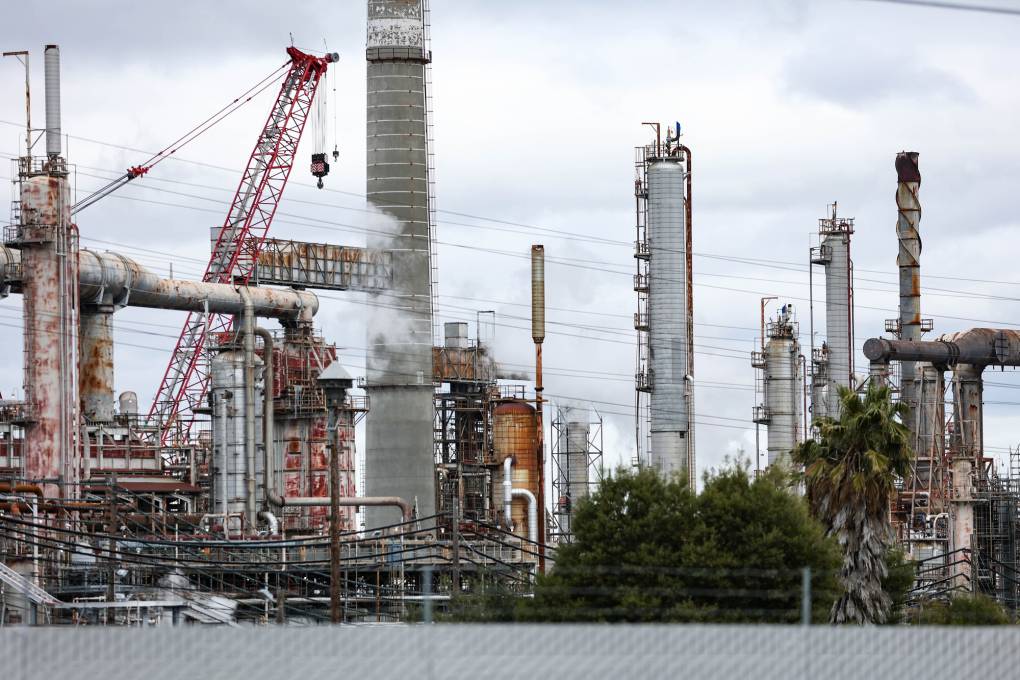
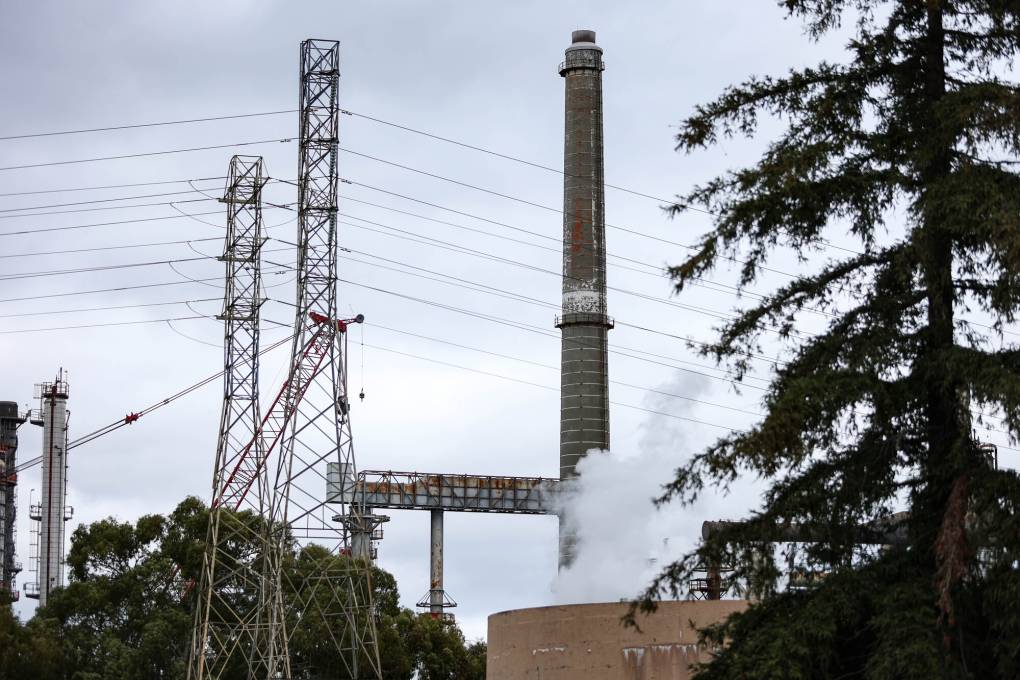
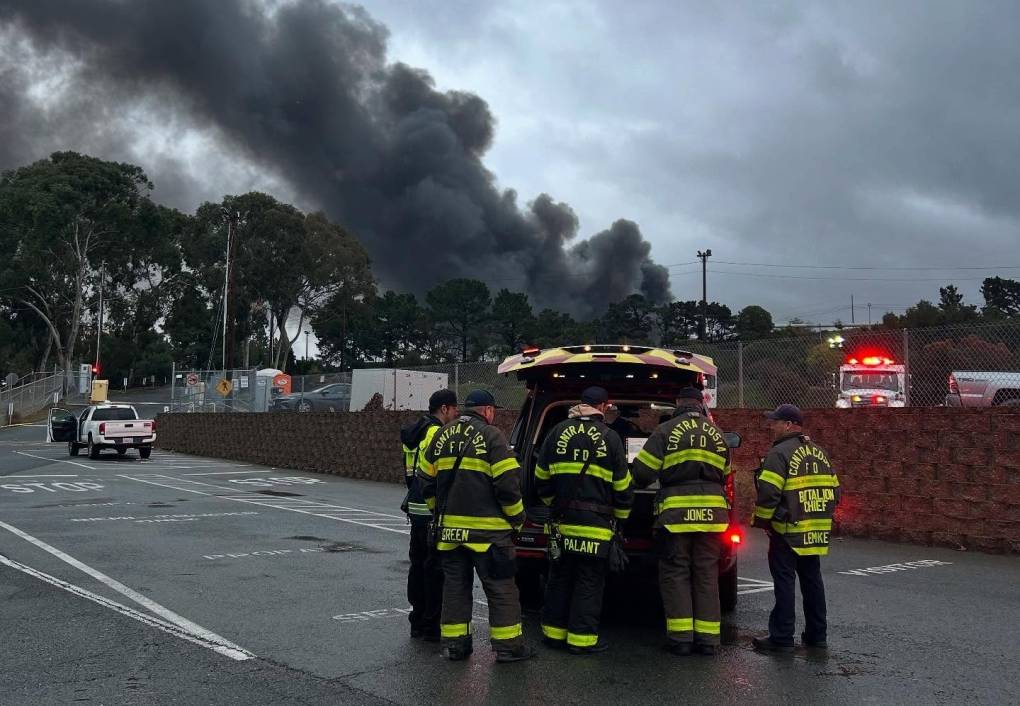
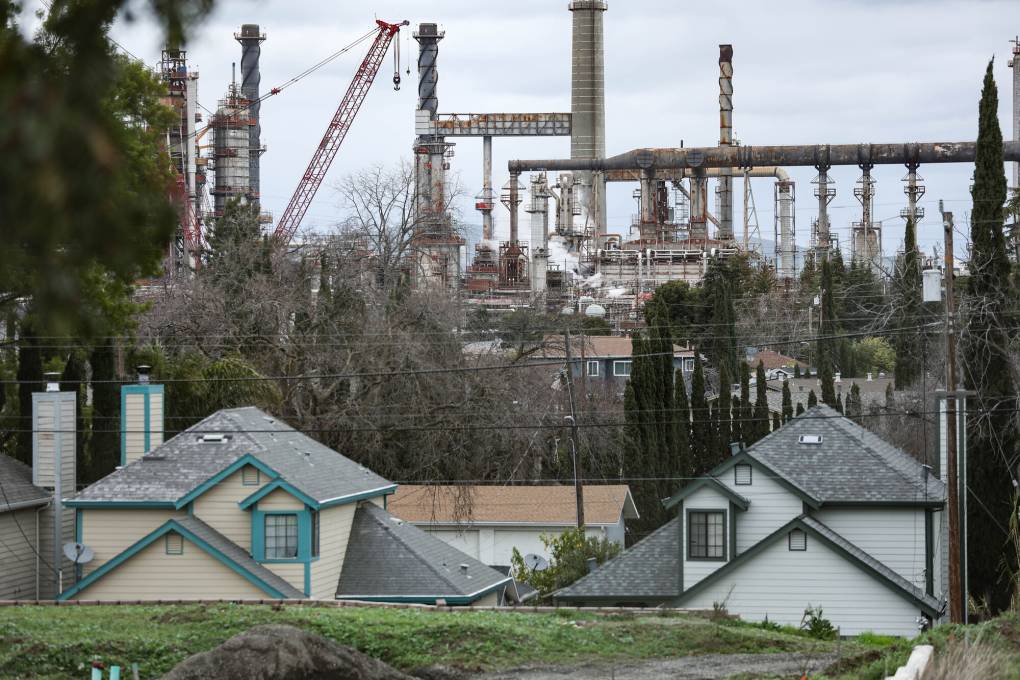
window.__IS_SSR__=true
window.__INITIAL_STATE__={
"attachmentsReducer": {
"audio_0": {
"type": "attachments",
"id": "audio_0",
"imgSizes": {
"kqedFullSize": {
"file": "https://ww2.kqed.org/news/wp-content/themes/KQED-unified/img/audio_bgs/background0.jpg"
}
}
},
"audio_1": {
"type": "attachments",
"id": "audio_1",
"imgSizes": {
"kqedFullSize": {
"file": "https://ww2.kqed.org/news/wp-content/themes/KQED-unified/img/audio_bgs/background1.jpg"
}
}
},
"audio_2": {
"type": "attachments",
"id": "audio_2",
"imgSizes": {
"kqedFullSize": {
"file": "https://ww2.kqed.org/news/wp-content/themes/KQED-unified/img/audio_bgs/background2.jpg"
}
}
},
"audio_3": {
"type": "attachments",
"id": "audio_3",
"imgSizes": {
"kqedFullSize": {
"file": "https://ww2.kqed.org/news/wp-content/themes/KQED-unified/img/audio_bgs/background3.jpg"
}
}
},
"audio_4": {
"type": "attachments",
"id": "audio_4",
"imgSizes": {
"kqedFullSize": {
"file": "https://ww2.kqed.org/news/wp-content/themes/KQED-unified/img/audio_bgs/background4.jpg"
}
}
},
"placeholder": {
"type": "attachments",
"id": "placeholder",
"imgSizes": {
"thumbnail": {
"file": "https://cdn.kqed.org/wp-content/uploads/2024/12/KQED-Default-Image-816638274-2000x1333-1-160x107.jpg",
"width": 160,
"height": 107,
"mimeType": "image/jpeg"
},
"medium": {
"file": "https://cdn.kqed.org/wp-content/uploads/2024/12/KQED-Default-Image-816638274-2000x1333-1-800x533.jpg",
"width": 800,
"height": 533,
"mimeType": "image/jpeg"
},
"medium_large": {
"file": "https://cdn.kqed.org/wp-content/uploads/2024/12/KQED-Default-Image-816638274-2000x1333-1-768x512.jpg",
"width": 768,
"height": 512,
"mimeType": "image/jpeg"
},
"large": {
"file": "https://cdn.kqed.org/wp-content/uploads/2024/12/KQED-Default-Image-816638274-2000x1333-1-1020x680.jpg",
"width": 1020,
"height": 680,
"mimeType": "image/jpeg"
},
"1536x1536": {
"file": "https://cdn.kqed.org/wp-content/uploads/2024/12/KQED-Default-Image-816638274-2000x1333-1-1536x1024.jpg",
"width": 1536,
"height": 1024,
"mimeType": "image/jpeg"
},
"fd-lrg": {
"file": "https://cdn.kqed.org/wp-content/uploads/2024/12/KQED-Default-Image-816638274-2000x1333-1-1536x1024.jpg",
"width": 1536,
"height": 1024,
"mimeType": "image/jpeg"
},
"fd-med": {
"file": "https://cdn.kqed.org/wp-content/uploads/2024/12/KQED-Default-Image-816638274-2000x1333-1-1020x680.jpg",
"width": 1020,
"height": 680,
"mimeType": "image/jpeg"
},
"fd-sm": {
"file": "https://cdn.kqed.org/wp-content/uploads/2024/12/KQED-Default-Image-816638274-2000x1333-1-800x533.jpg",
"width": 800,
"height": 533,
"mimeType": "image/jpeg"
},
"post-thumbnail": {
"file": "https://cdn.kqed.org/wp-content/uploads/2024/12/KQED-Default-Image-816638274-2000x1333-1-672x372.jpg",
"width": 672,
"height": 372,
"mimeType": "image/jpeg"
},
"twentyfourteen-full-width": {
"file": "https://cdn.kqed.org/wp-content/uploads/2024/12/KQED-Default-Image-816638274-2000x1333-1-1038x576.jpg",
"width": 1038,
"height": 576,
"mimeType": "image/jpeg"
},
"xxsmall": {
"file": "https://cdn.kqed.org/wp-content/uploads/2024/12/KQED-Default-Image-816638274-2000x1333-1-160x107.jpg",
"width": 160,
"height": 107,
"mimeType": "image/jpeg"
},
"xsmall": {
"file": "https://cdn.kqed.org/wp-content/uploads/2024/12/KQED-Default-Image-816638274-2000x1333-1-672x372.jpg",
"width": 672,
"height": 372,
"mimeType": "image/jpeg"
},
"small": {
"file": "https://cdn.kqed.org/wp-content/uploads/2024/12/KQED-Default-Image-816638274-2000x1333-1-672x372.jpg",
"width": 672,
"height": 372,
"mimeType": "image/jpeg"
},
"xlarge": {
"file": "https://cdn.kqed.org/wp-content/uploads/2024/12/KQED-Default-Image-816638274-2000x1333-1-1020x680.jpg",
"width": 1020,
"height": 680,
"mimeType": "image/jpeg"
},
"full-width": {
"file": "https://cdn.kqed.org/wp-content/uploads/2024/12/KQED-Default-Image-816638274-2000x1333-1-1920x1280.jpg",
"width": 1920,
"height": 1280,
"mimeType": "image/jpeg"
},
"guest-author-32": {
"file": "https://cdn.kqed.org/wp-content/uploads/2025/01/KQED-Default-Image-816638274-1333x1333-1-160x160.jpg",
"width": 32,
"height": 32,
"mimeType": "image/jpeg"
},
"guest-author-50": {
"file": "https://cdn.kqed.org/wp-content/uploads/2025/01/KQED-Default-Image-816638274-1333x1333-1-160x160.jpg",
"width": 50,
"height": 50,
"mimeType": "image/jpeg"
},
"guest-author-64": {
"file": "https://cdn.kqed.org/wp-content/uploads/2025/01/KQED-Default-Image-816638274-1333x1333-1-160x160.jpg",
"width": 64,
"height": 64,
"mimeType": "image/jpeg"
},
"guest-author-96": {
"file": "https://cdn.kqed.org/wp-content/uploads/2025/01/KQED-Default-Image-816638274-1333x1333-1-160x160.jpg",
"width": 96,
"height": 96,
"mimeType": "image/jpeg"
},
"guest-author-128": {
"file": "https://cdn.kqed.org/wp-content/uploads/2025/01/KQED-Default-Image-816638274-1333x1333-1-160x160.jpg",
"width": 128,
"height": 128,
"mimeType": "image/jpeg"
},
"detail": {
"file": "https://cdn.kqed.org/wp-content/uploads/2025/01/KQED-Default-Image-816638274-1333x1333-1-160x160.jpg",
"width": 160,
"height": 160,
"mimeType": "image/jpeg"
},
"kqedFullSize": {
"file": "https://cdn.kqed.org/wp-content/uploads/2024/12/KQED-Default-Image-816638274-2000x1333-1.jpg",
"width": 2000,
"height": 1333
}
}
},
"news_12040294": {
"type": "attachments",
"id": "news_12040294",
"meta": {
"index": "attachments_1716263798",
"site": "news",
"id": "12040294",
"found": true
},
"title": "Martinez Refining Company in Martinez on Feb. 3, 2025.",
"publishDate": 1747329510,
"status": "inherit",
"parent": 0,
"modified": 1747329541,
"caption": "Martinez Refining Company in Martinez on Feb. 3, 2025. Union members said they have long raised concerns about workplace safety and inadequate staffing following a 2024 fire at the East Bay facility. ",
"credit": "Gina Castro/KQED",
"altTag": null,
"description": null,
"imgSizes": {
"medium": {
"file": "https://cdn.kqed.org/wp-content/uploads/sites/10/2025/05/20250203_MartinezRefineryFolo_GC-26_qed-800x533.jpg",
"width": 800,
"height": 533,
"mimeType": "image/jpeg"
},
"large": {
"file": "https://cdn.kqed.org/wp-content/uploads/sites/10/2025/05/20250203_MartinezRefineryFolo_GC-26_qed-1020x680.jpg",
"width": 1020,
"height": 680,
"mimeType": "image/jpeg"
},
"thumbnail": {
"file": "https://cdn.kqed.org/wp-content/uploads/sites/10/2025/05/20250203_MartinezRefineryFolo_GC-26_qed-160x107.jpg",
"width": 160,
"height": 107,
"mimeType": "image/jpeg"
},
"1536x1536": {
"file": "https://cdn.kqed.org/wp-content/uploads/sites/10/2025/05/20250203_MartinezRefineryFolo_GC-26_qed-1536x1024.jpg",
"width": 1536,
"height": 1024,
"mimeType": "image/jpeg"
},
"post-thumbnail": {
"file": "https://cdn.kqed.org/wp-content/uploads/sites/10/2025/05/20250203_MartinezRefineryFolo_GC-26_qed-672x372.jpg",
"width": 672,
"height": 372,
"mimeType": "image/jpeg"
},
"twentyfourteen-full-width": {
"file": "https://cdn.kqed.org/wp-content/uploads/sites/10/2025/05/20250203_MartinezRefineryFolo_GC-26_qed-1038x576.jpg",
"width": 1038,
"height": 576,
"mimeType": "image/jpeg"
},
"full-width": {
"file": "https://cdn.kqed.org/wp-content/uploads/sites/10/2025/05/20250203_MartinezRefineryFolo_GC-26_qed-1920x1280.jpg",
"width": 1920,
"height": 1280,
"mimeType": "image/jpeg"
},
"kqedFullSize": {
"file": "https://cdn.kqed.org/wp-content/uploads/sites/10/2025/05/20250203_MartinezRefineryFolo_GC-26_qed.jpg",
"width": 2000,
"height": 1333
}
},
"isLoading": false,
"fetchFailed": false
},
"news_12036967": {
"type": "attachments",
"id": "news_12036967",
"meta": {
"index": "attachments_1716263798",
"site": "news",
"id": "12036967",
"found": true
},
"title": "Martinez Refining Company in Martinez on Feb. 3, 2025.",
"publishDate": 1745267109,
"status": "inherit",
"parent": 12036965,
"modified": 1745267124,
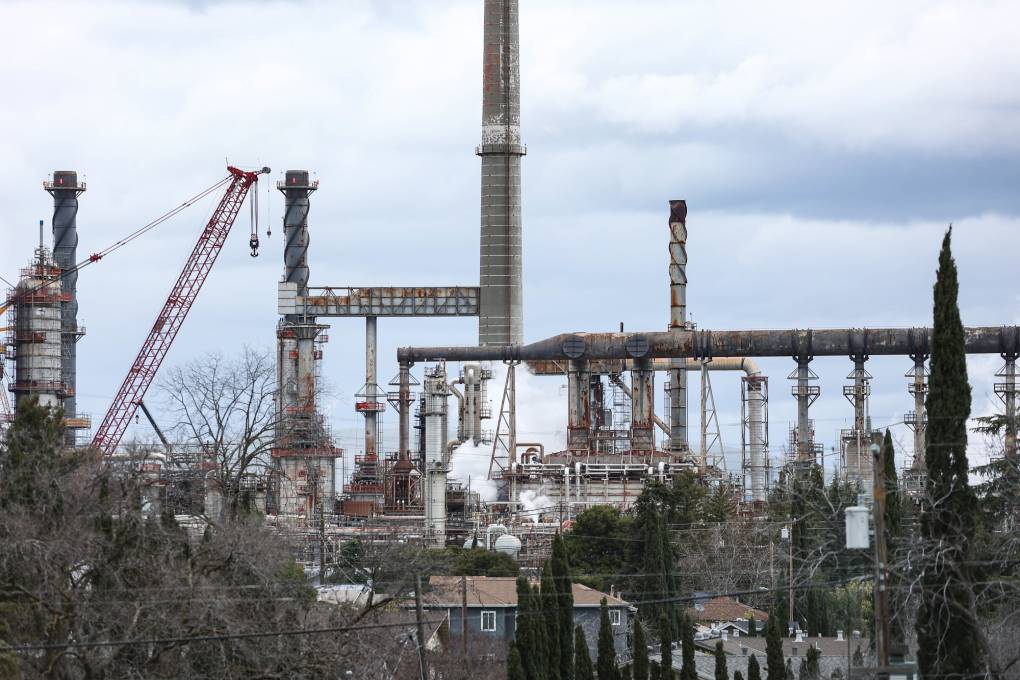
"caption": "Martinez Refining Company in Martinez on Feb. 3, 2025.",
"credit": "Gina Castro/KQED",
"altTag": null,
"description": null,
"imgSizes": {
"medium": {
"file": "https://cdn.kqed.org/wp-content/uploads/sites/10/2025/04/20250203_MartinezRefineryFolo_GC-32_qed-800x533.jpg",
"width": 800,
"height": 533,
"mimeType": "image/jpeg"
},
"large": {
"file": "https://cdn.kqed.org/wp-content/uploads/sites/10/2025/04/20250203_MartinezRefineryFolo_GC-32_qed-1020x680.jpg",
"width": 1020,
"height": 680,
"mimeType": "image/jpeg"
},
"thumbnail": {
"file": "https://cdn.kqed.org/wp-content/uploads/sites/10/2025/04/20250203_MartinezRefineryFolo_GC-32_qed-160x107.jpg",
"width": 160,
"height": 107,
"mimeType": "image/jpeg"
},
"1536x1536": {
"file": "https://cdn.kqed.org/wp-content/uploads/sites/10/2025/04/20250203_MartinezRefineryFolo_GC-32_qed-1536x1024.jpg",
"width": 1536,
"height": 1024,
"mimeType": "image/jpeg"
},
"post-thumbnail": {
"file": "https://cdn.kqed.org/wp-content/uploads/sites/10/2025/04/20250203_MartinezRefineryFolo_GC-32_qed-672x372.jpg",
"width": 672,
"height": 372,
"mimeType": "image/jpeg"
},
"twentyfourteen-full-width": {
"file": "https://cdn.kqed.org/wp-content/uploads/sites/10/2025/04/20250203_MartinezRefineryFolo_GC-32_qed-1038x576.jpg",
"width": 1038,
"height": 576,
"mimeType": "image/jpeg"
},
"full-width": {
"file": "https://cdn.kqed.org/wp-content/uploads/sites/10/2025/04/20250203_MartinezRefineryFolo_GC-32_qed-1920x1280.jpg",
"width": 1920,
"height": 1280,
"mimeType": "image/jpeg"
},
"kqedFullSize": {
"file": "https://cdn.kqed.org/wp-content/uploads/sites/10/2025/04/20250203_MartinezRefineryFolo_GC-32_qed.jpg",
"width": 2000,
"height": 1333
}
},
"isLoading": false,
"fetchFailed": false
},
"news_12025294": {
"type": "attachments",
"id": "news_12025294",
"meta": {
"index": "attachments_1716263798",
"site": "news",
"id": "12025294",
"found": true
},
"title": "475966196_17941090172958161_4612211217959910985_n",
"publishDate": 1738464437,
"status": "inherit",
"parent": 12025273,
"modified": 1738464595,
"caption": "Contra Costa County Fire Department firefighters outside the Martinez Refining Company as smoke billows from the refinery on Saturday in Martinez.",
"credit": "Courtesy of the city of Martinez",
"altTag": null,
"description": null,
"imgSizes": {
"medium": {
"file": "https://cdn.kqed.org/wp-content/uploads/sites/10/2025/02/475966196_17941090172958161_4612211217959910985_n-e1738464480621-800x553.jpg",
"width": 800,
"height": 553,
"mimeType": "image/jpeg"
},
"large": {
"file": "https://cdn.kqed.org/wp-content/uploads/sites/10/2025/02/475966196_17941090172958161_4612211217959910985_n-e1738464480621-1020x706.jpg",
"width": 1020,
"height": 706,
"mimeType": "image/jpeg"
},
"thumbnail": {
"file": "https://cdn.kqed.org/wp-content/uploads/sites/10/2025/02/475966196_17941090172958161_4612211217959910985_n-e1738464480621-160x111.jpg",
"width": 160,
"height": 111,
"mimeType": "image/jpeg"
},
"1536x1536": {
"file": "https://cdn.kqed.org/wp-content/uploads/sites/10/2025/02/475966196_17941090172958161_4612211217959910985_n-1229x1536.jpg",
"width": 1229,
"height": 1536,
"mimeType": "image/jpeg"
},
"post-thumbnail": {
"file": "https://cdn.kqed.org/wp-content/uploads/sites/10/2025/02/475966196_17941090172958161_4612211217959910985_n-e1738464480621-672x372.jpg",
"width": 672,
"height": 372,
"mimeType": "image/jpeg"
},
"twentyfourteen-full-width": {
"file": "https://cdn.kqed.org/wp-content/uploads/sites/10/2025/02/475966196_17941090172958161_4612211217959910985_n-e1738464480621-1038x576.jpg",
"width": 1038,
"height": 576,
"mimeType": "image/jpeg"
},
"kqedFullSize": {
"file": "https://cdn.kqed.org/wp-content/uploads/sites/10/2025/02/475966196_17941090172958161_4612211217959910985_n-e1738464480621.jpg",
"width": 1440,
"height": 996
}
},
"isLoading": false,
"fetchFailed": false
},
"news_12036969": {
"type": "attachments",
"id": "news_12036969",
"meta": {
"index": "attachments_1716263798",
"site": "news",
"id": "12036969",
"found": true
},
"title": "Residential homes by the Martinez Refining Company in Martinez on Feb. 3, 2025.",
"publishDate": 1745267903,
"status": "inherit",
"parent": 0,
"modified": 1745267962,
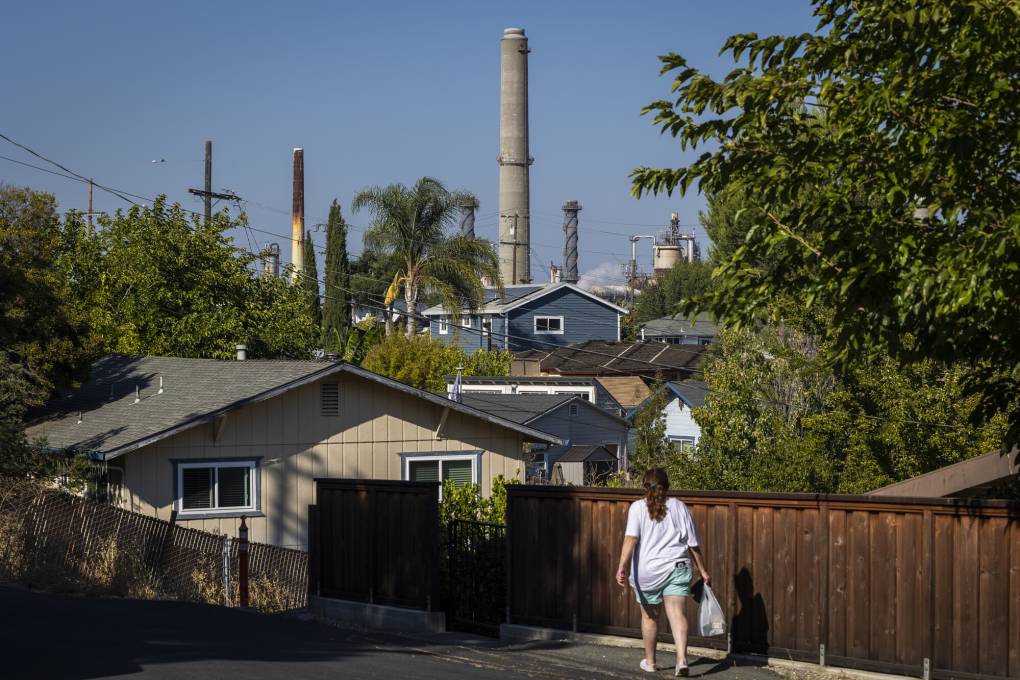
"caption": "Residential homes by the Martinez Refining Company in Martinez on Feb. 3, 2025.",
"credit": "Gina Castro/KQED",
"altTag": null,
"description": null,
"imgSizes": {
"medium": {
"file": "https://cdn.kqed.org/wp-content/uploads/sites/10/2025/04/20250203_MartinezRefineryFolo_GC-23_qed-800x533.jpg",
"width": 800,
"height": 533,
"mimeType": "image/jpeg"
},
"large": {
"file": "https://cdn.kqed.org/wp-content/uploads/sites/10/2025/04/20250203_MartinezRefineryFolo_GC-23_qed-1020x680.jpg",
"width": 1020,
"height": 680,
"mimeType": "image/jpeg"
},
"thumbnail": {
"file": "https://cdn.kqed.org/wp-content/uploads/sites/10/2025/04/20250203_MartinezRefineryFolo_GC-23_qed-160x107.jpg",
"width": 160,
"height": 107,
"mimeType": "image/jpeg"
},
"1536x1536": {
"file": "https://cdn.kqed.org/wp-content/uploads/sites/10/2025/04/20250203_MartinezRefineryFolo_GC-23_qed-1536x1024.jpg",
"width": 1536,
"height": 1024,
"mimeType": "image/jpeg"
},
"post-thumbnail": {
"file": "https://cdn.kqed.org/wp-content/uploads/sites/10/2025/04/20250203_MartinezRefineryFolo_GC-23_qed-672x372.jpg",
"width": 672,
"height": 372,
"mimeType": "image/jpeg"
},
"twentyfourteen-full-width": {
"file": "https://cdn.kqed.org/wp-content/uploads/sites/10/2025/04/20250203_MartinezRefineryFolo_GC-23_qed-1038x576.jpg",
"width": 1038,
"height": 576,
"mimeType": "image/jpeg"
},
"full-width": {
"file": "https://cdn.kqed.org/wp-content/uploads/sites/10/2025/04/20250203_MartinezRefineryFolo_GC-23_qed-1920x1280.jpg",
"width": 1920,
"height": 1280,
"mimeType": "image/jpeg"
},
"kqedFullSize": {
"file": "https://cdn.kqed.org/wp-content/uploads/sites/10/2025/04/20250203_MartinezRefineryFolo_GC-23_qed.jpg",
"width": 2000,
"height": 1333
}
},
"isLoading": false,
"fetchFailed": false
},
"news_11861743": {
"type": "attachments",
"id": "news_11861743",
"meta": {
"index": "attachments_1716263798",
"site": "news",
"id": "11861743",
"found": true
},
"title": "RS1901_Chevron_Vapor_Cloud_010",
"publishDate": 1614118776,
"status": "inherit",
"parent": 11861741,
"modified": 1745279510,
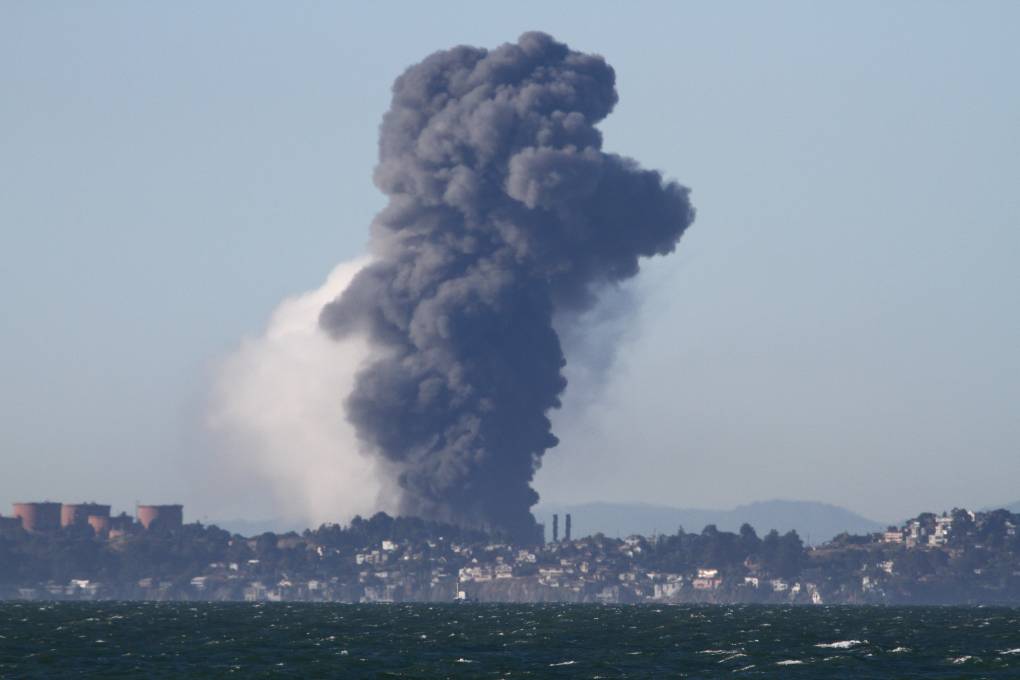
"caption": "A cracked pipe at Chevron’s oil refinery in Richmond, California, released a flammable white vapor that quickly ignited, sending a large cloud of black smoke across surrounding communities on August 6, 2012. The eruption led to stricter state safety rules for refineries, but now state officials are considering rolling back some of those provisions.",
"credit": "Courtesy of U.S. Chemical Safety Board",
"altTag": null,
"description": null,
"imgSizes": {
"medium": {
"file": "https://cdn.kqed.org/wp-content/uploads/sites/10/2021/02/RS1901_Chevron_Vapor_Cloud_010-800x533.jpeg",
"width": 800,
"height": 533,
"mimeType": "image/jpeg"
},
"large": {
"file": "https://cdn.kqed.org/wp-content/uploads/sites/10/2021/02/RS1901_Chevron_Vapor_Cloud_010-1020x680.jpeg",
"width": 1020,
"height": 680,
"mimeType": "image/jpeg"
},
"thumbnail": {
"file": "https://cdn.kqed.org/wp-content/uploads/sites/10/2021/02/RS1901_Chevron_Vapor_Cloud_010-160x107.jpeg",
"width": 160,
"height": 107,
"mimeType": "image/jpeg"
},
"1536x1536": {
"file": "https://cdn.kqed.org/wp-content/uploads/sites/10/2021/02/RS1901_Chevron_Vapor_Cloud_010-1536x1024.jpeg",
"width": 1536,
"height": 1024,
"mimeType": "image/jpeg"
},
"2048x2048": {
"file": "https://cdn.kqed.org/wp-content/uploads/sites/10/2021/02/RS1901_Chevron_Vapor_Cloud_010-2048x1365.jpeg",
"width": 2048,
"height": 1365,
"mimeType": "image/jpeg"
},
"post-thumbnail": {
"file": "https://cdn.kqed.org/wp-content/uploads/sites/10/2021/02/RS1901_Chevron_Vapor_Cloud_010-672x372.jpeg",
"width": 672,
"height": 372,
"mimeType": "image/jpeg"
},
"twentyfourteen-full-width": {
"file": "https://cdn.kqed.org/wp-content/uploads/sites/10/2021/02/RS1901_Chevron_Vapor_Cloud_010-1038x576.jpeg",
"width": 1038,
"height": 576,
"mimeType": "image/jpeg"
},
"full-width": {
"file": "https://cdn.kqed.org/wp-content/uploads/sites/10/2021/02/RS1901_Chevron_Vapor_Cloud_010-1920x1280.jpeg",
"width": 1920,
"height": 1280,
"mimeType": "image/jpeg"
},
"apple_news_ca_landscape_12_9": {
"file": "https://cdn.kqed.org/wp-content/uploads/sites/10/2021/02/RS1901_Chevron_Vapor_Cloud_010-1832x1374.jpeg",
"width": 1832,
"height": 1374,
"mimeType": "image/jpeg"
},
"apple_news_ca_landscape_9_7": {
"file": "https://cdn.kqed.org/wp-content/uploads/sites/10/2021/02/RS1901_Chevron_Vapor_Cloud_010-1376x1032.jpeg",
"width": 1376,
"height": 1032,
"mimeType": "image/jpeg"
},
"apple_news_ca_landscape_5_5": {
"file": "https://cdn.kqed.org/wp-content/uploads/sites/10/2021/02/RS1901_Chevron_Vapor_Cloud_010-1044x783.jpeg",
"width": 1044,
"height": 783,
"mimeType": "image/jpeg"
},
"apple_news_ca_landscape_4_7": {
"file": "https://cdn.kqed.org/wp-content/uploads/sites/10/2021/02/RS1901_Chevron_Vapor_Cloud_010-632x474.jpeg",
"width": 632,
"height": 474,
"mimeType": "image/jpeg"
},
"apple_news_ca_landscape_4_0": {
"file": "https://cdn.kqed.org/wp-content/uploads/sites/10/2021/02/RS1901_Chevron_Vapor_Cloud_010-536x402.jpeg",
"width": 536,
"height": 402,
"mimeType": "image/jpeg"
},
"apple_news_ca_portrait_12_9": {
"file": "https://cdn.kqed.org/wp-content/uploads/sites/10/2021/02/RS1901_Chevron_Vapor_Cloud_010-1122x1496.jpeg",
"width": 1122,
"height": 1496,
"mimeType": "image/jpeg"
},
"apple_news_ca_portrait_9_7": {
"file": "https://cdn.kqed.org/wp-content/uploads/sites/10/2021/02/RS1901_Chevron_Vapor_Cloud_010-840x1120.jpeg",
"width": 840,
"height": 1120,
"mimeType": "image/jpeg"
},
"apple_news_ca_portrait_5_5": {
"file": "https://cdn.kqed.org/wp-content/uploads/sites/10/2021/02/RS1901_Chevron_Vapor_Cloud_010-687x916.jpeg",
"width": 687,
"height": 916,
"mimeType": "image/jpeg"
},
"apple_news_ca_portrait_4_7": {
"file": "https://cdn.kqed.org/wp-content/uploads/sites/10/2021/02/RS1901_Chevron_Vapor_Cloud_010-414x552.jpeg",
"width": 414,
"height": 552,
"mimeType": "image/jpeg"
},
"apple_news_ca_portrait_4_0": {
"file": "https://cdn.kqed.org/wp-content/uploads/sites/10/2021/02/RS1901_Chevron_Vapor_Cloud_010-354x472.jpeg",
"width": 354,
"height": 472,
"mimeType": "image/jpeg"
},
"apple_news_ca_square_12_9": {
"file": "https://cdn.kqed.org/wp-content/uploads/sites/10/2021/02/RS1901_Chevron_Vapor_Cloud_010-1472x1472.jpeg",
"width": 1472,
"height": 1472,
"mimeType": "image/jpeg"
},
"apple_news_ca_square_9_7": {
"file": "https://cdn.kqed.org/wp-content/uploads/sites/10/2021/02/RS1901_Chevron_Vapor_Cloud_010-1104x1104.jpeg",
"width": 1104,
"height": 1104,
"mimeType": "image/jpeg"
},
"apple_news_ca_square_5_5": {
"file": "https://cdn.kqed.org/wp-content/uploads/sites/10/2021/02/RS1901_Chevron_Vapor_Cloud_010-912x912.jpeg",
"width": 912,
"height": 912,
"mimeType": "image/jpeg"
},
"apple_news_ca_square_4_7": {
"file": "https://cdn.kqed.org/wp-content/uploads/sites/10/2021/02/RS1901_Chevron_Vapor_Cloud_010-550x550.jpeg",
"width": 550,
"height": 550,
"mimeType": "image/jpeg"
},
"apple_news_ca_square_4_0": {
"file": "https://cdn.kqed.org/wp-content/uploads/sites/10/2021/02/RS1901_Chevron_Vapor_Cloud_010-470x470.jpeg",
"width": 470,
"height": 470,
"mimeType": "image/jpeg"
},
"kqedFullSize": {
"file": "https://cdn.kqed.org/wp-content/uploads/sites/10/2021/02/RS1901_Chevron_Vapor_Cloud_010-scaled-e1745279433555.jpeg",
"width": 2000,
"height": 1334
}
},
"isLoading": false,
"fetchFailed": false
},
"news_12025560": {
"type": "attachments",
"id": "news_12025560",
"meta": {
"index": "attachments_1716263798",
"site": "news",
"id": "12025560",
"found": true
},
"title": "Martinez Refining Company in Martinez on Feb. 3, 2025.",
"publishDate": 1738652387,
"status": "inherit",
"parent": 12026572,
"modified": 1739316912,
"caption": "The Martinez Refining Company in Martinez, California, on Feb. 3, 2025.",
"credit": "Gina Castro/KQED",
"altTag": null,
"description": null,
"imgSizes": {
"medium": {
"file": "https://cdn.kqed.org/wp-content/uploads/sites/10/2025/02/20250203_MartinezRefineryFolo_GC-7-800x533.jpg",
"width": 800,
"height": 533,
"mimeType": "image/jpeg"
},
"large": {
"file": "https://cdn.kqed.org/wp-content/uploads/sites/10/2025/02/20250203_MartinezRefineryFolo_GC-7-1020x680.jpg",
"width": 1020,
"height": 680,
"mimeType": "image/jpeg"
},
"thumbnail": {
"file": "https://cdn.kqed.org/wp-content/uploads/sites/10/2025/02/20250203_MartinezRefineryFolo_GC-7-160x107.jpg",
"width": 160,
"height": 107,
"mimeType": "image/jpeg"
},
"1536x1536": {
"file": "https://cdn.kqed.org/wp-content/uploads/sites/10/2025/02/20250203_MartinezRefineryFolo_GC-7-1536x1024.jpg",
"width": 1536,
"height": 1024,
"mimeType": "image/jpeg"
},
"post-thumbnail": {
"file": "https://cdn.kqed.org/wp-content/uploads/sites/10/2025/02/20250203_MartinezRefineryFolo_GC-7-672x372.jpg",
"width": 672,
"height": 372,
"mimeType": "image/jpeg"
},
"twentyfourteen-full-width": {
"file": "https://cdn.kqed.org/wp-content/uploads/sites/10/2025/02/20250203_MartinezRefineryFolo_GC-7-1038x576.jpg",
"width": 1038,
"height": 576,
"mimeType": "image/jpeg"
},
"full-width": {
"file": "https://cdn.kqed.org/wp-content/uploads/sites/10/2025/02/20250203_MartinezRefineryFolo_GC-7-1920x1280.jpg",
"width": 1920,
"height": 1280,
"mimeType": "image/jpeg"
},
"kqedFullSize": {
"file": "https://cdn.kqed.org/wp-content/uploads/sites/10/2025/02/20250203_MartinezRefineryFolo_GC-7.jpg",
"width": 2000,
"height": 1333
}
},
"isLoading": false,
"fetchFailed": false
},
"news_12025559": {
"type": "attachments",
"id": "news_12025559",
"meta": {
"index": "attachments_1716263798",
"site": "news",
"id": "12025559",
"found": true
},
"title": "20250203_MartinezRefineryFolo_GC-46",
"publishDate": 1738651778,
"status": "inherit",
"parent": 0,
"modified": 1739293638,
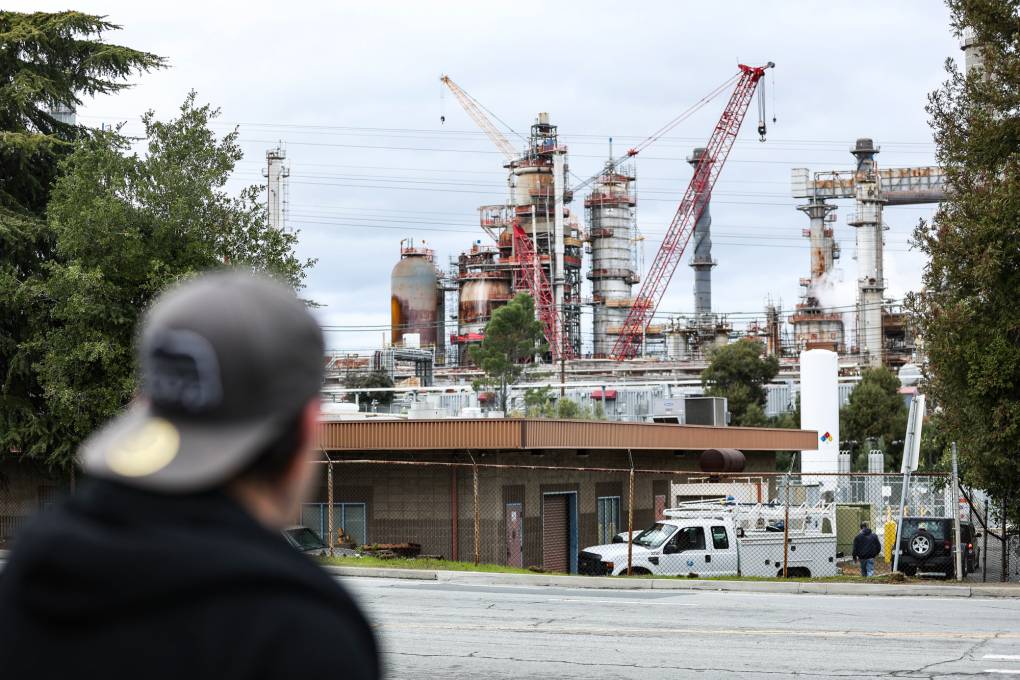
"caption": "Ronald Thomas looks toward the Martinez Refining Company, where a fire broke out over the weekend in Martinez, California, on Feb. 3, 2025. Thomas lives across the street from the refinery and said he had to evacuate on Saturday during the fire. He has lived there for four years.",
"credit": "Gina Castro/KQED",
"altTag": null,
"description": null,
"imgSizes": {
"medium": {
"file": "https://cdn.kqed.org/wp-content/uploads/sites/10/2025/02/20250203_MartinezRefineryFolo_GC-46-800x533.jpg",
"width": 800,
"height": 533,
"mimeType": "image/jpeg"
},
"large": {
"file": "https://cdn.kqed.org/wp-content/uploads/sites/10/2025/02/20250203_MartinezRefineryFolo_GC-46-1020x680.jpg",
"width": 1020,
"height": 680,
"mimeType": "image/jpeg"
},
"thumbnail": {
"file": "https://cdn.kqed.org/wp-content/uploads/sites/10/2025/02/20250203_MartinezRefineryFolo_GC-46-160x107.jpg",
"width": 160,
"height": 107,
"mimeType": "image/jpeg"
},
"1536x1536": {
"file": "https://cdn.kqed.org/wp-content/uploads/sites/10/2025/02/20250203_MartinezRefineryFolo_GC-46-1536x1024.jpg",
"width": 1536,
"height": 1024,
"mimeType": "image/jpeg"
},
"post-thumbnail": {
"file": "https://cdn.kqed.org/wp-content/uploads/sites/10/2025/02/20250203_MartinezRefineryFolo_GC-46-672x372.jpg",
"width": 672,
"height": 372,
"mimeType": "image/jpeg"
},
"twentyfourteen-full-width": {
"file": "https://cdn.kqed.org/wp-content/uploads/sites/10/2025/02/20250203_MartinezRefineryFolo_GC-46-1038x576.jpg",
"width": 1038,
"height": 576,
"mimeType": "image/jpeg"
},
"full-width": {
"file": "https://cdn.kqed.org/wp-content/uploads/sites/10/2025/02/20250203_MartinezRefineryFolo_GC-46-1920x1280.jpg",
"width": 1920,
"height": 1280,
"mimeType": "image/jpeg"
},
"kqedFullSize": {
"file": "https://cdn.kqed.org/wp-content/uploads/sites/10/2025/02/20250203_MartinezRefineryFolo_GC-46.jpg",
"width": 2000,
"height": 1333
}
},
"isLoading": false,
"fetchFailed": false
},
"news_12025394": {
"type": "attachments",
"id": "news_12025394",
"meta": {
"index": "attachments_1716263798",
"site": "news",
"id": "12025394",
"found": true
},
"title": "The PBF refinery in Martinez abuts residential neighborhoods on Sept. 21, 2023.",
"publishDate": 1738607137,
"status": "inherit",
"parent": 12025377,
"modified": 1742511883,
"caption": "The Martinez Refinery Co., owned by PBF Energy, in Martinez, touches residential neighborhoods on Sept. 21, 2023.",
"credit": "Martin do Nascimento/KQED",
"altTag": null,
"description": null,
"imgSizes": {
"medium": {
"file": "https://cdn.kqed.org/wp-content/uploads/sites/10/2025/02/230921-PBF-MARTINEZ-REFINERY-MD-04_qed-800x533.jpg",
"width": 800,
"height": 533,
"mimeType": "image/jpeg"
},
"large": {
"file": "https://cdn.kqed.org/wp-content/uploads/sites/10/2025/02/230921-PBF-MARTINEZ-REFINERY-MD-04_qed-1020x680.jpg",
"width": 1020,
"height": 680,
"mimeType": "image/jpeg"
},
"thumbnail": {
"file": "https://cdn.kqed.org/wp-content/uploads/sites/10/2025/02/230921-PBF-MARTINEZ-REFINERY-MD-04_qed-160x107.jpg",
"width": 160,
"height": 107,
"mimeType": "image/jpeg"
},
"1536x1536": {
"file": "https://cdn.kqed.org/wp-content/uploads/sites/10/2025/02/230921-PBF-MARTINEZ-REFINERY-MD-04_qed-1536x1024.jpg",
"width": 1536,
"height": 1024,
"mimeType": "image/jpeg"
},
"post-thumbnail": {
"file": "https://cdn.kqed.org/wp-content/uploads/sites/10/2025/02/230921-PBF-MARTINEZ-REFINERY-MD-04_qed-672x372.jpg",
"width": 672,
"height": 372,
"mimeType": "image/jpeg"
},
"twentyfourteen-full-width": {
"file": "https://cdn.kqed.org/wp-content/uploads/sites/10/2025/02/230921-PBF-MARTINEZ-REFINERY-MD-04_qed-1038x576.jpg",
"width": 1038,
"height": 576,
"mimeType": "image/jpeg"
},
"full-width": {
"file": "https://cdn.kqed.org/wp-content/uploads/sites/10/2025/02/230921-PBF-MARTINEZ-REFINERY-MD-04_qed-1920x1280.jpg",
"width": 1920,
"height": 1280,
"mimeType": "image/jpeg"
},
"kqedFullSize": {
"file": "https://cdn.kqed.org/wp-content/uploads/sites/10/2025/02/230921-PBF-MARTINEZ-REFINERY-MD-04_qed.jpg",
"width": 1999,
"height": 1333
}
},
"isLoading": false,
"fetchFailed": false
},
"news_11998985": {
"type": "attachments",
"id": "news_11998985",
"meta": {
"index": "attachments_1716263798",
"site": "news",
"id": "11998985",
"found": true
},
"title": "ShellRefineryMartinez",
"publishDate": 1722962948,
"status": "inherit",
"parent": 11998887,
"modified": 1722963031,
"caption": "Shell's refinery and marine terminal is seen from across the Carquinez Strait, in Benicia.",
"credit": "Craig Alan Miller/KQED",
"altTag": null,
"description": null,
"imgSizes": {
"medium": {
"file": "https://cdn.kqed.org/wp-content/uploads/sites/10/2024/08/ShellRefineryMartinez-800x600.jpg",
"width": 800,
"height": 600,
"mimeType": "image/jpeg"
},
"large": {
"file": "https://cdn.kqed.org/wp-content/uploads/sites/10/2024/08/ShellRefineryMartinez-1020x765.jpg",
"width": 1020,
"height": 765,
"mimeType": "image/jpeg"
},
"thumbnail": {
"file": "https://cdn.kqed.org/wp-content/uploads/sites/10/2024/08/ShellRefineryMartinez-160x120.jpg",
"width": 160,
"height": 120,
"mimeType": "image/jpeg"
},
"1536x1536": {
"file": "https://cdn.kqed.org/wp-content/uploads/sites/10/2024/08/ShellRefineryMartinez-1536x1152.jpg",
"width": 1536,
"height": 1152,
"mimeType": "image/jpeg"
},
"post-thumbnail": {
"file": "https://cdn.kqed.org/wp-content/uploads/sites/10/2024/08/ShellRefineryMartinez-672x372.jpg",
"width": 672,
"height": 372,
"mimeType": "image/jpeg"
},
"twentyfourteen-full-width": {
"file": "https://cdn.kqed.org/wp-content/uploads/sites/10/2024/08/ShellRefineryMartinez-1038x576.jpg",
"width": 1038,
"height": 576,
"mimeType": "image/jpeg"
},
"full-width": {
"file": "https://cdn.kqed.org/wp-content/uploads/sites/10/2024/08/ShellRefineryMartinez-1920x1440.jpg",
"width": 1920,
"height": 1440,
"mimeType": "image/jpeg"
},
"kqedFullSize": {
"file": "https://cdn.kqed.org/wp-content/uploads/sites/10/2024/08/ShellRefineryMartinez.jpg",
"width": 2000,
"height": 1500
}
},
"isLoading": false,
"fetchFailed": false
},
"news_11988027": {
"type": "attachments",
"id": "news_11988027",
"meta": {
"index": "attachments_1716263798",
"site": "news",
"id": "11988027",
"found": true
},
"title": "231228-MARATHON REFINERY-MD-04_qut",
"publishDate": 1717001251,
"status": "inherit",
"parent": 11988025,
"modified": 1717001308,
"caption": "Marathon Petroleum Corporation's refinery in Martinez.",
"credit": "Martin do Nascimento/KQED",
"altTag": null,
"description": null,
"imgSizes": {
"medium": {
"file": "https://cdn.kqed.org/wp-content/uploads/sites/10/2024/05/231228-MARATHON-REFINERY-MD-04_qut-800x533.jpg",
"width": 800,
"height": 533,
"mimeType": "image/jpeg"
},
"large": {
"file": "https://cdn.kqed.org/wp-content/uploads/sites/10/2024/05/231228-MARATHON-REFINERY-MD-04_qut-1020x680.jpg",
"width": 1020,
"height": 680,
"mimeType": "image/jpeg"
},
"thumbnail": {
"file": "https://cdn.kqed.org/wp-content/uploads/sites/10/2024/05/231228-MARATHON-REFINERY-MD-04_qut-160x107.jpg",
"width": 160,
"height": 107,
"mimeType": "image/jpeg"
},
"1536x1536": {
"file": "https://cdn.kqed.org/wp-content/uploads/sites/10/2024/05/231228-MARATHON-REFINERY-MD-04_qut-1536x1024.jpg",
"width": 1536,
"height": 1024,
"mimeType": "image/jpeg"
},
"post-thumbnail": {
"file": "https://cdn.kqed.org/wp-content/uploads/sites/10/2024/05/231228-MARATHON-REFINERY-MD-04_qut-672x372.jpg",
"width": 672,
"height": 372,
"mimeType": "image/jpeg"
},
"twentyfourteen-full-width": {
"file": "https://cdn.kqed.org/wp-content/uploads/sites/10/2024/05/231228-MARATHON-REFINERY-MD-04_qut-1038x576.jpg",
"width": 1038,
"height": 576,
"mimeType": "image/jpeg"
},
"kqedFullSize": {
"file": "https://cdn.kqed.org/wp-content/uploads/sites/10/2024/05/231228-MARATHON-REFINERY-MD-04_qut.jpg",
"width": 1920,
"height": 1280
}
},
"isLoading": false,
"fetchFailed": false
}
},
"audioPlayerReducer": {
"postId": "stream_live",
"isPaused": true,
"isPlaying": false,
"pfsActive": false,
"pledgeModalIsOpen": true,
"playerDrawerIsOpen": false,
"liveAudioPlayStartedAt": 0,
"liveAudioPlayContext": ""
},
"authorsReducer": {
"byline_news_12036965": {
"type": "authors",
"id": "byline_news_12036965",
"meta": {
"override": true
},
"slug": "byline_news_12036965",
"name": "\u003ca href=\"https://publichealthwatch.org/author/jimmorris/\" target=\"_blank\" rel=\"noopener noreferrer\"> Jim Morris \u003c/a> and \u003ca href=\"https://publichealthwatch.org/author/mollypeterson/\" target=\"_blank\" rel=\"noopener noreferrer\"> Molly Peterson\u003c/a>, Public Health Watch ",
"isLoading": false
},
"katrinaschwartz": {
"type": "authors",
"id": "234",
"meta": {
"index": "authors_1716337520",
"id": "234",
"found": true
},
"name": "Katrina Schwartz",
"firstName": "Katrina",
"lastName": "Schwartz",
"slug": "katrinaschwartz",
"email": "kschwartz@kqed.org",
"display_author_email": false,
"staff_mastheads": [
"news"
],
"title": "Producer",
"bio": "Katrina Schwartz is a journalist based in San Francisco. She's worked at KPCC public radio in LA and has reported on air and online for KQED since 2010. She covered how teaching and learning is changing for MindShift between 2012 and 2020. She is the co-host of the MindShift podcast and now produces KQED's Bay Curious podcast.",
"avatar": "https://secure.gravatar.com/avatar/edb4ee79070447a018538c9aae6eeecf28786515b8a0c30e43b6b7dce5aa44c8?s=600&d=blank&r=g",
"twitter": "kschwart",
"bluesky": null,
"facebook": null,
"instagram": null,
"linkedin": null,
"sites": [
{
"site": "",
"roles": [
"editor"
]
},
{
"site": "news",
"roles": [
"editor"
]
},
{
"site": "mindshift",
"roles": [
"administrator"
]
},
{
"site": "stateofhealth",
"roles": [
"author"
]
},
{
"site": "science",
"roles": [
"editor"
]
}
],
"headData": {
"title": "Katrina Schwartz | KQED",
"description": "Producer",
"ogImgSrc": "https://secure.gravatar.com/avatar/edb4ee79070447a018538c9aae6eeecf28786515b8a0c30e43b6b7dce5aa44c8?s=600&d=blank&r=g",
"twImgSrc": "https://secure.gravatar.com/avatar/edb4ee79070447a018538c9aae6eeecf28786515b8a0c30e43b6b7dce5aa44c8?s=600&d=blank&r=g"
},
"isLoading": false,
"link": "/author/katrinaschwartz"
},
"kqed": {
"type": "authors",
"id": "236",
"meta": {
"index": "authors_1716337520",
"id": "236",
"found": true
},
"name": "KQED News Staff",
"firstName": "KQED News Staff",
"lastName": null,
"slug": "kqed",
"email": "faq@kqed.org",
"display_author_email": false,
"staff_mastheads": [],
"title": null,
"bio": null,
"avatar": "https://secure.gravatar.com/avatar/ef0e801a68c4c54afa9180db14084167?s=600&d=blank&r=g",
"twitter": null,
"facebook": null,
"instagram": null,
"linkedin": null,
"sites": [
{
"site": "arts",
"roles": [
"contributor"
]
},
{
"site": "news",
"roles": [
"editor"
]
},
{
"site": "futureofyou",
"roles": [
"author"
]
}
],
"headData": {
"title": "KQED News Staff | KQED",
"description": null,
"ogImgSrc": "https://secure.gravatar.com/avatar/ef0e801a68c4c54afa9180db14084167?s=600&d=blank&r=g",
"twImgSrc": "https://secure.gravatar.com/avatar/ef0e801a68c4c54afa9180db14084167?s=600&d=blank&r=g"
},
"isLoading": false,
"link": "/author/kqed"
},
"tgoldberg": {
"type": "authors",
"id": "258",
"meta": {
"index": "authors_1716337520",
"id": "258",
"found": true
},
"name": "Ted Goldberg",
"firstName": "Ted",
"lastName": "Goldberg",
"slug": "tgoldberg",
"email": "tgoldberg@kqed.org",
"display_author_email": true,
"staff_mastheads": [
"news"
],
"title": "KQED Managing Editor, News and Newscasts",
"bio": "Ted Goldberg is Managing Editor of News and Newscasts at KQED. His main reporting beat is the Bay Area's oil refining industry.\r\n\r\nPrior to joining KQED in 2014, Ted worked at CBS News and WCBS AM in New York and Bay City News and KCBS Radio in San Francisco. He graduated from Oberlin College in Ohio in 1998.",
"avatar": "https://secure.gravatar.com/avatar/30ce2e4fe89135e104f89be2394d16225b9d36c121b5b3cb7651ce642978b96f?s=600&d=blank&r=g",
"twitter": "TedrickG",
"bluesky": null,
"facebook": null,
"instagram": null,
"linkedin": null,
"sites": [
{
"site": "news",
"roles": [
"editor"
]
},
{
"site": "science",
"roles": [
"editor"
]
}
],
"headData": {
"title": "Ted Goldberg | KQED",
"description": "KQED Managing Editor, News and Newscasts",
"ogImgSrc": "https://secure.gravatar.com/avatar/30ce2e4fe89135e104f89be2394d16225b9d36c121b5b3cb7651ce642978b96f?s=600&d=blank&r=g",
"twImgSrc": "https://secure.gravatar.com/avatar/30ce2e4fe89135e104f89be2394d16225b9d36c121b5b3cb7651ce642978b96f?s=600&d=blank&r=g"
},
"isLoading": false,
"link": "/author/tgoldberg"
},
"matthewgreen": {
"type": "authors",
"id": "1263",
"meta": {
"index": "authors_1716337520",
"id": "1263",
"found": true
},
"name": "Matthew Green",
"firstName": "Matthew",
"lastName": "Green",
"slug": "matthewgreen",
"email": "mgreen@kqed.org",
"display_author_email": false,
"staff_mastheads": [],
"title": "KQED Editor/Reporter",
"bio": "Matthew Green is a digital media producer for KQED News. He previously produced \u003ca href=\"http://www.kqed.org/lowdown\">The Lowdown\u003c/a>, KQED’s multimedia news education blog. Matthew's written for numerous Bay Area publications, including the Oakland Tribune and San Francisco Chronicle. He also taught journalism classes at Fremont High School in East Oakland.\r\n\r\nEmail: mgreen@kqed.org; Twitter: @MGreenKQED",
"avatar": "https://secure.gravatar.com/avatar/3bf498d1267ca02c8494f33d8cfc575e?s=600&d=blank&r=g",
"twitter": "MGreenKQED",
"facebook": null,
"instagram": null,
"linkedin": null,
"sites": [
{
"site": "news",
"roles": []
},
{
"site": "lowdown",
"roles": []
},
{
"site": "science",
"roles": []
},
{
"site": "education",
"roles": []
},
{
"site": "quest",
"roles": []
},
{
"site": "liveblog",
"roles": []
}
],
"headData": {
"title": "Matthew Green | KQED",
"description": "KQED Editor/Reporter",
"ogImgSrc": "https://secure.gravatar.com/avatar/3bf498d1267ca02c8494f33d8cfc575e?s=600&d=blank&r=g",
"twImgSrc": "https://secure.gravatar.com/avatar/3bf498d1267ca02c8494f33d8cfc575e?s=600&d=blank&r=g"
},
"isLoading": false,
"link": "/author/matthewgreen"
},
"jsmall": {
"type": "authors",
"id": "6625",
"meta": {
"index": "authors_1716337520",
"id": "6625",
"found": true
},
"name": "Julie Small",
"firstName": "Julie",
"lastName": "Small",
"slug": "jsmall",
"email": "jsmall@kqed.org",
"display_author_email": true,
"staff_mastheads": [
"news"
],
"title": "KQED Contributor",
"bio": "Julie Small reports on criminal justice and immigration.\r\n\r\nShe was part of a team at KQED awarded a regional 2019 Edward R. Murrow award for continuing coverage of the Trump Administration's family separation policy.\r\n\r\nThe Society for Professional Journalists recognized Julie's 2018 \u003ca href=\"https://www.kqed.org/news/11636262/the-officer-tased-him-31-times-the-sheriff-called-his-death-an-accident\">reporting\u003c/a> on the San Joaquin County Sheriff's \u003ca href=\"https://www.kqed.org/news/11634689/autopsy-doctors-sheriff-overrode-death-findings-to-protect-law-enforcement\">interference\u003c/a> in death investigations with an Excellence in Journalism Award for Ongoing Coverage.\r\n\r\nJulie's\u003ca href=\"https://www.kqed.org/news/11039666/two-mentally-ill-inmates-died-one-month-in-santa-clara\"> reporting\u003c/a> with Lisa Pickoff-White on the treatment of mentally ill offenders in California jails earned a 2017 regional Edward R. Murrow Award for news reporting and an investigative reporting award from the SPJ of Northern California.\r\n\r\nBefore joining KQED, Julie covered government and politics in Sacramento for Southern California Public Radio (SCPR). Her 2010 \u003ca href=\"https://www.scpr.org/specials/prisonmedical/\">series\u003c/a> on lapses in California’s prison medical care also won a regional Edward R. Murrow Award for investigative reporting and a Golden Mic Award from the RTNDA of Southern California.\r\n\r\nJulie began her career in journalism in 2000 as the deputy foreign editor for public radio's \u003cem>Marketplace, \u003c/em>while earning her master's degree in journalism from USC’s Annenberg School of Communication.",
"avatar": "https://secure.gravatar.com/avatar/4baedf201468df97be97c2a9dd7585d0?s=600&d=blank&r=g",
"twitter": "@SmallRadio2",
"facebook": null,
"instagram": null,
"linkedin": null,
"sites": [
{
"site": "news",
"roles": [
"editor"
]
},
{
"site": "stateofhealth",
"roles": [
"author"
]
},
{
"site": "science",
"roles": [
"author"
]
}
],
"headData": {
"title": "Julie Small | KQED",
"description": "KQED Contributor",
"ogImgSrc": "https://secure.gravatar.com/avatar/4baedf201468df97be97c2a9dd7585d0?s=600&d=blank&r=g",
"twImgSrc": "https://secure.gravatar.com/avatar/4baedf201468df97be97c2a9dd7585d0?s=600&d=blank&r=g"
},
"isLoading": false,
"link": "/author/jsmall"
},
"clei": {
"type": "authors",
"id": "8617",
"meta": {
"index": "authors_1716337520",
"id": "8617",
"found": true
},
"name": "Cecilia Lei",
"firstName": "Cecilia",
"lastName": "Lei",
"slug": "clei",
"email": "clei@KQED.org",
"display_author_email": false,
"staff_mastheads": [],
"title": "KQED Contributor",
"bio": "Cecilia Lei is an on-call host and producer for KQED News and Podcasts. Previously, she was the executive producer and host of the San Francisco Chronicle's daily news podcast, 'Fifth and Mission'. Cecilia is a graduate of UC Berkeley’s Graduate School of Journalism and the former president of the Asian American Journalists Association San Francisco Bay Area chapter.",
"avatar": "https://secure.gravatar.com/avatar/40975f1f88fccf628ee537bf6ffc2af8?s=600&d=blank&r=g",
"twitter": null,
"facebook": null,
"instagram": null,
"linkedin": null,
"sites": [
{
"site": "arts",
"roles": [
"contributor"
]
},
{
"site": "news",
"roles": [
"author",
"read_private_posts"
]
},
{
"site": "about",
"roles": [
"editor"
]
}
],
"headData": {
"title": "Cecilia Lei | KQED",
"description": "KQED Contributor",
"ogImgSrc": "https://secure.gravatar.com/avatar/40975f1f88fccf628ee537bf6ffc2af8?s=600&d=blank&r=g",
"twImgSrc": "https://secure.gravatar.com/avatar/40975f1f88fccf628ee537bf6ffc2af8?s=600&d=blank&r=g"
},
"isLoading": false,
"link": "/author/clei"
},
"ecruzguevarra": {
"type": "authors",
"id": "8654",
"meta": {
"index": "authors_1716337520",
"id": "8654",
"found": true
},
"name": "Ericka Cruz Guevarra",
"firstName": "Ericka",
"lastName": "Cruz Guevarra",
"slug": "ecruzguevarra",
"email": "ecruzguevarra@kqed.org",
"display_author_email": true,
"staff_mastheads": [
"news"
],
"title": "Producer, The Bay Podcast",
"bio": "Ericka Cruz Guevarra is host of \u003ca href=\"https://www.kqed.org/podcasts/thebay\">\u003cem>The Bay\u003c/em>\u003c/a> podcast at KQED. Before host, she was the show’s producer. Her work in that capacity includes a three-part reported series on policing in Vallejo, which won a 2020 excellence in journalism award from the Society of Professional Journalists. Ericka has worked as a breaking news reporter at Oregon Public Broadcasting, helped produce the Code Switch podcast, and was KQED’s inaugural Raul Ramirez Diversity Fund intern. She’s also an alumna of NPR’s Next Generation Radio program. Send her an email if you have strong feelings about whether Fairfield and Suisun City are the Bay. Ericka is represented by SAG-AFTRA.",
"avatar": "https://secure.gravatar.com/avatar/accefc1de4bafc7e234b69bcb9b6f6536c130fd84709bc3069ef11a78787e1bb?s=600&d=blank&r=g",
"twitter": "NotoriousECG",
"bluesky": null,
"facebook": null,
"instagram": null,
"linkedin": null,
"sites": [
{
"site": "arts",
"roles": [
"subscriber"
]
},
{
"site": "news",
"roles": [
"editor",
"manage_categories"
]
},
{
"site": "futureofyou",
"roles": [
"subscriber"
]
},
{
"site": "stateofhealth",
"roles": [
"subscriber"
]
},
{
"site": "science",
"roles": [
"editor"
]
},
{
"site": "forum",
"roles": [
"subscriber"
]
}
],
"headData": {
"title": "Ericka Cruz Guevarra | KQED",
"description": "Producer, The Bay Podcast",
"ogImgSrc": "https://secure.gravatar.com/avatar/accefc1de4bafc7e234b69bcb9b6f6536c130fd84709bc3069ef11a78787e1bb?s=600&d=blank&r=g",
"twImgSrc": "https://secure.gravatar.com/avatar/accefc1de4bafc7e234b69bcb9b6f6536c130fd84709bc3069ef11a78787e1bb?s=600&d=blank&r=g"
},
"isLoading": false,
"link": "/author/ecruzguevarra"
},
"jessicakariisa": {
"type": "authors",
"id": "11831",
"meta": {
"index": "authors_1716337520",
"id": "11831",
"found": true
},
"name": "Jessica Kariisa",
"firstName": "Jessica",
"lastName": "Kariisa",
"slug": "jessicakariisa",
"email": "jkariisa@kqed.org",
"display_author_email": false,
"staff_mastheads": [],
"title": "Producer, The Bay",
"bio": "Jessica Kariisa is the producer of The Bay. She first joined KQED as an intern for The California Report Magazine, after which she became an on-call producer. She reported a Bay Curious episode on the use of rap lyrics in criminal trials which won a Society of Professional Journalists award in 2023 for Excellence in Features Journalism and the 2023 Signal Award for Best Conversation Starter. She’s worked on podcasts for Snap Judgment and American Public Media. Before embarking on her audio career, she was a music journalist.\r\n\r\nJessica Kariisa is represented by SAG-AFTRA.",
"avatar": "https://secure.gravatar.com/avatar/522e97b28ac0b3d411621c0fde8f3419c7b71ea2c5c262c57c4bb600963f328c?s=600&d=blank&r=g",
"twitter": null,
"bluesky": null,
"facebook": null,
"instagram": null,
"linkedin": null,
"sites": [
{
"site": "arts",
"roles": [
"author"
]
},
{
"site": "news",
"roles": [
"editor",
"manage_categories"
]
}
],
"headData": {
"title": "Jessica Kariisa | KQED",
"description": "Producer, The Bay",
"ogImgSrc": "https://secure.gravatar.com/avatar/522e97b28ac0b3d411621c0fde8f3419c7b71ea2c5c262c57c4bb600963f328c?s=600&d=blank&r=g",
"twImgSrc": "https://secure.gravatar.com/avatar/522e97b28ac0b3d411621c0fde8f3419c7b71ea2c5c262c57c4bb600963f328c?s=600&d=blank&r=g"
},
"isLoading": false,
"link": "/author/jessicakariisa"
},
"kdebenedetti": {
"type": "authors",
"id": "11913",
"meta": {
"index": "authors_1716337520",
"id": "11913",
"found": true
},
"name": "Katie DeBenedetti",
"firstName": "Katie",
"lastName": "DeBenedetti",
"slug": "kdebenedetti",
"email": "kdebenedetti@kqed.org",
"display_author_email": false,
"staff_mastheads": [
"news",
"science"
],
"title": "KQED Contributor",
"bio": "Katie DeBenedetti is a digital reporter covering daily news for the Express Desk. Prior to joining KQED as a culture reporting intern in January 2024, she covered education and city government for the Napa Valley Register.",
"avatar": "https://secure.gravatar.com/avatar/6e31073cb8f7e4214ab03f42771d0f45?s=600&d=blank&r=g",
"twitter": null,
"facebook": null,
"instagram": null,
"linkedin": null,
"sites": [
{
"site": "news",
"roles": [
"author"
]
},
{
"site": "science",
"roles": [
"author"
]
},
{
"site": "liveblog",
"roles": [
"author"
]
}
],
"headData": {
"title": "Katie DeBenedetti | KQED",
"description": "KQED Contributor",
"ogImgSrc": "https://secure.gravatar.com/avatar/6e31073cb8f7e4214ab03f42771d0f45?s=600&d=blank&r=g",
"twImgSrc": "https://secure.gravatar.com/avatar/6e31073cb8f7e4214ab03f42771d0f45?s=600&d=blank&r=g"
},
"isLoading": false,
"link": "/author/kdebenedetti"
},
"bkrans": {
"type": "authors",
"id": "11923",
"meta": {
"index": "authors_1716337520",
"id": "11923",
"found": true
},
"name": "Brian Krans",
"firstName": "Brian",
"lastName": "Krans",
"slug": "bkrans",
"email": "bkrans@kqed.org",
"display_author_email": false,
"staff_mastheads": [
"news"
],
"title": "KQED Contributing Reporter",
"bio": "Brian Krans is an award-winning local news and investigative reporter who has been proudly working as a general assignment reporter for KQED since August 2023. He lives in Richmond, where he also reports on air pollution for Richmondside. He is also a founding member of the Vallejo Sun.",
"avatar": "https://secure.gravatar.com/avatar/71fa91f931774612559f7640390b53d9c2840ff72b20f195a25239aab2d9fbb9?s=600&d=blank&r=g",
"twitter": "citizenkrans",
"bluesky": null,
"facebook": null,
"instagram": null,
"linkedin": null,
"sites": [
{
"site": "news",
"roles": [
"editor"
]
}
],
"headData": {
"title": "Brian Krans | KQED",
"description": "KQED Contributing Reporter",
"ogImgSrc": "https://secure.gravatar.com/avatar/71fa91f931774612559f7640390b53d9c2840ff72b20f195a25239aab2d9fbb9?s=600&d=blank&r=g",
"twImgSrc": "https://secure.gravatar.com/avatar/71fa91f931774612559f7640390b53d9c2840ff72b20f195a25239aab2d9fbb9?s=600&d=blank&r=g"
},
"isLoading": false,
"link": "/author/bkrans"
},
"mvelasquez": {
"type": "authors",
"id": "11939",
"meta": {
"index": "authors_1716337520",
"id": "11939",
"found": true
},
"name": "Mel Velasquez",
"firstName": "Mel",
"lastName": "Velasquez",
"slug": "mvelasquez",
"email": "mvelasquez@kqed.org",
"display_author_email": false,
"staff_mastheads": [],
"title": "KQED Contributor",
"bio": null,
"avatar": "https://secure.gravatar.com/avatar/409094312d56fab09fef4251e949ffa6?s=600&d=blank&r=g",
"twitter": null,
"facebook": null,
"instagram": null,
"linkedin": "www.linkedin.com/in/melanievelasquezz",
"sites": [
{
"site": "news",
"roles": [
"editor"
]
}
],
"headData": {
"title": "Mel Velasquez | KQED",
"description": "KQED Contributor",
"ogImgSrc": "https://secure.gravatar.com/avatar/409094312d56fab09fef4251e949ffa6?s=600&d=blank&r=g",
"twImgSrc": "https://secure.gravatar.com/avatar/409094312d56fab09fef4251e949ffa6?s=600&d=blank&r=g"
},
"isLoading": false,
"link": "/author/mvelasquez"
},
"ejackson": {
"type": "authors",
"id": "12003",
"meta": {
"index": "authors_1716337520",
"id": "12003",
"found": true
},
"name": "Ella Jackson",
"firstName": "Ella",
"lastName": "Jackson",
"slug": "ejackson",
"email": "ejackson@kqed.org",
"display_author_email": false,
"staff_mastheads": [],
"title": "KQED Contributor",
"bio": null,
"avatar": "https://secure.gravatar.com/avatar/3c688edc62aec1dcae096e1475956d245f72bde99cff316455871c9b22a7205b?s=600&d=blank&r=g",
"twitter": null,
"bluesky": null,
"facebook": null,
"instagram": null,
"linkedin": null,
"sites": [
{
"site": "news",
"roles": [
"author"
]
},
{
"site": "science",
"roles": [
"author"
]
}
],
"headData": {
"title": "Ella Jackson | KQED",
"description": "KQED Contributor",
"ogImgSrc": "https://secure.gravatar.com/avatar/3c688edc62aec1dcae096e1475956d245f72bde99cff316455871c9b22a7205b?s=600&d=blank&r=g",
"twImgSrc": "https://secure.gravatar.com/avatar/3c688edc62aec1dcae096e1475956d245f72bde99cff316455871c9b22a7205b?s=600&d=blank&r=g"
},
"isLoading": false,
"link": "/author/ejackson"
}
},
"pagesReducer": {
"news_tag_martinez-refinery": {
"type": "terms",
"id": "news_20455",
"meta": {
"index": "terms_1716263798",
"site": "news",
"id": "20455",
"score": 10.404849
},
"featImg": null,
"name": "Martinez Refinery",
"description": null,
"taxonomy": "tag",
"headData": {
"twImgId": null,
"twTitle": null,
"ogTitle": null,
"ogImgId": null,
"twDescription": null,
"description": null,
"title": "Martinez Refinery Archives | KQED News",
"ogDescription": null
},
"ttid": 20472,
"slug": "martinez-refinery",
"isLoading": false,
"title": "Martinez Refinery",
"pageMeta": {
"site": "news",
"WpPageTemplate": "page-topic-editorial",
"currentPage": 1
},
"blocks": [
{
"blockName": "kqed/post-list",
"attrs": {
"layout": "cardArticle2",
"query": "posts/news?tag=martinez-refinery",
"seeMore": false,
"paginated": true,
"page": 1
}
},
{
"blockName": "kqed/ad"
}
]
}
},
"pfsSessionReducer": {},
"postsReducer": {
"stream_live": {
"type": "live",
"id": "stream_live",
"audioUrl": "https://streams.kqed.org/kqedradio",
"title": "Live Stream",
"excerpt": "Live Stream information currently unavailable.",
"link": "/radio",
"featImg": "",
"label": {
"name": "KQED Live",
"link": "/"
}
},
"stream_kqedNewscast": {
"type": "posts",
"id": "stream_kqedNewscast",
"audioUrl": "https://www.kqed.org/.stream/anon/radio/RDnews/newscast.mp3?_=1",
"title": "KQED Newscast",
"featImg": "",
"label": {
"name": "88.5 FM",
"link": "/"
}
},
"news_12081608": {
"type": "posts",
"id": "news_12081608",
"meta": {
"index": "posts_1716263798",
"site": "news",
"id": "12081608",
"score": null,
"sort": [
1777421429000
]
},
"guestAuthors": [],
"slug": "martinez-renewable-refinery-workers-strike-amid-contract-dispute-demand-safer-conditions",
"title": "Martinez Renewable Refinery Workers Strike Amid Contract Dispute, Demand Safer Conditions",
"publishDate": 1777421429,
"format": "standard",
"headTitle": "Martinez Renewable Refinery Workers Strike Amid Contract Dispute, Demand Safer Conditions | KQED",
"labelTerm": {
"site": "news"
},
"content": "\u003cp>More than 100 steelworkers entered day two of a strike against the \u003ca href=\"https://www.kqed.org/news/11968786/recent-fires-at-marathons-martinez-refinery-spark-major-safety-concerns\">management of a Martinez refinery\u003c/a> after nearly four months of fruitless contract negotiations with Marathon Petroleum’s corporate leadership.\u003c/p>\n\u003cp>“These workers showed up ready to reach an agreement,” said Nick Plurkowski, president of USW Local 5, in a statement. “Marathon walked away from the table. When a company refuses to bargain in good faith, workers use the only tool they have left.”\u003c/p>\n\u003cp>The second day of the strike was held on Workers Memorial Day, “to honor those killed, injured, and sickened on the job,” union representatives said in a statement. Their protest is part of a multi-year battle over workplace conditions after a November 2023 fire engulfed worker Jerome Serrano, leaving him with third-degree burns over 80% of his body.\u003c/p>\n\u003cp>[ad fullwidth]\u003c/p>\n\u003cp>“That [2023] fire happened here because of a lack of training and lack of staffing,” said Criff Reyes, the chair of United Steelworkers Local 5 and a wastewater operator and United Steelworkers Local 5 chair. “When there is a lack of staffing, things get missed.”\u003c/p>\n\u003cp>In an emailed statement, a refinery spokesperson said that the company and the union have engaged in “collective bargaining for the last four months in an effort to achieve a new labor agreement to replace the prior agreement that expired on January 31, 2026,” adding that the company has negotiated “in good faith.”\u003c/p>\n\u003cp>Previously a petroleum refinery, the Ohio-based Marathon “partnered” with Neste, a Finnish company, in 2022 to begin producing renewable fuels.[aside postID=news_12073784 hero='https://cdn.kqed.org/wp-content/uploads/sites/10/2025/04/20250203_MartinezRefineryFolo_GC-32_qed-1020x680.jpg']When Marathon announced its intent to convert in 2020, the Martinez facility laid off \u003ca href=\"https://www.wri.org/insights/california-oil-refineries-biofuels-problematic\">700\u003c/a> workers, including 345 unionized workers, according to a brief from World Resources Institute. In an email, Marathon said it currently employs “115 USW represented employees.”\u003c/p>\n\u003cp>“Instead of hiring people and making it fair for everybody and giving us the amount of people we need. They just want more of us,” Greg Belcher, another wastewater operator, told KQED.\u003c/p>\n\u003cp>After the fire, Contra Costa County commissioned a third-party \u003ca href=\"https://ehq-production-us-california.s3.us-west-1.amazonaws.com/598d34aab8252e043de757f9fd5c312b369b2e88/original/1751899090/b28c594f2a0c358b073ebd1574d24593_MTZ%20Safety%20Culture%20Assessment%20Report_7.3.2025.pdf?X-Amz-Algorithm=AWS4-HMAC-SHA256&X-Amz-Credential=AKIA4KKNQAKIPIPQP5NM%2F20260428%2Fus-west-1%2Fs3%2Faws4_request&X-Amz-Date=20260428T232646Z&X-Amz-Expires=300&X-Amz-SignedHeaders=host&X-Amz-Signature=b72a2e4d1eeee01061e8e2aeb7f471627366abae91a00da635b29534301805d1\">assessment\u003c/a> that gave Martinez Renewables an overall “safety culture” rating of 65% — below industry benchmarks. The report identified understaffing as a key issue both during the interviews and in on-site observation days.\u003c/p>\n\u003cp>When asked about the strike and progress that they’ve made since the report, Marathon said that the company has “implemented a number of corrective and preventive actions to address the recommendations identified in its investigation report, and we are continuously looking for ways to improve the safety and reliability of our operations.”\u003c/p>\n\u003cp>\u003cem>KQED’s Desmond Meagley contributed to this report. \u003c/em>\u003c/p>\n\u003cp>\u003c/p>\n",
"blocks": [],
"excerpt": "Union members said they have long raised concerns about workplace safety and inadequate staffing following a 2024 fire at the East Bay facility. ",
"status": "publish",
"parent": 0,
"modified": 1783641760,
"stats": {
"hasAudio": false,
"hasVideo": false,
"hasChartOrMap": false,
"iframeSrcs": [],
"hasGoogleForm": false,
"hasGallery": false,
"hasHearkenModule": false,
"hasPolis": false,
"paragraphCount": 12,
"wordCount": 478
},
"headData": {
"title": "Martinez Renewable Refinery Workers Strike Amid Contract Dispute, Demand Safer Conditions | KQED",
"description": "Union members said they have long raised concerns about workplace safety and inadequate staffing following a 2024 fire at the East Bay facility. ",
"ogTitle": "",
"ogDescription": "",
"ogImgId": "",
"twTitle": "",
"twDescription": "",
"twImgId": "",
"schema": {
"@context": "https://schema.org",
"@type": "NewsArticle",
"headline": "Martinez Renewable Refinery Workers Strike Amid Contract Dispute, Demand Safer Conditions",
"datePublished": "2026-04-28T17:10:29-07:00",
"dateModified": "2026-07-09T17:02:40-07:00",
"image": "https://cdn.kqed.org/wp-content/uploads/2020/02/KQED-OG-Image@1x.png",
"isAccessibleForFree": "True",
"publisher": {
"@type": "NewsMediaOrganization",
"@id": "https://www.kqed.org/#organization",
"name": "KQED",
"logo": "https://cdn.kqed.org/wp-content/uploads/2020/02/KQED-OG-Image@1x.png",
"url": "https://www.kqed.org",
"sameAs": [
"https://www.facebook.com/KQED",
"https://twitter.com/KQED",
"https://www.instagram.com/kqed/",
"https://www.tiktok.com/@kqedofficial",
"https://www.linkedin.com/company/kqed",
"https://www.youtube.com/channel/UCeC0IOo7i1P_61zVUWbJ4nw"
]
}
}
},
"primaryCategory": {
"termId": 34551,
"slug": "labor",
"name": "Labor"
},
"sticky": false,
"nprStoryId": "kqed-12081608",
"templateType": "standard",
"featuredImageType": "standard",
"excludeFromSiteSearch": "Include",
"showOnAuthorArchivePages": "No",
"articleAge": "0",
"path": "/news/12081608/martinez-renewable-refinery-workers-strike-amid-contract-dispute-demand-safer-conditions",
"audioTrackLength": null,
"parsedContent": [
{
"type": "contentString",
"content": "\u003cdiv class=\"post-body\">\u003cp>\u003cp>More than 100 steelworkers entered day two of a strike against the \u003ca href=\"https://www.kqed.org/news/11968786/recent-fires-at-marathons-martinez-refinery-spark-major-safety-concerns\">management of a Martinez refinery\u003c/a> after nearly four months of fruitless contract negotiations with Marathon Petroleum’s corporate leadership.\u003c/p>\n\u003cp>“These workers showed up ready to reach an agreement,” said Nick Plurkowski, president of USW Local 5, in a statement. “Marathon walked away from the table. When a company refuses to bargain in good faith, workers use the only tool they have left.”\u003c/p>\n\u003cp>The second day of the strike was held on Workers Memorial Day, “to honor those killed, injured, and sickened on the job,” union representatives said in a statement. Their protest is part of a multi-year battle over workplace conditions after a November 2023 fire engulfed worker Jerome Serrano, leaving him with third-degree burns over 80% of his body.\u003c/p>\n\u003cp>\u003c/p>\u003c/div>",
"attributes": {
"named": {},
"numeric": []
}
},
{
"type": "component",
"content": "",
"name": "ad",
"attributes": {
"named": {
"label": "fullwidth"
},
"numeric": [
"fullwidth"
]
}
},
{
"type": "contentString",
"content": "\u003cdiv class=\"post-body\">\u003cp>\u003c/p>\n\u003cp>“That [2023] fire happened here because of a lack of training and lack of staffing,” said Criff Reyes, the chair of United Steelworkers Local 5 and a wastewater operator and United Steelworkers Local 5 chair. “When there is a lack of staffing, things get missed.”\u003c/p>\n\u003cp>In an emailed statement, a refinery spokesperson said that the company and the union have engaged in “collective bargaining for the last four months in an effort to achieve a new labor agreement to replace the prior agreement that expired on January 31, 2026,” adding that the company has negotiated “in good faith.”\u003c/p>\n\u003cp>Previously a petroleum refinery, the Ohio-based Marathon “partnered” with Neste, a Finnish company, in 2022 to begin producing renewable fuels.\u003c/p>\u003c/div>",
"attributes": {
"named": {},
"numeric": []
}
},
{
"type": "component",
"content": "",
"name": "aside",
"attributes": {
"named": {
"postid": "news_12073784",
"hero": "https://cdn.kqed.org/wp-content/uploads/sites/10/2025/04/20250203_MartinezRefineryFolo_GC-32_qed-1020x680.jpg",
"label": ""
},
"numeric": []
}
},
{
"type": "contentString",
"content": "\u003cdiv class=\"post-body\">\u003cp>When Marathon announced its intent to convert in 2020, the Martinez facility laid off \u003ca href=\"https://www.wri.org/insights/california-oil-refineries-biofuels-problematic\">700\u003c/a> workers, including 345 unionized workers, according to a brief from World Resources Institute. In an email, Marathon said it currently employs “115 USW represented employees.”\u003c/p>\n\u003cp>“Instead of hiring people and making it fair for everybody and giving us the amount of people we need. They just want more of us,” Greg Belcher, another wastewater operator, told KQED.\u003c/p>\n\u003cp>After the fire, Contra Costa County commissioned a third-party \u003ca href=\"https://ehq-production-us-california.s3.us-west-1.amazonaws.com/598d34aab8252e043de757f9fd5c312b369b2e88/original/1751899090/b28c594f2a0c358b073ebd1574d24593_MTZ%20Safety%20Culture%20Assessment%20Report_7.3.2025.pdf?X-Amz-Algorithm=AWS4-HMAC-SHA256&X-Amz-Credential=AKIA4KKNQAKIPIPQP5NM%2F20260428%2Fus-west-1%2Fs3%2Faws4_request&X-Amz-Date=20260428T232646Z&X-Amz-Expires=300&X-Amz-SignedHeaders=host&X-Amz-Signature=b72a2e4d1eeee01061e8e2aeb7f471627366abae91a00da635b29534301805d1\">assessment\u003c/a> that gave Martinez Renewables an overall “safety culture” rating of 65% — below industry benchmarks. The report identified understaffing as a key issue both during the interviews and in on-site observation days.\u003c/p>\n\u003cp>When asked about the strike and progress that they’ve made since the report, Marathon said that the company has “implemented a number of corrective and preventive actions to address the recommendations identified in its investigation report, and we are continuously looking for ways to improve the safety and reliability of our operations.”\u003c/p>\n\u003cp>\u003cem>KQED’s Desmond Meagley contributed to this report. \u003c/em>\u003c/p>\n\u003cp>\u003c/p>\n\u003c/div>\u003c/p>",
"attributes": {
"named": {},
"numeric": []
}
}
],
"link": "/news/12081608/martinez-renewable-refinery-workers-strike-amid-contract-dispute-demand-safer-conditions",
"authors": [
"12003"
],
"categories": [
"news_457",
"news_34551",
"news_8"
],
"tags": [
"news_19904",
"news_20455"
],
"featImg": "news_12040294",
"label": "news"
},
"news_12073784": {
"type": "posts",
"id": "news_12073784",
"meta": {
"index": "posts_1716263798",
"site": "news",
"id": "12073784",
"score": null,
"sort": [
1771524004000
]
},
"guestAuthors": [],
"slug": "major-bay-area-refinery-to-pay-10-million-for-long-stretch-of-violations",
"title": "Major Bay Area Refinery to Pay $10 Million for Long Stretch of Violations",
"publishDate": 1771524004,
"format": "standard",
"headTitle": "Major Bay Area Refinery to Pay $10 Million for Long Stretch of Violations | KQED",
"labelTerm": {
"site": "news"
},
"content": "\u003cp>The \u003ca href=\"https://www.kqed.org/news/tag/martinez-refinery\">Martinez Refining Company\u003c/a> will pay a $10 million fine for 163 violations over four years, the Contra Costa County district attorney and the Bay Area Air District announced Thursday morning.\u003c/p>\n\u003cp>The violations at MRC stretched from early 2020 to 2024, according to a press release, and included the Thanksgiving Day 2022 release of \u003ca href=\"https://www.kqed.org/news/11952517/martinez-refinery-chemical-release-poses-no-long-term-hazard-tests-find\">50,000 pounds of spent catalyst\u003c/a>, a toxic ash-like substance that settled over residents’ cars, gardens and houses.\u003c/p>\n\u003cp>Other violations included “illegal flaring, fires, leaking tanks, public nuisance-level odors in downtown Martinez,” and releases of a byproduct of petroleum production called “coke dust,” a black powdery substance that spread to properties near the refinery in 2023.\u003c/p>\n\u003cp>[ad fullwidth]\u003c/p>\n\u003cp>The Contra Costa County district attorney’s office and the Bay Area Air District jointly prosecuted the sprawling case against MRC. The refinery is one of the largest remaining producers of gasoline and jet fuel in the Bay Area, sitting on unincorporated lands abutting the city of Martinez, with roughly 37,000 residents.\u003c/p>\n\u003cp>“The residents of Martinez deserve clean air,” District Attorney Diana Becton said Thursday. “They deserve transparency and accountability. Today’s judgment sends a clear message. No company is above the law, and when conduct harms our communities and our environment, we will act. We will act firmly, lawfully, and in partnership to hold violators accountable.”\u003c/p>\n\u003cfigure id=\"attachment_12073878\" class=\"wp-caption aligncenter\" style=\"max-width: 2000px\">\u003ca href=\"https://cdn.kqed.org/wp-content/uploads/sites/10/2026/02/260219-MARTINEZ-REFINERY-SUIT-01-KQED.jpg\">\u003cimg loading=\"lazy\" decoding=\"async\" src=\"https://cdn.kqed.org/wp-content/uploads/sites/10/2026/02/260219-MARTINEZ-REFINERY-SUIT-01-KQED.jpg\" alt=\"\" width=\"2000\" height=\"1333\" class=\"size-full wp-image-12073878\" srcset=\"https://cdn.kqed.org/wp-content/uploads/sites/10/2026/02/260219-MARTINEZ-REFINERY-SUIT-01-KQED.jpg 2000w, https://cdn.kqed.org/wp-content/uploads/sites/10/2026/02/260219-MARTINEZ-REFINERY-SUIT-01-KQED-160x107.jpg 160w, https://cdn.kqed.org/wp-content/uploads/sites/10/2026/02/260219-MARTINEZ-REFINERY-SUIT-01-KQED-1536x1024.jpg 1536w\" sizes=\"auto, (max-width: 2000px) 100vw, 2000px\">\u003c/a>\u003cfigcaption class=\"wp-caption-text\">Contra Costa County District Attorney Diana Becton spoke at a press conference on Feb. 19, 2026, announcing the settlement with the Martinez Refining Company. \u003ccite>(Julie Small/KQED)\u003c/cite>\u003c/figcaption>\u003c/figure>\n\u003cp>“Many of the violations were not minor technical oversights,” Air District chief attorney Alexander Crockett said. “They involved repeated failures that impacted public health, environmental safety, and community trust.”\u003c/p>\n\u003cp>The ash falling from the sky in 2022 prompted community members to form an advocacy group called Healthy Martinez. \u003c/p>\n\u003cp>“My son wiped his hand across that white ash,” said Heidi Taylor, a resident and attorney who speaks for the group. “To this day, we don’t know the health consequences of that. [I was] walking outside in my backyard going, can I eat the oranges or not?”\u003c/p>\n\u003cp>Taylor said she appreciates the effort that air regulators and the district attorney put into getting the penalty against MRC but cautioned that the community needs to remain vigilant.[aside postID=news_12042553 hero='https://cdn.kqed.org/wp-content/uploads/sites/10/2025/02/475966196_17941090172958161_4612211217959910985_n-e1738464480621-1020x706.jpg']“Unless we continue to press this refinery to do the right thing, they won’t do the right thing. They prove that to us time and time again,” she said.\u003c/p>\n\u003cp>In a press release Thursday, the company said it was committed to safe, reliable, and environmentally responsible operations.\u003c/p>\n\u003cp> “MRC recognizes that we must earn the right to operate in Martinez and that we have a responsibility to be involved in and to give back to the Martinez community,” the company said by email. \u003c/p>\n\u003cp>The $10 million will be allocated to stakeholders:\u003c/p>\n\u003cul>\n\u003cli>$6.35 million of the penalty will be allocated to the Air District to fund community mitigation projects in Martinez and other affected communities.\u003c/li>\n\u003cli>$3.5 million of the penalty will support enforcement efforts at the district attorney’s office’s Environmental Unit.\u003c/li>\n\u003cli>Contra Costa County Health Services will receive $100,000, and California’s Department of Fish and Wildlife will get $50,000.\u003c/li>\n\u003c/ul>\n\u003cp>MRC will spend an additional $600,000 on improvements to bring the refinery into compliance with environmental regulations and on projects to mitigate the refinery’s effects on Martinez and surrounding communities, such as installing air filtration in public schools.\u003c/p>\n\u003cp>The company also agreed to keep emissions control equipment going during startups and shutdowns and to install enhanced air pollution monitoring equipment.\u003c/p>\n\u003cp>“Enforcement is not symbolic. It is one of the most powerful tools we have to drive compliance and prevent future harm,” Crockett continued. “When facilities violate air pollution laws, there are consequences. Communities living near heavy industry already face disproportionate environmental impacts. The Martinez area bore the burden of these violations.”\u003c/p>\n\u003cp>Contra Costa County Judge Benjamin Reyes II signed the final judgment on Wednesday, just days after the Martinez refinery resumed full production following \u003ca href=\"https://www.kqed.org/news/12026572/10-days-after-martinez-refinery-fire-new-details-toxic-chemicals-released\">a massive fire\u003c/a> on Feb. 1, 2025, that injured six workers and led to a partial shelter-in-place order. That fire was not included in the judgment; air regulators plan to address it in a separate civil action.\u003c/p>\n\u003cp>\u003c/p>\n",
"blocks": [],
"excerpt": "The Martinez Refining Company was hit with 163 violations from 2020 to 2024, including the Thanksgiving Day 2022 release of 50,000 pounds of spent catalyst.",
"status": "publish",
"parent": 0,
"modified": 1771539404,
"stats": {
"hasAudio": false,
"hasVideo": false,
"hasChartOrMap": false,
"iframeSrcs": [],
"hasGoogleForm": false,
"hasGallery": false,
"hasHearkenModule": false,
"hasPolis": false,
"paragraphCount": 18,
"wordCount": 756
},
"headData": {
"title": "Major Bay Area Refinery to Pay $10 Million for Long Stretch of Violations | KQED",
"description": "The Martinez Refining Company was hit with 163 violations from 2020 to 2024, including the Thanksgiving Day 2022 release of 50,000 pounds of spent catalyst.",
"ogTitle": "",
"ogDescription": "",
"ogImgId": "",
"twTitle": "",
"twDescription": "",
"twImgId": "",
"schema": {
"@context": "https://schema.org",
"@type": "NewsArticle",
"headline": "Major Bay Area Refinery to Pay $10 Million for Long Stretch of Violations",
"datePublished": "2026-02-19T10:00:04-08:00",
"dateModified": "2026-02-19T14:16:44-08:00",
"image": "https://cdn.kqed.org/wp-content/uploads/2020/02/KQED-OG-Image@1x.png",
"isAccessibleForFree": "True",
"publisher": {
"@type": "NewsMediaOrganization",
"@id": "https://www.kqed.org/#organization",
"name": "KQED",
"logo": "https://cdn.kqed.org/wp-content/uploads/2020/02/KQED-OG-Image@1x.png",
"url": "https://www.kqed.org",
"sameAs": [
"https://www.facebook.com/KQED",
"https://twitter.com/KQED",
"https://www.instagram.com/kqed/",
"https://www.tiktok.com/@kqedofficial",
"https://www.linkedin.com/company/kqed",
"https://www.youtube.com/channel/UCeC0IOo7i1P_61zVUWbJ4nw"
]
}
}
},
"primaryCategory": {
"termId": 8,
"slug": "news",
"name": "News"
},
"sticky": false,
"nprStoryId": "kqed-12073784",
"templateType": "standard",
"featuredImageType": "standard",
"excludeFromSiteSearch": "Include",
"articleAge": "0",
"path": "/news/12073784/major-bay-area-refinery-to-pay-10-million-for-long-stretch-of-violations",
"audioTrackLength": null,
"parsedContent": [
{
"type": "contentString",
"content": "\u003cdiv class=\"post-body\">\u003cp>\u003cp>The \u003ca href=\"https://www.kqed.org/news/tag/martinez-refinery\">Martinez Refining Company\u003c/a> will pay a $10 million fine for 163 violations over four years, the Contra Costa County district attorney and the Bay Area Air District announced Thursday morning.\u003c/p>\n\u003cp>The violations at MRC stretched from early 2020 to 2024, according to a press release, and included the Thanksgiving Day 2022 release of \u003ca href=\"https://www.kqed.org/news/11952517/martinez-refinery-chemical-release-poses-no-long-term-hazard-tests-find\">50,000 pounds of spent catalyst\u003c/a>, a toxic ash-like substance that settled over residents’ cars, gardens and houses.\u003c/p>\n\u003cp>Other violations included “illegal flaring, fires, leaking tanks, public nuisance-level odors in downtown Martinez,” and releases of a byproduct of petroleum production called “coke dust,” a black powdery substance that spread to properties near the refinery in 2023.\u003c/p>\n\u003cp>\u003c/p>\u003c/div>",
"attributes": {
"named": {},
"numeric": []
}
},
{
"type": "component",
"content": "",
"name": "ad",
"attributes": {
"named": {
"label": "fullwidth"
},
"numeric": [
"fullwidth"
]
}
},
{
"type": "contentString",
"content": "\u003cdiv class=\"post-body\">\u003cp>\u003c/p>\n\u003cp>The Contra Costa County district attorney’s office and the Bay Area Air District jointly prosecuted the sprawling case against MRC. The refinery is one of the largest remaining producers of gasoline and jet fuel in the Bay Area, sitting on unincorporated lands abutting the city of Martinez, with roughly 37,000 residents.\u003c/p>\n\u003cp>“The residents of Martinez deserve clean air,” District Attorney Diana Becton said Thursday. “They deserve transparency and accountability. Today’s judgment sends a clear message. No company is above the law, and when conduct harms our communities and our environment, we will act. We will act firmly, lawfully, and in partnership to hold violators accountable.”\u003c/p>\n\u003cfigure id=\"attachment_12073878\" class=\"wp-caption aligncenter\" style=\"max-width: 2000px\">\u003ca href=\"https://cdn.kqed.org/wp-content/uploads/sites/10/2026/02/260219-MARTINEZ-REFINERY-SUIT-01-KQED.jpg\">\u003cimg loading=\"lazy\" decoding=\"async\" src=\"https://cdn.kqed.org/wp-content/uploads/sites/10/2026/02/260219-MARTINEZ-REFINERY-SUIT-01-KQED.jpg\" alt=\"\" width=\"2000\" height=\"1333\" class=\"size-full wp-image-12073878\" srcset=\"https://cdn.kqed.org/wp-content/uploads/sites/10/2026/02/260219-MARTINEZ-REFINERY-SUIT-01-KQED.jpg 2000w, https://cdn.kqed.org/wp-content/uploads/sites/10/2026/02/260219-MARTINEZ-REFINERY-SUIT-01-KQED-160x107.jpg 160w, https://cdn.kqed.org/wp-content/uploads/sites/10/2026/02/260219-MARTINEZ-REFINERY-SUIT-01-KQED-1536x1024.jpg 1536w\" sizes=\"auto, (max-width: 2000px) 100vw, 2000px\">\u003c/a>\u003cfigcaption class=\"wp-caption-text\">Contra Costa County District Attorney Diana Becton spoke at a press conference on Feb. 19, 2026, announcing the settlement with the Martinez Refining Company. \u003ccite>(Julie Small/KQED)\u003c/cite>\u003c/figcaption>\u003c/figure>\n\u003cp>“Many of the violations were not minor technical oversights,” Air District chief attorney Alexander Crockett said. “They involved repeated failures that impacted public health, environmental safety, and community trust.”\u003c/p>\n\u003cp>The ash falling from the sky in 2022 prompted community members to form an advocacy group called Healthy Martinez. \u003c/p>\n\u003cp>“My son wiped his hand across that white ash,” said Heidi Taylor, a resident and attorney who speaks for the group. “To this day, we don’t know the health consequences of that. [I was] walking outside in my backyard going, can I eat the oranges or not?”\u003c/p>\n\u003cp>Taylor said she appreciates the effort that air regulators and the district attorney put into getting the penalty against MRC but cautioned that the community needs to remain vigilant.\u003c/p>\u003c/div>",
"attributes": {
"named": {},
"numeric": []
}
},
{
"type": "component",
"content": "",
"name": "aside",
"attributes": {
"named": {
"postid": "news_12042553",
"hero": "https://cdn.kqed.org/wp-content/uploads/sites/10/2025/02/475966196_17941090172958161_4612211217959910985_n-e1738464480621-1020x706.jpg",
"label": ""
},
"numeric": []
}
},
{
"type": "contentString",
"content": "\u003cdiv class=\"post-body\">\u003cp>“Unless we continue to press this refinery to do the right thing, they won’t do the right thing. They prove that to us time and time again,” she said.\u003c/p>\n\u003cp>In a press release Thursday, the company said it was committed to safe, reliable, and environmentally responsible operations.\u003c/p>\n\u003cp> “MRC recognizes that we must earn the right to operate in Martinez and that we have a responsibility to be involved in and to give back to the Martinez community,” the company said by email. \u003c/p>\n\u003cp>The $10 million will be allocated to stakeholders:\u003c/p>\n\u003cul>\n\u003cli>$6.35 million of the penalty will be allocated to the Air District to fund community mitigation projects in Martinez and other affected communities.\u003c/li>\n\u003cli>$3.5 million of the penalty will support enforcement efforts at the district attorney’s office’s Environmental Unit.\u003c/li>\n\u003cli>Contra Costa County Health Services will receive $100,000, and California’s Department of Fish and Wildlife will get $50,000.\u003c/li>\n\u003c/ul>\n\u003cp>MRC will spend an additional $600,000 on improvements to bring the refinery into compliance with environmental regulations and on projects to mitigate the refinery’s effects on Martinez and surrounding communities, such as installing air filtration in public schools.\u003c/p>\n\u003cp>The company also agreed to keep emissions control equipment going during startups and shutdowns and to install enhanced air pollution monitoring equipment.\u003c/p>\n\u003cp>“Enforcement is not symbolic. It is one of the most powerful tools we have to drive compliance and prevent future harm,” Crockett continued. “When facilities violate air pollution laws, there are consequences. Communities living near heavy industry already face disproportionate environmental impacts. The Martinez area bore the burden of these violations.”\u003c/p>\n\u003cp>Contra Costa County Judge Benjamin Reyes II signed the final judgment on Wednesday, just days after the Martinez refinery resumed full production following \u003ca href=\"https://www.kqed.org/news/12026572/10-days-after-martinez-refinery-fire-new-details-toxic-chemicals-released\">a massive fire\u003c/a> on Feb. 1, 2025, that injured six workers and led to a partial shelter-in-place order. That fire was not included in the judgment; air regulators plan to address it in a separate civil action.\u003c/p>\n\u003cp>\u003c/p>\n\u003c/div>\u003c/p>",
"attributes": {
"named": {},
"numeric": []
}
}
],
"link": "/news/12073784/major-bay-area-refinery-to-pay-10-million-for-long-stretch-of-violations",
"authors": [
"6625"
],
"categories": [
"news_19906",
"news_6188",
"news_28250",
"news_8"
],
"tags": [
"news_2036",
"news_1386",
"news_1467",
"news_227",
"news_20455",
"news_2920",
"news_19960",
"news_22456"
],
"featImg": "news_12036967",
"label": "news"
},
"news_12042553": {
"type": "posts",
"id": "news_12042553",
"meta": {
"index": "posts_1716263798",
"site": "news",
"id": "12042553",
"score": null,
"sort": [
1749031216000
]
},
"guestAuthors": [],
"slug": "investigation-finds-human-error-lack-of-supervision-caused-huge-february-fire-at-martinez-refinery",
"title": "Investigation Finds Human Error, Lack of Supervision Caused Huge February Fire at Martinez Refinery",
"publishDate": 1749031216,
"format": "audio",
"headTitle": "Investigation Finds Human Error, Lack of Supervision Caused Huge February Fire at Martinez Refinery | KQED",
"labelTerm": {},
"content": "\u003cp>An independent investigation into a massive fire at the Martinez PBF Energy refinery found that human error, worker inexperience and lack of supervision were at the heart of the February fire that prompted shelter in place orders. Today, we revisit an episode about this initial fire that alarmed local residents.\u003c/p>\n\u003cp>\u003c!-- iframe plugin v.4.3 wordpress.org/plugins/iframe/ -->\u003cbr>\n\u003ciframe loading=\"lazy\" frameborder=\"0\" height=\"200\" scrolling=\"no\" src=\"https://playlist.megaphone.fm?e=KQINC6446010316\" width=\"100%\" class=\"iframe-class\">\u003c/iframe>\u003c/p>\n\u003cp>\u003cstrong>Links:\u003c/strong>\u003c/p>\n\u003cul>\n\u003cli>\n\u003ca href=\"https://www.kqed.org/news/12042387/massive-martinez-refinery-fire-in-february-caused-by-human-error-investigation-finds\">Massive Martinez Refinery Fire in February Caused by Human Error, Investigation Finds\u003c/a>\n\u003c/li>\n\u003c/ul>\n\u003cp>\u003ci>This episode first aired \u003c/i>\u003ca href=\"https://www.kqed.org/news/12026058/we-deserve-better-fear-and-anger-in-martinez-after-another-refinery-incident\">\u003ci>Feb. 7, 2025. \u003c/i>\u003c/a>\u003c/p>\n\u003cp>[ad fullwidth]\u003c/p>\u003cp>\u003c/p>\n",
"blocks": [],
"excerpt": "Today, we revisit an episode about this initial fire that alarmed local residents.",
"status": "publish",
"parent": 0,
"modified": 1748991314,
"stats": {
"hasAudio": true,
"hasVideo": false,
"hasChartOrMap": false,
"iframeSrcs": [],
"hasGoogleForm": false,
"hasGallery": false,
"hasHearkenModule": false,
"hasPolis": false,
"paragraphCount": 6,
"wordCount": 72
},
"headData": {
"title": "Investigation Finds Human Error, Lack of Supervision Caused Huge February Fire at Martinez Refinery | KQED",
"description": "Today, we revisit an episode about this initial fire that alarmed local residents.",
"ogTitle": "",
"ogDescription": "",
"ogImgId": "",
"twTitle": "",
"twDescription": "",
"twImgId": "",
"schema": {
"@context": "https://schema.org",
"@type": "NewsArticle",
"headline": "Investigation Finds Human Error, Lack of Supervision Caused Huge February Fire at Martinez Refinery",
"datePublished": "2025-06-04T03:00:16-07:00",
"dateModified": "2025-06-03T15:55:14-07:00",
"image": "https://cdn.kqed.org/wp-content/uploads/2020/02/KQED-OG-Image@1x.png",
"isAccessibleForFree": "True",
"publisher": {
"@type": "NewsMediaOrganization",
"@id": "https://www.kqed.org/#organization",
"name": "KQED",
"logo": "https://cdn.kqed.org/wp-content/uploads/2020/02/KQED-OG-Image@1x.png",
"url": "https://www.kqed.org",
"sameAs": [
"https://www.facebook.com/KQED",
"https://twitter.com/KQED",
"https://www.instagram.com/kqed/",
"https://www.tiktok.com/@kqedofficial",
"https://www.linkedin.com/company/kqed",
"https://www.youtube.com/channel/UCeC0IOo7i1P_61zVUWbJ4nw"
]
}
}
},
"source": "The Bay",
"sourceUrl": "https://www.kqed.org/podcasts/thebay",
"audioUrl": "https://www.podtrac.com/pts/redirect.mp3/chrt.fm/track/G6C7C3/traffic.megaphone.fm/KQINC6446010316.mp3?updated=1748984931",
"sticky": false,
"templateType": "standard",
"featuredImageType": "standard",
"excludeFromSiteSearch": "Include",
"articleAge": "0",
"path": "/news/12042553/investigation-finds-human-error-lack-of-supervision-caused-huge-february-fire-at-martinez-refinery",
"audioTrackLength": null,
"parsedContent": [
{
"type": "contentString",
"content": "\u003cdiv class=\"post-body\">\u003cp>\u003cp>An independent investigation into a massive fire at the Martinez PBF Energy refinery found that human error, worker inexperience and lack of supervision were at the heart of the February fire that prompted shelter in place orders. Today, we revisit an episode about this initial fire that alarmed local residents.\u003c/p>\n\u003cp>\u003c!-- iframe plugin v.4.3 wordpress.org/plugins/iframe/ -->\u003cbr>\n\u003ciframe loading=\"lazy\" frameborder=\"0\" height=\"200\" scrolling=\"no\" src=\"https://playlist.megaphone.fm?e=KQINC6446010316\" width=\"100%\" class=\"iframe-class\">\u003c/iframe>\u003c/p>\n\u003cp>\u003cstrong>Links:\u003c/strong>\u003c/p>\n\u003cul>\n\u003cli>\n\u003ca href=\"https://www.kqed.org/news/12042387/massive-martinez-refinery-fire-in-february-caused-by-human-error-investigation-finds\">Massive Martinez Refinery Fire in February Caused by Human Error, Investigation Finds\u003c/a>\n\u003c/li>\n\u003c/ul>\n\u003cp>\u003ci>This episode first aired \u003c/i>\u003ca href=\"https://www.kqed.org/news/12026058/we-deserve-better-fear-and-anger-in-martinez-after-another-refinery-incident\">\u003ci>Feb. 7, 2025. \u003c/i>\u003c/a>\u003c/p>\n\u003cp>\u003c/p>\u003c/div>",
"attributes": {
"named": {},
"numeric": []
}
},
{
"type": "component",
"content": "",
"name": "ad",
"attributes": {
"named": {
"label": "fullwidth"
},
"numeric": [
"fullwidth"
]
}
},
{
"type": "contentString",
"content": "\u003cdiv class=\"post-body\">\u003cp>\u003c/p>\u003cp>\u003c/p>\n\u003c/div>\u003c/p>",
"attributes": {
"named": {},
"numeric": []
}
}
],
"link": "/news/12042553/investigation-finds-human-error-lack-of-supervision-caused-huge-february-fire-at-martinez-refinery",
"authors": [
"8617",
"6625",
"11831",
"8654"
],
"categories": [
"news_8"
],
"tags": [
"news_21973",
"news_33812",
"news_20455",
"news_3111",
"news_22598"
],
"featImg": "news_12025294",
"label": "source_news_12042553"
},
"news_12042387": {
"type": "posts",
"id": "news_12042387",
"meta": {
"index": "posts_1716263798",
"site": "news",
"id": "12042387",
"score": null,
"sort": [
1748961051000
]
},
"guestAuthors": [],
"slug": "massive-martinez-refinery-fire-in-february-caused-by-human-error-investigation-finds",
"title": "Massive Martinez Refinery Fire in February Caused by Human Error, Investigation Finds",
"publishDate": 1748961051,
"format": "standard",
"headTitle": "Massive Martinez Refinery Fire in February Caused by Human Error, Investigation Finds | KQED",
"labelTerm": {
"site": "news"
},
"content": "\u003cp>Human error, worker inexperience and lack of supervision were at the root of early February’s \u003ca href=\"https://www.kqed.org/news/12026572/10-days-after-martinez-refinery-fire-new-details-toxic-chemicals-released\">massive fire at the PBF Energy refinery\u003c/a> in Martinez, according to an independent investigation commissioned by Contra Costa County health officials that will be presented to the refinery’s oversight committee on Tuesday.\u003c/p>\n\u003cp>After starting on Feb. 1, the blaze burned for days, prompting a shelter-in-place advisory for surrounding neighborhoods. The subsequent two-month shutdown of the refinery, which produces more than 156,000 barrels of crude oil per day and accounts for \u003ca href=\"https://www.energy.ca.gov/data-reports/energy-almanac/californias-petroleum-market/californias-oil-refineries\">nearly 10% of California’s total production\u003c/a>, led to a \u003ca href=\"https://www.energy.ca.gov/news/2025-02/californias-petroleum-watchdog-issues-market-update-and-consumer-advisory\">surge in gas prices\u003c/a> throughout the state.\u003c/p>\n\u003cp>According to the \u003ca href=\"https://www.cchealth.org/home/showpublisheddocument/31810/638839587286590004\">21-page report\u003c/a> by consulting firm JEM Advisors, the fire ignited when two contract union workers mistakenly loosened the bolts on a flange full of hot hydrocarbons during a routine but hazardous procedure called a turnaround, in which a piece of equipment or a processing unit is taken offline to be cleaned, inspected and repaired.\u003c/p>\n\u003cp>[ad fullwidth]\u003c/p>\n\u003cp>The workers fled the unit as the fluid started leaking and pooling on the ground, igniting within a minute and rapidly intensifying as other pipe systems failed, according to the report.\u003c/p>\n\u003cp>The main culprit, the investigation determined, was the “inadequate” supervision and training of the contract workers tasked with completing the critical operation. The report’s authors blame that deficit, in part, on “regulatory issues impacting contractor skill sets, selection and training,” noting that “there are few options to address the gaps brought about by the regulatory policies.”\u003c/p>\n\u003cp>In particular, the investigation singled out \u003ca href=\"http://www.leginfo.ca.gov/pub/13-14/bill/sen/sb_0051-0100/sb_54_cfa_20130911_104104_sen_floor.html#:~:text=Qualified%20journeypersons%20must%20be%20graduates,state's%20transportation%20and%20fuel%20supplies.\">SB 54\u003c/a>, a 2013 California law that requires refineries to hire many of their contractors from local union halls and ensure they are enrolled in or graduates of approved apprenticeship programs. As a result, the report said, the Martinez refinery is often unable to rehire the most experienced workers.\u003c/p>\n\u003cfigure id=\"attachment_12032370\" class=\"wp-caption aligncenter\" style=\"max-width: 1440px\">\u003cimg loading=\"lazy\" decoding=\"async\" class=\"size-full wp-image-12032370\" src=\"https://cdn.kqed.org/wp-content/uploads/sites/10/2025/03/475966196_17941090172958161_4612211217959910985_n-e1738464480621.jpg\" alt=\"\" width=\"1440\" height=\"996\" srcset=\"https://cdn.kqed.org/wp-content/uploads/sites/10/2025/03/475966196_17941090172958161_4612211217959910985_n-e1738464480621.jpg 1440w, https://cdn.kqed.org/wp-content/uploads/sites/10/2025/03/475966196_17941090172958161_4612211217959910985_n-e1738464480621-800x553.jpg 800w, https://cdn.kqed.org/wp-content/uploads/sites/10/2025/03/475966196_17941090172958161_4612211217959910985_n-e1738464480621-1020x706.jpg 1020w, https://cdn.kqed.org/wp-content/uploads/sites/10/2025/03/475966196_17941090172958161_4612211217959910985_n-e1738464480621-160x111.jpg 160w\" sizes=\"auto, (max-width: 1440px) 100vw, 1440px\">\u003cfigcaption class=\"wp-caption-text\">Contra Costa County Fire Department firefighters outside the Martinez Refining Company as smoke billows from the refinery on Feb. 2, 2025, in Martinez. \u003ccite>(Courtesy of Contra Costa County Fire Department)\u003c/cite>\u003c/figcaption>\u003c/figure>\n\u003cp>“Past resources that included ‘professional shutdown execution’ personnel from other locations are no longer available for PBF to use on turnarounds,” the report said. “There is no confirmation that contract workers understand the most significant process hazards and simultaneous operation hazards.”\u003c/p>\n\u003cp>Contra Costa County health officials declined to comment on the report ahead of Tuesday’s hearing.\u003c/p>\n\u003cp>JEM Advisors, which did not respond to requests for comment, is a private national firm of oil industry experts, many of whom previously worked for Chevron and other major oil companies.\u003c/p>\n\u003cp>The report additionally faulted California’s co-employment rules, in which two entities have some degree of control over the same workers — in this case, PBF Energy and TIMEC, the Texas-based company that employed the two contractors. Those regulations, the report said, preclude the refinery from directly approving contractor safety plans and providing critical safety training to those workers.[aside postID=news_12031389 hero='https://cdn.kqed.org/wp-content/uploads/sites/10/2025/02/20250203_MartinezRefineryFolo_GC-7-1020x680.jpg']“As a result of these two regulations, there is now a higher likelihood for human errors entering into maintenance work performed by contractor resources,” the report said, also noting that one team of contract workers created the maintenance operation plan, while a different team executed it, without the necessary supervision.\u003c/p>\n\u003cp>TIMEC did not return a request for comment by publication.\u003c/p>\n\u003cp>Shortly after the Martinez refinery resumed operations in April, Valero announced it \u003ca href=\"https://www.kqed.org/news/12036242/oil-giant-valero-announces-plans-to-shutter-troubled-benicia-refinery\">planned to close down\u003c/a> its Benicia refinery, just across the Carquinez Strait, within a year, citing burdensome state regulations.\u003c/p>\n\u003cp>The report on the Martinez fire also emphasized that, despite these restrictions, PBF Energy must do more to ensure its operations are conducted safely.\u003c/p>\n\u003cp>The report noted that “operational presence from start of job until work is in a safe state is required but not always enforced, and was not in place.”\u003c/p>\n\u003cp>“As owners of the facility, operations cannot allow the poor performance of others to impact the safety and performance of the refinery,” it said, recommending that the refinery increase oversight of such operations and ensure that workers understand hazard risks before starting projects.\u003c/p>\n\u003cp>The February fire, which started around 1:30 p.m. on a Saturday, was the third major incident at the Martinez refinery since Shell sold it to PBF Energy in 2020 — including \u003ca href=\"https://www.kqed.org/news/11952517/martinez-refinery-chemical-release-poses-no-long-term-hazard-tests-find\">the release\u003c/a> of nearly 50,000 pounds of powdered industrial chemicals into the air in 2022. The incident prompted a growing number of nearby residents to demand greater oversight of the facility, with some calling for it to be shut down altogether.\u003c/p>\n\u003cp>“It just seems like this kind of stuff is happening more and more, which is really scary,” Samantha Viano, who has lived in Martinez for 30 years, told KQED after the February fire. “How are they going to stop this from happening? Because I think the whole community is really scared now.”\u003c/p>\n\u003cp>\u003cem>KQED’s \u003c/em>\u003ca href=\"https://www.kqed.org/author/kdebenedetti\">\u003cem>Katie DeBenedetti\u003c/em>\u003c/a>\u003cem> contributed to this report.\u003c/em>\u003c/p>\n\u003cp>\u003c/p>\n",
"blocks": [],
"excerpt": "The Feb. 1 blaze at the PBF Energy facility in Martinez ignited when two contract workers mistakenly loosened the bolts on a flange full of hot hydrocarbons during a routine operation. ",
"status": "publish",
"parent": 0,
"modified": 1748972376,
"stats": {
"hasAudio": false,
"hasVideo": false,
"hasChartOrMap": false,
"iframeSrcs": [],
"hasGoogleForm": false,
"hasGallery": false,
"hasHearkenModule": false,
"hasPolis": false,
"paragraphCount": 20,
"wordCount": 860
},
"headData": {
"title": "Massive Martinez Refinery Fire in February Caused by Human Error, Investigation Finds | KQED",
"description": "The Feb. 1 blaze at the PBF Energy facility in Martinez ignited when two contract workers mistakenly loosened the bolts on a flange full of hot hydrocarbons during a routine operation. ",
"ogTitle": "",
"ogDescription": "",
"ogImgId": "",
"twTitle": "",
"twDescription": "",
"twImgId": "",
"schema": {
"@context": "https://schema.org",
"@type": "NewsArticle",
"headline": "Massive Martinez Refinery Fire in February Caused by Human Error, Investigation Finds",
"datePublished": "2025-06-03T07:30:51-07:00",
"dateModified": "2025-06-03T10:39:36-07:00",
"image": "https://cdn.kqed.org/wp-content/uploads/2020/02/KQED-OG-Image@1x.png",
"isAccessibleForFree": "True",
"publisher": {
"@type": "NewsMediaOrganization",
"@id": "https://www.kqed.org/#organization",
"name": "KQED",
"logo": "https://cdn.kqed.org/wp-content/uploads/2020/02/KQED-OG-Image@1x.png",
"url": "https://www.kqed.org",
"sameAs": [
"https://www.facebook.com/KQED",
"https://twitter.com/KQED",
"https://www.instagram.com/kqed/",
"https://www.tiktok.com/@kqedofficial",
"https://www.linkedin.com/company/kqed",
"https://www.youtube.com/channel/UCeC0IOo7i1P_61zVUWbJ4nw"
]
}
}
},
"sticky": false,
"nprStoryId": "kqed-12042387",
"templateType": "standard",
"featuredImageType": "standard",
"excludeFromSiteSearch": "Include",
"articleAge": "0",
"path": "/news/12042387/massive-martinez-refinery-fire-in-february-caused-by-human-error-investigation-finds",
"audioTrackLength": null,
"parsedContent": [
{
"type": "contentString",
"content": "\u003cdiv class=\"post-body\">\u003cp>\u003cp>Human error, worker inexperience and lack of supervision were at the root of early February’s \u003ca href=\"https://www.kqed.org/news/12026572/10-days-after-martinez-refinery-fire-new-details-toxic-chemicals-released\">massive fire at the PBF Energy refinery\u003c/a> in Martinez, according to an independent investigation commissioned by Contra Costa County health officials that will be presented to the refinery’s oversight committee on Tuesday.\u003c/p>\n\u003cp>After starting on Feb. 1, the blaze burned for days, prompting a shelter-in-place advisory for surrounding neighborhoods. The subsequent two-month shutdown of the refinery, which produces more than 156,000 barrels of crude oil per day and accounts for \u003ca href=\"https://www.energy.ca.gov/data-reports/energy-almanac/californias-petroleum-market/californias-oil-refineries\">nearly 10% of California’s total production\u003c/a>, led to a \u003ca href=\"https://www.energy.ca.gov/news/2025-02/californias-petroleum-watchdog-issues-market-update-and-consumer-advisory\">surge in gas prices\u003c/a> throughout the state.\u003c/p>\n\u003cp>According to the \u003ca href=\"https://www.cchealth.org/home/showpublisheddocument/31810/638839587286590004\">21-page report\u003c/a> by consulting firm JEM Advisors, the fire ignited when two contract union workers mistakenly loosened the bolts on a flange full of hot hydrocarbons during a routine but hazardous procedure called a turnaround, in which a piece of equipment or a processing unit is taken offline to be cleaned, inspected and repaired.\u003c/p>\n\u003cp>\u003c/p>\u003c/div>",
"attributes": {
"named": {},
"numeric": []
}
},
{
"type": "component",
"content": "",
"name": "ad",
"attributes": {
"named": {
"label": "fullwidth"
},
"numeric": [
"fullwidth"
]
}
},
{
"type": "contentString",
"content": "\u003cdiv class=\"post-body\">\u003cp>\u003c/p>\n\u003cp>The workers fled the unit as the fluid started leaking and pooling on the ground, igniting within a minute and rapidly intensifying as other pipe systems failed, according to the report.\u003c/p>\n\u003cp>The main culprit, the investigation determined, was the “inadequate” supervision and training of the contract workers tasked with completing the critical operation. The report’s authors blame that deficit, in part, on “regulatory issues impacting contractor skill sets, selection and training,” noting that “there are few options to address the gaps brought about by the regulatory policies.”\u003c/p>\n\u003cp>In particular, the investigation singled out \u003ca href=\"http://www.leginfo.ca.gov/pub/13-14/bill/sen/sb_0051-0100/sb_54_cfa_20130911_104104_sen_floor.html#:~:text=Qualified%20journeypersons%20must%20be%20graduates,state's%20transportation%20and%20fuel%20supplies.\">SB 54\u003c/a>, a 2013 California law that requires refineries to hire many of their contractors from local union halls and ensure they are enrolled in or graduates of approved apprenticeship programs. As a result, the report said, the Martinez refinery is often unable to rehire the most experienced workers.\u003c/p>\n\u003cfigure id=\"attachment_12032370\" class=\"wp-caption aligncenter\" style=\"max-width: 1440px\">\u003cimg loading=\"lazy\" decoding=\"async\" class=\"size-full wp-image-12032370\" src=\"https://cdn.kqed.org/wp-content/uploads/sites/10/2025/03/475966196_17941090172958161_4612211217959910985_n-e1738464480621.jpg\" alt=\"\" width=\"1440\" height=\"996\" srcset=\"https://cdn.kqed.org/wp-content/uploads/sites/10/2025/03/475966196_17941090172958161_4612211217959910985_n-e1738464480621.jpg 1440w, https://cdn.kqed.org/wp-content/uploads/sites/10/2025/03/475966196_17941090172958161_4612211217959910985_n-e1738464480621-800x553.jpg 800w, https://cdn.kqed.org/wp-content/uploads/sites/10/2025/03/475966196_17941090172958161_4612211217959910985_n-e1738464480621-1020x706.jpg 1020w, https://cdn.kqed.org/wp-content/uploads/sites/10/2025/03/475966196_17941090172958161_4612211217959910985_n-e1738464480621-160x111.jpg 160w\" sizes=\"auto, (max-width: 1440px) 100vw, 1440px\">\u003cfigcaption class=\"wp-caption-text\">Contra Costa County Fire Department firefighters outside the Martinez Refining Company as smoke billows from the refinery on Feb. 2, 2025, in Martinez. \u003ccite>(Courtesy of Contra Costa County Fire Department)\u003c/cite>\u003c/figcaption>\u003c/figure>\n\u003cp>“Past resources that included ‘professional shutdown execution’ personnel from other locations are no longer available for PBF to use on turnarounds,” the report said. “There is no confirmation that contract workers understand the most significant process hazards and simultaneous operation hazards.”\u003c/p>\n\u003cp>Contra Costa County health officials declined to comment on the report ahead of Tuesday’s hearing.\u003c/p>\n\u003cp>JEM Advisors, which did not respond to requests for comment, is a private national firm of oil industry experts, many of whom previously worked for Chevron and other major oil companies.\u003c/p>\n\u003cp>The report additionally faulted California’s co-employment rules, in which two entities have some degree of control over the same workers — in this case, PBF Energy and TIMEC, the Texas-based company that employed the two contractors. Those regulations, the report said, preclude the refinery from directly approving contractor safety plans and providing critical safety training to those workers.\u003c/p>\u003c/div>",
"attributes": {
"named": {},
"numeric": []
}
},
{
"type": "component",
"content": "",
"name": "aside",
"attributes": {
"named": {
"postid": "news_12031389",
"hero": "https://cdn.kqed.org/wp-content/uploads/sites/10/2025/02/20250203_MartinezRefineryFolo_GC-7-1020x680.jpg",
"label": ""
},
"numeric": []
}
},
{
"type": "contentString",
"content": "\u003cdiv class=\"post-body\">\u003cp>“As a result of these two regulations, there is now a higher likelihood for human errors entering into maintenance work performed by contractor resources,” the report said, also noting that one team of contract workers created the maintenance operation plan, while a different team executed it, without the necessary supervision.\u003c/p>\n\u003cp>TIMEC did not return a request for comment by publication.\u003c/p>\n\u003cp>Shortly after the Martinez refinery resumed operations in April, Valero announced it \u003ca href=\"https://www.kqed.org/news/12036242/oil-giant-valero-announces-plans-to-shutter-troubled-benicia-refinery\">planned to close down\u003c/a> its Benicia refinery, just across the Carquinez Strait, within a year, citing burdensome state regulations.\u003c/p>\n\u003cp>The report on the Martinez fire also emphasized that, despite these restrictions, PBF Energy must do more to ensure its operations are conducted safely.\u003c/p>\n\u003cp>The report noted that “operational presence from start of job until work is in a safe state is required but not always enforced, and was not in place.”\u003c/p>\n\u003cp>“As owners of the facility, operations cannot allow the poor performance of others to impact the safety and performance of the refinery,” it said, recommending that the refinery increase oversight of such operations and ensure that workers understand hazard risks before starting projects.\u003c/p>\n\u003cp>The February fire, which started around 1:30 p.m. on a Saturday, was the third major incident at the Martinez refinery since Shell sold it to PBF Energy in 2020 — including \u003ca href=\"https://www.kqed.org/news/11952517/martinez-refinery-chemical-release-poses-no-long-term-hazard-tests-find\">the release\u003c/a> of nearly 50,000 pounds of powdered industrial chemicals into the air in 2022. The incident prompted a growing number of nearby residents to demand greater oversight of the facility, with some calling for it to be shut down altogether.\u003c/p>\n\u003cp>“It just seems like this kind of stuff is happening more and more, which is really scary,” Samantha Viano, who has lived in Martinez for 30 years, told KQED after the February fire. “How are they going to stop this from happening? Because I think the whole community is really scared now.”\u003c/p>\n\u003cp>\u003cem>KQED’s \u003c/em>\u003ca href=\"https://www.kqed.org/author/kdebenedetti\">\u003cem>Katie DeBenedetti\u003c/em>\u003c/a>\u003cem> contributed to this report.\u003c/em>\u003c/p>\n\u003cp>\u003c/p>\n\u003c/div>\u003c/p>",
"attributes": {
"named": {},
"numeric": []
}
}
],
"link": "/news/12042387/massive-martinez-refinery-fire-in-february-caused-by-human-error-investigation-finds",
"authors": [
"6625",
"1263"
],
"categories": [
"news_19906",
"news_28250",
"news_8"
],
"tags": [
"news_2036",
"news_1467",
"news_18352",
"news_31830",
"news_27626",
"news_18543",
"news_227",
"news_20455",
"news_29527",
"news_19960"
],
"featImg": "news_12036969",
"label": "news"
},
"news_12036965": {
"type": "posts",
"id": "news_12036965",
"meta": {
"index": "posts_1716263798",
"site": "news",
"id": "12036965",
"score": null,
"sort": [
1745323252000
]
},
"guestAuthors": [],
"slug": "secret-deal-california-would-weaken-regulations-oil-refineries",
"title": "‘Secret Deal’ in California Would Weaken Regulations for Oil Refineries",
"publishDate": 1745323252,
"format": "standard",
"headTitle": "‘Secret Deal’ in California Would Weaken Regulations for Oil Refineries | KQED",
"labelTerm": {
"site": "news"
},
"content": "\u003cp>\u003cem>This \u003ca href=\"https://publichealthwatch.org/2025/04/22/secret-deal-in-california-would-weaken-regulations-for-oil-refineries/\">article\u003c/a> was originally published by \u003c/em>\u003ca href=\"https://publichealthwatch.org/\">\u003cem>Public Health Watch\u003c/em>\u003c/a>\u003cem>, a nonprofit investigative news organization.\u003c/em>\u003c/p>\n\u003cp>On Aug. 6, 2012, a corroded, eight-inch pipe at Chevron’s oil refinery in \u003ca href=\"https://www.kqed.org/news/tag/richmond\">Richmond\u003c/a> cracked open, sending a white cloud hundreds of feet into the air. The cloud quickly engulfed the 19 refinery firefighters, managers and other workers who had been trying to fix what had been a small leak in the pipe.\u003c/p>\n\u003cp>Some of them went to ground, unable to see past their hands; most ran or crawled out of the way. Then the vapor ignited, trapping a firefighter in a truck. He, too, ran out, through what eyewitnesses called a wall of flame.\u003c/p>\n\u003cp>That was just the beginning. \u003ca href=\"https://www.kqed.org/news/73746/new-photos-chevron-refinery-fire-and-its-aftermath\">The fire burned for hours\u003c/a>; the smoke choked the Bay Area for days. Fifteen thousand people sought medical care for breathing problems and exposure to the toxic plume; hospitals admitted 20, including one refinery worker.\u003c/p>\n\u003cp>[ad fullwidth]\u003c/p>\n\u003cp>U.S. Chemical Safety Board investigators \u003ca href=\"https://www.csb.gov/assets/1/17/chevron_final_investigation_report_2015-01-28.pdf?15397\">concluded\u003c/a> that the fire could have been prevented if Chevron had heeded its own inspectors’ pleas to replace the decaying pipe, and if federal and California regulations had mandated better safety practices. Then-Gov. Jerry Brown convened a working group of 13 state agencies and departments to appraise the safety of California’s refineries, clustered in the Bay Area and Los Angeles.\u003c/p>\n\u003cp>The safety measures rolled out over the next five years were among the strongest in the nation, giving workers unprecedented power to halt operations they felt were unsafe. Other rules were designed to protect communities near refineries from accidental chemical releases.\u003c/p>\n\u003cfigure id=\"attachment_12037033\" class=\"wp-caption aligncenter\" style=\"max-width: 1586px\">\u003cimg loading=\"lazy\" decoding=\"async\" class=\"wp-image-12037033 size-full\" src=\"https://cdn.kqed.org/wp-content/uploads/sites/10/2025/04/PHOTO-2-Chevron-RUPTURED-PIPELINE-CSB.png\" alt=\"\" width=\"1586\" height=\"1084\" srcset=\"https://cdn.kqed.org/wp-content/uploads/sites/10/2025/04/PHOTO-2-Chevron-RUPTURED-PIPELINE-CSB.png 1586w, https://cdn.kqed.org/wp-content/uploads/sites/10/2025/04/PHOTO-2-Chevron-RUPTURED-PIPELINE-CSB-800x547.png 800w, https://cdn.kqed.org/wp-content/uploads/sites/10/2025/04/PHOTO-2-Chevron-RUPTURED-PIPELINE-CSB-1020x697.png 1020w, https://cdn.kqed.org/wp-content/uploads/sites/10/2025/04/PHOTO-2-Chevron-RUPTURED-PIPELINE-CSB-160x109.png 160w, https://cdn.kqed.org/wp-content/uploads/sites/10/2025/04/PHOTO-2-Chevron-RUPTURED-PIPELINE-CSB-1536x1050.png 1536w\" sizes=\"auto, (max-width: 1586px) 100vw, 1586px\">\u003cfigcaption class=\"wp-caption-text\">The Aug. 6, 2012, fire at the Chevron oil refinery in Richmond, California, began near the rupture of this 8-inch pipe, shown in this photo included in the U.S. Chemical Safety Board’s final investigative report. \u003ccite>(Courtesy of U.S. Chemical Safety Board)\u003c/cite>\u003c/figcaption>\u003c/figure>\n\u003cp>Now, more than 12 years after the Chevron fire, regulators are poised to weaken two key regulations that had been challenged in court by the Western States Petroleum Association, or WSPA, a trade association that lobbies heavily in California. A settlement of two lawsuits reached behind closed doors in September calls for easing some of those rules.\u003c/p>\n\u003cp>Union leaders and community advocates — who were excluded from the settlement negotiations — say the proposed changes would put workers and the public at greater risk.\u003c/p>\n\u003cp>“To be looking at the possibility of rolling back these regulations is dangerous and alarming for our communities,” said Marie Choi, communications director for the Asian Pacific Environmental Network, or APEN, a watchdog group. “We can’t let industry write the rules.”\u003c/p>\n\u003cp>\u003c!-- iframe plugin v.4.3 wordpress.org/plugins/iframe/ -->\u003cbr>\n\u003ciframe loading=\"lazy\" src=\"https://www.google.com/maps/d/u/1/embed?mid=1IWp_ArXOUH-HGhBlVqnqw8n3IFJPXAs&ehbc=2E312F&noprof=1\" width=\"675\" height=\"500\" scrolling=\"yes\" class=\"iframe-class\" frameborder=\"0\">\u003c/iframe>\u003c/p>\n\u003cp>The California Environmental Protection Agency, known as CalEPA, set a Tuesday deadline to \u003ca href=\"https://calepa.ca.gov/wp-content/uploads/2025/03/Final-CalARP-Notice-of-Proposed-Rulemaking.pdf\">accept public comment\u003c/a> on proposed changes to its accidental release program. The agency will make an internal decision afterward on whether to accept the changes.\u003c/p>\n\u003cp>At the same time, the state’s Occupational Safety and Health Standards Board, part of the Department of Industrial Relations, or DIR, is independently considering changes to safety rules affecting workers. A decision by the board may not come until 2026.\u003c/p>\n\u003cp>CalEPA said that the revisions are needed to provide clarity and consistency in applying the rules.[aside postID=news_12036242 hero='https://cdn.kqed.org/wp-content/uploads/sites/10/2025/03/ValeroBenicia-1020x765.jpg']“Petroleum refineries have stated that certain terms and provisions of the [accidental release program] regulations are vague and confusing, making it difficult for them to comply,” the agency wrote in a statement accompanying the proposed amendments.\u003c/p>\n\u003cp>In a statement to \u003cem>Public Health Watch\u003c/em>, a spokeswoman for DIR wrote that the agency and CalEPA “remain committed to protecting refinery workers and ensuring refinery operations meet all safety and environmental standards.”\u003c/p>\n\u003cp>California Attorney General Rob Bonta, whose office represented the state in the two lawsuits, responded to requests for comment from \u003cem>Public Health Watch\u003c/em> by referring the questions to the affected agencies. WSPA did not respond to requests for comment.\u003c/p>\n\u003cp>The moves have left environmental and labor advocates questioning the transparency of the negotiations. Lawyers for the Steelworkers were asked to sign off on the settlement of the lawsuit last September. They refused.\u003c/p>\n\u003cp>“At the end of the day, our biggest thing was that we were left out of a process in which we had the right to participate,” said Mike Smith, who heads the Steelworkers’ National Oil Bargaining Program in Pittsburgh and was a union staff representative for six years at Local 5 in Martinez.\u003c/p>\n\u003cp>“We don’t understand how this happened,” said Julia May, a senior scientist with Communities for a Better Environment, an advocacy group that helped craft the original process safety management rule. “We’ve had a bad history of [refinery] accidents in California due to cutting corners on maintenance, due to not listening to the workers.”\u003c/p>\n\u003cp>\u003cem>Read the full story at \u003c/em>\u003ca href=\"https://publichealthwatch.org/\">\u003cem>Public Health Watch\u003c/em>\u003c/a>\u003cem>.\u003c/em>\u003c/p>\n\u003cp>\u003c/p>\n",
"blocks": [],
"excerpt": "More than 12 years after the Chevron fire in Richmond, regulators are poised to weaken two key regulations that had been challenged in court by the Western States Petroleum Association.",
"status": "publish",
"parent": 0,
"modified": 1745341579,
"stats": {
"hasAudio": false,
"hasVideo": false,
"hasChartOrMap": true,
"iframeSrcs": [
"https://www.google.com/maps/d/u/1/embed"
],
"hasGoogleForm": false,
"hasGallery": false,
"hasHearkenModule": false,
"hasPolis": false,
"paragraphCount": 21,
"wordCount": 826
},
"headData": {
"title": "‘Secret Deal’ in California Would Weaken Regulations for Oil Refineries | KQED",
"description": "More than 12 years after the Chevron fire in Richmond, regulators are poised to weaken two key regulations that had been challenged in court by the Western States Petroleum Association.",
"ogTitle": "",
"ogDescription": "",
"ogImgId": "",
"twTitle": "",
"twDescription": "",
"twImgId": "",
"schema": {
"@context": "https://schema.org",
"@type": "NewsArticle",
"headline": "‘Secret Deal’ in California Would Weaken Regulations for Oil Refineries",
"datePublished": "2025-04-22T05:00:52-07:00",
"dateModified": "2025-04-22T10:06:19-07:00",
"image": "https://cdn.kqed.org/wp-content/uploads/2020/02/KQED-OG-Image@1x.png",
"isAccessibleForFree": "True",
"publisher": {
"@type": "NewsMediaOrganization",
"@id": "https://www.kqed.org/#organization",
"name": "KQED",
"logo": "https://cdn.kqed.org/wp-content/uploads/2020/02/KQED-OG-Image@1x.png",
"url": "https://www.kqed.org",
"sameAs": [
"https://www.facebook.com/KQED",
"https://twitter.com/KQED",
"https://www.instagram.com/kqed/",
"https://www.tiktok.com/@kqedofficial",
"https://www.linkedin.com/company/kqed",
"https://www.youtube.com/channel/UCeC0IOo7i1P_61zVUWbJ4nw"
]
}
}
},
"sticky": false,
"nprByline": "\u003ca href=\"https://publichealthwatch.org/author/jimmorris/\" target=\"_blank\" rel=\"noopener noreferrer\"> Jim Morris \u003c/a> and \u003ca href=\"https://publichealthwatch.org/author/mollypeterson/\" target=\"_blank\" rel=\"noopener noreferrer\"> Molly Peterson\u003c/a>, Public Health Watch ",
"nprStoryId": "kqed-12036965",
"templateType": "standard",
"featuredImageType": "standard",
"excludeFromSiteSearch": "Include",
"showOnAuthorArchivePages": "No",
"articleAge": "0",
"path": "/news/12036965/secret-deal-california-would-weaken-regulations-oil-refineries",
"audioTrackLength": null,
"parsedContent": [
{
"type": "contentString",
"content": "\u003cdiv class=\"post-body\">\u003cp>\u003cp>\u003cem>This \u003ca href=\"https://publichealthwatch.org/2025/04/22/secret-deal-in-california-would-weaken-regulations-for-oil-refineries/\">article\u003c/a> was originally published by \u003c/em>\u003ca href=\"https://publichealthwatch.org/\">\u003cem>Public Health Watch\u003c/em>\u003c/a>\u003cem>, a nonprofit investigative news organization.\u003c/em>\u003c/p>\n\u003cp>On Aug. 6, 2012, a corroded, eight-inch pipe at Chevron’s oil refinery in \u003ca href=\"https://www.kqed.org/news/tag/richmond\">Richmond\u003c/a> cracked open, sending a white cloud hundreds of feet into the air. The cloud quickly engulfed the 19 refinery firefighters, managers and other workers who had been trying to fix what had been a small leak in the pipe.\u003c/p>\n\u003cp>Some of them went to ground, unable to see past their hands; most ran or crawled out of the way. Then the vapor ignited, trapping a firefighter in a truck. He, too, ran out, through what eyewitnesses called a wall of flame.\u003c/p>\n\u003cp>That was just the beginning. \u003ca href=\"https://www.kqed.org/news/73746/new-photos-chevron-refinery-fire-and-its-aftermath\">The fire burned for hours\u003c/a>; the smoke choked the Bay Area for days. Fifteen thousand people sought medical care for breathing problems and exposure to the toxic plume; hospitals admitted 20, including one refinery worker.\u003c/p>\n\u003cp>\u003c/p>\u003c/div>",
"attributes": {
"named": {},
"numeric": []
}
},
{
"type": "component",
"content": "",
"name": "ad",
"attributes": {
"named": {
"label": "fullwidth"
},
"numeric": [
"fullwidth"
]
}
},
{
"type": "contentString",
"content": "\u003cdiv class=\"post-body\">\u003cp>\u003c/p>\n\u003cp>U.S. Chemical Safety Board investigators \u003ca href=\"https://www.csb.gov/assets/1/17/chevron_final_investigation_report_2015-01-28.pdf?15397\">concluded\u003c/a> that the fire could have been prevented if Chevron had heeded its own inspectors’ pleas to replace the decaying pipe, and if federal and California regulations had mandated better safety practices. Then-Gov. Jerry Brown convened a working group of 13 state agencies and departments to appraise the safety of California’s refineries, clustered in the Bay Area and Los Angeles.\u003c/p>\n\u003cp>The safety measures rolled out over the next five years were among the strongest in the nation, giving workers unprecedented power to halt operations they felt were unsafe. Other rules were designed to protect communities near refineries from accidental chemical releases.\u003c/p>\n\u003cfigure id=\"attachment_12037033\" class=\"wp-caption aligncenter\" style=\"max-width: 1586px\">\u003cimg loading=\"lazy\" decoding=\"async\" class=\"wp-image-12037033 size-full\" src=\"https://cdn.kqed.org/wp-content/uploads/sites/10/2025/04/PHOTO-2-Chevron-RUPTURED-PIPELINE-CSB.png\" alt=\"\" width=\"1586\" height=\"1084\" srcset=\"https://cdn.kqed.org/wp-content/uploads/sites/10/2025/04/PHOTO-2-Chevron-RUPTURED-PIPELINE-CSB.png 1586w, https://cdn.kqed.org/wp-content/uploads/sites/10/2025/04/PHOTO-2-Chevron-RUPTURED-PIPELINE-CSB-800x547.png 800w, https://cdn.kqed.org/wp-content/uploads/sites/10/2025/04/PHOTO-2-Chevron-RUPTURED-PIPELINE-CSB-1020x697.png 1020w, https://cdn.kqed.org/wp-content/uploads/sites/10/2025/04/PHOTO-2-Chevron-RUPTURED-PIPELINE-CSB-160x109.png 160w, https://cdn.kqed.org/wp-content/uploads/sites/10/2025/04/PHOTO-2-Chevron-RUPTURED-PIPELINE-CSB-1536x1050.png 1536w\" sizes=\"auto, (max-width: 1586px) 100vw, 1586px\">\u003cfigcaption class=\"wp-caption-text\">The Aug. 6, 2012, fire at the Chevron oil refinery in Richmond, California, began near the rupture of this 8-inch pipe, shown in this photo included in the U.S. Chemical Safety Board’s final investigative report. \u003ccite>(Courtesy of U.S. Chemical Safety Board)\u003c/cite>\u003c/figcaption>\u003c/figure>\n\u003cp>Now, more than 12 years after the Chevron fire, regulators are poised to weaken two key regulations that had been challenged in court by the Western States Petroleum Association, or WSPA, a trade association that lobbies heavily in California. A settlement of two lawsuits reached behind closed doors in September calls for easing some of those rules.\u003c/p>\n\u003cp>Union leaders and community advocates — who were excluded from the settlement negotiations — say the proposed changes would put workers and the public at greater risk.\u003c/p>\n\u003cp>“To be looking at the possibility of rolling back these regulations is dangerous and alarming for our communities,” said Marie Choi, communications director for the Asian Pacific Environmental Network, or APEN, a watchdog group. “We can’t let industry write the rules.”\u003c/p>\n\u003cp>\u003c!-- iframe plugin v.4.3 wordpress.org/plugins/iframe/ -->\u003cbr>\n\u003ciframe loading=\"lazy\" src=\"https://www.google.com/maps/d/u/1/embed?mid=1IWp_ArXOUH-HGhBlVqnqw8n3IFJPXAs&ehbc=2E312F&noprof=1\" width=\"675\" height=\"500\" scrolling=\"yes\" class=\"iframe-class\" frameborder=\"0\">\u003c/iframe>\u003c/p>\n\u003cp>The California Environmental Protection Agency, known as CalEPA, set a Tuesday deadline to \u003ca href=\"https://calepa.ca.gov/wp-content/uploads/2025/03/Final-CalARP-Notice-of-Proposed-Rulemaking.pdf\">accept public comment\u003c/a> on proposed changes to its accidental release program. The agency will make an internal decision afterward on whether to accept the changes.\u003c/p>\n\u003cp>At the same time, the state’s Occupational Safety and Health Standards Board, part of the Department of Industrial Relations, or DIR, is independently considering changes to safety rules affecting workers. A decision by the board may not come until 2026.\u003c/p>\n\u003cp>CalEPA said that the revisions are needed to provide clarity and consistency in applying the rules.\u003c/p>\u003c/div>",
"attributes": {
"named": {},
"numeric": []
}
},
{
"type": "component",
"content": "",
"name": "aside",
"attributes": {
"named": {
"postid": "news_12036242",
"hero": "https://cdn.kqed.org/wp-content/uploads/sites/10/2025/03/ValeroBenicia-1020x765.jpg",
"label": ""
},
"numeric": []
}
},
{
"type": "contentString",
"content": "\u003cdiv class=\"post-body\">\u003cp>“Petroleum refineries have stated that certain terms and provisions of the [accidental release program] regulations are vague and confusing, making it difficult for them to comply,” the agency wrote in a statement accompanying the proposed amendments.\u003c/p>\n\u003cp>In a statement to \u003cem>Public Health Watch\u003c/em>, a spokeswoman for DIR wrote that the agency and CalEPA “remain committed to protecting refinery workers and ensuring refinery operations meet all safety and environmental standards.”\u003c/p>\n\u003cp>California Attorney General Rob Bonta, whose office represented the state in the two lawsuits, responded to requests for comment from \u003cem>Public Health Watch\u003c/em> by referring the questions to the affected agencies. WSPA did not respond to requests for comment.\u003c/p>\n\u003cp>The moves have left environmental and labor advocates questioning the transparency of the negotiations. Lawyers for the Steelworkers were asked to sign off on the settlement of the lawsuit last September. They refused.\u003c/p>\n\u003cp>“At the end of the day, our biggest thing was that we were left out of a process in which we had the right to participate,” said Mike Smith, who heads the Steelworkers’ National Oil Bargaining Program in Pittsburgh and was a union staff representative for six years at Local 5 in Martinez.\u003c/p>\n\u003cp>“We don’t understand how this happened,” said Julia May, a senior scientist with Communities for a Better Environment, an advocacy group that helped craft the original process safety management rule. “We’ve had a bad history of [refinery] accidents in California due to cutting corners on maintenance, due to not listening to the workers.”\u003c/p>\n\u003cp>\u003cem>Read the full story at \u003c/em>\u003ca href=\"https://publichealthwatch.org/\">\u003cem>Public Health Watch\u003c/em>\u003c/a>\u003cem>.\u003c/em>\u003c/p>\n\u003cp>\u003c/p>\n\u003c/div>\u003c/p>",
"attributes": {
"named": {},
"numeric": []
}
}
],
"link": "/news/12036965/secret-deal-california-would-weaken-regulations-oil-refineries",
"authors": [
"byline_news_12036965"
],
"categories": [
"news_31795",
"news_457",
"news_8"
],
"tags": [
"news_20389",
"news_18538",
"news_424",
"news_2918",
"news_4223",
"news_29152",
"news_255",
"news_20023",
"news_31830",
"news_27626",
"news_18543",
"news_20455",
"news_21107",
"news_19960",
"news_26179",
"news_3674"
],
"featImg": "news_11861743",
"label": "news"
},
"news_12031389": {
"type": "posts",
"id": "news_12031389",
"meta": {
"index": "posts_1716263798",
"site": "news",
"id": "12031389",
"score": null,
"sort": [
1742509702000
]
},
"guestAuthors": [],
"slug": "martinez-residents-call-for-delayed-reopening-of-refinery-after-massive-fire",
"title": "Martinez Residents Call for Delayed Reopening of Refinery After Massive Fire",
"publishDate": 1742509702,
"format": "standard",
"headTitle": "Martinez Residents Call for Delayed Reopening of Refinery After Massive Fire | KQED",
"labelTerm": {
"site": "news"
},
"content": "\u003cp>Martinez residents used words like “traumatized” and “terrorized” to describe living through \u003ca href=\"https://www.kqed.org/news/12025377/huge-martinez-refinery-fire-renews-neighbors-fear-frustration\">the East Bay refinery fire\u003c/a> that broke out on Feb. 1, sending a column of black smoke hundreds of feet above the city.\u003c/p>\n\u003cp>At a town hall meeting last week, residents recounted watching from their driveways as flames and smoke licked over pipelines at the Martinez Refining Co. amid a roar that sounded like a jet taking off. Some who feared a catastrophic explosion or \u003ca href=\"https://www.kqed.org/news/12026572/10-days-after-martinez-refinery-fire-new-details-toxic-chemicals-released\">toxic release\u003c/a> said they fled the city with their families and pets.\u003c/p>\n\u003cp>Those worst-case scenarios didn’t materialize.\u003c/p>\n\u003cp>[ad fullwidth]\u003c/p>\n\u003cp>At the March 13 meeting, regulators told around 200 residents who attended that first responders and refinery crews contained the fire within several hours; that six workers who received first aid hadn’t sustained serious injuries; that the smoke that contained hazardous and cancer-causing chemicals blew away from densely populated neighborhoods and that preliminary air, water and soil testing detected no excessive levels of toxic chemicals.\u003c/p>\n\u003cp>But those preliminary findings did little to assuage residents’ anger over the fire, leading some to question the refinery’s plan to reopen in April before investigations into the fire’s cause and the consequences for workers, residents and the environment are complete.\u003c/p>\n\u003cp>The fire was the latest in a series of major incidents since 2020 that have fueled widespread criticism and fostered mistrust in the community.\u003c/p>\n\u003cp>On Nov. 24, 2022, the refinery released a cloud of spent catalyst that blanked the town in a powdery white substance that looked like ash. The refinery operator failed to notify regulators on time and issued conflicting information about the material released.[aside postID=news_12026572 hero='https://cdn.kqed.org/wp-content/uploads/sites/10/2025/02/20250203_MartinezRefineryFolo_GC-46-1020x680.jpg']On July 11, 2023, and Oct. 6, 2023, the refinery unintentionally released petroleum coke dust — a refining byproduct that looks like soot and is made up of particulate matter that can irritate lungs.\u003c/p>\n\u003cp>“Clearly, the refinery does not care about any of the penalties associated with their violations if these types of situations keep happening,” said Elizabeth Butler, who has lived in Martinez for more than a decade.\u003c/p>\n\u003cp>“What if there was an explosion? Martinez would be gone,” Butler continued.\u003c/p>\n\u003cp>“How is anyone in this room supposed to have any amount of hope moving forward?” said Justin Gomez, an activist with local watchdog group Healthy Martinez. “The policies as they exist now, whether it’s the industrial safety ordinance, whether it’s the state investigations — it doesn’t seem like there’s any lever that can be pulled that will disincentivize this insanity that’s happening over and over again.”\u003c/p>\n\u003cp>The Martinez Refining Co. took over operations in 2020 after New Jersey-based parent company PBF Energy purchased the facility from Shell. The Bay Area Air District has issued 173 notice of violation tickets to the refinery since MRC began operations and is working with the Contra Costa County District Attorney’s Office on an enforcement case for “nearly all” of the outstanding violations.\u003c/p>\n\u003cp>Refinery manager Dan Ingram told town hall attendees that the company prioritizes worker and community safety and that it has invested hundreds of millions of dollars in environmental and safety compliance and other regulatory requirements.\u003c/p>\n\u003cp>“We have lots of policies, procedures, things to prevent accidents like this from occurring,” Ingram said. “We need to finish the root-cause investigation so we can understand exactly what took place here, so we can work to prevent it in the future.”\u003c/p>\n\u003cp>He added, “That is our commitment to this community: to work night and day until we understand it and we can work to prevent it.”\u003c/p>\n\u003cp>Ingram said only the refinery units undamaged by the fire will resume fuel production next month. Damaged units will require an estimated $30 million to repair but should be running again in September.\u003c/p>\n\u003cp>Community advocates say the reopening of the refinery should be contingent upon the completion of all the investigations into the root cause of the fire, whether any safety regulations were violated and whether toxicology reports point to any long-term health effects.\u003c/p>\n\u003cp>The company said its root-cause investigation should be completed by the end of March.\u003c/p>\n\u003cp>Nicole Heath, the county’s director of Hazardous Materials Programs, said the agency hopes to hire a company to complete an independent investigation into the cause of the fire by the end of April.\u003c/p>\n\u003cp>Contra Costa Health will retain oversight of the refinery and ensure that the company conducts a pre-startup safety review for each production unit they plan to restart.\u003c/p>\n\u003cp>In a\u003ca href=\"https://www.cchealth.org/home/showpublisheddocument/31645/638779686790030000\"> letter\u003c/a> to refinery officials earlier this week, Heath said oversight will continue “until safe startup of the refinery.”\u003c/p>\n\u003cp>Heath said her agency is giving added scrutiny to the refinery’s recovery due to the severity of the Feb. 1 incident and past safety incidents at the facility.\u003c/p>\n\u003cp>“The fire was classified as a major chemical accident or release, posing a serious threat to workers, residents and the environment,” Heath added. “Given the refinery’s history of safety incidents, Contra Costa Health is taking proactive steps to ensure compliance with all state and local regulations.”\u003c/p>\n\u003cp>The Bay Area Air District has issued three notices of violation to PBF Energy in connection with the fire, citing it as a public nuisance and for excessive smoke and soot fallout.\u003c/p>\n\u003cp>“ This was a serious event, but it was not captured by nearby air pollution monitors because of the favorable meteorological conditions,” air district senior spokesperson Viet Tran said at the town hall.\u003c/p>\n\u003cp>Tran emphasized that the number of notices does not indicate the level of fines likely to be issued.\u003c/p>\n\u003cp>“ We consider the extent, duration, harm and other factors in assessing penalties,” he said. “We are continuing to investigate, and additional violations are possible.”\u003c/p>\n\u003cp>The air board will have final results from air samples by the end of March.\u003c/p>\n\u003cp>Cal/OSHA declined to comment on its ongoing investigation into the Feb. 1 fire. The agency has up to six months to issue citations.\u003c/p>\n\u003cp>“We’ve had numerous town halls, numerous meetings, both big public meetings and small meetings, asking for change and improvement,” Martinez Mayor Brianne Zorn told KQED after the town hall, noting that moving the needle will require county regulators to exercise their full oversight powers.\u003c/p>\n\u003cp>“The industrial safety ordinance gives them quite a few powers to do quite a few things after incidents and major chemical releases that they may not have taken advantage of after the spent catalyst release or the coke dust incidents,” Zorn said.\u003c/p>\n\u003cp>Shanelle Scales-Preston, a Contra Costa Board of Supervisors member whose district includes Martinez, convened last week’s town hall. She told residents she’s identified one power the county hasn’t used in relation to the Martinez refinery: a full facility audit that would allow the county to assess the safety and compliance of every unit in the facility, as well as safety procedures and training.\u003c/p>\n\u003cp>“ We’re going to make sure we’re on-site and make sure they’re doing everything they need to do,” Scales said. “ We want to make sure you’re safe.”\u003c/p>\n\u003cp>[ad floatright]\u003c/p>\n",
"blocks": [],
"excerpt": "At a community meeting, Martinez residents and officials clashed with East Bay refinery chiefs, who plan to reopen undamaged units in April. ",
"status": "publish",
"parent": 0,
"modified": 1742597023,
"stats": {
"hasAudio": false,
"hasVideo": false,
"hasChartOrMap": false,
"iframeSrcs": [],
"hasGoogleForm": false,
"hasGallery": false,
"hasHearkenModule": false,
"hasPolis": false,
"paragraphCount": 34,
"wordCount": 1260
},
"headData": {
"title": "Martinez Residents Call for Delayed Reopening of Refinery After Massive Fire | KQED",
"description": "At a community meeting, Martinez residents and officials clashed with East Bay refinery chiefs, who plan to reopen undamaged units in April. ",
"ogTitle": "",
"ogDescription": "",
"ogImgId": "",
"twTitle": "",
"twDescription": "",
"twImgId": "",
"schema": {
"@context": "https://schema.org",
"@type": "NewsArticle",
"headline": "Martinez Residents Call for Delayed Reopening of Refinery After Massive Fire",
"datePublished": "2025-03-20T15:28:22-07:00",
"dateModified": "2025-03-21T15:43:43-07:00",
"image": "https://cdn.kqed.org/wp-content/uploads/2020/02/KQED-OG-Image@1x.png",
"isAccessibleForFree": "True",
"publisher": {
"@type": "NewsMediaOrganization",
"@id": "https://www.kqed.org/#organization",
"name": "KQED",
"logo": "https://cdn.kqed.org/wp-content/uploads/2020/02/KQED-OG-Image@1x.png",
"url": "https://www.kqed.org",
"sameAs": [
"https://www.facebook.com/KQED",
"https://twitter.com/KQED",
"https://www.instagram.com/kqed/",
"https://www.tiktok.com/@kqedofficial",
"https://www.linkedin.com/company/kqed",
"https://www.youtube.com/channel/UCeC0IOo7i1P_61zVUWbJ4nw"
]
}
}
},
"sticky": false,
"nprStoryId": "kqed-12031389",
"templateType": "standard",
"featuredImageType": "standard",
"excludeFromSiteSearch": "Include",
"articleAge": "0",
"path": "/news/12031389/martinez-residents-call-for-delayed-reopening-of-refinery-after-massive-fire",
"audioTrackLength": null,
"parsedContent": [
{
"type": "contentString",
"content": "\u003cdiv class=\"post-body\">\u003cp>\u003cp>Martinez residents used words like “traumatized” and “terrorized” to describe living through \u003ca href=\"https://www.kqed.org/news/12025377/huge-martinez-refinery-fire-renews-neighbors-fear-frustration\">the East Bay refinery fire\u003c/a> that broke out on Feb. 1, sending a column of black smoke hundreds of feet above the city.\u003c/p>\n\u003cp>At a town hall meeting last week, residents recounted watching from their driveways as flames and smoke licked over pipelines at the Martinez Refining Co. amid a roar that sounded like a jet taking off. Some who feared a catastrophic explosion or \u003ca href=\"https://www.kqed.org/news/12026572/10-days-after-martinez-refinery-fire-new-details-toxic-chemicals-released\">toxic release\u003c/a> said they fled the city with their families and pets.\u003c/p>\n\u003cp>Those worst-case scenarios didn’t materialize.\u003c/p>\n\u003cp>\u003c/p>\u003c/div>",
"attributes": {
"named": {},
"numeric": []
}
},
{
"type": "component",
"content": "",
"name": "ad",
"attributes": {
"named": {
"label": "fullwidth"
},
"numeric": [
"fullwidth"
]
}
},
{
"type": "contentString",
"content": "\u003cdiv class=\"post-body\">\u003cp>\u003c/p>\n\u003cp>At the March 13 meeting, regulators told around 200 residents who attended that first responders and refinery crews contained the fire within several hours; that six workers who received first aid hadn’t sustained serious injuries; that the smoke that contained hazardous and cancer-causing chemicals blew away from densely populated neighborhoods and that preliminary air, water and soil testing detected no excessive levels of toxic chemicals.\u003c/p>\n\u003cp>But those preliminary findings did little to assuage residents’ anger over the fire, leading some to question the refinery’s plan to reopen in April before investigations into the fire’s cause and the consequences for workers, residents and the environment are complete.\u003c/p>\n\u003cp>The fire was the latest in a series of major incidents since 2020 that have fueled widespread criticism and fostered mistrust in the community.\u003c/p>\n\u003cp>On Nov. 24, 2022, the refinery released a cloud of spent catalyst that blanked the town in a powdery white substance that looked like ash. The refinery operator failed to notify regulators on time and issued conflicting information about the material released.\u003c/p>\u003c/div>",
"attributes": {
"named": {},
"numeric": []
}
},
{
"type": "component",
"content": "",
"name": "aside",
"attributes": {
"named": {
"postid": "news_12026572",
"hero": "https://cdn.kqed.org/wp-content/uploads/sites/10/2025/02/20250203_MartinezRefineryFolo_GC-46-1020x680.jpg",
"label": ""
},
"numeric": []
}
},
{
"type": "contentString",
"content": "\u003cdiv class=\"post-body\">\u003cp>On July 11, 2023, and Oct. 6, 2023, the refinery unintentionally released petroleum coke dust — a refining byproduct that looks like soot and is made up of particulate matter that can irritate lungs.\u003c/p>\n\u003cp>“Clearly, the refinery does not care about any of the penalties associated with their violations if these types of situations keep happening,” said Elizabeth Butler, who has lived in Martinez for more than a decade.\u003c/p>\n\u003cp>“What if there was an explosion? Martinez would be gone,” Butler continued.\u003c/p>\n\u003cp>“How is anyone in this room supposed to have any amount of hope moving forward?” said Justin Gomez, an activist with local watchdog group Healthy Martinez. “The policies as they exist now, whether it’s the industrial safety ordinance, whether it’s the state investigations — it doesn’t seem like there’s any lever that can be pulled that will disincentivize this insanity that’s happening over and over again.”\u003c/p>\n\u003cp>The Martinez Refining Co. took over operations in 2020 after New Jersey-based parent company PBF Energy purchased the facility from Shell. The Bay Area Air District has issued 173 notice of violation tickets to the refinery since MRC began operations and is working with the Contra Costa County District Attorney’s Office on an enforcement case for “nearly all” of the outstanding violations.\u003c/p>\n\u003cp>Refinery manager Dan Ingram told town hall attendees that the company prioritizes worker and community safety and that it has invested hundreds of millions of dollars in environmental and safety compliance and other regulatory requirements.\u003c/p>\n\u003cp>“We have lots of policies, procedures, things to prevent accidents like this from occurring,” Ingram said. “We need to finish the root-cause investigation so we can understand exactly what took place here, so we can work to prevent it in the future.”\u003c/p>\n\u003cp>He added, “That is our commitment to this community: to work night and day until we understand it and we can work to prevent it.”\u003c/p>\n\u003cp>Ingram said only the refinery units undamaged by the fire will resume fuel production next month. Damaged units will require an estimated $30 million to repair but should be running again in September.\u003c/p>\n\u003cp>Community advocates say the reopening of the refinery should be contingent upon the completion of all the investigations into the root cause of the fire, whether any safety regulations were violated and whether toxicology reports point to any long-term health effects.\u003c/p>\n\u003cp>The company said its root-cause investigation should be completed by the end of March.\u003c/p>\n\u003cp>Nicole Heath, the county’s director of Hazardous Materials Programs, said the agency hopes to hire a company to complete an independent investigation into the cause of the fire by the end of April.\u003c/p>\n\u003cp>Contra Costa Health will retain oversight of the refinery and ensure that the company conducts a pre-startup safety review for each production unit they plan to restart.\u003c/p>\n\u003cp>In a\u003ca href=\"https://www.cchealth.org/home/showpublisheddocument/31645/638779686790030000\"> letter\u003c/a> to refinery officials earlier this week, Heath said oversight will continue “until safe startup of the refinery.”\u003c/p>\n\u003cp>Heath said her agency is giving added scrutiny to the refinery’s recovery due to the severity of the Feb. 1 incident and past safety incidents at the facility.\u003c/p>\n\u003cp>“The fire was classified as a major chemical accident or release, posing a serious threat to workers, residents and the environment,” Heath added. “Given the refinery’s history of safety incidents, Contra Costa Health is taking proactive steps to ensure compliance with all state and local regulations.”\u003c/p>\n\u003cp>The Bay Area Air District has issued three notices of violation to PBF Energy in connection with the fire, citing it as a public nuisance and for excessive smoke and soot fallout.\u003c/p>\n\u003cp>“ This was a serious event, but it was not captured by nearby air pollution monitors because of the favorable meteorological conditions,” air district senior spokesperson Viet Tran said at the town hall.\u003c/p>\n\u003cp>Tran emphasized that the number of notices does not indicate the level of fines likely to be issued.\u003c/p>\n\u003cp>“ We consider the extent, duration, harm and other factors in assessing penalties,” he said. “We are continuing to investigate, and additional violations are possible.”\u003c/p>\n\u003cp>The air board will have final results from air samples by the end of March.\u003c/p>\n\u003cp>Cal/OSHA declined to comment on its ongoing investigation into the Feb. 1 fire. The agency has up to six months to issue citations.\u003c/p>\n\u003cp>“We’ve had numerous town halls, numerous meetings, both big public meetings and small meetings, asking for change and improvement,” Martinez Mayor Brianne Zorn told KQED after the town hall, noting that moving the needle will require county regulators to exercise their full oversight powers.\u003c/p>\n\u003cp>“The industrial safety ordinance gives them quite a few powers to do quite a few things after incidents and major chemical releases that they may not have taken advantage of after the spent catalyst release or the coke dust incidents,” Zorn said.\u003c/p>\n\u003cp>Shanelle Scales-Preston, a Contra Costa Board of Supervisors member whose district includes Martinez, convened last week’s town hall. She told residents she’s identified one power the county hasn’t used in relation to the Martinez refinery: a full facility audit that would allow the county to assess the safety and compliance of every unit in the facility, as well as safety procedures and training.\u003c/p>\n\u003cp>“ We’re going to make sure we’re on-site and make sure they’re doing everything they need to do,” Scales said. “ We want to make sure you’re safe.”\u003c/p>\n\u003cp>\u003c/p>\u003c/div>",
"attributes": {
"named": {},
"numeric": []
}
},
{
"type": "component",
"content": "",
"name": "ad",
"attributes": {
"named": {
"label": "floatright"
},
"numeric": [
"floatright"
]
}
},
{
"type": "contentString",
"content": "\u003cdiv class=\"post-body\">\u003cp>\u003c/p>\n\u003c/div>\u003c/p>",
"attributes": {
"named": {},
"numeric": []
}
}
],
"link": "/news/12031389/martinez-residents-call-for-delayed-reopening-of-refinery-after-massive-fire",
"authors": [
"6625"
],
"categories": [
"news_31795",
"news_19906",
"news_8"
],
"tags": [
"news_2036",
"news_31830",
"news_18543",
"news_227",
"news_20455",
"news_19960",
"news_22456"
],
"featImg": "news_12025560",
"label": "news"
},
"news_12026572": {
"type": "posts",
"id": "news_12026572",
"meta": {
"index": "posts_1716263798",
"site": "news",
"id": "12026572",
"score": null,
"sort": [
1739317373000
]
},
"guestAuthors": [],
"slug": "10-days-after-martinez-refinery-fire-new-details-toxic-chemicals-released",
"title": "10 Days After Martinez Refinery Fire, New Details of Toxic Chemicals Released",
"publishDate": 1739317373,
"format": "standard",
"headTitle": "10 Days After Martinez Refinery Fire, New Details of Toxic Chemicals Released | KQED",
"labelTerm": {
"site": "news"
},
"content": "\u003cp>Ten days after \u003ca href=\"https://www.kqed.org/news/12025377/huge-martinez-refinery-fire-renews-neighbors-fear-frustration\">a refinery fire\u003c/a> injured six employees and prompted a shelter-in-place order for thousands of Martinez residents, Contra Costa County health officials released new details on Tuesday about toxic chemicals released during the four days it took to put the fire out.\u003c/p>\n\u003cp>The county said in \u003ca href=\"https://www.cchealth.org/Home/Components/News/News/886/415\">a statement \u003c/a>on the incident that the Martinez Refining Co., which operates the facility where the Feb. 1 fire occurred, reported that the cloud of thick black smoke that billowed over the East Bay community contained petroleum products at various stages of refinement and several other hazardous chemicals, including benzene, hydrogen sulfide, sulfur dioxide and xylene.\u003c/p>\n\u003cp>Health officials said some of the substances that were released can cause cancer and heart and lung disease, but they also noted that weather conditions at the time of the fire may have limited local exposure.\u003c/p>\n\u003cp>[ad fullwidth]\u003c/p>\n\u003cp>County Health Director Dr. Ori Tzvieli said the wind blew most of the smoke away from populated areas.\u003c/p>\n\u003cp>“This could have been much worse,” Tzvieli said. “We got lucky this time. But our community shouldn’t have to rely on luck.”\u003c/p>\n\u003cp>Tuesday’s disclosure marks the first time health authorities have gotten a detailed look at what was in the plume that wafted over the city.\u003c/p>\n\u003cfigure id=\"attachment_12025394\" class=\"wp-caption aligncenter\" style=\"max-width: 1999px\">\u003cimg loading=\"lazy\" decoding=\"async\" class=\"size-full wp-image-12025394\" src=\"https://cdn.kqed.org/wp-content/uploads/sites/10/2025/02/230921-PBF-MARTINEZ-REFINERY-MD-04_qed.jpg\" alt=\"\" width=\"1999\" height=\"1333\" srcset=\"https://cdn.kqed.org/wp-content/uploads/sites/10/2025/02/230921-PBF-MARTINEZ-REFINERY-MD-04_qed.jpg 1999w, https://cdn.kqed.org/wp-content/uploads/sites/10/2025/02/230921-PBF-MARTINEZ-REFINERY-MD-04_qed-800x533.jpg 800w, https://cdn.kqed.org/wp-content/uploads/sites/10/2025/02/230921-PBF-MARTINEZ-REFINERY-MD-04_qed-1020x680.jpg 1020w, https://cdn.kqed.org/wp-content/uploads/sites/10/2025/02/230921-PBF-MARTINEZ-REFINERY-MD-04_qed-160x107.jpg 160w, https://cdn.kqed.org/wp-content/uploads/sites/10/2025/02/230921-PBF-MARTINEZ-REFINERY-MD-04_qed-1536x1024.jpg 1536w, https://cdn.kqed.org/wp-content/uploads/sites/10/2025/02/230921-PBF-MARTINEZ-REFINERY-MD-04_qed-1920x1280.jpg 1920w\" sizes=\"auto, (max-width: 1999px) 100vw, 1999px\">\u003cfigcaption class=\"wp-caption-text\">The Martinez Refinery Co., owned by PBF Energy in Martinez, California, touches residential neighborhoods on Sept. 21, 2023. \u003ccite>(Martin do Nascimento/KQED)\u003c/cite>\u003c/figcaption>\u003c/figure>\n\u003cp>Fifteen minutes after the fire started on Feb. 1, a refinery employee told the Governor’s Office of Emergency Services that a flaring incident had released more than 500 pounds of sulfur dioxide. The report also noted that it was “unknown if any other material is releasing due to the fire other than sulfur dioxide.”\u003c/p>\n\u003cp>Sulfur dioxide has adverse health effects on humans and animals, and high-level exposure can result in heart problems and an increased risk of death, according to studies cited by the \u003ca href=\"https://ww2.arb.ca.gov/resources/sulfur-dioxide-and-health#:~:text=Sulfur%20dioxide%20(SO2)%20is,sulfur%20oxides%20(SOX).\">California Air Resources Board\u003c/a>.\u003c/p>\n\u003cp>The actual effects on residents, refinery workers and first responders depended on how much sulfur dioxide they were exposed to and for how long.\u003c/p>\n\u003cp>[aside postID=news_12024233 hero='https://cdn.kqed.org/wp-content/uploads/sites/10/2025/01/ElkhornSlough-1020x765.jpg']\u003c/p>\n\u003cp>A day after the fire started, Contra Costa Health hazardous materials employees who were investigating reports of a sulfur smell near the refinery reported feeling dizzy and left the area.\u003c/p>\n\u003cp>Seventy-two hours after the start of the fire, the refinery company filed a report with the county, attributing the fire to an incident involving two workers who tried to restart an idle unit.\u003c/p>\n\u003cp>“While opening the equipment, hydrocarbon material \u003ca href=\"https://www.kqed.org/news/12025273/martinez-refining-company-investigating-if-leak-during-maintenance-contributed-to-fire\">started to leak\u003c/a>,” the report said. “The two workers immediately evacuated the area, and the material subsequently caught fire.”\u003c/p>\n\u003cp>However, the report lacked any new information about what substances might have burned during the fire. The report also lacked chemical safety data sheets required by the California Division of Occupational Safety and Health.\u003c/p>\n\u003cp>County health officials responded last Wednesday with a \u003ca href=\"https://www.cchealth.org/home/showpublisheddocument/31494\">letter\u003c/a> to the company requesting a list of everything inside the refinery that might have burned and giving the company until Monday to respond.\u003c/p>\n\u003cp>“The information being requested has been deemed essential for assessing health impacts that may have occurred as a result of that incident,” the letter said.\u003c/p>\n\u003cfigure id=\"attachment_12025560\" class=\"wp-caption aligncenter\" style=\"max-width: 2000px\">\u003cimg loading=\"lazy\" decoding=\"async\" class=\"size-full wp-image-12025560\" src=\"https://cdn.kqed.org/wp-content/uploads/sites/10/2025/02/20250203_MartinezRefineryFolo_GC-7.jpg\" alt=\"\" width=\"2000\" height=\"1333\" srcset=\"https://cdn.kqed.org/wp-content/uploads/sites/10/2025/02/20250203_MartinezRefineryFolo_GC-7.jpg 2000w, https://cdn.kqed.org/wp-content/uploads/sites/10/2025/02/20250203_MartinezRefineryFolo_GC-7-800x533.jpg 800w, https://cdn.kqed.org/wp-content/uploads/sites/10/2025/02/20250203_MartinezRefineryFolo_GC-7-1020x680.jpg 1020w, https://cdn.kqed.org/wp-content/uploads/sites/10/2025/02/20250203_MartinezRefineryFolo_GC-7-160x107.jpg 160w, https://cdn.kqed.org/wp-content/uploads/sites/10/2025/02/20250203_MartinezRefineryFolo_GC-7-1536x1024.jpg 1536w, https://cdn.kqed.org/wp-content/uploads/sites/10/2025/02/20250203_MartinezRefineryFolo_GC-7-1920x1280.jpg 1920w\" sizes=\"auto, (max-width: 2000px) 100vw, 2000px\">\u003cfigcaption class=\"wp-caption-text\">The Martinez Refining Company in Martinez, California, on Feb. 3, 2025. \u003ccite>(Gina Castro/KQED)\u003c/cite>\u003c/figcaption>\u003c/figure>\n\u003cp>In its response, the refinery reported that the fire released several substances produced in the refining process, including naphtha and petroleum distillates.\u003c/p>\n\u003cp>The combustion byproducts from the fire — including benzene, hydrogen sulfide, sulfur dioxide and xylene — pose the greatest public health concern, Contra Costa Health’s statement said.\u003c/p>\n\u003cp>It added that the department is assessing whether there may be any long-term health effects from the chemicals, including potential impacts to soil and water.\u003c/p>\n\u003cp>The refinery is scheduled to provide a 30-day follow-up report in early March. The county said it would hire an outside firm to investigate how the incident happened and what steps can be taken to prevent it from happening again.\u003c/p>\n\u003cp>The Bay Area Air District and Contra Costa Health have each launched an investigation into the fire and have restricted access to the area where the fire burned.\u003c/p>\n\u003cfigure id=\"attachment_12025294\" class=\"wp-caption aligncenter\" style=\"max-width: 1440px\">\u003cimg loading=\"lazy\" decoding=\"async\" class=\"size-full wp-image-12025294\" src=\"https://cdn.kqed.org/wp-content/uploads/sites/10/2025/02/475966196_17941090172958161_4612211217959910985_n-e1738464480621.jpg\" alt=\"\" width=\"1440\" height=\"996\" srcset=\"https://cdn.kqed.org/wp-content/uploads/sites/10/2025/02/475966196_17941090172958161_4612211217959910985_n-e1738464480621.jpg 1440w, https://cdn.kqed.org/wp-content/uploads/sites/10/2025/02/475966196_17941090172958161_4612211217959910985_n-e1738464480621-800x553.jpg 800w, https://cdn.kqed.org/wp-content/uploads/sites/10/2025/02/475966196_17941090172958161_4612211217959910985_n-e1738464480621-1020x706.jpg 1020w, https://cdn.kqed.org/wp-content/uploads/sites/10/2025/02/475966196_17941090172958161_4612211217959910985_n-e1738464480621-160x111.jpg 160w\" sizes=\"auto, (max-width: 1440px) 100vw, 1440px\">\u003cfigcaption class=\"wp-caption-text\">Contra Costa County Fire Department firefighters outside the Martinez Refining Company as smoke billows from the refinery on Saturday in Martinez. \u003ccite>(Courtesy of the city of Martinez)\u003c/cite>\u003c/figcaption>\u003c/figure>\n\u003cp>The refinery, which operates as the Martinez Refining Co., also has an incident investigation into the fire.\u003c/p>\n\u003cp>“We are working urgently and thoroughly to identify the root cause(s) and take appropriate corrective actions,” an update on the company’s website reads. “Personnel continue to monitor the scene of the recent incident to assess equipment and ensure the safety of the general area.”\u003c/p>\n\u003cp>Nearly all of the refinery’s operating units have been shut down, but MRC warned there could be more flaring over the next several weeks as workers drain operating units.[aside postID=news_11998887 hero='https://cdn.kqed.org/wp-content/uploads/sites/10/2024/08/ShellRefineryMartinez-1020x765.jpg']The Martinez refinery, which is more than a century old, was owned by Shell until 2020 when it was acquired by the current owners, New Jersey’s PBF Energy. The company describes itself as “one of the largest independent petroleum refiners and suppliers of unbranded transportation fuels, heating oil, petrochemical feedstocks, lubricants and other petroleum products in the United States.”\u003c/p>\n\u003cp>PBF owns six refineries, including one in the Los Angeles suburb of Torrance.\u003c/p>\n\u003cp>The company describes its Martinez refinery as “one of the most complex refineries in the United States” in statements filed with the Securities and Exchange Commission.\u003c/p>\n\u003cp>The refinery has had a series of incidents that have drawn widespread criticism in the community.\u003c/p>\n\u003cp>On Nov. 24, 2022, the refinery released a cloud of spent catalyst that blanked the town in a powdery white substance that looked like ash.\u003c/p>\n\u003cp>On July 11, 2023, and Oct. 6, 2023, the refinery unintentionally released petroleum coke dust — a refining byproduct that looks like soot and is made up of particulate matter that can irritate lungs.\u003c/p>\n\u003cp>\u003c/p>\n",
"blocks": [],
"excerpt": "Contra Costa County says a range of harmful chemicals were released, including some that pose risks for cancer and cardiovascular disease. ",
"status": "publish",
"parent": 0,
"modified": 1739319506,
"stats": {
"hasAudio": false,
"hasVideo": false,
"hasChartOrMap": false,
"iframeSrcs": [],
"hasGoogleForm": false,
"hasGallery": false,
"hasHearkenModule": false,
"hasPolis": false,
"paragraphCount": 31,
"wordCount": 1044
},
"headData": {
"title": "10 Days After Martinez Refinery Fire, New Details of Toxic Chemicals Released | KQED",
"description": "Contra Costa County says a range of harmful chemicals were released, including some that pose risks for cancer and cardiovascular disease. ",
"ogTitle": "",
"ogDescription": "",
"ogImgId": "",
"twTitle": "",
"twDescription": "",
"twImgId": "",
"schema": {
"@context": "https://schema.org",
"@type": "NewsArticle",
"headline": "10 Days After Martinez Refinery Fire, New Details of Toxic Chemicals Released",
"datePublished": "2025-02-11T15:42:53-08:00",
"dateModified": "2025-02-11T16:18:26-08:00",
"image": "https://cdn.kqed.org/wp-content/uploads/2020/02/KQED-OG-Image@1x.png",
"isAccessibleForFree": "True",
"publisher": {
"@type": "NewsMediaOrganization",
"@id": "https://www.kqed.org/#organization",
"name": "KQED",
"logo": "https://cdn.kqed.org/wp-content/uploads/2020/02/KQED-OG-Image@1x.png",
"url": "https://www.kqed.org",
"sameAs": [
"https://www.facebook.com/KQED",
"https://twitter.com/KQED",
"https://www.instagram.com/kqed/",
"https://www.tiktok.com/@kqedofficial",
"https://www.linkedin.com/company/kqed",
"https://www.youtube.com/channel/UCeC0IOo7i1P_61zVUWbJ4nw"
]
}
}
},
"sticky": false,
"nprStoryId": "kqed-12026572",
"excludeFromSiteSearch": "Include",
"articleAge": "0",
"path": "/news/12026572/10-days-after-martinez-refinery-fire-new-details-toxic-chemicals-released",
"audioTrackLength": null,
"parsedContent": [
{
"type": "contentString",
"content": "\u003cdiv class=\"post-body\">\u003cp>\u003cp>Ten days after \u003ca href=\"https://www.kqed.org/news/12025377/huge-martinez-refinery-fire-renews-neighbors-fear-frustration\">a refinery fire\u003c/a> injured six employees and prompted a shelter-in-place order for thousands of Martinez residents, Contra Costa County health officials released new details on Tuesday about toxic chemicals released during the four days it took to put the fire out.\u003c/p>\n\u003cp>The county said in \u003ca href=\"https://www.cchealth.org/Home/Components/News/News/886/415\">a statement \u003c/a>on the incident that the Martinez Refining Co., which operates the facility where the Feb. 1 fire occurred, reported that the cloud of thick black smoke that billowed over the East Bay community contained petroleum products at various stages of refinement and several other hazardous chemicals, including benzene, hydrogen sulfide, sulfur dioxide and xylene.\u003c/p>\n\u003cp>Health officials said some of the substances that were released can cause cancer and heart and lung disease, but they also noted that weather conditions at the time of the fire may have limited local exposure.\u003c/p>\n\u003cp>\u003c/p>\u003c/div>",
"attributes": {
"named": {},
"numeric": []
}
},
{
"type": "component",
"content": "",
"name": "ad",
"attributes": {
"named": {
"label": "fullwidth"
},
"numeric": [
"fullwidth"
]
}
},
{
"type": "contentString",
"content": "\u003cdiv class=\"post-body\">\u003cp>\u003c/p>\n\u003cp>County Health Director Dr. Ori Tzvieli said the wind blew most of the smoke away from populated areas.\u003c/p>\n\u003cp>“This could have been much worse,” Tzvieli said. “We got lucky this time. But our community shouldn’t have to rely on luck.”\u003c/p>\n\u003cp>Tuesday’s disclosure marks the first time health authorities have gotten a detailed look at what was in the plume that wafted over the city.\u003c/p>\n\u003cfigure id=\"attachment_12025394\" class=\"wp-caption aligncenter\" style=\"max-width: 1999px\">\u003cimg loading=\"lazy\" decoding=\"async\" class=\"size-full wp-image-12025394\" src=\"https://cdn.kqed.org/wp-content/uploads/sites/10/2025/02/230921-PBF-MARTINEZ-REFINERY-MD-04_qed.jpg\" alt=\"\" width=\"1999\" height=\"1333\" srcset=\"https://cdn.kqed.org/wp-content/uploads/sites/10/2025/02/230921-PBF-MARTINEZ-REFINERY-MD-04_qed.jpg 1999w, https://cdn.kqed.org/wp-content/uploads/sites/10/2025/02/230921-PBF-MARTINEZ-REFINERY-MD-04_qed-800x533.jpg 800w, https://cdn.kqed.org/wp-content/uploads/sites/10/2025/02/230921-PBF-MARTINEZ-REFINERY-MD-04_qed-1020x680.jpg 1020w, https://cdn.kqed.org/wp-content/uploads/sites/10/2025/02/230921-PBF-MARTINEZ-REFINERY-MD-04_qed-160x107.jpg 160w, https://cdn.kqed.org/wp-content/uploads/sites/10/2025/02/230921-PBF-MARTINEZ-REFINERY-MD-04_qed-1536x1024.jpg 1536w, https://cdn.kqed.org/wp-content/uploads/sites/10/2025/02/230921-PBF-MARTINEZ-REFINERY-MD-04_qed-1920x1280.jpg 1920w\" sizes=\"auto, (max-width: 1999px) 100vw, 1999px\">\u003cfigcaption class=\"wp-caption-text\">The Martinez Refinery Co., owned by PBF Energy in Martinez, California, touches residential neighborhoods on Sept. 21, 2023. \u003ccite>(Martin do Nascimento/KQED)\u003c/cite>\u003c/figcaption>\u003c/figure>\n\u003cp>Fifteen minutes after the fire started on Feb. 1, a refinery employee told the Governor’s Office of Emergency Services that a flaring incident had released more than 500 pounds of sulfur dioxide. The report also noted that it was “unknown if any other material is releasing due to the fire other than sulfur dioxide.”\u003c/p>\n\u003cp>Sulfur dioxide has adverse health effects on humans and animals, and high-level exposure can result in heart problems and an increased risk of death, according to studies cited by the \u003ca href=\"https://ww2.arb.ca.gov/resources/sulfur-dioxide-and-health#:~:text=Sulfur%20dioxide%20(SO2)%20is,sulfur%20oxides%20(SOX).\">California Air Resources Board\u003c/a>.\u003c/p>\n\u003cp>The actual effects on residents, refinery workers and first responders depended on how much sulfur dioxide they were exposed to and for how long.\u003c/p>\n\u003cp>\u003c/p>\u003c/div>",
"attributes": {
"named": {},
"numeric": []
}
},
{
"type": "component",
"content": "",
"name": "aside",
"attributes": {
"named": {
"postid": "news_12024233",
"hero": "https://cdn.kqed.org/wp-content/uploads/sites/10/2025/01/ElkhornSlough-1020x765.jpg",
"label": ""
},
"numeric": []
}
},
{
"type": "contentString",
"content": "\u003cdiv class=\"post-body\">\u003cp>\u003c/p>\n\u003cp>A day after the fire started, Contra Costa Health hazardous materials employees who were investigating reports of a sulfur smell near the refinery reported feeling dizzy and left the area.\u003c/p>\n\u003cp>Seventy-two hours after the start of the fire, the refinery company filed a report with the county, attributing the fire to an incident involving two workers who tried to restart an idle unit.\u003c/p>\n\u003cp>“While opening the equipment, hydrocarbon material \u003ca href=\"https://www.kqed.org/news/12025273/martinez-refining-company-investigating-if-leak-during-maintenance-contributed-to-fire\">started to leak\u003c/a>,” the report said. “The two workers immediately evacuated the area, and the material subsequently caught fire.”\u003c/p>\n\u003cp>However, the report lacked any new information about what substances might have burned during the fire. The report also lacked chemical safety data sheets required by the California Division of Occupational Safety and Health.\u003c/p>\n\u003cp>County health officials responded last Wednesday with a \u003ca href=\"https://www.cchealth.org/home/showpublisheddocument/31494\">letter\u003c/a> to the company requesting a list of everything inside the refinery that might have burned and giving the company until Monday to respond.\u003c/p>\n\u003cp>“The information being requested has been deemed essential for assessing health impacts that may have occurred as a result of that incident,” the letter said.\u003c/p>\n\u003cfigure id=\"attachment_12025560\" class=\"wp-caption aligncenter\" style=\"max-width: 2000px\">\u003cimg loading=\"lazy\" decoding=\"async\" class=\"size-full wp-image-12025560\" src=\"https://cdn.kqed.org/wp-content/uploads/sites/10/2025/02/20250203_MartinezRefineryFolo_GC-7.jpg\" alt=\"\" width=\"2000\" height=\"1333\" srcset=\"https://cdn.kqed.org/wp-content/uploads/sites/10/2025/02/20250203_MartinezRefineryFolo_GC-7.jpg 2000w, https://cdn.kqed.org/wp-content/uploads/sites/10/2025/02/20250203_MartinezRefineryFolo_GC-7-800x533.jpg 800w, https://cdn.kqed.org/wp-content/uploads/sites/10/2025/02/20250203_MartinezRefineryFolo_GC-7-1020x680.jpg 1020w, https://cdn.kqed.org/wp-content/uploads/sites/10/2025/02/20250203_MartinezRefineryFolo_GC-7-160x107.jpg 160w, https://cdn.kqed.org/wp-content/uploads/sites/10/2025/02/20250203_MartinezRefineryFolo_GC-7-1536x1024.jpg 1536w, https://cdn.kqed.org/wp-content/uploads/sites/10/2025/02/20250203_MartinezRefineryFolo_GC-7-1920x1280.jpg 1920w\" sizes=\"auto, (max-width: 2000px) 100vw, 2000px\">\u003cfigcaption class=\"wp-caption-text\">The Martinez Refining Company in Martinez, California, on Feb. 3, 2025. \u003ccite>(Gina Castro/KQED)\u003c/cite>\u003c/figcaption>\u003c/figure>\n\u003cp>In its response, the refinery reported that the fire released several substances produced in the refining process, including naphtha and petroleum distillates.\u003c/p>\n\u003cp>The combustion byproducts from the fire — including benzene, hydrogen sulfide, sulfur dioxide and xylene — pose the greatest public health concern, Contra Costa Health’s statement said.\u003c/p>\n\u003cp>It added that the department is assessing whether there may be any long-term health effects from the chemicals, including potential impacts to soil and water.\u003c/p>\n\u003cp>The refinery is scheduled to provide a 30-day follow-up report in early March. The county said it would hire an outside firm to investigate how the incident happened and what steps can be taken to prevent it from happening again.\u003c/p>\n\u003cp>The Bay Area Air District and Contra Costa Health have each launched an investigation into the fire and have restricted access to the area where the fire burned.\u003c/p>\n\u003cfigure id=\"attachment_12025294\" class=\"wp-caption aligncenter\" style=\"max-width: 1440px\">\u003cimg loading=\"lazy\" decoding=\"async\" class=\"size-full wp-image-12025294\" src=\"https://cdn.kqed.org/wp-content/uploads/sites/10/2025/02/475966196_17941090172958161_4612211217959910985_n-e1738464480621.jpg\" alt=\"\" width=\"1440\" height=\"996\" srcset=\"https://cdn.kqed.org/wp-content/uploads/sites/10/2025/02/475966196_17941090172958161_4612211217959910985_n-e1738464480621.jpg 1440w, https://cdn.kqed.org/wp-content/uploads/sites/10/2025/02/475966196_17941090172958161_4612211217959910985_n-e1738464480621-800x553.jpg 800w, https://cdn.kqed.org/wp-content/uploads/sites/10/2025/02/475966196_17941090172958161_4612211217959910985_n-e1738464480621-1020x706.jpg 1020w, https://cdn.kqed.org/wp-content/uploads/sites/10/2025/02/475966196_17941090172958161_4612211217959910985_n-e1738464480621-160x111.jpg 160w\" sizes=\"auto, (max-width: 1440px) 100vw, 1440px\">\u003cfigcaption class=\"wp-caption-text\">Contra Costa County Fire Department firefighters outside the Martinez Refining Company as smoke billows from the refinery on Saturday in Martinez. \u003ccite>(Courtesy of the city of Martinez)\u003c/cite>\u003c/figcaption>\u003c/figure>\n\u003cp>The refinery, which operates as the Martinez Refining Co., also has an incident investigation into the fire.\u003c/p>\n\u003cp>“We are working urgently and thoroughly to identify the root cause(s) and take appropriate corrective actions,” an update on the company’s website reads. “Personnel continue to monitor the scene of the recent incident to assess equipment and ensure the safety of the general area.”\u003c/p>\n\u003cp>Nearly all of the refinery’s operating units have been shut down, but MRC warned there could be more flaring over the next several weeks as workers drain operating units.\u003c/p>\u003c/div>",
"attributes": {
"named": {},
"numeric": []
}
},
{
"type": "component",
"content": "",
"name": "aside",
"attributes": {
"named": {
"postid": "news_11998887",
"hero": "https://cdn.kqed.org/wp-content/uploads/sites/10/2024/08/ShellRefineryMartinez-1020x765.jpg",
"label": ""
},
"numeric": []
}
},
{
"type": "contentString",
"content": "\u003cdiv class=\"post-body\">\u003cp>The Martinez refinery, which is more than a century old, was owned by Shell until 2020 when it was acquired by the current owners, New Jersey’s PBF Energy. The company describes itself as “one of the largest independent petroleum refiners and suppliers of unbranded transportation fuels, heating oil, petrochemical feedstocks, lubricants and other petroleum products in the United States.”\u003c/p>\n\u003cp>PBF owns six refineries, including one in the Los Angeles suburb of Torrance.\u003c/p>\n\u003cp>The company describes its Martinez refinery as “one of the most complex refineries in the United States” in statements filed with the Securities and Exchange Commission.\u003c/p>\n\u003cp>The refinery has had a series of incidents that have drawn widespread criticism in the community.\u003c/p>\n\u003cp>On Nov. 24, 2022, the refinery released a cloud of spent catalyst that blanked the town in a powdery white substance that looked like ash.\u003c/p>\n\u003cp>On July 11, 2023, and Oct. 6, 2023, the refinery unintentionally released petroleum coke dust — a refining byproduct that looks like soot and is made up of particulate matter that can irritate lungs.\u003c/p>\n\u003cp>\u003c/p>\n\u003c/div>\u003c/p>",
"attributes": {
"named": {},
"numeric": []
}
}
],
"link": "/news/12026572/10-days-after-martinez-refinery-fire-new-details-toxic-chemicals-released",
"authors": [
"6625"
],
"categories": [
"news_31795",
"news_19906",
"news_8"
],
"tags": [
"news_18538",
"news_18352",
"news_20023",
"news_31830",
"news_27626",
"news_18543",
"news_227",
"news_20455",
"news_19960"
],
"featImg": "news_12025559",
"label": "news"
},
"news_12026058": {
"type": "posts",
"id": "news_12026058",
"meta": {
"index": "posts_1716263798",
"site": "news",
"id": "12026058",
"score": null,
"sort": [
1738926030000
]
},
"guestAuthors": [],
"slug": "we-deserve-better-fear-and-anger-in-martinez-after-another-refinery-incident",
"title": "'We Deserve Better': Fear and Anger in Martinez After Another Refinery Incident",
"publishDate": 1738926030,
"format": "audio",
"headTitle": "‘We Deserve Better’: Fear and Anger in Martinez After Another Refinery Incident | KQED",
"labelTerm": {},
"content": "\u003cp>On February 1, 2025 a massive fire broke out at the Martinez Refinery Company’s petroleum refinery leading to unsafe air conditions and a shelter in place order. It’s the third major incident at the refinery in the past five years. KQED’s Julie Small explains what led to the fire and how residents are responding.\u003c/p>\n\u003cp>\u003cstrong>Links:\u003c/strong>\u003c/p>\n\u003cul>\n\u003cli>\u003ca href=\"https://www.kqed.org/news/12025377/huge-martinez-refinery-fire-renews-neighbors-fear-frustration\">Huge Martinez Fire Renews Neighbors’ Fear and Frustration\u003c/a>\u003c/li>\n\u003c/ul>\n\u003cp>\u003c!-- iframe plugin v.4.3 wordpress.org/plugins/iframe/ -->\u003cbr>\n\u003ciframe loading=\"lazy\" frameborder=\"0\" height=\"200\" scrolling=\"no\" src=\"https://playlist.megaphone.fm?e=KQINC8386428121&light=true\" width=\"100%\" class=\"iframe-class\">\u003c/iframe>\u003c/p>\n\u003cp>\u003cem>This is a computer-generated transcript. While our team has reviewed it, there may be errors.\u003c/em>\u003c/p>\n\u003cp>\u003cstrong>Cecilia Lei \u003c/strong>[00:01:24] So, Julie, you met with Martinez resident Lizzie Lara. Tell me a little bit about her. Where did you meet her?\u003c/p>\n\u003cp>[ad fullwidth]\u003c/p>\n\u003cp>\u003cstrong>Julie Small \u003c/strong>[00:01:31] Well, I met her at her home. She lives in a neighborhood that’s on a hillside kind of above the Martinez refinery.\u003c/p>\n\u003cp>\u003cstrong>Julie Small \u003c/strong>[00:01:41] She was at home with her two girls on a Saturday when she noticed a message on Facebook about a fire at the refinery.\u003c/p>\n\u003cp>\u003cstrong>Lizzie Lara \u003c/strong>[00:01:52] I kind of looked outside because we can see it from the front of our house and it looked like there was some smoke coming up, but nothing out of the ordinary.\u003c/p>\n\u003cp>\u003cstrong>Julie Small \u003c/strong>[00:02:00] Then she got a notice from County Health warning that the air could be dangerous for people with asthma.\u003c/p>\n\u003cp>\u003cstrong>Lizzie Lara \u003c/strong>[00:02:06] And so I said, okay. I turned on our air purifiers and, you know, just decided to kind of monitor it.\u003c/p>\n\u003cp>\u003cstrong>Julie Small \u003c/strong>[00:02:14] She wasn’t particularly afraid at that point. So she went upstairs. She was watching TV. But then she started hearing strange noises coming from the direction of the refinery that she’s never heard in all the years that she lived there.\u003c/p>\n\u003cp>\u003cstrong>Lizzie Lara \u003c/strong>[00:02:28] It’s like pop, pop, pop. And I was, like, concerning, but okay. And then all of a sudden, it sounded like almost like a military jet taking off. And then I looked out the window and you could see fire and just like a huge black cloud coming from the refinery.\u003c/p>\n\u003cp>\u003cstrong>Julie Small \u003c/strong>[00:02:47] So she put her daughter’s and she grabbed her two dogs in the car and left.\u003c/p>\n\u003cp>\u003cstrong>Cecilia Lei \u003c/strong>[00:02:57] It’s been some days now since the incident. What have we learned about the cause?\u003c/p>\n\u003cp>\u003cstrong>Julie Small \u003c/strong>[00:03:03] Well, the company thinks that the fire started when a couple of their workers were doing maintenance. While they were opening the equipment, hydrocarbon material started to leak and the two workers immediately evacuated the area. And then that material just caught fire and and it spread.\u003c/p>\n\u003cp>\u003cstrong>Cecilia Lei \u003c/strong>[00:03:21] Julie, the county waited three hours before issuing a shelter in place order to residents. Days later, that was downgraded to a health advisory. What kind of risks were residents facing?\u003c/p>\n\u003cp>\u003cstrong>Julie Small \u003c/strong>[00:03:35] Well, we know that the company said what burned is hydrocarbons, which are basically the fuel that they refine at Martinez. That caught on fire and it released sulfur dioxide into the air. That creates typically the smell like rotten eggs. According to the California Air Resources Board, a lot of studies have shown that sulfur dioxide has adverse health effects on humans and animals. And if it and if people are exposed at high levels, that can include risks to your to your heart, cardiac arrest, you know, some kinds of heart diseases and an increased risk of death. The effects on people in Martinez and the folks working at the refinery and the first responders, you know, we’ll have to see. It depends on how much of the stuff actually got released and for how long. We do know that six employees were treated and examined for injuries. They’ve all been released. The company reported that at least 500 pounds of this stuff was released, but probably is a lot more. We won’t know until the various regulators complete their investigation of the fire.\u003c/p>\n\u003cp>\u003cstrong>Cecilia Lei \u003c/strong>[00:04:42] Well, Julie, let’s take a step back a little bit, because I’m curious to just learn more about this facility itself. Tell me what it produces and what do we know about its owners?\u003c/p>\n\u003cp>\u003cstrong>Julie Small \u003c/strong>[00:04:53] Well, this refinery is over 100 years old. It used to belong to Shell Company, but they sold it to the current owners of PBF Energy in 2020. That company is actually based in New Jersey, but it owns a few refineries across the nation, including here in California. At this Martinez refinery, they produce about 30% of the jet fuel used in California, along with diesel and other fuels.\u003c/p>\n\u003cp>\u003cstrong>Cecilia Lei \u003c/strong>[00:05:23] So, Julie, you spoke to some residents in Martinez, and this fire has certainly revived some long term concerns from community members. Tell me why and what are they worried about?\u003c/p>\n\u003cp>\u003cstrong>Julie Small \u003c/strong>[00:05:35] Bottom line, they’re worried about history repeating itself. In 2022 right after Thanksgiving dinner, and people woke up the next morning in Martinez to a blanket of white powder. It looked like ash. Nobody knew what it was. There was no warning issued. It took the company a week to notify them that the substance was spent catalyst, basically a byproduct of refining. And then in 2023, there were two more releases of petroleum coke. That’s also a refining byproduct that looks a lot like coal. It’s made of particulate matter and it can irritate the lungs. But, you know, it’s just one thing after another as far as residents are concerned.\u003c/p>\n\u003cp>\u003cstrong>Cecilia Lei \u003c/strong>[00:06:18] And I understand truly that residents have taken it upon themselves to do something to try to keep their community safe. Tell me more about those efforts.\u003c/p>\n\u003cp>\u003cstrong>Julie Small \u003c/strong>[00:06:27] That released that happened in 2022 of the spent catalysts where it like rained ash over the city of Martinez, that was a wake up call for residents. And a number of them got together and formed this nonprofit grassroots group called Healthy Martinez.\u003c/p>\n\u003cp>\u003cstrong>Julie Small \u003c/strong>[00:06:53] Two of the members of Healthy Martinez showed up at the Air District Board meeting this week. Alicia Gide spoke first and then Heidi Taylor.\u003c/p>\n\u003cp>\u003cstrong>Heidi Taylor \u003c/strong>[00:07:02] I just want to say for the last two years, I’ve been to hundreds of meetings.\u003c/p>\n\u003cp>\u003cstrong>Julie Small \u003c/strong>[00:07:06] They’re seeking answers. They want accountability for the releases. They want the company held accountable.\u003c/p>\n\u003cp>\u003cstrong>Heidi Taylor \u003c/strong>[00:07:12] They have asked me and our community trust them. And I tell you this, we will never trust them.\u003c/p>\n\u003cp>\u003cstrong>Julie Small \u003c/strong>[00:07:24] They want more information. They say there’s no public information about what’s being released in the air. And they’re really looking to regulators to get much more aggressive in their monitoring and in finding the company and restricting the operations.\u003c/p>\n\u003cp>\u003cstrong>Cecilia Lei \u003c/strong>[00:07:44] Well, Julie, I wonder what has been the reaction from city leaders and other public officials.\u003c/p>\n\u003cp>\u003cstrong>Julie Small \u003c/strong>[00:07:51] Well, our congressman Mark DeSaulnier, this is his district. He called for a temporary closure of the refinery while this fire is being investigated. The mayor, Brianne Zorn, wants to see the company do more to create a safe work environment to improve the safety of the facility.\u003c/p>\n\u003cp>\u003cstrong>Brianne Zorn \u003c/strong>[00:08:12] We’ve had coke dust releases. We’ve had hydrogen sulfide releases. There’s a lot of different chemicals associated with the refinery that we have had to learn about, the community has had to learn about and become aware of what those impacts might be.\u003c/p>\n\u003cp>\u003cstrong>Julie Small \u003c/strong>[00:08:26] She says she doesn’t have the authority to call for the shut down of the refinery. But she is pushing to make sure that the regulatory agencies do their jobs.\u003c/p>\n\u003cp>\u003cstrong>Brianne Zorn \u003c/strong>[00:08:37] It’s important to remember that the Martinez Refining company has Martinez in the name, but it’s not in Martinez. It’s in Contra Costa County. We are simply advocating for our communities, but the decisions are in the hands of other folks.\u003c/p>\n\u003cp>\u003cstrong>Julie Small \u003c/strong>[00:08:52] And she didn’t say it explicitly, but I think she thinks they should be doing a lot more and being more aggressive with the company to ensure that they are running their operations safely.\u003c/p>\n\u003cp>\u003cstrong>Cecilia Lei \u003c/strong>[00:09:06] And how has the Martinez Refining Company responded to these concerns and these community reactions?\u003c/p>\n\u003cp>\u003cstrong>Julie Small \u003c/strong>[00:09:13] Well, the company has responded by making itself available to the public. They set up a 24 hour phone bank where residents can call in. They say they’re ready to help people make claims for damages.\u003c/p>\n\u003cp>\u003cstrong>Brandon Matson \u003c/strong>[00:09:25] As you’re aware, we had a fire that we’ve been responding to at the refinery this past weekend.\u003c/p>\n\u003cp>\u003cstrong>Julie Small \u003c/strong>[00:09:30] Brandon Mattson, the spokesperson for MRC, has made a point to show up at a number of public forums this week following the fire. Here he is addressing the Bay Area Quality Board on Wednesday.\u003c/p>\n\u003cp>\u003cstrong>Brandon Matson \u003c/strong>[00:09:41] I know there’s a lot of anger and frustration from the community about the incident. And I know there’s nothing that I can say to alleviate that. I’m here to just be present.\u003c/p>\n\u003cp>\u003cstrong>Julie Small \u003c/strong>[00:09:51] He apologized for the incidents and promised to be forthcoming and cooperative with all the investigations.\u003c/p>\n\u003cp>\u003cstrong>Cecilia Lei \u003c/strong>[00:10:02] Well, Julie, even with that presence from the company, are there still questions that are left unanswered for Martina’s residents?\u003c/p>\n\u003cp>\u003cstrong>Julie Small \u003c/strong>[00:10:10] Well, there’s so many questions that are left unanswered for them. I mean, how did this fire spread so quickly? Why did it take the county three hours to call for shelter in place after the fire broke out, after they were notified? How much of this these hydrocarbons were released into the atmosphere? For how long? What are the long term effects on residents and workers? Probably one of the biggest questions they have is what is the company going to do different and what are regular just going to do different to prevent this from happening again?\u003c/p>\n\u003cp>\u003cstrong>Cecilia Lei \u003c/strong>[00:10:43] And Julie, there’s also the accountability question, too, right? I mean, we know that this facility sits in an unincorporated part of the county. So who is ultimately responsible for making sure that something like this doesn’t happen again?\u003c/p>\n\u003cp>\u003cstrong>Julie Small \u003c/strong>[00:10:58] Well, the responsibility ultimately lies with the company, of course, but there are a lot of county and state regulators who are also looking at this and have some jurisdiction over various aspects of the refinery. But I think people are really looking to the Air Board, which monitors refinery emissions for toxicity and pollutants, and has taken a much more aggressive stance recently towards refineries in the Bay Area. And they’re investigating this fire and people will be looking to see what they find and what they do to hold the company accountable.\u003c/p>\n\u003cp>\u003cstrong>Cecilia Lei \u003c/strong>[00:11:31] So an investigation is underway. But, you know, thinking about Lizzie Lara and other Martinez residents you spoke to, what are they need right now in order to feel safe living so close to this refinery?\u003c/p>\n\u003cp>\u003cstrong>Julie Small \u003c/strong>[00:11:44] They want to see greater oversight. They want an improvement in the warning system. Residents really felt like it didn’t match what they were seeing. And they’re asking for an investigation by the Chemical Safety Board. Ultimately, though, a lot of people like Lizzie Lara, say they’re just not going to feel comfortable until this refinery is shut down.\u003c/p>\n\u003cp>[ad floatright]\u003c/p>\n\u003cp>\u003cstrong>Lizzie Lara \u003c/strong>[00:12:05] I love Martinez, we’re a really tight knit community like very family focused. It’s really sad to see this happen to our community and hopefully something will be done this time.\u003c/p>\n\n",
"blocks": [],
"excerpt": "Martinez residents call for more oversight of a nearby refinery where a recent fire released toxic smoke into the skies.",
"status": "publish",
"parent": 0,
"modified": 1738958767,
"stats": {
"hasAudio": true,
"hasVideo": false,
"hasChartOrMap": false,
"iframeSrcs": [],
"hasGoogleForm": false,
"hasGallery": false,
"hasHearkenModule": false,
"hasPolis": false,
"paragraphCount": 49,
"wordCount": 2100
},
"headData": {
"title": "'We Deserve Better': Fear and Anger in Martinez After Another Refinery Incident | KQED",
"description": "Martinez residents call for more oversight of a nearby refinery where a recent fire released toxic smoke into the skies.",
"ogTitle": "",
"ogDescription": "",
"ogImgId": "",
"twTitle": "",
"twDescription": "",
"twImgId": "",
"schema": {
"@context": "https://schema.org",
"@type": "NewsArticle",
"headline": "'We Deserve Better': Fear and Anger in Martinez After Another Refinery Incident",
"datePublished": "2025-02-07T03:00:30-08:00",
"dateModified": "2025-02-07T12:06:07-08:00",
"image": "https://cdn.kqed.org/wp-content/uploads/2020/02/KQED-OG-Image@1x.png",
"isAccessibleForFree": "True",
"publisher": {
"@type": "NewsMediaOrganization",
"@id": "https://www.kqed.org/#organization",
"name": "KQED",
"logo": "https://cdn.kqed.org/wp-content/uploads/2020/02/KQED-OG-Image@1x.png",
"url": "https://www.kqed.org",
"sameAs": [
"https://www.facebook.com/KQED",
"https://twitter.com/KQED",
"https://www.instagram.com/kqed/",
"https://www.tiktok.com/@kqedofficial",
"https://www.linkedin.com/company/kqed",
"https://www.youtube.com/channel/UCeC0IOo7i1P_61zVUWbJ4nw"
]
}
}
},
"source": "The Bay",
"sourceUrl": "https://www.kqed.org/podcasts/thebay",
"audioUrl": "https://www.podtrac.com/pts/redirect.mp3/chrt.fm/track/G6C7C3/traffic.megaphone.fm/KQINC8386428121.mp3?updated=1738896658",
"sticky": false,
"nprStoryId": "kqed-12026058",
"excludeFromSiteSearch": "Include",
"articleAge": "0",
"path": "/news/12026058/we-deserve-better-fear-and-anger-in-martinez-after-another-refinery-incident",
"audioTrackLength": null,
"parsedContent": [
{
"type": "contentString",
"content": "\u003cdiv class=\"post-body\">\u003cp>\u003cp>On February 1, 2025 a massive fire broke out at the Martinez Refinery Company’s petroleum refinery leading to unsafe air conditions and a shelter in place order. It’s the third major incident at the refinery in the past five years. KQED’s Julie Small explains what led to the fire and how residents are responding.\u003c/p>\n\u003cp>\u003cstrong>Links:\u003c/strong>\u003c/p>\n\u003cul>\n\u003cli>\u003ca href=\"https://www.kqed.org/news/12025377/huge-martinez-refinery-fire-renews-neighbors-fear-frustration\">Huge Martinez Fire Renews Neighbors’ Fear and Frustration\u003c/a>\u003c/li>\n\u003c/ul>\n\u003cp>\u003c!-- iframe plugin v.4.3 wordpress.org/plugins/iframe/ -->\u003cbr>\n\u003ciframe loading=\"lazy\" frameborder=\"0\" height=\"200\" scrolling=\"no\" src=\"https://playlist.megaphone.fm?e=KQINC8386428121&light=true\" width=\"100%\" class=\"iframe-class\">\u003c/iframe>\u003c/p>\n\u003cp>\u003cem>This is a computer-generated transcript. While our team has reviewed it, there may be errors.\u003c/em>\u003c/p>\n\u003cp>\u003cstrong>Cecilia Lei \u003c/strong>[00:01:24] So, Julie, you met with Martinez resident Lizzie Lara. Tell me a little bit about her. Where did you meet her?\u003c/p>\n\u003cp>\u003c/p>\u003c/div>",
"attributes": {
"named": {},
"numeric": []
}
},
{
"type": "component",
"content": "",
"name": "ad",
"attributes": {
"named": {
"label": "fullwidth"
},
"numeric": [
"fullwidth"
]
}
},
{
"type": "contentString",
"content": "\u003cdiv class=\"post-body\">\u003cp>\u003c/p>\n\u003cp>\u003cstrong>Julie Small \u003c/strong>[00:01:31] Well, I met her at her home. She lives in a neighborhood that’s on a hillside kind of above the Martinez refinery.\u003c/p>\n\u003cp>\u003cstrong>Julie Small \u003c/strong>[00:01:41] She was at home with her two girls on a Saturday when she noticed a message on Facebook about a fire at the refinery.\u003c/p>\n\u003cp>\u003cstrong>Lizzie Lara \u003c/strong>[00:01:52] I kind of looked outside because we can see it from the front of our house and it looked like there was some smoke coming up, but nothing out of the ordinary.\u003c/p>\n\u003cp>\u003cstrong>Julie Small \u003c/strong>[00:02:00] Then she got a notice from County Health warning that the air could be dangerous for people with asthma.\u003c/p>\n\u003cp>\u003cstrong>Lizzie Lara \u003c/strong>[00:02:06] And so I said, okay. I turned on our air purifiers and, you know, just decided to kind of monitor it.\u003c/p>\n\u003cp>\u003cstrong>Julie Small \u003c/strong>[00:02:14] She wasn’t particularly afraid at that point. So she went upstairs. She was watching TV. But then she started hearing strange noises coming from the direction of the refinery that she’s never heard in all the years that she lived there.\u003c/p>\n\u003cp>\u003cstrong>Lizzie Lara \u003c/strong>[00:02:28] It’s like pop, pop, pop. And I was, like, concerning, but okay. And then all of a sudden, it sounded like almost like a military jet taking off. And then I looked out the window and you could see fire and just like a huge black cloud coming from the refinery.\u003c/p>\n\u003cp>\u003cstrong>Julie Small \u003c/strong>[00:02:47] So she put her daughter’s and she grabbed her two dogs in the car and left.\u003c/p>\n\u003cp>\u003cstrong>Cecilia Lei \u003c/strong>[00:02:57] It’s been some days now since the incident. What have we learned about the cause?\u003c/p>\n\u003cp>\u003cstrong>Julie Small \u003c/strong>[00:03:03] Well, the company thinks that the fire started when a couple of their workers were doing maintenance. While they were opening the equipment, hydrocarbon material started to leak and the two workers immediately evacuated the area. And then that material just caught fire and and it spread.\u003c/p>\n\u003cp>\u003cstrong>Cecilia Lei \u003c/strong>[00:03:21] Julie, the county waited three hours before issuing a shelter in place order to residents. Days later, that was downgraded to a health advisory. What kind of risks were residents facing?\u003c/p>\n\u003cp>\u003cstrong>Julie Small \u003c/strong>[00:03:35] Well, we know that the company said what burned is hydrocarbons, which are basically the fuel that they refine at Martinez. That caught on fire and it released sulfur dioxide into the air. That creates typically the smell like rotten eggs. According to the California Air Resources Board, a lot of studies have shown that sulfur dioxide has adverse health effects on humans and animals. And if it and if people are exposed at high levels, that can include risks to your to your heart, cardiac arrest, you know, some kinds of heart diseases and an increased risk of death. The effects on people in Martinez and the folks working at the refinery and the first responders, you know, we’ll have to see. It depends on how much of the stuff actually got released and for how long. We do know that six employees were treated and examined for injuries. They’ve all been released. The company reported that at least 500 pounds of this stuff was released, but probably is a lot more. We won’t know until the various regulators complete their investigation of the fire.\u003c/p>\n\u003cp>\u003cstrong>Cecilia Lei \u003c/strong>[00:04:42] Well, Julie, let’s take a step back a little bit, because I’m curious to just learn more about this facility itself. Tell me what it produces and what do we know about its owners?\u003c/p>\n\u003cp>\u003cstrong>Julie Small \u003c/strong>[00:04:53] Well, this refinery is over 100 years old. It used to belong to Shell Company, but they sold it to the current owners of PBF Energy in 2020. That company is actually based in New Jersey, but it owns a few refineries across the nation, including here in California. At this Martinez refinery, they produce about 30% of the jet fuel used in California, along with diesel and other fuels.\u003c/p>\n\u003cp>\u003cstrong>Cecilia Lei \u003c/strong>[00:05:23] So, Julie, you spoke to some residents in Martinez, and this fire has certainly revived some long term concerns from community members. Tell me why and what are they worried about?\u003c/p>\n\u003cp>\u003cstrong>Julie Small \u003c/strong>[00:05:35] Bottom line, they’re worried about history repeating itself. In 2022 right after Thanksgiving dinner, and people woke up the next morning in Martinez to a blanket of white powder. It looked like ash. Nobody knew what it was. There was no warning issued. It took the company a week to notify them that the substance was spent catalyst, basically a byproduct of refining. And then in 2023, there were two more releases of petroleum coke. That’s also a refining byproduct that looks a lot like coal. It’s made of particulate matter and it can irritate the lungs. But, you know, it’s just one thing after another as far as residents are concerned.\u003c/p>\n\u003cp>\u003cstrong>Cecilia Lei \u003c/strong>[00:06:18] And I understand truly that residents have taken it upon themselves to do something to try to keep their community safe. Tell me more about those efforts.\u003c/p>\n\u003cp>\u003cstrong>Julie Small \u003c/strong>[00:06:27] That released that happened in 2022 of the spent catalysts where it like rained ash over the city of Martinez, that was a wake up call for residents. And a number of them got together and formed this nonprofit grassroots group called Healthy Martinez.\u003c/p>\n\u003cp>\u003cstrong>Julie Small \u003c/strong>[00:06:53] Two of the members of Healthy Martinez showed up at the Air District Board meeting this week. Alicia Gide spoke first and then Heidi Taylor.\u003c/p>\n\u003cp>\u003cstrong>Heidi Taylor \u003c/strong>[00:07:02] I just want to say for the last two years, I’ve been to hundreds of meetings.\u003c/p>\n\u003cp>\u003cstrong>Julie Small \u003c/strong>[00:07:06] They’re seeking answers. They want accountability for the releases. They want the company held accountable.\u003c/p>\n\u003cp>\u003cstrong>Heidi Taylor \u003c/strong>[00:07:12] They have asked me and our community trust them. And I tell you this, we will never trust them.\u003c/p>\n\u003cp>\u003cstrong>Julie Small \u003c/strong>[00:07:24] They want more information. They say there’s no public information about what’s being released in the air. And they’re really looking to regulators to get much more aggressive in their monitoring and in finding the company and restricting the operations.\u003c/p>\n\u003cp>\u003cstrong>Cecilia Lei \u003c/strong>[00:07:44] Well, Julie, I wonder what has been the reaction from city leaders and other public officials.\u003c/p>\n\u003cp>\u003cstrong>Julie Small \u003c/strong>[00:07:51] Well, our congressman Mark DeSaulnier, this is his district. He called for a temporary closure of the refinery while this fire is being investigated. The mayor, Brianne Zorn, wants to see the company do more to create a safe work environment to improve the safety of the facility.\u003c/p>\n\u003cp>\u003cstrong>Brianne Zorn \u003c/strong>[00:08:12] We’ve had coke dust releases. We’ve had hydrogen sulfide releases. There’s a lot of different chemicals associated with the refinery that we have had to learn about, the community has had to learn about and become aware of what those impacts might be.\u003c/p>\n\u003cp>\u003cstrong>Julie Small \u003c/strong>[00:08:26] She says she doesn’t have the authority to call for the shut down of the refinery. But she is pushing to make sure that the regulatory agencies do their jobs.\u003c/p>\n\u003cp>\u003cstrong>Brianne Zorn \u003c/strong>[00:08:37] It’s important to remember that the Martinez Refining company has Martinez in the name, but it’s not in Martinez. It’s in Contra Costa County. We are simply advocating for our communities, but the decisions are in the hands of other folks.\u003c/p>\n\u003cp>\u003cstrong>Julie Small \u003c/strong>[00:08:52] And she didn’t say it explicitly, but I think she thinks they should be doing a lot more and being more aggressive with the company to ensure that they are running their operations safely.\u003c/p>\n\u003cp>\u003cstrong>Cecilia Lei \u003c/strong>[00:09:06] And how has the Martinez Refining Company responded to these concerns and these community reactions?\u003c/p>\n\u003cp>\u003cstrong>Julie Small \u003c/strong>[00:09:13] Well, the company has responded by making itself available to the public. They set up a 24 hour phone bank where residents can call in. They say they’re ready to help people make claims for damages.\u003c/p>\n\u003cp>\u003cstrong>Brandon Matson \u003c/strong>[00:09:25] As you’re aware, we had a fire that we’ve been responding to at the refinery this past weekend.\u003c/p>\n\u003cp>\u003cstrong>Julie Small \u003c/strong>[00:09:30] Brandon Mattson, the spokesperson for MRC, has made a point to show up at a number of public forums this week following the fire. Here he is addressing the Bay Area Quality Board on Wednesday.\u003c/p>\n\u003cp>\u003cstrong>Brandon Matson \u003c/strong>[00:09:41] I know there’s a lot of anger and frustration from the community about the incident. And I know there’s nothing that I can say to alleviate that. I’m here to just be present.\u003c/p>\n\u003cp>\u003cstrong>Julie Small \u003c/strong>[00:09:51] He apologized for the incidents and promised to be forthcoming and cooperative with all the investigations.\u003c/p>\n\u003cp>\u003cstrong>Cecilia Lei \u003c/strong>[00:10:02] Well, Julie, even with that presence from the company, are there still questions that are left unanswered for Martina’s residents?\u003c/p>\n\u003cp>\u003cstrong>Julie Small \u003c/strong>[00:10:10] Well, there’s so many questions that are left unanswered for them. I mean, how did this fire spread so quickly? Why did it take the county three hours to call for shelter in place after the fire broke out, after they were notified? How much of this these hydrocarbons were released into the atmosphere? For how long? What are the long term effects on residents and workers? Probably one of the biggest questions they have is what is the company going to do different and what are regular just going to do different to prevent this from happening again?\u003c/p>\n\u003cp>\u003cstrong>Cecilia Lei \u003c/strong>[00:10:43] And Julie, there’s also the accountability question, too, right? I mean, we know that this facility sits in an unincorporated part of the county. So who is ultimately responsible for making sure that something like this doesn’t happen again?\u003c/p>\n\u003cp>\u003cstrong>Julie Small \u003c/strong>[00:10:58] Well, the responsibility ultimately lies with the company, of course, but there are a lot of county and state regulators who are also looking at this and have some jurisdiction over various aspects of the refinery. But I think people are really looking to the Air Board, which monitors refinery emissions for toxicity and pollutants, and has taken a much more aggressive stance recently towards refineries in the Bay Area. And they’re investigating this fire and people will be looking to see what they find and what they do to hold the company accountable.\u003c/p>\n\u003cp>\u003cstrong>Cecilia Lei \u003c/strong>[00:11:31] So an investigation is underway. But, you know, thinking about Lizzie Lara and other Martinez residents you spoke to, what are they need right now in order to feel safe living so close to this refinery?\u003c/p>\n\u003cp>\u003cstrong>Julie Small \u003c/strong>[00:11:44] They want to see greater oversight. They want an improvement in the warning system. Residents really felt like it didn’t match what they were seeing. And they’re asking for an investigation by the Chemical Safety Board. Ultimately, though, a lot of people like Lizzie Lara, say they’re just not going to feel comfortable until this refinery is shut down.\u003c/p>\n\u003cp>\u003c/p>\u003c/div>",
"attributes": {
"named": {},
"numeric": []
}
},
{
"type": "component",
"content": "",
"name": "ad",
"attributes": {
"named": {
"label": "floatright"
},
"numeric": [
"floatright"
]
}
},
{
"type": "contentString",
"content": "\u003cdiv class=\"post-body\">\u003cp>\u003c/p>\n\u003cp>\u003cstrong>Lizzie Lara \u003c/strong>[00:12:05] I love Martinez, we’re a really tight knit community like very family focused. It’s really sad to see this happen to our community and hopefully something will be done this time.\u003c/p>\n\n\u003c/div>\u003c/p>",
"attributes": {
"named": {},
"numeric": []
}
}
],
"link": "/news/12026058/we-deserve-better-fear-and-anger-in-martinez-after-another-refinery-incident",
"authors": [
"8617",
"6625",
"234",
"11831",
"11939"
],
"programs": [
"news_28779"
],
"categories": [
"news_8"
],
"tags": [
"news_33812",
"news_227",
"news_20455",
"news_22598"
],
"featImg": "news_12025560",
"label": "source_news_12026058"
},
"news_12025377": {
"type": "posts",
"id": "news_12025377",
"meta": {
"index": "posts_1716263798",
"site": "news",
"id": "12025377",
"score": null,
"sort": [
1738621007000
]
},
"guestAuthors": [],
"slug": "huge-martinez-refinery-fire-renews-neighbors-fear-frustration",
"title": "Huge Martinez Refinery Fire Renews Neighbors’ Fear and Frustration",
"publishDate": 1738621007,
"format": "standard",
"headTitle": "Huge Martinez Refinery Fire Renews Neighbors’ Fear and Frustration | KQED",
"labelTerm": {
"site": "news"
},
"content": "\u003cp>\u003cem>Updated 5:27 p.m. Monday\u003c/em>\u003c/p>\n\u003cp>Last weekend’s major \u003ca href=\"https://www.kqed.org/news/12025273/martinez-refining-company-investigating-if-leak-during-maintenance-contributed-to-fire\">fire at an East Bay refinery\u003c/a>, which caused dangerous air conditions and spurred a shelter-in-place order, has reignited concern from community members over the facility’s rocky few years and impact on their neighborhoods.\u003c/p>\n\u003cp>The blaze at \u003ca href=\"https://www.kqed.org/news/tag/martinez-refinery\">Martinez Refining Co.’s petroleum refinery\u003c/a> was reported by the company around 1:45 p.m. Saturday, hours after the Bay Area Air District began receiving complaints of odors in the area. It sent plumes of black smoke into the air for hours and forced much of Martinez and the surrounding communities of Pacheco and Clyde to shelter in place until late Saturday night.\u003c/p>\n\u003cp>Fire officials mostly extinguished the fire by 11 a.m. Sunday and Martinez Refining Co. said it was fully contained to the refinery site. However, dangerous airborne chemicals released by the fire could spread much farther and linger for days, adding to the burden already faced by neighboring communities.\u003c/p>\n\u003cp>[ad fullwidth]\u003c/p>\n\u003cp>“I think it’s a constant issue with the refinery that people are concerned about — what’s escaping the stacks?” asked Dawn Elton, who manages an ACE Hardware store less than a mile from the refinery. She shut down her store Saturday afternoon after seeing the huge black cloud.\u003c/p>\n\u003cp>On Monday afternoon, the Bay Area Air District issued two notices of violation to the Martinez refinery for public nuisance, excessive smoke and soot fallout. The agency said more violations are possible as it continues to investigate. \u003c/p>\n\u003cp>The fire started after two workers discovered a leak of hydrocarbon material while preparing for planned maintenance at one of the refinery’s process units. They evacuated the area before the material caught on fire and spread within the immediate vicinity, according to the company.\u003c/p>\n\u003cfigure id=\"attachment_11968800\" class=\"wp-caption aligncenter\" style=\"max-width: 2000px\">\u003cimg loading=\"lazy\" decoding=\"async\" class=\"size-full wp-image-11968800\" src=\"https://cdn.kqed.org/wp-content/uploads/sites/10/2023/12/GettyImages-1467777894-e1738620843534.jpg\" alt=\"A view of two large industrial facilities — both refineries — each with many smokestacks - with hills in the background.\" width=\"2000\" height=\"1333\">\u003cfigcaption class=\"wp-caption-text\">A view of the Martinez Refining Company in the foreground and the Marathon Refinery in the background, on Nov. 24, 2019, in Martinez, California. \u003ccite>(Michael R. Lopez/Getty Images)\u003c/cite>\u003c/figcaption>\u003c/figure>\n\u003cp>At least six people have been treated for health concerns related to the fire, including three who were taken to hospitals with minor injuries. Workers who were taking air quality readings experienced dizziness, the company said.\u003c/p>\n\u003cp>Although most of the visible smoke had cleared by late Sunday and the shelter-in-place was downgraded to a health advisory — meaning conditions were mostly dangerous to elderly and immuno-compromised people — Elton is worried that there could also be longer-term effects for her and other locals.\u003c/p>\n\u003cp>“It was raining, so did [rainwater] go into the soil? Was anything dangerous to us that will come back later to harm us in some way?” she asked.\u003c/p>\n\u003cp>Living near oil refineries like the one in Martinez is already hazardous, even without a fire or flaring incident.\u003c/p>\n\u003cp>[aside postID=news_12025273 hero='https://cdn.kqed.org/wp-content/uploads/sites/10/2025/02/475966196_17941090172958161_4612211217959910985_n-e1738464480621-1020x706.jpg']\u003c/p>\n\u003cp>According to the Environmental Protection Agency, petroleum refineries can release thousands of pounds of BTEX compounds — benzene, toluene, ethylbenzene and xylene, as well as carbon monoxide, hydrogen sulfide and sulfur dioxide — each year. Many of these are known or suspected to cause cancer and developmental or reproductive problems and worsen pre-existing respiratory conditions.\u003c/p>\n\u003cp>“There can be potentially more risk for people living nearby because they have chronic exposure to hazardous chemicals and then these spikes of exposure that could exacerbate many different types of health risks,” said David Gonzalez, an assistant professor at the UC Berkeley School of Public Health. “This is something that people living near the refinery have been calling attention to for a long time.”\u003c/p>\n\u003cp>Saturday’s fire was the third major incident at the Martinez refinery since Shell sold it to PBF Energy in 2020.\u003c/p>\n\u003cp>In 2022, the refinery released \u003ca href=\"https://www.kqed.org/news/11952517/martinez-refinery-chemical-release-poses-no-long-term-hazard-tests-find\">nearly 50,000 pounds of powdered industrial chemicals\u003c/a> into the air. There were also more than a dozen notices that hazardous materials were released or spilled by the site in 2023, and flaring occurred at least three times last year.\u003c/p>\n\u003cp>Martinez Refining Co. said in a statement that it would investigate the root cause of the fire and apologized “for the disruption and concern” it caused to the community.\u003c/p>\n\u003cp>However, many residents want the site to be shut down, and some, like Samantha Viano, are hoping local officials will step in to make sure this trend doesn’t continue.\u003c/p>\n\u003cp>“It just seems like this kind of stuff is happening more and more, which is really scary,” said Viano.\u003c/p>\n\u003cp>Most of her extended family lives in Martinez, and she said in her 30 years in the city, there have been many spills, but only one other shelter-in-place order.\u003c/p>\n\u003cp>“How are they going to stop this from happening?” she said. “Because I think the whole community is really scared now.”\u003c/p>\n\u003cp>\u003cem>KQED’s \u003c/em>\u003ca href=\"https://www.kqed.org/author/shossaini\">\u003cem>Sara Hossaini\u003c/em>\u003c/a>\u003cem> contributed to this report. \u003c/em>\u003c/p>\n\u003cp>\u003c/p>\n",
"blocks": [],
"excerpt": "Last weekend’s East Bay refinery fire caused dangerous air conditions and led to a shelter-in-place order. People living nearby have long raised concerns about the facility.",
"status": "publish",
"parent": 0,
"modified": 1738632456,
"stats": {
"hasAudio": false,
"hasVideo": false,
"hasChartOrMap": false,
"iframeSrcs": [],
"hasGoogleForm": false,
"hasGallery": false,
"hasHearkenModule": false,
"hasPolis": false,
"paragraphCount": 24,
"wordCount": 829
},
"headData": {
"title": "Huge Martinez Refinery Fire Renews Neighbors’ Fear and Frustration | KQED",
"description": "Last weekend’s East Bay refinery fire caused dangerous air conditions and led to a shelter-in-place order. People living nearby have long raised concerns about the facility.",
"ogTitle": "",
"ogDescription": "",
"ogImgId": "",
"twTitle": "",
"twDescription": "",
"twImgId": "",
"schema": {
"@context": "https://schema.org",
"@type": "NewsArticle",
"headline": "Huge Martinez Refinery Fire Renews Neighbors’ Fear and Frustration",
"datePublished": "2025-02-03T14:16:47-08:00",
"dateModified": "2025-02-03T17:27:36-08:00",
"image": "https://cdn.kqed.org/wp-content/uploads/2020/02/KQED-OG-Image@1x.png",
"isAccessibleForFree": "True",
"publisher": {
"@type": "NewsMediaOrganization",
"@id": "https://www.kqed.org/#organization",
"name": "KQED",
"logo": "https://cdn.kqed.org/wp-content/uploads/2020/02/KQED-OG-Image@1x.png",
"url": "https://www.kqed.org",
"sameAs": [
"https://www.facebook.com/KQED",
"https://twitter.com/KQED",
"https://www.instagram.com/kqed/",
"https://www.tiktok.com/@kqedofficial",
"https://www.linkedin.com/company/kqed",
"https://www.youtube.com/channel/UCeC0IOo7i1P_61zVUWbJ4nw"
]
}
}
},
"sticky": false,
"nprStoryId": "kqed-12025377",
"excludeFromSiteSearch": "Include",
"articleAge": "0",
"path": "/news/12025377/huge-martinez-refinery-fire-renews-neighbors-fear-frustration",
"audioTrackLength": null,
"parsedContent": [
{
"type": "contentString",
"content": "\u003cdiv class=\"post-body\">\u003cp>\u003cp>\u003cem>Updated 5:27 p.m. Monday\u003c/em>\u003c/p>\n\u003cp>Last weekend’s major \u003ca href=\"https://www.kqed.org/news/12025273/martinez-refining-company-investigating-if-leak-during-maintenance-contributed-to-fire\">fire at an East Bay refinery\u003c/a>, which caused dangerous air conditions and spurred a shelter-in-place order, has reignited concern from community members over the facility’s rocky few years and impact on their neighborhoods.\u003c/p>\n\u003cp>The blaze at \u003ca href=\"https://www.kqed.org/news/tag/martinez-refinery\">Martinez Refining Co.’s petroleum refinery\u003c/a> was reported by the company around 1:45 p.m. Saturday, hours after the Bay Area Air District began receiving complaints of odors in the area. It sent plumes of black smoke into the air for hours and forced much of Martinez and the surrounding communities of Pacheco and Clyde to shelter in place until late Saturday night.\u003c/p>\n\u003cp>Fire officials mostly extinguished the fire by 11 a.m. Sunday and Martinez Refining Co. said it was fully contained to the refinery site. However, dangerous airborne chemicals released by the fire could spread much farther and linger for days, adding to the burden already faced by neighboring communities.\u003c/p>\n\u003cp>\u003c/p>\u003c/div>",
"attributes": {
"named": {},
"numeric": []
}
},
{
"type": "component",
"content": "",
"name": "ad",
"attributes": {
"named": {
"label": "fullwidth"
},
"numeric": [
"fullwidth"
]
}
},
{
"type": "contentString",
"content": "\u003cdiv class=\"post-body\">\u003cp>\u003c/p>\n\u003cp>“I think it’s a constant issue with the refinery that people are concerned about — what’s escaping the stacks?” asked Dawn Elton, who manages an ACE Hardware store less than a mile from the refinery. She shut down her store Saturday afternoon after seeing the huge black cloud.\u003c/p>\n\u003cp>On Monday afternoon, the Bay Area Air District issued two notices of violation to the Martinez refinery for public nuisance, excessive smoke and soot fallout. The agency said more violations are possible as it continues to investigate. \u003c/p>\n\u003cp>The fire started after two workers discovered a leak of hydrocarbon material while preparing for planned maintenance at one of the refinery’s process units. They evacuated the area before the material caught on fire and spread within the immediate vicinity, according to the company.\u003c/p>\n\u003cfigure id=\"attachment_11968800\" class=\"wp-caption aligncenter\" style=\"max-width: 2000px\">\u003cimg loading=\"lazy\" decoding=\"async\" class=\"size-full wp-image-11968800\" src=\"https://cdn.kqed.org/wp-content/uploads/sites/10/2023/12/GettyImages-1467777894-e1738620843534.jpg\" alt=\"A view of two large industrial facilities — both refineries — each with many smokestacks - with hills in the background.\" width=\"2000\" height=\"1333\">\u003cfigcaption class=\"wp-caption-text\">A view of the Martinez Refining Company in the foreground and the Marathon Refinery in the background, on Nov. 24, 2019, in Martinez, California. \u003ccite>(Michael R. Lopez/Getty Images)\u003c/cite>\u003c/figcaption>\u003c/figure>\n\u003cp>At least six people have been treated for health concerns related to the fire, including three who were taken to hospitals with minor injuries. Workers who were taking air quality readings experienced dizziness, the company said.\u003c/p>\n\u003cp>Although most of the visible smoke had cleared by late Sunday and the shelter-in-place was downgraded to a health advisory — meaning conditions were mostly dangerous to elderly and immuno-compromised people — Elton is worried that there could also be longer-term effects for her and other locals.\u003c/p>\n\u003cp>“It was raining, so did [rainwater] go into the soil? Was anything dangerous to us that will come back later to harm us in some way?” she asked.\u003c/p>\n\u003cp>Living near oil refineries like the one in Martinez is already hazardous, even without a fire or flaring incident.\u003c/p>\n\u003cp>\u003c/p>\u003c/div>",
"attributes": {
"named": {},
"numeric": []
}
},
{
"type": "component",
"content": "",
"name": "aside",
"attributes": {
"named": {
"postid": "news_12025273",
"hero": "https://cdn.kqed.org/wp-content/uploads/sites/10/2025/02/475966196_17941090172958161_4612211217959910985_n-e1738464480621-1020x706.jpg",
"label": ""
},
"numeric": []
}
},
{
"type": "contentString",
"content": "\u003cdiv class=\"post-body\">\u003cp>\u003c/p>\n\u003cp>According to the Environmental Protection Agency, petroleum refineries can release thousands of pounds of BTEX compounds — benzene, toluene, ethylbenzene and xylene, as well as carbon monoxide, hydrogen sulfide and sulfur dioxide — each year. Many of these are known or suspected to cause cancer and developmental or reproductive problems and worsen pre-existing respiratory conditions.\u003c/p>\n\u003cp>“There can be potentially more risk for people living nearby because they have chronic exposure to hazardous chemicals and then these spikes of exposure that could exacerbate many different types of health risks,” said David Gonzalez, an assistant professor at the UC Berkeley School of Public Health. “This is something that people living near the refinery have been calling attention to for a long time.”\u003c/p>\n\u003cp>Saturday’s fire was the third major incident at the Martinez refinery since Shell sold it to PBF Energy in 2020.\u003c/p>\n\u003cp>In 2022, the refinery released \u003ca href=\"https://www.kqed.org/news/11952517/martinez-refinery-chemical-release-poses-no-long-term-hazard-tests-find\">nearly 50,000 pounds of powdered industrial chemicals\u003c/a> into the air. There were also more than a dozen notices that hazardous materials were released or spilled by the site in 2023, and flaring occurred at least three times last year.\u003c/p>\n\u003cp>Martinez Refining Co. said in a statement that it would investigate the root cause of the fire and apologized “for the disruption and concern” it caused to the community.\u003c/p>\n\u003cp>However, many residents want the site to be shut down, and some, like Samantha Viano, are hoping local officials will step in to make sure this trend doesn’t continue.\u003c/p>\n\u003cp>“It just seems like this kind of stuff is happening more and more, which is really scary,” said Viano.\u003c/p>\n\u003cp>Most of her extended family lives in Martinez, and she said in her 30 years in the city, there have been many spills, but only one other shelter-in-place order.\u003c/p>\n\u003cp>“How are they going to stop this from happening?” she said. “Because I think the whole community is really scared now.”\u003c/p>\n\u003cp>\u003cem>KQED’s \u003c/em>\u003ca href=\"https://www.kqed.org/author/shossaini\">\u003cem>Sara Hossaini\u003c/em>\u003c/a>\u003cem> contributed to this report. \u003c/em>\u003c/p>\n\u003cp>\u003c/p>\n\u003c/div>\u003c/p>",
"attributes": {
"named": {},
"numeric": []
}
}
],
"link": "/news/12025377/huge-martinez-refinery-fire-renews-neighbors-fear-frustration",
"authors": [
"11913"
],
"categories": [
"news_31795",
"news_19906",
"news_457",
"news_8"
],
"tags": [
"news_2036",
"news_6145",
"news_1467",
"news_18352",
"news_31830",
"news_27626",
"news_18543",
"news_227",
"news_20455",
"news_19960",
"news_22456"
],
"featImg": "news_12025394",
"label": "news"
},
"news_12025273": {
"type": "posts",
"id": "news_12025273",
"meta": {
"index": "posts_1716263798",
"site": "news",
"id": "12025273",
"score": null,
"sort": [
1738453511000
]
},
"guestAuthors": [],
"slug": "martinez-refining-company-investigating-if-leak-during-maintenance-contributed-to-fire",
"title": "Martinez Refining Company Investigating If Leak During Maintenance Contributed to Fire",
"publishDate": 1738453511,
"format": "standard",
"headTitle": "Martinez Refining Company Investigating If Leak During Maintenance Contributed to Fire | KQED",
"labelTerm": {
"site": "news"
},
"content": "\u003cp>\u003cstrong>Update, 3:00 p.m. Sunday: \u003c/strong>Officials with the Martinez Refining Co. say they’re investigating whether a leak that occurred during maintenance at the refinery may have contributed to the huge fire that ignited on Saturday.\u003c/p>\n\u003cp>As of 11:00 a.m. Sunday, Contra Costa County officials said the fire was almost entirely extinguished. The fire burned for hours, sending plumes of black smoke into the air and leading to a shelter-in-place alert for residents nearby.\u003c/p>\n\u003cp>That alert was lifted Saturday night. An advisory remains in effect recommending people with respiratory sensitivities continue to stay inside.\u003c/p>\n\u003cp>Regional and county regulators are also investigating the fire.\u003c/p>\n\u003cp>\u003cstrong>Update, 10 a.m. Sunday:\u003c/strong> Bay Area air regulators are investigating a fire at the Martinez Refinery that ignited Saturday, causing public health officials to issue a shelter-in-place alert for nearby residents.\u003c/p>\n\u003cp>The alert was lifted Saturday night, but a health advisory remains in effect. Public health officials advise people with respiratory sensitivities to consider remaining indoors until that is lifted.\u003c/p>\n\u003cp>The Bay Area Air District began receiving complaints of odors around 10:45 a.m. Saturday, \u003ca href=\"https://www.baaqmd.gov/~/media/files/compliance-and-enforcement/incident-reports/2025/mrc-fire-2_1_25-pdf.pdf?rev=4e1e2b47ec72460bafafc5f44b4d95f1&sc_lang=en\">according to an incident report\u003c/a>. The Contra Costa County health department issued a shelter-in-place alert hours later.\u003c/p>\n\u003cp>“The concerns we are most worried about would be severe exposures that cause respiratory distress, lung distress, shortness of breath, or cardiac distress,” said Contra Costa County deputy health officer Sara Levin. “Should you experience any chest pain, shortness of breath, please do not hesitate to dial 911 and get emergency care.”\u003c/p>\n\u003cp>The fire is still burning, but in a statement, company officials said it is “under their control,” adding that flaring could continue as a safety measure and residual smoke may continue to be visible.\u003c/p>\n\u003cp>\u003cstrong>Update, 10 p.m. Saturday: \u003c/strong>A shelter-in-place alert has been lifted for parts of Martinez north of the Martinez Refining Company’s refinery, as well as parts of the nearby communities of Pacheco and Clyde, according to Contra Costa County public health officials.\u003c/p>\n\u003cp>The company reported the fire around 1:45 p.m. Saturday, sending thick black plumes of smoke into the air for hours.\u003c/p>\n\u003cp>In a Saturday night \u003ca href=\"https://www.facebook.com/MartinezRefiningCompany/posts/pfbid02i6MooFCDrAr3y2VZSRPfh2qz1bwz3vLwnryZ1whHFo5wzrwCZkeppertt8FEjQPEl\">post on the company’s Facebook page\u003c/a>, officials said firefighters had made “significant progress on the fire at the refinery.”\u003c/p>\n\u003cp>Public health officials said a lesser advisory for the same areas remains in effect, warning that individuals with respiratory sensitivities may experience irritation from smoke in the air.\u003c/p>\n\u003cp>\u003cstrong>Update, 9 p.m. Saturday:\u003c/strong> Contra Costa County officials said Saturday evening that the fire at the Martinez Refining Company’s facility continues to burn despite efforts to extinguish it that have gone on for hours.\u003c/p>\n\u003cp>In a press conference around 7 p.m. Saturday, officials said, so far, they have been unable to shut off the pipes or “lines” carrying chemicals as part of the refining process that are feeding the fire.\u003c/p>\n\u003cp>Officials said there had been a total of six people treated as a result of the fire. Three were taken to the hospital with minor injuries, and three were released at the scene.\u003c/p>\n\u003cp>A shelter-in-place warning remains in effect for parts of Martinez north of the refinery due to impacts from smoke. Sirens will continue to go off in the area every half hour until the incident has ended.\u003c/p>\n\u003cp>[ad fullwidth]\u003c/p>\n\u003cp>\u003cstrong>Original story, 6 p.m. Saturday:\u003c/strong> Contra Costa officials have issued a shelter-in-place warning in response to a fire at the Martinez Refinery Company that has led to at least one injury and sent thick plumes of smoke into the air.\u003c/p>\n\u003cp>Officials are asking residents in parts of Martinez — in particular to the north of the refinery — to stay inside, close all windows, and turn off air conditioners or heaters to avoid smoke impacts.\u003c/p>\n\u003cp>The fire is now classified as a \u003ca href=\"https://cwsalerts.com/?fbclid=IwY2xjawILrqVleHRuA2FlbQIxMAABHQ2oOcP1dE4_W3AF0haJSfXFqbAshfIJHumshMmCY12V0k_El7lnxaQS6Q_aem_HI3oUqFr5IYD_WZAFiLrtA\">Level 3 Alert\u003c/a>.\u003c/p>\n\u003cp>https://twitter.com/AirDistrict/status/1885828450801619396\u003c/p>\n\u003cp>“It is a petroleum-based fire, so we are monitoring for aspects of that, and we also are working with the air district,” said Adam Springer, an assistant director with Contra Costa County Hazardous Materials Programs.\u003c/p>\n\u003cp>Public health officials say anyone experiencing irritation should go inside and rinse any affected area of their body with water.\u003c/p>\n\u003cp>Updates can be found at \u003ca href=\"http://cwsalerts.com\">CWSAlerts.com\u003c/a>.\u003c/p>\n\u003cp>In a statement \u003ca href=\"https://www.facebook.com/MartinezRefiningCompany\">shared on social media\u003c/a> at 5:15 p.m. Saturday, company officials said the fire is “contained to the refinery.”\u003c/p>\n\u003cp>The company said three people have been transported off-site, and one person has been treated and released, but no other information about injuries was provided.\u003c/p>\n\u003cp>Earlier Saturday afternoon, Brian Gonzalez said he was closing his restaurant, located just blocks away from the facility in Martinez, because he could see the flames.[aside label=\"Related Stories\" postID=\"news_11988025,news_11975650,news_11968786\"]“Seems like it could be a tower or building, but for sure, inside the refinery, the flames are getting bigger and bigger.”\u003c/p>\n\u003cp>Contra Costa County firefighters are also responding to the scene. It’s unclear what started the fire.\u003c/p>\n\u003cp>Meanwhile, community members are expressing fear as large amounts of black smoke was released into the air.\u003c/p>\n\u003cp>Heidi Taylor, founding member of Healthy Martinez: Refinery Accountability Group, defined the fire as “terrifying” despite what she called assurances from health officials.\u003c/p>\n\u003cp>“I would challenge anybody to look at that plume of smoke and think, ‘Oh, it’s no big deal, I’ll just stay inside and watch a movie.’ That’s not how this works, this is scary as hell, get out!”\u003c/p>\n\u003cp>Health Martinez began advocating for more accountability and transparency from the refinery after the company released nearly 50,000 pounds of powdered industrial chemicals into the air in 2022.\u003c/p>\n\u003cp>\u003cem>KQED’s Juan Carlos Lara, Rachael Vasquez, and Dana Cronin contributed to this story.\u003c/em>\u003c/p>\n\u003cp>\u003c/p>\n",
"blocks": [],
"excerpt": "Bay Area and Contra Costa County regulators are also investigating the fire.",
"status": "publish",
"parent": 0,
"modified": 1738614390,
"stats": {
"hasAudio": false,
"hasVideo": false,
"hasChartOrMap": false,
"iframeSrcs": [],
"hasGoogleForm": false,
"hasGallery": false,
"hasHearkenModule": false,
"hasPolis": false,
"paragraphCount": 34,
"wordCount": 992
},
"headData": {
"title": "Martinez Refining Company Investigating If Leak During Maintenance Contributed to Fire | KQED",
"description": "Bay Area and Contra Costa County regulators are also investigating the fire.",
"ogTitle": "",
"ogDescription": "",
"ogImgId": "",
"twTitle": "",
"twDescription": "",
"twImgId": "",
"schema": {
"@context": "https://schema.org",
"@type": "NewsArticle",
"headline": "Martinez Refining Company Investigating If Leak During Maintenance Contributed to Fire",
"datePublished": "2025-02-01T15:45:11-08:00",
"dateModified": "2025-02-03T12:26:30-08:00",
"image": "https://cdn.kqed.org/wp-content/uploads/2020/02/KQED-OG-Image@1x.png",
"isAccessibleForFree": "True",
"publisher": {
"@type": "NewsMediaOrganization",
"@id": "https://www.kqed.org/#organization",
"name": "KQED",
"logo": "https://cdn.kqed.org/wp-content/uploads/2020/02/KQED-OG-Image@1x.png",
"url": "https://www.kqed.org",
"sameAs": [
"https://www.facebook.com/KQED",
"https://twitter.com/KQED",
"https://www.instagram.com/kqed/",
"https://www.tiktok.com/@kqedofficial",
"https://www.linkedin.com/company/kqed",
"https://www.youtube.com/channel/UCeC0IOo7i1P_61zVUWbJ4nw"
]
}
}
},
"sticky": false,
"WpOldSlug": "1-person-injured-after-fire-breaks-out-at-martinez-refining-company",
"nprStoryId": "kqed-12025273",
"excludeFromSiteSearch": "Include",
"articleAge": "0",
"path": "/news/12025273/martinez-refining-company-investigating-if-leak-during-maintenance-contributed-to-fire",
"audioTrackLength": null,
"parsedContent": [
{
"type": "contentString",
"content": "\u003cdiv class=\"post-body\">\u003cp>\u003cp>\u003cstrong>Update, 3:00 p.m. Sunday: \u003c/strong>Officials with the Martinez Refining Co. say they’re investigating whether a leak that occurred during maintenance at the refinery may have contributed to the huge fire that ignited on Saturday.\u003c/p>\n\u003cp>As of 11:00 a.m. Sunday, Contra Costa County officials said the fire was almost entirely extinguished. The fire burned for hours, sending plumes of black smoke into the air and leading to a shelter-in-place alert for residents nearby.\u003c/p>\n\u003cp>That alert was lifted Saturday night. An advisory remains in effect recommending people with respiratory sensitivities continue to stay inside.\u003c/p>\n\u003cp>Regional and county regulators are also investigating the fire.\u003c/p>\n\u003cp>\u003cstrong>Update, 10 a.m. Sunday:\u003c/strong> Bay Area air regulators are investigating a fire at the Martinez Refinery that ignited Saturday, causing public health officials to issue a shelter-in-place alert for nearby residents.\u003c/p>\n\u003cp>The alert was lifted Saturday night, but a health advisory remains in effect. Public health officials advise people with respiratory sensitivities to consider remaining indoors until that is lifted.\u003c/p>\n\u003cp>The Bay Area Air District began receiving complaints of odors around 10:45 a.m. Saturday, \u003ca href=\"https://www.baaqmd.gov/~/media/files/compliance-and-enforcement/incident-reports/2025/mrc-fire-2_1_25-pdf.pdf?rev=4e1e2b47ec72460bafafc5f44b4d95f1&sc_lang=en\">according to an incident report\u003c/a>. The Contra Costa County health department issued a shelter-in-place alert hours later.\u003c/p>\n\u003cp>“The concerns we are most worried about would be severe exposures that cause respiratory distress, lung distress, shortness of breath, or cardiac distress,” said Contra Costa County deputy health officer Sara Levin. “Should you experience any chest pain, shortness of breath, please do not hesitate to dial 911 and get emergency care.”\u003c/p>\n\u003cp>The fire is still burning, but in a statement, company officials said it is “under their control,” adding that flaring could continue as a safety measure and residual smoke may continue to be visible.\u003c/p>\n\u003cp>\u003cstrong>Update, 10 p.m. Saturday: \u003c/strong>A shelter-in-place alert has been lifted for parts of Martinez north of the Martinez Refining Company’s refinery, as well as parts of the nearby communities of Pacheco and Clyde, according to Contra Costa County public health officials.\u003c/p>\n\u003cp>The company reported the fire around 1:45 p.m. Saturday, sending thick black plumes of smoke into the air for hours.\u003c/p>\n\u003cp>In a Saturday night \u003ca href=\"https://www.facebook.com/MartinezRefiningCompany/posts/pfbid02i6MooFCDrAr3y2VZSRPfh2qz1bwz3vLwnryZ1whHFo5wzrwCZkeppertt8FEjQPEl\">post on the company’s Facebook page\u003c/a>, officials said firefighters had made “significant progress on the fire at the refinery.”\u003c/p>\n\u003cp>Public health officials said a lesser advisory for the same areas remains in effect, warning that individuals with respiratory sensitivities may experience irritation from smoke in the air.\u003c/p>\n\u003cp>\u003cstrong>Update, 9 p.m. Saturday:\u003c/strong> Contra Costa County officials said Saturday evening that the fire at the Martinez Refining Company’s facility continues to burn despite efforts to extinguish it that have gone on for hours.\u003c/p>\n\u003cp>In a press conference around 7 p.m. Saturday, officials said, so far, they have been unable to shut off the pipes or “lines” carrying chemicals as part of the refining process that are feeding the fire.\u003c/p>\n\u003cp>Officials said there had been a total of six people treated as a result of the fire. Three were taken to the hospital with minor injuries, and three were released at the scene.\u003c/p>\n\u003cp>A shelter-in-place warning remains in effect for parts of Martinez north of the refinery due to impacts from smoke. Sirens will continue to go off in the area every half hour until the incident has ended.\u003c/p>\n\u003cp>\u003c/p>\u003c/div>",
"attributes": {
"named": {},
"numeric": []
}
},
{
"type": "component",
"content": "",
"name": "ad",
"attributes": {
"named": {
"label": "fullwidth"
},
"numeric": [
"fullwidth"
]
}
},
{
"type": "contentString",
"content": "\u003cdiv class=\"post-body\">\u003cp>\u003c/p>\n\u003cp>\u003cstrong>Original story, 6 p.m. Saturday:\u003c/strong> Contra Costa officials have issued a shelter-in-place warning in response to a fire at the Martinez Refinery Company that has led to at least one injury and sent thick plumes of smoke into the air.\u003c/p>\n\u003cp>Officials are asking residents in parts of Martinez — in particular to the north of the refinery — to stay inside, close all windows, and turn off air conditioners or heaters to avoid smoke impacts.\u003c/p>\n\u003cp>The fire is now classified as a \u003ca href=\"https://cwsalerts.com/?fbclid=IwY2xjawILrqVleHRuA2FlbQIxMAABHQ2oOcP1dE4_W3AF0haJSfXFqbAshfIJHumshMmCY12V0k_El7lnxaQS6Q_aem_HI3oUqFr5IYD_WZAFiLrtA\">Level 3 Alert\u003c/a>.\u003c/p>\u003c/p>\u003c/div>",
"attributes": {
"named": {},
"numeric": []
}
},
{
"type": "component",
"content": "",
"name": "singleTwitterStatus",
"attributes": {
"named": {
"id": "1885828450801619396"
},
"numeric": []
}
},
{
"type": "contentString",
"content": "\u003cdiv class=\"post-body\">\u003cp>\n\u003cp>“It is a petroleum-based fire, so we are monitoring for aspects of that, and we also are working with the air district,” said Adam Springer, an assistant director with Contra Costa County Hazardous Materials Programs.\u003c/p>\n\u003cp>Public health officials say anyone experiencing irritation should go inside and rinse any affected area of their body with water.\u003c/p>\n\u003cp>Updates can be found at \u003ca href=\"http://cwsalerts.com\">CWSAlerts.com\u003c/a>.\u003c/p>\n\u003cp>In a statement \u003ca href=\"https://www.facebook.com/MartinezRefiningCompany\">shared on social media\u003c/a> at 5:15 p.m. Saturday, company officials said the fire is “contained to the refinery.”\u003c/p>\n\u003cp>The company said three people have been transported off-site, and one person has been treated and released, but no other information about injuries was provided.\u003c/p>\n\u003cp>Earlier Saturday afternoon, Brian Gonzalez said he was closing his restaurant, located just blocks away from the facility in Martinez, because he could see the flames.\u003c/p>\u003c/div>",
"attributes": {
"named": {},
"numeric": []
}
},
{
"type": "component",
"content": "",
"name": "aside",
"attributes": {
"named": {
"label": "Related Stories ",
"postid": "news_11988025,news_11975650,news_11968786"
},
"numeric": []
}
},
{
"type": "contentString",
"content": "\u003cdiv class=\"post-body\">\u003cp>“Seems like it could be a tower or building, but for sure, inside the refinery, the flames are getting bigger and bigger.”\u003c/p>\n\u003cp>Contra Costa County firefighters are also responding to the scene. It’s unclear what started the fire.\u003c/p>\n\u003cp>Meanwhile, community members are expressing fear as large amounts of black smoke was released into the air.\u003c/p>\n\u003cp>Heidi Taylor, founding member of Healthy Martinez: Refinery Accountability Group, defined the fire as “terrifying” despite what she called assurances from health officials.\u003c/p>\n\u003cp>“I would challenge anybody to look at that plume of smoke and think, ‘Oh, it’s no big deal, I’ll just stay inside and watch a movie.’ That’s not how this works, this is scary as hell, get out!”\u003c/p>\n\u003cp>Health Martinez began advocating for more accountability and transparency from the refinery after the company released nearly 50,000 pounds of powdered industrial chemicals into the air in 2022.\u003c/p>\n\u003cp>\u003cem>KQED’s Juan Carlos Lara, Rachael Vasquez, and Dana Cronin contributed to this story.\u003c/em>\u003c/p>\n\u003cp>\u003c/p>\n\u003c/div>\u003c/p>",
"attributes": {
"named": {},
"numeric": []
}
}
],
"link": "/news/12025273/martinez-refining-company-investigating-if-leak-during-maintenance-contributed-to-fire",
"authors": [
"236"
],
"categories": [
"news_34165",
"news_19906",
"news_457",
"news_8"
],
"tags": [
"news_27626",
"news_227",
"news_20455"
],
"featImg": "news_12025294",
"label": "news"
},
"news_11998887": {
"type": "posts",
"id": "news_11998887",
"meta": {
"index": "posts_1716263798",
"site": "news",
"id": "11998887",
"score": null,
"sort": [
1722963506000
]
},
"guestAuthors": [],
"slug": "contra-costa-county-residents-could-soon-get-more-alerts-for-refinery-incidents",
"title": "Contra Costa County Residents Could Soon Get More Alerts for Refinery Incidents",
"publishDate": 1722963506,
"format": "standard",
"headTitle": "Contra Costa County Residents Could Soon Get More Alerts for Refinery Incidents | KQED",
"labelTerm": {
"site": "news"
},
"content": "\u003cp>On Thanksgiving morning in 2022, \u003ca href=\"https://www.kqed.org/news/tag/martinez\">Martinez\u003c/a> residents awoke to a powdery substance containing high levels of heavy metals, blanketing everything outside.\u003c/p>\n\u003cp>The release of toxic materials began the night before, but the \u003ca href=\"https://martinezrefiningcompany.com/refinery-events/#:~:text=The%20entire%20Martinez%20Refining%20Company,night%20of%20November%2024%2C%202022.\">Martinez Refining Company (MRC) did not activate the county’s community warning system\u003c/a>, which would have notified those who signed up for the opt-in system. It was just one of 272 releases of hazardous materials that occurred in a 13-month period from the four fuel refineries in Contra Costa County.\u003c/p>\n\u003cp>Now, on the heels of a grand jury report finding that the county’s alerts are failing to reach most residents for less-impactful chemical releases, officials are taking action. At its Tuesday meeting, the Contra Costa County Board of Supervisors will vote to move forward with plans for a more robust warning system in response to the grand jury’s recommendations.\u003c/p>\n\u003cp>For people like Heidi Taylor, the change would be a long time coming. She was among many who packed their local city council chambers after the Thanksgiving 2022 incident, and she went on to form the group \u003ca href=\"https://www.healthymartinez.org/\">Healthy Martinez\u003c/a> to hold the refinery accountable and continue to push for better warnings from Contra Costa County Health and Human Services and the sheriff.\u003c/p>\n\u003cp>[ad fullwidth]\u003c/p>\n\u003cp>“I want to be notified every time there is a flaring or any kind of release,” Taylor said. “And what’s been missing from the community warning system has been accountability. We know they’re releasing things. We are tired of living in this beautiful community and being showered with all kinds of toxic dust, toxic air. We deserve better.”\u003c/p>\n\u003cp>The \u003ca href=\"https://www.cc-courts.org/civil/docs/grandjury/2023-2024/2404/2404-Final_Report.pdf\">Contra Costa grand jury report\u003c/a> in June found the county has no way to directly notify residents of smaller instances of hazardous releases from refineries, such as flaring events that last under 20 minutes. \u003ca href=\"https://www.baaqmd.gov/en/plans-and-climate/air-quality-plans/flare-minimization-plans\">Flaring\u003c/a>, the intentional burning of hydrocarbon gasses to prevent larger malfunctions, represents the most common form of release from refineries in Contra Costa County.\u003c/p>\n\u003cp>Instead, the county’s current \u003ca href=\"https://cwsalerts.com/\">community warning system\u003c/a> sends people alerts for only the most dangerous releases — but only about 30% of residents have signed up for it, the grand jury found. That system allows residents to pick which chemical facilities in the county they want notifications from.\u003c/p>\n\u003cp>The proposal recommended by the grand jury would modify the current system that notifies the public through phone calls, text messages and emails to include Level One releases, or those not expected to have health consequences outside the refinery.\u003c/p>\n\u003cp>In a letter to the grand jury, the Board of Supervisors said that the recommendation has not been implemented, but the health department plans to bring the board its plans for doing so before the end of the year.\u003c/p>\n\u003cp>\u003cspan style=\"font-weight: 400;\">[aside postID=news_11988025 hero='https://cdn.kqed.org/wp-content/uploads/sites/10/2024/05/231228-MARATHON-REFINERY-MD-04_qut-1020x680.jpg']\u003c/span>\u003c/p>\n\u003cp>Taylor said she appreciates the improvements but wants a more rigorous warning system in place like the one PBF Energy — the owner of MRC — has for its Torrance facility. There, residents are notified every time a pollutant goes over a certain threshold. Taylor said the Bay Area Air Quality Management District is working on a similar requirement, but that’s taking some time.\u003c/p>\n\u003cp>“We are constantly in a holding pattern, waiting, waiting for things to be the way they should have been a long time ago,” she said. “I’m tired of waiting. I want that information now, and I want it publicly accessible.”\u003c/p>\n\u003cp>A bill in the California Legislature, \u003ca href=\"https://legiscan.com/CA/text/SB674/id/2839409\">SB 674\u003c/a>, would go further, requiring all refineries to have air monitoring systems and requiring notice to the community when pollution goes over a threshold.\u003c/p>\n\u003cp>Contra Costa County Supervisor John Gioia, who represents the area that includes Chevron’s Richmond refinery, said the county is working on letting people customize which events they’re alerted to in real time.\u003c/p>\n\u003cp>“People deserve to be notified if they see an industrial release and wonder what’s in question, what’s going on, even if there’s no off-site health impact,” Gioia said. “But if there’s a very minor flaring incident that you can’t see or smell, and there’s no impacts off-site, then we didn’t want those all pushed out because it’s like crying wolf.”\u003c/p>\n\u003cp>Gioia said the health department, which oversees hazardous materials, is working on guidance for the alerts for the sheriff’s department, which oversees the county’s warning system.\u003c/p>\n\u003cp>Also, in response to the grand jury’s recommendations, the county increased the number of employees in its hazardous materials department, adding a few specialists and putting a toxicologist on retainer to help the public better understand potential health effects when the next release occurs.\u003c/p>\n\u003cp>\u003c/p>\n",
"blocks": [],
"excerpt": "The Board of Supervisors will vote to move forward with more robust warnings about releases of hazardous materials from Contra Costa County’s four fuel refineries.",
"status": "publish",
"parent": 0,
"modified": 1724431624,
"stats": {
"hasAudio": false,
"hasVideo": false,
"hasChartOrMap": false,
"iframeSrcs": [],
"hasGoogleForm": false,
"hasGallery": false,
"hasHearkenModule": false,
"hasPolis": false,
"paragraphCount": 19,
"wordCount": 825
},
"headData": {
"title": "Contra Costa County Residents Could Soon Get More Alerts for Refinery Incidents | KQED",
"description": "The Board of Supervisors will vote to move forward with more robust warnings about releases of hazardous materials from Contra Costa County’s four fuel refineries.",
"ogTitle": "",
"ogDescription": "",
"ogImgId": "",
"twTitle": "",
"twDescription": "",
"twImgId": "",
"schema": {
"@context": "https://schema.org",
"@type": "NewsArticle",
"headline": "Contra Costa County Residents Could Soon Get More Alerts for Refinery Incidents",
"datePublished": "2024-08-06T09:58:26-07:00",
"dateModified": "2024-08-23T09:47:04-07:00",
"image": "https://cdn.kqed.org/wp-content/uploads/2020/02/KQED-OG-Image@1x.png",
"isAccessibleForFree": "True",
"publisher": {
"@type": "NewsMediaOrganization",
"@id": "https://www.kqed.org/#organization",
"name": "KQED",
"logo": "https://cdn.kqed.org/wp-content/uploads/2020/02/KQED-OG-Image@1x.png",
"url": "https://www.kqed.org",
"sameAs": [
"https://www.facebook.com/KQED",
"https://twitter.com/KQED",
"https://www.instagram.com/kqed/",
"https://www.tiktok.com/@kqedofficial",
"https://www.linkedin.com/company/kqed",
"https://www.youtube.com/channel/UCeC0IOo7i1P_61zVUWbJ4nw"
]
}
}
},
"sticky": false,
"nprStoryId": "kqed-11998887",
"excludeFromSiteSearch": "Include",
"showOnAuthorArchivePages": "No",
"articleAge": "0",
"path": "/news/11998887/contra-costa-county-residents-could-soon-get-more-alerts-for-refinery-incidents",
"audioTrackLength": null,
"parsedContent": [
{
"type": "contentString",
"content": "\u003cdiv class=\"post-body\">\u003cp>\u003cp>On Thanksgiving morning in 2022, \u003ca href=\"https://www.kqed.org/news/tag/martinez\">Martinez\u003c/a> residents awoke to a powdery substance containing high levels of heavy metals, blanketing everything outside.\u003c/p>\n\u003cp>The release of toxic materials began the night before, but the \u003ca href=\"https://martinezrefiningcompany.com/refinery-events/#:~:text=The%20entire%20Martinez%20Refining%20Company,night%20of%20November%2024%2C%202022.\">Martinez Refining Company (MRC) did not activate the county’s community warning system\u003c/a>, which would have notified those who signed up for the opt-in system. It was just one of 272 releases of hazardous materials that occurred in a 13-month period from the four fuel refineries in Contra Costa County.\u003c/p>\n\u003cp>Now, on the heels of a grand jury report finding that the county’s alerts are failing to reach most residents for less-impactful chemical releases, officials are taking action. At its Tuesday meeting, the Contra Costa County Board of Supervisors will vote to move forward with plans for a more robust warning system in response to the grand jury’s recommendations.\u003c/p>\n\u003cp>For people like Heidi Taylor, the change would be a long time coming. She was among many who packed their local city council chambers after the Thanksgiving 2022 incident, and she went on to form the group \u003ca href=\"https://www.healthymartinez.org/\">Healthy Martinez\u003c/a> to hold the refinery accountable and continue to push for better warnings from Contra Costa County Health and Human Services and the sheriff.\u003c/p>\n\u003cp>\u003c/p>\u003c/div>",
"attributes": {
"named": {},
"numeric": []
}
},
{
"type": "component",
"content": "",
"name": "ad",
"attributes": {
"named": {
"label": "fullwidth"
},
"numeric": [
"fullwidth"
]
}
},
{
"type": "contentString",
"content": "\u003cdiv class=\"post-body\">\u003cp>\u003c/p>\n\u003cp>“I want to be notified every time there is a flaring or any kind of release,” Taylor said. “And what’s been missing from the community warning system has been accountability. We know they’re releasing things. We are tired of living in this beautiful community and being showered with all kinds of toxic dust, toxic air. We deserve better.”\u003c/p>\n\u003cp>The \u003ca href=\"https://www.cc-courts.org/civil/docs/grandjury/2023-2024/2404/2404-Final_Report.pdf\">Contra Costa grand jury report\u003c/a> in June found the county has no way to directly notify residents of smaller instances of hazardous releases from refineries, such as flaring events that last under 20 minutes. \u003ca href=\"https://www.baaqmd.gov/en/plans-and-climate/air-quality-plans/flare-minimization-plans\">Flaring\u003c/a>, the intentional burning of hydrocarbon gasses to prevent larger malfunctions, represents the most common form of release from refineries in Contra Costa County.\u003c/p>\n\u003cp>Instead, the county’s current \u003ca href=\"https://cwsalerts.com/\">community warning system\u003c/a> sends people alerts for only the most dangerous releases — but only about 30% of residents have signed up for it, the grand jury found. That system allows residents to pick which chemical facilities in the county they want notifications from.\u003c/p>\n\u003cp>The proposal recommended by the grand jury would modify the current system that notifies the public through phone calls, text messages and emails to include Level One releases, or those not expected to have health consequences outside the refinery.\u003c/p>\n\u003cp>In a letter to the grand jury, the Board of Supervisors said that the recommendation has not been implemented, but the health department plans to bring the board its plans for doing so before the end of the year.\u003c/p>\n\u003cp>\u003cspan style=\"font-weight: 400;\">\u003c/p>\u003c/div>",
"attributes": {
"named": {},
"numeric": []
}
},
{
"type": "component",
"content": "",
"name": "aside",
"attributes": {
"named": {
"postid": "news_11988025",
"hero": "https://cdn.kqed.org/wp-content/uploads/sites/10/2024/05/231228-MARATHON-REFINERY-MD-04_qut-1020x680.jpg",
"label": ""
},
"numeric": []
}
},
{
"type": "contentString",
"content": "\u003cdiv class=\"post-body\">\u003cp>\u003c/span>\u003c/p>\n\u003cp>Taylor said she appreciates the improvements but wants a more rigorous warning system in place like the one PBF Energy — the owner of MRC — has for its Torrance facility. There, residents are notified every time a pollutant goes over a certain threshold. Taylor said the Bay Area Air Quality Management District is working on a similar requirement, but that’s taking some time.\u003c/p>\n\u003cp>“We are constantly in a holding pattern, waiting, waiting for things to be the way they should have been a long time ago,” she said. “I’m tired of waiting. I want that information now, and I want it publicly accessible.”\u003c/p>\n\u003cp>A bill in the California Legislature, \u003ca href=\"https://legiscan.com/CA/text/SB674/id/2839409\">SB 674\u003c/a>, would go further, requiring all refineries to have air monitoring systems and requiring notice to the community when pollution goes over a threshold.\u003c/p>\n\u003cp>Contra Costa County Supervisor John Gioia, who represents the area that includes Chevron’s Richmond refinery, said the county is working on letting people customize which events they’re alerted to in real time.\u003c/p>\n\u003cp>“People deserve to be notified if they see an industrial release and wonder what’s in question, what’s going on, even if there’s no off-site health impact,” Gioia said. “But if there’s a very minor flaring incident that you can’t see or smell, and there’s no impacts off-site, then we didn’t want those all pushed out because it’s like crying wolf.”\u003c/p>\n\u003cp>Gioia said the health department, which oversees hazardous materials, is working on guidance for the alerts for the sheriff’s department, which oversees the county’s warning system.\u003c/p>\n\u003cp>Also, in response to the grand jury’s recommendations, the county increased the number of employees in its hazardous materials department, adding a few specialists and putting a toxicologist on retainer to help the public better understand potential health effects when the next release occurs.\u003c/p>\n\u003cp>\u003c/p>\n\u003c/div>\u003c/p>",
"attributes": {
"named": {},
"numeric": []
}
}
],
"link": "/news/11998887/contra-costa-county-residents-could-soon-get-more-alerts-for-refinery-incidents",
"authors": [
"11923"
],
"categories": [
"news_8"
],
"tags": [
"news_20389",
"news_20902",
"news_21826",
"news_1467",
"news_227",
"news_20455",
"news_19960",
"news_22456",
"news_2919",
"news_23007"
],
"featImg": "news_11998985",
"label": "news"
},
"news_11988025": {
"type": "posts",
"id": "news_11988025",
"meta": {
"index": "posts_1716263798",
"site": "news",
"id": "11988025",
"score": null,
"sort": [
1717001573000
]
},
"guestAuthors": [],
"slug": "marathons-martinez-refinery-hit-with-state-fines-over-fire-that-burned-worker",
"title": "Marathon’s Martinez Refinery Hit With State Fines Over Fire That Burned Worker",
"publishDate": 1717001573,
"format": "standard",
"headTitle": "Marathon’s Martinez Refinery Hit With State Fines Over Fire That Burned Worker | KQED",
"labelTerm": {
"site": "news"
},
"content": "\u003cp>California workplace regulators have issued $188,000 in penalties against Marathon Petroleum’s Martinez refinery for a series of alleged safety violations they say contributed to \u003ca href=\"https://www.kqed.org/news/11968786/recent-fires-at-marathons-martinez-refinery-spark-major-safety-concerns\">an explosion and fire\u003c/a> that severely burned a worker last fall.\u003c/p>\n\u003cp>The California Division of Occupational Safety and Health, or Cal/OSHA, cited Marathon for violating nine safety regulations in connection with the blaze that critically injured refinery worker Jerome Serrano on Nov. 19.\u003c/p>\n\u003cp>Three months after the fire, \u003ca href=\"https://www.csb.gov/csb-issues-investigation-update-into-november-2023-fire-at-the-marathon-renewables-facility-in-martinez-california/\">the U.S. Chemical Safety Board concluded\u003c/a> that the blaze started after a refinery furnace overheated. CSB investigators said Serrano was sent to turn off part of the malfunctioning furnace when a steel tube carrying hydrogen and heated diesel ruptured and ignited the fire.\u003c/p>\n\u003cp>“The employer failed to immediately remove exposed employees from imminent hazards created by Furnace F-20 on the 2HDO unit,” states one of Cal/OSHA’s citations, which was categorized as “serious.”\u003c/p>\n\u003cp>At issue was a furnace in a hydrodeoxygenation unit, a component that’s part of the facility’s conversion from a petroleum refinery to one that produces renewable fuels.\u003c/p>\n\u003cp>[ad fullwidth]\u003c/p>\n\u003cp>Cal/OSHA said Marathon failed to compile enough safety information for refinery crews to respond appropriately when the unit overheated. In some cases, the agency said, workers were trained on refinery components that had yet to be installed.\u003c/p>\n\u003cp>United Steelworkers Local 5, which represents Marathon workers, said training for refinery units involved in the facility’s transition has been deficient.\u003c/p>\n\u003cp>Marathon has pushed back against that criticism and said it’s made changes to prevent a repeat of last fall’s fire.\u003c/p>\n\u003cp>“As part of our comprehensive process for continuously improving person and process safety across our operations, we have been and continue implementing appropriate measures to prevent a recurrence of an incident like the one last November,” the company said in a statement.\u003c/p>\n\u003cp>[aside postID=science_1992910,news_11981762,news_11975650,news_11968786 label='more coverage']“We are currently reviewing the citations issued by Cal-OSHA, and we have posted them in their entirety at the Martinez Renewables site for employees’ awareness. We continue to keep our colleague and his family in our thoughts as he recovers,” the statement reads.\u003c/p>\n\u003cp>Serrano suffered third-degree burns to most of his body and has undergone a series of surgeries.\u003c/p>\n\u003cp>“He is improving but faces a life full of challenges,” said Tracy Scott, president of USW Local 5, in a text message.\u003c/p>\n\u003cp>Serrano continues to undergo skin grafts and physical therapy six months after the fire, Scott said.\u003c/p>\n\u003cp>His injuries have limited his ability to talk. Doctors recently installed a tracheostomy speaking valve that “has allowed him to be able to communicate his wishes about his medical care and treatment more directly with his care team,” Scott said. “He is a miracle and continues to amaze everyone.”\u003c/p>\n\u003cp>\u003c/p>\n\u003cp>The fire that injured Serrano also forced \u003ca href=\"https://www.kqed.org/news/11968786/recent-fires-at-marathons-martinez-refinery-spark-major-safety-concerns\">more than a dozen workers to evacuate\u003c/a> part of the Marathon facility. The incident led to the release of more than 200,000 pounds of renewable diesel fuel, according to Marathon. Smoke from the fire drifted out of the refinery, leading to an hours-long public health advisory from Contra Costa County officials.\u003c/p>\n\n",
"blocks": [],
"excerpt": "California regulators issued $188,000 in penalties, saying the company operated a newly converted biodiesel facility without required safeguards.",
"status": "publish",
"parent": 0,
"modified": 1721125863,
"stats": {
"hasAudio": false,
"hasVideo": false,
"hasChartOrMap": false,
"iframeSrcs": [],
"hasGoogleForm": false,
"hasGallery": false,
"hasHearkenModule": false,
"hasPolis": false,
"paragraphCount": 17,
"wordCount": 545
},
"headData": {
"title": "Marathon’s Martinez Refinery Hit With State Fines Over Fire That Burned Worker | KQED",
"description": "California regulators issued $188,000 in penalties, saying the company operated a newly converted biodiesel facility without required safeguards.",
"ogTitle": "",
"ogDescription": "",
"ogImgId": "",
"twTitle": "",
"twDescription": "",
"twImgId": "",
"schema": {
"@context": "https://schema.org",
"@type": "NewsArticle",
"headline": "Marathon’s Martinez Refinery Hit With State Fines Over Fire That Burned Worker",
"datePublished": "2024-05-29T09:52:53-07:00",
"dateModified": "2024-07-16T03:31:03-07:00",
"image": "https://cdn.kqed.org/wp-content/uploads/2020/02/KQED-OG-Image@1x.png",
"isAccessibleForFree": "True",
"publisher": {
"@type": "NewsMediaOrganization",
"@id": "https://www.kqed.org/#organization",
"name": "KQED",
"logo": "https://cdn.kqed.org/wp-content/uploads/2020/02/KQED-OG-Image@1x.png",
"url": "https://www.kqed.org",
"sameAs": [
"https://www.facebook.com/KQED",
"https://twitter.com/KQED",
"https://www.instagram.com/kqed/",
"https://www.tiktok.com/@kqedofficial",
"https://www.linkedin.com/company/kqed",
"https://www.youtube.com/channel/UCeC0IOo7i1P_61zVUWbJ4nw"
]
}
}
},
"sticky": false,
"nprStoryId": "kqed-11988025",
"excludeFromSiteSearch": "Include",
"articleAge": "0",
"path": "/news/11988025/marathons-martinez-refinery-hit-with-state-fines-over-fire-that-burned-worker",
"audioTrackLength": null,
"parsedContent": [
{
"type": "contentString",
"content": "\u003cdiv class=\"post-body\">\u003cp>\u003cp>California workplace regulators have issued $188,000 in penalties against Marathon Petroleum’s Martinez refinery for a series of alleged safety violations they say contributed to \u003ca href=\"https://www.kqed.org/news/11968786/recent-fires-at-marathons-martinez-refinery-spark-major-safety-concerns\">an explosion and fire\u003c/a> that severely burned a worker last fall.\u003c/p>\n\u003cp>The California Division of Occupational Safety and Health, or Cal/OSHA, cited Marathon for violating nine safety regulations in connection with the blaze that critically injured refinery worker Jerome Serrano on Nov. 19.\u003c/p>\n\u003cp>Three months after the fire, \u003ca href=\"https://www.csb.gov/csb-issues-investigation-update-into-november-2023-fire-at-the-marathon-renewables-facility-in-martinez-california/\">the U.S. Chemical Safety Board concluded\u003c/a> that the blaze started after a refinery furnace overheated. CSB investigators said Serrano was sent to turn off part of the malfunctioning furnace when a steel tube carrying hydrogen and heated diesel ruptured and ignited the fire.\u003c/p>\n\u003cp>“The employer failed to immediately remove exposed employees from imminent hazards created by Furnace F-20 on the 2HDO unit,” states one of Cal/OSHA’s citations, which was categorized as “serious.”\u003c/p>\n\u003cp>At issue was a furnace in a hydrodeoxygenation unit, a component that’s part of the facility’s conversion from a petroleum refinery to one that produces renewable fuels.\u003c/p>\n\u003cp>\u003c/p>\u003c/div>",
"attributes": {
"named": {},
"numeric": []
}
},
{
"type": "component",
"content": "",
"name": "ad",
"attributes": {
"named": {
"label": "fullwidth"
},
"numeric": [
"fullwidth"
]
}
},
{
"type": "contentString",
"content": "\u003cdiv class=\"post-body\">\u003cp>\u003c/p>\n\u003cp>Cal/OSHA said Marathon failed to compile enough safety information for refinery crews to respond appropriately when the unit overheated. In some cases, the agency said, workers were trained on refinery components that had yet to be installed.\u003c/p>\n\u003cp>United Steelworkers Local 5, which represents Marathon workers, said training for refinery units involved in the facility’s transition has been deficient.\u003c/p>\n\u003cp>Marathon has pushed back against that criticism and said it’s made changes to prevent a repeat of last fall’s fire.\u003c/p>\n\u003cp>“As part of our comprehensive process for continuously improving person and process safety across our operations, we have been and continue implementing appropriate measures to prevent a recurrence of an incident like the one last November,” the company said in a statement.\u003c/p>\n\u003cp>\u003c/p>\u003c/div>",
"attributes": {
"named": {},
"numeric": []
}
},
{
"type": "component",
"content": "",
"name": "aside",
"attributes": {
"named": {
"postid": "science_1992910,news_11981762,news_11975650,news_11968786",
"label": "more coverage "
},
"numeric": []
}
},
{
"type": "contentString",
"content": "\u003cdiv class=\"post-body\">\u003cp>“We are currently reviewing the citations issued by Cal-OSHA, and we have posted them in their entirety at the Martinez Renewables site for employees’ awareness. We continue to keep our colleague and his family in our thoughts as he recovers,” the statement reads.\u003c/p>\n\u003cp>Serrano suffered third-degree burns to most of his body and has undergone a series of surgeries.\u003c/p>\n\u003cp>“He is improving but faces a life full of challenges,” said Tracy Scott, president of USW Local 5, in a text message.\u003c/p>\n\u003cp>Serrano continues to undergo skin grafts and physical therapy six months after the fire, Scott said.\u003c/p>\n\u003cp>His injuries have limited his ability to talk. Doctors recently installed a tracheostomy speaking valve that “has allowed him to be able to communicate his wishes about his medical care and treatment more directly with his care team,” Scott said. “He is a miracle and continues to amaze everyone.”\u003c/p>\n\u003cp>\u003c/p>\n\u003cp>The fire that injured Serrano also forced \u003ca href=\"https://www.kqed.org/news/11968786/recent-fires-at-marathons-martinez-refinery-spark-major-safety-concerns\">more than a dozen workers to evacuate\u003c/a> part of the Marathon facility. The incident led to the release of more than 200,000 pounds of renewable diesel fuel, according to Marathon. Smoke from the fire drifted out of the refinery, leading to an hours-long public health advisory from Contra Costa County officials.\u003c/p>\n\n\u003c/div>\u003c/p>",
"attributes": {
"named": {},
"numeric": []
}
}
],
"link": "/news/11988025/marathons-martinez-refinery-hit-with-state-fines-over-fire-that-burned-worker",
"authors": [
"258"
],
"categories": [
"news_19906",
"news_8"
],
"tags": [
"news_28351",
"news_227",
"news_20455",
"news_21107"
],
"featImg": "news_11988027",
"label": "news"
}
},
"podcastsReducer": {
"isFetching": false,
"fetchFailed": false,
"hasFetched": false,
"podcasts": {}
},
"radioProgramsReducer": {
"isFetching": false,
"fetchFailed": false,
"hasFetched": false,
"radioPrograms": {}
},
"radioSearchSegmentsReducer": {},
"programsReducer": {
"all-things-considered": {
"id": "all-things-considered",
"title": "All Things Considered",
"info": "Every weekday, \u003cem>All Things Considered\u003c/em> hosts Robert Siegel, Audie Cornish, Ari Shapiro, and Kelly McEvers present the program's trademark mix of news, interviews, commentaries, reviews, and offbeat features. Michel Martin hosts on the weekends.",
"airtime": "MON-FRI 1pm-2pm, 4:30pm-6:30pm\u003cbr />SAT-SUN 5pm-6pm",
"imageSrc": "https://cdn.kqed.org/wp-content/uploads/2024/04/All-Things-Considered-Podcast-Tile-360x360-1.jpg",
"officialWebsiteLink": "https://www.npr.org/programs/all-things-considered/",
"meta": {
"site": "news",
"source": "npr"
},
"link": "/radio/program/all-things-considered"
},
"american-suburb-podcast": {
"id": "american-suburb-podcast",
"title": "American Suburb: The Podcast",
"tagline": "The flip side of gentrification, told through one town",
"info": "Gentrification is changing cities across America, forcing people from neighborhoods they have long called home. Call them the displaced. Now those priced out of the Bay Area are looking for a better life in an unlikely place. American Suburb follows this migration to one California town along the Delta, 45 miles from San Francisco. But is this once sleepy suburb ready for them?",
"imageSrc": "https://cdn.kqed.org/wp-content/uploads/2024/04/American-Suburb-Podcast-Tile-703x703-1.jpg",
"officialWebsiteLink": "/news/series/american-suburb-podcast",
"meta": {
"site": "news",
"source": "kqed",
"order": 19
},
"link": "/news/series/american-suburb-podcast/",
"subscribe": {
"npr": "https://rpb3r.app.goo.gl/RBrW",
"apple": "https://itunes.apple.com/WebObjects/MZStore.woa/wa/viewPodcast?mt=2&id=1287748328",
"tuneIn": "https://tunein.com/radio/American-Suburb-p1086805/",
"rss": "https://ww2.kqed.org/news/series/american-suburb-podcast/feed/podcast",
"google": "https://podcasts.google.com/feed/aHR0cHM6Ly9mZWVkcy5tZWdhcGhvbmUuZm0vS1FJTkMzMDExODgxNjA5"
}
},
"baycurious": {
"id": "baycurious",
"title": "Bay Curious",
"tagline": "Exploring the Bay Area, one question at a time",
"info": "KQED’s new podcast, Bay Curious, gets to the bottom of the mysteries — both profound and peculiar — that give the Bay Area its unique identity. And we’ll do it with your help! You ask the questions. You decide what Bay Curious investigates. And you join us on the journey to find the answers.",
"imageSrc": "https://cdn.kqed.org/wp-content/uploads/2024/04/Bay-Curious-Podcast-Tile-703x703-1.jpg",
"imageAlt": "KQED Bay Curious",
"officialWebsiteLink": "/news/series/baycurious",
"meta": {
"site": "news",
"source": "kqed",
"order": 3
},
"link": "/podcasts/baycurious",
"subscribe": {
"apple": "https://podcasts.apple.com/us/podcast/bay-curious/id1172473406",
"npr": "https://www.npr.org/podcasts/500557090/bay-curious",
"rss": "https://ww2.kqed.org/news/category/bay-curious-podcast/feed/podcast",
"amazon": "https://music.amazon.com/podcasts/9a90d476-aa04-455d-9a4c-0871ed6216d4/bay-curious",
"stitcher": "https://www.stitcher.com/podcast/kqed/bay-curious",
"spotify": "https://open.spotify.com/show/6O76IdmhixfijmhTZLIJ8k"
}
},
"bbc-world-service": {
"id": "bbc-world-service",
"title": "BBC World Service",
"info": "The day's top stories from BBC News compiled twice daily in the week, once at weekends.",
"airtime": "MON-FRI 9pm-10pm, TUE-FRI 1am-2am",
"imageSrc": "https://cdn.kqed.org/wp-content/uploads/2024/04/BBC-World-Service-Podcast-Tile-360x360-1.jpg",
"officialWebsiteLink": "https://www.bbc.co.uk/sounds/play/live:bbc_world_service",
"meta": {
"site": "news",
"source": "BBC World Service"
},
"link": "/radio/program/bbc-world-service",
"subscribe": {
"apple": "https://itunes.apple.com/us/podcast/global-news-podcast/id135067274?mt=2",
"tuneIn": "https://tunein.com/radio/BBC-World-Service-p455581/",
"rss": "https://podcasts.files.bbci.co.uk/p02nq0gn.rss"
}
},
"californiareport": {
"id": "californiareport",
"title": "The California Report",
"tagline": "California, day by day",
"info": "KQED’s statewide radio news program providing daily coverage of issues, trends and public policy decisions.",
"imageSrc": "https://cdn.kqed.org/wp-content/uploads/2024/04/The-California-Report-Podcast-Tile-703x703-1.jpg",
"imageAlt": "KQED The California Report",
"officialWebsiteLink": "/californiareport",
"meta": {
"site": "news",
"source": "kqed",
"order": 8
},
"link": "/californiareport",
"subscribe": {
"apple": "https://podcasts.apple.com/us/podcast/kqeds-the-california-report/id79681292",
"amazon": "https://music.amazon.com/podcasts/26099305-72af-4542-9dde-ac1807fe36d5/kqed-s-the-california-report",
"npr": "https://www.npr.org/podcasts/432285393/the-california-report",
"stitcher": "https://www.stitcher.com/podcast/kqedfm-kqeds-the-california-report-podcast-8838",
"rss": "https://ww2.kqed.org/news/tag/tcram/feed/podcast"
}
},
"californiareportmagazine": {
"id": "californiareportmagazine",
"title": "The California Report Magazine",
"tagline": "Your state, your stories",
"info": "Every week, The California Report Magazine takes you on a road trip for the ears: to visit the places and meet the people who make California unique. The in-depth storytelling podcast from the California Report.",
"airtime": "FRI 4:30pm-5pm, 6:30pm-7pm, 11pm-11:30pm",
"imageSrc": "https://cdn.kqed.org/wp-content/uploads/2024/04/The-California-Report-Magazine-Podcast-Tile-703x703-1.jpg",
"imageAlt": "KQED The California Report Magazine",
"officialWebsiteLink": "/californiareportmagazine",
"meta": {
"site": "news",
"source": "kqed",
"order": 10
},
"link": "/californiareportmagazine",
"subscribe": {
"apple": "https://podcasts.apple.com/us/podcast/the-california-report-magazine/id1314750545",
"google": "https://podcasts.google.com/feed/aHR0cHM6Ly9mZWVkcy5tZWdhcGhvbmUuZm0vS1FJTkM3NjkwNjk1OTAz",
"npr": "https://www.npr.org/podcasts/564733126/the-california-report-magazine",
"stitcher": "https://www.stitcher.com/podcast/kqed/the-california-report-magazine",
"rss": "https://ww2.kqed.org/news/tag/tcrmag/feed/podcast"
}
},
"city-arts": {
"id": "city-arts",
"title": "City Arts & Lectures",
"info": "A one-hour radio program to hear celebrated writers, artists and thinkers address contemporary ideas and values, often discussing the creative process. Please note: tapes or transcripts are not available",
"imageSrc": "https://ww2.kqed.org/radio/wp-content/uploads/sites/50/2018/05/cityartsandlecture-300x300.jpg",
"officialWebsiteLink": "https://www.cityarts.net/",
"airtime": "SUN 1pm-2pm, TUE 10pm, WED 1am",
"meta": {
"site": "news",
"source": "City Arts & Lectures"
},
"link": "https://www.cityarts.net",
"subscribe": {
"tuneIn": "https://tunein.com/radio/City-Arts-and-Lectures-p692/",
"rss": "https://www.cityarts.net/feed/"
}
},
"closealltabs": {
"id": "closealltabs",
"title": "Close All Tabs",
"tagline": "Your irreverent guide to the trends redefining our world",
"info": "Close All Tabs breaks down how digital culture shapes our world through thoughtful insights and irreverent humor.",
"imageSrc": "https://cdn.kqed.org/wp-content/uploads/2025/02/CAT_2_Tile-scaled.jpg",
"imageAlt": "KQED Close All Tabs",
"officialWebsiteLink": "/podcasts/closealltabs",
"meta": {
"site": "news",
"source": "kqed",
"order": 1
},
"link": "/podcasts/closealltabs",
"subscribe": {
"apple": "https://podcasts.apple.com/us/podcast/close-all-tabs/id214663465",
"rss": "https://feeds.megaphone.fm/KQINC6993880386",
"amazon": "https://music.amazon.com/podcasts/92d9d4ac-67a3-4eed-b10a-fb45d45b1ef2/close-all-tabs",
"spotify": "https://open.spotify.com/show/6LAJFHnGK1pYXYzv6SIol6?si=deb0cae19813417c"
}
},
"code-switch-life-kit": {
"id": "code-switch-life-kit",
"title": "Code Switch / Life Kit",
"info": "\u003cem>Code Switch\u003c/em>, which listeners will hear in the first part of the hour, has fearless and much-needed conversations about race. Hosted by journalists of color, the show tackles the subject of race head-on, exploring how it impacts every part of society — from politics and pop culture to history, sports and more.\u003cbr />\u003cbr />\u003cem>Life Kit\u003c/em>, which will be in the second part of the hour, guides you through spaces and feelings no one prepares you for — from finances to mental health, from workplace microaggressions to imposter syndrome, from relationships to parenting. The show features experts with real world experience and shares their knowledge. Because everyone needs a little help being human.\u003cbr />\u003cbr />\u003ca href=\"https://www.npr.org/podcasts/510312/codeswitch\">\u003cem>Code Switch\u003c/em> offical site and podcast\u003c/a>\u003cbr />\u003ca href=\"https://www.npr.org/lifekit\">\u003cem>Life Kit\u003c/em> offical site and podcast\u003c/a>\u003cbr />",
"airtime": "SUN 9pm-10pm",
"imageSrc": "https://cdn.kqed.org/wp-content/uploads/2024/04/Code-Switch-Life-Kit-Podcast-Tile-360x360-1.jpg",
"meta": {
"site": "radio",
"source": "npr"
},
"link": "/radio/program/code-switch-life-kit",
"subscribe": {
"apple": "https://podcasts.apple.com/podcast/1112190608?mt=2&at=11l79Y&ct=nprdirectory",
"google": "https://podcasts.google.com/feed/aHR0cHM6Ly93d3cubnByLm9yZy9yc3MvcG9kY2FzdC5waHA_aWQ9NTEwMzEy",
"spotify": "https://open.spotify.com/show/3bExJ9JQpkwNhoHvaIIuyV",
"rss": "https://feeds.npr.org/510312/podcast.xml"
}
},
"commonwealth-club": {
"id": "commonwealth-club",
"title": "Commonwealth Club of California Podcast",
"info": "The Commonwealth Club of California is the nation's oldest and largest public affairs forum. As a non-partisan forum, The Club brings to the public airwaves diverse viewpoints on important topics. The Club's weekly radio broadcast - the oldest in the U.S., dating back to 1924 - is carried across the nation on public radio stations and is now podcasting. Our website archive features audio of our recent programs, as well as selected speeches from our long and distinguished history. This podcast feed is usually updated twice a week and is always un-edited.",
"airtime": "THU 10pm, FRI 1am",
"imageSrc": "https://cdn.kqed.org/wp-content/uploads/2024/04/Commonwealth-Club-Podcast-Tile-360x360-1.jpg",
"officialWebsiteLink": "https://www.commonwealthclub.org/podcasts",
"meta": {
"site": "news",
"source": "Commonwealth Club of California"
},
"link": "/radio/program/commonwealth-club",
"subscribe": {
"apple": "https://itunes.apple.com/us/podcast/commonwealth-club-of-california-podcast/id976334034?mt=2",
"google": "https://podcasts.google.com/feed/aHR0cDovL3d3dy5jb21tb253ZWFsdGhjbHViLm9yZy9hdWRpby9wb2RjYXN0L3dlZWtseS54bWw",
"tuneIn": "https://tunein.com/radio/Commonwealth-Club-of-California-p1060/"
}
},
"forum": {
"id": "forum",
"title": "Forum",
"tagline": "The conversation starts here",
"info": "KQED’s live call-in program discussing local, state, national and international issues, as well as in-depth interviews.",
"airtime": "MON-FRI 9am-11am, 10pm-11pm",
"imageSrc": "https://cdn.kqed.org/wp-content/uploads/2024/04/Forum-Podcast-Tile-703x703-1.jpg",
"imageAlt": "KQED Forum with Mina Kim and Alexis Madrigal",
"officialWebsiteLink": "/forum",
"meta": {
"site": "news",
"source": "kqed",
"order": 9
},
"link": "/forum",
"subscribe": {
"apple": "https://podcasts.apple.com/us/podcast/kqeds-forum/id73329719",
"google": "https://podcasts.google.com/feed/aHR0cHM6Ly9mZWVkcy5tZWdhcGhvbmUuZm0vS1FJTkM5NTU3MzgxNjMz",
"npr": "https://www.npr.org/podcasts/432307980/forum",
"stitcher": "https://www.stitcher.com/podcast/kqedfm-kqeds-forum-podcast",
"rss": "https://feeds.megaphone.fm/KQINC9557381633"
}
},
"freakonomics-radio": {
"id": "freakonomics-radio",
"title": "Freakonomics Radio",
"info": "Freakonomics Radio is a one-hour award-winning podcast and public-radio project hosted by Stephen Dubner, with co-author Steve Levitt as a regular guest. It is produced in partnership with WNYC.",
"imageSrc": "https://ww2.kqed.org/news/wp-content/uploads/sites/10/2018/05/freakonomicsRadio.png",
"officialWebsiteLink": "http://freakonomics.com/",
"airtime": "SUN 1am-2am, SAT 3pm-4pm",
"meta": {
"site": "radio",
"source": "WNYC"
},
"link": "/radio/program/freakonomics-radio",
"subscribe": {
"npr": "https://rpb3r.app.goo.gl/4s8b",
"apple": "https://itunes.apple.com/us/podcast/freakonomics-radio/id354668519",
"tuneIn": "https://tunein.com/podcasts/WNYC-Podcasts/Freakonomics-Radio-p272293/",
"rss": "https://feeds.feedburner.com/freakonomicsradio"
}
},
"fresh-air": {
"id": "fresh-air",
"title": "Fresh Air",
"info": "Hosted by Terry Gross, \u003cem>Fresh Air from WHYY\u003c/em> is the Peabody Award-winning weekday magazine of contemporary arts and issues. One of public radio's most popular programs, Fresh Air features intimate conversations with today's biggest luminaries.",
"airtime": "MON-FRI 7pm-8pm",
"imageSrc": "https://cdn.kqed.org/wp-content/uploads/2024/04/Fresh-Air-Podcast-Tile-360x360-1.jpg",
"officialWebsiteLink": "https://www.npr.org/programs/fresh-air/",
"meta": {
"site": "radio",
"source": "npr"
},
"link": "/radio/program/fresh-air",
"subscribe": {
"npr": "https://rpb3r.app.goo.gl/4s8b",
"apple": "https://itunes.apple.com/WebObjects/MZStore.woa/wa/viewPodcast?s=143441&mt=2&id=214089682&at=11l79Y&ct=nprdirectory",
"tuneIn": "https://tunein.com/radio/Fresh-Air-p17/",
"rss": "https://feeds.npr.org/381444908/podcast.xml"
}
},
"here-and-now": {
"id": "here-and-now",
"title": "Here & Now",
"info": "A live production of NPR and WBUR Boston, in collaboration with stations across the country, Here & Now reflects the fluid world of news as it's happening in the middle of the day, with timely, in-depth news, interviews and conversation. Hosted by Robin Young, Jeremy Hobson and Tonya Mosley.",
"airtime": "MON-THU 11am-12pm",
"imageSrc": "https://cdn.kqed.org/wp-content/uploads/2024/04/Here-And-Now-Podcast-Tile-360x360-1.jpg",
"officialWebsiteLink": "http://www.wbur.org/hereandnow",
"meta": {
"site": "news",
"source": "npr"
},
"link": "/radio/program/here-and-now",
"subsdcribe": {
"apple": "https://itunes.apple.com/WebObjects/MZStore.woa/wa/viewPodcast?mt=2&id=426698661",
"tuneIn": "https://tunein.com/radio/Here--Now-p211/",
"rss": "https://feeds.npr.org/510051/podcast.xml"
}
},
"hidden-brain": {
"id": "hidden-brain",
"title": "Hidden Brain",
"info": "Shankar Vedantam uses science and storytelling to reveal the unconscious patterns that drive human behavior, shape our choices and direct our relationships.",
"imageSrc": "https://ww2.kqed.org/radio/wp-content/uploads/sites/50/2018/05/hiddenbrain.jpg",
"officialWebsiteLink": "https://www.npr.org/series/423302056/hidden-brain",
"airtime": "SUN 7pm-8pm",
"meta": {
"site": "news",
"source": "NPR"
},
"link": "/radio/program/hidden-brain",
"subscribe": {
"apple": "https://itunes.apple.com/us/podcast/hidden-brain/id1028908750?mt=2",
"tuneIn": "https://tunein.com/podcasts/Science-Podcasts/Hidden-Brain-p787503/",
"rss": "https://feeds.npr.org/510308/podcast.xml"
}
},
"how-i-built-this": {
"id": "how-i-built-this",
"title": "How I Built This with Guy Raz",
"info": "Guy Raz dives into the stories behind some of the world's best known companies. How I Built This weaves a narrative journey about innovators, entrepreneurs and idealists—and the movements they built.",
"imageSrc": "https://ww2.kqed.org/news/wp-content/uploads/sites/10/2018/05/howIBuiltThis.png",
"officialWebsiteLink": "https://www.npr.org/podcasts/510313/how-i-built-this",
"airtime": "SUN 7:30pm-8pm",
"meta": {
"site": "news",
"source": "npr"
},
"link": "/radio/program/how-i-built-this",
"subscribe": {
"npr": "https://rpb3r.app.goo.gl/3zxy",
"apple": "https://itunes.apple.com/us/podcast/how-i-built-this-with-guy-raz/id1150510297?mt=2",
"tuneIn": "https://tunein.com/podcasts/Arts--Culture-Podcasts/How-I-Built-This-p910896/",
"rss": "https://feeds.npr.org/510313/podcast.xml"
}
},
"hyphenacion": {
"id": "hyphenacion",
"title": "Hyphenación",
"tagline": "Where conversation and cultura meet",
"info": "What kind of no sabo word is Hyphenación? For us, it’s about living within a hyphenation. Like being a third-gen Mexican-American from the Texas border now living that Bay Area Chicano life. Like Xorje! Each week we bring together a couple of hyphenated Latinos to talk all about personal life choices: family, careers, relationships, belonging … everything is on the table. ",
"imageSrc": "https://cdn.kqed.org/wp-content/uploads/2025/03/Hyphenacion_FinalAssets_PodcastTile.png",
"imageAlt": "KQED Hyphenación",
"officialWebsiteLink": "/podcasts/hyphenacion",
"meta": {
"site": "news",
"source": "kqed",
"order": 15
},
"link": "/podcasts/hyphenacion",
"subscribe": {
"apple": "https://podcasts.apple.com/us/podcast/hyphenaci%C3%B3n/id1191591838",
"spotify": "https://open.spotify.com/show/2p3Fifq96nw9BPcmFdIq0o?si=39209f7b25774f38",
"youtube": "https://www.youtube.com/c/kqedarts",
"amazon": "https://music.amazon.com/podcasts/6c3dd23c-93fb-4aab-97ba-1725fa6315f1/hyphenaci%C3%B3n",
"rss": "https://feeds.megaphone.fm/KQINC2275451163"
}
},
"jerrybrown": {
"id": "jerrybrown",
"title": "The Political Mind of Jerry Brown",
"tagline": "Lessons from a lifetime in politics",
"info": "The Political Mind of Jerry Brown brings listeners the wisdom of the former Governor, Mayor, and presidential candidate. Scott Shafer interviewed Brown for more than 40 hours, covering the former governor's life and half-century in the political game – and Brown has some lessons he'd like to share. ",
"imageSrc": "https://cdn.kqed.org/wp-content/uploads/2024/04/The-Political-Mind-of-Jerry-Brown-Podcast-Tile-703x703-1.jpg",
"imageAlt": "KQED The Political Mind of Jerry Brown",
"officialWebsiteLink": "/podcasts/jerrybrown",
"meta": {
"site": "news",
"source": "kqed",
"order": 18
},
"link": "/podcasts/jerrybrown",
"subscribe": {
"npr": "https://www.npr.org/podcasts/790253322/the-political-mind-of-jerry-brown",
"apple": "https://itunes.apple.com/us/podcast/id1492194549",
"rss": "https://ww2.kqed.org/news/series/jerrybrown/feed/podcast/",
"tuneIn": "http://tun.in/pjGcK",
"stitcher": "https://www.stitcher.com/podcast/kqed/the-political-mind-of-jerry-brown",
"spotify": "https://open.spotify.com/show/54C1dmuyFyKMFttY6X2j6r?si=K8SgRCoISNK6ZbjpXrX5-w",
"amazon": "https://music.amazon.com/podcasts/44420f75-3b0e-4301-ab3b-16da6b09e543/the-political-mind-of-jerry-brown"
}
},
"latino-usa": {
"id": "latino-usa",
"title": "Latino USA",
"airtime": "MON 1am-2am, SUN 6pm-7pm",
"info": "Latino USA, the radio journal of news and culture, is the only national, English-language radio program produced from a Latino perspective.",
"imageSrc": "https://ww2.kqed.org/radio/wp-content/uploads/sites/50/2018/04/latinoUsa.jpg",
"officialWebsiteLink": "http://latinousa.org/",
"meta": {
"site": "news",
"source": "npr"
},
"link": "/radio/program/latino-usa",
"subscribe": {
"npr": "https://rpb3r.app.goo.gl/xtTd",
"apple": "https://itunes.apple.com/WebObjects/MZStore.woa/wa/viewPodcast?s=143441&mt=2&id=79681317&at=11l79Y&ct=nprdirectory",
"tuneIn": "https://tunein.com/radio/Latino-USA-p621/",
"rss": "https://feeds.npr.org/510016/podcast.xml"
}
},
"marketplace": {
"id": "marketplace",
"title": "Marketplace",
"info": "Our flagship program, helmed by Kai Ryssdal, examines what the day in money delivered, through stories, conversations, newsworthy numbers and more. Updated Monday through Friday at about 3:30 p.m. PT.",
"airtime": "MON-FRI 4pm-4:30pm, MON-WED 6:30pm-7pm",
"imageSrc": "https://cdn.kqed.org/wp-content/uploads/2024/04/Marketplace-Podcast-Tile-360x360-1.jpg",
"officialWebsiteLink": "https://www.marketplace.org/",
"meta": {
"site": "news",
"source": "American Public Media"
},
"link": "/radio/program/marketplace",
"subscribe": {
"apple": "https://itunes.apple.com/WebObjects/MZStore.woa/wa/viewPodcast?s=143441&mt=2&id=201853034&at=11l79Y&ct=nprdirectory",
"tuneIn": "https://tunein.com/radio/APM-Marketplace-p88/",
"rss": "https://feeds.publicradio.org/public_feeds/marketplace-pm/rss/rss"
}
},
"masters-of-scale": {
"id": "masters-of-scale",
"title": "Masters of Scale",
"info": "Masters of Scale is an original podcast in which LinkedIn co-founder and Greylock Partner Reid Hoffman sets out to describe and prove theories that explain how great entrepreneurs take their companies from zero to a gazillion in ingenious fashion.",
"airtime": "Every other Wednesday June 12 through October 16 at 8pm (repeats Thursdays at 2am)",
"imageSrc": "https://cdn.kqed.org/wp-content/uploads/2024/04/Masters-of-Scale-Podcast-Tile-360x360-1.jpg",
"officialWebsiteLink": "https://mastersofscale.com/",
"meta": {
"site": "radio",
"source": "WaitWhat"
},
"link": "/radio/program/masters-of-scale",
"subscribe": {
"apple": "http://mastersofscale.app.link/",
"rss": "https://rss.art19.com/masters-of-scale"
}
},
"mindshift": {
"id": "mindshift",
"title": "MindShift",
"tagline": "A podcast about the future of learning and how we raise our kids",
"info": "The MindShift podcast explores the innovations in education that are shaping how kids learn. Hosts Ki Sung and Katrina Schwartz introduce listeners to educators, researchers, parents and students who are developing effective ways to improve how kids learn. We cover topics like how fed-up administrators are developing surprising tactics to deal with classroom disruptions; how listening to podcasts are helping kids develop reading skills; the consequences of overparenting; and why interdisciplinary learning can engage students on all ends of the traditional achievement spectrum. This podcast is part of the MindShift education site, a division of KQED News. KQED is an NPR/PBS member station based in San Francisco. You can also visit the MindShift website for episodes and supplemental blog posts or tweet us \u003ca href=\"https://twitter.com/MindShiftKQED\">@MindShiftKQED\u003c/a> or visit us at \u003ca href=\"/mindshift\">MindShift.KQED.org\u003c/a>",
"imageSrc": "https://cdn.kqed.org/wp-content/uploads/2024/04/Mindshift-Podcast-Tile-703x703-1.jpg",
"imageAlt": "KQED MindShift: How We Will Learn",
"officialWebsiteLink": "/mindshift/",
"meta": {
"site": "news",
"source": "kqed",
"order": 12
},
"link": "/podcasts/mindshift",
"subscribe": {
"apple": "https://podcasts.apple.com/us/podcast/mindshift-podcast/id1078765985",
"google": "https://podcasts.google.com/feed/aHR0cHM6Ly9mZWVkcy5tZWdhcGhvbmUuZm0vS1FJTkM1NzY0NjAwNDI5",
"npr": "https://www.npr.org/podcasts/464615685/mind-shift-podcast",
"stitcher": "https://www.stitcher.com/podcast/kqed/stories-teachers-share",
"spotify": "https://open.spotify.com/show/0MxSpNYZKNprFLCl7eEtyx"
}
},
"morning-edition": {
"id": "morning-edition",
"title": "Morning Edition",
"info": "\u003cem>Morning Edition\u003c/em> takes listeners around the country and the world with multi-faceted stories and commentaries every weekday. Hosts Steve Inskeep, David Greene and Rachel Martin bring you the latest breaking news and features to prepare you for the day.",
"airtime": "MON-FRI 3am-9am",
"imageSrc": "https://cdn.kqed.org/wp-content/uploads/2024/04/Morning-Edition-Podcast-Tile-360x360-1.jpg",
"officialWebsiteLink": "https://www.npr.org/programs/morning-edition/",
"meta": {
"site": "news",
"source": "npr"
},
"link": "/radio/program/morning-edition"
},
"onourwatch": {
"id": "onourwatch",
"title": "On Our Watch",
"tagline": "Deeply-reported investigative journalism",
"info": "For decades, the process for how police police themselves has been inconsistent – if not opaque. In some states, like California, these proceedings were completely hidden. After a new police transparency law unsealed scores of internal affairs files, our reporters set out to examine these cases and the shadow world of police discipline. On Our Watch brings listeners into the rooms where officers are questioned and witnesses are interrogated to find out who this system is really protecting. Is it the officers, or the public they've sworn to serve?",
"imageSrc": "https://cdn.kqed.org/wp-content/uploads/2024/04/On-Our-Watch-Podcast-Tile-703x703-1.jpg",
"imageAlt": "On Our Watch from NPR and KQED",
"officialWebsiteLink": "/podcasts/onourwatch",
"meta": {
"site": "news",
"source": "kqed",
"order": 11
},
"link": "/podcasts/onourwatch",
"subscribe": {
"apple": "https://podcasts.apple.com/podcast/id1567098962",
"google": "https://podcasts.google.com/feed/aHR0cHM6Ly9mZWVkcy5ucHIub3JnLzUxMDM2MC9wb2RjYXN0LnhtbD9zYz1nb29nbGVwb2RjYXN0cw",
"npr": "https://rpb3r.app.goo.gl/onourwatch",
"spotify": "https://open.spotify.com/show/0OLWoyizopu6tY1XiuX70x",
"tuneIn": "https://tunein.com/radio/On-Our-Watch-p1436229/",
"stitcher": "https://www.stitcher.com/show/on-our-watch",
"rss": "https://feeds.npr.org/510360/podcast.xml"
}
},
"on-the-media": {
"id": "on-the-media",
"title": "On The Media",
"info": "Our weekly podcast explores how the media 'sausage' is made, casts an incisive eye on fluctuations in the marketplace of ideas, and examines threats to the freedom of information and expression in America and abroad. For one hour a week, the show tries to lift the veil from the process of \"making media,\" especially news media, because it's through that lens that we see the world and the world sees us",
"airtime": "SUN 2pm-3pm, MON 12am-1am",
"imageSrc": "https://ww2.kqed.org/radio/wp-content/uploads/sites/50/2018/04/onTheMedia.png",
"officialWebsiteLink": "https://www.wnycstudios.org/shows/otm",
"meta": {
"site": "news",
"source": "wnyc"
},
"link": "/radio/program/on-the-media",
"subscribe": {
"apple": "https://itunes.apple.com/us/podcast/on-the-media/id73330715?mt=2",
"tuneIn": "https://tunein.com/radio/On-the-Media-p69/",
"rss": "http://feeds.wnyc.org/onthemedia"
}
},
"pbs-newshour": {
"id": "pbs-newshour",
"title": "PBS NewsHour",
"info": "Analysis, background reports and updates from the PBS NewsHour putting today's news in context.",
"airtime": "MON-FRI 3pm-4pm",
"imageSrc": "https://cdn.kqed.org/wp-content/uploads/2024/04/PBS-News-Hour-Podcast-Tile-360x360-1.jpg",
"officialWebsiteLink": "https://www.pbs.org/newshour/",
"meta": {
"site": "news",
"source": "pbs"
},
"link": "/radio/program/pbs-newshour",
"subscribe": {
"apple": "https://itunes.apple.com/us/podcast/pbs-newshour-full-show/id394432287?mt=2",
"tuneIn": "https://tunein.com/radio/PBS-NewsHour---Full-Show-p425698/",
"rss": "https://www.pbs.org/newshour/feeds/rss/podcasts/show"
}
},
"perspectives": {
"id": "perspectives",
"title": "Perspectives",
"tagline": "KQED's series of daily listener commentaries since 1991",
"info": "KQED's series of daily listener commentaries since 1991.",
"imageSrc": "https://cdn.kqed.org/wp-content/uploads/2025/01/Perspectives_Tile_Final.jpg",
"imageAlt": "KQED Perspectives",
"officialWebsiteLink": "/perspectives/",
"meta": {
"site": "radio",
"source": "kqed",
"order": 14
},
"link": "/perspectives",
"subscribe": {
"apple": "https://podcasts.apple.com/us/podcast/id73801135",
"npr": "https://www.npr.org/podcasts/432309616/perspectives",
"rss": "https://ww2.kqed.org/perspectives/category/perspectives/feed/",
"google": "https://podcasts.google.com/feed/aHR0cHM6Ly93dzIua3FlZC5vcmcvcGVyc3BlY3RpdmVzL2NhdGVnb3J5L3BlcnNwZWN0aXZlcy9mZWVkLw"
}
},
"planet-money": {
"id": "planet-money",
"title": "Planet Money",
"info": "The economy explained. Imagine you could call up a friend and say, Meet me at the bar and tell me what's going on with the economy. Now imagine that's actually a fun evening.",
"airtime": "SUN 3pm-4pm",
"imageSrc": "https://ww2.kqed.org/radio/wp-content/uploads/sites/50/2018/04/planetmoney.jpg",
"officialWebsiteLink": "https://www.npr.org/sections/money/",
"meta": {
"site": "news",
"source": "npr"
},
"link": "/radio/program/planet-money",
"subscribe": {
"npr": "https://rpb3r.app.goo.gl/M4f5",
"apple": "https://itunes.apple.com/us/podcast/planet-money/id290783428?mt=2",
"tuneIn": "https://tunein.com/podcasts/Business--Economics-Podcasts/Planet-Money-p164680/",
"rss": "https://feeds.npr.org/510289/podcast.xml"
}
},
"politicalbreakdown": {
"id": "politicalbreakdown",
"title": "Political Breakdown",
"tagline": "Politics from a personal perspective",
"info": "Political Breakdown is a new series that explores the political intersection of California and the nation. Each week hosts Scott Shafer and Marisa Lagos are joined with a new special guest to unpack politics -- with personality — and offer an insider’s glimpse at how politics happens.",
"airtime": "THU 6:30pm-7pm",
"imageSrc": "https://cdn.kqed.org/wp-content/uploads/2024/04/Political-Breakdown-2024-Podcast-Tile-703x703-1.jpg",
"imageAlt": "KQED Political Breakdown",
"officialWebsiteLink": "/podcasts/politicalbreakdown",
"meta": {
"site": "radio",
"source": "kqed",
"order": 5
},
"link": "/podcasts/politicalbreakdown",
"subscribe": {
"apple": "https://podcasts.apple.com/us/podcast/political-breakdown/id1327641087",
"amazon": "https://music.amazon.com/podcasts/e0c2d153-ad36-4c8d-901d-f1da6a724824/political-breakdown",
"npr": "https://www.npr.org/podcasts/572155894/political-breakdown",
"stitcher": "https://www.stitcher.com/podcast/kqed/political-breakdown",
"spotify": "https://open.spotify.com/show/07RVyIjIdk2WDuVehvBMoN",
"rss": "https://ww2.kqed.org/news/tag/political-breakdown/feed/podcast"
}
},
"possible": {
"id": "possible",
"title": "Possible",
"info": "Possible is hosted by entrepreneur Reid Hoffman and writer Aria Finger. Together in Possible, Hoffman and Finger lead enlightening discussions about building a brighter collective future. The show features interviews with visionary guests like Trevor Noah, Sam Altman and Janette Sadik-Khan. Possible paints an optimistic portrait of the world we can create through science, policy, business, art and our shared humanity. It asks: What if everything goes right for once? How can we get there? Each episode also includes a short fiction story generated by advanced AI GPT-4, serving as a thought-provoking springboard to speculate how humanity could leverage technology for good.",
"airtime": "SUN 2pm",
"imageSrc": "https://cdn.kqed.org/wp-content/uploads/2024/04/Possible-Podcast-Tile-360x360-1.jpg",
"officialWebsiteLink": "https://www.possible.fm/",
"meta": {
"site": "news",
"source": "Possible"
},
"link": "/radio/program/possible",
"subscribe": {
"apple": "https://podcasts.apple.com/us/podcast/possible/id1677184070",
"spotify": "https://open.spotify.com/show/730YpdUSNlMyPQwNnyjp4k"
}
},
"pri-the-world": {
"id": "pri-the-world",
"title": "PRI's The World: Latest Edition",
"info": "Each weekday, host Marco Werman and his team of producers bring you the world's most interesting stories in an hour of radio that reminds us just how small our planet really is.",
"airtime": "MON-FRI 2pm-3pm",
"imageSrc": "https://cdn.kqed.org/wp-content/uploads/2024/04/The-World-Podcast-Tile-360x360-1.jpg",
"officialWebsiteLink": "https://www.pri.org/programs/the-world",
"meta": {
"site": "news",
"source": "PRI"
},
"link": "/radio/program/pri-the-world",
"subscribe": {
"apple": "https://itunes.apple.com/us/podcast/pris-the-world-latest-edition/id278196007?mt=2",
"tuneIn": "https://tunein.com/podcasts/News--Politics-Podcasts/PRIs-The-World-p24/",
"rss": "http://feeds.feedburner.com/pri/theworld"
}
},
"radiolab": {
"id": "radiolab",
"title": "Radiolab",
"info": "A two-time Peabody Award-winner, Radiolab is an investigation told through sounds and stories, and centered around one big idea. In the Radiolab world, information sounds like music and science and culture collide. Hosted by Jad Abumrad and Robert Krulwich, the show is designed for listeners who demand skepticism, but appreciate wonder. WNYC Studios is the producer of other leading podcasts including Freakonomics Radio, Death, Sex & Money, On the Media and many more.",
"airtime": "SUN 12am-1am, SAT 2pm-3pm",
"imageSrc": "https://ww2.kqed.org/radio/wp-content/uploads/sites/50/2018/04/radiolab1400.png",
"officialWebsiteLink": "https://www.wnycstudios.org/shows/radiolab/",
"meta": {
"site": "science",
"source": "WNYC"
},
"link": "/radio/program/radiolab",
"subscribe": {
"apple": "https://itunes.apple.com/us/podcast/radiolab/id152249110?mt=2",
"tuneIn": "https://tunein.com/radio/RadioLab-p68032/",
"rss": "https://feeds.wnyc.org/radiolab"
}
},
"reveal": {
"id": "reveal",
"title": "Reveal",
"info": "Created by The Center for Investigative Reporting and PRX, Reveal is public radios first one-hour weekly radio show and podcast dedicated to investigative reporting. Credible, fact based and without a partisan agenda, Reveal combines the power and artistry of driveway moment storytelling with data-rich reporting on critically important issues. The result is stories that inform and inspire, arming our listeners with information to right injustices, hold the powerful accountable and improve lives.Reveal is hosted by Al Letson and showcases the award-winning work of CIR and newsrooms large and small across the nation. In a radio and podcast market crowded with choices, Reveal focuses on important and often surprising stories that illuminate the world for our listeners.",
"airtime": "SAT 4pm-5pm",
"imageSrc": "https://ww2.kqed.org/radio/wp-content/uploads/sites/50/2018/04/reveal300px.png",
"officialWebsiteLink": "https://www.revealnews.org/episodes/",
"meta": {
"site": "news",
"source": "npr"
},
"link": "/radio/program/reveal",
"subscribe": {
"apple": "https://itunes.apple.com/us/podcast/reveal/id886009669",
"tuneIn": "https://tunein.com/radio/Reveal-p679597/",
"rss": "http://feeds.revealradio.org/revealpodcast"
}
},
"rightnowish": {
"id": "rightnowish",
"title": "Rightnowish",
"tagline": "Art is where you find it",
"info": "Rightnowish digs into life in the Bay Area right now… ish. Journalist Pendarvis Harshaw takes us to galleries painted on the sides of liquor stores in West Oakland. We'll dance in warehouses in the Bayview, make smoothies with kids in South Berkeley, and listen to classical music in a 1984 Cutlass Supreme in Richmond. Every week, Pen talks to movers and shakers about how the Bay Area shapes what they create, and how they shape the place we call home.",
"imageSrc": "https://cdn.kqed.org/wp-content/uploads/2024/04/Rightnowish-Podcast-Tile-500x500-1.jpg",
"imageAlt": "KQED Rightnowish with Pendarvis Harshaw",
"officialWebsiteLink": "/podcasts/rightnowish",
"meta": {
"site": "arts",
"source": "kqed",
"order": 16
},
"link": "/podcasts/rightnowish",
"subscribe": {
"npr": "https://www.npr.org/podcasts/721590300/rightnowish",
"rss": "https://ww2.kqed.org/arts/programs/rightnowish/feed/podcast",
"apple": "https://podcasts.apple.com/us/podcast/rightnowish/id1482187648",
"stitcher": "https://www.stitcher.com/podcast/kqed/rightnowish",
"google": "https://podcasts.google.com/feed/aHR0cHM6Ly9mZWVkcy5tZWdhcGhvbmUuZm0vS1FJTkMxMjU5MTY3NDc4",
"spotify": "https://open.spotify.com/show/7kEJuafTzTVan7B78ttz1I"
}
},
"science-friday": {
"id": "science-friday",
"title": "Science Friday",
"info": "Science Friday is a weekly science talk show, broadcast live over public radio stations nationwide. Each week, the show focuses on science topics that are in the news and tries to bring an educated, balanced discussion to bear on the scientific issues at hand. Panels of expert guests join host Ira Flatow, a veteran science journalist, to discuss science and to take questions from listeners during the call-in portion of the program.",
"airtime": "FRI 11am-1pm",
"imageSrc": "https://cdn.kqed.org/wp-content/uploads/2024/04/Science-Friday-Podcast-Tile-360x360-1.jpg",
"officialWebsiteLink": "https://www.wnycstudios.org/shows/science-friday",
"meta": {
"site": "news",
"source": "npr"
},
"link": "/radio/program/science-friday",
"subscribe": {
"apple": "https://itunes.apple.com/WebObjects/MZStore.woa/wa/viewPodcast?s=143441&mt=2&id=73329284&at=11l79Y&ct=nprdirectory",
"tuneIn": "https://tunein.com/radio/Science-Friday-p394/",
"rss": "http://feeds.wnyc.org/science-friday"
}
},
"snap-judgment": {
"id": "snap-judgment",
"title": "Snap Judgment",
"tagline": "Real stories with killer beats",
"info": "The Snap Judgment radio show and podcast mixes real stories with killer beats to produce cinematic, dramatic radio. Snap's musical brand of storytelling dares listeners to see the world through the eyes of another. This is storytelling... with a BEAT!! Snap first aired on public radio stations nationwide in July 2010. Today, Snap Judgment airs on over 450 public radio stations and is brought to the airwaves by KQED & PRX.",
"airtime": "SAT 1pm-2pm, 9pm-10pm",
"imageSrc": "https://cdn.kqed.org/wp-content/uploads/2024/05/Snap-Judgment-Podcast-Tile-703x703-1.jpg",
"imageAlt": "KQED Snap Judgment",
"officialWebsiteLink": "https://snapjudgment.org",
"meta": {
"site": "arts",
"source": "kqed",
"order": 4
},
"link": "https://snapjudgment.org",
"subscribe": {
"apple": "https://podcasts.apple.com/us/podcast/snap-judgment/id283657561",
"npr": "https://www.npr.org/podcasts/449018144/snap-judgment",
"stitcher": "https://www.pandora.com/podcast/snap-judgment/PC:241?source=stitcher-sunset",
"spotify": "https://open.spotify.com/show/3Cct7ZWmxHNAtLgBTqjC5v",
"rss": "https://snap.feed.snapjudgment.org/"
}
},
"soldout": {
"id": "soldout",
"title": "SOLD OUT: Rethinking Housing in America",
"tagline": "A new future for housing",
"info": "Sold Out: Rethinking Housing in America",
"imageSrc": "https://cdn.kqed.org/wp-content/uploads/2024/04/Sold-Out-Podcast-Tile-703x703-1.jpg",
"imageAlt": "KQED Sold Out: Rethinking Housing in America",
"officialWebsiteLink": "/podcasts/soldout",
"meta": {
"site": "news",
"source": "kqed",
"order": 13
},
"link": "/podcasts/soldout",
"subscribe": {
"npr": "https://www.npr.org/podcasts/911586047/s-o-l-d-o-u-t-a-new-future-for-housing",
"apple": "https://podcasts.apple.com/us/podcast/introducing-sold-out-rethinking-housing-in-america/id1531354937",
"rss": "https://feeds.megaphone.fm/soldout",
"spotify": "https://open.spotify.com/show/38dTBSk2ISFoPiyYNoKn1X",
"stitcher": "https://www.stitcher.com/podcast/kqed/sold-out-rethinking-housing-in-america",
"tunein": "https://tunein.com/radio/SOLD-OUT-Rethinking-Housing-in-America-p1365871/"
}
},
"spooked": {
"id": "spooked",
"title": "Spooked",
"tagline": "True-life supernatural stories",
"info": "",
"imageSrc": "https://cdn.kqed.org/wp-content/uploads/2024/10/Spooked-Podcast-Tile-703x703-1.jpg",
"imageAlt": "KQED Spooked",
"officialWebsiteLink": "https://spookedpodcast.org/",
"meta": {
"site": "news",
"source": "kqed",
"order": 7
},
"link": "https://spookedpodcast.org/",
"subscribe": {
"apple": "https://podcasts.apple.com/us/podcast/spooked/id1279361017",
"npr": "https://www.npr.org/podcasts/549547848/snap-judgment-presents-spooked",
"spotify": "https://open.spotify.com/show/76571Rfl3m7PLJQZKQIGCT",
"rss": "https://feeds.simplecast.com/TBotaapn"
}
},
"tech-nation": {
"id": "tech-nation",
"title": "Tech Nation Radio Podcast",
"info": "Tech Nation is a weekly public radio program, hosted by Dr. Moira Gunn. Founded in 1993, it has grown from a simple interview show to a multi-faceted production, featuring conversations with noted technology and science leaders, and a weekly science and technology-related commentary.",
"airtime": "FRI 10pm",
"imageSrc": "https://cdn.kqed.org/wp-content/uploads/2024/04/Tech-Nation-Radio-Podcast-Tile-360x360-1.jpg",
"officialWebsiteLink": "http://technation.podomatic.com/",
"meta": {
"site": "science",
"source": "Tech Nation Media"
},
"link": "/radio/program/tech-nation",
"subscribe": {
"rss": "https://technation.podomatic.com/rss2.xml"
}
},
"ted-radio-hour": {
"id": "ted-radio-hour",
"title": "TED Radio Hour",
"info": "The TED Radio Hour is a journey through fascinating ideas, astonishing inventions, fresh approaches to old problems, and new ways to think and create.",
"airtime": "SUN 3pm-4pm, SAT 10pm-11pm",
"imageSrc": "https://ww2.kqed.org/radio/wp-content/uploads/sites/50/2018/04/tedRadioHour.jpg",
"officialWebsiteLink": "https://www.npr.org/programs/ted-radio-hour/?showDate=2018-06-22",
"meta": {
"site": "news",
"source": "npr"
},
"link": "/radio/program/ted-radio-hour",
"subscribe": {
"npr": "https://rpb3r.app.goo.gl/8vsS",
"apple": "https://itunes.apple.com/WebObjects/MZStore.woa/wa/viewPodcast?s=143441&mt=2&id=523121474&at=11l79Y&ct=nprdirectory",
"tuneIn": "https://tunein.com/radio/TED-Radio-Hour-p418021/",
"rss": "https://feeds.npr.org/510298/podcast.xml"
}
},
"thebay": {
"id": "thebay",
"title": "The Bay",
"tagline": "Local news to keep you rooted",
"info": "Host Devin Katayama walks you through the biggest story of the day with reporters and newsmakers.",
"imageSrc": "https://cdn.kqed.org/wp-content/uploads/2024/04/The-Bay-Podcast-Tile-703x703-1.jpg",
"imageAlt": "KQED The Bay",
"officialWebsiteLink": "/podcasts/thebay",
"meta": {
"site": "radio",
"source": "kqed",
"order": 2
},
"link": "/podcasts/thebay",
"subscribe": {
"apple": "https://podcasts.apple.com/us/podcast/the-bay/id1350043452",
"amazon": "https://music.amazon.com/podcasts/d800ea4c-7a2c-42f2-b861-edaf78a5db0b/the-bay",
"npr": "https://www.npr.org/podcasts/586725995/the-bay",
"stitcher": "https://www.stitcher.com/podcast/kqed/the-bay",
"spotify": "https://open.spotify.com/show/4BIKBKIujizLHlIlBNaAqQ",
"rss": "https://feeds.megaphone.fm/KQINC8259786327"
}
},
"thelatest": {
"id": "thelatest",
"title": "The Latest",
"tagline": "Trusted local news in real time",
"info": "",
"imageSrc": "https://cdn.kqed.org/wp-content/uploads/2025/05/The-Latest-2025-Podcast-Tile-703x703-1.jpg",
"imageAlt": "KQED The Latest",
"officialWebsiteLink": "/thelatest",
"meta": {
"site": "news",
"source": "kqed",
"order": 6
},
"link": "/thelatest",
"subscribe": {
"apple": "https://podcasts.apple.com/us/podcast/the-latest-from-kqed/id1197721799",
"npr": "https://www.npr.org/podcasts/1257949365/the-latest-from-k-q-e-d",
"spotify": "https://open.spotify.com/show/5KIIXMgM9GTi5AepwOYvIZ?si=bd3053fec7244dba",
"rss": "https://feeds.megaphone.fm/KQINC9137121918"
}
},
"theleap": {
"id": "theleap",
"title": "The Leap",
"tagline": "What if you closed your eyes, and jumped?",
"info": "Stories about people making dramatic, risky changes, told by award-winning public radio reporter Judy Campbell.",
"imageSrc": "https://cdn.kqed.org/wp-content/uploads/2024/04/The-Leap-Podcast-Tile-703x703-1.jpg",
"imageAlt": "KQED The Leap",
"officialWebsiteLink": "/podcasts/theleap",
"meta": {
"site": "news",
"source": "kqed",
"order": 17
},
"link": "/podcasts/theleap",
"subscribe": {
"apple": "https://podcasts.apple.com/us/podcast/the-leap/id1046668171",
"npr": "https://www.npr.org/podcasts/447248267/the-leap",
"stitcher": "https://www.stitcher.com/podcast/kqed/the-leap",
"spotify": "https://open.spotify.com/show/3sSlVHHzU0ytLwuGs1SD1U",
"rss": "https://ww2.kqed.org/news/programs/the-leap/feed/podcast"
}
},
"the-moth-radio-hour": {
"id": "the-moth-radio-hour",
"title": "The Moth Radio Hour",
"info": "Since its launch in 1997, The Moth has presented thousands of true stories, told live and without notes, to standing-room-only crowds worldwide. Moth storytellers stand alone, under a spotlight, with only a microphone and a roomful of strangers. The storyteller and the audience embark on a high-wire act of shared experience which is both terrifying and exhilarating. Since 2008, The Moth podcast has featured many of our favorite stories told live on Moth stages around the country. For information on all of our programs and live events, visit themoth.org.",
"airtime": "SAT 8pm-9pm and SUN 11am-12pm",
"imageSrc": "https://ww2.kqed.org/radio/wp-content/uploads/sites/50/2018/04/theMoth.jpg",
"officialWebsiteLink": "https://themoth.org/",
"meta": {
"site": "arts",
"source": "prx"
},
"link": "/radio/program/the-moth-radio-hour",
"subscribe": {
"apple": "https://itunes.apple.com/us/podcast/the-moth-podcast/id275699983?mt=2",
"tuneIn": "https://tunein.com/radio/The-Moth-p273888/",
"rss": "http://feeds.themoth.org/themothpodcast"
}
},
"the-new-yorker-radio-hour": {
"id": "the-new-yorker-radio-hour",
"title": "The New Yorker Radio Hour",
"info": "The New Yorker Radio Hour is a weekly program presented by the magazine's editor, David Remnick, and produced by WNYC Studios and The New Yorker. Each episode features a diverse mix of interviews, profiles, storytelling, and an occasional burst of humor inspired by the magazine, and shaped by its writers, artists, and editors. This isn't a radio version of a magazine, but something all its own, reflecting the rich possibilities of audio storytelling and conversation. Theme music for the show was composed and performed by Merrill Garbus of tUnE-YArDs.",
"airtime": "SAT 10am-11am",
"imageSrc": "https://cdn.kqed.org/wp-content/uploads/2024/04/The-New-Yorker-Podcast-Tile-360x360-1.jpg",
"officialWebsiteLink": "https://www.wnycstudios.org/shows/tnyradiohour",
"meta": {
"site": "arts",
"source": "WNYC"
},
"link": "/radio/program/the-new-yorker-radio-hour",
"subscribe": {
"apple": "https://itunes.apple.com/us/podcast/id1050430296",
"tuneIn": "https://tunein.com/podcasts/WNYC-Podcasts/New-Yorker-Radio-Hour-p803804/",
"rss": "https://feeds.feedburner.com/newyorkerradiohour"
}
},
"the-sam-sanders-show": {
"id": "the-sam-sanders-show",
"title": "The Sam Sanders Show",
"info": "One of public radio's most dynamic voices, Sam Sanders helped launch The NPR Politics Podcast and hosted NPR's hit show It's Been A Minute. Now, the award-winning host returns with something brand new, The Sam Sanders Show. Every week, Sam Sanders and friends dig into the culture that shapes our lives: what's driving the biggest trends, how artists really think, and even the memes you can't stop scrolling past. Sam is beloved for his way of unpacking the world and bringing you up close to fresh currents and engaging conversations. The Sam Sanders Show is smart, funny and always a good time.",
"airtime": "FRI 12-1pm AND SAT 11am-12pm",
"imageSrc": "https://cdn.kqed.org/wp-content/uploads/2025/11/The-Sam-Sanders-Show-Podcast-Tile-400x400-1.jpg",
"officialWebsiteLink": "https://www.kcrw.com/shows/the-sam-sanders-show/latest",
"meta": {
"site": "arts",
"source": "KCRW"
},
"link": "https://www.kcrw.com/shows/the-sam-sanders-show/latest",
"subscribe": {
"rss": "https://feed.cdnstream1.com/zjb/feed/download/ac/28/59/ac28594c-e1d0-4231-8728-61865cdc80e8.xml"
}
},
"the-splendid-table": {
"id": "the-splendid-table",
"title": "The Splendid Table",
"info": "\u003cem>The Splendid Table\u003c/em> hosts our nation's conversations about cooking, sustainability and food culture.",
"imageSrc": "https://cdn.kqed.org/wp-content/uploads/2024/04/The-Splendid-Table-Podcast-Tile-360x360-1.jpg",
"officialWebsiteLink": "https://www.splendidtable.org/",
"airtime": "SUN 10-11 pm",
"meta": {
"site": "radio",
"source": "npr"
},
"link": "/radio/program/the-splendid-table"
},
"this-american-life": {
"id": "this-american-life",
"title": "This American Life",
"info": "This American Life is a weekly public radio show, heard by 2.2 million people on more than 500 stations. Another 2.5 million people download the weekly podcast. It is hosted by Ira Glass, produced in collaboration with Chicago Public Media, delivered to stations by PRX The Public Radio Exchange, and has won all of the major broadcasting awards.",
"airtime": "SAT 12pm-1pm, 7pm-8pm",
"imageSrc": "https://ww2.kqed.org/radio/wp-content/uploads/sites/50/2018/04/thisAmericanLife.png",
"officialWebsiteLink": "https://www.thisamericanlife.org/",
"meta": {
"site": "news",
"source": "wbez"
},
"link": "/radio/program/this-american-life",
"subscribe": {
"apple": "https://itunes.apple.com/WebObjects/MZStore.woa/wa/viewPodcast?s=143441&mt=2&id=201671138&at=11l79Y&ct=nprdirectory",
"rss": "https://www.thisamericanlife.org/podcast/rss.xml"
}
},
"tinydeskradio": {
"id": "tinydeskradio",
"title": "Tiny Desk Radio",
"info": "We're bringing the best of Tiny Desk to the airwaves, only on public radio.",
"airtime": "SUN 8pm and SAT 9pm",
"imageSrc": "https://cdn.kqed.org/wp-content/uploads/2025/04/300x300-For-Member-Station-Logo-Tiny-Desk-Radio-@2x.png",
"officialWebsiteLink": "https://www.npr.org/series/g-s1-52030/tiny-desk-radio",
"meta": {
"site": "news",
"source": "npr"
},
"link": "/radio/program/tinydeskradio",
"subscribe": {
"rss": "https://feeds.npr.org/g-s1-52030/rss.xml"
}
},
"wait-wait-dont-tell-me": {
"id": "wait-wait-dont-tell-me",
"title": "Wait Wait... Don't Tell Me!",
"info": "Peter Sagal and Bill Kurtis host the weekly NPR News quiz show alongside some of the best and brightest news and entertainment personalities.",
"airtime": "SUN 10am-11am, SAT 11am-12pm, SAT 6pm-7pm",
"imageSrc": "https://cdn.kqed.org/wp-content/uploads/2024/04/Wait-Wait-Podcast-Tile-300x300-1.jpg",
"officialWebsiteLink": "https://www.npr.org/programs/wait-wait-dont-tell-me/",
"meta": {
"site": "news",
"source": "npr"
},
"link": "/radio/program/wait-wait-dont-tell-me",
"subscribe": {
"npr": "https://rpb3r.app.goo.gl/Xogv",
"apple": "https://itunes.apple.com/WebObjects/MZStore.woa/wa/viewPodcast?s=143441&mt=2&id=121493804&at=11l79Y&ct=nprdirectory",
"tuneIn": "https://tunein.com/radio/Wait-Wait-Dont-Tell-Me-p46/",
"rss": "https://feeds.npr.org/344098539/podcast.xml"
}
},
"weekend-edition-saturday": {
"id": "weekend-edition-saturday",
"title": "Weekend Edition Saturday",
"info": "Weekend Edition Saturday wraps up the week's news and offers a mix of analysis and features on a wide range of topics, including arts, sports, entertainment, and human interest stories. The two-hour program is hosted by NPR's Peabody Award-winning Scott Simon.",
"airtime": "SAT 5am-10am",
"imageSrc": "https://cdn.kqed.org/wp-content/uploads/2024/04/Weekend-Edition-Podcast-Tile-360x360-1.jpg",
"officialWebsiteLink": "https://www.npr.org/programs/weekend-edition-saturday/",
"meta": {
"site": "news",
"source": "npr"
},
"link": "/radio/program/weekend-edition-saturday"
},
"weekend-edition-sunday": {
"id": "weekend-edition-sunday",
"title": "Weekend Edition Sunday",
"info": "Weekend Edition Sunday features interviews with newsmakers, artists, scientists, politicians, musicians, writers, theologians and historians. The program has covered news events from Nelson Mandela's 1990 release from a South African prison to the capture of Saddam Hussein.",
"airtime": "SUN 5am-10am",
"imageSrc": "https://cdn.kqed.org/wp-content/uploads/2024/04/Weekend-Edition-Podcast-Tile-360x360-1.jpg",
"officialWebsiteLink": "https://www.npr.org/programs/weekend-edition-sunday/",
"meta": {
"site": "news",
"source": "npr"
},
"link": "/radio/program/weekend-edition-sunday"
}
},
"racesReducer": {},
"racesGenElectionReducer": {},
"racesGenElection2026Reducer": {},
"racesGenElection2026PresidentialReducer": {},
"radioSchedulesReducer": {},
"listsReducer": {
"posts/news?tag=martinez-refinery": {
"isFetching": false,
"latestQuery": {
"from": 0,
"size": 12
},
"vitalsOnly": false,
"totalRequested": 12,
"isLoading": false,
"isLoadingMore": true,
"total": {
"value": 22,
"relation": "eq"
},
"items": [
"news_12081608",
"news_12073784",
"news_12042553",
"news_12042387",
"news_12036965",
"news_12031389",
"news_12026572",
"news_12026058",
"news_12025377",
"news_12025273",
"news_11998887",
"news_11988025"
],
"complete": true
}
},
"recallGuideReducer": {
"intros": {},
"policy": {},
"candidates": {}
},
"savedArticleReducer": {
"articles": [],
"status": {}
},
"newslettersReducer": {
"isFetching": false,
"fetchFailed": false,
"hasFetched": false,
"newsletters": {},
"isSubscribing": false,
"isUnsubscribing": false,
"subscribedNewsletters": {}
},
"termsReducer": {
"about": {
"name": "About",
"type": "terms",
"id": "about",
"slug": "about",
"link": "/about",
"taxonomy": "site"
},
"arts": {
"name": "Arts & Culture",
"grouping": [
"arts",
"pop",
"trulyca"
],
"description": "KQED Arts provides daily in-depth coverage of the Bay Area's music, art, film, performing arts, literature and arts news, as well as cultural commentary and criticism.",
"type": "terms",
"id": "arts",
"slug": "arts",
"link": "/arts",
"taxonomy": "site"
},
"artschool": {
"name": "Art School",
"parent": "arts",
"type": "terms",
"id": "artschool",
"slug": "artschool",
"link": "/artschool",
"taxonomy": "site"
},
"bayareabites": {
"name": "KQED food",
"grouping": [
"food",
"bayareabites",
"checkplease"
],
"parent": "food",
"type": "terms",
"id": "bayareabites",
"slug": "bayareabites",
"link": "/food",
"taxonomy": "site"
},
"bayareahiphop": {
"name": "Bay Area Hiphop",
"type": "terms",
"id": "bayareahiphop",
"slug": "bayareahiphop",
"link": "/bayareahiphop",
"taxonomy": "site"
},
"campaign21": {
"name": "Campaign 21",
"type": "terms",
"id": "campaign21",
"slug": "campaign21",
"link": "/campaign21",
"taxonomy": "site"
},
"careers": {
"name": "Careers",
"type": "terms",
"id": "careers",
"slug": "careers",
"link": "/careers",
"taxonomy": "site"
},
"checkplease": {
"name": "KQED food",
"grouping": [
"food",
"bayareabites",
"checkplease"
],
"parent": "food",
"type": "terms",
"id": "checkplease",
"slug": "checkplease",
"link": "/food",
"taxonomy": "site"
},
"education": {
"name": "Education",
"grouping": [
"education"
],
"type": "terms",
"id": "education",
"slug": "education",
"link": "/education",
"taxonomy": "site"
},
"elections": {
"name": "Elections",
"type": "terms",
"id": "elections",
"slug": "elections",
"link": "/elections",
"taxonomy": "site"
},
"events": {
"name": "Events",
"type": "terms",
"id": "events",
"slug": "events",
"link": "/events",
"taxonomy": "site"
},
"event": {
"name": "Event",
"alias": "events",
"type": "terms",
"id": "event",
"slug": "event",
"link": "/event",
"taxonomy": "site"
},
"filmschoolshorts": {
"name": "Film School Shorts",
"type": "terms",
"id": "filmschoolshorts",
"slug": "filmschoolshorts",
"link": "/filmschoolshorts",
"taxonomy": "site"
},
"food": {
"name": "KQED food",
"grouping": [
"food",
"bayareabites",
"checkplease"
],
"type": "terms",
"id": "food",
"slug": "food",
"link": "/food",
"taxonomy": "site"
},
"forum": {
"name": "Forum",
"relatedContentQuery": "posts/forum?",
"parent": "news",
"type": "terms",
"id": "forum",
"slug": "forum",
"link": "/forum",
"taxonomy": "site"
},
"futureofyou": {
"name": "Future of You",
"grouping": [
"science",
"futureofyou"
],
"parent": "science",
"type": "terms",
"id": "futureofyou",
"slug": "futureofyou",
"link": "/futureofyou",
"taxonomy": "site"
},
"jpepinheart": {
"name": "KQED food",
"relatedContentQuery": "posts/food,bayareabites,checkplease",
"parent": "food",
"type": "terms",
"id": "jpepinheart",
"slug": "jpepinheart",
"link": "/food",
"taxonomy": "site"
},
"liveblog": {
"name": "Live Blog",
"type": "terms",
"id": "liveblog",
"slug": "liveblog",
"link": "/liveblog",
"taxonomy": "site"
},
"livetv": {
"name": "Live TV",
"parent": "tv",
"type": "terms",
"id": "livetv",
"slug": "livetv",
"link": "/livetv",
"taxonomy": "site"
},
"lowdown": {
"name": "The Lowdown",
"relatedContentQuery": "posts/lowdown?",
"parent": "news",
"type": "terms",
"id": "lowdown",
"slug": "lowdown",
"link": "/lowdown",
"taxonomy": "site"
},
"mindshift": {
"name": "Mindshift",
"parent": "news",
"description": "MindShift explores the future of education by highlighting the innovative – and sometimes counterintuitive – ways educators and parents are helping all children succeed.",
"type": "terms",
"id": "mindshift",
"slug": "mindshift",
"link": "/mindshift",
"taxonomy": "site"
},
"news": {
"name": "News",
"grouping": [
"news",
"forum"
],
"type": "terms",
"id": "news",
"slug": "news",
"link": "/news",
"taxonomy": "site"
},
"newsletters": {
"name": "newsletters",
"type": "terms",
"id": "newsletters",
"slug": "newsletters",
"link": "/newsletters",
"taxonomy": "site"
},
"perspectives": {
"name": "Perspectives",
"parent": "radio",
"type": "terms",
"id": "perspectives",
"slug": "perspectives",
"link": "/perspectives",
"taxonomy": "site"
},
"podcasts": {
"name": "Podcasts",
"type": "terms",
"id": "podcasts",
"slug": "podcasts",
"link": "/podcasts",
"taxonomy": "site"
},
"pop": {
"name": "Pop",
"parent": "arts",
"type": "terms",
"id": "pop",
"slug": "pop",
"link": "/pop",
"taxonomy": "site"
},
"pressroom": {
"name": "Pressroom",
"type": "terms",
"id": "pressroom",
"slug": "pressroom",
"link": "/pressroom",
"taxonomy": "site"
},
"quest": {
"name": "Quest",
"parent": "science",
"type": "terms",
"id": "quest",
"slug": "quest",
"link": "/quest",
"taxonomy": "site"
},
"radio": {
"name": "Radio",
"grouping": [
"forum",
"perspectives"
],
"description": "Listen to KQED Public Radio – home of Forum and The California Report – on 88.5 FM in San Francisco, 89.3 FM in Sacramento, 88.3 FM in Santa Rosa and 88.1 FM in Martinez.",
"type": "terms",
"id": "radio",
"slug": "radio",
"link": "/radio",
"taxonomy": "site"
},
"root": {
"name": "KQED",
"image": "https://ww2.kqed.org/app/uploads/2020/02/KQED-OG-Image@1x.png",
"imageWidth": 1200,
"imageHeight": 630,
"headData": {
"title": "KQED | News, Radio, Podcasts, TV | Public Media for Northern California",
"description": "KQED provides public radio, television, and independent reporting on issues that matter to the Bay Area. We’re the NPR and PBS member station for Northern California."
},
"type": "terms",
"id": "root",
"slug": "root",
"link": "/root",
"taxonomy": "site"
},
"science": {
"name": "Science",
"grouping": [
"science",
"futureofyou"
],
"description": "KQED Science brings you award-winning science and environment coverage from the Bay Area and beyond.",
"type": "terms",
"id": "science",
"slug": "science",
"link": "/science",
"taxonomy": "site"
},
"stateofhealth": {
"name": "State of Health",
"parent": "science",
"type": "terms",
"id": "stateofhealth",
"slug": "stateofhealth",
"link": "/stateofhealth",
"taxonomy": "site"
},
"support": {
"name": "Support",
"type": "terms",
"id": "support",
"slug": "support",
"link": "/support",
"taxonomy": "site"
},
"thedolist": {
"name": "The Do List",
"parent": "arts",
"type": "terms",
"id": "thedolist",
"slug": "thedolist",
"link": "/thedolist",
"taxonomy": "site"
},
"trulyca": {
"name": "Truly CA",
"grouping": [
"arts",
"pop",
"trulyca"
],
"parent": "arts",
"type": "terms",
"id": "trulyca",
"slug": "trulyca",
"link": "/trulyca",
"taxonomy": "site"
},
"tv": {
"name": "TV",
"type": "terms",
"id": "tv",
"slug": "tv",
"link": "/tv",
"taxonomy": "site"
},
"voterguide": {
"name": "Voter Guide",
"parent": "elections",
"alias": "elections",
"type": "terms",
"id": "voterguide",
"slug": "voterguide",
"link": "/voterguide",
"taxonomy": "site"
},
"guiaelectoral": {
"name": "Guia Electoral",
"parent": "elections",
"alias": "elections",
"type": "terms",
"id": "guiaelectoral",
"slug": "guiaelectoral",
"link": "/guiaelectoral",
"taxonomy": "site"
},
"news_tag_martinez-refinery": {
"isLoading": true
},
"news_20455": {
"type": "terms",
"id": "news_20455",
"meta": {
"index": "terms_1716263798",
"site": "news",
"id": "20455",
"found": true
},
"relationships": {},
"featImg": null,
"name": "Martinez Refinery",
"description": null,
"taxonomy": "tag",
"headData": {
"twImgId": null,
"twTitle": null,
"ogTitle": null,
"ogImgId": null,
"twDescription": null,
"description": null,
"title": "Martinez Refinery Archives | KQED News",
"ogDescription": null
},
"ttid": 20472,
"slug": "martinez-refinery",
"isLoading": false,
"link": "/news/tag/martinez-refinery"
},
"source_news_12042553": {
"type": "terms",
"id": "source_news_12042553",
"meta": {
"override": true
},
"name": "The Bay",
"link": "https://www.kqed.org/podcasts/thebay",
"isLoading": false
},
"source_news_12026058": {
"type": "terms",
"id": "source_news_12026058",
"meta": {
"override": true
},
"name": "The Bay",
"link": "https://www.kqed.org/podcasts/thebay",
"isLoading": false
},
"news_457": {
"type": "terms",
"id": "news_457",
"meta": {
"index": "terms_1716263798",
"site": "news",
"id": "457",
"found": true
},
"relationships": {},
"featImg": null,
"name": "Health",
"description": null,
"taxonomy": "category",
"headData": {
"twImgId": null,
"twTitle": null,
"ogTitle": null,
"ogImgId": null,
"twDescription": null,
"description": null,
"title": "Health Archives | KQED News",
"ogDescription": null
},
"ttid": 16998,
"slug": "health",
"isLoading": false,
"link": "/news/category/health"
},
"news_34551": {
"type": "terms",
"id": "news_34551",
"meta": {
"index": "terms_1716263798",
"site": "news",
"id": "34551",
"found": true
},
"relationships": {},
"name": "Labor",
"slug": "labor",
"taxonomy": "category",
"description": "We examine worker safety, workplace regulation, employment trends and union organizing.",
"featImg": null,
"headData": {
"title": "Labor | KQED News",
"description": "We examine worker safety, workplace regulation, employment trends and union organizing.",
"ogTitle": null,
"ogDescription": null,
"ogImgId": null,
"twTitle": null,
"twDescription": null,
"twImgId": null
},
"ttid": 34568,
"isLoading": false,
"link": "/news/category/labor"
},
"news_8": {
"type": "terms",
"id": "news_8",
"meta": {
"index": "terms_1716263798",
"site": "news",
"id": "8",
"found": true
},
"relationships": {},
"featImg": null,
"name": "News",
"description": null,
"taxonomy": "category",
"headData": {
"twImgId": null,
"twTitle": null,
"ogTitle": null,
"ogImgId": null,
"twDescription": null,
"description": null,
"title": "News Archives | KQED News",
"ogDescription": null
},
"ttid": 8,
"slug": "news",
"isLoading": false,
"link": "/news/category/news"
},
"news_19904": {
"type": "terms",
"id": "news_19904",
"meta": {
"index": "terms_1716263798",
"site": "news",
"id": "19904",
"found": true
},
"relationships": {},
"name": "Labor",
"slug": "labor",
"taxonomy": "tag",
"description": null,
"featImg": null,
"headData": {
"title": "Labor | KQED News",
"description": null,
"ogTitle": null,
"ogDescription": null,
"ogImgId": null,
"twTitle": null,
"twDescription": null,
"twImgId": null
},
"ttid": 19921,
"isLoading": false,
"link": "/news/tag/labor"
},
"news_33741": {
"type": "terms",
"id": "news_33741",
"meta": {
"index": "terms_1716263798",
"site": "news",
"id": "33741",
"found": true
},
"relationships": {},
"featImg": null,
"name": "East Bay",
"description": null,
"taxonomy": "interest",
"headData": {
"twImgId": null,
"twTitle": null,
"ogTitle": null,
"ogImgId": null,
"twDescription": null,
"description": null,
"title": "East Bay Archives | KQED News",
"ogDescription": null
},
"ttid": 33758,
"slug": "east-bay",
"isLoading": false,
"link": "/news/interest/east-bay"
},
"news_33747": {
"type": "terms",
"id": "news_33747",
"meta": {
"index": "terms_1716263798",
"site": "news",
"id": "33747",
"found": true
},
"relationships": {},
"featImg": null,
"name": "Health",
"description": null,
"taxonomy": "interest",
"headData": {
"twImgId": null,
"twTitle": null,
"ogTitle": null,
"ogImgId": null,
"twDescription": null,
"description": null,
"title": "Health Archives | KQED News",
"ogDescription": null
},
"ttid": 33764,
"slug": "health",
"isLoading": false,
"link": "/news/interest/health"
},
"news_33733": {
"type": "terms",
"id": "news_33733",
"meta": {
"index": "terms_1716263798",
"site": "news",
"id": "33733",
"found": true
},
"relationships": {},
"featImg": null,
"name": "News",
"description": null,
"taxonomy": "interest",
"headData": {
"twImgId": null,
"twTitle": null,
"ogTitle": null,
"ogImgId": null,
"twDescription": null,
"description": null,
"title": "News Archives | KQED News",
"ogDescription": null
},
"ttid": 33750,
"slug": "news",
"isLoading": false,
"link": "/news/interest/news"
},
"news_19906": {
"type": "terms",
"id": "news_19906",
"meta": {
"index": "terms_1716263798",
"site": "news",
"id": "19906",
"found": true
},
"relationships": {},
"featImg": null,
"name": "Environment",
"description": null,
"taxonomy": "category",
"headData": {
"twImgId": null,
"twTitle": null,
"ogTitle": null,
"ogImgId": null,
"twDescription": null,
"description": null,
"title": "Environment Archives | KQED News",
"ogDescription": null
},
"ttid": 19923,
"slug": "environment",
"isLoading": false,
"link": "/news/category/environment"
},
"news_6188": {
"type": "terms",
"id": "news_6188",
"meta": {
"index": "terms_1716263798",
"site": "news",
"id": "6188",
"found": true
},
"relationships": {},
"featImg": null,
"name": "Law and Justice",
"description": null,
"taxonomy": "category",
"headData": {
"twImgId": null,
"twTitle": null,
"ogTitle": null,
"ogImgId": null,
"twDescription": null,
"description": null,
"title": "Law and Justice Archives | KQED News",
"ogDescription": null
},
"ttid": 6212,
"slug": "law-and-justice",
"isLoading": false,
"link": "/news/category/law-and-justice"
},
"news_28250": {
"type": "terms",
"id": "news_28250",
"meta": {
"index": "terms_1716263798",
"site": "news",
"id": "28250",
"found": true
},
"relationships": {},
"featImg": null,
"name": "Local",
"description": null,
"taxonomy": "category",
"headData": {
"twImgId": null,
"twTitle": null,
"ogTitle": null,
"ogImgId": null,
"twDescription": null,
"description": null,
"title": "Local Archives | KQED News",
"ogDescription": null
},
"ttid": 28267,
"slug": "local",
"isLoading": false,
"link": "/news/category/local"
},
"news_2036": {
"type": "terms",
"id": "news_2036",
"meta": {
"index": "terms_1716263798",
"site": "news",
"id": "2036",
"found": true
},
"relationships": {},
"featImg": null,
"name": "air pollution",
"description": null,
"taxonomy": "tag",
"headData": {
"twImgId": null,
"twTitle": null,
"ogTitle": null,
"ogImgId": null,
"twDescription": null,
"description": null,
"title": "air pollution Archives | KQED News",
"ogDescription": null
},
"ttid": 2051,
"slug": "air-pollution",
"isLoading": false,
"link": "/news/tag/air-pollution"
},
"news_1386": {
"type": "terms",
"id": "news_1386",
"meta": {
"index": "terms_1716263798",
"site": "news",
"id": "1386",
"found": true
},
"relationships": {},
"featImg": null,
"name": "Bay Area",
"description": null,
"taxonomy": "tag",
"headData": {
"twImgId": null,
"twTitle": null,
"ogTitle": null,
"ogImgId": null,
"twDescription": null,
"description": null,
"title": "Bay Area Archives | KQED News",
"ogDescription": null
},
"ttid": 1398,
"slug": "bay-area",
"isLoading": false,
"link": "/news/tag/bay-area"
},
"news_1467": {
"type": "terms",
"id": "news_1467",
"meta": {
"index": "terms_1716263798",
"site": "news",
"id": "1467",
"found": true
},
"relationships": {},
"featImg": null,
"name": "Contra Costa County",
"description": null,
"taxonomy": "tag",
"headData": {
"twImgId": null,
"twTitle": null,
"ogTitle": null,
"ogImgId": null,
"twDescription": null,
"description": null,
"title": "Contra Costa County Archives | KQED News",
"ogDescription": null
},
"ttid": 1479,
"slug": "contra-costa-county",
"isLoading": false,
"link": "/news/tag/contra-costa-county"
},
"news_227": {
"type": "terms",
"id": "news_227",
"meta": {
"index": "terms_1716263798",
"site": "news",
"id": "227",
"found": true
},
"relationships": {},
"featImg": null,
"name": "Martinez",
"description": null,
"taxonomy": "tag",
"headData": {
"twImgId": null,
"twTitle": null,
"ogTitle": null,
"ogImgId": null,
"twDescription": null,
"description": null,
"title": "Martinez Archives | KQED News",
"ogDescription": null
},
"ttid": 235,
"slug": "martinez",
"isLoading": false,
"link": "/news/tag/martinez"
},
"news_2920": {
"type": "terms",
"id": "news_2920",
"meta": {
"index": "terms_1716263798",
"site": "news",
"id": "2920",
"found": true
},
"relationships": {},
"featImg": null,
"name": "pollution",
"description": null,
"taxonomy": "tag",
"headData": {
"twImgId": null,
"twTitle": null,
"ogTitle": null,
"ogImgId": null,
"twDescription": null,
"description": null,
"title": "pollution Archives | KQED News",
"ogDescription": null
},
"ttid": 2938,
"slug": "pollution",
"isLoading": false,
"link": "/news/tag/pollution"
},
"news_19960": {
"type": "terms",
"id": "news_19960",
"meta": {
"index": "terms_1716263798",
"site": "news",
"id": "19960",
"found": true
},
"relationships": {},
"featImg": null,
"name": "public health",
"description": null,
"taxonomy": "tag",
"headData": {
"twImgId": null,
"twTitle": null,
"ogTitle": null,
"ogImgId": null,
"twDescription": null,
"description": null,
"title": "public health Archives | KQED News",
"ogDescription": null
},
"ttid": 19977,
"slug": "public-health",
"isLoading": false,
"link": "/news/tag/public-health"
},
"news_22456": {
"type": "terms",
"id": "news_22456",
"meta": {
"index": "terms_1716263798",
"site": "news",
"id": "22456",
"found": true
},
"relationships": {},
"featImg": null,
"name": "public safety",
"description": null,
"taxonomy": "tag",
"headData": {
"twImgId": null,
"twTitle": null,
"ogTitle": null,
"ogImgId": null,
"twDescription": null,
"description": null,
"title": "public safety Archives | KQED News",
"ogDescription": null
},
"ttid": 22473,
"slug": "public-safety",
"isLoading": false,
"link": "/news/tag/public-safety"
},
"news_21973": {
"type": "terms",
"id": "news_21973",
"meta": {
"index": "terms_1716263798",
"site": "news",
"id": "21973",
"found": true
},
"relationships": {},
"featImg": null,
"name": "energy",
"description": null,
"taxonomy": "tag",
"headData": {
"twImgId": null,
"twTitle": null,
"ogTitle": null,
"ogImgId": null,
"twDescription": null,
"description": null,
"title": "energy Archives | KQED News",
"ogDescription": null
},
"ttid": 21990,
"slug": "energy",
"isLoading": false,
"link": "/news/tag/energy"
},
"news_33812": {
"type": "terms",
"id": "news_33812",
"meta": {
"index": "terms_1716263798",
"site": "news",
"id": "33812",
"found": true
},
"relationships": {},
"featImg": null,
"name": "Interests",
"description": null,
"taxonomy": "tag",
"headData": {
"twImgId": null,
"twTitle": null,
"ogTitle": null,
"ogImgId": null,
"twDescription": null,
"description": null,
"title": "Interests Archives | KQED News",
"ogDescription": null
},
"ttid": 33829,
"slug": "interests",
"isLoading": false,
"link": "/news/tag/interests"
},
"news_3111": {
"type": "terms",
"id": "news_3111",
"meta": {
"index": "terms_1716263798",
"site": "news",
"id": "3111",
"found": true
},
"relationships": {},
"featImg": null,
"name": "oil",
"description": null,
"taxonomy": "tag",
"headData": {
"twImgId": null,
"twTitle": null,
"ogTitle": null,
"ogImgId": null,
"twDescription": null,
"description": null,
"title": "oil Archives | KQED News",
"ogDescription": null
},
"ttid": 3129,
"slug": "oil",
"isLoading": false,
"link": "/news/tag/oil"
},
"news_22598": {
"type": "terms",
"id": "news_22598",
"meta": {
"index": "terms_1716263798",
"site": "news",
"id": "22598",
"found": true
},
"relationships": {},
"featImg": null,
"name": "The Bay",
"description": "\u003cimg class=\"alignnone size-medium wp-image-11638190\" src=\"https://ww2.kqed.org/news/wp-content/uploads/sites/10/2018/02/TheBay_1200x6301.png\" alt=\"\" />\r\n\u003cbr/>\r\n\r\nEvery good story starts local. So that’s where we start. \u003ci>The Bay\u003c/i> is storytelling for daily news. KQED host Devin Katayama talks with reporters to help us make sense of what’s happening in the Bay Area. One story. One conversation. One idea.\r\n\r\n\u003cstrong>Subscribe to The Bay:\u003c/strong>\r\n\r\n\u003ca href=\"https://itunes.apple.com/us/podcast/the-bay/id1350043452?mt=2\">\u003cimg src=\"https://ww2.kqed.org/news/wp-content/uploads/sites/10/2018/01/Listen_on_Apple_Podcasts_sRGB_US-e1515635079510.png\" />\u003c/a>",
"taxonomy": "tag",
"headData": {
"twImgId": null,
"twTitle": null,
"ogTitle": null,
"ogImgId": null,
"twDescription": null,
"description": "Every good story starts local. So that’s where we start. The Bay is storytelling for daily news. KQED host Devin Katayama talks with reporters to help us make sense of what’s happening in the Bay Area. One story. One conversation. One idea. Subscribe to The Bay:",
"title": "The Bay Archives | KQED News",
"ogDescription": null
},
"ttid": 22615,
"slug": "the-bay",
"isLoading": false,
"link": "/news/tag/the-bay"
},
"news_18352": {
"type": "terms",
"id": "news_18352",
"meta": {
"index": "terms_1716263798",
"site": "news",
"id": "18352",
"found": true
},
"relationships": {},
"featImg": null,
"name": "East Bay",
"description": null,
"taxonomy": "tag",
"headData": {
"twImgId": null,
"twTitle": null,
"ogTitle": null,
"ogImgId": null,
"twDescription": null,
"description": null,
"title": "East Bay Archives | KQED News",
"ogDescription": null
},
"ttid": 18386,
"slug": "east-bay",
"isLoading": false,
"link": "/news/tag/east-bay"
},
"news_31830": {
"type": "terms",
"id": "news_31830",
"meta": {
"index": "terms_1716263798",
"site": "news",
"id": "31830",
"found": true
},
"relationships": {},
"featImg": null,
"name": "environmental pollution",
"description": null,
"taxonomy": "tag",
"headData": {
"twImgId": null,
"twTitle": null,
"ogTitle": null,
"ogImgId": null,
"twDescription": null,
"description": null,
"title": "environmental pollution Archives | KQED News",
"ogDescription": null
},
"ttid": 31847,
"slug": "environmental-pollution",
"isLoading": false,
"link": "/news/tag/environmental-pollution"
},
"news_27626": {
"type": "terms",
"id": "news_27626",
"meta": {
"index": "terms_1716263798",
"site": "news",
"id": "27626",
"found": true
},
"relationships": {},
"featImg": null,
"name": "featured-news",
"description": null,
"taxonomy": "tag",
"headData": {
"twImgId": null,
"twTitle": null,
"ogTitle": null,
"ogImgId": null,
"twDescription": null,
"description": null,
"title": "featured-news Archives | KQED News",
"ogDescription": null
},
"ttid": 27643,
"slug": "featured-news",
"isLoading": false,
"link": "/news/tag/featured-news"
},
"news_18543": {
"type": "terms",
"id": "news_18543",
"meta": {
"index": "terms_1716263798",
"site": "news",
"id": "18543",
"found": true
},
"relationships": {},
"featImg": null,
"name": "Health",
"description": null,
"taxonomy": "tag",
"headData": {
"twImgId": null,
"twTitle": null,
"ogTitle": null,
"ogImgId": null,
"twDescription": null,
"description": null,
"title": "Health Archives | KQED News",
"ogDescription": null
},
"ttid": 466,
"slug": "health",
"isLoading": false,
"link": "/news/tag/health"
},
"news_29527": {
"type": "terms",
"id": "news_29527",
"meta": {
"index": "terms_1716263798",
"site": "news",
"id": "29527",
"found": true
},
"relationships": {},
"featImg": null,
"name": "PBF Energy",
"description": null,
"taxonomy": "tag",
"headData": {
"twImgId": null,
"twTitle": null,
"ogTitle": null,
"ogImgId": null,
"twDescription": null,
"description": null,
"title": "PBF Energy Archives | KQED News",
"ogDescription": null
},
"ttid": 29544,
"slug": "pbf-energy",
"isLoading": false,
"link": "/news/tag/pbf-energy"
},
"news_31795": {
"type": "terms",
"id": "news_31795",
"meta": {
"index": "terms_1716263798",
"site": "news",
"id": "31795",
"found": true
},
"relationships": {},
"featImg": null,
"name": "California",
"description": null,
"taxonomy": "category",
"headData": {
"twImgId": null,
"twTitle": null,
"ogTitle": null,
"ogImgId": null,
"twDescription": null,
"description": null,
"title": "California Archives | KQED News",
"ogDescription": null
},
"ttid": 31812,
"slug": "california",
"isLoading": false,
"link": "/news/category/california"
},
"news_20389": {
"type": "terms",
"id": "news_20389",
"meta": {
"index": "terms_1716263798",
"site": "news",
"id": "20389",
"found": true
},
"relationships": {},
"featImg": null,
"name": "Bay Area refineries",
"description": null,
"taxonomy": "tag",
"headData": {
"twImgId": null,
"twTitle": null,
"ogTitle": null,
"ogImgId": null,
"twDescription": null,
"description": null,
"title": "Bay Area refineries Archives | KQED News",
"ogDescription": null
},
"ttid": 20406,
"slug": "bay-area-refineries",
"isLoading": false,
"link": "/news/tag/bay-area-refineries"
},
"news_18538": {
"type": "terms",
"id": "news_18538",
"meta": {
"index": "terms_1716263798",
"site": "news",
"id": "18538",
"found": true
},
"relationships": {},
"featImg": null,
"name": "California",
"description": null,
"taxonomy": "tag",
"headData": {
"twImgId": null,
"twTitle": null,
"ogTitle": null,
"ogImgId": null,
"twDescription": null,
"description": null,
"title": "California Archives | KQED News",
"ogDescription": null
},
"ttid": 31,
"slug": "california",
"isLoading": false,
"link": "/news/tag/california"
},
"news_424": {
"type": "terms",
"id": "news_424",
"meta": {
"index": "terms_1716263798",
"site": "news",
"id": "424",
"found": true
},
"relationships": {},
"featImg": null,
"name": "Chevron",
"description": null,
"taxonomy": "tag",
"headData": {
"twImgId": null,
"twTitle": null,
"ogTitle": null,
"ogImgId": null,
"twDescription": null,
"description": null,
"title": "Chevron Archives | KQED News",
"ogDescription": null
},
"ttid": 433,
"slug": "chevron",
"isLoading": false,
"link": "/news/tag/chevron"
},
"news_2918": {
"type": "terms",
"id": "news_2918",
"meta": {
"index": "terms_1716263798",
"site": "news",
"id": "2918",
"found": true
},
"relationships": {},
"featImg": null,
"name": "Chevron fire",
"description": null,
"taxonomy": "tag",
"headData": {
"twImgId": null,
"twTitle": null,
"ogTitle": null,
"ogImgId": null,
"twDescription": null,
"description": null,
"title": "Chevron fire Archives | KQED News",
"ogDescription": null
},
"ttid": 2936,
"slug": "chevron-fire",
"isLoading": false,
"link": "/news/tag/chevron-fire"
},
"news_4223": {
"type": "terms",
"id": "news_4223",
"meta": {
"index": "terms_1716263798",
"site": "news",
"id": "4223",
"found": true
},
"relationships": {},
"featImg": null,
"name": "Chevron refinery",
"description": null,
"taxonomy": "tag",
"headData": {
"twImgId": null,
"twTitle": null,
"ogTitle": null,
"ogImgId": null,
"twDescription": null,
"description": null,
"title": "Chevron refinery Archives | KQED News",
"ogDescription": null
},
"ttid": 4242,
"slug": "chevron-refinery",
"isLoading": false,
"link": "/news/tag/chevron-refinery"
},
"news_29152": {
"type": "terms",
"id": "news_29152",
"meta": {
"index": "terms_1716263798",
"site": "news",
"id": "29152",
"found": true
},
"relationships": {},
"featImg": null,
"name": "Chevron Richmond refinery",
"description": null,
"taxonomy": "tag",
"headData": {
"twImgId": null,
"twTitle": null,
"ogTitle": null,
"ogImgId": null,
"twDescription": null,
"description": null,
"title": "Chevron Richmond refinery Archives | KQED News",
"ogDescription": null
},
"ttid": 29169,
"slug": "chevron-richmond-refinery",
"isLoading": false,
"link": "/news/tag/chevron-richmond-refinery"
},
"news_255": {
"type": "terms",
"id": "news_255",
"meta": {
"index": "terms_1716263798",
"site": "news",
"id": "255",
"found": true
},
"relationships": {},
"featImg": null,
"name": "climate change",
"description": null,
"taxonomy": "tag",
"headData": {
"twImgId": null,
"twTitle": null,
"ogTitle": null,
"ogImgId": null,
"twDescription": null,
"description": null,
"title": "climate change Archives | KQED News",
"ogDescription": null
},
"ttid": 263,
"slug": "climate-change",
"isLoading": false,
"link": "/news/tag/climate-change"
},
"news_20023": {
"type": "terms",
"id": "news_20023",
"meta": {
"index": "terms_1716263798",
"site": "news",
"id": "20023",
"found": true
},
"relationships": {},
"featImg": null,
"name": "environment",
"description": null,
"taxonomy": "tag",
"headData": {
"twImgId": null,
"twTitle": null,
"ogTitle": null,
"ogImgId": null,
"twDescription": null,
"description": null,
"title": "environment Archives | KQED News",
"ogDescription": null
},
"ttid": 20040,
"slug": "environment",
"isLoading": false,
"link": "/news/tag/environment"
},
"news_21107": {
"type": "terms",
"id": "news_21107",
"meta": {
"index": "terms_1716263798",
"site": "news",
"id": "21107",
"found": true
},
"relationships": {},
"featImg": null,
"name": "oil refineries",
"description": null,
"taxonomy": "tag",
"headData": {
"twImgId": null,
"twTitle": null,
"ogTitle": null,
"ogImgId": null,
"twDescription": null,
"description": null,
"title": "oil refineries Archives | KQED News",
"ogDescription": null
},
"ttid": 21124,
"slug": "oil-refineries",
"isLoading": false,
"link": "/news/tag/oil-refineries"
},
"news_26179": {
"type": "terms",
"id": "news_26179",
"meta": {
"index": "terms_1716263798",
"site": "news",
"id": "26179",
"found": true
},
"relationships": {},
"featImg": null,
"name": "refineries",
"description": null,
"taxonomy": "tag",
"headData": {
"twImgId": null,
"twTitle": null,
"ogTitle": null,
"ogImgId": null,
"twDescription": null,
"description": null,
"title": "refineries Archives | KQED News",
"ogDescription": null
},
"ttid": 26196,
"slug": "refineries",
"isLoading": false,
"link": "/news/tag/refineries"
},
"news_3674": {
"type": "terms",
"id": "news_3674",
"meta": {
"index": "terms_1716263798",
"site": "news",
"id": "3674",
"found": true
},
"relationships": {},
"featImg": null,
"name": "Rob Bonta",
"description": null,
"taxonomy": "tag",
"headData": {
"twImgId": null,
"twTitle": null,
"ogTitle": null,
"ogImgId": null,
"twDescription": null,
"description": null,
"title": "Rob Bonta Archives | KQED News",
"ogDescription": null
},
"ttid": 3692,
"slug": "rob-bonta",
"isLoading": false,
"link": "/news/tag/rob-bonta"
},
"news_33738": {
"type": "terms",
"id": "news_33738",
"meta": {
"index": "terms_1716263798",
"site": "news",
"id": "33738",
"found": true
},
"relationships": {},
"featImg": null,
"name": "California",
"description": null,
"taxonomy": "interest",
"headData": {
"twImgId": null,
"twTitle": null,
"ogTitle": null,
"ogImgId": null,
"twDescription": null,
"description": null,
"title": "California Archives | KQED News",
"ogDescription": null
},
"ttid": 33755,
"slug": "california",
"isLoading": false,
"link": "/news/interest/california"
},
"news_33750": {
"type": "terms",
"id": "news_33750",
"meta": {
"index": "terms_1716263798",
"site": "news",
"id": "33750",
"found": true
},
"relationships": {},
"featImg": null,
"name": "Climate",
"description": null,
"taxonomy": "interest",
"headData": {
"twImgId": null,
"twTitle": null,
"ogTitle": null,
"ogImgId": null,
"twDescription": null,
"description": null,
"title": "Climate Archives | KQED News",
"ogDescription": null
},
"ttid": 33767,
"slug": "climate",
"isLoading": false,
"link": "/news/interest/climate"
},
"news_28779": {
"type": "terms",
"id": "news_28779",
"meta": {
"index": "terms_1716263798",
"site": "news",
"id": "28779",
"found": true
},
"relationships": {},
"featImg": null,
"name": "The Bay",
"description": null,
"taxonomy": "program",
"headData": {
"twImgId": null,
"twTitle": null,
"ogTitle": null,
"ogImgId": null,
"twDescription": null,
"description": "The Bay is a daily news and culture program from KQED that covers the latest headlines, trends, and stories that matter to the Bay Area.",
"title": "The Bay Area Archives | KQED",
"ogDescription": null
},
"ttid": 28796,
"slug": "the-bay",
"isLoading": false,
"link": "/news/program/the-bay"
},
"news_6145": {
"type": "terms",
"id": "news_6145",
"meta": {
"index": "terms_1716263798",
"site": "news",
"id": "6145",
"found": true
},
"relationships": {},
"featImg": null,
"name": "Cal-OSHA",
"description": null,
"taxonomy": "tag",
"headData": {
"twImgId": null,
"twTitle": null,
"ogTitle": null,
"ogImgId": null,
"twDescription": null,
"description": null,
"title": "Cal-OSHA Archives | KQED News",
"ogDescription": null
},
"ttid": 6169,
"slug": "cal-osha",
"isLoading": false,
"link": "/news/tag/cal-osha"
},
"news_34165": {
"type": "terms",
"id": "news_34165",
"meta": {
"index": "terms_1716263798",
"site": "news",
"id": "34165",
"found": true
},
"relationships": {},
"name": "Climate",
"slug": "climate",
"taxonomy": "category",
"description": null,
"featImg": null,
"headData": {
"title": "Climate Archives | KQED News",
"description": null,
"ogTitle": null,
"ogDescription": null,
"ogImgId": null,
"twTitle": null,
"twDescription": null,
"twImgId": null
},
"ttid": 34182,
"isLoading": false,
"link": "/news/category/climate"
},
"news_33743": {
"type": "terms",
"id": "news_33743",
"meta": {
"index": "terms_1716263798",
"site": "news",
"id": "33743",
"found": true
},
"relationships": {},
"featImg": null,
"name": "North Bay",
"description": null,
"taxonomy": "interest",
"headData": {
"twImgId": null,
"twTitle": null,
"ogTitle": null,
"ogImgId": null,
"twDescription": null,
"description": null,
"title": "North Bay Archives | KQED News",
"ogDescription": null
},
"ttid": 33760,
"slug": "north-bay",
"isLoading": false,
"link": "/news/interest/north-bay"
},
"news_20902": {
"type": "terms",
"id": "news_20902",
"meta": {
"index": "terms_1716263798",
"site": "news",
"id": "20902",
"found": true
},
"relationships": {},
"featImg": null,
"name": "Benicia",
"description": null,
"taxonomy": "tag",
"headData": {
"twImgId": null,
"twTitle": null,
"ogTitle": null,
"ogImgId": null,
"twDescription": null,
"description": null,
"title": "Benicia Archives | KQED News",
"ogDescription": null
},
"ttid": 20919,
"slug": "benicia",
"isLoading": false,
"link": "/news/tag/benicia"
},
"news_21826": {
"type": "terms",
"id": "news_21826",
"meta": {
"index": "terms_1716263798",
"site": "news",
"id": "21826",
"found": true
},
"relationships": {},
"featImg": null,
"name": "Benicia Refinery",
"description": null,
"taxonomy": "tag",
"headData": {
"twImgId": null,
"twTitle": null,
"ogTitle": null,
"ogImgId": null,
"twDescription": null,
"description": null,
"title": "Benicia Refinery Archives | KQED News",
"ogDescription": null
},
"ttid": 21843,
"slug": "benicia-refinery",
"isLoading": false,
"link": "/news/tag/benicia-refinery"
},
"news_2919": {
"type": "terms",
"id": "news_2919",
"meta": {
"index": "terms_1716263798",
"site": "news",
"id": "2919",
"found": true
},
"relationships": {},
"featImg": null,
"name": "refinery",
"description": null,
"taxonomy": "tag",
"headData": {
"twImgId": null,
"twTitle": null,
"ogTitle": null,
"ogImgId": null,
"twDescription": null,
"description": null,
"title": "refinery Archives | KQED News",
"ogDescription": null
},
"ttid": 2937,
"slug": "refinery",
"isLoading": false,
"link": "/news/tag/refinery"
},
"news_23007": {
"type": "terms",
"id": "news_23007",
"meta": {
"index": "terms_1716263798",
"site": "news",
"id": "23007",
"found": true
},
"relationships": {},
"featImg": null,
"name": "worker safety",
"description": null,
"taxonomy": "tag",
"headData": {
"twImgId": null,
"twTitle": null,
"ogTitle": null,
"ogImgId": null,
"twDescription": null,
"description": null,
"title": "worker safety Archives | KQED News",
"ogDescription": null
},
"ttid": 23024,
"slug": "worker-safety",
"isLoading": false,
"link": "/news/tag/worker-safety"
},
"news_28351": {
"type": "terms",
"id": "news_28351",
"meta": {
"index": "terms_1716263798",
"site": "news",
"id": "28351",
"found": true
},
"relationships": {},
"name": "Marathon Petroleum",
"slug": "marathon-petroleum",
"taxonomy": "tag",
"description": null,
"featImg": null,
"headData": {
"title": "Marathon Petroleum | KQED News",
"description": null,
"ogTitle": null,
"ogDescription": null,
"ogImgId": null,
"twTitle": null,
"twDescription": null,
"twImgId": null,
"metaRobotsNoIndex": "noindex"
},
"ttid": 28368,
"isLoading": false,
"link": "/news/tag/marathon-petroleum"
}
},
"userPermissionsReducer": {
"wpLoggedIn": false
},
"eventsReducer": {},
"fssReducer": {},
"tvDailyScheduleReducer": {},
"tvWeeklyScheduleReducer": {},
"tvPrimetimeScheduleReducer": {},
"tvMonthlyScheduleReducer": {},
"userAccountReducer": {
"user": {
"email": null,
"emailStatus": "EMAIL_UNVALIDATED",
"loggedStatus": "LOGGED_OUT",
"loggingChecked": false,
"articles": [],
"firstName": null,
"lastName": null,
"phoneNumber": null,
"fetchingMembership": false,
"membershipError": false,
"memberships": [
{
"id": null,
"startDate": null,
"firstName": null,
"lastName": null,
"familyNumber": null,
"memberNumber": null,
"memberSince": null,
"expirationDate": null,
"pfsEligible": false,
"isSustaining": false,
"membershipLevel": "Prospect",
"membershipStatus": "Non Member",
"lastGiftDate": null,
"renewalDate": null,
"lastDonationAmount": null
}
]
},
"authModal": {
"isOpen": false,
"view": "LANDING_VIEW"
},
"error": null
},
"youthMediaReducer": {},
"checkPleaseReducer": {
"filterData": {
"region": {
"key": "Restaurant Region",
"filters": [
"Any Region"
]
},
"cuisine": {
"key": "Restaurant Cuisine",
"filters": [
"Any Cuisine"
]
}
},
"restaurantDataById": {},
"restaurantIdsSorted": [],
"error": null
},
"userAgentReducer": {
"userAgent": "Mozilla/5.0 AppleWebKit/537.36 (KHTML, like Gecko; compatible; ClaudeBot/1.0; +claudebot@anthropic.com)",
"isBot": true
},
"requestOutcomesReducer": {
"notFound": []
}
}