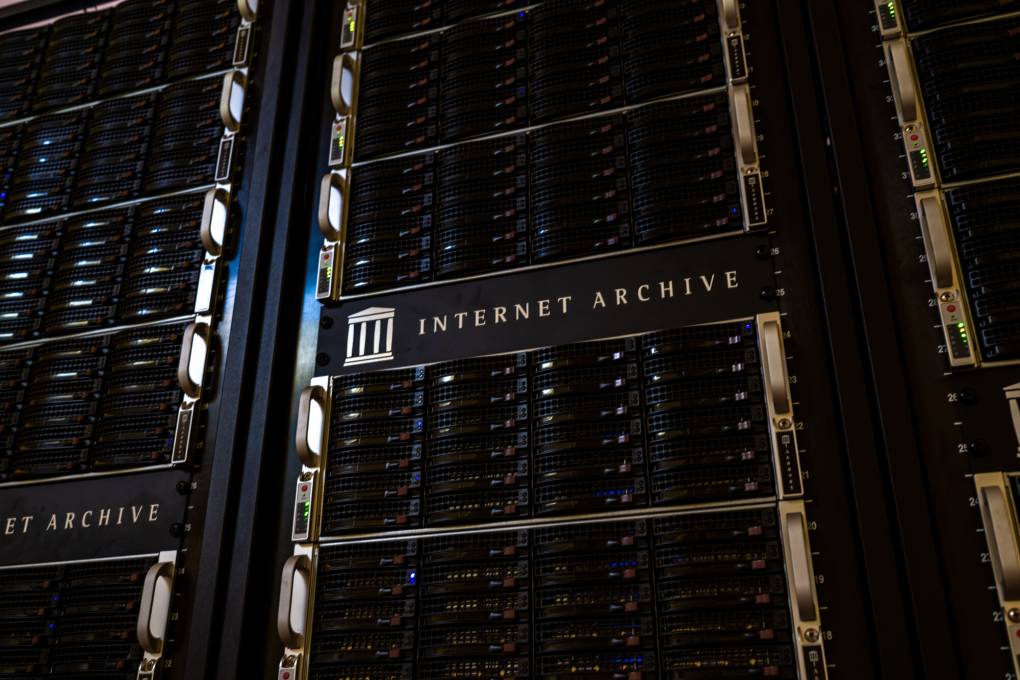
SF-Based Internet Archive Is Now a Federal Depository Library. What Does That Mean?
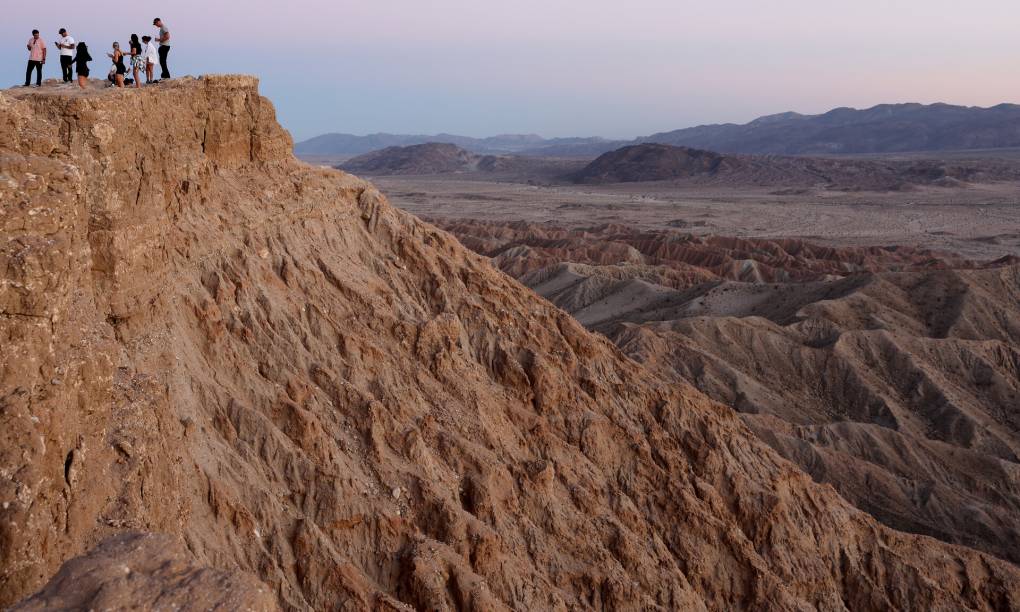
Unlock Free Entry to California’s State Parks with Your Library Card
What Happens if the Internet Archive Goes Dark?
Internet Archive’s Open Library Faces Uncertain Future After Court Sides With Publishers
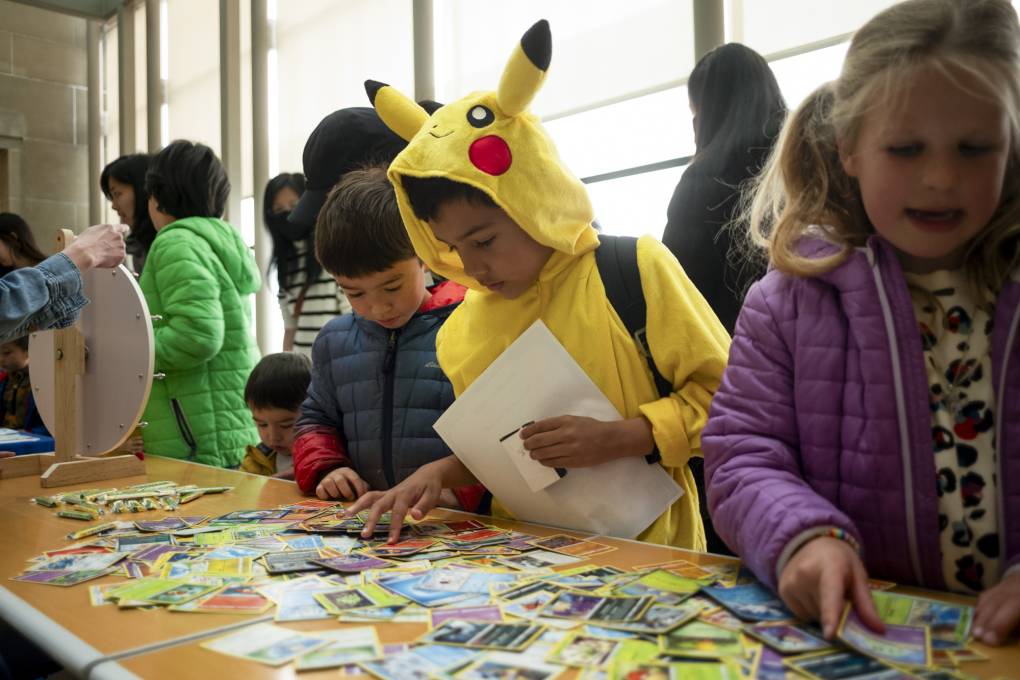
Remember Pokémon Go? These Bay Area Fans Never Quit
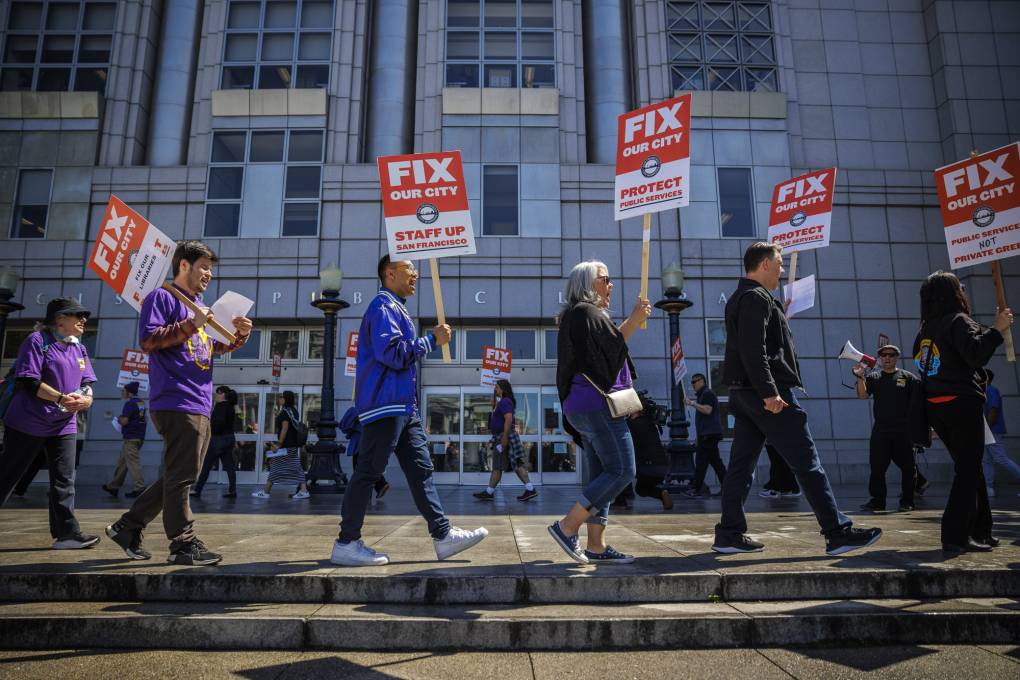
'Not What I Signed Up For': SF Librarians Demand More Security Guards
San Francisco's Pokémon Spring Celebration Day Is in the Works
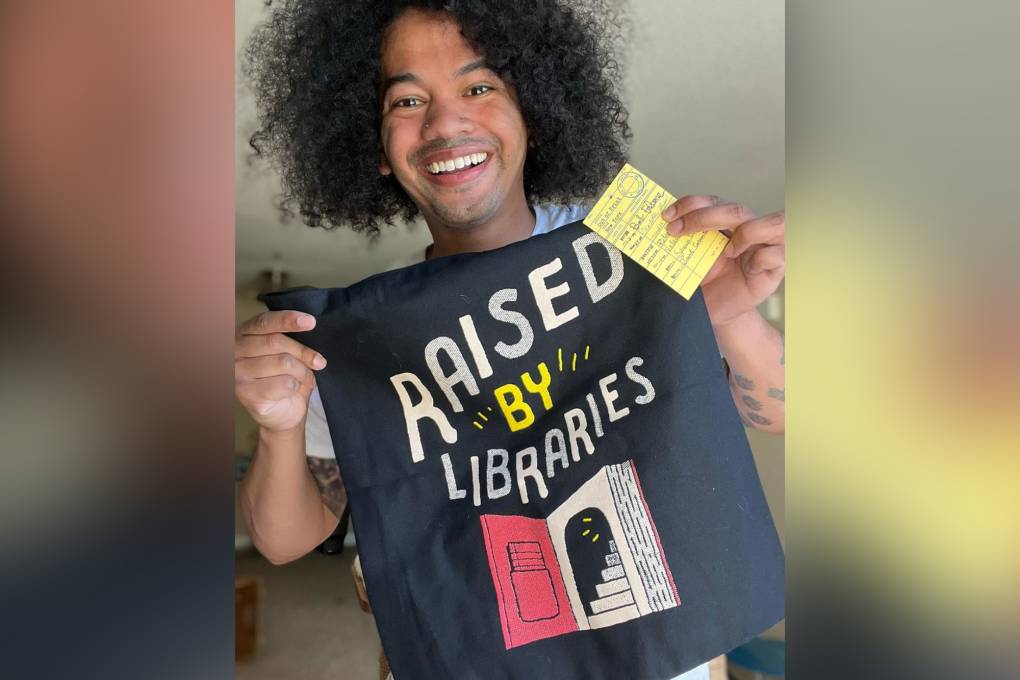
Amid Book Bans, This Bay Area Librarian Is Focusing on Book Joy
Sponsored
Player sponsored by
window.__IS_SSR__=true
window.__INITIAL_STATE__={
"attachmentsReducer": {
"audio_0": {
"type": "attachments",
"id": "audio_0",
"imgSizes": {
"kqedFullSize": {
"file": "https://ww2.kqed.org/news/wp-content/themes/KQED-unified/img/audio_bgs/background0.jpg"
}
}
},
"audio_1": {
"type": "attachments",
"id": "audio_1",
"imgSizes": {
"kqedFullSize": {
"file": "https://ww2.kqed.org/news/wp-content/themes/KQED-unified/img/audio_bgs/background1.jpg"
}
}
},
"audio_2": {
"type": "attachments",
"id": "audio_2",
"imgSizes": {
"kqedFullSize": {
"file": "https://ww2.kqed.org/news/wp-content/themes/KQED-unified/img/audio_bgs/background2.jpg"
}
}
},
"audio_3": {
"type": "attachments",
"id": "audio_3",
"imgSizes": {
"kqedFullSize": {
"file": "https://ww2.kqed.org/news/wp-content/themes/KQED-unified/img/audio_bgs/background3.jpg"
}
}
},
"audio_4": {
"type": "attachments",
"id": "audio_4",
"imgSizes": {
"kqedFullSize": {
"file": "https://ww2.kqed.org/news/wp-content/themes/KQED-unified/img/audio_bgs/background4.jpg"
}
}
},
"placeholder": {
"type": "attachments",
"id": "placeholder",
"imgSizes": {
"thumbnail": {
"file": "https://cdn.kqed.org/wp-content/uploads/2024/12/KQED-Default-Image-816638274-2000x1333-1-160x107.jpg",
"width": 160,
"height": 107,
"mimeType": "image/jpeg"
},
"medium": {
"file": "https://cdn.kqed.org/wp-content/uploads/2024/12/KQED-Default-Image-816638274-2000x1333-1-800x533.jpg",
"width": 800,
"height": 533,
"mimeType": "image/jpeg"
},
"medium_large": {
"file": "https://cdn.kqed.org/wp-content/uploads/2024/12/KQED-Default-Image-816638274-2000x1333-1-768x512.jpg",
"width": 768,
"height": 512,
"mimeType": "image/jpeg"
},
"large": {
"file": "https://cdn.kqed.org/wp-content/uploads/2024/12/KQED-Default-Image-816638274-2000x1333-1-1020x680.jpg",
"width": 1020,
"height": 680,
"mimeType": "image/jpeg"
},
"1536x1536": {
"file": "https://cdn.kqed.org/wp-content/uploads/2024/12/KQED-Default-Image-816638274-2000x1333-1-1536x1024.jpg",
"width": 1536,
"height": 1024,
"mimeType": "image/jpeg"
},
"fd-lrg": {
"file": "https://cdn.kqed.org/wp-content/uploads/2024/12/KQED-Default-Image-816638274-2000x1333-1-1536x1024.jpg",
"width": 1536,
"height": 1024,
"mimeType": "image/jpeg"
},
"fd-med": {
"file": "https://cdn.kqed.org/wp-content/uploads/2024/12/KQED-Default-Image-816638274-2000x1333-1-1020x680.jpg",
"width": 1020,
"height": 680,
"mimeType": "image/jpeg"
},
"fd-sm": {
"file": "https://cdn.kqed.org/wp-content/uploads/2024/12/KQED-Default-Image-816638274-2000x1333-1-800x533.jpg",
"width": 800,
"height": 533,
"mimeType": "image/jpeg"
},
"post-thumbnail": {
"file": "https://cdn.kqed.org/wp-content/uploads/2024/12/KQED-Default-Image-816638274-2000x1333-1-672x372.jpg",
"width": 672,
"height": 372,
"mimeType": "image/jpeg"
},
"twentyfourteen-full-width": {
"file": "https://cdn.kqed.org/wp-content/uploads/2024/12/KQED-Default-Image-816638274-2000x1333-1-1038x576.jpg",
"width": 1038,
"height": 576,
"mimeType": "image/jpeg"
},
"xxsmall": {
"file": "https://cdn.kqed.org/wp-content/uploads/2024/12/KQED-Default-Image-816638274-2000x1333-1-160x107.jpg",
"width": 160,
"height": 107,
"mimeType": "image/jpeg"
},
"xsmall": {
"file": "https://cdn.kqed.org/wp-content/uploads/2024/12/KQED-Default-Image-816638274-2000x1333-1-672x372.jpg",
"width": 672,
"height": 372,
"mimeType": "image/jpeg"
},
"small": {
"file": "https://cdn.kqed.org/wp-content/uploads/2024/12/KQED-Default-Image-816638274-2000x1333-1-672x372.jpg",
"width": 672,
"height": 372,
"mimeType": "image/jpeg"
},
"xlarge": {
"file": "https://cdn.kqed.org/wp-content/uploads/2024/12/KQED-Default-Image-816638274-2000x1333-1-1020x680.jpg",
"width": 1020,
"height": 680,
"mimeType": "image/jpeg"
},
"full-width": {
"file": "https://cdn.kqed.org/wp-content/uploads/2024/12/KQED-Default-Image-816638274-2000x1333-1-1920x1280.jpg",
"width": 1920,
"height": 1280,
"mimeType": "image/jpeg"
},
"guest-author-32": {
"file": "https://cdn.kqed.org/wp-content/uploads/2025/01/KQED-Default-Image-816638274-1333x1333-1-160x160.jpg",
"width": 32,
"height": 32,
"mimeType": "image/jpeg"
},
"guest-author-50": {
"file": "https://cdn.kqed.org/wp-content/uploads/2025/01/KQED-Default-Image-816638274-1333x1333-1-160x160.jpg",
"width": 50,
"height": 50,
"mimeType": "image/jpeg"
},
"guest-author-64": {
"file": "https://cdn.kqed.org/wp-content/uploads/2025/01/KQED-Default-Image-816638274-1333x1333-1-160x160.jpg",
"width": 64,
"height": 64,
"mimeType": "image/jpeg"
},
"guest-author-96": {
"file": "https://cdn.kqed.org/wp-content/uploads/2025/01/KQED-Default-Image-816638274-1333x1333-1-160x160.jpg",
"width": 96,
"height": 96,
"mimeType": "image/jpeg"
},
"guest-author-128": {
"file": "https://cdn.kqed.org/wp-content/uploads/2025/01/KQED-Default-Image-816638274-1333x1333-1-160x160.jpg",
"width": 128,
"height": 128,
"mimeType": "image/jpeg"
},
"detail": {
"file": "https://cdn.kqed.org/wp-content/uploads/2025/01/KQED-Default-Image-816638274-1333x1333-1-160x160.jpg",
"width": 160,
"height": 160,
"mimeType": "image/jpeg"
},
"kqedFullSize": {
"file": "https://cdn.kqed.org/wp-content/uploads/2024/12/KQED-Default-Image-816638274-2000x1333-1.jpg",
"width": 2000,
"height": 1333
}
}
},
"news_12050029": {
"type": "attachments",
"id": "news_12050029",
"meta": {
"index": "attachments_1716263798",
"site": "news",
"id": "12050029",
"found": true
},
"title": "ttscribe_upscaled_webimg",
"publishDate": 1753730145,
"status": "inherit",
"parent": 12050027,
"modified": 1753730426,
"caption": "Scanning technician Lan Zhu digitizes a manuscript at the Internet Archive.",
"credit": "Photo courtesy of the Internet Archive",
"altTag": "A scanning technician at the Internet Archive sits at a digitization station, carefully turning the pages of a large manuscript under angled glass. Above her, two digital cameras are mounted to capture high-resolution images of each page as she turns them by hand. The glass enclosure helps keep the pages flat while protecting the material. The Close All Tabs logo appears in pixelated font in the lower right corner.",
"description": null,
"imgSizes": {
"thumbnail": {
"file": "https://cdn.kqed.org/wp-content/uploads/sites/10/2025/07/ttscribe_upscaled_webimg-160x90.png",
"width": 160,
"height": 90,
"mimeType": "image/png"
},
"1536x1536": {
"file": "https://cdn.kqed.org/wp-content/uploads/sites/10/2025/07/ttscribe_upscaled_webimg-1536x864.png",
"width": 1536,
"height": 864,
"mimeType": "image/png"
},
"post-thumbnail": {
"file": "https://cdn.kqed.org/wp-content/uploads/sites/10/2025/07/ttscribe_upscaled_webimg-672x372.png",
"width": 672,
"height": 372,
"mimeType": "image/png"
},
"twentyfourteen-full-width": {
"file": "https://cdn.kqed.org/wp-content/uploads/sites/10/2025/07/ttscribe_upscaled_webimg-1038x576.png",
"width": 1038,
"height": 576,
"mimeType": "image/png"
},
"kqedFullSize": {
"file": "https://cdn.kqed.org/wp-content/uploads/sites/10/2025/07/ttscribe_upscaled_webimg.png",
"width": 1920,
"height": 1080
}
},
"fetchFailed": false,
"isLoading": false
},
"news_12049492": {
"type": "attachments",
"id": "news_12049492",
"meta": {
"index": "attachments_1716263798",
"site": "news",
"id": "12049492",
"found": true
},
"title": "010_KQED_InternetArchiveOffices_03242023_qed",
"publishDate": 1753313633,
"status": "inherit",
"parent": 12049420,
"modified": 1753313642,
"caption": "Various types of electronics sit on a shelf at the Internet Archive offices in San Francisco on March 24, 2023.",
"credit": "Beth LaBerge/KQED",
"altTag": null,
"description": null,
"imgSizes": {
"thumbnail": {
"file": "https://cdn.kqed.org/wp-content/uploads/sites/10/2025/07/010_KQED_InternetArchiveOffices_03242023_qed-160x107.jpg",
"width": 160,
"height": 107,
"mimeType": "image/jpeg"
},
"1536x1536": {
"file": "https://cdn.kqed.org/wp-content/uploads/sites/10/2025/07/010_KQED_InternetArchiveOffices_03242023_qed-1536x1024.jpg",
"width": 1536,
"height": 1024,
"mimeType": "image/jpeg"
},
"post-thumbnail": {
"file": "https://cdn.kqed.org/wp-content/uploads/sites/10/2025/07/010_KQED_InternetArchiveOffices_03242023_qed-672x372.jpg",
"width": 672,
"height": 372,
"mimeType": "image/jpeg"
},
"twentyfourteen-full-width": {
"file": "https://cdn.kqed.org/wp-content/uploads/sites/10/2025/07/010_KQED_InternetArchiveOffices_03242023_qed-1038x576.jpg",
"width": 1038,
"height": 576,
"mimeType": "image/jpeg"
},
"kqedFullSize": {
"file": "https://cdn.kqed.org/wp-content/uploads/sites/10/2025/07/010_KQED_InternetArchiveOffices_03242023_qed.jpg",
"width": 2000,
"height": 1333
}
},
"fetchFailed": false,
"isLoading": false
},
"news_11910595": {
"type": "attachments",
"id": "news_11910595",
"meta": {
"index": "attachments_1716263798",
"site": "news",
"id": "11910595",
"found": true
},
"parent": 11910495,
"imgSizes": {
"twentyfourteen-full-width": {
"file": "https://ww2.kqed.org/app/uploads/sites/10/2022/04/RS55017_GettyImages-1387412608-qut-1038x576.jpg",
"width": 1038,
"mimeType": "image/jpeg",
"height": 576
},
"thumbnail": {
"file": "https://ww2.kqed.org/app/uploads/sites/10/2022/04/RS55017_GettyImages-1387412608-qut-160x96.jpg",
"width": 160,
"mimeType": "image/jpeg",
"height": 96
},
"post-thumbnail": {
"file": "https://ww2.kqed.org/app/uploads/sites/10/2022/04/RS55017_GettyImages-1387412608-qut-672x372.jpg",
"width": 672,
"mimeType": "image/jpeg",
"height": 372
},
"kqedFullSize": {
"file": "https://ww2.kqed.org/app/uploads/sites/10/2022/04/RS55017_GettyImages-1387412608-qut.jpg",
"width": 1920,
"height": 1152
},
"large": {
"file": "https://ww2.kqed.org/app/uploads/sites/10/2022/04/RS55017_GettyImages-1387412608-qut-1020x612.jpg",
"width": 1020,
"mimeType": "image/jpeg",
"height": 612
},
"1536x1536": {
"file": "https://ww2.kqed.org/app/uploads/sites/10/2022/04/RS55017_GettyImages-1387412608-qut-1536x922.jpg",
"width": 1536,
"mimeType": "image/jpeg",
"height": 922
},
"medium": {
"file": "https://ww2.kqed.org/app/uploads/sites/10/2022/04/RS55017_GettyImages-1387412608-qut-800x480.jpg",
"width": 800,
"mimeType": "image/jpeg",
"height": 480
}
},
"publishDate": 1649433963,
"modified": 1649434094,
"caption": "People gather on an overlook above the Borrego Badlands in Anza-Borrego Desert State Park.",
"description": null,
"title": "free-state-parks",
"credit": "Mario Tama/Getty Images",
"status": "inherit",
"altTag": "The steep rock cliffs of California's Anza-Borrego Desert State Park photographed at dusk",
"fetchFailed": false,
"isLoading": false
},
"news_12031983": {
"type": "attachments",
"id": "news_12031983",
"meta": {
"index": "attachments_1716263798",
"site": "news",
"id": "12031983",
"found": true
},
"title": "statues_web img 02",
"publishDate": 1742345081,
"status": "inherit",
"parent": 12031980,
"modified": 1742345541,
"caption": "Hundreds of terracotta statues fill an auditorium at the Internet Archive’s headquarters in San Francisco on Jan. 23, 2025. Each statue represents an employee who worked for the Internet Archive for at least three years. (Chris Egusa/KQED)",
"credit": null,
"altTag": "Dozens of small terracotta statues, each with distinct features and holding various items, stand arranged in rows along wooden pews in a church-like room. More statues line the curved back wall. Golden light illuminates the statues from the left. The words \"Close All Tabs\" appear in the bottom left corner.",
"description": null,
"imgSizes": {
"medium": {
"file": "https://cdn.kqed.org/wp-content/uploads/sites/10/2025/03/statues_web-img-02-800x450.png",
"width": 800,
"height": 450,
"mimeType": "image/png"
},
"large": {
"file": "https://cdn.kqed.org/wp-content/uploads/sites/10/2025/03/statues_web-img-02-1020x574.png",
"width": 1020,
"height": 574,
"mimeType": "image/png"
},
"thumbnail": {
"file": "https://cdn.kqed.org/wp-content/uploads/sites/10/2025/03/statues_web-img-02-160x90.png",
"width": 160,
"height": 90,
"mimeType": "image/png"
},
"1536x1536": {
"file": "https://cdn.kqed.org/wp-content/uploads/sites/10/2025/03/statues_web-img-02-1536x864.png",
"width": 1536,
"height": 864,
"mimeType": "image/png"
},
"post-thumbnail": {
"file": "https://cdn.kqed.org/wp-content/uploads/sites/10/2025/03/statues_web-img-02-672x372.png",
"width": 672,
"height": 372,
"mimeType": "image/png"
},
"twentyfourteen-full-width": {
"file": "https://cdn.kqed.org/wp-content/uploads/sites/10/2025/03/statues_web-img-02-1038x576.png",
"width": 1038,
"height": 576,
"mimeType": "image/png"
},
"kqedFullSize": {
"file": "https://cdn.kqed.org/wp-content/uploads/sites/10/2025/03/statues_web-img-02.png",
"width": 1920,
"height": 1080
}
},
"fetchFailed": false,
"isLoading": false
},
"news_12003841": {
"type": "attachments",
"id": "news_12003841",
"meta": {
"index": "attachments_1716263798",
"site": "news",
"id": "12003841",
"found": true
},
"title": "045_KQED_InternetArchiveOffices_03242023_qed",
"publishDate": 1725995889,
"status": "inherit",
"parent": 12003819,
"modified": 1725995929,
"caption": "The Internet Archive's servers, photographed at their offices in San Francisco on March 24, 2023.",
"credit": "Beth LaBerge/KQED",
"altTag": null,
"description": null,
"imgSizes": {
"medium": {
"file": "https://cdn.kqed.org/wp-content/uploads/sites/10/2024/09/045_KQED_InternetArchiveOffices_03242023_qed-800x533.jpg",
"width": 800,
"height": 533,
"mimeType": "image/jpeg"
},
"large": {
"file": "https://cdn.kqed.org/wp-content/uploads/sites/10/2024/09/045_KQED_InternetArchiveOffices_03242023_qed-1020x680.jpg",
"width": 1020,
"height": 680,
"mimeType": "image/jpeg"
},
"thumbnail": {
"file": "https://cdn.kqed.org/wp-content/uploads/sites/10/2024/09/045_KQED_InternetArchiveOffices_03242023_qed-160x107.jpg",
"width": 160,
"height": 107,
"mimeType": "image/jpeg"
},
"1536x1536": {
"file": "https://cdn.kqed.org/wp-content/uploads/sites/10/2024/09/045_KQED_InternetArchiveOffices_03242023_qed-1536x1024.jpg",
"width": 1536,
"height": 1024,
"mimeType": "image/jpeg"
},
"post-thumbnail": {
"file": "https://cdn.kqed.org/wp-content/uploads/sites/10/2024/09/045_KQED_InternetArchiveOffices_03242023_qed-672x372.jpg",
"width": 672,
"height": 372,
"mimeType": "image/jpeg"
},
"twentyfourteen-full-width": {
"file": "https://cdn.kqed.org/wp-content/uploads/sites/10/2024/09/045_KQED_InternetArchiveOffices_03242023_qed-1038x576.jpg",
"width": 1038,
"height": 576,
"mimeType": "image/jpeg"
},
"full-width": {
"file": "https://cdn.kqed.org/wp-content/uploads/sites/10/2024/09/045_KQED_InternetArchiveOffices_03242023_qed-1920x1280.jpg",
"width": 1920,
"height": 1280,
"mimeType": "image/jpeg"
},
"kqedFullSize": {
"file": "https://cdn.kqed.org/wp-content/uploads/sites/10/2024/09/045_KQED_InternetArchiveOffices_03242023_qed.jpg",
"width": 2000,
"height": 1333
}
},
"fetchFailed": false,
"isLoading": false
},
"news_11983008": {
"type": "attachments",
"id": "news_11983008",
"meta": {
"index": "attachments_1716263798",
"site": "news",
"id": "11983008",
"found": true
},
"parent": 0,
"imgSizes": {
"twentyfourteen-full-width": {
"file": "https://cdn.kqed.org/wp-content/uploads/sites/10/2024/04/240413-POKEMON-LIBRARY-AC-05-KQED-1038x576.jpg",
"width": 1038,
"mimeType": "image/jpeg",
"height": 576
},
"thumbnail": {
"file": "https://cdn.kqed.org/wp-content/uploads/sites/10/2024/04/240413-POKEMON-LIBRARY-AC-05-KQED-160x107.jpg",
"width": 160,
"mimeType": "image/jpeg",
"height": 107
},
"post-thumbnail": {
"file": "https://cdn.kqed.org/wp-content/uploads/sites/10/2024/04/240413-POKEMON-LIBRARY-AC-05-KQED-672x372.jpg",
"width": 672,
"mimeType": "image/jpeg",
"height": 372
},
"kqedFullSize": {
"file": "https://cdn.kqed.org/wp-content/uploads/sites/10/2024/04/240413-POKEMON-LIBRARY-AC-05-KQED.jpg",
"width": 2000,
"height": 1333
},
"large": {
"file": "https://cdn.kqed.org/wp-content/uploads/sites/10/2024/04/240413-POKEMON-LIBRARY-AC-05-KQED-1020x680.jpg",
"width": 1020,
"mimeType": "image/jpeg",
"height": 680
},
"1536x1536": {
"file": "https://cdn.kqed.org/wp-content/uploads/sites/10/2024/04/240413-POKEMON-LIBRARY-AC-05-KQED-1536x1024.jpg",
"width": 1536,
"mimeType": "image/jpeg",
"height": 1024
},
"full-width": {
"file": "https://cdn.kqed.org/wp-content/uploads/sites/10/2024/04/240413-POKEMON-LIBRARY-AC-05-KQED-1920x1280.jpg",
"width": 1920,
"mimeType": "image/jpeg",
"height": 1280
},
"medium": {
"file": "https://cdn.kqed.org/wp-content/uploads/sites/10/2024/04/240413-POKEMON-LIBRARY-AC-05-KQED-800x533.jpg",
"width": 800,
"mimeType": "image/jpeg",
"height": 533
}
},
"publishDate": 1713208242,
"modified": 1713466425,
"caption": "Ethan, 7, (right) looks through a pile of free cards Richmond Library workers set out for Pokémon fans in San Francisco on April 13, 2024.",
"description": null,
"title": "240413-POKEMON LIBRARY-AC-05-KQED",
"credit": "Aryk Copley/KQED",
"status": "inherit",
"altTag": null,
"fetchFailed": false,
"isLoading": false
},
"news_11982521": {
"type": "attachments",
"id": "news_11982521",
"meta": {
"index": "attachments_1716263798",
"site": "news",
"id": "11982521",
"found": true
},
"parent": 0,
"imgSizes": {
"twentyfourteen-full-width": {
"file": "https://cdn.kqed.org/wp-content/uploads/sites/10/2024/04/240409-SF-LIBRARY-RALLY-MD-02-KQED-4-1038x576.jpg",
"width": 1038,
"mimeType": "image/jpeg",
"height": 576
},
"thumbnail": {
"file": "https://cdn.kqed.org/wp-content/uploads/sites/10/2024/04/240409-SF-LIBRARY-RALLY-MD-02-KQED-4-160x107.jpg",
"width": 160,
"mimeType": "image/jpeg",
"height": 107
},
"post-thumbnail": {
"file": "https://cdn.kqed.org/wp-content/uploads/sites/10/2024/04/240409-SF-LIBRARY-RALLY-MD-02-KQED-4-672x372.jpg",
"width": 672,
"mimeType": "image/jpeg",
"height": 372
},
"kqedFullSize": {
"file": "https://cdn.kqed.org/wp-content/uploads/sites/10/2024/04/240409-SF-LIBRARY-RALLY-MD-02-KQED-4.jpg",
"width": 2000,
"height": 1333
},
"large": {
"file": "https://cdn.kqed.org/wp-content/uploads/sites/10/2024/04/240409-SF-LIBRARY-RALLY-MD-02-KQED-4-1020x680.jpg",
"width": 1020,
"mimeType": "image/jpeg",
"height": 680
},
"1536x1536": {
"file": "https://cdn.kqed.org/wp-content/uploads/sites/10/2024/04/240409-SF-LIBRARY-RALLY-MD-02-KQED-4-1536x1024.jpg",
"width": 1536,
"mimeType": "image/jpeg",
"height": 1024
},
"full-width": {
"file": "https://cdn.kqed.org/wp-content/uploads/sites/10/2024/04/240409-SF-LIBRARY-RALLY-MD-02-KQED-4-1920x1280.jpg",
"width": 1920,
"mimeType": "image/jpeg",
"height": 1280
},
"medium": {
"file": "https://cdn.kqed.org/wp-content/uploads/sites/10/2024/04/240409-SF-LIBRARY-RALLY-MD-02-KQED-4-800x533.jpg",
"width": 800,
"mimeType": "image/jpeg",
"height": 533
}
},
"publishDate": 1712756315,
"modified": 1712756410,
"caption": "Library workers rally in front of San Francisco's Main Library calling for greater safety measures at the city's public libraries on Apr. 9, 2024.",
"description": null,
"title": "240409-SF LIBRARY RALLY-MD-02-KQED-4",
"credit": "Martin do Nascimento/KQED",
"status": "inherit",
"altTag": null,
"fetchFailed": false,
"isLoading": false
},
"news_11981540": {
"type": "attachments",
"id": "news_11981540",
"meta": {
"index": "attachments_1716263798",
"site": "news",
"id": "11981540",
"found": true
},
"parent": 11981532,
"imgSizes": {
"twentyfourteen-full-width": {
"file": "https://cdn.kqed.org/wp-content/uploads/sites/10/2024/04/GettyImages-479982694-1038x576.jpg",
"width": 1038,
"mimeType": "image/jpeg",
"height": 576
},
"thumbnail": {
"file": "https://cdn.kqed.org/wp-content/uploads/sites/10/2024/04/GettyImages-479982694-160x106.jpg",
"width": 160,
"mimeType": "image/jpeg",
"height": 106
},
"post-thumbnail": {
"file": "https://cdn.kqed.org/wp-content/uploads/sites/10/2024/04/GettyImages-479982694-672x372.jpg",
"width": 672,
"mimeType": "image/jpeg",
"height": 372
},
"kqedFullSize": {
"file": "https://cdn.kqed.org/wp-content/uploads/sites/10/2024/04/GettyImages-479982694-scaled.jpg",
"width": 2560,
"height": 1703
},
"2048x2048": {
"file": "https://cdn.kqed.org/wp-content/uploads/sites/10/2024/04/GettyImages-479982694-2048x1363.jpg",
"width": 2048,
"mimeType": "image/jpeg",
"height": 1363
},
"large": {
"file": "https://cdn.kqed.org/wp-content/uploads/sites/10/2024/04/GettyImages-479982694-1020x679.jpg",
"width": 1020,
"mimeType": "image/jpeg",
"height": 679
},
"1536x1536": {
"file": "https://cdn.kqed.org/wp-content/uploads/sites/10/2024/04/GettyImages-479982694-1536x1022.jpg",
"width": 1536,
"mimeType": "image/jpeg",
"height": 1022
},
"full-width": {
"file": "https://cdn.kqed.org/wp-content/uploads/sites/10/2024/04/GettyImages-479982694-1920x1277.jpg",
"width": 1920,
"mimeType": "image/jpeg",
"height": 1277
},
"medium": {
"file": "https://cdn.kqed.org/wp-content/uploads/sites/10/2024/04/GettyImages-479982694-800x532.jpg",
"width": 800,
"mimeType": "image/jpeg",
"height": 532
}
},
"publishDate": 1712005527,
"modified": 1712005657,
"caption": "A fan dressed as Pikachu from the 'Pokémon' animated series attends preview night at Comic-Con International on July 8, 2015, in San Diego, California.",
"description": null,
"title": "Comic-Con International 2015 - General Atmosphere",
"credit": "Jerod Harris/Getty Images",
"status": "inherit",
"altTag": null,
"fetchFailed": false,
"isLoading": false
},
"news_11963415": {
"type": "attachments",
"id": "news_11963415",
"meta": {
"index": "attachments_1716263798",
"site": "news",
"id": "11963415",
"found": true
},
"parent": 0,
"imgSizes": {
"twentyfourteen-full-width": {
"file": "https://ww2.kqed.org/app/uploads/sites/10/2023/10/231004-Mychal-Threets-01-KQED-1038x576.jpg",
"width": 1038,
"mimeType": "image/jpeg",
"height": 576
},
"thumbnail": {
"file": "https://ww2.kqed.org/app/uploads/sites/10/2023/10/231004-Mychal-Threets-01-KQED-160x107.jpg",
"width": 160,
"mimeType": "image/jpeg",
"height": 107
},
"post-thumbnail": {
"file": "https://ww2.kqed.org/app/uploads/sites/10/2023/10/231004-Mychal-Threets-01-KQED-672x372.jpg",
"width": 672,
"mimeType": "image/jpeg",
"height": 372
},
"kqedFullSize": {
"file": "https://ww2.kqed.org/app/uploads/sites/10/2023/10/231004-Mychal-Threets-01-KQED.jpg",
"width": 2000,
"height": 1333
},
"large": {
"file": "https://ww2.kqed.org/app/uploads/sites/10/2023/10/231004-Mychal-Threets-01-KQED-1020x680.jpg",
"width": 1020,
"mimeType": "image/jpeg",
"height": 680
},
"1536x1536": {
"file": "https://ww2.kqed.org/app/uploads/sites/10/2023/10/231004-Mychal-Threets-01-KQED-1536x1024.jpg",
"width": 1536,
"mimeType": "image/jpeg",
"height": 1024
},
"full-width": {
"file": "https://ww2.kqed.org/app/uploads/sites/10/2023/10/231004-Mychal-Threets-01-KQED-1920x1280.jpg",
"width": 1920,
"mimeType": "image/jpeg",
"height": 1280
},
"medium": {
"file": "https://ww2.kqed.org/app/uploads/sites/10/2023/10/231004-Mychal-Threets-01-KQED-800x533.jpg",
"width": 800,
"mimeType": "image/jpeg",
"height": 533
}
},
"publishDate": 1696445984,
"modified": 1696520351,
"caption": "A photo from Mychal Threets's Instagram account posted for National Library Week on April 23, 2023.",
"description": null,
"title": "231004-Mychal Threets-01-KQED",
"credit": "Photo via Instagram",
"status": "inherit",
"altTag": "A person holds up a tote bag that reads \"Raised by libraries\" and smiles at the camera.",
"fetchFailed": false,
"isLoading": false
}
},
"audioPlayerReducer": {
"postId": "stream_live",
"isPaused": true,
"isPlaying": false,
"pfsActive": false,
"pledgeModalIsOpen": true,
"playerDrawerIsOpen": false
},
"authorsReducer": {
"carlysevern": {
"type": "authors",
"id": "3243",
"meta": {
"index": "authors_1716337520",
"id": "3243",
"found": true
},
"name": "Carly Severn",
"firstName": "Carly",
"lastName": "Severn",
"slug": "carlysevern",
"email": "csevern@kqed.org",
"display_author_email": false,
"staff_mastheads": [
"news"
],
"title": "Senior Editor, Audience News ",
"bio": "Carly is KQED's Senior Editor of Audience News on the Digital News team, and has reported for the California Report Magazine, Bay Curious and KQED Arts. She's formerly the host of \u003ca href=\"http://ww2.kqed.org/pop/category/the-cooler/\" rel=\"noopener noreferrer\">The Cooler\u003c/a> podcast.",
"avatar": "https://secure.gravatar.com/avatar/2d8d6765f186e64c798cf7f0c8088a41?s=600&d=blank&r=g",
"twitter": "teacupinthebay",
"facebook": null,
"instagram": null,
"linkedin": null,
"sites": [
{
"site": "",
"roles": [
"editor"
]
},
{
"site": "arts",
"roles": [
"editor"
]
},
{
"site": "news",
"roles": [
"administrator"
]
},
{
"site": "pop",
"roles": [
"editor"
]
},
{
"site": "futureofyou",
"roles": [
"editor"
]
},
{
"site": "about",
"roles": [
"administrator"
]
},
{
"site": "mindshift",
"roles": [
"editor"
]
},
{
"site": "bayareabites",
"roles": [
"editor"
]
},
{
"site": "stateofhealth",
"roles": [
"editor"
]
},
{
"site": "science",
"roles": [
"editor"
]
},
{
"site": "food",
"roles": [
"contributor"
]
},
{
"site": "forum",
"roles": [
"editor"
]
},
{
"site": "perspectives",
"roles": [
"administrator"
]
},
{
"site": "liveblog",
"roles": [
"editor"
]
}
],
"headData": {
"title": "Carly Severn | KQED",
"description": "Senior Editor, Audience News ",
"ogImgSrc": "https://secure.gravatar.com/avatar/2d8d6765f186e64c798cf7f0c8088a41?s=600&d=blank&r=g",
"twImgSrc": "https://secure.gravatar.com/avatar/2d8d6765f186e64c798cf7f0c8088a41?s=600&d=blank&r=g"
},
"isLoading": false,
"link": "/author/carlysevern"
},
"bwatt": {
"type": "authors",
"id": "11238",
"meta": {
"index": "authors_1716337520",
"id": "11238",
"found": true
},
"name": "Brian Watt",
"firstName": "Brian",
"lastName": "Watt",
"slug": "bwatt",
"email": "bwatt@KQED.org",
"display_author_email": false,
"staff_mastheads": [
"news"
],
"title": "Morning News Anchor",
"bio": "Brian Watt is KQED's morning radio news anchor. He joined the KQED News team in April of 2016. Prior to that, he worked as a Reporter for KPCC in Los Angeles and a producer at \u003cem>Marketplace.\u003c/em>\r\n\r\nDuring eight years at KPCC, Brian covered business and economics, and his work won several awards. In 2008, he won the Los Angeles Press Club’s first-place award for Business and Financial Reporting, Broadcast. He’s also received honorable mention and been first runner up for the Press Club’s Radio Journalist of the Year. He won two Golden Mike awards from the Radio and TV News Association of Southern California.\r\n\r\nBrian holds degrees in theater from Yale University and the Sorbonne, and has worked as an actor in France, Italy, Brazil, Hungary and . . . Hollywood. He appeared in a few television shows, including \u003cem>The West Wing, Judging Amy\u003c/em> and \u003cem>The District.\u003c/em>\r\n\r\nEmail: bwatt@KQED.org Twitter: @RadioBWatt",
"avatar": "https://secure.gravatar.com/avatar/55393ff57ed34e2be773ba4789dd6a19?s=600&d=blank&r=g",
"twitter": "@RadioBWatt",
"facebook": null,
"instagram": null,
"linkedin": null,
"sites": [
{
"site": "arts",
"roles": [
"contributor"
]
},
{
"site": "news",
"roles": [
"editor"
]
}
],
"headData": {
"title": "Brian Watt | KQED",
"description": "Morning News Anchor",
"ogImgSrc": "https://secure.gravatar.com/avatar/55393ff57ed34e2be773ba4789dd6a19?s=600&d=blank&r=g",
"twImgSrc": "https://secure.gravatar.com/avatar/55393ff57ed34e2be773ba4789dd6a19?s=600&d=blank&r=g"
},
"isLoading": false,
"link": "/author/bwatt"
},
"agonzalez": {
"type": "authors",
"id": "11724",
"meta": {
"index": "authors_1716337520",
"id": "11724",
"found": true
},
"name": "Alexander Gonzalez",
"firstName": "Alexander",
"lastName": "Gonzalez",
"slug": "agonzalez",
"email": "AlexanderGonzalez@KQED.org",
"display_author_email": false,
"staff_mastheads": [
"news"
],
"title": "KQED Contributor",
"bio": null,
"avatar": "https://secure.gravatar.com/avatar/63d43593dd7ebcafcd638e851a9bce5a?s=600&d=blank&r=g",
"twitter": null,
"facebook": null,
"instagram": null,
"linkedin": null,
"sites": [
{
"site": "arts",
"roles": [
"editor"
]
},
{
"site": "news",
"roles": [
"editor"
]
}
],
"headData": {
"title": "Alexander Gonzalez | KQED",
"description": "KQED Contributor",
"ogImgSrc": "https://secure.gravatar.com/avatar/63d43593dd7ebcafcd638e851a9bce5a?s=600&d=blank&r=g",
"twImgSrc": "https://secure.gravatar.com/avatar/63d43593dd7ebcafcd638e851a9bce5a?s=600&d=blank&r=g"
},
"isLoading": false,
"link": "/author/agonzalez"
},
"sjohnson": {
"type": "authors",
"id": "11840",
"meta": {
"index": "authors_1716337520",
"id": "11840",
"found": true
},
"name": "Sydney Johnson",
"firstName": "Sydney",
"lastName": "Johnson",
"slug": "sjohnson",
"email": "sjohnson@kqed.org",
"display_author_email": false,
"staff_mastheads": [
"news"
],
"title": "KQED Reporter",
"bio": "Sydney Johnson is a general assignment reporter at KQED. She previously reported on public health and city government at the San Francisco Examiner, and before that, she covered statewide education policy for EdSource. Her reporting has won multiple local, state and national awards. Sydney is a graduate of the University of California, Berkeley and lives in San Francisco.",
"avatar": "https://secure.gravatar.com/avatar/97855f2719b72ad6190b7c535fe642c8?s=600&d=blank&r=g",
"twitter": "sydneyfjohnson",
"facebook": null,
"instagram": null,
"linkedin": null,
"sites": [
{
"site": "news",
"roles": [
"editor"
]
}
],
"headData": {
"title": "Sydney Johnson | KQED",
"description": "KQED Reporter",
"ogImgSrc": "https://secure.gravatar.com/avatar/97855f2719b72ad6190b7c535fe642c8?s=600&d=blank&r=g",
"twImgSrc": "https://secure.gravatar.com/avatar/97855f2719b72ad6190b7c535fe642c8?s=600&d=blank&r=g"
},
"isLoading": false,
"link": "/author/sjohnson"
},
"cegusa": {
"type": "authors",
"id": "11869",
"meta": {
"index": "authors_1716337520",
"id": "11869",
"found": true
},
"name": "Chris Egusa",
"firstName": "Chris",
"lastName": "Egusa",
"slug": "cegusa",
"email": "cegusa@kqed.org",
"display_author_email": false,
"staff_mastheads": [],
"title": "KQED Contributor",
"bio": null,
"avatar": "https://secure.gravatar.com/avatar/86d00b34cb7eeb5247e991f0e20c70c4?s=600&d=blank&r=g",
"twitter": null,
"facebook": null,
"instagram": null,
"linkedin": null,
"sites": [
{
"site": "arts",
"roles": [
"editor"
]
}
],
"headData": {
"title": "Chris Egusa | KQED",
"description": "KQED Contributor",
"ogImgSrc": "https://secure.gravatar.com/avatar/86d00b34cb7eeb5247e991f0e20c70c4?s=600&d=blank&r=g",
"twImgSrc": "https://secure.gravatar.com/avatar/86d00b34cb7eeb5247e991f0e20c70c4?s=600&d=blank&r=g"
},
"isLoading": false,
"link": "/author/cegusa"
},
"naltenberg": {
"type": "authors",
"id": "11896",
"meta": {
"index": "authors_1716337520",
"id": "11896",
"found": true
},
"name": "Nik Altenberg",
"firstName": "Nik",
"lastName": "Altenberg",
"slug": "naltenberg",
"email": "naltenberg@kqed.org",
"display_author_email": false,
"staff_mastheads": [],
"title": "KQED Contributor",
"bio": "Nik Altenberg is an on-call reporter for KQED and a copy editor and fact checker for Santa Cruz Local. Nik’s reporting interests include policing, public health, environment, immigration, housing and the places where these issues intersect.",
"avatar": "https://secure.gravatar.com/avatar/e391b3a18ce4a53a7ca3f3065c74418b?s=600&d=blank&r=g",
"twitter": null,
"facebook": null,
"instagram": "https://www.instagram.com/nikaltenberg/",
"linkedin": null,
"sites": [
{
"site": "news",
"roles": []
}
],
"headData": {
"title": "Nik Altenberg | KQED",
"description": "KQED Contributor",
"ogImgSrc": "https://secure.gravatar.com/avatar/e391b3a18ce4a53a7ca3f3065c74418b?s=600&d=blank&r=g",
"twImgSrc": "https://secure.gravatar.com/avatar/e391b3a18ce4a53a7ca3f3065c74418b?s=600&d=blank&r=g"
},
"isLoading": false,
"link": "/author/naltenberg"
},
"mcueva": {
"type": "authors",
"id": "11943",
"meta": {
"index": "authors_1716337520",
"id": "11943",
"found": true
},
"name": "Maya Cueva",
"firstName": "Maya",
"lastName": "Cueva",
"slug": "mcueva",
"email": "mcueva@kqed.org",
"display_author_email": false,
"staff_mastheads": [],
"title": "KQED Contributor",
"bio": null,
"avatar": "https://secure.gravatar.com/avatar/26d0967153608e4720f52779f754087a?s=600&d=blank&r=g",
"twitter": null,
"facebook": null,
"instagram": null,
"linkedin": null,
"sites": [
{
"site": "news",
"roles": [
"editor"
]
}
],
"headData": {
"title": "Maya Cueva | KQED",
"description": "KQED Contributor",
"ogImgSrc": "https://secure.gravatar.com/avatar/26d0967153608e4720f52779f754087a?s=600&d=blank&r=g",
"twImgSrc": "https://secure.gravatar.com/avatar/26d0967153608e4720f52779f754087a?s=600&d=blank&r=g"
},
"isLoading": false,
"link": "/author/mcueva"
},
"msung": {
"type": "authors",
"id": "11944",
"meta": {
"index": "authors_1716337520",
"id": "11944",
"found": true
},
"name": "Morgan Sung",
"firstName": "Morgan",
"lastName": "Sung",
"slug": "msung",
"email": "msung@kqed.org",
"display_author_email": false,
"staff_mastheads": [],
"title": "Close All Tabs Host",
"bio": null,
"avatar": "https://secure.gravatar.com/avatar/34033b8d232ee6c987ca6f0a1a28f0e5?s=600&d=blank&r=g",
"twitter": null,
"facebook": null,
"instagram": null,
"linkedin": null,
"sites": [
{
"site": "news",
"roles": [
"editor"
]
}
],
"headData": {
"title": "Morgan Sung | KQED",
"description": "Close All Tabs Host",
"ogImgSrc": "https://secure.gravatar.com/avatar/34033b8d232ee6c987ca6f0a1a28f0e5?s=600&d=blank&r=g",
"twImgSrc": "https://secure.gravatar.com/avatar/34033b8d232ee6c987ca6f0a1a28f0e5?s=600&d=blank&r=g"
},
"isLoading": false,
"link": "/author/msung"
}
},
"breakingNewsReducer": {},
"pagesReducer": {},
"postsReducer": {
"stream_live": {
"type": "live",
"id": "stream_live",
"audioUrl": "https://streams.kqed.org/kqedradio",
"title": "Live Stream",
"excerpt": "Live Stream information currently unavailable.",
"link": "/radio",
"featImg": "",
"label": {
"name": "KQED Live",
"link": "/"
}
},
"stream_kqedNewscast": {
"type": "posts",
"id": "stream_kqedNewscast",
"audioUrl": "https://www.kqed.org/.stream/anon/radio/RDnews/newscast.mp3?_=1",
"title": "KQED Newscast",
"featImg": "",
"label": {
"name": "88.5 FM",
"link": "/"
}
},
"news_12050027": {
"type": "posts",
"id": "news_12050027",
"meta": {
"index": "posts_1716263798",
"site": "news",
"id": "12050027",
"score": null,
"sort": [
1753732857000
]
},
"guestAuthors": [],
"slug": "bonus-a-big-win-for-the-internet-archive",
"title": "Bonus: A Big Win for the Internet Archive",
"publishDate": 1753732857,
"format": "audio",
"headTitle": "Bonus: A Big Win for the Internet Archive | KQED",
"labelTerm": {},
"content": "\u003cp>\u003cspan style=\"font-weight: 400\">Who decides what is and isn’t a library? The Internet Archive now has federal depository status, joining a network of over 1,100 libraries that archive government documents and make them accessible to the public — even as ongoing legal challenges pose an existential threat to the organization. Some of the organization’s critics even argue that the Internet Archive is not a library at all. \u003c/span>\u003c/p>\n\u003cp>\u003cspan style=\"font-weight: 400\">In this special update to our \u003c/span>\u003ca href=\"https://www.kqed.org/news/12031980/what-happens-if-the-internet-archive-goes-dark\">\u003cspan style=\"font-weight: 400\">deep dive on the Internet Archive\u003c/span>\u003c/a>\u003cspan style=\"font-weight: 400\">, we get into what this designation \u003c/span>\u003ci>\u003cspan style=\"font-weight: 400\">really\u003c/span>\u003c/i>\u003cspan style=\"font-weight: 400\"> means. Morgan talks to Internet Archive founder Brewster Kahle about what federal depository libraries do, whether this affects the Internet Archive’s copyright lawsuit, and why preserving information is more important than ever. \u003c/span>\u003c/p>\n\u003cp>\u003c!-- iframe plugin v.4.3 wordpress.org/plugins/iframe/ -->\u003cbr>\n\u003ciframe loading=\"lazy\" frameborder=\"0\" height=\"200\" scrolling=\"no\" src=\"https://playlist.megaphone.fm/?e=KQINC6692973930\" width=\"100%\" class=\"iframe-class\">\u003c/iframe>\u003c/p>\n\u003cp>\u003cspan style=\"font-weight: 400\">Guests: \u003c/span>\u003c/p>\n\u003cul>\n\u003cli>\u003ca href=\"https://blog.archive.org/author/brewster/\">\u003cspan style=\"font-weight: 400\">Brewster Kahle\u003c/span>\u003c/a>\u003cspan style=\"font-weight: 400\">, founder and digital librarian of The Internet Archive\u003c/span>\u003c/li>\n\u003c/ul>\n\u003cp>\u003cspan style=\"font-weight: 400\">Further reading: \u003c/span>\u003c/p>\n\u003cul>\n\u003cli>\u003ca href=\"https://www.kqed.org/news/12049420/sf-based-internet-archive-is-now-a-federal-depository-library-what-does-that-mean\">\u003cspan style=\"font-weight: 400\">SF-Based Internet Archive Is Now a Federal Depository Library. What Does That Mean?\u003c/span>\u003c/a>\u003cspan style=\"font-weight: 400\"> — Morgan Sung, \u003c/span>\u003ci>\u003cspan style=\"font-weight: 400\">KQED\u003cbr>\n\u003c/span>\u003c/i>\u003c/li>\n\u003cli>\u003ca href=\"https://www.kqed.org/news/12031980/what-happens-if-the-internet-archive-goes-dark\">What Happens if the Internet Archive Goes Dark?\u003c/a> — Close All Tabs\u003c/li>\n\u003c/ul>\n\u003cp>Want to give us feedback on the show? Shoot us an email at \u003ca href=\"mailto:CloseAllTabs@KQED.org\">CloseAllTabs@KQED.org\u003c/a>\u003c/p>\n\u003cp>\u003ca href=\"https://www.instagram.com/closealltabspod/\">Follow us on Instagram\u003c/a>\u003c/p>\n\u003cp>[ad fullwidth]\u003c/p>\n\u003cp> \u003c/p>\n\u003ch2 id=\"episode-transcript\">Episode Transcript\u003c/h2>\n\u003cp>\u003ci data-stringify-type=\"italic\">This is a computer-generated transcript. While our team has reviewed it, there may be errors.\u003c/i>\u003c/p>\n\u003cp>\u003cb>Morgan Sung:\u003c/b> \u003cspan style=\"font-weight: 400\">Don’t worry, you’re still in the right podcast, even though it’s not Wednesday. This is, in fact, Close All Tabs, and we’re here with a very special bonus episode. This is an update on the Internet Archive, which, if you scroll way, way back, we talked about in one of the first episodes of this show. \u003c/span>\u003c/p>\n\u003cp>\u003cspan style=\"font-weight: 400\">Back in March, we went on a deep dive to try to answer this question. What happens if the Internet Archive goes dark? The Internet Archive faces a copyright lawsuit that threatens to shut it down. In a previous lawsuit, publishers argued that the Internet Archive isn’t a library. But, as of last week, thanks to a designation from California Senator Alex Padilla, the Internet archive is now a federal depository library. We’ll get into what that means. But what counts as a library online? Who decides what is and isn’t a library? \u003c/span>\u003c/p>\n\u003cp>\u003cspan style=\"font-weight: 400\">Let’s talk about what a federal depository library does, because when I reported on this for KQED, a lot of people on Instagram seemed to be confused. Some thought that by becoming a federal depository library, the Internet Archive would suddenly be under the control of the government. That is not at all the case. So to clear things up, I talked to the Internet Archive’s founder, Brewster Kahle, about what this designation really means. First question, what is a federal depository library? \u003c/span>\u003c/p>\n\u003cp>\u003cb>Brewster Kahle:\u003c/b> \u003cspan style=\"font-weight: 400\">In the United States, the Federal Depository Library Program is a program administered by the Government Printing Office to ensure that all Americans have public access to government information. In the old days, it used to mean that they would get the publications from the Government Printing Office, which are the works of government, and then those would go to a large number of physical libraries that would be accessible to people. \u003c/span>\u003c/p>\n\u003cp>\u003cspan style=\"font-weight: 400\">Then as things changed to CDs and DVDs, microfilm and microfiche, then all of these libraries adapted and upgraded to these new formats. And now more and more the materials are coming in digitally. So these are then preserved on thousands of locations around the United States so that they’re close at hand to people and then served by librarians to help people find the right information within it. \u003c/span>\u003c/p>\n\u003cp>\u003cb>Morgan Sung:\u003c/b> \u003cspan style=\"font-weight: 400\">The Government Printing Office established the Federal Library Depository Program in 1813, and now there are over 1,000 libraries in this network. The idea is to keep public government documents accessible. These can include books, maps, environmental reports, health studies, congressional records, newspapers — you get the idea. It does not mean the government has a say in what participating libraries do. It just means that libraries get to hold this information and share it. \u003c/span>\u003c/p>\n\u003cp>\u003cb>Brewster Kahle:\u003c/b> \u003cspan style=\"font-weight: 400\">And it’s millions and millions of pages. It usually takes up maybe a whole floor of public libraries to go and store and make this available. And it has been available in things like microfiche and microfilm, which are great that they’re able to be copied so easily, but they’re not easy to access. And the idea of bringing all these materials digital and making them available digitally so that they can be woven into Wikipedia, they can be easily available in the middle of the night. You don’t have to go and travel to your local library to be able to get to it, to go in and put copies of these digital materials in those other federal depository libraries. \u003c/span>\u003c/p>\n\u003cp>\u003cb>Morgan Sung:\u003c/b> \u003cspan style=\"font-weight: 400\">Libraries don’t always have the resources to sift through all these documents, digitize them, and host them online. Since they’re part of this program now, the Internet Archive can help the other libraries with all of that, which they’ve already been doing anyway. This designation just means it more convenient to work with those member libraries.\u003c/span>\u003c/p>\n\u003cp>\u003cb>Brewster Kahle:\u003c/b> \u003cspan style=\"font-weight: 400\">This step is a evolution of this program of democracies library of taking all of the works of democracies and making them permanently available online. By being part of the program itself, it just gets us closer to the source of where the materials are coming from so that it’s more reliably delivered to the Internet Archive to then be made available to the patrons of the Internet Archive or partner libraries that want to get things from us. The whole internet ecosystem gets stronger as digital learners get more access to general materials, but now closer access into the government materials. \u003c/span>\u003c/p>\n\u003cp>\u003cb>Morgan Sung:\u003c/b> \u003cspan style=\"font-weight: 400\">This seems like the first truly digital library to be included in the federal depository program. Do you think this signals a change in the way the government is thinking about libraries? \u003c/span>\u003c/p>\n\u003cp>\u003cb>Brewster Kahle:\u003c/b> \u003cspan style=\"font-weight: 400\">I think all libraries are going digital, but because the Internet Archive was founded in 1996, as sort of part of the whole digital wave, um, the Internet archive is largely available digitally. And so I think it’s just a normal evolution of libraries. We’re just only 30 years old, so are really born during the digital era. \u003c/span>\u003c/p>\n\u003cp>\u003cb>Morgan Sung:\u003c/b> \u003cspan style=\"font-weight: 400\">When it comes to copyright lawsuits, it’s unclear whether being part of this program will bolster the Internet Archive’s defense. But Brewster said this designation doesn’t change anything about how the Internet Archive operates. Because the United States government doesn’t copyright these documents, they can be digitized, archived, and shared among member libraries without any issues. \u003c/span>\u003c/p>\n\u003cp>\u003cb>Brewster Kahle:\u003c/b> \u003cspan style=\"font-weight: 400\">And so they can be free flowing and be woven into the fabric of our knowledge ecosystem if they’re in digital form. So as we bring these things digital, other libraries can host on it, other services can be built on it, um, and they can freely available when often these things are only available through very expensive commercial products. So this kind of change of adapting to the digital era. It’s just a natural step that we libraries are all going through. \u003c/span>\u003c/p>\n\u003cp>\u003cb>Morgan Sung:\u003c/b> \u003cspan style=\"font-weight: 400\">So what about the critics who say that the internet archive isn’t a library and doesn’t have the right to digitize archive and share information, copyrighted or not? Here’s what Brewster said. \u003c/span>\u003c/p>\n\u003cp>\u003cb>Brewster Kahle:\u003c/b> \u003cspan style=\"font-weight: 400\">The Internet Archive has always lived by the ethics and the role of a library in our society. So I don’t know that this program is going to particularly change anybody’s perceptions, but I think it is just fulfilling the library role that we’ve always held. \u003c/span>\u003c/p>\n\u003cp>\u003cb>Morgan Sung:\u003c/b> \u003cspan style=\"font-weight: 400\">So, still a library, that’s the ending closing thought. \u003c/span>\u003c/p>\n\u003cp>\u003cb>Brewster Kahle:\u003c/b> \u003cspan style=\"font-weight: 400\">Internet Archive is a library that does interlibrary loan and physical access and digital access, just like all the other libraries out there. Towards the fantasticness of the vastness of what’s going on online in October, the Internet Archive will hit a milestone of one trillion web pages. \u003c/span>\u003c/p>\n\u003cp>\u003cb>Morgan Sung:\u003c/b> \u003cspan style=\"font-weight: 400\">Wow.\u003c/span>\u003c/p>\n\u003cp>\u003cb>Brewster Kahle\u003c/b>\u003cb>:\u003c/b>\u003cspan style=\"font-weight: 400\"> And that one trillion will — is not just a testament to, you know, what libraries are able to do but actually the sharing that people and governments have to try to create an educated populace and share knowledge widely and I think there’s uh — we should be celebrating what it is that’s going on in the broader internet towards sharing and creating materials that we’re all learning from and we’re very happy to be part of the federal depository library program. \u003c/span>\u003c/p>\n\u003cp>\u003cb>Morgan Sung:\u003c/b> \u003cspan style=\"font-weight: 400\">Thanks so much for joining us, Brewster. \u003c/span>\u003c/p>\n\u003cp>\u003cb>Brewster Kahle:\u003c/b> \u003cspan style=\"font-weight: 400\">Thank you, Morgan. \u003c/span>\u003c/p>\n\u003cp>\u003cb>Morgan Sung:\u003c/b> \u003cspan style=\"font-weight: 400\">That’s our update. We’ll be back Wednesday. \u003c/span>\u003c/p>\n\u003cp>\u003cspan style=\"font-weight: 400\">Close All Tabs is a production of KQED Studios, and is reported and hosted by me, Morgan Sung. Our producer is Maya Cueva. Chris Egusa is our Senior Editor. Jen Chien is KQED’s Director of Podcasts and helps edit the show.\u003c/span>\u003c/p>\n\u003cp>\u003cspan style=\"font-weight: 400\">Original music, including our theme song by Chris Egusa. Sound design by Chris Egusa. Additional music by APM. \u003c/span>\u003c/p>\n\u003cp>\u003cspan style=\"font-weight: 400\">Audience engagement support from Maha Sanad, Katie Sprenger is our Podcast Operations Manager and Ethan Toven-Lindsey is our Editor in Chief.\u003c/span>\u003c/p>\n\u003cp>\u003cspan style=\"font-weight: 400\">Support for this program comes from Birong Hu and supporters of the KQED Studios Fund. \u003c/span>\u003c/p>\n\u003cp>\u003cspan style=\"font-weight: 400\">Some members of the KQED podcast team are represented by The Screen Actors Guild, American Federation of Television and Radio Artists. San Francisco Northern California Local.\u003c/span>\u003c/p>\n\u003cp>\u003cspan style=\"font-weight: 400\">If you have feedback, or a topic you think we should cover, hit us up at CloseAllTabs@kqed.org. Follow us on instagram at “close all tabs pod.” Or drop it on Discord — we’re in the Close All Tabs channel at discord.gg/KQED. And if you’re enjoying the show, give us a rating on Apple podcasts or whatever platform you use.\u003c/span>\u003c/p>\n\u003cp>\u003cspan style=\"font-weight: 400\">Thanks for listening! \u003c/span>\u003c/p>\n\u003cp>[ad floatright]\u003c/p>\n",
"blocks": [],
"excerpt": "The Internet Archive now has federal depository status, joining a network of over 1,100 libraries that archive government documents.",
"status": "publish",
"parent": 0,
"modified": 1753751198,
"stats": {
"hasAudio": true,
"hasVideo": false,
"hasChartOrMap": false,
"iframeSrcs": [],
"hasGoogleForm": false,
"hasGallery": false,
"hasHearkenModule": false,
"hasPolis": false,
"paragraphCount": 39,
"wordCount": 1743
},
"headData": {
"title": "Bonus: A Big Win for the Internet Archive | KQED",
"description": "Who decides what is and isn’t a library? The Internet Archive now has federal depository status, joining a network of over 1,100 libraries that archive government documents and make them accessible to the public — even as ongoing legal challenges pose an existential threat to the organization. Some of the organization’s critics even argue that the Internet Archive is not a library at all. In this special update to our deep dive on the Internet Archive, we get into what this designation really means. Morgan talks to Internet Archive founder Brewster Kahle about what federal depository libraries do, whether this affects the Internet Archive’s copyright lawsuit, and why preserving information is more important than ever.",
"ogTitle": "",
"ogDescription": "",
"ogImgId": "",
"twTitle": "",
"twDescription": "",
"twImgId": "",
"socialDescription": "Who decides what is and isn’t a library? The Internet Archive now has federal depository status, joining a network of over 1,100 libraries that archive government documents and make them accessible to the public — even as ongoing legal challenges pose an existential threat to the organization. Some of the organization’s critics even argue that the Internet Archive is not a library at all. In this special update to our deep dive on the Internet Archive, we get into what this designation really means. Morgan talks to Internet Archive founder Brewster Kahle about what federal depository libraries do, whether this affects the Internet Archive’s copyright lawsuit, and why preserving information is more important than ever.",
"schema": {
"@context": "https://schema.org",
"@type": "NewsArticle",
"headline": "Bonus: A Big Win for the Internet Archive",
"datePublished": "2025-07-28T13:00:57-07:00",
"dateModified": "2025-07-28T18:06:38-07:00",
"image": "https://cdn.kqed.org/wp-content/uploads/2020/02/KQED-OG-Image@1x.png",
"isAccessibleForFree": "True",
"publisher": {
"@type": "NewsMediaOrganization",
"@id": "https://www.kqed.org/#organization",
"name": "KQED",
"logo": "https://cdn.kqed.org/wp-content/uploads/2020/02/KQED-OG-Image@1x.png",
"url": "https://www.kqed.org",
"sameAs": [
"https://www.facebook.com/KQED",
"https://twitter.com/KQED",
"https://www.instagram.com/kqed/",
"https://www.tiktok.com/@kqedofficial",
"https://www.linkedin.com/company/kqed",
"https://www.youtube.com/channel/UCeC0IOo7i1P_61zVUWbJ4nw"
]
}
}
},
"primaryCategory": {
"termId": 33520,
"slug": "podcast",
"name": "Podcast"
},
"source": "Close All Tabs",
"sourceUrl": "https://www.kqed.org/podcasts/closealltabs",
"audioUrl": "https://chrt.fm/track/G6C7C3/traffic.megaphone.fm/KQINC6692973930.mp3?updated=1753729862",
"sticky": false,
"nprStoryId": "kqed-12050027",
"templateType": "standard",
"featuredImageType": "standard",
"excludeFromSiteSearch": "Include",
"articleAge": "0",
"path": "/news/12050027/bonus-a-big-win-for-the-internet-archive",
"audioTrackLength": null,
"parsedContent": [
{
"type": "contentString",
"content": "\u003cdiv class=\"post-body\">\u003cp>\u003cp>\u003cspan style=\"font-weight: 400\">Who decides what is and isn’t a library? The Internet Archive now has federal depository status, joining a network of over 1,100 libraries that archive government documents and make them accessible to the public — even as ongoing legal challenges pose an existential threat to the organization. Some of the organization’s critics even argue that the Internet Archive is not a library at all. \u003c/span>\u003c/p>\n\u003cp>\u003cspan style=\"font-weight: 400\">In this special update to our \u003c/span>\u003ca href=\"https://www.kqed.org/news/12031980/what-happens-if-the-internet-archive-goes-dark\">\u003cspan style=\"font-weight: 400\">deep dive on the Internet Archive\u003c/span>\u003c/a>\u003cspan style=\"font-weight: 400\">, we get into what this designation \u003c/span>\u003ci>\u003cspan style=\"font-weight: 400\">really\u003c/span>\u003c/i>\u003cspan style=\"font-weight: 400\"> means. Morgan talks to Internet Archive founder Brewster Kahle about what federal depository libraries do, whether this affects the Internet Archive’s copyright lawsuit, and why preserving information is more important than ever. \u003c/span>\u003c/p>\n\u003cp>\u003c!-- iframe plugin v.4.3 wordpress.org/plugins/iframe/ -->\u003cbr>\n\u003ciframe loading=\"lazy\" frameborder=\"0\" height=\"200\" scrolling=\"no\" src=\"https://playlist.megaphone.fm/?e=KQINC6692973930\" width=\"100%\" class=\"iframe-class\">\u003c/iframe>\u003c/p>\n\u003cp>\u003cspan style=\"font-weight: 400\">Guests: \u003c/span>\u003c/p>\n\u003cul>\n\u003cli>\u003ca href=\"https://blog.archive.org/author/brewster/\">\u003cspan style=\"font-weight: 400\">Brewster Kahle\u003c/span>\u003c/a>\u003cspan style=\"font-weight: 400\">, founder and digital librarian of The Internet Archive\u003c/span>\u003c/li>\n\u003c/ul>\n\u003cp>\u003cspan style=\"font-weight: 400\">Further reading: \u003c/span>\u003c/p>\n\u003cul>\n\u003cli>\u003ca href=\"https://www.kqed.org/news/12049420/sf-based-internet-archive-is-now-a-federal-depository-library-what-does-that-mean\">\u003cspan style=\"font-weight: 400\">SF-Based Internet Archive Is Now a Federal Depository Library. What Does That Mean?\u003c/span>\u003c/a>\u003cspan style=\"font-weight: 400\"> — Morgan Sung, \u003c/span>\u003ci>\u003cspan style=\"font-weight: 400\">KQED\u003cbr>\n\u003c/span>\u003c/i>\u003c/li>\n\u003cli>\u003ca href=\"https://www.kqed.org/news/12031980/what-happens-if-the-internet-archive-goes-dark\">What Happens if the Internet Archive Goes Dark?\u003c/a> — Close All Tabs\u003c/li>\n\u003c/ul>\n\u003cp>Want to give us feedback on the show? Shoot us an email at \u003ca href=\"mailto:CloseAllTabs@KQED.org\">CloseAllTabs@KQED.org\u003c/a>\u003c/p>\n\u003cp>\u003ca href=\"https://www.instagram.com/closealltabspod/\">Follow us on Instagram\u003c/a>\u003c/p>\n\u003cp>\u003c/p>\u003c/div>",
"attributes": {
"named": {},
"numeric": []
}
},
{
"type": "component",
"content": "",
"name": "ad",
"attributes": {
"named": {
"label": "fullwidth"
},
"numeric": [
"fullwidth"
]
}
},
{
"type": "contentString",
"content": "\u003cdiv class=\"post-body\">\u003cp>\u003c/p>\n\u003cp> \u003c/p>\n\u003ch2 id=\"episode-transcript\">Episode Transcript\u003c/h2>\n\u003cp>\u003ci data-stringify-type=\"italic\">This is a computer-generated transcript. While our team has reviewed it, there may be errors.\u003c/i>\u003c/p>\n\u003cp>\u003cb>Morgan Sung:\u003c/b> \u003cspan style=\"font-weight: 400\">Don’t worry, you’re still in the right podcast, even though it’s not Wednesday. This is, in fact, Close All Tabs, and we’re here with a very special bonus episode. This is an update on the Internet Archive, which, if you scroll way, way back, we talked about in one of the first episodes of this show. \u003c/span>\u003c/p>\n\u003cp>\u003cspan style=\"font-weight: 400\">Back in March, we went on a deep dive to try to answer this question. What happens if the Internet Archive goes dark? The Internet Archive faces a copyright lawsuit that threatens to shut it down. In a previous lawsuit, publishers argued that the Internet Archive isn’t a library. But, as of last week, thanks to a designation from California Senator Alex Padilla, the Internet archive is now a federal depository library. We’ll get into what that means. But what counts as a library online? Who decides what is and isn’t a library? \u003c/span>\u003c/p>\n\u003cp>\u003cspan style=\"font-weight: 400\">Let’s talk about what a federal depository library does, because when I reported on this for KQED, a lot of people on Instagram seemed to be confused. Some thought that by becoming a federal depository library, the Internet Archive would suddenly be under the control of the government. That is not at all the case. So to clear things up, I talked to the Internet Archive’s founder, Brewster Kahle, about what this designation really means. First question, what is a federal depository library? \u003c/span>\u003c/p>\n\u003cp>\u003cb>Brewster Kahle:\u003c/b> \u003cspan style=\"font-weight: 400\">In the United States, the Federal Depository Library Program is a program administered by the Government Printing Office to ensure that all Americans have public access to government information. In the old days, it used to mean that they would get the publications from the Government Printing Office, which are the works of government, and then those would go to a large number of physical libraries that would be accessible to people. \u003c/span>\u003c/p>\n\u003cp>\u003cspan style=\"font-weight: 400\">Then as things changed to CDs and DVDs, microfilm and microfiche, then all of these libraries adapted and upgraded to these new formats. And now more and more the materials are coming in digitally. So these are then preserved on thousands of locations around the United States so that they’re close at hand to people and then served by librarians to help people find the right information within it. \u003c/span>\u003c/p>\n\u003cp>\u003cb>Morgan Sung:\u003c/b> \u003cspan style=\"font-weight: 400\">The Government Printing Office established the Federal Library Depository Program in 1813, and now there are over 1,000 libraries in this network. The idea is to keep public government documents accessible. These can include books, maps, environmental reports, health studies, congressional records, newspapers — you get the idea. It does not mean the government has a say in what participating libraries do. It just means that libraries get to hold this information and share it. \u003c/span>\u003c/p>\n\u003cp>\u003cb>Brewster Kahle:\u003c/b> \u003cspan style=\"font-weight: 400\">And it’s millions and millions of pages. It usually takes up maybe a whole floor of public libraries to go and store and make this available. And it has been available in things like microfiche and microfilm, which are great that they’re able to be copied so easily, but they’re not easy to access. And the idea of bringing all these materials digital and making them available digitally so that they can be woven into Wikipedia, they can be easily available in the middle of the night. You don’t have to go and travel to your local library to be able to get to it, to go in and put copies of these digital materials in those other federal depository libraries. \u003c/span>\u003c/p>\n\u003cp>\u003cb>Morgan Sung:\u003c/b> \u003cspan style=\"font-weight: 400\">Libraries don’t always have the resources to sift through all these documents, digitize them, and host them online. Since they’re part of this program now, the Internet Archive can help the other libraries with all of that, which they’ve already been doing anyway. This designation just means it more convenient to work with those member libraries.\u003c/span>\u003c/p>\n\u003cp>\u003cb>Brewster Kahle:\u003c/b> \u003cspan style=\"font-weight: 400\">This step is a evolution of this program of democracies library of taking all of the works of democracies and making them permanently available online. By being part of the program itself, it just gets us closer to the source of where the materials are coming from so that it’s more reliably delivered to the Internet Archive to then be made available to the patrons of the Internet Archive or partner libraries that want to get things from us. The whole internet ecosystem gets stronger as digital learners get more access to general materials, but now closer access into the government materials. \u003c/span>\u003c/p>\n\u003cp>\u003cb>Morgan Sung:\u003c/b> \u003cspan style=\"font-weight: 400\">This seems like the first truly digital library to be included in the federal depository program. Do you think this signals a change in the way the government is thinking about libraries? \u003c/span>\u003c/p>\n\u003cp>\u003cb>Brewster Kahle:\u003c/b> \u003cspan style=\"font-weight: 400\">I think all libraries are going digital, but because the Internet Archive was founded in 1996, as sort of part of the whole digital wave, um, the Internet archive is largely available digitally. And so I think it’s just a normal evolution of libraries. We’re just only 30 years old, so are really born during the digital era. \u003c/span>\u003c/p>\n\u003cp>\u003cb>Morgan Sung:\u003c/b> \u003cspan style=\"font-weight: 400\">When it comes to copyright lawsuits, it’s unclear whether being part of this program will bolster the Internet Archive’s defense. But Brewster said this designation doesn’t change anything about how the Internet Archive operates. Because the United States government doesn’t copyright these documents, they can be digitized, archived, and shared among member libraries without any issues. \u003c/span>\u003c/p>\n\u003cp>\u003cb>Brewster Kahle:\u003c/b> \u003cspan style=\"font-weight: 400\">And so they can be free flowing and be woven into the fabric of our knowledge ecosystem if they’re in digital form. So as we bring these things digital, other libraries can host on it, other services can be built on it, um, and they can freely available when often these things are only available through very expensive commercial products. So this kind of change of adapting to the digital era. It’s just a natural step that we libraries are all going through. \u003c/span>\u003c/p>\n\u003cp>\u003cb>Morgan Sung:\u003c/b> \u003cspan style=\"font-weight: 400\">So what about the critics who say that the internet archive isn’t a library and doesn’t have the right to digitize archive and share information, copyrighted or not? Here’s what Brewster said. \u003c/span>\u003c/p>\n\u003cp>\u003cb>Brewster Kahle:\u003c/b> \u003cspan style=\"font-weight: 400\">The Internet Archive has always lived by the ethics and the role of a library in our society. So I don’t know that this program is going to particularly change anybody’s perceptions, but I think it is just fulfilling the library role that we’ve always held. \u003c/span>\u003c/p>\n\u003cp>\u003cb>Morgan Sung:\u003c/b> \u003cspan style=\"font-weight: 400\">So, still a library, that’s the ending closing thought. \u003c/span>\u003c/p>\n\u003cp>\u003cb>Brewster Kahle:\u003c/b> \u003cspan style=\"font-weight: 400\">Internet Archive is a library that does interlibrary loan and physical access and digital access, just like all the other libraries out there. Towards the fantasticness of the vastness of what’s going on online in October, the Internet Archive will hit a milestone of one trillion web pages. \u003c/span>\u003c/p>\n\u003cp>\u003cb>Morgan Sung:\u003c/b> \u003cspan style=\"font-weight: 400\">Wow.\u003c/span>\u003c/p>\n\u003cp>\u003cb>Brewster Kahle\u003c/b>\u003cb>:\u003c/b>\u003cspan style=\"font-weight: 400\"> And that one trillion will — is not just a testament to, you know, what libraries are able to do but actually the sharing that people and governments have to try to create an educated populace and share knowledge widely and I think there’s uh — we should be celebrating what it is that’s going on in the broader internet towards sharing and creating materials that we’re all learning from and we’re very happy to be part of the federal depository library program. \u003c/span>\u003c/p>\n\u003cp>\u003cb>Morgan Sung:\u003c/b> \u003cspan style=\"font-weight: 400\">Thanks so much for joining us, Brewster. \u003c/span>\u003c/p>\n\u003cp>\u003cb>Brewster Kahle:\u003c/b> \u003cspan style=\"font-weight: 400\">Thank you, Morgan. \u003c/span>\u003c/p>\n\u003cp>\u003cb>Morgan Sung:\u003c/b> \u003cspan style=\"font-weight: 400\">That’s our update. We’ll be back Wednesday. \u003c/span>\u003c/p>\n\u003cp>\u003cspan style=\"font-weight: 400\">Close All Tabs is a production of KQED Studios, and is reported and hosted by me, Morgan Sung. Our producer is Maya Cueva. Chris Egusa is our Senior Editor. Jen Chien is KQED’s Director of Podcasts and helps edit the show.\u003c/span>\u003c/p>\n\u003cp>\u003cspan style=\"font-weight: 400\">Original music, including our theme song by Chris Egusa. Sound design by Chris Egusa. Additional music by APM. \u003c/span>\u003c/p>\n\u003cp>\u003cspan style=\"font-weight: 400\">Audience engagement support from Maha Sanad, Katie Sprenger is our Podcast Operations Manager and Ethan Toven-Lindsey is our Editor in Chief.\u003c/span>\u003c/p>\n\u003cp>\u003cspan style=\"font-weight: 400\">Support for this program comes from Birong Hu and supporters of the KQED Studios Fund. \u003c/span>\u003c/p>\n\u003cp>\u003cspan style=\"font-weight: 400\">Some members of the KQED podcast team are represented by The Screen Actors Guild, American Federation of Television and Radio Artists. San Francisco Northern California Local.\u003c/span>\u003c/p>\n\u003cp>\u003cspan style=\"font-weight: 400\">If you have feedback, or a topic you think we should cover, hit us up at CloseAllTabs@kqed.org. Follow us on instagram at “close all tabs pod.” Or drop it on Discord — we’re in the Close All Tabs channel at discord.gg/KQED. And if you’re enjoying the show, give us a rating on Apple podcasts or whatever platform you use.\u003c/span>\u003c/p>\n\u003cp>\u003cspan style=\"font-weight: 400\">Thanks for listening! \u003c/span>\u003c/p>\n\u003cp>\u003c/p>\u003c/div>",
"attributes": {
"named": {},
"numeric": []
}
},
{
"type": "component",
"content": "",
"name": "ad",
"attributes": {
"named": {
"label": "floatright"
},
"numeric": [
"floatright"
]
}
},
{
"type": "contentString",
"content": "\u003cdiv class=\"post-body\">\u003cp>\u003c/p>\n\u003c/div>\u003c/p>",
"attributes": {
"named": {},
"numeric": []
}
}
],
"link": "/news/12050027/bonus-a-big-win-for-the-internet-archive",
"authors": [
"11944",
"11943",
"11869"
],
"programs": [
"news_35082"
],
"categories": [
"news_33520"
],
"tags": [
"news_22973",
"news_35397",
"news_3137",
"news_18179",
"news_1631"
],
"featImg": "news_12050029",
"label": "source_news_12050027"
},
"news_12049420": {
"type": "posts",
"id": "news_12049420",
"meta": {
"index": "posts_1716263798",
"site": "news",
"id": "12049420",
"score": null,
"sort": [
1753376411000
]
},
"guestAuthors": [],
"slug": "sf-based-internet-archive-is-now-a-federal-depository-library-what-does-that-mean",
"title": "SF-Based Internet Archive Is Now a Federal Depository Library. What Does That Mean?",
"publishDate": 1753376411,
"format": "standard",
"headTitle": "SF-Based Internet Archive Is Now a Federal Depository Library. What Does That Mean? | KQED",
"labelTerm": {},
"content": "\u003cp>The San Francisco-based \u003ca href=\"https://www.kqed.org/news/12031980/what-happens-if-the-internet-archive-goes-dark\">Internet Archive\u003c/a> now has federal depository status, joining a network of over 1,100 libraries that archive government documents and make them accessible to the public — even as ongoing legal challenges pose an existential threat to the organization.\u003c/p>\n\u003cp>California Sen. Alex Padilla made the designation in \u003ca href=\"https://drive.google.com/file/d/1kDxXsYfhc0QRMGBURP5X5JmfUftjIM_U/view?usp=sharing\">a letter\u003c/a> sent Thursday to the Government Publishing Office, which \u003ca href=\"https://www.gpo.gov/how-to-work-with-us/agency/services-for-agencies/federal-depository-library-program\">oversees the program\u003c/a>. In the letter, shared exclusively with KQED, Padilla praised the Internet Archive for its “digital focus” and said it “is leading the way when it comes to providing online library services.”\u003c/p>\n\u003cp>“The Archive’s digital-first approach makes it the perfect fit for a modern federal depository library, expanding access to federal government publications amid an increasingly digital landscape,” Padilla said in a statement to KQED. “The Internet Archive has broken down countless barriers to accessing information, and it is my honor to provide this designation to help further their mission of providing ‘Universal Access to All Knowledge.’”\u003c/p>\n\u003cp>[ad fullwidth]\u003c/p>\n\u003cp>Under federal law, members of Congress can designate up to two qualified libraries for federal depository status.\u003c/p>\n\u003cp>Internet Archive founder Brewster Kahle said that while the nonprofit organization has always functioned as a library, this new designation makes it easier to work with the other federal depository libraries. That, he said, is a service to everyone.\u003c/p>\n\u003cfigure id=\"attachment_11945692\" class=\"wp-caption aligncenter\" style=\"max-width: 1920px\">\u003cimg loading=\"lazy\" decoding=\"async\" class=\"size-full wp-image-11945692\" src=\"https://cdn.kqed.org/wp-content/uploads/sites/10/2023/04/021_KQED_InternetArchiveWarehouse_03302023.jpg\" alt=\"An older white man with grey-white hair wearing a dark sweater reaches out to close a grey metallic door as huge cardboard boxes labeled as containing books sit in the background\" width=\"1920\" height=\"1280\" srcset=\"https://cdn.kqed.org/wp-content/uploads/sites/10/2023/04/021_KQED_InternetArchiveWarehouse_03302023.jpg 1920w, https://cdn.kqed.org/wp-content/uploads/sites/10/2023/04/021_KQED_InternetArchiveWarehouse_03302023-800x533.jpg 800w, https://cdn.kqed.org/wp-content/uploads/sites/10/2023/04/021_KQED_InternetArchiveWarehouse_03302023-1020x680.jpg 1020w, https://cdn.kqed.org/wp-content/uploads/sites/10/2023/04/021_KQED_InternetArchiveWarehouse_03302023-160x107.jpg 160w, https://cdn.kqed.org/wp-content/uploads/sites/10/2023/04/021_KQED_InternetArchiveWarehouse_03302023-1536x1024.jpg 1536w\" sizes=\"auto, (max-width: 1920px) 100vw, 1920px\">\u003cfigcaption class=\"wp-caption-text\">Brewster Kahle closes a storage container with books from the Allen County Public Library at an Internet Archive storage facility in Richmond on March 30. \u003ccite>(Beth LaBerge/KQED)\u003c/cite>\u003c/figcaption>\u003c/figure>\n\u003cp>“ I think there is a great deal of excitement to have an organization such as the Internet Archive, which has physical collections of materials, but is really known mostly for being accessible as part of the internet,” Kahle said. “And helping integrate these materials into things like Wikipedia, so that the whole internet ecosystem gets stronger as digital learners get closer access into the government materials.”\u003c/p>\n\u003cp>The Federal Depository Library Program was established by Congress in 1813, with the intention of ensuring that government records would be accessible to the American public. It includes maps, environmental reports, health studies, congressional records, newspapers and books.\u003c/p>\n\u003cp>These records account for “millions and millions of pages” that can take up entire floors of public libraries, Kahle said. San Diego’s public library \u003ca href=\"https://www.latimes.com/california/story/2020-02-26/san-diego-library-giving-up-federal-document-depository-status-after-137-years\">decided to give up its federal depository status in 2020\u003c/a> because its government documents took up so much space and often went unused. The library \u003ca href=\"https://www.sandiegouniontribune.com/2020/12/23/san-diego-library-reverses-decision-to-give-up-federal-government-document-status-will-keep-small-collection/\">reversed the decision\u003c/a> later that year after \u003ca href=\"https://www.sandiegouniontribune.com/2020/06/25/group-protesting-san-diegos-decision-to-give-up-librarys-federal-document-depository-status/\">local protest\u003c/a>, though it culled documents unrelated to the city. Now, it maintains a smaller, more selective collection.[aside postID=news_12003819 hero='https://cdn.kqed.org/wp-content/uploads/sites/10/2024/09/045_KQED_InternetArchiveOffices_03242023_qed-1020x680.jpg']While documents stored on microfiche or microfilm are easy to copy, they aren’t easy to access. The GPO has been moving toward digital preservation since 2016 and runs an \u003ca href=\"https://www.govinfo.gov/about\">online database\u003c/a> of government records, and in recent years, it has \u003ca href=\"https://www.gpo.gov/who-we-are/news-media/news-and-press-releases/task-force-recommends-a-digital-federal-depository-library-program\">ramped up efforts\u003c/a> to digitize the Federal Depository Library Program.\u003c/p>\n\u003cp>Participating libraries have largely pivoted to the GPO’s digital approach, but digitizing countless physical documents is a massive undertaking — one that the Internet Archive has experience with.\u003c/p>\n\u003cp>For years, the Internet Archive has helped libraries and other academic institutions in digitizing their collections and hosting them online. In 2022, it launched \u003ca href=\"https://blog.archive.org/2022/10/19/announcing-democracys-library/\">Democracy’s Library\u003c/a>, a free online compendium of government research and publications.\u003c/p>\n\u003cp>Joining the Federal Depository Library Program is the next step in the evolution of Democracy’s Library, Kahle said. The Archive is “just doing what it’s always been doing,” but now, it’s more convenient.\u003c/p>\n\u003cp>“By being part of the program itself, it just gets us closer to the source of where the materials are coming from, so that it’s more reliably delivered to the Internet Archive, to then be made available to the patrons of the Internet Archive or partner libraries,” he continued.\u003c/p>\n\u003cfigure id=\"attachment_11945699\" class=\"wp-caption aligncenter\" style=\"max-width: 1920px\">\u003cimg loading=\"lazy\" decoding=\"async\" class=\"size-full wp-image-11945699\" src=\"https://cdn.kqed.org/wp-content/uploads/sites/10/2023/04/031_KQED_InternetArchiveOffices_03242023.jpg\" alt=\"A middle-aged white woman with glasses and grey hair stands in front of what appears to be a large shelving unit full of memorabilia in a large, clean, well lit room\" width=\"1920\" height=\"1280\" srcset=\"https://cdn.kqed.org/wp-content/uploads/sites/10/2023/04/031_KQED_InternetArchiveOffices_03242023.jpg 1920w, https://cdn.kqed.org/wp-content/uploads/sites/10/2023/04/031_KQED_InternetArchiveOffices_03242023-800x533.jpg 800w, https://cdn.kqed.org/wp-content/uploads/sites/10/2023/04/031_KQED_InternetArchiveOffices_03242023-1020x680.jpg 1020w, https://cdn.kqed.org/wp-content/uploads/sites/10/2023/04/031_KQED_InternetArchiveOffices_03242023-160x107.jpg 160w, https://cdn.kqed.org/wp-content/uploads/sites/10/2023/04/031_KQED_InternetArchiveOffices_03242023-1536x1024.jpg 1536w\" sizes=\"auto, (max-width: 1920px) 100vw, 1920px\">\u003cfigcaption class=\"wp-caption-text\">Laura Gibbs looks at memorabilia at the Internet Archive offices in San Francisco. \u003ccite>(Beth LaBerge/KQED)\u003c/cite>\u003c/figcaption>\u003c/figure>\n\u003cp>The organization has faced legal challenges over some of its archival practices. Its Open Library was at the center of a yearslong \u003ca href=\"https://www.kqed.org/news/12003100/internet-archive-loses-appeal-in-major-copyright-case\">legal battle\u003c/a> after four major publishers sued the Internet Archive for\u003ca href=\"https://www.kqed.org/news/12003819/internet-archives-open-library-faces-uncertain-future-after-court-sides-with-publishers\"> temporarily lifting its waitlists\u003c/a> in 2020 — instead of loaning its digital copies to one user at a time. By doing so, the publishers alleged, the Internet Archive illegally provided free e-books.\u003c/p>\n\u003cp>Last year, an appeals court upheld a 2023 federal court decision that ruled against the Internet Archive. The organization has had to remove more than half a million titles since the lawsuit started.\u003c/p>\n\u003cp>The Internet Archive has also been targeted by major music labels, including Sony Music Entertainment and Universal Music Group, over the \u003ca href=\"https://www.engadget.com/entertainment/music/musicians-demand-music-labels-drop-their-internet-archive-lawsuit-214139644.html?guccounter=1&guce_referrer=aHR0cHM6Ly93d3cuZ29vZ2xlLmNvbS8&guce_referrer_sig=AQAAAK2IFY7PAMZw0BT91Rg2Pvhx66osGJFtnuFHxCEEx9slXFq6Lu1c6VJvuUZm0sVSQBFj11ViHZ6hZN6a_JMUEDU_hhjxeh_HxVHNP47DDOj9w5pnFaUWg81zH_miG2pKzGHH68STu0eXU_K2zFYpaJcNSunaSm1U71VVfyL2DIlF\">Great 78 Project\u003c/a>, an initiative to preserve 78 RPM records. Though most of the records are out of print, 4,000 of the 400,000 digitized recordings are copyrighted, including Bing Crosby’s “White Christmas.” The organization could owe \u003ca href=\"https://blog.archive.org/2025/04/17/take-action-defend-the-internet-archive/\">upwards of $700 million\u003c/a> in damages if the labels win the lawsuit — a financial hit that would threaten to shut it down.\u003c/p>\n\u003cp>“I think we’re really starting to understand, in our digital era, what it means for libraries to exist, to have copies of materials for the long term,” Kahle said. “To go and make those available is ever important.”\u003c/p>\n\u003cfigure id=\"attachment_11945695\" class=\"wp-caption aligncenter\" style=\"max-width: 1920px\">\u003cimg loading=\"lazy\" decoding=\"async\" class=\"size-full wp-image-11945695\" src=\"https://cdn.kqed.org/wp-content/uploads/sites/10/2023/04/021_KQED_InternetArchiveOffices_03242023.jpg\" alt=\"A white woman with short brown hair stands facing a middle-aged white man, both smiling and engaged in conversation, with an old time record player in the background within a corridor which appears to be lined with vinyl records\" width=\"1920\" height=\"1280\" srcset=\"https://cdn.kqed.org/wp-content/uploads/sites/10/2023/04/021_KQED_InternetArchiveOffices_03242023.jpg 1920w, https://cdn.kqed.org/wp-content/uploads/sites/10/2023/04/021_KQED_InternetArchiveOffices_03242023-800x533.jpg 800w, https://cdn.kqed.org/wp-content/uploads/sites/10/2023/04/021_KQED_InternetArchiveOffices_03242023-1020x680.jpg 1020w, https://cdn.kqed.org/wp-content/uploads/sites/10/2023/04/021_KQED_InternetArchiveOffices_03242023-160x107.jpg 160w, https://cdn.kqed.org/wp-content/uploads/sites/10/2023/04/021_KQED_InternetArchiveOffices_03242023-1536x1024.jpg 1536w\" sizes=\"auto, (max-width: 1920px) 100vw, 1920px\">\u003cfigcaption class=\"wp-caption-text\">Brewster Kahle shows Amsterdam-based novelist Bette Adriaanse an early record player at the Internet Archive offices in San Francisco. \u003ccite>(Beth LaBerge/KQED)\u003c/cite>\u003c/figcaption>\u003c/figure>\n\u003cp>The ongoing copyright conflicts have put the Internet Archive’s status as a library \u003ca href=\"https://www.cjr.org/the_media_today/internet_archive_library_case.php\">up for debate\u003c/a>. The \u003ca href=\"https://publishers.org/news/statement-from-terrence-hart-general-counsel-association-of-american-publishers-on-the-internet-archive-case/\">American Association of Publishers\u003c/a> argues that the Internet Archive “is not a library,” but an “unlicensed digital copyrighting and distribution business.”\u003c/p>\n\u003cp>Others disagree, including a \u003ca href=\"https://lithub.com/hundreds-of-authors-signed-a-letter-in-support-of-libraries-digital-rights/\">coalition of hundreds of authors\u003c/a>. A group of current and former university librarians \u003ca href=\"https://www.insidehighered.com/opinion/views/2023/03/16/librarians-should-stand-internet-archive-opinion\">wrote an op-ed\u003c/a> in support of the Internet Archive, calling the organization “the most significant specialized library to emerge in decades” and a “modern-day cultural institution built intentionally in response to the technological revolution.”\u003c/p>\n\u003cp>It’s unclear whether joining the Federal Depository Library Program would do anything to bolster the Internet Archive’s defense in copyright lawsuits. Kahle said that the designation doesn’t change the organization’s practices and clarified that government publications, such as environmental reports and congressional records, are not copyrighted, so they can be digitized, archived and distributed without issue.[aside postID=news_12049405 hero='https://cdn.kqed.org/wp-content/uploads/sites/10/2025/07/Muir-Woods-Exhibit-1.png']“And so they can be free flowing and be woven in the fabric of our knowledge ecosystem if they’re in digital form,” Kahle added. “So this kind of change of adapting to the digital era, it’s just another step, just the same way that we all adapted from print to microfilm, to CDs, to DVDs, and now, to digital. It’s just a natural step that we libraries are all going through.”\u003c/p>\n\u003cp>The Internet Archive also operates the \u003ca href=\"https://web.archive.org/\">Wayback Machine\u003c/a>, which saves webpages across the internet and stores archived versions in a searchable online database. Following President Trump’s return to the White House, it \u003ca href=\"https://www.npr.org/2025/03/23/nx-s1-5326573/internet-archive-wayback-machine-trump\">scrambled to preserve\u003c/a> government agencies’ pages that were being wiped in a purge of mentions of climate change, reproductive health, gender and sexuality and public health information.\u003c/p>\n\u003cp>Joining the Federal Depository Library Program, Kahle said, is part of the Internet Archive’s mission to keep knowledge accessible.\u003c/p>\n\u003cp>“Toward the fantasticness and vastness of what’s going on online, in October, the Internet Archive will hit a milestone of 1 trillion pages. And that 1 trillion is not just a testament to what libraries are able to do, but actually the sharing that people and governments have to try and create an educated populace,” Kahle continued. “We should be celebrating what it is that’s going on in the broader internet, towards sharing and creating materials that we’re all learning from, and we’re very happy to be part of the Federal Depository Library Program.”\u003c/p>\n\u003cp>\u003cem>KQED’s \u003c/em>\u003ca href=\"https://www.kqed.org/author/cegusa\">\u003cem>Chris Egusa\u003c/em>\u003c/a>\u003cem> contributed to this report.\u003c/em>\u003c/p>\n\u003cp>\u003cem>Correction: A previous version of this article misstated the San Diego Public Library’s federal depository status. The library considered withdrawing from the program in early 2020 but ultimately retained its status.\u003c/em>\u003c/p>\n\u003cp>\u003cem>This story is a follow-up to our Close All Tabs episode about the Internet Archive and the legal fight over digital book lending. You can listen to that original episode \u003c/em>\u003ca href=\"https://www.kqed.org/news/12031980/what-happens-if-the-internet-archive-goes-dark\">\u003cem>here\u003c/em>\u003c/a>\u003cem>. \u003c/em>\u003c/p>\n\u003cp>\u003cem>We’re also covering this latest development in a new audio update on our podcast feed — find it by searching Close All Tabs wherever you get your podcasts. \u003c/em>\u003c/p>\n\u003cp>[ad floatright]\u003c/p>\n",
"blocks": [],
"excerpt": "The Internet Archive, thanks to its designation by California Sen. Alex Padilla, joins a network of over 1,100 libraries that make government documents accessible to the public.",
"status": "publish",
"parent": 0,
"modified": 1753509747,
"stats": {
"hasAudio": false,
"hasVideo": false,
"hasChartOrMap": false,
"iframeSrcs": [],
"hasGoogleForm": false,
"hasGallery": false,
"hasHearkenModule": false,
"hasPolis": false,
"paragraphCount": 28,
"wordCount": 1507
},
"headData": {
"title": "SF-Based Internet Archive Is Now a Federal Depository Library. What Does That Mean? | KQED",
"description": "The Internet Archive, thanks to its designation by California Sen. Alex Padilla, joins a network of over 1,100 libraries that make government documents accessible to the public.",
"ogTitle": "",
"ogDescription": "",
"ogImgId": "",
"twTitle": "",
"twDescription": "",
"twImgId": "",
"schema": {
"@context": "https://schema.org",
"@type": "NewsArticle",
"headline": "SF-Based Internet Archive Is Now a Federal Depository Library. What Does That Mean?",
"datePublished": "2025-07-24T10:00:11-07:00",
"dateModified": "2025-07-25T23:02:27-07:00",
"image": "https://cdn.kqed.org/wp-content/uploads/2020/02/KQED-OG-Image@1x.png",
"isAccessibleForFree": "True",
"publisher": {
"@type": "NewsMediaOrganization",
"@id": "https://www.kqed.org/#organization",
"name": "KQED",
"logo": "https://cdn.kqed.org/wp-content/uploads/2020/02/KQED-OG-Image@1x.png",
"url": "https://www.kqed.org",
"sameAs": [
"https://www.facebook.com/KQED",
"https://twitter.com/KQED",
"https://www.instagram.com/kqed/",
"https://www.tiktok.com/@kqedofficial",
"https://www.linkedin.com/company/kqed",
"https://www.youtube.com/channel/UCeC0IOo7i1P_61zVUWbJ4nw"
]
}
}
},
"primaryCategory": {
"termId": 8,
"slug": "news",
"name": "News"
},
"source": "Close All Tabs",
"sourceUrl": "https://www.kqed.org/podcasts/closealltabs",
"sticky": false,
"nprStoryId": "kqed-12049420",
"templateType": "standard",
"featuredImageType": "standard",
"excludeFromSiteSearch": "Include",
"articleAge": "0",
"path": "/news/12049420/sf-based-internet-archive-is-now-a-federal-depository-library-what-does-that-mean",
"audioTrackLength": null,
"parsedContent": [
{
"type": "contentString",
"content": "\u003cdiv class=\"post-body\">\u003cp>\u003cp>The San Francisco-based \u003ca href=\"https://www.kqed.org/news/12031980/what-happens-if-the-internet-archive-goes-dark\">Internet Archive\u003c/a> now has federal depository status, joining a network of over 1,100 libraries that archive government documents and make them accessible to the public — even as ongoing legal challenges pose an existential threat to the organization.\u003c/p>\n\u003cp>California Sen. Alex Padilla made the designation in \u003ca href=\"https://drive.google.com/file/d/1kDxXsYfhc0QRMGBURP5X5JmfUftjIM_U/view?usp=sharing\">a letter\u003c/a> sent Thursday to the Government Publishing Office, which \u003ca href=\"https://www.gpo.gov/how-to-work-with-us/agency/services-for-agencies/federal-depository-library-program\">oversees the program\u003c/a>. In the letter, shared exclusively with KQED, Padilla praised the Internet Archive for its “digital focus” and said it “is leading the way when it comes to providing online library services.”\u003c/p>\n\u003cp>“The Archive’s digital-first approach makes it the perfect fit for a modern federal depository library, expanding access to federal government publications amid an increasingly digital landscape,” Padilla said in a statement to KQED. “The Internet Archive has broken down countless barriers to accessing information, and it is my honor to provide this designation to help further their mission of providing ‘Universal Access to All Knowledge.’”\u003c/p>\n\u003cp>\u003c/p>\u003c/div>",
"attributes": {
"named": {},
"numeric": []
}
},
{
"type": "component",
"content": "",
"name": "ad",
"attributes": {
"named": {
"label": "fullwidth"
},
"numeric": [
"fullwidth"
]
}
},
{
"type": "contentString",
"content": "\u003cdiv class=\"post-body\">\u003cp>\u003c/p>\n\u003cp>Under federal law, members of Congress can designate up to two qualified libraries for federal depository status.\u003c/p>\n\u003cp>Internet Archive founder Brewster Kahle said that while the nonprofit organization has always functioned as a library, this new designation makes it easier to work with the other federal depository libraries. That, he said, is a service to everyone.\u003c/p>\n\u003cfigure id=\"attachment_11945692\" class=\"wp-caption aligncenter\" style=\"max-width: 1920px\">\u003cimg loading=\"lazy\" decoding=\"async\" class=\"size-full wp-image-11945692\" src=\"https://cdn.kqed.org/wp-content/uploads/sites/10/2023/04/021_KQED_InternetArchiveWarehouse_03302023.jpg\" alt=\"An older white man with grey-white hair wearing a dark sweater reaches out to close a grey metallic door as huge cardboard boxes labeled as containing books sit in the background\" width=\"1920\" height=\"1280\" srcset=\"https://cdn.kqed.org/wp-content/uploads/sites/10/2023/04/021_KQED_InternetArchiveWarehouse_03302023.jpg 1920w, https://cdn.kqed.org/wp-content/uploads/sites/10/2023/04/021_KQED_InternetArchiveWarehouse_03302023-800x533.jpg 800w, https://cdn.kqed.org/wp-content/uploads/sites/10/2023/04/021_KQED_InternetArchiveWarehouse_03302023-1020x680.jpg 1020w, https://cdn.kqed.org/wp-content/uploads/sites/10/2023/04/021_KQED_InternetArchiveWarehouse_03302023-160x107.jpg 160w, https://cdn.kqed.org/wp-content/uploads/sites/10/2023/04/021_KQED_InternetArchiveWarehouse_03302023-1536x1024.jpg 1536w\" sizes=\"auto, (max-width: 1920px) 100vw, 1920px\">\u003cfigcaption class=\"wp-caption-text\">Brewster Kahle closes a storage container with books from the Allen County Public Library at an Internet Archive storage facility in Richmond on March 30. \u003ccite>(Beth LaBerge/KQED)\u003c/cite>\u003c/figcaption>\u003c/figure>\n\u003cp>“ I think there is a great deal of excitement to have an organization such as the Internet Archive, which has physical collections of materials, but is really known mostly for being accessible as part of the internet,” Kahle said. “And helping integrate these materials into things like Wikipedia, so that the whole internet ecosystem gets stronger as digital learners get closer access into the government materials.”\u003c/p>\n\u003cp>The Federal Depository Library Program was established by Congress in 1813, with the intention of ensuring that government records would be accessible to the American public. It includes maps, environmental reports, health studies, congressional records, newspapers and books.\u003c/p>\n\u003cp>These records account for “millions and millions of pages” that can take up entire floors of public libraries, Kahle said. San Diego’s public library \u003ca href=\"https://www.latimes.com/california/story/2020-02-26/san-diego-library-giving-up-federal-document-depository-status-after-137-years\">decided to give up its federal depository status in 2020\u003c/a> because its government documents took up so much space and often went unused. The library \u003ca href=\"https://www.sandiegouniontribune.com/2020/12/23/san-diego-library-reverses-decision-to-give-up-federal-government-document-status-will-keep-small-collection/\">reversed the decision\u003c/a> later that year after \u003ca href=\"https://www.sandiegouniontribune.com/2020/06/25/group-protesting-san-diegos-decision-to-give-up-librarys-federal-document-depository-status/\">local protest\u003c/a>, though it culled documents unrelated to the city. Now, it maintains a smaller, more selective collection.\u003c/p>\u003c/div>",
"attributes": {
"named": {},
"numeric": []
}
},
{
"type": "component",
"content": "",
"name": "aside",
"attributes": {
"named": {
"postid": "news_12003819",
"hero": "https://cdn.kqed.org/wp-content/uploads/sites/10/2024/09/045_KQED_InternetArchiveOffices_03242023_qed-1020x680.jpg",
"label": ""
},
"numeric": []
}
},
{
"type": "contentString",
"content": "\u003cdiv class=\"post-body\">\u003cp>While documents stored on microfiche or microfilm are easy to copy, they aren’t easy to access. The GPO has been moving toward digital preservation since 2016 and runs an \u003ca href=\"https://www.govinfo.gov/about\">online database\u003c/a> of government records, and in recent years, it has \u003ca href=\"https://www.gpo.gov/who-we-are/news-media/news-and-press-releases/task-force-recommends-a-digital-federal-depository-library-program\">ramped up efforts\u003c/a> to digitize the Federal Depository Library Program.\u003c/p>\n\u003cp>Participating libraries have largely pivoted to the GPO’s digital approach, but digitizing countless physical documents is a massive undertaking — one that the Internet Archive has experience with.\u003c/p>\n\u003cp>For years, the Internet Archive has helped libraries and other academic institutions in digitizing their collections and hosting them online. In 2022, it launched \u003ca href=\"https://blog.archive.org/2022/10/19/announcing-democracys-library/\">Democracy’s Library\u003c/a>, a free online compendium of government research and publications.\u003c/p>\n\u003cp>Joining the Federal Depository Library Program is the next step in the evolution of Democracy’s Library, Kahle said. The Archive is “just doing what it’s always been doing,” but now, it’s more convenient.\u003c/p>\n\u003cp>“By being part of the program itself, it just gets us closer to the source of where the materials are coming from, so that it’s more reliably delivered to the Internet Archive, to then be made available to the patrons of the Internet Archive or partner libraries,” he continued.\u003c/p>\n\u003cfigure id=\"attachment_11945699\" class=\"wp-caption aligncenter\" style=\"max-width: 1920px\">\u003cimg loading=\"lazy\" decoding=\"async\" class=\"size-full wp-image-11945699\" src=\"https://cdn.kqed.org/wp-content/uploads/sites/10/2023/04/031_KQED_InternetArchiveOffices_03242023.jpg\" alt=\"A middle-aged white woman with glasses and grey hair stands in front of what appears to be a large shelving unit full of memorabilia in a large, clean, well lit room\" width=\"1920\" height=\"1280\" srcset=\"https://cdn.kqed.org/wp-content/uploads/sites/10/2023/04/031_KQED_InternetArchiveOffices_03242023.jpg 1920w, https://cdn.kqed.org/wp-content/uploads/sites/10/2023/04/031_KQED_InternetArchiveOffices_03242023-800x533.jpg 800w, https://cdn.kqed.org/wp-content/uploads/sites/10/2023/04/031_KQED_InternetArchiveOffices_03242023-1020x680.jpg 1020w, https://cdn.kqed.org/wp-content/uploads/sites/10/2023/04/031_KQED_InternetArchiveOffices_03242023-160x107.jpg 160w, https://cdn.kqed.org/wp-content/uploads/sites/10/2023/04/031_KQED_InternetArchiveOffices_03242023-1536x1024.jpg 1536w\" sizes=\"auto, (max-width: 1920px) 100vw, 1920px\">\u003cfigcaption class=\"wp-caption-text\">Laura Gibbs looks at memorabilia at the Internet Archive offices in San Francisco. \u003ccite>(Beth LaBerge/KQED)\u003c/cite>\u003c/figcaption>\u003c/figure>\n\u003cp>The organization has faced legal challenges over some of its archival practices. Its Open Library was at the center of a yearslong \u003ca href=\"https://www.kqed.org/news/12003100/internet-archive-loses-appeal-in-major-copyright-case\">legal battle\u003c/a> after four major publishers sued the Internet Archive for\u003ca href=\"https://www.kqed.org/news/12003819/internet-archives-open-library-faces-uncertain-future-after-court-sides-with-publishers\"> temporarily lifting its waitlists\u003c/a> in 2020 — instead of loaning its digital copies to one user at a time. By doing so, the publishers alleged, the Internet Archive illegally provided free e-books.\u003c/p>\n\u003cp>Last year, an appeals court upheld a 2023 federal court decision that ruled against the Internet Archive. The organization has had to remove more than half a million titles since the lawsuit started.\u003c/p>\n\u003cp>The Internet Archive has also been targeted by major music labels, including Sony Music Entertainment and Universal Music Group, over the \u003ca href=\"https://www.engadget.com/entertainment/music/musicians-demand-music-labels-drop-their-internet-archive-lawsuit-214139644.html?guccounter=1&guce_referrer=aHR0cHM6Ly93d3cuZ29vZ2xlLmNvbS8&guce_referrer_sig=AQAAAK2IFY7PAMZw0BT91Rg2Pvhx66osGJFtnuFHxCEEx9slXFq6Lu1c6VJvuUZm0sVSQBFj11ViHZ6hZN6a_JMUEDU_hhjxeh_HxVHNP47DDOj9w5pnFaUWg81zH_miG2pKzGHH68STu0eXU_K2zFYpaJcNSunaSm1U71VVfyL2DIlF\">Great 78 Project\u003c/a>, an initiative to preserve 78 RPM records. Though most of the records are out of print, 4,000 of the 400,000 digitized recordings are copyrighted, including Bing Crosby’s “White Christmas.” The organization could owe \u003ca href=\"https://blog.archive.org/2025/04/17/take-action-defend-the-internet-archive/\">upwards of $700 million\u003c/a> in damages if the labels win the lawsuit — a financial hit that would threaten to shut it down.\u003c/p>\n\u003cp>“I think we’re really starting to understand, in our digital era, what it means for libraries to exist, to have copies of materials for the long term,” Kahle said. “To go and make those available is ever important.”\u003c/p>\n\u003cfigure id=\"attachment_11945695\" class=\"wp-caption aligncenter\" style=\"max-width: 1920px\">\u003cimg loading=\"lazy\" decoding=\"async\" class=\"size-full wp-image-11945695\" src=\"https://cdn.kqed.org/wp-content/uploads/sites/10/2023/04/021_KQED_InternetArchiveOffices_03242023.jpg\" alt=\"A white woman with short brown hair stands facing a middle-aged white man, both smiling and engaged in conversation, with an old time record player in the background within a corridor which appears to be lined with vinyl records\" width=\"1920\" height=\"1280\" srcset=\"https://cdn.kqed.org/wp-content/uploads/sites/10/2023/04/021_KQED_InternetArchiveOffices_03242023.jpg 1920w, https://cdn.kqed.org/wp-content/uploads/sites/10/2023/04/021_KQED_InternetArchiveOffices_03242023-800x533.jpg 800w, https://cdn.kqed.org/wp-content/uploads/sites/10/2023/04/021_KQED_InternetArchiveOffices_03242023-1020x680.jpg 1020w, https://cdn.kqed.org/wp-content/uploads/sites/10/2023/04/021_KQED_InternetArchiveOffices_03242023-160x107.jpg 160w, https://cdn.kqed.org/wp-content/uploads/sites/10/2023/04/021_KQED_InternetArchiveOffices_03242023-1536x1024.jpg 1536w\" sizes=\"auto, (max-width: 1920px) 100vw, 1920px\">\u003cfigcaption class=\"wp-caption-text\">Brewster Kahle shows Amsterdam-based novelist Bette Adriaanse an early record player at the Internet Archive offices in San Francisco. \u003ccite>(Beth LaBerge/KQED)\u003c/cite>\u003c/figcaption>\u003c/figure>\n\u003cp>The ongoing copyright conflicts have put the Internet Archive’s status as a library \u003ca href=\"https://www.cjr.org/the_media_today/internet_archive_library_case.php\">up for debate\u003c/a>. The \u003ca href=\"https://publishers.org/news/statement-from-terrence-hart-general-counsel-association-of-american-publishers-on-the-internet-archive-case/\">American Association of Publishers\u003c/a> argues that the Internet Archive “is not a library,” but an “unlicensed digital copyrighting and distribution business.”\u003c/p>\n\u003cp>Others disagree, including a \u003ca href=\"https://lithub.com/hundreds-of-authors-signed-a-letter-in-support-of-libraries-digital-rights/\">coalition of hundreds of authors\u003c/a>. A group of current and former university librarians \u003ca href=\"https://www.insidehighered.com/opinion/views/2023/03/16/librarians-should-stand-internet-archive-opinion\">wrote an op-ed\u003c/a> in support of the Internet Archive, calling the organization “the most significant specialized library to emerge in decades” and a “modern-day cultural institution built intentionally in response to the technological revolution.”\u003c/p>\n\u003cp>It’s unclear whether joining the Federal Depository Library Program would do anything to bolster the Internet Archive’s defense in copyright lawsuits. Kahle said that the designation doesn’t change the organization’s practices and clarified that government publications, such as environmental reports and congressional records, are not copyrighted, so they can be digitized, archived and distributed without issue.\u003c/p>\u003c/div>",
"attributes": {
"named": {},
"numeric": []
}
},
{
"type": "component",
"content": "",
"name": "aside",
"attributes": {
"named": {
"postid": "news_12049405",
"hero": "https://cdn.kqed.org/wp-content/uploads/sites/10/2025/07/Muir-Woods-Exhibit-1.png",
"label": ""
},
"numeric": []
}
},
{
"type": "contentString",
"content": "\u003cdiv class=\"post-body\">\u003cp>“And so they can be free flowing and be woven in the fabric of our knowledge ecosystem if they’re in digital form,” Kahle added. “So this kind of change of adapting to the digital era, it’s just another step, just the same way that we all adapted from print to microfilm, to CDs, to DVDs, and now, to digital. It’s just a natural step that we libraries are all going through.”\u003c/p>\n\u003cp>The Internet Archive also operates the \u003ca href=\"https://web.archive.org/\">Wayback Machine\u003c/a>, which saves webpages across the internet and stores archived versions in a searchable online database. Following President Trump’s return to the White House, it \u003ca href=\"https://www.npr.org/2025/03/23/nx-s1-5326573/internet-archive-wayback-machine-trump\">scrambled to preserve\u003c/a> government agencies’ pages that were being wiped in a purge of mentions of climate change, reproductive health, gender and sexuality and public health information.\u003c/p>\n\u003cp>Joining the Federal Depository Library Program, Kahle said, is part of the Internet Archive’s mission to keep knowledge accessible.\u003c/p>\n\u003cp>“Toward the fantasticness and vastness of what’s going on online, in October, the Internet Archive will hit a milestone of 1 trillion pages. And that 1 trillion is not just a testament to what libraries are able to do, but actually the sharing that people and governments have to try and create an educated populace,” Kahle continued. “We should be celebrating what it is that’s going on in the broader internet, towards sharing and creating materials that we’re all learning from, and we’re very happy to be part of the Federal Depository Library Program.”\u003c/p>\n\u003cp>\u003cem>KQED’s \u003c/em>\u003ca href=\"https://www.kqed.org/author/cegusa\">\u003cem>Chris Egusa\u003c/em>\u003c/a>\u003cem> contributed to this report.\u003c/em>\u003c/p>\n\u003cp>\u003cem>Correction: A previous version of this article misstated the San Diego Public Library’s federal depository status. The library considered withdrawing from the program in early 2020 but ultimately retained its status.\u003c/em>\u003c/p>\n\u003cp>\u003cem>This story is a follow-up to our Close All Tabs episode about the Internet Archive and the legal fight over digital book lending. You can listen to that original episode \u003c/em>\u003ca href=\"https://www.kqed.org/news/12031980/what-happens-if-the-internet-archive-goes-dark\">\u003cem>here\u003c/em>\u003c/a>\u003cem>. \u003c/em>\u003c/p>\n\u003cp>\u003cem>We’re also covering this latest development in a new audio update on our podcast feed — find it by searching Close All Tabs wherever you get your podcasts. \u003c/em>\u003c/p>\n\u003cp>\u003c/p>\u003c/div>",
"attributes": {
"named": {},
"numeric": []
}
},
{
"type": "component",
"content": "",
"name": "ad",
"attributes": {
"named": {
"label": "floatright"
},
"numeric": [
"floatright"
]
}
},
{
"type": "contentString",
"content": "\u003cdiv class=\"post-body\">\u003cp>\u003c/p>\n\u003c/div>\u003c/p>",
"attributes": {
"named": {},
"numeric": []
}
}
],
"link": "/news/12049420/sf-based-internet-archive-is-now-a-federal-depository-library-what-does-that-mean",
"authors": [
"11944"
],
"programs": [
"news_35082"
],
"categories": [
"news_28250",
"news_8",
"news_13"
],
"tags": [
"news_19112",
"news_1386",
"news_18538",
"news_34645",
"news_35092",
"news_27626",
"news_2582",
"news_3137",
"news_18179",
"news_17968",
"news_38"
],
"featImg": "news_12049492",
"label": "source_news_12049420"
},
"news_11910495": {
"type": "posts",
"id": "news_11910495",
"meta": {
"index": "posts_1716263798",
"site": "news",
"id": "11910495",
"score": null,
"sort": [
1750861509000
]
},
"guestAuthors": [],
"slug": "how-to-get-free-entry-to-california-state-parks-with-your-library-card",
"title": "Unlock Free Entry to California’s State Parks with Your Library Card",
"publishDate": 1750861509,
"format": "image",
"headTitle": "Unlock Free Entry to California’s State Parks with Your Library Card | KQED",
"labelTerm": {
"site": "news"
},
"content": "\u003cp>\u003cem>Updated June 30\u003c/em>\u003c/p>\n\u003cp>Summer in the Bay Area is here. And if you’re itching to explore our state, and you have a library card, you can check out a free pass to over 200 state parks around California.\u003c/p>\n\u003cp>Through the \u003ca href=\"https://www.parks.ca.gov/?page_id=30806\">California State Library Parks Pass program, \u003c/a>each of the state’s libraries — of which there are over 1,180 — are offering cardholders a limited number of passes to most state parks, \u003ca href=\"#validstateparks\">including many state parks around the Bay Area.\u003c/a> Since the program was launched in 2022, over a quarter of a million passes have been checked out statewide.\u003c/p>\n\u003cp>If you’re a library cardholder, each pass gives you free day-entry to a California state park near you for one passenger vehicle (with up to nine people in it) — or one highway-licensed motorcycle. And depending on how your local library is handling the program, you’ll be able to keep and use that pass for a certain amount of time before having to return it.[aside postID='science_1983522,news_11953853,news_11953794' label='More Outdoor Guides']\u003c/p>\n\u003cp>And if you’re hoping to take advantage of this program soon, there’s good news: After the state legislature eliminated $6.75 million in funding for the pass program, which would have shuttered it on Dec. 31, it’s now been announced that this money has been restored to the state budget. Now, the pass program will continue at least through 2026.\u003c/p>\n\u003cp>According to figures from the California State Library, there have been over 284,000 pass checkouts since the program launched in April 2022 through March 2025 — with 134,784 of those passes checked out since July 2024.\u003c/p>\n\u003cp>\u003ca href=\"https://www.parks.ca.gov/pages/712/files/fact%20sheet%20parks%20150th%20anniversary%20final.pdf\">California’s state park system is the largest in the nation (PDF)\u003c/a>, with \u003ca href=\"https://www.parks.ca.gov/Find-a-Park\">a large number of parks accessible within the Bay Area\u003c/a> itself. And \u003ca href=\"https://www.kqed.org/mindshift/50949/suffering-from-nature-deficit-disorder-try-forest-bathing\">getting into nature has documented health benefits\u003c/a> — and the state says \u003ca href=\"https://www.parks.ca.gov/NewsRelease/1078\">this program is about helping more Californians explore the outdoors\u003c/a>, and reducing financial barriers to entry.\u003c/p>\n\u003cp>Keep reading to find out how to get free entry to California’s state parks — and which other \u003ca href=\"#californiastateparkpass\">free or low-cost passes to state parks\u003c/a> are available.\u003c/p>\n\u003ch2>Which state parks will accept the California State Library Parks Pass?\u003c/h2>\n\u003cp>The pass is valid for use any day of the week, including holidays (but only if space in the park is available). Still, it’s important to note that not every state park in California will accept the California State Library Parks Pass.\u003c/p>\n\u003cfigure id=\"attachment_11910594\" class=\"wp-caption alignnone\" style=\"max-width: 1920px\">\u003cimg loading=\"lazy\" decoding=\"async\" class=\"size-full wp-image-11910594\" src=\"https://ww2.kqed.org/app/uploads/sites/10/2022/04/RS55018_GettyImages-148204289-qut.jpg\" alt=\"Soaring California redwoods photographed from below\" width=\"1920\" height=\"1280\" srcset=\"https://cdn.kqed.org/wp-content/uploads/sites/10/2022/04/RS55018_GettyImages-148204289-qut.jpg 1920w, https://cdn.kqed.org/wp-content/uploads/sites/10/2022/04/RS55018_GettyImages-148204289-qut-800x533.jpg 800w, https://cdn.kqed.org/wp-content/uploads/sites/10/2022/04/RS55018_GettyImages-148204289-qut-1020x680.jpg 1020w, https://cdn.kqed.org/wp-content/uploads/sites/10/2022/04/RS55018_GettyImages-148204289-qut-160x107.jpg 160w, https://cdn.kqed.org/wp-content/uploads/sites/10/2022/04/RS55018_GettyImages-148204289-qut-1536x1024.jpg 1536w\" sizes=\"auto, (max-width: 1920px) 100vw, 1920px\">\u003cfigcaption class=\"wp-caption-text\">Old-growth redwood trees in Armstrong Woods State Natural Reserve in Guerneville. \u003ccite>(George Rose/Getty Images)\u003c/cite>\u003c/figcaption>\u003c/figure>\n\u003cul>\n\u003cli>\u003cstrong>\u003ca href=\"#tellus\">Tell us: What else would you like to read a guide to?\u003c/a>\u003c/strong>\u003c/li>\n\u003c/ul>\n\u003cp>The California Department of Parks and Recreation say the pass won’t be accepted “at units operated by federal and local government, private agencies or concessionaires.” In the Bay Area, for example, Angel Island, Pacifica State Beach and San Bruno Mountain State Park won’t accept a California State Library Parks Pass for free entry.[aside postID=mindshift_50949 hero='https://ww2.kqed.org/app/uploads/sites/23/2018/04/gettyimages-937327264-0ffed8630d3555e1c7389d3af280fffec4bcf9ef-1180x885.jpg']Still, there are a lot of state parks in the Bay Area where you \u003cem>can\u003c/em> use the pass. These include \u003ca href=\"https://www.parks.ca.gov/?page_id=471\">Mount Tamalpais State Park\u003c/a>, \u003ca href=\"https://www.parks.ca.gov/?page_id=531\">Half Moon Bay State Beach\u003c/a>, \u003ca href=\"https://www.parks.ca.gov/?page_id=517\">Mount Diablo State Park\u003c/a>, \u003ca href=\"https://www.parks.ca.gov/?page_id=538\">Castle Rock State Park\u003c/a> and \u003ca href=\"https://www.parks.ca.gov/?page_id=533\">Pigeon Point Light Station State Historic Park\u003c/a> and \u003ca href=\"https://www.parks.ca.gov/?page_id=540\">Big Basin Redwoods State Park\u003c/a> — the oldest state park in California, founded in 1902. Jump to a list of the \u003ca href=\"#validstateparks\">state parks around the Bay Area that will accept the California State Library Parks Pass.\u003c/a>\u003c/p>\n\u003cp>Take a look at:\u003c/p>\n\u003cul>\n\u003cli>The full list of \u003ca href=\"#validstateparks\">California state parks that offer free entry with a California State Library Parks Pass\u003c/a>.\u003c/li>\n\u003cli>The\u003ca href=\"https://www.parks.ca.gov/?page_id=30813\"> state parks that \u003cem>won’t\u003c/em> accept a California State Library Parks Pass\u003c/a>.\u003c/li>\n\u003cli>A list of \u003ca href=\"https://www.parks.ca.gov/?page_id=23474\">some of California’s most notable state parks\u003c/a>, if you’re hoping to use the pass to travel further afield.\u003c/li>\n\u003cli>A \u003ca href=\"https://www.parks.ca.gov/?page_id=30812\">FAQ about the California State Library Parks Pass program\u003c/a>.\u003c/li>\n\u003c/ul>\n\u003ch2>How can I check out a California State Library Parks Pass from my local library?\u003c/h2>\n\u003cp>Each library may have different preferences for how you check out a pass, but your best bet is almost certainly by visiting in person.\u003c/p>\n\u003cp>Different public libraries have received different numbers of passes, with the minimum being three passes per library.\u003c/p>\n\u003cul>\n\u003cli>\u003cstrong>Jump to: \u003ca href=\"#librarycard\">How to get a library card (if you don’t have one yet).\u003c/a>\u003c/strong>\u003c/li>\n\u003c/ul>\n\u003cp>If you have a library card with a public library system that has multiple locations — like in San Francisco or Oakland, for example — the California State Library Parks Passes most likely will be spread out between these locations. Contact your local branch ahead of time to confirm the location of the pass.\u003c/p>\n\u003cp>Your library gets to decide how many days you can keep a pass, so make sure you know that return date when you check out a pass.[aside postID='news_11953792,news_11953167,news_11943906' label='More Guides Like This']Your library may also allow you to place a hold on a pass, just like you would a book — this is, for example, what the San Francisco Public Library allows for cardholders. You may be able to place a hold on a pass in person at your local library, or online by logging into your library card account. Placing a hold on a pass could be a good way to plan in advance for an upcoming trip where you want to use the free pass.\u003c/p>\n\u003cp>\u003ca href=\"https://www.library.ca.gov/branches/\">Find your nearest local library.\u003c/a>\u003c/p>\n\u003ch2>How much money will I be saving by using a California State Library Parks Pass?\u003c/h2>\n\u003cp>Entry fees usually vary between state parks, and often go up around peak visit weekends or holidays.\u003c/p>\n\u003cp>The \u003ca href=\"https://store.parks.ca.gov/category/default-category/park-passes/\">California Explorer Annual Day Use Pass typically costs $195\u003c/a>, but doesn’t cover all state parks in California.\u003c/p>\n\u003cfigure id=\"attachment_11910593\" class=\"wp-caption alignnone\" style=\"max-width: 1920px\">\u003cimg loading=\"lazy\" decoding=\"async\" class=\"wp-image-11910593 size-full\" src=\"https://ww2.kqed.org/app/uploads/sites/10/2022/04/RS55016_GettyImages-1379725445-qut.jpg\" alt=\"A view up a sandy shoreline alongside steep, shaded, rocky cliffs, with the sun shining on receding waves.\" width=\"1920\" height=\"1308\" srcset=\"https://cdn.kqed.org/wp-content/uploads/sites/10/2022/04/RS55016_GettyImages-1379725445-qut.jpg 1920w, https://cdn.kqed.org/wp-content/uploads/sites/10/2022/04/RS55016_GettyImages-1379725445-qut-800x545.jpg 800w, https://cdn.kqed.org/wp-content/uploads/sites/10/2022/04/RS55016_GettyImages-1379725445-qut-1020x695.jpg 1020w, https://cdn.kqed.org/wp-content/uploads/sites/10/2022/04/RS55016_GettyImages-1379725445-qut-160x109.jpg 160w, https://cdn.kqed.org/wp-content/uploads/sites/10/2022/04/RS55016_GettyImages-1379725445-qut-1536x1046.jpg 1536w\" sizes=\"auto, (max-width: 1920px) 100vw, 1920px\">\u003cfigcaption class=\"wp-caption-text\">Gaviota State Park in Gaviota, one of the state parks that will accept the California State Library Parks Pass. \u003ccite>(George Rose/Getty Images)\u003c/cite>\u003c/figcaption>\u003c/figure>\n\u003ch2>How long can I keep the pass?\u003c/h2>\n\u003cp>That’ll really depend on your local library — because each library gets to decide how long a pass can be checked out.\u003c/p>\n\u003cp>Contact your local library to find out how long they’re loaning their passes for, and to make sure you return your pass in a timely manner so the next person can enjoy it.\u003c/p>\n\u003ch2>Can I use the pass to enter multiple state parks that accept it?\u003c/h2>\n\u003cp>Yes, you can use it to enter as many eligible state parks as you like during the loan period.\u003c/p>\n\u003cp>This is another reason placing a hold on a pass may be a helpful way to plan ahead for a few days of travel (or a road trip) to enable you to visit multiple state parks.\u003c/p>\n\u003ch2>What’s the catch?\u003c/h2>\n\u003cp>Remember that not all state parks are participating in this program, and the passes don’t cover camping fees. The Department of Parks and Recreation also says that the pass won’t cover “per-person entry or tour fees (such as museums), boat use, camping, group use or sites, special events, additional/extra vehicle fees, sanitation disposal use or … supplemental fees.”\u003c/p>\n\u003cp>Also, libraries can decide on the number of days a pass can be checked out, and each library will get a minimum of just three passes to give out. So if your local library doesn’t have many passes on offer, and they allow cardholders to keep a pass for several days, you may have to wait for your turn.\u003c/p>\n\u003cfigure id=\"attachment_11910592\" class=\"wp-caption alignnone\" style=\"max-width: 1920px\">\u003cimg loading=\"lazy\" decoding=\"async\" class=\"size-full wp-image-11910592\" src=\"https://ww2.kqed.org/app/uploads/sites/10/2022/04/RS55015_GettyImages-547363506-qut.jpg\" alt=\"\" width=\"1920\" height=\"1280\" srcset=\"https://cdn.kqed.org/wp-content/uploads/sites/10/2022/04/RS55015_GettyImages-547363506-qut.jpg 1920w, https://cdn.kqed.org/wp-content/uploads/sites/10/2022/04/RS55015_GettyImages-547363506-qut-800x533.jpg 800w, https://cdn.kqed.org/wp-content/uploads/sites/10/2022/04/RS55015_GettyImages-547363506-qut-1020x680.jpg 1020w, https://cdn.kqed.org/wp-content/uploads/sites/10/2022/04/RS55015_GettyImages-547363506-qut-160x107.jpg 160w, https://cdn.kqed.org/wp-content/uploads/sites/10/2022/04/RS55015_GettyImages-547363506-qut-1536x1024.jpg 1536w\" sizes=\"auto, (max-width: 1920px) 100vw, 1920px\">\u003cfigcaption class=\"wp-caption-text\">Mount Diablo State Park in Alamo, with the tallest mountain in the San Francisco Bay Area, July 2016. \u003ccite>(Smith Collection/Gado/Getty Images)\u003c/cite>\u003c/figcaption>\u003c/figure>\n\u003ch2>\u003ca id=\"librarycard\">\u003c/a>What if I don’t have a library card?\u003c/h2>\n\u003cp>Getting a library card is fairly simple, and will allow you to access not only a California State Library Parks Pass, but also the full range of your local library’s books, media, records and library services like laptop and internet access.\u003c/p>\n\u003cp>To apply for a library card, you must:\u003c/p>\n\u003cul>\n\u003cli>Be a California resident.\u003c/li>\n\u003cli>Provide a government-issued photo ID such as your valid driver’s license, state ID, passport, consulate ID card or active military ID.\u003c/li>\n\u003c/ul>\n\u003cp>\u003ca href=\"https://www.library.ca.gov/branches/\">Find your local library near you.\u003c/a> You may be able to apply for a library card in person or online — but be sure to check whether the pandemic has changed your local library’s opening times if you go in person.\u003c/p>\n\u003cp>[ad fullwidth]\u003c/p>\n\u003ch2>\u003ca id=\"validstateparks\">\u003c/a>Which California state parks offer free entry with a Library Parks Pass?\u003c/h2>\n\u003cp>Take a look at the \u003ca href=\"https://www.parks.ca.gov/Find-a-Park\">California Department of Parks and Recreation’s map\u003c/a> (toggle “show map”) to find the state parks nearest you, or \u003ca href=\"https://www.parks.ca.gov/?page_id=21805\">find the state park you’re looking for in this full list\u003c/a>.\u003c/p>\n\u003cp>You can also \u003ca href=\"https://www.parks.ca.gov/?page_id=30813\">see the list of state parks where you \u003cem>can’t\u003c/em> use a California State Library Parks Pass\u003c/a>.\u003c/p>\n\u003cp>Here are the state parks around the Bay Area that are currently offering free entry with a California State Library Parks Pass:\u003c/p>\n\u003cul>\n\u003cli>\u003ca href=\"https://www.parks.ca.gov/?page_id=22880\">Albany State Marine Reserve\u003c/a>, Albany\u003c/li>\n\u003cli>\u003ca href=\"https://www.parks.ca.gov/?page_id=450\">Armstrong Redwoods State Natural Reserve\u003c/a>, Guerneville\u003c/li>\n\u003cli>\u003ca href=\"https://www.parks.ca.gov/?page_id=482\">Bale Grist Mill State Historic Park\u003c/a>, St. Helena\u003c/li>\n\u003cli>\u003ca href=\"https://www.parks.ca.gov/?page_id=527\">Bean Hollow State Beach\u003c/a>, near Pescadero\u003c/li>\n\u003cli>\u003ca href=\"https://www.parks.ca.gov/?page_id=475\">Benicia Capitol State Historic Park\u003c/a>, Benicia\u003c/li>\n\u003cli>\u003ca href=\"https://www.parks.ca.gov/?page_id=476\">Benicia State Recreation Area\u003c/a>, Benicia\u003c/li>\n\u003cli>\u003ca href=\"https://www.parks.ca.gov/?page_id=562\">Bethany Reservoir State Recreation Area\u003c/a>, Byron (near Livermore)\u003c/li>\n\u003cli>\u003ca href=\"https://www.parks.ca.gov/?page_id=540\">Big Basin Redwoods State Park\u003c/a>, Boulder Creek\u003c/li>\n\u003cli>\u003ca href=\"https://www.parks.ca.gov/?page_id=477\">Bothe-Napa Valley State Park\u003c/a>, Calistoga\u003c/li>\n\u003cli>\u003ca href=\"https://www.parks.ca.gov/?page_id=487\">Brannan Island State Recreation Area\u003c/a>, Rio Vista\u003c/li>\n\u003cli>\u003ca href=\"https://www.parks.ca.gov/?page_id=535\">Burleigh H. Murray Ranch Park Property\u003c/a>, Half Moon Bay\u003c/li>\n\u003cli>\u003ca href=\"https://www.parks.ca.gov/?page_id=536\">Butano State Park\u003c/a>, Pescadero\u003c/li>\n\u003cli>\u003ca href=\"https://www.parks.ca.gov/?page_id=519\">Candlestick Point State Recreation Area, \u003c/a>San Francisco\u003c/li>\n\u003cli>\u003ca href=\"https://www.parks.ca.gov/?page_id=538\">Castle Rock State Park\u003c/a>, Los Gatos\u003c/li>\n\u003cli>\u003ca href=\"https://www.parks.ca.gov/?page_id=466\">China Camp State Park\u003c/a>, San Rafael\u003c/li>\n\u003cli>\u003ca href=\"https://www.parks.ca.gov/?page_id=492\">Delta Meadows Park Property\u003c/a>, Vallejo\u003c/li>\n\u003cli>\u003ca href=\"https://www.parks.ca.gov/?page_id=22881\">Emeryville Crescent State Marine Reserve\u003c/a>, Emeryville\u003c/li>\n\u003cli>\u003ca href=\"https://www.parks.ca.gov/?page_id=490\">Franks Tract State Recreation Area\u003c/a>, Bethel Island\u003c/li>\n\u003cli>\u003ca href=\"https://www.parks.ca.gov/?page_id=528\">Gray Whale Cove State Beach\u003c/a>, Half Moon Bay\u003c/li>\n\u003cli>\u003ca href=\"https://www.parks.ca.gov/?page_id=531\">Half Moon Bay State Beach\u003c/a>, Half Moon Bay\u003c/li>\n\u003cli>\u003ca href=\"https://www.parks.ca.gov/?page_id=478\">Jack London State Historic Park\u003c/a>, Glen Ellen\u003c/li>\n\u003cli>\u003ca href=\"https://www.parks.ca.gov/?page_id=24343\">Locke Boarding House Museum Point of Interest\u003c/a>, Locke\u003c/li>\n\u003cli>\u003ca href=\"https://www.parks.ca.gov/?page_id=520\">McLaughlin Eastshore State Park State Seashore\u003c/a>, Berkeley\u003c/li>\n\u003cli>\u003ca href=\"https://www.parks.ca.gov/?page_id=532\">Montara State Beach\u003c/a>, Montara\u003c/li>\n\u003cli>\u003ca href=\"https://www.parks.ca.gov/?page_id=517\">Mount Diablo State Park\u003c/a>, Walnut Creek\u003c/li>\n\u003cli>\u003ca href=\"https://www.parks.ca.gov/?page_id=471\">Mount Tamalpais State Park\u003c/a>, Mill Valley\u003c/li>\n\u003cli>\u003ca href=\"https://www.parks.ca.gov/?page_id=465\">Olompali State Historic Park\u003c/a>, Novato\u003c/li>\n\u003cli>\u003ca href=\"https://www.parks.ca.gov/?page_id=522\">Pescadero State Beach\u003c/a>, Pescadero\u003c/li>\n\u003cli>\u003ca href=\"https://www.parks.ca.gov/?page_id=533\">Pigeon Point Light Station State Historic Park\u003c/a>, Pescadero\u003c/li>\n\u003cli>\u003ca href=\"https://www.parks.ca.gov/?page_id=521\">Pomponio State Beach\u003c/a>, San Gregorio\u003c/li>\n\u003cli>\u003ca href=\"https://www.parks.ca.gov/?page_id=539\">Portola Redwoods State Park\u003c/a>, La Honda\u003c/li>\n\u003cli>\u003ca href=\"https://www.parks.ca.gov/?page_id=469\">Samuel P. Taylor State Park\u003c/a>, Lagunitas\u003c/li>\n\u003cli>\u003ca href=\"https://www.parks.ca.gov/?page_id=529\">San Gregorio State Beach\u003c/a>, San Gregorio\u003c/li>\n\u003cli>\u003ca href=\"https://www.parks.ca.gov/?page_id=481\">Sugarloaf Ridge State Park\u003c/a>, Kenwood\u003c/li>\n\u003cli>\u003ca href=\"https://www.parks.ca.gov/?page_id=530\">Thornton State Beach\u003c/a>, Daly City\u003c/li>\n\u003cli>\u003ca href=\"https://www.parks.ca.gov/?page_id=470\">Tomales Bay State Park\u003c/a>, Inverness\u003c/li>\n\u003cli>\u003ca href=\"https://www.parks.ca.gov/?page_id=480\">Trione-Annadel State Park\u003c/a>, Santa Rosa.\u003c/li>\n\u003c/ul>\n\u003cfigure id=\"attachment_11919845\" class=\"wp-caption alignnone\" style=\"max-width: 1920px\">\u003cimg loading=\"lazy\" decoding=\"async\" class=\"size-full wp-image-11919845\" src=\"https://cdn.kqed.org/wp-content/uploads/sites/10/2022/07/RS56328_011_KQED_BigBasinRedwoods_05262022-qut.jpg\" alt=\"\" width=\"1920\" height=\"1278\" srcset=\"https://cdn.kqed.org/wp-content/uploads/sites/10/2022/07/RS56328_011_KQED_BigBasinRedwoods_05262022-qut.jpg 1920w, https://cdn.kqed.org/wp-content/uploads/sites/10/2022/07/RS56328_011_KQED_BigBasinRedwoods_05262022-qut-800x533.jpg 800w, https://cdn.kqed.org/wp-content/uploads/sites/10/2022/07/RS56328_011_KQED_BigBasinRedwoods_05262022-qut-1020x679.jpg 1020w, https://cdn.kqed.org/wp-content/uploads/sites/10/2022/07/RS56328_011_KQED_BigBasinRedwoods_05262022-qut-160x107.jpg 160w, https://cdn.kqed.org/wp-content/uploads/sites/10/2022/07/RS56328_011_KQED_BigBasinRedwoods_05262022-qut-1536x1022.jpg 1536w\" sizes=\"auto, (max-width: 1920px) 100vw, 1920px\">\u003cfigcaption class=\"wp-caption-text\">Chris Spohrer, state parks superintendent in the Santa Cruz area, stands in front of burned redwood trees at Big Basin Redwoods State Park on May 26, 2022. \u003ccite>(Beth LaBerge/KQED)\u003c/cite>\u003c/figcaption>\u003c/figure>\n\u003ch2>\u003ca id=\"californiastateparkpass\">\u003c/a>How else can I save money visiting California state parks?\u003c/h2>\n\u003cp>Except where otherwise noted, these passes can be used at every California state park, excluding units operated by federal and local government, private agencies or concessionaires (like Angel Island in the Bay Area).\u003c/p>\n\u003cp>\u003cstrong>California State Park Adventure Pass (free)\u003c/strong>\u003c/p>\n\u003cp>If there’s a fourth grader in your household, you’re eligible for a \u003ca href=\"https://www.parks.ca.gov/AdventurePass\">California State Park Adventure Pass\u003c/a>, which gives one family (up to three adults and other kids) and friends who can fit in the same car free entry to \u003ca href=\"https://www.parks.ca.gov/?page_id=30667\">54 participating state parks.\u003c/a> The pass is valid for the one-year period during which the child is in the fourth grade, from September 1 to August 31. In the Bay Area, participating parks include \u003ca href=\"https://www.parks.ca.gov/?page_id=478\">Jack London State Historic Park\u003c/a> in Glen Ellen, \u003ca href=\"https://www.parks.ca.gov/?page_id=469\">Samuel P. Taylor State Park\u003c/a> in Lagunitas and \u003ca href=\"https://www.parks.ca.gov/?page_id=1179\">Hollister Hills State Vehicular Recreation Area\u003c/a> (Gabilan Mountains outside San José).\u003c/p>\n\u003cp>Read more on \u003ca href=\"https://www.parks.ca.gov/AdventurePass\">how to get a California State Park Adventure Pass\u003c/a>.\u003c/p>\n\u003cp id=\"GoldenBear\">\u003cstrong>\u003ca href=\"https://www.parks.ca.gov/?page_id=30960\">Golden Bear Pass\u003c/a> \u003c/strong>(free)\u003c/p>\n\u003cp>Valid for the calendar year, this pass gives free vehicle day-use \u003ca href=\"https://www.parks.ca.gov/pages/737/files/Golden%20Bear%20Park%20Acceptance%20List%20ADA.pdf\">access to certain California state parks (PDF)\u003c/a> for CalWORKs recipients, SSI recipients, and people whose incomes fall under a certain threshold.\u003c/p>\n\u003cp>In 2023, the Golden Bear Pass was also expanded to participants of California’s \u003ca href=\"https://www.cdss.ca.gov/inforesources/tribal-tanf\">Tribal Temporary Assistance for Needy Families (TANF)\u003c/a>.\u003c/p>\n\u003cp>\u003ca href=\"https://www.parks.ca.gov/?page_id=30960\">Read more about how to get a Golden Bear Pass.\u003c/a>\u003c/p>\n\u003cp>\u003cstrong>\u003ca href=\"https://www.parks.ca.gov/?page_id=30961\">Senior Golden Bear Pass\u003c/a> ($20)\u003c/strong>\u003c/p>\n\u003cp>People age 62 years and older, along with their spouse or domestic partner, can get \u003ca href=\"https://www.parks.ca.gov/pages/737/files/Limited%20Use%20Golden%20Bear%20Park%20Acceptance%20List%20ADA.pdf\">free entry to many state parks (PDF)\u003c/a> during \u003ca href=\"https://www.parks.ca.gov/pages/737/files/Limited%20Use%20Golden%20Bear%20Park%20Acceptance%20List%20ADA.pdf\">non-peak season (PDF)\u003c/a> with this pass, which was formerly known as the Limited Use Golden Bear Pass.\u003c/p>\n\u003cp>\u003ca href=\"https://www.parks.ca.gov/?page_id=30961\">Read more about how to get a Limited Use Golden Bear Pass.\u003c/a>\u003c/p>\n\u003cp>\u003cstrong>\u003ca href=\"https://www.parks.ca.gov/?page_id=30959\">Disabled Discount Pass\u003c/a> ($3.50 for a 50% discount)\u003c/strong>\u003c/p>\n\u003cp>This $3.50 lifetime pass gives individuals with permanent disabilities a 50% discount on vehicle day-use, family camping and boat-use fees.\u003c/p>\n\u003cp>\u003cstrong>\u003ca href=\"https://www.parks.ca.gov/?page_id=30958\">Distinguished Veteran Pass\u003c/a> (free)\u003c/strong>\u003c/p>\n\u003cp>A lifetime pass for honorably discharged veterans living in California who also meet \u003ca href=\"https://www.parks.ca.gov/?page_id=30958\">certain requirements listed here\u003c/a>. Pass holders can use all basic facilities (day-use, camping and boating) in California state parks for free.\u003c/p>\n\u003ch2>\u003ca id=\"tellus\">\u003c/a>Tell us: What else do you need information about?\u003c/h2>\n\u003cp>At KQED News, we know that it can sometimes be hard to track down the answers to navigate life in the Bay Area. We’ve published \u003ca href=\"https://www.kqed.org/news/tag/coronavirus-resources-and-explainers\">clear, practical explainers and guides about COVID\u003c/a>, \u003ca href=\"https://www.kqed.org/news/11936674/how-to-prepare-for-this-weeks-atmospheric-river-storm-sandbags-emergency-kits-and-more\">how to cope with intense winter weather\u003c/a> and \u003ca href=\"https://www.kqed.org/news/11821950/how-to-safely-attend-a-protest-in-the-bay-area\">how to exercise your right to protest safely\u003c/a>.\u003c/p>\n\u003cp>So tell us: What do you need to know more about? Tell us, and you could see your question answered online or on social media. What you submit will make our reporting stronger, and help us decide what to cover here on our site, and on KQED Public Radio, too.\u003c/p>\n\u003cp>[hearken id=\"10483\" src=\"https://modules.wearehearken.com/kqed/embed/10483.js\"]\u003c/p>\n\u003cp>\u003cem>An earlier version of this story first published on July 27, 2023.\u003c/em>\u003c/p>\n\u003cp>[ad floatright]\u003c/p>\n",
"blocks": [],
"excerpt": "See which California state parks, including many around the Bay Area, you can get into for free with the California State Library Parks Pass.",
"status": "publish",
"parent": 0,
"modified": 1751317776,
"stats": {
"hasAudio": false,
"hasVideo": false,
"hasChartOrMap": false,
"iframeSrcs": [],
"hasGoogleForm": false,
"hasGallery": false,
"hasHearkenModule": true,
"hasPolis": false,
"paragraphCount": 50,
"wordCount": 2300
},
"headData": {
"title": "Free Entry to California State Parks with Your Library Card | KQED",
"description": "Use your library card to gain free access to over 200 California state parks. Find out how to check out a pass and explore nature without spending a dime!",
"ogTitle": "",
"ogDescription": "",
"ogImgId": "",
"twTitle": "",
"twDescription": "",
"twImgId": "",
"socialTitle": "Free Entry to California State Parks with Your Library Card | KQED",
"socialDescription": "Use your library card to gain free access to over 200 California state parks. Find out how to check out a pass and explore nature without spending a dime!",
"schema": {
"@context": "https://schema.org",
"@type": "NewsArticle",
"headline": "Unlock Free Entry to California’s State Parks with Your Library Card",
"datePublished": "2025-06-25T07:25:09-07:00",
"dateModified": "2025-06-30T14:09:36-07:00",
"image": "https://cdn.kqed.org/wp-content/uploads/2020/02/KQED-OG-Image@1x.png",
"isAccessibleForFree": "True",
"publisher": {
"@type": "NewsMediaOrganization",
"@id": "https://www.kqed.org/#organization",
"name": "KQED",
"logo": "https://cdn.kqed.org/wp-content/uploads/2020/02/KQED-OG-Image@1x.png",
"url": "https://www.kqed.org",
"sameAs": [
"https://www.facebook.com/KQED",
"https://twitter.com/KQED",
"https://www.instagram.com/kqed/",
"https://www.tiktok.com/@kqedofficial",
"https://www.linkedin.com/company/kqed",
"https://www.youtube.com/channel/UCeC0IOo7i1P_61zVUWbJ4nw"
]
}
}
},
"primaryCategory": {
"termId": 8,
"slug": "news",
"name": "News"
},
"sticky": false,
"templateType": "standard",
"featuredImageType": "standard",
"excludeFromSiteSearch": "Include",
"articleAge": "0",
"path": "/news/11910495/how-to-get-free-entry-to-california-state-parks-with-your-library-card",
"audioTrackLength": null,
"parsedContent": [
{
"type": "contentString",
"content": "\u003cdiv class=\"post-body\">\u003cp>\u003cp>\u003cem>Updated June 30\u003c/em>\u003c/p>\n\u003cp>Summer in the Bay Area is here. And if you’re itching to explore our state, and you have a library card, you can check out a free pass to over 200 state parks around California.\u003c/p>\n\u003cp>Through the \u003ca href=\"https://www.parks.ca.gov/?page_id=30806\">California State Library Parks Pass program, \u003c/a>each of the state’s libraries — of which there are over 1,180 — are offering cardholders a limited number of passes to most state parks, \u003ca href=\"#validstateparks\">including many state parks around the Bay Area.\u003c/a> Since the program was launched in 2022, over a quarter of a million passes have been checked out statewide.\u003c/p>\n\u003cp>If you’re a library cardholder, each pass gives you free day-entry to a California state park near you for one passenger vehicle (with up to nine people in it) — or one highway-licensed motorcycle. And depending on how your local library is handling the program, you’ll be able to keep and use that pass for a certain amount of time before having to return it.\u003c/p>\u003c/div>",
"attributes": {
"named": {},
"numeric": []
}
},
{
"type": "component",
"content": "",
"name": "aside",
"attributes": {
"named": {
"postid": "science_1983522,news_11953853,news_11953794",
"label": "More Outdoor Guides "
},
"numeric": []
}
},
{
"type": "contentString",
"content": "\u003cdiv class=\"post-body\">\u003cp>\u003c/p>\n\u003cp>And if you’re hoping to take advantage of this program soon, there’s good news: After the state legislature eliminated $6.75 million in funding for the pass program, which would have shuttered it on Dec. 31, it’s now been announced that this money has been restored to the state budget. Now, the pass program will continue at least through 2026.\u003c/p>\n\u003cp>According to figures from the California State Library, there have been over 284,000 pass checkouts since the program launched in April 2022 through March 2025 — with 134,784 of those passes checked out since July 2024.\u003c/p>\n\u003cp>\u003ca href=\"https://www.parks.ca.gov/pages/712/files/fact%20sheet%20parks%20150th%20anniversary%20final.pdf\">California’s state park system is the largest in the nation (PDF)\u003c/a>, with \u003ca href=\"https://www.parks.ca.gov/Find-a-Park\">a large number of parks accessible within the Bay Area\u003c/a> itself. And \u003ca href=\"https://www.kqed.org/mindshift/50949/suffering-from-nature-deficit-disorder-try-forest-bathing\">getting into nature has documented health benefits\u003c/a> — and the state says \u003ca href=\"https://www.parks.ca.gov/NewsRelease/1078\">this program is about helping more Californians explore the outdoors\u003c/a>, and reducing financial barriers to entry.\u003c/p>\n\u003cp>Keep reading to find out how to get free entry to California’s state parks — and which other \u003ca href=\"#californiastateparkpass\">free or low-cost passes to state parks\u003c/a> are available.\u003c/p>\n\u003ch2>Which state parks will accept the California State Library Parks Pass?\u003c/h2>\n\u003cp>The pass is valid for use any day of the week, including holidays (but only if space in the park is available). Still, it’s important to note that not every state park in California will accept the California State Library Parks Pass.\u003c/p>\n\u003cfigure id=\"attachment_11910594\" class=\"wp-caption alignnone\" style=\"max-width: 1920px\">\u003cimg loading=\"lazy\" decoding=\"async\" class=\"size-full wp-image-11910594\" src=\"https://ww2.kqed.org/app/uploads/sites/10/2022/04/RS55018_GettyImages-148204289-qut.jpg\" alt=\"Soaring California redwoods photographed from below\" width=\"1920\" height=\"1280\" srcset=\"https://cdn.kqed.org/wp-content/uploads/sites/10/2022/04/RS55018_GettyImages-148204289-qut.jpg 1920w, https://cdn.kqed.org/wp-content/uploads/sites/10/2022/04/RS55018_GettyImages-148204289-qut-800x533.jpg 800w, https://cdn.kqed.org/wp-content/uploads/sites/10/2022/04/RS55018_GettyImages-148204289-qut-1020x680.jpg 1020w, https://cdn.kqed.org/wp-content/uploads/sites/10/2022/04/RS55018_GettyImages-148204289-qut-160x107.jpg 160w, https://cdn.kqed.org/wp-content/uploads/sites/10/2022/04/RS55018_GettyImages-148204289-qut-1536x1024.jpg 1536w\" sizes=\"auto, (max-width: 1920px) 100vw, 1920px\">\u003cfigcaption class=\"wp-caption-text\">Old-growth redwood trees in Armstrong Woods State Natural Reserve in Guerneville. \u003ccite>(George Rose/Getty Images)\u003c/cite>\u003c/figcaption>\u003c/figure>\n\u003cul>\n\u003cli>\u003cstrong>\u003ca href=\"#tellus\">Tell us: What else would you like to read a guide to?\u003c/a>\u003c/strong>\u003c/li>\n\u003c/ul>\n\u003cp>The California Department of Parks and Recreation say the pass won’t be accepted “at units operated by federal and local government, private agencies or concessionaires.” In the Bay Area, for example, Angel Island, Pacifica State Beach and San Bruno Mountain State Park won’t accept a California State Library Parks Pass for free entry.\u003c/p>\u003c/div>",
"attributes": {
"named": {},
"numeric": []
}
},
{
"type": "component",
"content": "",
"name": "aside",
"attributes": {
"named": {
"postid": "mindshift_50949",
"hero": "https://ww2.kqed.org/app/uploads/sites/23/2018/04/gettyimages-937327264-0ffed8630d3555e1c7389d3af280fffec4bcf9ef-1180x885.jpg",
"label": ""
},
"numeric": []
}
},
{
"type": "contentString",
"content": "\u003cdiv class=\"post-body\">\u003cp>Still, there are a lot of state parks in the Bay Area where you \u003cem>can\u003c/em> use the pass. These include \u003ca href=\"https://www.parks.ca.gov/?page_id=471\">Mount Tamalpais State Park\u003c/a>, \u003ca href=\"https://www.parks.ca.gov/?page_id=531\">Half Moon Bay State Beach\u003c/a>, \u003ca href=\"https://www.parks.ca.gov/?page_id=517\">Mount Diablo State Park\u003c/a>, \u003ca href=\"https://www.parks.ca.gov/?page_id=538\">Castle Rock State Park\u003c/a> and \u003ca href=\"https://www.parks.ca.gov/?page_id=533\">Pigeon Point Light Station State Historic Park\u003c/a> and \u003ca href=\"https://www.parks.ca.gov/?page_id=540\">Big Basin Redwoods State Park\u003c/a> — the oldest state park in California, founded in 1902. Jump to a list of the \u003ca href=\"#validstateparks\">state parks around the Bay Area that will accept the California State Library Parks Pass.\u003c/a>\u003c/p>\n\u003cp>Take a look at:\u003c/p>\n\u003cul>\n\u003cli>The full list of \u003ca href=\"#validstateparks\">California state parks that offer free entry with a California State Library Parks Pass\u003c/a>.\u003c/li>\n\u003cli>The\u003ca href=\"https://www.parks.ca.gov/?page_id=30813\"> state parks that \u003cem>won’t\u003c/em> accept a California State Library Parks Pass\u003c/a>.\u003c/li>\n\u003cli>A list of \u003ca href=\"https://www.parks.ca.gov/?page_id=23474\">some of California’s most notable state parks\u003c/a>, if you’re hoping to use the pass to travel further afield.\u003c/li>\n\u003cli>A \u003ca href=\"https://www.parks.ca.gov/?page_id=30812\">FAQ about the California State Library Parks Pass program\u003c/a>.\u003c/li>\n\u003c/ul>\n\u003ch2>How can I check out a California State Library Parks Pass from my local library?\u003c/h2>\n\u003cp>Each library may have different preferences for how you check out a pass, but your best bet is almost certainly by visiting in person.\u003c/p>\n\u003cp>Different public libraries have received different numbers of passes, with the minimum being three passes per library.\u003c/p>\n\u003cul>\n\u003cli>\u003cstrong>Jump to: \u003ca href=\"#librarycard\">How to get a library card (if you don’t have one yet).\u003c/a>\u003c/strong>\u003c/li>\n\u003c/ul>\n\u003cp>If you have a library card with a public library system that has multiple locations — like in San Francisco or Oakland, for example — the California State Library Parks Passes most likely will be spread out between these locations. Contact your local branch ahead of time to confirm the location of the pass.\u003c/p>\n\u003cp>Your library gets to decide how many days you can keep a pass, so make sure you know that return date when you check out a pass.\u003c/p>\u003c/div>",
"attributes": {
"named": {},
"numeric": []
}
},
{
"type": "component",
"content": "",
"name": "aside",
"attributes": {
"named": {
"postid": "news_11953792,news_11953167,news_11943906",
"label": "More Guides Like This "
},
"numeric": []
}
},
{
"type": "contentString",
"content": "\u003cdiv class=\"post-body\">\u003cp>Your library may also allow you to place a hold on a pass, just like you would a book — this is, for example, what the San Francisco Public Library allows for cardholders. You may be able to place a hold on a pass in person at your local library, or online by logging into your library card account. Placing a hold on a pass could be a good way to plan in advance for an upcoming trip where you want to use the free pass.\u003c/p>\n\u003cp>\u003ca href=\"https://www.library.ca.gov/branches/\">Find your nearest local library.\u003c/a>\u003c/p>\n\u003ch2>How much money will I be saving by using a California State Library Parks Pass?\u003c/h2>\n\u003cp>Entry fees usually vary between state parks, and often go up around peak visit weekends or holidays.\u003c/p>\n\u003cp>The \u003ca href=\"https://store.parks.ca.gov/category/default-category/park-passes/\">California Explorer Annual Day Use Pass typically costs $195\u003c/a>, but doesn’t cover all state parks in California.\u003c/p>\n\u003cfigure id=\"attachment_11910593\" class=\"wp-caption alignnone\" style=\"max-width: 1920px\">\u003cimg loading=\"lazy\" decoding=\"async\" class=\"wp-image-11910593 size-full\" src=\"https://ww2.kqed.org/app/uploads/sites/10/2022/04/RS55016_GettyImages-1379725445-qut.jpg\" alt=\"A view up a sandy shoreline alongside steep, shaded, rocky cliffs, with the sun shining on receding waves.\" width=\"1920\" height=\"1308\" srcset=\"https://cdn.kqed.org/wp-content/uploads/sites/10/2022/04/RS55016_GettyImages-1379725445-qut.jpg 1920w, https://cdn.kqed.org/wp-content/uploads/sites/10/2022/04/RS55016_GettyImages-1379725445-qut-800x545.jpg 800w, https://cdn.kqed.org/wp-content/uploads/sites/10/2022/04/RS55016_GettyImages-1379725445-qut-1020x695.jpg 1020w, https://cdn.kqed.org/wp-content/uploads/sites/10/2022/04/RS55016_GettyImages-1379725445-qut-160x109.jpg 160w, https://cdn.kqed.org/wp-content/uploads/sites/10/2022/04/RS55016_GettyImages-1379725445-qut-1536x1046.jpg 1536w\" sizes=\"auto, (max-width: 1920px) 100vw, 1920px\">\u003cfigcaption class=\"wp-caption-text\">Gaviota State Park in Gaviota, one of the state parks that will accept the California State Library Parks Pass. \u003ccite>(George Rose/Getty Images)\u003c/cite>\u003c/figcaption>\u003c/figure>\n\u003ch2>How long can I keep the pass?\u003c/h2>\n\u003cp>That’ll really depend on your local library — because each library gets to decide how long a pass can be checked out.\u003c/p>\n\u003cp>Contact your local library to find out how long they’re loaning their passes for, and to make sure you return your pass in a timely manner so the next person can enjoy it.\u003c/p>\n\u003ch2>Can I use the pass to enter multiple state parks that accept it?\u003c/h2>\n\u003cp>Yes, you can use it to enter as many eligible state parks as you like during the loan period.\u003c/p>\n\u003cp>This is another reason placing a hold on a pass may be a helpful way to plan ahead for a few days of travel (or a road trip) to enable you to visit multiple state parks.\u003c/p>\n\u003ch2>What’s the catch?\u003c/h2>\n\u003cp>Remember that not all state parks are participating in this program, and the passes don’t cover camping fees. The Department of Parks and Recreation also says that the pass won’t cover “per-person entry or tour fees (such as museums), boat use, camping, group use or sites, special events, additional/extra vehicle fees, sanitation disposal use or … supplemental fees.”\u003c/p>\n\u003cp>Also, libraries can decide on the number of days a pass can be checked out, and each library will get a minimum of just three passes to give out. So if your local library doesn’t have many passes on offer, and they allow cardholders to keep a pass for several days, you may have to wait for your turn.\u003c/p>\n\u003cfigure id=\"attachment_11910592\" class=\"wp-caption alignnone\" style=\"max-width: 1920px\">\u003cimg loading=\"lazy\" decoding=\"async\" class=\"size-full wp-image-11910592\" src=\"https://ww2.kqed.org/app/uploads/sites/10/2022/04/RS55015_GettyImages-547363506-qut.jpg\" alt=\"\" width=\"1920\" height=\"1280\" srcset=\"https://cdn.kqed.org/wp-content/uploads/sites/10/2022/04/RS55015_GettyImages-547363506-qut.jpg 1920w, https://cdn.kqed.org/wp-content/uploads/sites/10/2022/04/RS55015_GettyImages-547363506-qut-800x533.jpg 800w, https://cdn.kqed.org/wp-content/uploads/sites/10/2022/04/RS55015_GettyImages-547363506-qut-1020x680.jpg 1020w, https://cdn.kqed.org/wp-content/uploads/sites/10/2022/04/RS55015_GettyImages-547363506-qut-160x107.jpg 160w, https://cdn.kqed.org/wp-content/uploads/sites/10/2022/04/RS55015_GettyImages-547363506-qut-1536x1024.jpg 1536w\" sizes=\"auto, (max-width: 1920px) 100vw, 1920px\">\u003cfigcaption class=\"wp-caption-text\">Mount Diablo State Park in Alamo, with the tallest mountain in the San Francisco Bay Area, July 2016. \u003ccite>(Smith Collection/Gado/Getty Images)\u003c/cite>\u003c/figcaption>\u003c/figure>\n\u003ch2>\u003ca id=\"librarycard\">\u003c/a>What if I don’t have a library card?\u003c/h2>\n\u003cp>Getting a library card is fairly simple, and will allow you to access not only a California State Library Parks Pass, but also the full range of your local library’s books, media, records and library services like laptop and internet access.\u003c/p>\n\u003cp>To apply for a library card, you must:\u003c/p>\n\u003cul>\n\u003cli>Be a California resident.\u003c/li>\n\u003cli>Provide a government-issued photo ID such as your valid driver’s license, state ID, passport, consulate ID card or active military ID.\u003c/li>\n\u003c/ul>\n\u003cp>\u003ca href=\"https://www.library.ca.gov/branches/\">Find your local library near you.\u003c/a> You may be able to apply for a library card in person or online — but be sure to check whether the pandemic has changed your local library’s opening times if you go in person.\u003c/p>\n\u003cp>\u003c/p>\u003c/div>",
"attributes": {
"named": {},
"numeric": []
}
},
{
"type": "component",
"content": "",
"name": "ad",
"attributes": {
"named": {
"label": "fullwidth"
},
"numeric": [
"fullwidth"
]
}
},
{
"type": "contentString",
"content": "\u003cdiv class=\"post-body\">\u003cp>\u003c/p>\n\u003ch2>\u003ca id=\"validstateparks\">\u003c/a>Which California state parks offer free entry with a Library Parks Pass?\u003c/h2>\n\u003cp>Take a look at the \u003ca href=\"https://www.parks.ca.gov/Find-a-Park\">California Department of Parks and Recreation’s map\u003c/a> (toggle “show map”) to find the state parks nearest you, or \u003ca href=\"https://www.parks.ca.gov/?page_id=21805\">find the state park you’re looking for in this full list\u003c/a>.\u003c/p>\n\u003cp>You can also \u003ca href=\"https://www.parks.ca.gov/?page_id=30813\">see the list of state parks where you \u003cem>can’t\u003c/em> use a California State Library Parks Pass\u003c/a>.\u003c/p>\n\u003cp>Here are the state parks around the Bay Area that are currently offering free entry with a California State Library Parks Pass:\u003c/p>\n\u003cul>\n\u003cli>\u003ca href=\"https://www.parks.ca.gov/?page_id=22880\">Albany State Marine Reserve\u003c/a>, Albany\u003c/li>\n\u003cli>\u003ca href=\"https://www.parks.ca.gov/?page_id=450\">Armstrong Redwoods State Natural Reserve\u003c/a>, Guerneville\u003c/li>\n\u003cli>\u003ca href=\"https://www.parks.ca.gov/?page_id=482\">Bale Grist Mill State Historic Park\u003c/a>, St. Helena\u003c/li>\n\u003cli>\u003ca href=\"https://www.parks.ca.gov/?page_id=527\">Bean Hollow State Beach\u003c/a>, near Pescadero\u003c/li>\n\u003cli>\u003ca href=\"https://www.parks.ca.gov/?page_id=475\">Benicia Capitol State Historic Park\u003c/a>, Benicia\u003c/li>\n\u003cli>\u003ca href=\"https://www.parks.ca.gov/?page_id=476\">Benicia State Recreation Area\u003c/a>, Benicia\u003c/li>\n\u003cli>\u003ca href=\"https://www.parks.ca.gov/?page_id=562\">Bethany Reservoir State Recreation Area\u003c/a>, Byron (near Livermore)\u003c/li>\n\u003cli>\u003ca href=\"https://www.parks.ca.gov/?page_id=540\">Big Basin Redwoods State Park\u003c/a>, Boulder Creek\u003c/li>\n\u003cli>\u003ca href=\"https://www.parks.ca.gov/?page_id=477\">Bothe-Napa Valley State Park\u003c/a>, Calistoga\u003c/li>\n\u003cli>\u003ca href=\"https://www.parks.ca.gov/?page_id=487\">Brannan Island State Recreation Area\u003c/a>, Rio Vista\u003c/li>\n\u003cli>\u003ca href=\"https://www.parks.ca.gov/?page_id=535\">Burleigh H. Murray Ranch Park Property\u003c/a>, Half Moon Bay\u003c/li>\n\u003cli>\u003ca href=\"https://www.parks.ca.gov/?page_id=536\">Butano State Park\u003c/a>, Pescadero\u003c/li>\n\u003cli>\u003ca href=\"https://www.parks.ca.gov/?page_id=519\">Candlestick Point State Recreation Area, \u003c/a>San Francisco\u003c/li>\n\u003cli>\u003ca href=\"https://www.parks.ca.gov/?page_id=538\">Castle Rock State Park\u003c/a>, Los Gatos\u003c/li>\n\u003cli>\u003ca href=\"https://www.parks.ca.gov/?page_id=466\">China Camp State Park\u003c/a>, San Rafael\u003c/li>\n\u003cli>\u003ca href=\"https://www.parks.ca.gov/?page_id=492\">Delta Meadows Park Property\u003c/a>, Vallejo\u003c/li>\n\u003cli>\u003ca href=\"https://www.parks.ca.gov/?page_id=22881\">Emeryville Crescent State Marine Reserve\u003c/a>, Emeryville\u003c/li>\n\u003cli>\u003ca href=\"https://www.parks.ca.gov/?page_id=490\">Franks Tract State Recreation Area\u003c/a>, Bethel Island\u003c/li>\n\u003cli>\u003ca href=\"https://www.parks.ca.gov/?page_id=528\">Gray Whale Cove State Beach\u003c/a>, Half Moon Bay\u003c/li>\n\u003cli>\u003ca href=\"https://www.parks.ca.gov/?page_id=531\">Half Moon Bay State Beach\u003c/a>, Half Moon Bay\u003c/li>\n\u003cli>\u003ca href=\"https://www.parks.ca.gov/?page_id=478\">Jack London State Historic Park\u003c/a>, Glen Ellen\u003c/li>\n\u003cli>\u003ca href=\"https://www.parks.ca.gov/?page_id=24343\">Locke Boarding House Museum Point of Interest\u003c/a>, Locke\u003c/li>\n\u003cli>\u003ca href=\"https://www.parks.ca.gov/?page_id=520\">McLaughlin Eastshore State Park State Seashore\u003c/a>, Berkeley\u003c/li>\n\u003cli>\u003ca href=\"https://www.parks.ca.gov/?page_id=532\">Montara State Beach\u003c/a>, Montara\u003c/li>\n\u003cli>\u003ca href=\"https://www.parks.ca.gov/?page_id=517\">Mount Diablo State Park\u003c/a>, Walnut Creek\u003c/li>\n\u003cli>\u003ca href=\"https://www.parks.ca.gov/?page_id=471\">Mount Tamalpais State Park\u003c/a>, Mill Valley\u003c/li>\n\u003cli>\u003ca href=\"https://www.parks.ca.gov/?page_id=465\">Olompali State Historic Park\u003c/a>, Novato\u003c/li>\n\u003cli>\u003ca href=\"https://www.parks.ca.gov/?page_id=522\">Pescadero State Beach\u003c/a>, Pescadero\u003c/li>\n\u003cli>\u003ca href=\"https://www.parks.ca.gov/?page_id=533\">Pigeon Point Light Station State Historic Park\u003c/a>, Pescadero\u003c/li>\n\u003cli>\u003ca href=\"https://www.parks.ca.gov/?page_id=521\">Pomponio State Beach\u003c/a>, San Gregorio\u003c/li>\n\u003cli>\u003ca href=\"https://www.parks.ca.gov/?page_id=539\">Portola Redwoods State Park\u003c/a>, La Honda\u003c/li>\n\u003cli>\u003ca href=\"https://www.parks.ca.gov/?page_id=469\">Samuel P. Taylor State Park\u003c/a>, Lagunitas\u003c/li>\n\u003cli>\u003ca href=\"https://www.parks.ca.gov/?page_id=529\">San Gregorio State Beach\u003c/a>, San Gregorio\u003c/li>\n\u003cli>\u003ca href=\"https://www.parks.ca.gov/?page_id=481\">Sugarloaf Ridge State Park\u003c/a>, Kenwood\u003c/li>\n\u003cli>\u003ca href=\"https://www.parks.ca.gov/?page_id=530\">Thornton State Beach\u003c/a>, Daly City\u003c/li>\n\u003cli>\u003ca href=\"https://www.parks.ca.gov/?page_id=470\">Tomales Bay State Park\u003c/a>, Inverness\u003c/li>\n\u003cli>\u003ca href=\"https://www.parks.ca.gov/?page_id=480\">Trione-Annadel State Park\u003c/a>, Santa Rosa.\u003c/li>\n\u003c/ul>\n\u003cfigure id=\"attachment_11919845\" class=\"wp-caption alignnone\" style=\"max-width: 1920px\">\u003cimg loading=\"lazy\" decoding=\"async\" class=\"size-full wp-image-11919845\" src=\"https://cdn.kqed.org/wp-content/uploads/sites/10/2022/07/RS56328_011_KQED_BigBasinRedwoods_05262022-qut.jpg\" alt=\"\" width=\"1920\" height=\"1278\" srcset=\"https://cdn.kqed.org/wp-content/uploads/sites/10/2022/07/RS56328_011_KQED_BigBasinRedwoods_05262022-qut.jpg 1920w, https://cdn.kqed.org/wp-content/uploads/sites/10/2022/07/RS56328_011_KQED_BigBasinRedwoods_05262022-qut-800x533.jpg 800w, https://cdn.kqed.org/wp-content/uploads/sites/10/2022/07/RS56328_011_KQED_BigBasinRedwoods_05262022-qut-1020x679.jpg 1020w, https://cdn.kqed.org/wp-content/uploads/sites/10/2022/07/RS56328_011_KQED_BigBasinRedwoods_05262022-qut-160x107.jpg 160w, https://cdn.kqed.org/wp-content/uploads/sites/10/2022/07/RS56328_011_KQED_BigBasinRedwoods_05262022-qut-1536x1022.jpg 1536w\" sizes=\"auto, (max-width: 1920px) 100vw, 1920px\">\u003cfigcaption class=\"wp-caption-text\">Chris Spohrer, state parks superintendent in the Santa Cruz area, stands in front of burned redwood trees at Big Basin Redwoods State Park on May 26, 2022. \u003ccite>(Beth LaBerge/KQED)\u003c/cite>\u003c/figcaption>\u003c/figure>\n\u003ch2>\u003ca id=\"californiastateparkpass\">\u003c/a>How else can I save money visiting California state parks?\u003c/h2>\n\u003cp>Except where otherwise noted, these passes can be used at every California state park, excluding units operated by federal and local government, private agencies or concessionaires (like Angel Island in the Bay Area).\u003c/p>\n\u003cp>\u003cstrong>California State Park Adventure Pass (free)\u003c/strong>\u003c/p>\n\u003cp>If there’s a fourth grader in your household, you’re eligible for a \u003ca href=\"https://www.parks.ca.gov/AdventurePass\">California State Park Adventure Pass\u003c/a>, which gives one family (up to three adults and other kids) and friends who can fit in the same car free entry to \u003ca href=\"https://www.parks.ca.gov/?page_id=30667\">54 participating state parks.\u003c/a> The pass is valid for the one-year period during which the child is in the fourth grade, from September 1 to August 31. In the Bay Area, participating parks include \u003ca href=\"https://www.parks.ca.gov/?page_id=478\">Jack London State Historic Park\u003c/a> in Glen Ellen, \u003ca href=\"https://www.parks.ca.gov/?page_id=469\">Samuel P. Taylor State Park\u003c/a> in Lagunitas and \u003ca href=\"https://www.parks.ca.gov/?page_id=1179\">Hollister Hills State Vehicular Recreation Area\u003c/a> (Gabilan Mountains outside San José).\u003c/p>\n\u003cp>Read more on \u003ca href=\"https://www.parks.ca.gov/AdventurePass\">how to get a California State Park Adventure Pass\u003c/a>.\u003c/p>\n\u003cp id=\"GoldenBear\">\u003cstrong>\u003ca href=\"https://www.parks.ca.gov/?page_id=30960\">Golden Bear Pass\u003c/a> \u003c/strong>(free)\u003c/p>\n\u003cp>Valid for the calendar year, this pass gives free vehicle day-use \u003ca href=\"https://www.parks.ca.gov/pages/737/files/Golden%20Bear%20Park%20Acceptance%20List%20ADA.pdf\">access to certain California state parks (PDF)\u003c/a> for CalWORKs recipients, SSI recipients, and people whose incomes fall under a certain threshold.\u003c/p>\n\u003cp>In 2023, the Golden Bear Pass was also expanded to participants of California’s \u003ca href=\"https://www.cdss.ca.gov/inforesources/tribal-tanf\">Tribal Temporary Assistance for Needy Families (TANF)\u003c/a>.\u003c/p>\n\u003cp>\u003ca href=\"https://www.parks.ca.gov/?page_id=30960\">Read more about how to get a Golden Bear Pass.\u003c/a>\u003c/p>\n\u003cp>\u003cstrong>\u003ca href=\"https://www.parks.ca.gov/?page_id=30961\">Senior Golden Bear Pass\u003c/a> ($20)\u003c/strong>\u003c/p>\n\u003cp>People age 62 years and older, along with their spouse or domestic partner, can get \u003ca href=\"https://www.parks.ca.gov/pages/737/files/Limited%20Use%20Golden%20Bear%20Park%20Acceptance%20List%20ADA.pdf\">free entry to many state parks (PDF)\u003c/a> during \u003ca href=\"https://www.parks.ca.gov/pages/737/files/Limited%20Use%20Golden%20Bear%20Park%20Acceptance%20List%20ADA.pdf\">non-peak season (PDF)\u003c/a> with this pass, which was formerly known as the Limited Use Golden Bear Pass.\u003c/p>\n\u003cp>\u003ca href=\"https://www.parks.ca.gov/?page_id=30961\">Read more about how to get a Limited Use Golden Bear Pass.\u003c/a>\u003c/p>\n\u003cp>\u003cstrong>\u003ca href=\"https://www.parks.ca.gov/?page_id=30959\">Disabled Discount Pass\u003c/a> ($3.50 for a 50% discount)\u003c/strong>\u003c/p>\n\u003cp>This $3.50 lifetime pass gives individuals with permanent disabilities a 50% discount on vehicle day-use, family camping and boat-use fees.\u003c/p>\n\u003cp>\u003cstrong>\u003ca href=\"https://www.parks.ca.gov/?page_id=30958\">Distinguished Veteran Pass\u003c/a> (free)\u003c/strong>\u003c/p>\n\u003cp>A lifetime pass for honorably discharged veterans living in California who also meet \u003ca href=\"https://www.parks.ca.gov/?page_id=30958\">certain requirements listed here\u003c/a>. Pass holders can use all basic facilities (day-use, camping and boating) in California state parks for free.\u003c/p>\n\u003ch2>\u003ca id=\"tellus\">\u003c/a>Tell us: What else do you need information about?\u003c/h2>\n\u003cp>At KQED News, we know that it can sometimes be hard to track down the answers to navigate life in the Bay Area. We’ve published \u003ca href=\"https://www.kqed.org/news/tag/coronavirus-resources-and-explainers\">clear, practical explainers and guides about COVID\u003c/a>, \u003ca href=\"https://www.kqed.org/news/11936674/how-to-prepare-for-this-weeks-atmospheric-river-storm-sandbags-emergency-kits-and-more\">how to cope with intense winter weather\u003c/a> and \u003ca href=\"https://www.kqed.org/news/11821950/how-to-safely-attend-a-protest-in-the-bay-area\">how to exercise your right to protest safely\u003c/a>.\u003c/p>\n\u003cp>So tell us: What do you need to know more about? Tell us, and you could see your question answered online or on social media. What you submit will make our reporting stronger, and help us decide what to cover here on our site, and on KQED Public Radio, too.\u003c/p>\n\u003cp>\u003c/p>\u003c/div>",
"attributes": {
"named": {},
"numeric": []
}
},
{
"type": "component",
"content": "",
"name": "hearken",
"attributes": {
"named": {
"id": "10483",
"src": "https://modules.wearehearken.com/kqed/embed/10483.js",
"label": ""
},
"numeric": []
}
},
{
"type": "contentString",
"content": "\u003cdiv class=\"post-body\">\u003cp>\u003c/p>\n\u003cp>\u003cem>An earlier version of this story first published on July 27, 2023.\u003c/em>\u003c/p>\n\u003cp>\u003c/p>\u003c/div>",
"attributes": {
"named": {},
"numeric": []
}
},
{
"type": "component",
"content": "",
"name": "ad",
"attributes": {
"named": {
"label": "floatright"
},
"numeric": [
"floatright"
]
}
},
{
"type": "contentString",
"content": "\u003cdiv class=\"post-body\">\u003cp>\u003c/p>\n\u003c/div>\u003c/p>",
"attributes": {
"named": {},
"numeric": []
}
}
],
"link": "/news/11910495/how-to-get-free-entry-to-california-state-parks-with-your-library-card",
"authors": [
"3243"
],
"categories": [
"news_18540",
"news_19906",
"news_8"
],
"tags": [
"news_32707",
"news_129",
"news_24345",
"news_20013",
"news_18179",
"news_28147",
"news_21950",
"news_2504",
"news_2905",
"news_23243",
"news_1419"
],
"featImg": "news_11910595",
"label": "news"
},
"news_12031980": {
"type": "posts",
"id": "news_12031980",
"meta": {
"index": "posts_1716263798",
"site": "news",
"id": "12031980",
"score": null,
"sort": [
1742378403000
]
},
"guestAuthors": [],
"slug": "what-happens-if-the-internet-archive-goes-dark",
"title": "What Happens if the Internet Archive Goes Dark?",
"publishDate": 1742378403,
"format": "audio",
"headTitle": "What Happens if the Internet Archive Goes Dark? | KQED",
"labelTerm": {},
"content": "\u003cp>For decades, the Internet Archive has preserved our digital history. Lately, journalists and ordinary citizens have been turning to it more than ever, as the Trump administration undertakes an ideologically-driven purge of government websites. But the Archive itself faces an existential threat. In this episode, Close All Tabs Senior Editor Chris Egusa joins Morgan to discuss his visit to the Internet Archive and its colorful founder Brewster Kahle, the legal battles that could shut it down permanently — and what losing it might mean for accountability and the preservation of history.\u003c/p>\n\u003cp>\u003c!-- iframe plugin v.4.3 wordpress.org/plugins/iframe/ -->\u003cbr>\n\u003ciframe loading=\"lazy\" frameborder=\"0\" height=\"200\" scrolling=\"no\" src=\"https://playlist.megaphone.fm/?e=KQINC4918161208\" width=\"100%\" class=\"iframe-class\">\u003c/iframe>\u003c/p>\n\u003cp>Guests:\u003c/p>\n\u003cul>\n\u003cli>\u003ca href=\"https://brewster.kahle.org/\">Brewster Kahle\u003c/a>, Founder of the Internet Archive\u003c/li>\n\u003c/ul>\n\u003cp>Further reading:\u003c/p>\n\u003cul>\n\u003cli style=\"font-weight: 400\">\u003ca href=\"https://www.rollingstone.com/music/music-features/internet-archive-major-label-music-lawsuit-1235105273/\">\u003cspan style=\"font-weight: 400\">Inside the $621 Million Legal Battle for the ‘Soul of the Internet’\u003c/span>\u003c/a>\u003cspan style=\"font-weight: 400\"> – Jon Blistein, \u003c/span>\u003ci>\u003cspan style=\"font-weight: 400\">Rolling Stone\u003c/span>\u003c/i>\u003c/li>\n\u003cli style=\"font-weight: 400\">\u003ca href=\"https://www.techradar.com/pro/open-internet-web-scraping-and-ai-the-unbreakable-link\">\u003cspan style=\"font-weight: 400\">Open Internet, web scraping, and AI: the unbreakable link\u003c/span>\u003c/a>\u003cspan style=\"font-weight: 400\"> — Julius Cerniauskas, \u003c/span>\u003ci>\u003cspan style=\"font-weight: 400\">TechRadar\u003c/span>\u003c/i>\u003c/li>\n\u003cli style=\"font-weight: 400\">\u003ca href=\"https://www.engadget.com/entertainment/music/musicians-demand-music-labels-drop-their-internet-archive-lawsuit-214139644.html?guccounter=1&guce_referrer=aHR0cHM6Ly93d3cuZ29vZ2xlLmNvbS8&guce_referrer_sig=AQAAAK2IFY7PAMZw0BT91Rg2Pvhx66osGJFtnuFHxCEEx9slXFq6Lu1c6VJvuUZm0sVSQBFj11ViHZ6hZN6a_JMUEDU_hhjxeh_HxVHNP47DDOj9w5pnFaUWg81zH_miG2pKzGHH68STu0eXU_K2zFYpaJcNSunaSm1U71VVfyL2DIlF\">Musicians demand music labels drop their Internet Archive lawsuit\u003c/a> — Ian Carlos Campbell, \u003ci>Engadget\u003c/i>\u003c/li>\n\u003c/ul>\n\u003cp>Want to give us feedback on the show? Shoot us an email at \u003ca href=\"mailto:CloseAllTabs@KQED.org\">CloseAllTabs@KQED.org\u003c/a>\u003c/p>\n\u003cp>\u003ca href=\"https://www.instagram.com/closealltabspod/\">Follow us on Instagram\u003c/a>\u003c/p>\n\u003cp>[ad fullwidth]\u003c/p>\n\u003cp> \u003c/p>\n\u003ch2 id=\"episode-transcript\">Episode Transcript\u003c/h2>\n\u003cp>\u003ci data-stringify-type=\"italic\">This is a computer-generated transcript. While our team has reviewed it, there may be errors.\u003c/i>\u003c/p>\n\u003cp>\u003cb>Morgan Sung:\u003c/b> \u003cspan style=\"font-weight: 400\">This is The Purge… Of government websites. Since President Trump’s inauguration, federal agency and military websites have been wiped. Some are gone completely, while others have been overhauled to remove any references to so-called woke terminology, all in this effort to comply with an executive order to end diversity, equity, and inclusion programs in the federal government. \u003c/span>\u003c/p>\n\u003cp>\u003cspan style=\"font-weight: 400\">And it seems like in the rush to remove all of these woke words, there were maybe some unintentional cuts, like when the Department of Defense took down a 1940s photo. It was a picture of a pilot, posing in front of one of the planes that dropped the atomic bombs over Hiroshima and Nagasaki. But what does this photo have to do with diversity, equity, or inclusion? Well, the plane was named the Enola Gay. It was named after the pilot’s mother, Enola Gay Tibbitts. There are still other photos of the Enola Gay available on government websites, but in the past few months, countless pages with crucial information have been wiped from the internet. \u003c/span>\u003c/p>\n\u003cp>\u003cspan style=\"font-weight: 400\">Fortunately, for journalists, historians, and anyone who cares about keeping track of facts, there’s a tool that lets us go back and see exactly how those websites have changed. Unfortunately, that very tool is under threat. \u003c/span>\u003c/p>\n\u003cp>\u003cspan style=\"font-weight: 400\">This is Close All Tabs. I’m \u003c/span>\u003cspan style=\"font-weight: 400\">Morgan Sung\u003c/span>\u003cspan style=\"font-weight: 400\">, tech journalist and your chronically online friend, here to open as many browser tabs as it takes to help you understand how the digital world affects our real lives. Let’s get into it. \u003c/span>\u003c/p>\n\u003cp>\u003cspan style=\"font-weight: 400\">\u003cem>Close All Tabs\u003c/em> Senior Editor \u003c/span>\u003cspan style=\"font-weight: 400\">Chris Egusa\u003c/span>\u003cspan style=\"font-weight: 400\"> is gonna walk us through this magical tool called the Wayback Machine. \u003c/span>\u003c/p>\n\u003cp>\u003cb>Chris Egusa:\u003c/b> \u003cspan style=\"font-weight: 400\">Hey, Morgan. \u003c/span>\u003c/p>\n\u003cp>\u003cb>Morgan Sung:\u003c/b> \u003cspan style=\"font-weight: 400\">So I already have a tab open. It’s the current version of the State Department’s safety tips for queer people traveling abroad. And you have your own tab. \u003c/span>\u003c/p>\n\u003cp>\u003cb>Chris Egusa:\u003c/b> \u003cspan style=\"font-weight: 400\">So it’s the same web page, same URL, but I have gone back in time, kind of. That’s where the Wayback Machine comes in. It’s part of this organization called the Internet Archive. And for the past 30 years, it’s basically scraped the internet page by page and archived it. So if you have a URL or link to a website, you can go back and see all the ways that that website has changed. I used the Wayback Machine to look at the page from January 5th, before this executive order. At the top of the page, it’s addressed to LGBTQI plus travelers. \u003c/span>\u003c/p>\n\u003cp>\u003cb>Morgan Sung:\u003c/b> \u003cspan style=\"font-weight: 400\">Unlike the one I’m seeing, the one that’s currently live, which just says, L-G-B Travelers. What else does your version have? \u003c/span>\u003c/p>\n\u003cp>\u003cb>Chris Egusa:\u003c/b> \u003cspan style=\"font-weight: 400\">So it has a lot of resources. It has instructions for changing your passport’s gender marker, warnings about conversion therapy practices in other countries, and also links to the National Center for Transgender Equality and other organizations. \u003c/span>\u003c/p>\n\u003cp>\u003cb>Morgan Sung:\u003c/b> \u003cspan style=\"font-weight: 400\">Yeah, this current one I have on my screen doesn’t have any of that, just no warnings about conversion therapy and definitely none of those resources for trans people. There’s actually no mention of trans people at all. They kept a link to the Trevor Project, but they made a point to say that it’s an organization for LGB youth. \u003c/span>\u003c/p>\n\u003cp>\u003cb>Chris Egusa:\u003c/b> \u003cspan style=\"font-weight: 400\">Which is wild, because the Trevor Project is very involved in advocating for trans youth and gender-affirming care. \u003c/span>\u003c/p>\n\u003cp>\u003cb>Morgan Sung:\u003c/b> \u003cspan style=\"font-weight: 400\">Yeah, and again, this is just one page out of who knows how many that have been altered to take the T out of LGBT. How panicked should we be about the scale of erasure of public information? \u003c/span>\u003c/p>\n\u003cp>\u003cb>Chris Egusa:\u003c/b> \u003cspan style=\"font-weight: 400\">Well, this has happened before. During Trump’s first term, pages about climate change and the environment were altered to soften the language, or they were just wiped entirely. \u003c/span>\u003c/p>\n\u003cp>\u003cb>Morgan Sung:\u003c/b> \u003cspan style=\"font-weight: 400\">But that purge wasn’t nearly as expansive or haphazard as the one we’re currently living through, right? \u003c/span>\u003c/p>\n\u003cp>\u003cb>Chris Egusa:\u003c/b> \u003cspan style=\"font-weight: 400\">No, but I think it has prepared a lot of us for a situation like this. This time around, a lot more people are relying on the Wayback Machine and the Internet Archive. \u003c/span>\u003c/p>\n\u003cp>\u003cb>Morgan Sung:\u003c/b> \u003cspan style=\"font-weight: 400\">Okay, and in all of this mess, the existence of the internet archive itself is under threat, which could spell trouble for the future of all online libraries. So to get a better understanding of it all, Chris, you went to the archive in person a few weeks ago. Let’s start there. Let’s make that our first tab. What is the Internet Archive? You know, when I think of the Internet Archive, I’m thinking of like the Matrix, Cyberchase, when they’re like running through this kind of like cloud and there are just binary numbers everywhere. But the Internet Archive is a real physical location. \u003c/span>\u003c/p>\n\u003cp>\u003cb>Chris Egusa:\u003c/b> \u003cspan style=\"font-weight: 400\">Yeah, no, it’s a real place. It is not in the Matrix. It is in San Francisco in the Richmond district. It’s in this very grand building and out front it has these huge Greek columns that kind of line the entrance of it. They actually chose the building in part because it resembles the archive’s logo, which is the columns of the Library of Alexandria. \u003c/span>\u003c/p>\n\u003cp>\u003cb>Morgan Sung:\u003c/b> \u003cspan style=\"font-weight: 400\">The Library of Alexandria. I mean, that is like the Greek idea of a universal library. That’s a pretty lofty idea to aspire to. \u003c/span>\u003c/p>\n\u003cp>\u003cb>Chris Egusa:\u003c/b> \u003cspan style=\"font-weight: 400\">It is. And the organization isn’t shy about their ambitions. Their stated mission is to provide, quote, universal access to all knowledge. According to their website, the archive currently contains, and I’m just gonna reel off a bunch of numbers here, 835 billion webpages. I think last I checked, that number’s actually close to a trillion. 44 million books and texts, 15 million audio recordings, 10.6 million videos, and on and on. \u003c/span>\u003c/p>\n\u003cp>\u003cb>Morgan Sung:\u003c/b> \u003cspan style=\"font-weight: 400\">Wow. \u003c/span>\u003c/p>\n\u003cp>\u003cb>Chris Egusa:\u003c/b> \u003cspan style=\"font-weight: 400\">It’s a lot, like, I can’t even quite conceptualize what a trillion web pages even looks like. \u003c/span>\u003c/p>\n\u003cp>\u003cb>Morgan Sung:\u003c/b> \u003cspan style=\"font-weight: 400\">Okay, Chris, tell me, what was the archive actually like? \u003c/span>\u003c/p>\n\u003cp>\u003cb>Chris Egusa:\u003c/b> \u003cspan style=\"font-weight: 400\">It was actually really cool. Brewster Kahle is the founder of the archive and he was really excited to give me a tour and introduce me to all kinds of old media devices they’d collected over the years. \u003c/span>\u003c/p>\n\u003cp>\u003cb>Brewster Kahle:\u003c/b> \u003cspan style=\"font-weight: 400\">Edison invented these cylinders in 1880. Mostly, you know, things that you’ve never heard. \u003c/span>\u003c/p>\n\u003cp>\u003cb>Chris Egusa:\u003c/b> \u003cspan style=\"font-weight: 400\">So yeah, right when we got there, we go up some stairs and he shows me this very vintage, beautiful old gramophone. \u003c/span>\u003c/p>\n\u003cp>\u003cb>Brewster Kahle:\u003c/b> \u003cspan style=\"font-weight: 400\">It’s a Victor Talking Machine 5 from 1927. So it’s a old 78 RPM player, no electricity, it’s a crank, has a horn, so spinning up. \u003c/span>\u003c/p>\n\u003cp>\u003cb>Song: \u003c/b>\u003cspan style=\"font-weight: 400\">Mairzy doats and dozy doats and liddle lamzy divey / A kiddley divey too, wouldn’t you?\u003c/span>\u003c/p>\n\u003cp>\u003cb>Chris Egusa:\u003c/b> \u003cspan style=\"font-weight: 400\">I don’t know if you recognize that song, but it immediately made me think of Twin Peaks. \u003c/span>\u003c/p>\n\u003cp>\u003cb>Morgan Sung:\u003c/b> \u003cspan style=\"font-weight: 400\">Yes! Yes, it does. I am right in the middle of my rewatch right now, so… \u003c/span>\u003c/p>\n\u003cp>\u003cb>Chris Egusa:\u003c/b> \u003cspan style=\"font-weight: 400\">I need to do a re-watch in David Lynch’s honor, for sure. Yeah, and then when he started playing this, he then started dancing around the room, which is just like-. \u003c/span>\u003c/p>\n\u003cp>\u003cb>Morgan Sung:\u003c/b> \u003cspan style=\"font-weight: 400\">Okay, Audrey Horne. \u003c/span>\u003c/p>\n\u003cp>\u003cb>Chris Egusa:\u003c/b> \u003cspan style=\"font-weight: 400\">Yeah, yeah. \u003c/span>\u003c/p>\n\u003cp>\u003cb>Song: \u003c/b>\u003cspan style=\"font-weight: 400\">A little bit jumbled and jivey \u003c/span>\u003c/p>\n\u003cp>\u003cb>Chris Egusa:\u003c/b> \u003cspan style=\"font-weight: 400\">So after visiting this little museum area, Brewster takes me into this huge room and it has this beautiful domed ceiling. It used to be a Christian Science Church. The whole building did. There are all these lines of pews that are facing where the pulpit used to be. And in place of that pulpit, there’s this huge projector screen. And so they use this place for like movie screenings, for local community events and things. But there is one thing that draws your eye more than anything else in the room. That is the statues. \u003c/span>\u003c/p>\n\u003cp>\u003cb>Morgan Sung:\u003c/b> \u003cspan style=\"font-weight: 400\">Statues? \u003c/span>\u003c/p>\n\u003cp>\u003cb>Chris Egusa:\u003c/b> \u003cspan style=\"font-weight: 400\">Yeah, they are these hundreds of terracotta figures. They are about waist high, and each one of them has distinct features in clothing. And they’re all kind of facing forward, like they’re congregants in this hall of worship. Haunting. So it’s a bit of an eerie scene, but according to Brewster… \u003c/span>\u003c/p>\n\u003cp>\u003cb>Brewster Kahle:\u003c/b> \u003cspan style=\"font-weight: 400\">If you work for the archive for three years, then we make a little statue. Basically tributes to the people that made the organization happen. \u003c/span>\u003c/p>\n\u003cp>\u003cb>Morgan Sung:\u003c/b> \u003cspan style=\"font-weight: 400\">So not like framed photos, just a three foot statue. \u003c/span>\u003c/p>\n\u003cp>\u003cb>Chris Egusa:\u003c/b> \u003cspan style=\"font-weight: 400\">Yes, exactly. And they’re really detailed. Another employee was with us on the tour. His name is Chris Freeland. \u003c/span>\u003c/p>\n\u003cp>\u003cb>Chris Freeland: \u003c/b>\u003cspan style=\"font-weight: 400\">It’s weird to be standing here in front of a terracotta statue of yourself, but here we are. It does look like me, and that’s also uncanny. Everyone says they got the beard right, which is making me sad, since it is covered in gray and no longer brown, or red-brown, like it was when I was, you know, 20 years younger, but here we are. \u003c/span>\u003c/p>\n\u003cp>\u003cb>Chris Egusa:\u003c/b> \u003cspan style=\"font-weight: 400\">And all these statues are standing in the pews and around the outside of the room, facing the front, sort of at attention. \u003c/span>\u003c/p>\n\u003cp>\u003cb>Morgan Sung:\u003c/b> \u003cspan style=\"font-weight: 400\">You know what this reminds me of? It’s that terracotta army that’s like protecting the tomb of like the first emperor of China. And they’re meant to like protect the emperor in the afterlife. And I guess it’s fitting because these statues look like they’re, I don’t know, protecting the internet ephemera long after it’s gone. \u003c/span>\u003c/p>\n\u003cp>\u003cb>Chris Egusa:\u003c/b> \u003cspan style=\"font-weight: 400\">That’s actually very appropriate because behind all of these statues in the very back of the room is where the servers live. Um, he tells me that they hold 145 petabytes of data, which I don’t deal in petabytes, it’s the one after terabyte. Um, so it’s a lot. And yeah, these are the servers where all of the billions of web pages, videos, and audio, where all of it lives. There’s a cool moment actually, like when you stare at these devices, you see all of these twinkling blue lights flashing and flickering across them, um, like hundreds a second. And here is what Brewster told me about that. \u003c/span>\u003c/p>\n\u003cp>\u003cb>Brewster Kahle:\u003c/b> \u003cspan style=\"font-weight: 400\">Every time a light blinks is somebody uploading or downloading something from the Internet Archive. I think that the technology reflects the people that make it, so let’s make it beautiful. \u003c/span>\u003c/p>\n\u003cp>\u003cb>Morgan Sung:\u003c/b> \u003cspan style=\"font-weight: 400\">That sounds almost magical. I mean, I get how this could be like a religious experience. \u003c/span>\u003c/p>\n\u003cp>\u003cb>Chris Egusa:\u003c/b> \u003cspan style=\"font-weight: 400\">Yes, and I almost compare it to the way that old cathedrals were meant to evoke that sense of awe. It was hard not to feel a little awestruck being in that place. \u003c/span>\u003c/p>\n\u003cp>\u003cb>Brewster Kahle:\u003c/b> \u003cspan style=\"font-weight: 400\">These servers hold some non-trivial percentage of all of the published works of humankind. \u003c/span>\u003c/p>\n\u003cp>\u003cb>Morgan Sung:\u003c/b> \u003cspan style=\"font-weight: 400\">Okay, so tell me about Brewster, the guy who founded this whole thing, started this statue army and this cathedral of servers. \u003c/span>\u003c/p>\n\u003cp>\u003cb>Chris Egusa:\u003c/b> \u003cspan style=\"font-weight: 400\">So, as you can already tell, Brewster is pretty eccentric and he kind of comes from that old school vision of the internet where he thinks it should be free and open. He really feels that now power is way too concentrated in a few big companies. \u003c/span>\u003c/p>\n\u003cp>\u003cb>Brewster Kahle:\u003c/b> \u003cspan style=\"font-weight: 400\">Companies often don’t sell anything anymore. They just license it. Now, if you use Netflix or Spotify, you don’t even have a video library like you used to with DVDs or you don’t have MP3s on your device or records in your collections. So there’s been this shift by the large-scale publishers towards ongoing control of materials and surveillance of what it is being viewed. \u003c/span>\u003c/p>\n\u003cp>\u003cb>Chris Egusa:\u003c/b> \u003cspan style=\"font-weight: 400\">They believe that most things should be open and available to the public, and especially that old things should be preserved, even old webpages. And so that’s where you get the Wayback Machine. \u003c/span>\u003c/p>\n\u003cp>\u003cb>Brewster Kahle:\u003c/b> \u003cspan style=\"font-weight: 400\">We have the World Wide Web on Archive.org, available back to 1996, so you can go and find your old webpages, your old GeoCity sites, or whatever it is that you’ve done in the past. But it also is relevant to people currently. Journalists are using it a lot to find, well, what did that person say? And they’re saying something kind of different. um… and they said they never said that well no we don’t know we found that in the television news archive and you can search and find this on television transcripts uh… back to 2009.\u003c/span>\u003c/p>\n\u003cp>\u003cb>Chris Egusa:\u003c/b> \u003cspan style=\"font-weight: 400\">And you can tell that Brewster is old school because he uses the phrase worldwide web, which I love. \u003c/span>\u003c/p>\n\u003cp>\u003cb>Morgan Sung:\u003c/b> \u003cspan style=\"font-weight: 400\">So vintage of him. \u003c/span>\u003c/p>\n\u003cp>\u003cb>Chris Egusa:\u003c/b> \u003cspan style=\"font-weight: 400\">Yeah, it is kind of miraculous. I do feel that you can go back and look at a website like that and see exactly what it looked like, but there’s no other place that that exists. \u003c/span>\u003c/p>\n\u003cp>\u003cb>Morgan Sung:\u003c/b> \u003cspan style=\"font-weight: 400\">Okay, so clearly the Internet Archive is this incredible resource. Is it true that it might shut down? \u003c/span>\u003c/p>\n\u003cp>\u003cb>Chris Egusa:\u003c/b> \u003cspan style=\"font-weight: 400\">Well, let’s talk about it. \u003c/span>\u003c/p>\n\u003cp>\u003cb>Morgan Sung:\u003c/b> \u003cspan style=\"font-weight: 400\">Yeah, let’s open a new tab on that, but right after this break. Okay, new tab, Internet Archive Lawsuits. So let’s talk about these lawsuits that the Internet Archive is facing. They’re not about the Wayback Machine or the webpage archiving, right? They’re about a totally different part of the archive’s operations. \u003c/span>\u003c/p>\n\u003cp>\u003cb>Chris Egusa:\u003c/b> \u003cspan style=\"font-weight: 400\">So the Internet Archive also has these huge operations where they preserve old physical media. In some cases, the stuff they’re preserving is very clearly public material that is for public access. Like they have this program called Democracy’s Library, where they go and digitize all the print records for all kinds of government agencies. But they also digitize things like books and music, and sometimes that includes copyrighted material. So there are two specific lawsuits at the center of this. The first was a case called Hachette v. Internet Archive, and that was brought against the Internet Archive by book publishers. They objected to the Archive’s practice of digitizing books and lending them out digitally, even though many of them were out of print. \u003c/span>\u003c/p>\n\u003cp>\u003cb>Morgan Sung:\u003c/b> \u003cspan style=\"font-weight: 400\">Okay, but that sounds like a normal library thing. \u003c/span>\u003c/p>\n\u003cp>\u003cb>Chris Egusa:\u003c/b> \u003cspan style=\"font-weight: 400\">Yeah, it kind of is, though there is a wrinkle to it because of this program they did in 2020 during the pandemic lockdowns. So before, the archive operated kind of how libraries normally do. They have a certain number of licenses, you can check each book out, but during this time it became unlimited access for anyone. Though I will say that Brewster and his team strongly dispute the idea that the case was about this pandemic era program at all. They say the lawsuit had been planned before that program ever started. \u003c/span>\u003c/p>\n\u003cp>\u003cspan style=\"font-weight: 400\">Either way, after a lengthy appeals process, the judge did rule against them, and the judgment required the Internet Archive to pay publishers an undisclosed amount. And even though the lawsuit was about like these specific 127 copyrighted works, the Archive ended up removing over 500,000 books from their digital collection, which free speech and pro-access people were very upset about because a lot of these books aren’t available anywhere else. \u003c/span>\u003c/p>\n\u003cp>\u003cb>Morgan Sung:\u003c/b> \u003cspan style=\"font-weight: 400\">And that brings us to this next lawsuit. This was brought on by the music industry, two major record labels, Universal Music Group and Sony Music. What can you tell us about this case? \u003c/span>\u003c/p>\n\u003cp>\u003cb>Chris Egusa:\u003c/b> \u003cspan style=\"font-weight: 400\">So this suit was brought against them in 2023 and it centers around another one of the Internet Archive’s programs. This one is called the Great 78 Project. And 78 stands for 78 RPM records. It’s a format that was super popular from the 1890s to like the late 1950s. And this program was this massive communal undertaking to digitize and preserve these very old 78s. They digitized and cataloged more than 400,000 of these recordings since starting the project in 2017. And they made those recordings available to the public to stream on their website. And the key here is how they thought about this project. They felt like they were undertaking the preservation of a defunct technology and the sound of American culture in a bygone era. \u003c/span>\u003c/p>\n\u003cp>\u003cb>Brewster Kahle:\u003c/b> \u003cspan style=\"font-weight: 400\">Those older materials that were sort of foundational of what did America sound like are so obsolete that we went and we circulated in the industry conferences to say, “okay, there’s going to be this project, the Great 78 Project,” and libraries and archives, a hundred different ones came together to go inform this. The industry knew about it. They were all supportive that when we talked to them, it was all great. \u003c/span>\u003c/p>\n\u003cp>\u003cb>Morgan Sung:\u003c/b> \u003cspan style=\"font-weight: 400\">But the record labels saw things differently. \u003c/span>\u003c/p>\n\u003cp>\u003cb>Chris Egusa:\u003c/b> \u003cspan style=\"font-weight: 400\">They definitely did. In their lawsuit, the labels called the Great 78 Project quote, “wholesale theft of generations of music.” And they claim that by making the records available to stream for free, that the Internet Archive was displacing streams that generate royalties on platforms like Spotify or Apple Music, royalties that could have gone to either the platforms themselves or the copyright holders like the artists. \u003c/span>\u003c/p>\n\u003cp>\u003cb>Morgan Sung:\u003c/b> \u003cspan style=\"font-weight: 400\">Well, do they have a point? \u003c/span>\u003c/p>\n\u003cp>\u003cb>Chris Egusa:\u003c/b> \u003cspan style=\"font-weight: 400\">So obviously I’m not a legal expert, but here’s what the record labels say. In the suit, they’re focusing on 4,000 specific recordings that do have copyright protections. They are commercially available and many of them are still very popular, including Bing Crosby’s White Christmas, which is the best-selling single of all time. So I think it’s gonna be tough. \u003c/span>\u003c/p>\n\u003cp>\u003cb>Morgan Sung:\u003c/b> \u003cspan style=\"font-weight: 400\">And we know what the actual amount that they’re suing for is, right? \u003c/span>\u003c/p>\n\u003cp>\u003cb>Chris Egusa:\u003c/b> \u003cspan style=\"font-weight: 400\">So it’s $621 million. And just to put it in perspective, the Internet Archive’s operating budget is a tiny fraction of that, just around $30 million. \u003c/span>\u003c/p>\n\u003cp>\u003cb>Brewster Kahle:\u003c/b> \u003cspan style=\"font-weight: 400\">If we’re found guilty of being a library and then that will cost us, yes, it would snuff the Internet Archive. And that may be the point. \u003c/span>\u003c/p>\n\u003cp>\u003cb>Morgan Sung:\u003c/b> \u003cspan style=\"font-weight: 400\">That’s pretty bleak. \u003c/span>\u003c/p>\n\u003cp>\u003cb>Chris Egusa:\u003c/b> \u003cspan style=\"font-weight: 400\">Yeah it is. I will also add that regardless of where you land on, okay, was this copyright infringement or not, the details of the case strike me as kind of strange. First thing is there were a notably small number of streams per audio file in question. Um, like hundreds, or, you know, in some cases a few thousand. But not like hundreds of thousands or millions. And so, if you actually convert the number of streams to a dollar amount based on how much Spotify royalties pay, you’re generally looking at a couple of dollars per audio file. A bit more in a few cases. \u003c/span>\u003c/p>\n\u003cp>\u003cspan style=\"font-weight: 400\">So clearly publishers are not experiencing, you know, dramatic monetary loss due to these relatively small number of streams. Right? But the record companies, they still decided to sue for the maximum amount under the law, which is $150,000 per record, even though they could have sued for less. They also never even asked the Internet Archive to take the records down. They never received a request. They were just slapped with this lawsuit.\u003c/span>\u003c/p>\n\u003cp>\u003cb>Brewster Kahle:\u003c/b> \u003cspan style=\"font-weight: 400\">And if we had gotten that list, we would have taken it down. And we did, once they sued it, you just give us the list and we would have taken them down. \u003c/span>\u003c/p>\n\u003cp>\u003cb>Chris Egusa:\u003c/b> \u003cspan style=\"font-weight: 400\">But the other thing is, and I’m not saying that this argument will hold up in court, but like, I think about a platform like YouTube, right? YouTube gets copyrighted material uploaded to it constantly. And the way it works is that when an interested copyright holding party requests that they remove certain content, that content then gets taken down. \u003c/span>\u003c/p>\n\u003cp>\u003cb>Brewster Kahle:\u003c/b> \u003cspan style=\"font-weight: 400\">I mean, that’s the way the internet basically works and those 78s are on YouTube. So it’s, so we basically have a, they’re after something else. \u003c/span>\u003c/p>\n\u003cp>\u003cb>Chris Egusa:\u003c/b> \u003cspan style=\"font-weight: 400\">He thinks the publishing companies are going after the library system itself, the ability for people to access materials for free. \u003c/span>\u003c/p>\n\u003cp>\u003cb>Brewster Kahle:\u003c/b> \u003cspan style=\"font-weight: 400\">The bigger picture that’s going on and the real contest is not about money, it’s actually about control. Can libraries own anything in the digital world? Is there digital ownership? That’s the central characteristic. And there’s a question, “is the United States going to have libraries have their traditional roles of buying, preserving, lending and interlibrary loan?”\u003c/span>\u003c/p>\n\u003cp>\u003cb>Chris Egusa:\u003c/b> \u003cspan style=\"font-weight: 400\">But the case itself likely won’t move forward until later this year, so we’ll have to wait and see how that develops. \u003c/span>\u003c/p>\n\u003cp>\u003cb>Morgan Sung:\u003c/b> \u003cspan style=\"font-weight: 400\">All right, changing gears a little bit. We are a tech show, so I feel like we’re almost contractually obligated to mention AI somehow in almost every episode that we make. But I don’t know, Chris, that feels like a new tab. \u003c/span>\u003c/p>\n\u003cp>\u003cb>Chris Egusa:\u003c/b> \u003cspan style=\"font-weight: 400\">I think so. \u003c/span>\u003c/p>\n\u003cp>\u003cb>Morgan Sung:\u003c/b> \u003cspan style=\"font-weight: 400\">Okay, new tab, Internet Archive and AI Legal Battles. AI companies have also been hit by big lawsuits from publishers, and you may not think of it at first, but AI companies like ChatGPT and the Internet Archive have some similarities. They both use tools to scrape the web for data and text and other content. Of course, what they do is different. The Internet Archive stores and preserves it, while AI companies use it to train their models. What’s Brewster’s take on AI? \u003c/span>\u003c/p>\n\u003cp>\u003cb>Chris Egusa:\u003c/b> \u003cspan style=\"font-weight: 400\">So he’s a big proponent actually. \u003c/span>\u003c/p>\n\u003cp>\u003cb>Brewster Kahle:\u003c/b> \u003cspan style=\"font-weight: 400\">We’re using the AI technologies for a bunch of what may seem like mundane tasks, but are super helpful. Like putting metadata on all these government documents. \u003c/span>\u003c/p>\n\u003cp>\u003cb>Chris Egusa:\u003c/b> \u003cspan style=\"font-weight: 400\">He says that one of the big problems with a site like the Internet Archive is that there’s just so much stuff on there. Organization can be a struggle and people visiting the site can get overwhelmed. AI can make all of that easier by tagging and categorizing the billions of pieces of media they have to make them more easily findable. \u003c/span>\u003c/p>\n\u003cp>\u003cb>Brewster Kahle:\u003c/b> \u003cspan style=\"font-weight: 400\">I mean, if you go to archive.org anecdotally people say, “You know you kind of arrive and it’s just huge and it’s a mass and holy crow and I don’t know where to start!” And so if we could make that on ramp easier wouldn’t that be fantastic. \u003c/span>\u003c/p>\n\u003cp>\u003cb>Chris Egusa:\u003c/b> \u003cspan style=\"font-weight: 400\">And as far as the lawsuits against AI companies, he thinks that the laws are too in favor of publishers and copyright holders and that they should be relaxed to allow AI companies to operate more easily. \u003c/span>\u003c/p>\n\u003cp>\u003cb>Brewster Kahle:\u003c/b> \u003cspan style=\"font-weight: 400\">We don’t have regulatory clarity. So there are now 80 lawsuits around the AI world. So it’s going to be just who has more lawyers. And that’s going to end up with just a few gigantic players. \u003c/span>\u003c/p>\n\u003cp>\u003cb>Morgan Sung:\u003c/b> \u003cspan style=\"font-weight: 400\">I mean, I’m actually so surprised that he’s pro-AI. We’ve talked a lot about how AI has ushered in this era where everything is essentially editable. So yeah, for somebody who’s so preoccupied with the preservation and accurate recording of history, I was surprised that he’d be so on board with technology that seems to be like the antithesis of that in some ways. \u003c/span>\u003c/p>\n\u003cp>\u003cb>Chris Egusa:\u003c/b> \u003cspan style=\"font-weight: 400\">Yeah. One thing that is clear is that the outcomes of these AI lawsuits could impact the Internet Archive because they’re both about the enforcement of copyright law. \u003c/span>\u003c/p>\n\u003cp>\u003cb>Morgan Sung:\u003c/b> \u003cspan style=\"font-weight: 400\">Right, it seems like there’s this trade-off where if you want a free and accessible internet where information is free and accessible, you also have to expect it to be scrapable. \u003c/span>\u003c/p>\n\u003cp>\u003cb>Chris Egusa:\u003c/b> \u003cspan style=\"font-weight: 400\">100%. And the Internet Archive does similar kinds of scraping techniques that AI companies do, like you said. Overall, it seems that he thinks that’s a trade-off worth making. \u003c/span>\u003c/p>\n\u003cp>\u003cb>Morgan Sung:\u003c/b> \u003cspan style=\"font-weight: 400\">Okay, so we have the Internet Archive, this organization that provides all these public services that the internet has become dependent on. And we also have this massive lawsuit that threatens to shut the organization down. I mean, it feels like we’re in a moment where that possibility is more concerning than ever. We have political turbulence, disinformation, these new AI technologies that are making it harder and harder to get the truth. \u003c/span>\u003c/p>\n\u003cp>\u003cb>Chris Egusa:\u003c/b> \u003cspan style=\"font-weight: 400\">Wait Morgan, Morgan… \u003c/span>\u003c/p>\n\u003cp>\u003cb>Morgan Sung:\u003c/b> \u003cspan style=\"font-weight: 400\">Yeah? \u003c/span>\u003c/p>\n\u003cp>\u003cb>Chris Egusa:\u003c/b> \u003cspan style=\"font-weight: 400\">Do you think that’s a new tab? \u003c/span>\u003c/p>\n\u003cp>\u003cb>Morgan Sung:\u003c/b> \u003cspan style=\"font-weight: 400\">Okay, you know what? You’re so right, Chris. Do you wanna do the honors? \u003c/span>\u003c/p>\n\u003cp>\u003cb>Chris Egusa:\u003c/b> \u003cspan style=\"font-weight: 400\">I would love to. Let’s open a new tab. What happens if the Internet Archive goes away? \u003c/span>\u003c/p>\n\u003cp>\u003cb>Morgan Sung:\u003c/b> \u003cspan style=\"font-weight: 400\">We talked about this at the top of the episode, but the Internet Archive plays such a critical role in our information ecosystem. And like Brewster says, our ability to go back and check the record. I mean, that’s what we lose when we lose the Internet Archive. \u003c/span>\u003c/p>\n\u003cp>\u003cb>Chris Egusa:\u003c/b> \u003cspan style=\"font-weight: 400\">It’s such an important issue, especially right now. Brewster says that after each presidential term, they go through and catalog all of the government websites, including the ones we talked about earlier. \u003c/span>\u003c/p>\n\u003cp>\u003cb>Brewster Kahle:\u003c/b> \u003cspan style=\"font-weight: 400\">We have, since the year 2004, gone and done an end of term crawl to go and record all the federal websites that we possibly can to go and download and preserve what it looked like before the change and then right away after the change. And are there changes? Yes. Are there always changes? Yes. Are there changes that you agree with? Depends on how you voted, but the idea of library is we’re there to preserve the record. \u003c/span>\u003c/p>\n\u003cp>\u003cb>Morgan Sung:\u003c/b> \u003cspan style=\"font-weight: 400\">I think the logical question is, what if it does shut down? What then? Has Brewster even entertained this idea? \u003c/span>\u003c/p>\n\u003cp>\u003cb>Chris Egusa:\u003c/b> \u003cspan style=\"font-weight: 400\"> I think it’s hard for him to go there. Like, this is his life’s work. But he has definitely thought about the threat that looms if our ability to preserve our understanding of the past goes away. So he references George Orwell’s dystopian vision of the future from the book 1984. \u003c/span>\u003c/p>\n\u003cp>\u003cb>Brewster Kahle:\u003c/b> \u003cspan style=\"font-weight: 400\">The image of the memory hole is just the idea that next to your desk is this hole that you can go and put the only copy of that newspaper in an incinerator and be able to change history is upon us. The average life of a web page is 100 days before it’s changed or deleted. If we do not actively collect them and preserve them and keep them accessible, we’re living in the memory whole universe of George Orwell. \u003c/span>\u003c/p>\n\u003cp>\u003cb>Morgan Sung:\u003c/b> \u003cspan style=\"font-weight: 400\">Well, okay, is there any hope here? Is there only option to just give it and crawl into a memory hole and accept it? \u003c/span>\u003c/p>\n\u003cp>\u003cb>Chris Egusa:\u003c/b> \u003cspan style=\"font-weight: 400\">I don’t think we have to accept the memory hole, and I certainly hope that we don’t. But I’ll wrap up with an observation about Brewster himself. So what struck me about him the most was he just has this unrelenting optimism. He seems to truly love what he does, and he believes in it so strongly, and he’s cultivated this team around him that really shares in that vision. So, even with the looming threat of this extinction-level lawsuit coming up from the music publishers, it’s like he can’t quite bring himself to imagine that the Internet Archive could really go away. \u003c/span>\u003c/p>\n\u003cp>\u003cb>Brewster Kahle:\u003c/b> \u003cspan style=\"font-weight: 400\">Oh, I think we’re doing fine. I think that there might be pieces of the Internet Archive that are chiseled away by very powerful interests, but the idea of a library or even just the Internet Archive as an organization has got lots of support. So, can the Internet Archive go away? Yes. Would it be a bad thing, I would think so. But I think the real issues are going to be whether the legislatures and the judiciary go and side with people’s access to information in some way or another. We’ll see that play out over the next 25 years of the Internet Archive’s life. \u003c/span>\u003c/p>\n\u003cp>\u003cb>Chris Egusa:\u003c/b> \u003cspan style=\"font-weight: 400\">For Brewster, it’s about the Internet Archive, of course, but it’s also so much more. \u003c/span>\u003c/p>\n\u003cp>\u003cb>Brewster Kahle:\u003c/b> \u003cspan style=\"font-weight: 400\">I don’t know the words exactly, but in every librarian’s mind, those who control the past control the present, those who control the present control the future. The idea of a library is part of an ecosystem of how society remembers. That’s how it thinks of itself. If you were to erase the Internet Archive and the libraries, which is in many ways happening now, then we will live in a danger of having people be able to recast what happened. Oh, as a society that believes in universal education and the fulfillment of individual possibility, we just can’t let that happen. \u003c/span>\u003c/p>\n\u003cp>\u003cb>Morgan Sung:\u003c/b> \u003cspan style=\"font-weight: 400\">So are you ready to close these tabs? \u003c/span>\u003c/p>\n\u003cp>\u003cb>Chris Egusa:\u003c/b> \u003cspan style=\"font-weight: 400\">Let’s close these tabs. \u003c/span>\u003c/p>\n\u003cp>\u003cb>Morgan Sung:\u003c/b> \u003cspan style=\"font-weight: 400\">Close All Tabs is a production of KQED Studios and is reported and hosted by me, \u003c/span>\u003cspan style=\"font-weight: 400\">Morgan Sung\u003c/span>\u003cspan style=\"font-weight: 400\">. Our producer is Maya Cueva. \u003c/span>\u003cspan style=\"font-weight: 400\">Chris Egusa\u003c/span>\u003cspan style=\"font-weight: 400\"> is our Senior Editor. Jen Chien is KQED’s Director of Podcasts and helps edit the show. Original music and sound design by \u003c/span>\u003cspan style=\"font-weight: 400\">Chris Egusa\u003c/span>\u003cspan style=\"font-weight: 400\">. Additional music by APM. Mixing, mastering and additional sound design by Brendan Willard. Audience engagement support from Maha Sanad and Alana Walker. Katie Sprenger is our Podcast Operations Manager, and Holly Kernan is our Chief Content Officer. Support for this program comes from Birong Hu and supporters of the KQED Studios Fund. \u003c/span>\u003c/p>\n\u003cp>\u003cspan style=\"font-weight: 400\">Some members of the KQED podcast team are represented by the Screen Actors Guild, American Federation of Television and Radio Artists, San Francisco Northern California Local. Keyboard sounds were recorded on my purple and pink Dust Silver K84 wired mechanical keyboard with Gateron Red switches. If you have feedback or a topic you think we should cover, hit us up at CloseAllTabs@kqed.org. Follow us on Instagram at CloseAllTabsPod. And if you’re enjoying the show, give us a rating on Apple Podcasts or whatever platform you use. Thanks for listening!\u003c/span>\u003c/p>\n\u003cp>[ad floatright]\u003c/p>\n",
"blocks": [],
"excerpt": "For decades, the Internet Archive has preserved our digital history. But the Archive itself faces an existential threat.",
"status": "publish",
"parent": 0,
"modified": 1742369319,
"stats": {
"hasAudio": true,
"hasVideo": false,
"hasChartOrMap": false,
"iframeSrcs": [],
"hasGoogleForm": false,
"hasGallery": false,
"hasHearkenModule": false,
"hasPolis": false,
"paragraphCount": 125,
"wordCount": 5587
},
"headData": {
"title": "What Happens if the Internet Archive Goes Dark? | KQED",
"description": "For decades, the Internet Archive has preserved our digital history. Lately, journalists and ordinary citizens have been turning to it more than ever, as the Trump administration undertakes an ideologically-driven purge of government websites. But the Archive itself faces an existential threat. In this episode, Close All Tabs Senior Editor Chris Egusa joins Morgan to discuss his visit to the Internet Archive and its colorful founder Brewster Kahle, the legal battles that could shut it down permanently — and what losing it might mean for accountability and the preservation of history.",
"ogTitle": "",
"ogDescription": "",
"ogImgId": "",
"twTitle": "",
"twDescription": "",
"twImgId": "",
"socialDescription": "For decades, the Internet Archive has preserved our digital history. Lately, journalists and ordinary citizens have been turning to it more than ever, as the Trump administration undertakes an ideologically-driven purge of government websites. But the Archive itself faces an existential threat. In this episode, Close All Tabs Senior Editor Chris Egusa joins Morgan to discuss his visit to the Internet Archive and its colorful founder Brewster Kahle, the legal battles that could shut it down permanently — and what losing it might mean for accountability and the preservation of history.",
"schema": {
"@context": "https://schema.org",
"@type": "NewsArticle",
"headline": "What Happens if the Internet Archive Goes Dark?",
"datePublished": "2025-03-19T03:00:03-07:00",
"dateModified": "2025-03-19T00:28:39-07:00",
"image": "https://cdn.kqed.org/wp-content/uploads/2020/02/KQED-OG-Image@1x.png",
"isAccessibleForFree": "True",
"publisher": {
"@type": "NewsMediaOrganization",
"@id": "https://www.kqed.org/#organization",
"name": "KQED",
"logo": "https://cdn.kqed.org/wp-content/uploads/2020/02/KQED-OG-Image@1x.png",
"url": "https://www.kqed.org",
"sameAs": [
"https://www.facebook.com/KQED",
"https://twitter.com/KQED",
"https://www.instagram.com/kqed/",
"https://www.tiktok.com/@kqedofficial",
"https://www.linkedin.com/company/kqed",
"https://www.youtube.com/channel/UCeC0IOo7i1P_61zVUWbJ4nw"
]
}
}
},
"source": "Close All Tabs",
"sourceUrl": "https://www.kqed.org/podcasts/closealltabs",
"audioUrl": "https://chrt.fm/track/G6C7C3/traffic.megaphone.fm/KQINC4918161208.mp3?updated=1742344840",
"sticky": false,
"templateType": "standard",
"featuredImageType": "standard",
"excludeFromSiteSearch": "Include",
"articleAge": "0",
"path": "/news/12031980/what-happens-if-the-internet-archive-goes-dark",
"audioTrackLength": null,
"parsedContent": [
{
"type": "contentString",
"content": "\u003cdiv class=\"post-body\">\u003cp>\u003cp>For decades, the Internet Archive has preserved our digital history. Lately, journalists and ordinary citizens have been turning to it more than ever, as the Trump administration undertakes an ideologically-driven purge of government websites. But the Archive itself faces an existential threat. In this episode, Close All Tabs Senior Editor Chris Egusa joins Morgan to discuss his visit to the Internet Archive and its colorful founder Brewster Kahle, the legal battles that could shut it down permanently — and what losing it might mean for accountability and the preservation of history.\u003c/p>\n\u003cp>\u003c!-- iframe plugin v.4.3 wordpress.org/plugins/iframe/ -->\u003cbr>\n\u003ciframe loading=\"lazy\" frameborder=\"0\" height=\"200\" scrolling=\"no\" src=\"https://playlist.megaphone.fm/?e=KQINC4918161208\" width=\"100%\" class=\"iframe-class\">\u003c/iframe>\u003c/p>\n\u003cp>Guests:\u003c/p>\n\u003cul>\n\u003cli>\u003ca href=\"https://brewster.kahle.org/\">Brewster Kahle\u003c/a>, Founder of the Internet Archive\u003c/li>\n\u003c/ul>\n\u003cp>Further reading:\u003c/p>\n\u003cul>\n\u003cli style=\"font-weight: 400\">\u003ca href=\"https://www.rollingstone.com/music/music-features/internet-archive-major-label-music-lawsuit-1235105273/\">\u003cspan style=\"font-weight: 400\">Inside the $621 Million Legal Battle for the ‘Soul of the Internet’\u003c/span>\u003c/a>\u003cspan style=\"font-weight: 400\"> – Jon Blistein, \u003c/span>\u003ci>\u003cspan style=\"font-weight: 400\">Rolling Stone\u003c/span>\u003c/i>\u003c/li>\n\u003cli style=\"font-weight: 400\">\u003ca href=\"https://www.techradar.com/pro/open-internet-web-scraping-and-ai-the-unbreakable-link\">\u003cspan style=\"font-weight: 400\">Open Internet, web scraping, and AI: the unbreakable link\u003c/span>\u003c/a>\u003cspan style=\"font-weight: 400\"> — Julius Cerniauskas, \u003c/span>\u003ci>\u003cspan style=\"font-weight: 400\">TechRadar\u003c/span>\u003c/i>\u003c/li>\n\u003cli style=\"font-weight: 400\">\u003ca href=\"https://www.engadget.com/entertainment/music/musicians-demand-music-labels-drop-their-internet-archive-lawsuit-214139644.html?guccounter=1&guce_referrer=aHR0cHM6Ly93d3cuZ29vZ2xlLmNvbS8&guce_referrer_sig=AQAAAK2IFY7PAMZw0BT91Rg2Pvhx66osGJFtnuFHxCEEx9slXFq6Lu1c6VJvuUZm0sVSQBFj11ViHZ6hZN6a_JMUEDU_hhjxeh_HxVHNP47DDOj9w5pnFaUWg81zH_miG2pKzGHH68STu0eXU_K2zFYpaJcNSunaSm1U71VVfyL2DIlF\">Musicians demand music labels drop their Internet Archive lawsuit\u003c/a> — Ian Carlos Campbell, \u003ci>Engadget\u003c/i>\u003c/li>\n\u003c/ul>\n\u003cp>Want to give us feedback on the show? Shoot us an email at \u003ca href=\"mailto:CloseAllTabs@KQED.org\">CloseAllTabs@KQED.org\u003c/a>\u003c/p>\n\u003cp>\u003ca href=\"https://www.instagram.com/closealltabspod/\">Follow us on Instagram\u003c/a>\u003c/p>\n\u003cp>\u003c/p>\u003c/div>",
"attributes": {
"named": {},
"numeric": []
}
},
{
"type": "component",
"content": "",
"name": "ad",
"attributes": {
"named": {
"label": "fullwidth"
},
"numeric": [
"fullwidth"
]
}
},
{
"type": "contentString",
"content": "\u003cdiv class=\"post-body\">\u003cp>\u003c/p>\n\u003cp> \u003c/p>\n\u003ch2 id=\"episode-transcript\">Episode Transcript\u003c/h2>\n\u003cp>\u003ci data-stringify-type=\"italic\">This is a computer-generated transcript. While our team has reviewed it, there may be errors.\u003c/i>\u003c/p>\n\u003cp>\u003cb>Morgan Sung:\u003c/b> \u003cspan style=\"font-weight: 400\">This is The Purge… Of government websites. Since President Trump’s inauguration, federal agency and military websites have been wiped. Some are gone completely, while others have been overhauled to remove any references to so-called woke terminology, all in this effort to comply with an executive order to end diversity, equity, and inclusion programs in the federal government. \u003c/span>\u003c/p>\n\u003cp>\u003cspan style=\"font-weight: 400\">And it seems like in the rush to remove all of these woke words, there were maybe some unintentional cuts, like when the Department of Defense took down a 1940s photo. It was a picture of a pilot, posing in front of one of the planes that dropped the atomic bombs over Hiroshima and Nagasaki. But what does this photo have to do with diversity, equity, or inclusion? Well, the plane was named the Enola Gay. It was named after the pilot’s mother, Enola Gay Tibbitts. There are still other photos of the Enola Gay available on government websites, but in the past few months, countless pages with crucial information have been wiped from the internet. \u003c/span>\u003c/p>\n\u003cp>\u003cspan style=\"font-weight: 400\">Fortunately, for journalists, historians, and anyone who cares about keeping track of facts, there’s a tool that lets us go back and see exactly how those websites have changed. Unfortunately, that very tool is under threat. \u003c/span>\u003c/p>\n\u003cp>\u003cspan style=\"font-weight: 400\">This is Close All Tabs. I’m \u003c/span>\u003cspan style=\"font-weight: 400\">Morgan Sung\u003c/span>\u003cspan style=\"font-weight: 400\">, tech journalist and your chronically online friend, here to open as many browser tabs as it takes to help you understand how the digital world affects our real lives. Let’s get into it. \u003c/span>\u003c/p>\n\u003cp>\u003cspan style=\"font-weight: 400\">\u003cem>Close All Tabs\u003c/em> Senior Editor \u003c/span>\u003cspan style=\"font-weight: 400\">Chris Egusa\u003c/span>\u003cspan style=\"font-weight: 400\"> is gonna walk us through this magical tool called the Wayback Machine. \u003c/span>\u003c/p>\n\u003cp>\u003cb>Chris Egusa:\u003c/b> \u003cspan style=\"font-weight: 400\">Hey, Morgan. \u003c/span>\u003c/p>\n\u003cp>\u003cb>Morgan Sung:\u003c/b> \u003cspan style=\"font-weight: 400\">So I already have a tab open. It’s the current version of the State Department’s safety tips for queer people traveling abroad. And you have your own tab. \u003c/span>\u003c/p>\n\u003cp>\u003cb>Chris Egusa:\u003c/b> \u003cspan style=\"font-weight: 400\">So it’s the same web page, same URL, but I have gone back in time, kind of. That’s where the Wayback Machine comes in. It’s part of this organization called the Internet Archive. And for the past 30 years, it’s basically scraped the internet page by page and archived it. So if you have a URL or link to a website, you can go back and see all the ways that that website has changed. I used the Wayback Machine to look at the page from January 5th, before this executive order. At the top of the page, it’s addressed to LGBTQI plus travelers. \u003c/span>\u003c/p>\n\u003cp>\u003cb>Morgan Sung:\u003c/b> \u003cspan style=\"font-weight: 400\">Unlike the one I’m seeing, the one that’s currently live, which just says, L-G-B Travelers. What else does your version have? \u003c/span>\u003c/p>\n\u003cp>\u003cb>Chris Egusa:\u003c/b> \u003cspan style=\"font-weight: 400\">So it has a lot of resources. It has instructions for changing your passport’s gender marker, warnings about conversion therapy practices in other countries, and also links to the National Center for Transgender Equality and other organizations. \u003c/span>\u003c/p>\n\u003cp>\u003cb>Morgan Sung:\u003c/b> \u003cspan style=\"font-weight: 400\">Yeah, this current one I have on my screen doesn’t have any of that, just no warnings about conversion therapy and definitely none of those resources for trans people. There’s actually no mention of trans people at all. They kept a link to the Trevor Project, but they made a point to say that it’s an organization for LGB youth. \u003c/span>\u003c/p>\n\u003cp>\u003cb>Chris Egusa:\u003c/b> \u003cspan style=\"font-weight: 400\">Which is wild, because the Trevor Project is very involved in advocating for trans youth and gender-affirming care. \u003c/span>\u003c/p>\n\u003cp>\u003cb>Morgan Sung:\u003c/b> \u003cspan style=\"font-weight: 400\">Yeah, and again, this is just one page out of who knows how many that have been altered to take the T out of LGBT. How panicked should we be about the scale of erasure of public information? \u003c/span>\u003c/p>\n\u003cp>\u003cb>Chris Egusa:\u003c/b> \u003cspan style=\"font-weight: 400\">Well, this has happened before. During Trump’s first term, pages about climate change and the environment were altered to soften the language, or they were just wiped entirely. \u003c/span>\u003c/p>\n\u003cp>\u003cb>Morgan Sung:\u003c/b> \u003cspan style=\"font-weight: 400\">But that purge wasn’t nearly as expansive or haphazard as the one we’re currently living through, right? \u003c/span>\u003c/p>\n\u003cp>\u003cb>Chris Egusa:\u003c/b> \u003cspan style=\"font-weight: 400\">No, but I think it has prepared a lot of us for a situation like this. This time around, a lot more people are relying on the Wayback Machine and the Internet Archive. \u003c/span>\u003c/p>\n\u003cp>\u003cb>Morgan Sung:\u003c/b> \u003cspan style=\"font-weight: 400\">Okay, and in all of this mess, the existence of the internet archive itself is under threat, which could spell trouble for the future of all online libraries. So to get a better understanding of it all, Chris, you went to the archive in person a few weeks ago. Let’s start there. Let’s make that our first tab. What is the Internet Archive? You know, when I think of the Internet Archive, I’m thinking of like the Matrix, Cyberchase, when they’re like running through this kind of like cloud and there are just binary numbers everywhere. But the Internet Archive is a real physical location. \u003c/span>\u003c/p>\n\u003cp>\u003cb>Chris Egusa:\u003c/b> \u003cspan style=\"font-weight: 400\">Yeah, no, it’s a real place. It is not in the Matrix. It is in San Francisco in the Richmond district. It’s in this very grand building and out front it has these huge Greek columns that kind of line the entrance of it. They actually chose the building in part because it resembles the archive’s logo, which is the columns of the Library of Alexandria. \u003c/span>\u003c/p>\n\u003cp>\u003cb>Morgan Sung:\u003c/b> \u003cspan style=\"font-weight: 400\">The Library of Alexandria. I mean, that is like the Greek idea of a universal library. That’s a pretty lofty idea to aspire to. \u003c/span>\u003c/p>\n\u003cp>\u003cb>Chris Egusa:\u003c/b> \u003cspan style=\"font-weight: 400\">It is. And the organization isn’t shy about their ambitions. Their stated mission is to provide, quote, universal access to all knowledge. According to their website, the archive currently contains, and I’m just gonna reel off a bunch of numbers here, 835 billion webpages. I think last I checked, that number’s actually close to a trillion. 44 million books and texts, 15 million audio recordings, 10.6 million videos, and on and on. \u003c/span>\u003c/p>\n\u003cp>\u003cb>Morgan Sung:\u003c/b> \u003cspan style=\"font-weight: 400\">Wow. \u003c/span>\u003c/p>\n\u003cp>\u003cb>Chris Egusa:\u003c/b> \u003cspan style=\"font-weight: 400\">It’s a lot, like, I can’t even quite conceptualize what a trillion web pages even looks like. \u003c/span>\u003c/p>\n\u003cp>\u003cb>Morgan Sung:\u003c/b> \u003cspan style=\"font-weight: 400\">Okay, Chris, tell me, what was the archive actually like? \u003c/span>\u003c/p>\n\u003cp>\u003cb>Chris Egusa:\u003c/b> \u003cspan style=\"font-weight: 400\">It was actually really cool. Brewster Kahle is the founder of the archive and he was really excited to give me a tour and introduce me to all kinds of old media devices they’d collected over the years. \u003c/span>\u003c/p>\n\u003cp>\u003cb>Brewster Kahle:\u003c/b> \u003cspan style=\"font-weight: 400\">Edison invented these cylinders in 1880. Mostly, you know, things that you’ve never heard. \u003c/span>\u003c/p>\n\u003cp>\u003cb>Chris Egusa:\u003c/b> \u003cspan style=\"font-weight: 400\">So yeah, right when we got there, we go up some stairs and he shows me this very vintage, beautiful old gramophone. \u003c/span>\u003c/p>\n\u003cp>\u003cb>Brewster Kahle:\u003c/b> \u003cspan style=\"font-weight: 400\">It’s a Victor Talking Machine 5 from 1927. So it’s a old 78 RPM player, no electricity, it’s a crank, has a horn, so spinning up. \u003c/span>\u003c/p>\n\u003cp>\u003cb>Song: \u003c/b>\u003cspan style=\"font-weight: 400\">Mairzy doats and dozy doats and liddle lamzy divey / A kiddley divey too, wouldn’t you?\u003c/span>\u003c/p>\n\u003cp>\u003cb>Chris Egusa:\u003c/b> \u003cspan style=\"font-weight: 400\">I don’t know if you recognize that song, but it immediately made me think of Twin Peaks. \u003c/span>\u003c/p>\n\u003cp>\u003cb>Morgan Sung:\u003c/b> \u003cspan style=\"font-weight: 400\">Yes! Yes, it does. I am right in the middle of my rewatch right now, so… \u003c/span>\u003c/p>\n\u003cp>\u003cb>Chris Egusa:\u003c/b> \u003cspan style=\"font-weight: 400\">I need to do a re-watch in David Lynch’s honor, for sure. Yeah, and then when he started playing this, he then started dancing around the room, which is just like-. \u003c/span>\u003c/p>\n\u003cp>\u003cb>Morgan Sung:\u003c/b> \u003cspan style=\"font-weight: 400\">Okay, Audrey Horne. \u003c/span>\u003c/p>\n\u003cp>\u003cb>Chris Egusa:\u003c/b> \u003cspan style=\"font-weight: 400\">Yeah, yeah. \u003c/span>\u003c/p>\n\u003cp>\u003cb>Song: \u003c/b>\u003cspan style=\"font-weight: 400\">A little bit jumbled and jivey \u003c/span>\u003c/p>\n\u003cp>\u003cb>Chris Egusa:\u003c/b> \u003cspan style=\"font-weight: 400\">So after visiting this little museum area, Brewster takes me into this huge room and it has this beautiful domed ceiling. It used to be a Christian Science Church. The whole building did. There are all these lines of pews that are facing where the pulpit used to be. And in place of that pulpit, there’s this huge projector screen. And so they use this place for like movie screenings, for local community events and things. But there is one thing that draws your eye more than anything else in the room. That is the statues. \u003c/span>\u003c/p>\n\u003cp>\u003cb>Morgan Sung:\u003c/b> \u003cspan style=\"font-weight: 400\">Statues? \u003c/span>\u003c/p>\n\u003cp>\u003cb>Chris Egusa:\u003c/b> \u003cspan style=\"font-weight: 400\">Yeah, they are these hundreds of terracotta figures. They are about waist high, and each one of them has distinct features in clothing. And they’re all kind of facing forward, like they’re congregants in this hall of worship. Haunting. So it’s a bit of an eerie scene, but according to Brewster… \u003c/span>\u003c/p>\n\u003cp>\u003cb>Brewster Kahle:\u003c/b> \u003cspan style=\"font-weight: 400\">If you work for the archive for three years, then we make a little statue. Basically tributes to the people that made the organization happen. \u003c/span>\u003c/p>\n\u003cp>\u003cb>Morgan Sung:\u003c/b> \u003cspan style=\"font-weight: 400\">So not like framed photos, just a three foot statue. \u003c/span>\u003c/p>\n\u003cp>\u003cb>Chris Egusa:\u003c/b> \u003cspan style=\"font-weight: 400\">Yes, exactly. And they’re really detailed. Another employee was with us on the tour. His name is Chris Freeland. \u003c/span>\u003c/p>\n\u003cp>\u003cb>Chris Freeland: \u003c/b>\u003cspan style=\"font-weight: 400\">It’s weird to be standing here in front of a terracotta statue of yourself, but here we are. It does look like me, and that’s also uncanny. Everyone says they got the beard right, which is making me sad, since it is covered in gray and no longer brown, or red-brown, like it was when I was, you know, 20 years younger, but here we are. \u003c/span>\u003c/p>\n\u003cp>\u003cb>Chris Egusa:\u003c/b> \u003cspan style=\"font-weight: 400\">And all these statues are standing in the pews and around the outside of the room, facing the front, sort of at attention. \u003c/span>\u003c/p>\n\u003cp>\u003cb>Morgan Sung:\u003c/b> \u003cspan style=\"font-weight: 400\">You know what this reminds me of? It’s that terracotta army that’s like protecting the tomb of like the first emperor of China. And they’re meant to like protect the emperor in the afterlife. And I guess it’s fitting because these statues look like they’re, I don’t know, protecting the internet ephemera long after it’s gone. \u003c/span>\u003c/p>\n\u003cp>\u003cb>Chris Egusa:\u003c/b> \u003cspan style=\"font-weight: 400\">That’s actually very appropriate because behind all of these statues in the very back of the room is where the servers live. Um, he tells me that they hold 145 petabytes of data, which I don’t deal in petabytes, it’s the one after terabyte. Um, so it’s a lot. And yeah, these are the servers where all of the billions of web pages, videos, and audio, where all of it lives. There’s a cool moment actually, like when you stare at these devices, you see all of these twinkling blue lights flashing and flickering across them, um, like hundreds a second. And here is what Brewster told me about that. \u003c/span>\u003c/p>\n\u003cp>\u003cb>Brewster Kahle:\u003c/b> \u003cspan style=\"font-weight: 400\">Every time a light blinks is somebody uploading or downloading something from the Internet Archive. I think that the technology reflects the people that make it, so let’s make it beautiful. \u003c/span>\u003c/p>\n\u003cp>\u003cb>Morgan Sung:\u003c/b> \u003cspan style=\"font-weight: 400\">That sounds almost magical. I mean, I get how this could be like a religious experience. \u003c/span>\u003c/p>\n\u003cp>\u003cb>Chris Egusa:\u003c/b> \u003cspan style=\"font-weight: 400\">Yes, and I almost compare it to the way that old cathedrals were meant to evoke that sense of awe. It was hard not to feel a little awestruck being in that place. \u003c/span>\u003c/p>\n\u003cp>\u003cb>Brewster Kahle:\u003c/b> \u003cspan style=\"font-weight: 400\">These servers hold some non-trivial percentage of all of the published works of humankind. \u003c/span>\u003c/p>\n\u003cp>\u003cb>Morgan Sung:\u003c/b> \u003cspan style=\"font-weight: 400\">Okay, so tell me about Brewster, the guy who founded this whole thing, started this statue army and this cathedral of servers. \u003c/span>\u003c/p>\n\u003cp>\u003cb>Chris Egusa:\u003c/b> \u003cspan style=\"font-weight: 400\">So, as you can already tell, Brewster is pretty eccentric and he kind of comes from that old school vision of the internet where he thinks it should be free and open. He really feels that now power is way too concentrated in a few big companies. \u003c/span>\u003c/p>\n\u003cp>\u003cb>Brewster Kahle:\u003c/b> \u003cspan style=\"font-weight: 400\">Companies often don’t sell anything anymore. They just license it. Now, if you use Netflix or Spotify, you don’t even have a video library like you used to with DVDs or you don’t have MP3s on your device or records in your collections. So there’s been this shift by the large-scale publishers towards ongoing control of materials and surveillance of what it is being viewed. \u003c/span>\u003c/p>\n\u003cp>\u003cb>Chris Egusa:\u003c/b> \u003cspan style=\"font-weight: 400\">They believe that most things should be open and available to the public, and especially that old things should be preserved, even old webpages. And so that’s where you get the Wayback Machine. \u003c/span>\u003c/p>\n\u003cp>\u003cb>Brewster Kahle:\u003c/b> \u003cspan style=\"font-weight: 400\">We have the World Wide Web on Archive.org, available back to 1996, so you can go and find your old webpages, your old GeoCity sites, or whatever it is that you’ve done in the past. But it also is relevant to people currently. Journalists are using it a lot to find, well, what did that person say? And they’re saying something kind of different. um… and they said they never said that well no we don’t know we found that in the television news archive and you can search and find this on television transcripts uh… back to 2009.\u003c/span>\u003c/p>\n\u003cp>\u003cb>Chris Egusa:\u003c/b> \u003cspan style=\"font-weight: 400\">And you can tell that Brewster is old school because he uses the phrase worldwide web, which I love. \u003c/span>\u003c/p>\n\u003cp>\u003cb>Morgan Sung:\u003c/b> \u003cspan style=\"font-weight: 400\">So vintage of him. \u003c/span>\u003c/p>\n\u003cp>\u003cb>Chris Egusa:\u003c/b> \u003cspan style=\"font-weight: 400\">Yeah, it is kind of miraculous. I do feel that you can go back and look at a website like that and see exactly what it looked like, but there’s no other place that that exists. \u003c/span>\u003c/p>\n\u003cp>\u003cb>Morgan Sung:\u003c/b> \u003cspan style=\"font-weight: 400\">Okay, so clearly the Internet Archive is this incredible resource. Is it true that it might shut down? \u003c/span>\u003c/p>\n\u003cp>\u003cb>Chris Egusa:\u003c/b> \u003cspan style=\"font-weight: 400\">Well, let’s talk about it. \u003c/span>\u003c/p>\n\u003cp>\u003cb>Morgan Sung:\u003c/b> \u003cspan style=\"font-weight: 400\">Yeah, let’s open a new tab on that, but right after this break. Okay, new tab, Internet Archive Lawsuits. So let’s talk about these lawsuits that the Internet Archive is facing. They’re not about the Wayback Machine or the webpage archiving, right? They’re about a totally different part of the archive’s operations. \u003c/span>\u003c/p>\n\u003cp>\u003cb>Chris Egusa:\u003c/b> \u003cspan style=\"font-weight: 400\">So the Internet Archive also has these huge operations where they preserve old physical media. In some cases, the stuff they’re preserving is very clearly public material that is for public access. Like they have this program called Democracy’s Library, where they go and digitize all the print records for all kinds of government agencies. But they also digitize things like books and music, and sometimes that includes copyrighted material. So there are two specific lawsuits at the center of this. The first was a case called Hachette v. Internet Archive, and that was brought against the Internet Archive by book publishers. They objected to the Archive’s practice of digitizing books and lending them out digitally, even though many of them were out of print. \u003c/span>\u003c/p>\n\u003cp>\u003cb>Morgan Sung:\u003c/b> \u003cspan style=\"font-weight: 400\">Okay, but that sounds like a normal library thing. \u003c/span>\u003c/p>\n\u003cp>\u003cb>Chris Egusa:\u003c/b> \u003cspan style=\"font-weight: 400\">Yeah, it kind of is, though there is a wrinkle to it because of this program they did in 2020 during the pandemic lockdowns. So before, the archive operated kind of how libraries normally do. They have a certain number of licenses, you can check each book out, but during this time it became unlimited access for anyone. Though I will say that Brewster and his team strongly dispute the idea that the case was about this pandemic era program at all. They say the lawsuit had been planned before that program ever started. \u003c/span>\u003c/p>\n\u003cp>\u003cspan style=\"font-weight: 400\">Either way, after a lengthy appeals process, the judge did rule against them, and the judgment required the Internet Archive to pay publishers an undisclosed amount. And even though the lawsuit was about like these specific 127 copyrighted works, the Archive ended up removing over 500,000 books from their digital collection, which free speech and pro-access people were very upset about because a lot of these books aren’t available anywhere else. \u003c/span>\u003c/p>\n\u003cp>\u003cb>Morgan Sung:\u003c/b> \u003cspan style=\"font-weight: 400\">And that brings us to this next lawsuit. This was brought on by the music industry, two major record labels, Universal Music Group and Sony Music. What can you tell us about this case? \u003c/span>\u003c/p>\n\u003cp>\u003cb>Chris Egusa:\u003c/b> \u003cspan style=\"font-weight: 400\">So this suit was brought against them in 2023 and it centers around another one of the Internet Archive’s programs. This one is called the Great 78 Project. And 78 stands for 78 RPM records. It’s a format that was super popular from the 1890s to like the late 1950s. And this program was this massive communal undertaking to digitize and preserve these very old 78s. They digitized and cataloged more than 400,000 of these recordings since starting the project in 2017. And they made those recordings available to the public to stream on their website. And the key here is how they thought about this project. They felt like they were undertaking the preservation of a defunct technology and the sound of American culture in a bygone era. \u003c/span>\u003c/p>\n\u003cp>\u003cb>Brewster Kahle:\u003c/b> \u003cspan style=\"font-weight: 400\">Those older materials that were sort of foundational of what did America sound like are so obsolete that we went and we circulated in the industry conferences to say, “okay, there’s going to be this project, the Great 78 Project,” and libraries and archives, a hundred different ones came together to go inform this. The industry knew about it. They were all supportive that when we talked to them, it was all great. \u003c/span>\u003c/p>\n\u003cp>\u003cb>Morgan Sung:\u003c/b> \u003cspan style=\"font-weight: 400\">But the record labels saw things differently. \u003c/span>\u003c/p>\n\u003cp>\u003cb>Chris Egusa:\u003c/b> \u003cspan style=\"font-weight: 400\">They definitely did. In their lawsuit, the labels called the Great 78 Project quote, “wholesale theft of generations of music.” And they claim that by making the records available to stream for free, that the Internet Archive was displacing streams that generate royalties on platforms like Spotify or Apple Music, royalties that could have gone to either the platforms themselves or the copyright holders like the artists. \u003c/span>\u003c/p>\n\u003cp>\u003cb>Morgan Sung:\u003c/b> \u003cspan style=\"font-weight: 400\">Well, do they have a point? \u003c/span>\u003c/p>\n\u003cp>\u003cb>Chris Egusa:\u003c/b> \u003cspan style=\"font-weight: 400\">So obviously I’m not a legal expert, but here’s what the record labels say. In the suit, they’re focusing on 4,000 specific recordings that do have copyright protections. They are commercially available and many of them are still very popular, including Bing Crosby’s White Christmas, which is the best-selling single of all time. So I think it’s gonna be tough. \u003c/span>\u003c/p>\n\u003cp>\u003cb>Morgan Sung:\u003c/b> \u003cspan style=\"font-weight: 400\">And we know what the actual amount that they’re suing for is, right? \u003c/span>\u003c/p>\n\u003cp>\u003cb>Chris Egusa:\u003c/b> \u003cspan style=\"font-weight: 400\">So it’s $621 million. And just to put it in perspective, the Internet Archive’s operating budget is a tiny fraction of that, just around $30 million. \u003c/span>\u003c/p>\n\u003cp>\u003cb>Brewster Kahle:\u003c/b> \u003cspan style=\"font-weight: 400\">If we’re found guilty of being a library and then that will cost us, yes, it would snuff the Internet Archive. And that may be the point. \u003c/span>\u003c/p>\n\u003cp>\u003cb>Morgan Sung:\u003c/b> \u003cspan style=\"font-weight: 400\">That’s pretty bleak. \u003c/span>\u003c/p>\n\u003cp>\u003cb>Chris Egusa:\u003c/b> \u003cspan style=\"font-weight: 400\">Yeah it is. I will also add that regardless of where you land on, okay, was this copyright infringement or not, the details of the case strike me as kind of strange. First thing is there were a notably small number of streams per audio file in question. Um, like hundreds, or, you know, in some cases a few thousand. But not like hundreds of thousands or millions. And so, if you actually convert the number of streams to a dollar amount based on how much Spotify royalties pay, you’re generally looking at a couple of dollars per audio file. A bit more in a few cases. \u003c/span>\u003c/p>\n\u003cp>\u003cspan style=\"font-weight: 400\">So clearly publishers are not experiencing, you know, dramatic monetary loss due to these relatively small number of streams. Right? But the record companies, they still decided to sue for the maximum amount under the law, which is $150,000 per record, even though they could have sued for less. They also never even asked the Internet Archive to take the records down. They never received a request. They were just slapped with this lawsuit.\u003c/span>\u003c/p>\n\u003cp>\u003cb>Brewster Kahle:\u003c/b> \u003cspan style=\"font-weight: 400\">And if we had gotten that list, we would have taken it down. And we did, once they sued it, you just give us the list and we would have taken them down. \u003c/span>\u003c/p>\n\u003cp>\u003cb>Chris Egusa:\u003c/b> \u003cspan style=\"font-weight: 400\">But the other thing is, and I’m not saying that this argument will hold up in court, but like, I think about a platform like YouTube, right? YouTube gets copyrighted material uploaded to it constantly. And the way it works is that when an interested copyright holding party requests that they remove certain content, that content then gets taken down. \u003c/span>\u003c/p>\n\u003cp>\u003cb>Brewster Kahle:\u003c/b> \u003cspan style=\"font-weight: 400\">I mean, that’s the way the internet basically works and those 78s are on YouTube. So it’s, so we basically have a, they’re after something else. \u003c/span>\u003c/p>\n\u003cp>\u003cb>Chris Egusa:\u003c/b> \u003cspan style=\"font-weight: 400\">He thinks the publishing companies are going after the library system itself, the ability for people to access materials for free. \u003c/span>\u003c/p>\n\u003cp>\u003cb>Brewster Kahle:\u003c/b> \u003cspan style=\"font-weight: 400\">The bigger picture that’s going on and the real contest is not about money, it’s actually about control. Can libraries own anything in the digital world? Is there digital ownership? That’s the central characteristic. And there’s a question, “is the United States going to have libraries have their traditional roles of buying, preserving, lending and interlibrary loan?”\u003c/span>\u003c/p>\n\u003cp>\u003cb>Chris Egusa:\u003c/b> \u003cspan style=\"font-weight: 400\">But the case itself likely won’t move forward until later this year, so we’ll have to wait and see how that develops. \u003c/span>\u003c/p>\n\u003cp>\u003cb>Morgan Sung:\u003c/b> \u003cspan style=\"font-weight: 400\">All right, changing gears a little bit. We are a tech show, so I feel like we’re almost contractually obligated to mention AI somehow in almost every episode that we make. But I don’t know, Chris, that feels like a new tab. \u003c/span>\u003c/p>\n\u003cp>\u003cb>Chris Egusa:\u003c/b> \u003cspan style=\"font-weight: 400\">I think so. \u003c/span>\u003c/p>\n\u003cp>\u003cb>Morgan Sung:\u003c/b> \u003cspan style=\"font-weight: 400\">Okay, new tab, Internet Archive and AI Legal Battles. AI companies have also been hit by big lawsuits from publishers, and you may not think of it at first, but AI companies like ChatGPT and the Internet Archive have some similarities. They both use tools to scrape the web for data and text and other content. Of course, what they do is different. The Internet Archive stores and preserves it, while AI companies use it to train their models. What’s Brewster’s take on AI? \u003c/span>\u003c/p>\n\u003cp>\u003cb>Chris Egusa:\u003c/b> \u003cspan style=\"font-weight: 400\">So he’s a big proponent actually. \u003c/span>\u003c/p>\n\u003cp>\u003cb>Brewster Kahle:\u003c/b> \u003cspan style=\"font-weight: 400\">We’re using the AI technologies for a bunch of what may seem like mundane tasks, but are super helpful. Like putting metadata on all these government documents. \u003c/span>\u003c/p>\n\u003cp>\u003cb>Chris Egusa:\u003c/b> \u003cspan style=\"font-weight: 400\">He says that one of the big problems with a site like the Internet Archive is that there’s just so much stuff on there. Organization can be a struggle and people visiting the site can get overwhelmed. AI can make all of that easier by tagging and categorizing the billions of pieces of media they have to make them more easily findable. \u003c/span>\u003c/p>\n\u003cp>\u003cb>Brewster Kahle:\u003c/b> \u003cspan style=\"font-weight: 400\">I mean, if you go to archive.org anecdotally people say, “You know you kind of arrive and it’s just huge and it’s a mass and holy crow and I don’t know where to start!” And so if we could make that on ramp easier wouldn’t that be fantastic. \u003c/span>\u003c/p>\n\u003cp>\u003cb>Chris Egusa:\u003c/b> \u003cspan style=\"font-weight: 400\">And as far as the lawsuits against AI companies, he thinks that the laws are too in favor of publishers and copyright holders and that they should be relaxed to allow AI companies to operate more easily. \u003c/span>\u003c/p>\n\u003cp>\u003cb>Brewster Kahle:\u003c/b> \u003cspan style=\"font-weight: 400\">We don’t have regulatory clarity. So there are now 80 lawsuits around the AI world. So it’s going to be just who has more lawyers. And that’s going to end up with just a few gigantic players. \u003c/span>\u003c/p>\n\u003cp>\u003cb>Morgan Sung:\u003c/b> \u003cspan style=\"font-weight: 400\">I mean, I’m actually so surprised that he’s pro-AI. We’ve talked a lot about how AI has ushered in this era where everything is essentially editable. So yeah, for somebody who’s so preoccupied with the preservation and accurate recording of history, I was surprised that he’d be so on board with technology that seems to be like the antithesis of that in some ways. \u003c/span>\u003c/p>\n\u003cp>\u003cb>Chris Egusa:\u003c/b> \u003cspan style=\"font-weight: 400\">Yeah. One thing that is clear is that the outcomes of these AI lawsuits could impact the Internet Archive because they’re both about the enforcement of copyright law. \u003c/span>\u003c/p>\n\u003cp>\u003cb>Morgan Sung:\u003c/b> \u003cspan style=\"font-weight: 400\">Right, it seems like there’s this trade-off where if you want a free and accessible internet where information is free and accessible, you also have to expect it to be scrapable. \u003c/span>\u003c/p>\n\u003cp>\u003cb>Chris Egusa:\u003c/b> \u003cspan style=\"font-weight: 400\">100%. And the Internet Archive does similar kinds of scraping techniques that AI companies do, like you said. Overall, it seems that he thinks that’s a trade-off worth making. \u003c/span>\u003c/p>\n\u003cp>\u003cb>Morgan Sung:\u003c/b> \u003cspan style=\"font-weight: 400\">Okay, so we have the Internet Archive, this organization that provides all these public services that the internet has become dependent on. And we also have this massive lawsuit that threatens to shut the organization down. I mean, it feels like we’re in a moment where that possibility is more concerning than ever. We have political turbulence, disinformation, these new AI technologies that are making it harder and harder to get the truth. \u003c/span>\u003c/p>\n\u003cp>\u003cb>Chris Egusa:\u003c/b> \u003cspan style=\"font-weight: 400\">Wait Morgan, Morgan… \u003c/span>\u003c/p>\n\u003cp>\u003cb>Morgan Sung:\u003c/b> \u003cspan style=\"font-weight: 400\">Yeah? \u003c/span>\u003c/p>\n\u003cp>\u003cb>Chris Egusa:\u003c/b> \u003cspan style=\"font-weight: 400\">Do you think that’s a new tab? \u003c/span>\u003c/p>\n\u003cp>\u003cb>Morgan Sung:\u003c/b> \u003cspan style=\"font-weight: 400\">Okay, you know what? You’re so right, Chris. Do you wanna do the honors? \u003c/span>\u003c/p>\n\u003cp>\u003cb>Chris Egusa:\u003c/b> \u003cspan style=\"font-weight: 400\">I would love to. Let’s open a new tab. What happens if the Internet Archive goes away? \u003c/span>\u003c/p>\n\u003cp>\u003cb>Morgan Sung:\u003c/b> \u003cspan style=\"font-weight: 400\">We talked about this at the top of the episode, but the Internet Archive plays such a critical role in our information ecosystem. And like Brewster says, our ability to go back and check the record. I mean, that’s what we lose when we lose the Internet Archive. \u003c/span>\u003c/p>\n\u003cp>\u003cb>Chris Egusa:\u003c/b> \u003cspan style=\"font-weight: 400\">It’s such an important issue, especially right now. Brewster says that after each presidential term, they go through and catalog all of the government websites, including the ones we talked about earlier. \u003c/span>\u003c/p>\n\u003cp>\u003cb>Brewster Kahle:\u003c/b> \u003cspan style=\"font-weight: 400\">We have, since the year 2004, gone and done an end of term crawl to go and record all the federal websites that we possibly can to go and download and preserve what it looked like before the change and then right away after the change. And are there changes? Yes. Are there always changes? Yes. Are there changes that you agree with? Depends on how you voted, but the idea of library is we’re there to preserve the record. \u003c/span>\u003c/p>\n\u003cp>\u003cb>Morgan Sung:\u003c/b> \u003cspan style=\"font-weight: 400\">I think the logical question is, what if it does shut down? What then? Has Brewster even entertained this idea? \u003c/span>\u003c/p>\n\u003cp>\u003cb>Chris Egusa:\u003c/b> \u003cspan style=\"font-weight: 400\"> I think it’s hard for him to go there. Like, this is his life’s work. But he has definitely thought about the threat that looms if our ability to preserve our understanding of the past goes away. So he references George Orwell’s dystopian vision of the future from the book 1984. \u003c/span>\u003c/p>\n\u003cp>\u003cb>Brewster Kahle:\u003c/b> \u003cspan style=\"font-weight: 400\">The image of the memory hole is just the idea that next to your desk is this hole that you can go and put the only copy of that newspaper in an incinerator and be able to change history is upon us. The average life of a web page is 100 days before it’s changed or deleted. If we do not actively collect them and preserve them and keep them accessible, we’re living in the memory whole universe of George Orwell. \u003c/span>\u003c/p>\n\u003cp>\u003cb>Morgan Sung:\u003c/b> \u003cspan style=\"font-weight: 400\">Well, okay, is there any hope here? Is there only option to just give it and crawl into a memory hole and accept it? \u003c/span>\u003c/p>\n\u003cp>\u003cb>Chris Egusa:\u003c/b> \u003cspan style=\"font-weight: 400\">I don’t think we have to accept the memory hole, and I certainly hope that we don’t. But I’ll wrap up with an observation about Brewster himself. So what struck me about him the most was he just has this unrelenting optimism. He seems to truly love what he does, and he believes in it so strongly, and he’s cultivated this team around him that really shares in that vision. So, even with the looming threat of this extinction-level lawsuit coming up from the music publishers, it’s like he can’t quite bring himself to imagine that the Internet Archive could really go away. \u003c/span>\u003c/p>\n\u003cp>\u003cb>Brewster Kahle:\u003c/b> \u003cspan style=\"font-weight: 400\">Oh, I think we’re doing fine. I think that there might be pieces of the Internet Archive that are chiseled away by very powerful interests, but the idea of a library or even just the Internet Archive as an organization has got lots of support. So, can the Internet Archive go away? Yes. Would it be a bad thing, I would think so. But I think the real issues are going to be whether the legislatures and the judiciary go and side with people’s access to information in some way or another. We’ll see that play out over the next 25 years of the Internet Archive’s life. \u003c/span>\u003c/p>\n\u003cp>\u003cb>Chris Egusa:\u003c/b> \u003cspan style=\"font-weight: 400\">For Brewster, it’s about the Internet Archive, of course, but it’s also so much more. \u003c/span>\u003c/p>\n\u003cp>\u003cb>Brewster Kahle:\u003c/b> \u003cspan style=\"font-weight: 400\">I don’t know the words exactly, but in every librarian’s mind, those who control the past control the present, those who control the present control the future. The idea of a library is part of an ecosystem of how society remembers. That’s how it thinks of itself. If you were to erase the Internet Archive and the libraries, which is in many ways happening now, then we will live in a danger of having people be able to recast what happened. Oh, as a society that believes in universal education and the fulfillment of individual possibility, we just can’t let that happen. \u003c/span>\u003c/p>\n\u003cp>\u003cb>Morgan Sung:\u003c/b> \u003cspan style=\"font-weight: 400\">So are you ready to close these tabs? \u003c/span>\u003c/p>\n\u003cp>\u003cb>Chris Egusa:\u003c/b> \u003cspan style=\"font-weight: 400\">Let’s close these tabs. \u003c/span>\u003c/p>\n\u003cp>\u003cb>Morgan Sung:\u003c/b> \u003cspan style=\"font-weight: 400\">Close All Tabs is a production of KQED Studios and is reported and hosted by me, \u003c/span>\u003cspan style=\"font-weight: 400\">Morgan Sung\u003c/span>\u003cspan style=\"font-weight: 400\">. Our producer is Maya Cueva. \u003c/span>\u003cspan style=\"font-weight: 400\">Chris Egusa\u003c/span>\u003cspan style=\"font-weight: 400\"> is our Senior Editor. Jen Chien is KQED’s Director of Podcasts and helps edit the show. Original music and sound design by \u003c/span>\u003cspan style=\"font-weight: 400\">Chris Egusa\u003c/span>\u003cspan style=\"font-weight: 400\">. Additional music by APM. Mixing, mastering and additional sound design by Brendan Willard. Audience engagement support from Maha Sanad and Alana Walker. Katie Sprenger is our Podcast Operations Manager, and Holly Kernan is our Chief Content Officer. Support for this program comes from Birong Hu and supporters of the KQED Studios Fund. \u003c/span>\u003c/p>\n\u003cp>\u003cspan style=\"font-weight: 400\">Some members of the KQED podcast team are represented by the Screen Actors Guild, American Federation of Television and Radio Artists, San Francisco Northern California Local. Keyboard sounds were recorded on my purple and pink Dust Silver K84 wired mechanical keyboard with Gateron Red switches. If you have feedback or a topic you think we should cover, hit us up at CloseAllTabs@kqed.org. Follow us on Instagram at CloseAllTabsPod. And if you’re enjoying the show, give us a rating on Apple Podcasts or whatever platform you use. Thanks for listening!\u003c/span>\u003c/p>\n\u003cp>\u003c/p>\u003c/div>",
"attributes": {
"named": {},
"numeric": []
}
},
{
"type": "component",
"content": "",
"name": "ad",
"attributes": {
"named": {
"label": "floatright"
},
"numeric": [
"floatright"
]
}
},
{
"type": "contentString",
"content": "\u003cdiv class=\"post-body\">\u003cp>\u003c/p>\n\u003c/div>\u003c/p>",
"attributes": {
"named": {},
"numeric": []
}
}
],
"link": "/news/12031980/what-happens-if-the-internet-archive-goes-dark",
"authors": [
"11944",
"11943",
"11869"
],
"programs": [
"news_35082"
],
"categories": [
"news_33520"
],
"tags": [
"news_35092",
"news_22973",
"news_3137",
"news_18179",
"news_1631"
],
"featImg": "news_12031983",
"label": "source_news_12031980"
},
"news_12003819": {
"type": "posts",
"id": "news_12003819",
"meta": {
"index": "posts_1716263798",
"site": "news",
"id": "12003819",
"score": null,
"sort": [
1725996639000
]
},
"guestAuthors": [],
"slug": "internet-archives-open-library-faces-uncertain-future-after-court-sides-with-publishers",
"title": "Internet Archive’s Open Library Faces Uncertain Future After Court Sides With Publishers",
"publishDate": 1725996639,
"format": "standard",
"headTitle": "Internet Archive’s Open Library Faces Uncertain Future After Court Sides With Publishers | KQED",
"labelTerm": {
"site": "news"
},
"content": "\u003cp>Attorneys representing the \u003ca href=\"https://www.kqed.org/news/11945533/sf-based-internet-archive-is-fighting-a-ruling-that-could-change-the-future-of-digital-libraries\">Internet Archive\u003c/a> are determining their next steps to try to save the website’s free e-book lending program after an appeals court \u003ca href=\"https://www.kqed.org/news/12003100/internet-archive-loses-appeal-in-major-copyright-case\">recently upheld an earlier ruling\u003c/a> that it violated copyright laws.\u003c/p>\n\u003cp>Four major publishers sued the San Francisco-based Archive in 2020 when the website temporarily removed waitlists so more than one person at a time could borrow an e-book in its collection during the pandemic. The publishers — Hachette Book Group, HarperCollins Publishers, John Wiley & Sons and Penguin Random House — alleged that by doing so, the Archive illegally offered free e-books, including famous works by authors such as Sylvia Plath and Toni Morrison.\u003c/p>\n\u003cp>The Internet Archive later reinstated its waitlists and returned to its one-to-one book rental model, known as “controlled digital lending,” where a library owns a book, scans it digitally and loans the digital copy to one user at a time. The Archive owns physical copies of all of the books it lends digitally, stored in a warehouse in Richmond, California. Since the lawsuit started, however, it has had to remove more than 500,000 titles online.\u003c/p>\n\u003cp>Now that the court has sided with the publishers in the appeal case, the Internet Archive is determining what direction the fight might go next.\u003c/p>\n\u003cp>“We are reviewing the court’s opinion and will continue to defend the rights of libraries to own, lend, and preserve books,” Chris Freeland, director of library services at the Internet Archive, wrote online in response to the opinion.\u003c/p>\n\u003cp>[ad fullwidth]\u003c/p>\n\u003cp>The organization in June \u003ca href=\"https://www.change.org/p/let-readers-read-an-open-letter-to-the-publishers-in-hachette-v-internet-archive\">launched an online petition\u003c/a> to restore the hundreds of thousands of titles that were removed from its online collection. As of Monday, it had 110,000 signatures.\u003c/p>\n\u003cp>“It’s growing by the minute,” Freeland told KQED. “The public has spoken, and they are really upset that those books are no longer available for them to borrow.”\u003c/p>\n\u003cfigure id=\"attachment_12003843\" class=\"wp-caption aligncenter\" style=\"max-width: 2000px\">\u003cimg loading=\"lazy\" decoding=\"async\" class=\"size-full wp-image-12003843\" src=\"https://cdn.kqed.org/wp-content/uploads/sites/10/2024/09/024_KQED_InternetArchiveWarehouse_03302023_qed.jpg\" alt=\"\" width=\"2000\" height=\"1333\" srcset=\"https://cdn.kqed.org/wp-content/uploads/sites/10/2024/09/024_KQED_InternetArchiveWarehouse_03302023_qed.jpg 2000w, https://cdn.kqed.org/wp-content/uploads/sites/10/2024/09/024_KQED_InternetArchiveWarehouse_03302023_qed-800x533.jpg 800w, https://cdn.kqed.org/wp-content/uploads/sites/10/2024/09/024_KQED_InternetArchiveWarehouse_03302023_qed-1020x680.jpg 1020w, https://cdn.kqed.org/wp-content/uploads/sites/10/2024/09/024_KQED_InternetArchiveWarehouse_03302023_qed-160x107.jpg 160w, https://cdn.kqed.org/wp-content/uploads/sites/10/2024/09/024_KQED_InternetArchiveWarehouse_03302023_qed-1536x1024.jpg 1536w, https://cdn.kqed.org/wp-content/uploads/sites/10/2024/09/024_KQED_InternetArchiveWarehouse_03302023_qed-1920x1280.jpg 1920w\" sizes=\"(max-width: 2000px) 100vw, 2000px\">\u003cfigcaption class=\"wp-caption-text\">Brewster Kahle, the founder of the Internet Archive, closes a storage container with books from a county public library at an Internet Archive storage facility in Richmond on March 30, 2023. \u003ccite>(Beth LaBerge/KQED)\u003c/cite>\u003c/figcaption>\u003c/figure>\n\u003cp>As for legal next steps, the Archive has two pathways it may choose to take, according to Cara Gagliano, senior staff attorney for the Electronic Frontier Foundation, which is representing the Archive in court. They can either petition for a rehearing, or petition the U.S. Supreme Court to hear the case, an even more intense process, since the court only takes a handful of cases per year.\u003c/p>\n\u003cp>“We think the Internet Archive really was serving a transformative purpose and doing what libraries have always done: Loaning out books that they owned to one person at a time,” Gagliano said. “Our take is that it’s absurd that the Internet Archive is allowed to mail me a physical book it owns. The physical publishers can’t stop that. But [the Archive] can’t give me the same content in digital form.”\u003c/p>\n\u003cp>[aside postID=news_12003100,news_11945533 label='Related Coverage']\u003c/p>\n\u003cp>The recent ruling will not disrupt the Internet Archive’s other major service, \u003ca href=\"https://web.archive.org/\">the Wayback Machine\u003c/a>, which saves webpages from across the internet over decades. However, groups representing librarians, authors and open-source advocates say that losing the e-book lending program is a blow to free educational access.\u003c/p>\n\u003cp>“We think this decision will result in a meaningful reduction in access to knowledge. This is sad news for many authors who have relied on Internet Archive’s Open Library for research and discovery, and for readers who have used Open Library to find authors’ works,” \u003ca href=\"https://www.authorsalliance.org/2024/09/05/hachette-v-internet-archive-update-second-circuit-court-of-appeals-rules-against-internet-archive/\">wrote the Authors Alliance in a blog post responding to the ruling\u003c/a>.\u003c/p>\n\u003cp>Marshall Breeding, a consultant on library technology who has been following the Hachette v. Internet Archive case, has a different take. E-book lending is already a widespread practice at public libraries across the country “in a big way already, and that has nothing to do with the Internet Archive,” Breeding said. “This is not the end of libraries.”\u003c/p>\n\u003cp>Publishers and authors agreeing with them meanwhile celebrated the ruling.\u003c/p>\n\u003cp>\u003c/p>\n\u003cp>“Today’s appellate decision upholds the rights of authors and publishers to license and be compensated for their books and other creative works and reminds us in no uncertain terms that infringement is both costly and antithetical to the public interest,” said Maria A. Pallante, President and CEO, Association of American Publishers, in a statement following the decision.\u003c/p>\n\n",
"blocks": [],
"excerpt": "The San Francisco-based nonprofit is weighing next steps as an online petition to restore hundreds of thousands of titles that were removed from its online collection gathers steam.",
"status": "publish",
"parent": 0,
"modified": 1729027004,
"stats": {
"hasAudio": false,
"hasVideo": false,
"hasChartOrMap": false,
"iframeSrcs": [],
"hasGoogleForm": false,
"hasGallery": false,
"hasHearkenModule": false,
"hasPolis": false,
"paragraphCount": 17,
"wordCount": 763
},
"headData": {
"title": "Internet Archive’s Open Library Faces Uncertain Future After Court Sides With Publishers | KQED",
"description": "The San Francisco-based nonprofit is weighing next steps as an online petition to restore hundreds of thousands of titles that were removed from its online collection gathers steam.",
"ogTitle": "",
"ogDescription": "",
"ogImgId": "",
"twTitle": "",
"twDescription": "",
"twImgId": "",
"schema": {
"@context": "https://schema.org",
"@type": "NewsArticle",
"headline": "Internet Archive’s Open Library Faces Uncertain Future After Court Sides With Publishers",
"datePublished": "2024-09-10T12:30:39-07:00",
"dateModified": "2024-10-15T14:16:44-07:00",
"image": "https://cdn.kqed.org/wp-content/uploads/2020/02/KQED-OG-Image@1x.png",
"isAccessibleForFree": "True",
"publisher": {
"@type": "NewsMediaOrganization",
"@id": "https://www.kqed.org/#organization",
"name": "KQED",
"logo": "https://cdn.kqed.org/wp-content/uploads/2020/02/KQED-OG-Image@1x.png",
"url": "https://www.kqed.org",
"sameAs": [
"https://www.facebook.com/KQED",
"https://twitter.com/KQED",
"https://www.instagram.com/kqed/",
"https://www.tiktok.com/@kqedofficial",
"https://www.linkedin.com/company/kqed",
"https://www.youtube.com/channel/UCeC0IOo7i1P_61zVUWbJ4nw"
]
}
}
},
"sticky": false,
"nprStoryId": "kqed-12003819",
"excludeFromSiteSearch": "Include",
"articleAge": "0",
"path": "/news/12003819/internet-archives-open-library-faces-uncertain-future-after-court-sides-with-publishers",
"audioTrackLength": null,
"parsedContent": [
{
"type": "contentString",
"content": "\u003cdiv class=\"post-body\">\u003cp>\u003cp>Attorneys representing the \u003ca href=\"https://www.kqed.org/news/11945533/sf-based-internet-archive-is-fighting-a-ruling-that-could-change-the-future-of-digital-libraries\">Internet Archive\u003c/a> are determining their next steps to try to save the website’s free e-book lending program after an appeals court \u003ca href=\"https://www.kqed.org/news/12003100/internet-archive-loses-appeal-in-major-copyright-case\">recently upheld an earlier ruling\u003c/a> that it violated copyright laws.\u003c/p>\n\u003cp>Four major publishers sued the San Francisco-based Archive in 2020 when the website temporarily removed waitlists so more than one person at a time could borrow an e-book in its collection during the pandemic. The publishers — Hachette Book Group, HarperCollins Publishers, John Wiley & Sons and Penguin Random House — alleged that by doing so, the Archive illegally offered free e-books, including famous works by authors such as Sylvia Plath and Toni Morrison.\u003c/p>\n\u003cp>The Internet Archive later reinstated its waitlists and returned to its one-to-one book rental model, known as “controlled digital lending,” where a library owns a book, scans it digitally and loans the digital copy to one user at a time. The Archive owns physical copies of all of the books it lends digitally, stored in a warehouse in Richmond, California. Since the lawsuit started, however, it has had to remove more than 500,000 titles online.\u003c/p>\n\u003cp>Now that the court has sided with the publishers in the appeal case, the Internet Archive is determining what direction the fight might go next.\u003c/p>\n\u003cp>“We are reviewing the court’s opinion and will continue to defend the rights of libraries to own, lend, and preserve books,” Chris Freeland, director of library services at the Internet Archive, wrote online in response to the opinion.\u003c/p>\n\u003cp>\u003c/p>\u003c/div>",
"attributes": {
"named": {},
"numeric": []
}
},
{
"type": "component",
"content": "",
"name": "ad",
"attributes": {
"named": {
"label": "fullwidth"
},
"numeric": [
"fullwidth"
]
}
},
{
"type": "contentString",
"content": "\u003cdiv class=\"post-body\">\u003cp>\u003c/p>\n\u003cp>The organization in June \u003ca href=\"https://www.change.org/p/let-readers-read-an-open-letter-to-the-publishers-in-hachette-v-internet-archive\">launched an online petition\u003c/a> to restore the hundreds of thousands of titles that were removed from its online collection. As of Monday, it had 110,000 signatures.\u003c/p>\n\u003cp>“It’s growing by the minute,” Freeland told KQED. “The public has spoken, and they are really upset that those books are no longer available for them to borrow.”\u003c/p>\n\u003cfigure id=\"attachment_12003843\" class=\"wp-caption aligncenter\" style=\"max-width: 2000px\">\u003cimg loading=\"lazy\" decoding=\"async\" class=\"size-full wp-image-12003843\" src=\"https://cdn.kqed.org/wp-content/uploads/sites/10/2024/09/024_KQED_InternetArchiveWarehouse_03302023_qed.jpg\" alt=\"\" width=\"2000\" height=\"1333\" srcset=\"https://cdn.kqed.org/wp-content/uploads/sites/10/2024/09/024_KQED_InternetArchiveWarehouse_03302023_qed.jpg 2000w, https://cdn.kqed.org/wp-content/uploads/sites/10/2024/09/024_KQED_InternetArchiveWarehouse_03302023_qed-800x533.jpg 800w, https://cdn.kqed.org/wp-content/uploads/sites/10/2024/09/024_KQED_InternetArchiveWarehouse_03302023_qed-1020x680.jpg 1020w, https://cdn.kqed.org/wp-content/uploads/sites/10/2024/09/024_KQED_InternetArchiveWarehouse_03302023_qed-160x107.jpg 160w, https://cdn.kqed.org/wp-content/uploads/sites/10/2024/09/024_KQED_InternetArchiveWarehouse_03302023_qed-1536x1024.jpg 1536w, https://cdn.kqed.org/wp-content/uploads/sites/10/2024/09/024_KQED_InternetArchiveWarehouse_03302023_qed-1920x1280.jpg 1920w\" sizes=\"(max-width: 2000px) 100vw, 2000px\">\u003cfigcaption class=\"wp-caption-text\">Brewster Kahle, the founder of the Internet Archive, closes a storage container with books from a county public library at an Internet Archive storage facility in Richmond on March 30, 2023. \u003ccite>(Beth LaBerge/KQED)\u003c/cite>\u003c/figcaption>\u003c/figure>\n\u003cp>As for legal next steps, the Archive has two pathways it may choose to take, according to Cara Gagliano, senior staff attorney for the Electronic Frontier Foundation, which is representing the Archive in court. They can either petition for a rehearing, or petition the U.S. Supreme Court to hear the case, an even more intense process, since the court only takes a handful of cases per year.\u003c/p>\n\u003cp>“We think the Internet Archive really was serving a transformative purpose and doing what libraries have always done: Loaning out books that they owned to one person at a time,” Gagliano said. “Our take is that it’s absurd that the Internet Archive is allowed to mail me a physical book it owns. The physical publishers can’t stop that. But [the Archive] can’t give me the same content in digital form.”\u003c/p>\n\u003cp>\u003c/p>\u003c/div>",
"attributes": {
"named": {},
"numeric": []
}
},
{
"type": "component",
"content": "",
"name": "aside",
"attributes": {
"named": {
"postid": "news_12003100,news_11945533",
"label": "Related Coverage "
},
"numeric": []
}
},
{
"type": "contentString",
"content": "\u003cdiv class=\"post-body\">\u003cp>\u003c/p>\n\u003cp>The recent ruling will not disrupt the Internet Archive’s other major service, \u003ca href=\"https://web.archive.org/\">the Wayback Machine\u003c/a>, which saves webpages from across the internet over decades. However, groups representing librarians, authors and open-source advocates say that losing the e-book lending program is a blow to free educational access.\u003c/p>\n\u003cp>“We think this decision will result in a meaningful reduction in access to knowledge. This is sad news for many authors who have relied on Internet Archive’s Open Library for research and discovery, and for readers who have used Open Library to find authors’ works,” \u003ca href=\"https://www.authorsalliance.org/2024/09/05/hachette-v-internet-archive-update-second-circuit-court-of-appeals-rules-against-internet-archive/\">wrote the Authors Alliance in a blog post responding to the ruling\u003c/a>.\u003c/p>\n\u003cp>Marshall Breeding, a consultant on library technology who has been following the Hachette v. Internet Archive case, has a different take. E-book lending is already a widespread practice at public libraries across the country “in a big way already, and that has nothing to do with the Internet Archive,” Breeding said. “This is not the end of libraries.”\u003c/p>\n\u003cp>Publishers and authors agreeing with them meanwhile celebrated the ruling.\u003c/p>\n\u003cp>\u003c/p>\n\u003cp>“Today’s appellate decision upholds the rights of authors and publishers to license and be compensated for their books and other creative works and reminds us in no uncertain terms that infringement is both costly and antithetical to the public interest,” said Maria A. Pallante, President and CEO, Association of American Publishers, in a statement following the decision.\u003c/p>\n\n\u003c/div>\u003c/p>",
"attributes": {
"named": {},
"numeric": []
}
}
],
"link": "/news/12003819/internet-archives-open-library-faces-uncertain-future-after-court-sides-with-publishers",
"authors": [
"11840"
],
"categories": [
"news_223",
"news_18540",
"news_6188",
"news_8",
"news_248"
],
"tags": [
"news_17879",
"news_18179",
"news_38",
"news_1631"
],
"featImg": "news_12003841",
"label": "news"
},
"news_11983330": {
"type": "posts",
"id": "news_11983330",
"meta": {
"index": "posts_1716263798",
"site": "news",
"id": "11983330",
"score": null,
"sort": [
1713474010000
]
},
"guestAuthors": [],
"slug": "remember-pokemon-go-these-bay-area-fans-never-quit",
"title": "Remember Pokémon Go? These Bay Area Fans Never Quit",
"publishDate": 1713474010,
"format": "standard",
"headTitle": "Remember Pokémon Go? These Bay Area Fans Never Quit | KQED",
"labelTerm": {
"site": "news"
},
"content": "\u003cp>The summer of 2016 might feel like a lifetime away — notably hallmarked by a polarizing election year. But that was also when \u003ca href=\"https://www.kqed.org/pop/29621/why-everyone-you-know-is-suddenly-obsessed-with-pokemon-go\">Pokémon Go\u003c/a> was first released in the United States, instantly \u003ca href=\"https://www.kqed.org/pop/29621/why-everyone-you-know-is-suddenly-obsessed-with-pokemon-go\">taking over our phones and sidewalks\u003c/a> as players ventured out into the real world to compete and catch virtual “pocket monsters.”\u003c/p>\n\u003cp>Like most viral crazes, stories of the augmented reality game’s rapid mainstream fandom — and \u003ca href=\"https://www.kqed.org/futureofyou/207392/the-number-of-accident-reports-related-to-pokemon-go-is-getting-scary\">their mishaps while playing\u003c/a> — \u003ca href=\"https://www.kqed.org/pop/89816/a-year-later-pokemon-go-has-leveled-out-and-left-fans-wanting-more\">fizzled out\u003c/a>.\u003c/p>\n\u003cp>However, a good amount of love for the iconic Japanese franchise has lived on in the Bay Area. Many local fans, like Ashley Tan never quit playing since the game was released — even though she was just around 9 years old at the time.\u003c/p>\n\u003cfigure id=\"attachment_11983005\" class=\"wp-caption aligncenter\" style=\"max-width: 800px\">\u003cimg loading=\"lazy\" decoding=\"async\" class=\"size-medium wp-image-11983005\" src=\"https://cdn.kqed.org/wp-content/uploads/sites/10/2024/04/240413-POKEMON-LIBRARY-AC-02-KQED-800x533.jpg\" alt=\"\" width=\"800\" height=\"533\" srcset=\"https://cdn.kqed.org/wp-content/uploads/sites/10/2024/04/240413-POKEMON-LIBRARY-AC-02-KQED-800x533.jpg 800w, https://cdn.kqed.org/wp-content/uploads/sites/10/2024/04/240413-POKEMON-LIBRARY-AC-02-KQED-1020x680.jpg 1020w, https://cdn.kqed.org/wp-content/uploads/sites/10/2024/04/240413-POKEMON-LIBRARY-AC-02-KQED-160x107.jpg 160w, https://cdn.kqed.org/wp-content/uploads/sites/10/2024/04/240413-POKEMON-LIBRARY-AC-02-KQED-1536x1024.jpg 1536w, https://cdn.kqed.org/wp-content/uploads/sites/10/2024/04/240413-POKEMON-LIBRARY-AC-02-KQED-1920x1280.jpg 1920w, https://cdn.kqed.org/wp-content/uploads/sites/10/2024/04/240413-POKEMON-LIBRARY-AC-02-KQED.jpg 2000w\" sizes=\"(max-width: 800px) 100vw, 800px\">\u003cfigcaption class=\"wp-caption-text\">Children participating in Pokémon Celebration Day at the Richmond Library pick out stickers in San Francisco on April 13, 2024. \u003ccite>(Aryk Copley/KQED)\u003c/cite>\u003c/figcaption>\u003c/figure>\n\u003cp>“I continue playing now because of the community I’ve made around it,” says Tan, 17, who lives in Dublin. “We catch Pokémon, we do raids, and there are community days where people come out and catch Pokémons.” (Raids are opportunities in the game for players to work together to battle a boss Pokémon, and players that succeed in a raid can win special items and catch unique Pokémon.)\u003c/p>\n\u003cp>“You’ll see a lot of people still playing this,” Tan says — an observation that was borne out last weekend as Tan joined hundreds of Bay Area Pokémon fans who ventured out to San Francisco’s public libraries to celebrate the city’s first official \u003ca href=\"https://www.kqed.org/news/11981532/san-franciscos-pokemon-spring-celebration-day-is-in-the-works\">Pokémon Celebration Day\u003c/a>.\u003c/p>\n\u003cp>[ad fullwidth]\u003c/p>\n\u003ch2>A world of Pokémon\u003c/h2>\n\u003cp>Created by Satoshi Tajiri in 1996 as a game for the Nintendo Game Boy, Pokémon quickly became a global phenomenon spanning video games, animated movies and television shows, trading cards, books and mobile games.\u003c/p>\n\u003cp>Across these platforms, the aim of the game remains the same: Players or “trainers” search to catch all 1,025 pocket monsters or Pokémon, such as popular characters like Pikachu — a yellow creature known for harnessing electricity — or Squirtle, a turtle-like water creature.\u003c/p>\n\u003cfigure id=\"attachment_11983011\" class=\"wp-caption aligncenter\" style=\"max-width: 800px\">\u003cimg loading=\"lazy\" decoding=\"async\" class=\"wp-image-11983011 size-medium\" src=\"https://cdn.kqed.org/wp-content/uploads/sites/10/2024/04/240413-POKEMON-LIBRARY-AC-08-KQED-800x533.jpg\" alt=\"\" width=\"800\" height=\"533\" srcset=\"https://cdn.kqed.org/wp-content/uploads/sites/10/2024/04/240413-POKEMON-LIBRARY-AC-08-KQED-800x533.jpg 800w, https://cdn.kqed.org/wp-content/uploads/sites/10/2024/04/240413-POKEMON-LIBRARY-AC-08-KQED-1020x680.jpg 1020w, https://cdn.kqed.org/wp-content/uploads/sites/10/2024/04/240413-POKEMON-LIBRARY-AC-08-KQED-160x107.jpg 160w, https://cdn.kqed.org/wp-content/uploads/sites/10/2024/04/240413-POKEMON-LIBRARY-AC-08-KQED-1536x1024.jpg 1536w, https://cdn.kqed.org/wp-content/uploads/sites/10/2024/04/240413-POKEMON-LIBRARY-AC-08-KQED-1920x1280.jpg 1920w, https://cdn.kqed.org/wp-content/uploads/sites/10/2024/04/240413-POKEMON-LIBRARY-AC-08-KQED.jpg 2000w\" sizes=\"(max-width: 800px) 100vw, 800px\">\u003cfigcaption class=\"wp-caption-text\">Pokémon fans show off their new cards outside the Richmond Library during a Pokémon Celebration Day event in San Francisco on April 13, 2024. \u003ccite>(Aryk Copley/KQED)\u003c/cite>\u003c/figcaption>\u003c/figure>\n\u003cp>In 2016, the franchise expanded further with the launch of the mobile-based Pokémon Go in July. Launching four months before the November election of President Donald Trump, the game has become a symbol of a different time for some.\u003c/p>\n\u003cp>Receiving \u003ca href=\"https://www.usatoday.com/story/tech/gaming/2016/07/13/report-pokemon-go-downloads-top-15-million/87022202/\">a reported 15 million downloads in the U.S.\u003c/a> in its first week alone, Pokémon Go created headlines around the sheer numbers of people who went outside to play it — and some of the \u003ca href=\"https://www.kqed.org/stateofhealth/237828/distracted-drivers-playing-pokemon-go-create-new-public-safety-threat-california-researchers-say\">dangerous situations that inattentive players contributed to\u003c/a>. The game went so viral that politicians and 2016 presidential candidates Donald Trump and Hillary Clinton tried to use \u003ca href=\"https://time.com/4407067/donald-trump-hillary-clinton-pokemon-go/\">Pokémon Go\u003c/a> as a vehicle to reach voters.\u003c/p>\n\u003cp>But the number\u003ca href=\"https://www.kqed.org/pop/89816/a-year-later-pokemon-go-has-leveled-out-and-left-fans-wanting-more\"> of active Pokémon Go users sharply dropped\u003c/a> in the following years. \u003ca href=\"https://arstechnica.com/gaming/2020/07/how-covid-19-transformed-pokemon-go-into-pokemon-stay-at-home/\">The COVID-19 pandemic also placed logistical constraints \u003c/a>on players’ ability to play the game outside their homes — however, some players told KQED that Pokémon Go helped them socialize and get outdoors during school closures and other shelter-in-place measures.\u003c/p>\n\u003cp>In the intervening years, the game has developed new visuals and maps to keep fans playing. And play they do.\u003c/p>\n\u003cfigure id=\"attachment_11983010\" class=\"wp-caption aligncenter\" style=\"max-width: 800px\">\u003cimg loading=\"lazy\" decoding=\"async\" class=\"size-medium wp-image-11983010\" src=\"https://cdn.kqed.org/wp-content/uploads/sites/10/2024/04/240413-POKEMON-LIBRARY-AC-07-KQED-800x533.jpg\" alt=\"\" width=\"800\" height=\"533\" srcset=\"https://cdn.kqed.org/wp-content/uploads/sites/10/2024/04/240413-POKEMON-LIBRARY-AC-07-KQED-800x533.jpg 800w, https://cdn.kqed.org/wp-content/uploads/sites/10/2024/04/240413-POKEMON-LIBRARY-AC-07-KQED-1020x680.jpg 1020w, https://cdn.kqed.org/wp-content/uploads/sites/10/2024/04/240413-POKEMON-LIBRARY-AC-07-KQED-160x107.jpg 160w, https://cdn.kqed.org/wp-content/uploads/sites/10/2024/04/240413-POKEMON-LIBRARY-AC-07-KQED-1536x1024.jpg 1536w, https://cdn.kqed.org/wp-content/uploads/sites/10/2024/04/240413-POKEMON-LIBRARY-AC-07-KQED-1920x1280.jpg 1920w, https://cdn.kqed.org/wp-content/uploads/sites/10/2024/04/240413-POKEMON-LIBRARY-AC-07-KQED.jpg 2000w\" sizes=\"(max-width: 800px) 100vw, 800px\">\u003cfigcaption class=\"wp-caption-text\">Mitchel Ng (right) plays the mobile game, Pokémon Go, with other children at the Richmond Library during their Pokémon Celebration Day event in San Francisco on April 13, 2024. \u003ccite>(Aryk Copley/KQED)\u003c/cite>\u003c/figcaption>\u003c/figure>\n\u003cp>At a handful of San Francisco Public Library branch locations that day, fans marking \u003ca href=\"https://www.kqed.org/news/11981532/san-franciscos-pokemon-spring-celebration-day-is-in-the-works\">Pokémon Celebration Day\u003c/a> could come together to trade cards, pick up free Pokémon books and stickers — and make personalized buttons of their favorite characters.\u003c/p>\n\u003cp>The event started back in 2022, but this year was the first time city leaders recognized it through a resolution marking the day of celebration.[aside label='Related Coverage' tag='libraries']For children’s librarian Andrew Ho, who helped organize the library event on Saturday, Pokémon Go continues to be a source of joy and nostalgia over the decades — and even a healthy dose of escapism.\u003c/p>\n\u003cp>“I was a child when the very first Pokémon came out,” Ho says. “I was playing, collecting cards, doing all that, and it was perfect nostalgia for Sunday morning cartoons. Then it just kinda stuck.”\u003c/p>\n\u003cp>As for Pokémon Go, Ho has been playing the mobile game since it was released and says he’s never stopped in the eight years since.\u003c/p>\n\u003cp>“It might be a problem,” Ho says. “Every generation has its own different experience with Pokémon. I think that’s why this game is so popular: You can play it with your kids or your grandkids.”\u003c/p>\n\u003ch2>‘It’s just fun!’\u003c/h2>\n\u003cp>Organizers of the library event — including city Supervisor Connie Chan and Natalie Gee, the chief of staff for Supervisor Shamann Walton — also worked with the game’s creators to set up a special “PokéStop” at the Richmond Library, where players can refuel on game items like eggs and Poké Balls, which are used to catch Pokémon creatures in the game.\u003c/p>\n\u003cp>Michelle Mai was there with her two young boys, who were stocking up on their favorite items and making friends at the library along the way.\u003c/p>\n\u003cfigure id=\"attachment_11983009\" class=\"wp-caption aligncenter\" style=\"max-width: 800px\">\u003cimg loading=\"lazy\" decoding=\"async\" class=\"wp-image-11983009 size-medium\" src=\"https://cdn.kqed.org/wp-content/uploads/sites/10/2024/04/240413-POKEMON-LIBRARY-AC-06-KQED-800x533.jpg\" alt=\"\" width=\"800\" height=\"533\" srcset=\"https://cdn.kqed.org/wp-content/uploads/sites/10/2024/04/240413-POKEMON-LIBRARY-AC-06-KQED-800x533.jpg 800w, https://cdn.kqed.org/wp-content/uploads/sites/10/2024/04/240413-POKEMON-LIBRARY-AC-06-KQED-1020x680.jpg 1020w, https://cdn.kqed.org/wp-content/uploads/sites/10/2024/04/240413-POKEMON-LIBRARY-AC-06-KQED-160x107.jpg 160w, https://cdn.kqed.org/wp-content/uploads/sites/10/2024/04/240413-POKEMON-LIBRARY-AC-06-KQED-1536x1024.jpg 1536w, https://cdn.kqed.org/wp-content/uploads/sites/10/2024/04/240413-POKEMON-LIBRARY-AC-06-KQED-1920x1280.jpg 1920w, https://cdn.kqed.org/wp-content/uploads/sites/10/2024/04/240413-POKEMON-LIBRARY-AC-06-KQED.jpg 2000w\" sizes=\"(max-width: 800px) 100vw, 800px\">\u003cfigcaption class=\"wp-caption-text\">Michalis Ng (left), Michelle Mai (center) and Mitchel Ng gather at the Richmond Library for a Pokémon Celebration Day event in San Francisco on April 13, 2024. \u003ccite>(Aryk Copley/KQED)\u003c/cite>\u003c/figcaption>\u003c/figure>\n\u003cp>Pokémon Go, Mai says, is “very international — so you can take it with you to different places and stations to catch different types of Pokémon. They really like going to the beach and catching a water-type Pokémon, or we go first, and they can catch a grass-type,” she says of her children’s engagement with the game as a family activity. “We talk a lot about it, and it is always a happy conversation.”\u003c/p>\n\u003cp>Mai’s son, Mitchel Ng, nodded in agreement while playing the game next to her. Like many in attendance on Pokémon Celebration Day, Pokémon has played a role in a good portion of his life so far.\u003c/p>\n\u003cp>“I’ve been playing this for over two years,” says the 8-year-old, pointing to his favorite character, Mewtwo. “It’s just fun!”\u003c/p>\n\u003cp>[ad floatright]\u003c/p>\n",
"blocks": [],
"excerpt": "Fans of the mobile game that went viral back in 2016 say it keeps them moving, social and connected to their favorite characters. ",
"status": "publish",
"parent": 0,
"modified": 1721102178,
"stats": {
"hasAudio": false,
"hasVideo": false,
"hasChartOrMap": false,
"iframeSrcs": [],
"hasGoogleForm": false,
"hasGallery": false,
"hasHearkenModule": false,
"hasPolis": false,
"paragraphCount": 23,
"wordCount": 1173
},
"headData": {
"title": "Remember Pokémon Go? These Bay Area Fans Never Quit | KQED",
"description": "Fans of the mobile game that went viral back in 2016 say it keeps them moving, social and connected to their favorite characters. ",
"ogTitle": "",
"ogDescription": "",
"ogImgId": "",
"twTitle": "",
"twDescription": "",
"twImgId": "",
"schema": {
"@context": "https://schema.org",
"@type": "NewsArticle",
"headline": "Remember Pokémon Go? These Bay Area Fans Never Quit",
"datePublished": "2024-04-18T14:00:10-07:00",
"dateModified": "2024-07-15T20:56:18-07:00",
"image": "https://cdn.kqed.org/wp-content/uploads/2020/02/KQED-OG-Image@1x.png",
"isAccessibleForFree": "True",
"publisher": {
"@type": "NewsMediaOrganization",
"@id": "https://www.kqed.org/#organization",
"name": "KQED",
"logo": "https://cdn.kqed.org/wp-content/uploads/2020/02/KQED-OG-Image@1x.png",
"url": "https://www.kqed.org",
"sameAs": [
"https://www.facebook.com/KQED",
"https://twitter.com/KQED",
"https://www.instagram.com/kqed/",
"https://www.tiktok.com/@kqedofficial",
"https://www.linkedin.com/company/kqed",
"https://www.youtube.com/channel/UCeC0IOo7i1P_61zVUWbJ4nw"
]
}
}
},
"sticky": false,
"excludeFromSiteSearch": "Include",
"articleAge": "0",
"path": "/news/11983330/remember-pokemon-go-these-bay-area-fans-never-quit",
"audioTrackLength": null,
"parsedContent": [
{
"type": "contentString",
"content": "\u003cdiv class=\"post-body\">\u003cp>\u003cp>The summer of 2016 might feel like a lifetime away — notably hallmarked by a polarizing election year. But that was also when \u003ca href=\"https://www.kqed.org/pop/29621/why-everyone-you-know-is-suddenly-obsessed-with-pokemon-go\">Pokémon Go\u003c/a> was first released in the United States, instantly \u003ca href=\"https://www.kqed.org/pop/29621/why-everyone-you-know-is-suddenly-obsessed-with-pokemon-go\">taking over our phones and sidewalks\u003c/a> as players ventured out into the real world to compete and catch virtual “pocket monsters.”\u003c/p>\n\u003cp>Like most viral crazes, stories of the augmented reality game’s rapid mainstream fandom — and \u003ca href=\"https://www.kqed.org/futureofyou/207392/the-number-of-accident-reports-related-to-pokemon-go-is-getting-scary\">their mishaps while playing\u003c/a> — \u003ca href=\"https://www.kqed.org/pop/89816/a-year-later-pokemon-go-has-leveled-out-and-left-fans-wanting-more\">fizzled out\u003c/a>.\u003c/p>\n\u003cp>However, a good amount of love for the iconic Japanese franchise has lived on in the Bay Area. Many local fans, like Ashley Tan never quit playing since the game was released — even though she was just around 9 years old at the time.\u003c/p>\n\u003cfigure id=\"attachment_11983005\" class=\"wp-caption aligncenter\" style=\"max-width: 800px\">\u003cimg loading=\"lazy\" decoding=\"async\" class=\"size-medium wp-image-11983005\" src=\"https://cdn.kqed.org/wp-content/uploads/sites/10/2024/04/240413-POKEMON-LIBRARY-AC-02-KQED-800x533.jpg\" alt=\"\" width=\"800\" height=\"533\" srcset=\"https://cdn.kqed.org/wp-content/uploads/sites/10/2024/04/240413-POKEMON-LIBRARY-AC-02-KQED-800x533.jpg 800w, https://cdn.kqed.org/wp-content/uploads/sites/10/2024/04/240413-POKEMON-LIBRARY-AC-02-KQED-1020x680.jpg 1020w, https://cdn.kqed.org/wp-content/uploads/sites/10/2024/04/240413-POKEMON-LIBRARY-AC-02-KQED-160x107.jpg 160w, https://cdn.kqed.org/wp-content/uploads/sites/10/2024/04/240413-POKEMON-LIBRARY-AC-02-KQED-1536x1024.jpg 1536w, https://cdn.kqed.org/wp-content/uploads/sites/10/2024/04/240413-POKEMON-LIBRARY-AC-02-KQED-1920x1280.jpg 1920w, https://cdn.kqed.org/wp-content/uploads/sites/10/2024/04/240413-POKEMON-LIBRARY-AC-02-KQED.jpg 2000w\" sizes=\"(max-width: 800px) 100vw, 800px\">\u003cfigcaption class=\"wp-caption-text\">Children participating in Pokémon Celebration Day at the Richmond Library pick out stickers in San Francisco on April 13, 2024. \u003ccite>(Aryk Copley/KQED)\u003c/cite>\u003c/figcaption>\u003c/figure>\n\u003cp>“I continue playing now because of the community I’ve made around it,” says Tan, 17, who lives in Dublin. “We catch Pokémon, we do raids, and there are community days where people come out and catch Pokémons.” (Raids are opportunities in the game for players to work together to battle a boss Pokémon, and players that succeed in a raid can win special items and catch unique Pokémon.)\u003c/p>\n\u003cp>“You’ll see a lot of people still playing this,” Tan says — an observation that was borne out last weekend as Tan joined hundreds of Bay Area Pokémon fans who ventured out to San Francisco’s public libraries to celebrate the city’s first official \u003ca href=\"https://www.kqed.org/news/11981532/san-franciscos-pokemon-spring-celebration-day-is-in-the-works\">Pokémon Celebration Day\u003c/a>.\u003c/p>\n\u003cp>\u003c/p>\u003c/div>",
"attributes": {
"named": {},
"numeric": []
}
},
{
"type": "component",
"content": "",
"name": "ad",
"attributes": {
"named": {
"label": "fullwidth"
},
"numeric": [
"fullwidth"
]
}
},
{
"type": "contentString",
"content": "\u003cdiv class=\"post-body\">\u003cp>\u003c/p>\n\u003ch2>A world of Pokémon\u003c/h2>\n\u003cp>Created by Satoshi Tajiri in 1996 as a game for the Nintendo Game Boy, Pokémon quickly became a global phenomenon spanning video games, animated movies and television shows, trading cards, books and mobile games.\u003c/p>\n\u003cp>Across these platforms, the aim of the game remains the same: Players or “trainers” search to catch all 1,025 pocket monsters or Pokémon, such as popular characters like Pikachu — a yellow creature known for harnessing electricity — or Squirtle, a turtle-like water creature.\u003c/p>\n\u003cfigure id=\"attachment_11983011\" class=\"wp-caption aligncenter\" style=\"max-width: 800px\">\u003cimg loading=\"lazy\" decoding=\"async\" class=\"wp-image-11983011 size-medium\" src=\"https://cdn.kqed.org/wp-content/uploads/sites/10/2024/04/240413-POKEMON-LIBRARY-AC-08-KQED-800x533.jpg\" alt=\"\" width=\"800\" height=\"533\" srcset=\"https://cdn.kqed.org/wp-content/uploads/sites/10/2024/04/240413-POKEMON-LIBRARY-AC-08-KQED-800x533.jpg 800w, https://cdn.kqed.org/wp-content/uploads/sites/10/2024/04/240413-POKEMON-LIBRARY-AC-08-KQED-1020x680.jpg 1020w, https://cdn.kqed.org/wp-content/uploads/sites/10/2024/04/240413-POKEMON-LIBRARY-AC-08-KQED-160x107.jpg 160w, https://cdn.kqed.org/wp-content/uploads/sites/10/2024/04/240413-POKEMON-LIBRARY-AC-08-KQED-1536x1024.jpg 1536w, https://cdn.kqed.org/wp-content/uploads/sites/10/2024/04/240413-POKEMON-LIBRARY-AC-08-KQED-1920x1280.jpg 1920w, https://cdn.kqed.org/wp-content/uploads/sites/10/2024/04/240413-POKEMON-LIBRARY-AC-08-KQED.jpg 2000w\" sizes=\"(max-width: 800px) 100vw, 800px\">\u003cfigcaption class=\"wp-caption-text\">Pokémon fans show off their new cards outside the Richmond Library during a Pokémon Celebration Day event in San Francisco on April 13, 2024. \u003ccite>(Aryk Copley/KQED)\u003c/cite>\u003c/figcaption>\u003c/figure>\n\u003cp>In 2016, the franchise expanded further with the launch of the mobile-based Pokémon Go in July. Launching four months before the November election of President Donald Trump, the game has become a symbol of a different time for some.\u003c/p>\n\u003cp>Receiving \u003ca href=\"https://www.usatoday.com/story/tech/gaming/2016/07/13/report-pokemon-go-downloads-top-15-million/87022202/\">a reported 15 million downloads in the U.S.\u003c/a> in its first week alone, Pokémon Go created headlines around the sheer numbers of people who went outside to play it — and some of the \u003ca href=\"https://www.kqed.org/stateofhealth/237828/distracted-drivers-playing-pokemon-go-create-new-public-safety-threat-california-researchers-say\">dangerous situations that inattentive players contributed to\u003c/a>. The game went so viral that politicians and 2016 presidential candidates Donald Trump and Hillary Clinton tried to use \u003ca href=\"https://time.com/4407067/donald-trump-hillary-clinton-pokemon-go/\">Pokémon Go\u003c/a> as a vehicle to reach voters.\u003c/p>\n\u003cp>But the number\u003ca href=\"https://www.kqed.org/pop/89816/a-year-later-pokemon-go-has-leveled-out-and-left-fans-wanting-more\"> of active Pokémon Go users sharply dropped\u003c/a> in the following years. \u003ca href=\"https://arstechnica.com/gaming/2020/07/how-covid-19-transformed-pokemon-go-into-pokemon-stay-at-home/\">The COVID-19 pandemic also placed logistical constraints \u003c/a>on players’ ability to play the game outside their homes — however, some players told KQED that Pokémon Go helped them socialize and get outdoors during school closures and other shelter-in-place measures.\u003c/p>\n\u003cp>In the intervening years, the game has developed new visuals and maps to keep fans playing. And play they do.\u003c/p>\n\u003cfigure id=\"attachment_11983010\" class=\"wp-caption aligncenter\" style=\"max-width: 800px\">\u003cimg loading=\"lazy\" decoding=\"async\" class=\"size-medium wp-image-11983010\" src=\"https://cdn.kqed.org/wp-content/uploads/sites/10/2024/04/240413-POKEMON-LIBRARY-AC-07-KQED-800x533.jpg\" alt=\"\" width=\"800\" height=\"533\" srcset=\"https://cdn.kqed.org/wp-content/uploads/sites/10/2024/04/240413-POKEMON-LIBRARY-AC-07-KQED-800x533.jpg 800w, https://cdn.kqed.org/wp-content/uploads/sites/10/2024/04/240413-POKEMON-LIBRARY-AC-07-KQED-1020x680.jpg 1020w, https://cdn.kqed.org/wp-content/uploads/sites/10/2024/04/240413-POKEMON-LIBRARY-AC-07-KQED-160x107.jpg 160w, https://cdn.kqed.org/wp-content/uploads/sites/10/2024/04/240413-POKEMON-LIBRARY-AC-07-KQED-1536x1024.jpg 1536w, https://cdn.kqed.org/wp-content/uploads/sites/10/2024/04/240413-POKEMON-LIBRARY-AC-07-KQED-1920x1280.jpg 1920w, https://cdn.kqed.org/wp-content/uploads/sites/10/2024/04/240413-POKEMON-LIBRARY-AC-07-KQED.jpg 2000w\" sizes=\"(max-width: 800px) 100vw, 800px\">\u003cfigcaption class=\"wp-caption-text\">Mitchel Ng (right) plays the mobile game, Pokémon Go, with other children at the Richmond Library during their Pokémon Celebration Day event in San Francisco on April 13, 2024. \u003ccite>(Aryk Copley/KQED)\u003c/cite>\u003c/figcaption>\u003c/figure>\n\u003cp>At a handful of San Francisco Public Library branch locations that day, fans marking \u003ca href=\"https://www.kqed.org/news/11981532/san-franciscos-pokemon-spring-celebration-day-is-in-the-works\">Pokémon Celebration Day\u003c/a> could come together to trade cards, pick up free Pokémon books and stickers — and make personalized buttons of their favorite characters.\u003c/p>\n\u003cp>The event started back in 2022, but this year was the first time city leaders recognized it through a resolution marking the day of celebration.\u003c/p>\u003c/div>",
"attributes": {
"named": {},
"numeric": []
}
},
{
"type": "component",
"content": "",
"name": "aside",
"attributes": {
"named": {
"label": "Related Coverage ",
"tag": "libraries"
},
"numeric": []
}
},
{
"type": "contentString",
"content": "\u003cdiv class=\"post-body\">\u003cp>For children’s librarian Andrew Ho, who helped organize the library event on Saturday, Pokémon Go continues to be a source of joy and nostalgia over the decades — and even a healthy dose of escapism.\u003c/p>\n\u003cp>“I was a child when the very first Pokémon came out,” Ho says. “I was playing, collecting cards, doing all that, and it was perfect nostalgia for Sunday morning cartoons. Then it just kinda stuck.”\u003c/p>\n\u003cp>As for Pokémon Go, Ho has been playing the mobile game since it was released and says he’s never stopped in the eight years since.\u003c/p>\n\u003cp>“It might be a problem,” Ho says. “Every generation has its own different experience with Pokémon. I think that’s why this game is so popular: You can play it with your kids or your grandkids.”\u003c/p>\n\u003ch2>‘It’s just fun!’\u003c/h2>\n\u003cp>Organizers of the library event — including city Supervisor Connie Chan and Natalie Gee, the chief of staff for Supervisor Shamann Walton — also worked with the game’s creators to set up a special “PokéStop” at the Richmond Library, where players can refuel on game items like eggs and Poké Balls, which are used to catch Pokémon creatures in the game.\u003c/p>\n\u003cp>Michelle Mai was there with her two young boys, who were stocking up on their favorite items and making friends at the library along the way.\u003c/p>\n\u003cfigure id=\"attachment_11983009\" class=\"wp-caption aligncenter\" style=\"max-width: 800px\">\u003cimg loading=\"lazy\" decoding=\"async\" class=\"wp-image-11983009 size-medium\" src=\"https://cdn.kqed.org/wp-content/uploads/sites/10/2024/04/240413-POKEMON-LIBRARY-AC-06-KQED-800x533.jpg\" alt=\"\" width=\"800\" height=\"533\" srcset=\"https://cdn.kqed.org/wp-content/uploads/sites/10/2024/04/240413-POKEMON-LIBRARY-AC-06-KQED-800x533.jpg 800w, https://cdn.kqed.org/wp-content/uploads/sites/10/2024/04/240413-POKEMON-LIBRARY-AC-06-KQED-1020x680.jpg 1020w, https://cdn.kqed.org/wp-content/uploads/sites/10/2024/04/240413-POKEMON-LIBRARY-AC-06-KQED-160x107.jpg 160w, https://cdn.kqed.org/wp-content/uploads/sites/10/2024/04/240413-POKEMON-LIBRARY-AC-06-KQED-1536x1024.jpg 1536w, https://cdn.kqed.org/wp-content/uploads/sites/10/2024/04/240413-POKEMON-LIBRARY-AC-06-KQED-1920x1280.jpg 1920w, https://cdn.kqed.org/wp-content/uploads/sites/10/2024/04/240413-POKEMON-LIBRARY-AC-06-KQED.jpg 2000w\" sizes=\"(max-width: 800px) 100vw, 800px\">\u003cfigcaption class=\"wp-caption-text\">Michalis Ng (left), Michelle Mai (center) and Mitchel Ng gather at the Richmond Library for a Pokémon Celebration Day event in San Francisco on April 13, 2024. \u003ccite>(Aryk Copley/KQED)\u003c/cite>\u003c/figcaption>\u003c/figure>\n\u003cp>Pokémon Go, Mai says, is “very international — so you can take it with you to different places and stations to catch different types of Pokémon. They really like going to the beach and catching a water-type Pokémon, or we go first, and they can catch a grass-type,” she says of her children’s engagement with the game as a family activity. “We talk a lot about it, and it is always a happy conversation.”\u003c/p>\n\u003cp>Mai’s son, Mitchel Ng, nodded in agreement while playing the game next to her. Like many in attendance on Pokémon Celebration Day, Pokémon has played a role in a good portion of his life so far.\u003c/p>\n\u003cp>“I’ve been playing this for over two years,” says the 8-year-old, pointing to his favorite character, Mewtwo. “It’s just fun!”\u003c/p>\n\u003cp>\u003c/p>\u003c/div>",
"attributes": {
"named": {},
"numeric": []
}
},
{
"type": "component",
"content": "",
"name": "ad",
"attributes": {
"named": {
"label": "floatright"
},
"numeric": [
"floatright"
]
}
},
{
"type": "contentString",
"content": "\u003cdiv class=\"post-body\">\u003cp>\u003c/p>\n\u003c/div>\u003c/p>",
"attributes": {
"named": {},
"numeric": []
}
}
],
"link": "/news/11983330/remember-pokemon-go-these-bay-area-fans-never-quit",
"authors": [
"11840"
],
"categories": [
"news_223",
"news_8"
],
"tags": [
"news_19133",
"news_32707",
"news_1620",
"news_22960",
"news_27626",
"news_18179",
"news_38",
"news_23243"
],
"featImg": "news_11983008",
"label": "news"
},
"news_11982445": {
"type": "posts",
"id": "news_11982445",
"meta": {
"index": "posts_1716263798",
"site": "news",
"id": "11982445",
"score": null,
"sort": [
1712705497000
]
},
"guestAuthors": [],
"slug": "not-what-i-signed-up-for-sf-librarians-demand-more-security-guards",
"title": "'Not What I Signed Up For': SF Librarians Demand More Security Guards",
"publishDate": 1712705497,
"format": "standard",
"headTitle": "‘Not What I Signed Up For’: SF Librarians Demand More Security Guards | KQED",
"labelTerm": {
"site": "news"
},
"content": "\u003cp>About 100 librarians and their supporters rallied outside San Francisco’s Main Library on Tuesday to demand the city hire security guards for every branch. Workers decried a lack of security at most of the city’s branches and said they are often forced to de-escalate volatile situations and step into the role of providing security themselves.\u003c/p>\n\u003cp>“I am a librarian, I am a branch manager — I am not a policewoman, I am not a security guard,” said Nicole Germain, manager of the Portola Branch Library and president of the Library Guild of SEIU 1021, the union which represents San Francisco library workers.\u003c/p>\n\u003cp>As public spaces, libraries — and the people who work in them — often directly face the city’s most difficult social challenges, like homelessness and substance use disorder.\u003c/p>\n\u003cp>Currently, eight of the city’s 28 public libraries have at least one security guard.\u003c/p>\n\u003cp>Germain said on one occasion, she had to intervene when a half-naked and “mentally unstable” man began wielding a sharp metal object and yelling at people. She chose to physically put herself between the man and a group of preschoolers.\u003c/p>\n\u003cp>[ad fullwidth]\u003c/p>\n\u003cp>“This is not what I signed up for when I became a librarian,” Germain said. “However, as a branch manager and children’s librarian, that is the position I find myself in.”\u003c/p>\n\u003cp>Union negotiators have asked for more security for the city’s libraries for years. In 2019, the city agreed to hire three more security guards, including at the Portola branch.\u003c/p>\n\u003cp>Germain said it makes a difference and works as a preventative measure. “People are more apt to behave,” she said.\u003c/p>\n\u003cfigure id=\"attachment_11982522\" class=\"wp-caption alignnone\" style=\"max-width: 2000px\">\u003cimg loading=\"lazy\" decoding=\"async\" class=\"wp-image-11982522 size-full\" src=\"https://cdn.kqed.org/wp-content/uploads/sites/10/2024/04/240409-SF-LIBRARY-RALLY-MD-14-KQED-4.jpg\" alt=\"\" width=\"2000\" height=\"1333\" srcset=\"https://cdn.kqed.org/wp-content/uploads/sites/10/2024/04/240409-SF-LIBRARY-RALLY-MD-14-KQED-4.jpg 2000w, https://cdn.kqed.org/wp-content/uploads/sites/10/2024/04/240409-SF-LIBRARY-RALLY-MD-14-KQED-4-800x533.jpg 800w, https://cdn.kqed.org/wp-content/uploads/sites/10/2024/04/240409-SF-LIBRARY-RALLY-MD-14-KQED-4-1020x680.jpg 1020w, https://cdn.kqed.org/wp-content/uploads/sites/10/2024/04/240409-SF-LIBRARY-RALLY-MD-14-KQED-4-160x107.jpg 160w, https://cdn.kqed.org/wp-content/uploads/sites/10/2024/04/240409-SF-LIBRARY-RALLY-MD-14-KQED-4-1536x1024.jpg 1536w, https://cdn.kqed.org/wp-content/uploads/sites/10/2024/04/240409-SF-LIBRARY-RALLY-MD-14-KQED-4-1920x1280.jpg 1920w\" sizes=\"(max-width: 2000px) 100vw, 2000px\">\u003cfigcaption class=\"wp-caption-text\">Nicole Germain speaks at Tuesday’s rally in front of San Francisco’s Main Library. \u003ccite>(Martin do Nascimento/KQED)\u003c/cite>\u003c/figcaption>\u003c/figure>\n\u003cp>San Francisco Supervisor Connie Chan joined Tuesday’s rally to support library workers’ demands.\u003c/p>\n\u003cp>“If San Francisco can advocate for our corporations, for our pharmacies, for our downtown stores to be staffed up with guards and police and deputy sheriffs — why can’t we guard our libraries?” Chan said.\u003c/p>\n\u003cp>Chan is also chair of the city’s Budget and Finance Committee. She said San Francisco’s youth commissioners recently came to a committee meeting to talk about their priorities for the city.\u003c/p>\n\u003cp>“They talk about what they want to see in the budget, as they are our future, and where they want the city to invest our money,” Chan said. “And the one place they mentioned is the library.”\u003c/p>\n\u003cfigure id=\"attachment_11982523\" class=\"wp-caption alignnone\" style=\"max-width: 2000px\">\u003cimg loading=\"lazy\" decoding=\"async\" class=\"wp-image-11982523 size-full\" src=\"https://cdn.kqed.org/wp-content/uploads/sites/10/2024/04/240409-SF-LIBRARY-RALLY-MD-19-KQED-4.jpg\" alt=\"\" width=\"2000\" height=\"1333\" srcset=\"https://cdn.kqed.org/wp-content/uploads/sites/10/2024/04/240409-SF-LIBRARY-RALLY-MD-19-KQED-4.jpg 2000w, https://cdn.kqed.org/wp-content/uploads/sites/10/2024/04/240409-SF-LIBRARY-RALLY-MD-19-KQED-4-800x533.jpg 800w, https://cdn.kqed.org/wp-content/uploads/sites/10/2024/04/240409-SF-LIBRARY-RALLY-MD-19-KQED-4-1020x680.jpg 1020w, https://cdn.kqed.org/wp-content/uploads/sites/10/2024/04/240409-SF-LIBRARY-RALLY-MD-19-KQED-4-160x107.jpg 160w, https://cdn.kqed.org/wp-content/uploads/sites/10/2024/04/240409-SF-LIBRARY-RALLY-MD-19-KQED-4-1536x1024.jpg 1536w, https://cdn.kqed.org/wp-content/uploads/sites/10/2024/04/240409-SF-LIBRARY-RALLY-MD-19-KQED-4-1920x1280.jpg 1920w\" sizes=\"(max-width: 2000px) 100vw, 2000px\">\u003cfigcaption class=\"wp-caption-text\">District 1 Supervisor Connie Chan speaks at Tuesday’s rally in front of San Francisco’s Main Library on Larkin Street. \u003ccite>(Martin do Nascimento/KQED)\u003c/cite>\u003c/figcaption>\u003c/figure>\n\u003cp>Jessica Choy, who works part-time at the Park Branch Library in the city’s Haight-Ashbury neighborhood, said she’s also fighting for full-time employment.\u003c/p>\n\u003cp>“Our public libraries rely on a huge number of part-time workers like me. Even when we get raises, it’s not enough to get by in one of the most expensive cities in the world,” Choy said. “We’re only guaranteed 20 hours a week. So we’re hustling to get extra hours every day, some of us waking up at midnight checking our apps, trying to pick up a shift.”\u003c/p>\n\u003cp>The rally comes as San Francisco’s contracts across 10 unions, representing more than 25,000 city workers, are set to expire June 30. And for the first time in decades, negotiations over those contracts are happening against a backdrop of potential strikes. In July, the California Public Employment Relations Board \u003ca href=\"https://missionlocal.org/2023/07/strike-san-francisco-perb/\">struck down a 50-year-old city rule prohibiting city workers from striking\u003c/a>.\u003c/p>\n\u003cp>\u003c/p>\n\u003cp>Tuesday’s rally is the latest in a series of union actions, with \u003ca href=\"https://www.kqed.org/news/11980278/sf-social-welfare-workers-protest-proposition-f-saying-it-will-worsen-agencys-staffing-crisis\">workers across city departments\u003c/a> seeking to draw attention to what they say is a pervasive understaffing crisis. At these actions, the unions have also been collecting signatures from city employees pledging to join a strike if one is called.\u003c/p>\n\n",
"blocks": [],
"excerpt": "At a rally on Tuesday outside San Francisco's Main Library, workers said they are often forced to de-escalate volatile situations and step into the role of providing security themselves.\r\n\r\n",
"status": "publish",
"parent": 0,
"modified": 1725923705,
"stats": {
"hasAudio": false,
"hasVideo": false,
"hasChartOrMap": false,
"iframeSrcs": [],
"hasGoogleForm": false,
"hasGallery": false,
"hasHearkenModule": false,
"hasPolis": false,
"paragraphCount": 18,
"wordCount": 695
},
"headData": {
"title": "'Not What I Signed Up For': SF Librarians Demand More Security Guards | KQED",
"description": "At a rally on Tuesday outside San Francisco's Main Library, workers said they are often forced to de-escalate volatile situations and step into the role of providing security themselves.\r\n\r\n",
"ogTitle": "",
"ogDescription": "",
"ogImgId": "",
"twTitle": "",
"twDescription": "",
"twImgId": "",
"schema": {
"@context": "https://schema.org",
"@type": "NewsArticle",
"headline": "'Not What I Signed Up For': SF Librarians Demand More Security Guards",
"datePublished": "2024-04-09T16:31:37-07:00",
"dateModified": "2024-09-09T16:15:05-07:00",
"image": "https://cdn.kqed.org/wp-content/uploads/2020/02/KQED-OG-Image@1x.png",
"isAccessibleForFree": "True",
"publisher": {
"@type": "NewsMediaOrganization",
"@id": "https://www.kqed.org/#organization",
"name": "KQED",
"logo": "https://cdn.kqed.org/wp-content/uploads/2020/02/KQED-OG-Image@1x.png",
"url": "https://www.kqed.org",
"sameAs": [
"https://www.facebook.com/KQED",
"https://twitter.com/KQED",
"https://www.instagram.com/kqed/",
"https://www.tiktok.com/@kqedofficial",
"https://www.linkedin.com/company/kqed",
"https://www.youtube.com/channel/UCeC0IOo7i1P_61zVUWbJ4nw"
]
}
}
},
"sticky": false,
"excludeFromSiteSearch": "Include",
"articleAge": "0",
"path": "/news/11982445/not-what-i-signed-up-for-sf-librarians-demand-more-security-guards",
"audioTrackLength": null,
"parsedContent": [
{
"type": "contentString",
"content": "\u003cdiv class=\"post-body\">\u003cp>\u003cp>About 100 librarians and their supporters rallied outside San Francisco’s Main Library on Tuesday to demand the city hire security guards for every branch. Workers decried a lack of security at most of the city’s branches and said they are often forced to de-escalate volatile situations and step into the role of providing security themselves.\u003c/p>\n\u003cp>“I am a librarian, I am a branch manager — I am not a policewoman, I am not a security guard,” said Nicole Germain, manager of the Portola Branch Library and president of the Library Guild of SEIU 1021, the union which represents San Francisco library workers.\u003c/p>\n\u003cp>As public spaces, libraries — and the people who work in them — often directly face the city’s most difficult social challenges, like homelessness and substance use disorder.\u003c/p>\n\u003cp>Currently, eight of the city’s 28 public libraries have at least one security guard.\u003c/p>\n\u003cp>Germain said on one occasion, she had to intervene when a half-naked and “mentally unstable” man began wielding a sharp metal object and yelling at people. She chose to physically put herself between the man and a group of preschoolers.\u003c/p>\n\u003cp>\u003c/p>\u003c/div>",
"attributes": {
"named": {},
"numeric": []
}
},
{
"type": "component",
"content": "",
"name": "ad",
"attributes": {
"named": {
"label": "fullwidth"
},
"numeric": [
"fullwidth"
]
}
},
{
"type": "contentString",
"content": "\u003cdiv class=\"post-body\">\u003cp>\u003c/p>\n\u003cp>“This is not what I signed up for when I became a librarian,” Germain said. “However, as a branch manager and children’s librarian, that is the position I find myself in.”\u003c/p>\n\u003cp>Union negotiators have asked for more security for the city’s libraries for years. In 2019, the city agreed to hire three more security guards, including at the Portola branch.\u003c/p>\n\u003cp>Germain said it makes a difference and works as a preventative measure. “People are more apt to behave,” she said.\u003c/p>\n\u003cfigure id=\"attachment_11982522\" class=\"wp-caption alignnone\" style=\"max-width: 2000px\">\u003cimg loading=\"lazy\" decoding=\"async\" class=\"wp-image-11982522 size-full\" src=\"https://cdn.kqed.org/wp-content/uploads/sites/10/2024/04/240409-SF-LIBRARY-RALLY-MD-14-KQED-4.jpg\" alt=\"\" width=\"2000\" height=\"1333\" srcset=\"https://cdn.kqed.org/wp-content/uploads/sites/10/2024/04/240409-SF-LIBRARY-RALLY-MD-14-KQED-4.jpg 2000w, https://cdn.kqed.org/wp-content/uploads/sites/10/2024/04/240409-SF-LIBRARY-RALLY-MD-14-KQED-4-800x533.jpg 800w, https://cdn.kqed.org/wp-content/uploads/sites/10/2024/04/240409-SF-LIBRARY-RALLY-MD-14-KQED-4-1020x680.jpg 1020w, https://cdn.kqed.org/wp-content/uploads/sites/10/2024/04/240409-SF-LIBRARY-RALLY-MD-14-KQED-4-160x107.jpg 160w, https://cdn.kqed.org/wp-content/uploads/sites/10/2024/04/240409-SF-LIBRARY-RALLY-MD-14-KQED-4-1536x1024.jpg 1536w, https://cdn.kqed.org/wp-content/uploads/sites/10/2024/04/240409-SF-LIBRARY-RALLY-MD-14-KQED-4-1920x1280.jpg 1920w\" sizes=\"(max-width: 2000px) 100vw, 2000px\">\u003cfigcaption class=\"wp-caption-text\">Nicole Germain speaks at Tuesday’s rally in front of San Francisco’s Main Library. \u003ccite>(Martin do Nascimento/KQED)\u003c/cite>\u003c/figcaption>\u003c/figure>\n\u003cp>San Francisco Supervisor Connie Chan joined Tuesday’s rally to support library workers’ demands.\u003c/p>\n\u003cp>“If San Francisco can advocate for our corporations, for our pharmacies, for our downtown stores to be staffed up with guards and police and deputy sheriffs — why can’t we guard our libraries?” Chan said.\u003c/p>\n\u003cp>Chan is also chair of the city’s Budget and Finance Committee. She said San Francisco’s youth commissioners recently came to a committee meeting to talk about their priorities for the city.\u003c/p>\n\u003cp>“They talk about what they want to see in the budget, as they are our future, and where they want the city to invest our money,” Chan said. “And the one place they mentioned is the library.”\u003c/p>\n\u003cfigure id=\"attachment_11982523\" class=\"wp-caption alignnone\" style=\"max-width: 2000px\">\u003cimg loading=\"lazy\" decoding=\"async\" class=\"wp-image-11982523 size-full\" src=\"https://cdn.kqed.org/wp-content/uploads/sites/10/2024/04/240409-SF-LIBRARY-RALLY-MD-19-KQED-4.jpg\" alt=\"\" width=\"2000\" height=\"1333\" srcset=\"https://cdn.kqed.org/wp-content/uploads/sites/10/2024/04/240409-SF-LIBRARY-RALLY-MD-19-KQED-4.jpg 2000w, https://cdn.kqed.org/wp-content/uploads/sites/10/2024/04/240409-SF-LIBRARY-RALLY-MD-19-KQED-4-800x533.jpg 800w, https://cdn.kqed.org/wp-content/uploads/sites/10/2024/04/240409-SF-LIBRARY-RALLY-MD-19-KQED-4-1020x680.jpg 1020w, https://cdn.kqed.org/wp-content/uploads/sites/10/2024/04/240409-SF-LIBRARY-RALLY-MD-19-KQED-4-160x107.jpg 160w, https://cdn.kqed.org/wp-content/uploads/sites/10/2024/04/240409-SF-LIBRARY-RALLY-MD-19-KQED-4-1536x1024.jpg 1536w, https://cdn.kqed.org/wp-content/uploads/sites/10/2024/04/240409-SF-LIBRARY-RALLY-MD-19-KQED-4-1920x1280.jpg 1920w\" sizes=\"(max-width: 2000px) 100vw, 2000px\">\u003cfigcaption class=\"wp-caption-text\">District 1 Supervisor Connie Chan speaks at Tuesday’s rally in front of San Francisco’s Main Library on Larkin Street. \u003ccite>(Martin do Nascimento/KQED)\u003c/cite>\u003c/figcaption>\u003c/figure>\n\u003cp>Jessica Choy, who works part-time at the Park Branch Library in the city’s Haight-Ashbury neighborhood, said she’s also fighting for full-time employment.\u003c/p>\n\u003cp>“Our public libraries rely on a huge number of part-time workers like me. Even when we get raises, it’s not enough to get by in one of the most expensive cities in the world,” Choy said. “We’re only guaranteed 20 hours a week. So we’re hustling to get extra hours every day, some of us waking up at midnight checking our apps, trying to pick up a shift.”\u003c/p>\n\u003cp>The rally comes as San Francisco’s contracts across 10 unions, representing more than 25,000 city workers, are set to expire June 30. And for the first time in decades, negotiations over those contracts are happening against a backdrop of potential strikes. In July, the California Public Employment Relations Board \u003ca href=\"https://missionlocal.org/2023/07/strike-san-francisco-perb/\">struck down a 50-year-old city rule prohibiting city workers from striking\u003c/a>.\u003c/p>\n\u003cp>\u003c/p>\n\u003cp>Tuesday’s rally is the latest in a series of union actions, with \u003ca href=\"https://www.kqed.org/news/11980278/sf-social-welfare-workers-protest-proposition-f-saying-it-will-worsen-agencys-staffing-crisis\">workers across city departments\u003c/a> seeking to draw attention to what they say is a pervasive understaffing crisis. At these actions, the unions have also been collecting signatures from city employees pledging to join a strike if one is called.\u003c/p>\n\n\u003c/div>\u003c/p>",
"attributes": {
"named": {},
"numeric": []
}
}
],
"link": "/news/11982445/not-what-i-signed-up-for-sf-librarians-demand-more-security-guards",
"authors": [
"11896"
],
"categories": [
"news_6266",
"news_6188",
"news_28250",
"news_8"
],
"tags": [
"news_18543",
"news_4020",
"news_18179",
"news_38",
"news_23243"
],
"featImg": "news_11982521",
"label": "news"
},
"news_11981532": {
"type": "posts",
"id": "news_11981532",
"meta": {
"index": "posts_1716263798",
"site": "news",
"id": "11981532",
"score": null,
"sort": [
1712068254000
]
},
"parent": 0,
"labelTerm": {
"site": "news"
},
"blocks": [],
"publishDate": 1712068254,
"format": "standard",
"title": "San Francisco's Pokémon Spring Celebration Day Is in the Works",
"headTitle": "San Francisco’s Pokémon Spring Celebration Day Is in the Works | KQED",
"content": "\u003cp>Gather your trading cards and Poké Balls. Pokémon fans in San Francisco — and City Hall — are gearing up for a citywide celebration of the iconic Japanese media franchise.\u003c/p>\n\u003cp>Local leaders propose making April 13, 2024, this year’s “\u003ca href=\"https://www.eventbrite.com/e/san-francisco-pokemon-spring-celebration-tickets-874123465817\">Pokémon Spring Celebration Day\u003c/a>,” when residents will be encouraged to visit local libraries to check out books and play games with friends all about Pokémon.[pullquote size=\"medium\" align=\"right\" citation=\"Natalie Gee, a Pokémon super fan and legislative aid for Supervisor Shamann Walton\"]‘This is just a fun way to bring the community together that’s not about politics and is encouraging people to just have fun.’[/pullquote]“This is just a fun way to bring the community together that’s not about politics and is encouraging people to just have fun,” says Natalie Gee, a Pokémon super fan and legislative aid for Supervisor Shamann Walton, who helped draft a resolution for the special day. “I have organized Pokémon Go events on my own time since the game first came out, and it is a nice way to meet people in the neighborhood.”\u003c/p>\n\u003cp>San Francisco supervisors will vote Tuesday on the resolution to officially declare Pokémon Day for 2024, and plans for free festivities are already in the works. This year, fans can find battles, card trading, button making and other Pokémon-themed games at four public library locations on Pokémon Spring Celebration Day, including at the Main Library, Ocean View, Richmond and Park branches.\u003c/p>\n\u003cp>[ad fullwidth]\u003c/p>\n\u003cp>Organizers are also working with the creators behind the augmented reality mobile app Pokémon Go to try to create a special “PokéStop” at the Richmond Library, Gee says, where players can refuel on game items like eggs and Poké Balls that are used to catch Pokémon creatures in the game.\u003c/p>\n\u003cfigure id=\"attachment_11981566\" class=\"wp-caption alignleft\" style=\"max-width: 402px\">\u003cimg loading=\"lazy\" decoding=\"async\" class=\"size-full wp-image-11981566\" src=\"https://cdn.kqed.org/wp-content/uploads/sites/10/2024/04/image-4.png\" alt=\"\" width=\"402\" height=\"528\" srcset=\"https://cdn.kqed.org/wp-content/uploads/sites/10/2024/04/image-4.png 402w, https://cdn.kqed.org/wp-content/uploads/sites/10/2024/04/image-4-160x210.png 160w\" sizes=\"(max-width: 402px) 100vw, 402px\">\u003cfigcaption class=\"wp-caption-text\">San Francisco supervisors will vote Tuesday on the resolution to officially declare Pokémon Day for April 13, 2024, and plans for free festivities are already in the works. \u003ccite>(Courtesy of Natalie Gee)\u003c/cite>\u003c/figcaption>\u003c/figure>\n\u003cp>This is the fourth year the city’s libraries will celebrate Pokémon, but it is the first year the city has recognized it as an official citywide event.\u003c/p>\n\u003cp>“We know Pokémon is so popular. It creates healthy competitions and connects people, and for both kids and grown-ups, it’s a great imaginative world with all different kinds of creatures and diversity,” says Supervisor Connie Chan, the lead sponsor for the resolution. “During the pandemic, for a family like mine with a kid in 2nd grade at that time, finding ways to connect with friends was not easy, and Pokémon Go got us outdoors, and kids could talk about it online.”\u003c/p>\n\u003cp>Created by Satoshi Tajiri as a Nintendo game in 1996, Pokémon is a global phenomenon spanning video games, animated movies and television shows, trading cards, books and mobile games. Players or “trainers” search to catch all 1,025 Pokémon, also known as pocket monsters, such as popular characters like Pikachu, a yellow creature known for harnessing electricity.[pullquote size=\"medium\" align=\"right\" citation=\"Supervisor Ahsha Safaí\"]‘As a parent, I absolutely love events where I can kick back, let loose and rediscover my inner child while spending quality time with my children.’[/pullquote]Supervisors Dean Preston, Ahsha Safaí, Myrna Melgar and Shamann Walton are co-sponsoring the resolution.\u003c/p>\n\u003cp>“We’re often bombarded with news about all the not-so-great stuff going on in our city, but Pokémon Day offers some much-needed wholesome fun for the entire family,” Safaí says in an email. “As a parent, I absolutely love events where I can kick back, let loose and rediscover my inner child while spending quality time with my children.”\u003c/p>\n\u003cp>San Francisco is scheduled to host the \u003ca href=\"https://www.pokemon.com/us/play-pokemon/pokemon-events/pokemon-tournaments/pokemon-world-championships\">Pokémon World Championships\u003c/a> in 2026 at the Moscone Center.\u003c/p>\n\u003cp>The three-day competition brings together players from around the world to compete in various Pokémon card battles and video game contests for a prize pool totaling more than $2 million.\u003c/p>\n\u003cp>This year’s world championships will take place in Hawaii in August. Organizers of Pokémon Day say they are looking to organize a smaller competition in San Francisco during the same time to begin to drum up hype before the city hosts the premier event in two years.\u003c/p>\n\u003cp>Chan had a simple message to those interested: “Go catch ‘em all!”\u003c/p>\n\u003cp>\u003c/p>\n",
"stats": {
"hasVideo": false,
"hasChartOrMap": false,
"hasAudio": false,
"hasPolis": false,
"wordCount": 799,
"hasGoogleForm": false,
"hasGallery": false,
"hasHearkenModule": false,
"iframeSrcs": [],
"paragraphCount": 14
},
"modified": 1712017007,
"excerpt": "Fans of the global Pokémon franchise can expect San Francisco public libraries to offer free games, events and books for families on April 13.",
"headData": {
"twImgId": "",
"twTitle": "",
"ogTitle": "",
"ogImgId": "",
"twDescription": "",
"description": "Fans of the global Pokémon franchise can expect San Francisco public libraries to offer free games, events and books for families on April 13.",
"title": "San Francisco's Pokémon Spring Celebration Day Is in the Works | KQED",
"ogDescription": "",
"schema": {
"@context": "https://schema.org",
"@type": "NewsArticle",
"headline": "San Francisco's Pokémon Spring Celebration Day Is in the Works",
"datePublished": "2024-04-02T07:30:54-07:00",
"dateModified": "2024-04-01T17:16:47-07:00",
"image": "https://cdn.kqed.org/wp-content/uploads/2020/02/KQED-OG-Image@1x.png",
"isAccessibleForFree": "True",
"publisher": {
"@type": "NewsMediaOrganization",
"@id": "https://www.kqed.org/#organization",
"name": "KQED",
"logo": "https://cdn.kqed.org/wp-content/uploads/2020/02/KQED-OG-Image@1x.png",
"url": "https://www.kqed.org",
"sameAs": [
"https://www.facebook.com/KQED",
"https://twitter.com/KQED",
"https://www.instagram.com/kqed/",
"https://www.tiktok.com/@kqedofficial",
"https://www.linkedin.com/company/kqed",
"https://www.youtube.com/channel/UCeC0IOo7i1P_61zVUWbJ4nw"
]
}
}
},
"guestAuthors": [],
"slug": "san-franciscos-pokemon-spring-celebration-day-is-in-the-works",
"status": "publish",
"excludeFromSiteSearch": "Include",
"sticky": false,
"articleAge": "0",
"path": "/news/11981532/san-franciscos-pokemon-spring-celebration-day-is-in-the-works",
"audioTrackLength": null,
"parsedContent": [
{
"type": "contentString",
"content": "\u003cdiv class=\"post-body\">\u003cp>\u003cp>Gather your trading cards and Poké Balls. Pokémon fans in San Francisco — and City Hall — are gearing up for a citywide celebration of the iconic Japanese media franchise.\u003c/p>\n\u003cp>Local leaders propose making April 13, 2024, this year’s “\u003ca href=\"https://www.eventbrite.com/e/san-francisco-pokemon-spring-celebration-tickets-874123465817\">Pokémon Spring Celebration Day\u003c/a>,” when residents will be encouraged to visit local libraries to check out books and play games with friends all about Pokémon.\u003c/p>\u003c/div>",
"attributes": {
"named": {},
"numeric": []
}
},
{
"type": "component",
"content": "‘This is just a fun way to bring the community together that’s not about politics and is encouraging people to just have fun.’",
"name": "pullquote",
"attributes": {
"named": {
"size": "medium",
"align": "right",
"citation": "Natalie Gee, a Pokémon super fan and legislative aid for Supervisor Shamann Walton",
"label": ""
},
"numeric": []
}
},
{
"type": "contentString",
"content": "\u003cdiv class=\"post-body\">\u003cp>“This is just a fun way to bring the community together that’s not about politics and is encouraging people to just have fun,” says Natalie Gee, a Pokémon super fan and legislative aid for Supervisor Shamann Walton, who helped draft a resolution for the special day. “I have organized Pokémon Go events on my own time since the game first came out, and it is a nice way to meet people in the neighborhood.”\u003c/p>\n\u003cp>San Francisco supervisors will vote Tuesday on the resolution to officially declare Pokémon Day for 2024, and plans for free festivities are already in the works. This year, fans can find battles, card trading, button making and other Pokémon-themed games at four public library locations on Pokémon Spring Celebration Day, including at the Main Library, Ocean View, Richmond and Park branches.\u003c/p>\n\u003cp>\u003c/p>\u003c/div>",
"attributes": {
"named": {},
"numeric": []
}
},
{
"type": "component",
"content": "",
"name": "ad",
"attributes": {
"named": {
"label": "fullwidth"
},
"numeric": [
"fullwidth"
]
}
},
{
"type": "contentString",
"content": "\u003cdiv class=\"post-body\">\u003cp>\u003c/p>\n\u003cp>Organizers are also working with the creators behind the augmented reality mobile app Pokémon Go to try to create a special “PokéStop” at the Richmond Library, Gee says, where players can refuel on game items like eggs and Poké Balls that are used to catch Pokémon creatures in the game.\u003c/p>\n\u003cfigure id=\"attachment_11981566\" class=\"wp-caption alignleft\" style=\"max-width: 402px\">\u003cimg loading=\"lazy\" decoding=\"async\" class=\"size-full wp-image-11981566\" src=\"https://cdn.kqed.org/wp-content/uploads/sites/10/2024/04/image-4.png\" alt=\"\" width=\"402\" height=\"528\" srcset=\"https://cdn.kqed.org/wp-content/uploads/sites/10/2024/04/image-4.png 402w, https://cdn.kqed.org/wp-content/uploads/sites/10/2024/04/image-4-160x210.png 160w\" sizes=\"(max-width: 402px) 100vw, 402px\">\u003cfigcaption class=\"wp-caption-text\">San Francisco supervisors will vote Tuesday on the resolution to officially declare Pokémon Day for April 13, 2024, and plans for free festivities are already in the works. \u003ccite>(Courtesy of Natalie Gee)\u003c/cite>\u003c/figcaption>\u003c/figure>\n\u003cp>This is the fourth year the city’s libraries will celebrate Pokémon, but it is the first year the city has recognized it as an official citywide event.\u003c/p>\n\u003cp>“We know Pokémon is so popular. It creates healthy competitions and connects people, and for both kids and grown-ups, it’s a great imaginative world with all different kinds of creatures and diversity,” says Supervisor Connie Chan, the lead sponsor for the resolution. “During the pandemic, for a family like mine with a kid in 2nd grade at that time, finding ways to connect with friends was not easy, and Pokémon Go got us outdoors, and kids could talk about it online.”\u003c/p>\n\u003cp>Created by Satoshi Tajiri as a Nintendo game in 1996, Pokémon is a global phenomenon spanning video games, animated movies and television shows, trading cards, books and mobile games. Players or “trainers” search to catch all 1,025 Pokémon, also known as pocket monsters, such as popular characters like Pikachu, a yellow creature known for harnessing electricity.\u003c/p>\u003c/div>",
"attributes": {
"named": {},
"numeric": []
}
},
{
"type": "component",
"content": "‘As a parent, I absolutely love events where I can kick back, let loose and rediscover my inner child while spending quality time with my children.’",
"name": "pullquote",
"attributes": {
"named": {
"size": "medium",
"align": "right",
"citation": "Supervisor Ahsha Safaí",
"label": ""
},
"numeric": []
}
},
{
"type": "contentString",
"content": "\u003cdiv class=\"post-body\">\u003cp>Supervisors Dean Preston, Ahsha Safaí, Myrna Melgar and Shamann Walton are co-sponsoring the resolution.\u003c/p>\n\u003cp>“We’re often bombarded with news about all the not-so-great stuff going on in our city, but Pokémon Day offers some much-needed wholesome fun for the entire family,” Safaí says in an email. “As a parent, I absolutely love events where I can kick back, let loose and rediscover my inner child while spending quality time with my children.”\u003c/p>\n\u003cp>San Francisco is scheduled to host the \u003ca href=\"https://www.pokemon.com/us/play-pokemon/pokemon-events/pokemon-tournaments/pokemon-world-championships\">Pokémon World Championships\u003c/a> in 2026 at the Moscone Center.\u003c/p>\n\u003cp>The three-day competition brings together players from around the world to compete in various Pokémon card battles and video game contests for a prize pool totaling more than $2 million.\u003c/p>\n\u003cp>This year’s world championships will take place in Hawaii in August. Organizers of Pokémon Day say they are looking to organize a smaller competition in San Francisco during the same time to begin to drum up hype before the city hosts the premier event in two years.\u003c/p>\n\u003cp>Chan had a simple message to those interested: “Go catch ‘em all!”\u003c/p>\n\u003cp>\u003c/p>\n\u003c/div>\u003c/p>",
"attributes": {
"named": {},
"numeric": []
}
}
],
"link": "/news/11981532/san-franciscos-pokemon-spring-celebration-day-is-in-the-works",
"authors": [
"11840"
],
"categories": [
"news_8"
],
"tags": [
"news_1620",
"news_18179",
"news_17968",
"news_18536",
"news_38",
"news_23243"
],
"featImg": "news_11981540",
"label": "news"
},
"news_11963461": {
"type": "posts",
"id": "news_11963461",
"meta": {
"index": "posts_1716263798",
"site": "news",
"id": "11963461",
"score": null,
"sort": [
1696516229000
]
},
"guestAuthors": [],
"slug": "this-solano-county-librarian-draws-on-his-viral-social-media-posts-to-promote-book-freedom",
"title": "Amid Book Bans, This Bay Area Librarian Is Focusing on Book Joy",
"publishDate": 1696516229,
"format": "standard",
"headTitle": "Amid Book Bans, This Bay Area Librarian Is Focusing on Book Joy | KQED",
"labelTerm": {
"site": "news"
},
"content": "\u003cp>Many librarians like Mychal Threets have rallied together in support of book freedom, as school districts and state legislatures across the country have attempted to establish book bans of themes related to race and gender.\u003c/p>\n\u003cp>“Books must be accessible. Books are joy,” said Threets, who works at the Fairfield Civic Center branch in Solano County, in a social media video amplified by Gov. Gavin Newsom’s office recently. “Students deserve to see themselves represented on school bookshelves, on library bookshelves, to see their friends, families and classmates represented.”\u003c/p>\n\u003cp>https://www.instagram.com/reel/CxtbM38Sure/?utm_source=ig_web_copy_link&igshid=MzRlODBiNWFlZA==\u003c/p>\n\u003cp>Last week, Newsom signed a bill into law that will block school boards from banning certain textbooks for trying to be inclusive of race and LGBTQ topics. The proposal is meant in part to address situations like one over the summer when the Temecula Valley Unified School District’s school board \u003ca href=\"https://www.kqed.org/news/11953735/task-force-says-california-textbooks-should-reflect-states-diversity\">rejected\u003c/a> a social studies curriculum for elementary students that addressed Harvey Milk — who became the first openly gay man elected to public office in California on San Francisco’s Board of Supervisors.\u003c/p>\n\u003cp>[aside postID=\"forum_2010101893478,news_11961363\" label=\"Related Posts\"]“This banning binge, this cultural purge that we’re experiencing all throughout America and increasingly here in the state of California where we have school districts large and small, banning books, banning free speech, criminalizing librarians and teachers, and we want to do more than just push back rhetorically,” Newsom said in the bill signing posted on social media.\u003c/p>\n\u003cp>The politics have been in the spotlight just as libraries around the country mark the annual Banned Books Week campaign, which runs Oct. 1–7 and highlights the historical and current efforts to censor books.\u003c/p>\n\u003cp>The American Library Association has been tracking attempted book bans for over 20 years, and its Office of Intellectual Freedom recorded nearly 1,270 attempted book bans last year — the highest number since the ALA began compiling this kind of \u003ca href=\"https://www.ala.org/advocacy/bbooks/book-ban-data\">data\u003c/a>.\u003c/p>\n\u003cp>For librarians, like Threets, who are caught in the middle of divisive politics, they see their mission just as vital now. He talked about all this and what libraries have meant to him with KQED’s Brian Watt.\u003c/p>\n\u003cp>Here’s an excerpt of their interview which has been edited for brevity and clarity.\u003c/p>\n\u003cp>\u003cstrong>BRIAN WATT: You have taken your love of books and the library online. You have a huge social media following with over half a million followers combined across Instagram and Tik Tok. What made you want to do this?\u003c/strong>\u003c/p>\n\u003cp>\u003cstrong>MYCHAL THREETS:\u003c/strong> When I first started posting those videos, I was hoping for a thousand views. I think the first one that went “viral” was about a library kid coming up to me at the children’s desk. They said, “Is it … is it a boy librarian or is it a girl librarian?”\u003c/p>\n\u003cp>https://www.instagram.com/reel/Cqo3bETAXot/\u003c/p>\n\u003cp>You could just see, the mom’s eyes widened. I said, “I’m a boy librarian.” And that story just shook up my heart, shook up my soul. I was like, “That was a funny, honest encounter; let me share it with the world. Maybe a thousand people will see it.” It took off. Millions of people saw it. From then on, I started sharing more stories on a weekly basis.\u003c/p>\n\u003cp>\u003cstrong>You work at the same library that you grew up going to. What does it mean to see families coming in and asking for the same books that you once asked for as a kid?\u003c/strong>\u003c/p>\n\u003cp>I was a very shy kid, stricken by anxiety. I’m not as shy as an adult, but I’m still crippled by anxiety and other mental health things. Books and libraries, ever since I can remember, have been my first friends. They’ve been the way that I’ve made friends [and] connections. I feel like when I get around books, get around libraries, I become a whole different person. They just bring out whatever light is inside of me. Those books and libraries have the power to pull it out.\u003c/p>\n\u003cp>Like you said, I got my first library card at the Fairfield Civic Center Library when I was 5 years old. That’s where I got my first library job. It’s where I’m now the supervisor. So to be able to see kids come in and ask for books by Louis Sachar and Beverly Cleary, or they want to check out \u003cem>Encyclopedia Brown\u003c/em>, it’s like a dream come true. It’s a full circle moment for me.\u003c/p>\n\u003cp>[ad fullwidth]\u003c/p>\n\u003cp>\u003cstrong>Let’s talk about the politics. Politicians in the U.S. arguing for banning books is nothing new. That’s been happening for decades now, but this issue has heated up in the last couple of years. So I’m curious to know what you’ve been making of this from where you stand as a librarian.\u003c/strong>\u003c/p>\n\u003cp>From my perspective, as a librarian, what you just asked is just so difficult. So books should not be something that is political. I always go on and on about the joy of books. We should just be talking about putting as many books as possible in the arms, in the backpacks and on the house shelves.\u003c/p>\n\u003cp>\u003cstrong>How has this manifested in your library branch? This uptick in the tension in the issue of banning books.\u003c/strong>\u003c/p>\n\u003cp>It’s rare for my library system. Solano County is one of the most diverse counties in the United States, but we still have issues there. A couple of years ago, we did a Banned Books Month celebration instead of Ban Books Week, where we were encouraging people to exercise their freedom to read. And that meant that we put the banned books on display in the library front and center. Many of the themes of banned books are people of color, LGBTQIA+ themes, and those are all things that people simply \u003cem>are\u003c/em>. And more often than not, we just got words of encouragement. But there were still instances where you could see people shake their head and say under their breath, “Not one of those books I know. I don’t know if the kids should be reading those books.”\u003c/p>\n\u003cp>So for me, fellow like-minded library workers, we’re all just trying to do what we can to ensure that kids, teens, grownups, everybody continues to have access to all the beautiful books that are being created.\u003c/p>\n\u003cp>People are people of color, they are LGBTQ+, and there’s nothing wrong with that. And when I hear books being banned, books being challenged, that is what you’re essentially telling kids, telling teens that there’s something wrong with what they’re reading about, especially in an age where in the last three or four years, libraries, schools have seen an uptick of authors of color, illustrators of color.\u003c/p>\n\u003cp>[ad floatright]\u003c/p>\n",
"blocks": [],
"excerpt": "Mychal Threets has garnered a big following on social media, sharing personal stories and supporting fellow librarians caught in the middle of divisive politics.",
"status": "publish",
"parent": 0,
"modified": 1721118968,
"stats": {
"hasAudio": false,
"hasVideo": false,
"hasChartOrMap": false,
"iframeSrcs": [],
"hasGoogleForm": false,
"hasGallery": false,
"hasHearkenModule": false,
"hasPolis": false,
"paragraphCount": 22,
"wordCount": 1189
},
"headData": {
"title": "Amid Book Bans, This Bay Area Librarian Is Focusing on Book Joy | KQED",
"description": "Mychal Threets has garnered a big following on social media, sharing personal stories and supporting fellow librarians caught in the middle of divisive politics.",
"ogTitle": "",
"ogDescription": "",
"ogImgId": "",
"twTitle": "",
"twDescription": "",
"twImgId": "",
"schema": {
"@context": "https://schema.org",
"@type": "NewsArticle",
"headline": "Amid Book Bans, This Bay Area Librarian Is Focusing on Book Joy",
"datePublished": "2023-10-05T07:30:29-07:00",
"dateModified": "2024-07-16T01:36:08-07:00",
"image": "https://cdn.kqed.org/wp-content/uploads/2020/02/KQED-OG-Image@1x.png",
"isAccessibleForFree": "True",
"publisher": {
"@type": "NewsMediaOrganization",
"@id": "https://www.kqed.org/#organization",
"name": "KQED",
"logo": "https://cdn.kqed.org/wp-content/uploads/2020/02/KQED-OG-Image@1x.png",
"url": "https://www.kqed.org",
"sameAs": [
"https://www.facebook.com/KQED",
"https://twitter.com/KQED",
"https://www.instagram.com/kqed/",
"https://www.tiktok.com/@kqedofficial",
"https://www.linkedin.com/company/kqed",
"https://www.youtube.com/channel/UCeC0IOo7i1P_61zVUWbJ4nw"
]
}
}
},
"audioUrl": "https://ww2.kqed.org/app/uploads/sites/10/2023/10/Bay-Area-Libraries-Celebrate-Banned-Books-Week.mp3",
"sticky": false,
"excludeFromSiteSearch": "Include",
"articleAge": "0",
"path": "/news/11963461/this-solano-county-librarian-draws-on-his-viral-social-media-posts-to-promote-book-freedom",
"audioTrackLength": null,
"parsedContent": [
{
"type": "contentString",
"content": "\u003cdiv class=\"post-body\">\u003cp>\u003cp>Many librarians like Mychal Threets have rallied together in support of book freedom, as school districts and state legislatures across the country have attempted to establish book bans of themes related to race and gender.\u003c/p>\n\u003cp>“Books must be accessible. Books are joy,” said Threets, who works at the Fairfield Civic Center branch in Solano County, in a social media video amplified by Gov. Gavin Newsom’s office recently. “Students deserve to see themselves represented on school bookshelves, on library bookshelves, to see their friends, families and classmates represented.”\u003c/p>\u003c/p>\u003c/div>",
"attributes": {
"named": {},
"numeric": []
}
},
{
"type": "component",
"content": "",
"name": "instagramLink",
"attributes": {
"named": {
"instagramUrl": "https://www.instagram.com/reel/CxtbM38Sure/?utm_source=ig_web_copy_link&igshid=MzRlODBiNWFlZA=="
},
"numeric": []
}
},
{
"type": "contentString",
"content": "\u003cdiv class=\"post-body\">\u003cp>\u003cp>Last week, Newsom signed a bill into law that will block school boards from banning certain textbooks for trying to be inclusive of race and LGBTQ topics. The proposal is meant in part to address situations like one over the summer when the Temecula Valley Unified School District’s school board \u003ca href=\"https://www.kqed.org/news/11953735/task-force-says-california-textbooks-should-reflect-states-diversity\">rejected\u003c/a> a social studies curriculum for elementary students that addressed Harvey Milk — who became the first openly gay man elected to public office in California on San Francisco’s Board of Supervisors.\u003c/p>\n\u003cp>\u003c/p>\u003c/div>",
"attributes": {
"named": {},
"numeric": []
}
},
{
"type": "component",
"content": "",
"name": "aside",
"attributes": {
"named": {
"postid": "forum_2010101893478,news_11961363",
"label": "Related Posts "
},
"numeric": []
}
},
{
"type": "contentString",
"content": "\u003cdiv class=\"post-body\">\u003cp>“This banning binge, this cultural purge that we’re experiencing all throughout America and increasingly here in the state of California where we have school districts large and small, banning books, banning free speech, criminalizing librarians and teachers, and we want to do more than just push back rhetorically,” Newsom said in the bill signing posted on social media.\u003c/p>\n\u003cp>The politics have been in the spotlight just as libraries around the country mark the annual Banned Books Week campaign, which runs Oct. 1–7 and highlights the historical and current efforts to censor books.\u003c/p>\n\u003cp>The American Library Association has been tracking attempted book bans for over 20 years, and its Office of Intellectual Freedom recorded nearly 1,270 attempted book bans last year — the highest number since the ALA began compiling this kind of \u003ca href=\"https://www.ala.org/advocacy/bbooks/book-ban-data\">data\u003c/a>.\u003c/p>\n\u003cp>For librarians, like Threets, who are caught in the middle of divisive politics, they see their mission just as vital now. He talked about all this and what libraries have meant to him with KQED’s Brian Watt.\u003c/p>\n\u003cp>Here’s an excerpt of their interview which has been edited for brevity and clarity.\u003c/p>\n\u003cp>\u003cstrong>BRIAN WATT: You have taken your love of books and the library online. You have a huge social media following with over half a million followers combined across Instagram and Tik Tok. What made you want to do this?\u003c/strong>\u003c/p>\n\u003cp>\u003cstrong>MYCHAL THREETS:\u003c/strong> When I first started posting those videos, I was hoping for a thousand views. I think the first one that went “viral” was about a library kid coming up to me at the children’s desk. They said, “Is it … is it a boy librarian or is it a girl librarian?”\u003c/p>\u003c/p>\u003c/div>",
"attributes": {
"named": {},
"numeric": []
}
},
{
"type": "component",
"content": "",
"name": "instagramLink",
"attributes": {
"named": {
"instagramUrl": "https://www.instagram.com/reel/Cqo3bETAXot/"
},
"numeric": []
}
},
{
"type": "contentString",
"content": "\u003cdiv class=\"post-body\">\u003cp>\u003cp>You could just see, the mom’s eyes widened. I said, “I’m a boy librarian.” And that story just shook up my heart, shook up my soul. I was like, “That was a funny, honest encounter; let me share it with the world. Maybe a thousand people will see it.” It took off. Millions of people saw it. From then on, I started sharing more stories on a weekly basis.\u003c/p>\n\u003cp>\u003cstrong>You work at the same library that you grew up going to. What does it mean to see families coming in and asking for the same books that you once asked for as a kid?\u003c/strong>\u003c/p>\n\u003cp>I was a very shy kid, stricken by anxiety. I’m not as shy as an adult, but I’m still crippled by anxiety and other mental health things. Books and libraries, ever since I can remember, have been my first friends. They’ve been the way that I’ve made friends [and] connections. I feel like when I get around books, get around libraries, I become a whole different person. They just bring out whatever light is inside of me. Those books and libraries have the power to pull it out.\u003c/p>\n\u003cp>Like you said, I got my first library card at the Fairfield Civic Center Library when I was 5 years old. That’s where I got my first library job. It’s where I’m now the supervisor. So to be able to see kids come in and ask for books by Louis Sachar and Beverly Cleary, or they want to check out \u003cem>Encyclopedia Brown\u003c/em>, it’s like a dream come true. It’s a full circle moment for me.\u003c/p>\n\u003cp>\u003c/p>\u003c/div>",
"attributes": {
"named": {},
"numeric": []
}
},
{
"type": "component",
"content": "",
"name": "ad",
"attributes": {
"named": {
"label": "fullwidth"
},
"numeric": [
"fullwidth"
]
}
},
{
"type": "contentString",
"content": "\u003cdiv class=\"post-body\">\u003cp>\u003c/p>\n\u003cp>\u003cstrong>Let’s talk about the politics. Politicians in the U.S. arguing for banning books is nothing new. That’s been happening for decades now, but this issue has heated up in the last couple of years. So I’m curious to know what you’ve been making of this from where you stand as a librarian.\u003c/strong>\u003c/p>\n\u003cp>From my perspective, as a librarian, what you just asked is just so difficult. So books should not be something that is political. I always go on and on about the joy of books. We should just be talking about putting as many books as possible in the arms, in the backpacks and on the house shelves.\u003c/p>\n\u003cp>\u003cstrong>How has this manifested in your library branch? This uptick in the tension in the issue of banning books.\u003c/strong>\u003c/p>\n\u003cp>It’s rare for my library system. Solano County is one of the most diverse counties in the United States, but we still have issues there. A couple of years ago, we did a Banned Books Month celebration instead of Ban Books Week, where we were encouraging people to exercise their freedom to read. And that meant that we put the banned books on display in the library front and center. Many of the themes of banned books are people of color, LGBTQIA+ themes, and those are all things that people simply \u003cem>are\u003c/em>. And more often than not, we just got words of encouragement. But there were still instances where you could see people shake their head and say under their breath, “Not one of those books I know. I don’t know if the kids should be reading those books.”\u003c/p>\n\u003cp>So for me, fellow like-minded library workers, we’re all just trying to do what we can to ensure that kids, teens, grownups, everybody continues to have access to all the beautiful books that are being created.\u003c/p>\n\u003cp>People are people of color, they are LGBTQ+, and there’s nothing wrong with that. And when I hear books being banned, books being challenged, that is what you’re essentially telling kids, telling teens that there’s something wrong with what they’re reading about, especially in an age where in the last three or four years, libraries, schools have seen an uptick of authors of color, illustrators of color.\u003c/p>\n\u003cp>\u003c/p>\u003c/div>",
"attributes": {
"named": {},
"numeric": []
}
},
{
"type": "component",
"content": "",
"name": "ad",
"attributes": {
"named": {
"label": "floatright"
},
"numeric": [
"floatright"
]
}
},
{
"type": "contentString",
"content": "\u003cdiv class=\"post-body\">\u003cp>\u003c/p>\n\u003c/div>\u003c/p>",
"attributes": {
"named": {},
"numeric": []
}
}
],
"link": "/news/11963461/this-solano-county-librarian-draws-on-his-viral-social-media-posts-to-promote-book-freedom",
"authors": [
"11724",
"11238"
],
"categories": [
"news_8"
],
"tags": [
"news_31484",
"news_18880",
"news_20013",
"news_33293",
"news_18179",
"news_23938"
],
"featImg": "news_11963415",
"label": "news"
}
},
"programsReducer": {
"all-things-considered": {
"id": "all-things-considered",
"title": "All Things Considered",
"info": "Every weekday, \u003cem>All Things Considered\u003c/em> hosts Robert Siegel, Audie Cornish, Ari Shapiro, and Kelly McEvers present the program's trademark mix of news, interviews, commentaries, reviews, and offbeat features. Michel Martin hosts on the weekends.",
"airtime": "MON-FRI 1pm-2pm, 4:30pm-6:30pm\u003cbr />SAT-SUN 5pm-6pm",
"imageSrc": "https://cdn.kqed.org/wp-content/uploads/2024/04/All-Things-Considered-Podcast-Tile-360x360-1.jpg",
"officialWebsiteLink": "https://www.npr.org/programs/all-things-considered/",
"meta": {
"site": "news",
"source": "npr"
},
"link": "/radio/program/all-things-considered"
},
"american-suburb-podcast": {
"id": "american-suburb-podcast",
"title": "American Suburb: The Podcast",
"tagline": "The flip side of gentrification, told through one town",
"info": "Gentrification is changing cities across America, forcing people from neighborhoods they have long called home. Call them the displaced. Now those priced out of the Bay Area are looking for a better life in an unlikely place. American Suburb follows this migration to one California town along the Delta, 45 miles from San Francisco. But is this once sleepy suburb ready for them?",
"imageSrc": "https://cdn.kqed.org/wp-content/uploads/2024/04/American-Suburb-Podcast-Tile-703x703-1.jpg",
"officialWebsiteLink": "/news/series/american-suburb-podcast",
"meta": {
"site": "news",
"source": "kqed",
"order": 19
},
"link": "/news/series/american-suburb-podcast/",
"subscribe": {
"npr": "https://rpb3r.app.goo.gl/RBrW",
"apple": "https://itunes.apple.com/WebObjects/MZStore.woa/wa/viewPodcast?mt=2&id=1287748328",
"tuneIn": "https://tunein.com/radio/American-Suburb-p1086805/",
"rss": "https://ww2.kqed.org/news/series/american-suburb-podcast/feed/podcast",
"google": "https://podcasts.google.com/feed/aHR0cHM6Ly9mZWVkcy5tZWdhcGhvbmUuZm0vS1FJTkMzMDExODgxNjA5"
}
},
"baycurious": {
"id": "baycurious",
"title": "Bay Curious",
"tagline": "Exploring the Bay Area, one question at a time",
"info": "KQED’s new podcast, Bay Curious, gets to the bottom of the mysteries — both profound and peculiar — that give the Bay Area its unique identity. And we’ll do it with your help! You ask the questions. You decide what Bay Curious investigates. And you join us on the journey to find the answers.",
"imageSrc": "https://cdn.kqed.org/wp-content/uploads/2024/04/Bay-Curious-Podcast-Tile-703x703-1.jpg",
"imageAlt": "\"KQED Bay Curious",
"officialWebsiteLink": "/news/series/baycurious",
"meta": {
"site": "news",
"source": "kqed",
"order": 3
},
"link": "/podcasts/baycurious",
"subscribe": {
"apple": "https://podcasts.apple.com/us/podcast/bay-curious/id1172473406",
"npr": "https://www.npr.org/podcasts/500557090/bay-curious",
"rss": "https://ww2.kqed.org/news/category/bay-curious-podcast/feed/podcast",
"google": "https://podcasts.google.com/feed/aHR0cHM6Ly93dzIua3FlZC5vcmcvbmV3cy9jYXRlZ29yeS9iYXktY3VyaW91cy1wb2RjYXN0L2ZlZWQvcG9kY2FzdA",
"stitcher": "https://www.stitcher.com/podcast/kqed/bay-curious",
"spotify": "https://open.spotify.com/show/6O76IdmhixfijmhTZLIJ8k"
}
},
"bbc-world-service": {
"id": "bbc-world-service",
"title": "BBC World Service",
"info": "The day's top stories from BBC News compiled twice daily in the week, once at weekends.",
"airtime": "MON-FRI 9pm-10pm, TUE-FRI 1am-2am",
"imageSrc": "https://cdn.kqed.org/wp-content/uploads/2024/04/BBC-World-Service-Podcast-Tile-360x360-1.jpg",
"officialWebsiteLink": "https://www.bbc.co.uk/sounds/play/live:bbc_world_service",
"meta": {
"site": "news",
"source": "BBC World Service"
},
"link": "/radio/program/bbc-world-service",
"subscribe": {
"apple": "https://itunes.apple.com/us/podcast/global-news-podcast/id135067274?mt=2",
"tuneIn": "https://tunein.com/radio/BBC-World-Service-p455581/",
"rss": "https://podcasts.files.bbci.co.uk/p02nq0gn.rss"
}
},
"californiareport": {
"id": "californiareport",
"title": "The California Report",
"tagline": "California, day by day",
"info": "KQED’s statewide radio news program providing daily coverage of issues, trends and public policy decisions.",
"imageSrc": "https://cdn.kqed.org/wp-content/uploads/2024/04/The-California-Report-Podcast-Tile-703x703-1.jpg",
"imageAlt": "KQED The California Report",
"officialWebsiteLink": "/californiareport",
"meta": {
"site": "news",
"source": "kqed",
"order": 8
},
"link": "/californiareport",
"subscribe": {
"apple": "https://podcasts.apple.com/us/podcast/kqeds-the-california-report/id79681292",
"google": "https://podcasts.google.com/feed/aHR0cHM6Ly9mZWVkcy5tZWdhcGhvbmUuZm0vS1FJTkM1MDAyODE4NTgz",
"npr": "https://www.npr.org/podcasts/432285393/the-california-report",
"stitcher": "https://www.stitcher.com/podcast/kqedfm-kqeds-the-california-report-podcast-8838",
"rss": "https://ww2.kqed.org/news/tag/tcram/feed/podcast"
}
},
"californiareportmagazine": {
"id": "californiareportmagazine",
"title": "The California Report Magazine",
"tagline": "Your state, your stories",
"info": "Every week, The California Report Magazine takes you on a road trip for the ears: to visit the places and meet the people who make California unique. The in-depth storytelling podcast from the California Report.",
"airtime": "FRI 4:30pm-5pm, 6:30pm-7pm, 11pm-11:30pm",
"imageSrc": "https://cdn.kqed.org/wp-content/uploads/2024/04/The-California-Report-Magazine-Podcast-Tile-703x703-1.jpg",
"imageAlt": "KQED The California Report Magazine",
"officialWebsiteLink": "/californiareportmagazine",
"meta": {
"site": "news",
"source": "kqed",
"order": 10
},
"link": "/californiareportmagazine",
"subscribe": {
"apple": "https://podcasts.apple.com/us/podcast/the-california-report-magazine/id1314750545",
"google": "https://podcasts.google.com/feed/aHR0cHM6Ly9mZWVkcy5tZWdhcGhvbmUuZm0vS1FJTkM3NjkwNjk1OTAz",
"npr": "https://www.npr.org/podcasts/564733126/the-california-report-magazine",
"stitcher": "https://www.stitcher.com/podcast/kqed/the-california-report-magazine",
"rss": "https://ww2.kqed.org/news/tag/tcrmag/feed/podcast"
}
},
"city-arts": {
"id": "city-arts",
"title": "City Arts & Lectures",
"info": "A one-hour radio program to hear celebrated writers, artists and thinkers address contemporary ideas and values, often discussing the creative process. Please note: tapes or transcripts are not available",
"imageSrc": "https://ww2.kqed.org/radio/wp-content/uploads/sites/50/2018/05/cityartsandlecture-300x300.jpg",
"officialWebsiteLink": "https://www.cityarts.net/",
"airtime": "SUN 1pm-2pm, TUE 10pm, WED 1am",
"meta": {
"site": "news",
"source": "City Arts & Lectures"
},
"link": "https://www.cityarts.net",
"subscribe": {
"tuneIn": "https://tunein.com/radio/City-Arts-and-Lectures-p692/",
"rss": "https://www.cityarts.net/feed/"
}
},
"closealltabs": {
"id": "closealltabs",
"title": "Close All Tabs",
"tagline": "Your irreverent guide to the trends redefining our world",
"info": "Close All Tabs breaks down how digital culture shapes our world through thoughtful insights and irreverent humor.",
"imageSrc": "https://cdn.kqed.org/wp-content/uploads/2025/02/CAT_2_Tile-scaled.jpg",
"imageAlt": "\"KQED Close All Tabs",
"officialWebsiteLink": "/podcasts/closealltabs",
"meta": {
"site": "news",
"source": "kqed",
"order": 1
},
"link": "/podcasts/closealltabs",
"subscribe": {
"apple": "https://podcasts.apple.com/us/podcast/close-all-tabs/id214663465",
"rss": "https://feeds.megaphone.fm/KQINC6993880386",
"amazon": "https://music.amazon.com/podcasts/92d9d4ac-67a3-4eed-b10a-fb45d45b1ef2/close-all-tabs",
"spotify": "https://open.spotify.com/show/6LAJFHnGK1pYXYzv6SIol6?si=deb0cae19813417c"
}
},
"code-switch-life-kit": {
"id": "code-switch-life-kit",
"title": "Code Switch / Life Kit",
"info": "\u003cem>Code Switch\u003c/em>, which listeners will hear in the first part of the hour, has fearless and much-needed conversations about race. Hosted by journalists of color, the show tackles the subject of race head-on, exploring how it impacts every part of society — from politics and pop culture to history, sports and more.\u003cbr />\u003cbr />\u003cem>Life Kit\u003c/em>, which will be in the second part of the hour, guides you through spaces and feelings no one prepares you for — from finances to mental health, from workplace microaggressions to imposter syndrome, from relationships to parenting. The show features experts with real world experience and shares their knowledge. Because everyone needs a little help being human.\u003cbr />\u003cbr />\u003ca href=\"https://www.npr.org/podcasts/510312/codeswitch\">\u003cem>Code Switch\u003c/em> offical site and podcast\u003c/a>\u003cbr />\u003ca href=\"https://www.npr.org/lifekit\">\u003cem>Life Kit\u003c/em> offical site and podcast\u003c/a>\u003cbr />",
"airtime": "SUN 9pm-10pm",
"imageSrc": "https://cdn.kqed.org/wp-content/uploads/2024/04/Code-Switch-Life-Kit-Podcast-Tile-360x360-1.jpg",
"meta": {
"site": "radio",
"source": "npr"
},
"link": "/radio/program/code-switch-life-kit",
"subscribe": {
"apple": "https://podcasts.apple.com/podcast/1112190608?mt=2&at=11l79Y&ct=nprdirectory",
"google": "https://podcasts.google.com/feed/aHR0cHM6Ly93d3cubnByLm9yZy9yc3MvcG9kY2FzdC5waHA_aWQ9NTEwMzEy",
"spotify": "https://open.spotify.com/show/3bExJ9JQpkwNhoHvaIIuyV",
"rss": "https://feeds.npr.org/510312/podcast.xml"
}
},
"commonwealth-club": {
"id": "commonwealth-club",
"title": "Commonwealth Club of California Podcast",
"info": "The Commonwealth Club of California is the nation's oldest and largest public affairs forum. As a non-partisan forum, The Club brings to the public airwaves diverse viewpoints on important topics. The Club's weekly radio broadcast - the oldest in the U.S., dating back to 1924 - is carried across the nation on public radio stations and is now podcasting. Our website archive features audio of our recent programs, as well as selected speeches from our long and distinguished history. This podcast feed is usually updated twice a week and is always un-edited.",
"airtime": "THU 10pm, FRI 1am",
"imageSrc": "https://cdn.kqed.org/wp-content/uploads/2024/04/Commonwealth-Club-Podcast-Tile-360x360-1.jpg",
"officialWebsiteLink": "https://www.commonwealthclub.org/podcasts",
"meta": {
"site": "news",
"source": "Commonwealth Club of California"
},
"link": "/radio/program/commonwealth-club",
"subscribe": {
"apple": "https://itunes.apple.com/us/podcast/commonwealth-club-of-california-podcast/id976334034?mt=2",
"google": "https://podcasts.google.com/feed/aHR0cDovL3d3dy5jb21tb253ZWFsdGhjbHViLm9yZy9hdWRpby9wb2RjYXN0L3dlZWtseS54bWw",
"tuneIn": "https://tunein.com/radio/Commonwealth-Club-of-California-p1060/"
}
},
"forum": {
"id": "forum",
"title": "Forum",
"tagline": "The conversation starts here",
"info": "KQED’s live call-in program discussing local, state, national and international issues, as well as in-depth interviews.",
"airtime": "MON-FRI 9am-11am, 10pm-11pm",
"imageSrc": "https://cdn.kqed.org/wp-content/uploads/2024/04/Forum-Podcast-Tile-703x703-1.jpg",
"imageAlt": "KQED Forum with Mina Kim and Alexis Madrigal",
"officialWebsiteLink": "/forum",
"meta": {
"site": "news",
"source": "kqed",
"order": 9
},
"link": "/forum",
"subscribe": {
"apple": "https://podcasts.apple.com/us/podcast/kqeds-forum/id73329719",
"google": "https://podcasts.google.com/feed/aHR0cHM6Ly9mZWVkcy5tZWdhcGhvbmUuZm0vS1FJTkM5NTU3MzgxNjMz",
"npr": "https://www.npr.org/podcasts/432307980/forum",
"stitcher": "https://www.stitcher.com/podcast/kqedfm-kqeds-forum-podcast",
"rss": "https://feeds.megaphone.fm/KQINC9557381633"
}
},
"freakonomics-radio": {
"id": "freakonomics-radio",
"title": "Freakonomics Radio",
"info": "Freakonomics Radio is a one-hour award-winning podcast and public-radio project hosted by Stephen Dubner, with co-author Steve Levitt as a regular guest. It is produced in partnership with WNYC.",
"imageSrc": "https://ww2.kqed.org/news/wp-content/uploads/sites/10/2018/05/freakonomicsRadio.png",
"officialWebsiteLink": "http://freakonomics.com/",
"airtime": "SUN 1am-2am, SAT 3pm-4pm",
"meta": {
"site": "radio",
"source": "WNYC"
},
"link": "/radio/program/freakonomics-radio",
"subscribe": {
"npr": "https://rpb3r.app.goo.gl/4s8b",
"apple": "https://itunes.apple.com/us/podcast/freakonomics-radio/id354668519",
"tuneIn": "https://tunein.com/podcasts/WNYC-Podcasts/Freakonomics-Radio-p272293/",
"rss": "https://feeds.feedburner.com/freakonomicsradio"
}
},
"fresh-air": {
"id": "fresh-air",
"title": "Fresh Air",
"info": "Hosted by Terry Gross, \u003cem>Fresh Air from WHYY\u003c/em> is the Peabody Award-winning weekday magazine of contemporary arts and issues. One of public radio's most popular programs, Fresh Air features intimate conversations with today's biggest luminaries.",
"airtime": "MON-FRI 7pm-8pm",
"imageSrc": "https://cdn.kqed.org/wp-content/uploads/2024/04/Fresh-Air-Podcast-Tile-360x360-1.jpg",
"officialWebsiteLink": "https://www.npr.org/programs/fresh-air/",
"meta": {
"site": "radio",
"source": "npr"
},
"link": "/radio/program/fresh-air",
"subscribe": {
"npr": "https://rpb3r.app.goo.gl/4s8b",
"apple": "https://itunes.apple.com/WebObjects/MZStore.woa/wa/viewPodcast?s=143441&mt=2&id=214089682&at=11l79Y&ct=nprdirectory",
"tuneIn": "https://tunein.com/radio/Fresh-Air-p17/",
"rss": "https://feeds.npr.org/381444908/podcast.xml"
}
},
"here-and-now": {
"id": "here-and-now",
"title": "Here & Now",
"info": "A live production of NPR and WBUR Boston, in collaboration with stations across the country, Here & Now reflects the fluid world of news as it's happening in the middle of the day, with timely, in-depth news, interviews and conversation. Hosted by Robin Young, Jeremy Hobson and Tonya Mosley.",
"airtime": "MON-THU 11am-12pm",
"imageSrc": "https://cdn.kqed.org/wp-content/uploads/2024/04/Here-And-Now-Podcast-Tile-360x360-1.jpg",
"officialWebsiteLink": "http://www.wbur.org/hereandnow",
"meta": {
"site": "news",
"source": "npr"
},
"link": "/radio/program/here-and-now",
"subsdcribe": {
"apple": "https://itunes.apple.com/WebObjects/MZStore.woa/wa/viewPodcast?mt=2&id=426698661",
"tuneIn": "https://tunein.com/radio/Here--Now-p211/",
"rss": "https://feeds.npr.org/510051/podcast.xml"
}
},
"hidden-brain": {
"id": "hidden-brain",
"title": "Hidden Brain",
"info": "Shankar Vedantam uses science and storytelling to reveal the unconscious patterns that drive human behavior, shape our choices and direct our relationships.",
"imageSrc": "https://ww2.kqed.org/radio/wp-content/uploads/sites/50/2018/05/hiddenbrain.jpg",
"officialWebsiteLink": "https://www.npr.org/series/423302056/hidden-brain",
"airtime": "SUN 7pm-8pm",
"meta": {
"site": "news",
"source": "NPR"
},
"link": "/radio/program/hidden-brain",
"subscribe": {
"apple": "https://itunes.apple.com/us/podcast/hidden-brain/id1028908750?mt=2",
"tuneIn": "https://tunein.com/podcasts/Science-Podcasts/Hidden-Brain-p787503/",
"rss": "https://feeds.npr.org/510308/podcast.xml"
}
},
"how-i-built-this": {
"id": "how-i-built-this",
"title": "How I Built This with Guy Raz",
"info": "Guy Raz dives into the stories behind some of the world's best known companies. How I Built This weaves a narrative journey about innovators, entrepreneurs and idealists—and the movements they built.",
"imageSrc": "https://ww2.kqed.org/news/wp-content/uploads/sites/10/2018/05/howIBuiltThis.png",
"officialWebsiteLink": "https://www.npr.org/podcasts/510313/how-i-built-this",
"airtime": "SUN 7:30pm-8pm",
"meta": {
"site": "news",
"source": "npr"
},
"link": "/radio/program/how-i-built-this",
"subscribe": {
"npr": "https://rpb3r.app.goo.gl/3zxy",
"apple": "https://itunes.apple.com/us/podcast/how-i-built-this-with-guy-raz/id1150510297?mt=2",
"tuneIn": "https://tunein.com/podcasts/Arts--Culture-Podcasts/How-I-Built-This-p910896/",
"rss": "https://feeds.npr.org/510313/podcast.xml"
}
},
"hyphenacion": {
"id": "hyphenacion",
"title": "Hyphenación",
"tagline": "Where conversation and cultura meet",
"info": "What kind of no sabo word is Hyphenación? For us, it’s about living within a hyphenation. Like being a third-gen Mexican-American from the Texas border now living that Bay Area Chicano life. Like Xorje! Each week we bring together a couple of hyphenated Latinos to talk all about personal life choices: family, careers, relationships, belonging … everything is on the table. ",
"imageSrc": "https://cdn.kqed.org/wp-content/uploads/2025/03/Hyphenacion_FinalAssets_PodcastTile.png",
"imageAlt": "KQED Hyphenación",
"officialWebsiteLink": "/podcasts/hyphenacion",
"meta": {
"site": "news",
"source": "kqed",
"order": 15
},
"link": "/podcasts/hyphenacion",
"subscribe": {
"apple": "https://podcasts.apple.com/us/podcast/hyphenaci%C3%B3n/id1191591838",
"spotify": "https://open.spotify.com/show/2p3Fifq96nw9BPcmFdIq0o?si=39209f7b25774f38",
"youtube": "https://www.youtube.com/c/kqedarts",
"amazon": "https://music.amazon.com/podcasts/6c3dd23c-93fb-4aab-97ba-1725fa6315f1/hyphenaci%C3%B3n",
"rss": "https://feeds.megaphone.fm/KQINC2275451163"
}
},
"jerrybrown": {
"id": "jerrybrown",
"title": "The Political Mind of Jerry Brown",
"tagline": "Lessons from a lifetime in politics",
"info": "The Political Mind of Jerry Brown brings listeners the wisdom of the former Governor, Mayor, and presidential candidate. Scott Shafer interviewed Brown for more than 40 hours, covering the former governor's life and half-century in the political game – and Brown has some lessons he'd like to share. ",
"imageSrc": "https://cdn.kqed.org/wp-content/uploads/2024/04/The-Political-Mind-of-Jerry-Brown-Podcast-Tile-703x703-1.jpg",
"imageAlt": "KQED The Political Mind of Jerry Brown",
"officialWebsiteLink": "/podcasts/jerrybrown",
"meta": {
"site": "news",
"source": "kqed",
"order": 18
},
"link": "/podcasts/jerrybrown",
"subscribe": {
"npr": "https://www.npr.org/podcasts/790253322/the-political-mind-of-jerry-brown",
"apple": "https://itunes.apple.com/us/podcast/id1492194549",
"rss": "https://ww2.kqed.org/news/series/jerrybrown/feed/podcast/",
"tuneIn": "http://tun.in/pjGcK",
"stitcher": "https://www.stitcher.com/podcast/kqed/the-political-mind-of-jerry-brown",
"spotify": "https://open.spotify.com/show/54C1dmuyFyKMFttY6X2j6r?si=K8SgRCoISNK6ZbjpXrX5-w",
"google": "https://podcasts.google.com/feed/aHR0cHM6Ly93dzIua3FlZC5vcmcvbmV3cy9zZXJpZXMvamVycnlicm93bi9mZWVkL3BvZGNhc3Qv"
}
},
"latino-usa": {
"id": "latino-usa",
"title": "Latino USA",
"airtime": "MON 1am-2am, SUN 6pm-7pm",
"info": "Latino USA, the radio journal of news and culture, is the only national, English-language radio program produced from a Latino perspective.",
"imageSrc": "https://ww2.kqed.org/radio/wp-content/uploads/sites/50/2018/04/latinoUsa.jpg",
"officialWebsiteLink": "http://latinousa.org/",
"meta": {
"site": "news",
"source": "npr"
},
"link": "/radio/program/latino-usa",
"subscribe": {
"npr": "https://rpb3r.app.goo.gl/xtTd",
"apple": "https://itunes.apple.com/WebObjects/MZStore.woa/wa/viewPodcast?s=143441&mt=2&id=79681317&at=11l79Y&ct=nprdirectory",
"tuneIn": "https://tunein.com/radio/Latino-USA-p621/",
"rss": "https://feeds.npr.org/510016/podcast.xml"
}
},
"marketplace": {
"id": "marketplace",
"title": "Marketplace",
"info": "Our flagship program, helmed by Kai Ryssdal, examines what the day in money delivered, through stories, conversations, newsworthy numbers and more. Updated Monday through Friday at about 3:30 p.m. PT.",
"airtime": "MON-FRI 4pm-4:30pm, MON-WED 6:30pm-7pm",
"imageSrc": "https://cdn.kqed.org/wp-content/uploads/2024/04/Marketplace-Podcast-Tile-360x360-1.jpg",
"officialWebsiteLink": "https://www.marketplace.org/",
"meta": {
"site": "news",
"source": "American Public Media"
},
"link": "/radio/program/marketplace",
"subscribe": {
"apple": "https://itunes.apple.com/WebObjects/MZStore.woa/wa/viewPodcast?s=143441&mt=2&id=201853034&at=11l79Y&ct=nprdirectory",
"tuneIn": "https://tunein.com/radio/APM-Marketplace-p88/",
"rss": "https://feeds.publicradio.org/public_feeds/marketplace-pm/rss/rss"
}
},
"masters-of-scale": {
"id": "masters-of-scale",
"title": "Masters of Scale",
"info": "Masters of Scale is an original podcast in which LinkedIn co-founder and Greylock Partner Reid Hoffman sets out to describe and prove theories that explain how great entrepreneurs take their companies from zero to a gazillion in ingenious fashion.",
"airtime": "Every other Wednesday June 12 through October 16 at 8pm (repeats Thursdays at 2am)",
"imageSrc": "https://cdn.kqed.org/wp-content/uploads/2024/04/Masters-of-Scale-Podcast-Tile-360x360-1.jpg",
"officialWebsiteLink": "https://mastersofscale.com/",
"meta": {
"site": "radio",
"source": "WaitWhat"
},
"link": "/radio/program/masters-of-scale",
"subscribe": {
"apple": "http://mastersofscale.app.link/",
"rss": "https://rss.art19.com/masters-of-scale"
}
},
"mindshift": {
"id": "mindshift",
"title": "MindShift",
"tagline": "A podcast about the future of learning and how we raise our kids",
"info": "The MindShift podcast explores the innovations in education that are shaping how kids learn. Hosts Ki Sung and Katrina Schwartz introduce listeners to educators, researchers, parents and students who are developing effective ways to improve how kids learn. We cover topics like how fed-up administrators are developing surprising tactics to deal with classroom disruptions; how listening to podcasts are helping kids develop reading skills; the consequences of overparenting; and why interdisciplinary learning can engage students on all ends of the traditional achievement spectrum. This podcast is part of the MindShift education site, a division of KQED News. KQED is an NPR/PBS member station based in San Francisco. You can also visit the MindShift website for episodes and supplemental blog posts or tweet us \u003ca href=\"https://twitter.com/MindShiftKQED\">@MindShiftKQED\u003c/a> or visit us at \u003ca href=\"/mindshift\">MindShift.KQED.org\u003c/a>",
"imageSrc": "https://cdn.kqed.org/wp-content/uploads/2024/04/Mindshift-Podcast-Tile-703x703-1.jpg",
"imageAlt": "KQED MindShift: How We Will Learn",
"officialWebsiteLink": "/mindshift/",
"meta": {
"site": "news",
"source": "kqed",
"order": 12
},
"link": "/podcasts/mindshift",
"subscribe": {
"apple": "https://podcasts.apple.com/us/podcast/mindshift-podcast/id1078765985",
"google": "https://podcasts.google.com/feed/aHR0cHM6Ly9mZWVkcy5tZWdhcGhvbmUuZm0vS1FJTkM1NzY0NjAwNDI5",
"npr": "https://www.npr.org/podcasts/464615685/mind-shift-podcast",
"stitcher": "https://www.stitcher.com/podcast/kqed/stories-teachers-share",
"spotify": "https://open.spotify.com/show/0MxSpNYZKNprFLCl7eEtyx"
}
},
"morning-edition": {
"id": "morning-edition",
"title": "Morning Edition",
"info": "\u003cem>Morning Edition\u003c/em> takes listeners around the country and the world with multi-faceted stories and commentaries every weekday. Hosts Steve Inskeep, David Greene and Rachel Martin bring you the latest breaking news and features to prepare you for the day.",
"airtime": "MON-FRI 3am-9am",
"imageSrc": "https://cdn.kqed.org/wp-content/uploads/2024/04/Morning-Edition-Podcast-Tile-360x360-1.jpg",
"officialWebsiteLink": "https://www.npr.org/programs/morning-edition/",
"meta": {
"site": "news",
"source": "npr"
},
"link": "/radio/program/morning-edition"
},
"onourwatch": {
"id": "onourwatch",
"title": "On Our Watch",
"tagline": "Deeply-reported investigative journalism",
"info": "For decades, the process for how police police themselves has been inconsistent – if not opaque. In some states, like California, these proceedings were completely hidden. After a new police transparency law unsealed scores of internal affairs files, our reporters set out to examine these cases and the shadow world of police discipline. On Our Watch brings listeners into the rooms where officers are questioned and witnesses are interrogated to find out who this system is really protecting. Is it the officers, or the public they've sworn to serve?",
"imageSrc": "https://cdn.kqed.org/wp-content/uploads/2024/04/On-Our-Watch-Podcast-Tile-703x703-1.jpg",
"imageAlt": "On Our Watch from NPR and KQED",
"officialWebsiteLink": "/podcasts/onourwatch",
"meta": {
"site": "news",
"source": "kqed",
"order": 11
},
"link": "/podcasts/onourwatch",
"subscribe": {
"apple": "https://podcasts.apple.com/podcast/id1567098962",
"google": "https://podcasts.google.com/feed/aHR0cHM6Ly9mZWVkcy5ucHIub3JnLzUxMDM2MC9wb2RjYXN0LnhtbD9zYz1nb29nbGVwb2RjYXN0cw",
"npr": "https://rpb3r.app.goo.gl/onourwatch",
"spotify": "https://open.spotify.com/show/0OLWoyizopu6tY1XiuX70x",
"tuneIn": "https://tunein.com/radio/On-Our-Watch-p1436229/",
"stitcher": "https://www.stitcher.com/show/on-our-watch",
"rss": "https://feeds.npr.org/510360/podcast.xml"
}
},
"on-the-media": {
"id": "on-the-media",
"title": "On The Media",
"info": "Our weekly podcast explores how the media 'sausage' is made, casts an incisive eye on fluctuations in the marketplace of ideas, and examines threats to the freedom of information and expression in America and abroad. For one hour a week, the show tries to lift the veil from the process of \"making media,\" especially news media, because it's through that lens that we see the world and the world sees us",
"airtime": "SUN 2pm-3pm, MON 12am-1am",
"imageSrc": "https://ww2.kqed.org/radio/wp-content/uploads/sites/50/2018/04/onTheMedia.png",
"officialWebsiteLink": "https://www.wnycstudios.org/shows/otm",
"meta": {
"site": "news",
"source": "wnyc"
},
"link": "/radio/program/on-the-media",
"subscribe": {
"apple": "https://itunes.apple.com/us/podcast/on-the-media/id73330715?mt=2",
"tuneIn": "https://tunein.com/radio/On-the-Media-p69/",
"rss": "http://feeds.wnyc.org/onthemedia"
}
},
"pbs-newshour": {
"id": "pbs-newshour",
"title": "PBS NewsHour",
"info": "Analysis, background reports and updates from the PBS NewsHour putting today's news in context.",
"airtime": "MON-FRI 3pm-4pm",
"imageSrc": "https://cdn.kqed.org/wp-content/uploads/2024/04/PBS-News-Hour-Podcast-Tile-360x360-1.jpg",
"officialWebsiteLink": "https://www.pbs.org/newshour/",
"meta": {
"site": "news",
"source": "pbs"
},
"link": "/radio/program/pbs-newshour",
"subscribe": {
"apple": "https://itunes.apple.com/us/podcast/pbs-newshour-full-show/id394432287?mt=2",
"tuneIn": "https://tunein.com/radio/PBS-NewsHour---Full-Show-p425698/",
"rss": "https://www.pbs.org/newshour/feeds/rss/podcasts/show"
}
},
"perspectives": {
"id": "perspectives",
"title": "Perspectives",
"tagline": "KQED's series of daily listener commentaries since 1991",
"info": "KQED's series of daily listener commentaries since 1991.",
"imageSrc": "https://cdn.kqed.org/wp-content/uploads/2025/01/Perspectives_Tile_Final.jpg",
"officialWebsiteLink": "/perspectives/",
"meta": {
"site": "radio",
"source": "kqed",
"order": 14
},
"link": "/perspectives",
"subscribe": {
"apple": "https://podcasts.apple.com/us/podcast/id73801135",
"npr": "https://www.npr.org/podcasts/432309616/perspectives",
"rss": "https://ww2.kqed.org/perspectives/category/perspectives/feed/",
"google": "https://podcasts.google.com/feed/aHR0cHM6Ly93dzIua3FlZC5vcmcvcGVyc3BlY3RpdmVzL2NhdGVnb3J5L3BlcnNwZWN0aXZlcy9mZWVkLw"
}
},
"planet-money": {
"id": "planet-money",
"title": "Planet Money",
"info": "The economy explained. Imagine you could call up a friend and say, Meet me at the bar and tell me what's going on with the economy. Now imagine that's actually a fun evening.",
"airtime": "SUN 3pm-4pm",
"imageSrc": "https://ww2.kqed.org/radio/wp-content/uploads/sites/50/2018/04/planetmoney.jpg",
"officialWebsiteLink": "https://www.npr.org/sections/money/",
"meta": {
"site": "news",
"source": "npr"
},
"link": "/radio/program/planet-money",
"subscribe": {
"npr": "https://rpb3r.app.goo.gl/M4f5",
"apple": "https://itunes.apple.com/us/podcast/planet-money/id290783428?mt=2",
"tuneIn": "https://tunein.com/podcasts/Business--Economics-Podcasts/Planet-Money-p164680/",
"rss": "https://feeds.npr.org/510289/podcast.xml"
}
},
"politicalbreakdown": {
"id": "politicalbreakdown",
"title": "Political Breakdown",
"tagline": "Politics from a personal perspective",
"info": "Political Breakdown is a new series that explores the political intersection of California and the nation. Each week hosts Scott Shafer and Marisa Lagos are joined with a new special guest to unpack politics -- with personality — and offer an insider’s glimpse at how politics happens.",
"airtime": "THU 6:30pm-7pm",
"imageSrc": "https://cdn.kqed.org/wp-content/uploads/2024/04/Political-Breakdown-2024-Podcast-Tile-703x703-1.jpg",
"imageAlt": "KQED Political Breakdown",
"officialWebsiteLink": "/podcasts/politicalbreakdown",
"meta": {
"site": "radio",
"source": "kqed",
"order": 5
},
"link": "/podcasts/politicalbreakdown",
"subscribe": {
"apple": "https://podcasts.apple.com/us/podcast/political-breakdown/id1327641087",
"google": "https://podcasts.google.com/feed/aHR0cHM6Ly9mZWVkcy5tZWdhcGhvbmUuZm0vS1FJTkM5Nzk2MzI2MTEx",
"npr": "https://www.npr.org/podcasts/572155894/political-breakdown",
"stitcher": "https://www.stitcher.com/podcast/kqed/political-breakdown",
"spotify": "https://open.spotify.com/show/07RVyIjIdk2WDuVehvBMoN",
"rss": "https://ww2.kqed.org/news/tag/political-breakdown/feed/podcast"
}
},
"possible": {
"id": "possible",
"title": "Possible",
"info": "Possible is hosted by entrepreneur Reid Hoffman and writer Aria Finger. Together in Possible, Hoffman and Finger lead enlightening discussions about building a brighter collective future. The show features interviews with visionary guests like Trevor Noah, Sam Altman and Janette Sadik-Khan. Possible paints an optimistic portrait of the world we can create through science, policy, business, art and our shared humanity. It asks: What if everything goes right for once? How can we get there? Each episode also includes a short fiction story generated by advanced AI GPT-4, serving as a thought-provoking springboard to speculate how humanity could leverage technology for good.",
"airtime": "SUN 2pm",
"imageSrc": "https://cdn.kqed.org/wp-content/uploads/2024/04/Possible-Podcast-Tile-360x360-1.jpg",
"officialWebsiteLink": "https://www.possible.fm/",
"meta": {
"site": "news",
"source": "Possible"
},
"link": "/radio/program/possible",
"subscribe": {
"apple": "https://podcasts.apple.com/us/podcast/possible/id1677184070",
"spotify": "https://open.spotify.com/show/730YpdUSNlMyPQwNnyjp4k"
}
},
"pri-the-world": {
"id": "pri-the-world",
"title": "PRI's The World: Latest Edition",
"info": "Each weekday, host Marco Werman and his team of producers bring you the world's most interesting stories in an hour of radio that reminds us just how small our planet really is.",
"airtime": "MON-FRI 2pm-3pm",
"imageSrc": "https://cdn.kqed.org/wp-content/uploads/2024/04/The-World-Podcast-Tile-360x360-1.jpg",
"officialWebsiteLink": "https://www.pri.org/programs/the-world",
"meta": {
"site": "news",
"source": "PRI"
},
"link": "/radio/program/pri-the-world",
"subscribe": {
"apple": "https://itunes.apple.com/us/podcast/pris-the-world-latest-edition/id278196007?mt=2",
"tuneIn": "https://tunein.com/podcasts/News--Politics-Podcasts/PRIs-The-World-p24/",
"rss": "http://feeds.feedburner.com/pri/theworld"
}
},
"radiolab": {
"id": "radiolab",
"title": "Radiolab",
"info": "A two-time Peabody Award-winner, Radiolab is an investigation told through sounds and stories, and centered around one big idea. In the Radiolab world, information sounds like music and science and culture collide. Hosted by Jad Abumrad and Robert Krulwich, the show is designed for listeners who demand skepticism, but appreciate wonder. WNYC Studios is the producer of other leading podcasts including Freakonomics Radio, Death, Sex & Money, On the Media and many more.",
"airtime": "SUN 12am-1am, SAT 2pm-3pm",
"imageSrc": "https://ww2.kqed.org/radio/wp-content/uploads/sites/50/2018/04/radiolab1400.png",
"officialWebsiteLink": "https://www.wnycstudios.org/shows/radiolab/",
"meta": {
"site": "science",
"source": "WNYC"
},
"link": "/radio/program/radiolab",
"subscribe": {
"apple": "https://itunes.apple.com/us/podcast/radiolab/id152249110?mt=2",
"tuneIn": "https://tunein.com/radio/RadioLab-p68032/",
"rss": "https://feeds.wnyc.org/radiolab"
}
},
"reveal": {
"id": "reveal",
"title": "Reveal",
"info": "Created by The Center for Investigative Reporting and PRX, Reveal is public radios first one-hour weekly radio show and podcast dedicated to investigative reporting. Credible, fact based and without a partisan agenda, Reveal combines the power and artistry of driveway moment storytelling with data-rich reporting on critically important issues. The result is stories that inform and inspire, arming our listeners with information to right injustices, hold the powerful accountable and improve lives.Reveal is hosted by Al Letson and showcases the award-winning work of CIR and newsrooms large and small across the nation. In a radio and podcast market crowded with choices, Reveal focuses on important and often surprising stories that illuminate the world for our listeners.",
"airtime": "SAT 4pm-5pm",
"imageSrc": "https://ww2.kqed.org/radio/wp-content/uploads/sites/50/2018/04/reveal300px.png",
"officialWebsiteLink": "https://www.revealnews.org/episodes/",
"meta": {
"site": "news",
"source": "npr"
},
"link": "/radio/program/reveal",
"subscribe": {
"apple": "https://itunes.apple.com/us/podcast/reveal/id886009669",
"tuneIn": "https://tunein.com/radio/Reveal-p679597/",
"rss": "http://feeds.revealradio.org/revealpodcast"
}
},
"rightnowish": {
"id": "rightnowish",
"title": "Rightnowish",
"tagline": "Art is where you find it",
"info": "Rightnowish digs into life in the Bay Area right now… ish. Journalist Pendarvis Harshaw takes us to galleries painted on the sides of liquor stores in West Oakland. We'll dance in warehouses in the Bayview, make smoothies with kids in South Berkeley, and listen to classical music in a 1984 Cutlass Supreme in Richmond. Every week, Pen talks to movers and shakers about how the Bay Area shapes what they create, and how they shape the place we call home.",
"imageSrc": "https://cdn.kqed.org/wp-content/uploads/2024/04/Rightnowish-Podcast-Tile-500x500-1.jpg",
"imageAlt": "KQED Rightnowish with Pendarvis Harshaw",
"officialWebsiteLink": "/podcasts/rightnowish",
"meta": {
"site": "arts",
"source": "kqed",
"order": 16
},
"link": "/podcasts/rightnowish",
"subscribe": {
"npr": "https://www.npr.org/podcasts/721590300/rightnowish",
"rss": "https://ww2.kqed.org/arts/programs/rightnowish/feed/podcast",
"apple": "https://podcasts.apple.com/us/podcast/rightnowish/id1482187648",
"stitcher": "https://www.stitcher.com/podcast/kqed/rightnowish",
"google": "https://podcasts.google.com/feed/aHR0cHM6Ly9mZWVkcy5tZWdhcGhvbmUuZm0vS1FJTkMxMjU5MTY3NDc4",
"spotify": "https://open.spotify.com/show/7kEJuafTzTVan7B78ttz1I"
}
},
"science-friday": {
"id": "science-friday",
"title": "Science Friday",
"info": "Science Friday is a weekly science talk show, broadcast live over public radio stations nationwide. Each week, the show focuses on science topics that are in the news and tries to bring an educated, balanced discussion to bear on the scientific issues at hand. Panels of expert guests join host Ira Flatow, a veteran science journalist, to discuss science and to take questions from listeners during the call-in portion of the program.",
"airtime": "FRI 11am-1pm",
"imageSrc": "https://cdn.kqed.org/wp-content/uploads/2024/04/Science-Friday-Podcast-Tile-360x360-1.jpg",
"officialWebsiteLink": "https://www.wnycstudios.org/shows/science-friday",
"meta": {
"site": "news",
"source": "npr"
},
"link": "/radio/program/science-friday",
"subscribe": {
"apple": "https://itunes.apple.com/WebObjects/MZStore.woa/wa/viewPodcast?s=143441&mt=2&id=73329284&at=11l79Y&ct=nprdirectory",
"tuneIn": "https://tunein.com/radio/Science-Friday-p394/",
"rss": "http://feeds.wnyc.org/science-friday"
}
},
"snap-judgment": {
"id": "snap-judgment",
"title": "Snap Judgment",
"tagline": "Real stories with killer beats",
"info": "The Snap Judgment radio show and podcast mixes real stories with killer beats to produce cinematic, dramatic radio. Snap's musical brand of storytelling dares listeners to see the world through the eyes of another. This is storytelling... with a BEAT!! Snap first aired on public radio stations nationwide in July 2010. Today, Snap Judgment airs on over 450 public radio stations and is brought to the airwaves by KQED & PRX.",
"airtime": "SAT 1pm-2pm, 9pm-10pm",
"imageSrc": "https://cdn.kqed.org/wp-content/uploads/2024/05/Snap-Judgment-Podcast-Tile-703x703-1.jpg",
"officialWebsiteLink": "https://snapjudgment.org",
"meta": {
"site": "arts",
"source": "kqed",
"order": 4
},
"link": "https://snapjudgment.org",
"subscribe": {
"apple": "https://podcasts.apple.com/us/podcast/snap-judgment/id283657561",
"npr": "https://www.npr.org/podcasts/449018144/snap-judgment",
"stitcher": "https://www.pandora.com/podcast/snap-judgment/PC:241?source=stitcher-sunset",
"spotify": "https://open.spotify.com/show/3Cct7ZWmxHNAtLgBTqjC5v",
"rss": "https://snap.feed.snapjudgment.org/"
}
},
"soldout": {
"id": "soldout",
"title": "SOLD OUT: Rethinking Housing in America",
"tagline": "A new future for housing",
"info": "Sold Out: Rethinking Housing in America",
"imageSrc": "https://cdn.kqed.org/wp-content/uploads/2024/04/Sold-Out-Podcast-Tile-703x703-1.jpg",
"imageAlt": "KQED Sold Out: Rethinking Housing in America",
"officialWebsiteLink": "/podcasts/soldout",
"meta": {
"site": "news",
"source": "kqed",
"order": 13
},
"link": "/podcasts/soldout",
"subscribe": {
"npr": "https://www.npr.org/podcasts/911586047/s-o-l-d-o-u-t-a-new-future-for-housing",
"apple": "https://podcasts.apple.com/us/podcast/introducing-sold-out-rethinking-housing-in-america/id1531354937",
"rss": "https://feeds.megaphone.fm/soldout",
"spotify": "https://open.spotify.com/show/38dTBSk2ISFoPiyYNoKn1X",
"stitcher": "https://www.stitcher.com/podcast/kqed/sold-out-rethinking-housing-in-america",
"tunein": "https://tunein.com/radio/SOLD-OUT-Rethinking-Housing-in-America-p1365871/",
"google": "https://podcasts.google.com/feed/aHR0cHM6Ly9mZWVkcy5tZWdhcGhvbmUuZm0vc29sZG91dA"
}
},
"spooked": {
"id": "spooked",
"title": "Spooked",
"tagline": "True-life supernatural stories",
"info": "",
"imageSrc": "https://cdn.kqed.org/wp-content/uploads/2024/10/Spooked-Podcast-Tile-703x703-1.jpg",
"imageAlt": "",
"officialWebsiteLink": "https://spookedpodcast.org/",
"meta": {
"site": "news",
"source": "kqed",
"order": 7
},
"link": "https://spookedpodcast.org/",
"subscribe": {
"apple": "https://podcasts.apple.com/us/podcast/spooked/id1279361017",
"npr": "https://www.npr.org/podcasts/549547848/snap-judgment-presents-spooked",
"spotify": "https://open.spotify.com/show/76571Rfl3m7PLJQZKQIGCT",
"rss": "https://feeds.simplecast.com/TBotaapn"
}
},
"tech-nation": {
"id": "tech-nation",
"title": "Tech Nation Radio Podcast",
"info": "Tech Nation is a weekly public radio program, hosted by Dr. Moira Gunn. Founded in 1993, it has grown from a simple interview show to a multi-faceted production, featuring conversations with noted technology and science leaders, and a weekly science and technology-related commentary.",
"airtime": "FRI 10pm",
"imageSrc": "https://cdn.kqed.org/wp-content/uploads/2024/04/Tech-Nation-Radio-Podcast-Tile-360x360-1.jpg",
"officialWebsiteLink": "http://technation.podomatic.com/",
"meta": {
"site": "science",
"source": "Tech Nation Media"
},
"link": "/radio/program/tech-nation",
"subscribe": {
"rss": "https://technation.podomatic.com/rss2.xml"
}
},
"ted-radio-hour": {
"id": "ted-radio-hour",
"title": "TED Radio Hour",
"info": "The TED Radio Hour is a journey through fascinating ideas, astonishing inventions, fresh approaches to old problems, and new ways to think and create.",
"airtime": "SUN 3pm-4pm, SAT 10pm-11pm",
"imageSrc": "https://ww2.kqed.org/radio/wp-content/uploads/sites/50/2018/04/tedRadioHour.jpg",
"officialWebsiteLink": "https://www.npr.org/programs/ted-radio-hour/?showDate=2018-06-22",
"meta": {
"site": "news",
"source": "npr"
},
"link": "/radio/program/ted-radio-hour",
"subscribe": {
"npr": "https://rpb3r.app.goo.gl/8vsS",
"apple": "https://itunes.apple.com/WebObjects/MZStore.woa/wa/viewPodcast?s=143441&mt=2&id=523121474&at=11l79Y&ct=nprdirectory",
"tuneIn": "https://tunein.com/radio/TED-Radio-Hour-p418021/",
"rss": "https://feeds.npr.org/510298/podcast.xml"
}
},
"thebay": {
"id": "thebay",
"title": "The Bay",
"tagline": "Local news to keep you rooted",
"info": "Host Devin Katayama walks you through the biggest story of the day with reporters and newsmakers.",
"imageSrc": "https://cdn.kqed.org/wp-content/uploads/2024/04/The-Bay-Podcast-Tile-703x703-1.jpg",
"imageAlt": "KQED The Bay",
"officialWebsiteLink": "/podcasts/thebay",
"meta": {
"site": "radio",
"source": "kqed",
"order": 2
},
"link": "/podcasts/thebay",
"subscribe": {
"apple": "https://podcasts.apple.com/us/podcast/the-bay/id1350043452",
"google": "https://podcasts.google.com/feed/aHR0cHM6Ly9mZWVkcy5tZWdhcGhvbmUuZm0vS1FJTkM4MjU5Nzg2MzI3",
"npr": "https://www.npr.org/podcasts/586725995/the-bay",
"stitcher": "https://www.stitcher.com/podcast/kqed/the-bay",
"spotify": "https://open.spotify.com/show/4BIKBKIujizLHlIlBNaAqQ",
"rss": "https://feeds.megaphone.fm/KQINC8259786327"
}
},
"thelatest": {
"id": "thelatest",
"title": "The Latest",
"tagline": "Trusted local news in real time",
"info": "",
"imageSrc": "https://cdn.kqed.org/wp-content/uploads/2025/05/The-Latest-2025-Podcast-Tile-703x703-1.jpg",
"imageAlt": "KQED The Latest",
"officialWebsiteLink": "/thelatest",
"meta": {
"site": "news",
"source": "kqed",
"order": 6
},
"link": "/thelatest",
"subscribe": {
"apple": "https://podcasts.apple.com/us/podcast/the-latest-from-kqed/id1197721799",
"npr": "https://www.npr.org/podcasts/1257949365/the-latest-from-k-q-e-d",
"spotify": "https://open.spotify.com/show/5KIIXMgM9GTi5AepwOYvIZ?si=bd3053fec7244dba",
"rss": "https://feeds.megaphone.fm/KQINC9137121918"
}
},
"theleap": {
"id": "theleap",
"title": "The Leap",
"tagline": "What if you closed your eyes, and jumped?",
"info": "Stories about people making dramatic, risky changes, told by award-winning public radio reporter Judy Campbell.",
"imageSrc": "https://cdn.kqed.org/wp-content/uploads/2024/04/The-Leap-Podcast-Tile-703x703-1.jpg",
"imageAlt": "KQED The Leap",
"officialWebsiteLink": "/podcasts/theleap",
"meta": {
"site": "news",
"source": "kqed",
"order": 17
},
"link": "/podcasts/theleap",
"subscribe": {
"apple": "https://podcasts.apple.com/us/podcast/the-leap/id1046668171",
"google": "https://podcasts.google.com/feed/aHR0cHM6Ly9mZWVkcy5tZWdhcGhvbmUuZm0vS1FJTkM0NTcwODQ2MjY2",
"npr": "https://www.npr.org/podcasts/447248267/the-leap",
"stitcher": "https://www.stitcher.com/podcast/kqed/the-leap",
"spotify": "https://open.spotify.com/show/3sSlVHHzU0ytLwuGs1SD1U",
"rss": "https://ww2.kqed.org/news/programs/the-leap/feed/podcast"
}
},
"the-moth-radio-hour": {
"id": "the-moth-radio-hour",
"title": "The Moth Radio Hour",
"info": "Since its launch in 1997, The Moth has presented thousands of true stories, told live and without notes, to standing-room-only crowds worldwide. Moth storytellers stand alone, under a spotlight, with only a microphone and a roomful of strangers. The storyteller and the audience embark on a high-wire act of shared experience which is both terrifying and exhilarating. Since 2008, The Moth podcast has featured many of our favorite stories told live on Moth stages around the country. For information on all of our programs and live events, visit themoth.org.",
"airtime": "SAT 8pm-9pm and SUN 11am-12pm",
"imageSrc": "https://ww2.kqed.org/radio/wp-content/uploads/sites/50/2018/04/theMoth.jpg",
"officialWebsiteLink": "https://themoth.org/",
"meta": {
"site": "arts",
"source": "prx"
},
"link": "/radio/program/the-moth-radio-hour",
"subscribe": {
"apple": "https://itunes.apple.com/us/podcast/the-moth-podcast/id275699983?mt=2",
"tuneIn": "https://tunein.com/radio/The-Moth-p273888/",
"rss": "http://feeds.themoth.org/themothpodcast"
}
},
"the-new-yorker-radio-hour": {
"id": "the-new-yorker-radio-hour",
"title": "The New Yorker Radio Hour",
"info": "The New Yorker Radio Hour is a weekly program presented by the magazine's editor, David Remnick, and produced by WNYC Studios and The New Yorker. Each episode features a diverse mix of interviews, profiles, storytelling, and an occasional burst of humor inspired by the magazine, and shaped by its writers, artists, and editors. This isn't a radio version of a magazine, but something all its own, reflecting the rich possibilities of audio storytelling and conversation. Theme music for the show was composed and performed by Merrill Garbus of tUnE-YArDs.",
"airtime": "SAT 10am-11am",
"imageSrc": "https://cdn.kqed.org/wp-content/uploads/2024/04/The-New-Yorker-Podcast-Tile-360x360-1.jpg",
"officialWebsiteLink": "https://www.wnycstudios.org/shows/tnyradiohour",
"meta": {
"site": "arts",
"source": "WNYC"
},
"link": "/radio/program/the-new-yorker-radio-hour",
"subscribe": {
"apple": "https://itunes.apple.com/us/podcast/id1050430296",
"tuneIn": "https://tunein.com/podcasts/WNYC-Podcasts/New-Yorker-Radio-Hour-p803804/",
"rss": "https://feeds.feedburner.com/newyorkerradiohour"
}
},
"the-sam-sanders-show": {
"id": "the-sam-sanders-show",
"title": "The Sam Sanders Show",
"info": "One of public radio's most dynamic voices, Sam Sanders helped launch The NPR Politics Podcast and hosted NPR's hit show It's Been A Minute. Now, the award-winning host returns with something brand new, The Sam Sanders Show. Every week, Sam Sanders and friends dig into the culture that shapes our lives: what's driving the biggest trends, how artists really think, and even the memes you can't stop scrolling past. Sam is beloved for his way of unpacking the world and bringing you up close to fresh currents and engaging conversations. The Sam Sanders Show is smart, funny and always a good time.",
"airtime": "FRI 12-1pm AND SAT 11am-12pm",
"imageSrc": "https://cdn.kqed.org/wp-content/uploads/2025/11/The-Sam-Sanders-Show-Podcast-Tile-400x400-1.jpg",
"officialWebsiteLink": "https://www.kcrw.com/shows/the-sam-sanders-show/latest",
"meta": {
"site": "arts",
"source": "KCRW"
},
"link": "https://www.kcrw.com/shows/the-sam-sanders-show/latest",
"subscribe": {
"rss": "https://feed.cdnstream1.com/zjb/feed/download/ac/28/59/ac28594c-e1d0-4231-8728-61865cdc80e8.xml"
}
},
"the-splendid-table": {
"id": "the-splendid-table",
"title": "The Splendid Table",
"info": "\u003cem>The Splendid Table\u003c/em> hosts our nation's conversations about cooking, sustainability and food culture.",
"imageSrc": "https://cdn.kqed.org/wp-content/uploads/2024/04/The-Splendid-Table-Podcast-Tile-360x360-1.jpg",
"officialWebsiteLink": "https://www.splendidtable.org/",
"airtime": "SUN 10-11 pm",
"meta": {
"site": "radio",
"source": "npr"
},
"link": "/radio/program/the-splendid-table"
},
"this-american-life": {
"id": "this-american-life",
"title": "This American Life",
"info": "This American Life is a weekly public radio show, heard by 2.2 million people on more than 500 stations. Another 2.5 million people download the weekly podcast. It is hosted by Ira Glass, produced in collaboration with Chicago Public Media, delivered to stations by PRX The Public Radio Exchange, and has won all of the major broadcasting awards.",
"airtime": "SAT 12pm-1pm, 7pm-8pm",
"imageSrc": "https://ww2.kqed.org/radio/wp-content/uploads/sites/50/2018/04/thisAmericanLife.png",
"officialWebsiteLink": "https://www.thisamericanlife.org/",
"meta": {
"site": "news",
"source": "wbez"
},
"link": "/radio/program/this-american-life",
"subscribe": {
"apple": "https://itunes.apple.com/WebObjects/MZStore.woa/wa/viewPodcast?s=143441&mt=2&id=201671138&at=11l79Y&ct=nprdirectory",
"rss": "https://www.thisamericanlife.org/podcast/rss.xml"
}
},
"tinydeskradio": {
"id": "tinydeskradio",
"title": "Tiny Desk Radio",
"info": "We're bringing the best of Tiny Desk to the airwaves, only on public radio.",
"airtime": "SUN 8pm and SAT 9pm",
"imageSrc": "https://cdn.kqed.org/wp-content/uploads/2025/04/300x300-For-Member-Station-Logo-Tiny-Desk-Radio-@2x.png",
"officialWebsiteLink": "https://www.npr.org/series/g-s1-52030/tiny-desk-radio",
"meta": {
"site": "news",
"source": "npr"
},
"link": "/radio/program/tinydeskradio",
"subscribe": {
"rss": "https://feeds.npr.org/g-s1-52030/rss.xml"
}
},
"wait-wait-dont-tell-me": {
"id": "wait-wait-dont-tell-me",
"title": "Wait Wait... Don't Tell Me!",
"info": "Peter Sagal and Bill Kurtis host the weekly NPR News quiz show alongside some of the best and brightest news and entertainment personalities.",
"airtime": "SUN 10am-11am, SAT 11am-12pm, SAT 6pm-7pm",
"imageSrc": "https://cdn.kqed.org/wp-content/uploads/2024/04/Wait-Wait-Podcast-Tile-300x300-1.jpg",
"officialWebsiteLink": "https://www.npr.org/programs/wait-wait-dont-tell-me/",
"meta": {
"site": "news",
"source": "npr"
},
"link": "/radio/program/wait-wait-dont-tell-me",
"subscribe": {
"npr": "https://rpb3r.app.goo.gl/Xogv",
"apple": "https://itunes.apple.com/WebObjects/MZStore.woa/wa/viewPodcast?s=143441&mt=2&id=121493804&at=11l79Y&ct=nprdirectory",
"tuneIn": "https://tunein.com/radio/Wait-Wait-Dont-Tell-Me-p46/",
"rss": "https://feeds.npr.org/344098539/podcast.xml"
}
},
"weekend-edition-saturday": {
"id": "weekend-edition-saturday",
"title": "Weekend Edition Saturday",
"info": "Weekend Edition Saturday wraps up the week's news and offers a mix of analysis and features on a wide range of topics, including arts, sports, entertainment, and human interest stories. The two-hour program is hosted by NPR's Peabody Award-winning Scott Simon.",
"airtime": "SAT 5am-10am",
"imageSrc": "https://cdn.kqed.org/wp-content/uploads/2024/04/Weekend-Edition-Podcast-Tile-360x360-1.jpg",
"officialWebsiteLink": "https://www.npr.org/programs/weekend-edition-saturday/",
"meta": {
"site": "news",
"source": "npr"
},
"link": "/radio/program/weekend-edition-saturday"
},
"weekend-edition-sunday": {
"id": "weekend-edition-sunday",
"title": "Weekend Edition Sunday",
"info": "Weekend Edition Sunday features interviews with newsmakers, artists, scientists, politicians, musicians, writers, theologians and historians. The program has covered news events from Nelson Mandela's 1990 release from a South African prison to the capture of Saddam Hussein.",
"airtime": "SUN 5am-10am",
"imageSrc": "https://cdn.kqed.org/wp-content/uploads/2024/04/Weekend-Edition-Podcast-Tile-360x360-1.jpg",
"officialWebsiteLink": "https://www.npr.org/programs/weekend-edition-sunday/",
"meta": {
"site": "news",
"source": "npr"
},
"link": "/radio/program/weekend-edition-sunday"
}
},
"racesReducer": {},
"racesGenElectionReducer": {},
"radioSchedulesReducer": {},
"listsReducer": {
"posts/news?tag=libraries": {
"isFetching": false,
"latestQuery": {
"from": 0,
"postsToRender": 9
},
"tag": null,
"vitalsOnly": true,
"totalRequested": 9,
"isLoading": false,
"isLoadingMore": true,
"total": {
"value": 16,
"relation": "eq"
},
"items": [
"news_12050027",
"news_12049420",
"news_11910495",
"news_12031980",
"news_12003819",
"news_11983330",
"news_11982445",
"news_11981532",
"news_11963461"
]
}
},
"recallGuideReducer": {
"intros": {},
"policy": {},
"candidates": {}
},
"savedArticleReducer": {
"articles": [],
"status": {}
},
"pfsSessionReducer": {},
"subscriptionsReducer": {},
"termsReducer": {
"about": {
"name": "About",
"type": "terms",
"id": "about",
"slug": "about",
"link": "/about",
"taxonomy": "site"
},
"arts": {
"name": "Arts & Culture",
"grouping": [
"arts",
"pop",
"trulyca"
],
"description": "KQED Arts provides daily in-depth coverage of the Bay Area's music, art, film, performing arts, literature and arts news, as well as cultural commentary and criticism.",
"type": "terms",
"id": "arts",
"slug": "arts",
"link": "/arts",
"taxonomy": "site"
},
"artschool": {
"name": "Art School",
"parent": "arts",
"type": "terms",
"id": "artschool",
"slug": "artschool",
"link": "/artschool",
"taxonomy": "site"
},
"bayareabites": {
"name": "KQED food",
"grouping": [
"food",
"bayareabites",
"checkplease"
],
"parent": "food",
"type": "terms",
"id": "bayareabites",
"slug": "bayareabites",
"link": "/food",
"taxonomy": "site"
},
"bayareahiphop": {
"name": "Bay Area Hiphop",
"type": "terms",
"id": "bayareahiphop",
"slug": "bayareahiphop",
"link": "/bayareahiphop",
"taxonomy": "site"
},
"campaign21": {
"name": "Campaign 21",
"type": "terms",
"id": "campaign21",
"slug": "campaign21",
"link": "/campaign21",
"taxonomy": "site"
},
"checkplease": {
"name": "KQED food",
"grouping": [
"food",
"bayareabites",
"checkplease"
],
"parent": "food",
"type": "terms",
"id": "checkplease",
"slug": "checkplease",
"link": "/food",
"taxonomy": "site"
},
"education": {
"name": "Education",
"grouping": [
"education"
],
"type": "terms",
"id": "education",
"slug": "education",
"link": "/education",
"taxonomy": "site"
},
"elections": {
"name": "Elections",
"type": "terms",
"id": "elections",
"slug": "elections",
"link": "/elections",
"taxonomy": "site"
},
"events": {
"name": "Events",
"type": "terms",
"id": "events",
"slug": "events",
"link": "/events",
"taxonomy": "site"
},
"event": {
"name": "Event",
"alias": "events",
"type": "terms",
"id": "event",
"slug": "event",
"link": "/event",
"taxonomy": "site"
},
"filmschoolshorts": {
"name": "Film School Shorts",
"type": "terms",
"id": "filmschoolshorts",
"slug": "filmschoolshorts",
"link": "/filmschoolshorts",
"taxonomy": "site"
},
"food": {
"name": "KQED food",
"grouping": [
"food",
"bayareabites",
"checkplease"
],
"type": "terms",
"id": "food",
"slug": "food",
"link": "/food",
"taxonomy": "site"
},
"forum": {
"name": "Forum",
"relatedContentQuery": "posts/forum?",
"parent": "news",
"type": "terms",
"id": "forum",
"slug": "forum",
"link": "/forum",
"taxonomy": "site"
},
"futureofyou": {
"name": "Future of You",
"grouping": [
"science",
"futureofyou"
],
"parent": "science",
"type": "terms",
"id": "futureofyou",
"slug": "futureofyou",
"link": "/futureofyou",
"taxonomy": "site"
},
"jpepinheart": {
"name": "KQED food",
"relatedContentQuery": "posts/food,bayareabites,checkplease",
"parent": "food",
"type": "terms",
"id": "jpepinheart",
"slug": "jpepinheart",
"link": "/food",
"taxonomy": "site"
},
"liveblog": {
"name": "Live Blog",
"type": "terms",
"id": "liveblog",
"slug": "liveblog",
"link": "/liveblog",
"taxonomy": "site"
},
"livetv": {
"name": "Live TV",
"parent": "tv",
"type": "terms",
"id": "livetv",
"slug": "livetv",
"link": "/livetv",
"taxonomy": "site"
},
"lowdown": {
"name": "The Lowdown",
"relatedContentQuery": "posts/lowdown?",
"parent": "news",
"type": "terms",
"id": "lowdown",
"slug": "lowdown",
"link": "/lowdown",
"taxonomy": "site"
},
"mindshift": {
"name": "Mindshift",
"parent": "news",
"description": "MindShift explores the future of education by highlighting the innovative – and sometimes counterintuitive – ways educators and parents are helping all children succeed.",
"type": "terms",
"id": "mindshift",
"slug": "mindshift",
"link": "/mindshift",
"taxonomy": "site"
},
"news": {
"name": "News",
"grouping": [
"news",
"forum"
],
"type": "terms",
"id": "news",
"slug": "news",
"link": "/news",
"taxonomy": "site"
},
"perspectives": {
"name": "Perspectives",
"parent": "radio",
"type": "terms",
"id": "perspectives",
"slug": "perspectives",
"link": "/perspectives",
"taxonomy": "site"
},
"podcasts": {
"name": "Podcasts",
"type": "terms",
"id": "podcasts",
"slug": "podcasts",
"link": "/podcasts",
"taxonomy": "site"
},
"pop": {
"name": "Pop",
"parent": "arts",
"type": "terms",
"id": "pop",
"slug": "pop",
"link": "/pop",
"taxonomy": "site"
},
"pressroom": {
"name": "Pressroom",
"type": "terms",
"id": "pressroom",
"slug": "pressroom",
"link": "/pressroom",
"taxonomy": "site"
},
"quest": {
"name": "Quest",
"parent": "science",
"type": "terms",
"id": "quest",
"slug": "quest",
"link": "/quest",
"taxonomy": "site"
},
"radio": {
"name": "Radio",
"grouping": [
"forum",
"perspectives"
],
"description": "Listen to KQED Public Radio – home of Forum and The California Report – on 88.5 FM in San Francisco, 89.3 FM in Sacramento, 88.3 FM in Santa Rosa and 88.1 FM in Martinez.",
"type": "terms",
"id": "radio",
"slug": "radio",
"link": "/radio",
"taxonomy": "site"
},
"root": {
"name": "KQED",
"image": "https://ww2.kqed.org/app/uploads/2020/02/KQED-OG-Image@1x.png",
"imageWidth": 1200,
"imageHeight": 630,
"headData": {
"title": "KQED | News, Radio, Podcasts, TV | Public Media for Northern California",
"description": "KQED provides public radio, television, and independent reporting on issues that matter to the Bay Area. We’re the NPR and PBS member station for Northern California."
},
"type": "terms",
"id": "root",
"slug": "root",
"link": "/root",
"taxonomy": "site"
},
"science": {
"name": "Science",
"grouping": [
"science",
"futureofyou"
],
"description": "KQED Science brings you award-winning science and environment coverage from the Bay Area and beyond.",
"type": "terms",
"id": "science",
"slug": "science",
"link": "/science",
"taxonomy": "site"
},
"stateofhealth": {
"name": "State of Health",
"parent": "science",
"type": "terms",
"id": "stateofhealth",
"slug": "stateofhealth",
"link": "/stateofhealth",
"taxonomy": "site"
},
"support": {
"name": "Support",
"type": "terms",
"id": "support",
"slug": "support",
"link": "/support",
"taxonomy": "site"
},
"thedolist": {
"name": "The Do List",
"parent": "arts",
"type": "terms",
"id": "thedolist",
"slug": "thedolist",
"link": "/thedolist",
"taxonomy": "site"
},
"trulyca": {
"name": "Truly CA",
"grouping": [
"arts",
"pop",
"trulyca"
],
"parent": "arts",
"type": "terms",
"id": "trulyca",
"slug": "trulyca",
"link": "/trulyca",
"taxonomy": "site"
},
"tv": {
"name": "TV",
"type": "terms",
"id": "tv",
"slug": "tv",
"link": "/tv",
"taxonomy": "site"
},
"voterguide": {
"name": "Voter Guide",
"parent": "elections",
"alias": "elections",
"type": "terms",
"id": "voterguide",
"slug": "voterguide",
"link": "/voterguide",
"taxonomy": "site"
},
"guiaelectoral": {
"name": "Guia Electoral",
"parent": "elections",
"alias": "elections",
"type": "terms",
"id": "guiaelectoral",
"slug": "guiaelectoral",
"link": "/guiaelectoral",
"taxonomy": "site"
},
"news_18179": {
"type": "terms",
"id": "news_18179",
"meta": {
"index": "terms_1716263798",
"site": "news",
"id": "18179",
"found": true
},
"relationships": {},
"featImg": null,
"name": "libraries",
"description": null,
"taxonomy": "tag",
"headData": {
"twImgId": null,
"twTitle": null,
"ogTitle": null,
"ogImgId": null,
"twDescription": null,
"description": null,
"title": "libraries Archives | KQED News",
"ogDescription": null,
"imageData": {
"ogImageSize": {
"file": "https://cdn.kqed.org/wp-content/uploads/2020/02/KQED-OG-Image@1x.png",
"width": 1200,
"height": 630
},
"twImageSize": {
"file": "https://cdn.kqed.org/wp-content/uploads/2020/02/KQED-OG-Image@1x.png"
},
"twitterCard": "summary_large_image"
}
},
"ttid": 18213,
"slug": "libraries",
"isLoading": false,
"link": "/news/tag/libraries"
},
"source_news_12050027": {
"type": "terms",
"id": "source_news_12050027",
"meta": {
"override": true
},
"name": "Close All Tabs",
"link": "https://www.kqed.org/podcasts/closealltabs",
"isLoading": false
},
"source_news_12049420": {
"type": "terms",
"id": "source_news_12049420",
"meta": {
"override": true
},
"name": "Close All Tabs",
"link": "https://www.kqed.org/podcasts/closealltabs",
"isLoading": false
},
"source_news_12031980": {
"type": "terms",
"id": "source_news_12031980",
"meta": {
"override": true
},
"name": "Close All Tabs",
"link": "https://www.kqed.org/podcasts/closealltabs",
"isLoading": false
},
"news_35082": {
"type": "terms",
"id": "news_35082",
"meta": {
"index": "terms_1716263798",
"site": "news",
"id": "35082",
"found": true
},
"relationships": {},
"name": "Close All Tabs",
"slug": "close-all-tabs",
"taxonomy": "program",
"description": null,
"featImg": null,
"headData": {
"title": "Close All Tabs | KQED News",
"description": null,
"ogTitle": null,
"ogDescription": null,
"ogImgId": null,
"twTitle": null,
"twDescription": null,
"twImgId": null
},
"ttid": 35099,
"isLoading": false,
"link": "/news/program/close-all-tabs"
},
"news_33520": {
"type": "terms",
"id": "news_33520",
"meta": {
"index": "terms_1716263798",
"site": "news",
"id": "33520",
"found": true
},
"relationships": {},
"featImg": null,
"name": "Podcast",
"description": null,
"taxonomy": "category",
"headData": {
"twImgId": null,
"twTitle": null,
"ogTitle": null,
"ogImgId": null,
"twDescription": null,
"description": null,
"title": "Podcast Archives | KQED News",
"ogDescription": null
},
"ttid": 33537,
"slug": "podcast",
"isLoading": false,
"link": "/news/category/podcast"
},
"news_22973": {
"type": "terms",
"id": "news_22973",
"meta": {
"index": "terms_1716263798",
"site": "news",
"id": "22973",
"found": true
},
"relationships": {},
"featImg": null,
"name": "culture",
"description": null,
"taxonomy": "tag",
"headData": {
"twImgId": null,
"twTitle": null,
"ogTitle": null,
"ogImgId": null,
"twDescription": null,
"description": null,
"title": "culture Archives | KQED News",
"ogDescription": null
},
"ttid": 22990,
"slug": "culture",
"isLoading": false,
"link": "/news/tag/culture"
},
"news_35397": {
"type": "terms",
"id": "news_35397",
"meta": {
"index": "terms_1716263798",
"site": "news",
"id": "35397",
"found": true
},
"relationships": {},
"name": "federal government",
"slug": "federal-government",
"taxonomy": "tag",
"description": null,
"featImg": null,
"headData": {
"title": "federal government | KQED News",
"description": null,
"ogTitle": null,
"ogDescription": null,
"ogImgId": null,
"twTitle": null,
"twDescription": null,
"twImgId": null
},
"ttid": 35414,
"isLoading": false,
"link": "/news/tag/federal-government"
},
"news_3137": {
"type": "terms",
"id": "news_3137",
"meta": {
"index": "terms_1716263798",
"site": "news",
"id": "3137",
"found": true
},
"relationships": {},
"featImg": null,
"name": "internet",
"description": null,
"taxonomy": "tag",
"headData": {
"twImgId": null,
"twTitle": null,
"ogTitle": null,
"ogImgId": null,
"twDescription": null,
"description": null,
"title": "internet Archives | KQED News",
"ogDescription": null
},
"ttid": 3155,
"slug": "internet",
"isLoading": false,
"link": "/news/tag/internet"
},
"news_1631": {
"type": "terms",
"id": "news_1631",
"meta": {
"index": "terms_1716263798",
"site": "news",
"id": "1631",
"found": true
},
"relationships": {},
"name": "Technology",
"slug": "technology",
"taxonomy": "tag",
"description": null,
"featImg": null,
"headData": {
"title": "Technology | KQED News",
"description": null,
"ogTitle": null,
"ogDescription": null,
"ogImgId": null,
"twTitle": null,
"twDescription": null,
"twImgId": null
},
"ttid": 1643,
"isLoading": false,
"link": "/news/tag/technology"
},
"news_33732": {
"type": "terms",
"id": "news_33732",
"meta": {
"index": "terms_1716263798",
"site": "news",
"id": "33732",
"found": true
},
"relationships": {},
"featImg": null,
"name": "Technology",
"description": null,
"taxonomy": "interest",
"headData": {
"twImgId": null,
"twTitle": null,
"ogTitle": null,
"ogImgId": null,
"twDescription": null,
"description": null,
"title": "Technology Archives | KQED News",
"ogDescription": null
},
"ttid": 33749,
"slug": "technology",
"isLoading": false,
"link": "/news/interest/technology"
},
"news_28250": {
"type": "terms",
"id": "news_28250",
"meta": {
"index": "terms_1716263798",
"site": "news",
"id": "28250",
"found": true
},
"relationships": {},
"featImg": null,
"name": "Local",
"description": null,
"taxonomy": "category",
"headData": {
"twImgId": null,
"twTitle": null,
"ogTitle": null,
"ogImgId": null,
"twDescription": null,
"description": null,
"title": "Local Archives | KQED News",
"ogDescription": null
},
"ttid": 28267,
"slug": "local",
"isLoading": false,
"link": "/news/category/local"
},
"news_8": {
"type": "terms",
"id": "news_8",
"meta": {
"index": "terms_1716263798",
"site": "news",
"id": "8",
"found": true
},
"relationships": {},
"featImg": null,
"name": "News",
"description": null,
"taxonomy": "category",
"headData": {
"twImgId": null,
"twTitle": null,
"ogTitle": null,
"ogImgId": null,
"twDescription": null,
"description": null,
"title": "News Archives | KQED News",
"ogDescription": null
},
"ttid": 8,
"slug": "news",
"isLoading": false,
"link": "/news/category/news"
},
"news_13": {
"type": "terms",
"id": "news_13",
"meta": {
"index": "terms_1716263798",
"site": "news",
"id": "13",
"found": true
},
"relationships": {},
"name": "Politics",
"slug": "politics",
"taxonomy": "category",
"description": null,
"featImg": null,
"headData": {
"title": "Politics | KQED News",
"description": null,
"ogTitle": null,
"ogDescription": null,
"ogImgId": null,
"twTitle": null,
"twDescription": null,
"twImgId": null
},
"ttid": 13,
"isLoading": false,
"link": "/news/category/politics"
},
"news_19112": {
"type": "terms",
"id": "news_19112",
"meta": {
"index": "terms_1716263798",
"site": "news",
"id": "19112",
"found": true
},
"relationships": {},
"featImg": null,
"name": "Alex Padilla",
"description": null,
"taxonomy": "tag",
"headData": {
"twImgId": null,
"twTitle": null,
"ogTitle": null,
"ogImgId": null,
"twDescription": null,
"description": null,
"title": "Alex Padilla Archives | KQED News",
"ogDescription": null
},
"ttid": 19129,
"slug": "alex-padilla",
"isLoading": false,
"link": "/news/tag/alex-padilla"
},
"news_1386": {
"type": "terms",
"id": "news_1386",
"meta": {
"index": "terms_1716263798",
"site": "news",
"id": "1386",
"found": true
},
"relationships": {},
"featImg": null,
"name": "Bay Area",
"description": null,
"taxonomy": "tag",
"headData": {
"twImgId": null,
"twTitle": null,
"ogTitle": null,
"ogImgId": null,
"twDescription": null,
"description": null,
"title": "Bay Area Archives | KQED News",
"ogDescription": null
},
"ttid": 1398,
"slug": "bay-area",
"isLoading": false,
"link": "/news/tag/bay-area"
},
"news_18538": {
"type": "terms",
"id": "news_18538",
"meta": {
"index": "terms_1716263798",
"site": "news",
"id": "18538",
"found": true
},
"relationships": {},
"featImg": null,
"name": "California",
"description": null,
"taxonomy": "tag",
"headData": {
"twImgId": null,
"twTitle": null,
"ogTitle": null,
"ogImgId": null,
"twDescription": null,
"description": null,
"title": "California Archives | KQED News",
"ogDescription": null
},
"ttid": 31,
"slug": "california",
"isLoading": false,
"link": "/news/tag/california"
},
"news_34645": {
"type": "terms",
"id": "news_34645",
"meta": {
"index": "terms_1716263798",
"site": "news",
"id": "34645",
"found": true
},
"relationships": {},
"name": "close all tabs",
"slug": "close-all-tabs",
"taxonomy": "tag",
"description": null,
"featImg": null,
"headData": {
"title": "close all tabs | KQED News",
"description": null,
"ogTitle": null,
"ogDescription": null,
"ogImgId": null,
"twTitle": null,
"twDescription": null,
"twImgId": null,
"metaRobotsNoIndex": "noindex"
},
"ttid": 34662,
"isLoading": false,
"link": "/news/tag/close-all-tabs"
},
"news_35092": {
"type": "terms",
"id": "news_35092",
"meta": {
"index": "terms_1716263798",
"site": "news",
"id": "35092",
"found": true
},
"relationships": {},
"name": "closealltabs",
"slug": "closealltabs",
"taxonomy": "tag",
"description": null,
"featImg": null,
"headData": {
"title": "closealltabs | KQED News",
"description": null,
"ogTitle": null,
"ogDescription": null,
"ogImgId": null,
"twTitle": null,
"twDescription": null,
"twImgId": null
},
"ttid": 35109,
"isLoading": false,
"link": "/news/tag/closealltabs"
},
"news_27626": {
"type": "terms",
"id": "news_27626",
"meta": {
"index": "terms_1716263798",
"site": "news",
"id": "27626",
"found": true
},
"relationships": {},
"featImg": null,
"name": "featured-news",
"description": null,
"taxonomy": "tag",
"headData": {
"twImgId": null,
"twTitle": null,
"ogTitle": null,
"ogImgId": null,
"twDescription": null,
"description": null,
"title": "featured-news Archives | KQED News",
"ogDescription": null
},
"ttid": 27643,
"slug": "featured-news",
"isLoading": false,
"link": "/news/tag/featured-news"
},
"news_2582": {
"type": "terms",
"id": "news_2582",
"meta": {
"index": "terms_1716263798",
"site": "news",
"id": "2582",
"found": true
},
"relationships": {},
"featImg": null,
"name": "government",
"description": null,
"taxonomy": "tag",
"headData": {
"twImgId": null,
"twTitle": null,
"ogTitle": null,
"ogImgId": null,
"twDescription": null,
"description": null,
"title": "government Archives | KQED News",
"ogDescription": null
},
"ttid": 2598,
"slug": "government-2",
"isLoading": false,
"link": "/news/tag/government-2"
},
"news_17968": {
"type": "terms",
"id": "news_17968",
"meta": {
"index": "terms_1716263798",
"site": "news",
"id": "17968",
"found": true
},
"relationships": {},
"name": "Politics",
"slug": "politics",
"taxonomy": "tag",
"description": null,
"featImg": null,
"headData": {
"title": "Politics | KQED News",
"description": null,
"ogTitle": null,
"ogDescription": null,
"ogImgId": null,
"twTitle": null,
"twDescription": null,
"twImgId": null
},
"ttid": 18002,
"isLoading": false,
"link": "/news/tag/politics"
},
"news_38": {
"type": "terms",
"id": "news_38",
"meta": {
"index": "terms_1716263798",
"site": "news",
"id": "38",
"found": true
},
"relationships": {},
"featImg": null,
"name": "San Francisco",
"description": null,
"taxonomy": "tag",
"headData": {
"twImgId": null,
"twTitle": null,
"ogTitle": null,
"ogImgId": null,
"twDescription": null,
"description": null,
"title": "San Francisco Archives | KQED News",
"ogDescription": null
},
"ttid": 58,
"slug": "san-francisco",
"isLoading": false,
"link": "/news/tag/san-francisco"
},
"news_33734": {
"type": "terms",
"id": "news_33734",
"meta": {
"index": "terms_1716263798",
"site": "news",
"id": "33734",
"found": true
},
"relationships": {},
"featImg": null,
"name": "Local Politics",
"description": null,
"taxonomy": "interest",
"headData": {
"twImgId": null,
"twTitle": null,
"ogTitle": null,
"ogImgId": null,
"twDescription": null,
"description": null,
"title": "Local Politics Archives | KQED News",
"ogDescription": null
},
"ttid": 33751,
"slug": "local-politics",
"isLoading": false,
"link": "/news/interest/local-politics"
},
"news_33733": {
"type": "terms",
"id": "news_33733",
"meta": {
"index": "terms_1716263798",
"site": "news",
"id": "33733",
"found": true
},
"relationships": {},
"featImg": null,
"name": "News",
"description": null,
"taxonomy": "interest",
"headData": {
"twImgId": null,
"twTitle": null,
"ogTitle": null,
"ogImgId": null,
"twDescription": null,
"description": null,
"title": "News Archives | KQED News",
"ogDescription": null
},
"ttid": 33750,
"slug": "news",
"isLoading": false,
"link": "/news/interest/news"
},
"news_33729": {
"type": "terms",
"id": "news_33729",
"meta": {
"index": "terms_1716263798",
"site": "news",
"id": "33729",
"found": true
},
"relationships": {},
"featImg": null,
"name": "San Francisco",
"description": null,
"taxonomy": "interest",
"headData": {
"twImgId": null,
"twTitle": null,
"ogTitle": null,
"ogImgId": null,
"twDescription": null,
"description": null,
"title": "San Francisco Archives | KQED News",
"ogDescription": null
},
"ttid": 33746,
"slug": "san-francisco",
"isLoading": false,
"link": "/news/interest/san-francisco"
},
"news_18540": {
"type": "terms",
"id": "news_18540",
"meta": {
"index": "terms_1716263798",
"site": "news",
"id": "18540",
"found": true
},
"relationships": {},
"featImg": null,
"name": "Education",
"description": null,
"taxonomy": "category",
"headData": {
"twImgId": null,
"twTitle": null,
"ogTitle": null,
"ogImgId": null,
"twDescription": null,
"description": null,
"title": "Education Archives | KQED News",
"ogDescription": null
},
"ttid": 2595,
"slug": "education",
"isLoading": false,
"link": "/news/category/education"
},
"news_19906": {
"type": "terms",
"id": "news_19906",
"meta": {
"index": "terms_1716263798",
"site": "news",
"id": "19906",
"found": true
},
"relationships": {},
"featImg": null,
"name": "Environment",
"description": null,
"taxonomy": "category",
"headData": {
"twImgId": null,
"twTitle": null,
"ogTitle": null,
"ogImgId": null,
"twDescription": null,
"description": null,
"title": "Environment Archives | KQED News",
"ogDescription": null
},
"ttid": 19923,
"slug": "environment",
"isLoading": false,
"link": "/news/category/environment"
},
"news_32707": {
"type": "terms",
"id": "news_32707",
"meta": {
"index": "terms_1716263798",
"site": "news",
"id": "32707",
"found": true
},
"relationships": {},
"featImg": null,
"name": "audience-news",
"description": null,
"taxonomy": "tag",
"headData": {
"twImgId": null,
"twTitle": null,
"ogTitle": null,
"ogImgId": null,
"twDescription": null,
"description": null,
"title": "audience-news Archives | KQED News",
"ogDescription": null
},
"ttid": 32724,
"slug": "audience-news",
"isLoading": false,
"link": "/news/tag/audience-news"
},
"news_129": {
"type": "terms",
"id": "news_129",
"meta": {
"index": "terms_1716263798",
"site": "news",
"id": "129",
"found": true
},
"relationships": {},
"featImg": null,
"name": "Berkeley",
"description": null,
"taxonomy": "tag",
"headData": {
"twImgId": null,
"twTitle": null,
"ogTitle": null,
"ogImgId": null,
"twDescription": null,
"description": null,
"title": "Berkeley Archives | KQED News",
"ogDescription": null
},
"ttid": 133,
"slug": "berkeley",
"isLoading": false,
"link": "/news/tag/berkeley"
},
"news_24345": {
"type": "terms",
"id": "news_24345",
"meta": {
"index": "terms_1716263798",
"site": "news",
"id": "24345",
"found": true
},
"relationships": {},
"featImg": null,
"name": "California State Parks",
"description": null,
"taxonomy": "tag",
"headData": {
"twImgId": null,
"twTitle": null,
"ogTitle": null,
"ogImgId": null,
"twDescription": null,
"description": null,
"title": "California State Parks Archives | KQED News",
"ogDescription": null
},
"ttid": 24362,
"slug": "california-state-parks",
"isLoading": false,
"link": "/news/tag/california-state-parks"
},
"news_20013": {
"type": "terms",
"id": "news_20013",
"meta": {
"index": "terms_1716263798",
"site": "news",
"id": "20013",
"found": true
},
"relationships": {},
"featImg": null,
"name": "education",
"description": null,
"taxonomy": "tag",
"headData": {
"twImgId": null,
"twTitle": null,
"ogTitle": null,
"ogImgId": null,
"twDescription": null,
"description": null,
"title": "education Archives | KQED News",
"ogDescription": null
},
"ttid": 20030,
"slug": "education",
"isLoading": false,
"link": "/news/tag/education"
},
"news_28147": {
"type": "terms",
"id": "news_28147",
"meta": {
"index": "terms_1716263798",
"site": "news",
"id": "28147",
"found": true
},
"relationships": {},
"featImg": null,
"name": "library",
"description": null,
"taxonomy": "tag",
"headData": {
"twImgId": null,
"twTitle": null,
"ogTitle": null,
"ogImgId": null,
"twDescription": null,
"description": null,
"title": "library Archives | KQED News",
"ogDescription": null
},
"ttid": 28164,
"slug": "library",
"isLoading": false,
"link": "/news/tag/library"
},
"news_21950": {
"type": "terms",
"id": "news_21950",
"meta": {
"index": "terms_1716263798",
"site": "news",
"id": "21950",
"found": true
},
"relationships": {},
"featImg": null,
"name": "nature",
"description": null,
"taxonomy": "tag",
"headData": {
"twImgId": null,
"twTitle": null,
"ogTitle": null,
"ogImgId": null,
"twDescription": null,
"description": null,
"title": "nature Archives | KQED News",
"ogDescription": null
},
"ttid": 21967,
"slug": "nature",
"isLoading": false,
"link": "/news/tag/nature"
},
"news_2504": {
"type": "terms",
"id": "news_2504",
"meta": {
"index": "terms_1716263798",
"site": "news",
"id": "2504",
"found": true
},
"relationships": {},
"featImg": null,
"name": "Oakland Public Library",
"description": null,
"taxonomy": "tag",
"headData": {
"twImgId": null,
"twTitle": null,
"ogTitle": null,
"ogImgId": null,
"twDescription": null,
"description": null,
"title": "Oakland Public Library Archives | KQED News",
"ogDescription": null
},
"ttid": 2519,
"slug": "oakland-public-library",
"isLoading": false,
"link": "/news/tag/oakland-public-library"
},
"news_2905": {
"type": "terms",
"id": "news_2905",
"meta": {
"index": "terms_1716263798",
"site": "news",
"id": "2905",
"found": true
},
"relationships": {},
"featImg": null,
"name": "parks",
"description": null,
"taxonomy": "tag",
"headData": {
"twImgId": null,
"twTitle": null,
"ogTitle": null,
"ogImgId": null,
"twDescription": null,
"description": null,
"title": "parks Archives | KQED News",
"ogDescription": null
},
"ttid": 2923,
"slug": "parks",
"isLoading": false,
"link": "/news/tag/parks"
},
"news_23243": {
"type": "terms",
"id": "news_23243",
"meta": {
"index": "terms_1716263798",
"site": "news",
"id": "23243",
"found": true
},
"relationships": {},
"featImg": null,
"name": "San Francisco Public Library",
"description": null,
"taxonomy": "tag",
"headData": {
"twImgId": null,
"twTitle": null,
"ogTitle": null,
"ogImgId": null,
"twDescription": null,
"description": null,
"title": "San Francisco Public Library Archives | KQED News",
"ogDescription": null
},
"ttid": 23260,
"slug": "san-francisco-public-library",
"isLoading": false,
"link": "/news/tag/san-francisco-public-library"
},
"news_1419": {
"type": "terms",
"id": "news_1419",
"meta": {
"index": "terms_1716263798",
"site": "news",
"id": "1419",
"found": true
},
"relationships": {},
"featImg": null,
"name": "state parks",
"description": null,
"taxonomy": "tag",
"headData": {
"twImgId": null,
"twTitle": null,
"ogTitle": null,
"ogImgId": null,
"twDescription": null,
"description": null,
"title": "state parks Archives | KQED News",
"ogDescription": null
},
"ttid": 1431,
"slug": "state-parks",
"isLoading": false,
"link": "/news/tag/state-parks"
},
"news_223": {
"type": "terms",
"id": "news_223",
"meta": {
"index": "terms_1716263798",
"site": "news",
"id": "223",
"found": true
},
"relationships": {},
"featImg": null,
"name": "Arts and Culture",
"description": null,
"taxonomy": "category",
"headData": {
"twImgId": null,
"twTitle": null,
"ogTitle": null,
"ogImgId": null,
"twDescription": null,
"description": null,
"title": "Arts and Culture Archives | KQED News",
"ogDescription": null
},
"ttid": 231,
"slug": "arts-and-culture",
"isLoading": false,
"link": "/news/category/arts-and-culture"
},
"news_6188": {
"type": "terms",
"id": "news_6188",
"meta": {
"index": "terms_1716263798",
"site": "news",
"id": "6188",
"found": true
},
"relationships": {},
"featImg": null,
"name": "Law and Justice",
"description": null,
"taxonomy": "category",
"headData": {
"twImgId": null,
"twTitle": null,
"ogTitle": null,
"ogImgId": null,
"twDescription": null,
"description": null,
"title": "Law and Justice Archives | KQED News",
"ogDescription": null
},
"ttid": 6212,
"slug": "law-and-justice",
"isLoading": false,
"link": "/news/category/law-and-justice"
},
"news_248": {
"type": "terms",
"id": "news_248",
"meta": {
"index": "terms_1716263798",
"site": "news",
"id": "248",
"found": true
},
"relationships": {},
"featImg": null,
"name": "Technology",
"description": null,
"taxonomy": "category",
"headData": {
"twImgId": null,
"twTitle": null,
"ogTitle": null,
"ogImgId": null,
"twDescription": null,
"description": null,
"title": "Technology Archives | KQED News",
"ogDescription": null
},
"ttid": 256,
"slug": "technology",
"isLoading": false,
"link": "/news/category/technology"
},
"news_17879": {
"type": "terms",
"id": "news_17879",
"meta": {
"index": "terms_1716263798",
"site": "news",
"id": "17879",
"found": true
},
"relationships": {},
"featImg": null,
"name": "copyright",
"description": null,
"taxonomy": "tag",
"headData": {
"twImgId": null,
"twTitle": null,
"ogTitle": null,
"ogImgId": null,
"twDescription": null,
"description": null,
"title": "copyright Archives | KQED News",
"ogDescription": null
},
"ttid": 17913,
"slug": "copyright",
"isLoading": false,
"link": "/news/tag/copyright"
},
"news_33736": {
"type": "terms",
"id": "news_33736",
"meta": {
"index": "terms_1716263798",
"site": "news",
"id": "33736",
"found": true
},
"relationships": {},
"featImg": null,
"name": "Arts and Culture",
"description": null,
"taxonomy": "interest",
"headData": {
"twImgId": null,
"twTitle": null,
"ogTitle": null,
"ogImgId": null,
"twDescription": null,
"description": null,
"title": "Arts and Culture Archives | KQED News",
"ogDescription": null
},
"ttid": 33753,
"slug": "arts-and-culture",
"isLoading": false,
"link": "/news/interest/arts-and-culture"
},
"news_33746": {
"type": "terms",
"id": "news_33746",
"meta": {
"index": "terms_1716263798",
"site": "news",
"id": "33746",
"found": true
},
"relationships": {},
"featImg": null,
"name": "Education",
"description": null,
"taxonomy": "interest",
"headData": {
"twImgId": null,
"twTitle": null,
"ogTitle": null,
"ogImgId": null,
"twDescription": null,
"description": null,
"title": "Education Archives | KQED News",
"ogDescription": null
},
"ttid": 33763,
"slug": "education",
"isLoading": false,
"link": "/news/interest/education"
},
"news_19133": {
"type": "terms",
"id": "news_19133",
"meta": {
"index": "terms_1716263798",
"site": "news",
"id": "19133",
"found": true
},
"relationships": {},
"featImg": null,
"name": "Arts",
"description": null,
"taxonomy": "tag",
"headData": {
"twImgId": null,
"twTitle": null,
"ogTitle": null,
"ogImgId": null,
"twDescription": null,
"description": null,
"title": "Arts Archives | KQED News",
"ogDescription": null
},
"ttid": 19150,
"slug": "arts",
"isLoading": false,
"link": "/news/tag/arts"
},
"news_1620": {
"type": "terms",
"id": "news_1620",
"meta": {
"index": "terms_1716263798",
"site": "news",
"id": "1620",
"found": true
},
"relationships": {},
"featImg": null,
"name": "celebrations",
"description": null,
"taxonomy": "tag",
"headData": {
"twImgId": null,
"twTitle": null,
"ogTitle": null,
"ogImgId": null,
"twDescription": null,
"description": null,
"title": "celebrations Archives | KQED News",
"ogDescription": null
},
"ttid": 1632,
"slug": "celebrations",
"isLoading": false,
"link": "/news/tag/celebrations"
},
"news_22960": {
"type": "terms",
"id": "news_22960",
"meta": {
"index": "terms_1716263798",
"site": "news",
"id": "22960",
"found": true
},
"relationships": {},
"featImg": null,
"name": "community",
"description": null,
"taxonomy": "tag",
"headData": {
"twImgId": null,
"twTitle": null,
"ogTitle": null,
"ogImgId": null,
"twDescription": null,
"description": null,
"title": "community Archives | KQED News",
"ogDescription": null
},
"ttid": 22977,
"slug": "community",
"isLoading": false,
"link": "/news/tag/community"
},
"news_6266": {
"type": "terms",
"id": "news_6266",
"meta": {
"index": "terms_1716263798",
"site": "news",
"id": "6266",
"found": true
},
"relationships": {},
"featImg": null,
"name": "Housing",
"description": null,
"taxonomy": "category",
"headData": {
"twImgId": null,
"twTitle": null,
"ogTitle": null,
"ogImgId": null,
"twDescription": null,
"description": null,
"title": "Housing Archives | KQED News",
"ogDescription": null
},
"ttid": 6290,
"slug": "housing",
"isLoading": false,
"link": "/news/category/housing"
},
"news_18543": {
"type": "terms",
"id": "news_18543",
"meta": {
"index": "terms_1716263798",
"site": "news",
"id": "18543",
"found": true
},
"relationships": {},
"featImg": null,
"name": "Health",
"description": null,
"taxonomy": "tag",
"headData": {
"twImgId": null,
"twTitle": null,
"ogTitle": null,
"ogImgId": null,
"twDescription": null,
"description": null,
"title": "Health Archives | KQED News",
"ogDescription": null
},
"ttid": 466,
"slug": "health",
"isLoading": false,
"link": "/news/tag/health"
},
"news_4020": {
"type": "terms",
"id": "news_4020",
"meta": {
"index": "terms_1716263798",
"site": "news",
"id": "4020",
"found": true
},
"relationships": {},
"name": "Homelessness",
"slug": "homelessness",
"taxonomy": "tag",
"description": null,
"featImg": null,
"headData": {
"title": "Homelessness | KQED News",
"description": null,
"ogTitle": null,
"ogDescription": null,
"ogImgId": null,
"twTitle": null,
"twDescription": null,
"twImgId": null,
"metaRobotsNoIndex": "index"
},
"ttid": 4039,
"isLoading": false,
"link": "/news/tag/homelessness"
},
"news_33745": {
"type": "terms",
"id": "news_33745",
"meta": {
"index": "terms_1716263798",
"site": "news",
"id": "33745",
"found": true
},
"relationships": {},
"featImg": null,
"name": "Criminal Justice",
"description": null,
"taxonomy": "interest",
"headData": {
"twImgId": null,
"twTitle": null,
"ogTitle": null,
"ogImgId": null,
"twDescription": null,
"description": null,
"title": "Criminal Justice Archives | KQED News",
"ogDescription": null
},
"ttid": 33762,
"slug": "criminal-justice",
"isLoading": false,
"link": "/news/interest/criminal-justice"
},
"news_31484": {
"type": "terms",
"id": "news_31484",
"meta": {
"index": "terms_1716263798",
"site": "news",
"id": "31484",
"found": true
},
"relationships": {},
"name": "book bans",
"slug": "book-bans",
"taxonomy": "tag",
"description": null,
"featImg": null,
"headData": {
"title": "book bans | KQED News",
"description": null,
"ogTitle": null,
"ogDescription": null,
"ogImgId": null,
"twTitle": null,
"twDescription": null,
"twImgId": null,
"metaRobotsNoIndex": "noindex"
},
"ttid": 31501,
"isLoading": false,
"link": "/news/tag/book-bans"
},
"news_18880": {
"type": "terms",
"id": "news_18880",
"meta": {
"index": "terms_1716263798",
"site": "news",
"id": "18880",
"found": true
},
"relationships": {},
"featImg": null,
"name": "books",
"description": null,
"taxonomy": "tag",
"headData": {
"twImgId": null,
"twTitle": null,
"ogTitle": null,
"ogImgId": null,
"twDescription": null,
"description": null,
"title": "books Archives | KQED News",
"ogDescription": null
},
"ttid": 18897,
"slug": "books",
"isLoading": false,
"link": "/news/tag/books"
},
"news_33293": {
"type": "terms",
"id": "news_33293",
"meta": {
"index": "terms_1716263798",
"site": "news",
"id": "33293",
"found": true
},
"relationships": {},
"featImg": null,
"name": "Fairfield Civic Center Library",
"description": null,
"taxonomy": "tag",
"headData": {
"twImgId": null,
"twTitle": null,
"ogTitle": null,
"ogImgId": null,
"twDescription": null,
"description": null,
"title": "Fairfield Civic Center Library Archives | KQED News",
"ogDescription": null
},
"ttid": 33310,
"slug": "fairfield-civic-center-library",
"isLoading": false,
"link": "/news/tag/fairfield-civic-center-library"
},
"news_23938": {
"type": "terms",
"id": "news_23938",
"meta": {
"index": "terms_1716263798",
"site": "news",
"id": "23938",
"found": true
},
"relationships": {},
"featImg": null,
"name": "Solano County",
"description": null,
"taxonomy": "tag",
"headData": {
"twImgId": null,
"twTitle": null,
"ogTitle": null,
"ogImgId": null,
"twDescription": null,
"description": null,
"title": "Solano County Archives | KQED News",
"ogDescription": null
},
"ttid": 23955,
"slug": "solano-county",
"isLoading": false,
"link": "/news/tag/solano-county"
}
},
"userAgentReducer": {
"userAgent": "Mozilla/5.0 AppleWebKit/537.36 (KHTML, like Gecko; compatible; ClaudeBot/1.0; +claudebot@anthropic.com)",
"isBot": true
},
"userPermissionsReducer": {
"wpLoggedIn": false
},
"localStorageReducer": {},
"browserHistoryReducer": [],
"eventsReducer": {},
"fssReducer": {},
"tvDailyScheduleReducer": {},
"tvWeeklyScheduleReducer": {},
"tvPrimetimeScheduleReducer": {},
"tvMonthlyScheduleReducer": {},
"userAccountReducer": {
"user": {
"email": null,
"emailStatus": "EMAIL_UNVALIDATED",
"loggedStatus": "LOGGED_OUT",
"loggingChecked": false,
"articles": [],
"firstName": null,
"lastName": null,
"phoneNumber": null,
"fetchingMembership": false,
"membershipError": false,
"memberships": [
{
"id": null,
"startDate": null,
"firstName": null,
"lastName": null,
"familyNumber": null,
"memberNumber": null,
"memberSince": null,
"expirationDate": null,
"pfsEligible": false,
"isSustaining": false,
"membershipLevel": "Prospect",
"membershipStatus": "Non Member",
"lastGiftDate": null,
"renewalDate": null,
"lastDonationAmount": null
}
]
},
"authModal": {
"isOpen": false,
"view": "LANDING_VIEW"
},
"error": null
},
"youthMediaReducer": {},
"checkPleaseReducer": {
"filterData": {},
"restaurantData": []
},
"location": {
"pathname": "/news/tag/libraries",
"previousPathname": "/"
}
}