window.__IS_SSR__=true
window.__INITIAL_STATE__={
"attachmentsReducer": {
"audio_0": {
"type": "attachments",
"id": "audio_0",
"imgSizes": {
"kqedFullSize": {
"file": "https://ww2.kqed.org/news/wp-content/themes/KQED-unified/img/audio_bgs/background0.jpg"
}
}
},
"audio_1": {
"type": "attachments",
"id": "audio_1",
"imgSizes": {
"kqedFullSize": {
"file": "https://ww2.kqed.org/news/wp-content/themes/KQED-unified/img/audio_bgs/background1.jpg"
}
}
},
"audio_2": {
"type": "attachments",
"id": "audio_2",
"imgSizes": {
"kqedFullSize": {
"file": "https://ww2.kqed.org/news/wp-content/themes/KQED-unified/img/audio_bgs/background2.jpg"
}
}
},
"audio_3": {
"type": "attachments",
"id": "audio_3",
"imgSizes": {
"kqedFullSize": {
"file": "https://ww2.kqed.org/news/wp-content/themes/KQED-unified/img/audio_bgs/background3.jpg"
}
}
},
"audio_4": {
"type": "attachments",
"id": "audio_4",
"imgSizes": {
"kqedFullSize": {
"file": "https://ww2.kqed.org/news/wp-content/themes/KQED-unified/img/audio_bgs/background4.jpg"
}
}
},
"placeholder": {
"type": "attachments",
"id": "placeholder",
"imgSizes": {
"thumbnail": {
"file": "https://cdn.kqed.org/wp-content/uploads/2024/12/KQED-Default-Image-816638274-2000x1333-1-160x107.jpg",
"width": 160,
"height": 107,
"mimeType": "image/jpeg"
},
"medium": {
"file": "https://cdn.kqed.org/wp-content/uploads/2024/12/KQED-Default-Image-816638274-2000x1333-1-800x533.jpg",
"width": 800,
"height": 533,
"mimeType": "image/jpeg"
},
"medium_large": {
"file": "https://cdn.kqed.org/wp-content/uploads/2024/12/KQED-Default-Image-816638274-2000x1333-1-768x512.jpg",
"width": 768,
"height": 512,
"mimeType": "image/jpeg"
},
"large": {
"file": "https://cdn.kqed.org/wp-content/uploads/2024/12/KQED-Default-Image-816638274-2000x1333-1-1020x680.jpg",
"width": 1020,
"height": 680,
"mimeType": "image/jpeg"
},
"1536x1536": {
"file": "https://cdn.kqed.org/wp-content/uploads/2024/12/KQED-Default-Image-816638274-2000x1333-1-1536x1024.jpg",
"width": 1536,
"height": 1024,
"mimeType": "image/jpeg"
},
"fd-lrg": {
"file": "https://cdn.kqed.org/wp-content/uploads/2024/12/KQED-Default-Image-816638274-2000x1333-1-1536x1024.jpg",
"width": 1536,
"height": 1024,
"mimeType": "image/jpeg"
},
"fd-med": {
"file": "https://cdn.kqed.org/wp-content/uploads/2024/12/KQED-Default-Image-816638274-2000x1333-1-1020x680.jpg",
"width": 1020,
"height": 680,
"mimeType": "image/jpeg"
},
"fd-sm": {
"file": "https://cdn.kqed.org/wp-content/uploads/2024/12/KQED-Default-Image-816638274-2000x1333-1-800x533.jpg",
"width": 800,
"height": 533,
"mimeType": "image/jpeg"
},
"post-thumbnail": {
"file": "https://cdn.kqed.org/wp-content/uploads/2024/12/KQED-Default-Image-816638274-2000x1333-1-672x372.jpg",
"width": 672,
"height": 372,
"mimeType": "image/jpeg"
},
"twentyfourteen-full-width": {
"file": "https://cdn.kqed.org/wp-content/uploads/2024/12/KQED-Default-Image-816638274-2000x1333-1-1038x576.jpg",
"width": 1038,
"height": 576,
"mimeType": "image/jpeg"
},
"xxsmall": {
"file": "https://cdn.kqed.org/wp-content/uploads/2024/12/KQED-Default-Image-816638274-2000x1333-1-160x107.jpg",
"width": 160,
"height": 107,
"mimeType": "image/jpeg"
},
"xsmall": {
"file": "https://cdn.kqed.org/wp-content/uploads/2024/12/KQED-Default-Image-816638274-2000x1333-1-672x372.jpg",
"width": 672,
"height": 372,
"mimeType": "image/jpeg"
},
"small": {
"file": "https://cdn.kqed.org/wp-content/uploads/2024/12/KQED-Default-Image-816638274-2000x1333-1-672x372.jpg",
"width": 672,
"height": 372,
"mimeType": "image/jpeg"
},
"xlarge": {
"file": "https://cdn.kqed.org/wp-content/uploads/2024/12/KQED-Default-Image-816638274-2000x1333-1-1020x680.jpg",
"width": 1020,
"height": 680,
"mimeType": "image/jpeg"
},
"full-width": {
"file": "https://cdn.kqed.org/wp-content/uploads/2024/12/KQED-Default-Image-816638274-2000x1333-1-1920x1280.jpg",
"width": 1920,
"height": 1280,
"mimeType": "image/jpeg"
},
"guest-author-32": {
"file": "https://cdn.kqed.org/wp-content/uploads/2025/01/KQED-Default-Image-816638274-1333x1333-1-160x160.jpg",
"width": 32,
"height": 32,
"mimeType": "image/jpeg"
},
"guest-author-50": {
"file": "https://cdn.kqed.org/wp-content/uploads/2025/01/KQED-Default-Image-816638274-1333x1333-1-160x160.jpg",
"width": 50,
"height": 50,
"mimeType": "image/jpeg"
},
"guest-author-64": {
"file": "https://cdn.kqed.org/wp-content/uploads/2025/01/KQED-Default-Image-816638274-1333x1333-1-160x160.jpg",
"width": 64,
"height": 64,
"mimeType": "image/jpeg"
},
"guest-author-96": {
"file": "https://cdn.kqed.org/wp-content/uploads/2025/01/KQED-Default-Image-816638274-1333x1333-1-160x160.jpg",
"width": 96,
"height": 96,
"mimeType": "image/jpeg"
},
"guest-author-128": {
"file": "https://cdn.kqed.org/wp-content/uploads/2025/01/KQED-Default-Image-816638274-1333x1333-1-160x160.jpg",
"width": 128,
"height": 128,
"mimeType": "image/jpeg"
},
"detail": {
"file": "https://cdn.kqed.org/wp-content/uploads/2025/01/KQED-Default-Image-816638274-1333x1333-1-160x160.jpg",
"width": 160,
"height": 160,
"mimeType": "image/jpeg"
},
"kqedFullSize": {
"file": "https://cdn.kqed.org/wp-content/uploads/2024/12/KQED-Default-Image-816638274-2000x1333-1.jpg",
"width": 2000,
"height": 1333
}
}
},
"news_11844818": {
"type": "attachments",
"id": "news_11844818",
"meta": {
"index": "attachments_1716263798",
"site": "news",
"id": "11844818",
"found": true
},
"parent": 11844698,
"imgSizes": {
"apple_news_ca_landscape_5_5": {
"file": "https://ww2.kqed.org/app/uploads/sites/10/2020/10/GettyImages-1251969801-1044x783.jpg",
"width": 1044,
"mimeType": "image/jpeg",
"height": 783
},
"apple_news_ca_square_4_0": {
"file": "https://ww2.kqed.org/app/uploads/sites/10/2020/10/GettyImages-1251969801-470x470.jpg",
"width": 470,
"mimeType": "image/jpeg",
"height": 470
},
"twentyfourteen-full-width": {
"file": "https://ww2.kqed.org/app/uploads/sites/10/2020/10/GettyImages-1251969801-1038x576.jpg",
"width": 1038,
"mimeType": "image/jpeg",
"height": 576
},
"thumbnail": {
"file": "https://ww2.kqed.org/app/uploads/sites/10/2020/10/GettyImages-1251969801-160x107.jpg",
"width": 160,
"mimeType": "image/jpeg",
"height": 107
},
"post-thumbnail": {
"file": "https://ww2.kqed.org/app/uploads/sites/10/2020/10/GettyImages-1251969801-672x372.jpg",
"width": 672,
"mimeType": "image/jpeg",
"height": 372
},
"kqedFullSize": {
"file": "https://ww2.kqed.org/app/uploads/sites/10/2020/10/GettyImages-1251969801-scaled.jpg",
"width": 2560,
"height": 1707
},
"2048x2048": {
"file": "https://ww2.kqed.org/app/uploads/sites/10/2020/10/GettyImages-1251969801-2048x1365.jpg",
"width": 2048,
"mimeType": "image/jpeg",
"height": 1365
},
"apple_news_ca_landscape_4_7": {
"file": "https://ww2.kqed.org/app/uploads/sites/10/2020/10/GettyImages-1251969801-632x474.jpg",
"width": 632,
"mimeType": "image/jpeg",
"height": 474
},
"large": {
"file": "https://ww2.kqed.org/app/uploads/sites/10/2020/10/GettyImages-1251969801-1020x680.jpg",
"width": 1020,
"mimeType": "image/jpeg",
"height": 680
},
"apple_news_ca_landscape_4_0": {
"file": "https://ww2.kqed.org/app/uploads/sites/10/2020/10/GettyImages-1251969801-536x402.jpg",
"width": 536,
"mimeType": "image/jpeg",
"height": 402
},
"apple_news_ca_portrait_12_9": {
"file": "https://ww2.kqed.org/app/uploads/sites/10/2020/10/GettyImages-1251969801-1122x1496.jpg",
"width": 1122,
"mimeType": "image/jpeg",
"height": 1496
},
"medium": {
"file": "https://ww2.kqed.org/app/uploads/sites/10/2020/10/GettyImages-1251969801-800x533.jpg",
"width": 800,
"mimeType": "image/jpeg",
"height": 533
},
"apple_news_ca_portrait_4_0": {
"file": "https://ww2.kqed.org/app/uploads/sites/10/2020/10/GettyImages-1251969801-354x472.jpg",
"width": 354,
"mimeType": "image/jpeg",
"height": 472
},
"apple_news_ca_portrait_9_7": {
"file": "https://ww2.kqed.org/app/uploads/sites/10/2020/10/GettyImages-1251969801-840x1120.jpg",
"width": 840,
"mimeType": "image/jpeg",
"height": 1120
},
"apple_news_ca_landscape_12_9": {
"file": "https://ww2.kqed.org/app/uploads/sites/10/2020/10/GettyImages-1251969801-1832x1374.jpg",
"width": 1832,
"mimeType": "image/jpeg",
"height": 1374
},
"apple_news_ca_square_9_7": {
"file": "https://ww2.kqed.org/app/uploads/sites/10/2020/10/GettyImages-1251969801-1104x1104.jpg",
"width": 1104,
"mimeType": "image/jpeg",
"height": 1104
},
"1536x1536": {
"file": "https://ww2.kqed.org/app/uploads/sites/10/2020/10/GettyImages-1251969801-1536x1024.jpg",
"width": 1536,
"mimeType": "image/jpeg",
"height": 1024
},
"apple_news_ca_portrait_4_7": {
"file": "https://ww2.kqed.org/app/uploads/sites/10/2020/10/GettyImages-1251969801-414x552.jpg",
"width": 414,
"mimeType": "image/jpeg",
"height": 552
},
"apple_news_ca_square_12_9": {
"file": "https://ww2.kqed.org/app/uploads/sites/10/2020/10/GettyImages-1251969801-1472x1472.jpg",
"width": 1472,
"mimeType": "image/jpeg",
"height": 1472
},
"apple_news_ca_portrait_5_5": {
"file": "https://ww2.kqed.org/app/uploads/sites/10/2020/10/GettyImages-1251969801-687x916.jpg",
"width": 687,
"mimeType": "image/jpeg",
"height": 916
},
"full-width": {
"file": "https://ww2.kqed.org/app/uploads/sites/10/2020/10/GettyImages-1251969801-1920x1280.jpg",
"width": 1920,
"mimeType": "image/jpeg",
"height": 1280
},
"apple_news_ca_square_4_7": {
"file": "https://ww2.kqed.org/app/uploads/sites/10/2020/10/GettyImages-1251969801-550x550.jpg",
"width": 550,
"mimeType": "image/jpeg",
"height": 550
},
"apple_news_ca_landscape_9_7": {
"file": "https://ww2.kqed.org/app/uploads/sites/10/2020/10/GettyImages-1251969801-1376x1032.jpg",
"width": 1376,
"mimeType": "image/jpeg",
"height": 1032
},
"apple_news_ca_square_5_5": {
"file": "https://ww2.kqed.org/app/uploads/sites/10/2020/10/GettyImages-1251969801-912x912.jpg",
"width": 912,
"mimeType": "image/jpeg",
"height": 912
}
},
"publishDate": 1604171606,
"modified": 1604345183,
"caption": "Protesters in cars block Pacific Avenue during a demonstration in front of the home of Uber CEO Dara Khosrowshahi on June 24, 2020 in San Francisco. Dozens of app-based workers held a caravan style protest outside of the home of Uber CEO Dara Khosrowshahi to denounce companies that are classifying workers as independent contractors and have not supplied workers with proper personal protective equipment (PPE) during the coronavirus COVID-19 pandemic.",
"description": null,
"title": "App-Based Workers Protest Outside Home Of Uber CEO Dara Khosrowshahi",
"credit": "Justin Sullivan/Getty Images",
"status": "inherit",
"isLoading": false,
"fetchFailed": false
},
"news_11843813": {
"type": "attachments",
"id": "news_11843813",
"meta": {
"index": "attachments_1716263798",
"site": "news",
"id": "11843813",
"found": true
},
"parent": 11843123,
"imgSizes": {
"apple_news_ca_landscape_5_5": {
"file": "https://ww2.kqed.org/app/uploads/sites/10/2020/10/uber-lyft-protest-sign-1044x783.jpg",
"width": 1044,
"mimeType": "image/jpeg",
"height": 783
},
"apple_news_ca_square_4_0": {
"file": "https://ww2.kqed.org/app/uploads/sites/10/2020/10/uber-lyft-protest-sign-470x470.jpg",
"width": 470,
"mimeType": "image/jpeg",
"height": 470
},
"twentyfourteen-full-width": {
"file": "https://ww2.kqed.org/app/uploads/sites/10/2020/10/uber-lyft-protest-sign-1038x576.jpg",
"width": 1038,
"mimeType": "image/jpeg",
"height": 576
},
"thumbnail": {
"file": "https://ww2.kqed.org/app/uploads/sites/10/2020/10/uber-lyft-protest-sign-160x111.jpg",
"width": 160,
"mimeType": "image/jpeg",
"height": 111
},
"post-thumbnail": {
"file": "https://ww2.kqed.org/app/uploads/sites/10/2020/10/uber-lyft-protest-sign-672x372.jpg",
"width": 672,
"mimeType": "image/jpeg",
"height": 372
},
"kqedFullSize": {
"file": "https://ww2.kqed.org/app/uploads/sites/10/2020/10/uber-lyft-protest-sign.jpg",
"width": 1920,
"height": 1330
},
"apple_news_ca_landscape_4_7": {
"file": "https://ww2.kqed.org/app/uploads/sites/10/2020/10/uber-lyft-protest-sign-632x474.jpg",
"width": 632,
"mimeType": "image/jpeg",
"height": 474
},
"large": {
"file": "https://ww2.kqed.org/app/uploads/sites/10/2020/10/uber-lyft-protest-sign-1020x707.jpg",
"width": 1020,
"mimeType": "image/jpeg",
"height": 707
},
"apple_news_ca_landscape_4_0": {
"file": "https://ww2.kqed.org/app/uploads/sites/10/2020/10/uber-lyft-protest-sign-536x402.jpg",
"width": 536,
"mimeType": "image/jpeg",
"height": 402
},
"apple_news_ca_portrait_12_9": {
"file": "https://ww2.kqed.org/app/uploads/sites/10/2020/10/uber-lyft-protest-sign-1122x1330.jpg",
"width": 1122,
"mimeType": "image/jpeg",
"height": 1330
},
"medium": {
"file": "https://ww2.kqed.org/app/uploads/sites/10/2020/10/uber-lyft-protest-sign-800x554.jpg",
"width": 800,
"mimeType": "image/jpeg",
"height": 554
},
"apple_news_ca_portrait_4_0": {
"file": "https://ww2.kqed.org/app/uploads/sites/10/2020/10/uber-lyft-protest-sign-354x472.jpg",
"width": 354,
"mimeType": "image/jpeg",
"height": 472
},
"apple_news_ca_portrait_9_7": {
"file": "https://ww2.kqed.org/app/uploads/sites/10/2020/10/uber-lyft-protest-sign-840x1120.jpg",
"width": 840,
"mimeType": "image/jpeg",
"height": 1120
},
"apple_news_ca_landscape_12_9": {
"file": "https://ww2.kqed.org/app/uploads/sites/10/2020/10/uber-lyft-protest-sign-1832x1330.jpg",
"width": 1832,
"mimeType": "image/jpeg",
"height": 1330
},
"apple_news_ca_square_9_7": {
"file": "https://ww2.kqed.org/app/uploads/sites/10/2020/10/uber-lyft-protest-sign-1104x1104.jpg",
"width": 1104,
"mimeType": "image/jpeg",
"height": 1104
},
"1536x1536": {
"file": "https://ww2.kqed.org/app/uploads/sites/10/2020/10/uber-lyft-protest-sign-1536x1064.jpg",
"width": 1536,
"mimeType": "image/jpeg",
"height": 1064
},
"apple_news_ca_portrait_4_7": {
"file": "https://ww2.kqed.org/app/uploads/sites/10/2020/10/uber-lyft-protest-sign-414x552.jpg",
"width": 414,
"mimeType": "image/jpeg",
"height": 552
},
"apple_news_ca_square_12_9": {
"file": "https://ww2.kqed.org/app/uploads/sites/10/2020/10/uber-lyft-protest-sign-1472x1330.jpg",
"width": 1472,
"mimeType": "image/jpeg",
"height": 1330
},
"apple_news_ca_portrait_5_5": {
"file": "https://ww2.kqed.org/app/uploads/sites/10/2020/10/uber-lyft-protest-sign-687x916.jpg",
"width": 687,
"mimeType": "image/jpeg",
"height": 916
},
"apple_news_ca_square_4_7": {
"file": "https://ww2.kqed.org/app/uploads/sites/10/2020/10/uber-lyft-protest-sign-550x550.jpg",
"width": 550,
"mimeType": "image/jpeg",
"height": 550
},
"apple_news_ca_landscape_9_7": {
"file": "https://ww2.kqed.org/app/uploads/sites/10/2020/10/uber-lyft-protest-sign-1376x1032.jpg",
"width": 1376,
"mimeType": "image/jpeg",
"height": 1032
},
"apple_news_ca_square_5_5": {
"file": "https://ww2.kqed.org/app/uploads/sites/10/2020/10/uber-lyft-protest-sign-912x912.jpg",
"width": 912,
"mimeType": "image/jpeg",
"height": 912
}
},
"publishDate": 1603753946,
"modified": 1678823724,
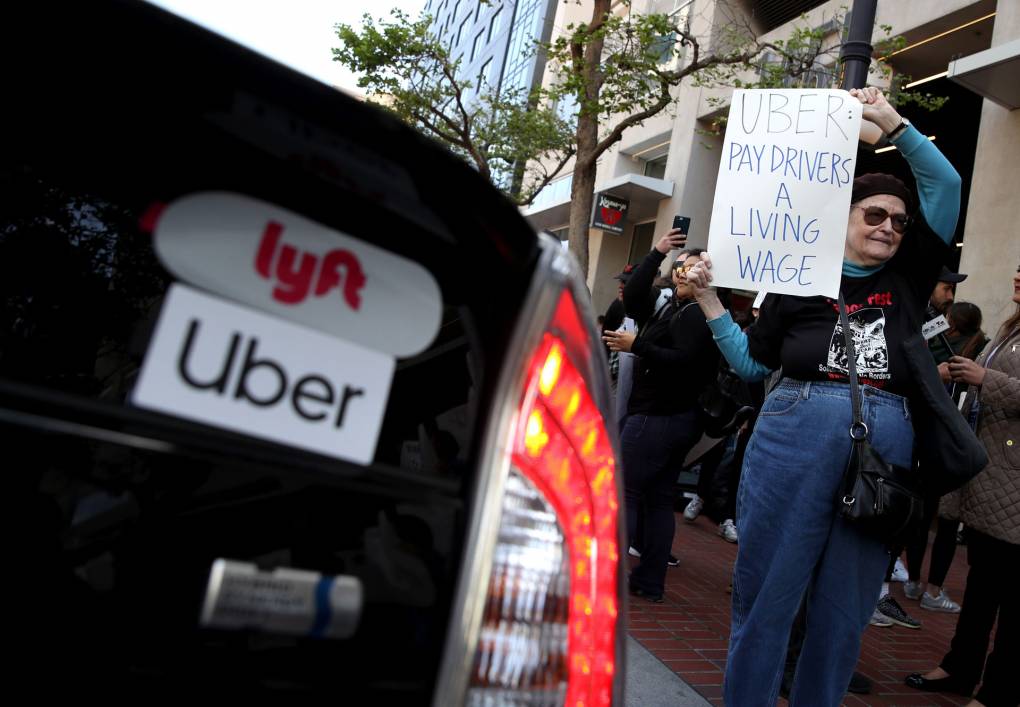
"caption": "A supporter of ride-hail drivers holds a sign during a protest in front of Uber headquarters in May 2019. Prop. 22, backed by huge amounts of cash from gig companies, would create a new class of worker in California.",
"description": "A supporter of ride-hail drivers holds a sign during a protest in front of Uber headquarters in May, 2019. Prop. 22, backed by huge amounts of cash from gig companies, would create a new class of worker in California.",
"title": "uber-lyft-protest-sign",
"credit": "Justin Sullivan/Getty Images",
"status": "inherit",
"altTag": "Protesters stand on a sidewalk in front of an office, and next to a car with Lyft and Uber stickers on the back. A woman holds a sign that says: Uber: 'Pay Drivers a Living Wage.'",
"isLoading": false,
"fetchFailed": false
},
"news_11843065": {
"type": "attachments",
"id": "news_11843065",
"meta": {
"index": "attachments_1716263798",
"site": "news",
"id": "11843065",
"found": true
},
"parent": 11842964,
"imgSizes": {
"apple_news_ca_landscape_5_5": {
"file": "https://ww2.kqed.org/app/uploads/sites/10/2020/10/Uber-Driver-1044x783.jpg",
"width": 1044,
"mimeType": "image/jpeg",
"height": 783
},
"apple_news_ca_square_4_0": {
"file": "https://ww2.kqed.org/app/uploads/sites/10/2020/10/Uber-Driver-470x470.jpg",
"width": 470,
"mimeType": "image/jpeg",
"height": 470
},
"twentyfourteen-full-width": {
"file": "https://ww2.kqed.org/app/uploads/sites/10/2020/10/Uber-Driver-1038x576.jpg",
"width": 1038,
"mimeType": "image/jpeg",
"height": 576
},
"thumbnail": {
"file": "https://ww2.kqed.org/app/uploads/sites/10/2020/10/Uber-Driver-160x110.jpg",
"width": 160,
"mimeType": "image/jpeg",
"height": 110
},
"post-thumbnail": {
"file": "https://ww2.kqed.org/app/uploads/sites/10/2020/10/Uber-Driver-672x372.jpg",
"width": 672,
"mimeType": "image/jpeg",
"height": 372
},
"kqedFullSize": {
"file": "https://ww2.kqed.org/app/uploads/sites/10/2020/10/Uber-Driver.jpg",
"width": 1920,
"height": 1319
},
"apple_news_ca_landscape_4_7": {
"file": "https://ww2.kqed.org/app/uploads/sites/10/2020/10/Uber-Driver-632x474.jpg",
"width": 632,
"mimeType": "image/jpeg",
"height": 474
},
"large": {
"file": "https://ww2.kqed.org/app/uploads/sites/10/2020/10/Uber-Driver-1020x701.jpg",
"width": 1020,
"mimeType": "image/jpeg",
"height": 701
},
"apple_news_ca_landscape_4_0": {
"file": "https://ww2.kqed.org/app/uploads/sites/10/2020/10/Uber-Driver-536x402.jpg",
"width": 536,
"mimeType": "image/jpeg",
"height": 402
},
"apple_news_ca_portrait_12_9": {
"file": "https://ww2.kqed.org/app/uploads/sites/10/2020/10/Uber-Driver-1122x1319.jpg",
"width": 1122,
"mimeType": "image/jpeg",
"height": 1319
},
"medium": {
"file": "https://ww2.kqed.org/app/uploads/sites/10/2020/10/Uber-Driver-800x550.jpg",
"width": 800,
"mimeType": "image/jpeg",
"height": 550
},
"apple_news_ca_portrait_4_0": {
"file": "https://ww2.kqed.org/app/uploads/sites/10/2020/10/Uber-Driver-354x472.jpg",
"width": 354,
"mimeType": "image/jpeg",
"height": 472
},
"apple_news_ca_portrait_9_7": {
"file": "https://ww2.kqed.org/app/uploads/sites/10/2020/10/Uber-Driver-840x1120.jpg",
"width": 840,
"mimeType": "image/jpeg",
"height": 1120
},
"apple_news_ca_landscape_12_9": {
"file": "https://ww2.kqed.org/app/uploads/sites/10/2020/10/Uber-Driver-1832x1319.jpg",
"width": 1832,
"mimeType": "image/jpeg",
"height": 1319
},
"apple_news_ca_square_9_7": {
"file": "https://ww2.kqed.org/app/uploads/sites/10/2020/10/Uber-Driver-1104x1104.jpg",
"width": 1104,
"mimeType": "image/jpeg",
"height": 1104
},
"1536x1536": {
"file": "https://ww2.kqed.org/app/uploads/sites/10/2020/10/Uber-Driver-1536x1055.jpg",
"width": 1536,
"mimeType": "image/jpeg",
"height": 1055
},
"apple_news_ca_portrait_4_7": {
"file": "https://ww2.kqed.org/app/uploads/sites/10/2020/10/Uber-Driver-414x552.jpg",
"width": 414,
"mimeType": "image/jpeg",
"height": 552
},
"apple_news_ca_square_12_9": {
"file": "https://ww2.kqed.org/app/uploads/sites/10/2020/10/Uber-Driver-1472x1319.jpg",
"width": 1472,
"mimeType": "image/jpeg",
"height": 1319
},
"apple_news_ca_portrait_5_5": {
"file": "https://ww2.kqed.org/app/uploads/sites/10/2020/10/Uber-Driver-687x916.jpg",
"width": 687,
"mimeType": "image/jpeg",
"height": 916
},
"apple_news_ca_square_4_7": {
"file": "https://ww2.kqed.org/app/uploads/sites/10/2020/10/Uber-Driver-550x550.jpg",
"width": 550,
"mimeType": "image/jpeg",
"height": 550
},
"apple_news_ca_landscape_9_7": {
"file": "https://ww2.kqed.org/app/uploads/sites/10/2020/10/Uber-Driver-1376x1032.jpg",
"width": 1376,
"mimeType": "image/jpeg",
"height": 1032
},
"apple_news_ca_square_5_5": {
"file": "https://ww2.kqed.org/app/uploads/sites/10/2020/10/Uber-Driver-912x912.jpg",
"width": 912,
"mimeType": "image/jpeg",
"height": 912
}
},
"publishDate": 1603238374,
"modified": 1603238741,
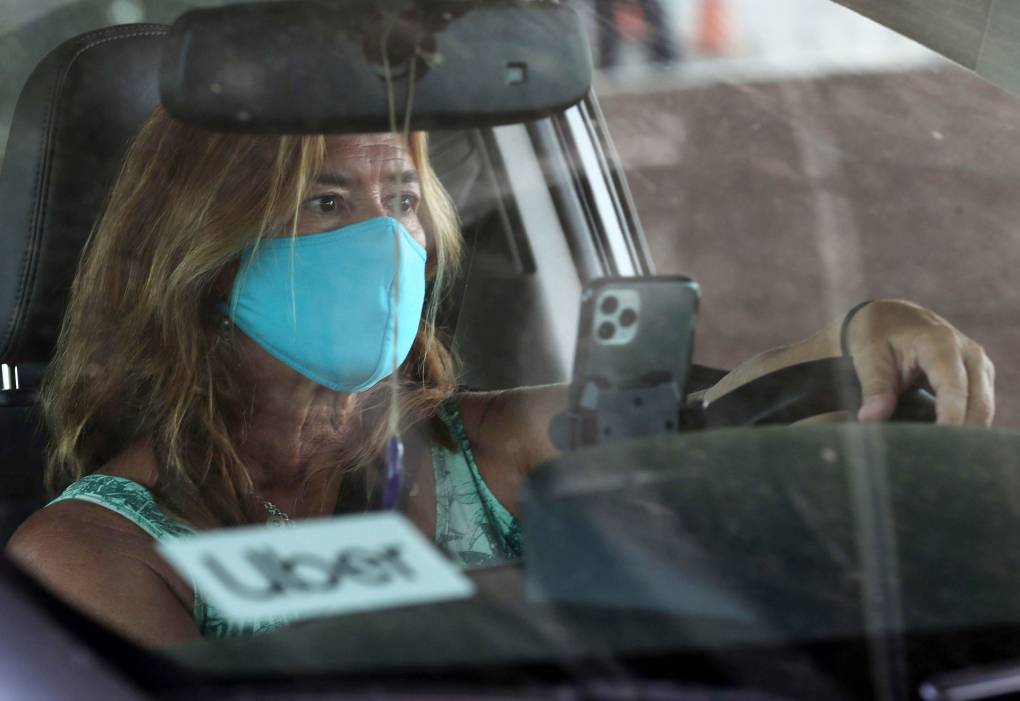
"caption": "An Uber driver in Los Angeles. ",
"description": null,
"title": "Uber-Driver",
"credit": "Mario Tama/Getty Images",
"status": "inherit",
"isLoading": false,
"fetchFailed": false
},
"news_11841620": {
"type": "attachments",
"id": "news_11841620",
"meta": {
"index": "attachments_1716263798",
"site": "news",
"id": "11841620",
"found": true
},
"parent": 11841618,
"imgSizes": {
"apple_news_ca_landscape_5_5": {
"file": "https://ww2.kqed.org/app/uploads/sites/10/2020/10/RS45254_IMG_2690-qut-1044x783.jpg",
"width": 1044,
"mimeType": "image/jpeg",
"height": 783
},
"apple_news_ca_square_4_0": {
"file": "https://ww2.kqed.org/app/uploads/sites/10/2020/10/RS45254_IMG_2690-qut-470x470.jpg",
"width": 470,
"mimeType": "image/jpeg",
"height": 470
},
"twentyfourteen-full-width": {
"file": "https://ww2.kqed.org/app/uploads/sites/10/2020/10/RS45254_IMG_2690-qut-1038x576.jpg",
"width": 1038,
"mimeType": "image/jpeg",
"height": 576
},
"thumbnail": {
"file": "https://ww2.kqed.org/app/uploads/sites/10/2020/10/RS45254_IMG_2690-qut-160x120.jpg",
"width": 160,
"mimeType": "image/jpeg",
"height": 120
},
"post-thumbnail": {
"file": "https://ww2.kqed.org/app/uploads/sites/10/2020/10/RS45254_IMG_2690-qut-672x372.jpg",
"width": 672,
"mimeType": "image/jpeg",
"height": 372
},
"kqedFullSize": {
"file": "https://ww2.kqed.org/app/uploads/sites/10/2020/10/RS45254_IMG_2690-qut.jpg",
"width": 1920,
"height": 1440
},
"apple_news_ca_landscape_4_7": {
"file": "https://ww2.kqed.org/app/uploads/sites/10/2020/10/RS45254_IMG_2690-qut-632x474.jpg",
"width": 632,
"mimeType": "image/jpeg",
"height": 474
},
"large": {
"file": "https://ww2.kqed.org/app/uploads/sites/10/2020/10/RS45254_IMG_2690-qut-1020x765.jpg",
"width": 1020,
"mimeType": "image/jpeg",
"height": 765
},
"apple_news_ca_landscape_4_0": {
"file": "https://ww2.kqed.org/app/uploads/sites/10/2020/10/RS45254_IMG_2690-qut-536x402.jpg",
"width": 536,
"mimeType": "image/jpeg",
"height": 402
},
"apple_news_ca_portrait_12_9": {
"file": "https://ww2.kqed.org/app/uploads/sites/10/2020/10/RS45254_IMG_2690-qut-1122x1440.jpg",
"width": 1122,
"mimeType": "image/jpeg",
"height": 1440
},
"medium": {
"file": "https://ww2.kqed.org/app/uploads/sites/10/2020/10/RS45254_IMG_2690-qut-800x600.jpg",
"width": 800,
"mimeType": "image/jpeg",
"height": 600
},
"apple_news_ca_portrait_4_0": {
"file": "https://ww2.kqed.org/app/uploads/sites/10/2020/10/RS45254_IMG_2690-qut-354x472.jpg",
"width": 354,
"mimeType": "image/jpeg",
"height": 472
},
"apple_news_ca_portrait_9_7": {
"file": "https://ww2.kqed.org/app/uploads/sites/10/2020/10/RS45254_IMG_2690-qut-840x1120.jpg",
"width": 840,
"mimeType": "image/jpeg",
"height": 1120
},
"apple_news_ca_landscape_12_9": {
"file": "https://ww2.kqed.org/app/uploads/sites/10/2020/10/RS45254_IMG_2690-qut-1832x1374.jpg",
"width": 1832,
"mimeType": "image/jpeg",
"height": 1374
},
"apple_news_ca_square_9_7": {
"file": "https://ww2.kqed.org/app/uploads/sites/10/2020/10/RS45254_IMG_2690-qut-1104x1104.jpg",
"width": 1104,
"mimeType": "image/jpeg",
"height": 1104
},
"1536x1536": {
"file": "https://ww2.kqed.org/app/uploads/sites/10/2020/10/RS45254_IMG_2690-qut-1536x1152.jpg",
"width": 1536,
"mimeType": "image/jpeg",
"height": 1152
},
"apple_news_ca_portrait_4_7": {
"file": "https://ww2.kqed.org/app/uploads/sites/10/2020/10/RS45254_IMG_2690-qut-414x552.jpg",
"width": 414,
"mimeType": "image/jpeg",
"height": 552
},
"apple_news_ca_square_12_9": {
"file": "https://ww2.kqed.org/app/uploads/sites/10/2020/10/RS45254_IMG_2690-qut-1472x1440.jpg",
"width": 1472,
"mimeType": "image/jpeg",
"height": 1440
},
"apple_news_ca_portrait_5_5": {
"file": "https://ww2.kqed.org/app/uploads/sites/10/2020/10/RS45254_IMG_2690-qut-687x916.jpg",
"width": 687,
"mimeType": "image/jpeg",
"height": 916
},
"apple_news_ca_square_4_7": {
"file": "https://ww2.kqed.org/app/uploads/sites/10/2020/10/RS45254_IMG_2690-qut-550x550.jpg",
"width": 550,
"mimeType": "image/jpeg",
"height": 550
},
"apple_news_ca_landscape_9_7": {
"file": "https://ww2.kqed.org/app/uploads/sites/10/2020/10/RS45254_IMG_2690-qut-1376x1032.jpg",
"width": 1376,
"mimeType": "image/jpeg",
"height": 1032
},
"apple_news_ca_square_5_5": {
"file": "https://ww2.kqed.org/app/uploads/sites/10/2020/10/RS45254_IMG_2690-qut-912x912.jpg",
"width": 912,
"mimeType": "image/jpeg",
"height": 912
}
},
"publishDate": 1602203449,
"modified": 1602285641,
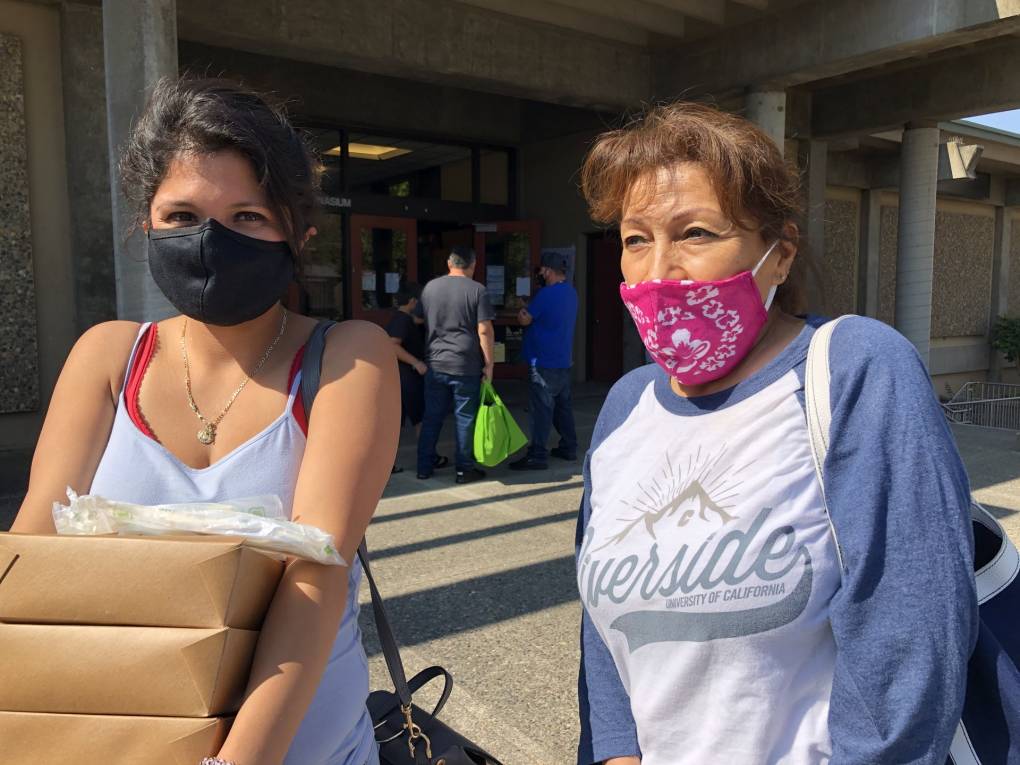
"caption": "Yalitza Garcia (left) and sister-in-law Silvia Arroyo gather boxed lunches at an evacuation center at Napa Valley College on Oct. 5, 2020. Both women said the pandemic and wildfires have meant income losses.",
"description": "Yalitza Garcia (left) and sister-in-law Silvia Arroyo gather boxed lunches at an evacuation center at Napa Valley College on Oct. 5, 2020. Both women said the pandemic and wildfires have meant income losses.",
"title": "RS45254_IMG_2690-qut",
"credit": "Farida Jhabvala Romero/KQED",
"status": "inherit",
"isLoading": false,
"fetchFailed": false
},
"news_11841463": {
"type": "attachments",
"id": "news_11841463",
"meta": {
"index": "attachments_1716263798",
"site": "news",
"id": "11841463",
"found": true
},
"parent": 11841439,
"imgSizes": {
"apple_news_ca_landscape_5_5": {
"file": "https://ww2.kqed.org/app/uploads/sites/10/2020/10/RS45251_013_KQED_Alameda_AlamedaHospitalStrike_10072020-qut-1044x783.jpg",
"width": 1044,
"mimeType": "image/jpeg",
"height": 783
},
"apple_news_ca_square_4_0": {
"file": "https://ww2.kqed.org/app/uploads/sites/10/2020/10/RS45251_013_KQED_Alameda_AlamedaHospitalStrike_10072020-qut-470x470.jpg",
"width": 470,
"mimeType": "image/jpeg",
"height": 470
},
"twentyfourteen-full-width": {
"file": "https://ww2.kqed.org/app/uploads/sites/10/2020/10/RS45251_013_KQED_Alameda_AlamedaHospitalStrike_10072020-qut-1038x576.jpg",
"width": 1038,
"mimeType": "image/jpeg",
"height": 576
},
"thumbnail": {
"file": "https://ww2.kqed.org/app/uploads/sites/10/2020/10/RS45251_013_KQED_Alameda_AlamedaHospitalStrike_10072020-qut-160x107.jpg",
"width": 160,
"mimeType": "image/jpeg",
"height": 107
},
"post-thumbnail": {
"file": "https://ww2.kqed.org/app/uploads/sites/10/2020/10/RS45251_013_KQED_Alameda_AlamedaHospitalStrike_10072020-qut-672x372.jpg",
"width": 672,
"mimeType": "image/jpeg",
"height": 372
},
"kqedFullSize": {
"file": "https://ww2.kqed.org/app/uploads/sites/10/2020/10/RS45251_013_KQED_Alameda_AlamedaHospitalStrike_10072020-qut.jpg",
"width": 1920,
"height": 1280
},
"apple_news_ca_landscape_4_7": {
"file": "https://ww2.kqed.org/app/uploads/sites/10/2020/10/RS45251_013_KQED_Alameda_AlamedaHospitalStrike_10072020-qut-632x474.jpg",
"width": 632,
"mimeType": "image/jpeg",
"height": 474
},
"large": {
"file": "https://ww2.kqed.org/app/uploads/sites/10/2020/10/RS45251_013_KQED_Alameda_AlamedaHospitalStrike_10072020-qut-1020x680.jpg",
"width": 1020,
"mimeType": "image/jpeg",
"height": 680
},
"apple_news_ca_landscape_4_0": {
"file": "https://ww2.kqed.org/app/uploads/sites/10/2020/10/RS45251_013_KQED_Alameda_AlamedaHospitalStrike_10072020-qut-536x402.jpg",
"width": 536,
"mimeType": "image/jpeg",
"height": 402
},
"apple_news_ca_portrait_12_9": {
"file": "https://ww2.kqed.org/app/uploads/sites/10/2020/10/RS45251_013_KQED_Alameda_AlamedaHospitalStrike_10072020-qut-1122x1280.jpg",
"width": 1122,
"mimeType": "image/jpeg",
"height": 1280
},
"medium": {
"file": "https://ww2.kqed.org/app/uploads/sites/10/2020/10/RS45251_013_KQED_Alameda_AlamedaHospitalStrike_10072020-qut-800x533.jpg",
"width": 800,
"mimeType": "image/jpeg",
"height": 533
},
"apple_news_ca_portrait_4_0": {
"file": "https://ww2.kqed.org/app/uploads/sites/10/2020/10/RS45251_013_KQED_Alameda_AlamedaHospitalStrike_10072020-qut-354x472.jpg",
"width": 354,
"mimeType": "image/jpeg",
"height": 472
},
"apple_news_ca_portrait_9_7": {
"file": "https://ww2.kqed.org/app/uploads/sites/10/2020/10/RS45251_013_KQED_Alameda_AlamedaHospitalStrike_10072020-qut-840x1120.jpg",
"width": 840,
"mimeType": "image/jpeg",
"height": 1120
},
"apple_news_ca_landscape_12_9": {
"file": "https://ww2.kqed.org/app/uploads/sites/10/2020/10/RS45251_013_KQED_Alameda_AlamedaHospitalStrike_10072020-qut-1832x1280.jpg",
"width": 1832,
"mimeType": "image/jpeg",
"height": 1280
},
"apple_news_ca_square_9_7": {
"file": "https://ww2.kqed.org/app/uploads/sites/10/2020/10/RS45251_013_KQED_Alameda_AlamedaHospitalStrike_10072020-qut-1104x1104.jpg",
"width": 1104,
"mimeType": "image/jpeg",
"height": 1104
},
"1536x1536": {
"file": "https://ww2.kqed.org/app/uploads/sites/10/2020/10/RS45251_013_KQED_Alameda_AlamedaHospitalStrike_10072020-qut-1536x1024.jpg",
"width": 1536,
"mimeType": "image/jpeg",
"height": 1024
},
"apple_news_ca_portrait_4_7": {
"file": "https://ww2.kqed.org/app/uploads/sites/10/2020/10/RS45251_013_KQED_Alameda_AlamedaHospitalStrike_10072020-qut-414x552.jpg",
"width": 414,
"mimeType": "image/jpeg",
"height": 552
},
"apple_news_ca_square_12_9": {
"file": "https://ww2.kqed.org/app/uploads/sites/10/2020/10/RS45251_013_KQED_Alameda_AlamedaHospitalStrike_10072020-qut-1472x1280.jpg",
"width": 1472,
"mimeType": "image/jpeg",
"height": 1280
},
"apple_news_ca_portrait_5_5": {
"file": "https://ww2.kqed.org/app/uploads/sites/10/2020/10/RS45251_013_KQED_Alameda_AlamedaHospitalStrike_10072020-qut-687x916.jpg",
"width": 687,
"mimeType": "image/jpeg",
"height": 916
},
"apple_news_ca_square_4_7": {
"file": "https://ww2.kqed.org/app/uploads/sites/10/2020/10/RS45251_013_KQED_Alameda_AlamedaHospitalStrike_10072020-qut-550x550.jpg",
"width": 550,
"mimeType": "image/jpeg",
"height": 550
},
"apple_news_ca_landscape_9_7": {
"file": "https://ww2.kqed.org/app/uploads/sites/10/2020/10/RS45251_013_KQED_Alameda_AlamedaHospitalStrike_10072020-qut-1376x1032.jpg",
"width": 1376,
"mimeType": "image/jpeg",
"height": 1032
},
"apple_news_ca_square_5_5": {
"file": "https://ww2.kqed.org/app/uploads/sites/10/2020/10/RS45251_013_KQED_Alameda_AlamedaHospitalStrike_10072020-qut-912x912.jpg",
"width": 912,
"mimeType": "image/jpeg",
"height": 912
}
},
"publishDate": 1602109971,
"modified": 1634588849,
"caption": "Alameda Hospital nurses cheer as cars honk in support during a march at the hospital on Oct. 7, 2020.",
"description": "Alameda Hospital nurses cheer as cars honk in support during a march at the hospital on Oct. 7, 2020. The march is part of a five-day strike over COVID-19 safety concerns and stalled contract negotiations.",
"title": "RS45251_013_KQED_Alameda_AlamedaHospitalStrike_10072020-qut",
"credit": "Beth LaBerge/KQED",
"status": "inherit",
"altTag": "Two nurses wearing red wave and hold signs that say, \"Nurses Essential for Patient Care.\"",
"isLoading": false,
"fetchFailed": false
},
"news_11840037": {
"type": "attachments",
"id": "news_11840037",
"meta": {
"index": "attachments_1716263798",
"site": "news",
"id": "11840037",
"found": true
},
"parent": 11839817,
"imgSizes": {
"apple_news_ca_square_4_0": {
"file": "https://ww2.kqed.org/app/uploads/sites/10/2020/09/Union-Formation-Kickstarter-470x470.jpg",
"width": 470,
"mimeType": "image/jpeg",
"height": 470
},
"twentyfourteen-full-width": {
"file": "https://ww2.kqed.org/app/uploads/sites/10/2020/09/Union-Formation-Kickstarter-1024x576.jpg",
"width": 1024,
"mimeType": "image/jpeg",
"height": 576
},
"thumbnail": {
"file": "https://ww2.kqed.org/app/uploads/sites/10/2020/09/Union-Formation-Kickstarter-160x120.jpg",
"width": 160,
"mimeType": "image/jpeg",
"height": 120
},
"post-thumbnail": {
"file": "https://ww2.kqed.org/app/uploads/sites/10/2020/09/Union-Formation-Kickstarter-672x372.jpg",
"width": 672,
"mimeType": "image/jpeg",
"height": 372
},
"kqedFullSize": {
"file": "https://ww2.kqed.org/app/uploads/sites/10/2020/09/Union-Formation-Kickstarter.jpg",
"width": 1024,
"height": 768
},
"apple_news_ca_landscape_4_7": {
"file": "https://ww2.kqed.org/app/uploads/sites/10/2020/09/Union-Formation-Kickstarter-632x474.jpg",
"width": 632,
"mimeType": "image/jpeg",
"height": 474
},
"large": {
"file": "https://ww2.kqed.org/app/uploads/sites/10/2020/09/Union-Formation-Kickstarter-1020x765.jpg",
"width": 1020,
"mimeType": "image/jpeg",
"height": 765
},
"apple_news_ca_landscape_4_0": {
"file": "https://ww2.kqed.org/app/uploads/sites/10/2020/09/Union-Formation-Kickstarter-536x402.jpg",
"width": 536,
"mimeType": "image/jpeg",
"height": 402
},
"medium": {
"file": "https://ww2.kqed.org/app/uploads/sites/10/2020/09/Union-Formation-Kickstarter-800x600.jpg",
"width": 800,
"mimeType": "image/jpeg",
"height": 600
},
"apple_news_ca_portrait_4_0": {
"file": "https://ww2.kqed.org/app/uploads/sites/10/2020/09/Union-Formation-Kickstarter-354x472.jpg",
"width": 354,
"mimeType": "image/jpeg",
"height": 472
},
"apple_news_ca_portrait_9_7": {
"file": "https://ww2.kqed.org/app/uploads/sites/10/2020/09/Union-Formation-Kickstarter-840x768.jpg",
"width": 840,
"mimeType": "image/jpeg",
"height": 768
},
"apple_news_ca_portrait_4_7": {
"file": "https://ww2.kqed.org/app/uploads/sites/10/2020/09/Union-Formation-Kickstarter-414x552.jpg",
"width": 414,
"mimeType": "image/jpeg",
"height": 552
},
"apple_news_ca_portrait_5_5": {
"file": "https://ww2.kqed.org/app/uploads/sites/10/2020/09/Union-Formation-Kickstarter-687x768.jpg",
"width": 687,
"mimeType": "image/jpeg",
"height": 768
},
"apple_news_ca_square_4_7": {
"file": "https://ww2.kqed.org/app/uploads/sites/10/2020/09/Union-Formation-Kickstarter-550x550.jpg",
"width": 550,
"mimeType": "image/jpeg",
"height": 550
},
"apple_news_ca_square_5_5": {
"file": "https://ww2.kqed.org/app/uploads/sites/10/2020/09/Union-Formation-Kickstarter-912x768.jpg",
"width": 912,
"mimeType": "image/jpeg",
"height": 768
}
},
"publishDate": 1601318431,
"modified": 1602109970,
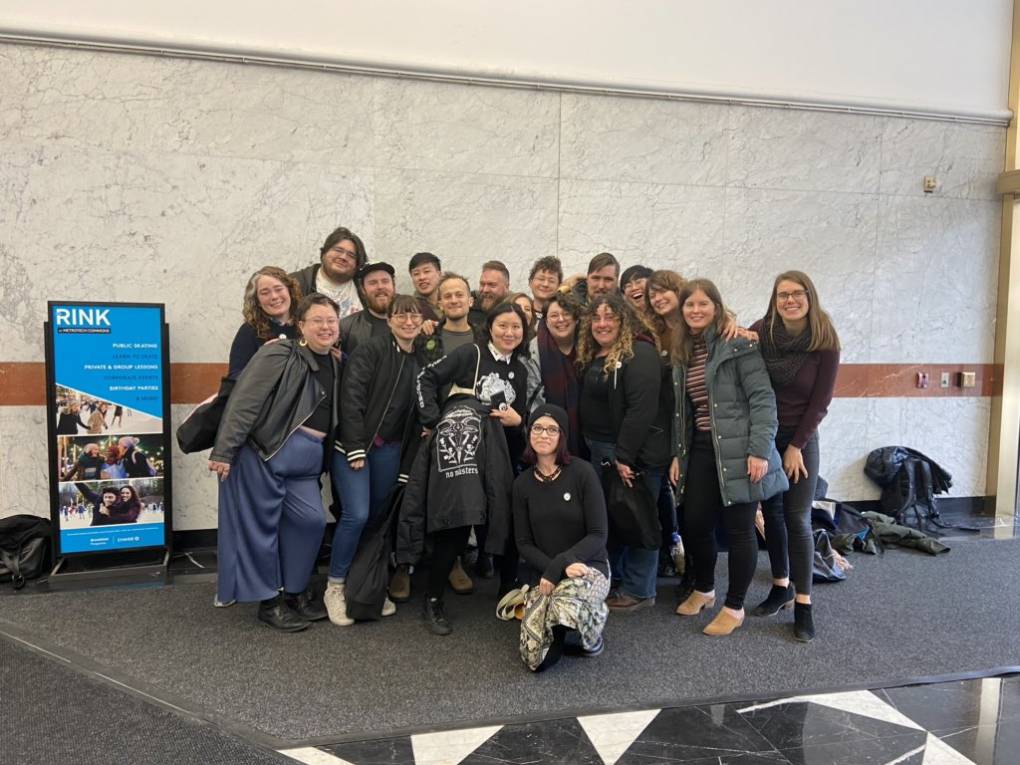
"caption": "Kickstarter employees in February 2020, on the day they voted to form a union.",
"description": "Kickstarter employees in February 2020, on the day they voted to form a union.",
"title": "Union Formation Kickstarter",
"credit": "Courtesy of Kickstarter Workers United",
"status": "inherit",
"isLoading": false,
"fetchFailed": false
},
"news_11841246": {
"type": "attachments",
"id": "news_11841246",
"meta": {
"index": "attachments_1716263798",
"site": "news",
"id": "11841246",
"found": true
},
"parent": 11841245,
"imgSizes": {
"apple_news_ca_landscape_5_5": {
"file": "https://ww2.kqed.org/app/uploads/sites/10/2020/10/RS45138_012_KQED_Napa_VineyardFarmWorkers_09302020-qut-1044x783.jpg",
"width": 1044,
"mimeType": "image/jpeg",
"height": 783
},
"apple_news_ca_square_4_0": {
"file": "https://ww2.kqed.org/app/uploads/sites/10/2020/10/RS45138_012_KQED_Napa_VineyardFarmWorkers_09302020-qut-470x470.jpg",
"width": 470,
"mimeType": "image/jpeg",
"height": 470
},
"twentyfourteen-full-width": {
"file": "https://ww2.kqed.org/app/uploads/sites/10/2020/10/RS45138_012_KQED_Napa_VineyardFarmWorkers_09302020-qut-1038x576.jpg",
"width": 1038,
"mimeType": "image/jpeg",
"height": 576
},
"thumbnail": {
"file": "https://ww2.kqed.org/app/uploads/sites/10/2020/10/RS45138_012_KQED_Napa_VineyardFarmWorkers_09302020-qut-160x107.jpg",
"width": 160,
"mimeType": "image/jpeg",
"height": 107
},
"post-thumbnail": {
"file": "https://ww2.kqed.org/app/uploads/sites/10/2020/10/RS45138_012_KQED_Napa_VineyardFarmWorkers_09302020-qut-672x372.jpg",
"width": 672,
"mimeType": "image/jpeg",
"height": 372
},
"kqedFullSize": {
"file": "https://ww2.kqed.org/app/uploads/sites/10/2020/10/RS45138_012_KQED_Napa_VineyardFarmWorkers_09302020-qut.jpg",
"width": 1920,
"height": 1280
},
"apple_news_ca_landscape_4_7": {
"file": "https://ww2.kqed.org/app/uploads/sites/10/2020/10/RS45138_012_KQED_Napa_VineyardFarmWorkers_09302020-qut-632x474.jpg",
"width": 632,
"mimeType": "image/jpeg",
"height": 474
},
"large": {
"file": "https://ww2.kqed.org/app/uploads/sites/10/2020/10/RS45138_012_KQED_Napa_VineyardFarmWorkers_09302020-qut-1020x680.jpg",
"width": 1020,
"mimeType": "image/jpeg",
"height": 680
},
"apple_news_ca_landscape_4_0": {
"file": "https://ww2.kqed.org/app/uploads/sites/10/2020/10/RS45138_012_KQED_Napa_VineyardFarmWorkers_09302020-qut-536x402.jpg",
"width": 536,
"mimeType": "image/jpeg",
"height": 402
},
"apple_news_ca_portrait_12_9": {
"file": "https://ww2.kqed.org/app/uploads/sites/10/2020/10/RS45138_012_KQED_Napa_VineyardFarmWorkers_09302020-qut-1122x1280.jpg",
"width": 1122,
"mimeType": "image/jpeg",
"height": 1280
},
"medium": {
"file": "https://ww2.kqed.org/app/uploads/sites/10/2020/10/RS45138_012_KQED_Napa_VineyardFarmWorkers_09302020-qut-800x533.jpg",
"width": 800,
"mimeType": "image/jpeg",
"height": 533
},
"apple_news_ca_portrait_4_0": {
"file": "https://ww2.kqed.org/app/uploads/sites/10/2020/10/RS45138_012_KQED_Napa_VineyardFarmWorkers_09302020-qut-354x472.jpg",
"width": 354,
"mimeType": "image/jpeg",
"height": 472
},
"apple_news_ca_portrait_9_7": {
"file": "https://ww2.kqed.org/app/uploads/sites/10/2020/10/RS45138_012_KQED_Napa_VineyardFarmWorkers_09302020-qut-840x1120.jpg",
"width": 840,
"mimeType": "image/jpeg",
"height": 1120
},
"apple_news_ca_landscape_12_9": {
"file": "https://ww2.kqed.org/app/uploads/sites/10/2020/10/RS45138_012_KQED_Napa_VineyardFarmWorkers_09302020-qut-1832x1280.jpg",
"width": 1832,
"mimeType": "image/jpeg",
"height": 1280
},
"apple_news_ca_square_9_7": {
"file": "https://ww2.kqed.org/app/uploads/sites/10/2020/10/RS45138_012_KQED_Napa_VineyardFarmWorkers_09302020-qut-1104x1104.jpg",
"width": 1104,
"mimeType": "image/jpeg",
"height": 1104
},
"1536x1536": {
"file": "https://ww2.kqed.org/app/uploads/sites/10/2020/10/RS45138_012_KQED_Napa_VineyardFarmWorkers_09302020-qut-1536x1024.jpg",
"width": 1536,
"mimeType": "image/jpeg",
"height": 1024
},
"apple_news_ca_portrait_4_7": {
"file": "https://ww2.kqed.org/app/uploads/sites/10/2020/10/RS45138_012_KQED_Napa_VineyardFarmWorkers_09302020-qut-414x552.jpg",
"width": 414,
"mimeType": "image/jpeg",
"height": 552
},
"apple_news_ca_square_12_9": {
"file": "https://ww2.kqed.org/app/uploads/sites/10/2020/10/RS45138_012_KQED_Napa_VineyardFarmWorkers_09302020-qut-1472x1280.jpg",
"width": 1472,
"mimeType": "image/jpeg",
"height": 1280
},
"apple_news_ca_portrait_5_5": {
"file": "https://ww2.kqed.org/app/uploads/sites/10/2020/10/RS45138_012_KQED_Napa_VineyardFarmWorkers_09302020-qut-687x916.jpg",
"width": 687,
"mimeType": "image/jpeg",
"height": 916
},
"apple_news_ca_square_4_7": {
"file": "https://ww2.kqed.org/app/uploads/sites/10/2020/10/RS45138_012_KQED_Napa_VineyardFarmWorkers_09302020-qut-550x550.jpg",
"width": 550,
"mimeType": "image/jpeg",
"height": 550
},
"apple_news_ca_landscape_9_7": {
"file": "https://ww2.kqed.org/app/uploads/sites/10/2020/10/RS45138_012_KQED_Napa_VineyardFarmWorkers_09302020-qut-1376x1032.jpg",
"width": 1376,
"mimeType": "image/jpeg",
"height": 1032
},
"apple_news_ca_square_5_5": {
"file": "https://ww2.kqed.org/app/uploads/sites/10/2020/10/RS45138_012_KQED_Napa_VineyardFarmWorkers_09302020-qut-912x912.jpg",
"width": 912,
"mimeType": "image/jpeg",
"height": 912
}
},
"publishDate": 1602019271,
"modified": 1602019305,
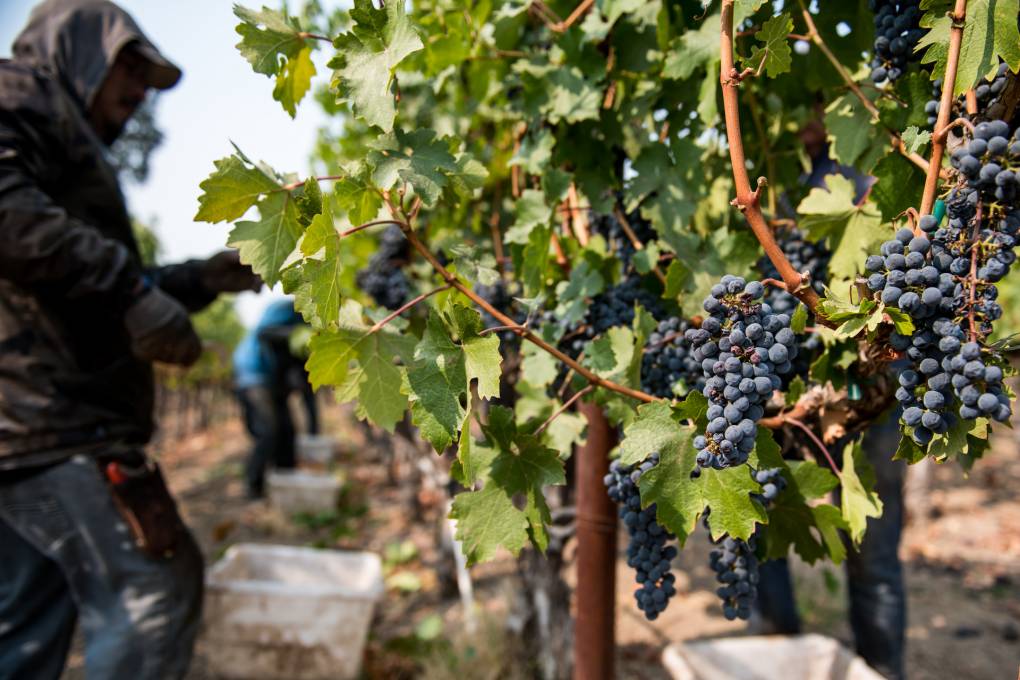
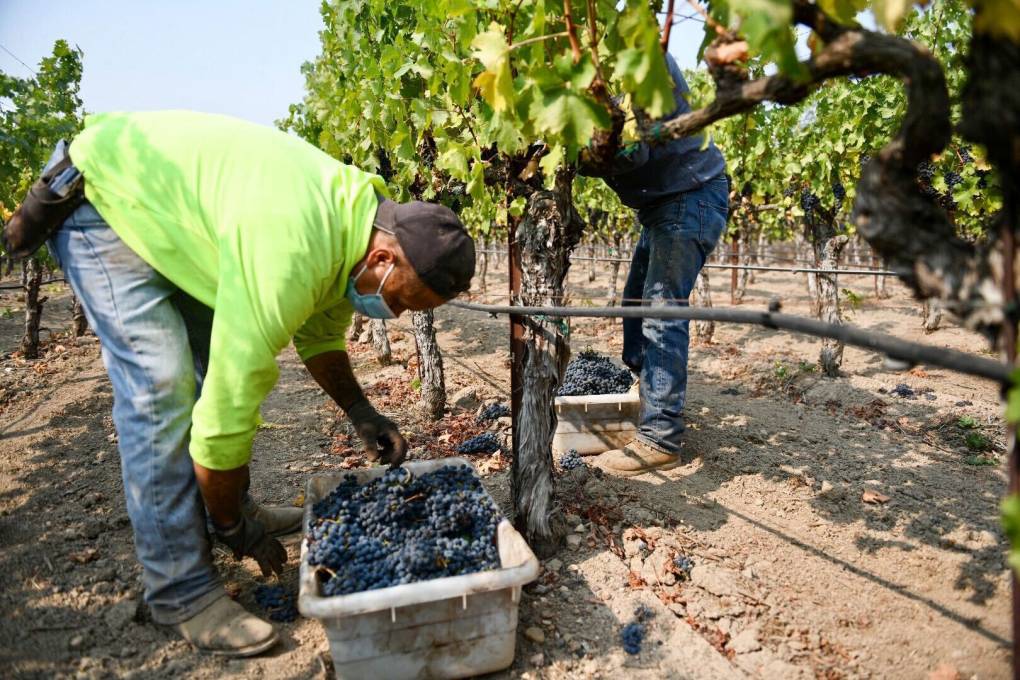
"caption": "Farm workers harvest grapes at Garton Vineyards in Napa on Sept. 30, 2020.",
"description": "Farm workers harvest grapes at Garton Vineyards in Napa on Sept. 30, 2020.",
"title": "Farm workers harvest grapes at Garton Vineyards in Napa on Sept. 30, 2020.",
"credit": "Beth LaBerge/KQED",
"status": "inherit",
"isLoading": false,
"fetchFailed": false
},
"news_11841105": {
"type": "attachments",
"id": "news_11841105",
"meta": {
"index": "attachments_1716263798",
"site": "news",
"id": "11841105",
"found": true
},
"parent": 11841005,
"imgSizes": {
"apple_news_ca_landscape_5_5": {
"file": "https://ww2.kqed.org/app/uploads/sites/10/2020/10/iStock-538176790-1044x783.jpg",
"width": 1044,
"mimeType": "image/jpeg",
"height": 783
},
"apple_news_ca_square_4_0": {
"file": "https://ww2.kqed.org/app/uploads/sites/10/2020/10/iStock-538176790-470x470.jpg",
"width": 470,
"mimeType": "image/jpeg",
"height": 470
},
"twentyfourteen-full-width": {
"file": "https://ww2.kqed.org/app/uploads/sites/10/2020/10/iStock-538176790-1038x576.jpg",
"width": 1038,
"mimeType": "image/jpeg",
"height": 576
},
"thumbnail": {
"file": "https://ww2.kqed.org/app/uploads/sites/10/2020/10/iStock-538176790-160x107.jpg",
"width": 160,
"mimeType": "image/jpeg",
"height": 107
},
"post-thumbnail": {
"file": "https://ww2.kqed.org/app/uploads/sites/10/2020/10/iStock-538176790-672x372.jpg",
"width": 672,
"mimeType": "image/jpeg",
"height": 372
},
"kqedFullSize": {
"file": "https://ww2.kqed.org/app/uploads/sites/10/2020/10/iStock-538176790.jpg",
"width": 2120,
"height": 1414
},
"2048x2048": {
"file": "https://ww2.kqed.org/app/uploads/sites/10/2020/10/iStock-538176790-2048x1366.jpg",
"width": 2048,
"mimeType": "image/jpeg",
"height": 1366
},
"apple_news_ca_landscape_4_7": {
"file": "https://ww2.kqed.org/app/uploads/sites/10/2020/10/iStock-538176790-632x474.jpg",
"width": 632,
"mimeType": "image/jpeg",
"height": 474
},
"large": {
"file": "https://ww2.kqed.org/app/uploads/sites/10/2020/10/iStock-538176790-1020x680.jpg",
"width": 1020,
"mimeType": "image/jpeg",
"height": 680
},
"apple_news_ca_landscape_4_0": {
"file": "https://ww2.kqed.org/app/uploads/sites/10/2020/10/iStock-538176790-536x402.jpg",
"width": 536,
"mimeType": "image/jpeg",
"height": 402
},
"apple_news_ca_portrait_12_9": {
"file": "https://ww2.kqed.org/app/uploads/sites/10/2020/10/iStock-538176790-1122x1414.jpg",
"width": 1122,
"mimeType": "image/jpeg",
"height": 1414
},
"medium": {
"file": "https://ww2.kqed.org/app/uploads/sites/10/2020/10/iStock-538176790-800x534.jpg",
"width": 800,
"mimeType": "image/jpeg",
"height": 534
},
"apple_news_ca_portrait_4_0": {
"file": "https://ww2.kqed.org/app/uploads/sites/10/2020/10/iStock-538176790-354x472.jpg",
"width": 354,
"mimeType": "image/jpeg",
"height": 472
},
"apple_news_ca_portrait_9_7": {
"file": "https://ww2.kqed.org/app/uploads/sites/10/2020/10/iStock-538176790-840x1120.jpg",
"width": 840,
"mimeType": "image/jpeg",
"height": 1120
},
"apple_news_ca_landscape_12_9": {
"file": "https://ww2.kqed.org/app/uploads/sites/10/2020/10/iStock-538176790-1832x1374.jpg",
"width": 1832,
"mimeType": "image/jpeg",
"height": 1374
},
"apple_news_ca_square_9_7": {
"file": "https://ww2.kqed.org/app/uploads/sites/10/2020/10/iStock-538176790-1104x1104.jpg",
"width": 1104,
"mimeType": "image/jpeg",
"height": 1104
},
"1536x1536": {
"file": "https://ww2.kqed.org/app/uploads/sites/10/2020/10/iStock-538176790-1536x1024.jpg",
"width": 1536,
"mimeType": "image/jpeg",
"height": 1024
},
"apple_news_ca_portrait_4_7": {
"file": "https://ww2.kqed.org/app/uploads/sites/10/2020/10/iStock-538176790-414x552.jpg",
"width": 414,
"mimeType": "image/jpeg",
"height": 552
},
"apple_news_ca_square_12_9": {
"file": "https://ww2.kqed.org/app/uploads/sites/10/2020/10/iStock-538176790-1472x1414.jpg",
"width": 1472,
"mimeType": "image/jpeg",
"height": 1414
},
"apple_news_ca_portrait_5_5": {
"file": "https://ww2.kqed.org/app/uploads/sites/10/2020/10/iStock-538176790-687x916.jpg",
"width": 687,
"mimeType": "image/jpeg",
"height": 916
},
"full-width": {
"file": "https://ww2.kqed.org/app/uploads/sites/10/2020/10/iStock-538176790-1920x1281.jpg",
"width": 1920,
"mimeType": "image/jpeg",
"height": 1281
},
"apple_news_ca_square_4_7": {
"file": "https://ww2.kqed.org/app/uploads/sites/10/2020/10/iStock-538176790-550x550.jpg",
"width": 550,
"mimeType": "image/jpeg",
"height": 550
},
"apple_news_ca_landscape_9_7": {
"file": "https://ww2.kqed.org/app/uploads/sites/10/2020/10/iStock-538176790-1376x1032.jpg",
"width": 1376,
"mimeType": "image/jpeg",
"height": 1032
},
"apple_news_ca_square_5_5": {
"file": "https://ww2.kqed.org/app/uploads/sites/10/2020/10/iStock-538176790-912x912.jpg",
"width": 912,
"mimeType": "image/jpeg",
"height": 912
}
},
"publishDate": 1601938968,
"modified": 1601939275,
"caption": "In-home caregivers who provide care for a family member - largely women of color in California - would have been eligible for unemployment insurance under a new state bill vetoed by Gov. Gavin Newsom last week.",
"description": "In-home caregivers who provide care for a family member - largely women of color in California - would have been eligible for unemployment insurance under a new state bill vetoed by Gov. Gavin Newsom last week.",
"title": "Senior Woman Talking With Black Doctor In Hospice",
"credit": "Getty Images",
"status": "inherit",
"isLoading": false,
"fetchFailed": false
},
"news_11840597": {
"type": "attachments",
"id": "news_11840597",
"meta": {
"index": "attachments_1716263798",
"site": "news",
"id": "11840597",
"found": true
},
"parent": 11840535,
"imgSizes": {
"apple_news_ca_landscape_5_5": {
"file": "https://ww2.kqed.org/app/uploads/sites/10/2020/10/Wine-Grape-Harvest-Farmworkers-Glass-Fire-1044x783.jpg",
"width": 1044,
"mimeType": "image/jpeg",
"height": 783
},
"apple_news_ca_square_4_0": {
"file": "https://ww2.kqed.org/app/uploads/sites/10/2020/10/Wine-Grape-Harvest-Farmworkers-Glass-Fire-470x470.jpg",
"width": 470,
"mimeType": "image/jpeg",
"height": 470
},
"twentyfourteen-full-width": {
"file": "https://ww2.kqed.org/app/uploads/sites/10/2020/10/Wine-Grape-Harvest-Farmworkers-Glass-Fire-1038x576.jpg",
"width": 1038,
"mimeType": "image/jpeg",
"height": 576
},
"thumbnail": {
"file": "https://ww2.kqed.org/app/uploads/sites/10/2020/10/Wine-Grape-Harvest-Farmworkers-Glass-Fire-160x107.jpg",
"width": 160,
"mimeType": "image/jpeg",
"height": 107
},
"post-thumbnail": {
"file": "https://ww2.kqed.org/app/uploads/sites/10/2020/10/Wine-Grape-Harvest-Farmworkers-Glass-Fire-672x372.jpg",
"width": 672,
"mimeType": "image/jpeg",
"height": 372
},
"kqedFullSize": {
"file": "https://ww2.kqed.org/app/uploads/sites/10/2020/10/Wine-Grape-Harvest-Farmworkers-Glass-Fire.jpg",
"width": 1620,
"height": 1080
},
"apple_news_ca_landscape_4_7": {
"file": "https://ww2.kqed.org/app/uploads/sites/10/2020/10/Wine-Grape-Harvest-Farmworkers-Glass-Fire-632x474.jpg",
"width": 632,
"mimeType": "image/jpeg",
"height": 474
},
"large": {
"file": "https://ww2.kqed.org/app/uploads/sites/10/2020/10/Wine-Grape-Harvest-Farmworkers-Glass-Fire-1020x680.jpg",
"width": 1020,
"mimeType": "image/jpeg",
"height": 680
},
"apple_news_ca_landscape_4_0": {
"file": "https://ww2.kqed.org/app/uploads/sites/10/2020/10/Wine-Grape-Harvest-Farmworkers-Glass-Fire-536x402.jpg",
"width": 536,
"mimeType": "image/jpeg",
"height": 402
},
"apple_news_ca_portrait_12_9": {
"file": "https://ww2.kqed.org/app/uploads/sites/10/2020/10/Wine-Grape-Harvest-Farmworkers-Glass-Fire-1122x1080.jpg",
"width": 1122,
"mimeType": "image/jpeg",
"height": 1080
},
"medium": {
"file": "https://ww2.kqed.org/app/uploads/sites/10/2020/10/Wine-Grape-Harvest-Farmworkers-Glass-Fire-800x533.jpg",
"width": 800,
"mimeType": "image/jpeg",
"height": 533
},
"apple_news_ca_portrait_4_0": {
"file": "https://ww2.kqed.org/app/uploads/sites/10/2020/10/Wine-Grape-Harvest-Farmworkers-Glass-Fire-354x472.jpg",
"width": 354,
"mimeType": "image/jpeg",
"height": 472
},
"apple_news_ca_portrait_9_7": {
"file": "https://ww2.kqed.org/app/uploads/sites/10/2020/10/Wine-Grape-Harvest-Farmworkers-Glass-Fire-840x1080.jpg",
"width": 840,
"mimeType": "image/jpeg",
"height": 1080
},
"apple_news_ca_square_9_7": {
"file": "https://ww2.kqed.org/app/uploads/sites/10/2020/10/Wine-Grape-Harvest-Farmworkers-Glass-Fire-1104x1080.jpg",
"width": 1104,
"mimeType": "image/jpeg",
"height": 1080
},
"1536x1536": {
"file": "https://ww2.kqed.org/app/uploads/sites/10/2020/10/Wine-Grape-Harvest-Farmworkers-Glass-Fire-1536x1024.jpg",
"width": 1536,
"mimeType": "image/jpeg",
"height": 1024
},
"apple_news_ca_portrait_4_7": {
"file": "https://ww2.kqed.org/app/uploads/sites/10/2020/10/Wine-Grape-Harvest-Farmworkers-Glass-Fire-414x552.jpg",
"width": 414,
"mimeType": "image/jpeg",
"height": 552
},
"apple_news_ca_square_12_9": {
"file": "https://ww2.kqed.org/app/uploads/sites/10/2020/10/Wine-Grape-Harvest-Farmworkers-Glass-Fire-1472x1080.jpg",
"width": 1472,
"mimeType": "image/jpeg",
"height": 1080
},
"apple_news_ca_portrait_5_5": {
"file": "https://ww2.kqed.org/app/uploads/sites/10/2020/10/Wine-Grape-Harvest-Farmworkers-Glass-Fire-687x916.jpg",
"width": 687,
"mimeType": "image/jpeg",
"height": 916
},
"apple_news_ca_square_4_7": {
"file": "https://ww2.kqed.org/app/uploads/sites/10/2020/10/Wine-Grape-Harvest-Farmworkers-Glass-Fire-550x550.jpg",
"width": 550,
"mimeType": "image/jpeg",
"height": 550
},
"apple_news_ca_landscape_9_7": {
"file": "https://ww2.kqed.org/app/uploads/sites/10/2020/10/Wine-Grape-Harvest-Farmworkers-Glass-Fire-1376x1032.jpg",
"width": 1376,
"mimeType": "image/jpeg",
"height": 1032
},
"apple_news_ca_square_5_5": {
"file": "https://ww2.kqed.org/app/uploads/sites/10/2020/10/Wine-Grape-Harvest-Farmworkers-Glass-Fire-912x912.jpg",
"width": 912,
"mimeType": "image/jpeg",
"height": 912
}
},
"publishDate": 1601584782,
"modified": 1601585825,
"caption": "Jose Ortiz harvests grapes at Garton Vineyards in Napa on Sept. 30, 2020. As many wineries abandon their smoke-damaged grapes, workers who were counting on income from the grape harvest are being left in the lurch.",
"description": "Jose Ortiz harvests grapes at Garton Vineyards in Napa on Sept. 30, 2020. As many wineries abandon their smoke-damaged grapes, workers who were counting on income from the grape harvest are being left in the lurch.",
"title": "Wine-Grape-Harvest-Farmworkers-Glass-Fire",
"credit": "Beth LaBerge/KQED",
"status": "inherit",
"isLoading": false,
"fetchFailed": false
},
"news_11838694": {
"type": "attachments",
"id": "news_11838694",
"meta": {
"index": "attachments_1716263798",
"site": "news",
"id": "11838694",
"found": true
},
"parent": 11838608,
"imgSizes": {
"apple_news_ca_square_4_0": {
"file": "https://ww2.kqed.org/app/uploads/sites/10/2020/09/GettyImages-1249030021-470x470.jpg",
"width": 470,
"mimeType": "image/jpeg",
"height": 470
},
"twentyfourteen-full-width": {
"file": "https://ww2.kqed.org/app/uploads/sites/10/2020/09/GettyImages-1249030021-1024x576.jpg",
"width": 1024,
"mimeType": "image/jpeg",
"height": 576
},
"thumbnail": {
"file": "https://ww2.kqed.org/app/uploads/sites/10/2020/09/GettyImages-1249030021-160x107.jpg",
"width": 160,
"mimeType": "image/jpeg",
"height": 107
},
"post-thumbnail": {
"file": "https://ww2.kqed.org/app/uploads/sites/10/2020/09/GettyImages-1249030021-672x372.jpg",
"width": 672,
"mimeType": "image/jpeg",
"height": 372
},
"kqedFullSize": {
"file": "https://ww2.kqed.org/app/uploads/sites/10/2020/09/GettyImages-1249030021.jpg",
"width": 1024,
"height": 683
},
"apple_news_ca_landscape_4_7": {
"file": "https://ww2.kqed.org/app/uploads/sites/10/2020/09/GettyImages-1249030021-632x474.jpg",
"width": 632,
"mimeType": "image/jpeg",
"height": 474
},
"large": {
"file": "https://ww2.kqed.org/app/uploads/sites/10/2020/09/GettyImages-1249030021-1020x680.jpg",
"width": 1020,
"mimeType": "image/jpeg",
"height": 680
},
"apple_news_ca_landscape_4_0": {
"file": "https://ww2.kqed.org/app/uploads/sites/10/2020/09/GettyImages-1249030021-536x402.jpg",
"width": 536,
"mimeType": "image/jpeg",
"height": 402
},
"medium": {
"file": "https://ww2.kqed.org/app/uploads/sites/10/2020/09/GettyImages-1249030021-800x534.jpg",
"width": 800,
"mimeType": "image/jpeg",
"height": 534
},
"apple_news_ca_portrait_4_0": {
"file": "https://ww2.kqed.org/app/uploads/sites/10/2020/09/GettyImages-1249030021-354x472.jpg",
"width": 354,
"mimeType": "image/jpeg",
"height": 472
},
"apple_news_ca_portrait_9_7": {
"file": "https://ww2.kqed.org/app/uploads/sites/10/2020/09/GettyImages-1249030021-840x683.jpg",
"width": 840,
"mimeType": "image/jpeg",
"height": 683
},
"apple_news_ca_portrait_4_7": {
"file": "https://ww2.kqed.org/app/uploads/sites/10/2020/09/GettyImages-1249030021-414x552.jpg",
"width": 414,
"mimeType": "image/jpeg",
"height": 552
},
"apple_news_ca_portrait_5_5": {
"file": "https://ww2.kqed.org/app/uploads/sites/10/2020/09/GettyImages-1249030021-687x683.jpg",
"width": 687,
"mimeType": "image/jpeg",
"height": 683
},
"apple_news_ca_square_4_7": {
"file": "https://ww2.kqed.org/app/uploads/sites/10/2020/09/GettyImages-1249030021-550x550.jpg",
"width": 550,
"mimeType": "image/jpeg",
"height": 550
},
"apple_news_ca_square_5_5": {
"file": "https://ww2.kqed.org/app/uploads/sites/10/2020/09/GettyImages-1249030021-912x683.jpg",
"width": 912,
"mimeType": "image/jpeg",
"height": 683
}
},
"publishDate": 1600463406,
"modified": 1600466742,
"caption": "A closed CVS store on June 11, 2020 in San Francisco.",
"description": "A closed CVS store on June 11, 2020 in San Francisco.",
"title": "Economic Worries Continue As Additional 1.5 Million Seek Jobless Benefits And Dow Falls",
"credit": "Justin Sullivan/Getty Images",
"status": "inherit",
"isLoading": false,
"fetchFailed": false
},
"news_11838586": {
"type": "attachments",
"id": "news_11838586",
"meta": {
"index": "attachments_1716263798",
"site": "news",
"id": "11838586",
"found": true
},
"parent": 11838543,
"imgSizes": {
"apple_news_ca_square_4_0": {
"file": "https://ww2.kqed.org/app/uploads/sites/10/2020/09/GettyImages-1213575009-470x470.jpg",
"width": 470,
"mimeType": "image/jpeg",
"height": 470
},
"twentyfourteen-full-width": {
"file": "https://ww2.kqed.org/app/uploads/sites/10/2020/09/GettyImages-1213575009-1024x576.jpg",
"width": 1024,
"mimeType": "image/jpeg",
"height": 576
},
"thumbnail": {
"file": "https://ww2.kqed.org/app/uploads/sites/10/2020/09/GettyImages-1213575009-160x110.jpg",
"width": 160,
"mimeType": "image/jpeg",
"height": 110
},
"post-thumbnail": {
"file": "https://ww2.kqed.org/app/uploads/sites/10/2020/09/GettyImages-1213575009-672x372.jpg",
"width": 672,
"mimeType": "image/jpeg",
"height": 372
},
"kqedFullSize": {
"file": "https://ww2.kqed.org/app/uploads/sites/10/2020/09/GettyImages-1213575009.jpg",
"width": 1024,
"height": 705
},
"apple_news_ca_landscape_4_7": {
"file": "https://ww2.kqed.org/app/uploads/sites/10/2020/09/GettyImages-1213575009-632x474.jpg",
"width": 632,
"mimeType": "image/jpeg",
"height": 474
},
"large": {
"file": "https://ww2.kqed.org/app/uploads/sites/10/2020/09/GettyImages-1213575009-1020x702.jpg",
"width": 1020,
"mimeType": "image/jpeg",
"height": 702
},
"apple_news_ca_landscape_4_0": {
"file": "https://ww2.kqed.org/app/uploads/sites/10/2020/09/GettyImages-1213575009-536x402.jpg",
"width": 536,
"mimeType": "image/jpeg",
"height": 402
},
"medium": {
"file": "https://ww2.kqed.org/app/uploads/sites/10/2020/09/GettyImages-1213575009-800x551.jpg",
"width": 800,
"mimeType": "image/jpeg",
"height": 551
},
"apple_news_ca_portrait_4_0": {
"file": "https://ww2.kqed.org/app/uploads/sites/10/2020/09/GettyImages-1213575009-354x472.jpg",
"width": 354,
"mimeType": "image/jpeg",
"height": 472
},
"apple_news_ca_portrait_9_7": {
"file": "https://ww2.kqed.org/app/uploads/sites/10/2020/09/GettyImages-1213575009-840x705.jpg",
"width": 840,
"mimeType": "image/jpeg",
"height": 705
},
"apple_news_ca_portrait_4_7": {
"file": "https://ww2.kqed.org/app/uploads/sites/10/2020/09/GettyImages-1213575009-414x552.jpg",
"width": 414,
"mimeType": "image/jpeg",
"height": 552
},
"apple_news_ca_portrait_5_5": {
"file": "https://ww2.kqed.org/app/uploads/sites/10/2020/09/GettyImages-1213575009-687x705.jpg",
"width": 687,
"mimeType": "image/jpeg",
"height": 705
},
"apple_news_ca_square_4_7": {
"file": "https://ww2.kqed.org/app/uploads/sites/10/2020/09/GettyImages-1213575009-550x550.jpg",
"width": 550,
"mimeType": "image/jpeg",
"height": 550
},
"apple_news_ca_square_5_5": {
"file": "https://ww2.kqed.org/app/uploads/sites/10/2020/09/GettyImages-1213575009-912x705.jpg",
"width": 912,
"mimeType": "image/jpeg",
"height": 705
}
},
"publishDate": 1600446026,
"modified": 1600446098,
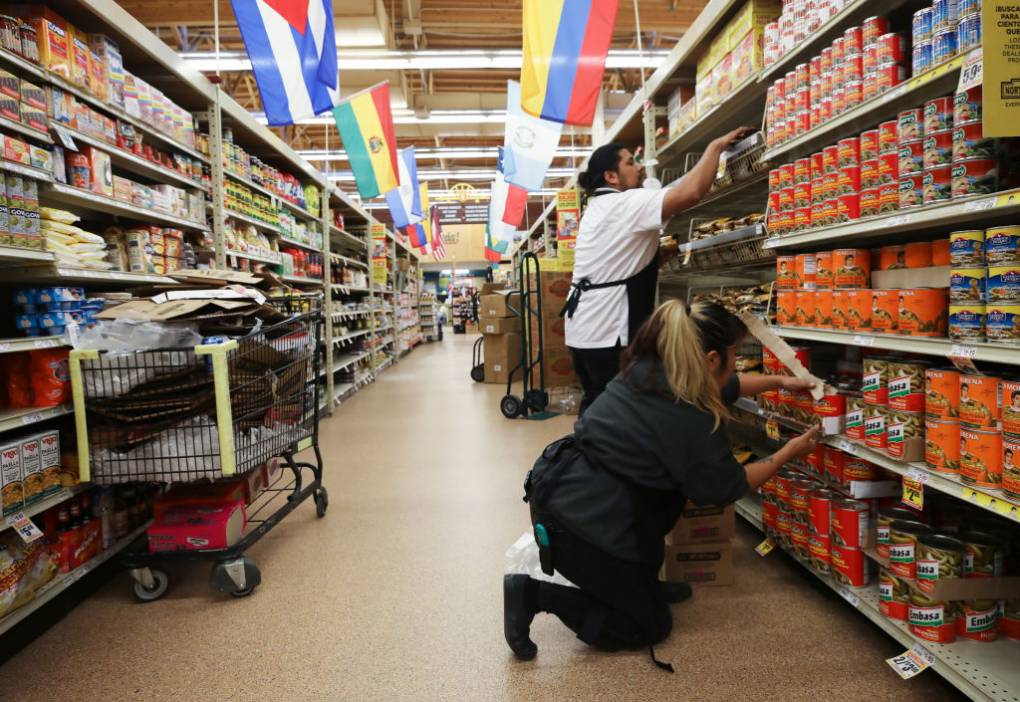
"caption": "Workers restock items during special hours open only to seniors and the disabled at Northgate Gonzalez Market, a Hispanic specialty supermarket in Los Angeles on March 19, 2020.",
"description": null,
"title": "Stores Offer Shopping Times For Elderly And Vulnerable Citizens To Protect Against Coronavirus Transmission",
"credit": "Mario Tama/Getty Images",
"status": "inherit",
"isLoading": false,
"fetchFailed": false
},
"news_11838142": {
"type": "attachments",
"id": "news_11838142",
"meta": {
"index": "attachments_1716263798",
"site": "news",
"id": "11838142",
"found": true
},
"parent": 11838137,
"imgSizes": {
"apple_news_ca_landscape_5_5": {
"file": "https://ww2.kqed.org/app/uploads/sites/10/2020/09/RS44906_IMG_8037-Jimmy-qut-1044x783.jpg",
"width": 1044,
"mimeType": "image/jpeg",
"height": 783
},
"apple_news_ca_square_4_0": {
"file": "https://ww2.kqed.org/app/uploads/sites/10/2020/09/RS44906_IMG_8037-Jimmy-qut-470x470.jpg",
"width": 470,
"mimeType": "image/jpeg",
"height": 470
},
"twentyfourteen-full-width": {
"file": "https://ww2.kqed.org/app/uploads/sites/10/2020/09/RS44906_IMG_8037-Jimmy-qut-1038x576.jpg",
"width": 1038,
"mimeType": "image/jpeg",
"height": 576
},
"thumbnail": {
"file": "https://ww2.kqed.org/app/uploads/sites/10/2020/09/RS44906_IMG_8037-Jimmy-qut-160x107.jpg",
"width": 160,
"mimeType": "image/jpeg",
"height": 107
},
"post-thumbnail": {
"file": "https://ww2.kqed.org/app/uploads/sites/10/2020/09/RS44906_IMG_8037-Jimmy-qut-672x372.jpg",
"width": 672,
"mimeType": "image/jpeg",
"height": 372
},
"kqedFullSize": {
"file": "https://ww2.kqed.org/app/uploads/sites/10/2020/09/RS44906_IMG_8037-Jimmy-qut.jpg",
"width": 1920,
"height": 1282
},
"apple_news_ca_landscape_4_7": {
"file": "https://ww2.kqed.org/app/uploads/sites/10/2020/09/RS44906_IMG_8037-Jimmy-qut-632x474.jpg",
"width": 632,
"mimeType": "image/jpeg",
"height": 474
},
"large": {
"file": "https://ww2.kqed.org/app/uploads/sites/10/2020/09/RS44906_IMG_8037-Jimmy-qut-1020x681.jpg",
"width": 1020,
"mimeType": "image/jpeg",
"height": 681
},
"apple_news_ca_landscape_4_0": {
"file": "https://ww2.kqed.org/app/uploads/sites/10/2020/09/RS44906_IMG_8037-Jimmy-qut-536x402.jpg",
"width": 536,
"mimeType": "image/jpeg",
"height": 402
},
"apple_news_ca_portrait_12_9": {
"file": "https://ww2.kqed.org/app/uploads/sites/10/2020/09/RS44906_IMG_8037-Jimmy-qut-1122x1282.jpg",
"width": 1122,
"mimeType": "image/jpeg",
"height": 1282
},
"medium": {
"file": "https://ww2.kqed.org/app/uploads/sites/10/2020/09/RS44906_IMG_8037-Jimmy-qut-800x534.jpg",
"width": 800,
"mimeType": "image/jpeg",
"height": 534
},
"apple_news_ca_portrait_4_0": {
"file": "https://ww2.kqed.org/app/uploads/sites/10/2020/09/RS44906_IMG_8037-Jimmy-qut-354x472.jpg",
"width": 354,
"mimeType": "image/jpeg",
"height": 472
},
"apple_news_ca_portrait_9_7": {
"file": "https://ww2.kqed.org/app/uploads/sites/10/2020/09/RS44906_IMG_8037-Jimmy-qut-840x1120.jpg",
"width": 840,
"mimeType": "image/jpeg",
"height": 1120
},
"apple_news_ca_landscape_12_9": {
"file": "https://ww2.kqed.org/app/uploads/sites/10/2020/09/RS44906_IMG_8037-Jimmy-qut-1832x1282.jpg",
"width": 1832,
"mimeType": "image/jpeg",
"height": 1282
},
"apple_news_ca_square_9_7": {
"file": "https://ww2.kqed.org/app/uploads/sites/10/2020/09/RS44906_IMG_8037-Jimmy-qut-1104x1104.jpg",
"width": 1104,
"mimeType": "image/jpeg",
"height": 1104
},
"1536x1536": {
"file": "https://ww2.kqed.org/app/uploads/sites/10/2020/09/RS44906_IMG_8037-Jimmy-qut-1536x1026.jpg",
"width": 1536,
"mimeType": "image/jpeg",
"height": 1026
},
"apple_news_ca_portrait_4_7": {
"file": "https://ww2.kqed.org/app/uploads/sites/10/2020/09/RS44906_IMG_8037-Jimmy-qut-414x552.jpg",
"width": 414,
"mimeType": "image/jpeg",
"height": 552
},
"apple_news_ca_square_12_9": {
"file": "https://ww2.kqed.org/app/uploads/sites/10/2020/09/RS44906_IMG_8037-Jimmy-qut-1472x1282.jpg",
"width": 1472,
"mimeType": "image/jpeg",
"height": 1282
},
"apple_news_ca_portrait_5_5": {
"file": "https://ww2.kqed.org/app/uploads/sites/10/2020/09/RS44906_IMG_8037-Jimmy-qut-687x916.jpg",
"width": 687,
"mimeType": "image/jpeg",
"height": 916
},
"apple_news_ca_square_4_7": {
"file": "https://ww2.kqed.org/app/uploads/sites/10/2020/09/RS44906_IMG_8037-Jimmy-qut-550x550.jpg",
"width": 550,
"mimeType": "image/jpeg",
"height": 550
},
"apple_news_ca_landscape_9_7": {
"file": "https://ww2.kqed.org/app/uploads/sites/10/2020/09/RS44906_IMG_8037-Jimmy-qut-1376x1032.jpg",
"width": 1376,
"mimeType": "image/jpeg",
"height": 1032
},
"apple_news_ca_square_5_5": {
"file": "https://ww2.kqed.org/app/uploads/sites/10/2020/09/RS44906_IMG_8037-Jimmy-qut-912x912.jpg",
"width": 912,
"mimeType": "image/jpeg",
"height": 912
}
},
"publishDate": 1600218571,
"modified": 1600218752,
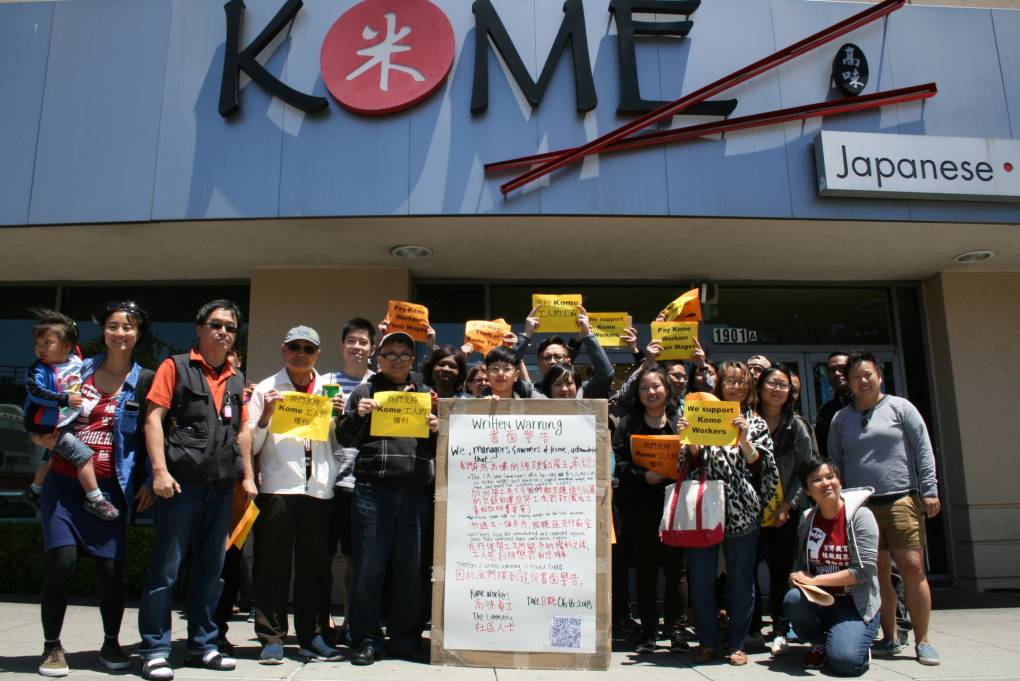
"caption": "Supporters of workers at Kome Japanese Seafood Buffet stand outside the restaurant in Daly City in 2018. The California Labor Commissioner cited Kome for minimum wage and other violations before the restaurant closed last year.",
"description": null,
"title": "RS44906_IMG_8037 Jimmy-qut",
"credit": "Courtesy of Chinese Progressive Association",
"status": "inherit",
"isLoading": false,
"fetchFailed": false
}
},
"audioPlayerReducer": {
"postId": "stream_live",
"isPaused": true,
"isPlaying": false,
"pfsActive": false,
"pledgeModalIsOpen": true,
"playerDrawerIsOpen": false,
"liveAudioPlayStartedAt": 0,
"liveAudioPlayContext": ""
},
"authorsReducer": {
"byline_news_11838543": {
"type": "authors",
"id": "byline_news_11838543",
"meta": {
"override": true
},
"slug": "byline_news_11838543",
"name": "Adam Beam \u003cbr> Associated Press",
"isLoading": false
},
"mlam": {
"type": "authors",
"id": "244",
"meta": {
"index": "authors_1716337520",
"id": "244",
"found": true
},
"name": "Monica Lam",
"firstName": "Monica Z.",
"lastName": "Lam",
"slug": "mlam",
"email": "mlam@kqed.org",
"display_author_email": true,
"staff_mastheads": [
"news"
],
"title": "KQED Senior Producer",
"bio": "Monica is senior producer of the weekly current affairs program, \"KQED Newsroom.\" She's also served as senior editor of digital content at KQED. She likes to report and edit as well as produce video and take photos.\r\n\r\nBefore joining KQED, Monica worked at the Center for Investigative Reporting, where she examined conditions inside \u003cspan style=\"font-weight: 400;\">maximum security \u003c/span>prisons and abuse in state-run institutions for the developmentally disabled. Prior to that, she produced and directed \u003cem>Journey of the Bonesetter's Daughter,\u003c/em> a documentary that follows novelist Amy Tan as she creates an opera based on her family history.\r\n\r\nMonica's work has been honored with a duPont Award, five Emmys, regional and national Murrow Awards, and has been recognized by Investigative Reporters and Editors, the Society of Professional Journalists, Religion Newswriters Association and the San Francisco Peninsula Press Club. Monica studied urban studies at Stanford University and earned a master's in journalism at University of California at Berkeley. Follow her on twitter: @monicazlam",
"avatar": "https://secure.gravatar.com/avatar/018c474b2b71f43e0e6ca9b15a0ad36f?s=600&d=blank&r=g",
"twitter": "@monicazlam",
"facebook": null,
"instagram": null,
"linkedin": null,
"sites": [
{
"site": "arts",
"roles": [
"administrator"
]
},
{
"site": "news",
"roles": [
"editor"
]
},
{
"site": "trulyca",
"roles": [
"editor"
]
},
{
"site": "science",
"roles": [
"editor"
]
},
{
"site": "breakingnews",
"roles": [
"editor"
]
}
],
"headData": {
"title": "Monica Lam | KQED",
"description": "KQED Senior Producer",
"ogImgSrc": "https://secure.gravatar.com/avatar/018c474b2b71f43e0e6ca9b15a0ad36f?s=600&d=blank&r=g",
"twImgSrc": "https://secure.gravatar.com/avatar/018c474b2b71f43e0e6ca9b15a0ad36f?s=600&d=blank&r=g"
},
"isLoading": false,
"link": "/author/mlam"
},
"samharnett": {
"type": "authors",
"id": "253",
"meta": {
"index": "authors_1716337520",
"id": "253",
"found": true
},
"name": "Sam Harnett",
"firstName": "Sam",
"lastName": "Harnett",
"slug": "samharnett",
"email": "samharnett@gmail.com",
"display_author_email": false,
"staff_mastheads": [],
"title": "KQED Contributor",
"bio": "Sam Harnett covered tech and work at KQED. He is the co-creator of \u003cem>\u003ca href=\"http://www.theworldaccordingtosound.org\">The World According to Sound\u003c/a>,\u003c/em> a 90-second podcast that features different sounds and the stories behind them.\r\n\r\nBefore coming to KQED, Sam worked as an independent reporter who contributed regularly to \u003cem>The California Report, Marketplace,\u003c/em> \u003cem>The World \u003c/em>and NPR.",
"avatar": "https://secure.gravatar.com/avatar/2538b972ac02f2b9546c7a6c59a0f3d0?s=600&d=blank&r=g",
"twitter": "Samwharnett",
"facebook": null,
"instagram": null,
"linkedin": null,
"sites": [
{
"site": "news",
"roles": [
"edit_others_posts",
"subscriber"
]
},
{
"site": "stateofhealth",
"roles": [
"author"
]
},
{
"site": "science",
"roles": [
"editor"
]
},
{
"site": "quest",
"roles": [
"subscriber"
]
}
],
"headData": {
"title": "Sam Harnett | KQED",
"description": "KQED Contributor",
"ogImgSrc": "https://secure.gravatar.com/avatar/2538b972ac02f2b9546c7a6c59a0f3d0?s=600&d=blank&r=g",
"twImgSrc": "https://secure.gravatar.com/avatar/2538b972ac02f2b9546c7a6c59a0f3d0?s=600&d=blank&r=g"
},
"isLoading": false,
"link": "/author/samharnett"
},
"matthewgreen": {
"type": "authors",
"id": "1263",
"meta": {
"index": "authors_1716337520",
"id": "1263",
"found": true
},
"name": "Matthew Green",
"firstName": "Matthew",
"lastName": "Green",
"slug": "matthewgreen",
"email": "mgreen@kqed.org",
"display_author_email": false,
"staff_mastheads": [],
"title": "KQED Editor/Reporter",
"bio": "Matthew Green is a digital media producer for KQED News. He previously produced \u003ca href=\"http://www.kqed.org/lowdown\">The Lowdown\u003c/a>, KQED’s multimedia news education blog. Matthew's written for numerous Bay Area publications, including the Oakland Tribune and San Francisco Chronicle. He also taught journalism classes at Fremont High School in East Oakland.\r\n\r\nEmail: mgreen@kqed.org; Twitter: @MGreenKQED",
"avatar": "https://secure.gravatar.com/avatar/3bf498d1267ca02c8494f33d8cfc575e?s=600&d=blank&r=g",
"twitter": "MGreenKQED",
"facebook": null,
"instagram": null,
"linkedin": null,
"sites": [
{
"site": "news",
"roles": []
},
{
"site": "lowdown",
"roles": []
},
{
"site": "science",
"roles": []
},
{
"site": "education",
"roles": []
},
{
"site": "quest",
"roles": []
},
{
"site": "liveblog",
"roles": []
}
],
"headData": {
"title": "Matthew Green | KQED",
"description": "KQED Editor/Reporter",
"ogImgSrc": "https://secure.gravatar.com/avatar/3bf498d1267ca02c8494f33d8cfc575e?s=600&d=blank&r=g",
"twImgSrc": "https://secure.gravatar.com/avatar/3bf498d1267ca02c8494f33d8cfc575e?s=600&d=blank&r=g"
},
"isLoading": false,
"link": "/author/matthewgreen"
},
"dkatayama": {
"type": "authors",
"id": "7240",
"meta": {
"index": "authors_1716337520",
"id": "7240",
"found": true
},
"name": "Devin Katayama",
"firstName": "Devin",
"lastName": "Katayama",
"slug": "dkatayama",
"email": "dkatayama@kqed.org",
"display_author_email": true,
"staff_mastheads": [
"news"
],
"title": "Editor of Talent and Development",
"bio": "Devin Katayama is former Editor of Talent and Development for KQED. He supported our internship program and on-call staff by looking for equitable opportunities to improve the newsroom.\r\n\r\nHe previously hosted The Bay and American Suburb podcasts from KQED News. Prior to returning to the Bay Area in 2015, Devin was the education reporter for WFPL in Louisville and worked as a producer with radio stations in Chicago and Portland, OR. His work has appeared on NPR’s \u003cem>Morning Edition, All Things Considered, The Takeaway\u003c/em> and \u003cem>Here and Now.\u003c/em>\r\n\r\nDevin earned his MA in Journalism from Columbia College Chicago, where he was a Follett Fellow and the recipient of the 2011 Studs Terkel Community Media Workshop Scholarship for his story on Chicago's homeless youth. He won WBUR's 2014 Daniel Schorr award and a regional RTNDA Edward R. Murrow Award for his documentary \"At Risk\" that looked at issues facing some of Louisville's students. Devin has also received numerous local awards from the Associated Press and the Society of Professional Journalists.",
"avatar": "https://secure.gravatar.com/avatar/d0d2978a31002fb2de107921a8e18405?s=600&d=blank&r=g",
"twitter": "RadioDevin",
"facebook": null,
"instagram": null,
"linkedin": null,
"sites": [
{
"site": "arts",
"roles": []
},
{
"site": "news",
"roles": [
"author"
]
},
{
"site": "stateofhealth",
"roles": [
"author"
]
},
{
"site": "forum",
"roles": [
"editor"
]
},
{
"site": "perspectives",
"roles": [
"editor"
]
}
],
"headData": {
"title": "Devin Katayama | KQED",
"description": "Editor of Talent and Development",
"ogImgSrc": "https://secure.gravatar.com/avatar/d0d2978a31002fb2de107921a8e18405?s=600&d=blank&r=g",
"twImgSrc": "https://secure.gravatar.com/avatar/d0d2978a31002fb2de107921a8e18405?s=600&d=blank&r=g"
},
"isLoading": false,
"link": "/author/dkatayama"
},
"ecruzguevarra": {
"type": "authors",
"id": "8654",
"meta": {
"index": "authors_1716337520",
"id": "8654",
"found": true
},
"name": "Ericka Cruz Guevarra",
"firstName": "Ericka",
"lastName": "Cruz Guevarra",
"slug": "ecruzguevarra",
"email": "ecruzguevarra@kqed.org",
"display_author_email": true,
"staff_mastheads": [
"news"
],
"title": "Producer, The Bay Podcast",
"bio": "Ericka Cruz Guevarra is host of \u003ca href=\"https://www.kqed.org/podcasts/thebay\">\u003cem>The Bay\u003c/em>\u003c/a> podcast at KQED. Before host, she was the show’s producer. Her work in that capacity includes a three-part reported series on policing in Vallejo, which won a 2020 excellence in journalism award from the Society of Professional Journalists. Ericka has worked as a breaking news reporter at Oregon Public Broadcasting, helped produce the Code Switch podcast, and was KQED’s inaugural Raul Ramirez Diversity Fund intern. She’s also an alumna of NPR’s Next Generation Radio program. Send her an email if you have strong feelings about whether Fairfield and Suisun City are the Bay. Ericka is represented by SAG-AFTRA.",
"avatar": "https://secure.gravatar.com/avatar/accefc1de4bafc7e234b69bcb9b6f6536c130fd84709bc3069ef11a78787e1bb?s=600&d=blank&r=g",
"twitter": "NotoriousECG",
"bluesky": null,
"facebook": null,
"instagram": null,
"linkedin": null,
"sites": [
{
"site": "arts",
"roles": [
"subscriber"
]
},
{
"site": "news",
"roles": [
"editor",
"manage_categories"
]
},
{
"site": "futureofyou",
"roles": [
"subscriber"
]
},
{
"site": "stateofhealth",
"roles": [
"subscriber"
]
},
{
"site": "science",
"roles": [
"editor"
]
},
{
"site": "forum",
"roles": [
"subscriber"
]
}
],
"headData": {
"title": "Ericka Cruz Guevarra | KQED",
"description": "Producer, The Bay Podcast",
"ogImgSrc": "https://secure.gravatar.com/avatar/accefc1de4bafc7e234b69bcb9b6f6536c130fd84709bc3069ef11a78787e1bb?s=600&d=blank&r=g",
"twImgSrc": "https://secure.gravatar.com/avatar/accefc1de4bafc7e234b69bcb9b6f6536c130fd84709bc3069ef11a78787e1bb?s=600&d=blank&r=g"
},
"isLoading": false,
"link": "/author/ecruzguevarra"
},
"fjhabvala": {
"type": "authors",
"id": "8659",
"meta": {
"index": "authors_1716337520",
"id": "8659",
"found": true
},
"name": "Farida Jhabvala Romero",
"firstName": "Farida",
"lastName": "Jhabvala Romero",
"slug": "fjhabvala",
"email": "fjhabvala@kqed.org",
"display_author_email": true,
"staff_mastheads": [
"news"
],
"title": "KQED Contributor",
"bio": "Farida Jhabvala Romero is a Labor Correspondent for KQED. She previously covered immigration. Farida was \u003ca href=\"https://www.ccnma.org/2022-most-influential-latina-journalists\">named\u003c/a> one of the 10 Most Influential Latina Journalists in California in 2022 by the California Chicano News Media Association. Her work has won awards from the Society of Professional Journalists (Northern California), as well as a national and regional Edward M. Murrow Award for the collaborative reporting projects “Dangerous Air” and “Graying California.” Before joining KQED, Farida worked as a producer at Radio Bilingüe, a national public radio network. Farida earned her master’s degree in journalism from Stanford University.",
"avatar": "https://secure.gravatar.com/avatar/f9f022d4e2609741874222a1e9d41f48fea74011aa7c615eef91d9a50c944ebe?s=600&d=blank&r=g",
"twitter": "FaridaJhabvala",
"bluesky": null,
"facebook": null,
"instagram": null,
"linkedin": "https://www.linkedin.com/in/faridajhabvala/",
"sites": [
{
"site": "news",
"roles": [
"editor"
]
},
{
"site": "stateofhealth",
"roles": [
"author"
]
},
{
"site": "liveblog",
"roles": [
"author"
]
}
],
"headData": {
"title": "Farida Jhabvala Romero | KQED",
"description": "KQED Contributor",
"ogImgSrc": "https://secure.gravatar.com/avatar/f9f022d4e2609741874222a1e9d41f48fea74011aa7c615eef91d9a50c944ebe?s=600&d=blank&r=g",
"twImgSrc": "https://secure.gravatar.com/avatar/f9f022d4e2609741874222a1e9d41f48fea74011aa7c615eef91d9a50c944ebe?s=600&d=blank&r=g"
},
"isLoading": false,
"link": "/author/fjhabvala"
},
"bwatt": {
"type": "authors",
"id": "11238",
"meta": {
"index": "authors_1716337520",
"id": "11238",
"found": true
},
"name": "Brian Watt",
"firstName": "Brian",
"lastName": "Watt",
"slug": "bwatt",
"email": "bwatt@KQED.org",
"display_author_email": false,
"staff_mastheads": [
"news"
],
"title": "Morning News Anchor",
"bio": "Brian Watt is KQED's morning radio news anchor. He joined the KQED News team in April of 2016. Prior to that, he worked as a Reporter for KPCC in Los Angeles and a producer at \u003cem>Marketplace.\u003c/em>\r\n\r\nDuring eight years at KPCC, Brian covered business and economics, and his work won several awards. In 2008, he won the Los Angeles Press Club’s first-place award for Business and Financial Reporting, Broadcast. He’s also received honorable mention and been first runner up for the Press Club’s Radio Journalist of the Year. He won two Golden Mike awards from the Radio and TV News Association of Southern California.\r\n\r\nBrian holds degrees in theater from Yale University and the Sorbonne, and has worked as an actor in France, Italy, Brazil, Hungary and . . . Hollywood. He appeared in a few television shows, including \u003cem>The West Wing, Judging Amy\u003c/em> and \u003cem>The District.\u003c/em>\r\n\r\nEmail: bwatt@KQED.org Twitter: @RadioBWatt",
"avatar": "https://secure.gravatar.com/avatar/55393ff57ed34e2be773ba4789dd6a19?s=600&d=blank&r=g",
"twitter": "@RadioBWatt",
"facebook": null,
"instagram": null,
"linkedin": null,
"sites": [
{
"site": "arts",
"roles": [
"contributor"
]
},
{
"site": "news",
"roles": [
"editor"
]
}
],
"headData": {
"title": "Brian Watt | KQED",
"description": "Morning News Anchor",
"ogImgSrc": "https://secure.gravatar.com/avatar/55393ff57ed34e2be773ba4789dd6a19?s=600&d=blank&r=g",
"twImgSrc": "https://secure.gravatar.com/avatar/55393ff57ed34e2be773ba4789dd6a19?s=600&d=blank&r=g"
},
"isLoading": false,
"link": "/author/bwatt"
},
"lsarah": {
"type": "authors",
"id": "11626",
"meta": {
"index": "authors_1716337520",
"id": "11626",
"found": true
},
"name": "Lakshmi Sarah",
"firstName": "Lakshmi",
"lastName": "Sarah",
"slug": "lsarah",
"email": "lsarah@kqed.org",
"display_author_email": false,
"staff_mastheads": [],
"title": "Digital Producer",
"bio": "Lakshmi Sarah is an educator, author and journalist with a focus on innovative storytelling. She has worked with newspapers, radio and magazines from Ahmedabad, India to Los Angeles, California. She has written and produced for Die Zeit, Global Voices, AJ+, KQED, Fusion Media Group and the New York Times.",
"avatar": "https://secure.gravatar.com/avatar/652dcaecd8b28826fc17a8b2d6bb4e93?s=600&d=blank&r=g",
"twitter": "lakitalki",
"facebook": null,
"instagram": "https://www.instagram.com/laki.talki/",
"linkedin": "https://www.linkedin.com/in/lakisarah/",
"sites": [
{
"site": "arts",
"roles": []
},
{
"site": "news",
"roles": []
},
{
"site": "bayareabites",
"roles": []
},
{
"site": "science",
"roles": []
}
],
"headData": {
"title": "Lakshmi Sarah | KQED",
"description": "Digital Producer",
"ogImgSrc": "https://secure.gravatar.com/avatar/652dcaecd8b28826fc17a8b2d6bb4e93?s=600&d=blank&r=g",
"twImgSrc": "https://secure.gravatar.com/avatar/652dcaecd8b28826fc17a8b2d6bb4e93?s=600&d=blank&r=g"
},
"isLoading": false,
"link": "/author/lsarah"
},
"amontecillo": {
"type": "authors",
"id": "11649",
"meta": {
"index": "authors_1716337520",
"id": "11649",
"found": true
},
"name": "Alan Montecillo",
"firstName": "Alan",
"lastName": "Montecillo",
"slug": "amontecillo",
"email": "amontecillo@kqed.org",
"display_author_email": false,
"staff_mastheads": [
"news"
],
"title": "KQED Contributor",
"bio": "Alan Montecillo is the senior editor of \u003cem>\u003ca href=\"http://kqed.org/thebay\">The Bay\u003c/a>, \u003c/em> KQED's local news podcast. Before moving to the Bay Area, he worked as a senior talk show producer for WILL in Champaign-Urbana, Illinois and at Oregon Public Broadcasting in Portland, Oregon. He has won journalism awards from the Society of Professional Journalists Northern California, the Public Media Journalists Association, The Signal Awards, and has also received a regional Edward R. Murrow award. Alan is a Filipino American from Hong Kong and a graduate of Reed College.",
"avatar": "https://secure.gravatar.com/avatar/268f53a2066899ea9efdd8a5900218b17c822d9862cbc9326cccec53ef41d349?s=600&d=blank&r=g",
"twitter": "alanmontecillo",
"bluesky": null,
"facebook": null,
"instagram": null,
"linkedin": null,
"sites": [
{
"site": "",
"roles": [
"editor"
]
},
{
"site": "news",
"roles": [
"editor",
"manage_categories"
]
}
],
"headData": {
"title": "Alan Montecillo | KQED",
"description": "KQED Contributor",
"ogImgSrc": "https://secure.gravatar.com/avatar/268f53a2066899ea9efdd8a5900218b17c822d9862cbc9326cccec53ef41d349?s=600&d=blank&r=g",
"twImgSrc": "https://secure.gravatar.com/avatar/268f53a2066899ea9efdd8a5900218b17c822d9862cbc9326cccec53ef41d349?s=600&d=blank&r=g"
},
"isLoading": false,
"link": "/author/amontecillo"
}
},
"pagesReducer": {
"news_tag_labor": {
"type": "terms",
"id": "news_19904",
"meta": {
"index": "terms_1716263798",
"site": "news",
"id": "19904",
"score": 8.558133
},
"name": "Labor",
"slug": "labor",
"taxonomy": "tag",
"description": null,
"featImg": null,
"headData": {
"title": "Labor | KQED News",
"description": null,
"ogTitle": null,
"ogDescription": null,
"ogImgId": null,
"twTitle": null,
"twDescription": null,
"twImgId": null
},
"ttid": 19921,
"isLoading": false,
"title": "Labor",
"pageMeta": {
"site": "news",
"WpPageTemplate": "page-topic-editorial",
"currentPage": 50
},
"blocks": [
{
"blockName": "kqed/post-list",
"attrs": {
"layout": "cardArticle2",
"query": "posts/news?tag=labor",
"seeMore": false,
"paginated": true,
"page": 50
}
},
{
"blockName": "kqed/ad"
}
]
}
},
"pfsSessionReducer": {},
"postsReducer": {
"stream_live": {
"type": "live",
"id": "stream_live",
"audioUrl": "https://streams.kqed.org/kqedradio",
"title": "Live Stream",
"excerpt": "Live Stream information currently unavailable.",
"link": "/radio",
"featImg": "",
"label": {
"name": "KQED Live",
"link": "/"
}
},
"stream_kqedNewscast": {
"type": "posts",
"id": "stream_kqedNewscast",
"audioUrl": "https://www.kqed.org/.stream/anon/radio/RDnews/newscast.mp3?_=1",
"title": "KQED Newscast",
"featImg": "",
"label": {
"name": "88.5 FM",
"link": "/"
}
},
"news_11844698": {
"type": "posts",
"id": "news_11844698",
"meta": {
"index": "posts_1716263798",
"site": "news",
"id": "11844698",
"score": null,
"sort": [
1604245831000
]
},
"guestAuthors": [],
"slug": "uber-engineer-quits-over-pressure-to-support-proposition-22",
"title": "Uber Engineer Quits Over Pressure to Support Proposition 22",
"publishDate": 1604245831,
"format": "standard",
"headTitle": "Uber Engineer Quits Over Pressure to Support Proposition 22 | KQED",
"labelTerm": {
"site": "news"
},
"content": "\u003cp>Former Uber engineer Eddy Hernandez said it started with the yes on Proposition 22 Zoom backgrounds that began appearing around the onset of the coronavirus pandemic. Then employees were offered free Proposition 22 T-shirts, managers and executives talked about the proposition in meetings and Hernandez got the sense that bonuses and promotions would go to people who worked on projects related to promoting the proposition.\u003c/p>\n\u003cp>Hernandez said he felt a constant push to support the proposition at work. He didn’t like feeling that kind of political pressure on the job. On top of that, Hernandez opposes the ballot initiative, and he did not feel comfortable having that viewpoint. If the proposition passes, so-called gig economy companies such as Uber, Lyft and Instacart would be exempted from state labor law and allowed to continue classifying workers as contractors.\u003c/p>\n\u003cp>“I felt like I was stripped of my voice because if I said anything there would be a conflict of interest or it would affect the financials of the company. That’s a weird place to be in. It’s something I didn’t want to normalize,” he said.[pullquote size=\"medium\" align=\"right\" citation=\"Eddy Hernandez, former Uber engineer\"]‘I felt like I was stripped of my voice because if I said anything there would be a conflict of interest or it would affect the financials of the company … It’s something I didn’t want to normalize.’[/pullquote]\u003c/p>\n\u003cp>Finally, in the middle of the pandemic and without another job, he decided he would quit. At the end of September, he handed in his resignation.\u003c/p>\n\u003cp>Hernandez, \u003ca href=\"https://news.techworkerscoalition.org/2020/10/30/issue-13/\" target=\"_blank\" rel=\"noopener noreferrer\">who has since written a public letter about leaving Uber\u003c/a> and his opposition to Proposition 22, is not the first employee to speak out about this kind of pressure.\u003c/p>\n\u003cp>Drivers at Uber tried, unsuccessfully, to sue the company over the \u003ca href=\"https://www.kqed.org/news/11842964/gig-companies-are-making-their-workers-promote-prop-22\" target=\"_blank\" rel=\"noopener noreferrer\">in-app pop-ups soliciting their support\u003c/a>. Current Uber employee Kurt Nelson also wrote an \u003ca href=\"https://techcrunch.com/2020/10/06/im-a-software-engineer-at-uber-im-voting-against-prop-22/\" target=\"_blank\" rel=\"noopener noreferrer\">op-ed in TechCrunch\u003c/a> about opposing Proposition 22, and later described yes on Proposition 22 pressure at the company, similar to what Hernandez experienced.\u003c/p>\n\u003cp>Hernandez said he only started working there in 2019 because the team that was hiring said the company was really changing its culture. He was apprehensive, but eventually took the job.\u003c/p>\n\u003cp>Over the last year, Hernandez said he realized the company has not changed from its past, and that there was no real interest for social good — just economic gain for the company and those who worked there. [ad fullwidth]\u003c/p>\n\u003cp>Hernandez said he was alarmed by an email he said he received from Uber asking him to tell his family and friends why he supported Proposition 22.\u003c/p>\n\u003cp>Uber spokesperson Davis White said there were only two company-wide emails related to Proposition 22. White said that the second email said: “As always, lending your voice, your vote, or your time to Prop. 22 is entirely up to you. With that being said, here are some ways to pitch in, if you choose.” [aside postID=\"news_11843123\" label=\"More on Proposition 22\"]\u003c/p>\n\u003cp>During the coronavirus, Hernandez said the pressure to support Proposition 22 grew. He saw more and more managers start putting the yes on Proposition 22 backgrounds on Zoom, and the company offered to give a free “yes-on-prop-22” T-shirt to any employee who wanted one and many employees started working on yes on Proposition 22 products, like pop-ups urging drivers to vote yes.\u003c/p>\n\u003cp>There is an internal wiki page at Uber with company initiatives and priorities that employees look at to know what is important to talk about in performance review meetings, Hernandez said. He saw Proposition 22 listed there, which he felt meant that employees who did work on Proposition 22-related projects would have an easier chance of being rewarded with bonuses and promotions.\u003c/p>\n\u003cp>“These materials are not what managers use as a guide for performance reviews. There is a lot displayed on the site that is not relevant to everyone,” Uber spokesperson White wrote in an email. “It is simply a general sense of what’s important to the company as a whole, which Prop. 22 obviously is.” \u003c/p>\n\u003cp>He added, “an employee’s position on Prop. 22 has never and in no way will factor into performance reviews.”\u003c/p>\n\u003cp>\u003c/p>\n",
"blocks": [],
"excerpt": "Former Uber engineer Eddy Hernandez handed in his resignation at the end of September. He has since written a public letter about leaving Uber and his opposition to Proposition 22.",
"status": "publish",
"parent": 0,
"modified": 1728430594,
"stats": {
"hasAudio": false,
"hasVideo": false,
"hasChartOrMap": false,
"iframeSrcs": [],
"hasGoogleForm": false,
"hasGallery": false,
"hasHearkenModule": false,
"hasPolis": false,
"paragraphCount": 15,
"wordCount": 735
},
"headData": {
"title": "Uber Engineer Quits Over Pressure to Support Proposition 22 | KQED",
"description": "Former Uber engineer Eddy Hernandez handed in his resignation at the end of September. He has since written a public letter about leaving Uber and his opposition to Proposition 22.",
"ogTitle": "",
"ogDescription": "",
"ogImgId": "",
"twTitle": "",
"twDescription": "",
"twImgId": "",
"schema": {
"@context": "https://schema.org",
"@type": "NewsArticle",
"headline": "Uber Engineer Quits Over Pressure to Support Proposition 22",
"datePublished": "2020-11-01T07:50:31-08:00",
"dateModified": "2024-10-08T16:36:34-07:00",
"image": "https://cdn.kqed.org/wp-content/uploads/2020/02/KQED-OG-Image@1x.png",
"isAccessibleForFree": "True",
"publisher": {
"@type": "NewsMediaOrganization",
"@id": "https://www.kqed.org/#organization",
"name": "KQED",
"logo": "https://cdn.kqed.org/wp-content/uploads/2020/02/KQED-OG-Image@1x.png",
"url": "https://www.kqed.org",
"sameAs": [
"https://www.facebook.com/KQED",
"https://twitter.com/KQED",
"https://www.instagram.com/kqed/",
"https://www.tiktok.com/@kqedofficial",
"https://www.linkedin.com/company/kqed",
"https://www.youtube.com/channel/UCeC0IOo7i1P_61zVUWbJ4nw"
]
}
}
},
"sticky": false,
"path": "/news/11844698/uber-engineer-quits-over-pressure-to-support-proposition-22",
"audioTrackLength": null,
"parsedContent": [
{
"type": "contentString",
"content": "\u003cdiv class=\"post-body\">\u003cp>\u003cp>Former Uber engineer Eddy Hernandez said it started with the yes on Proposition 22 Zoom backgrounds that began appearing around the onset of the coronavirus pandemic. Then employees were offered free Proposition 22 T-shirts, managers and executives talked about the proposition in meetings and Hernandez got the sense that bonuses and promotions would go to people who worked on projects related to promoting the proposition.\u003c/p>\n\u003cp>Hernandez said he felt a constant push to support the proposition at work. He didn’t like feeling that kind of political pressure on the job. On top of that, Hernandez opposes the ballot initiative, and he did not feel comfortable having that viewpoint. If the proposition passes, so-called gig economy companies such as Uber, Lyft and Instacart would be exempted from state labor law and allowed to continue classifying workers as contractors.\u003c/p>\n\u003cp>“I felt like I was stripped of my voice because if I said anything there would be a conflict of interest or it would affect the financials of the company. That’s a weird place to be in. It’s something I didn’t want to normalize,” he said.\u003c/p>\u003c/div>",
"attributes": {
"named": {},
"numeric": []
}
},
{
"type": "component",
"content": "‘I felt like I was stripped of my voice because if I said anything there would be a conflict of interest or it would affect the financials of the company … It’s something I didn’t want to normalize.’",
"name": "pullquote",
"attributes": {
"named": {
"size": "medium",
"align": "right",
"citation": "Eddy Hernandez, former Uber engineer",
"label": ""
},
"numeric": []
}
},
{
"type": "contentString",
"content": "\u003cdiv class=\"post-body\">\u003cp>\u003c/p>\n\u003cp>Finally, in the middle of the pandemic and without another job, he decided he would quit. At the end of September, he handed in his resignation.\u003c/p>\n\u003cp>Hernandez, \u003ca href=\"https://news.techworkerscoalition.org/2020/10/30/issue-13/\" target=\"_blank\" rel=\"noopener noreferrer\">who has since written a public letter about leaving Uber\u003c/a> and his opposition to Proposition 22, is not the first employee to speak out about this kind of pressure.\u003c/p>\n\u003cp>Drivers at Uber tried, unsuccessfully, to sue the company over the \u003ca href=\"https://www.kqed.org/news/11842964/gig-companies-are-making-their-workers-promote-prop-22\" target=\"_blank\" rel=\"noopener noreferrer\">in-app pop-ups soliciting their support\u003c/a>. Current Uber employee Kurt Nelson also wrote an \u003ca href=\"https://techcrunch.com/2020/10/06/im-a-software-engineer-at-uber-im-voting-against-prop-22/\" target=\"_blank\" rel=\"noopener noreferrer\">op-ed in TechCrunch\u003c/a> about opposing Proposition 22, and later described yes on Proposition 22 pressure at the company, similar to what Hernandez experienced.\u003c/p>\n\u003cp>Hernandez said he only started working there in 2019 because the team that was hiring said the company was really changing its culture. He was apprehensive, but eventually took the job.\u003c/p>\n\u003cp>Over the last year, Hernandez said he realized the company has not changed from its past, and that there was no real interest for social good — just economic gain for the company and those who worked there. \u003c/p>\u003c/div>",
"attributes": {
"named": {},
"numeric": []
}
},
{
"type": "component",
"content": "",
"name": "ad",
"attributes": {
"named": {
"label": "fullwidth"
},
"numeric": [
"fullwidth"
]
}
},
{
"type": "contentString",
"content": "\u003cdiv class=\"post-body\">\u003cp>\u003c/p>\n\u003cp>Hernandez said he was alarmed by an email he said he received from Uber asking him to tell his family and friends why he supported Proposition 22.\u003c/p>\n\u003cp>Uber spokesperson Davis White said there were only two company-wide emails related to Proposition 22. White said that the second email said: “As always, lending your voice, your vote, or your time to Prop. 22 is entirely up to you. With that being said, here are some ways to pitch in, if you choose.” \u003c/p>\u003c/div>",
"attributes": {
"named": {},
"numeric": []
}
},
{
"type": "component",
"content": "",
"name": "aside",
"attributes": {
"named": {
"postid": "news_11843123",
"label": "More on Proposition 22 "
},
"numeric": []
}
},
{
"type": "contentString",
"content": "\u003cdiv class=\"post-body\">\u003cp>\u003c/p>\n\u003cp>During the coronavirus, Hernandez said the pressure to support Proposition 22 grew. He saw more and more managers start putting the yes on Proposition 22 backgrounds on Zoom, and the company offered to give a free “yes-on-prop-22” T-shirt to any employee who wanted one and many employees started working on yes on Proposition 22 products, like pop-ups urging drivers to vote yes.\u003c/p>\n\u003cp>There is an internal wiki page at Uber with company initiatives and priorities that employees look at to know what is important to talk about in performance review meetings, Hernandez said. He saw Proposition 22 listed there, which he felt meant that employees who did work on Proposition 22-related projects would have an easier chance of being rewarded with bonuses and promotions.\u003c/p>\n\u003cp>“These materials are not what managers use as a guide for performance reviews. There is a lot displayed on the site that is not relevant to everyone,” Uber spokesperson White wrote in an email. “It is simply a general sense of what’s important to the company as a whole, which Prop. 22 obviously is.” \u003c/p>\n\u003cp>He added, “an employee’s position on Prop. 22 has never and in no way will factor into performance reviews.”\u003c/p>\n\u003cp>\u003c/p>\n\u003c/div>\u003c/p>",
"attributes": {
"named": {},
"numeric": []
}
}
],
"link": "/news/11844698/uber-engineer-quits-over-pressure-to-support-proposition-22",
"authors": [
"253"
],
"categories": [
"news_8",
"news_13"
],
"tags": [
"news_18538",
"news_26532",
"news_28756",
"news_19904",
"news_4524",
"news_28581",
"news_28695",
"news_4523"
],
"featImg": "news_11844818",
"label": "news"
},
"news_11843123": {
"type": "posts",
"id": "news_11843123",
"meta": {
"index": "posts_1716263798",
"site": "news",
"id": "11843123",
"score": null,
"sort": [
1603759727000
]
},
"guestAuthors": [],
"slug": "prop-22-explained-why-gig-companies-are-spending-huge-money-on-an-unprecedented-measure",
"title": "Prop. 22 Explained: Why Gig Companies Are Spending Huge Money on an Unprecedented Measure",
"publishDate": 1603759727,
"format": "image",
"headTitle": "Prop. 22 Explained: Why Gig Companies Are Spending Huge Money on an Unprecedented Measure | KQED",
"labelTerm": {
"site": "news"
},
"content": "\u003cp>\u003ci data-stringify-type=\"italic\">This story was updated Wednesday, Nov. 4 at 12:40pm\u003c/i>\u003c/p>\n\u003cp>\u003cb data-stringify-type=\"bold\">UPDATE: Proposition 22 was approved by California voters Tuesday, Nov. 3. \u003c/b>\u003cb data-stringify-type=\"bold\">\u003ca class=\"c-link\" href=\"https://www.kqed.org/news/11844725/proposition-22-passes-locking-in-sub-employee-status-for-gig-workers\" target=\"_blank\" rel=\"noopener noreferrer\" data-stringify-link=\"https://www.kqed.org/news/11844725/proposition-22-passes-locking-in-sub-employee-status-for-gig-workers\" data-sk=\"tooltip_parent\">Read the full details here\u003c/a>\u003c/b>\u003cb data-stringify-type=\"bold\">.\u003c/b>\u003c/p>\n\u003cp>\u003ci data-stringify-type=\"italic\">Original story:\u003c/i>\u003c/p>\n\u003cp>The decision California voters face on Proposition 22 boils down to this: should a handful of companies be allowed to create a new gig contractor category for their workers that doesn’t include employee protections and benefits, like unemployment insurance and workers compensation? Or should companies like Uber, Lyft and DoorDash have to follow state labor law and classify their drivers as employees, which could mean directing more revenue to workers, higher prices for consumers and increased requirements for more casual drivers?\u003c/p>\n\u003cp>That’s the choice on the ballot. But there’s so much more going on with this unprecedented and far-reaching proposition — a proposition that recent polling indicates will come down to Californians who are still undecided. As of Oct. 26, \u003ca href=\"https://www.kqed.org/news/11843691/poll-measure-pushed-by-uber-lyft-falling-just-short-of-passage-many-voters-still-undecided\">polling of likely voters\u003c/a> shows 46% in favor, 42% opposed and 12% undecided. Here’s everything you’d need to know about the proposition and its backstory before you vote.\u003c/p>\n\u003cp>\u003cstrong>Skip to:\u003c/strong>\u003c/p>\n\u003cul>\n\u003cli>\u003cstrong>\u003ca href=\"#backstory\">The Backstory\u003c/a>\u003c/strong>: How companies like Lyft, Uber and DoorDash have avoided employee classification for eight years despite pressure from workers, labor groups and every branch of state government\u003c/li>\n\u003cli>\u003cstrong>\u003ca href=\"#written\">What’s Actually in Prop. 22?\u003c/a>\u003c/strong>: An explanation of the limited worker benefits and why the “7/8ths provision” would make it nearly impossible to change this law in the future\u003c/li>\n\u003cli>\u003cstrong>\u003ca href=\"#money\">Unprecedented Money\u003c/a>\u003c/strong>: Gig companies are spending record amounts of cash to market Prop. 22 — and it’s being framed as a social justice issue\u003c/li>\n\u003cli>\u003cstrong>\u003ca href=\"#surveys\">Those Driver Surveys, and What’s Wrong With Them\u003c/a>\u003c/strong>: What do drivers want? Surveys used to market Prop. 22 are often flawed and don’t tell the full story\u003c/li>\n\u003cli>\u003cstrong>\u003ca href=\"#directtovoter\">Unprecedented Direct-to-Voter Connection\u003c/a>\u003c/strong>: Millions of apps in millions of pockets, workers asked to deliver political ads and pop ups galore — win or lose, a new election playbook is being written\u003c/li>\n\u003cli>\u003cstrong>\u003ca href=\"#ramifications\">The Ramifications\u003c/a>\u003c/strong>: If Prop. 22 passes, what will it mean for gig work, labor protections, election campaigning and local governance?\u003c/li>\n\u003c/ul>\n\u003ch1>\u003ca id=\"backstory\">\u003c/a>The Backstory\u003c/h1>\n\u003cfigure id=\"attachment_11843145\" class=\"wp-caption aligncenter\" style=\"max-width: 1920px\">\u003cimg loading=\"lazy\" decoding=\"async\" class=\"size-full wp-image-11843145\" src=\"https://ww2.kqed.org/app/uploads/sites/10/2020/10/Lyft-moustache.jpg\" alt=\"Lyft car with mustache\" width=\"1920\" height=\"1250\" srcset=\"https://cdn.kqed.org/wp-content/uploads/sites/10/2020/10/Lyft-moustache.jpg 1920w, https://cdn.kqed.org/wp-content/uploads/sites/10/2020/10/Lyft-moustache-800x521.jpg 800w, https://cdn.kqed.org/wp-content/uploads/sites/10/2020/10/Lyft-moustache-1020x664.jpg 1020w, https://cdn.kqed.org/wp-content/uploads/sites/10/2020/10/Lyft-moustache-160x104.jpg 160w, https://cdn.kqed.org/wp-content/uploads/sites/10/2020/10/Lyft-moustache-1536x1000.jpg 1536w\" sizes=\"(max-width: 1920px) 100vw, 1920px\">\u003cfigcaption class=\"wp-caption-text\">A Lyft driver with one of the early fuzzy pink mustaches drives in downtown San Francisco in January, 2014. \u003ccite>(Justin Sullivan/Getty Images)\u003c/cite>\u003c/figcaption>\u003c/figure>\n\u003cp>It all began in 2012 with a fuzzy pink mustache and a fist bump. It was Lyft, not Uber, that first started paying drivers to use their own cars to do taxi work. Both companies cast themselves not as taxi companies, but platforms to connect riders to drivers, and tech journalists helped propel this image. \u003ca href=\"https://papers.ssrn.com/sol3/papers.cfm?abstract_id=3668606\">Here’s the even deeper backstory on how that all went down\u003c/a>.\u003c/p>\n\u003cp>Using the platform argument, the gig companies classified their workers as contractors, which shielded them from liability and allowed them to avoid paying for protections like overtime and unemployment insurance. Regulators and the government at the state and federal levels did not stop Uber and Lyft, and soon, companies like Instacart, DoorDash and Postmates began following suit.\u003c/p>\n\u003cp>But this contractor model was legally suspect from the start. In California, the determination of whether a worker was a contractor or an employee was made by the Borello test, which is a \u003ca href=\"https://caselaw.findlaw.com/ca-supreme-court/1774638.html\">complex set of 11 factors established by a 1989 California Supreme Court case\u003c/a>.\u003c/p>\n\u003cp>[aside label=\"Election 2020\" link1=\"https://www.kqed.org/voterguide,KQED's California Voter Guide\" hero=\"https://ww2.kqed.org/app/uploads/sites/10/2020/10/RS45342_001_KQED_SanFrancisco_Election2020_MailinBallot_10122020-qut-1020x680.jpg\"]\u003c/p>\n\u003cp>It was arguable that under those parameters, gig workers were not independent entrepreneurs running their own businesses on a platform provided by “tech” companies, but instead, employees of a transportation company in the case of Uber and Lyft, a service company in the case of TaskRabbit and a delivery company in the case of Postmates or DoorDash.\u003ca href=\"https://www.reuters.com/article/us-uber-tech-drivers-lawsuit/uber-drivers-granted-class-action-status-in-lawsuit-over-employment-idUSKCN0R14O920150901\"> Lawyers began trying to make the case\u003c/a> with big lawsuits against gig companies.\u003c/p>\n\u003cp>Workers were and still are fighting almost all the battles over employee protections and benefits behind closed doors. That’s because gig companies make workers sign arbitration clauses, which prevent them from taking any grievance to court. That has helped preempt and neutralize class-action lawsuits. Law professor Charlotte Garden \u003ca href=\"https://digitalcommons.law.seattleu.edu/cgi/viewcontent.cgi?article=1794&context=faculty\">wrote a whole academic paper\u003c/a> on how the gig economy relies on mandatory arbitration.\u003c/p>\n\u003cp>In 2014, as Uber and Lyft began to slash wages in a price war, workers increased their protest, but they could make no headway toward employment status. Gig companies leaned on customer support for political support, and consumers loved these cheap rides, which were kept low by the contractor model and venture capital. It took six years for any notable action from California’s government. And it came first from the judicial branch.\u003c/p>\n\u003cp>[ad fullwidth]\u003c/p>\n\u003cp>In a ruling on a case known as \u003ca href=\"https://scocal.stanford.edu/opinion/dynamex-operations-west-inc-v-superior-court-34584\">Dynamex in 2018\u003c/a>, California’s Supreme Court simplified the Borello test, boiling it down to just three factors, called the ABCs. A worker could now only be classified as a contractor if they:\u003c/p>\n\u003cul>\n\u003cli>A) Were free from the control and direction of the hirer\u003c/li>\n\u003cli>B) Performed work outside the hirer’s normal course of business\u003c/li>\n\u003cli>C) Had their own independently established trade, occupation or business\u003c/li>\n\u003c/ul>\n\u003cp>The ruling made it much more difficult for gig companies to deny workers employee benefits and protections. But still, gig companies kept classifying workers as contractors.\u003c/p>\n\u003cp>After the state Supreme Court, the Legislature took up the fight. Lawmakers passed \u003ca href=\"https://leginfo.legislature.ca.gov/faces/billTextClient.xhtml?bill_id=201920200AB5\">Assembly Bill 5\u003c/a>, which went into effect on Jan. 1, 2020. AB 5 codified the Dynamex ruling and was designed with gig companies in mind.\u003c/p>\n\u003cp>However, the new law also affected a number of other industries that have come to rely on contractors. The bill was amended after a backlash, and a number of professions got exemptions, like fine artists, foresters and translators — but not gig workers. Still, gig companies kept classifying workers as contractors.\u003c/p>\n\u003cp>[aside postID=news_11833598 hero='https://ww2.kqed.org/app/uploads/sites/10/2019/09/09182019_uber-lyft-qut-1020x640.jpg']\u003c/p>\n\u003cp>Then in May, several months into the coronavirus pandemic, with tens of thousands of Uber and Lyft drivers seeking unemployment funds that didn’t exist because the companies had never paid into the state unemployment fund, the executive branch got involved. California Attorney General Xavier Becerra, along with a handful of city attorneys, \u003ca href=\"https://www.kqed.org/news/11816321/california-city-attorneys-sue-uber-and-lyft-over-worker-misclassification\">sued Uber and Lyft for misclassifying workers\u003c/a>. On Oct. 22 Uber and Lyft \u003ca href=\"https://www.latimes.com/business/story/2020-10-22/uber-and-lyft-must-comply-with-labor-law-ab-5-appeals-court-orders\">lost an appeal\u003c/a>, and will have to start classifying workers as employees in 30 days — unless Proposition 22 passes.\u003c/p>\n\u003cp>After AB 5 passed, the gig companies started their ballot initiative campaign, hoping that voters would enshrine their gig contractor model into law. Now, with all three branches of California’s government pressuring them to classify workers as employees, they are pouring money into Proposition 22. It’s become \u003ca href=\"https://ballotpedia.org/What_were_the_most_expensive_ballot_measures_in_California\">the most well-funded ballot initiative in California history\u003c/a>. And it’s designed to be a conclusive victory for gig companies.\u003c/p>\n\u003ch1>\u003ca id=\"written\">\u003c/a>What’s Actually in Prop. 22?\u003c/h1>\n\u003cfigure id=\"attachment_11843210\" class=\"wp-caption aligncenter\" style=\"max-width: 1920px\">\u003cimg loading=\"lazy\" decoding=\"async\" class=\"size-full wp-image-11843210\" src=\"https://ww2.kqed.org/app/uploads/sites/10/2020/10/RS45263_001_KQED_ElectionStockPhotos_TikaHall_10062020-qut.jpg\" alt=\"\" width=\"1920\" height=\"1280\" srcset=\"https://cdn.kqed.org/wp-content/uploads/sites/10/2020/10/RS45263_001_KQED_ElectionStockPhotos_TikaHall_10062020-qut.jpg 1920w, https://cdn.kqed.org/wp-content/uploads/sites/10/2020/10/RS45263_001_KQED_ElectionStockPhotos_TikaHall_10062020-qut-800x533.jpg 800w, https://cdn.kqed.org/wp-content/uploads/sites/10/2020/10/RS45263_001_KQED_ElectionStockPhotos_TikaHall_10062020-qut-1020x680.jpg 1020w, https://cdn.kqed.org/wp-content/uploads/sites/10/2020/10/RS45263_001_KQED_ElectionStockPhotos_TikaHall_10062020-qut-160x107.jpg 160w, https://cdn.kqed.org/wp-content/uploads/sites/10/2020/10/RS45263_001_KQED_ElectionStockPhotos_TikaHall_10062020-qut-1536x1024.jpg 1536w\" sizes=\"(max-width: 1920px) 100vw, 1920px\">\u003cfigcaption class=\"wp-caption-text\">A San Francisco resident fills out their mail-in ballot on Oct. 6, 2020. \u003ccite>(Beth LaBerge/KQED)\u003c/cite>\u003c/figcaption>\u003c/figure>\n\u003cp>Proposition 22 is written as an exemption from AB 5 for any company that provides transportation or delivery services through an app. It would enshrine in law a kind of third employment category: the contract gig worker. This has been a goal of gig companies for years. They have pursued it at the federal level, and have already \u003ca href=\"https://www.nelp.org/publication/rights-at-risk-gig-companies-campaign-to-upend-employment-as-we-know-it/\">had success in getting legislation on the books in a number of states\u003c/a>.\u003c/p>\n\u003cp>But the measure has several other provisions built around the central premise of exempting gig companies from AB 5.\u003c/p>\n\u003ch3>Limited Employee Benefits\u003c/h3>\n\u003cp>Prop. 22 would guarantee gig workers some limited benefits and protections. As contractors, they currently have none. But the benefits are not as straightforward as they appear at first read.\u003c/p>\n\u003cp>The most murky benefit is the guaranteed wage floor. Prop. 22 would ensure 120% of minimum wage and 30 cents per mile for drivers, adjusted for inflation. But there’s a pretty big catch. The guarantee is only for “engaged” driving time, defined as the time between “accepting a service request and completing the request.”\u003c/p>\n\u003cp>Much of gig work is spent waiting for a job in the app. \u003ca href=\"https://laborcenter.berkeley.edu/the-uber-lyft-ballot-initiative-guarantees-only-5-64-an-hour-2/\">UC Berkeley’s Labor Center did a study\u003c/a> where they tried to take time between rides into account, along with wear and tear on the vehicle. Adding those factors in the mix, the study found the wage guarantee drops to just $5.64 an hour, a drastic pay cut from the $13 minimum wage they would be guaranteed as employees in California. Uber and Lyft disputed the findings in the study, and \u003ca href=\"https://ucreconomicforecast.org/wp-content/uploads/2020/08/Prop22_Driver_Earnings_Analysis_August2020.pdf\">they commissioned another study\u003c/a> that put the earnings at between $25 and $27 an hour. That prompted \u003ca href=\"https://laborcenter.berkeley.edu/the-effects-of-proposition-22-on-driver-earnings-response-to-a-lyft-funded-report-by-dr-christopher-thornberg/#_edn5\">a rebuttal from UC Berkeley.\u003c/a>\u003c/p>\n\u003cp>Aside from the wage floor, Prop. 22 includes a number of benefits that are substitutes for protections guaranteed by traditional employment. In each case, these protections are weaker than what workers would get as employees, and some are contingent on driving a certain number of hours.\u003c/p>\n\u003cp>Instead of health care, drivers who put in over 25 hours per week of engaged driving time would get health care subsidies. Instead of workers compensation, companies would offer occupational accident insurance for medical expenses, lost income and disability. Companies would also offer accidental death insurance. It is not clear if these insurance plans would be given to workers automatically, or if they would only be guaranteed the opportunity to purchase them.\u003c/p>\n\u003cfigure id=\"attachment_11843841\" class=\"wp-caption aligncenter\" style=\"max-width: 1920px\">\u003cimg loading=\"lazy\" decoding=\"async\" class=\"size-full wp-image-11843841\" src=\"https://ww2.kqed.org/app/uploads/sites/10/2020/10/RS41942_005_KQED_Oakland_RideHail_03102020_-qut.jpg\" alt=\"ride-hail driver in Oakland\" width=\"1920\" height=\"1280\" srcset=\"https://cdn.kqed.org/wp-content/uploads/sites/10/2020/10/RS41942_005_KQED_Oakland_RideHail_03102020_-qut.jpg 1920w, https://cdn.kqed.org/wp-content/uploads/sites/10/2020/10/RS41942_005_KQED_Oakland_RideHail_03102020_-qut-800x533.jpg 800w, https://cdn.kqed.org/wp-content/uploads/sites/10/2020/10/RS41942_005_KQED_Oakland_RideHail_03102020_-qut-1020x680.jpg 1020w, https://cdn.kqed.org/wp-content/uploads/sites/10/2020/10/RS41942_005_KQED_Oakland_RideHail_03102020_-qut-160x107.jpg 160w, https://cdn.kqed.org/wp-content/uploads/sites/10/2020/10/RS41942_005_KQED_Oakland_RideHail_03102020_-qut-1536x1024.jpg 1536w\" sizes=\"(max-width: 1920px) 100vw, 1920px\">\u003cfigcaption class=\"wp-caption-text\">A ride-hail driver in Oakland In March, 2020. Prop. 22 would guarantee gig workers some limited benefits and protections. As contractors, they currently have none. \u003ccite>(Beth LaBerge/KQED)\u003c/cite>\u003c/figcaption>\u003c/figure>\n\u003cp>Prop. 22 also includes provisions to address long-term accountability issues in the gig industry, like discrimination, sexual misconduct, a lack of background checks and drivers working more than 12 hours a day. Gig companies would be required to create anti-discrimination and sexual harassment policies, develop training programs for drivers and require criminal background checks — all things that the companies have been criticized for lacking in the past.\u003c/p>\n\u003cp>Many of the issues these final provisions would address are things that are exacerbated by the contractor status of workers. If these workers were actually employees, gig companies would be far more liable for things like car accidents, sexual misconduct and criminal activity.\u003c/p>\n\u003ch3>Prop. 22 Would Be Nearly Impossible to Change\u003c/h3>\n\u003cp>If Proposition 22 passes, it would prevent local governments from passing laws that require companies to provide additional benefits and protections for gig workers not included in Prop. 22. It would also be the hardest statute for the Legislature to alter, aside from a handful of propositions that bar any amendment whatsoever. That’s because of the 7/8ths provision.\u003c/p>\n\u003cp>A single sentence on page 18 of the initiative requires a 7/8ths vote of both the state Assembly and Senate in order to amend Prop. 22 in any way. \u003ca href=\"https://calmatters.org/politics/post-it/2020/10/california-amendment-threshold-proposition-22/\">This particular requirement is unprecedented\u003c/a>. Some propositions have required 2/3rds or 3/5s — but never 7/8ths.\u003c/p>\n\u003cp>If it passes, Prop. 22 would be harder to amend than the state’s Wildlife Protection Act, the Clean Air and Transportation Improvement Act or the Cruelty to Farm Animals Act. Amending it would take eight more votes than are needed to override a governor’s veto or revise the state Constitution, according to data provided to KQED by Alex Vassar, communications manager at the California State Library.\u003c/p>\n\u003cp>[aside postID=news_11840343,news_11841547,news_11841059 label='Election 2020 Resources']In California, a proposition can only be undone by another ballot initiative. So why is the threshold for amendment so high on Prop. 22? Part of the reason is that a section of the proposition’s stated purpose is contradictory to the wishes of gig companies.\u003c/p>\n\u003cp>Proposition 22 states that it would “require rideshare and delivery network companies to offer new protections and benefits for app-based rideshare and delivery drivers.” That might sound good to voters who want more protections for workers, but it could cause problems for gig companies. The Legislature could, for example, alter Prop. 22 once it becomes statute or pass new laws to increase benefits for workers beyond what gig companies want. The 7/8ths provision presents a very high barrier to that.\u003c/p>\n\u003cp>Prop. 22 would also stop local governments from requiring gig companies to increase benefits and protections to gig workers.\u003c/p>\n\u003cp>“Proposition 22 lops off the top by cutting off the state Legislature’s ability to amend the law, and it lops off the bottom [by] preventing local governments from ever modifying its requirements,” said Rey Fuentes, a fellow at The Partnership for Working Families, an advocacy group for workers.\u003c/p>\n\u003cp>Cities in California are often where laws that grant the most rigorous worker benefits and protections start: things like the Healthy SF program, or San Francisco’s mandatory sick leave. Cities have also been the most proactive in requiring gig companies to provide additional benefits to workers. San Francisco and San Jose, for instance, \u003ca href=\"https://www.sfchronicle.com/bayarea/article/Two-Bay-Area-cities-poised-to-approve-paid-sick-15185145.php\">extended COVID-19 emergency benefits to gig workers\u003c/a>. \u003ca href=\"https://www.capitolhillseattle.com/2020/06/seattle-extends-sick-leave-to-gig-workers-including-food-delivery-workers-more-heroes-of-the-covid-19-crisis/\">Seattle passed a similar ordinance\u003c/a>. Prop. 22 has a clause that would preempt future measures like these.\u003c/p>\n\u003cp>Yes on Prop. 22 Spokesperson Geoff Vetter said the issue is consistency for workers who cross city and county lines.\u003c/p>\n\u003cp>“Given the cross-jurisdictional nature of the service,” Vetter said, “it would be impossible to allow all 58 counties and 480+ cities to establish separate requirements. Prop. 22 establishes uniform statewide standards for app-based driver scheduling, benefits.”\u003c/p>\n\u003ch1>\u003ca id=\"money\">\u003c/a>Unprecedented Money\u003c/h1>\n\u003cfigure id=\"attachment_11843334\" class=\"wp-caption aligncenter\" style=\"max-width: 1920px\">\u003cimg loading=\"lazy\" decoding=\"async\" class=\"size-full wp-image-11843334\" src=\"https://ww2.kqed.org/app/uploads/sites/10/2020/10/UberLyftWindshield.jpg\" alt=\"A driver who drives for both Uber and Lyft\" width=\"1920\" height=\"1280\" srcset=\"https://cdn.kqed.org/wp-content/uploads/sites/10/2020/10/UberLyftWindshield.jpg 1920w, https://cdn.kqed.org/wp-content/uploads/sites/10/2020/10/UberLyftWindshield-800x533.jpg 800w, https://cdn.kqed.org/wp-content/uploads/sites/10/2020/10/UberLyftWindshield-1020x680.jpg 1020w, https://cdn.kqed.org/wp-content/uploads/sites/10/2020/10/UberLyftWindshield-160x107.jpg 160w, https://cdn.kqed.org/wp-content/uploads/sites/10/2020/10/UberLyftWindshield-1536x1024.jpg 1536w\" sizes=\"(max-width: 1920px) 100vw, 1920px\">\u003cfigcaption class=\"wp-caption-text\">Uber and Lyft have spent nearly $100 million combined in support of Prop. 22. \u003ccite>(ROBYN BECK/AFP via Getty Images)\u003c/cite>\u003c/figcaption>\u003c/figure>\n\u003cp>Proposition 22 is on track to become the most well-funded ballot initiative in California history.\u003c/p>\n\u003cp>It has already drawn about $200 million, most of it on the pro side. As of 10 days before the election, the anti-side had around $19 million, coming mainly from labor organizations. The pro-side has over $199 million coming from gig companies. As of the beginning of October, Uber had contributed over $50 million; Lyft, $48 million; DoorDash, $47 million; InstaCart, $28 million; and Postmates, $11 million.\u003c/p>\n\u003cp>That money is not just being spent on TV and digital advertising. The Yes on Prop. 22 campaign has also contributed to political parties, including $2 million to the California Republican Party. It has spent millions hiring consultants, lobbyists and PR firms like MB Public Affairs, which is known for working with tobacco companies. These firms have launched personal and \u003ca href=\"https://www.cnet.com/features/uber-lyfts-fight-over-gig-worker-status-as-campaign-against-labor-activists-mounts/\">intrusive attacks on academics like Veena Dubal\u003c/a>, a UC Hastings law professor who has been critical of gig companies and Proposition 22.\u003c/p>\n\u003cp>The Yes on Prop. 22 campaign has also sent money to newsrooms in return for digital advertising. By the middle of September, it had sent almost $48,000 to the Sacramento Bee, $13,500 to the San Diego Union Tribune and a little over $36,000 to the San Francisco Chronicle. Both the Tribune and the Chronicle endorsed the measure, but in their endorsements made no mention of the ad revenue they had received.\u003c/p>\n\u003ch3>Marketing Prop. 22 as a Social Justice Measure\u003c/h3>\n\u003cp>Many workers in the gig economy in California are people of color – a fact reflected in the advertising campaign for Prop. 22, which presents the initiative as a boon for social justice. In the past, \u003ca href=\"https://www.kqed.org/news/11643681/lyft-gains-on-uber-by-appealing-to-progressive-political-ideals\">Lyft had leaned heavily on social justice messaging\u003c/a> to appeal to liberals and distinguish itself from Uber, especially after Trump was elected. Now, this tactic has become a major thrust of the entire Yes on Prop. 22 campaign.\u003c/p>\n\u003cp>[pullquote size=\"medium\" align=\"right\" citation=\"Rep Barbara Lee\"]‘You have very clearly crossed the line when you try to claim the equity mantle for a campaign that has always been about allowing multi-billion-dollar app companies to write their own law so they can keep exploiting drivers.’[/pullquote]PR firms working for the campaign \u003ca href=\"https://www.sfgate.com/politics/article/Fake-progressive-mailers-urge-yes-on-Uber-Lyft-15635173.php\">have created a number of political mailers\u003c/a> that urge people to vote yes on Prop. 22 and are designed to look like voter guides coming from progressive sources. In small letters at the bottom of these mailers it says the guides are prepared by organizations like “Feel the Bern, Progressive Voter Guide,” “Council of Concerned Women Voters Guide” and “Our Voice, Latino Voter Guide,” which are all fake progressive organizations. They don’t actually exist. After these mailers were reported, Bernie Sanders \u003ca href=\"https://twitter.com/BernieSanders/status/1315650084567121920?s=20\">came out publicly against\u003c/a> Proposition 22.\u003c/p>\n\u003cp>Many of the ads in the Yes on Prop. 22 campaign feature people of color, like Aisha A. from Los Angeles, who say they need this flexible job to survive. Uber ran an ad campaign this summer with billboards in many major cities that said “If you tolerate racism, delete Uber.” Lyft \u003ca href=\"https://www.youtube.com/watch?v=yImMyOkeaKQ\">created a television ad\u003c/a> using a recording of Maya Angelou reading her poem, “On the Pulse of Morning.”\u003c/p>\n\u003cp>https://www.youtube.com/watch?v=yImMyOkeaKQ\u003c/p>\n\u003cp>The Lyft ad begins with a voiceover of Angelou saying “Lift up your eyes upon / This day breaking for you.” You see Black and brown people getting ready for work. And then it transitions to the inside of a Lyft. There’s a montage of drivers, all people of color, picking up passengers. “Each new hour holds new chances / For a new beginning.” Angelou says “Do not be wedded forever / To fear, yoked eternally / To brutishness.”\u003c/p>\n\u003cp>Getting the California NAACP to endorse Proposition 22 was a big win for gig companies. The organization has authored voter guides telling people to vote yes, and Alice Huffman, head of the California NAACP, has been writing editorials in support of the proposition. Huffman also happens to run a consulting firm called AC Public Affairs. That firm has so far received $85,000 from the Yes on Prop. 22 Campaign. Huffman has a history of receiving contributions from corporations to support their ballot initiatives. The Yes on Prop. 22 money \u003ca href=\"https://calmatters.org/politics/2020/09/california-naacp-president-helps-corporate-ballot-measure-campaigns/\">is part of $1.2 million her firm has already received this year\u003c/a>.\u003c/p>\n\u003cp>Many Black and Latino leaders in California have come out against Proposition 22; Rep. Barbara Lee from Oakland, Stockton Mayor Michael Tubbs and members of both the Latino and Black California Legislative Caucus were part of a group that \u003ca href=\"https://thehill.com/policy/technology/520671-democrats-accuse-tech-companies-of-deceitful-tactics-in-campaign-against\">publicly denounced\u003c/a> Proposition 22 in mid-October.\u003c/p>\n\u003cp>Addressing the gig companies on the call, Lee said, “You have very clearly crossed the line when you try to claim the equity mantle for a campaign that has always been about allowing multi-billion-dollar app companies to write their own law so they can keep exploiting the drivers.”\u003c/p>\n\u003cp>In response, Vetter said “Prop. 22 not only protects the jobs of drivers of color and their freedom to work independently, it would provide drivers an earnings guarantee, access to benefits like health care and provide drivers and passengers alike with new safety protections.”\u003c/p>\n\u003ch1>\u003ca id=\"surveys\">\u003c/a>Those Driver Surveys, and What’s Wrong With Them\u003c/h1>\n\u003cfigure id=\"attachment_11843323\" class=\"wp-caption aligncenter\" style=\"max-width: 1920px\">\u003cimg loading=\"lazy\" decoding=\"async\" class=\"size-full wp-image-11843323\" src=\"https://ww2.kqed.org/app/uploads/sites/10/2020/10/YesOn22Driver.jpg\" alt=\"Uber driver Sergei Fyodorov holds a flyer supporting a yes vote on Proposition 22 in Oakland.\" width=\"1920\" height=\"1290\" srcset=\"https://cdn.kqed.org/wp-content/uploads/sites/10/2020/10/YesOn22Driver.jpg 1920w, https://cdn.kqed.org/wp-content/uploads/sites/10/2020/10/YesOn22Driver-800x538.jpg 800w, https://cdn.kqed.org/wp-content/uploads/sites/10/2020/10/YesOn22Driver-1020x685.jpg 1020w, https://cdn.kqed.org/wp-content/uploads/sites/10/2020/10/YesOn22Driver-160x108.jpg 160w, https://cdn.kqed.org/wp-content/uploads/sites/10/2020/10/YesOn22Driver-1536x1032.jpg 1536w\" sizes=\"(max-width: 1920px) 100vw, 1920px\">\u003cfigcaption class=\"wp-caption-text\">Uber driver Sergei Fyodorov, in Oakland, holds a flyer suggesting his riders ask him about why he supports Proposition 22. \u003ccite>(Josh Edelson/AFP via Getty Images)\u003c/cite>\u003c/figcaption>\u003c/figure>\n\u003cp>Many ads from the Yes on Prop. 22 campaign say four out of five drivers prefer being independent contractors. This data comes from a survey done on the blog of \u003ca href=\"https://therideshareguy.com/\">Harry the Rideshare Guy\u003c/a>. It’s one of a slew of surveys the gig companies have been using to advocate for Prop. 22. These surveys are often methodologically flawed, and they never tell the whole story of what drivers want.\u003c/p>\n\u003cp>While the Harry the Rideshare Guy survey has been a central piece of advertising for Proposition 22 and used in legal arguments, it is a non-scientific, informal poll done on a blog. There was no guarantee that respondents were drivers, let alone that there was a representative sample in terms of demographics, hours driven or political leanings.\u003c/p>\n\u003cp>Harry Campbell, CEO of The Rideshare Guy blog, said he believes the site’s survey reflects what he has been hearing from drivers. Yes on Prop. 22 campaign spokesperson Geoff Vetter agreed.\u003c/p>\n\u003cp>“The Rideshare Guy polled app-based drivers in California and did it without offering payment to the respondents,” Vetter said. “All this makes for a much fuller, more accurate data set and one that correctly demonstrates how drivers feel about Prop. 22 and independent contractor v. employee status.”\u003c/p>\n\u003cp>But The Rideshare Guy survey is indicative of a number of the broader issues that the No on Prop. 22 campaign and scholars studying the gig economy have with how drivers are being surveyed. Juliet Schor, a professor of sociology at Boston College who has spent years studying the gig economy, said these surveys don’t capture the full picture. There is often bias in the sample, flawed and misleading questions and information presented that influences responses.\u003c/p>\n\u003cfigure id=\"attachment_11843775\" class=\"wp-caption aligncenter\" style=\"max-width: 411px\">\u003cimg loading=\"lazy\" decoding=\"async\" class=\" wp-image-11843775\" src=\"https://ww2.kqed.org/app/uploads/sites/10/2020/10/edelson-survey-800x466.png\" alt=\"\" width=\"411\" height=\"239\" srcset=\"https://cdn.kqed.org/wp-content/uploads/sites/10/2020/10/edelson-survey-800x466.png 800w, https://cdn.kqed.org/wp-content/uploads/sites/10/2020/10/edelson-survey-1020x595.png 1020w, https://cdn.kqed.org/wp-content/uploads/sites/10/2020/10/edelson-survey-160x93.png 160w, https://cdn.kqed.org/wp-content/uploads/sites/10/2020/10/edelson-survey.png 1501w\" sizes=\"(max-width: 411px) 100vw, 411px\">\u003cfigcaption class=\"wp-caption-text\">Drivers got this prompt before being asked if they supported Proposition 22. \u003ccite>(Edelson Survey Screenshot)\u003c/cite>\u003c/figcaption>\u003c/figure>\n\u003cp>This \u003ca href=\"https://d3n8a8pro7vhmx.cloudfront.net/themes/5ef0e34fc294806719977470/attachments/original/1592866174/cadriversurvey.pdf?1592866174\">survey from Edelman\u003c/a> is a good example. In a question about Prop. 22, the survey included a snippet from a TechCrunch article that cast the proposition in positive light. Given that prompt, 72 percent of respondents said they supported the measure. On August 19, Lyft issued a survey that had a common flaw in the questioning, equating contractor status to freedom. The survey asked if “the freedom of being an independent contractor outweighs the benefits of being an employee.” Conflating freedom with being an independent contractor is misleading. Employees can have autonomy and freedom, and likewise contractors can be constrained and coerced.\u003c/p>\n\u003cp>Finally, there is the sample issue. The surveys give equal weight to those who drive only a few hours a week with those who drive much more. And the surveys only poll active workers, which could have a distorting effect on the results. There have been tens or even hundreds of thousands of people in California who have done some work for these gig companies and then stopped. These workers represent a large percentage of the labor that has been done for these companies, yet their opinions are being left out.\u003c/p>\n\u003cp>“It’s a big methodological weakness of the surveys,” Schor said.\u003c/p>\n\u003cp>Schor and her research team have interviewed hundreds of gig workers over the years, ethnographic data that can capture what a survey doesn’t. She says there is actually a lot of consistency in what drivers want. They want to be autonomous and have flexibility, but they also want to earn enough that they can pay their bills, buy insurance, and have money set aside if something goes wrong. Schor said she thinks a lot of gig workers in California are answering surveys with what they wish they could have: independent status and enough money to truly be their own bosses. \u003ca href=\"https://papers.ssrn.com/sol3/papers.cfm?abstract_id=3488009\">Veena Dubal wrote an entire academic paper unpacking all of this\u003c/a>.\u003c/p>\n\u003cp>Driver Noemi Torres agreed with Schor’s conclusions.\u003c/p>\n\u003cp>“We want to be independent contractors, but Uber doesn’t treat us like independent contractors,” said Torres, who has been driving for seven years outside of North Hollywood. “Initially, we would get paid enough to support ourselves in terms of getting our own health insurance, but since they keep lowering the rates, you don’t have the flexibility.” She opposes Proposition 22.\u003c/p>\n\u003cp>Drivers who support Proposition 22 often don’t sound that different when it comes to what they want. They just believe the ballot proposition can get it for them.\u003c/p>\n\u003cp>“I decided to vote yes on Prop. 22, because it would allow me and my fellow drivers to retain the flexibility we need while ensuring we get the benefits and protections we deserve,” said Dave Thomasson, a driver from West Covina.\u003c/p>\n\u003ch1>\u003ca id=\"directtovoter\">\u003c/a>Unprecedented Direct-to-Voter Connection\u003c/h1>\n\u003cfigure id=\"attachment_11843415\" class=\"wp-caption aligncenter\" style=\"max-width: 1920px\">\u003cimg loading=\"lazy\" decoding=\"async\" class=\"size-full wp-image-11843415\" src=\"https://ww2.kqed.org/app/uploads/sites/10/2020/10/LyftAppProp22Ad.jpg\" alt=\"\" width=\"1920\" height=\"1317\" srcset=\"https://cdn.kqed.org/wp-content/uploads/sites/10/2020/10/LyftAppProp22Ad.jpg 1920w, https://cdn.kqed.org/wp-content/uploads/sites/10/2020/10/LyftAppProp22Ad-800x549.jpg 800w, https://cdn.kqed.org/wp-content/uploads/sites/10/2020/10/LyftAppProp22Ad-1020x700.jpg 1020w, https://cdn.kqed.org/wp-content/uploads/sites/10/2020/10/LyftAppProp22Ad-160x110.jpg 160w, https://cdn.kqed.org/wp-content/uploads/sites/10/2020/10/LyftAppProp22Ad-1536x1054.jpg 1536w\" sizes=\"(max-width: 1920px) 100vw, 1920px\">\u003cfigcaption class=\"wp-caption-text\">A Lyft app displays a message asking users to vote yes on Proposition 22. \u003ccite>(JOSH EDELSON/AFP via Getty Images)\u003c/cite>\u003c/figcaption>\u003c/figure>\n\u003cp>Last month, Hector Castellanos started seeing the pop-ups while driving for Uber. Under a dialog box emblazoned with “Prop. 22 is progress,” Castellanos had to click either “Yes on Prop. 22” or “OK” to proceed with his ride. At the same time, his riders were getting pop ups that said their drivers support Prop. 22 and that they should talk with them about it.\u003c/p>\n\u003cp>Castellanos drives full-time, and throughout the day kept seeing the pop up again and again. Castellanos opposes Proposition 22 and he didn’t want to have to click yes or OK, but he had no option. “Drivers have to click ‘yes’ even if they don’t want it,” he said. “They have to click yes or OK.”\u003c/p>\n\u003cp>[aside postID=news_11842964 hero='https://ww2.kqed.org/app/uploads/sites/10/2020/10/Uber-Driver-1020x701.jpg']Uber spokesperson Davis White said Castellanos’s experience is not the norm, and that drivers should only see the pop up once when signing off the app, and that the pop up has been changed so drivers can just close it without selecting an answer. \u003ca href=\"https://beta.documentcloud.org/documents/20398520-uber-prop-22-complaint\">Castellanos and another driver are now suing\u003c/a> Uber for allegedly infringing on their right to be free of political coercion at work.\u003c/p>\n\u003cp>Uber’s popups are an example of the unprecedented advantage gig companies have in this ballot campaign: their own apps.\u003c/p>\n\u003cp>With their apps already used by millions of California workers and consumers, proponents of no other ballot proposition have ever had direct-to-voter connection at this scale — and gig companies are using the opportunity. They’re sending emails, push notifications to phones and using pop-ups to continually send the pro-Prop. 22 message directly to their customers and workers.\u003c/p>\n\u003cp>[pullquote size=\"medium\" align=\"right\" citation=\"David McCuan, Sonoma State University\"]‘It is the holy grail of political communication.’[/pullquote]Lyft and Uber have been particularly aggressive in using apps to market Prop. 22 to customers. In the Uber app, riders will see a little blue text bubble coming out of the car image that says “Yes on 22.” Uber is sending push notifications that pop up on phones saying things like “Vote early on Prop. 22. Support drivers and help keep Uber in your city.”\u003c/p>\n\u003cp>Other \u003ca href=\"https://www.kqed.org/news/11842964/gig-companies-are-making-their-workers-promote-prop-22\">gig companies are also pressuring their workers\u003c/a> to spread pro-Prop. 22 messages to consumers. In October, Instacart asked workers through the app to put pro-Prop. 22 stickers in customers’ orders at a Bay Area store. The sticker said “Yes 22, Save App-Based Jobs and Services.” DoorDash is providing free delivery bags to restaurants that have Prop. 22 ads on their sides. Then workers have to use these bags to bring food to customers.\u003c/p>\n\u003cp>After backlash online, Instacart is no longer asking workers to add stickers to orders. But DoorDash is continuing to send pro-Prop. 22 delivery bags to restaurants. The company says restaurants have requested over 4 million bags.\u003c/p>\n\u003cp>This widespread use of apps to spread messages is unprecedented in a proposition campaign, and it could prove to be a powerful tactic that other corporations want to emulate.\u003c/p>\n\u003cp>“It is the holy grail of political communication,” said David McCuan, professor of political science at Sonoma State University who has been studying ballot propositions for decades.\u003c/p>\n\u003cp>If the gig companies are successful in getting Prop. 22 passed, McCuan said it could change the way ballot initiatives are fought in California. Companies with apps and money to leverage them may see ballot initiatives as a worthwhile way to get their policies enacted if this campaign shows that apps can be used to sway voters.\u003c/p>\n\u003ch1>\u003ca id=\"ramifications\">\u003c/a>The Ramifications\u003c/h1>\n\u003cp>If Proposition 22 fails, gig companies would have to reclassify workers as employees. That could mean redirecting more revenue to pay for basic employee protections, increasing fares and increased requirements to work on these apps, especially for more casual, part-time drivers.\u003c/p>\n\u003cp>Gig companies could be responsible for years of back pay, lost benefits, taxes and unpaid unemployment insurance, which could be an especially big deal for Uber and Lyft. \u003ca href=\"https://laborcenter.berkeley.edu/press-release-what-would-uber-and-lyft-owe-to-the-state-unemployment-insurance-fund/#:~:text=BERKELEY%2C%20CA%20%E2%80%94%20A%20new%20report,Fund%20between%202014%20and%202019.\">A report from UC Berkeley’s Labor Center\u003c/a> estimates they could owe as much as $413 million for the period between 2014 to 2019.\u003c/p>\n\u003cp>Uber has said prices \u003ca href=\"https://www.businessinsider.com/uber-fares-double-small-cities-if-voters-reject-prop-22-2020-10\">could double in small cities\u003c/a>. The Yes on Prop. 22 campaign has suggested that 80% to 90% of drivers could lose work. Given the lack of data from gig companies, it is hard to know how much each would have to change their prices or operations. Also Uber and Lyft are still not profitable, so some change is bound to happen to their services regardless of what happens with Proposition 22.\u003c/p>\n\u003cp>Gig companies have also said they could leave California temporarily. In the past, Uber and Lyft have left places like Austin in order to urge lawmakers to overturn regulations they didn’t like. The companies have always come back, and they’ve never pulled out of a market as big as California. \u003ca href=\"https://medium.com/tusk-venture-partners/initial-thoughts-on-what-the-2020-election-means-for-you-b7d8200b1bf6\">Bradley Tusk is a former political advisor to Uber, and he assumes\u003c/a> gig companies would use their billions of dollars to continue appealing to the Legislature and to voters to find a way to maintain their gig contractor model if Prop. 22 fails.\u003c/p>\n\u003cp>If Proposition 22 passes, California would have a third category of worker — the gig contractor — enshrined in law.\u003c/p>\n\u003cp>Gig companies like Uber, Lyft, DoorDash, Postmates and Instacart would get a carve out from state labor law and would be allowed to classify workers as gig contractors, thereby denying them basic employee benefits. The door would be open for other companies to develop apps to take advantage of this new gig worker category.\u003c/p>\n\u003cp>The measure would become the \u003ca href=\"#written\">hardest statute to amend\u003c/a> in California history, and local governments would have no power to enact laws that provide gig workers with additional benefits.\u003c/p>\n\u003cp>It would \u003ca href=\"#directtovoter\">establish a playbook\u003c/a> for other companies that want to use an app to market a ballot initiative.\u003c/p>\n\u003cp>A handful of companies will have proven that they can use a ballot initiative to maintain a business practice that has been deemed illegal either directly or indirectly by all three branches of California’s government.\u003c/p>\n\u003cp>There would certainly be lawsuits over things like the 7/8ths provision, but barring a new ballot proposition or a major legal victory, gig workers would have to continue working without basic employee protections.\u003c/p>\n\u003cp>[ad floatright]\u003c/p>\n",
"blocks": [],
"excerpt": "The state's most expensive ballot measure ever would lock-in a new category of worker in California - and it would be nearly impossible to change.",
"status": "publish",
"parent": 0,
"modified": 1729028062,
"stats": {
"hasAudio": false,
"hasVideo": true,
"hasChartOrMap": false,
"iframeSrcs": [],
"hasGoogleForm": false,
"hasGallery": false,
"hasHearkenModule": false,
"hasPolis": false,
"paragraphCount": 87,
"wordCount": 5136
},
"headData": {
"title": "Prop. 22 Explained: Why Gig Companies Are Spending Huge Money on an Unprecedented Measure | KQED",
"description": "The state's most expensive ballot measure ever would lock-in a new category of worker in California - and it would be nearly impossible to change.",
"ogTitle": "",
"ogDescription": "",
"ogImgId": "",
"twTitle": "",
"twDescription": "",
"twImgId": "",
"schema": {
"@context": "https://schema.org",
"@type": "NewsArticle",
"headline": "Prop. 22 Explained: Why Gig Companies Are Spending Huge Money on an Unprecedented Measure",
"datePublished": "2020-10-26T17:48:47-07:00",
"dateModified": "2024-10-15T14:34:22-07:00",
"image": "https://cdn.kqed.org/wp-content/uploads/2020/02/KQED-OG-Image@1x.png",
"isAccessibleForFree": "True",
"publisher": {
"@type": "NewsMediaOrganization",
"@id": "https://www.kqed.org/#organization",
"name": "KQED",
"logo": "https://cdn.kqed.org/wp-content/uploads/2020/02/KQED-OG-Image@1x.png",
"url": "https://www.kqed.org",
"sameAs": [
"https://www.facebook.com/KQED",
"https://twitter.com/KQED",
"https://www.instagram.com/kqed/",
"https://www.tiktok.com/@kqedofficial",
"https://www.linkedin.com/company/kqed",
"https://www.youtube.com/channel/UCeC0IOo7i1P_61zVUWbJ4nw"
]
}
}
},
"sticky": false,
"path": "/news/11843123/prop-22-explained-why-gig-companies-are-spending-huge-money-on-an-unprecedented-measure",
"audioTrackLength": null,
"parsedContent": [
{
"type": "contentString",
"content": "\u003cdiv class=\"post-body\">\u003cp>\u003cp>\u003ci data-stringify-type=\"italic\">This story was updated Wednesday, Nov. 4 at 12:40pm\u003c/i>\u003c/p>\n\u003cp>\u003cb data-stringify-type=\"bold\">UPDATE: Proposition 22 was approved by California voters Tuesday, Nov. 3. \u003c/b>\u003cb data-stringify-type=\"bold\">\u003ca class=\"c-link\" href=\"https://www.kqed.org/news/11844725/proposition-22-passes-locking-in-sub-employee-status-for-gig-workers\" target=\"_blank\" rel=\"noopener noreferrer\" data-stringify-link=\"https://www.kqed.org/news/11844725/proposition-22-passes-locking-in-sub-employee-status-for-gig-workers\" data-sk=\"tooltip_parent\">Read the full details here\u003c/a>\u003c/b>\u003cb data-stringify-type=\"bold\">.\u003c/b>\u003c/p>\n\u003cp>\u003ci data-stringify-type=\"italic\">Original story:\u003c/i>\u003c/p>\n\u003cp>The decision California voters face on Proposition 22 boils down to this: should a handful of companies be allowed to create a new gig contractor category for their workers that doesn’t include employee protections and benefits, like unemployment insurance and workers compensation? Or should companies like Uber, Lyft and DoorDash have to follow state labor law and classify their drivers as employees, which could mean directing more revenue to workers, higher prices for consumers and increased requirements for more casual drivers?\u003c/p>\n\u003cp>That’s the choice on the ballot. But there’s so much more going on with this unprecedented and far-reaching proposition — a proposition that recent polling indicates will come down to Californians who are still undecided. As of Oct. 26, \u003ca href=\"https://www.kqed.org/news/11843691/poll-measure-pushed-by-uber-lyft-falling-just-short-of-passage-many-voters-still-undecided\">polling of likely voters\u003c/a> shows 46% in favor, 42% opposed and 12% undecided. Here’s everything you’d need to know about the proposition and its backstory before you vote.\u003c/p>\n\u003cp>\u003cstrong>Skip to:\u003c/strong>\u003c/p>\n\u003cul>\n\u003cli>\u003cstrong>\u003ca href=\"#backstory\">The Backstory\u003c/a>\u003c/strong>: How companies like Lyft, Uber and DoorDash have avoided employee classification for eight years despite pressure from workers, labor groups and every branch of state government\u003c/li>\n\u003cli>\u003cstrong>\u003ca href=\"#written\">What’s Actually in Prop. 22?\u003c/a>\u003c/strong>: An explanation of the limited worker benefits and why the “7/8ths provision” would make it nearly impossible to change this law in the future\u003c/li>\n\u003cli>\u003cstrong>\u003ca href=\"#money\">Unprecedented Money\u003c/a>\u003c/strong>: Gig companies are spending record amounts of cash to market Prop. 22 — and it’s being framed as a social justice issue\u003c/li>\n\u003cli>\u003cstrong>\u003ca href=\"#surveys\">Those Driver Surveys, and What’s Wrong With Them\u003c/a>\u003c/strong>: What do drivers want? Surveys used to market Prop. 22 are often flawed and don’t tell the full story\u003c/li>\n\u003cli>\u003cstrong>\u003ca href=\"#directtovoter\">Unprecedented Direct-to-Voter Connection\u003c/a>\u003c/strong>: Millions of apps in millions of pockets, workers asked to deliver political ads and pop ups galore — win or lose, a new election playbook is being written\u003c/li>\n\u003cli>\u003cstrong>\u003ca href=\"#ramifications\">The Ramifications\u003c/a>\u003c/strong>: If Prop. 22 passes, what will it mean for gig work, labor protections, election campaigning and local governance?\u003c/li>\n\u003c/ul>\n\u003ch1>\u003ca id=\"backstory\">\u003c/a>The Backstory\u003c/h1>\n\u003cfigure id=\"attachment_11843145\" class=\"wp-caption aligncenter\" style=\"max-width: 1920px\">\u003cimg loading=\"lazy\" decoding=\"async\" class=\"size-full wp-image-11843145\" src=\"https://ww2.kqed.org/app/uploads/sites/10/2020/10/Lyft-moustache.jpg\" alt=\"Lyft car with mustache\" width=\"1920\" height=\"1250\" srcset=\"https://cdn.kqed.org/wp-content/uploads/sites/10/2020/10/Lyft-moustache.jpg 1920w, https://cdn.kqed.org/wp-content/uploads/sites/10/2020/10/Lyft-moustache-800x521.jpg 800w, https://cdn.kqed.org/wp-content/uploads/sites/10/2020/10/Lyft-moustache-1020x664.jpg 1020w, https://cdn.kqed.org/wp-content/uploads/sites/10/2020/10/Lyft-moustache-160x104.jpg 160w, https://cdn.kqed.org/wp-content/uploads/sites/10/2020/10/Lyft-moustache-1536x1000.jpg 1536w\" sizes=\"(max-width: 1920px) 100vw, 1920px\">\u003cfigcaption class=\"wp-caption-text\">A Lyft driver with one of the early fuzzy pink mustaches drives in downtown San Francisco in January, 2014. \u003ccite>(Justin Sullivan/Getty Images)\u003c/cite>\u003c/figcaption>\u003c/figure>\n\u003cp>It all began in 2012 with a fuzzy pink mustache and a fist bump. It was Lyft, not Uber, that first started paying drivers to use their own cars to do taxi work. Both companies cast themselves not as taxi companies, but platforms to connect riders to drivers, and tech journalists helped propel this image. \u003ca href=\"https://papers.ssrn.com/sol3/papers.cfm?abstract_id=3668606\">Here’s the even deeper backstory on how that all went down\u003c/a>.\u003c/p>\n\u003cp>Using the platform argument, the gig companies classified their workers as contractors, which shielded them from liability and allowed them to avoid paying for protections like overtime and unemployment insurance. Regulators and the government at the state and federal levels did not stop Uber and Lyft, and soon, companies like Instacart, DoorDash and Postmates began following suit.\u003c/p>\n\u003cp>But this contractor model was legally suspect from the start. In California, the determination of whether a worker was a contractor or an employee was made by the Borello test, which is a \u003ca href=\"https://caselaw.findlaw.com/ca-supreme-court/1774638.html\">complex set of 11 factors established by a 1989 California Supreme Court case\u003c/a>.\u003c/p>\n\u003cp>\u003c/p>\u003c/div>",
"attributes": {
"named": {},
"numeric": []
}
},
{
"type": "component",
"content": "",
"name": "aside",
"attributes": {
"named": {
"label": "Election 2020 ",
"link1": "https://www.kqed.org/voterguide,KQED's California Voter Guide",
"hero": "https://ww2.kqed.org/app/uploads/sites/10/2020/10/RS45342_001_KQED_SanFrancisco_Election2020_MailinBallot_10122020-qut-1020x680.jpg"
},
"numeric": []
}
},
{
"type": "contentString",
"content": "\u003cdiv class=\"post-body\">\u003cp>\u003c/p>\n\u003cp>It was arguable that under those parameters, gig workers were not independent entrepreneurs running their own businesses on a platform provided by “tech” companies, but instead, employees of a transportation company in the case of Uber and Lyft, a service company in the case of TaskRabbit and a delivery company in the case of Postmates or DoorDash.\u003ca href=\"https://www.reuters.com/article/us-uber-tech-drivers-lawsuit/uber-drivers-granted-class-action-status-in-lawsuit-over-employment-idUSKCN0R14O920150901\"> Lawyers began trying to make the case\u003c/a> with big lawsuits against gig companies.\u003c/p>\n\u003cp>Workers were and still are fighting almost all the battles over employee protections and benefits behind closed doors. That’s because gig companies make workers sign arbitration clauses, which prevent them from taking any grievance to court. That has helped preempt and neutralize class-action lawsuits. Law professor Charlotte Garden \u003ca href=\"https://digitalcommons.law.seattleu.edu/cgi/viewcontent.cgi?article=1794&context=faculty\">wrote a whole academic paper\u003c/a> on how the gig economy relies on mandatory arbitration.\u003c/p>\n\u003cp>In 2014, as Uber and Lyft began to slash wages in a price war, workers increased their protest, but they could make no headway toward employment status. Gig companies leaned on customer support for political support, and consumers loved these cheap rides, which were kept low by the contractor model and venture capital. It took six years for any notable action from California’s government. And it came first from the judicial branch.\u003c/p>\n\u003cp>\u003c/p>\u003c/div>",
"attributes": {
"named": {},
"numeric": []
}
},
{
"type": "component",
"content": "",
"name": "ad",
"attributes": {
"named": {
"label": "fullwidth"
},
"numeric": [
"fullwidth"
]
}
},
{
"type": "contentString",
"content": "\u003cdiv class=\"post-body\">\u003cp>\u003c/p>\n\u003cp>In a ruling on a case known as \u003ca href=\"https://scocal.stanford.edu/opinion/dynamex-operations-west-inc-v-superior-court-34584\">Dynamex in 2018\u003c/a>, California’s Supreme Court simplified the Borello test, boiling it down to just three factors, called the ABCs. A worker could now only be classified as a contractor if they:\u003c/p>\n\u003cul>\n\u003cli>A) Were free from the control and direction of the hirer\u003c/li>\n\u003cli>B) Performed work outside the hirer’s normal course of business\u003c/li>\n\u003cli>C) Had their own independently established trade, occupation or business\u003c/li>\n\u003c/ul>\n\u003cp>The ruling made it much more difficult for gig companies to deny workers employee benefits and protections. But still, gig companies kept classifying workers as contractors.\u003c/p>\n\u003cp>After the state Supreme Court, the Legislature took up the fight. Lawmakers passed \u003ca href=\"https://leginfo.legislature.ca.gov/faces/billTextClient.xhtml?bill_id=201920200AB5\">Assembly Bill 5\u003c/a>, which went into effect on Jan. 1, 2020. AB 5 codified the Dynamex ruling and was designed with gig companies in mind.\u003c/p>\n\u003cp>However, the new law also affected a number of other industries that have come to rely on contractors. The bill was amended after a backlash, and a number of professions got exemptions, like fine artists, foresters and translators — but not gig workers. Still, gig companies kept classifying workers as contractors.\u003c/p>\n\u003cp>\u003c/p>\u003c/div>",
"attributes": {
"named": {},
"numeric": []
}
},
{
"type": "component",
"content": "",
"name": "aside",
"attributes": {
"named": {
"postid": "news_11833598",
"hero": "https://ww2.kqed.org/app/uploads/sites/10/2019/09/09182019_uber-lyft-qut-1020x640.jpg",
"label": ""
},
"numeric": []
}
},
{
"type": "contentString",
"content": "\u003cdiv class=\"post-body\">\u003cp>\u003c/p>\n\u003cp>Then in May, several months into the coronavirus pandemic, with tens of thousands of Uber and Lyft drivers seeking unemployment funds that didn’t exist because the companies had never paid into the state unemployment fund, the executive branch got involved. California Attorney General Xavier Becerra, along with a handful of city attorneys, \u003ca href=\"https://www.kqed.org/news/11816321/california-city-attorneys-sue-uber-and-lyft-over-worker-misclassification\">sued Uber and Lyft for misclassifying workers\u003c/a>. On Oct. 22 Uber and Lyft \u003ca href=\"https://www.latimes.com/business/story/2020-10-22/uber-and-lyft-must-comply-with-labor-law-ab-5-appeals-court-orders\">lost an appeal\u003c/a>, and will have to start classifying workers as employees in 30 days — unless Proposition 22 passes.\u003c/p>\n\u003cp>After AB 5 passed, the gig companies started their ballot initiative campaign, hoping that voters would enshrine their gig contractor model into law. Now, with all three branches of California’s government pressuring them to classify workers as employees, they are pouring money into Proposition 22. It’s become \u003ca href=\"https://ballotpedia.org/What_were_the_most_expensive_ballot_measures_in_California\">the most well-funded ballot initiative in California history\u003c/a>. And it’s designed to be a conclusive victory for gig companies.\u003c/p>\n\u003ch1>\u003ca id=\"written\">\u003c/a>What’s Actually in Prop. 22?\u003c/h1>\n\u003cfigure id=\"attachment_11843210\" class=\"wp-caption aligncenter\" style=\"max-width: 1920px\">\u003cimg loading=\"lazy\" decoding=\"async\" class=\"size-full wp-image-11843210\" src=\"https://ww2.kqed.org/app/uploads/sites/10/2020/10/RS45263_001_KQED_ElectionStockPhotos_TikaHall_10062020-qut.jpg\" alt=\"\" width=\"1920\" height=\"1280\" srcset=\"https://cdn.kqed.org/wp-content/uploads/sites/10/2020/10/RS45263_001_KQED_ElectionStockPhotos_TikaHall_10062020-qut.jpg 1920w, https://cdn.kqed.org/wp-content/uploads/sites/10/2020/10/RS45263_001_KQED_ElectionStockPhotos_TikaHall_10062020-qut-800x533.jpg 800w, https://cdn.kqed.org/wp-content/uploads/sites/10/2020/10/RS45263_001_KQED_ElectionStockPhotos_TikaHall_10062020-qut-1020x680.jpg 1020w, https://cdn.kqed.org/wp-content/uploads/sites/10/2020/10/RS45263_001_KQED_ElectionStockPhotos_TikaHall_10062020-qut-160x107.jpg 160w, https://cdn.kqed.org/wp-content/uploads/sites/10/2020/10/RS45263_001_KQED_ElectionStockPhotos_TikaHall_10062020-qut-1536x1024.jpg 1536w\" sizes=\"(max-width: 1920px) 100vw, 1920px\">\u003cfigcaption class=\"wp-caption-text\">A San Francisco resident fills out their mail-in ballot on Oct. 6, 2020. \u003ccite>(Beth LaBerge/KQED)\u003c/cite>\u003c/figcaption>\u003c/figure>\n\u003cp>Proposition 22 is written as an exemption from AB 5 for any company that provides transportation or delivery services through an app. It would enshrine in law a kind of third employment category: the contract gig worker. This has been a goal of gig companies for years. They have pursued it at the federal level, and have already \u003ca href=\"https://www.nelp.org/publication/rights-at-risk-gig-companies-campaign-to-upend-employment-as-we-know-it/\">had success in getting legislation on the books in a number of states\u003c/a>.\u003c/p>\n\u003cp>But the measure has several other provisions built around the central premise of exempting gig companies from AB 5.\u003c/p>\n\u003ch3>Limited Employee Benefits\u003c/h3>\n\u003cp>Prop. 22 would guarantee gig workers some limited benefits and protections. As contractors, they currently have none. But the benefits are not as straightforward as they appear at first read.\u003c/p>\n\u003cp>The most murky benefit is the guaranteed wage floor. Prop. 22 would ensure 120% of minimum wage and 30 cents per mile for drivers, adjusted for inflation. But there’s a pretty big catch. The guarantee is only for “engaged” driving time, defined as the time between “accepting a service request and completing the request.”\u003c/p>\n\u003cp>Much of gig work is spent waiting for a job in the app. \u003ca href=\"https://laborcenter.berkeley.edu/the-uber-lyft-ballot-initiative-guarantees-only-5-64-an-hour-2/\">UC Berkeley’s Labor Center did a study\u003c/a> where they tried to take time between rides into account, along with wear and tear on the vehicle. Adding those factors in the mix, the study found the wage guarantee drops to just $5.64 an hour, a drastic pay cut from the $13 minimum wage they would be guaranteed as employees in California. Uber and Lyft disputed the findings in the study, and \u003ca href=\"https://ucreconomicforecast.org/wp-content/uploads/2020/08/Prop22_Driver_Earnings_Analysis_August2020.pdf\">they commissioned another study\u003c/a> that put the earnings at between $25 and $27 an hour. That prompted \u003ca href=\"https://laborcenter.berkeley.edu/the-effects-of-proposition-22-on-driver-earnings-response-to-a-lyft-funded-report-by-dr-christopher-thornberg/#_edn5\">a rebuttal from UC Berkeley.\u003c/a>\u003c/p>\n\u003cp>Aside from the wage floor, Prop. 22 includes a number of benefits that are substitutes for protections guaranteed by traditional employment. In each case, these protections are weaker than what workers would get as employees, and some are contingent on driving a certain number of hours.\u003c/p>\n\u003cp>Instead of health care, drivers who put in over 25 hours per week of engaged driving time would get health care subsidies. Instead of workers compensation, companies would offer occupational accident insurance for medical expenses, lost income and disability. Companies would also offer accidental death insurance. It is not clear if these insurance plans would be given to workers automatically, or if they would only be guaranteed the opportunity to purchase them.\u003c/p>\n\u003cfigure id=\"attachment_11843841\" class=\"wp-caption aligncenter\" style=\"max-width: 1920px\">\u003cimg loading=\"lazy\" decoding=\"async\" class=\"size-full wp-image-11843841\" src=\"https://ww2.kqed.org/app/uploads/sites/10/2020/10/RS41942_005_KQED_Oakland_RideHail_03102020_-qut.jpg\" alt=\"ride-hail driver in Oakland\" width=\"1920\" height=\"1280\" srcset=\"https://cdn.kqed.org/wp-content/uploads/sites/10/2020/10/RS41942_005_KQED_Oakland_RideHail_03102020_-qut.jpg 1920w, https://cdn.kqed.org/wp-content/uploads/sites/10/2020/10/RS41942_005_KQED_Oakland_RideHail_03102020_-qut-800x533.jpg 800w, https://cdn.kqed.org/wp-content/uploads/sites/10/2020/10/RS41942_005_KQED_Oakland_RideHail_03102020_-qut-1020x680.jpg 1020w, https://cdn.kqed.org/wp-content/uploads/sites/10/2020/10/RS41942_005_KQED_Oakland_RideHail_03102020_-qut-160x107.jpg 160w, https://cdn.kqed.org/wp-content/uploads/sites/10/2020/10/RS41942_005_KQED_Oakland_RideHail_03102020_-qut-1536x1024.jpg 1536w\" sizes=\"(max-width: 1920px) 100vw, 1920px\">\u003cfigcaption class=\"wp-caption-text\">A ride-hail driver in Oakland In March, 2020. Prop. 22 would guarantee gig workers some limited benefits and protections. As contractors, they currently have none. \u003ccite>(Beth LaBerge/KQED)\u003c/cite>\u003c/figcaption>\u003c/figure>\n\u003cp>Prop. 22 also includes provisions to address long-term accountability issues in the gig industry, like discrimination, sexual misconduct, a lack of background checks and drivers working more than 12 hours a day. Gig companies would be required to create anti-discrimination and sexual harassment policies, develop training programs for drivers and require criminal background checks — all things that the companies have been criticized for lacking in the past.\u003c/p>\n\u003cp>Many of the issues these final provisions would address are things that are exacerbated by the contractor status of workers. If these workers were actually employees, gig companies would be far more liable for things like car accidents, sexual misconduct and criminal activity.\u003c/p>\n\u003ch3>Prop. 22 Would Be Nearly Impossible to Change\u003c/h3>\n\u003cp>If Proposition 22 passes, it would prevent local governments from passing laws that require companies to provide additional benefits and protections for gig workers not included in Prop. 22. It would also be the hardest statute for the Legislature to alter, aside from a handful of propositions that bar any amendment whatsoever. That’s because of the 7/8ths provision.\u003c/p>\n\u003cp>A single sentence on page 18 of the initiative requires a 7/8ths vote of both the state Assembly and Senate in order to amend Prop. 22 in any way. \u003ca href=\"https://calmatters.org/politics/post-it/2020/10/california-amendment-threshold-proposition-22/\">This particular requirement is unprecedented\u003c/a>. Some propositions have required 2/3rds or 3/5s — but never 7/8ths.\u003c/p>\n\u003cp>If it passes, Prop. 22 would be harder to amend than the state’s Wildlife Protection Act, the Clean Air and Transportation Improvement Act or the Cruelty to Farm Animals Act. Amending it would take eight more votes than are needed to override a governor’s veto or revise the state Constitution, according to data provided to KQED by Alex Vassar, communications manager at the California State Library.\u003c/p>\n\u003cp>\u003c/p>\u003c/div>",
"attributes": {
"named": {},
"numeric": []
}
},
{
"type": "component",
"content": "",
"name": "aside",
"attributes": {
"named": {
"postid": "news_11840343,news_11841547,news_11841059",
"label": "Election 2020 Resources "
},
"numeric": []
}
},
{
"type": "contentString",
"content": "\u003cdiv class=\"post-body\">\u003cp>In California, a proposition can only be undone by another ballot initiative. So why is the threshold for amendment so high on Prop. 22? Part of the reason is that a section of the proposition’s stated purpose is contradictory to the wishes of gig companies.\u003c/p>\n\u003cp>Proposition 22 states that it would “require rideshare and delivery network companies to offer new protections and benefits for app-based rideshare and delivery drivers.” That might sound good to voters who want more protections for workers, but it could cause problems for gig companies. The Legislature could, for example, alter Prop. 22 once it becomes statute or pass new laws to increase benefits for workers beyond what gig companies want. The 7/8ths provision presents a very high barrier to that.\u003c/p>\n\u003cp>Prop. 22 would also stop local governments from requiring gig companies to increase benefits and protections to gig workers.\u003c/p>\n\u003cp>“Proposition 22 lops off the top by cutting off the state Legislature’s ability to amend the law, and it lops off the bottom [by] preventing local governments from ever modifying its requirements,” said Rey Fuentes, a fellow at The Partnership for Working Families, an advocacy group for workers.\u003c/p>\n\u003cp>Cities in California are often where laws that grant the most rigorous worker benefits and protections start: things like the Healthy SF program, or San Francisco’s mandatory sick leave. Cities have also been the most proactive in requiring gig companies to provide additional benefits to workers. San Francisco and San Jose, for instance, \u003ca href=\"https://www.sfchronicle.com/bayarea/article/Two-Bay-Area-cities-poised-to-approve-paid-sick-15185145.php\">extended COVID-19 emergency benefits to gig workers\u003c/a>. \u003ca href=\"https://www.capitolhillseattle.com/2020/06/seattle-extends-sick-leave-to-gig-workers-including-food-delivery-workers-more-heroes-of-the-covid-19-crisis/\">Seattle passed a similar ordinance\u003c/a>. Prop. 22 has a clause that would preempt future measures like these.\u003c/p>\n\u003cp>Yes on Prop. 22 Spokesperson Geoff Vetter said the issue is consistency for workers who cross city and county lines.\u003c/p>\n\u003cp>“Given the cross-jurisdictional nature of the service,” Vetter said, “it would be impossible to allow all 58 counties and 480+ cities to establish separate requirements. Prop. 22 establishes uniform statewide standards for app-based driver scheduling, benefits.”\u003c/p>\n\u003ch1>\u003ca id=\"money\">\u003c/a>Unprecedented Money\u003c/h1>\n\u003cfigure id=\"attachment_11843334\" class=\"wp-caption aligncenter\" style=\"max-width: 1920px\">\u003cimg loading=\"lazy\" decoding=\"async\" class=\"size-full wp-image-11843334\" src=\"https://ww2.kqed.org/app/uploads/sites/10/2020/10/UberLyftWindshield.jpg\" alt=\"A driver who drives for both Uber and Lyft\" width=\"1920\" height=\"1280\" srcset=\"https://cdn.kqed.org/wp-content/uploads/sites/10/2020/10/UberLyftWindshield.jpg 1920w, https://cdn.kqed.org/wp-content/uploads/sites/10/2020/10/UberLyftWindshield-800x533.jpg 800w, https://cdn.kqed.org/wp-content/uploads/sites/10/2020/10/UberLyftWindshield-1020x680.jpg 1020w, https://cdn.kqed.org/wp-content/uploads/sites/10/2020/10/UberLyftWindshield-160x107.jpg 160w, https://cdn.kqed.org/wp-content/uploads/sites/10/2020/10/UberLyftWindshield-1536x1024.jpg 1536w\" sizes=\"(max-width: 1920px) 100vw, 1920px\">\u003cfigcaption class=\"wp-caption-text\">Uber and Lyft have spent nearly $100 million combined in support of Prop. 22. \u003ccite>(ROBYN BECK/AFP via Getty Images)\u003c/cite>\u003c/figcaption>\u003c/figure>\n\u003cp>Proposition 22 is on track to become the most well-funded ballot initiative in California history.\u003c/p>\n\u003cp>It has already drawn about $200 million, most of it on the pro side. As of 10 days before the election, the anti-side had around $19 million, coming mainly from labor organizations. The pro-side has over $199 million coming from gig companies. As of the beginning of October, Uber had contributed over $50 million; Lyft, $48 million; DoorDash, $47 million; InstaCart, $28 million; and Postmates, $11 million.\u003c/p>\n\u003cp>That money is not just being spent on TV and digital advertising. The Yes on Prop. 22 campaign has also contributed to political parties, including $2 million to the California Republican Party. It has spent millions hiring consultants, lobbyists and PR firms like MB Public Affairs, which is known for working with tobacco companies. These firms have launched personal and \u003ca href=\"https://www.cnet.com/features/uber-lyfts-fight-over-gig-worker-status-as-campaign-against-labor-activists-mounts/\">intrusive attacks on academics like Veena Dubal\u003c/a>, a UC Hastings law professor who has been critical of gig companies and Proposition 22.\u003c/p>\n\u003cp>The Yes on Prop. 22 campaign has also sent money to newsrooms in return for digital advertising. By the middle of September, it had sent almost $48,000 to the Sacramento Bee, $13,500 to the San Diego Union Tribune and a little over $36,000 to the San Francisco Chronicle. Both the Tribune and the Chronicle endorsed the measure, but in their endorsements made no mention of the ad revenue they had received.\u003c/p>\n\u003ch3>Marketing Prop. 22 as a Social Justice Measure\u003c/h3>\n\u003cp>Many workers in the gig economy in California are people of color – a fact reflected in the advertising campaign for Prop. 22, which presents the initiative as a boon for social justice. In the past, \u003ca href=\"https://www.kqed.org/news/11643681/lyft-gains-on-uber-by-appealing-to-progressive-political-ideals\">Lyft had leaned heavily on social justice messaging\u003c/a> to appeal to liberals and distinguish itself from Uber, especially after Trump was elected. Now, this tactic has become a major thrust of the entire Yes on Prop. 22 campaign.\u003c/p>\n\u003cp>\u003c/p>\u003c/div>",
"attributes": {
"named": {},
"numeric": []
}
},
{
"type": "component",
"content": "‘You have very clearly crossed the line when you try to claim the equity mantle for a campaign that has always been about allowing multi-billion-dollar app companies to write their own law so they can keep exploiting drivers.’",
"name": "pullquote",
"attributes": {
"named": {
"size": "medium",
"align": "right",
"citation": "Rep Barbara Lee",
"label": ""
},
"numeric": []
}
},
{
"type": "contentString",
"content": "\u003cdiv class=\"post-body\">\u003cp>PR firms working for the campaign \u003ca href=\"https://www.sfgate.com/politics/article/Fake-progressive-mailers-urge-yes-on-Uber-Lyft-15635173.php\">have created a number of political mailers\u003c/a> that urge people to vote yes on Prop. 22 and are designed to look like voter guides coming from progressive sources. In small letters at the bottom of these mailers it says the guides are prepared by organizations like “Feel the Bern, Progressive Voter Guide,” “Council of Concerned Women Voters Guide” and “Our Voice, Latino Voter Guide,” which are all fake progressive organizations. They don’t actually exist. After these mailers were reported, Bernie Sanders \u003ca href=\"https://twitter.com/BernieSanders/status/1315650084567121920?s=20\">came out publicly against\u003c/a> Proposition 22.\u003c/p>\n\u003cp>Many of the ads in the Yes on Prop. 22 campaign feature people of color, like Aisha A. from Los Angeles, who say they need this flexible job to survive. Uber ran an ad campaign this summer with billboards in many major cities that said “If you tolerate racism, delete Uber.” Lyft \u003ca href=\"https://www.youtube.com/watch?v=yImMyOkeaKQ\">created a television ad\u003c/a> using a recording of Maya Angelou reading her poem, “On the Pulse of Morning.”\u003c/p>\u003c/p>\u003cp>\u003cspan class='utils-parseShortcode-shortcodes-__youtubeShortcode__embedYoutube'>\n \u003cspan class='utils-parseShortcode-shortcodes-__youtubeShortcode__embedYoutubeInside'>\n \u003ciframe\n loading='lazy'\n class='utils-parseShortcode-shortcodes-__youtubeShortcode__youtubePlayer'\n type='text/html'\n src='//www.youtube.com/embed/yImMyOkeaKQ'\n title='//www.youtube.com/embed/yImMyOkeaKQ'\n allowfullscreen='true'\n style='border:0;'>\u003c/iframe>\n \u003c/span>\n \u003c/span>\u003c/p>\u003cp>\u003cp>The Lyft ad begins with a voiceover of Angelou saying “Lift up your eyes upon / This day breaking for you.” You see Black and brown people getting ready for work. And then it transitions to the inside of a Lyft. There’s a montage of drivers, all people of color, picking up passengers. “Each new hour holds new chances / For a new beginning.” Angelou says “Do not be wedded forever / To fear, yoked eternally / To brutishness.”\u003c/p>\n\u003cp>Getting the California NAACP to endorse Proposition 22 was a big win for gig companies. The organization has authored voter guides telling people to vote yes, and Alice Huffman, head of the California NAACP, has been writing editorials in support of the proposition. Huffman also happens to run a consulting firm called AC Public Affairs. That firm has so far received $85,000 from the Yes on Prop. 22 Campaign. Huffman has a history of receiving contributions from corporations to support their ballot initiatives. The Yes on Prop. 22 money \u003ca href=\"https://calmatters.org/politics/2020/09/california-naacp-president-helps-corporate-ballot-measure-campaigns/\">is part of $1.2 million her firm has already received this year\u003c/a>.\u003c/p>\n\u003cp>Many Black and Latino leaders in California have come out against Proposition 22; Rep. Barbara Lee from Oakland, Stockton Mayor Michael Tubbs and members of both the Latino and Black California Legislative Caucus were part of a group that \u003ca href=\"https://thehill.com/policy/technology/520671-democrats-accuse-tech-companies-of-deceitful-tactics-in-campaign-against\">publicly denounced\u003c/a> Proposition 22 in mid-October.\u003c/p>\n\u003cp>Addressing the gig companies on the call, Lee said, “You have very clearly crossed the line when you try to claim the equity mantle for a campaign that has always been about allowing multi-billion-dollar app companies to write their own law so they can keep exploiting the drivers.”\u003c/p>\n\u003cp>In response, Vetter said “Prop. 22 not only protects the jobs of drivers of color and their freedom to work independently, it would provide drivers an earnings guarantee, access to benefits like health care and provide drivers and passengers alike with new safety protections.”\u003c/p>\n\u003ch1>\u003ca id=\"surveys\">\u003c/a>Those Driver Surveys, and What’s Wrong With Them\u003c/h1>\n\u003cfigure id=\"attachment_11843323\" class=\"wp-caption aligncenter\" style=\"max-width: 1920px\">\u003cimg loading=\"lazy\" decoding=\"async\" class=\"size-full wp-image-11843323\" src=\"https://ww2.kqed.org/app/uploads/sites/10/2020/10/YesOn22Driver.jpg\" alt=\"Uber driver Sergei Fyodorov holds a flyer supporting a yes vote on Proposition 22 in Oakland.\" width=\"1920\" height=\"1290\" srcset=\"https://cdn.kqed.org/wp-content/uploads/sites/10/2020/10/YesOn22Driver.jpg 1920w, https://cdn.kqed.org/wp-content/uploads/sites/10/2020/10/YesOn22Driver-800x538.jpg 800w, https://cdn.kqed.org/wp-content/uploads/sites/10/2020/10/YesOn22Driver-1020x685.jpg 1020w, https://cdn.kqed.org/wp-content/uploads/sites/10/2020/10/YesOn22Driver-160x108.jpg 160w, https://cdn.kqed.org/wp-content/uploads/sites/10/2020/10/YesOn22Driver-1536x1032.jpg 1536w\" sizes=\"(max-width: 1920px) 100vw, 1920px\">\u003cfigcaption class=\"wp-caption-text\">Uber driver Sergei Fyodorov, in Oakland, holds a flyer suggesting his riders ask him about why he supports Proposition 22. \u003ccite>(Josh Edelson/AFP via Getty Images)\u003c/cite>\u003c/figcaption>\u003c/figure>\n\u003cp>Many ads from the Yes on Prop. 22 campaign say four out of five drivers prefer being independent contractors. This data comes from a survey done on the blog of \u003ca href=\"https://therideshareguy.com/\">Harry the Rideshare Guy\u003c/a>. It’s one of a slew of surveys the gig companies have been using to advocate for Prop. 22. These surveys are often methodologically flawed, and they never tell the whole story of what drivers want.\u003c/p>\n\u003cp>While the Harry the Rideshare Guy survey has been a central piece of advertising for Proposition 22 and used in legal arguments, it is a non-scientific, informal poll done on a blog. There was no guarantee that respondents were drivers, let alone that there was a representative sample in terms of demographics, hours driven or political leanings.\u003c/p>\n\u003cp>Harry Campbell, CEO of The Rideshare Guy blog, said he believes the site’s survey reflects what he has been hearing from drivers. Yes on Prop. 22 campaign spokesperson Geoff Vetter agreed.\u003c/p>\n\u003cp>“The Rideshare Guy polled app-based drivers in California and did it without offering payment to the respondents,” Vetter said. “All this makes for a much fuller, more accurate data set and one that correctly demonstrates how drivers feel about Prop. 22 and independent contractor v. employee status.”\u003c/p>\n\u003cp>But The Rideshare Guy survey is indicative of a number of the broader issues that the No on Prop. 22 campaign and scholars studying the gig economy have with how drivers are being surveyed. Juliet Schor, a professor of sociology at Boston College who has spent years studying the gig economy, said these surveys don’t capture the full picture. There is often bias in the sample, flawed and misleading questions and information presented that influences responses.\u003c/p>\n\u003cfigure id=\"attachment_11843775\" class=\"wp-caption aligncenter\" style=\"max-width: 411px\">\u003cimg loading=\"lazy\" decoding=\"async\" class=\" wp-image-11843775\" src=\"https://ww2.kqed.org/app/uploads/sites/10/2020/10/edelson-survey-800x466.png\" alt=\"\" width=\"411\" height=\"239\" srcset=\"https://cdn.kqed.org/wp-content/uploads/sites/10/2020/10/edelson-survey-800x466.png 800w, https://cdn.kqed.org/wp-content/uploads/sites/10/2020/10/edelson-survey-1020x595.png 1020w, https://cdn.kqed.org/wp-content/uploads/sites/10/2020/10/edelson-survey-160x93.png 160w, https://cdn.kqed.org/wp-content/uploads/sites/10/2020/10/edelson-survey.png 1501w\" sizes=\"(max-width: 411px) 100vw, 411px\">\u003cfigcaption class=\"wp-caption-text\">Drivers got this prompt before being asked if they supported Proposition 22. \u003ccite>(Edelson Survey Screenshot)\u003c/cite>\u003c/figcaption>\u003c/figure>\n\u003cp>This \u003ca href=\"https://d3n8a8pro7vhmx.cloudfront.net/themes/5ef0e34fc294806719977470/attachments/original/1592866174/cadriversurvey.pdf?1592866174\">survey from Edelman\u003c/a> is a good example. In a question about Prop. 22, the survey included a snippet from a TechCrunch article that cast the proposition in positive light. Given that prompt, 72 percent of respondents said they supported the measure. On August 19, Lyft issued a survey that had a common flaw in the questioning, equating contractor status to freedom. The survey asked if “the freedom of being an independent contractor outweighs the benefits of being an employee.” Conflating freedom with being an independent contractor is misleading. Employees can have autonomy and freedom, and likewise contractors can be constrained and coerced.\u003c/p>\n\u003cp>Finally, there is the sample issue. The surveys give equal weight to those who drive only a few hours a week with those who drive much more. And the surveys only poll active workers, which could have a distorting effect on the results. There have been tens or even hundreds of thousands of people in California who have done some work for these gig companies and then stopped. These workers represent a large percentage of the labor that has been done for these companies, yet their opinions are being left out.\u003c/p>\n\u003cp>“It’s a big methodological weakness of the surveys,” Schor said.\u003c/p>\n\u003cp>Schor and her research team have interviewed hundreds of gig workers over the years, ethnographic data that can capture what a survey doesn’t. She says there is actually a lot of consistency in what drivers want. They want to be autonomous and have flexibility, but they also want to earn enough that they can pay their bills, buy insurance, and have money set aside if something goes wrong. Schor said she thinks a lot of gig workers in California are answering surveys with what they wish they could have: independent status and enough money to truly be their own bosses. \u003ca href=\"https://papers.ssrn.com/sol3/papers.cfm?abstract_id=3488009\">Veena Dubal wrote an entire academic paper unpacking all of this\u003c/a>.\u003c/p>\n\u003cp>Driver Noemi Torres agreed with Schor’s conclusions.\u003c/p>\n\u003cp>“We want to be independent contractors, but Uber doesn’t treat us like independent contractors,” said Torres, who has been driving for seven years outside of North Hollywood. “Initially, we would get paid enough to support ourselves in terms of getting our own health insurance, but since they keep lowering the rates, you don’t have the flexibility.” She opposes Proposition 22.\u003c/p>\n\u003cp>Drivers who support Proposition 22 often don’t sound that different when it comes to what they want. They just believe the ballot proposition can get it for them.\u003c/p>\n\u003cp>“I decided to vote yes on Prop. 22, because it would allow me and my fellow drivers to retain the flexibility we need while ensuring we get the benefits and protections we deserve,” said Dave Thomasson, a driver from West Covina.\u003c/p>\n\u003ch1>\u003ca id=\"directtovoter\">\u003c/a>Unprecedented Direct-to-Voter Connection\u003c/h1>\n\u003cfigure id=\"attachment_11843415\" class=\"wp-caption aligncenter\" style=\"max-width: 1920px\">\u003cimg loading=\"lazy\" decoding=\"async\" class=\"size-full wp-image-11843415\" src=\"https://ww2.kqed.org/app/uploads/sites/10/2020/10/LyftAppProp22Ad.jpg\" alt=\"\" width=\"1920\" height=\"1317\" srcset=\"https://cdn.kqed.org/wp-content/uploads/sites/10/2020/10/LyftAppProp22Ad.jpg 1920w, https://cdn.kqed.org/wp-content/uploads/sites/10/2020/10/LyftAppProp22Ad-800x549.jpg 800w, https://cdn.kqed.org/wp-content/uploads/sites/10/2020/10/LyftAppProp22Ad-1020x700.jpg 1020w, https://cdn.kqed.org/wp-content/uploads/sites/10/2020/10/LyftAppProp22Ad-160x110.jpg 160w, https://cdn.kqed.org/wp-content/uploads/sites/10/2020/10/LyftAppProp22Ad-1536x1054.jpg 1536w\" sizes=\"(max-width: 1920px) 100vw, 1920px\">\u003cfigcaption class=\"wp-caption-text\">A Lyft app displays a message asking users to vote yes on Proposition 22. \u003ccite>(JOSH EDELSON/AFP via Getty Images)\u003c/cite>\u003c/figcaption>\u003c/figure>\n\u003cp>Last month, Hector Castellanos started seeing the pop-ups while driving for Uber. Under a dialog box emblazoned with “Prop. 22 is progress,” Castellanos had to click either “Yes on Prop. 22” or “OK” to proceed with his ride. At the same time, his riders were getting pop ups that said their drivers support Prop. 22 and that they should talk with them about it.\u003c/p>\n\u003cp>Castellanos drives full-time, and throughout the day kept seeing the pop up again and again. Castellanos opposes Proposition 22 and he didn’t want to have to click yes or OK, but he had no option. “Drivers have to click ‘yes’ even if they don’t want it,” he said. “They have to click yes or OK.”\u003c/p>\n\u003cp>\u003c/p>\u003c/div>",
"attributes": {
"named": {},
"numeric": []
}
},
{
"type": "component",
"content": "",
"name": "aside",
"attributes": {
"named": {
"postid": "news_11842964",
"hero": "https://ww2.kqed.org/app/uploads/sites/10/2020/10/Uber-Driver-1020x701.jpg",
"label": ""
},
"numeric": []
}
},
{
"type": "contentString",
"content": "\u003cdiv class=\"post-body\">\u003cp>Uber spokesperson Davis White said Castellanos’s experience is not the norm, and that drivers should only see the pop up once when signing off the app, and that the pop up has been changed so drivers can just close it without selecting an answer. \u003ca href=\"https://beta.documentcloud.org/documents/20398520-uber-prop-22-complaint\">Castellanos and another driver are now suing\u003c/a> Uber for allegedly infringing on their right to be free of political coercion at work.\u003c/p>\n\u003cp>Uber’s popups are an example of the unprecedented advantage gig companies have in this ballot campaign: their own apps.\u003c/p>\n\u003cp>With their apps already used by millions of California workers and consumers, proponents of no other ballot proposition have ever had direct-to-voter connection at this scale — and gig companies are using the opportunity. They’re sending emails, push notifications to phones and using pop-ups to continually send the pro-Prop. 22 message directly to their customers and workers.\u003c/p>\n\u003cp>\u003c/p>\u003c/div>",
"attributes": {
"named": {},
"numeric": []
}
},
{
"type": "component",
"content": "‘It is the holy grail of political communication.’",
"name": "pullquote",
"attributes": {
"named": {
"size": "medium",
"align": "right",
"citation": "David McCuan, Sonoma State University",
"label": ""
},
"numeric": []
}
},
{
"type": "contentString",
"content": "\u003cdiv class=\"post-body\">\u003cp>Lyft and Uber have been particularly aggressive in using apps to market Prop. 22 to customers. In the Uber app, riders will see a little blue text bubble coming out of the car image that says “Yes on 22.” Uber is sending push notifications that pop up on phones saying things like “Vote early on Prop. 22. Support drivers and help keep Uber in your city.”\u003c/p>\n\u003cp>Other \u003ca href=\"https://www.kqed.org/news/11842964/gig-companies-are-making-their-workers-promote-prop-22\">gig companies are also pressuring their workers\u003c/a> to spread pro-Prop. 22 messages to consumers. In October, Instacart asked workers through the app to put pro-Prop. 22 stickers in customers’ orders at a Bay Area store. The sticker said “Yes 22, Save App-Based Jobs and Services.” DoorDash is providing free delivery bags to restaurants that have Prop. 22 ads on their sides. Then workers have to use these bags to bring food to customers.\u003c/p>\n\u003cp>After backlash online, Instacart is no longer asking workers to add stickers to orders. But DoorDash is continuing to send pro-Prop. 22 delivery bags to restaurants. The company says restaurants have requested over 4 million bags.\u003c/p>\n\u003cp>This widespread use of apps to spread messages is unprecedented in a proposition campaign, and it could prove to be a powerful tactic that other corporations want to emulate.\u003c/p>\n\u003cp>“It is the holy grail of political communication,” said David McCuan, professor of political science at Sonoma State University who has been studying ballot propositions for decades.\u003c/p>\n\u003cp>If the gig companies are successful in getting Prop. 22 passed, McCuan said it could change the way ballot initiatives are fought in California. Companies with apps and money to leverage them may see ballot initiatives as a worthwhile way to get their policies enacted if this campaign shows that apps can be used to sway voters.\u003c/p>\n\u003ch1>\u003ca id=\"ramifications\">\u003c/a>The Ramifications\u003c/h1>\n\u003cp>If Proposition 22 fails, gig companies would have to reclassify workers as employees. That could mean redirecting more revenue to pay for basic employee protections, increasing fares and increased requirements to work on these apps, especially for more casual, part-time drivers.\u003c/p>\n\u003cp>Gig companies could be responsible for years of back pay, lost benefits, taxes and unpaid unemployment insurance, which could be an especially big deal for Uber and Lyft. \u003ca href=\"https://laborcenter.berkeley.edu/press-release-what-would-uber-and-lyft-owe-to-the-state-unemployment-insurance-fund/#:~:text=BERKELEY%2C%20CA%20%E2%80%94%20A%20new%20report,Fund%20between%202014%20and%202019.\">A report from UC Berkeley’s Labor Center\u003c/a> estimates they could owe as much as $413 million for the period between 2014 to 2019.\u003c/p>\n\u003cp>Uber has said prices \u003ca href=\"https://www.businessinsider.com/uber-fares-double-small-cities-if-voters-reject-prop-22-2020-10\">could double in small cities\u003c/a>. The Yes on Prop. 22 campaign has suggested that 80% to 90% of drivers could lose work. Given the lack of data from gig companies, it is hard to know how much each would have to change their prices or operations. Also Uber and Lyft are still not profitable, so some change is bound to happen to their services regardless of what happens with Proposition 22.\u003c/p>\n\u003cp>Gig companies have also said they could leave California temporarily. In the past, Uber and Lyft have left places like Austin in order to urge lawmakers to overturn regulations they didn’t like. The companies have always come back, and they’ve never pulled out of a market as big as California. \u003ca href=\"https://medium.com/tusk-venture-partners/initial-thoughts-on-what-the-2020-election-means-for-you-b7d8200b1bf6\">Bradley Tusk is a former political advisor to Uber, and he assumes\u003c/a> gig companies would use their billions of dollars to continue appealing to the Legislature and to voters to find a way to maintain their gig contractor model if Prop. 22 fails.\u003c/p>\n\u003cp>If Proposition 22 passes, California would have a third category of worker — the gig contractor — enshrined in law.\u003c/p>\n\u003cp>Gig companies like Uber, Lyft, DoorDash, Postmates and Instacart would get a carve out from state labor law and would be allowed to classify workers as gig contractors, thereby denying them basic employee benefits. The door would be open for other companies to develop apps to take advantage of this new gig worker category.\u003c/p>\n\u003cp>The measure would become the \u003ca href=\"#written\">hardest statute to amend\u003c/a> in California history, and local governments would have no power to enact laws that provide gig workers with additional benefits.\u003c/p>\n\u003cp>It would \u003ca href=\"#directtovoter\">establish a playbook\u003c/a> for other companies that want to use an app to market a ballot initiative.\u003c/p>\n\u003cp>A handful of companies will have proven that they can use a ballot initiative to maintain a business practice that has been deemed illegal either directly or indirectly by all three branches of California’s government.\u003c/p>\n\u003cp>There would certainly be lawsuits over things like the 7/8ths provision, but barring a new ballot proposition or a major legal victory, gig workers would have to continue working without basic employee protections.\u003c/p>\n\u003cp>\u003c/p>\u003c/div>",
"attributes": {
"named": {},
"numeric": []
}
},
{
"type": "component",
"content": "",
"name": "ad",
"attributes": {
"named": {
"label": "floatright"
},
"numeric": [
"floatright"
]
}
},
{
"type": "contentString",
"content": "\u003cdiv class=\"post-body\">\u003cp>\u003c/p>\n\u003c/div>\u003c/p>",
"attributes": {
"named": {},
"numeric": []
}
}
],
"link": "/news/11843123/prop-22-explained-why-gig-companies-are-spending-huge-money-on-an-unprecedented-measure",
"authors": [
"253"
],
"categories": [
"news_1758",
"news_34551",
"news_8",
"news_13",
"news_248",
"news_1397"
],
"tags": [
"news_26512",
"news_18538",
"news_26532",
"news_28756",
"news_27626",
"news_17994",
"news_26585",
"news_25039",
"news_19904",
"news_4524",
"news_17968",
"news_28581",
"news_28695",
"news_23667",
"news_22800",
"news_1631",
"news_4523"
],
"featImg": "news_11843813",
"label": "news"
},
"news_11842964": {
"type": "posts",
"id": "news_11842964",
"meta": {
"index": "posts_1716263798",
"site": "news",
"id": "11842964",
"score": null,
"sort": [
1603240214000
]
},
"guestAuthors": [],
"slug": "gig-companies-are-making-their-workers-promote-prop-22",
"title": "Gig Companies Are Making Their Workers Promote Prop. 22",
"publishDate": 1603240214,
"format": "audio",
"headTitle": "Gig Companies Are Making Their Workers Promote Prop. 22 | KQED",
"labelTerm": {
"term": 72,
"site": "news"
},
"content": "\u003cp>Even as gig companies \u003ca href=\"https://ballotpedia.org/California_Proposition_22,_App-Based_Drivers_as_Contractors_and_Labor_Policies_Initiative_(2020)\">spend a record amount\u003c/a> of advertising money on Proposition 22, they’re making their gig workers help them market the ballot initiative.\u003c/p>\n\u003cp>Proposition 22 would create a carve out from \u003ca href=\"https://leginfo.legislature.ca.gov/faces/billTextClient.xhtml?bill_id=201920200AB5\">California labor law\u003c/a> to allow a handful of gig companies to continue classifying their workers as contractors, making them ineligible for employee protections and benefits like unemployment insurance and workers compensation. Lyft, Uber, Instacart, DoorDash and Postmates have spent almost $200 million on the pro-Proposition 22 campaign. Where does the money go? Ads, obviously, and political consultants – but it’s also going to in-app messages, flyers and takeout packaging.\u003c/p>\n\u003cp>[pullquote size=\"medium\" align=\"right\" citation=\"William Gould, Stanford University law professor\"]‘If ever there was compelled speech, and an interference with a right of freedom of speech, which is protected in California for private sector workers, this is it.’[/pullquote]\u003c/p>\n\u003cp>If you’ve taken a ride with Uber or Lyft recently, you’ve probably seen a pro-Proposition 22 ad in the app. That marketing is also directed at drivers.\u003c/p>\n\u003cp>Last month at work, Hector Castellanos started seeing it while he was driving for Uber. Under a dialog box emblazoned with “Prop 22 is progress,” Castellanos had to click either “Yes on Prop 22” or “Okay.” At the same time, his riders were getting pop ups that said their drivers support Proposition 22 and that they should talk with them about it.\u003c/p>\n\u003cfigure id=\"attachment_11843019\" class=\"wp-caption aligncenter\" style=\"max-width: 577px\">\u003cimg loading=\"lazy\" decoding=\"async\" class=\"size-full wp-image-11843019\" src=\"https://ww2.kqed.org/app/uploads/sites/10/2020/10/Prop-22-Pop-Up-Drivers-e1603233411510.jpeg\" alt=\"\" width=\"577\" height=\"575\" srcset=\"https://cdn.kqed.org/wp-content/uploads/sites/10/2020/10/Prop-22-Pop-Up-Drivers-e1603233411510.jpeg 577w, https://cdn.kqed.org/wp-content/uploads/sites/10/2020/10/Prop-22-Pop-Up-Drivers-e1603233411510-160x159.jpeg 160w\" sizes=\"(max-width: 577px) 100vw, 577px\">\u003cfigcaption class=\"wp-caption-text\">A screenshot from Uber driver Hector Castellanos’ phone. There was no option for him to click ‘no’ to close the pop up. \u003ccite>(Courtesy Hector Castellanos)\u003c/cite>\u003c/figcaption>\u003c/figure>\n\u003cp>Castellanos drives full-time, and throughout the work day, he kept seeing the pop up again and again. “Drivers have to click ‘yes’ even if they don’t want it,” he said. “They have to click yes.”\u003c/p>\n\u003cp>This was particularly upsetting to Castellanos because he opposes Proposition 22. A few years ago, he got into an accident while driving for Lyft and needed surgery on his shoulder. He couldn’t work for eight months, and because he is not an employee, he did not get worker’s compensation. His oldest daughter had to drop out of college and go to work to help the family pay the bills.\u003c/p>\n\u003cp>“That was something that really got to my heart,” Castellanos says, “I was probably just one case in thousands like me.” He decided drivers like him had to be employees to get basic protections like guaranteed minimum wage and workers compensation.\u003c/p>\n\u003cp>[ad fullwidth]\u003c/p>\n\u003cp>An Uber spokesperson says the company changed the pop up recently to be more informational and give drivers an option to close it. Also, the spokesperson said that the pop up should have only appeared one time when drivers go offline.\u003c/p>\n\u003cp>\u003cspan style=\"font-weight: 400\">But drivers sometimes log off when they switch between all different apps they work for, which means they could have to click through the pop up repeatedly. Castellanos estimates that he was seeing it 25 or 30 times a day.\u003c/span>\u003c/p>\n\u003cp>https://twitter.com/SamWHarnett/status/1318289882347786240?s=20\u003c/p>\n\u003cp> \u003c/p>\n\u003cp>Uber isn’t the only company using workers to spread pro-Proposition 22 messages to consumers.\u003c/p>\n\u003cp>Last week, \u003ca href=\"https://www.vice.com/en/article/7kp5yq/instacart-asked-its-gig-workers-to-distribute-propaganda-that-would-hurt-them\">Instacart asked workers through the app\u003c/a> to put pro-Proposition 22 stickers in customers’ orders at a Bay Area store. \u003ca href=\"https://sf.eater.com/2020/10/16/21520005/doordash-prop-22-gig-workers-ab5-apps\">DoorDash is providing free pro-Proposition 22 food delivery bags\u003c/a> to restaurants, which workers then have to use to bring food to customers.\u003c/p>\n\u003cfigure id=\"attachment_11842965\" class=\"wp-caption aligncenter\" style=\"max-width: 1200px\">\u003cimg loading=\"lazy\" decoding=\"async\" class=\"size-full wp-image-11842965\" src=\"https://ww2.kqed.org/app/uploads/sites/10/2020/10/Prop-22-Bags.jpg\" alt=\"\" width=\"1200\" height=\"1200\" srcset=\"https://cdn.kqed.org/wp-content/uploads/sites/10/2020/10/Prop-22-Bags.jpg 1200w, https://cdn.kqed.org/wp-content/uploads/sites/10/2020/10/Prop-22-Bags-800x800.jpg 800w, https://cdn.kqed.org/wp-content/uploads/sites/10/2020/10/Prop-22-Bags-1020x1020.jpg 1020w, https://cdn.kqed.org/wp-content/uploads/sites/10/2020/10/Prop-22-Bags-160x160.jpg 160w, https://cdn.kqed.org/wp-content/uploads/sites/10/2020/10/Prop-22-Bags-1104x1104.jpg 1104w, https://cdn.kqed.org/wp-content/uploads/sites/10/2020/10/Prop-22-Bags-912x912.jpg 912w, https://cdn.kqed.org/wp-content/uploads/sites/10/2020/10/Prop-22-Bags-550x550.jpg 550w, https://cdn.kqed.org/wp-content/uploads/sites/10/2020/10/Prop-22-Bags-470x470.jpg 470w\" sizes=\"(max-width: 1200px) 100vw, 1200px\">\u003cfigcaption class=\"wp-caption-text\">One of the millions of pro-Proposition 22 delivery bags that DoorDash sent to restaurants, and that gig workers have to use to deliver food to customers. \u003ccite>(DoorDash)\u003c/cite>\u003c/figcaption>\u003c/figure>\n\u003cp>Stanford law professor William Gould says all three of these instances could be violating the protected speech of workers.\u003c/p>\n\u003cp>“If ever there was compelled speech, and an interference with a right of freedom of speech, which is protected in California for private sector workers, this is it,” Gould said.\u003c/p>\n\u003cp>Federally these workers have little protection. Since the Supreme Court protected the speech of corporations as if they were people in its 2010 Citizens United decision, companies have had far more ability to \u003ca href=\"https://www.theguardian.com/commentisfree/2018/may/07/politics-at-work-employee-mobilization-lobbying\">mobilize their workers toward particular political goals\u003c/a>.\u003c/p>\n\u003cp>However what these gig companies have made workers do “could be in violation of California \u003ca href=\"https://leginfo.legislature.ca.gov/faces/codes_displaySection.xhtml?sectionNum=1101&lawCode=LAB\">labor code sections 1101 and 1102\u003c/a>,” said David Levine, a law professor at UC Hastings.\u003c/p>\n\u003cp>Those sections prevent an employer from attempting to control or direct the political activities or affiliations of their employees. The gig companies contend their workers are actually contractors not employees – which means they would not be protected by these sections of the labor code.\u003c/p>\n\u003cp>Of course, that very employment status is the central issue at stake with Proposition 22 – and if it passes, gig companies would have a much easier time having workers distribute political materials.\u003c/p>\n\u003cp>In response to the assertion that distributing these materials infringed on freedom of speech, a spokesperson for the Yes on Prop. 22 campaign said “Each company is communicating with their customers in various ways because of the high stakes in this election.”\u003c/p>\n\u003cp>After backlash online, Instacart is no longer asking workers to add stickers to orders. But DoorDash is continuing to send pro-Prop. 22 delivery bags to restaurants. The company says it has sent more than 4 million of the bags to over 600 restaurants.\u003c/p>\n\u003cp>\u003cem>Update: \u003c/em>\u003cem>A spokesperson for DoorDash says more than 4 million bags have been requested by restaurants, but that the company has only sent out around 150 thousand.\u003c/em>\u003c/p>\n\u003cp>\u003c/p>\n",
"blocks": [],
"excerpt": "Workers are being asked to distribute materials, carry delivery bags with ads, and tell riders why they support Proposition 22.",
"status": "publish",
"parent": 0,
"modified": 1729028069,
"stats": {
"hasAudio": false,
"hasVideo": false,
"hasChartOrMap": false,
"iframeSrcs": [],
"hasGoogleForm": false,
"hasGallery": false,
"hasHearkenModule": false,
"hasPolis": false,
"paragraphCount": 23,
"wordCount": 942
},
"headData": {
"title": "Gig Companies Are Making Their Workers Promote Prop. 22 | KQED",
"description": "Workers are being asked to distribute materials, carry delivery bags with ads, and tell riders why they support Proposition 22.",
"ogTitle": "",
"ogDescription": "",
"ogImgId": "",
"twTitle": "",
"twDescription": "",
"twImgId": "",
"schema": {
"@context": "https://schema.org",
"@type": "NewsArticle",
"headline": "Gig Companies Are Making Their Workers Promote Prop. 22",
"datePublished": "2020-10-20T17:30:14-07:00",
"dateModified": "2024-10-15T14:34:29-07:00",
"image": "https://cdn.kqed.org/wp-content/uploads/2020/02/KQED-OG-Image@1x.png",
"isAccessibleForFree": "True",
"publisher": {
"@type": "NewsMediaOrganization",
"@id": "https://www.kqed.org/#organization",
"name": "KQED",
"logo": "https://cdn.kqed.org/wp-content/uploads/2020/02/KQED-OG-Image@1x.png",
"url": "https://www.kqed.org",
"sameAs": [
"https://www.facebook.com/KQED",
"https://twitter.com/KQED",
"https://www.instagram.com/kqed/",
"https://www.tiktok.com/@kqedofficial",
"https://www.linkedin.com/company/kqed",
"https://www.youtube.com/channel/UCeC0IOo7i1P_61zVUWbJ4nw"
]
}
}
},
"audioUrl": "https://www.kqed.org/.stream/anon/radio/RDnews/2020/10/HarnettSilerProp222Way.mp3",
"sticky": false,
"path": "/news/11842964/gig-companies-are-making-their-workers-promote-prop-22",
"audioTrackLength": null,
"parsedContent": [
{
"type": "contentString",
"content": "\u003cdiv class=\"post-body\">\u003cp>\u003cp>Even as gig companies \u003ca href=\"https://ballotpedia.org/California_Proposition_22,_App-Based_Drivers_as_Contractors_and_Labor_Policies_Initiative_(2020)\">spend a record amount\u003c/a> of advertising money on Proposition 22, they’re making their gig workers help them market the ballot initiative.\u003c/p>\n\u003cp>Proposition 22 would create a carve out from \u003ca href=\"https://leginfo.legislature.ca.gov/faces/billTextClient.xhtml?bill_id=201920200AB5\">California labor law\u003c/a> to allow a handful of gig companies to continue classifying their workers as contractors, making them ineligible for employee protections and benefits like unemployment insurance and workers compensation. Lyft, Uber, Instacart, DoorDash and Postmates have spent almost $200 million on the pro-Proposition 22 campaign. Where does the money go? Ads, obviously, and political consultants – but it’s also going to in-app messages, flyers and takeout packaging.\u003c/p>\n\u003cp>\u003c/p>\u003c/div>",
"attributes": {
"named": {},
"numeric": []
}
},
{
"type": "component",
"content": "‘If ever there was compelled speech, and an interference with a right of freedom of speech, which is protected in California for private sector workers, this is it.’",
"name": "pullquote",
"attributes": {
"named": {
"size": "medium",
"align": "right",
"citation": "William Gould, Stanford University law professor",
"label": ""
},
"numeric": []
}
},
{
"type": "contentString",
"content": "\u003cdiv class=\"post-body\">\u003cp>\u003c/p>\n\u003cp>If you’ve taken a ride with Uber or Lyft recently, you’ve probably seen a pro-Proposition 22 ad in the app. That marketing is also directed at drivers.\u003c/p>\n\u003cp>Last month at work, Hector Castellanos started seeing it while he was driving for Uber. Under a dialog box emblazoned with “Prop 22 is progress,” Castellanos had to click either “Yes on Prop 22” or “Okay.” At the same time, his riders were getting pop ups that said their drivers support Proposition 22 and that they should talk with them about it.\u003c/p>\n\u003cfigure id=\"attachment_11843019\" class=\"wp-caption aligncenter\" style=\"max-width: 577px\">\u003cimg loading=\"lazy\" decoding=\"async\" class=\"size-full wp-image-11843019\" src=\"https://ww2.kqed.org/app/uploads/sites/10/2020/10/Prop-22-Pop-Up-Drivers-e1603233411510.jpeg\" alt=\"\" width=\"577\" height=\"575\" srcset=\"https://cdn.kqed.org/wp-content/uploads/sites/10/2020/10/Prop-22-Pop-Up-Drivers-e1603233411510.jpeg 577w, https://cdn.kqed.org/wp-content/uploads/sites/10/2020/10/Prop-22-Pop-Up-Drivers-e1603233411510-160x159.jpeg 160w\" sizes=\"(max-width: 577px) 100vw, 577px\">\u003cfigcaption class=\"wp-caption-text\">A screenshot from Uber driver Hector Castellanos’ phone. There was no option for him to click ‘no’ to close the pop up. \u003ccite>(Courtesy Hector Castellanos)\u003c/cite>\u003c/figcaption>\u003c/figure>\n\u003cp>Castellanos drives full-time, and throughout the work day, he kept seeing the pop up again and again. “Drivers have to click ‘yes’ even if they don’t want it,” he said. “They have to click yes.”\u003c/p>\n\u003cp>This was particularly upsetting to Castellanos because he opposes Proposition 22. A few years ago, he got into an accident while driving for Lyft and needed surgery on his shoulder. He couldn’t work for eight months, and because he is not an employee, he did not get worker’s compensation. His oldest daughter had to drop out of college and go to work to help the family pay the bills.\u003c/p>\n\u003cp>“That was something that really got to my heart,” Castellanos says, “I was probably just one case in thousands like me.” He decided drivers like him had to be employees to get basic protections like guaranteed minimum wage and workers compensation.\u003c/p>\n\u003cp>\u003c/p>\u003c/div>",
"attributes": {
"named": {},
"numeric": []
}
},
{
"type": "component",
"content": "",
"name": "ad",
"attributes": {
"named": {
"label": "fullwidth"
},
"numeric": [
"fullwidth"
]
}
},
{
"type": "contentString",
"content": "\u003cdiv class=\"post-body\">\u003cp>\u003c/p>\n\u003cp>An Uber spokesperson says the company changed the pop up recently to be more informational and give drivers an option to close it. Also, the spokesperson said that the pop up should have only appeared one time when drivers go offline.\u003c/p>\n\u003cp>\u003cspan style=\"font-weight: 400\">But drivers sometimes log off when they switch between all different apps they work for, which means they could have to click through the pop up repeatedly. Castellanos estimates that he was seeing it 25 or 30 times a day.\u003c/span>\u003c/p>\u003c/p>\u003c/div>",
"attributes": {
"named": {},
"numeric": []
}
},
{
"type": "component",
"content": "",
"name": "singleTwitterStatus",
"attributes": {
"named": {
"id": "1318289882347786240"
},
"numeric": []
}
},
{
"type": "contentString",
"content": "\u003cdiv class=\"post-body\">\u003cp>\n\u003cp> \u003c/p>\n\u003cp>Uber isn’t the only company using workers to spread pro-Proposition 22 messages to consumers.\u003c/p>\n\u003cp>Last week, \u003ca href=\"https://www.vice.com/en/article/7kp5yq/instacart-asked-its-gig-workers-to-distribute-propaganda-that-would-hurt-them\">Instacart asked workers through the app\u003c/a> to put pro-Proposition 22 stickers in customers’ orders at a Bay Area store. \u003ca href=\"https://sf.eater.com/2020/10/16/21520005/doordash-prop-22-gig-workers-ab5-apps\">DoorDash is providing free pro-Proposition 22 food delivery bags\u003c/a> to restaurants, which workers then have to use to bring food to customers.\u003c/p>\n\u003cfigure id=\"attachment_11842965\" class=\"wp-caption aligncenter\" style=\"max-width: 1200px\">\u003cimg loading=\"lazy\" decoding=\"async\" class=\"size-full wp-image-11842965\" src=\"https://ww2.kqed.org/app/uploads/sites/10/2020/10/Prop-22-Bags.jpg\" alt=\"\" width=\"1200\" height=\"1200\" srcset=\"https://cdn.kqed.org/wp-content/uploads/sites/10/2020/10/Prop-22-Bags.jpg 1200w, https://cdn.kqed.org/wp-content/uploads/sites/10/2020/10/Prop-22-Bags-800x800.jpg 800w, https://cdn.kqed.org/wp-content/uploads/sites/10/2020/10/Prop-22-Bags-1020x1020.jpg 1020w, https://cdn.kqed.org/wp-content/uploads/sites/10/2020/10/Prop-22-Bags-160x160.jpg 160w, https://cdn.kqed.org/wp-content/uploads/sites/10/2020/10/Prop-22-Bags-1104x1104.jpg 1104w, https://cdn.kqed.org/wp-content/uploads/sites/10/2020/10/Prop-22-Bags-912x912.jpg 912w, https://cdn.kqed.org/wp-content/uploads/sites/10/2020/10/Prop-22-Bags-550x550.jpg 550w, https://cdn.kqed.org/wp-content/uploads/sites/10/2020/10/Prop-22-Bags-470x470.jpg 470w\" sizes=\"(max-width: 1200px) 100vw, 1200px\">\u003cfigcaption class=\"wp-caption-text\">One of the millions of pro-Proposition 22 delivery bags that DoorDash sent to restaurants, and that gig workers have to use to deliver food to customers. \u003ccite>(DoorDash)\u003c/cite>\u003c/figcaption>\u003c/figure>\n\u003cp>Stanford law professor William Gould says all three of these instances could be violating the protected speech of workers.\u003c/p>\n\u003cp>“If ever there was compelled speech, and an interference with a right of freedom of speech, which is protected in California for private sector workers, this is it,” Gould said.\u003c/p>\n\u003cp>Federally these workers have little protection. Since the Supreme Court protected the speech of corporations as if they were people in its 2010 Citizens United decision, companies have had far more ability to \u003ca href=\"https://www.theguardian.com/commentisfree/2018/may/07/politics-at-work-employee-mobilization-lobbying\">mobilize their workers toward particular political goals\u003c/a>.\u003c/p>\n\u003cp>However what these gig companies have made workers do “could be in violation of California \u003ca href=\"https://leginfo.legislature.ca.gov/faces/codes_displaySection.xhtml?sectionNum=1101&lawCode=LAB\">labor code sections 1101 and 1102\u003c/a>,” said David Levine, a law professor at UC Hastings.\u003c/p>\n\u003cp>Those sections prevent an employer from attempting to control or direct the political activities or affiliations of their employees. The gig companies contend their workers are actually contractors not employees – which means they would not be protected by these sections of the labor code.\u003c/p>\n\u003cp>Of course, that very employment status is the central issue at stake with Proposition 22 – and if it passes, gig companies would have a much easier time having workers distribute political materials.\u003c/p>\n\u003cp>In response to the assertion that distributing these materials infringed on freedom of speech, a spokesperson for the Yes on Prop. 22 campaign said “Each company is communicating with their customers in various ways because of the high stakes in this election.”\u003c/p>\n\u003cp>After backlash online, Instacart is no longer asking workers to add stickers to orders. But DoorDash is continuing to send pro-Prop. 22 delivery bags to restaurants. The company says it has sent more than 4 million of the bags to over 600 restaurants.\u003c/p>\n\u003cp>\u003cem>Update: \u003c/em>\u003cem>A spokesperson for DoorDash says more than 4 million bags have been requested by restaurants, but that the company has only sent out around 150 thousand.\u003c/em>\u003c/p>\n\u003cp>\u003c/p>\n\u003c/div>\u003c/p>",
"attributes": {
"named": {},
"numeric": []
}
}
],
"link": "/news/11842964/gig-companies-are-making-their-workers-promote-prop-22",
"authors": [
"253"
],
"programs": [
"news_72"
],
"categories": [
"news_34551",
"news_8",
"news_33520",
"news_13",
"news_248"
],
"tags": [
"news_28756",
"news_17994",
"news_26585",
"news_25039",
"news_19904",
"news_4524",
"news_28581",
"news_28695",
"news_1631",
"news_4523"
],
"featImg": "news_11843065",
"label": "news_72"
},
"news_11841618": {
"type": "posts",
"id": "news_11841618",
"meta": {
"index": "posts_1716263798",
"site": "news",
"id": "11841618",
"score": null,
"sort": [
1602272542000
]
},
"parent": 0,
"labelTerm": {
"site": "news"
},
"blocks": [],
"publishDate": 1602272542,
"format": "standard",
"disqusTitle": "Immigrant Workers Power Napa Valley's Economy – But Fires and COVID-19 Are Destroying Jobs",
"title": "Immigrant Workers Power Napa Valley's Economy – But Fires and COVID-19 Are Destroying Jobs",
"headTitle": "KQED News",
"content": "\u003cp>\u003cem>\u003ca href=\"https://www.kqed.org/news/11842308/los-trabajadores-inmigrantes-impulsan-la-economia-del-valle-de-napa-pero-los-incendios-y-el-covid-19-estan-eliminando-esos-trabajos\">Leer en Español\u003c/a>\u003c/em>\u003c/p>\n\u003cp>Carlos Arnulfo Vergara, an evacuee forced to flee from the Glass Fire burning in Napa and Sonoma counties, arrived at an emergency center at Napa Valley College earlier this week with a furrowed brow.\u003c/p>\n\u003cp>Vergara, a farmworker for more than two decades, had planned on working the entire harvest season. But the destruction wrought by recent wildfires in the form of scorched vineyards and smoke-damaged grapes has cut short many local vineyard and winery jobs, he said.\u003c/p>\n\u003cp>“It’s over. The fire came and finished everything,” said Vergara, 59, an immigrant from Mexico who lives at the \u003ca href=\"https://www.countyofnapa.org/467/Housing-Authority\">Calistoga Farmworker Center\u003c/a>. “I’m not going to work the rest of October or November. That’s money that won’t go into my pocket.”\u003c/p>\n\u003cp>[pullquote size=\"medium\" align=\"right\" citation=\"Jenny Ocón, executive director of UpValley Family Centers\"]'It’s just devastating for the community. It’s been one thing after another.'[/pullquote]\u003c/p>\n\u003cp>The immediate danger to thousands of residents of Calistoga, St. Helena and other Napa Valley communities has subsided as firefighters continue to make progress against the \u003ca href=\"https://www.fire.ca.gov/incidents/2020/9/27/glass-fire/\">Glass Fire\u003c/a>, which has charred over 67,000 acres since igniting on Sept. 27 and is now nearly 75% contained.\u003c/p>\n\u003cp>But many of the region’s Latino immigrant workers – who are key to the local economy – say this year’s wildfires have intensified another danger: income and job losses.\u003c/p>\n\u003cp>[ad fullwidth]\u003c/p>\n\u003cp>Since the start of the coronavirus pandemic, many local families have struggled financially as shelter-in-place measures hampered tourism, restaurants and wine businesses, said Jenny Ocón, executive director for UpValley Family Centers.\u003c/p>\n\u003cp>“It’s just devastating for the community. It’s been one thing after another,” she said. “And in particular, the immigrant community is pretty hard-hit because often certain members are not eligible for federal benefits.”\u003c/p>\n\u003cp>Undocumented immigrants are ineligible for unemployment insurance, coronavirus aid or other government benefits — even when they pay taxes. And more than half of California’s farmworkers are undocumented, according to \u003ca href=\"https://www.doleta.gov/naws/research/data-tables/\">estimates\u003c/a> by the U.S. Department of Labor.\u003c/p>\n\u003cp>UpValley and other nonprofits in the Napa Valley Community Organizations Active in Disaster (COAD) network have channeled more than $150,000 in private donations to provide evacuees with emergency gift cards for gas, groceries and other basic needs, said Ocón.\u003c/p>\n\u003cp>But she foresees more long-term help will be needed, including rental assistance for vulnerable residents.\u003c/p>\n\u003cfigure id=\"attachment_11841621\" class=\"wp-caption aligncenter\" style=\"max-width: 1920px\">\u003cimg class=\"size-full wp-image-11841621\" src=\"https://ww2.kqed.org/app/uploads/sites/10/2020/10/RS45256_IMG_2701-qut.jpg\" alt=\"\" width=\"1920\" height=\"1440\" srcset=\"https://ww2.kqed.org/app/uploads/sites/10/2020/10/RS45256_IMG_2701-qut.jpg 1920w, https://ww2.kqed.org/app/uploads/sites/10/2020/10/RS45256_IMG_2701-qut-800x600.jpg 800w, https://ww2.kqed.org/app/uploads/sites/10/2020/10/RS45256_IMG_2701-qut-1020x765.jpg 1020w, https://ww2.kqed.org/app/uploads/sites/10/2020/10/RS45256_IMG_2701-qut-160x120.jpg 160w, https://ww2.kqed.org/app/uploads/sites/10/2020/10/RS45256_IMG_2701-qut-1536x1152.jpg 1536w, https://ww2.kqed.org/app/uploads/sites/10/2020/10/RS45256_IMG_2701-qut-1832x1374.jpg 1832w, https://ww2.kqed.org/app/uploads/sites/10/2020/10/RS45256_IMG_2701-qut-1376x1032.jpg 1376w, https://ww2.kqed.org/app/uploads/sites/10/2020/10/RS45256_IMG_2701-qut-1044x783.jpg 1044w, https://ww2.kqed.org/app/uploads/sites/10/2020/10/RS45256_IMG_2701-qut-632x474.jpg 632w, https://ww2.kqed.org/app/uploads/sites/10/2020/10/RS45256_IMG_2701-qut-536x402.jpg 536w\" sizes=\"(max-width: 1920px) 100vw, 1920px\">\u003cfigcaption class=\"wp-caption-text\">Susana Garcia-Sanchez at UpValley Family Centers holds gift cards for evacuees to purchase food, gas and other basic needs. The nonprofit is part of a network, Napa Valley Community Organizations Active in Disaster, that has distributed more than $150,000 in gift cards to local evacuees. \u003ccite>(Farida Jhabvala Romero/KQED)\u003c/cite>\u003c/figcaption>\u003c/figure>\n\u003cp>Before the Glass Fire destroyed more than 300 homes in Napa County, some low-income families were already struggling to afford rent. This new loss of housing stock could make it even more difficult for them to continue living in the area, Ocón said.\u003c/p>\n\u003cp>“I do think it will displace some families,” she said. “Housing is already really expensive here.”\u003c/p>\n\u003cp>The median rent in the city of Napa is more than $2,400 a month, according to \u003ca href=\"https://napavalleyregister.com/news/local/city-napa-tenants-need-47-an-hour-to-afford-median-rent/article_5967495b-7352-5c54-a895-e56e49ca113f.htm\" target=\"_blank\" rel=\"noopener noreferrer\">city officials\u003c/a>.\u003c/p>\n\u003cp>The displacement of workers could spell trouble for restaurants, hotels, wineries and vineyards that rely on low-wage immigrant workers to be competitive, said Sonoma State University economics professor Robert Eyler.\u003c/p>\n\u003cp>“Once they want to hire workers back in earnest, they might find a labor market that doesn't have as much supply as they used to,” he said.\u003c/p>\n\u003cp>[aside label='Related Coverage' tag='farmworkers']Eyler estimates that more than 80% of Napa County’s economy is connected in some way to tourism or the wine industry.\u003c/p>\n\u003cp>“If people can’t find work here and other states are opening more quickly and have fewer COVID cases, have fewer fires affecting their agriculture and hospitality, people might move on,” said Eyler, who grew up in the area.\u003c/p>\n\u003cp>Low-wage workers facing food insecurity and the inability to pay rent will need more long-term support to hang on in the region, he said, but the pandemic and decreased tax revenues have shrunk local and state budgets.\u003c/p>\n\u003cp>Yalitza Garcia, another evacuee, said she lost her six-year job as a waitress at a restaurant in Yountville during the pandemic.\u003c/p>\n\u003cp>In June, she found another position as a server, but the restaurant — which can only seat up to 25% of its capacity indoors — lost customers as the smoky air meant patrons couldn’t sit outdoors either, she said.\u003c/p>\n\u003cp>“It’s really difficult,” said Garcia, the mother of two young children. “My wages have gone down a lot.”\u003c/p>\n\u003cp>She is one of nearly 2,000 evacuees the county of Napa has helped shelter in hotel rooms during the Glass Fire, according to county officials.\u003c/p>\n\u003cp>Garcia came to the evacuation center with Silvia Arroyo, her sister-in-law, to get boxed lunches for relatives staying at their hotel.\u003c/p>\n\u003cp>Arroyo, a house cleaner, said the fire burnt two houses in St. Helena where she worked. She had already lost clients and income during the pandemic.\u003c/p>\n\u003cp>Both women said they were grateful for the immediate aid of food and hotel rooms to shelter in. But they are also applying for rental assistance from the county, which could keep their families housed until they can make more money, Garcia said.\u003c/p>\n\u003cp>“But we have to wait,” she said. “Because a lot of other people have also applied.”\u003c/p>\n\u003ch3>Resources for Immigrant Workers\u003c/h3>\n\u003cp>These organizations offer cash assistance to undocumented immigrants in wine country:\u003c/p>\n\u003cul>\n\u003cli>\u003ca href=\"https://undocufund.org/\">UndocuFund for Disaster Relief in Sonoma County\u003c/a>\u003c/li>\n\u003cli>\u003ca href=\"http://www.upvalleyfamilycenters.org/\">UpValley Relief Fund (includes Napa and Lake counties)\u003c/a>\u003c/li>\n\u003cli>\u003ca href=\"https://www.onthemovebayarea.org/ncrc\">Down Valley Relief Fund (Napa County)\u003c/a>\u003c/li>\n\u003c/ul>\n\u003cp>Find a full list of organizations providing assistance in Northern California \u003ca href=\"https://www.immigrantfundca.org/northern-california\">here\u003c/a> via the California Immigrant Resilience Fund.\u003c/p>\n\u003cp>Find COVID-19-related resources from the state of California for immigrants in Spanish, Vietnamese and other languages \u003ca href=\"https://covid19.ca.gov/guide-immigrant-californians/\">here\u003c/a>.\u003c/p>\n\u003cp>\u003c/p>\n",
"disqusIdentifier": "11841618 https://ww2.kqed.org/news/?p=11841618",
"disqusUrl": "https://ww2.kqed.org/news/2020/10/09/immigrant-workers-power-napa-valleys-economy-but-fires-and-covid-are-destroying-jobs/",
"stats": {
"hasVideo": false,
"hasChartOrMap": false,
"hasAudio": false,
"hasPolis": false,
"wordCount": 1030,
"hasGoogleForm": false,
"hasGallery": false,
"hasHearkenModule": false,
"iframeSrcs": [],
"paragraphCount": 33
},
"modified": 1603220322,
"excerpt": "Without steady income, low-income Latino families could be displaced, advocates fear. ",
"headData": {
"twImgId": "",
"twTitle": "",
"ogTitle": "",
"ogImgId": "",
"twDescription": "",
"description": "Without steady income, low-income Latino families could be displaced, advocates fear. ",
"title": "Immigrant Workers Power Napa Valley's Economy – But Fires and COVID-19 Are Destroying Jobs | KQED",
"ogDescription": "",
"schema": {
"@context": "https://schema.org",
"@type": "NewsArticle",
"headline": "Immigrant Workers Power Napa Valley's Economy – But Fires and COVID-19 Are Destroying Jobs",
"datePublished": "2020-10-09T12:42:22-07:00",
"dateModified": "2020-10-20T11:58:42-07:00",
"image": "https://cdn.kqed.org/wp-content/uploads/2020/02/KQED-OG-Image@1x.png",
"isAccessibleForFree": "True",
"publisher": {
"@type": "NewsMediaOrganization",
"@id": "https://www.kqed.org/#organization",
"name": "KQED",
"logo": "https://cdn.kqed.org/wp-content/uploads/2020/02/KQED-OG-Image@1x.png",
"url": "https://www.kqed.org",
"sameAs": [
"https://www.facebook.com/KQED",
"https://twitter.com/KQED",
"https://www.instagram.com/kqed/",
"https://www.tiktok.com/@kqedofficial",
"https://www.linkedin.com/company/kqed",
"https://www.youtube.com/channel/UCeC0IOo7i1P_61zVUWbJ4nw"
]
}
}
},
"guestAuthors": [],
"slug": "immigrant-workers-power-napa-valleys-economy-but-fires-and-covid-are-destroying-jobs",
"status": "publish",
"audioUrl": "https://traffic.omny.fm/d/clips/0af137ef-751e-4b19-a055-aaef00d2d578/ffca7e9f-6831-41c5-bcaf-aaef00f5a073/33e61d2e-79a5-46f9-99bb-ac4e012e71a8/audio.mp3",
"path": "/news/11841618/immigrant-workers-power-napa-valleys-economy-but-fires-and-covid-are-destroying-jobs",
"audioTrackLength": null,
"parsedContent": [
{
"type": "contentString",
"content": "\u003cdiv class=\"post-body\">\u003cp>\u003cp>\u003cem>\u003ca href=\"https://www.kqed.org/news/11842308/los-trabajadores-inmigrantes-impulsan-la-economia-del-valle-de-napa-pero-los-incendios-y-el-covid-19-estan-eliminando-esos-trabajos\">Leer en Español\u003c/a>\u003c/em>\u003c/p>\n\u003cp>Carlos Arnulfo Vergara, an evacuee forced to flee from the Glass Fire burning in Napa and Sonoma counties, arrived at an emergency center at Napa Valley College earlier this week with a furrowed brow.\u003c/p>\n\u003cp>Vergara, a farmworker for more than two decades, had planned on working the entire harvest season. But the destruction wrought by recent wildfires in the form of scorched vineyards and smoke-damaged grapes has cut short many local vineyard and winery jobs, he said.\u003c/p>\n\u003cp>“It’s over. The fire came and finished everything,” said Vergara, 59, an immigrant from Mexico who lives at the \u003ca href=\"https://www.countyofnapa.org/467/Housing-Authority\">Calistoga Farmworker Center\u003c/a>. “I’m not going to work the rest of October or November. That’s money that won’t go into my pocket.”\u003c/p>\n\u003cp>\u003c/p>\u003c/div>",
"attributes": {
"named": {},
"numeric": []
}
},
{
"type": "component",
"content": "'It’s just devastating for the community. It’s been one thing after another.'",
"name": "pullquote",
"attributes": {
"named": {
"size": "medium",
"align": "right",
"citation": "Jenny Ocón, executive director of UpValley Family Centers",
"label": ""
},
"numeric": []
}
},
{
"type": "contentString",
"content": "\u003cdiv class=\"post-body\">\u003cp>\u003c/p>\n\u003cp>The immediate danger to thousands of residents of Calistoga, St. Helena and other Napa Valley communities has subsided as firefighters continue to make progress against the \u003ca href=\"https://www.fire.ca.gov/incidents/2020/9/27/glass-fire/\">Glass Fire\u003c/a>, which has charred over 67,000 acres since igniting on Sept. 27 and is now nearly 75% contained.\u003c/p>\n\u003cp>But many of the region’s Latino immigrant workers – who are key to the local economy – say this year’s wildfires have intensified another danger: income and job losses.\u003c/p>\n\u003cp>\u003c/p>\u003c/div>",
"attributes": {
"named": {},
"numeric": []
}
},
{
"type": "component",
"content": "",
"name": "ad",
"attributes": {
"named": {
"label": "fullwidth"
},
"numeric": [
"fullwidth"
]
}
},
{
"type": "contentString",
"content": "\u003cdiv class=\"post-body\">\u003cp>\u003c/p>\n\u003cp>Since the start of the coronavirus pandemic, many local families have struggled financially as shelter-in-place measures hampered tourism, restaurants and wine businesses, said Jenny Ocón, executive director for UpValley Family Centers.\u003c/p>\n\u003cp>“It’s just devastating for the community. It’s been one thing after another,” she said. “And in particular, the immigrant community is pretty hard-hit because often certain members are not eligible for federal benefits.”\u003c/p>\n\u003cp>Undocumented immigrants are ineligible for unemployment insurance, coronavirus aid or other government benefits — even when they pay taxes. And more than half of California’s farmworkers are undocumented, according to \u003ca href=\"https://www.doleta.gov/naws/research/data-tables/\">estimates\u003c/a> by the U.S. Department of Labor.\u003c/p>\n\u003cp>UpValley and other nonprofits in the Napa Valley Community Organizations Active in Disaster (COAD) network have channeled more than $150,000 in private donations to provide evacuees with emergency gift cards for gas, groceries and other basic needs, said Ocón.\u003c/p>\n\u003cp>But she foresees more long-term help will be needed, including rental assistance for vulnerable residents.\u003c/p>\n\u003cfigure id=\"attachment_11841621\" class=\"wp-caption aligncenter\" style=\"max-width: 1920px\">\u003cimg class=\"size-full wp-image-11841621\" src=\"https://ww2.kqed.org/app/uploads/sites/10/2020/10/RS45256_IMG_2701-qut.jpg\" alt=\"\" width=\"1920\" height=\"1440\" srcset=\"https://ww2.kqed.org/app/uploads/sites/10/2020/10/RS45256_IMG_2701-qut.jpg 1920w, https://ww2.kqed.org/app/uploads/sites/10/2020/10/RS45256_IMG_2701-qut-800x600.jpg 800w, https://ww2.kqed.org/app/uploads/sites/10/2020/10/RS45256_IMG_2701-qut-1020x765.jpg 1020w, https://ww2.kqed.org/app/uploads/sites/10/2020/10/RS45256_IMG_2701-qut-160x120.jpg 160w, https://ww2.kqed.org/app/uploads/sites/10/2020/10/RS45256_IMG_2701-qut-1536x1152.jpg 1536w, https://ww2.kqed.org/app/uploads/sites/10/2020/10/RS45256_IMG_2701-qut-1832x1374.jpg 1832w, https://ww2.kqed.org/app/uploads/sites/10/2020/10/RS45256_IMG_2701-qut-1376x1032.jpg 1376w, https://ww2.kqed.org/app/uploads/sites/10/2020/10/RS45256_IMG_2701-qut-1044x783.jpg 1044w, https://ww2.kqed.org/app/uploads/sites/10/2020/10/RS45256_IMG_2701-qut-632x474.jpg 632w, https://ww2.kqed.org/app/uploads/sites/10/2020/10/RS45256_IMG_2701-qut-536x402.jpg 536w\" sizes=\"(max-width: 1920px) 100vw, 1920px\">\u003cfigcaption class=\"wp-caption-text\">Susana Garcia-Sanchez at UpValley Family Centers holds gift cards for evacuees to purchase food, gas and other basic needs. The nonprofit is part of a network, Napa Valley Community Organizations Active in Disaster, that has distributed more than $150,000 in gift cards to local evacuees. \u003ccite>(Farida Jhabvala Romero/KQED)\u003c/cite>\u003c/figcaption>\u003c/figure>\n\u003cp>Before the Glass Fire destroyed more than 300 homes in Napa County, some low-income families were already struggling to afford rent. This new loss of housing stock could make it even more difficult for them to continue living in the area, Ocón said.\u003c/p>\n\u003cp>“I do think it will displace some families,” she said. “Housing is already really expensive here.”\u003c/p>\n\u003cp>The median rent in the city of Napa is more than $2,400 a month, according to \u003ca href=\"https://napavalleyregister.com/news/local/city-napa-tenants-need-47-an-hour-to-afford-median-rent/article_5967495b-7352-5c54-a895-e56e49ca113f.htm\" target=\"_blank\" rel=\"noopener noreferrer\">city officials\u003c/a>.\u003c/p>\n\u003cp>The displacement of workers could spell trouble for restaurants, hotels, wineries and vineyards that rely on low-wage immigrant workers to be competitive, said Sonoma State University economics professor Robert Eyler.\u003c/p>\n\u003cp>“Once they want to hire workers back in earnest, they might find a labor market that doesn't have as much supply as they used to,” he said.\u003c/p>\n\u003cp>\u003c/p>\u003c/div>",
"attributes": {
"named": {},
"numeric": []
}
},
{
"type": "component",
"content": "",
"name": "aside",
"attributes": {
"named": {
"label": "Related Coverage ",
"tag": "farmworkers"
},
"numeric": []
}
},
{
"type": "contentString",
"content": "\u003cdiv class=\"post-body\">\u003cp>Eyler estimates that more than 80% of Napa County’s economy is connected in some way to tourism or the wine industry.\u003c/p>\n\u003cp>“If people can’t find work here and other states are opening more quickly and have fewer COVID cases, have fewer fires affecting their agriculture and hospitality, people might move on,” said Eyler, who grew up in the area.\u003c/p>\n\u003cp>Low-wage workers facing food insecurity and the inability to pay rent will need more long-term support to hang on in the region, he said, but the pandemic and decreased tax revenues have shrunk local and state budgets.\u003c/p>\n\u003cp>Yalitza Garcia, another evacuee, said she lost her six-year job as a waitress at a restaurant in Yountville during the pandemic.\u003c/p>\n\u003cp>In June, she found another position as a server, but the restaurant — which can only seat up to 25% of its capacity indoors — lost customers as the smoky air meant patrons couldn’t sit outdoors either, she said.\u003c/p>\n\u003cp>“It’s really difficult,” said Garcia, the mother of two young children. “My wages have gone down a lot.”\u003c/p>\n\u003cp>She is one of nearly 2,000 evacuees the county of Napa has helped shelter in hotel rooms during the Glass Fire, according to county officials.\u003c/p>\n\u003cp>Garcia came to the evacuation center with Silvia Arroyo, her sister-in-law, to get boxed lunches for relatives staying at their hotel.\u003c/p>\n\u003cp>Arroyo, a house cleaner, said the fire burnt two houses in St. Helena where she worked. She had already lost clients and income during the pandemic.\u003c/p>\n\u003cp>Both women said they were grateful for the immediate aid of food and hotel rooms to shelter in. But they are also applying for rental assistance from the county, which could keep their families housed until they can make more money, Garcia said.\u003c/p>\n\u003cp>“But we have to wait,” she said. “Because a lot of other people have also applied.”\u003c/p>\n\u003ch3>Resources for Immigrant Workers\u003c/h3>\n\u003cp>These organizations offer cash assistance to undocumented immigrants in wine country:\u003c/p>\n\u003cul>\n\u003cli>\u003ca href=\"https://undocufund.org/\">UndocuFund for Disaster Relief in Sonoma County\u003c/a>\u003c/li>\n\u003cli>\u003ca href=\"http://www.upvalleyfamilycenters.org/\">UpValley Relief Fund (includes Napa and Lake counties)\u003c/a>\u003c/li>\n\u003cli>\u003ca href=\"https://www.onthemovebayarea.org/ncrc\">Down Valley Relief Fund (Napa County)\u003c/a>\u003c/li>\n\u003c/ul>\n\u003cp>Find a full list of organizations providing assistance in Northern California \u003ca href=\"https://www.immigrantfundca.org/northern-california\">here\u003c/a> via the California Immigrant Resilience Fund.\u003c/p>\n\u003cp>Find COVID-19-related resources from the state of California for immigrants in Spanish, Vietnamese and other languages \u003ca href=\"https://covid19.ca.gov/guide-immigrant-californians/\">here\u003c/a>.\u003c/p>\n\u003cp>\u003c/p>\n\u003c/div>\u003c/p>",
"attributes": {
"named": {},
"numeric": []
}
}
],
"link": "/news/11841618/immigrant-workers-power-napa-valleys-economy-but-fires-and-covid-are-destroying-jobs",
"authors": [
"8659"
],
"categories": [
"news_24114",
"news_1169",
"news_8"
],
"tags": [
"news_18538",
"news_18269",
"news_27626",
"news_20202",
"news_19904",
"news_20605",
"news_6565",
"news_4981",
"news_4463",
"news_21765",
"news_21991"
],
"featImg": "news_11841620",
"label": "news"
},
"news_11841439": {
"type": "posts",
"id": "news_11841439",
"meta": {
"index": "posts_1716263798",
"site": "news",
"id": "11841439",
"score": null,
"sort": [
1602114862000
]
},
"guestAuthors": [],
"slug": "nurses-begin-5-day-strike-at-several-alameda-county-hospitals",
"title": "Nurses Begin 5-Day Strike at Several Alameda County Hospitals",
"publishDate": 1602114862,
"format": "standard",
"headTitle": "Nurses Begin 5-Day Strike at Several Alameda County Hospitals | KQED",
"labelTerm": {
"site": "news"
},
"content": "\u003cp>Hundreds of nurses walked off their jobs Wednesday at three hospitals in Alameda County as part of a five-day strike to call attention to stalled contract negotiations and their concerns about workplace and patient safety.\u003c/p>\n\u003cp>“[Personal protective equipment] is probably the biggest thing that we want. And safe staffing levels. We definitely don’t want to be laid off,” said Adrian Jackson, a respiratory care nurse at Highland Hospital in Oakland. “We just want to keep what we do have and make sure that we’re safely staffed.”\u003c/p>\n\u003cp>Wages are at stake, too, said Pete Castelli, public sector director for the California Nurses Association (CNA), which represents some of the nurses on strike.\u003c/p>\n\u003cp>“We’re at an impasse because management refuses to offer any substantive gains for nurses or even a market price so they can retain nurses and keep them working here,” Castelli said.\u003c/p>\n\u003cfigure id=\"attachment_11841461\" class=\"wp-caption aligncenter\" style=\"max-width: 800px\">\u003cimg loading=\"lazy\" decoding=\"async\" class=\"size-medium wp-image-11841461\" src=\"https://ww2.kqed.org/app/uploads/sites/10/2020/10/RS45249_011_KQED_Alameda_AlamedaHospitalStrike_10072020-qut-800x533.jpg\" alt=\"Alameda Health System employees and supporters march outside of Alameda Hospital on Oct. 7, 2020, during a planned five-day strike over COVID-19 safety concerns and stalled contract negotiations.\" width=\"800\" height=\"533\" srcset=\"https://cdn.kqed.org/wp-content/uploads/sites/10/2020/10/RS45249_011_KQED_Alameda_AlamedaHospitalStrike_10072020-qut-800x533.jpg 800w, https://cdn.kqed.org/wp-content/uploads/sites/10/2020/10/RS45249_011_KQED_Alameda_AlamedaHospitalStrike_10072020-qut-1020x680.jpg 1020w, https://cdn.kqed.org/wp-content/uploads/sites/10/2020/10/RS45249_011_KQED_Alameda_AlamedaHospitalStrike_10072020-qut-160x107.jpg 160w, https://cdn.kqed.org/wp-content/uploads/sites/10/2020/10/RS45249_011_KQED_Alameda_AlamedaHospitalStrike_10072020-qut-1536x1024.jpg 1536w, https://cdn.kqed.org/wp-content/uploads/sites/10/2020/10/RS45249_011_KQED_Alameda_AlamedaHospitalStrike_10072020-qut.jpg 1920w\" sizes=\"(max-width: 800px) 100vw, 800px\">\u003cfigcaption class=\"wp-caption-text\">Alameda Health System employees and supporters march outside of Alameda Hospital on Oct. 7, 2020, during a planned five-day strike over COVID-19 safety concerns and stalled contract negotiations. \u003ccite>(Beth LaBerge/KQED)\u003c/cite>\u003c/figcaption>\u003c/figure>\n\u003cp>About 150 nurses at San Leandro Hospital and 175 at Alameda Hospital are represented by the CNA, while about 900 nurses at Highland Hospital are represented by the Service Employees International Union (SEIU) Local 1021, according to union representatives.\u003c/p>\n\u003cp>[ad fullwidth]\u003c/p>\n\u003cp>In addition to nurses, other SEIU members at Highland Hospital who work as technicians, clerks, housekeepers and social workers are joining the strike, bringing the total number of striking employees there to about 3,200, according to John Pearson, an SEIU chapter president.\u003c/p>\n\u003cp>The unions said they worked together to coordinate strikes at the same time.\u003c/p>\n\u003cp>[aside tag=\"nurses-strike\" label=\"related coverage\"]\u003c/p>\n\u003cp>The organization that manages all three hospitals, Alameda Health System (AHS), said it has brought in hundreds of replacement workers but has had to adjust service levels by canceling elective procedures and rescheduling appointments.\u003c/p>\n\u003cp>“We apologize to our patients and community health partners for any inconvenience they may experience due to postponement or reduction of some services during the strike,” wrote Terry Lightfoot, director of public affairs and community engagement for AHS, in a statement.\u003c/p>\n\u003cp>“While we are disappointed that the unions called this strike at a time when there are already extraordinary strains on health care providers, we encourage them to return to the bargaining table, where we can resolve our differences and reach agreement on a fair, mutually beneficial contract.”\u003c/p>\n\u003cp>In a memo to the Alameda County Board of Supervisors, the hospital system’s CEO, Delvecchio Finley, shared details of the management’s offers, which include a 2.5% raise in wages every year for the next three years and an additional 12 weeks of paid leave for anyone needing to care for a family member because of the COVID-19 pandemic.\u003c/p>\n\u003cp>“I implore the unions to please call off these strikes and let’s get back to trying to work together,” Finley wrote.\u003c/p>\n\u003cfigure id=\"attachment_11841465\" class=\"wp-caption aligncenter\" style=\"max-width: 800px\">\u003cimg loading=\"lazy\" decoding=\"async\" class=\"size-medium wp-image-11841465\" src=\"https://ww2.kqed.org/app/uploads/sites/10/2020/10/RS45244_006_KQED_Alameda_AlamedaHospitalStrike_10072020-qut-800x533.jpg\" alt=\"Alameda Health System employees and supporters march outside of Alameda Hospital on Oct. 7, 2020. About 175 nurses at Alameda Hospital and 150 at San Leandro Hospital are represented by the California Nurses Association, while about 900 nurses at Highland Hospital are represented by the Service Employees International Union Local 1021, according to union representatives. \" width=\"800\" height=\"533\" srcset=\"https://cdn.kqed.org/wp-content/uploads/sites/10/2020/10/RS45244_006_KQED_Alameda_AlamedaHospitalStrike_10072020-qut-800x533.jpg 800w, https://cdn.kqed.org/wp-content/uploads/sites/10/2020/10/RS45244_006_KQED_Alameda_AlamedaHospitalStrike_10072020-qut-1020x680.jpg 1020w, https://cdn.kqed.org/wp-content/uploads/sites/10/2020/10/RS45244_006_KQED_Alameda_AlamedaHospitalStrike_10072020-qut-160x107.jpg 160w, https://cdn.kqed.org/wp-content/uploads/sites/10/2020/10/RS45244_006_KQED_Alameda_AlamedaHospitalStrike_10072020-qut-1536x1024.jpg 1536w, https://cdn.kqed.org/wp-content/uploads/sites/10/2020/10/RS45244_006_KQED_Alameda_AlamedaHospitalStrike_10072020-qut.jpg 1920w\" sizes=\"(max-width: 800px) 100vw, 800px\">\u003cfigcaption class=\"wp-caption-text\">Alameda Health System employees and supporters march outside of Alameda Hospital on Oct. 7, 2020. About 175 nurses at Alameda Hospital and 150 at San Leandro Hospital are represented by the California Nurses Association, while about 900 nurses at Highland Hospital are represented by the Service Employees International Union Local 1021, according to union representatives. \u003ccite>(Beth LaBerge/KQED)\u003c/cite>\u003c/figcaption>\u003c/figure>\n\u003cp>But union representatives said there are additional provisions they want to see, including guarantees of higher staffing levels, better access to PPE, more space for treating COVID-19 patients and better maintenance of hospital equipment.\u003c/p>\n\u003cp>“They have to respect the fact that we know what we need in order to take care of our patients,” said Karen Rothblatt, an operating room nurse at Alameda Hospital and a nurse’s representative for the CNA.\u003c/p>\n\u003cp>Representatives for both the CNA and SEIU are calling for the county Board of Supervisors to intervene in contract negotiations.\u003c/p>\n\u003cp>“We want to get back to work. We want to get back to taking care of our patients,” Rothblatt said. “The last thing nurses want to do is be on strike.”\u003c/p>\n\u003cp>\u003c/p>\n\u003cp>\u003cem>KQED’s Shannon Lin contributed additional reporting to this story.\u003c/em>\u003c/p>\n\n",
"blocks": [],
"excerpt": "Nurses at Highland, Alameda and San Leandro hospitals walked off the job to call attention to stalled contract negotiations. Among their demands: more PPE and higher staffing levels.",
"status": "publish",
"parent": 0,
"modified": 1726006859,
"stats": {
"hasAudio": false,
"hasVideo": false,
"hasChartOrMap": false,
"iframeSrcs": [],
"hasGoogleForm": false,
"hasGallery": false,
"hasHearkenModule": false,
"hasPolis": false,
"paragraphCount": 20,
"wordCount": 707
},
"headData": {
"title": "Nurses Begin 5-Day Strike at Several Alameda County Hospitals | KQED",
"description": "Nurses at Highland, Alameda and San Leandro hospitals walked off the job to call attention to stalled contract negotiations and to demand more PPE.",
"ogTitle": "",
"ogDescription": "",
"ogImgId": "",
"twTitle": "",
"twDescription": "",
"twImgId": "",
"socialDescription": "Nurses at Highland, Alameda and San Leandro hospitals walked off the job to call attention to stalled contract negotiations and to demand more PPE.",
"schema": {
"@context": "https://schema.org",
"@type": "NewsArticle",
"headline": "Nurses Begin 5-Day Strike at Several Alameda County Hospitals",
"datePublished": "2020-10-07T16:54:22-07:00",
"dateModified": "2024-09-10T15:20:59-07:00",
"image": "https://cdn.kqed.org/wp-content/uploads/2020/02/KQED-OG-Image@1x.png",
"isAccessibleForFree": "True",
"publisher": {
"@type": "NewsMediaOrganization",
"@id": "https://www.kqed.org/#organization",
"name": "KQED",
"logo": "https://cdn.kqed.org/wp-content/uploads/2020/02/KQED-OG-Image@1x.png",
"url": "https://www.kqed.org",
"sameAs": [
"https://www.facebook.com/KQED",
"https://twitter.com/KQED",
"https://www.instagram.com/kqed/",
"https://www.tiktok.com/@kqedofficial",
"https://www.linkedin.com/company/kqed",
"https://www.youtube.com/channel/UCeC0IOo7i1P_61zVUWbJ4nw"
]
}
}
},
"sticky": false,
"path": "/news/11841439/nurses-begin-5-day-strike-at-several-alameda-county-hospitals",
"audioTrackLength": null,
"parsedContent": [
{
"type": "contentString",
"content": "\u003cdiv class=\"post-body\">\u003cp>\u003cp>Hundreds of nurses walked off their jobs Wednesday at three hospitals in Alameda County as part of a five-day strike to call attention to stalled contract negotiations and their concerns about workplace and patient safety.\u003c/p>\n\u003cp>“[Personal protective equipment] is probably the biggest thing that we want. And safe staffing levels. We definitely don’t want to be laid off,” said Adrian Jackson, a respiratory care nurse at Highland Hospital in Oakland. “We just want to keep what we do have and make sure that we’re safely staffed.”\u003c/p>\n\u003cp>Wages are at stake, too, said Pete Castelli, public sector director for the California Nurses Association (CNA), which represents some of the nurses on strike.\u003c/p>\n\u003cp>“We’re at an impasse because management refuses to offer any substantive gains for nurses or even a market price so they can retain nurses and keep them working here,” Castelli said.\u003c/p>\n\u003cfigure id=\"attachment_11841461\" class=\"wp-caption aligncenter\" style=\"max-width: 800px\">\u003cimg loading=\"lazy\" decoding=\"async\" class=\"size-medium wp-image-11841461\" src=\"https://ww2.kqed.org/app/uploads/sites/10/2020/10/RS45249_011_KQED_Alameda_AlamedaHospitalStrike_10072020-qut-800x533.jpg\" alt=\"Alameda Health System employees and supporters march outside of Alameda Hospital on Oct. 7, 2020, during a planned five-day strike over COVID-19 safety concerns and stalled contract negotiations.\" width=\"800\" height=\"533\" srcset=\"https://cdn.kqed.org/wp-content/uploads/sites/10/2020/10/RS45249_011_KQED_Alameda_AlamedaHospitalStrike_10072020-qut-800x533.jpg 800w, https://cdn.kqed.org/wp-content/uploads/sites/10/2020/10/RS45249_011_KQED_Alameda_AlamedaHospitalStrike_10072020-qut-1020x680.jpg 1020w, https://cdn.kqed.org/wp-content/uploads/sites/10/2020/10/RS45249_011_KQED_Alameda_AlamedaHospitalStrike_10072020-qut-160x107.jpg 160w, https://cdn.kqed.org/wp-content/uploads/sites/10/2020/10/RS45249_011_KQED_Alameda_AlamedaHospitalStrike_10072020-qut-1536x1024.jpg 1536w, https://cdn.kqed.org/wp-content/uploads/sites/10/2020/10/RS45249_011_KQED_Alameda_AlamedaHospitalStrike_10072020-qut.jpg 1920w\" sizes=\"(max-width: 800px) 100vw, 800px\">\u003cfigcaption class=\"wp-caption-text\">Alameda Health System employees and supporters march outside of Alameda Hospital on Oct. 7, 2020, during a planned five-day strike over COVID-19 safety concerns and stalled contract negotiations. \u003ccite>(Beth LaBerge/KQED)\u003c/cite>\u003c/figcaption>\u003c/figure>\n\u003cp>About 150 nurses at San Leandro Hospital and 175 at Alameda Hospital are represented by the CNA, while about 900 nurses at Highland Hospital are represented by the Service Employees International Union (SEIU) Local 1021, according to union representatives.\u003c/p>\n\u003cp>\u003c/p>\u003c/div>",
"attributes": {
"named": {},
"numeric": []
}
},
{
"type": "component",
"content": "",
"name": "ad",
"attributes": {
"named": {
"label": "fullwidth"
},
"numeric": [
"fullwidth"
]
}
},
{
"type": "contentString",
"content": "\u003cdiv class=\"post-body\">\u003cp>\u003c/p>\n\u003cp>In addition to nurses, other SEIU members at Highland Hospital who work as technicians, clerks, housekeepers and social workers are joining the strike, bringing the total number of striking employees there to about 3,200, according to John Pearson, an SEIU chapter president.\u003c/p>\n\u003cp>The unions said they worked together to coordinate strikes at the same time.\u003c/p>\n\u003cp>\u003c/p>\u003c/div>",
"attributes": {
"named": {},
"numeric": []
}
},
{
"type": "component",
"content": "",
"name": "aside",
"attributes": {
"named": {
"tag": "nurses-strike",
"label": "related coverage "
},
"numeric": []
}
},
{
"type": "contentString",
"content": "\u003cdiv class=\"post-body\">\u003cp>\u003c/p>\n\u003cp>The organization that manages all three hospitals, Alameda Health System (AHS), said it has brought in hundreds of replacement workers but has had to adjust service levels by canceling elective procedures and rescheduling appointments.\u003c/p>\n\u003cp>“We apologize to our patients and community health partners for any inconvenience they may experience due to postponement or reduction of some services during the strike,” wrote Terry Lightfoot, director of public affairs and community engagement for AHS, in a statement.\u003c/p>\n\u003cp>“While we are disappointed that the unions called this strike at a time when there are already extraordinary strains on health care providers, we encourage them to return to the bargaining table, where we can resolve our differences and reach agreement on a fair, mutually beneficial contract.”\u003c/p>\n\u003cp>In a memo to the Alameda County Board of Supervisors, the hospital system’s CEO, Delvecchio Finley, shared details of the management’s offers, which include a 2.5% raise in wages every year for the next three years and an additional 12 weeks of paid leave for anyone needing to care for a family member because of the COVID-19 pandemic.\u003c/p>\n\u003cp>“I implore the unions to please call off these strikes and let’s get back to trying to work together,” Finley wrote.\u003c/p>\n\u003cfigure id=\"attachment_11841465\" class=\"wp-caption aligncenter\" style=\"max-width: 800px\">\u003cimg loading=\"lazy\" decoding=\"async\" class=\"size-medium wp-image-11841465\" src=\"https://ww2.kqed.org/app/uploads/sites/10/2020/10/RS45244_006_KQED_Alameda_AlamedaHospitalStrike_10072020-qut-800x533.jpg\" alt=\"Alameda Health System employees and supporters march outside of Alameda Hospital on Oct. 7, 2020. About 175 nurses at Alameda Hospital and 150 at San Leandro Hospital are represented by the California Nurses Association, while about 900 nurses at Highland Hospital are represented by the Service Employees International Union Local 1021, according to union representatives. \" width=\"800\" height=\"533\" srcset=\"https://cdn.kqed.org/wp-content/uploads/sites/10/2020/10/RS45244_006_KQED_Alameda_AlamedaHospitalStrike_10072020-qut-800x533.jpg 800w, https://cdn.kqed.org/wp-content/uploads/sites/10/2020/10/RS45244_006_KQED_Alameda_AlamedaHospitalStrike_10072020-qut-1020x680.jpg 1020w, https://cdn.kqed.org/wp-content/uploads/sites/10/2020/10/RS45244_006_KQED_Alameda_AlamedaHospitalStrike_10072020-qut-160x107.jpg 160w, https://cdn.kqed.org/wp-content/uploads/sites/10/2020/10/RS45244_006_KQED_Alameda_AlamedaHospitalStrike_10072020-qut-1536x1024.jpg 1536w, https://cdn.kqed.org/wp-content/uploads/sites/10/2020/10/RS45244_006_KQED_Alameda_AlamedaHospitalStrike_10072020-qut.jpg 1920w\" sizes=\"(max-width: 800px) 100vw, 800px\">\u003cfigcaption class=\"wp-caption-text\">Alameda Health System employees and supporters march outside of Alameda Hospital on Oct. 7, 2020. About 175 nurses at Alameda Hospital and 150 at San Leandro Hospital are represented by the California Nurses Association, while about 900 nurses at Highland Hospital are represented by the Service Employees International Union Local 1021, according to union representatives. \u003ccite>(Beth LaBerge/KQED)\u003c/cite>\u003c/figcaption>\u003c/figure>\n\u003cp>But union representatives said there are additional provisions they want to see, including guarantees of higher staffing levels, better access to PPE, more space for treating COVID-19 patients and better maintenance of hospital equipment.\u003c/p>\n\u003cp>“They have to respect the fact that we know what we need in order to take care of our patients,” said Karen Rothblatt, an operating room nurse at Alameda Hospital and a nurse’s representative for the CNA.\u003c/p>\n\u003cp>Representatives for both the CNA and SEIU are calling for the county Board of Supervisors to intervene in contract negotiations.\u003c/p>\n\u003cp>“We want to get back to work. We want to get back to taking care of our patients,” Rothblatt said. “The last thing nurses want to do is be on strike.”\u003c/p>\n\u003cp>\u003c/p>\n\u003cp>\u003cem>KQED’s Shannon Lin contributed additional reporting to this story.\u003c/em>\u003c/p>\n\n\u003c/div>\u003c/p>",
"attributes": {
"named": {},
"numeric": []
}
}
],
"link": "/news/11841439/nurses-begin-5-day-strike-at-several-alameda-county-hospitals",
"authors": [
"244"
],
"categories": [
"news_457",
"news_8"
],
"tags": [
"news_27350",
"news_27504",
"news_18543",
"news_23654",
"news_19904",
"news_1901",
"news_214",
"news_794"
],
"featImg": "news_11841463",
"label": "news"
},
"news_11839817": {
"type": "posts",
"id": "news_11839817",
"meta": {
"index": "posts_1716263798",
"site": "news",
"id": "11839817",
"score": null,
"sort": [
1602072019000
]
},
"guestAuthors": [],
"slug": "how-a-scrappy-group-of-tech-workers-formed-one-of-the-only-unions-in-the-industry",
"title": "How a Scrappy Group of Tech Workers Formed One of the Only Unions in the Industry",
"publishDate": 1602072019,
"format": "standard",
"headTitle": "How a Scrappy Group of Tech Workers Formed One of the Only Unions in the Industry | KQED",
"labelTerm": {
"site": "news"
},
"content": "\u003cp>It’s not every day a worker in the tech sector will speak on the record, let alone two dozen of them.\u003c/p>\n\u003cp>Companies like Google, Facebook and Apple make workers sign nondisclosure agreements, and typically demand employees run all media requests through their human resources departments. On top of that, workers who do make public remarks have no union to protect them from being fired if the company is unhappy with what they say.\u003c/p>\n\u003cp>I once had an eyewitness at a fire in San Francisco decline to give a comment because he worked at Apple. As the apartment building burned in front of us, he told me he’d be uncomfortable commenting unless his managers signed off on the statement.\u003c/p>\n\u003cp>[pullquote align=\"right\" size=\"medium\" citation=\"Clarissa Redwine\"]‘Having power and having a voice in the workplace are different things. A lot of us feel like we have a voice and can speak up, but does that actually change anything?’[/pullquote]\u003c/p>\n\u003cp>But the story is different at Kickstarter, where over 24 current and former employees have given lengthy interviews about their experiences working for the crowdfunding platform.\u003c/p>\n\u003cp>The interviews are featured in “\u003ca href=\"https://eclive.engelberg.center/\">Kickstarter Union: Oral History\u003c/a>,” a recently released podcast by former employee Clarissa Redwine that documents how workers at the company succeeded earlier this year in forming \u003ca href=\"https://kickstarterunited.org/\">the first white-collar union\u003c/a> at a tech startup.\u003c/p>\n\u003cp>Redwine says the effort led to her and others being forced out of the company. But now that the union is there, she says, workers have more power and protection to speak out in public.\u003c/p>\n\u003ch3>\u003cstrong>Organizing Challenges\u003c/strong>\u003c/h3>\n\u003cp>The story of what happened at Kickstarter shows how difficult it is to organize workers at a company that primarily relies on programming and the internet to do business, and the unique challenges involved.\u003c/p>\n\u003cp>Redwine says she hopes her oral history project encourages other tech workers to unionize and provides a roadmap for them to avoid the pitfalls that stymied her team. The interviews and recordings she has gathered provide a unique inside look at a modern tech company from the perspective of those who are usually unable or unwilling to tell their stories publicly.\u003c/p>\n\u003ch3>\u003cstrong>Clarissa’s Path\u003c/strong>\u003c/h3>\n\u003cp>In 2015, Redwine got her dream job at Kickstarter, managing fundraising projects in the tech and design category. “I was ecstatic,” she said. “When I got the email that I would be joining Kickstarter, I flipped out. I was so excited.”\u003c/p>\n\u003cfigure id=\"attachment_11841339\" class=\"wp-caption aligncenter\" style=\"max-width: 960px\">\u003ca href=\"https://ww2.kqed.org/app/uploads/sites/10/2020/10/redwine1.png\">\u003cimg loading=\"lazy\" decoding=\"async\" class=\"size-full wp-image-11841339\" src=\"https://ww2.kqed.org/app/uploads/sites/10/2020/10/redwine1.png\" alt=\"\" width=\"960\" height=\"720\" srcset=\"https://cdn.kqed.org/wp-content/uploads/sites/10/2020/10/redwine1.png 960w, https://cdn.kqed.org/wp-content/uploads/sites/10/2020/10/redwine1-800x600.png 800w, https://cdn.kqed.org/wp-content/uploads/sites/10/2020/10/redwine1-160x120.png 160w, https://cdn.kqed.org/wp-content/uploads/sites/10/2020/10/redwine1-632x474.png 632w, https://cdn.kqed.org/wp-content/uploads/sites/10/2020/10/redwine1-536x402.png 536w\" sizes=\"auto, (max-width: 960px) 100vw, 960px\">\u003c/a>\u003cfigcaption class=\"wp-caption-text\">Clarissa Redwine making ramen for her co-workers in the Kickstarter kitchen (when she still worked there). \u003ccite>(Courtesy of Clarissa Redwine)\u003c/cite>\u003c/figcaption>\u003c/figure>\n\u003cp>Now, five years later, Redwine is not even working in tech anymore — she’s a fellow at New York University, where she’s producing the podcast project.\u003c/p>\n\u003cp>When Redwine got into the tech industry, she never expected things would play out like this.\u003c/p>\n\u003cp>“I didn’t necessarily have a strong understanding that the way that tech is traditionally infused with capital is harmful,” she said.\u003c/p>\n\u003cp>At Kickstarter, Redwine felt empowered, she recalls, like she was doing important work. And she was content with the job for her first three years there — up until the “Always Punch Nazis” incident.\u003c/p>\n\u003ch3>\u003cstrong>Power Struggle\u003c/strong>\u003c/h3>\n\u003cp>“Always Punch Nazis” is a comic book. In 2018, its writers were trying to raise money on Kickstarter, and they posted a video with dramatic music and images of cartoon characters punching Nazis.\u003c/p>\n\u003cp>For the last year or so, there had been growing unrest at the company. The former CEO, Perry Chen, had returned after a four-year hiatus, and not all employees were happy about it. \u003ca href=\"https://www.buzzfeednews.com/article/daveyalba/kickstarter-perry-chen-founder-worship-turmoil\">In interviews with Buzzfeed\u003c/a>, some employees accused Chen of being domineering and making unilateral decisions, and about 50 of them either left or were fired shortly after his return.\u003c/p>\n\u003cp>But it was the “Always Punch Nazis” situation that brought tensions at the company to a boiling point and that would eventually catalyze the union organizing effort.\u003c/p>\n\u003cp>When the fundraising page for the comic appeared on Kickstarter in August 2018, bloggers for the right-wing website Breitbart began complaining that the comic promoted violence and violated the company’s guidelines. In response, Kickstarter management said they’d take the project down. But many employees advocated for it to remain up.\u003c/p>\n\u003cp>Redwine has a recording of an emergency meeting at the height of the controversy. One employee stood up and said, “I just want to put on the record that not all of us are happy about this. This is super not chill and there is no other way to describe the feeling of being told in a room why we should be okay with this decision.”\u003c/p>\n\u003cp>[ad fullwidth]\u003c/p>\n\u003cp>Employees eventually pressured the company to keep the project on the site. But, according to Redwine, managers started retaliating against some of the employees involved, reprimanding them for publicly speaking out.\u003c/p>\n\u003cp>The whole episode got Redwine and others thinking about how little power they actually had at the company; when it came to making big decisions, employees wouldn’t actually have much say unless they banded together.\u003c/p>\n\u003cp>“Having power and having a voice in the workplace are different things,” Redwine said. “A lot of us feel like we have a voice and can speak up, but does that actually change anything? Through this experience, I learned no, no it doesn’t. It doesn’t change anything unless you link arms with your fellow co-workers, and use your collective power to challenge management.”\u003c/p>\n\u003ch3>\u003cstrong>Banding Together\u003c/strong>\u003c/h3>\n\u003cp>Redwine and others started meeting at a co-worker’s apartment — a tiny studio just around the corner from Kickstarter’s offices. They’d cram in and talk about what was bugging them at the company. In addition to the recent incidents, some of them also voiced concern about recent hiring and firing decisions, and the dearth of women and people of color in senior management. The issues varied, but it all boiled down to a general lack of control.\u003c/p>\n\u003cp>[aside label=\"related coverage\" tag=\"tech-industry\"]Although Kickstarter was then a company of less than 100 people, the issues raised by its employees were concerns shared by many workers at larger tech companies. For instance, during the \u003ca href=\"https://www.kqed.org/news/11714714/time-is-up-employee-unrest-grows-at-silicon-valley-companies\">Google Walkout in 2018 \u003c/a>a worker took the stage and said, “We demand structural change. We demand transparency, accountability and equity.”\u003c/p>\n\u003cp>Google employees have since spoken out against the company’s contracts with the U.S. military, its two-tier class system that separates employees and contractor and sexual harassment issues. But unlike Kickstarter, Google workers have never come close to forming a union.\u003c/p>\n\u003ch3>\u003cstrong>Getting the Ball Rolling\u003c/strong>\u003c/h3>\n\u003cp>At the meetings in the cramped studio, the group of Kickstarter employees decided they should affiliate with the Office and Professional Employees International Union. Redwine said OPEIU seemed the most committed to helping them unionize and using the effort as a template for organizing workers at other tech firms.\u003c/p>\n\u003cp>Redwine and her co-workers presumed Kickstarter management would embrace the union or at least not actively fight against it. Many of them believed the company truly did strive to have a less hierarchical management structure, as they had consistently claimed. But OPEIU advisors warned them not to be so trusting, and Redwine says they were right.\u003c/p>\n\u003cp>As Redwine describes it, management got wind of the organizing effort and started to push back. In meetings, she says, managers spoke about how Kickstarter didn’t need a union, and sent around emails to staff trying to dissuade organizing efforts. Management then outed the unionizing effort, announcing it to the whole company before organizers had contacted everyone individually, she says. And that’s when the group realized management was going to aggressively fight the effort.\u003c/p>\n\u003cp>“You know, it’s like, ‘Fool me once, fool me twice…’ I think we got to like fool me 10 times,” she said.\u003c/p>\n\u003cp>Kickstarter denies that it was opposed to the organizing effort. In a statement for this story, a Kickstarter spokesperson said, “We fully support and respect our staff’s decision to unionize earlier this year, and we’re proud of the fair and democratic process that got us to where we are today.”\u003c/p>\n\u003cfigure id=\"attachment_11841340\" class=\"wp-caption aligncenter\" style=\"max-width: 1290px\">\u003ca href=\"https://ww2.kqed.org/app/uploads/sites/10/2020/10/redwine2.png\">\u003cimg loading=\"lazy\" decoding=\"async\" class=\"size-full wp-image-11841340\" src=\"https://ww2.kqed.org/app/uploads/sites/10/2020/10/redwine2.png\" alt=\"\" width=\"1290\" height=\"860\" srcset=\"https://cdn.kqed.org/wp-content/uploads/sites/10/2020/10/redwine2.png 1290w, https://cdn.kqed.org/wp-content/uploads/sites/10/2020/10/redwine2-800x533.png 800w, https://cdn.kqed.org/wp-content/uploads/sites/10/2020/10/redwine2-1020x680.png 1020w, https://cdn.kqed.org/wp-content/uploads/sites/10/2020/10/redwine2-160x107.png 160w\" sizes=\"auto, (max-width: 1290px) 100vw, 1290px\">\u003c/a>\u003cfigcaption class=\"wp-caption-text\">Clarissa Redwine giving a talk at Kickstarter headquarters. \u003ccite>(Courtesy of Clarissa Redwine)\u003c/cite>\u003c/figcaption>\u003c/figure>\n\u003cp>Redwine says to pull off the union, they had to convince the software engineers to join. Much like in other tech firms, engineers — who keep the tech running — have far more power than employees in sales or marketing, and typically receive better pay and perks.\u003c/p>\n\u003cp>The group worked hard to get engineers on board, Redwine says, and after a concerted outreach effort, managed to convince many of them to join the cause. In the end, employees voted 46-to-37 in favor of unionizing, and in February officially formed \u003ca href=\"https://kickstarterunited.org/\">Kickstarter United\u003c/a>.\u003c/p>\n\u003ch3>\u003cstrong>Personal Loss, Group Gain\u003c/strong>\u003c/h3>\n\u003cp>Employees who are still with the company say that because of the union, management has been more receptive to worker grievances, especially now during the pandemic. Employees were able to ensure that staff who got laid off received severance packages and are currently in the process of hammering out a collective bargaining agreement.\u003c/p>\n\u003cp>But the formation of the union came at a cost to individual workers. Last fall, the company fired or pushed out three organizers, herself included. She says she was fired after a complaint by her manager following a meeting.\u003c/p>\n\u003cp>Redwine was shocked. She had just had one of the best sales quarters of her career.\u003c/p>\n\u003cp>“Whenever I think back on it, I think it was a little bit of that classic tech culture individualism that made me feel a little more confident than I should have been,” she said.\u003c/p>\n\u003cp>In a statement, a spokesperson for Kickstarter said that Redwine was “terminated for legitimate issues that were well documented long before any organizing effort.”\u003c/p>\n\u003cp>Redwine’s colleague and fellow organizer Taylor Moore was fired around the same time she was. Last month, the National Labor Relations Board found sufficient evidence that Kickstarter retaliated against Moore for his organizing work. According to Vice News, \u003ca href=\"https://www.vice.com/en/article/xg8n37/kickstarter-settles-complaint-that-it-retaliated-against-union-organizer\">the company recently settled with Moore\u003c/a>, compensating him for more than $36,000 in backpay.\u003c/p>\n\u003ch3>\u003cstrong>Lessons Learned\u003c/strong>\u003c/h3>\n\u003cp>In the end, the union did bring Kickstarter managers to the bargaining table. But the larger goal was always to inspire other tech workers to organize, Redwine says.\u003c/p>\n\u003cp>She hopes the new podcast will help other tech worker organizers avoid the mistakes that she and her co-workers made, like trusting their company’s management and thinking it would be easy to undo existing hierarchies.\u003c/p>\n\u003cp>Groups like the \u003ca href=\"https://techworkerscoalition.org/\">Tech Workers Coalition\u003c/a> and \u003ca href=\"https://www.gameworkersunite.org/\">Game Workers Unite\u003c/a> are trying. They just had success in England, \u003ca href=\"https://www.vice.com/en_ca/article/g5p333/uk-tech-workers-launch-first-national-effort-to-unionize-tech-industry\">where several dozen tech workers joined\u003c/a> the Communications Workers Union. And \u003ca href=\"https://www.uniglobalunion.org/news/after-500-days-striking-oracle-korea-workers-union-win-a-recognition-agreement\">in South Korea\u003c/a>, programmers working for companies like Microsoft, Hewlett-Packard and Oracle are unionized.\u003c/p>\n\u003cp>So far, though, workers at only one other U.S. tech company have successfully followed Kickstarter’s example: the 50 employees at the video game company Glitch.\u003c/p>\n\u003cp>[ad floatright]\u003c/p>\n",
"blocks": [],
"excerpt": "A former Kickstarter employee who says she was fired for helping to organize her co-workers just released an oral history podcast project about the drive to start one of the first unions at a tech startup.",
"status": "publish",
"parent": 0,
"modified": 1740180621,
"stats": {
"hasAudio": false,
"hasVideo": false,
"hasChartOrMap": false,
"iframeSrcs": [],
"hasGoogleForm": false,
"hasGallery": false,
"hasHearkenModule": false,
"hasPolis": false,
"paragraphCount": 44,
"wordCount": 1877
},
"headData": {
"title": "How a Scrappy Group of Tech Workers Formed One of the Only Unions in the Industry | KQED",
"description": "A former Kickstarter employee who says she was fired for helping to organize her co-workers just released an oral history podcast project about the drive to start one of the first unions at a tech startup.",
"ogTitle": "",
"ogDescription": "",
"ogImgId": "",
"twTitle": "",
"twDescription": "",
"twImgId": "",
"schema": {
"@context": "https://schema.org",
"@type": "NewsArticle",
"headline": "How a Scrappy Group of Tech Workers Formed One of the Only Unions in the Industry",
"datePublished": "2020-10-07T05:00:19-07:00",
"dateModified": "2025-02-21T15:30:21-08:00",
"image": "https://cdn.kqed.org/wp-content/uploads/2020/02/KQED-OG-Image@1x.png",
"isAccessibleForFree": "True",
"publisher": {
"@type": "NewsMediaOrganization",
"@id": "https://www.kqed.org/#organization",
"name": "KQED",
"logo": "https://cdn.kqed.org/wp-content/uploads/2020/02/KQED-OG-Image@1x.png",
"url": "https://www.kqed.org",
"sameAs": [
"https://www.facebook.com/KQED",
"https://twitter.com/KQED",
"https://www.instagram.com/kqed/",
"https://www.tiktok.com/@kqedofficial",
"https://www.linkedin.com/company/kqed",
"https://www.youtube.com/channel/UCeC0IOo7i1P_61zVUWbJ4nw"
]
}
}
},
"audioUrl": "https://traffic.omny.fm/d/clips/0af137ef-751e-4b19-a055-aaef00d2d578/ffca7e9f-6831-41c5-bcaf-aaef00f5a073/5f9ea340-ba23-4e6a-aa12-ac4001276dc7/audio.mp3",
"sticky": false,
"path": "/news/11839817/how-a-scrappy-group-of-tech-workers-formed-one-of-the-only-unions-in-the-industry",
"audioTrackLength": null,
"parsedContent": [
{
"type": "contentString",
"content": "\u003cdiv class=\"post-body\">\u003cp>\u003cp>It’s not every day a worker in the tech sector will speak on the record, let alone two dozen of them.\u003c/p>\n\u003cp>Companies like Google, Facebook and Apple make workers sign nondisclosure agreements, and typically demand employees run all media requests through their human resources departments. On top of that, workers who do make public remarks have no union to protect them from being fired if the company is unhappy with what they say.\u003c/p>\n\u003cp>I once had an eyewitness at a fire in San Francisco decline to give a comment because he worked at Apple. As the apartment building burned in front of us, he told me he’d be uncomfortable commenting unless his managers signed off on the statement.\u003c/p>\n\u003cp>\u003c/p>\u003c/div>",
"attributes": {
"named": {},
"numeric": []
}
},
{
"type": "component",
"content": "‘Having power and having a voice in the workplace are different things. A lot of us feel like we have a voice and can speak up, but does that actually change anything?’",
"name": "pullquote",
"attributes": {
"named": {
"align": "right",
"size": "medium",
"citation": "Clarissa Redwine",
"label": ""
},
"numeric": []
}
},
{
"type": "contentString",
"content": "\u003cdiv class=\"post-body\">\u003cp>\u003c/p>\n\u003cp>But the story is different at Kickstarter, where over 24 current and former employees have given lengthy interviews about their experiences working for the crowdfunding platform.\u003c/p>\n\u003cp>The interviews are featured in “\u003ca href=\"https://eclive.engelberg.center/\">Kickstarter Union: Oral History\u003c/a>,” a recently released podcast by former employee Clarissa Redwine that documents how workers at the company succeeded earlier this year in forming \u003ca href=\"https://kickstarterunited.org/\">the first white-collar union\u003c/a> at a tech startup.\u003c/p>\n\u003cp>Redwine says the effort led to her and others being forced out of the company. But now that the union is there, she says, workers have more power and protection to speak out in public.\u003c/p>\n\u003ch3>\u003cstrong>Organizing Challenges\u003c/strong>\u003c/h3>\n\u003cp>The story of what happened at Kickstarter shows how difficult it is to organize workers at a company that primarily relies on programming and the internet to do business, and the unique challenges involved.\u003c/p>\n\u003cp>Redwine says she hopes her oral history project encourages other tech workers to unionize and provides a roadmap for them to avoid the pitfalls that stymied her team. The interviews and recordings she has gathered provide a unique inside look at a modern tech company from the perspective of those who are usually unable or unwilling to tell their stories publicly.\u003c/p>\n\u003ch3>\u003cstrong>Clarissa’s Path\u003c/strong>\u003c/h3>\n\u003cp>In 2015, Redwine got her dream job at Kickstarter, managing fundraising projects in the tech and design category. “I was ecstatic,” she said. “When I got the email that I would be joining Kickstarter, I flipped out. I was so excited.”\u003c/p>\n\u003cfigure id=\"attachment_11841339\" class=\"wp-caption aligncenter\" style=\"max-width: 960px\">\u003ca href=\"https://ww2.kqed.org/app/uploads/sites/10/2020/10/redwine1.png\">\u003cimg loading=\"lazy\" decoding=\"async\" class=\"size-full wp-image-11841339\" src=\"https://ww2.kqed.org/app/uploads/sites/10/2020/10/redwine1.png\" alt=\"\" width=\"960\" height=\"720\" srcset=\"https://cdn.kqed.org/wp-content/uploads/sites/10/2020/10/redwine1.png 960w, https://cdn.kqed.org/wp-content/uploads/sites/10/2020/10/redwine1-800x600.png 800w, https://cdn.kqed.org/wp-content/uploads/sites/10/2020/10/redwine1-160x120.png 160w, https://cdn.kqed.org/wp-content/uploads/sites/10/2020/10/redwine1-632x474.png 632w, https://cdn.kqed.org/wp-content/uploads/sites/10/2020/10/redwine1-536x402.png 536w\" sizes=\"auto, (max-width: 960px) 100vw, 960px\">\u003c/a>\u003cfigcaption class=\"wp-caption-text\">Clarissa Redwine making ramen for her co-workers in the Kickstarter kitchen (when she still worked there). \u003ccite>(Courtesy of Clarissa Redwine)\u003c/cite>\u003c/figcaption>\u003c/figure>\n\u003cp>Now, five years later, Redwine is not even working in tech anymore — she’s a fellow at New York University, where she’s producing the podcast project.\u003c/p>\n\u003cp>When Redwine got into the tech industry, she never expected things would play out like this.\u003c/p>\n\u003cp>“I didn’t necessarily have a strong understanding that the way that tech is traditionally infused with capital is harmful,” she said.\u003c/p>\n\u003cp>At Kickstarter, Redwine felt empowered, she recalls, like she was doing important work. And she was content with the job for her first three years there — up until the “Always Punch Nazis” incident.\u003c/p>\n\u003ch3>\u003cstrong>Power Struggle\u003c/strong>\u003c/h3>\n\u003cp>“Always Punch Nazis” is a comic book. In 2018, its writers were trying to raise money on Kickstarter, and they posted a video with dramatic music and images of cartoon characters punching Nazis.\u003c/p>\n\u003cp>For the last year or so, there had been growing unrest at the company. The former CEO, Perry Chen, had returned after a four-year hiatus, and not all employees were happy about it. \u003ca href=\"https://www.buzzfeednews.com/article/daveyalba/kickstarter-perry-chen-founder-worship-turmoil\">In interviews with Buzzfeed\u003c/a>, some employees accused Chen of being domineering and making unilateral decisions, and about 50 of them either left or were fired shortly after his return.\u003c/p>\n\u003cp>But it was the “Always Punch Nazis” situation that brought tensions at the company to a boiling point and that would eventually catalyze the union organizing effort.\u003c/p>\n\u003cp>When the fundraising page for the comic appeared on Kickstarter in August 2018, bloggers for the right-wing website Breitbart began complaining that the comic promoted violence and violated the company’s guidelines. In response, Kickstarter management said they’d take the project down. But many employees advocated for it to remain up.\u003c/p>\n\u003cp>Redwine has a recording of an emergency meeting at the height of the controversy. One employee stood up and said, “I just want to put on the record that not all of us are happy about this. This is super not chill and there is no other way to describe the feeling of being told in a room why we should be okay with this decision.”\u003c/p>\n\u003cp>\u003c/p>\u003c/div>",
"attributes": {
"named": {},
"numeric": []
}
},
{
"type": "component",
"content": "",
"name": "ad",
"attributes": {
"named": {
"label": "fullwidth"
},
"numeric": [
"fullwidth"
]
}
},
{
"type": "contentString",
"content": "\u003cdiv class=\"post-body\">\u003cp>\u003c/p>\n\u003cp>Employees eventually pressured the company to keep the project on the site. But, according to Redwine, managers started retaliating against some of the employees involved, reprimanding them for publicly speaking out.\u003c/p>\n\u003cp>The whole episode got Redwine and others thinking about how little power they actually had at the company; when it came to making big decisions, employees wouldn’t actually have much say unless they banded together.\u003c/p>\n\u003cp>“Having power and having a voice in the workplace are different things,” Redwine said. “A lot of us feel like we have a voice and can speak up, but does that actually change anything? Through this experience, I learned no, no it doesn’t. It doesn’t change anything unless you link arms with your fellow co-workers, and use your collective power to challenge management.”\u003c/p>\n\u003ch3>\u003cstrong>Banding Together\u003c/strong>\u003c/h3>\n\u003cp>Redwine and others started meeting at a co-worker’s apartment — a tiny studio just around the corner from Kickstarter’s offices. They’d cram in and talk about what was bugging them at the company. In addition to the recent incidents, some of them also voiced concern about recent hiring and firing decisions, and the dearth of women and people of color in senior management. The issues varied, but it all boiled down to a general lack of control.\u003c/p>\n\u003cp>\u003c/p>\u003c/div>",
"attributes": {
"named": {},
"numeric": []
}
},
{
"type": "component",
"content": "",
"name": "aside",
"attributes": {
"named": {
"label": "related coverage ",
"tag": "tech-industry"
},
"numeric": []
}
},
{
"type": "contentString",
"content": "\u003cdiv class=\"post-body\">\u003cp>Although Kickstarter was then a company of less than 100 people, the issues raised by its employees were concerns shared by many workers at larger tech companies. For instance, during the \u003ca href=\"https://www.kqed.org/news/11714714/time-is-up-employee-unrest-grows-at-silicon-valley-companies\">Google Walkout in 2018 \u003c/a>a worker took the stage and said, “We demand structural change. We demand transparency, accountability and equity.”\u003c/p>\n\u003cp>Google employees have since spoken out against the company’s contracts with the U.S. military, its two-tier class system that separates employees and contractor and sexual harassment issues. But unlike Kickstarter, Google workers have never come close to forming a union.\u003c/p>\n\u003ch3>\u003cstrong>Getting the Ball Rolling\u003c/strong>\u003c/h3>\n\u003cp>At the meetings in the cramped studio, the group of Kickstarter employees decided they should affiliate with the Office and Professional Employees International Union. Redwine said OPEIU seemed the most committed to helping them unionize and using the effort as a template for organizing workers at other tech firms.\u003c/p>\n\u003cp>Redwine and her co-workers presumed Kickstarter management would embrace the union or at least not actively fight against it. Many of them believed the company truly did strive to have a less hierarchical management structure, as they had consistently claimed. But OPEIU advisors warned them not to be so trusting, and Redwine says they were right.\u003c/p>\n\u003cp>As Redwine describes it, management got wind of the organizing effort and started to push back. In meetings, she says, managers spoke about how Kickstarter didn’t need a union, and sent around emails to staff trying to dissuade organizing efforts. Management then outed the unionizing effort, announcing it to the whole company before organizers had contacted everyone individually, she says. And that’s when the group realized management was going to aggressively fight the effort.\u003c/p>\n\u003cp>“You know, it’s like, ‘Fool me once, fool me twice…’ I think we got to like fool me 10 times,” she said.\u003c/p>\n\u003cp>Kickstarter denies that it was opposed to the organizing effort. In a statement for this story, a Kickstarter spokesperson said, “We fully support and respect our staff’s decision to unionize earlier this year, and we’re proud of the fair and democratic process that got us to where we are today.”\u003c/p>\n\u003cfigure id=\"attachment_11841340\" class=\"wp-caption aligncenter\" style=\"max-width: 1290px\">\u003ca href=\"https://ww2.kqed.org/app/uploads/sites/10/2020/10/redwine2.png\">\u003cimg loading=\"lazy\" decoding=\"async\" class=\"size-full wp-image-11841340\" src=\"https://ww2.kqed.org/app/uploads/sites/10/2020/10/redwine2.png\" alt=\"\" width=\"1290\" height=\"860\" srcset=\"https://cdn.kqed.org/wp-content/uploads/sites/10/2020/10/redwine2.png 1290w, https://cdn.kqed.org/wp-content/uploads/sites/10/2020/10/redwine2-800x533.png 800w, https://cdn.kqed.org/wp-content/uploads/sites/10/2020/10/redwine2-1020x680.png 1020w, https://cdn.kqed.org/wp-content/uploads/sites/10/2020/10/redwine2-160x107.png 160w\" sizes=\"auto, (max-width: 1290px) 100vw, 1290px\">\u003c/a>\u003cfigcaption class=\"wp-caption-text\">Clarissa Redwine giving a talk at Kickstarter headquarters. \u003ccite>(Courtesy of Clarissa Redwine)\u003c/cite>\u003c/figcaption>\u003c/figure>\n\u003cp>Redwine says to pull off the union, they had to convince the software engineers to join. Much like in other tech firms, engineers — who keep the tech running — have far more power than employees in sales or marketing, and typically receive better pay and perks.\u003c/p>\n\u003cp>The group worked hard to get engineers on board, Redwine says, and after a concerted outreach effort, managed to convince many of them to join the cause. In the end, employees voted 46-to-37 in favor of unionizing, and in February officially formed \u003ca href=\"https://kickstarterunited.org/\">Kickstarter United\u003c/a>.\u003c/p>\n\u003ch3>\u003cstrong>Personal Loss, Group Gain\u003c/strong>\u003c/h3>\n\u003cp>Employees who are still with the company say that because of the union, management has been more receptive to worker grievances, especially now during the pandemic. Employees were able to ensure that staff who got laid off received severance packages and are currently in the process of hammering out a collective bargaining agreement.\u003c/p>\n\u003cp>But the formation of the union came at a cost to individual workers. Last fall, the company fired or pushed out three organizers, herself included. She says she was fired after a complaint by her manager following a meeting.\u003c/p>\n\u003cp>Redwine was shocked. She had just had one of the best sales quarters of her career.\u003c/p>\n\u003cp>“Whenever I think back on it, I think it was a little bit of that classic tech culture individualism that made me feel a little more confident than I should have been,” she said.\u003c/p>\n\u003cp>In a statement, a spokesperson for Kickstarter said that Redwine was “terminated for legitimate issues that were well documented long before any organizing effort.”\u003c/p>\n\u003cp>Redwine’s colleague and fellow organizer Taylor Moore was fired around the same time she was. Last month, the National Labor Relations Board found sufficient evidence that Kickstarter retaliated against Moore for his organizing work. According to Vice News, \u003ca href=\"https://www.vice.com/en/article/xg8n37/kickstarter-settles-complaint-that-it-retaliated-against-union-organizer\">the company recently settled with Moore\u003c/a>, compensating him for more than $36,000 in backpay.\u003c/p>\n\u003ch3>\u003cstrong>Lessons Learned\u003c/strong>\u003c/h3>\n\u003cp>In the end, the union did bring Kickstarter managers to the bargaining table. But the larger goal was always to inspire other tech workers to organize, Redwine says.\u003c/p>\n\u003cp>She hopes the new podcast will help other tech worker organizers avoid the mistakes that she and her co-workers made, like trusting their company’s management and thinking it would be easy to undo existing hierarchies.\u003c/p>\n\u003cp>Groups like the \u003ca href=\"https://techworkerscoalition.org/\">Tech Workers Coalition\u003c/a> and \u003ca href=\"https://www.gameworkersunite.org/\">Game Workers Unite\u003c/a> are trying. They just had success in England, \u003ca href=\"https://www.vice.com/en_ca/article/g5p333/uk-tech-workers-launch-first-national-effort-to-unionize-tech-industry\">where several dozen tech workers joined\u003c/a> the Communications Workers Union. And \u003ca href=\"https://www.uniglobalunion.org/news/after-500-days-striking-oracle-korea-workers-union-win-a-recognition-agreement\">in South Korea\u003c/a>, programmers working for companies like Microsoft, Hewlett-Packard and Oracle are unionized.\u003c/p>\n\u003cp>So far, though, workers at only one other U.S. tech company have successfully followed Kickstarter’s example: the 50 employees at the video game company Glitch.\u003c/p>\n\u003cp>\u003c/p>\u003c/div>",
"attributes": {
"named": {},
"numeric": []
}
},
{
"type": "component",
"content": "",
"name": "ad",
"attributes": {
"named": {
"label": "floatright"
},
"numeric": [
"floatright"
]
}
},
{
"type": "contentString",
"content": "\u003cdiv class=\"post-body\">\u003cp>\u003c/p>\n\u003c/div>\u003c/p>",
"attributes": {
"named": {},
"numeric": []
}
}
],
"link": "/news/11839817/how-a-scrappy-group-of-tech-workers-formed-one-of-the-only-unions-in-the-industry",
"authors": [
"253"
],
"categories": [
"news_34551",
"news_8",
"news_248"
],
"tags": [
"news_3081",
"news_19904",
"news_20482",
"news_1631",
"news_794"
],
"featImg": "news_11840037",
"label": "news"
},
"news_11841245": {
"type": "posts",
"id": "news_11841245",
"meta": {
"index": "posts_1716263798",
"site": "news",
"id": "11841245",
"score": null,
"sort": [
1602064815000
]
},
"parent": 0,
"labelTerm": {},
"blocks": [],
"publishDate": 1602064815,
"format": "audio",
"title": "Immigrant Workers Make ‘Wine Country’ Possible. Now Many Have Evacuated.",
"headTitle": "Immigrant Workers Make ‘Wine Country’ Possible. Now Many Have Evacuated. | KQED",
"content": "\u003cp>Latino and immigrant workers keep the economy of “wine country” going. And while many in the Bay Area sheltered in place at the start of the pandemic, farmworkers in Napa and Sonoma counties continued working.\u003c/p>\n\u003cp>Now, the Glass Fire is threatening their livelihoods. Many workers have evacuated, and likely won’t get much support from the government to help stabilize their lives.\u003c/p>\n\u003cp>\u003cstrong>Guest\u003c/strong>: \u003ca href=\"https://twitter.com/faridajhabvala?lang=en\">Farida Jhabvala Romero\u003c/a>, KQED immigration reporter\u003c/p>\n\u003cp>These organizations offer cash assistance to undocumented immigrants in Sonoma, Napa and Lake counties:\u003c/p>\n\u003cul>\n\u003cli>\u003ca href=\"https://undocufund.org/\" target=\"_blank\" rel=\"noopener noreferrer\">UndocuFund for Disaster Relief in Sonoma County\u003c/a>\u003c/li>\n\u003cli>\u003ca href=\"http://www.upvalleyfamilycenters.org/\" target=\"_blank\" rel=\"noopener noreferrer\">UpValley Relief Fund (includes Napa and Lake counties)\u003c/a>\u003c/li>\n\u003cli>\u003ca href=\"https://www.onthemovebayarea.org/ncrc\" target=\"_blank\" rel=\"noopener noreferrer\">Down Valley Relief Fund (Napa County)\u003c/a>\u003c/li>\n\u003c/ul>\n\u003cp>Find a full list of organizations providing assistance in Northern California \u003ca href=\"https://www.immigrantfundca.org/northern-california\" target=\"_blank\" rel=\"noopener noreferrer\">here\u003c/a> via the California Immigrant Resilience Fund.\u003c/p>\n\u003cp>[ad fullwidth]\u003c/p>\n\u003cp>\u003c/p>\n\u003cp>Find COVID-19-related resources from the state of California for immigrants in Spanish, Vietnamese and other languages \u003ca href=\"https://covid19.ca.gov/guide-immigrant-californians/\" target=\"_blank\" rel=\"noopener noreferrer\">here\u003c/a>.\u003c/p>\n\n",
"stats": {
"hasVideo": false,
"hasChartOrMap": false,
"hasAudio": false,
"hasPolis": false,
"wordCount": 146,
"hasGoogleForm": false,
"hasGallery": false,
"hasHearkenModule": false,
"iframeSrcs": [],
"paragraphCount": 8
},
"modified": 1700693862,
"excerpt": null,
"headData": {
"twImgId": "",
"twTitle": "",
"ogTitle": "",
"ogImgId": "",
"twDescription": "",
"description": "Latino and immigrant workers keep the economy of "wine country" going. And while many in the Bay Area sheltered in place at the start of the pandemic, farmworkers in Napa and Sonoma counties continued working. Now, the Glass Fire is threatening their livelihoods. Many workers have evacuated, and likely won't get much support from the",
"title": "Immigrant Workers Make ‘Wine Country’ Possible. Now Many Have Evacuated. | KQED",
"ogDescription": "",
"schema": {
"@context": "https://schema.org",
"@type": "NewsArticle",
"headline": "Immigrant Workers Make ‘Wine Country’ Possible. Now Many Have Evacuated.",
"datePublished": "2020-10-07T03:00:15-07:00",
"dateModified": "2023-11-22T14:57:42-08:00",
"image": "https://cdn.kqed.org/wp-content/uploads/2020/02/KQED-OG-Image@1x.png",
"isAccessibleForFree": "True",
"publisher": {
"@type": "NewsMediaOrganization",
"@id": "https://www.kqed.org/#organization",
"name": "KQED",
"logo": "https://cdn.kqed.org/wp-content/uploads/2020/02/KQED-OG-Image@1x.png",
"url": "https://www.kqed.org",
"sameAs": [
"https://www.facebook.com/KQED",
"https://twitter.com/KQED",
"https://www.instagram.com/kqed/",
"https://www.tiktok.com/@kqedofficial",
"https://www.linkedin.com/company/kqed",
"https://www.youtube.com/channel/UCeC0IOo7i1P_61zVUWbJ4nw"
]
}
}
},
"guestAuthors": [],
"slug": "immigrants-make-wine-country-what-help-do-they-have-now",
"status": "publish",
"sourceUrl": "https://www.kqed.org/podcasts/thebay",
"audioUrl": "https://www.podtrac.com/pts/redirect.mp3/traffic.megaphone.fm/KQINC1778524838.mp3",
"source": "The Bay",
"path": "/news/11841245/immigrants-make-wine-country-what-help-do-they-have-now",
"audioTrackLength": null,
"parsedContent": [
{
"type": "contentString",
"content": "\u003cdiv class=\"post-body\">\u003cp>\u003cp>Latino and immigrant workers keep the economy of “wine country” going. And while many in the Bay Area sheltered in place at the start of the pandemic, farmworkers in Napa and Sonoma counties continued working.\u003c/p>\n\u003cp>Now, the Glass Fire is threatening their livelihoods. Many workers have evacuated, and likely won’t get much support from the government to help stabilize their lives.\u003c/p>\n\u003cp>\u003cstrong>Guest\u003c/strong>: \u003ca href=\"https://twitter.com/faridajhabvala?lang=en\">Farida Jhabvala Romero\u003c/a>, KQED immigration reporter\u003c/p>\n\u003cp>These organizations offer cash assistance to undocumented immigrants in Sonoma, Napa and Lake counties:\u003c/p>\n\u003cul>\n\u003cli>\u003ca href=\"https://undocufund.org/\" target=\"_blank\" rel=\"noopener noreferrer\">UndocuFund for Disaster Relief in Sonoma County\u003c/a>\u003c/li>\n\u003cli>\u003ca href=\"http://www.upvalleyfamilycenters.org/\" target=\"_blank\" rel=\"noopener noreferrer\">UpValley Relief Fund (includes Napa and Lake counties)\u003c/a>\u003c/li>\n\u003cli>\u003ca href=\"https://www.onthemovebayarea.org/ncrc\" target=\"_blank\" rel=\"noopener noreferrer\">Down Valley Relief Fund (Napa County)\u003c/a>\u003c/li>\n\u003c/ul>\n\u003cp>Find a full list of organizations providing assistance in Northern California \u003ca href=\"https://www.immigrantfundca.org/northern-california\" target=\"_blank\" rel=\"noopener noreferrer\">here\u003c/a> via the California Immigrant Resilience Fund.\u003c/p>\n\u003cp>\u003c/p>\u003c/div>",
"attributes": {
"named": {},
"numeric": []
}
},
{
"type": "component",
"content": "",
"name": "ad",
"attributes": {
"named": {
"label": "fullwidth"
},
"numeric": [
"fullwidth"
]
}
},
{
"type": "contentString",
"content": "\u003cdiv class=\"post-body\">\u003cp>\u003c/p>\n\u003cp>\u003c/p>\n\u003cp>Find COVID-19-related resources from the state of California for immigrants in Spanish, Vietnamese and other languages \u003ca href=\"https://covid19.ca.gov/guide-immigrant-californians/\" target=\"_blank\" rel=\"noopener noreferrer\">here\u003c/a>.\u003c/p>\n\n\u003c/div>\u003c/p>",
"attributes": {
"named": {},
"numeric": []
}
}
],
"link": "/news/11841245/immigrants-make-wine-country-what-help-do-they-have-now",
"authors": [
"7240",
"8659",
"8654",
"11649"
],
"programs": [
"news_28779"
],
"categories": [
"news_8",
"news_33520"
],
"tags": [
"news_4092",
"news_18269",
"news_28600",
"news_20202",
"news_19904",
"news_2520",
"news_21766",
"news_22598",
"news_4463",
"news_1275",
"news_4569"
],
"featImg": "news_11841246",
"label": "source_news_11841245"
},
"news_11841005": {
"type": "posts",
"id": "news_11841005",
"meta": {
"index": "posts_1716263798",
"site": "news",
"id": "11841005",
"score": null,
"sort": [
1601940614000
]
},
"guestAuthors": [],
"slug": "left-behind-newsom-vetoes-unemployment-benefits-for-family-caregivers",
"title": "'Left Behind': Newsom Vetoes Unemployment Benefits for Family Caregivers",
"publishDate": 1601940614,
"format": "standard",
"headTitle": "‘Left Behind’: Newsom Vetoes Unemployment Benefits for Family Caregivers | KQED",
"labelTerm": {
"site": "news"
},
"content": "\u003cp>Cathyleen Williams has been fighting for a financial safety net for California’s in-home caregivers since her own son, Caleb, died in 2016.\u003c/p>\n\u003cp>She took full-time care of Caleb for nearly 10 years after he was born with a heart defect, as he battled health complications and surgeries. Williams was paid minimum wage for that care through California’s In-Home Supportive Services (\u003ca href=\"https://www.cdss.ca.gov/in-home-supportive-services\">IHSS\u003c/a>) Program, which compensates an estimated 120,000 people statewide for providing in-home care to their elderly or disabled parents, spouses or children.\u003c/p>\n\u003cp>Williams was in her mid-40s when Caleb passed away. The loss was a deep and heavy weight, but what came after kept her fighting to ensure no other mother or caregiver would undergo the same experience: she lost not only her son, but her employment as well — and California doesn’t allow in-home family caregivers to collect unemployment benefits when the child, spouse or parent they’re caring for dies. Non-family caregivers in the IHSS program get state unemployment insurance in these situations — caregivers in the same family do not.\u003c/p>\n\u003cp>[pullquote size=\"medium\" align=\"right\" citation=\"Cathyleen Williams\"]‘I just feel like the governor turned his back… Who is going to take care of these mamas now? None of this makes sense to me.’[/pullquote]\u003c/p>\n\u003cp>Williams’ years-long fight culminated in \u003ca href=\"https://leginfo.legislature.ca.gov/faces/billTextClient.xhtml?bill_id=201920200AB1993\">Assembly Bill 1993\u003c/a>, which would have allowed caregivers to file for unemployment upon the death of the loved one they’d been caring for under the IHSS program. The provider population currently ineligible is approximately 22% of the state’s total IHSS provider population, according to the bill \u003ca href=\"https://leginfo.legislature.ca.gov/faces/billAnalysisClient.xhtml?bill_id=201920200AB1993\">analysis\u003c/a>.\u003c/p>\n\u003cp>Gov. Gavin Newsom vetoed AB 1993 last week.\u003c/p>\n\u003cp>[ad fullwidth]\u003c/p>\n\u003cp>In a veto \u003ca href=\"https://www.gov.ca.gov/wp-content/uploads/2020/09/AB-1993.pdf\">message\u003c/a>, Newsom blamed the “significant new borrowing of federal funds” which he said the bill would have required, and which would have “[increased] interest costs borne by the state General Fund that were not included in the 2020 Budget.” Newsom referenced the COVID-19 pandemic and said boosting protections and benefits for in-home caregivers “is critical” — but he insisted that any further protections “must be developed through the budget process.”\u003c/p>\n\u003cp>“I have not stopped since Caleb died,” Williams told KQED in the days after Newsom vetoed the bill. “It was bad when Caleb died, but at least I could seek employment. In the middle of a worldwide pandemic, I just feel like the governor turned his back … Who is going to take care of these mamas now? None of this makes sense to me.”\u003c/p>\n\u003cfigure id=\"attachment_11841008\" class=\"wp-caption alignright\" style=\"max-width: 800px\">\u003cimg loading=\"lazy\" decoding=\"async\" class=\"size-medium wp-image-11841008\" src=\"https://ww2.kqed.org/app/uploads/sites/10/2020/10/IMG_3068-800x1000.jpg\" alt=\"\" width=\"800\" height=\"1000\" srcset=\"https://cdn.kqed.org/wp-content/uploads/sites/10/2020/10/IMG_3068-800x1000.jpg 800w, https://cdn.kqed.org/wp-content/uploads/sites/10/2020/10/IMG_3068-1020x1275.jpg 1020w, https://cdn.kqed.org/wp-content/uploads/sites/10/2020/10/IMG_3068-160x200.jpg 160w, https://cdn.kqed.org/wp-content/uploads/sites/10/2020/10/IMG_3068.jpg 1080w\" sizes=\"(max-width: 800px) 100vw, 800px\">\u003cfigcaption class=\"wp-caption-text\">Cathyleen Williams cared for her son Caleb, who had a rare birth defect all of his life. \u003ccite>(Courtesy of Cathyleen Williams)\u003c/cite>\u003c/figcaption>\u003c/figure>\n\u003cp>Kristina Bas Hamilton, legislative director of United Domestic Workers of America (UDW)/AFSCME Local 3930, said 85% of the people doing this work across California are women of color.\u003c/p>\n\u003cp>“We’re supposed to be about California for all,” she said. “To exclude domestic workers and people working in homes dates back to slavery. There is no safety net.”\u003c/p>\n\u003cp>Assemblymember Sydney Kamlager (D-Los Angeles), who co-sponsored the bill, echoed Bas Hamilton.\u003c/p>\n\u003cp>Vetoing AB 1993 is a “missed an opportunity for California to right a historic wrong,” Kamlager said in a statement via email.\u003c/p>\n\u003cp>Kamlager added that “parent and spouse IHSS providers were excluded from basic worker protections long ago because labor performed by wives and mothers and especially labor performed by women of color was not valued by lawmakers.”\u003c/p>\n\u003cp>Providers are primarily “Black and brown wives and mothers who left careers outside the home to care for their disabled children and spouses,” Kamlager said. “They deserve the basic protection of unemployment, just like every other IHSS provider.”\u003c/p>\n\u003cp>Kamlager wrote a \u003ca href=\"https://medium.com/@skamlager/why-family-caregivers-need-a-safety-net-259c63fde68f\" target=\"_blank\" rel=\"noopener noreferrer\">Medium post\u003c/a> in May telling the story of another mother in El Dorado, California.\u003c/p>\n\u003cp>Caregivers working these jobs often earn just above minimum wage.\u003c/p>\n\u003cp>“Unemployment insurance has never been more important for frontline-working Californians like us,” said United Domestic Worker (UDW) president and IHSS provider Editha Adams in a statement.\u003c/p>\n\u003cp>Williams, who lost her son four years ago, said she will keep fighting. She’s started \u003ca href=\"https://www.babiessospecial.org/\" target=\"_blank\" rel=\"noopener noreferrer\">Babies So Special\u003c/a>, a nonprofit to help others going through similar situations to hers.\u003c/p>\n\u003cp>“We expected Governor Newsom to have the courage to lead by example and take action to break down systemic racism and sexism by signing AB 1993,” said Doug Moore, UDW executive director in a statement. “Instead he chose to leave caregivers behind.”\u003c/p>\n\u003ch3>Resources for Family In-Home Caregivers:\u003c/h3>\n\u003cp>Some IHSS workers may be able to \u003ca href=\"https://edd.ca.gov/about_edd/coronavirus-2019/pandemic-unemployment-assistance.htm\">file for Pandemic Unemployment Assistance (PUA)\u003c/a> if a child or spouse passes away due to the pandemic.\u003c/p>\n\u003cp>\u003ca href=\"https://www.babiessospecial.org/\" target=\"_blank\" rel=\"noopener noreferrer\">Babies So Special\u003c/a>, Williams’ nonprofit is working to bridge the gap for other parents in need.\u003c/p>\n\u003cp>\u003cem>KQED’s David Marks contributed to this story.\u003c/em>\u003c/p>\n\u003cp>\u003c/p>\n",
"blocks": [],
"excerpt": "Assemblymember Sydney Kamlager, who co-sponsored the vetoed bill, said it's a 'missed opportunity' for California to right a historic wrong.",
"status": "publish",
"parent": 0,
"modified": 1722643834,
"stats": {
"hasAudio": false,
"hasVideo": false,
"hasChartOrMap": false,
"iframeSrcs": [],
"hasGoogleForm": false,
"hasGallery": false,
"hasHearkenModule": false,
"hasPolis": false,
"paragraphCount": 24,
"wordCount": 837
},
"headData": {
"title": "'Left Behind': Newsom Vetoes Unemployment Benefits for Family Caregivers | KQED",
"description": "Assemblymember Sydney Kamlager, who co-sponsored the vetoed bill, said it's a 'missed opportunity' for California to right a historic wrong.",
"ogTitle": "",
"ogDescription": "",
"ogImgId": "",
"twTitle": "",
"twDescription": "",
"twImgId": "",
"schema": {
"@context": "https://schema.org",
"@type": "NewsArticle",
"headline": "'Left Behind': Newsom Vetoes Unemployment Benefits for Family Caregivers",
"datePublished": "2020-10-05T16:30:14-07:00",
"dateModified": "2024-08-02T17:10:34-07:00",
"image": "https://cdn.kqed.org/wp-content/uploads/2020/02/KQED-OG-Image@1x.png",
"isAccessibleForFree": "True",
"publisher": {
"@type": "NewsMediaOrganization",
"@id": "https://www.kqed.org/#organization",
"name": "KQED",
"logo": "https://cdn.kqed.org/wp-content/uploads/2020/02/KQED-OG-Image@1x.png",
"url": "https://www.kqed.org",
"sameAs": [
"https://www.facebook.com/KQED",
"https://twitter.com/KQED",
"https://www.instagram.com/kqed/",
"https://www.tiktok.com/@kqedofficial",
"https://www.linkedin.com/company/kqed",
"https://www.youtube.com/channel/UCeC0IOo7i1P_61zVUWbJ4nw"
]
}
}
},
"sticky": false,
"path": "/news/11841005/left-behind-newsom-vetoes-unemployment-benefits-for-family-caregivers",
"audioTrackLength": null,
"parsedContent": [
{
"type": "contentString",
"content": "\u003cdiv class=\"post-body\">\u003cp>\u003cp>Cathyleen Williams has been fighting for a financial safety net for California’s in-home caregivers since her own son, Caleb, died in 2016.\u003c/p>\n\u003cp>She took full-time care of Caleb for nearly 10 years after he was born with a heart defect, as he battled health complications and surgeries. Williams was paid minimum wage for that care through California’s In-Home Supportive Services (\u003ca href=\"https://www.cdss.ca.gov/in-home-supportive-services\">IHSS\u003c/a>) Program, which compensates an estimated 120,000 people statewide for providing in-home care to their elderly or disabled parents, spouses or children.\u003c/p>\n\u003cp>Williams was in her mid-40s when Caleb passed away. The loss was a deep and heavy weight, but what came after kept her fighting to ensure no other mother or caregiver would undergo the same experience: she lost not only her son, but her employment as well — and California doesn’t allow in-home family caregivers to collect unemployment benefits when the child, spouse or parent they’re caring for dies. Non-family caregivers in the IHSS program get state unemployment insurance in these situations — caregivers in the same family do not.\u003c/p>\n\u003cp>\u003c/p>\u003c/div>",
"attributes": {
"named": {},
"numeric": []
}
},
{
"type": "component",
"content": "‘I just feel like the governor turned his back… Who is going to take care of these mamas now? None of this makes sense to me.’",
"name": "pullquote",
"attributes": {
"named": {
"size": "medium",
"align": "right",
"citation": "Cathyleen Williams",
"label": ""
},
"numeric": []
}
},
{
"type": "contentString",
"content": "\u003cdiv class=\"post-body\">\u003cp>\u003c/p>\n\u003cp>Williams’ years-long fight culminated in \u003ca href=\"https://leginfo.legislature.ca.gov/faces/billTextClient.xhtml?bill_id=201920200AB1993\">Assembly Bill 1993\u003c/a>, which would have allowed caregivers to file for unemployment upon the death of the loved one they’d been caring for under the IHSS program. The provider population currently ineligible is approximately 22% of the state’s total IHSS provider population, according to the bill \u003ca href=\"https://leginfo.legislature.ca.gov/faces/billAnalysisClient.xhtml?bill_id=201920200AB1993\">analysis\u003c/a>.\u003c/p>\n\u003cp>Gov. Gavin Newsom vetoed AB 1993 last week.\u003c/p>\n\u003cp>\u003c/p>\u003c/div>",
"attributes": {
"named": {},
"numeric": []
}
},
{
"type": "component",
"content": "",
"name": "ad",
"attributes": {
"named": {
"label": "fullwidth"
},
"numeric": [
"fullwidth"
]
}
},
{
"type": "contentString",
"content": "\u003cdiv class=\"post-body\">\u003cp>\u003c/p>\n\u003cp>In a veto \u003ca href=\"https://www.gov.ca.gov/wp-content/uploads/2020/09/AB-1993.pdf\">message\u003c/a>, Newsom blamed the “significant new borrowing of federal funds” which he said the bill would have required, and which would have “[increased] interest costs borne by the state General Fund that were not included in the 2020 Budget.” Newsom referenced the COVID-19 pandemic and said boosting protections and benefits for in-home caregivers “is critical” — but he insisted that any further protections “must be developed through the budget process.”\u003c/p>\n\u003cp>“I have not stopped since Caleb died,” Williams told KQED in the days after Newsom vetoed the bill. “It was bad when Caleb died, but at least I could seek employment. In the middle of a worldwide pandemic, I just feel like the governor turned his back … Who is going to take care of these mamas now? None of this makes sense to me.”\u003c/p>\n\u003cfigure id=\"attachment_11841008\" class=\"wp-caption alignright\" style=\"max-width: 800px\">\u003cimg loading=\"lazy\" decoding=\"async\" class=\"size-medium wp-image-11841008\" src=\"https://ww2.kqed.org/app/uploads/sites/10/2020/10/IMG_3068-800x1000.jpg\" alt=\"\" width=\"800\" height=\"1000\" srcset=\"https://cdn.kqed.org/wp-content/uploads/sites/10/2020/10/IMG_3068-800x1000.jpg 800w, https://cdn.kqed.org/wp-content/uploads/sites/10/2020/10/IMG_3068-1020x1275.jpg 1020w, https://cdn.kqed.org/wp-content/uploads/sites/10/2020/10/IMG_3068-160x200.jpg 160w, https://cdn.kqed.org/wp-content/uploads/sites/10/2020/10/IMG_3068.jpg 1080w\" sizes=\"(max-width: 800px) 100vw, 800px\">\u003cfigcaption class=\"wp-caption-text\">Cathyleen Williams cared for her son Caleb, who had a rare birth defect all of his life. \u003ccite>(Courtesy of Cathyleen Williams)\u003c/cite>\u003c/figcaption>\u003c/figure>\n\u003cp>Kristina Bas Hamilton, legislative director of United Domestic Workers of America (UDW)/AFSCME Local 3930, said 85% of the people doing this work across California are women of color.\u003c/p>\n\u003cp>“We’re supposed to be about California for all,” she said. “To exclude domestic workers and people working in homes dates back to slavery. There is no safety net.”\u003c/p>\n\u003cp>Assemblymember Sydney Kamlager (D-Los Angeles), who co-sponsored the bill, echoed Bas Hamilton.\u003c/p>\n\u003cp>Vetoing AB 1993 is a “missed an opportunity for California to right a historic wrong,” Kamlager said in a statement via email.\u003c/p>\n\u003cp>Kamlager added that “parent and spouse IHSS providers were excluded from basic worker protections long ago because labor performed by wives and mothers and especially labor performed by women of color was not valued by lawmakers.”\u003c/p>\n\u003cp>Providers are primarily “Black and brown wives and mothers who left careers outside the home to care for their disabled children and spouses,” Kamlager said. “They deserve the basic protection of unemployment, just like every other IHSS provider.”\u003c/p>\n\u003cp>Kamlager wrote a \u003ca href=\"https://medium.com/@skamlager/why-family-caregivers-need-a-safety-net-259c63fde68f\" target=\"_blank\" rel=\"noopener noreferrer\">Medium post\u003c/a> in May telling the story of another mother in El Dorado, California.\u003c/p>\n\u003cp>Caregivers working these jobs often earn just above minimum wage.\u003c/p>\n\u003cp>“Unemployment insurance has never been more important for frontline-working Californians like us,” said United Domestic Worker (UDW) president and IHSS provider Editha Adams in a statement.\u003c/p>\n\u003cp>Williams, who lost her son four years ago, said she will keep fighting. She’s started \u003ca href=\"https://www.babiessospecial.org/\" target=\"_blank\" rel=\"noopener noreferrer\">Babies So Special\u003c/a>, a nonprofit to help others going through similar situations to hers.\u003c/p>\n\u003cp>“We expected Governor Newsom to have the courage to lead by example and take action to break down systemic racism and sexism by signing AB 1993,” said Doug Moore, UDW executive director in a statement. “Instead he chose to leave caregivers behind.”\u003c/p>\n\u003ch3>Resources for Family In-Home Caregivers:\u003c/h3>\n\u003cp>Some IHSS workers may be able to \u003ca href=\"https://edd.ca.gov/about_edd/coronavirus-2019/pandemic-unemployment-assistance.htm\">file for Pandemic Unemployment Assistance (PUA)\u003c/a> if a child or spouse passes away due to the pandemic.\u003c/p>\n\u003cp>\u003ca href=\"https://www.babiessospecial.org/\" target=\"_blank\" rel=\"noopener noreferrer\">Babies So Special\u003c/a>, Williams’ nonprofit is working to bridge the gap for other parents in need.\u003c/p>\n\u003cp>\u003cem>KQED’s David Marks contributed to this story.\u003c/em>\u003c/p>\n\u003cp>\u003c/p>\n\u003c/div>\u003c/p>",
"attributes": {
"named": {},
"numeric": []
}
}
],
"link": "/news/11841005/left-behind-newsom-vetoes-unemployment-benefits-for-family-caregivers",
"authors": [
"11626"
],
"categories": [
"news_1758",
"news_8",
"news_13"
],
"tags": [
"news_18538",
"news_16",
"news_19904",
"news_17968",
"news_19960",
"news_1631",
"news_631",
"news_27765"
],
"featImg": "news_11841105",
"label": "news"
},
"news_11840535": {
"type": "posts",
"id": "news_11840535",
"meta": {
"index": "posts_1716263798",
"site": "news",
"id": "11840535",
"score": null,
"sort": [
1601590501000
]
},
"guestAuthors": [],
"slug": "wine-country-fires-yet-another-blow-to-farmworkers-reeling-from-covid-19",
"title": "Wine Country Fires Yet Another Blow to Farmworkers Reeling From COVID-19",
"publishDate": 1601590501,
"format": "standard",
"headTitle": "Wine Country Fires Yet Another Blow to Farmworkers Reeling From COVID-19 | KQED",
"labelTerm": {},
"content": "\u003cp>As the \u003ca href=\"https://www.kqed.org/news/11840531/as-winds-pick-up-firefighters-brace-for-tough-24-hours-ahead-in-glass-fire-battle\">Glass Fire\u003c/a> tore through Sonoma and Napa counties uncontained on Tuesday, Guillermo Herrera and five co-workers hauled equipment onto trucks, preparing to pick a batch of grapes from a nearby vineyard.\u003c/p>\n\u003cp>It’s the harvest season in wine country. But Herrera, who manages a crew of up to 100 field workers, said jobs like this are scarce, as this season’s wildfires have drastically cut available work in the vineyards.\u003c/p>\n\u003cp>Since heavy smoke exposure can ruin grapes, many growers are leaving potentially smoke-tainted fruit on the vine. That means harvesters are out of work, Herrera said.\u003c/p>\n\u003cp>“I’m getting calls left and right, day in, day out, of folks looking to work,” said Herrera, who also runs his own wine company, Herencia del Valle. “Five or six of my clients aren’t going to pick any of their fruit this year. Zero.”\u003c/p>\n\u003cp>The Glass Fire is the latest in a series of blows to the area’s farmworkers and other low-wage immigrant workers, who were already struggling with income losses and health impacts from the COVID-19 pandemic.\u003c/p>\n\u003cp>[pullquote size=\"medium\" align=\"right\" citation=\"Ezequiel Guzman, president of Latinos Unidos del Condado de Sonoma\"]‘People need to understand the hidden devastation these fires have brought on farmworkers economically. How are they going to pay rent? How are they going to feed their families?’[/pullquote]\u003c/p>\n\u003cp>Immigrants who are undocumented — including an estimated \u003ca href=\"https://www.kqed.org/news/11817261/poll-most-california-voters-support-farmworker-protections-during-the-pandemic\" target=\"_blank\" rel=\"noopener noreferrer\">56%\u003c/a> of farmworkers statewide — are not eligible for unemployment insurance, coronavirus relief or other government aid.\u003c/p>\n\u003cp>And even though their labor is critical to the local economy, many immigrant workers lack a safety net or savings to weather this series of crises, said Gabriel Machabanski, associate director at the Graton Day Labor Center in Sonoma County.\u003c/p>\n\u003cp>“It’s the compounding impact of fires on top of a pandemic,” Machabanski said. “Day laborers, domestic workers, farmworkers have seen a significant decrease in the amount of employment opportunities they have… their livelihood is precarious from one week to the next.”\u003c/p>\n\u003cfigure id=\"attachment_11840622\" class=\"wp-caption aligncenter\" style=\"max-width: 1620px\">\u003cimg loading=\"lazy\" decoding=\"async\" class=\"size-full wp-image-11840622\" src=\"https://ww2.kqed.org/app/uploads/sites/10/2020/10/Image-from-iOS-20.jpg\" alt=\"Workers harvest grapes at Garton Vineyards in Napa on Sept. 30, 2020.\" width=\"1620\" height=\"1080\" srcset=\"https://cdn.kqed.org/wp-content/uploads/sites/10/2020/10/Image-from-iOS-20.jpg 1620w, https://cdn.kqed.org/wp-content/uploads/sites/10/2020/10/Image-from-iOS-20-800x533.jpg 800w, https://cdn.kqed.org/wp-content/uploads/sites/10/2020/10/Image-from-iOS-20-1020x680.jpg 1020w, https://cdn.kqed.org/wp-content/uploads/sites/10/2020/10/Image-from-iOS-20-160x107.jpg 160w, https://cdn.kqed.org/wp-content/uploads/sites/10/2020/10/Image-from-iOS-20-1536x1024.jpg 1536w\" sizes=\"(max-width: 1620px) 100vw, 1620px\">\u003cfigcaption class=\"wp-caption-text\">Workers harvest grapes at Garton Vineyards in Napa on Sept. 30, 2020. \u003ccite>(Beth LaBerge/KQED)\u003c/cite>\u003c/figcaption>\u003c/figure>\n\u003cp>Agricultural workers in particular depend on what they earn during the two-month harvest to survive through the winter, until jobs in the fields pick up again, said Ezequiel Guzman, president of the nonprofit Latinos Unidos del Condado de Sonoma.\u003c/p>\n\u003cp>He said this week about 350 families in the agricultural town of Cloverdale came to get bags of flour, rice, beans and other staples at an event put on by the Redwood Empire Food Bank, triple the number than in past weeks.\u003c/p>\n\u003cp>[ad fullwidth]\u003c/p>\n\u003cp>“People need to understand the hidden devastation these fires have brought on farmworkers economically,” said Guzman, a longtime advocate for agricultural workers. “How are they going to pay rent? How are they going to feed their families?”\u003c/p>\n\u003cp>Those who are able to land jobs rescuing grapes that have not yet been damaged by smoke or fire, put their health and safety at risk — from both smoke and COVID-19 — because they need to make a living, said Gervacio Peña Lopez, director of Movimiento Cultural de la Unión Indígena, which supports indigenous immigrants from Mexico, many of them undocumented farmworkers.\u003c/p>\n\u003cp>“They take the risk because it’s like they have no other choice,” said Peña Lopez, in Spanish.\u003c/p>\n\u003cfigure id=\"attachment_11840613\" class=\"wp-caption aligncenter\" style=\"max-width: 1620px\">\u003cimg loading=\"lazy\" decoding=\"async\" class=\"size-full wp-image-11840613\" src=\"https://ww2.kqed.org/app/uploads/sites/10/2020/10/Image-from-iOS-23.jpg\" alt=\"Grapes wither on the vine as smoke from the Glass Fire fills the sky at a vineyard near Calistoga on Sept. 30.\" width=\"1620\" height=\"1080\" srcset=\"https://cdn.kqed.org/wp-content/uploads/sites/10/2020/10/Image-from-iOS-23.jpg 1620w, https://cdn.kqed.org/wp-content/uploads/sites/10/2020/10/Image-from-iOS-23-800x533.jpg 800w, https://cdn.kqed.org/wp-content/uploads/sites/10/2020/10/Image-from-iOS-23-1020x680.jpg 1020w, https://cdn.kqed.org/wp-content/uploads/sites/10/2020/10/Image-from-iOS-23-160x107.jpg 160w, https://cdn.kqed.org/wp-content/uploads/sites/10/2020/10/Image-from-iOS-23-1536x1024.jpg 1536w\" sizes=\"(max-width: 1620px) 100vw, 1620px\">\u003cfigcaption class=\"wp-caption-text\">Grapes wither on the vine as smoke from the Glass Fire fills the sky at a vineyard near Calistoga on Sept. 30. \u003ccite>(Beth LaBerge/KQED)\u003c/cite>\u003c/figcaption>\u003c/figure>\n\u003cp>On Tuesday afternoon, Peña Lopez drove to KBBF, a radio station in Santa Rosa, to co-host a show with the latest fire information and emergency resources for local families who speak Triqui, Mixteco and Chatino.\u003c/p>\n\u003cp>“We try to inform them how to protect themselves, and that they need to make sure to wear a mask,” he added. “But sometimes, that may not be enough.”\u003c/p>\n\u003cp>Peña Lopez said since the pandemic began, many farmworkers have contracted COVID-19 while commuting to work in crowded vehicles, or living in overcrowded housing, which many do because of the high cost of rent in the area.\u003c/p>\n\u003cp>[pullquote size=\"medium\" align=\"right\" citation=\"Gervacio Peña Lopez, director of Movimiento Cultural de la Unión Indígena\"]‘They take the risk because it’s like they have no other choice.’[/pullquote]But people may be afraid of getting tested for the coronavirus, because a positive result would mean spending two weeks in quarantine and without work, he said.\u003c/p>\n\u003cp>COVID-19 infected many of the employees at Encanto Vineyards in St. Helena, said Enrique Lopez, owner of the winery. Then his family also became ill in August.\u003c/p>\n\u003cp>“Everybody got COVID,” he said. “My wife, my little one — she was nine months — my mother-in-law who is here visiting.”\u003c/p>\n\u003cfigure id=\"attachment_11840629\" class=\"wp-caption aligncenter\" style=\"max-width: 1620px\">\u003cimg loading=\"lazy\" decoding=\"async\" class=\"size-full wp-image-11840629\" src=\"https://ww2.kqed.org/app/uploads/sites/10/2020/10/Enrique-Lopez-Winery-COVID-Glass-Fire.jpg\" alt=\"Enrique Lopez, of Servin-Lopez Vineyard Management, at Garton Vineyards in Napa on Sept. 30.\" width=\"1620\" height=\"1080\" srcset=\"https://cdn.kqed.org/wp-content/uploads/sites/10/2020/10/Enrique-Lopez-Winery-COVID-Glass-Fire.jpg 1620w, https://cdn.kqed.org/wp-content/uploads/sites/10/2020/10/Enrique-Lopez-Winery-COVID-Glass-Fire-800x533.jpg 800w, https://cdn.kqed.org/wp-content/uploads/sites/10/2020/10/Enrique-Lopez-Winery-COVID-Glass-Fire-1020x680.jpg 1020w, https://cdn.kqed.org/wp-content/uploads/sites/10/2020/10/Enrique-Lopez-Winery-COVID-Glass-Fire-160x107.jpg 160w, https://cdn.kqed.org/wp-content/uploads/sites/10/2020/10/Enrique-Lopez-Winery-COVID-Glass-Fire-1536x1024.jpg 1536w\" sizes=\"(max-width: 1620px) 100vw, 1620px\">\u003cfigcaption class=\"wp-caption-text\">Enrique Lopez, of Servin-Lopez Vineyard Management, at Garton Vineyards in Napa on Sept. 30. \u003ccite>(Beth LaBerge/KQED)\u003c/cite>\u003c/figcaption>\u003c/figure>\n\u003cp>Many low-wage workers in the hospitality and agriculture industries who have seen their income drop during the pandemic are now facing further economic losses — as well as evacuations — due to the fires, said Susana Garcia, with the social equity nonprofit On The Move.\u003c/p>\n\u003cp>“It’s just very unfortunate to see pretty much the same families getting hit after hit after hit, and to be impacted in this way,” said Garcia, who directs \u003ca href=\"https://www.onthemovebayarea.org/ncrc\" target=\"_blank\" rel=\"noopener noreferrer\">a program\u003c/a> that has channeled private donations to hundreds of undocumented residents in Napa since the pandemic began.\u003c/p>\n\u003cp>But advocates Peña Lopez, Guzman and Machabanski worry that a population already vulnerable to the respiratory damage of COVID-19, could face another risk from harmful smoke near fires. They all said some farmworkers have reported that their employers have not given them adequate protective equipment for outdoor work.\u003c/p>\n\u003cp>Under California \u003ca href=\"https://www.dir.ca.gov/dosh/Worker-Health-and-Safety-in-Wildfire-Regions.html/\" target=\"_blank\" rel=\"noopener noreferrer\">regulations\u003c/a>, if the \u003ca href=\"http://www.airnow.gov\" target=\"_blank\" rel=\"noopener noreferrer\">Air Quality Index\u003c/a> is 151 or higher, employers must provide workers laboring outdoors free respirators, such as an N95 mask, and training on how to use them properly.\u003c/p>\n\u003cp>Andrew Smith, Sonoma County’s agriculture commissioner said he was not aware of any violation of the policy.\u003c/p>\n\u003cp>“If this is happening, that’s not good,” Smith said. “But to my knowledge, there is not a documented case of this happening in Sonoma County. At this point, they are allegations.”\u003c/p>\n\u003cfigure id=\"attachment_11840645\" class=\"wp-caption aligncenter\" style=\"max-width: 1620px\">\u003cimg loading=\"lazy\" decoding=\"async\" class=\"size-full wp-image-11840645\" src=\"https://ww2.kqed.org/app/uploads/sites/10/2020/10/Glass-Fire-Smoke-Vineyard.jpg\" alt=\"The Glass Fire burns behind a vineyard on Highway 29 north of Calistoga on Sept. 30.\" width=\"1620\" height=\"1080\" srcset=\"https://cdn.kqed.org/wp-content/uploads/sites/10/2020/10/Glass-Fire-Smoke-Vineyard.jpg 1620w, https://cdn.kqed.org/wp-content/uploads/sites/10/2020/10/Glass-Fire-Smoke-Vineyard-800x533.jpg 800w, https://cdn.kqed.org/wp-content/uploads/sites/10/2020/10/Glass-Fire-Smoke-Vineyard-1020x680.jpg 1020w, https://cdn.kqed.org/wp-content/uploads/sites/10/2020/10/Glass-Fire-Smoke-Vineyard-160x107.jpg 160w, https://cdn.kqed.org/wp-content/uploads/sites/10/2020/10/Glass-Fire-Smoke-Vineyard-1536x1024.jpg 1536w\" sizes=\"(max-width: 1620px) 100vw, 1620px\">\u003cfigcaption class=\"wp-caption-text\">The Glass Fire burns behind a vineyard on Highway 29 north of Calistoga on Sept. 30. \u003ccite>(Beth LaBerge/KQED)\u003c/cite>\u003c/figcaption>\u003c/figure>\n\u003cp>The California Division of Occupational Safety and Health (Cal/OSHA) is in charge of investigating complaints of violations, and individuals \u003ca href=\"https://www.dir.ca.gov/dosh/complaint.htm\" target=\"_blank\" rel=\"noopener noreferrer\">may report\u003c/a> those to the agency, which does not ask about immigration status.\u003c/p>\n\u003cp>Since the Walbridge Fire last month, Smith said his office has helped hundreds of wineries, livestock operators, nurseries and other agricultural businesses to get verified as such, so they can request permission from law enforcement to enter evacuation areas to take care of essential functions such as harvesting grapes or feeding cattle.\u003c/p>\n\u003cp>“If they can’t get the work done, they can’t pay their employees, take crops to the market and their business may not survive,” he said. “Farming and agriculture doesn’t stop because there is a declared emergency.”\u003c/p>\n\u003cp>Smith said the Agriculture Commissioner’s office issued about 300 “access verifications” during the Walbridge Fire, and has received about 30 additional requests during the Glass Fire so far. His office has a supply of N95 masks available to distribute to workers through community based organizations and businesses, he said.\u003c/p>\n\u003ch3>Resources for Immigrant Workers\u003c/h3>\n\u003cp>These organizations offer cash assistance to undocumented immigrants in wine country:\u003c/p>\n\u003cul>\n\u003cli>\u003ca href=\"https://undocufund.org/\">UndocuFund for Disaster Relief in Sonoma County\u003c/a>\u003c/li>\n\u003cli>\u003ca href=\"http://www.upvalleyfamilycenters.org/\">UpValley Relief Fund (includes Napa and Lake counties)\u003c/a>\u003c/li>\n\u003cli>\u003ca href=\"https://www.onthemovebayarea.org/ncrc\">Down Valley Relief Fund (Napa County)\u003c/a>\u003c/li>\n\u003c/ul>\n\u003cp>Find a full list of organizations providing assistance in Northern California \u003ca href=\"https://www.immigrantfundca.org/northern-california\">here\u003c/a> via the California Immigrant Resilience Fund.\u003c/p>\n\u003cp>Find COVID-19-related resources from the state of California for immigrants in Spanish, Vietnamese and other languages \u003ca href=\"https://covid19.ca.gov/guide-immigrant-californians/\">here\u003c/a>.\u003c/p>\n\u003cp>\u003cem>KQED’s Sam Harnett contributed to this report.\u003c/em>\u003c/p>\n\u003cp>[ad floatright]\u003c/p>\n",
"blocks": [],
"excerpt": "Job losses leave immigrant workers in Napa and Sonoma struggling to feed their families, community advocates say.\r\n",
"status": "publish",
"parent": 0,
"modified": 1721126849,
"stats": {
"hasAudio": false,
"hasVideo": false,
"hasChartOrMap": false,
"iframeSrcs": [],
"hasGoogleForm": false,
"hasGallery": false,
"hasHearkenModule": false,
"hasPolis": false,
"paragraphCount": 36,
"wordCount": 1386
},
"headData": {
"title": "Wine Country Fires Yet Another Blow to Farmworkers Reeling From COVID-19 | KQED",
"description": "Job losses leave immigrant workers in Napa and Sonoma struggling to feed their families, community advocates say.\r\n",
"ogTitle": "",
"ogDescription": "",
"ogImgId": "",
"twTitle": "",
"twDescription": "",
"twImgId": "",
"schema": {
"@context": "https://schema.org",
"@type": "NewsArticle",
"headline": "Wine Country Fires Yet Another Blow to Farmworkers Reeling From COVID-19",
"datePublished": "2020-10-01T15:15:01-07:00",
"dateModified": "2024-07-16T03:47:29-07:00",
"image": "https://cdn.kqed.org/wp-content/uploads/2020/02/KQED-OG-Image@1x.png",
"isAccessibleForFree": "True",
"publisher": {
"@type": "NewsMediaOrganization",
"@id": "https://www.kqed.org/#organization",
"name": "KQED",
"logo": "https://cdn.kqed.org/wp-content/uploads/2020/02/KQED-OG-Image@1x.png",
"url": "https://www.kqed.org",
"sameAs": [
"https://www.facebook.com/KQED",
"https://twitter.com/KQED",
"https://www.instagram.com/kqed/",
"https://www.tiktok.com/@kqedofficial",
"https://www.linkedin.com/company/kqed",
"https://www.youtube.com/channel/UCeC0IOo7i1P_61zVUWbJ4nw"
]
}
}
},
"audioUrl": "https://traffic.omny.fm/d/clips/0af137ef-751e-4b19-a055-aaef00d2d578/ffca7e9f-6831-41c5-bcaf-aaef00f5a073/265819b0-aebf-4dcc-aac7-ac46010c4a0e/audio.mp3",
"sticky": false,
"path": "/news/11840535/wine-country-fires-yet-another-blow-to-farmworkers-reeling-from-covid-19",
"audioTrackLength": null,
"parsedContent": [
{
"type": "contentString",
"content": "\u003cdiv class=\"post-body\">\u003cp>\u003cp>As the \u003ca href=\"https://www.kqed.org/news/11840531/as-winds-pick-up-firefighters-brace-for-tough-24-hours-ahead-in-glass-fire-battle\">Glass Fire\u003c/a> tore through Sonoma and Napa counties uncontained on Tuesday, Guillermo Herrera and five co-workers hauled equipment onto trucks, preparing to pick a batch of grapes from a nearby vineyard.\u003c/p>\n\u003cp>It’s the harvest season in wine country. But Herrera, who manages a crew of up to 100 field workers, said jobs like this are scarce, as this season’s wildfires have drastically cut available work in the vineyards.\u003c/p>\n\u003cp>Since heavy smoke exposure can ruin grapes, many growers are leaving potentially smoke-tainted fruit on the vine. That means harvesters are out of work, Herrera said.\u003c/p>\n\u003cp>“I’m getting calls left and right, day in, day out, of folks looking to work,” said Herrera, who also runs his own wine company, Herencia del Valle. “Five or six of my clients aren’t going to pick any of their fruit this year. Zero.”\u003c/p>\n\u003cp>The Glass Fire is the latest in a series of blows to the area’s farmworkers and other low-wage immigrant workers, who were already struggling with income losses and health impacts from the COVID-19 pandemic.\u003c/p>\n\u003cp>\u003c/p>\u003c/div>",
"attributes": {
"named": {},
"numeric": []
}
},
{
"type": "component",
"content": "‘People need to understand the hidden devastation these fires have brought on farmworkers economically. How are they going to pay rent? How are they going to feed their families?’",
"name": "pullquote",
"attributes": {
"named": {
"size": "medium",
"align": "right",
"citation": "Ezequiel Guzman, president of Latinos Unidos del Condado de Sonoma",
"label": ""
},
"numeric": []
}
},
{
"type": "contentString",
"content": "\u003cdiv class=\"post-body\">\u003cp>\u003c/p>\n\u003cp>Immigrants who are undocumented — including an estimated \u003ca href=\"https://www.kqed.org/news/11817261/poll-most-california-voters-support-farmworker-protections-during-the-pandemic\" target=\"_blank\" rel=\"noopener noreferrer\">56%\u003c/a> of farmworkers statewide — are not eligible for unemployment insurance, coronavirus relief or other government aid.\u003c/p>\n\u003cp>And even though their labor is critical to the local economy, many immigrant workers lack a safety net or savings to weather this series of crises, said Gabriel Machabanski, associate director at the Graton Day Labor Center in Sonoma County.\u003c/p>\n\u003cp>“It’s the compounding impact of fires on top of a pandemic,” Machabanski said. “Day laborers, domestic workers, farmworkers have seen a significant decrease in the amount of employment opportunities they have… their livelihood is precarious from one week to the next.”\u003c/p>\n\u003cfigure id=\"attachment_11840622\" class=\"wp-caption aligncenter\" style=\"max-width: 1620px\">\u003cimg loading=\"lazy\" decoding=\"async\" class=\"size-full wp-image-11840622\" src=\"https://ww2.kqed.org/app/uploads/sites/10/2020/10/Image-from-iOS-20.jpg\" alt=\"Workers harvest grapes at Garton Vineyards in Napa on Sept. 30, 2020.\" width=\"1620\" height=\"1080\" srcset=\"https://cdn.kqed.org/wp-content/uploads/sites/10/2020/10/Image-from-iOS-20.jpg 1620w, https://cdn.kqed.org/wp-content/uploads/sites/10/2020/10/Image-from-iOS-20-800x533.jpg 800w, https://cdn.kqed.org/wp-content/uploads/sites/10/2020/10/Image-from-iOS-20-1020x680.jpg 1020w, https://cdn.kqed.org/wp-content/uploads/sites/10/2020/10/Image-from-iOS-20-160x107.jpg 160w, https://cdn.kqed.org/wp-content/uploads/sites/10/2020/10/Image-from-iOS-20-1536x1024.jpg 1536w\" sizes=\"(max-width: 1620px) 100vw, 1620px\">\u003cfigcaption class=\"wp-caption-text\">Workers harvest grapes at Garton Vineyards in Napa on Sept. 30, 2020. \u003ccite>(Beth LaBerge/KQED)\u003c/cite>\u003c/figcaption>\u003c/figure>\n\u003cp>Agricultural workers in particular depend on what they earn during the two-month harvest to survive through the winter, until jobs in the fields pick up again, said Ezequiel Guzman, president of the nonprofit Latinos Unidos del Condado de Sonoma.\u003c/p>\n\u003cp>He said this week about 350 families in the agricultural town of Cloverdale came to get bags of flour, rice, beans and other staples at an event put on by the Redwood Empire Food Bank, triple the number than in past weeks.\u003c/p>\n\u003cp>\u003c/p>\u003c/div>",
"attributes": {
"named": {},
"numeric": []
}
},
{
"type": "component",
"content": "",
"name": "ad",
"attributes": {
"named": {
"label": "fullwidth"
},
"numeric": [
"fullwidth"
]
}
},
{
"type": "contentString",
"content": "\u003cdiv class=\"post-body\">\u003cp>\u003c/p>\n\u003cp>“People need to understand the hidden devastation these fires have brought on farmworkers economically,” said Guzman, a longtime advocate for agricultural workers. “How are they going to pay rent? How are they going to feed their families?”\u003c/p>\n\u003cp>Those who are able to land jobs rescuing grapes that have not yet been damaged by smoke or fire, put their health and safety at risk — from both smoke and COVID-19 — because they need to make a living, said Gervacio Peña Lopez, director of Movimiento Cultural de la Unión Indígena, which supports indigenous immigrants from Mexico, many of them undocumented farmworkers.\u003c/p>\n\u003cp>“They take the risk because it’s like they have no other choice,” said Peña Lopez, in Spanish.\u003c/p>\n\u003cfigure id=\"attachment_11840613\" class=\"wp-caption aligncenter\" style=\"max-width: 1620px\">\u003cimg loading=\"lazy\" decoding=\"async\" class=\"size-full wp-image-11840613\" src=\"https://ww2.kqed.org/app/uploads/sites/10/2020/10/Image-from-iOS-23.jpg\" alt=\"Grapes wither on the vine as smoke from the Glass Fire fills the sky at a vineyard near Calistoga on Sept. 30.\" width=\"1620\" height=\"1080\" srcset=\"https://cdn.kqed.org/wp-content/uploads/sites/10/2020/10/Image-from-iOS-23.jpg 1620w, https://cdn.kqed.org/wp-content/uploads/sites/10/2020/10/Image-from-iOS-23-800x533.jpg 800w, https://cdn.kqed.org/wp-content/uploads/sites/10/2020/10/Image-from-iOS-23-1020x680.jpg 1020w, https://cdn.kqed.org/wp-content/uploads/sites/10/2020/10/Image-from-iOS-23-160x107.jpg 160w, https://cdn.kqed.org/wp-content/uploads/sites/10/2020/10/Image-from-iOS-23-1536x1024.jpg 1536w\" sizes=\"(max-width: 1620px) 100vw, 1620px\">\u003cfigcaption class=\"wp-caption-text\">Grapes wither on the vine as smoke from the Glass Fire fills the sky at a vineyard near Calistoga on Sept. 30. \u003ccite>(Beth LaBerge/KQED)\u003c/cite>\u003c/figcaption>\u003c/figure>\n\u003cp>On Tuesday afternoon, Peña Lopez drove to KBBF, a radio station in Santa Rosa, to co-host a show with the latest fire information and emergency resources for local families who speak Triqui, Mixteco and Chatino.\u003c/p>\n\u003cp>“We try to inform them how to protect themselves, and that they need to make sure to wear a mask,” he added. “But sometimes, that may not be enough.”\u003c/p>\n\u003cp>Peña Lopez said since the pandemic began, many farmworkers have contracted COVID-19 while commuting to work in crowded vehicles, or living in overcrowded housing, which many do because of the high cost of rent in the area.\u003c/p>\n\u003cp>\u003c/p>\u003c/div>",
"attributes": {
"named": {},
"numeric": []
}
},
{
"type": "component",
"content": "‘They take the risk because it’s like they have no other choice.’",
"name": "pullquote",
"attributes": {
"named": {
"size": "medium",
"align": "right",
"citation": "Gervacio Peña Lopez, director of Movimiento Cultural de la Unión Indígena",
"label": ""
},
"numeric": []
}
},
{
"type": "contentString",
"content": "\u003cdiv class=\"post-body\">\u003cp>But people may be afraid of getting tested for the coronavirus, because a positive result would mean spending two weeks in quarantine and without work, he said.\u003c/p>\n\u003cp>COVID-19 infected many of the employees at Encanto Vineyards in St. Helena, said Enrique Lopez, owner of the winery. Then his family also became ill in August.\u003c/p>\n\u003cp>“Everybody got COVID,” he said. “My wife, my little one — she was nine months — my mother-in-law who is here visiting.”\u003c/p>\n\u003cfigure id=\"attachment_11840629\" class=\"wp-caption aligncenter\" style=\"max-width: 1620px\">\u003cimg loading=\"lazy\" decoding=\"async\" class=\"size-full wp-image-11840629\" src=\"https://ww2.kqed.org/app/uploads/sites/10/2020/10/Enrique-Lopez-Winery-COVID-Glass-Fire.jpg\" alt=\"Enrique Lopez, of Servin-Lopez Vineyard Management, at Garton Vineyards in Napa on Sept. 30.\" width=\"1620\" height=\"1080\" srcset=\"https://cdn.kqed.org/wp-content/uploads/sites/10/2020/10/Enrique-Lopez-Winery-COVID-Glass-Fire.jpg 1620w, https://cdn.kqed.org/wp-content/uploads/sites/10/2020/10/Enrique-Lopez-Winery-COVID-Glass-Fire-800x533.jpg 800w, https://cdn.kqed.org/wp-content/uploads/sites/10/2020/10/Enrique-Lopez-Winery-COVID-Glass-Fire-1020x680.jpg 1020w, https://cdn.kqed.org/wp-content/uploads/sites/10/2020/10/Enrique-Lopez-Winery-COVID-Glass-Fire-160x107.jpg 160w, https://cdn.kqed.org/wp-content/uploads/sites/10/2020/10/Enrique-Lopez-Winery-COVID-Glass-Fire-1536x1024.jpg 1536w\" sizes=\"(max-width: 1620px) 100vw, 1620px\">\u003cfigcaption class=\"wp-caption-text\">Enrique Lopez, of Servin-Lopez Vineyard Management, at Garton Vineyards in Napa on Sept. 30. \u003ccite>(Beth LaBerge/KQED)\u003c/cite>\u003c/figcaption>\u003c/figure>\n\u003cp>Many low-wage workers in the hospitality and agriculture industries who have seen their income drop during the pandemic are now facing further economic losses — as well as evacuations — due to the fires, said Susana Garcia, with the social equity nonprofit On The Move.\u003c/p>\n\u003cp>“It’s just very unfortunate to see pretty much the same families getting hit after hit after hit, and to be impacted in this way,” said Garcia, who directs \u003ca href=\"https://www.onthemovebayarea.org/ncrc\" target=\"_blank\" rel=\"noopener noreferrer\">a program\u003c/a> that has channeled private donations to hundreds of undocumented residents in Napa since the pandemic began.\u003c/p>\n\u003cp>But advocates Peña Lopez, Guzman and Machabanski worry that a population already vulnerable to the respiratory damage of COVID-19, could face another risk from harmful smoke near fires. They all said some farmworkers have reported that their employers have not given them adequate protective equipment for outdoor work.\u003c/p>\n\u003cp>Under California \u003ca href=\"https://www.dir.ca.gov/dosh/Worker-Health-and-Safety-in-Wildfire-Regions.html/\" target=\"_blank\" rel=\"noopener noreferrer\">regulations\u003c/a>, if the \u003ca href=\"http://www.airnow.gov\" target=\"_blank\" rel=\"noopener noreferrer\">Air Quality Index\u003c/a> is 151 or higher, employers must provide workers laboring outdoors free respirators, such as an N95 mask, and training on how to use them properly.\u003c/p>\n\u003cp>Andrew Smith, Sonoma County’s agriculture commissioner said he was not aware of any violation of the policy.\u003c/p>\n\u003cp>“If this is happening, that’s not good,” Smith said. “But to my knowledge, there is not a documented case of this happening in Sonoma County. At this point, they are allegations.”\u003c/p>\n\u003cfigure id=\"attachment_11840645\" class=\"wp-caption aligncenter\" style=\"max-width: 1620px\">\u003cimg loading=\"lazy\" decoding=\"async\" class=\"size-full wp-image-11840645\" src=\"https://ww2.kqed.org/app/uploads/sites/10/2020/10/Glass-Fire-Smoke-Vineyard.jpg\" alt=\"The Glass Fire burns behind a vineyard on Highway 29 north of Calistoga on Sept. 30.\" width=\"1620\" height=\"1080\" srcset=\"https://cdn.kqed.org/wp-content/uploads/sites/10/2020/10/Glass-Fire-Smoke-Vineyard.jpg 1620w, https://cdn.kqed.org/wp-content/uploads/sites/10/2020/10/Glass-Fire-Smoke-Vineyard-800x533.jpg 800w, https://cdn.kqed.org/wp-content/uploads/sites/10/2020/10/Glass-Fire-Smoke-Vineyard-1020x680.jpg 1020w, https://cdn.kqed.org/wp-content/uploads/sites/10/2020/10/Glass-Fire-Smoke-Vineyard-160x107.jpg 160w, https://cdn.kqed.org/wp-content/uploads/sites/10/2020/10/Glass-Fire-Smoke-Vineyard-1536x1024.jpg 1536w\" sizes=\"(max-width: 1620px) 100vw, 1620px\">\u003cfigcaption class=\"wp-caption-text\">The Glass Fire burns behind a vineyard on Highway 29 north of Calistoga on Sept. 30. \u003ccite>(Beth LaBerge/KQED)\u003c/cite>\u003c/figcaption>\u003c/figure>\n\u003cp>The California Division of Occupational Safety and Health (Cal/OSHA) is in charge of investigating complaints of violations, and individuals \u003ca href=\"https://www.dir.ca.gov/dosh/complaint.htm\" target=\"_blank\" rel=\"noopener noreferrer\">may report\u003c/a> those to the agency, which does not ask about immigration status.\u003c/p>\n\u003cp>Since the Walbridge Fire last month, Smith said his office has helped hundreds of wineries, livestock operators, nurseries and other agricultural businesses to get verified as such, so they can request permission from law enforcement to enter evacuation areas to take care of essential functions such as harvesting grapes or feeding cattle.\u003c/p>\n\u003cp>“If they can’t get the work done, they can’t pay their employees, take crops to the market and their business may not survive,” he said. “Farming and agriculture doesn’t stop because there is a declared emergency.”\u003c/p>\n\u003cp>Smith said the Agriculture Commissioner’s office issued about 300 “access verifications” during the Walbridge Fire, and has received about 30 additional requests during the Glass Fire so far. His office has a supply of N95 masks available to distribute to workers through community based organizations and businesses, he said.\u003c/p>\n\u003ch3>Resources for Immigrant Workers\u003c/h3>\n\u003cp>These organizations offer cash assistance to undocumented immigrants in wine country:\u003c/p>\n\u003cul>\n\u003cli>\u003ca href=\"https://undocufund.org/\">UndocuFund for Disaster Relief in Sonoma County\u003c/a>\u003c/li>\n\u003cli>\u003ca href=\"http://www.upvalleyfamilycenters.org/\">UpValley Relief Fund (includes Napa and Lake counties)\u003c/a>\u003c/li>\n\u003cli>\u003ca href=\"https://www.onthemovebayarea.org/ncrc\">Down Valley Relief Fund (Napa County)\u003c/a>\u003c/li>\n\u003c/ul>\n\u003cp>Find a full list of organizations providing assistance in Northern California \u003ca href=\"https://www.immigrantfundca.org/northern-california\">here\u003c/a> via the California Immigrant Resilience Fund.\u003c/p>\n\u003cp>Find COVID-19-related resources from the state of California for immigrants in Spanish, Vietnamese and other languages \u003ca href=\"https://covid19.ca.gov/guide-immigrant-californians/\">here\u003c/a>.\u003c/p>\n\u003cp>\u003cem>KQED’s Sam Harnett contributed to this report.\u003c/em>\u003c/p>\n\u003cp>\u003c/p>\u003c/div>",
"attributes": {
"named": {},
"numeric": []
}
},
{
"type": "component",
"content": "",
"name": "ad",
"attributes": {
"named": {
"label": "floatright"
},
"numeric": [
"floatright"
]
}
},
{
"type": "contentString",
"content": "\u003cdiv class=\"post-body\">\u003cp>\u003c/p>\n\u003c/div>\u003c/p>",
"attributes": {
"named": {},
"numeric": []
}
}
],
"link": "/news/11840535/wine-country-fires-yet-another-blow-to-farmworkers-reeling-from-covid-19",
"authors": [
"8659"
],
"programs": [
"news_72"
],
"categories": [
"news_19906",
"news_24114",
"news_1169",
"news_8"
],
"tags": [
"news_18538",
"news_27698",
"news_18269",
"news_787",
"news_333",
"news_20202",
"news_19904",
"news_2520",
"news_21766",
"news_3800",
"news_4463"
],
"featImg": "news_11840597",
"label": "news"
},
"news_11838608": {
"type": "posts",
"id": "news_11838608",
"meta": {
"index": "posts_1716263798",
"site": "news",
"id": "11838608",
"score": null,
"sort": [
1600466745000
]
},
"guestAuthors": [],
"slug": "california-unemployment-improved-in-august-but-still-way-above-national-average",
"title": "California Unemployment Fell in August — But It's Still Way Above the National Average",
"publishDate": 1600466745,
"format": "standard",
"headTitle": "California Unemployment Fell in August — But It’s Still Way Above the National Average | KQED",
"labelTerm": {
"site": "news"
},
"content": "\u003cp>\u003cstrong>\u003ca href=\"#map\">See a map of unemployment rates by California county\u003c/a>\u003c/strong>\u003c/p>\n\u003cp>California’s unemployment rate in August fell to 11.4%, a welcome drop from July’s rate of 13.3%, according to \u003ca href=\"https://www.edd.ca.gov/Newsroom/unemployment-september-2020.htm\">new monthly figures\u003c/a> released Friday from the state Employment Development Department.\u003c/p>\n\u003cp>State employers added 101,900 non-farm payroll jobs last month, the department reported, based on its survey of 80,000 businesses. That means California has now regained roughly a third of the more than 2.6 million non-farm jobs lost in March and April as a direct result of the COVID-19 pandemic.\u003c/p>\n\u003cp>[ad fullwidth]\u003c/p>\n\u003cp>Despite that progress, August’s jobless rate is still significantly higher than the nationwide rate of 8.4%. Californians filed more than 2.8 million claims for unemployment benefits last month and continue to make up about a quarter of all Americans filing first-time claims.\u003c/p>\n\u003cp>“One thing that we’re seeing is that a significant portion of those who (initially) made first-time claims for unemployment and claimed they were furloughed, are now moving into the permanently unemployed,” said economist Jerry Nickelsburg, who directs the UCLA Anderson Forecast. “And that’s the damage that this recession has done. That’s going to take a while to resolve itself as people have to find new employers and maybe even new sectors.”\u003c/p>\n\u003cp>On the brighter side, nearly 16.6 million Californians were employed in August, a notable increase from the previous month. But that still amounts to almost 2.1 million fewer people with jobs than there were last year.\u003c/p>\n\u003cp>[aside label=\"related coverage\" tag=\"unemployment\"]California’s leisure and hospitality industry has been hit hardest, by far, by pandemic-related job losses, with 633,000 fewer jobs than existed a year ago. Trade, transportation and utilities come in a distant second, with a decrease of 208,300 jobs, followed by professional and business services (down 159,200).\u003c/p>\n\u003cp>Although not in the top five hardest hit sectors, the state’s agriculture industry has also felt the pain, with 101,100 fewer farm jobs than last year.\u003c/p>\n\u003cp>“The bad news, but not just for California, is the sectors that have been hit the hardest are low wage, personal touch, kinds of sectors, like tourism and leisure and hospitality — bars and restaurants,” Nickelsburg said. “And that means inequality is going to get worse absent public policy to address that.”\u003c/p>\n\u003cp>One source of hope, Nickelsburg said, can been found in the state’s tech sector, which has been hit less hard than most other industries, as demand spikes for technology to enable more employees to work from home.\u003c/p>\n\u003cp>“California’s tech industry led us out of the last recession, it looks like it’s going to lead us out of this one,” he said. “So that’s some good news for California.”\u003c/p>\n\u003cp>\u003c/p>\n",
"blocks": [],
"excerpt": "California's unemployment rate in August fell to 11.4%, down from July's rate of 13.3%. But that's still more than 2.1 million fewer jobs than last year.",
"status": "publish",
"parent": 0,
"modified": 1721126649,
"stats": {
"hasAudio": false,
"hasVideo": false,
"hasChartOrMap": false,
"iframeSrcs": [],
"hasGoogleForm": false,
"hasGallery": false,
"hasHearkenModule": false,
"hasPolis": false,
"paragraphCount": 13,
"wordCount": 492
},
"headData": {
"title": "California Unemployment Fell in August — But It's Still Way Above the National Average | KQED",
"description": "California's unemployment rate in August fell to 11.4%, down from July's rate of 13.3%. But that's still more than 2.1 million fewer jobs than last year.",
"ogTitle": "",
"ogDescription": "",
"ogImgId": "",
"twTitle": "",
"twDescription": "",
"twImgId": "",
"schema": {
"@context": "https://schema.org",
"@type": "NewsArticle",
"headline": "California Unemployment Fell in August — But It's Still Way Above the National Average",
"datePublished": "2020-09-18T15:05:45-07:00",
"dateModified": "2024-07-16T03:44:09-07:00",
"image": "https://cdn.kqed.org/wp-content/uploads/2020/02/KQED-OG-Image@1x.png",
"isAccessibleForFree": "True",
"publisher": {
"@type": "NewsMediaOrganization",
"@id": "https://www.kqed.org/#organization",
"name": "KQED",
"logo": "https://cdn.kqed.org/wp-content/uploads/2020/02/KQED-OG-Image@1x.png",
"url": "https://www.kqed.org",
"sameAs": [
"https://www.facebook.com/KQED",
"https://twitter.com/KQED",
"https://www.instagram.com/kqed/",
"https://www.tiktok.com/@kqedofficial",
"https://www.linkedin.com/company/kqed",
"https://www.youtube.com/channel/UCeC0IOo7i1P_61zVUWbJ4nw"
]
}
}
},
"audioUrl": "https://traffic.omny.fm/d/clips/0af137ef-751e-4b19-a055-aaef00d2d578/ffca7e9f-6831-41c5-bcaf-aaef00f5a073/8e673c65-3503-47d1-902f-ac3a01340980/audio.mp3",
"sticky": false,
"excludeFromSiteSearch": "Include",
"articleAge": "0",
"path": "/news/11838608/california-unemployment-improved-in-august-but-still-way-above-national-average",
"audioTrackLength": null,
"parsedContent": [
{
"type": "contentString",
"content": "\u003cdiv class=\"post-body\">\u003cp>\u003cp>\u003cstrong>\u003ca href=\"#map\">See a map of unemployment rates by California county\u003c/a>\u003c/strong>\u003c/p>\n\u003cp>California’s unemployment rate in August fell to 11.4%, a welcome drop from July’s rate of 13.3%, according to \u003ca href=\"https://www.edd.ca.gov/Newsroom/unemployment-september-2020.htm\">new monthly figures\u003c/a> released Friday from the state Employment Development Department.\u003c/p>\n\u003cp>State employers added 101,900 non-farm payroll jobs last month, the department reported, based on its survey of 80,000 businesses. That means California has now regained roughly a third of the more than 2.6 million non-farm jobs lost in March and April as a direct result of the COVID-19 pandemic.\u003c/p>\n\u003cp>\u003c/p>\u003c/div>",
"attributes": {
"named": {},
"numeric": []
}
},
{
"type": "component",
"content": "",
"name": "ad",
"attributes": {
"named": {
"label": "fullwidth"
},
"numeric": [
"fullwidth"
]
}
},
{
"type": "contentString",
"content": "\u003cdiv class=\"post-body\">\u003cp>\u003c/p>\n\u003cp>Despite that progress, August’s jobless rate is still significantly higher than the nationwide rate of 8.4%. Californians filed more than 2.8 million claims for unemployment benefits last month and continue to make up about a quarter of all Americans filing first-time claims.\u003c/p>\n\u003cp>“One thing that we’re seeing is that a significant portion of those who (initially) made first-time claims for unemployment and claimed they were furloughed, are now moving into the permanently unemployed,” said economist Jerry Nickelsburg, who directs the UCLA Anderson Forecast. “And that’s the damage that this recession has done. That’s going to take a while to resolve itself as people have to find new employers and maybe even new sectors.”\u003c/p>\n\u003cp>On the brighter side, nearly 16.6 million Californians were employed in August, a notable increase from the previous month. But that still amounts to almost 2.1 million fewer people with jobs than there were last year.\u003c/p>\n\u003cp>\u003c/p>\u003c/div>",
"attributes": {
"named": {},
"numeric": []
}
},
{
"type": "component",
"content": "",
"name": "aside",
"attributes": {
"named": {
"label": "related coverage ",
"tag": "unemployment"
},
"numeric": []
}
},
{
"type": "contentString",
"content": "\u003cdiv class=\"post-body\">\u003cp>California’s leisure and hospitality industry has been hit hardest, by far, by pandemic-related job losses, with 633,000 fewer jobs than existed a year ago. Trade, transportation and utilities come in a distant second, with a decrease of 208,300 jobs, followed by professional and business services (down 159,200).\u003c/p>\n\u003cp>Although not in the top five hardest hit sectors, the state’s agriculture industry has also felt the pain, with 101,100 fewer farm jobs than last year.\u003c/p>\n\u003cp>“The bad news, but not just for California, is the sectors that have been hit the hardest are low wage, personal touch, kinds of sectors, like tourism and leisure and hospitality — bars and restaurants,” Nickelsburg said. “And that means inequality is going to get worse absent public policy to address that.”\u003c/p>\n\u003cp>One source of hope, Nickelsburg said, can been found in the state’s tech sector, which has been hit less hard than most other industries, as demand spikes for technology to enable more employees to work from home.\u003c/p>\n\u003cp>“California’s tech industry led us out of the last recession, it looks like it’s going to lead us out of this one,” he said. “So that’s some good news for California.”\u003c/p>\n\u003cp>\u003c/p>\n\u003c/div>\u003c/p>",
"attributes": {
"named": {},
"numeric": []
}
}
],
"link": "/news/11838608/california-unemployment-improved-in-august-but-still-way-above-national-average",
"authors": [
"1263",
"11238"
],
"categories": [
"news_1758",
"news_8"
],
"tags": [
"news_1760",
"news_19904",
"news_631",
"news_27765"
],
"featImg": "news_11838694",
"label": "news"
},
"news_11838543": {
"type": "posts",
"id": "news_11838543",
"meta": {
"index": "posts_1716263798",
"site": "news",
"id": "11838543",
"score": null,
"sort": [
1600402303000
]
},
"guestAuthors": [],
"slug": "gov-newsom-signs-laws-to-protect-workers-from-coronavirus",
"title": "Gov. Newsom Signs Laws to Protect Workers From Coronavirus",
"publishDate": 1600402303,
"format": "standard",
"headTitle": "Gov. Newsom Signs Laws to Protect Workers From Coronavirus | KQED",
"labelTerm": {},
"content": "\u003cp>California companies must warn their workers of any potential exposure to the coronavirus and must pay their employees workers compensation benefits if they get sick with the disease under two laws that Gov. Gavin Newsom signed Thursday.\u003c/p>\n\u003cp>Newsom, a Democrat, signed the laws over the objections of business groups, who have said they are “unworkable.”\u003c/p>\n\u003cp>\u003ca href=\"http://leginfo.legislature.ca.gov/faces/billNavClient.xhtml?bill_id=201920200SB1159\">One of the laws\u003c/a> makes people who have the coronavirus eligible for workers compensation benefits. It takes effect immediately and applies to all workers in the state, but it treats first responders and health care workers differently than other employees.\u003c/p>\n\u003cp>Police officers, firefighters and health care workers — including janitors who are in contact with COVID-19 patients — are eligible if they get infected while on the job.\u003c/p>\n\u003cp>All other workers are eligible only if their workplaces experience an outbreak. For companies with between five and 100 employees, the law defines an outbreak as four or more infected workers who work at the same location within a two-week period.\u003c/p>\n\u003cp>[ad fullwidth]\u003c/p>\n\u003cp>For companies with more than 100 employees, outbreaks are defined as at least 4% of workers working in the same location being infected during a two-week period.\u003c/p>\n\u003cp>The rules for first responders and health care workers are permanent. The rules for everyone else expire on Jan. 1, 2023.\u003c/p>\n\u003cp>Workers don’t have to prove they were infected on the job to get benefits because the law assumes they got it while working. Instead, employers must prove that their workers did not get the virus while on the job to deny coverage.\u003c/p>\n\u003cp>https://twitter.com/CAgovernor/status/1306669752908017664?s=20\u003c/p>\n\u003cp>In a letter to the state Legislature last month, business groups said they supported that for first responders and other groups at high risk of contracting the disease. But they said it wasn’t fair to do that for other occupations with a lower risk of infection. They called the law “unworkable for employers.”\u003c/p>\n\u003cp>Newsom signed the law, authored by state Sen. Jerry Hill, D-San Mateo, during a Zoom call with supporters, including labor union leaders and members.\u003c/p>\n\u003cp>Monique Hernandez, a nurse, said nine of her fellow nurses were infected, though she works in an area called a “clean unit” where she does not have contact with coronavirus patients.\u003c/p>\n\u003cp>“There is no such thing as a clean unit when it comes to COVID-19,” she said. “I took that very personal.”\u003c/p>\n\u003cp>\u003ca href=\"http://leginfo.legislature.ca.gov/faces/billNavClient.xhtml?bill_id=201920200AB685\">The second law\u003c/a> that Newsom signed mandates that companies tell employees if they have been exposed to someone who has either tested positive, been ordered to isolate or died because of the virus. That law, authored by Assemblywoman Eloise Gómez Reyes, D-San Bernardino, takes effect Jan. 1.\u003c/p>\n\u003cp>Companies must do so within one business day of learning of the exposures or they can face fines issued by the California Division of Occupational Safety and Health.\u003c/p>\n\u003cp>Business groups, including the California Chamber of Commerce, opposed the bill because they said the law is vague and will be difficult for businesses to comply with, resulting in “good employers” facing hefty fines.\u003c/p>\n\u003cp>\u003c/p>\n\u003cp>Newsom countered that the two laws “prioritize our workforce,” including front-line workers he said politicians “pay a lot of lip service to, but often we don’t back up.”\u003c/p>\n\n",
"blocks": [],
"excerpt": "On a Zoom call on Thursday, Gov. Newsom signed two bills that require California employers to pay workers compensation benefits to any employees that become infected with the coronavirus and they must warn employees of any potential exposure to the virus.",
"status": "publish",
"parent": 0,
"modified": 1740182321,
"stats": {
"hasAudio": false,
"hasVideo": false,
"hasChartOrMap": false,
"iframeSrcs": [],
"hasGoogleForm": false,
"hasGallery": false,
"hasHearkenModule": false,
"hasPolis": false,
"paragraphCount": 18,
"wordCount": 561
},
"headData": {
"title": "Gov. Newsom Signs Laws to Protect Workers From Coronavirus | KQED",
"description": "On a Zoom call on Thursday, Gov. Newsom signed two bills that require California employers to pay workers compensation benefits to any employees that become infected with the coronavirus and they must warn employees of any potential exposure to the virus.",
"ogTitle": "",
"ogDescription": "",
"ogImgId": "",
"twTitle": "",
"twDescription": "",
"twImgId": "",
"schema": {
"@context": "https://schema.org",
"@type": "NewsArticle",
"headline": "Gov. Newsom Signs Laws to Protect Workers From Coronavirus",
"datePublished": "2020-09-17T21:11:43-07:00",
"dateModified": "2025-02-21T15:58:41-08:00",
"image": "https://cdn.kqed.org/wp-content/uploads/2020/02/KQED-OG-Image@1x.png",
"isAccessibleForFree": "True",
"publisher": {
"@type": "NewsMediaOrganization",
"@id": "https://www.kqed.org/#organization",
"name": "KQED",
"logo": "https://cdn.kqed.org/wp-content/uploads/2020/02/KQED-OG-Image@1x.png",
"url": "https://www.kqed.org",
"sameAs": [
"https://www.facebook.com/KQED",
"https://twitter.com/KQED",
"https://www.instagram.com/kqed/",
"https://www.tiktok.com/@kqedofficial",
"https://www.linkedin.com/company/kqed",
"https://www.youtube.com/channel/UCeC0IOo7i1P_61zVUWbJ4nw"
]
}
}
},
"source": "Associated Press",
"sticky": false,
"nprByline": "Adam Beam \u003cbr> Associated Press",
"path": "/news/11838543/gov-newsom-signs-laws-to-protect-workers-from-coronavirus",
"audioTrackLength": null,
"parsedContent": [
{
"type": "contentString",
"content": "\u003cdiv class=\"post-body\">\u003cp>\u003cp>California companies must warn their workers of any potential exposure to the coronavirus and must pay their employees workers compensation benefits if they get sick with the disease under two laws that Gov. Gavin Newsom signed Thursday.\u003c/p>\n\u003cp>Newsom, a Democrat, signed the laws over the objections of business groups, who have said they are “unworkable.”\u003c/p>\n\u003cp>\u003ca href=\"http://leginfo.legislature.ca.gov/faces/billNavClient.xhtml?bill_id=201920200SB1159\">One of the laws\u003c/a> makes people who have the coronavirus eligible for workers compensation benefits. It takes effect immediately and applies to all workers in the state, but it treats first responders and health care workers differently than other employees.\u003c/p>\n\u003cp>Police officers, firefighters and health care workers — including janitors who are in contact with COVID-19 patients — are eligible if they get infected while on the job.\u003c/p>\n\u003cp>All other workers are eligible only if their workplaces experience an outbreak. For companies with between five and 100 employees, the law defines an outbreak as four or more infected workers who work at the same location within a two-week period.\u003c/p>\n\u003cp>\u003c/p>\u003c/div>",
"attributes": {
"named": {},
"numeric": []
}
},
{
"type": "component",
"content": "",
"name": "ad",
"attributes": {
"named": {
"label": "fullwidth"
},
"numeric": [
"fullwidth"
]
}
},
{
"type": "contentString",
"content": "\u003cdiv class=\"post-body\">\u003cp>\u003c/p>\n\u003cp>For companies with more than 100 employees, outbreaks are defined as at least 4% of workers working in the same location being infected during a two-week period.\u003c/p>\n\u003cp>The rules for first responders and health care workers are permanent. The rules for everyone else expire on Jan. 1, 2023.\u003c/p>\n\u003cp>Workers don’t have to prove they were infected on the job to get benefits because the law assumes they got it while working. Instead, employers must prove that their workers did not get the virus while on the job to deny coverage.\u003c/p>\u003c/p>\u003c/div>",
"attributes": {
"named": {},
"numeric": []
}
},
{
"type": "component",
"content": "",
"name": "singleTwitterStatus",
"attributes": {
"named": {
"id": "1306669752908017664"
},
"numeric": []
}
},
{
"type": "contentString",
"content": "\u003cdiv class=\"post-body\">\u003cp>\n\u003cp>In a letter to the state Legislature last month, business groups said they supported that for first responders and other groups at high risk of contracting the disease. But they said it wasn’t fair to do that for other occupations with a lower risk of infection. They called the law “unworkable for employers.”\u003c/p>\n\u003cp>Newsom signed the law, authored by state Sen. Jerry Hill, D-San Mateo, during a Zoom call with supporters, including labor union leaders and members.\u003c/p>\n\u003cp>Monique Hernandez, a nurse, said nine of her fellow nurses were infected, though she works in an area called a “clean unit” where she does not have contact with coronavirus patients.\u003c/p>\n\u003cp>“There is no such thing as a clean unit when it comes to COVID-19,” she said. “I took that very personal.”\u003c/p>\n\u003cp>\u003ca href=\"http://leginfo.legislature.ca.gov/faces/billNavClient.xhtml?bill_id=201920200AB685\">The second law\u003c/a> that Newsom signed mandates that companies tell employees if they have been exposed to someone who has either tested positive, been ordered to isolate or died because of the virus. That law, authored by Assemblywoman Eloise Gómez Reyes, D-San Bernardino, takes effect Jan. 1.\u003c/p>\n\u003cp>Companies must do so within one business day of learning of the exposures or they can face fines issued by the California Division of Occupational Safety and Health.\u003c/p>\n\u003cp>Business groups, including the California Chamber of Commerce, opposed the bill because they said the law is vague and will be difficult for businesses to comply with, resulting in “good employers” facing hefty fines.\u003c/p>\n\u003cp>\u003c/p>\n\u003cp>Newsom countered that the two laws “prioritize our workforce,” including front-line workers he said politicians “pay a lot of lip service to, but often we don’t back up.”\u003c/p>\n\n\u003c/div>\u003c/p>",
"attributes": {
"named": {},
"numeric": []
}
}
],
"link": "/news/11838543/gov-newsom-signs-laws-to-protect-workers-from-coronavirus",
"authors": [
"byline_news_11838543"
],
"categories": [
"news_34551",
"news_8"
],
"tags": [
"news_27350",
"news_16",
"news_19904"
],
"featImg": "news_11838586",
"label": "source_news_11838543"
},
"news_11838137": {
"type": "posts",
"id": "news_11838137",
"meta": {
"index": "posts_1716263798",
"site": "news",
"id": "11838137",
"score": null,
"sort": [
1600264845000
]
},
"parent": 0,
"labelTerm": {
"site": "news",
"term": 72
},
"blocks": [],
"publishDate": 1600264845,
"format": "standard",
"disqusTitle": "Immigrants Win Back Stolen Wages, But Few May Report Violations During Pandemic",
"title": "Immigrants Win Back Stolen Wages, But Few May Report Violations During Pandemic",
"headTitle": "The California Report | KQED News",
"content": "\u003cp>Before it went out of business last year, Kome Japanese Seafood Buffet in Daly City was a popular spot for families celebrating birthdays and graduations.\u003c/p>\n\u003cp>Ping Tam, 29, started working at the Daly City restaurant in 2012, prepping food in the kitchen for the sushi bar.\u003c/p>\n\u003cp>From his very first paycheck, Tam said, he noticed that his wages only covered eight-hour shifts. But Tam was clocking 10-hour workdays, six days a week, he said. And the \u003ca href=\"http://wagetheftisacrime.com/\" target=\"_blank\" rel=\"noopener noreferrer\">wage theft\u003c/a> went on for several years.\u003c/p>\n\u003cp>\"I was angry, but also felt powerless,” said Tam, an immigrant from Hong Kong, speaking in Cantonese. “Many of us complained to management but nothing would change. They just ignored us.\"\u003c/p>\n\u003cfigure id=\"attachment_11838154\" class=\"wp-caption alignright\" style=\"max-width: 640px\">\u003cimg class=\"size-large wp-image-11838154\" src=\"https://ww2.kqed.org/app/uploads/sites/10/2020/09/RS44905_IMG_4096-scaled-e1600230297200-1020x1360.jpg\" alt=\"Ping Tam, 29, testified against his former employers at a hearing at the Labor Commissioner's Office.\" width=\"640\" height=\"853\" srcset=\"https://ww2.kqed.org/app/uploads/sites/10/2020/09/RS44905_IMG_4096-scaled-e1600230297200-1020x1360.jpg 1020w, https://ww2.kqed.org/app/uploads/sites/10/2020/09/RS44905_IMG_4096-scaled-e1600230297200-800x1067.jpg 800w, https://ww2.kqed.org/app/uploads/sites/10/2020/09/RS44905_IMG_4096-scaled-e1600230297200-160x213.jpg 160w, https://ww2.kqed.org/app/uploads/sites/10/2020/09/RS44905_IMG_4096-scaled-e1600230297200-1152x1536.jpg 1152w, https://ww2.kqed.org/app/uploads/sites/10/2020/09/RS44905_IMG_4096-scaled-e1600230297200-1536x2048.jpg 1536w, https://ww2.kqed.org/app/uploads/sites/10/2020/09/RS44905_IMG_4096-scaled-e1600230297200-1122x1496.jpg 1122w, https://ww2.kqed.org/app/uploads/sites/10/2020/09/RS44905_IMG_4096-scaled-e1600230297200-840x1120.jpg 840w, https://ww2.kqed.org/app/uploads/sites/10/2020/09/RS44905_IMG_4096-scaled-e1600230297200-687x916.jpg 687w, https://ww2.kqed.org/app/uploads/sites/10/2020/09/RS44905_IMG_4096-scaled-e1600230297200-414x552.jpg 414w, https://ww2.kqed.org/app/uploads/sites/10/2020/09/RS44905_IMG_4096-scaled-e1600230297200-354x472.jpg 354w, https://ww2.kqed.org/app/uploads/sites/10/2020/09/RS44905_IMG_4096-scaled-e1600230297200.jpg 1920w\" sizes=\"(max-width: 640px) 100vw, 640px\">\u003cfigcaption class=\"wp-caption-text\">Ping Tam, 29, testified against his former employers at a hearing at the California Labor Commissioner's Office. \u003ccite>(Courtesy of Chinese Progressive Association)\u003c/cite>\u003c/figcaption>\u003c/figure>\n\u003cp>After a four-year legal battle, Tam and more than a hundred sushi chefs, servers, dishwashers and other restaurant staff won a multi-million dollar settlement against Kome’s owners. It was announced \u003ca href=\"https://www.dir.ca.gov/DIRNews/2020/2020-68.html\" target=\"_blank\" rel=\"noopener noreferrer\">last month\u003c/a> by the California Labor Commissioner's Office.\u003c/p>\n\u003cp>In recent years, a series of well-known restaurants in the Bay Area, including \u003ca href=\"https://sfist.com/2020/06/04/current-and-former-burma-superstar-employees-win-1-3m-class-action-suit/\" target=\"_blank\" rel=\"noopener noreferrer\">Burma Superstar\u003c/a> and \u003ca href=\"https://www.sfchronicle.com/bayarea/article/La-Taqueria-workers-risky-complaints-over-13040018.php?utm_campaign=twitter-premium&utm_source=CMS%20Sharing%20Button&utm_medium=social\" target=\"_blank\" rel=\"noopener noreferrer\">La Taqueria\u003c/a>, have settled or received fines for allegedly stealing wages from their workers.\u003c/p>\n\u003cp>But advocates and state officials in charge of upholding labor laws worry that vulnerable workers today will be less likely to report mistreatment, because the pandemic has resulted in widespread job insecurity.\u003c/p>\n\u003cp>The California Labor Commissioner's Office opened an investigation and payroll audit at Kome in 2016, after some employees \u003ca href=\"http://wagetheftisacrime.com/Report-Laborlaw-Violation.html\" target=\"_blank\" rel=\"noopener noreferrer\">complained\u003c/a> that the restaurant’s owners were using workers’ tips to pay minimum wage salaries.\u003c/p>\n\u003cp>Building a case requires those impacted to cooperate with the labor agency and testify during hearings, said Winnie Kao, an attorney with the Asian Law Caucus in San Francisco. But workers may be afraid of losing their jobs or facing retaliation from their employers, and some are too scared to proceed, she said.\u003c/p>\n\u003cp>“Some of the most abused workers involve workers who are unfamiliar with the legal system, who are sometimes fearful of government agencies,” said Kao, who represented some of the Kome workers. “There can be language barriers or cultural barriers.”\u003c/p>\n\u003cp>Tam was one of a handful of Kome workers who were willing to step forward.\u003c/p>\n\u003cp>[ad fullwidth]\u003c/p>\n\u003cp>The nonprofit Chinese Progressive Association helped them organize. The workers passed out flyers outside the restaurant about the violations they said they experienced and garnered attention from the San Francisco Board of Supervisors, which passed a \u003ca href=\"https://sfgov.legistar.com/LegislationDetail.aspx?ID=3936648&GUID=22262B66-A541-4EBD-AA22-BF981A0AF44B\" target=\"_blank\" rel=\"noopener noreferrer\">resolution\u003c/a> urging San Franciscans to stop going to Kome until the Labor Commissioner’s citation was resolved.\u003c/p>\n\u003cp>Tam, who moved to the U.S. in 2008 in search of economic opportunities, said he decided to speak up about his experience after his employers retaliated against him and other workers, cutting their hours and even firing one employee.\u003c/p>\n\u003cp>When Tam testified in person against his former employers at a hearing last year, Kao said he held his ground and inspired others.[pullquote size=\"medium\" align=\"right\" citation=\"Cindy Elias, attorney\"]'You had workers who were brave enough to come forward and file a complaint ... the amount of courage and strength it takes for workers to do that.'[/pullquote]\u003c/p>\n\u003cp>“He was really centered and just matter-of-fact about telling the truth,” said Kao. “Just a really strong, solid leader.”\u003c/p>\n\u003cp>The Labor Commissioner \u003ca href=\"https://www.dir.ca.gov/DIRNews/2018/2018-39.pdf\" target=\"_blank\" rel=\"noopener noreferrer\">found\u003c/a> that between 2014 and 2017, dozens of cooks, sushi chefs and dishwashers were paid a fixed amount that didn’t include overtime, even though they typically worked 55 hours per week. California law requires that most hourly workers be paid one and a half times their regular rate when they put in more than eight hours a day or more than 40 hours a week.\u003c/p>\n\u003cp>The restaurant’s owners also stole overtime from other staffers, such as servers and busers, and illegally counted the workers’ tips as part of their hourly wage, according to the investigation.\u003c/p>\n\u003cp>Under the settlement, Kome’s owners agreed to pay $2.6 million, mostly in back wages owed to 133 workers. The employers did not admit to any wrongdoing, however, said Cindy Elias, an attorney with the Bureau of Field Enforcement at the Labor Commissioner’s Office, who worked on the case.\u003c/p>\n\u003cp>The labor agency initially issued wage assessments and civil penalties totaling $5.16 million in the summer of 2018, but officials reduced the amount after the employers presented evidence that they had already paid employees some of that money.\u003c/p>\n\u003cp>Each worker will get on average $14,200. A first check was sent out in August, and a second payment will go out by the end of the year, said Elias.\u003c/p>\n\u003cp>“It's a huge victory for the unheard voices, the people that are most vulnerable,” she said. “You had workers who were brave enough to come forward and file a complaint. ... I mean the amount of courage and strength it takes for workers to do that.”\u003c/p>\n\u003cp>She added that all workers in California are protected by labor laws, regardless of their immigration status.[aside label='More Immigration Coverage' tag='immigrants']\u003c/p>\n\u003cp>The restaurant owners named in the settlement are David Leung, Wendy Lai Ip, Gang Zhou, Jun Zheng, Bai Dong Zhang and Tiffany Leung. They did not return a request for comment sent to their attorney.\u003c/p>\n\u003cp>A spokeswoman for the California Restaurant Association said that restaurants who cheat not only harm their employees but also put other law-abiding businesses at a disadvantage.\u003c/p>\n\u003cp>“People should be held to account when wage theft occurs,” said the association’s spokeswoman, Sharokina Shams, in a statement. “Beyond the obvious damage done to the workers involved, there is damage to neighboring businesses as well since they are forced to compete with an operator who is failing to comply with laws.”\u003c/p>\n\u003cp>Wage theft costs the state’s workforce a whopping $2 billion in earnings per year, according to a 2017 \u003ca href=\"https://www.epi.org/publication/employers-steal-billions-from-workers-paychecks-each-year/\" target=\"_blank\" rel=\"noopener noreferrer\">report\u003c/a> by the Economic Policy Institute, a nonprofit think tank in Washington, D.C.\u003c/p>\n\u003cp>Elias and Kao, with the Asian Law Caucus, worry that with millions of Californians unemployed, low-wage workers who do have jobs will be less willing to cooperate in investigations of abuse or retaliation.\u003c/p>\n\u003cp>“It's much more difficult for people to report labor law violations because they're very afraid of the consequences and losing their job, especially during this time,” said Elias. “I am sure that’s a consideration that workers are taking into account.”\u003c/p>\n\u003cp>Still, Ping Tam said the fact that he and his co-workers are finally recovering thousands of dollars in wages they were owed sends a message that employers can be held accountable.\u003c/p>\n\u003cp>“This settlement provides a credible signal that if owners exploit their workers, there will be oversight and workers will be compensated,” said Tam, who lives with his mother in a single-room occupancy hotel in San Francisco’s Chinatown.\u003c/p>\n\u003cp>“What I want out of this is to send the message that workers have rights that will be protected, that workers can have a recourse,” he said.\u003c/p>\n\u003cp>[ad floatright]\u003c/p>\n",
"disqusIdentifier": "11838137 https://ww2.kqed.org/news/?p=11838137",
"disqusUrl": "https://ww2.kqed.org/news/2020/09/16/immigrants-win-back-stolen-wages-but-few-may-report-violations-during-pandemic/",
"stats": {
"hasVideo": false,
"hasChartOrMap": false,
"hasAudio": false,
"hasPolis": false,
"wordCount": 1216,
"hasGoogleForm": false,
"hasGallery": false,
"hasHearkenModule": false,
"iframeSrcs": [],
"paragraphCount": 33
},
"modified": 1600290180,
"excerpt": "Advocates say the kind of investigation that led to a multi-million dollar wage theft settlement would be tougher today as more workers fear losing their jobs. ",
"headData": {
"twImgId": "",
"twTitle": "",
"ogTitle": "",
"ogImgId": "",
"twDescription": "",
"description": "Advocates say the kind of investigation that led to a multi-million dollar wage theft settlement would be tougher today as more workers fear losing their jobs. ",
"title": "Immigrants Win Back Stolen Wages, But Few May Report Violations During Pandemic | KQED",
"ogDescription": "",
"schema": {
"@context": "https://schema.org",
"@type": "NewsArticle",
"headline": "Immigrants Win Back Stolen Wages, But Few May Report Violations During Pandemic",
"datePublished": "2020-09-16T07:00:45-07:00",
"dateModified": "2020-09-16T14:03:00-07:00",
"image": "https://cdn.kqed.org/wp-content/uploads/2020/02/KQED-OG-Image@1x.png",
"isAccessibleForFree": "True",
"publisher": {
"@type": "NewsMediaOrganization",
"@id": "https://www.kqed.org/#organization",
"name": "KQED",
"logo": "https://cdn.kqed.org/wp-content/uploads/2020/02/KQED-OG-Image@1x.png",
"url": "https://www.kqed.org",
"sameAs": [
"https://www.facebook.com/KQED",
"https://twitter.com/KQED",
"https://www.instagram.com/kqed/",
"https://www.tiktok.com/@kqedofficial",
"https://www.linkedin.com/company/kqed",
"https://www.youtube.com/channel/UCeC0IOo7i1P_61zVUWbJ4nw"
]
}
}
},
"guestAuthors": [],
"slug": "immigrants-win-back-stolen-wages-but-few-may-report-violations-during-pandemic",
"status": "publish",
"audioUrl": "https://traffic.omny.fm/d/clips/0af137ef-751e-4b19-a055-aaef00d2d578/ffca7e9f-6831-41c5-bcaf-aaef00f5a073/6f12d284-5537-47bf-8416-ac37012abd56/audio.mp3",
"path": "/news/11838137/immigrants-win-back-stolen-wages-but-few-may-report-violations-during-pandemic",
"audioTrackLength": null,
"parsedContent": [
{
"type": "contentString",
"content": "\u003cdiv class=\"post-body\">\u003cp>\u003cp>Before it went out of business last year, Kome Japanese Seafood Buffet in Daly City was a popular spot for families celebrating birthdays and graduations.\u003c/p>\n\u003cp>Ping Tam, 29, started working at the Daly City restaurant in 2012, prepping food in the kitchen for the sushi bar.\u003c/p>\n\u003cp>From his very first paycheck, Tam said, he noticed that his wages only covered eight-hour shifts. But Tam was clocking 10-hour workdays, six days a week, he said. And the \u003ca href=\"http://wagetheftisacrime.com/\" target=\"_blank\" rel=\"noopener noreferrer\">wage theft\u003c/a> went on for several years.\u003c/p>\n\u003cp>\"I was angry, but also felt powerless,” said Tam, an immigrant from Hong Kong, speaking in Cantonese. “Many of us complained to management but nothing would change. They just ignored us.\"\u003c/p>\n\u003cfigure id=\"attachment_11838154\" class=\"wp-caption alignright\" style=\"max-width: 640px\">\u003cimg class=\"size-large wp-image-11838154\" src=\"https://ww2.kqed.org/app/uploads/sites/10/2020/09/RS44905_IMG_4096-scaled-e1600230297200-1020x1360.jpg\" alt=\"Ping Tam, 29, testified against his former employers at a hearing at the Labor Commissioner's Office.\" width=\"640\" height=\"853\" srcset=\"https://ww2.kqed.org/app/uploads/sites/10/2020/09/RS44905_IMG_4096-scaled-e1600230297200-1020x1360.jpg 1020w, https://ww2.kqed.org/app/uploads/sites/10/2020/09/RS44905_IMG_4096-scaled-e1600230297200-800x1067.jpg 800w, https://ww2.kqed.org/app/uploads/sites/10/2020/09/RS44905_IMG_4096-scaled-e1600230297200-160x213.jpg 160w, https://ww2.kqed.org/app/uploads/sites/10/2020/09/RS44905_IMG_4096-scaled-e1600230297200-1152x1536.jpg 1152w, https://ww2.kqed.org/app/uploads/sites/10/2020/09/RS44905_IMG_4096-scaled-e1600230297200-1536x2048.jpg 1536w, https://ww2.kqed.org/app/uploads/sites/10/2020/09/RS44905_IMG_4096-scaled-e1600230297200-1122x1496.jpg 1122w, https://ww2.kqed.org/app/uploads/sites/10/2020/09/RS44905_IMG_4096-scaled-e1600230297200-840x1120.jpg 840w, https://ww2.kqed.org/app/uploads/sites/10/2020/09/RS44905_IMG_4096-scaled-e1600230297200-687x916.jpg 687w, https://ww2.kqed.org/app/uploads/sites/10/2020/09/RS44905_IMG_4096-scaled-e1600230297200-414x552.jpg 414w, https://ww2.kqed.org/app/uploads/sites/10/2020/09/RS44905_IMG_4096-scaled-e1600230297200-354x472.jpg 354w, https://ww2.kqed.org/app/uploads/sites/10/2020/09/RS44905_IMG_4096-scaled-e1600230297200.jpg 1920w\" sizes=\"(max-width: 640px) 100vw, 640px\">\u003cfigcaption class=\"wp-caption-text\">Ping Tam, 29, testified against his former employers at a hearing at the California Labor Commissioner's Office. \u003ccite>(Courtesy of Chinese Progressive Association)\u003c/cite>\u003c/figcaption>\u003c/figure>\n\u003cp>After a four-year legal battle, Tam and more than a hundred sushi chefs, servers, dishwashers and other restaurant staff won a multi-million dollar settlement against Kome’s owners. It was announced \u003ca href=\"https://www.dir.ca.gov/DIRNews/2020/2020-68.html\" target=\"_blank\" rel=\"noopener noreferrer\">last month\u003c/a> by the California Labor Commissioner's Office.\u003c/p>\n\u003cp>In recent years, a series of well-known restaurants in the Bay Area, including \u003ca href=\"https://sfist.com/2020/06/04/current-and-former-burma-superstar-employees-win-1-3m-class-action-suit/\" target=\"_blank\" rel=\"noopener noreferrer\">Burma Superstar\u003c/a> and \u003ca href=\"https://www.sfchronicle.com/bayarea/article/La-Taqueria-workers-risky-complaints-over-13040018.php?utm_campaign=twitter-premium&utm_source=CMS%20Sharing%20Button&utm_medium=social\" target=\"_blank\" rel=\"noopener noreferrer\">La Taqueria\u003c/a>, have settled or received fines for allegedly stealing wages from their workers.\u003c/p>\n\u003cp>But advocates and state officials in charge of upholding labor laws worry that vulnerable workers today will be less likely to report mistreatment, because the pandemic has resulted in widespread job insecurity.\u003c/p>\n\u003cp>The California Labor Commissioner's Office opened an investigation and payroll audit at Kome in 2016, after some employees \u003ca href=\"http://wagetheftisacrime.com/Report-Laborlaw-Violation.html\" target=\"_blank\" rel=\"noopener noreferrer\">complained\u003c/a> that the restaurant’s owners were using workers’ tips to pay minimum wage salaries.\u003c/p>\n\u003cp>Building a case requires those impacted to cooperate with the labor agency and testify during hearings, said Winnie Kao, an attorney with the Asian Law Caucus in San Francisco. But workers may be afraid of losing their jobs or facing retaliation from their employers, and some are too scared to proceed, she said.\u003c/p>\n\u003cp>“Some of the most abused workers involve workers who are unfamiliar with the legal system, who are sometimes fearful of government agencies,” said Kao, who represented some of the Kome workers. “There can be language barriers or cultural barriers.”\u003c/p>\n\u003cp>Tam was one of a handful of Kome workers who were willing to step forward.\u003c/p>\n\u003cp>\u003c/p>\u003c/div>",
"attributes": {
"named": {},
"numeric": []
}
},
{
"type": "component",
"content": "",
"name": "ad",
"attributes": {
"named": {
"label": "fullwidth"
},
"numeric": [
"fullwidth"
]
}
},
{
"type": "contentString",
"content": "\u003cdiv class=\"post-body\">\u003cp>\u003c/p>\n\u003cp>The nonprofit Chinese Progressive Association helped them organize. The workers passed out flyers outside the restaurant about the violations they said they experienced and garnered attention from the San Francisco Board of Supervisors, which passed a \u003ca href=\"https://sfgov.legistar.com/LegislationDetail.aspx?ID=3936648&GUID=22262B66-A541-4EBD-AA22-BF981A0AF44B\" target=\"_blank\" rel=\"noopener noreferrer\">resolution\u003c/a> urging San Franciscans to stop going to Kome until the Labor Commissioner’s citation was resolved.\u003c/p>\n\u003cp>Tam, who moved to the U.S. in 2008 in search of economic opportunities, said he decided to speak up about his experience after his employers retaliated against him and other workers, cutting their hours and even firing one employee.\u003c/p>\n\u003cp>When Tam testified in person against his former employers at a hearing last year, Kao said he held his ground and inspired others.\u003c/p>\u003c/div>",
"attributes": {
"named": {},
"numeric": []
}
},
{
"type": "component",
"content": "'You had workers who were brave enough to come forward and file a complaint ... the amount of courage and strength it takes for workers to do that.'",
"name": "pullquote",
"attributes": {
"named": {
"size": "medium",
"align": "right",
"citation": "Cindy Elias, attorney",
"label": ""
},
"numeric": []
}
},
{
"type": "contentString",
"content": "\u003cdiv class=\"post-body\">\u003cp>\u003c/p>\n\u003cp>“He was really centered and just matter-of-fact about telling the truth,” said Kao. “Just a really strong, solid leader.”\u003c/p>\n\u003cp>The Labor Commissioner \u003ca href=\"https://www.dir.ca.gov/DIRNews/2018/2018-39.pdf\" target=\"_blank\" rel=\"noopener noreferrer\">found\u003c/a> that between 2014 and 2017, dozens of cooks, sushi chefs and dishwashers were paid a fixed amount that didn’t include overtime, even though they typically worked 55 hours per week. California law requires that most hourly workers be paid one and a half times their regular rate when they put in more than eight hours a day or more than 40 hours a week.\u003c/p>\n\u003cp>The restaurant’s owners also stole overtime from other staffers, such as servers and busers, and illegally counted the workers’ tips as part of their hourly wage, according to the investigation.\u003c/p>\n\u003cp>Under the settlement, Kome’s owners agreed to pay $2.6 million, mostly in back wages owed to 133 workers. The employers did not admit to any wrongdoing, however, said Cindy Elias, an attorney with the Bureau of Field Enforcement at the Labor Commissioner’s Office, who worked on the case.\u003c/p>\n\u003cp>The labor agency initially issued wage assessments and civil penalties totaling $5.16 million in the summer of 2018, but officials reduced the amount after the employers presented evidence that they had already paid employees some of that money.\u003c/p>\n\u003cp>Each worker will get on average $14,200. A first check was sent out in August, and a second payment will go out by the end of the year, said Elias.\u003c/p>\n\u003cp>“It's a huge victory for the unheard voices, the people that are most vulnerable,” she said. “You had workers who were brave enough to come forward and file a complaint. ... I mean the amount of courage and strength it takes for workers to do that.”\u003c/p>\n\u003cp>She added that all workers in California are protected by labor laws, regardless of their immigration status.\u003c/p>\u003c/div>",
"attributes": {
"named": {},
"numeric": []
}
},
{
"type": "component",
"content": "",
"name": "aside",
"attributes": {
"named": {
"label": "More Immigration Coverage ",
"tag": "immigrants"
},
"numeric": []
}
},
{
"type": "contentString",
"content": "\u003cdiv class=\"post-body\">\u003cp>\u003c/p>\n\u003cp>The restaurant owners named in the settlement are David Leung, Wendy Lai Ip, Gang Zhou, Jun Zheng, Bai Dong Zhang and Tiffany Leung. They did not return a request for comment sent to their attorney.\u003c/p>\n\u003cp>A spokeswoman for the California Restaurant Association said that restaurants who cheat not only harm their employees but also put other law-abiding businesses at a disadvantage.\u003c/p>\n\u003cp>“People should be held to account when wage theft occurs,” said the association’s spokeswoman, Sharokina Shams, in a statement. “Beyond the obvious damage done to the workers involved, there is damage to neighboring businesses as well since they are forced to compete with an operator who is failing to comply with laws.”\u003c/p>\n\u003cp>Wage theft costs the state’s workforce a whopping $2 billion in earnings per year, according to a 2017 \u003ca href=\"https://www.epi.org/publication/employers-steal-billions-from-workers-paychecks-each-year/\" target=\"_blank\" rel=\"noopener noreferrer\">report\u003c/a> by the Economic Policy Institute, a nonprofit think tank in Washington, D.C.\u003c/p>\n\u003cp>Elias and Kao, with the Asian Law Caucus, worry that with millions of Californians unemployed, low-wage workers who do have jobs will be less willing to cooperate in investigations of abuse or retaliation.\u003c/p>\n\u003cp>“It's much more difficult for people to report labor law violations because they're very afraid of the consequences and losing their job, especially during this time,” said Elias. “I am sure that’s a consideration that workers are taking into account.”\u003c/p>\n\u003cp>Still, Ping Tam said the fact that he and his co-workers are finally recovering thousands of dollars in wages they were owed sends a message that employers can be held accountable.\u003c/p>\n\u003cp>“This settlement provides a credible signal that if owners exploit their workers, there will be oversight and workers will be compensated,” said Tam, who lives with his mother in a single-room occupancy hotel in San Francisco’s Chinatown.\u003c/p>\n\u003cp>“What I want out of this is to send the message that workers have rights that will be protected, that workers can have a recourse,” he said.\u003c/p>\n\u003cp>\u003c/p>\u003c/div>",
"attributes": {
"named": {},
"numeric": []
}
},
{
"type": "component",
"content": "",
"name": "ad",
"attributes": {
"named": {
"label": "floatright"
},
"numeric": [
"floatright"
]
}
},
{
"type": "contentString",
"content": "\u003cdiv class=\"post-body\">\u003cp>\u003c/p>\n\u003c/div>\u003c/p>",
"attributes": {
"named": {},
"numeric": []
}
}
],
"link": "/news/11838137/immigrants-win-back-stolen-wages-but-few-may-report-violations-during-pandemic",
"authors": [
"8659"
],
"programs": [
"news_72"
],
"categories": [
"news_1169",
"news_8"
],
"tags": [
"news_23078",
"news_27626",
"news_17708",
"news_20202",
"news_19904",
"news_22714",
"news_18208"
],
"featImg": "news_11838142",
"label": "news_72"
}
},
"podcastsReducer": {
"isFetching": false,
"fetchFailed": false,
"hasFetched": false,
"podcasts": {}
},
"radioProgramsReducer": {
"isFetching": false,
"fetchFailed": false,
"hasFetched": false,
"radioPrograms": {}
},
"radioSearchSegmentsReducer": {},
"programsReducer": {
"all-things-considered": {
"id": "all-things-considered",
"title": "All Things Considered",
"info": "Every weekday, \u003cem>All Things Considered\u003c/em> hosts Robert Siegel, Audie Cornish, Ari Shapiro, and Kelly McEvers present the program's trademark mix of news, interviews, commentaries, reviews, and offbeat features. Michel Martin hosts on the weekends.",
"airtime": "MON-FRI 1pm-2pm, 4:30pm-6:30pm\u003cbr />SAT-SUN 5pm-6pm",
"imageSrc": "https://cdn.kqed.org/wp-content/uploads/2024/04/All-Things-Considered-Podcast-Tile-360x360-1.jpg",
"officialWebsiteLink": "https://www.npr.org/programs/all-things-considered/",
"meta": {
"site": "news",
"source": "npr"
},
"link": "/radio/program/all-things-considered"
},
"american-suburb-podcast": {
"id": "american-suburb-podcast",
"title": "American Suburb: The Podcast",
"tagline": "The flip side of gentrification, told through one town",
"info": "Gentrification is changing cities across America, forcing people from neighborhoods they have long called home. Call them the displaced. Now those priced out of the Bay Area are looking for a better life in an unlikely place. American Suburb follows this migration to one California town along the Delta, 45 miles from San Francisco. But is this once sleepy suburb ready for them?",
"imageSrc": "https://cdn.kqed.org/wp-content/uploads/2024/04/American-Suburb-Podcast-Tile-703x703-1.jpg",
"officialWebsiteLink": "/news/series/american-suburb-podcast",
"meta": {
"site": "news",
"source": "kqed",
"order": 19
},
"link": "/news/series/american-suburb-podcast/",
"subscribe": {
"npr": "https://rpb3r.app.goo.gl/RBrW",
"apple": "https://itunes.apple.com/WebObjects/MZStore.woa/wa/viewPodcast?mt=2&id=1287748328",
"tuneIn": "https://tunein.com/radio/American-Suburb-p1086805/",
"rss": "https://ww2.kqed.org/news/series/american-suburb-podcast/feed/podcast",
"google": "https://podcasts.google.com/feed/aHR0cHM6Ly9mZWVkcy5tZWdhcGhvbmUuZm0vS1FJTkMzMDExODgxNjA5"
}
},
"baycurious": {
"id": "baycurious",
"title": "Bay Curious",
"tagline": "Exploring the Bay Area, one question at a time",
"info": "KQED’s new podcast, Bay Curious, gets to the bottom of the mysteries — both profound and peculiar — that give the Bay Area its unique identity. And we’ll do it with your help! You ask the questions. You decide what Bay Curious investigates. And you join us on the journey to find the answers.",
"imageSrc": "https://cdn.kqed.org/wp-content/uploads/2024/04/Bay-Curious-Podcast-Tile-703x703-1.jpg",
"imageAlt": "KQED Bay Curious",
"officialWebsiteLink": "/news/series/baycurious",
"meta": {
"site": "news",
"source": "kqed",
"order": 3
},
"link": "/podcasts/baycurious",
"subscribe": {
"apple": "https://podcasts.apple.com/us/podcast/bay-curious/id1172473406",
"npr": "https://www.npr.org/podcasts/500557090/bay-curious",
"rss": "https://ww2.kqed.org/news/category/bay-curious-podcast/feed/podcast",
"amazon": "https://music.amazon.com/podcasts/9a90d476-aa04-455d-9a4c-0871ed6216d4/bay-curious",
"stitcher": "https://www.stitcher.com/podcast/kqed/bay-curious",
"spotify": "https://open.spotify.com/show/6O76IdmhixfijmhTZLIJ8k"
}
},
"bbc-world-service": {
"id": "bbc-world-service",
"title": "BBC World Service",
"info": "The day's top stories from BBC News compiled twice daily in the week, once at weekends.",
"airtime": "MON-FRI 9pm-10pm, TUE-FRI 1am-2am",
"imageSrc": "https://cdn.kqed.org/wp-content/uploads/2024/04/BBC-World-Service-Podcast-Tile-360x360-1.jpg",
"officialWebsiteLink": "https://www.bbc.co.uk/sounds/play/live:bbc_world_service",
"meta": {
"site": "news",
"source": "BBC World Service"
},
"link": "/radio/program/bbc-world-service",
"subscribe": {
"apple": "https://itunes.apple.com/us/podcast/global-news-podcast/id135067274?mt=2",
"tuneIn": "https://tunein.com/radio/BBC-World-Service-p455581/",
"rss": "https://podcasts.files.bbci.co.uk/p02nq0gn.rss"
}
},
"californiareport": {
"id": "californiareport",
"title": "The California Report",
"tagline": "California, day by day",
"info": "KQED’s statewide radio news program providing daily coverage of issues, trends and public policy decisions.",
"imageSrc": "https://cdn.kqed.org/wp-content/uploads/2024/04/The-California-Report-Podcast-Tile-703x703-1.jpg",
"imageAlt": "KQED The California Report",
"officialWebsiteLink": "/californiareport",
"meta": {
"site": "news",
"source": "kqed",
"order": 8
},
"link": "/californiareport",
"subscribe": {
"apple": "https://podcasts.apple.com/us/podcast/kqeds-the-california-report/id79681292",
"amazon": "https://music.amazon.com/podcasts/26099305-72af-4542-9dde-ac1807fe36d5/kqed-s-the-california-report",
"npr": "https://www.npr.org/podcasts/432285393/the-california-report",
"stitcher": "https://www.stitcher.com/podcast/kqedfm-kqeds-the-california-report-podcast-8838",
"rss": "https://ww2.kqed.org/news/tag/tcram/feed/podcast"
}
},
"californiareportmagazine": {
"id": "californiareportmagazine",
"title": "The California Report Magazine",
"tagline": "Your state, your stories",
"info": "Every week, The California Report Magazine takes you on a road trip for the ears: to visit the places and meet the people who make California unique. The in-depth storytelling podcast from the California Report.",
"airtime": "FRI 4:30pm-5pm, 6:30pm-7pm, 11pm-11:30pm",
"imageSrc": "https://cdn.kqed.org/wp-content/uploads/2024/04/The-California-Report-Magazine-Podcast-Tile-703x703-1.jpg",
"imageAlt": "KQED The California Report Magazine",
"officialWebsiteLink": "/californiareportmagazine",
"meta": {
"site": "news",
"source": "kqed",
"order": 10
},
"link": "/californiareportmagazine",
"subscribe": {
"apple": "https://podcasts.apple.com/us/podcast/the-california-report-magazine/id1314750545",
"google": "https://podcasts.google.com/feed/aHR0cHM6Ly9mZWVkcy5tZWdhcGhvbmUuZm0vS1FJTkM3NjkwNjk1OTAz",
"npr": "https://www.npr.org/podcasts/564733126/the-california-report-magazine",
"stitcher": "https://www.stitcher.com/podcast/kqed/the-california-report-magazine",
"rss": "https://ww2.kqed.org/news/tag/tcrmag/feed/podcast"
}
},
"city-arts": {
"id": "city-arts",
"title": "City Arts & Lectures",
"info": "A one-hour radio program to hear celebrated writers, artists and thinkers address contemporary ideas and values, often discussing the creative process. Please note: tapes or transcripts are not available",
"imageSrc": "https://ww2.kqed.org/radio/wp-content/uploads/sites/50/2018/05/cityartsandlecture-300x300.jpg",
"officialWebsiteLink": "https://www.cityarts.net/",
"airtime": "SUN 1pm-2pm, TUE 10pm, WED 1am",
"meta": {
"site": "news",
"source": "City Arts & Lectures"
},
"link": "https://www.cityarts.net",
"subscribe": {
"tuneIn": "https://tunein.com/radio/City-Arts-and-Lectures-p692/",
"rss": "https://www.cityarts.net/feed/"
}
},
"closealltabs": {
"id": "closealltabs",
"title": "Close All Tabs",
"tagline": "Your irreverent guide to the trends redefining our world",
"info": "Close All Tabs breaks down how digital culture shapes our world through thoughtful insights and irreverent humor.",
"imageSrc": "https://cdn.kqed.org/wp-content/uploads/2025/02/CAT_2_Tile-scaled.jpg",
"imageAlt": "KQED Close All Tabs",
"officialWebsiteLink": "/podcasts/closealltabs",
"meta": {
"site": "news",
"source": "kqed",
"order": 1
},
"link": "/podcasts/closealltabs",
"subscribe": {
"apple": "https://podcasts.apple.com/us/podcast/close-all-tabs/id214663465",
"rss": "https://feeds.megaphone.fm/KQINC6993880386",
"amazon": "https://music.amazon.com/podcasts/92d9d4ac-67a3-4eed-b10a-fb45d45b1ef2/close-all-tabs",
"spotify": "https://open.spotify.com/show/6LAJFHnGK1pYXYzv6SIol6?si=deb0cae19813417c"
}
},
"code-switch-life-kit": {
"id": "code-switch-life-kit",
"title": "Code Switch / Life Kit",
"info": "\u003cem>Code Switch\u003c/em>, which listeners will hear in the first part of the hour, has fearless and much-needed conversations about race. Hosted by journalists of color, the show tackles the subject of race head-on, exploring how it impacts every part of society — from politics and pop culture to history, sports and more.\u003cbr />\u003cbr />\u003cem>Life Kit\u003c/em>, which will be in the second part of the hour, guides you through spaces and feelings no one prepares you for — from finances to mental health, from workplace microaggressions to imposter syndrome, from relationships to parenting. The show features experts with real world experience and shares their knowledge. Because everyone needs a little help being human.\u003cbr />\u003cbr />\u003ca href=\"https://www.npr.org/podcasts/510312/codeswitch\">\u003cem>Code Switch\u003c/em> offical site and podcast\u003c/a>\u003cbr />\u003ca href=\"https://www.npr.org/lifekit\">\u003cem>Life Kit\u003c/em> offical site and podcast\u003c/a>\u003cbr />",
"airtime": "SUN 9pm-10pm",
"imageSrc": "https://cdn.kqed.org/wp-content/uploads/2024/04/Code-Switch-Life-Kit-Podcast-Tile-360x360-1.jpg",
"meta": {
"site": "radio",
"source": "npr"
},
"link": "/radio/program/code-switch-life-kit",
"subscribe": {
"apple": "https://podcasts.apple.com/podcast/1112190608?mt=2&at=11l79Y&ct=nprdirectory",
"google": "https://podcasts.google.com/feed/aHR0cHM6Ly93d3cubnByLm9yZy9yc3MvcG9kY2FzdC5waHA_aWQ9NTEwMzEy",
"spotify": "https://open.spotify.com/show/3bExJ9JQpkwNhoHvaIIuyV",
"rss": "https://feeds.npr.org/510312/podcast.xml"
}
},
"commonwealth-club": {
"id": "commonwealth-club",
"title": "Commonwealth Club of California Podcast",
"info": "The Commonwealth Club of California is the nation's oldest and largest public affairs forum. As a non-partisan forum, The Club brings to the public airwaves diverse viewpoints on important topics. The Club's weekly radio broadcast - the oldest in the U.S., dating back to 1924 - is carried across the nation on public radio stations and is now podcasting. Our website archive features audio of our recent programs, as well as selected speeches from our long and distinguished history. This podcast feed is usually updated twice a week and is always un-edited.",
"airtime": "THU 10pm, FRI 1am",
"imageSrc": "https://cdn.kqed.org/wp-content/uploads/2024/04/Commonwealth-Club-Podcast-Tile-360x360-1.jpg",
"officialWebsiteLink": "https://www.commonwealthclub.org/podcasts",
"meta": {
"site": "news",
"source": "Commonwealth Club of California"
},
"link": "/radio/program/commonwealth-club",
"subscribe": {
"apple": "https://itunes.apple.com/us/podcast/commonwealth-club-of-california-podcast/id976334034?mt=2",
"google": "https://podcasts.google.com/feed/aHR0cDovL3d3dy5jb21tb253ZWFsdGhjbHViLm9yZy9hdWRpby9wb2RjYXN0L3dlZWtseS54bWw",
"tuneIn": "https://tunein.com/radio/Commonwealth-Club-of-California-p1060/"
}
},
"forum": {
"id": "forum",
"title": "Forum",
"tagline": "The conversation starts here",
"info": "KQED’s live call-in program discussing local, state, national and international issues, as well as in-depth interviews.",
"airtime": "MON-FRI 9am-11am, 10pm-11pm",
"imageSrc": "https://cdn.kqed.org/wp-content/uploads/2024/04/Forum-Podcast-Tile-703x703-1.jpg",
"imageAlt": "KQED Forum with Mina Kim and Alexis Madrigal",
"officialWebsiteLink": "/forum",
"meta": {
"site": "news",
"source": "kqed",
"order": 9
},
"link": "/forum",
"subscribe": {
"apple": "https://podcasts.apple.com/us/podcast/kqeds-forum/id73329719",
"google": "https://podcasts.google.com/feed/aHR0cHM6Ly9mZWVkcy5tZWdhcGhvbmUuZm0vS1FJTkM5NTU3MzgxNjMz",
"npr": "https://www.npr.org/podcasts/432307980/forum",
"stitcher": "https://www.stitcher.com/podcast/kqedfm-kqeds-forum-podcast",
"rss": "https://feeds.megaphone.fm/KQINC9557381633"
}
},
"freakonomics-radio": {
"id": "freakonomics-radio",
"title": "Freakonomics Radio",
"info": "Freakonomics Radio is a one-hour award-winning podcast and public-radio project hosted by Stephen Dubner, with co-author Steve Levitt as a regular guest. It is produced in partnership with WNYC.",
"imageSrc": "https://ww2.kqed.org/news/wp-content/uploads/sites/10/2018/05/freakonomicsRadio.png",
"officialWebsiteLink": "http://freakonomics.com/",
"airtime": "SUN 1am-2am, SAT 3pm-4pm",
"meta": {
"site": "radio",
"source": "WNYC"
},
"link": "/radio/program/freakonomics-radio",
"subscribe": {
"npr": "https://rpb3r.app.goo.gl/4s8b",
"apple": "https://itunes.apple.com/us/podcast/freakonomics-radio/id354668519",
"tuneIn": "https://tunein.com/podcasts/WNYC-Podcasts/Freakonomics-Radio-p272293/",
"rss": "https://feeds.feedburner.com/freakonomicsradio"
}
},
"fresh-air": {
"id": "fresh-air",
"title": "Fresh Air",
"info": "Hosted by Terry Gross, \u003cem>Fresh Air from WHYY\u003c/em> is the Peabody Award-winning weekday magazine of contemporary arts and issues. One of public radio's most popular programs, Fresh Air features intimate conversations with today's biggest luminaries.",
"airtime": "MON-FRI 7pm-8pm",
"imageSrc": "https://cdn.kqed.org/wp-content/uploads/2024/04/Fresh-Air-Podcast-Tile-360x360-1.jpg",
"officialWebsiteLink": "https://www.npr.org/programs/fresh-air/",
"meta": {
"site": "radio",
"source": "npr"
},
"link": "/radio/program/fresh-air",
"subscribe": {
"npr": "https://rpb3r.app.goo.gl/4s8b",
"apple": "https://itunes.apple.com/WebObjects/MZStore.woa/wa/viewPodcast?s=143441&mt=2&id=214089682&at=11l79Y&ct=nprdirectory",
"tuneIn": "https://tunein.com/radio/Fresh-Air-p17/",
"rss": "https://feeds.npr.org/381444908/podcast.xml"
}
},
"here-and-now": {
"id": "here-and-now",
"title": "Here & Now",
"info": "A live production of NPR and WBUR Boston, in collaboration with stations across the country, Here & Now reflects the fluid world of news as it's happening in the middle of the day, with timely, in-depth news, interviews and conversation. Hosted by Robin Young, Jeremy Hobson and Tonya Mosley.",
"airtime": "MON-THU 11am-12pm",
"imageSrc": "https://cdn.kqed.org/wp-content/uploads/2024/04/Here-And-Now-Podcast-Tile-360x360-1.jpg",
"officialWebsiteLink": "http://www.wbur.org/hereandnow",
"meta": {
"site": "news",
"source": "npr"
},
"link": "/radio/program/here-and-now",
"subsdcribe": {
"apple": "https://itunes.apple.com/WebObjects/MZStore.woa/wa/viewPodcast?mt=2&id=426698661",
"tuneIn": "https://tunein.com/radio/Here--Now-p211/",
"rss": "https://feeds.npr.org/510051/podcast.xml"
}
},
"hidden-brain": {
"id": "hidden-brain",
"title": "Hidden Brain",
"info": "Shankar Vedantam uses science and storytelling to reveal the unconscious patterns that drive human behavior, shape our choices and direct our relationships.",
"imageSrc": "https://ww2.kqed.org/radio/wp-content/uploads/sites/50/2018/05/hiddenbrain.jpg",
"officialWebsiteLink": "https://www.npr.org/series/423302056/hidden-brain",
"airtime": "SUN 7pm-8pm",
"meta": {
"site": "news",
"source": "NPR"
},
"link": "/radio/program/hidden-brain",
"subscribe": {
"apple": "https://itunes.apple.com/us/podcast/hidden-brain/id1028908750?mt=2",
"tuneIn": "https://tunein.com/podcasts/Science-Podcasts/Hidden-Brain-p787503/",
"rss": "https://feeds.npr.org/510308/podcast.xml"
}
},
"how-i-built-this": {
"id": "how-i-built-this",
"title": "How I Built This with Guy Raz",
"info": "Guy Raz dives into the stories behind some of the world's best known companies. How I Built This weaves a narrative journey about innovators, entrepreneurs and idealists—and the movements they built.",
"imageSrc": "https://ww2.kqed.org/news/wp-content/uploads/sites/10/2018/05/howIBuiltThis.png",
"officialWebsiteLink": "https://www.npr.org/podcasts/510313/how-i-built-this",
"airtime": "SUN 7:30pm-8pm",
"meta": {
"site": "news",
"source": "npr"
},
"link": "/radio/program/how-i-built-this",
"subscribe": {
"npr": "https://rpb3r.app.goo.gl/3zxy",
"apple": "https://itunes.apple.com/us/podcast/how-i-built-this-with-guy-raz/id1150510297?mt=2",
"tuneIn": "https://tunein.com/podcasts/Arts--Culture-Podcasts/How-I-Built-This-p910896/",
"rss": "https://feeds.npr.org/510313/podcast.xml"
}
},
"hyphenacion": {
"id": "hyphenacion",
"title": "Hyphenación",
"tagline": "Where conversation and cultura meet",
"info": "What kind of no sabo word is Hyphenación? For us, it’s about living within a hyphenation. Like being a third-gen Mexican-American from the Texas border now living that Bay Area Chicano life. Like Xorje! Each week we bring together a couple of hyphenated Latinos to talk all about personal life choices: family, careers, relationships, belonging … everything is on the table. ",
"imageSrc": "https://cdn.kqed.org/wp-content/uploads/2025/03/Hyphenacion_FinalAssets_PodcastTile.png",
"imageAlt": "KQED Hyphenación",
"officialWebsiteLink": "/podcasts/hyphenacion",
"meta": {
"site": "news",
"source": "kqed",
"order": 15
},
"link": "/podcasts/hyphenacion",
"subscribe": {
"apple": "https://podcasts.apple.com/us/podcast/hyphenaci%C3%B3n/id1191591838",
"spotify": "https://open.spotify.com/show/2p3Fifq96nw9BPcmFdIq0o?si=39209f7b25774f38",
"youtube": "https://www.youtube.com/c/kqedarts",
"amazon": "https://music.amazon.com/podcasts/6c3dd23c-93fb-4aab-97ba-1725fa6315f1/hyphenaci%C3%B3n",
"rss": "https://feeds.megaphone.fm/KQINC2275451163"
}
},
"jerrybrown": {
"id": "jerrybrown",
"title": "The Political Mind of Jerry Brown",
"tagline": "Lessons from a lifetime in politics",
"info": "The Political Mind of Jerry Brown brings listeners the wisdom of the former Governor, Mayor, and presidential candidate. Scott Shafer interviewed Brown for more than 40 hours, covering the former governor's life and half-century in the political game – and Brown has some lessons he'd like to share. ",
"imageSrc": "https://cdn.kqed.org/wp-content/uploads/2024/04/The-Political-Mind-of-Jerry-Brown-Podcast-Tile-703x703-1.jpg",
"imageAlt": "KQED The Political Mind of Jerry Brown",
"officialWebsiteLink": "/podcasts/jerrybrown",
"meta": {
"site": "news",
"source": "kqed",
"order": 18
},
"link": "/podcasts/jerrybrown",
"subscribe": {
"npr": "https://www.npr.org/podcasts/790253322/the-political-mind-of-jerry-brown",
"apple": "https://itunes.apple.com/us/podcast/id1492194549",
"rss": "https://ww2.kqed.org/news/series/jerrybrown/feed/podcast/",
"tuneIn": "http://tun.in/pjGcK",
"stitcher": "https://www.stitcher.com/podcast/kqed/the-political-mind-of-jerry-brown",
"spotify": "https://open.spotify.com/show/54C1dmuyFyKMFttY6X2j6r?si=K8SgRCoISNK6ZbjpXrX5-w",
"amazon": "https://music.amazon.com/podcasts/44420f75-3b0e-4301-ab3b-16da6b09e543/the-political-mind-of-jerry-brown"
}
},
"latino-usa": {
"id": "latino-usa",
"title": "Latino USA",
"airtime": "MON 1am-2am, SUN 6pm-7pm",
"info": "Latino USA, the radio journal of news and culture, is the only national, English-language radio program produced from a Latino perspective.",
"imageSrc": "https://ww2.kqed.org/radio/wp-content/uploads/sites/50/2018/04/latinoUsa.jpg",
"officialWebsiteLink": "http://latinousa.org/",
"meta": {
"site": "news",
"source": "npr"
},
"link": "/radio/program/latino-usa",
"subscribe": {
"npr": "https://rpb3r.app.goo.gl/xtTd",
"apple": "https://itunes.apple.com/WebObjects/MZStore.woa/wa/viewPodcast?s=143441&mt=2&id=79681317&at=11l79Y&ct=nprdirectory",
"tuneIn": "https://tunein.com/radio/Latino-USA-p621/",
"rss": "https://feeds.npr.org/510016/podcast.xml"
}
},
"marketplace": {
"id": "marketplace",
"title": "Marketplace",
"info": "Our flagship program, helmed by Kai Ryssdal, examines what the day in money delivered, through stories, conversations, newsworthy numbers and more. Updated Monday through Friday at about 3:30 p.m. PT.",
"airtime": "MON-FRI 4pm-4:30pm, MON-WED 6:30pm-7pm",
"imageSrc": "https://cdn.kqed.org/wp-content/uploads/2024/04/Marketplace-Podcast-Tile-360x360-1.jpg",
"officialWebsiteLink": "https://www.marketplace.org/",
"meta": {
"site": "news",
"source": "American Public Media"
},
"link": "/radio/program/marketplace",
"subscribe": {
"apple": "https://itunes.apple.com/WebObjects/MZStore.woa/wa/viewPodcast?s=143441&mt=2&id=201853034&at=11l79Y&ct=nprdirectory",
"tuneIn": "https://tunein.com/radio/APM-Marketplace-p88/",
"rss": "https://feeds.publicradio.org/public_feeds/marketplace-pm/rss/rss"
}
},
"masters-of-scale": {
"id": "masters-of-scale",
"title": "Masters of Scale",
"info": "Masters of Scale is an original podcast in which LinkedIn co-founder and Greylock Partner Reid Hoffman sets out to describe and prove theories that explain how great entrepreneurs take their companies from zero to a gazillion in ingenious fashion.",
"airtime": "Every other Wednesday June 12 through October 16 at 8pm (repeats Thursdays at 2am)",
"imageSrc": "https://cdn.kqed.org/wp-content/uploads/2024/04/Masters-of-Scale-Podcast-Tile-360x360-1.jpg",
"officialWebsiteLink": "https://mastersofscale.com/",
"meta": {
"site": "radio",
"source": "WaitWhat"
},
"link": "/radio/program/masters-of-scale",
"subscribe": {
"apple": "http://mastersofscale.app.link/",
"rss": "https://rss.art19.com/masters-of-scale"
}
},
"mindshift": {
"id": "mindshift",
"title": "MindShift",
"tagline": "A podcast about the future of learning and how we raise our kids",
"info": "The MindShift podcast explores the innovations in education that are shaping how kids learn. Hosts Ki Sung and Katrina Schwartz introduce listeners to educators, researchers, parents and students who are developing effective ways to improve how kids learn. We cover topics like how fed-up administrators are developing surprising tactics to deal with classroom disruptions; how listening to podcasts are helping kids develop reading skills; the consequences of overparenting; and why interdisciplinary learning can engage students on all ends of the traditional achievement spectrum. This podcast is part of the MindShift education site, a division of KQED News. KQED is an NPR/PBS member station based in San Francisco. You can also visit the MindShift website for episodes and supplemental blog posts or tweet us \u003ca href=\"https://twitter.com/MindShiftKQED\">@MindShiftKQED\u003c/a> or visit us at \u003ca href=\"/mindshift\">MindShift.KQED.org\u003c/a>",
"imageSrc": "https://cdn.kqed.org/wp-content/uploads/2024/04/Mindshift-Podcast-Tile-703x703-1.jpg",
"imageAlt": "KQED MindShift: How We Will Learn",
"officialWebsiteLink": "/mindshift/",
"meta": {
"site": "news",
"source": "kqed",
"order": 12
},
"link": "/podcasts/mindshift",
"subscribe": {
"apple": "https://podcasts.apple.com/us/podcast/mindshift-podcast/id1078765985",
"google": "https://podcasts.google.com/feed/aHR0cHM6Ly9mZWVkcy5tZWdhcGhvbmUuZm0vS1FJTkM1NzY0NjAwNDI5",
"npr": "https://www.npr.org/podcasts/464615685/mind-shift-podcast",
"stitcher": "https://www.stitcher.com/podcast/kqed/stories-teachers-share",
"spotify": "https://open.spotify.com/show/0MxSpNYZKNprFLCl7eEtyx"
}
},
"morning-edition": {
"id": "morning-edition",
"title": "Morning Edition",
"info": "\u003cem>Morning Edition\u003c/em> takes listeners around the country and the world with multi-faceted stories and commentaries every weekday. Hosts Steve Inskeep, David Greene and Rachel Martin bring you the latest breaking news and features to prepare you for the day.",
"airtime": "MON-FRI 3am-9am",
"imageSrc": "https://cdn.kqed.org/wp-content/uploads/2024/04/Morning-Edition-Podcast-Tile-360x360-1.jpg",
"officialWebsiteLink": "https://www.npr.org/programs/morning-edition/",
"meta": {
"site": "news",
"source": "npr"
},
"link": "/radio/program/morning-edition"
},
"onourwatch": {
"id": "onourwatch",
"title": "On Our Watch",
"tagline": "Deeply-reported investigative journalism",
"info": "For decades, the process for how police police themselves has been inconsistent – if not opaque. In some states, like California, these proceedings were completely hidden. After a new police transparency law unsealed scores of internal affairs files, our reporters set out to examine these cases and the shadow world of police discipline. On Our Watch brings listeners into the rooms where officers are questioned and witnesses are interrogated to find out who this system is really protecting. Is it the officers, or the public they've sworn to serve?",
"imageSrc": "https://cdn.kqed.org/wp-content/uploads/2024/04/On-Our-Watch-Podcast-Tile-703x703-1.jpg",
"imageAlt": "On Our Watch from NPR and KQED",
"officialWebsiteLink": "/podcasts/onourwatch",
"meta": {
"site": "news",
"source": "kqed",
"order": 11
},
"link": "/podcasts/onourwatch",
"subscribe": {
"apple": "https://podcasts.apple.com/podcast/id1567098962",
"google": "https://podcasts.google.com/feed/aHR0cHM6Ly9mZWVkcy5ucHIub3JnLzUxMDM2MC9wb2RjYXN0LnhtbD9zYz1nb29nbGVwb2RjYXN0cw",
"npr": "https://rpb3r.app.goo.gl/onourwatch",
"spotify": "https://open.spotify.com/show/0OLWoyizopu6tY1XiuX70x",
"tuneIn": "https://tunein.com/radio/On-Our-Watch-p1436229/",
"stitcher": "https://www.stitcher.com/show/on-our-watch",
"rss": "https://feeds.npr.org/510360/podcast.xml"
}
},
"on-the-media": {
"id": "on-the-media",
"title": "On The Media",
"info": "Our weekly podcast explores how the media 'sausage' is made, casts an incisive eye on fluctuations in the marketplace of ideas, and examines threats to the freedom of information and expression in America and abroad. For one hour a week, the show tries to lift the veil from the process of \"making media,\" especially news media, because it's through that lens that we see the world and the world sees us",
"airtime": "SUN 2pm-3pm, MON 12am-1am",
"imageSrc": "https://ww2.kqed.org/radio/wp-content/uploads/sites/50/2018/04/onTheMedia.png",
"officialWebsiteLink": "https://www.wnycstudios.org/shows/otm",
"meta": {
"site": "news",
"source": "wnyc"
},
"link": "/radio/program/on-the-media",
"subscribe": {
"apple": "https://itunes.apple.com/us/podcast/on-the-media/id73330715?mt=2",
"tuneIn": "https://tunein.com/radio/On-the-Media-p69/",
"rss": "http://feeds.wnyc.org/onthemedia"
}
},
"pbs-newshour": {
"id": "pbs-newshour",
"title": "PBS NewsHour",
"info": "Analysis, background reports and updates from the PBS NewsHour putting today's news in context.",
"airtime": "MON-FRI 3pm-4pm",
"imageSrc": "https://cdn.kqed.org/wp-content/uploads/2024/04/PBS-News-Hour-Podcast-Tile-360x360-1.jpg",
"officialWebsiteLink": "https://www.pbs.org/newshour/",
"meta": {
"site": "news",
"source": "pbs"
},
"link": "/radio/program/pbs-newshour",
"subscribe": {
"apple": "https://itunes.apple.com/us/podcast/pbs-newshour-full-show/id394432287?mt=2",
"tuneIn": "https://tunein.com/radio/PBS-NewsHour---Full-Show-p425698/",
"rss": "https://www.pbs.org/newshour/feeds/rss/podcasts/show"
}
},
"perspectives": {
"id": "perspectives",
"title": "Perspectives",
"tagline": "KQED's series of daily listener commentaries since 1991",
"info": "KQED's series of daily listener commentaries since 1991.",
"imageSrc": "https://cdn.kqed.org/wp-content/uploads/2025/01/Perspectives_Tile_Final.jpg",
"imageAlt": "KQED Perspectives",
"officialWebsiteLink": "/perspectives/",
"meta": {
"site": "radio",
"source": "kqed",
"order": 14
},
"link": "/perspectives",
"subscribe": {
"apple": "https://podcasts.apple.com/us/podcast/id73801135",
"npr": "https://www.npr.org/podcasts/432309616/perspectives",
"rss": "https://ww2.kqed.org/perspectives/category/perspectives/feed/",
"google": "https://podcasts.google.com/feed/aHR0cHM6Ly93dzIua3FlZC5vcmcvcGVyc3BlY3RpdmVzL2NhdGVnb3J5L3BlcnNwZWN0aXZlcy9mZWVkLw"
}
},
"planet-money": {
"id": "planet-money",
"title": "Planet Money",
"info": "The economy explained. Imagine you could call up a friend and say, Meet me at the bar and tell me what's going on with the economy. Now imagine that's actually a fun evening.",
"airtime": "SUN 3pm-4pm",
"imageSrc": "https://ww2.kqed.org/radio/wp-content/uploads/sites/50/2018/04/planetmoney.jpg",
"officialWebsiteLink": "https://www.npr.org/sections/money/",
"meta": {
"site": "news",
"source": "npr"
},
"link": "/radio/program/planet-money",
"subscribe": {
"npr": "https://rpb3r.app.goo.gl/M4f5",
"apple": "https://itunes.apple.com/us/podcast/planet-money/id290783428?mt=2",
"tuneIn": "https://tunein.com/podcasts/Business--Economics-Podcasts/Planet-Money-p164680/",
"rss": "https://feeds.npr.org/510289/podcast.xml"
}
},
"politicalbreakdown": {
"id": "politicalbreakdown",
"title": "Political Breakdown",
"tagline": "Politics from a personal perspective",
"info": "Political Breakdown is a new series that explores the political intersection of California and the nation. Each week hosts Scott Shafer and Marisa Lagos are joined with a new special guest to unpack politics -- with personality — and offer an insider’s glimpse at how politics happens.",
"airtime": "THU 6:30pm-7pm",
"imageSrc": "https://cdn.kqed.org/wp-content/uploads/2024/04/Political-Breakdown-2024-Podcast-Tile-703x703-1.jpg",
"imageAlt": "KQED Political Breakdown",
"officialWebsiteLink": "/podcasts/politicalbreakdown",
"meta": {
"site": "radio",
"source": "kqed",
"order": 5
},
"link": "/podcasts/politicalbreakdown",
"subscribe": {
"apple": "https://podcasts.apple.com/us/podcast/political-breakdown/id1327641087",
"amazon": "https://music.amazon.com/podcasts/e0c2d153-ad36-4c8d-901d-f1da6a724824/political-breakdown",
"npr": "https://www.npr.org/podcasts/572155894/political-breakdown",
"stitcher": "https://www.stitcher.com/podcast/kqed/political-breakdown",
"spotify": "https://open.spotify.com/show/07RVyIjIdk2WDuVehvBMoN",
"rss": "https://ww2.kqed.org/news/tag/political-breakdown/feed/podcast"
}
},
"possible": {
"id": "possible",
"title": "Possible",
"info": "Possible is hosted by entrepreneur Reid Hoffman and writer Aria Finger. Together in Possible, Hoffman and Finger lead enlightening discussions about building a brighter collective future. The show features interviews with visionary guests like Trevor Noah, Sam Altman and Janette Sadik-Khan. Possible paints an optimistic portrait of the world we can create through science, policy, business, art and our shared humanity. It asks: What if everything goes right for once? How can we get there? Each episode also includes a short fiction story generated by advanced AI GPT-4, serving as a thought-provoking springboard to speculate how humanity could leverage technology for good.",
"airtime": "SUN 2pm",
"imageSrc": "https://cdn.kqed.org/wp-content/uploads/2024/04/Possible-Podcast-Tile-360x360-1.jpg",
"officialWebsiteLink": "https://www.possible.fm/",
"meta": {
"site": "news",
"source": "Possible"
},
"link": "/radio/program/possible",
"subscribe": {
"apple": "https://podcasts.apple.com/us/podcast/possible/id1677184070",
"spotify": "https://open.spotify.com/show/730YpdUSNlMyPQwNnyjp4k"
}
},
"pri-the-world": {
"id": "pri-the-world",
"title": "PRI's The World: Latest Edition",
"info": "Each weekday, host Marco Werman and his team of producers bring you the world's most interesting stories in an hour of radio that reminds us just how small our planet really is.",
"airtime": "MON-FRI 2pm-3pm",
"imageSrc": "https://cdn.kqed.org/wp-content/uploads/2024/04/The-World-Podcast-Tile-360x360-1.jpg",
"officialWebsiteLink": "https://www.pri.org/programs/the-world",
"meta": {
"site": "news",
"source": "PRI"
},
"link": "/radio/program/pri-the-world",
"subscribe": {
"apple": "https://itunes.apple.com/us/podcast/pris-the-world-latest-edition/id278196007?mt=2",
"tuneIn": "https://tunein.com/podcasts/News--Politics-Podcasts/PRIs-The-World-p24/",
"rss": "http://feeds.feedburner.com/pri/theworld"
}
},
"radiolab": {
"id": "radiolab",
"title": "Radiolab",
"info": "A two-time Peabody Award-winner, Radiolab is an investigation told through sounds and stories, and centered around one big idea. In the Radiolab world, information sounds like music and science and culture collide. Hosted by Jad Abumrad and Robert Krulwich, the show is designed for listeners who demand skepticism, but appreciate wonder. WNYC Studios is the producer of other leading podcasts including Freakonomics Radio, Death, Sex & Money, On the Media and many more.",
"airtime": "SUN 12am-1am, SAT 2pm-3pm",
"imageSrc": "https://ww2.kqed.org/radio/wp-content/uploads/sites/50/2018/04/radiolab1400.png",
"officialWebsiteLink": "https://www.wnycstudios.org/shows/radiolab/",
"meta": {
"site": "science",
"source": "WNYC"
},
"link": "/radio/program/radiolab",
"subscribe": {
"apple": "https://itunes.apple.com/us/podcast/radiolab/id152249110?mt=2",
"tuneIn": "https://tunein.com/radio/RadioLab-p68032/",
"rss": "https://feeds.wnyc.org/radiolab"
}
},
"reveal": {
"id": "reveal",
"title": "Reveal",
"info": "Created by The Center for Investigative Reporting and PRX, Reveal is public radios first one-hour weekly radio show and podcast dedicated to investigative reporting. Credible, fact based and without a partisan agenda, Reveal combines the power and artistry of driveway moment storytelling with data-rich reporting on critically important issues. The result is stories that inform and inspire, arming our listeners with information to right injustices, hold the powerful accountable and improve lives.Reveal is hosted by Al Letson and showcases the award-winning work of CIR and newsrooms large and small across the nation. In a radio and podcast market crowded with choices, Reveal focuses on important and often surprising stories that illuminate the world for our listeners.",
"airtime": "SAT 4pm-5pm",
"imageSrc": "https://ww2.kqed.org/radio/wp-content/uploads/sites/50/2018/04/reveal300px.png",
"officialWebsiteLink": "https://www.revealnews.org/episodes/",
"meta": {
"site": "news",
"source": "npr"
},
"link": "/radio/program/reveal",
"subscribe": {
"apple": "https://itunes.apple.com/us/podcast/reveal/id886009669",
"tuneIn": "https://tunein.com/radio/Reveal-p679597/",
"rss": "http://feeds.revealradio.org/revealpodcast"
}
},
"rightnowish": {
"id": "rightnowish",
"title": "Rightnowish",
"tagline": "Art is where you find it",
"info": "Rightnowish digs into life in the Bay Area right now… ish. Journalist Pendarvis Harshaw takes us to galleries painted on the sides of liquor stores in West Oakland. We'll dance in warehouses in the Bayview, make smoothies with kids in South Berkeley, and listen to classical music in a 1984 Cutlass Supreme in Richmond. Every week, Pen talks to movers and shakers about how the Bay Area shapes what they create, and how they shape the place we call home.",
"imageSrc": "https://cdn.kqed.org/wp-content/uploads/2024/04/Rightnowish-Podcast-Tile-500x500-1.jpg",
"imageAlt": "KQED Rightnowish with Pendarvis Harshaw",
"officialWebsiteLink": "/podcasts/rightnowish",
"meta": {
"site": "arts",
"source": "kqed",
"order": 16
},
"link": "/podcasts/rightnowish",
"subscribe": {
"npr": "https://www.npr.org/podcasts/721590300/rightnowish",
"rss": "https://ww2.kqed.org/arts/programs/rightnowish/feed/podcast",
"apple": "https://podcasts.apple.com/us/podcast/rightnowish/id1482187648",
"stitcher": "https://www.stitcher.com/podcast/kqed/rightnowish",
"google": "https://podcasts.google.com/feed/aHR0cHM6Ly9mZWVkcy5tZWdhcGhvbmUuZm0vS1FJTkMxMjU5MTY3NDc4",
"spotify": "https://open.spotify.com/show/7kEJuafTzTVan7B78ttz1I"
}
},
"science-friday": {
"id": "science-friday",
"title": "Science Friday",
"info": "Science Friday is a weekly science talk show, broadcast live over public radio stations nationwide. Each week, the show focuses on science topics that are in the news and tries to bring an educated, balanced discussion to bear on the scientific issues at hand. Panels of expert guests join host Ira Flatow, a veteran science journalist, to discuss science and to take questions from listeners during the call-in portion of the program.",
"airtime": "FRI 11am-1pm",
"imageSrc": "https://cdn.kqed.org/wp-content/uploads/2024/04/Science-Friday-Podcast-Tile-360x360-1.jpg",
"officialWebsiteLink": "https://www.wnycstudios.org/shows/science-friday",
"meta": {
"site": "news",
"source": "npr"
},
"link": "/radio/program/science-friday",
"subscribe": {
"apple": "https://itunes.apple.com/WebObjects/MZStore.woa/wa/viewPodcast?s=143441&mt=2&id=73329284&at=11l79Y&ct=nprdirectory",
"tuneIn": "https://tunein.com/radio/Science-Friday-p394/",
"rss": "http://feeds.wnyc.org/science-friday"
}
},
"snap-judgment": {
"id": "snap-judgment",
"title": "Snap Judgment",
"tagline": "Real stories with killer beats",
"info": "The Snap Judgment radio show and podcast mixes real stories with killer beats to produce cinematic, dramatic radio. Snap's musical brand of storytelling dares listeners to see the world through the eyes of another. This is storytelling... with a BEAT!! Snap first aired on public radio stations nationwide in July 2010. Today, Snap Judgment airs on over 450 public radio stations and is brought to the airwaves by KQED & PRX.",
"airtime": "SAT 1pm-2pm, 9pm-10pm",
"imageSrc": "https://cdn.kqed.org/wp-content/uploads/2024/05/Snap-Judgment-Podcast-Tile-703x703-1.jpg",
"imageAlt": "KQED Snap Judgment",
"officialWebsiteLink": "https://snapjudgment.org",
"meta": {
"site": "arts",
"source": "kqed",
"order": 4
},
"link": "https://snapjudgment.org",
"subscribe": {
"apple": "https://podcasts.apple.com/us/podcast/snap-judgment/id283657561",
"npr": "https://www.npr.org/podcasts/449018144/snap-judgment",
"stitcher": "https://www.pandora.com/podcast/snap-judgment/PC:241?source=stitcher-sunset",
"spotify": "https://open.spotify.com/show/3Cct7ZWmxHNAtLgBTqjC5v",
"rss": "https://snap.feed.snapjudgment.org/"
}
},
"soldout": {
"id": "soldout",
"title": "SOLD OUT: Rethinking Housing in America",
"tagline": "A new future for housing",
"info": "Sold Out: Rethinking Housing in America",
"imageSrc": "https://cdn.kqed.org/wp-content/uploads/2024/04/Sold-Out-Podcast-Tile-703x703-1.jpg",
"imageAlt": "KQED Sold Out: Rethinking Housing in America",
"officialWebsiteLink": "/podcasts/soldout",
"meta": {
"site": "news",
"source": "kqed",
"order": 13
},
"link": "/podcasts/soldout",
"subscribe": {
"npr": "https://www.npr.org/podcasts/911586047/s-o-l-d-o-u-t-a-new-future-for-housing",
"apple": "https://podcasts.apple.com/us/podcast/introducing-sold-out-rethinking-housing-in-america/id1531354937",
"rss": "https://feeds.megaphone.fm/soldout",
"spotify": "https://open.spotify.com/show/38dTBSk2ISFoPiyYNoKn1X",
"stitcher": "https://www.stitcher.com/podcast/kqed/sold-out-rethinking-housing-in-america",
"tunein": "https://tunein.com/radio/SOLD-OUT-Rethinking-Housing-in-America-p1365871/"
}
},
"spooked": {
"id": "spooked",
"title": "Spooked",
"tagline": "True-life supernatural stories",
"info": "",
"imageSrc": "https://cdn.kqed.org/wp-content/uploads/2024/10/Spooked-Podcast-Tile-703x703-1.jpg",
"imageAlt": "KQED Spooked",
"officialWebsiteLink": "https://spookedpodcast.org/",
"meta": {
"site": "news",
"source": "kqed",
"order": 7
},
"link": "https://spookedpodcast.org/",
"subscribe": {
"apple": "https://podcasts.apple.com/us/podcast/spooked/id1279361017",
"npr": "https://www.npr.org/podcasts/549547848/snap-judgment-presents-spooked",
"spotify": "https://open.spotify.com/show/76571Rfl3m7PLJQZKQIGCT",
"rss": "https://feeds.simplecast.com/TBotaapn"
}
},
"tech-nation": {
"id": "tech-nation",
"title": "Tech Nation Radio Podcast",
"info": "Tech Nation is a weekly public radio program, hosted by Dr. Moira Gunn. Founded in 1993, it has grown from a simple interview show to a multi-faceted production, featuring conversations with noted technology and science leaders, and a weekly science and technology-related commentary.",
"airtime": "FRI 10pm",
"imageSrc": "https://cdn.kqed.org/wp-content/uploads/2024/04/Tech-Nation-Radio-Podcast-Tile-360x360-1.jpg",
"officialWebsiteLink": "http://technation.podomatic.com/",
"meta": {
"site": "science",
"source": "Tech Nation Media"
},
"link": "/radio/program/tech-nation",
"subscribe": {
"rss": "https://technation.podomatic.com/rss2.xml"
}
},
"ted-radio-hour": {
"id": "ted-radio-hour",
"title": "TED Radio Hour",
"info": "The TED Radio Hour is a journey through fascinating ideas, astonishing inventions, fresh approaches to old problems, and new ways to think and create.",
"airtime": "SUN 3pm-4pm, SAT 10pm-11pm",
"imageSrc": "https://ww2.kqed.org/radio/wp-content/uploads/sites/50/2018/04/tedRadioHour.jpg",
"officialWebsiteLink": "https://www.npr.org/programs/ted-radio-hour/?showDate=2018-06-22",
"meta": {
"site": "news",
"source": "npr"
},
"link": "/radio/program/ted-radio-hour",
"subscribe": {
"npr": "https://rpb3r.app.goo.gl/8vsS",
"apple": "https://itunes.apple.com/WebObjects/MZStore.woa/wa/viewPodcast?s=143441&mt=2&id=523121474&at=11l79Y&ct=nprdirectory",
"tuneIn": "https://tunein.com/radio/TED-Radio-Hour-p418021/",
"rss": "https://feeds.npr.org/510298/podcast.xml"
}
},
"thebay": {
"id": "thebay",
"title": "The Bay",
"tagline": "Local news to keep you rooted",
"info": "Host Devin Katayama walks you through the biggest story of the day with reporters and newsmakers.",
"imageSrc": "https://cdn.kqed.org/wp-content/uploads/2024/04/The-Bay-Podcast-Tile-703x703-1.jpg",
"imageAlt": "KQED The Bay",
"officialWebsiteLink": "/podcasts/thebay",
"meta": {
"site": "radio",
"source": "kqed",
"order": 2
},
"link": "/podcasts/thebay",
"subscribe": {
"apple": "https://podcasts.apple.com/us/podcast/the-bay/id1350043452",
"amazon": "https://music.amazon.com/podcasts/d800ea4c-7a2c-42f2-b861-edaf78a5db0b/the-bay",
"npr": "https://www.npr.org/podcasts/586725995/the-bay",
"stitcher": "https://www.stitcher.com/podcast/kqed/the-bay",
"spotify": "https://open.spotify.com/show/4BIKBKIujizLHlIlBNaAqQ",
"rss": "https://feeds.megaphone.fm/KQINC8259786327"
}
},
"thelatest": {
"id": "thelatest",
"title": "The Latest",
"tagline": "Trusted local news in real time",
"info": "",
"imageSrc": "https://cdn.kqed.org/wp-content/uploads/2025/05/The-Latest-2025-Podcast-Tile-703x703-1.jpg",
"imageAlt": "KQED The Latest",
"officialWebsiteLink": "/thelatest",
"meta": {
"site": "news",
"source": "kqed",
"order": 6
},
"link": "/thelatest",
"subscribe": {
"apple": "https://podcasts.apple.com/us/podcast/the-latest-from-kqed/id1197721799",
"npr": "https://www.npr.org/podcasts/1257949365/the-latest-from-k-q-e-d",
"spotify": "https://open.spotify.com/show/5KIIXMgM9GTi5AepwOYvIZ?si=bd3053fec7244dba",
"rss": "https://feeds.megaphone.fm/KQINC9137121918"
}
},
"theleap": {
"id": "theleap",
"title": "The Leap",
"tagline": "What if you closed your eyes, and jumped?",
"info": "Stories about people making dramatic, risky changes, told by award-winning public radio reporter Judy Campbell.",
"imageSrc": "https://cdn.kqed.org/wp-content/uploads/2024/04/The-Leap-Podcast-Tile-703x703-1.jpg",
"imageAlt": "KQED The Leap",
"officialWebsiteLink": "/podcasts/theleap",
"meta": {
"site": "news",
"source": "kqed",
"order": 17
},
"link": "/podcasts/theleap",
"subscribe": {
"apple": "https://podcasts.apple.com/us/podcast/the-leap/id1046668171",
"npr": "https://www.npr.org/podcasts/447248267/the-leap",
"stitcher": "https://www.stitcher.com/podcast/kqed/the-leap",
"spotify": "https://open.spotify.com/show/3sSlVHHzU0ytLwuGs1SD1U",
"rss": "https://ww2.kqed.org/news/programs/the-leap/feed/podcast"
}
},
"the-moth-radio-hour": {
"id": "the-moth-radio-hour",
"title": "The Moth Radio Hour",
"info": "Since its launch in 1997, The Moth has presented thousands of true stories, told live and without notes, to standing-room-only crowds worldwide. Moth storytellers stand alone, under a spotlight, with only a microphone and a roomful of strangers. The storyteller and the audience embark on a high-wire act of shared experience which is both terrifying and exhilarating. Since 2008, The Moth podcast has featured many of our favorite stories told live on Moth stages around the country. For information on all of our programs and live events, visit themoth.org.",
"airtime": "SAT 8pm-9pm and SUN 11am-12pm",
"imageSrc": "https://ww2.kqed.org/radio/wp-content/uploads/sites/50/2018/04/theMoth.jpg",
"officialWebsiteLink": "https://themoth.org/",
"meta": {
"site": "arts",
"source": "prx"
},
"link": "/radio/program/the-moth-radio-hour",
"subscribe": {
"apple": "https://itunes.apple.com/us/podcast/the-moth-podcast/id275699983?mt=2",
"tuneIn": "https://tunein.com/radio/The-Moth-p273888/",
"rss": "http://feeds.themoth.org/themothpodcast"
}
},
"the-new-yorker-radio-hour": {
"id": "the-new-yorker-radio-hour",
"title": "The New Yorker Radio Hour",
"info": "The New Yorker Radio Hour is a weekly program presented by the magazine's editor, David Remnick, and produced by WNYC Studios and The New Yorker. Each episode features a diverse mix of interviews, profiles, storytelling, and an occasional burst of humor inspired by the magazine, and shaped by its writers, artists, and editors. This isn't a radio version of a magazine, but something all its own, reflecting the rich possibilities of audio storytelling and conversation. Theme music for the show was composed and performed by Merrill Garbus of tUnE-YArDs.",
"airtime": "SAT 10am-11am",
"imageSrc": "https://cdn.kqed.org/wp-content/uploads/2024/04/The-New-Yorker-Podcast-Tile-360x360-1.jpg",
"officialWebsiteLink": "https://www.wnycstudios.org/shows/tnyradiohour",
"meta": {
"site": "arts",
"source": "WNYC"
},
"link": "/radio/program/the-new-yorker-radio-hour",
"subscribe": {
"apple": "https://itunes.apple.com/us/podcast/id1050430296",
"tuneIn": "https://tunein.com/podcasts/WNYC-Podcasts/New-Yorker-Radio-Hour-p803804/",
"rss": "https://feeds.feedburner.com/newyorkerradiohour"
}
},
"the-sam-sanders-show": {
"id": "the-sam-sanders-show",
"title": "The Sam Sanders Show",
"info": "One of public radio's most dynamic voices, Sam Sanders helped launch The NPR Politics Podcast and hosted NPR's hit show It's Been A Minute. Now, the award-winning host returns with something brand new, The Sam Sanders Show. Every week, Sam Sanders and friends dig into the culture that shapes our lives: what's driving the biggest trends, how artists really think, and even the memes you can't stop scrolling past. Sam is beloved for his way of unpacking the world and bringing you up close to fresh currents and engaging conversations. The Sam Sanders Show is smart, funny and always a good time.",
"airtime": "FRI 12-1pm AND SAT 11am-12pm",
"imageSrc": "https://cdn.kqed.org/wp-content/uploads/2025/11/The-Sam-Sanders-Show-Podcast-Tile-400x400-1.jpg",
"officialWebsiteLink": "https://www.kcrw.com/shows/the-sam-sanders-show/latest",
"meta": {
"site": "arts",
"source": "KCRW"
},
"link": "https://www.kcrw.com/shows/the-sam-sanders-show/latest",
"subscribe": {
"rss": "https://feed.cdnstream1.com/zjb/feed/download/ac/28/59/ac28594c-e1d0-4231-8728-61865cdc80e8.xml"
}
},
"the-splendid-table": {
"id": "the-splendid-table",
"title": "The Splendid Table",
"info": "\u003cem>The Splendid Table\u003c/em> hosts our nation's conversations about cooking, sustainability and food culture.",
"imageSrc": "https://cdn.kqed.org/wp-content/uploads/2024/04/The-Splendid-Table-Podcast-Tile-360x360-1.jpg",
"officialWebsiteLink": "https://www.splendidtable.org/",
"airtime": "SUN 10-11 pm",
"meta": {
"site": "radio",
"source": "npr"
},
"link": "/radio/program/the-splendid-table"
},
"this-american-life": {
"id": "this-american-life",
"title": "This American Life",
"info": "This American Life is a weekly public radio show, heard by 2.2 million people on more than 500 stations. Another 2.5 million people download the weekly podcast. It is hosted by Ira Glass, produced in collaboration with Chicago Public Media, delivered to stations by PRX The Public Radio Exchange, and has won all of the major broadcasting awards.",
"airtime": "SAT 12pm-1pm, 7pm-8pm",
"imageSrc": "https://ww2.kqed.org/radio/wp-content/uploads/sites/50/2018/04/thisAmericanLife.png",
"officialWebsiteLink": "https://www.thisamericanlife.org/",
"meta": {
"site": "news",
"source": "wbez"
},
"link": "/radio/program/this-american-life",
"subscribe": {
"apple": "https://itunes.apple.com/WebObjects/MZStore.woa/wa/viewPodcast?s=143441&mt=2&id=201671138&at=11l79Y&ct=nprdirectory",
"rss": "https://www.thisamericanlife.org/podcast/rss.xml"
}
},
"tinydeskradio": {
"id": "tinydeskradio",
"title": "Tiny Desk Radio",
"info": "We're bringing the best of Tiny Desk to the airwaves, only on public radio.",
"airtime": "SUN 8pm and SAT 9pm",
"imageSrc": "https://cdn.kqed.org/wp-content/uploads/2025/04/300x300-For-Member-Station-Logo-Tiny-Desk-Radio-@2x.png",
"officialWebsiteLink": "https://www.npr.org/series/g-s1-52030/tiny-desk-radio",
"meta": {
"site": "news",
"source": "npr"
},
"link": "/radio/program/tinydeskradio",
"subscribe": {
"rss": "https://feeds.npr.org/g-s1-52030/rss.xml"
}
},
"wait-wait-dont-tell-me": {
"id": "wait-wait-dont-tell-me",
"title": "Wait Wait... Don't Tell Me!",
"info": "Peter Sagal and Bill Kurtis host the weekly NPR News quiz show alongside some of the best and brightest news and entertainment personalities.",
"airtime": "SUN 10am-11am, SAT 11am-12pm, SAT 6pm-7pm",
"imageSrc": "https://cdn.kqed.org/wp-content/uploads/2024/04/Wait-Wait-Podcast-Tile-300x300-1.jpg",
"officialWebsiteLink": "https://www.npr.org/programs/wait-wait-dont-tell-me/",
"meta": {
"site": "news",
"source": "npr"
},
"link": "/radio/program/wait-wait-dont-tell-me",
"subscribe": {
"npr": "https://rpb3r.app.goo.gl/Xogv",
"apple": "https://itunes.apple.com/WebObjects/MZStore.woa/wa/viewPodcast?s=143441&mt=2&id=121493804&at=11l79Y&ct=nprdirectory",
"tuneIn": "https://tunein.com/radio/Wait-Wait-Dont-Tell-Me-p46/",
"rss": "https://feeds.npr.org/344098539/podcast.xml"
}
},
"weekend-edition-saturday": {
"id": "weekend-edition-saturday",
"title": "Weekend Edition Saturday",
"info": "Weekend Edition Saturday wraps up the week's news and offers a mix of analysis and features on a wide range of topics, including arts, sports, entertainment, and human interest stories. The two-hour program is hosted by NPR's Peabody Award-winning Scott Simon.",
"airtime": "SAT 5am-10am",
"imageSrc": "https://cdn.kqed.org/wp-content/uploads/2024/04/Weekend-Edition-Podcast-Tile-360x360-1.jpg",
"officialWebsiteLink": "https://www.npr.org/programs/weekend-edition-saturday/",
"meta": {
"site": "news",
"source": "npr"
},
"link": "/radio/program/weekend-edition-saturday"
},
"weekend-edition-sunday": {
"id": "weekend-edition-sunday",
"title": "Weekend Edition Sunday",
"info": "Weekend Edition Sunday features interviews with newsmakers, artists, scientists, politicians, musicians, writers, theologians and historians. The program has covered news events from Nelson Mandela's 1990 release from a South African prison to the capture of Saddam Hussein.",
"airtime": "SUN 5am-10am",
"imageSrc": "https://cdn.kqed.org/wp-content/uploads/2024/04/Weekend-Edition-Podcast-Tile-360x360-1.jpg",
"officialWebsiteLink": "https://www.npr.org/programs/weekend-edition-sunday/",
"meta": {
"site": "news",
"source": "npr"
},
"link": "/radio/program/weekend-edition-sunday"
}
},
"racesReducer": {},
"racesGenElectionReducer": {},
"racesGenElection2026Reducer": {},
"radioSchedulesReducer": {},
"listsReducer": {
"posts/news?tag=labor": {
"isFetching": false,
"latestQuery": {
"from": 588,
"size": 12
},
"vitalsOnly": false,
"totalRequested": 12,
"isLoading": false,
"isLoadingMore": true,
"total": {
"value": 1073,
"relation": "eq"
},
"items": [
"news_11844698",
"news_11843123",
"news_11842964",
"news_11841618",
"news_11841439",
"news_11839817",
"news_11841245",
"news_11841005",
"news_11840535",
"news_11838608",
"news_11838543",
"news_11838137"
],
"complete": true
}
},
"recallGuideReducer": {
"intros": {},
"policy": {},
"candidates": {}
},
"savedArticleReducer": {
"articles": [],
"status": {}
},
"newslettersReducer": {
"isFetching": false,
"fetchFailed": false,
"hasFetched": false,
"newsletters": {},
"isSubscribing": false,
"isUnsubscribing": false,
"subscribedNewsletters": {}
},
"termsReducer": {
"about": {
"name": "About",
"type": "terms",
"id": "about",
"slug": "about",
"link": "/about",
"taxonomy": "site"
},
"arts": {
"name": "Arts & Culture",
"grouping": [
"arts",
"pop",
"trulyca"
],
"description": "KQED Arts provides daily in-depth coverage of the Bay Area's music, art, film, performing arts, literature and arts news, as well as cultural commentary and criticism.",
"type": "terms",
"id": "arts",
"slug": "arts",
"link": "/arts",
"taxonomy": "site"
},
"artschool": {
"name": "Art School",
"parent": "arts",
"type": "terms",
"id": "artschool",
"slug": "artschool",
"link": "/artschool",
"taxonomy": "site"
},
"bayareabites": {
"name": "KQED food",
"grouping": [
"food",
"bayareabites",
"checkplease"
],
"parent": "food",
"type": "terms",
"id": "bayareabites",
"slug": "bayareabites",
"link": "/food",
"taxonomy": "site"
},
"bayareahiphop": {
"name": "Bay Area Hiphop",
"type": "terms",
"id": "bayareahiphop",
"slug": "bayareahiphop",
"link": "/bayareahiphop",
"taxonomy": "site"
},
"campaign21": {
"name": "Campaign 21",
"type": "terms",
"id": "campaign21",
"slug": "campaign21",
"link": "/campaign21",
"taxonomy": "site"
},
"careers": {
"name": "Careers",
"type": "terms",
"id": "careers",
"slug": "careers",
"link": "/careers",
"taxonomy": "site"
},
"checkplease": {
"name": "KQED food",
"grouping": [
"food",
"bayareabites",
"checkplease"
],
"parent": "food",
"type": "terms",
"id": "checkplease",
"slug": "checkplease",
"link": "/food",
"taxonomy": "site"
},
"education": {
"name": "Education",
"grouping": [
"education"
],
"type": "terms",
"id": "education",
"slug": "education",
"link": "/education",
"taxonomy": "site"
},
"elections": {
"name": "Elections",
"type": "terms",
"id": "elections",
"slug": "elections",
"link": "/elections",
"taxonomy": "site"
},
"events": {
"name": "Events",
"type": "terms",
"id": "events",
"slug": "events",
"link": "/events",
"taxonomy": "site"
},
"event": {
"name": "Event",
"alias": "events",
"type": "terms",
"id": "event",
"slug": "event",
"link": "/event",
"taxonomy": "site"
},
"filmschoolshorts": {
"name": "Film School Shorts",
"type": "terms",
"id": "filmschoolshorts",
"slug": "filmschoolshorts",
"link": "/filmschoolshorts",
"taxonomy": "site"
},
"food": {
"name": "KQED food",
"grouping": [
"food",
"bayareabites",
"checkplease"
],
"type": "terms",
"id": "food",
"slug": "food",
"link": "/food",
"taxonomy": "site"
},
"forum": {
"name": "Forum",
"relatedContentQuery": "posts/forum?",
"parent": "news",
"type": "terms",
"id": "forum",
"slug": "forum",
"link": "/forum",
"taxonomy": "site"
},
"futureofyou": {
"name": "Future of You",
"grouping": [
"science",
"futureofyou"
],
"parent": "science",
"type": "terms",
"id": "futureofyou",
"slug": "futureofyou",
"link": "/futureofyou",
"taxonomy": "site"
},
"jpepinheart": {
"name": "KQED food",
"relatedContentQuery": "posts/food,bayareabites,checkplease",
"parent": "food",
"type": "terms",
"id": "jpepinheart",
"slug": "jpepinheart",
"link": "/food",
"taxonomy": "site"
},
"liveblog": {
"name": "Live Blog",
"type": "terms",
"id": "liveblog",
"slug": "liveblog",
"link": "/liveblog",
"taxonomy": "site"
},
"livetv": {
"name": "Live TV",
"parent": "tv",
"type": "terms",
"id": "livetv",
"slug": "livetv",
"link": "/livetv",
"taxonomy": "site"
},
"lowdown": {
"name": "The Lowdown",
"relatedContentQuery": "posts/lowdown?",
"parent": "news",
"type": "terms",
"id": "lowdown",
"slug": "lowdown",
"link": "/lowdown",
"taxonomy": "site"
},
"mindshift": {
"name": "Mindshift",
"parent": "news",
"description": "MindShift explores the future of education by highlighting the innovative – and sometimes counterintuitive – ways educators and parents are helping all children succeed.",
"type": "terms",
"id": "mindshift",
"slug": "mindshift",
"link": "/mindshift",
"taxonomy": "site"
},
"news": {
"name": "News",
"grouping": [
"news",
"forum"
],
"type": "terms",
"id": "news",
"slug": "news",
"link": "/news",
"taxonomy": "site"
},
"newsletters": {
"name": "newsletters",
"type": "terms",
"id": "newsletters",
"slug": "newsletters",
"link": "/newsletters",
"taxonomy": "site"
},
"perspectives": {
"name": "Perspectives",
"parent": "radio",
"type": "terms",
"id": "perspectives",
"slug": "perspectives",
"link": "/perspectives",
"taxonomy": "site"
},
"podcasts": {
"name": "Podcasts",
"type": "terms",
"id": "podcasts",
"slug": "podcasts",
"link": "/podcasts",
"taxonomy": "site"
},
"pop": {
"name": "Pop",
"parent": "arts",
"type": "terms",
"id": "pop",
"slug": "pop",
"link": "/pop",
"taxonomy": "site"
},
"pressroom": {
"name": "Pressroom",
"type": "terms",
"id": "pressroom",
"slug": "pressroom",
"link": "/pressroom",
"taxonomy": "site"
},
"quest": {
"name": "Quest",
"parent": "science",
"type": "terms",
"id": "quest",
"slug": "quest",
"link": "/quest",
"taxonomy": "site"
},
"radio": {
"name": "Radio",
"grouping": [
"forum",
"perspectives"
],
"description": "Listen to KQED Public Radio – home of Forum and The California Report – on 88.5 FM in San Francisco, 89.3 FM in Sacramento, 88.3 FM in Santa Rosa and 88.1 FM in Martinez.",
"type": "terms",
"id": "radio",
"slug": "radio",
"link": "/radio",
"taxonomy": "site"
},
"root": {
"name": "KQED",
"image": "https://ww2.kqed.org/app/uploads/2020/02/KQED-OG-Image@1x.png",
"imageWidth": 1200,
"imageHeight": 630,
"headData": {
"title": "KQED | News, Radio, Podcasts, TV | Public Media for Northern California",
"description": "KQED provides public radio, television, and independent reporting on issues that matter to the Bay Area. We’re the NPR and PBS member station for Northern California."
},
"type": "terms",
"id": "root",
"slug": "root",
"link": "/root",
"taxonomy": "site"
},
"science": {
"name": "Science",
"grouping": [
"science",
"futureofyou"
],
"description": "KQED Science brings you award-winning science and environment coverage from the Bay Area and beyond.",
"type": "terms",
"id": "science",
"slug": "science",
"link": "/science",
"taxonomy": "site"
},
"stateofhealth": {
"name": "State of Health",
"parent": "science",
"type": "terms",
"id": "stateofhealth",
"slug": "stateofhealth",
"link": "/stateofhealth",
"taxonomy": "site"
},
"support": {
"name": "Support",
"type": "terms",
"id": "support",
"slug": "support",
"link": "/support",
"taxonomy": "site"
},
"thedolist": {
"name": "The Do List",
"parent": "arts",
"type": "terms",
"id": "thedolist",
"slug": "thedolist",
"link": "/thedolist",
"taxonomy": "site"
},
"trulyca": {
"name": "Truly CA",
"grouping": [
"arts",
"pop",
"trulyca"
],
"parent": "arts",
"type": "terms",
"id": "trulyca",
"slug": "trulyca",
"link": "/trulyca",
"taxonomy": "site"
},
"tv": {
"name": "TV",
"type": "terms",
"id": "tv",
"slug": "tv",
"link": "/tv",
"taxonomy": "site"
},
"voterguide": {
"name": "Voter Guide",
"parent": "elections",
"alias": "elections",
"type": "terms",
"id": "voterguide",
"slug": "voterguide",
"link": "/voterguide",
"taxonomy": "site"
},
"guiaelectoral": {
"name": "Guia Electoral",
"parent": "elections",
"alias": "elections",
"type": "terms",
"id": "guiaelectoral",
"slug": "guiaelectoral",
"link": "/guiaelectoral",
"taxonomy": "site"
},
"news_tag_labor": {
"isLoading": true
},
"news_19904": {
"type": "terms",
"id": "news_19904",
"meta": {
"index": "terms_1716263798",
"site": "news",
"id": "19904",
"found": true
},
"relationships": {},
"name": "Labor",
"slug": "labor",
"taxonomy": "tag",
"description": null,
"featImg": null,
"headData": {
"title": "Labor | KQED News",
"description": null,
"ogTitle": null,
"ogDescription": null,
"ogImgId": null,
"twTitle": null,
"twDescription": null,
"twImgId": null
},
"ttid": 19921,
"isLoading": false,
"link": "/news/tag/labor"
},
"source_news_11841245": {
"type": "terms",
"id": "source_news_11841245",
"meta": {
"override": true
},
"name": "The Bay",
"link": "https://www.kqed.org/podcasts/thebay",
"isLoading": false
},
"source_news_11838543": {
"type": "terms",
"id": "source_news_11838543",
"meta": {
"override": true
},
"name": "Associated Press",
"isLoading": false
},
"news_8": {
"type": "terms",
"id": "news_8",
"meta": {
"index": "terms_1716263798",
"site": "news",
"id": "8",
"found": true
},
"relationships": {},
"featImg": null,
"name": "News",
"description": null,
"taxonomy": "category",
"headData": {
"twImgId": null,
"twTitle": null,
"ogTitle": null,
"ogImgId": null,
"twDescription": null,
"description": null,
"title": "News Archives | KQED News",
"ogDescription": null
},
"ttid": 8,
"slug": "news",
"isLoading": false,
"link": "/news/category/news"
},
"news_13": {
"type": "terms",
"id": "news_13",
"meta": {
"index": "terms_1716263798",
"site": "news",
"id": "13",
"found": true
},
"relationships": {},
"name": "Politics",
"slug": "politics",
"taxonomy": "category",
"description": null,
"featImg": null,
"headData": {
"title": "Politics | KQED News",
"description": null,
"ogTitle": null,
"ogDescription": null,
"ogImgId": null,
"twTitle": null,
"twDescription": null,
"twImgId": null
},
"ttid": 13,
"isLoading": false,
"link": "/news/category/politics"
},
"news_18538": {
"type": "terms",
"id": "news_18538",
"meta": {
"index": "terms_1716263798",
"site": "news",
"id": "18538",
"found": true
},
"relationships": {},
"featImg": null,
"name": "California",
"description": null,
"taxonomy": "tag",
"headData": {
"twImgId": null,
"twTitle": null,
"ogTitle": null,
"ogImgId": null,
"twDescription": null,
"description": null,
"title": "California Archives | KQED News",
"ogDescription": null
},
"ttid": 31,
"slug": "california",
"isLoading": false,
"link": "/news/tag/california"
},
"news_26532": {
"type": "terms",
"id": "news_26532",
"meta": {
"index": "terms_1716263798",
"site": "news",
"id": "26532",
"found": true
},
"relationships": {},
"featImg": null,
"name": "doordash",
"description": null,
"taxonomy": "tag",
"headData": {
"twImgId": null,
"twTitle": null,
"ogTitle": null,
"ogImgId": null,
"twDescription": null,
"description": null,
"title": "doordash Archives | KQED News",
"ogDescription": null
},
"ttid": 26549,
"slug": "doordash",
"isLoading": false,
"link": "/news/tag/doordash"
},
"news_28756": {
"type": "terms",
"id": "news_28756",
"meta": {
"index": "terms_1716263798",
"site": "news",
"id": "28756",
"found": true
},
"relationships": {},
"name": "Election 2020",
"slug": "election-2020",
"taxonomy": "tag",
"description": null,
"featImg": null,
"headData": {
"title": "Election 2020 | KQED News",
"description": null,
"ogTitle": null,
"ogDescription": null,
"ogImgId": null,
"twTitle": null,
"twDescription": null,
"twImgId": null
},
"ttid": 28773,
"isLoading": false,
"link": "/news/tag/election-2020"
},
"news_4524": {
"type": "terms",
"id": "news_4524",
"meta": {
"index": "terms_1716263798",
"site": "news",
"id": "4524",
"found": true
},
"relationships": {},
"featImg": null,
"name": "Lyft",
"description": null,
"taxonomy": "tag",
"headData": {
"twImgId": null,
"twTitle": null,
"ogTitle": null,
"ogImgId": null,
"twDescription": null,
"description": null,
"title": "Lyft Archives | KQED News",
"ogDescription": null
},
"ttid": 4543,
"slug": "lyft",
"isLoading": false,
"link": "/news/tag/lyft"
},
"news_28581": {
"type": "terms",
"id": "news_28581",
"meta": {
"index": "terms_1716263798",
"site": "news",
"id": "28581",
"found": true
},
"relationships": {},
"featImg": null,
"name": "prop 22",
"description": null,
"taxonomy": "tag",
"headData": {
"twImgId": null,
"twTitle": null,
"ogTitle": null,
"ogImgId": null,
"twDescription": null,
"description": null,
"title": "prop 22 Archives | KQED News",
"ogDescription": null
},
"ttid": 28598,
"slug": "prop-22",
"isLoading": false,
"link": "/news/tag/prop-22"
},
"news_28695": {
"type": "terms",
"id": "news_28695",
"meta": {
"index": "terms_1716263798",
"site": "news",
"id": "28695",
"found": true
},
"relationships": {},
"featImg": null,
"name": "proposition 22",
"description": null,
"taxonomy": "tag",
"headData": {
"twImgId": null,
"twTitle": null,
"ogTitle": null,
"ogImgId": null,
"twDescription": null,
"description": null,
"title": "proposition 22 Archives | KQED News",
"ogDescription": null
},
"ttid": 28712,
"slug": "proposition-22",
"isLoading": false,
"link": "/news/tag/proposition-22"
},
"news_4523": {
"type": "terms",
"id": "news_4523",
"meta": {
"index": "terms_1716263798",
"site": "news",
"id": "4523",
"found": true
},
"relationships": {},
"featImg": null,
"name": "Uber",
"description": null,
"taxonomy": "tag",
"headData": {
"twImgId": null,
"twTitle": null,
"ogTitle": null,
"ogImgId": null,
"twDescription": null,
"description": null,
"title": "Uber Archives | KQED News",
"ogDescription": null
},
"ttid": 4542,
"slug": "uber",
"isLoading": false,
"link": "/news/tag/uber"
},
"news_1758": {
"type": "terms",
"id": "news_1758",
"meta": {
"index": "terms_1716263798",
"site": "news",
"id": "1758",
"found": true
},
"relationships": {},
"featImg": null,
"name": "Economy",
"description": null,
"taxonomy": "category",
"headData": {
"twImgId": null,
"twTitle": null,
"ogTitle": null,
"ogImgId": null,
"twDescription": null,
"description": "Full coverage of the economy",
"title": "Economy Archives | KQED News",
"ogDescription": null
},
"ttid": 2648,
"slug": "economy",
"isLoading": false,
"link": "/news/category/economy"
},
"news_34551": {
"type": "terms",
"id": "news_34551",
"meta": {
"index": "terms_1716263798",
"site": "news",
"id": "34551",
"found": true
},
"relationships": {},
"name": "Labor",
"slug": "labor",
"taxonomy": "category",
"description": "We examine worker safety, workplace regulation, employment trends and union organizing.",
"featImg": null,
"headData": {
"title": "Labor | KQED News",
"description": "We examine worker safety, workplace regulation, employment trends and union organizing.",
"ogTitle": null,
"ogDescription": null,
"ogImgId": null,
"twTitle": null,
"twDescription": null,
"twImgId": null
},
"ttid": 34568,
"isLoading": false,
"link": "/news/category/labor"
},
"news_248": {
"type": "terms",
"id": "news_248",
"meta": {
"index": "terms_1716263798",
"site": "news",
"id": "248",
"found": true
},
"relationships": {},
"featImg": null,
"name": "Technology",
"description": null,
"taxonomy": "category",
"headData": {
"twImgId": null,
"twTitle": null,
"ogTitle": null,
"ogImgId": null,
"twDescription": null,
"description": null,
"title": "Technology Archives | KQED News",
"ogDescription": null
},
"ttid": 256,
"slug": "technology",
"isLoading": false,
"link": "/news/category/technology"
},
"news_1397": {
"type": "terms",
"id": "news_1397",
"meta": {
"index": "terms_1716263798",
"site": "news",
"id": "1397",
"found": true
},
"relationships": {},
"featImg": null,
"name": "Transportation",
"description": null,
"taxonomy": "category",
"headData": {
"twImgId": null,
"twTitle": null,
"ogTitle": null,
"ogImgId": null,
"twDescription": null,
"description": null,
"title": "Transportation Archives | KQED News",
"ogDescription": null
},
"ttid": 1409,
"slug": "transportation",
"isLoading": false,
"link": "/news/category/transportation"
},
"news_26512": {
"type": "terms",
"id": "news_26512",
"meta": {
"index": "terms_1716263798",
"site": "news",
"id": "26512",
"found": true
},
"relationships": {},
"name": "AB5",
"slug": "ab5",
"taxonomy": "tag",
"description": null,
"featImg": null,
"headData": {
"title": "AB5 | KQED News",
"description": null,
"ogTitle": null,
"ogDescription": null,
"ogImgId": null,
"twTitle": null,
"twDescription": null,
"twImgId": null,
"metaRobotsNoIndex": "noindex"
},
"ttid": 26529,
"isLoading": false,
"link": "/news/tag/ab5"
},
"news_27626": {
"type": "terms",
"id": "news_27626",
"meta": {
"index": "terms_1716263798",
"site": "news",
"id": "27626",
"found": true
},
"relationships": {},
"featImg": null,
"name": "featured-news",
"description": null,
"taxonomy": "tag",
"headData": {
"twImgId": null,
"twTitle": null,
"ogTitle": null,
"ogImgId": null,
"twDescription": null,
"description": null,
"title": "featured-news Archives | KQED News",
"ogDescription": null
},
"ttid": 27643,
"slug": "featured-news",
"isLoading": false,
"link": "/news/tag/featured-news"
},
"news_17994": {
"type": "terms",
"id": "news_17994",
"meta": {
"index": "terms_1716263798",
"site": "news",
"id": "17994",
"found": true
},
"relationships": {},
"featImg": null,
"name": "gig economy",
"description": null,
"taxonomy": "tag",
"headData": {
"twImgId": null,
"twTitle": null,
"ogTitle": null,
"ogImgId": null,
"twDescription": null,
"description": null,
"title": "gig economy Archives | KQED News",
"ogDescription": null
},
"ttid": 18028,
"slug": "gig-economy",
"isLoading": false,
"link": "/news/tag/gig-economy"
},
"news_26585": {
"type": "terms",
"id": "news_26585",
"meta": {
"index": "terms_1716263798",
"site": "news",
"id": "26585",
"found": true
},
"relationships": {},
"featImg": null,
"name": "gig workers",
"description": null,
"taxonomy": "tag",
"headData": {
"twImgId": null,
"twTitle": null,
"ogTitle": null,
"ogImgId": null,
"twDescription": null,
"description": null,
"title": "gig workers Archives | KQED News",
"ogDescription": null
},
"ttid": 26602,
"slug": "gig-workers",
"isLoading": false,
"link": "/news/tag/gig-workers"
},
"news_25039": {
"type": "terms",
"id": "news_25039",
"meta": {
"index": "terms_1716263798",
"site": "news",
"id": "25039",
"found": true
},
"relationships": {},
"featImg": null,
"name": "Instacart",
"description": null,
"taxonomy": "tag",
"headData": {
"twImgId": null,
"twTitle": null,
"ogTitle": null,
"ogImgId": null,
"twDescription": null,
"description": null,
"title": "Instacart Archives | KQED News",
"ogDescription": null
},
"ttid": 25056,
"slug": "instacart",
"isLoading": false,
"link": "/news/tag/instacart"
},
"news_17968": {
"type": "terms",
"id": "news_17968",
"meta": {
"index": "terms_1716263798",
"site": "news",
"id": "17968",
"found": true
},
"relationships": {},
"name": "Politics",
"slug": "politics",
"taxonomy": "tag",
"description": null,
"featImg": null,
"headData": {
"title": "Politics | KQED News",
"description": null,
"ogTitle": null,
"ogDescription": null,
"ogImgId": null,
"twTitle": null,
"twDescription": null,
"twImgId": null
},
"ttid": 18002,
"isLoading": false,
"link": "/news/tag/politics"
},
"news_23667": {
"type": "terms",
"id": "news_23667",
"meta": {
"index": "terms_1716263798",
"site": "news",
"id": "23667",
"found": true
},
"relationships": {},
"featImg": null,
"name": "ride-hailing",
"description": null,
"taxonomy": "tag",
"headData": {
"twImgId": null,
"twTitle": null,
"ogTitle": null,
"ogImgId": null,
"twDescription": null,
"description": null,
"title": "ride-hailing Archives | KQED News",
"ogDescription": null
},
"ttid": 23684,
"slug": "ride-hailing",
"isLoading": false,
"link": "/news/tag/ride-hailing"
},
"news_22800": {
"type": "terms",
"id": "news_22800",
"meta": {
"index": "terms_1716263798",
"site": "news",
"id": "22800",
"found": true
},
"relationships": {},
"featImg": null,
"name": "Sam Harnett",
"description": null,
"taxonomy": "tag",
"headData": {
"twImgId": null,
"twTitle": null,
"ogTitle": null,
"ogImgId": null,
"twDescription": null,
"description": null,
"title": "Sam Harnett Archives | KQED News",
"ogDescription": null
},
"ttid": 22817,
"slug": "sam-harnett",
"isLoading": false,
"link": "/news/tag/sam-harnett"
},
"news_1631": {
"type": "terms",
"id": "news_1631",
"meta": {
"index": "terms_1716263798",
"site": "news",
"id": "1631",
"found": true
},
"relationships": {},
"name": "Technology",
"slug": "technology",
"taxonomy": "tag",
"description": null,
"featImg": null,
"headData": {
"title": "Technology | KQED News",
"description": null,
"ogTitle": null,
"ogDescription": null,
"ogImgId": null,
"twTitle": null,
"twDescription": null,
"twImgId": null
},
"ttid": 1643,
"isLoading": false,
"link": "/news/tag/technology"
},
"news_72": {
"type": "terms",
"id": "news_72",
"meta": {
"index": "terms_1716263798",
"site": "news",
"id": "72",
"found": true
},
"relationships": {},
"featImg": "https://ww2.kqed.org/app/uploads/sites/10/2014/10/TCR-2-Logo-Web-Banners-03.png",
"name": "The California Report",
"description": null,
"taxonomy": "program",
"headData": {
"twImgId": null,
"twTitle": null,
"ogTitle": null,
"ogImgId": null,
"twDescription": null,
"description": null,
"title": "The California Report Archives | KQED News",
"ogDescription": null
},
"ttid": 6969,
"slug": "the-california-report",
"isLoading": false,
"link": "/news/program/the-california-report"
},
"news_33520": {
"type": "terms",
"id": "news_33520",
"meta": {
"index": "terms_1716263798",
"site": "news",
"id": "33520",
"found": true
},
"relationships": {},
"featImg": null,
"name": "Podcast",
"description": null,
"taxonomy": "category",
"headData": {
"twImgId": null,
"twTitle": null,
"ogTitle": null,
"ogImgId": null,
"twDescription": null,
"description": null,
"title": "Podcast Archives | KQED News",
"ogDescription": null
},
"ttid": 33537,
"slug": "podcast",
"isLoading": false,
"link": "/news/category/podcast"
},
"news_24114": {
"type": "terms",
"id": "news_24114",
"meta": {
"index": "terms_1716263798",
"site": "news",
"id": "24114",
"found": true
},
"relationships": {},
"featImg": null,
"name": "Food",
"description": null,
"taxonomy": "category",
"headData": {
"twImgId": null,
"twTitle": null,
"ogTitle": null,
"ogImgId": null,
"twDescription": null,
"description": null,
"title": "Food Archives | KQED News",
"ogDescription": null
},
"ttid": 24131,
"slug": "food",
"isLoading": false,
"link": "/news/category/food"
},
"news_1169": {
"type": "terms",
"id": "news_1169",
"meta": {
"index": "terms_1716263798",
"site": "news",
"id": "1169",
"found": true
},
"relationships": {},
"featImg": null,
"name": "Immigration",
"description": null,
"taxonomy": "category",
"headData": {
"twImgId": null,
"twTitle": null,
"ogTitle": null,
"ogImgId": null,
"twDescription": null,
"description": null,
"title": "Immigration Archives | KQED News",
"ogDescription": null
},
"ttid": 1180,
"slug": "immigration",
"isLoading": false,
"link": "/news/category/immigration"
},
"news_18269": {
"type": "terms",
"id": "news_18269",
"meta": {
"index": "terms_1716263798",
"site": "news",
"id": "18269",
"found": true
},
"relationships": {},
"featImg": null,
"name": "farmworkers",
"description": null,
"taxonomy": "tag",
"headData": {
"twImgId": null,
"twTitle": null,
"ogTitle": null,
"ogImgId": null,
"twDescription": null,
"description": null,
"title": "farmworkers Archives | KQED News",
"ogDescription": null
},
"ttid": 18303,
"slug": "farmworkers",
"isLoading": false,
"link": "/news/tag/farmworkers"
},
"news_20202": {
"type": "terms",
"id": "news_20202",
"meta": {
"index": "terms_1716263798",
"site": "news",
"id": "20202",
"found": true
},
"relationships": {},
"featImg": null,
"name": "immigration",
"description": null,
"taxonomy": "tag",
"headData": {
"twImgId": null,
"twTitle": null,
"ogTitle": null,
"ogImgId": null,
"twDescription": null,
"description": null,
"title": "immigration Archives | KQED News",
"ogDescription": null
},
"ttid": 20219,
"slug": "immigration",
"isLoading": false,
"link": "/news/tag/immigration"
},
"news_20605": {
"type": "terms",
"id": "news_20605",
"meta": {
"index": "terms_1716263798",
"site": "news",
"id": "20605",
"found": true
},
"relationships": {},
"featImg": null,
"name": "Latino",
"description": null,
"taxonomy": "tag",
"headData": {
"twImgId": null,
"twTitle": null,
"ogTitle": null,
"ogImgId": null,
"twDescription": null,
"description": null,
"title": "Latino Archives | KQED News",
"ogDescription": null
},
"ttid": 20622,
"slug": "latino",
"isLoading": false,
"link": "/news/tag/latino"
},
"news_6565": {
"type": "terms",
"id": "news_6565",
"meta": {
"index": "terms_1716263798",
"site": "news",
"id": "6565",
"found": true
},
"relationships": {},
"featImg": null,
"name": "Napa County",
"description": null,
"taxonomy": "tag",
"headData": {
"twImgId": null,
"twTitle": null,
"ogTitle": null,
"ogImgId": null,
"twDescription": null,
"description": null,
"title": "Napa County Archives | KQED News",
"ogDescription": null
},
"ttid": 6589,
"slug": "napa-county",
"isLoading": false,
"link": "/news/tag/napa-county"
},
"news_4981": {
"type": "terms",
"id": "news_4981",
"meta": {
"index": "terms_1716263798",
"site": "news",
"id": "4981",
"found": true
},
"relationships": {},
"featImg": null,
"name": "Sonoma County",
"description": null,
"taxonomy": "tag",
"headData": {
"twImgId": null,
"twTitle": null,
"ogTitle": null,
"ogImgId": null,
"twDescription": null,
"description": null,
"title": "Sonoma County Archives | KQED News",
"ogDescription": null
},
"ttid": 5000,
"slug": "sonoma-county",
"isLoading": false,
"link": "/news/tag/sonoma-county"
},
"news_4463": {
"type": "terms",
"id": "news_4463",
"meta": {
"index": "terms_1716263798",
"site": "news",
"id": "4463",
"found": true
},
"relationships": {},
"featImg": null,
"name": "wildfires",
"description": null,
"taxonomy": "tag",
"headData": {
"twImgId": null,
"twTitle": null,
"ogTitle": null,
"ogImgId": null,
"twDescription": null,
"description": null,
"title": "wildfires Archives | KQED News",
"ogDescription": null
},
"ttid": 4482,
"slug": "wildfires",
"isLoading": false,
"link": "/news/tag/wildfires"
},
"news_21765": {
"type": "terms",
"id": "news_21765",
"meta": {
"index": "terms_1716263798",
"site": "news",
"id": "21765",
"found": true
},
"relationships": {},
"featImg": null,
"name": "wine country",
"description": null,
"taxonomy": "tag",
"headData": {
"twImgId": null,
"twTitle": null,
"ogTitle": null,
"ogImgId": null,
"twDescription": null,
"description": null,
"title": "wine country Archives | KQED News",
"ogDescription": null
},
"ttid": 21782,
"slug": "wine-country",
"isLoading": false,
"link": "/news/tag/wine-country"
},
"news_21991": {
"type": "terms",
"id": "news_21991",
"meta": {
"index": "terms_1716263798",
"site": "news",
"id": "21991",
"found": true
},
"relationships": {},
"featImg": null,
"name": "wineries",
"description": null,
"taxonomy": "tag",
"headData": {
"twImgId": null,
"twTitle": null,
"ogTitle": null,
"ogImgId": null,
"twDescription": null,
"description": null,
"title": "wineries Archives | KQED News",
"ogDescription": null
},
"ttid": 22008,
"slug": "wineries",
"isLoading": false,
"link": "/news/tag/wineries"
},
"news_457": {
"type": "terms",
"id": "news_457",
"meta": {
"index": "terms_1716263798",
"site": "news",
"id": "457",
"found": true
},
"relationships": {},
"featImg": null,
"name": "Health",
"description": null,
"taxonomy": "category",
"headData": {
"twImgId": null,
"twTitle": null,
"ogTitle": null,
"ogImgId": null,
"twDescription": null,
"description": null,
"title": "Health Archives | KQED News",
"ogDescription": null
},
"ttid": 16998,
"slug": "health",
"isLoading": false,
"link": "/news/category/health"
},
"news_27350": {
"type": "terms",
"id": "news_27350",
"meta": {
"index": "terms_1716263798",
"site": "news",
"id": "27350",
"found": true
},
"relationships": {},
"featImg": null,
"name": "coronavirus",
"description": null,
"taxonomy": "tag",
"headData": {
"twImgId": null,
"twTitle": null,
"ogTitle": null,
"ogImgId": null,
"twDescription": null,
"description": null,
"title": "coronavirus Archives | KQED News",
"ogDescription": null
},
"ttid": 27367,
"slug": "coronavirus",
"isLoading": false,
"link": "/news/tag/coronavirus"
},
"news_27504": {
"type": "terms",
"id": "news_27504",
"meta": {
"index": "terms_1716263798",
"site": "news",
"id": "27504",
"found": true
},
"relationships": {},
"featImg": null,
"name": "covid-19",
"description": null,
"taxonomy": "tag",
"headData": {
"twImgId": null,
"twTitle": null,
"ogTitle": null,
"ogImgId": null,
"twDescription": null,
"description": null,
"title": "covid-19 Archives | KQED News",
"ogDescription": null
},
"ttid": 27521,
"slug": "covid-19",
"isLoading": false,
"link": "/news/tag/covid-19"
},
"news_18543": {
"type": "terms",
"id": "news_18543",
"meta": {
"index": "terms_1716263798",
"site": "news",
"id": "18543",
"found": true
},
"relationships": {},
"featImg": null,
"name": "Health",
"description": null,
"taxonomy": "tag",
"headData": {
"twImgId": null,
"twTitle": null,
"ogTitle": null,
"ogImgId": null,
"twDescription": null,
"description": null,
"title": "Health Archives | KQED News",
"ogDescription": null
},
"ttid": 466,
"slug": "health",
"isLoading": false,
"link": "/news/tag/health"
},
"news_23654": {
"type": "terms",
"id": "news_23654",
"meta": {
"index": "terms_1716263798",
"site": "news",
"id": "23654",
"found": true
},
"relationships": {},
"featImg": null,
"name": "Highland Hospital",
"description": null,
"taxonomy": "tag",
"headData": {
"twImgId": null,
"twTitle": null,
"ogTitle": null,
"ogImgId": null,
"twDescription": null,
"description": null,
"title": "Highland Hospital Archives | KQED News",
"ogDescription": null
},
"ttid": 23671,
"slug": "highland-hospital",
"isLoading": false,
"link": "/news/tag/highland-hospital"
},
"news_1901": {
"type": "terms",
"id": "news_1901",
"meta": {
"index": "terms_1716263798",
"site": "news",
"id": "1901",
"found": true
},
"relationships": {},
"featImg": null,
"name": "nurses strike",
"description": null,
"taxonomy": "tag",
"headData": {
"twImgId": null,
"twTitle": null,
"ogTitle": null,
"ogImgId": null,
"twDescription": null,
"description": null,
"title": "nurses strike Archives | KQED News",
"ogDescription": null
},
"ttid": 1916,
"slug": "nurses-strike",
"isLoading": false,
"link": "/news/tag/nurses-strike"
},
"news_214": {
"type": "terms",
"id": "news_214",
"meta": {
"index": "terms_1716263798",
"site": "news",
"id": "214",
"found": true
},
"relationships": {},
"featImg": null,
"name": "SEIU",
"description": null,
"taxonomy": "tag",
"headData": {
"twImgId": null,
"twTitle": null,
"ogTitle": null,
"ogImgId": null,
"twDescription": null,
"description": null,
"title": "SEIU Archives | KQED News",
"ogDescription": null
},
"ttid": 222,
"slug": "seiu",
"isLoading": false,
"link": "/news/tag/seiu"
},
"news_794": {
"type": "terms",
"id": "news_794",
"meta": {
"index": "terms_1716263798",
"site": "news",
"id": "794",
"found": true
},
"relationships": {},
"name": "Unions",
"slug": "unions",
"taxonomy": "tag",
"description": null,
"featImg": null,
"headData": {
"title": "Unions | KQED News",
"description": null,
"ogTitle": null,
"ogDescription": null,
"ogImgId": null,
"twTitle": null,
"twDescription": null,
"twImgId": null
},
"ttid": 804,
"isLoading": false,
"link": "/news/tag/unions"
},
"news_3081": {
"type": "terms",
"id": "news_3081",
"meta": {
"index": "terms_1716263798",
"site": "news",
"id": "3081",
"found": true
},
"relationships": {},
"name": "Kickstarter",
"slug": "kickstarter",
"taxonomy": "tag",
"description": null,
"featImg": null,
"headData": {
"title": "Kickstarter | KQED News",
"description": null,
"ogTitle": null,
"ogDescription": null,
"ogImgId": null,
"twTitle": null,
"twDescription": null,
"twImgId": null,
"metaRobotsNoIndex": "noindex"
},
"ttid": 3099,
"isLoading": false,
"link": "/news/tag/kickstarter"
},
"news_20482": {
"type": "terms",
"id": "news_20482",
"meta": {
"index": "terms_1716263798",
"site": "news",
"id": "20482",
"found": true
},
"relationships": {},
"featImg": null,
"name": "labor unions",
"description": null,
"taxonomy": "tag",
"headData": {
"twImgId": null,
"twTitle": null,
"ogTitle": null,
"ogImgId": null,
"twDescription": null,
"description": null,
"title": "labor unions Archives | KQED News",
"ogDescription": null
},
"ttid": 20499,
"slug": "labor-unions",
"isLoading": false,
"link": "/news/tag/labor-unions"
},
"news_28779": {
"type": "terms",
"id": "news_28779",
"meta": {
"index": "terms_1716263798",
"site": "news",
"id": "28779",
"found": true
},
"relationships": {},
"featImg": null,
"name": "The Bay",
"description": null,
"taxonomy": "program",
"headData": {
"twImgId": null,
"twTitle": null,
"ogTitle": null,
"ogImgId": null,
"twDescription": null,
"description": "The Bay is a daily news and culture program from KQED that covers the latest headlines, trends, and stories that matter to the Bay Area.",
"title": "The Bay Area Archives | KQED",
"ogDescription": null
},
"ttid": 28796,
"slug": "the-bay",
"isLoading": false,
"link": "/news/program/the-bay"
},
"news_4092": {
"type": "terms",
"id": "news_4092",
"meta": {
"index": "terms_1716263798",
"site": "news",
"id": "4092",
"found": true
},
"relationships": {},
"featImg": null,
"name": "agriculture",
"description": null,
"taxonomy": "tag",
"headData": {
"twImgId": null,
"twTitle": null,
"ogTitle": null,
"ogImgId": null,
"twDescription": null,
"description": null,
"title": "agriculture Archives | KQED News",
"ogDescription": null
},
"ttid": 4111,
"slug": "agriculture-2",
"isLoading": false,
"link": "/news/tag/agriculture-2"
},
"news_28600": {
"type": "terms",
"id": "news_28600",
"meta": {
"index": "terms_1716263798",
"site": "news",
"id": "28600",
"found": true
},
"relationships": {},
"featImg": null,
"name": "glass fire",
"description": null,
"taxonomy": "tag",
"headData": {
"twImgId": null,
"twTitle": null,
"ogTitle": null,
"ogImgId": null,
"twDescription": null,
"description": null,
"title": "glass fire Archives | KQED News",
"ogDescription": null
},
"ttid": 28617,
"slug": "glass-fire",
"isLoading": false,
"link": "/news/tag/glass-fire"
},
"news_2520": {
"type": "terms",
"id": "news_2520",
"meta": {
"index": "terms_1716263798",
"site": "news",
"id": "2520",
"found": true
},
"relationships": {},
"featImg": null,
"name": "Napa",
"description": null,
"taxonomy": "tag",
"headData": {
"twImgId": null,
"twTitle": null,
"ogTitle": null,
"ogImgId": null,
"twDescription": null,
"description": null,
"title": "Napa Archives | KQED News",
"ogDescription": null
},
"ttid": 2535,
"slug": "napa",
"isLoading": false,
"link": "/news/tag/napa"
},
"news_21766": {
"type": "terms",
"id": "news_21766",
"meta": {
"index": "terms_1716263798",
"site": "news",
"id": "21766",
"found": true
},
"relationships": {},
"featImg": null,
"name": "Sonoma",
"description": null,
"taxonomy": "tag",
"headData": {
"twImgId": null,
"twTitle": null,
"ogTitle": null,
"ogImgId": null,
"twDescription": null,
"description": null,
"title": "Sonoma Archives | KQED News",
"ogDescription": null
},
"ttid": 21783,
"slug": "sonoma",
"isLoading": false,
"link": "/news/tag/sonoma"
},
"news_22598": {
"type": "terms",
"id": "news_22598",
"meta": {
"index": "terms_1716263798",
"site": "news",
"id": "22598",
"found": true
},
"relationships": {},
"featImg": null,
"name": "The Bay",
"description": "\u003cimg class=\"alignnone size-medium wp-image-11638190\" src=\"https://ww2.kqed.org/news/wp-content/uploads/sites/10/2018/02/TheBay_1200x6301.png\" alt=\"\" />\r\n\u003cbr/>\r\n\r\nEvery good story starts local. So that’s where we start. \u003ci>The Bay\u003c/i> is storytelling for daily news. KQED host Devin Katayama talks with reporters to help us make sense of what’s happening in the Bay Area. One story. One conversation. One idea.\r\n\r\n\u003cstrong>Subscribe to The Bay:\u003c/strong>\r\n\r\n\u003ca href=\"https://itunes.apple.com/us/podcast/the-bay/id1350043452?mt=2\">\u003cimg src=\"https://ww2.kqed.org/news/wp-content/uploads/sites/10/2018/01/Listen_on_Apple_Podcasts_sRGB_US-e1515635079510.png\" />\u003c/a>",
"taxonomy": "tag",
"headData": {
"twImgId": null,
"twTitle": null,
"ogTitle": null,
"ogImgId": null,
"twDescription": null,
"description": "Every good story starts local. So that’s where we start. The Bay is storytelling for daily news. KQED host Devin Katayama talks with reporters to help us make sense of what’s happening in the Bay Area. One story. One conversation. One idea. Subscribe to The Bay:",
"title": "The Bay Archives | KQED News",
"ogDescription": null
},
"ttid": 22615,
"slug": "the-bay",
"isLoading": false,
"link": "/news/tag/the-bay"
},
"news_1275": {
"type": "terms",
"id": "news_1275",
"meta": {
"index": "terms_1716263798",
"site": "news",
"id": "1275",
"found": true
},
"relationships": {},
"featImg": null,
"name": "wine",
"description": null,
"taxonomy": "tag",
"headData": {
"twImgId": null,
"twTitle": null,
"ogTitle": null,
"ogImgId": null,
"twDescription": null,
"description": null,
"title": "wine Archives | KQED News",
"ogDescription": null
},
"ttid": 1287,
"slug": "wine",
"isLoading": false,
"link": "/news/tag/wine"
},
"news_4569": {
"type": "terms",
"id": "news_4569",
"meta": {
"index": "terms_1716263798",
"site": "news",
"id": "4569",
"found": true
},
"relationships": {},
"featImg": null,
"name": "Workers",
"description": null,
"taxonomy": "tag",
"headData": {
"twImgId": null,
"twTitle": null,
"ogTitle": null,
"ogImgId": null,
"twDescription": null,
"description": null,
"title": "Workers Archives | KQED News",
"ogDescription": null
},
"ttid": 4588,
"slug": "workers",
"isLoading": false,
"link": "/news/tag/workers"
},
"news_16": {
"type": "terms",
"id": "news_16",
"meta": {
"index": "terms_1716263798",
"site": "news",
"id": "16",
"found": true
},
"relationships": {},
"featImg": null,
"name": "Gavin Newsom",
"description": null,
"taxonomy": "tag",
"headData": {
"twImgId": null,
"twTitle": null,
"ogTitle": null,
"ogImgId": null,
"twDescription": null,
"description": null,
"title": "Gavin Newsom Archives | KQED News",
"ogDescription": null
},
"ttid": 16,
"slug": "gavin-newsom",
"isLoading": false,
"link": "/news/tag/gavin-newsom"
},
"news_19960": {
"type": "terms",
"id": "news_19960",
"meta": {
"index": "terms_1716263798",
"site": "news",
"id": "19960",
"found": true
},
"relationships": {},
"featImg": null,
"name": "public health",
"description": null,
"taxonomy": "tag",
"headData": {
"twImgId": null,
"twTitle": null,
"ogTitle": null,
"ogImgId": null,
"twDescription": null,
"description": null,
"title": "public health Archives | KQED News",
"ogDescription": null
},
"ttid": 19977,
"slug": "public-health",
"isLoading": false,
"link": "/news/tag/public-health"
},
"news_631": {
"type": "terms",
"id": "news_631",
"meta": {
"index": "terms_1716263798",
"site": "news",
"id": "631",
"found": true
},
"relationships": {},
"featImg": null,
"name": "unemployment",
"description": null,
"taxonomy": "tag",
"headData": {
"twImgId": null,
"twTitle": null,
"ogTitle": null,
"ogImgId": null,
"twDescription": null,
"description": null,
"title": "unemployment Archives | KQED News",
"ogDescription": null
},
"ttid": 640,
"slug": "unemployment",
"isLoading": false,
"link": "/news/tag/unemployment"
},
"news_27765": {
"type": "terms",
"id": "news_27765",
"meta": {
"index": "terms_1716263798",
"site": "news",
"id": "27765",
"found": true
},
"relationships": {},
"featImg": null,
"name": "unemployment insurance",
"description": null,
"taxonomy": "tag",
"headData": {
"twImgId": null,
"twTitle": null,
"ogTitle": null,
"ogImgId": null,
"twDescription": null,
"description": null,
"title": "unemployment insurance Archives | KQED News",
"ogDescription": null
},
"ttid": 27782,
"slug": "unemployment-insurance",
"isLoading": false,
"link": "/news/tag/unemployment-insurance"
},
"news_19906": {
"type": "terms",
"id": "news_19906",
"meta": {
"index": "terms_1716263798",
"site": "news",
"id": "19906",
"found": true
},
"relationships": {},
"featImg": null,
"name": "Environment",
"description": null,
"taxonomy": "category",
"headData": {
"twImgId": null,
"twTitle": null,
"ogTitle": null,
"ogImgId": null,
"twDescription": null,
"description": null,
"title": "Environment Archives | KQED News",
"ogDescription": null
},
"ttid": 19923,
"slug": "environment",
"isLoading": false,
"link": "/news/category/environment"
},
"news_27698": {
"type": "terms",
"id": "news_27698",
"meta": {
"index": "terms_1716263798",
"site": "news",
"id": "27698",
"found": true
},
"relationships": {},
"featImg": null,
"name": "essential workers",
"description": null,
"taxonomy": "tag",
"headData": {
"twImgId": null,
"twTitle": null,
"ogTitle": null,
"ogImgId": null,
"twDescription": null,
"description": null,
"title": "essential workers Archives | KQED News",
"ogDescription": null
},
"ttid": 27715,
"slug": "essential-workers",
"isLoading": false,
"link": "/news/tag/essential-workers"
},
"news_787": {
"type": "terms",
"id": "news_787",
"meta": {
"index": "terms_1716263798",
"site": "news",
"id": "787",
"found": true
},
"relationships": {},
"featImg": null,
"name": "fire",
"description": null,
"taxonomy": "tag",
"headData": {
"twImgId": null,
"twTitle": null,
"ogTitle": null,
"ogImgId": null,
"twDescription": null,
"description": null,
"title": "fire Archives | KQED News",
"ogDescription": null
},
"ttid": 797,
"slug": "fire-2",
"isLoading": false,
"link": "/news/tag/fire-2"
},
"news_333": {
"type": "terms",
"id": "news_333",
"meta": {
"index": "terms_1716263798",
"site": "news",
"id": "333",
"found": true
},
"relationships": {},
"featImg": null,
"name": "Food",
"description": null,
"taxonomy": "tag",
"headData": {
"twImgId": null,
"twTitle": null,
"ogTitle": null,
"ogImgId": null,
"twDescription": null,
"description": null,
"title": "Food Archives | KQED News",
"ogDescription": null
},
"ttid": 341,
"slug": "food",
"isLoading": false,
"link": "/news/tag/food"
},
"news_3800": {
"type": "terms",
"id": "news_3800",
"meta": {
"index": "terms_1716263798",
"site": "news",
"id": "3800",
"found": true
},
"relationships": {},
"featImg": null,
"name": "vineyards",
"description": null,
"taxonomy": "tag",
"headData": {
"twImgId": null,
"twTitle": null,
"ogTitle": null,
"ogImgId": null,
"twDescription": null,
"description": null,
"title": "vineyards Archives | KQED News",
"ogDescription": null
},
"ttid": 3819,
"slug": "vineyards",
"isLoading": false,
"link": "/news/tag/vineyards"
},
"news_1760": {
"type": "terms",
"id": "news_1760",
"meta": {
"index": "terms_1716263798",
"site": "news",
"id": "1760",
"found": true
},
"relationships": {},
"featImg": null,
"name": "Jobs",
"description": null,
"taxonomy": "tag",
"headData": {
"twImgId": null,
"twTitle": null,
"ogTitle": null,
"ogImgId": null,
"twDescription": null,
"description": null,
"title": "Jobs Archives | KQED News",
"ogDescription": null
},
"ttid": 1773,
"slug": "jobs",
"isLoading": false,
"link": "/news/tag/jobs"
},
"news_23078": {
"type": "terms",
"id": "news_23078",
"meta": {
"index": "terms_1716263798",
"site": "news",
"id": "23078",
"found": true
},
"relationships": {},
"featImg": null,
"name": "Chinese Americans",
"description": null,
"taxonomy": "tag",
"headData": {
"twImgId": null,
"twTitle": null,
"ogTitle": null,
"ogImgId": null,
"twDescription": null,
"description": null,
"title": "Chinese Americans Archives | KQED News",
"ogDescription": null
},
"ttid": 23095,
"slug": "chinese-americans",
"isLoading": false,
"link": "/news/tag/chinese-americans"
},
"news_17708": {
"type": "terms",
"id": "news_17708",
"meta": {
"index": "terms_1716263798",
"site": "news",
"id": "17708",
"found": true
},
"relationships": {},
"featImg": null,
"name": "immigrants",
"description": null,
"taxonomy": "tag",
"headData": {
"twImgId": null,
"twTitle": null,
"ogTitle": null,
"ogImgId": null,
"twDescription": null,
"description": null,
"title": "immigrants Archives | KQED News",
"ogDescription": null
},
"ttid": 17742,
"slug": "immigrants",
"isLoading": false,
"link": "/news/tag/immigrants"
},
"news_22714": {
"type": "terms",
"id": "news_22714",
"meta": {
"index": "terms_1716263798",
"site": "news",
"id": "22714",
"found": true
},
"relationships": {},
"featImg": null,
"name": "restaurants",
"description": null,
"taxonomy": "tag",
"headData": {
"twImgId": null,
"twTitle": null,
"ogTitle": null,
"ogImgId": null,
"twDescription": null,
"description": null,
"title": "restaurants Archives | KQED News",
"ogDescription": null
},
"ttid": 22731,
"slug": "restaurants",
"isLoading": false,
"link": "/news/tag/restaurants"
},
"news_18208": {
"type": "terms",
"id": "news_18208",
"meta": {
"index": "terms_1716263798",
"site": "news",
"id": "18208",
"found": true
},
"relationships": {},
"featImg": null,
"name": "wage theft",
"description": null,
"taxonomy": "tag",
"headData": {
"twImgId": null,
"twTitle": null,
"ogTitle": null,
"ogImgId": null,
"twDescription": null,
"description": null,
"title": "wage theft Archives | KQED News",
"ogDescription": null
},
"ttid": 18242,
"slug": "wage-theft",
"isLoading": false,
"link": "/news/tag/wage-theft"
}
},
"userPermissionsReducer": {
"wpLoggedIn": false
},
"eventsReducer": {},
"fssReducer": {},
"tvDailyScheduleReducer": {},
"tvWeeklyScheduleReducer": {},
"tvPrimetimeScheduleReducer": {},
"tvMonthlyScheduleReducer": {},
"userAccountReducer": {
"user": {
"email": null,
"emailStatus": "EMAIL_UNVALIDATED",
"loggedStatus": "LOGGED_OUT",
"loggingChecked": false,
"articles": [],
"firstName": null,
"lastName": null,
"phoneNumber": null,
"fetchingMembership": false,
"membershipError": false,
"memberships": [
{
"id": null,
"startDate": null,
"firstName": null,
"lastName": null,
"familyNumber": null,
"memberNumber": null,
"memberSince": null,
"expirationDate": null,
"pfsEligible": false,
"isSustaining": false,
"membershipLevel": "Prospect",
"membershipStatus": "Non Member",
"lastGiftDate": null,
"renewalDate": null,
"lastDonationAmount": null
}
]
},
"authModal": {
"isOpen": false,
"view": "LANDING_VIEW"
},
"error": null
},
"youthMediaReducer": {},
"checkPleaseReducer": {
"filterData": {
"region": {
"key": "Restaurant Region",
"filters": [
"Any Region"
]
},
"cuisine": {
"key": "Restaurant Cuisine",
"filters": [
"Any Cuisine"
]
}
},
"restaurantDataById": {},
"restaurantIdsSorted": [],
"error": null
},
"userAgentReducer": {
"userAgent": "Mozilla/5.0 AppleWebKit/537.36 (KHTML, like Gecko; compatible; ClaudeBot/1.0; +claudebot@anthropic.com)",
"isBot": true
},
"requestOutcomesReducer": {
"notFound": []
}
}