window.__IS_SSR__=true
window.__INITIAL_STATE__={
"attachmentsReducer": {
"audio_0": {
"type": "attachments",
"id": "audio_0",
"imgSizes": {
"kqedFullSize": {
"file": "https://ww2.kqed.org/news/wp-content/themes/KQED-unified/img/audio_bgs/background0.jpg"
}
}
},
"audio_1": {
"type": "attachments",
"id": "audio_1",
"imgSizes": {
"kqedFullSize": {
"file": "https://ww2.kqed.org/news/wp-content/themes/KQED-unified/img/audio_bgs/background1.jpg"
}
}
},
"audio_2": {
"type": "attachments",
"id": "audio_2",
"imgSizes": {
"kqedFullSize": {
"file": "https://ww2.kqed.org/news/wp-content/themes/KQED-unified/img/audio_bgs/background2.jpg"
}
}
},
"audio_3": {
"type": "attachments",
"id": "audio_3",
"imgSizes": {
"kqedFullSize": {
"file": "https://ww2.kqed.org/news/wp-content/themes/KQED-unified/img/audio_bgs/background3.jpg"
}
}
},
"audio_4": {
"type": "attachments",
"id": "audio_4",
"imgSizes": {
"kqedFullSize": {
"file": "https://ww2.kqed.org/news/wp-content/themes/KQED-unified/img/audio_bgs/background4.jpg"
}
}
},
"placeholder": {
"type": "attachments",
"id": "placeholder",
"imgSizes": {
"thumbnail": {
"file": "https://cdn.kqed.org/wp-content/uploads/2024/12/KQED-Default-Image-816638274-2000x1333-1-160x107.jpg",
"width": 160,
"height": 107,
"mimeType": "image/jpeg"
},
"medium": {
"file": "https://cdn.kqed.org/wp-content/uploads/2024/12/KQED-Default-Image-816638274-2000x1333-1-800x533.jpg",
"width": 800,
"height": 533,
"mimeType": "image/jpeg"
},
"medium_large": {
"file": "https://cdn.kqed.org/wp-content/uploads/2024/12/KQED-Default-Image-816638274-2000x1333-1-768x512.jpg",
"width": 768,
"height": 512,
"mimeType": "image/jpeg"
},
"large": {
"file": "https://cdn.kqed.org/wp-content/uploads/2024/12/KQED-Default-Image-816638274-2000x1333-1-1020x680.jpg",
"width": 1020,
"height": 680,
"mimeType": "image/jpeg"
},
"1536x1536": {
"file": "https://cdn.kqed.org/wp-content/uploads/2024/12/KQED-Default-Image-816638274-2000x1333-1-1536x1024.jpg",
"width": 1536,
"height": 1024,
"mimeType": "image/jpeg"
},
"fd-lrg": {
"file": "https://cdn.kqed.org/wp-content/uploads/2024/12/KQED-Default-Image-816638274-2000x1333-1-1536x1024.jpg",
"width": 1536,
"height": 1024,
"mimeType": "image/jpeg"
},
"fd-med": {
"file": "https://cdn.kqed.org/wp-content/uploads/2024/12/KQED-Default-Image-816638274-2000x1333-1-1020x680.jpg",
"width": 1020,
"height": 680,
"mimeType": "image/jpeg"
},
"fd-sm": {
"file": "https://cdn.kqed.org/wp-content/uploads/2024/12/KQED-Default-Image-816638274-2000x1333-1-800x533.jpg",
"width": 800,
"height": 533,
"mimeType": "image/jpeg"
},
"post-thumbnail": {
"file": "https://cdn.kqed.org/wp-content/uploads/2024/12/KQED-Default-Image-816638274-2000x1333-1-672x372.jpg",
"width": 672,
"height": 372,
"mimeType": "image/jpeg"
},
"twentyfourteen-full-width": {
"file": "https://cdn.kqed.org/wp-content/uploads/2024/12/KQED-Default-Image-816638274-2000x1333-1-1038x576.jpg",
"width": 1038,
"height": 576,
"mimeType": "image/jpeg"
},
"xxsmall": {
"file": "https://cdn.kqed.org/wp-content/uploads/2024/12/KQED-Default-Image-816638274-2000x1333-1-160x107.jpg",
"width": 160,
"height": 107,
"mimeType": "image/jpeg"
},
"xsmall": {
"file": "https://cdn.kqed.org/wp-content/uploads/2024/12/KQED-Default-Image-816638274-2000x1333-1-672x372.jpg",
"width": 672,
"height": 372,
"mimeType": "image/jpeg"
},
"small": {
"file": "https://cdn.kqed.org/wp-content/uploads/2024/12/KQED-Default-Image-816638274-2000x1333-1-672x372.jpg",
"width": 672,
"height": 372,
"mimeType": "image/jpeg"
},
"xlarge": {
"file": "https://cdn.kqed.org/wp-content/uploads/2024/12/KQED-Default-Image-816638274-2000x1333-1-1020x680.jpg",
"width": 1020,
"height": 680,
"mimeType": "image/jpeg"
},
"full-width": {
"file": "https://cdn.kqed.org/wp-content/uploads/2024/12/KQED-Default-Image-816638274-2000x1333-1-1920x1280.jpg",
"width": 1920,
"height": 1280,
"mimeType": "image/jpeg"
},
"guest-author-32": {
"file": "https://cdn.kqed.org/wp-content/uploads/2025/01/KQED-Default-Image-816638274-1333x1333-1-160x160.jpg",
"width": 32,
"height": 32,
"mimeType": "image/jpeg"
},
"guest-author-50": {
"file": "https://cdn.kqed.org/wp-content/uploads/2025/01/KQED-Default-Image-816638274-1333x1333-1-160x160.jpg",
"width": 50,
"height": 50,
"mimeType": "image/jpeg"
},
"guest-author-64": {
"file": "https://cdn.kqed.org/wp-content/uploads/2025/01/KQED-Default-Image-816638274-1333x1333-1-160x160.jpg",
"width": 64,
"height": 64,
"mimeType": "image/jpeg"
},
"guest-author-96": {
"file": "https://cdn.kqed.org/wp-content/uploads/2025/01/KQED-Default-Image-816638274-1333x1333-1-160x160.jpg",
"width": 96,
"height": 96,
"mimeType": "image/jpeg"
},
"guest-author-128": {
"file": "https://cdn.kqed.org/wp-content/uploads/2025/01/KQED-Default-Image-816638274-1333x1333-1-160x160.jpg",
"width": 128,
"height": 128,
"mimeType": "image/jpeg"
},
"detail": {
"file": "https://cdn.kqed.org/wp-content/uploads/2025/01/KQED-Default-Image-816638274-1333x1333-1-160x160.jpg",
"width": 160,
"height": 160,
"mimeType": "image/jpeg"
},
"kqedFullSize": {
"file": "https://cdn.kqed.org/wp-content/uploads/2024/12/KQED-Default-Image-816638274-2000x1333-1.jpg",
"width": 2000,
"height": 1333
}
}
},
"news_11775004": {
"type": "attachments",
"id": "news_11775004",
"meta": {
"index": "attachments_1716263798",
"site": "news",
"id": "11775004",
"found": true
},
"parent": 11774971,
"imgSizes": {
"apple_news_ca_landscape_5_5": {
"file": "https://ww2.kqed.org/app/uploads/sites/10/2019/09/09182019_uber-lyft-qut-1044x783.jpg",
"width": 1044,
"mimeType": "image/jpeg",
"height": 783
},
"apple_news_ca_square_4_0": {
"file": "https://ww2.kqed.org/app/uploads/sites/10/2019/09/09182019_uber-lyft-qut-470x470.jpg",
"width": 470,
"mimeType": "image/jpeg",
"height": 470
},
"twentyfourteen-full-width": {
"file": "https://ww2.kqed.org/app/uploads/sites/10/2019/09/09182019_uber-lyft-qut-1038x576.jpg",
"width": 1038,
"mimeType": "image/jpeg",
"height": 576
},
"thumbnail": {
"file": "https://ww2.kqed.org/app/uploads/sites/10/2019/09/09182019_uber-lyft-qut-160x100.jpg",
"width": 160,
"mimeType": "image/jpeg",
"height": 100
},
"post-thumbnail": {
"file": "https://ww2.kqed.org/app/uploads/sites/10/2019/09/09182019_uber-lyft-qut-672x372.jpg",
"width": 672,
"mimeType": "image/jpeg",
"height": 372
},
"kqedFullSize": {
"file": "https://ww2.kqed.org/app/uploads/sites/10/2019/09/09182019_uber-lyft-qut.jpg",
"width": 1920,
"height": 1205
},
"apple_news_ca_landscape_4_7": {
"file": "https://ww2.kqed.org/app/uploads/sites/10/2019/09/09182019_uber-lyft-qut-632x474.jpg",
"width": 632,
"mimeType": "image/jpeg",
"height": 474
},
"large": {
"file": "https://ww2.kqed.org/app/uploads/sites/10/2019/09/09182019_uber-lyft-qut-1020x640.jpg",
"width": 1020,
"mimeType": "image/jpeg",
"height": 640
},
"complete_open_graph": {
"file": "https://ww2.kqed.org/app/uploads/sites/10/2019/09/09182019_uber-lyft-qut-1200x753.jpg",
"width": 1200,
"mimeType": "image/jpeg",
"height": 753
},
"apple_news_ca_landscape_4_0": {
"file": "https://ww2.kqed.org/app/uploads/sites/10/2019/09/09182019_uber-lyft-qut-536x402.jpg",
"width": 536,
"mimeType": "image/jpeg",
"height": 402
},
"apple_news_ca_portrait_12_9": {
"file": "https://ww2.kqed.org/app/uploads/sites/10/2019/09/09182019_uber-lyft-qut-1122x1205.jpg",
"width": 1122,
"mimeType": "image/jpeg",
"height": 1205
},
"medium": {
"file": "https://ww2.kqed.org/app/uploads/sites/10/2019/09/09182019_uber-lyft-qut-800x502.jpg",
"width": 800,
"mimeType": "image/jpeg",
"height": 502
},
"apple_news_ca_portrait_4_0": {
"file": "https://ww2.kqed.org/app/uploads/sites/10/2019/09/09182019_uber-lyft-qut-354x472.jpg",
"width": 354,
"mimeType": "image/jpeg",
"height": 472
},
"apple_news_ca_portrait_9_7": {
"file": "https://ww2.kqed.org/app/uploads/sites/10/2019/09/09182019_uber-lyft-qut-840x1120.jpg",
"width": 840,
"mimeType": "image/jpeg",
"height": 1120
},
"apple_news_ca_landscape_12_9": {
"file": "https://ww2.kqed.org/app/uploads/sites/10/2019/09/09182019_uber-lyft-qut-1832x1205.jpg",
"width": 1832,
"mimeType": "image/jpeg",
"height": 1205
},
"apple_news_ca_square_9_7": {
"file": "https://ww2.kqed.org/app/uploads/sites/10/2019/09/09182019_uber-lyft-qut-1104x1104.jpg",
"width": 1104,
"mimeType": "image/jpeg",
"height": 1104
},
"apple_news_ca_portrait_4_7": {
"file": "https://ww2.kqed.org/app/uploads/sites/10/2019/09/09182019_uber-lyft-qut-414x552.jpg",
"width": 414,
"mimeType": "image/jpeg",
"height": 552
},
"apple_news_ca_square_12_9": {
"file": "https://ww2.kqed.org/app/uploads/sites/10/2019/09/09182019_uber-lyft-qut-1472x1205.jpg",
"width": 1472,
"mimeType": "image/jpeg",
"height": 1205
},
"apple_news_ca_portrait_5_5": {
"file": "https://ww2.kqed.org/app/uploads/sites/10/2019/09/09182019_uber-lyft-qut-687x916.jpg",
"width": 687,
"mimeType": "image/jpeg",
"height": 916
},
"full-width": {
"file": "https://ww2.kqed.org/app/uploads/sites/10/2019/09/09182019_uber-lyft-qut-1920x1205.jpg",
"width": 1920,
"mimeType": "image/jpeg",
"height": 1205
},
"apple_news_ca_square_4_7": {
"file": "https://ww2.kqed.org/app/uploads/sites/10/2019/09/09182019_uber-lyft-qut-550x550.jpg",
"width": 550,
"mimeType": "image/jpeg",
"height": 550
},
"apple_news_ca_landscape_9_7": {
"file": "https://ww2.kqed.org/app/uploads/sites/10/2019/09/09182019_uber-lyft-qut-1376x1032.jpg",
"width": 1376,
"mimeType": "image/jpeg",
"height": 1032
},
"apple_news_ca_square_5_5": {
"file": "https://ww2.kqed.org/app/uploads/sites/10/2019/09/09182019_uber-lyft-qut-912x912.jpg",
"width": 912,
"mimeType": "image/jpeg",
"height": 912
}
},
"publishDate": 1568835211,
"modified": 1568842616,
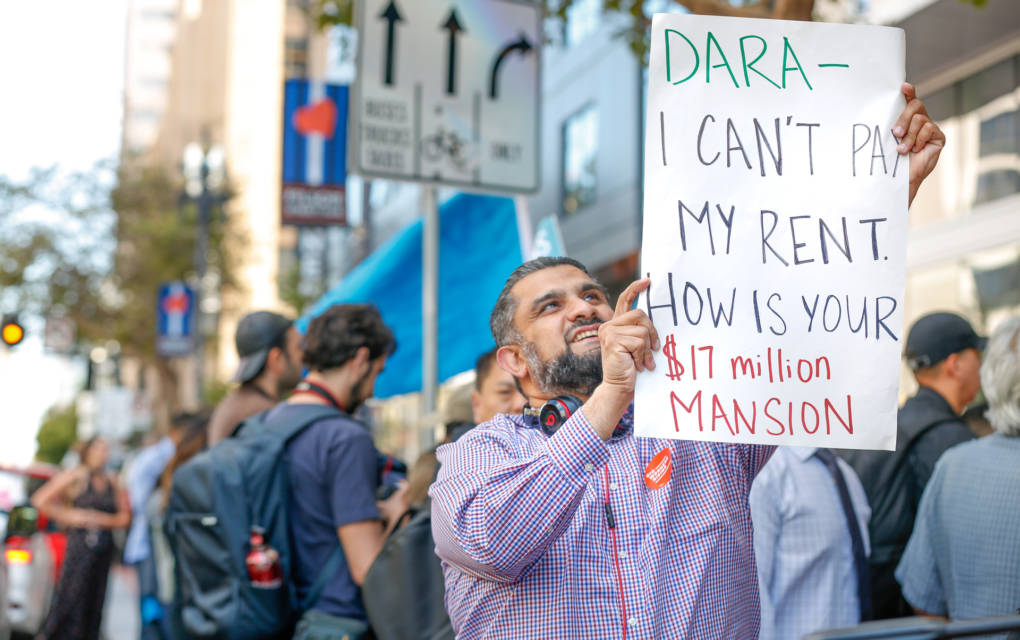
"caption": "Taking care of his mother and family, Uber and Lyft driver Malik Ali calls on Uber CEO Dara Khosrowshahi to help drivers earn a living wage.",
"description": "Taking care of his mother and family, Uber and Lyft driver, Malik Ali calls on Uber CEO, Dara Khosrowshahi, to help drivers keep a living wage.",
"title": "09182019_uber lyft-qut",
"credit": "Sruti Mamidanna/KQED",
"status": "inherit",
"isLoading": false,
"fetchFailed": false
},
"news_11832881": {
"type": "attachments",
"id": "news_11832881",
"meta": {
"index": "attachments_1716263798",
"site": "news",
"id": "11832881",
"found": true
},
"parent": 11832880,
"imgSizes": {
"apple_news_ca_landscape_5_5": {
"file": "https://ww2.kqed.org/app/uploads/sites/10/2020/08/gettyimages-1227939563-990bd0824f2e90f39e972f5a6cd13f6e318fa589-1044x783.jpg",
"width": 1044,
"mimeType": "image/jpeg",
"height": 783
},
"apple_news_ca_square_4_0": {
"file": "https://ww2.kqed.org/app/uploads/sites/10/2020/08/gettyimages-1227939563-990bd0824f2e90f39e972f5a6cd13f6e318fa589-470x470.jpg",
"width": 470,
"mimeType": "image/jpeg",
"height": 470
},
"twentyfourteen-full-width": {
"file": "https://ww2.kqed.org/app/uploads/sites/10/2020/08/gettyimages-1227939563-990bd0824f2e90f39e972f5a6cd13f6e318fa589-1038x576.jpg",
"width": 1038,
"mimeType": "image/jpeg",
"height": 576
},
"thumbnail": {
"file": "https://ww2.kqed.org/app/uploads/sites/10/2020/08/gettyimages-1227939563-990bd0824f2e90f39e972f5a6cd13f6e318fa589-160x120.jpg",
"width": 160,
"mimeType": "image/jpeg",
"height": 120
},
"post-thumbnail": {
"file": "https://ww2.kqed.org/app/uploads/sites/10/2020/08/gettyimages-1227939563-990bd0824f2e90f39e972f5a6cd13f6e318fa589-672x372.jpg",
"width": 672,
"mimeType": "image/jpeg",
"height": 372
},
"kqedFullSize": {
"file": "https://ww2.kqed.org/app/uploads/sites/10/2020/08/gettyimages-1227939563-990bd0824f2e90f39e972f5a6cd13f6e318fa589-scaled-e1597104075537.jpg",
"width": 1920,
"height": 1440
},
"2048x2048": {
"file": "https://ww2.kqed.org/app/uploads/sites/10/2020/08/gettyimages-1227939563-990bd0824f2e90f39e972f5a6cd13f6e318fa589-2048x1536.jpg",
"width": 2048,
"mimeType": "image/jpeg",
"height": 1536
},
"apple_news_ca_landscape_4_7": {
"file": "https://ww2.kqed.org/app/uploads/sites/10/2020/08/gettyimages-1227939563-990bd0824f2e90f39e972f5a6cd13f6e318fa589-632x474.jpg",
"width": 632,
"mimeType": "image/jpeg",
"height": 474
},
"large": {
"file": "https://ww2.kqed.org/app/uploads/sites/10/2020/08/gettyimages-1227939563-990bd0824f2e90f39e972f5a6cd13f6e318fa589-1020x765.jpg",
"width": 1020,
"mimeType": "image/jpeg",
"height": 765
},
"apple_news_ca_landscape_4_0": {
"file": "https://ww2.kqed.org/app/uploads/sites/10/2020/08/gettyimages-1227939563-990bd0824f2e90f39e972f5a6cd13f6e318fa589-536x402.jpg",
"width": 536,
"mimeType": "image/jpeg",
"height": 402
},
"apple_news_ca_portrait_12_9": {
"file": "https://ww2.kqed.org/app/uploads/sites/10/2020/08/gettyimages-1227939563-990bd0824f2e90f39e972f5a6cd13f6e318fa589-1122x1496.jpg",
"width": 1122,
"mimeType": "image/jpeg",
"height": 1496
},
"medium": {
"file": "https://ww2.kqed.org/app/uploads/sites/10/2020/08/gettyimages-1227939563-990bd0824f2e90f39e972f5a6cd13f6e318fa589-800x600.jpg",
"width": 800,
"mimeType": "image/jpeg",
"height": 600
},
"apple_news_ca_portrait_4_0": {
"file": "https://ww2.kqed.org/app/uploads/sites/10/2020/08/gettyimages-1227939563-990bd0824f2e90f39e972f5a6cd13f6e318fa589-354x472.jpg",
"width": 354,
"mimeType": "image/jpeg",
"height": 472
},
"apple_news_ca_portrait_9_7": {
"file": "https://ww2.kqed.org/app/uploads/sites/10/2020/08/gettyimages-1227939563-990bd0824f2e90f39e972f5a6cd13f6e318fa589-840x1120.jpg",
"width": 840,
"mimeType": "image/jpeg",
"height": 1120
},
"apple_news_ca_landscape_12_9": {
"file": "https://ww2.kqed.org/app/uploads/sites/10/2020/08/gettyimages-1227939563-990bd0824f2e90f39e972f5a6cd13f6e318fa589-1832x1374.jpg",
"width": 1832,
"mimeType": "image/jpeg",
"height": 1374
},
"apple_news_ca_square_9_7": {
"file": "https://ww2.kqed.org/app/uploads/sites/10/2020/08/gettyimages-1227939563-990bd0824f2e90f39e972f5a6cd13f6e318fa589-1104x1104.jpg",
"width": 1104,
"mimeType": "image/jpeg",
"height": 1104
},
"1536x1536": {
"file": "https://ww2.kqed.org/app/uploads/sites/10/2020/08/gettyimages-1227939563-990bd0824f2e90f39e972f5a6cd13f6e318fa589-1536x1152.jpg",
"width": 1536,
"mimeType": "image/jpeg",
"height": 1152
},
"apple_news_ca_portrait_4_7": {
"file": "https://ww2.kqed.org/app/uploads/sites/10/2020/08/gettyimages-1227939563-990bd0824f2e90f39e972f5a6cd13f6e318fa589-414x552.jpg",
"width": 414,
"mimeType": "image/jpeg",
"height": 552
},
"apple_news_ca_square_12_9": {
"file": "https://ww2.kqed.org/app/uploads/sites/10/2020/08/gettyimages-1227939563-990bd0824f2e90f39e972f5a6cd13f6e318fa589-1472x1472.jpg",
"width": 1472,
"mimeType": "image/jpeg",
"height": 1472
},
"apple_news_ca_portrait_5_5": {
"file": "https://ww2.kqed.org/app/uploads/sites/10/2020/08/gettyimages-1227939563-990bd0824f2e90f39e972f5a6cd13f6e318fa589-687x916.jpg",
"width": 687,
"mimeType": "image/jpeg",
"height": 916
},
"full-width": {
"file": "https://ww2.kqed.org/app/uploads/sites/10/2020/08/gettyimages-1227939563-990bd0824f2e90f39e972f5a6cd13f6e318fa589-1920x1440.jpg",
"width": 1920,
"mimeType": "image/jpeg",
"height": 1440
},
"apple_news_ca_square_4_7": {
"file": "https://ww2.kqed.org/app/uploads/sites/10/2020/08/gettyimages-1227939563-990bd0824f2e90f39e972f5a6cd13f6e318fa589-550x550.jpg",
"width": 550,
"mimeType": "image/jpeg",
"height": 550
},
"apple_news_ca_landscape_9_7": {
"file": "https://ww2.kqed.org/app/uploads/sites/10/2020/08/gettyimages-1227939563-990bd0824f2e90f39e972f5a6cd13f6e318fa589-1376x1032.jpg",
"width": 1376,
"mimeType": "image/jpeg",
"height": 1032
},
"apple_news_ca_square_5_5": {
"file": "https://ww2.kqed.org/app/uploads/sites/10/2020/08/gettyimages-1227939563-990bd0824f2e90f39e972f5a6cd13f6e318fa589-912x912.jpg",
"width": 912,
"mimeType": "image/jpeg",
"height": 912
}
},
"publishDate": 1597103925,
"modified": 1597778666,
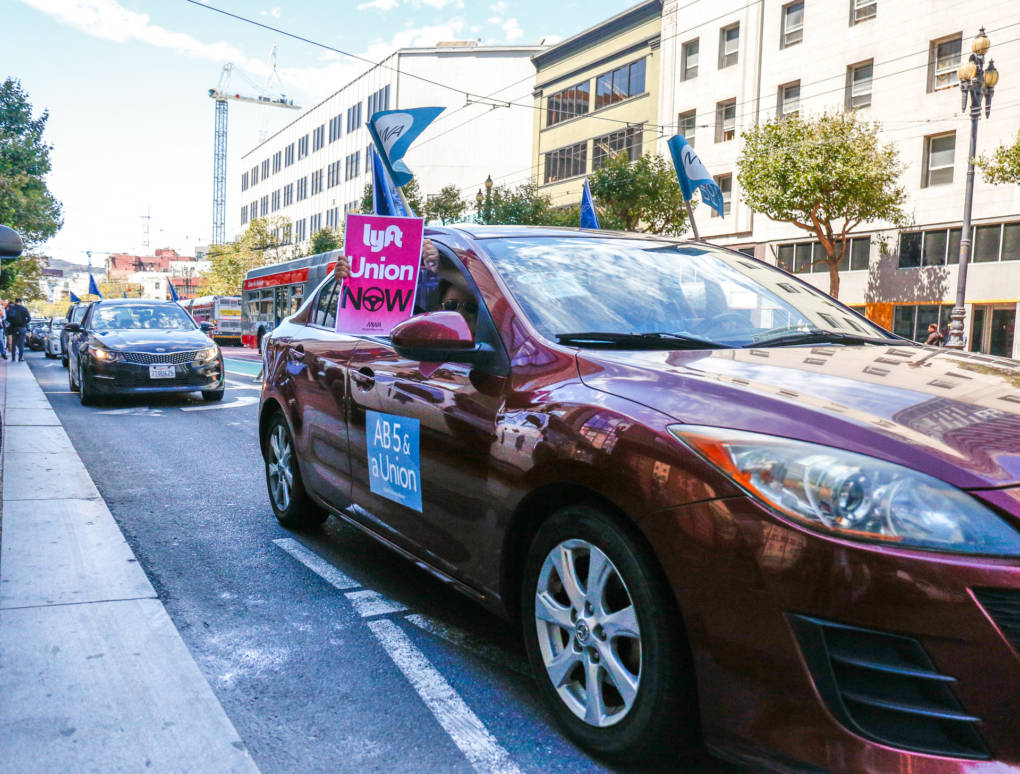
"caption": "In a ruling Monday, a California judge said Lyft and Uber have refused to comply with a California law, known as AB5, passed last year that was supposed to make it harder for companies in the state to hire workers as contractors.",
"description": "Rideshare drivers demonstrate against rideshare companies Uber and Lyft during a car caravan protest on August 6, 2020 in Los Angeles.",
"title": "In a ruling Monday, a California judge said Lyft and Uber have refused to comply with a California law, known as AB5, passed last year that was supposed to make it harder for companies in the state to hire workers as contractors.",
"credit": "Robyn Beck/AFP via Getty Images",
"status": "inherit",
"isLoading": false,
"fetchFailed": false
},
"news_11829883": {
"type": "attachments",
"id": "news_11829883",
"meta": {
"index": "attachments_1716263798",
"site": "news",
"id": "11829883",
"found": true
},
"parent": 11829806,
"imgSizes": {
"apple_news_ca_landscape_5_5": {
"file": "https://ww2.kqed.org/app/uploads/sites/10/2020/07/RS44017_020_KQED_Oakland_McDonaldsStrike_07202020-qut-1044x783.jpg",
"width": 1044,
"mimeType": "image/jpeg",
"height": 783
},
"apple_news_ca_square_4_0": {
"file": "https://ww2.kqed.org/app/uploads/sites/10/2020/07/RS44017_020_KQED_Oakland_McDonaldsStrike_07202020-qut-470x470.jpg",
"width": 470,
"mimeType": "image/jpeg",
"height": 470
},
"twentyfourteen-full-width": {
"file": "https://ww2.kqed.org/app/uploads/sites/10/2020/07/RS44017_020_KQED_Oakland_McDonaldsStrike_07202020-qut-1038x576.jpg",
"width": 1038,
"mimeType": "image/jpeg",
"height": 576
},
"thumbnail": {
"file": "https://ww2.kqed.org/app/uploads/sites/10/2020/07/RS44017_020_KQED_Oakland_McDonaldsStrike_07202020-qut-160x107.jpg",
"width": 160,
"mimeType": "image/jpeg",
"height": 107
},
"post-thumbnail": {
"file": "https://ww2.kqed.org/app/uploads/sites/10/2020/07/RS44017_020_KQED_Oakland_McDonaldsStrike_07202020-qut-672x372.jpg",
"width": 672,
"mimeType": "image/jpeg",
"height": 372
},
"kqedFullSize": {
"file": "https://ww2.kqed.org/app/uploads/sites/10/2020/07/RS44017_020_KQED_Oakland_McDonaldsStrike_07202020-qut.jpg",
"width": 1920,
"height": 1280
},
"apple_news_ca_landscape_4_7": {
"file": "https://ww2.kqed.org/app/uploads/sites/10/2020/07/RS44017_020_KQED_Oakland_McDonaldsStrike_07202020-qut-632x474.jpg",
"width": 632,
"mimeType": "image/jpeg",
"height": 474
},
"large": {
"file": "https://ww2.kqed.org/app/uploads/sites/10/2020/07/RS44017_020_KQED_Oakland_McDonaldsStrike_07202020-qut-1020x680.jpg",
"width": 1020,
"mimeType": "image/jpeg",
"height": 680
},
"apple_news_ca_landscape_4_0": {
"file": "https://ww2.kqed.org/app/uploads/sites/10/2020/07/RS44017_020_KQED_Oakland_McDonaldsStrike_07202020-qut-536x402.jpg",
"width": 536,
"mimeType": "image/jpeg",
"height": 402
},
"apple_news_ca_portrait_12_9": {
"file": "https://ww2.kqed.org/app/uploads/sites/10/2020/07/RS44017_020_KQED_Oakland_McDonaldsStrike_07202020-qut-1122x1280.jpg",
"width": 1122,
"mimeType": "image/jpeg",
"height": 1280
},
"medium": {
"file": "https://ww2.kqed.org/app/uploads/sites/10/2020/07/RS44017_020_KQED_Oakland_McDonaldsStrike_07202020-qut-800x533.jpg",
"width": 800,
"mimeType": "image/jpeg",
"height": 533
},
"apple_news_ca_portrait_4_0": {
"file": "https://ww2.kqed.org/app/uploads/sites/10/2020/07/RS44017_020_KQED_Oakland_McDonaldsStrike_07202020-qut-354x472.jpg",
"width": 354,
"mimeType": "image/jpeg",
"height": 472
},
"apple_news_ca_portrait_9_7": {
"file": "https://ww2.kqed.org/app/uploads/sites/10/2020/07/RS44017_020_KQED_Oakland_McDonaldsStrike_07202020-qut-840x1120.jpg",
"width": 840,
"mimeType": "image/jpeg",
"height": 1120
},
"apple_news_ca_landscape_12_9": {
"file": "https://ww2.kqed.org/app/uploads/sites/10/2020/07/RS44017_020_KQED_Oakland_McDonaldsStrike_07202020-qut-1832x1280.jpg",
"width": 1832,
"mimeType": "image/jpeg",
"height": 1280
},
"apple_news_ca_square_9_7": {
"file": "https://ww2.kqed.org/app/uploads/sites/10/2020/07/RS44017_020_KQED_Oakland_McDonaldsStrike_07202020-qut-1104x1104.jpg",
"width": 1104,
"mimeType": "image/jpeg",
"height": 1104
},
"1536x1536": {
"file": "https://ww2.kqed.org/app/uploads/sites/10/2020/07/RS44017_020_KQED_Oakland_McDonaldsStrike_07202020-qut-1536x1024.jpg",
"width": 1536,
"mimeType": "image/jpeg",
"height": 1024
},
"apple_news_ca_portrait_4_7": {
"file": "https://ww2.kqed.org/app/uploads/sites/10/2020/07/RS44017_020_KQED_Oakland_McDonaldsStrike_07202020-qut-414x552.jpg",
"width": 414,
"mimeType": "image/jpeg",
"height": 552
},
"apple_news_ca_square_12_9": {
"file": "https://ww2.kqed.org/app/uploads/sites/10/2020/07/RS44017_020_KQED_Oakland_McDonaldsStrike_07202020-qut-1472x1280.jpg",
"width": 1472,
"mimeType": "image/jpeg",
"height": 1280
},
"apple_news_ca_portrait_5_5": {
"file": "https://ww2.kqed.org/app/uploads/sites/10/2020/07/RS44017_020_KQED_Oakland_McDonaldsStrike_07202020-qut-687x916.jpg",
"width": 687,
"mimeType": "image/jpeg",
"height": 916
},
"apple_news_ca_square_4_7": {
"file": "https://ww2.kqed.org/app/uploads/sites/10/2020/07/RS44017_020_KQED_Oakland_McDonaldsStrike_07202020-qut-550x550.jpg",
"width": 550,
"mimeType": "image/jpeg",
"height": 550
},
"apple_news_ca_landscape_9_7": {
"file": "https://ww2.kqed.org/app/uploads/sites/10/2020/07/RS44017_020_KQED_Oakland_McDonaldsStrike_07202020-qut-1376x1032.jpg",
"width": 1376,
"mimeType": "image/jpeg",
"height": 1032
},
"apple_news_ca_square_5_5": {
"file": "https://ww2.kqed.org/app/uploads/sites/10/2020/07/RS44017_020_KQED_Oakland_McDonaldsStrike_07202020-qut-912x912.jpg",
"width": 912,
"mimeType": "image/jpeg",
"height": 912
}
},
"publishDate": 1595295868,
"modified": 1595295899,
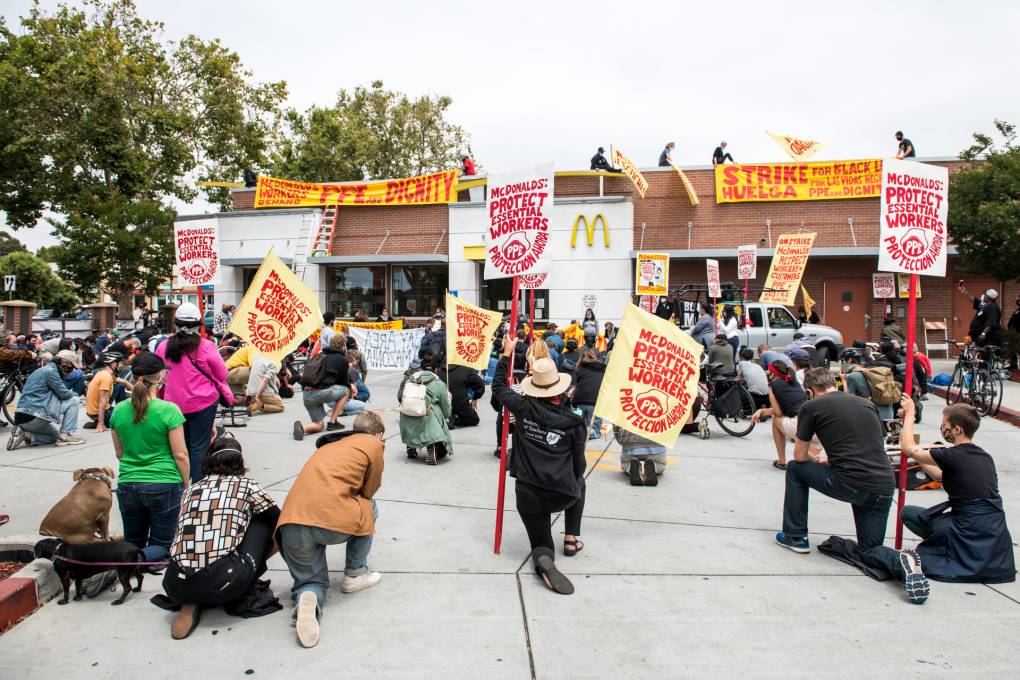
"caption": "Demonstrators take a knee for eight minutes and 46 seconds, the time prosecutors say a Minneapolis police officer knelt on the neck of George Floyd, during a 'Strike for Black Lives' rally outside of a McDonalds on Telegraph Avenue in Oakland on July 20, 2020.",
"description": null,
"title": "RS44017_020_KQED_Oakland_McDonaldsStrike_07202020-qut",
"credit": "Beth LaBerge/KQED",
"status": "inherit",
"isLoading": false,
"fetchFailed": false
},
"news_11828642": {
"type": "attachments",
"id": "news_11828642",
"meta": {
"index": "attachments_1716263798",
"site": "news",
"id": "11828642",
"found": true
},
"parent": 11828630,
"imgSizes": {
"apple_news_ca_landscape_5_5": {
"file": "https://ww2.kqed.org/app/uploads/sites/10/2020/07/Image-from-iOS-13-1-1044x783.jpg",
"width": 1044,
"mimeType": "image/jpeg",
"height": 783
},
"apple_news_ca_square_4_0": {
"file": "https://ww2.kqed.org/app/uploads/sites/10/2020/07/Image-from-iOS-13-1-470x470.jpg",
"width": 470,
"mimeType": "image/jpeg",
"height": 470
},
"twentyfourteen-full-width": {
"file": "https://ww2.kqed.org/app/uploads/sites/10/2020/07/Image-from-iOS-13-1-1038x576.jpg",
"width": 1038,
"mimeType": "image/jpeg",
"height": 576
},
"thumbnail": {
"file": "https://ww2.kqed.org/app/uploads/sites/10/2020/07/Image-from-iOS-13-1-160x107.jpg",
"width": 160,
"mimeType": "image/jpeg",
"height": 107
},
"post-thumbnail": {
"file": "https://ww2.kqed.org/app/uploads/sites/10/2020/07/Image-from-iOS-13-1-672x372.jpg",
"width": 672,
"mimeType": "image/jpeg",
"height": 372
},
"kqedFullSize": {
"file": "https://ww2.kqed.org/app/uploads/sites/10/2020/07/Image-from-iOS-13-1.jpg",
"width": 1900,
"height": 1267
},
"apple_news_ca_landscape_4_7": {
"file": "https://ww2.kqed.org/app/uploads/sites/10/2020/07/Image-from-iOS-13-1-632x474.jpg",
"width": 632,
"mimeType": "image/jpeg",
"height": 474
},
"large": {
"file": "https://ww2.kqed.org/app/uploads/sites/10/2020/07/Image-from-iOS-13-1-1020x680.jpg",
"width": 1020,
"mimeType": "image/jpeg",
"height": 680
},
"apple_news_ca_landscape_4_0": {
"file": "https://ww2.kqed.org/app/uploads/sites/10/2020/07/Image-from-iOS-13-1-536x402.jpg",
"width": 536,
"mimeType": "image/jpeg",
"height": 402
},
"apple_news_ca_portrait_12_9": {
"file": "https://ww2.kqed.org/app/uploads/sites/10/2020/07/Image-from-iOS-13-1-1122x1267.jpg",
"width": 1122,
"mimeType": "image/jpeg",
"height": 1267
},
"medium": {
"file": "https://ww2.kqed.org/app/uploads/sites/10/2020/07/Image-from-iOS-13-1-800x533.jpg",
"width": 800,
"mimeType": "image/jpeg",
"height": 533
},
"apple_news_ca_portrait_4_0": {
"file": "https://ww2.kqed.org/app/uploads/sites/10/2020/07/Image-from-iOS-13-1-354x472.jpg",
"width": 354,
"mimeType": "image/jpeg",
"height": 472
},
"apple_news_ca_portrait_9_7": {
"file": "https://ww2.kqed.org/app/uploads/sites/10/2020/07/Image-from-iOS-13-1-840x1120.jpg",
"width": 840,
"mimeType": "image/jpeg",
"height": 1120
},
"apple_news_ca_landscape_12_9": {
"file": "https://ww2.kqed.org/app/uploads/sites/10/2020/07/Image-from-iOS-13-1-1832x1267.jpg",
"width": 1832,
"mimeType": "image/jpeg",
"height": 1267
},
"apple_news_ca_square_9_7": {
"file": "https://ww2.kqed.org/app/uploads/sites/10/2020/07/Image-from-iOS-13-1-1104x1104.jpg",
"width": 1104,
"mimeType": "image/jpeg",
"height": 1104
},
"1536x1536": {
"file": "https://ww2.kqed.org/app/uploads/sites/10/2020/07/Image-from-iOS-13-1-1536x1024.jpg",
"width": 1536,
"mimeType": "image/jpeg",
"height": 1024
},
"apple_news_ca_portrait_4_7": {
"file": "https://ww2.kqed.org/app/uploads/sites/10/2020/07/Image-from-iOS-13-1-414x552.jpg",
"width": 414,
"mimeType": "image/jpeg",
"height": 552
},
"apple_news_ca_square_12_9": {
"file": "https://ww2.kqed.org/app/uploads/sites/10/2020/07/Image-from-iOS-13-1-1472x1267.jpg",
"width": 1472,
"mimeType": "image/jpeg",
"height": 1267
},
"apple_news_ca_portrait_5_5": {
"file": "https://ww2.kqed.org/app/uploads/sites/10/2020/07/Image-from-iOS-13-1-687x916.jpg",
"width": 687,
"mimeType": "image/jpeg",
"height": 916
},
"apple_news_ca_square_4_7": {
"file": "https://ww2.kqed.org/app/uploads/sites/10/2020/07/Image-from-iOS-13-1-550x550.jpg",
"width": 550,
"mimeType": "image/jpeg",
"height": 550
},
"apple_news_ca_landscape_9_7": {
"file": "https://ww2.kqed.org/app/uploads/sites/10/2020/07/Image-from-iOS-13-1-1376x1032.jpg",
"width": 1376,
"mimeType": "image/jpeg",
"height": 1032
},
"apple_news_ca_square_5_5": {
"file": "https://ww2.kqed.org/app/uploads/sites/10/2020/07/Image-from-iOS-13-1-912x912.jpg",
"width": 912,
"mimeType": "image/jpeg",
"height": 912
}
},
"publishDate": 1594525344,
"modified": 1594525414,
"caption": "A sign details COVID-19 practices for a Philz Coffee on 24th and Folsom Streets.",
"description": "A sign details COVID-19 practices for a Philz Coffee on 24th and Folsom Streets.",
"title": "Image from iOS (13) (1)",
"credit": "Beth LaBerge/KQED",
"status": "inherit",
"isLoading": false,
"fetchFailed": false
},
"news_11828232": {
"type": "attachments",
"id": "news_11828232",
"meta": {
"index": "attachments_1716263798",
"site": "news",
"id": "11828232",
"found": true
},
"parent": 11828187,
"imgSizes": {
"apple_news_ca_landscape_5_5": {
"file": "https://ww2.kqed.org/app/uploads/sites/10/2020/07/RS43891_GettyImages-1255121114-qut-1044x783.jpg",
"width": 1044,
"mimeType": "image/jpeg",
"height": 783
},
"apple_news_ca_square_4_0": {
"file": "https://ww2.kqed.org/app/uploads/sites/10/2020/07/RS43891_GettyImages-1255121114-qut-470x470.jpg",
"width": 470,
"mimeType": "image/jpeg",
"height": 470
},
"twentyfourteen-full-width": {
"file": "https://ww2.kqed.org/app/uploads/sites/10/2020/07/RS43891_GettyImages-1255121114-qut-1038x576.jpg",
"width": 1038,
"mimeType": "image/jpeg",
"height": 576
},
"thumbnail": {
"file": "https://ww2.kqed.org/app/uploads/sites/10/2020/07/RS43891_GettyImages-1255121114-qut-160x106.jpg",
"width": 160,
"mimeType": "image/jpeg",
"height": 106
},
"post-thumbnail": {
"file": "https://ww2.kqed.org/app/uploads/sites/10/2020/07/RS43891_GettyImages-1255121114-qut-672x372.jpg",
"width": 672,
"mimeType": "image/jpeg",
"height": 372
},
"kqedFullSize": {
"file": "https://ww2.kqed.org/app/uploads/sites/10/2020/07/RS43891_GettyImages-1255121114-qut-e1594339256336.jpg",
"width": 1920,
"height": 1273
},
"apple_news_ca_landscape_4_7": {
"file": "https://ww2.kqed.org/app/uploads/sites/10/2020/07/RS43891_GettyImages-1255121114-qut-632x474.jpg",
"width": 632,
"mimeType": "image/jpeg",
"height": 474
},
"large": {
"file": "https://ww2.kqed.org/app/uploads/sites/10/2020/07/RS43891_GettyImages-1255121114-qut-1020x676.jpg",
"width": 1020,
"mimeType": "image/jpeg",
"height": 676
},
"apple_news_ca_landscape_4_0": {
"file": "https://ww2.kqed.org/app/uploads/sites/10/2020/07/RS43891_GettyImages-1255121114-qut-536x402.jpg",
"width": 536,
"mimeType": "image/jpeg",
"height": 402
},
"apple_news_ca_portrait_12_9": {
"file": "https://ww2.kqed.org/app/uploads/sites/10/2020/07/RS43891_GettyImages-1255121114-qut-1122x1273.jpg",
"width": 1122,
"mimeType": "image/jpeg",
"height": 1273
},
"medium": {
"file": "https://ww2.kqed.org/app/uploads/sites/10/2020/07/RS43891_GettyImages-1255121114-qut-800x530.jpg",
"width": 800,
"mimeType": "image/jpeg",
"height": 530
},
"apple_news_ca_portrait_4_0": {
"file": "https://ww2.kqed.org/app/uploads/sites/10/2020/07/RS43891_GettyImages-1255121114-qut-354x472.jpg",
"width": 354,
"mimeType": "image/jpeg",
"height": 472
},
"apple_news_ca_portrait_9_7": {
"file": "https://ww2.kqed.org/app/uploads/sites/10/2020/07/RS43891_GettyImages-1255121114-qut-840x1120.jpg",
"width": 840,
"mimeType": "image/jpeg",
"height": 1120
},
"apple_news_ca_landscape_12_9": {
"file": "https://ww2.kqed.org/app/uploads/sites/10/2020/07/RS43891_GettyImages-1255121114-qut-1832x1273.jpg",
"width": 1832,
"mimeType": "image/jpeg",
"height": 1273
},
"apple_news_ca_square_9_7": {
"file": "https://ww2.kqed.org/app/uploads/sites/10/2020/07/RS43891_GettyImages-1255121114-qut-1104x1104.jpg",
"width": 1104,
"mimeType": "image/jpeg",
"height": 1104
},
"1536x1536": {
"file": "https://ww2.kqed.org/app/uploads/sites/10/2020/07/RS43891_GettyImages-1255121114-qut-1536x1018.jpg",
"width": 1536,
"mimeType": "image/jpeg",
"height": 1018
},
"apple_news_ca_portrait_4_7": {
"file": "https://ww2.kqed.org/app/uploads/sites/10/2020/07/RS43891_GettyImages-1255121114-qut-414x552.jpg",
"width": 414,
"mimeType": "image/jpeg",
"height": 552
},
"apple_news_ca_square_12_9": {
"file": "https://ww2.kqed.org/app/uploads/sites/10/2020/07/RS43891_GettyImages-1255121114-qut-1472x1273.jpg",
"width": 1472,
"mimeType": "image/jpeg",
"height": 1273
},
"apple_news_ca_portrait_5_5": {
"file": "https://ww2.kqed.org/app/uploads/sites/10/2020/07/RS43891_GettyImages-1255121114-qut-687x916.jpg",
"width": 687,
"mimeType": "image/jpeg",
"height": 916
},
"apple_news_ca_square_4_7": {
"file": "https://ww2.kqed.org/app/uploads/sites/10/2020/07/RS43891_GettyImages-1255121114-qut-550x550.jpg",
"width": 550,
"mimeType": "image/jpeg",
"height": 550
},
"apple_news_ca_landscape_9_7": {
"file": "https://ww2.kqed.org/app/uploads/sites/10/2020/07/RS43891_GettyImages-1255121114-qut-1376x1032.jpg",
"width": 1376,
"mimeType": "image/jpeg",
"height": 1032
},
"apple_news_ca_square_5_5": {
"file": "https://ww2.kqed.org/app/uploads/sites/10/2020/07/RS43891_GettyImages-1255121114-qut-912x912.jpg",
"width": 912,
"mimeType": "image/jpeg",
"height": 912
}
},
"publishDate": 1594338303,
"modified": 1594340304,
"caption": "An aerial view of a new emergency care facility erected to treat inmates infected with COVID-19 at San Quentin State Prison on July 08, 2020. Over 1,600 people incarcerated there have contracted COVID-19 after infected inmates were transferred from a prison in Chino. Seven inmates at San Quentin have died.",
"description": "An aerial view of a new emergency care facility erected to treat inmates infected with COVID-19 at San Quentin State Prison on July 08, 2020. Over 1,600 people incarcerated there have contracted COVID-19 after infected inmates were transferred from a prison in Chino. Seven inmates at San Quentin have died.",
"title": "One-Third Of Prisoners At San Quentin Prison Have Coronavirus",
"credit": "Justin Sullivan/Getty Images",
"status": "inherit",
"isLoading": false,
"fetchFailed": false
},
"news_11827402": {
"type": "attachments",
"id": "news_11827402",
"meta": {
"index": "attachments_1716263798",
"site": "news",
"id": "11827402",
"found": true
},
"parent": 11827400,
"imgSizes": {
"apple_news_ca_landscape_5_5": {
"file": "https://ww2.kqed.org/app/uploads/sites/10/2020/07/RS42503_006_KQED_Oakland_EssentialWorkers_04012020-qut-1044x783.jpg",
"width": 1044,
"mimeType": "image/jpeg",
"height": 783
},
"apple_news_ca_square_4_0": {
"file": "https://ww2.kqed.org/app/uploads/sites/10/2020/07/RS42503_006_KQED_Oakland_EssentialWorkers_04012020-qut-470x470.jpg",
"width": 470,
"mimeType": "image/jpeg",
"height": 470
},
"twentyfourteen-full-width": {
"file": "https://ww2.kqed.org/app/uploads/sites/10/2020/07/RS42503_006_KQED_Oakland_EssentialWorkers_04012020-qut-1038x576.jpg",
"width": 1038,
"mimeType": "image/jpeg",
"height": 576
},
"thumbnail": {
"file": "https://ww2.kqed.org/app/uploads/sites/10/2020/07/RS42503_006_KQED_Oakland_EssentialWorkers_04012020-qut-160x107.jpg",
"width": 160,
"mimeType": "image/jpeg",
"height": 107
},
"post-thumbnail": {
"file": "https://ww2.kqed.org/app/uploads/sites/10/2020/07/RS42503_006_KQED_Oakland_EssentialWorkers_04012020-qut-672x372.jpg",
"width": 672,
"mimeType": "image/jpeg",
"height": 372
},
"kqedFullSize": {
"file": "https://ww2.kqed.org/app/uploads/sites/10/2020/07/RS42503_006_KQED_Oakland_EssentialWorkers_04012020-qut.jpg",
"width": 1920,
"height": 1280
},
"apple_news_ca_landscape_4_7": {
"file": "https://ww2.kqed.org/app/uploads/sites/10/2020/07/RS42503_006_KQED_Oakland_EssentialWorkers_04012020-qut-632x474.jpg",
"width": 632,
"mimeType": "image/jpeg",
"height": 474
},
"large": {
"file": "https://ww2.kqed.org/app/uploads/sites/10/2020/07/RS42503_006_KQED_Oakland_EssentialWorkers_04012020-qut-1020x680.jpg",
"width": 1020,
"mimeType": "image/jpeg",
"height": 680
},
"apple_news_ca_landscape_4_0": {
"file": "https://ww2.kqed.org/app/uploads/sites/10/2020/07/RS42503_006_KQED_Oakland_EssentialWorkers_04012020-qut-536x402.jpg",
"width": 536,
"mimeType": "image/jpeg",
"height": 402
},
"apple_news_ca_portrait_12_9": {
"file": "https://ww2.kqed.org/app/uploads/sites/10/2020/07/RS42503_006_KQED_Oakland_EssentialWorkers_04012020-qut-1122x1280.jpg",
"width": 1122,
"mimeType": "image/jpeg",
"height": 1280
},
"medium": {
"file": "https://ww2.kqed.org/app/uploads/sites/10/2020/07/RS42503_006_KQED_Oakland_EssentialWorkers_04012020-qut-800x533.jpg",
"width": 800,
"mimeType": "image/jpeg",
"height": 533
},
"apple_news_ca_portrait_4_0": {
"file": "https://ww2.kqed.org/app/uploads/sites/10/2020/07/RS42503_006_KQED_Oakland_EssentialWorkers_04012020-qut-354x472.jpg",
"width": 354,
"mimeType": "image/jpeg",
"height": 472
},
"apple_news_ca_portrait_9_7": {
"file": "https://ww2.kqed.org/app/uploads/sites/10/2020/07/RS42503_006_KQED_Oakland_EssentialWorkers_04012020-qut-840x1120.jpg",
"width": 840,
"mimeType": "image/jpeg",
"height": 1120
},
"apple_news_ca_landscape_12_9": {
"file": "https://ww2.kqed.org/app/uploads/sites/10/2020/07/RS42503_006_KQED_Oakland_EssentialWorkers_04012020-qut-1832x1280.jpg",
"width": 1832,
"mimeType": "image/jpeg",
"height": 1280
},
"apple_news_ca_square_9_7": {
"file": "https://ww2.kqed.org/app/uploads/sites/10/2020/07/RS42503_006_KQED_Oakland_EssentialWorkers_04012020-qut-1104x1104.jpg",
"width": 1104,
"mimeType": "image/jpeg",
"height": 1104
},
"1536x1536": {
"file": "https://ww2.kqed.org/app/uploads/sites/10/2020/07/RS42503_006_KQED_Oakland_EssentialWorkers_04012020-qut-1536x1024.jpg",
"width": 1536,
"mimeType": "image/jpeg",
"height": 1024
},
"apple_news_ca_portrait_4_7": {
"file": "https://ww2.kqed.org/app/uploads/sites/10/2020/07/RS42503_006_KQED_Oakland_EssentialWorkers_04012020-qut-414x552.jpg",
"width": 414,
"mimeType": "image/jpeg",
"height": 552
},
"apple_news_ca_square_12_9": {
"file": "https://ww2.kqed.org/app/uploads/sites/10/2020/07/RS42503_006_KQED_Oakland_EssentialWorkers_04012020-qut-1472x1280.jpg",
"width": 1472,
"mimeType": "image/jpeg",
"height": 1280
},
"apple_news_ca_portrait_5_5": {
"file": "https://ww2.kqed.org/app/uploads/sites/10/2020/07/RS42503_006_KQED_Oakland_EssentialWorkers_04012020-qut-687x916.jpg",
"width": 687,
"mimeType": "image/jpeg",
"height": 916
},
"apple_news_ca_square_4_7": {
"file": "https://ww2.kqed.org/app/uploads/sites/10/2020/07/RS42503_006_KQED_Oakland_EssentialWorkers_04012020-qut-550x550.jpg",
"width": 550,
"mimeType": "image/jpeg",
"height": 550
},
"apple_news_ca_landscape_9_7": {
"file": "https://ww2.kqed.org/app/uploads/sites/10/2020/07/RS42503_006_KQED_Oakland_EssentialWorkers_04012020-qut-1376x1032.jpg",
"width": 1376,
"mimeType": "image/jpeg",
"height": 1032
},
"apple_news_ca_square_5_5": {
"file": "https://ww2.kqed.org/app/uploads/sites/10/2020/07/RS42503_006_KQED_Oakland_EssentialWorkers_04012020-qut-912x912.jpg",
"width": 912,
"mimeType": "image/jpeg",
"height": 912
}
},
"publishDate": 1593747070,
"modified": 1593747070,
"caption": "Mohamed Darhan, 30, holds a sign for customers to not enter the shop if they are feeling any symptoms of COVID-19, at Sunrise Market the corner grocery store where he works in Oakland on April 1, 2020. He tries to keep the store clean, but says that it can be difficult. He regularly sanitizes his gloves and the counter, places signs for people to keep distance and not to come in if they are sick, and has put boxes in front of the register to keep people at a distance. Darhan said that some of his customers take COVID-19 seriously, and others don't. He said, \"They have to take it serious.\"",
"description": null,
"title": "RS42503_006_KQED_Oakland_EssentialWorkers_04012020-qut",
"credit": null,
"status": "inherit",
"isLoading": false,
"fetchFailed": false
},
"news_11825275": {
"type": "attachments",
"id": "news_11825275",
"meta": {
"index": "attachments_1716263798",
"site": "news",
"id": "11825275",
"found": true
},
"parent": 11825265,
"imgSizes": {
"apple_news_ca_square_4_0": {
"file": "https://ww2.kqed.org/app/uploads/sites/10/2020/06/5110566487_2207b61f60_b-470x470.jpg",
"width": 470,
"mimeType": "image/jpeg",
"height": 470
},
"twentyfourteen-full-width": {
"file": "https://ww2.kqed.org/app/uploads/sites/10/2020/06/5110566487_2207b61f60_b-1024x576.jpg",
"width": 1024,
"mimeType": "image/jpeg",
"height": 576
},
"thumbnail": {
"file": "https://ww2.kqed.org/app/uploads/sites/10/2020/06/5110566487_2207b61f60_b-160x106.jpg",
"width": 160,
"mimeType": "image/jpeg",
"height": 106
},
"post-thumbnail": {
"file": "https://ww2.kqed.org/app/uploads/sites/10/2020/06/5110566487_2207b61f60_b-672x372.jpg",
"width": 672,
"mimeType": "image/jpeg",
"height": 372
},
"kqedFullSize": {
"file": "https://ww2.kqed.org/app/uploads/sites/10/2020/06/5110566487_2207b61f60_b.jpg",
"width": 1024,
"height": 678
},
"apple_news_ca_landscape_4_7": {
"file": "https://ww2.kqed.org/app/uploads/sites/10/2020/06/5110566487_2207b61f60_b-632x474.jpg",
"width": 632,
"mimeType": "image/jpeg",
"height": 474
},
"large": {
"file": "https://ww2.kqed.org/app/uploads/sites/10/2020/06/5110566487_2207b61f60_b-1020x675.jpg",
"width": 1020,
"mimeType": "image/jpeg",
"height": 675
},
"apple_news_ca_landscape_4_0": {
"file": "https://ww2.kqed.org/app/uploads/sites/10/2020/06/5110566487_2207b61f60_b-536x402.jpg",
"width": 536,
"mimeType": "image/jpeg",
"height": 402
},
"medium": {
"file": "https://ww2.kqed.org/app/uploads/sites/10/2020/06/5110566487_2207b61f60_b-800x530.jpg",
"width": 800,
"mimeType": "image/jpeg",
"height": 530
},
"apple_news_ca_portrait_4_0": {
"file": "https://ww2.kqed.org/app/uploads/sites/10/2020/06/5110566487_2207b61f60_b-354x472.jpg",
"width": 354,
"mimeType": "image/jpeg",
"height": 472
},
"apple_news_ca_portrait_9_7": {
"file": "https://ww2.kqed.org/app/uploads/sites/10/2020/06/5110566487_2207b61f60_b-840x678.jpg",
"width": 840,
"mimeType": "image/jpeg",
"height": 678
},
"apple_news_ca_portrait_4_7": {
"file": "https://ww2.kqed.org/app/uploads/sites/10/2020/06/5110566487_2207b61f60_b-414x552.jpg",
"width": 414,
"mimeType": "image/jpeg",
"height": 552
},
"apple_news_ca_portrait_5_5": {
"file": "https://ww2.kqed.org/app/uploads/sites/10/2020/06/5110566487_2207b61f60_b-687x678.jpg",
"width": 687,
"mimeType": "image/jpeg",
"height": 678
},
"apple_news_ca_square_4_7": {
"file": "https://ww2.kqed.org/app/uploads/sites/10/2020/06/5110566487_2207b61f60_b-550x550.jpg",
"width": 550,
"mimeType": "image/jpeg",
"height": 550
},
"apple_news_ca_square_5_5": {
"file": "https://ww2.kqed.org/app/uploads/sites/10/2020/06/5110566487_2207b61f60_b-912x678.jpg",
"width": 912,
"mimeType": "image/jpeg",
"height": 678
}
},
"publishDate": 1592521074,
"modified": 1592521266,
"caption": "The International Longshore and Warehouse Union, has a long history of anti-racism work in the Bay Area, including protesting against police violence. ",
"description": null,
"title": "5110566487_2207b61f60_b",
"credit": "Steve Rhodes",
"status": "inherit",
"isLoading": false,
"fetchFailed": false
},
"news_11821498": {
"type": "attachments",
"id": "news_11821498",
"meta": {
"index": "attachments_1716263798",
"site": "news",
"id": "11821498",
"found": true
},
"parent": 11821389,
"imgSizes": {
"apple_news_ca_square_4_0": {
"file": "https://ww2.kqed.org/app/uploads/sites/10/2020/05/GettyImages-1207190140-470x470.jpg",
"width": 470,
"mimeType": "image/jpeg",
"height": 470
},
"twentyfourteen-full-width": {
"file": "https://ww2.kqed.org/app/uploads/sites/10/2020/05/GettyImages-1207190140-1024x576.jpg",
"width": 1024,
"mimeType": "image/jpeg",
"height": 576
},
"thumbnail": {
"file": "https://ww2.kqed.org/app/uploads/sites/10/2020/05/GettyImages-1207190140-160x105.jpg",
"width": 160,
"mimeType": "image/jpeg",
"height": 105
},
"post-thumbnail": {
"file": "https://ww2.kqed.org/app/uploads/sites/10/2020/05/GettyImages-1207190140-672x372.jpg",
"width": 672,
"mimeType": "image/jpeg",
"height": 372
},
"kqedFullSize": {
"file": "https://ww2.kqed.org/app/uploads/sites/10/2020/05/GettyImages-1207190140.jpg",
"width": 1024,
"height": 675
},
"apple_news_ca_landscape_4_7": {
"file": "https://ww2.kqed.org/app/uploads/sites/10/2020/05/GettyImages-1207190140-632x474.jpg",
"width": 632,
"mimeType": "image/jpeg",
"height": 474
},
"large": {
"file": "https://ww2.kqed.org/app/uploads/sites/10/2020/05/GettyImages-1207190140-1020x672.jpg",
"width": 1020,
"mimeType": "image/jpeg",
"height": 672
},
"apple_news_ca_landscape_4_0": {
"file": "https://ww2.kqed.org/app/uploads/sites/10/2020/05/GettyImages-1207190140-536x402.jpg",
"width": 536,
"mimeType": "image/jpeg",
"height": 402
},
"medium": {
"file": "https://ww2.kqed.org/app/uploads/sites/10/2020/05/GettyImages-1207190140-800x527.jpg",
"width": 800,
"mimeType": "image/jpeg",
"height": 527
},
"apple_news_ca_portrait_4_0": {
"file": "https://ww2.kqed.org/app/uploads/sites/10/2020/05/GettyImages-1207190140-354x472.jpg",
"width": 354,
"mimeType": "image/jpeg",
"height": 472
},
"apple_news_ca_portrait_9_7": {
"file": "https://ww2.kqed.org/app/uploads/sites/10/2020/05/GettyImages-1207190140-840x675.jpg",
"width": 840,
"mimeType": "image/jpeg",
"height": 675
},
"apple_news_ca_portrait_4_7": {
"file": "https://ww2.kqed.org/app/uploads/sites/10/2020/05/GettyImages-1207190140-414x552.jpg",
"width": 414,
"mimeType": "image/jpeg",
"height": 552
},
"apple_news_ca_portrait_5_5": {
"file": "https://ww2.kqed.org/app/uploads/sites/10/2020/05/GettyImages-1207190140-687x675.jpg",
"width": 687,
"mimeType": "image/jpeg",
"height": 675
},
"apple_news_ca_square_4_7": {
"file": "https://ww2.kqed.org/app/uploads/sites/10/2020/05/GettyImages-1207190140-550x550.jpg",
"width": 550,
"mimeType": "image/jpeg",
"height": 550
},
"apple_news_ca_square_5_5": {
"file": "https://ww2.kqed.org/app/uploads/sites/10/2020/05/GettyImages-1207190140-912x675.jpg",
"width": 912,
"mimeType": "image/jpeg",
"height": 675
}
},
"publishDate": 1590702503,
"modified": 1590702555,
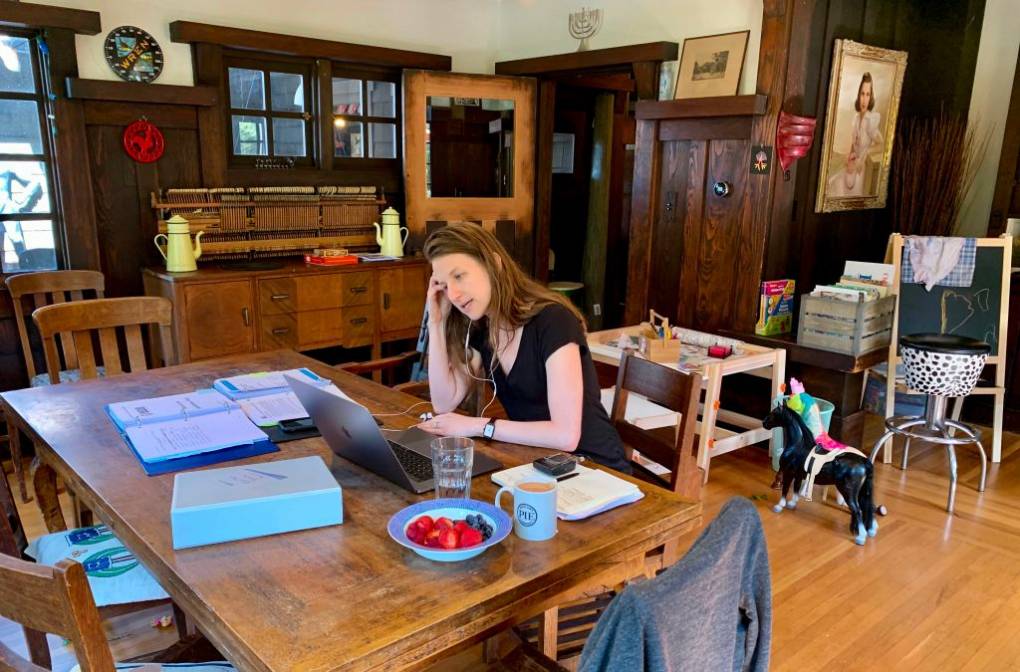
"caption": "Martha Lackritz-Peltier, an attorney at TechSoup, talks to one of her colleagues over the phone while working from her living room in Oakland on March 12, 2020.",
"description": null,
"title": "US-HEALTH-VIRUS-LIFESTYLE-IT",
"credit": "Julie Jammot/AFP via Getty Images",
"status": "inherit",
"isLoading": false,
"fetchFailed": false
},
"news_11819713": {
"type": "attachments",
"id": "news_11819713",
"meta": {
"index": "attachments_1716263798",
"site": "news",
"id": "11819713",
"found": true
},
"parent": 11813362,
"imgSizes": {
"apple_news_ca_landscape_5_5": {
"file": "https://ww2.kqed.org/app/uploads/sites/10/2020/05/030_KQED_Oakland_MedicalWorkers_Derrick_05142020-1044x783.jpg",
"width": 1044,
"mimeType": "image/jpeg",
"height": 783
},
"apple_news_ca_square_4_0": {
"file": "https://ww2.kqed.org/app/uploads/sites/10/2020/05/030_KQED_Oakland_MedicalWorkers_Derrick_05142020-470x470.jpg",
"width": 470,
"mimeType": "image/jpeg",
"height": 470
},
"twentyfourteen-full-width": {
"file": "https://ww2.kqed.org/app/uploads/sites/10/2020/05/030_KQED_Oakland_MedicalWorkers_Derrick_05142020-1038x576.jpg",
"width": 1038,
"mimeType": "image/jpeg",
"height": 576
},
"thumbnail": {
"file": "https://ww2.kqed.org/app/uploads/sites/10/2020/05/030_KQED_Oakland_MedicalWorkers_Derrick_05142020-160x107.jpg",
"width": 160,
"mimeType": "image/jpeg",
"height": 107
},
"post-thumbnail": {
"file": "https://ww2.kqed.org/app/uploads/sites/10/2020/05/030_KQED_Oakland_MedicalWorkers_Derrick_05142020-672x372.jpg",
"width": 672,
"mimeType": "image/jpeg",
"height": 372
},
"kqedFullSize": {
"file": "https://ww2.kqed.org/app/uploads/sites/10/2020/05/030_KQED_Oakland_MedicalWorkers_Derrick_05142020.jpg",
"width": 1920,
"height": 1280
},
"apple_news_ca_landscape_4_7": {
"file": "https://ww2.kqed.org/app/uploads/sites/10/2020/05/030_KQED_Oakland_MedicalWorkers_Derrick_05142020-632x474.jpg",
"width": 632,
"mimeType": "image/jpeg",
"height": 474
},
"large": {
"file": "https://ww2.kqed.org/app/uploads/sites/10/2020/05/030_KQED_Oakland_MedicalWorkers_Derrick_05142020-1020x680.jpg",
"width": 1020,
"mimeType": "image/jpeg",
"height": 680
},
"apple_news_ca_landscape_4_0": {
"file": "https://ww2.kqed.org/app/uploads/sites/10/2020/05/030_KQED_Oakland_MedicalWorkers_Derrick_05142020-536x402.jpg",
"width": 536,
"mimeType": "image/jpeg",
"height": 402
},
"apple_news_ca_portrait_12_9": {
"file": "https://ww2.kqed.org/app/uploads/sites/10/2020/05/030_KQED_Oakland_MedicalWorkers_Derrick_05142020-1122x1280.jpg",
"width": 1122,
"mimeType": "image/jpeg",
"height": 1280
},
"medium": {
"file": "https://ww2.kqed.org/app/uploads/sites/10/2020/05/030_KQED_Oakland_MedicalWorkers_Derrick_05142020-800x533.jpg",
"width": 800,
"mimeType": "image/jpeg",
"height": 533
},
"apple_news_ca_portrait_4_0": {
"file": "https://ww2.kqed.org/app/uploads/sites/10/2020/05/030_KQED_Oakland_MedicalWorkers_Derrick_05142020-354x472.jpg",
"width": 354,
"mimeType": "image/jpeg",
"height": 472
},
"apple_news_ca_portrait_9_7": {
"file": "https://ww2.kqed.org/app/uploads/sites/10/2020/05/030_KQED_Oakland_MedicalWorkers_Derrick_05142020-840x1120.jpg",
"width": 840,
"mimeType": "image/jpeg",
"height": 1120
},
"apple_news_ca_landscape_12_9": {
"file": "https://ww2.kqed.org/app/uploads/sites/10/2020/05/030_KQED_Oakland_MedicalWorkers_Derrick_05142020-1832x1280.jpg",
"width": 1832,
"mimeType": "image/jpeg",
"height": 1280
},
"apple_news_ca_square_9_7": {
"file": "https://ww2.kqed.org/app/uploads/sites/10/2020/05/030_KQED_Oakland_MedicalWorkers_Derrick_05142020-1104x1104.jpg",
"width": 1104,
"mimeType": "image/jpeg",
"height": 1104
},
"apple_news_ca_portrait_4_7": {
"file": "https://ww2.kqed.org/app/uploads/sites/10/2020/05/030_KQED_Oakland_MedicalWorkers_Derrick_05142020-414x552.jpg",
"width": 414,
"mimeType": "image/jpeg",
"height": 552
},
"apple_news_ca_square_12_9": {
"file": "https://ww2.kqed.org/app/uploads/sites/10/2020/05/030_KQED_Oakland_MedicalWorkers_Derrick_05142020-1472x1280.jpg",
"width": 1472,
"mimeType": "image/jpeg",
"height": 1280
},
"apple_news_ca_portrait_5_5": {
"file": "https://ww2.kqed.org/app/uploads/sites/10/2020/05/030_KQED_Oakland_MedicalWorkers_Derrick_05142020-687x916.jpg",
"width": 687,
"mimeType": "image/jpeg",
"height": 916
},
"full-width": {
"file": "https://ww2.kqed.org/app/uploads/sites/10/2020/05/030_KQED_Oakland_MedicalWorkers_Derrick_05142020-1920x1280.jpg",
"width": 1920,
"mimeType": "image/jpeg",
"height": 1280
},
"apple_news_ca_square_4_7": {
"file": "https://ww2.kqed.org/app/uploads/sites/10/2020/05/030_KQED_Oakland_MedicalWorkers_Derrick_05142020-550x550.jpg",
"width": 550,
"mimeType": "image/jpeg",
"height": 550
},
"apple_news_ca_landscape_9_7": {
"file": "https://ww2.kqed.org/app/uploads/sites/10/2020/05/030_KQED_Oakland_MedicalWorkers_Derrick_05142020-1376x1032.jpg",
"width": 1376,
"mimeType": "image/jpeg",
"height": 1032
},
"apple_news_ca_square_5_5": {
"file": "https://ww2.kqed.org/app/uploads/sites/10/2020/05/030_KQED_Oakland_MedicalWorkers_Derrick_05142020-912x912.jpg",
"width": 912,
"mimeType": "image/jpeg",
"height": 912
}
},
"publishDate": 1590015749,
"modified": 1590015799,
"caption": "Derrick Boutte has worked for 21 years in environmental services at Highland Hospital, where he's responsible for cleaning and sanitizing hospital rooms.",
"description": "Derrick Boutte has worked for 21 years in environmental services at Highland Hospital, where he's responsible for cleaning and sanitizing hospital rooms.",
"title": "Medical Worker Derrick Boutte",
"credit": "Beth LaBerge/KQED",
"status": "inherit",
"isLoading": false,
"fetchFailed": false
},
"news_11817879": {
"type": "attachments",
"id": "news_11817879",
"meta": {
"index": "attachments_1716263798",
"site": "news",
"id": "11817879",
"found": true
},
"parent": 11817840,
"imgSizes": {
"apple_news_ca_landscape_5_5": {
"file": "https://ww2.kqed.org/app/uploads/sites/10/2020/05/GettyImages-1005682076_1920x-1044x783.jpg",
"width": 1044,
"mimeType": "image/jpeg",
"height": 783
},
"apple_news_ca_square_4_0": {
"file": "https://ww2.kqed.org/app/uploads/sites/10/2020/05/GettyImages-1005682076_1920x-470x470.jpg",
"width": 470,
"mimeType": "image/jpeg",
"height": 470
},
"twentyfourteen-full-width": {
"file": "https://ww2.kqed.org/app/uploads/sites/10/2020/05/GettyImages-1005682076_1920x-1038x576.jpg",
"width": 1038,
"mimeType": "image/jpeg",
"height": 576
},
"thumbnail": {
"file": "https://ww2.kqed.org/app/uploads/sites/10/2020/05/GettyImages-1005682076_1920x-160x110.jpg",
"width": 160,
"mimeType": "image/jpeg",
"height": 110
},
"post-thumbnail": {
"file": "https://ww2.kqed.org/app/uploads/sites/10/2020/05/GettyImages-1005682076_1920x-672x372.jpg",
"width": 672,
"mimeType": "image/jpeg",
"height": 372
},
"kqedFullSize": {
"file": "https://ww2.kqed.org/app/uploads/sites/10/2020/05/GettyImages-1005682076_1920x.jpg",
"width": 1920,
"height": 1315
},
"apple_news_ca_landscape_4_7": {
"file": "https://ww2.kqed.org/app/uploads/sites/10/2020/05/GettyImages-1005682076_1920x-632x474.jpg",
"width": 632,
"mimeType": "image/jpeg",
"height": 474
},
"large": {
"file": "https://ww2.kqed.org/app/uploads/sites/10/2020/05/GettyImages-1005682076_1920x-1020x699.jpg",
"width": 1020,
"mimeType": "image/jpeg",
"height": 699
},
"apple_news_ca_landscape_4_0": {
"file": "https://ww2.kqed.org/app/uploads/sites/10/2020/05/GettyImages-1005682076_1920x-536x402.jpg",
"width": 536,
"mimeType": "image/jpeg",
"height": 402
},
"apple_news_ca_portrait_12_9": {
"file": "https://ww2.kqed.org/app/uploads/sites/10/2020/05/GettyImages-1005682076_1920x-1122x1315.jpg",
"width": 1122,
"mimeType": "image/jpeg",
"height": 1315
},
"medium": {
"file": "https://ww2.kqed.org/app/uploads/sites/10/2020/05/GettyImages-1005682076_1920x-800x548.jpg",
"width": 800,
"mimeType": "image/jpeg",
"height": 548
},
"apple_news_ca_portrait_4_0": {
"file": "https://ww2.kqed.org/app/uploads/sites/10/2020/05/GettyImages-1005682076_1920x-354x472.jpg",
"width": 354,
"mimeType": "image/jpeg",
"height": 472
},
"apple_news_ca_portrait_9_7": {
"file": "https://ww2.kqed.org/app/uploads/sites/10/2020/05/GettyImages-1005682076_1920x-840x1120.jpg",
"width": 840,
"mimeType": "image/jpeg",
"height": 1120
},
"apple_news_ca_landscape_12_9": {
"file": "https://ww2.kqed.org/app/uploads/sites/10/2020/05/GettyImages-1005682076_1920x-1832x1315.jpg",
"width": 1832,
"mimeType": "image/jpeg",
"height": 1315
},
"apple_news_ca_square_9_7": {
"file": "https://ww2.kqed.org/app/uploads/sites/10/2020/05/GettyImages-1005682076_1920x-1104x1104.jpg",
"width": 1104,
"mimeType": "image/jpeg",
"height": 1104
},
"apple_news_ca_portrait_4_7": {
"file": "https://ww2.kqed.org/app/uploads/sites/10/2020/05/GettyImages-1005682076_1920x-414x552.jpg",
"width": 414,
"mimeType": "image/jpeg",
"height": 552
},
"apple_news_ca_square_12_9": {
"file": "https://ww2.kqed.org/app/uploads/sites/10/2020/05/GettyImages-1005682076_1920x-1472x1315.jpg",
"width": 1472,
"mimeType": "image/jpeg",
"height": 1315
},
"apple_news_ca_portrait_5_5": {
"file": "https://ww2.kqed.org/app/uploads/sites/10/2020/05/GettyImages-1005682076_1920x-687x916.jpg",
"width": 687,
"mimeType": "image/jpeg",
"height": 916
},
"full-width": {
"file": "https://ww2.kqed.org/app/uploads/sites/10/2020/05/GettyImages-1005682076_1920x-1920x1315.jpg",
"width": 1920,
"mimeType": "image/jpeg",
"height": 1315
},
"apple_news_ca_square_4_7": {
"file": "https://ww2.kqed.org/app/uploads/sites/10/2020/05/GettyImages-1005682076_1920x-550x550.jpg",
"width": 550,
"mimeType": "image/jpeg",
"height": 550
},
"apple_news_ca_landscape_9_7": {
"file": "https://ww2.kqed.org/app/uploads/sites/10/2020/05/GettyImages-1005682076_1920x-1376x1032.jpg",
"width": 1376,
"mimeType": "image/jpeg",
"height": 1032
},
"apple_news_ca_square_5_5": {
"file": "https://ww2.kqed.org/app/uploads/sites/10/2020/05/GettyImages-1005682076_1920x-912x912.jpg",
"width": 912,
"mimeType": "image/jpeg",
"height": 912
}
},
"publishDate": 1589327463,
"modified": 1589327604,
"caption": "Twitter announced on Tuesday that it would allow its staff to work from home, permanently, if they want to.",
"description": "Twitter announced on Tuesday that it would allow its staff to work from home, permanently, if they want to.",
"title": "Twitter Expected To Announce Strong Quarterly Earnings",
"credit": "Justin Sullivan/Getty Images",
"status": "inherit",
"isLoading": false,
"fetchFailed": false
},
"news_11770515": {
"type": "attachments",
"id": "news_11770515",
"meta": {
"index": "attachments_1716263798",
"site": "news",
"id": "11770515",
"found": true
},
"parent": 11770427,
"imgSizes": {
"apple_news_ca_landscape_5_5": {
"file": "https://ww2.kqed.org/app/uploads/sites/10/2019/08/RS38759__M6A2447-qut-1044x783.jpg",
"width": 1044,
"mimeType": "image/jpeg",
"height": 783
},
"apple_news_ca_square_4_0": {
"file": "https://ww2.kqed.org/app/uploads/sites/10/2019/08/RS38759__M6A2447-qut-470x470.jpg",
"width": 470,
"mimeType": "image/jpeg",
"height": 470
},
"twentyfourteen-full-width": {
"file": "https://ww2.kqed.org/app/uploads/sites/10/2019/08/RS38759__M6A2447-qut-1038x576.jpg",
"width": 1038,
"mimeType": "image/jpeg",
"height": 576
},
"thumbnail": {
"file": "https://ww2.kqed.org/app/uploads/sites/10/2019/08/RS38759__M6A2447-qut-160x121.jpg",
"width": 160,
"mimeType": "image/jpeg",
"height": 121
},
"post-thumbnail": {
"file": "https://ww2.kqed.org/app/uploads/sites/10/2019/08/RS38759__M6A2447-qut-672x372.jpg",
"width": 672,
"mimeType": "image/jpeg",
"height": 372
},
"kqedFullSize": {
"file": "https://ww2.kqed.org/app/uploads/sites/10/2019/08/RS38759__M6A2447-qut.jpg",
"width": 1920,
"height": 1457
},
"apple_news_ca_landscape_4_7": {
"file": "https://ww2.kqed.org/app/uploads/sites/10/2019/08/RS38759__M6A2447-qut-632x474.jpg",
"width": 632,
"mimeType": "image/jpeg",
"height": 474
},
"large": {
"file": "https://ww2.kqed.org/app/uploads/sites/10/2019/08/RS38759__M6A2447-qut-1020x774.jpg",
"width": 1020,
"mimeType": "image/jpeg",
"height": 774
},
"complete_open_graph": {
"file": "https://ww2.kqed.org/app/uploads/sites/10/2019/08/RS38759__M6A2447-qut-1200x911.jpg",
"width": 1200,
"mimeType": "image/jpeg",
"height": 911
},
"apple_news_ca_landscape_4_0": {
"file": "https://ww2.kqed.org/app/uploads/sites/10/2019/08/RS38759__M6A2447-qut-536x402.jpg",
"width": 536,
"mimeType": "image/jpeg",
"height": 402
},
"apple_news_ca_portrait_12_9": {
"file": "https://ww2.kqed.org/app/uploads/sites/10/2019/08/RS38759__M6A2447-qut-1122x1457.jpg",
"width": 1122,
"mimeType": "image/jpeg",
"height": 1457
},
"medium": {
"file": "https://ww2.kqed.org/app/uploads/sites/10/2019/08/RS38759__M6A2447-qut-800x607.jpg",
"width": 800,
"mimeType": "image/jpeg",
"height": 607
},
"apple_news_ca_portrait_4_0": {
"file": "https://ww2.kqed.org/app/uploads/sites/10/2019/08/RS38759__M6A2447-qut-354x472.jpg",
"width": 354,
"mimeType": "image/jpeg",
"height": 472
},
"apple_news_ca_portrait_9_7": {
"file": "https://ww2.kqed.org/app/uploads/sites/10/2019/08/RS38759__M6A2447-qut-840x1120.jpg",
"width": 840,
"mimeType": "image/jpeg",
"height": 1120
},
"apple_news_ca_landscape_12_9": {
"file": "https://ww2.kqed.org/app/uploads/sites/10/2019/08/RS38759__M6A2447-qut-1832x1374.jpg",
"width": 1832,
"mimeType": "image/jpeg",
"height": 1374
},
"apple_news_ca_square_9_7": {
"file": "https://ww2.kqed.org/app/uploads/sites/10/2019/08/RS38759__M6A2447-qut-1104x1104.jpg",
"width": 1104,
"mimeType": "image/jpeg",
"height": 1104
},
"apple_news_ca_portrait_4_7": {
"file": "https://ww2.kqed.org/app/uploads/sites/10/2019/08/RS38759__M6A2447-qut-414x552.jpg",
"width": 414,
"mimeType": "image/jpeg",
"height": 552
},
"apple_news_ca_square_12_9": {
"file": "https://ww2.kqed.org/app/uploads/sites/10/2019/08/RS38759__M6A2447-qut-1472x1457.jpg",
"width": 1472,
"mimeType": "image/jpeg",
"height": 1457
},
"apple_news_ca_portrait_5_5": {
"file": "https://ww2.kqed.org/app/uploads/sites/10/2019/08/RS38759__M6A2447-qut-687x916.jpg",
"width": 687,
"mimeType": "image/jpeg",
"height": 916
},
"full-width": {
"file": "https://ww2.kqed.org/app/uploads/sites/10/2019/08/RS38759__M6A2447-qut-1920x1457.jpg",
"width": 1920,
"mimeType": "image/jpeg",
"height": 1457
},
"apple_news_ca_square_4_7": {
"file": "https://ww2.kqed.org/app/uploads/sites/10/2019/08/RS38759__M6A2447-qut-550x550.jpg",
"width": 550,
"mimeType": "image/jpeg",
"height": 550
},
"apple_news_ca_landscape_9_7": {
"file": "https://ww2.kqed.org/app/uploads/sites/10/2019/08/RS38759__M6A2447-qut-1376x1032.jpg",
"width": 1376,
"mimeType": "image/jpeg",
"height": 1032
},
"apple_news_ca_square_5_5": {
"file": "https://ww2.kqed.org/app/uploads/sites/10/2019/08/RS38759__M6A2447-qut-912x912.jpg",
"width": 912,
"mimeType": "image/jpeg",
"height": 912
}
},
"publishDate": 1566948695,
"modified": 1588723795,
"caption": "Uber and Lyft drivers rallied at Uber headquarters in San Francisco in August 2019 before heading to Sacramento to push for legislation classifying them as employees.",
"description": null,
"title": "RS38759__M6A2447-qut",
"credit": "Sruti Mamidanna/KQED",
"status": "inherit",
"isLoading": false,
"fetchFailed": false
},
"news_11814875": {
"type": "attachments",
"id": "news_11814875",
"meta": {
"index": "attachments_1716263798",
"site": "news",
"id": "11814875",
"found": true
},
"title": "RS42922_003_KQED_SanFrancisco_MarriottMarquis_04262020-qut",
"publishDate": 1588119869,
"status": "inherit",
"parent": 11813671,
"modified": 1721767257,
"caption": "A pedestrian walks past a closed-off entrance to the Mariott Marquis Hotel in San Francisco on April 26, 2020.",
"credit": "Beth LaBerge/KQED",
"altTag": "The front of a building with a barricade closing entry. The front doors are boarded up with wood.",
"description": "A pedestrian walks past a closed off entrance to the Mariott Marquis hotel in San Francisco on April 26, 2020.",
"imgSizes": {
"thumbnail": {
"file": "https://cdn.kqed.org/wp-content/uploads/sites/10/2020/04/RS42922_003_KQED_SanFrancisco_MarriottMarquis_04262020-qut-160x107.jpg",
"width": 160,
"height": 107,
"mimeType": "image/jpeg"
},
"medium": {
"file": "https://cdn.kqed.org/wp-content/uploads/sites/10/2020/04/RS42922_003_KQED_SanFrancisco_MarriottMarquis_04262020-qut-800x533.jpg",
"width": 800,
"height": 533,
"mimeType": "image/jpeg"
},
"large": {
"file": "https://cdn.kqed.org/wp-content/uploads/sites/10/2020/04/RS42922_003_KQED_SanFrancisco_MarriottMarquis_04262020-qut-1020x680.jpg",
"width": 1020,
"height": 680,
"mimeType": "image/jpeg"
},
"post-thumbnail": {
"file": "https://cdn.kqed.org/wp-content/uploads/sites/10/2020/04/RS42922_003_KQED_SanFrancisco_MarriottMarquis_04262020-qut-672x372.jpg",
"width": 672,
"height": 372,
"mimeType": "image/jpeg"
},
"twentyfourteen-full-width": {
"file": "https://cdn.kqed.org/wp-content/uploads/sites/10/2020/04/RS42922_003_KQED_SanFrancisco_MarriottMarquis_04262020-qut-1038x576.jpg",
"width": 1038,
"height": 576,
"mimeType": "image/jpeg"
},
"full-width": {
"file": "https://cdn.kqed.org/wp-content/uploads/sites/10/2020/04/RS42922_003_KQED_SanFrancisco_MarriottMarquis_04262020-qut-1920x1280.jpg",
"width": 1920,
"height": 1280,
"mimeType": "image/jpeg"
},
"apple_news_ca_landscape_12_9": {
"file": "https://cdn.kqed.org/wp-content/uploads/sites/10/2020/04/RS42922_003_KQED_SanFrancisco_MarriottMarquis_04262020-qut-1832x1280.jpg",
"width": 1832,
"height": 1280,
"mimeType": "image/jpeg"
},
"apple_news_ca_landscape_9_7": {
"file": "https://cdn.kqed.org/wp-content/uploads/sites/10/2020/04/RS42922_003_KQED_SanFrancisco_MarriottMarquis_04262020-qut-1376x1032.jpg",
"width": 1376,
"height": 1032,
"mimeType": "image/jpeg"
},
"apple_news_ca_landscape_5_5": {
"file": "https://cdn.kqed.org/wp-content/uploads/sites/10/2020/04/RS42922_003_KQED_SanFrancisco_MarriottMarquis_04262020-qut-1044x783.jpg",
"width": 1044,
"height": 783,
"mimeType": "image/jpeg"
},
"apple_news_ca_landscape_4_7": {
"file": "https://cdn.kqed.org/wp-content/uploads/sites/10/2020/04/RS42922_003_KQED_SanFrancisco_MarriottMarquis_04262020-qut-632x474.jpg",
"width": 632,
"height": 474,
"mimeType": "image/jpeg"
},
"apple_news_ca_landscape_4_0": {
"file": "https://cdn.kqed.org/wp-content/uploads/sites/10/2020/04/RS42922_003_KQED_SanFrancisco_MarriottMarquis_04262020-qut-536x402.jpg",
"width": 536,
"height": 402,
"mimeType": "image/jpeg"
},
"apple_news_ca_portrait_12_9": {
"file": "https://cdn.kqed.org/wp-content/uploads/sites/10/2020/04/RS42922_003_KQED_SanFrancisco_MarriottMarquis_04262020-qut-1122x1280.jpg",
"width": 1122,
"height": 1280,
"mimeType": "image/jpeg"
},
"apple_news_ca_portrait_9_7": {
"file": "https://cdn.kqed.org/wp-content/uploads/sites/10/2020/04/RS42922_003_KQED_SanFrancisco_MarriottMarquis_04262020-qut-840x1120.jpg",
"width": 840,
"height": 1120,
"mimeType": "image/jpeg"
},
"apple_news_ca_portrait_5_5": {
"file": "https://cdn.kqed.org/wp-content/uploads/sites/10/2020/04/RS42922_003_KQED_SanFrancisco_MarriottMarquis_04262020-qut-687x916.jpg",
"width": 687,
"height": 916,
"mimeType": "image/jpeg"
},
"apple_news_ca_portrait_4_7": {
"file": "https://cdn.kqed.org/wp-content/uploads/sites/10/2020/04/RS42922_003_KQED_SanFrancisco_MarriottMarquis_04262020-qut-414x552.jpg",
"width": 414,
"height": 552,
"mimeType": "image/jpeg"
},
"apple_news_ca_portrait_4_0": {
"file": "https://cdn.kqed.org/wp-content/uploads/sites/10/2020/04/RS42922_003_KQED_SanFrancisco_MarriottMarquis_04262020-qut-354x472.jpg",
"width": 354,
"height": 472,
"mimeType": "image/jpeg"
},
"apple_news_ca_square_12_9": {
"file": "https://cdn.kqed.org/wp-content/uploads/sites/10/2020/04/RS42922_003_KQED_SanFrancisco_MarriottMarquis_04262020-qut-1472x1280.jpg",
"width": 1472,
"height": 1280,
"mimeType": "image/jpeg"
},
"apple_news_ca_square_9_7": {
"file": "https://cdn.kqed.org/wp-content/uploads/sites/10/2020/04/RS42922_003_KQED_SanFrancisco_MarriottMarquis_04262020-qut-1104x1104.jpg",
"width": 1104,
"height": 1104,
"mimeType": "image/jpeg"
},
"apple_news_ca_square_5_5": {
"file": "https://cdn.kqed.org/wp-content/uploads/sites/10/2020/04/RS42922_003_KQED_SanFrancisco_MarriottMarquis_04262020-qut-912x912.jpg",
"width": 912,
"height": 912,
"mimeType": "image/jpeg"
},
"apple_news_ca_square_4_7": {
"file": "https://cdn.kqed.org/wp-content/uploads/sites/10/2020/04/RS42922_003_KQED_SanFrancisco_MarriottMarquis_04262020-qut-550x550.jpg",
"width": 550,
"height": 550,
"mimeType": "image/jpeg"
},
"apple_news_ca_square_4_0": {
"file": "https://cdn.kqed.org/wp-content/uploads/sites/10/2020/04/RS42922_003_KQED_SanFrancisco_MarriottMarquis_04262020-qut-470x470.jpg",
"width": 470,
"height": 470,
"mimeType": "image/jpeg"
},
"kqedFullSize": {
"file": "https://cdn.kqed.org/wp-content/uploads/sites/10/2020/04/RS42922_003_KQED_SanFrancisco_MarriottMarquis_04262020-qut.jpg",
"width": 1920,
"height": 1280
}
},
"isLoading": false,
"fetchFailed": false
}
},
"audioPlayerReducer": {
"postId": "stream_live",
"isPaused": true,
"isPlaying": false,
"pfsActive": false,
"pledgeModalIsOpen": true,
"playerDrawerIsOpen": false,
"liveAudioPlayStartedAt": 0,
"liveAudioPlayContext": ""
},
"authorsReducer": {
"byline_news_11832880": {
"type": "authors",
"id": "byline_news_11832880",
"meta": {
"override": true
},
"slug": "byline_news_11832880",
"name": "Bobby Allyn",
"isLoading": false
},
"katrinaschwartz": {
"type": "authors",
"id": "234",
"meta": {
"index": "authors_1716337520",
"id": "234",
"found": true
},
"name": "Katrina Schwartz",
"firstName": "Katrina",
"lastName": "Schwartz",
"slug": "katrinaschwartz",
"email": "kschwartz@kqed.org",
"display_author_email": false,
"staff_mastheads": [
"news"
],
"title": "Producer",
"bio": "Katrina Schwartz is a journalist based in San Francisco. She's worked at KPCC public radio in LA and has reported on air and online for KQED since 2010. She covered how teaching and learning is changing for MindShift between 2012 and 2020. She is the co-host of the MindShift podcast and now produces KQED's Bay Curious podcast.",
"avatar": "https://secure.gravatar.com/avatar/edb4ee79070447a018538c9aae6eeecf28786515b8a0c30e43b6b7dce5aa44c8?s=600&d=blank&r=g",
"twitter": "kschwart",
"bluesky": null,
"facebook": null,
"instagram": null,
"linkedin": null,
"sites": [
{
"site": "",
"roles": [
"editor"
]
},
{
"site": "news",
"roles": [
"editor"
]
},
{
"site": "mindshift",
"roles": [
"administrator"
]
},
{
"site": "stateofhealth",
"roles": [
"author"
]
},
{
"site": "science",
"roles": [
"editor"
]
}
],
"headData": {
"title": "Katrina Schwartz | KQED",
"description": "Producer",
"ogImgSrc": "https://secure.gravatar.com/avatar/edb4ee79070447a018538c9aae6eeecf28786515b8a0c30e43b6b7dce5aa44c8?s=600&d=blank&r=g",
"twImgSrc": "https://secure.gravatar.com/avatar/edb4ee79070447a018538c9aae6eeecf28786515b8a0c30e43b6b7dce5aa44c8?s=600&d=blank&r=g"
},
"isLoading": false,
"link": "/author/katrinaschwartz"
},
"samharnett": {
"type": "authors",
"id": "253",
"meta": {
"index": "authors_1716337520",
"id": "253",
"found": true
},
"name": "Sam Harnett",
"firstName": "Sam",
"lastName": "Harnett",
"slug": "samharnett",
"email": "samharnett@gmail.com",
"display_author_email": false,
"staff_mastheads": [],
"title": "KQED Contributor",
"bio": "Sam Harnett covered tech and work at KQED. He is the co-creator of \u003cem>\u003ca href=\"http://www.theworldaccordingtosound.org\">The World According to Sound\u003c/a>,\u003c/em> a 90-second podcast that features different sounds and the stories behind them.\r\n\r\nBefore coming to KQED, Sam worked as an independent reporter who contributed regularly to \u003cem>The California Report, Marketplace,\u003c/em> \u003cem>The World \u003c/em>and NPR.",
"avatar": "https://secure.gravatar.com/avatar/2538b972ac02f2b9546c7a6c59a0f3d0?s=600&d=blank&r=g",
"twitter": "Samwharnett",
"facebook": null,
"instagram": null,
"linkedin": null,
"sites": [
{
"site": "news",
"roles": [
"edit_others_posts",
"subscriber"
]
},
{
"site": "stateofhealth",
"roles": [
"author"
]
},
{
"site": "science",
"roles": [
"editor"
]
},
{
"site": "quest",
"roles": [
"subscriber"
]
}
],
"headData": {
"title": "Sam Harnett | KQED",
"description": "KQED Contributor",
"ogImgSrc": "https://secure.gravatar.com/avatar/2538b972ac02f2b9546c7a6c59a0f3d0?s=600&d=blank&r=g",
"twImgSrc": "https://secure.gravatar.com/avatar/2538b972ac02f2b9546c7a6c59a0f3d0?s=600&d=blank&r=g"
},
"isLoading": false,
"link": "/author/samharnett"
},
"jsmall": {
"type": "authors",
"id": "6625",
"meta": {
"index": "authors_1716337520",
"id": "6625",
"found": true
},
"name": "Julie Small",
"firstName": "Julie",
"lastName": "Small",
"slug": "jsmall",
"email": "jsmall@kqed.org",
"display_author_email": true,
"staff_mastheads": [
"news"
],
"title": "KQED Contributor",
"bio": "Julie Small reports on criminal justice and immigration.\r\n\r\nShe was part of a team at KQED awarded a regional 2019 Edward R. Murrow award for continuing coverage of the Trump Administration's family separation policy.\r\n\r\nThe Society for Professional Journalists recognized Julie's 2018 \u003ca href=\"https://www.kqed.org/news/11636262/the-officer-tased-him-31-times-the-sheriff-called-his-death-an-accident\">reporting\u003c/a> on the San Joaquin County Sheriff's \u003ca href=\"https://www.kqed.org/news/11634689/autopsy-doctors-sheriff-overrode-death-findings-to-protect-law-enforcement\">interference\u003c/a> in death investigations with an Excellence in Journalism Award for Ongoing Coverage.\r\n\r\nJulie's\u003ca href=\"https://www.kqed.org/news/11039666/two-mentally-ill-inmates-died-one-month-in-santa-clara\"> reporting\u003c/a> with Lisa Pickoff-White on the treatment of mentally ill offenders in California jails earned a 2017 regional Edward R. Murrow Award for news reporting and an investigative reporting award from the SPJ of Northern California.\r\n\r\nBefore joining KQED, Julie covered government and politics in Sacramento for Southern California Public Radio (SCPR). Her 2010 \u003ca href=\"https://www.scpr.org/specials/prisonmedical/\">series\u003c/a> on lapses in California’s prison medical care also won a regional Edward R. Murrow Award for investigative reporting and a Golden Mic Award from the RTNDA of Southern California.\r\n\r\nJulie began her career in journalism in 2000 as the deputy foreign editor for public radio's \u003cem>Marketplace, \u003c/em>while earning her master's degree in journalism from USC’s Annenberg School of Communication.",
"avatar": "https://secure.gravatar.com/avatar/4baedf201468df97be97c2a9dd7585d0?s=600&d=blank&r=g",
"twitter": "@SmallRadio2",
"facebook": null,
"instagram": null,
"linkedin": null,
"sites": [
{
"site": "news",
"roles": [
"editor"
]
},
{
"site": "stateofhealth",
"roles": [
"author"
]
},
{
"site": "science",
"roles": [
"author"
]
}
],
"headData": {
"title": "Julie Small | KQED",
"description": "KQED Contributor",
"ogImgSrc": "https://secure.gravatar.com/avatar/4baedf201468df97be97c2a9dd7585d0?s=600&d=blank&r=g",
"twImgSrc": "https://secure.gravatar.com/avatar/4baedf201468df97be97c2a9dd7585d0?s=600&d=blank&r=g"
},
"isLoading": false,
"link": "/author/jsmall"
},
"dkatayama": {
"type": "authors",
"id": "7240",
"meta": {
"index": "authors_1716337520",
"id": "7240",
"found": true
},
"name": "Devin Katayama",
"firstName": "Devin",
"lastName": "Katayama",
"slug": "dkatayama",
"email": "dkatayama@kqed.org",
"display_author_email": true,
"staff_mastheads": [
"news"
],
"title": "Editor of Talent and Development",
"bio": "Devin Katayama is former Editor of Talent and Development for KQED. He supported our internship program and on-call staff by looking for equitable opportunities to improve the newsroom.\r\n\r\nHe previously hosted The Bay and American Suburb podcasts from KQED News. Prior to returning to the Bay Area in 2015, Devin was the education reporter for WFPL in Louisville and worked as a producer with radio stations in Chicago and Portland, OR. His work has appeared on NPR’s \u003cem>Morning Edition, All Things Considered, The Takeaway\u003c/em> and \u003cem>Here and Now.\u003c/em>\r\n\r\nDevin earned his MA in Journalism from Columbia College Chicago, where he was a Follett Fellow and the recipient of the 2011 Studs Terkel Community Media Workshop Scholarship for his story on Chicago's homeless youth. He won WBUR's 2014 Daniel Schorr award and a regional RTNDA Edward R. Murrow Award for his documentary \"At Risk\" that looked at issues facing some of Louisville's students. Devin has also received numerous local awards from the Associated Press and the Society of Professional Journalists.",
"avatar": "https://secure.gravatar.com/avatar/d0d2978a31002fb2de107921a8e18405?s=600&d=blank&r=g",
"twitter": "RadioDevin",
"facebook": null,
"instagram": null,
"linkedin": null,
"sites": [
{
"site": "arts",
"roles": []
},
{
"site": "news",
"roles": [
"author"
]
},
{
"site": "stateofhealth",
"roles": [
"author"
]
},
{
"site": "forum",
"roles": [
"editor"
]
},
{
"site": "perspectives",
"roles": [
"editor"
]
}
],
"headData": {
"title": "Devin Katayama | KQED",
"description": "Editor of Talent and Development",
"ogImgSrc": "https://secure.gravatar.com/avatar/d0d2978a31002fb2de107921a8e18405?s=600&d=blank&r=g",
"twImgSrc": "https://secure.gravatar.com/avatar/d0d2978a31002fb2de107921a8e18405?s=600&d=blank&r=g"
},
"isLoading": false,
"link": "/author/dkatayama"
},
"ecruzguevarra": {
"type": "authors",
"id": "8654",
"meta": {
"index": "authors_1716337520",
"id": "8654",
"found": true
},
"name": "Ericka Cruz Guevarra",
"firstName": "Ericka",
"lastName": "Cruz Guevarra",
"slug": "ecruzguevarra",
"email": "ecruzguevarra@kqed.org",
"display_author_email": true,
"staff_mastheads": [
"news"
],
"title": "Producer, The Bay Podcast",
"bio": "Ericka Cruz Guevarra is host of \u003ca href=\"https://www.kqed.org/podcasts/thebay\">\u003cem>The Bay\u003c/em>\u003c/a> podcast at KQED. Before host, she was the show’s producer. Her work in that capacity includes a three-part reported series on policing in Vallejo, which won a 2020 excellence in journalism award from the Society of Professional Journalists. Ericka has worked as a breaking news reporter at Oregon Public Broadcasting, helped produce the Code Switch podcast, and was KQED’s inaugural Raul Ramirez Diversity Fund intern. She’s also an alumna of NPR’s Next Generation Radio program. Send her an email if you have strong feelings about whether Fairfield and Suisun City are the Bay. Ericka is represented by SAG-AFTRA.",
"avatar": "https://secure.gravatar.com/avatar/accefc1de4bafc7e234b69bcb9b6f6536c130fd84709bc3069ef11a78787e1bb?s=600&d=blank&r=g",
"twitter": "NotoriousECG",
"bluesky": null,
"facebook": null,
"instagram": null,
"linkedin": null,
"sites": [
{
"site": "arts",
"roles": [
"subscriber"
]
},
{
"site": "news",
"roles": [
"editor",
"manage_categories"
]
},
{
"site": "futureofyou",
"roles": [
"subscriber"
]
},
{
"site": "stateofhealth",
"roles": [
"subscriber"
]
},
{
"site": "science",
"roles": [
"editor"
]
},
{
"site": "forum",
"roles": [
"subscriber"
]
}
],
"headData": {
"title": "Ericka Cruz Guevarra | KQED",
"description": "Producer, The Bay Podcast",
"ogImgSrc": "https://secure.gravatar.com/avatar/accefc1de4bafc7e234b69bcb9b6f6536c130fd84709bc3069ef11a78787e1bb?s=600&d=blank&r=g",
"twImgSrc": "https://secure.gravatar.com/avatar/accefc1de4bafc7e234b69bcb9b6f6536c130fd84709bc3069ef11a78787e1bb?s=600&d=blank&r=g"
},
"isLoading": false,
"link": "/author/ecruzguevarra"
},
"mwiley": {
"type": "authors",
"id": "11526",
"meta": {
"index": "authors_1716337520",
"id": "11526",
"found": true
},
"name": "Michelle Wiley",
"firstName": "Michelle",
"lastName": "Wiley",
"slug": "mwiley",
"email": "mwiley@KQED.org",
"display_author_email": true,
"staff_mastheads": [],
"title": null,
"bio": "Michelle Wiley was the senior editor of weekends.",
"avatar": "https://secure.gravatar.com/avatar/3b897d82a09e8587e8e73fa69fbcc635?s=600&d=blank&r=g",
"twitter": "michelleewiley",
"facebook": null,
"instagram": null,
"linkedin": null,
"sites": [
{
"site": "",
"roles": [
"editor"
]
},
{
"site": "arts",
"roles": [
"editor"
]
},
{
"site": "news",
"roles": [
"subscriber"
]
},
{
"site": "lowdown",
"roles": [
"editor"
]
},
{
"site": "science",
"roles": [
"editor"
]
},
{
"site": "podcasts",
"roles": [
"editor"
]
}
],
"headData": {
"title": "Michelle Wiley | KQED",
"description": null,
"ogImgSrc": "https://secure.gravatar.com/avatar/3b897d82a09e8587e8e73fa69fbcc635?s=600&d=blank&r=g",
"twImgSrc": "https://secure.gravatar.com/avatar/3b897d82a09e8587e8e73fa69fbcc635?s=600&d=blank&r=g"
},
"isLoading": false,
"link": "/author/mwiley"
},
"mmedina": {
"type": "authors",
"id": "11528",
"meta": {
"index": "authors_1716337520",
"id": "11528",
"found": true
},
"name": "Marisol Medina-Cadena",
"firstName": "Marisol",
"lastName": "Medina-Cadena",
"slug": "mmedina",
"email": "mmedina@KQED.org",
"display_author_email": true,
"staff_mastheads": [],
"title": "Producer, Rightnowish Podcast",
"bio": "Marisol Medina-Cadena is a radio reporter and podcast producer. Before working at KQED, she produced for PBS member station, KCET, in Los Angeles. In 2017, Marisol won an Emmy Award for her work on the televised documentary, \u003cem>City Rising\u003c/em>, examining California's affordable housing crisis and the historical roots of gentrification.",
"avatar": "https://secure.gravatar.com/avatar/6c3db46a1cabb5e1fe9a365b5f4e681e?s=600&d=blank&r=g",
"twitter": "marisolreports",
"facebook": null,
"instagram": null,
"linkedin": null,
"sites": [
{
"site": "arts",
"roles": []
},
{
"site": "news",
"roles": [
"edit_others_posts"
]
}
],
"headData": {
"title": "Marisol Medina-Cadena | KQED",
"description": "Producer, Rightnowish Podcast",
"ogImgSrc": "https://secure.gravatar.com/avatar/6c3db46a1cabb5e1fe9a365b5f4e681e?s=600&d=blank&r=g",
"twImgSrc": "https://secure.gravatar.com/avatar/6c3db46a1cabb5e1fe9a365b5f4e681e?s=600&d=blank&r=g"
},
"isLoading": false,
"link": "/author/mmedina"
},
"amontecillo": {
"type": "authors",
"id": "11649",
"meta": {
"index": "authors_1716337520",
"id": "11649",
"found": true
},
"name": "Alan Montecillo",
"firstName": "Alan",
"lastName": "Montecillo",
"slug": "amontecillo",
"email": "amontecillo@kqed.org",
"display_author_email": false,
"staff_mastheads": [
"news"
],
"title": "KQED Contributor",
"bio": "Alan Montecillo is the senior editor of \u003cem>\u003ca href=\"http://kqed.org/thebay\">The Bay\u003c/a>, \u003c/em> KQED's local news podcast. Before moving to the Bay Area, he worked as a senior talk show producer for WILL in Champaign-Urbana, Illinois and at Oregon Public Broadcasting in Portland, Oregon. He has won journalism awards from the Society of Professional Journalists Northern California, the Public Media Journalists Association, The Signal Awards, and has also received a regional Edward R. Murrow award. Alan is a Filipino American from Hong Kong and a graduate of Reed College.",
"avatar": "https://secure.gravatar.com/avatar/268f53a2066899ea9efdd8a5900218b17c822d9862cbc9326cccec53ef41d349?s=600&d=blank&r=g",
"twitter": "alanmontecillo",
"bluesky": null,
"facebook": null,
"instagram": null,
"linkedin": null,
"sites": [
{
"site": "",
"roles": [
"editor"
]
},
{
"site": "news",
"roles": [
"editor",
"manage_categories"
]
}
],
"headData": {
"title": "Alan Montecillo | KQED",
"description": "KQED Contributor",
"ogImgSrc": "https://secure.gravatar.com/avatar/268f53a2066899ea9efdd8a5900218b17c822d9862cbc9326cccec53ef41d349?s=600&d=blank&r=g",
"twImgSrc": "https://secure.gravatar.com/avatar/268f53a2066899ea9efdd8a5900218b17c822d9862cbc9326cccec53ef41d349?s=600&d=blank&r=g"
},
"isLoading": false,
"link": "/author/amontecillo"
},
"blaberge": {
"type": "authors",
"id": "11667",
"meta": {
"index": "authors_1716337520",
"id": "11667",
"found": true
},
"name": "Beth LaBerge",
"firstName": "Beth",
"lastName": "LaBerge",
"slug": "blaberge",
"email": "blaberge@KQED.org",
"display_author_email": true,
"staff_mastheads": [
"news"
],
"title": "Photographer, News",
"bio": "Beth LaBerge is a visual journalist for \u003ca href=\"https://www.kqed.org/news\">KQED News\u003c/a>.",
"avatar": "https://secure.gravatar.com/avatar/ce49ecd7a1306685637b45a1f6f5dedfc4ae9481966eb596fea5160466dd6319?s=600&d=blank&r=g",
"twitter": null,
"bluesky": null,
"facebook": null,
"instagram": "https://www.instagram.com/bethlaberge/",
"linkedin": null,
"sites": [
{
"site": "arts",
"roles": [
"editor",
"manage_categories"
]
},
{
"site": "news",
"roles": [
"editor",
"edit_plugins",
"manage_categories"
]
},
{
"site": "science",
"roles": [
"editor",
"contributor",
"author",
"manage_categories"
]
},
{
"site": "perspectives",
"roles": [
"editor"
]
},
{
"site": "liveblog",
"roles": [
"editor"
]
}
],
"headData": {
"title": "Beth LaBerge | KQED",
"description": "Photographer, News",
"ogImgSrc": "https://secure.gravatar.com/avatar/ce49ecd7a1306685637b45a1f6f5dedfc4ae9481966eb596fea5160466dd6319?s=600&d=blank&r=g",
"twImgSrc": "https://secure.gravatar.com/avatar/ce49ecd7a1306685637b45a1f6f5dedfc4ae9481966eb596fea5160466dd6319?s=600&d=blank&r=g"
},
"isLoading": false,
"link": "/author/blaberge"
},
"jrodriguez": {
"type": "authors",
"id": "11690",
"meta": {
"index": "authors_1716337520",
"id": "11690",
"found": true
},
"name": "Joe Fitzgerald Rodriguez",
"firstName": "Joe",
"lastName": "Fitzgerald Rodriguez",
"slug": "jrodriguez",
"email": "jrodriguez@kqed.org",
"display_author_email": true,
"staff_mastheads": [
"news"
],
"title": "Reporter and Producer",
"bio": "Joe Fitzgerald Rodriguez is a reporter and digital producer for KQED covering politics. Joe most recently wrote for the \u003cem>San Francisco Examiner\u003c/em> as a political columnist covering The City. He was raised in San Francisco and has spent his reporting career in his beloved, foggy, city by the bay. Joe was 12-years-old when he conducted his first interview in journalism, grilling former San Francisco Mayor Willie Brown for the Marina Middle School newspaper, \u003cem>The Penguin Press, \u003c/em>and he continues to report on the San Francisco Bay Area to this day.",
"avatar": "https://secure.gravatar.com/avatar/2247beb0564c1e9c62228d5649d2edac?s=600&d=blank&r=g",
"twitter": "FitztheReporter",
"facebook": null,
"instagram": "https://www.instagram.com/fitzthereporter/",
"linkedin": null,
"sites": [
{
"site": "",
"roles": [
"editor"
]
},
{
"site": "arts",
"roles": [
"editor"
]
},
{
"site": "news",
"roles": [
"editor"
]
},
{
"site": "science",
"roles": [
"editor"
]
},
{
"site": "elections",
"roles": [
"editor"
]
},
{
"site": "liveblog",
"roles": [
"editor"
]
}
],
"headData": {
"title": "Joe Fitzgerald Rodriguez | KQED",
"description": "Reporter and Producer",
"ogImgSrc": "https://secure.gravatar.com/avatar/2247beb0564c1e9c62228d5649d2edac?s=600&d=blank&r=g",
"twImgSrc": "https://secure.gravatar.com/avatar/2247beb0564c1e9c62228d5649d2edac?s=600&d=blank&r=g"
},
"isLoading": false,
"link": "/author/jrodriguez"
}
},
"pagesReducer": {
"news_tag_labor": {
"type": "terms",
"id": "news_19904",
"meta": {
"index": "terms_1716263798",
"site": "news",
"id": "19904",
"score": 8.558133
},
"name": "Labor",
"slug": "labor",
"taxonomy": "tag",
"description": null,
"featImg": null,
"headData": {
"title": "Labor | KQED News",
"description": null,
"ogTitle": null,
"ogDescription": null,
"ogImgId": null,
"twTitle": null,
"twDescription": null,
"twImgId": null
},
"ttid": 19921,
"isLoading": false,
"title": "Labor",
"pageMeta": {
"site": "news",
"WpPageTemplate": "page-topic-editorial",
"currentPage": 51
},
"blocks": [
{
"blockName": "kqed/post-list",
"attrs": {
"layout": "cardArticle2",
"query": "posts/news?tag=labor",
"seeMore": false,
"paginated": true,
"page": 51
}
},
{
"blockName": "kqed/ad"
}
]
}
},
"pfsSessionReducer": {},
"postsReducer": {
"stream_live": {
"type": "live",
"id": "stream_live",
"audioUrl": "https://streams.kqed.org/kqedradio",
"title": "Live Stream",
"excerpt": "Live Stream information currently unavailable.",
"link": "/radio",
"featImg": "",
"label": {
"name": "KQED Live",
"link": "/"
}
},
"stream_kqedNewscast": {
"type": "posts",
"id": "stream_kqedNewscast",
"audioUrl": "https://www.kqed.org/.stream/anon/radio/RDnews/newscast.mp3?_=1",
"title": "KQED Newscast",
"featImg": "",
"label": {
"name": "88.5 FM",
"link": "/"
}
},
"news_11833598": {
"type": "posts",
"id": "news_11833598",
"meta": {
"index": "posts_1716263798",
"site": "news",
"id": "11833598",
"score": null,
"sort": [
1597783374000
]
},
"parent": 0,
"labelTerm": {
"site": "news"
},
"blocks": [],
"publishDate": 1597783374,
"format": "audio",
"disqusTitle": "For Over Eight Years, Uber and Lyft Have Denied Drivers Employee Protections. Here's How They Did It",
"title": "For Over Eight Years, Uber and Lyft Have Denied Drivers Employee Protections. Here's How They Did It",
"headTitle": "KQED News",
"content": "\u003cp>Last week, Uber and Lyft drivers in California came as close as they've ever been to getting employee status. After eight years of struggling, basic protections like unemployment insurance and guaranteed minimum wage were just a few hours away.\u003c/p>\n\u003cp>In early August, a state judge had issued an injunction demanding the companies recognize their drivers employees. In that order, San Francisco Superior Court Judge Ethan Schulman noted the companies “prolonged and brazen refusal to comply with California law,” adding that they “may not evade legislative mandates merely because their businesses are so large that they affect the lives of many thousands of people.”\u003c/p>\n\u003cp>[pullquote align=\"right\" size=\"medium\" citation=\"Superior Court Judge Ethan Schulman\"]'(Uber and Lyft) may not evade legislative mandates merely because their businesses are so large that they affect the lives of many thousands of people.'[/pullquote]\u003c/p>\n\u003cp>It seemed like employee status would finally happen. But then, at the last moment, a state appeal court stepped in and stayed the injunction. Now drivers who want basic protections once again have to wait, perhaps until the election in November.\u003c/p>\n\u003cp>There are two major lawsuits in progress. California Attorney General Xavier Becerra and a handful of city attorneys \u003ca href=\"https://www.kqed.org/news/11816321/california-city-attorneys-sue-uber-and-lyft-over-worker-misclassification\">are suing Uber and Lyft\u003c/a> for failing to comply with AB5, a law that went into effect back in January. The state labor commissioner is suing for back pay for alleged worker misclassification. Meanwhile, Uber and Lyft are ramping up advertising for Proposition 22, a ballot initiative in November that would exempt them from state laws.\u003c/p>\n\u003cp>This fight isn’t new. Treating drivers as independent contractors has been legally suspect ever since Uber and Lyft began over eight years ago. Yet over and over again these companies, and those who copied their business model, have continually found ways to avoid giving workers employee status and protection.\u003c/p>\n\u003cp>This evasion has been core to the business models of these companies. Until now, the companies have continued classifying workers as contractors, despite pressure from regulators, local and state governments and thousands of drivers. In that time, Uber and Lyft were able to use the contractor model to build multi-billion dollar companies.\u003c/p>\n\u003ch3>\u003cstrong>‘Tech Startups,’ Not Transportation Companies\u003c/strong>\u003c/h3>\n\u003cp>The saga begins in 2012 with a fuzzy pink mustache and a fist bump. Back then Lyft, Uber's smaller competitor, was advertising itself as 'your friend with a car.\" It was Lyft, not Uber, that first started paying drivers to use their own cars to do taxi work.\u003c/p>\n\u003cp>Uber soon followed suit. Both companies emphasized that they weren’t transportation companies, but rather tech startups with “platforms” to connect riders to drivers.\u003c/p>\n\u003cp>Uber and Lyft also both chose to classify their workers as contractors, which significantly reduced both companies' liability and payroll expenses. That tactic became a major selling point for venture capitalists, who began investing billions in both companies.\u003c/p>\n\u003cp>The two companies, though, faced a seemingly major hurdle. Many major cities had taxi regulations that mandated drivers had a medallions. Operating without them was illegal. Taxi drivers, many of whom had paid tens or hundreds of thousands of dollars for these medallions, \u003ca href=\"https://www.kqed.org/news/11694401/san-francisco-made-millions-selling-taxi-medallions-now-drivers-are-paying-the-price\">pointed out that Uber and Lyfts were not operating legally\u003c/a>.\u003c/p>\n\u003cp>But this was 2013, and the tech industry was enjoying a rosy reception by both the public and regulators. The companies were viewed as job creators, a designation that carried a lot of weight, especially as the nation was still emerging from the shadows of the 2008 financial recession. Most politicians didn’t want to stand in the way.\u003c/p>\n\u003cp>[ad fullwidth]\u003c/p>\n\u003cp>Pundits and journalists also helped fuel the positive portrayal, commonly painting the companies as innovative agents of change ushering in a future that was not only inevitable, but also desirable.\u003c/p>\n\u003cp>In fact, \u003ca href=\"https://www.kqed.org/news/10851717/the-movement-to-kill-the-phrase-sharing-economy\">the “Sharing Economy” \u003c/a>as a concept was largely created and perpetuated by media organizations, which decided not to look at these companies through the lens of transportation or labor, but instead as \"tech\" companies. \u003ca href=\"https://papers.ssrn.com/sol3/papers.cfm?abstract_id=3668606\">If you look back at the media coverage in the first years of these companies\u003c/a>, it was generally swooning.\u003c/p>\n\u003cp>That largely uncritical coverage helped pave the way for a handful of companies representing a tiny fraction of the economy to have an outsize impact on law, corporate practices and the very way our society thinks about work.\u003c/p>\n\u003ch3>\u003cstrong>Overcoming Regulatory Hurdles\u003c/strong>\u003c/h3>\n\u003cp>As cities like San Francisco were opting to allow Uber and Lyft to operate in violation of local taxi laws, state regulators also embraced the companies, handing them a major win in the fall of 2013.\u003c/p>\n\u003cp>The California Public Utilities Commission in 2013 decided to create an entire \u003ca href=\"https://www.sfgate.com/news/article/PUC-adopts-rules-for-ride-services-4828477.php\">new regulatory category\u003c/a>, allowing Uber and Lyft to operate in cities throughout the state without being required to follow to local taxi laws. When announcing the creation of “Transportation Network Companies,” then CPUC President Michael Peevey parroted the rhetoric of the companies themselves.\u003c/p>\n\u003cp>“The internet is challenging many traditional business models by turning average everyday consumers into service providers,” Peevey said at the time. “This is a rapidly growing sharing economy.”\u003c/p>\n\u003ch3>\u003cstrong>Contracting Problems\u003c/strong>\u003c/h3>\n\u003cp>But the independent contractor model quickly began to create problems for the companies’ drivers. They had no workers' compensation for accidents and lacked unemployment insurance and overtime benefits — all basic protections guaranteed to employees.\u003c/p>\n\u003cp>[aside label=\"related coverage\" tag=\"gig-economy\"]This brought lawsuits. In the fall of 2013, Shannon Liss-Riordan filed class action lawsuits against both companies that aimed to get drivers back pay and to end the alleged misclassification of drivers as contractors.\u003c/p>\n\u003cp>Uber and Lyft were able to successfully snarl these lawsuits in the court system. It took six years to resolve both cases. The combined $47 million in settlements fell far short of the plaintiff's original goal, and drivers continued to be classified as contractors.\u003c/p>\n\u003ch3>\u003cstrong>Mandatory Arbitration Clauses\u003c/strong>\u003c/h3>\n\u003cp>Uber and Lyft were able hamstring that lawsuit, and subsequent others, largely through mandatory arbitration clauses: controversial agreements that all Uber and Lyft drivers have to sign mandating that labor disputes be handled privately behind closed doors rather than in court.\u003c/p>\n\u003cp>“Lawyers have been filing misclassification cases more or less since these companies came on the scene,” said Charlotte Garden, a professor at the Seattle University School of Law. \"By looking at how those cases have ended, it is really a testament to how effective individual arbitration is at preventing people from being able to enforce their rights.”\u003c/p>\n\u003cp>Uber and Lyft also fended off regulation by appealing to consumers. They relied on their vast venture capital reserves to make rides artificially cheap — to the ire of traditional taxi drivers. And then, when a city or state enacted unfavorable regulations, the companies would threaten to leave.\u003c/p>\n\u003cp>Sometimes the companies would leave for a few months, but they always came back.\u003c/p>\n\u003cp>Angry customers, meanwhile, put pressure on politicians who often caved and dropped regulations.\u003c/p>\n\u003cp>Garden said the victories Uber and Lyft enjoyed early on dissuaded other local regulators from trying to rein in the companies.\u003c/p>\n\u003cfigure id=\"attachment_11833891\" class=\"wp-caption alignnone\" style=\"max-width: 1024px\">\u003cimg class=\"size-full wp-image-11833891\" src=\"https://ww2.kqed.org/app/uploads/sites/10/2020/08/GettyImages-1170572546.jpg\" alt=\"\" width=\"1024\" height=\"683\" srcset=\"https://ww2.kqed.org/app/uploads/sites/10/2020/08/GettyImages-1170572546.jpg 1024w, https://ww2.kqed.org/app/uploads/sites/10/2020/08/GettyImages-1170572546-800x534.jpg 800w, https://ww2.kqed.org/app/uploads/sites/10/2020/08/GettyImages-1170572546-1020x680.jpg 1020w, https://ww2.kqed.org/app/uploads/sites/10/2020/08/GettyImages-1170572546-160x107.jpg 160w\" sizes=\"(max-width: 1024px) 100vw, 1024px\">\u003cfigcaption class=\"wp-caption-text\">A San Francisco police officer monitors a protest outside of Uber headquarters on Aug. 27, 2019 in San Francisco, where dozens of Uber and Lyft drivers staged a protest in support of AB 5, and to organize a union for ride-hail drivers. \u003ccite>(ustin Sullivan/Getty Images)\u003c/cite>\u003c/figcaption>\u003c/figure>\n\u003cp>“They knew regulation would be met with the companies ignoring the regulations and then fighting tooth and nail,” she said.\u003c/p>\n\u003cp>Uber and Lyft grew rapidly over the next five years and, by 2018, had amassed a combined $20 billion in venture capital. Meanwhile, a spate of new companies like Postmates and Instacart began adopting similar contract-labor models.\u003c/p>\n\u003ch3>\u003cstrong>The ‘ABC Test’\u003c/strong>\u003c/h3>\n\u003cp>In 2018, drivers seeking employee status scored a major victory — ironically, as a result of a California Supreme Court case that had nothing to do with gig companies.\u003c/p>\n\u003cp>This case began in 2005, three years before smartphones even existed, and close to a decade before the dawn of the gig economy. A truck driver sued a delivery company called Dynamex for classifying him as a contractor and not paying employee benefits.\u003c/p>\n\u003cp>In April 2018 — 13 years after the case started — the court ruled in favor of the driver. The ruling established an “ABC test” for employment, in which workers can only be considered contractors if they:\u003c/p>\n\u003cp>a. are free of control and direction from the company;\u003cbr>\nb. perform work outside the normal course of the company’s business;\u003cbr>\nc. regularly engage in some kind of independently established trade or occupation\u003c/p>\n\u003cp>Nevertheless, in the absence of any enforcement, Uber and Lyft continued to classify their drivers as contractors.\u003c/p>\n\u003cp>The following year, the state Legislature took up the issue.\u003c/p>\n\u003cp>AB 5, introduced by Assemblywoman Lorena Gonzalez, D-San Diego, went into effect Jan. 1, 2020, codifying the Dynamex decision into law.\u003c/p>\n\u003cp>In advocating for the bill, Gonzalez specifically called out gig companies like Uber and Lyft.\u003c/p>\n\u003cp>“In letting a new industry come in and say, ‘Because I hire you through an app, I don’t have any rules’ — that jeopardizes everything,” Gonzalez told lawmakers as they debated the bill in 2019.\u003c/p>\n\u003cp>But Uber and Lyft have since still continued to classify drivers as contractors.\u003c/p>\n\u003cp>In response to AB 5, Uber, Lyft and the delivery company DoorDash put more than $110 million behind Proposition 22 — on the statewide ballot this November — which would exempt gig companies from the new legislation.\u003c/p>\n\u003ch3>And Then Came the Pandemic ...\u003c/h3>\n\u003cp>In March, the coronavirus pandemic delivered a nightmare scenario for drivers who saw a precipitous drop in customers and weren't eligible for the paid sick time and unemployment benefits afforded regular employees.\u003c/p>\n\u003cp>As the pandemic raged on, California Attorney General Xavier Becerra in May finally stepped in, announcing a lawsuit against the companies.\u003c/p>\n\u003cp>Becerra admitted that it had taken the coronavirus for the state to act on the issue of worker misclassification.\u003c/p>\n\u003cp>“Sometimes it takes a pandemic to shake us into what that really means and who suffers the consequences of it,” he said.\u003c/p>\n\u003cp>[pullquote align=\"right\" size=\"medium\" citation=\"California Attorney General Xavier Becerra\"]'Sometimes it takes a pandemic to shake us into what that really means and who suffers the consequences of it.'[/pullquote]\u003cbr>\nAnd on Aug. 10, Judge Schulman issued his preliminary order to make Uber and Lyft classify their workers as employees while the state lawsuit unfolds.\u003c/p>\n\u003cp>Uber and Lyft went on the offensive. They wrote to their drivers and riders, asking them to vote in favor of Proposition 22. And in a New York Times opinion piece, \u003ca href=\"https://www.nytimes.com/2020/08/10/opinion/uber-ceo-dara-khosrowshahi-gig-workers-deserve-better.html\">Uber CEO Dara Khosrowshahi\u003c/a> urged lawmakers to create a new category of worker for Uber and Lyft drivers to accommodate its unique business model.\u003c/p>\n\u003cp>Then, in an interview with MSNBC, Khosrowshahi pulled out a tactic from Uber’s old playbook: He threatened to temporarily suspend service in California.\u003c/p>\n\u003cp>“We think we comply by the laws,” Khosrowshahi said. “But if the judge and the court finds that we are not and they don’t give us a stay to get to November, then we will have to eventually shut down Uber until November.”\u003c/p>\n\u003cp>So now, after eight years and the involvement of every branch of California’s state government, Uber and Lyft may finally be forced to give California drivers basic employee protections — or, far more unlikely, suspend operations in the state.\u003c/p>\n\u003cp>And if the courts ultimately find that Uber and Lyft have been misclassifying their drivers, the companies may also be forced to give them billions of dollars in back pay for wages and benefits.\u003c/p>\n\u003cp>[ad floatright]\u003c/p>\n",
"disqusIdentifier": "11833598 https://ww2.kqed.org/news/?p=11833598",
"disqusUrl": "https://ww2.kqed.org/news/2020/08/18/after-epic-8-year-battle-california-uber-lyft-drivers-may-soon-receive-employee-benefits/",
"stats": {
"hasVideo": false,
"hasChartOrMap": false,
"hasAudio": false,
"hasPolis": false,
"wordCount": 1959,
"hasGoogleForm": false,
"hasGallery": false,
"hasHearkenModule": false,
"iframeSrcs": [],
"paragraphCount": 52
},
"modified": 1598560834,
"excerpt": "Uber and Lyft built multibillion dollar companies in part by controversially categorizing their drivers as independent contractors rather than employees. But that may change as of this week. This is how we got here. ",
"headData": {
"twImgId": "",
"twTitle": "",
"ogTitle": "",
"ogImgId": "",
"twDescription": "",
"description": "Uber and Lyft built multibillion dollar companies in part by controversially categorizing their drivers as independent contractors rather than employees. But that may change as of this week. This is how we got here. ",
"title": "For Over Eight Years, Uber and Lyft Have Denied Drivers Employee Protections. Here's How They Did It | KQED",
"ogDescription": "",
"schema": {
"@context": "https://schema.org",
"@type": "NewsArticle",
"headline": "For Over Eight Years, Uber and Lyft Have Denied Drivers Employee Protections. Here's How They Did It",
"datePublished": "2020-08-18T13:42:54-07:00",
"dateModified": "2020-08-27T13:40:34-07:00",
"image": "https://cdn.kqed.org/wp-content/uploads/2020/02/KQED-OG-Image@1x.png",
"isAccessibleForFree": "True",
"publisher": {
"@type": "NewsMediaOrganization",
"@id": "https://www.kqed.org/#organization",
"name": "KQED",
"logo": "https://cdn.kqed.org/wp-content/uploads/2020/02/KQED-OG-Image@1x.png",
"url": "https://www.kqed.org",
"sameAs": [
"https://www.facebook.com/KQED",
"https://twitter.com/KQED",
"https://www.instagram.com/kqed/",
"https://www.tiktok.com/@kqedofficial",
"https://www.linkedin.com/company/kqed",
"https://www.youtube.com/channel/UCeC0IOo7i1P_61zVUWbJ4nw"
]
}
}
},
"guestAuthors": [],
"slug": "after-epic-8-year-battle-california-uber-lyft-drivers-may-soon-receive-employee-benefits",
"status": "publish",
"audioUrl": "https://traffic.omny.fm/d/clips/0af137ef-751e-4b19-a055-aaef00d2d578/ffca7e9f-6831-41c5-bcaf-aaef00f5a073/bc23afd6-34c2-4ffb-8f53-ac230121d37d/audio.mp3",
"path": "/news/11833598/after-epic-8-year-battle-california-uber-lyft-drivers-may-soon-receive-employee-benefits",
"audioDuration": 433000,
"audioTrackLength": null,
"parsedContent": [
{
"type": "contentString",
"content": "\u003cdiv class=\"post-body\">\u003cp>\u003cp>Last week, Uber and Lyft drivers in California came as close as they've ever been to getting employee status. After eight years of struggling, basic protections like unemployment insurance and guaranteed minimum wage were just a few hours away.\u003c/p>\n\u003cp>In early August, a state judge had issued an injunction demanding the companies recognize their drivers employees. In that order, San Francisco Superior Court Judge Ethan Schulman noted the companies “prolonged and brazen refusal to comply with California law,” adding that they “may not evade legislative mandates merely because their businesses are so large that they affect the lives of many thousands of people.”\u003c/p>\n\u003cp>\u003c/p>\u003c/div>",
"attributes": {
"named": {},
"numeric": []
}
},
{
"type": "component",
"content": "'(Uber and Lyft) may not evade legislative mandates merely because their businesses are so large that they affect the lives of many thousands of people.'",
"name": "pullquote",
"attributes": {
"named": {
"align": "right",
"size": "medium",
"citation": "Superior Court Judge Ethan Schulman",
"label": ""
},
"numeric": []
}
},
{
"type": "contentString",
"content": "\u003cdiv class=\"post-body\">\u003cp>\u003c/p>\n\u003cp>It seemed like employee status would finally happen. But then, at the last moment, a state appeal court stepped in and stayed the injunction. Now drivers who want basic protections once again have to wait, perhaps until the election in November.\u003c/p>\n\u003cp>There are two major lawsuits in progress. California Attorney General Xavier Becerra and a handful of city attorneys \u003ca href=\"https://www.kqed.org/news/11816321/california-city-attorneys-sue-uber-and-lyft-over-worker-misclassification\">are suing Uber and Lyft\u003c/a> for failing to comply with AB5, a law that went into effect back in January. The state labor commissioner is suing for back pay for alleged worker misclassification. Meanwhile, Uber and Lyft are ramping up advertising for Proposition 22, a ballot initiative in November that would exempt them from state laws.\u003c/p>\n\u003cp>This fight isn’t new. Treating drivers as independent contractors has been legally suspect ever since Uber and Lyft began over eight years ago. Yet over and over again these companies, and those who copied their business model, have continually found ways to avoid giving workers employee status and protection.\u003c/p>\n\u003cp>This evasion has been core to the business models of these companies. Until now, the companies have continued classifying workers as contractors, despite pressure from regulators, local and state governments and thousands of drivers. In that time, Uber and Lyft were able to use the contractor model to build multi-billion dollar companies.\u003c/p>\n\u003ch3>\u003cstrong>‘Tech Startups,’ Not Transportation Companies\u003c/strong>\u003c/h3>\n\u003cp>The saga begins in 2012 with a fuzzy pink mustache and a fist bump. Back then Lyft, Uber's smaller competitor, was advertising itself as 'your friend with a car.\" It was Lyft, not Uber, that first started paying drivers to use their own cars to do taxi work.\u003c/p>\n\u003cp>Uber soon followed suit. Both companies emphasized that they weren’t transportation companies, but rather tech startups with “platforms” to connect riders to drivers.\u003c/p>\n\u003cp>Uber and Lyft also both chose to classify their workers as contractors, which significantly reduced both companies' liability and payroll expenses. That tactic became a major selling point for venture capitalists, who began investing billions in both companies.\u003c/p>\n\u003cp>The two companies, though, faced a seemingly major hurdle. Many major cities had taxi regulations that mandated drivers had a medallions. Operating without them was illegal. Taxi drivers, many of whom had paid tens or hundreds of thousands of dollars for these medallions, \u003ca href=\"https://www.kqed.org/news/11694401/san-francisco-made-millions-selling-taxi-medallions-now-drivers-are-paying-the-price\">pointed out that Uber and Lyfts were not operating legally\u003c/a>.\u003c/p>\n\u003cp>But this was 2013, and the tech industry was enjoying a rosy reception by both the public and regulators. The companies were viewed as job creators, a designation that carried a lot of weight, especially as the nation was still emerging from the shadows of the 2008 financial recession. Most politicians didn’t want to stand in the way.\u003c/p>\n\u003cp>\u003c/p>\u003c/div>",
"attributes": {
"named": {},
"numeric": []
}
},
{
"type": "component",
"content": "",
"name": "ad",
"attributes": {
"named": {
"label": "fullwidth"
},
"numeric": [
"fullwidth"
]
}
},
{
"type": "contentString",
"content": "\u003cdiv class=\"post-body\">\u003cp>\u003c/p>\n\u003cp>Pundits and journalists also helped fuel the positive portrayal, commonly painting the companies as innovative agents of change ushering in a future that was not only inevitable, but also desirable.\u003c/p>\n\u003cp>In fact, \u003ca href=\"https://www.kqed.org/news/10851717/the-movement-to-kill-the-phrase-sharing-economy\">the “Sharing Economy” \u003c/a>as a concept was largely created and perpetuated by media organizations, which decided not to look at these companies through the lens of transportation or labor, but instead as \"tech\" companies. \u003ca href=\"https://papers.ssrn.com/sol3/papers.cfm?abstract_id=3668606\">If you look back at the media coverage in the first years of these companies\u003c/a>, it was generally swooning.\u003c/p>\n\u003cp>That largely uncritical coverage helped pave the way for a handful of companies representing a tiny fraction of the economy to have an outsize impact on law, corporate practices and the very way our society thinks about work.\u003c/p>\n\u003ch3>\u003cstrong>Overcoming Regulatory Hurdles\u003c/strong>\u003c/h3>\n\u003cp>As cities like San Francisco were opting to allow Uber and Lyft to operate in violation of local taxi laws, state regulators also embraced the companies, handing them a major win in the fall of 2013.\u003c/p>\n\u003cp>The California Public Utilities Commission in 2013 decided to create an entire \u003ca href=\"https://www.sfgate.com/news/article/PUC-adopts-rules-for-ride-services-4828477.php\">new regulatory category\u003c/a>, allowing Uber and Lyft to operate in cities throughout the state without being required to follow to local taxi laws. When announcing the creation of “Transportation Network Companies,” then CPUC President Michael Peevey parroted the rhetoric of the companies themselves.\u003c/p>\n\u003cp>“The internet is challenging many traditional business models by turning average everyday consumers into service providers,” Peevey said at the time. “This is a rapidly growing sharing economy.”\u003c/p>\n\u003ch3>\u003cstrong>Contracting Problems\u003c/strong>\u003c/h3>\n\u003cp>But the independent contractor model quickly began to create problems for the companies’ drivers. They had no workers' compensation for accidents and lacked unemployment insurance and overtime benefits — all basic protections guaranteed to employees.\u003c/p>\n\u003cp>\u003c/p>\u003c/div>",
"attributes": {
"named": {},
"numeric": []
}
},
{
"type": "component",
"content": "",
"name": "aside",
"attributes": {
"named": {
"label": "related coverage ",
"tag": "gig-economy"
},
"numeric": []
}
},
{
"type": "contentString",
"content": "\u003cdiv class=\"post-body\">\u003cp>This brought lawsuits. In the fall of 2013, Shannon Liss-Riordan filed class action lawsuits against both companies that aimed to get drivers back pay and to end the alleged misclassification of drivers as contractors.\u003c/p>\n\u003cp>Uber and Lyft were able to successfully snarl these lawsuits in the court system. It took six years to resolve both cases. The combined $47 million in settlements fell far short of the plaintiff's original goal, and drivers continued to be classified as contractors.\u003c/p>\n\u003ch3>\u003cstrong>Mandatory Arbitration Clauses\u003c/strong>\u003c/h3>\n\u003cp>Uber and Lyft were able hamstring that lawsuit, and subsequent others, largely through mandatory arbitration clauses: controversial agreements that all Uber and Lyft drivers have to sign mandating that labor disputes be handled privately behind closed doors rather than in court.\u003c/p>\n\u003cp>“Lawyers have been filing misclassification cases more or less since these companies came on the scene,” said Charlotte Garden, a professor at the Seattle University School of Law. \"By looking at how those cases have ended, it is really a testament to how effective individual arbitration is at preventing people from being able to enforce their rights.”\u003c/p>\n\u003cp>Uber and Lyft also fended off regulation by appealing to consumers. They relied on their vast venture capital reserves to make rides artificially cheap — to the ire of traditional taxi drivers. And then, when a city or state enacted unfavorable regulations, the companies would threaten to leave.\u003c/p>\n\u003cp>Sometimes the companies would leave for a few months, but they always came back.\u003c/p>\n\u003cp>Angry customers, meanwhile, put pressure on politicians who often caved and dropped regulations.\u003c/p>\n\u003cp>Garden said the victories Uber and Lyft enjoyed early on dissuaded other local regulators from trying to rein in the companies.\u003c/p>\n\u003cfigure id=\"attachment_11833891\" class=\"wp-caption alignnone\" style=\"max-width: 1024px\">\u003cimg class=\"size-full wp-image-11833891\" src=\"https://ww2.kqed.org/app/uploads/sites/10/2020/08/GettyImages-1170572546.jpg\" alt=\"\" width=\"1024\" height=\"683\" srcset=\"https://ww2.kqed.org/app/uploads/sites/10/2020/08/GettyImages-1170572546.jpg 1024w, https://ww2.kqed.org/app/uploads/sites/10/2020/08/GettyImages-1170572546-800x534.jpg 800w, https://ww2.kqed.org/app/uploads/sites/10/2020/08/GettyImages-1170572546-1020x680.jpg 1020w, https://ww2.kqed.org/app/uploads/sites/10/2020/08/GettyImages-1170572546-160x107.jpg 160w\" sizes=\"(max-width: 1024px) 100vw, 1024px\">\u003cfigcaption class=\"wp-caption-text\">A San Francisco police officer monitors a protest outside of Uber headquarters on Aug. 27, 2019 in San Francisco, where dozens of Uber and Lyft drivers staged a protest in support of AB 5, and to organize a union for ride-hail drivers. \u003ccite>(ustin Sullivan/Getty Images)\u003c/cite>\u003c/figcaption>\u003c/figure>\n\u003cp>“They knew regulation would be met with the companies ignoring the regulations and then fighting tooth and nail,” she said.\u003c/p>\n\u003cp>Uber and Lyft grew rapidly over the next five years and, by 2018, had amassed a combined $20 billion in venture capital. Meanwhile, a spate of new companies like Postmates and Instacart began adopting similar contract-labor models.\u003c/p>\n\u003ch3>\u003cstrong>The ‘ABC Test’\u003c/strong>\u003c/h3>\n\u003cp>In 2018, drivers seeking employee status scored a major victory — ironically, as a result of a California Supreme Court case that had nothing to do with gig companies.\u003c/p>\n\u003cp>This case began in 2005, three years before smartphones even existed, and close to a decade before the dawn of the gig economy. A truck driver sued a delivery company called Dynamex for classifying him as a contractor and not paying employee benefits.\u003c/p>\n\u003cp>In April 2018 — 13 years after the case started — the court ruled in favor of the driver. The ruling established an “ABC test” for employment, in which workers can only be considered contractors if they:\u003c/p>\n\u003cp>a. are free of control and direction from the company;\u003cbr>\nb. perform work outside the normal course of the company’s business;\u003cbr>\nc. regularly engage in some kind of independently established trade or occupation\u003c/p>\n\u003cp>Nevertheless, in the absence of any enforcement, Uber and Lyft continued to classify their drivers as contractors.\u003c/p>\n\u003cp>The following year, the state Legislature took up the issue.\u003c/p>\n\u003cp>AB 5, introduced by Assemblywoman Lorena Gonzalez, D-San Diego, went into effect Jan. 1, 2020, codifying the Dynamex decision into law.\u003c/p>\n\u003cp>In advocating for the bill, Gonzalez specifically called out gig companies like Uber and Lyft.\u003c/p>\n\u003cp>“In letting a new industry come in and say, ‘Because I hire you through an app, I don’t have any rules’ — that jeopardizes everything,” Gonzalez told lawmakers as they debated the bill in 2019.\u003c/p>\n\u003cp>But Uber and Lyft have since still continued to classify drivers as contractors.\u003c/p>\n\u003cp>In response to AB 5, Uber, Lyft and the delivery company DoorDash put more than $110 million behind Proposition 22 — on the statewide ballot this November — which would exempt gig companies from the new legislation.\u003c/p>\n\u003ch3>And Then Came the Pandemic ...\u003c/h3>\n\u003cp>In March, the coronavirus pandemic delivered a nightmare scenario for drivers who saw a precipitous drop in customers and weren't eligible for the paid sick time and unemployment benefits afforded regular employees.\u003c/p>\n\u003cp>As the pandemic raged on, California Attorney General Xavier Becerra in May finally stepped in, announcing a lawsuit against the companies.\u003c/p>\n\u003cp>Becerra admitted that it had taken the coronavirus for the state to act on the issue of worker misclassification.\u003c/p>\n\u003cp>“Sometimes it takes a pandemic to shake us into what that really means and who suffers the consequences of it,” he said.\u003c/p>\n\u003cp>\u003c/p>\u003c/div>",
"attributes": {
"named": {},
"numeric": []
}
},
{
"type": "component",
"content": "'Sometimes it takes a pandemic to shake us into what that really means and who suffers the consequences of it.'",
"name": "pullquote",
"attributes": {
"named": {
"align": "right",
"size": "medium",
"citation": "California Attorney General Xavier Becerra",
"label": ""
},
"numeric": []
}
},
{
"type": "contentString",
"content": "\u003cdiv class=\"post-body\">\u003cp>\u003cbr>\nAnd on Aug. 10, Judge Schulman issued his preliminary order to make Uber and Lyft classify their workers as employees while the state lawsuit unfolds.\u003c/p>\n\u003cp>Uber and Lyft went on the offensive. They wrote to their drivers and riders, asking them to vote in favor of Proposition 22. And in a New York Times opinion piece, \u003ca href=\"https://www.nytimes.com/2020/08/10/opinion/uber-ceo-dara-khosrowshahi-gig-workers-deserve-better.html\">Uber CEO Dara Khosrowshahi\u003c/a> urged lawmakers to create a new category of worker for Uber and Lyft drivers to accommodate its unique business model.\u003c/p>\n\u003cp>Then, in an interview with MSNBC, Khosrowshahi pulled out a tactic from Uber’s old playbook: He threatened to temporarily suspend service in California.\u003c/p>\n\u003cp>“We think we comply by the laws,” Khosrowshahi said. “But if the judge and the court finds that we are not and they don’t give us a stay to get to November, then we will have to eventually shut down Uber until November.”\u003c/p>\n\u003cp>So now, after eight years and the involvement of every branch of California’s state government, Uber and Lyft may finally be forced to give California drivers basic employee protections — or, far more unlikely, suspend operations in the state.\u003c/p>\n\u003cp>And if the courts ultimately find that Uber and Lyft have been misclassifying their drivers, the companies may also be forced to give them billions of dollars in back pay for wages and benefits.\u003c/p>\n\u003cp>\u003c/p>\u003c/div>",
"attributes": {
"named": {},
"numeric": []
}
},
{
"type": "component",
"content": "",
"name": "ad",
"attributes": {
"named": {
"label": "floatright"
},
"numeric": [
"floatright"
]
}
},
{
"type": "contentString",
"content": "\u003cdiv class=\"post-body\">\u003cp>\u003c/p>\n\u003c/div>\u003c/p>",
"attributes": {
"named": {},
"numeric": []
}
}
],
"link": "/news/11833598/after-epic-8-year-battle-california-uber-lyft-drivers-may-soon-receive-employee-benefits",
"authors": [
"253"
],
"categories": [
"news_8",
"news_248"
],
"tags": [
"news_26512",
"news_26532",
"news_24822",
"news_17994",
"news_19904",
"news_4524",
"news_23667",
"news_25675",
"news_4523",
"news_28418",
"news_20378"
],
"featImg": "news_11775004",
"label": "news"
},
"news_11832880": {
"type": "posts",
"id": "news_11832880",
"meta": {
"index": "posts_1716263798",
"site": "news",
"id": "11832880",
"score": null,
"sort": [
1597104475000
]
},
"parent": 0,
"labelTerm": {},
"blocks": [],
"publishDate": 1597104475,
"format": "standard",
"disqusTitle": "Uber and Lyft Must Classify Drivers as Employees, California Judge Rules",
"title": "Uber and Lyft Must Classify Drivers as Employees, California Judge Rules",
"headTitle": "KQED News",
"content": "\u003cp>A California judge has ordered Uber and Lyft to reclassify their workers from independent contractors to employees with benefits, a ruling that could be consequential for gig economy workers if it survives the appeals process.\u003c/p>\n\u003cp>Superior Court Judge Ethan Schulman \u003ca href=\"https://assets.documentcloud.org/documents/7032764/Judge-Ethan-Schulman-Order-on-Lyft-and-Uber.pdf\">ruled Monday\u003c/a> that Lyft and Uber's thousands of contract drivers should be given the same protections and benefits under labor law as other full-time employees of the ride-hailing companies.\u003c/p>\n\u003cp>Schulman said Lyft and Uber use \"circular reasoning\" by only treating tech workers, not drivers, as employees.\u003c/p>\n\u003cp>\"Were this reasoning to be accepted, the rapidly expanding majority of industries that rely heavily on technology could with impunity deprive legions of workers of the basic protections afforded to employees by state labor and employment laws,\" Schulman wrote.\u003c/p>\n\u003cp>The judge said Uber and Lyft have refused to comply with \u003ca href=\"https://www.npr.org/2020/01/04/793142903/as-california-tries-to-make-contract-workers-employees-industries-push-back\">a California law\u003c/a> passed last year that was supposed to make it harder for companies in the state to hire workers as contractors, so gig economy workers such as drivers for the ride-hailing companies would receive health insurance, workers' compensation and paid sick and family leave. As independent contractors, Uber and Lyft drivers are not provided these benefits. \u003c/p>\n\u003cp>\"It bears emphasis that these harms are not mere abstractions; they represent real harms to real working people,\" Schulman wrote. \u003c/p>\n\u003cp>California Attorney General Xavier Becerra called the judge's preliminary order a victory for drivers.\u003c/p>\n\u003cp>\"The court has weighed in and agreed: Uber and Lyft need to put a stop to unlawful misclassification of their drivers while our litigation continues,\" Becerra said in a statement. \"Our state and workers shouldn't have to foot the bill when big businesses try to skip out on their responsibilities. We're going to keep working to make sure Uber and Lyft play by the rules.\"\u003c/p>\n\u003cp>The judge's order does not take effect for 10 days. Both Uber and Lyft said they plan to appeal.\u003c/p>\n\u003cp>[ad fullwidth]\u003c/p>\n\u003cp>\"The vast majority of drivers want to work independently, and we've already made significant changes to our app to ensure that remains the case under California law,\" Uber spokesman Matt Kallman said. \"When over 3 million Californians are without a job, our elected leaders should be focused on creating work, not trying to shut down an entire industry during an economic depression.\"\u003c/p>\n\u003cp>In a statement, Lyft said: \"Drivers do not want to be employees, full stop. We'll immediately appeal this ruling and continue to fight for their independence. Ultimately, we believe this issue will be decided by California voters and that they will side with drivers.\"\u003c/p>\n\u003cp>After the new state law, \u003ca href=\"https://www.npr.org/2019/09/18/762108954/california-governor-signs-law-protecting-gig-economy-workers\">known as AB 5\u003c/a>, was passed, Becerra and city officials in Los Angeles, San Diego and San Francisco \u003ca href=\"https://www.npr.org/2020/05/05/850969759/california-sues-uber-and-lyft-for-cheating-drivers-and-taxpayers\">sued\u003c/a> Uber and Lyft to force the companies to comply.\u003c/p>\n\u003cp>Monday's order comes ahead of a trial in that case. But Schulman said there was an \"overwhelming likelihood\" that the state of California would win the case.\u003c/p>\n\u003cp>Uber and Lyft have asked the court to delay the order until after November when California voters will be asked whether to keep drivers as independent contractors, but Schulman rejected this request.\u003c/p>\n\u003cp>\"Defendants are not entitled to an indefinite postponement of their day of reckoning,\" the judge wrote.\u003c/p>\n\u003cp>[aside label='Related Coverage' tag='uber,lyft']Uber and Lyft, which already have trouble turning a profit, have argued that converting drivers to full-time employees would force the companies to lay off drivers and result in higher prices for passengers.\u003c/p>\n\u003cp>Ride-hailing companies have suffered mightily during the pandemic.\u003c/p>\n\u003cp>In its earnings call with investors this month, Uber said its core business of picking and dropping people off has fallen nearly 75%.\u003c/p>\n\u003cp>Uber is now making more money delivering food than it is from ride-hailing. Still, its revenue remains down 30% from the same period last year.\u003c/p>\n\u003cp>Since the coronavirus outbreak started, Uber has laid off some 6,700 office workers, and Lyft has let go of nearly 1,000 employees.\u003c/p>\n\u003cp>San Francisco City Attorney Dennis Herrera said in a statement Monday that drivers need additional protections, such as qualifying for unemployment benefits, now more than ever as the economic downturn leaves many workers especially vulnerable.\u003c/p>\n\u003cp>\"These companies have pocketed millions of dollars by leaving taxpayers to foot the bill. That's unacceptable,\" Herrera said. \"There is no rule that prevents these drivers from continuing to have all of the flexibility they currently enjoy. Being properly classified as an employee doesn't change that.\" \u003c/p>\n\u003cdiv class=\"fullattribution\">Copyright 2020 NPR. To see more, visit \u003ca href=\"https://www.npr.org\">NPR.org\u003c/a>.\u003cimg src=\"https://www.google-analytics.com/__utm.gif?utmac=UA-5828686-4&utmdt=California+Judge+Orders+Uber+And+Lyft+To+Consider+All+Drivers+Employees+&utme=8(APIKey)9(MDAxOTAwOTE4MDEyMTkxMDAzNjczZDljZA004)\">\u003c/div>\n\u003cp>\u003c/p>\n",
"disqusIdentifier": "11832880 https://ww2.kqed.org/news/?p=11832880",
"disqusUrl": "https://ww2.kqed.org/news/2020/08/10/uber-and-lyft-must-classify-drivers-as-employees-california-judge-rules/",
"stats": {
"hasVideo": false,
"hasChartOrMap": false,
"hasAudio": false,
"hasPolis": false,
"wordCount": 754,
"hasGoogleForm": false,
"hasGallery": false,
"hasHearkenModule": false,
"iframeSrcs": [],
"paragraphCount": 24
},
"modified": 1597181765,
"excerpt": "Uber and Lyft have been fighting California over whether drivers are employees, entitled to benefits, or independent contractors. A state judge orders them to consider all those drivers employees.",
"headData": {
"twImgId": "",
"twTitle": "",
"ogTitle": "",
"ogImgId": "",
"twDescription": "",
"description": "Uber and Lyft have been fighting California over whether drivers are employees, entitled to benefits, or independent contractors. A state judge orders them to consider all those drivers employees.",
"title": "Uber and Lyft Must Classify Drivers as Employees, California Judge Rules | KQED",
"ogDescription": "",
"schema": {
"@context": "https://schema.org",
"@type": "NewsArticle",
"headline": "Uber and Lyft Must Classify Drivers as Employees, California Judge Rules",
"datePublished": "2020-08-10T17:07:55-07:00",
"dateModified": "2020-08-11T14:36:05-07:00",
"image": "https://cdn.kqed.org/wp-content/uploads/2020/02/KQED-OG-Image@1x.png",
"isAccessibleForFree": "True",
"publisher": {
"@type": "NewsMediaOrganization",
"@id": "https://www.kqed.org/#organization",
"name": "KQED",
"logo": "https://cdn.kqed.org/wp-content/uploads/2020/02/KQED-OG-Image@1x.png",
"url": "https://www.kqed.org",
"sameAs": [
"https://www.facebook.com/KQED",
"https://twitter.com/KQED",
"https://www.instagram.com/kqed/",
"https://www.tiktok.com/@kqedofficial",
"https://www.linkedin.com/company/kqed",
"https://www.youtube.com/channel/UCeC0IOo7i1P_61zVUWbJ4nw"
]
}
}
},
"guestAuthors": [],
"slug": "uber-and-lyft-must-classify-drivers-as-employees-california-judge-rules",
"status": "publish",
"nprApiLink": "http://api.npr.org/query?id=901099643&apiKey=MDAxOTAwOTE4MDEyMTkxMDAzNjczZDljZA004",
"nprStoryDate": "Mon, 10 Aug 2020 17:30:00 -0400",
"nprLastModifiedDate": "Mon, 10 Aug 2020 19:42:53 -0400",
"nprHtmlLink": "https://www.npr.org/2020/08/10/901099643/california-judge-orders-uber-and-lyft-to-consider-all-drivers-employees?ft=nprml&f=901099643",
"nprAudio": "https://ondemand.npr.org/anon.npr-mp3/npr/atc/2020/08/20200810_atc_lawsuit_over_ride-hailing_drivers.mp3?orgId=1&topicId=1006&d=231&p=2&story=901099643&ft=nprml&f=901099643",
"nprImageAgency": "AFP via Getty Images",
"source": "NPR",
"nprAudioM3u": "http://api.npr.org/m3u/1901144395-b9067b.m3u?orgId=1&topicId=1006&d=231&p=2&story=901099643&ft=nprml&f=901099643",
"nprStoryId": "901099643",
"sourceUrl": "https://www.npr.org/",
"nprByline": "Bobby Allyn",
"nprImageCredit": "Robyn Beck",
"nprRetrievedStory": "1",
"nprPubDate": "Mon, 10 Aug 2020 19:42:00 -0400",
"path": "/news/11832880/uber-and-lyft-must-classify-drivers-as-employees-california-judge-rules",
"audioUrl": "https://ondemand.npr.org/anon.npr-mp3/npr/atc/2020/08/20200810_atc_lawsuit_over_ride-hailing_drivers.mp3?orgId=1&topicId=1006&d=231&p=2&story=901099643&ft=nprml&f=901099643",
"audioTrackLength": null,
"parsedContent": [
{
"type": "contentString",
"content": "\u003cdiv class=\"post-body\">\u003cp>\u003cp>A California judge has ordered Uber and Lyft to reclassify their workers from independent contractors to employees with benefits, a ruling that could be consequential for gig economy workers if it survives the appeals process.\u003c/p>\n\u003cp>Superior Court Judge Ethan Schulman \u003ca href=\"https://assets.documentcloud.org/documents/7032764/Judge-Ethan-Schulman-Order-on-Lyft-and-Uber.pdf\">ruled Monday\u003c/a> that Lyft and Uber's thousands of contract drivers should be given the same protections and benefits under labor law as other full-time employees of the ride-hailing companies.\u003c/p>\n\u003cp>Schulman said Lyft and Uber use \"circular reasoning\" by only treating tech workers, not drivers, as employees.\u003c/p>\n\u003cp>\"Were this reasoning to be accepted, the rapidly expanding majority of industries that rely heavily on technology could with impunity deprive legions of workers of the basic protections afforded to employees by state labor and employment laws,\" Schulman wrote.\u003c/p>\n\u003cp>The judge said Uber and Lyft have refused to comply with \u003ca href=\"https://www.npr.org/2020/01/04/793142903/as-california-tries-to-make-contract-workers-employees-industries-push-back\">a California law\u003c/a> passed last year that was supposed to make it harder for companies in the state to hire workers as contractors, so gig economy workers such as drivers for the ride-hailing companies would receive health insurance, workers' compensation and paid sick and family leave. As independent contractors, Uber and Lyft drivers are not provided these benefits. \u003c/p>\n\u003cp>\"It bears emphasis that these harms are not mere abstractions; they represent real harms to real working people,\" Schulman wrote. \u003c/p>\n\u003cp>California Attorney General Xavier Becerra called the judge's preliminary order a victory for drivers.\u003c/p>\n\u003cp>\"The court has weighed in and agreed: Uber and Lyft need to put a stop to unlawful misclassification of their drivers while our litigation continues,\" Becerra said in a statement. \"Our state and workers shouldn't have to foot the bill when big businesses try to skip out on their responsibilities. We're going to keep working to make sure Uber and Lyft play by the rules.\"\u003c/p>\n\u003cp>The judge's order does not take effect for 10 days. Both Uber and Lyft said they plan to appeal.\u003c/p>\n\u003cp>\u003c/p>\u003c/div>",
"attributes": {
"named": {},
"numeric": []
}
},
{
"type": "component",
"content": "",
"name": "ad",
"attributes": {
"named": {
"label": "fullwidth"
},
"numeric": [
"fullwidth"
]
}
},
{
"type": "contentString",
"content": "\u003cdiv class=\"post-body\">\u003cp>\u003c/p>\n\u003cp>\"The vast majority of drivers want to work independently, and we've already made significant changes to our app to ensure that remains the case under California law,\" Uber spokesman Matt Kallman said. \"When over 3 million Californians are without a job, our elected leaders should be focused on creating work, not trying to shut down an entire industry during an economic depression.\"\u003c/p>\n\u003cp>In a statement, Lyft said: \"Drivers do not want to be employees, full stop. We'll immediately appeal this ruling and continue to fight for their independence. Ultimately, we believe this issue will be decided by California voters and that they will side with drivers.\"\u003c/p>\n\u003cp>After the new state law, \u003ca href=\"https://www.npr.org/2019/09/18/762108954/california-governor-signs-law-protecting-gig-economy-workers\">known as AB 5\u003c/a>, was passed, Becerra and city officials in Los Angeles, San Diego and San Francisco \u003ca href=\"https://www.npr.org/2020/05/05/850969759/california-sues-uber-and-lyft-for-cheating-drivers-and-taxpayers\">sued\u003c/a> Uber and Lyft to force the companies to comply.\u003c/p>\n\u003cp>Monday's order comes ahead of a trial in that case. But Schulman said there was an \"overwhelming likelihood\" that the state of California would win the case.\u003c/p>\n\u003cp>Uber and Lyft have asked the court to delay the order until after November when California voters will be asked whether to keep drivers as independent contractors, but Schulman rejected this request.\u003c/p>\n\u003cp>\"Defendants are not entitled to an indefinite postponement of their day of reckoning,\" the judge wrote.\u003c/p>\n\u003cp>\u003c/p>\u003c/div>",
"attributes": {
"named": {},
"numeric": []
}
},
{
"type": "component",
"content": "",
"name": "aside",
"attributes": {
"named": {
"label": "Related Coverage ",
"tag": "uber,lyft"
},
"numeric": []
}
},
{
"type": "contentString",
"content": "\u003cdiv class=\"post-body\">\u003cp>Uber and Lyft, which already have trouble turning a profit, have argued that converting drivers to full-time employees would force the companies to lay off drivers and result in higher prices for passengers.\u003c/p>\n\u003cp>Ride-hailing companies have suffered mightily during the pandemic.\u003c/p>\n\u003cp>In its earnings call with investors this month, Uber said its core business of picking and dropping people off has fallen nearly 75%.\u003c/p>\n\u003cp>Uber is now making more money delivering food than it is from ride-hailing. Still, its revenue remains down 30% from the same period last year.\u003c/p>\n\u003cp>Since the coronavirus outbreak started, Uber has laid off some 6,700 office workers, and Lyft has let go of nearly 1,000 employees.\u003c/p>\n\u003cp>San Francisco City Attorney Dennis Herrera said in a statement Monday that drivers need additional protections, such as qualifying for unemployment benefits, now more than ever as the economic downturn leaves many workers especially vulnerable.\u003c/p>\n\u003cp>\"These companies have pocketed millions of dollars by leaving taxpayers to foot the bill. That's unacceptable,\" Herrera said. \"There is no rule that prevents these drivers from continuing to have all of the flexibility they currently enjoy. Being properly classified as an employee doesn't change that.\" \u003c/p>\n\u003cdiv class=\"fullattribution\">Copyright 2020 NPR. To see more, visit \u003ca href=\"https://www.npr.org\">NPR.org\u003c/a>.\u003cimg src=\"https://www.google-analytics.com/__utm.gif?utmac=UA-5828686-4&utmdt=California+Judge+Orders+Uber+And+Lyft+To+Consider+All+Drivers+Employees+&utme=8(APIKey)9(MDAxOTAwOTE4MDEyMTkxMDAzNjczZDljZA004)\">\u003c/div>\n\u003cp>\u003c/p>\n\u003c/div>\u003c/p>",
"attributes": {
"named": {},
"numeric": []
}
}
],
"link": "/news/11832880/uber-and-lyft-must-classify-drivers-as-employees-california-judge-rules",
"authors": [
"byline_news_11832880"
],
"categories": [
"news_6188",
"news_8",
"news_248",
"news_1397"
],
"tags": [
"news_26117",
"news_26512",
"news_18538",
"news_24822",
"news_17994",
"news_26585",
"news_19904",
"news_4524",
"news_23667",
"news_4523",
"news_4569"
],
"featImg": "news_11832881",
"label": "source_news_11832880"
},
"news_11829806": {
"type": "posts",
"id": "news_11829806",
"meta": {
"index": "posts_1716263798",
"site": "news",
"id": "11829806",
"score": null,
"sort": [
1595297435000
]
},
"guestAuthors": [],
"slug": "unions-join-black-lives-matter-protesters-in-walk-out-for-economic-justice",
"title": "Unions Join Black Lives Matter Protesters in Walk Out for Economic Justice",
"publishDate": 1595297435,
"format": "audio",
"headTitle": "Unions Join Black Lives Matter Protesters in Walk Out for Economic Justice | KQED",
"labelTerm": {
"term": 72,
"site": "news"
},
"content": "\u003cp>Workers in 25 cities across the country protested economic and racial injustice on Monday by walking off the job for eight minutes and 46 seconds, the amount of time that Minneapolis police officer Derek Chauvin reportedly knelt on George Floyd’s neck.\u003c/p>\n\u003cp>In Oakland, Black Lives Matter and union protesters started at a McDonald’s location on Telegraph Avenue, where the owner allegedly told employees to make COVID-19 masks out of coffee filters and unused dog diapers.\u003c/p>\n\u003cp>Four workers there have since filed a \u003ca href=\"https://www.kqed.org/news/11824634/oakland-mcdonalds-workers-sue-management-over-covid-19-outbreak\">public nuisance lawsuit\u003c/a>, alleging that management failed to provide protective equipment, forced workers to continue working while showing virus symptoms and discouraged workers from using paid sick leave.\u003c/p>\n\u003cfigure id=\"attachment_11829885\" class=\"wp-caption aligncenter\" style=\"max-width: 1920px\">\u003cimg loading=\"lazy\" decoding=\"async\" class=\"size-full wp-image-11829885\" src=\"https://ww2.kqed.org/app/uploads/sites/10/2020/07/RS44002_005_KQED_Oakland_McDonaldsStrike_07202020-qut.jpg\" alt=\"\" width=\"1920\" height=\"1278\" srcset=\"https://cdn.kqed.org/wp-content/uploads/sites/10/2020/07/RS44002_005_KQED_Oakland_McDonaldsStrike_07202020-qut.jpg 1920w, https://cdn.kqed.org/wp-content/uploads/sites/10/2020/07/RS44002_005_KQED_Oakland_McDonaldsStrike_07202020-qut-800x533.jpg 800w, https://cdn.kqed.org/wp-content/uploads/sites/10/2020/07/RS44002_005_KQED_Oakland_McDonaldsStrike_07202020-qut-1020x679.jpg 1020w, https://cdn.kqed.org/wp-content/uploads/sites/10/2020/07/RS44002_005_KQED_Oakland_McDonaldsStrike_07202020-qut-160x107.jpg 160w, https://cdn.kqed.org/wp-content/uploads/sites/10/2020/07/RS44002_005_KQED_Oakland_McDonaldsStrike_07202020-qut-1536x1022.jpg 1536w\" sizes=\"(max-width: 1920px) 100vw, 1920px\">\u003cfigcaption class=\"wp-caption-text\">Cherri Murphy, a minister at Speak Life Ministries, speaks during a ‘Strike for Black Lives’ rally at a McDonald’s restaurant on Telegraph Avenue in Oakland on July 20, 2020. \u003ccite>(Beth LaBerge/KQED)\u003c/cite>\u003c/figcaption>\u003c/figure>\n\u003cp>At the protest, Cherri Murphy, a minister at Speak Life Ministries, said corporations are hypocritical for running advertising campaigns that profess support for the Black Lives Matter movement, while at the same time they keep profits instead of raising wages or providing adequate protective equipment.\u003c/p>\n\u003cp>“It’s easy for corporations to point the finger at police. What they should do is point the fingers at themselves as well, because racial justice is economic justice. Those things are linked together,” Murphy said. “The same conditions that exploit and harm and cause the killing of Black and brown lives are the same conditions that exploit and harm black and brown folks who want to earn a livable wage.”\u003c/p>\n\u003cfigure id=\"attachment_11829888\" class=\"wp-caption aligncenter\" style=\"max-width: 1920px\">\u003cimg loading=\"lazy\" decoding=\"async\" class=\"size-full wp-image-11829888\" src=\"https://ww2.kqed.org/app/uploads/sites/10/2020/07/RS44014_017_KQED_Oakland_McDonaldsStrike_07202020-qut.jpg\" alt=\"\" width=\"1920\" height=\"1280\" srcset=\"https://cdn.kqed.org/wp-content/uploads/sites/10/2020/07/RS44014_017_KQED_Oakland_McDonaldsStrike_07202020-qut.jpg 1920w, https://cdn.kqed.org/wp-content/uploads/sites/10/2020/07/RS44014_017_KQED_Oakland_McDonaldsStrike_07202020-qut-800x533.jpg 800w, https://cdn.kqed.org/wp-content/uploads/sites/10/2020/07/RS44014_017_KQED_Oakland_McDonaldsStrike_07202020-qut-1020x680.jpg 1020w, https://cdn.kqed.org/wp-content/uploads/sites/10/2020/07/RS44014_017_KQED_Oakland_McDonaldsStrike_07202020-qut-160x107.jpg 160w, https://cdn.kqed.org/wp-content/uploads/sites/10/2020/07/RS44014_017_KQED_Oakland_McDonaldsStrike_07202020-qut-1536x1024.jpg 1536w\" sizes=\"(max-width: 1920px) 100vw, 1920px\">\u003cfigcaption class=\"wp-caption-text\">Bonnie Alexander (left) and Jacob Klein hold signs saying that the McDonald’s is closed during a ‘Strike for Black Lives’ rally at a McDonalds on Telegraph Avenue in Oakland on July 20, 2020. \u003ccite>(Beth LaBerge/KQED)\u003c/cite>\u003c/figcaption>\u003c/figure>\n\u003cp>One of the biggest issues at the protest was how corporations use stock buybacks and dividends to enrich shareholders. McDonald’s in particular has been criticised for paying dividends to shareholders during the pandemic. In just the last 5 years, the company has spent over 40 billion in stock buybacks and dividends to enrich shareholders.\u003c/p>\n\u003cfigure id=\"attachment_11829892\" class=\"wp-caption aligncenter\" style=\"max-width: 1920px\">\u003cimg loading=\"lazy\" decoding=\"async\" class=\"size-full wp-image-11829892\" src=\"https://ww2.kqed.org/app/uploads/sites/10/2020/07/RS44019_022_KQED_Oakland_McDonaldsStrike_07202020-qut.jpg\" alt=\"\" width=\"1920\" height=\"1278\" srcset=\"https://cdn.kqed.org/wp-content/uploads/sites/10/2020/07/RS44019_022_KQED_Oakland_McDonaldsStrike_07202020-qut.jpg 1920w, https://cdn.kqed.org/wp-content/uploads/sites/10/2020/07/RS44019_022_KQED_Oakland_McDonaldsStrike_07202020-qut-800x533.jpg 800w, https://cdn.kqed.org/wp-content/uploads/sites/10/2020/07/RS44019_022_KQED_Oakland_McDonaldsStrike_07202020-qut-1020x679.jpg 1020w, https://cdn.kqed.org/wp-content/uploads/sites/10/2020/07/RS44019_022_KQED_Oakland_McDonaldsStrike_07202020-qut-160x107.jpg 160w, https://cdn.kqed.org/wp-content/uploads/sites/10/2020/07/RS44019_022_KQED_Oakland_McDonaldsStrike_07202020-qut-1536x1022.jpg 1536w\" sizes=\"(max-width: 1920px) 100vw, 1920px\">\u003cfigcaption class=\"wp-caption-text\">Demonstrators take a knee for eight minutes and 46 seconds, the time prosecutors say a Minneapolis police officer knelt on the neck of George Floyd, during a ‘Strike for Black Lives’ rally outside of a McDonalds on Telegraph Avenue in Oakland on July 20, 2020. \u003ccite>(Beth LaBerge/KQED)\u003c/cite>\u003c/figcaption>\u003c/figure>\n\u003cp>SEIU president Mary Kay Henry was at the rally. She says some of those profits over the years should have been used to pay workers a living wage, “McDonald’s employs overwhelmingly majority Black, brown, asian workers and pays them poverty wages.”\u003c/p>\n\u003cp>In a statement, McDonald’s says “it is our responsibility to continue to listen and learn and push for a more equitable and inclusive society.”\u003c/p>\n\u003cp>[ad fullwidth]\u003c/p>\n\u003cp>\u003c/p>\n",
"blocks": [],
"excerpt": "Monday's protest in Oakland started at a McDonald's that has faced legal trouble for lacking COVID-19 protective equipment for employees.",
"status": "publish",
"parent": 0,
"modified": 1721125338,
"stats": {
"hasAudio": false,
"hasVideo": false,
"hasChartOrMap": false,
"iframeSrcs": [],
"hasGoogleForm": false,
"hasGallery": false,
"hasHearkenModule": false,
"hasPolis": false,
"paragraphCount": 10,
"wordCount": 494
},
"headData": {
"title": "Unions Join Black Lives Matter Protesters in Walk Out for Economic Justice | KQED",
"description": "Monday's protest in Oakland started at a McDonald's that has faced legal trouble for lacking COVID-19 protective equipment for employees.",
"ogTitle": "",
"ogDescription": "",
"ogImgId": "",
"twTitle": "",
"twDescription": "",
"twImgId": "",
"schema": {
"@context": "https://schema.org",
"@type": "NewsArticle",
"headline": "Unions Join Black Lives Matter Protesters in Walk Out for Economic Justice",
"datePublished": "2020-07-20T19:10:35-07:00",
"dateModified": "2024-07-16T03:22:18-07:00",
"image": "https://cdn.kqed.org/wp-content/uploads/2020/02/KQED-OG-Image@1x.png",
"isAccessibleForFree": "True",
"publisher": {
"@type": "NewsMediaOrganization",
"@id": "https://www.kqed.org/#organization",
"name": "KQED",
"logo": "https://cdn.kqed.org/wp-content/uploads/2020/02/KQED-OG-Image@1x.png",
"url": "https://www.kqed.org",
"sameAs": [
"https://www.facebook.com/KQED",
"https://twitter.com/KQED",
"https://www.instagram.com/kqed/",
"https://www.tiktok.com/@kqedofficial",
"https://www.linkedin.com/company/kqed",
"https://www.youtube.com/channel/UCeC0IOo7i1P_61zVUWbJ4nw"
]
}
}
},
"audioUrl": "https://traffic.omny.fm/d/clips/0af137ef-751e-4b19-a055-aaef00d2d578/ffca7e9f-6831-41c5-bcaf-aaef00f5a073/aa8bbc49-eec3-4c1a-912c-abff010ed849/audio.mp3",
"sticky": false,
"path": "/news/11829806/unions-join-black-lives-matter-protesters-in-walk-out-for-economic-justice",
"audioDuration": 68000,
"audioTrackLength": null,
"parsedContent": [
{
"type": "contentString",
"content": "\u003cdiv class=\"post-body\">\u003cp>\u003cp>Workers in 25 cities across the country protested economic and racial injustice on Monday by walking off the job for eight minutes and 46 seconds, the amount of time that Minneapolis police officer Derek Chauvin reportedly knelt on George Floyd’s neck.\u003c/p>\n\u003cp>In Oakland, Black Lives Matter and union protesters started at a McDonald’s location on Telegraph Avenue, where the owner allegedly told employees to make COVID-19 masks out of coffee filters and unused dog diapers.\u003c/p>\n\u003cp>Four workers there have since filed a \u003ca href=\"https://www.kqed.org/news/11824634/oakland-mcdonalds-workers-sue-management-over-covid-19-outbreak\">public nuisance lawsuit\u003c/a>, alleging that management failed to provide protective equipment, forced workers to continue working while showing virus symptoms and discouraged workers from using paid sick leave.\u003c/p>\n\u003cfigure id=\"attachment_11829885\" class=\"wp-caption aligncenter\" style=\"max-width: 1920px\">\u003cimg loading=\"lazy\" decoding=\"async\" class=\"size-full wp-image-11829885\" src=\"https://ww2.kqed.org/app/uploads/sites/10/2020/07/RS44002_005_KQED_Oakland_McDonaldsStrike_07202020-qut.jpg\" alt=\"\" width=\"1920\" height=\"1278\" srcset=\"https://cdn.kqed.org/wp-content/uploads/sites/10/2020/07/RS44002_005_KQED_Oakland_McDonaldsStrike_07202020-qut.jpg 1920w, https://cdn.kqed.org/wp-content/uploads/sites/10/2020/07/RS44002_005_KQED_Oakland_McDonaldsStrike_07202020-qut-800x533.jpg 800w, https://cdn.kqed.org/wp-content/uploads/sites/10/2020/07/RS44002_005_KQED_Oakland_McDonaldsStrike_07202020-qut-1020x679.jpg 1020w, https://cdn.kqed.org/wp-content/uploads/sites/10/2020/07/RS44002_005_KQED_Oakland_McDonaldsStrike_07202020-qut-160x107.jpg 160w, https://cdn.kqed.org/wp-content/uploads/sites/10/2020/07/RS44002_005_KQED_Oakland_McDonaldsStrike_07202020-qut-1536x1022.jpg 1536w\" sizes=\"(max-width: 1920px) 100vw, 1920px\">\u003cfigcaption class=\"wp-caption-text\">Cherri Murphy, a minister at Speak Life Ministries, speaks during a ‘Strike for Black Lives’ rally at a McDonald’s restaurant on Telegraph Avenue in Oakland on July 20, 2020. \u003ccite>(Beth LaBerge/KQED)\u003c/cite>\u003c/figcaption>\u003c/figure>\n\u003cp>At the protest, Cherri Murphy, a minister at Speak Life Ministries, said corporations are hypocritical for running advertising campaigns that profess support for the Black Lives Matter movement, while at the same time they keep profits instead of raising wages or providing adequate protective equipment.\u003c/p>\n\u003cp>“It’s easy for corporations to point the finger at police. What they should do is point the fingers at themselves as well, because racial justice is economic justice. Those things are linked together,” Murphy said. “The same conditions that exploit and harm and cause the killing of Black and brown lives are the same conditions that exploit and harm black and brown folks who want to earn a livable wage.”\u003c/p>\n\u003cfigure id=\"attachment_11829888\" class=\"wp-caption aligncenter\" style=\"max-width: 1920px\">\u003cimg loading=\"lazy\" decoding=\"async\" class=\"size-full wp-image-11829888\" src=\"https://ww2.kqed.org/app/uploads/sites/10/2020/07/RS44014_017_KQED_Oakland_McDonaldsStrike_07202020-qut.jpg\" alt=\"\" width=\"1920\" height=\"1280\" srcset=\"https://cdn.kqed.org/wp-content/uploads/sites/10/2020/07/RS44014_017_KQED_Oakland_McDonaldsStrike_07202020-qut.jpg 1920w, https://cdn.kqed.org/wp-content/uploads/sites/10/2020/07/RS44014_017_KQED_Oakland_McDonaldsStrike_07202020-qut-800x533.jpg 800w, https://cdn.kqed.org/wp-content/uploads/sites/10/2020/07/RS44014_017_KQED_Oakland_McDonaldsStrike_07202020-qut-1020x680.jpg 1020w, https://cdn.kqed.org/wp-content/uploads/sites/10/2020/07/RS44014_017_KQED_Oakland_McDonaldsStrike_07202020-qut-160x107.jpg 160w, https://cdn.kqed.org/wp-content/uploads/sites/10/2020/07/RS44014_017_KQED_Oakland_McDonaldsStrike_07202020-qut-1536x1024.jpg 1536w\" sizes=\"(max-width: 1920px) 100vw, 1920px\">\u003cfigcaption class=\"wp-caption-text\">Bonnie Alexander (left) and Jacob Klein hold signs saying that the McDonald’s is closed during a ‘Strike for Black Lives’ rally at a McDonalds on Telegraph Avenue in Oakland on July 20, 2020. \u003ccite>(Beth LaBerge/KQED)\u003c/cite>\u003c/figcaption>\u003c/figure>\n\u003cp>One of the biggest issues at the protest was how corporations use stock buybacks and dividends to enrich shareholders. McDonald’s in particular has been criticised for paying dividends to shareholders during the pandemic. In just the last 5 years, the company has spent over 40 billion in stock buybacks and dividends to enrich shareholders.\u003c/p>\n\u003cfigure id=\"attachment_11829892\" class=\"wp-caption aligncenter\" style=\"max-width: 1920px\">\u003cimg loading=\"lazy\" decoding=\"async\" class=\"size-full wp-image-11829892\" src=\"https://ww2.kqed.org/app/uploads/sites/10/2020/07/RS44019_022_KQED_Oakland_McDonaldsStrike_07202020-qut.jpg\" alt=\"\" width=\"1920\" height=\"1278\" srcset=\"https://cdn.kqed.org/wp-content/uploads/sites/10/2020/07/RS44019_022_KQED_Oakland_McDonaldsStrike_07202020-qut.jpg 1920w, https://cdn.kqed.org/wp-content/uploads/sites/10/2020/07/RS44019_022_KQED_Oakland_McDonaldsStrike_07202020-qut-800x533.jpg 800w, https://cdn.kqed.org/wp-content/uploads/sites/10/2020/07/RS44019_022_KQED_Oakland_McDonaldsStrike_07202020-qut-1020x679.jpg 1020w, https://cdn.kqed.org/wp-content/uploads/sites/10/2020/07/RS44019_022_KQED_Oakland_McDonaldsStrike_07202020-qut-160x107.jpg 160w, https://cdn.kqed.org/wp-content/uploads/sites/10/2020/07/RS44019_022_KQED_Oakland_McDonaldsStrike_07202020-qut-1536x1022.jpg 1536w\" sizes=\"(max-width: 1920px) 100vw, 1920px\">\u003cfigcaption class=\"wp-caption-text\">Demonstrators take a knee for eight minutes and 46 seconds, the time prosecutors say a Minneapolis police officer knelt on the neck of George Floyd, during a ‘Strike for Black Lives’ rally outside of a McDonalds on Telegraph Avenue in Oakland on July 20, 2020. \u003ccite>(Beth LaBerge/KQED)\u003c/cite>\u003c/figcaption>\u003c/figure>\n\u003cp>SEIU president Mary Kay Henry was at the rally. She says some of those profits over the years should have been used to pay workers a living wage, “McDonald’s employs overwhelmingly majority Black, brown, asian workers and pays them poverty wages.”\u003c/p>\n\u003cp>In a statement, McDonald’s says “it is our responsibility to continue to listen and learn and push for a more equitable and inclusive society.”\u003c/p>\n\u003cp>\u003c/p>\u003c/div>",
"attributes": {
"named": {},
"numeric": []
}
},
{
"type": "component",
"content": "",
"name": "ad",
"attributes": {
"named": {
"label": "fullwidth"
},
"numeric": [
"fullwidth"
]
}
},
{
"type": "contentString",
"content": "\u003cdiv class=\"post-body\">\u003cp>\u003c/p>\n\u003cp>\u003c/p>\n\u003c/div>\u003c/p>",
"attributes": {
"named": {},
"numeric": []
}
}
],
"link": "/news/11829806/unions-join-black-lives-matter-protesters-in-walk-out-for-economic-justice",
"authors": [
"253"
],
"programs": [
"news_72"
],
"categories": [
"news_1758",
"news_457",
"news_6188",
"news_8"
],
"tags": [
"news_19971",
"news_20013",
"news_27698",
"news_19904",
"news_28120"
],
"featImg": "news_11829883",
"label": "news_72"
},
"news_11828630": {
"type": "posts",
"id": "news_11828630",
"meta": {
"index": "posts_1716263798",
"site": "news",
"id": "11828630",
"score": null,
"sort": [
1594525467000
]
},
"parent": 0,
"labelTerm": {},
"blocks": [],
"publishDate": 1594525467,
"format": "standard",
"disqusTitle": "Philz Coffee to Lay Off 180 Employees Due to COVID-19",
"title": "Philz Coffee to Lay Off 180 Employees Due to COVID-19",
"headTitle": "KQED News",
"content": "\u003cp>Philz Coffee is laying off roughly 180 employees across the country due to the COVID-19 pandemic, management of the cafe chain announced to staff Friday night.\u003c/p>\n\u003cp>\"The severity and duration of the pandemic has been worse than Philz reasonably anticipated, and the company now must proceed with layoffs it hoped to originally avoid,\" the company wrote in a mass email to laid off workers. The company said it had roughly 800 employees before the layoffs, which are scheduled for the week of July 15, in its cafes located in San Francisco, Southern California, Chicago, Washington D.C. and beyond.\u003c/p>\n\u003cp>The lost jobs come on the heels of weeks of turmoil for the Bay Area-based coffee chain, with more than 100 employees organizing to protest Philz' handling of worker safety during the pandemic and skewering its reaction to the Black Lives Matter movement. Staff posted anti-Philz leaflets across downtown San Francisco and circulated that messaging on social media.\u003c/p>\n\u003cp>KQED spoke to roughly a dozen employees, some of whom were laid off, and some of whom still work for the company and spoke under condition of anonymity, who described the brewing backlash against Philz and its CEO, Jacob Jaber.\u003c/p>\n\u003cp>In particular, staff pushed back against Philz offering discounts on its coffee to police officers, a practice the chain has offered to all first responders since before 2010, at least, which especially galled them considering Philz supportive Black Lives Matter messaging on social media.\u003c/p>\n\u003cp>[ad fullwidth]\u003c/p>\n\u003cp>Philz will no longer offer discounts to the police or any group, save for its own employees, starting in August, the company confirmed.\u003c/p>\n\u003cp>Barista Maiya McQueen worked at the Folsom and Beale Street Philz until she was laid off, Friday. She is Black and felt her words were not respected by management at a time when Black voices, in particular, should be heard.\u003c/p>\n\u003cp>\"I've been super vocal about holding the company accountable for being anti-Black since their first statement about Black Lives Matter went up, and have been in multiple meetings with leadership where I was blatantly disrespected (and) disregarded,\" McQueen said.\u003c/p>\n\u003cp>https://twitter.com/ReiBioco/status/1280586415932231690\u003c/p>\n\u003cp>Staff also skewered the company for choosing to keep its locations open after employees tested positive for COVID-19 in San Francisco and locations in other cities, among other safety practices.\u003c/p>\n\u003cp>Jacob Jaber, Philz' CEO and son of the coffee chain's founder, Phil Jaber, said this was a difficult time for his company, but that he is trying his best to listen to his employees.\u003c/p>\n\u003cp>Regarding the broad concerns raised by his staff, Jaber said, \"This is an opportunity for us to strengthen our culture, we’ve been actively working on that.\"\u003c/p>\n\u003ch3>\u003cstrong>COVID-19 and coffee\u003c/strong>\u003c/h3>\n\u003cp>Lauren Hartz started work at Philz Coffee in Santa Monica in early 2019, and was laid off Friday. At first, she was impressed with the company's commitment to strict safety guidelines when her location reopened in April, after shelter-in-place restrictions began to loosen up.\u003c/p>\n\u003cp>\"We wore gloves at all times, and were provided paper masks by the company once masks were mandated in Los Angeles County,\" she said.\u003c/p>\n\u003cp>But by the end of May, the company's practices changed. Citing advice from One Medical, Philz management told its employees it was now safe to work more closely together at work stations as long as employees washed their hands, wore gloves and wore face masks.\u003c/p>\n\u003cp>Hartz said Philz told employees “that the store practices were incredibly safe, but we kept seeing evidence to the contrary.”\u003c/p>\n\u003cp>In particular, Hartz said her fellow Philz staffers in Southern California were scared to learn some of their colleagues in San Francisco tested positive for COVID-19. Philz staffers like Rowan Allen helped spread the word to baristas across the country.\u003c/p>\n\u003cp>Allen worked at the Ocean Avenue Philz Coffee near City College of San Francisco, and was also laid off Friday. Allen verified that staffers communicated about the positive cases with screenshots of messages from other baristas over the last month.\u003c/p>\n\u003cp>https://twitter.com/PhilzCoffee/status/1270462468502872068\u003c/p>\n\u003cp>Philz tried to keep too many people working to be safe, Allen claims, which did not allow for workers to maintain an appropriate distance from one another. Allen says the chain also \"forced\" employees to accept cash for in-person orders, despite publicly saying they would only accept mobile phone orders.\u003c/p>\n\u003cp>\"Philz has tried to maintain maximum productivity while sacrificing safety,\" Allen said.\u003c/p>\n\u003cp>Jaber declined to verify to KQED whether or not baristas at San Francisco Philz Coffee locations contracted COVID-19, citing health privacy laws, but did say the company informs baristas when a particular location with a case is confirmed.\u003c/p>\n\u003cp>He also pushed back on claims that his coffee shops were unsafe.\u003c/p>\n\u003cp>Jaber also said an \"ample supply\" of personal protective equipment is provided to staff at all locations. Employees are granted three weeks of pay if they have COVID-19 or are impacted by it, he said, \"so people don't feel pressured to come to work if they're not feeling well.\"\u003c/p>\n\u003cp>His cafes are then closed for a \"deep cleaning\" and are reopened with staff from other stores when a COVID-19 case is reported there.\u003c/p>\n\u003cp>\"We take safety extremely seriously and always err on the side of caution,\" Jaber said.\u003c/p>\n\u003ch3>No coffee for cops\u003c/h3>\n\u003cp>In a Facebook post made by Philz coffee ten years ago, the company wrote \"Are you a Fireman? Paramedic? Police Officer? If so, you can start enjoying a 20% discount on your cup of Philz! This is our way of saying thank you! Cheers!\"\u003c/p>\n\u003cp>Most recent social media references to offering police officers discounted coffee have been scrubbed from Philz accounts, however. Now that it is ending, Philz current and former baristas are critical of Jaber for ending all discounts, instead of those just for police.\u003c/p>\n\u003cp>More than 100 Philz employees across the United States organized on social media to demand change not only for the company's COVID-19 practices but for its long-standing discount for police officers and other first responders.\u003c/p>\n\u003cfigure id=\"attachment_11828640\" class=\"wp-caption alignnone\" style=\"max-width: 800px\">\u003cimg class=\"wp-image-11828640 size-medium\" src=\"https://ww2.kqed.org/app/uploads/sites/10/2020/07/20200711_194333-800x1067.jpg\" alt=\"\" width=\"800\" height=\"1067\" srcset=\"https://ww2.kqed.org/app/uploads/sites/10/2020/07/20200711_194333-800x1067.jpg 800w, https://ww2.kqed.org/app/uploads/sites/10/2020/07/20200711_194333-1020x1360.jpg 1020w, https://ww2.kqed.org/app/uploads/sites/10/2020/07/20200711_194333-160x213.jpg 160w, https://ww2.kqed.org/app/uploads/sites/10/2020/07/20200711_194333-1152x1536.jpg 1152w, https://ww2.kqed.org/app/uploads/sites/10/2020/07/20200711_194333-1122x1496.jpg 1122w, https://ww2.kqed.org/app/uploads/sites/10/2020/07/20200711_194333-840x1120.jpg 840w, https://ww2.kqed.org/app/uploads/sites/10/2020/07/20200711_194333-687x916.jpg 687w, https://ww2.kqed.org/app/uploads/sites/10/2020/07/20200711_194333-414x552.jpg 414w, https://ww2.kqed.org/app/uploads/sites/10/2020/07/20200711_194333-354x472.jpg 354w, https://ww2.kqed.org/app/uploads/sites/10/2020/07/20200711_194333.jpg 1536w\" sizes=\"(max-width: 800px) 100vw, 800px\">\u003cfigcaption class=\"wp-caption-text\">A protest sign in downtown San Francisco critiques Philz Coffee for its Black Lives Matter stances and COVID-19 safety practices. \u003ccite>(Courtesy Photo)\u003c/cite>\u003c/figcaption>\u003c/figure>\n\u003cp>\"Philz Coffee employees in Costa Mesa and San Francisco were fired July 2 and July 3 after expressing their views against police brutality and murder of Black folk,\" one of the baristas' posters claims.\u003c/p>\n\u003cp>McQueen, the San Francisco barista who demanded change from Philz Coffee before she was laid off Friday, was repeatedly rebuffed by Jaber in emails she shared with KQED.\u003c/p>\n\u003cp>While he said in those emails that he wanted to spend time listening to all of his baristas before taking further action on Black Lives Matter, McQueen pushed him to finally end the police discount and to make donations to Black Lives Matter organizations, hire Black people into leadership positions and institute implicit bias training.\u003c/p>\n\u003cp>By June 10, Jaber said they would create an \"equality and inclusion committee\" within Philz, and later announced the end of all discounts to first responders.\u003c/p>\n\u003cp>McQueen said she felt \"every interaction I had with him felt like a reminder that he didn't care about my life,\" and that his words to support Black Lives Matter feel performative.\u003c/p>\n\u003cp>Jaber said \"I don't agree with those opinions, but I respect them.\"\u003c/p>\n\u003cp>One month later, McQueen was laid off, along with many of the Philz staffers who critiqued the company's policies. They allege Philz targeted them specifically.\u003c/p>\n\u003cp>\"Absolutely not. Absolutely not,\" Jaber said of the accusation. \"Unfortunately, I can’t go into details from a confidentiality standpoint, but this is a layoff including many, many, many, many people. It was one of the hardest decisions we had to make.”\u003c/p>\n\u003cp>[ad floatright]\u003c/p>\n\u003cp>“We take it extremely seriously,” he said.\u003c/p>\n\n",
"disqusIdentifier": "11828630 https://ww2.kqed.org/news/?p=11828630",
"disqusUrl": "https://ww2.kqed.org/news/2020/07/11/philz-coffee-to-lay-off-180-employees-due-to-covid-19/",
"stats": {
"hasVideo": false,
"hasChartOrMap": false,
"hasAudio": false,
"hasPolis": false,
"wordCount": 1307,
"hasGoogleForm": false,
"hasGallery": false,
"hasHearkenModule": false,
"iframeSrcs": [],
"paragraphCount": 38
},
"modified": 1594679264,
"excerpt": "Philz Coffee is laying off 180 employees across the country due to the COVID-19 pandemic, management of the cafe chain announced to staff Friday night.",
"headData": {
"twImgId": "",
"twTitle": "",
"ogTitle": "",
"ogImgId": "",
"twDescription": "",
"description": "Philz Coffee is laying off 180 employees across the country due to the COVID-19 pandemic, management of the cafe chain announced to staff Friday night.",
"title": "Philz Coffee to Lay Off 180 Employees Due to COVID-19 | KQED",
"ogDescription": "",
"schema": {
"@context": "https://schema.org",
"@type": "NewsArticle",
"headline": "Philz Coffee to Lay Off 180 Employees Due to COVID-19",
"datePublished": "2020-07-11T20:44:27-07:00",
"dateModified": "2020-07-13T15:27:44-07:00",
"image": "https://cdn.kqed.org/wp-content/uploads/2020/02/KQED-OG-Image@1x.png",
"isAccessibleForFree": "True",
"publisher": {
"@type": "NewsMediaOrganization",
"@id": "https://www.kqed.org/#organization",
"name": "KQED",
"logo": "https://cdn.kqed.org/wp-content/uploads/2020/02/KQED-OG-Image@1x.png",
"url": "https://www.kqed.org",
"sameAs": [
"https://www.facebook.com/KQED",
"https://twitter.com/KQED",
"https://www.instagram.com/kqed/",
"https://www.tiktok.com/@kqedofficial",
"https://www.linkedin.com/company/kqed",
"https://www.youtube.com/channel/UCeC0IOo7i1P_61zVUWbJ4nw"
]
}
}
},
"guestAuthors": [],
"slug": "philz-coffee-to-lay-off-180-employees-due-to-covid-19",
"status": "publish",
"sourceUrl": "http://kqed.org/",
"source": "News",
"path": "/news/11828630/philz-coffee-to-lay-off-180-employees-due-to-covid-19",
"audioTrackLength": null,
"parsedContent": [
{
"type": "contentString",
"content": "\u003cdiv class=\"post-body\">\u003cp>\u003cp>Philz Coffee is laying off roughly 180 employees across the country due to the COVID-19 pandemic, management of the cafe chain announced to staff Friday night.\u003c/p>\n\u003cp>\"The severity and duration of the pandemic has been worse than Philz reasonably anticipated, and the company now must proceed with layoffs it hoped to originally avoid,\" the company wrote in a mass email to laid off workers. The company said it had roughly 800 employees before the layoffs, which are scheduled for the week of July 15, in its cafes located in San Francisco, Southern California, Chicago, Washington D.C. and beyond.\u003c/p>\n\u003cp>The lost jobs come on the heels of weeks of turmoil for the Bay Area-based coffee chain, with more than 100 employees organizing to protest Philz' handling of worker safety during the pandemic and skewering its reaction to the Black Lives Matter movement. Staff posted anti-Philz leaflets across downtown San Francisco and circulated that messaging on social media.\u003c/p>\n\u003cp>KQED spoke to roughly a dozen employees, some of whom were laid off, and some of whom still work for the company and spoke under condition of anonymity, who described the brewing backlash against Philz and its CEO, Jacob Jaber.\u003c/p>\n\u003cp>In particular, staff pushed back against Philz offering discounts on its coffee to police officers, a practice the chain has offered to all first responders since before 2010, at least, which especially galled them considering Philz supportive Black Lives Matter messaging on social media.\u003c/p>\n\u003cp>\u003c/p>\u003c/div>",
"attributes": {
"named": {},
"numeric": []
}
},
{
"type": "component",
"content": "",
"name": "ad",
"attributes": {
"named": {
"label": "fullwidth"
},
"numeric": [
"fullwidth"
]
}
},
{
"type": "contentString",
"content": "\u003cdiv class=\"post-body\">\u003cp>\u003c/p>\n\u003cp>Philz will no longer offer discounts to the police or any group, save for its own employees, starting in August, the company confirmed.\u003c/p>\n\u003cp>Barista Maiya McQueen worked at the Folsom and Beale Street Philz until she was laid off, Friday. She is Black and felt her words were not respected by management at a time when Black voices, in particular, should be heard.\u003c/p>\n\u003cp>\"I've been super vocal about holding the company accountable for being anti-Black since their first statement about Black Lives Matter went up, and have been in multiple meetings with leadership where I was blatantly disrespected (and) disregarded,\" McQueen said.\u003c/p>\u003c/p>\u003c/div>",
"attributes": {
"named": {},
"numeric": []
}
},
{
"type": "component",
"content": "",
"name": "singleTwitterStatus",
"attributes": {
"named": {
"id": "1280586415932231690"
},
"numeric": []
}
},
{
"type": "contentString",
"content": "\u003cdiv class=\"post-body\">\u003cp>\n\u003cp>Staff also skewered the company for choosing to keep its locations open after employees tested positive for COVID-19 in San Francisco and locations in other cities, among other safety practices.\u003c/p>\n\u003cp>Jacob Jaber, Philz' CEO and son of the coffee chain's founder, Phil Jaber, said this was a difficult time for his company, but that he is trying his best to listen to his employees.\u003c/p>\n\u003cp>Regarding the broad concerns raised by his staff, Jaber said, \"This is an opportunity for us to strengthen our culture, we’ve been actively working on that.\"\u003c/p>\n\u003ch3>\u003cstrong>COVID-19 and coffee\u003c/strong>\u003c/h3>\n\u003cp>Lauren Hartz started work at Philz Coffee in Santa Monica in early 2019, and was laid off Friday. At first, she was impressed with the company's commitment to strict safety guidelines when her location reopened in April, after shelter-in-place restrictions began to loosen up.\u003c/p>\n\u003cp>\"We wore gloves at all times, and were provided paper masks by the company once masks were mandated in Los Angeles County,\" she said.\u003c/p>\n\u003cp>But by the end of May, the company's practices changed. Citing advice from One Medical, Philz management told its employees it was now safe to work more closely together at work stations as long as employees washed their hands, wore gloves and wore face masks.\u003c/p>\n\u003cp>Hartz said Philz told employees “that the store practices were incredibly safe, but we kept seeing evidence to the contrary.”\u003c/p>\n\u003cp>In particular, Hartz said her fellow Philz staffers in Southern California were scared to learn some of their colleagues in San Francisco tested positive for COVID-19. Philz staffers like Rowan Allen helped spread the word to baristas across the country.\u003c/p>\n\u003cp>Allen worked at the Ocean Avenue Philz Coffee near City College of San Francisco, and was also laid off Friday. Allen verified that staffers communicated about the positive cases with screenshots of messages from other baristas over the last month.\u003c/p>\u003c/p>\u003c/div>",
"attributes": {
"named": {},
"numeric": []
}
},
{
"type": "component",
"content": "",
"name": "singleTwitterStatus",
"attributes": {
"named": {
"id": "1270462468502872068"
},
"numeric": []
}
},
{
"type": "contentString",
"content": "\u003cdiv class=\"post-body\">\u003cp>\n\u003cp>Philz tried to keep too many people working to be safe, Allen claims, which did not allow for workers to maintain an appropriate distance from one another. Allen says the chain also \"forced\" employees to accept cash for in-person orders, despite publicly saying they would only accept mobile phone orders.\u003c/p>\n\u003cp>\"Philz has tried to maintain maximum productivity while sacrificing safety,\" Allen said.\u003c/p>\n\u003cp>Jaber declined to verify to KQED whether or not baristas at San Francisco Philz Coffee locations contracted COVID-19, citing health privacy laws, but did say the company informs baristas when a particular location with a case is confirmed.\u003c/p>\n\u003cp>He also pushed back on claims that his coffee shops were unsafe.\u003c/p>\n\u003cp>Jaber also said an \"ample supply\" of personal protective equipment is provided to staff at all locations. Employees are granted three weeks of pay if they have COVID-19 or are impacted by it, he said, \"so people don't feel pressured to come to work if they're not feeling well.\"\u003c/p>\n\u003cp>His cafes are then closed for a \"deep cleaning\" and are reopened with staff from other stores when a COVID-19 case is reported there.\u003c/p>\n\u003cp>\"We take safety extremely seriously and always err on the side of caution,\" Jaber said.\u003c/p>\n\u003ch3>No coffee for cops\u003c/h3>\n\u003cp>In a Facebook post made by Philz coffee ten years ago, the company wrote \"Are you a Fireman? Paramedic? Police Officer? If so, you can start enjoying a 20% discount on your cup of Philz! This is our way of saying thank you! Cheers!\"\u003c/p>\n\u003cp>Most recent social media references to offering police officers discounted coffee have been scrubbed from Philz accounts, however. Now that it is ending, Philz current and former baristas are critical of Jaber for ending all discounts, instead of those just for police.\u003c/p>\n\u003cp>More than 100 Philz employees across the United States organized on social media to demand change not only for the company's COVID-19 practices but for its long-standing discount for police officers and other first responders.\u003c/p>\n\u003cfigure id=\"attachment_11828640\" class=\"wp-caption alignnone\" style=\"max-width: 800px\">\u003cimg class=\"wp-image-11828640 size-medium\" src=\"https://ww2.kqed.org/app/uploads/sites/10/2020/07/20200711_194333-800x1067.jpg\" alt=\"\" width=\"800\" height=\"1067\" srcset=\"https://ww2.kqed.org/app/uploads/sites/10/2020/07/20200711_194333-800x1067.jpg 800w, https://ww2.kqed.org/app/uploads/sites/10/2020/07/20200711_194333-1020x1360.jpg 1020w, https://ww2.kqed.org/app/uploads/sites/10/2020/07/20200711_194333-160x213.jpg 160w, https://ww2.kqed.org/app/uploads/sites/10/2020/07/20200711_194333-1152x1536.jpg 1152w, https://ww2.kqed.org/app/uploads/sites/10/2020/07/20200711_194333-1122x1496.jpg 1122w, https://ww2.kqed.org/app/uploads/sites/10/2020/07/20200711_194333-840x1120.jpg 840w, https://ww2.kqed.org/app/uploads/sites/10/2020/07/20200711_194333-687x916.jpg 687w, https://ww2.kqed.org/app/uploads/sites/10/2020/07/20200711_194333-414x552.jpg 414w, https://ww2.kqed.org/app/uploads/sites/10/2020/07/20200711_194333-354x472.jpg 354w, https://ww2.kqed.org/app/uploads/sites/10/2020/07/20200711_194333.jpg 1536w\" sizes=\"(max-width: 800px) 100vw, 800px\">\u003cfigcaption class=\"wp-caption-text\">A protest sign in downtown San Francisco critiques Philz Coffee for its Black Lives Matter stances and COVID-19 safety practices. \u003ccite>(Courtesy Photo)\u003c/cite>\u003c/figcaption>\u003c/figure>\n\u003cp>\"Philz Coffee employees in Costa Mesa and San Francisco were fired July 2 and July 3 after expressing their views against police brutality and murder of Black folk,\" one of the baristas' posters claims.\u003c/p>\n\u003cp>McQueen, the San Francisco barista who demanded change from Philz Coffee before she was laid off Friday, was repeatedly rebuffed by Jaber in emails she shared with KQED.\u003c/p>\n\u003cp>While he said in those emails that he wanted to spend time listening to all of his baristas before taking further action on Black Lives Matter, McQueen pushed him to finally end the police discount and to make donations to Black Lives Matter organizations, hire Black people into leadership positions and institute implicit bias training.\u003c/p>\n\u003cp>By June 10, Jaber said they would create an \"equality and inclusion committee\" within Philz, and later announced the end of all discounts to first responders.\u003c/p>\n\u003cp>McQueen said she felt \"every interaction I had with him felt like a reminder that he didn't care about my life,\" and that his words to support Black Lives Matter feel performative.\u003c/p>\n\u003cp>Jaber said \"I don't agree with those opinions, but I respect them.\"\u003c/p>\n\u003cp>One month later, McQueen was laid off, along with many of the Philz staffers who critiqued the company's policies. They allege Philz targeted them specifically.\u003c/p>\n\u003cp>\"Absolutely not. Absolutely not,\" Jaber said of the accusation. \"Unfortunately, I can’t go into details from a confidentiality standpoint, but this is a layoff including many, many, many, many people. It was one of the hardest decisions we had to make.”\u003c/p>\n\u003cp>\u003c/p>\u003c/div>",
"attributes": {
"named": {},
"numeric": []
}
},
{
"type": "component",
"content": "",
"name": "ad",
"attributes": {
"named": {
"label": "floatright"
},
"numeric": [
"floatright"
]
}
},
{
"type": "contentString",
"content": "\u003cdiv class=\"post-body\">\u003cp>\u003c/p>\n\u003cp>“We take it extremely seriously,” he said.\u003c/p>\n\n\u003c/div>\u003c/p>",
"attributes": {
"named": {},
"numeric": []
}
}
],
"link": "/news/11828630/philz-coffee-to-lay-off-180-employees-due-to-covid-19",
"authors": [
"11690"
],
"categories": [
"news_8"
],
"tags": [
"news_19971",
"news_27350",
"news_27504",
"news_28248",
"news_19904",
"news_352",
"news_28247"
],
"featImg": "news_11828642",
"label": "source_news_11828630"
},
"news_11828187": {
"type": "posts",
"id": "news_11828187",
"meta": {
"index": "posts_1716263798",
"site": "news",
"id": "11828187",
"score": null,
"sort": [
1594340945000
]
},
"guestAuthors": [],
"slug": "san-quentins-incarcerated-workers-asked-to-do-jobs-that-increase-covid-19-risk",
"title": "San Quentin's Incarcerated Workers Tasked With Jobs That Increase COVID-19 Risk",
"publishDate": 1594340945,
"format": "standard",
"headTitle": "San Quentin’s Incarcerated Workers Tasked With Jobs That Increase COVID-19 Risk | KQED",
"labelTerm": {
"site": "news"
},
"content": "\u003cp>The symptoms for COVID-19 hit Larry Williams pretty fast. He got sweaty, disoriented. His blood pressure dropped.\u003c/p>\n\u003cp>“They told me that they feared that I was going to have a heart attack or heart failure,” Williams said by phone from San Quentin State Prison, where he is incarcerated. “They thought I was going to crash.”\u003c/p>\n\u003cp>Williams, who has underlying health conditions that put him at risk for dying from COVID-19, tested positive for the virus on June 11, a day after a correctional officer asked him to help move hundreds of boxes from the bottom floor of a prison unit to a higher tier. After taking a couple loads, he asked whose belongings they were moving. He said the officer shrugged and told him the property belonged to 121 inmates who had transferred there at the end of May from the California Institution for Men in Chino.\u003c/p>\n\u003cp>Twenty-five of those men subsequently tested positive for the virus, and were believed to be the source of what’s become the largest COVID-19 outbreak in a California prison, infecting more than 1,600 men incarcerated at San Quentin and killing seven.\u003c/p>\n\u003cp>[pullquote size=\"medium\" align=\"right\" citation=\"Larry Williams, COVID-19 survivor incarcerated at San Quentin\"]‘They need to provide a better facility that they can keep COVID-free, because right now, I’m one of the lucky ones.’[/pullquote]\u003c/p>\n\u003cp>While most inmates at the prison in Marin County are being restricted to dorms or cells to prevent further spread of the virus, some routinely left those cells to provide essential work.\u003c/p>\n\u003cp>Dorm porters like Williams clean group living spaces, including inmate’s toilets and showers.\u003c/p>\n\u003cp>Most prison jobs pay between $.09 to $1.40 an hour, but Williams said he was not financially compensated for his work.\u003c/p>\n\u003cp>“Our pay was being able to come out [of our cells], stay out a little extra, being able to use the phone,” he said. “We moved the boxes because we were afraid of losing our privileges.”\u003c/p>\n\u003cfigure id=\"attachment_11828235\" class=\"wp-caption aligncenter\" style=\"max-width: 1920px\">\u003cimg loading=\"lazy\" decoding=\"async\" class=\"size-full wp-image-11828235\" src=\"https://ww2.kqed.org/app/uploads/sites/10/2020/07/Larry-Williams-caught-Covid-19-at-SQ.jpg\" alt=\"Larry Williams, who is incarcerated at San Quentin and has underlying health conditions that put him at risk of dying from COVID-19, tested positive for the virus after a correctional officer asked him to help move hundreds of boxes that had belonged to infected inmates transferred from Chino.\" width=\"1920\" height=\"1767\" srcset=\"https://cdn.kqed.org/wp-content/uploads/sites/10/2020/07/Larry-Williams-caught-Covid-19-at-SQ.jpg 1920w, https://cdn.kqed.org/wp-content/uploads/sites/10/2020/07/Larry-Williams-caught-Covid-19-at-SQ-800x736.jpg 800w, https://cdn.kqed.org/wp-content/uploads/sites/10/2020/07/Larry-Williams-caught-Covid-19-at-SQ-1020x939.jpg 1020w, https://cdn.kqed.org/wp-content/uploads/sites/10/2020/07/Larry-Williams-caught-Covid-19-at-SQ-160x147.jpg 160w, https://cdn.kqed.org/wp-content/uploads/sites/10/2020/07/Larry-Williams-caught-Covid-19-at-SQ-1536x1414.jpg 1536w\" sizes=\"auto, (max-width: 1920px) 100vw, 1920px\">\u003cfigcaption class=\"wp-caption-text\">Larry Williams, who is incarcerated at San Quentin and has underlying health conditions that put him at risk of dying from COVID-19, tested positive for the virus after a correctional officer asked him to help move hundreds of boxes that had belonged to infected inmates transferred from Chino. \u003ccite>(Courtesy Larry Williams)\u003c/cite>\u003c/figcaption>\u003c/figure>\n\u003cp>California Department of Corrections and Rehabilitation spokeswoman Dana Simas responded to the allegations in a July 8 email.\u003c/p>\n\u003cp>“Our top priority is the health and safety of all those who live and work in our state prisons, including the incarcerated population that fulfill critical work assignments,” Simas wrote. “We are taking every precaution possible to protect the critical worker population.”\u003c/p>\n\u003cp>Those precautions include providing surgical masks during critical workers’ shifts, personal protective equipment if warranted and training on infection control, she said.\u003c/p>\n\u003cp>But an essential worker at San Quentin who cleaned the rooms of COVID-19 patients recently told a filmmaker such protections were not in place for them.\u003c/p>\n\u003cp>“[The worker] told me that his initial COVID training didn’t require them to use masks when they were cleaning areas where people who had been infected had been,” said Adamu Chan on a phone call from San Quentin last week. “Some of his coworkers had become infected.”\u003c/p>\n\u003cp>Chan, who makes films about life at the prison through the nonprofit program \u003ca href=\"https://restorecal.org/firstwatch/\" target=\"_blank\" rel=\"noopener noreferrer\">First Watch\u003c/a>, recently interviewed a member of a team that cleaned COVID-19 treatment rooms. That worker said he felt the team had been coerced into going into dangerous sections of the prison without proper protection.\u003c/p>\n\u003cp>“Some of his coworkers had just stopped going to work because they didn’t feel like it was safe,” Chan said.\u003c/p>\n\u003cp>[ad fullwidth]\u003c/p>\n\u003cp>California Prison Industry Authority (CALPIA), a civilian-led program inside California prisons that employed more than 7,000 inmates statewide in 2019, confirmed that some of their workers at San Quentin clean medical treatment rooms.\u003c/p>\n\u003cp>“Though these workers have been deemed ‘critical,’ none are being forced to report to work,” said spokeswoman Stephanie Eres in a July 8 email, which also laid out precautions the program is taking to protect inmates, including providing them with masks, protective eyewear and hand sanitizer.\u003c/p>\n\u003cp>Depending on the type of work assignment, CALPIA said they provided additional protection through Tyvek suits or smocks and N95 masks.\u003c/p>\n\u003cp>[aside label='Related Coverage' tag='san-quentin']The program directors also encouraged physical distance, Eres wrote, and when working in areas where that was not possible, “CALPIA has utilized barriers between each work area or has reorganized areas to ensure staff and offenders can maintain the six-feet-apart distancing.”\u003c/p>\n\u003cp>Eres said CALPIA closed programs at San Quentin on June 22 and has shut down 43 other programs at various prisons throughout the state due to COVID-19.\u003c/p>\n\u003cp>KQED has also \u003ca href=\"https://www.kqed.org/news/11827142/lawmakers-want-stronger-covid-19-protections-in-california-prisons\" target=\"_blank\" rel=\"noopener noreferrer\">reported\u003c/a> on allegations that incarcerated workers at the California Institution for Women in Riverside also contracted the virus while working.\u003c/p>\n\u003cp>At San Quentin, Larry Williams has nearly recovered from COVID-19, and continues to speak out about conditions in the prison.\u003c/p>\n\u003cp>Gov. Gavin Newsom said Wednesday that the state aims to release thousands of inmates with lower-level offenses soon from San Quentin and other state prisons.\u003c/p>\n\u003cp>Williams, a father of four who is serving time in San Quentin for a parole violation, hopes to be one of them. He has nearly recovered from COVID-19, but thinks more should be done to control the outbreak at the prison.\u003c/p>\n\u003cp>“People like me that have underlying health conditions, we should be looked at and possibly allowed to go home on an ankle monitor,” he said. “Or they need to provide a better facility that they can keep us COVID-free, because right now, I’m one of the lucky ones.”\u003c/p>\n\u003cp>\u003c/p>\n",
"blocks": [],
"excerpt": "Amid the massive COVID-19 outbreak at San Quentin State Prison, incarcerated workers face big risks for little reward.",
"status": "publish",
"parent": 0,
"modified": 1738782779,
"stats": {
"hasAudio": false,
"hasVideo": false,
"hasChartOrMap": false,
"iframeSrcs": [],
"hasGoogleForm": false,
"hasGallery": false,
"hasHearkenModule": false,
"hasPolis": false,
"paragraphCount": 28,
"wordCount": 997
},
"headData": {
"title": "San Quentin's Incarcerated Workers Tasked With Jobs That Increase COVID-19 Risk | KQED",
"description": "Amid the massive COVID-19 outbreak at San Quentin State Prison, incarcerated workers face big risks for little reward.",
"ogTitle": "",
"ogDescription": "",
"ogImgId": "",
"twTitle": "",
"twDescription": "",
"twImgId": "",
"schema": {
"@context": "https://schema.org",
"@type": "NewsArticle",
"headline": "San Quentin's Incarcerated Workers Tasked With Jobs That Increase COVID-19 Risk",
"datePublished": "2020-07-09T17:29:05-07:00",
"dateModified": "2025-02-05T11:12:59-08:00",
"image": "https://cdn.kqed.org/wp-content/uploads/2020/02/KQED-OG-Image@1x.png",
"isAccessibleForFree": "True",
"publisher": {
"@type": "NewsMediaOrganization",
"@id": "https://www.kqed.org/#organization",
"name": "KQED",
"logo": "https://cdn.kqed.org/wp-content/uploads/2020/02/KQED-OG-Image@1x.png",
"url": "https://www.kqed.org",
"sameAs": [
"https://www.facebook.com/KQED",
"https://twitter.com/KQED",
"https://www.instagram.com/kqed/",
"https://www.tiktok.com/@kqedofficial",
"https://www.linkedin.com/company/kqed",
"https://www.youtube.com/channel/UCeC0IOo7i1P_61zVUWbJ4nw"
]
}
}
},
"audioUrl": "https://www.kqed.org/.stream/anon/radio/RDnews/2020/07/SmallPrisonWorkers.mp3",
"sticky": false,
"path": "/news/11828187/san-quentins-incarcerated-workers-asked-to-do-jobs-that-increase-covid-19-risk",
"audioTrackLength": null,
"parsedContent": [
{
"type": "contentString",
"content": "\u003cdiv class=\"post-body\">\u003cp>\u003cp>The symptoms for COVID-19 hit Larry Williams pretty fast. He got sweaty, disoriented. His blood pressure dropped.\u003c/p>\n\u003cp>“They told me that they feared that I was going to have a heart attack or heart failure,” Williams said by phone from San Quentin State Prison, where he is incarcerated. “They thought I was going to crash.”\u003c/p>\n\u003cp>Williams, who has underlying health conditions that put him at risk for dying from COVID-19, tested positive for the virus on June 11, a day after a correctional officer asked him to help move hundreds of boxes from the bottom floor of a prison unit to a higher tier. After taking a couple loads, he asked whose belongings they were moving. He said the officer shrugged and told him the property belonged to 121 inmates who had transferred there at the end of May from the California Institution for Men in Chino.\u003c/p>\n\u003cp>Twenty-five of those men subsequently tested positive for the virus, and were believed to be the source of what’s become the largest COVID-19 outbreak in a California prison, infecting more than 1,600 men incarcerated at San Quentin and killing seven.\u003c/p>\n\u003cp>\u003c/p>\u003c/div>",
"attributes": {
"named": {},
"numeric": []
}
},
{
"type": "component",
"content": "‘They need to provide a better facility that they can keep COVID-free, because right now, I’m one of the lucky ones.’",
"name": "pullquote",
"attributes": {
"named": {
"size": "medium",
"align": "right",
"citation": "Larry Williams, COVID-19 survivor incarcerated at San Quentin",
"label": ""
},
"numeric": []
}
},
{
"type": "contentString",
"content": "\u003cdiv class=\"post-body\">\u003cp>\u003c/p>\n\u003cp>While most inmates at the prison in Marin County are being restricted to dorms or cells to prevent further spread of the virus, some routinely left those cells to provide essential work.\u003c/p>\n\u003cp>Dorm porters like Williams clean group living spaces, including inmate’s toilets and showers.\u003c/p>\n\u003cp>Most prison jobs pay between $.09 to $1.40 an hour, but Williams said he was not financially compensated for his work.\u003c/p>\n\u003cp>“Our pay was being able to come out [of our cells], stay out a little extra, being able to use the phone,” he said. “We moved the boxes because we were afraid of losing our privileges.”\u003c/p>\n\u003cfigure id=\"attachment_11828235\" class=\"wp-caption aligncenter\" style=\"max-width: 1920px\">\u003cimg loading=\"lazy\" decoding=\"async\" class=\"size-full wp-image-11828235\" src=\"https://ww2.kqed.org/app/uploads/sites/10/2020/07/Larry-Williams-caught-Covid-19-at-SQ.jpg\" alt=\"Larry Williams, who is incarcerated at San Quentin and has underlying health conditions that put him at risk of dying from COVID-19, tested positive for the virus after a correctional officer asked him to help move hundreds of boxes that had belonged to infected inmates transferred from Chino.\" width=\"1920\" height=\"1767\" srcset=\"https://cdn.kqed.org/wp-content/uploads/sites/10/2020/07/Larry-Williams-caught-Covid-19-at-SQ.jpg 1920w, https://cdn.kqed.org/wp-content/uploads/sites/10/2020/07/Larry-Williams-caught-Covid-19-at-SQ-800x736.jpg 800w, https://cdn.kqed.org/wp-content/uploads/sites/10/2020/07/Larry-Williams-caught-Covid-19-at-SQ-1020x939.jpg 1020w, https://cdn.kqed.org/wp-content/uploads/sites/10/2020/07/Larry-Williams-caught-Covid-19-at-SQ-160x147.jpg 160w, https://cdn.kqed.org/wp-content/uploads/sites/10/2020/07/Larry-Williams-caught-Covid-19-at-SQ-1536x1414.jpg 1536w\" sizes=\"auto, (max-width: 1920px) 100vw, 1920px\">\u003cfigcaption class=\"wp-caption-text\">Larry Williams, who is incarcerated at San Quentin and has underlying health conditions that put him at risk of dying from COVID-19, tested positive for the virus after a correctional officer asked him to help move hundreds of boxes that had belonged to infected inmates transferred from Chino. \u003ccite>(Courtesy Larry Williams)\u003c/cite>\u003c/figcaption>\u003c/figure>\n\u003cp>California Department of Corrections and Rehabilitation spokeswoman Dana Simas responded to the allegations in a July 8 email.\u003c/p>\n\u003cp>“Our top priority is the health and safety of all those who live and work in our state prisons, including the incarcerated population that fulfill critical work assignments,” Simas wrote. “We are taking every precaution possible to protect the critical worker population.”\u003c/p>\n\u003cp>Those precautions include providing surgical masks during critical workers’ shifts, personal protective equipment if warranted and training on infection control, she said.\u003c/p>\n\u003cp>But an essential worker at San Quentin who cleaned the rooms of COVID-19 patients recently told a filmmaker such protections were not in place for them.\u003c/p>\n\u003cp>“[The worker] told me that his initial COVID training didn’t require them to use masks when they were cleaning areas where people who had been infected had been,” said Adamu Chan on a phone call from San Quentin last week. “Some of his coworkers had become infected.”\u003c/p>\n\u003cp>Chan, who makes films about life at the prison through the nonprofit program \u003ca href=\"https://restorecal.org/firstwatch/\" target=\"_blank\" rel=\"noopener noreferrer\">First Watch\u003c/a>, recently interviewed a member of a team that cleaned COVID-19 treatment rooms. That worker said he felt the team had been coerced into going into dangerous sections of the prison without proper protection.\u003c/p>\n\u003cp>“Some of his coworkers had just stopped going to work because they didn’t feel like it was safe,” Chan said.\u003c/p>\n\u003cp>\u003c/p>\u003c/div>",
"attributes": {
"named": {},
"numeric": []
}
},
{
"type": "component",
"content": "",
"name": "ad",
"attributes": {
"named": {
"label": "fullwidth"
},
"numeric": [
"fullwidth"
]
}
},
{
"type": "contentString",
"content": "\u003cdiv class=\"post-body\">\u003cp>\u003c/p>\n\u003cp>California Prison Industry Authority (CALPIA), a civilian-led program inside California prisons that employed more than 7,000 inmates statewide in 2019, confirmed that some of their workers at San Quentin clean medical treatment rooms.\u003c/p>\n\u003cp>“Though these workers have been deemed ‘critical,’ none are being forced to report to work,” said spokeswoman Stephanie Eres in a July 8 email, which also laid out precautions the program is taking to protect inmates, including providing them with masks, protective eyewear and hand sanitizer.\u003c/p>\n\u003cp>Depending on the type of work assignment, CALPIA said they provided additional protection through Tyvek suits or smocks and N95 masks.\u003c/p>\n\u003cp>\u003c/p>\u003c/div>",
"attributes": {
"named": {},
"numeric": []
}
},
{
"type": "component",
"content": "",
"name": "aside",
"attributes": {
"named": {
"label": "Related Coverage ",
"tag": "san-quentin"
},
"numeric": []
}
},
{
"type": "contentString",
"content": "\u003cdiv class=\"post-body\">\u003cp>The program directors also encouraged physical distance, Eres wrote, and when working in areas where that was not possible, “CALPIA has utilized barriers between each work area or has reorganized areas to ensure staff and offenders can maintain the six-feet-apart distancing.”\u003c/p>\n\u003cp>Eres said CALPIA closed programs at San Quentin on June 22 and has shut down 43 other programs at various prisons throughout the state due to COVID-19.\u003c/p>\n\u003cp>KQED has also \u003ca href=\"https://www.kqed.org/news/11827142/lawmakers-want-stronger-covid-19-protections-in-california-prisons\" target=\"_blank\" rel=\"noopener noreferrer\">reported\u003c/a> on allegations that incarcerated workers at the California Institution for Women in Riverside also contracted the virus while working.\u003c/p>\n\u003cp>At San Quentin, Larry Williams has nearly recovered from COVID-19, and continues to speak out about conditions in the prison.\u003c/p>\n\u003cp>Gov. Gavin Newsom said Wednesday that the state aims to release thousands of inmates with lower-level offenses soon from San Quentin and other state prisons.\u003c/p>\n\u003cp>Williams, a father of four who is serving time in San Quentin for a parole violation, hopes to be one of them. He has nearly recovered from COVID-19, but thinks more should be done to control the outbreak at the prison.\u003c/p>\n\u003cp>“People like me that have underlying health conditions, we should be looked at and possibly allowed to go home on an ankle monitor,” he said. “Or they need to provide a better facility that they can keep us COVID-free, because right now, I’m one of the lucky ones.”\u003c/p>\n\u003cp>\u003c/p>\n\u003c/div>\u003c/p>",
"attributes": {
"named": {},
"numeric": []
}
}
],
"link": "/news/11828187/san-quentins-incarcerated-workers-asked-to-do-jobs-that-increase-covid-19-risk",
"authors": [
"6625"
],
"categories": [
"news_34167",
"news_457",
"news_34551",
"news_6188",
"news_8",
"news_13"
],
"tags": [
"news_18538",
"news_27350",
"news_27504",
"news_17725",
"news_16",
"news_152",
"news_18543",
"news_24939",
"news_19904",
"news_1471",
"news_486",
"news_23"
],
"featImg": "news_11828232",
"label": "news"
},
"news_11827400": {
"type": "posts",
"id": "news_11827400",
"meta": {
"index": "posts_1716263798",
"site": "news",
"id": "11827400",
"score": null,
"sort": [
1593770455000
]
},
"parent": 0,
"labelTerm": {},
"blocks": [],
"publishDate": 1593770455,
"format": "audio",
"title": "Workers Have Lost Benefits, Power, And Protections",
"headTitle": "Workers Have Lost Benefits, Power, And Protections | KQED",
"content": "\u003cp>On Monday, we’re airing the first in a special five-part series by KQED reporter Sam Harnett and editor Alan Montecillo. It digs into how workers in the US have lost benefits, power, and protections over the last few decades.\u003c/p>\n\u003cp>Today, we’re sharing a sneak preview. These episodes will air from July 6-10.\u003c/p>\n\u003cp>[ad fullwidth]\u003c/p>\u003cp>\u003c/p>\n",
"stats": {
"hasVideo": false,
"hasChartOrMap": false,
"hasAudio": false,
"hasPolis": false,
"wordCount": 60,
"hasGoogleForm": false,
"hasGallery": false,
"hasHearkenModule": false,
"iframeSrcs": [],
"paragraphCount": 4
},
"modified": 1700694069,
"excerpt": null,
"headData": {
"twImgId": "",
"twTitle": "",
"ogTitle": "",
"ogImgId": "",
"twDescription": "",
"description": "On Monday, we're airing the first in a special five-part series by KQED reporter Sam Harnett and editor Alan Montecillo. It digs into how workers in the US have lost benefits, power, and protections over the last few decades. Today, we're sharing a sneak preview. These episodes will air from July 6-10.",
"title": "Workers Have Lost Benefits, Power, And Protections | KQED",
"ogDescription": "",
"schema": {
"@context": "https://schema.org",
"@type": "NewsArticle",
"headline": "Workers Have Lost Benefits, Power, And Protections",
"datePublished": "2020-07-03T03:00:55-07:00",
"dateModified": "2023-11-22T15:01:09-08:00",
"image": "https://cdn.kqed.org/wp-content/uploads/2020/02/KQED-OG-Image@1x.png",
"isAccessibleForFree": "True",
"publisher": {
"@type": "NewsMediaOrganization",
"@id": "https://www.kqed.org/#organization",
"name": "KQED",
"logo": "https://cdn.kqed.org/wp-content/uploads/2020/02/KQED-OG-Image@1x.png",
"url": "https://www.kqed.org",
"sameAs": [
"https://www.facebook.com/KQED",
"https://twitter.com/KQED",
"https://www.instagram.com/kqed/",
"https://www.tiktok.com/@kqedofficial",
"https://www.linkedin.com/company/kqed",
"https://www.youtube.com/channel/UCeC0IOo7i1P_61zVUWbJ4nw"
]
}
}
},
"guestAuthors": [],
"slug": "workers-have-lost-benefits-power-and-protection",
"status": "publish",
"sourceUrl": "https://www.kqed.org/podcasts/thebay",
"audioUrl": "https://traffic.megaphone.fm/KQINC3634119434.mp3",
"source": "The Bay",
"path": "/news/11827400/workers-have-lost-benefits-power-and-protection",
"audioTrackLength": null,
"parsedContent": [
{
"type": "contentString",
"content": "\u003cdiv class=\"post-body\">\u003cp>\u003cp>On Monday, we’re airing the first in a special five-part series by KQED reporter Sam Harnett and editor Alan Montecillo. It digs into how workers in the US have lost benefits, power, and protections over the last few decades.\u003c/p>\n\u003cp>Today, we’re sharing a sneak preview. These episodes will air from July 6-10.\u003c/p>\n\u003cp>\u003c/p>\u003c/div>",
"attributes": {
"named": {},
"numeric": []
}
},
{
"type": "component",
"content": "",
"name": "ad",
"attributes": {
"named": {
"label": "fullwidth"
},
"numeric": [
"fullwidth"
]
}
},
{
"type": "contentString",
"content": "\u003cdiv class=\"post-body\">\u003cp>\u003c/p>\u003cp>\u003c/p>\n\u003c/div>\u003c/p>",
"attributes": {
"named": {},
"numeric": []
}
}
],
"link": "/news/11827400/workers-have-lost-benefits-power-and-protection",
"authors": [
"7240",
"253",
"11649"
],
"programs": [
"news_28779"
],
"categories": [
"news_8",
"news_33520"
],
"tags": [
"news_28200",
"news_19904",
"news_22598",
"news_6387"
],
"featImg": "news_11827402",
"label": "source_news_11827400"
},
"news_11825265": {
"type": "posts",
"id": "news_11825265",
"meta": {
"index": "posts_1716263798",
"site": "news",
"id": "11825265",
"score": null,
"sort": [
1592560825000
]
},
"guestAuthors": [],
"slug": "bay-area-dockworkers-continue-decades-of-fighting-oppression-on-juneteenth",
"title": "Bay Area Dockworkers Continue Decades of Fighting Oppression on Juneteenth",
"publishDate": 1592560825,
"format": "audio",
"headTitle": "Bay Area Dockworkers Continue Decades of Fighting Oppression on Juneteenth | KQED",
"labelTerm": {},
"content": "\u003cp>As protests around the country continue to call attention to systemic racism and police violence, this year’s Juneteenth is a reminder that the United States has a long way to go in truly reckoning with its history of white supremacy.\u003c/p>\n\u003cp>Longshore workers up and down the west coast are commemorating \u003ca href=\"https://www.kqed.org/news/11824859/juneteenth-2020-in-the-bay-area-what-to-know-where-to-go\">Juneteenth\u003c/a> —\u003cspan style=\"font-weight: 400\"> a day honoring when a group of enslaved people in Texas learned they were finally freed from slavery two years after the Emancipation Proclamation —\u003c/span> by shutting down a key part of the region’s economy.\u003c/p>\n\u003cp>The International Longshore and Warehouse Union (ILWU) chapters in San Francisco and Oakland \u003ca href=\"https://www.kqed.org/news/11824911/ilwu-to-shut-down-west-coast-ports-on-juneteenth-in-solidarity-with-george-floyd-protesters\">will not handle cargo to stand in solidarity with all those protesting police violence and racism.\u003c/a> This historic protest, however, is just one of the many actions the union has taken since its inception to address racial inequality and police violence.\u003c/p>\n\u003cp>“If you don’t know why the Bay Area so liberal, if you don’t know it has something to do with the long history of this union, you actually don’t know the Bay Area nearly as well as you think,” says historian Peter Cole, author of “\u003ca href=\"https://www.press.uillinois.edu/books/catalog/48ydk2be9780252042072.html\">Dockworker Power: Race and Activism in Durban and the San Francisco Bay Area\u003c/a>.”\u003c/p>\n\u003cp>The union’s anti-racism work, including protesting police killings, dates back to the Great Depression era. On July 5, 1934, San Francisco police shot and killed two maritime workers who were participating in a strike against unsafe working conditions and unfair hiring practices.\u003c/p>\n\u003cp>[ad fullwidth]\u003c/p>\n\u003cp>Outrage over these killings led workers across industries to participate in a citywide general strike in support of the dockworkers.\u003c/p>\n\u003cp>While white longshore workers took to the picket lines, business owners hired replacement workers known as scabs or strikebreakers to work in their place. Many of them were African Americans who had been previously excluded from such jobs.\u003c/p>\n\u003cp>Activists soon realized they couldn’t win the strike without the solidarity of Black workers, says Cole. That’s when Harry Bridges, a leader within the union, made an appeal to the Black community. He offered a “new deal”: If Black workers joined the picket lines, they’d be welcomed and protected by the newly formed union.\u003c/p>\n\u003cp>“[Bridges] kept that promise,” says retired longshore worker Clarence Thomas. His family was among the wave of Black men who joined the ranks after the union firmly decided to include Black workers. “And as a result of that San Francisco, \u003ca href=\"https://www.ilwu.org/\">ILWU local 10\u003c/a> is the only predominantly African-American longshore local on the West Coast.”\u003c/p>\n\u003cp>The union’s beginnings laid the groundwork for what would become one of the most radical, anti-racist unions in the country, says Cole. Throughout the decades, workers within the union have used their leverage to interrupt key economic activity in the Bay Area in the name of anti-racism.\u003c/p>\n\u003cp>Famously, in 1984, workers in San Francisco refused to unload South African cargo for 10 days to protest colonization in South Africa.\u003c/p>\n\u003cp>“That’s actually a pivotal movement in the Bay Area anti-apartheid movement,” says Cole.\u003c/p>\n\u003cp>Then in 2009, when BART officer Johannes Mehserle shot and killed 22-year-old Oscar Grant, the local union \u003ca href=\"https://www.ilwu.org/bay-area-ilwu-members-endorse-rally-seeking-justice-for-unarmed-civilian-killed-by-bart-police-officer/\">led a strike calling for justice and the prosecution of the Mehserle.\u003c/a>\u003c/p>\n\u003cp>\u003c/p>\n\u003cp>“If you really want to begin to impact capital in this country, you need workers,” says Thomas. “And workers’ greatest leverage is at the point of production. That’s because when you stop working, production stops, and you get everyone’s attention.”\u003c/p>\n\n",
"blocks": [],
"excerpt": null,
"status": "publish",
"parent": 0,
"modified": 1721120165,
"stats": {
"hasAudio": false,
"hasVideo": false,
"hasChartOrMap": false,
"iframeSrcs": [],
"hasGoogleForm": false,
"hasGallery": false,
"hasHearkenModule": false,
"hasPolis": false,
"paragraphCount": 16,
"wordCount": 613
},
"headData": {
"title": "Bay Area Dockworkers Continue Decades of Fighting Oppression on Juneteenth | KQED",
"description": "As protests around the country continue to call attention to systemic racism and police violence, this year’s Juneteenth is a reminder that the United States has a long way to go in truly reckoning with its history of white supremacy. Longshore workers up and down the west coast are commemorating Juneteenth — a day honoring",
"ogTitle": "",
"ogDescription": "",
"ogImgId": "",
"twTitle": "",
"twDescription": "",
"twImgId": "",
"schema": {
"@context": "https://schema.org",
"@type": "NewsArticle",
"headline": "Bay Area Dockworkers Continue Decades of Fighting Oppression on Juneteenth",
"datePublished": "2020-06-19T03:00:25-07:00",
"dateModified": "2024-07-16T01:56:05-07:00",
"image": "https://cdn.kqed.org/wp-content/uploads/2020/02/KQED-OG-Image@1x.png",
"isAccessibleForFree": "True",
"publisher": {
"@type": "NewsMediaOrganization",
"@id": "https://www.kqed.org/#organization",
"name": "KQED",
"logo": "https://cdn.kqed.org/wp-content/uploads/2020/02/KQED-OG-Image@1x.png",
"url": "https://www.kqed.org",
"sameAs": [
"https://www.facebook.com/KQED",
"https://twitter.com/KQED",
"https://www.instagram.com/kqed/",
"https://www.tiktok.com/@kqedofficial",
"https://www.linkedin.com/company/kqed",
"https://www.youtube.com/channel/UCeC0IOo7i1P_61zVUWbJ4nw"
]
}
}
},
"source": "The Bay",
"sourceUrl": "https://www.kqed.org/podcasts/thebay",
"audioUrl": "https://traffic.megaphone.fm/KQINC2082821524.mp3",
"sticky": false,
"path": "/news/11825265/bay-area-dockworkers-continue-decades-of-fighting-oppression-on-juneteenth",
"audioTrackLength": null,
"parsedContent": [
{
"type": "contentString",
"content": "\u003cdiv class=\"post-body\">\u003cp>\u003cp>As protests around the country continue to call attention to systemic racism and police violence, this year’s Juneteenth is a reminder that the United States has a long way to go in truly reckoning with its history of white supremacy.\u003c/p>\n\u003cp>Longshore workers up and down the west coast are commemorating \u003ca href=\"https://www.kqed.org/news/11824859/juneteenth-2020-in-the-bay-area-what-to-know-where-to-go\">Juneteenth\u003c/a> —\u003cspan style=\"font-weight: 400\"> a day honoring when a group of enslaved people in Texas learned they were finally freed from slavery two years after the Emancipation Proclamation —\u003c/span> by shutting down a key part of the region’s economy.\u003c/p>\n\u003cp>The International Longshore and Warehouse Union (ILWU) chapters in San Francisco and Oakland \u003ca href=\"https://www.kqed.org/news/11824911/ilwu-to-shut-down-west-coast-ports-on-juneteenth-in-solidarity-with-george-floyd-protesters\">will not handle cargo to stand in solidarity with all those protesting police violence and racism.\u003c/a> This historic protest, however, is just one of the many actions the union has taken since its inception to address racial inequality and police violence.\u003c/p>\n\u003cp>“If you don’t know why the Bay Area so liberal, if you don’t know it has something to do with the long history of this union, you actually don’t know the Bay Area nearly as well as you think,” says historian Peter Cole, author of “\u003ca href=\"https://www.press.uillinois.edu/books/catalog/48ydk2be9780252042072.html\">Dockworker Power: Race and Activism in Durban and the San Francisco Bay Area\u003c/a>.”\u003c/p>\n\u003cp>The union’s anti-racism work, including protesting police killings, dates back to the Great Depression era. On July 5, 1934, San Francisco police shot and killed two maritime workers who were participating in a strike against unsafe working conditions and unfair hiring practices.\u003c/p>\n\u003cp>\u003c/p>\u003c/div>",
"attributes": {
"named": {},
"numeric": []
}
},
{
"type": "component",
"content": "",
"name": "ad",
"attributes": {
"named": {
"label": "fullwidth"
},
"numeric": [
"fullwidth"
]
}
},
{
"type": "contentString",
"content": "\u003cdiv class=\"post-body\">\u003cp>\u003c/p>\n\u003cp>Outrage over these killings led workers across industries to participate in a citywide general strike in support of the dockworkers.\u003c/p>\n\u003cp>While white longshore workers took to the picket lines, business owners hired replacement workers known as scabs or strikebreakers to work in their place. Many of them were African Americans who had been previously excluded from such jobs.\u003c/p>\n\u003cp>Activists soon realized they couldn’t win the strike without the solidarity of Black workers, says Cole. That’s when Harry Bridges, a leader within the union, made an appeal to the Black community. He offered a “new deal”: If Black workers joined the picket lines, they’d be welcomed and protected by the newly formed union.\u003c/p>\n\u003cp>“[Bridges] kept that promise,” says retired longshore worker Clarence Thomas. His family was among the wave of Black men who joined the ranks after the union firmly decided to include Black workers. “And as a result of that San Francisco, \u003ca href=\"https://www.ilwu.org/\">ILWU local 10\u003c/a> is the only predominantly African-American longshore local on the West Coast.”\u003c/p>\n\u003cp>The union’s beginnings laid the groundwork for what would become one of the most radical, anti-racist unions in the country, says Cole. Throughout the decades, workers within the union have used their leverage to interrupt key economic activity in the Bay Area in the name of anti-racism.\u003c/p>\n\u003cp>Famously, in 1984, workers in San Francisco refused to unload South African cargo for 10 days to protest colonization in South Africa.\u003c/p>\n\u003cp>“That’s actually a pivotal movement in the Bay Area anti-apartheid movement,” says Cole.\u003c/p>\n\u003cp>Then in 2009, when BART officer Johannes Mehserle shot and killed 22-year-old Oscar Grant, the local union \u003ca href=\"https://www.ilwu.org/bay-area-ilwu-members-endorse-rally-seeking-justice-for-unarmed-civilian-killed-by-bart-police-officer/\">led a strike calling for justice and the prosecution of the Mehserle.\u003c/a>\u003c/p>\n\u003cp>\u003c/p>\n\u003cp>“If you really want to begin to impact capital in this country, you need workers,” says Thomas. “And workers’ greatest leverage is at the point of production. That’s because when you stop working, production stops, and you get everyone’s attention.”\u003c/p>\n\n\u003c/div>\u003c/p>",
"attributes": {
"named": {},
"numeric": []
}
}
],
"link": "/news/11825265/bay-area-dockworkers-continue-decades-of-fighting-oppression-on-juneteenth",
"authors": [
"8654",
"7240",
"11528"
],
"programs": [
"news_28779"
],
"categories": [
"news_8",
"news_33520"
],
"tags": [
"news_27626",
"news_19904",
"news_22598",
"news_794"
],
"featImg": "news_11825275",
"label": "source_news_11825265"
},
"news_11821389": {
"type": "posts",
"id": "news_11821389",
"meta": {
"index": "posts_1716263798",
"site": "news",
"id": "11821389",
"score": null,
"sort": [
1590703008000
]
},
"guestAuthors": [],
"slug": "how-to-work-from-home-during-without-killing-your-back-and-neck",
"title": "How to Work From Home Without Killing Your Back and Neck",
"publishDate": 1590703008,
"format": "standard",
"headTitle": "How to Work From Home Without Killing Your Back and Neck | KQED",
"labelTerm": {},
"content": "\u003cp>When Bay Area officials first issued shelter-in-place orders in mid-March, throngs of workers set up shop from home without any sense of how long they’d have to improvise.\u003c/p>\n\u003cp>Several months later, and many of those workers can now safely expect to work from home for some time to come. And that has many people wondering how to reduce strain on the body when working from places that weren’t designed for, well, working.\u003c/p>\n\u003cp>At the beginning, “we really saw people struggling with finding a place to work,” \u003ca href=\"https://www.pbergo.com/team-pbe/\">Vivienne Fleischer\u003c/a>, co-founder and president of Performance Based Ergonomics, said on \u003ca href=\"https://www.kqed.org/forum/2010101877697/tips-for-working-from-home-without-ruining-your-neck-and-back\">KQED’s Forum\u003c/a>. “Now it’s, ‘How do I function? And is my setup right for me?’ ”\u003c/p>\n\u003cp>[pullquote size=\"medium\" align=\"right\" citation=\"Vivienne Fleisher, ergonomics expert\"]‘[At first] we really saw people struggling with finding a place to work. Now it’s, ‘How do I function? And is my set-up right for me?’ ” [/pullquote]\u003c/p>\n\u003cp>The good news, Fleischer says, is that small tweaks go a long way to make working from home more comfortable and ergonomically correct. The general principle is to maintain the body’s natural alignment while working, she explained. Here are some of her basic suggestions to keep in mind:\u003c/p>\n\u003cul>\n\u003cli>Your head should be balanced over your neck and spine, not jutted forward.\u003c/li>\n\u003cli>Your chair height should allow your knees to be level with your hips.\u003c/li>\n\u003cli>If your feet don’t touch the ground in the chair you’re using, don’t dangle your legs. Fill the gap with something.\u003c/li>\n\u003cli>If you stand, don’t lean on anything or put your weight onto one hip.\u003c/li>\n\u003cli>Elbows should be at a natural height, with forearms parallel to the ground.\u003c/li>\n\u003cli>As you type, imagine you are playing the piano, with palms off the table, to prevent cranking your wrists at an odd angle.\u003c/li>\n\u003c/ul>\n\u003cp>“First and foremost is how do we get our bodies in an upright and balanced position,” Fleischer said. “Most chairs and surfaces that people have already can be doctored up to support them well.”\u003c/p>\n\u003cp>[ad fullwidth]\u003c/p>\n\u003cp>She suggests using boxes to raise screens up to eye level, pillows or blankets to support the lower back, and taking breaks.\u003c/p>\n\u003cp>“We’re definitely hearing a tremendous amount of struggle with eye fatigue, Zoom fatigue, video fatigue, whatever you want to call it,” Fleischer said.\u003c/p>\n\u003cp>[aside label=\"related coverage\" tag=\"working-from-home\"]She recommends the \u003ca href=\"https://www.aoa.org/documents/infographics/SYVM2016Infographics.pdf\">20-20-20 rule\u003c/a>: Every 20 minutes, look at something 20 feet away for 20 seconds. Also, get up, move around, go for walks and stretch. Any movement that opens up the chest will help relieve the tendency to cave forward, Fleischer says. She also recommends small neck stretches, like turning the head so the ear moves towards the shoulder, to help release tension.\u003c/p>\n\u003cp>Fleischer isn’t completely against working on the sofa, but she recommends doing so for no more than 30 minutes at a time, not for long work stints. And, if you do find yourself working on the sofa, she suggests placing a pillow behind your back and under your knees to relieve the pressure that slumping into a soft bucket seat can put on your back. Lastly, use a lap desk, if you can.\u003c/p>\n\u003cp>“The idea is that you want to have some support within the inward curve of your spine so you don’t have to do all the work,” Fleischer said.\u003c/p>\n\u003cp>She also says laptops aren’t great for ergonomics. When the screen is at the right height for the eyes, the keyboard is far too high. But when the keyboard and mouse are at the right height, it’s easy to strain the neck. To minimize these issues, Fleischer recommends using a separate keyboard and mouse.\u003c/p>\n\u003cp>\u003c/p>\n\u003cp>In the long run, she says, it’s worth the time to scan the body and make sure it’s as aligned as it can be. If something is out of whack, try to creatively adjust the setup so your body is in as neutral a position as it can be.\u003c/p>\n\n",
"blocks": [],
"excerpt": "An ergonomics expert offers simple, inexpensive tricks to make yourself more comfortable — and ergonomically correct — while working from home.",
"status": "publish",
"parent": 0,
"modified": 1721125001,
"stats": {
"hasAudio": false,
"hasVideo": false,
"hasChartOrMap": false,
"iframeSrcs": [],
"hasGoogleForm": false,
"hasGallery": false,
"hasHearkenModule": false,
"hasPolis": false,
"paragraphCount": 15,
"wordCount": 711
},
"headData": {
"title": "How to Work From Home Without Killing Your Back and Neck | KQED",
"description": "An ergonomics expert offers simple, inexpensive tricks to make yourself more comfortable — and ergonomically correct — while working from home.",
"ogTitle": "",
"ogDescription": "",
"ogImgId": "",
"twTitle": "",
"twDescription": "",
"twImgId": "",
"schema": {
"@context": "https://schema.org",
"@type": "NewsArticle",
"headline": "How to Work From Home Without Killing Your Back and Neck",
"datePublished": "2020-05-28T14:56:48-07:00",
"dateModified": "2024-07-16T03:16:41-07:00",
"image": "https://cdn.kqed.org/wp-content/uploads/2020/02/KQED-OG-Image@1x.png",
"isAccessibleForFree": "True",
"publisher": {
"@type": "NewsMediaOrganization",
"@id": "https://www.kqed.org/#organization",
"name": "KQED",
"logo": "https://cdn.kqed.org/wp-content/uploads/2020/02/KQED-OG-Image@1x.png",
"url": "https://www.kqed.org",
"sameAs": [
"https://www.facebook.com/KQED",
"https://twitter.com/KQED",
"https://www.instagram.com/kqed/",
"https://www.tiktok.com/@kqedofficial",
"https://www.linkedin.com/company/kqed",
"https://www.youtube.com/channel/UCeC0IOo7i1P_61zVUWbJ4nw"
]
}
}
},
"source": "Coronavirus",
"sourceUrl": "https://www.kqed.org/coronavirus",
"sticky": false,
"path": "/news/11821389/how-to-work-from-home-during-without-killing-your-back-and-neck",
"audioTrackLength": null,
"parsedContent": [
{
"type": "contentString",
"content": "\u003cdiv class=\"post-body\">\u003cp>\u003cp>When Bay Area officials first issued shelter-in-place orders in mid-March, throngs of workers set up shop from home without any sense of how long they’d have to improvise.\u003c/p>\n\u003cp>Several months later, and many of those workers can now safely expect to work from home for some time to come. And that has many people wondering how to reduce strain on the body when working from places that weren’t designed for, well, working.\u003c/p>\n\u003cp>At the beginning, “we really saw people struggling with finding a place to work,” \u003ca href=\"https://www.pbergo.com/team-pbe/\">Vivienne Fleischer\u003c/a>, co-founder and president of Performance Based Ergonomics, said on \u003ca href=\"https://www.kqed.org/forum/2010101877697/tips-for-working-from-home-without-ruining-your-neck-and-back\">KQED’s Forum\u003c/a>. “Now it’s, ‘How do I function? And is my setup right for me?’ ”\u003c/p>\n\u003cp>\u003c/p>\u003c/div>",
"attributes": {
"named": {},
"numeric": []
}
},
{
"type": "component",
"content": "‘[At first] we really saw people struggling with finding a place to work. Now it’s, ‘How do I function? And is my set-up right for me?’ ” ",
"name": "pullquote",
"attributes": {
"named": {
"size": "medium",
"align": "right",
"citation": "Vivienne Fleisher, ergonomics expert",
"label": ""
},
"numeric": []
}
},
{
"type": "contentString",
"content": "\u003cdiv class=\"post-body\">\u003cp>\u003c/p>\n\u003cp>The good news, Fleischer says, is that small tweaks go a long way to make working from home more comfortable and ergonomically correct. The general principle is to maintain the body’s natural alignment while working, she explained. Here are some of her basic suggestions to keep in mind:\u003c/p>\n\u003cul>\n\u003cli>Your head should be balanced over your neck and spine, not jutted forward.\u003c/li>\n\u003cli>Your chair height should allow your knees to be level with your hips.\u003c/li>\n\u003cli>If your feet don’t touch the ground in the chair you’re using, don’t dangle your legs. Fill the gap with something.\u003c/li>\n\u003cli>If you stand, don’t lean on anything or put your weight onto one hip.\u003c/li>\n\u003cli>Elbows should be at a natural height, with forearms parallel to the ground.\u003c/li>\n\u003cli>As you type, imagine you are playing the piano, with palms off the table, to prevent cranking your wrists at an odd angle.\u003c/li>\n\u003c/ul>\n\u003cp>“First and foremost is how do we get our bodies in an upright and balanced position,” Fleischer said. “Most chairs and surfaces that people have already can be doctored up to support them well.”\u003c/p>\n\u003cp>\u003c/p>\u003c/div>",
"attributes": {
"named": {},
"numeric": []
}
},
{
"type": "component",
"content": "",
"name": "ad",
"attributes": {
"named": {
"label": "fullwidth"
},
"numeric": [
"fullwidth"
]
}
},
{
"type": "contentString",
"content": "\u003cdiv class=\"post-body\">\u003cp>\u003c/p>\n\u003cp>She suggests using boxes to raise screens up to eye level, pillows or blankets to support the lower back, and taking breaks.\u003c/p>\n\u003cp>“We’re definitely hearing a tremendous amount of struggle with eye fatigue, Zoom fatigue, video fatigue, whatever you want to call it,” Fleischer said.\u003c/p>\n\u003cp>\u003c/p>\u003c/div>",
"attributes": {
"named": {},
"numeric": []
}
},
{
"type": "component",
"content": "",
"name": "aside",
"attributes": {
"named": {
"label": "related coverage ",
"tag": "working-from-home"
},
"numeric": []
}
},
{
"type": "contentString",
"content": "\u003cdiv class=\"post-body\">\u003cp>She recommends the \u003ca href=\"https://www.aoa.org/documents/infographics/SYVM2016Infographics.pdf\">20-20-20 rule\u003c/a>: Every 20 minutes, look at something 20 feet away for 20 seconds. Also, get up, move around, go for walks and stretch. Any movement that opens up the chest will help relieve the tendency to cave forward, Fleischer says. She also recommends small neck stretches, like turning the head so the ear moves towards the shoulder, to help release tension.\u003c/p>\n\u003cp>Fleischer isn’t completely against working on the sofa, but she recommends doing so for no more than 30 minutes at a time, not for long work stints. And, if you do find yourself working on the sofa, she suggests placing a pillow behind your back and under your knees to relieve the pressure that slumping into a soft bucket seat can put on your back. Lastly, use a lap desk, if you can.\u003c/p>\n\u003cp>“The idea is that you want to have some support within the inward curve of your spine so you don’t have to do all the work,” Fleischer said.\u003c/p>\n\u003cp>She also says laptops aren’t great for ergonomics. When the screen is at the right height for the eyes, the keyboard is far too high. But when the keyboard and mouse are at the right height, it’s easy to strain the neck. To minimize these issues, Fleischer recommends using a separate keyboard and mouse.\u003c/p>\n\u003cp>\u003c/p>\n\u003cp>In the long run, she says, it’s worth the time to scan the body and make sure it’s as aligned as it can be. If something is out of whack, try to creatively adjust the setup so your body is in as neutral a position as it can be.\u003c/p>\n\n\u003c/div>\u003c/p>",
"attributes": {
"named": {},
"numeric": []
}
}
],
"link": "/news/11821389/how-to-work-from-home-during-without-killing-your-back-and-neck",
"authors": [
"234"
],
"categories": [
"news_457",
"news_8"
],
"tags": [
"news_27350",
"news_29029",
"news_27504",
"news_19904",
"news_27638",
"news_27879"
],
"featImg": "news_11821498",
"label": "source_news_11821389"
},
"news_11813362": {
"type": "posts",
"id": "news_11813362",
"meta": {
"index": "posts_1716263798",
"site": "news",
"id": "11813362",
"score": null,
"sort": [
1590016090000
]
},
"guestAuthors": [],
"slug": "four-stories-from-the-coronavirus-frontlines-medical-workers-in-their-own-words",
"title": "Four Stories From the Coronavirus Front Lines: Medical Workers in Their Own Words",
"publishDate": 1590016090,
"format": "image",
"headTitle": "Four Stories From the Coronavirus Front Lines: Medical Workers in Their Own Words | KQED",
"labelTerm": {},
"content": "\u003cp>From caring for COVID-19 patients to disinfecting hospital rooms to counseling victims of domestic abuse, medical workers are on the front lines of the battle against the coronavirus pandemic.\u003c/p>\n\u003cp>As they work to help patients across the Bay Area, they’re also trying to juggle their own health and safety — and that of their families.\u003c/p>\n\u003cp>Four medical workers share their stories here — stories of dedication, bravery, teamwork and an ability to adapt to the constantly changing demands of life under COVID-19.\u003c/p>\n\u003cfigure id=\"attachment_11813389\" class=\"wp-caption alignnone\" style=\"max-width: 800px\">\u003cimg loading=\"lazy\" decoding=\"async\" class=\"size-medium wp-image-11813389\" src=\"https://ww2.kqed.org/app/uploads/sites/10/2020/04/003_KQED_Oakland_MedicalWorkers_ShelekaCarter_04192020-800x533.jpg\" alt=\"Sheleka Carter responds to cases in the emergency room at Highland Hospital that involve domestic violence, sexual assault, or human trafficking.\" width=\"800\" height=\"533\" srcset=\"https://cdn.kqed.org/wp-content/uploads/sites/10/2020/04/003_KQED_Oakland_MedicalWorkers_ShelekaCarter_04192020-800x533.jpg 800w, https://cdn.kqed.org/wp-content/uploads/sites/10/2020/04/003_KQED_Oakland_MedicalWorkers_ShelekaCarter_04192020-160x107.jpg 160w, https://cdn.kqed.org/wp-content/uploads/sites/10/2020/04/003_KQED_Oakland_MedicalWorkers_ShelekaCarter_04192020-1020x680.jpg 1020w, https://cdn.kqed.org/wp-content/uploads/sites/10/2020/04/003_KQED_Oakland_MedicalWorkers_ShelekaCarter_04192020.jpg 1920w\" sizes=\"(max-width: 800px) 100vw, 800px\">\u003cfigcaption class=\"wp-caption-text\">Sheleka Carter responds to cases in the emergency room at Highland Hospital that involve domestic violence, sexual assault or human trafficking. \u003ccite>(Beth LaBerge/KQED)\u003c/cite>\u003c/figcaption>\u003c/figure>\n\u003ch3>Sheleka Carter, Highland Hospital\u003c/h3>\n\u003cp>Sheleka Carter is a domestic violence advocate at Highland Hospital in Oakland, where she responds to cases in the emergency room that involve domestic violence, sexual assault or human trafficking.\u003c/p>\n\u003cp>Under the current public health crisis, Carter said she’s seen a rise in domestic violence cases.\u003c/p>\n\u003cp>“There has been a spike in a lot of domestic violence cases that I’m noticing,” she said. “A lot of women are coming in, specifically women.”\u003c/p>\n\u003cp>On a typical day, she can spend up to six hours at the bedside of a patient in the emergency department. While many organizations have transitioned to virtual advocacy, she and her team continue in-person visits despite concerns for their health.\u003c/p>\n\u003cp>Carter said she tries to build a relationship with her patients, make them laugh and get their mind off of what’s happened to them. Wearing a face mask to protect against the spread of COVID-19 has made it more difficult to build rapport with patients who have just experienced trauma, Carter said.\u003c/p>\n\u003cp>“Your face shows your emotions, your expressions,” she said. “We have to wear masks. And so it changes the dynamic of the interaction and the intimacy and the compassion of the job as a whole.”\u003c/p>\n\u003cp>But concern can go both ways, Carter said, recalling one woman who was referred to her recently because of a domestic violence situation.\u003c/p>\n\u003cp>“She was laying in the bed, and I was talking to her, and I had the mask on, and the masks when you wear them … it makes you feel really hot. So I started sweating,” Carter recalled.\u003c/p>\n\u003cp>She could see the worry on the face of her patient.\u003c/p>\n\u003cp>“I mean, she had just gone through her worst day and she was looking at me with concern,” Carter said.\u003c/p>\n\u003cp>Carter continues to advocate not only for her patients but for her fellow health workers, taking on leadership roles within her union, Service Employees International Union Local 1021. During this time of increased challenges, “everybody’s sort of in their trauma response, and I think I’m fighting right now,” she said.\u003c/p>\n\u003cp>[ad fullwidth]\u003c/p>\n\u003cfigure id=\"attachment_11813364\" class=\"wp-caption alignnone\" style=\"max-width: 800px\">\u003cimg loading=\"lazy\" decoding=\"async\" class=\"size-medium wp-image-11813364\" src=\"https://ww2.kqed.org/app/uploads/sites/10/2020/04/007_KQED_DalyCity_MedicalWorkers_ShaneWard_04192020-800x533.jpg\" alt=\"Shane Ward is a medical-surgical nurse at Seton Medical Center in Daly City. Her department has transitioned to becoming strictly a COVID-19 unit.\" width=\"800\" height=\"533\" srcset=\"https://cdn.kqed.org/wp-content/uploads/sites/10/2020/04/007_KQED_DalyCity_MedicalWorkers_ShaneWard_04192020-800x533.jpg 800w, https://cdn.kqed.org/wp-content/uploads/sites/10/2020/04/007_KQED_DalyCity_MedicalWorkers_ShaneWard_04192020-160x107.jpg 160w, https://cdn.kqed.org/wp-content/uploads/sites/10/2020/04/007_KQED_DalyCity_MedicalWorkers_ShaneWard_04192020-1020x680.jpg 1020w, https://cdn.kqed.org/wp-content/uploads/sites/10/2020/04/007_KQED_DalyCity_MedicalWorkers_ShaneWard_04192020.jpg 1920w\" sizes=\"(max-width: 800px) 100vw, 800px\">\u003cfigcaption class=\"wp-caption-text\">Shane Ward is a medical-surgical nurse at Seton Medical Center in Daly City. Her department has transitioned to becoming strictly a COVID-19 unit. \u003ccite>(Beth LaBerge/KQED)\u003c/cite>\u003c/figcaption>\u003c/figure>\n\u003ch3>Shane Ward, Seton Medical Center\u003c/h3>\n\u003cp>Shane Ward is a medical-surgical nurse at Seton Medical Center in Daly City, where she’s often treating patients in critical condition.\u003c/p>\n\u003cp>After the state leased more than half of the beds at Seton to treat people with COVID-19, Ward’s department transitioned to caring solely for those patients, many of whom need constant monitoring and care.\u003c/p>\n\u003cp>[pullquote size=\"medium\" align=\"right\" citation=\"Shane Ward, medical-surgical nurse, Seton Medical Center\"]“It’s just a lot of high stress waiting for the surge that you think is going to hit you any second. Then it doesn’t. And they’re like, oh, no, no, it’s coming. It’s coming the next day.”[/pullquote]\u003c/p>\n\u003cp>“It’s tough. I mean, I’m gonna go to work, I’m gonna do my job, we’re gonna take care of the patients. We’re all trained to do that,” Ward said. “We’ve been doing it for years.”\u003c/p>\n\u003cp>Ward said she continuously worries about a potential surge in coronavirus cases and whether there’s enough personal protective equipment (PPE) for hospital staff.\u003c/p>\n\u003cp>“It’s just a lot of high stress waiting for the surge that you think is going to hit you any second,” she said. “Then it doesn’t. And they’re like, oh, no, no, it’s coming. It’s coming the next day.”\u003c/p>\n\u003cp>In early April, nurses at Seton had \u003ca href=\"https://www.kqed.org/news/11810376/nurses-at-daly-city-coronavirus-hospital-sound-alarm-over-shortage-of-n95-masks-medical-supplies\">rallied\u003c/a> to protest what they said was insufficient supplies of protective masks and gowns at the hospital. Ward said she’s dedicated to her work, but to do it well, needs to stay safe herself.\u003c/p>\n\u003cp>“A lot of people like me are considered technically a vulnerable population, or immunocompromised,” Ward said. “You can’t go into something … if it’s going to endanger yourself. Once you assess that it is [safe], then you go in and do everything that you possibly can to help save that life.”\u003c/p>\n\u003cp>From doctors and nurses to lab technicians and respiratory therapists, staff at the hospital have pulled together, Ward said. For example, if someone’s gown has come open, someone else will stop and help secure it, she said.\u003c/p>\n\u003cp>“Everybody’s worried, everybody’s stressed. We’re just doing the best we can to look out for each other,” Ward said. “We always work as a team, but this has really, really brought us together.”\u003c/p>\n\u003cfigure id=\"attachment_11819577\" class=\"wp-caption alignnone\" style=\"max-width: 800px\">\u003cimg loading=\"lazy\" decoding=\"async\" class=\"size-medium wp-image-11819577\" src=\"https://ww2.kqed.org/app/uploads/sites/10/2020/05/027_KQED_MedicalWorker_DerrickBoutte_05162020-800x533.jpg\" alt=\"Derrick Boutte is an environmental services worker at Highland Hospital in Oakland, where he often cleans up to 15 hospital rooms a day.\" width=\"800\" height=\"533\" srcset=\"https://cdn.kqed.org/wp-content/uploads/sites/10/2020/05/027_KQED_MedicalWorker_DerrickBoutte_05162020-800x533.jpg 800w, https://cdn.kqed.org/wp-content/uploads/sites/10/2020/05/027_KQED_MedicalWorker_DerrickBoutte_05162020-160x107.jpg 160w, https://cdn.kqed.org/wp-content/uploads/sites/10/2020/05/027_KQED_MedicalWorker_DerrickBoutte_05162020-1020x680.jpg 1020w, https://cdn.kqed.org/wp-content/uploads/sites/10/2020/05/027_KQED_MedicalWorker_DerrickBoutte_05162020.jpg 1920w\" sizes=\"(max-width: 800px) 100vw, 800px\">\u003cfigcaption class=\"wp-caption-text\">Derrick Boutte is an environmental services worker at Highland Hospital in Oakland, where he often cleans up to 15 hospital rooms a day. \u003ccite>(Beth LaBerge/KQED)\u003c/cite>\u003c/figcaption>\u003c/figure>\n\u003ch3>Derrick Boutte, Highland Hospital\u003c/h3>\n\u003cp>Derrick Boutte has worked for 21 years in environmental services at Highland Hospital, where he’s responsible for cleaning and sanitizing hospital rooms.\u003c/p>\n\u003cp>Over the past weeks and months, he and his team have been trying to properly sanitize for COVID-19, even though, he says, there’s been scant guidance on how best to battle the virus. Doctors and nurses are passing along information as they receive it, but much remains unknown.\u003c/p>\n\u003cp>Boutte often cleans up to 15 rooms a day, taking 35 to 45 minutes each, depending on the type of risk factors.\u003c/p>\n\u003cp>[pullquote size=\"medium\" align=\"right\" citation=\"Derrick Boutte, environmental services worker, Highland Hospital\"]“Knowing that you could potentially infect family members that you love and care about is, you know, it’s a dreadful thought every day.”[/pullquote]\u003c/p>\n\u003cp>He and his team are concerned, as many people are, about having the correct types of cleaning supplies and proper personal protective equipment for their job.\u003c/p>\n\u003cp>“Us as employees, we’re just trying to understand how we’re supposed to be prepped and prepared to actually do a job that eliminates infections being caused by the coronavirus,” Boutte said. “Just knowing that any mistake you possibly do make, it can be vital. … We want to always be for sure.”\u003c/p>\n\u003cp>Yet he and many of his colleagues still show up to work, even if they are worried or scared. Boutte said of his colleagues, “They’re so dedicated to doing their jobs and needing to provide for their families that they’re putting their selves out there on the front line to make sure that we’re protecting this community.”\u003c/p>\n\u003cp>Every day when Boutte returns home from work, he sheds all of his clothes in the backyard and immediately showers, he said. He worries the most about his family, he said — for now, his daughters, who are home from college, are staying with their grandmother.\u003c/p>\n\u003cp>Boutte said that if his daughters were living with him, he would most likely be sleeping in his car.\u003c/p>\n\u003cp>“Knowing that my daughters were at home, I wouldn’t even come home,” he said. “Knowing that you could potentially infect family members that you love and care about is, you know, it’s a dreadful thought every day.”\u003c/p>\n\u003cfigure id=\"attachment_11814088\" class=\"wp-caption alignnone\" style=\"max-width: 800px\">\u003cimg loading=\"lazy\" decoding=\"async\" class=\"size-medium wp-image-11814088\" src=\"https://ww2.kqed.org/app/uploads/sites/10/2020/04/004_KQED_PaloAlto_CarolynBenson_04222020-800x533.jpg\" alt=\"Carolyn Benson is a nurse educator at Sutter Health's Palo Alto Medical Foundation, where she works closely with patients before, during, and after a major surgery.\" width=\"800\" height=\"533\" srcset=\"https://cdn.kqed.org/wp-content/uploads/sites/10/2020/04/004_KQED_PaloAlto_CarolynBenson_04222020-800x533.jpg 800w, https://cdn.kqed.org/wp-content/uploads/sites/10/2020/04/004_KQED_PaloAlto_CarolynBenson_04222020-160x107.jpg 160w, https://cdn.kqed.org/wp-content/uploads/sites/10/2020/04/004_KQED_PaloAlto_CarolynBenson_04222020-1020x680.jpg 1020w, https://cdn.kqed.org/wp-content/uploads/sites/10/2020/04/004_KQED_PaloAlto_CarolynBenson_04222020.jpg 1920w\" sizes=\"(max-width: 800px) 100vw, 800px\">\u003cfigcaption class=\"wp-caption-text\">Carolyn Benson is a nurse educator at Sutter Health’s Palo Alto Medical Foundation, where she works closely with patients before, during, and after a major surgery. \u003ccite>(Beth LaBerge/KQED)\u003c/cite>\u003c/figcaption>\u003c/figure>\n\u003ch3>Carolyn Benson, Palo Alto Medical Foundation\u003c/h3>\n\u003cp>Carolyn Benson is a registered nurse with Sutter Health’s Palo Alto Medical Foundation. She is currently a nurse educator who works closely with patients to prepare them for every step of the surgery process — for her department, chest surgeries of the heart or lung or for cancer.\u003c/p>\n\u003cp>She spends hours talking with patients, getting to know them, their family and their friends, she said. Often for a serious operation, patients want their loved ones involved in the process, she said. But because of the coronavirus, many typical in-person visits have been shifted to video chats.\u003c/p>\n\u003cp>[aside tag=\"coronavirus\" label=\"related coverage\"]\u003c/p>\n\u003cp>The amount of surgeries has also declined during COVID-19, Benson said, primarily because of patient concerns about being exposed to the virus in the hospital.\u003c/p>\n\u003cp>“We had a lot of people put their surgeries on hold. Some were super elective, some had cancer,” she said. “They asked the surgeon, ‘Can I wait? I really don’t want to go in. I don’t want to go near a hospital.’ ”\u003c/p>\n\u003cp>As a cancer survivor herself, Benson said she feels for these patients.\u003c/p>\n\u003cp>“I knew how I felt going into my operation with my diagnosis of cancer,” she said. “I wanted to go in as quick as possible to get it out.”\u003c/p>\n\u003cp>Some patients were told that their surgeries could not wait, Benson said. When those patients asked whether they would be safe at the hospital or how many cases of COVID-19 were at the hospital, she could only reassure them that staff had put in place all necessary protocols to keep patients safe.\u003c/p>\n\u003cp>Recently, Benson said that her team was able to shift back to in-person post-operative visits, an important development because, “for heart patients, you almost have to look at them. You have to see the color of their skin.”\u003c/p>\n\u003cp>“You have to look in their eyes,” she added. “Eyes change after heart surgery. They look brighter.”\u003c/p>\n\u003cp>[ad floatright]\u003c/p>\n",
"blocks": [],
"excerpt": "From caring for COVID-19 patients to disinfecting hospital rooms to prepping people for surgery, four medical workers discuss how the coronavirus pandemic has affected their work and home life.",
"status": "publish",
"parent": 0,
"modified": 1721104988,
"stats": {
"hasAudio": false,
"hasVideo": false,
"hasChartOrMap": false,
"iframeSrcs": [],
"hasGoogleForm": false,
"hasGallery": false,
"hasHearkenModule": false,
"hasPolis": false,
"paragraphCount": 46,
"wordCount": 1768
},
"headData": {
"title": "Four Stories From the Coronavirus Front Lines: Medical Workers in Their Own Words | KQED",
"description": "From caring for COVID-19 patients to disinfecting hospital rooms to prepping people for surgery, four medical workers discuss how the coronavirus pandemic has affected their work and home life.",
"ogTitle": "",
"ogDescription": "",
"ogImgId": "",
"twTitle": "",
"twDescription": "",
"twImgId": "",
"schema": {
"@context": "https://schema.org",
"@type": "NewsArticle",
"headline": "Four Stories From the Coronavirus Front Lines: Medical Workers in Their Own Words",
"datePublished": "2020-05-20T16:08:10-07:00",
"dateModified": "2024-07-15T21:43:08-07:00",
"image": "https://cdn.kqed.org/wp-content/uploads/2020/02/KQED-OG-Image@1x.png",
"isAccessibleForFree": "True",
"publisher": {
"@type": "NewsMediaOrganization",
"@id": "https://www.kqed.org/#organization",
"name": "KQED",
"logo": "https://cdn.kqed.org/wp-content/uploads/2020/02/KQED-OG-Image@1x.png",
"url": "https://www.kqed.org",
"sameAs": [
"https://www.facebook.com/KQED",
"https://twitter.com/KQED",
"https://www.instagram.com/kqed/",
"https://www.tiktok.com/@kqedofficial",
"https://www.linkedin.com/company/kqed",
"https://www.youtube.com/channel/UCeC0IOo7i1P_61zVUWbJ4nw"
]
}
}
},
"source": "coronavirus",
"sourceUrl": "https://www.kqed.org/coronavirus",
"sticky": false,
"path": "/news/11813362/four-stories-from-the-coronavirus-frontlines-medical-workers-in-their-own-words",
"audioTrackLength": null,
"parsedContent": [
{
"type": "contentString",
"content": "\u003cdiv class=\"post-body\">\u003cp>\u003cp>From caring for COVID-19 patients to disinfecting hospital rooms to counseling victims of domestic abuse, medical workers are on the front lines of the battle against the coronavirus pandemic.\u003c/p>\n\u003cp>As they work to help patients across the Bay Area, they’re also trying to juggle their own health and safety — and that of their families.\u003c/p>\n\u003cp>Four medical workers share their stories here — stories of dedication, bravery, teamwork and an ability to adapt to the constantly changing demands of life under COVID-19.\u003c/p>\n\u003cfigure id=\"attachment_11813389\" class=\"wp-caption alignnone\" style=\"max-width: 800px\">\u003cimg loading=\"lazy\" decoding=\"async\" class=\"size-medium wp-image-11813389\" src=\"https://ww2.kqed.org/app/uploads/sites/10/2020/04/003_KQED_Oakland_MedicalWorkers_ShelekaCarter_04192020-800x533.jpg\" alt=\"Sheleka Carter responds to cases in the emergency room at Highland Hospital that involve domestic violence, sexual assault, or human trafficking.\" width=\"800\" height=\"533\" srcset=\"https://cdn.kqed.org/wp-content/uploads/sites/10/2020/04/003_KQED_Oakland_MedicalWorkers_ShelekaCarter_04192020-800x533.jpg 800w, https://cdn.kqed.org/wp-content/uploads/sites/10/2020/04/003_KQED_Oakland_MedicalWorkers_ShelekaCarter_04192020-160x107.jpg 160w, https://cdn.kqed.org/wp-content/uploads/sites/10/2020/04/003_KQED_Oakland_MedicalWorkers_ShelekaCarter_04192020-1020x680.jpg 1020w, https://cdn.kqed.org/wp-content/uploads/sites/10/2020/04/003_KQED_Oakland_MedicalWorkers_ShelekaCarter_04192020.jpg 1920w\" sizes=\"(max-width: 800px) 100vw, 800px\">\u003cfigcaption class=\"wp-caption-text\">Sheleka Carter responds to cases in the emergency room at Highland Hospital that involve domestic violence, sexual assault or human trafficking. \u003ccite>(Beth LaBerge/KQED)\u003c/cite>\u003c/figcaption>\u003c/figure>\n\u003ch3>Sheleka Carter, Highland Hospital\u003c/h3>\n\u003cp>Sheleka Carter is a domestic violence advocate at Highland Hospital in Oakland, where she responds to cases in the emergency room that involve domestic violence, sexual assault or human trafficking.\u003c/p>\n\u003cp>Under the current public health crisis, Carter said she’s seen a rise in domestic violence cases.\u003c/p>\n\u003cp>“There has been a spike in a lot of domestic violence cases that I’m noticing,” she said. “A lot of women are coming in, specifically women.”\u003c/p>\n\u003cp>On a typical day, she can spend up to six hours at the bedside of a patient in the emergency department. While many organizations have transitioned to virtual advocacy, she and her team continue in-person visits despite concerns for their health.\u003c/p>\n\u003cp>Carter said she tries to build a relationship with her patients, make them laugh and get their mind off of what’s happened to them. Wearing a face mask to protect against the spread of COVID-19 has made it more difficult to build rapport with patients who have just experienced trauma, Carter said.\u003c/p>\n\u003cp>“Your face shows your emotions, your expressions,” she said. “We have to wear masks. And so it changes the dynamic of the interaction and the intimacy and the compassion of the job as a whole.”\u003c/p>\n\u003cp>But concern can go both ways, Carter said, recalling one woman who was referred to her recently because of a domestic violence situation.\u003c/p>\n\u003cp>“She was laying in the bed, and I was talking to her, and I had the mask on, and the masks when you wear them … it makes you feel really hot. So I started sweating,” Carter recalled.\u003c/p>\n\u003cp>She could see the worry on the face of her patient.\u003c/p>\n\u003cp>“I mean, she had just gone through her worst day and she was looking at me with concern,” Carter said.\u003c/p>\n\u003cp>Carter continues to advocate not only for her patients but for her fellow health workers, taking on leadership roles within her union, Service Employees International Union Local 1021. During this time of increased challenges, “everybody’s sort of in their trauma response, and I think I’m fighting right now,” she said.\u003c/p>\n\u003cp>\u003c/p>\u003c/div>",
"attributes": {
"named": {},
"numeric": []
}
},
{
"type": "component",
"content": "",
"name": "ad",
"attributes": {
"named": {
"label": "fullwidth"
},
"numeric": [
"fullwidth"
]
}
},
{
"type": "contentString",
"content": "\u003cdiv class=\"post-body\">\u003cp>\u003c/p>\n\u003cfigure id=\"attachment_11813364\" class=\"wp-caption alignnone\" style=\"max-width: 800px\">\u003cimg loading=\"lazy\" decoding=\"async\" class=\"size-medium wp-image-11813364\" src=\"https://ww2.kqed.org/app/uploads/sites/10/2020/04/007_KQED_DalyCity_MedicalWorkers_ShaneWard_04192020-800x533.jpg\" alt=\"Shane Ward is a medical-surgical nurse at Seton Medical Center in Daly City. Her department has transitioned to becoming strictly a COVID-19 unit.\" width=\"800\" height=\"533\" srcset=\"https://cdn.kqed.org/wp-content/uploads/sites/10/2020/04/007_KQED_DalyCity_MedicalWorkers_ShaneWard_04192020-800x533.jpg 800w, https://cdn.kqed.org/wp-content/uploads/sites/10/2020/04/007_KQED_DalyCity_MedicalWorkers_ShaneWard_04192020-160x107.jpg 160w, https://cdn.kqed.org/wp-content/uploads/sites/10/2020/04/007_KQED_DalyCity_MedicalWorkers_ShaneWard_04192020-1020x680.jpg 1020w, https://cdn.kqed.org/wp-content/uploads/sites/10/2020/04/007_KQED_DalyCity_MedicalWorkers_ShaneWard_04192020.jpg 1920w\" sizes=\"(max-width: 800px) 100vw, 800px\">\u003cfigcaption class=\"wp-caption-text\">Shane Ward is a medical-surgical nurse at Seton Medical Center in Daly City. Her department has transitioned to becoming strictly a COVID-19 unit. \u003ccite>(Beth LaBerge/KQED)\u003c/cite>\u003c/figcaption>\u003c/figure>\n\u003ch3>Shane Ward, Seton Medical Center\u003c/h3>\n\u003cp>Shane Ward is a medical-surgical nurse at Seton Medical Center in Daly City, where she’s often treating patients in critical condition.\u003c/p>\n\u003cp>After the state leased more than half of the beds at Seton to treat people with COVID-19, Ward’s department transitioned to caring solely for those patients, many of whom need constant monitoring and care.\u003c/p>\n\u003cp>\u003c/p>\u003c/div>",
"attributes": {
"named": {},
"numeric": []
}
},
{
"type": "component",
"content": "“It’s just a lot of high stress waiting for the surge that you think is going to hit you any second. Then it doesn’t. And they’re like, oh, no, no, it’s coming. It’s coming the next day.”",
"name": "pullquote",
"attributes": {
"named": {
"size": "medium",
"align": "right",
"citation": "Shane Ward, medical-surgical nurse, Seton Medical Center",
"label": ""
},
"numeric": []
}
},
{
"type": "contentString",
"content": "\u003cdiv class=\"post-body\">\u003cp>\u003c/p>\n\u003cp>“It’s tough. I mean, I’m gonna go to work, I’m gonna do my job, we’re gonna take care of the patients. We’re all trained to do that,” Ward said. “We’ve been doing it for years.”\u003c/p>\n\u003cp>Ward said she continuously worries about a potential surge in coronavirus cases and whether there’s enough personal protective equipment (PPE) for hospital staff.\u003c/p>\n\u003cp>“It’s just a lot of high stress waiting for the surge that you think is going to hit you any second,” she said. “Then it doesn’t. And they’re like, oh, no, no, it’s coming. It’s coming the next day.”\u003c/p>\n\u003cp>In early April, nurses at Seton had \u003ca href=\"https://www.kqed.org/news/11810376/nurses-at-daly-city-coronavirus-hospital-sound-alarm-over-shortage-of-n95-masks-medical-supplies\">rallied\u003c/a> to protest what they said was insufficient supplies of protective masks and gowns at the hospital. Ward said she’s dedicated to her work, but to do it well, needs to stay safe herself.\u003c/p>\n\u003cp>“A lot of people like me are considered technically a vulnerable population, or immunocompromised,” Ward said. “You can’t go into something … if it’s going to endanger yourself. Once you assess that it is [safe], then you go in and do everything that you possibly can to help save that life.”\u003c/p>\n\u003cp>From doctors and nurses to lab technicians and respiratory therapists, staff at the hospital have pulled together, Ward said. For example, if someone’s gown has come open, someone else will stop and help secure it, she said.\u003c/p>\n\u003cp>“Everybody’s worried, everybody’s stressed. We’re just doing the best we can to look out for each other,” Ward said. “We always work as a team, but this has really, really brought us together.”\u003c/p>\n\u003cfigure id=\"attachment_11819577\" class=\"wp-caption alignnone\" style=\"max-width: 800px\">\u003cimg loading=\"lazy\" decoding=\"async\" class=\"size-medium wp-image-11819577\" src=\"https://ww2.kqed.org/app/uploads/sites/10/2020/05/027_KQED_MedicalWorker_DerrickBoutte_05162020-800x533.jpg\" alt=\"Derrick Boutte is an environmental services worker at Highland Hospital in Oakland, where he often cleans up to 15 hospital rooms a day.\" width=\"800\" height=\"533\" srcset=\"https://cdn.kqed.org/wp-content/uploads/sites/10/2020/05/027_KQED_MedicalWorker_DerrickBoutte_05162020-800x533.jpg 800w, https://cdn.kqed.org/wp-content/uploads/sites/10/2020/05/027_KQED_MedicalWorker_DerrickBoutte_05162020-160x107.jpg 160w, https://cdn.kqed.org/wp-content/uploads/sites/10/2020/05/027_KQED_MedicalWorker_DerrickBoutte_05162020-1020x680.jpg 1020w, https://cdn.kqed.org/wp-content/uploads/sites/10/2020/05/027_KQED_MedicalWorker_DerrickBoutte_05162020.jpg 1920w\" sizes=\"(max-width: 800px) 100vw, 800px\">\u003cfigcaption class=\"wp-caption-text\">Derrick Boutte is an environmental services worker at Highland Hospital in Oakland, where he often cleans up to 15 hospital rooms a day. \u003ccite>(Beth LaBerge/KQED)\u003c/cite>\u003c/figcaption>\u003c/figure>\n\u003ch3>Derrick Boutte, Highland Hospital\u003c/h3>\n\u003cp>Derrick Boutte has worked for 21 years in environmental services at Highland Hospital, where he’s responsible for cleaning and sanitizing hospital rooms.\u003c/p>\n\u003cp>Over the past weeks and months, he and his team have been trying to properly sanitize for COVID-19, even though, he says, there’s been scant guidance on how best to battle the virus. Doctors and nurses are passing along information as they receive it, but much remains unknown.\u003c/p>\n\u003cp>Boutte often cleans up to 15 rooms a day, taking 35 to 45 minutes each, depending on the type of risk factors.\u003c/p>\n\u003cp>\u003c/p>\u003c/div>",
"attributes": {
"named": {},
"numeric": []
}
},
{
"type": "component",
"content": "“Knowing that you could potentially infect family members that you love and care about is, you know, it’s a dreadful thought every day.”",
"name": "pullquote",
"attributes": {
"named": {
"size": "medium",
"align": "right",
"citation": "Derrick Boutte, environmental services worker, Highland Hospital",
"label": ""
},
"numeric": []
}
},
{
"type": "contentString",
"content": "\u003cdiv class=\"post-body\">\u003cp>\u003c/p>\n\u003cp>He and his team are concerned, as many people are, about having the correct types of cleaning supplies and proper personal protective equipment for their job.\u003c/p>\n\u003cp>“Us as employees, we’re just trying to understand how we’re supposed to be prepped and prepared to actually do a job that eliminates infections being caused by the coronavirus,” Boutte said. “Just knowing that any mistake you possibly do make, it can be vital. … We want to always be for sure.”\u003c/p>\n\u003cp>Yet he and many of his colleagues still show up to work, even if they are worried or scared. Boutte said of his colleagues, “They’re so dedicated to doing their jobs and needing to provide for their families that they’re putting their selves out there on the front line to make sure that we’re protecting this community.”\u003c/p>\n\u003cp>Every day when Boutte returns home from work, he sheds all of his clothes in the backyard and immediately showers, he said. He worries the most about his family, he said — for now, his daughters, who are home from college, are staying with their grandmother.\u003c/p>\n\u003cp>Boutte said that if his daughters were living with him, he would most likely be sleeping in his car.\u003c/p>\n\u003cp>“Knowing that my daughters were at home, I wouldn’t even come home,” he said. “Knowing that you could potentially infect family members that you love and care about is, you know, it’s a dreadful thought every day.”\u003c/p>\n\u003cfigure id=\"attachment_11814088\" class=\"wp-caption alignnone\" style=\"max-width: 800px\">\u003cimg loading=\"lazy\" decoding=\"async\" class=\"size-medium wp-image-11814088\" src=\"https://ww2.kqed.org/app/uploads/sites/10/2020/04/004_KQED_PaloAlto_CarolynBenson_04222020-800x533.jpg\" alt=\"Carolyn Benson is a nurse educator at Sutter Health's Palo Alto Medical Foundation, where she works closely with patients before, during, and after a major surgery.\" width=\"800\" height=\"533\" srcset=\"https://cdn.kqed.org/wp-content/uploads/sites/10/2020/04/004_KQED_PaloAlto_CarolynBenson_04222020-800x533.jpg 800w, https://cdn.kqed.org/wp-content/uploads/sites/10/2020/04/004_KQED_PaloAlto_CarolynBenson_04222020-160x107.jpg 160w, https://cdn.kqed.org/wp-content/uploads/sites/10/2020/04/004_KQED_PaloAlto_CarolynBenson_04222020-1020x680.jpg 1020w, https://cdn.kqed.org/wp-content/uploads/sites/10/2020/04/004_KQED_PaloAlto_CarolynBenson_04222020.jpg 1920w\" sizes=\"(max-width: 800px) 100vw, 800px\">\u003cfigcaption class=\"wp-caption-text\">Carolyn Benson is a nurse educator at Sutter Health’s Palo Alto Medical Foundation, where she works closely with patients before, during, and after a major surgery. \u003ccite>(Beth LaBerge/KQED)\u003c/cite>\u003c/figcaption>\u003c/figure>\n\u003ch3>Carolyn Benson, Palo Alto Medical Foundation\u003c/h3>\n\u003cp>Carolyn Benson is a registered nurse with Sutter Health’s Palo Alto Medical Foundation. She is currently a nurse educator who works closely with patients to prepare them for every step of the surgery process — for her department, chest surgeries of the heart or lung or for cancer.\u003c/p>\n\u003cp>She spends hours talking with patients, getting to know them, their family and their friends, she said. Often for a serious operation, patients want their loved ones involved in the process, she said. But because of the coronavirus, many typical in-person visits have been shifted to video chats.\u003c/p>\n\u003cp>\u003c/p>\u003c/div>",
"attributes": {
"named": {},
"numeric": []
}
},
{
"type": "component",
"content": "",
"name": "aside",
"attributes": {
"named": {
"tag": "coronavirus",
"label": "related coverage "
},
"numeric": []
}
},
{
"type": "contentString",
"content": "\u003cdiv class=\"post-body\">\u003cp>\u003c/p>\n\u003cp>The amount of surgeries has also declined during COVID-19, Benson said, primarily because of patient concerns about being exposed to the virus in the hospital.\u003c/p>\n\u003cp>“We had a lot of people put their surgeries on hold. Some were super elective, some had cancer,” she said. “They asked the surgeon, ‘Can I wait? I really don’t want to go in. I don’t want to go near a hospital.’ ”\u003c/p>\n\u003cp>As a cancer survivor herself, Benson said she feels for these patients.\u003c/p>\n\u003cp>“I knew how I felt going into my operation with my diagnosis of cancer,” she said. “I wanted to go in as quick as possible to get it out.”\u003c/p>\n\u003cp>Some patients were told that their surgeries could not wait, Benson said. When those patients asked whether they would be safe at the hospital or how many cases of COVID-19 were at the hospital, she could only reassure them that staff had put in place all necessary protocols to keep patients safe.\u003c/p>\n\u003cp>Recently, Benson said that her team was able to shift back to in-person post-operative visits, an important development because, “for heart patients, you almost have to look at them. You have to see the color of their skin.”\u003c/p>\n\u003cp>“You have to look in their eyes,” she added. “Eyes change after heart surgery. They look brighter.”\u003c/p>\n\u003cp>\u003c/p>\u003c/div>",
"attributes": {
"named": {},
"numeric": []
}
},
{
"type": "component",
"content": "",
"name": "ad",
"attributes": {
"named": {
"label": "floatright"
},
"numeric": [
"floatright"
]
}
},
{
"type": "contentString",
"content": "\u003cdiv class=\"post-body\">\u003cp>\u003c/p>\n\u003c/div>\u003c/p>",
"attributes": {
"named": {},
"numeric": []
}
}
],
"link": "/news/11813362/four-stories-from-the-coronavirus-frontlines-medical-workers-in-their-own-words",
"authors": [
"11667"
],
"categories": [
"news_8"
],
"tags": [
"news_27350",
"news_27504",
"news_19904"
],
"featImg": "news_11819713",
"label": "source_news_11813362"
},
"news_11817840": {
"type": "posts",
"id": "news_11817840",
"meta": {
"index": "posts_1716263798",
"site": "news",
"id": "11817840",
"score": null,
"sort": [
1589339104000
]
},
"guestAuthors": [],
"slug": "twitter-says-no-changes-to-sf-headquarters-planned-even-though-employees-can-work-from-home-permanently",
"title": "Twitter Says No Changes to SF Headquarters Planned Even Though Employees Can Work From Home Permanently",
"publishDate": 1589339104,
"format": "standard",
"headTitle": "Twitter Says No Changes to SF Headquarters Planned Even Though Employees Can Work From Home Permanently | KQED",
"labelTerm": {
"term": 72,
"site": "news"
},
"content": "\u003cp>Twitter says it has no plans to leave its San Francisco-based headquarters, despite an email that went out on Tuesday, stating that employees who want to work from home permanently will be able to do so.\u003c/p>\n\u003cp>A spokesperson for the social media giant told KQED there’s “no change to headquarters planned” as of yet, and said the building — located in San Francisco’s South of Market Street district — will remain open for workers who choose to go back once it is safe to do so.\u003c/p>\n\u003cp>\u003ca href=\"https://www.buzzfeednews.com/article/alexkantrowitz/twitter-will-allow-employees-to-work-at-home-forever\">BuzzFeed News\u003c/a> first reported the shift to a remote workforce on Tuesday.\u003c/p>\n\u003cp>[aside tag=\"coronavirus\" label=\"Related Coverage\"]\u003c/p>\n\u003cp>There are no estimates as to how many workers plan to continue working remotely once shelter-in-place restrictions are lifted. But a spokesperson with the company said they expect a majority of the workforce will be able to work from home if they choose.\u003c/p>\n\u003cp>This week, San Francisco Mayor London Breed said the city would \u003ca href=\"https://www.kqed.org/coronavirusliveupdates/news/11817577/sf-mayor-details-plans-to-reopen-scores-of-businesses\">begin to ease restrictions\u003c/a> from its shelter-in-place order on May 18, allowing some retail shops to reopen for curbside pickup — in line with state guidelines. However, both state and local officials have not yet announced when offices where telework is possible might reopen.\u003c/p>\n\u003cp>“I know that people are anxious to see our city reopen,” said Breed during her Monday press conference. “I’m anxious to see our city reopen. This has been a very tough and challenging time for all of us.”\u003c/p>\n\u003cp>According to a blog post from Twitter’s Chief Human Resources Officer Jennifer Christie on Tuesday, offices will likely not open until September — with a few exceptions — and any reopening “will be careful, intentional, office by office and gradual.”\u003c/p>\n\u003cp>[ad fullwidth]\u003c/p>\n\u003cp>In early March, Twitter \u003ca href=\"https://www.latimes.com/business/technology/story/2020-03-02/twitter-tells-employees-to-work-from-home-amid-coronavirus-fears\">began encouraging\u003c/a> its over 5,100 employees worldwide to work from home. It made the practice mandatory more than a week later on March 11.\u003c/p>\n\u003cp>“The past few months have proven we can make [working remotely] work. So if our employees are in a role and situation that enables them to work from home and they want to continue to do so forever, we will make that happen,” said Christie in the blog post.\u003c/p>\n\u003cp>These new guidelines will also allow Twitter employees to work from home at locations across the country if they choose.\u003c/p>\n\u003cp>“We’ve been working towards a model of decentralization,” the spokesperson told KQED. The new setup will allow most employees to “work from anywhere.”\u003c/p>\n\u003cp>In response to the pandemic, the company said it has also suspended all business travel through the end of the year.\u003c/p>\n\u003cp>\u003c/p>\n",
"blocks": [],
"excerpt": "A Twitter spokesperson told KQED that the building — located in San Francisco's South of Market Street district — will remain open for workers who choose to go back once it is safe to do so.",
"status": "publish",
"parent": 0,
"modified": 1721104574,
"stats": {
"hasAudio": false,
"hasVideo": false,
"hasChartOrMap": false,
"iframeSrcs": [],
"hasGoogleForm": false,
"hasGallery": false,
"hasHearkenModule": false,
"hasPolis": false,
"paragraphCount": 15,
"wordCount": 453
},
"headData": {
"title": "Twitter Says No Changes to SF Headquarters Planned Even Though Employees Can Work From Home Permanently | KQED",
"description": "A Twitter spokesperson told KQED that the building — located in San Francisco's South of Market Street district — will remain open for workers who choose to go back once it is safe to do so.",
"ogTitle": "",
"ogDescription": "",
"ogImgId": "",
"twTitle": "",
"twDescription": "",
"twImgId": "",
"schema": {
"@context": "https://schema.org",
"@type": "NewsArticle",
"headline": "Twitter Says No Changes to SF Headquarters Planned Even Though Employees Can Work From Home Permanently",
"datePublished": "2020-05-12T20:05:04-07:00",
"dateModified": "2024-07-15T21:36:14-07:00",
"image": "https://cdn.kqed.org/wp-content/uploads/2020/02/KQED-OG-Image@1x.png",
"isAccessibleForFree": "True",
"publisher": {
"@type": "NewsMediaOrganization",
"@id": "https://www.kqed.org/#organization",
"name": "KQED",
"logo": "https://cdn.kqed.org/wp-content/uploads/2020/02/KQED-OG-Image@1x.png",
"url": "https://www.kqed.org",
"sameAs": [
"https://www.facebook.com/KQED",
"https://twitter.com/KQED",
"https://www.instagram.com/kqed/",
"https://www.tiktok.com/@kqedofficial",
"https://www.linkedin.com/company/kqed",
"https://www.youtube.com/channel/UCeC0IOo7i1P_61zVUWbJ4nw"
]
}
}
},
"sticky": false,
"path": "/news/11817840/twitter-says-no-changes-to-sf-headquarters-planned-even-though-employees-can-work-from-home-permanently",
"audioTrackLength": null,
"parsedContent": [
{
"type": "contentString",
"content": "\u003cdiv class=\"post-body\">\u003cp>\u003cp>Twitter says it has no plans to leave its San Francisco-based headquarters, despite an email that went out on Tuesday, stating that employees who want to work from home permanently will be able to do so.\u003c/p>\n\u003cp>A spokesperson for the social media giant told KQED there’s “no change to headquarters planned” as of yet, and said the building — located in San Francisco’s South of Market Street district — will remain open for workers who choose to go back once it is safe to do so.\u003c/p>\n\u003cp>\u003ca href=\"https://www.buzzfeednews.com/article/alexkantrowitz/twitter-will-allow-employees-to-work-at-home-forever\">BuzzFeed News\u003c/a> first reported the shift to a remote workforce on Tuesday.\u003c/p>\n\u003cp>\u003c/p>\u003c/div>",
"attributes": {
"named": {},
"numeric": []
}
},
{
"type": "component",
"content": "",
"name": "aside",
"attributes": {
"named": {
"tag": "coronavirus",
"label": "Related Coverage "
},
"numeric": []
}
},
{
"type": "contentString",
"content": "\u003cdiv class=\"post-body\">\u003cp>\u003c/p>\n\u003cp>There are no estimates as to how many workers plan to continue working remotely once shelter-in-place restrictions are lifted. But a spokesperson with the company said they expect a majority of the workforce will be able to work from home if they choose.\u003c/p>\n\u003cp>This week, San Francisco Mayor London Breed said the city would \u003ca href=\"https://www.kqed.org/coronavirusliveupdates/news/11817577/sf-mayor-details-plans-to-reopen-scores-of-businesses\">begin to ease restrictions\u003c/a> from its shelter-in-place order on May 18, allowing some retail shops to reopen for curbside pickup — in line with state guidelines. However, both state and local officials have not yet announced when offices where telework is possible might reopen.\u003c/p>\n\u003cp>“I know that people are anxious to see our city reopen,” said Breed during her Monday press conference. “I’m anxious to see our city reopen. This has been a very tough and challenging time for all of us.”\u003c/p>\n\u003cp>According to a blog post from Twitter’s Chief Human Resources Officer Jennifer Christie on Tuesday, offices will likely not open until September — with a few exceptions — and any reopening “will be careful, intentional, office by office and gradual.”\u003c/p>\n\u003cp>\u003c/p>\u003c/div>",
"attributes": {
"named": {},
"numeric": []
}
},
{
"type": "component",
"content": "",
"name": "ad",
"attributes": {
"named": {
"label": "fullwidth"
},
"numeric": [
"fullwidth"
]
}
},
{
"type": "contentString",
"content": "\u003cdiv class=\"post-body\">\u003cp>\u003c/p>\n\u003cp>In early March, Twitter \u003ca href=\"https://www.latimes.com/business/technology/story/2020-03-02/twitter-tells-employees-to-work-from-home-amid-coronavirus-fears\">began encouraging\u003c/a> its over 5,100 employees worldwide to work from home. It made the practice mandatory more than a week later on March 11.\u003c/p>\n\u003cp>“The past few months have proven we can make [working remotely] work. So if our employees are in a role and situation that enables them to work from home and they want to continue to do so forever, we will make that happen,” said Christie in the blog post.\u003c/p>\n\u003cp>These new guidelines will also allow Twitter employees to work from home at locations across the country if they choose.\u003c/p>\n\u003cp>“We’ve been working towards a model of decentralization,” the spokesperson told KQED. The new setup will allow most employees to “work from anywhere.”\u003c/p>\n\u003cp>In response to the pandemic, the company said it has also suspended all business travel through the end of the year.\u003c/p>\n\u003cp>\u003c/p>\n\u003c/div>\u003c/p>",
"attributes": {
"named": {},
"numeric": []
}
}
],
"link": "/news/11817840/twitter-says-no-changes-to-sf-headquarters-planned-even-though-employees-can-work-from-home-permanently",
"authors": [
"11526"
],
"programs": [
"news_72"
],
"categories": [
"news_8"
],
"tags": [
"news_27350",
"news_27504",
"news_19904",
"news_346"
],
"featImg": "news_11817879",
"label": "news_72"
},
"news_11816321": {
"type": "posts",
"id": "news_11816321",
"meta": {
"index": "posts_1716263798",
"site": "news",
"id": "11816321",
"score": null,
"sort": [
1588724252000
]
},
"guestAuthors": [],
"slug": "california-city-attorneys-sue-uber-and-lyft-over-worker-misclassification",
"title": "California, City Attorneys Sue Uber and Lyft Over Worker Misclassification",
"publishDate": 1588724252,
"format": "standard",
"headTitle": "California, City Attorneys Sue Uber and Lyft Over Worker Misclassification | KQED",
"labelTerm": {
"site": "news"
},
"content": "\u003cp>Since Uber and Lyft launched almost a decade ago, their drivers have lacked most basic worker protections, including a guaranteed minimum wage, overtime pay, workers’ compensation and unemployment insurance.\u003c/p>\n\u003cp>That’s because, from the onset, the two ride-hailing giants categorized drivers as independent contractors rather than employees, a tactic adopted by subsequent startups like DoorDash, Postmates and Instacart. It’s at the heart of the business model that fuels what is now called the “gig economy.”\u003c/p>\n\u003cp>And for years, drivers and other workers in the gig economy have been fighting to be recognized as employees and have pushed to get the backing of lawmakers.\u003c/p>\n\u003cp>On Tuesday, they scored a big victory.\u003c/p>\n\u003cp>California Attorney General Xavier Becerra, joined by city attorneys in San Francisco, Los Angeles, San Diego and other jurisdictions across the state, filed a lawsuit against Uber and Lyft over their use of contractors. The suit aims to force the two companies to recognize their workers as employees under the authority of Assembly Bill 5, \u003ca href=\"https://www.kqed.org/news/11773833/california-legislature-passes-ab-5-but-uber-says-it-might-refuse-to-follow-it\">a state law\u003c/a> that went into effect this year that significantly limits which workers can be classified as contractors.\u003c/p>\n\u003cp>[pullquote size=\"medium\" align=\"right\" citation=\"California Attorney General Xavier Becerra\"]‘Sometimes it takes a pandemic to shake us into realizing what [worker classification] really means and who suffers the consequences of it.’[/pullquote]In announcing the lawsuit, Becerra outlined its three goals: to stop misclassifying workers, assign penalties and seek restitution.\u003c/p>\n\u003cp>The litigation, he said, is based on the premise of “unfair competition” — which asserts that Uber and Lyft have an advantage over other businesses that are following the law and providing their workers with employee protections.\u003c/p>\n\u003cp>If the effort is successful, the two companies could be forced to pay a penalty of as much as $2,500 per driver, which would amount to billions of dollars.\u003c/p>\n\u003cp>“These companies are willing to take these workers’ labor as drivers,” Becerra said at a press conference Tuesday. “But they don’t want to accept the worker protections that should go with that work, as these employees should get.”\u003c/p>\n\u003cp>In a statement sent to KQED, Lyft said, “We are looking forward to working with the Attorney General and mayors across the state to bring all the benefits of California’s innovation economy to as many workers as possible.” Uber said it would contest the suit in court.\u003c/p>\n\u003cp>The lack of protections for Uber and Lyft drivers has come to a head in the current pandemic. Stay-at-home orders have left hundreds of thousands of ride-hail drivers in California with little to no work, forcing them to apply for unemployment benefits. But because of their status as contractors, they have never paid into the state’s unemployment fund. And that means \u003ca href=\"https://www.kqed.org/news/11812496/uber-and-lyft-arent-paying-for-drivers-unemployment-you-are-confirms-newsom\" rel=\"noopener\">the state is currently covering the cost\u003c/a>.\u003c/p>\n\u003cp>Becerra said the lawsuit has been in the works for months, but admits that the pandemic sped up the process. Of worker misclassification, he said, “Sometimes it takes a pandemic to shake us into realizing what that really means and who suffers the consequences of it.”\u003c/p>\n\u003cp>The lawsuit is another step in a years-long legal battle over gig worker classification in California, one that has involved the state’s Supreme Court, Legislature and now, its executive branch.\u003c/p>\n\u003cp>[ad fullwidth]\u003c/p>\n\u003cp>But workers have been arguing that they are employees, not contractors, since the inception of Uber and Lyft. For years, the companies have used arbitration clauses in their contracts to resolve any worker claims behind closed doors.\u003c/p>\n\u003cp>But in 2018, the state Supreme Court issued a ruling, known as “Dynamex,” making it harder for companies to classify their workers as contractors. AB 5 codified that ruling.\u003c/p>\n\u003cp>Since the law took effect in January, however, many gig companies have fought in court against the law’s application and continued to treat their workers as contractors.\u003c/p>\n\u003cp>Drivers like Al Aloudi, who works for Uber and Lyft in the Bay Area, are fed up with how long it has taken the government to recognize what he says has been hurting workers for nearly a decade. Soon after he began driving for Uber and Lyft in 2013, Aloudi began organizing other drivers.\u003c/p>\n\u003cp>[aside label=\"related coverage\" tag=\"ab-5\"]“We know always that Uber and Lyft don’t obey the law,” Aloudi said. “They move so fast. The government is always going slowly.”\u003c/p>\n\u003cp>Aloudi said he is happy that the state is finally taking action on AB 5, albeit five months after it became law. He hopes this lawsuit compels the companies to finally start paying for basic worker protections. But he said he’s also concerned it will get snared in the court system and drag on at a time when so many drivers desperately need protections and benefits.\u003c/p>\n\u003cp>“Uber and Lyft have a giant army of attorneys,” Aloudi said. “I worry this could last for months or years. … Maybe I won’t see AB 5 in my lifetime. But I hope my kids at least do.”\u003c/p>\n\u003cp>Becerra and city attorneys said they were more hopeful about a speedy resolution. And although no timeframe has yet been laid out, they are seeking an injunction to immediately halt worker misclassification. \u003ca href=\"https://www.sfcityattorney.org/wp-content/uploads/2020/05/2020-05-05-Complaint-Filed.pdf\">A full copy of the lawsuit is available here.\u003c/a>\u003c/p>\n\u003cp>Although the litigation only targets Uber and Lyft, city attorneys on Tuesday suggested it could impact the entire gig economy.\u003c/p>\n\u003cp>“This lawsuit is going to have a ripple effect that radiates out through the gig economy,” Los Angeles City Attorney Mike Feuer said.\u003c/p>\n\u003cp>“Often the language we use here gets kind of sanitized,” Feuer added. “Misclassification means cheating. We are here to assure that no company gets an unfair advantage, particularly at the expense of the workers they employ and the taxpayers on whom all of us rely.”\u003c/p>\n\u003cp>San Francisco City Attorney Dennis Herrera said he hoped the lawsuit would help curb a disturbing trend in businesses, particularly those in Silicon Valley.\u003c/p>\n\u003cp>“Hopefully we are going to bring an end … to the mindset that has developed over the last 10 years or so that you don’t have to ask permission, you just need to ask for forgiveness,” Herrera said. “Responsible business leaders know that there’s a way to conduct yourself and a way not to. Folks like us shouldn’t be forced to have to bring repetitive actions to make sure companies are adhering to the law and acting in a responsible way.”\u003c/p>\n\u003cp>[ad floatright]\u003c/p>\n",
"blocks": [],
"excerpt": "If the lawsuit is sucessful, Uber and Lyft could pay billions of dollars in penalties for not providing their drivers with benefits like overtime, workers' compensation and unemployment.",
"status": "publish",
"parent": 0,
"modified": 1729028544,
"stats": {
"hasAudio": false,
"hasVideo": false,
"hasChartOrMap": false,
"iframeSrcs": [],
"hasGoogleForm": false,
"hasGallery": false,
"hasHearkenModule": false,
"hasPolis": false,
"paragraphCount": 28,
"wordCount": 1117
},
"headData": {
"title": "California, City Attorneys Sue Uber and Lyft Over Worker Misclassification | KQED",
"description": "If the lawsuit is sucessful, Uber and Lyft could pay billions of dollars in penalties for not providing their drivers with benefits like overtime, workers' compensation and unemployment.",
"ogTitle": "",
"ogDescription": "",
"ogImgId": "",
"twTitle": "",
"twDescription": "",
"twImgId": "",
"schema": {
"@context": "https://schema.org",
"@type": "NewsArticle",
"headline": "California, City Attorneys Sue Uber and Lyft Over Worker Misclassification",
"datePublished": "2020-05-05T17:17:32-07:00",
"dateModified": "2024-10-15T14:42:24-07:00",
"image": "https://cdn.kqed.org/wp-content/uploads/2020/02/KQED-OG-Image@1x.png",
"isAccessibleForFree": "True",
"publisher": {
"@type": "NewsMediaOrganization",
"@id": "https://www.kqed.org/#organization",
"name": "KQED",
"logo": "https://cdn.kqed.org/wp-content/uploads/2020/02/KQED-OG-Image@1x.png",
"url": "https://www.kqed.org",
"sameAs": [
"https://www.facebook.com/KQED",
"https://twitter.com/KQED",
"https://www.instagram.com/kqed/",
"https://www.tiktok.com/@kqedofficial",
"https://www.linkedin.com/company/kqed",
"https://www.youtube.com/channel/UCeC0IOo7i1P_61zVUWbJ4nw"
]
}
}
},
"audioUrl": "https://traffic.omny.fm/d/clips/0af137ef-751e-4b19-a055-aaef00d2d578/ffca7e9f-6831-41c5-bcaf-aaef00f5a073/b99ce827-bd56-401f-91ef-abb3010cda57/audio.mp3",
"sticky": false,
"path": "/news/11816321/california-city-attorneys-sue-uber-and-lyft-over-worker-misclassification",
"audioTrackLength": null,
"parsedContent": [
{
"type": "contentString",
"content": "\u003cdiv class=\"post-body\">\u003cp>\u003cp>Since Uber and Lyft launched almost a decade ago, their drivers have lacked most basic worker protections, including a guaranteed minimum wage, overtime pay, workers’ compensation and unemployment insurance.\u003c/p>\n\u003cp>That’s because, from the onset, the two ride-hailing giants categorized drivers as independent contractors rather than employees, a tactic adopted by subsequent startups like DoorDash, Postmates and Instacart. It’s at the heart of the business model that fuels what is now called the “gig economy.”\u003c/p>\n\u003cp>And for years, drivers and other workers in the gig economy have been fighting to be recognized as employees and have pushed to get the backing of lawmakers.\u003c/p>\n\u003cp>On Tuesday, they scored a big victory.\u003c/p>\n\u003cp>California Attorney General Xavier Becerra, joined by city attorneys in San Francisco, Los Angeles, San Diego and other jurisdictions across the state, filed a lawsuit against Uber and Lyft over their use of contractors. The suit aims to force the two companies to recognize their workers as employees under the authority of Assembly Bill 5, \u003ca href=\"https://www.kqed.org/news/11773833/california-legislature-passes-ab-5-but-uber-says-it-might-refuse-to-follow-it\">a state law\u003c/a> that went into effect this year that significantly limits which workers can be classified as contractors.\u003c/p>\n\u003cp>\u003c/p>\u003c/div>",
"attributes": {
"named": {},
"numeric": []
}
},
{
"type": "component",
"content": "‘Sometimes it takes a pandemic to shake us into realizing what [worker classification] really means and who suffers the consequences of it.’",
"name": "pullquote",
"attributes": {
"named": {
"size": "medium",
"align": "right",
"citation": "California Attorney General Xavier Becerra",
"label": ""
},
"numeric": []
}
},
{
"type": "contentString",
"content": "\u003cdiv class=\"post-body\">\u003cp>In announcing the lawsuit, Becerra outlined its three goals: to stop misclassifying workers, assign penalties and seek restitution.\u003c/p>\n\u003cp>The litigation, he said, is based on the premise of “unfair competition” — which asserts that Uber and Lyft have an advantage over other businesses that are following the law and providing their workers with employee protections.\u003c/p>\n\u003cp>If the effort is successful, the two companies could be forced to pay a penalty of as much as $2,500 per driver, which would amount to billions of dollars.\u003c/p>\n\u003cp>“These companies are willing to take these workers’ labor as drivers,” Becerra said at a press conference Tuesday. “But they don’t want to accept the worker protections that should go with that work, as these employees should get.”\u003c/p>\n\u003cp>In a statement sent to KQED, Lyft said, “We are looking forward to working with the Attorney General and mayors across the state to bring all the benefits of California’s innovation economy to as many workers as possible.” Uber said it would contest the suit in court.\u003c/p>\n\u003cp>The lack of protections for Uber and Lyft drivers has come to a head in the current pandemic. Stay-at-home orders have left hundreds of thousands of ride-hail drivers in California with little to no work, forcing them to apply for unemployment benefits. But because of their status as contractors, they have never paid into the state’s unemployment fund. And that means \u003ca href=\"https://www.kqed.org/news/11812496/uber-and-lyft-arent-paying-for-drivers-unemployment-you-are-confirms-newsom\" rel=\"noopener\">the state is currently covering the cost\u003c/a>.\u003c/p>\n\u003cp>Becerra said the lawsuit has been in the works for months, but admits that the pandemic sped up the process. Of worker misclassification, he said, “Sometimes it takes a pandemic to shake us into realizing what that really means and who suffers the consequences of it.”\u003c/p>\n\u003cp>The lawsuit is another step in a years-long legal battle over gig worker classification in California, one that has involved the state’s Supreme Court, Legislature and now, its executive branch.\u003c/p>\n\u003cp>\u003c/p>\u003c/div>",
"attributes": {
"named": {},
"numeric": []
}
},
{
"type": "component",
"content": "",
"name": "ad",
"attributes": {
"named": {
"label": "fullwidth"
},
"numeric": [
"fullwidth"
]
}
},
{
"type": "contentString",
"content": "\u003cdiv class=\"post-body\">\u003cp>\u003c/p>\n\u003cp>But workers have been arguing that they are employees, not contractors, since the inception of Uber and Lyft. For years, the companies have used arbitration clauses in their contracts to resolve any worker claims behind closed doors.\u003c/p>\n\u003cp>But in 2018, the state Supreme Court issued a ruling, known as “Dynamex,” making it harder for companies to classify their workers as contractors. AB 5 codified that ruling.\u003c/p>\n\u003cp>Since the law took effect in January, however, many gig companies have fought in court against the law’s application and continued to treat their workers as contractors.\u003c/p>\n\u003cp>Drivers like Al Aloudi, who works for Uber and Lyft in the Bay Area, are fed up with how long it has taken the government to recognize what he says has been hurting workers for nearly a decade. Soon after he began driving for Uber and Lyft in 2013, Aloudi began organizing other drivers.\u003c/p>\n\u003cp>\u003c/p>\u003c/div>",
"attributes": {
"named": {},
"numeric": []
}
},
{
"type": "component",
"content": "",
"name": "aside",
"attributes": {
"named": {
"label": "related coverage ",
"tag": "ab-5"
},
"numeric": []
}
},
{
"type": "contentString",
"content": "\u003cdiv class=\"post-body\">\u003cp>“We know always that Uber and Lyft don’t obey the law,” Aloudi said. “They move so fast. The government is always going slowly.”\u003c/p>\n\u003cp>Aloudi said he is happy that the state is finally taking action on AB 5, albeit five months after it became law. He hopes this lawsuit compels the companies to finally start paying for basic worker protections. But he said he’s also concerned it will get snared in the court system and drag on at a time when so many drivers desperately need protections and benefits.\u003c/p>\n\u003cp>“Uber and Lyft have a giant army of attorneys,” Aloudi said. “I worry this could last for months or years. … Maybe I won’t see AB 5 in my lifetime. But I hope my kids at least do.”\u003c/p>\n\u003cp>Becerra and city attorneys said they were more hopeful about a speedy resolution. And although no timeframe has yet been laid out, they are seeking an injunction to immediately halt worker misclassification. \u003ca href=\"https://www.sfcityattorney.org/wp-content/uploads/2020/05/2020-05-05-Complaint-Filed.pdf\">A full copy of the lawsuit is available here.\u003c/a>\u003c/p>\n\u003cp>Although the litigation only targets Uber and Lyft, city attorneys on Tuesday suggested it could impact the entire gig economy.\u003c/p>\n\u003cp>“This lawsuit is going to have a ripple effect that radiates out through the gig economy,” Los Angeles City Attorney Mike Feuer said.\u003c/p>\n\u003cp>“Often the language we use here gets kind of sanitized,” Feuer added. “Misclassification means cheating. We are here to assure that no company gets an unfair advantage, particularly at the expense of the workers they employ and the taxpayers on whom all of us rely.”\u003c/p>\n\u003cp>San Francisco City Attorney Dennis Herrera said he hoped the lawsuit would help curb a disturbing trend in businesses, particularly those in Silicon Valley.\u003c/p>\n\u003cp>“Hopefully we are going to bring an end … to the mindset that has developed over the last 10 years or so that you don’t have to ask permission, you just need to ask for forgiveness,” Herrera said. “Responsible business leaders know that there’s a way to conduct yourself and a way not to. Folks like us shouldn’t be forced to have to bring repetitive actions to make sure companies are adhering to the law and acting in a responsible way.”\u003c/p>\n\u003cp>\u003c/p>\u003c/div>",
"attributes": {
"named": {},
"numeric": []
}
},
{
"type": "component",
"content": "",
"name": "ad",
"attributes": {
"named": {
"label": "floatright"
},
"numeric": [
"floatright"
]
}
},
{
"type": "contentString",
"content": "\u003cdiv class=\"post-body\">\u003cp>\u003c/p>\n\u003c/div>\u003c/p>",
"attributes": {
"named": {},
"numeric": []
}
}
],
"link": "/news/11816321/california-city-attorneys-sue-uber-and-lyft-over-worker-misclassification",
"authors": [
"253"
],
"categories": [
"news_1758",
"news_34551",
"news_6188",
"news_8",
"news_248",
"news_1397"
],
"tags": [
"news_26117",
"news_26512",
"news_27350",
"news_24822",
"news_17994",
"news_25039",
"news_19904",
"news_4524",
"news_1631",
"news_4523",
"news_4569"
],
"featImg": "news_11770515",
"label": "news"
},
"news_11813671": {
"type": "posts",
"id": "news_11813671",
"meta": {
"index": "posts_1716263798",
"site": "news",
"id": "11813671",
"score": null,
"sort": [
1588269326000
]
},
"parent": 0,
"labelTerm": {},
"blocks": [],
"publishDate": 1588269326,
"format": "standard",
"disqusTitle": "Hotel Chain Seeks Bailout Money While Workers Struggle to Survive",
"title": "Hotel Chain Seeks Bailout Money While Workers Struggle to Survive",
"headTitle": "KQED News",
"content": "\u003cp>If you’ve ever looked at San Francisco’s skyline, you’ve probably seen the Marriott Marquis, a luxury hotel located downtown. And if you’ve been inside one of the 1,362 rooms or 138 suites on the building’s 39 floors, you’ve probably encountered something that has been cleaned by Larrilou Carumba.\u003c/p>\n\u003cp>Carumba has worked as a housekeeper at the Marriott Marquis for eight years. She estimates that she’s changed tens of thousands of beds and folded hundreds of thousands of towels. But because of the coronavirus pandemic, she has been without work now for a month and a half — and counting.\u003c/p>\n\u003cp>The lack of income has been hard. Carumba is a single mom with three kids. She said she's spent the last two years saving tips and taking on extra shifts to pay off $35,000 in credit card debt from a toxic relationship that she escaped. Carumba was getting close to debt free, she said, until last year, when her landlord raised the rent by $800 a month.\u003c/p>\n\u003cfigure id=\"attachment_11813762\" class=\"wp-caption aligncenter\" style=\"max-width: 800px\">\u003cimg class=\"wp-image-11813762 size-medium\" src=\"https://ww2.kqed.org/app/uploads/sites/10/2020/04/Larrilou-Carumba-800x533.jpg\" alt=\"Larrilou Carumba has been a housekeeper at the Marriott Marquis for eight years, but has been out of work for weeks due to the coronavirus pandemic.\" width=\"800\" height=\"533\" srcset=\"https://ww2.kqed.org/app/uploads/sites/10/2020/04/Larrilou-Carumba-800x533.jpg 800w, https://ww2.kqed.org/app/uploads/sites/10/2020/04/Larrilou-Carumba-160x107.jpg 160w, https://ww2.kqed.org/app/uploads/sites/10/2020/04/Larrilou-Carumba-1020x680.jpg 1020w, https://ww2.kqed.org/app/uploads/sites/10/2020/04/Larrilou-Carumba.jpg 1920w\" sizes=\"(max-width: 800px) 100vw, 800px\">\u003cfigcaption class=\"wp-caption-text\">Larrilou Carumba has been a housekeeper at the Marriott Marquis for eight years, but has been out of work for weeks due to the coronavirus pandemic. \u003ccite>(Courtesy of Unite Here! Local 2)\u003c/cite>\u003c/figcaption>\u003c/figure>\n\u003cp>Carumba couldn’t pay, so she moved her family into a room in her sister’s home. She took on more shifts, changed more beds, folded more towels and put away more money. At the end of February, she finally thought she had enough money to move out of her sister’s place.\u003c/p>\n\u003cp>But then the coronavirus hit, and for now, she’s stuck. There are nine of them in the house, including Carumba's 88-year-old mother.\u003c/p>\n\u003cp>Carumba chips in for rent and utilities, but she said the one-floor bungalow is crowded, especially now with the pandemic.\u003c/p>\n\u003cp>“I don’t want them to feel that they are burdened because of the four of us, but usually we are just hanging in the room,” she said.\u003c/p>\n\u003cp>Like tens of thousands of other workers that Marriott furloughed, Carumba is not getting paid by her employer. Instead, she said she’s collecting state unemployment and getting a little help from her kids’ school in the form of milk and PB&J sandwiches.\u003c/p>\n\u003cp>She said her kids are sad to be stuck inside all day.\u003c/p>\n\u003cp>“I tell them just to pray and just let’s hope this will end soon,” she said.\u003c/p>\n\u003cfigure id=\"attachment_11815063\" class=\"wp-caption alignnone\" style=\"max-width: 800px\">\u003cimg class=\"size-medium wp-image-11815063\" src=\"https://ww2.kqed.org/app/uploads/sites/10/2020/04/Larrilou-800x525.jpeg\" alt=\"Larrilou Carrumba is sharing a house with her sister's family, where she said a total of nine people are living.\" width=\"800\" height=\"525\" srcset=\"https://ww2.kqed.org/app/uploads/sites/10/2020/04/Larrilou-800x525.jpeg 800w, https://ww2.kqed.org/app/uploads/sites/10/2020/04/Larrilou-160x105.jpeg 160w, https://ww2.kqed.org/app/uploads/sites/10/2020/04/Larrilou-1020x669.jpeg 1020w, https://ww2.kqed.org/app/uploads/sites/10/2020/04/Larrilou-1122x738.jpeg 1122w, https://ww2.kqed.org/app/uploads/sites/10/2020/04/Larrilou.jpeg 1125w\" sizes=\"(max-width: 800px) 100vw, 800px\">\u003cfigcaption class=\"wp-caption-text\">Larrilou Carrumba is sharing a house with her sister's family, where she said a total of nine people are living. \u003ccite>(Courtesy of Larrilou Carrumba)\u003c/cite>\u003c/figcaption>\u003c/figure>\n\u003cp>\u003cstrong>Corporate Philosophy Focused on Shareholder Profit\u003c/strong>\u003c/p>\n\u003cp>Carumba’s employer, Marriott International, and its investors have done very well in recent years. Like many major hotel chains, it has used its profits to buy back its own stocks and enrich investors with dividends. As the world’s largest hotel chain, it has sent the most money back to investors and over the last decade, funneled $16 billion into stock buybacks, according to \u003ca href=\"https://www.statista.com/statistics/197859/total-number-of-guestrooms-of-us-hotel-companies-worldwide/\">Statista\u003c/a> and S&P Global Marketing Intelligence.\u003c/p>\n\u003cp>In 1997, members of the \u003ca href=\"https://www.businessroundtable.org/\">Business Roundtable\u003c/a>, an association comprising chief executives from major corporations, signed a declaration that said the primary duty of executives was to look out for shareholders — a logic that CEOs had been following for decades. Chicago economist Milton Friedman summed it up with a famous line published in the New York Times in 1970 when he wrote, “The social responsibility of business is to increase its profits.”\u003c/p>\n\u003cp>Late last summer, however, the Business Roundtable promised a shift in corporate philosophy. \u003ca href=\"https://opportunity.businessroundtable.org/ourcommitment/\">It issued a \u003c/a>pledge signed by 181 CEOs from America's largest companies,\u003ca href=\"https://opportunity.businessroundtable.org/ourcommitment/\"> \u003c/a>saying executives should be concerned not just with shareholder profits but also with workers and the local community.\u003c/p>\n\u003cp>“Each of our stakeholders is essential,” the pledge said in part.\u003c/p>\n\u003cp>Marriott CEO Arne Sorenson was one of the executives who signed the pledge. Then, in February, the COVID-19 pandemic hit and put his promise to the test.\u003c/p>\n\u003cp>[ad fullwidth]\u003c/p>\n\u003cp>\u003cstrong>Dividends Flow Even During the Pandemic\u003c/strong>\u003c/p>\n\u003cp>On March 19, Sorenson \u003ca href=\"https://marriott.gcs-web.com/events/event-details/business-update\">had a business update call with investors\u003c/a>. Because of the pandemic, Sorenson said the company would not be repurchasing shares and would stop issuing dividends to investors for the time being.\u003c/p>\n\u003cp>Sorenson acknowledged that the public was not happy with the idea of companies doing things to enrich shareholders during a public health crisis.\u003c/p>\n\u003cp>“I know there is popular sentiment which is strongly against share repurchase and to some extent a crisis like this might fuel that,” Sorenson said.\u003c/p>\n\u003cp>Still, toward the end of the call, Sorenson echoed again the corporate philosophy of looking after its shareholders.\u003c/p>\n\u003cp>“The cash that we produce, if it is not needed to invest in our business, belongs to our shareholders,” he said.\u003c/p>\n\u003cp>On March 31, Marriott issued its last dividend payment for the time being. A spokesperson for Marriott said that payment was the result of a stock buyback initiated in February before the pandemic shut down much of the nation.\u003c/p>\n\u003cp>At times like these, however, workers like Carumba say the company should instead be investing in its own workforce, including raising their wages and benefits.\u003c/p>\n\u003cp>[aside label=\"Coronavirus resources\" postID=news_11806938,news_11812172,news_11810607]\u003c/p>\n\u003cp>\u003cstrong>Profits and Bailouts\u003c/strong>\u003c/p>\n\u003cp>While profits in boom times helped enrich shareholders, during the current pandemic, revenue is drying up. Nearly 80% of all hotel rooms are currently empty, according to the American Hotel and Lodging Association. That means executives like Sorenson are looking for ways to get funding so that they can pay down their debts and avoid defaulting.\u003c/p>\n\u003cp>In March, Sorenson, along with executives from other hospitality and travel companies like Hilton and Hyatt, asked President Trump for $250 billion in federal aid to offset their loss of business. They are lobbying particularly for money that, unlike funds in the Payroll Protection Program, would not have to go to workers, but rather could be spent on things like old construction debt or franchise fees.\u003c/p>\n\u003cp>Marriott has not yet received bailout money, but labor advocates say if they do, it should go to workers first.\u003c/p>\n\u003cp>Ted Waechter, a spokesperson from Unite Here Local 2, the union that represents Carumba and other workers in San Francisco, said he wants hotel chains to stick to the promises they made in August as part of the Business Roundtable. If there was ever a time to uphold the principles of caring about the community and workers, it is during a public health crisis like this, he said, and especially when it comes to the use of federal taxpayer dollars.\u003c/p>\n\u003cp>“Money that is coming from congress as relief for businesses that have been affected by the coronavirus crisis needs to be going to workers first,” Waechter said. “That needs to be the priority right now.”\u003c/p>\n\u003cp>The union successfully negotiated to have Marriott extend health insurance for Bay Area housekeepers like Carumba until the end of August, but the company isn't keeping their workers on payroll.\u003c/p>\n\u003cp>Waechter said 12,000 of the union’s 14,000 Bay Area members are currently out of a job.\u003c/p>\n\u003cp>[ad floatright]\u003c/p>\n",
"disqusIdentifier": "11813671 https://ww2.kqed.org/news/?p=11813671",
"disqusUrl": "https://ww2.kqed.org/news/2020/04/30/hotel-chain-seeks-bailout-money-while-workers-struggle-to-survive/",
"stats": {
"hasVideo": false,
"hasChartOrMap": false,
"hasAudio": false,
"hasPolis": false,
"wordCount": 1220,
"hasGoogleForm": false,
"hasGallery": false,
"hasHearkenModule": false,
"iframeSrcs": [],
"paragraphCount": 35
},
"modified": 1588283741,
"excerpt": "Hotel workers say their executives are going back on their word to focus on more than just shareholder profit.",
"headData": {
"twImgId": "",
"twTitle": "",
"ogTitle": "",
"ogImgId": "",
"twDescription": "",
"description": "Hotel workers say their executives are going back on their word to focus on more than just shareholder profit.",
"title": "Hotel Chain Seeks Bailout Money While Workers Struggle to Survive | KQED",
"ogDescription": "",
"schema": {
"@context": "https://schema.org",
"@type": "NewsArticle",
"headline": "Hotel Chain Seeks Bailout Money While Workers Struggle to Survive",
"datePublished": "2020-04-30T10:55:26-07:00",
"dateModified": "2020-04-30T14:55:41-07:00",
"image": "https://cdn.kqed.org/wp-content/uploads/2020/02/KQED-OG-Image@1x.png",
"isAccessibleForFree": "True",
"publisher": {
"@type": "NewsMediaOrganization",
"@id": "https://www.kqed.org/#organization",
"name": "KQED",
"logo": "https://cdn.kqed.org/wp-content/uploads/2020/02/KQED-OG-Image@1x.png",
"url": "https://www.kqed.org",
"sameAs": [
"https://www.facebook.com/KQED",
"https://twitter.com/KQED",
"https://www.instagram.com/kqed/",
"https://www.tiktok.com/@kqedofficial",
"https://www.linkedin.com/company/kqed",
"https://www.youtube.com/channel/UCeC0IOo7i1P_61zVUWbJ4nw"
]
}
}
},
"guestAuthors": [],
"slug": "hotel-chain-seeks-bailout-money-while-workers-struggle-to-survive",
"status": "publish",
"sourceUrl": "https://www.kqed.org/coronavirus",
"audioUrl": "https://traffic.omny.fm/d/clips/0af137ef-751e-4b19-a055-aaef00d2d578/ffca7e9f-6831-41c5-bcaf-aaef00f5a073/cf7905c0-901c-4b52-846f-abad01214714/audio.mp3",
"source": "coronavirus",
"path": "/news/11813671/hotel-chain-seeks-bailout-money-while-workers-struggle-to-survive",
"audioTrackLength": null,
"parsedContent": [
{
"type": "contentString",
"content": "\u003cdiv class=\"post-body\">\u003cp>\u003cp>If you’ve ever looked at San Francisco’s skyline, you’ve probably seen the Marriott Marquis, a luxury hotel located downtown. And if you’ve been inside one of the 1,362 rooms or 138 suites on the building’s 39 floors, you’ve probably encountered something that has been cleaned by Larrilou Carumba.\u003c/p>\n\u003cp>Carumba has worked as a housekeeper at the Marriott Marquis for eight years. She estimates that she’s changed tens of thousands of beds and folded hundreds of thousands of towels. But because of the coronavirus pandemic, she has been without work now for a month and a half — and counting.\u003c/p>\n\u003cp>The lack of income has been hard. Carumba is a single mom with three kids. She said she's spent the last two years saving tips and taking on extra shifts to pay off $35,000 in credit card debt from a toxic relationship that she escaped. Carumba was getting close to debt free, she said, until last year, when her landlord raised the rent by $800 a month.\u003c/p>\n\u003cfigure id=\"attachment_11813762\" class=\"wp-caption aligncenter\" style=\"max-width: 800px\">\u003cimg class=\"wp-image-11813762 size-medium\" src=\"https://ww2.kqed.org/app/uploads/sites/10/2020/04/Larrilou-Carumba-800x533.jpg\" alt=\"Larrilou Carumba has been a housekeeper at the Marriott Marquis for eight years, but has been out of work for weeks due to the coronavirus pandemic.\" width=\"800\" height=\"533\" srcset=\"https://ww2.kqed.org/app/uploads/sites/10/2020/04/Larrilou-Carumba-800x533.jpg 800w, https://ww2.kqed.org/app/uploads/sites/10/2020/04/Larrilou-Carumba-160x107.jpg 160w, https://ww2.kqed.org/app/uploads/sites/10/2020/04/Larrilou-Carumba-1020x680.jpg 1020w, https://ww2.kqed.org/app/uploads/sites/10/2020/04/Larrilou-Carumba.jpg 1920w\" sizes=\"(max-width: 800px) 100vw, 800px\">\u003cfigcaption class=\"wp-caption-text\">Larrilou Carumba has been a housekeeper at the Marriott Marquis for eight years, but has been out of work for weeks due to the coronavirus pandemic. \u003ccite>(Courtesy of Unite Here! Local 2)\u003c/cite>\u003c/figcaption>\u003c/figure>\n\u003cp>Carumba couldn’t pay, so she moved her family into a room in her sister’s home. She took on more shifts, changed more beds, folded more towels and put away more money. At the end of February, she finally thought she had enough money to move out of her sister’s place.\u003c/p>\n\u003cp>But then the coronavirus hit, and for now, she’s stuck. There are nine of them in the house, including Carumba's 88-year-old mother.\u003c/p>\n\u003cp>Carumba chips in for rent and utilities, but she said the one-floor bungalow is crowded, especially now with the pandemic.\u003c/p>\n\u003cp>“I don’t want them to feel that they are burdened because of the four of us, but usually we are just hanging in the room,” she said.\u003c/p>\n\u003cp>Like tens of thousands of other workers that Marriott furloughed, Carumba is not getting paid by her employer. Instead, she said she’s collecting state unemployment and getting a little help from her kids’ school in the form of milk and PB&J sandwiches.\u003c/p>\n\u003cp>She said her kids are sad to be stuck inside all day.\u003c/p>\n\u003cp>“I tell them just to pray and just let’s hope this will end soon,” she said.\u003c/p>\n\u003cfigure id=\"attachment_11815063\" class=\"wp-caption alignnone\" style=\"max-width: 800px\">\u003cimg class=\"size-medium wp-image-11815063\" src=\"https://ww2.kqed.org/app/uploads/sites/10/2020/04/Larrilou-800x525.jpeg\" alt=\"Larrilou Carrumba is sharing a house with her sister's family, where she said a total of nine people are living.\" width=\"800\" height=\"525\" srcset=\"https://ww2.kqed.org/app/uploads/sites/10/2020/04/Larrilou-800x525.jpeg 800w, https://ww2.kqed.org/app/uploads/sites/10/2020/04/Larrilou-160x105.jpeg 160w, https://ww2.kqed.org/app/uploads/sites/10/2020/04/Larrilou-1020x669.jpeg 1020w, https://ww2.kqed.org/app/uploads/sites/10/2020/04/Larrilou-1122x738.jpeg 1122w, https://ww2.kqed.org/app/uploads/sites/10/2020/04/Larrilou.jpeg 1125w\" sizes=\"(max-width: 800px) 100vw, 800px\">\u003cfigcaption class=\"wp-caption-text\">Larrilou Carrumba is sharing a house with her sister's family, where she said a total of nine people are living. \u003ccite>(Courtesy of Larrilou Carrumba)\u003c/cite>\u003c/figcaption>\u003c/figure>\n\u003cp>\u003cstrong>Corporate Philosophy Focused on Shareholder Profit\u003c/strong>\u003c/p>\n\u003cp>Carumba’s employer, Marriott International, and its investors have done very well in recent years. Like many major hotel chains, it has used its profits to buy back its own stocks and enrich investors with dividends. As the world’s largest hotel chain, it has sent the most money back to investors and over the last decade, funneled $16 billion into stock buybacks, according to \u003ca href=\"https://www.statista.com/statistics/197859/total-number-of-guestrooms-of-us-hotel-companies-worldwide/\">Statista\u003c/a> and S&P Global Marketing Intelligence.\u003c/p>\n\u003cp>In 1997, members of the \u003ca href=\"https://www.businessroundtable.org/\">Business Roundtable\u003c/a>, an association comprising chief executives from major corporations, signed a declaration that said the primary duty of executives was to look out for shareholders — a logic that CEOs had been following for decades. Chicago economist Milton Friedman summed it up with a famous line published in the New York Times in 1970 when he wrote, “The social responsibility of business is to increase its profits.”\u003c/p>\n\u003cp>Late last summer, however, the Business Roundtable promised a shift in corporate philosophy. \u003ca href=\"https://opportunity.businessroundtable.org/ourcommitment/\">It issued a \u003c/a>pledge signed by 181 CEOs from America's largest companies,\u003ca href=\"https://opportunity.businessroundtable.org/ourcommitment/\"> \u003c/a>saying executives should be concerned not just with shareholder profits but also with workers and the local community.\u003c/p>\n\u003cp>“Each of our stakeholders is essential,” the pledge said in part.\u003c/p>\n\u003cp>Marriott CEO Arne Sorenson was one of the executives who signed the pledge. Then, in February, the COVID-19 pandemic hit and put his promise to the test.\u003c/p>\n\u003cp>\u003c/p>\u003c/div>",
"attributes": {
"named": {},
"numeric": []
}
},
{
"type": "component",
"content": "",
"name": "ad",
"attributes": {
"named": {
"label": "fullwidth"
},
"numeric": [
"fullwidth"
]
}
},
{
"type": "contentString",
"content": "\u003cdiv class=\"post-body\">\u003cp>\u003c/p>\n\u003cp>\u003cstrong>Dividends Flow Even During the Pandemic\u003c/strong>\u003c/p>\n\u003cp>On March 19, Sorenson \u003ca href=\"https://marriott.gcs-web.com/events/event-details/business-update\">had a business update call with investors\u003c/a>. Because of the pandemic, Sorenson said the company would not be repurchasing shares and would stop issuing dividends to investors for the time being.\u003c/p>\n\u003cp>Sorenson acknowledged that the public was not happy with the idea of companies doing things to enrich shareholders during a public health crisis.\u003c/p>\n\u003cp>“I know there is popular sentiment which is strongly against share repurchase and to some extent a crisis like this might fuel that,” Sorenson said.\u003c/p>\n\u003cp>Still, toward the end of the call, Sorenson echoed again the corporate philosophy of looking after its shareholders.\u003c/p>\n\u003cp>“The cash that we produce, if it is not needed to invest in our business, belongs to our shareholders,” he said.\u003c/p>\n\u003cp>On March 31, Marriott issued its last dividend payment for the time being. A spokesperson for Marriott said that payment was the result of a stock buyback initiated in February before the pandemic shut down much of the nation.\u003c/p>\n\u003cp>At times like these, however, workers like Carumba say the company should instead be investing in its own workforce, including raising their wages and benefits.\u003c/p>\n\u003cp>\u003c/p>\u003c/div>",
"attributes": {
"named": {},
"numeric": []
}
},
{
"type": "component",
"content": "",
"name": "aside",
"attributes": {
"named": {
"label": "Coronavirus resources ",
"postid": "news_11806938,news_11812172,news_11810607"
},
"numeric": []
}
},
{
"type": "contentString",
"content": "\u003cdiv class=\"post-body\">\u003cp>\u003c/p>\n\u003cp>\u003cstrong>Profits and Bailouts\u003c/strong>\u003c/p>\n\u003cp>While profits in boom times helped enrich shareholders, during the current pandemic, revenue is drying up. Nearly 80% of all hotel rooms are currently empty, according to the American Hotel and Lodging Association. That means executives like Sorenson are looking for ways to get funding so that they can pay down their debts and avoid defaulting.\u003c/p>\n\u003cp>In March, Sorenson, along with executives from other hospitality and travel companies like Hilton and Hyatt, asked President Trump for $250 billion in federal aid to offset their loss of business. They are lobbying particularly for money that, unlike funds in the Payroll Protection Program, would not have to go to workers, but rather could be spent on things like old construction debt or franchise fees.\u003c/p>\n\u003cp>Marriott has not yet received bailout money, but labor advocates say if they do, it should go to workers first.\u003c/p>\n\u003cp>Ted Waechter, a spokesperson from Unite Here Local 2, the union that represents Carumba and other workers in San Francisco, said he wants hotel chains to stick to the promises they made in August as part of the Business Roundtable. If there was ever a time to uphold the principles of caring about the community and workers, it is during a public health crisis like this, he said, and especially when it comes to the use of federal taxpayer dollars.\u003c/p>\n\u003cp>“Money that is coming from congress as relief for businesses that have been affected by the coronavirus crisis needs to be going to workers first,” Waechter said. “That needs to be the priority right now.”\u003c/p>\n\u003cp>The union successfully negotiated to have Marriott extend health insurance for Bay Area housekeepers like Carumba until the end of August, but the company isn't keeping their workers on payroll.\u003c/p>\n\u003cp>Waechter said 12,000 of the union’s 14,000 Bay Area members are currently out of a job.\u003c/p>\n\u003cp>\u003c/p>\u003c/div>",
"attributes": {
"named": {},
"numeric": []
}
},
{
"type": "component",
"content": "",
"name": "ad",
"attributes": {
"named": {
"label": "floatright"
},
"numeric": [
"floatright"
]
}
},
{
"type": "contentString",
"content": "\u003cdiv class=\"post-body\">\u003cp>\u003c/p>\n\u003c/div>\u003c/p>",
"attributes": {
"named": {},
"numeric": []
}
}
],
"link": "/news/11813671/hotel-chain-seeks-bailout-money-while-workers-struggle-to-survive",
"authors": [
"253"
],
"categories": [
"news_1758",
"news_457",
"news_8"
],
"tags": [
"news_27350",
"news_27504",
"news_19904",
"news_23738",
"news_22800"
],
"featImg": "news_11814875",
"label": "source_news_11813671"
}
},
"podcastsReducer": {
"isFetching": false,
"fetchFailed": false,
"hasFetched": false,
"podcasts": {}
},
"radioProgramsReducer": {
"isFetching": false,
"fetchFailed": false,
"hasFetched": false,
"radioPrograms": {}
},
"radioSearchSegmentsReducer": {},
"programsReducer": {
"all-things-considered": {
"id": "all-things-considered",
"title": "All Things Considered",
"info": "Every weekday, \u003cem>All Things Considered\u003c/em> hosts Robert Siegel, Audie Cornish, Ari Shapiro, and Kelly McEvers present the program's trademark mix of news, interviews, commentaries, reviews, and offbeat features. Michel Martin hosts on the weekends.",
"airtime": "MON-FRI 1pm-2pm, 4:30pm-6:30pm\u003cbr />SAT-SUN 5pm-6pm",
"imageSrc": "https://cdn.kqed.org/wp-content/uploads/2024/04/All-Things-Considered-Podcast-Tile-360x360-1.jpg",
"officialWebsiteLink": "https://www.npr.org/programs/all-things-considered/",
"meta": {
"site": "news",
"source": "npr"
},
"link": "/radio/program/all-things-considered"
},
"american-suburb-podcast": {
"id": "american-suburb-podcast",
"title": "American Suburb: The Podcast",
"tagline": "The flip side of gentrification, told through one town",
"info": "Gentrification is changing cities across America, forcing people from neighborhoods they have long called home. Call them the displaced. Now those priced out of the Bay Area are looking for a better life in an unlikely place. American Suburb follows this migration to one California town along the Delta, 45 miles from San Francisco. But is this once sleepy suburb ready for them?",
"imageSrc": "https://cdn.kqed.org/wp-content/uploads/2024/04/American-Suburb-Podcast-Tile-703x703-1.jpg",
"officialWebsiteLink": "/news/series/american-suburb-podcast",
"meta": {
"site": "news",
"source": "kqed",
"order": 19
},
"link": "/news/series/american-suburb-podcast/",
"subscribe": {
"npr": "https://rpb3r.app.goo.gl/RBrW",
"apple": "https://itunes.apple.com/WebObjects/MZStore.woa/wa/viewPodcast?mt=2&id=1287748328",
"tuneIn": "https://tunein.com/radio/American-Suburb-p1086805/",
"rss": "https://ww2.kqed.org/news/series/american-suburb-podcast/feed/podcast",
"google": "https://podcasts.google.com/feed/aHR0cHM6Ly9mZWVkcy5tZWdhcGhvbmUuZm0vS1FJTkMzMDExODgxNjA5"
}
},
"baycurious": {
"id": "baycurious",
"title": "Bay Curious",
"tagline": "Exploring the Bay Area, one question at a time",
"info": "KQED’s new podcast, Bay Curious, gets to the bottom of the mysteries — both profound and peculiar — that give the Bay Area its unique identity. And we’ll do it with your help! You ask the questions. You decide what Bay Curious investigates. And you join us on the journey to find the answers.",
"imageSrc": "https://cdn.kqed.org/wp-content/uploads/2024/04/Bay-Curious-Podcast-Tile-703x703-1.jpg",
"imageAlt": "KQED Bay Curious",
"officialWebsiteLink": "/news/series/baycurious",
"meta": {
"site": "news",
"source": "kqed",
"order": 3
},
"link": "/podcasts/baycurious",
"subscribe": {
"apple": "https://podcasts.apple.com/us/podcast/bay-curious/id1172473406",
"npr": "https://www.npr.org/podcasts/500557090/bay-curious",
"rss": "https://ww2.kqed.org/news/category/bay-curious-podcast/feed/podcast",
"amazon": "https://music.amazon.com/podcasts/9a90d476-aa04-455d-9a4c-0871ed6216d4/bay-curious",
"stitcher": "https://www.stitcher.com/podcast/kqed/bay-curious",
"spotify": "https://open.spotify.com/show/6O76IdmhixfijmhTZLIJ8k"
}
},
"bbc-world-service": {
"id": "bbc-world-service",
"title": "BBC World Service",
"info": "The day's top stories from BBC News compiled twice daily in the week, once at weekends.",
"airtime": "MON-FRI 9pm-10pm, TUE-FRI 1am-2am",
"imageSrc": "https://cdn.kqed.org/wp-content/uploads/2024/04/BBC-World-Service-Podcast-Tile-360x360-1.jpg",
"officialWebsiteLink": "https://www.bbc.co.uk/sounds/play/live:bbc_world_service",
"meta": {
"site": "news",
"source": "BBC World Service"
},
"link": "/radio/program/bbc-world-service",
"subscribe": {
"apple": "https://itunes.apple.com/us/podcast/global-news-podcast/id135067274?mt=2",
"tuneIn": "https://tunein.com/radio/BBC-World-Service-p455581/",
"rss": "https://podcasts.files.bbci.co.uk/p02nq0gn.rss"
}
},
"californiareport": {
"id": "californiareport",
"title": "The California Report",
"tagline": "California, day by day",
"info": "KQED’s statewide radio news program providing daily coverage of issues, trends and public policy decisions.",
"imageSrc": "https://cdn.kqed.org/wp-content/uploads/2024/04/The-California-Report-Podcast-Tile-703x703-1.jpg",
"imageAlt": "KQED The California Report",
"officialWebsiteLink": "/californiareport",
"meta": {
"site": "news",
"source": "kqed",
"order": 8
},
"link": "/californiareport",
"subscribe": {
"apple": "https://podcasts.apple.com/us/podcast/kqeds-the-california-report/id79681292",
"amazon": "https://music.amazon.com/podcasts/26099305-72af-4542-9dde-ac1807fe36d5/kqed-s-the-california-report",
"npr": "https://www.npr.org/podcasts/432285393/the-california-report",
"stitcher": "https://www.stitcher.com/podcast/kqedfm-kqeds-the-california-report-podcast-8838",
"rss": "https://ww2.kqed.org/news/tag/tcram/feed/podcast"
}
},
"californiareportmagazine": {
"id": "californiareportmagazine",
"title": "The California Report Magazine",
"tagline": "Your state, your stories",
"info": "Every week, The California Report Magazine takes you on a road trip for the ears: to visit the places and meet the people who make California unique. The in-depth storytelling podcast from the California Report.",
"airtime": "FRI 4:30pm-5pm, 6:30pm-7pm, 11pm-11:30pm",
"imageSrc": "https://cdn.kqed.org/wp-content/uploads/2024/04/The-California-Report-Magazine-Podcast-Tile-703x703-1.jpg",
"imageAlt": "KQED The California Report Magazine",
"officialWebsiteLink": "/californiareportmagazine",
"meta": {
"site": "news",
"source": "kqed",
"order": 10
},
"link": "/californiareportmagazine",
"subscribe": {
"apple": "https://podcasts.apple.com/us/podcast/the-california-report-magazine/id1314750545",
"google": "https://podcasts.google.com/feed/aHR0cHM6Ly9mZWVkcy5tZWdhcGhvbmUuZm0vS1FJTkM3NjkwNjk1OTAz",
"npr": "https://www.npr.org/podcasts/564733126/the-california-report-magazine",
"stitcher": "https://www.stitcher.com/podcast/kqed/the-california-report-magazine",
"rss": "https://ww2.kqed.org/news/tag/tcrmag/feed/podcast"
}
},
"city-arts": {
"id": "city-arts",
"title": "City Arts & Lectures",
"info": "A one-hour radio program to hear celebrated writers, artists and thinkers address contemporary ideas and values, often discussing the creative process. Please note: tapes or transcripts are not available",
"imageSrc": "https://ww2.kqed.org/radio/wp-content/uploads/sites/50/2018/05/cityartsandlecture-300x300.jpg",
"officialWebsiteLink": "https://www.cityarts.net/",
"airtime": "SUN 1pm-2pm, TUE 10pm, WED 1am",
"meta": {
"site": "news",
"source": "City Arts & Lectures"
},
"link": "https://www.cityarts.net",
"subscribe": {
"tuneIn": "https://tunein.com/radio/City-Arts-and-Lectures-p692/",
"rss": "https://www.cityarts.net/feed/"
}
},
"closealltabs": {
"id": "closealltabs",
"title": "Close All Tabs",
"tagline": "Your irreverent guide to the trends redefining our world",
"info": "Close All Tabs breaks down how digital culture shapes our world through thoughtful insights and irreverent humor.",
"imageSrc": "https://cdn.kqed.org/wp-content/uploads/2025/02/CAT_2_Tile-scaled.jpg",
"imageAlt": "KQED Close All Tabs",
"officialWebsiteLink": "/podcasts/closealltabs",
"meta": {
"site": "news",
"source": "kqed",
"order": 1
},
"link": "/podcasts/closealltabs",
"subscribe": {
"apple": "https://podcasts.apple.com/us/podcast/close-all-tabs/id214663465",
"rss": "https://feeds.megaphone.fm/KQINC6993880386",
"amazon": "https://music.amazon.com/podcasts/92d9d4ac-67a3-4eed-b10a-fb45d45b1ef2/close-all-tabs",
"spotify": "https://open.spotify.com/show/6LAJFHnGK1pYXYzv6SIol6?si=deb0cae19813417c"
}
},
"code-switch-life-kit": {
"id": "code-switch-life-kit",
"title": "Code Switch / Life Kit",
"info": "\u003cem>Code Switch\u003c/em>, which listeners will hear in the first part of the hour, has fearless and much-needed conversations about race. Hosted by journalists of color, the show tackles the subject of race head-on, exploring how it impacts every part of society — from politics and pop culture to history, sports and more.\u003cbr />\u003cbr />\u003cem>Life Kit\u003c/em>, which will be in the second part of the hour, guides you through spaces and feelings no one prepares you for — from finances to mental health, from workplace microaggressions to imposter syndrome, from relationships to parenting. The show features experts with real world experience and shares their knowledge. Because everyone needs a little help being human.\u003cbr />\u003cbr />\u003ca href=\"https://www.npr.org/podcasts/510312/codeswitch\">\u003cem>Code Switch\u003c/em> offical site and podcast\u003c/a>\u003cbr />\u003ca href=\"https://www.npr.org/lifekit\">\u003cem>Life Kit\u003c/em> offical site and podcast\u003c/a>\u003cbr />",
"airtime": "SUN 9pm-10pm",
"imageSrc": "https://cdn.kqed.org/wp-content/uploads/2024/04/Code-Switch-Life-Kit-Podcast-Tile-360x360-1.jpg",
"meta": {
"site": "radio",
"source": "npr"
},
"link": "/radio/program/code-switch-life-kit",
"subscribe": {
"apple": "https://podcasts.apple.com/podcast/1112190608?mt=2&at=11l79Y&ct=nprdirectory",
"google": "https://podcasts.google.com/feed/aHR0cHM6Ly93d3cubnByLm9yZy9yc3MvcG9kY2FzdC5waHA_aWQ9NTEwMzEy",
"spotify": "https://open.spotify.com/show/3bExJ9JQpkwNhoHvaIIuyV",
"rss": "https://feeds.npr.org/510312/podcast.xml"
}
},
"commonwealth-club": {
"id": "commonwealth-club",
"title": "Commonwealth Club of California Podcast",
"info": "The Commonwealth Club of California is the nation's oldest and largest public affairs forum. As a non-partisan forum, The Club brings to the public airwaves diverse viewpoints on important topics. The Club's weekly radio broadcast - the oldest in the U.S., dating back to 1924 - is carried across the nation on public radio stations and is now podcasting. Our website archive features audio of our recent programs, as well as selected speeches from our long and distinguished history. This podcast feed is usually updated twice a week and is always un-edited.",
"airtime": "THU 10pm, FRI 1am",
"imageSrc": "https://cdn.kqed.org/wp-content/uploads/2024/04/Commonwealth-Club-Podcast-Tile-360x360-1.jpg",
"officialWebsiteLink": "https://www.commonwealthclub.org/podcasts",
"meta": {
"site": "news",
"source": "Commonwealth Club of California"
},
"link": "/radio/program/commonwealth-club",
"subscribe": {
"apple": "https://itunes.apple.com/us/podcast/commonwealth-club-of-california-podcast/id976334034?mt=2",
"google": "https://podcasts.google.com/feed/aHR0cDovL3d3dy5jb21tb253ZWFsdGhjbHViLm9yZy9hdWRpby9wb2RjYXN0L3dlZWtseS54bWw",
"tuneIn": "https://tunein.com/radio/Commonwealth-Club-of-California-p1060/"
}
},
"forum": {
"id": "forum",
"title": "Forum",
"tagline": "The conversation starts here",
"info": "KQED’s live call-in program discussing local, state, national and international issues, as well as in-depth interviews.",
"airtime": "MON-FRI 9am-11am, 10pm-11pm",
"imageSrc": "https://cdn.kqed.org/wp-content/uploads/2024/04/Forum-Podcast-Tile-703x703-1.jpg",
"imageAlt": "KQED Forum with Mina Kim and Alexis Madrigal",
"officialWebsiteLink": "/forum",
"meta": {
"site": "news",
"source": "kqed",
"order": 9
},
"link": "/forum",
"subscribe": {
"apple": "https://podcasts.apple.com/us/podcast/kqeds-forum/id73329719",
"google": "https://podcasts.google.com/feed/aHR0cHM6Ly9mZWVkcy5tZWdhcGhvbmUuZm0vS1FJTkM5NTU3MzgxNjMz",
"npr": "https://www.npr.org/podcasts/432307980/forum",
"stitcher": "https://www.stitcher.com/podcast/kqedfm-kqeds-forum-podcast",
"rss": "https://feeds.megaphone.fm/KQINC9557381633"
}
},
"freakonomics-radio": {
"id": "freakonomics-radio",
"title": "Freakonomics Radio",
"info": "Freakonomics Radio is a one-hour award-winning podcast and public-radio project hosted by Stephen Dubner, with co-author Steve Levitt as a regular guest. It is produced in partnership with WNYC.",
"imageSrc": "https://ww2.kqed.org/news/wp-content/uploads/sites/10/2018/05/freakonomicsRadio.png",
"officialWebsiteLink": "http://freakonomics.com/",
"airtime": "SUN 1am-2am, SAT 3pm-4pm",
"meta": {
"site": "radio",
"source": "WNYC"
},
"link": "/radio/program/freakonomics-radio",
"subscribe": {
"npr": "https://rpb3r.app.goo.gl/4s8b",
"apple": "https://itunes.apple.com/us/podcast/freakonomics-radio/id354668519",
"tuneIn": "https://tunein.com/podcasts/WNYC-Podcasts/Freakonomics-Radio-p272293/",
"rss": "https://feeds.feedburner.com/freakonomicsradio"
}
},
"fresh-air": {
"id": "fresh-air",
"title": "Fresh Air",
"info": "Hosted by Terry Gross, \u003cem>Fresh Air from WHYY\u003c/em> is the Peabody Award-winning weekday magazine of contemporary arts and issues. One of public radio's most popular programs, Fresh Air features intimate conversations with today's biggest luminaries.",
"airtime": "MON-FRI 7pm-8pm",
"imageSrc": "https://cdn.kqed.org/wp-content/uploads/2024/04/Fresh-Air-Podcast-Tile-360x360-1.jpg",
"officialWebsiteLink": "https://www.npr.org/programs/fresh-air/",
"meta": {
"site": "radio",
"source": "npr"
},
"link": "/radio/program/fresh-air",
"subscribe": {
"npr": "https://rpb3r.app.goo.gl/4s8b",
"apple": "https://itunes.apple.com/WebObjects/MZStore.woa/wa/viewPodcast?s=143441&mt=2&id=214089682&at=11l79Y&ct=nprdirectory",
"tuneIn": "https://tunein.com/radio/Fresh-Air-p17/",
"rss": "https://feeds.npr.org/381444908/podcast.xml"
}
},
"here-and-now": {
"id": "here-and-now",
"title": "Here & Now",
"info": "A live production of NPR and WBUR Boston, in collaboration with stations across the country, Here & Now reflects the fluid world of news as it's happening in the middle of the day, with timely, in-depth news, interviews and conversation. Hosted by Robin Young, Jeremy Hobson and Tonya Mosley.",
"airtime": "MON-THU 11am-12pm",
"imageSrc": "https://cdn.kqed.org/wp-content/uploads/2024/04/Here-And-Now-Podcast-Tile-360x360-1.jpg",
"officialWebsiteLink": "http://www.wbur.org/hereandnow",
"meta": {
"site": "news",
"source": "npr"
},
"link": "/radio/program/here-and-now",
"subsdcribe": {
"apple": "https://itunes.apple.com/WebObjects/MZStore.woa/wa/viewPodcast?mt=2&id=426698661",
"tuneIn": "https://tunein.com/radio/Here--Now-p211/",
"rss": "https://feeds.npr.org/510051/podcast.xml"
}
},
"hidden-brain": {
"id": "hidden-brain",
"title": "Hidden Brain",
"info": "Shankar Vedantam uses science and storytelling to reveal the unconscious patterns that drive human behavior, shape our choices and direct our relationships.",
"imageSrc": "https://ww2.kqed.org/radio/wp-content/uploads/sites/50/2018/05/hiddenbrain.jpg",
"officialWebsiteLink": "https://www.npr.org/series/423302056/hidden-brain",
"airtime": "SUN 7pm-8pm",
"meta": {
"site": "news",
"source": "NPR"
},
"link": "/radio/program/hidden-brain",
"subscribe": {
"apple": "https://itunes.apple.com/us/podcast/hidden-brain/id1028908750?mt=2",
"tuneIn": "https://tunein.com/podcasts/Science-Podcasts/Hidden-Brain-p787503/",
"rss": "https://feeds.npr.org/510308/podcast.xml"
}
},
"how-i-built-this": {
"id": "how-i-built-this",
"title": "How I Built This with Guy Raz",
"info": "Guy Raz dives into the stories behind some of the world's best known companies. How I Built This weaves a narrative journey about innovators, entrepreneurs and idealists—and the movements they built.",
"imageSrc": "https://ww2.kqed.org/news/wp-content/uploads/sites/10/2018/05/howIBuiltThis.png",
"officialWebsiteLink": "https://www.npr.org/podcasts/510313/how-i-built-this",
"airtime": "SUN 7:30pm-8pm",
"meta": {
"site": "news",
"source": "npr"
},
"link": "/radio/program/how-i-built-this",
"subscribe": {
"npr": "https://rpb3r.app.goo.gl/3zxy",
"apple": "https://itunes.apple.com/us/podcast/how-i-built-this-with-guy-raz/id1150510297?mt=2",
"tuneIn": "https://tunein.com/podcasts/Arts--Culture-Podcasts/How-I-Built-This-p910896/",
"rss": "https://feeds.npr.org/510313/podcast.xml"
}
},
"hyphenacion": {
"id": "hyphenacion",
"title": "Hyphenación",
"tagline": "Where conversation and cultura meet",
"info": "What kind of no sabo word is Hyphenación? For us, it’s about living within a hyphenation. Like being a third-gen Mexican-American from the Texas border now living that Bay Area Chicano life. Like Xorje! Each week we bring together a couple of hyphenated Latinos to talk all about personal life choices: family, careers, relationships, belonging … everything is on the table. ",
"imageSrc": "https://cdn.kqed.org/wp-content/uploads/2025/03/Hyphenacion_FinalAssets_PodcastTile.png",
"imageAlt": "KQED Hyphenación",
"officialWebsiteLink": "/podcasts/hyphenacion",
"meta": {
"site": "news",
"source": "kqed",
"order": 15
},
"link": "/podcasts/hyphenacion",
"subscribe": {
"apple": "https://podcasts.apple.com/us/podcast/hyphenaci%C3%B3n/id1191591838",
"spotify": "https://open.spotify.com/show/2p3Fifq96nw9BPcmFdIq0o?si=39209f7b25774f38",
"youtube": "https://www.youtube.com/c/kqedarts",
"amazon": "https://music.amazon.com/podcasts/6c3dd23c-93fb-4aab-97ba-1725fa6315f1/hyphenaci%C3%B3n",
"rss": "https://feeds.megaphone.fm/KQINC2275451163"
}
},
"jerrybrown": {
"id": "jerrybrown",
"title": "The Political Mind of Jerry Brown",
"tagline": "Lessons from a lifetime in politics",
"info": "The Political Mind of Jerry Brown brings listeners the wisdom of the former Governor, Mayor, and presidential candidate. Scott Shafer interviewed Brown for more than 40 hours, covering the former governor's life and half-century in the political game – and Brown has some lessons he'd like to share. ",
"imageSrc": "https://cdn.kqed.org/wp-content/uploads/2024/04/The-Political-Mind-of-Jerry-Brown-Podcast-Tile-703x703-1.jpg",
"imageAlt": "KQED The Political Mind of Jerry Brown",
"officialWebsiteLink": "/podcasts/jerrybrown",
"meta": {
"site": "news",
"source": "kqed",
"order": 18
},
"link": "/podcasts/jerrybrown",
"subscribe": {
"npr": "https://www.npr.org/podcasts/790253322/the-political-mind-of-jerry-brown",
"apple": "https://itunes.apple.com/us/podcast/id1492194549",
"rss": "https://ww2.kqed.org/news/series/jerrybrown/feed/podcast/",
"tuneIn": "http://tun.in/pjGcK",
"stitcher": "https://www.stitcher.com/podcast/kqed/the-political-mind-of-jerry-brown",
"spotify": "https://open.spotify.com/show/54C1dmuyFyKMFttY6X2j6r?si=K8SgRCoISNK6ZbjpXrX5-w",
"amazon": "https://music.amazon.com/podcasts/44420f75-3b0e-4301-ab3b-16da6b09e543/the-political-mind-of-jerry-brown"
}
},
"latino-usa": {
"id": "latino-usa",
"title": "Latino USA",
"airtime": "MON 1am-2am, SUN 6pm-7pm",
"info": "Latino USA, the radio journal of news and culture, is the only national, English-language radio program produced from a Latino perspective.",
"imageSrc": "https://ww2.kqed.org/radio/wp-content/uploads/sites/50/2018/04/latinoUsa.jpg",
"officialWebsiteLink": "http://latinousa.org/",
"meta": {
"site": "news",
"source": "npr"
},
"link": "/radio/program/latino-usa",
"subscribe": {
"npr": "https://rpb3r.app.goo.gl/xtTd",
"apple": "https://itunes.apple.com/WebObjects/MZStore.woa/wa/viewPodcast?s=143441&mt=2&id=79681317&at=11l79Y&ct=nprdirectory",
"tuneIn": "https://tunein.com/radio/Latino-USA-p621/",
"rss": "https://feeds.npr.org/510016/podcast.xml"
}
},
"marketplace": {
"id": "marketplace",
"title": "Marketplace",
"info": "Our flagship program, helmed by Kai Ryssdal, examines what the day in money delivered, through stories, conversations, newsworthy numbers and more. Updated Monday through Friday at about 3:30 p.m. PT.",
"airtime": "MON-FRI 4pm-4:30pm, MON-WED 6:30pm-7pm",
"imageSrc": "https://cdn.kqed.org/wp-content/uploads/2024/04/Marketplace-Podcast-Tile-360x360-1.jpg",
"officialWebsiteLink": "https://www.marketplace.org/",
"meta": {
"site": "news",
"source": "American Public Media"
},
"link": "/radio/program/marketplace",
"subscribe": {
"apple": "https://itunes.apple.com/WebObjects/MZStore.woa/wa/viewPodcast?s=143441&mt=2&id=201853034&at=11l79Y&ct=nprdirectory",
"tuneIn": "https://tunein.com/radio/APM-Marketplace-p88/",
"rss": "https://feeds.publicradio.org/public_feeds/marketplace-pm/rss/rss"
}
},
"masters-of-scale": {
"id": "masters-of-scale",
"title": "Masters of Scale",
"info": "Masters of Scale is an original podcast in which LinkedIn co-founder and Greylock Partner Reid Hoffman sets out to describe and prove theories that explain how great entrepreneurs take their companies from zero to a gazillion in ingenious fashion.",
"airtime": "Every other Wednesday June 12 through October 16 at 8pm (repeats Thursdays at 2am)",
"imageSrc": "https://cdn.kqed.org/wp-content/uploads/2024/04/Masters-of-Scale-Podcast-Tile-360x360-1.jpg",
"officialWebsiteLink": "https://mastersofscale.com/",
"meta": {
"site": "radio",
"source": "WaitWhat"
},
"link": "/radio/program/masters-of-scale",
"subscribe": {
"apple": "http://mastersofscale.app.link/",
"rss": "https://rss.art19.com/masters-of-scale"
}
},
"mindshift": {
"id": "mindshift",
"title": "MindShift",
"tagline": "A podcast about the future of learning and how we raise our kids",
"info": "The MindShift podcast explores the innovations in education that are shaping how kids learn. Hosts Ki Sung and Katrina Schwartz introduce listeners to educators, researchers, parents and students who are developing effective ways to improve how kids learn. We cover topics like how fed-up administrators are developing surprising tactics to deal with classroom disruptions; how listening to podcasts are helping kids develop reading skills; the consequences of overparenting; and why interdisciplinary learning can engage students on all ends of the traditional achievement spectrum. This podcast is part of the MindShift education site, a division of KQED News. KQED is an NPR/PBS member station based in San Francisco. You can also visit the MindShift website for episodes and supplemental blog posts or tweet us \u003ca href=\"https://twitter.com/MindShiftKQED\">@MindShiftKQED\u003c/a> or visit us at \u003ca href=\"/mindshift\">MindShift.KQED.org\u003c/a>",
"imageSrc": "https://cdn.kqed.org/wp-content/uploads/2024/04/Mindshift-Podcast-Tile-703x703-1.jpg",
"imageAlt": "KQED MindShift: How We Will Learn",
"officialWebsiteLink": "/mindshift/",
"meta": {
"site": "news",
"source": "kqed",
"order": 12
},
"link": "/podcasts/mindshift",
"subscribe": {
"apple": "https://podcasts.apple.com/us/podcast/mindshift-podcast/id1078765985",
"google": "https://podcasts.google.com/feed/aHR0cHM6Ly9mZWVkcy5tZWdhcGhvbmUuZm0vS1FJTkM1NzY0NjAwNDI5",
"npr": "https://www.npr.org/podcasts/464615685/mind-shift-podcast",
"stitcher": "https://www.stitcher.com/podcast/kqed/stories-teachers-share",
"spotify": "https://open.spotify.com/show/0MxSpNYZKNprFLCl7eEtyx"
}
},
"morning-edition": {
"id": "morning-edition",
"title": "Morning Edition",
"info": "\u003cem>Morning Edition\u003c/em> takes listeners around the country and the world with multi-faceted stories and commentaries every weekday. Hosts Steve Inskeep, David Greene and Rachel Martin bring you the latest breaking news and features to prepare you for the day.",
"airtime": "MON-FRI 3am-9am",
"imageSrc": "https://cdn.kqed.org/wp-content/uploads/2024/04/Morning-Edition-Podcast-Tile-360x360-1.jpg",
"officialWebsiteLink": "https://www.npr.org/programs/morning-edition/",
"meta": {
"site": "news",
"source": "npr"
},
"link": "/radio/program/morning-edition"
},
"onourwatch": {
"id": "onourwatch",
"title": "On Our Watch",
"tagline": "Deeply-reported investigative journalism",
"info": "For decades, the process for how police police themselves has been inconsistent – if not opaque. In some states, like California, these proceedings were completely hidden. After a new police transparency law unsealed scores of internal affairs files, our reporters set out to examine these cases and the shadow world of police discipline. On Our Watch brings listeners into the rooms where officers are questioned and witnesses are interrogated to find out who this system is really protecting. Is it the officers, or the public they've sworn to serve?",
"imageSrc": "https://cdn.kqed.org/wp-content/uploads/2024/04/On-Our-Watch-Podcast-Tile-703x703-1.jpg",
"imageAlt": "On Our Watch from NPR and KQED",
"officialWebsiteLink": "/podcasts/onourwatch",
"meta": {
"site": "news",
"source": "kqed",
"order": 11
},
"link": "/podcasts/onourwatch",
"subscribe": {
"apple": "https://podcasts.apple.com/podcast/id1567098962",
"google": "https://podcasts.google.com/feed/aHR0cHM6Ly9mZWVkcy5ucHIub3JnLzUxMDM2MC9wb2RjYXN0LnhtbD9zYz1nb29nbGVwb2RjYXN0cw",
"npr": "https://rpb3r.app.goo.gl/onourwatch",
"spotify": "https://open.spotify.com/show/0OLWoyizopu6tY1XiuX70x",
"tuneIn": "https://tunein.com/radio/On-Our-Watch-p1436229/",
"stitcher": "https://www.stitcher.com/show/on-our-watch",
"rss": "https://feeds.npr.org/510360/podcast.xml"
}
},
"on-the-media": {
"id": "on-the-media",
"title": "On The Media",
"info": "Our weekly podcast explores how the media 'sausage' is made, casts an incisive eye on fluctuations in the marketplace of ideas, and examines threats to the freedom of information and expression in America and abroad. For one hour a week, the show tries to lift the veil from the process of \"making media,\" especially news media, because it's through that lens that we see the world and the world sees us",
"airtime": "SUN 2pm-3pm, MON 12am-1am",
"imageSrc": "https://ww2.kqed.org/radio/wp-content/uploads/sites/50/2018/04/onTheMedia.png",
"officialWebsiteLink": "https://www.wnycstudios.org/shows/otm",
"meta": {
"site": "news",
"source": "wnyc"
},
"link": "/radio/program/on-the-media",
"subscribe": {
"apple": "https://itunes.apple.com/us/podcast/on-the-media/id73330715?mt=2",
"tuneIn": "https://tunein.com/radio/On-the-Media-p69/",
"rss": "http://feeds.wnyc.org/onthemedia"
}
},
"pbs-newshour": {
"id": "pbs-newshour",
"title": "PBS NewsHour",
"info": "Analysis, background reports and updates from the PBS NewsHour putting today's news in context.",
"airtime": "MON-FRI 3pm-4pm",
"imageSrc": "https://cdn.kqed.org/wp-content/uploads/2024/04/PBS-News-Hour-Podcast-Tile-360x360-1.jpg",
"officialWebsiteLink": "https://www.pbs.org/newshour/",
"meta": {
"site": "news",
"source": "pbs"
},
"link": "/radio/program/pbs-newshour",
"subscribe": {
"apple": "https://itunes.apple.com/us/podcast/pbs-newshour-full-show/id394432287?mt=2",
"tuneIn": "https://tunein.com/radio/PBS-NewsHour---Full-Show-p425698/",
"rss": "https://www.pbs.org/newshour/feeds/rss/podcasts/show"
}
},
"perspectives": {
"id": "perspectives",
"title": "Perspectives",
"tagline": "KQED's series of daily listener commentaries since 1991",
"info": "KQED's series of daily listener commentaries since 1991.",
"imageSrc": "https://cdn.kqed.org/wp-content/uploads/2025/01/Perspectives_Tile_Final.jpg",
"imageAlt": "KQED Perspectives",
"officialWebsiteLink": "/perspectives/",
"meta": {
"site": "radio",
"source": "kqed",
"order": 14
},
"link": "/perspectives",
"subscribe": {
"apple": "https://podcasts.apple.com/us/podcast/id73801135",
"npr": "https://www.npr.org/podcasts/432309616/perspectives",
"rss": "https://ww2.kqed.org/perspectives/category/perspectives/feed/",
"google": "https://podcasts.google.com/feed/aHR0cHM6Ly93dzIua3FlZC5vcmcvcGVyc3BlY3RpdmVzL2NhdGVnb3J5L3BlcnNwZWN0aXZlcy9mZWVkLw"
}
},
"planet-money": {
"id": "planet-money",
"title": "Planet Money",
"info": "The economy explained. Imagine you could call up a friend and say, Meet me at the bar and tell me what's going on with the economy. Now imagine that's actually a fun evening.",
"airtime": "SUN 3pm-4pm",
"imageSrc": "https://ww2.kqed.org/radio/wp-content/uploads/sites/50/2018/04/planetmoney.jpg",
"officialWebsiteLink": "https://www.npr.org/sections/money/",
"meta": {
"site": "news",
"source": "npr"
},
"link": "/radio/program/planet-money",
"subscribe": {
"npr": "https://rpb3r.app.goo.gl/M4f5",
"apple": "https://itunes.apple.com/us/podcast/planet-money/id290783428?mt=2",
"tuneIn": "https://tunein.com/podcasts/Business--Economics-Podcasts/Planet-Money-p164680/",
"rss": "https://feeds.npr.org/510289/podcast.xml"
}
},
"politicalbreakdown": {
"id": "politicalbreakdown",
"title": "Political Breakdown",
"tagline": "Politics from a personal perspective",
"info": "Political Breakdown is a new series that explores the political intersection of California and the nation. Each week hosts Scott Shafer and Marisa Lagos are joined with a new special guest to unpack politics -- with personality — and offer an insider’s glimpse at how politics happens.",
"airtime": "THU 6:30pm-7pm",
"imageSrc": "https://cdn.kqed.org/wp-content/uploads/2024/04/Political-Breakdown-2024-Podcast-Tile-703x703-1.jpg",
"imageAlt": "KQED Political Breakdown",
"officialWebsiteLink": "/podcasts/politicalbreakdown",
"meta": {
"site": "radio",
"source": "kqed",
"order": 5
},
"link": "/podcasts/politicalbreakdown",
"subscribe": {
"apple": "https://podcasts.apple.com/us/podcast/political-breakdown/id1327641087",
"amazon": "https://music.amazon.com/podcasts/e0c2d153-ad36-4c8d-901d-f1da6a724824/political-breakdown",
"npr": "https://www.npr.org/podcasts/572155894/political-breakdown",
"stitcher": "https://www.stitcher.com/podcast/kqed/political-breakdown",
"spotify": "https://open.spotify.com/show/07RVyIjIdk2WDuVehvBMoN",
"rss": "https://ww2.kqed.org/news/tag/political-breakdown/feed/podcast"
}
},
"possible": {
"id": "possible",
"title": "Possible",
"info": "Possible is hosted by entrepreneur Reid Hoffman and writer Aria Finger. Together in Possible, Hoffman and Finger lead enlightening discussions about building a brighter collective future. The show features interviews with visionary guests like Trevor Noah, Sam Altman and Janette Sadik-Khan. Possible paints an optimistic portrait of the world we can create through science, policy, business, art and our shared humanity. It asks: What if everything goes right for once? How can we get there? Each episode also includes a short fiction story generated by advanced AI GPT-4, serving as a thought-provoking springboard to speculate how humanity could leverage technology for good.",
"airtime": "SUN 2pm",
"imageSrc": "https://cdn.kqed.org/wp-content/uploads/2024/04/Possible-Podcast-Tile-360x360-1.jpg",
"officialWebsiteLink": "https://www.possible.fm/",
"meta": {
"site": "news",
"source": "Possible"
},
"link": "/radio/program/possible",
"subscribe": {
"apple": "https://podcasts.apple.com/us/podcast/possible/id1677184070",
"spotify": "https://open.spotify.com/show/730YpdUSNlMyPQwNnyjp4k"
}
},
"pri-the-world": {
"id": "pri-the-world",
"title": "PRI's The World: Latest Edition",
"info": "Each weekday, host Marco Werman and his team of producers bring you the world's most interesting stories in an hour of radio that reminds us just how small our planet really is.",
"airtime": "MON-FRI 2pm-3pm",
"imageSrc": "https://cdn.kqed.org/wp-content/uploads/2024/04/The-World-Podcast-Tile-360x360-1.jpg",
"officialWebsiteLink": "https://www.pri.org/programs/the-world",
"meta": {
"site": "news",
"source": "PRI"
},
"link": "/radio/program/pri-the-world",
"subscribe": {
"apple": "https://itunes.apple.com/us/podcast/pris-the-world-latest-edition/id278196007?mt=2",
"tuneIn": "https://tunein.com/podcasts/News--Politics-Podcasts/PRIs-The-World-p24/",
"rss": "http://feeds.feedburner.com/pri/theworld"
}
},
"radiolab": {
"id": "radiolab",
"title": "Radiolab",
"info": "A two-time Peabody Award-winner, Radiolab is an investigation told through sounds and stories, and centered around one big idea. In the Radiolab world, information sounds like music and science and culture collide. Hosted by Jad Abumrad and Robert Krulwich, the show is designed for listeners who demand skepticism, but appreciate wonder. WNYC Studios is the producer of other leading podcasts including Freakonomics Radio, Death, Sex & Money, On the Media and many more.",
"airtime": "SUN 12am-1am, SAT 2pm-3pm",
"imageSrc": "https://ww2.kqed.org/radio/wp-content/uploads/sites/50/2018/04/radiolab1400.png",
"officialWebsiteLink": "https://www.wnycstudios.org/shows/radiolab/",
"meta": {
"site": "science",
"source": "WNYC"
},
"link": "/radio/program/radiolab",
"subscribe": {
"apple": "https://itunes.apple.com/us/podcast/radiolab/id152249110?mt=2",
"tuneIn": "https://tunein.com/radio/RadioLab-p68032/",
"rss": "https://feeds.wnyc.org/radiolab"
}
},
"reveal": {
"id": "reveal",
"title": "Reveal",
"info": "Created by The Center for Investigative Reporting and PRX, Reveal is public radios first one-hour weekly radio show and podcast dedicated to investigative reporting. Credible, fact based and without a partisan agenda, Reveal combines the power and artistry of driveway moment storytelling with data-rich reporting on critically important issues. The result is stories that inform and inspire, arming our listeners with information to right injustices, hold the powerful accountable and improve lives.Reveal is hosted by Al Letson and showcases the award-winning work of CIR and newsrooms large and small across the nation. In a radio and podcast market crowded with choices, Reveal focuses on important and often surprising stories that illuminate the world for our listeners.",
"airtime": "SAT 4pm-5pm",
"imageSrc": "https://ww2.kqed.org/radio/wp-content/uploads/sites/50/2018/04/reveal300px.png",
"officialWebsiteLink": "https://www.revealnews.org/episodes/",
"meta": {
"site": "news",
"source": "npr"
},
"link": "/radio/program/reveal",
"subscribe": {
"apple": "https://itunes.apple.com/us/podcast/reveal/id886009669",
"tuneIn": "https://tunein.com/radio/Reveal-p679597/",
"rss": "http://feeds.revealradio.org/revealpodcast"
}
},
"rightnowish": {
"id": "rightnowish",
"title": "Rightnowish",
"tagline": "Art is where you find it",
"info": "Rightnowish digs into life in the Bay Area right now… ish. Journalist Pendarvis Harshaw takes us to galleries painted on the sides of liquor stores in West Oakland. We'll dance in warehouses in the Bayview, make smoothies with kids in South Berkeley, and listen to classical music in a 1984 Cutlass Supreme in Richmond. Every week, Pen talks to movers and shakers about how the Bay Area shapes what they create, and how they shape the place we call home.",
"imageSrc": "https://cdn.kqed.org/wp-content/uploads/2024/04/Rightnowish-Podcast-Tile-500x500-1.jpg",
"imageAlt": "KQED Rightnowish with Pendarvis Harshaw",
"officialWebsiteLink": "/podcasts/rightnowish",
"meta": {
"site": "arts",
"source": "kqed",
"order": 16
},
"link": "/podcasts/rightnowish",
"subscribe": {
"npr": "https://www.npr.org/podcasts/721590300/rightnowish",
"rss": "https://ww2.kqed.org/arts/programs/rightnowish/feed/podcast",
"apple": "https://podcasts.apple.com/us/podcast/rightnowish/id1482187648",
"stitcher": "https://www.stitcher.com/podcast/kqed/rightnowish",
"google": "https://podcasts.google.com/feed/aHR0cHM6Ly9mZWVkcy5tZWdhcGhvbmUuZm0vS1FJTkMxMjU5MTY3NDc4",
"spotify": "https://open.spotify.com/show/7kEJuafTzTVan7B78ttz1I"
}
},
"science-friday": {
"id": "science-friday",
"title": "Science Friday",
"info": "Science Friday is a weekly science talk show, broadcast live over public radio stations nationwide. Each week, the show focuses on science topics that are in the news and tries to bring an educated, balanced discussion to bear on the scientific issues at hand. Panels of expert guests join host Ira Flatow, a veteran science journalist, to discuss science and to take questions from listeners during the call-in portion of the program.",
"airtime": "FRI 11am-1pm",
"imageSrc": "https://cdn.kqed.org/wp-content/uploads/2024/04/Science-Friday-Podcast-Tile-360x360-1.jpg",
"officialWebsiteLink": "https://www.wnycstudios.org/shows/science-friday",
"meta": {
"site": "news",
"source": "npr"
},
"link": "/radio/program/science-friday",
"subscribe": {
"apple": "https://itunes.apple.com/WebObjects/MZStore.woa/wa/viewPodcast?s=143441&mt=2&id=73329284&at=11l79Y&ct=nprdirectory",
"tuneIn": "https://tunein.com/radio/Science-Friday-p394/",
"rss": "http://feeds.wnyc.org/science-friday"
}
},
"snap-judgment": {
"id": "snap-judgment",
"title": "Snap Judgment",
"tagline": "Real stories with killer beats",
"info": "The Snap Judgment radio show and podcast mixes real stories with killer beats to produce cinematic, dramatic radio. Snap's musical brand of storytelling dares listeners to see the world through the eyes of another. This is storytelling... with a BEAT!! Snap first aired on public radio stations nationwide in July 2010. Today, Snap Judgment airs on over 450 public radio stations and is brought to the airwaves by KQED & PRX.",
"airtime": "SAT 1pm-2pm, 9pm-10pm",
"imageSrc": "https://cdn.kqed.org/wp-content/uploads/2024/05/Snap-Judgment-Podcast-Tile-703x703-1.jpg",
"imageAlt": "KQED Snap Judgment",
"officialWebsiteLink": "https://snapjudgment.org",
"meta": {
"site": "arts",
"source": "kqed",
"order": 4
},
"link": "https://snapjudgment.org",
"subscribe": {
"apple": "https://podcasts.apple.com/us/podcast/snap-judgment/id283657561",
"npr": "https://www.npr.org/podcasts/449018144/snap-judgment",
"stitcher": "https://www.pandora.com/podcast/snap-judgment/PC:241?source=stitcher-sunset",
"spotify": "https://open.spotify.com/show/3Cct7ZWmxHNAtLgBTqjC5v",
"rss": "https://snap.feed.snapjudgment.org/"
}
},
"soldout": {
"id": "soldout",
"title": "SOLD OUT: Rethinking Housing in America",
"tagline": "A new future for housing",
"info": "Sold Out: Rethinking Housing in America",
"imageSrc": "https://cdn.kqed.org/wp-content/uploads/2024/04/Sold-Out-Podcast-Tile-703x703-1.jpg",
"imageAlt": "KQED Sold Out: Rethinking Housing in America",
"officialWebsiteLink": "/podcasts/soldout",
"meta": {
"site": "news",
"source": "kqed",
"order": 13
},
"link": "/podcasts/soldout",
"subscribe": {
"npr": "https://www.npr.org/podcasts/911586047/s-o-l-d-o-u-t-a-new-future-for-housing",
"apple": "https://podcasts.apple.com/us/podcast/introducing-sold-out-rethinking-housing-in-america/id1531354937",
"rss": "https://feeds.megaphone.fm/soldout",
"spotify": "https://open.spotify.com/show/38dTBSk2ISFoPiyYNoKn1X",
"stitcher": "https://www.stitcher.com/podcast/kqed/sold-out-rethinking-housing-in-america",
"tunein": "https://tunein.com/radio/SOLD-OUT-Rethinking-Housing-in-America-p1365871/"
}
},
"spooked": {
"id": "spooked",
"title": "Spooked",
"tagline": "True-life supernatural stories",
"info": "",
"imageSrc": "https://cdn.kqed.org/wp-content/uploads/2024/10/Spooked-Podcast-Tile-703x703-1.jpg",
"imageAlt": "KQED Spooked",
"officialWebsiteLink": "https://spookedpodcast.org/",
"meta": {
"site": "news",
"source": "kqed",
"order": 7
},
"link": "https://spookedpodcast.org/",
"subscribe": {
"apple": "https://podcasts.apple.com/us/podcast/spooked/id1279361017",
"npr": "https://www.npr.org/podcasts/549547848/snap-judgment-presents-spooked",
"spotify": "https://open.spotify.com/show/76571Rfl3m7PLJQZKQIGCT",
"rss": "https://feeds.simplecast.com/TBotaapn"
}
},
"tech-nation": {
"id": "tech-nation",
"title": "Tech Nation Radio Podcast",
"info": "Tech Nation is a weekly public radio program, hosted by Dr. Moira Gunn. Founded in 1993, it has grown from a simple interview show to a multi-faceted production, featuring conversations with noted technology and science leaders, and a weekly science and technology-related commentary.",
"airtime": "FRI 10pm",
"imageSrc": "https://cdn.kqed.org/wp-content/uploads/2024/04/Tech-Nation-Radio-Podcast-Tile-360x360-1.jpg",
"officialWebsiteLink": "http://technation.podomatic.com/",
"meta": {
"site": "science",
"source": "Tech Nation Media"
},
"link": "/radio/program/tech-nation",
"subscribe": {
"rss": "https://technation.podomatic.com/rss2.xml"
}
},
"ted-radio-hour": {
"id": "ted-radio-hour",
"title": "TED Radio Hour",
"info": "The TED Radio Hour is a journey through fascinating ideas, astonishing inventions, fresh approaches to old problems, and new ways to think and create.",
"airtime": "SUN 3pm-4pm, SAT 10pm-11pm",
"imageSrc": "https://ww2.kqed.org/radio/wp-content/uploads/sites/50/2018/04/tedRadioHour.jpg",
"officialWebsiteLink": "https://www.npr.org/programs/ted-radio-hour/?showDate=2018-06-22",
"meta": {
"site": "news",
"source": "npr"
},
"link": "/radio/program/ted-radio-hour",
"subscribe": {
"npr": "https://rpb3r.app.goo.gl/8vsS",
"apple": "https://itunes.apple.com/WebObjects/MZStore.woa/wa/viewPodcast?s=143441&mt=2&id=523121474&at=11l79Y&ct=nprdirectory",
"tuneIn": "https://tunein.com/radio/TED-Radio-Hour-p418021/",
"rss": "https://feeds.npr.org/510298/podcast.xml"
}
},
"thebay": {
"id": "thebay",
"title": "The Bay",
"tagline": "Local news to keep you rooted",
"info": "Host Devin Katayama walks you through the biggest story of the day with reporters and newsmakers.",
"imageSrc": "https://cdn.kqed.org/wp-content/uploads/2024/04/The-Bay-Podcast-Tile-703x703-1.jpg",
"imageAlt": "KQED The Bay",
"officialWebsiteLink": "/podcasts/thebay",
"meta": {
"site": "radio",
"source": "kqed",
"order": 2
},
"link": "/podcasts/thebay",
"subscribe": {
"apple": "https://podcasts.apple.com/us/podcast/the-bay/id1350043452",
"amazon": "https://music.amazon.com/podcasts/d800ea4c-7a2c-42f2-b861-edaf78a5db0b/the-bay",
"npr": "https://www.npr.org/podcasts/586725995/the-bay",
"stitcher": "https://www.stitcher.com/podcast/kqed/the-bay",
"spotify": "https://open.spotify.com/show/4BIKBKIujizLHlIlBNaAqQ",
"rss": "https://feeds.megaphone.fm/KQINC8259786327"
}
},
"thelatest": {
"id": "thelatest",
"title": "The Latest",
"tagline": "Trusted local news in real time",
"info": "",
"imageSrc": "https://cdn.kqed.org/wp-content/uploads/2025/05/The-Latest-2025-Podcast-Tile-703x703-1.jpg",
"imageAlt": "KQED The Latest",
"officialWebsiteLink": "/thelatest",
"meta": {
"site": "news",
"source": "kqed",
"order": 6
},
"link": "/thelatest",
"subscribe": {
"apple": "https://podcasts.apple.com/us/podcast/the-latest-from-kqed/id1197721799",
"npr": "https://www.npr.org/podcasts/1257949365/the-latest-from-k-q-e-d",
"spotify": "https://open.spotify.com/show/5KIIXMgM9GTi5AepwOYvIZ?si=bd3053fec7244dba",
"rss": "https://feeds.megaphone.fm/KQINC9137121918"
}
},
"theleap": {
"id": "theleap",
"title": "The Leap",
"tagline": "What if you closed your eyes, and jumped?",
"info": "Stories about people making dramatic, risky changes, told by award-winning public radio reporter Judy Campbell.",
"imageSrc": "https://cdn.kqed.org/wp-content/uploads/2024/04/The-Leap-Podcast-Tile-703x703-1.jpg",
"imageAlt": "KQED The Leap",
"officialWebsiteLink": "/podcasts/theleap",
"meta": {
"site": "news",
"source": "kqed",
"order": 17
},
"link": "/podcasts/theleap",
"subscribe": {
"apple": "https://podcasts.apple.com/us/podcast/the-leap/id1046668171",
"npr": "https://www.npr.org/podcasts/447248267/the-leap",
"stitcher": "https://www.stitcher.com/podcast/kqed/the-leap",
"spotify": "https://open.spotify.com/show/3sSlVHHzU0ytLwuGs1SD1U",
"rss": "https://ww2.kqed.org/news/programs/the-leap/feed/podcast"
}
},
"the-moth-radio-hour": {
"id": "the-moth-radio-hour",
"title": "The Moth Radio Hour",
"info": "Since its launch in 1997, The Moth has presented thousands of true stories, told live and without notes, to standing-room-only crowds worldwide. Moth storytellers stand alone, under a spotlight, with only a microphone and a roomful of strangers. The storyteller and the audience embark on a high-wire act of shared experience which is both terrifying and exhilarating. Since 2008, The Moth podcast has featured many of our favorite stories told live on Moth stages around the country. For information on all of our programs and live events, visit themoth.org.",
"airtime": "SAT 8pm-9pm and SUN 11am-12pm",
"imageSrc": "https://ww2.kqed.org/radio/wp-content/uploads/sites/50/2018/04/theMoth.jpg",
"officialWebsiteLink": "https://themoth.org/",
"meta": {
"site": "arts",
"source": "prx"
},
"link": "/radio/program/the-moth-radio-hour",
"subscribe": {
"apple": "https://itunes.apple.com/us/podcast/the-moth-podcast/id275699983?mt=2",
"tuneIn": "https://tunein.com/radio/The-Moth-p273888/",
"rss": "http://feeds.themoth.org/themothpodcast"
}
},
"the-new-yorker-radio-hour": {
"id": "the-new-yorker-radio-hour",
"title": "The New Yorker Radio Hour",
"info": "The New Yorker Radio Hour is a weekly program presented by the magazine's editor, David Remnick, and produced by WNYC Studios and The New Yorker. Each episode features a diverse mix of interviews, profiles, storytelling, and an occasional burst of humor inspired by the magazine, and shaped by its writers, artists, and editors. This isn't a radio version of a magazine, but something all its own, reflecting the rich possibilities of audio storytelling and conversation. Theme music for the show was composed and performed by Merrill Garbus of tUnE-YArDs.",
"airtime": "SAT 10am-11am",
"imageSrc": "https://cdn.kqed.org/wp-content/uploads/2024/04/The-New-Yorker-Podcast-Tile-360x360-1.jpg",
"officialWebsiteLink": "https://www.wnycstudios.org/shows/tnyradiohour",
"meta": {
"site": "arts",
"source": "WNYC"
},
"link": "/radio/program/the-new-yorker-radio-hour",
"subscribe": {
"apple": "https://itunes.apple.com/us/podcast/id1050430296",
"tuneIn": "https://tunein.com/podcasts/WNYC-Podcasts/New-Yorker-Radio-Hour-p803804/",
"rss": "https://feeds.feedburner.com/newyorkerradiohour"
}
},
"the-sam-sanders-show": {
"id": "the-sam-sanders-show",
"title": "The Sam Sanders Show",
"info": "One of public radio's most dynamic voices, Sam Sanders helped launch The NPR Politics Podcast and hosted NPR's hit show It's Been A Minute. Now, the award-winning host returns with something brand new, The Sam Sanders Show. Every week, Sam Sanders and friends dig into the culture that shapes our lives: what's driving the biggest trends, how artists really think, and even the memes you can't stop scrolling past. Sam is beloved for his way of unpacking the world and bringing you up close to fresh currents and engaging conversations. The Sam Sanders Show is smart, funny and always a good time.",
"airtime": "FRI 12-1pm AND SAT 11am-12pm",
"imageSrc": "https://cdn.kqed.org/wp-content/uploads/2025/11/The-Sam-Sanders-Show-Podcast-Tile-400x400-1.jpg",
"officialWebsiteLink": "https://www.kcrw.com/shows/the-sam-sanders-show/latest",
"meta": {
"site": "arts",
"source": "KCRW"
},
"link": "https://www.kcrw.com/shows/the-sam-sanders-show/latest",
"subscribe": {
"rss": "https://feed.cdnstream1.com/zjb/feed/download/ac/28/59/ac28594c-e1d0-4231-8728-61865cdc80e8.xml"
}
},
"the-splendid-table": {
"id": "the-splendid-table",
"title": "The Splendid Table",
"info": "\u003cem>The Splendid Table\u003c/em> hosts our nation's conversations about cooking, sustainability and food culture.",
"imageSrc": "https://cdn.kqed.org/wp-content/uploads/2024/04/The-Splendid-Table-Podcast-Tile-360x360-1.jpg",
"officialWebsiteLink": "https://www.splendidtable.org/",
"airtime": "SUN 10-11 pm",
"meta": {
"site": "radio",
"source": "npr"
},
"link": "/radio/program/the-splendid-table"
},
"this-american-life": {
"id": "this-american-life",
"title": "This American Life",
"info": "This American Life is a weekly public radio show, heard by 2.2 million people on more than 500 stations. Another 2.5 million people download the weekly podcast. It is hosted by Ira Glass, produced in collaboration with Chicago Public Media, delivered to stations by PRX The Public Radio Exchange, and has won all of the major broadcasting awards.",
"airtime": "SAT 12pm-1pm, 7pm-8pm",
"imageSrc": "https://ww2.kqed.org/radio/wp-content/uploads/sites/50/2018/04/thisAmericanLife.png",
"officialWebsiteLink": "https://www.thisamericanlife.org/",
"meta": {
"site": "news",
"source": "wbez"
},
"link": "/radio/program/this-american-life",
"subscribe": {
"apple": "https://itunes.apple.com/WebObjects/MZStore.woa/wa/viewPodcast?s=143441&mt=2&id=201671138&at=11l79Y&ct=nprdirectory",
"rss": "https://www.thisamericanlife.org/podcast/rss.xml"
}
},
"tinydeskradio": {
"id": "tinydeskradio",
"title": "Tiny Desk Radio",
"info": "We're bringing the best of Tiny Desk to the airwaves, only on public radio.",
"airtime": "SUN 8pm and SAT 9pm",
"imageSrc": "https://cdn.kqed.org/wp-content/uploads/2025/04/300x300-For-Member-Station-Logo-Tiny-Desk-Radio-@2x.png",
"officialWebsiteLink": "https://www.npr.org/series/g-s1-52030/tiny-desk-radio",
"meta": {
"site": "news",
"source": "npr"
},
"link": "/radio/program/tinydeskradio",
"subscribe": {
"rss": "https://feeds.npr.org/g-s1-52030/rss.xml"
}
},
"wait-wait-dont-tell-me": {
"id": "wait-wait-dont-tell-me",
"title": "Wait Wait... Don't Tell Me!",
"info": "Peter Sagal and Bill Kurtis host the weekly NPR News quiz show alongside some of the best and brightest news and entertainment personalities.",
"airtime": "SUN 10am-11am, SAT 11am-12pm, SAT 6pm-7pm",
"imageSrc": "https://cdn.kqed.org/wp-content/uploads/2024/04/Wait-Wait-Podcast-Tile-300x300-1.jpg",
"officialWebsiteLink": "https://www.npr.org/programs/wait-wait-dont-tell-me/",
"meta": {
"site": "news",
"source": "npr"
},
"link": "/radio/program/wait-wait-dont-tell-me",
"subscribe": {
"npr": "https://rpb3r.app.goo.gl/Xogv",
"apple": "https://itunes.apple.com/WebObjects/MZStore.woa/wa/viewPodcast?s=143441&mt=2&id=121493804&at=11l79Y&ct=nprdirectory",
"tuneIn": "https://tunein.com/radio/Wait-Wait-Dont-Tell-Me-p46/",
"rss": "https://feeds.npr.org/344098539/podcast.xml"
}
},
"weekend-edition-saturday": {
"id": "weekend-edition-saturday",
"title": "Weekend Edition Saturday",
"info": "Weekend Edition Saturday wraps up the week's news and offers a mix of analysis and features on a wide range of topics, including arts, sports, entertainment, and human interest stories. The two-hour program is hosted by NPR's Peabody Award-winning Scott Simon.",
"airtime": "SAT 5am-10am",
"imageSrc": "https://cdn.kqed.org/wp-content/uploads/2024/04/Weekend-Edition-Podcast-Tile-360x360-1.jpg",
"officialWebsiteLink": "https://www.npr.org/programs/weekend-edition-saturday/",
"meta": {
"site": "news",
"source": "npr"
},
"link": "/radio/program/weekend-edition-saturday"
},
"weekend-edition-sunday": {
"id": "weekend-edition-sunday",
"title": "Weekend Edition Sunday",
"info": "Weekend Edition Sunday features interviews with newsmakers, artists, scientists, politicians, musicians, writers, theologians and historians. The program has covered news events from Nelson Mandela's 1990 release from a South African prison to the capture of Saddam Hussein.",
"airtime": "SUN 5am-10am",
"imageSrc": "https://cdn.kqed.org/wp-content/uploads/2024/04/Weekend-Edition-Podcast-Tile-360x360-1.jpg",
"officialWebsiteLink": "https://www.npr.org/programs/weekend-edition-sunday/",
"meta": {
"site": "news",
"source": "npr"
},
"link": "/radio/program/weekend-edition-sunday"
}
},
"racesReducer": {},
"racesGenElectionReducer": {},
"racesGenElection2026Reducer": {},
"radioSchedulesReducer": {},
"listsReducer": {
"posts/news?tag=labor": {
"isFetching": false,
"latestQuery": {
"from": 600,
"size": 12
},
"vitalsOnly": false,
"totalRequested": 12,
"isLoading": false,
"isLoadingMore": true,
"total": {
"value": 1073,
"relation": "eq"
},
"items": [
"news_11833598",
"news_11832880",
"news_11829806",
"news_11828630",
"news_11828187",
"news_11827400",
"news_11825265",
"news_11821389",
"news_11813362",
"news_11817840",
"news_11816321",
"news_11813671"
],
"complete": true
}
},
"recallGuideReducer": {
"intros": {},
"policy": {},
"candidates": {}
},
"savedArticleReducer": {
"articles": [],
"status": {}
},
"newslettersReducer": {
"isFetching": false,
"fetchFailed": false,
"hasFetched": false,
"newsletters": {},
"isSubscribing": false,
"isUnsubscribing": false,
"subscribedNewsletters": {}
},
"termsReducer": {
"about": {
"name": "About",
"type": "terms",
"id": "about",
"slug": "about",
"link": "/about",
"taxonomy": "site"
},
"arts": {
"name": "Arts & Culture",
"grouping": [
"arts",
"pop",
"trulyca"
],
"description": "KQED Arts provides daily in-depth coverage of the Bay Area's music, art, film, performing arts, literature and arts news, as well as cultural commentary and criticism.",
"type": "terms",
"id": "arts",
"slug": "arts",
"link": "/arts",
"taxonomy": "site"
},
"artschool": {
"name": "Art School",
"parent": "arts",
"type": "terms",
"id": "artschool",
"slug": "artschool",
"link": "/artschool",
"taxonomy": "site"
},
"bayareabites": {
"name": "KQED food",
"grouping": [
"food",
"bayareabites",
"checkplease"
],
"parent": "food",
"type": "terms",
"id": "bayareabites",
"slug": "bayareabites",
"link": "/food",
"taxonomy": "site"
},
"bayareahiphop": {
"name": "Bay Area Hiphop",
"type": "terms",
"id": "bayareahiphop",
"slug": "bayareahiphop",
"link": "/bayareahiphop",
"taxonomy": "site"
},
"campaign21": {
"name": "Campaign 21",
"type": "terms",
"id": "campaign21",
"slug": "campaign21",
"link": "/campaign21",
"taxonomy": "site"
},
"careers": {
"name": "Careers",
"type": "terms",
"id": "careers",
"slug": "careers",
"link": "/careers",
"taxonomy": "site"
},
"checkplease": {
"name": "KQED food",
"grouping": [
"food",
"bayareabites",
"checkplease"
],
"parent": "food",
"type": "terms",
"id": "checkplease",
"slug": "checkplease",
"link": "/food",
"taxonomy": "site"
},
"education": {
"name": "Education",
"grouping": [
"education"
],
"type": "terms",
"id": "education",
"slug": "education",
"link": "/education",
"taxonomy": "site"
},
"elections": {
"name": "Elections",
"type": "terms",
"id": "elections",
"slug": "elections",
"link": "/elections",
"taxonomy": "site"
},
"events": {
"name": "Events",
"type": "terms",
"id": "events",
"slug": "events",
"link": "/events",
"taxonomy": "site"
},
"event": {
"name": "Event",
"alias": "events",
"type": "terms",
"id": "event",
"slug": "event",
"link": "/event",
"taxonomy": "site"
},
"filmschoolshorts": {
"name": "Film School Shorts",
"type": "terms",
"id": "filmschoolshorts",
"slug": "filmschoolshorts",
"link": "/filmschoolshorts",
"taxonomy": "site"
},
"food": {
"name": "KQED food",
"grouping": [
"food",
"bayareabites",
"checkplease"
],
"type": "terms",
"id": "food",
"slug": "food",
"link": "/food",
"taxonomy": "site"
},
"forum": {
"name": "Forum",
"relatedContentQuery": "posts/forum?",
"parent": "news",
"type": "terms",
"id": "forum",
"slug": "forum",
"link": "/forum",
"taxonomy": "site"
},
"futureofyou": {
"name": "Future of You",
"grouping": [
"science",
"futureofyou"
],
"parent": "science",
"type": "terms",
"id": "futureofyou",
"slug": "futureofyou",
"link": "/futureofyou",
"taxonomy": "site"
},
"jpepinheart": {
"name": "KQED food",
"relatedContentQuery": "posts/food,bayareabites,checkplease",
"parent": "food",
"type": "terms",
"id": "jpepinheart",
"slug": "jpepinheart",
"link": "/food",
"taxonomy": "site"
},
"liveblog": {
"name": "Live Blog",
"type": "terms",
"id": "liveblog",
"slug": "liveblog",
"link": "/liveblog",
"taxonomy": "site"
},
"livetv": {
"name": "Live TV",
"parent": "tv",
"type": "terms",
"id": "livetv",
"slug": "livetv",
"link": "/livetv",
"taxonomy": "site"
},
"lowdown": {
"name": "The Lowdown",
"relatedContentQuery": "posts/lowdown?",
"parent": "news",
"type": "terms",
"id": "lowdown",
"slug": "lowdown",
"link": "/lowdown",
"taxonomy": "site"
},
"mindshift": {
"name": "Mindshift",
"parent": "news",
"description": "MindShift explores the future of education by highlighting the innovative – and sometimes counterintuitive – ways educators and parents are helping all children succeed.",
"type": "terms",
"id": "mindshift",
"slug": "mindshift",
"link": "/mindshift",
"taxonomy": "site"
},
"news": {
"name": "News",
"grouping": [
"news",
"forum"
],
"type": "terms",
"id": "news",
"slug": "news",
"link": "/news",
"taxonomy": "site"
},
"newsletters": {
"name": "newsletters",
"type": "terms",
"id": "newsletters",
"slug": "newsletters",
"link": "/newsletters",
"taxonomy": "site"
},
"perspectives": {
"name": "Perspectives",
"parent": "radio",
"type": "terms",
"id": "perspectives",
"slug": "perspectives",
"link": "/perspectives",
"taxonomy": "site"
},
"podcasts": {
"name": "Podcasts",
"type": "terms",
"id": "podcasts",
"slug": "podcasts",
"link": "/podcasts",
"taxonomy": "site"
},
"pop": {
"name": "Pop",
"parent": "arts",
"type": "terms",
"id": "pop",
"slug": "pop",
"link": "/pop",
"taxonomy": "site"
},
"pressroom": {
"name": "Pressroom",
"type": "terms",
"id": "pressroom",
"slug": "pressroom",
"link": "/pressroom",
"taxonomy": "site"
},
"quest": {
"name": "Quest",
"parent": "science",
"type": "terms",
"id": "quest",
"slug": "quest",
"link": "/quest",
"taxonomy": "site"
},
"radio": {
"name": "Radio",
"grouping": [
"forum",
"perspectives"
],
"description": "Listen to KQED Public Radio – home of Forum and The California Report – on 88.5 FM in San Francisco, 89.3 FM in Sacramento, 88.3 FM in Santa Rosa and 88.1 FM in Martinez.",
"type": "terms",
"id": "radio",
"slug": "radio",
"link": "/radio",
"taxonomy": "site"
},
"root": {
"name": "KQED",
"image": "https://ww2.kqed.org/app/uploads/2020/02/KQED-OG-Image@1x.png",
"imageWidth": 1200,
"imageHeight": 630,
"headData": {
"title": "KQED | News, Radio, Podcasts, TV | Public Media for Northern California",
"description": "KQED provides public radio, television, and independent reporting on issues that matter to the Bay Area. We’re the NPR and PBS member station for Northern California."
},
"type": "terms",
"id": "root",
"slug": "root",
"link": "/root",
"taxonomy": "site"
},
"science": {
"name": "Science",
"grouping": [
"science",
"futureofyou"
],
"description": "KQED Science brings you award-winning science and environment coverage from the Bay Area and beyond.",
"type": "terms",
"id": "science",
"slug": "science",
"link": "/science",
"taxonomy": "site"
},
"stateofhealth": {
"name": "State of Health",
"parent": "science",
"type": "terms",
"id": "stateofhealth",
"slug": "stateofhealth",
"link": "/stateofhealth",
"taxonomy": "site"
},
"support": {
"name": "Support",
"type": "terms",
"id": "support",
"slug": "support",
"link": "/support",
"taxonomy": "site"
},
"thedolist": {
"name": "The Do List",
"parent": "arts",
"type": "terms",
"id": "thedolist",
"slug": "thedolist",
"link": "/thedolist",
"taxonomy": "site"
},
"trulyca": {
"name": "Truly CA",
"grouping": [
"arts",
"pop",
"trulyca"
],
"parent": "arts",
"type": "terms",
"id": "trulyca",
"slug": "trulyca",
"link": "/trulyca",
"taxonomy": "site"
},
"tv": {
"name": "TV",
"type": "terms",
"id": "tv",
"slug": "tv",
"link": "/tv",
"taxonomy": "site"
},
"voterguide": {
"name": "Voter Guide",
"parent": "elections",
"alias": "elections",
"type": "terms",
"id": "voterguide",
"slug": "voterguide",
"link": "/voterguide",
"taxonomy": "site"
},
"guiaelectoral": {
"name": "Guia Electoral",
"parent": "elections",
"alias": "elections",
"type": "terms",
"id": "guiaelectoral",
"slug": "guiaelectoral",
"link": "/guiaelectoral",
"taxonomy": "site"
},
"news_tag_labor": {
"isLoading": true
},
"news_19904": {
"type": "terms",
"id": "news_19904",
"meta": {
"index": "terms_1716263798",
"site": "news",
"id": "19904",
"found": true
},
"relationships": {},
"name": "Labor",
"slug": "labor",
"taxonomy": "tag",
"description": null,
"featImg": null,
"headData": {
"title": "Labor | KQED News",
"description": null,
"ogTitle": null,
"ogDescription": null,
"ogImgId": null,
"twTitle": null,
"twDescription": null,
"twImgId": null
},
"ttid": 19921,
"isLoading": false,
"link": "/news/tag/labor"
},
"source_news_11832880": {
"type": "terms",
"id": "source_news_11832880",
"meta": {
"override": true
},
"name": "NPR",
"link": "https://www.npr.org/",
"isLoading": false
},
"source_news_11828630": {
"type": "terms",
"id": "source_news_11828630",
"meta": {
"override": true
},
"name": "News",
"link": "http://kqed.org/",
"isLoading": false
},
"source_news_11827400": {
"type": "terms",
"id": "source_news_11827400",
"meta": {
"override": true
},
"name": "The Bay",
"link": "https://www.kqed.org/podcasts/thebay",
"isLoading": false
},
"source_news_11825265": {
"type": "terms",
"id": "source_news_11825265",
"meta": {
"override": true
},
"name": "The Bay",
"link": "https://www.kqed.org/podcasts/thebay",
"isLoading": false
},
"source_news_11821389": {
"type": "terms",
"id": "source_news_11821389",
"meta": {
"override": true
},
"name": "Coronavirus",
"link": "https://www.kqed.org/coronavirus",
"isLoading": false
},
"source_news_11813362": {
"type": "terms",
"id": "source_news_11813362",
"meta": {
"override": true
},
"name": "coronavirus",
"link": "https://www.kqed.org/coronavirus",
"isLoading": false
},
"source_news_11813671": {
"type": "terms",
"id": "source_news_11813671",
"meta": {
"override": true
},
"name": "coronavirus",
"link": "https://www.kqed.org/coronavirus",
"isLoading": false
},
"news_8": {
"type": "terms",
"id": "news_8",
"meta": {
"index": "terms_1716263798",
"site": "news",
"id": "8",
"found": true
},
"relationships": {},
"featImg": null,
"name": "News",
"description": null,
"taxonomy": "category",
"headData": {
"twImgId": null,
"twTitle": null,
"ogTitle": null,
"ogImgId": null,
"twDescription": null,
"description": null,
"title": "News Archives | KQED News",
"ogDescription": null
},
"ttid": 8,
"slug": "news",
"isLoading": false,
"link": "/news/category/news"
},
"news_248": {
"type": "terms",
"id": "news_248",
"meta": {
"index": "terms_1716263798",
"site": "news",
"id": "248",
"found": true
},
"relationships": {},
"featImg": null,
"name": "Technology",
"description": null,
"taxonomy": "category",
"headData": {
"twImgId": null,
"twTitle": null,
"ogTitle": null,
"ogImgId": null,
"twDescription": null,
"description": null,
"title": "Technology Archives | KQED News",
"ogDescription": null
},
"ttid": 256,
"slug": "technology",
"isLoading": false,
"link": "/news/category/technology"
},
"news_26512": {
"type": "terms",
"id": "news_26512",
"meta": {
"index": "terms_1716263798",
"site": "news",
"id": "26512",
"found": true
},
"relationships": {},
"name": "AB5",
"slug": "ab5",
"taxonomy": "tag",
"description": null,
"featImg": null,
"headData": {
"title": "AB5 | KQED News",
"description": null,
"ogTitle": null,
"ogDescription": null,
"ogImgId": null,
"twTitle": null,
"twDescription": null,
"twImgId": null,
"metaRobotsNoIndex": "noindex"
},
"ttid": 26529,
"isLoading": false,
"link": "/news/tag/ab5"
},
"news_26532": {
"type": "terms",
"id": "news_26532",
"meta": {
"index": "terms_1716263798",
"site": "news",
"id": "26532",
"found": true
},
"relationships": {},
"featImg": null,
"name": "doordash",
"description": null,
"taxonomy": "tag",
"headData": {
"twImgId": null,
"twTitle": null,
"ogTitle": null,
"ogImgId": null,
"twDescription": null,
"description": null,
"title": "doordash Archives | KQED News",
"ogDescription": null
},
"ttid": 26549,
"slug": "doordash",
"isLoading": false,
"link": "/news/tag/doordash"
},
"news_24822": {
"type": "terms",
"id": "news_24822",
"meta": {
"index": "terms_1716263798",
"site": "news",
"id": "24822",
"found": true
},
"relationships": {},
"featImg": null,
"name": "Dynamex",
"description": null,
"taxonomy": "tag",
"headData": {
"twImgId": null,
"twTitle": null,
"ogTitle": null,
"ogImgId": null,
"twDescription": null,
"description": null,
"title": "Dynamex Archives | KQED News",
"ogDescription": null
},
"ttid": 24839,
"slug": "dynamex",
"isLoading": false,
"link": "/news/tag/dynamex"
},
"news_17994": {
"type": "terms",
"id": "news_17994",
"meta": {
"index": "terms_1716263798",
"site": "news",
"id": "17994",
"found": true
},
"relationships": {},
"featImg": null,
"name": "gig economy",
"description": null,
"taxonomy": "tag",
"headData": {
"twImgId": null,
"twTitle": null,
"ogTitle": null,
"ogImgId": null,
"twDescription": null,
"description": null,
"title": "gig economy Archives | KQED News",
"ogDescription": null
},
"ttid": 18028,
"slug": "gig-economy",
"isLoading": false,
"link": "/news/tag/gig-economy"
},
"news_4524": {
"type": "terms",
"id": "news_4524",
"meta": {
"index": "terms_1716263798",
"site": "news",
"id": "4524",
"found": true
},
"relationships": {},
"featImg": null,
"name": "Lyft",
"description": null,
"taxonomy": "tag",
"headData": {
"twImgId": null,
"twTitle": null,
"ogTitle": null,
"ogImgId": null,
"twDescription": null,
"description": null,
"title": "Lyft Archives | KQED News",
"ogDescription": null
},
"ttid": 4543,
"slug": "lyft",
"isLoading": false,
"link": "/news/tag/lyft"
},
"news_23667": {
"type": "terms",
"id": "news_23667",
"meta": {
"index": "terms_1716263798",
"site": "news",
"id": "23667",
"found": true
},
"relationships": {},
"featImg": null,
"name": "ride-hailing",
"description": null,
"taxonomy": "tag",
"headData": {
"twImgId": null,
"twTitle": null,
"ogTitle": null,
"ogImgId": null,
"twDescription": null,
"description": null,
"title": "ride-hailing Archives | KQED News",
"ogDescription": null
},
"ttid": 23684,
"slug": "ride-hailing",
"isLoading": false,
"link": "/news/tag/ride-hailing"
},
"news_25675": {
"type": "terms",
"id": "news_25675",
"meta": {
"index": "terms_1716263798",
"site": "news",
"id": "25675",
"found": true
},
"relationships": {},
"featImg": null,
"name": "rideshare",
"description": null,
"taxonomy": "tag",
"headData": {
"twImgId": null,
"twTitle": null,
"ogTitle": null,
"ogImgId": null,
"twDescription": null,
"description": null,
"title": "rideshare Archives | KQED News",
"ogDescription": null
},
"ttid": 25692,
"slug": "rideshare",
"isLoading": false,
"link": "/news/tag/rideshare"
},
"news_4523": {
"type": "terms",
"id": "news_4523",
"meta": {
"index": "terms_1716263798",
"site": "news",
"id": "4523",
"found": true
},
"relationships": {},
"featImg": null,
"name": "Uber",
"description": null,
"taxonomy": "tag",
"headData": {
"twImgId": null,
"twTitle": null,
"ogTitle": null,
"ogImgId": null,
"twDescription": null,
"description": null,
"title": "Uber Archives | KQED News",
"ogDescription": null
},
"ttid": 4542,
"slug": "uber",
"isLoading": false,
"link": "/news/tag/uber"
},
"news_20378": {
"type": "terms",
"id": "news_20378",
"meta": {
"index": "terms_1716263798",
"site": "news",
"id": "20378",
"found": true
},
"relationships": {},
"featImg": null,
"name": "Xavier Becerra",
"description": null,
"taxonomy": "tag",
"headData": {
"twImgId": null,
"twTitle": null,
"ogTitle": null,
"ogImgId": null,
"twDescription": null,
"description": null,
"title": "Xavier Becerra Archives | KQED News",
"ogDescription": null
},
"ttid": 20395,
"slug": "xavier-becerra",
"isLoading": false,
"link": "/news/tag/xavier-becerra"
},
"news_6188": {
"type": "terms",
"id": "news_6188",
"meta": {
"index": "terms_1716263798",
"site": "news",
"id": "6188",
"found": true
},
"relationships": {},
"featImg": null,
"name": "Law and Justice",
"description": null,
"taxonomy": "category",
"headData": {
"twImgId": null,
"twTitle": null,
"ogTitle": null,
"ogImgId": null,
"twDescription": null,
"description": null,
"title": "Law and Justice Archives | KQED News",
"ogDescription": null
},
"ttid": 6212,
"slug": "law-and-justice",
"isLoading": false,
"link": "/news/category/law-and-justice"
},
"news_1397": {
"type": "terms",
"id": "news_1397",
"meta": {
"index": "terms_1716263798",
"site": "news",
"id": "1397",
"found": true
},
"relationships": {},
"featImg": null,
"name": "Transportation",
"description": null,
"taxonomy": "category",
"headData": {
"twImgId": null,
"twTitle": null,
"ogTitle": null,
"ogImgId": null,
"twDescription": null,
"description": null,
"title": "Transportation Archives | KQED News",
"ogDescription": null
},
"ttid": 1409,
"slug": "transportation",
"isLoading": false,
"link": "/news/category/transportation"
},
"news_26117": {
"type": "terms",
"id": "news_26117",
"meta": {
"index": "terms_1716263798",
"site": "news",
"id": "26117",
"found": true
},
"relationships": {},
"name": "AB 5",
"slug": "ab-5",
"taxonomy": "tag",
"description": null,
"featImg": null,
"headData": {
"title": "AB 5 | KQED News",
"description": null,
"ogTitle": null,
"ogDescription": null,
"ogImgId": null,
"twTitle": null,
"twDescription": null,
"twImgId": null,
"metaRobotsNoIndex": "noindex"
},
"ttid": 26134,
"isLoading": false,
"link": "/news/tag/ab-5"
},
"news_18538": {
"type": "terms",
"id": "news_18538",
"meta": {
"index": "terms_1716263798",
"site": "news",
"id": "18538",
"found": true
},
"relationships": {},
"featImg": null,
"name": "California",
"description": null,
"taxonomy": "tag",
"headData": {
"twImgId": null,
"twTitle": null,
"ogTitle": null,
"ogImgId": null,
"twDescription": null,
"description": null,
"title": "California Archives | KQED News",
"ogDescription": null
},
"ttid": 31,
"slug": "california",
"isLoading": false,
"link": "/news/tag/california"
},
"news_26585": {
"type": "terms",
"id": "news_26585",
"meta": {
"index": "terms_1716263798",
"site": "news",
"id": "26585",
"found": true
},
"relationships": {},
"featImg": null,
"name": "gig workers",
"description": null,
"taxonomy": "tag",
"headData": {
"twImgId": null,
"twTitle": null,
"ogTitle": null,
"ogImgId": null,
"twDescription": null,
"description": null,
"title": "gig workers Archives | KQED News",
"ogDescription": null
},
"ttid": 26602,
"slug": "gig-workers",
"isLoading": false,
"link": "/news/tag/gig-workers"
},
"news_4569": {
"type": "terms",
"id": "news_4569",
"meta": {
"index": "terms_1716263798",
"site": "news",
"id": "4569",
"found": true
},
"relationships": {},
"featImg": null,
"name": "Workers",
"description": null,
"taxonomy": "tag",
"headData": {
"twImgId": null,
"twTitle": null,
"ogTitle": null,
"ogImgId": null,
"twDescription": null,
"description": null,
"title": "Workers Archives | KQED News",
"ogDescription": null
},
"ttid": 4588,
"slug": "workers",
"isLoading": false,
"link": "/news/tag/workers"
},
"news_72": {
"type": "terms",
"id": "news_72",
"meta": {
"index": "terms_1716263798",
"site": "news",
"id": "72",
"found": true
},
"relationships": {},
"featImg": "https://ww2.kqed.org/app/uploads/sites/10/2014/10/TCR-2-Logo-Web-Banners-03.png",
"name": "The California Report",
"description": null,
"taxonomy": "program",
"headData": {
"twImgId": null,
"twTitle": null,
"ogTitle": null,
"ogImgId": null,
"twDescription": null,
"description": null,
"title": "The California Report Archives | KQED News",
"ogDescription": null
},
"ttid": 6969,
"slug": "the-california-report",
"isLoading": false,
"link": "/news/program/the-california-report"
},
"news_1758": {
"type": "terms",
"id": "news_1758",
"meta": {
"index": "terms_1716263798",
"site": "news",
"id": "1758",
"found": true
},
"relationships": {},
"featImg": null,
"name": "Economy",
"description": null,
"taxonomy": "category",
"headData": {
"twImgId": null,
"twTitle": null,
"ogTitle": null,
"ogImgId": null,
"twDescription": null,
"description": "Full coverage of the economy",
"title": "Economy Archives | KQED News",
"ogDescription": null
},
"ttid": 2648,
"slug": "economy",
"isLoading": false,
"link": "/news/category/economy"
},
"news_457": {
"type": "terms",
"id": "news_457",
"meta": {
"index": "terms_1716263798",
"site": "news",
"id": "457",
"found": true
},
"relationships": {},
"featImg": null,
"name": "Health",
"description": null,
"taxonomy": "category",
"headData": {
"twImgId": null,
"twTitle": null,
"ogTitle": null,
"ogImgId": null,
"twDescription": null,
"description": null,
"title": "Health Archives | KQED News",
"ogDescription": null
},
"ttid": 16998,
"slug": "health",
"isLoading": false,
"link": "/news/category/health"
},
"news_19971": {
"type": "terms",
"id": "news_19971",
"meta": {
"index": "terms_1716263798",
"site": "news",
"id": "19971",
"found": true
},
"relationships": {},
"featImg": null,
"name": "black lives matter",
"description": null,
"taxonomy": "tag",
"headData": {
"twImgId": null,
"twTitle": null,
"ogTitle": null,
"ogImgId": null,
"twDescription": null,
"description": null,
"title": "black lives matter Archives | KQED News",
"ogDescription": null
},
"ttid": 19988,
"slug": "black-lives-matter",
"isLoading": false,
"link": "/news/tag/black-lives-matter"
},
"news_20013": {
"type": "terms",
"id": "news_20013",
"meta": {
"index": "terms_1716263798",
"site": "news",
"id": "20013",
"found": true
},
"relationships": {},
"featImg": null,
"name": "education",
"description": null,
"taxonomy": "tag",
"headData": {
"twImgId": null,
"twTitle": null,
"ogTitle": null,
"ogImgId": null,
"twDescription": null,
"description": null,
"title": "education Archives | KQED News",
"ogDescription": null
},
"ttid": 20030,
"slug": "education",
"isLoading": false,
"link": "/news/tag/education"
},
"news_27698": {
"type": "terms",
"id": "news_27698",
"meta": {
"index": "terms_1716263798",
"site": "news",
"id": "27698",
"found": true
},
"relationships": {},
"featImg": null,
"name": "essential workers",
"description": null,
"taxonomy": "tag",
"headData": {
"twImgId": null,
"twTitle": null,
"ogTitle": null,
"ogImgId": null,
"twDescription": null,
"description": null,
"title": "essential workers Archives | KQED News",
"ogDescription": null
},
"ttid": 27715,
"slug": "essential-workers",
"isLoading": false,
"link": "/news/tag/essential-workers"
},
"news_28120": {
"type": "terms",
"id": "news_28120",
"meta": {
"index": "terms_1716263798",
"site": "news",
"id": "28120",
"found": true
},
"relationships": {},
"featImg": null,
"name": "McDonald's",
"description": null,
"taxonomy": "tag",
"headData": {
"twImgId": null,
"twTitle": null,
"ogTitle": null,
"ogImgId": null,
"twDescription": null,
"description": null,
"title": "McDonald's Archives | KQED News",
"ogDescription": null
},
"ttid": 28137,
"slug": "mcdonalds",
"isLoading": false,
"link": "/news/tag/mcdonalds"
},
"news_27350": {
"type": "terms",
"id": "news_27350",
"meta": {
"index": "terms_1716263798",
"site": "news",
"id": "27350",
"found": true
},
"relationships": {},
"featImg": null,
"name": "coronavirus",
"description": null,
"taxonomy": "tag",
"headData": {
"twImgId": null,
"twTitle": null,
"ogTitle": null,
"ogImgId": null,
"twDescription": null,
"description": null,
"title": "coronavirus Archives | KQED News",
"ogDescription": null
},
"ttid": 27367,
"slug": "coronavirus",
"isLoading": false,
"link": "/news/tag/coronavirus"
},
"news_27504": {
"type": "terms",
"id": "news_27504",
"meta": {
"index": "terms_1716263798",
"site": "news",
"id": "27504",
"found": true
},
"relationships": {},
"featImg": null,
"name": "covid-19",
"description": null,
"taxonomy": "tag",
"headData": {
"twImgId": null,
"twTitle": null,
"ogTitle": null,
"ogImgId": null,
"twDescription": null,
"description": null,
"title": "covid-19 Archives | KQED News",
"ogDescription": null
},
"ttid": 27521,
"slug": "covid-19",
"isLoading": false,
"link": "/news/tag/covid-19"
},
"news_28248": {
"type": "terms",
"id": "news_28248",
"meta": {
"index": "terms_1716263798",
"site": "news",
"id": "28248",
"found": true
},
"relationships": {},
"featImg": null,
"name": "George Floyd Protests",
"description": null,
"taxonomy": "tag",
"headData": {
"twImgId": null,
"twTitle": null,
"ogTitle": null,
"ogImgId": null,
"twDescription": null,
"description": null,
"title": "George Floyd Protests Archives | KQED News",
"ogDescription": null
},
"ttid": 28265,
"slug": "george-floyd-protests",
"isLoading": false,
"link": "/news/tag/george-floyd-protests"
},
"news_352": {
"type": "terms",
"id": "news_352",
"meta": {
"index": "terms_1716263798",
"site": "news",
"id": "352",
"found": true
},
"relationships": {},
"featImg": null,
"name": "layoffs",
"description": null,
"taxonomy": "tag",
"headData": {
"twImgId": null,
"twTitle": null,
"ogTitle": null,
"ogImgId": null,
"twDescription": null,
"description": null,
"title": "layoffs Archives | KQED News",
"ogDescription": null
},
"ttid": 360,
"slug": "layoffs",
"isLoading": false,
"link": "/news/tag/layoffs"
},
"news_34167": {
"type": "terms",
"id": "news_34167",
"meta": {
"index": "terms_1716263798",
"site": "news",
"id": "34167",
"found": true
},
"relationships": {},
"name": "Criminal Justice",
"slug": "criminal-justice",
"taxonomy": "category",
"description": null,
"featImg": null,
"headData": {
"title": "Criminal Justice Archives | KQED News",
"description": null,
"ogTitle": null,
"ogDescription": null,
"ogImgId": null,
"twTitle": null,
"twDescription": null,
"twImgId": null
},
"ttid": 34184,
"isLoading": false,
"link": "/news/category/criminal-justice"
},
"news_34551": {
"type": "terms",
"id": "news_34551",
"meta": {
"index": "terms_1716263798",
"site": "news",
"id": "34551",
"found": true
},
"relationships": {},
"name": "Labor",
"slug": "labor",
"taxonomy": "category",
"description": "We examine worker safety, workplace regulation, employment trends and union organizing.",
"featImg": null,
"headData": {
"title": "Labor | KQED News",
"description": "We examine worker safety, workplace regulation, employment trends and union organizing.",
"ogTitle": null,
"ogDescription": null,
"ogImgId": null,
"twTitle": null,
"twDescription": null,
"twImgId": null
},
"ttid": 34568,
"isLoading": false,
"link": "/news/category/labor"
},
"news_13": {
"type": "terms",
"id": "news_13",
"meta": {
"index": "terms_1716263798",
"site": "news",
"id": "13",
"found": true
},
"relationships": {},
"name": "Politics",
"slug": "politics",
"taxonomy": "category",
"description": null,
"featImg": null,
"headData": {
"title": "Politics | KQED News",
"description": null,
"ogTitle": null,
"ogDescription": null,
"ogImgId": null,
"twTitle": null,
"twDescription": null,
"twImgId": null
},
"ttid": 13,
"isLoading": false,
"link": "/news/category/politics"
},
"news_17725": {
"type": "terms",
"id": "news_17725",
"meta": {
"index": "terms_1716263798",
"site": "news",
"id": "17725",
"found": true
},
"relationships": {},
"featImg": null,
"name": "criminal justice",
"description": null,
"taxonomy": "tag",
"headData": {
"twImgId": null,
"twTitle": null,
"ogTitle": null,
"ogImgId": null,
"twDescription": null,
"description": null,
"title": "criminal justice Archives | KQED News",
"ogDescription": null
},
"ttid": 17759,
"slug": "criminal-justice",
"isLoading": false,
"link": "/news/tag/criminal-justice"
},
"news_16": {
"type": "terms",
"id": "news_16",
"meta": {
"index": "terms_1716263798",
"site": "news",
"id": "16",
"found": true
},
"relationships": {},
"featImg": null,
"name": "Gavin Newsom",
"description": null,
"taxonomy": "tag",
"headData": {
"twImgId": null,
"twTitle": null,
"ogTitle": null,
"ogImgId": null,
"twDescription": null,
"description": null,
"title": "Gavin Newsom Archives | KQED News",
"ogDescription": null
},
"ttid": 16,
"slug": "gavin-newsom",
"isLoading": false,
"link": "/news/tag/gavin-newsom"
},
"news_152": {
"type": "terms",
"id": "news_152",
"meta": {
"index": "terms_1716263798",
"site": "news",
"id": "152",
"found": true
},
"relationships": {},
"featImg": null,
"name": "Government",
"description": null,
"taxonomy": "tag",
"headData": {
"twImgId": null,
"twTitle": null,
"ogTitle": null,
"ogImgId": null,
"twDescription": null,
"description": null,
"title": "Government Archives | KQED News",
"ogDescription": null
},
"ttid": 159,
"slug": "government",
"isLoading": false,
"link": "/news/tag/government"
},
"news_18543": {
"type": "terms",
"id": "news_18543",
"meta": {
"index": "terms_1716263798",
"site": "news",
"id": "18543",
"found": true
},
"relationships": {},
"featImg": null,
"name": "Health",
"description": null,
"taxonomy": "tag",
"headData": {
"twImgId": null,
"twTitle": null,
"ogTitle": null,
"ogImgId": null,
"twDescription": null,
"description": null,
"title": "Health Archives | KQED News",
"ogDescription": null
},
"ttid": 466,
"slug": "health",
"isLoading": false,
"link": "/news/tag/health"
},
"news_24939": {
"type": "terms",
"id": "news_24939",
"meta": {
"index": "terms_1716263798",
"site": "news",
"id": "24939",
"found": true
},
"relationships": {},
"featImg": null,
"name": "health care workers",
"description": null,
"taxonomy": "tag",
"headData": {
"twImgId": null,
"twTitle": null,
"ogTitle": null,
"ogImgId": null,
"twDescription": null,
"description": null,
"title": "health care workers Archives | KQED News",
"ogDescription": null
},
"ttid": 24956,
"slug": "health-care-workers",
"isLoading": false,
"link": "/news/tag/health-care-workers"
},
"news_1471": {
"type": "terms",
"id": "news_1471",
"meta": {
"index": "terms_1716263798",
"site": "news",
"id": "1471",
"found": true
},
"relationships": {},
"featImg": null,
"name": "prisons",
"description": null,
"taxonomy": "tag",
"headData": {
"twImgId": null,
"twTitle": null,
"ogTitle": null,
"ogImgId": null,
"twDescription": null,
"description": null,
"title": "prisons Archives | KQED News",
"ogDescription": null
},
"ttid": 1483,
"slug": "prisons",
"isLoading": false,
"link": "/news/tag/prisons"
},
"news_486": {
"type": "terms",
"id": "news_486",
"meta": {
"index": "terms_1716263798",
"site": "news",
"id": "486",
"found": true
},
"relationships": {},
"featImg": null,
"name": "San Quentin",
"description": null,
"taxonomy": "tag",
"headData": {
"twImgId": null,
"twTitle": null,
"ogTitle": null,
"ogImgId": null,
"twDescription": null,
"description": null,
"title": "San Quentin Archives | KQED News",
"ogDescription": null
},
"ttid": 495,
"slug": "san-quentin",
"isLoading": false,
"link": "/news/tag/san-quentin"
},
"news_23": {
"type": "terms",
"id": "news_23",
"meta": {
"index": "terms_1716263798",
"site": "news",
"id": "23",
"found": true
},
"relationships": {},
"featImg": null,
"name": "San Quentin State Prison",
"description": null,
"taxonomy": "tag",
"headData": {
"twImgId": null,
"twTitle": null,
"ogTitle": null,
"ogImgId": null,
"twDescription": null,
"description": null,
"title": "San Quentin State Prison Archives | KQED News",
"ogDescription": null
},
"ttid": 23,
"slug": "san-quentin-state-prison",
"isLoading": false,
"link": "/news/tag/san-quentin-state-prison"
},
"news_28779": {
"type": "terms",
"id": "news_28779",
"meta": {
"index": "terms_1716263798",
"site": "news",
"id": "28779",
"found": true
},
"relationships": {},
"featImg": null,
"name": "The Bay",
"description": null,
"taxonomy": "program",
"headData": {
"twImgId": null,
"twTitle": null,
"ogTitle": null,
"ogImgId": null,
"twDescription": null,
"description": "The Bay is a daily news and culture program from KQED that covers the latest headlines, trends, and stories that matter to the Bay Area.",
"title": "The Bay Area Archives | KQED",
"ogDescription": null
},
"ttid": 28796,
"slug": "the-bay",
"isLoading": false,
"link": "/news/program/the-bay"
},
"news_33520": {
"type": "terms",
"id": "news_33520",
"meta": {
"index": "terms_1716263798",
"site": "news",
"id": "33520",
"found": true
},
"relationships": {},
"featImg": null,
"name": "Podcast",
"description": null,
"taxonomy": "category",
"headData": {
"twImgId": null,
"twTitle": null,
"ogTitle": null,
"ogImgId": null,
"twDescription": null,
"description": null,
"title": "Podcast Archives | KQED News",
"ogDescription": null
},
"ttid": 33537,
"slug": "podcast",
"isLoading": false,
"link": "/news/category/podcast"
},
"news_28200": {
"type": "terms",
"id": "news_28200",
"meta": {
"index": "terms_1716263798",
"site": "news",
"id": "28200",
"found": true
},
"relationships": {},
"featImg": null,
"name": "how we got here",
"description": null,
"taxonomy": "tag",
"headData": {
"twImgId": null,
"twTitle": null,
"ogTitle": null,
"ogImgId": null,
"twDescription": null,
"description": null,
"title": "how we got here Archives | KQED News",
"ogDescription": null
},
"ttid": 28217,
"slug": "how-we-got-here",
"isLoading": false,
"link": "/news/tag/how-we-got-here"
},
"news_22598": {
"type": "terms",
"id": "news_22598",
"meta": {
"index": "terms_1716263798",
"site": "news",
"id": "22598",
"found": true
},
"relationships": {},
"featImg": null,
"name": "The Bay",
"description": "\u003cimg class=\"alignnone size-medium wp-image-11638190\" src=\"https://ww2.kqed.org/news/wp-content/uploads/sites/10/2018/02/TheBay_1200x6301.png\" alt=\"\" />\r\n\u003cbr/>\r\n\r\nEvery good story starts local. So that’s where we start. \u003ci>The Bay\u003c/i> is storytelling for daily news. KQED host Devin Katayama talks with reporters to help us make sense of what’s happening in the Bay Area. One story. One conversation. One idea.\r\n\r\n\u003cstrong>Subscribe to The Bay:\u003c/strong>\r\n\r\n\u003ca href=\"https://itunes.apple.com/us/podcast/the-bay/id1350043452?mt=2\">\u003cimg src=\"https://ww2.kqed.org/news/wp-content/uploads/sites/10/2018/01/Listen_on_Apple_Podcasts_sRGB_US-e1515635079510.png\" />\u003c/a>",
"taxonomy": "tag",
"headData": {
"twImgId": null,
"twTitle": null,
"ogTitle": null,
"ogImgId": null,
"twDescription": null,
"description": "Every good story starts local. So that’s where we start. The Bay is storytelling for daily news. KQED host Devin Katayama talks with reporters to help us make sense of what’s happening in the Bay Area. One story. One conversation. One idea. Subscribe to The Bay:",
"title": "The Bay Archives | KQED News",
"ogDescription": null
},
"ttid": 22615,
"slug": "the-bay",
"isLoading": false,
"link": "/news/tag/the-bay"
},
"news_6387": {
"type": "terms",
"id": "news_6387",
"meta": {
"index": "terms_1716263798",
"site": "news",
"id": "6387",
"found": true
},
"relationships": {},
"featImg": null,
"name": "work",
"description": null,
"taxonomy": "tag",
"headData": {
"twImgId": null,
"twTitle": null,
"ogTitle": null,
"ogImgId": null,
"twDescription": null,
"description": null,
"title": "work Archives | KQED News",
"ogDescription": null
},
"ttid": 6411,
"slug": "work",
"isLoading": false,
"link": "/news/tag/work"
},
"news_27626": {
"type": "terms",
"id": "news_27626",
"meta": {
"index": "terms_1716263798",
"site": "news",
"id": "27626",
"found": true
},
"relationships": {},
"featImg": null,
"name": "featured-news",
"description": null,
"taxonomy": "tag",
"headData": {
"twImgId": null,
"twTitle": null,
"ogTitle": null,
"ogImgId": null,
"twDescription": null,
"description": null,
"title": "featured-news Archives | KQED News",
"ogDescription": null
},
"ttid": 27643,
"slug": "featured-news",
"isLoading": false,
"link": "/news/tag/featured-news"
},
"news_794": {
"type": "terms",
"id": "news_794",
"meta": {
"index": "terms_1716263798",
"site": "news",
"id": "794",
"found": true
},
"relationships": {},
"name": "Unions",
"slug": "unions",
"taxonomy": "tag",
"description": null,
"featImg": null,
"headData": {
"title": "Unions | KQED News",
"description": null,
"ogTitle": null,
"ogDescription": null,
"ogImgId": null,
"twTitle": null,
"twDescription": null,
"twImgId": null
},
"ttid": 804,
"isLoading": false,
"link": "/news/tag/unions"
},
"news_29029": {
"type": "terms",
"id": "news_29029",
"meta": {
"index": "terms_1716263798",
"site": "news",
"id": "29029",
"found": true
},
"relationships": {},
"featImg": null,
"name": "Coronavirus Resources and Explainers",
"description": null,
"taxonomy": "tag",
"headData": {
"twImgId": null,
"twTitle": null,
"ogTitle": null,
"ogImgId": null,
"twDescription": null,
"description": null,
"title": "Coronavirus Resources and Explainers Archives | KQED News",
"ogDescription": null
},
"ttid": 29046,
"slug": "coronavirus-resources-and-explainers",
"isLoading": false,
"link": "/news/tag/coronavirus-resources-and-explainers"
},
"news_27638": {
"type": "terms",
"id": "news_27638",
"meta": {
"index": "terms_1716263798",
"site": "news",
"id": "27638",
"found": true
},
"relationships": {},
"featImg": null,
"name": "shelter-in-place",
"description": null,
"taxonomy": "tag",
"headData": {
"twImgId": null,
"twTitle": null,
"ogTitle": null,
"ogImgId": null,
"twDescription": null,
"description": null,
"title": "shelter-in-place Archives | KQED News",
"ogDescription": null
},
"ttid": 27655,
"slug": "shelter-in-place",
"isLoading": false,
"link": "/news/tag/shelter-in-place"
},
"news_27879": {
"type": "terms",
"id": "news_27879",
"meta": {
"index": "terms_1716263798",
"site": "news",
"id": "27879",
"found": true
},
"relationships": {},
"featImg": null,
"name": "stay-at-home",
"description": null,
"taxonomy": "tag",
"headData": {
"twImgId": null,
"twTitle": null,
"ogTitle": null,
"ogImgId": null,
"twDescription": null,
"description": null,
"title": "stay-at-home Archives | KQED News",
"ogDescription": null
},
"ttid": 27896,
"slug": "stay-at-home",
"isLoading": false,
"link": "/news/tag/stay-at-home"
},
"news_346": {
"type": "terms",
"id": "news_346",
"meta": {
"index": "terms_1716263798",
"site": "news",
"id": "346",
"found": true
},
"relationships": {},
"featImg": null,
"name": "Twitter",
"description": null,
"taxonomy": "tag",
"headData": {
"twImgId": null,
"twTitle": null,
"ogTitle": null,
"ogImgId": null,
"twDescription": null,
"description": null,
"title": "Twitter Archives | KQED News",
"ogDescription": null
},
"ttid": 354,
"slug": "twitter",
"isLoading": false,
"link": "/news/tag/twitter"
},
"news_25039": {
"type": "terms",
"id": "news_25039",
"meta": {
"index": "terms_1716263798",
"site": "news",
"id": "25039",
"found": true
},
"relationships": {},
"featImg": null,
"name": "Instacart",
"description": null,
"taxonomy": "tag",
"headData": {
"twImgId": null,
"twTitle": null,
"ogTitle": null,
"ogImgId": null,
"twDescription": null,
"description": null,
"title": "Instacart Archives | KQED News",
"ogDescription": null
},
"ttid": 25056,
"slug": "instacart",
"isLoading": false,
"link": "/news/tag/instacart"
},
"news_1631": {
"type": "terms",
"id": "news_1631",
"meta": {
"index": "terms_1716263798",
"site": "news",
"id": "1631",
"found": true
},
"relationships": {},
"name": "Technology",
"slug": "technology",
"taxonomy": "tag",
"description": null,
"featImg": null,
"headData": {
"title": "Technology | KQED News",
"description": null,
"ogTitle": null,
"ogDescription": null,
"ogImgId": null,
"twTitle": null,
"twDescription": null,
"twImgId": null
},
"ttid": 1643,
"isLoading": false,
"link": "/news/tag/technology"
},
"news_23738": {
"type": "terms",
"id": "news_23738",
"meta": {
"index": "terms_1716263798",
"site": "news",
"id": "23738",
"found": true
},
"relationships": {},
"featImg": null,
"name": "marriott",
"description": null,
"taxonomy": "tag",
"headData": {
"twImgId": null,
"twTitle": null,
"ogTitle": null,
"ogImgId": null,
"twDescription": null,
"description": null,
"title": "marriott Archives | KQED News",
"ogDescription": null
},
"ttid": 23755,
"slug": "marriott",
"isLoading": false,
"link": "/news/tag/marriott"
},
"news_22800": {
"type": "terms",
"id": "news_22800",
"meta": {
"index": "terms_1716263798",
"site": "news",
"id": "22800",
"found": true
},
"relationships": {},
"featImg": null,
"name": "Sam Harnett",
"description": null,
"taxonomy": "tag",
"headData": {
"twImgId": null,
"twTitle": null,
"ogTitle": null,
"ogImgId": null,
"twDescription": null,
"description": null,
"title": "Sam Harnett Archives | KQED News",
"ogDescription": null
},
"ttid": 22817,
"slug": "sam-harnett",
"isLoading": false,
"link": "/news/tag/sam-harnett"
}
},
"userPermissionsReducer": {
"wpLoggedIn": false
},
"eventsReducer": {},
"fssReducer": {},
"tvDailyScheduleReducer": {},
"tvWeeklyScheduleReducer": {},
"tvPrimetimeScheduleReducer": {},
"tvMonthlyScheduleReducer": {},
"userAccountReducer": {
"user": {
"email": null,
"emailStatus": "EMAIL_UNVALIDATED",
"loggedStatus": "LOGGED_OUT",
"loggingChecked": false,
"articles": [],
"firstName": null,
"lastName": null,
"phoneNumber": null,
"fetchingMembership": false,
"membershipError": false,
"memberships": [
{
"id": null,
"startDate": null,
"firstName": null,
"lastName": null,
"familyNumber": null,
"memberNumber": null,
"memberSince": null,
"expirationDate": null,
"pfsEligible": false,
"isSustaining": false,
"membershipLevel": "Prospect",
"membershipStatus": "Non Member",
"lastGiftDate": null,
"renewalDate": null,
"lastDonationAmount": null
}
]
},
"authModal": {
"isOpen": false,
"view": "LANDING_VIEW"
},
"error": null
},
"youthMediaReducer": {},
"checkPleaseReducer": {
"filterData": {
"region": {
"key": "Restaurant Region",
"filters": [
"Any Region"
]
},
"cuisine": {
"key": "Restaurant Cuisine",
"filters": [
"Any Cuisine"
]
}
},
"restaurantDataById": {},
"restaurantIdsSorted": [],
"error": null
},
"userAgentReducer": {
"userAgent": "Mozilla/5.0 AppleWebKit/537.36 (KHTML, like Gecko; compatible; ClaudeBot/1.0; +claudebot@anthropic.com)",
"isBot": true
},
"requestOutcomesReducer": {
"notFound": []
}
}