California Is Sitting on Millions of Dollars That Could Be Used to Boost Wage Theft Response
¿Trabaja en los campos de California? Qué hacer si su patrón toma represalias contra usted
California Farmworkers Guide to Unsafe Working Conditions and Worker Protections
Sponsored
Player sponsored by
window.__IS_SSR__=true
window.__INITIAL_STATE__={
"attachmentsReducer": {
"audio_0": {
"type": "attachments",
"id": "audio_0",
"imgSizes": {
"kqedFullSize": {
"file": "https://ww2.kqed.org/news/wp-content/themes/KQED-unified/img/audio_bgs/background0.jpg"
}
}
},
"audio_1": {
"type": "attachments",
"id": "audio_1",
"imgSizes": {
"kqedFullSize": {
"file": "https://ww2.kqed.org/news/wp-content/themes/KQED-unified/img/audio_bgs/background1.jpg"
}
}
},
"audio_2": {
"type": "attachments",
"id": "audio_2",
"imgSizes": {
"kqedFullSize": {
"file": "https://ww2.kqed.org/news/wp-content/themes/KQED-unified/img/audio_bgs/background2.jpg"
}
}
},
"audio_3": {
"type": "attachments",
"id": "audio_3",
"imgSizes": {
"kqedFullSize": {
"file": "https://ww2.kqed.org/news/wp-content/themes/KQED-unified/img/audio_bgs/background3.jpg"
}
}
},
"audio_4": {
"type": "attachments",
"id": "audio_4",
"imgSizes": {
"kqedFullSize": {
"file": "https://ww2.kqed.org/news/wp-content/themes/KQED-unified/img/audio_bgs/background4.jpg"
}
}
},
"placeholder": {
"type": "attachments",
"id": "placeholder",
"imgSizes": {
"thumbnail": {
"file": "https://cdn.kqed.org/wp-content/uploads/2024/12/KQED-Default-Image-816638274-2000x1333-1-160x107.jpg",
"width": 160,
"height": 107,
"mimeType": "image/jpeg"
},
"medium": {
"file": "https://cdn.kqed.org/wp-content/uploads/2024/12/KQED-Default-Image-816638274-2000x1333-1-800x533.jpg",
"width": 800,
"height": 533,
"mimeType": "image/jpeg"
},
"medium_large": {
"file": "https://cdn.kqed.org/wp-content/uploads/2024/12/KQED-Default-Image-816638274-2000x1333-1-768x512.jpg",
"width": 768,
"height": 512,
"mimeType": "image/jpeg"
},
"large": {
"file": "https://cdn.kqed.org/wp-content/uploads/2024/12/KQED-Default-Image-816638274-2000x1333-1-1020x680.jpg",
"width": 1020,
"height": 680,
"mimeType": "image/jpeg"
},
"1536x1536": {
"file": "https://cdn.kqed.org/wp-content/uploads/2024/12/KQED-Default-Image-816638274-2000x1333-1-1536x1024.jpg",
"width": 1536,
"height": 1024,
"mimeType": "image/jpeg"
},
"fd-lrg": {
"file": "https://cdn.kqed.org/wp-content/uploads/2024/12/KQED-Default-Image-816638274-2000x1333-1-1536x1024.jpg",
"width": 1536,
"height": 1024,
"mimeType": "image/jpeg"
},
"fd-med": {
"file": "https://cdn.kqed.org/wp-content/uploads/2024/12/KQED-Default-Image-816638274-2000x1333-1-1020x680.jpg",
"width": 1020,
"height": 680,
"mimeType": "image/jpeg"
},
"fd-sm": {
"file": "https://cdn.kqed.org/wp-content/uploads/2024/12/KQED-Default-Image-816638274-2000x1333-1-800x533.jpg",
"width": 800,
"height": 533,
"mimeType": "image/jpeg"
},
"post-thumbnail": {
"file": "https://cdn.kqed.org/wp-content/uploads/2024/12/KQED-Default-Image-816638274-2000x1333-1-672x372.jpg",
"width": 672,
"height": 372,
"mimeType": "image/jpeg"
},
"twentyfourteen-full-width": {
"file": "https://cdn.kqed.org/wp-content/uploads/2024/12/KQED-Default-Image-816638274-2000x1333-1-1038x576.jpg",
"width": 1038,
"height": 576,
"mimeType": "image/jpeg"
},
"xxsmall": {
"file": "https://cdn.kqed.org/wp-content/uploads/2024/12/KQED-Default-Image-816638274-2000x1333-1-160x107.jpg",
"width": 160,
"height": 107,
"mimeType": "image/jpeg"
},
"xsmall": {
"file": "https://cdn.kqed.org/wp-content/uploads/2024/12/KQED-Default-Image-816638274-2000x1333-1-672x372.jpg",
"width": 672,
"height": 372,
"mimeType": "image/jpeg"
},
"small": {
"file": "https://cdn.kqed.org/wp-content/uploads/2024/12/KQED-Default-Image-816638274-2000x1333-1-672x372.jpg",
"width": 672,
"height": 372,
"mimeType": "image/jpeg"
},
"xlarge": {
"file": "https://cdn.kqed.org/wp-content/uploads/2024/12/KQED-Default-Image-816638274-2000x1333-1-1020x680.jpg",
"width": 1020,
"height": 680,
"mimeType": "image/jpeg"
},
"full-width": {
"file": "https://cdn.kqed.org/wp-content/uploads/2024/12/KQED-Default-Image-816638274-2000x1333-1-1920x1280.jpg",
"width": 1920,
"height": 1280,
"mimeType": "image/jpeg"
},
"guest-author-32": {
"file": "https://cdn.kqed.org/wp-content/uploads/2025/01/KQED-Default-Image-816638274-1333x1333-1-160x160.jpg",
"width": 32,
"height": 32,
"mimeType": "image/jpeg"
},
"guest-author-50": {
"file": "https://cdn.kqed.org/wp-content/uploads/2025/01/KQED-Default-Image-816638274-1333x1333-1-160x160.jpg",
"width": 50,
"height": 50,
"mimeType": "image/jpeg"
},
"guest-author-64": {
"file": "https://cdn.kqed.org/wp-content/uploads/2025/01/KQED-Default-Image-816638274-1333x1333-1-160x160.jpg",
"width": 64,
"height": 64,
"mimeType": "image/jpeg"
},
"guest-author-96": {
"file": "https://cdn.kqed.org/wp-content/uploads/2025/01/KQED-Default-Image-816638274-1333x1333-1-160x160.jpg",
"width": 96,
"height": 96,
"mimeType": "image/jpeg"
},
"guest-author-128": {
"file": "https://cdn.kqed.org/wp-content/uploads/2025/01/KQED-Default-Image-816638274-1333x1333-1-160x160.jpg",
"width": 128,
"height": 128,
"mimeType": "image/jpeg"
},
"detail": {
"file": "https://cdn.kqed.org/wp-content/uploads/2025/01/KQED-Default-Image-816638274-1333x1333-1-160x160.jpg",
"width": 160,
"height": 160,
"mimeType": "image/jpeg"
},
"kqedFullSize": {
"file": "https://cdn.kqed.org/wp-content/uploads/2024/12/KQED-Default-Image-816638274-2000x1333-1.jpg",
"width": 2000,
"height": 1333
}
}
},
"news_11989608": {
"type": "attachments",
"id": "news_11989608",
"meta": {
"index": "attachments_1716263798",
"site": "news",
"id": "11989608",
"found": true
},
"title": "062223-Hotel-Workers-Strike-ZS-CM-22",
"publishDate": 1718041888,
"status": "inherit",
"parent": 11989607,
"modified": 1718051202,
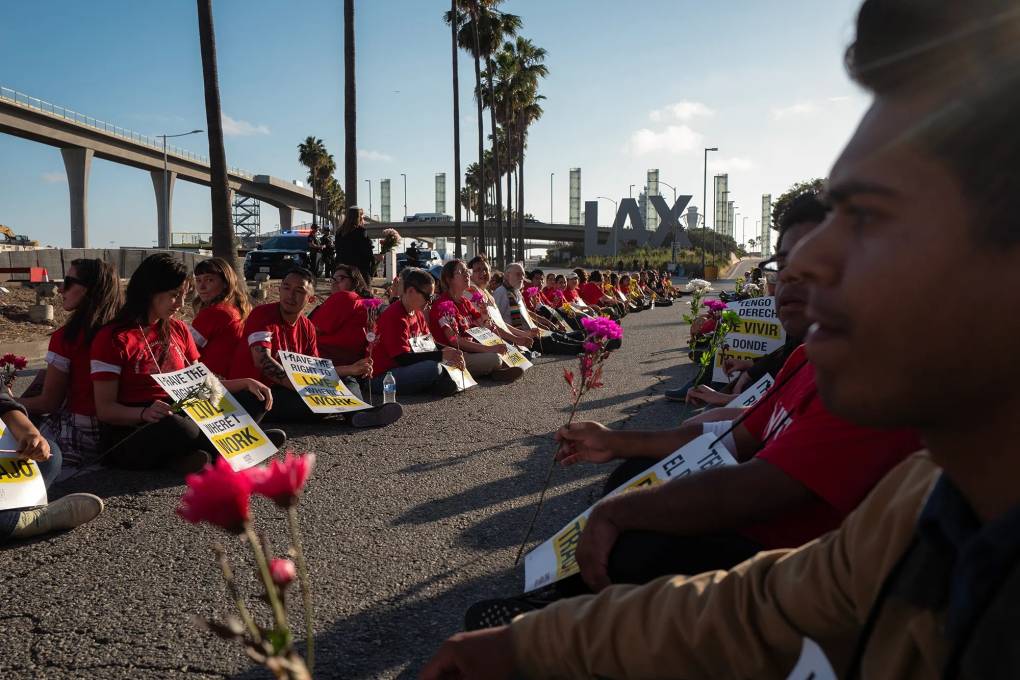
"caption": "Hotel workers and Unite Here Local 11 supporters stage a sit-in during a protest at one of the main entrances to Los Angeles International Airport on June 22, 2023.\n",
"credit": "Zaydee Sanchez/CalMatters",
"altTag": "Protesters sit on the ground, holding signs, outside of Los Angeles International Airport — with LAX in large letters behind them.",
"description": null,
"imgSizes": {
"medium": {
"file": "https://cdn.kqed.org/wp-content/uploads/sites/10/2024/06/062223-Hotel-Workers-Strike-ZS-CM-22-800x533.jpg",
"width": 800,
"height": 533,
"mimeType": "image/jpeg"
},
"large": {
"file": "https://cdn.kqed.org/wp-content/uploads/sites/10/2024/06/062223-Hotel-Workers-Strike-ZS-CM-22-1020x680.jpg",
"width": 1020,
"height": 680,
"mimeType": "image/jpeg"
},
"thumbnail": {
"file": "https://cdn.kqed.org/wp-content/uploads/sites/10/2024/06/062223-Hotel-Workers-Strike-ZS-CM-22-160x107.jpg",
"width": 160,
"height": 107,
"mimeType": "image/jpeg"
},
"1536x1536": {
"file": "https://cdn.kqed.org/wp-content/uploads/sites/10/2024/06/062223-Hotel-Workers-Strike-ZS-CM-22-1536x1024.jpg",
"width": 1536,
"height": 1024,
"mimeType": "image/jpeg"
},
"post-thumbnail": {
"file": "https://cdn.kqed.org/wp-content/uploads/sites/10/2024/06/062223-Hotel-Workers-Strike-ZS-CM-22-672x372.jpg",
"width": 672,
"height": 372,
"mimeType": "image/jpeg"
},
"twentyfourteen-full-width": {
"file": "https://cdn.kqed.org/wp-content/uploads/sites/10/2024/06/062223-Hotel-Workers-Strike-ZS-CM-22-1038x576.jpg",
"width": 1038,
"height": 576,
"mimeType": "image/jpeg"
},
"full-width": {
"file": "https://cdn.kqed.org/wp-content/uploads/sites/10/2024/06/062223-Hotel-Workers-Strike-ZS-CM-22-1920x1280.jpg",
"width": 1920,
"height": 1280,
"mimeType": "image/jpeg"
},
"kqedFullSize": {
"file": "https://cdn.kqed.org/wp-content/uploads/sites/10/2024/06/062223-Hotel-Workers-Strike-ZS-CM-22.jpg",
"width": 2000,
"height": 1333
}
},
"fetchFailed": false,
"isLoading": false
},
"news_11960537": {
"type": "attachments",
"id": "news_11960537",
"meta": {
"index": "attachments_1716263798",
"site": "news",
"id": "11960537",
"found": true
},
"parent": 11960536,
"imgSizes": {
"twentyfourteen-full-width": {
"file": "https://ww2.kqed.org/app/uploads/sites/10/2023/09/farmworker-in-vineyard-1020x576.jpg",
"width": 1020,
"mimeType": "image/jpeg",
"height": 576
},
"thumbnail": {
"file": "https://ww2.kqed.org/app/uploads/sites/10/2023/09/farmworker-in-vineyard-160x107.jpg",
"width": 160,
"mimeType": "image/jpeg",
"height": 107
},
"post-thumbnail": {
"file": "https://ww2.kqed.org/app/uploads/sites/10/2023/09/farmworker-in-vineyard-672x372.jpg",
"width": 672,
"mimeType": "image/jpeg",
"height": 372
},
"kqedFullSize": {
"file": "https://ww2.kqed.org/app/uploads/sites/10/2023/09/farmworker-in-vineyard.jpg",
"width": 1020,
"height": 680
},
"medium": {
"file": "https://ww2.kqed.org/app/uploads/sites/10/2023/09/farmworker-in-vineyard-800x533.jpg",
"width": 800,
"mimeType": "image/jpeg",
"height": 533
}
},
"publishDate": 1694393822,
"modified": 1694393849,
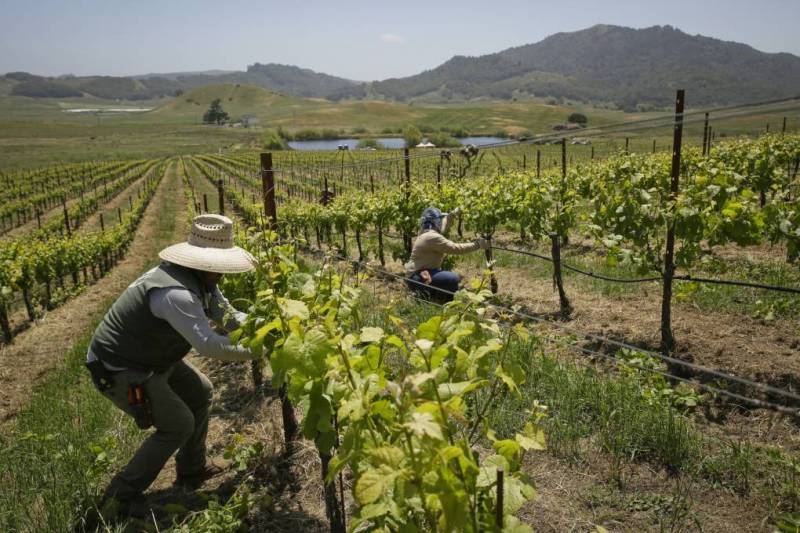
"caption": "Trabajadores cortan las hojas de las vides de Pinot Noir en Petaluma el 21 de mayo de 2018.",
"description": null,
"title": "farmworker in vineyard",
"credit": "Eric Risberg/Foto AP",
"status": "inherit",
"altTag": null,
"fetchFailed": false,
"isLoading": false
},
"news_11958488": {
"type": "attachments",
"id": "news_11958488",
"meta": {
"index": "attachments_1716263798",
"site": "news",
"id": "11958488",
"found": true
},
"title": "Climate Change Wine Blues",
"publishDate": 1692298642,
"status": "inherit",
"parent": 12044748,
"modified": 1750196819,
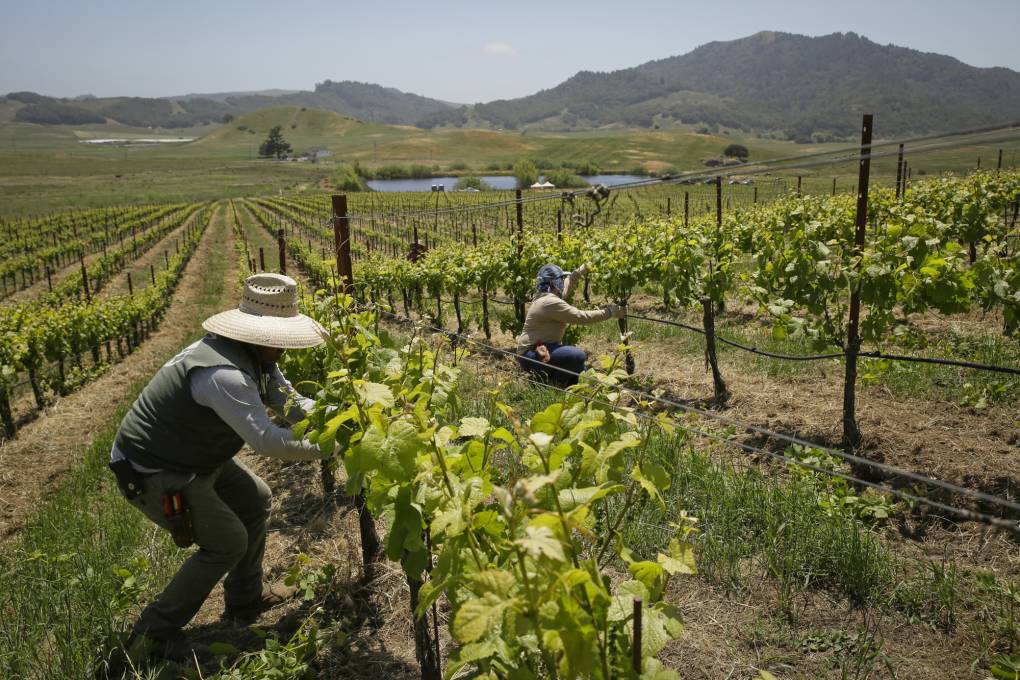
"caption": "Workers trim leaves on Pinot Noir vines in Petaluma on May 21, 2018.",
"credit": "Eric Risberg/AP Photo",
"altTag": "Two people wearing long sleeves, hats and face coverings work in a large outdoor field of grape vines on a sunny day.",
"description": null,
"imgSizes": {
"medium": {
"file": "https://cdn.kqed.org/wp-content/uploads/sites/10/2023/08/230817-PETALUMA-VINEYARD-FARMWORKERS-AP-ER-KQED-800x533.jpg",
"width": 800,
"height": 533,
"mimeType": "image/jpeg"
},
"large": {
"file": "https://cdn.kqed.org/wp-content/uploads/sites/10/2023/08/230817-PETALUMA-VINEYARD-FARMWORKERS-AP-ER-KQED-1020x680.jpg",
"width": 1020,
"height": 680,
"mimeType": "image/jpeg"
},
"thumbnail": {
"file": "https://cdn.kqed.org/wp-content/uploads/sites/10/2023/08/230817-PETALUMA-VINEYARD-FARMWORKERS-AP-ER-KQED-160x107.jpg",
"width": 160,
"height": 107,
"mimeType": "image/jpeg"
},
"1536x1536": {
"file": "https://cdn.kqed.org/wp-content/uploads/sites/10/2023/08/230817-PETALUMA-VINEYARD-FARMWORKERS-AP-ER-KQED-1536x1024.jpg",
"width": 1536,
"height": 1024,
"mimeType": "image/jpeg"
},
"post-thumbnail": {
"file": "https://cdn.kqed.org/wp-content/uploads/sites/10/2023/08/230817-PETALUMA-VINEYARD-FARMWORKERS-AP-ER-KQED-672x372.jpg",
"width": 672,
"height": 372,
"mimeType": "image/jpeg"
},
"twentyfourteen-full-width": {
"file": "https://cdn.kqed.org/wp-content/uploads/sites/10/2023/08/230817-PETALUMA-VINEYARD-FARMWORKERS-AP-ER-KQED-1038x576.jpg",
"width": 1038,
"height": 576,
"mimeType": "image/jpeg"
},
"full-width": {
"file": "https://cdn.kqed.org/wp-content/uploads/sites/10/2023/08/230817-PETALUMA-VINEYARD-FARMWORKERS-AP-ER-KQED-1920x1280.jpg",
"width": 1920,
"height": 1280,
"mimeType": "image/jpeg"
},
"kqedFullSize": {
"file": "https://cdn.kqed.org/wp-content/uploads/sites/10/2023/08/230817-PETALUMA-VINEYARD-FARMWORKERS-AP-ER-KQED.jpg",
"width": 2000,
"height": 1333
}
},
"fetchFailed": false,
"isLoading": false
}
},
"audioPlayerReducer": {
"postId": "stream_live",
"isPaused": true,
"isPlaying": false,
"pfsActive": false,
"pledgeModalIsOpen": true,
"playerDrawerIsOpen": false
},
"authorsReducer": {
"byline_news_11989607": {
"type": "authors",
"id": "byline_news_11989607",
"meta": {
"override": true
},
"slug": "byline_news_11989607",
"name": "\u003ca href=\"https://calmatters.org/author/jeanne-kuang/\">Jeanne Kuang\u003c/a>, CalMatters",
"isLoading": false
},
"ccabreralomeli": {
"type": "authors",
"id": "11708",
"meta": {
"index": "authors_1716337520",
"id": "11708",
"found": true
},
"name": "Carlos Cabrera-Lomelí",
"firstName": "Carlos",
"lastName": "Cabrera-Lomelí",
"slug": "ccabreralomeli",
"email": "ccabreralomeli@KQED.org",
"display_author_email": true,
"staff_mastheads": [
"news"
],
"title": "Community Reporter",
"bio": "Carlos Cabrera-Lomelí is a community reporter with KQED's digital engagement team. He also reports and co-produces for KQED's bilingual news hub KQED en Español. He grew up in San Francisco's Mission District and has previously worked with Univision, 48 Hills and REFORMA in Mexico City.",
"avatar": "https://secure.gravatar.com/avatar/e95ff80bb2eaf18a8f2af4dcf7ffb54b?s=600&d=mm&r=g",
"twitter": "@LomeliCabrera",
"facebook": null,
"instagram": null,
"linkedin": null,
"sites": [
{
"site": "arts",
"roles": [
"editor"
]
},
{
"site": "news",
"roles": [
"editor"
]
},
{
"site": "about",
"roles": [
"editor"
]
},
{
"site": "science",
"roles": [
"editor"
]
},
{
"site": "perspectives",
"roles": [
"editor"
]
},
{
"site": "elections",
"roles": [
"editor"
]
},
{
"site": "liveblog",
"roles": [
"contributor"
]
}
],
"headData": {
"title": "Carlos Cabrera-Lomelí | KQED",
"description": "Community Reporter",
"ogImgSrc": "https://secure.gravatar.com/avatar/e95ff80bb2eaf18a8f2af4dcf7ffb54b?s=600&d=mm&r=g",
"twImgSrc": "https://secure.gravatar.com/avatar/e95ff80bb2eaf18a8f2af4dcf7ffb54b?s=600&d=mm&r=g"
},
"isLoading": false,
"link": "/author/ccabreralomeli"
}
},
"breakingNewsReducer": {},
"pagesReducer": {},
"postsReducer": {
"stream_live": {
"type": "live",
"id": "stream_live",
"audioUrl": "https://streams.kqed.org/kqedradio",
"title": "Live Stream",
"excerpt": "Live Stream information currently unavailable.",
"link": "/radio",
"featImg": "",
"label": {
"name": "KQED Live",
"link": "/"
}
},
"stream_kqedNewscast": {
"type": "posts",
"id": "stream_kqedNewscast",
"audioUrl": "https://www.kqed.org/.stream/anon/radio/RDnews/newscast.mp3?_=1",
"title": "KQED Newscast",
"featImg": "",
"label": {
"name": "88.5 FM",
"link": "/"
}
},
"news_11989607": {
"type": "posts",
"id": "news_11989607",
"meta": {
"index": "posts_1716263798",
"site": "news",
"id": "11989607",
"score": null,
"sort": [
1718047901000
]
},
"guestAuthors": [],
"slug": "california-is-sitting-on-millions-of-dollars-that-could-be-used-to-boost-wage-theft-response",
"title": "California Is Sitting on Millions of Dollars That Could Be Used to Boost Wage Theft Response",
"publishDate": 1718047901,
"format": "standard",
"headTitle": "California Is Sitting on Millions of Dollars That Could Be Used to Boost Wage Theft Response | KQED",
"labelTerm": {
"term": 18481,
"site": "news"
},
"content": "\u003cp>Despite \u003ca href=\"https://calmatters.org/series/unpaid-wages-california-workers/\">reports of severe understaffing at California’s labor agency\u003c/a> that has hampered its ability to respond to a rise in complaints about wage theft and other labor violations, millions of dollars reserved for enforcing state labor laws still go unspent each year.\u003c/p>\n\u003cp>That pool of unused money comes from the state’s cut of the settlements and fines that businesses pay in response to lawsuits stemming from a unique California labor law — known as the \u003ca href=\"https://calmatters.org/politics/2024/02/paga-california-labor-law/\">Private Attorneys General Act\u003c/a> (PAGA) — that allows workers to sue their bosses.\u003c/p>\n\u003cp>For years, the fund has grown faster than lawmakers and Gov. Gavin Newsom has directed it to be spent, CalMatters’ analysis of state budget documents shows. In 2022–23, they left $197 million in the fund unspent; the 2023–24 budget leaves $170 million unspent.\u003c/p>\n\u003cp>The state draws from the fund each year for portions of the Labor Commissioner’s budget. And the fund has paid for some worker outreach and enforcement. Those programs include $8.6 million in \u003ca href=\"https://www.dir.ca.gov/DIRNews/2024/2024-38.html\">recent grants to 17 local prosecutors\u003c/a> to pursue criminal charges in wage theft cases and a pandemic-era partnership with community groups to inform workers in 42 different languages\u003cstrong> \u003c/strong>about workplace rights.\u003c/p>\n\u003cp>However, the fund’s single biggest use in the past five years has been to shore up the state budget. In 2020, the state borrowed $107 million from the labor fund for uses other than direct labor enforcement. In April, \u003ca href=\"https://abgt.assembly.ca.gov/system/files/2024-04/early-action-summary-thursday-april-4-2024.pdf\">an early budget deal\u003c/a> between Newsom and legislative leaders allowed the state to borrow another $125 million as they sought to reduce a record shortfall.\u003c/p>\n\u003cp>[ad fullwidth]\u003c/p>\n\u003cp>Neither of these loans needs to be repaid until at least 2027\u003cstrong>. \u003c/strong>The administration has proposed to leave $119 million in the fund unused in the 2024–25 budget that it’s \u003ca href=\"https://calmatters.org/politics/capitol/2024/05/california-budget-deficit-legislature-democrats/\">negotiating with lawmakers this month\u003c/a> as part of an effort to cover the remaining $28 billion shortfall.\u003c/p>\n\u003cp>The state’s use of the fund has frustrated businesses and labor groups alike, who say the state should spend much more of the money to help the Labor Commissioner’s Office hire or retain more staff needed to process a record number of workers’ wage theft claims.\u003c/p>\n\u003cp>In response to questions from CalMatters, Department of Industrial Relations spokesperson Erika Monterroza wrote in an email that the loans are not unusual during budget deficits and only come from money that’s not being used. She said $7.6 million from the fund is already allocated this year to processing wage claims.[aside label=\"more labor coverage\" tag=\"wage-theft\"]But the department has struggled to fill those new positions. A \u003ca href=\"https://calmatters.org/california-divide/2024/05/california-wage-theft-audit-labor-commissioner/\">state audit released in May\u003c/a> found that a slow hiring process and lower salaries than some comparable state and local government jobs partly cause the staff shortages.\u003c/p>\n\u003cp>Monterroza said it’s out of her department’s hands whether the money could be used to increase salaries or speed up hiring, saying that must be bargained with state employee unions. Newsom’s office declined to comment, referring questions to the department.\u003c/p>\n\u003cp>How the fund is used is a key issue in ongoing negotiations between labor and business groups over changes to PAGA. Business groups, who backed a November \u003ca href=\"https://oag.ca.gov/system/files/initiatives/pdfs/21-0027A1%20%28Employee%20Civil%20Action%29.pdf\">ballot measure to repeal the law\u003c/a>, say they will take the measure off the ballot if substantial changes can be agreed on.\u003c/p>\n\u003cp>Recent polling suggests voters support a legislative fix over a ballot measure. The sides face a June 27 deadline for the Legislature to approve changes.\u003c/p>\n\u003cp>Any deal to avert the costly ballot measure will likely address how to spend the enforcement fund.\u003c/p>\n\u003cp>“The Labor Commissioner’s Office has hundreds of millions currently available,” said Kathy Fairbanks, a spokesperson for the coalition of employers sponsoring the ballot measure. “We strongly support using these funds to quickly hire and train staff to help resolve employee claims.”\u003c/p>\n\u003cp>Between 30,000 and 40,000 workers file wage theft claims with the office annually. The \u003ca href=\"https://www.auditor.ca.gov/reports/the-california-labor-commissioners-office/\">state audit found\u003c/a> chronic understaffing has led to a backlog of 47,000 cases, and the claims regularly take six times longer to resolve than state law allows.\u003c/p>\n\u003cp>Lorena Gonzalez, leader of the California Labor Federation and a former state assemblymember, said labor groups have advocated in past budgets to allow Labor Commissioner Lilia García-Brower to use the money to address the backlogs.\u003c/p>\n\u003cp>“Obviously, we have a crisis, and we have been asking and pushing the Legislature and the governor to beef up spending to hire up,” Gonzalez told CalMatters. “We were having a hard time getting attention. It’s one of many examples that it’s not a priority to process wage theft claims.”\u003c/p>\n\u003cp>The Assembly’s current and former labor committee chairpersons, San José Democrat \u003ca href=\"https://digitaldemocracy.calmatters.org/legislators/ash-kalra-100938\">Ash Kalra\u003c/a> and Hayward Democrat \u003ca href=\"https://digitaldemocracy.calmatters.org/legislators/liz-ortega-165416\">Liz Ortega\u003c/a>, both declined to comment. State Sen. \u003ca href=\"https://digitaldemocracy.calmatters.org/legislators/lola-smallwood-cuevas-113915\">Lola Smallwood-Cuevas\u003c/a>, a Los Angeles Democrat who leads the Senate labor committee, could not be reached for comment last week.\u003c/p>\n\u003cp>California Chamber of Commerce CEO Jennifer Barrera also said she supported using available money to increase staff.\u003c/p>\n\u003cp>Still, an agreement for the state to appropriate the funds depends on broader negotiations about the scope of the PAGA law.\u003c/p>\n\u003cp>[ad floatright]\u003c/p>\n\u003cp>The two-decade-old state law allows the Labor Commissioner’s Office \u003ca href=\"https://calmatters.org/economy/2022/04/california-labor-law/\">to outsource the role of suing employers\u003c/a> over alleged labor violations to private attorneys, with a worker standing in as plaintiff on behalf of the state and their coworkers. Most suits are \u003ca href=\"https://www.labor.ucla.edu/wp-content/uploads/2020/02/UCLA-Labor-Center-Report_WEB.pdf\">brought over wage theft claims\u003c/a>, according to a UCLA Labor Center report.\u003c/p>\n\u003cdiv class=\"wp-block-newspack-blocks-homepage-articles cm-inline-recirc-hppb wpnbha show-image image-alignleft ts-3 is-1 is-landscape cm-inline-recirc-hppb has-text-align-left\">\n\u003cdiv data-posts=\"\" data-current-post-id=\"428099\">\n\u003cp>Business groups have pushed to repeal it for years, arguing it primarily enriches lawyers while subjecting businesses to frivolous cases over technical violations. Their ballot measure would direct cases back to the Labor Commissioner’s Office, where Fairbanks said workers stand to keep more money if they win individual wage theft claims.\u003c/p>\n\u003cp>Labor advocates say that would only worsen the backlogs at the Labor Commissioner’s Office and remove the option for workers to bring workplace-wide suits against problem employers.\u003c/p>\n\u003cp>Gonzalez said even if the enforcement funds are spent on beefing up the labor agency’s staff, the law should still stand. The May state audit concluded the office would need nearly 900 employees to efficiently process all wage claims. That’s almost triple the positions currently approved for the office — and a third of those are vacant.\u003c/p>\n\u003cp>“The Labor Commissioner itself is not equipped to handle all the cases we’re seeing in California today,” Gonzalez said. “We’re not fine with taking away the right of employees to sue.”\u003c/p>\n\u003c/div>\n\u003c/div>\n\n",
"blocks": [],
"excerpt": "A fund reserved for enforcing state labor laws — including wage theft claims — has grown faster than lawmakers and the governor have directed it to be used, with hundreds of millions of dollars left unspent in recent years.",
"status": "publish",
"parent": 0,
"modified": 1718051209,
"stats": {
"hasAudio": false,
"hasVideo": false,
"hasChartOrMap": false,
"iframeSrcs": [],
"hasGoogleForm": false,
"hasGallery": false,
"hasHearkenModule": false,
"hasPolis": false,
"paragraphCount": 26,
"wordCount": 1139
},
"headData": {
"title": "California Is Sitting on Millions of Dollars That Could Be Used to Boost Wage Theft Response | KQED",
"description": "A fund reserved for enforcing state labor laws — including wage theft claims — has grown faster than lawmakers and the governor have directed it to be used, with hundreds of millions of dollars left unspent in recent years.",
"ogTitle": "",
"ogDescription": "",
"ogImgId": "",
"twTitle": "",
"twDescription": "",
"twImgId": "",
"schema": {
"@context": "https://schema.org",
"@type": "NewsArticle",
"headline": "California Is Sitting on Millions of Dollars That Could Be Used to Boost Wage Theft Response",
"datePublished": "2024-06-10T12:31:41-07:00",
"dateModified": "2024-06-10T13:26:49-07:00",
"image": "https://cdn.kqed.org/wp-content/uploads/2020/02/KQED-OG-Image@1x.png",
"isAccessibleForFree": "True",
"publisher": {
"@type": "NewsMediaOrganization",
"@id": "https://www.kqed.org/#organization",
"name": "KQED",
"logo": "https://cdn.kqed.org/wp-content/uploads/2020/02/KQED-OG-Image@1x.png",
"url": "https://www.kqed.org",
"sameAs": [
"https://www.facebook.com/KQED",
"https://twitter.com/KQED",
"https://www.instagram.com/kqed/",
"https://www.tiktok.com/@kqedofficial",
"https://www.linkedin.com/company/kqed",
"https://www.youtube.com/channel/UCeC0IOo7i1P_61zVUWbJ4nw"
]
}
}
},
"sticky": false,
"nprByline": "\u003ca href=\"https://calmatters.org/author/jeanne-kuang/\">Jeanne Kuang\u003c/a>, CalMatters",
"nprStoryId": "kqed-11989607",
"excludeFromSiteSearch": "Include",
"showOnAuthorArchivePages": "No",
"articleAge": "0",
"path": "/news/11989607/california-is-sitting-on-millions-of-dollars-that-could-be-used-to-boost-wage-theft-response",
"audioTrackLength": null,
"parsedContent": [
{
"type": "contentString",
"content": "\u003cdiv class=\"post-body\">\u003cp>\u003cp>Despite \u003ca href=\"https://calmatters.org/series/unpaid-wages-california-workers/\">reports of severe understaffing at California’s labor agency\u003c/a> that has hampered its ability to respond to a rise in complaints about wage theft and other labor violations, millions of dollars reserved for enforcing state labor laws still go unspent each year.\u003c/p>\n\u003cp>That pool of unused money comes from the state’s cut of the settlements and fines that businesses pay in response to lawsuits stemming from a unique California labor law — known as the \u003ca href=\"https://calmatters.org/politics/2024/02/paga-california-labor-law/\">Private Attorneys General Act\u003c/a> (PAGA) — that allows workers to sue their bosses.\u003c/p>\n\u003cp>For years, the fund has grown faster than lawmakers and Gov. Gavin Newsom has directed it to be spent, CalMatters’ analysis of state budget documents shows. In 2022–23, they left $197 million in the fund unspent; the 2023–24 budget leaves $170 million unspent.\u003c/p>\n\u003cp>The state draws from the fund each year for portions of the Labor Commissioner’s budget. And the fund has paid for some worker outreach and enforcement. Those programs include $8.6 million in \u003ca href=\"https://www.dir.ca.gov/DIRNews/2024/2024-38.html\">recent grants to 17 local prosecutors\u003c/a> to pursue criminal charges in wage theft cases and a pandemic-era partnership with community groups to inform workers in 42 different languages\u003cstrong> \u003c/strong>about workplace rights.\u003c/p>\n\u003cp>However, the fund’s single biggest use in the past five years has been to shore up the state budget. In 2020, the state borrowed $107 million from the labor fund for uses other than direct labor enforcement. In April, \u003ca href=\"https://abgt.assembly.ca.gov/system/files/2024-04/early-action-summary-thursday-april-4-2024.pdf\">an early budget deal\u003c/a> between Newsom and legislative leaders allowed the state to borrow another $125 million as they sought to reduce a record shortfall.\u003c/p>\n\u003cp>\u003c/p>\u003c/div>",
"attributes": {
"named": {},
"numeric": []
}
},
{
"type": "component",
"content": "",
"name": "ad",
"attributes": {
"named": {
"label": "fullwidth"
},
"numeric": [
"fullwidth"
]
}
},
{
"type": "contentString",
"content": "\u003cdiv class=\"post-body\">\u003cp>\u003c/p>\n\u003cp>Neither of these loans needs to be repaid until at least 2027\u003cstrong>. \u003c/strong>The administration has proposed to leave $119 million in the fund unused in the 2024–25 budget that it’s \u003ca href=\"https://calmatters.org/politics/capitol/2024/05/california-budget-deficit-legislature-democrats/\">negotiating with lawmakers this month\u003c/a> as part of an effort to cover the remaining $28 billion shortfall.\u003c/p>\n\u003cp>The state’s use of the fund has frustrated businesses and labor groups alike, who say the state should spend much more of the money to help the Labor Commissioner’s Office hire or retain more staff needed to process a record number of workers’ wage theft claims.\u003c/p>\n\u003cp>In response to questions from CalMatters, Department of Industrial Relations spokesperson Erika Monterroza wrote in an email that the loans are not unusual during budget deficits and only come from money that’s not being used. She said $7.6 million from the fund is already allocated this year to processing wage claims.\u003c/p>\u003c/div>",
"attributes": {
"named": {},
"numeric": []
}
},
{
"type": "component",
"content": "",
"name": "aside",
"attributes": {
"named": {
"label": "more labor coverage ",
"tag": "wage-theft"
},
"numeric": []
}
},
{
"type": "contentString",
"content": "\u003cdiv class=\"post-body\">\u003cp>But the department has struggled to fill those new positions. A \u003ca href=\"https://calmatters.org/california-divide/2024/05/california-wage-theft-audit-labor-commissioner/\">state audit released in May\u003c/a> found that a slow hiring process and lower salaries than some comparable state and local government jobs partly cause the staff shortages.\u003c/p>\n\u003cp>Monterroza said it’s out of her department’s hands whether the money could be used to increase salaries or speed up hiring, saying that must be bargained with state employee unions. Newsom’s office declined to comment, referring questions to the department.\u003c/p>\n\u003cp>How the fund is used is a key issue in ongoing negotiations between labor and business groups over changes to PAGA. Business groups, who backed a November \u003ca href=\"https://oag.ca.gov/system/files/initiatives/pdfs/21-0027A1%20%28Employee%20Civil%20Action%29.pdf\">ballot measure to repeal the law\u003c/a>, say they will take the measure off the ballot if substantial changes can be agreed on.\u003c/p>\n\u003cp>Recent polling suggests voters support a legislative fix over a ballot measure. The sides face a June 27 deadline for the Legislature to approve changes.\u003c/p>\n\u003cp>Any deal to avert the costly ballot measure will likely address how to spend the enforcement fund.\u003c/p>\n\u003cp>“The Labor Commissioner’s Office has hundreds of millions currently available,” said Kathy Fairbanks, a spokesperson for the coalition of employers sponsoring the ballot measure. “We strongly support using these funds to quickly hire and train staff to help resolve employee claims.”\u003c/p>\n\u003cp>Between 30,000 and 40,000 workers file wage theft claims with the office annually. The \u003ca href=\"https://www.auditor.ca.gov/reports/the-california-labor-commissioners-office/\">state audit found\u003c/a> chronic understaffing has led to a backlog of 47,000 cases, and the claims regularly take six times longer to resolve than state law allows.\u003c/p>\n\u003cp>Lorena Gonzalez, leader of the California Labor Federation and a former state assemblymember, said labor groups have advocated in past budgets to allow Labor Commissioner Lilia García-Brower to use the money to address the backlogs.\u003c/p>\n\u003cp>“Obviously, we have a crisis, and we have been asking and pushing the Legislature and the governor to beef up spending to hire up,” Gonzalez told CalMatters. “We were having a hard time getting attention. It’s one of many examples that it’s not a priority to process wage theft claims.”\u003c/p>\n\u003cp>The Assembly’s current and former labor committee chairpersons, San José Democrat \u003ca href=\"https://digitaldemocracy.calmatters.org/legislators/ash-kalra-100938\">Ash Kalra\u003c/a> and Hayward Democrat \u003ca href=\"https://digitaldemocracy.calmatters.org/legislators/liz-ortega-165416\">Liz Ortega\u003c/a>, both declined to comment. State Sen. \u003ca href=\"https://digitaldemocracy.calmatters.org/legislators/lola-smallwood-cuevas-113915\">Lola Smallwood-Cuevas\u003c/a>, a Los Angeles Democrat who leads the Senate labor committee, could not be reached for comment last week.\u003c/p>\n\u003cp>California Chamber of Commerce CEO Jennifer Barrera also said she supported using available money to increase staff.\u003c/p>\n\u003cp>Still, an agreement for the state to appropriate the funds depends on broader negotiations about the scope of the PAGA law.\u003c/p>\n\u003cp>\u003c/p>\u003c/div>",
"attributes": {
"named": {},
"numeric": []
}
},
{
"type": "component",
"content": "",
"name": "ad",
"attributes": {
"named": {
"label": "floatright"
},
"numeric": [
"floatright"
]
}
},
{
"type": "contentString",
"content": "\u003cdiv class=\"post-body\">\u003cp>\u003c/p>\n\u003cp>The two-decade-old state law allows the Labor Commissioner’s Office \u003ca href=\"https://calmatters.org/economy/2022/04/california-labor-law/\">to outsource the role of suing employers\u003c/a> over alleged labor violations to private attorneys, with a worker standing in as plaintiff on behalf of the state and their coworkers. Most suits are \u003ca href=\"https://www.labor.ucla.edu/wp-content/uploads/2020/02/UCLA-Labor-Center-Report_WEB.pdf\">brought over wage theft claims\u003c/a>, according to a UCLA Labor Center report.\u003c/p>\n\u003cdiv class=\"wp-block-newspack-blocks-homepage-articles cm-inline-recirc-hppb wpnbha show-image image-alignleft ts-3 is-1 is-landscape cm-inline-recirc-hppb has-text-align-left\">\n\u003cdiv data-posts=\"\" data-current-post-id=\"428099\">\n\u003cp>Business groups have pushed to repeal it for years, arguing it primarily enriches lawyers while subjecting businesses to frivolous cases over technical violations. Their ballot measure would direct cases back to the Labor Commissioner’s Office, where Fairbanks said workers stand to keep more money if they win individual wage theft claims.\u003c/p>\n\u003cp>Labor advocates say that would only worsen the backlogs at the Labor Commissioner’s Office and remove the option for workers to bring workplace-wide suits against problem employers.\u003c/p>\n\u003cp>Gonzalez said even if the enforcement funds are spent on beefing up the labor agency’s staff, the law should still stand. The May state audit concluded the office would need nearly 900 employees to efficiently process all wage claims. That’s almost triple the positions currently approved for the office — and a third of those are vacant.\u003c/p>\n\u003cp>“The Labor Commissioner itself is not equipped to handle all the cases we’re seeing in California today,” Gonzalez said. “We’re not fine with taking away the right of employees to sue.”\u003c/p>\n\u003c/div>\n\u003c/div>\n\n\u003c/div>\u003c/p>",
"attributes": {
"named": {},
"numeric": []
}
}
],
"link": "/news/11989607/california-is-sitting-on-millions-of-dollars-that-could-be-used-to-boost-wage-theft-response",
"authors": [
"byline_news_11989607"
],
"categories": [
"news_8"
],
"tags": [
"news_19904",
"news_33039",
"news_29865",
"news_18208"
],
"affiliates": [
"news_18481"
],
"featImg": "news_11989608",
"label": "news_18481"
},
"news_11960536": {
"type": "posts",
"id": "news_11960536",
"meta": {
"index": "posts_1716263798",
"site": "news",
"id": "11960536",
"score": null,
"sort": [
1694517349000
]
},
"guestAuthors": [],
"slug": "trabaja-en-los-campos-de-california-que-hacer-si-sufre-represalias",
"title": "¿Trabaja en los campos de California? Qué hacer si su patrón toma represalias contra usted",
"publishDate": 1694517349,
"format": "standard",
"headTitle": "¿Trabaja en los campos de California? Qué hacer si su patrón toma represalias contra usted | KQED",
"labelTerm": {},
"content": "\u003cp>\u003ca href=\"https://www.kqed.org/news/11958506/guide-unsafe-working-conditions-employer-retaliation-and-worker-protections\">\u003cem>Read in English\u003c/em>\u003c/a>\u003c/p>\n\u003cp>21 trabajadores agrícolas inmigrantes \u003ca href=\"https://www.kqed.org/news/11957505/campesinos-denunciaron-a-un-vinedo-por-abusos-laborales-y-ganaron\">recibirán colectivamente 328 mil 077 dólares de su antiguo empleador, Mauritson Farms\u003c/a>, una empresa de viñedos del condado de Sonoma, después de que el productor llegó a un acuerdo con los reguladores laborales estatales este verano.\u003c/p>\n\u003cp>Funcionarios de la Junta de Relaciones Laborales Agrícolas de California (ALRB, por sus siglas en inglés) anunciaron en julio que su investigación había determinado que Mauritson Farms tomó represalias contra los trabajadores, quienes se encontraban en Estados Unidos con una visa H-2A.\u003c/p>\n\u003cp>Después de haber pedido mejoras laborales en los campos de Mauritson Farms, los campesinos no recibieron una oferta de empleo para la siguiente temporada de cultivo. El acuerdo de 328 mil 077 dólares que beneficiará a los 21 trabajadores representa lo que los trabajadores perdieron en ingresos por haber sido excluidos de la temporada de 2022, según los cálculos del ALRB.[aside postID=\"news_11957505\" hero=\"https://ww2.kqed.org/app/uploads/sites/10/2023/08/farmworker-lady-and-supporters.jpg\"]“Cuando recibí la noticia, agradecí a Dios que se ganó porque no fue nada fácil. Teníamos mucho miedo de hablar. Fue un proceso complicado, pero hay que quitarse ese miedo”, dijo Martín Sandoval Rivera, uno de los trabajadores que denunció las condiciones en Mauritson Farms. Actualmente se encuentra en el estado de Oaxaca, México, manejando varios trabajos para poder mantener a su familia.\u003c/p>\n\u003cp>Desgraciadamente, es algo común en la industria agrícola ver casos donde los patrones toman represalias contra trabajadores que alzan la voz. En la industria agrícola muchos trabajadores son castigados por su jefe, o por la persona que les dio empleo, después de solicitar un lugar de trabajo mejor o más seguro.\u003c/p>\n\u003cp>\u003cstrong>Al hacer clic en una de estas preguntas, tendrá más información específica:\u003c/strong>\u003c/p>\n\u003cul>\n\u003cli>\u003ca href=\"#considera\">\u003cstrong>¿Cuándo es que un lugar de trabajo se vuelve “inseguro” para los campesinos?\u003c/strong>\u003c/a>\u003c/li>\n\u003cli>\u003ca href=\"#represalias\">\u003cstrong>¿Qué son las represalias por parte de un empresario?\u003c/strong>\u003c/a>\u003c/li>\n\u003cli>\u003ca href=\"#siguen\">\u003cstrong>¿Estas protecciones también benefician a los trabajadores indocumentados?\u003c/strong>\u003c/a>\u003c/li>\n\u003cli>\u003ca href=\"#organismos\">\u003cstrong>¿Qué organismos hacen cumplir las leyes laborales en California?\u003c/strong>\u003c/a>\u003c/li>\n\u003cli>\u003ca href=\"#creo\">\u003cstrong>Creo que mi empleador ha tomado represalias contra mí por denunciar las condiciones de trabajo. ¿Qué debo hacer?\u003c/strong>\u003c/a>\u003c/li>\n\u003cli>\u003ca href=\"#preocupa\">\u003cstrong>Me preocupa mi situación migratoria si denuncio algo que pasó en el trabajo. ¿Cuáles son mis opciones?\u003c/strong>\u003c/a>\u003c/li>\n\u003c/ul>\n\u003cp>En California es ilegal que un empresario tome represalias contra un empleado, independientemente de su situación en materia de inmigración o documentación. Pero eso no impide que algunos cultivadores castiguen a los trabajadores que denuncian.\u003c/p>\n\u003cp>Cuando trabaja en el campo, aunque esté en Estados Unidos sin papeles, su empleador tiene que respetar sus derechos, por eso hemos creado esta guía para informar a los trabajadores agrícolas sobre sus derechos y qué hacer si su empleador no los respeta.\u003cbr>\n[ad fullwidth]\u003c/p>\n\u003ch3>\u003ca id=\"considera\">\u003c/a>¿Cuándo es que un lugar de trabajo se vuelve inseguro?\u003c/h3>\n\u003cp>California cuenta con una \u003ca href=\"https://www.dir.ca.gov/dosh/dosh_publications/ag-field-operations.pdf\">larga lista de normas que definen lo que es un lugar de trabajo seguro en la agricultura\u003c/a>. Esta lista cubre temas como la seguridad de los trabajadores durante los incendios forestales, el manejo de maquinaria agrícola, e incluso en el caso de las lecherías e instalaciones de grano, cómo prevenir accidentes en espacios confinados.\u003c/p>\n\u003cp>Sin importar la temperatura, \u003ca href=\"https://www.kqed.org/news/11955907/derechos-laborales-ola-de-calor\">los empresarios deben siempre proveer a los campesinos suficiente agua potable cerca de donde están trabajando.\u003c/a> Cada empleado debe tener acceso al menos a un litro de agua cada hora, e incluso si la gente trae sus propias botellas de agua, los empleadores deben tener suficiente agua disponible en el lugar.[aside postID=\"news_11955907\" hero=\"https://ww2.kqed.org/app/uploads/sites/10/2023/07/RS50596_019_SanFrancisco_HeatWaveImpacts_08062021-qut-1020x680-1.jpg\"]Cuando las temperaturas superan los 80 grados Fahrenheit (equivalente a 27 centígrados), los empresarios también deben proporcionar una zona con sombra suficiente para acomodar a todos los trabajadores en la propiedad. En los días en que la temperatura supere los 95 grados Fahrenheit (equivalente a 35 centígrados), los supervisores deben monitorear el bienestar de los trabajadores a lo largo del día y asegurarse de que tomen descansos de al menos 10 minutos cada 2 horas para evitar la insolación. No basta con “ofrecer” estas pausas.\u003c/p>\n\u003cp>Es importante recalcar que estas normas de seguridad contra el calor se aplican a los trabajadores de todas las industrias, no sólo del sector agrícola.\u003c/p>\n\u003ch3>\u003ca id=\"represalias\">\u003c/a>¿Qué son las represalias por parte de un empresario?\u003c/h3>\n\u003cp>En California, se entiende por represalia cuando un empresario despide, castiga o recorta el salario o el horario de un trabajador porque éste ha intentado mejorar sus condiciones laborales. Esto incluye los \u003ca href=\"https://www.kqed.org/news/11956413/how-california-farmworkers-took-on-a-sonoma-winery-over-abuses-and-won\">casos de cultivadores que se niegan a volver a contratar a trabajadores de temporada para la próxima cosecha después de que hayan denunciado su situación\u003c/a>.\u003c/p>\n\u003cp>Pedirle a su jefe que mejore las condiciones de trabajo no tiene que ser algo grande como organizar una huelga o una marcha. También puede ser el:\u003c/p>\n\u003cul>\n\u003cli>Pedir más agua y sombra para los días de mucho calor.\u003c/li>\n\u003cli>Pedir el equipo necesario para trabajar con seguridad en el campo.\u003c/li>\n\u003cli>Señalar que le falta parte de su salario.\u003c/li>\n\u003c/ul>\n\u003cp>Si hay una ley que tenga que ver con su seguridad, sus derechos laborales o su salario, y su empleador no la está cumpliendo, debe poder hablar de ello con libertad y seguridad con su jefe.\u003c/p>\n\u003ch3>\u003ca id=\"siguen\">\u003c/a>¿Estas protecciones aplican incluso si uno no tiene papeles?\u003c/h3>\n\u003cp>Sí. Las normas de seguridad de California benefician a todos los trabajadores, sin importar su estatus migratorio. Su empleador no puede usar su situación migratoria como razón para excluir a usted o sus colegas de las protecciones de seguridad.[pullquote align=\"right\" size=\"medium\" citation=\"Jessica Arciniega, directora regional del ALRB\"]‘Nuestra oficina no pregunta por su estatus migratorio, si usted cree que podría traerle problemas.’[/pullquote]Además, los trabajadores indocumentados pueden pedir ayuda a las dependencias estatales que hacen cumplir las leyes laborales; es decir, ser indocumentado no les impide solicitar (y obtener) esta ayuda del estado de California.\u003c/p>\n\u003cp>“Nuestra oficina no pregunta por su estatus migratorio, si usted cree que podría traerle problemas”, confirma Jessica Arciniega, directora regional del ALRB, que investiga posibles abusos laborales en el sector agrícola.\u003c/p>\n\u003ch3>¿Y si no tengo un contrato formal para trabajar, siguen aplicándose estas protecciones?\u003c/h3>\n\u003cp>Si trabaja para un particular o una empresa sin un contrato de trabajo formal, los expertos en derechos laborales afirman que estas protecciones siguen siendo aplicables en su caso, siempre y cuando pueda demostrar que, como trabajador, ha proporcionado mano de obra a cambio de una remuneración, o sea un pago.\u003c/p>\n\u003cp>En algunos casos, esa prueba puede incluir una comunicación escrita entre el trabajador y el empresario, como un correo electrónico o un mensaje de texto, que confirme que se ha producido un intercambio de servicios a cambio de dinero.\u003c/p>\n\u003ch3>\u003ca id=\"organismos\">\u003c/a>¿Qué organismos hacen cumplir las normas laborales en California?\u003c/h3>\n\u003cp>Existen tres dependencias estatales que investigan las infracciones laborales y tienen autoridad para sancionar a los malos empleadores. Las tres agencias pueden investigar casos en la industria agrícola.\u003c/p>\n\u003cp>\u003cstrong>La Junta de Relaciones Laborales Agrícolas\u003c/strong>\u003c/p>\n\u003cp>El ALRB fue creado en 1975 después de que el entonces gobernador Jerry Brown firmara la Ley de Relaciones Laborales Agrícolas de California en 1975. Esta legislación también define lo que es una violación de derechos laborales, lo que incluye represalias, despedir o recortar el salario de los empleados que piden mejores condiciones de trabajo.\u003c/p>\n\u003cp>“A quienes creen que sus derechos laborales no fueron respetados, yo recomendaría que llamen a nuestra oficina”, dijo Arciniega del ALRB. “Nuestro personal no sólo es bilingüe, sino que también entiende bien la cultura. Muchos de ellos, sus familias o generaciones pasadas han trabajado en la agricultura o actualmente son trabajadores agrícolas.”\u003c/p>\n\u003cp>Puede ponerse en contacto directamente con el ALRB llamando al 1-800-449-3699 o \u003ca href=\"https://www.alrb.ca.gov/contact-us/\">dirigirse a sus oficinas regionales situadas en Indio, Oxnard, Salinas, Santa Rosa, o Visalia\u003c/a>. Los trabajadores del Área de la Bahía deben ponerse en contacto con la oficina de Santa Rosa (el teléfono para esa oficina es: (707) 527-3256)\u003c/p>\n\u003cp>Un funcionario del ALRB puede hablarle más sobre cuáles son las normas de seguridad en el trabajo y qué derechos aplican en su situación. Además, pueden explicarle cómo usted puede presentar una denuncia contra su empleador, lo que podría desencadenar una investigación formal de su empleador por parte del ALRB.\u003c/p>\n\u003cp>\u003cstrong>Cal/OSHA\u003c/strong>\u003c/p>\n\u003cp>Cal/OSHA crea y hace cumplir las normas estatales sobre seguridad en el lugar de trabajo, asegurándose de que los empleados no estén expuestos a sustancias químicas peligrosas ni se encuentren en situaciones de riesgo.\u003c/p>\n\u003cp>Si su jefe le obliga a usted o a sus compañeros a hacer algo que no sabe si es seguro o no, puede ponerse en contacto con la agencia llamando al (415) 557-0100 o \u003ca href=\"https://www.dir.ca.gov/dosh/complaint.htm\">visitando la página web de la agencia\u003c/a>.\u003c/p>\n\u003cp>\u003cstrong>Oficina del Comisionado Laboral\u003c/strong>\u003c/p>\n\u003cp>La Oficina del Comisionado Laboral, también conocida como la División de Cumplimiento de Normas Laborales (DLSE por sus siglas en inglés), es la parte del Departamento de Relaciones Industriales de California y se encarga de investigar el robo de salarios y las represalias de los empleadores contra los trabajadores.\u003c/p>\n\u003cp>Si usted cree que su jefe no le paga correctamente por las horas que trabaja o se niega a pagar las horas extra, \u003ca href=\"https://www.dir.ca.gov/dlse/howtoreportviolationtobofe.htm\">éste es el organismo al que debe dirigirse\u003c/a>.\u003c/p>\n\u003ch3>\u003ca id=\"creo\">\u003c/a>Creo que mi jefe ha tomado represalias contra mí por denunciar las condiciones de trabajo. ¿Qué debo hacer?\u003c/h3>\n\u003cp>\u003cstrong>Haga una pausa mientras lo documenta todo.\u003c/strong>\u003c/p>\n\u003cp>Si acaba de perder su empleo o su salario y cree que se debe a represalias, primero dese tiempo para procesar la situación y ordenar sus ideas.\u003c/p>\n\u003cp>“Yo recomendio que escribas todo lo que te pasó, porque con todas esas emociones fuertes que uno tiene en ese momento, es fácil olvidar los detalles importantes”, dijo Ana Salgado, ex trabajadora agrícola e integrante de la junta directiva de North Bay Jobs With Justice (NBJWJ), un grupo de derechos laborales que ayudó a los campesinos que denunciaron a Mauritson Farms.\u003c/p>\n\u003cp>“Cree en ti mismo y en lo que tú sabes que pasó”, añadió.\u003c/p>\n\u003cfigure id=\"attachment_11957508\" class=\"wp-caption aligncenter\" style=\"max-width: 1920px\">\u003cimg loading=\"lazy\" decoding=\"async\" class=\"size-full wp-image-11957508\" src=\"https://ww2.kqed.org/app/uploads/sites/10/2023/08/healdsburg-plaza-farm-workers-rally.jpg\" alt=\"Una mujer habla enfrente de una multitud. Muchos en la multitud sostienen letreros y pancartas con lemas de justicia labora.\" width=\"1920\" height=\"1280\" srcset=\"https://cdn.kqed.org/wp-content/uploads/sites/10/2023/08/healdsburg-plaza-farm-workers-rally.jpg 1920w, https://cdn.kqed.org/wp-content/uploads/sites/10/2023/08/healdsburg-plaza-farm-workers-rally-800x533.jpg 800w, https://cdn.kqed.org/wp-content/uploads/sites/10/2023/08/healdsburg-plaza-farm-workers-rally-1020x680.jpg 1020w, https://cdn.kqed.org/wp-content/uploads/sites/10/2023/08/healdsburg-plaza-farm-workers-rally-160x107.jpg 160w, https://cdn.kqed.org/wp-content/uploads/sites/10/2023/08/healdsburg-plaza-farm-workers-rally-1536x1024.jpg 1536w\" sizes=\"(max-width: 1920px) 100vw, 1920px\">\u003cfigcaption class=\"wp-caption-text\">Ana Salgado (centro), ex trabajadora agrícola y miembro de la junta directiva de NBJWJ, habla en una rueda de prensa del lunes, 24 de julio de 2023, en la plaza central de Healdsburg. \u003ccite>(Juliana Yamada/KQED)\u003c/cite>\u003c/figcaption>\u003c/figure>\n\u003cp>\u003cstrong>Recopile pruebas anteriores\u003c/strong>\u003c/p>\n\u003cp>Mientras anota sus experiencias, busque también mensajes escritos entre usted y su empleador en los que describen las condiciones de trabajo y la respuesta de su supervisor. Puede tratarse de cartas, correos electrónicos o incluso capturas de pantalla de una conversación por mensaje de texto.\u003c/p>\n\u003cp>Otros detalles importantes que debe buscar: sus recibos o comprobantes de pago si es que hubo un recorte en su salario o las horas que trabajó. Además, tenga fotos de donde trabaja, lo que puede incluir los campos o cualquier otro sitio donde usted labora y ha visto condiciones laborales inseguras, y su vivienda, si esa es proporcionada por su empleador.\u003c/p>\n\u003cp>\u003cstrong>Busque ayuda de los profesionales\u003c/strong>\u003c/p>\n\u003cp>Salgado, activista con NBJWJ, también recomienda buscar la ayuda de una organización de derechos laborales en su zona. Los integrantes del grupo pueden ayudarle a crear una cronología de lo ocurrido, a ponerse en contacto con su empresa si quiere intentar resolver la situación directamente, o incluso prepararle para hablar con funcionarios estatales si decide dar ese paso.\u003c/p>\n\u003cp>En función de sus recursos, como el número de empleados, algunos grupos pueden ofrecer más ayuda que otros. Por eso, si cree que necesitas más orientación y apoyo, considere la posibilidad de acudir a más de una organización.\u003c/p>\n\u003cp>Aquí hay algunas organizaciones en el Área de la Bahía que pueden conectar a los trabajadores agrícolas con ayuda:\u003c/p>\n\u003cul>\n\u003cli>California Rural Legal Assistance: (800) 337-0690\u003c/li>\n\u003cli>Legal Aid at Work: (415) 864-8208\u003c/li>\n\u003cli>North Bay Organizing Project: (707) 843-7858\u003c/li>\n\u003cli>Asian Americans Advancing Justice/Asian Law Caucus: (415) 896-1701\u003c/li>\n\u003cli>Centro Legal de la Raza (Oakland): (510) 437-1554\u003c/li>\n\u003cli>Centro Legal de la Raza (San Francisco): (415) 575-3500\u003c/li>\n\u003c/ul>\n\u003ch3>Quiero presentar una denuncia para que los funcionarios investiguen mi situación. ¿Qué hay que hacer?\u003c/h3>\n\u003cp>Si está dispuesto a denunciar lo ocurrido, el ALRB será el organismo al que deberá dirigirse. Necesitará \u003ca href=\"https://www.alrb.ca.gov/wp-content/uploads/sites/196/2018/05/alrb_form38_en.pdf\">un formulario de Denuncia contra el empleador\u003c/a>, el cual deberá imprimir, rellenar y enviar por correo electrónico o postal, a la oficina local del ALRB más cercana, y si necesita rellenar el formulario en otro idioma que no sea el inglés, también contacte al ALRB.\u003c/p>\n\u003cp>Para los residentes del Área de la Bahía, la oficina indicada se encuentra en Santa Rosa:\u003c/p>\n\u003cul>\n\u003cli>Teléfono: (707) 527-3256\u003c/li>\n\u003cli>Correo electrónico: Póngase en contacto con la directora regional Jessica Arciniega escribiendo a Jessica.Arciniega@alrb.ca.gov\u003c/li>\n\u003cli>Correo postal: 606 Healdsburg Avenue, Santa Rosa, CA 95401\u003c/li>\n\u003c/ul>\n\u003cp>Tenga en cuenta que el ALRB requiere que al menos dos trabajadores se reúnan para presentar una denuncia. Si le pone nervioso este paso, un grupo de derechos laborales puede presentar una denuncia en su nombre, que es lo que ocurrió en el caso de Mauritson Farms.\u003c/p>\n\u003ch3>Por qué debe presentar una denuncia lo antes posible (aunque esté nervioso)\u003c/h3>\n\u003cp>Quienes abogan por los derechos de los campesinos recomiendan que uno denuncie lo que pasó lo más antes posible. De este modo, los funcionarios del estado tienen más tiempo para hablar con los trabajadores e investigar lo ocurrido en los campos.\u003c/p>\n\u003cp>El tiempo es aún más importante cuando los trabajadores agrícolas están en el país con un permiso de trabajo temporal, como la visa H-2A.[aside label='Más en español' tag='kqed-en-espanol']Es comprensible que se sienta muy nervioso a la hora de presentar una denuncia, sobre todo si teme que su empleador o la persona que le consiguió el trabajo le amenace con más represalias. Pero tenga en cuenta que hay un límite de tiempo para denunciar un incidente ante el estado. Sólo tiene seis meses desde el momento en que sufrió represalias (cuando le recortaron horas, o le despidieron o supo que no le volverían a contratar) para presentar una denuncia ante el ALRB.\u003c/p>\n\u003cp>Una vez que ya hayan pasado los seis meses, los funcionarios no pueden iniciar una investigación.\u003c/p>\n\u003cp>¿Y si su jefe, o la persona que le conectó con el empleo, como un reclutador, sigue amenazándole con más represalias si habla con el estado?\u003c/p>\n\u003cp>En este caso, podría ser una buena idea buscar ayuda de un grupo de derechos laborales para protegerse.\u003c/p>\n\u003ch4>Ya que yo haya presentado una denuncia ante el ALRB, ¿qué ocurre?\u003c/h4>\n\u003cp>\u003cstrong>La agencia evalúa su caso\u003c/strong>\u003c/p>\n\u003cp>Los funcionarios decidirán primero si su situación cumple los requisitos para iniciar una investigación.\u003c/p>\n\u003cp>Algunos ejemplos de cuándo el ALRB no podría tomar su caso son: si fue despedido, hace dos años, y cree que su jefe lo hizo para tomar represalias contra usted, ya que esa situación excede el límite de tiempo de seis meses del ALRB, y la agencia no puede iniciar una investigación. O si el incidente tuvo lugar en un rancho ubicado en otro estado, eso también queda fuera de la jurisdicción del ALRB.\u003c/p>\n\u003cfigure id=\"attachment_11956406\" class=\"wp-caption aligncenter\" style=\"max-width: 2000px\">\u003cimg loading=\"lazy\" decoding=\"async\" class=\"size-full wp-image-11956406\" src=\"https://ww2.kqed.org/app/uploads/sites/10/2023/07/RS67225_20230724-NBJWJPresser-05-JY-KQED.jpg\" alt='Una persona con cabello largo y ropa forma; habla frente a otras personas con carteles que dicen \"Los campesinos merecen pago por desastre\". El grupo se encuentra en un parque.' width=\"2000\" height=\"1333\" srcset=\"https://cdn.kqed.org/wp-content/uploads/sites/10/2023/07/RS67225_20230724-NBJWJPresser-05-JY-KQED.jpg 2000w, https://cdn.kqed.org/wp-content/uploads/sites/10/2023/07/RS67225_20230724-NBJWJPresser-05-JY-KQED-800x533.jpg 800w, https://cdn.kqed.org/wp-content/uploads/sites/10/2023/07/RS67225_20230724-NBJWJPresser-05-JY-KQED-1020x680.jpg 1020w, https://cdn.kqed.org/wp-content/uploads/sites/10/2023/07/RS67225_20230724-NBJWJPresser-05-JY-KQED-160x107.jpg 160w, https://cdn.kqed.org/wp-content/uploads/sites/10/2023/07/RS67225_20230724-NBJWJPresser-05-JY-KQED-1536x1024.jpg 1536w, https://cdn.kqed.org/wp-content/uploads/sites/10/2023/07/RS67225_20230724-NBJWJPresser-05-JY-KQED-1920x1280.jpg 1920w\" sizes=\"(max-width: 2000px) 100vw, 2000px\">\u003cfigcaption class=\"wp-caption-text\">Julia Montgomery, abogada principal del ALRB, habla en una rueda de prensa organizada por el grupo de derechos laborales NBJWJ, el lunes, 24 de julio de 2023. Montgomery, junto con otros funcionarios del ALRB, compartieron detalles sobre el acuerdo legal entre su dependencia y el empleador Mauritson Farms, para resolver una denuncia presentada por un grupo de campesinos que previamente trabajaban en los viñedos de Mauritson. \u003ccite>(Juliana Yamada/KQED)\u003c/cite>\u003c/figcaption>\u003c/figure>\n\u003cp>\u003cstrong>Se inicia una investigación y su empleador es notificado\u003c/strong>\u003c/p>\n\u003cp>Si el organismo puede aceptar el caso, los funcionarios del ALRB se lo confirmarán. A partir de ese momento, notificarán a su empleador de la acusación y que se iniciará una investigación, explica Julia Montgomery, abogada principal del ALRB.\u003c/p>\n\u003cp>“Un equipo de abogados e investigadores se encargará de la investigación, que puede incluir a los trabajadores implicados en la investigación, otros empleados, supervisores y cualquier otra persona que pueda tener información relevante”, dijo Montgomery. Los investigadores también pueden solicitar documentos y otros registros escritos tanto a los empresarios como a los trabajadores, explicó.\u003c/p>\n\u003cp>Este paso puede tardar meses, o incluso años. Si ya no se encuentra en EE.UU. debido a su situación migratoria, el ALRB seguirá intentando ponerse en contacto con usted. En casos anteriores, los funcionarios de la agencia han localizado a trabajadores agrícolas incluso cuando han viajado de regreso a comunidades rurales remotas en sus países de origen.\u003c/p>\n\u003cp>\u003cstrong>Se toma una decisión sobre la acusación\u003c/strong>\u003c/p>\n\u003cp>Tras la investigación, los funcionarios determinarán si hay pruebas suficientes para confirmar si hubo represalias u otra práctica laboral injusta. Si no hay pruebas suficientes, se desestima la denuncia, o sea que se termina el proceso de investigación.\u003c/p>\n\u003cp>Sin embargo, si las pruebas son suficientes, el director regional del ALRB presentará una denuncia formal contra el empresario.\u003c/p>\n\u003cp>Pero espere, eso no significa que haya ganado su caso todavía — falta aún más.\u003c/p>\n\u003ch3>El ALRB presenta una demanda legal contra un empresario\u003c/h3>\n\u003cp>Se fijará una fecha para una audiencia con un juez, el cual decidirá si el empresario violó la ley.\u003c/p>\n\u003cp>Ambas partes tendrán la oportunidad de defender su caso: su empleador y sus representantes legales, y el ALRB, que argumentará que usted sufrió represalias.\u003c/p>\n\u003cp>Si el juez falla a favor del ALRB y de los empleados implicados, los trabajadores pueden recibir un monto para compensar los salarios perdidos y, potencialmente, incluso volver a ser contratados si perdieron su empleo. Los funcionarios del ALRB se desplazarán al rancho e informarán a los demás empleados del caso. Además, los empresarios podrían enfrentarse a fuertes multas.\u003c/p>\n\u003cp>En cualquier momento del proceso, el ALRB puede llegar a un acuerdo con el empresario. Un acuerdo puede incluir indemnizaciones para los trabajadores afectados o incluso ofertas de empleo.\u003c/p>\n\u003ch3>\u003ca id=\"preocupa\">\u003c/a>Me preocupa mi situación de inmigración si denuncio lo ocurrido en el trabajo. ¿Cuáles son mis opciones?\u003c/h3>\n\u003cp>El 19 de julio, el gobernador Gavin Newsom anunció un \u003ca href=\"https://www.kqed.org/news/11956315/some-migrant-farmworkers-to-get-free-legal-help-with-immigration\">programa piloto de 4.5 millones de dólares para proporcionar servicios legales de inmigración gratuitos a los trabajadores agrícolas que están involucrados en investigaciones laborales estatales (enlace sólo en inglés)\u003c/a>.\u003c/p>\n\u003cp>Esto incluiría servicios de revisión de casos, asesoría legal y representación por un abogado a los trabajadores en California que tengan un caso pendiente ya sea con la ALRB, la Oficina del Comisionado Laboral o Cal/OSHA.[aside postID=\"news_11941448\" hero=\"https://ww2.kqed.org/app/uploads/sites/10/2023/02/FARMWORKETS-SHOVELING-DIRT-YELLOW-RAINGEAR.jpg\"]El objetivo de este programa, según los funcionarios, es abordar uno de los temores que impiden a los empleados hablar, el miedo a perder su visado o a no volver a ser contratados, poniéndolos en contacto con expertos en inmigración que podrían ayudarles a encontrar formas de permanecer en este país. Y a principios de este año, \u003ca href=\"https://www.kqed.org/news/11941448/que-es-el-programa-de-accion-diferida-de-la-administracion-biden-para-trabajadores-indocumentados\">el gobierno del presidente Biden presentó una nueva y simplificada iniciativa de “acción diferida”\u003c/a> que permite a los trabajadores solicitar un permiso de trabajo y dos años de protección frente a la deportación si cooperan con una investigación sobre derechos laborales.\u003c/p>\n\u003cp>Para obtener más información sobre el programa piloto y si su caso podría calificar para servicios legales gratuitos del estado, \u003ca href=\"https://www.alrb.ca.gov/contact-us/\">contacte la oficina de ALRB más cercana a usted\u003c/a>.\u003c/p>\n\u003chr>\n\u003cp>\u003cem>Este artículo fue traducido por la periodista \u003ca href=\"https://www.kqed.org/author/mpena/\">María Peña\u003c/a> y editado por el periodista \u003ca href=\"https://www.kqed.org/author/ccabreralomeli\">Carlos Cabrera-Lomelí\u003c/a>.\u003c/em>\u003c/p>\n\u003cp>[ad fullwidth]\u003c/p>\n\u003cp>[ad floatright]\u003c/p>\n",
"blocks": [],
"excerpt": "En California, es ilegal que un patrón castigue o corra a un campesino por pedir mejoras laborales. Le explicamos sus derechos, los cuales aplican a todos, incluso a los inmigrantes indocumentados.",
"status": "publish",
"parent": 0,
"modified": 1721133874,
"stats": {
"hasAudio": false,
"hasVideo": false,
"hasChartOrMap": false,
"iframeSrcs": [],
"hasGoogleForm": false,
"hasGallery": false,
"hasHearkenModule": false,
"hasPolis": false,
"paragraphCount": 70,
"wordCount": 3703
},
"headData": {
"title": "¿Trabaja en los campos de California? Qué hacer si su patrón toma represalias contra usted | KQED",
"description": "En California, es ilegal que un patrón castigue o corra a un campesino por pedir mejoras laborales. Le explicamos sus derechos, los cuales aplican a todos, incluso a los inmigrantes indocumentados.",
"ogTitle": "",
"ogDescription": "",
"ogImgId": "",
"twTitle": "",
"twDescription": "",
"twImgId": "",
"schema": {
"@context": "https://schema.org",
"@type": "NewsArticle",
"headline": "¿Trabaja en los campos de California? Qué hacer si su patrón toma represalias contra usted",
"datePublished": "2023-09-12T04:15:49-07:00",
"dateModified": "2024-07-16T05:44:34-07:00",
"image": "https://cdn.kqed.org/wp-content/uploads/2020/02/KQED-OG-Image@1x.png",
"isAccessibleForFree": "True",
"publisher": {
"@type": "NewsMediaOrganization",
"@id": "https://www.kqed.org/#organization",
"name": "KQED",
"logo": "https://cdn.kqed.org/wp-content/uploads/2020/02/KQED-OG-Image@1x.png",
"url": "https://www.kqed.org",
"sameAs": [
"https://www.facebook.com/KQED",
"https://twitter.com/KQED",
"https://www.instagram.com/kqed/",
"https://www.tiktok.com/@kqedofficial",
"https://www.linkedin.com/company/kqed",
"https://www.youtube.com/channel/UCeC0IOo7i1P_61zVUWbJ4nw"
]
}
}
},
"source": "KQED en Español",
"sourceUrl": "https://www.kqed.org/kqedenespanol",
"audioUrl": "https://traffic.omny.fm/d/clips/0af137ef-751e-4b19-a055-aaef00d2d578/ffca7e9f-6831-41c5-bcaf-aaef00f5a073/4479236b-6b94-45b8-aea6-b05301139438/audio.mp3",
"sticky": false,
"excludeFromSiteSearch": "Include",
"articleAge": "0",
"path": "/news/11960536/trabaja-en-los-campos-de-california-que-hacer-si-sufre-represalias",
"audioTrackLength": null,
"parsedContent": [
{
"type": "contentString",
"content": "\u003cdiv class=\"post-body\">\u003cp>\u003cp>\u003ca href=\"https://www.kqed.org/news/11958506/guide-unsafe-working-conditions-employer-retaliation-and-worker-protections\">\u003cem>Read in English\u003c/em>\u003c/a>\u003c/p>\n\u003cp>21 trabajadores agrícolas inmigrantes \u003ca href=\"https://www.kqed.org/news/11957505/campesinos-denunciaron-a-un-vinedo-por-abusos-laborales-y-ganaron\">recibirán colectivamente 328 mil 077 dólares de su antiguo empleador, Mauritson Farms\u003c/a>, una empresa de viñedos del condado de Sonoma, después de que el productor llegó a un acuerdo con los reguladores laborales estatales este verano.\u003c/p>\n\u003cp>Funcionarios de la Junta de Relaciones Laborales Agrícolas de California (ALRB, por sus siglas en inglés) anunciaron en julio que su investigación había determinado que Mauritson Farms tomó represalias contra los trabajadores, quienes se encontraban en Estados Unidos con una visa H-2A.\u003c/p>\n\u003cp>Después de haber pedido mejoras laborales en los campos de Mauritson Farms, los campesinos no recibieron una oferta de empleo para la siguiente temporada de cultivo. El acuerdo de 328 mil 077 dólares que beneficiará a los 21 trabajadores representa lo que los trabajadores perdieron en ingresos por haber sido excluidos de la temporada de 2022, según los cálculos del ALRB.\u003c/p>\u003c/div>",
"attributes": {
"named": {},
"numeric": []
}
},
{
"type": "component",
"content": "",
"name": "aside",
"attributes": {
"named": {
"postid": "news_11957505",
"hero": "https://ww2.kqed.org/app/uploads/sites/10/2023/08/farmworker-lady-and-supporters.jpg",
"label": ""
},
"numeric": []
}
},
{
"type": "contentString",
"content": "\u003cdiv class=\"post-body\">\u003cp>“Cuando recibí la noticia, agradecí a Dios que se ganó porque no fue nada fácil. Teníamos mucho miedo de hablar. Fue un proceso complicado, pero hay que quitarse ese miedo”, dijo Martín Sandoval Rivera, uno de los trabajadores que denunció las condiciones en Mauritson Farms. Actualmente se encuentra en el estado de Oaxaca, México, manejando varios trabajos para poder mantener a su familia.\u003c/p>\n\u003cp>Desgraciadamente, es algo común en la industria agrícola ver casos donde los patrones toman represalias contra trabajadores que alzan la voz. En la industria agrícola muchos trabajadores son castigados por su jefe, o por la persona que les dio empleo, después de solicitar un lugar de trabajo mejor o más seguro.\u003c/p>\n\u003cp>\u003cstrong>Al hacer clic en una de estas preguntas, tendrá más información específica:\u003c/strong>\u003c/p>\n\u003cul>\n\u003cli>\u003ca href=\"#considera\">\u003cstrong>¿Cuándo es que un lugar de trabajo se vuelve “inseguro” para los campesinos?\u003c/strong>\u003c/a>\u003c/li>\n\u003cli>\u003ca href=\"#represalias\">\u003cstrong>¿Qué son las represalias por parte de un empresario?\u003c/strong>\u003c/a>\u003c/li>\n\u003cli>\u003ca href=\"#siguen\">\u003cstrong>¿Estas protecciones también benefician a los trabajadores indocumentados?\u003c/strong>\u003c/a>\u003c/li>\n\u003cli>\u003ca href=\"#organismos\">\u003cstrong>¿Qué organismos hacen cumplir las leyes laborales en California?\u003c/strong>\u003c/a>\u003c/li>\n\u003cli>\u003ca href=\"#creo\">\u003cstrong>Creo que mi empleador ha tomado represalias contra mí por denunciar las condiciones de trabajo. ¿Qué debo hacer?\u003c/strong>\u003c/a>\u003c/li>\n\u003cli>\u003ca href=\"#preocupa\">\u003cstrong>Me preocupa mi situación migratoria si denuncio algo que pasó en el trabajo. ¿Cuáles son mis opciones?\u003c/strong>\u003c/a>\u003c/li>\n\u003c/ul>\n\u003cp>En California es ilegal que un empresario tome represalias contra un empleado, independientemente de su situación en materia de inmigración o documentación. Pero eso no impide que algunos cultivadores castiguen a los trabajadores que denuncian.\u003c/p>\n\u003cp>Cuando trabaja en el campo, aunque esté en Estados Unidos sin papeles, su empleador tiene que respetar sus derechos, por eso hemos creado esta guía para informar a los trabajadores agrícolas sobre sus derechos y qué hacer si su empleador no los respeta.\u003cbr>\n\u003c/p>\u003c/div>",
"attributes": {
"named": {},
"numeric": []
}
},
{
"type": "component",
"content": "",
"name": "ad",
"attributes": {
"named": {
"label": "fullwidth"
},
"numeric": [
"fullwidth"
]
}
},
{
"type": "contentString",
"content": "\u003cdiv class=\"post-body\">\u003cp>\u003c/p>\n\u003ch3>\u003ca id=\"considera\">\u003c/a>¿Cuándo es que un lugar de trabajo se vuelve inseguro?\u003c/h3>\n\u003cp>California cuenta con una \u003ca href=\"https://www.dir.ca.gov/dosh/dosh_publications/ag-field-operations.pdf\">larga lista de normas que definen lo que es un lugar de trabajo seguro en la agricultura\u003c/a>. Esta lista cubre temas como la seguridad de los trabajadores durante los incendios forestales, el manejo de maquinaria agrícola, e incluso en el caso de las lecherías e instalaciones de grano, cómo prevenir accidentes en espacios confinados.\u003c/p>\n\u003cp>Sin importar la temperatura, \u003ca href=\"https://www.kqed.org/news/11955907/derechos-laborales-ola-de-calor\">los empresarios deben siempre proveer a los campesinos suficiente agua potable cerca de donde están trabajando.\u003c/a> Cada empleado debe tener acceso al menos a un litro de agua cada hora, e incluso si la gente trae sus propias botellas de agua, los empleadores deben tener suficiente agua disponible en el lugar.\u003c/p>\u003c/div>",
"attributes": {
"named": {},
"numeric": []
}
},
{
"type": "component",
"content": "",
"name": "aside",
"attributes": {
"named": {
"postid": "news_11955907",
"hero": "https://ww2.kqed.org/app/uploads/sites/10/2023/07/RS50596_019_SanFrancisco_HeatWaveImpacts_08062021-qut-1020x680-1.jpg",
"label": ""
},
"numeric": []
}
},
{
"type": "contentString",
"content": "\u003cdiv class=\"post-body\">\u003cp>Cuando las temperaturas superan los 80 grados Fahrenheit (equivalente a 27 centígrados), los empresarios también deben proporcionar una zona con sombra suficiente para acomodar a todos los trabajadores en la propiedad. En los días en que la temperatura supere los 95 grados Fahrenheit (equivalente a 35 centígrados), los supervisores deben monitorear el bienestar de los trabajadores a lo largo del día y asegurarse de que tomen descansos de al menos 10 minutos cada 2 horas para evitar la insolación. No basta con “ofrecer” estas pausas.\u003c/p>\n\u003cp>Es importante recalcar que estas normas de seguridad contra el calor se aplican a los trabajadores de todas las industrias, no sólo del sector agrícola.\u003c/p>\n\u003ch3>\u003ca id=\"represalias\">\u003c/a>¿Qué son las represalias por parte de un empresario?\u003c/h3>\n\u003cp>En California, se entiende por represalia cuando un empresario despide, castiga o recorta el salario o el horario de un trabajador porque éste ha intentado mejorar sus condiciones laborales. Esto incluye los \u003ca href=\"https://www.kqed.org/news/11956413/how-california-farmworkers-took-on-a-sonoma-winery-over-abuses-and-won\">casos de cultivadores que se niegan a volver a contratar a trabajadores de temporada para la próxima cosecha después de que hayan denunciado su situación\u003c/a>.\u003c/p>\n\u003cp>Pedirle a su jefe que mejore las condiciones de trabajo no tiene que ser algo grande como organizar una huelga o una marcha. También puede ser el:\u003c/p>\n\u003cul>\n\u003cli>Pedir más agua y sombra para los días de mucho calor.\u003c/li>\n\u003cli>Pedir el equipo necesario para trabajar con seguridad en el campo.\u003c/li>\n\u003cli>Señalar que le falta parte de su salario.\u003c/li>\n\u003c/ul>\n\u003cp>Si hay una ley que tenga que ver con su seguridad, sus derechos laborales o su salario, y su empleador no la está cumpliendo, debe poder hablar de ello con libertad y seguridad con su jefe.\u003c/p>\n\u003ch3>\u003ca id=\"siguen\">\u003c/a>¿Estas protecciones aplican incluso si uno no tiene papeles?\u003c/h3>\n\u003cp>Sí. Las normas de seguridad de California benefician a todos los trabajadores, sin importar su estatus migratorio. Su empleador no puede usar su situación migratoria como razón para excluir a usted o sus colegas de las protecciones de seguridad.\u003c/p>\u003c/div>",
"attributes": {
"named": {},
"numeric": []
}
},
{
"type": "component",
"content": "‘Nuestra oficina no pregunta por su estatus migratorio, si usted cree que podría traerle problemas.’",
"name": "pullquote",
"attributes": {
"named": {
"align": "right",
"size": "medium",
"citation": "Jessica Arciniega, directora regional del ALRB",
"label": ""
},
"numeric": []
}
},
{
"type": "contentString",
"content": "\u003cdiv class=\"post-body\">\u003cp>Además, los trabajadores indocumentados pueden pedir ayuda a las dependencias estatales que hacen cumplir las leyes laborales; es decir, ser indocumentado no les impide solicitar (y obtener) esta ayuda del estado de California.\u003c/p>\n\u003cp>“Nuestra oficina no pregunta por su estatus migratorio, si usted cree que podría traerle problemas”, confirma Jessica Arciniega, directora regional del ALRB, que investiga posibles abusos laborales en el sector agrícola.\u003c/p>\n\u003ch3>¿Y si no tengo un contrato formal para trabajar, siguen aplicándose estas protecciones?\u003c/h3>\n\u003cp>Si trabaja para un particular o una empresa sin un contrato de trabajo formal, los expertos en derechos laborales afirman que estas protecciones siguen siendo aplicables en su caso, siempre y cuando pueda demostrar que, como trabajador, ha proporcionado mano de obra a cambio de una remuneración, o sea un pago.\u003c/p>\n\u003cp>En algunos casos, esa prueba puede incluir una comunicación escrita entre el trabajador y el empresario, como un correo electrónico o un mensaje de texto, que confirme que se ha producido un intercambio de servicios a cambio de dinero.\u003c/p>\n\u003ch3>\u003ca id=\"organismos\">\u003c/a>¿Qué organismos hacen cumplir las normas laborales en California?\u003c/h3>\n\u003cp>Existen tres dependencias estatales que investigan las infracciones laborales y tienen autoridad para sancionar a los malos empleadores. Las tres agencias pueden investigar casos en la industria agrícola.\u003c/p>\n\u003cp>\u003cstrong>La Junta de Relaciones Laborales Agrícolas\u003c/strong>\u003c/p>\n\u003cp>El ALRB fue creado en 1975 después de que el entonces gobernador Jerry Brown firmara la Ley de Relaciones Laborales Agrícolas de California en 1975. Esta legislación también define lo que es una violación de derechos laborales, lo que incluye represalias, despedir o recortar el salario de los empleados que piden mejores condiciones de trabajo.\u003c/p>\n\u003cp>“A quienes creen que sus derechos laborales no fueron respetados, yo recomendaría que llamen a nuestra oficina”, dijo Arciniega del ALRB. “Nuestro personal no sólo es bilingüe, sino que también entiende bien la cultura. Muchos de ellos, sus familias o generaciones pasadas han trabajado en la agricultura o actualmente son trabajadores agrícolas.”\u003c/p>\n\u003cp>Puede ponerse en contacto directamente con el ALRB llamando al 1-800-449-3699 o \u003ca href=\"https://www.alrb.ca.gov/contact-us/\">dirigirse a sus oficinas regionales situadas en Indio, Oxnard, Salinas, Santa Rosa, o Visalia\u003c/a>. Los trabajadores del Área de la Bahía deben ponerse en contacto con la oficina de Santa Rosa (el teléfono para esa oficina es: (707) 527-3256)\u003c/p>\n\u003cp>Un funcionario del ALRB puede hablarle más sobre cuáles son las normas de seguridad en el trabajo y qué derechos aplican en su situación. Además, pueden explicarle cómo usted puede presentar una denuncia contra su empleador, lo que podría desencadenar una investigación formal de su empleador por parte del ALRB.\u003c/p>\n\u003cp>\u003cstrong>Cal/OSHA\u003c/strong>\u003c/p>\n\u003cp>Cal/OSHA crea y hace cumplir las normas estatales sobre seguridad en el lugar de trabajo, asegurándose de que los empleados no estén expuestos a sustancias químicas peligrosas ni se encuentren en situaciones de riesgo.\u003c/p>\n\u003cp>Si su jefe le obliga a usted o a sus compañeros a hacer algo que no sabe si es seguro o no, puede ponerse en contacto con la agencia llamando al (415) 557-0100 o \u003ca href=\"https://www.dir.ca.gov/dosh/complaint.htm\">visitando la página web de la agencia\u003c/a>.\u003c/p>\n\u003cp>\u003cstrong>Oficina del Comisionado Laboral\u003c/strong>\u003c/p>\n\u003cp>La Oficina del Comisionado Laboral, también conocida como la División de Cumplimiento de Normas Laborales (DLSE por sus siglas en inglés), es la parte del Departamento de Relaciones Industriales de California y se encarga de investigar el robo de salarios y las represalias de los empleadores contra los trabajadores.\u003c/p>\n\u003cp>Si usted cree que su jefe no le paga correctamente por las horas que trabaja o se niega a pagar las horas extra, \u003ca href=\"https://www.dir.ca.gov/dlse/howtoreportviolationtobofe.htm\">éste es el organismo al que debe dirigirse\u003c/a>.\u003c/p>\n\u003ch3>\u003ca id=\"creo\">\u003c/a>Creo que mi jefe ha tomado represalias contra mí por denunciar las condiciones de trabajo. ¿Qué debo hacer?\u003c/h3>\n\u003cp>\u003cstrong>Haga una pausa mientras lo documenta todo.\u003c/strong>\u003c/p>\n\u003cp>Si acaba de perder su empleo o su salario y cree que se debe a represalias, primero dese tiempo para procesar la situación y ordenar sus ideas.\u003c/p>\n\u003cp>“Yo recomendio que escribas todo lo que te pasó, porque con todas esas emociones fuertes que uno tiene en ese momento, es fácil olvidar los detalles importantes”, dijo Ana Salgado, ex trabajadora agrícola e integrante de la junta directiva de North Bay Jobs With Justice (NBJWJ), un grupo de derechos laborales que ayudó a los campesinos que denunciaron a Mauritson Farms.\u003c/p>\n\u003cp>“Cree en ti mismo y en lo que tú sabes que pasó”, añadió.\u003c/p>\n\u003cfigure id=\"attachment_11957508\" class=\"wp-caption aligncenter\" style=\"max-width: 1920px\">\u003cimg loading=\"lazy\" decoding=\"async\" class=\"size-full wp-image-11957508\" src=\"https://ww2.kqed.org/app/uploads/sites/10/2023/08/healdsburg-plaza-farm-workers-rally.jpg\" alt=\"Una mujer habla enfrente de una multitud. Muchos en la multitud sostienen letreros y pancartas con lemas de justicia labora.\" width=\"1920\" height=\"1280\" srcset=\"https://cdn.kqed.org/wp-content/uploads/sites/10/2023/08/healdsburg-plaza-farm-workers-rally.jpg 1920w, https://cdn.kqed.org/wp-content/uploads/sites/10/2023/08/healdsburg-plaza-farm-workers-rally-800x533.jpg 800w, https://cdn.kqed.org/wp-content/uploads/sites/10/2023/08/healdsburg-plaza-farm-workers-rally-1020x680.jpg 1020w, https://cdn.kqed.org/wp-content/uploads/sites/10/2023/08/healdsburg-plaza-farm-workers-rally-160x107.jpg 160w, https://cdn.kqed.org/wp-content/uploads/sites/10/2023/08/healdsburg-plaza-farm-workers-rally-1536x1024.jpg 1536w\" sizes=\"(max-width: 1920px) 100vw, 1920px\">\u003cfigcaption class=\"wp-caption-text\">Ana Salgado (centro), ex trabajadora agrícola y miembro de la junta directiva de NBJWJ, habla en una rueda de prensa del lunes, 24 de julio de 2023, en la plaza central de Healdsburg. \u003ccite>(Juliana Yamada/KQED)\u003c/cite>\u003c/figcaption>\u003c/figure>\n\u003cp>\u003cstrong>Recopile pruebas anteriores\u003c/strong>\u003c/p>\n\u003cp>Mientras anota sus experiencias, busque también mensajes escritos entre usted y su empleador en los que describen las condiciones de trabajo y la respuesta de su supervisor. Puede tratarse de cartas, correos electrónicos o incluso capturas de pantalla de una conversación por mensaje de texto.\u003c/p>\n\u003cp>Otros detalles importantes que debe buscar: sus recibos o comprobantes de pago si es que hubo un recorte en su salario o las horas que trabajó. Además, tenga fotos de donde trabaja, lo que puede incluir los campos o cualquier otro sitio donde usted labora y ha visto condiciones laborales inseguras, y su vivienda, si esa es proporcionada por su empleador.\u003c/p>\n\u003cp>\u003cstrong>Busque ayuda de los profesionales\u003c/strong>\u003c/p>\n\u003cp>Salgado, activista con NBJWJ, también recomienda buscar la ayuda de una organización de derechos laborales en su zona. Los integrantes del grupo pueden ayudarle a crear una cronología de lo ocurrido, a ponerse en contacto con su empresa si quiere intentar resolver la situación directamente, o incluso prepararle para hablar con funcionarios estatales si decide dar ese paso.\u003c/p>\n\u003cp>En función de sus recursos, como el número de empleados, algunos grupos pueden ofrecer más ayuda que otros. Por eso, si cree que necesitas más orientación y apoyo, considere la posibilidad de acudir a más de una organización.\u003c/p>\n\u003cp>Aquí hay algunas organizaciones en el Área de la Bahía que pueden conectar a los trabajadores agrícolas con ayuda:\u003c/p>\n\u003cul>\n\u003cli>California Rural Legal Assistance: (800) 337-0690\u003c/li>\n\u003cli>Legal Aid at Work: (415) 864-8208\u003c/li>\n\u003cli>North Bay Organizing Project: (707) 843-7858\u003c/li>\n\u003cli>Asian Americans Advancing Justice/Asian Law Caucus: (415) 896-1701\u003c/li>\n\u003cli>Centro Legal de la Raza (Oakland): (510) 437-1554\u003c/li>\n\u003cli>Centro Legal de la Raza (San Francisco): (415) 575-3500\u003c/li>\n\u003c/ul>\n\u003ch3>Quiero presentar una denuncia para que los funcionarios investiguen mi situación. ¿Qué hay que hacer?\u003c/h3>\n\u003cp>Si está dispuesto a denunciar lo ocurrido, el ALRB será el organismo al que deberá dirigirse. Necesitará \u003ca href=\"https://www.alrb.ca.gov/wp-content/uploads/sites/196/2018/05/alrb_form38_en.pdf\">un formulario de Denuncia contra el empleador\u003c/a>, el cual deberá imprimir, rellenar y enviar por correo electrónico o postal, a la oficina local del ALRB más cercana, y si necesita rellenar el formulario en otro idioma que no sea el inglés, también contacte al ALRB.\u003c/p>\n\u003cp>Para los residentes del Área de la Bahía, la oficina indicada se encuentra en Santa Rosa:\u003c/p>\n\u003cul>\n\u003cli>Teléfono: (707) 527-3256\u003c/li>\n\u003cli>Correo electrónico: Póngase en contacto con la directora regional Jessica Arciniega escribiendo a Jessica.Arciniega@alrb.ca.gov\u003c/li>\n\u003cli>Correo postal: 606 Healdsburg Avenue, Santa Rosa, CA 95401\u003c/li>\n\u003c/ul>\n\u003cp>Tenga en cuenta que el ALRB requiere que al menos dos trabajadores se reúnan para presentar una denuncia. Si le pone nervioso este paso, un grupo de derechos laborales puede presentar una denuncia en su nombre, que es lo que ocurrió en el caso de Mauritson Farms.\u003c/p>\n\u003ch3>Por qué debe presentar una denuncia lo antes posible (aunque esté nervioso)\u003c/h3>\n\u003cp>Quienes abogan por los derechos de los campesinos recomiendan que uno denuncie lo que pasó lo más antes posible. De este modo, los funcionarios del estado tienen más tiempo para hablar con los trabajadores e investigar lo ocurrido en los campos.\u003c/p>\n\u003cp>El tiempo es aún más importante cuando los trabajadores agrícolas están en el país con un permiso de trabajo temporal, como la visa H-2A.\u003c/p>\u003c/div>",
"attributes": {
"named": {},
"numeric": []
}
},
{
"type": "component",
"content": "",
"name": "aside",
"attributes": {
"named": {
"label": "Más en español ",
"tag": "kqed-en-espanol"
},
"numeric": []
}
},
{
"type": "contentString",
"content": "\u003cdiv class=\"post-body\">\u003cp>Es comprensible que se sienta muy nervioso a la hora de presentar una denuncia, sobre todo si teme que su empleador o la persona que le consiguió el trabajo le amenace con más represalias. Pero tenga en cuenta que hay un límite de tiempo para denunciar un incidente ante el estado. Sólo tiene seis meses desde el momento en que sufrió represalias (cuando le recortaron horas, o le despidieron o supo que no le volverían a contratar) para presentar una denuncia ante el ALRB.\u003c/p>\n\u003cp>Una vez que ya hayan pasado los seis meses, los funcionarios no pueden iniciar una investigación.\u003c/p>\n\u003cp>¿Y si su jefe, o la persona que le conectó con el empleo, como un reclutador, sigue amenazándole con más represalias si habla con el estado?\u003c/p>\n\u003cp>En este caso, podría ser una buena idea buscar ayuda de un grupo de derechos laborales para protegerse.\u003c/p>\n\u003ch4>Ya que yo haya presentado una denuncia ante el ALRB, ¿qué ocurre?\u003c/h4>\n\u003cp>\u003cstrong>La agencia evalúa su caso\u003c/strong>\u003c/p>\n\u003cp>Los funcionarios decidirán primero si su situación cumple los requisitos para iniciar una investigación.\u003c/p>\n\u003cp>Algunos ejemplos de cuándo el ALRB no podría tomar su caso son: si fue despedido, hace dos años, y cree que su jefe lo hizo para tomar represalias contra usted, ya que esa situación excede el límite de tiempo de seis meses del ALRB, y la agencia no puede iniciar una investigación. O si el incidente tuvo lugar en un rancho ubicado en otro estado, eso también queda fuera de la jurisdicción del ALRB.\u003c/p>\n\u003cfigure id=\"attachment_11956406\" class=\"wp-caption aligncenter\" style=\"max-width: 2000px\">\u003cimg loading=\"lazy\" decoding=\"async\" class=\"size-full wp-image-11956406\" src=\"https://ww2.kqed.org/app/uploads/sites/10/2023/07/RS67225_20230724-NBJWJPresser-05-JY-KQED.jpg\" alt='Una persona con cabello largo y ropa forma; habla frente a otras personas con carteles que dicen \"Los campesinos merecen pago por desastre\". El grupo se encuentra en un parque.' width=\"2000\" height=\"1333\" srcset=\"https://cdn.kqed.org/wp-content/uploads/sites/10/2023/07/RS67225_20230724-NBJWJPresser-05-JY-KQED.jpg 2000w, https://cdn.kqed.org/wp-content/uploads/sites/10/2023/07/RS67225_20230724-NBJWJPresser-05-JY-KQED-800x533.jpg 800w, https://cdn.kqed.org/wp-content/uploads/sites/10/2023/07/RS67225_20230724-NBJWJPresser-05-JY-KQED-1020x680.jpg 1020w, https://cdn.kqed.org/wp-content/uploads/sites/10/2023/07/RS67225_20230724-NBJWJPresser-05-JY-KQED-160x107.jpg 160w, https://cdn.kqed.org/wp-content/uploads/sites/10/2023/07/RS67225_20230724-NBJWJPresser-05-JY-KQED-1536x1024.jpg 1536w, https://cdn.kqed.org/wp-content/uploads/sites/10/2023/07/RS67225_20230724-NBJWJPresser-05-JY-KQED-1920x1280.jpg 1920w\" sizes=\"(max-width: 2000px) 100vw, 2000px\">\u003cfigcaption class=\"wp-caption-text\">Julia Montgomery, abogada principal del ALRB, habla en una rueda de prensa organizada por el grupo de derechos laborales NBJWJ, el lunes, 24 de julio de 2023. Montgomery, junto con otros funcionarios del ALRB, compartieron detalles sobre el acuerdo legal entre su dependencia y el empleador Mauritson Farms, para resolver una denuncia presentada por un grupo de campesinos que previamente trabajaban en los viñedos de Mauritson. \u003ccite>(Juliana Yamada/KQED)\u003c/cite>\u003c/figcaption>\u003c/figure>\n\u003cp>\u003cstrong>Se inicia una investigación y su empleador es notificado\u003c/strong>\u003c/p>\n\u003cp>Si el organismo puede aceptar el caso, los funcionarios del ALRB se lo confirmarán. A partir de ese momento, notificarán a su empleador de la acusación y que se iniciará una investigación, explica Julia Montgomery, abogada principal del ALRB.\u003c/p>\n\u003cp>“Un equipo de abogados e investigadores se encargará de la investigación, que puede incluir a los trabajadores implicados en la investigación, otros empleados, supervisores y cualquier otra persona que pueda tener información relevante”, dijo Montgomery. Los investigadores también pueden solicitar documentos y otros registros escritos tanto a los empresarios como a los trabajadores, explicó.\u003c/p>\n\u003cp>Este paso puede tardar meses, o incluso años. Si ya no se encuentra en EE.UU. debido a su situación migratoria, el ALRB seguirá intentando ponerse en contacto con usted. En casos anteriores, los funcionarios de la agencia han localizado a trabajadores agrícolas incluso cuando han viajado de regreso a comunidades rurales remotas en sus países de origen.\u003c/p>\n\u003cp>\u003cstrong>Se toma una decisión sobre la acusación\u003c/strong>\u003c/p>\n\u003cp>Tras la investigación, los funcionarios determinarán si hay pruebas suficientes para confirmar si hubo represalias u otra práctica laboral injusta. Si no hay pruebas suficientes, se desestima la denuncia, o sea que se termina el proceso de investigación.\u003c/p>\n\u003cp>Sin embargo, si las pruebas son suficientes, el director regional del ALRB presentará una denuncia formal contra el empresario.\u003c/p>\n\u003cp>Pero espere, eso no significa que haya ganado su caso todavía — falta aún más.\u003c/p>\n\u003ch3>El ALRB presenta una demanda legal contra un empresario\u003c/h3>\n\u003cp>Se fijará una fecha para una audiencia con un juez, el cual decidirá si el empresario violó la ley.\u003c/p>\n\u003cp>Ambas partes tendrán la oportunidad de defender su caso: su empleador y sus representantes legales, y el ALRB, que argumentará que usted sufrió represalias.\u003c/p>\n\u003cp>Si el juez falla a favor del ALRB y de los empleados implicados, los trabajadores pueden recibir un monto para compensar los salarios perdidos y, potencialmente, incluso volver a ser contratados si perdieron su empleo. Los funcionarios del ALRB se desplazarán al rancho e informarán a los demás empleados del caso. Además, los empresarios podrían enfrentarse a fuertes multas.\u003c/p>\n\u003cp>En cualquier momento del proceso, el ALRB puede llegar a un acuerdo con el empresario. Un acuerdo puede incluir indemnizaciones para los trabajadores afectados o incluso ofertas de empleo.\u003c/p>\n\u003ch3>\u003ca id=\"preocupa\">\u003c/a>Me preocupa mi situación de inmigración si denuncio lo ocurrido en el trabajo. ¿Cuáles son mis opciones?\u003c/h3>\n\u003cp>El 19 de julio, el gobernador Gavin Newsom anunció un \u003ca href=\"https://www.kqed.org/news/11956315/some-migrant-farmworkers-to-get-free-legal-help-with-immigration\">programa piloto de 4.5 millones de dólares para proporcionar servicios legales de inmigración gratuitos a los trabajadores agrícolas que están involucrados en investigaciones laborales estatales (enlace sólo en inglés)\u003c/a>.\u003c/p>\n\u003cp>Esto incluiría servicios de revisión de casos, asesoría legal y representación por un abogado a los trabajadores en California que tengan un caso pendiente ya sea con la ALRB, la Oficina del Comisionado Laboral o Cal/OSHA.\u003c/p>\u003c/div>",
"attributes": {
"named": {},
"numeric": []
}
},
{
"type": "component",
"content": "",
"name": "aside",
"attributes": {
"named": {
"postid": "news_11941448",
"hero": "https://ww2.kqed.org/app/uploads/sites/10/2023/02/FARMWORKETS-SHOVELING-DIRT-YELLOW-RAINGEAR.jpg",
"label": ""
},
"numeric": []
}
},
{
"type": "contentString",
"content": "\u003cdiv class=\"post-body\">\u003cp>El objetivo de este programa, según los funcionarios, es abordar uno de los temores que impiden a los empleados hablar, el miedo a perder su visado o a no volver a ser contratados, poniéndolos en contacto con expertos en inmigración que podrían ayudarles a encontrar formas de permanecer en este país. Y a principios de este año, \u003ca href=\"https://www.kqed.org/news/11941448/que-es-el-programa-de-accion-diferida-de-la-administracion-biden-para-trabajadores-indocumentados\">el gobierno del presidente Biden presentó una nueva y simplificada iniciativa de “acción diferida”\u003c/a> que permite a los trabajadores solicitar un permiso de trabajo y dos años de protección frente a la deportación si cooperan con una investigación sobre derechos laborales.\u003c/p>\n\u003cp>Para obtener más información sobre el programa piloto y si su caso podría calificar para servicios legales gratuitos del estado, \u003ca href=\"https://www.alrb.ca.gov/contact-us/\">contacte la oficina de ALRB más cercana a usted\u003c/a>.\u003c/p>\n\u003chr>\n\u003cp>\u003cem>Este artículo fue traducido por la periodista \u003ca href=\"https://www.kqed.org/author/mpena/\">María Peña\u003c/a> y editado por el periodista \u003ca href=\"https://www.kqed.org/author/ccabreralomeli\">Carlos Cabrera-Lomelí\u003c/a>.\u003c/em>\u003c/p>\n\u003cp>\u003c/p>\u003c/div>",
"attributes": {
"named": {},
"numeric": []
}
},
{
"type": "component",
"content": "",
"name": "ad",
"attributes": {
"named": {
"label": "fullwidth"
},
"numeric": [
"fullwidth"
]
}
},
{
"type": "contentString",
"content": "\u003cdiv class=\"post-body\">\u003cp>\u003c/p>\n\u003cp>\u003c/p>\u003c/div>",
"attributes": {
"named": {},
"numeric": []
}
},
{
"type": "component",
"content": "",
"name": "ad",
"attributes": {
"named": {
"label": "floatright"
},
"numeric": [
"floatright"
]
}
},
{
"type": "contentString",
"content": "\u003cdiv class=\"post-body\">\u003cp>\u003c/p>\n\u003c/div>\u003c/p>",
"attributes": {
"named": {},
"numeric": []
}
}
],
"link": "/news/11960536/trabaja-en-los-campos-de-california-que-hacer-si-sufre-represalias",
"authors": [
"11708"
],
"categories": [
"news_1169",
"news_28523"
],
"tags": [
"news_32707",
"news_6145",
"news_28586",
"news_29423",
"news_30152",
"news_17708",
"news_20202",
"news_28535",
"news_28790",
"news_28640",
"news_27775",
"news_28444",
"news_19904",
"news_33039",
"news_29865",
"news_31269",
"news_244"
],
"featImg": "news_11960537",
"label": "source_news_11960536"
},
"news_11958506": {
"type": "posts",
"id": "news_11958506",
"meta": {
"index": "posts_1716263798",
"site": "news",
"id": "11958506",
"score": null,
"sort": [
1692788423000
]
},
"guestAuthors": [],
"slug": "guide-unsafe-working-conditions-employer-retaliation-and-worker-protections",
"title": "California Farmworkers Guide to Unsafe Working Conditions and Worker Protections",
"publishDate": 1692788423,
"format": "standard",
"headTitle": "California Farmworkers Guide to Unsafe Working Conditions and Worker Protections | KQED",
"labelTerm": {
"site": "news"
},
"content": "\u003cp>\u003ca href=\"https://www.kqed.org/news/11960536/trabaja-en-los-campos-de-california-que-hacer-si-sufre-represalias\">\u003cem>Leer en español\u003c/em>\u003c/a>\u003c/p>\n\u003cp>Twenty-one immigrant farmworkers will collectively receive $328,077 from their former employer, Mauritson Farms, a Sonoma County vineyard company, \u003ca href=\"https://www.kqed.org/news/11956413/how-california-farmworkers-took-on-a-sonoma-winery-over-abuses-and-won\">after the grower reached a settlement with state labor regulators\u003c/a> earlier this summer. Officials with the California Agricultural Labor Relations Board (ALRB) announced in July that their investigation determined Mauritson Farms retaliated against the workers — who were in the U.S. on H-2A visas — after they spoke up about unsafe conditions in the fields.\u003c/p>\n\u003cp>Such incidents of employer retaliation against workers who speak up are unfortunately not rare. In the agriculture industry, many workers get punished by their boss — or the person that connected them to employment — after they request a better or safer workplace.\u003c/p>\n\u003cp>\u003cstrong>Jump straight to specific advice: \u003c/strong>\u003c/p>\n\u003cul>\n\u003cli>\u003cstrong>\u003ca href=\"#unsafe\">What’s considered ‘unsafe working conditions’ for farmworkers?\u003c/a>\u003c/strong>\u003c/li>\n\u003cli>\u003cstrong>\u003ca href=\"#retaliation\">What is retaliation by an employer?\u003c/a>\u003c/strong>\u003c/li>\n\u003cli>\u003cstrong>\u003ca href=\"#undocumented\">Do these protections still apply for undocumented employees?\u003c/a>\u003c/strong>\u003c/li>\n\u003cli>\u003cstrong>\u003ca href=\"#enforce\">Which agencies enforce labor rules in California?\u003c/a>\u003c/strong>\u003c/li>\n\u003cli>\u003cstrong>\u003ca href=\"#speakingup\">I believe my employer retaliated against me for speaking up about conditions at work. What should I do?\u003c/a>\u003c/strong>\u003c/li>\n\u003cli>\u003cstrong>\u003ca href=\"#options\">I am nervous about my immigration situation if I report what happened at work. What are my options?\u003c/a>\u003c/strong>\u003c/li>\n\u003c/ul>\n\u003cp>In California, it is illegal for an employer to retaliate against their employee, regardless of their immigration or documentation status. But that still doesn’t prevent some growers from punishing workers that speak up.\u003c/p>\n\u003cp>That’s why we have created this guide to inform farmworkers about their rights and protections. When you work in the fields, even if you are in the United States without documentation, your employer needs to respect your rights — and this is how they can be held accountable if they don’t.\u003c/p>\n\u003ch2>\u003ca id=\"unsafe\">\u003c/a>What’s considered unsafe working conditions for farmworkers?\u003c/h2>\n\u003cp>California has \u003ca href=\"https://www.dir.ca.gov/dosh/dosh_publications/ag-field-operations.pdf\">a complex set of rules for what a safe working environment is in the agriculture industry (PDF)\u003c/a>, which cover things like worker safety during wildfires, handling farm machinery, and even in the case of dairies and grain facilities, how to prevent accidents in confined spaces.\u003c/p>\n\u003cp>Regardless of \u003ca href=\"https://www.kqed.org/news/11886628/feeling-the-heat-how-workers-can-advocate-for-safer-working-conditions-under-the-sun\">how hot it is\u003c/a>, employers must always provide farmworkers with enough drinking water near their stations. Each employee should have access to at least one quart of water every hour. And even if folks bring their own water bottles, employers must still have enough water available on site.[aside postID=news_11886628]When temperatures rise above 80 degrees, employers must also provide an area with enough shade to accommodate every worker on-site. On days hotter than 95 degrees, supervisors must check in with laborers consistently throughout the day and ensure workers take breaks that are at least 10 minutes long every 2 hours to prevent overheating. Just “offering” these breaks is not sufficient.\u003c/p>\n\u003cp>These heat-safety rules apply to workers in all industries, not just the agricultural sector.\u003c/p>\n\u003cul>\n\u003cli>\u003cstrong>\u003ca href=\"#tellus\">Tell us: What else do you need information about right now?\u003c/a>\u003c/strong>\u003c/li>\n\u003c/ul>\n\u003ch2>\u003ca id=\"retaliation\">\u003c/a>What is retaliation by an employer?\u003c/h2>\n\u003cp>In California, retaliation means when an employer fires, punishes or cuts the wages or hours of a worker because that individual sought to improve their working conditions. This includes \u003ca href=\"https://www.kqed.org/news/11956413/how-california-farmworkers-took-on-a-sonoma-winery-over-abuses-and-won\">cases of growers refusing to rehire seasonal workers for the next harvest after they have spoken up\u003c/a>.\u003c/p>\n\u003cp>Asking your boss to improve working conditions doesn’t have to be something big like organizing a strike or a march. It can also include:\u003c/p>\n\u003cul>\n\u003cli>Asking for more water and shade to be provided on very hot days.\u003c/li>\n\u003cli>Asking for equipment necessary to keep you safe when working in the fields.\u003c/li>\n\u003cli>Pointing out that some of your wages are missing.\u003c/li>\n\u003c/ul>\n\u003cp>If there is a law concerning your safety, your labor rights or your wages that your employer is not following, you should be able to talk about it with your boss freely and safely.\u003c/p>\n\u003cp>\u003ca id=\"undocumented\">\u003c/a>\u003cstrong>Do these protections still apply for undocumented employees?\u003c/strong>\u003c/p>\n\u003cp>Yes. California’s safety rules benefit all workers, regardless of their immigration status. Your employer cannot use your immigration status as a reason to exclude you from safety protections.[pullquote size=\"medium\" align=\"right\" citation=\"Jessica Arciniega, regional director, ALRB\"]‘Immigration status, if that’s an issue, is not anything that our office asks folks about.’[/pullquote]Additionally, undocumented workers can still seek help from state agencies that enforce labor protections — that is, being undocumented doesn’t disqualify them from seeking (and getting) this help from the state.\u003c/p>\n\u003cp>“Immigration status, if that’s an issue, is not anything that our office asks folks about,” confirmed Jessica Arciniega, regional director of the ALRB, which investigates possible workplace abuses in the agricultural industry.\u003c/p>\n\u003cp>\u003ca id=\"withoutcontract\">\u003c/a>\u003cstrong>Do these protections still apply for those working without a formal contract?\u003c/strong>\u003c/p>\n\u003cp>If you’re working for an individual or a business without a formal job contract, labor rights experts say that these protections still apply to you — as long as it can be proven that you, as a worker, have provided labor in exchange for payment.\u003c/p>\n\u003cp>In some cases, that proof could include written communication between a worker and an employer — like an email, or a text message — that confirms that an exchange of services for payment took place.\u003c/p>\n\u003ch2>\u003ca id=\"enforce\">\u003c/a>Which agencies enforce labor rules in California?\u003c/h2>\n\u003cp>There are three state agencies that investigate labor violations and have the authority to penalize bad employers. All three agencies can investigate cases in the agricultural industry.\u003c/p>\n\u003cp>\u003cstrong>The Agricultural Labor Relations Board\u003c/strong>\u003c/p>\n\u003cp>The ALRB was created in 1975 after then-Gov. Jerry Brown signed the California Agricultural Labor Relations Act in 1975. This legislation also defines what an unfair labor practice is: actions taken by an employer that violate the rights of farmworkers, which includes retaliation — firing or cutting the wages of employees who ask for better working conditions. \u003cstrong>\u003ca href=\"#speakingup\">Jump straight to what you can do if you believe your employer has retaliated against you.\u003c/a>\u003c/strong>\u003c/p>\n\u003cp>“I would encourage anybody that’s considering whether or not their rights were violated to call our office,” said the ALRB’s Arciniega. “Not only is our staff bilingual, but they’re culturally competent. Many of them, their families or past generations have worked in agriculture or are farmworkers.”\u003c/p>\n\u003cp>You can contact the ALRB directly by calling 1-800-449-3699 or \u003ca href=\"https://www.alrb.ca.gov/contact-us/\">reach out to its regional offices located in Santa Rosa, Salinas, Visalia, Oxnard and Indio\u003c/a>. Bay Area workers should contact the Santa Rosa office.\u003c/p>\n\u003cp>An ALRB official can talk to you more about workplace safety rules and your rights as a worker specific to your situation. Additionally, they can explain how you can file an unfair labor practice charge against your employer which could set off a formal investigation of your employer by the ALRB.\u003c/p>\n\u003cp>\u003cstrong>California Division of Occupational Safety and Health\u003c/strong>\u003c/p>\n\u003cp>Cal/OSHA creates and enforces the state’s rules on workplace safety, making sure that employees are not exposed to dangerous chemicals or placed in risky situations.\u003c/p>\n\u003cp>If your boss is making you or your colleagues do something you are not sure is safe, you can check in with the agency by calling (833) 579-0927.\u003c/p>\n\u003cp>\u003cstrong>The Labor Commissioner’s Office\u003c/strong>\u003c/p>\n\u003cp>The Labor Commissioner’s Office — which is also known as the Division of Labor Standards Enforcement (DLSE) — is the part of California’s Department of Industrial Relations that looks into wage theft and retaliation by employers against workers.\u003c/p>\n\u003cp>If you think your boss is not paying you correctly for the hours you work or refuses to pay you for overtime, this is the agency you should contact.\u003c/p>\n\u003ch2>\u003ca id=\"speakingup\">\u003c/a>I believe my employer retaliated against me for speaking up about conditions at work. What should I do?\u003c/h2>\n\u003cp>\u003cstrong>Pause while you document everything.\u003c/strong>\u003c/p>\n\u003cp>If you just lost your job or wages, and you think it’s because of retaliation, first take some time to process the situation, and collect your thoughts.\u003c/p>\n\u003cp>“I’d recommend folks to write down everything they remember that led up to this, because with the strong feelings you have at the moment, it is easy to forget important details,” said Ana Salgado, former farmworker and board member of North Bay Jobs With Justice (NBJWJ), a labor rights group that assisted the former employees of Mauritson Farms in their case with the ALRB.\u003c/p>\n\u003cp>“Believe in yourself and in what you know happened to you,” she added.\u003c/p>\n\u003cp>[ad fullwidth]\u003c/p>\n\u003cp>\u003cstrong>Collect past evidence\u003c/strong>\u003c/p>\n\u003cp>As you’re jotting down your experiences, also look for written messages between you and your employer where you describe conditions at work and your supervisor’s response. This could be letters, emails or even screenshots of a text message conversation.\u003c/p>\n\u003cp>Other important pieces of information to look for are your pay stubs that show a cut in wages or hours after you spoke, or photos of conditions in the fields, your workstation or housing, if it’s employer-provided.\u003c/p>\n\u003cp>\u003cstrong>\u003ca id=\"laborrightsgroups\">\u003c/a>Seek help from the professionals\u003c/strong>\u003c/p>\n\u003cp>Salgado also recommends looking for the help of a labor rights organization in your area. Advocates can help you create a timeline of what happened, help you contact your employer if you want to try resolving the situation directly, or even prepare you for talking to state officials if you choose to take that step.\u003c/p>\n\u003cp>Based on their resources, like staff numbers, some groups can provide more help than others. So if you think you may need extra guidance and support, consider reaching out to more than one organization.\u003c/p>\n\u003cp>Here are some organizations in the Bay Area that can connect farmworkers with help:\u003c/p>\n\u003cul>\n\u003cli>California Rural Legal Assistance: (800) 337-0690\u003c/li>\n\u003cli>Legal Aid at Work: (415) 864-8208\u003c/li>\n\u003cli>North Bay Organizing Project: (707) 843-7858\u003c/li>\n\u003cli>Asian Americans Advancing Justice/Asian Law Caucus: (415) 896-1701\u003c/li>\n\u003cli>Centro Legal de la Raza (Oakland): (510) 437-1554\u003c/li>\n\u003cli>La Raza Centro Legal (San Francisco): (415) 575-3500\u003c/li>\n\u003c/ul>\n\u003ch2>\u003ca id=\"fileclaim\">\u003c/a>I want to file a claim so officials can investigate my situation. What’s next?\u003c/h2>\n\u003cp>If you are ready to report what happened, the ALRB will be the agency you contact. You will need a \u003ca href=\"https://www.alrb.ca.gov/wp-content/uploads/sites/196/2018/05/alrb_form38_en.pdf\">Charge Against Employer form (PDF)\u003c/a>, which you need to print out, complete and either email or mail to your \u003ca href=\"https://www.alrb.ca.gov/contact-us/\">nearest ALRB field office\u003c/a>.\u003c/p>\n\u003cp>For Bay Area residents, that’s the Santa Rosa office:\u003c/p>\n\u003cul>\n\u003cli>Phone: (707) 527-3256\u003c/li>\n\u003cli>Email: Contact regional director Jessica Arciniega at \u003ca href=\"Jessica.Arciniega@alrb.ca.gov\">Jessica.Arciniega@alrb.ca.gov\u003c/a>\u003c/li>\n\u003cli>Mail: 606 Healdsburg Avenue Santa Rosa, CA 95401\u003c/li>\n\u003c/ul>\n\u003cp>If you need to complete the form in another language that is not English, \u003ca href=\"https://www.alrb.ca.gov/contact-us/\">reach out to your nearest field office directly\u003c/a>.\u003c/p>\n\u003cp>Keep in mind that the ALRB requires at least two workers to come together to file a charge. If you are nervous about this step, a workers’ rights group can file a charge on your behalf — \u003ca href=\"https://www.kqed.org/news/11956413/how-california-farmworkers-took-on-a-sonoma-winery-over-abuses-and-won\">which is what happened in the Mauritson Farms case\u003c/a>.\u003c/p>\n\u003ch2>Why you should file a charge as soon as possible (even if you’re anxious)\u003c/h2>\n\u003cp>Labor advocates recommend employees report what happened to them as soon as they can. This gives state officials more time to talk to laborers and investigate what happened in the fields.\u003c/p>\n\u003cp>Timing becomes even more important when farmworkers are in the country on a temporary work permit, like the H-2A visa.\u003c/p>\n\u003cp>It is completely understandable if you are feeling very nervous about filing a report — especially if you are afraid your employer or the person that got you the job is threatening you with further retaliation. But keep in mind that there is a time limit to report an incident with the state. You only have six months from the moment you experienced retaliation (when your hours were cut, or you were fired or knew you would not be rehired) to file a charge with the ALRB.\u003c/p>\n\u003cp>After the six-month mark, officials cannot launch an investigation.\u003c/p>\n\u003cp>What if your boss — or the individual that connected you with employment, like a job recruiter — continues to threaten you with further retaliation if you talk to the state?\u003c/p>\n\u003cp>In this case, it could be a good idea to seek help from a labor rights group to protect yourself. \u003ca href=\"#laborrightsgroups\">See a list of labor rights groups you can contact.\u003c/a>\u003c/p>\n\u003ch2>Once I file a charge with the ALRB, what happens?\u003c/h2>\n\u003cp>\u003cstrong>The agency assesses your case.\u003c/strong>\u003c/p>\n\u003cp>Officials will first decide if your situation meets the requirements to begin an investigation.\u003c/p>\n\u003cp>Some examples of when the ALRB wouldn’t be able to take your case: if you were fired — two years ago — and you think your boss did that to retaliate against you, that exceeds the ALRB’s six-month time limit and the agency cannot launch an investigation. Or if the incident took place in a farm in another state, that is also out of the ALRB’s jurisdiction.\u003c/p>\n\u003cp>\u003cstrong>An investigation begins, and your employer is notified.\u003c/strong>\u003c/p>\n\u003cp>If the agency is able to take the case, ALRB officials will confirm that with you. They will then notify your employer about the charge, and that an investigation will begin, says ALRB General Counsel Julia Montgomery.\u003c/p>\n\u003cp>“A team of lawyers and investigators will take on the investigation, which can include the workers involved in the investigation, other employees, supervisors and anyone else that could have relevant information,” said Montgomery. Investigators can also request documents and other written records from both employers and workers, she said.\u003c/p>\n\u003cp>This step can take months, or even years. If you are no longer in the U.S. during the investigation because of your immigration situation, the ALRB will still look to contact you. In past cases, agency officials have sought out farmworkers even when they have traveled back to remote rural communities in their countries of origin.\u003c/p>\n\u003cp>\u003cstrong>A decision is made about the charge.\u003c/strong>\u003c/p>\n\u003cp>After the investigation, officials will determine if there is enough evidence to confirm if retaliation or another unfair labor practice took place. If there is not enough evidence, the charge is dismissed.\u003c/p>\n\u003cp>If the evidence is sufficient, however, the ALRB regional director will present a formal complaint against the employer.\u003c/p>\n\u003cp>But, hold on, that doesn’t mean you have won your case yet.\u003c/p>\n\u003ch2>How the ALRB brings a case against an employer\u003c/h2>\n\u003cp>A date for a hearing will be set and an administrative judge will decide whether the employer did in fact break the law.\u003c/p>\n\u003cp>Both sides will have an opportunity to defend their case: your employer and their legal representatives, and the ALRB which will argue that you experienced retaliation.\u003c/p>\n\u003cp>If the judge decides in favor of the ALRB and the employees involved, workers can receive compensation to make up for lost wages and potentially even be re-employed if they lost their jobs. ALRB officials will travel to the farm and inform other employees of the case. Additionally, employers could face heavy fines.\u003c/p>\n\u003cp>At any step of the process, the ALRB can strike a settlement agreement with the employer. A settlement can also include compensation for the affected workers or even employment offers.\u003c/p>\n\u003ch2>\u003ca id=\"options\">\u003c/a>I am nervous about my immigration situation if I report what happened at work. What are my options?\u003c/h2>\n\u003cp>On July 19, Gov. Gavin Newsom announced a \u003ca href=\"https://www.kqed.org/news/11956315/some-migrant-farmworkers-to-get-free-legal-help-with-immigration\">$4.5 million pilot program to provide free immigration legal services to farmworkers who are involved in state labor investigations\u003c/a>. This would include case-review services, legal advice and representation by an attorney to laborers in California who have a pending case with either the ALRB, the Labor Commissioner’s Office or Cal/OSHA.[aside postID=news_11956315]The goal of this program, officials say, is to address one of the fears that prevents employees from speaking up — the fear of losing their visa or not being rehired — by connecting them to immigration experts who could help them find ways to stay in this country. And earlier this year, the \u003ca href=\"https://www.kqed.org/news/11940316/fear-of-deportation-keeps-some-workers-from-reporting-labor-abuses-a-new-biden-program-aims-to-change-that\">Biden administration unveiled a new, streamlined “deferred action” initiative\u003c/a> that allows workers to apply for a work permit and two years of protection from deportation, if they are cooperating with a labor rights investigation.\u003c/p>\n\u003cp>To learn more about the pilot program and whether your case could qualify for free legal services from the state, \u003ca href=\"https://www.alrb.ca.gov/contact-us/\">talk to your ALRB field office\u003c/a>.\u003c/p>\n\u003ch2>\u003ca id=\"tellus\">\u003c/a>Tell us: What else do you need information about?\u003c/h2>\n\u003cp>At KQED News, we know that it can sometimes be hard to track down the answers to navigate life in the Bay Area in 2023. We’ve published \u003ca href=\"https://www.kqed.org/news/tag/coronavirus-resources-and-explainers\">clear, practical explainers and guides about COVID\u003c/a>, \u003ca href=\"https://www.kqed.org/news/11936674/how-to-prepare-for-this-weeks-atmospheric-river-storm-sandbags-emergency-kits-and-more\">how to cope with intense winter weather\u003c/a> and \u003ca href=\"https://www.kqed.org/news/11821950/how-to-safely-attend-a-protest-in-the-bay-area\">how to exercise your right to protest safely\u003c/a>.\u003c/p>\n\u003cp>So tell us: What do you need to know more about? Tell us, and you could see your question answered online or on social media. What you submit will make our reporting stronger, and help us decide what to cover here on our site, and on KQED Public Radio, too.\u003c/p>\n\u003cp>[hearken id=\"10483\" src=\"https://modules.wearehearken.com/kqed/embed/10483.js\"]\u003c/p>\n\u003cp>[ad floatright]\u003c/p>\n",
"blocks": [],
"excerpt": "In California, it's illegal for an employer to retaliate against workers, regardless of immigration or documentation status. Still, some employers punish workers for speaking up. Here's what you can do.",
"status": "publish",
"parent": 0,
"modified": 1746621467,
"stats": {
"hasAudio": false,
"hasVideo": false,
"hasChartOrMap": false,
"iframeSrcs": [],
"hasGoogleForm": false,
"hasGallery": false,
"hasHearkenModule": true,
"hasPolis": false,
"paragraphCount": 73,
"wordCount": 2827
},
"headData": {
"title": "Know Your Rights: Reporting Unsafe Work Conditions in California | KQED",
"description": "Know how to identify unsafe working conditions, protections against employer retaliation & discover steps to report violations—regardless of immigration status.",
"ogTitle": "",
"ogDescription": "",
"ogImgId": "",
"twTitle": "",
"twDescription": "",
"twImgId": "",
"socialTitle": "Know Your Rights: Reporting Unsafe Work Conditions in California | KQED",
"socialDescription": "Know how to identify unsafe working conditions, protections against employer retaliation & discover steps to report violations—regardless of immigration status.",
"schema": {
"@context": "https://schema.org",
"@type": "NewsArticle",
"headline": "California Farmworkers Guide to Unsafe Working Conditions and Worker Protections",
"datePublished": "2023-08-23T04:00:23-07:00",
"dateModified": "2025-05-07T05:37:47-07:00",
"image": "https://cdn.kqed.org/wp-content/uploads/2020/02/KQED-OG-Image@1x.png",
"isAccessibleForFree": "True",
"publisher": {
"@type": "NewsMediaOrganization",
"@id": "https://www.kqed.org/#organization",
"name": "KQED",
"logo": "https://cdn.kqed.org/wp-content/uploads/2020/02/KQED-OG-Image@1x.png",
"url": "https://www.kqed.org",
"sameAs": [
"https://www.facebook.com/KQED",
"https://twitter.com/KQED",
"https://www.instagram.com/kqed/",
"https://www.tiktok.com/@kqedofficial",
"https://www.linkedin.com/company/kqed",
"https://www.youtube.com/channel/UCeC0IOo7i1P_61zVUWbJ4nw"
]
}
}
},
"sticky": false,
"templateType": "standard",
"featuredImageType": "standard",
"excludeFromSiteSearch": "Include",
"articleAge": "0",
"path": "/news/11958506/guide-unsafe-working-conditions-employer-retaliation-and-worker-protections",
"audioTrackLength": null,
"parsedContent": [
{
"type": "contentString",
"content": "\u003cdiv class=\"post-body\">\u003cp>\u003cp>\u003ca href=\"https://www.kqed.org/news/11960536/trabaja-en-los-campos-de-california-que-hacer-si-sufre-represalias\">\u003cem>Leer en español\u003c/em>\u003c/a>\u003c/p>\n\u003cp>Twenty-one immigrant farmworkers will collectively receive $328,077 from their former employer, Mauritson Farms, a Sonoma County vineyard company, \u003ca href=\"https://www.kqed.org/news/11956413/how-california-farmworkers-took-on-a-sonoma-winery-over-abuses-and-won\">after the grower reached a settlement with state labor regulators\u003c/a> earlier this summer. Officials with the California Agricultural Labor Relations Board (ALRB) announced in July that their investigation determined Mauritson Farms retaliated against the workers — who were in the U.S. on H-2A visas — after they spoke up about unsafe conditions in the fields.\u003c/p>\n\u003cp>Such incidents of employer retaliation against workers who speak up are unfortunately not rare. In the agriculture industry, many workers get punished by their boss — or the person that connected them to employment — after they request a better or safer workplace.\u003c/p>\n\u003cp>\u003cstrong>Jump straight to specific advice: \u003c/strong>\u003c/p>\n\u003cul>\n\u003cli>\u003cstrong>\u003ca href=\"#unsafe\">What’s considered ‘unsafe working conditions’ for farmworkers?\u003c/a>\u003c/strong>\u003c/li>\n\u003cli>\u003cstrong>\u003ca href=\"#retaliation\">What is retaliation by an employer?\u003c/a>\u003c/strong>\u003c/li>\n\u003cli>\u003cstrong>\u003ca href=\"#undocumented\">Do these protections still apply for undocumented employees?\u003c/a>\u003c/strong>\u003c/li>\n\u003cli>\u003cstrong>\u003ca href=\"#enforce\">Which agencies enforce labor rules in California?\u003c/a>\u003c/strong>\u003c/li>\n\u003cli>\u003cstrong>\u003ca href=\"#speakingup\">I believe my employer retaliated against me for speaking up about conditions at work. What should I do?\u003c/a>\u003c/strong>\u003c/li>\n\u003cli>\u003cstrong>\u003ca href=\"#options\">I am nervous about my immigration situation if I report what happened at work. What are my options?\u003c/a>\u003c/strong>\u003c/li>\n\u003c/ul>\n\u003cp>In California, it is illegal for an employer to retaliate against their employee, regardless of their immigration or documentation status. But that still doesn’t prevent some growers from punishing workers that speak up.\u003c/p>\n\u003cp>That’s why we have created this guide to inform farmworkers about their rights and protections. When you work in the fields, even if you are in the United States without documentation, your employer needs to respect your rights — and this is how they can be held accountable if they don’t.\u003c/p>\n\u003ch2>\u003ca id=\"unsafe\">\u003c/a>What’s considered unsafe working conditions for farmworkers?\u003c/h2>\n\u003cp>California has \u003ca href=\"https://www.dir.ca.gov/dosh/dosh_publications/ag-field-operations.pdf\">a complex set of rules for what a safe working environment is in the agriculture industry (PDF)\u003c/a>, which cover things like worker safety during wildfires, handling farm machinery, and even in the case of dairies and grain facilities, how to prevent accidents in confined spaces.\u003c/p>\n\u003cp>Regardless of \u003ca href=\"https://www.kqed.org/news/11886628/feeling-the-heat-how-workers-can-advocate-for-safer-working-conditions-under-the-sun\">how hot it is\u003c/a>, employers must always provide farmworkers with enough drinking water near their stations. Each employee should have access to at least one quart of water every hour. And even if folks bring their own water bottles, employers must still have enough water available on site.\u003c/p>\u003c/div>",
"attributes": {
"named": {},
"numeric": []
}
},
{
"type": "component",
"content": "",
"name": "aside",
"attributes": {
"named": {
"postid": "news_11886628",
"label": ""
},
"numeric": []
}
},
{
"type": "contentString",
"content": "\u003cdiv class=\"post-body\">\u003cp>When temperatures rise above 80 degrees, employers must also provide an area with enough shade to accommodate every worker on-site. On days hotter than 95 degrees, supervisors must check in with laborers consistently throughout the day and ensure workers take breaks that are at least 10 minutes long every 2 hours to prevent overheating. Just “offering” these breaks is not sufficient.\u003c/p>\n\u003cp>These heat-safety rules apply to workers in all industries, not just the agricultural sector.\u003c/p>\n\u003cul>\n\u003cli>\u003cstrong>\u003ca href=\"#tellus\">Tell us: What else do you need information about right now?\u003c/a>\u003c/strong>\u003c/li>\n\u003c/ul>\n\u003ch2>\u003ca id=\"retaliation\">\u003c/a>What is retaliation by an employer?\u003c/h2>\n\u003cp>In California, retaliation means when an employer fires, punishes or cuts the wages or hours of a worker because that individual sought to improve their working conditions. This includes \u003ca href=\"https://www.kqed.org/news/11956413/how-california-farmworkers-took-on-a-sonoma-winery-over-abuses-and-won\">cases of growers refusing to rehire seasonal workers for the next harvest after they have spoken up\u003c/a>.\u003c/p>\n\u003cp>Asking your boss to improve working conditions doesn’t have to be something big like organizing a strike or a march. It can also include:\u003c/p>\n\u003cul>\n\u003cli>Asking for more water and shade to be provided on very hot days.\u003c/li>\n\u003cli>Asking for equipment necessary to keep you safe when working in the fields.\u003c/li>\n\u003cli>Pointing out that some of your wages are missing.\u003c/li>\n\u003c/ul>\n\u003cp>If there is a law concerning your safety, your labor rights or your wages that your employer is not following, you should be able to talk about it with your boss freely and safely.\u003c/p>\n\u003cp>\u003ca id=\"undocumented\">\u003c/a>\u003cstrong>Do these protections still apply for undocumented employees?\u003c/strong>\u003c/p>\n\u003cp>Yes. California’s safety rules benefit all workers, regardless of their immigration status. Your employer cannot use your immigration status as a reason to exclude you from safety protections.\u003c/p>\u003c/div>",
"attributes": {
"named": {},
"numeric": []
}
},
{
"type": "component",
"content": "‘Immigration status, if that’s an issue, is not anything that our office asks folks about.’",
"name": "pullquote",
"attributes": {
"named": {
"size": "medium",
"align": "right",
"citation": "Jessica Arciniega, regional director, ALRB",
"label": ""
},
"numeric": []
}
},
{
"type": "contentString",
"content": "\u003cdiv class=\"post-body\">\u003cp>Additionally, undocumented workers can still seek help from state agencies that enforce labor protections — that is, being undocumented doesn’t disqualify them from seeking (and getting) this help from the state.\u003c/p>\n\u003cp>“Immigration status, if that’s an issue, is not anything that our office asks folks about,” confirmed Jessica Arciniega, regional director of the ALRB, which investigates possible workplace abuses in the agricultural industry.\u003c/p>\n\u003cp>\u003ca id=\"withoutcontract\">\u003c/a>\u003cstrong>Do these protections still apply for those working without a formal contract?\u003c/strong>\u003c/p>\n\u003cp>If you’re working for an individual or a business without a formal job contract, labor rights experts say that these protections still apply to you — as long as it can be proven that you, as a worker, have provided labor in exchange for payment.\u003c/p>\n\u003cp>In some cases, that proof could include written communication between a worker and an employer — like an email, or a text message — that confirms that an exchange of services for payment took place.\u003c/p>\n\u003ch2>\u003ca id=\"enforce\">\u003c/a>Which agencies enforce labor rules in California?\u003c/h2>\n\u003cp>There are three state agencies that investigate labor violations and have the authority to penalize bad employers. All three agencies can investigate cases in the agricultural industry.\u003c/p>\n\u003cp>\u003cstrong>The Agricultural Labor Relations Board\u003c/strong>\u003c/p>\n\u003cp>The ALRB was created in 1975 after then-Gov. Jerry Brown signed the California Agricultural Labor Relations Act in 1975. This legislation also defines what an unfair labor practice is: actions taken by an employer that violate the rights of farmworkers, which includes retaliation — firing or cutting the wages of employees who ask for better working conditions. \u003cstrong>\u003ca href=\"#speakingup\">Jump straight to what you can do if you believe your employer has retaliated against you.\u003c/a>\u003c/strong>\u003c/p>\n\u003cp>“I would encourage anybody that’s considering whether or not their rights were violated to call our office,” said the ALRB’s Arciniega. “Not only is our staff bilingual, but they’re culturally competent. Many of them, their families or past generations have worked in agriculture or are farmworkers.”\u003c/p>\n\u003cp>You can contact the ALRB directly by calling 1-800-449-3699 or \u003ca href=\"https://www.alrb.ca.gov/contact-us/\">reach out to its regional offices located in Santa Rosa, Salinas, Visalia, Oxnard and Indio\u003c/a>. Bay Area workers should contact the Santa Rosa office.\u003c/p>\n\u003cp>An ALRB official can talk to you more about workplace safety rules and your rights as a worker specific to your situation. Additionally, they can explain how you can file an unfair labor practice charge against your employer which could set off a formal investigation of your employer by the ALRB.\u003c/p>\n\u003cp>\u003cstrong>California Division of Occupational Safety and Health\u003c/strong>\u003c/p>\n\u003cp>Cal/OSHA creates and enforces the state’s rules on workplace safety, making sure that employees are not exposed to dangerous chemicals or placed in risky situations.\u003c/p>\n\u003cp>If your boss is making you or your colleagues do something you are not sure is safe, you can check in with the agency by calling (833) 579-0927.\u003c/p>\n\u003cp>\u003cstrong>The Labor Commissioner’s Office\u003c/strong>\u003c/p>\n\u003cp>The Labor Commissioner’s Office — which is also known as the Division of Labor Standards Enforcement (DLSE) — is the part of California’s Department of Industrial Relations that looks into wage theft and retaliation by employers against workers.\u003c/p>\n\u003cp>If you think your boss is not paying you correctly for the hours you work or refuses to pay you for overtime, this is the agency you should contact.\u003c/p>\n\u003ch2>\u003ca id=\"speakingup\">\u003c/a>I believe my employer retaliated against me for speaking up about conditions at work. What should I do?\u003c/h2>\n\u003cp>\u003cstrong>Pause while you document everything.\u003c/strong>\u003c/p>\n\u003cp>If you just lost your job or wages, and you think it’s because of retaliation, first take some time to process the situation, and collect your thoughts.\u003c/p>\n\u003cp>“I’d recommend folks to write down everything they remember that led up to this, because with the strong feelings you have at the moment, it is easy to forget important details,” said Ana Salgado, former farmworker and board member of North Bay Jobs With Justice (NBJWJ), a labor rights group that assisted the former employees of Mauritson Farms in their case with the ALRB.\u003c/p>\n\u003cp>“Believe in yourself and in what you know happened to you,” she added.\u003c/p>\n\u003cp>\u003c/p>\u003c/div>",
"attributes": {
"named": {},
"numeric": []
}
},
{
"type": "component",
"content": "",
"name": "ad",
"attributes": {
"named": {
"label": "fullwidth"
},
"numeric": [
"fullwidth"
]
}
},
{
"type": "contentString",
"content": "\u003cdiv class=\"post-body\">\u003cp>\u003c/p>\n\u003cp>\u003cstrong>Collect past evidence\u003c/strong>\u003c/p>\n\u003cp>As you’re jotting down your experiences, also look for written messages between you and your employer where you describe conditions at work and your supervisor’s response. This could be letters, emails or even screenshots of a text message conversation.\u003c/p>\n\u003cp>Other important pieces of information to look for are your pay stubs that show a cut in wages or hours after you spoke, or photos of conditions in the fields, your workstation or housing, if it’s employer-provided.\u003c/p>\n\u003cp>\u003cstrong>\u003ca id=\"laborrightsgroups\">\u003c/a>Seek help from the professionals\u003c/strong>\u003c/p>\n\u003cp>Salgado also recommends looking for the help of a labor rights organization in your area. Advocates can help you create a timeline of what happened, help you contact your employer if you want to try resolving the situation directly, or even prepare you for talking to state officials if you choose to take that step.\u003c/p>\n\u003cp>Based on their resources, like staff numbers, some groups can provide more help than others. So if you think you may need extra guidance and support, consider reaching out to more than one organization.\u003c/p>\n\u003cp>Here are some organizations in the Bay Area that can connect farmworkers with help:\u003c/p>\n\u003cul>\n\u003cli>California Rural Legal Assistance: (800) 337-0690\u003c/li>\n\u003cli>Legal Aid at Work: (415) 864-8208\u003c/li>\n\u003cli>North Bay Organizing Project: (707) 843-7858\u003c/li>\n\u003cli>Asian Americans Advancing Justice/Asian Law Caucus: (415) 896-1701\u003c/li>\n\u003cli>Centro Legal de la Raza (Oakland): (510) 437-1554\u003c/li>\n\u003cli>La Raza Centro Legal (San Francisco): (415) 575-3500\u003c/li>\n\u003c/ul>\n\u003ch2>\u003ca id=\"fileclaim\">\u003c/a>I want to file a claim so officials can investigate my situation. What’s next?\u003c/h2>\n\u003cp>If you are ready to report what happened, the ALRB will be the agency you contact. You will need a \u003ca href=\"https://www.alrb.ca.gov/wp-content/uploads/sites/196/2018/05/alrb_form38_en.pdf\">Charge Against Employer form (PDF)\u003c/a>, which you need to print out, complete and either email or mail to your \u003ca href=\"https://www.alrb.ca.gov/contact-us/\">nearest ALRB field office\u003c/a>.\u003c/p>\n\u003cp>For Bay Area residents, that’s the Santa Rosa office:\u003c/p>\n\u003cul>\n\u003cli>Phone: (707) 527-3256\u003c/li>\n\u003cli>Email: Contact regional director Jessica Arciniega at \u003ca href=\"Jessica.Arciniega@alrb.ca.gov\">Jessica.Arciniega@alrb.ca.gov\u003c/a>\u003c/li>\n\u003cli>Mail: 606 Healdsburg Avenue Santa Rosa, CA 95401\u003c/li>\n\u003c/ul>\n\u003cp>If you need to complete the form in another language that is not English, \u003ca href=\"https://www.alrb.ca.gov/contact-us/\">reach out to your nearest field office directly\u003c/a>.\u003c/p>\n\u003cp>Keep in mind that the ALRB requires at least two workers to come together to file a charge. If you are nervous about this step, a workers’ rights group can file a charge on your behalf — \u003ca href=\"https://www.kqed.org/news/11956413/how-california-farmworkers-took-on-a-sonoma-winery-over-abuses-and-won\">which is what happened in the Mauritson Farms case\u003c/a>.\u003c/p>\n\u003ch2>Why you should file a charge as soon as possible (even if you’re anxious)\u003c/h2>\n\u003cp>Labor advocates recommend employees report what happened to them as soon as they can. This gives state officials more time to talk to laborers and investigate what happened in the fields.\u003c/p>\n\u003cp>Timing becomes even more important when farmworkers are in the country on a temporary work permit, like the H-2A visa.\u003c/p>\n\u003cp>It is completely understandable if you are feeling very nervous about filing a report — especially if you are afraid your employer or the person that got you the job is threatening you with further retaliation. But keep in mind that there is a time limit to report an incident with the state. You only have six months from the moment you experienced retaliation (when your hours were cut, or you were fired or knew you would not be rehired) to file a charge with the ALRB.\u003c/p>\n\u003cp>After the six-month mark, officials cannot launch an investigation.\u003c/p>\n\u003cp>What if your boss — or the individual that connected you with employment, like a job recruiter — continues to threaten you with further retaliation if you talk to the state?\u003c/p>\n\u003cp>In this case, it could be a good idea to seek help from a labor rights group to protect yourself. \u003ca href=\"#laborrightsgroups\">See a list of labor rights groups you can contact.\u003c/a>\u003c/p>\n\u003ch2>Once I file a charge with the ALRB, what happens?\u003c/h2>\n\u003cp>\u003cstrong>The agency assesses your case.\u003c/strong>\u003c/p>\n\u003cp>Officials will first decide if your situation meets the requirements to begin an investigation.\u003c/p>\n\u003cp>Some examples of when the ALRB wouldn’t be able to take your case: if you were fired — two years ago — and you think your boss did that to retaliate against you, that exceeds the ALRB’s six-month time limit and the agency cannot launch an investigation. Or if the incident took place in a farm in another state, that is also out of the ALRB’s jurisdiction.\u003c/p>\n\u003cp>\u003cstrong>An investigation begins, and your employer is notified.\u003c/strong>\u003c/p>\n\u003cp>If the agency is able to take the case, ALRB officials will confirm that with you. They will then notify your employer about the charge, and that an investigation will begin, says ALRB General Counsel Julia Montgomery.\u003c/p>\n\u003cp>“A team of lawyers and investigators will take on the investigation, which can include the workers involved in the investigation, other employees, supervisors and anyone else that could have relevant information,” said Montgomery. Investigators can also request documents and other written records from both employers and workers, she said.\u003c/p>\n\u003cp>This step can take months, or even years. If you are no longer in the U.S. during the investigation because of your immigration situation, the ALRB will still look to contact you. In past cases, agency officials have sought out farmworkers even when they have traveled back to remote rural communities in their countries of origin.\u003c/p>\n\u003cp>\u003cstrong>A decision is made about the charge.\u003c/strong>\u003c/p>\n\u003cp>After the investigation, officials will determine if there is enough evidence to confirm if retaliation or another unfair labor practice took place. If there is not enough evidence, the charge is dismissed.\u003c/p>\n\u003cp>If the evidence is sufficient, however, the ALRB regional director will present a formal complaint against the employer.\u003c/p>\n\u003cp>But, hold on, that doesn’t mean you have won your case yet.\u003c/p>\n\u003ch2>How the ALRB brings a case against an employer\u003c/h2>\n\u003cp>A date for a hearing will be set and an administrative judge will decide whether the employer did in fact break the law.\u003c/p>\n\u003cp>Both sides will have an opportunity to defend their case: your employer and their legal representatives, and the ALRB which will argue that you experienced retaliation.\u003c/p>\n\u003cp>If the judge decides in favor of the ALRB and the employees involved, workers can receive compensation to make up for lost wages and potentially even be re-employed if they lost their jobs. ALRB officials will travel to the farm and inform other employees of the case. Additionally, employers could face heavy fines.\u003c/p>\n\u003cp>At any step of the process, the ALRB can strike a settlement agreement with the employer. A settlement can also include compensation for the affected workers or even employment offers.\u003c/p>\n\u003ch2>\u003ca id=\"options\">\u003c/a>I am nervous about my immigration situation if I report what happened at work. What are my options?\u003c/h2>\n\u003cp>On July 19, Gov. Gavin Newsom announced a \u003ca href=\"https://www.kqed.org/news/11956315/some-migrant-farmworkers-to-get-free-legal-help-with-immigration\">$4.5 million pilot program to provide free immigration legal services to farmworkers who are involved in state labor investigations\u003c/a>. This would include case-review services, legal advice and representation by an attorney to laborers in California who have a pending case with either the ALRB, the Labor Commissioner’s Office or Cal/OSHA.\u003c/p>\u003c/div>",
"attributes": {
"named": {},
"numeric": []
}
},
{
"type": "component",
"content": "",
"name": "aside",
"attributes": {
"named": {
"postid": "news_11956315",
"label": ""
},
"numeric": []
}
},
{
"type": "contentString",
"content": "\u003cdiv class=\"post-body\">\u003cp>The goal of this program, officials say, is to address one of the fears that prevents employees from speaking up — the fear of losing their visa or not being rehired — by connecting them to immigration experts who could help them find ways to stay in this country. And earlier this year, the \u003ca href=\"https://www.kqed.org/news/11940316/fear-of-deportation-keeps-some-workers-from-reporting-labor-abuses-a-new-biden-program-aims-to-change-that\">Biden administration unveiled a new, streamlined “deferred action” initiative\u003c/a> that allows workers to apply for a work permit and two years of protection from deportation, if they are cooperating with a labor rights investigation.\u003c/p>\n\u003cp>To learn more about the pilot program and whether your case could qualify for free legal services from the state, \u003ca href=\"https://www.alrb.ca.gov/contact-us/\">talk to your ALRB field office\u003c/a>.\u003c/p>\n\u003ch2>\u003ca id=\"tellus\">\u003c/a>Tell us: What else do you need information about?\u003c/h2>\n\u003cp>At KQED News, we know that it can sometimes be hard to track down the answers to navigate life in the Bay Area in 2023. We’ve published \u003ca href=\"https://www.kqed.org/news/tag/coronavirus-resources-and-explainers\">clear, practical explainers and guides about COVID\u003c/a>, \u003ca href=\"https://www.kqed.org/news/11936674/how-to-prepare-for-this-weeks-atmospheric-river-storm-sandbags-emergency-kits-and-more\">how to cope with intense winter weather\u003c/a> and \u003ca href=\"https://www.kqed.org/news/11821950/how-to-safely-attend-a-protest-in-the-bay-area\">how to exercise your right to protest safely\u003c/a>.\u003c/p>\n\u003cp>So tell us: What do you need to know more about? Tell us, and you could see your question answered online or on social media. What you submit will make our reporting stronger, and help us decide what to cover here on our site, and on KQED Public Radio, too.\u003c/p>\n\u003cp>\u003c/p>\u003c/div>",
"attributes": {
"named": {},
"numeric": []
}
},
{
"type": "component",
"content": "",
"name": "hearken",
"attributes": {
"named": {
"id": "10483",
"src": "https://modules.wearehearken.com/kqed/embed/10483.js",
"label": ""
},
"numeric": []
}
},
{
"type": "contentString",
"content": "\u003cdiv class=\"post-body\">\u003cp>\u003c/p>\n\u003cp>\u003c/p>\u003c/div>",
"attributes": {
"named": {},
"numeric": []
}
},
{
"type": "component",
"content": "",
"name": "ad",
"attributes": {
"named": {
"label": "floatright"
},
"numeric": [
"floatright"
]
}
},
{
"type": "contentString",
"content": "\u003cdiv class=\"post-body\">\u003cp>\u003c/p>\n\u003c/div>\u003c/p>",
"attributes": {
"named": {},
"numeric": []
}
}
],
"link": "/news/11958506/guide-unsafe-working-conditions-employer-retaliation-and-worker-protections",
"authors": [
"11708"
],
"categories": [
"news_1758",
"news_1169",
"news_34551",
"news_6188",
"news_28250",
"news_8"
],
"tags": [
"news_32707",
"news_6145",
"news_27626",
"news_20202",
"news_19904",
"news_33039",
"news_31275",
"news_244",
"news_31320",
"news_31387"
],
"featImg": "news_11958488",
"label": "news"
}
},
"programsReducer": {
"all-things-considered": {
"id": "all-things-considered",
"title": "All Things Considered",
"info": "Every weekday, \u003cem>All Things Considered\u003c/em> hosts Robert Siegel, Audie Cornish, Ari Shapiro, and Kelly McEvers present the program's trademark mix of news, interviews, commentaries, reviews, and offbeat features. Michel Martin hosts on the weekends.",
"airtime": "MON-FRI 1pm-2pm, 4:30pm-6:30pm\u003cbr />SAT-SUN 5pm-6pm",
"imageSrc": "https://cdn.kqed.org/wp-content/uploads/2024/04/All-Things-Considered-Podcast-Tile-360x360-1.jpg",
"officialWebsiteLink": "https://www.npr.org/programs/all-things-considered/",
"meta": {
"site": "news",
"source": "npr"
},
"link": "/radio/program/all-things-considered"
},
"american-suburb-podcast": {
"id": "american-suburb-podcast",
"title": "American Suburb: The Podcast",
"tagline": "The flip side of gentrification, told through one town",
"info": "Gentrification is changing cities across America, forcing people from neighborhoods they have long called home. Call them the displaced. Now those priced out of the Bay Area are looking for a better life in an unlikely place. American Suburb follows this migration to one California town along the Delta, 45 miles from San Francisco. But is this once sleepy suburb ready for them?",
"imageSrc": "https://cdn.kqed.org/wp-content/uploads/2024/04/American-Suburb-Podcast-Tile-703x703-1.jpg",
"officialWebsiteLink": "/news/series/american-suburb-podcast",
"meta": {
"site": "news",
"source": "kqed",
"order": 19
},
"link": "/news/series/american-suburb-podcast/",
"subscribe": {
"npr": "https://rpb3r.app.goo.gl/RBrW",
"apple": "https://itunes.apple.com/WebObjects/MZStore.woa/wa/viewPodcast?mt=2&id=1287748328",
"tuneIn": "https://tunein.com/radio/American-Suburb-p1086805/",
"rss": "https://ww2.kqed.org/news/series/american-suburb-podcast/feed/podcast",
"google": "https://podcasts.google.com/feed/aHR0cHM6Ly9mZWVkcy5tZWdhcGhvbmUuZm0vS1FJTkMzMDExODgxNjA5"
}
},
"baycurious": {
"id": "baycurious",
"title": "Bay Curious",
"tagline": "Exploring the Bay Area, one question at a time",
"info": "KQED’s new podcast, Bay Curious, gets to the bottom of the mysteries — both profound and peculiar — that give the Bay Area its unique identity. And we’ll do it with your help! You ask the questions. You decide what Bay Curious investigates. And you join us on the journey to find the answers.",
"imageSrc": "https://cdn.kqed.org/wp-content/uploads/2024/04/Bay-Curious-Podcast-Tile-703x703-1.jpg",
"imageAlt": "\"KQED Bay Curious",
"officialWebsiteLink": "/news/series/baycurious",
"meta": {
"site": "news",
"source": "kqed",
"order": 3
},
"link": "/podcasts/baycurious",
"subscribe": {
"apple": "https://podcasts.apple.com/us/podcast/bay-curious/id1172473406",
"npr": "https://www.npr.org/podcasts/500557090/bay-curious",
"rss": "https://ww2.kqed.org/news/category/bay-curious-podcast/feed/podcast",
"google": "https://podcasts.google.com/feed/aHR0cHM6Ly93dzIua3FlZC5vcmcvbmV3cy9jYXRlZ29yeS9iYXktY3VyaW91cy1wb2RjYXN0L2ZlZWQvcG9kY2FzdA",
"stitcher": "https://www.stitcher.com/podcast/kqed/bay-curious",
"spotify": "https://open.spotify.com/show/6O76IdmhixfijmhTZLIJ8k"
}
},
"bbc-world-service": {
"id": "bbc-world-service",
"title": "BBC World Service",
"info": "The day's top stories from BBC News compiled twice daily in the week, once at weekends.",
"airtime": "MON-FRI 9pm-10pm, TUE-FRI 1am-2am",
"imageSrc": "https://cdn.kqed.org/wp-content/uploads/2024/04/BBC-World-Service-Podcast-Tile-360x360-1.jpg",
"officialWebsiteLink": "https://www.bbc.co.uk/sounds/play/live:bbc_world_service",
"meta": {
"site": "news",
"source": "BBC World Service"
},
"link": "/radio/program/bbc-world-service",
"subscribe": {
"apple": "https://itunes.apple.com/us/podcast/global-news-podcast/id135067274?mt=2",
"tuneIn": "https://tunein.com/radio/BBC-World-Service-p455581/",
"rss": "https://podcasts.files.bbci.co.uk/p02nq0gn.rss"
}
},
"californiareport": {
"id": "californiareport",
"title": "The California Report",
"tagline": "California, day by day",
"info": "KQED’s statewide radio news program providing daily coverage of issues, trends and public policy decisions.",
"imageSrc": "https://cdn.kqed.org/wp-content/uploads/2024/04/The-California-Report-Podcast-Tile-703x703-1.jpg",
"imageAlt": "KQED The California Report",
"officialWebsiteLink": "/californiareport",
"meta": {
"site": "news",
"source": "kqed",
"order": 8
},
"link": "/californiareport",
"subscribe": {
"apple": "https://podcasts.apple.com/us/podcast/kqeds-the-california-report/id79681292",
"google": "https://podcasts.google.com/feed/aHR0cHM6Ly9mZWVkcy5tZWdhcGhvbmUuZm0vS1FJTkM1MDAyODE4NTgz",
"npr": "https://www.npr.org/podcasts/432285393/the-california-report",
"stitcher": "https://www.stitcher.com/podcast/kqedfm-kqeds-the-california-report-podcast-8838",
"rss": "https://ww2.kqed.org/news/tag/tcram/feed/podcast"
}
},
"californiareportmagazine": {
"id": "californiareportmagazine",
"title": "The California Report Magazine",
"tagline": "Your state, your stories",
"info": "Every week, The California Report Magazine takes you on a road trip for the ears: to visit the places and meet the people who make California unique. The in-depth storytelling podcast from the California Report.",
"airtime": "FRI 4:30pm-5pm, 6:30pm-7pm, 11pm-11:30pm",
"imageSrc": "https://cdn.kqed.org/wp-content/uploads/2024/04/The-California-Report-Magazine-Podcast-Tile-703x703-1.jpg",
"imageAlt": "KQED The California Report Magazine",
"officialWebsiteLink": "/californiareportmagazine",
"meta": {
"site": "news",
"source": "kqed",
"order": 10
},
"link": "/californiareportmagazine",
"subscribe": {
"apple": "https://podcasts.apple.com/us/podcast/the-california-report-magazine/id1314750545",
"google": "https://podcasts.google.com/feed/aHR0cHM6Ly9mZWVkcy5tZWdhcGhvbmUuZm0vS1FJTkM3NjkwNjk1OTAz",
"npr": "https://www.npr.org/podcasts/564733126/the-california-report-magazine",
"stitcher": "https://www.stitcher.com/podcast/kqed/the-california-report-magazine",
"rss": "https://ww2.kqed.org/news/tag/tcrmag/feed/podcast"
}
},
"city-arts": {
"id": "city-arts",
"title": "City Arts & Lectures",
"info": "A one-hour radio program to hear celebrated writers, artists and thinkers address contemporary ideas and values, often discussing the creative process. Please note: tapes or transcripts are not available",
"imageSrc": "https://ww2.kqed.org/radio/wp-content/uploads/sites/50/2018/05/cityartsandlecture-300x300.jpg",
"officialWebsiteLink": "https://www.cityarts.net/",
"airtime": "SUN 1pm-2pm, TUE 10pm, WED 1am",
"meta": {
"site": "news",
"source": "City Arts & Lectures"
},
"link": "https://www.cityarts.net",
"subscribe": {
"tuneIn": "https://tunein.com/radio/City-Arts-and-Lectures-p692/",
"rss": "https://www.cityarts.net/feed/"
}
},
"closealltabs": {
"id": "closealltabs",
"title": "Close All Tabs",
"tagline": "Your irreverent guide to the trends redefining our world",
"info": "Close All Tabs breaks down how digital culture shapes our world through thoughtful insights and irreverent humor.",
"imageSrc": "https://cdn.kqed.org/wp-content/uploads/2025/02/CAT_2_Tile-scaled.jpg",
"imageAlt": "\"KQED Close All Tabs",
"officialWebsiteLink": "/podcasts/closealltabs",
"meta": {
"site": "news",
"source": "kqed",
"order": 1
},
"link": "/podcasts/closealltabs",
"subscribe": {
"apple": "https://podcasts.apple.com/us/podcast/close-all-tabs/id214663465",
"rss": "https://feeds.megaphone.fm/KQINC6993880386",
"amazon": "https://music.amazon.com/podcasts/92d9d4ac-67a3-4eed-b10a-fb45d45b1ef2/close-all-tabs",
"spotify": "https://open.spotify.com/show/6LAJFHnGK1pYXYzv6SIol6?si=deb0cae19813417c"
}
},
"code-switch-life-kit": {
"id": "code-switch-life-kit",
"title": "Code Switch / Life Kit",
"info": "\u003cem>Code Switch\u003c/em>, which listeners will hear in the first part of the hour, has fearless and much-needed conversations about race. Hosted by journalists of color, the show tackles the subject of race head-on, exploring how it impacts every part of society — from politics and pop culture to history, sports and more.\u003cbr />\u003cbr />\u003cem>Life Kit\u003c/em>, which will be in the second part of the hour, guides you through spaces and feelings no one prepares you for — from finances to mental health, from workplace microaggressions to imposter syndrome, from relationships to parenting. The show features experts with real world experience and shares their knowledge. Because everyone needs a little help being human.\u003cbr />\u003cbr />\u003ca href=\"https://www.npr.org/podcasts/510312/codeswitch\">\u003cem>Code Switch\u003c/em> offical site and podcast\u003c/a>\u003cbr />\u003ca href=\"https://www.npr.org/lifekit\">\u003cem>Life Kit\u003c/em> offical site and podcast\u003c/a>\u003cbr />",
"airtime": "SUN 9pm-10pm",
"imageSrc": "https://cdn.kqed.org/wp-content/uploads/2024/04/Code-Switch-Life-Kit-Podcast-Tile-360x360-1.jpg",
"meta": {
"site": "radio",
"source": "npr"
},
"link": "/radio/program/code-switch-life-kit",
"subscribe": {
"apple": "https://podcasts.apple.com/podcast/1112190608?mt=2&at=11l79Y&ct=nprdirectory",
"google": "https://podcasts.google.com/feed/aHR0cHM6Ly93d3cubnByLm9yZy9yc3MvcG9kY2FzdC5waHA_aWQ9NTEwMzEy",
"spotify": "https://open.spotify.com/show/3bExJ9JQpkwNhoHvaIIuyV",
"rss": "https://feeds.npr.org/510312/podcast.xml"
}
},
"commonwealth-club": {
"id": "commonwealth-club",
"title": "Commonwealth Club of California Podcast",
"info": "The Commonwealth Club of California is the nation's oldest and largest public affairs forum. As a non-partisan forum, The Club brings to the public airwaves diverse viewpoints on important topics. The Club's weekly radio broadcast - the oldest in the U.S., dating back to 1924 - is carried across the nation on public radio stations and is now podcasting. Our website archive features audio of our recent programs, as well as selected speeches from our long and distinguished history. This podcast feed is usually updated twice a week and is always un-edited.",
"airtime": "THU 10pm, FRI 1am",
"imageSrc": "https://cdn.kqed.org/wp-content/uploads/2024/04/Commonwealth-Club-Podcast-Tile-360x360-1.jpg",
"officialWebsiteLink": "https://www.commonwealthclub.org/podcasts",
"meta": {
"site": "news",
"source": "Commonwealth Club of California"
},
"link": "/radio/program/commonwealth-club",
"subscribe": {
"apple": "https://itunes.apple.com/us/podcast/commonwealth-club-of-california-podcast/id976334034?mt=2",
"google": "https://podcasts.google.com/feed/aHR0cDovL3d3dy5jb21tb253ZWFsdGhjbHViLm9yZy9hdWRpby9wb2RjYXN0L3dlZWtseS54bWw",
"tuneIn": "https://tunein.com/radio/Commonwealth-Club-of-California-p1060/"
}
},
"forum": {
"id": "forum",
"title": "Forum",
"tagline": "The conversation starts here",
"info": "KQED’s live call-in program discussing local, state, national and international issues, as well as in-depth interviews.",
"airtime": "MON-FRI 9am-11am, 10pm-11pm",
"imageSrc": "https://cdn.kqed.org/wp-content/uploads/2024/04/Forum-Podcast-Tile-703x703-1.jpg",
"imageAlt": "KQED Forum with Mina Kim and Alexis Madrigal",
"officialWebsiteLink": "/forum",
"meta": {
"site": "news",
"source": "kqed",
"order": 9
},
"link": "/forum",
"subscribe": {
"apple": "https://podcasts.apple.com/us/podcast/kqeds-forum/id73329719",
"google": "https://podcasts.google.com/feed/aHR0cHM6Ly9mZWVkcy5tZWdhcGhvbmUuZm0vS1FJTkM5NTU3MzgxNjMz",
"npr": "https://www.npr.org/podcasts/432307980/forum",
"stitcher": "https://www.stitcher.com/podcast/kqedfm-kqeds-forum-podcast",
"rss": "https://feeds.megaphone.fm/KQINC9557381633"
}
},
"freakonomics-radio": {
"id": "freakonomics-radio",
"title": "Freakonomics Radio",
"info": "Freakonomics Radio is a one-hour award-winning podcast and public-radio project hosted by Stephen Dubner, with co-author Steve Levitt as a regular guest. It is produced in partnership with WNYC.",
"imageSrc": "https://ww2.kqed.org/news/wp-content/uploads/sites/10/2018/05/freakonomicsRadio.png",
"officialWebsiteLink": "http://freakonomics.com/",
"airtime": "SUN 1am-2am, SAT 3pm-4pm",
"meta": {
"site": "radio",
"source": "WNYC"
},
"link": "/radio/program/freakonomics-radio",
"subscribe": {
"npr": "https://rpb3r.app.goo.gl/4s8b",
"apple": "https://itunes.apple.com/us/podcast/freakonomics-radio/id354668519",
"tuneIn": "https://tunein.com/podcasts/WNYC-Podcasts/Freakonomics-Radio-p272293/",
"rss": "https://feeds.feedburner.com/freakonomicsradio"
}
},
"fresh-air": {
"id": "fresh-air",
"title": "Fresh Air",
"info": "Hosted by Terry Gross, \u003cem>Fresh Air from WHYY\u003c/em> is the Peabody Award-winning weekday magazine of contemporary arts and issues. One of public radio's most popular programs, Fresh Air features intimate conversations with today's biggest luminaries.",
"airtime": "MON-FRI 7pm-8pm",
"imageSrc": "https://cdn.kqed.org/wp-content/uploads/2024/04/Fresh-Air-Podcast-Tile-360x360-1.jpg",
"officialWebsiteLink": "https://www.npr.org/programs/fresh-air/",
"meta": {
"site": "radio",
"source": "npr"
},
"link": "/radio/program/fresh-air",
"subscribe": {
"npr": "https://rpb3r.app.goo.gl/4s8b",
"apple": "https://itunes.apple.com/WebObjects/MZStore.woa/wa/viewPodcast?s=143441&mt=2&id=214089682&at=11l79Y&ct=nprdirectory",
"tuneIn": "https://tunein.com/radio/Fresh-Air-p17/",
"rss": "https://feeds.npr.org/381444908/podcast.xml"
}
},
"here-and-now": {
"id": "here-and-now",
"title": "Here & Now",
"info": "A live production of NPR and WBUR Boston, in collaboration with stations across the country, Here & Now reflects the fluid world of news as it's happening in the middle of the day, with timely, in-depth news, interviews and conversation. Hosted by Robin Young, Jeremy Hobson and Tonya Mosley.",
"airtime": "MON-THU 11am-12pm",
"imageSrc": "https://cdn.kqed.org/wp-content/uploads/2024/04/Here-And-Now-Podcast-Tile-360x360-1.jpg",
"officialWebsiteLink": "http://www.wbur.org/hereandnow",
"meta": {
"site": "news",
"source": "npr"
},
"link": "/radio/program/here-and-now",
"subsdcribe": {
"apple": "https://itunes.apple.com/WebObjects/MZStore.woa/wa/viewPodcast?mt=2&id=426698661",
"tuneIn": "https://tunein.com/radio/Here--Now-p211/",
"rss": "https://feeds.npr.org/510051/podcast.xml"
}
},
"hidden-brain": {
"id": "hidden-brain",
"title": "Hidden Brain",
"info": "Shankar Vedantam uses science and storytelling to reveal the unconscious patterns that drive human behavior, shape our choices and direct our relationships.",
"imageSrc": "https://ww2.kqed.org/radio/wp-content/uploads/sites/50/2018/05/hiddenbrain.jpg",
"officialWebsiteLink": "https://www.npr.org/series/423302056/hidden-brain",
"airtime": "SUN 7pm-8pm",
"meta": {
"site": "news",
"source": "NPR"
},
"link": "/radio/program/hidden-brain",
"subscribe": {
"apple": "https://itunes.apple.com/us/podcast/hidden-brain/id1028908750?mt=2",
"tuneIn": "https://tunein.com/podcasts/Science-Podcasts/Hidden-Brain-p787503/",
"rss": "https://feeds.npr.org/510308/podcast.xml"
}
},
"how-i-built-this": {
"id": "how-i-built-this",
"title": "How I Built This with Guy Raz",
"info": "Guy Raz dives into the stories behind some of the world's best known companies. How I Built This weaves a narrative journey about innovators, entrepreneurs and idealists—and the movements they built.",
"imageSrc": "https://ww2.kqed.org/news/wp-content/uploads/sites/10/2018/05/howIBuiltThis.png",
"officialWebsiteLink": "https://www.npr.org/podcasts/510313/how-i-built-this",
"airtime": "SUN 7:30pm-8pm",
"meta": {
"site": "news",
"source": "npr"
},
"link": "/radio/program/how-i-built-this",
"subscribe": {
"npr": "https://rpb3r.app.goo.gl/3zxy",
"apple": "https://itunes.apple.com/us/podcast/how-i-built-this-with-guy-raz/id1150510297?mt=2",
"tuneIn": "https://tunein.com/podcasts/Arts--Culture-Podcasts/How-I-Built-This-p910896/",
"rss": "https://feeds.npr.org/510313/podcast.xml"
}
},
"hyphenacion": {
"id": "hyphenacion",
"title": "Hyphenación",
"tagline": "Where conversation and cultura meet",
"info": "What kind of no sabo word is Hyphenación? For us, it’s about living within a hyphenation. Like being a third-gen Mexican-American from the Texas border now living that Bay Area Chicano life. Like Xorje! Each week we bring together a couple of hyphenated Latinos to talk all about personal life choices: family, careers, relationships, belonging … everything is on the table. ",
"imageSrc": "https://cdn.kqed.org/wp-content/uploads/2025/03/Hyphenacion_FinalAssets_PodcastTile.png",
"imageAlt": "KQED Hyphenación",
"officialWebsiteLink": "/podcasts/hyphenacion",
"meta": {
"site": "news",
"source": "kqed",
"order": 15
},
"link": "/podcasts/hyphenacion",
"subscribe": {
"apple": "https://podcasts.apple.com/us/podcast/hyphenaci%C3%B3n/id1191591838",
"spotify": "https://open.spotify.com/show/2p3Fifq96nw9BPcmFdIq0o?si=39209f7b25774f38",
"youtube": "https://www.youtube.com/c/kqedarts",
"amazon": "https://music.amazon.com/podcasts/6c3dd23c-93fb-4aab-97ba-1725fa6315f1/hyphenaci%C3%B3n",
"rss": "https://feeds.megaphone.fm/KQINC2275451163"
}
},
"jerrybrown": {
"id": "jerrybrown",
"title": "The Political Mind of Jerry Brown",
"tagline": "Lessons from a lifetime in politics",
"info": "The Political Mind of Jerry Brown brings listeners the wisdom of the former Governor, Mayor, and presidential candidate. Scott Shafer interviewed Brown for more than 40 hours, covering the former governor's life and half-century in the political game – and Brown has some lessons he'd like to share. ",
"imageSrc": "https://cdn.kqed.org/wp-content/uploads/2024/04/The-Political-Mind-of-Jerry-Brown-Podcast-Tile-703x703-1.jpg",
"imageAlt": "KQED The Political Mind of Jerry Brown",
"officialWebsiteLink": "/podcasts/jerrybrown",
"meta": {
"site": "news",
"source": "kqed",
"order": 18
},
"link": "/podcasts/jerrybrown",
"subscribe": {
"npr": "https://www.npr.org/podcasts/790253322/the-political-mind-of-jerry-brown",
"apple": "https://itunes.apple.com/us/podcast/id1492194549",
"rss": "https://ww2.kqed.org/news/series/jerrybrown/feed/podcast/",
"tuneIn": "http://tun.in/pjGcK",
"stitcher": "https://www.stitcher.com/podcast/kqed/the-political-mind-of-jerry-brown",
"spotify": "https://open.spotify.com/show/54C1dmuyFyKMFttY6X2j6r?si=K8SgRCoISNK6ZbjpXrX5-w",
"google": "https://podcasts.google.com/feed/aHR0cHM6Ly93dzIua3FlZC5vcmcvbmV3cy9zZXJpZXMvamVycnlicm93bi9mZWVkL3BvZGNhc3Qv"
}
},
"latino-usa": {
"id": "latino-usa",
"title": "Latino USA",
"airtime": "MON 1am-2am, SUN 6pm-7pm",
"info": "Latino USA, the radio journal of news and culture, is the only national, English-language radio program produced from a Latino perspective.",
"imageSrc": "https://ww2.kqed.org/radio/wp-content/uploads/sites/50/2018/04/latinoUsa.jpg",
"officialWebsiteLink": "http://latinousa.org/",
"meta": {
"site": "news",
"source": "npr"
},
"link": "/radio/program/latino-usa",
"subscribe": {
"npr": "https://rpb3r.app.goo.gl/xtTd",
"apple": "https://itunes.apple.com/WebObjects/MZStore.woa/wa/viewPodcast?s=143441&mt=2&id=79681317&at=11l79Y&ct=nprdirectory",
"tuneIn": "https://tunein.com/radio/Latino-USA-p621/",
"rss": "https://feeds.npr.org/510016/podcast.xml"
}
},
"marketplace": {
"id": "marketplace",
"title": "Marketplace",
"info": "Our flagship program, helmed by Kai Ryssdal, examines what the day in money delivered, through stories, conversations, newsworthy numbers and more. Updated Monday through Friday at about 3:30 p.m. PT.",
"airtime": "MON-FRI 4pm-4:30pm, MON-WED 6:30pm-7pm",
"imageSrc": "https://cdn.kqed.org/wp-content/uploads/2024/04/Marketplace-Podcast-Tile-360x360-1.jpg",
"officialWebsiteLink": "https://www.marketplace.org/",
"meta": {
"site": "news",
"source": "American Public Media"
},
"link": "/radio/program/marketplace",
"subscribe": {
"apple": "https://itunes.apple.com/WebObjects/MZStore.woa/wa/viewPodcast?s=143441&mt=2&id=201853034&at=11l79Y&ct=nprdirectory",
"tuneIn": "https://tunein.com/radio/APM-Marketplace-p88/",
"rss": "https://feeds.publicradio.org/public_feeds/marketplace-pm/rss/rss"
}
},
"masters-of-scale": {
"id": "masters-of-scale",
"title": "Masters of Scale",
"info": "Masters of Scale is an original podcast in which LinkedIn co-founder and Greylock Partner Reid Hoffman sets out to describe and prove theories that explain how great entrepreneurs take their companies from zero to a gazillion in ingenious fashion.",
"airtime": "Every other Wednesday June 12 through October 16 at 8pm (repeats Thursdays at 2am)",
"imageSrc": "https://cdn.kqed.org/wp-content/uploads/2024/04/Masters-of-Scale-Podcast-Tile-360x360-1.jpg",
"officialWebsiteLink": "https://mastersofscale.com/",
"meta": {
"site": "radio",
"source": "WaitWhat"
},
"link": "/radio/program/masters-of-scale",
"subscribe": {
"apple": "http://mastersofscale.app.link/",
"rss": "https://rss.art19.com/masters-of-scale"
}
},
"mindshift": {
"id": "mindshift",
"title": "MindShift",
"tagline": "A podcast about the future of learning and how we raise our kids",
"info": "The MindShift podcast explores the innovations in education that are shaping how kids learn. Hosts Ki Sung and Katrina Schwartz introduce listeners to educators, researchers, parents and students who are developing effective ways to improve how kids learn. We cover topics like how fed-up administrators are developing surprising tactics to deal with classroom disruptions; how listening to podcasts are helping kids develop reading skills; the consequences of overparenting; and why interdisciplinary learning can engage students on all ends of the traditional achievement spectrum. This podcast is part of the MindShift education site, a division of KQED News. KQED is an NPR/PBS member station based in San Francisco. You can also visit the MindShift website for episodes and supplemental blog posts or tweet us \u003ca href=\"https://twitter.com/MindShiftKQED\">@MindShiftKQED\u003c/a> or visit us at \u003ca href=\"/mindshift\">MindShift.KQED.org\u003c/a>",
"imageSrc": "https://cdn.kqed.org/wp-content/uploads/2024/04/Mindshift-Podcast-Tile-703x703-1.jpg",
"imageAlt": "KQED MindShift: How We Will Learn",
"officialWebsiteLink": "/mindshift/",
"meta": {
"site": "news",
"source": "kqed",
"order": 12
},
"link": "/podcasts/mindshift",
"subscribe": {
"apple": "https://podcasts.apple.com/us/podcast/mindshift-podcast/id1078765985",
"google": "https://podcasts.google.com/feed/aHR0cHM6Ly9mZWVkcy5tZWdhcGhvbmUuZm0vS1FJTkM1NzY0NjAwNDI5",
"npr": "https://www.npr.org/podcasts/464615685/mind-shift-podcast",
"stitcher": "https://www.stitcher.com/podcast/kqed/stories-teachers-share",
"spotify": "https://open.spotify.com/show/0MxSpNYZKNprFLCl7eEtyx"
}
},
"morning-edition": {
"id": "morning-edition",
"title": "Morning Edition",
"info": "\u003cem>Morning Edition\u003c/em> takes listeners around the country and the world with multi-faceted stories and commentaries every weekday. Hosts Steve Inskeep, David Greene and Rachel Martin bring you the latest breaking news and features to prepare you for the day.",
"airtime": "MON-FRI 3am-9am",
"imageSrc": "https://cdn.kqed.org/wp-content/uploads/2024/04/Morning-Edition-Podcast-Tile-360x360-1.jpg",
"officialWebsiteLink": "https://www.npr.org/programs/morning-edition/",
"meta": {
"site": "news",
"source": "npr"
},
"link": "/radio/program/morning-edition"
},
"onourwatch": {
"id": "onourwatch",
"title": "On Our Watch",
"tagline": "Deeply-reported investigative journalism",
"info": "For decades, the process for how police police themselves has been inconsistent – if not opaque. In some states, like California, these proceedings were completely hidden. After a new police transparency law unsealed scores of internal affairs files, our reporters set out to examine these cases and the shadow world of police discipline. On Our Watch brings listeners into the rooms where officers are questioned and witnesses are interrogated to find out who this system is really protecting. Is it the officers, or the public they've sworn to serve?",
"imageSrc": "https://cdn.kqed.org/wp-content/uploads/2024/04/On-Our-Watch-Podcast-Tile-703x703-1.jpg",
"imageAlt": "On Our Watch from NPR and KQED",
"officialWebsiteLink": "/podcasts/onourwatch",
"meta": {
"site": "news",
"source": "kqed",
"order": 11
},
"link": "/podcasts/onourwatch",
"subscribe": {
"apple": "https://podcasts.apple.com/podcast/id1567098962",
"google": "https://podcasts.google.com/feed/aHR0cHM6Ly9mZWVkcy5ucHIub3JnLzUxMDM2MC9wb2RjYXN0LnhtbD9zYz1nb29nbGVwb2RjYXN0cw",
"npr": "https://rpb3r.app.goo.gl/onourwatch",
"spotify": "https://open.spotify.com/show/0OLWoyizopu6tY1XiuX70x",
"tuneIn": "https://tunein.com/radio/On-Our-Watch-p1436229/",
"stitcher": "https://www.stitcher.com/show/on-our-watch",
"rss": "https://feeds.npr.org/510360/podcast.xml"
}
},
"on-the-media": {
"id": "on-the-media",
"title": "On The Media",
"info": "Our weekly podcast explores how the media 'sausage' is made, casts an incisive eye on fluctuations in the marketplace of ideas, and examines threats to the freedom of information and expression in America and abroad. For one hour a week, the show tries to lift the veil from the process of \"making media,\" especially news media, because it's through that lens that we see the world and the world sees us",
"airtime": "SUN 2pm-3pm, MON 12am-1am",
"imageSrc": "https://ww2.kqed.org/radio/wp-content/uploads/sites/50/2018/04/onTheMedia.png",
"officialWebsiteLink": "https://www.wnycstudios.org/shows/otm",
"meta": {
"site": "news",
"source": "wnyc"
},
"link": "/radio/program/on-the-media",
"subscribe": {
"apple": "https://itunes.apple.com/us/podcast/on-the-media/id73330715?mt=2",
"tuneIn": "https://tunein.com/radio/On-the-Media-p69/",
"rss": "http://feeds.wnyc.org/onthemedia"
}
},
"pbs-newshour": {
"id": "pbs-newshour",
"title": "PBS NewsHour",
"info": "Analysis, background reports and updates from the PBS NewsHour putting today's news in context.",
"airtime": "MON-FRI 3pm-4pm",
"imageSrc": "https://cdn.kqed.org/wp-content/uploads/2024/04/PBS-News-Hour-Podcast-Tile-360x360-1.jpg",
"officialWebsiteLink": "https://www.pbs.org/newshour/",
"meta": {
"site": "news",
"source": "pbs"
},
"link": "/radio/program/pbs-newshour",
"subscribe": {
"apple": "https://itunes.apple.com/us/podcast/pbs-newshour-full-show/id394432287?mt=2",
"tuneIn": "https://tunein.com/radio/PBS-NewsHour---Full-Show-p425698/",
"rss": "https://www.pbs.org/newshour/feeds/rss/podcasts/show"
}
},
"perspectives": {
"id": "perspectives",
"title": "Perspectives",
"tagline": "KQED's series of daily listener commentaries since 1991",
"info": "KQED's series of daily listener commentaries since 1991.",
"imageSrc": "https://cdn.kqed.org/wp-content/uploads/2025/01/Perspectives_Tile_Final.jpg",
"officialWebsiteLink": "/perspectives/",
"meta": {
"site": "radio",
"source": "kqed",
"order": 14
},
"link": "/perspectives",
"subscribe": {
"apple": "https://podcasts.apple.com/us/podcast/id73801135",
"npr": "https://www.npr.org/podcasts/432309616/perspectives",
"rss": "https://ww2.kqed.org/perspectives/category/perspectives/feed/",
"google": "https://podcasts.google.com/feed/aHR0cHM6Ly93dzIua3FlZC5vcmcvcGVyc3BlY3RpdmVzL2NhdGVnb3J5L3BlcnNwZWN0aXZlcy9mZWVkLw"
}
},
"planet-money": {
"id": "planet-money",
"title": "Planet Money",
"info": "The economy explained. Imagine you could call up a friend and say, Meet me at the bar and tell me what's going on with the economy. Now imagine that's actually a fun evening.",
"airtime": "SUN 3pm-4pm",
"imageSrc": "https://ww2.kqed.org/radio/wp-content/uploads/sites/50/2018/04/planetmoney.jpg",
"officialWebsiteLink": "https://www.npr.org/sections/money/",
"meta": {
"site": "news",
"source": "npr"
},
"link": "/radio/program/planet-money",
"subscribe": {
"npr": "https://rpb3r.app.goo.gl/M4f5",
"apple": "https://itunes.apple.com/us/podcast/planet-money/id290783428?mt=2",
"tuneIn": "https://tunein.com/podcasts/Business--Economics-Podcasts/Planet-Money-p164680/",
"rss": "https://feeds.npr.org/510289/podcast.xml"
}
},
"politicalbreakdown": {
"id": "politicalbreakdown",
"title": "Political Breakdown",
"tagline": "Politics from a personal perspective",
"info": "Political Breakdown is a new series that explores the political intersection of California and the nation. Each week hosts Scott Shafer and Marisa Lagos are joined with a new special guest to unpack politics -- with personality — and offer an insider’s glimpse at how politics happens.",
"airtime": "THU 6:30pm-7pm",
"imageSrc": "https://cdn.kqed.org/wp-content/uploads/2024/04/Political-Breakdown-2024-Podcast-Tile-703x703-1.jpg",
"imageAlt": "KQED Political Breakdown",
"officialWebsiteLink": "/podcasts/politicalbreakdown",
"meta": {
"site": "radio",
"source": "kqed",
"order": 5
},
"link": "/podcasts/politicalbreakdown",
"subscribe": {
"apple": "https://podcasts.apple.com/us/podcast/political-breakdown/id1327641087",
"google": "https://podcasts.google.com/feed/aHR0cHM6Ly9mZWVkcy5tZWdhcGhvbmUuZm0vS1FJTkM5Nzk2MzI2MTEx",
"npr": "https://www.npr.org/podcasts/572155894/political-breakdown",
"stitcher": "https://www.stitcher.com/podcast/kqed/political-breakdown",
"spotify": "https://open.spotify.com/show/07RVyIjIdk2WDuVehvBMoN",
"rss": "https://ww2.kqed.org/news/tag/political-breakdown/feed/podcast"
}
},
"possible": {
"id": "possible",
"title": "Possible",
"info": "Possible is hosted by entrepreneur Reid Hoffman and writer Aria Finger. Together in Possible, Hoffman and Finger lead enlightening discussions about building a brighter collective future. The show features interviews with visionary guests like Trevor Noah, Sam Altman and Janette Sadik-Khan. Possible paints an optimistic portrait of the world we can create through science, policy, business, art and our shared humanity. It asks: What if everything goes right for once? How can we get there? Each episode also includes a short fiction story generated by advanced AI GPT-4, serving as a thought-provoking springboard to speculate how humanity could leverage technology for good.",
"airtime": "SUN 2pm",
"imageSrc": "https://cdn.kqed.org/wp-content/uploads/2024/04/Possible-Podcast-Tile-360x360-1.jpg",
"officialWebsiteLink": "https://www.possible.fm/",
"meta": {
"site": "news",
"source": "Possible"
},
"link": "/radio/program/possible",
"subscribe": {
"apple": "https://podcasts.apple.com/us/podcast/possible/id1677184070",
"spotify": "https://open.spotify.com/show/730YpdUSNlMyPQwNnyjp4k"
}
},
"pri-the-world": {
"id": "pri-the-world",
"title": "PRI's The World: Latest Edition",
"info": "Each weekday, host Marco Werman and his team of producers bring you the world's most interesting stories in an hour of radio that reminds us just how small our planet really is.",
"airtime": "MON-FRI 2pm-3pm",
"imageSrc": "https://cdn.kqed.org/wp-content/uploads/2024/04/The-World-Podcast-Tile-360x360-1.jpg",
"officialWebsiteLink": "https://www.pri.org/programs/the-world",
"meta": {
"site": "news",
"source": "PRI"
},
"link": "/radio/program/pri-the-world",
"subscribe": {
"apple": "https://itunes.apple.com/us/podcast/pris-the-world-latest-edition/id278196007?mt=2",
"tuneIn": "https://tunein.com/podcasts/News--Politics-Podcasts/PRIs-The-World-p24/",
"rss": "http://feeds.feedburner.com/pri/theworld"
}
},
"radiolab": {
"id": "radiolab",
"title": "Radiolab",
"info": "A two-time Peabody Award-winner, Radiolab is an investigation told through sounds and stories, and centered around one big idea. In the Radiolab world, information sounds like music and science and culture collide. Hosted by Jad Abumrad and Robert Krulwich, the show is designed for listeners who demand skepticism, but appreciate wonder. WNYC Studios is the producer of other leading podcasts including Freakonomics Radio, Death, Sex & Money, On the Media and many more.",
"airtime": "SUN 12am-1am, SAT 2pm-3pm",
"imageSrc": "https://ww2.kqed.org/radio/wp-content/uploads/sites/50/2018/04/radiolab1400.png",
"officialWebsiteLink": "https://www.wnycstudios.org/shows/radiolab/",
"meta": {
"site": "science",
"source": "WNYC"
},
"link": "/radio/program/radiolab",
"subscribe": {
"apple": "https://itunes.apple.com/us/podcast/radiolab/id152249110?mt=2",
"tuneIn": "https://tunein.com/radio/RadioLab-p68032/",
"rss": "https://feeds.wnyc.org/radiolab"
}
},
"reveal": {
"id": "reveal",
"title": "Reveal",
"info": "Created by The Center for Investigative Reporting and PRX, Reveal is public radios first one-hour weekly radio show and podcast dedicated to investigative reporting. Credible, fact based and without a partisan agenda, Reveal combines the power and artistry of driveway moment storytelling with data-rich reporting on critically important issues. The result is stories that inform and inspire, arming our listeners with information to right injustices, hold the powerful accountable and improve lives.Reveal is hosted by Al Letson and showcases the award-winning work of CIR and newsrooms large and small across the nation. In a radio and podcast market crowded with choices, Reveal focuses on important and often surprising stories that illuminate the world for our listeners.",
"airtime": "SAT 4pm-5pm",
"imageSrc": "https://ww2.kqed.org/radio/wp-content/uploads/sites/50/2018/04/reveal300px.png",
"officialWebsiteLink": "https://www.revealnews.org/episodes/",
"meta": {
"site": "news",
"source": "npr"
},
"link": "/radio/program/reveal",
"subscribe": {
"apple": "https://itunes.apple.com/us/podcast/reveal/id886009669",
"tuneIn": "https://tunein.com/radio/Reveal-p679597/",
"rss": "http://feeds.revealradio.org/revealpodcast"
}
},
"rightnowish": {
"id": "rightnowish",
"title": "Rightnowish",
"tagline": "Art is where you find it",
"info": "Rightnowish digs into life in the Bay Area right now… ish. Journalist Pendarvis Harshaw takes us to galleries painted on the sides of liquor stores in West Oakland. We'll dance in warehouses in the Bayview, make smoothies with kids in South Berkeley, and listen to classical music in a 1984 Cutlass Supreme in Richmond. Every week, Pen talks to movers and shakers about how the Bay Area shapes what they create, and how they shape the place we call home.",
"imageSrc": "https://cdn.kqed.org/wp-content/uploads/2024/04/Rightnowish-Podcast-Tile-500x500-1.jpg",
"imageAlt": "KQED Rightnowish with Pendarvis Harshaw",
"officialWebsiteLink": "/podcasts/rightnowish",
"meta": {
"site": "arts",
"source": "kqed",
"order": 16
},
"link": "/podcasts/rightnowish",
"subscribe": {
"npr": "https://www.npr.org/podcasts/721590300/rightnowish",
"rss": "https://ww2.kqed.org/arts/programs/rightnowish/feed/podcast",
"apple": "https://podcasts.apple.com/us/podcast/rightnowish/id1482187648",
"stitcher": "https://www.stitcher.com/podcast/kqed/rightnowish",
"google": "https://podcasts.google.com/feed/aHR0cHM6Ly9mZWVkcy5tZWdhcGhvbmUuZm0vS1FJTkMxMjU5MTY3NDc4",
"spotify": "https://open.spotify.com/show/7kEJuafTzTVan7B78ttz1I"
}
},
"science-friday": {
"id": "science-friday",
"title": "Science Friday",
"info": "Science Friday is a weekly science talk show, broadcast live over public radio stations nationwide. Each week, the show focuses on science topics that are in the news and tries to bring an educated, balanced discussion to bear on the scientific issues at hand. Panels of expert guests join host Ira Flatow, a veteran science journalist, to discuss science and to take questions from listeners during the call-in portion of the program.",
"airtime": "FRI 11am-1pm",
"imageSrc": "https://cdn.kqed.org/wp-content/uploads/2024/04/Science-Friday-Podcast-Tile-360x360-1.jpg",
"officialWebsiteLink": "https://www.wnycstudios.org/shows/science-friday",
"meta": {
"site": "news",
"source": "npr"
},
"link": "/radio/program/science-friday",
"subscribe": {
"apple": "https://itunes.apple.com/WebObjects/MZStore.woa/wa/viewPodcast?s=143441&mt=2&id=73329284&at=11l79Y&ct=nprdirectory",
"tuneIn": "https://tunein.com/radio/Science-Friday-p394/",
"rss": "http://feeds.wnyc.org/science-friday"
}
},
"snap-judgment": {
"id": "snap-judgment",
"title": "Snap Judgment",
"tagline": "Real stories with killer beats",
"info": "The Snap Judgment radio show and podcast mixes real stories with killer beats to produce cinematic, dramatic radio. Snap's musical brand of storytelling dares listeners to see the world through the eyes of another. This is storytelling... with a BEAT!! Snap first aired on public radio stations nationwide in July 2010. Today, Snap Judgment airs on over 450 public radio stations and is brought to the airwaves by KQED & PRX.",
"airtime": "SAT 1pm-2pm, 9pm-10pm",
"imageSrc": "https://cdn.kqed.org/wp-content/uploads/2024/05/Snap-Judgment-Podcast-Tile-703x703-1.jpg",
"officialWebsiteLink": "https://snapjudgment.org",
"meta": {
"site": "arts",
"source": "kqed",
"order": 4
},
"link": "https://snapjudgment.org",
"subscribe": {
"apple": "https://podcasts.apple.com/us/podcast/snap-judgment/id283657561",
"npr": "https://www.npr.org/podcasts/449018144/snap-judgment",
"stitcher": "https://www.pandora.com/podcast/snap-judgment/PC:241?source=stitcher-sunset",
"spotify": "https://open.spotify.com/show/3Cct7ZWmxHNAtLgBTqjC5v",
"rss": "https://snap.feed.snapjudgment.org/"
}
},
"soldout": {
"id": "soldout",
"title": "SOLD OUT: Rethinking Housing in America",
"tagline": "A new future for housing",
"info": "Sold Out: Rethinking Housing in America",
"imageSrc": "https://cdn.kqed.org/wp-content/uploads/2024/04/Sold-Out-Podcast-Tile-703x703-1.jpg",
"imageAlt": "KQED Sold Out: Rethinking Housing in America",
"officialWebsiteLink": "/podcasts/soldout",
"meta": {
"site": "news",
"source": "kqed",
"order": 13
},
"link": "/podcasts/soldout",
"subscribe": {
"npr": "https://www.npr.org/podcasts/911586047/s-o-l-d-o-u-t-a-new-future-for-housing",
"apple": "https://podcasts.apple.com/us/podcast/introducing-sold-out-rethinking-housing-in-america/id1531354937",
"rss": "https://feeds.megaphone.fm/soldout",
"spotify": "https://open.spotify.com/show/38dTBSk2ISFoPiyYNoKn1X",
"stitcher": "https://www.stitcher.com/podcast/kqed/sold-out-rethinking-housing-in-america",
"tunein": "https://tunein.com/radio/SOLD-OUT-Rethinking-Housing-in-America-p1365871/",
"google": "https://podcasts.google.com/feed/aHR0cHM6Ly9mZWVkcy5tZWdhcGhvbmUuZm0vc29sZG91dA"
}
},
"spooked": {
"id": "spooked",
"title": "Spooked",
"tagline": "True-life supernatural stories",
"info": "",
"imageSrc": "https://cdn.kqed.org/wp-content/uploads/2024/10/Spooked-Podcast-Tile-703x703-1.jpg",
"imageAlt": "",
"officialWebsiteLink": "https://spookedpodcast.org/",
"meta": {
"site": "news",
"source": "kqed",
"order": 7
},
"link": "https://spookedpodcast.org/",
"subscribe": {
"apple": "https://podcasts.apple.com/us/podcast/spooked/id1279361017",
"npr": "https://www.npr.org/podcasts/549547848/snap-judgment-presents-spooked",
"spotify": "https://open.spotify.com/show/76571Rfl3m7PLJQZKQIGCT",
"rss": "https://feeds.simplecast.com/TBotaapn"
}
},
"tech-nation": {
"id": "tech-nation",
"title": "Tech Nation Radio Podcast",
"info": "Tech Nation is a weekly public radio program, hosted by Dr. Moira Gunn. Founded in 1993, it has grown from a simple interview show to a multi-faceted production, featuring conversations with noted technology and science leaders, and a weekly science and technology-related commentary.",
"airtime": "FRI 10pm",
"imageSrc": "https://cdn.kqed.org/wp-content/uploads/2024/04/Tech-Nation-Radio-Podcast-Tile-360x360-1.jpg",
"officialWebsiteLink": "http://technation.podomatic.com/",
"meta": {
"site": "science",
"source": "Tech Nation Media"
},
"link": "/radio/program/tech-nation",
"subscribe": {
"rss": "https://technation.podomatic.com/rss2.xml"
}
},
"ted-radio-hour": {
"id": "ted-radio-hour",
"title": "TED Radio Hour",
"info": "The TED Radio Hour is a journey through fascinating ideas, astonishing inventions, fresh approaches to old problems, and new ways to think and create.",
"airtime": "SUN 3pm-4pm, SAT 10pm-11pm",
"imageSrc": "https://ww2.kqed.org/radio/wp-content/uploads/sites/50/2018/04/tedRadioHour.jpg",
"officialWebsiteLink": "https://www.npr.org/programs/ted-radio-hour/?showDate=2018-06-22",
"meta": {
"site": "news",
"source": "npr"
},
"link": "/radio/program/ted-radio-hour",
"subscribe": {
"npr": "https://rpb3r.app.goo.gl/8vsS",
"apple": "https://itunes.apple.com/WebObjects/MZStore.woa/wa/viewPodcast?s=143441&mt=2&id=523121474&at=11l79Y&ct=nprdirectory",
"tuneIn": "https://tunein.com/radio/TED-Radio-Hour-p418021/",
"rss": "https://feeds.npr.org/510298/podcast.xml"
}
},
"thebay": {
"id": "thebay",
"title": "The Bay",
"tagline": "Local news to keep you rooted",
"info": "Host Devin Katayama walks you through the biggest story of the day with reporters and newsmakers.",
"imageSrc": "https://cdn.kqed.org/wp-content/uploads/2024/04/The-Bay-Podcast-Tile-703x703-1.jpg",
"imageAlt": "KQED The Bay",
"officialWebsiteLink": "/podcasts/thebay",
"meta": {
"site": "radio",
"source": "kqed",
"order": 2
},
"link": "/podcasts/thebay",
"subscribe": {
"apple": "https://podcasts.apple.com/us/podcast/the-bay/id1350043452",
"google": "https://podcasts.google.com/feed/aHR0cHM6Ly9mZWVkcy5tZWdhcGhvbmUuZm0vS1FJTkM4MjU5Nzg2MzI3",
"npr": "https://www.npr.org/podcasts/586725995/the-bay",
"stitcher": "https://www.stitcher.com/podcast/kqed/the-bay",
"spotify": "https://open.spotify.com/show/4BIKBKIujizLHlIlBNaAqQ",
"rss": "https://feeds.megaphone.fm/KQINC8259786327"
}
},
"thelatest": {
"id": "thelatest",
"title": "The Latest",
"tagline": "Trusted local news in real time",
"info": "",
"imageSrc": "https://cdn.kqed.org/wp-content/uploads/2025/05/The-Latest-2025-Podcast-Tile-703x703-1.jpg",
"imageAlt": "KQED The Latest",
"officialWebsiteLink": "/thelatest",
"meta": {
"site": "news",
"source": "kqed",
"order": 6
},
"link": "/thelatest",
"subscribe": {
"apple": "https://podcasts.apple.com/us/podcast/the-latest-from-kqed/id1197721799",
"npr": "https://www.npr.org/podcasts/1257949365/the-latest-from-k-q-e-d",
"spotify": "https://open.spotify.com/show/5KIIXMgM9GTi5AepwOYvIZ?si=bd3053fec7244dba",
"rss": "https://feeds.megaphone.fm/KQINC9137121918"
}
},
"theleap": {
"id": "theleap",
"title": "The Leap",
"tagline": "What if you closed your eyes, and jumped?",
"info": "Stories about people making dramatic, risky changes, told by award-winning public radio reporter Judy Campbell.",
"imageSrc": "https://cdn.kqed.org/wp-content/uploads/2024/04/The-Leap-Podcast-Tile-703x703-1.jpg",
"imageAlt": "KQED The Leap",
"officialWebsiteLink": "/podcasts/theleap",
"meta": {
"site": "news",
"source": "kqed",
"order": 17
},
"link": "/podcasts/theleap",
"subscribe": {
"apple": "https://podcasts.apple.com/us/podcast/the-leap/id1046668171",
"google": "https://podcasts.google.com/feed/aHR0cHM6Ly9mZWVkcy5tZWdhcGhvbmUuZm0vS1FJTkM0NTcwODQ2MjY2",
"npr": "https://www.npr.org/podcasts/447248267/the-leap",
"stitcher": "https://www.stitcher.com/podcast/kqed/the-leap",
"spotify": "https://open.spotify.com/show/3sSlVHHzU0ytLwuGs1SD1U",
"rss": "https://ww2.kqed.org/news/programs/the-leap/feed/podcast"
}
},
"the-moth-radio-hour": {
"id": "the-moth-radio-hour",
"title": "The Moth Radio Hour",
"info": "Since its launch in 1997, The Moth has presented thousands of true stories, told live and without notes, to standing-room-only crowds worldwide. Moth storytellers stand alone, under a spotlight, with only a microphone and a roomful of strangers. The storyteller and the audience embark on a high-wire act of shared experience which is both terrifying and exhilarating. Since 2008, The Moth podcast has featured many of our favorite stories told live on Moth stages around the country. For information on all of our programs and live events, visit themoth.org.",
"airtime": "SAT 8pm-9pm and SUN 11am-12pm",
"imageSrc": "https://ww2.kqed.org/radio/wp-content/uploads/sites/50/2018/04/theMoth.jpg",
"officialWebsiteLink": "https://themoth.org/",
"meta": {
"site": "arts",
"source": "prx"
},
"link": "/radio/program/the-moth-radio-hour",
"subscribe": {
"apple": "https://itunes.apple.com/us/podcast/the-moth-podcast/id275699983?mt=2",
"tuneIn": "https://tunein.com/radio/The-Moth-p273888/",
"rss": "http://feeds.themoth.org/themothpodcast"
}
},
"the-new-yorker-radio-hour": {
"id": "the-new-yorker-radio-hour",
"title": "The New Yorker Radio Hour",
"info": "The New Yorker Radio Hour is a weekly program presented by the magazine's editor, David Remnick, and produced by WNYC Studios and The New Yorker. Each episode features a diverse mix of interviews, profiles, storytelling, and an occasional burst of humor inspired by the magazine, and shaped by its writers, artists, and editors. This isn't a radio version of a magazine, but something all its own, reflecting the rich possibilities of audio storytelling and conversation. Theme music for the show was composed and performed by Merrill Garbus of tUnE-YArDs.",
"airtime": "SAT 10am-11am",
"imageSrc": "https://cdn.kqed.org/wp-content/uploads/2024/04/The-New-Yorker-Podcast-Tile-360x360-1.jpg",
"officialWebsiteLink": "https://www.wnycstudios.org/shows/tnyradiohour",
"meta": {
"site": "arts",
"source": "WNYC"
},
"link": "/radio/program/the-new-yorker-radio-hour",
"subscribe": {
"apple": "https://itunes.apple.com/us/podcast/id1050430296",
"tuneIn": "https://tunein.com/podcasts/WNYC-Podcasts/New-Yorker-Radio-Hour-p803804/",
"rss": "https://feeds.feedburner.com/newyorkerradiohour"
}
},
"the-sam-sanders-show": {
"id": "the-sam-sanders-show",
"title": "The Sam Sanders Show",
"info": "One of public radio's most dynamic voices, Sam Sanders helped launch The NPR Politics Podcast and hosted NPR's hit show It's Been A Minute. Now, the award-winning host returns with something brand new, The Sam Sanders Show. Every week, Sam Sanders and friends dig into the culture that shapes our lives: what's driving the biggest trends, how artists really think, and even the memes you can't stop scrolling past. Sam is beloved for his way of unpacking the world and bringing you up close to fresh currents and engaging conversations. The Sam Sanders Show is smart, funny and always a good time.",
"airtime": "FRI 12-1pm AND SAT 11am-12pm",
"imageSrc": "https://cdn.kqed.org/wp-content/uploads/2025/11/The-Sam-Sanders-Show-Podcast-Tile-400x400-1.jpg",
"officialWebsiteLink": "https://www.kcrw.com/shows/the-sam-sanders-show/latest",
"meta": {
"site": "arts",
"source": "KCRW"
},
"link": "https://www.kcrw.com/shows/the-sam-sanders-show/latest",
"subscribe": {
"rss": "https://feed.cdnstream1.com/zjb/feed/download/ac/28/59/ac28594c-e1d0-4231-8728-61865cdc80e8.xml"
}
},
"the-splendid-table": {
"id": "the-splendid-table",
"title": "The Splendid Table",
"info": "\u003cem>The Splendid Table\u003c/em> hosts our nation's conversations about cooking, sustainability and food culture.",
"imageSrc": "https://cdn.kqed.org/wp-content/uploads/2024/04/The-Splendid-Table-Podcast-Tile-360x360-1.jpg",
"officialWebsiteLink": "https://www.splendidtable.org/",
"airtime": "SUN 10-11 pm",
"meta": {
"site": "radio",
"source": "npr"
},
"link": "/radio/program/the-splendid-table"
},
"this-american-life": {
"id": "this-american-life",
"title": "This American Life",
"info": "This American Life is a weekly public radio show, heard by 2.2 million people on more than 500 stations. Another 2.5 million people download the weekly podcast. It is hosted by Ira Glass, produced in collaboration with Chicago Public Media, delivered to stations by PRX The Public Radio Exchange, and has won all of the major broadcasting awards.",
"airtime": "SAT 12pm-1pm, 7pm-8pm",
"imageSrc": "https://ww2.kqed.org/radio/wp-content/uploads/sites/50/2018/04/thisAmericanLife.png",
"officialWebsiteLink": "https://www.thisamericanlife.org/",
"meta": {
"site": "news",
"source": "wbez"
},
"link": "/radio/program/this-american-life",
"subscribe": {
"apple": "https://itunes.apple.com/WebObjects/MZStore.woa/wa/viewPodcast?s=143441&mt=2&id=201671138&at=11l79Y&ct=nprdirectory",
"rss": "https://www.thisamericanlife.org/podcast/rss.xml"
}
},
"tinydeskradio": {
"id": "tinydeskradio",
"title": "Tiny Desk Radio",
"info": "We're bringing the best of Tiny Desk to the airwaves, only on public radio.",
"airtime": "SUN 8pm and SAT 9pm",
"imageSrc": "https://cdn.kqed.org/wp-content/uploads/2025/04/300x300-For-Member-Station-Logo-Tiny-Desk-Radio-@2x.png",
"officialWebsiteLink": "https://www.npr.org/series/g-s1-52030/tiny-desk-radio",
"meta": {
"site": "news",
"source": "npr"
},
"link": "/radio/program/tinydeskradio",
"subscribe": {
"rss": "https://feeds.npr.org/g-s1-52030/rss.xml"
}
},
"wait-wait-dont-tell-me": {
"id": "wait-wait-dont-tell-me",
"title": "Wait Wait... Don't Tell Me!",
"info": "Peter Sagal and Bill Kurtis host the weekly NPR News quiz show alongside some of the best and brightest news and entertainment personalities.",
"airtime": "SUN 10am-11am, SAT 11am-12pm, SAT 6pm-7pm",
"imageSrc": "https://cdn.kqed.org/wp-content/uploads/2024/04/Wait-Wait-Podcast-Tile-300x300-1.jpg",
"officialWebsiteLink": "https://www.npr.org/programs/wait-wait-dont-tell-me/",
"meta": {
"site": "news",
"source": "npr"
},
"link": "/radio/program/wait-wait-dont-tell-me",
"subscribe": {
"npr": "https://rpb3r.app.goo.gl/Xogv",
"apple": "https://itunes.apple.com/WebObjects/MZStore.woa/wa/viewPodcast?s=143441&mt=2&id=121493804&at=11l79Y&ct=nprdirectory",
"tuneIn": "https://tunein.com/radio/Wait-Wait-Dont-Tell-Me-p46/",
"rss": "https://feeds.npr.org/344098539/podcast.xml"
}
},
"weekend-edition-saturday": {
"id": "weekend-edition-saturday",
"title": "Weekend Edition Saturday",
"info": "Weekend Edition Saturday wraps up the week's news and offers a mix of analysis and features on a wide range of topics, including arts, sports, entertainment, and human interest stories. The two-hour program is hosted by NPR's Peabody Award-winning Scott Simon.",
"airtime": "SAT 5am-10am",
"imageSrc": "https://cdn.kqed.org/wp-content/uploads/2024/04/Weekend-Edition-Podcast-Tile-360x360-1.jpg",
"officialWebsiteLink": "https://www.npr.org/programs/weekend-edition-saturday/",
"meta": {
"site": "news",
"source": "npr"
},
"link": "/radio/program/weekend-edition-saturday"
},
"weekend-edition-sunday": {
"id": "weekend-edition-sunday",
"title": "Weekend Edition Sunday",
"info": "Weekend Edition Sunday features interviews with newsmakers, artists, scientists, politicians, musicians, writers, theologians and historians. The program has covered news events from Nelson Mandela's 1990 release from a South African prison to the capture of Saddam Hussein.",
"airtime": "SUN 5am-10am",
"imageSrc": "https://cdn.kqed.org/wp-content/uploads/2024/04/Weekend-Edition-Podcast-Tile-360x360-1.jpg",
"officialWebsiteLink": "https://www.npr.org/programs/weekend-edition-sunday/",
"meta": {
"site": "news",
"source": "npr"
},
"link": "/radio/program/weekend-edition-sunday"
}
},
"racesReducer": {},
"racesGenElectionReducer": {},
"radioSchedulesReducer": {},
"listsReducer": {
"posts/news?tag=labor-commissioners-office": {
"isFetching": false,
"latestQuery": {
"from": 0,
"postsToRender": 9
},
"tag": null,
"vitalsOnly": true,
"totalRequested": 3,
"isLoading": false,
"isLoadingMore": true,
"total": {
"value": 3,
"relation": "eq"
},
"items": [
"news_11989607",
"news_11960536",
"news_11958506"
]
}
},
"recallGuideReducer": {
"intros": {},
"policy": {},
"candidates": {}
},
"savedArticleReducer": {
"articles": [],
"status": {}
},
"pfsSessionReducer": {},
"subscriptionsReducer": {},
"termsReducer": {
"about": {
"name": "About",
"type": "terms",
"id": "about",
"slug": "about",
"link": "/about",
"taxonomy": "site"
},
"arts": {
"name": "Arts & Culture",
"grouping": [
"arts",
"pop",
"trulyca"
],
"description": "KQED Arts provides daily in-depth coverage of the Bay Area's music, art, film, performing arts, literature and arts news, as well as cultural commentary and criticism.",
"type": "terms",
"id": "arts",
"slug": "arts",
"link": "/arts",
"taxonomy": "site"
},
"artschool": {
"name": "Art School",
"parent": "arts",
"type": "terms",
"id": "artschool",
"slug": "artschool",
"link": "/artschool",
"taxonomy": "site"
},
"bayareabites": {
"name": "KQED food",
"grouping": [
"food",
"bayareabites",
"checkplease"
],
"parent": "food",
"type": "terms",
"id": "bayareabites",
"slug": "bayareabites",
"link": "/food",
"taxonomy": "site"
},
"bayareahiphop": {
"name": "Bay Area Hiphop",
"type": "terms",
"id": "bayareahiphop",
"slug": "bayareahiphop",
"link": "/bayareahiphop",
"taxonomy": "site"
},
"campaign21": {
"name": "Campaign 21",
"type": "terms",
"id": "campaign21",
"slug": "campaign21",
"link": "/campaign21",
"taxonomy": "site"
},
"checkplease": {
"name": "KQED food",
"grouping": [
"food",
"bayareabites",
"checkplease"
],
"parent": "food",
"type": "terms",
"id": "checkplease",
"slug": "checkplease",
"link": "/food",
"taxonomy": "site"
},
"education": {
"name": "Education",
"grouping": [
"education"
],
"type": "terms",
"id": "education",
"slug": "education",
"link": "/education",
"taxonomy": "site"
},
"elections": {
"name": "Elections",
"type": "terms",
"id": "elections",
"slug": "elections",
"link": "/elections",
"taxonomy": "site"
},
"events": {
"name": "Events",
"type": "terms",
"id": "events",
"slug": "events",
"link": "/events",
"taxonomy": "site"
},
"event": {
"name": "Event",
"alias": "events",
"type": "terms",
"id": "event",
"slug": "event",
"link": "/event",
"taxonomy": "site"
},
"filmschoolshorts": {
"name": "Film School Shorts",
"type": "terms",
"id": "filmschoolshorts",
"slug": "filmschoolshorts",
"link": "/filmschoolshorts",
"taxonomy": "site"
},
"food": {
"name": "KQED food",
"grouping": [
"food",
"bayareabites",
"checkplease"
],
"type": "terms",
"id": "food",
"slug": "food",
"link": "/food",
"taxonomy": "site"
},
"forum": {
"name": "Forum",
"relatedContentQuery": "posts/forum?",
"parent": "news",
"type": "terms",
"id": "forum",
"slug": "forum",
"link": "/forum",
"taxonomy": "site"
},
"futureofyou": {
"name": "Future of You",
"grouping": [
"science",
"futureofyou"
],
"parent": "science",
"type": "terms",
"id": "futureofyou",
"slug": "futureofyou",
"link": "/futureofyou",
"taxonomy": "site"
},
"jpepinheart": {
"name": "KQED food",
"relatedContentQuery": "posts/food,bayareabites,checkplease",
"parent": "food",
"type": "terms",
"id": "jpepinheart",
"slug": "jpepinheart",
"link": "/food",
"taxonomy": "site"
},
"liveblog": {
"name": "Live Blog",
"type": "terms",
"id": "liveblog",
"slug": "liveblog",
"link": "/liveblog",
"taxonomy": "site"
},
"livetv": {
"name": "Live TV",
"parent": "tv",
"type": "terms",
"id": "livetv",
"slug": "livetv",
"link": "/livetv",
"taxonomy": "site"
},
"lowdown": {
"name": "The Lowdown",
"relatedContentQuery": "posts/lowdown?",
"parent": "news",
"type": "terms",
"id": "lowdown",
"slug": "lowdown",
"link": "/lowdown",
"taxonomy": "site"
},
"mindshift": {
"name": "Mindshift",
"parent": "news",
"description": "MindShift explores the future of education by highlighting the innovative – and sometimes counterintuitive – ways educators and parents are helping all children succeed.",
"type": "terms",
"id": "mindshift",
"slug": "mindshift",
"link": "/mindshift",
"taxonomy": "site"
},
"news": {
"name": "News",
"grouping": [
"news",
"forum"
],
"type": "terms",
"id": "news",
"slug": "news",
"link": "/news",
"taxonomy": "site"
},
"perspectives": {
"name": "Perspectives",
"parent": "radio",
"type": "terms",
"id": "perspectives",
"slug": "perspectives",
"link": "/perspectives",
"taxonomy": "site"
},
"podcasts": {
"name": "Podcasts",
"type": "terms",
"id": "podcasts",
"slug": "podcasts",
"link": "/podcasts",
"taxonomy": "site"
},
"pop": {
"name": "Pop",
"parent": "arts",
"type": "terms",
"id": "pop",
"slug": "pop",
"link": "/pop",
"taxonomy": "site"
},
"pressroom": {
"name": "Pressroom",
"type": "terms",
"id": "pressroom",
"slug": "pressroom",
"link": "/pressroom",
"taxonomy": "site"
},
"quest": {
"name": "Quest",
"parent": "science",
"type": "terms",
"id": "quest",
"slug": "quest",
"link": "/quest",
"taxonomy": "site"
},
"radio": {
"name": "Radio",
"grouping": [
"forum",
"perspectives"
],
"description": "Listen to KQED Public Radio – home of Forum and The California Report – on 88.5 FM in San Francisco, 89.3 FM in Sacramento, 88.3 FM in Santa Rosa and 88.1 FM in Martinez.",
"type": "terms",
"id": "radio",
"slug": "radio",
"link": "/radio",
"taxonomy": "site"
},
"root": {
"name": "KQED",
"image": "https://ww2.kqed.org/app/uploads/2020/02/KQED-OG-Image@1x.png",
"imageWidth": 1200,
"imageHeight": 630,
"headData": {
"title": "KQED | News, Radio, Podcasts, TV | Public Media for Northern California",
"description": "KQED provides public radio, television, and independent reporting on issues that matter to the Bay Area. We’re the NPR and PBS member station for Northern California."
},
"type": "terms",
"id": "root",
"slug": "root",
"link": "/root",
"taxonomy": "site"
},
"science": {
"name": "Science",
"grouping": [
"science",
"futureofyou"
],
"description": "KQED Science brings you award-winning science and environment coverage from the Bay Area and beyond.",
"type": "terms",
"id": "science",
"slug": "science",
"link": "/science",
"taxonomy": "site"
},
"stateofhealth": {
"name": "State of Health",
"parent": "science",
"type": "terms",
"id": "stateofhealth",
"slug": "stateofhealth",
"link": "/stateofhealth",
"taxonomy": "site"
},
"support": {
"name": "Support",
"type": "terms",
"id": "support",
"slug": "support",
"link": "/support",
"taxonomy": "site"
},
"thedolist": {
"name": "The Do List",
"parent": "arts",
"type": "terms",
"id": "thedolist",
"slug": "thedolist",
"link": "/thedolist",
"taxonomy": "site"
},
"trulyca": {
"name": "Truly CA",
"grouping": [
"arts",
"pop",
"trulyca"
],
"parent": "arts",
"type": "terms",
"id": "trulyca",
"slug": "trulyca",
"link": "/trulyca",
"taxonomy": "site"
},
"tv": {
"name": "TV",
"type": "terms",
"id": "tv",
"slug": "tv",
"link": "/tv",
"taxonomy": "site"
},
"voterguide": {
"name": "Voter Guide",
"parent": "elections",
"alias": "elections",
"type": "terms",
"id": "voterguide",
"slug": "voterguide",
"link": "/voterguide",
"taxonomy": "site"
},
"guiaelectoral": {
"name": "Guia Electoral",
"parent": "elections",
"alias": "elections",
"type": "terms",
"id": "guiaelectoral",
"slug": "guiaelectoral",
"link": "/guiaelectoral",
"taxonomy": "site"
},
"news_33039": {
"type": "terms",
"id": "news_33039",
"meta": {
"index": "terms_1716263798",
"site": "news",
"id": "33039",
"found": true
},
"relationships": {},
"name": "Labor Commissioner’s Office",
"slug": "labor-commissioners-office",
"taxonomy": "tag",
"description": null,
"featImg": null,
"headData": {
"title": "Labor Commissioner’s Office | KQED News",
"description": null,
"ogTitle": null,
"ogDescription": null,
"ogImgId": null,
"twTitle": null,
"twDescription": null,
"twImgId": null,
"metaRobotsNoIndex": "noindex",
"imageData": {
"ogImageSize": {
"file": "https://cdn.kqed.org/wp-content/uploads/2020/02/KQED-OG-Image@1x.png",
"width": 1200,
"height": 630
},
"twImageSize": {
"file": "https://cdn.kqed.org/wp-content/uploads/2020/02/KQED-OG-Image@1x.png"
},
"twitterCard": "summary_large_image"
}
},
"ttid": 33056,
"isLoading": false,
"link": "/news/tag/labor-commissioners-office"
},
"source_news_11960536": {
"type": "terms",
"id": "source_news_11960536",
"meta": {
"override": true
},
"name": "KQED en Español",
"link": "https://www.kqed.org/kqedenespanol",
"isLoading": false
},
"news_8": {
"type": "terms",
"id": "news_8",
"meta": {
"index": "terms_1716263798",
"site": "news",
"id": "8",
"found": true
},
"relationships": {},
"featImg": null,
"name": "News",
"description": null,
"taxonomy": "category",
"headData": {
"twImgId": null,
"twTitle": null,
"ogTitle": null,
"ogImgId": null,
"twDescription": null,
"description": null,
"title": "News Archives | KQED News",
"ogDescription": null
},
"ttid": 8,
"slug": "news",
"isLoading": false,
"link": "/news/category/news"
},
"news_19904": {
"type": "terms",
"id": "news_19904",
"meta": {
"index": "terms_1716263798",
"site": "news",
"id": "19904",
"found": true
},
"relationships": {},
"name": "Labor",
"slug": "labor",
"taxonomy": "tag",
"description": null,
"featImg": null,
"headData": {
"title": "Labor | KQED News",
"description": null,
"ogTitle": null,
"ogDescription": null,
"ogImgId": null,
"twTitle": null,
"twDescription": null,
"twImgId": null
},
"ttid": 19921,
"isLoading": false,
"link": "/news/tag/labor"
},
"news_29865": {
"type": "terms",
"id": "news_29865",
"meta": {
"index": "terms_1716263798",
"site": "news",
"id": "29865",
"found": true
},
"relationships": {},
"featImg": null,
"name": "labor rights",
"description": null,
"taxonomy": "tag",
"headData": {
"twImgId": null,
"twTitle": null,
"ogTitle": null,
"ogImgId": null,
"twDescription": null,
"description": null,
"title": "labor rights Archives | KQED News",
"ogDescription": null
},
"ttid": 29882,
"slug": "labor-rights",
"isLoading": false,
"link": "/news/tag/labor-rights"
},
"news_18208": {
"type": "terms",
"id": "news_18208",
"meta": {
"index": "terms_1716263798",
"site": "news",
"id": "18208",
"found": true
},
"relationships": {},
"featImg": null,
"name": "wage theft",
"description": null,
"taxonomy": "tag",
"headData": {
"twImgId": null,
"twTitle": null,
"ogTitle": null,
"ogImgId": null,
"twDescription": null,
"description": null,
"title": "wage theft Archives | KQED News",
"ogDescription": null
},
"ttid": 18242,
"slug": "wage-theft",
"isLoading": false,
"link": "/news/tag/wage-theft"
},
"news_18481": {
"type": "terms",
"id": "news_18481",
"meta": {
"index": "terms_1716263798",
"site": "news",
"id": "18481",
"found": true
},
"relationships": {},
"featImg": null,
"name": "CALmatters",
"description": null,
"taxonomy": "affiliate",
"headData": {
"twImgId": null,
"twTitle": null,
"ogTitle": null,
"ogImgId": null,
"twDescription": null,
"description": null,
"title": "CALmatters Archives | KQED Arts",
"ogDescription": null
},
"ttid": 18515,
"slug": "calmatters",
"isLoading": false,
"link": "/news/affiliate/calmatters"
},
"news_1169": {
"type": "terms",
"id": "news_1169",
"meta": {
"index": "terms_1716263798",
"site": "news",
"id": "1169",
"found": true
},
"relationships": {},
"featImg": null,
"name": "Immigration",
"description": null,
"taxonomy": "category",
"headData": {
"twImgId": null,
"twTitle": null,
"ogTitle": null,
"ogImgId": null,
"twDescription": null,
"description": null,
"title": "Immigration Archives | KQED News",
"ogDescription": null
},
"ttid": 1180,
"slug": "immigration",
"isLoading": false,
"link": "/news/category/immigration"
},
"news_28523": {
"type": "terms",
"id": "news_28523",
"meta": {
"index": "terms_1716263798",
"site": "news",
"id": "28523",
"found": true
},
"relationships": {},
"featImg": null,
"name": "KQED en Español",
"description": null,
"taxonomy": "category",
"headData": {
"twImgId": null,
"twTitle": null,
"ogTitle": null,
"ogImgId": null,
"twDescription": null,
"description": null,
"title": "KQED en Español Archives | KQED News",
"ogDescription": null
},
"ttid": 28540,
"slug": "kqed-en-espanol",
"isLoading": false,
"link": "/news/category/kqed-en-espanol"
},
"news_32707": {
"type": "terms",
"id": "news_32707",
"meta": {
"index": "terms_1716263798",
"site": "news",
"id": "32707",
"found": true
},
"relationships": {},
"featImg": null,
"name": "audience-news",
"description": null,
"taxonomy": "tag",
"headData": {
"twImgId": null,
"twTitle": null,
"ogTitle": null,
"ogImgId": null,
"twDescription": null,
"description": null,
"title": "audience-news Archives | KQED News",
"ogDescription": null
},
"ttid": 32724,
"slug": "audience-news",
"isLoading": false,
"link": "/news/tag/audience-news"
},
"news_6145": {
"type": "terms",
"id": "news_6145",
"meta": {
"index": "terms_1716263798",
"site": "news",
"id": "6145",
"found": true
},
"relationships": {},
"featImg": null,
"name": "Cal-OSHA",
"description": null,
"taxonomy": "tag",
"headData": {
"twImgId": null,
"twTitle": null,
"ogTitle": null,
"ogImgId": null,
"twDescription": null,
"description": null,
"title": "Cal-OSHA Archives | KQED News",
"ogDescription": null
},
"ttid": 6169,
"slug": "cal-osha",
"isLoading": false,
"link": "/news/tag/cal-osha"
},
"news_28586": {
"type": "terms",
"id": "news_28586",
"meta": {
"index": "terms_1716263798",
"site": "news",
"id": "28586",
"found": true
},
"relationships": {},
"featImg": null,
"name": "en español",
"description": null,
"taxonomy": "tag",
"headData": {
"twImgId": null,
"twTitle": null,
"ogTitle": null,
"ogImgId": null,
"twDescription": null,
"description": null,
"title": "en español Archives | KQED News",
"ogDescription": null
},
"ttid": 28603,
"slug": "en-espanol",
"isLoading": false,
"link": "/news/tag/en-espanol"
},
"news_29423": {
"type": "terms",
"id": "news_29423",
"meta": {
"index": "terms_1716263798",
"site": "news",
"id": "29423",
"found": true
},
"relationships": {},
"featImg": null,
"name": "guia",
"description": null,
"taxonomy": "tag",
"headData": {
"twImgId": null,
"twTitle": null,
"ogTitle": null,
"ogImgId": null,
"twDescription": null,
"description": null,
"title": "guia Archives | KQED News",
"ogDescription": null
},
"ttid": 29440,
"slug": "guia",
"isLoading": false,
"link": "/news/tag/guia"
},
"news_30152": {
"type": "terms",
"id": "news_30152",
"meta": {
"index": "terms_1716263798",
"site": "news",
"id": "30152",
"found": true
},
"relationships": {},
"featImg": null,
"name": "guías de KQED",
"description": null,
"taxonomy": "tag",
"headData": {
"twImgId": null,
"twTitle": null,
"ogTitle": null,
"ogImgId": null,
"twDescription": null,
"description": null,
"title": "guías de KQED Archives | KQED News",
"ogDescription": null
},
"ttid": 30169,
"slug": "guias-de-kqed",
"isLoading": false,
"link": "/news/tag/guias-de-kqed"
},
"news_17708": {
"type": "terms",
"id": "news_17708",
"meta": {
"index": "terms_1716263798",
"site": "news",
"id": "17708",
"found": true
},
"relationships": {},
"featImg": null,
"name": "immigrants",
"description": null,
"taxonomy": "tag",
"headData": {
"twImgId": null,
"twTitle": null,
"ogTitle": null,
"ogImgId": null,
"twDescription": null,
"description": null,
"title": "immigrants Archives | KQED News",
"ogDescription": null
},
"ttid": 17742,
"slug": "immigrants",
"isLoading": false,
"link": "/news/tag/immigrants"
},
"news_20202": {
"type": "terms",
"id": "news_20202",
"meta": {
"index": "terms_1716263798",
"site": "news",
"id": "20202",
"found": true
},
"relationships": {},
"featImg": null,
"name": "immigration",
"description": null,
"taxonomy": "tag",
"headData": {
"twImgId": null,
"twTitle": null,
"ogTitle": null,
"ogImgId": null,
"twDescription": null,
"description": null,
"title": "immigration Archives | KQED News",
"ogDescription": null
},
"ttid": 20219,
"slug": "immigration",
"isLoading": false,
"link": "/news/tag/immigration"
},
"news_28535": {
"type": "terms",
"id": "news_28535",
"meta": {
"index": "terms_1716263798",
"site": "news",
"id": "28535",
"found": true
},
"relationships": {},
"featImg": null,
"name": "inmigración",
"description": null,
"taxonomy": "tag",
"headData": {
"twImgId": null,
"twTitle": null,
"ogTitle": null,
"ogImgId": null,
"twDescription": null,
"description": null,
"title": "inmigración Archives | KQED News",
"ogDescription": null
},
"ttid": 28552,
"slug": "inmigracion",
"isLoading": false,
"link": "/news/tag/inmigracion"
},
"news_28790": {
"type": "terms",
"id": "news_28790",
"meta": {
"index": "terms_1716263798",
"site": "news",
"id": "28790",
"found": true
},
"relationships": {},
"featImg": null,
"name": "inmigrantes",
"description": null,
"taxonomy": "tag",
"headData": {
"twImgId": null,
"twTitle": null,
"ogTitle": null,
"ogImgId": null,
"twDescription": null,
"description": null,
"title": "inmigrantes Archives | KQED News",
"ogDescription": null
},
"ttid": 28807,
"slug": "inmigrantes",
"isLoading": false,
"link": "/news/tag/inmigrantes"
},
"news_28640": {
"type": "terms",
"id": "news_28640",
"meta": {
"index": "terms_1716263798",
"site": "news",
"id": "28640",
"found": true
},
"relationships": {},
"featImg": null,
"name": "inmigrantes indocumentados",
"description": null,
"taxonomy": "tag",
"headData": {
"twImgId": null,
"twTitle": null,
"ogTitle": null,
"ogImgId": null,
"twDescription": null,
"description": null,
"title": "inmigrantes indocumentados Archives | KQED News",
"ogDescription": null
},
"ttid": 28657,
"slug": "inmigrantes-indocumentados",
"isLoading": false,
"link": "/news/tag/inmigrantes-indocumentados"
},
"news_27775": {
"type": "terms",
"id": "news_27775",
"meta": {
"index": "terms_1716263798",
"site": "news",
"id": "27775",
"found": true
},
"relationships": {},
"featImg": null,
"name": "kqed en español",
"description": null,
"taxonomy": "tag",
"headData": {
"twImgId": null,
"twTitle": null,
"ogTitle": null,
"ogImgId": null,
"twDescription": null,
"description": null,
"title": "kqed en español Archives | KQED News",
"ogDescription": null
},
"ttid": 27792,
"slug": "kqed-en-espanol",
"isLoading": false,
"link": "/news/tag/kqed-en-espanol"
},
"news_28444": {
"type": "terms",
"id": "news_28444",
"meta": {
"index": "terms_1716263798",
"site": "news",
"id": "28444",
"found": true
},
"relationships": {},
"featImg": null,
"name": "kqedenespanol",
"description": null,
"taxonomy": "tag",
"headData": {
"twImgId": null,
"twTitle": null,
"ogTitle": null,
"ogImgId": null,
"twDescription": null,
"description": null,
"title": "kqedenespanol Archives | KQED News",
"ogDescription": null
},
"ttid": 28461,
"slug": "kqedenespanol",
"isLoading": false,
"link": "/news/tag/kqedenespanol"
},
"news_31269": {
"type": "terms",
"id": "news_31269",
"meta": {
"index": "terms_1716263798",
"site": "news",
"id": "31269",
"found": true
},
"relationships": {},
"name": "Mauritson Wines",
"slug": "mauritson-wines",
"taxonomy": "tag",
"description": null,
"featImg": null,
"headData": {
"title": "Mauritson Wines | KQED News",
"description": null,
"ogTitle": null,
"ogDescription": null,
"ogImgId": null,
"twTitle": null,
"twDescription": null,
"twImgId": null,
"metaRobotsNoIndex": "noindex"
},
"ttid": 31286,
"isLoading": false,
"link": "/news/tag/mauritson-wines"
},
"news_244": {
"type": "terms",
"id": "news_244",
"meta": {
"index": "terms_1716263798",
"site": "news",
"id": "244",
"found": true
},
"relationships": {},
"featImg": null,
"name": "undocumented immigrants",
"description": null,
"taxonomy": "tag",
"headData": {
"twImgId": null,
"twTitle": null,
"ogTitle": null,
"ogImgId": null,
"twDescription": null,
"description": null,
"title": "undocumented immigrants Archives | KQED News",
"ogDescription": null
},
"ttid": 252,
"slug": "undocumented-immigrants",
"isLoading": false,
"link": "/news/tag/undocumented-immigrants"
},
"news_1758": {
"type": "terms",
"id": "news_1758",
"meta": {
"index": "terms_1716263798",
"site": "news",
"id": "1758",
"found": true
},
"relationships": {},
"featImg": null,
"name": "Economy",
"description": null,
"taxonomy": "category",
"headData": {
"twImgId": null,
"twTitle": null,
"ogTitle": null,
"ogImgId": null,
"twDescription": null,
"description": "Full coverage of the economy",
"title": "Economy Archives | KQED News",
"ogDescription": null
},
"ttid": 2648,
"slug": "economy",
"isLoading": false,
"link": "/news/category/economy"
},
"news_34551": {
"type": "terms",
"id": "news_34551",
"meta": {
"index": "terms_1716263798",
"site": "news",
"id": "34551",
"found": true
},
"relationships": {},
"name": "Labor",
"slug": "labor",
"taxonomy": "category",
"description": "We examine worker safety, workplace regulation, employment trends and union organizing.",
"featImg": null,
"headData": {
"title": "Labor | KQED News",
"description": "We examine worker safety, workplace regulation, employment trends and union organizing.",
"ogTitle": null,
"ogDescription": null,
"ogImgId": null,
"twTitle": null,
"twDescription": null,
"twImgId": null
},
"ttid": 34568,
"isLoading": false,
"link": "/news/category/labor"
},
"news_6188": {
"type": "terms",
"id": "news_6188",
"meta": {
"index": "terms_1716263798",
"site": "news",
"id": "6188",
"found": true
},
"relationships": {},
"featImg": null,
"name": "Law and Justice",
"description": null,
"taxonomy": "category",
"headData": {
"twImgId": null,
"twTitle": null,
"ogTitle": null,
"ogImgId": null,
"twDescription": null,
"description": null,
"title": "Law and Justice Archives | KQED News",
"ogDescription": null
},
"ttid": 6212,
"slug": "law-and-justice",
"isLoading": false,
"link": "/news/category/law-and-justice"
},
"news_28250": {
"type": "terms",
"id": "news_28250",
"meta": {
"index": "terms_1716263798",
"site": "news",
"id": "28250",
"found": true
},
"relationships": {},
"featImg": null,
"name": "Local",
"description": null,
"taxonomy": "category",
"headData": {
"twImgId": null,
"twTitle": null,
"ogTitle": null,
"ogImgId": null,
"twDescription": null,
"description": null,
"title": "Local Archives | KQED News",
"ogDescription": null
},
"ttid": 28267,
"slug": "local",
"isLoading": false,
"link": "/news/category/local"
},
"news_27626": {
"type": "terms",
"id": "news_27626",
"meta": {
"index": "terms_1716263798",
"site": "news",
"id": "27626",
"found": true
},
"relationships": {},
"featImg": null,
"name": "featured-news",
"description": null,
"taxonomy": "tag",
"headData": {
"twImgId": null,
"twTitle": null,
"ogTitle": null,
"ogImgId": null,
"twDescription": null,
"description": null,
"title": "featured-news Archives | KQED News",
"ogDescription": null
},
"ttid": 27643,
"slug": "featured-news",
"isLoading": false,
"link": "/news/tag/featured-news"
},
"news_31275": {
"type": "terms",
"id": "news_31275",
"meta": {
"index": "terms_1716263798",
"site": "news",
"id": "31275",
"found": true
},
"relationships": {},
"featImg": null,
"name": "retaliation",
"description": null,
"taxonomy": "tag",
"headData": {
"twImgId": null,
"twTitle": null,
"ogTitle": null,
"ogImgId": null,
"twDescription": null,
"description": null,
"title": "retaliation Archives | KQED News",
"ogDescription": null
},
"ttid": 31292,
"slug": "retaliation",
"isLoading": false,
"link": "/news/tag/retaliation"
},
"news_31320": {
"type": "terms",
"id": "news_31320",
"meta": {
"index": "terms_1716263798",
"site": "news",
"id": "31320",
"found": true
},
"relationships": {},
"name": "visa H-2A",
"slug": "visa-h-2a",
"taxonomy": "tag",
"description": null,
"featImg": null,
"headData": {
"title": "visa H-2A | KQED News",
"description": null,
"ogTitle": null,
"ogDescription": null,
"ogImgId": null,
"twTitle": null,
"twDescription": null,
"twImgId": null,
"metaRobotsNoIndex": "noindex"
},
"ttid": 31337,
"isLoading": false,
"link": "/news/tag/visa-h-2a"
},
"news_31387": {
"type": "terms",
"id": "news_31387",
"meta": {
"index": "terms_1716263798",
"site": "news",
"id": "31387",
"found": true
},
"relationships": {},
"featImg": null,
"name": "workers' rights",
"description": null,
"taxonomy": "tag",
"headData": {
"twImgId": null,
"twTitle": null,
"ogTitle": null,
"ogImgId": null,
"twDescription": null,
"description": null,
"title": "workers' rights Archives | KQED News",
"ogDescription": null
},
"ttid": 31404,
"slug": "workers-rights",
"isLoading": false,
"link": "/news/tag/workers-rights"
}
},
"userAgentReducer": {
"userAgent": "Mozilla/5.0 AppleWebKit/537.36 (KHTML, like Gecko; compatible; ClaudeBot/1.0; +claudebot@anthropic.com)",
"isBot": true
},
"userPermissionsReducer": {
"wpLoggedIn": false
},
"localStorageReducer": {},
"browserHistoryReducer": [],
"eventsReducer": {},
"fssReducer": {},
"tvDailyScheduleReducer": {},
"tvWeeklyScheduleReducer": {},
"tvPrimetimeScheduleReducer": {},
"tvMonthlyScheduleReducer": {},
"userAccountReducer": {
"user": {
"email": null,
"emailStatus": "EMAIL_UNVALIDATED",
"loggedStatus": "LOGGED_OUT",
"loggingChecked": false,
"articles": [],
"firstName": null,
"lastName": null,
"phoneNumber": null,
"fetchingMembership": false,
"membershipError": false,
"memberships": [
{
"id": null,
"startDate": null,
"firstName": null,
"lastName": null,
"familyNumber": null,
"memberNumber": null,
"memberSince": null,
"expirationDate": null,
"pfsEligible": false,
"isSustaining": false,
"membershipLevel": "Prospect",
"membershipStatus": "Non Member",
"lastGiftDate": null,
"renewalDate": null,
"lastDonationAmount": null
}
]
},
"authModal": {
"isOpen": false,
"view": "LANDING_VIEW"
},
"error": null
},
"youthMediaReducer": {},
"checkPleaseReducer": {
"filterData": {},
"restaurantData": []
},
"location": {
"pathname": "/news/tag/labor-commissioners-office",
"previousPathname": "/"
}
}