Marin School Board Backlash, Another Roadblock for La Pulga, and Eid Festival in the Tenderloin
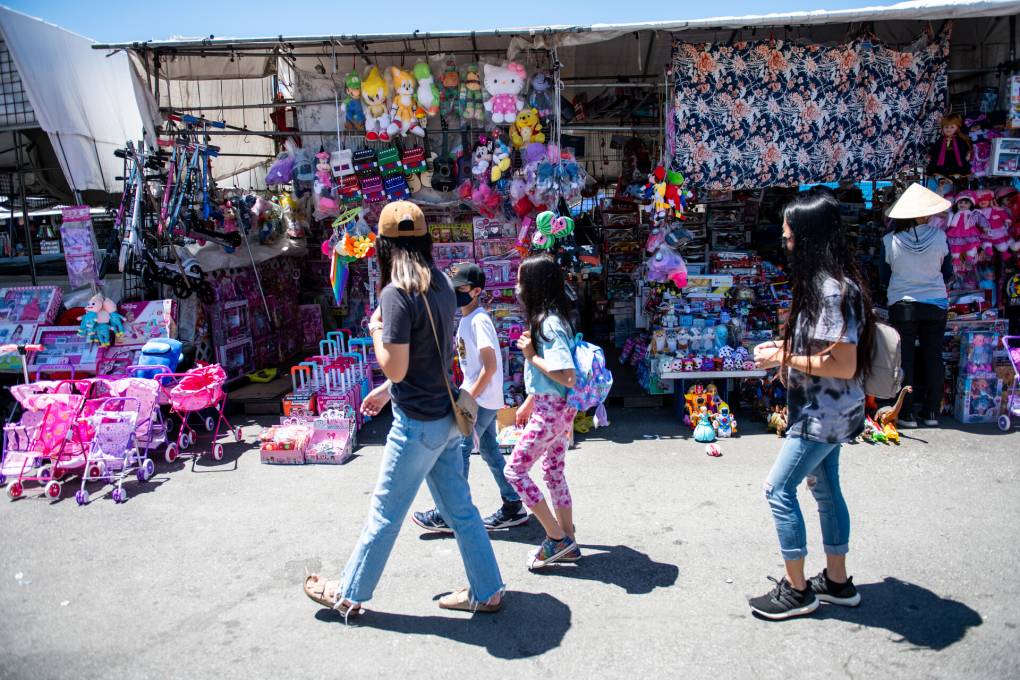
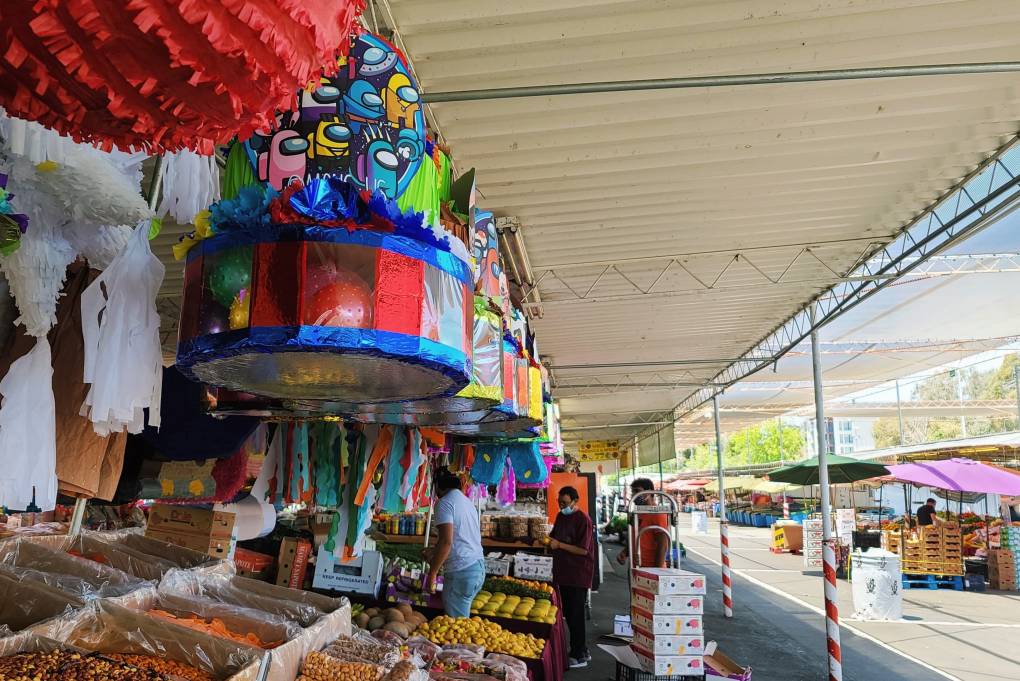
A New Home for La Pulga?
Why the Future of San José's Flea Market Could Be an Abandoned Landfill
'This Is Our City': San José's Berryessa Flea Market Vendors Fight to Stay
'My Roots Are at the Flea Market': As La Pulga Closure Looms Over Vendors, One San José Family Weighs the Future
Letting go of La Pulga
San Jose Approves Plan to Radically Transform Flea Market Site
San Jose Flea Market Leaders End Hunger Strike, But Future of La Pulga Still Hangs in the Balance
The Uncertain Future of La Pulga in San Jose
Player sponsored by
window.__IS_SSR__=true
window.__INITIAL_STATE__={
"attachmentsReducer": {
"audio_0": {
"type": "attachments",
"id": "audio_0",
"imgSizes": {
"kqedFullSize": {
"file": "https://ww2.kqed.org/news/wp-content/themes/KQED-unified/img/audio_bgs/background0.jpg"
}
}
},
"audio_1": {
"type": "attachments",
"id": "audio_1",
"imgSizes": {
"kqedFullSize": {
"file": "https://ww2.kqed.org/news/wp-content/themes/KQED-unified/img/audio_bgs/background1.jpg"
}
}
},
"audio_2": {
"type": "attachments",
"id": "audio_2",
"imgSizes": {
"kqedFullSize": {
"file": "https://ww2.kqed.org/news/wp-content/themes/KQED-unified/img/audio_bgs/background2.jpg"
}
}
},
"audio_3": {
"type": "attachments",
"id": "audio_3",
"imgSizes": {
"kqedFullSize": {
"file": "https://ww2.kqed.org/news/wp-content/themes/KQED-unified/img/audio_bgs/background3.jpg"
}
}
},
"audio_4": {
"type": "attachments",
"id": "audio_4",
"imgSizes": {
"kqedFullSize": {
"file": "https://ww2.kqed.org/news/wp-content/themes/KQED-unified/img/audio_bgs/background4.jpg"
}
}
},
"placeholder": {
"type": "attachments",
"id": "placeholder",
"imgSizes": {
"thumbnail": {
"file": "https://cdn.kqed.org/wp-content/uploads/2024/12/KQED-Default-Image-816638274-2000x1333-1-160x107.jpg",
"width": 160,
"height": 107,
"mimeType": "image/jpeg"
},
"medium": {
"file": "https://cdn.kqed.org/wp-content/uploads/2024/12/KQED-Default-Image-816638274-2000x1333-1-800x533.jpg",
"width": 800,
"height": 533,
"mimeType": "image/jpeg"
},
"medium_large": {
"file": "https://cdn.kqed.org/wp-content/uploads/2024/12/KQED-Default-Image-816638274-2000x1333-1-768x512.jpg",
"width": 768,
"height": 512,
"mimeType": "image/jpeg"
},
"large": {
"file": "https://cdn.kqed.org/wp-content/uploads/2024/12/KQED-Default-Image-816638274-2000x1333-1-1020x680.jpg",
"width": 1020,
"height": 680,
"mimeType": "image/jpeg"
},
"1536x1536": {
"file": "https://cdn.kqed.org/wp-content/uploads/2024/12/KQED-Default-Image-816638274-2000x1333-1-1536x1024.jpg",
"width": 1536,
"height": 1024,
"mimeType": "image/jpeg"
},
"fd-lrg": {
"file": "https://cdn.kqed.org/wp-content/uploads/2024/12/KQED-Default-Image-816638274-2000x1333-1-1536x1024.jpg",
"width": 1536,
"height": 1024,
"mimeType": "image/jpeg"
},
"fd-med": {
"file": "https://cdn.kqed.org/wp-content/uploads/2024/12/KQED-Default-Image-816638274-2000x1333-1-1020x680.jpg",
"width": 1020,
"height": 680,
"mimeType": "image/jpeg"
},
"fd-sm": {
"file": "https://cdn.kqed.org/wp-content/uploads/2024/12/KQED-Default-Image-816638274-2000x1333-1-800x533.jpg",
"width": 800,
"height": 533,
"mimeType": "image/jpeg"
},
"post-thumbnail": {
"file": "https://cdn.kqed.org/wp-content/uploads/2024/12/KQED-Default-Image-816638274-2000x1333-1-672x372.jpg",
"width": 672,
"height": 372,
"mimeType": "image/jpeg"
},
"twentyfourteen-full-width": {
"file": "https://cdn.kqed.org/wp-content/uploads/2024/12/KQED-Default-Image-816638274-2000x1333-1-1038x576.jpg",
"width": 1038,
"height": 576,
"mimeType": "image/jpeg"
},
"xxsmall": {
"file": "https://cdn.kqed.org/wp-content/uploads/2024/12/KQED-Default-Image-816638274-2000x1333-1-160x107.jpg",
"width": 160,
"height": 107,
"mimeType": "image/jpeg"
},
"xsmall": {
"file": "https://cdn.kqed.org/wp-content/uploads/2024/12/KQED-Default-Image-816638274-2000x1333-1-672x372.jpg",
"width": 672,
"height": 372,
"mimeType": "image/jpeg"
},
"small": {
"file": "https://cdn.kqed.org/wp-content/uploads/2024/12/KQED-Default-Image-816638274-2000x1333-1-672x372.jpg",
"width": 672,
"height": 372,
"mimeType": "image/jpeg"
},
"xlarge": {
"file": "https://cdn.kqed.org/wp-content/uploads/2024/12/KQED-Default-Image-816638274-2000x1333-1-1020x680.jpg",
"width": 1020,
"height": 680,
"mimeType": "image/jpeg"
},
"full-width": {
"file": "https://cdn.kqed.org/wp-content/uploads/2024/12/KQED-Default-Image-816638274-2000x1333-1-1920x1280.jpg",
"width": 1920,
"height": 1280,
"mimeType": "image/jpeg"
},
"guest-author-32": {
"file": "https://cdn.kqed.org/wp-content/uploads/2025/01/KQED-Default-Image-816638274-1333x1333-1-160x160.jpg",
"width": 32,
"height": 32,
"mimeType": "image/jpeg"
},
"guest-author-50": {
"file": "https://cdn.kqed.org/wp-content/uploads/2025/01/KQED-Default-Image-816638274-1333x1333-1-160x160.jpg",
"width": 50,
"height": 50,
"mimeType": "image/jpeg"
},
"guest-author-64": {
"file": "https://cdn.kqed.org/wp-content/uploads/2025/01/KQED-Default-Image-816638274-1333x1333-1-160x160.jpg",
"width": 64,
"height": 64,
"mimeType": "image/jpeg"
},
"guest-author-96": {
"file": "https://cdn.kqed.org/wp-content/uploads/2025/01/KQED-Default-Image-816638274-1333x1333-1-160x160.jpg",
"width": 96,
"height": 96,
"mimeType": "image/jpeg"
},
"guest-author-128": {
"file": "https://cdn.kqed.org/wp-content/uploads/2025/01/KQED-Default-Image-816638274-1333x1333-1-160x160.jpg",
"width": 128,
"height": 128,
"mimeType": "image/jpeg"
},
"detail": {
"file": "https://cdn.kqed.org/wp-content/uploads/2025/01/KQED-Default-Image-816638274-1333x1333-1-160x160.jpg",
"width": 160,
"height": 160,
"mimeType": "image/jpeg"
},
"kqedFullSize": {
"file": "https://cdn.kqed.org/wp-content/uploads/2024/12/KQED-Default-Image-816638274-2000x1333-1.jpg",
"width": 2000,
"height": 1333
}
}
},
"news_12002386": {
"type": "attachments",
"id": "news_12002386",
"meta": {
"index": "attachments_1716263798",
"site": "news",
"id": "12002386",
"found": true
},
"title": "LOGO_THEBAY",
"publishDate": 1724964767,
"status": "inherit",
"parent": 12002385,
"modified": 1724964767,
"caption": null,
"credit": null,
"altTag": null,
"description": null,
"imgSizes": {
"thumbnail": {
"file": "https://cdn.kqed.org/wp-content/uploads/sites/10/2024/08/LOGO_THEBAY-160x160.png",
"width": 160,
"height": 160,
"mimeType": "image/png"
},
"kqedFullSize": {
"file": "https://cdn.kqed.org/wp-content/uploads/sites/10/2024/08/LOGO_THEBAY.png",
"width": 300,
"height": 300
}
},
"isLoading": false,
"fetchFailed": false
},
"news_11960270": {
"type": "attachments",
"id": "news_11960270",
"meta": {
"index": "attachments_1716263798",
"site": "news",
"id": "11960270",
"found": true
},
"parent": 11960306,
"imgSizes": {
"twentyfourteen-full-width": {
"file": "https://ww2.kqed.org/app/uploads/sites/10/2023/09/230906-850-SINGLETON-RD-MD-02-KQED-1038x576.jpg",
"width": 1038,
"mimeType": "image/jpeg",
"height": 576
},
"thumbnail": {
"file": "https://ww2.kqed.org/app/uploads/sites/10/2023/09/230906-850-SINGLETON-RD-MD-02-KQED-160x107.jpg",
"width": 160,
"mimeType": "image/jpeg",
"height": 107
},
"post-thumbnail": {
"file": "https://ww2.kqed.org/app/uploads/sites/10/2023/09/230906-850-SINGLETON-RD-MD-02-KQED-672x372.jpg",
"width": 672,
"mimeType": "image/jpeg",
"height": 372
},
"kqedFullSize": {
"file": "https://ww2.kqed.org/app/uploads/sites/10/2023/09/230906-850-SINGLETON-RD-MD-02-KQED.jpg",
"width": 2000,
"height": 1333
},
"large": {
"file": "https://ww2.kqed.org/app/uploads/sites/10/2023/09/230906-850-SINGLETON-RD-MD-02-KQED-1020x680.jpg",
"width": 1020,
"mimeType": "image/jpeg",
"height": 680
},
"1536x1536": {
"file": "https://ww2.kqed.org/app/uploads/sites/10/2023/09/230906-850-SINGLETON-RD-MD-02-KQED-1536x1024.jpg",
"width": 1536,
"mimeType": "image/jpeg",
"height": 1024
},
"full-width": {
"file": "https://ww2.kqed.org/app/uploads/sites/10/2023/09/230906-850-SINGLETON-RD-MD-02-KQED-1920x1280.jpg",
"width": 1920,
"mimeType": "image/jpeg",
"height": 1280
},
"medium": {
"file": "https://ww2.kqed.org/app/uploads/sites/10/2023/09/230906-850-SINGLETON-RD-MD-02-KQED-800x533.jpg",
"width": 800,
"mimeType": "image/jpeg",
"height": 533
}
},
"publishDate": 1694043027,
"modified": 1694110145,
"caption": "A methane release structure at 850 Singleton Rd. in San José on Sept. 6, 2023.",
"description": null,
"title": "A methane release structure at 850 Singleton Rd. in San José on Sept. 6, 2023.",
"credit": "Martin do Nascimento/KQED",
"status": "inherit",
"altTag": "A small structure with a large smokestack is seen from behind a chainlink fence in the center of a large field.",
"isLoading": false,
"fetchFailed": false
},
"news_11960272": {
"type": "attachments",
"id": "news_11960272",
"meta": {
"index": "attachments_1716263798",
"site": "news",
"id": "11960272",
"found": true
},
"parent": 0,
"imgSizes": {
"twentyfourteen-full-width": {
"file": "https://ww2.kqed.org/app/uploads/sites/10/2023/09/230906-850-SINGLETON-RD-MD-07-KQED-1038x576.jpg",
"width": 1038,
"mimeType": "image/jpeg",
"height": 576
},
"thumbnail": {
"file": "https://ww2.kqed.org/app/uploads/sites/10/2023/09/230906-850-SINGLETON-RD-MD-07-KQED-160x107.jpg",
"width": 160,
"mimeType": "image/jpeg",
"height": 107
},
"post-thumbnail": {
"file": "https://ww2.kqed.org/app/uploads/sites/10/2023/09/230906-850-SINGLETON-RD-MD-07-KQED-672x372.jpg",
"width": 672,
"mimeType": "image/jpeg",
"height": 372
},
"kqedFullSize": {
"file": "https://ww2.kqed.org/app/uploads/sites/10/2023/09/230906-850-SINGLETON-RD-MD-07-KQED.jpg",
"width": 2000,
"height": 1333
},
"large": {
"file": "https://ww2.kqed.org/app/uploads/sites/10/2023/09/230906-850-SINGLETON-RD-MD-07-KQED-1020x680.jpg",
"width": 1020,
"mimeType": "image/jpeg",
"height": 680
},
"1536x1536": {
"file": "https://ww2.kqed.org/app/uploads/sites/10/2023/09/230906-850-SINGLETON-RD-MD-07-KQED-1536x1024.jpg",
"width": 1536,
"mimeType": "image/jpeg",
"height": 1024
},
"full-width": {
"file": "https://ww2.kqed.org/app/uploads/sites/10/2023/09/230906-850-SINGLETON-RD-MD-07-KQED-1920x1280.jpg",
"width": 1920,
"mimeType": "image/jpeg",
"height": 1280
},
"medium": {
"file": "https://ww2.kqed.org/app/uploads/sites/10/2023/09/230906-850-SINGLETON-RD-MD-07-KQED-800x533.jpg",
"width": 800,
"mimeType": "image/jpeg",
"height": 533
}
},
"publishDate": 1694043041,
"modified": 1694116664,
"caption": "With the legendary San José Berryessa Flea Market known as La Pulga set to close in the coming years, city officials see the landfill at 850 Singleton Road as uniquely suited for a sprawling bazaar housing hundreds of small businesses that are in need of a new place to sell their goods.",
"description": null,
"title": "The landfill at 850 Singleton Rd. in San José on Sept. 6, 2023.",
"credit": "Martin do Nascimento/KQED",
"status": "inherit",
"altTag": "An aerial view of a large open field surrounded by neighborhoods and trees.",
"isLoading": false,
"fetchFailed": false
},
"news_11957360": {
"type": "attachments",
"id": "news_11957360",
"meta": {
"index": "attachments_1716263798",
"site": "news",
"id": "11957360",
"found": true
},
"parent": 11970292,
"imgSizes": {
"twentyfourteen-full-width": {
"file": "https://cdn.kqed.org/wp-content/uploads/sites/10/2023/08/RS67667_230729-BERRYESSA-FLEA-MARKET-RT-06-KQED-1038x576.jpg",
"width": 1038,
"mimeType": "image/jpeg",
"height": 576
},
"thumbnail": {
"file": "https://cdn.kqed.org/wp-content/uploads/sites/10/2023/08/RS67667_230729-BERRYESSA-FLEA-MARKET-RT-06-KQED-160x107.jpg",
"width": 160,
"mimeType": "image/jpeg",
"height": 107
},
"post-thumbnail": {
"file": "https://cdn.kqed.org/wp-content/uploads/sites/10/2023/08/RS67667_230729-BERRYESSA-FLEA-MARKET-RT-06-KQED-672x372.jpg",
"width": 672,
"mimeType": "image/jpeg",
"height": 372
},
"kqedFullSize": {
"file": "https://cdn.kqed.org/wp-content/uploads/sites/10/2023/08/RS67667_230729-BERRYESSA-FLEA-MARKET-RT-06-KQED.jpg",
"width": 2000,
"height": 1333
},
"large": {
"file": "https://cdn.kqed.org/wp-content/uploads/sites/10/2023/08/RS67667_230729-BERRYESSA-FLEA-MARKET-RT-06-KQED-1020x680.jpg",
"width": 1020,
"mimeType": "image/jpeg",
"height": 680
},
"1536x1536": {
"file": "https://cdn.kqed.org/wp-content/uploads/sites/10/2023/08/RS67667_230729-BERRYESSA-FLEA-MARKET-RT-06-KQED-1536x1024.jpg",
"width": 1536,
"mimeType": "image/jpeg",
"height": 1024
},
"full-width": {
"file": "https://cdn.kqed.org/wp-content/uploads/sites/10/2023/08/RS67667_230729-BERRYESSA-FLEA-MARKET-RT-06-KQED-1920x1280.jpg",
"width": 1920,
"mimeType": "image/jpeg",
"height": 1280
},
"medium": {
"file": "https://cdn.kqed.org/wp-content/uploads/sites/10/2023/08/RS67667_230729-BERRYESSA-FLEA-MARKET-RT-06-KQED-800x533.jpg",
"width": 800,
"mimeType": "image/jpeg",
"height": 533
}
},
"publishDate": 1691104905,
"modified": 1702927598,
"caption": "Hector Garcia (left) and Lizeth Valtierra (right) working at the BayFresh Piñateria, located in the Berryessa Flea Market in San José on July 29, 2023.",
"description": null,
"title": "RS67667_230729-BERRYESSA FLEA MARKET- RT-06-KQED",
"credit": "Raphaël Timmons/KQED",
"status": "inherit",
"altTag": "Two people stand in front of a stall full of wares.",
"isLoading": false,
"fetchFailed": false
},
"news_11916850": {
"type": "attachments",
"id": "news_11916850",
"meta": {
"index": "attachments_1716263798",
"site": "news",
"id": "11916850",
"found": true
},
"parent": 11916729,
"imgSizes": {
"twentyfourteen-full-width": {
"file": "https://ww2.kqed.org/app/uploads/sites/10/2022/06/RS56053_20220402_SJFleaMarket_RamosWhites-07-2-qut-1038x576.jpg",
"width": 1038,
"mimeType": "image/jpeg",
"height": 576
},
"thumbnail": {
"file": "https://ww2.kqed.org/app/uploads/sites/10/2022/06/RS56053_20220402_SJFleaMarket_RamosWhites-07-2-qut-160x107.jpg",
"width": 160,
"mimeType": "image/jpeg",
"height": 107
},
"post-thumbnail": {
"file": "https://ww2.kqed.org/app/uploads/sites/10/2022/06/RS56053_20220402_SJFleaMarket_RamosWhites-07-2-qut-672x372.jpg",
"width": 672,
"mimeType": "image/jpeg",
"height": 372
},
"kqedFullSize": {
"file": "https://ww2.kqed.org/app/uploads/sites/10/2022/06/RS56053_20220402_SJFleaMarket_RamosWhites-07-2-qut.jpg",
"width": 1920,
"height": 1280
},
"large": {
"file": "https://ww2.kqed.org/app/uploads/sites/10/2022/06/RS56053_20220402_SJFleaMarket_RamosWhites-07-2-qut-1020x680.jpg",
"width": 1020,
"mimeType": "image/jpeg",
"height": 680
},
"1536x1536": {
"file": "https://ww2.kqed.org/app/uploads/sites/10/2022/06/RS56053_20220402_SJFleaMarket_RamosWhites-07-2-qut-1536x1024.jpg",
"width": 1536,
"mimeType": "image/jpeg",
"height": 1024
},
"medium": {
"file": "https://ww2.kqed.org/app/uploads/sites/10/2022/06/RS56053_20220402_SJFleaMarket_RamosWhites-07-2-qut-800x533.jpg",
"width": 800,
"mimeType": "image/jpeg",
"height": 533
}
},
"publishDate": 1654903337,
"modified": 1655152356,
"caption": "Katrina Ramos White closes up the vending stall she runs with her husband on April 2, 2022. Ramos White took over the family business in 2020 after her parents retired.",
"description": null,
"title": "RS56053_20220402_SJFleaMarket_RamosWhites-07-2-qut",
"credit": "Amaya Edwards/KQED",
"status": "inherit",
"altTag": null,
"isLoading": false,
"fetchFailed": false
},
"news_11912754": {
"type": "attachments",
"id": "news_11912754",
"meta": {
"index": "attachments_1716263798",
"site": "news",
"id": "11912754",
"found": true
},
"parent": 11912707,
"imgSizes": {
"twentyfourteen-full-width": {
"file": "https://ww2.kqed.org/app/uploads/sites/10/2022/05/Image-from-iOS-11-1038x576.jpg",
"width": 1038,
"mimeType": "image/jpeg",
"height": 576
},
"thumbnail": {
"file": "https://ww2.kqed.org/app/uploads/sites/10/2022/05/Image-from-iOS-11-160x107.jpg",
"width": 160,
"mimeType": "image/jpeg",
"height": 107
},
"post-thumbnail": {
"file": "https://ww2.kqed.org/app/uploads/sites/10/2022/05/Image-from-iOS-11-672x372.jpg",
"width": 672,
"mimeType": "image/jpeg",
"height": 372
},
"kqedFullSize": {
"file": "https://ww2.kqed.org/app/uploads/sites/10/2022/05/Image-from-iOS-11.jpg",
"width": 2048,
"height": 1366
},
"large": {
"file": "https://ww2.kqed.org/app/uploads/sites/10/2022/05/Image-from-iOS-11-1020x680.jpg",
"width": 1020,
"mimeType": "image/jpeg",
"height": 680
},
"1536x1536": {
"file": "https://ww2.kqed.org/app/uploads/sites/10/2022/05/Image-from-iOS-11-1536x1025.jpg",
"width": 1536,
"mimeType": "image/jpeg",
"height": 1025
},
"full-width": {
"file": "https://ww2.kqed.org/app/uploads/sites/10/2022/05/Image-from-iOS-11-1920x1281.jpg",
"width": 1920,
"mimeType": "image/jpeg",
"height": 1281
},
"medium": {
"file": "https://ww2.kqed.org/app/uploads/sites/10/2022/05/Image-from-iOS-11-800x534.jpg",
"width": 800,
"mimeType": "image/jpeg",
"height": 534
}
},
"publishDate": 1651273413,
"modified": 1651273457,
"caption": "Katrina Ramos White closes up her toy shop at the Berryessa Flea Market in San Jose.",
"description": null,
"title": "Image from iOS (11)",
"credit": "Amaya Nicole Edwards/KQED",
"status": "inherit",
"altTag": null,
"isLoading": false,
"fetchFailed": false
},
"news_11879731": {
"type": "attachments",
"id": "news_11879731",
"meta": {
"index": "attachments_1716263798",
"site": "news",
"id": "11879731",
"found": true
},
"parent": 11879717,
"imgSizes": {
"twentyfourteen-full-width": {
"file": "https://ww2.kqed.org/app/uploads/sites/10/2021/06/RS49568_014_SanJose_FleaMarket_05262021-qut-1-1038x576.jpg",
"width": 1038,
"mimeType": "image/jpeg",
"height": 576
},
"thumbnail": {
"file": "https://ww2.kqed.org/app/uploads/sites/10/2021/06/RS49568_014_SanJose_FleaMarket_05262021-qut-1-160x107.jpg",
"width": 160,
"mimeType": "image/jpeg",
"height": 107
},
"post-thumbnail": {
"file": "https://ww2.kqed.org/app/uploads/sites/10/2021/06/RS49568_014_SanJose_FleaMarket_05262021-qut-1-672x372.jpg",
"width": 672,
"mimeType": "image/jpeg",
"height": 372
},
"kqedFullSize": {
"file": "https://ww2.kqed.org/app/uploads/sites/10/2021/06/RS49568_014_SanJose_FleaMarket_05262021-qut-1.jpg",
"width": 1920,
"height": 1280
},
"large": {
"file": "https://ww2.kqed.org/app/uploads/sites/10/2021/06/RS49568_014_SanJose_FleaMarket_05262021-qut-1-1020x680.jpg",
"width": 1020,
"mimeType": "image/jpeg",
"height": 680
},
"1536x1536": {
"file": "https://ww2.kqed.org/app/uploads/sites/10/2021/06/RS49568_014_SanJose_FleaMarket_05262021-qut-1-1536x1024.jpg",
"width": 1536,
"mimeType": "image/jpeg",
"height": 1024
},
"medium": {
"file": "https://ww2.kqed.org/app/uploads/sites/10/2021/06/RS49568_014_SanJose_FleaMarket_05262021-qut-1-800x533.jpg",
"width": 800,
"mimeType": "image/jpeg",
"height": 533
}
},
"publishDate": 1624993611,
"modified": 1625012203,
"caption": "A family walks past a stall selling toys at the San Jose Flea Market on May 26, 2021. On Tuesday, the City Council approved a plan to rezone the 60-acre property after its owners and vendors reached a deal.",
"description": "A family walks past a stall selling toys at the San Jose Flea Market on May 26, 2021.",
"title": "RS49568_014_SanJose_FleaMarket_05262021-qut (1)",
"credit": "Beth LaBerge/KQED",
"status": "inherit",
"altTag": null,
"isLoading": false,
"fetchFailed": false
},
"news_11878778": {
"type": "attachments",
"id": "news_11878778",
"meta": {
"index": "attachments_1716263798",
"site": "news",
"id": "11878778",
"found": true
},
"parent": 11878548,
"imgSizes": {
"twentyfourteen-full-width": {
"file": "https://ww2.kqed.org/app/uploads/sites/10/2021/06/20210528_134048-1038x576.jpg",
"width": 1038,
"mimeType": "image/jpeg",
"height": 576
},
"thumbnail": {
"file": "https://ww2.kqed.org/app/uploads/sites/10/2021/06/20210528_134048-160x107.jpg",
"width": 160,
"mimeType": "image/jpeg",
"height": 107
},
"post-thumbnail": {
"file": "https://ww2.kqed.org/app/uploads/sites/10/2021/06/20210528_134048-672x372.jpg",
"width": 672,
"mimeType": "image/jpeg",
"height": 372
},
"kqedFullSize": {
"file": "https://ww2.kqed.org/app/uploads/sites/10/2021/06/20210528_134048-scaled.jpg",
"width": 2560,
"height": 1710
},
"2048x2048": {
"file": "https://ww2.kqed.org/app/uploads/sites/10/2021/06/20210528_134048-2048x1368.jpg",
"width": 2048,
"mimeType": "image/jpeg",
"height": 1368
},
"large": {
"file": "https://ww2.kqed.org/app/uploads/sites/10/2021/06/20210528_134048-1020x681.jpg",
"width": 1020,
"mimeType": "image/jpeg",
"height": 681
},
"1536x1536": {
"file": "https://ww2.kqed.org/app/uploads/sites/10/2021/06/20210528_134048-1536x1026.jpg",
"width": 1536,
"mimeType": "image/jpeg",
"height": 1026
},
"full-width": {
"file": "https://ww2.kqed.org/app/uploads/sites/10/2021/06/20210528_134048-1920x1282.jpg",
"width": 1920,
"mimeType": "image/jpeg",
"height": 1282
},
"medium": {
"file": "https://ww2.kqed.org/app/uploads/sites/10/2021/06/20210528_134048-800x534.jpg",
"width": 800,
"mimeType": "image/jpeg",
"height": 534
}
},
"publishDate": 1624301829,
"modified": 1624558764,
"caption": "A stall at the San Jose Flea Market on May 28, 2021 that sells piñatas, dry fruit, nuts, sweets and other snacks. La Pulga, as the outdoor market is known in Spanish, is home to hundreds of vendors. Many of them would likely be displaced if the property's owners get the go-ahead from the city to build a major new development on the site.",
"description": "A stall at the San Jose Flea Market that sells piñatas, dry fruit, nuts, sweets and other snacks on May 28, 2021. The San Jose Flea Market, or La Pulga as it's known in Spanish, is an outdoor market that sits on roughly 60 acres of land and is home to hundreds of of outdoor stalls that sell everything from furniture to vegetables to clothing.",
"title": "20210528_134048",
"credit": "Carlos Cabrera-Lomelí/KQED",
"status": "inherit",
"altTag": "A piñata stand, with piñatas all around, next to a fruit and vegetable stand, some workers are visible moving boxes in the background.",
"isLoading": false,
"fetchFailed": false
},
"news_11761257": {
"type": "attachments",
"id": "news_11761257",
"meta": {
"index": "attachments_1716263798",
"site": "news",
"id": "11761257",
"found": true
},
"parent": 11761244,
"imgSizes": {
"apple_news_ca_landscape_5_5": {
"file": "https://ww2.kqed.org/app/uploads/sites/10/2019/07/thumbnail_IMG_7650-1044x783.jpg",
"width": 1044,
"mimeType": "image/jpeg",
"height": 783
},
"apple_news_ca_square_4_0": {
"file": "https://ww2.kqed.org/app/uploads/sites/10/2019/07/thumbnail_IMG_7650-470x470.jpg",
"width": 470,
"mimeType": "image/jpeg",
"height": 470
},
"twentyfourteen-full-width": {
"file": "https://ww2.kqed.org/app/uploads/sites/10/2019/07/thumbnail_IMG_7650-1038x576.jpg",
"width": 1038,
"mimeType": "image/jpeg",
"height": 576
},
"thumbnail": {
"file": "https://ww2.kqed.org/app/uploads/sites/10/2019/07/thumbnail_IMG_7650-160x107.jpg",
"width": 160,
"mimeType": "image/jpeg",
"height": 107
},
"post-thumbnail": {
"file": "https://ww2.kqed.org/app/uploads/sites/10/2019/07/thumbnail_IMG_7650-672x372.jpg",
"width": 672,
"mimeType": "image/jpeg",
"height": 372
},
"kqedFullSize": {
"file": "https://ww2.kqed.org/app/uploads/sites/10/2019/07/thumbnail_IMG_7650.jpg",
"width": 1280,
"height": 853
},
"apple_news_ca_landscape_4_7": {
"file": "https://ww2.kqed.org/app/uploads/sites/10/2019/07/thumbnail_IMG_7650-632x474.jpg",
"width": 632,
"mimeType": "image/jpeg",
"height": 474
},
"large": {
"file": "https://ww2.kqed.org/app/uploads/sites/10/2019/07/thumbnail_IMG_7650-1020x680.jpg",
"width": 1020,
"mimeType": "image/jpeg",
"height": 680
},
"complete_open_graph": {
"file": "https://ww2.kqed.org/app/uploads/sites/10/2019/07/thumbnail_IMG_7650-1200x800.jpg",
"width": 1200,
"mimeType": "image/jpeg",
"height": 800
},
"apple_news_ca_landscape_4_0": {
"file": "https://ww2.kqed.org/app/uploads/sites/10/2019/07/thumbnail_IMG_7650-536x402.jpg",
"width": 536,
"mimeType": "image/jpeg",
"height": 402
},
"apple_news_ca_portrait_12_9": {
"file": "https://ww2.kqed.org/app/uploads/sites/10/2019/07/thumbnail_IMG_7650-1122x853.jpg",
"width": 1122,
"mimeType": "image/jpeg",
"height": 853
},
"medium": {
"file": "https://ww2.kqed.org/app/uploads/sites/10/2019/07/thumbnail_IMG_7650-800x533.jpg",
"width": 800,
"mimeType": "image/jpeg",
"height": 533
},
"apple_news_ca_portrait_4_0": {
"file": "https://ww2.kqed.org/app/uploads/sites/10/2019/07/thumbnail_IMG_7650-354x472.jpg",
"width": 354,
"mimeType": "image/jpeg",
"height": 472
},
"apple_news_ca_portrait_9_7": {
"file": "https://ww2.kqed.org/app/uploads/sites/10/2019/07/thumbnail_IMG_7650-840x853.jpg",
"width": 840,
"mimeType": "image/jpeg",
"height": 853
},
"apple_news_ca_square_9_7": {
"file": "https://ww2.kqed.org/app/uploads/sites/10/2019/07/thumbnail_IMG_7650-1104x853.jpg",
"width": 1104,
"mimeType": "image/jpeg",
"height": 853
},
"apple_news_ca_portrait_4_7": {
"file": "https://ww2.kqed.org/app/uploads/sites/10/2019/07/thumbnail_IMG_7650-414x552.jpg",
"width": 414,
"mimeType": "image/jpeg",
"height": 552
},
"apple_news_ca_portrait_5_5": {
"file": "https://ww2.kqed.org/app/uploads/sites/10/2019/07/thumbnail_IMG_7650-687x853.jpg",
"width": 687,
"mimeType": "image/jpeg",
"height": 853
},
"apple_news_ca_square_4_7": {
"file": "https://ww2.kqed.org/app/uploads/sites/10/2019/07/thumbnail_IMG_7650-550x550.jpg",
"width": 550,
"mimeType": "image/jpeg",
"height": 550
},
"apple_news_ca_square_5_5": {
"file": "https://ww2.kqed.org/app/uploads/sites/10/2019/07/thumbnail_IMG_7650-912x853.jpg",
"width": 912,
"mimeType": "image/jpeg",
"height": 853
}
},
"publishDate": 1563153050,
"modified": 1623967497,
"caption": "Produce vendor Ramon Garcia sells fruit at the San Jose Flea Market on July 14, 2019.",
"description": null,
"title": "thumbnail_IMG_7650",
"credit": "Sara Hossaini/KQED",
"status": "inherit",
"altTag": null,
"isLoading": false,
"fetchFailed": false
}
},
"audioPlayerReducer": {
"postId": "stream_live",
"isPaused": true,
"isPlaying": false,
"pfsActive": false,
"pledgeModalIsOpen": true,
"playerDrawerIsOpen": false
},
"authorsReducer": {
"gmarzorati": {
"type": "authors",
"id": "227",
"meta": {
"index": "authors_1716337520",
"id": "227",
"found": true
},
"name": "Guy Marzorati",
"firstName": "Guy",
"lastName": "Marzorati",
"slug": "gmarzorati",
"email": "gmarzorati@KQED.org",
"display_author_email": true,
"staff_mastheads": [
"news"
],
"title": "Correspondent",
"bio": "Guy Marzorati is a correspondent on KQED's California Politics and Government Desk, based in San Jose. A graduate of Santa Clara University, Guy joined KQED in 2013. He reports on state and local politics and produces KQED's digital voter guide.",
"avatar": "https://secure.gravatar.com/avatar/e7038b8dbfd55b104369b76b1cd0b9de?s=600&d=blank&r=g",
"twitter": "guymarzorati",
"facebook": null,
"instagram": null,
"linkedin": null,
"sites": [
{
"site": "",
"roles": [
"editor"
]
},
{
"site": "news",
"roles": [
"editor"
]
},
{
"site": "science",
"roles": [
"editor"
]
},
{
"site": "forum",
"roles": [
"editor"
]
},
{
"site": "elections",
"roles": [
"editor"
]
},
{
"site": "liveblog",
"roles": [
"editor"
]
}
],
"headData": {
"title": "Guy Marzorati | KQED",
"description": "Correspondent",
"ogImgSrc": "https://secure.gravatar.com/avatar/e7038b8dbfd55b104369b76b1cd0b9de?s=600&d=blank&r=g",
"twImgSrc": "https://secure.gravatar.com/avatar/e7038b8dbfd55b104369b76b1cd0b9de?s=600&d=blank&r=g"
},
"isLoading": false,
"link": "/author/gmarzorati"
},
"dkatayama": {
"type": "authors",
"id": "7240",
"meta": {
"index": "authors_1716337520",
"id": "7240",
"found": true
},
"name": "Devin Katayama",
"firstName": "Devin",
"lastName": "Katayama",
"slug": "dkatayama",
"email": "dkatayama@kqed.org",
"display_author_email": true,
"staff_mastheads": [
"news"
],
"title": "Editor of Talent and Development",
"bio": "Devin Katayama is former Editor of Talent and Development for KQED. He supported our internship program and on-call staff by looking for equitable opportunities to improve the newsroom.\r\n\r\nHe previously hosted The Bay and American Suburb podcasts from KQED News. Prior to returning to the Bay Area in 2015, Devin was the education reporter for WFPL in Louisville and worked as a producer with radio stations in Chicago and Portland, OR. His work has appeared on NPR’s \u003cem>Morning Edition, All Things Considered, The Takeaway\u003c/em> and \u003cem>Here and Now.\u003c/em>\r\n\r\nDevin earned his MA in Journalism from Columbia College Chicago, where he was a Follett Fellow and the recipient of the 2011 Studs Terkel Community Media Workshop Scholarship for his story on Chicago's homeless youth. He won WBUR's 2014 Daniel Schorr award and a regional RTNDA Edward R. Murrow Award for his documentary \"At Risk\" that looked at issues facing some of Louisville's students. Devin has also received numerous local awards from the Associated Press and the Society of Professional Journalists.",
"avatar": "https://secure.gravatar.com/avatar/d0d2978a31002fb2de107921a8e18405?s=600&d=blank&r=g",
"twitter": "RadioDevin",
"facebook": null,
"instagram": null,
"linkedin": null,
"sites": [
{
"site": "arts",
"roles": []
},
{
"site": "news",
"roles": [
"author"
]
},
{
"site": "stateofhealth",
"roles": [
"author"
]
},
{
"site": "forum",
"roles": [
"editor"
]
},
{
"site": "perspectives",
"roles": [
"editor"
]
}
],
"headData": {
"title": "Devin Katayama | KQED",
"description": "Editor of Talent and Development",
"ogImgSrc": "https://secure.gravatar.com/avatar/d0d2978a31002fb2de107921a8e18405?s=600&d=blank&r=g",
"twImgSrc": "https://secure.gravatar.com/avatar/d0d2978a31002fb2de107921a8e18405?s=600&d=blank&r=g"
},
"isLoading": false,
"link": "/author/dkatayama"
},
"ecruzguevarra": {
"type": "authors",
"id": "8654",
"meta": {
"index": "authors_1716337520",
"id": "8654",
"found": true
},
"name": "Ericka Cruz Guevarra",
"firstName": "Ericka",
"lastName": "Cruz Guevarra",
"slug": "ecruzguevarra",
"email": "ecruzguevarra@kqed.org",
"display_author_email": true,
"staff_mastheads": [
"news"
],
"title": "Producer, The Bay Podcast",
"bio": "Ericka Cruz Guevarra is host of \u003ca href=\"https://www.kqed.org/podcasts/thebay\">\u003cem>The Bay\u003c/em>\u003c/a> podcast at KQED. Before host, she was the show’s producer. Her work in that capacity includes a three-part reported series on policing in Vallejo, which won a 2020 excellence in journalism award from the Society of Professional Journalists. Ericka has worked as a breaking news reporter at Oregon Public Broadcasting, helped produce the Code Switch podcast, and was KQED’s inaugural Raul Ramirez Diversity Fund intern. She’s also an alumna of NPR’s Next Generation Radio program. Send her an email if you have strong feelings about whether Fairfield and Suisun City are the Bay. Ericka is represented by SAG-AFTRA.",
"avatar": "https://secure.gravatar.com/avatar/25e5ab8d3d53fad2dcc7bb2b5c506b1a?s=600&d=blank&r=g",
"twitter": "NotoriousECG",
"facebook": null,
"instagram": null,
"linkedin": null,
"sites": [
{
"site": "arts",
"roles": [
"subscriber"
]
},
{
"site": "news",
"roles": [
"editor",
"manage_categories"
]
},
{
"site": "futureofyou",
"roles": [
"subscriber"
]
},
{
"site": "stateofhealth",
"roles": [
"subscriber"
]
},
{
"site": "science",
"roles": [
"editor"
]
},
{
"site": "forum",
"roles": [
"subscriber"
]
}
],
"headData": {
"title": "Ericka Cruz Guevarra | KQED",
"description": "Producer, The Bay Podcast",
"ogImgSrc": "https://secure.gravatar.com/avatar/25e5ab8d3d53fad2dcc7bb2b5c506b1a?s=600&d=blank&r=g",
"twImgSrc": "https://secure.gravatar.com/avatar/25e5ab8d3d53fad2dcc7bb2b5c506b1a?s=600&d=blank&r=g"
},
"isLoading": false,
"link": "/author/ecruzguevarra"
},
"amontecillo": {
"type": "authors",
"id": "11649",
"meta": {
"index": "authors_1716337520",
"id": "11649",
"found": true
},
"name": "Alan Montecillo",
"firstName": "Alan",
"lastName": "Montecillo",
"slug": "amontecillo",
"email": "amontecillo@kqed.org",
"display_author_email": false,
"staff_mastheads": [
"news"
],
"title": "KQED Contributor",
"bio": "Alan Montecillo is the senior editor of \u003cem>\u003ca href=\"http://kqed.org/thebay\">The Bay\u003c/a>, \u003c/em> KQED's local news podcast. Before moving to the Bay Area, he worked as a senior talk show producer for WILL in Champaign-Urbana, Illinois and at Oregon Public Broadcasting in Portland, Oregon. He has won journalism awards from the Society of Professional Journalists Northern California, the Public Media Journalists Association, The Signal Awards, and has also received a regional Edward R. Murrow award. Alan is a Filipino American from Hong Kong and a graduate of Reed College.",
"avatar": "https://secure.gravatar.com/avatar/d5e4e7a76481969ccba76f4e2b5ccabc?s=600&d=blank&r=g",
"twitter": "alanmontecillo",
"facebook": null,
"instagram": null,
"linkedin": null,
"sites": [
{
"site": "",
"roles": [
"editor"
]
},
{
"site": "news",
"roles": [
"editor",
"manage_categories"
]
}
],
"headData": {
"title": "Alan Montecillo | KQED",
"description": "KQED Contributor",
"ogImgSrc": "https://secure.gravatar.com/avatar/d5e4e7a76481969ccba76f4e2b5ccabc?s=600&d=blank&r=g",
"twImgSrc": "https://secure.gravatar.com/avatar/d5e4e7a76481969ccba76f4e2b5ccabc?s=600&d=blank&r=g"
},
"isLoading": false,
"link": "/author/amontecillo"
},
"abandlamudi": {
"type": "authors",
"id": "11672",
"meta": {
"index": "authors_1716337520",
"id": "11672",
"found": true
},
"name": "Adhiti Bandlamudi",
"firstName": "Adhiti",
"lastName": "Bandlamudi",
"slug": "abandlamudi",
"email": "abandlamudi@kqed.org",
"display_author_email": false,
"staff_mastheads": [
"news"
],
"title": "KQED Housing Reporter",
"bio": "Adhiti Bandlamudi reports for KQED's Housing desk. She focuses on how housing gets built across the Bay Area. Before joining KQED in 2020, she reported for WUNC in Durham, North Carolina, WABE in Atlanta, Georgia and Capital Public Radio in Sacramento. In 2017, she was awarded a Kroc Fellowship at NPR where she reported on everything from sprinkles to the Golden State Killer's arrest. When she's not reporting, she's baking new recipes in her kitchen or watching movies with friends and family. She's originally from Georgia and has strong opinions about Great British Bake Off.",
"avatar": "https://secure.gravatar.com/avatar/868129c8b257bb99a3500e2c86a65400?s=600&d=mm&r=g",
"twitter": "oddity_adhiti",
"facebook": null,
"instagram": null,
"linkedin": null,
"sites": [
{
"site": "arts",
"roles": [
"author"
]
},
{
"site": "news",
"roles": [
"editor"
]
},
{
"site": "liveblog",
"roles": [
"author"
]
}
],
"headData": {
"title": "Adhiti Bandlamudi | KQED",
"description": "KQED Housing Reporter",
"ogImgSrc": "https://secure.gravatar.com/avatar/868129c8b257bb99a3500e2c86a65400?s=600&d=mm&r=g",
"twImgSrc": "https://secure.gravatar.com/avatar/868129c8b257bb99a3500e2c86a65400?s=600&d=mm&r=g"
},
"isLoading": false,
"link": "/author/abandlamudi"
},
"ccabreralomeli": {
"type": "authors",
"id": "11708",
"meta": {
"index": "authors_1716337520",
"id": "11708",
"found": true
},
"name": "Carlos Cabrera-Lomelí",
"firstName": "Carlos",
"lastName": "Cabrera-Lomelí",
"slug": "ccabreralomeli",
"email": "ccabreralomeli@KQED.org",
"display_author_email": true,
"staff_mastheads": [
"news"
],
"title": "Community Reporter",
"bio": "Carlos Cabrera-Lomelí is a community reporter with KQED's digital engagement team. He also reports and co-produces for KQED's bilingual news hub KQED en Español. He grew up in San Francisco's Mission District and has previously worked with Univision, 48 Hills and REFORMA in Mexico City.",
"avatar": "https://secure.gravatar.com/avatar/e95ff80bb2eaf18a8f2af4dcf7ffb54b?s=600&d=mm&r=g",
"twitter": "@LomeliCabrera",
"facebook": null,
"instagram": null,
"linkedin": null,
"sites": [
{
"site": "arts",
"roles": [
"editor"
]
},
{
"site": "news",
"roles": [
"editor"
]
},
{
"site": "about",
"roles": [
"editor"
]
},
{
"site": "science",
"roles": [
"editor"
]
},
{
"site": "perspectives",
"roles": [
"editor"
]
},
{
"site": "elections",
"roles": [
"editor"
]
},
{
"site": "liveblog",
"roles": [
"contributor"
]
}
],
"headData": {
"title": "Carlos Cabrera-Lomelí | KQED",
"description": "Community Reporter",
"ogImgSrc": "https://secure.gravatar.com/avatar/e95ff80bb2eaf18a8f2af4dcf7ffb54b?s=600&d=mm&r=g",
"twImgSrc": "https://secure.gravatar.com/avatar/e95ff80bb2eaf18a8f2af4dcf7ffb54b?s=600&d=mm&r=g"
},
"isLoading": false,
"link": "/author/ccabreralomeli"
},
"cbeale": {
"type": "authors",
"id": "11749",
"meta": {
"index": "authors_1716337520",
"id": "11749",
"found": true
},
"name": "Christopher Beale",
"firstName": "Christopher",
"lastName": "Beale",
"slug": "cbeale",
"email": "cbeale@kqed.org",
"display_author_email": true,
"staff_mastheads": [
"news"
],
"title": "Engineer/Producer/Reporter",
"bio": "\u003ca href=\"https://linktr.ee/realchrisjbeale\" rel=\"noopener noreferrer\">Christopher J. Beale\u003c/a> is an award winning journalist, audio engineer, and media host living in San Francisco. \r\n\r\nChristopher works primarily as an audio engineer at KQED and serves as the sound designer for both the Bay Curious and Rightnowish podcasts. He is the host and producer of the LGBTQIA podcast and radio segment \u003ca href=\"https://stereotypespodcast.org\">Stereotypes\u003c/a>.",
"avatar": "https://secure.gravatar.com/avatar/dc485bf84788eb7e7414eb638e72407e?s=600&d=blank&r=g",
"twitter": "realchrisjbeale",
"facebook": null,
"instagram": "http://instagram.com/realchrisjbeale",
"linkedin": null,
"sites": [
{
"site": "arts",
"roles": [
"contributor"
]
},
{
"site": "news",
"roles": [
"editor"
]
},
{
"site": "forum",
"roles": [
"editor"
]
}
],
"headData": {
"title": "Christopher Beale | KQED",
"description": "Engineer/Producer/Reporter",
"ogImgSrc": "https://secure.gravatar.com/avatar/dc485bf84788eb7e7414eb638e72407e?s=600&d=blank&r=g",
"twImgSrc": "https://secure.gravatar.com/avatar/dc485bf84788eb7e7414eb638e72407e?s=600&d=blank&r=g"
},
"isLoading": false,
"link": "/author/cbeale"
},
"mesquinca": {
"type": "authors",
"id": "11802",
"meta": {
"index": "authors_1716337520",
"id": "11802",
"found": true
},
"name": "Maria Esquinca",
"firstName": "Maria",
"lastName": "Esquinca",
"slug": "mesquinca",
"email": "mesquinca@kqed.org",
"display_author_email": false,
"staff_mastheads": [],
"title": "Producer, The Bay",
"bio": "María Esquinca is a producer of The Bay. Before that, she was a New York Women’s Foundation IGNITE Fellow at Latino USA. She worked at Radio Bilingue where she covered the San Joaquin Valley. Maria has interned at WLRN, News 21, The New York Times Student Journalism Institute and at Crain’s Detroit Business as a Dow Jones News Fund Business Reporting Intern. She is an MFA graduate from the University of Miami. In 2017, she graduated from the Walter Cronkite School of Journalism and Mass Communication with a Master of Mass Communication. A fronteriza, she was born in Ciudad Juárez, Chihuahua, Mexico and grew up in El Paso, Texas.",
"avatar": "https://secure.gravatar.com/avatar/77cedba18aae91da775038ba06dcd8d0?s=600&d=blank&r=g",
"twitter": "@m_esquinca",
"facebook": null,
"instagram": null,
"linkedin": null,
"sites": [
{
"site": "news",
"roles": []
}
],
"headData": {
"title": "Maria Esquinca | KQED",
"description": "Producer, The Bay",
"ogImgSrc": "https://secure.gravatar.com/avatar/77cedba18aae91da775038ba06dcd8d0?s=600&d=blank&r=g",
"twImgSrc": "https://secure.gravatar.com/avatar/77cedba18aae91da775038ba06dcd8d0?s=600&d=blank&r=g"
},
"isLoading": false,
"link": "/author/mesquinca"
},
"jessicakariisa": {
"type": "authors",
"id": "11831",
"meta": {
"index": "authors_1716337520",
"id": "11831",
"found": true
},
"name": "Jessica Kariisa",
"firstName": "Jessica",
"lastName": "Kariisa",
"slug": "jessicakariisa",
"email": "jkariisa@kqed.org",
"display_author_email": false,
"staff_mastheads": [
"news"
],
"title": "Producer, The Bay",
"bio": "Jessica Kariisa is the producer of The Bay. She first joined KQED as an intern for The California Report Magazine, after which she became an on-call producer. She reported a Bay Curious episode on the use of rap lyrics in criminal trials which won a Society of Professional Journalists award in 2023 for Excellence in Features Journalism and the 2023 Signal Award for Best Conversation Starter. She’s worked on podcasts for Snap Judgment and American Public Media. Before embarking on her audio career, she was a music journalist.\r\n\r\nJessica Kariisa is represented by SAG-AFTRA.",
"avatar": "https://secure.gravatar.com/avatar/4afd355fd24f5515aeab77fd6c72b671?s=600&d=blank&r=g",
"twitter": null,
"facebook": null,
"instagram": null,
"linkedin": null,
"sites": [
{
"site": "arts",
"roles": [
"author"
]
},
{
"site": "news",
"roles": [
"editor",
"manage_categories"
]
}
],
"headData": {
"title": "Jessica Kariisa | KQED",
"description": "Producer, The Bay",
"ogImgSrc": "https://secure.gravatar.com/avatar/4afd355fd24f5515aeab77fd6c72b671?s=600&d=blank&r=g",
"twImgSrc": "https://secure.gravatar.com/avatar/4afd355fd24f5515aeab77fd6c72b671?s=600&d=blank&r=g"
},
"isLoading": false,
"link": "/author/jessicakariisa"
}
},
"breakingNewsReducer": {},
"pagesReducer": {},
"postsReducer": {
"stream_live": {
"type": "live",
"id": "stream_live",
"audioUrl": "https://streams.kqed.org/kqedradio",
"title": "Live Stream",
"excerpt": "Live Stream information currently unavailable.",
"link": "/radio",
"featImg": "",
"label": {
"name": "KQED Live",
"link": "/"
}
},
"stream_kqedNewscast": {
"type": "posts",
"id": "stream_kqedNewscast",
"audioUrl": "https://www.kqed.org/.stream/anon/radio/RDnews/newscast.mp3?_=1",
"title": "KQED Newscast",
"featImg": "",
"label": {
"name": "88.5 FM",
"link": "/"
}
},
"news_12033576": {
"type": "posts",
"id": "news_12033576",
"meta": {
"index": "posts_1716263798",
"site": "news",
"id": "12033576",
"score": null,
"sort": [
1743415250000
]
},
"guestAuthors": [],
"slug": "marin-school-board-backlash-another-roadblock-for-la-pulga-and-eid-festival-in-the-tenderloin",
"title": "Marin School Board Backlash, Another Roadblock for La Pulga, and Eid Festival in the Tenderloin",
"publishDate": 1743415250,
"format": "audio",
"headTitle": "Marin School Board Backlash, Another Roadblock for La Pulga, and Eid Festival in the Tenderloin | KQED",
"labelTerm": {},
"content": "\u003cp>\u003cspan style=\"font-weight: 400\">In this month’s edition of The Bay’s monthly news roundup, Alan, Jessica, and Ericka talk about what happened when a Marin County school board member questioned the term “toxic masculinity,” delays in finding a new site for San Jose’s iconic flea market, and an Eid festival coming to San Francisco’s Tenderloin. Plus, we discuss threats to public media funding.\u003c/span>\u003c/p>\n\u003cp>\u003cstrong>Links:\u003c/strong>\u003c/p>\n\u003cul>\n\u003cli style=\"font-weight: 400\">\u003ca href=\"https://www.kqed.org/news/12033078/watch-live-npr-pbs-heads-answer-lawmakers-allegations-of-bias\">\u003cspan style=\"font-weight: 400\">Watch: NPR, PBS Heads Answer Lawmakers’ Allegations of Bias\u003c/span>\u003c/a>\u003c/li>\n\u003cli style=\"font-weight: 400\">\u003ca href=\"https://www.kqed.org/news/12030578/a-marin-school-board-questioned-the-term-toxic-masculinity-then-came-the-backlash\">\u003cspan style=\"font-weight: 400\">A Marin School Board Questioned the Term ‘Toxic Masculinity.’ Then Came the Backlash\u003c/span>\u003c/a>\u003c/li>\n\u003cli style=\"font-weight: 400\">\u003ca href=\"https://sanjosespotlight.com/california-state-law-blocks-potential-san-jose-berryessa-flea-market-site/\">\u003cspan style=\"font-weight: 400\">State law blocks potential San Jose flea market site\u003c/span>\u003c/a>\u003c/li>\n\u003cli style=\"font-weight: 400\">\u003ca href=\"https://www.kqed.org/news/12032039/san-franciscos-tenderloin-bringing-new-eid-festival\">\u003cspan style=\"font-weight: 400\">San Francisco’s Tenderloin Is Bringing a New Eid Festival to Its Streets\u003c/span>\u003c/a>\u003c/li>\n\u003c/ul>\n\u003cp>\u003cem>Some members of the KQED podcast team are represented by The Screen Actors Guild, American Federation of Television and Radio Artists. San Francisco Northern California Local.\u003c/em>\u003c/p>\n\u003cp>\u003c!-- iframe plugin v.4.3 wordpress.org/plugins/iframe/ -->\u003cbr>\n\u003ciframe loading=\"lazy\" frameborder=\"0\" height=\"200\" scrolling=\"no\" src=\"https://playlist.megaphone.fm?e=KQINC6288501081&light=true\" width=\"100%\" class=\"iframe-class\">\u003c/iframe>\u003c/p>\n\u003cp>\u003cem>This is a computer-generated transcript. While it has been reviewed by our team, there may be some errors.\u003c/em>\u003c/p>\n\u003cp>[ad fullwidth]\u003c/p>\n\u003cp style=\"font-weight: 400\">\u003cstrong>Ericka Cruz Guevarra \u003c/strong>[00:00:02] I’m Ericka Cruz Guevarra and welcome to The Bay local news to keep you rooted and welcome to our monthly news roundup where me and the rest of the Bay team talk about some of the other stories that we’ve been following this month. I’m joined by senior editor Alan Montecillo. Hey Alan.\u003c/p>\n\u003cp style=\"font-weight: 400\">\u003cstrong>Alan Montecillo \u003c/strong>[00:00:20] Hello.\u003c/p>\n\u003cp style=\"font-weight: 400\">\u003cstrong>Ericka Cruz Guevarra \u003c/strong>[00:00:21] And producer Jessica Kariisa.\u003c/p>\n\u003cp style=\"font-weight: 400\">\u003cstrong>Jessica Kariisa \u003c/strong>[00:00:23] Hey Ericka.\u003c/p>\n\u003cp style=\"font-weight: 400\">\u003cstrong>Ericka Cruz Guevarra \u003c/strong>[00:00:25] I feel like we’ve been talking about this a little bit in our little Bay office lately, but I’ve been getting a lot of questions lately from people in my life about how we’re doing over here at KQED, because as maybe not everyone knows, but House Republicans have accused NPR and PBS of bias and have been threatening to pull back on federal funding for these. public media organizations of which we are connected to. I mean, Jessica, have you been getting these questions too?\u003c/p>\n\u003cp style=\"font-weight: 400\">\u003cstrong>Jessica Kariisa \u003c/strong>[00:01:01] Oh, every single time I meet someone and I tell them where I work, that’s the first thing that they ask me. How are we?\u003c/p>\n\u003cp style=\"font-weight: 400\">\u003cstrong>Ericka Cruz Guevarra \u003c/strong>[00:01:09] Yeah. How are we, Alan?\u003c/p>\n\u003cp style=\"font-weight: 400\">\u003cstrong>Alan Montecillo \u003c/strong>[00:01:11] Oh, what a question that is. How are we? Our day-to-day work, I should say, is pretty much the same. Obviously, this is a very intense time. We’re taping this a day after there was a hearing led by Republican Representative Marjorie Taylor Greene, who many people know is the staunch supporter of President Trump denies that he lost the 2020 election, regularly traffics in conspiracy theories, in which the CEOs of NPR and PBS were called to testify. And as many people probably know, the Trump administration and the Republican Party is interested in pulling federal funding from public media. So that was the context. And at that hearing, Representative Greene pulled no punches when talking about NPR and PBS. And many of her Republican colleagues did the same.\u003c/p>\n\u003cp style=\"font-weight: 400\">\u003cstrong>Rep. Marjorie Taylor Greene \u003c/strong>[00:02:00] For far too long, federal taxpayers have been forced to fund biased news. So now it’s up to Congress to determine if Americans are going to continue to provide her and the organization that put her in charge with taxpayer funds to continue to pursue their progressive or rather communist agenda.\u003c/p>\n\u003cp style=\"font-weight: 400\">\u003cstrong>Ericka Cruz Guevarra \u003c/strong>[00:02:23] How exactly, I guess, do you explain to the people in your life, Alan, how this is all affecting us here at KQED?\u003c/p>\n\u003cp style=\"font-weight: 400\">\u003cstrong>Alan Montecillo \u003c/strong>[00:02:31] Every year, there is a nonprofit called the Corporation for Public Broadcasting that was created in 1967 that gets about $500 million per year from the federal government. That by the way, pencils out to about $1.50 per person per year. That’s actually much less than other Western democracies. By contrast, the UK spends about $100 per person, per year on the BBC. And the majority of that money goes not directly to NPR and PBS, which are national organizations, but to local broadcasting stations throughout the country, radio and TV, of which KQED is a part. So for us, you know, federal funding makes up about 7% of our budget. That’s a significant chunk of KQED’s operating budget, but I will note that in rural areas for smaller stations, that percentage is actually quite a lot more. So zeroing out that funding would actually disproportionately hurt smaller stations in more rural areas. I will note too often more conservative areas.\u003c/p>\n\u003cp style=\"font-weight: 400\">\u003cstrong>Ericka Cruz Guevarra \u003c/strong>[00:03:32] And I mean, this is all sort of just one piece of these sort of larger challenges I feel like we’re seeing to just First Amendment and free speech right now and in the second Trump administration.\u003c/p>\n\u003cp style=\"font-weight: 400\">\u003cstrong>Alan Montecillo \u003c/strong>[00:03:45] Yeah, and I want to be clear. Debates over public funding for NPR and PBS aren’t new. There’s a clip from the presidential debate in 2012 where Mitt Romney says, it’s time to cut funding to PBS. It should stand on its own feet.\u003c/p>\n\u003cp style=\"font-weight: 400\">\u003cstrong>Mitt Romney \u003c/strong>[00:03:58] I’m sorry, Jim, I’m going to stop the subsidy to PBS. I’m gonna stop other things. I like PBS. I love Big Bird. I actually like you, too. But I’m not gonna keep on spending money on things to borrow money from China to pay for.\u003c/p>\n\u003cp style=\"font-weight: 400\">\u003cstrong>Alan Montecillo \u003c/strong>[00:04:10] Republicans have long accused public media, and really most mainstream media, of having a liberal bias. So I think it’s one thing to have a debate over what funding should go where, and certainly those of us in public media would say this would hurt many, many people. But it is also happening in a larger context in which this White House and the ruling party in government is very aggressively attacking the people who it sees as its enemies. whether it’s journalists, whether it is legal residents protesting against the war in Gaza, and really anyone who is perceived to be an enemy of President Trump and his administration.\u003c/p>\n\u003cp style=\"font-weight: 400\">\u003cstrong>Ericka Cruz Guevarra \u003c/strong>[00:04:58] All right, well, when we come back, we’re going to get right into the local news stories that Al and Jessica and I have been following this month. Stay with us.\u003c/p>\n\u003cp style=\"font-weight: 400\">[00:05:18] And welcome back to The Bay’s Monthly News Roundup, where we talk about some of the other stories we’ve been following this month, and producer Jessica Kariisa, I wanna start with you. What have you been following in this month?\u003c/p>\n\u003cp style=\"font-weight: 400\">\u003cstrong>Jessica Kariisa \u003c/strong>[00:05:28] Yeah, so I’ve been following a story out of San Rafael, and this was reported by Matthew Green for KQED. And basically, there was a school board meeting earlier this month, a trustee on the board named Mark Korner planned to introduce a measure called, quote, recognition of the essential role and needs of young men in society. Basically it was about just that, recognizing and supporting young men, but it had this extra part which was very critical of the term toxic masculinity, saying that the language implies that young men need to be fixed by women and it undermines mutual respect and equality. And I mentioned at the top that it was introduced and not voted on because it wasn’t voted on. he actually pulled. the measure before the vote because there was a lot of backlash.\u003c/p>\n\u003cp style=\"font-weight: 400\">\u003cstrong>Alan Montecillo \u003c/strong>[00:06:31] So this school board member, Mark Koerner, why did he want to introduce this measure? And just to be clear, this wouldn’t have changed any policies, right? It was more about proclaiming, you know, making a statement.\u003c/p>\n\u003cp style=\"font-weight: 400\">\u003cstrong>Jessica Kariisa \u003c/strong>[00:06:44] Right, right, making a statement, starting a discussion. He said that, you know, he was really, had been thinking a lot about, you know, how boys have a lower rate of academic achievement, higher rates of suicide, and mental health issues, and said that on average, the high school graduation rate for boys is lower than that for girls. But boys are also not as encouraged to speak up about their mental health issues. And so he really just wanted to introduce this as a way to maybe start addressing some of that disparity.\u003c/p>\n\u003cp style=\"font-weight: 400\">\u003cstrong>Ericka Cruz Guevarra \u003c/strong>[00:07:16] You mentioned backlash, I think I could imagine what some of that backlash was maybe about, but what exactly were people up in arms about in terms of this proposal of his and why did it ultimately, I guess, not go to a vote?\u003c/p>\n\u003cp style=\"font-weight: 400\">\u003cstrong>Jessica Kariisa \u003c/strong>[00:07:33] Right. So first of all, it was really bad timing. It was introduced during Women’s History Month. Not great timing. But I think for a lot of people, it just felt like maybe some parallels or some trickle-down effect to some of the rhetoric that we’re seeing at the federal level from JD Vance and from President Trump. Just this sort of quote anti-woke kind of rhetoric. This idea that the movement for gender equality has gone too far to the point where men are being alienated. So the school board meeting, you know, usually people don’t really attend these, just a handful of people, but you know there were almost a hundred people that attended this meeting, mostly parents, mostly moms, to voice their concerns about this. And the reactions ranged from, you now, everything from this is offensive, this is embarrassing, it’s tone deaf. The president of the San Rafael Federation of Teachers, Morgan Agnew, also made a statement basically saying that. You know, we have lots of programs that are targeted to young men and that introducing something like this is just, it doesn’t make a lot of sense and it’s polarizing.\u003c/p>\n\u003cp style=\"font-weight: 400\">\u003cstrong>Alan Montecillo \u003c/strong>[00:08:53] I mean, there’s a lot to talk about actually with achievement of boys in schools and young men and the development of young men. It seems like it’s really critiquing the phrase toxic masculinity that really set off this backlash.\u003c/p>\n\u003cp style=\"font-weight: 400\">\n\u003c/p>\u003cp style=\"font-weight: 400\">\u003cstrong>Jessica Kariisa \u003c/strong>[00:09:07] Right. Yeah, it’s a charged term, you know, and it’s something that clearly from this situation, people are interpreting in different ways. And you know I think that, you know, there probably is room for a discussion about these disparities and, you know, Koerner did say that he’s still passionate about this issue and maybe this was not the right way to do it, but he’s happy to, you, know, pass it off to someone else to deal with. But I think, yeah, it’s when you, it’s, when you latch onto terms like those that people really feel a certain type of way because for them they might be associating it with something really damaging.\u003c/p>\n\u003cp style=\"font-weight: 400\">\u003cstrong>Alan Montecillo \u003c/strong>[00:09:45] Oh, what a mess.\u003c/p>\n\u003cp style=\"font-weight: 400\">\u003cstrong>Ericka Cruz Guevarra \u003c/strong>[00:09:50] All right, Jessica, well thank you so much. Thank you. And up next is my story that I’ve been following, which is an update on the fate of the San Jose Berryessa Flea Market, which is a huge cultural institution in San Jose that we’ve been falling very closely, Alan, here on the show. And basically, the headline is, vendors are still looking for a permanent site for La Pulga and have hit another roadblock. Basically, a number of years ago, the owners of the flea market, the barriers of flea market, wanted to basically redevelop that site for housing because of this new BART station. That has always essentially meant the end of the flee market as people knew it in San Jose, but also everyone knew that it would be such a huge blow. And so there was this really big question hanging over which is Where do we put it? Where can we move this huge flea market? These vendors have really eyed this site, known as the Singleton site, which is this 90 acre former landfill. Many saw it as sort of the best option because of its proximity to the freeway and these residential neighborhoods. And it’s interesting because they are not allowed to move forward with this site because of actually a state law. that requires this land that they’re eyeing to be prioritized for affordable housing.\u003c/p>\n\u003cp style=\"font-weight: 400\">\u003cstrong>Jessica Kariisa \u003c/strong>[00:11:32] So the vendors found this site, but it’s been, I guess, zoned for affordable housing via state law. Could you talk a little bit more about how that?\u003c/p>\n\u003cp style=\"font-weight: 400\">\u003cstrong>Ericka Cruz Guevarra \u003c/strong>[00:11:43] that happen? Yeah so it turns out there’s this law called the California Surplus Land Act which requires local governments like City of San Jose to give affordable housing developers basically like the first crack at public parcels that are up for sale. Public parcels like this 90 acre former landfill that these vendors would like to use for a flea market. Of course, you know, as we all know, in California, one of the challenges in building affordable housing is finding the land that is suitable to build housing on and actually Newsom took several actions in 2019 to make state and local public lands available for affordable housing because of this problem. And now San Jose officials are saying that they’re they’re wanting to seek an exemption. from this land act based on the sort of economic benefits that would come from obviously putting nearly 500 vendors here and allowing them to sell their goods and keep this flea market going. And they need to be able to sort of do that before the vendors are asked to leave their current location next year.\u003c/p>\n\u003cp style=\"font-weight: 400\">\n\u003c/p>\u003cp style=\"font-weight: 400\">\u003cstrong>Alan Montecillo \u003c/strong>[00:13:04] So is that exemption, is that basically the best hope for these vendors to survive?\u003c/p>\n\u003cp style=\"font-weight: 400\">\u003cstrong>Ericka Cruz Guevarra \u003c/strong>[00:13:10] It’s either that or they find another place to put 450 vendors, which has obviously already been the challenge here. At least one person cited by the San Jose Spotlight says that initial indications from the State Department indicate that it’s not inclined to exempt this site, but conversations are ongoing.\u003c/p>\n\u003cp style=\"font-weight: 400\">\u003cstrong>Ericka Cruz Guevarra \u003c/strong>[00:13:42] All right, and last but not least, senior editor Alan Montecillo, you got a cool story you’ve been following.\u003c/p>\n\u003cp style=\"font-weight: 400\">\u003cstrong>Alan Montecillo \u003c/strong>[00:13:50] Yeah. So I wanted to spotlight an event coming up this Saturday, April 5th in San Francisco. It’s called the Eid Night Market Street Fair, coming to the Tenderloin on Saturday, April 5, running from noon to five.\u003c/p>\n\u003cp style=\"font-weight: 400\">\u003cstrong>Ericka Cruz Guevarra \u003c/strong>[00:14:05] Talk a little bit about why this is happening in the Tenderloin.\u003c/p>\n\u003cp style=\"font-weight: 400\">\u003cstrong>Alan Montecillo \u003c/strong>[00:14:10] There’s actually been a block party to celebrate Eid in the Tenderloin every year. What happened was, after the new supervisor, Bilal Mahmood, was elected in November, organizers of this block party asked him, hey, can we turn this block-party event that happens every year, you know, takes place a week after the end of Ramadan, can make it a bigger thing? Can we make it sort of a bigger festival-style thing? Can we get sponsors, community partnerships? Can we make sure it’s very kid friendly? So there’s been a block party every year, but this sort of larger iteration of it is a new thing.\u003c/p>\n\u003cp style=\"font-weight: 400\">\u003cstrong>Jessica Kariisa \u003c/strong>[00:14:45] What will be there for someone who wants to go out?\u003c/p>\n\u003cp style=\"font-weight: 400\">\u003cstrong>Alan Montecillo \u003c/strong>[00:14:50] So there will be a lot of food from local restaurants and vendors, games, activities. There will be live music performance from a Palestinian-American rapper, MC Abdul. There’s some collaboration too with the Golden State Warriors. Some of the teams, academy coaches will be there to play basketball with some of the kids there. I think one thing that local organizers have talked about is that it’s important to them that it is a kid-friendly event. I guess it’s called the Eid Night Market Street Fair, but it’s really during the day, it’s from 12 to five.\u003c/p>\n\u003cp style=\"font-weight: 400\">\u003cstrong>Ericka Cruz Guevarra \u003c/strong>[00:15:19] They’ve been having this street festival every year, but why make it a bigger thing this year?\u003c/p>\n\u003cp>[ad floatright]\u003c/p>\n\u003cp style=\"font-weight: 400\">\u003cstrong>Alan Montecillo \u003c/strong>[00:15:25] Well, organizers told KQED, and this was reported by Gilare Zada, a couple of things. One is to support local businesses. That’s certainly the case for any of these night markets that I’ve come up throughout the Bay Area, whether it’s in the city or San Jose, this is a way to patronize and support local restaurants. But in particular in the Tenderloin, I mean, this is a neighborhood that’s known throughout the region, frankly, internationally – I hear about the Tenderloin when I’m like outside of the U.S. – for homelessness, for drug use, and these event organizers, many of whom are restaurant owners themselves, talk about how that affects their livelihoods and their business. The second reason that organizers brought up is to counter negative perceptions of Muslim Americans. Obviously, this time period in which Israel has broken the ceasefire in Gaza, there are Muslim Americans who have been, you know, targeted and harassed, in some cases arrested by ICE. That was another reason that event organizers brought up as to, you know, why turn this into a much bigger thing this year.\u003c/p>\n\n",
"blocks": [],
"excerpt": null,
"status": "publish",
"parent": 0,
"modified": 1743443113,
"stats": {
"hasAudio": true,
"hasVideo": false,
"hasChartOrMap": false,
"iframeSrcs": [],
"hasGoogleForm": false,
"hasGallery": false,
"hasHearkenModule": false,
"hasPolis": false,
"paragraphCount": 7,
"wordCount": 3032
},
"headData": {
"title": "Marin School Board Backlash, Another Roadblock for La Pulga, and Eid Festival in the Tenderloin | KQED",
"description": "In this month’s edition of The Bay’s monthly news roundup, Alan, Jessica, and Ericka talk about what happened when a Marin County school board member questioned the term “toxic masculinity,” delays in finding a new site for San Jose’s iconic flea market, and an Eid festival coming to San Francisco’s Tenderloin. Plus, we discuss threats to public media funding. Links: Watch: NPR, PBS Heads Answer Lawmakers' Allegations of Bias A Marin School Board Questioned the Term ‘Toxic Masculinity.’ Then Came the Backlash State law blocks potential San Jose flea market site San Francisco’s Tenderloin Is Bringing a New Eid Festival",
"ogTitle": "",
"ogDescription": "",
"ogImgId": "",
"twTitle": "",
"twDescription": "",
"twImgId": "",
"schema": {
"@context": "https://schema.org",
"@type": "NewsArticle",
"headline": "Marin School Board Backlash, Another Roadblock for La Pulga, and Eid Festival in the Tenderloin",
"datePublished": "2025-03-31T03:00:50-07:00",
"dateModified": "2025-03-31T10:45:13-07:00",
"image": "https://cdn.kqed.org/wp-content/uploads/2020/02/KQED-OG-Image@1x.png",
"isAccessibleForFree": "True",
"publisher": {
"@type": "NewsMediaOrganization",
"@id": "https://www.kqed.org/#organization",
"name": "KQED",
"logo": "https://cdn.kqed.org/wp-content/uploads/2020/02/KQED-OG-Image@1x.png",
"url": "https://www.kqed.org",
"sameAs": [
"https://www.facebook.com/KQED",
"https://twitter.com/KQED",
"https://www.instagram.com/kqed/",
"https://www.tiktok.com/@kqedofficial",
"https://www.linkedin.com/company/kqed",
"https://www.youtube.com/channel/UCeC0IOo7i1P_61zVUWbJ4nw"
]
}
}
},
"source": "The Bay",
"sourceUrl": "https://www.kqed.org/podcasts/thebay",
"audioUrl": "https://www.podtrac.com/pts/redirect.mp3/chrt.fm/track/G6C7C3/traffic.megaphone.fm/KQINC6288501081.mp3?updated=1743195295",
"sticky": false,
"nprStoryId": "kqed-12033576",
"templateType": "standard",
"featuredImageType": "standard",
"excludeFromSiteSearch": "Include",
"articleAge": "0",
"path": "/news/12033576/marin-school-board-backlash-another-roadblock-for-la-pulga-and-eid-festival-in-the-tenderloin",
"audioTrackLength": null,
"parsedContent": [
{
"type": "contentString",
"content": "\u003cdiv class=\"post-body\">\u003cp>\u003cp>\u003cspan style=\"font-weight: 400\">In this month’s edition of The Bay’s monthly news roundup, Alan, Jessica, and Ericka talk about what happened when a Marin County school board member questioned the term “toxic masculinity,” delays in finding a new site for San Jose’s iconic flea market, and an Eid festival coming to San Francisco’s Tenderloin. Plus, we discuss threats to public media funding.\u003c/span>\u003c/p>\n\u003cp>\u003cstrong>Links:\u003c/strong>\u003c/p>\n\u003cul>\n\u003cli style=\"font-weight: 400\">\u003ca href=\"https://www.kqed.org/news/12033078/watch-live-npr-pbs-heads-answer-lawmakers-allegations-of-bias\">\u003cspan style=\"font-weight: 400\">Watch: NPR, PBS Heads Answer Lawmakers’ Allegations of Bias\u003c/span>\u003c/a>\u003c/li>\n\u003cli style=\"font-weight: 400\">\u003ca href=\"https://www.kqed.org/news/12030578/a-marin-school-board-questioned-the-term-toxic-masculinity-then-came-the-backlash\">\u003cspan style=\"font-weight: 400\">A Marin School Board Questioned the Term ‘Toxic Masculinity.’ Then Came the Backlash\u003c/span>\u003c/a>\u003c/li>\n\u003cli style=\"font-weight: 400\">\u003ca href=\"https://sanjosespotlight.com/california-state-law-blocks-potential-san-jose-berryessa-flea-market-site/\">\u003cspan style=\"font-weight: 400\">State law blocks potential San Jose flea market site\u003c/span>\u003c/a>\u003c/li>\n\u003cli style=\"font-weight: 400\">\u003ca href=\"https://www.kqed.org/news/12032039/san-franciscos-tenderloin-bringing-new-eid-festival\">\u003cspan style=\"font-weight: 400\">San Francisco’s Tenderloin Is Bringing a New Eid Festival to Its Streets\u003c/span>\u003c/a>\u003c/li>\n\u003c/ul>\n\u003cp>\u003cem>Some members of the KQED podcast team are represented by The Screen Actors Guild, American Federation of Television and Radio Artists. San Francisco Northern California Local.\u003c/em>\u003c/p>\n\u003cp>\u003c!-- iframe plugin v.4.3 wordpress.org/plugins/iframe/ -->\u003cbr>\n\u003ciframe loading=\"lazy\" frameborder=\"0\" height=\"200\" scrolling=\"no\" src=\"https://playlist.megaphone.fm?e=KQINC6288501081&light=true\" width=\"100%\" class=\"iframe-class\">\u003c/iframe>\u003c/p>\n\u003cp>\u003cem>This is a computer-generated transcript. While it has been reviewed by our team, there may be some errors.\u003c/em>\u003c/p>\n\u003cp>\u003c/p>\u003c/div>",
"attributes": {
"named": {},
"numeric": []
}
},
{
"type": "component",
"content": "",
"name": "ad",
"attributes": {
"named": {
"label": "fullwidth"
},
"numeric": [
"fullwidth"
]
}
},
{
"type": "contentString",
"content": "\u003cdiv class=\"post-body\">\u003cp>\u003c/p>\n\u003cp style=\"font-weight: 400\">\u003cstrong>Ericka Cruz Guevarra \u003c/strong>[00:00:02] I’m Ericka Cruz Guevarra and welcome to The Bay local news to keep you rooted and welcome to our monthly news roundup where me and the rest of the Bay team talk about some of the other stories that we’ve been following this month. I’m joined by senior editor Alan Montecillo. Hey Alan.\u003c/p>\n\u003cp style=\"font-weight: 400\">\u003cstrong>Alan Montecillo \u003c/strong>[00:00:20] Hello.\u003c/p>\n\u003cp style=\"font-weight: 400\">\u003cstrong>Ericka Cruz Guevarra \u003c/strong>[00:00:21] And producer Jessica Kariisa.\u003c/p>\n\u003cp style=\"font-weight: 400\">\u003cstrong>Jessica Kariisa \u003c/strong>[00:00:23] Hey Ericka.\u003c/p>\n\u003cp style=\"font-weight: 400\">\u003cstrong>Ericka Cruz Guevarra \u003c/strong>[00:00:25] I feel like we’ve been talking about this a little bit in our little Bay office lately, but I’ve been getting a lot of questions lately from people in my life about how we’re doing over here at KQED, because as maybe not everyone knows, but House Republicans have accused NPR and PBS of bias and have been threatening to pull back on federal funding for these. public media organizations of which we are connected to. I mean, Jessica, have you been getting these questions too?\u003c/p>\n\u003cp style=\"font-weight: 400\">\u003cstrong>Jessica Kariisa \u003c/strong>[00:01:01] Oh, every single time I meet someone and I tell them where I work, that’s the first thing that they ask me. How are we?\u003c/p>\n\u003cp style=\"font-weight: 400\">\u003cstrong>Ericka Cruz Guevarra \u003c/strong>[00:01:09] Yeah. How are we, Alan?\u003c/p>\n\u003cp style=\"font-weight: 400\">\u003cstrong>Alan Montecillo \u003c/strong>[00:01:11] Oh, what a question that is. How are we? Our day-to-day work, I should say, is pretty much the same. Obviously, this is a very intense time. We’re taping this a day after there was a hearing led by Republican Representative Marjorie Taylor Greene, who many people know is the staunch supporter of President Trump denies that he lost the 2020 election, regularly traffics in conspiracy theories, in which the CEOs of NPR and PBS were called to testify. And as many people probably know, the Trump administration and the Republican Party is interested in pulling federal funding from public media. So that was the context. And at that hearing, Representative Greene pulled no punches when talking about NPR and PBS. And many of her Republican colleagues did the same.\u003c/p>\n\u003cp style=\"font-weight: 400\">\u003cstrong>Rep. Marjorie Taylor Greene \u003c/strong>[00:02:00] For far too long, federal taxpayers have been forced to fund biased news. So now it’s up to Congress to determine if Americans are going to continue to provide her and the organization that put her in charge with taxpayer funds to continue to pursue their progressive or rather communist agenda.\u003c/p>\n\u003cp style=\"font-weight: 400\">\u003cstrong>Ericka Cruz Guevarra \u003c/strong>[00:02:23] How exactly, I guess, do you explain to the people in your life, Alan, how this is all affecting us here at KQED?\u003c/p>\n\u003cp style=\"font-weight: 400\">\u003cstrong>Alan Montecillo \u003c/strong>[00:02:31] Every year, there is a nonprofit called the Corporation for Public Broadcasting that was created in 1967 that gets about $500 million per year from the federal government. That by the way, pencils out to about $1.50 per person per year. That’s actually much less than other Western democracies. By contrast, the UK spends about $100 per person, per year on the BBC. And the majority of that money goes not directly to NPR and PBS, which are national organizations, but to local broadcasting stations throughout the country, radio and TV, of which KQED is a part. So for us, you know, federal funding makes up about 7% of our budget. That’s a significant chunk of KQED’s operating budget, but I will note that in rural areas for smaller stations, that percentage is actually quite a lot more. So zeroing out that funding would actually disproportionately hurt smaller stations in more rural areas. I will note too often more conservative areas.\u003c/p>\n\u003cp style=\"font-weight: 400\">\u003cstrong>Ericka Cruz Guevarra \u003c/strong>[00:03:32] And I mean, this is all sort of just one piece of these sort of larger challenges I feel like we’re seeing to just First Amendment and free speech right now and in the second Trump administration.\u003c/p>\n\u003cp style=\"font-weight: 400\">\u003cstrong>Alan Montecillo \u003c/strong>[00:03:45] Yeah, and I want to be clear. Debates over public funding for NPR and PBS aren’t new. There’s a clip from the presidential debate in 2012 where Mitt Romney says, it’s time to cut funding to PBS. It should stand on its own feet.\u003c/p>\n\u003cp style=\"font-weight: 400\">\u003cstrong>Mitt Romney \u003c/strong>[00:03:58] I’m sorry, Jim, I’m going to stop the subsidy to PBS. I’m gonna stop other things. I like PBS. I love Big Bird. I actually like you, too. But I’m not gonna keep on spending money on things to borrow money from China to pay for.\u003c/p>\n\u003cp style=\"font-weight: 400\">\u003cstrong>Alan Montecillo \u003c/strong>[00:04:10] Republicans have long accused public media, and really most mainstream media, of having a liberal bias. So I think it’s one thing to have a debate over what funding should go where, and certainly those of us in public media would say this would hurt many, many people. But it is also happening in a larger context in which this White House and the ruling party in government is very aggressively attacking the people who it sees as its enemies. whether it’s journalists, whether it is legal residents protesting against the war in Gaza, and really anyone who is perceived to be an enemy of President Trump and his administration.\u003c/p>\n\u003cp style=\"font-weight: 400\">\u003cstrong>Ericka Cruz Guevarra \u003c/strong>[00:04:58] All right, well, when we come back, we’re going to get right into the local news stories that Al and Jessica and I have been following this month. Stay with us.\u003c/p>\n\u003cp style=\"font-weight: 400\">[00:05:18] And welcome back to The Bay’s Monthly News Roundup, where we talk about some of the other stories we’ve been following this month, and producer Jessica Kariisa, I wanna start with you. What have you been following in this month?\u003c/p>\n\u003cp style=\"font-weight: 400\">\u003cstrong>Jessica Kariisa \u003c/strong>[00:05:28] Yeah, so I’ve been following a story out of San Rafael, and this was reported by Matthew Green for KQED. And basically, there was a school board meeting earlier this month, a trustee on the board named Mark Korner planned to introduce a measure called, quote, recognition of the essential role and needs of young men in society. Basically it was about just that, recognizing and supporting young men, but it had this extra part which was very critical of the term toxic masculinity, saying that the language implies that young men need to be fixed by women and it undermines mutual respect and equality. And I mentioned at the top that it was introduced and not voted on because it wasn’t voted on. he actually pulled. the measure before the vote because there was a lot of backlash.\u003c/p>\n\u003cp style=\"font-weight: 400\">\u003cstrong>Alan Montecillo \u003c/strong>[00:06:31] So this school board member, Mark Koerner, why did he want to introduce this measure? And just to be clear, this wouldn’t have changed any policies, right? It was more about proclaiming, you know, making a statement.\u003c/p>\n\u003cp style=\"font-weight: 400\">\u003cstrong>Jessica Kariisa \u003c/strong>[00:06:44] Right, right, making a statement, starting a discussion. He said that, you know, he was really, had been thinking a lot about, you know, how boys have a lower rate of academic achievement, higher rates of suicide, and mental health issues, and said that on average, the high school graduation rate for boys is lower than that for girls. But boys are also not as encouraged to speak up about their mental health issues. And so he really just wanted to introduce this as a way to maybe start addressing some of that disparity.\u003c/p>\n\u003cp style=\"font-weight: 400\">\u003cstrong>Ericka Cruz Guevarra \u003c/strong>[00:07:16] You mentioned backlash, I think I could imagine what some of that backlash was maybe about, but what exactly were people up in arms about in terms of this proposal of his and why did it ultimately, I guess, not go to a vote?\u003c/p>\n\u003cp style=\"font-weight: 400\">\u003cstrong>Jessica Kariisa \u003c/strong>[00:07:33] Right. So first of all, it was really bad timing. It was introduced during Women’s History Month. Not great timing. But I think for a lot of people, it just felt like maybe some parallels or some trickle-down effect to some of the rhetoric that we’re seeing at the federal level from JD Vance and from President Trump. Just this sort of quote anti-woke kind of rhetoric. This idea that the movement for gender equality has gone too far to the point where men are being alienated. So the school board meeting, you know, usually people don’t really attend these, just a handful of people, but you know there were almost a hundred people that attended this meeting, mostly parents, mostly moms, to voice their concerns about this. And the reactions ranged from, you now, everything from this is offensive, this is embarrassing, it’s tone deaf. The president of the San Rafael Federation of Teachers, Morgan Agnew, also made a statement basically saying that. You know, we have lots of programs that are targeted to young men and that introducing something like this is just, it doesn’t make a lot of sense and it’s polarizing.\u003c/p>\n\u003cp style=\"font-weight: 400\">\u003cstrong>Alan Montecillo \u003c/strong>[00:08:53] I mean, there’s a lot to talk about actually with achievement of boys in schools and young men and the development of young men. It seems like it’s really critiquing the phrase toxic masculinity that really set off this backlash.\u003c/p>\n\u003cp style=\"font-weight: 400\">\n\u003c/p>\u003cp style=\"font-weight: 400\">\u003cstrong>Jessica Kariisa \u003c/strong>[00:09:07] Right. Yeah, it’s a charged term, you know, and it’s something that clearly from this situation, people are interpreting in different ways. And you know I think that, you know, there probably is room for a discussion about these disparities and, you know, Koerner did say that he’s still passionate about this issue and maybe this was not the right way to do it, but he’s happy to, you, know, pass it off to someone else to deal with. But I think, yeah, it’s when you, it’s, when you latch onto terms like those that people really feel a certain type of way because for them they might be associating it with something really damaging.\u003c/p>\n\u003cp style=\"font-weight: 400\">\u003cstrong>Alan Montecillo \u003c/strong>[00:09:45] Oh, what a mess.\u003c/p>\n\u003cp style=\"font-weight: 400\">\u003cstrong>Ericka Cruz Guevarra \u003c/strong>[00:09:50] All right, Jessica, well thank you so much. Thank you. And up next is my story that I’ve been following, which is an update on the fate of the San Jose Berryessa Flea Market, which is a huge cultural institution in San Jose that we’ve been falling very closely, Alan, here on the show. And basically, the headline is, vendors are still looking for a permanent site for La Pulga and have hit another roadblock. Basically, a number of years ago, the owners of the flea market, the barriers of flea market, wanted to basically redevelop that site for housing because of this new BART station. That has always essentially meant the end of the flee market as people knew it in San Jose, but also everyone knew that it would be such a huge blow. And so there was this really big question hanging over which is Where do we put it? Where can we move this huge flea market? These vendors have really eyed this site, known as the Singleton site, which is this 90 acre former landfill. Many saw it as sort of the best option because of its proximity to the freeway and these residential neighborhoods. And it’s interesting because they are not allowed to move forward with this site because of actually a state law. that requires this land that they’re eyeing to be prioritized for affordable housing.\u003c/p>\n\u003cp style=\"font-weight: 400\">\u003cstrong>Jessica Kariisa \u003c/strong>[00:11:32] So the vendors found this site, but it’s been, I guess, zoned for affordable housing via state law. Could you talk a little bit more about how that?\u003c/p>\n\u003cp style=\"font-weight: 400\">\u003cstrong>Ericka Cruz Guevarra \u003c/strong>[00:11:43] that happen? Yeah so it turns out there’s this law called the California Surplus Land Act which requires local governments like City of San Jose to give affordable housing developers basically like the first crack at public parcels that are up for sale. Public parcels like this 90 acre former landfill that these vendors would like to use for a flea market. Of course, you know, as we all know, in California, one of the challenges in building affordable housing is finding the land that is suitable to build housing on and actually Newsom took several actions in 2019 to make state and local public lands available for affordable housing because of this problem. And now San Jose officials are saying that they’re they’re wanting to seek an exemption. from this land act based on the sort of economic benefits that would come from obviously putting nearly 500 vendors here and allowing them to sell their goods and keep this flea market going. And they need to be able to sort of do that before the vendors are asked to leave their current location next year.\u003c/p>\n\u003cp style=\"font-weight: 400\">\n\u003c/p>\u003cp style=\"font-weight: 400\">\u003cstrong>Alan Montecillo \u003c/strong>[00:13:04] So is that exemption, is that basically the best hope for these vendors to survive?\u003c/p>\n\u003cp style=\"font-weight: 400\">\u003cstrong>Ericka Cruz Guevarra \u003c/strong>[00:13:10] It’s either that or they find another place to put 450 vendors, which has obviously already been the challenge here. At least one person cited by the San Jose Spotlight says that initial indications from the State Department indicate that it’s not inclined to exempt this site, but conversations are ongoing.\u003c/p>\n\u003cp style=\"font-weight: 400\">\u003cstrong>Ericka Cruz Guevarra \u003c/strong>[00:13:42] All right, and last but not least, senior editor Alan Montecillo, you got a cool story you’ve been following.\u003c/p>\n\u003cp style=\"font-weight: 400\">\u003cstrong>Alan Montecillo \u003c/strong>[00:13:50] Yeah. So I wanted to spotlight an event coming up this Saturday, April 5th in San Francisco. It’s called the Eid Night Market Street Fair, coming to the Tenderloin on Saturday, April 5, running from noon to five.\u003c/p>\n\u003cp style=\"font-weight: 400\">\u003cstrong>Ericka Cruz Guevarra \u003c/strong>[00:14:05] Talk a little bit about why this is happening in the Tenderloin.\u003c/p>\n\u003cp style=\"font-weight: 400\">\u003cstrong>Alan Montecillo \u003c/strong>[00:14:10] There’s actually been a block party to celebrate Eid in the Tenderloin every year. What happened was, after the new supervisor, Bilal Mahmood, was elected in November, organizers of this block party asked him, hey, can we turn this block-party event that happens every year, you know, takes place a week after the end of Ramadan, can make it a bigger thing? Can we make it sort of a bigger festival-style thing? Can we get sponsors, community partnerships? Can we make sure it’s very kid friendly? So there’s been a block party every year, but this sort of larger iteration of it is a new thing.\u003c/p>\n\u003cp style=\"font-weight: 400\">\u003cstrong>Jessica Kariisa \u003c/strong>[00:14:45] What will be there for someone who wants to go out?\u003c/p>\n\u003cp style=\"font-weight: 400\">\u003cstrong>Alan Montecillo \u003c/strong>[00:14:50] So there will be a lot of food from local restaurants and vendors, games, activities. There will be live music performance from a Palestinian-American rapper, MC Abdul. There’s some collaboration too with the Golden State Warriors. Some of the teams, academy coaches will be there to play basketball with some of the kids there. I think one thing that local organizers have talked about is that it’s important to them that it is a kid-friendly event. I guess it’s called the Eid Night Market Street Fair, but it’s really during the day, it’s from 12 to five.\u003c/p>\n\u003cp style=\"font-weight: 400\">\u003cstrong>Ericka Cruz Guevarra \u003c/strong>[00:15:19] They’ve been having this street festival every year, but why make it a bigger thing this year?\u003c/p>\n\u003cp>\u003c/p>\u003c/div>",
"attributes": {
"named": {},
"numeric": []
}
},
{
"type": "component",
"content": "",
"name": "ad",
"attributes": {
"named": {
"label": "floatright"
},
"numeric": [
"floatright"
]
}
},
{
"type": "contentString",
"content": "\u003cdiv class=\"post-body\">\u003cp>\u003c/p>\n\u003cp style=\"font-weight: 400\">\u003cstrong>Alan Montecillo \u003c/strong>[00:15:25] Well, organizers told KQED, and this was reported by Gilare Zada, a couple of things. One is to support local businesses. That’s certainly the case for any of these night markets that I’ve come up throughout the Bay Area, whether it’s in the city or San Jose, this is a way to patronize and support local restaurants. But in particular in the Tenderloin, I mean, this is a neighborhood that’s known throughout the region, frankly, internationally – I hear about the Tenderloin when I’m like outside of the U.S. – for homelessness, for drug use, and these event organizers, many of whom are restaurant owners themselves, talk about how that affects their livelihoods and their business. The second reason that organizers brought up is to counter negative perceptions of Muslim Americans. Obviously, this time period in which Israel has broken the ceasefire in Gaza, there are Muslim Americans who have been, you know, targeted and harassed, in some cases arrested by ICE. That was another reason that event organizers brought up as to, you know, why turn this into a much bigger thing this year.\u003c/p>\n\n\u003c/div>\u003c/p>",
"attributes": {
"named": {},
"numeric": []
}
}
],
"link": "/news/12033576/marin-school-board-backlash-another-roadblock-for-la-pulga-and-eid-festival-in-the-tenderloin",
"authors": [
"8654",
"11831",
"11649"
],
"categories": [
"news_8"
],
"tags": [
"news_33812",
"news_29596",
"news_3729",
"news_3181",
"news_22598"
],
"featImg": "news_12002386",
"label": "source_news_12033576"
},
"news_11961783": {
"type": "posts",
"id": "news_11961783",
"meta": {
"index": "posts_1716263798",
"site": "news",
"id": "11961783",
"score": null,
"sort": [
1695204023000
]
},
"parent": 0,
"labelTerm": {},
"blocks": [],
"publishDate": 1695204023,
"format": "audio",
"title": "A New Home for La Pulga?",
"headTitle": "A New Home for La Pulga? | KQED",
"content": "\u003cp>\u003ca href=\"#episode-transcript\">\u003ci>\u003cspan style=\"font-weight: 400\">View the full episode transcript.\u003c/span>\u003c/i>\u003c/a>\u003c/p>\n\u003cp>\u003cspan style=\"font-weight: 400\">San Jose city leaders are looking for a new site for the nearly 500 vendors at the Berryessa Flea Market, which will be moved to make way for the new Berryessa BART Urban Village. \u003c/span>\u003c/p>\n\u003cp>\u003cspan style=\"font-weight: 400\">The Singleton Road landfill has risen to the top. Is an abandoned landfill the right place for a new flea market?\u003c/span>\u003c/p>\n\u003cp id=\"embed-code\" class=\"inconsolata\">\n\u003c!-- iframe plugin v.4.3 wordpress.org/plugins/iframe/ -->\u003cbr>\n\u003ciframe loading=\"lazy\" frameborder=\"0\" height=\"200\" scrolling=\"no\" src=\"https://playlist.megaphone.fm/?e=KQINC6882371058&light=true\" width=\"100%\" class=\"iframe-class\">\u003c/iframe>\n\u003c/p>\n\u003cp>\u003cspan style=\"font-weight: 400\">Links: \u003c/span>\u003c/p>\n\u003cul>\n\u003cli>\u003ca href=\"https://www.kqed.org/news/11960306/why-the-future-of-san-joses-flea-market-could-be-an-abandoned-landfill\" target=\"_blank\" rel=\"noopener\">\u003cspan style=\"font-weight: 400\">Why the Future of San José’s Flea Market Could Be an Abandoned Landfill\u003c/span>\u003c/a>\u003c/li>\n\u003c/ul>\n\u003ch2 id=\"episode-transcript\">Episode Transcript\u003c/h2>\n\u003cp>\u003ci>\u003cspan style=\"font-weight: 400\">This is a computer-generated transcript. While our team has reviewed it, there may be errors.\u003c/span>\u003c/i>\u003c/p>\n\u003cp>[ad fullwidth]\u003c/p>\n\u003cp>\u003cstrong>Ericka Cruz Guevarra: \u003c/strong>I’m Ericka Cruz Guevarra and welcome to the Bay. Local news to keep you rooted. The nearly 500 small business owners who make up San Jose’s iconic Berryessa flea market are trying to find a new home. They’re making way for the new Berryessa BART urban village, the kind of thing that everyone says the Bay Area needs more of if we want to address our region’s housing crisis. And now, the city of San jose says it has an idea for where to put the market; an abandoned landfill.\u003c/p>\n\u003cp>\u003cstrong>Guy Marzorati: \u003c/strong>It might also present really the best chance to keep this landmark alive. So what kind of emphasis is this for the city moving forward?\u003c/p>\n\u003cp>\u003cstrong>Ericka Cruz Guevarra: \u003c/strong>Today, the struggle to find a new home for La Pulga and why a landfill has risen to the top.\u003c/p>\n\u003cp>\u003cstrong>Ericka Cruz Guevarra: \u003c/strong>Guy, can you just remind us, where are we at right now in the sort of long saga of La Pulga? Like, where do things stand right now?\u003c/p>\n\u003cp>\u003cstrong>Guy Marzorati: \u003c/strong>Right now, vendors at the San Jose Berryessa flea market are dealing with kind of an unknown closure date.\u003c/p>\n\u003cp>\u003cstrong>Ericka Cruz Guevarra: \u003c/strong>Guy Marzorati is a political correspondent for KQED. He also produces the Political Breakdown podcast. He’s based in San Jose.\u003c/p>\n\u003cp>\u003cstrong>Guy Marzorati: \u003c/strong>It could come as soon as 2025. So what’s happening right now is kind of this scramble to find a new site. The flea market is still operating, but it does have this uncertain future. This goes back a number of years. The owners of the flea market have had a desire to redevelop the current site housing, retail around transit because BART is now in North San Jose at various and big picture like this is kind of what the city is pushing for. They want that kind of dense housing development near transit. But the flip side of that is that development, if it happens, would mean the end of the flea market as we know it.\u003c/p>\n\u003cp>\u003cstrong>Guy Marzorati: \u003c/strong>And this would be a huge blow to San Jose, both culturally but also economically. I mean, this if you take the flea market kind of as a whole, it would be a top 50 employer in the city. It is the densest concentration of small businesses that we have in the South Bay. So it’s an incredibly stressful time for a lot of vendors. For most of them, this is a primary source of income. So are, you know, trying to find this new site with the city. I will say the city was able to extract some concessions from the owner of the flea market, most notably putting money in a pot that will be used for finding a new site.\u003c/p>\n\u003cp>\u003cstrong>Ericka Cruz Guevarra: \u003c/strong>And how much money was put in that pot to help them find a new site?\u003c/p>\n\u003cp>\u003cstrong>Guy Marzorati: \u003c/strong>The owners, the flea market and the city are putting a $7.5 million into this fund that’s aimed at helping vendors, both when the market closes just financially, but also putting staff time and hiring consultants to identify a new site potentially.\u003c/p>\n\u003cp>\u003cstrong>Ericka Cruz Guevarra: \u003c/strong>I mean Guy, La Pulga is this like very unique, sprawling market. We’re talking about 460 vendors. What are some of the things that the city needs to consider as it looks for a new location for the market? I mean, it sounds really hard to do that.\u003c/p>\n\u003cp>\u003cstrong>Guy Marzorati: \u003c/strong>Yeah, it’s really hard. I mean, look, in the Bay Area, land is incredibly expensive. And for a flea market of this size, you’re going to need a large piece of land. Most of the prime real estate, you know, conveniently located parcels were grabbed up years ago, let alone one of the size the, you know, dozens and dozens of acres you need for a site like this. And that’s how you get to a situation where the city of San Jose is saying the best place that we have for this landmark is a landfill. So there were five ideas brought forward by the consultant as like most viable for a future site.\u003c/p>\n\u003cp>\u003cstrong>Guy Marzorati: \u003c/strong>There was the Santa Clara County Fairgrounds. There was the former Sears Department store at the Eastridge Mall, which would be an indoor site. There was a small piece of land that could potentially exist at various in a future development. Then there was this idea of like just having vendors set up shop in vacant storefronts throughout the city. And then there was the former landfill on Singleton Road, and that has really risen to the top of the list in the mind of city officials.\u003c/p>\n\u003cp>\u003cstrong>Ericka Cruz Guevarra: \u003c/strong>Okay. So tell us about this landfill. Where is it? Exactly.\u003c/p>\n\u003cp>\u003cstrong>Guy Marzorati: \u003c/strong>Yeah. So it’s pretty centrally located right in the middle of San Jose is right off of Capital Expressway. It’s not far from Highway one, two, one, and it’s 90 acres, so there’s plenty of room there for vendors, plenty of room there for parking. And so it really fits a lot of the criteria that the city would be looking for in a potential new site.\u003c/p>\n\u003cp>\u003cstrong>Ericka Cruz Guevarra: \u003c/strong>And what is there or I guess what used to be there?\u003c/p>\n\u003cp>\u003cstrong>Guy Marzorati: \u003c/strong>Yeah. So it’s still right in the Seven Trees neighborhood. So there’s folks who are living all around this landfill back in the sixties and seventies. It was home to private and municipal dumps, those largely closed by the late seventies. And since then, this huge piece of land has just been sitting vacant smack in the middle of San Jose.\u003c/p>\n\u003cp>\u003cstrong>Ericka Cruz Guevarra: \u003c/strong>Well, what does the landfill look like now, and what has the city tried to do with it in the past?\u003c/p>\n\u003cp>\u003cstrong>Guy Marzorati: \u003c/strong>Right now, the landfill just looks like a massive abandoned field. It’s really just these flare stacks, which kind of look like big pipes that let you know that this used to be a landfill. They’re still standing. They’re burning off methane, But there’s not much going on there now. I mean, some city inspectors actually found roosters at the landfill last year being raised for cockfighting. But there’s fences all around it. So public access is pretty limited. And their security there now, pretty much ever since the landfill closed in the late seventies, there have been ideas on what to do with it, to turn it into a golf course, to use the methane releases to create a power plant. There was even a local ballot measure in San Jose back in 2000 to fund the sports complex here, but none of those ideas came to fruition.\u003c/p>\n\u003cp>\u003cstrong>Ericka Cruz Guevarra: \u003c/strong>Why has this landfill kind of risen to the top of the list?\u003c/p>\n\u003cp>\u003cstrong>Guy Marzorati: \u003c/strong>Yeah, I think it breaks down to me for three reasons. Number one, the city owns this land. Like, that’s a huge piece of this because land is so expensive in the area. Finding a site where the city already owns clears out a huge amount of costs and just time that it would take to acquire a site. The second thing is the size. You’re talking about a 65 acre flea market as it exists currently. The Singleton landfills 90 acres. So it has room to basically house all the vendors that are at the flea market today, plus parking. And then the third is location.\u003c/p>\n\u003cp>\u003cstrong>Nancy Klein: \u003c/strong>Which carries a lot of traffic. It’s near a lot of other things.\u003c/p>\n\u003cp>\u003cstrong>Guy Marzorati: \u003c/strong>I talked to Nancy Klein, who’s the city’s director of economic development, cultural affairs. She pointed to the location piece of this as, look, we know a lot of people that go to LA, although currently are coming from all over the Bay Area.\u003c/p>\n\u003cp>\u003cstrong>Nancy Klein: \u003c/strong>It has a similar profile in terms of several different transportation ways. So that makes it positive. It’s not as in some of the other sites which are quite a distance away on a road that makes would be terrible traffic.\u003c/p>\n\u003cp>\u003cstrong>Guy Marzorati: \u003c/strong>She points to Singleton Road Landfill as having that advantage because it’s right off of 101. It’s near Capital Expressway. You have those major arteries that wouldn’t exist if you’d like, you know, stuck this in some open land in Morgan Hill or something.\u003c/p>\n\u003cp>\u003cstrong>Ericka Cruz Guevarra: \u003c/strong>I mean, that makes sense to me. It’s city owned land. It’s big enough. It’s near some really important roadways. What do vendors think of this idea?\u003c/p>\n\u003cp>\u003cstrong>Guy Marzorati: \u003c/strong>All along really the top priority I’ve heard from vendors both on this advisory group that’s kind of leading this process. And also folks who aren’t is keeping the market together. They know that there’s just this natural cross-pollination of businesses at La Pulga. You know, maybe you go to the market, you’re looking for like home goods or something. But while you’re there, your kids are with you. You buy them some candy, you buy them Agua Fresca. Like, there’s just this natural cross-currents that happens between businesses that is so important to keeping the market thriving.\u003c/p>\n\u003cp>\u003cstrong>Guy Marzorati: \u003c/strong>And then if you split up the vendors into smaller locations all over the city, you might not get that Singleton would accomplish that. There’d be this opportunity like, we can keep the market together, but vendors have a lot of questions left to be answered about the site and also just about the process and timeline going forward. And so that’s really been at play in these meetings of the flea market vendor advisory group. They’ve met three times so far.\u003c/p>\n\u003cp>\u003cstrong>Nancy Klein: \u003c/strong>Around because we are a big community. We are…\u003c/p>\n\u003cp>\u003cstrong>Guy Marzorati: \u003c/strong>So I talked to Erika Barajas. She’s been a vendor at the market for years selling clothing. And her real feeling was like, yes, maybe, you know, Singleton has a lot of promise, but she really wants the city to commit to stepping up its support during this time.\u003c/p>\n\u003cp>\u003cstrong>Erika Barajas: \u003c/strong>So I want to hear from the city on our next meeting that if we decide to go with them, whether are going to be committed to us and guarantee timely free meals and also moving expenses and make sure that that relocation, it’s good for all the vendors and also the sellers do.\u003c/p>\n\u003cp>\u003cstrong>Guy Marzorati: \u003c/strong>Even if the Singleton Road landfill works out, there is going to be a lot of cost for preparing the site, but also a lot of costs on the vendors. You know, they will have to relocate after years and in various to this new market, there might be like a transitional time where they’re not able to sell at either place, kind of like a, you know, in-between time. And Erika’s real emphasis was like, we want commitments from the city to support us during that time because there’s just so much uncertainty ahead with this potential transition.\u003c/p>\n\u003cp>\u003cstrong>Erika Barajas: \u003c/strong>At the end of the day, City makes a lot of money on revenue from the sales, from the expenses that we pay from for income taxes. It will be helpful for all of us because we need each other. We are community and we need each other. Detainees is to help us and we will help the city.\u003c/p>\n\u003cp>\u003cstrong>Ericka Cruz Guevarra: \u003c/strong>Okay, So this landfill has really risen to the top as it sounds like the most viable option so far. But is this a good idea? I’m curious what residents nearby the landfill think.\u003c/p>\n\u003cp>\u003cstrong>Guy Marzorati: \u003c/strong>They mostly were just like, we have a lot of questions about this. And again, there was this thinking of like, we’ve heard it all before. We’ve heard they’re going to develop Singleton Road Landfill. We’ll believe it when we see it.\u003c/p>\n\u003cp>\u003cstrong>Lilia Gaspar: \u003c/strong>For the longest time, there was a proposal, but again, nothing has passed because this landfill is full of, you know, topics.\u003c/p>\n\u003cp>\u003cstrong>Guy Marzorati: \u003c/strong>I talked to Lillia Gasper. She’s actually lived right next to the landfill almost her entire life.\u003c/p>\n\u003cp>\u003cstrong>Lilia Gaspar: \u003c/strong>Cherry Orchard We’re over here on land where a lunch on waste that used to be all cherry orchards.\u003c/p>\n\u003cp>\u003cstrong>Guy Marzorati: \u003c/strong>She just kind of painted this a picture of someone who’s lived there for a long time. And I think, you know, her concerns and concerns of other residents I talked to largely had to do with, like traffic. Right. How is this all going to work if you have thousands of people coming in to shop in their neighborhood at the potential future flea market?\u003c/p>\n\u003cp>\u003cstrong>Lilia Gaspar: \u003c/strong>We already have a big issue right now of the jungle of the homeless encampment. It will just create more problems on top of it to poorer neighborhoods.\u003c/p>\n\u003cp>\u003cstrong>Guy Marzorati: \u003c/strong>And I think they also expressed just feeling like they had needs already in their neighborhood, that they felt that the city hadn’t done a great job of addressing, namely, in their minds, homeless encampments and blight and a feeling like, oh, there’s going to be focus on the flea market. What about the existing problems that we have in our neighborhoods? So we’ve talked a lot about like all that the city has to address on the vendor side of things to make this potential move happen. There’s a whole nother piece of this about talking to the neighbors who currently live around the Singleton Road Landfill and making them feel like this is a good idea, a good addition for their neighborhood as well.\u003c/p>\n\u003cp>\u003cstrong>Ericka Cruz Guevarra: \u003c/strong>And I mean, also, this is an abandoned landfill, which makes me wonder, is it safe? I mean, if people are going to be working there all day and walking around and I don’t know, what do experts say about that?\u003c/p>\n\u003cp>\u003cstrong>Guy Marzorati: \u003c/strong>You know, the landfill has been closed for decades, but there’s still actively methane being released from this site.\u003c/p>\n\u003cp>\u003cstrong>Gabriel Filippelli: \u003c/strong>In general, this kind of reuse using the surface of the landfill for another activity is valuable. And it’s done in a lot of other places and it can can be safe.\u003c/p>\n\u003cp>\u003cstrong>Guy Marzorati: \u003c/strong>I talked to Gabriel Filippelli. He’s executive director of the Indiana University Environmental Resilience Institute. He’s also a landfill expert. This is the kind of stuff he studies often. And he said, look like, you know, it can happen. This kind of reuse for former landfills is viable. But he says there’s still questions that will have to be answered and work that will have to be done in advance of this potential transformation.\u003c/p>\n\u003cp>\u003cstrong>Gabriel Filippelli: \u003c/strong>You always have to remember that you are sitting on a pile of material that has the potential to release toxins. So if you keep monitoring it, you have to keep checking it. And of course, if there’s any seismic disruption or digging or trenching, you have to pay extra special care.\u003c/p>\n\u003cp>\u003cstrong>Guy Marzorati: \u003c/strong>We live in an area with earthquakes. Bad things could happen to the landfill if there’s an earthquake and it’s not there’s not structural integrity. So there’s a lot of boxes that would have to be checked. But generally, Philip Kelley said this is the kind of thing, this kind of reuse that can be done.\u003c/p>\n\u003cp>\u003cstrong>Ericka Cruz Guevarra: \u003c/strong>Well, looking ahead, guy, how long do people have to find this site? What’s the timeline here?\u003c/p>\n\u003cp>\u003cstrong>Guy Marzorati: \u003c/strong>Yeah. So under the agreement that the city reached with the owners of the current flea market, they have to give a one year notice for when they want to close the market and evict the vendors. So the earliest date when those evictions could happen is January 1st of 2025. But it could close a lot later than that. Right. The owners of the market right now haven’t found someone to do this massive development at the burial site. That could go on for years. Who knows? Given the current state of commercial real estate. So it’s kind of a mix of like, okay, this is far in the future. But also we don’t want to be complacent.\u003c/p>\n\u003cp>\u003cstrong>Ericka Cruz Guevarra: \u003c/strong>Wherever it is, La Pulga ends up. What’s at stake with this decision to find a new site? I mean, like it seems really important that the city finds a space to like both build housing near transit, which we all know needs to happen in the Bay Area, but also find a new place for these vendors who’ve been there for many, many years.\u003c/p>\n\u003cp>\u003cstrong>Guy Marzorati: \u003c/strong>Yeah, I mean, think about all the attention that the Westfield Mall closure got in San Francisco, right? That was like 50 stores. This is almost 500. You know, this is a would be a massive displacement of small businesses, many of whom are immigrants. There’s the economic component to this. There’s like this is a landmark within the city. I think right now we see where is the commitment of the city government. We know budget times are tight in San Jose. We just had this big fight over city employee pay that we talked about recently on the bay. So this move to Singleton landfill, potentially, it’s not going to be cheap. There’s going to have to be the mitigation and preparing the site for this. So it’s going to take more money from the city government to make this happen. But it might also present really the best chance to keep this landmark alive. So what kind of emphasis is this for the city moving forward?\u003c/p>\n\u003cp>\u003cstrong>Ericka Cruz Guevarra: \u003c/strong>Yeah, that’s an interesting way to think about it. And I guess it’s like, who is the future of San Jose for? Like who do we make room for?\u003c/p>\n\u003cp>\u003cstrong>Guy Marzorati: \u003c/strong>Yeah, and this is, you know, I think there can be, like, a thinking of the flea market as like, oh, this is kind of just like a side hustle thing that people do. For about 75% of the vendors, this is their primary source of income. So this is just like this is like an economic cliff that’s staring in the face of hundreds of vendors here. So San Jose has these goals of building, you know, dense housing near transit. Can you accomplish that while also maintaining your goal of supporting small businesses, supporting like the cultural vitality that makes San Jose a dope place to live and be like those two goals? I’m sure the city has both of those. This is a real test of can they achieve both at the same time?\u003c/p>\n\u003cp>\u003cstrong>Ericka Cruz Guevarra: \u003c/strong>Thank you so much, Guy.\u003c/p>\n\u003cp>\u003cstrong>Guy Marzorati: \u003c/strong>Absolutely. My pleasure.\u003c/p>\n\u003cp>[ad floatright]\u003c/p>\n\u003cp>\u003cstrong>Ericka Cruz Guevarra: \u003c/strong>That was Guy Marzorati, a political correspondent for KQED and producer of the Political Breakdown podcast, which you can find wherever you found the bay. Guy is based in San Jose. This 25 minute conversation with Guy was cut down and edited by producer María Esquinca. It was produced and scored by me. Also, if you like the Bay, prove it. Leave us a rating on Apple Podcasts. It helps other people to find our show. The Bay is a production of KQED in San Francisco. I’m Ericka Cruz Guevarra. Peace.\u003c/p>\n\n",
"stats": {
"hasVideo": false,
"hasChartOrMap": false,
"hasAudio": true,
"hasPolis": false,
"wordCount": 3494,
"hasGoogleForm": false,
"hasGallery": false,
"hasHearkenModule": false,
"iframeSrcs": [],
"paragraphCount": 63
},
"modified": 1700689094,
"excerpt": "San Jose city leaders are looking for a new site for the nearly 500 vendors at the Berryessa Flea Market, The Singleton Road landfill has risen to the top. Is an abandoned landfill the right place for a new flea market?",
"headData": {
"twImgId": "",
"twTitle": "",
"ogTitle": "",
"ogImgId": "",
"twDescription": "",
"description": "San Jose city leaders are looking for a new site for the nearly 500 vendors at the Berryessa Flea Market, The Singleton Road landfill has risen to the top. Is an abandoned landfill the right place for a new flea market?",
"title": "A New Home for La Pulga? | KQED",
"ogDescription": "",
"schema": {
"@context": "https://schema.org",
"@type": "NewsArticle",
"headline": "A New Home for La Pulga?",
"datePublished": "2023-09-20T03:00:23-07:00",
"dateModified": "2023-11-22T13:38:14-08:00",
"image": "https://cdn.kqed.org/wp-content/uploads/2020/02/KQED-OG-Image@1x.png",
"isAccessibleForFree": "True",
"publisher": {
"@type": "NewsMediaOrganization",
"@id": "https://www.kqed.org/#organization",
"name": "KQED",
"logo": "https://cdn.kqed.org/wp-content/uploads/2020/02/KQED-OG-Image@1x.png",
"url": "https://www.kqed.org",
"sameAs": [
"https://www.facebook.com/KQED",
"https://twitter.com/KQED",
"https://www.instagram.com/kqed/",
"https://www.tiktok.com/@kqedofficial",
"https://www.linkedin.com/company/kqed",
"https://www.youtube.com/channel/UCeC0IOo7i1P_61zVUWbJ4nw"
]
}
}
},
"guestAuthors": [],
"slug": "11961783",
"status": "publish",
"sourceUrl": "https://www.kqed.org/podcasts/thebay",
"audioUrl": "https://www.podtrac.com/pts/redirect.mp3/chrt.fm/track/G6C7C3/traffic.megaphone.fm/KQINC6882371058.mp3?updated=1695161931",
"excludeFromSiteSearch": "Include",
"subhead": "A New Home for La Pulga?",
"source": "The Bay",
"articleAge": "0",
"path": "/news/11961783/11961783",
"audioTrackLength": null,
"parsedContent": [
{
"type": "contentString",
"content": "\u003cdiv class=\"post-body\">\u003cp>\u003cp>\u003ca href=\"#episode-transcript\">\u003ci>\u003cspan style=\"font-weight: 400\">View the full episode transcript.\u003c/span>\u003c/i>\u003c/a>\u003c/p>\n\u003cp>\u003cspan style=\"font-weight: 400\">San Jose city leaders are looking for a new site for the nearly 500 vendors at the Berryessa Flea Market, which will be moved to make way for the new Berryessa BART Urban Village. \u003c/span>\u003c/p>\n\u003cp>\u003cspan style=\"font-weight: 400\">The Singleton Road landfill has risen to the top. Is an abandoned landfill the right place for a new flea market?\u003c/span>\u003c/p>\n\u003cp id=\"embed-code\" class=\"inconsolata\">\n\u003c!-- iframe plugin v.4.3 wordpress.org/plugins/iframe/ -->\u003cbr>\n\u003ciframe loading=\"lazy\" frameborder=\"0\" height=\"200\" scrolling=\"no\" src=\"https://playlist.megaphone.fm/?e=KQINC6882371058&light=true\" width=\"100%\" class=\"iframe-class\">\u003c/iframe>\n\u003c/p>\n\u003cp>\u003cspan style=\"font-weight: 400\">Links: \u003c/span>\u003c/p>\n\u003cul>\n\u003cli>\u003ca href=\"https://www.kqed.org/news/11960306/why-the-future-of-san-joses-flea-market-could-be-an-abandoned-landfill\" target=\"_blank\" rel=\"noopener\">\u003cspan style=\"font-weight: 400\">Why the Future of San José’s Flea Market Could Be an Abandoned Landfill\u003c/span>\u003c/a>\u003c/li>\n\u003c/ul>\u003c/div>",
"attributes": {
"named": {},
"numeric": []
}
},
{
"type": "contentString",
"content": "\u003cdiv class=\"post-content post-body\">\u003ch2 id=\"episode-transcript\">Episode Transcript\u003c/h2>\n\u003cp>\u003ci>\u003cspan style=\"font-weight: 400\">This is a computer-generated transcript. While our team has reviewed it, there may be errors.\u003c/span>\u003c/i>\u003c/p>\n\u003cp>\u003c/p>\n\u003cp>\u003cstrong>Ericka Cruz Guevarra: \u003c/strong>I’m Ericka Cruz Guevarra and welcome to the Bay. Local news to keep you rooted. The nearly 500 small business owners who make up San Jose’s iconic Berryessa flea market are trying to find a new home. They’re making way for the new Berryessa BART urban village, the kind of thing that everyone says the Bay Area needs more of if we want to address our region’s housing crisis. And now, the city of San jose says it has an idea for where to put the market; an abandoned landfill.\u003c/p>\n\u003cp>\u003cstrong>Guy Marzorati: \u003c/strong>It might also present really the best chance to keep this landmark alive. So what kind of emphasis is this for the city moving forward?\u003c/p>\n\u003cp>\u003cstrong>Ericka Cruz Guevarra: \u003c/strong>Today, the struggle to find a new home for La Pulga and why a landfill has risen to the top.\u003c/p>\n\u003cp>\u003cstrong>Ericka Cruz Guevarra: \u003c/strong>Guy, can you just remind us, where are we at right now in the sort of long saga of La Pulga? Like, where do things stand right now?\u003c/p>\n\u003cp>\u003cstrong>Guy Marzorati: \u003c/strong>Right now, vendors at the San Jose Berryessa flea market are dealing with kind of an unknown closure date.\u003c/p>\n\u003cp>\u003cstrong>Ericka Cruz Guevarra: \u003c/strong>Guy Marzorati is a political correspondent for KQED. He also produces the Political Breakdown podcast. He’s based in San Jose.\u003c/p>\n\u003cp>\u003cstrong>Guy Marzorati: \u003c/strong>It could come as soon as 2025. So what’s happening right now is kind of this scramble to find a new site. The flea market is still operating, but it does have this uncertain future. This goes back a number of years. The owners of the flea market have had a desire to redevelop the current site housing, retail around transit because BART is now in North San Jose at various and big picture like this is kind of what the city is pushing for. They want that kind of dense housing development near transit. But the flip side of that is that development, if it happens, would mean the end of the flea market as we know it.\u003c/p>\n\u003cp>\u003cstrong>Guy Marzorati: \u003c/strong>And this would be a huge blow to San Jose, both culturally but also economically. I mean, this if you take the flea market kind of as a whole, it would be a top 50 employer in the city. It is the densest concentration of small businesses that we have in the South Bay. So it’s an incredibly stressful time for a lot of vendors. For most of them, this is a primary source of income. So are, you know, trying to find this new site with the city. I will say the city was able to extract some concessions from the owner of the flea market, most notably putting money in a pot that will be used for finding a new site.\u003c/p>\n\u003cp>\u003cstrong>Ericka Cruz Guevarra: \u003c/strong>And how much money was put in that pot to help them find a new site?\u003c/p>\n\u003cp>\u003cstrong>Guy Marzorati: \u003c/strong>The owners, the flea market and the city are putting a $7.5 million into this fund that’s aimed at helping vendors, both when the market closes just financially, but also putting staff time and hiring consultants to identify a new site potentially.\u003c/p>\n\u003cp>\u003cstrong>Ericka Cruz Guevarra: \u003c/strong>I mean Guy, La Pulga is this like very unique, sprawling market. We’re talking about 460 vendors. What are some of the things that the city needs to consider as it looks for a new location for the market? I mean, it sounds really hard to do that.\u003c/p>\n\u003cp>\u003cstrong>Guy Marzorati: \u003c/strong>Yeah, it’s really hard. I mean, look, in the Bay Area, land is incredibly expensive. And for a flea market of this size, you’re going to need a large piece of land. Most of the prime real estate, you know, conveniently located parcels were grabbed up years ago, let alone one of the size the, you know, dozens and dozens of acres you need for a site like this. And that’s how you get to a situation where the city of San Jose is saying the best place that we have for this landmark is a landfill. So there were five ideas brought forward by the consultant as like most viable for a future site.\u003c/p>\n\u003cp>\u003cstrong>Guy Marzorati: \u003c/strong>There was the Santa Clara County Fairgrounds. There was the former Sears Department store at the Eastridge Mall, which would be an indoor site. There was a small piece of land that could potentially exist at various in a future development. Then there was this idea of like just having vendors set up shop in vacant storefronts throughout the city. And then there was the former landfill on Singleton Road, and that has really risen to the top of the list in the mind of city officials.\u003c/p>\n\u003cp>\u003cstrong>Ericka Cruz Guevarra: \u003c/strong>Okay. So tell us about this landfill. Where is it? Exactly.\u003c/p>\n\u003cp>\u003cstrong>Guy Marzorati: \u003c/strong>Yeah. So it’s pretty centrally located right in the middle of San Jose is right off of Capital Expressway. It’s not far from Highway one, two, one, and it’s 90 acres, so there’s plenty of room there for vendors, plenty of room there for parking. And so it really fits a lot of the criteria that the city would be looking for in a potential new site.\u003c/p>\n\u003cp>\u003cstrong>Ericka Cruz Guevarra: \u003c/strong>And what is there or I guess what used to be there?\u003c/p>\n\u003cp>\u003cstrong>Guy Marzorati: \u003c/strong>Yeah. So it’s still right in the Seven Trees neighborhood. So there’s folks who are living all around this landfill back in the sixties and seventies. It was home to private and municipal dumps, those largely closed by the late seventies. And since then, this huge piece of land has just been sitting vacant smack in the middle of San Jose.\u003c/p>\n\u003cp>\u003cstrong>Ericka Cruz Guevarra: \u003c/strong>Well, what does the landfill look like now, and what has the city tried to do with it in the past?\u003c/p>\n\u003cp>\u003cstrong>Guy Marzorati: \u003c/strong>Right now, the landfill just looks like a massive abandoned field. It’s really just these flare stacks, which kind of look like big pipes that let you know that this used to be a landfill. They’re still standing. They’re burning off methane, But there’s not much going on there now. I mean, some city inspectors actually found roosters at the landfill last year being raised for cockfighting. But there’s fences all around it. So public access is pretty limited. And their security there now, pretty much ever since the landfill closed in the late seventies, there have been ideas on what to do with it, to turn it into a golf course, to use the methane releases to create a power plant. There was even a local ballot measure in San Jose back in 2000 to fund the sports complex here, but none of those ideas came to fruition.\u003c/p>\n\u003cp>\u003cstrong>Ericka Cruz Guevarra: \u003c/strong>Why has this landfill kind of risen to the top of the list?\u003c/p>\n\u003cp>\u003cstrong>Guy Marzorati: \u003c/strong>Yeah, I think it breaks down to me for three reasons. Number one, the city owns this land. Like, that’s a huge piece of this because land is so expensive in the area. Finding a site where the city already owns clears out a huge amount of costs and just time that it would take to acquire a site. The second thing is the size. You’re talking about a 65 acre flea market as it exists currently. The Singleton landfills 90 acres. So it has room to basically house all the vendors that are at the flea market today, plus parking. And then the third is location.\u003c/p>\n\u003cp>\u003cstrong>Nancy Klein: \u003c/strong>Which carries a lot of traffic. It’s near a lot of other things.\u003c/p>\n\u003cp>\u003cstrong>Guy Marzorati: \u003c/strong>I talked to Nancy Klein, who’s the city’s director of economic development, cultural affairs. She pointed to the location piece of this as, look, we know a lot of people that go to LA, although currently are coming from all over the Bay Area.\u003c/p>\n\u003cp>\u003cstrong>Nancy Klein: \u003c/strong>It has a similar profile in terms of several different transportation ways. So that makes it positive. It’s not as in some of the other sites which are quite a distance away on a road that makes would be terrible traffic.\u003c/p>\n\u003cp>\u003cstrong>Guy Marzorati: \u003c/strong>She points to Singleton Road Landfill as having that advantage because it’s right off of 101. It’s near Capital Expressway. You have those major arteries that wouldn’t exist if you’d like, you know, stuck this in some open land in Morgan Hill or something.\u003c/p>\n\u003cp>\u003cstrong>Ericka Cruz Guevarra: \u003c/strong>I mean, that makes sense to me. It’s city owned land. It’s big enough. It’s near some really important roadways. What do vendors think of this idea?\u003c/p>\n\u003cp>\u003cstrong>Guy Marzorati: \u003c/strong>All along really the top priority I’ve heard from vendors both on this advisory group that’s kind of leading this process. And also folks who aren’t is keeping the market together. They know that there’s just this natural cross-pollination of businesses at La Pulga. You know, maybe you go to the market, you’re looking for like home goods or something. But while you’re there, your kids are with you. You buy them some candy, you buy them Agua Fresca. Like, there’s just this natural cross-currents that happens between businesses that is so important to keeping the market thriving.\u003c/p>\n\u003cp>\u003cstrong>Guy Marzorati: \u003c/strong>And then if you split up the vendors into smaller locations all over the city, you might not get that Singleton would accomplish that. There’d be this opportunity like, we can keep the market together, but vendors have a lot of questions left to be answered about the site and also just about the process and timeline going forward. And so that’s really been at play in these meetings of the flea market vendor advisory group. They’ve met three times so far.\u003c/p>\n\u003cp>\u003cstrong>Nancy Klein: \u003c/strong>Around because we are a big community. We are…\u003c/p>\n\u003cp>\u003cstrong>Guy Marzorati: \u003c/strong>So I talked to Erika Barajas. She’s been a vendor at the market for years selling clothing. And her real feeling was like, yes, maybe, you know, Singleton has a lot of promise, but she really wants the city to commit to stepping up its support during this time.\u003c/p>\n\u003cp>\u003cstrong>Erika Barajas: \u003c/strong>So I want to hear from the city on our next meeting that if we decide to go with them, whether are going to be committed to us and guarantee timely free meals and also moving expenses and make sure that that relocation, it’s good for all the vendors and also the sellers do.\u003c/p>\n\u003cp>\u003cstrong>Guy Marzorati: \u003c/strong>Even if the Singleton Road landfill works out, there is going to be a lot of cost for preparing the site, but also a lot of costs on the vendors. You know, they will have to relocate after years and in various to this new market, there might be like a transitional time where they’re not able to sell at either place, kind of like a, you know, in-between time. And Erika’s real emphasis was like, we want commitments from the city to support us during that time because there’s just so much uncertainty ahead with this potential transition.\u003c/p>\n\u003cp>\u003cstrong>Erika Barajas: \u003c/strong>At the end of the day, City makes a lot of money on revenue from the sales, from the expenses that we pay from for income taxes. It will be helpful for all of us because we need each other. We are community and we need each other. Detainees is to help us and we will help the city.\u003c/p>\n\u003cp>\u003cstrong>Ericka Cruz Guevarra: \u003c/strong>Okay, So this landfill has really risen to the top as it sounds like the most viable option so far. But is this a good idea? I’m curious what residents nearby the landfill think.\u003c/p>\n\u003cp>\u003cstrong>Guy Marzorati: \u003c/strong>They mostly were just like, we have a lot of questions about this. And again, there was this thinking of like, we’ve heard it all before. We’ve heard they’re going to develop Singleton Road Landfill. We’ll believe it when we see it.\u003c/p>\n\u003cp>\u003cstrong>Lilia Gaspar: \u003c/strong>For the longest time, there was a proposal, but again, nothing has passed because this landfill is full of, you know, topics.\u003c/p>\n\u003cp>\u003cstrong>Guy Marzorati: \u003c/strong>I talked to Lillia Gasper. She’s actually lived right next to the landfill almost her entire life.\u003c/p>\n\u003cp>\u003cstrong>Lilia Gaspar: \u003c/strong>Cherry Orchard We’re over here on land where a lunch on waste that used to be all cherry orchards.\u003c/p>\n\u003cp>\u003cstrong>Guy Marzorati: \u003c/strong>She just kind of painted this a picture of someone who’s lived there for a long time. And I think, you know, her concerns and concerns of other residents I talked to largely had to do with, like traffic. Right. How is this all going to work if you have thousands of people coming in to shop in their neighborhood at the potential future flea market?\u003c/p>\n\u003cp>\u003cstrong>Lilia Gaspar: \u003c/strong>We already have a big issue right now of the jungle of the homeless encampment. It will just create more problems on top of it to poorer neighborhoods.\u003c/p>\n\u003cp>\u003cstrong>Guy Marzorati: \u003c/strong>And I think they also expressed just feeling like they had needs already in their neighborhood, that they felt that the city hadn’t done a great job of addressing, namely, in their minds, homeless encampments and blight and a feeling like, oh, there’s going to be focus on the flea market. What about the existing problems that we have in our neighborhoods? So we’ve talked a lot about like all that the city has to address on the vendor side of things to make this potential move happen. There’s a whole nother piece of this about talking to the neighbors who currently live around the Singleton Road Landfill and making them feel like this is a good idea, a good addition for their neighborhood as well.\u003c/p>\n\u003cp>\u003cstrong>Ericka Cruz Guevarra: \u003c/strong>And I mean, also, this is an abandoned landfill, which makes me wonder, is it safe? I mean, if people are going to be working there all day and walking around and I don’t know, what do experts say about that?\u003c/p>\n\u003cp>\u003cstrong>Guy Marzorati: \u003c/strong>You know, the landfill has been closed for decades, but there’s still actively methane being released from this site.\u003c/p>\n\u003cp>\u003cstrong>Gabriel Filippelli: \u003c/strong>In general, this kind of reuse using the surface of the landfill for another activity is valuable. And it’s done in a lot of other places and it can can be safe.\u003c/p>\n\u003cp>\u003cstrong>Guy Marzorati: \u003c/strong>I talked to Gabriel Filippelli. He’s executive director of the Indiana University Environmental Resilience Institute. He’s also a landfill expert. This is the kind of stuff he studies often. And he said, look like, you know, it can happen. This kind of reuse for former landfills is viable. But he says there’s still questions that will have to be answered and work that will have to be done in advance of this potential transformation.\u003c/p>\n\u003cp>\u003cstrong>Gabriel Filippelli: \u003c/strong>You always have to remember that you are sitting on a pile of material that has the potential to release toxins. So if you keep monitoring it, you have to keep checking it. And of course, if there’s any seismic disruption or digging or trenching, you have to pay extra special care.\u003c/p>\n\u003cp>\u003cstrong>Guy Marzorati: \u003c/strong>We live in an area with earthquakes. Bad things could happen to the landfill if there’s an earthquake and it’s not there’s not structural integrity. So there’s a lot of boxes that would have to be checked. But generally, Philip Kelley said this is the kind of thing, this kind of reuse that can be done.\u003c/p>\n\u003cp>\u003cstrong>Ericka Cruz Guevarra: \u003c/strong>Well, looking ahead, guy, how long do people have to find this site? What’s the timeline here?\u003c/p>\n\u003cp>\u003cstrong>Guy Marzorati: \u003c/strong>Yeah. So under the agreement that the city reached with the owners of the current flea market, they have to give a one year notice for when they want to close the market and evict the vendors. So the earliest date when those evictions could happen is January 1st of 2025. But it could close a lot later than that. Right. The owners of the market right now haven’t found someone to do this massive development at the burial site. That could go on for years. Who knows? Given the current state of commercial real estate. So it’s kind of a mix of like, okay, this is far in the future. But also we don’t want to be complacent.\u003c/p>\n\u003cp>\u003cstrong>Ericka Cruz Guevarra: \u003c/strong>Wherever it is, La Pulga ends up. What’s at stake with this decision to find a new site? I mean, like it seems really important that the city finds a space to like both build housing near transit, which we all know needs to happen in the Bay Area, but also find a new place for these vendors who’ve been there for many, many years.\u003c/p>\n\u003cp>\u003cstrong>Guy Marzorati: \u003c/strong>Yeah, I mean, think about all the attention that the Westfield Mall closure got in San Francisco, right? That was like 50 stores. This is almost 500. You know, this is a would be a massive displacement of small businesses, many of whom are immigrants. There’s the economic component to this. There’s like this is a landmark within the city. I think right now we see where is the commitment of the city government. We know budget times are tight in San Jose. We just had this big fight over city employee pay that we talked about recently on the bay. So this move to Singleton landfill, potentially, it’s not going to be cheap. There’s going to have to be the mitigation and preparing the site for this. So it’s going to take more money from the city government to make this happen. But it might also present really the best chance to keep this landmark alive. So what kind of emphasis is this for the city moving forward?\u003c/p>\n\u003cp>\u003cstrong>Ericka Cruz Guevarra: \u003c/strong>Yeah, that’s an interesting way to think about it. And I guess it’s like, who is the future of San Jose for? Like who do we make room for?\u003c/p>\n\u003cp>\u003cstrong>Guy Marzorati: \u003c/strong>Yeah, and this is, you know, I think there can be, like, a thinking of the flea market as like, oh, this is kind of just like a side hustle thing that people do. For about 75% of the vendors, this is their primary source of income. So this is just like this is like an economic cliff that’s staring in the face of hundreds of vendors here. So San Jose has these goals of building, you know, dense housing near transit. Can you accomplish that while also maintaining your goal of supporting small businesses, supporting like the cultural vitality that makes San Jose a dope place to live and be like those two goals? I’m sure the city has both of those. This is a real test of can they achieve both at the same time?\u003c/p>\n\u003cp>\u003cstrong>Ericka Cruz Guevarra: \u003c/strong>Thank you so much, Guy.\u003c/p>\n\u003cp>\u003cstrong>Guy Marzorati: \u003c/strong>Absolutely. My pleasure.\u003c/p>\n\u003cp>\u003c/p>\n\u003cp>\u003cstrong>Ericka Cruz Guevarra: \u003c/strong>That was Guy Marzorati, a political correspondent for KQED and producer of the Political Breakdown podcast, which you can find wherever you found the bay. Guy is based in San Jose. This 25 minute conversation with Guy was cut down and edited by producer María Esquinca. It was produced and scored by me. Also, if you like the Bay, prove it. Leave us a rating on Apple Podcasts. It helps other people to find our show. The Bay is a production of KQED in San Francisco. I’m Ericka Cruz Guevarra. Peace.\u003c/p>\n\n\u003c/div>"
}
],
"link": "/news/11961783/11961783",
"authors": [
"8654",
"227",
"11649",
"11802"
],
"programs": [
"news_28779"
],
"categories": [
"news_8",
"news_33520"
],
"tags": [
"news_29596",
"news_18541",
"news_29632",
"news_22598"
],
"featImg": "news_11960270",
"label": "source_news_11961783"
},
"news_11960306": {
"type": "posts",
"id": "news_11960306",
"meta": {
"index": "posts_1716263798",
"site": "news",
"id": "11960306",
"score": null,
"sort": [
1694120450000
]
},
"guestAuthors": [],
"slug": "why-the-future-of-san-joses-flea-market-could-be-an-abandoned-landfill",
"title": "Why the Future of San José's Flea Market Could Be an Abandoned Landfill",
"publishDate": 1694120450,
"format": "standard",
"headTitle": "Why the Future of San José’s Flea Market Could Be an Abandoned Landfill | KQED",
"labelTerm": {
"site": "news"
},
"content": "\u003cp>Lilia Gaspar moved into her house next to the Singleton Road landfill in San José when she was 6 years old in the early 1970s. Her parents were farmworkers – her father came to California through the Bracero Program in 1951. She still remembers how the block looked during her youth.\u003c/p>\n\u003cp>“It was the city dump and the recycling center right behind us,” Gaspar said. “Cherry orchards were over here, where Lantern Way is, that used to be all cherry orchards.”\u003c/p>\n\u003cp>Residential and commercial developments gobbled up most centrally located parcels in Silicon Valley, but the 90-acre landfill on Singleton Road has sat virtually untouched since it closed in the late 1970s.\u003c/p>\n\u003cp>[ad fullwidth]\u003c/p>\n\u003cp>For decades, Gaspar has watched the high flames from the landfill’s methane stacks burn in the night sky.\u003c/p>\n\u003cp>Now, the drying brush along Singleton Road could become a veritable field of dreams for the \u003ca href=\"https://www.kqed.org/news/11957907/this-is-our-city-san-joses-berryessa-flea-market-vendors-fight-to-stay\">vendors at the legendary San José Berryessa Flea Market\u003c/a>. The market, known as La Pulga, is set to close in the coming years.\u003c/p>\n\u003cp>City officials acknowledge the challenges of turning a landfill into a landmark, but they see Singleton Road as uniquely suited for a sprawling bazaar \u003ca href=\"https://www.kqed.org/news/11916729/my-roots-are-at-the-flea-market-as-la-pulga-closure-looms-over-vendors-one-san-jose-family-weighs-the-future\">housing hundreds of small businesses\u003c/a> that are in need of a new place to sell their goods.\u003c/p>\n\u003cp>“That is probably the only site that I know of right now in San José where we could keep everybody together,” said Nanci Klein, the city’s director of Economic Development & Cultural Affairs, at a meeting of flea market vendors in June. “But it’s far from a given.”\u003c/p>\n\u003cp>As part of a \u003ca href=\"https://www.kqed.org/news/11879717/san-jose-approves-plan-to-radically-transform-flea-market-site\">deal to redevelop the current market site on Berryessa Road\u003c/a>, the owners of the flea market and the city are putting $7.5 million into a fund aimed at helping vendors when the market closes, which could come as soon as 2025.[pullquote align=\"right\" size=\"medium\" citation=\"Dr. Gabriel Filippelli, executive director, Indiana University Environmental Resilience Institute\"]‘You always have to remember that you are sitting on a pile of material that has a potential to release toxins. So, you have to keep monitoring it, you have to keep checking it …’[/pullquote]The goal is to mitigate the effects of what would be a massive displacement of at least 460 small businesses. By comparison, the Westfield mall in San Francisco housed around 50 stores when its well-publicized closure was announced.\u003c/p>\n\u003cp>On Thursday evening, \u003ca href=\"https://www.kqed.org/news/11951100/san-joses-flea-market-la-pulga-has-new-vendor-group-voicing-its-future\">an advisory group of flea market vendors\u003c/a> will review an analysis of potential future market sites prepared by a city consultant. The firm identified eight future sites and designated five as “more viable.”\u003c/p>\n\u003cp>They include the Singleton landfill, the former Sears store at Eastridge Center, the Santa Clara County Fairgrounds and a small piece of land on the current market site. The fifth option would be to help individual vendors set up shop in vacant storefronts throughout the city.\u003c/p>\n\u003cp>On the meeting’s agenda, only the Singleton Road landfill is singled out for discussion. Of the five sites, it’s also the only one owned by the city that could potentially keep the market whole in the future.\u003c/p>\n\u003cfigure id=\"attachment_11960271\" class=\"wp-caption alignnone\" style=\"max-width: 2000px\">\u003cimg loading=\"lazy\" decoding=\"async\" class=\"size-full wp-image-11960271\" src=\"https://ww2.kqed.org/app/uploads/sites/10/2023/09/230906-850-SINGLETON-RD-MD-03-KQED.jpg\" alt='A sign on a chain link fence reading \"No Illegal Dumping\" in front of a large open field.' width=\"2000\" height=\"1333\" srcset=\"https://cdn.kqed.org/wp-content/uploads/sites/10/2023/09/230906-850-SINGLETON-RD-MD-03-KQED.jpg 2000w, https://cdn.kqed.org/wp-content/uploads/sites/10/2023/09/230906-850-SINGLETON-RD-MD-03-KQED-800x533.jpg 800w, https://cdn.kqed.org/wp-content/uploads/sites/10/2023/09/230906-850-SINGLETON-RD-MD-03-KQED-1020x680.jpg 1020w, https://cdn.kqed.org/wp-content/uploads/sites/10/2023/09/230906-850-SINGLETON-RD-MD-03-KQED-160x107.jpg 160w, https://cdn.kqed.org/wp-content/uploads/sites/10/2023/09/230906-850-SINGLETON-RD-MD-03-KQED-1536x1024.jpg 1536w, https://cdn.kqed.org/wp-content/uploads/sites/10/2023/09/230906-850-SINGLETON-RD-MD-03-KQED-1920x1280.jpg 1920w\" sizes=\"(max-width: 2000px) 100vw, 2000px\">\u003cfigcaption class=\"wp-caption-text\">A ‘No Illegal Dumping’ sign on the fencing surrounding the landfill at 850 Singleton Rd. in San José on Sept. 6, 2023. \u003ccite>(Martin do Nascimento/KQED)\u003c/cite>\u003c/figcaption>\u003c/figure>\n\u003cp>“That’s our north star for the Vendor Association, right? Advocating and fighting for a whole relocated spot,” said Roberto Gonzalez, president of the Berryessa Flea Market Vendors Association.\u003c/p>\n\u003cp>Gonzalez, a member of the advisory group, preferred casting a wide net for future sites, and not zeroing in on one replacement location too soon. But the Singleton parcel, he said, “obviously is attractive because it’s a large piece of land [and] San José doesn’t really have anything like that around.”\u003c/p>\n\u003cp>From the mid-1960s until the late 1970s, the land was home to private and municipal dumps. Problems quickly piled up. \u003cem>The Mercury News\u003c/em> in San José documented resident complaints about dust control and fears about the landfill contaminating local groundwater.\u003c/p>\n\u003cp>“The city landfill on Singleton Road was cited for not properly covering refuse, having a history of fire problems and not controlling access by the public,” read an article from October 1980.[pullquote align=\"right\" size=\"medium\" citation=\"Nanci Klein, director, San José Economic Development & Cultural Affairs\"]‘There’s a heck of a lot to think about if this site could be made to be a home for the vendors.’[/pullquote]Over the ensuing decades, the land was imagined as a future golf course, a methane power plant and a recreational sports complex, none of which panned out. It sits mostly vacant now, apart from the flare stacks burning off methane — and \u003ca href=\"https://www2.calrecycle.ca.gov/SolidWaste/SiteInspection/Details/349860?siteID=3391\">several roosters being raised for cockfighting that city inspectors stumbled across last year\u003c/a>.\u003c/p>\n\u003cp>The land still holds value: A 2008 city estimate pegged the site’s worth at up to $57 million. It sits along Capitol Expressway and is less than two miles from Highway 101. The size of the site would allow vendors to relocate together, and potentially recreate the cross-pollination of shoppers that takes place at La Pulga. By contrast, the future market space envisioned for the current flea market site (if the current owners find a willing developer) would only have room for some vendors.\u003c/p>\n\u003cp>“Retail is most successful when there is a critical mass of compatible retailers located in the same place,” consultants write in the alternative site presentation to the advisory group. “A smaller market could still succeed, but would need to offer something special or different to attract shoppers and generate sufficient revenue for vendors to make a profit.”\u003c/p>\n\u003cp>The methane releases at the Singleton site are unlikely to pose a threat to merchants and shoppers in an open-air market, said Gabriel Filippelli, executive director of the Indiana University Environmental Resilience Institute. The flaring is a method of managing the gas releases that occur as bacteria consume the materials in the landfill over time.\u003c/p>\n\u003cp>“In general, this kind of reuse — reusing the surface of the landfill for another activity — is viable, and it’s done in a lot of other places, and it can be safe,” said Filippelli, who reviewed the city’s quarterly inspection reports for KQED.\u003c/p>\n\u003cp>A top concern for developing the site, Filippelli added, is ensuring the landfill’s structural integrity in case of an earthquake.\u003c/p>\n\u003cfigure id=\"attachment_11960270\" class=\"wp-caption alignnone\" style=\"max-width: 2000px\">\u003cimg loading=\"lazy\" decoding=\"async\" class=\"size-full wp-image-11960270\" src=\"https://ww2.kqed.org/app/uploads/sites/10/2023/09/230906-850-SINGLETON-RD-MD-02-KQED.jpg\" alt=\"A small structure with a large smokestack is seen from behind a chainlink fence in the center of a large field.\" width=\"2000\" height=\"1333\" srcset=\"https://cdn.kqed.org/wp-content/uploads/sites/10/2023/09/230906-850-SINGLETON-RD-MD-02-KQED.jpg 2000w, https://cdn.kqed.org/wp-content/uploads/sites/10/2023/09/230906-850-SINGLETON-RD-MD-02-KQED-800x533.jpg 800w, https://cdn.kqed.org/wp-content/uploads/sites/10/2023/09/230906-850-SINGLETON-RD-MD-02-KQED-1020x680.jpg 1020w, https://cdn.kqed.org/wp-content/uploads/sites/10/2023/09/230906-850-SINGLETON-RD-MD-02-KQED-160x107.jpg 160w, https://cdn.kqed.org/wp-content/uploads/sites/10/2023/09/230906-850-SINGLETON-RD-MD-02-KQED-1536x1024.jpg 1536w, https://cdn.kqed.org/wp-content/uploads/sites/10/2023/09/230906-850-SINGLETON-RD-MD-02-KQED-1920x1280.jpg 1920w\" sizes=\"(max-width: 2000px) 100vw, 2000px\">\u003cfigcaption class=\"wp-caption-text\">A methane release structure at 850 Singleton Rd. in San José on Sept. 6, 2023. \u003ccite>(Martin do Nascimento/KQED)\u003c/cite>\u003c/figcaption>\u003c/figure>\n\u003cp>“You always have to remember that you are sitting on a pile of material that has a potential to release toxins,” he said. “So, you have to keep monitoring it, you have to keep checking it, and of course, if there’s any seismic disruption or digging or trenching, you have to pay extra special care.”\u003c/p>\n\u003cp>The alternative site analysis lays out additional concerns: a long public process for development, regulatory hurdles and “significant site work.”\u003c/p>\n\u003cp>“There’s a heck of a lot to think about if this site could be made to be a home for the vendors,” said Klein, with the city’s Economic Development and Cultural Affairs department, in June.\u003c/p>\n\u003cp>The city will also need to convince residents near the Singleton landfill that the flea market would be a positive addition to the Seven Trees neighborhood.[aside label='More on San José' tag='san-jose']From her perch next to the landfill, Gaspar said she didn’t like the idea of La Pulga coming to the neighborhood. For one, she’s worried about the rush of customers it could bring to the area.\u003c/p>\n\u003cp>“We already have enough traffic here, it’s too congested,” she said.\u003c/p>\n\u003cp>Seven Trees resident Alie Victorine also had concerns — about the traffic, noise and potential illegal parking by market customers.\u003c/p>\n\u003cp>But she described the area around the landfill as ripe for attention and investment from the city.\u003c/p>\n\u003cp>“This is the area that we are hoping to really tackle next year, to get the city to do something about it, to improve the look so that the neighbors aren’t dealing with the crime issues and the blight issues for this area,” she said.\u003c/p>\n\u003cp>Gaspar is not getting her hopes up for a transformation. In 2000, San José voters passed Measure P, a bond to fund a proposed sports complex on the Singleton landfill.\u003c/p>\n\u003cp>“Everybody was excited, everybody went for it and everything,” she said. “And to this day, we’re still waiting.”\u003c/p>\n\u003cp>[ad floatright]\u003c/p>\n",
"blocks": [],
"excerpt": "The former Singleton Road dump could fit the hundreds of vendors at La Pulga. But can the former landfill be transformed into a future landmark? ",
"status": "publish",
"parent": 0,
"modified": 1729027332,
"stats": {
"hasAudio": false,
"hasVideo": false,
"hasChartOrMap": false,
"iframeSrcs": [],
"hasGoogleForm": false,
"hasGallery": false,
"hasHearkenModule": false,
"hasPolis": false,
"paragraphCount": 32,
"wordCount": 1490
},
"headData": {
"title": "Why the Future of San José's Flea Market Could Be an Abandoned Landfill | KQED",
"description": "The former Singleton Road dump could fit the hundreds of vendors at La Pulga. But can the former landfill be transformed into a future landmark? ",
"ogTitle": "",
"ogDescription": "",
"ogImgId": "",
"twTitle": "",
"twDescription": "",
"twImgId": "",
"schema": {
"@context": "https://schema.org",
"@type": "NewsArticle",
"headline": "Why the Future of San José's Flea Market Could Be an Abandoned Landfill",
"datePublished": "2023-09-07T14:00:50-07:00",
"dateModified": "2024-10-15T14:22:12-07:00",
"image": "https://cdn.kqed.org/wp-content/uploads/2020/02/KQED-OG-Image@1x.png",
"isAccessibleForFree": "True",
"publisher": {
"@type": "NewsMediaOrganization",
"@id": "https://www.kqed.org/#organization",
"name": "KQED",
"logo": "https://cdn.kqed.org/wp-content/uploads/2020/02/KQED-OG-Image@1x.png",
"url": "https://www.kqed.org",
"sameAs": [
"https://www.facebook.com/KQED",
"https://twitter.com/KQED",
"https://www.instagram.com/kqed/",
"https://www.tiktok.com/@kqedofficial",
"https://www.linkedin.com/company/kqed",
"https://www.youtube.com/channel/UCeC0IOo7i1P_61zVUWbJ4nw"
]
}
}
},
"sticky": false,
"excludeFromSiteSearch": "Include",
"articleAge": "0",
"path": "/news/11960306/why-the-future-of-san-joses-flea-market-could-be-an-abandoned-landfill",
"audioTrackLength": null,
"parsedContent": [
{
"type": "contentString",
"content": "\u003cdiv class=\"post-body\">\u003cp>\u003cp>Lilia Gaspar moved into her house next to the Singleton Road landfill in San José when she was 6 years old in the early 1970s. Her parents were farmworkers – her father came to California through the Bracero Program in 1951. She still remembers how the block looked during her youth.\u003c/p>\n\u003cp>“It was the city dump and the recycling center right behind us,” Gaspar said. “Cherry orchards were over here, where Lantern Way is, that used to be all cherry orchards.”\u003c/p>\n\u003cp>Residential and commercial developments gobbled up most centrally located parcels in Silicon Valley, but the 90-acre landfill on Singleton Road has sat virtually untouched since it closed in the late 1970s.\u003c/p>\n\u003cp>\u003c/p>\u003c/div>",
"attributes": {
"named": {},
"numeric": []
}
},
{
"type": "component",
"content": "",
"name": "ad",
"attributes": {
"named": {
"label": "fullwidth"
},
"numeric": [
"fullwidth"
]
}
},
{
"type": "contentString",
"content": "\u003cdiv class=\"post-body\">\u003cp>\u003c/p>\n\u003cp>For decades, Gaspar has watched the high flames from the landfill’s methane stacks burn in the night sky.\u003c/p>\n\u003cp>Now, the drying brush along Singleton Road could become a veritable field of dreams for the \u003ca href=\"https://www.kqed.org/news/11957907/this-is-our-city-san-joses-berryessa-flea-market-vendors-fight-to-stay\">vendors at the legendary San José Berryessa Flea Market\u003c/a>. The market, known as La Pulga, is set to close in the coming years.\u003c/p>\n\u003cp>City officials acknowledge the challenges of turning a landfill into a landmark, but they see Singleton Road as uniquely suited for a sprawling bazaar \u003ca href=\"https://www.kqed.org/news/11916729/my-roots-are-at-the-flea-market-as-la-pulga-closure-looms-over-vendors-one-san-jose-family-weighs-the-future\">housing hundreds of small businesses\u003c/a> that are in need of a new place to sell their goods.\u003c/p>\n\u003cp>“That is probably the only site that I know of right now in San José where we could keep everybody together,” said Nanci Klein, the city’s director of Economic Development & Cultural Affairs, at a meeting of flea market vendors in June. “But it’s far from a given.”\u003c/p>\n\u003cp>As part of a \u003ca href=\"https://www.kqed.org/news/11879717/san-jose-approves-plan-to-radically-transform-flea-market-site\">deal to redevelop the current market site on Berryessa Road\u003c/a>, the owners of the flea market and the city are putting $7.5 million into a fund aimed at helping vendors when the market closes, which could come as soon as 2025.\u003c/p>\u003c/div>",
"attributes": {
"named": {},
"numeric": []
}
},
{
"type": "component",
"content": "‘You always have to remember that you are sitting on a pile of material that has a potential to release toxins. So, you have to keep monitoring it, you have to keep checking it …’",
"name": "pullquote",
"attributes": {
"named": {
"align": "right",
"size": "medium",
"citation": "Dr. Gabriel Filippelli, executive director, Indiana University Environmental Resilience Institute",
"label": ""
},
"numeric": []
}
},
{
"type": "contentString",
"content": "\u003cdiv class=\"post-body\">\u003cp>The goal is to mitigate the effects of what would be a massive displacement of at least 460 small businesses. By comparison, the Westfield mall in San Francisco housed around 50 stores when its well-publicized closure was announced.\u003c/p>\n\u003cp>On Thursday evening, \u003ca href=\"https://www.kqed.org/news/11951100/san-joses-flea-market-la-pulga-has-new-vendor-group-voicing-its-future\">an advisory group of flea market vendors\u003c/a> will review an analysis of potential future market sites prepared by a city consultant. The firm identified eight future sites and designated five as “more viable.”\u003c/p>\n\u003cp>They include the Singleton landfill, the former Sears store at Eastridge Center, the Santa Clara County Fairgrounds and a small piece of land on the current market site. The fifth option would be to help individual vendors set up shop in vacant storefronts throughout the city.\u003c/p>\n\u003cp>On the meeting’s agenda, only the Singleton Road landfill is singled out for discussion. Of the five sites, it’s also the only one owned by the city that could potentially keep the market whole in the future.\u003c/p>\n\u003cfigure id=\"attachment_11960271\" class=\"wp-caption alignnone\" style=\"max-width: 2000px\">\u003cimg loading=\"lazy\" decoding=\"async\" class=\"size-full wp-image-11960271\" src=\"https://ww2.kqed.org/app/uploads/sites/10/2023/09/230906-850-SINGLETON-RD-MD-03-KQED.jpg\" alt='A sign on a chain link fence reading \"No Illegal Dumping\" in front of a large open field.' width=\"2000\" height=\"1333\" srcset=\"https://cdn.kqed.org/wp-content/uploads/sites/10/2023/09/230906-850-SINGLETON-RD-MD-03-KQED.jpg 2000w, https://cdn.kqed.org/wp-content/uploads/sites/10/2023/09/230906-850-SINGLETON-RD-MD-03-KQED-800x533.jpg 800w, https://cdn.kqed.org/wp-content/uploads/sites/10/2023/09/230906-850-SINGLETON-RD-MD-03-KQED-1020x680.jpg 1020w, https://cdn.kqed.org/wp-content/uploads/sites/10/2023/09/230906-850-SINGLETON-RD-MD-03-KQED-160x107.jpg 160w, https://cdn.kqed.org/wp-content/uploads/sites/10/2023/09/230906-850-SINGLETON-RD-MD-03-KQED-1536x1024.jpg 1536w, https://cdn.kqed.org/wp-content/uploads/sites/10/2023/09/230906-850-SINGLETON-RD-MD-03-KQED-1920x1280.jpg 1920w\" sizes=\"(max-width: 2000px) 100vw, 2000px\">\u003cfigcaption class=\"wp-caption-text\">A ‘No Illegal Dumping’ sign on the fencing surrounding the landfill at 850 Singleton Rd. in San José on Sept. 6, 2023. \u003ccite>(Martin do Nascimento/KQED)\u003c/cite>\u003c/figcaption>\u003c/figure>\n\u003cp>“That’s our north star for the Vendor Association, right? Advocating and fighting for a whole relocated spot,” said Roberto Gonzalez, president of the Berryessa Flea Market Vendors Association.\u003c/p>\n\u003cp>Gonzalez, a member of the advisory group, preferred casting a wide net for future sites, and not zeroing in on one replacement location too soon. But the Singleton parcel, he said, “obviously is attractive because it’s a large piece of land [and] San José doesn’t really have anything like that around.”\u003c/p>\n\u003cp>From the mid-1960s until the late 1970s, the land was home to private and municipal dumps. Problems quickly piled up. \u003cem>The Mercury News\u003c/em> in San José documented resident complaints about dust control and fears about the landfill contaminating local groundwater.\u003c/p>\n\u003cp>“The city landfill on Singleton Road was cited for not properly covering refuse, having a history of fire problems and not controlling access by the public,” read an article from October 1980.\u003c/p>\u003c/div>",
"attributes": {
"named": {},
"numeric": []
}
},
{
"type": "component",
"content": "‘There’s a heck of a lot to think about if this site could be made to be a home for the vendors.’",
"name": "pullquote",
"attributes": {
"named": {
"align": "right",
"size": "medium",
"citation": "Nanci Klein, director, San José Economic Development & Cultural Affairs",
"label": ""
},
"numeric": []
}
},
{
"type": "contentString",
"content": "\u003cdiv class=\"post-body\">\u003cp>Over the ensuing decades, the land was imagined as a future golf course, a methane power plant and a recreational sports complex, none of which panned out. It sits mostly vacant now, apart from the flare stacks burning off methane — and \u003ca href=\"https://www2.calrecycle.ca.gov/SolidWaste/SiteInspection/Details/349860?siteID=3391\">several roosters being raised for cockfighting that city inspectors stumbled across last year\u003c/a>.\u003c/p>\n\u003cp>The land still holds value: A 2008 city estimate pegged the site’s worth at up to $57 million. It sits along Capitol Expressway and is less than two miles from Highway 101. The size of the site would allow vendors to relocate together, and potentially recreate the cross-pollination of shoppers that takes place at La Pulga. By contrast, the future market space envisioned for the current flea market site (if the current owners find a willing developer) would only have room for some vendors.\u003c/p>\n\u003cp>“Retail is most successful when there is a critical mass of compatible retailers located in the same place,” consultants write in the alternative site presentation to the advisory group. “A smaller market could still succeed, but would need to offer something special or different to attract shoppers and generate sufficient revenue for vendors to make a profit.”\u003c/p>\n\u003cp>The methane releases at the Singleton site are unlikely to pose a threat to merchants and shoppers in an open-air market, said Gabriel Filippelli, executive director of the Indiana University Environmental Resilience Institute. The flaring is a method of managing the gas releases that occur as bacteria consume the materials in the landfill over time.\u003c/p>\n\u003cp>“In general, this kind of reuse — reusing the surface of the landfill for another activity — is viable, and it’s done in a lot of other places, and it can be safe,” said Filippelli, who reviewed the city’s quarterly inspection reports for KQED.\u003c/p>\n\u003cp>A top concern for developing the site, Filippelli added, is ensuring the landfill’s structural integrity in case of an earthquake.\u003c/p>\n\u003cfigure id=\"attachment_11960270\" class=\"wp-caption alignnone\" style=\"max-width: 2000px\">\u003cimg loading=\"lazy\" decoding=\"async\" class=\"size-full wp-image-11960270\" src=\"https://ww2.kqed.org/app/uploads/sites/10/2023/09/230906-850-SINGLETON-RD-MD-02-KQED.jpg\" alt=\"A small structure with a large smokestack is seen from behind a chainlink fence in the center of a large field.\" width=\"2000\" height=\"1333\" srcset=\"https://cdn.kqed.org/wp-content/uploads/sites/10/2023/09/230906-850-SINGLETON-RD-MD-02-KQED.jpg 2000w, https://cdn.kqed.org/wp-content/uploads/sites/10/2023/09/230906-850-SINGLETON-RD-MD-02-KQED-800x533.jpg 800w, https://cdn.kqed.org/wp-content/uploads/sites/10/2023/09/230906-850-SINGLETON-RD-MD-02-KQED-1020x680.jpg 1020w, https://cdn.kqed.org/wp-content/uploads/sites/10/2023/09/230906-850-SINGLETON-RD-MD-02-KQED-160x107.jpg 160w, https://cdn.kqed.org/wp-content/uploads/sites/10/2023/09/230906-850-SINGLETON-RD-MD-02-KQED-1536x1024.jpg 1536w, https://cdn.kqed.org/wp-content/uploads/sites/10/2023/09/230906-850-SINGLETON-RD-MD-02-KQED-1920x1280.jpg 1920w\" sizes=\"(max-width: 2000px) 100vw, 2000px\">\u003cfigcaption class=\"wp-caption-text\">A methane release structure at 850 Singleton Rd. in San José on Sept. 6, 2023. \u003ccite>(Martin do Nascimento/KQED)\u003c/cite>\u003c/figcaption>\u003c/figure>\n\u003cp>“You always have to remember that you are sitting on a pile of material that has a potential to release toxins,” he said. “So, you have to keep monitoring it, you have to keep checking it, and of course, if there’s any seismic disruption or digging or trenching, you have to pay extra special care.”\u003c/p>\n\u003cp>The alternative site analysis lays out additional concerns: a long public process for development, regulatory hurdles and “significant site work.”\u003c/p>\n\u003cp>“There’s a heck of a lot to think about if this site could be made to be a home for the vendors,” said Klein, with the city’s Economic Development and Cultural Affairs department, in June.\u003c/p>\n\u003cp>The city will also need to convince residents near the Singleton landfill that the flea market would be a positive addition to the Seven Trees neighborhood.\u003c/p>\u003c/div>",
"attributes": {
"named": {},
"numeric": []
}
},
{
"type": "component",
"content": "",
"name": "aside",
"attributes": {
"named": {
"label": "More on San José ",
"tag": "san-jose"
},
"numeric": []
}
},
{
"type": "contentString",
"content": "\u003cdiv class=\"post-body\">\u003cp>From her perch next to the landfill, Gaspar said she didn’t like the idea of La Pulga coming to the neighborhood. For one, she’s worried about the rush of customers it could bring to the area.\u003c/p>\n\u003cp>“We already have enough traffic here, it’s too congested,” she said.\u003c/p>\n\u003cp>Seven Trees resident Alie Victorine also had concerns — about the traffic, noise and potential illegal parking by market customers.\u003c/p>\n\u003cp>But she described the area around the landfill as ripe for attention and investment from the city.\u003c/p>\n\u003cp>“This is the area that we are hoping to really tackle next year, to get the city to do something about it, to improve the look so that the neighbors aren’t dealing with the crime issues and the blight issues for this area,” she said.\u003c/p>\n\u003cp>Gaspar is not getting her hopes up for a transformation. In 2000, San José voters passed Measure P, a bond to fund a proposed sports complex on the Singleton landfill.\u003c/p>\n\u003cp>“Everybody was excited, everybody went for it and everything,” she said. “And to this day, we’re still waiting.”\u003c/p>\n\u003cp>\u003c/p>\u003c/div>",
"attributes": {
"named": {},
"numeric": []
}
},
{
"type": "component",
"content": "",
"name": "ad",
"attributes": {
"named": {
"label": "floatright"
},
"numeric": [
"floatright"
]
}
},
{
"type": "contentString",
"content": "\u003cdiv class=\"post-body\">\u003cp>\u003c/p>\n\u003c/div>\u003c/p>",
"attributes": {
"named": {},
"numeric": []
}
}
],
"link": "/news/11960306/why-the-future-of-san-joses-flea-market-could-be-an-abandoned-landfill",
"authors": [
"227"
],
"categories": [
"news_1758",
"news_8",
"news_248"
],
"tags": [
"news_33014",
"news_27626",
"news_29596",
"news_18541",
"news_29632",
"news_1631"
],
"featImg": "news_11960272",
"label": "news"
},
"news_11957907": {
"type": "posts",
"id": "news_11957907",
"meta": {
"index": "posts_1716263798",
"site": "news",
"id": "11957907",
"score": null,
"sort": [
1691764282000
]
},
"guestAuthors": [],
"slug": "this-is-our-city-san-joses-berryessa-flea-market-vendors-fight-to-stay",
"title": "'This Is Our City': San José's Berryessa Flea Market Vendors Fight to Stay",
"publishDate": 1691764282,
"format": "standard",
"headTitle": "‘This Is Our City’: San José’s Berryessa Flea Market Vendors Fight to Stay | KQED",
"labelTerm": {
"term": 26731,
"site": "news"
},
"content": "\u003cp>\u003cem>\u003ca href=\"#clarify\">This story contains a clarification and correction.\u003c/a>\u003c/em>\u003c/p>\n\u003cp>Maggie Castellon, 44, manages the \u003ca href=\"https://www.instagram.com/bayfresh_pinateria/\">BayFresh Piñateria\u003c/a> at the \u003ca href=\"https://www.kqed.org/news/11951100/san-joses-flea-market-la-pulga-has-new-vendor-group-voicing-its-future\">Berryessa Flea Market\u003c/a> with confident ease. She keeps an eye on the people passing by her stand, searching for potential customers while instructing her brother and her kids to keep the stall clean and organized. The brightly colored piñatas and Mexican candy they sell are lined up in cheerful rows.\u003c/p>\n\u003cp>“All the candy we have, we work with distributors that import from Mexico,” she said. “Then our piñatas — each style you see is a different family that works on the style.”\u003c/p>\n\u003cp>Her family has had a stall at this market since 1974, a little more than a decade after the flea market first opened in 1960 when George Bumb decided to turn an old meat processing plant into a 120-acre outdoor market. It became a hub for thousands of immigrants to start small businesses and build their lives in Silicon Valley.\u003c/p>\n\u003cp>[ad fullwidth]\u003c/p>\n\u003cp>Most of the vendors immigrated from Latin America, but there are business people from many other places, too: Vietnam, China, India and Korea, among others. Castellon grew up helping her parents in their stall and recalled how important it was for her to be exposed to many different cultures, languages and religions.\u003c/p>\n\u003cp>“All of the best pieces of all these different cultures [come] together and [clash] together [in the market],” Castellon said. “It’s beautiful.”\u003c/p>\n\u003cfigure id=\"attachment_11957363\" class=\"wp-caption aligncenter\" style=\"max-width: 2000px\">\u003cimg loading=\"lazy\" decoding=\"async\" class=\"size-full wp-image-11957363\" src=\"https://ww2.kqed.org/app/uploads/sites/10/2023/08/RS67671_230729-BERRYESSA-FLEA-MARKET-RT-12-KQED.jpg\" alt=\"A person wearing earrings in a pink top smiles at the camera in a busy outdoor setting.\" width=\"2000\" height=\"1333\" srcset=\"https://cdn.kqed.org/wp-content/uploads/sites/10/2023/08/RS67671_230729-BERRYESSA-FLEA-MARKET-RT-12-KQED.jpg 2000w, https://cdn.kqed.org/wp-content/uploads/sites/10/2023/08/RS67671_230729-BERRYESSA-FLEA-MARKET-RT-12-KQED-800x533.jpg 800w, https://cdn.kqed.org/wp-content/uploads/sites/10/2023/08/RS67671_230729-BERRYESSA-FLEA-MARKET-RT-12-KQED-1020x680.jpg 1020w, https://cdn.kqed.org/wp-content/uploads/sites/10/2023/08/RS67671_230729-BERRYESSA-FLEA-MARKET-RT-12-KQED-160x107.jpg 160w, https://cdn.kqed.org/wp-content/uploads/sites/10/2023/08/RS67671_230729-BERRYESSA-FLEA-MARKET-RT-12-KQED-1536x1024.jpg 1536w, https://cdn.kqed.org/wp-content/uploads/sites/10/2023/08/RS67671_230729-BERRYESSA-FLEA-MARKET-RT-12-KQED-1920x1280.jpg 1920w\" sizes=\"(max-width: 2000px) 100vw, 2000px\">\u003cfigcaption class=\"wp-caption-text\">Maggie Castellon stands in front of her business, the BayFresh Piñateria, at the Berryessa Flea Market in San José on July 29, 2023. \u003ccite>(Raphaël Timmons/KQED)\u003c/cite>\u003c/figcaption>\u003c/figure>\n\u003cp>But this vibrant place, an intersection of so many people and cultures that now call San José home, could soon cease to exist.\u003c/p>\n\u003cp>In the early 2000s, BART selected the Berryessa neighborhood as the ideal place for its southernmost stop. As a result, city officials started rezoning the land surrounding the station — including where the market operates — \u003ca href=\"https://www.sanjoseca.gov/your-government/departments-offices/planning-building-code-enforcement/planning-division/citywide-planning/urban-villages/berryessa-bart\">to make way for thousands of housing units\u003c/a>.\u003c/p>\n\u003cp>Now, a little over 20 years later, the Berryessa BART station is open and the 120-acre market site could be a perfect location for transit-friendly housing. City officials say when the development they plan to build is complete, it will include 4,000 houses and apartments, acres of public parks, and could create 22,000 jobs in the area.\u003c/p>\n\u003cp>San José, like many California cities, is facing pressure from the state to \u003ca href=\"https://www.kqed.org/news/11938267/to-meet-state-housing-goals-one-bay-area-city-had-to-overcome-its-nimby-past\">meet housing and climate goals\u003c/a>. For city planners, dense housing developments near regional transit stations appear to be the perfect solution.[pullquote size=\"medium\" align=\"right\" citation=\"Maggie Castellon, manager, BayFresh Piñateria\"]‘The funds that come from the flea market are able to supply food and additional payments. Having a second income seems to be the way a lot of residents in San José are having to go.’[/pullquote]“From a good development standpoint, [the Berryessa Flea Market] would have to be put into other economic uses,” said San José Councilmember David Cohen. “At that time, the council did not take any action to determine what would happen to the flea market.”\u003c/p>\n\u003cp>The lack of planning for their future has infuriated some vendors. The market is their livelihood. Maggie Castellon’s family is lucky; she has a full-time job as a courtroom clerk that anchors them. But, they still depend on proceeds from the stall to cover expenses.\u003c/p>\n\u003cp>“The funds that come from the flea market are able to supply food and additional payments,” she said. “Having a second income seems to be the way a lot of residents in San José are having to go.”\u003c/p>\n\u003cfigure id=\"attachment_11957361\" class=\"wp-caption aligncenter\" style=\"max-width: 2000px\">\u003cimg loading=\"lazy\" decoding=\"async\" class=\"size-full wp-image-11957361\" src=\"https://ww2.kqed.org/app/uploads/sites/10/2023/08/RS67669_230729-BERRYESSA-FLEA-MARKET-RT-09-KQED.jpg\" alt=\"Two large white piñata unicorns in front of a stall full of wares.\" width=\"2000\" height=\"1333\" srcset=\"https://cdn.kqed.org/wp-content/uploads/sites/10/2023/08/RS67669_230729-BERRYESSA-FLEA-MARKET-RT-09-KQED.jpg 2000w, https://cdn.kqed.org/wp-content/uploads/sites/10/2023/08/RS67669_230729-BERRYESSA-FLEA-MARKET-RT-09-KQED-800x533.jpg 800w, https://cdn.kqed.org/wp-content/uploads/sites/10/2023/08/RS67669_230729-BERRYESSA-FLEA-MARKET-RT-09-KQED-1020x680.jpg 1020w, https://cdn.kqed.org/wp-content/uploads/sites/10/2023/08/RS67669_230729-BERRYESSA-FLEA-MARKET-RT-09-KQED-160x107.jpg 160w, https://cdn.kqed.org/wp-content/uploads/sites/10/2023/08/RS67669_230729-BERRYESSA-FLEA-MARKET-RT-09-KQED-1536x1024.jpg 1536w, https://cdn.kqed.org/wp-content/uploads/sites/10/2023/08/RS67669_230729-BERRYESSA-FLEA-MARKET-RT-09-KQED-1920x1280.jpg 1920w\" sizes=\"(max-width: 2000px) 100vw, 2000px\">\u003cfigcaption class=\"wp-caption-text\">Wares for sale at the Berryessa Flea Market. \u003ccite>(Raphaël Timmons/KQED)\u003c/cite>\u003c/figcaption>\u003c/figure>\n\u003cp>In late 2020, a small group of vendors formed the \u003ca href=\"https://www.thebfva.org/\">Berryessa Flea Market Vendors Association\u003c/a> and \u003ca href=\"https://www.kqed.org/news/11878548/san-jose-flea-market-leaders-end-hunger-strike-but-future-of-la-pulga-still-hangs-in-the-balance\">led protests and hunger strikes\u003c/a> to petition the city to include the vendors in conversations about the flea market’s future. This year, the city created an advisory committee tasked with drafting a transition plan for the vendors as the market closes. Maggie is a member.\u003c/p>\n\u003cp>Their advocacy efforts have made an impact. The city council recently set aside 5 acres in the new development plan for an outdoor market. Cohen and other city officials say they will do everything they can to encourage whoever builds the housing to continue the flea market. But there’s no guarantee the developer will follow the city’s advice. No matter what happens, the market would be significantly smaller.\u003c/p>\n\u003cfigure id=\"attachment_11957367\" class=\"wp-caption aligncenter\" style=\"max-width: 2000px\">\u003cimg loading=\"lazy\" decoding=\"async\" class=\"size-full wp-image-11957367\" src=\"https://ww2.kqed.org/app/uploads/sites/10/2023/08/RS67679_230729-BERRYESSA-FLEA-MARKET-RT-18-KQED.jpg\" alt=\"Vendors stalls with people walking by are seen in front of a large public transit station.\" width=\"2000\" height=\"1333\" srcset=\"https://cdn.kqed.org/wp-content/uploads/sites/10/2023/08/RS67679_230729-BERRYESSA-FLEA-MARKET-RT-18-KQED.jpg 2000w, https://cdn.kqed.org/wp-content/uploads/sites/10/2023/08/RS67679_230729-BERRYESSA-FLEA-MARKET-RT-18-KQED-800x533.jpg 800w, https://cdn.kqed.org/wp-content/uploads/sites/10/2023/08/RS67679_230729-BERRYESSA-FLEA-MARKET-RT-18-KQED-1020x680.jpg 1020w, https://cdn.kqed.org/wp-content/uploads/sites/10/2023/08/RS67679_230729-BERRYESSA-FLEA-MARKET-RT-18-KQED-160x107.jpg 160w, https://cdn.kqed.org/wp-content/uploads/sites/10/2023/08/RS67679_230729-BERRYESSA-FLEA-MARKET-RT-18-KQED-1536x1024.jpg 1536w, https://cdn.kqed.org/wp-content/uploads/sites/10/2023/08/RS67679_230729-BERRYESSA-FLEA-MARKET-RT-18-KQED-1920x1280.jpg 1920w\" sizes=\"(max-width: 2000px) 100vw, 2000px\">\u003cfigcaption class=\"wp-caption-text\">The Berryessa Flea Market and BART station. \u003ccite>(Raphaël Timmons/KQED)\u003c/cite>\u003c/figcaption>\u003c/figure>\n\u003cp>Some vendors, including Castellon, see the 5-acre plan as a paltry commitment. They don’t want to wait for a spot in a market that may not have space for them. Instead, they’re working with the city to find an alternative spot in San José where all the vendors can move together to start a new flea market.\u003c/p>\n\u003cp>They’re considering the Santa Clara County Fairgrounds, the Reid-Hillview Airport and the Singleton Road disposal site. The city promised to investigate each option, but officials haven’t committed to any particular site yet. Meanwhile, the Berryessa Flea Market’s owners announced in July that they expect to start issuing eviction notices in January 2024. The vendors will then have a year to move out from whenever they receive an eviction notice.\u003c/p>\n\u003cp>[aside label='More on San José' tag='san-jose']Castellon hopes the city will step in and find a solution for the vendors, but is willing to leave the city and start a market elsewhere if she has to.\u003c/p>\n\u003cp>“It’s good to have hope, but you also have to have initiative and motivation,” she said. “And that’s what we’re going to do. [We’re] just going to make it happen, whether it’s in San José or in another city, with the goal being for us to stay here. But if we’re not going to be welcomed in San José, then we’ll make it happen elsewhere.”\u003c/p>\n\u003cp>But Castellon and the other vendors may get a temporary reprieve. Fears of a recession have developers canceling and stalling housing projects. Subsequently, the owners of the flea market still haven’t found a developer to take on the project, partially because of its size and the current economic climate.\u003c/p>\n\u003cp>“The environment isn’t ideal now,” Cohen said. “Chances are the market’s going to be open even longer than people thought.”\u003c/p>\n\u003cp>\u003cem>\u003ca id=\"clarify\">\u003c/a>This story has been updated to reflect that flea market vendors can expect to begin receiving eviction notices in January, 2024, and not October, 2023 as the story previously stated.\u003c/em>\u003c/p>\n\u003cp>\u003cem>Aug. 13: An earlier version of this story stated Reid Hillview Airport is closed when it is still open for business. This story has been edited to correct the inaccuracy.\u003c/em>\u003c/p>\n\u003cp>[ad floatright]\u003c/p>\n",
"blocks": [],
"excerpt": "San José city leaders want to build housing where the Berryessa Flea Market, La Pulga, currently sits. Vendors are unsure when they will be forced to leave.",
"status": "publish",
"parent": 0,
"modified": 1729882692,
"stats": {
"hasAudio": false,
"hasVideo": false,
"hasChartOrMap": false,
"iframeSrcs": [],
"hasGoogleForm": false,
"hasGallery": false,
"hasHearkenModule": false,
"hasPolis": false,
"paragraphCount": 24,
"wordCount": 1203
},
"headData": {
"title": "'This Is Our City': San José's Berryessa Flea Market Vendors Fight to Stay | KQED",
"description": "San José city leaders want to build housing where the Berryessa Flea Market, La Pulga, currently sits. Vendors are unsure when they will be forced to leave.",
"ogTitle": "",
"ogDescription": "",
"ogImgId": "",
"twTitle": "",
"twDescription": "",
"twImgId": "",
"schema": {
"@context": "https://schema.org",
"@type": "NewsArticle",
"headline": "'This Is Our City': San José's Berryessa Flea Market Vendors Fight to Stay",
"datePublished": "2023-08-11T07:31:22-07:00",
"dateModified": "2024-10-25T11:58:12-07:00",
"image": "https://cdn.kqed.org/wp-content/uploads/2020/02/KQED-OG-Image@1x.png",
"isAccessibleForFree": "True",
"publisher": {
"@type": "NewsMediaOrganization",
"@id": "https://www.kqed.org/#organization",
"name": "KQED",
"logo": "https://cdn.kqed.org/wp-content/uploads/2020/02/KQED-OG-Image@1x.png",
"url": "https://www.kqed.org",
"sameAs": [
"https://www.facebook.com/KQED",
"https://twitter.com/KQED",
"https://www.instagram.com/kqed/",
"https://www.tiktok.com/@kqedofficial",
"https://www.linkedin.com/company/kqed",
"https://www.youtube.com/channel/UCeC0IOo7i1P_61zVUWbJ4nw"
]
}
}
},
"audioUrl": "https://traffic.omny.fm/d/clips/0af137ef-751e-4b19-a055-aaef00d2d578/ffca7e9f-6831-41c5-bcaf-aaef00f5a073/4b690731-3d2b-4c0c-b339-b05a0172b8c1/audio.mp3",
"sticky": false,
"excludeFromSiteSearch": "Include",
"articleAge": "0",
"path": "/news/11957907/this-is-our-city-san-joses-berryessa-flea-market-vendors-fight-to-stay",
"audioTrackLength": null,
"parsedContent": [
{
"type": "contentString",
"content": "\u003cdiv class=\"post-body\">\u003cp>\u003cp>\u003cem>\u003ca href=\"#clarify\">This story contains a clarification and correction.\u003c/a>\u003c/em>\u003c/p>\n\u003cp>Maggie Castellon, 44, manages the \u003ca href=\"https://www.instagram.com/bayfresh_pinateria/\">BayFresh Piñateria\u003c/a> at the \u003ca href=\"https://www.kqed.org/news/11951100/san-joses-flea-market-la-pulga-has-new-vendor-group-voicing-its-future\">Berryessa Flea Market\u003c/a> with confident ease. She keeps an eye on the people passing by her stand, searching for potential customers while instructing her brother and her kids to keep the stall clean and organized. The brightly colored piñatas and Mexican candy they sell are lined up in cheerful rows.\u003c/p>\n\u003cp>“All the candy we have, we work with distributors that import from Mexico,” she said. “Then our piñatas — each style you see is a different family that works on the style.”\u003c/p>\n\u003cp>Her family has had a stall at this market since 1974, a little more than a decade after the flea market first opened in 1960 when George Bumb decided to turn an old meat processing plant into a 120-acre outdoor market. It became a hub for thousands of immigrants to start small businesses and build their lives in Silicon Valley.\u003c/p>\n\u003cp>\u003c/p>\u003c/div>",
"attributes": {
"named": {},
"numeric": []
}
},
{
"type": "component",
"content": "",
"name": "ad",
"attributes": {
"named": {
"label": "fullwidth"
},
"numeric": [
"fullwidth"
]
}
},
{
"type": "contentString",
"content": "\u003cdiv class=\"post-body\">\u003cp>\u003c/p>\n\u003cp>Most of the vendors immigrated from Latin America, but there are business people from many other places, too: Vietnam, China, India and Korea, among others. Castellon grew up helping her parents in their stall and recalled how important it was for her to be exposed to many different cultures, languages and religions.\u003c/p>\n\u003cp>“All of the best pieces of all these different cultures [come] together and [clash] together [in the market],” Castellon said. “It’s beautiful.”\u003c/p>\n\u003cfigure id=\"attachment_11957363\" class=\"wp-caption aligncenter\" style=\"max-width: 2000px\">\u003cimg loading=\"lazy\" decoding=\"async\" class=\"size-full wp-image-11957363\" src=\"https://ww2.kqed.org/app/uploads/sites/10/2023/08/RS67671_230729-BERRYESSA-FLEA-MARKET-RT-12-KQED.jpg\" alt=\"A person wearing earrings in a pink top smiles at the camera in a busy outdoor setting.\" width=\"2000\" height=\"1333\" srcset=\"https://cdn.kqed.org/wp-content/uploads/sites/10/2023/08/RS67671_230729-BERRYESSA-FLEA-MARKET-RT-12-KQED.jpg 2000w, https://cdn.kqed.org/wp-content/uploads/sites/10/2023/08/RS67671_230729-BERRYESSA-FLEA-MARKET-RT-12-KQED-800x533.jpg 800w, https://cdn.kqed.org/wp-content/uploads/sites/10/2023/08/RS67671_230729-BERRYESSA-FLEA-MARKET-RT-12-KQED-1020x680.jpg 1020w, https://cdn.kqed.org/wp-content/uploads/sites/10/2023/08/RS67671_230729-BERRYESSA-FLEA-MARKET-RT-12-KQED-160x107.jpg 160w, https://cdn.kqed.org/wp-content/uploads/sites/10/2023/08/RS67671_230729-BERRYESSA-FLEA-MARKET-RT-12-KQED-1536x1024.jpg 1536w, https://cdn.kqed.org/wp-content/uploads/sites/10/2023/08/RS67671_230729-BERRYESSA-FLEA-MARKET-RT-12-KQED-1920x1280.jpg 1920w\" sizes=\"(max-width: 2000px) 100vw, 2000px\">\u003cfigcaption class=\"wp-caption-text\">Maggie Castellon stands in front of her business, the BayFresh Piñateria, at the Berryessa Flea Market in San José on July 29, 2023. \u003ccite>(Raphaël Timmons/KQED)\u003c/cite>\u003c/figcaption>\u003c/figure>\n\u003cp>But this vibrant place, an intersection of so many people and cultures that now call San José home, could soon cease to exist.\u003c/p>\n\u003cp>In the early 2000s, BART selected the Berryessa neighborhood as the ideal place for its southernmost stop. As a result, city officials started rezoning the land surrounding the station — including where the market operates — \u003ca href=\"https://www.sanjoseca.gov/your-government/departments-offices/planning-building-code-enforcement/planning-division/citywide-planning/urban-villages/berryessa-bart\">to make way for thousands of housing units\u003c/a>.\u003c/p>\n\u003cp>Now, a little over 20 years later, the Berryessa BART station is open and the 120-acre market site could be a perfect location for transit-friendly housing. City officials say when the development they plan to build is complete, it will include 4,000 houses and apartments, acres of public parks, and could create 22,000 jobs in the area.\u003c/p>\n\u003cp>San José, like many California cities, is facing pressure from the state to \u003ca href=\"https://www.kqed.org/news/11938267/to-meet-state-housing-goals-one-bay-area-city-had-to-overcome-its-nimby-past\">meet housing and climate goals\u003c/a>. For city planners, dense housing developments near regional transit stations appear to be the perfect solution.\u003c/p>\u003c/div>",
"attributes": {
"named": {},
"numeric": []
}
},
{
"type": "component",
"content": "‘The funds that come from the flea market are able to supply food and additional payments. Having a second income seems to be the way a lot of residents in San José are having to go.’",
"name": "pullquote",
"attributes": {
"named": {
"size": "medium",
"align": "right",
"citation": "Maggie Castellon, manager, BayFresh Piñateria",
"label": ""
},
"numeric": []
}
},
{
"type": "contentString",
"content": "\u003cdiv class=\"post-body\">\u003cp>“From a good development standpoint, [the Berryessa Flea Market] would have to be put into other economic uses,” said San José Councilmember David Cohen. “At that time, the council did not take any action to determine what would happen to the flea market.”\u003c/p>\n\u003cp>The lack of planning for their future has infuriated some vendors. The market is their livelihood. Maggie Castellon’s family is lucky; she has a full-time job as a courtroom clerk that anchors them. But, they still depend on proceeds from the stall to cover expenses.\u003c/p>\n\u003cp>“The funds that come from the flea market are able to supply food and additional payments,” she said. “Having a second income seems to be the way a lot of residents in San José are having to go.”\u003c/p>\n\u003cfigure id=\"attachment_11957361\" class=\"wp-caption aligncenter\" style=\"max-width: 2000px\">\u003cimg loading=\"lazy\" decoding=\"async\" class=\"size-full wp-image-11957361\" src=\"https://ww2.kqed.org/app/uploads/sites/10/2023/08/RS67669_230729-BERRYESSA-FLEA-MARKET-RT-09-KQED.jpg\" alt=\"Two large white piñata unicorns in front of a stall full of wares.\" width=\"2000\" height=\"1333\" srcset=\"https://cdn.kqed.org/wp-content/uploads/sites/10/2023/08/RS67669_230729-BERRYESSA-FLEA-MARKET-RT-09-KQED.jpg 2000w, https://cdn.kqed.org/wp-content/uploads/sites/10/2023/08/RS67669_230729-BERRYESSA-FLEA-MARKET-RT-09-KQED-800x533.jpg 800w, https://cdn.kqed.org/wp-content/uploads/sites/10/2023/08/RS67669_230729-BERRYESSA-FLEA-MARKET-RT-09-KQED-1020x680.jpg 1020w, https://cdn.kqed.org/wp-content/uploads/sites/10/2023/08/RS67669_230729-BERRYESSA-FLEA-MARKET-RT-09-KQED-160x107.jpg 160w, https://cdn.kqed.org/wp-content/uploads/sites/10/2023/08/RS67669_230729-BERRYESSA-FLEA-MARKET-RT-09-KQED-1536x1024.jpg 1536w, https://cdn.kqed.org/wp-content/uploads/sites/10/2023/08/RS67669_230729-BERRYESSA-FLEA-MARKET-RT-09-KQED-1920x1280.jpg 1920w\" sizes=\"(max-width: 2000px) 100vw, 2000px\">\u003cfigcaption class=\"wp-caption-text\">Wares for sale at the Berryessa Flea Market. \u003ccite>(Raphaël Timmons/KQED)\u003c/cite>\u003c/figcaption>\u003c/figure>\n\u003cp>In late 2020, a small group of vendors formed the \u003ca href=\"https://www.thebfva.org/\">Berryessa Flea Market Vendors Association\u003c/a> and \u003ca href=\"https://www.kqed.org/news/11878548/san-jose-flea-market-leaders-end-hunger-strike-but-future-of-la-pulga-still-hangs-in-the-balance\">led protests and hunger strikes\u003c/a> to petition the city to include the vendors in conversations about the flea market’s future. This year, the city created an advisory committee tasked with drafting a transition plan for the vendors as the market closes. Maggie is a member.\u003c/p>\n\u003cp>Their advocacy efforts have made an impact. The city council recently set aside 5 acres in the new development plan for an outdoor market. Cohen and other city officials say they will do everything they can to encourage whoever builds the housing to continue the flea market. But there’s no guarantee the developer will follow the city’s advice. No matter what happens, the market would be significantly smaller.\u003c/p>\n\u003cfigure id=\"attachment_11957367\" class=\"wp-caption aligncenter\" style=\"max-width: 2000px\">\u003cimg loading=\"lazy\" decoding=\"async\" class=\"size-full wp-image-11957367\" src=\"https://ww2.kqed.org/app/uploads/sites/10/2023/08/RS67679_230729-BERRYESSA-FLEA-MARKET-RT-18-KQED.jpg\" alt=\"Vendors stalls with people walking by are seen in front of a large public transit station.\" width=\"2000\" height=\"1333\" srcset=\"https://cdn.kqed.org/wp-content/uploads/sites/10/2023/08/RS67679_230729-BERRYESSA-FLEA-MARKET-RT-18-KQED.jpg 2000w, https://cdn.kqed.org/wp-content/uploads/sites/10/2023/08/RS67679_230729-BERRYESSA-FLEA-MARKET-RT-18-KQED-800x533.jpg 800w, https://cdn.kqed.org/wp-content/uploads/sites/10/2023/08/RS67679_230729-BERRYESSA-FLEA-MARKET-RT-18-KQED-1020x680.jpg 1020w, https://cdn.kqed.org/wp-content/uploads/sites/10/2023/08/RS67679_230729-BERRYESSA-FLEA-MARKET-RT-18-KQED-160x107.jpg 160w, https://cdn.kqed.org/wp-content/uploads/sites/10/2023/08/RS67679_230729-BERRYESSA-FLEA-MARKET-RT-18-KQED-1536x1024.jpg 1536w, https://cdn.kqed.org/wp-content/uploads/sites/10/2023/08/RS67679_230729-BERRYESSA-FLEA-MARKET-RT-18-KQED-1920x1280.jpg 1920w\" sizes=\"(max-width: 2000px) 100vw, 2000px\">\u003cfigcaption class=\"wp-caption-text\">The Berryessa Flea Market and BART station. \u003ccite>(Raphaël Timmons/KQED)\u003c/cite>\u003c/figcaption>\u003c/figure>\n\u003cp>Some vendors, including Castellon, see the 5-acre plan as a paltry commitment. They don’t want to wait for a spot in a market that may not have space for them. Instead, they’re working with the city to find an alternative spot in San José where all the vendors can move together to start a new flea market.\u003c/p>\n\u003cp>They’re considering the Santa Clara County Fairgrounds, the Reid-Hillview Airport and the Singleton Road disposal site. The city promised to investigate each option, but officials haven’t committed to any particular site yet. Meanwhile, the Berryessa Flea Market’s owners announced in July that they expect to start issuing eviction notices in January 2024. The vendors will then have a year to move out from whenever they receive an eviction notice.\u003c/p>\n\u003cp>\u003c/p>\u003c/div>",
"attributes": {
"named": {},
"numeric": []
}
},
{
"type": "component",
"content": "",
"name": "aside",
"attributes": {
"named": {
"label": "More on San José ",
"tag": "san-jose"
},
"numeric": []
}
},
{
"type": "contentString",
"content": "\u003cdiv class=\"post-body\">\u003cp>Castellon hopes the city will step in and find a solution for the vendors, but is willing to leave the city and start a market elsewhere if she has to.\u003c/p>\n\u003cp>“It’s good to have hope, but you also have to have initiative and motivation,” she said. “And that’s what we’re going to do. [We’re] just going to make it happen, whether it’s in San José or in another city, with the goal being for us to stay here. But if we’re not going to be welcomed in San José, then we’ll make it happen elsewhere.”\u003c/p>\n\u003cp>But Castellon and the other vendors may get a temporary reprieve. Fears of a recession have developers canceling and stalling housing projects. Subsequently, the owners of the flea market still haven’t found a developer to take on the project, partially because of its size and the current economic climate.\u003c/p>\n\u003cp>“The environment isn’t ideal now,” Cohen said. “Chances are the market’s going to be open even longer than people thought.”\u003c/p>\n\u003cp>\u003cem>\u003ca id=\"clarify\">\u003c/a>This story has been updated to reflect that flea market vendors can expect to begin receiving eviction notices in January, 2024, and not October, 2023 as the story previously stated.\u003c/em>\u003c/p>\n\u003cp>\u003cem>Aug. 13: An earlier version of this story stated Reid Hillview Airport is closed when it is still open for business. This story has been edited to correct the inaccuracy.\u003c/em>\u003c/p>\n\u003cp>\u003c/p>\u003c/div>",
"attributes": {
"named": {},
"numeric": []
}
},
{
"type": "component",
"content": "",
"name": "ad",
"attributes": {
"named": {
"label": "floatright"
},
"numeric": [
"floatright"
]
}
},
{
"type": "contentString",
"content": "\u003cdiv class=\"post-body\">\u003cp>\u003c/p>\n\u003c/div>\u003c/p>",
"attributes": {
"named": {},
"numeric": []
}
}
],
"link": "/news/11957907/this-is-our-city-san-joses-berryessa-flea-market-vendors-fight-to-stay",
"authors": [
"11672"
],
"programs": [
"news_72",
"news_26731"
],
"categories": [
"news_6266",
"news_8",
"news_33520"
],
"tags": [
"news_33014",
"news_1775",
"news_29596",
"news_18541",
"news_27734"
],
"featImg": "news_11957360",
"label": "news_26731"
},
"news_11916729": {
"type": "posts",
"id": "news_11916729",
"meta": {
"index": "posts_1716263798",
"site": "news",
"id": "11916729",
"score": null,
"sort": [
1655035282000
]
},
"guestAuthors": [],
"slug": "my-roots-are-at-the-flea-market-as-la-pulga-closure-looms-over-vendors-one-san-jose-family-weighs-the-future",
"title": "'My Roots Are at the Flea Market': As La Pulga Closure Looms Over Vendors, One San José Family Weighs the Future",
"publishDate": 1655035282,
"format": "audio",
"headTitle": "‘My Roots Are at the Flea Market’: As La Pulga Closure Looms Over Vendors, One San José Family Weighs the Future | KQED",
"labelTerm": {
"site": "news"
},
"content": "\u003cp>Katrina Ramos White pulls open the gate of the stall that houses her family’s toy business.\u003c/p>\n\u003cp>It’s 8 a.m. on a Saturday at San José’s Berryessa Flea Market and dozens of other businesses are already up and running at this swap meet — one of the biggest in the country.\u003c/p>\n\u003cp>Ramos White and her husband, Russ White, quickly set up their stall: assembling several tables where they place rows of colorful toys of all sizes, plush figurines, board games and bright backpacks all over the stall and winding up mechanical toys so kids walking by can play with them.\u003c/p>\n\u003cp>\u003c!-- iframe plugin v.4.3 wordpress.org/plugins/iframe/ -->\u003cbr>\n\u003ciframe loading=\"lazy\" frameborder=\"0\" height=\"200\" scrolling=\"no\" src=\"https://playlist.megaphone.fm?e=KQINC8709579774\" width=\"100%\" class=\"iframe-class\">\u003c/iframe>\u003c/p>\n\u003cp>Ramos White’s parents, Kim and Tony Ramos, opened up the stand in 1984 and worked there on the weekends for extra income. Monday through Friday, they both worked at Texas Instruments.\u003c/p>\n\u003cp>Ramos White and her siblings grew up running around the dozens of aisles of La Pulga, as the 61-year-old market is also known, making friends with the kids of other vendors. Their stall, one of more than 700 that make up the market, is now run by Katrina and Russ, who operate it on the weekends and work full-time tech jobs during the week.\u003c/p>\n\u003cfigure class=\"wp-caption alignnone\" style=\"max-width: 2046px\">\u003cimg loading=\"lazy\" decoding=\"async\" class=\"size-full wp-image-11916752\" src=\"https://ww2.kqed.org/app/uploads/sites/10/2022/06/Image-from-iOS-2.jpg\" alt=\"\" width=\"2046\" height=\"1363\" srcset=\"https://cdn.kqed.org/wp-content/uploads/sites/10/2022/06/Image-from-iOS-2.jpg 2046w, https://cdn.kqed.org/wp-content/uploads/sites/10/2022/06/Image-from-iOS-2-800x533.jpg 800w, https://cdn.kqed.org/wp-content/uploads/sites/10/2022/06/Image-from-iOS-2-1020x680.jpg 1020w, https://cdn.kqed.org/wp-content/uploads/sites/10/2022/06/Image-from-iOS-2-160x107.jpg 160w, https://cdn.kqed.org/wp-content/uploads/sites/10/2022/06/Image-from-iOS-2-1536x1023.jpg 1536w, https://cdn.kqed.org/wp-content/uploads/sites/10/2022/06/Image-from-iOS-2-1920x1279.jpg 1920w\" sizes=\"auto, (max-width: 2046px) 100vw, 2046px\">\u003cfigcaption class=\"wp-caption-text\">Katrina Ramos White and her husband, Russ White, pose for a portrait outside their home in San José. The couple is part of a younger generation of San José residents who entered the tech industry to have financial stability — but still have to work several jobs to get close to achieving their dream of owning their own home.\u003c/figcaption>\u003c/figure>\n\u003cp>“The flea market is one of those places where you can still see the same vendors’ faces, you can get a bag of roasted peanuts,” Ramos White said. “It’s those little parts of what made up San José’s energy.”\u003c/p>\n\u003cp>But La Pulga is only a couple years away from closing down and restructuring itself within the new Berryessa BART Urban Village — construction of which is set to begin in the summer of 2024. San José officials and members of the Bumb family, which owns the 60 acres of land the flea market sits on, have repeatedly told vendors that \u003ca href=\"https://sanjosespotlight.com/san-jose-berryessa-flea-market-fees-frustrate-vendors/\">the market won’t close forever\u003c/a>, but instead will shrink to a space of just 5 acres. Office buildings, condominiums and new shops will be built on the remaining space.\u003c/p>\n\u003cp>[pullquote align=\"right\" size=\"medium\" citation=\"Katrina Ramos White, flea market vendor\"]‘The flea market is one of those places where you can still see the same vendors’ faces … it’s those little parts of what made up San José’s energy.’[/pullquote]City officials \u003ca href=\"https://www.sanjoseca.gov/your-government/departments/planning-building-code-enforcement/planning-division/citywide-planning/urban-villages/urban-village-plans-under-development/berryessa-bart\">approved this plan last summer\u003c/a>, but since then, property developers have not provided much information on how hundreds of stalls — which provide an extensive range of goods including furniture, produce, crafts and clothing — will fit inside the much smaller space. This leaves many vendors feeling they have no other choice but to develop their own exit strategies if their business is not included in the transition.\u003c/p>\n\u003cp>Ramos White is part of a younger generation of San José residents who grew up at the market and are now employed in the tech industry — balancing two sides of San José. “It just feels like Big Tech is coming in and steamrolling all the little people out,” she said, “which is hard to say because I work in Big Tech. But my roots are at the flea market.”\u003c/p>\n\u003cfigure id=\"attachment_11916753\" class=\"wp-caption aligncenter\" style=\"max-width: 2047px\">\u003cimg loading=\"lazy\" decoding=\"async\" class=\"size-full wp-image-11916753\" src=\"https://ww2.kqed.org/app/uploads/sites/10/2022/06/Image-from-iOS-12.jpg\" alt=\"Katrina Ramos White and Russell White stand inside their stall moving metal hangers around and hanging plush figurines. They are surrounded by toys of many shapes, sizes and colors.\" width=\"2047\" height=\"1364\" srcset=\"https://cdn.kqed.org/wp-content/uploads/sites/10/2022/06/Image-from-iOS-12.jpg 2047w, https://cdn.kqed.org/wp-content/uploads/sites/10/2022/06/Image-from-iOS-12-800x533.jpg 800w, https://cdn.kqed.org/wp-content/uploads/sites/10/2022/06/Image-from-iOS-12-1020x680.jpg 1020w, https://cdn.kqed.org/wp-content/uploads/sites/10/2022/06/Image-from-iOS-12-160x107.jpg 160w, https://cdn.kqed.org/wp-content/uploads/sites/10/2022/06/Image-from-iOS-12-1536x1023.jpg 1536w, https://cdn.kqed.org/wp-content/uploads/sites/10/2022/06/Image-from-iOS-12-1920x1279.jpg 1920w\" sizes=\"auto, (max-width: 2047px) 100vw, 2047px\">\u003cfigcaption class=\"wp-caption-text\">Ramos White and her siblings grew up running around the dozens of aisles of La Pulga, while their parents worked at the toy stall. Her parents, Kim and Tony Ramos, are now retired. They worked for decades at the flea market on the weekends at the same time they had full-time jobs during weekdays. \u003ccite>(Amaya Edwards/KQED)\u003c/cite>\u003c/figcaption>\u003c/figure>\n\u003ch2>\u003cstrong>A safety net\u003c/strong>\u003c/h2>\n\u003cp>When Kim and Tony Ramos retired at the start of 2020 from both their full-time jobs and the flea market, they gave their children the option of either continuing to run their stall until La Pulga eventually closes, or close it before then, and sell off the inventory. Ramos White wasn’t ready to say goodbye to the stall, so she and her husband have kept the family business open — at least, for now.\u003c/p>\n\u003cp>“This is something that we could do for the next few years, especially with the end kind of nearing,” Ramos White said.\u003c/p>\n\u003cp>[aside postID=\"arts_13905374\" hero=\"https://ww2.kqed.org/app/uploads/sites/2/2021/10/006_SanJose_BerryessaFleaMarket_10222021-1920x1280.jpg\"]Ramos White is a community product manager at MyHealthTeam, a social networking app for people who have similar chronic illnesses to cultivate communities. White works in marketing for Dripto, a new cryptocurrency company. Both are in their late 20s, and they want to start a family in a home of their own.\u003c/p>\n\u003cp>The couple currently lives at home with Ramos White’s parents, just a few miles away from the flea market. By working at both their full-time jobs and at La Pulga on the weekends, they are saving as much as they can to afford buying a house of their own someday — but when they drive around San José today, a future there feels unattainable.\u003c/p>\n\u003cfigure id=\"attachment_11916754\" class=\"wp-caption aligncenter\" style=\"max-width: 2048px\">\u003cimg loading=\"lazy\" decoding=\"async\" class=\"size-full wp-image-11916754\" src=\"https://ww2.kqed.org/app/uploads/sites/10/2022/06/Image-from-iOS-3.jpg\" alt=\"\" width=\"2048\" height=\"1366\" srcset=\"https://cdn.kqed.org/wp-content/uploads/sites/10/2022/06/Image-from-iOS-3.jpg 2048w, https://cdn.kqed.org/wp-content/uploads/sites/10/2022/06/Image-from-iOS-3-800x534.jpg 800w, https://cdn.kqed.org/wp-content/uploads/sites/10/2022/06/Image-from-iOS-3-1020x680.jpg 1020w, https://cdn.kqed.org/wp-content/uploads/sites/10/2022/06/Image-from-iOS-3-160x107.jpg 160w, https://cdn.kqed.org/wp-content/uploads/sites/10/2022/06/Image-from-iOS-3-1536x1025.jpg 1536w, https://cdn.kqed.org/wp-content/uploads/sites/10/2022/06/Image-from-iOS-3-1920x1281.jpg 1920w\" sizes=\"auto, (max-width: 2048px) 100vw, 2048px\">\u003cfigcaption class=\"wp-caption-text\">Kim and Tony Ramos (front) have seen many of their children leave the Bay Area due to the high cost of living. ‘I don’t have any little grandkids around me anymore, like I used to,’ Kim Ramos said. \u003ccite>(Amaya Edwards/KQED)\u003c/cite>\u003c/figcaption>\u003c/figure>\n\u003cp>“Right down the street from where I grew up, these luxury condos and townhouses are popping up,” Ramos White said. “My husband and I, who make a decent amount, still wouldn’t be able to afford a one-bedroom apartment. I always dreamed about living in the same neighborhood, sending my kids to the same schools I went to. That’s not a reality unless we want to just live with my parents.”\u003c/p>\n\u003cp>In 2021, only 32% of potential first-time home buyers could afford a median-priced home in Santa Clara County, \u003ca href=\"https://jointventure.org/download-the-2022-index#:~:text=Download%20the%202022%20Silicon%20Valley%20Index&text=Updated%20annually%2C%20it%20is%20a,for%20leadership%20and%20decision%20making\">according to an annual report from Joint Venture Silicon Valley\u003c/a>, a think tank organization based in the South Bay. Over the past few years, Ramos White’s older siblings have moved out of California to find cheaper real estate. Now the family gets together a few times a year, as opposed to every night when everyone was living in the Bay Area. It’s been hard for her mom, Kim, to adjust to.\u003c/p>\n\u003cp>“I don’t have any little grandkids around me anymore, like I used to,” Kim Ramos said. “I used to look forward to getting out of work and going to pick up the two little ones and bring them home.”\u003c/p>\n\u003cp>[pullquote align=\"right\" size=\"medium\" citation=\"Katrina Ramos White, flea market vendor\"]‘I always dreamed about living in the same neighborhood, sending my kids to the same schools I went to. That’s not a reality unless we want to just live with my parents.’[/pullquote]It would have been impossible for Kim and Tony Ramos to buy their own home and raise their kids without the income from their toy stall, said Tony. The stall served as a sort of safety net that helped smooth over rough patches when their weekday jobs cut back on hours or expenses went up.\u003c/p>\n\u003cp>“I went to San José State. My older brother and older sister went to San José State, and the flea market paid for all of that,” Ramos White said. “Especially during the recession in 2008. My mom always says that the flea market really kept our family afloat.”\u003c/p>\n\u003cp>Kim and Tony are now enjoying retirement after decades of working every weekend at the toy stall. They are happy that Ramos White and her siblings went to college and have stable jobs, but realize their family’s relationship with the flea market is different from that of other families who solely rely on the flea market to pay the bills.\u003c/p>\n\u003cp>“We see people who are totally dependent on the flea market and it’s a different kind of scenario [for them],” said Tony. “There is no way out. They are hurting, but for us, we’re maintaining it [for] those times that Silicon Valley is up and down.”\u003c/p>\n\u003cfigure id=\"attachment_11916758\" class=\"wp-caption aligncenter\" style=\"max-width: 2048px\">\u003cimg loading=\"lazy\" decoding=\"async\" class=\"size-full wp-image-11916758\" src=\"https://ww2.kqed.org/app/uploads/sites/10/2022/06/Image-from-iOS-21.jpg\" alt=\"\" width=\"2048\" height=\"1366\" srcset=\"https://cdn.kqed.org/wp-content/uploads/sites/10/2022/06/Image-from-iOS-21.jpg 2048w, https://cdn.kqed.org/wp-content/uploads/sites/10/2022/06/Image-from-iOS-21-800x534.jpg 800w, https://cdn.kqed.org/wp-content/uploads/sites/10/2022/06/Image-from-iOS-21-1020x680.jpg 1020w, https://cdn.kqed.org/wp-content/uploads/sites/10/2022/06/Image-from-iOS-21-160x107.jpg 160w, https://cdn.kqed.org/wp-content/uploads/sites/10/2022/06/Image-from-iOS-21-1536x1025.jpg 1536w, https://cdn.kqed.org/wp-content/uploads/sites/10/2022/06/Image-from-iOS-21-1920x1281.jpg 1920w\" sizes=\"auto, (max-width: 2048px) 100vw, 2048px\">\u003cfigcaption class=\"wp-caption-text\">When the end of the day draws near, Katrina and Russ begin to pack up their stall, including hundreds of toys. Russ worries that a lot of the original essence of La Pulga will be lost if it becomes a digital marketplace. ‘How many vendors at the flea market are going to be selling their fruits online?’ he asks. \u003ccite>(Amaya Edwards/KQED)\u003c/cite>\u003c/figcaption>\u003c/figure>\n\u003ch2>\u003cstrong>An online flea market? It’s just not the same\u003c/strong>\u003c/h2>\n\u003cp>The Bumb family and the city of San José have been negotiating about how to downsize the flea market since 2007. That’s when the city voted to rezone the land as a “mixed-use transit village,” surrounding the new BART station, which opened last year.\u003c/p>\n\u003cp>At the start of 2020, a group of vendors formed the \u003ca href=\"https://www.facebook.com/berryessafleamarketvendorsassociation\">Berryessa Flea Market Vendor Association\u003c/a>, a nonprofit that has \u003ca href=\"https://www.kqed.org/news/11878548/san-jose-flea-market-leaders-end-hunger-strike-but-future-of-la-pulga-still-hangs-in-the-balance\">organized extensively to ensure that no vendors are displaced\u003c/a> as the Berryessa BART Urban Village is developed. City officials have been trying to work with vendors to potentially move their small businesses to an online marketplace, in case they do not have a spot in the reimagined indoor marketplace within the Urban Village.\u003c/p>\n\u003cp>[aside postID=\"news_11879717\" hero=\"https://ww2.kqed.org/app/uploads/sites/10/2021/06/RS49568_014_SanJose_FleaMarket_05262021-qut-1-1020x680.jpg\"]While a few vendors are embracing the shift to a digital marketplace, many lament what will be lost when the sights, sounds, smells and conversations that can be enjoyed in a huge, bustling flea market give way to something much smaller, much more sedate, sandwiched inside a mixed-use development.\u003c/p>\n\u003cp>“How many vendors at the flea market are going to be selling their fruits online?” asked White. “People will literally drive two hours from home to go to the San José flea market. [Closing it] will forever change things.”\u003c/p>\n\u003cp>Unlike his wife, White didn’t grow up going to the flea market each weekend; he started working at the toy stall as an adult. In his time working at the stall, he’s learned how other vendors and customers barter and haggle, skills that he believes give swap meets their character and energy — and that can’t be easily substituted online.\u003c/p>\n\u003cp>La Pulga is a place where so many immigrant families and their children come together to make their dreams of financial stability a reality, Ramos White said. Waking up at dawn, knowing how to pull in customers, haggling to never lose a sale and staying past sunset to clean up — that’s the hustle culture that she says defines the energy of both the market and the families that have made it into a San José landmark.\u003c/p>\n\u003cp>[aside label='More Stories from the South Bay' tag='san-jose']“Being children of immigrants, we know that they came to this country to give us a better life and everything that we do was built on their backs,” she said. “If you need to make money, you need to make money.”\u003c/p>\n\u003cp>She’s inherited this mentality from her parents, but has also incorporated what she’s learned from her own experiences at La Pulga. As she and Russ prepare for potentially letting go of their stall in a couple years, they’re not letting go of their dream of buying a home.\u003c/p>\n\u003cp>She says that the hundreds of families who work at the flea market are going to keep hustling to survive in the Bay Area, with or without La Pulga. “People’s backs are going to be up against the wall and they are going to make it happen because that’s all we know how to do,” she said.\u003c/p>\n\u003cp>[ad fullwidth]\u003c/p>\n\u003cp>[ad floatright]\u003c/p>\n",
"blocks": [],
"excerpt": "In two years, San José's Berryessa Flea Market, or La Pulga, will transform into an 'urban village,' potentially displacing hundreds of vendors. Here's how one family that's sold there for decades is preparing.",
"status": "publish",
"parent": 0,
"modified": 1767830249,
"stats": {
"hasAudio": true,
"hasVideo": false,
"hasChartOrMap": false,
"iframeSrcs": [],
"hasGoogleForm": false,
"hasGallery": false,
"hasHearkenModule": false,
"hasPolis": false,
"paragraphCount": 32,
"wordCount": 2077
},
"headData": {
"title": "'My Roots Are at the Flea Market': As La Pulga Closure Looms Over Vendors, One San José Family Weighs the Future | KQED",
"description": "In two years, San José's Berryessa Flea Market, or La Pulga, will transform into an 'urban village,' potentially displacing hundreds of vendors. Here's how one family that's sold there for decades is preparing.",
"ogTitle": "",
"ogDescription": "",
"ogImgId": "",
"twTitle": "",
"twDescription": "",
"twImgId": "",
"schema": {
"@context": "https://schema.org",
"@type": "NewsArticle",
"headline": "'My Roots Are at the Flea Market': As La Pulga Closure Looms Over Vendors, One San José Family Weighs the Future",
"datePublished": "2022-06-12T05:01:22-07:00",
"dateModified": "2026-01-07T15:57:29-08:00",
"image": "https://cdn.kqed.org/wp-content/uploads/2020/02/KQED-OG-Image@1x.png",
"isAccessibleForFree": "True",
"publisher": {
"@type": "NewsMediaOrganization",
"@id": "https://www.kqed.org/#organization",
"name": "KQED",
"logo": "https://cdn.kqed.org/wp-content/uploads/2020/02/KQED-OG-Image@1x.png",
"url": "https://www.kqed.org",
"sameAs": [
"https://www.facebook.com/KQED",
"https://twitter.com/KQED",
"https://www.instagram.com/kqed/",
"https://www.tiktok.com/@kqedofficial",
"https://www.linkedin.com/company/kqed",
"https://www.youtube.com/channel/UCeC0IOo7i1P_61zVUWbJ4nw"
]
}
}
},
"primaryCategory": {
"termId": 8,
"slug": "news",
"name": "News"
},
"audioUrl": "https://www.podtrac.com/pts/redirect.mp3/traffic.megaphone.fm/KQINC8709579774.mp3?updated=1651611820",
"sticky": false,
"templateType": "standard",
"featuredImageType": "standard",
"excludeFromSiteSearch": "Include",
"articleAge": "0",
"path": "/news/11916729/my-roots-are-at-the-flea-market-as-la-pulga-closure-looms-over-vendors-one-san-jose-family-weighs-the-future",
"audioTrackLength": null,
"parsedContent": [
{
"type": "contentString",
"content": "\u003cdiv class=\"post-body\">\u003cp>\u003cp>Katrina Ramos White pulls open the gate of the stall that houses her family’s toy business.\u003c/p>\n\u003cp>It’s 8 a.m. on a Saturday at San José’s Berryessa Flea Market and dozens of other businesses are already up and running at this swap meet — one of the biggest in the country.\u003c/p>\n\u003cp>Ramos White and her husband, Russ White, quickly set up their stall: assembling several tables where they place rows of colorful toys of all sizes, plush figurines, board games and bright backpacks all over the stall and winding up mechanical toys so kids walking by can play with them.\u003c/p>\n\u003cp>\u003c!-- iframe plugin v.4.3 wordpress.org/plugins/iframe/ -->\u003cbr>\n\u003ciframe loading=\"lazy\" frameborder=\"0\" height=\"200\" scrolling=\"no\" src=\"https://playlist.megaphone.fm?e=KQINC8709579774\" width=\"100%\" class=\"iframe-class\">\u003c/iframe>\u003c/p>\n\u003cp>Ramos White’s parents, Kim and Tony Ramos, opened up the stand in 1984 and worked there on the weekends for extra income. Monday through Friday, they both worked at Texas Instruments.\u003c/p>\n\u003cp>Ramos White and her siblings grew up running around the dozens of aisles of La Pulga, as the 61-year-old market is also known, making friends with the kids of other vendors. Their stall, one of more than 700 that make up the market, is now run by Katrina and Russ, who operate it on the weekends and work full-time tech jobs during the week.\u003c/p>\n\u003cfigure class=\"wp-caption alignnone\" style=\"max-width: 2046px\">\u003cimg loading=\"lazy\" decoding=\"async\" class=\"size-full wp-image-11916752\" src=\"https://ww2.kqed.org/app/uploads/sites/10/2022/06/Image-from-iOS-2.jpg\" alt=\"\" width=\"2046\" height=\"1363\" srcset=\"https://cdn.kqed.org/wp-content/uploads/sites/10/2022/06/Image-from-iOS-2.jpg 2046w, https://cdn.kqed.org/wp-content/uploads/sites/10/2022/06/Image-from-iOS-2-800x533.jpg 800w, https://cdn.kqed.org/wp-content/uploads/sites/10/2022/06/Image-from-iOS-2-1020x680.jpg 1020w, https://cdn.kqed.org/wp-content/uploads/sites/10/2022/06/Image-from-iOS-2-160x107.jpg 160w, https://cdn.kqed.org/wp-content/uploads/sites/10/2022/06/Image-from-iOS-2-1536x1023.jpg 1536w, https://cdn.kqed.org/wp-content/uploads/sites/10/2022/06/Image-from-iOS-2-1920x1279.jpg 1920w\" sizes=\"auto, (max-width: 2046px) 100vw, 2046px\">\u003cfigcaption class=\"wp-caption-text\">Katrina Ramos White and her husband, Russ White, pose for a portrait outside their home in San José. The couple is part of a younger generation of San José residents who entered the tech industry to have financial stability — but still have to work several jobs to get close to achieving their dream of owning their own home.\u003c/figcaption>\u003c/figure>\n\u003cp>“The flea market is one of those places where you can still see the same vendors’ faces, you can get a bag of roasted peanuts,” Ramos White said. “It’s those little parts of what made up San José’s energy.”\u003c/p>\n\u003cp>But La Pulga is only a couple years away from closing down and restructuring itself within the new Berryessa BART Urban Village — construction of which is set to begin in the summer of 2024. San José officials and members of the Bumb family, which owns the 60 acres of land the flea market sits on, have repeatedly told vendors that \u003ca href=\"https://sanjosespotlight.com/san-jose-berryessa-flea-market-fees-frustrate-vendors/\">the market won’t close forever\u003c/a>, but instead will shrink to a space of just 5 acres. Office buildings, condominiums and new shops will be built on the remaining space.\u003c/p>\n\u003cp>\u003c/p>\u003c/div>",
"attributes": {
"named": {},
"numeric": []
}
},
{
"type": "component",
"content": "‘The flea market is one of those places where you can still see the same vendors’ faces … it’s those little parts of what made up San José’s energy.’",
"name": "pullquote",
"attributes": {
"named": {
"align": "right",
"size": "medium",
"citation": "Katrina Ramos White, flea market vendor",
"label": ""
},
"numeric": []
}
},
{
"type": "contentString",
"content": "\u003cdiv class=\"post-body\">\u003cp>City officials \u003ca href=\"https://www.sanjoseca.gov/your-government/departments/planning-building-code-enforcement/planning-division/citywide-planning/urban-villages/urban-village-plans-under-development/berryessa-bart\">approved this plan last summer\u003c/a>, but since then, property developers have not provided much information on how hundreds of stalls — which provide an extensive range of goods including furniture, produce, crafts and clothing — will fit inside the much smaller space. This leaves many vendors feeling they have no other choice but to develop their own exit strategies if their business is not included in the transition.\u003c/p>\n\u003cp>Ramos White is part of a younger generation of San José residents who grew up at the market and are now employed in the tech industry — balancing two sides of San José. “It just feels like Big Tech is coming in and steamrolling all the little people out,” she said, “which is hard to say because I work in Big Tech. But my roots are at the flea market.”\u003c/p>\n\u003cfigure id=\"attachment_11916753\" class=\"wp-caption aligncenter\" style=\"max-width: 2047px\">\u003cimg loading=\"lazy\" decoding=\"async\" class=\"size-full wp-image-11916753\" src=\"https://ww2.kqed.org/app/uploads/sites/10/2022/06/Image-from-iOS-12.jpg\" alt=\"Katrina Ramos White and Russell White stand inside their stall moving metal hangers around and hanging plush figurines. They are surrounded by toys of many shapes, sizes and colors.\" width=\"2047\" height=\"1364\" srcset=\"https://cdn.kqed.org/wp-content/uploads/sites/10/2022/06/Image-from-iOS-12.jpg 2047w, https://cdn.kqed.org/wp-content/uploads/sites/10/2022/06/Image-from-iOS-12-800x533.jpg 800w, https://cdn.kqed.org/wp-content/uploads/sites/10/2022/06/Image-from-iOS-12-1020x680.jpg 1020w, https://cdn.kqed.org/wp-content/uploads/sites/10/2022/06/Image-from-iOS-12-160x107.jpg 160w, https://cdn.kqed.org/wp-content/uploads/sites/10/2022/06/Image-from-iOS-12-1536x1023.jpg 1536w, https://cdn.kqed.org/wp-content/uploads/sites/10/2022/06/Image-from-iOS-12-1920x1279.jpg 1920w\" sizes=\"auto, (max-width: 2047px) 100vw, 2047px\">\u003cfigcaption class=\"wp-caption-text\">Ramos White and her siblings grew up running around the dozens of aisles of La Pulga, while their parents worked at the toy stall. Her parents, Kim and Tony Ramos, are now retired. They worked for decades at the flea market on the weekends at the same time they had full-time jobs during weekdays. \u003ccite>(Amaya Edwards/KQED)\u003c/cite>\u003c/figcaption>\u003c/figure>\n\u003ch2>\u003cstrong>A safety net\u003c/strong>\u003c/h2>\n\u003cp>When Kim and Tony Ramos retired at the start of 2020 from both their full-time jobs and the flea market, they gave their children the option of either continuing to run their stall until La Pulga eventually closes, or close it before then, and sell off the inventory. Ramos White wasn’t ready to say goodbye to the stall, so she and her husband have kept the family business open — at least, for now.\u003c/p>\n\u003cp>“This is something that we could do for the next few years, especially with the end kind of nearing,” Ramos White said.\u003c/p>\n\u003cp>\u003c/p>\u003c/div>",
"attributes": {
"named": {},
"numeric": []
}
},
{
"type": "component",
"content": "",
"name": "aside",
"attributes": {
"named": {
"postid": "arts_13905374",
"hero": "https://ww2.kqed.org/app/uploads/sites/2/2021/10/006_SanJose_BerryessaFleaMarket_10222021-1920x1280.jpg",
"label": ""
},
"numeric": []
}
},
{
"type": "contentString",
"content": "\u003cdiv class=\"post-body\">\u003cp>Ramos White is a community product manager at MyHealthTeam, a social networking app for people who have similar chronic illnesses to cultivate communities. White works in marketing for Dripto, a new cryptocurrency company. Both are in their late 20s, and they want to start a family in a home of their own.\u003c/p>\n\u003cp>The couple currently lives at home with Ramos White’s parents, just a few miles away from the flea market. By working at both their full-time jobs and at La Pulga on the weekends, they are saving as much as they can to afford buying a house of their own someday — but when they drive around San José today, a future there feels unattainable.\u003c/p>\n\u003cfigure id=\"attachment_11916754\" class=\"wp-caption aligncenter\" style=\"max-width: 2048px\">\u003cimg loading=\"lazy\" decoding=\"async\" class=\"size-full wp-image-11916754\" src=\"https://ww2.kqed.org/app/uploads/sites/10/2022/06/Image-from-iOS-3.jpg\" alt=\"\" width=\"2048\" height=\"1366\" srcset=\"https://cdn.kqed.org/wp-content/uploads/sites/10/2022/06/Image-from-iOS-3.jpg 2048w, https://cdn.kqed.org/wp-content/uploads/sites/10/2022/06/Image-from-iOS-3-800x534.jpg 800w, https://cdn.kqed.org/wp-content/uploads/sites/10/2022/06/Image-from-iOS-3-1020x680.jpg 1020w, https://cdn.kqed.org/wp-content/uploads/sites/10/2022/06/Image-from-iOS-3-160x107.jpg 160w, https://cdn.kqed.org/wp-content/uploads/sites/10/2022/06/Image-from-iOS-3-1536x1025.jpg 1536w, https://cdn.kqed.org/wp-content/uploads/sites/10/2022/06/Image-from-iOS-3-1920x1281.jpg 1920w\" sizes=\"auto, (max-width: 2048px) 100vw, 2048px\">\u003cfigcaption class=\"wp-caption-text\">Kim and Tony Ramos (front) have seen many of their children leave the Bay Area due to the high cost of living. ‘I don’t have any little grandkids around me anymore, like I used to,’ Kim Ramos said. \u003ccite>(Amaya Edwards/KQED)\u003c/cite>\u003c/figcaption>\u003c/figure>\n\u003cp>“Right down the street from where I grew up, these luxury condos and townhouses are popping up,” Ramos White said. “My husband and I, who make a decent amount, still wouldn’t be able to afford a one-bedroom apartment. I always dreamed about living in the same neighborhood, sending my kids to the same schools I went to. That’s not a reality unless we want to just live with my parents.”\u003c/p>\n\u003cp>In 2021, only 32% of potential first-time home buyers could afford a median-priced home in Santa Clara County, \u003ca href=\"https://jointventure.org/download-the-2022-index#:~:text=Download%20the%202022%20Silicon%20Valley%20Index&text=Updated%20annually%2C%20it%20is%20a,for%20leadership%20and%20decision%20making\">according to an annual report from Joint Venture Silicon Valley\u003c/a>, a think tank organization based in the South Bay. Over the past few years, Ramos White’s older siblings have moved out of California to find cheaper real estate. Now the family gets together a few times a year, as opposed to every night when everyone was living in the Bay Area. It’s been hard for her mom, Kim, to adjust to.\u003c/p>\n\u003cp>“I don’t have any little grandkids around me anymore, like I used to,” Kim Ramos said. “I used to look forward to getting out of work and going to pick up the two little ones and bring them home.”\u003c/p>\n\u003cp>\u003c/p>\u003c/div>",
"attributes": {
"named": {},
"numeric": []
}
},
{
"type": "component",
"content": "‘I always dreamed about living in the same neighborhood, sending my kids to the same schools I went to. That’s not a reality unless we want to just live with my parents.’",
"name": "pullquote",
"attributes": {
"named": {
"align": "right",
"size": "medium",
"citation": "Katrina Ramos White, flea market vendor",
"label": ""
},
"numeric": []
}
},
{
"type": "contentString",
"content": "\u003cdiv class=\"post-body\">\u003cp>It would have been impossible for Kim and Tony Ramos to buy their own home and raise their kids without the income from their toy stall, said Tony. The stall served as a sort of safety net that helped smooth over rough patches when their weekday jobs cut back on hours or expenses went up.\u003c/p>\n\u003cp>“I went to San José State. My older brother and older sister went to San José State, and the flea market paid for all of that,” Ramos White said. “Especially during the recession in 2008. My mom always says that the flea market really kept our family afloat.”\u003c/p>\n\u003cp>Kim and Tony are now enjoying retirement after decades of working every weekend at the toy stall. They are happy that Ramos White and her siblings went to college and have stable jobs, but realize their family’s relationship with the flea market is different from that of other families who solely rely on the flea market to pay the bills.\u003c/p>\n\u003cp>“We see people who are totally dependent on the flea market and it’s a different kind of scenario [for them],” said Tony. “There is no way out. They are hurting, but for us, we’re maintaining it [for] those times that Silicon Valley is up and down.”\u003c/p>\n\u003cfigure id=\"attachment_11916758\" class=\"wp-caption aligncenter\" style=\"max-width: 2048px\">\u003cimg loading=\"lazy\" decoding=\"async\" class=\"size-full wp-image-11916758\" src=\"https://ww2.kqed.org/app/uploads/sites/10/2022/06/Image-from-iOS-21.jpg\" alt=\"\" width=\"2048\" height=\"1366\" srcset=\"https://cdn.kqed.org/wp-content/uploads/sites/10/2022/06/Image-from-iOS-21.jpg 2048w, https://cdn.kqed.org/wp-content/uploads/sites/10/2022/06/Image-from-iOS-21-800x534.jpg 800w, https://cdn.kqed.org/wp-content/uploads/sites/10/2022/06/Image-from-iOS-21-1020x680.jpg 1020w, https://cdn.kqed.org/wp-content/uploads/sites/10/2022/06/Image-from-iOS-21-160x107.jpg 160w, https://cdn.kqed.org/wp-content/uploads/sites/10/2022/06/Image-from-iOS-21-1536x1025.jpg 1536w, https://cdn.kqed.org/wp-content/uploads/sites/10/2022/06/Image-from-iOS-21-1920x1281.jpg 1920w\" sizes=\"auto, (max-width: 2048px) 100vw, 2048px\">\u003cfigcaption class=\"wp-caption-text\">When the end of the day draws near, Katrina and Russ begin to pack up their stall, including hundreds of toys. Russ worries that a lot of the original essence of La Pulga will be lost if it becomes a digital marketplace. ‘How many vendors at the flea market are going to be selling their fruits online?’ he asks. \u003ccite>(Amaya Edwards/KQED)\u003c/cite>\u003c/figcaption>\u003c/figure>\n\u003ch2>\u003cstrong>An online flea market? It’s just not the same\u003c/strong>\u003c/h2>\n\u003cp>The Bumb family and the city of San José have been negotiating about how to downsize the flea market since 2007. That’s when the city voted to rezone the land as a “mixed-use transit village,” surrounding the new BART station, which opened last year.\u003c/p>\n\u003cp>At the start of 2020, a group of vendors formed the \u003ca href=\"https://www.facebook.com/berryessafleamarketvendorsassociation\">Berryessa Flea Market Vendor Association\u003c/a>, a nonprofit that has \u003ca href=\"https://www.kqed.org/news/11878548/san-jose-flea-market-leaders-end-hunger-strike-but-future-of-la-pulga-still-hangs-in-the-balance\">organized extensively to ensure that no vendors are displaced\u003c/a> as the Berryessa BART Urban Village is developed. City officials have been trying to work with vendors to potentially move their small businesses to an online marketplace, in case they do not have a spot in the reimagined indoor marketplace within the Urban Village.\u003c/p>\n\u003cp>\u003c/p>\u003c/div>",
"attributes": {
"named": {},
"numeric": []
}
},
{
"type": "component",
"content": "",
"name": "aside",
"attributes": {
"named": {
"postid": "news_11879717",
"hero": "https://ww2.kqed.org/app/uploads/sites/10/2021/06/RS49568_014_SanJose_FleaMarket_05262021-qut-1-1020x680.jpg",
"label": ""
},
"numeric": []
}
},
{
"type": "contentString",
"content": "\u003cdiv class=\"post-body\">\u003cp>While a few vendors are embracing the shift to a digital marketplace, many lament what will be lost when the sights, sounds, smells and conversations that can be enjoyed in a huge, bustling flea market give way to something much smaller, much more sedate, sandwiched inside a mixed-use development.\u003c/p>\n\u003cp>“How many vendors at the flea market are going to be selling their fruits online?” asked White. “People will literally drive two hours from home to go to the San José flea market. [Closing it] will forever change things.”\u003c/p>\n\u003cp>Unlike his wife, White didn’t grow up going to the flea market each weekend; he started working at the toy stall as an adult. In his time working at the stall, he’s learned how other vendors and customers barter and haggle, skills that he believes give swap meets their character and energy — and that can’t be easily substituted online.\u003c/p>\n\u003cp>La Pulga is a place where so many immigrant families and their children come together to make their dreams of financial stability a reality, Ramos White said. Waking up at dawn, knowing how to pull in customers, haggling to never lose a sale and staying past sunset to clean up — that’s the hustle culture that she says defines the energy of both the market and the families that have made it into a San José landmark.\u003c/p>\n\u003cp>\u003c/p>\u003c/div>",
"attributes": {
"named": {},
"numeric": []
}
},
{
"type": "component",
"content": "",
"name": "aside",
"attributes": {
"named": {
"label": "More Stories from the South Bay ",
"tag": "san-jose"
},
"numeric": []
}
},
{
"type": "contentString",
"content": "\u003cdiv class=\"post-body\">\u003cp>“Being children of immigrants, we know that they came to this country to give us a better life and everything that we do was built on their backs,” she said. “If you need to make money, you need to make money.”\u003c/p>\n\u003cp>She’s inherited this mentality from her parents, but has also incorporated what she’s learned from her own experiences at La Pulga. As she and Russ prepare for potentially letting go of their stall in a couple years, they’re not letting go of their dream of buying a home.\u003c/p>\n\u003cp>She says that the hundreds of families who work at the flea market are going to keep hustling to survive in the Bay Area, with or without La Pulga. “People’s backs are going to be up against the wall and they are going to make it happen because that’s all we know how to do,” she said.\u003c/p>\n\u003cp>\u003c/p>\u003c/div>",
"attributes": {
"named": {},
"numeric": []
}
},
{
"type": "component",
"content": "",
"name": "ad",
"attributes": {
"named": {
"label": "fullwidth"
},
"numeric": [
"fullwidth"
]
}
},
{
"type": "contentString",
"content": "\u003cdiv class=\"post-body\">\u003cp>\u003c/p>\n\u003cp>\u003c/p>\u003c/div>",
"attributes": {
"named": {},
"numeric": []
}
},
{
"type": "component",
"content": "",
"name": "ad",
"attributes": {
"named": {
"label": "floatright"
},
"numeric": [
"floatright"
]
}
},
{
"type": "contentString",
"content": "\u003cdiv class=\"post-body\">\u003cp>\u003c/p>\n\u003c/div>\u003c/p>",
"attributes": {
"named": {},
"numeric": []
}
}
],
"link": "/news/11916729/my-roots-are-at-the-flea-market-as-la-pulga-closure-looms-over-vendors-one-san-jose-family-weighs-the-future",
"authors": [
"11708",
"11672"
],
"categories": [
"news_223",
"news_6266",
"news_28250",
"news_8"
],
"tags": [
"news_3921",
"news_269",
"news_20519",
"news_21405",
"news_23333",
"news_27626",
"news_4613",
"news_1775",
"news_29596",
"news_25409",
"news_18541",
"news_29632",
"news_21285"
],
"featImg": "news_11916850",
"label": "news"
},
"news_11912707": {
"type": "posts",
"id": "news_11912707",
"meta": {
"index": "posts_1716263798",
"site": "news",
"id": "11912707",
"score": null,
"sort": [
1651485620000
]
},
"parent": 0,
"labelTerm": {},
"blocks": [],
"publishDate": 1651485620,
"format": "audio",
"title": "Letting go of La Pulga",
"headTitle": "Letting go of La Pulga | KQED",
"content": "\u003cp>\u003cspan style=\"font-weight: 400\">Growing up, Katrina Ramos White helped her immigrant parents run a toy stand at the Berryessa Flea Market in San Jose. A few years ago, with hopes of buying her own home in SIlicon Valley, she took over the family business on top of her tech job. But big change is on the horizon for La Pulga, which sits on privately-owned land and is now slated for redevelopment. For Katrina and her family, saying goodbye to La Pulga could mean saying goodbye to the Bay Area altogether. \u003c/span>\u003c/p>\n\u003cp>\u003cspan style=\"font-weight: 400\">Guests: \u003c/span>\u003ca href=\"https://twitter.com/oddity_adhiti\">\u003cspan style=\"font-weight: 400\">Adhiti Bandlamudi\u003c/span>\u003c/a>\u003cspan style=\"font-weight: 400\">, KQED Silicon Valley reporter and \u003c/span>\u003ca href=\"https://twitter.com/LomeliCabrera\">\u003cspan style=\"font-weight: 400\">Carlos Cabrera-Lomeli\u003c/span>\u003c/a>\u003cspan style=\"font-weight: 400\">, KQED en Español reporter\u003c/span>\u003c/p>\n\u003cp>\u003ca href=\"https://bit.ly/3LFIWen\" target=\"_blank\" rel=\"noopener noreferrer\">\u003cem>Episode Transcript\u003c/em>\u003c/a>\u003c/p>\n\u003cp>\u003c!-- iframe plugin v.4.3 wordpress.org/plugins/iframe/ -->\u003cbr>\n\u003ciframe loading=\"lazy\" frameborder=\"0\" height=\"200\" scrolling=\"no\" src=\"https://playlist.megaphone.fm?e=KQINC8709579774\" width=\"100%\" class=\"iframe-class\">\u003c/iframe>\u003c/p>\n\u003cp>[ad fullwidth]\u003c/p>\u003cp>\u003c/p>\n",
"stats": {
"hasVideo": false,
"hasChartOrMap": false,
"hasAudio": true,
"hasPolis": false,
"wordCount": 110,
"hasGoogleForm": false,
"hasGallery": false,
"hasHearkenModule": false,
"iframeSrcs": [],
"paragraphCount": 6
},
"modified": 1700690609,
"excerpt": null,
"headData": {
"twImgId": "",
"twTitle": "",
"ogTitle": "",
"ogImgId": "",
"twDescription": "",
"description": "April is National Poetry Month! And before it ends, we want to celebrate contemporary poetry inspired by life in the Bay Area.",
"socialDescription": "April is National Poetry Month! And before it ends, we want to celebrate contemporary poetry inspired by life in the Bay Area.",
"title": "Letting go of La Pulga | KQED",
"ogDescription": "",
"schema": {
"@context": "https://schema.org",
"@type": "NewsArticle",
"headline": "Letting go of La Pulga",
"datePublished": "2022-05-02T03:00:20-07:00",
"dateModified": "2023-11-22T14:03:29-08:00",
"image": "https://cdn.kqed.org/wp-content/uploads/2020/02/KQED-OG-Image@1x.png",
"isAccessibleForFree": "True",
"publisher": {
"@type": "NewsMediaOrganization",
"@id": "https://www.kqed.org/#organization",
"name": "KQED",
"logo": "https://cdn.kqed.org/wp-content/uploads/2020/02/KQED-OG-Image@1x.png",
"url": "https://www.kqed.org",
"sameAs": [
"https://www.facebook.com/KQED",
"https://twitter.com/KQED",
"https://www.instagram.com/kqed/",
"https://www.tiktok.com/@kqedofficial",
"https://www.linkedin.com/company/kqed",
"https://www.youtube.com/channel/UCeC0IOo7i1P_61zVUWbJ4nw"
]
}
}
},
"guestAuthors": [],
"slug": "letting-go-of-la-pulga",
"status": "publish",
"sourceUrl": "https://www.kqed.org/podcasts/thebay",
"audioUrl": "https://www.podtrac.com/pts/redirect.mp3/traffic.megaphone.fm/KQINC8709579774.mp3?updated=1651273656",
"excludeFromSiteSearch": "Include",
"source": "The Bay",
"path": "/news/11912707/letting-go-of-la-pulga",
"audioTrackLength": null,
"parsedContent": [
{
"type": "contentString",
"content": "\u003cdiv class=\"post-body\">\u003cp>\u003cp>\u003cspan style=\"font-weight: 400\">Growing up, Katrina Ramos White helped her immigrant parents run a toy stand at the Berryessa Flea Market in San Jose. A few years ago, with hopes of buying her own home in SIlicon Valley, she took over the family business on top of her tech job. But big change is on the horizon for La Pulga, which sits on privately-owned land and is now slated for redevelopment. For Katrina and her family, saying goodbye to La Pulga could mean saying goodbye to the Bay Area altogether. \u003c/span>\u003c/p>\n\u003cp>\u003cspan style=\"font-weight: 400\">Guests: \u003c/span>\u003ca href=\"https://twitter.com/oddity_adhiti\">\u003cspan style=\"font-weight: 400\">Adhiti Bandlamudi\u003c/span>\u003c/a>\u003cspan style=\"font-weight: 400\">, KQED Silicon Valley reporter and \u003c/span>\u003ca href=\"https://twitter.com/LomeliCabrera\">\u003cspan style=\"font-weight: 400\">Carlos Cabrera-Lomeli\u003c/span>\u003c/a>\u003cspan style=\"font-weight: 400\">, KQED en Español reporter\u003c/span>\u003c/p>\n\u003cp>\u003ca href=\"https://bit.ly/3LFIWen\" target=\"_blank\" rel=\"noopener noreferrer\">\u003cem>Episode Transcript\u003c/em>\u003c/a>\u003c/p>\n\u003cp>\u003c!-- iframe plugin v.4.3 wordpress.org/plugins/iframe/ -->\u003cbr>\n\u003ciframe loading=\"lazy\" frameborder=\"0\" height=\"200\" scrolling=\"no\" src=\"https://playlist.megaphone.fm?e=KQINC8709579774\" width=\"100%\" class=\"iframe-class\">\u003c/iframe>\u003c/p>\n\u003cp>\u003c/p>\u003c/div>",
"attributes": {
"named": {},
"numeric": []
}
},
{
"type": "component",
"content": "",
"name": "ad",
"attributes": {
"named": {
"label": "fullwidth"
},
"numeric": [
"fullwidth"
]
}
},
{
"type": "contentString",
"content": "\u003cdiv class=\"post-body\">\u003cp>\u003c/p>\u003cp>\u003c/p>\n\u003c/div>\u003c/p>",
"attributes": {
"named": {},
"numeric": []
}
}
],
"link": "/news/11912707/letting-go-of-la-pulga",
"authors": [
"8654",
"11672",
"11708",
"11802",
"11749"
],
"programs": [
"news_28779"
],
"categories": [
"news_8",
"news_33520"
],
"tags": [
"news_4613",
"news_29596",
"news_25409",
"news_18541",
"news_22598"
],
"featImg": "news_11912754",
"label": "source_news_11912707"
},
"news_11879717": {
"type": "posts",
"id": "news_11879717",
"meta": {
"index": "posts_1716263798",
"site": "news",
"id": "11879717",
"score": null,
"sort": [
1625020193000
]
},
"guestAuthors": [],
"slug": "san-jose-approves-plan-to-radically-transform-flea-market-site",
"title": "San Jose Approves Plan to Radically Transform Flea Market Site",
"publishDate": 1625020193,
"format": "standard",
"headTitle": "San Jose Approves Plan to Radically Transform Flea Market Site | KQED",
"labelTerm": {
"site": "news"
},
"content": "\u003cp>\u003cem>Updated 6:30 p.m. Wednesday\u003c/em>\u003c/p>\n\u003cp>In a unanimous vote, the San Jose City Council on Tuesday approved a plan to rezone the 60 acres where the city’s decades-old flea market, one of the biggest in the state, now stands.\u003c/p>\n\u003cp>The decision comes after six days of tense negotiations between the owners of the property, who want to develop the area into a living and commercial complex, and leaders of La Pulga — as the San Jose Flea Market is known in Spanish — who for months have fought to prevent the displacement of hundreds of small businesses.\u003c/p>\n\u003cp>“We didn’t get the whole cake that we wanted, but we got a slice and we’re at the table now. That’s what we’ve been fighting for,” Roberto González, president of the Berryessa Flea Market Vendors Association, said Tuesday after the council’s vote.\u003c/p>\n\u003cp>[pullquote align=\"right\" size=\"medium\" citation=\"Roberto González, BFVA president\"]‘Whenever there is an issue, we have to band together, fight together and make sure that our input is sought after.’[/pullquote] A main concern, he said, was the lack of input from vendors in the process of deciding what the new development would look like.\u003c/p>\n\u003cp>[ad fullwidth]\u003c/p>\n\u003cp>“We got a whole lot farther than where we were six months ago, when we were going to get a kick in the butt and a ‘see you later,’ González said. “Whenever there is an issue, we have to band together, fight together and make sure that our input is sought after.”\u003c/p>\n\u003cp>The city’s approval of the rezoning plan comes after a surprise last-minute offer from the Bumb family, the long-time owners of the property, of a $5 million vendor-support fund. The market has been operating on the family’s property since 1960.\u003c/p>\n\u003cp>Erik Schoennauer, a land-use consultant who represents the family, noted in a statement that the new offer is twice as much as what was originally put on the table earlier this month.\u003c/p>\n\u003cp>Like the previous offer, the new deal sets aside 5 acres of the development for an “urban market” that would house some but not all of the businesses in the current marketplace, which sprawls across 18 acres.\u003c/p>\n\u003cp>[aside label=\"related coverage\" tag=\"la-pulga\"]“We have also agreed to offer six-month rent agreements to any existing vendor who wants to opt in,” Schoennauer said in his statement.\u003c/p>\n\u003cp>These guarantees strike a different tone from what Schoennauer said last week, when he warned wavering city officials that any delay in the vote would force property owners to revert to an earlier development plan that did not include any space for vendors.\u003c/p>\n\u003cp>Despite the threat, councilmembers approved a continuance, delaying the vote by a week to allow for further negotiations.\u003c/p>\n\u003cp>“We were extremely afraid that being the 98% of the way there, we would potentially lose that agreement with those extra six days,” said Lam Nguyen, a spokesperson for Councilmember David Cohen, who represents District 4, where La Pulga is located. “We at least didn’t feel at the moment that the 2% was worth it.”\u003c/p>\n\u003cp>With little time left to spare, the owners agreed to restart negotiations with the BFVA and several city officials, including Cohen, who by the end of the week had ironed out the details of a new deal.\u003c/p>\n\u003cp>In addition to the $5 million allowance, the agreement guarantees that vendors can stay where they are for three years, before construction begins. The deal also establishes an advisory committee made up of vendors, city officials and the property owners, to manage the $5 million transition fund and provide guidance on the design of the new 5-acre market site.\u003c/p>\n\u003cp>However, the agreement still requires that the flea market make way for the proposed development, dubbed the Berryessa BART Urban Village, which includes 3 million square feet of office and retail space, and some 3,400 housing units.\u003c/p>\n\u003cp>“Everybody has memories in La Pulga,” said Councilmember Magdalena Carrasco, who worked with the vendors during the negotiations and ultimately voted in favor of Tuesday’s plan, even while acknowledging it would irrevocably change the iconic South Bay space. “No matter how we change it, it’s going to be painful.”\u003c/p>\n\u003cp>The additional concessions from the owners give Carrasco hope that vendors will have significant input in the future design and governance of the new market site.\u003c/p>\n\u003cp>“We were able to get some these things across the finish line, not exactly everything that we wanted, but it at least is a beginning,” she said.\u003c/p>\n\u003cfigure id=\"attachment_11878757\" class=\"wp-caption alignnone\" style=\"max-width: 2560px\">\u003cimg loading=\"lazy\" decoding=\"async\" class=\"size-full wp-image-11878757\" src=\"https://ww2.kqed.org/app/uploads/sites/10/2021/06/Image-from-iOS-1-1-scaled.jpg\" alt=\"A stand at the San Jose Flea Market full of nuts, candies and sweets of many textures and colors.\" width=\"2560\" height=\"1707\" srcset=\"https://cdn.kqed.org/wp-content/uploads/sites/10/2021/06/Image-from-iOS-1-1-scaled.jpg 2560w, https://cdn.kqed.org/wp-content/uploads/sites/10/2021/06/Image-from-iOS-1-1-800x533.jpg 800w, https://cdn.kqed.org/wp-content/uploads/sites/10/2021/06/Image-from-iOS-1-1-1020x680.jpg 1020w, https://cdn.kqed.org/wp-content/uploads/sites/10/2021/06/Image-from-iOS-1-1-160x107.jpg 160w, https://cdn.kqed.org/wp-content/uploads/sites/10/2021/06/Image-from-iOS-1-1-1536x1024.jpg 1536w, https://cdn.kqed.org/wp-content/uploads/sites/10/2021/06/Image-from-iOS-1-1-2048x1366.jpg 2048w, https://cdn.kqed.org/wp-content/uploads/sites/10/2021/06/Image-from-iOS-1-1-1920x1280.jpg 1920w\" sizes=\"auto, (max-width: 2560px) 100vw, 2560px\">\u003cfigcaption class=\"wp-caption-text\">A stall at the San Jose Flea Market that sells dry fruit, nuts, sweets and other snacks. \u003ccite>(Adhiti Bandlamudi/KQED)\u003c/cite>\u003c/figcaption>\u003c/figure>\n\u003cp>For many vendors, some of whom worked at the flea market for decades, this is a bittersweet moment.\u003c/p>\n\u003cp>[pullquote align=\"right\" size=\"medium\" citation=\"Cayetano Araújo, La Pulga vendor\"]‘The prosperity and progress of La Pulga must go hand in hand with that of its vendors.’[/pullquote]Cayetano Araújo, 65, has sold dry fruits, peanuts and other snacks at his stall for 30 years, and feels frustrated that La Pulga’s winding rows of stalls and wide spaces will disappear in several years.\u003c/p>\n\u003cp>“The prosperity and progress of La Pulga must go hand in hand with that of its vendors,” Araújo said in Spanish.\u003c/p>\n\u003cp>He hopes vendors in the new market will be able to successfully run their own businesses without the fear of being displaced.\u003c/p>\n\u003cp>“Our fight is to save our businesses and to have a space where we have dignity,” he said, adding that he and other vendors will continue to organize until they have “freedom to lead the market and independence to keep working.”\u003c/p>\n\u003cp>“These were our requests yesterday,” Araújo said. “Today they are our demands.”\u003c/p>\n\u003cp>\u003c/p>\n\u003cp>\u003cem>This post was updated to include that Councilmember David Cohen represents District 4 of San Jose, not District 3 as the previous version stated.\u003c/em>\u003c/p>\n\n",
"blocks": [],
"excerpt": "Leaders of La Pulga, as the market is known in Spanish, have fought for months against the redevelopment plan, which they fear could displace hundreds of small businesses.",
"status": "publish",
"parent": 0,
"modified": 1767830212,
"stats": {
"hasAudio": false,
"hasVideo": false,
"hasChartOrMap": false,
"iframeSrcs": [],
"hasGoogleForm": false,
"hasGallery": false,
"hasHearkenModule": false,
"hasPolis": false,
"paragraphCount": 28,
"wordCount": 1043
},
"headData": {
"title": "San Jose Approves Plan to Radically Transform Flea Market Site | KQED",
"description": "Leaders of La Pulga, as the market is known in Spanish, have fought for months against the redevelopment plan, which they fear could displace hundreds of small businesses.",
"ogTitle": "",
"ogDescription": "",
"ogImgId": "",
"twTitle": "",
"twDescription": "",
"twImgId": "",
"schema": {
"@context": "https://schema.org",
"@type": "NewsArticle",
"headline": "San Jose Approves Plan to Radically Transform Flea Market Site",
"datePublished": "2021-06-29T19:29:53-07:00",
"dateModified": "2026-01-07T15:56:52-08:00",
"image": "https://cdn.kqed.org/wp-content/uploads/2020/02/KQED-OG-Image@1x.png",
"isAccessibleForFree": "True",
"publisher": {
"@type": "NewsMediaOrganization",
"@id": "https://www.kqed.org/#organization",
"name": "KQED",
"logo": "https://cdn.kqed.org/wp-content/uploads/2020/02/KQED-OG-Image@1x.png",
"url": "https://www.kqed.org",
"sameAs": [
"https://www.facebook.com/KQED",
"https://twitter.com/KQED",
"https://www.instagram.com/kqed/",
"https://www.tiktok.com/@kqedofficial",
"https://www.linkedin.com/company/kqed",
"https://www.youtube.com/channel/UCeC0IOo7i1P_61zVUWbJ4nw"
]
}
}
},
"primaryCategory": {
"termId": 8,
"slug": "news",
"name": "News"
},
"sticky": false,
"templateType": "standard",
"featuredImageType": "standard",
"excludeFromSiteSearch": "Include",
"articleAge": "0",
"path": "/news/11879717/san-jose-approves-plan-to-radically-transform-flea-market-site",
"audioTrackLength": null,
"parsedContent": [
{
"type": "contentString",
"content": "\u003cdiv class=\"post-body\">\u003cp>\u003cp>\u003cem>Updated 6:30 p.m. Wednesday\u003c/em>\u003c/p>\n\u003cp>In a unanimous vote, the San Jose City Council on Tuesday approved a plan to rezone the 60 acres where the city’s decades-old flea market, one of the biggest in the state, now stands.\u003c/p>\n\u003cp>The decision comes after six days of tense negotiations between the owners of the property, who want to develop the area into a living and commercial complex, and leaders of La Pulga — as the San Jose Flea Market is known in Spanish — who for months have fought to prevent the displacement of hundreds of small businesses.\u003c/p>\n\u003cp>“We didn’t get the whole cake that we wanted, but we got a slice and we’re at the table now. That’s what we’ve been fighting for,” Roberto González, president of the Berryessa Flea Market Vendors Association, said Tuesday after the council’s vote.\u003c/p>\n\u003cp>\u003c/p>\u003c/div>",
"attributes": {
"named": {},
"numeric": []
}
},
{
"type": "component",
"content": "‘Whenever there is an issue, we have to band together, fight together and make sure that our input is sought after.’",
"name": "pullquote",
"attributes": {
"named": {
"align": "right",
"size": "medium",
"citation": "Roberto González, BFVA president",
"label": ""
},
"numeric": []
}
},
{
"type": "contentString",
"content": "\u003cdiv class=\"post-body\">\u003cp> A main concern, he said, was the lack of input from vendors in the process of deciding what the new development would look like.\u003c/p>\n\u003cp>\u003c/p>\u003c/div>",
"attributes": {
"named": {},
"numeric": []
}
},
{
"type": "component",
"content": "",
"name": "ad",
"attributes": {
"named": {
"label": "fullwidth"
},
"numeric": [
"fullwidth"
]
}
},
{
"type": "contentString",
"content": "\u003cdiv class=\"post-body\">\u003cp>\u003c/p>\n\u003cp>“We got a whole lot farther than where we were six months ago, when we were going to get a kick in the butt and a ‘see you later,’ González said. “Whenever there is an issue, we have to band together, fight together and make sure that our input is sought after.”\u003c/p>\n\u003cp>The city’s approval of the rezoning plan comes after a surprise last-minute offer from the Bumb family, the long-time owners of the property, of a $5 million vendor-support fund. The market has been operating on the family’s property since 1960.\u003c/p>\n\u003cp>Erik Schoennauer, a land-use consultant who represents the family, noted in a statement that the new offer is twice as much as what was originally put on the table earlier this month.\u003c/p>\n\u003cp>Like the previous offer, the new deal sets aside 5 acres of the development for an “urban market” that would house some but not all of the businesses in the current marketplace, which sprawls across 18 acres.\u003c/p>\n\u003cp>\u003c/p>\u003c/div>",
"attributes": {
"named": {},
"numeric": []
}
},
{
"type": "component",
"content": "",
"name": "aside",
"attributes": {
"named": {
"label": "related coverage ",
"tag": "la-pulga"
},
"numeric": []
}
},
{
"type": "contentString",
"content": "\u003cdiv class=\"post-body\">\u003cp>“We have also agreed to offer six-month rent agreements to any existing vendor who wants to opt in,” Schoennauer said in his statement.\u003c/p>\n\u003cp>These guarantees strike a different tone from what Schoennauer said last week, when he warned wavering city officials that any delay in the vote would force property owners to revert to an earlier development plan that did not include any space for vendors.\u003c/p>\n\u003cp>Despite the threat, councilmembers approved a continuance, delaying the vote by a week to allow for further negotiations.\u003c/p>\n\u003cp>“We were extremely afraid that being the 98% of the way there, we would potentially lose that agreement with those extra six days,” said Lam Nguyen, a spokesperson for Councilmember David Cohen, who represents District 4, where La Pulga is located. “We at least didn’t feel at the moment that the 2% was worth it.”\u003c/p>\n\u003cp>With little time left to spare, the owners agreed to restart negotiations with the BFVA and several city officials, including Cohen, who by the end of the week had ironed out the details of a new deal.\u003c/p>\n\u003cp>In addition to the $5 million allowance, the agreement guarantees that vendors can stay where they are for three years, before construction begins. The deal also establishes an advisory committee made up of vendors, city officials and the property owners, to manage the $5 million transition fund and provide guidance on the design of the new 5-acre market site.\u003c/p>\n\u003cp>However, the agreement still requires that the flea market make way for the proposed development, dubbed the Berryessa BART Urban Village, which includes 3 million square feet of office and retail space, and some 3,400 housing units.\u003c/p>\n\u003cp>“Everybody has memories in La Pulga,” said Councilmember Magdalena Carrasco, who worked with the vendors during the negotiations and ultimately voted in favor of Tuesday’s plan, even while acknowledging it would irrevocably change the iconic South Bay space. “No matter how we change it, it’s going to be painful.”\u003c/p>\n\u003cp>The additional concessions from the owners give Carrasco hope that vendors will have significant input in the future design and governance of the new market site.\u003c/p>\n\u003cp>“We were able to get some these things across the finish line, not exactly everything that we wanted, but it at least is a beginning,” she said.\u003c/p>\n\u003cfigure id=\"attachment_11878757\" class=\"wp-caption alignnone\" style=\"max-width: 2560px\">\u003cimg loading=\"lazy\" decoding=\"async\" class=\"size-full wp-image-11878757\" src=\"https://ww2.kqed.org/app/uploads/sites/10/2021/06/Image-from-iOS-1-1-scaled.jpg\" alt=\"A stand at the San Jose Flea Market full of nuts, candies and sweets of many textures and colors.\" width=\"2560\" height=\"1707\" srcset=\"https://cdn.kqed.org/wp-content/uploads/sites/10/2021/06/Image-from-iOS-1-1-scaled.jpg 2560w, https://cdn.kqed.org/wp-content/uploads/sites/10/2021/06/Image-from-iOS-1-1-800x533.jpg 800w, https://cdn.kqed.org/wp-content/uploads/sites/10/2021/06/Image-from-iOS-1-1-1020x680.jpg 1020w, https://cdn.kqed.org/wp-content/uploads/sites/10/2021/06/Image-from-iOS-1-1-160x107.jpg 160w, https://cdn.kqed.org/wp-content/uploads/sites/10/2021/06/Image-from-iOS-1-1-1536x1024.jpg 1536w, https://cdn.kqed.org/wp-content/uploads/sites/10/2021/06/Image-from-iOS-1-1-2048x1366.jpg 2048w, https://cdn.kqed.org/wp-content/uploads/sites/10/2021/06/Image-from-iOS-1-1-1920x1280.jpg 1920w\" sizes=\"auto, (max-width: 2560px) 100vw, 2560px\">\u003cfigcaption class=\"wp-caption-text\">A stall at the San Jose Flea Market that sells dry fruit, nuts, sweets and other snacks. \u003ccite>(Adhiti Bandlamudi/KQED)\u003c/cite>\u003c/figcaption>\u003c/figure>\n\u003cp>For many vendors, some of whom worked at the flea market for decades, this is a bittersweet moment.\u003c/p>\n\u003cp>\u003c/p>\u003c/div>",
"attributes": {
"named": {},
"numeric": []
}
},
{
"type": "component",
"content": "‘The prosperity and progress of La Pulga must go hand in hand with that of its vendors.’",
"name": "pullquote",
"attributes": {
"named": {
"align": "right",
"size": "medium",
"citation": "Cayetano Araújo, La Pulga vendor",
"label": ""
},
"numeric": []
}
},
{
"type": "contentString",
"content": "\u003cdiv class=\"post-body\">\u003cp>Cayetano Araújo, 65, has sold dry fruits, peanuts and other snacks at his stall for 30 years, and feels frustrated that La Pulga’s winding rows of stalls and wide spaces will disappear in several years.\u003c/p>\n\u003cp>“The prosperity and progress of La Pulga must go hand in hand with that of its vendors,” Araújo said in Spanish.\u003c/p>\n\u003cp>He hopes vendors in the new market will be able to successfully run their own businesses without the fear of being displaced.\u003c/p>\n\u003cp>“Our fight is to save our businesses and to have a space where we have dignity,” he said, adding that he and other vendors will continue to organize until they have “freedom to lead the market and independence to keep working.”\u003c/p>\n\u003cp>“These were our requests yesterday,” Araújo said. “Today they are our demands.”\u003c/p>\n\u003cp>\u003c/p>\n\u003cp>\u003cem>This post was updated to include that Councilmember David Cohen represents District 4 of San Jose, not District 3 as the previous version stated.\u003c/em>\u003c/p>\n\n\u003c/div>\u003c/p>",
"attributes": {
"named": {},
"numeric": []
}
}
],
"link": "/news/11879717/san-jose-approves-plan-to-radically-transform-flea-market-site",
"authors": [
"11708",
"11672"
],
"categories": [
"news_1758",
"news_8"
],
"tags": [
"news_269",
"news_4613",
"news_29596",
"news_18541",
"news_29632",
"news_25372"
],
"featImg": "news_11879731",
"label": "news"
},
"news_11878548": {
"type": "posts",
"id": "news_11878548",
"meta": {
"index": "posts_1716263798",
"site": "news",
"id": "11878548",
"score": null,
"sort": [
1624536008000
]
},
"guestAuthors": [],
"slug": "san-jose-flea-market-leaders-end-hunger-strike-but-future-of-la-pulga-still-hangs-in-the-balance",
"title": "San Jose Flea Market Leaders End Hunger Strike, But Future of La Pulga Still Hangs in the Balance",
"publishDate": 1624536008,
"format": "audio",
"headTitle": "San Jose Flea Market Leaders End Hunger Strike, But Future of La Pulga Still Hangs in the Balance | KQED",
"labelTerm": {
"site": "news"
},
"content": "\u003cp>With a piece of bread, Roberto González, Mariana Mejía and Kaled Escobedo Vega broke their hunger strike on Wednesday afternoon, standing victoriously in front of San Jose City Hall.\u003c/p>\n\u003cp>They hadn’t eaten since early Monday morning.[pullquote align=\"right\" size=\"medium\" citation=\"Ana Vázquez, a La Pulga vendor\"]‘At our age, it’s not easy finding a new job. It will be really difficult to get through this, for me and for so many others that depend on the flea market.’[/pullquote]“¡Sí se pudo! ¡Sí se puede!” they cheered as they chewed their first bites.\u003c/p>\n\u003cp>The celebratory breaking of bread came after the San Jose City Council on Wednesday agreed to a weeklong postponement of a vote on whether to allow the rezoning of a 60-acre site in the northern part of the city where a storied, sprawling outdoor flea market has operated for more than 70 years.\u003c/p>\n\u003cp>Hundreds of small businesses run stalls at the San Jose Flea Market, or La Pulga, as it’s known in Spanish. But the proposed development, dubbed the Berryessa BART Urban Village, which would be built next to the city’s new and only BART station, would radically alter the property — and the market — to make way for more than 3 million square feet of office and retail space, and some 3,400 housing units.\u003c/p>\n\u003cp>[ad fullwidth]The hunger strike was organized by the Berryessa Flea Market Vendors Association (BFVA), a group created late last year in opposition to the proposed development. While its leaders initially demanded the vote be delayed by 90 days, González, the group’s president and a vendor at the market, said the extra week is enough time to reach a new deal.\u003c/p>\n\u003cp>“This was a great victory for us today,” he said. “The struggle is not over. We will continue on till we find those securities and those assurances for every single vendor and for all of our small businesses.”\u003c/p>\n\u003cp>The landowners’ proposal includes a concession of five acres for a new “urban market” set aside for La Pulga vendors. But that would shrink the flea market to less than a third of its current size, falling far short of accommodating the majority of its vendors. And the construction process alone could displace vendors for years.\u003c/p>\n\u003cfigure id=\"attachment_11878773\" class=\"wp-caption aligncenter\" style=\"max-width: 1920px\">\u003cimg loading=\"lazy\" decoding=\"async\" class=\"wp-image-11878773 size-full\" src=\"https://ww2.kqed.org/app/uploads/sites/10/2021/06/637577159581730000.jpg\" alt=\"The concept map created by the both the developers and owners of the Flea Market site that shows what the property could look like with an urban village if San Jose approves its rezoning request. The Berryessa/North San Jose BART station is visible on the upper part of the map.\" width=\"1920\" height=\"1279\" srcset=\"https://cdn.kqed.org/wp-content/uploads/sites/10/2021/06/637577159581730000.jpg 1920w, https://cdn.kqed.org/wp-content/uploads/sites/10/2021/06/637577159581730000-800x533.jpg 800w, https://cdn.kqed.org/wp-content/uploads/sites/10/2021/06/637577159581730000-1020x679.jpg 1020w, https://cdn.kqed.org/wp-content/uploads/sites/10/2021/06/637577159581730000-160x107.jpg 160w, https://cdn.kqed.org/wp-content/uploads/sites/10/2021/06/637577159581730000-1536x1023.jpg 1536w\" sizes=\"auto, (max-width: 1920px) 100vw, 1920px\">\u003cfigcaption class=\"wp-caption-text\">A concept map of the proposed new development, which would abut the Berryessa/North San Jose BART station. \u003ccite>(Courtesy of the city of San Jose)\u003c/cite>\u003c/figcaption>\u003c/figure>\n\u003cp>While the Bumb family, which has owned the land for generations, offered $2 million earlier this month toward a fund to support vendors if the rezoning plan is approved, vendors point out that once this amount is divided among hundreds of business owners and their employees, each person would receive about $4,000 — not nearly enough to make it through multiple months without any additional income.\u003c/p>\n\u003cp>“We let the city know that these plans were insufficient for the most part,” González explained. “We need direct involvement with the community and with the vendors to find a good solution to this issue.”\u003c/p>\n\u003cp>The BFVA later responded with its own set of demands, including five-year leases for all vendors and $2 million for an extensive third-party analysis to determine how the market could sustainably operate in the future and where it could potentially relocate.\u003c/p>\n\u003cp>But at Wednesday’s council meeting, Erik Schoennauer, a land-use consultant who represents the Bumb family, warned council members that if they delayed the vote, his clients would take everything they’re currently offering off the table.\u003c/p>\n\u003cp>“Either approve the urban village plan and the new project that is before you or we move forward and develop the project that’s already approved,” Schoennauer told councilmembers, referring to a previous rezoning plan authorized in 2007 that includes no vendor space or affordable housing units.\u003c/p>\n\u003cp>“Any delay, any denial, and we simply build [that] project,” he added.\u003c/p>\n\u003cp>Although some city leaders, including Mayor Sam Liccardo, have signaled the city has too much to lose if the Bumb family pulls out on its current proposal, others aren’t buying the threat.\u003c/p>\n\u003cp>“I think it’s absolutely posturing,” said Councilmember Raul Peralez after voting Wednesday in favor of the continuance. “I don’t think they’re going to walk away at all. There’s a lot at stake for them as well and I think we will come to an agreement next week.”\u003c/p>\n\u003ch3>‘Something I’m Proud of’\u003c/h3>\n\u003cp>On a recent day at La Pulga, rows of piñatas hang over the entrance to Ana Vázquez’s stall, gently greeting visitors with a tap on their heads. She carefully sets down a clay pot, painted and glazed with leaves, flowers and geometric designs, next to a jar full of almond-powder candy.\u003c/p>\n\u003cp>For more than 30 years, Vázquez has taken care of her stall, one of the roughly 750 that make up the the flea market, among the biggest swap meets in California.\u003c/p>\n\u003cp>“People from all over come to find goods here, like clay jugs or candy,” Vázquez said in Spanish, noting that many of the items in her stall can only be found in Mexico and Central America.\u003c/p>\n\u003cp>“I have clients who send dulce de leche all the way to their children who now live in New York,” she said, referring to the popular Latin American dessert made of sweetened condensed milk. “This is something I’m proud of. It makes me proud when I hear folks say, ‘Let’s go to the tiendita.’ ”\u003c/p>\n\u003cfigure id=\"attachment_11878759\" class=\"wp-caption aligncenter\" style=\"max-width: 1920px\">\u003cimg loading=\"lazy\" decoding=\"async\" class=\"wp-image-11878759\" src=\"https://ww2.kqed.org/app/uploads/sites/10/2021/06/Image-from-iOS-2-1-scaled.jpg\" alt=\"Ana Vázquez, a merchant at the San Jose Flea Market, stands next to her stall.\" width=\"1920\" height=\"1280\" srcset=\"https://cdn.kqed.org/wp-content/uploads/sites/10/2021/06/Image-from-iOS-2-1-scaled.jpg 2560w, https://cdn.kqed.org/wp-content/uploads/sites/10/2021/06/Image-from-iOS-2-1-800x533.jpg 800w, https://cdn.kqed.org/wp-content/uploads/sites/10/2021/06/Image-from-iOS-2-1-1020x680.jpg 1020w, https://cdn.kqed.org/wp-content/uploads/sites/10/2021/06/Image-from-iOS-2-1-160x107.jpg 160w, https://cdn.kqed.org/wp-content/uploads/sites/10/2021/06/Image-from-iOS-2-1-1536x1024.jpg 1536w, https://cdn.kqed.org/wp-content/uploads/sites/10/2021/06/Image-from-iOS-2-1-2048x1365.jpg 2048w, https://cdn.kqed.org/wp-content/uploads/sites/10/2021/06/Image-from-iOS-2-1-1920x1280.jpg 1920w\" sizes=\"auto, (max-width: 1920px) 100vw, 1920px\">\u003cfigcaption class=\"wp-caption-text\">Ana Vázquez, a merchant at the San Jose Flea Market, stands next to her stall on May 28, 2021, where she and her family have sold sweets, craftwork and other artisan goods from Mexico and Central America for more than 30 years. \u003ccite>(Adhiti Bandlamudi/KQED)\u003c/cite>\u003c/figcaption>\u003c/figure>\n\u003cp>La Pulga first opened up in 1960, when farms crisscrossed the northern part of the city. La Pulga, as the market is also known in Spanish, had plenty of space to expand.\u003c/p>\n\u003cp>But northern San Jose is no longer the agricultural area it once was.\u003c/p>\n\u003cp>Urban villages and condominium developments have popped up where orchards once stood. Almost every 15 minutes, BART trains roll into the Berryessa/North San Jose station, which opened up in June 2020. The arrival of BART into the city seemed to mark a new chapter in San Jose’s transformation into a major metropolitan hub.\u003c/p>\n\u003cp>For a while now, Vázquez has feared that the flea market would be surrounded, and eventually replaced, by luxury condominium developments, pushing out hundreds of businesses.\u003c/p>\n\u003cp>“Our only income comes from here,” said Vazquez, pointing to her stall. “At our age, it’s not easy finding a new job. It will be really difficult to get through this, for me and for so many others that depend on the flea market.”\u003c/p>\n\u003cfigure id=\"attachment_11878762\" class=\"wp-caption aligncenter\" style=\"max-width: 1920px\">\u003cimg loading=\"lazy\" decoding=\"async\" class=\"wp-image-11878762\" src=\"https://ww2.kqed.org/app/uploads/sites/10/2021/06/20210528_143919-scaled.jpg\" alt=\"Chau Nguyen stands next to her stall covered in the luggage bags and backpacks she sells.\" width=\"1920\" height=\"1282\" srcset=\"https://cdn.kqed.org/wp-content/uploads/sites/10/2021/06/20210528_143919-scaled.jpg 2560w, https://cdn.kqed.org/wp-content/uploads/sites/10/2021/06/20210528_143919-800x534.jpg 800w, https://cdn.kqed.org/wp-content/uploads/sites/10/2021/06/20210528_143919-1020x681.jpg 1020w, https://cdn.kqed.org/wp-content/uploads/sites/10/2021/06/20210528_143919-160x107.jpg 160w, https://cdn.kqed.org/wp-content/uploads/sites/10/2021/06/20210528_143919-1536x1025.jpg 1536w, https://cdn.kqed.org/wp-content/uploads/sites/10/2021/06/20210528_143919-2048x1367.jpg 2048w, https://cdn.kqed.org/wp-content/uploads/sites/10/2021/06/20210528_143919-1920x1282.jpg 1920w\" sizes=\"auto, (max-width: 1920px) 100vw, 1920px\">\u003cfigcaption class=\"wp-caption-text\">Chau Nguyen stands in front of her luggage and backpack stall at La Pulga on May 28, 2021. She has worked here for 28 years, starting her stall just a few months after she arrived in the U.S. \u003ccite>(Carlos Cabrera-Lomelí/KQED)\u003c/cite>\u003c/figcaption>\u003c/figure>\n\u003cp>Chau Nguyen, 70, has sold luggage and handbags at her stall at La Pulga since 1993, starting the business just a few months after arriving in the U.S. from Vietnam. If the flea market closes during construction of the new development, or if her stall isn’t included in the proposed smaller market, she doesn’t know what she’ll do to make ends meet.\u003c/p>\n\u003cp>“It’s my job,” she said. “Even though I’m over 70 years old … I still like to work.”\u003c/p>\n\u003cp>Nguyen doesn’t receive Social Security benefits, so whatever she earns from her business is what keeps her and husband afloat. She also has family still in Vietnam that she tries to send money to when she can.\u003c/p>\n\u003cp>La Pulga vendors have formed networks across the Bay Area of suppliers and other small businesses who depend on the flea market, even if they don’t work there themselves.\u003c/p>\n\u003cfigure id=\"attachment_11878769\" class=\"wp-caption aligncenter\" style=\"max-width: 1920px\">\u003cimg loading=\"lazy\" decoding=\"async\" class=\"wp-image-11878769\" src=\"https://ww2.kqed.org/app/uploads/sites/10/2021/06/20210528_145400-scaled.jpg\" alt=\"Mario Davila stands in front of his stall that is covered in jerseys of different soccer teams in all different sizes. They hang next to him, on top of him, all around him.\" width=\"1920\" height=\"1282\" srcset=\"https://cdn.kqed.org/wp-content/uploads/sites/10/2021/06/20210528_145400-scaled.jpg 2560w, https://cdn.kqed.org/wp-content/uploads/sites/10/2021/06/20210528_145400-800x534.jpg 800w, https://cdn.kqed.org/wp-content/uploads/sites/10/2021/06/20210528_145400-1020x681.jpg 1020w, https://cdn.kqed.org/wp-content/uploads/sites/10/2021/06/20210528_145400-160x107.jpg 160w, https://cdn.kqed.org/wp-content/uploads/sites/10/2021/06/20210528_145400-1536x1026.jpg 1536w, https://cdn.kqed.org/wp-content/uploads/sites/10/2021/06/20210528_145400-2048x1367.jpg 2048w, https://cdn.kqed.org/wp-content/uploads/sites/10/2021/06/20210528_145400-1920x1282.jpg 1920w\" sizes=\"auto, (max-width: 1920px) 100vw, 1920px\">\u003cfigcaption class=\"wp-caption-text\">With family in Peru that depend on him financially, Mario Davila — seen here on May 28, 2021 — has a lot at stake in the future of La Pulga. He’s owned his sporting goods business for over a decade and has recently joined other merchants to demand the city delay its vote on whether to rezone the property. \u003ccite>(Carlos Cabrera-Lomelí/KQED)\u003c/cite>\u003c/figcaption>\u003c/figure>\n\u003cp>Mario Davila, 50, loves soccer, perhaps as much as he loves being at La Pulga. He’s worked there for 21 years, and for him, it’s irreplaceable. “We want people to come and spend their Sunday here, for them to find food, have fun,” he said.\u003c/p>\n\u003cp>[pullquote align=\"right\" size=\"medium\" citation=\"Cayetano Araújo, a La Pulga vendor\"]‘We are not opposed to [the developers’] plans but we’re against not being included in the plans.’[/pullquote]Davila supports his family in Peru with his earnings, and for him, like other vendors at the market, the stakes of the pending land-use decision are high. “It’s not easy finding a job outside,” he said. “We’re not a burden to anyone.”\u003c/p>\n\u003cp>[aside label=\"related coverage\" tag=\"la-pulga\"]Cayetano Araújo, 65, who sells dry fruits, peanuts and other snacks at La Pulga, says that if his business doesn’t survive the market’s transformation, it will be more than just his family who are impacted.\u003c/p>\n\u003cp>“Behind me there are my suppliers. Those are three different families,” he said in Spanish.\u003c/p>\n\u003cp>“We are not opposed to [the developers’] plans but we’re against not being included in the plans,” he added, contending that the perspective of vendors has never really been taken into consideration during the years-long process.\u003c/p>\n\u003cp>Even if all the vendors can squeeze inside the proposed smaller market space, Araújo says it would change the essence of La Pulga, a place where visitors are encouraged to move around freely through the massive market.\u003c/p>\n\u003cp>“So many families come to stroll around with their kids. This is a flea market for relaxing and moving around, amusement, strolling around, enjoying a snack, a beverage, all of that,” he said. “This tradition of 80 or so years would be lost in one moment.”\u003c/p>\n\u003cfigure id=\"attachment_11878767\" class=\"wp-caption aligncenter\" style=\"max-width: 1920px\">\u003cimg loading=\"lazy\" decoding=\"async\" class=\"wp-image-11878767 size-full\" src=\"https://ww2.kqed.org/app/uploads/sites/10/2021/06/RS49561_007_SanJose_FleaMarket_05262021-qut.jpg\" alt=\"Cayetano Araújo speaks with a customer that is wearing a cowboy hat at his stall on Wednesday, May 26, 2021.\" width=\"1920\" height=\"1280\" srcset=\"https://cdn.kqed.org/wp-content/uploads/sites/10/2021/06/RS49561_007_SanJose_FleaMarket_05262021-qut.jpg 1920w, https://cdn.kqed.org/wp-content/uploads/sites/10/2021/06/RS49561_007_SanJose_FleaMarket_05262021-qut-800x533.jpg 800w, https://cdn.kqed.org/wp-content/uploads/sites/10/2021/06/RS49561_007_SanJose_FleaMarket_05262021-qut-1020x680.jpg 1020w, https://cdn.kqed.org/wp-content/uploads/sites/10/2021/06/RS49561_007_SanJose_FleaMarket_05262021-qut-160x107.jpg 160w, https://cdn.kqed.org/wp-content/uploads/sites/10/2021/06/RS49561_007_SanJose_FleaMarket_05262021-qut-1536x1024.jpg 1536w\" sizes=\"auto, (max-width: 1920px) 100vw, 1920px\">\u003cfigcaption class=\"wp-caption-text\">Cayetano Araújo speaks with a customer at his dried fruit and snack stall on May 26, 2021 at La Pulga. \u003ccite>(Beth LaBerge/KQED)\u003c/cite>\u003c/figcaption>\u003c/figure>\n\u003ch3>Two Possible Futures for San Jose\u003c/h3>\n\u003cp>But the sprawl exemplified by La Pulga and the surrounding area has increasingly fallen out of favor with San Jose officials.\u003c/p>\n\u003cp>In 2011, the city adopted its master plan, \u003ca href=\"https://www.sanjoseca.gov/home/showpublisheddocument/22359/637394795874170000\">Envision San Jose 2040\u003c/a>, that encourages the development of higher-density, mixed-use urban villages built near transportation sites, with the goal of reducing traffic congestion and carbon emissions and increasing housing supply near the city center.\u003c/p>\n\u003cp>The plan prioritizes development in northern San Jose, specifically the Berryessa area, where the new BART station was built.\u003c/p>\n\u003cp>“Having a transit hub at the end-of-the-line BART station … getting a dense urban village there is important,” said David Cohen, a San Jose city councilmember for District 4, which includes the area in question. He voted against Wednesday’s continuance.\u003c/p>\n\u003cp>“Building transit-oriented development is the only way that we can sustain our Bay Area environment for the future,” Cohen said.\u003c/p>\n\u003cp>Vignesh Swaminathan, a South Bay native and civil engineer who heads Crossroad Labs, a consulting firm, says San Jose has to choose between fully embracing transit-oriented development or seeing the city continue to sprawl.\u003c/p>\n\u003cp>“Already in San Jose, people are driving two to four hours just to get to work because of financial displacement,” he said.\u003c/p>\n\u003cp>“If we don’t build densely and decide that we’re going to build a development a few blocks away [from the BART station], then that extra 10-15 minutes to walk from the BART station to that development will be the decision factor for someone not to take BART,” Swaminathan said.\u003c/p>\n\u003cp>But he acknowledges that while these strategies are meant to reduce congestion and sprawl, they may also inadvertently end up hurting some residents and businesses.\u003c/p>\n\u003cp>“That’s why the flea market is such a complex issue,” he said. “It’s following all the best practices that the city and agencies have been trying to do to try and plan properly. But for the folks who are trying to fight gentrification, fight displacement and accommodate culture, it’s not enough for what we need.”\u003c/p>\n\u003cp>[ad floatright]\u003c/p>\n",
"blocks": [],
"excerpt": "The San Jose City Council on Wednesday moved to postpone its vote, for a week, on whether to approve a proposed major development, dubbed the Berryessa BART Urban Village, on a large site where the city's huge famed flea market has long operated.\r\n\r\n",
"status": "publish",
"parent": 0,
"modified": 1767830196,
"stats": {
"hasAudio": false,
"hasVideo": false,
"hasChartOrMap": false,
"iframeSrcs": [],
"hasGoogleForm": false,
"hasGallery": false,
"hasHearkenModule": false,
"hasPolis": false,
"paragraphCount": 46,
"wordCount": 2218
},
"headData": {
"title": "San Jose Flea Market Leaders End Hunger Strike, But Future of La Pulga Still Hangs in the Balance | KQED",
"description": "The San Jose City Council on Wednesday moved to postpone its vote, for a week, on whether to approve a proposed major development, dubbed the Berryessa BART Urban Village, on a large site where the city's huge famed flea market has long operated.\r\n\r\n",
"ogTitle": "",
"ogDescription": "",
"ogImgId": "",
"twTitle": "",
"twDescription": "",
"twImgId": "",
"schema": {
"@context": "https://schema.org",
"@type": "NewsArticle",
"headline": "San Jose Flea Market Leaders End Hunger Strike, But Future of La Pulga Still Hangs in the Balance",
"datePublished": "2021-06-24T05:00:08-07:00",
"dateModified": "2026-01-07T15:56:36-08:00",
"image": "https://cdn.kqed.org/wp-content/uploads/2020/02/KQED-OG-Image@1x.png",
"isAccessibleForFree": "True",
"publisher": {
"@type": "NewsMediaOrganization",
"@id": "https://www.kqed.org/#organization",
"name": "KQED",
"logo": "https://cdn.kqed.org/wp-content/uploads/2020/02/KQED-OG-Image@1x.png",
"url": "https://www.kqed.org",
"sameAs": [
"https://www.facebook.com/KQED",
"https://twitter.com/KQED",
"https://www.instagram.com/kqed/",
"https://www.tiktok.com/@kqedofficial",
"https://www.linkedin.com/company/kqed",
"https://www.youtube.com/channel/UCeC0IOo7i1P_61zVUWbJ4nw"
]
}
}
},
"primaryCategory": {
"termId": 8,
"slug": "news",
"name": "News"
},
"audioUrl": "https://traffic.omny.fm/d/clips/0af137ef-751e-4b19-a055-aaef00d2d578/ffca7e9f-6831-4[…]f-aaef00f5a073/dff9a416-2299-455d-b823-ad49011f25eb/audio.mp3",
"sticky": false,
"templateType": "standard",
"featuredImageType": "standard",
"excludeFromSiteSearch": "Include",
"articleAge": "0",
"path": "/news/11878548/san-jose-flea-market-leaders-end-hunger-strike-but-future-of-la-pulga-still-hangs-in-the-balance",
"audioTrackLength": null,
"parsedContent": [
{
"type": "contentString",
"content": "\u003cdiv class=\"post-body\">\u003cp>\u003cp>With a piece of bread, Roberto González, Mariana Mejía and Kaled Escobedo Vega broke their hunger strike on Wednesday afternoon, standing victoriously in front of San Jose City Hall.\u003c/p>\n\u003cp>They hadn’t eaten since early Monday morning.\u003c/p>\u003c/div>",
"attributes": {
"named": {},
"numeric": []
}
},
{
"type": "component",
"content": "‘At our age, it’s not easy finding a new job. It will be really difficult to get through this, for me and for so many others that depend on the flea market.’",
"name": "pullquote",
"attributes": {
"named": {
"align": "right",
"size": "medium",
"citation": "Ana Vázquez, a La Pulga vendor",
"label": ""
},
"numeric": []
}
},
{
"type": "contentString",
"content": "\u003cdiv class=\"post-body\">\u003cp>“¡Sí se pudo! ¡Sí se puede!” they cheered as they chewed their first bites.\u003c/p>\n\u003cp>The celebratory breaking of bread came after the San Jose City Council on Wednesday agreed to a weeklong postponement of a vote on whether to allow the rezoning of a 60-acre site in the northern part of the city where a storied, sprawling outdoor flea market has operated for more than 70 years.\u003c/p>\n\u003cp>Hundreds of small businesses run stalls at the San Jose Flea Market, or La Pulga, as it’s known in Spanish. But the proposed development, dubbed the Berryessa BART Urban Village, which would be built next to the city’s new and only BART station, would radically alter the property — and the market — to make way for more than 3 million square feet of office and retail space, and some 3,400 housing units.\u003c/p>\n\u003cp>\u003c/p>\u003c/div>",
"attributes": {
"named": {},
"numeric": []
}
},
{
"type": "component",
"content": "",
"name": "ad",
"attributes": {
"named": {
"label": "fullwidth"
},
"numeric": [
"fullwidth"
]
}
},
{
"type": "contentString",
"content": "\u003cdiv class=\"post-body\">\u003cp>The hunger strike was organized by the Berryessa Flea Market Vendors Association (BFVA), a group created late last year in opposition to the proposed development. While its leaders initially demanded the vote be delayed by 90 days, González, the group’s president and a vendor at the market, said the extra week is enough time to reach a new deal.\u003c/p>\n\u003cp>“This was a great victory for us today,” he said. “The struggle is not over. We will continue on till we find those securities and those assurances for every single vendor and for all of our small businesses.”\u003c/p>\n\u003cp>The landowners’ proposal includes a concession of five acres for a new “urban market” set aside for La Pulga vendors. But that would shrink the flea market to less than a third of its current size, falling far short of accommodating the majority of its vendors. And the construction process alone could displace vendors for years.\u003c/p>\n\u003cfigure id=\"attachment_11878773\" class=\"wp-caption aligncenter\" style=\"max-width: 1920px\">\u003cimg loading=\"lazy\" decoding=\"async\" class=\"wp-image-11878773 size-full\" src=\"https://ww2.kqed.org/app/uploads/sites/10/2021/06/637577159581730000.jpg\" alt=\"The concept map created by the both the developers and owners of the Flea Market site that shows what the property could look like with an urban village if San Jose approves its rezoning request. The Berryessa/North San Jose BART station is visible on the upper part of the map.\" width=\"1920\" height=\"1279\" srcset=\"https://cdn.kqed.org/wp-content/uploads/sites/10/2021/06/637577159581730000.jpg 1920w, https://cdn.kqed.org/wp-content/uploads/sites/10/2021/06/637577159581730000-800x533.jpg 800w, https://cdn.kqed.org/wp-content/uploads/sites/10/2021/06/637577159581730000-1020x679.jpg 1020w, https://cdn.kqed.org/wp-content/uploads/sites/10/2021/06/637577159581730000-160x107.jpg 160w, https://cdn.kqed.org/wp-content/uploads/sites/10/2021/06/637577159581730000-1536x1023.jpg 1536w\" sizes=\"auto, (max-width: 1920px) 100vw, 1920px\">\u003cfigcaption class=\"wp-caption-text\">A concept map of the proposed new development, which would abut the Berryessa/North San Jose BART station. \u003ccite>(Courtesy of the city of San Jose)\u003c/cite>\u003c/figcaption>\u003c/figure>\n\u003cp>While the Bumb family, which has owned the land for generations, offered $2 million earlier this month toward a fund to support vendors if the rezoning plan is approved, vendors point out that once this amount is divided among hundreds of business owners and their employees, each person would receive about $4,000 — not nearly enough to make it through multiple months without any additional income.\u003c/p>\n\u003cp>“We let the city know that these plans were insufficient for the most part,” González explained. “We need direct involvement with the community and with the vendors to find a good solution to this issue.”\u003c/p>\n\u003cp>The BFVA later responded with its own set of demands, including five-year leases for all vendors and $2 million for an extensive third-party analysis to determine how the market could sustainably operate in the future and where it could potentially relocate.\u003c/p>\n\u003cp>But at Wednesday’s council meeting, Erik Schoennauer, a land-use consultant who represents the Bumb family, warned council members that if they delayed the vote, his clients would take everything they’re currently offering off the table.\u003c/p>\n\u003cp>“Either approve the urban village plan and the new project that is before you or we move forward and develop the project that’s already approved,” Schoennauer told councilmembers, referring to a previous rezoning plan authorized in 2007 that includes no vendor space or affordable housing units.\u003c/p>\n\u003cp>“Any delay, any denial, and we simply build [that] project,” he added.\u003c/p>\n\u003cp>Although some city leaders, including Mayor Sam Liccardo, have signaled the city has too much to lose if the Bumb family pulls out on its current proposal, others aren’t buying the threat.\u003c/p>\n\u003cp>“I think it’s absolutely posturing,” said Councilmember Raul Peralez after voting Wednesday in favor of the continuance. “I don’t think they’re going to walk away at all. There’s a lot at stake for them as well and I think we will come to an agreement next week.”\u003c/p>\n\u003ch3>‘Something I’m Proud of’\u003c/h3>\n\u003cp>On a recent day at La Pulga, rows of piñatas hang over the entrance to Ana Vázquez’s stall, gently greeting visitors with a tap on their heads. She carefully sets down a clay pot, painted and glazed with leaves, flowers and geometric designs, next to a jar full of almond-powder candy.\u003c/p>\n\u003cp>For more than 30 years, Vázquez has taken care of her stall, one of the roughly 750 that make up the the flea market, among the biggest swap meets in California.\u003c/p>\n\u003cp>“People from all over come to find goods here, like clay jugs or candy,” Vázquez said in Spanish, noting that many of the items in her stall can only be found in Mexico and Central America.\u003c/p>\n\u003cp>“I have clients who send dulce de leche all the way to their children who now live in New York,” she said, referring to the popular Latin American dessert made of sweetened condensed milk. “This is something I’m proud of. It makes me proud when I hear folks say, ‘Let’s go to the tiendita.’ ”\u003c/p>\n\u003cfigure id=\"attachment_11878759\" class=\"wp-caption aligncenter\" style=\"max-width: 1920px\">\u003cimg loading=\"lazy\" decoding=\"async\" class=\"wp-image-11878759\" src=\"https://ww2.kqed.org/app/uploads/sites/10/2021/06/Image-from-iOS-2-1-scaled.jpg\" alt=\"Ana Vázquez, a merchant at the San Jose Flea Market, stands next to her stall.\" width=\"1920\" height=\"1280\" srcset=\"https://cdn.kqed.org/wp-content/uploads/sites/10/2021/06/Image-from-iOS-2-1-scaled.jpg 2560w, https://cdn.kqed.org/wp-content/uploads/sites/10/2021/06/Image-from-iOS-2-1-800x533.jpg 800w, https://cdn.kqed.org/wp-content/uploads/sites/10/2021/06/Image-from-iOS-2-1-1020x680.jpg 1020w, https://cdn.kqed.org/wp-content/uploads/sites/10/2021/06/Image-from-iOS-2-1-160x107.jpg 160w, https://cdn.kqed.org/wp-content/uploads/sites/10/2021/06/Image-from-iOS-2-1-1536x1024.jpg 1536w, https://cdn.kqed.org/wp-content/uploads/sites/10/2021/06/Image-from-iOS-2-1-2048x1365.jpg 2048w, https://cdn.kqed.org/wp-content/uploads/sites/10/2021/06/Image-from-iOS-2-1-1920x1280.jpg 1920w\" sizes=\"auto, (max-width: 1920px) 100vw, 1920px\">\u003cfigcaption class=\"wp-caption-text\">Ana Vázquez, a merchant at the San Jose Flea Market, stands next to her stall on May 28, 2021, where she and her family have sold sweets, craftwork and other artisan goods from Mexico and Central America for more than 30 years. \u003ccite>(Adhiti Bandlamudi/KQED)\u003c/cite>\u003c/figcaption>\u003c/figure>\n\u003cp>La Pulga first opened up in 1960, when farms crisscrossed the northern part of the city. La Pulga, as the market is also known in Spanish, had plenty of space to expand.\u003c/p>\n\u003cp>But northern San Jose is no longer the agricultural area it once was.\u003c/p>\n\u003cp>Urban villages and condominium developments have popped up where orchards once stood. Almost every 15 minutes, BART trains roll into the Berryessa/North San Jose station, which opened up in June 2020. The arrival of BART into the city seemed to mark a new chapter in San Jose’s transformation into a major metropolitan hub.\u003c/p>\n\u003cp>For a while now, Vázquez has feared that the flea market would be surrounded, and eventually replaced, by luxury condominium developments, pushing out hundreds of businesses.\u003c/p>\n\u003cp>“Our only income comes from here,” said Vazquez, pointing to her stall. “At our age, it’s not easy finding a new job. It will be really difficult to get through this, for me and for so many others that depend on the flea market.”\u003c/p>\n\u003cfigure id=\"attachment_11878762\" class=\"wp-caption aligncenter\" style=\"max-width: 1920px\">\u003cimg loading=\"lazy\" decoding=\"async\" class=\"wp-image-11878762\" src=\"https://ww2.kqed.org/app/uploads/sites/10/2021/06/20210528_143919-scaled.jpg\" alt=\"Chau Nguyen stands next to her stall covered in the luggage bags and backpacks she sells.\" width=\"1920\" height=\"1282\" srcset=\"https://cdn.kqed.org/wp-content/uploads/sites/10/2021/06/20210528_143919-scaled.jpg 2560w, https://cdn.kqed.org/wp-content/uploads/sites/10/2021/06/20210528_143919-800x534.jpg 800w, https://cdn.kqed.org/wp-content/uploads/sites/10/2021/06/20210528_143919-1020x681.jpg 1020w, https://cdn.kqed.org/wp-content/uploads/sites/10/2021/06/20210528_143919-160x107.jpg 160w, https://cdn.kqed.org/wp-content/uploads/sites/10/2021/06/20210528_143919-1536x1025.jpg 1536w, https://cdn.kqed.org/wp-content/uploads/sites/10/2021/06/20210528_143919-2048x1367.jpg 2048w, https://cdn.kqed.org/wp-content/uploads/sites/10/2021/06/20210528_143919-1920x1282.jpg 1920w\" sizes=\"auto, (max-width: 1920px) 100vw, 1920px\">\u003cfigcaption class=\"wp-caption-text\">Chau Nguyen stands in front of her luggage and backpack stall at La Pulga on May 28, 2021. She has worked here for 28 years, starting her stall just a few months after she arrived in the U.S. \u003ccite>(Carlos Cabrera-Lomelí/KQED)\u003c/cite>\u003c/figcaption>\u003c/figure>\n\u003cp>Chau Nguyen, 70, has sold luggage and handbags at her stall at La Pulga since 1993, starting the business just a few months after arriving in the U.S. from Vietnam. If the flea market closes during construction of the new development, or if her stall isn’t included in the proposed smaller market, she doesn’t know what she’ll do to make ends meet.\u003c/p>\n\u003cp>“It’s my job,” she said. “Even though I’m over 70 years old … I still like to work.”\u003c/p>\n\u003cp>Nguyen doesn’t receive Social Security benefits, so whatever she earns from her business is what keeps her and husband afloat. She also has family still in Vietnam that she tries to send money to when she can.\u003c/p>\n\u003cp>La Pulga vendors have formed networks across the Bay Area of suppliers and other small businesses who depend on the flea market, even if they don’t work there themselves.\u003c/p>\n\u003cfigure id=\"attachment_11878769\" class=\"wp-caption aligncenter\" style=\"max-width: 1920px\">\u003cimg loading=\"lazy\" decoding=\"async\" class=\"wp-image-11878769\" src=\"https://ww2.kqed.org/app/uploads/sites/10/2021/06/20210528_145400-scaled.jpg\" alt=\"Mario Davila stands in front of his stall that is covered in jerseys of different soccer teams in all different sizes. They hang next to him, on top of him, all around him.\" width=\"1920\" height=\"1282\" srcset=\"https://cdn.kqed.org/wp-content/uploads/sites/10/2021/06/20210528_145400-scaled.jpg 2560w, https://cdn.kqed.org/wp-content/uploads/sites/10/2021/06/20210528_145400-800x534.jpg 800w, https://cdn.kqed.org/wp-content/uploads/sites/10/2021/06/20210528_145400-1020x681.jpg 1020w, https://cdn.kqed.org/wp-content/uploads/sites/10/2021/06/20210528_145400-160x107.jpg 160w, https://cdn.kqed.org/wp-content/uploads/sites/10/2021/06/20210528_145400-1536x1026.jpg 1536w, https://cdn.kqed.org/wp-content/uploads/sites/10/2021/06/20210528_145400-2048x1367.jpg 2048w, https://cdn.kqed.org/wp-content/uploads/sites/10/2021/06/20210528_145400-1920x1282.jpg 1920w\" sizes=\"auto, (max-width: 1920px) 100vw, 1920px\">\u003cfigcaption class=\"wp-caption-text\">With family in Peru that depend on him financially, Mario Davila — seen here on May 28, 2021 — has a lot at stake in the future of La Pulga. He’s owned his sporting goods business for over a decade and has recently joined other merchants to demand the city delay its vote on whether to rezone the property. \u003ccite>(Carlos Cabrera-Lomelí/KQED)\u003c/cite>\u003c/figcaption>\u003c/figure>\n\u003cp>Mario Davila, 50, loves soccer, perhaps as much as he loves being at La Pulga. He’s worked there for 21 years, and for him, it’s irreplaceable. “We want people to come and spend their Sunday here, for them to find food, have fun,” he said.\u003c/p>\n\u003cp>\u003c/p>\u003c/div>",
"attributes": {
"named": {},
"numeric": []
}
},
{
"type": "component",
"content": "‘We are not opposed to [the developers’] plans but we’re against not being included in the plans.’",
"name": "pullquote",
"attributes": {
"named": {
"align": "right",
"size": "medium",
"citation": "Cayetano Araújo, a La Pulga vendor",
"label": ""
},
"numeric": []
}
},
{
"type": "contentString",
"content": "\u003cdiv class=\"post-body\">\u003cp>Davila supports his family in Peru with his earnings, and for him, like other vendors at the market, the stakes of the pending land-use decision are high. “It’s not easy finding a job outside,” he said. “We’re not a burden to anyone.”\u003c/p>\n\u003cp>\u003c/p>\u003c/div>",
"attributes": {
"named": {},
"numeric": []
}
},
{
"type": "component",
"content": "",
"name": "aside",
"attributes": {
"named": {
"label": "related coverage ",
"tag": "la-pulga"
},
"numeric": []
}
},
{
"type": "contentString",
"content": "\u003cdiv class=\"post-body\">\u003cp>Cayetano Araújo, 65, who sells dry fruits, peanuts and other snacks at La Pulga, says that if his business doesn’t survive the market’s transformation, it will be more than just his family who are impacted.\u003c/p>\n\u003cp>“Behind me there are my suppliers. Those are three different families,” he said in Spanish.\u003c/p>\n\u003cp>“We are not opposed to [the developers’] plans but we’re against not being included in the plans,” he added, contending that the perspective of vendors has never really been taken into consideration during the years-long process.\u003c/p>\n\u003cp>Even if all the vendors can squeeze inside the proposed smaller market space, Araújo says it would change the essence of La Pulga, a place where visitors are encouraged to move around freely through the massive market.\u003c/p>\n\u003cp>“So many families come to stroll around with their kids. This is a flea market for relaxing and moving around, amusement, strolling around, enjoying a snack, a beverage, all of that,” he said. “This tradition of 80 or so years would be lost in one moment.”\u003c/p>\n\u003cfigure id=\"attachment_11878767\" class=\"wp-caption aligncenter\" style=\"max-width: 1920px\">\u003cimg loading=\"lazy\" decoding=\"async\" class=\"wp-image-11878767 size-full\" src=\"https://ww2.kqed.org/app/uploads/sites/10/2021/06/RS49561_007_SanJose_FleaMarket_05262021-qut.jpg\" alt=\"Cayetano Araújo speaks with a customer that is wearing a cowboy hat at his stall on Wednesday, May 26, 2021.\" width=\"1920\" height=\"1280\" srcset=\"https://cdn.kqed.org/wp-content/uploads/sites/10/2021/06/RS49561_007_SanJose_FleaMarket_05262021-qut.jpg 1920w, https://cdn.kqed.org/wp-content/uploads/sites/10/2021/06/RS49561_007_SanJose_FleaMarket_05262021-qut-800x533.jpg 800w, https://cdn.kqed.org/wp-content/uploads/sites/10/2021/06/RS49561_007_SanJose_FleaMarket_05262021-qut-1020x680.jpg 1020w, https://cdn.kqed.org/wp-content/uploads/sites/10/2021/06/RS49561_007_SanJose_FleaMarket_05262021-qut-160x107.jpg 160w, https://cdn.kqed.org/wp-content/uploads/sites/10/2021/06/RS49561_007_SanJose_FleaMarket_05262021-qut-1536x1024.jpg 1536w\" sizes=\"auto, (max-width: 1920px) 100vw, 1920px\">\u003cfigcaption class=\"wp-caption-text\">Cayetano Araújo speaks with a customer at his dried fruit and snack stall on May 26, 2021 at La Pulga. \u003ccite>(Beth LaBerge/KQED)\u003c/cite>\u003c/figcaption>\u003c/figure>\n\u003ch3>Two Possible Futures for San Jose\u003c/h3>\n\u003cp>But the sprawl exemplified by La Pulga and the surrounding area has increasingly fallen out of favor with San Jose officials.\u003c/p>\n\u003cp>In 2011, the city adopted its master plan, \u003ca href=\"https://www.sanjoseca.gov/home/showpublisheddocument/22359/637394795874170000\">Envision San Jose 2040\u003c/a>, that encourages the development of higher-density, mixed-use urban villages built near transportation sites, with the goal of reducing traffic congestion and carbon emissions and increasing housing supply near the city center.\u003c/p>\n\u003cp>The plan prioritizes development in northern San Jose, specifically the Berryessa area, where the new BART station was built.\u003c/p>\n\u003cp>“Having a transit hub at the end-of-the-line BART station … getting a dense urban village there is important,” said David Cohen, a San Jose city councilmember for District 4, which includes the area in question. He voted against Wednesday’s continuance.\u003c/p>\n\u003cp>“Building transit-oriented development is the only way that we can sustain our Bay Area environment for the future,” Cohen said.\u003c/p>\n\u003cp>Vignesh Swaminathan, a South Bay native and civil engineer who heads Crossroad Labs, a consulting firm, says San Jose has to choose between fully embracing transit-oriented development or seeing the city continue to sprawl.\u003c/p>\n\u003cp>“Already in San Jose, people are driving two to four hours just to get to work because of financial displacement,” he said.\u003c/p>\n\u003cp>“If we don’t build densely and decide that we’re going to build a development a few blocks away [from the BART station], then that extra 10-15 minutes to walk from the BART station to that development will be the decision factor for someone not to take BART,” Swaminathan said.\u003c/p>\n\u003cp>But he acknowledges that while these strategies are meant to reduce congestion and sprawl, they may also inadvertently end up hurting some residents and businesses.\u003c/p>\n\u003cp>“That’s why the flea market is such a complex issue,” he said. “It’s following all the best practices that the city and agencies have been trying to do to try and plan properly. But for the folks who are trying to fight gentrification, fight displacement and accommodate culture, it’s not enough for what we need.”\u003c/p>\n\u003cp>\u003c/p>\u003c/div>",
"attributes": {
"named": {},
"numeric": []
}
},
{
"type": "component",
"content": "",
"name": "ad",
"attributes": {
"named": {
"label": "floatright"
},
"numeric": [
"floatright"
]
}
},
{
"type": "contentString",
"content": "\u003cdiv class=\"post-body\">\u003cp>\u003c/p>\n\u003c/div>\u003c/p>",
"attributes": {
"named": {},
"numeric": []
}
}
],
"link": "/news/11878548/san-jose-flea-market-leaders-end-hunger-strike-but-future-of-la-pulga-still-hangs-in-the-balance",
"authors": [
"11672",
"11708"
],
"categories": [
"news_8"
],
"tags": [
"news_269",
"news_27626",
"news_4613",
"news_29596",
"news_18541",
"news_25372"
],
"featImg": "news_11878778",
"label": "news"
},
"news_11878500": {
"type": "posts",
"id": "news_11878500",
"meta": {
"index": "posts_1716263798",
"site": "news",
"id": "11878500",
"score": null,
"sort": [
1624010412000
]
},
"guestAuthors": [],
"slug": "the-uncertain-future-of-la-pulga-in-san-jose",
"title": "The Uncertain Future of La Pulga in San Jose",
"publishDate": 1624010412,
"format": "audio",
"headTitle": "The Uncertain Future of La Pulga in San Jose | KQED",
"labelTerm": {},
"content": "\u003cp>On Tuesday, San Jose’s City Council will vote on a plan to rezone parts of the Flea Market on Berryessa Road, where hundreds of immigrant vendors have set up shop for more than 60 years.\u003c/p>\n\u003cp>The new development would include commercial and residential space near transit, including some affordable housing units. But it would also shrink the space for vendors dramatically, so much so that many fear they will lose their businesses altogether.\u003c/p>\n\u003cp>\u003cb>Guests: \u003c/b>\u003ca href=\"https://twitter.com/oddity_adhiti\">Adhiti Bandlamudi\u003c/a>, KQED Silicon Valley reporter and \u003ca href=\"https://twitter.com/LomeliCabrera\">Carlos Cabrera-Lomeli\u003c/a>, KQED en \u003cspan class=\"css-901oao css-16my406 r-poiln3 r-bcqeeo r-qvutc0\">Español\u003c/span> reporter\u003c/p>\n\u003cp>Episode transcript \u003ca href=\"https://bit.ly/2Uh1JH7\">here\u003c/a>.\u003c/p>\n\u003cp id=\"embed-code\" class=\"inconsolata\">\n\u003c!-- iframe plugin v.4.3 wordpress.org/plugins/iframe/ -->\u003cbr>\n\u003ciframe loading=\"lazy\" frameborder=\"0\" height=\"200\" scrolling=\"no\" src=\"https://playlist.megaphone.fm?e=KQINC4186425101\" width=\"100%\" class=\"iframe-class\">\u003c/iframe>\n\u003c/p>\n\u003cp>[ad fullwidth]\u003c/p>\n\u003cp>\u003c/p>\n\u003cp>\u003ci>Follow \u003c/i>\u003ca href=\"https://www.kqed.org/news/tag/the-bay\">\u003ci>The Bay\u003c/i>\u003c/a>\u003ci> to hear more local Bay Area stories like this one. New episodes are released Monday, Wednesday and Friday at 3 a.m. Find The Bay on \u003c/i>\u003ca href=\"https://podcasts.apple.com/us/podcast/the-bay/id1350043452?mt=2\">\u003ci>Apple Podcasts\u003c/i>\u003c/a>\u003ci>, \u003c/i>\u003ca href=\"https://open.spotify.com/show/4BIKBKIujizLHlIlBNaAqQ\">\u003ci>Spotify\u003c/i>\u003c/a>\u003ci>, \u003c/i>\u003ca href=\"https://www.stitcher.com/podcast/kqed/the-bay\">\u003ci>Stitcher\u003c/i>\u003c/a>\u003ci>, NPR One or via \u003c/i>\u003ca href=\"https://www.amazon.com/KQED-The-Bay-Flash-Briefing/dp/B07H6YYV23\">\u003ci>Alexa\u003c/i>\u003c/a>.\u003c/p>\n\n",
"blocks": [],
"excerpt": null,
"status": "publish",
"parent": 0,
"modified": 1721157379,
"stats": {
"hasAudio": true,
"hasVideo": false,
"hasChartOrMap": false,
"iframeSrcs": [],
"hasGoogleForm": false,
"hasGallery": false,
"hasHearkenModule": false,
"hasPolis": false,
"paragraphCount": 7,
"wordCount": 135
},
"headData": {
"title": "The Uncertain Future of La Pulga in San Jose | KQED",
"description": "On Tuesday, San Jose’s City Council will vote on a plan to rezone parts of the Flea Market on Berryessa Road, where hundreds of immigrant vendors have set up shop for more than 60 years. The new development would include commercial and residential space near transit, including some affordable housing units. But it would also",
"ogTitle": "",
"ogDescription": "",
"ogImgId": "",
"twTitle": "",
"twDescription": "",
"twImgId": "",
"schema": {
"@context": "https://schema.org",
"@type": "NewsArticle",
"headline": "The Uncertain Future of La Pulga in San Jose",
"datePublished": "2021-06-18T03:00:12-07:00",
"dateModified": "2024-07-16T12:16:19-07:00",
"image": "https://cdn.kqed.org/wp-content/uploads/2020/02/KQED-OG-Image@1x.png",
"isAccessibleForFree": "True",
"publisher": {
"@type": "NewsMediaOrganization",
"@id": "https://www.kqed.org/#organization",
"name": "KQED",
"logo": "https://cdn.kqed.org/wp-content/uploads/2020/02/KQED-OG-Image@1x.png",
"url": "https://www.kqed.org",
"sameAs": [
"https://www.facebook.com/KQED",
"https://twitter.com/KQED",
"https://www.instagram.com/kqed/",
"https://www.tiktok.com/@kqedofficial",
"https://www.linkedin.com/company/kqed",
"https://www.youtube.com/channel/UCeC0IOo7i1P_61zVUWbJ4nw"
]
}
}
},
"source": "The Bay",
"sourceUrl": "https://www.kqed.org/podcasts/thebay",
"audioUrl": "https://www.podtrac.com/pts/redirect.mp3/traffic.megaphone.fm/KQINC4186425101.mp3?updated=1623981705",
"sticky": false,
"path": "/news/11878500/the-uncertain-future-of-la-pulga-in-san-jose",
"audioTrackLength": null,
"parsedContent": [
{
"type": "contentString",
"content": "\u003cdiv class=\"post-body\">\u003cp>\u003cp>On Tuesday, San Jose’s City Council will vote on a plan to rezone parts of the Flea Market on Berryessa Road, where hundreds of immigrant vendors have set up shop for more than 60 years.\u003c/p>\n\u003cp>The new development would include commercial and residential space near transit, including some affordable housing units. But it would also shrink the space for vendors dramatically, so much so that many fear they will lose their businesses altogether.\u003c/p>\n\u003cp>\u003cb>Guests: \u003c/b>\u003ca href=\"https://twitter.com/oddity_adhiti\">Adhiti Bandlamudi\u003c/a>, KQED Silicon Valley reporter and \u003ca href=\"https://twitter.com/LomeliCabrera\">Carlos Cabrera-Lomeli\u003c/a>, KQED en \u003cspan class=\"css-901oao css-16my406 r-poiln3 r-bcqeeo r-qvutc0\">Español\u003c/span> reporter\u003c/p>\n\u003cp>Episode transcript \u003ca href=\"https://bit.ly/2Uh1JH7\">here\u003c/a>.\u003c/p>\n\u003cp id=\"embed-code\" class=\"inconsolata\">\n\u003c!-- iframe plugin v.4.3 wordpress.org/plugins/iframe/ -->\u003cbr>\n\u003ciframe loading=\"lazy\" frameborder=\"0\" height=\"200\" scrolling=\"no\" src=\"https://playlist.megaphone.fm?e=KQINC4186425101\" width=\"100%\" class=\"iframe-class\">\u003c/iframe>\n\u003c/p>\n\u003cp>\u003c/p>\u003c/div>",
"attributes": {
"named": {},
"numeric": []
}
},
{
"type": "component",
"content": "",
"name": "ad",
"attributes": {
"named": {
"label": "fullwidth"
},
"numeric": [
"fullwidth"
]
}
},
{
"type": "contentString",
"content": "\u003cdiv class=\"post-body\">\u003cp>\u003c/p>\n\u003cp>\u003c/p>\n\u003cp>\u003ci>Follow \u003c/i>\u003ca href=\"https://www.kqed.org/news/tag/the-bay\">\u003ci>The Bay\u003c/i>\u003c/a>\u003ci> to hear more local Bay Area stories like this one. New episodes are released Monday, Wednesday and Friday at 3 a.m. Find The Bay on \u003c/i>\u003ca href=\"https://podcasts.apple.com/us/podcast/the-bay/id1350043452?mt=2\">\u003ci>Apple Podcasts\u003c/i>\u003c/a>\u003ci>, \u003c/i>\u003ca href=\"https://open.spotify.com/show/4BIKBKIujizLHlIlBNaAqQ\">\u003ci>Spotify\u003c/i>\u003c/a>\u003ci>, \u003c/i>\u003ca href=\"https://www.stitcher.com/podcast/kqed/the-bay\">\u003ci>Stitcher\u003c/i>\u003c/a>\u003ci>, NPR One or via \u003c/i>\u003ca href=\"https://www.amazon.com/KQED-The-Bay-Flash-Briefing/dp/B07H6YYV23\">\u003ci>Alexa\u003c/i>\u003c/a>.\u003c/p>\n\n\u003c/div>\u003c/p>",
"attributes": {
"named": {},
"numeric": []
}
}
],
"link": "/news/11878500/the-uncertain-future-of-la-pulga-in-san-jose",
"authors": [
"7240",
"11708",
"11672",
"8654",
"11649"
],
"programs": [
"news_28779"
],
"categories": [
"news_8",
"news_33520"
],
"tags": [
"news_29596",
"news_18541",
"news_22598"
],
"featImg": "news_11761257",
"label": "source_news_11878500"
}
},
"programsReducer": {
"all-things-considered": {
"id": "all-things-considered",
"title": "All Things Considered",
"info": "Every weekday, \u003cem>All Things Considered\u003c/em> hosts Robert Siegel, Audie Cornish, Ari Shapiro, and Kelly McEvers present the program's trademark mix of news, interviews, commentaries, reviews, and offbeat features. Michel Martin hosts on the weekends.",
"airtime": "MON-FRI 1pm-2pm, 4:30pm-6:30pm\u003cbr />SAT-SUN 5pm-6pm",
"imageSrc": "https://cdn.kqed.org/wp-content/uploads/2024/04/All-Things-Considered-Podcast-Tile-360x360-1.jpg",
"officialWebsiteLink": "https://www.npr.org/programs/all-things-considered/",
"meta": {
"site": "news",
"source": "npr"
},
"link": "/radio/program/all-things-considered"
},
"american-suburb-podcast": {
"id": "american-suburb-podcast",
"title": "American Suburb: The Podcast",
"tagline": "The flip side of gentrification, told through one town",
"info": "Gentrification is changing cities across America, forcing people from neighborhoods they have long called home. Call them the displaced. Now those priced out of the Bay Area are looking for a better life in an unlikely place. American Suburb follows this migration to one California town along the Delta, 45 miles from San Francisco. But is this once sleepy suburb ready for them?",
"imageSrc": "https://cdn.kqed.org/wp-content/uploads/2024/04/American-Suburb-Podcast-Tile-703x703-1.jpg",
"officialWebsiteLink": "/news/series/american-suburb-podcast",
"meta": {
"site": "news",
"source": "kqed",
"order": 19
},
"link": "/news/series/american-suburb-podcast/",
"subscribe": {
"npr": "https://rpb3r.app.goo.gl/RBrW",
"apple": "https://itunes.apple.com/WebObjects/MZStore.woa/wa/viewPodcast?mt=2&id=1287748328",
"tuneIn": "https://tunein.com/radio/American-Suburb-p1086805/",
"rss": "https://ww2.kqed.org/news/series/american-suburb-podcast/feed/podcast",
"google": "https://podcasts.google.com/feed/aHR0cHM6Ly9mZWVkcy5tZWdhcGhvbmUuZm0vS1FJTkMzMDExODgxNjA5"
}
},
"baycurious": {
"id": "baycurious",
"title": "Bay Curious",
"tagline": "Exploring the Bay Area, one question at a time",
"info": "KQED’s new podcast, Bay Curious, gets to the bottom of the mysteries — both profound and peculiar — that give the Bay Area its unique identity. And we’ll do it with your help! You ask the questions. You decide what Bay Curious investigates. And you join us on the journey to find the answers.",
"imageSrc": "https://cdn.kqed.org/wp-content/uploads/2024/04/Bay-Curious-Podcast-Tile-703x703-1.jpg",
"imageAlt": "KQED Bay Curious",
"officialWebsiteLink": "/news/series/baycurious",
"meta": {
"site": "news",
"source": "kqed",
"order": 3
},
"link": "/podcasts/baycurious",
"subscribe": {
"apple": "https://podcasts.apple.com/us/podcast/bay-curious/id1172473406",
"npr": "https://www.npr.org/podcasts/500557090/bay-curious",
"rss": "https://ww2.kqed.org/news/category/bay-curious-podcast/feed/podcast",
"amazon": "https://music.amazon.com/podcasts/9a90d476-aa04-455d-9a4c-0871ed6216d4/bay-curious",
"stitcher": "https://www.stitcher.com/podcast/kqed/bay-curious",
"spotify": "https://open.spotify.com/show/6O76IdmhixfijmhTZLIJ8k"
}
},
"bbc-world-service": {
"id": "bbc-world-service",
"title": "BBC World Service",
"info": "The day's top stories from BBC News compiled twice daily in the week, once at weekends.",
"airtime": "MON-FRI 9pm-10pm, TUE-FRI 1am-2am",
"imageSrc": "https://cdn.kqed.org/wp-content/uploads/2024/04/BBC-World-Service-Podcast-Tile-360x360-1.jpg",
"officialWebsiteLink": "https://www.bbc.co.uk/sounds/play/live:bbc_world_service",
"meta": {
"site": "news",
"source": "BBC World Service"
},
"link": "/radio/program/bbc-world-service",
"subscribe": {
"apple": "https://itunes.apple.com/us/podcast/global-news-podcast/id135067274?mt=2",
"tuneIn": "https://tunein.com/radio/BBC-World-Service-p455581/",
"rss": "https://podcasts.files.bbci.co.uk/p02nq0gn.rss"
}
},
"californiareport": {
"id": "californiareport",
"title": "The California Report",
"tagline": "California, day by day",
"info": "KQED’s statewide radio news program providing daily coverage of issues, trends and public policy decisions.",
"imageSrc": "https://cdn.kqed.org/wp-content/uploads/2024/04/The-California-Report-Podcast-Tile-703x703-1.jpg",
"imageAlt": "KQED The California Report",
"officialWebsiteLink": "/californiareport",
"meta": {
"site": "news",
"source": "kqed",
"order": 8
},
"link": "/californiareport",
"subscribe": {
"apple": "https://podcasts.apple.com/us/podcast/kqeds-the-california-report/id79681292",
"amazon": "https://music.amazon.com/podcasts/26099305-72af-4542-9dde-ac1807fe36d5/kqed-s-the-california-report",
"npr": "https://www.npr.org/podcasts/432285393/the-california-report",
"stitcher": "https://www.stitcher.com/podcast/kqedfm-kqeds-the-california-report-podcast-8838",
"rss": "https://ww2.kqed.org/news/tag/tcram/feed/podcast"
}
},
"californiareportmagazine": {
"id": "californiareportmagazine",
"title": "The California Report Magazine",
"tagline": "Your state, your stories",
"info": "Every week, The California Report Magazine takes you on a road trip for the ears: to visit the places and meet the people who make California unique. The in-depth storytelling podcast from the California Report.",
"airtime": "FRI 4:30pm-5pm, 6:30pm-7pm, 11pm-11:30pm",
"imageSrc": "https://cdn.kqed.org/wp-content/uploads/2024/04/The-California-Report-Magazine-Podcast-Tile-703x703-1.jpg",
"imageAlt": "KQED The California Report Magazine",
"officialWebsiteLink": "/californiareportmagazine",
"meta": {
"site": "news",
"source": "kqed",
"order": 10
},
"link": "/californiareportmagazine",
"subscribe": {
"apple": "https://podcasts.apple.com/us/podcast/the-california-report-magazine/id1314750545",
"google": "https://podcasts.google.com/feed/aHR0cHM6Ly9mZWVkcy5tZWdhcGhvbmUuZm0vS1FJTkM3NjkwNjk1OTAz",
"npr": "https://www.npr.org/podcasts/564733126/the-california-report-magazine",
"stitcher": "https://www.stitcher.com/podcast/kqed/the-california-report-magazine",
"rss": "https://ww2.kqed.org/news/tag/tcrmag/feed/podcast"
}
},
"city-arts": {
"id": "city-arts",
"title": "City Arts & Lectures",
"info": "A one-hour radio program to hear celebrated writers, artists and thinkers address contemporary ideas and values, often discussing the creative process. Please note: tapes or transcripts are not available",
"imageSrc": "https://ww2.kqed.org/radio/wp-content/uploads/sites/50/2018/05/cityartsandlecture-300x300.jpg",
"officialWebsiteLink": "https://www.cityarts.net/",
"airtime": "SUN 1pm-2pm, TUE 10pm, WED 1am",
"meta": {
"site": "news",
"source": "City Arts & Lectures"
},
"link": "https://www.cityarts.net",
"subscribe": {
"tuneIn": "https://tunein.com/radio/City-Arts-and-Lectures-p692/",
"rss": "https://www.cityarts.net/feed/"
}
},
"closealltabs": {
"id": "closealltabs",
"title": "Close All Tabs",
"tagline": "Your irreverent guide to the trends redefining our world",
"info": "Close All Tabs breaks down how digital culture shapes our world through thoughtful insights and irreverent humor.",
"imageSrc": "https://cdn.kqed.org/wp-content/uploads/2025/02/CAT_2_Tile-scaled.jpg",
"imageAlt": "KQED Close All Tabs",
"officialWebsiteLink": "/podcasts/closealltabs",
"meta": {
"site": "news",
"source": "kqed",
"order": 1
},
"link": "/podcasts/closealltabs",
"subscribe": {
"apple": "https://podcasts.apple.com/us/podcast/close-all-tabs/id214663465",
"rss": "https://feeds.megaphone.fm/KQINC6993880386",
"amazon": "https://music.amazon.com/podcasts/92d9d4ac-67a3-4eed-b10a-fb45d45b1ef2/close-all-tabs",
"spotify": "https://open.spotify.com/show/6LAJFHnGK1pYXYzv6SIol6?si=deb0cae19813417c"
}
},
"code-switch-life-kit": {
"id": "code-switch-life-kit",
"title": "Code Switch / Life Kit",
"info": "\u003cem>Code Switch\u003c/em>, which listeners will hear in the first part of the hour, has fearless and much-needed conversations about race. Hosted by journalists of color, the show tackles the subject of race head-on, exploring how it impacts every part of society — from politics and pop culture to history, sports and more.\u003cbr />\u003cbr />\u003cem>Life Kit\u003c/em>, which will be in the second part of the hour, guides you through spaces and feelings no one prepares you for — from finances to mental health, from workplace microaggressions to imposter syndrome, from relationships to parenting. The show features experts with real world experience and shares their knowledge. Because everyone needs a little help being human.\u003cbr />\u003cbr />\u003ca href=\"https://www.npr.org/podcasts/510312/codeswitch\">\u003cem>Code Switch\u003c/em> offical site and podcast\u003c/a>\u003cbr />\u003ca href=\"https://www.npr.org/lifekit\">\u003cem>Life Kit\u003c/em> offical site and podcast\u003c/a>\u003cbr />",
"airtime": "SUN 9pm-10pm",
"imageSrc": "https://cdn.kqed.org/wp-content/uploads/2024/04/Code-Switch-Life-Kit-Podcast-Tile-360x360-1.jpg",
"meta": {
"site": "radio",
"source": "npr"
},
"link": "/radio/program/code-switch-life-kit",
"subscribe": {
"apple": "https://podcasts.apple.com/podcast/1112190608?mt=2&at=11l79Y&ct=nprdirectory",
"google": "https://podcasts.google.com/feed/aHR0cHM6Ly93d3cubnByLm9yZy9yc3MvcG9kY2FzdC5waHA_aWQ9NTEwMzEy",
"spotify": "https://open.spotify.com/show/3bExJ9JQpkwNhoHvaIIuyV",
"rss": "https://feeds.npr.org/510312/podcast.xml"
}
},
"commonwealth-club": {
"id": "commonwealth-club",
"title": "Commonwealth Club of California Podcast",
"info": "The Commonwealth Club of California is the nation's oldest and largest public affairs forum. As a non-partisan forum, The Club brings to the public airwaves diverse viewpoints on important topics. The Club's weekly radio broadcast - the oldest in the U.S., dating back to 1924 - is carried across the nation on public radio stations and is now podcasting. Our website archive features audio of our recent programs, as well as selected speeches from our long and distinguished history. This podcast feed is usually updated twice a week and is always un-edited.",
"airtime": "THU 10pm, FRI 1am",
"imageSrc": "https://cdn.kqed.org/wp-content/uploads/2024/04/Commonwealth-Club-Podcast-Tile-360x360-1.jpg",
"officialWebsiteLink": "https://www.commonwealthclub.org/podcasts",
"meta": {
"site": "news",
"source": "Commonwealth Club of California"
},
"link": "/radio/program/commonwealth-club",
"subscribe": {
"apple": "https://itunes.apple.com/us/podcast/commonwealth-club-of-california-podcast/id976334034?mt=2",
"google": "https://podcasts.google.com/feed/aHR0cDovL3d3dy5jb21tb253ZWFsdGhjbHViLm9yZy9hdWRpby9wb2RjYXN0L3dlZWtseS54bWw",
"tuneIn": "https://tunein.com/radio/Commonwealth-Club-of-California-p1060/"
}
},
"forum": {
"id": "forum",
"title": "Forum",
"tagline": "The conversation starts here",
"info": "KQED’s live call-in program discussing local, state, national and international issues, as well as in-depth interviews.",
"airtime": "MON-FRI 9am-11am, 10pm-11pm",
"imageSrc": "https://cdn.kqed.org/wp-content/uploads/2024/04/Forum-Podcast-Tile-703x703-1.jpg",
"imageAlt": "KQED Forum with Mina Kim and Alexis Madrigal",
"officialWebsiteLink": "/forum",
"meta": {
"site": "news",
"source": "kqed",
"order": 9
},
"link": "/forum",
"subscribe": {
"apple": "https://podcasts.apple.com/us/podcast/kqeds-forum/id73329719",
"google": "https://podcasts.google.com/feed/aHR0cHM6Ly9mZWVkcy5tZWdhcGhvbmUuZm0vS1FJTkM5NTU3MzgxNjMz",
"npr": "https://www.npr.org/podcasts/432307980/forum",
"stitcher": "https://www.stitcher.com/podcast/kqedfm-kqeds-forum-podcast",
"rss": "https://feeds.megaphone.fm/KQINC9557381633"
}
},
"freakonomics-radio": {
"id": "freakonomics-radio",
"title": "Freakonomics Radio",
"info": "Freakonomics Radio is a one-hour award-winning podcast and public-radio project hosted by Stephen Dubner, with co-author Steve Levitt as a regular guest. It is produced in partnership with WNYC.",
"imageSrc": "https://ww2.kqed.org/news/wp-content/uploads/sites/10/2018/05/freakonomicsRadio.png",
"officialWebsiteLink": "http://freakonomics.com/",
"airtime": "SUN 1am-2am, SAT 3pm-4pm",
"meta": {
"site": "radio",
"source": "WNYC"
},
"link": "/radio/program/freakonomics-radio",
"subscribe": {
"npr": "https://rpb3r.app.goo.gl/4s8b",
"apple": "https://itunes.apple.com/us/podcast/freakonomics-radio/id354668519",
"tuneIn": "https://tunein.com/podcasts/WNYC-Podcasts/Freakonomics-Radio-p272293/",
"rss": "https://feeds.feedburner.com/freakonomicsradio"
}
},
"fresh-air": {
"id": "fresh-air",
"title": "Fresh Air",
"info": "Hosted by Terry Gross, \u003cem>Fresh Air from WHYY\u003c/em> is the Peabody Award-winning weekday magazine of contemporary arts and issues. One of public radio's most popular programs, Fresh Air features intimate conversations with today's biggest luminaries.",
"airtime": "MON-FRI 7pm-8pm",
"imageSrc": "https://cdn.kqed.org/wp-content/uploads/2024/04/Fresh-Air-Podcast-Tile-360x360-1.jpg",
"officialWebsiteLink": "https://www.npr.org/programs/fresh-air/",
"meta": {
"site": "radio",
"source": "npr"
},
"link": "/radio/program/fresh-air",
"subscribe": {
"npr": "https://rpb3r.app.goo.gl/4s8b",
"apple": "https://itunes.apple.com/WebObjects/MZStore.woa/wa/viewPodcast?s=143441&mt=2&id=214089682&at=11l79Y&ct=nprdirectory",
"tuneIn": "https://tunein.com/radio/Fresh-Air-p17/",
"rss": "https://feeds.npr.org/381444908/podcast.xml"
}
},
"here-and-now": {
"id": "here-and-now",
"title": "Here & Now",
"info": "A live production of NPR and WBUR Boston, in collaboration with stations across the country, Here & Now reflects the fluid world of news as it's happening in the middle of the day, with timely, in-depth news, interviews and conversation. Hosted by Robin Young, Jeremy Hobson and Tonya Mosley.",
"airtime": "MON-THU 11am-12pm",
"imageSrc": "https://cdn.kqed.org/wp-content/uploads/2024/04/Here-And-Now-Podcast-Tile-360x360-1.jpg",
"officialWebsiteLink": "http://www.wbur.org/hereandnow",
"meta": {
"site": "news",
"source": "npr"
},
"link": "/radio/program/here-and-now",
"subsdcribe": {
"apple": "https://itunes.apple.com/WebObjects/MZStore.woa/wa/viewPodcast?mt=2&id=426698661",
"tuneIn": "https://tunein.com/radio/Here--Now-p211/",
"rss": "https://feeds.npr.org/510051/podcast.xml"
}
},
"hidden-brain": {
"id": "hidden-brain",
"title": "Hidden Brain",
"info": "Shankar Vedantam uses science and storytelling to reveal the unconscious patterns that drive human behavior, shape our choices and direct our relationships.",
"imageSrc": "https://ww2.kqed.org/radio/wp-content/uploads/sites/50/2018/05/hiddenbrain.jpg",
"officialWebsiteLink": "https://www.npr.org/series/423302056/hidden-brain",
"airtime": "SUN 7pm-8pm",
"meta": {
"site": "news",
"source": "NPR"
},
"link": "/radio/program/hidden-brain",
"subscribe": {
"apple": "https://itunes.apple.com/us/podcast/hidden-brain/id1028908750?mt=2",
"tuneIn": "https://tunein.com/podcasts/Science-Podcasts/Hidden-Brain-p787503/",
"rss": "https://feeds.npr.org/510308/podcast.xml"
}
},
"how-i-built-this": {
"id": "how-i-built-this",
"title": "How I Built This with Guy Raz",
"info": "Guy Raz dives into the stories behind some of the world's best known companies. How I Built This weaves a narrative journey about innovators, entrepreneurs and idealists—and the movements they built.",
"imageSrc": "https://ww2.kqed.org/news/wp-content/uploads/sites/10/2018/05/howIBuiltThis.png",
"officialWebsiteLink": "https://www.npr.org/podcasts/510313/how-i-built-this",
"airtime": "SUN 7:30pm-8pm",
"meta": {
"site": "news",
"source": "npr"
},
"link": "/radio/program/how-i-built-this",
"subscribe": {
"npr": "https://rpb3r.app.goo.gl/3zxy",
"apple": "https://itunes.apple.com/us/podcast/how-i-built-this-with-guy-raz/id1150510297?mt=2",
"tuneIn": "https://tunein.com/podcasts/Arts--Culture-Podcasts/How-I-Built-This-p910896/",
"rss": "https://feeds.npr.org/510313/podcast.xml"
}
},
"hyphenacion": {
"id": "hyphenacion",
"title": "Hyphenación",
"tagline": "Where conversation and cultura meet",
"info": "What kind of no sabo word is Hyphenación? For us, it’s about living within a hyphenation. Like being a third-gen Mexican-American from the Texas border now living that Bay Area Chicano life. Like Xorje! Each week we bring together a couple of hyphenated Latinos to talk all about personal life choices: family, careers, relationships, belonging … everything is on the table. ",
"imageSrc": "https://cdn.kqed.org/wp-content/uploads/2025/03/Hyphenacion_FinalAssets_PodcastTile.png",
"imageAlt": "KQED Hyphenación",
"officialWebsiteLink": "/podcasts/hyphenacion",
"meta": {
"site": "news",
"source": "kqed",
"order": 15
},
"link": "/podcasts/hyphenacion",
"subscribe": {
"apple": "https://podcasts.apple.com/us/podcast/hyphenaci%C3%B3n/id1191591838",
"spotify": "https://open.spotify.com/show/2p3Fifq96nw9BPcmFdIq0o?si=39209f7b25774f38",
"youtube": "https://www.youtube.com/c/kqedarts",
"amazon": "https://music.amazon.com/podcasts/6c3dd23c-93fb-4aab-97ba-1725fa6315f1/hyphenaci%C3%B3n",
"rss": "https://feeds.megaphone.fm/KQINC2275451163"
}
},
"jerrybrown": {
"id": "jerrybrown",
"title": "The Political Mind of Jerry Brown",
"tagline": "Lessons from a lifetime in politics",
"info": "The Political Mind of Jerry Brown brings listeners the wisdom of the former Governor, Mayor, and presidential candidate. Scott Shafer interviewed Brown for more than 40 hours, covering the former governor's life and half-century in the political game – and Brown has some lessons he'd like to share. ",
"imageSrc": "https://cdn.kqed.org/wp-content/uploads/2024/04/The-Political-Mind-of-Jerry-Brown-Podcast-Tile-703x703-1.jpg",
"imageAlt": "KQED The Political Mind of Jerry Brown",
"officialWebsiteLink": "/podcasts/jerrybrown",
"meta": {
"site": "news",
"source": "kqed",
"order": 18
},
"link": "/podcasts/jerrybrown",
"subscribe": {
"npr": "https://www.npr.org/podcasts/790253322/the-political-mind-of-jerry-brown",
"apple": "https://itunes.apple.com/us/podcast/id1492194549",
"rss": "https://ww2.kqed.org/news/series/jerrybrown/feed/podcast/",
"tuneIn": "http://tun.in/pjGcK",
"stitcher": "https://www.stitcher.com/podcast/kqed/the-political-mind-of-jerry-brown",
"spotify": "https://open.spotify.com/show/54C1dmuyFyKMFttY6X2j6r?si=K8SgRCoISNK6ZbjpXrX5-w",
"amazon": "https://music.amazon.com/podcasts/44420f75-3b0e-4301-ab3b-16da6b09e543/the-political-mind-of-jerry-brown"
}
},
"latino-usa": {
"id": "latino-usa",
"title": "Latino USA",
"airtime": "MON 1am-2am, SUN 6pm-7pm",
"info": "Latino USA, the radio journal of news and culture, is the only national, English-language radio program produced from a Latino perspective.",
"imageSrc": "https://ww2.kqed.org/radio/wp-content/uploads/sites/50/2018/04/latinoUsa.jpg",
"officialWebsiteLink": "http://latinousa.org/",
"meta": {
"site": "news",
"source": "npr"
},
"link": "/radio/program/latino-usa",
"subscribe": {
"npr": "https://rpb3r.app.goo.gl/xtTd",
"apple": "https://itunes.apple.com/WebObjects/MZStore.woa/wa/viewPodcast?s=143441&mt=2&id=79681317&at=11l79Y&ct=nprdirectory",
"tuneIn": "https://tunein.com/radio/Latino-USA-p621/",
"rss": "https://feeds.npr.org/510016/podcast.xml"
}
},
"marketplace": {
"id": "marketplace",
"title": "Marketplace",
"info": "Our flagship program, helmed by Kai Ryssdal, examines what the day in money delivered, through stories, conversations, newsworthy numbers and more. Updated Monday through Friday at about 3:30 p.m. PT.",
"airtime": "MON-FRI 4pm-4:30pm, MON-WED 6:30pm-7pm",
"imageSrc": "https://cdn.kqed.org/wp-content/uploads/2024/04/Marketplace-Podcast-Tile-360x360-1.jpg",
"officialWebsiteLink": "https://www.marketplace.org/",
"meta": {
"site": "news",
"source": "American Public Media"
},
"link": "/radio/program/marketplace",
"subscribe": {
"apple": "https://itunes.apple.com/WebObjects/MZStore.woa/wa/viewPodcast?s=143441&mt=2&id=201853034&at=11l79Y&ct=nprdirectory",
"tuneIn": "https://tunein.com/radio/APM-Marketplace-p88/",
"rss": "https://feeds.publicradio.org/public_feeds/marketplace-pm/rss/rss"
}
},
"masters-of-scale": {
"id": "masters-of-scale",
"title": "Masters of Scale",
"info": "Masters of Scale is an original podcast in which LinkedIn co-founder and Greylock Partner Reid Hoffman sets out to describe and prove theories that explain how great entrepreneurs take their companies from zero to a gazillion in ingenious fashion.",
"airtime": "Every other Wednesday June 12 through October 16 at 8pm (repeats Thursdays at 2am)",
"imageSrc": "https://cdn.kqed.org/wp-content/uploads/2024/04/Masters-of-Scale-Podcast-Tile-360x360-1.jpg",
"officialWebsiteLink": "https://mastersofscale.com/",
"meta": {
"site": "radio",
"source": "WaitWhat"
},
"link": "/radio/program/masters-of-scale",
"subscribe": {
"apple": "http://mastersofscale.app.link/",
"rss": "https://rss.art19.com/masters-of-scale"
}
},
"mindshift": {
"id": "mindshift",
"title": "MindShift",
"tagline": "A podcast about the future of learning and how we raise our kids",
"info": "The MindShift podcast explores the innovations in education that are shaping how kids learn. Hosts Ki Sung and Katrina Schwartz introduce listeners to educators, researchers, parents and students who are developing effective ways to improve how kids learn. We cover topics like how fed-up administrators are developing surprising tactics to deal with classroom disruptions; how listening to podcasts are helping kids develop reading skills; the consequences of overparenting; and why interdisciplinary learning can engage students on all ends of the traditional achievement spectrum. This podcast is part of the MindShift education site, a division of KQED News. KQED is an NPR/PBS member station based in San Francisco. You can also visit the MindShift website for episodes and supplemental blog posts or tweet us \u003ca href=\"https://twitter.com/MindShiftKQED\">@MindShiftKQED\u003c/a> or visit us at \u003ca href=\"/mindshift\">MindShift.KQED.org\u003c/a>",
"imageSrc": "https://cdn.kqed.org/wp-content/uploads/2024/04/Mindshift-Podcast-Tile-703x703-1.jpg",
"imageAlt": "KQED MindShift: How We Will Learn",
"officialWebsiteLink": "/mindshift/",
"meta": {
"site": "news",
"source": "kqed",
"order": 12
},
"link": "/podcasts/mindshift",
"subscribe": {
"apple": "https://podcasts.apple.com/us/podcast/mindshift-podcast/id1078765985",
"google": "https://podcasts.google.com/feed/aHR0cHM6Ly9mZWVkcy5tZWdhcGhvbmUuZm0vS1FJTkM1NzY0NjAwNDI5",
"npr": "https://www.npr.org/podcasts/464615685/mind-shift-podcast",
"stitcher": "https://www.stitcher.com/podcast/kqed/stories-teachers-share",
"spotify": "https://open.spotify.com/show/0MxSpNYZKNprFLCl7eEtyx"
}
},
"morning-edition": {
"id": "morning-edition",
"title": "Morning Edition",
"info": "\u003cem>Morning Edition\u003c/em> takes listeners around the country and the world with multi-faceted stories and commentaries every weekday. Hosts Steve Inskeep, David Greene and Rachel Martin bring you the latest breaking news and features to prepare you for the day.",
"airtime": "MON-FRI 3am-9am",
"imageSrc": "https://cdn.kqed.org/wp-content/uploads/2024/04/Morning-Edition-Podcast-Tile-360x360-1.jpg",
"officialWebsiteLink": "https://www.npr.org/programs/morning-edition/",
"meta": {
"site": "news",
"source": "npr"
},
"link": "/radio/program/morning-edition"
},
"onourwatch": {
"id": "onourwatch",
"title": "On Our Watch",
"tagline": "Deeply-reported investigative journalism",
"info": "For decades, the process for how police police themselves has been inconsistent – if not opaque. In some states, like California, these proceedings were completely hidden. After a new police transparency law unsealed scores of internal affairs files, our reporters set out to examine these cases and the shadow world of police discipline. On Our Watch brings listeners into the rooms where officers are questioned and witnesses are interrogated to find out who this system is really protecting. Is it the officers, or the public they've sworn to serve?",
"imageSrc": "https://cdn.kqed.org/wp-content/uploads/2024/04/On-Our-Watch-Podcast-Tile-703x703-1.jpg",
"imageAlt": "On Our Watch from NPR and KQED",
"officialWebsiteLink": "/podcasts/onourwatch",
"meta": {
"site": "news",
"source": "kqed",
"order": 11
},
"link": "/podcasts/onourwatch",
"subscribe": {
"apple": "https://podcasts.apple.com/podcast/id1567098962",
"google": "https://podcasts.google.com/feed/aHR0cHM6Ly9mZWVkcy5ucHIub3JnLzUxMDM2MC9wb2RjYXN0LnhtbD9zYz1nb29nbGVwb2RjYXN0cw",
"npr": "https://rpb3r.app.goo.gl/onourwatch",
"spotify": "https://open.spotify.com/show/0OLWoyizopu6tY1XiuX70x",
"tuneIn": "https://tunein.com/radio/On-Our-Watch-p1436229/",
"stitcher": "https://www.stitcher.com/show/on-our-watch",
"rss": "https://feeds.npr.org/510360/podcast.xml"
}
},
"on-the-media": {
"id": "on-the-media",
"title": "On The Media",
"info": "Our weekly podcast explores how the media 'sausage' is made, casts an incisive eye on fluctuations in the marketplace of ideas, and examines threats to the freedom of information and expression in America and abroad. For one hour a week, the show tries to lift the veil from the process of \"making media,\" especially news media, because it's through that lens that we see the world and the world sees us",
"airtime": "SUN 2pm-3pm, MON 12am-1am",
"imageSrc": "https://ww2.kqed.org/radio/wp-content/uploads/sites/50/2018/04/onTheMedia.png",
"officialWebsiteLink": "https://www.wnycstudios.org/shows/otm",
"meta": {
"site": "news",
"source": "wnyc"
},
"link": "/radio/program/on-the-media",
"subscribe": {
"apple": "https://itunes.apple.com/us/podcast/on-the-media/id73330715?mt=2",
"tuneIn": "https://tunein.com/radio/On-the-Media-p69/",
"rss": "http://feeds.wnyc.org/onthemedia"
}
},
"pbs-newshour": {
"id": "pbs-newshour",
"title": "PBS NewsHour",
"info": "Analysis, background reports and updates from the PBS NewsHour putting today's news in context.",
"airtime": "MON-FRI 3pm-4pm",
"imageSrc": "https://cdn.kqed.org/wp-content/uploads/2024/04/PBS-News-Hour-Podcast-Tile-360x360-1.jpg",
"officialWebsiteLink": "https://www.pbs.org/newshour/",
"meta": {
"site": "news",
"source": "pbs"
},
"link": "/radio/program/pbs-newshour",
"subscribe": {
"apple": "https://itunes.apple.com/us/podcast/pbs-newshour-full-show/id394432287?mt=2",
"tuneIn": "https://tunein.com/radio/PBS-NewsHour---Full-Show-p425698/",
"rss": "https://www.pbs.org/newshour/feeds/rss/podcasts/show"
}
},
"perspectives": {
"id": "perspectives",
"title": "Perspectives",
"tagline": "KQED's series of daily listener commentaries since 1991",
"info": "KQED's series of daily listener commentaries since 1991.",
"imageSrc": "https://cdn.kqed.org/wp-content/uploads/2025/01/Perspectives_Tile_Final.jpg",
"imageAlt": "KQED Perspectives",
"officialWebsiteLink": "/perspectives/",
"meta": {
"site": "radio",
"source": "kqed",
"order": 14
},
"link": "/perspectives",
"subscribe": {
"apple": "https://podcasts.apple.com/us/podcast/id73801135",
"npr": "https://www.npr.org/podcasts/432309616/perspectives",
"rss": "https://ww2.kqed.org/perspectives/category/perspectives/feed/",
"google": "https://podcasts.google.com/feed/aHR0cHM6Ly93dzIua3FlZC5vcmcvcGVyc3BlY3RpdmVzL2NhdGVnb3J5L3BlcnNwZWN0aXZlcy9mZWVkLw"
}
},
"planet-money": {
"id": "planet-money",
"title": "Planet Money",
"info": "The economy explained. Imagine you could call up a friend and say, Meet me at the bar and tell me what's going on with the economy. Now imagine that's actually a fun evening.",
"airtime": "SUN 3pm-4pm",
"imageSrc": "https://ww2.kqed.org/radio/wp-content/uploads/sites/50/2018/04/planetmoney.jpg",
"officialWebsiteLink": "https://www.npr.org/sections/money/",
"meta": {
"site": "news",
"source": "npr"
},
"link": "/radio/program/planet-money",
"subscribe": {
"npr": "https://rpb3r.app.goo.gl/M4f5",
"apple": "https://itunes.apple.com/us/podcast/planet-money/id290783428?mt=2",
"tuneIn": "https://tunein.com/podcasts/Business--Economics-Podcasts/Planet-Money-p164680/",
"rss": "https://feeds.npr.org/510289/podcast.xml"
}
},
"politicalbreakdown": {
"id": "politicalbreakdown",
"title": "Political Breakdown",
"tagline": "Politics from a personal perspective",
"info": "Political Breakdown is a new series that explores the political intersection of California and the nation. Each week hosts Scott Shafer and Marisa Lagos are joined with a new special guest to unpack politics -- with personality — and offer an insider’s glimpse at how politics happens.",
"airtime": "THU 6:30pm-7pm",
"imageSrc": "https://cdn.kqed.org/wp-content/uploads/2024/04/Political-Breakdown-2024-Podcast-Tile-703x703-1.jpg",
"imageAlt": "KQED Political Breakdown",
"officialWebsiteLink": "/podcasts/politicalbreakdown",
"meta": {
"site": "radio",
"source": "kqed",
"order": 5
},
"link": "/podcasts/politicalbreakdown",
"subscribe": {
"apple": "https://podcasts.apple.com/us/podcast/political-breakdown/id1327641087",
"amazon": "https://music.amazon.com/podcasts/e0c2d153-ad36-4c8d-901d-f1da6a724824/political-breakdown",
"npr": "https://www.npr.org/podcasts/572155894/political-breakdown",
"stitcher": "https://www.stitcher.com/podcast/kqed/political-breakdown",
"spotify": "https://open.spotify.com/show/07RVyIjIdk2WDuVehvBMoN",
"rss": "https://ww2.kqed.org/news/tag/political-breakdown/feed/podcast"
}
},
"possible": {
"id": "possible",
"title": "Possible",
"info": "Possible is hosted by entrepreneur Reid Hoffman and writer Aria Finger. Together in Possible, Hoffman and Finger lead enlightening discussions about building a brighter collective future. The show features interviews with visionary guests like Trevor Noah, Sam Altman and Janette Sadik-Khan. Possible paints an optimistic portrait of the world we can create through science, policy, business, art and our shared humanity. It asks: What if everything goes right for once? How can we get there? Each episode also includes a short fiction story generated by advanced AI GPT-4, serving as a thought-provoking springboard to speculate how humanity could leverage technology for good.",
"airtime": "SUN 2pm",
"imageSrc": "https://cdn.kqed.org/wp-content/uploads/2024/04/Possible-Podcast-Tile-360x360-1.jpg",
"officialWebsiteLink": "https://www.possible.fm/",
"meta": {
"site": "news",
"source": "Possible"
},
"link": "/radio/program/possible",
"subscribe": {
"apple": "https://podcasts.apple.com/us/podcast/possible/id1677184070",
"spotify": "https://open.spotify.com/show/730YpdUSNlMyPQwNnyjp4k"
}
},
"pri-the-world": {
"id": "pri-the-world",
"title": "PRI's The World: Latest Edition",
"info": "Each weekday, host Marco Werman and his team of producers bring you the world's most interesting stories in an hour of radio that reminds us just how small our planet really is.",
"airtime": "MON-FRI 2pm-3pm",
"imageSrc": "https://cdn.kqed.org/wp-content/uploads/2024/04/The-World-Podcast-Tile-360x360-1.jpg",
"officialWebsiteLink": "https://www.pri.org/programs/the-world",
"meta": {
"site": "news",
"source": "PRI"
},
"link": "/radio/program/pri-the-world",
"subscribe": {
"apple": "https://itunes.apple.com/us/podcast/pris-the-world-latest-edition/id278196007?mt=2",
"tuneIn": "https://tunein.com/podcasts/News--Politics-Podcasts/PRIs-The-World-p24/",
"rss": "http://feeds.feedburner.com/pri/theworld"
}
},
"radiolab": {
"id": "radiolab",
"title": "Radiolab",
"info": "A two-time Peabody Award-winner, Radiolab is an investigation told through sounds and stories, and centered around one big idea. In the Radiolab world, information sounds like music and science and culture collide. Hosted by Jad Abumrad and Robert Krulwich, the show is designed for listeners who demand skepticism, but appreciate wonder. WNYC Studios is the producer of other leading podcasts including Freakonomics Radio, Death, Sex & Money, On the Media and many more.",
"airtime": "SUN 12am-1am, SAT 2pm-3pm",
"imageSrc": "https://ww2.kqed.org/radio/wp-content/uploads/sites/50/2018/04/radiolab1400.png",
"officialWebsiteLink": "https://www.wnycstudios.org/shows/radiolab/",
"meta": {
"site": "science",
"source": "WNYC"
},
"link": "/radio/program/radiolab",
"subscribe": {
"apple": "https://itunes.apple.com/us/podcast/radiolab/id152249110?mt=2",
"tuneIn": "https://tunein.com/radio/RadioLab-p68032/",
"rss": "https://feeds.wnyc.org/radiolab"
}
},
"reveal": {
"id": "reveal",
"title": "Reveal",
"info": "Created by The Center for Investigative Reporting and PRX, Reveal is public radios first one-hour weekly radio show and podcast dedicated to investigative reporting. Credible, fact based and without a partisan agenda, Reveal combines the power and artistry of driveway moment storytelling with data-rich reporting on critically important issues. The result is stories that inform and inspire, arming our listeners with information to right injustices, hold the powerful accountable and improve lives.Reveal is hosted by Al Letson and showcases the award-winning work of CIR and newsrooms large and small across the nation. In a radio and podcast market crowded with choices, Reveal focuses on important and often surprising stories that illuminate the world for our listeners.",
"airtime": "SAT 4pm-5pm",
"imageSrc": "https://ww2.kqed.org/radio/wp-content/uploads/sites/50/2018/04/reveal300px.png",
"officialWebsiteLink": "https://www.revealnews.org/episodes/",
"meta": {
"site": "news",
"source": "npr"
},
"link": "/radio/program/reveal",
"subscribe": {
"apple": "https://itunes.apple.com/us/podcast/reveal/id886009669",
"tuneIn": "https://tunein.com/radio/Reveal-p679597/",
"rss": "http://feeds.revealradio.org/revealpodcast"
}
},
"rightnowish": {
"id": "rightnowish",
"title": "Rightnowish",
"tagline": "Art is where you find it",
"info": "Rightnowish digs into life in the Bay Area right now… ish. Journalist Pendarvis Harshaw takes us to galleries painted on the sides of liquor stores in West Oakland. We'll dance in warehouses in the Bayview, make smoothies with kids in South Berkeley, and listen to classical music in a 1984 Cutlass Supreme in Richmond. Every week, Pen talks to movers and shakers about how the Bay Area shapes what they create, and how they shape the place we call home.",
"imageSrc": "https://cdn.kqed.org/wp-content/uploads/2024/04/Rightnowish-Podcast-Tile-500x500-1.jpg",
"imageAlt": "KQED Rightnowish with Pendarvis Harshaw",
"officialWebsiteLink": "/podcasts/rightnowish",
"meta": {
"site": "arts",
"source": "kqed",
"order": 16
},
"link": "/podcasts/rightnowish",
"subscribe": {
"npr": "https://www.npr.org/podcasts/721590300/rightnowish",
"rss": "https://ww2.kqed.org/arts/programs/rightnowish/feed/podcast",
"apple": "https://podcasts.apple.com/us/podcast/rightnowish/id1482187648",
"stitcher": "https://www.stitcher.com/podcast/kqed/rightnowish",
"google": "https://podcasts.google.com/feed/aHR0cHM6Ly9mZWVkcy5tZWdhcGhvbmUuZm0vS1FJTkMxMjU5MTY3NDc4",
"spotify": "https://open.spotify.com/show/7kEJuafTzTVan7B78ttz1I"
}
},
"science-friday": {
"id": "science-friday",
"title": "Science Friday",
"info": "Science Friday is a weekly science talk show, broadcast live over public radio stations nationwide. Each week, the show focuses on science topics that are in the news and tries to bring an educated, balanced discussion to bear on the scientific issues at hand. Panels of expert guests join host Ira Flatow, a veteran science journalist, to discuss science and to take questions from listeners during the call-in portion of the program.",
"airtime": "FRI 11am-1pm",
"imageSrc": "https://cdn.kqed.org/wp-content/uploads/2024/04/Science-Friday-Podcast-Tile-360x360-1.jpg",
"officialWebsiteLink": "https://www.wnycstudios.org/shows/science-friday",
"meta": {
"site": "news",
"source": "npr"
},
"link": "/radio/program/science-friday",
"subscribe": {
"apple": "https://itunes.apple.com/WebObjects/MZStore.woa/wa/viewPodcast?s=143441&mt=2&id=73329284&at=11l79Y&ct=nprdirectory",
"tuneIn": "https://tunein.com/radio/Science-Friday-p394/",
"rss": "http://feeds.wnyc.org/science-friday"
}
},
"snap-judgment": {
"id": "snap-judgment",
"title": "Snap Judgment",
"tagline": "Real stories with killer beats",
"info": "The Snap Judgment radio show and podcast mixes real stories with killer beats to produce cinematic, dramatic radio. Snap's musical brand of storytelling dares listeners to see the world through the eyes of another. This is storytelling... with a BEAT!! Snap first aired on public radio stations nationwide in July 2010. Today, Snap Judgment airs on over 450 public radio stations and is brought to the airwaves by KQED & PRX.",
"airtime": "SAT 1pm-2pm, 9pm-10pm",
"imageSrc": "https://cdn.kqed.org/wp-content/uploads/2024/05/Snap-Judgment-Podcast-Tile-703x703-1.jpg",
"imageAlt": "KQED Snap Judgment",
"officialWebsiteLink": "https://snapjudgment.org",
"meta": {
"site": "arts",
"source": "kqed",
"order": 4
},
"link": "https://snapjudgment.org",
"subscribe": {
"apple": "https://podcasts.apple.com/us/podcast/snap-judgment/id283657561",
"npr": "https://www.npr.org/podcasts/449018144/snap-judgment",
"stitcher": "https://www.pandora.com/podcast/snap-judgment/PC:241?source=stitcher-sunset",
"spotify": "https://open.spotify.com/show/3Cct7ZWmxHNAtLgBTqjC5v",
"rss": "https://snap.feed.snapjudgment.org/"
}
},
"soldout": {
"id": "soldout",
"title": "SOLD OUT: Rethinking Housing in America",
"tagline": "A new future for housing",
"info": "Sold Out: Rethinking Housing in America",
"imageSrc": "https://cdn.kqed.org/wp-content/uploads/2024/04/Sold-Out-Podcast-Tile-703x703-1.jpg",
"imageAlt": "KQED Sold Out: Rethinking Housing in America",
"officialWebsiteLink": "/podcasts/soldout",
"meta": {
"site": "news",
"source": "kqed",
"order": 13
},
"link": "/podcasts/soldout",
"subscribe": {
"npr": "https://www.npr.org/podcasts/911586047/s-o-l-d-o-u-t-a-new-future-for-housing",
"apple": "https://podcasts.apple.com/us/podcast/introducing-sold-out-rethinking-housing-in-america/id1531354937",
"rss": "https://feeds.megaphone.fm/soldout",
"spotify": "https://open.spotify.com/show/38dTBSk2ISFoPiyYNoKn1X",
"stitcher": "https://www.stitcher.com/podcast/kqed/sold-out-rethinking-housing-in-america",
"tunein": "https://tunein.com/radio/SOLD-OUT-Rethinking-Housing-in-America-p1365871/"
}
},
"spooked": {
"id": "spooked",
"title": "Spooked",
"tagline": "True-life supernatural stories",
"info": "",
"imageSrc": "https://cdn.kqed.org/wp-content/uploads/2024/10/Spooked-Podcast-Tile-703x703-1.jpg",
"imageAlt": "KQED Spooked",
"officialWebsiteLink": "https://spookedpodcast.org/",
"meta": {
"site": "news",
"source": "kqed",
"order": 7
},
"link": "https://spookedpodcast.org/",
"subscribe": {
"apple": "https://podcasts.apple.com/us/podcast/spooked/id1279361017",
"npr": "https://www.npr.org/podcasts/549547848/snap-judgment-presents-spooked",
"spotify": "https://open.spotify.com/show/76571Rfl3m7PLJQZKQIGCT",
"rss": "https://feeds.simplecast.com/TBotaapn"
}
},
"tech-nation": {
"id": "tech-nation",
"title": "Tech Nation Radio Podcast",
"info": "Tech Nation is a weekly public radio program, hosted by Dr. Moira Gunn. Founded in 1993, it has grown from a simple interview show to a multi-faceted production, featuring conversations with noted technology and science leaders, and a weekly science and technology-related commentary.",
"airtime": "FRI 10pm",
"imageSrc": "https://cdn.kqed.org/wp-content/uploads/2024/04/Tech-Nation-Radio-Podcast-Tile-360x360-1.jpg",
"officialWebsiteLink": "http://technation.podomatic.com/",
"meta": {
"site": "science",
"source": "Tech Nation Media"
},
"link": "/radio/program/tech-nation",
"subscribe": {
"rss": "https://technation.podomatic.com/rss2.xml"
}
},
"ted-radio-hour": {
"id": "ted-radio-hour",
"title": "TED Radio Hour",
"info": "The TED Radio Hour is a journey through fascinating ideas, astonishing inventions, fresh approaches to old problems, and new ways to think and create.",
"airtime": "SUN 3pm-4pm, SAT 10pm-11pm",
"imageSrc": "https://ww2.kqed.org/radio/wp-content/uploads/sites/50/2018/04/tedRadioHour.jpg",
"officialWebsiteLink": "https://www.npr.org/programs/ted-radio-hour/?showDate=2018-06-22",
"meta": {
"site": "news",
"source": "npr"
},
"link": "/radio/program/ted-radio-hour",
"subscribe": {
"npr": "https://rpb3r.app.goo.gl/8vsS",
"apple": "https://itunes.apple.com/WebObjects/MZStore.woa/wa/viewPodcast?s=143441&mt=2&id=523121474&at=11l79Y&ct=nprdirectory",
"tuneIn": "https://tunein.com/radio/TED-Radio-Hour-p418021/",
"rss": "https://feeds.npr.org/510298/podcast.xml"
}
},
"thebay": {
"id": "thebay",
"title": "The Bay",
"tagline": "Local news to keep you rooted",
"info": "Host Devin Katayama walks you through the biggest story of the day with reporters and newsmakers.",
"imageSrc": "https://cdn.kqed.org/wp-content/uploads/2024/04/The-Bay-Podcast-Tile-703x703-1.jpg",
"imageAlt": "KQED The Bay",
"officialWebsiteLink": "/podcasts/thebay",
"meta": {
"site": "radio",
"source": "kqed",
"order": 2
},
"link": "/podcasts/thebay",
"subscribe": {
"apple": "https://podcasts.apple.com/us/podcast/the-bay/id1350043452",
"amazon": "https://music.amazon.com/podcasts/d800ea4c-7a2c-42f2-b861-edaf78a5db0b/the-bay",
"npr": "https://www.npr.org/podcasts/586725995/the-bay",
"stitcher": "https://www.stitcher.com/podcast/kqed/the-bay",
"spotify": "https://open.spotify.com/show/4BIKBKIujizLHlIlBNaAqQ",
"rss": "https://feeds.megaphone.fm/KQINC8259786327"
}
},
"thelatest": {
"id": "thelatest",
"title": "The Latest",
"tagline": "Trusted local news in real time",
"info": "",
"imageSrc": "https://cdn.kqed.org/wp-content/uploads/2025/05/The-Latest-2025-Podcast-Tile-703x703-1.jpg",
"imageAlt": "KQED The Latest",
"officialWebsiteLink": "/thelatest",
"meta": {
"site": "news",
"source": "kqed",
"order": 6
},
"link": "/thelatest",
"subscribe": {
"apple": "https://podcasts.apple.com/us/podcast/the-latest-from-kqed/id1197721799",
"npr": "https://www.npr.org/podcasts/1257949365/the-latest-from-k-q-e-d",
"spotify": "https://open.spotify.com/show/5KIIXMgM9GTi5AepwOYvIZ?si=bd3053fec7244dba",
"rss": "https://feeds.megaphone.fm/KQINC9137121918"
}
},
"theleap": {
"id": "theleap",
"title": "The Leap",
"tagline": "What if you closed your eyes, and jumped?",
"info": "Stories about people making dramatic, risky changes, told by award-winning public radio reporter Judy Campbell.",
"imageSrc": "https://cdn.kqed.org/wp-content/uploads/2024/04/The-Leap-Podcast-Tile-703x703-1.jpg",
"imageAlt": "KQED The Leap",
"officialWebsiteLink": "/podcasts/theleap",
"meta": {
"site": "news",
"source": "kqed",
"order": 17
},
"link": "/podcasts/theleap",
"subscribe": {
"apple": "https://podcasts.apple.com/us/podcast/the-leap/id1046668171",
"npr": "https://www.npr.org/podcasts/447248267/the-leap",
"stitcher": "https://www.stitcher.com/podcast/kqed/the-leap",
"spotify": "https://open.spotify.com/show/3sSlVHHzU0ytLwuGs1SD1U",
"rss": "https://ww2.kqed.org/news/programs/the-leap/feed/podcast"
}
},
"the-moth-radio-hour": {
"id": "the-moth-radio-hour",
"title": "The Moth Radio Hour",
"info": "Since its launch in 1997, The Moth has presented thousands of true stories, told live and without notes, to standing-room-only crowds worldwide. Moth storytellers stand alone, under a spotlight, with only a microphone and a roomful of strangers. The storyteller and the audience embark on a high-wire act of shared experience which is both terrifying and exhilarating. Since 2008, The Moth podcast has featured many of our favorite stories told live on Moth stages around the country. For information on all of our programs and live events, visit themoth.org.",
"airtime": "SAT 8pm-9pm and SUN 11am-12pm",
"imageSrc": "https://ww2.kqed.org/radio/wp-content/uploads/sites/50/2018/04/theMoth.jpg",
"officialWebsiteLink": "https://themoth.org/",
"meta": {
"site": "arts",
"source": "prx"
},
"link": "/radio/program/the-moth-radio-hour",
"subscribe": {
"apple": "https://itunes.apple.com/us/podcast/the-moth-podcast/id275699983?mt=2",
"tuneIn": "https://tunein.com/radio/The-Moth-p273888/",
"rss": "http://feeds.themoth.org/themothpodcast"
}
},
"the-new-yorker-radio-hour": {
"id": "the-new-yorker-radio-hour",
"title": "The New Yorker Radio Hour",
"info": "The New Yorker Radio Hour is a weekly program presented by the magazine's editor, David Remnick, and produced by WNYC Studios and The New Yorker. Each episode features a diverse mix of interviews, profiles, storytelling, and an occasional burst of humor inspired by the magazine, and shaped by its writers, artists, and editors. This isn't a radio version of a magazine, but something all its own, reflecting the rich possibilities of audio storytelling and conversation. Theme music for the show was composed and performed by Merrill Garbus of tUnE-YArDs.",
"airtime": "SAT 10am-11am",
"imageSrc": "https://cdn.kqed.org/wp-content/uploads/2024/04/The-New-Yorker-Podcast-Tile-360x360-1.jpg",
"officialWebsiteLink": "https://www.wnycstudios.org/shows/tnyradiohour",
"meta": {
"site": "arts",
"source": "WNYC"
},
"link": "/radio/program/the-new-yorker-radio-hour",
"subscribe": {
"apple": "https://itunes.apple.com/us/podcast/id1050430296",
"tuneIn": "https://tunein.com/podcasts/WNYC-Podcasts/New-Yorker-Radio-Hour-p803804/",
"rss": "https://feeds.feedburner.com/newyorkerradiohour"
}
},
"the-sam-sanders-show": {
"id": "the-sam-sanders-show",
"title": "The Sam Sanders Show",
"info": "One of public radio's most dynamic voices, Sam Sanders helped launch The NPR Politics Podcast and hosted NPR's hit show It's Been A Minute. Now, the award-winning host returns with something brand new, The Sam Sanders Show. Every week, Sam Sanders and friends dig into the culture that shapes our lives: what's driving the biggest trends, how artists really think, and even the memes you can't stop scrolling past. Sam is beloved for his way of unpacking the world and bringing you up close to fresh currents and engaging conversations. The Sam Sanders Show is smart, funny and always a good time.",
"airtime": "FRI 12-1pm AND SAT 11am-12pm",
"imageSrc": "https://cdn.kqed.org/wp-content/uploads/2025/11/The-Sam-Sanders-Show-Podcast-Tile-400x400-1.jpg",
"officialWebsiteLink": "https://www.kcrw.com/shows/the-sam-sanders-show/latest",
"meta": {
"site": "arts",
"source": "KCRW"
},
"link": "https://www.kcrw.com/shows/the-sam-sanders-show/latest",
"subscribe": {
"rss": "https://feed.cdnstream1.com/zjb/feed/download/ac/28/59/ac28594c-e1d0-4231-8728-61865cdc80e8.xml"
}
},
"the-splendid-table": {
"id": "the-splendid-table",
"title": "The Splendid Table",
"info": "\u003cem>The Splendid Table\u003c/em> hosts our nation's conversations about cooking, sustainability and food culture.",
"imageSrc": "https://cdn.kqed.org/wp-content/uploads/2024/04/The-Splendid-Table-Podcast-Tile-360x360-1.jpg",
"officialWebsiteLink": "https://www.splendidtable.org/",
"airtime": "SUN 10-11 pm",
"meta": {
"site": "radio",
"source": "npr"
},
"link": "/radio/program/the-splendid-table"
},
"this-american-life": {
"id": "this-american-life",
"title": "This American Life",
"info": "This American Life is a weekly public radio show, heard by 2.2 million people on more than 500 stations. Another 2.5 million people download the weekly podcast. It is hosted by Ira Glass, produced in collaboration with Chicago Public Media, delivered to stations by PRX The Public Radio Exchange, and has won all of the major broadcasting awards.",
"airtime": "SAT 12pm-1pm, 7pm-8pm",
"imageSrc": "https://ww2.kqed.org/radio/wp-content/uploads/sites/50/2018/04/thisAmericanLife.png",
"officialWebsiteLink": "https://www.thisamericanlife.org/",
"meta": {
"site": "news",
"source": "wbez"
},
"link": "/radio/program/this-american-life",
"subscribe": {
"apple": "https://itunes.apple.com/WebObjects/MZStore.woa/wa/viewPodcast?s=143441&mt=2&id=201671138&at=11l79Y&ct=nprdirectory",
"rss": "https://www.thisamericanlife.org/podcast/rss.xml"
}
},
"tinydeskradio": {
"id": "tinydeskradio",
"title": "Tiny Desk Radio",
"info": "We're bringing the best of Tiny Desk to the airwaves, only on public radio.",
"airtime": "SUN 8pm and SAT 9pm",
"imageSrc": "https://cdn.kqed.org/wp-content/uploads/2025/04/300x300-For-Member-Station-Logo-Tiny-Desk-Radio-@2x.png",
"officialWebsiteLink": "https://www.npr.org/series/g-s1-52030/tiny-desk-radio",
"meta": {
"site": "news",
"source": "npr"
},
"link": "/radio/program/tinydeskradio",
"subscribe": {
"rss": "https://feeds.npr.org/g-s1-52030/rss.xml"
}
},
"wait-wait-dont-tell-me": {
"id": "wait-wait-dont-tell-me",
"title": "Wait Wait... Don't Tell Me!",
"info": "Peter Sagal and Bill Kurtis host the weekly NPR News quiz show alongside some of the best and brightest news and entertainment personalities.",
"airtime": "SUN 10am-11am, SAT 11am-12pm, SAT 6pm-7pm",
"imageSrc": "https://cdn.kqed.org/wp-content/uploads/2024/04/Wait-Wait-Podcast-Tile-300x300-1.jpg",
"officialWebsiteLink": "https://www.npr.org/programs/wait-wait-dont-tell-me/",
"meta": {
"site": "news",
"source": "npr"
},
"link": "/radio/program/wait-wait-dont-tell-me",
"subscribe": {
"npr": "https://rpb3r.app.goo.gl/Xogv",
"apple": "https://itunes.apple.com/WebObjects/MZStore.woa/wa/viewPodcast?s=143441&mt=2&id=121493804&at=11l79Y&ct=nprdirectory",
"tuneIn": "https://tunein.com/radio/Wait-Wait-Dont-Tell-Me-p46/",
"rss": "https://feeds.npr.org/344098539/podcast.xml"
}
},
"weekend-edition-saturday": {
"id": "weekend-edition-saturday",
"title": "Weekend Edition Saturday",
"info": "Weekend Edition Saturday wraps up the week's news and offers a mix of analysis and features on a wide range of topics, including arts, sports, entertainment, and human interest stories. The two-hour program is hosted by NPR's Peabody Award-winning Scott Simon.",
"airtime": "SAT 5am-10am",
"imageSrc": "https://cdn.kqed.org/wp-content/uploads/2024/04/Weekend-Edition-Podcast-Tile-360x360-1.jpg",
"officialWebsiteLink": "https://www.npr.org/programs/weekend-edition-saturday/",
"meta": {
"site": "news",
"source": "npr"
},
"link": "/radio/program/weekend-edition-saturday"
},
"weekend-edition-sunday": {
"id": "weekend-edition-sunday",
"title": "Weekend Edition Sunday",
"info": "Weekend Edition Sunday features interviews with newsmakers, artists, scientists, politicians, musicians, writers, theologians and historians. The program has covered news events from Nelson Mandela's 1990 release from a South African prison to the capture of Saddam Hussein.",
"airtime": "SUN 5am-10am",
"imageSrc": "https://cdn.kqed.org/wp-content/uploads/2024/04/Weekend-Edition-Podcast-Tile-360x360-1.jpg",
"officialWebsiteLink": "https://www.npr.org/programs/weekend-edition-sunday/",
"meta": {
"site": "news",
"source": "npr"
},
"link": "/radio/program/weekend-edition-sunday"
}
},
"racesReducer": {},
"racesGenElectionReducer": {},
"racesGenElection2026Reducer": {},
"radioSchedulesReducer": {},
"listsReducer": {
"posts/news?tag=la-pulga": {
"isFetching": false,
"latestQuery": {
"from": 0,
"postsToRender": 9
},
"tag": null,
"vitalsOnly": true,
"totalRequested": 9,
"isLoading": false,
"isLoadingMore": true,
"total": {
"value": 9,
"relation": "eq"
},
"items": [
"news_12033576",
"news_11961783",
"news_11960306",
"news_11957907",
"news_11916729",
"news_11912707",
"news_11879717",
"news_11878548",
"news_11878500"
]
}
},
"recallGuideReducer": {
"intros": {},
"policy": {},
"candidates": {}
},
"savedArticleReducer": {
"articles": [],
"status": {}
},
"pfsSessionReducer": {},
"subscriptionsReducer": {},
"termsReducer": {
"about": {
"name": "About",
"type": "terms",
"id": "about",
"slug": "about",
"link": "/about",
"taxonomy": "site"
},
"arts": {
"name": "Arts & Culture",
"grouping": [
"arts",
"pop",
"trulyca"
],
"description": "KQED Arts provides daily in-depth coverage of the Bay Area's music, art, film, performing arts, literature and arts news, as well as cultural commentary and criticism.",
"type": "terms",
"id": "arts",
"slug": "arts",
"link": "/arts",
"taxonomy": "site"
},
"artschool": {
"name": "Art School",
"parent": "arts",
"type": "terms",
"id": "artschool",
"slug": "artschool",
"link": "/artschool",
"taxonomy": "site"
},
"bayareabites": {
"name": "KQED food",
"grouping": [
"food",
"bayareabites",
"checkplease"
],
"parent": "food",
"type": "terms",
"id": "bayareabites",
"slug": "bayareabites",
"link": "/food",
"taxonomy": "site"
},
"bayareahiphop": {
"name": "Bay Area Hiphop",
"type": "terms",
"id": "bayareahiphop",
"slug": "bayareahiphop",
"link": "/bayareahiphop",
"taxonomy": "site"
},
"campaign21": {
"name": "Campaign 21",
"type": "terms",
"id": "campaign21",
"slug": "campaign21",
"link": "/campaign21",
"taxonomy": "site"
},
"checkplease": {
"name": "KQED food",
"grouping": [
"food",
"bayareabites",
"checkplease"
],
"parent": "food",
"type": "terms",
"id": "checkplease",
"slug": "checkplease",
"link": "/food",
"taxonomy": "site"
},
"education": {
"name": "Education",
"grouping": [
"education"
],
"type": "terms",
"id": "education",
"slug": "education",
"link": "/education",
"taxonomy": "site"
},
"elections": {
"name": "Elections",
"type": "terms",
"id": "elections",
"slug": "elections",
"link": "/elections",
"taxonomy": "site"
},
"events": {
"name": "Events",
"type": "terms",
"id": "events",
"slug": "events",
"link": "/events",
"taxonomy": "site"
},
"event": {
"name": "Event",
"alias": "events",
"type": "terms",
"id": "event",
"slug": "event",
"link": "/event",
"taxonomy": "site"
},
"filmschoolshorts": {
"name": "Film School Shorts",
"type": "terms",
"id": "filmschoolshorts",
"slug": "filmschoolshorts",
"link": "/filmschoolshorts",
"taxonomy": "site"
},
"food": {
"name": "KQED food",
"grouping": [
"food",
"bayareabites",
"checkplease"
],
"type": "terms",
"id": "food",
"slug": "food",
"link": "/food",
"taxonomy": "site"
},
"forum": {
"name": "Forum",
"relatedContentQuery": "posts/forum?",
"parent": "news",
"type": "terms",
"id": "forum",
"slug": "forum",
"link": "/forum",
"taxonomy": "site"
},
"futureofyou": {
"name": "Future of You",
"grouping": [
"science",
"futureofyou"
],
"parent": "science",
"type": "terms",
"id": "futureofyou",
"slug": "futureofyou",
"link": "/futureofyou",
"taxonomy": "site"
},
"jpepinheart": {
"name": "KQED food",
"relatedContentQuery": "posts/food,bayareabites,checkplease",
"parent": "food",
"type": "terms",
"id": "jpepinheart",
"slug": "jpepinheart",
"link": "/food",
"taxonomy": "site"
},
"liveblog": {
"name": "Live Blog",
"type": "terms",
"id": "liveblog",
"slug": "liveblog",
"link": "/liveblog",
"taxonomy": "site"
},
"livetv": {
"name": "Live TV",
"parent": "tv",
"type": "terms",
"id": "livetv",
"slug": "livetv",
"link": "/livetv",
"taxonomy": "site"
},
"lowdown": {
"name": "The Lowdown",
"relatedContentQuery": "posts/lowdown?",
"parent": "news",
"type": "terms",
"id": "lowdown",
"slug": "lowdown",
"link": "/lowdown",
"taxonomy": "site"
},
"mindshift": {
"name": "Mindshift",
"parent": "news",
"description": "MindShift explores the future of education by highlighting the innovative – and sometimes counterintuitive – ways educators and parents are helping all children succeed.",
"type": "terms",
"id": "mindshift",
"slug": "mindshift",
"link": "/mindshift",
"taxonomy": "site"
},
"news": {
"name": "News",
"grouping": [
"news",
"forum"
],
"type": "terms",
"id": "news",
"slug": "news",
"link": "/news",
"taxonomy": "site"
},
"perspectives": {
"name": "Perspectives",
"parent": "radio",
"type": "terms",
"id": "perspectives",
"slug": "perspectives",
"link": "/perspectives",
"taxonomy": "site"
},
"podcasts": {
"name": "Podcasts",
"type": "terms",
"id": "podcasts",
"slug": "podcasts",
"link": "/podcasts",
"taxonomy": "site"
},
"pop": {
"name": "Pop",
"parent": "arts",
"type": "terms",
"id": "pop",
"slug": "pop",
"link": "/pop",
"taxonomy": "site"
},
"pressroom": {
"name": "Pressroom",
"type": "terms",
"id": "pressroom",
"slug": "pressroom",
"link": "/pressroom",
"taxonomy": "site"
},
"quest": {
"name": "Quest",
"parent": "science",
"type": "terms",
"id": "quest",
"slug": "quest",
"link": "/quest",
"taxonomy": "site"
},
"radio": {
"name": "Radio",
"grouping": [
"forum",
"perspectives"
],
"description": "Listen to KQED Public Radio – home of Forum and The California Report – on 88.5 FM in San Francisco, 89.3 FM in Sacramento, 88.3 FM in Santa Rosa and 88.1 FM in Martinez.",
"type": "terms",
"id": "radio",
"slug": "radio",
"link": "/radio",
"taxonomy": "site"
},
"root": {
"name": "KQED",
"image": "https://ww2.kqed.org/app/uploads/2020/02/KQED-OG-Image@1x.png",
"imageWidth": 1200,
"imageHeight": 630,
"headData": {
"title": "KQED | News, Radio, Podcasts, TV | Public Media for Northern California",
"description": "KQED provides public radio, television, and independent reporting on issues that matter to the Bay Area. We’re the NPR and PBS member station for Northern California."
},
"type": "terms",
"id": "root",
"slug": "root",
"link": "/root",
"taxonomy": "site"
},
"science": {
"name": "Science",
"grouping": [
"science",
"futureofyou"
],
"description": "KQED Science brings you award-winning science and environment coverage from the Bay Area and beyond.",
"type": "terms",
"id": "science",
"slug": "science",
"link": "/science",
"taxonomy": "site"
},
"stateofhealth": {
"name": "State of Health",
"parent": "science",
"type": "terms",
"id": "stateofhealth",
"slug": "stateofhealth",
"link": "/stateofhealth",
"taxonomy": "site"
},
"support": {
"name": "Support",
"type": "terms",
"id": "support",
"slug": "support",
"link": "/support",
"taxonomy": "site"
},
"thedolist": {
"name": "The Do List",
"parent": "arts",
"type": "terms",
"id": "thedolist",
"slug": "thedolist",
"link": "/thedolist",
"taxonomy": "site"
},
"trulyca": {
"name": "Truly CA",
"grouping": [
"arts",
"pop",
"trulyca"
],
"parent": "arts",
"type": "terms",
"id": "trulyca",
"slug": "trulyca",
"link": "/trulyca",
"taxonomy": "site"
},
"tv": {
"name": "TV",
"type": "terms",
"id": "tv",
"slug": "tv",
"link": "/tv",
"taxonomy": "site"
},
"voterguide": {
"name": "Voter Guide",
"parent": "elections",
"alias": "elections",
"type": "terms",
"id": "voterguide",
"slug": "voterguide",
"link": "/voterguide",
"taxonomy": "site"
},
"guiaelectoral": {
"name": "Guia Electoral",
"parent": "elections",
"alias": "elections",
"type": "terms",
"id": "guiaelectoral",
"slug": "guiaelectoral",
"link": "/guiaelectoral",
"taxonomy": "site"
},
"news_29596": {
"type": "terms",
"id": "news_29596",
"meta": {
"index": "terms_1716263798",
"site": "news",
"id": "29596",
"found": true
},
"relationships": {},
"featImg": null,
"name": "la pulga",
"description": null,
"taxonomy": "tag",
"headData": {
"twImgId": null,
"twTitle": null,
"ogTitle": null,
"ogImgId": null,
"twDescription": null,
"description": null,
"title": "la pulga Archives | KQED News",
"ogDescription": null,
"imageData": {
"ogImageSize": {
"file": "https://cdn.kqed.org/wp-content/uploads/2020/02/KQED-OG-Image@1x.png",
"width": 1200,
"height": 630
},
"twImageSize": {
"file": "https://cdn.kqed.org/wp-content/uploads/2020/02/KQED-OG-Image@1x.png"
},
"twitterCard": "summary_large_image"
}
},
"ttid": 29613,
"slug": "la-pulga",
"isLoading": false,
"link": "/news/tag/la-pulga"
},
"source_news_12033576": {
"type": "terms",
"id": "source_news_12033576",
"meta": {
"override": true
},
"name": "The Bay",
"link": "https://www.kqed.org/podcasts/thebay",
"isLoading": false
},
"source_news_11961783": {
"type": "terms",
"id": "source_news_11961783",
"meta": {
"override": true
},
"name": "The Bay",
"link": "https://www.kqed.org/podcasts/thebay",
"isLoading": false
},
"source_news_11912707": {
"type": "terms",
"id": "source_news_11912707",
"meta": {
"override": true
},
"name": "The Bay",
"link": "https://www.kqed.org/podcasts/thebay",
"isLoading": false
},
"source_news_11878500": {
"type": "terms",
"id": "source_news_11878500",
"meta": {
"override": true
},
"name": "The Bay",
"link": "https://www.kqed.org/podcasts/thebay",
"isLoading": false
},
"news_8": {
"type": "terms",
"id": "news_8",
"meta": {
"index": "terms_1716263798",
"site": "news",
"id": "8",
"found": true
},
"relationships": {},
"featImg": null,
"name": "News",
"description": null,
"taxonomy": "category",
"headData": {
"twImgId": null,
"twTitle": null,
"ogTitle": null,
"ogImgId": null,
"twDescription": null,
"description": null,
"title": "News Archives | KQED News",
"ogDescription": null
},
"ttid": 8,
"slug": "news",
"isLoading": false,
"link": "/news/category/news"
},
"news_33812": {
"type": "terms",
"id": "news_33812",
"meta": {
"index": "terms_1716263798",
"site": "news",
"id": "33812",
"found": true
},
"relationships": {},
"featImg": null,
"name": "Interests",
"description": null,
"taxonomy": "tag",
"headData": {
"twImgId": null,
"twTitle": null,
"ogTitle": null,
"ogImgId": null,
"twDescription": null,
"description": null,
"title": "Interests Archives | KQED News",
"ogDescription": null
},
"ttid": 33829,
"slug": "interests",
"isLoading": false,
"link": "/news/tag/interests"
},
"news_3729": {
"type": "terms",
"id": "news_3729",
"meta": {
"index": "terms_1716263798",
"site": "news",
"id": "3729",
"found": true
},
"relationships": {},
"featImg": null,
"name": "Marin County",
"description": null,
"taxonomy": "tag",
"headData": {
"twImgId": null,
"twTitle": null,
"ogTitle": null,
"ogImgId": null,
"twDescription": null,
"description": null,
"title": "Marin County Archives | KQED News",
"ogDescription": null
},
"ttid": 3747,
"slug": "marin-county",
"isLoading": false,
"link": "/news/tag/marin-county"
},
"news_3181": {
"type": "terms",
"id": "news_3181",
"meta": {
"index": "terms_1716263798",
"site": "news",
"id": "3181",
"found": true
},
"relationships": {},
"featImg": null,
"name": "Tenderloin",
"description": null,
"taxonomy": "tag",
"headData": {
"twImgId": null,
"twTitle": null,
"ogTitle": null,
"ogImgId": null,
"twDescription": null,
"description": null,
"title": "Tenderloin Archives | KQED News",
"ogDescription": null
},
"ttid": 3199,
"slug": "tenderloin",
"isLoading": false,
"link": "/news/tag/tenderloin"
},
"news_22598": {
"type": "terms",
"id": "news_22598",
"meta": {
"index": "terms_1716263798",
"site": "news",
"id": "22598",
"found": true
},
"relationships": {},
"featImg": null,
"name": "The Bay",
"description": "\u003cimg class=\"alignnone size-medium wp-image-11638190\" src=\"https://ww2.kqed.org/news/wp-content/uploads/sites/10/2018/02/TheBay_1200x6301.png\" alt=\"\" />\r\n\u003cbr/>\r\n\r\nEvery good story starts local. So that’s where we start. \u003ci>The Bay\u003c/i> is storytelling for daily news. KQED host Devin Katayama talks with reporters to help us make sense of what’s happening in the Bay Area. One story. One conversation. One idea.\r\n\r\n\u003cstrong>Subscribe to The Bay:\u003c/strong>\r\n\r\n\u003ca href=\"https://itunes.apple.com/us/podcast/the-bay/id1350043452?mt=2\">\u003cimg src=\"https://ww2.kqed.org/news/wp-content/uploads/sites/10/2018/01/Listen_on_Apple_Podcasts_sRGB_US-e1515635079510.png\" />\u003c/a>",
"taxonomy": "tag",
"headData": {
"twImgId": null,
"twTitle": null,
"ogTitle": null,
"ogImgId": null,
"twDescription": null,
"description": "Every good story starts local. So that’s where we start. The Bay is storytelling for daily news. KQED host Devin Katayama talks with reporters to help us make sense of what’s happening in the Bay Area. One story. One conversation. One idea. Subscribe to The Bay:",
"title": "The Bay Archives | KQED News",
"ogDescription": null
},
"ttid": 22615,
"slug": "the-bay",
"isLoading": false,
"link": "/news/tag/the-bay"
},
"news_28779": {
"type": "terms",
"id": "news_28779",
"meta": {
"index": "terms_1716263798",
"site": "news",
"id": "28779",
"found": true
},
"relationships": {},
"featImg": null,
"name": "The Bay",
"description": null,
"taxonomy": "program",
"headData": {
"twImgId": null,
"twTitle": null,
"ogTitle": null,
"ogImgId": null,
"twDescription": null,
"description": "The Bay is a daily news and culture program from KQED that covers the latest headlines, trends, and stories that matter to the Bay Area.",
"title": "The Bay Area Archives | KQED",
"ogDescription": null
},
"ttid": 28796,
"slug": "the-bay",
"isLoading": false,
"link": "/news/program/the-bay"
},
"news_33520": {
"type": "terms",
"id": "news_33520",
"meta": {
"index": "terms_1716263798",
"site": "news",
"id": "33520",
"found": true
},
"relationships": {},
"featImg": null,
"name": "Podcast",
"description": null,
"taxonomy": "category",
"headData": {
"twImgId": null,
"twTitle": null,
"ogTitle": null,
"ogImgId": null,
"twDescription": null,
"description": null,
"title": "Podcast Archives | KQED News",
"ogDescription": null
},
"ttid": 33537,
"slug": "podcast",
"isLoading": false,
"link": "/news/category/podcast"
},
"news_18541": {
"type": "terms",
"id": "news_18541",
"meta": {
"index": "terms_1716263798",
"site": "news",
"id": "18541",
"found": true
},
"relationships": {},
"featImg": null,
"name": "San Jose",
"description": null,
"taxonomy": "tag",
"headData": {
"twImgId": null,
"twTitle": null,
"ogTitle": null,
"ogImgId": null,
"twDescription": null,
"description": null,
"title": "San Jose Archives | KQED News",
"ogDescription": null
},
"ttid": 91,
"slug": "san-jose",
"isLoading": false,
"link": "/news/tag/san-jose"
},
"news_29632": {
"type": "terms",
"id": "news_29632",
"meta": {
"index": "terms_1716263798",
"site": "news",
"id": "29632",
"found": true
},
"relationships": {},
"name": "san jose flea market",
"slug": "san-jose-flea-market",
"taxonomy": "tag",
"description": null,
"featImg": null,
"headData": {
"title": "san jose flea market | KQED News",
"description": null,
"ogTitle": null,
"ogDescription": null,
"ogImgId": null,
"twTitle": null,
"twDescription": null,
"twImgId": null,
"metaRobotsNoIndex": "noindex"
},
"ttid": 29649,
"isLoading": false,
"link": "/news/tag/san-jose-flea-market"
},
"news_1758": {
"type": "terms",
"id": "news_1758",
"meta": {
"index": "terms_1716263798",
"site": "news",
"id": "1758",
"found": true
},
"relationships": {},
"featImg": null,
"name": "Economy",
"description": null,
"taxonomy": "category",
"headData": {
"twImgId": null,
"twTitle": null,
"ogTitle": null,
"ogImgId": null,
"twDescription": null,
"description": "Full coverage of the economy",
"title": "Economy Archives | KQED News",
"ogDescription": null
},
"ttid": 2648,
"slug": "economy",
"isLoading": false,
"link": "/news/category/economy"
},
"news_248": {
"type": "terms",
"id": "news_248",
"meta": {
"index": "terms_1716263798",
"site": "news",
"id": "248",
"found": true
},
"relationships": {},
"featImg": null,
"name": "Technology",
"description": null,
"taxonomy": "category",
"headData": {
"twImgId": null,
"twTitle": null,
"ogTitle": null,
"ogImgId": null,
"twDescription": null,
"description": null,
"title": "Technology Archives | KQED News",
"ogDescription": null
},
"ttid": 256,
"slug": "technology",
"isLoading": false,
"link": "/news/category/technology"
},
"news_33014": {
"type": "terms",
"id": "news_33014",
"meta": {
"index": "terms_1716263798",
"site": "news",
"id": "33014",
"found": true
},
"relationships": {},
"name": "Berryessa Flea Market",
"slug": "berryessa-flea-market",
"taxonomy": "tag",
"description": null,
"featImg": null,
"headData": {
"title": "Berryessa Flea Market | KQED News",
"description": null,
"ogTitle": null,
"ogDescription": null,
"ogImgId": null,
"twTitle": null,
"twDescription": null,
"twImgId": null,
"metaRobotsNoIndex": "noindex"
},
"ttid": 33031,
"isLoading": false,
"link": "/news/tag/berryessa-flea-market"
},
"news_27626": {
"type": "terms",
"id": "news_27626",
"meta": {
"index": "terms_1716263798",
"site": "news",
"id": "27626",
"found": true
},
"relationships": {},
"featImg": null,
"name": "featured-news",
"description": null,
"taxonomy": "tag",
"headData": {
"twImgId": null,
"twTitle": null,
"ogTitle": null,
"ogImgId": null,
"twDescription": null,
"description": null,
"title": "featured-news Archives | KQED News",
"ogDescription": null
},
"ttid": 27643,
"slug": "featured-news",
"isLoading": false,
"link": "/news/tag/featured-news"
},
"news_1631": {
"type": "terms",
"id": "news_1631",
"meta": {
"index": "terms_1716263798",
"site": "news",
"id": "1631",
"found": true
},
"relationships": {},
"name": "Technology",
"slug": "technology",
"taxonomy": "tag",
"description": null,
"featImg": null,
"headData": {
"title": "Technology | KQED News",
"description": null,
"ogTitle": null,
"ogDescription": null,
"ogImgId": null,
"twTitle": null,
"twDescription": null,
"twImgId": null
},
"ttid": 1643,
"isLoading": false,
"link": "/news/tag/technology"
},
"news_72": {
"type": "terms",
"id": "news_72",
"meta": {
"index": "terms_1716263798",
"site": "news",
"id": "72",
"found": true
},
"relationships": {},
"featImg": "https://ww2.kqed.org/app/uploads/sites/10/2014/10/TCR-2-Logo-Web-Banners-03.png",
"name": "The California Report",
"description": null,
"taxonomy": "program",
"headData": {
"twImgId": null,
"twTitle": null,
"ogTitle": null,
"ogImgId": null,
"twDescription": null,
"description": null,
"title": "The California Report Archives | KQED News",
"ogDescription": null
},
"ttid": 6969,
"slug": "the-california-report",
"isLoading": false,
"link": "/news/program/the-california-report"
},
"news_26731": {
"type": "terms",
"id": "news_26731",
"meta": {
"index": "terms_1716263798",
"site": "news",
"id": "26731",
"found": true
},
"relationships": {},
"featImg": null,
"name": "The California Report Magazine",
"description": null,
"taxonomy": "program",
"headData": {
"twImgId": null,
"twTitle": null,
"ogTitle": null,
"ogImgId": null,
"twDescription": null,
"description": null,
"title": "The California Report Magazine Archives | KQED News",
"ogDescription": null
},
"ttid": 26748,
"slug": "the-california-report-magazine",
"isLoading": false,
"link": "/news/program/the-california-report-magazine"
},
"news_6266": {
"type": "terms",
"id": "news_6266",
"meta": {
"index": "terms_1716263798",
"site": "news",
"id": "6266",
"found": true
},
"relationships": {},
"featImg": null,
"name": "Housing",
"description": null,
"taxonomy": "category",
"headData": {
"twImgId": null,
"twTitle": null,
"ogTitle": null,
"ogImgId": null,
"twDescription": null,
"description": null,
"title": "Housing Archives | KQED News",
"ogDescription": null
},
"ttid": 6290,
"slug": "housing",
"isLoading": false,
"link": "/news/category/housing"
},
"news_1775": {
"type": "terms",
"id": "news_1775",
"meta": {
"index": "terms_1716263798",
"site": "news",
"id": "1775",
"found": true
},
"relationships": {},
"featImg": null,
"name": "housing",
"description": null,
"taxonomy": "tag",
"headData": {
"twImgId": null,
"twTitle": null,
"ogTitle": null,
"ogImgId": null,
"twDescription": null,
"description": null,
"title": "housing Archives | KQED News",
"ogDescription": null
},
"ttid": 1790,
"slug": "housing",
"isLoading": false,
"link": "/news/tag/housing"
},
"news_27734": {
"type": "terms",
"id": "news_27734",
"meta": {
"index": "terms_1716263798",
"site": "news",
"id": "27734",
"found": true
},
"relationships": {},
"featImg": null,
"name": "small businesses",
"description": null,
"taxonomy": "tag",
"headData": {
"twImgId": null,
"twTitle": null,
"ogTitle": null,
"ogImgId": null,
"twDescription": null,
"description": null,
"title": "small businesses Archives | KQED News",
"ogDescription": null
},
"ttid": 27751,
"slug": "small-businesses",
"isLoading": false,
"link": "/news/tag/small-businesses"
},
"news_223": {
"type": "terms",
"id": "news_223",
"meta": {
"index": "terms_1716263798",
"site": "news",
"id": "223",
"found": true
},
"relationships": {},
"featImg": null,
"name": "Arts and Culture",
"description": null,
"taxonomy": "category",
"headData": {
"twImgId": null,
"twTitle": null,
"ogTitle": null,
"ogImgId": null,
"twDescription": null,
"description": null,
"title": "Arts and Culture Archives | KQED News",
"ogDescription": null
},
"ttid": 231,
"slug": "arts-and-culture",
"isLoading": false,
"link": "/news/category/arts-and-culture"
},
"news_28250": {
"type": "terms",
"id": "news_28250",
"meta": {
"index": "terms_1716263798",
"site": "news",
"id": "28250",
"found": true
},
"relationships": {},
"featImg": null,
"name": "Local",
"description": null,
"taxonomy": "category",
"headData": {
"twImgId": null,
"twTitle": null,
"ogTitle": null,
"ogImgId": null,
"twDescription": null,
"description": null,
"title": "Local Archives | KQED News",
"ogDescription": null
},
"ttid": 28267,
"slug": "local",
"isLoading": false,
"link": "/news/category/local"
},
"news_3921": {
"type": "terms",
"id": "news_3921",
"meta": {
"index": "terms_1716263798",
"site": "news",
"id": "3921",
"found": true
},
"relationships": {},
"featImg": null,
"name": "affordable housing",
"description": null,
"taxonomy": "tag",
"headData": {
"twImgId": null,
"twTitle": null,
"ogTitle": null,
"ogImgId": null,
"twDescription": null,
"description": null,
"title": "affordable housing Archives | KQED News",
"ogDescription": null
},
"ttid": 3940,
"slug": "affordable-housing",
"isLoading": false,
"link": "/news/tag/affordable-housing"
},
"news_269": {
"type": "terms",
"id": "news_269",
"meta": {
"index": "terms_1716263798",
"site": "news",
"id": "269",
"found": true
},
"relationships": {},
"featImg": null,
"name": "BART",
"description": null,
"taxonomy": "tag",
"headData": {
"twImgId": null,
"twTitle": null,
"ogTitle": null,
"ogImgId": null,
"twDescription": null,
"description": null,
"title": "BART Archives | KQED News",
"ogDescription": null
},
"ttid": 277,
"slug": "bart",
"isLoading": false,
"link": "/news/tag/bart"
},
"news_20519": {
"type": "terms",
"id": "news_20519",
"meta": {
"index": "terms_1716263798",
"site": "news",
"id": "20519",
"found": true
},
"relationships": {},
"featImg": null,
"name": "displacement",
"description": null,
"taxonomy": "tag",
"headData": {
"twImgId": null,
"twTitle": null,
"ogTitle": null,
"ogImgId": null,
"twDescription": null,
"description": null,
"title": "displacement Archives | KQED News",
"ogDescription": null
},
"ttid": 20536,
"slug": "displacement",
"isLoading": false,
"link": "/news/tag/displacement"
},
"news_21405": {
"type": "terms",
"id": "news_21405",
"meta": {
"index": "terms_1716263798",
"site": "news",
"id": "21405",
"found": true
},
"relationships": {},
"featImg": null,
"name": "equity",
"description": null,
"taxonomy": "tag",
"headData": {
"twImgId": null,
"twTitle": null,
"ogTitle": null,
"ogImgId": null,
"twDescription": null,
"description": null,
"title": "equity Archives | KQED News",
"ogDescription": null
},
"ttid": 21422,
"slug": "equity",
"isLoading": false,
"link": "/news/tag/equity"
},
"news_23333": {
"type": "terms",
"id": "news_23333",
"meta": {
"index": "terms_1716263798",
"site": "news",
"id": "23333",
"found": true
},
"relationships": {},
"featImg": null,
"name": "families",
"description": null,
"taxonomy": "tag",
"headData": {
"twImgId": null,
"twTitle": null,
"ogTitle": null,
"ogImgId": null,
"twDescription": null,
"description": null,
"title": "families Archives | KQED News",
"ogDescription": null
},
"ttid": 23350,
"slug": "families",
"isLoading": false,
"link": "/news/tag/families"
},
"news_4613": {
"type": "terms",
"id": "news_4613",
"meta": {
"index": "terms_1716263798",
"site": "news",
"id": "4613",
"found": true
},
"relationships": {},
"featImg": null,
"name": "gentrification",
"description": null,
"taxonomy": "tag",
"headData": {
"twImgId": null,
"twTitle": null,
"ogTitle": null,
"ogImgId": null,
"twDescription": null,
"description": null,
"title": "gentrification Archives | KQED News",
"ogDescription": null
},
"ttid": 4632,
"slug": "gentrification",
"isLoading": false,
"link": "/news/tag/gentrification"
},
"news_25409": {
"type": "terms",
"id": "news_25409",
"meta": {
"index": "terms_1716263798",
"site": "news",
"id": "25409",
"found": true
},
"relationships": {},
"featImg": null,
"name": "Latinx",
"description": null,
"taxonomy": "tag",
"headData": {
"twImgId": null,
"twTitle": null,
"ogTitle": null,
"ogImgId": null,
"twDescription": null,
"description": null,
"title": "Latinx Archives | KQED News",
"ogDescription": null
},
"ttid": 25426,
"slug": "latinx",
"isLoading": false,
"link": "/news/tag/latinx"
},
"news_21285": {
"type": "terms",
"id": "news_21285",
"meta": {
"index": "terms_1716263798",
"site": "news",
"id": "21285",
"found": true
},
"relationships": {},
"featImg": null,
"name": "South Bay",
"description": null,
"taxonomy": "tag",
"headData": {
"twImgId": null,
"twTitle": null,
"ogTitle": null,
"ogImgId": null,
"twDescription": null,
"description": null,
"title": "South Bay Archives | KQED News",
"ogDescription": null
},
"ttid": 21302,
"slug": "south-bay",
"isLoading": false,
"link": "/news/tag/south-bay"
},
"news_25372": {
"type": "terms",
"id": "news_25372",
"meta": {
"index": "terms_1716263798",
"site": "news",
"id": "25372",
"found": true
},
"relationships": {},
"featImg": null,
"name": "zoning",
"description": null,
"taxonomy": "tag",
"headData": {
"twImgId": null,
"twTitle": null,
"ogTitle": null,
"ogImgId": null,
"twDescription": null,
"description": null,
"title": "zoning Archives | KQED News",
"ogDescription": null
},
"ttid": 25389,
"slug": "zoning",
"isLoading": false,
"link": "/news/tag/zoning"
}
},
"userAgentReducer": {
"userAgent": "Mozilla/5.0 AppleWebKit/537.36 (KHTML, like Gecko; compatible; ClaudeBot/1.0; +claudebot@anthropic.com)",
"isBot": true
},
"userPermissionsReducer": {
"wpLoggedIn": false
},
"localStorageReducer": {},
"browserHistoryReducer": [],
"eventsReducer": {},
"fssReducer": {},
"tvDailyScheduleReducer": {},
"tvWeeklyScheduleReducer": {},
"tvPrimetimeScheduleReducer": {},
"tvMonthlyScheduleReducer": {},
"userAccountReducer": {
"user": {
"email": null,
"emailStatus": "EMAIL_UNVALIDATED",
"loggedStatus": "LOGGED_OUT",
"loggingChecked": false,
"articles": [],
"firstName": null,
"lastName": null,
"phoneNumber": null,
"fetchingMembership": false,
"membershipError": false,
"memberships": [
{
"id": null,
"startDate": null,
"firstName": null,
"lastName": null,
"familyNumber": null,
"memberNumber": null,
"memberSince": null,
"expirationDate": null,
"pfsEligible": false,
"isSustaining": false,
"membershipLevel": "Prospect",
"membershipStatus": "Non Member",
"lastGiftDate": null,
"renewalDate": null,
"lastDonationAmount": null
}
]
},
"authModal": {
"isOpen": false,
"view": "LANDING_VIEW"
},
"error": null
},
"youthMediaReducer": {},
"checkPleaseReducer": {
"filterData": {
"region": {
"key": "Restaurant Region",
"filters": [
"Any Region"
]
},
"cuisine": {
"key": "Restaurant Cuisine",
"filters": [
"Any Cuisine"
]
}
},
"restaurantDataById": {},
"restaurantIdsSorted": [],
"error": null
},
"location": {
"pathname": "/news/tag/la-pulga",
"previousPathname": "/"
}
}