Behind Commercial Surrogacy and Its Regulations in California
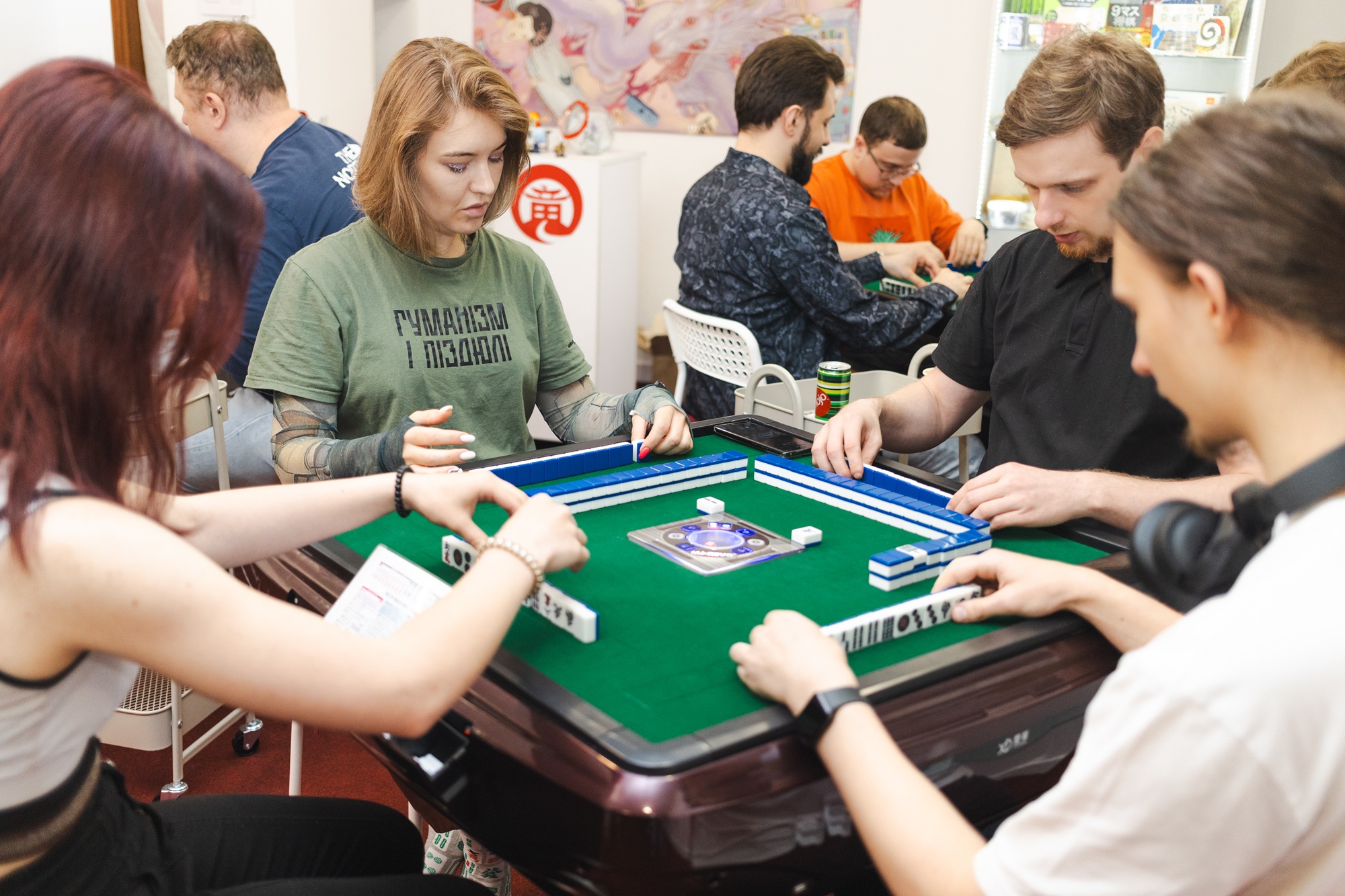
In War-Torn Ukraine, Mahjong Offers Peace for Soldiers and Survivors
Why You Shouldn't Wait for a Partner to Start Living
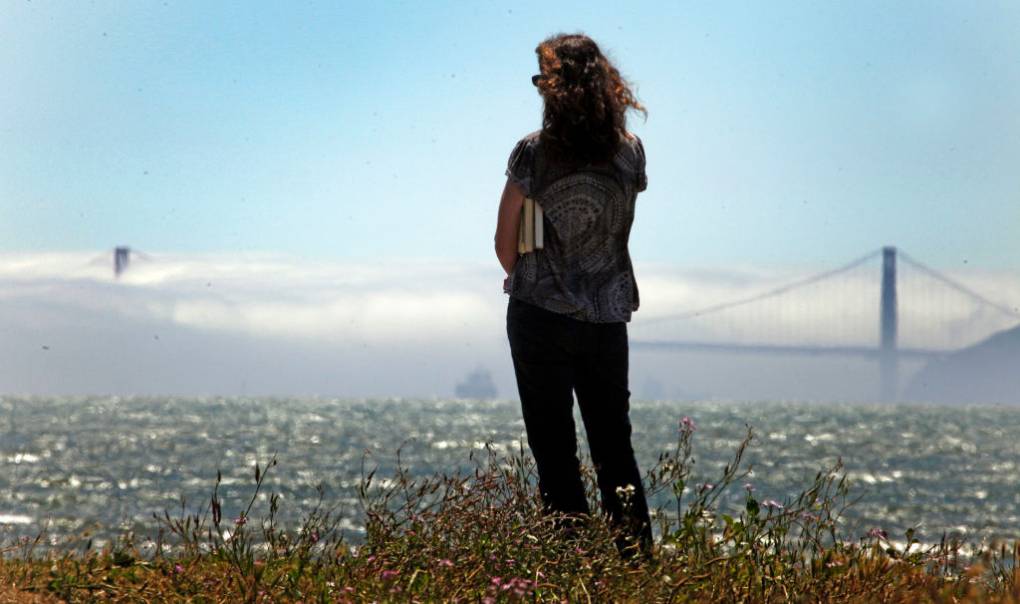
Tips for Recovering from Wildfires: Lessons from Survivors
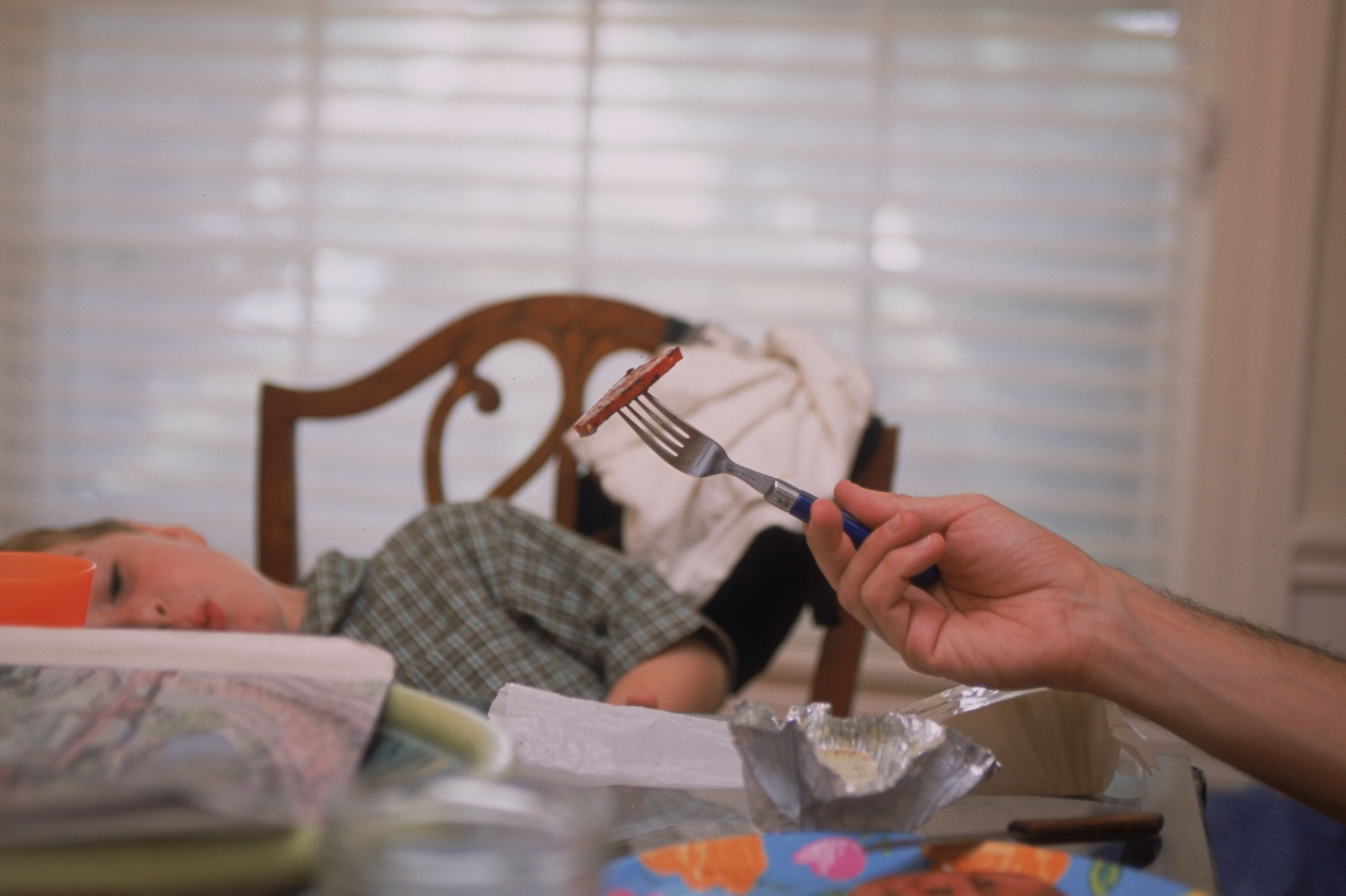
Parenting Is Now More Enmeshed and 'Endless' — And It's Not All Bad
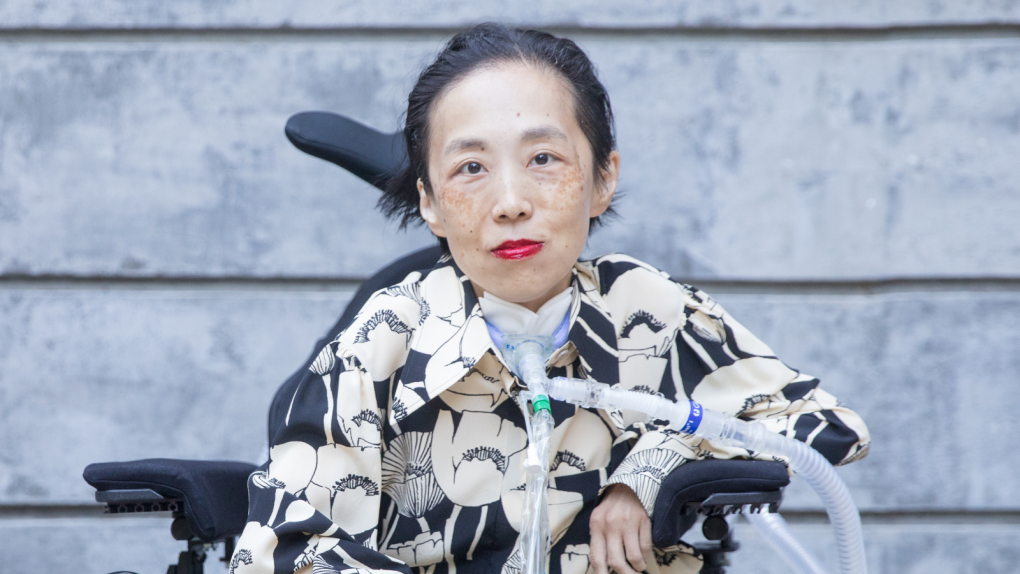
Alice Wong’s 'Disability Intimacy' Is a Deep Dive into Relationships and Community
New to Negotiation? Haggling Tips to Score Bargains in a Tight Economy
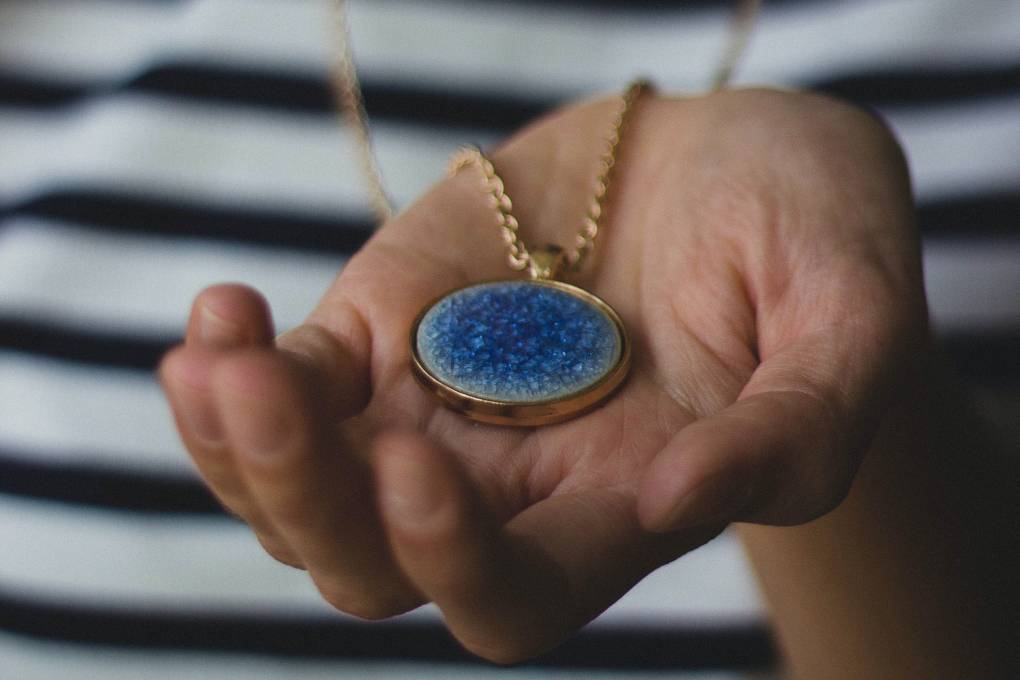
'They Make Me Smile Inside': The Power of Family Heirlooms to Keep Loved Ones Close
Player sponsored by
window.__IS_SSR__=true
window.__INITIAL_STATE__={
"attachmentsReducer": {
"audio_0": {
"type": "attachments",
"id": "audio_0",
"imgSizes": {
"kqedFullSize": {
"file": "https://ww2.kqed.org/news/wp-content/themes/KQED-unified/img/audio_bgs/background0.jpg"
}
}
},
"audio_1": {
"type": "attachments",
"id": "audio_1",
"imgSizes": {
"kqedFullSize": {
"file": "https://ww2.kqed.org/news/wp-content/themes/KQED-unified/img/audio_bgs/background1.jpg"
}
}
},
"audio_2": {
"type": "attachments",
"id": "audio_2",
"imgSizes": {
"kqedFullSize": {
"file": "https://ww2.kqed.org/news/wp-content/themes/KQED-unified/img/audio_bgs/background2.jpg"
}
}
},
"audio_3": {
"type": "attachments",
"id": "audio_3",
"imgSizes": {
"kqedFullSize": {
"file": "https://ww2.kqed.org/news/wp-content/themes/KQED-unified/img/audio_bgs/background3.jpg"
}
}
},
"audio_4": {
"type": "attachments",
"id": "audio_4",
"imgSizes": {
"kqedFullSize": {
"file": "https://ww2.kqed.org/news/wp-content/themes/KQED-unified/img/audio_bgs/background4.jpg"
}
}
},
"placeholder": {
"type": "attachments",
"id": "placeholder",
"imgSizes": {
"thumbnail": {
"file": "https://cdn.kqed.org/wp-content/uploads/2024/12/KQED-Default-Image-816638274-2000x1333-1-160x107.jpg",
"width": 160,
"height": 107,
"mimeType": "image/jpeg"
},
"medium": {
"file": "https://cdn.kqed.org/wp-content/uploads/2024/12/KQED-Default-Image-816638274-2000x1333-1-800x533.jpg",
"width": 800,
"height": 533,
"mimeType": "image/jpeg"
},
"medium_large": {
"file": "https://cdn.kqed.org/wp-content/uploads/2024/12/KQED-Default-Image-816638274-2000x1333-1-768x512.jpg",
"width": 768,
"height": 512,
"mimeType": "image/jpeg"
},
"large": {
"file": "https://cdn.kqed.org/wp-content/uploads/2024/12/KQED-Default-Image-816638274-2000x1333-1-1020x680.jpg",
"width": 1020,
"height": 680,
"mimeType": "image/jpeg"
},
"1536x1536": {
"file": "https://cdn.kqed.org/wp-content/uploads/2024/12/KQED-Default-Image-816638274-2000x1333-1-1536x1024.jpg",
"width": 1536,
"height": 1024,
"mimeType": "image/jpeg"
},
"fd-lrg": {
"file": "https://cdn.kqed.org/wp-content/uploads/2024/12/KQED-Default-Image-816638274-2000x1333-1-1536x1024.jpg",
"width": 1536,
"height": 1024,
"mimeType": "image/jpeg"
},
"fd-med": {
"file": "https://cdn.kqed.org/wp-content/uploads/2024/12/KQED-Default-Image-816638274-2000x1333-1-1020x680.jpg",
"width": 1020,
"height": 680,
"mimeType": "image/jpeg"
},
"fd-sm": {
"file": "https://cdn.kqed.org/wp-content/uploads/2024/12/KQED-Default-Image-816638274-2000x1333-1-800x533.jpg",
"width": 800,
"height": 533,
"mimeType": "image/jpeg"
},
"post-thumbnail": {
"file": "https://cdn.kqed.org/wp-content/uploads/2024/12/KQED-Default-Image-816638274-2000x1333-1-672x372.jpg",
"width": 672,
"height": 372,
"mimeType": "image/jpeg"
},
"twentyfourteen-full-width": {
"file": "https://cdn.kqed.org/wp-content/uploads/2024/12/KQED-Default-Image-816638274-2000x1333-1-1038x576.jpg",
"width": 1038,
"height": 576,
"mimeType": "image/jpeg"
},
"xxsmall": {
"file": "https://cdn.kqed.org/wp-content/uploads/2024/12/KQED-Default-Image-816638274-2000x1333-1-160x107.jpg",
"width": 160,
"height": 107,
"mimeType": "image/jpeg"
},
"xsmall": {
"file": "https://cdn.kqed.org/wp-content/uploads/2024/12/KQED-Default-Image-816638274-2000x1333-1-672x372.jpg",
"width": 672,
"height": 372,
"mimeType": "image/jpeg"
},
"small": {
"file": "https://cdn.kqed.org/wp-content/uploads/2024/12/KQED-Default-Image-816638274-2000x1333-1-672x372.jpg",
"width": 672,
"height": 372,
"mimeType": "image/jpeg"
},
"xlarge": {
"file": "https://cdn.kqed.org/wp-content/uploads/2024/12/KQED-Default-Image-816638274-2000x1333-1-1020x680.jpg",
"width": 1020,
"height": 680,
"mimeType": "image/jpeg"
},
"full-width": {
"file": "https://cdn.kqed.org/wp-content/uploads/2024/12/KQED-Default-Image-816638274-2000x1333-1-1920x1280.jpg",
"width": 1920,
"height": 1280,
"mimeType": "image/jpeg"
},
"guest-author-32": {
"file": "https://cdn.kqed.org/wp-content/uploads/2025/01/KQED-Default-Image-816638274-1333x1333-1-160x160.jpg",
"width": 32,
"height": 32,
"mimeType": "image/jpeg"
},
"guest-author-50": {
"file": "https://cdn.kqed.org/wp-content/uploads/2025/01/KQED-Default-Image-816638274-1333x1333-1-160x160.jpg",
"width": 50,
"height": 50,
"mimeType": "image/jpeg"
},
"guest-author-64": {
"file": "https://cdn.kqed.org/wp-content/uploads/2025/01/KQED-Default-Image-816638274-1333x1333-1-160x160.jpg",
"width": 64,
"height": 64,
"mimeType": "image/jpeg"
},
"guest-author-96": {
"file": "https://cdn.kqed.org/wp-content/uploads/2025/01/KQED-Default-Image-816638274-1333x1333-1-160x160.jpg",
"width": 96,
"height": 96,
"mimeType": "image/jpeg"
},
"guest-author-128": {
"file": "https://cdn.kqed.org/wp-content/uploads/2025/01/KQED-Default-Image-816638274-1333x1333-1-160x160.jpg",
"width": 128,
"height": 128,
"mimeType": "image/jpeg"
},
"detail": {
"file": "https://cdn.kqed.org/wp-content/uploads/2025/01/KQED-Default-Image-816638274-1333x1333-1-160x160.jpg",
"width": 160,
"height": 160,
"mimeType": "image/jpeg"
},
"kqedFullSize": {
"file": "https://cdn.kqed.org/wp-content/uploads/2024/12/KQED-Default-Image-816638274-2000x1333-1.jpg",
"width": 2000,
"height": 1333
}
}
},
"news_12078815": {
"type": "attachments",
"id": "news_12078815",
"meta": {
"index": "attachments_1716263798",
"site": "news",
"id": "12078815",
"found": true
},
"title": "Picky Eater Hiding From New Food",
"publishDate": 1775505078,
"status": "inherit",
"parent": 12078814,
"modified": 1775505105,
"caption": "KQED’s Forum spoke to experts about how American children became such picky eaters — and what parents can do about it.",
"credit": "Steve Liss/Getty Images",
"altTag": null,
"description": null,
"imgSizes": {
"thumbnail": {
"file": "https://cdn.kqed.org/wp-content/uploads/sites/10/2026/04/PickyEaterGetty-160x107.jpg",
"width": 160,
"height": 107,
"mimeType": "image/jpeg"
},
"1536x1536": {
"file": "https://cdn.kqed.org/wp-content/uploads/sites/10/2026/04/PickyEaterGetty-1536x1023.jpg",
"width": 1536,
"height": 1023,
"mimeType": "image/jpeg"
},
"post-thumbnail": {
"file": "https://cdn.kqed.org/wp-content/uploads/sites/10/2026/04/PickyEaterGetty-672x372.jpg",
"width": 672,
"height": 372,
"mimeType": "image/jpeg"
},
"twentyfourteen-full-width": {
"file": "https://cdn.kqed.org/wp-content/uploads/sites/10/2026/04/PickyEaterGetty-1038x576.jpg",
"width": 1038,
"height": 576,
"mimeType": "image/jpeg"
},
"npr-cds-wide": {
"file": "https://cdn.kqed.org/wp-content/uploads/sites/10/2026/04/PickyEaterGetty-1200x675.jpg",
"width": 1200,
"height": 675,
"mimeType": "image/jpeg"
},
"npr-cds-square": {
"file": "https://cdn.kqed.org/wp-content/uploads/sites/10/2026/04/PickyEaterGetty-600x600.jpg",
"width": 600,
"height": 600,
"mimeType": "image/jpeg"
},
"kqedFullSize": {
"file": "https://cdn.kqed.org/wp-content/uploads/sites/10/2026/04/PickyEaterGetty.jpg",
"width": 2000,
"height": 1332
}
},
"isLoading": false,
"fetchFailed": false
},
"news_12076869": {
"type": "attachments",
"id": "news_12076869",
"meta": {
"index": "attachments_1716263798",
"site": "news",
"id": "12076869",
"found": true
},
"title": "Promoting Breastfeeding In Europe",
"publishDate": 1773853846,
"status": "inherit",
"parent": 12076867,
"modified": 1773853897,
"caption": "A pregnant woman during the last class of the pre-birth course in the Maternity House \"Prima Luce.\" Here, qualified midwives teach women the importance of breastfeeding, explaining several advantages and techniques, in order to take care of their future child and their own health. They help them better prepare for the postnatal period on June 23, 2022, in Turin, Italy. ",
"credit": "Diana Bagnoli/Getty Images",
"altTag": null,
"description": null,
"imgSizes": {
"thumbnail": {
"file": "https://cdn.kqed.org/wp-content/uploads/sites/10/2026/03/SurrogacyGetty1-160x107.jpg",
"width": 160,
"height": 107,
"mimeType": "image/jpeg"
},
"1536x1536": {
"file": "https://cdn.kqed.org/wp-content/uploads/sites/10/2026/03/SurrogacyGetty1-1536x1024.jpg",
"width": 1536,
"height": 1024,
"mimeType": "image/jpeg"
},
"post-thumbnail": {
"file": "https://cdn.kqed.org/wp-content/uploads/sites/10/2026/03/SurrogacyGetty1-672x372.jpg",
"width": 672,
"height": 372,
"mimeType": "image/jpeg"
},
"twentyfourteen-full-width": {
"file": "https://cdn.kqed.org/wp-content/uploads/sites/10/2026/03/SurrogacyGetty1-1038x576.jpg",
"width": 1038,
"height": 576,
"mimeType": "image/jpeg"
},
"npr-cds-wide": {
"file": "https://cdn.kqed.org/wp-content/uploads/sites/10/2026/03/SurrogacyGetty1-1200x675.jpg",
"width": 1200,
"height": 675,
"mimeType": "image/jpeg"
},
"kqedFullSize": {
"file": "https://cdn.kqed.org/wp-content/uploads/sites/10/2026/03/SurrogacyGetty1.jpg",
"width": 2000,
"height": 1333
}
},
"isLoading": false,
"fetchFailed": false
},
"news_12047724": {
"type": "attachments",
"id": "news_12047724",
"meta": {
"index": "attachments_1716263798",
"site": "news",
"id": "12047724",
"found": true
},
"title": "UkraineMahjong1",
"publishDate": 1752271086,
"status": "inherit",
"parent": 12047685,
"modified": 1752271207,
"caption": "Mahjong players at a tournament at Japan Dojo in Kyiv, Ukraine, in May 2025. ",
"credit": "Courtesy of Ihor Strumetskyi",
"altTag": null,
"description": null,
"imgSizes": {
"thumbnail": {
"file": "https://cdn.kqed.org/wp-content/uploads/sites/10/2025/07/UkraineMahjong1-160x107.jpg",
"width": 160,
"height": 107,
"mimeType": "image/jpeg"
},
"1536x1536": {
"file": "https://cdn.kqed.org/wp-content/uploads/sites/10/2025/07/UkraineMahjong1-1536x1024.jpg",
"width": 1536,
"height": 1024,
"mimeType": "image/jpeg"
},
"post-thumbnail": {
"file": "https://cdn.kqed.org/wp-content/uploads/sites/10/2025/07/UkraineMahjong1-672x372.jpg",
"width": 672,
"height": 372,
"mimeType": "image/jpeg"
},
"twentyfourteen-full-width": {
"file": "https://cdn.kqed.org/wp-content/uploads/sites/10/2025/07/UkraineMahjong1-1038x576.jpg",
"width": 1038,
"height": 576,
"mimeType": "image/jpeg"
},
"kqedFullSize": {
"file": "https://cdn.kqed.org/wp-content/uploads/sites/10/2025/07/UkraineMahjong1.jpg",
"width": 2000,
"height": 1333
}
},
"isLoading": false,
"fetchFailed": false
},
"news_12027213": {
"type": "attachments",
"id": "news_12027213",
"meta": {
"index": "attachments_1716263798",
"site": "news",
"id": "12027213",
"found": true
},
"title": "A women watches the fog bank cover the Golden Gate Bridge from the Albany Waterfront Trail Tuesday July 5, 2011.",
"publishDate": 1739563579,
"status": "inherit",
"parent": 12027188,
"modified": 1739563612,
"caption": null,
"credit": "Lance Iversen/San Francisco Chronicle via Getty Images",
"altTag": null,
"description": null,
"imgSizes": {
"medium": {
"file": "https://cdn.kqed.org/wp-content/uploads/sites/10/2025/02/GettyImages-1298809222-800x473.jpg",
"width": 800,
"height": 473,
"mimeType": "image/jpeg"
},
"large": {
"file": "https://cdn.kqed.org/wp-content/uploads/sites/10/2025/02/GettyImages-1298809222-1020x604.jpg",
"width": 1020,
"height": 604,
"mimeType": "image/jpeg"
},
"thumbnail": {
"file": "https://cdn.kqed.org/wp-content/uploads/sites/10/2025/02/GettyImages-1298809222-160x95.jpg",
"width": 160,
"height": 95,
"mimeType": "image/jpeg"
},
"post-thumbnail": {
"file": "https://cdn.kqed.org/wp-content/uploads/sites/10/2025/02/GettyImages-1298809222-672x372.jpg",
"width": 672,
"height": 372,
"mimeType": "image/jpeg"
},
"twentyfourteen-full-width": {
"file": "https://cdn.kqed.org/wp-content/uploads/sites/10/2025/02/GettyImages-1298809222-1024x576.jpg",
"width": 1024,
"height": 576,
"mimeType": "image/jpeg"
},
"kqedFullSize": {
"file": "https://cdn.kqed.org/wp-content/uploads/sites/10/2025/02/GettyImages-1298809222.jpg",
"width": 1024,
"height": 606
}
},
"isLoading": false,
"fetchFailed": false
},
"news_12025143": {
"type": "attachments",
"id": "news_12025143",
"meta": {
"index": "attachments_1716263798",
"site": "news",
"id": "12025143",
"found": true
},
"title": "230809-SoldOutParadise-59-BL_qed",
"publishDate": 1738359140,
"status": "inherit",
"parent": 12025125,
"modified": 1738359182,
"caption": "A memorial says, 'Faith, Hope, Paradise,' in Paradise, Butte County, on Aug. 9, 2023. The Camp Fire, a deadly fire destroying much of the towns of Paradise and Concow, swept through the area in 2018.",
"credit": "Beth LaBerge/KQED",
"altTag": null,
"description": null,
"imgSizes": {
"medium": {
"file": "https://cdn.kqed.org/wp-content/uploads/sites/10/2025/02/230809-SoldOutParadise-59-BL_qed-800x533.jpg",
"width": 800,
"height": 533,
"mimeType": "image/jpeg"
},
"large": {
"file": "https://cdn.kqed.org/wp-content/uploads/sites/10/2025/02/230809-SoldOutParadise-59-BL_qed-1020x680.jpg",
"width": 1020,
"height": 680,
"mimeType": "image/jpeg"
},
"thumbnail": {
"file": "https://cdn.kqed.org/wp-content/uploads/sites/10/2025/02/230809-SoldOutParadise-59-BL_qed-160x107.jpg",
"width": 160,
"height": 107,
"mimeType": "image/jpeg"
},
"1536x1536": {
"file": "https://cdn.kqed.org/wp-content/uploads/sites/10/2025/02/230809-SoldOutParadise-59-BL_qed-1536x1024.jpg",
"width": 1536,
"height": 1024,
"mimeType": "image/jpeg"
},
"post-thumbnail": {
"file": "https://cdn.kqed.org/wp-content/uploads/sites/10/2025/02/230809-SoldOutParadise-59-BL_qed-672x372.jpg",
"width": 672,
"height": 372,
"mimeType": "image/jpeg"
},
"twentyfourteen-full-width": {
"file": "https://cdn.kqed.org/wp-content/uploads/sites/10/2025/02/230809-SoldOutParadise-59-BL_qed-1038x576.jpg",
"width": 1038,
"height": 576,
"mimeType": "image/jpeg"
},
"full-width": {
"file": "https://cdn.kqed.org/wp-content/uploads/sites/10/2025/02/230809-SoldOutParadise-59-BL_qed-1920x1280.jpg",
"width": 1920,
"height": 1280,
"mimeType": "image/jpeg"
},
"kqedFullSize": {
"file": "https://cdn.kqed.org/wp-content/uploads/sites/10/2025/02/230809-SoldOutParadise-59-BL_qed.jpg",
"width": 2000,
"height": 1333
}
},
"isLoading": false,
"fetchFailed": false
},
"news_12001908": {
"type": "attachments",
"id": "news_12001908",
"meta": {
"index": "attachments_1716263798",
"site": "news",
"id": "12001908",
"found": true
},
"title": "Senior father and adult son chatting on patio",
"publishDate": 1724706888,
"status": "inherit",
"parent": 12001887,
"modified": 1724707144,
"caption": "Cheerful senior father and adult son chatting on patio, Japan.",
"credit": "Ippei Naoi/Getty Images",
"altTag": "Father and son sit at a table talking.",
"description": null,
"imgSizes": {
"medium": {
"file": "https://cdn.kqed.org/wp-content/uploads/sites/10/2024/08/GettyImages-1446811329_qed-800x533.jpg",
"width": 800,
"height": 533,
"mimeType": "image/jpeg"
},
"large": {
"file": "https://cdn.kqed.org/wp-content/uploads/sites/10/2024/08/GettyImages-1446811329_qed-1020x680.jpg",
"width": 1020,
"height": 680,
"mimeType": "image/jpeg"
},
"thumbnail": {
"file": "https://cdn.kqed.org/wp-content/uploads/sites/10/2024/08/GettyImages-1446811329_qed-160x107.jpg",
"width": 160,
"height": 107,
"mimeType": "image/jpeg"
},
"1536x1536": {
"file": "https://cdn.kqed.org/wp-content/uploads/sites/10/2024/08/GettyImages-1446811329_qed-1536x1024.jpg",
"width": 1536,
"height": 1024,
"mimeType": "image/jpeg"
},
"post-thumbnail": {
"file": "https://cdn.kqed.org/wp-content/uploads/sites/10/2024/08/GettyImages-1446811329_qed-672x372.jpg",
"width": 672,
"height": 372,
"mimeType": "image/jpeg"
},
"twentyfourteen-full-width": {
"file": "https://cdn.kqed.org/wp-content/uploads/sites/10/2024/08/GettyImages-1446811329_qed-1038x576.jpg",
"width": 1038,
"height": 576,
"mimeType": "image/jpeg"
},
"full-width": {
"file": "https://cdn.kqed.org/wp-content/uploads/sites/10/2024/08/GettyImages-1446811329_qed-1920x1280.jpg",
"width": 1920,
"height": 1280,
"mimeType": "image/jpeg"
},
"kqedFullSize": {
"file": "https://cdn.kqed.org/wp-content/uploads/sites/10/2024/08/GettyImages-1446811329_qed.jpg",
"width": 1999,
"height": 1333
}
},
"isLoading": false,
"fetchFailed": false
},
"news_11934554": {
"type": "attachments",
"id": "news_11934554",
"meta": {
"index": "attachments_1716263798",
"site": "news",
"id": "11934554",
"found": true
},
"parent": 11934545,
"imgSizes": {
"twentyfourteen-full-width": {
"file": "https://cdn.kqed.org/wp-content/uploads/sites/10/2023/12/Featured-photo-horizontal-Alice-Wong-1038x576.png",
"width": 1038,
"mimeType": "image/png",
"height": 576
},
"thumbnail": {
"file": "https://cdn.kqed.org/wp-content/uploads/sites/10/2023/12/Featured-photo-horizontal-Alice-Wong-160x90.png",
"width": 160,
"mimeType": "image/png",
"height": 90
},
"post-thumbnail": {
"file": "https://cdn.kqed.org/wp-content/uploads/sites/10/2023/12/Featured-photo-horizontal-Alice-Wong-672x372.png",
"width": 672,
"mimeType": "image/png",
"height": 372
},
"kqedFullSize": {
"file": "https://cdn.kqed.org/wp-content/uploads/sites/10/2023/12/Featured-photo-horizontal-Alice-Wong.png",
"width": 1600,
"height": 900
},
"large": {
"file": "https://cdn.kqed.org/wp-content/uploads/sites/10/2023/12/Featured-photo-horizontal-Alice-Wong-1020x574.png",
"width": 1020,
"mimeType": "image/png",
"height": 574
},
"1536x1536": {
"file": "https://cdn.kqed.org/wp-content/uploads/sites/10/2023/12/Featured-photo-horizontal-Alice-Wong-1536x864.png",
"width": 1536,
"mimeType": "image/png",
"height": 864
},
"medium": {
"file": "https://cdn.kqed.org/wp-content/uploads/sites/10/2023/12/Featured-photo-horizontal-Alice-Wong-800x450.png",
"width": 800,
"mimeType": "image/png",
"height": 450
}
},
"publishDate": 1670468227,
"modified": 1714766858,
"caption": "Alice Wong in August 2022.",
"description": null,
"title": "Featured photo - horizontal - Alice Wong",
"credit": "Eddie Hernandez Photography",
"status": "inherit",
"altTag": "An Asian American disabled woman sits in a wheelchair with a tracheostomy with a tube attached to her ventilator. She is wearing a bold red lip color and a black and beige shirt with a pattern of poppies.",
"isLoading": false,
"fetchFailed": false
},
"news_11953038": {
"type": "attachments",
"id": "news_11953038",
"meta": {
"index": "attachments_1716263798",
"site": "news",
"id": "11953038",
"found": true
},
"parent": 11952997,
"imgSizes": {
"twentyfourteen-full-width": {
"file": "https://ww2.kqed.org/app/uploads/sites/10/2023/06/pexels-fauxels-3184465-1038x576.jpg",
"width": 1038,
"mimeType": "image/jpeg",
"height": 576
},
"thumbnail": {
"file": "https://ww2.kqed.org/app/uploads/sites/10/2023/06/pexels-fauxels-3184465-160x107.jpg",
"width": 160,
"mimeType": "image/jpeg",
"height": 107
},
"post-thumbnail": {
"file": "https://ww2.kqed.org/app/uploads/sites/10/2023/06/pexels-fauxels-3184465-672x372.jpg",
"width": 672,
"mimeType": "image/jpeg",
"height": 372
},
"kqedFullSize": {
"file": "https://ww2.kqed.org/app/uploads/sites/10/2023/06/pexels-fauxels-3184465.jpg",
"width": 1920,
"height": 1280
},
"large": {
"file": "https://ww2.kqed.org/app/uploads/sites/10/2023/06/pexels-fauxels-3184465-1020x680.jpg",
"width": 1020,
"mimeType": "image/jpeg",
"height": 680
},
"1536x1536": {
"file": "https://ww2.kqed.org/app/uploads/sites/10/2023/06/pexels-fauxels-3184465-1536x1024.jpg",
"width": 1536,
"mimeType": "image/jpeg",
"height": 1024
},
"medium": {
"file": "https://ww2.kqed.org/app/uploads/sites/10/2023/06/pexels-fauxels-3184465-800x533.jpg",
"width": 800,
"mimeType": "image/jpeg",
"height": 533
}
},
"publishDate": 1686861041,
"modified": 1686861134,
"caption": "Does the idea of negotiation and bargaining fill you with dread? We have tips.",
"description": null,
"title": "pexels-fauxels-3184465",
"credit": "fauxels/Pexels",
"status": "inherit",
"altTag": "A man with light skin wearing a long sleeved white shirt stands and shakes the hand of a seated figure, whose face we can't see. There are takeout coffee cups on the table between them.",
"isLoading": false,
"fetchFailed": false
},
"news_11923431": {
"type": "attachments",
"id": "news_11923431",
"meta": {
"index": "attachments_1716263798",
"site": "news",
"id": "11923431",
"found": true
},
"parent": 11923381,
"imgSizes": {
"twentyfourteen-full-width": {
"file": "https://ww2.kqed.org/app/uploads/sites/10/2022/08/pexels-valeria-boltneva-12965-CROPPED-1038x576.jpg",
"width": 1038,
"mimeType": "image/jpeg",
"height": 576
},
"thumbnail": {
"file": "https://ww2.kqed.org/app/uploads/sites/10/2022/08/pexels-valeria-boltneva-12965-CROPPED-160x107.jpg",
"width": 160,
"mimeType": "image/jpeg",
"height": 107
},
"post-thumbnail": {
"file": "https://ww2.kqed.org/app/uploads/sites/10/2022/08/pexels-valeria-boltneva-12965-CROPPED-672x372.jpg",
"width": 672,
"mimeType": "image/jpeg",
"height": 372
},
"kqedFullSize": {
"file": "https://ww2.kqed.org/app/uploads/sites/10/2022/08/pexels-valeria-boltneva-12965-CROPPED.jpg",
"width": 1920,
"height": 1280
},
"large": {
"file": "https://ww2.kqed.org/app/uploads/sites/10/2022/08/pexels-valeria-boltneva-12965-CROPPED-1020x680.jpg",
"width": 1020,
"mimeType": "image/jpeg",
"height": 680
},
"1536x1536": {
"file": "https://ww2.kqed.org/app/uploads/sites/10/2022/08/pexels-valeria-boltneva-12965-CROPPED-1536x1024.jpg",
"width": 1536,
"mimeType": "image/jpeg",
"height": 1024
},
"medium": {
"file": "https://ww2.kqed.org/app/uploads/sites/10/2022/08/pexels-valeria-boltneva-12965-CROPPED-800x533.jpg",
"width": 800,
"mimeType": "image/jpeg",
"height": 533
}
},
"publishDate": 1661372154,
"modified": 1661372284,
"caption": "Do you have a treasured family heirloom?",
"description": null,
"title": "pexels-valeria-boltneva-12965 CROPPED",
"credit": "Valeria Boltneva/Pexels",
"status": "inherit",
"altTag": "A hand with palm upturned holding a gold pendant with a blue stone. We can't see the face of the person, but they're wearing a black and white striped shirt.",
"isLoading": false,
"fetchFailed": false
}
},
"audioPlayerReducer": {
"postId": "stream_live",
"isPaused": true,
"isPlaying": false,
"pfsActive": false,
"pledgeModalIsOpen": true,
"playerDrawerIsOpen": false,
"liveAudioPlayStartedAt": 0,
"liveAudioPlayContext": ""
},
"authorsReducer": {
"byline_news_12047685": {
"type": "authors",
"id": "byline_news_12047685",
"meta": {
"override": true
},
"slug": "byline_news_12047685",
"name": "Susan Britton",
"isLoading": false
},
"minakim": {
"type": "authors",
"id": "243",
"meta": {
"index": "authors_1716337520",
"id": "243",
"found": true
},
"name": "Mina Kim",
"firstName": "Mina",
"lastName": "Kim",
"slug": "minakim",
"email": "mkim@kqed.org",
"display_author_email": false,
"staff_mastheads": [
"news"
],
"title": "Host, Forum",
"bio": "Mina Kim is host of the 10 a.m. statewide hour of Forum; a live daily talk show for curious Californians on issues that matter to the state and nation, with a particular emphasis on race and equity.\r\n\r\nBefore joining the Forum team, Mina was KQED’s evening news anchor, and health reporter for The California Report. Her award-winning work has included natural disasters in Napa and gun violence in Oakland. Mina grew up in St. John’s, Newfoundland.",
"avatar": "https://secure.gravatar.com/avatar/145ce657a2d08cb86d93686beb958982?s=600&d=blank&r=g",
"twitter": "mkimreporter",
"facebook": null,
"instagram": null,
"linkedin": null,
"sites": [
{
"site": "news",
"roles": [
"contributor"
]
},
{
"site": "stateofhealth",
"roles": [
"author"
]
},
{
"site": "forum",
"roles": [
"editor"
]
}
],
"headData": {
"title": "Mina Kim | KQED",
"description": "Host, Forum",
"ogImgSrc": "https://secure.gravatar.com/avatar/145ce657a2d08cb86d93686beb958982?s=600&d=blank&r=g",
"twImgSrc": "https://secure.gravatar.com/avatar/145ce657a2d08cb86d93686beb958982?s=600&d=blank&r=g"
},
"isLoading": false,
"link": "/author/minakim"
},
"lesleymcclurg": {
"type": "authors",
"id": "11229",
"meta": {
"index": "authors_1716337520",
"id": "11229",
"found": true
},
"name": "Lesley McClurg",
"firstName": "Lesley",
"lastName": "McClurg",
"slug": "lesleymcclurg",
"email": "lmcclurg@KQED.org",
"display_author_email": false,
"staff_mastheads": [
"news",
"science"
],
"title": "KQED Health Correspondent",
"bio": "Lesley McClurg is a health correspondent and fill-in host whose work is regularly rebroadcast on NPR and PBS programs. She’s earned multiple regional Emmy awards, a national and a regional Edward R. Murrow award, and was named Best Beat Reporter by the Association of Health Care Journalists. The Society of Professional Journalists has recognized her work several times, and the Society of Environmental Journalists spotlighted her coverage of California’s historic drought.\r\n\r\nBefore joining KQED in 2016, Lesley covered food and sustainability for Capital Public Radio, environmental issues for Colorado Public Radio, and reported for KUOW and KCTS 9 in Seattle. Away from the newsroom, she loves skiing with her daughter, mountain biking with her partner, and playing with Ollie, the family’s goldendoodle. On deadline, she runs almost entirely on chocolate chips.\r\n\r\n ",
"avatar": "https://secure.gravatar.com/avatar/bab49e972ea10c774fe0f5e29dba1722b158f7c0d58a360923d1389d380b2978?s=600&d=blank&r=g",
"twitter": "lesleywmcclurg",
"bluesky": null,
"facebook": null,
"instagram": null,
"linkedin": null,
"sites": [
{
"site": "arts",
"roles": [
"author"
]
},
{
"site": "news",
"roles": [
"editor"
]
},
{
"site": "futureofyou",
"roles": [
"editor"
]
},
{
"site": "stateofhealth",
"roles": [
"author"
]
},
{
"site": "science",
"roles": [
"editor"
]
},
{
"site": "quest",
"roles": [
"subscriber"
]
},
{
"site": "forum",
"roles": [
"administrator"
]
},
{
"site": "liveblog",
"roles": [
"author"
]
}
],
"headData": {
"title": "Lesley McClurg | KQED",
"description": "KQED Health Correspondent",
"ogImgSrc": "https://secure.gravatar.com/avatar/bab49e972ea10c774fe0f5e29dba1722b158f7c0d58a360923d1389d380b2978?s=600&d=blank&r=g",
"twImgSrc": "https://secure.gravatar.com/avatar/bab49e972ea10c774fe0f5e29dba1722b158f7c0d58a360923d1389d380b2978?s=600&d=blank&r=g"
},
"isLoading": false,
"link": "/author/lesleymcclurg"
},
"jasminegarnett": {
"type": "authors",
"id": "11530",
"meta": {
"index": "authors_1716337520",
"id": "11530",
"found": true
},
"name": "Jasmine Garnett",
"firstName": "Jasmine",
"lastName": "Garnett",
"slug": "jasminegarnett",
"email": "JGarnett@KQED.org",
"display_author_email": false,
"staff_mastheads": [
"news"
],
"title": "Senior Engagement Platforms Producer",
"bio": "Jasmine is a Senior Engagement Platforms Producer on the KQED News team. She is also a freelance writer, with work appearing in KQED, Bitch Media, and Kotaku among others. Jasmine graduated from UC Berkeley with a degree in Media Studies, where she was also an Arts and Entertainment reporter at the Daily Californian.",
"avatar": "https://secure.gravatar.com/avatar/a6ea8b0641874311533b7401bee15c8e?s=600&d=blank&r=g",
"twitter": "JFLGarnett",
"facebook": null,
"instagram": null,
"linkedin": null,
"sites": [
{
"site": "arts",
"roles": [
"author"
]
},
{
"site": "news",
"roles": [
"editor"
]
},
{
"site": "about",
"roles": [
"editor"
]
},
{
"site": "science",
"roles": [
"editor"
]
},
{
"site": "forum",
"roles": [
"editor"
]
},
{
"site": "pressroom",
"roles": [
"editor"
]
}
],
"headData": {
"title": "Jasmine Garnett | KQED",
"description": "Senior Engagement Platforms Producer",
"ogImgSrc": "https://secure.gravatar.com/avatar/a6ea8b0641874311533b7401bee15c8e?s=600&d=blank&r=g",
"twImgSrc": "https://secure.gravatar.com/avatar/a6ea8b0641874311533b7401bee15c8e?s=600&d=blank&r=g"
},
"isLoading": false,
"link": "/author/jasminegarnett"
},
"csmith": {
"type": "authors",
"id": "11603",
"meta": {
"index": "authors_1716337520",
"id": "11603",
"found": true
},
"name": "Caroline Smith",
"firstName": "Caroline",
"lastName": "Smith",
"slug": "csmith",
"email": "csmith@kqed.org",
"display_author_email": true,
"staff_mastheads": [
"news"
],
"title": "Producer, Forum",
"bio": "Caroline Smith is a producer for \u003cem>Forum\u003c/em>, producing more than 500 segments since joining the team in 2019 as an intern. From the Bay Area, Smith graduated with a B.A. in Rhetoric from UC Berkeley and is an alumnus of \u003cem>The Daily Californian.\u003c/em> They have received multiple San Francisco Press Club awards, a Fulbright scholarship and the ICFJ's Arthur F. Burns Fellowship, through which they reported from Berlin for one of Germany's largest national newspapers.",
"avatar": "https://secure.gravatar.com/avatar/36b81e5f708f5bf91084149f95da8754?s=600&d=blank&r=g",
"twitter": null,
"bluesky": null,
"facebook": null,
"instagram": null,
"linkedin": null,
"sites": [
{
"site": "arts",
"roles": [
"editor"
]
},
{
"site": "news",
"roles": [
"author"
]
},
{
"site": "mindshift",
"roles": [
"editor"
]
},
{
"site": "forum",
"roles": [
"administrator"
]
},
{
"site": "perspectives",
"roles": [
"editor"
]
}
],
"headData": {
"title": "Caroline Smith | KQED",
"description": "Producer, Forum",
"ogImgSrc": "https://secure.gravatar.com/avatar/36b81e5f708f5bf91084149f95da8754?s=600&d=blank&r=g",
"twImgSrc": "https://secure.gravatar.com/avatar/36b81e5f708f5bf91084149f95da8754?s=600&d=blank&r=g"
},
"isLoading": false,
"link": "/author/csmith"
},
"ccabreralomeli": {
"type": "authors",
"id": "11708",
"meta": {
"index": "authors_1716337520",
"id": "11708",
"found": true
},
"name": "Carlos Cabrera-Lomelí",
"firstName": "Carlos",
"lastName": "Cabrera-Lomelí",
"slug": "ccabreralomeli",
"email": "ccabreralomeli@KQED.org",
"display_author_email": true,
"staff_mastheads": [
"news"
],
"title": "Community Reporter",
"bio": "Carlos Cabrera-Lomelí is a community reporter with KQED's digital engagement team. He also reports and co-produces for KQED's bilingual news hub KQED en Español. He grew up in San Francisco's Mission District and has previously worked with Univision, 48 Hills and REFORMA in Mexico City.",
"avatar": "https://secure.gravatar.com/avatar/e95ff80bb2eaf18a8f2af4dcf7ffb54b?s=600&d=mm&r=g",
"twitter": "@LomeliCabrera",
"facebook": null,
"instagram": null,
"linkedin": null,
"sites": [
{
"site": "arts",
"roles": [
"editor"
]
},
{
"site": "news",
"roles": [
"editor"
]
},
{
"site": "about",
"roles": [
"editor"
]
},
{
"site": "science",
"roles": [
"editor"
]
},
{
"site": "perspectives",
"roles": [
"editor"
]
},
{
"site": "elections",
"roles": [
"editor"
]
},
{
"site": "liveblog",
"roles": [
"contributor"
]
}
],
"headData": {
"title": "Carlos Cabrera-Lomelí | KQED",
"description": "Community Reporter",
"ogImgSrc": "https://secure.gravatar.com/avatar/e95ff80bb2eaf18a8f2af4dcf7ffb54b?s=600&d=mm&r=g",
"twImgSrc": "https://secure.gravatar.com/avatar/e95ff80bb2eaf18a8f2af4dcf7ffb54b?s=600&d=mm&r=g"
},
"isLoading": false,
"link": "/author/ccabreralomeli"
},
"nkhan": {
"type": "authors",
"id": "11867",
"meta": {
"index": "authors_1716337520",
"id": "11867",
"found": true
},
"name": "Nisa Khan",
"firstName": "Nisa",
"lastName": "Khan",
"slug": "nkhan",
"email": "nkhan@kqed.org",
"display_author_email": false,
"staff_mastheads": [],
"title": "KQED Contributor",
"bio": "Nisa Khan is a reporter for KQED's Audience News Desk. She was formerly a data reporter at Michigan Radio. She earned a Bachelor of Science in Information from the University of Michigan and a Master of Arts in Communication from Stanford University.",
"avatar": "https://secure.gravatar.com/avatar/a3bf1efcfbe7658d13a434cc54d0b2e3?s=600&d=blank&r=g",
"twitter": "mnisakhan",
"bluesky": null,
"facebook": null,
"instagram": null,
"linkedin": null,
"sites": [
{
"site": "arts",
"roles": [
"editor"
]
},
{
"site": "news",
"roles": [
"editor"
]
},
{
"site": "science",
"roles": [
"editor",
"author"
]
},
{
"site": "forum",
"roles": [
"editor"
]
},
{
"site": "liveblog",
"roles": [
"contributor"
]
}
],
"headData": {
"title": "Nisa Khan | KQED",
"description": "KQED Contributor",
"ogImgSrc": "https://secure.gravatar.com/avatar/a3bf1efcfbe7658d13a434cc54d0b2e3?s=600&d=blank&r=g",
"twImgSrc": "https://secure.gravatar.com/avatar/a3bf1efcfbe7658d13a434cc54d0b2e3?s=600&d=blank&r=g"
},
"isLoading": false,
"link": "/author/nkhan"
},
"ffenzi": {
"type": "authors",
"id": "11926",
"meta": {
"index": "authors_1716337520",
"id": "11926",
"found": true
},
"name": "Francesca Fenzi",
"firstName": "Francesca",
"lastName": "Fenzi",
"slug": "ffenzi",
"email": "ffenzi@kqed.org",
"display_author_email": false,
"staff_mastheads": [
"news"
],
"title": "Producer, Forum",
"bio": "Francesca Fenzi is a journalist and audio producer focused on making news media as transparent, participatory, and community-driven as possible. Since joining KQED's \u003cem>Forum\u003c/em> team in 2022, she's produced both local and statewide hours of the live public affairs show, and has reported other radio, podcast, and digital content for KQED News. She previously managed \u003ca href=\"https://discord.gg/kqed\">KQED's digital community on Discord\u003c/a> – connecting listeners with journalists, subject matter experts, and each other online.",
"avatar": "https://secure.gravatar.com/avatar/fcda5bbce7779d32c08ad4ff83a25f7a?s=600&d=blank&r=g",
"twitter": null,
"bluesky": null,
"facebook": null,
"instagram": null,
"linkedin": null,
"sites": [
{
"site": "",
"roles": [
"editor"
]
},
{
"site": "news",
"roles": [
"editor"
]
},
{
"site": "about",
"roles": [
"editor"
]
},
{
"site": "forum",
"roles": [
"editor"
]
}
],
"headData": {
"title": "Francesca Fenzi | KQED",
"description": "Producer, Forum",
"ogImgSrc": "https://secure.gravatar.com/avatar/fcda5bbce7779d32c08ad4ff83a25f7a?s=600&d=blank&r=g",
"twImgSrc": "https://secure.gravatar.com/avatar/fcda5bbce7779d32c08ad4ff83a25f7a?s=600&d=blank&r=g"
},
"isLoading": false,
"link": "/author/ffenzi"
}
},
"pagesReducer": {
"news_tag_kqed-forum": {
"type": "terms",
"id": "news_5946",
"meta": {
"index": "terms_1716263798",
"site": "news",
"id": "5946",
"score": 9.3007
},
"featImg": null,
"name": "KQED Forum",
"description": null,
"taxonomy": "tag",
"headData": {
"twImgId": null,
"twTitle": null,
"ogTitle": null,
"ogImgId": null,
"twDescription": null,
"description": null,
"title": "KQED Forum Archives | KQED News",
"ogDescription": null
},
"ttid": 5970,
"slug": "kqed-forum",
"isLoading": false,
"title": "KQED Forum",
"pageMeta": {
"site": "news",
"WpPageTemplate": "page-topic-editorial"
},
"blocks": [
{
"blockName": "kqed/post-list",
"attrs": {
"layout": "cardArticle2",
"query": "posts/news?tag=kqed-forum",
"seeMore": true
}
},
{
"blockName": "kqed/ad"
}
]
}
},
"pfsSessionReducer": {},
"postsReducer": {
"stream_live": {
"type": "live",
"id": "stream_live",
"audioUrl": "https://streams.kqed.org/kqedradio",
"title": "Live Stream",
"excerpt": "Live Stream information currently unavailable.",
"link": "/radio",
"featImg": "",
"label": {
"name": "KQED Live",
"link": "/"
}
},
"stream_kqedNewscast": {
"type": "posts",
"id": "stream_kqedNewscast",
"audioUrl": "https://www.kqed.org/.stream/anon/radio/RDnews/newscast.mp3?_=1",
"title": "KQED Newscast",
"featImg": "",
"label": {
"name": "88.5 FM",
"link": "/"
}
},
"news_12078814": {
"type": "posts",
"id": "news_12078814",
"meta": {
"index": "posts_1716263798",
"site": "news",
"id": "12078814",
"score": null,
"sort": [
1775559612000
]
},
"guestAuthors": [],
"slug": "is-your-kid-a-picky-eater-heres-what-to-know",
"title": "Is Your Kid a Picky Eater? Here’s What to Know",
"publishDate": 1775559612,
"format": "standard",
"headTitle": "Is Your Kid a Picky Eater? Here’s What to Know | KQED",
"labelTerm": {
"site": "news"
},
"content": "\u003cp>Chicken nuggets, mac and cheese, hamburgers and fries are all staples of children’s menus in restaurants across the country today — an easy, appealing choice for the young ones at the table.\u003c/p>\n\u003cp>But Helen Zoe Veit, associate professor of history at Michigan State University, said that in the 1930s, those foods weren’t common menu items.\u003c/p>\n\u003cp>“You see a lot of lamb. You see a lot of spinach. You see prunes,” Veit said. “And the idea was this is normal kids’ food back then.”\u003c/p>\n\u003cp>[ad fullwidth]\u003c/p>\n\u003cp>In her new book, \u003cem>Picky: How American Children Became the Fussiest Eaters in History\u003c/em>, Veit argues that kids used to be much more adventurous eaters than they are today. But a mixture of lifestyle and parenting changes, marketing and the rise of processed foods has made American children very selective eaters.\u003c/p>\n\u003cp>“The real mission behind the book is to get a more expansive sense back into our culture of what kids are capable of liking,” she said recently on \u003ca href=\"https://www.kqed.org/forum/2010101913144/why-are-american-kids-such-picky-eaters\">KQED’s \u003cem>Forum\u003c/em>\u003c/a> program. “Far from the myth that we have that, ‘OK, maybe you could force your kid to hatefully accept these foods.’”\u003c/p>\n\u003cfigure id=\"attachment_12078821\" class=\"wp-caption aligncenter\" style=\"max-width: 2000px\">\u003cimg loading=\"lazy\" decoding=\"async\" class=\"wp-image-12078821 size-full\" src=\"https://cdn.kqed.org/wp-content/uploads/sites/10/2026/04/FrenchFriesGetty.jpg\" alt=\"\" width=\"2000\" height=\"1333\" srcset=\"https://cdn.kqed.org/wp-content/uploads/sites/10/2026/04/FrenchFriesGetty.jpg 2000w, https://cdn.kqed.org/wp-content/uploads/sites/10/2026/04/FrenchFriesGetty-160x107.jpg 160w, https://cdn.kqed.org/wp-content/uploads/sites/10/2026/04/FrenchFriesGetty-1536x1024.jpg 1536w\" sizes=\"auto, (max-width: 2000px) 100vw, 2000px\">\u003cfigcaption class=\"wp-caption-text\">A mixture of lifestyle and parenting changes, marketing and the rise of processed foods has made American children very selective eaters, according to Helen Zoe Veit, associate professor of history at Michigan State University \u003ccite>(Smith Collection/Gado/Getty Images)\u003c/cite>\u003c/figcaption>\u003c/figure>\n\u003cp>“To get us back toward this idea of teaching kids to love diverse foods. To get actual, authentic pleasure and a much bigger sense of pleasure back into kids’ food,” she said.\u003c/p>\n\u003cp>\u003cem>Forum\u003c/em> spoke to Veit and UC Davis pediatrician Dr. Erik Fernandez y Garcia about how children became such picky eaters — and what parents can do to encourage more adventurous eating.\u003c/p>\n\u003cp>\u003cem>This interview has been edited for brevity and clarity.\u003c/em>\u003c/p>\n\u003cp>\u003cstrong>Mina Kim: So, how \u003cem>did\u003c/em> American children use to eat? Has it always been like this?\u003c/strong>\u003c/p>\n\u003cp>\u003cstrong>Veit:\u003c/strong> Americans, in general, in let’s say the 19th century, ate so much more diversely than we do today in terms of species.\u003c/p>\n\u003cp>They ate an incredible variety of plant species, a lot more heirloom varieties, wild plants, lots more animal species than we do — all sorts of different kinds of birds, and fish, and shellfish and organ meats. And the crucial thing is that children, with very few exceptions, generally ate what their parents were eating.\u003c/p>\n\u003cp>The even more crucial part is that they weren’t just eating the food. Everybody agreed they liked it. There was a broad idea that kids love to eat. They’re naturally omnivorous.[aside postID=forum_2010101913144 hero='https://cdn.kqed.org/wp-content/uploads/sites/43/2026/03/PICKY.jpg']When we think today why did kids eat more broadly in the past, we usually make two assumptions. One is scarcity. We imagine, “OK, there wasn’t enough food to go around, so kids were forcing down hated foods as the only alternative to starvation.” Or we might imagine it was harsh discipline.\u003c/p>\n\u003cp>And the fascinating thing from history is that, really, neither is true. Now, that being said, hunger is important. And there were plenty of people in the past who were poor. There were desperately poor people in America, and poor kids, by all accounts, ate eagerly. However, middle-class kids, children of the wealthiest families, farm children who were living in situations of abundance, they were eating eagerly, too.\u003c/p>\n\u003cp>They were doing more chores, they were walking more, they were spending more time outside, and they weren’t snacking much. Snacks were logistically hard. Before you had plastics, highly processed food, and refrigerators, there wasn’t a whole lot of edible food available between meals. So kids showed up to meals with really big appetites.\u003c/p>\n\u003cp>I’m not advocating for a return to some of the child labor practices that were going on. But certainly, probably, there are lots of kids who would be happier if they were moving around more during the day. We know exercise is important for all of us.\u003c/p>\n\u003cp>\u003cstrong>How would you characterize kids’ eating habits \u003cem>today\u003c/em>? \u003c/strong>\u003c/p>\n\u003cp>\u003cstrong>Veit: \u003c/strong>Many parents are just trying to do the best they possibly can to feed their kids. They want their kids to be happy, they want to please their children.\u003c/p>\n\u003cp>And they’ve gotten a lot of marketing messages and other messages. There are a lot of myths swirling about children’s foods, that to please our kids, we have to feed them a pretty narrow range of foods. There are a lot of products in the supermarket that are geared specifically toward kids. Children’s food has become its own genre.\u003c/p>\n\u003cp>The irony for me is that so much of modern kids’ food is actually about displeasure. It’s about helping kids avoid all of these foods that they’re supposedly incapable of liking.\u003c/p>\n\u003cp>\u003cstrong>How do you think modern parenting influenced these kinds of habits?\u003c/strong>\u003c/p>\n\u003cp>\u003cstrong>Veit: \u003c/strong>Parenting around food is so hard today. For many families, it’s the hardest thing about parenting. And that’s not something I say lightly.\u003c/p>\n\u003cp>And that is because parents have been put in this impossible position. On the one hand, they’ve been told, “Be so careful about talking to your kids about food. Never push them to eat anything in particular. Kids are natural rebels. If you push them to eat something, they will develop lifelong aversions.”\u003c/p>\n\u003cfigure id=\"attachment_12078825\" class=\"wp-caption aligncenter\" style=\"max-width: 2000px\">\u003cimg loading=\"lazy\" decoding=\"async\" class=\"wp-image-12078825 size-full\" src=\"https://cdn.kqed.org/wp-content/uploads/sites/10/2026/04/kideatingchickennuggetsgetty.jpg\" alt=\"\" width=\"2000\" height=\"1333\" srcset=\"https://cdn.kqed.org/wp-content/uploads/sites/10/2026/04/kideatingchickennuggetsgetty.jpg 2000w, https://cdn.kqed.org/wp-content/uploads/sites/10/2026/04/kideatingchickennuggetsgetty-160x107.jpg 160w, https://cdn.kqed.org/wp-content/uploads/sites/10/2026/04/kideatingchickennuggetsgetty-1536x1024.jpg 1536w\" sizes=\"auto, (max-width: 2000px) 100vw, 2000px\">\u003cfigcaption class=\"wp-caption-text\">In the previous generations, kids were acquiring taste as soon as they were learning to eat, according to Helen Zoe Veit, associate professor of history at Michigan State University. \u003ccite>(Tang Ming Tung/Getty Images)\u003c/cite>\u003c/figcaption>\u003c/figure>\n\u003cp>[Or] “If you pushed them to a particular quantity, they’ll never develop a sense of authentic fullness, and that will lead to overeating and maybe obesity.” Or, “If you make food too emotional or too stressful, that could lead to disordered eating, even eating disorders.” Parents are so scared about doing the wrong thing.\u003c/p>\n\u003cp>But at the same time, they’re told kids’ health is actually really important. Childhood obesity rates are rising. Children are developing these chronic diseases in childhood, such as type 2 diabetes, heart problems, high blood pressure, all of these things that in the past were rare. Parents feel paralyzed. They don’t know what to do. They feel stuck. A lot of parents today have the sense that children need special, separate meals.\u003c/p>\n\u003cp>\u003cstrong>How do processed meals come into the mix? How did that influence how kids eat?\u003c/strong>\u003c/p>\n\u003cp>\u003cstrong>Veit: \u003c/strong>The flood of highly processed foods into many American homes in the mid-20th century is another big factor in establishing new expectations for how easy it might be for children to like foods.\u003c/p>\n\u003cp>Today, if you hear that something’s an acquired taste, we think that means it’s an adult food. That’s synonymous with adulthood for us. In the previous generations, kids were acquiring taste as soon as they were learning to eat.\u003c/p>\n\u003cp>But once highly processed foods enter American homes, it’s clear that there are lots of foods kids don’t have to acquire the taste for. They like them instantly. And so it becomes less of a natural part of many families’ lives to try to teach kids to like food over an extended period of time. At the same time, psychologists start telling parents that it’s psychologically risky to talk to your kids too much about what they should eat.\u003c/p>\n\u003cp>Marketing played a huge role. Marketing just was shamelessly directed at kids in the 1950s, ’60s, ’70s, even in ways that today we’d probably be a little uncomfortable with.\u003c/p>\n\u003cp>\u003cstrong>Why is there this emphasis on children’s food needing to be bland?\u003c/strong>\u003c/p>\n\u003cp>\u003cstrong>Veit:\u003c/strong> Back in the 19th century, a lot of children got sick and died. The number one cause of death was epidemic disease. But the number two cause was unrefrigerated food and food poisoning.[aside postID=news_12078168 hero='https://cdn.kqed.org/wp-content/uploads/sites/10/2025/10/251031-SFMARINFOODBANK-11-BL-KQED.jpg']But the problem was that back in the 19th century, before the last part of the century, Americans didn’t know about germs. They didn’t know about viruses, microbes, contagion. They didn’t understand how this worked.\u003c/p>\n\u003cp>There was this group of reformers saying, “It must be the food.” The very fact that children were such broad eaters, they didn’t see that as fabulous back then. These reformers said, “I think it’s all this diverse food, this over-stimulating food.” It’s what we today would see as pseudoscience.\u003c/p>\n\u003cp>There was this real advocacy campaign to encourage parents to feed their children blander food. Now, not a lot of parents listened back in the 19th century.\u003c/p>\n\u003cp>These were relatively fringy ideas, but they started to catch on much more broadly in the early 20th century. By then, it was less about preventing child death, since germ theory was being established and mortality rates were falling. But it was more about protecting children’s supposedly vulnerable stomachs.\u003c/p>\n\u003cp>\u003cstrong>How does the taste of the food come into play? \u003c/strong>\u003c/p>\n\u003cp>\u003cstrong>Veit: \u003c/strong>It’s almost hard as a cultural historian to say this, but I do think deliciousness matters. So, on the one hand, highly processed food is flooding into Americans’ homes [in the mid-20th century.] It’s been designed in laboratories to be really palatable, to be salty, sweet, fatty, melty, crunchy, to have all of these properties that we really love at the same time.\u003c/p>\n\u003cp>Cooking styles had changed. So a lot of the vegetables were frozen or canned, or even the ones that were nominally fresh, they’d been shipped across the country or sometimes the world. They’d been stored for long periods of time. They weren’t as flavorful or fresh as the vegetables enjoyed in previous generations.\u003c/p>\n\u003cfigure id=\"attachment_12054031\" class=\"wp-caption aligncenter\" style=\"max-width: 2000px\">\u003cimg loading=\"lazy\" decoding=\"async\" class=\"size-full wp-image-12054031\" src=\"https://cdn.kqed.org/wp-content/uploads/sites/10/2025/08/250827-CLIMATERESILIENTCHILDCARECENTER-19-BL-KQED.jpg\" alt=\"\" width=\"2000\" height=\"1333\" srcset=\"https://cdn.kqed.org/wp-content/uploads/sites/10/2025/08/250827-CLIMATERESILIENTCHILDCARECENTER-19-BL-KQED.jpg 2000w, https://cdn.kqed.org/wp-content/uploads/sites/10/2025/08/250827-CLIMATERESILIENTCHILDCARECENTER-19-BL-KQED-160x107.jpg 160w, https://cdn.kqed.org/wp-content/uploads/sites/10/2025/08/250827-CLIMATERESILIENTCHILDCARECENTER-19-BL-KQED-1536x1024.jpg 1536w\" sizes=\"auto, (max-width: 2000px) 100vw, 2000px\">\u003cfigcaption class=\"wp-caption-text\">Students learn how to cut vegetables for a salad at the North Bay Children’s Center in Novato on Aug. 27, 2025. \u003ccite>(Beth LaBerge/KQED)\u003c/cite>\u003c/figcaption>\u003c/figure>\n\u003cp>I do think cooking can be a really important tool. Now, of course, that leads to all sorts of other questions, like time. Do we have time to cook? How are our work-life balances structured? How are families structured? Who is doing this work? It also leads to things like, do we know how to cook in the first place?\u003c/p>\n\u003cp>One of the many things that I think could help with pickiness and maybe with life in general is if we reintroduced cooking classes to public schools. This is another thing that used to happen in the past. Of course, it used to be pretty gendered through home economics programs, at least in the mid-20th century. But we could reimagine public education to include this, maybe most basic of life skills.\u003c/p>\n\u003cp>\u003cstrong>How is this an American phenomenon — and is it spreading?\u003c/strong>\u003c/p>\n\u003cp>\u003cstrong>Veit: \u003c/strong>There’s so much to learn from other countries. Now, that being said, pickiness is spreading around the world. Where our highly processed food supply goes, so do ideas about children’s pickiness. And so also goes rising child obesity rates.\u003c/p>\n\u003cp>But there are still lots of places where you can find totally non-picky children. I actually just heard recently from a pediatrician who works in Harlem, and he works with a lot of children of West African immigrants there. And he says they arrive in the U.S. with fabulous diets. They love vegetables. They love all sorts of diverse foods. And they have pretty healthy BMIs. They’re tall. And then, within just a few years of being exposed to standard American children’s food, we see the same kind of health problems that we see with other kids. They adopt this highly palatable, more processed diet, and other problems ensue.\u003c/p>\n\u003cp>\u003cstrong>So what can you do to prevent picky eating before it occurs?\u003c/strong>\u003c/p>\n\u003cp>\u003cstrong>Fernandez y Garcia: \u003c/strong>There’s a lot of fear that parents have around the types of foods that they can start their kids on, following this idea that there are certain textures and purees that are safer for kids.\u003c/p>\n\u003cp>And I think that that misunderstanding of child physiology and anatomy of what they can handle leads them to restrict the types of foods that they’re having when they first begin to be able to have solid foods, which for us is generally around six months of age when they can hold their head up nice and straight.\u003c/p>\n\u003cfigure id=\"attachment_12006360\" class=\"wp-caption aligncenter\" style=\"max-width: 2121px\">\u003cimg loading=\"lazy\" decoding=\"async\" class=\"wp-image-12006360 size-full\" src=\"https://cdn.kqed.org/wp-content/uploads/sites/10/2024/09/GettyImages-1226633171.jpg\" alt=\"\" width=\"2121\" height=\"1414\" srcset=\"https://cdn.kqed.org/wp-content/uploads/sites/10/2024/09/GettyImages-1226633171.jpg 2121w, https://cdn.kqed.org/wp-content/uploads/sites/10/2024/09/GettyImages-1226633171-800x533.jpg 800w, https://cdn.kqed.org/wp-content/uploads/sites/10/2024/09/GettyImages-1226633171-1020x680.jpg 1020w, https://cdn.kqed.org/wp-content/uploads/sites/10/2024/09/GettyImages-1226633171-160x107.jpg 160w, https://cdn.kqed.org/wp-content/uploads/sites/10/2024/09/GettyImages-1226633171-1536x1024.jpg 1536w, https://cdn.kqed.org/wp-content/uploads/sites/10/2024/09/GettyImages-1226633171-2048x1365.jpg 2048w, https://cdn.kqed.org/wp-content/uploads/sites/10/2024/09/GettyImages-1226633171-1920x1280.jpg 1920w\" sizes=\"auto, (max-width: 2121px) 100vw, 2121px\">\u003cfigcaption class=\"wp-caption-text\">Parents can help picky eaters develop broader tastes by introducing a variety of flavors early — from pureed meats like chicken, fish and beef to soft, chewable foods such as corn on the cob or avocados that build familiarity and oral skills. \u003ccite>(d3sign/Getty Images)\u003c/cite>\u003c/figcaption>\u003c/figure>\n\u003cp>So one way to avoid it is to start at that time, introducing lots of different tastes, textures — things that you prepare at home for yourself as an adult and let kids have at it.\u003c/p>\n\u003cp>[For my kids], there were some things that we did puree, and we started pretty early introducing them to different types of meats: chicken, fish, beef, pureed. But we also integrated things that they could chew on, that had flavor, had taste. But they couldn’t necessarily [eat] given their lack of teeth and jaw strength. You can gnaw pretty well on a corn cob, for example. Or on a bagel that’s frozen. These types of things stimulate the chew reflex. It activates a lot of the developing taste buds. So they can have a mix of both pureed stuff and things that are chewable.\u003c/p>\n\u003cp>\u003cstrong>Fernandez y Garcia:\u003c/strong> I think that feeding and learning to eat a broader array of varied foods is very developmental. And as kids grow and as they learn, there are influences from society and from our families that can help direct that to the outcome that we want.\u003c/p>\n\u003cp>In this case, we want them to eat varied food. So if we’re sitting at the table at our set times, it’s a positive thing. It’s an enjoyable thing, it’s time you get to spend with your family, people are making positive comments about the food that they’re enjoying, and all of that positivity and all that positive feedback, of course, will lead to them enjoying food in general.\u003c/p>\n\u003cp>\u003cstrong>How about for neurodivergent children who may have barriers to certain textures and colors?\u003c/strong>\u003c/p>\n\u003cp>\u003cstrong>Fernandez y Garcia:\u003c/strong> That is a very, very real cause. There’s celiac disease, there’s allergies to foods, you can have a lot of different gastrointestinal problems. Kids with chronic illnesses have a limited appetite. There are children who have difficulty with the oral motor function, or how they swallow.\u003c/p>\n\u003cp>And personality: some kids are just more rigid. And there’s neurodiversity. I think that all of these different things we have to work through and determine if that is a cause. And then if it’s something like that — which is a very small percentage of the kids who have picky eating — we would ask for help from our developmental specialists, our nutritionists, and there are different techniques that people whose kids have these different conditions can follow to make sure that they have a nutritious, balanced food intake that also is varied but it does take some special interventions.\u003c/p>\n\u003cfigure id=\"attachment_11930253\" class=\"wp-caption aligncenter\" style=\"max-width: 1600px\">\u003cimg loading=\"lazy\" decoding=\"async\" class=\"wp-image-11930253 size-full\" src=\"https://cdn.kqed.org/wp-content/uploads/sites/10/2022/10/ap22167671296428_custom-69436829a3251414dd4eda942942bc4d31ccbb0f-s1600-c85.jpg\" alt=\"Trays of apples and orange slices.\" width=\"1600\" height=\"1142\" srcset=\"https://cdn.kqed.org/wp-content/uploads/sites/10/2022/10/ap22167671296428_custom-69436829a3251414dd4eda942942bc4d31ccbb0f-s1600-c85.jpg 1600w, https://cdn.kqed.org/wp-content/uploads/sites/10/2022/10/ap22167671296428_custom-69436829a3251414dd4eda942942bc4d31ccbb0f-s1600-c85-800x571.jpg 800w, https://cdn.kqed.org/wp-content/uploads/sites/10/2022/10/ap22167671296428_custom-69436829a3251414dd4eda942942bc4d31ccbb0f-s1600-c85-1020x728.jpg 1020w, https://cdn.kqed.org/wp-content/uploads/sites/10/2022/10/ap22167671296428_custom-69436829a3251414dd4eda942942bc4d31ccbb0f-s1600-c85-160x114.jpg 160w, https://cdn.kqed.org/wp-content/uploads/sites/10/2022/10/ap22167671296428_custom-69436829a3251414dd4eda942942bc4d31ccbb0f-s1600-c85-1536x1096.jpg 1536w\" sizes=\"auto, (max-width: 1600px) 100vw, 1600px\">\u003cfigcaption class=\"wp-caption-text\">Apples and orange slices rest in trays for student lunch at the Albert D. Lawton Intermediate School, in Essex Junction, Vermont on June 9, 2022. \u003ccite>(Lisa Rathke/AP)\u003c/cite>\u003c/figcaption>\u003c/figure>\n\u003cp>\u003cstrong>Veit: \u003c/strong>ARFID stands for Avoidant Restrictive Food Intake Disorder. It is an eating disorder that was identified in 2012. It’s vital that if a child is really struggling to eat, parents seek medical help.\u003c/p>\n\u003cp>But some of our explanations for pickiness or problem eating, especially when they relate to things like texture or color, as a historian, I will just note that you don’t really see those historically. No one in the past thought children had issues around color. If they were talking about color, they were saying things like, “Add spinach and tomatoes because that bright color contrast will be so appealing to young children.”\u003c/p>\n\u003cp>Now this, again, doesn’t mean there aren’t biological aspects of what’s going on. Some children come out of the womb much pickier than others.\u003c/p>\n\u003cp>[But in many cases,] training and practice. We don’t think about this with children’s food a lot, but when given repeated multiple positive exposures, it turns out — certainly history suggests — that children can get used to vastly more interesting things than we think today.\u003c/p>\n\u003cp>\u003cstrong>What is an indicator that this could be a more serious issue that could use intervention?\u003c/strong>\u003c/p>\n\u003cp>\u003cstrong>Fernandez y Garcia:\u003c/strong> When you were talking about ARFID, one of the things that defines that is significant weight loss or inability to eat a varied enough diet to keep kids from having the nutritional, the broadness of nutritional intake that they need to grow normally.\u003c/p>\n\u003cp>Parents need to ask themselves often, “Why are they so concerned that their child is picky?” And the answer to that will often lead us to determine whether or not it’s a warning sign of something biomechanical or biological.\u003c/p>\n\u003cp>\u003cstrong>What are some shifts that you would like to see?\u003c/strong>\u003c/p>\n\u003cp>\u003cstrong>Veit: \u003c/strong>I think one of the deepest is parents having confidence that kids are actually capable of learning to like broad foods.\u003c/p>\n\u003cp>And of course, some of the comments from earlier, I just want to emphasize, if your child is having trouble eating, seek medical advice. This is crucial. There could be allergies, intolerances or other issues.\u003c/p>\n\u003cp>But what we see when we look across the world or in the American past is this stunning diversity of foods that kids used to genuinely enjoy. And if we can re-inject that confidence into parenting, I think that’s probably the biggest single tool that parents have — when presenting their kids with food, talking with them about it.\u003c/p>\n\u003cfigure id=\"attachment_11927059\" class=\"wp-caption aligncenter\" style=\"max-width: 1920px\">\u003cimg loading=\"lazy\" decoding=\"async\" class=\"size-full wp-image-11927059\" src=\"https://cdn.kqed.org/wp-content/uploads/sites/10/2022/09/RS54940_009_KQED_JasmineCuevasFamily_03302022-qut.jpg\" alt=\"\" width=\"1920\" height=\"1280\" srcset=\"https://cdn.kqed.org/wp-content/uploads/sites/10/2022/09/RS54940_009_KQED_JasmineCuevasFamily_03302022-qut.jpg 1920w, https://cdn.kqed.org/wp-content/uploads/sites/10/2022/09/RS54940_009_KQED_JasmineCuevasFamily_03302022-qut-800x533.jpg 800w, https://cdn.kqed.org/wp-content/uploads/sites/10/2022/09/RS54940_009_KQED_JasmineCuevasFamily_03302022-qut-1020x680.jpg 1020w, https://cdn.kqed.org/wp-content/uploads/sites/10/2022/09/RS54940_009_KQED_JasmineCuevasFamily_03302022-qut-160x107.jpg 160w, https://cdn.kqed.org/wp-content/uploads/sites/10/2022/09/RS54940_009_KQED_JasmineCuevasFamily_03302022-qut-1536x1024.jpg 1536w\" sizes=\"auto, (max-width: 1920px) 100vw, 1920px\">\u003cfigcaption class=\"wp-caption-text\">Jasmine Cuevas talks with her four children during dinner at their home in East Palo Alto on March 30, 2022. \u003ccite>(Beth LaBerge/KQED)\u003c/cite>\u003c/figcaption>\u003c/figure>\n\u003cp>Another thing, too, is that parents have been told, “Don’t talk to your kids about health because health is boring. Don’t push any particular food because that will make a child hate it.” There’s no good evidence for that. There’s lots of evidence in the past that when parents enthusiastically promoted the foods they liked to eat, it helped kids learn to like them.\u003c/p>\n\u003cp>You can enthusiastically talk about the foods you love to eat. And you don’t have to hold back. Kids are capable of learning to like spicy foods, garlicky foods, fermented foods.\u003c/p>\n\u003cp>\u003cstrong>What do you do if your kid is \u003cem>already\u003c/em> a picky eater?\u003c/strong>\u003c/p>\n\u003cp>\u003cstrong>Veit: \u003c/strong>From history, for most humans, there weren’t alternative meals. It wasn’t possible to create this alternative meal before refrigeration, highly processed foods or microwaves. And I know it’s so uncomfortable for parents because we’ve been told you’ll mess your kids up. But the idea that there’s one meal and that’s what there is, and if you don’t eat it, the consequence of not eating is hunger. This is not hunger as punishment.\u003c/p>\n\u003cp>Again, you have deep confidence that they can learn to like this food, but it’s a consequence of you not eating this beautiful family meal.\u003c/p>\n\u003cp>We’re comfortable having that kind of structure when it comes to seat belts, or tooth brushing, or going to school. We’re comfortable with the idea that some things kids just have to do. That could be a step toward getting your children to learn to love those foods again.\u003c/p>\n\u003cp>\u003cstrong>Fernandez y Garcia:\u003c/strong> Every family, again, has their own tolerances and their own approach to parenting and behavior change. Because that’s what we’re talking about: behavior change.\u003c/p>\n\u003cp>Avoiding negative feedback for things that we don’t like is much less effective than giving positive feedback when the behavior that we want happens.\u003c/p>\n\u003cp>If you’re going to have alternate foods, those should be foods that you choose as alternate foods. So if you cook a meal and the child doesn’t like it, you can give them an alternative, but that is one that the parent chooses.\u003c/p>\n\u003cp>[ad floatright]\u003c/p>\n",
"blocks": [],
"excerpt": "KQED’s Forum spoke to experts about how American children became such picky eaters — and what parents can do about it.",
"status": "publish",
"parent": 0,
"modified": 1775848246,
"stats": {
"hasAudio": false,
"hasVideo": false,
"hasChartOrMap": false,
"iframeSrcs": [],
"hasGoogleForm": false,
"hasGallery": false,
"hasHearkenModule": false,
"hasPolis": false,
"paragraphCount": 74,
"wordCount": 3509
},
"headData": {
"title": "Is Your Kid a Picky Eater? Here’s What to Know | KQED",
"description": "KQED’s Forum spoke to experts about how American children became such picky eaters — and what parents can do about it.",
"ogTitle": "",
"ogDescription": "",
"ogImgId": "",
"twTitle": "",
"twDescription": "",
"twImgId": "",
"schema": {
"@context": "https://schema.org",
"@type": "NewsArticle",
"headline": "Is Your Kid a Picky Eater? Here’s What to Know",
"datePublished": "2026-04-07T04:00:12-07:00",
"dateModified": "2026-04-10T12:10:46-07:00",
"image": "https://cdn.kqed.org/wp-content/uploads/2020/02/KQED-OG-Image@1x.png",
"isAccessibleForFree": "True",
"publisher": {
"@type": "NewsMediaOrganization",
"@id": "https://www.kqed.org/#organization",
"name": "KQED",
"logo": "https://cdn.kqed.org/wp-content/uploads/2020/02/KQED-OG-Image@1x.png",
"url": "https://www.kqed.org",
"sameAs": [
"https://www.facebook.com/KQED",
"https://twitter.com/KQED",
"https://www.instagram.com/kqed/",
"https://www.tiktok.com/@kqedofficial",
"https://www.linkedin.com/company/kqed",
"https://www.youtube.com/channel/UCeC0IOo7i1P_61zVUWbJ4nw"
]
}
}
},
"primaryCategory": {
"termId": 34168,
"slug": "guides-and-explainers",
"name": "Guides and Explainers"
},
"audioUrl": "https://www.podtrac.com/pts/redirect.mp3/pdst.fm/e/traffic.megaphone.fm/KQINC7443526720.mp3?updated=1772570640",
"sticky": false,
"nprStoryId": "kqed-12078814",
"templateType": "standard",
"featuredImageType": "standard",
"excludeFromSiteSearch": "Include",
"articleAge": "0",
"path": "/news/12078814/is-your-kid-a-picky-eater-heres-what-to-know",
"audioTrackLength": null,
"parsedContent": [
{
"type": "contentString",
"content": "\u003cdiv class=\"post-body\">\u003cp>\u003cp>Chicken nuggets, mac and cheese, hamburgers and fries are all staples of children’s menus in restaurants across the country today — an easy, appealing choice for the young ones at the table.\u003c/p>\n\u003cp>But Helen Zoe Veit, associate professor of history at Michigan State University, said that in the 1930s, those foods weren’t common menu items.\u003c/p>\n\u003cp>“You see a lot of lamb. You see a lot of spinach. You see prunes,” Veit said. “And the idea was this is normal kids’ food back then.”\u003c/p>\n\u003cp>\u003c/p>\u003c/div>",
"attributes": {
"named": {},
"numeric": []
}
},
{
"type": "component",
"content": "",
"name": "ad",
"attributes": {
"named": {
"label": "fullwidth"
},
"numeric": [
"fullwidth"
]
}
},
{
"type": "contentString",
"content": "\u003cdiv class=\"post-body\">\u003cp>\u003c/p>\n\u003cp>In her new book, \u003cem>Picky: How American Children Became the Fussiest Eaters in History\u003c/em>, Veit argues that kids used to be much more adventurous eaters than they are today. But a mixture of lifestyle and parenting changes, marketing and the rise of processed foods has made American children very selective eaters.\u003c/p>\n\u003cp>“The real mission behind the book is to get a more expansive sense back into our culture of what kids are capable of liking,” she said recently on \u003ca href=\"https://www.kqed.org/forum/2010101913144/why-are-american-kids-such-picky-eaters\">KQED’s \u003cem>Forum\u003c/em>\u003c/a> program. “Far from the myth that we have that, ‘OK, maybe you could force your kid to hatefully accept these foods.’”\u003c/p>\n\u003cfigure id=\"attachment_12078821\" class=\"wp-caption aligncenter\" style=\"max-width: 2000px\">\u003cimg loading=\"lazy\" decoding=\"async\" class=\"wp-image-12078821 size-full\" src=\"https://cdn.kqed.org/wp-content/uploads/sites/10/2026/04/FrenchFriesGetty.jpg\" alt=\"\" width=\"2000\" height=\"1333\" srcset=\"https://cdn.kqed.org/wp-content/uploads/sites/10/2026/04/FrenchFriesGetty.jpg 2000w, https://cdn.kqed.org/wp-content/uploads/sites/10/2026/04/FrenchFriesGetty-160x107.jpg 160w, https://cdn.kqed.org/wp-content/uploads/sites/10/2026/04/FrenchFriesGetty-1536x1024.jpg 1536w\" sizes=\"auto, (max-width: 2000px) 100vw, 2000px\">\u003cfigcaption class=\"wp-caption-text\">A mixture of lifestyle and parenting changes, marketing and the rise of processed foods has made American children very selective eaters, according to Helen Zoe Veit, associate professor of history at Michigan State University \u003ccite>(Smith Collection/Gado/Getty Images)\u003c/cite>\u003c/figcaption>\u003c/figure>\n\u003cp>“To get us back toward this idea of teaching kids to love diverse foods. To get actual, authentic pleasure and a much bigger sense of pleasure back into kids’ food,” she said.\u003c/p>\n\u003cp>\u003cem>Forum\u003c/em> spoke to Veit and UC Davis pediatrician Dr. Erik Fernandez y Garcia about how children became such picky eaters — and what parents can do to encourage more adventurous eating.\u003c/p>\n\u003cp>\u003cem>This interview has been edited for brevity and clarity.\u003c/em>\u003c/p>\n\u003cp>\u003cstrong>Mina Kim: So, how \u003cem>did\u003c/em> American children use to eat? Has it always been like this?\u003c/strong>\u003c/p>\n\u003cp>\u003cstrong>Veit:\u003c/strong> Americans, in general, in let’s say the 19th century, ate so much more diversely than we do today in terms of species.\u003c/p>\n\u003cp>They ate an incredible variety of plant species, a lot more heirloom varieties, wild plants, lots more animal species than we do — all sorts of different kinds of birds, and fish, and shellfish and organ meats. And the crucial thing is that children, with very few exceptions, generally ate what their parents were eating.\u003c/p>\n\u003cp>The even more crucial part is that they weren’t just eating the food. Everybody agreed they liked it. There was a broad idea that kids love to eat. They’re naturally omnivorous.\u003c/p>\u003c/div>",
"attributes": {
"named": {},
"numeric": []
}
},
{
"type": "component",
"content": "",
"name": "aside",
"attributes": {
"named": {
"postid": "forum_2010101913144",
"hero": "https://cdn.kqed.org/wp-content/uploads/sites/43/2026/03/PICKY.jpg",
"label": ""
},
"numeric": []
}
},
{
"type": "contentString",
"content": "\u003cdiv class=\"post-body\">\u003cp>When we think today why did kids eat more broadly in the past, we usually make two assumptions. One is scarcity. We imagine, “OK, there wasn’t enough food to go around, so kids were forcing down hated foods as the only alternative to starvation.” Or we might imagine it was harsh discipline.\u003c/p>\n\u003cp>And the fascinating thing from history is that, really, neither is true. Now, that being said, hunger is important. And there were plenty of people in the past who were poor. There were desperately poor people in America, and poor kids, by all accounts, ate eagerly. However, middle-class kids, children of the wealthiest families, farm children who were living in situations of abundance, they were eating eagerly, too.\u003c/p>\n\u003cp>They were doing more chores, they were walking more, they were spending more time outside, and they weren’t snacking much. Snacks were logistically hard. Before you had plastics, highly processed food, and refrigerators, there wasn’t a whole lot of edible food available between meals. So kids showed up to meals with really big appetites.\u003c/p>\n\u003cp>I’m not advocating for a return to some of the child labor practices that were going on. But certainly, probably, there are lots of kids who would be happier if they were moving around more during the day. We know exercise is important for all of us.\u003c/p>\n\u003cp>\u003cstrong>How would you characterize kids’ eating habits \u003cem>today\u003c/em>? \u003c/strong>\u003c/p>\n\u003cp>\u003cstrong>Veit: \u003c/strong>Many parents are just trying to do the best they possibly can to feed their kids. They want their kids to be happy, they want to please their children.\u003c/p>\n\u003cp>And they’ve gotten a lot of marketing messages and other messages. There are a lot of myths swirling about children’s foods, that to please our kids, we have to feed them a pretty narrow range of foods. There are a lot of products in the supermarket that are geared specifically toward kids. Children’s food has become its own genre.\u003c/p>\n\u003cp>The irony for me is that so much of modern kids’ food is actually about displeasure. It’s about helping kids avoid all of these foods that they’re supposedly incapable of liking.\u003c/p>\n\u003cp>\u003cstrong>How do you think modern parenting influenced these kinds of habits?\u003c/strong>\u003c/p>\n\u003cp>\u003cstrong>Veit: \u003c/strong>Parenting around food is so hard today. For many families, it’s the hardest thing about parenting. And that’s not something I say lightly.\u003c/p>\n\u003cp>And that is because parents have been put in this impossible position. On the one hand, they’ve been told, “Be so careful about talking to your kids about food. Never push them to eat anything in particular. Kids are natural rebels. If you push them to eat something, they will develop lifelong aversions.”\u003c/p>\n\u003cfigure id=\"attachment_12078825\" class=\"wp-caption aligncenter\" style=\"max-width: 2000px\">\u003cimg loading=\"lazy\" decoding=\"async\" class=\"wp-image-12078825 size-full\" src=\"https://cdn.kqed.org/wp-content/uploads/sites/10/2026/04/kideatingchickennuggetsgetty.jpg\" alt=\"\" width=\"2000\" height=\"1333\" srcset=\"https://cdn.kqed.org/wp-content/uploads/sites/10/2026/04/kideatingchickennuggetsgetty.jpg 2000w, https://cdn.kqed.org/wp-content/uploads/sites/10/2026/04/kideatingchickennuggetsgetty-160x107.jpg 160w, https://cdn.kqed.org/wp-content/uploads/sites/10/2026/04/kideatingchickennuggetsgetty-1536x1024.jpg 1536w\" sizes=\"auto, (max-width: 2000px) 100vw, 2000px\">\u003cfigcaption class=\"wp-caption-text\">In the previous generations, kids were acquiring taste as soon as they were learning to eat, according to Helen Zoe Veit, associate professor of history at Michigan State University. \u003ccite>(Tang Ming Tung/Getty Images)\u003c/cite>\u003c/figcaption>\u003c/figure>\n\u003cp>[Or] “If you pushed them to a particular quantity, they’ll never develop a sense of authentic fullness, and that will lead to overeating and maybe obesity.” Or, “If you make food too emotional or too stressful, that could lead to disordered eating, even eating disorders.” Parents are so scared about doing the wrong thing.\u003c/p>\n\u003cp>But at the same time, they’re told kids’ health is actually really important. Childhood obesity rates are rising. Children are developing these chronic diseases in childhood, such as type 2 diabetes, heart problems, high blood pressure, all of these things that in the past were rare. Parents feel paralyzed. They don’t know what to do. They feel stuck. A lot of parents today have the sense that children need special, separate meals.\u003c/p>\n\u003cp>\u003cstrong>How do processed meals come into the mix? How did that influence how kids eat?\u003c/strong>\u003c/p>\n\u003cp>\u003cstrong>Veit: \u003c/strong>The flood of highly processed foods into many American homes in the mid-20th century is another big factor in establishing new expectations for how easy it might be for children to like foods.\u003c/p>\n\u003cp>Today, if you hear that something’s an acquired taste, we think that means it’s an adult food. That’s synonymous with adulthood for us. In the previous generations, kids were acquiring taste as soon as they were learning to eat.\u003c/p>\n\u003cp>But once highly processed foods enter American homes, it’s clear that there are lots of foods kids don’t have to acquire the taste for. They like them instantly. And so it becomes less of a natural part of many families’ lives to try to teach kids to like food over an extended period of time. At the same time, psychologists start telling parents that it’s psychologically risky to talk to your kids too much about what they should eat.\u003c/p>\n\u003cp>Marketing played a huge role. Marketing just was shamelessly directed at kids in the 1950s, ’60s, ’70s, even in ways that today we’d probably be a little uncomfortable with.\u003c/p>\n\u003cp>\u003cstrong>Why is there this emphasis on children’s food needing to be bland?\u003c/strong>\u003c/p>\n\u003cp>\u003cstrong>Veit:\u003c/strong> Back in the 19th century, a lot of children got sick and died. The number one cause of death was epidemic disease. But the number two cause was unrefrigerated food and food poisoning.\u003c/p>\u003c/div>",
"attributes": {
"named": {},
"numeric": []
}
},
{
"type": "component",
"content": "",
"name": "aside",
"attributes": {
"named": {
"postid": "news_12078168",
"hero": "https://cdn.kqed.org/wp-content/uploads/sites/10/2025/10/251031-SFMARINFOODBANK-11-BL-KQED.jpg",
"label": ""
},
"numeric": []
}
},
{
"type": "contentString",
"content": "\u003cdiv class=\"post-body\">\u003cp>But the problem was that back in the 19th century, before the last part of the century, Americans didn’t know about germs. They didn’t know about viruses, microbes, contagion. They didn’t understand how this worked.\u003c/p>\n\u003cp>There was this group of reformers saying, “It must be the food.” The very fact that children were such broad eaters, they didn’t see that as fabulous back then. These reformers said, “I think it’s all this diverse food, this over-stimulating food.” It’s what we today would see as pseudoscience.\u003c/p>\n\u003cp>There was this real advocacy campaign to encourage parents to feed their children blander food. Now, not a lot of parents listened back in the 19th century.\u003c/p>\n\u003cp>These were relatively fringy ideas, but they started to catch on much more broadly in the early 20th century. By then, it was less about preventing child death, since germ theory was being established and mortality rates were falling. But it was more about protecting children’s supposedly vulnerable stomachs.\u003c/p>\n\u003cp>\u003cstrong>How does the taste of the food come into play? \u003c/strong>\u003c/p>\n\u003cp>\u003cstrong>Veit: \u003c/strong>It’s almost hard as a cultural historian to say this, but I do think deliciousness matters. So, on the one hand, highly processed food is flooding into Americans’ homes [in the mid-20th century.] It’s been designed in laboratories to be really palatable, to be salty, sweet, fatty, melty, crunchy, to have all of these properties that we really love at the same time.\u003c/p>\n\u003cp>Cooking styles had changed. So a lot of the vegetables were frozen or canned, or even the ones that were nominally fresh, they’d been shipped across the country or sometimes the world. They’d been stored for long periods of time. They weren’t as flavorful or fresh as the vegetables enjoyed in previous generations.\u003c/p>\n\u003cfigure id=\"attachment_12054031\" class=\"wp-caption aligncenter\" style=\"max-width: 2000px\">\u003cimg loading=\"lazy\" decoding=\"async\" class=\"size-full wp-image-12054031\" src=\"https://cdn.kqed.org/wp-content/uploads/sites/10/2025/08/250827-CLIMATERESILIENTCHILDCARECENTER-19-BL-KQED.jpg\" alt=\"\" width=\"2000\" height=\"1333\" srcset=\"https://cdn.kqed.org/wp-content/uploads/sites/10/2025/08/250827-CLIMATERESILIENTCHILDCARECENTER-19-BL-KQED.jpg 2000w, https://cdn.kqed.org/wp-content/uploads/sites/10/2025/08/250827-CLIMATERESILIENTCHILDCARECENTER-19-BL-KQED-160x107.jpg 160w, https://cdn.kqed.org/wp-content/uploads/sites/10/2025/08/250827-CLIMATERESILIENTCHILDCARECENTER-19-BL-KQED-1536x1024.jpg 1536w\" sizes=\"auto, (max-width: 2000px) 100vw, 2000px\">\u003cfigcaption class=\"wp-caption-text\">Students learn how to cut vegetables for a salad at the North Bay Children’s Center in Novato on Aug. 27, 2025. \u003ccite>(Beth LaBerge/KQED)\u003c/cite>\u003c/figcaption>\u003c/figure>\n\u003cp>I do think cooking can be a really important tool. Now, of course, that leads to all sorts of other questions, like time. Do we have time to cook? How are our work-life balances structured? How are families structured? Who is doing this work? It also leads to things like, do we know how to cook in the first place?\u003c/p>\n\u003cp>One of the many things that I think could help with pickiness and maybe with life in general is if we reintroduced cooking classes to public schools. This is another thing that used to happen in the past. Of course, it used to be pretty gendered through home economics programs, at least in the mid-20th century. But we could reimagine public education to include this, maybe most basic of life skills.\u003c/p>\n\u003cp>\u003cstrong>How is this an American phenomenon — and is it spreading?\u003c/strong>\u003c/p>\n\u003cp>\u003cstrong>Veit: \u003c/strong>There’s so much to learn from other countries. Now, that being said, pickiness is spreading around the world. Where our highly processed food supply goes, so do ideas about children’s pickiness. And so also goes rising child obesity rates.\u003c/p>\n\u003cp>But there are still lots of places where you can find totally non-picky children. I actually just heard recently from a pediatrician who works in Harlem, and he works with a lot of children of West African immigrants there. And he says they arrive in the U.S. with fabulous diets. They love vegetables. They love all sorts of diverse foods. And they have pretty healthy BMIs. They’re tall. And then, within just a few years of being exposed to standard American children’s food, we see the same kind of health problems that we see with other kids. They adopt this highly palatable, more processed diet, and other problems ensue.\u003c/p>\n\u003cp>\u003cstrong>So what can you do to prevent picky eating before it occurs?\u003c/strong>\u003c/p>\n\u003cp>\u003cstrong>Fernandez y Garcia: \u003c/strong>There’s a lot of fear that parents have around the types of foods that they can start their kids on, following this idea that there are certain textures and purees that are safer for kids.\u003c/p>\n\u003cp>And I think that that misunderstanding of child physiology and anatomy of what they can handle leads them to restrict the types of foods that they’re having when they first begin to be able to have solid foods, which for us is generally around six months of age when they can hold their head up nice and straight.\u003c/p>\n\u003cfigure id=\"attachment_12006360\" class=\"wp-caption aligncenter\" style=\"max-width: 2121px\">\u003cimg loading=\"lazy\" decoding=\"async\" class=\"wp-image-12006360 size-full\" src=\"https://cdn.kqed.org/wp-content/uploads/sites/10/2024/09/GettyImages-1226633171.jpg\" alt=\"\" width=\"2121\" height=\"1414\" srcset=\"https://cdn.kqed.org/wp-content/uploads/sites/10/2024/09/GettyImages-1226633171.jpg 2121w, https://cdn.kqed.org/wp-content/uploads/sites/10/2024/09/GettyImages-1226633171-800x533.jpg 800w, https://cdn.kqed.org/wp-content/uploads/sites/10/2024/09/GettyImages-1226633171-1020x680.jpg 1020w, https://cdn.kqed.org/wp-content/uploads/sites/10/2024/09/GettyImages-1226633171-160x107.jpg 160w, https://cdn.kqed.org/wp-content/uploads/sites/10/2024/09/GettyImages-1226633171-1536x1024.jpg 1536w, https://cdn.kqed.org/wp-content/uploads/sites/10/2024/09/GettyImages-1226633171-2048x1365.jpg 2048w, https://cdn.kqed.org/wp-content/uploads/sites/10/2024/09/GettyImages-1226633171-1920x1280.jpg 1920w\" sizes=\"auto, (max-width: 2121px) 100vw, 2121px\">\u003cfigcaption class=\"wp-caption-text\">Parents can help picky eaters develop broader tastes by introducing a variety of flavors early — from pureed meats like chicken, fish and beef to soft, chewable foods such as corn on the cob or avocados that build familiarity and oral skills. \u003ccite>(d3sign/Getty Images)\u003c/cite>\u003c/figcaption>\u003c/figure>\n\u003cp>So one way to avoid it is to start at that time, introducing lots of different tastes, textures — things that you prepare at home for yourself as an adult and let kids have at it.\u003c/p>\n\u003cp>[For my kids], there were some things that we did puree, and we started pretty early introducing them to different types of meats: chicken, fish, beef, pureed. But we also integrated things that they could chew on, that had flavor, had taste. But they couldn’t necessarily [eat] given their lack of teeth and jaw strength. You can gnaw pretty well on a corn cob, for example. Or on a bagel that’s frozen. These types of things stimulate the chew reflex. It activates a lot of the developing taste buds. So they can have a mix of both pureed stuff and things that are chewable.\u003c/p>\n\u003cp>\u003cstrong>Fernandez y Garcia:\u003c/strong> I think that feeding and learning to eat a broader array of varied foods is very developmental. And as kids grow and as they learn, there are influences from society and from our families that can help direct that to the outcome that we want.\u003c/p>\n\u003cp>In this case, we want them to eat varied food. So if we’re sitting at the table at our set times, it’s a positive thing. It’s an enjoyable thing, it’s time you get to spend with your family, people are making positive comments about the food that they’re enjoying, and all of that positivity and all that positive feedback, of course, will lead to them enjoying food in general.\u003c/p>\n\u003cp>\u003cstrong>How about for neurodivergent children who may have barriers to certain textures and colors?\u003c/strong>\u003c/p>\n\u003cp>\u003cstrong>Fernandez y Garcia:\u003c/strong> That is a very, very real cause. There’s celiac disease, there’s allergies to foods, you can have a lot of different gastrointestinal problems. Kids with chronic illnesses have a limited appetite. There are children who have difficulty with the oral motor function, or how they swallow.\u003c/p>\n\u003cp>And personality: some kids are just more rigid. And there’s neurodiversity. I think that all of these different things we have to work through and determine if that is a cause. And then if it’s something like that — which is a very small percentage of the kids who have picky eating — we would ask for help from our developmental specialists, our nutritionists, and there are different techniques that people whose kids have these different conditions can follow to make sure that they have a nutritious, balanced food intake that also is varied but it does take some special interventions.\u003c/p>\n\u003cfigure id=\"attachment_11930253\" class=\"wp-caption aligncenter\" style=\"max-width: 1600px\">\u003cimg loading=\"lazy\" decoding=\"async\" class=\"wp-image-11930253 size-full\" src=\"https://cdn.kqed.org/wp-content/uploads/sites/10/2022/10/ap22167671296428_custom-69436829a3251414dd4eda942942bc4d31ccbb0f-s1600-c85.jpg\" alt=\"Trays of apples and orange slices.\" width=\"1600\" height=\"1142\" srcset=\"https://cdn.kqed.org/wp-content/uploads/sites/10/2022/10/ap22167671296428_custom-69436829a3251414dd4eda942942bc4d31ccbb0f-s1600-c85.jpg 1600w, https://cdn.kqed.org/wp-content/uploads/sites/10/2022/10/ap22167671296428_custom-69436829a3251414dd4eda942942bc4d31ccbb0f-s1600-c85-800x571.jpg 800w, https://cdn.kqed.org/wp-content/uploads/sites/10/2022/10/ap22167671296428_custom-69436829a3251414dd4eda942942bc4d31ccbb0f-s1600-c85-1020x728.jpg 1020w, https://cdn.kqed.org/wp-content/uploads/sites/10/2022/10/ap22167671296428_custom-69436829a3251414dd4eda942942bc4d31ccbb0f-s1600-c85-160x114.jpg 160w, https://cdn.kqed.org/wp-content/uploads/sites/10/2022/10/ap22167671296428_custom-69436829a3251414dd4eda942942bc4d31ccbb0f-s1600-c85-1536x1096.jpg 1536w\" sizes=\"auto, (max-width: 1600px) 100vw, 1600px\">\u003cfigcaption class=\"wp-caption-text\">Apples and orange slices rest in trays for student lunch at the Albert D. Lawton Intermediate School, in Essex Junction, Vermont on June 9, 2022. \u003ccite>(Lisa Rathke/AP)\u003c/cite>\u003c/figcaption>\u003c/figure>\n\u003cp>\u003cstrong>Veit: \u003c/strong>ARFID stands for Avoidant Restrictive Food Intake Disorder. It is an eating disorder that was identified in 2012. It’s vital that if a child is really struggling to eat, parents seek medical help.\u003c/p>\n\u003cp>But some of our explanations for pickiness or problem eating, especially when they relate to things like texture or color, as a historian, I will just note that you don’t really see those historically. No one in the past thought children had issues around color. If they were talking about color, they were saying things like, “Add spinach and tomatoes because that bright color contrast will be so appealing to young children.”\u003c/p>\n\u003cp>Now this, again, doesn’t mean there aren’t biological aspects of what’s going on. Some children come out of the womb much pickier than others.\u003c/p>\n\u003cp>[But in many cases,] training and practice. We don’t think about this with children’s food a lot, but when given repeated multiple positive exposures, it turns out — certainly history suggests — that children can get used to vastly more interesting things than we think today.\u003c/p>\n\u003cp>\u003cstrong>What is an indicator that this could be a more serious issue that could use intervention?\u003c/strong>\u003c/p>\n\u003cp>\u003cstrong>Fernandez y Garcia:\u003c/strong> When you were talking about ARFID, one of the things that defines that is significant weight loss or inability to eat a varied enough diet to keep kids from having the nutritional, the broadness of nutritional intake that they need to grow normally.\u003c/p>\n\u003cp>Parents need to ask themselves often, “Why are they so concerned that their child is picky?” And the answer to that will often lead us to determine whether or not it’s a warning sign of something biomechanical or biological.\u003c/p>\n\u003cp>\u003cstrong>What are some shifts that you would like to see?\u003c/strong>\u003c/p>\n\u003cp>\u003cstrong>Veit: \u003c/strong>I think one of the deepest is parents having confidence that kids are actually capable of learning to like broad foods.\u003c/p>\n\u003cp>And of course, some of the comments from earlier, I just want to emphasize, if your child is having trouble eating, seek medical advice. This is crucial. There could be allergies, intolerances or other issues.\u003c/p>\n\u003cp>But what we see when we look across the world or in the American past is this stunning diversity of foods that kids used to genuinely enjoy. And if we can re-inject that confidence into parenting, I think that’s probably the biggest single tool that parents have — when presenting their kids with food, talking with them about it.\u003c/p>\n\u003cfigure id=\"attachment_11927059\" class=\"wp-caption aligncenter\" style=\"max-width: 1920px\">\u003cimg loading=\"lazy\" decoding=\"async\" class=\"size-full wp-image-11927059\" src=\"https://cdn.kqed.org/wp-content/uploads/sites/10/2022/09/RS54940_009_KQED_JasmineCuevasFamily_03302022-qut.jpg\" alt=\"\" width=\"1920\" height=\"1280\" srcset=\"https://cdn.kqed.org/wp-content/uploads/sites/10/2022/09/RS54940_009_KQED_JasmineCuevasFamily_03302022-qut.jpg 1920w, https://cdn.kqed.org/wp-content/uploads/sites/10/2022/09/RS54940_009_KQED_JasmineCuevasFamily_03302022-qut-800x533.jpg 800w, https://cdn.kqed.org/wp-content/uploads/sites/10/2022/09/RS54940_009_KQED_JasmineCuevasFamily_03302022-qut-1020x680.jpg 1020w, https://cdn.kqed.org/wp-content/uploads/sites/10/2022/09/RS54940_009_KQED_JasmineCuevasFamily_03302022-qut-160x107.jpg 160w, https://cdn.kqed.org/wp-content/uploads/sites/10/2022/09/RS54940_009_KQED_JasmineCuevasFamily_03302022-qut-1536x1024.jpg 1536w\" sizes=\"auto, (max-width: 1920px) 100vw, 1920px\">\u003cfigcaption class=\"wp-caption-text\">Jasmine Cuevas talks with her four children during dinner at their home in East Palo Alto on March 30, 2022. \u003ccite>(Beth LaBerge/KQED)\u003c/cite>\u003c/figcaption>\u003c/figure>\n\u003cp>Another thing, too, is that parents have been told, “Don’t talk to your kids about health because health is boring. Don’t push any particular food because that will make a child hate it.” There’s no good evidence for that. There’s lots of evidence in the past that when parents enthusiastically promoted the foods they liked to eat, it helped kids learn to like them.\u003c/p>\n\u003cp>You can enthusiastically talk about the foods you love to eat. And you don’t have to hold back. Kids are capable of learning to like spicy foods, garlicky foods, fermented foods.\u003c/p>\n\u003cp>\u003cstrong>What do you do if your kid is \u003cem>already\u003c/em> a picky eater?\u003c/strong>\u003c/p>\n\u003cp>\u003cstrong>Veit: \u003c/strong>From history, for most humans, there weren’t alternative meals. It wasn’t possible to create this alternative meal before refrigeration, highly processed foods or microwaves. And I know it’s so uncomfortable for parents because we’ve been told you’ll mess your kids up. But the idea that there’s one meal and that’s what there is, and if you don’t eat it, the consequence of not eating is hunger. This is not hunger as punishment.\u003c/p>\n\u003cp>Again, you have deep confidence that they can learn to like this food, but it’s a consequence of you not eating this beautiful family meal.\u003c/p>\n\u003cp>We’re comfortable having that kind of structure when it comes to seat belts, or tooth brushing, or going to school. We’re comfortable with the idea that some things kids just have to do. That could be a step toward getting your children to learn to love those foods again.\u003c/p>\n\u003cp>\u003cstrong>Fernandez y Garcia:\u003c/strong> Every family, again, has their own tolerances and their own approach to parenting and behavior change. Because that’s what we’re talking about: behavior change.\u003c/p>\n\u003cp>Avoiding negative feedback for things that we don’t like is much less effective than giving positive feedback when the behavior that we want happens.\u003c/p>\n\u003cp>If you’re going to have alternate foods, those should be foods that you choose as alternate foods. So if you cook a meal and the child doesn’t like it, you can give them an alternative, but that is one that the parent chooses.\u003c/p>\n\u003cp>\u003c/p>\u003c/div>",
"attributes": {
"named": {},
"numeric": []
}
},
{
"type": "component",
"content": "",
"name": "ad",
"attributes": {
"named": {
"label": "floatright"
},
"numeric": [
"floatright"
]
}
},
{
"type": "contentString",
"content": "\u003cdiv class=\"post-body\">\u003cp>\u003c/p>\n\u003c/div>\u003c/p>",
"attributes": {
"named": {},
"numeric": []
}
}
],
"link": "/news/12078814/is-your-kid-a-picky-eater-heres-what-to-know",
"authors": [
"11867",
"243"
],
"categories": [
"news_34168",
"news_457"
],
"tags": [
"news_32707",
"news_2043",
"news_29886",
"news_23333",
"news_35888",
"news_15",
"news_18543",
"news_17762",
"news_5946"
],
"featImg": "news_12078815",
"label": "news"
},
"news_12076867": {
"type": "posts",
"id": "news_12076867",
"meta": {
"index": "posts_1716263798",
"site": "news",
"id": "12076867",
"score": null,
"sort": [
1773925222000
]
},
"guestAuthors": [],
"slug": "behind-commercial-surrogacy-and-its-regulations-in-california",
"title": "Behind Commercial Surrogacy and Its Regulations in California",
"publishDate": 1773925222,
"format": "standard",
"headTitle": "Behind Commercial Surrogacy and Its Regulations in California | KQED",
"labelTerm": {
"site": "news"
},
"content": "\u003cp>Commercial surrogacy is a \u003ca href=\"https://www.kqed.org/forum/2010101913083/ethical-questions-arise-from-cas-commercial-surrogacy-industry\">life-changing option for couples\u003c/a> who have been unable to conceive. As one listener told KQED’s \u003cem>Forum\u003c/em> in late February, her experience with ovarian cancer meant that she lost her ability to have her own children.\u003c/p>\n\u003cp>“I used surrogacy to have my two children,” the listener said. “And without it, we wouldn’t be able to have this incredible life that we have.”\u003c/p>\n\u003cp>Another caller was a gay father based in San Francisco, who had twin boys through surrogacy.\u003c/p>\n\u003cp>[ad fullwidth]\u003c/p>\n\u003cp>“The vast, vast majority of parents that have kids through surrogacy — it’s the biggest blessing of their life,” he said. “And they had to work extremely hard to make it happen.”\u003c/p>\n\u003cp>But many in the fertility field — especially commercial surrogacy — were rocked by a recent investigation by \u003ca href=\"https://www.newyorker.com/magazine/2026/02/16/the-babies-kept-in-a-mysterious-los-angeles-mansion\">\u003cem>The New Yorker’s \u003c/em>Ava Kofman\u003c/a>, which followed the story of Kayla Elliott.\u003c/p>\n\u003cp>Elliott was a Texas mother of four, already carrying a baby for a Los Angeles couple, when she found out the couple had more than 20 other children.\u003c/p>\n\u003cfigure id=\"attachment_12076885\" class=\"wp-caption aligncenter\" style=\"max-width: 2000px\">\u003cimg loading=\"lazy\" decoding=\"async\" class=\"size-full wp-image-12076885\" src=\"https://cdn.kqed.org/wp-content/uploads/sites/10/2026/03/SurrogacyGetty2.jpg\" alt=\"\" width=\"2000\" height=\"1408\" srcset=\"https://cdn.kqed.org/wp-content/uploads/sites/10/2026/03/SurrogacyGetty2.jpg 2000w, https://cdn.kqed.org/wp-content/uploads/sites/10/2026/03/SurrogacyGetty2-160x113.jpg 160w, https://cdn.kqed.org/wp-content/uploads/sites/10/2026/03/SurrogacyGetty2-1536x1081.jpg 1536w\" sizes=\"auto, (max-width: 2000px) 100vw, 2000px\">\u003cfigcaption class=\"wp-caption-text\">A newborn lying on a changing table on June 5, 2001, in the maternity ward of the Franco-British Hospital in Levallois-Perret. \u003ccite>(Didier Pallages/AFP via Getty Images)\u003c/cite>\u003c/figcaption>\u003c/figure>\n\u003cp>One of the children, a baby, was reportedly hospitalized with bleeding inside the brain and eyes, indicating potential child abuse. That prompted police to visit the couple’s Arcadia home, where they found it crowded with many young infants and children.\u003c/p>\n\u003cp>Authorities also found surveillance footage from devices the couple set up in the house — and allegedly saw that the children were being beaten and neglected by nannies.\u003c/p>\n\u003cp>The children, including the baby Elliott gave birth to, were taken into custody, and the couple was arrested but later released. At the time, several surrogates were still pregnant for the couple.[aside postID=news_12070643 hero='https://cdn.kqed.org/wp-content/uploads/sites/10/2026/01/ivfchanges.jpg']For many of the children, the future remains unclear. Even amid an ongoing battle over who should have custody, the pair has engaged new surrogates.\u003c/p>\n\u003cp>“People are drawn to being surrogates for all sorts of different reasons, but for many of them, like Kayla, this was something they wanted to do to kind of try to make a difference,” Kofman said. “It was especially painful to realize that they might be bringing a child into a situation that not only was not great, but if anything, potentially dangerous.”\u003c/p>\n\u003cp>The case is highly unusual, said Deborah Wald, a certified family law specialist based in San Francisco. She said she has never seen a child born through surrogacy end up in the foster care system in her 35 years in the field.\u003c/p>\n\u003cp>“These typically are very wanted, very planned for, very loved children,” Wald said. “The other times there have been sort of scandals within the industry, it’s been more with professionals figuring out how to take off with the money or those kinds of things.”\u003c/p>\n\u003cp>KQED’s \u003ca href=\"https://www.kqed.org/forum/2010101913083/ethical-questions-arise-from-cas-commercial-surrogacy-industry\">Forum\u003c/a> spoke to Kofman and Wald about the Los Angeles family, commercial surrogacy in California and regulations around the practice.\u003c/p>\n\u003cp>\u003cem>This interview has been edited for brevity and clarity.\u003c/em>\u003c/p>\n\u003ch2>The Los Angeles case and a trend among the wealthy\u003c/h2>\n\u003cp>\u003cstrong>How unusual is this case — and what motivated the Los Angeles couple?\u003c/strong>\u003c/p>\n\u003cp>\u003cstrong>Ava Kofman:\u003c/strong> It’s incredibly unusual to have this many children, and certainly it seems like what was going on inside the home is quite unusual … but there’s also nothing stopping people from having as many children as they would like through surrogacy or assisted reproduction.\u003c/p>\n\u003cp>There’s been some \u003ca href=\"https://www.wsj.com/us-news/chinese-billionaires-surrogacy-pregnancy-7fdfc0c3?gaa_at=eafs&gaa_n=AWEtsqdvbDQdnj9DIEnvCQrLrOYqKlcKqN_RtWLgcWH0dqcHyBD7bV1NGX_HvtmmF3w%3D&gaa_ts=69afae86&gaa_sig=hsKIq7GlEe6jTV_AiBszh8M-VLOFzbVMW-UnX2fkYed7Ly-9K5nIrY-HLpdrbwJtFK3lWqMpL15gNRrlnAJy4w%3D%3D\">great reporting recently in the\u003cem> Wall Street Journa\u003c/em>\u003c/a>\u003cem>l\u003c/em>, as well, showing people having upward of 100 children, in part, using surrogates.\u003c/p>\n\u003cp>[The couple] wanted to have a big family; they wanted to have a lot of kids as they got older, who could be successful and carry on the family bloodline and legacy.\u003c/p>\n\u003cp>It does seem like this is part of a wider trend we’ve seen with \u003ca href=\"https://www.today.com/parents/parents/elon-musk-kids-rcna19692\">billionaires like Elon Musk [who has 14 children]\u003c/a> and others who are really interested in spreading their gene pool and their legacy.\u003c/p>\n\u003cfigure id=\"attachment_12046885\" class=\"wp-caption aligncenter\" style=\"max-width: 2000px\">\u003cimg loading=\"lazy\" decoding=\"async\" class=\"wp-image-12046885 size-full\" src=\"https://cdn.kqed.org/wp-content/uploads/sites/10/2025/07/iStock_000039661108_Large_qed.jpg\" alt=\"\" width=\"2000\" height=\"1330\" srcset=\"https://cdn.kqed.org/wp-content/uploads/sites/10/2025/07/iStock_000039661108_Large_qed.jpg 2000w, https://cdn.kqed.org/wp-content/uploads/sites/10/2025/07/iStock_000039661108_Large_qed-160x106.jpg 160w, https://cdn.kqed.org/wp-content/uploads/sites/10/2025/07/iStock_000039661108_Large_qed-1536x1021.jpg 1536w\" sizes=\"auto, (max-width: 2000px) 100vw, 2000px\">\u003cfigcaption class=\"wp-caption-text\">A shocking case in Los Angeles has rocked the fertility industry, sparking a conversation around commercial surrogacy and regulations. \u003ccite>(iStock/Getty Images)\u003c/cite>\u003c/figcaption>\u003c/figure>\n\u003cp>\u003cstrong>How were they able to have over 20 children through surrogates?\u003c/strong>\u003c/p>\n\u003cp>\u003cstrong>Kofman: \u003c/strong>This couple — after they had a few children through a professional surrogate agency — actually opened their own agency. And this is what was called Mark Surrogacy. As far as I could tell, no one’s really done this before.\u003c/p>\n\u003cp>The surrogates had no awareness of this, and neither, it seems, did some of the attorneys working with the agency.\u003c/p>\n\u003cp>Most parents are using an agency because they \u003cem>want \u003c/em>a middleman, right? They want to be protected; they want to have someone who really knows the ropes. It’s a field with its own legal particularities. There [are] all kinds of things that can easily go right with experienced people, and can easily go wrong without them.\u003c/p>\n\u003cp>\u003cstrong>If Kayla Elliott or any other surrogates wanted to get custody of the child in this case, could they? \u003c/strong>\u003c/p>\n\u003cp>\u003cstrong>Kofman: \u003c/strong>Legally, it seemed like it would have been quite complicated. She definitely didn’t have any legal custody off the bat, and no surrogates do. The industry kind of wouldn’t work if that [were] the case … the surrogate is not biologically related most of the time.\u003c/p>\n\u003cp>In some states … there’s no federal regulation … and it’s so, so state-based. And some states are in fact even silent on the question of how surrogacy should work.\u003c/p>\n\u003ch2>The regulations and practices around surrogacy in California\u003c/h2>\n\u003cp>\u003cstrong>Are all versions of surrogacy commercial? \u003c/strong>\u003c/p>\n\u003cp>\u003cstrong>Deborah Wald: \u003c/strong>I want to make sure everyone’s aware, there’s a huge amount of surrogacy that happens … [for example] a sister having a baby for her infertile sister, that kind of thing.\u003c/p>\n\u003cp>I think it’s very accepted within certain cultures and in certain communities that if you can’t have a baby and you have someone who loves you who’s going to do that, they’ll do it for you.\u003c/p>\n\u003cfigure id=\"attachment_12075793\" class=\"wp-caption aligncenter\" style=\"max-width: 1980px\">\u003cimg loading=\"lazy\" decoding=\"async\" class=\"size-full wp-image-12075793\" src=\"https://cdn.kqed.org/wp-content/uploads/sites/10/2026/03/GettyImages-2183738602.jpg\" alt=\"\" width=\"1980\" height=\"1320\" srcset=\"https://cdn.kqed.org/wp-content/uploads/sites/10/2026/03/GettyImages-2183738602.jpg 1980w, https://cdn.kqed.org/wp-content/uploads/sites/10/2026/03/GettyImages-2183738602-160x107.jpg 160w, https://cdn.kqed.org/wp-content/uploads/sites/10/2026/03/GettyImages-2183738602-1536x1024.jpg 1536w\" sizes=\"auto, (max-width: 1980px) 100vw, 1980px\">\u003cfigcaption class=\"wp-caption-text\">A couple holds hands as they meet with a pregnant woman who is interviewing them for potential adoptive parents. \u003ccite>(SDI Productions via Getty Images)\u003c/cite>\u003c/figcaption>\u003c/figure>\n\u003cp>\u003cstrong>What are the typical compensation rates for commercial surrogacy in California?\u003c/strong>\u003c/p>\n\u003cp>\u003cstrong>Wald: \u003c/strong>It varies a lot. So this is what the women themselves get paid. This has nothing to do with what the doctors charge or what the agencies charge. Typical rates were in the $30,000 to $50,000 range.\u003c/p>\n\u003cp>I still do sometimes see that. But I also recently saw a $120,000 fee to the surrogate herself. So it’s really jumped during and since COVID.\u003c/p>\n\u003cp>\u003cstrong>Are there protections around surrogacy in California?\u003c/strong>\u003c/p>\n\u003cp>\u003cstrong>Wald: \u003c/strong>Every surrogate I’ve ever represented has been looking for the same reassurance that intended parents look for, which is that she’s not doing this because she wants another child. And she wants to know that no matter what, the intended parents can’t bail. That the baby will be theirs, that she will not be legally and financially responsible for a child that’s not genetically hers, and that she never intended to parent.\u003c/p>\n\u003cp>California law actually requires that a surrogate have a right to independent legal counsel of her own choosing. It can’t be the same attorney who works for the agency or the same attorney who’s representing the intended parents.[aside postID=forum_2010101913083 hero='https://cdn.kqed.org/wp-content/uploads/sites/43/2026/02/GettyImages-2225535809-2000x1333.jpg']She has a right to have all her medical care paid for.\u003c/p>\n\u003cp>Our law is clear that until the moment she gives birth, even if there’s been a pre-birth determination that the intended parents will be the legal parents, that doesn’t go into effect till the moment she gives birth. So there won’t be conflict over her right to make medical choices for herself.\u003c/p>\n\u003cp>In any state, when a woman gives birth, she’s the mother unless a court has said she isn’t. And so, for the intended parents to become the legal parents, there has to be an actual court action in almost every state.\u003c/p>\n\u003cp>In California, we do allow that court action to happen before the baby’s born, so there is complete clarity at the moment of birth as to who the parents are.\u003c/p>\n\u003cp>It facilitates medical decision-making for the baby. It facilitates making sure the baby is on the parents’ health insurance from the beginning. And that the intended parents are able to take the baby home from the hospital. That if the surrogate is ready to be discharged before the baby is, she’s free to leave.\u003c/p>\n\u003cp>There are a number of benefits to having everything clear before the baby’s born.\u003c/p>\n\u003cp>\u003cstrong>Are there future regulations that experts are looking at?\u003c/strong>\u003c/p>\n\u003cp>\u003cstrong>Wald:\u003c/strong> I was one of the attorneys who worked on our statutory structure for gestational surrogacy in California, with an eye toward making sure surrogates were well protected by it. But [Kofman’s reporting] certainly has brought other holes to light.\u003c/p>\n\u003cp>One of the things in real time we’re talking about right now is enacting a surrogate’s Bill of Rights for the state of California, that would include the protections we already have, [like] that she has a right to make her own medical decisions, that she has a right to counsel and good health insurance.\u003c/p>\n\u003cp>Particularly in response to the Mark Surrogacy situation, we’re talking about including that she has a right to better disclosures about who she’s carrying for.\u003c/p>\n\u003cfigure id=\"attachment_12046881\" class=\"wp-caption aligncenter\" style=\"max-width: 2000px\">\u003cimg loading=\"lazy\" decoding=\"async\" class=\"wp-image-12046881 size-full\" src=\"https://cdn.kqed.org/wp-content/uploads/sites/10/2025/07/MaternityLeaveGetty1.jpg\" alt=\"\" width=\"2000\" height=\"1333\" srcset=\"https://cdn.kqed.org/wp-content/uploads/sites/10/2025/07/MaternityLeaveGetty1.jpg 2000w, https://cdn.kqed.org/wp-content/uploads/sites/10/2025/07/MaternityLeaveGetty1-160x107.jpg 160w, https://cdn.kqed.org/wp-content/uploads/sites/10/2025/07/MaternityLeaveGetty1-1536x1024.jpg 1536w\" sizes=\"auto, (max-width: 2000px) 100vw, 2000px\">\u003cfigcaption class=\"wp-caption-text\">California law actually requires that a surrogate have a right to independent legal counsel of her own choosing. It can’t be the same attorney who works for the agency or the same attorney who’s representing the intended parents. \u003ccite>(MoMo Productions/Getty Images)\u003c/cite>\u003c/figcaption>\u003c/figure>\n\u003cp>\u003cstrong>Kofman: \u003c/strong>Just from doing this reporting and talking to so many of these surrogates, I’d like to just lift up kind of what they’ve told me they want to see the most, which is just a lot more transparency.\u003c/p>\n\u003cp>They went through such extensive vetting — psychological evaluations. Now, it’s also clear that some intended parents do the same, but that’s not often the case. That certainly wasn’t the case here.\u003c/p>\n\u003cp>And there’s already such a kind of a potential for a power asymmetry. There’s \u003ca href=\"https://www.wsj.com/us-news/surrogacy-unregulated-debts-profits-b9fdd987?gaa_at=eafs&gaa_n=AWEtsqc6VTBbJAQD14SIAJz06ZQSQDHkRTqfwaxeHircQ2OXbcTIQyPrfEzaejcoZ00%3D&gaa_ts=69af9a29&gaa_sig=AT4QNSJUCK78FyjVv_Gy3eOaEI6-EBddUwynFBqmzVqMDiQ8IvkGBGtKEFnqfoJY_jle0jk_Hqms2DbkPDTmwA%3D%3D\">a financial asymmetry in the exchange\u003c/a>, of course … just rectifying that with truly independent legal counsel, with the ability for agencies to ask hard questions of the parents, like they’re asking of the surrogates.\u003c/p>\n\u003cp>And for the surrogates to just know what they’re getting into. A surrogate wants to know if they’re bringing a baby into a home with 15 other children or a home with one other child.\u003c/p>\n\u003cp>\u003cstrong>Thinking of Elon Musk, some people may wonder about the \u003cem>number \u003c/em>of kids families may be having. Can you speak about this a little bit? \u003c/strong>\u003c/p>\n\u003cp>\u003cstrong>Wald: \u003c/strong>What was one of the things that was so unusual about this case was, you know, people actually raising all, I mean, even Elon Musk, I don’t think he’s actually raising the 14 children.\u003c/p>\n\u003cp>But who’s supposed to decide that? It makes me very nervous to think about the state determining how many children a family can have. I agree that there’s an ethical and moral conversation to be had. State regulation is different from that.\u003c/p>\n\u003cfigure id=\"attachment_11934757\" class=\"wp-caption aligncenter\" style=\"max-width: 2121px\">\u003cimg loading=\"lazy\" decoding=\"async\" class=\"wp-image-11934757 size-full\" src=\"https://cdn.kqed.org/wp-content/uploads/sites/10/2022/12/GettyImages-694024327.jpg\" alt=\"The midsection of a pregnant Black woman holding her belly.\" width=\"2121\" height=\"1414\" srcset=\"https://cdn.kqed.org/wp-content/uploads/sites/10/2022/12/GettyImages-694024327.jpg 2121w, https://cdn.kqed.org/wp-content/uploads/sites/10/2022/12/GettyImages-694024327-800x533.jpg 800w, https://cdn.kqed.org/wp-content/uploads/sites/10/2022/12/GettyImages-694024327-1020x680.jpg 1020w, https://cdn.kqed.org/wp-content/uploads/sites/10/2022/12/GettyImages-694024327-160x107.jpg 160w, https://cdn.kqed.org/wp-content/uploads/sites/10/2022/12/GettyImages-694024327-1536x1024.jpg 1536w, https://cdn.kqed.org/wp-content/uploads/sites/10/2022/12/GettyImages-694024327-2048x1365.jpg 2048w, https://cdn.kqed.org/wp-content/uploads/sites/10/2022/12/GettyImages-694024327-1920x1280.jpg 1920w\" sizes=\"auto, (max-width: 2121px) 100vw, 2121px\">\u003cfigcaption class=\"wp-caption-text\">“People are drawn to being surrogates for all sorts of different reasons, but for many of them, like Kayla, this was something they wanted to do to kind of try to make a difference,” The New Yorker’s Ava Kofman said. \u003ccite>(LWA/Dann Tardif via Getty Images)\u003c/cite>\u003c/figcaption>\u003c/figure>\n\u003cp>\u003cstrong>What about strengthening requirements for setting up surrogacy \u003cem>agencies\u003c/em>? \u003c/strong>\u003c/p>\n\u003cp>\u003cstrong>Kofman:\u003c/strong> Right now, it’s very easy to set up a surrogacy agency in every state but New York. [States don’t] require any sort of license. It’s much easier to set up a surrogacy agency than it is to set up a hair salon or adoption agency or child care.\u003c/p>\n\u003cp>\u003cstrong>Wald: \u003c/strong>Within the \u003ca href=\"https://www.acal.org/\">Academy of California Adoption and Assisted Reproduction Lawyers\u003c/a>, we’re definitely looking at the New York statute.\u003c/p>\n\u003cp>It is something we’re looking at, whether we should look at a licensing requirement in the state of California and what that would look like.\u003c/p>\n\u003cp>It’s not easy to get legislation passed. That’s probably true in every state. It’s certainly true in this state. And particularly if it’s gonna cost the state money. So who’s gonna regulate that?\u003c/p>\n\u003cp>So we have to look at all of that when we try to figure out how realistic it is. But I can tell you that there are big conversations happening and a lot of smart, ethical people invested in trying to figure out how to make sure nothing like this happens again.\u003c/p>\n\u003cp>[ad floatright]\u003c/p>\n",
"blocks": [],
"excerpt": "A shocking case in Los Angeles has rocked the fertility industry, sparking a conversation around commercial surrogacy and regulations. ",
"status": "publish",
"parent": 0,
"modified": 1773859249,
"stats": {
"hasAudio": false,
"hasVideo": false,
"hasChartOrMap": false,
"iframeSrcs": [],
"hasGoogleForm": false,
"hasGallery": false,
"hasHearkenModule": false,
"hasPolis": false,
"paragraphCount": 59,
"wordCount": 2285
},
"headData": {
"title": "Behind Commercial Surrogacy and Its Regulations in California | KQED",
"description": "A shocking case in Los Angeles has rocked the fertility industry, sparking a conversation around commercial surrogacy and regulations. ",
"ogTitle": "",
"ogDescription": "",
"ogImgId": "",
"twTitle": "",
"twDescription": "",
"twImgId": "",
"schema": {
"@context": "https://schema.org",
"@type": "NewsArticle",
"headline": "Behind Commercial Surrogacy and Its Regulations in California",
"datePublished": "2026-03-19T06:00:22-07:00",
"dateModified": "2026-03-18T11:40:49-07:00",
"image": "https://cdn.kqed.org/wp-content/uploads/2020/02/KQED-OG-Image@1x.png",
"isAccessibleForFree": "True",
"publisher": {
"@type": "NewsMediaOrganization",
"@id": "https://www.kqed.org/#organization",
"name": "KQED",
"logo": "https://cdn.kqed.org/wp-content/uploads/2020/02/KQED-OG-Image@1x.png",
"url": "https://www.kqed.org",
"sameAs": [
"https://www.facebook.com/KQED",
"https://twitter.com/KQED",
"https://www.instagram.com/kqed/",
"https://www.tiktok.com/@kqedofficial",
"https://www.linkedin.com/company/kqed",
"https://www.youtube.com/channel/UCeC0IOo7i1P_61zVUWbJ4nw"
]
}
}
},
"primaryCategory": {
"termId": 457,
"slug": "health",
"name": "Health"
},
"sticky": false,
"templateType": "standard",
"featuredImageType": "standard",
"excludeFromSiteSearch": "Include",
"articleAge": "0",
"path": "/news/12076867/behind-commercial-surrogacy-and-its-regulations-in-california",
"audioTrackLength": null,
"parsedContent": [
{
"type": "contentString",
"content": "\u003cdiv class=\"post-body\">\u003cp>\u003cp>Commercial surrogacy is a \u003ca href=\"https://www.kqed.org/forum/2010101913083/ethical-questions-arise-from-cas-commercial-surrogacy-industry\">life-changing option for couples\u003c/a> who have been unable to conceive. As one listener told KQED’s \u003cem>Forum\u003c/em> in late February, her experience with ovarian cancer meant that she lost her ability to have her own children.\u003c/p>\n\u003cp>“I used surrogacy to have my two children,” the listener said. “And without it, we wouldn’t be able to have this incredible life that we have.”\u003c/p>\n\u003cp>Another caller was a gay father based in San Francisco, who had twin boys through surrogacy.\u003c/p>\n\u003cp>\u003c/p>\u003c/div>",
"attributes": {
"named": {},
"numeric": []
}
},
{
"type": "component",
"content": "",
"name": "ad",
"attributes": {
"named": {
"label": "fullwidth"
},
"numeric": [
"fullwidth"
]
}
},
{
"type": "contentString",
"content": "\u003cdiv class=\"post-body\">\u003cp>\u003c/p>\n\u003cp>“The vast, vast majority of parents that have kids through surrogacy — it’s the biggest blessing of their life,” he said. “And they had to work extremely hard to make it happen.”\u003c/p>\n\u003cp>But many in the fertility field — especially commercial surrogacy — were rocked by a recent investigation by \u003ca href=\"https://www.newyorker.com/magazine/2026/02/16/the-babies-kept-in-a-mysterious-los-angeles-mansion\">\u003cem>The New Yorker’s \u003c/em>Ava Kofman\u003c/a>, which followed the story of Kayla Elliott.\u003c/p>\n\u003cp>Elliott was a Texas mother of four, already carrying a baby for a Los Angeles couple, when she found out the couple had more than 20 other children.\u003c/p>\n\u003cfigure id=\"attachment_12076885\" class=\"wp-caption aligncenter\" style=\"max-width: 2000px\">\u003cimg loading=\"lazy\" decoding=\"async\" class=\"size-full wp-image-12076885\" src=\"https://cdn.kqed.org/wp-content/uploads/sites/10/2026/03/SurrogacyGetty2.jpg\" alt=\"\" width=\"2000\" height=\"1408\" srcset=\"https://cdn.kqed.org/wp-content/uploads/sites/10/2026/03/SurrogacyGetty2.jpg 2000w, https://cdn.kqed.org/wp-content/uploads/sites/10/2026/03/SurrogacyGetty2-160x113.jpg 160w, https://cdn.kqed.org/wp-content/uploads/sites/10/2026/03/SurrogacyGetty2-1536x1081.jpg 1536w\" sizes=\"auto, (max-width: 2000px) 100vw, 2000px\">\u003cfigcaption class=\"wp-caption-text\">A newborn lying on a changing table on June 5, 2001, in the maternity ward of the Franco-British Hospital in Levallois-Perret. \u003ccite>(Didier Pallages/AFP via Getty Images)\u003c/cite>\u003c/figcaption>\u003c/figure>\n\u003cp>One of the children, a baby, was reportedly hospitalized with bleeding inside the brain and eyes, indicating potential child abuse. That prompted police to visit the couple’s Arcadia home, where they found it crowded with many young infants and children.\u003c/p>\n\u003cp>Authorities also found surveillance footage from devices the couple set up in the house — and allegedly saw that the children were being beaten and neglected by nannies.\u003c/p>\n\u003cp>The children, including the baby Elliott gave birth to, were taken into custody, and the couple was arrested but later released. At the time, several surrogates were still pregnant for the couple.\u003c/p>\u003c/div>",
"attributes": {
"named": {},
"numeric": []
}
},
{
"type": "component",
"content": "",
"name": "aside",
"attributes": {
"named": {
"postid": "news_12070643",
"hero": "https://cdn.kqed.org/wp-content/uploads/sites/10/2026/01/ivfchanges.jpg",
"label": ""
},
"numeric": []
}
},
{
"type": "contentString",
"content": "\u003cdiv class=\"post-body\">\u003cp>For many of the children, the future remains unclear. Even amid an ongoing battle over who should have custody, the pair has engaged new surrogates.\u003c/p>\n\u003cp>“People are drawn to being surrogates for all sorts of different reasons, but for many of them, like Kayla, this was something they wanted to do to kind of try to make a difference,” Kofman said. “It was especially painful to realize that they might be bringing a child into a situation that not only was not great, but if anything, potentially dangerous.”\u003c/p>\n\u003cp>The case is highly unusual, said Deborah Wald, a certified family law specialist based in San Francisco. She said she has never seen a child born through surrogacy end up in the foster care system in her 35 years in the field.\u003c/p>\n\u003cp>“These typically are very wanted, very planned for, very loved children,” Wald said. “The other times there have been sort of scandals within the industry, it’s been more with professionals figuring out how to take off with the money or those kinds of things.”\u003c/p>\n\u003cp>KQED’s \u003ca href=\"https://www.kqed.org/forum/2010101913083/ethical-questions-arise-from-cas-commercial-surrogacy-industry\">Forum\u003c/a> spoke to Kofman and Wald about the Los Angeles family, commercial surrogacy in California and regulations around the practice.\u003c/p>\n\u003cp>\u003cem>This interview has been edited for brevity and clarity.\u003c/em>\u003c/p>\n\u003ch2>The Los Angeles case and a trend among the wealthy\u003c/h2>\n\u003cp>\u003cstrong>How unusual is this case — and what motivated the Los Angeles couple?\u003c/strong>\u003c/p>\n\u003cp>\u003cstrong>Ava Kofman:\u003c/strong> It’s incredibly unusual to have this many children, and certainly it seems like what was going on inside the home is quite unusual … but there’s also nothing stopping people from having as many children as they would like through surrogacy or assisted reproduction.\u003c/p>\n\u003cp>There’s been some \u003ca href=\"https://www.wsj.com/us-news/chinese-billionaires-surrogacy-pregnancy-7fdfc0c3?gaa_at=eafs&gaa_n=AWEtsqdvbDQdnj9DIEnvCQrLrOYqKlcKqN_RtWLgcWH0dqcHyBD7bV1NGX_HvtmmF3w%3D&gaa_ts=69afae86&gaa_sig=hsKIq7GlEe6jTV_AiBszh8M-VLOFzbVMW-UnX2fkYed7Ly-9K5nIrY-HLpdrbwJtFK3lWqMpL15gNRrlnAJy4w%3D%3D\">great reporting recently in the\u003cem> Wall Street Journa\u003c/em>\u003c/a>\u003cem>l\u003c/em>, as well, showing people having upward of 100 children, in part, using surrogates.\u003c/p>\n\u003cp>[The couple] wanted to have a big family; they wanted to have a lot of kids as they got older, who could be successful and carry on the family bloodline and legacy.\u003c/p>\n\u003cp>It does seem like this is part of a wider trend we’ve seen with \u003ca href=\"https://www.today.com/parents/parents/elon-musk-kids-rcna19692\">billionaires like Elon Musk [who has 14 children]\u003c/a> and others who are really interested in spreading their gene pool and their legacy.\u003c/p>\n\u003cfigure id=\"attachment_12046885\" class=\"wp-caption aligncenter\" style=\"max-width: 2000px\">\u003cimg loading=\"lazy\" decoding=\"async\" class=\"wp-image-12046885 size-full\" src=\"https://cdn.kqed.org/wp-content/uploads/sites/10/2025/07/iStock_000039661108_Large_qed.jpg\" alt=\"\" width=\"2000\" height=\"1330\" srcset=\"https://cdn.kqed.org/wp-content/uploads/sites/10/2025/07/iStock_000039661108_Large_qed.jpg 2000w, https://cdn.kqed.org/wp-content/uploads/sites/10/2025/07/iStock_000039661108_Large_qed-160x106.jpg 160w, https://cdn.kqed.org/wp-content/uploads/sites/10/2025/07/iStock_000039661108_Large_qed-1536x1021.jpg 1536w\" sizes=\"auto, (max-width: 2000px) 100vw, 2000px\">\u003cfigcaption class=\"wp-caption-text\">A shocking case in Los Angeles has rocked the fertility industry, sparking a conversation around commercial surrogacy and regulations. \u003ccite>(iStock/Getty Images)\u003c/cite>\u003c/figcaption>\u003c/figure>\n\u003cp>\u003cstrong>How were they able to have over 20 children through surrogates?\u003c/strong>\u003c/p>\n\u003cp>\u003cstrong>Kofman: \u003c/strong>This couple — after they had a few children through a professional surrogate agency — actually opened their own agency. And this is what was called Mark Surrogacy. As far as I could tell, no one’s really done this before.\u003c/p>\n\u003cp>The surrogates had no awareness of this, and neither, it seems, did some of the attorneys working with the agency.\u003c/p>\n\u003cp>Most parents are using an agency because they \u003cem>want \u003c/em>a middleman, right? They want to be protected; they want to have someone who really knows the ropes. It’s a field with its own legal particularities. There [are] all kinds of things that can easily go right with experienced people, and can easily go wrong without them.\u003c/p>\n\u003cp>\u003cstrong>If Kayla Elliott or any other surrogates wanted to get custody of the child in this case, could they? \u003c/strong>\u003c/p>\n\u003cp>\u003cstrong>Kofman: \u003c/strong>Legally, it seemed like it would have been quite complicated. She definitely didn’t have any legal custody off the bat, and no surrogates do. The industry kind of wouldn’t work if that [were] the case … the surrogate is not biologically related most of the time.\u003c/p>\n\u003cp>In some states … there’s no federal regulation … and it’s so, so state-based. And some states are in fact even silent on the question of how surrogacy should work.\u003c/p>\n\u003ch2>The regulations and practices around surrogacy in California\u003c/h2>\n\u003cp>\u003cstrong>Are all versions of surrogacy commercial? \u003c/strong>\u003c/p>\n\u003cp>\u003cstrong>Deborah Wald: \u003c/strong>I want to make sure everyone’s aware, there’s a huge amount of surrogacy that happens … [for example] a sister having a baby for her infertile sister, that kind of thing.\u003c/p>\n\u003cp>I think it’s very accepted within certain cultures and in certain communities that if you can’t have a baby and you have someone who loves you who’s going to do that, they’ll do it for you.\u003c/p>\n\u003cfigure id=\"attachment_12075793\" class=\"wp-caption aligncenter\" style=\"max-width: 1980px\">\u003cimg loading=\"lazy\" decoding=\"async\" class=\"size-full wp-image-12075793\" src=\"https://cdn.kqed.org/wp-content/uploads/sites/10/2026/03/GettyImages-2183738602.jpg\" alt=\"\" width=\"1980\" height=\"1320\" srcset=\"https://cdn.kqed.org/wp-content/uploads/sites/10/2026/03/GettyImages-2183738602.jpg 1980w, https://cdn.kqed.org/wp-content/uploads/sites/10/2026/03/GettyImages-2183738602-160x107.jpg 160w, https://cdn.kqed.org/wp-content/uploads/sites/10/2026/03/GettyImages-2183738602-1536x1024.jpg 1536w\" sizes=\"auto, (max-width: 1980px) 100vw, 1980px\">\u003cfigcaption class=\"wp-caption-text\">A couple holds hands as they meet with a pregnant woman who is interviewing them for potential adoptive parents. \u003ccite>(SDI Productions via Getty Images)\u003c/cite>\u003c/figcaption>\u003c/figure>\n\u003cp>\u003cstrong>What are the typical compensation rates for commercial surrogacy in California?\u003c/strong>\u003c/p>\n\u003cp>\u003cstrong>Wald: \u003c/strong>It varies a lot. So this is what the women themselves get paid. This has nothing to do with what the doctors charge or what the agencies charge. Typical rates were in the $30,000 to $50,000 range.\u003c/p>\n\u003cp>I still do sometimes see that. But I also recently saw a $120,000 fee to the surrogate herself. So it’s really jumped during and since COVID.\u003c/p>\n\u003cp>\u003cstrong>Are there protections around surrogacy in California?\u003c/strong>\u003c/p>\n\u003cp>\u003cstrong>Wald: \u003c/strong>Every surrogate I’ve ever represented has been looking for the same reassurance that intended parents look for, which is that she’s not doing this because she wants another child. And she wants to know that no matter what, the intended parents can’t bail. That the baby will be theirs, that she will not be legally and financially responsible for a child that’s not genetically hers, and that she never intended to parent.\u003c/p>\n\u003cp>California law actually requires that a surrogate have a right to independent legal counsel of her own choosing. It can’t be the same attorney who works for the agency or the same attorney who’s representing the intended parents.\u003c/p>\u003c/div>",
"attributes": {
"named": {},
"numeric": []
}
},
{
"type": "component",
"content": "",
"name": "aside",
"attributes": {
"named": {
"postid": "forum_2010101913083",
"hero": "https://cdn.kqed.org/wp-content/uploads/sites/43/2026/02/GettyImages-2225535809-2000x1333.jpg",
"label": ""
},
"numeric": []
}
},
{
"type": "contentString",
"content": "\u003cdiv class=\"post-body\">\u003cp>She has a right to have all her medical care paid for.\u003c/p>\n\u003cp>Our law is clear that until the moment she gives birth, even if there’s been a pre-birth determination that the intended parents will be the legal parents, that doesn’t go into effect till the moment she gives birth. So there won’t be conflict over her right to make medical choices for herself.\u003c/p>\n\u003cp>In any state, when a woman gives birth, she’s the mother unless a court has said she isn’t. And so, for the intended parents to become the legal parents, there has to be an actual court action in almost every state.\u003c/p>\n\u003cp>In California, we do allow that court action to happen before the baby’s born, so there is complete clarity at the moment of birth as to who the parents are.\u003c/p>\n\u003cp>It facilitates medical decision-making for the baby. It facilitates making sure the baby is on the parents’ health insurance from the beginning. And that the intended parents are able to take the baby home from the hospital. That if the surrogate is ready to be discharged before the baby is, she’s free to leave.\u003c/p>\n\u003cp>There are a number of benefits to having everything clear before the baby’s born.\u003c/p>\n\u003cp>\u003cstrong>Are there future regulations that experts are looking at?\u003c/strong>\u003c/p>\n\u003cp>\u003cstrong>Wald:\u003c/strong> I was one of the attorneys who worked on our statutory structure for gestational surrogacy in California, with an eye toward making sure surrogates were well protected by it. But [Kofman’s reporting] certainly has brought other holes to light.\u003c/p>\n\u003cp>One of the things in real time we’re talking about right now is enacting a surrogate’s Bill of Rights for the state of California, that would include the protections we already have, [like] that she has a right to make her own medical decisions, that she has a right to counsel and good health insurance.\u003c/p>\n\u003cp>Particularly in response to the Mark Surrogacy situation, we’re talking about including that she has a right to better disclosures about who she’s carrying for.\u003c/p>\n\u003cfigure id=\"attachment_12046881\" class=\"wp-caption aligncenter\" style=\"max-width: 2000px\">\u003cimg loading=\"lazy\" decoding=\"async\" class=\"wp-image-12046881 size-full\" src=\"https://cdn.kqed.org/wp-content/uploads/sites/10/2025/07/MaternityLeaveGetty1.jpg\" alt=\"\" width=\"2000\" height=\"1333\" srcset=\"https://cdn.kqed.org/wp-content/uploads/sites/10/2025/07/MaternityLeaveGetty1.jpg 2000w, https://cdn.kqed.org/wp-content/uploads/sites/10/2025/07/MaternityLeaveGetty1-160x107.jpg 160w, https://cdn.kqed.org/wp-content/uploads/sites/10/2025/07/MaternityLeaveGetty1-1536x1024.jpg 1536w\" sizes=\"auto, (max-width: 2000px) 100vw, 2000px\">\u003cfigcaption class=\"wp-caption-text\">California law actually requires that a surrogate have a right to independent legal counsel of her own choosing. It can’t be the same attorney who works for the agency or the same attorney who’s representing the intended parents. \u003ccite>(MoMo Productions/Getty Images)\u003c/cite>\u003c/figcaption>\u003c/figure>\n\u003cp>\u003cstrong>Kofman: \u003c/strong>Just from doing this reporting and talking to so many of these surrogates, I’d like to just lift up kind of what they’ve told me they want to see the most, which is just a lot more transparency.\u003c/p>\n\u003cp>They went through such extensive vetting — psychological evaluations. Now, it’s also clear that some intended parents do the same, but that’s not often the case. That certainly wasn’t the case here.\u003c/p>\n\u003cp>And there’s already such a kind of a potential for a power asymmetry. There’s \u003ca href=\"https://www.wsj.com/us-news/surrogacy-unregulated-debts-profits-b9fdd987?gaa_at=eafs&gaa_n=AWEtsqc6VTBbJAQD14SIAJz06ZQSQDHkRTqfwaxeHircQ2OXbcTIQyPrfEzaejcoZ00%3D&gaa_ts=69af9a29&gaa_sig=AT4QNSJUCK78FyjVv_Gy3eOaEI6-EBddUwynFBqmzVqMDiQ8IvkGBGtKEFnqfoJY_jle0jk_Hqms2DbkPDTmwA%3D%3D\">a financial asymmetry in the exchange\u003c/a>, of course … just rectifying that with truly independent legal counsel, with the ability for agencies to ask hard questions of the parents, like they’re asking of the surrogates.\u003c/p>\n\u003cp>And for the surrogates to just know what they’re getting into. A surrogate wants to know if they’re bringing a baby into a home with 15 other children or a home with one other child.\u003c/p>\n\u003cp>\u003cstrong>Thinking of Elon Musk, some people may wonder about the \u003cem>number \u003c/em>of kids families may be having. Can you speak about this a little bit? \u003c/strong>\u003c/p>\n\u003cp>\u003cstrong>Wald: \u003c/strong>What was one of the things that was so unusual about this case was, you know, people actually raising all, I mean, even Elon Musk, I don’t think he’s actually raising the 14 children.\u003c/p>\n\u003cp>But who’s supposed to decide that? It makes me very nervous to think about the state determining how many children a family can have. I agree that there’s an ethical and moral conversation to be had. State regulation is different from that.\u003c/p>\n\u003cfigure id=\"attachment_11934757\" class=\"wp-caption aligncenter\" style=\"max-width: 2121px\">\u003cimg loading=\"lazy\" decoding=\"async\" class=\"wp-image-11934757 size-full\" src=\"https://cdn.kqed.org/wp-content/uploads/sites/10/2022/12/GettyImages-694024327.jpg\" alt=\"The midsection of a pregnant Black woman holding her belly.\" width=\"2121\" height=\"1414\" srcset=\"https://cdn.kqed.org/wp-content/uploads/sites/10/2022/12/GettyImages-694024327.jpg 2121w, https://cdn.kqed.org/wp-content/uploads/sites/10/2022/12/GettyImages-694024327-800x533.jpg 800w, https://cdn.kqed.org/wp-content/uploads/sites/10/2022/12/GettyImages-694024327-1020x680.jpg 1020w, https://cdn.kqed.org/wp-content/uploads/sites/10/2022/12/GettyImages-694024327-160x107.jpg 160w, https://cdn.kqed.org/wp-content/uploads/sites/10/2022/12/GettyImages-694024327-1536x1024.jpg 1536w, https://cdn.kqed.org/wp-content/uploads/sites/10/2022/12/GettyImages-694024327-2048x1365.jpg 2048w, https://cdn.kqed.org/wp-content/uploads/sites/10/2022/12/GettyImages-694024327-1920x1280.jpg 1920w\" sizes=\"auto, (max-width: 2121px) 100vw, 2121px\">\u003cfigcaption class=\"wp-caption-text\">“People are drawn to being surrogates for all sorts of different reasons, but for many of them, like Kayla, this was something they wanted to do to kind of try to make a difference,” The New Yorker’s Ava Kofman said. \u003ccite>(LWA/Dann Tardif via Getty Images)\u003c/cite>\u003c/figcaption>\u003c/figure>\n\u003cp>\u003cstrong>What about strengthening requirements for setting up surrogacy \u003cem>agencies\u003c/em>? \u003c/strong>\u003c/p>\n\u003cp>\u003cstrong>Kofman:\u003c/strong> Right now, it’s very easy to set up a surrogacy agency in every state but New York. [States don’t] require any sort of license. It’s much easier to set up a surrogacy agency than it is to set up a hair salon or adoption agency or child care.\u003c/p>\n\u003cp>\u003cstrong>Wald: \u003c/strong>Within the \u003ca href=\"https://www.acal.org/\">Academy of California Adoption and Assisted Reproduction Lawyers\u003c/a>, we’re definitely looking at the New York statute.\u003c/p>\n\u003cp>It is something we’re looking at, whether we should look at a licensing requirement in the state of California and what that would look like.\u003c/p>\n\u003cp>It’s not easy to get legislation passed. That’s probably true in every state. It’s certainly true in this state. And particularly if it’s gonna cost the state money. So who’s gonna regulate that?\u003c/p>\n\u003cp>So we have to look at all of that when we try to figure out how realistic it is. But I can tell you that there are big conversations happening and a lot of smart, ethical people invested in trying to figure out how to make sure nothing like this happens again.\u003c/p>\n\u003cp>\u003c/p>\u003c/div>",
"attributes": {
"named": {},
"numeric": []
}
},
{
"type": "component",
"content": "",
"name": "ad",
"attributes": {
"named": {
"label": "floatright"
},
"numeric": [
"floatright"
]
}
},
{
"type": "contentString",
"content": "\u003cdiv class=\"post-body\">\u003cp>\u003c/p>\n\u003c/div>\u003c/p>",
"attributes": {
"named": {},
"numeric": []
}
}
],
"link": "/news/12076867/behind-commercial-surrogacy-and-its-regulations-in-california",
"authors": [
"11867",
"243",
"11603"
],
"categories": [
"news_457",
"news_8"
],
"tags": [
"news_18538",
"news_23333",
"news_35520",
"news_15",
"news_18543",
"news_35118",
"news_5946",
"news_19743",
"news_21771",
"news_18077"
],
"featImg": "news_12076869",
"label": "news"
},
"news_12047685": {
"type": "posts",
"id": "news_12047685",
"meta": {
"index": "posts_1716263798",
"site": "news",
"id": "12047685",
"score": null,
"sort": [
1752584403000
]
},
"guestAuthors": [],
"slug": "in-war-torn-ukraine-mahjong-offers-peace-for-soldiers-and-survivors",
"title": "In War-Torn Ukraine, Mahjong Offers Peace for Soldiers and Survivors",
"publishDate": 1752584403,
"format": "standard",
"headTitle": "In War-Torn Ukraine, Mahjong Offers Peace for Soldiers and Survivors | KQED",
"labelTerm": {},
"content": "\u003cp>When I met Rostyslav Fedorko in Kyiv, he was wearing military fatigues and a soft smile. Fatigues, because after three years on the front lines \u003ca href=\"https://www.kqed.org/news/12030273/if-trump-revokes-ukrainian-refugees-legal-status-many-in-california-fear-deportation\">defending Ukraine from Russian attacks\u003c/a>, he said he doesn’t have many civilian clothes left.\u003c/p>\n\u003cp>The smile because he was playing mahjong. Fedorko, 28, is one of a group of some 25 Ukrainian game enthusiasts who gather at a cozy club called Japan Dojo to play Riichi mahjong, a Japanese variant of the tile-based game.\u003c/p>\n\u003cp>The scene at the club was lighthearted on a Saturday in late April, during a friendly tournament. Little bursts of laughter rose above clacking tiles in a soothing rhythmic polyphony. Everyone had traded their shoes for slippers. Someone had brought a cake.\u003c/p>\n\u003cp>[ad fullwidth]\u003c/p>\n\u003cp>It was just days after an April 24 Russian missile attack leveled an apartment building in central Kyiv, \u003ca href=\"https://kyivindependent.com/death-toll-of-russias-april-24-strike-on-kyiv-rises-to-13/\">killing 13 civilians\u003c/a> and injuring almost 90 more. But no one was talking about that.\u003c/p>\n\u003cp>I was in Kyiv thanks to a reporting fellowship with the International Women’s Media Foundation. Over the years, I’d produced many Forum segments on the war in Ukraine, and I jumped at the chance to report from the ground to better understand what daily life is like in a country under siege.\u003c/p>\n\u003cp>I also wanted to know how people find laughter and distraction amid war, which is how I ended up at Japan Dojo.\u003c/p>\n\u003cfigure id=\"attachment_12047728\" class=\"wp-caption aligncenter\" style=\"max-width: 2000px\">\u003cimg loading=\"lazy\" decoding=\"async\" class=\"size-full wp-image-12047728\" src=\"https://cdn.kqed.org/wp-content/uploads/sites/10/2025/07/UkraineGetty.jpg\" alt=\"\" width=\"2000\" height=\"1331\" srcset=\"https://cdn.kqed.org/wp-content/uploads/sites/10/2025/07/UkraineGetty.jpg 2000w, https://cdn.kqed.org/wp-content/uploads/sites/10/2025/07/UkraineGetty-160x106.jpg 160w, https://cdn.kqed.org/wp-content/uploads/sites/10/2025/07/UkraineGetty-1536x1022.jpg 1536w\" sizes=\"auto, (max-width: 2000px) 100vw, 2000px\">\u003cfigcaption class=\"wp-caption-text\">A damaged residential building is pictured at the site of an air strike in the Shevchenkivskyi district of Kyiv, Ukraine, on July 10, 2025. Russia’s overnight strike on Kyiv on Thursday killed at least two people and injured 16 others, local authorities said. The attack damaged eight of Kyiv’s 10 districts, hitting residential buildings, along with medical, educational, commercial and transport infrastructure. \u003ccite>(Peter Druk/Xinhua via Getty Images)\u003c/cite>\u003c/figcaption>\u003c/figure>\n\u003cp>Fedorko wasn’t having his best game, but that wasn’t the point. He said he plays mahjong to relax, “but in a meaningful way.”\u003c/p>\n\u003cp>He serves under near-constant Russian bombardment in the eastern province of Donetsk with Ukraine’s International Defense Legion. He had lost many friends in combat. At the time, he was on a two-month break from active duty at a base near Lviv, about 350 miles from Kyiv. Every Friday, he told me, he takes the overnight train from Lviv to play at the club.\u003c/p>\n\u003cp>“I’m here from 10 a.m. to 8 p.m., like all day,” he said. “I’m here playing mahjong and just talking with people.”\u003c/p>\n\u003cp>I understand the impulse to de-stress and connect through mahjong. For years, I’ve played the American version of the game with the same group of San Francisco friends. Mahjong is a great social game — challenging enough to keep us off our phones, but not so challenging that we can’t dish about the world while we play.[aside postID=forum_2010101908775 hero='https://cdn.kqed.org/wp-content/uploads/sites/43/2025/02/PW_Photo-19-1-1020x538.jpg']As we slap down tiles, my friends and I talk about movies, books, our kids, our jobs, our problems. We tackle national politics — or avoid it entirely. And the collective physical rituals involved — the mixing, stacking and laying down of tiles — unite our table of four in common purpose, at least for a couple of hours.\u003c/p>\n\u003cp>At Japan Dojo, Polina Suprunenko, 17, had thought a lot about the sense of peace games could bring. Her eyes twinkled as she sat wrapped in a bright pink fuzzy blanket. She had come to the club with her older brother.\u003c/p>\n\u003cp>“But even if I come up here alone,” she said, “I always have something to do, and I don’t just end up sitting in the corner and crying and stuff like that. There’s always someone who can play with me, who can help me, who can talk to me. It’s a very open space, and that’s wonderful.”\u003c/p>\n\u003cp>Polina hadn’t seen her father in a year. A doctor, he chose to stay in their hometown of Kherson to treat soldiers on the front lines. After Russia launched its full-scale invasion in February 2022 and occupied Kherson, Polina, her mom and her brother fled to Kyiv. They are among the nearly 4 million Ukrainians that \u003ca href=\"https://www.unrefugees.org/emergencies/ukraine/\">the United Nations estimates\u003c/a> have been internally displaced by war. She said that although Kherson is under constant missile attack, her father is OK.\u003c/p>\n\u003cfigure id=\"attachment_12047734\" class=\"wp-caption aligncenter\" style=\"max-width: 2000px\">\u003cimg loading=\"lazy\" decoding=\"async\" class=\"size-full wp-image-12047734\" src=\"https://cdn.kqed.org/wp-content/uploads/sites/10/2025/07/UkraineMahjong3.jpg\" alt=\"\" width=\"2000\" height=\"1125\" srcset=\"https://cdn.kqed.org/wp-content/uploads/sites/10/2025/07/UkraineMahjong3.jpg 2000w, https://cdn.kqed.org/wp-content/uploads/sites/10/2025/07/UkraineMahjong3-160x90.jpg 160w, https://cdn.kqed.org/wp-content/uploads/sites/10/2025/07/UkraineMahjong3-1536x864.jpg 1536w\" sizes=\"auto, (max-width: 2000px) 100vw, 2000px\">\u003cfigcaption class=\"wp-caption-text\">A Riichi mahjong table at Japan Dojo. \u003ccite>(Susan Britton/KQED)\u003c/cite>\u003c/figcaption>\u003c/figure>\n\u003cp>“He understands that he’s helping more people and he’s dedicated to it,” Polina said. “His life has meaning for him.”\u003c/p>\n\u003cp>I wondered if any of the players felt conflicted about detaching from the war when they immersed themselves in a game. A player named Rina Honcharova, who is also a co-founder of Japan Dojo, said Ukrainians were divided on the subject.[aside postID=news_12042147 hero='https://cdn.kqed.org/wp-content/uploads/sites/10/2025/06/IMG_1030-1020x765.jpg']Some people, she said, “don’t feel like they can just relax and forget that the war is going on, and they feel guilty when they’re just taking some breaks and just trying to relax on weekends.” Others, she added, criticized those who sought out distraction. But to her, “most people, they don’t understand that you really need some breaks.”\u003c/p>\n\u003cp>Polina may have understood the importance of finding room for breaks better than most. She does not strive to be a doctor like others in her family. Instead, she wants to pursue art and open a cafe where you could relax, sip a coffee and play a game.\u003c/p>\n\u003cp>For a while, she felt unsure about her ambition because it didn’t involve saving lives. But then she realized that creating such a space “is what actually saves people,” because it could help reduce the need for mental health care later.\u003c/p>\n\u003cp>Like all types of mahjong, Riichi is part skill and part luck. To win a hand, players assemble 14 tiles into four groups of straights or triplets, plus a pair.\u003c/p>\n\u003cp>You also need a \u003cem>yaku\u003c/em>, a special pattern that determines how high you’ll score. Some \u003cem>yaku\u003c/em> are more valuable than others; the rarest are called \u003cem>yakuman\u003c/em>. A regular player could go for a year or more without getting one.\u003c/p>\n\u003cfigure id=\"attachment_12047726\" class=\"wp-caption aligncenter\" style=\"max-width: 2000px\">\u003cimg loading=\"lazy\" decoding=\"async\" class=\"size-full wp-image-12047726\" src=\"https://cdn.kqed.org/wp-content/uploads/sites/10/2025/07/UkraineMahjong2.jpg\" alt=\"\" width=\"2000\" height=\"1125\" srcset=\"https://cdn.kqed.org/wp-content/uploads/sites/10/2025/07/UkraineMahjong2.jpg 2000w, https://cdn.kqed.org/wp-content/uploads/sites/10/2025/07/UkraineMahjong2-160x90.jpg 160w, https://cdn.kqed.org/wp-content/uploads/sites/10/2025/07/UkraineMahjong2-1536x864.jpg 1536w\" sizes=\"auto, (max-width: 2000px) 100vw, 2000px\">\u003cfigcaption class=\"wp-caption-text\">Japan Dojo member Yevhen Kolodko displays his fingernails, painted to resemble Riichi mahjong tiles, in April 2025. \u003ccite>(Susan Britton/KQED)\u003c/cite>\u003c/figcaption>\u003c/figure>\n\u003cp>A Japan Dojo member named Yevhen Kolodko, whose fingernails were exquisitely painted to look like Riichi tiles, said he got a \u003cem>yakuman\u003c/em> a few months earlier: “It was hilarious.” I think he meant it was both thrilling and wildly lucky.\u003c/p>\n\u003cp>We started talking about luck.\u003c/p>\n\u003cp>Kolodko told me his family has been fortunate. His brother was drafted but works in tech on a base. His family had to leave their life in Luhansk after Russia seized the Donbas region in 2014, but now they’re OK. Kolodko, a data scientist, thinks about statistics a lot — in mahjong and in war. He reminded me that the chances of being killed in a missile attack in Kyiv, like the one a few days before, remained low in a city with a population of nearly 3 million.\u003c/p>\n\u003cp>But in Ukraine, he added, “We play the lottery every day.”\u003c/p>\n\u003cp>While I was at Japan Dojo, a few players taught me the basics of Riichi. Later, I showed a group how to play American mahjong with a set I’d brought from California. They were quick studies and peppered me with questions.\u003c/p>\n\u003cp>I’d like to say I had profound thoughts about the irony of our easy collaboration while the U.S. government’s support for Ukraine wavered. But we were all too caught up in the game.\u003c/p>\n\u003cp>\u003cem>The reporting for this essay was supported by the \u003c/em>\u003ca href=\"https://www.iwmf.org/\">\u003cem>International Women’s Media Foundation’s\u003c/em>\u003c/a>\u003cem> Women on the Ground: Reporting from Ukraine’s Unseen Frontlines Initiative in partnership with the Howard G. Buffett Foundation.\u003c/em>\u003c/p>\n\u003cp>[ad floatright]\u003c/p>\n",
"blocks": [],
"excerpt": "Susan Britton, lead producer of Forum’s 10 a.m. hour, traveled from San Francisco to Ukraine to report on how locals find moments of peace and connection by playing Riichi mahjong, a Japanese tile game that fosters community even amid the trauma of war.",
"status": "publish",
"parent": 0,
"modified": 1753134699,
"stats": {
"hasAudio": false,
"hasVideo": false,
"hasChartOrMap": false,
"iframeSrcs": [],
"hasGoogleForm": false,
"hasGallery": false,
"hasHearkenModule": false,
"hasPolis": false,
"paragraphCount": 28,
"wordCount": 1393
},
"headData": {
"title": "In War-Torn Ukraine, Mahjong Offers Peace for Soldiers and Survivors | KQED",
"description": "Susan Britton, lead producer of Forum’s 10 a.m. hour, traveled from San Francisco to Ukraine to report on how locals find moments of peace and connection by playing Riichi mahjong, a Japanese tile game that fosters community even amid the trauma of war.",
"ogTitle": "",
"ogDescription": "",
"ogImgId": "",
"twTitle": "",
"twDescription": "",
"twImgId": "",
"schema": {
"@context": "https://schema.org",
"@type": "NewsArticle",
"headline": "In War-Torn Ukraine, Mahjong Offers Peace for Soldiers and Survivors",
"datePublished": "2025-07-15T06:00:03-07:00",
"dateModified": "2025-07-21T14:51:39-07:00",
"image": "https://cdn.kqed.org/wp-content/uploads/2020/02/KQED-OG-Image@1x.png",
"isAccessibleForFree": "True",
"publisher": {
"@type": "NewsMediaOrganization",
"@id": "https://www.kqed.org/#organization",
"name": "KQED",
"logo": "https://cdn.kqed.org/wp-content/uploads/2020/02/KQED-OG-Image@1x.png",
"url": "https://www.kqed.org",
"sameAs": [
"https://www.facebook.com/KQED",
"https://twitter.com/KQED",
"https://www.instagram.com/kqed/",
"https://www.tiktok.com/@kqedofficial",
"https://www.linkedin.com/company/kqed",
"https://www.youtube.com/channel/UCeC0IOo7i1P_61zVUWbJ4nw"
]
}
}
},
"primaryCategory": {
"termId": 8,
"slug": "news",
"name": "News"
},
"source": "Commentary",
"sticky": false,
"nprByline": "Susan Britton",
"nprStoryId": "kqed-12047685",
"templateType": "standard",
"featuredImageType": "standard",
"excludeFromSiteSearch": "Include",
"showOnAuthorArchivePages": "No",
"articleAge": "0",
"path": "/news/12047685/in-war-torn-ukraine-mahjong-offers-peace-for-soldiers-and-survivors",
"audioTrackLength": null,
"parsedContent": [
{
"type": "contentString",
"content": "\u003cdiv class=\"post-body\">\u003cp>\u003cp>When I met Rostyslav Fedorko in Kyiv, he was wearing military fatigues and a soft smile. Fatigues, because after three years on the front lines \u003ca href=\"https://www.kqed.org/news/12030273/if-trump-revokes-ukrainian-refugees-legal-status-many-in-california-fear-deportation\">defending Ukraine from Russian attacks\u003c/a>, he said he doesn’t have many civilian clothes left.\u003c/p>\n\u003cp>The smile because he was playing mahjong. Fedorko, 28, is one of a group of some 25 Ukrainian game enthusiasts who gather at a cozy club called Japan Dojo to play Riichi mahjong, a Japanese variant of the tile-based game.\u003c/p>\n\u003cp>The scene at the club was lighthearted on a Saturday in late April, during a friendly tournament. Little bursts of laughter rose above clacking tiles in a soothing rhythmic polyphony. Everyone had traded their shoes for slippers. Someone had brought a cake.\u003c/p>\n\u003cp>\u003c/p>\u003c/div>",
"attributes": {
"named": {},
"numeric": []
}
},
{
"type": "component",
"content": "",
"name": "ad",
"attributes": {
"named": {
"label": "fullwidth"
},
"numeric": [
"fullwidth"
]
}
},
{
"type": "contentString",
"content": "\u003cdiv class=\"post-body\">\u003cp>\u003c/p>\n\u003cp>It was just days after an April 24 Russian missile attack leveled an apartment building in central Kyiv, \u003ca href=\"https://kyivindependent.com/death-toll-of-russias-april-24-strike-on-kyiv-rises-to-13/\">killing 13 civilians\u003c/a> and injuring almost 90 more. But no one was talking about that.\u003c/p>\n\u003cp>I was in Kyiv thanks to a reporting fellowship with the International Women’s Media Foundation. Over the years, I’d produced many Forum segments on the war in Ukraine, and I jumped at the chance to report from the ground to better understand what daily life is like in a country under siege.\u003c/p>\n\u003cp>I also wanted to know how people find laughter and distraction amid war, which is how I ended up at Japan Dojo.\u003c/p>\n\u003cfigure id=\"attachment_12047728\" class=\"wp-caption aligncenter\" style=\"max-width: 2000px\">\u003cimg loading=\"lazy\" decoding=\"async\" class=\"size-full wp-image-12047728\" src=\"https://cdn.kqed.org/wp-content/uploads/sites/10/2025/07/UkraineGetty.jpg\" alt=\"\" width=\"2000\" height=\"1331\" srcset=\"https://cdn.kqed.org/wp-content/uploads/sites/10/2025/07/UkraineGetty.jpg 2000w, https://cdn.kqed.org/wp-content/uploads/sites/10/2025/07/UkraineGetty-160x106.jpg 160w, https://cdn.kqed.org/wp-content/uploads/sites/10/2025/07/UkraineGetty-1536x1022.jpg 1536w\" sizes=\"auto, (max-width: 2000px) 100vw, 2000px\">\u003cfigcaption class=\"wp-caption-text\">A damaged residential building is pictured at the site of an air strike in the Shevchenkivskyi district of Kyiv, Ukraine, on July 10, 2025. Russia’s overnight strike on Kyiv on Thursday killed at least two people and injured 16 others, local authorities said. The attack damaged eight of Kyiv’s 10 districts, hitting residential buildings, along with medical, educational, commercial and transport infrastructure. \u003ccite>(Peter Druk/Xinhua via Getty Images)\u003c/cite>\u003c/figcaption>\u003c/figure>\n\u003cp>Fedorko wasn’t having his best game, but that wasn’t the point. He said he plays mahjong to relax, “but in a meaningful way.”\u003c/p>\n\u003cp>He serves under near-constant Russian bombardment in the eastern province of Donetsk with Ukraine’s International Defense Legion. He had lost many friends in combat. At the time, he was on a two-month break from active duty at a base near Lviv, about 350 miles from Kyiv. Every Friday, he told me, he takes the overnight train from Lviv to play at the club.\u003c/p>\n\u003cp>“I’m here from 10 a.m. to 8 p.m., like all day,” he said. “I’m here playing mahjong and just talking with people.”\u003c/p>\n\u003cp>I understand the impulse to de-stress and connect through mahjong. For years, I’ve played the American version of the game with the same group of San Francisco friends. Mahjong is a great social game — challenging enough to keep us off our phones, but not so challenging that we can’t dish about the world while we play.\u003c/p>\u003c/div>",
"attributes": {
"named": {},
"numeric": []
}
},
{
"type": "component",
"content": "",
"name": "aside",
"attributes": {
"named": {
"postid": "forum_2010101908775",
"hero": "https://cdn.kqed.org/wp-content/uploads/sites/43/2025/02/PW_Photo-19-1-1020x538.jpg",
"label": ""
},
"numeric": []
}
},
{
"type": "contentString",
"content": "\u003cdiv class=\"post-body\">\u003cp>As we slap down tiles, my friends and I talk about movies, books, our kids, our jobs, our problems. We tackle national politics — or avoid it entirely. And the collective physical rituals involved — the mixing, stacking and laying down of tiles — unite our table of four in common purpose, at least for a couple of hours.\u003c/p>\n\u003cp>At Japan Dojo, Polina Suprunenko, 17, had thought a lot about the sense of peace games could bring. Her eyes twinkled as she sat wrapped in a bright pink fuzzy blanket. She had come to the club with her older brother.\u003c/p>\n\u003cp>“But even if I come up here alone,” she said, “I always have something to do, and I don’t just end up sitting in the corner and crying and stuff like that. There’s always someone who can play with me, who can help me, who can talk to me. It’s a very open space, and that’s wonderful.”\u003c/p>\n\u003cp>Polina hadn’t seen her father in a year. A doctor, he chose to stay in their hometown of Kherson to treat soldiers on the front lines. After Russia launched its full-scale invasion in February 2022 and occupied Kherson, Polina, her mom and her brother fled to Kyiv. They are among the nearly 4 million Ukrainians that \u003ca href=\"https://www.unrefugees.org/emergencies/ukraine/\">the United Nations estimates\u003c/a> have been internally displaced by war. She said that although Kherson is under constant missile attack, her father is OK.\u003c/p>\n\u003cfigure id=\"attachment_12047734\" class=\"wp-caption aligncenter\" style=\"max-width: 2000px\">\u003cimg loading=\"lazy\" decoding=\"async\" class=\"size-full wp-image-12047734\" src=\"https://cdn.kqed.org/wp-content/uploads/sites/10/2025/07/UkraineMahjong3.jpg\" alt=\"\" width=\"2000\" height=\"1125\" srcset=\"https://cdn.kqed.org/wp-content/uploads/sites/10/2025/07/UkraineMahjong3.jpg 2000w, https://cdn.kqed.org/wp-content/uploads/sites/10/2025/07/UkraineMahjong3-160x90.jpg 160w, https://cdn.kqed.org/wp-content/uploads/sites/10/2025/07/UkraineMahjong3-1536x864.jpg 1536w\" sizes=\"auto, (max-width: 2000px) 100vw, 2000px\">\u003cfigcaption class=\"wp-caption-text\">A Riichi mahjong table at Japan Dojo. \u003ccite>(Susan Britton/KQED)\u003c/cite>\u003c/figcaption>\u003c/figure>\n\u003cp>“He understands that he’s helping more people and he’s dedicated to it,” Polina said. “His life has meaning for him.”\u003c/p>\n\u003cp>I wondered if any of the players felt conflicted about detaching from the war when they immersed themselves in a game. A player named Rina Honcharova, who is also a co-founder of Japan Dojo, said Ukrainians were divided on the subject.\u003c/p>\u003c/div>",
"attributes": {
"named": {},
"numeric": []
}
},
{
"type": "component",
"content": "",
"name": "aside",
"attributes": {
"named": {
"postid": "news_12042147",
"hero": "https://cdn.kqed.org/wp-content/uploads/sites/10/2025/06/IMG_1030-1020x765.jpg",
"label": ""
},
"numeric": []
}
},
{
"type": "contentString",
"content": "\u003cdiv class=\"post-body\">\u003cp>Some people, she said, “don’t feel like they can just relax and forget that the war is going on, and they feel guilty when they’re just taking some breaks and just trying to relax on weekends.” Others, she added, criticized those who sought out distraction. But to her, “most people, they don’t understand that you really need some breaks.”\u003c/p>\n\u003cp>Polina may have understood the importance of finding room for breaks better than most. She does not strive to be a doctor like others in her family. Instead, she wants to pursue art and open a cafe where you could relax, sip a coffee and play a game.\u003c/p>\n\u003cp>For a while, she felt unsure about her ambition because it didn’t involve saving lives. But then she realized that creating such a space “is what actually saves people,” because it could help reduce the need for mental health care later.\u003c/p>\n\u003cp>Like all types of mahjong, Riichi is part skill and part luck. To win a hand, players assemble 14 tiles into four groups of straights or triplets, plus a pair.\u003c/p>\n\u003cp>You also need a \u003cem>yaku\u003c/em>, a special pattern that determines how high you’ll score. Some \u003cem>yaku\u003c/em> are more valuable than others; the rarest are called \u003cem>yakuman\u003c/em>. A regular player could go for a year or more without getting one.\u003c/p>\n\u003cfigure id=\"attachment_12047726\" class=\"wp-caption aligncenter\" style=\"max-width: 2000px\">\u003cimg loading=\"lazy\" decoding=\"async\" class=\"size-full wp-image-12047726\" src=\"https://cdn.kqed.org/wp-content/uploads/sites/10/2025/07/UkraineMahjong2.jpg\" alt=\"\" width=\"2000\" height=\"1125\" srcset=\"https://cdn.kqed.org/wp-content/uploads/sites/10/2025/07/UkraineMahjong2.jpg 2000w, https://cdn.kqed.org/wp-content/uploads/sites/10/2025/07/UkraineMahjong2-160x90.jpg 160w, https://cdn.kqed.org/wp-content/uploads/sites/10/2025/07/UkraineMahjong2-1536x864.jpg 1536w\" sizes=\"auto, (max-width: 2000px) 100vw, 2000px\">\u003cfigcaption class=\"wp-caption-text\">Japan Dojo member Yevhen Kolodko displays his fingernails, painted to resemble Riichi mahjong tiles, in April 2025. \u003ccite>(Susan Britton/KQED)\u003c/cite>\u003c/figcaption>\u003c/figure>\n\u003cp>A Japan Dojo member named Yevhen Kolodko, whose fingernails were exquisitely painted to look like Riichi tiles, said he got a \u003cem>yakuman\u003c/em> a few months earlier: “It was hilarious.” I think he meant it was both thrilling and wildly lucky.\u003c/p>\n\u003cp>We started talking about luck.\u003c/p>\n\u003cp>Kolodko told me his family has been fortunate. His brother was drafted but works in tech on a base. His family had to leave their life in Luhansk after Russia seized the Donbas region in 2014, but now they’re OK. Kolodko, a data scientist, thinks about statistics a lot — in mahjong and in war. He reminded me that the chances of being killed in a missile attack in Kyiv, like the one a few days before, remained low in a city with a population of nearly 3 million.\u003c/p>\n\u003cp>But in Ukraine, he added, “We play the lottery every day.”\u003c/p>\n\u003cp>While I was at Japan Dojo, a few players taught me the basics of Riichi. Later, I showed a group how to play American mahjong with a set I’d brought from California. They were quick studies and peppered me with questions.\u003c/p>\n\u003cp>I’d like to say I had profound thoughts about the irony of our easy collaboration while the U.S. government’s support for Ukraine wavered. But we were all too caught up in the game.\u003c/p>\n\u003cp>\u003cem>The reporting for this essay was supported by the \u003c/em>\u003ca href=\"https://www.iwmf.org/\">\u003cem>International Women’s Media Foundation’s\u003c/em>\u003c/a>\u003cem> Women on the Ground: Reporting from Ukraine’s Unseen Frontlines Initiative in partnership with the Howard G. Buffett Foundation.\u003c/em>\u003c/p>\n\u003cp>\u003c/p>\u003c/div>",
"attributes": {
"named": {},
"numeric": []
}
},
{
"type": "component",
"content": "",
"name": "ad",
"attributes": {
"named": {
"label": "floatright"
},
"numeric": [
"floatright"
]
}
},
{
"type": "contentString",
"content": "\u003cdiv class=\"post-body\">\u003cp>\u003c/p>\n\u003c/div>\u003c/p>",
"attributes": {
"named": {},
"numeric": []
}
}
],
"link": "/news/12047685/in-war-torn-ukraine-mahjong-offers-peace-for-soldiers-and-survivors",
"authors": [
"byline_news_12047685"
],
"categories": [
"news_34169",
"news_8",
"news_13"
],
"tags": [
"news_22973",
"news_27626",
"news_15",
"news_5946",
"news_17968",
"news_38",
"news_26723",
"news_30818"
],
"featImg": "news_12047724",
"label": "source_news_12047685"
},
"news_12027188": {
"type": "posts",
"id": "news_12027188",
"meta": {
"index": "posts_1716263798",
"site": "news",
"id": "12027188",
"score": null,
"sort": [
1739568604000
]
},
"guestAuthors": [],
"slug": "single-on-valentines-day-how-to-embrace-this-part-of-life",
"title": "Why You Shouldn't Wait for a Partner to Start Living",
"publishDate": 1739568604,
"format": "standard",
"headTitle": "Why You Shouldn’t Wait for a Partner to Start Living | KQED",
"labelTerm": {
"site": "news"
},
"content": "\u003cp>Some years, you might spend Valentine’s Day with a romantic partner. And there are other years when Feb. 14 rolls around and you’re single.\u003c/p>\n\u003cp>“After all,” said Carrie Bradshaw on HBO’s \u003cem>Sex and the City\u003c/em>, “computers crash, people die, relationships fall apart.”\u003c/p>\n\u003cp>But whether you’re single for a day or a decade, “you shouldn’t wait for a partner for your life to start,” said Nicola Slawson — a journalist who writes \u003ca href=\"https://thesinglesupplement.substack.com/\">The Single Supplement\u003c/a> newsletter for single women and the author of the new book \u003cem>Single: Living a Complete Life on Your Own Terms\u003c/em>.\u003c/p>\n\u003cp>Slawson, who has been single for more than a decade, has created online communities where single people can openly share their experiences — both good and bad — about living unattached to a partner. In her newsletters, she reminds readers that, in many cases, feeling ashamed about being single is due to social pressures and that happiness comes from within — not necessarily from a relationship.\u003c/p>\n\u003cp>On Wednesday, \u003ca href=\"https://www.kqed.org/forum/2010101908870/what-do-you-love-about-being-single\">Slawson spoke with Mina Kim on KQED Forum\u003c/a> to talk about why it’s so important to make the most of life regardless of your relationship status, the liberating elements of being single, and how to have real, tough conversations about what being single later in life — or when you want kids — can look like.\u003c/p>\n\u003cp>\u003cem>This conversation has been edited for length and clarity.\u003c/em>\u003c/p>\n\u003cp>[ad fullwidth]\u003c/p>\n\u003ch2>\u003cstrong>How being single lets you build a relationship with the most important person in your life (yourself)\u003c/strong>\u003c/h2>\n\u003cp>\u003cstrong>Nicola Slawson:\u003c/strong> When I was going through these relationships, I was jumping from one to another and getting my heart broken in each one. I just didn’t really think of myself and look after myself. Becoming single and learning to actually stand on my own two feet and look after myself has been incredibly empowering and beautiful.\u003c/p>\n\u003cp>I hate when people say, “You have to love yourself before anyone else will love you,” because even when I didn’t love myself, lots of people in my life loved me. My parents loved me; my friends loved me. Learning to love myself and learning self-respect has been life-changing, but I’ve done that for myself. I haven’t done that to impress someone.\u003c/p>\n\u003cp>At the same time, I do think that when I do get into a relationship in the future, it’ll stand me in good stead that I do have all those things, and I do look after myself.\u003c/p>\n\u003ch2>\u003cstrong>What being single can free you from\u003c/strong>\u003c/h2>\n\u003cp>I was so obsessed with getting a boyfriend when I was a teenager and in my early twenties that I would just completely ignore red flags and basically have no self-respect because I thought that having a boyfriend was the most important thing and that would give me validation. And so it’s very freeing when you realize that’s actually not true.\u003c/p>\n\u003cp>I think when you’re single, you really nurture your friendships and you really nurture your community. My friends are the loves of my life, and I’ve really invested in them — which I’ve been able to do because I wasn’t sort of sidetracked by a man.\u003c/p>\n\u003cp>It’s not just about “things that you do on your own,” although that is also very liberating.\u003c/p>\n\u003ch2>\u003cstrong>Being single will always have its ups and downs\u003c/strong>\u003c/h2>\n\u003cp>Sometimes, people would react to the fact that I had a newsletter called The Single Supplement, saying, “But I don’t want to be single,” “I don’t like being single,” or “I’m unhappy being single.”\u003c/p>\n\u003cp>That’s not what the newsletter or my book is about. It’s not about making you feel better about being single and just ignoring all the challenges.\u003c/p>\n\u003cp>I hope to have a romantic relationship in the future. I’m comfortable and confident being single at the moment, but it’s something I do want in the future.\u003c/p>\n\u003cp>I think that sometimes, there’s a tendency to sort of be very all or nothing: “We’re going to talk about single positivity. It’s amazing being single!” … and then completely overlook all the challenges and the difficulties. Or the fact that you might not want to be single, which is why I say in the book, “Whether you’re single for a day or a decade, it’s about making the most of the moment — and not putting your life on hold in this moment.”\u003c/p>\n\u003ch2>\u003cstrong>Why it’s important to leave behind the stigma of being single\u003c/strong>\u003c/h2>\n\u003cp>In the disability community, they say, “You should be interested and care about disability rights because one day you probably will end up disabled.” … And it’s a similar thing with being single.\u003c/p>\n\u003cp>I interviewed people who were widowed, who were divorced, and some of the ones that were divorced, they had no idea it was coming.\u003c/p>\n\u003cp>For people who were in really toxic relationships or even abusive relationships, there’s an idea that everyone buys into: That you should \u003cem>feel\u003c/em> lucky to be in a relationship. And if we can break that a little bit and make people realize that actually being single isn’t the worst thing in the world, I think it would help people leave situations where they shouldn’t be in — or even unhappy ones, even if they’re not abusive or anything like that.\u003c/p>\n\u003cp>You just never know when you might end up on your own.\u003c/p>\n\u003ch2>\u003cstrong>Addressing fears of being alone in later life\u003c/strong>\u003c/h2>\n\u003cp>That is something that comes up a lot in the community that I run … and it’s quite a painful topic for some people. Some people have had to have quite honest and painful conversations with family members — with nieces and nephews, for example.\u003c/p>\n\u003cp>There are people who are looking into retirement villages, paying a lot more into pensions to make sure they’re okay, life insurance and things like that. And it is something that people do worry about and they also feel like they don’t want to be a burden.\u003c/p>\n\u003cp>And it’s a really hard thing because you’ve got to have conversations with people so they know what you want as you’re getting older. You might need somebody to be the person making decisions about your health care, for example.\u003c/p>\n\u003cp>But some people in the community will say, “Actually, this is more about society as a whole and how we look after the older people, rather than necessarily [about] being single.”\u003c/p>\n\u003ch2>\u003cstrong>Being single when you want — or have — children\u003c/strong>\u003c/h2>\n\u003cp>So I spent years being single and wishing I was a mom … I was really, really struggling with it when I was approaching thirty-five … I began to panic about it. It was almost like the soundtrack of my whole life was, “How am I going to have a baby?”\u003c/p>\n\u003cp>But at the same time, I was feeling really good about being single, and I didn’t want to date just to find somebody to have a baby with — because that felt really forced and also just really awkward. So I was looking into solo motherhood, with a sperm donor, but the cost of that was really prohibitive for me. I’m a freelancer, and I just felt like I would have had to save up for years and years, and that would have been my fertility years.\u003c/p>\n\u003cp>But luckily, I had another idea, which was when I met a lesbian couple who platonically co-parent with a gay friend — and so that was the idea in the back of my head because that worked out really well for them. Then, during the pandemic, I met a gay guy called Tom, and we quickly became really good friends. We actually bonded over the fact that all of our friends had kids and we didn’t, and we had no one to hang out with … I realized that he would make a really good dad.\u003c/p>\n\u003cp>Obviously, we spent months and months discussing it and all the ways it could possibly go wrong. But we’re now parents of a 10-month-old baby girl … Tom and I are actually housemates, so we’re at the moment parenting completely 100% all of the time. It’ll only be in the future where we split our time … and that will be a whole new experience for me.\u003c/p>\n\u003cp>I think writing the book really made me really reflect on what was important and what I needed to do because I’m writing about how you shouldn’t wait for a partner for your life to start. And I needed to take my own advice because the thing I wanted most was to be a mom.\u003c/p>\n\u003cp>[ad floatright]\u003c/p>\n",
"blocks": [],
"excerpt": "On Valentine's Day weekend, we share highlights from the conversation between author Nicola Slawson and Mina Kim on KQED Forum to talk about why it’s so important to make the most of life regardless of your relationship status.",
"status": "publish",
"parent": 0,
"modified": 1749135617,
"stats": {
"hasAudio": false,
"hasVideo": false,
"hasChartOrMap": false,
"iframeSrcs": [],
"hasGoogleForm": false,
"hasGallery": false,
"hasHearkenModule": false,
"hasPolis": false,
"paragraphCount": 31,
"wordCount": 1546
},
"headData": {
"title": "Embracing Singlehood: Living Fully Without a Partner | KQED",
"description": "Learn how to embrace single life and find fulfillment on your own terms. Insights from Nicola Slawson on thriving independently.",
"ogTitle": "",
"ogDescription": "",
"ogImgId": "",
"twTitle": "",
"twDescription": "",
"twImgId": "",
"socialTitle": "Embracing Singlehood: Living Fully Without a Partner | KQED",
"socialDescription": "Learn how to embrace single life and find fulfillment on your own terms. Insights from Nicola Slawson on thriving independently.",
"schema": {
"@context": "https://schema.org",
"@type": "NewsArticle",
"headline": "Why You Shouldn't Wait for a Partner to Start Living",
"datePublished": "2025-02-14T13:30:04-08:00",
"dateModified": "2025-06-05T08:00:17-07:00",
"image": "https://cdn.kqed.org/wp-content/uploads/2020/02/KQED-OG-Image@1x.png",
"isAccessibleForFree": "True",
"publisher": {
"@type": "NewsMediaOrganization",
"@id": "https://www.kqed.org/#organization",
"name": "KQED",
"logo": "https://cdn.kqed.org/wp-content/uploads/2020/02/KQED-OG-Image@1x.png",
"url": "https://www.kqed.org",
"sameAs": [
"https://www.facebook.com/KQED",
"https://twitter.com/KQED",
"https://www.instagram.com/kqed/",
"https://www.tiktok.com/@kqedofficial",
"https://www.linkedin.com/company/kqed",
"https://www.youtube.com/channel/UCeC0IOo7i1P_61zVUWbJ4nw"
]
}
}
},
"sticky": false,
"nprStoryId": "kqed-12027188",
"templateType": "standard",
"featuredImageType": "standard",
"excludeFromSiteSearch": "Include",
"articleAge": "0",
"path": "/news/12027188/single-on-valentines-day-how-to-embrace-this-part-of-life",
"audioTrackLength": null,
"parsedContent": [
{
"type": "contentString",
"content": "\u003cdiv class=\"post-body\">\u003cp>\u003cp>Some years, you might spend Valentine’s Day with a romantic partner. And there are other years when Feb. 14 rolls around and you’re single.\u003c/p>\n\u003cp>“After all,” said Carrie Bradshaw on HBO’s \u003cem>Sex and the City\u003c/em>, “computers crash, people die, relationships fall apart.”\u003c/p>\n\u003cp>But whether you’re single for a day or a decade, “you shouldn’t wait for a partner for your life to start,” said Nicola Slawson — a journalist who writes \u003ca href=\"https://thesinglesupplement.substack.com/\">The Single Supplement\u003c/a> newsletter for single women and the author of the new book \u003cem>Single: Living a Complete Life on Your Own Terms\u003c/em>.\u003c/p>\n\u003cp>Slawson, who has been single for more than a decade, has created online communities where single people can openly share their experiences — both good and bad — about living unattached to a partner. In her newsletters, she reminds readers that, in many cases, feeling ashamed about being single is due to social pressures and that happiness comes from within — not necessarily from a relationship.\u003c/p>\n\u003cp>On Wednesday, \u003ca href=\"https://www.kqed.org/forum/2010101908870/what-do-you-love-about-being-single\">Slawson spoke with Mina Kim on KQED Forum\u003c/a> to talk about why it’s so important to make the most of life regardless of your relationship status, the liberating elements of being single, and how to have real, tough conversations about what being single later in life — or when you want kids — can look like.\u003c/p>\n\u003cp>\u003cem>This conversation has been edited for length and clarity.\u003c/em>\u003c/p>\n\u003cp>\u003c/p>\u003c/div>",
"attributes": {
"named": {},
"numeric": []
}
},
{
"type": "component",
"content": "",
"name": "ad",
"attributes": {
"named": {
"label": "fullwidth"
},
"numeric": [
"fullwidth"
]
}
},
{
"type": "contentString",
"content": "\u003cdiv class=\"post-body\">\u003cp>\u003c/p>\n\u003ch2>\u003cstrong>How being single lets you build a relationship with the most important person in your life (yourself)\u003c/strong>\u003c/h2>\n\u003cp>\u003cstrong>Nicola Slawson:\u003c/strong> When I was going through these relationships, I was jumping from one to another and getting my heart broken in each one. I just didn’t really think of myself and look after myself. Becoming single and learning to actually stand on my own two feet and look after myself has been incredibly empowering and beautiful.\u003c/p>\n\u003cp>I hate when people say, “You have to love yourself before anyone else will love you,” because even when I didn’t love myself, lots of people in my life loved me. My parents loved me; my friends loved me. Learning to love myself and learning self-respect has been life-changing, but I’ve done that for myself. I haven’t done that to impress someone.\u003c/p>\n\u003cp>At the same time, I do think that when I do get into a relationship in the future, it’ll stand me in good stead that I do have all those things, and I do look after myself.\u003c/p>\n\u003ch2>\u003cstrong>What being single can free you from\u003c/strong>\u003c/h2>\n\u003cp>I was so obsessed with getting a boyfriend when I was a teenager and in my early twenties that I would just completely ignore red flags and basically have no self-respect because I thought that having a boyfriend was the most important thing and that would give me validation. And so it’s very freeing when you realize that’s actually not true.\u003c/p>\n\u003cp>I think when you’re single, you really nurture your friendships and you really nurture your community. My friends are the loves of my life, and I’ve really invested in them — which I’ve been able to do because I wasn’t sort of sidetracked by a man.\u003c/p>\n\u003cp>It’s not just about “things that you do on your own,” although that is also very liberating.\u003c/p>\n\u003ch2>\u003cstrong>Being single will always have its ups and downs\u003c/strong>\u003c/h2>\n\u003cp>Sometimes, people would react to the fact that I had a newsletter called The Single Supplement, saying, “But I don’t want to be single,” “I don’t like being single,” or “I’m unhappy being single.”\u003c/p>\n\u003cp>That’s not what the newsletter or my book is about. It’s not about making you feel better about being single and just ignoring all the challenges.\u003c/p>\n\u003cp>I hope to have a romantic relationship in the future. I’m comfortable and confident being single at the moment, but it’s something I do want in the future.\u003c/p>\n\u003cp>I think that sometimes, there’s a tendency to sort of be very all or nothing: “We’re going to talk about single positivity. It’s amazing being single!” … and then completely overlook all the challenges and the difficulties. Or the fact that you might not want to be single, which is why I say in the book, “Whether you’re single for a day or a decade, it’s about making the most of the moment — and not putting your life on hold in this moment.”\u003c/p>\n\u003ch2>\u003cstrong>Why it’s important to leave behind the stigma of being single\u003c/strong>\u003c/h2>\n\u003cp>In the disability community, they say, “You should be interested and care about disability rights because one day you probably will end up disabled.” … And it’s a similar thing with being single.\u003c/p>\n\u003cp>I interviewed people who were widowed, who were divorced, and some of the ones that were divorced, they had no idea it was coming.\u003c/p>\n\u003cp>For people who were in really toxic relationships or even abusive relationships, there’s an idea that everyone buys into: That you should \u003cem>feel\u003c/em> lucky to be in a relationship. And if we can break that a little bit and make people realize that actually being single isn’t the worst thing in the world, I think it would help people leave situations where they shouldn’t be in — or even unhappy ones, even if they’re not abusive or anything like that.\u003c/p>\n\u003cp>You just never know when you might end up on your own.\u003c/p>\n\u003ch2>\u003cstrong>Addressing fears of being alone in later life\u003c/strong>\u003c/h2>\n\u003cp>That is something that comes up a lot in the community that I run … and it’s quite a painful topic for some people. Some people have had to have quite honest and painful conversations with family members — with nieces and nephews, for example.\u003c/p>\n\u003cp>There are people who are looking into retirement villages, paying a lot more into pensions to make sure they’re okay, life insurance and things like that. And it is something that people do worry about and they also feel like they don’t want to be a burden.\u003c/p>\n\u003cp>And it’s a really hard thing because you’ve got to have conversations with people so they know what you want as you’re getting older. You might need somebody to be the person making decisions about your health care, for example.\u003c/p>\n\u003cp>But some people in the community will say, “Actually, this is more about society as a whole and how we look after the older people, rather than necessarily [about] being single.”\u003c/p>\n\u003ch2>\u003cstrong>Being single when you want — or have — children\u003c/strong>\u003c/h2>\n\u003cp>So I spent years being single and wishing I was a mom … I was really, really struggling with it when I was approaching thirty-five … I began to panic about it. It was almost like the soundtrack of my whole life was, “How am I going to have a baby?”\u003c/p>\n\u003cp>But at the same time, I was feeling really good about being single, and I didn’t want to date just to find somebody to have a baby with — because that felt really forced and also just really awkward. So I was looking into solo motherhood, with a sperm donor, but the cost of that was really prohibitive for me. I’m a freelancer, and I just felt like I would have had to save up for years and years, and that would have been my fertility years.\u003c/p>\n\u003cp>But luckily, I had another idea, which was when I met a lesbian couple who platonically co-parent with a gay friend — and so that was the idea in the back of my head because that worked out really well for them. Then, during the pandemic, I met a gay guy called Tom, and we quickly became really good friends. We actually bonded over the fact that all of our friends had kids and we didn’t, and we had no one to hang out with … I realized that he would make a really good dad.\u003c/p>\n\u003cp>Obviously, we spent months and months discussing it and all the ways it could possibly go wrong. But we’re now parents of a 10-month-old baby girl … Tom and I are actually housemates, so we’re at the moment parenting completely 100% all of the time. It’ll only be in the future where we split our time … and that will be a whole new experience for me.\u003c/p>\n\u003cp>I think writing the book really made me really reflect on what was important and what I needed to do because I’m writing about how you shouldn’t wait for a partner for your life to start. And I needed to take my own advice because the thing I wanted most was to be a mom.\u003c/p>\n\u003cp>\u003c/p>\u003c/div>",
"attributes": {
"named": {},
"numeric": []
}
},
{
"type": "component",
"content": "",
"name": "ad",
"attributes": {
"named": {
"label": "floatright"
},
"numeric": [
"floatright"
]
}
},
{
"type": "contentString",
"content": "\u003cdiv class=\"post-body\">\u003cp>\u003c/p>\n\u003c/div>\u003c/p>",
"attributes": {
"named": {},
"numeric": []
}
}
],
"link": "/news/12027188/single-on-valentines-day-how-to-embrace-this-part-of-life",
"authors": [
"11708",
"243"
],
"categories": [
"news_34169",
"news_34168",
"news_8"
],
"tags": [
"news_32707",
"news_28161",
"news_5946",
"news_2301"
],
"featImg": "news_12027213",
"label": "news"
},
"news_12025125": {
"type": "posts",
"id": "news_12025125",
"meta": {
"index": "posts_1716263798",
"site": "news",
"id": "12025125",
"score": null,
"sort": [
1738584058000
]
},
"guestAuthors": [],
"slug": "advice-to-those-recovering-from-wildfire-from-northern-californians-whove-been-there",
"title": "Tips for Recovering from Wildfires: Lessons from Survivors",
"publishDate": 1738584058,
"format": "standard",
"headTitle": "Tips for Recovering from Wildfires: Lessons from Survivors | KQED",
"labelTerm": {
"site": "news"
},
"content": "\u003cp>For many of us, the idea of rebuilding your life after losing your home and belongings to a wildfire is unthinkable. But for many in Los Angeles, that’s now the reality after a \u003ca href=\"https://www.kqed.org/news/12020872/la-fires-eaton-fire-palisades-pasadena-wildfire-resources-air-quality\">firestorm leveled thousands of homes and businesses in early January\u003c/a>.\u003c/p>\n\u003cp>This kind of recovery is “a long, hard road,” said Lizz Porter, a small business owner who lives in Colfax. Porter lost her home during the River Fire in Placer County in 2021. The work of rebuilding in the wake of a fire can take years, she said. “It is time consuming. It is heartbreaking. It is exhausting, but it’s also worth it.”\u003c/p>\n\u003cp>Porter is one of many Northern Californians who have survived devastating wildfires in recent years — and endured the process of rebuilding their lives. In \u003ca href=\"https://www.kqed.org/forum/2010101908557/advice-on-recovering-from-a-wildfire-from-californians-whove-been-there\">a conversation broadcast on KQED’s \u003cem>Forum\u003c/em>\u003c/a>, Porter and other fire survivors shared their emotional and practical advice for people who have only recently started along the path to recovery.\u003c/p>\n\u003cp>[ad fullwidth]\u003c/p>\n\u003ch2>Big picture advice for fire survivors\u003c/h2>\n\u003cp>\u003cstrong>Give yourself space, time and compassion — especially in Year One\u003c/strong>\u003c/p>\n\u003cp>“You will get through this. It’s not going to be easy. There will be peaks and valleys, but you will get through this,” said Melissa Schuster, owner of Burnt Barn Distilling Company in Paradise, California. Schuster lost her home to the \u003ca href=\"https://www.kqed.org/news/12015150/life-after-paradise-one-camp-fire-survivors-long-road-to-a-new-home\">Camp Fire in 2018\u003c/a>. “Just take each moment as it comes and each event as it happens.”\u003c/p>\n\u003cp>Jennifer Gray Thompson is the CEO of \u003ca href=\"https://afterthefireusa.org/\">After the Fire\u003c/a>, a nonprofit that helps communities rebuild in the wake of wildfires. Her community in Sonoma was destroyed by the \u003ca href=\"https://www.kqed.org/arts/13828118/up-from-the-ashes-six-months-after-the-north-bay-fires\">North Bay fires in 2017\u003c/a>.\u003c/p>\n\u003cp>“It’s perfectly natural and normal, for the first year in particular, to be very challenging,” said Thompson. “It can be hard to form words. Your fight or flight [response] is completely activated for a very long time.”\u003c/p>\n\u003cp>Once the adrenaline starts to wear off, Thompson added, “a bit of crankiness” can set in. She described the whole first year as “surreal.”\u003c/p>\n\u003cp>“Everything that you thought was true the day before the fire is completely different the day after the fire, especially for those who lost loved ones, who lost homes.”\u003c/p>\n\u003cfigure id=\"attachment_12022580\" class=\"wp-caption aligncenter\" style=\"max-width: 2000px\">\u003cimg loading=\"lazy\" decoding=\"async\" class=\"size-full wp-image-12022580\" src=\"https://cdn.kqed.org/wp-content/uploads/sites/10/2025/01/AP25016124878838-scaled-e1737665727227.jpg\" alt=\"\" width=\"2000\" height=\"1334\">\u003cfigcaption class=\"wp-caption-text\">Residents embrace in front of a fire-ravaged property after the Palisades Fire swept through the Pacific Palisades neighborhood of Los Angeles on Wednesday, Jan. 8, 2025. \u003ccite>(Etienne Laurent/AP Photo)\u003c/cite>\u003c/figcaption>\u003c/figure>\n\u003cp>\u003cstrong>Lean into your community\u003c/strong>\u003c/p>\n\u003cp>Another piece of shared advice from fire survivors: Gather a community of supporters around you. And don’t be afraid to rely on them.\u003c/p>\n\u003cp>“Let people do things for you,” Leigh-Anne Lehrmann suggested. “Do you have a friend that you can send to the store to buy you some basic clothes or comfort foods? Let them do it. They want to help and you don’t need to spend time doing these errands.”\u003c/p>\n\u003cp>For Lehrmann, the “fun” of shopping was gone after she lost her home to the CZU Lightning Complex fire in 2020. “It quickly becomes a chore, because you don’t \u003cem>want \u003c/em>a new shirt,” she explained. “You want the one that you always liked to wear but now it’s gone.”\u003c/p>\n\u003cp>Lehrmann also recommends being transparent about your loss, as you begin to purchase replacement goods and clothing. “Tell the store owner your situation,” she said. “Many stores will give you some level of discount, as their way of helping you.”\u003c/p>\n\u003cp>“Reach out to your work community,” suggested another \u003cem>Forum \u003c/em>listener. “My union was a huge supporter of my family. They asked for my whole family’s clothes sizes. They got us new clothes and suitcases! You always forget that you need a way to carry stuff.”\u003c/p>\n\u003cp>Network, recommended Lehrmann, because you’ll “learn so much from other people as you go through the rebuilding process.” Lehrmann said she and her family formed a special email list with everyone who had the same home insurer, which was “invaluable.”\u003c/p>\n\u003cp>It’s important to remember that you’re not alone, Thompson said. “You are in this very unique club, a terrible club nobody wanted to be in, but it is full of the very best people.”\u003c/p>\n\u003cfigure id=\"attachment_12022769\" class=\"wp-caption aligncenter\" style=\"max-width: 1024px\">\u003cimg loading=\"lazy\" decoding=\"async\" class=\"size-full wp-image-12022769\" src=\"https://cdn.kqed.org/wp-content/uploads/sites/10/2025/01/GettyImages-2193205551.jpg\" alt=\"\" width=\"1024\" height=\"683\" srcset=\"https://cdn.kqed.org/wp-content/uploads/sites/10/2025/01/GettyImages-2193205551.jpg 1024w, https://cdn.kqed.org/wp-content/uploads/sites/10/2025/01/GettyImages-2193205551-800x534.jpg 800w, https://cdn.kqed.org/wp-content/uploads/sites/10/2025/01/GettyImages-2193205551-1020x680.jpg 1020w, https://cdn.kqed.org/wp-content/uploads/sites/10/2025/01/GettyImages-2193205551-160x107.jpg 160w\" sizes=\"auto, (max-width: 1024px) 100vw, 1024px\">\u003cfigcaption class=\"wp-caption-text\">Volunteers carry water for evacuees from the Eaton Fire dwell at a donation center in Santa Anita Park, Arcadia, Los Angeles, on Jan. 13, 2025. \u003ccite>(Etienne Laurent/AFP via Getty Images)\u003c/cite>\u003c/figcaption>\u003c/figure>\n\u003cp>\u003cstrong>Keep yourself open to transformation\u003c/strong>\u003c/p>\n\u003cp>For many people, said fire survivor Melissa Schuster, their first instinct is to “get the stuff that they’ve lost, rebuild the same house.” Schuster saw it more as “an opportunity, really, for us to do something different and do it better.”\u003c/p>\n\u003cp>Among Schuster’s learnings from the experience: “I don’t need the number of clothes and all the fast fashion and all the stuff that I had before the fire. … I can live in a much smaller footprint.”\u003c/p>\n\u003cp>Schuster and her husband ultimately decided to rebuild the home they lost, but not exactly as it was. \u003ca href=\"https://www.kqed.org/news/12024420/rebuilding-la-heres-what-fire-survivors-and-experts-say-is-key\">Their new home is less flammable\u003c/a>, using insulated concrete foam — and it took over five years to construct.\u003c/p>\n\u003cp>“We were in an RV for four and a half years, and I know a lot of people were, too.”\u003c/p>\n\u003ch2>\u003cstrong>Practical steps for fire survivors to take \u003c/strong>\u003c/h2>\n\u003cp>\u003cstrong>Get your bills and finances in order\u003c/strong>\u003c/p>\n\u003cp>Set up a P.O. Box ASAP, says Schuster. “Your mail needs to get to you, and it can’t get [to you] any other way.” You could also lean on a trusted friend or relative for a new mailing address, or redirect mail to your business address, she advised.\u003c/p>\n\u003cp>To accomplish these tasks, Lehrmann said she relied on a checklist. Among her recommendations:\u003c/p>\n\u003cul>\n\u003cli>Quickly download an updated estimated value for your home from a real estate site.\u003c/li>\n\u003cli>Ask your cellphone carrier if they will give you an unlimited data, voice and message plan at a discount.\u003c/li>\n\u003cli>Request a waiver of mortgage payments and interest charges for at least three months.\u003c/li>\n\u003cli>Call all of your utilities and either freeze or cancel service.\u003c/li>\n\u003cli>Stop payments to your homeowners association.\u003c/li>\n\u003cli>Cancel or update magazines and newspapers to online subscriptions.\u003c/li>\n\u003cli>If you lost a car, don’t forget to cancel your car insurance.\u003c/li>\n\u003c/ul>\n\u003cp>But the most important step, according to Lehrmann, is to open a dedicated checking account \u003cem>just \u003c/em>for fire expenses and payments from insurance or relief foundations: “Our credit union did this at no charge, and gave us a debit card for that account.”\u003c/p>\n\u003cp>You should also save receipts carefully, she advised, but having this dedicated checking account and debit card will help with documenting expenses for insurance and tax purposes later.\u003c/p>\n\u003cp>\u003cstrong>Document your losses — and communication\u003c/strong>\u003c/p>\n\u003cp>One of the most difficult parts of the process, survivors agreed, is taking stock of all the personal property you’ve lost. “This is not fun at all,” said Lehrmann. “Be prepared to cry.”\u003c/p>\n\u003cp>To split this task into mentally — and emotionally — manageable chunks, she recommended organizing your list room by room, and listing everything that was there with a replacement cost.[aside label=\"Related Stories\" postID=\"forum_2010101908557,news_12021661,news_11624683\"]Be specific with brand names of the things you owned, she added — because otherwise you could end up with insurance only covering “a crappy generic item.” And the replacement cost should be what it would currently cost to replace your item, she noted — “not the sale price at Walmart.”\u003c/p>\n\u003cp>It’s important to list \u003cem>everything\u003c/em>, even if it is above and beyond your policy limit — because those costs can still be considered a loss and claimed as such on your taxes. This process isn’t linear, Thompson said, and you may remember lost items weeks — or months — later. Her tips: Keep an inventory of things you find and remember — for example, while clearing your property. Collect photos of property and belongings to share with your insurance company, and expect to be updating this inventory for a long time.\u003c/p>\n\u003cp>Colorado-based wildfire survivor Dan Hasselbach suggested that to juggle the huge amount of information, numbers and costs you’ll be discussing, you should record all phone conversations (with permission), request everything in writing, write “confirmation emails” back to insurance adjusters and contractors to make sure you have any information in writing — “to make sure everyone is on the same page, and to jog your memory later.”\u003c/p>\n\u003cp>\u003cstrong>Plan for long-term temporary housing — and get your insurance involved\u003c/strong>\u003c/p>\n\u003cp>Start searching for a long term rental, advised Lehrman — because “everyone will be grabbing whatever they can.”\u003c/p>\n\u003cp>You should plan on renting for between one and two years, she said, but she advised against signing a lease for a full two years, as your circumstances could change\u003cstrong>. \u003c/strong>You should call your homeowners or rental insurance to \u003ca href=\"https://www.nerdwallet.com/article/insurance/loss-of-use-coverage\">trigger “Loss of Use”\u003c/a> coverage, which can help pay for you to live elsewhere.\u003c/p>\n\u003cp>You can also ask your insurance company to ask about allowances for additional living expenses (a.k.a “ALE”) for costs potentially including clothes, toiletries, meal stipends and hotel stays.\u003c/p>\n\u003cp>\u003cstrong>Get familiar with the cleanup and rebuilding process\u003c/strong>\u003c/p>\n\u003cp>You won’t be allowed back inside your home right away after a fire, stressed Thompson — and it helps to know why that is.\u003c/p>\n\u003cp>If a wildfire has resulted in fatalities or missing persons, emergency services first will need to conduct searches in the area. After this, the Environmental Protection Agency (EPA) will move in to remove any hazardous waste — which is why Thompson stressed it’s important to fill out a Right of Entry (ROE) form as soon as possible, to give remediators access to your land. “They really want to do this in blocks in order to make it efficient, especially in a large-scale disaster,” she said. “Not doing that can actually hold up the entire neighborhood.”\u003c/p>\n\u003cfigure id=\"attachment_12021365\" class=\"wp-caption aligncenter\" style=\"max-width: 2000px\">\u003cimg loading=\"lazy\" decoding=\"async\" class=\"size-full wp-image-12021365\" src=\"https://cdn.kqed.org/wp-content/uploads/sites/10/2025/01/240109-CAWindStorm-043-1.jpg\" alt=\"\" width=\"2000\" height=\"1333\" srcset=\"https://cdn.kqed.org/wp-content/uploads/sites/10/2025/01/240109-CAWindStorm-043-1.jpg 2000w, https://cdn.kqed.org/wp-content/uploads/sites/10/2025/01/240109-CAWindStorm-043-1-800x533.jpg 800w, https://cdn.kqed.org/wp-content/uploads/sites/10/2025/01/240109-CAWindStorm-043-1-1020x680.jpg 1020w, https://cdn.kqed.org/wp-content/uploads/sites/10/2025/01/240109-CAWindStorm-043-1-160x107.jpg 160w, https://cdn.kqed.org/wp-content/uploads/sites/10/2025/01/240109-CAWindStorm-043-1-1536x1024.jpg 1536w, https://cdn.kqed.org/wp-content/uploads/sites/10/2025/01/240109-CAWindStorm-043-1-1920x1280.jpg 1920w\" sizes=\"auto, (max-width: 2000px) 100vw, 2000px\">\u003cfigcaption class=\"wp-caption-text\">Fire destruction in downtown Altadena, after the Eaton Fire swept through the area northeast of Los Angeles, on Thursday, Jan. 9, 2025. \u003ccite>(Beth LaBerge/KQED)\u003c/cite>\u003c/figcaption>\u003c/figure>\n\u003cp>Once the EPA has cleared your neighborhood zone, you’re allowed to sift your individual land — although Thompson noted that some people choose not to. Those that do should wear personal protective equipment (PPE), as there may still be hazardous waste and chemicals on the property.\u003c/p>\n\u003cp>Don’t forget that there will almost certainly be permits to account for, said Lehrmann — such as a permit for removing debris from your property. You may also need a permit to put erosion control in place, or to install a temporary power source and trailer while you build. Get the ball rolling on these permits early, advised Thompson, which can help you move quickly once the land is clear — and this is another reason that organizing with your neighbors into zones or blocks, and designating “zone captains” will be really helpful.\u003c/p>\n\u003cp>For example, your home insurance claim may be passed from one insurance adjuster to another over the period it takes to rebuild — perhaps even several times. This means most fire survivors don’t deal with one insurance adjuster who understands the full history of their claim, Thompson explained — and may find themselves having to explain the history of their claim and experience to several adjusters. This is another reason why community is “so important,” she said, and remember that you’re not the only person in your area dealing with this. “You have to be able to lean on your neighbors to share the very best information,” she advised.\u003c/p>\n\u003cp>Zone captains can help collect information for the neighborhood, and help your community advocate collectively with insurance companies and government agencies. Thompson particularly recommended \u003ca href=\"https://uphelp.org/\">UnitedPolicyholders\u003c/a> as “a wonderful resource” for people looking to get organized and informed about their options.\u003c/p>\n\u003cfigure id=\"attachment_12021154\" class=\"wp-caption aligncenter\" style=\"max-width: 1024px\">\u003cimg loading=\"lazy\" decoding=\"async\" class=\"size-full wp-image-12021154\" src=\"https://cdn.kqed.org/wp-content/uploads/sites/10/2025/01/GettyImages-2192407566.jpg\" alt=\"\" width=\"1024\" height=\"683\" srcset=\"https://cdn.kqed.org/wp-content/uploads/sites/10/2025/01/GettyImages-2192407566.jpg 1024w, https://cdn.kqed.org/wp-content/uploads/sites/10/2025/01/GettyImages-2192407566-800x534.jpg 800w, https://cdn.kqed.org/wp-content/uploads/sites/10/2025/01/GettyImages-2192407566-1020x680.jpg 1020w, https://cdn.kqed.org/wp-content/uploads/sites/10/2025/01/GettyImages-2192407566-160x107.jpg 160w\" sizes=\"auto, (max-width: 1024px) 100vw, 1024px\">\u003cfigcaption class=\"wp-caption-text\">Evacuees from the Palisades fire are seen at an evacuation and shelter center at Westwood Recreation Center in Los Angeles, on Jan. 8, 2025. \u003ccite>(Agustin Paullier/AFP via Getty Images)\u003c/cite>\u003c/figcaption>\u003c/figure>\n\u003cp>\u003cstrong>Learn about the agencies and resources you have to work with\u003c/strong>\u003c/p>\n\u003cp>Agencies, organizations and advocacy groups that a wildfire survivor might encounter include:\u003c/p>\n\u003cul>\n\u003cli>\u003ca href=\"https://www.ca.gov/support/\">California Department of Forestry and Fire Protection\u003c/a> (Cal Fire)\u003c/li>\n\u003cli>\u003ca href=\"https://www.fema.gov/assistance\">Federal Emergency Management Agency\u003c/a> (FEMA)\u003c/li>\n\u003cli>\u003ca href=\"https://www.caloes.ca.gov/\">California Governor’s Office of Emergency Services\u003c/a> (CalOES)\u003c/li>\n\u003cli>\u003ca href=\"https://www.fema.gov/assistance/individual/disaster-survivors/state-local-referral-lists/california\">Search for regional offices of emergency management\u003c/a>\u003c/li>\n\u003cli>\u003ca href=\"https://uphelp.org/\">United Policyholders\u003c/a> (nonprofit that supports consumers with insurance)\u003c/li>\n\u003cli>\u003ca href=\"https://afterthefireusa.org/\">After the Fire\u003c/a> (nonprofit that supports fire survivors)\u003c/li>\n\u003c/ul>\n\u003cp>Each jurisdiction will likely set up a recovery center immediately after a wildfire, where representatives from the DMV, the county, the state and insurance companies will gather to field questions from survivors.\u003c/p>\n\u003cp>Lizz Porter said that in the aftermath of the Tubbs Fire, there was a lot of misinformation about what FEMA would or wouldn’t help with. Ignore this, she said, and make an appointment to meet with FEMA anyway — because it will “open doors to other choices.” Porter’s own situation didn’t qualify her for FEMA grants, but it did give her family “the ability to apply for a FEMA disaster recovery loan,” which allowed them to “close that gap between insurance and our actual rebuild cost.”\u003c/p>\n\u003cp>[ad floatright]\u003c/p>\n",
"blocks": [],
"excerpt": "Survivors share their experiences on all the steps you'll need to take on the road to recovering and rebuilding in the aftermath of a disaster.",
"status": "publish",
"parent": 0,
"modified": 1749136433,
"stats": {
"hasAudio": false,
"hasVideo": false,
"hasChartOrMap": false,
"iframeSrcs": [],
"hasGoogleForm": false,
"hasGallery": false,
"hasHearkenModule": false,
"hasPolis": false,
"paragraphCount": 49,
"wordCount": 2293
},
"headData": {
"title": "Recovery Tips from Those Who’ve Survived Wildfires | KQED",
"description": "Gain emotional and practical guidance from Californians who have rebuilt after wildfires. Learn about PO boxes, insurance claims, and self-compassion.",
"ogTitle": "",
"ogDescription": "",
"ogImgId": "",
"twTitle": "",
"twDescription": "",
"twImgId": "",
"socialTitle": "Recovery Tips from Those Who’ve Survived Wildfires | KQED",
"socialDescription": "Gain emotional and practical guidance from Californians who have rebuilt after wildfires. Learn about PO boxes, insurance claims, and self-compassion.",
"schema": {
"@context": "https://schema.org",
"@type": "NewsArticle",
"headline": "Tips for Recovering from Wildfires: Lessons from Survivors",
"datePublished": "2025-02-03T04:00:58-08:00",
"dateModified": "2025-06-05T08:13:53-07:00",
"image": "https://cdn.kqed.org/wp-content/uploads/2020/02/KQED-OG-Image@1x.png",
"isAccessibleForFree": "True",
"publisher": {
"@type": "NewsMediaOrganization",
"@id": "https://www.kqed.org/#organization",
"name": "KQED",
"logo": "https://cdn.kqed.org/wp-content/uploads/2020/02/KQED-OG-Image@1x.png",
"url": "https://www.kqed.org",
"sameAs": [
"https://www.facebook.com/KQED",
"https://twitter.com/KQED",
"https://www.instagram.com/kqed/",
"https://www.tiktok.com/@kqedofficial",
"https://www.linkedin.com/company/kqed",
"https://www.youtube.com/channel/UCeC0IOo7i1P_61zVUWbJ4nw"
]
}
}
},
"sticky": false,
"nprStoryId": "kqed-12025125",
"templateType": "standard",
"featuredImageType": "standard",
"excludeFromSiteSearch": "Include",
"showOnAuthorArchivePages": "No",
"articleAge": "0",
"path": "/news/12025125/advice-to-those-recovering-from-wildfire-from-northern-californians-whove-been-there",
"audioTrackLength": null,
"parsedContent": [
{
"type": "contentString",
"content": "\u003cdiv class=\"post-body\">\u003cp>\u003cp>For many of us, the idea of rebuilding your life after losing your home and belongings to a wildfire is unthinkable. But for many in Los Angeles, that’s now the reality after a \u003ca href=\"https://www.kqed.org/news/12020872/la-fires-eaton-fire-palisades-pasadena-wildfire-resources-air-quality\">firestorm leveled thousands of homes and businesses in early January\u003c/a>.\u003c/p>\n\u003cp>This kind of recovery is “a long, hard road,” said Lizz Porter, a small business owner who lives in Colfax. Porter lost her home during the River Fire in Placer County in 2021. The work of rebuilding in the wake of a fire can take years, she said. “It is time consuming. It is heartbreaking. It is exhausting, but it’s also worth it.”\u003c/p>\n\u003cp>Porter is one of many Northern Californians who have survived devastating wildfires in recent years — and endured the process of rebuilding their lives. In \u003ca href=\"https://www.kqed.org/forum/2010101908557/advice-on-recovering-from-a-wildfire-from-californians-whove-been-there\">a conversation broadcast on KQED’s \u003cem>Forum\u003c/em>\u003c/a>, Porter and other fire survivors shared their emotional and practical advice for people who have only recently started along the path to recovery.\u003c/p>\n\u003cp>\u003c/p>\u003c/div>",
"attributes": {
"named": {},
"numeric": []
}
},
{
"type": "component",
"content": "",
"name": "ad",
"attributes": {
"named": {
"label": "fullwidth"
},
"numeric": [
"fullwidth"
]
}
},
{
"type": "contentString",
"content": "\u003cdiv class=\"post-body\">\u003cp>\u003c/p>\n\u003ch2>Big picture advice for fire survivors\u003c/h2>\n\u003cp>\u003cstrong>Give yourself space, time and compassion — especially in Year One\u003c/strong>\u003c/p>\n\u003cp>“You will get through this. It’s not going to be easy. There will be peaks and valleys, but you will get through this,” said Melissa Schuster, owner of Burnt Barn Distilling Company in Paradise, California. Schuster lost her home to the \u003ca href=\"https://www.kqed.org/news/12015150/life-after-paradise-one-camp-fire-survivors-long-road-to-a-new-home\">Camp Fire in 2018\u003c/a>. “Just take each moment as it comes and each event as it happens.”\u003c/p>\n\u003cp>Jennifer Gray Thompson is the CEO of \u003ca href=\"https://afterthefireusa.org/\">After the Fire\u003c/a>, a nonprofit that helps communities rebuild in the wake of wildfires. Her community in Sonoma was destroyed by the \u003ca href=\"https://www.kqed.org/arts/13828118/up-from-the-ashes-six-months-after-the-north-bay-fires\">North Bay fires in 2017\u003c/a>.\u003c/p>\n\u003cp>“It’s perfectly natural and normal, for the first year in particular, to be very challenging,” said Thompson. “It can be hard to form words. Your fight or flight [response] is completely activated for a very long time.”\u003c/p>\n\u003cp>Once the adrenaline starts to wear off, Thompson added, “a bit of crankiness” can set in. She described the whole first year as “surreal.”\u003c/p>\n\u003cp>“Everything that you thought was true the day before the fire is completely different the day after the fire, especially for those who lost loved ones, who lost homes.”\u003c/p>\n\u003cfigure id=\"attachment_12022580\" class=\"wp-caption aligncenter\" style=\"max-width: 2000px\">\u003cimg loading=\"lazy\" decoding=\"async\" class=\"size-full wp-image-12022580\" src=\"https://cdn.kqed.org/wp-content/uploads/sites/10/2025/01/AP25016124878838-scaled-e1737665727227.jpg\" alt=\"\" width=\"2000\" height=\"1334\">\u003cfigcaption class=\"wp-caption-text\">Residents embrace in front of a fire-ravaged property after the Palisades Fire swept through the Pacific Palisades neighborhood of Los Angeles on Wednesday, Jan. 8, 2025. \u003ccite>(Etienne Laurent/AP Photo)\u003c/cite>\u003c/figcaption>\u003c/figure>\n\u003cp>\u003cstrong>Lean into your community\u003c/strong>\u003c/p>\n\u003cp>Another piece of shared advice from fire survivors: Gather a community of supporters around you. And don’t be afraid to rely on them.\u003c/p>\n\u003cp>“Let people do things for you,” Leigh-Anne Lehrmann suggested. “Do you have a friend that you can send to the store to buy you some basic clothes or comfort foods? Let them do it. They want to help and you don’t need to spend time doing these errands.”\u003c/p>\n\u003cp>For Lehrmann, the “fun” of shopping was gone after she lost her home to the CZU Lightning Complex fire in 2020. “It quickly becomes a chore, because you don’t \u003cem>want \u003c/em>a new shirt,” she explained. “You want the one that you always liked to wear but now it’s gone.”\u003c/p>\n\u003cp>Lehrmann also recommends being transparent about your loss, as you begin to purchase replacement goods and clothing. “Tell the store owner your situation,” she said. “Many stores will give you some level of discount, as their way of helping you.”\u003c/p>\n\u003cp>“Reach out to your work community,” suggested another \u003cem>Forum \u003c/em>listener. “My union was a huge supporter of my family. They asked for my whole family’s clothes sizes. They got us new clothes and suitcases! You always forget that you need a way to carry stuff.”\u003c/p>\n\u003cp>Network, recommended Lehrmann, because you’ll “learn so much from other people as you go through the rebuilding process.” Lehrmann said she and her family formed a special email list with everyone who had the same home insurer, which was “invaluable.”\u003c/p>\n\u003cp>It’s important to remember that you’re not alone, Thompson said. “You are in this very unique club, a terrible club nobody wanted to be in, but it is full of the very best people.”\u003c/p>\n\u003cfigure id=\"attachment_12022769\" class=\"wp-caption aligncenter\" style=\"max-width: 1024px\">\u003cimg loading=\"lazy\" decoding=\"async\" class=\"size-full wp-image-12022769\" src=\"https://cdn.kqed.org/wp-content/uploads/sites/10/2025/01/GettyImages-2193205551.jpg\" alt=\"\" width=\"1024\" height=\"683\" srcset=\"https://cdn.kqed.org/wp-content/uploads/sites/10/2025/01/GettyImages-2193205551.jpg 1024w, https://cdn.kqed.org/wp-content/uploads/sites/10/2025/01/GettyImages-2193205551-800x534.jpg 800w, https://cdn.kqed.org/wp-content/uploads/sites/10/2025/01/GettyImages-2193205551-1020x680.jpg 1020w, https://cdn.kqed.org/wp-content/uploads/sites/10/2025/01/GettyImages-2193205551-160x107.jpg 160w\" sizes=\"auto, (max-width: 1024px) 100vw, 1024px\">\u003cfigcaption class=\"wp-caption-text\">Volunteers carry water for evacuees from the Eaton Fire dwell at a donation center in Santa Anita Park, Arcadia, Los Angeles, on Jan. 13, 2025. \u003ccite>(Etienne Laurent/AFP via Getty Images)\u003c/cite>\u003c/figcaption>\u003c/figure>\n\u003cp>\u003cstrong>Keep yourself open to transformation\u003c/strong>\u003c/p>\n\u003cp>For many people, said fire survivor Melissa Schuster, their first instinct is to “get the stuff that they’ve lost, rebuild the same house.” Schuster saw it more as “an opportunity, really, for us to do something different and do it better.”\u003c/p>\n\u003cp>Among Schuster’s learnings from the experience: “I don’t need the number of clothes and all the fast fashion and all the stuff that I had before the fire. … I can live in a much smaller footprint.”\u003c/p>\n\u003cp>Schuster and her husband ultimately decided to rebuild the home they lost, but not exactly as it was. \u003ca href=\"https://www.kqed.org/news/12024420/rebuilding-la-heres-what-fire-survivors-and-experts-say-is-key\">Their new home is less flammable\u003c/a>, using insulated concrete foam — and it took over five years to construct.\u003c/p>\n\u003cp>“We were in an RV for four and a half years, and I know a lot of people were, too.”\u003c/p>\n\u003ch2>\u003cstrong>Practical steps for fire survivors to take \u003c/strong>\u003c/h2>\n\u003cp>\u003cstrong>Get your bills and finances in order\u003c/strong>\u003c/p>\n\u003cp>Set up a P.O. Box ASAP, says Schuster. “Your mail needs to get to you, and it can’t get [to you] any other way.” You could also lean on a trusted friend or relative for a new mailing address, or redirect mail to your business address, she advised.\u003c/p>\n\u003cp>To accomplish these tasks, Lehrmann said she relied on a checklist. Among her recommendations:\u003c/p>\n\u003cul>\n\u003cli>Quickly download an updated estimated value for your home from a real estate site.\u003c/li>\n\u003cli>Ask your cellphone carrier if they will give you an unlimited data, voice and message plan at a discount.\u003c/li>\n\u003cli>Request a waiver of mortgage payments and interest charges for at least three months.\u003c/li>\n\u003cli>Call all of your utilities and either freeze or cancel service.\u003c/li>\n\u003cli>Stop payments to your homeowners association.\u003c/li>\n\u003cli>Cancel or update magazines and newspapers to online subscriptions.\u003c/li>\n\u003cli>If you lost a car, don’t forget to cancel your car insurance.\u003c/li>\n\u003c/ul>\n\u003cp>But the most important step, according to Lehrmann, is to open a dedicated checking account \u003cem>just \u003c/em>for fire expenses and payments from insurance or relief foundations: “Our credit union did this at no charge, and gave us a debit card for that account.”\u003c/p>\n\u003cp>You should also save receipts carefully, she advised, but having this dedicated checking account and debit card will help with documenting expenses for insurance and tax purposes later.\u003c/p>\n\u003cp>\u003cstrong>Document your losses — and communication\u003c/strong>\u003c/p>\n\u003cp>One of the most difficult parts of the process, survivors agreed, is taking stock of all the personal property you’ve lost. “This is not fun at all,” said Lehrmann. “Be prepared to cry.”\u003c/p>\n\u003cp>To split this task into mentally — and emotionally — manageable chunks, she recommended organizing your list room by room, and listing everything that was there with a replacement cost.\u003c/p>\u003c/div>",
"attributes": {
"named": {},
"numeric": []
}
},
{
"type": "component",
"content": "",
"name": "aside",
"attributes": {
"named": {
"label": "Related Stories ",
"postid": "forum_2010101908557,news_12021661,news_11624683"
},
"numeric": []
}
},
{
"type": "contentString",
"content": "\u003cdiv class=\"post-body\">\u003cp>Be specific with brand names of the things you owned, she added — because otherwise you could end up with insurance only covering “a crappy generic item.” And the replacement cost should be what it would currently cost to replace your item, she noted — “not the sale price at Walmart.”\u003c/p>\n\u003cp>It’s important to list \u003cem>everything\u003c/em>, even if it is above and beyond your policy limit — because those costs can still be considered a loss and claimed as such on your taxes. This process isn’t linear, Thompson said, and you may remember lost items weeks — or months — later. Her tips: Keep an inventory of things you find and remember — for example, while clearing your property. Collect photos of property and belongings to share with your insurance company, and expect to be updating this inventory for a long time.\u003c/p>\n\u003cp>Colorado-based wildfire survivor Dan Hasselbach suggested that to juggle the huge amount of information, numbers and costs you’ll be discussing, you should record all phone conversations (with permission), request everything in writing, write “confirmation emails” back to insurance adjusters and contractors to make sure you have any information in writing — “to make sure everyone is on the same page, and to jog your memory later.”\u003c/p>\n\u003cp>\u003cstrong>Plan for long-term temporary housing — and get your insurance involved\u003c/strong>\u003c/p>\n\u003cp>Start searching for a long term rental, advised Lehrman — because “everyone will be grabbing whatever they can.”\u003c/p>\n\u003cp>You should plan on renting for between one and two years, she said, but she advised against signing a lease for a full two years, as your circumstances could change\u003cstrong>. \u003c/strong>You should call your homeowners or rental insurance to \u003ca href=\"https://www.nerdwallet.com/article/insurance/loss-of-use-coverage\">trigger “Loss of Use”\u003c/a> coverage, which can help pay for you to live elsewhere.\u003c/p>\n\u003cp>You can also ask your insurance company to ask about allowances for additional living expenses (a.k.a “ALE”) for costs potentially including clothes, toiletries, meal stipends and hotel stays.\u003c/p>\n\u003cp>\u003cstrong>Get familiar with the cleanup and rebuilding process\u003c/strong>\u003c/p>\n\u003cp>You won’t be allowed back inside your home right away after a fire, stressed Thompson — and it helps to know why that is.\u003c/p>\n\u003cp>If a wildfire has resulted in fatalities or missing persons, emergency services first will need to conduct searches in the area. After this, the Environmental Protection Agency (EPA) will move in to remove any hazardous waste — which is why Thompson stressed it’s important to fill out a Right of Entry (ROE) form as soon as possible, to give remediators access to your land. “They really want to do this in blocks in order to make it efficient, especially in a large-scale disaster,” she said. “Not doing that can actually hold up the entire neighborhood.”\u003c/p>\n\u003cfigure id=\"attachment_12021365\" class=\"wp-caption aligncenter\" style=\"max-width: 2000px\">\u003cimg loading=\"lazy\" decoding=\"async\" class=\"size-full wp-image-12021365\" src=\"https://cdn.kqed.org/wp-content/uploads/sites/10/2025/01/240109-CAWindStorm-043-1.jpg\" alt=\"\" width=\"2000\" height=\"1333\" srcset=\"https://cdn.kqed.org/wp-content/uploads/sites/10/2025/01/240109-CAWindStorm-043-1.jpg 2000w, https://cdn.kqed.org/wp-content/uploads/sites/10/2025/01/240109-CAWindStorm-043-1-800x533.jpg 800w, https://cdn.kqed.org/wp-content/uploads/sites/10/2025/01/240109-CAWindStorm-043-1-1020x680.jpg 1020w, https://cdn.kqed.org/wp-content/uploads/sites/10/2025/01/240109-CAWindStorm-043-1-160x107.jpg 160w, https://cdn.kqed.org/wp-content/uploads/sites/10/2025/01/240109-CAWindStorm-043-1-1536x1024.jpg 1536w, https://cdn.kqed.org/wp-content/uploads/sites/10/2025/01/240109-CAWindStorm-043-1-1920x1280.jpg 1920w\" sizes=\"auto, (max-width: 2000px) 100vw, 2000px\">\u003cfigcaption class=\"wp-caption-text\">Fire destruction in downtown Altadena, after the Eaton Fire swept through the area northeast of Los Angeles, on Thursday, Jan. 9, 2025. \u003ccite>(Beth LaBerge/KQED)\u003c/cite>\u003c/figcaption>\u003c/figure>\n\u003cp>Once the EPA has cleared your neighborhood zone, you’re allowed to sift your individual land — although Thompson noted that some people choose not to. Those that do should wear personal protective equipment (PPE), as there may still be hazardous waste and chemicals on the property.\u003c/p>\n\u003cp>Don’t forget that there will almost certainly be permits to account for, said Lehrmann — such as a permit for removing debris from your property. You may also need a permit to put erosion control in place, or to install a temporary power source and trailer while you build. Get the ball rolling on these permits early, advised Thompson, which can help you move quickly once the land is clear — and this is another reason that organizing with your neighbors into zones or blocks, and designating “zone captains” will be really helpful.\u003c/p>\n\u003cp>For example, your home insurance claim may be passed from one insurance adjuster to another over the period it takes to rebuild — perhaps even several times. This means most fire survivors don’t deal with one insurance adjuster who understands the full history of their claim, Thompson explained — and may find themselves having to explain the history of their claim and experience to several adjusters. This is another reason why community is “so important,” she said, and remember that you’re not the only person in your area dealing with this. “You have to be able to lean on your neighbors to share the very best information,” she advised.\u003c/p>\n\u003cp>Zone captains can help collect information for the neighborhood, and help your community advocate collectively with insurance companies and government agencies. Thompson particularly recommended \u003ca href=\"https://uphelp.org/\">UnitedPolicyholders\u003c/a> as “a wonderful resource” for people looking to get organized and informed about their options.\u003c/p>\n\u003cfigure id=\"attachment_12021154\" class=\"wp-caption aligncenter\" style=\"max-width: 1024px\">\u003cimg loading=\"lazy\" decoding=\"async\" class=\"size-full wp-image-12021154\" src=\"https://cdn.kqed.org/wp-content/uploads/sites/10/2025/01/GettyImages-2192407566.jpg\" alt=\"\" width=\"1024\" height=\"683\" srcset=\"https://cdn.kqed.org/wp-content/uploads/sites/10/2025/01/GettyImages-2192407566.jpg 1024w, https://cdn.kqed.org/wp-content/uploads/sites/10/2025/01/GettyImages-2192407566-800x534.jpg 800w, https://cdn.kqed.org/wp-content/uploads/sites/10/2025/01/GettyImages-2192407566-1020x680.jpg 1020w, https://cdn.kqed.org/wp-content/uploads/sites/10/2025/01/GettyImages-2192407566-160x107.jpg 160w\" sizes=\"auto, (max-width: 1024px) 100vw, 1024px\">\u003cfigcaption class=\"wp-caption-text\">Evacuees from the Palisades fire are seen at an evacuation and shelter center at Westwood Recreation Center in Los Angeles, on Jan. 8, 2025. \u003ccite>(Agustin Paullier/AFP via Getty Images)\u003c/cite>\u003c/figcaption>\u003c/figure>\n\u003cp>\u003cstrong>Learn about the agencies and resources you have to work with\u003c/strong>\u003c/p>\n\u003cp>Agencies, organizations and advocacy groups that a wildfire survivor might encounter include:\u003c/p>\n\u003cul>\n\u003cli>\u003ca href=\"https://www.ca.gov/support/\">California Department of Forestry and Fire Protection\u003c/a> (Cal Fire)\u003c/li>\n\u003cli>\u003ca href=\"https://www.fema.gov/assistance\">Federal Emergency Management Agency\u003c/a> (FEMA)\u003c/li>\n\u003cli>\u003ca href=\"https://www.caloes.ca.gov/\">California Governor’s Office of Emergency Services\u003c/a> (CalOES)\u003c/li>\n\u003cli>\u003ca href=\"https://www.fema.gov/assistance/individual/disaster-survivors/state-local-referral-lists/california\">Search for regional offices of emergency management\u003c/a>\u003c/li>\n\u003cli>\u003ca href=\"https://uphelp.org/\">United Policyholders\u003c/a> (nonprofit that supports consumers with insurance)\u003c/li>\n\u003cli>\u003ca href=\"https://afterthefireusa.org/\">After the Fire\u003c/a> (nonprofit that supports fire survivors)\u003c/li>\n\u003c/ul>\n\u003cp>Each jurisdiction will likely set up a recovery center immediately after a wildfire, where representatives from the DMV, the county, the state and insurance companies will gather to field questions from survivors.\u003c/p>\n\u003cp>Lizz Porter said that in the aftermath of the Tubbs Fire, there was a lot of misinformation about what FEMA would or wouldn’t help with. Ignore this, she said, and make an appointment to meet with FEMA anyway — because it will “open doors to other choices.” Porter’s own situation didn’t qualify her for FEMA grants, but it did give her family “the ability to apply for a FEMA disaster recovery loan,” which allowed them to “close that gap between insurance and our actual rebuild cost.”\u003c/p>\n\u003cp>\u003c/p>\u003c/div>",
"attributes": {
"named": {},
"numeric": []
}
},
{
"type": "component",
"content": "",
"name": "ad",
"attributes": {
"named": {
"label": "floatright"
},
"numeric": [
"floatright"
]
}
},
{
"type": "contentString",
"content": "\u003cdiv class=\"post-body\">\u003cp>\u003c/p>\n\u003c/div>\u003c/p>",
"attributes": {
"named": {},
"numeric": []
}
}
],
"link": "/news/12025125/advice-to-those-recovering-from-wildfire-from-northern-californians-whove-been-there",
"authors": [
"11926",
"243",
"11603"
],
"categories": [
"news_34165",
"news_34168",
"news_6266",
"news_8",
"news_356"
],
"tags": [
"news_32707",
"news_25135",
"news_19204",
"news_1775",
"news_5946",
"news_4463"
],
"featImg": "news_12025143",
"label": "news"
},
"news_12001887": {
"type": "posts",
"id": "news_12001887",
"meta": {
"index": "posts_1716263798",
"site": "news",
"id": "12001887",
"score": null,
"sort": [
1724769047000
]
},
"guestAuthors": [],
"slug": "parenting-is-now-more-enmeshed-and-endless-and-its-not-all-bad",
"title": "Parenting Is Now More Enmeshed and 'Endless' — And It's Not All Bad",
"publishDate": 1724769047,
"format": "audio",
"headTitle": "Parenting Is Now More Enmeshed and ‘Endless’ — And It’s Not All Bad | KQED",
"labelTerm": {},
"content": "\u003cp>If you were a college student in the latter half of the 20th century, you might have experienced a then-common ritual: Once a week, you’d call home on a landline.\u003c/p>\n\u003cp>“It just wasn’t expected that you would want to be [more] in touch if you’re an independent adult,” \u003cem>Atlantic\u003c/em> staff writer Faith Hill said.\u003c/p>\n\u003cp>Hill has been writing about politics and culture for almost a decade, and while reporting on \u003ca href=\"https://www.theatlantic.com/family/archive/2024/01/living-alone-adulthood-growing-up/677235/\">modern American coming-of-age experiences\u003c/a>, she noticed a shift in the frequency of communication between young adult children and their parents.\u003c/p>\n\u003cp>Weekly landline calls are now a thing of the past — and it’s not just the technology that has changed. Recent \u003ca href=\"https://www.pewresearch.org/social-trends/2024/01/25/parents-young-adult-children-and-the-transition-to-adulthood/\">Pew surveys\u003c/a> found that more than 70% of parents with kids between 18 and 34 talk with them multiple times a week — and nearly 60% helped their adult kids financially in the last year.\u003c/p>\n\u003cp>A significant portion of adults are now relying on their parents for financial support, career, or relationship advice well into their thirties, Hill said. In many cases, they’re also cohabitating. A \u003ca href=\"https://www.bloomberg.com/news/articles/2023-09-20/nearly-half-of-young-adults-are-living-back-home-with-parents?embedded-checkout=true\">Harris poll\u003c/a> found that young adults living with their parents has become \u003ca href=\"https://www.pewresearch.org/short-reads/2020/09/04/a-majority-of-young-adults-in-the-u-s-live-with-their-parents-for-the-first-time-since-the-great-depression/\">the most common living arrangement for people under 30 since the Great Depression\u003c/a>.\u003c/p>\n\u003cp>Some \u003ca href=\"https://www.pewresearch.org/short-reads/2022/08/24/americans-more-likely-to-say-its-a-bad-thing-than-a-good-thing-that-more-young-adults-live-with-their-parents/\">view this increased reliance on parents as a sign of overdependence\u003c/a>, suggesting that young adults struggle to become independent — but Hill said this overlooks how the parent-child relationship has evolved over time.\u003c/p>\n\u003cp>We haven’t always associated adulthood with independence and leaving family behind, she explained, pointing to the prevalence of family-owned businesses and multigenerational households up until the early 20th century.\u003c/p>\n\u003cp>“It was only after World War II that federal programs like the GI Bill, for instance, gave young people the incentive to buy their own house. And then that led to couples both marrying earlier and being more likely to go live on their own,” she said. “[It] started changing the culture and the way we think of maturity.”\u003c/p>\n\u003cp>Today’s close-knit relationships between parents and their adult children reflect a return to earlier forms of interdependence. That may not be a bad thing, Hill said.\u003c/p>\n\u003cp>“I think a lot of times the assumption is that these adult kids are… a drain on their parents who are just hoping to sort of retire and have their own life and not worry about this. But that isn’t really what the research shows,” Hill said. “It seems like both parents and adult kids are benefiting from these relationships.”\u003c/p>\n\u003cp>Social trends toward more “enmeshed” parent-child relationships are the subject of Faith Hill’s recent Atlantic article, \u003ca href=\"https://www.theatlantic.com/family/archive/2024/07/modern-parenting-grown-children/678942/\">The New Age of Endless Parenting\u003c/a>. Research indicates that the close relationships between parents and adult children are generally positive, with both parties benefiting from mutual support. Young adults who live with their parents often contribute to household income or caregiving, creating a balanced, interdependent relationship.\u003c/p>\n\u003cp>\u003cem>Forum host Mina Kim \u003ca href=\"https://www.kqed.org/forum/2010101906693/endless-parenting-how-our-definition-of-child-rearing-is-changing\">recently spoke with Hill\u003c/a> about her reporting and took a closer look at the benefits and challenges of long-term parenting. KQED listeners also shared their parenting experiences, and licensed psychotherapist Kelly Nguyen gave advice on how to navigate these hyper-connected family relationships.\u003c/em>\u003c/p>\n\u003cp>[ad fullwidth]\u003c/p>\n\u003ch3>Economics and the benefits of multigenerational living\u003c/h3>\n\u003cp>Multigenerational living has grown steadily more common. Hill said this is partly due to higher living and housing costs — meaning that many young adults are now eating, working, and hanging out with their parents every day.\u003c/p>\n\u003cp>While young people in the previous century may have helped their parents work a farm or run a business, she notes that the current model looks more casual and less centered on labor. Children are hanging out with their parents after school or work, talking about life details and watching television shows together. Though economic factors play a role, Hill said many families experience social benefits to multigenerational households.\u003c/p>\n\u003cp>Jeff, a listener, wrote: “My 30-year-old daughter lives with my wife and me. The money she saves on rent enables her to build wealth for herself rather than some landlord. She’s welcome to stay here with us as long as she wants to.”\u003c/p>\n\u003cp>Another listener, Marie, shared that the economic downturn in 2020 “benefited us in the sense that we did develop a three-generational household.” Marie’s mother moved in with her and her children — and became a source of support during a stressful time.\u003c/p>\n\u003cp>“My mother was parenting my kids in a different way than I was. And she could do things because of her age and wisdom that I couldn’t,” Marie said. “She did a lot of modeling. She didn’t, like, tell them what to do, but she showed them what to do.”\u003c/p>\n\u003cp>Mike in Cupertino called to share that he lives with his parents now. The money he’s saving by paying a discounted rent to his parents allows him to pay for his own children’s school and life expenses.\u003c/p>\n\u003cp>“I’m able to help my two young adult kids pay rent and survive out here,” Mike said. “It’s a good thing.”\u003c/p>\n\u003cfigure id=\"attachment_12001910\" class=\"wp-caption alignnone\" style=\"max-width: 2000px\">\u003cimg loading=\"lazy\" decoding=\"async\" class=\"size-full wp-image-12001910\" src=\"https://cdn.kqed.org/wp-content/uploads/sites/10/2024/08/GettyImages-1363285199_qed.jpg\" alt=\"\" width=\"2000\" height=\"1333\" srcset=\"https://cdn.kqed.org/wp-content/uploads/sites/10/2024/08/GettyImages-1363285199_qed.jpg 2000w, https://cdn.kqed.org/wp-content/uploads/sites/10/2024/08/GettyImages-1363285199_qed-800x533.jpg 800w, https://cdn.kqed.org/wp-content/uploads/sites/10/2024/08/GettyImages-1363285199_qed-1020x680.jpg 1020w, https://cdn.kqed.org/wp-content/uploads/sites/10/2024/08/GettyImages-1363285199_qed-160x107.jpg 160w, https://cdn.kqed.org/wp-content/uploads/sites/10/2024/08/GettyImages-1363285199_qed-1536x1024.jpg 1536w, https://cdn.kqed.org/wp-content/uploads/sites/10/2024/08/GettyImages-1363285199_qed-1920x1280.jpg 1920w\" sizes=\"auto, (max-width: 2000px) 100vw, 2000px\">\u003cfigcaption class=\"wp-caption-text\">“I think a lot of times the assumption is that these adult kids are… a drain on their parents who are just hoping to sort of retire and have their own life and not worry about this. But that isn’t really what the research shows,” \u003cem>Atlantic\u003c/em> staff writer Faith Hill said. “It seems like both parents and adult kids are benefiting from these relationships.” \u003ccite>(Getty Images/MoMo Productions)\u003c/cite>\u003c/figcaption>\u003c/figure>\n\u003ch3>The age of hyperconnectivity\u003c/h3>\n\u003cp>Even when young adults and their parents are not living together, smartphone and internet access make it possible to stay more connected on a daily basis, Hill said.\u003c/p>\n\u003cp>It’s common for family members to text each other, sharing “the little things that you’re seeing when you’re in the grocery store, the funny thing that happened at work… or the thing that’s upsetting you that doesn’t feel worth bringing up to other people.”\u003c/p>\n\u003cp>Evolving technology has given people an easy way to exchange the “minutiae of everyday lives,” and that has led to opportunities for closer emotional connection, Hill said.\u003c/p>\n\u003cp>“My mom and I talk a few times a week, and I love it,” a listener wrote. “Our relationship has actually improved as we share more small details about our lives. We swap Wordle scores and talk about movies, which makes it a lot easier to navigate more difficult conversations within our family when they come up. We’ve got more understanding and rapport than when I was a teenager.”\u003c/p>\n\u003ch3>Redefining maturity milestones\u003c/h3>\n\u003cp>The transition to adulthood is also taking longer, on average, Hill said. Traditional maturity milestones like getting married, having children, or owning a home happen later in life for many young people — if they happen at all.\u003c/p>\n\u003cp>“People still need some kind of role like that the spouse used to take,” she said. “Some guaranteed support, someone who’s always gonna be there.” For many young adults who are getting married later (or never), this supportive partner has become their parent.\u003c/p>\n\u003cp>“The assignment is just different now when you have a kid,” Hill observed. “It used to be more, like, you are supposed to raise your kid well enough so that they are equipped to go out and live their own life independently.” Now, she said, it’s an assignment that takes longer: “A lifelong commitment to being in your kid’s life even when they’re an adult and fostering a deep, meaningful relationship with them that will last.”\u003c/p>\n\u003ch3>Building healthy relationship boundaries\u003c/h3>\n\u003cp>This life-long parenting assignment can lead to conflict — especially as parents and young adults learn to express themselves and define their independent lives in close quarters, licensed psychotherapist Kelly Nguyen said.\u003c/p>\n\u003cp>“If you have a close relationship with your parents, [but] they’re completely hovering and, like, getting in the way of other relationships in your life,” honest communication is the best strategy, she said.\u003c/p>\n\u003cp>Nguyen recommended sitting down with your parent or young adult child and approaching a conversation about boundaries with “curiosity.” And embrace humility.\u003c/p>\n\u003cp>“Is there room in your relationship… to make space for feelings?” Nguyen encouraged listeners to ask themselves. “Not just positive feelings in the relationship, but is there room to kinda hear about what’s not going well in the relationship? And can there be space to think about that together?”\u003c/p>\n\u003cp>Listeners shared their own challenges — and successes — navigating boundaries with both parents and children in their lives.\u003c/p>\n\u003cp>“I have enjoyed a fairly close relationship with my father, who lives just a few miles from me,” one listener wrote. “I noticed, however, that as my own children grow up, new tensions arise in my relationship with my dad, who often blurs the line between being a grandparent and parent to my children. I had to explicitly ask him to let me parent my children while he can be their grandparent. We are still navigating this dynamic.”\u003c/p>\n\u003cp>Another listener shared their struggle, as a parent, to balance protective instincts with their child’s need for independence, saying: “Our [daughter] is intellectually disabled and still lives at home with us. This is common in such situations, but she does not appreciate that it isn’t as different from typically developed young adults as it was in the past few decades.”\u003c/p>\n\u003cp>Nguyen added that “letting go” can be especially difficult on the parenting side of a relationship.\u003c/p>\n\u003cp>“Hopefully, as parents,” she said, “You could… try to learn more [about your child’s life] without telling them what to do or not.” She suggested approaching conversations with the intention of thinking together and sharing ideas — not advice, which may be less appreciated. That subtle distinction “creates more of an open relationship with both parties where it encourages more talking together,” she said.\u003c/p>\n\u003ch3>Balancing support with independence\u003c/h3>\n\u003cfigure id=\"attachment_12001913\" class=\"wp-caption alignnone\" style=\"max-width: 2560px\">\u003cimg loading=\"lazy\" decoding=\"async\" class=\"size-full wp-image-12001913\" src=\"https://cdn.kqed.org/wp-content/uploads/sites/10/2024/08/GettyImages-111928895-scaled.jpg\" alt=\"Two people sitting on a bench facing the ocean.\" width=\"2560\" height=\"1702\" srcset=\"https://cdn.kqed.org/wp-content/uploads/sites/10/2024/08/GettyImages-111928895-scaled.jpg 2560w, https://cdn.kqed.org/wp-content/uploads/sites/10/2024/08/GettyImages-111928895-800x532.jpg 800w, https://cdn.kqed.org/wp-content/uploads/sites/10/2024/08/GettyImages-111928895-1020x678.jpg 1020w, https://cdn.kqed.org/wp-content/uploads/sites/10/2024/08/GettyImages-111928895-160x106.jpg 160w, https://cdn.kqed.org/wp-content/uploads/sites/10/2024/08/GettyImages-111928895-1536x1021.jpg 1536w, https://cdn.kqed.org/wp-content/uploads/sites/10/2024/08/GettyImages-111928895-2048x1361.jpg 2048w, https://cdn.kqed.org/wp-content/uploads/sites/10/2024/08/GettyImages-111928895-1920x1276.jpg 1920w\" sizes=\"auto, (max-width: 2560px) 100vw, 2560px\">\u003cfigcaption class=\"wp-caption-text\">“My mom and I talk a few times a week, and I love it,” a listener wrote. “Our relationship has actually improved as we share more small details about our lives. We swap Wordle scores and talk about movies, which makes it a lot easier to navigate more difficult conversations within our family when they come up. We’ve got more understanding and rapport than when I was a teenager.” \u003ccite>(Getty Images/hutchyb)\u003c/cite>\u003c/figcaption>\u003c/figure>\n\u003cp>Not everyone was convinced that increasingly enmeshed parent-child relationships are a good thing. Listener Noel cautioned: “We need to redefine how we see maturity, but also keep in mind how this trend can stifle independence.”\u003c/p>\n\u003cp>Several listeners reflected on the importance of allowing young people to experience new things for themselves and make choices independent of their parents.\u003c/p>\n\u003cp>“I have an incoming college freshman, and it’s just kind of funny but also sad to see other parents of these young adults trying to set up pre-dorm move-in playdate[s] for these kids,” listener Lilly said. “I think parents are sometimes trying to do too much for them… we want to be really close with our kids, our adult children, of course, but [we need to let] them experience these new things and be there for them when they fail, which they invariably will because those are all learning experiences.”\u003c/p>\n\u003cp>Matthew, another listener, agreed. He added, “My experience as an exchange student in Barcelona in 1976 was so different… the expense of long-distance calls at the time [allowed] me to be more autonomous. What are young folks missing out on in the era of constant contact?”\u003c/p>\n\u003cp>Another listener, Hari in Fremont, observed that the experience of placing weekly phone calls to one’s parents didn’t apply to all households — even in previous decades.\u003c/p>\n\u003cp>“Multigenerational households are still kind of the norm in Far East Asia, at least the way I grew up,” Hari said. “And it has a lot of benefits.”\u003c/p>\n\u003cp>[aside tag=\"forum, kqed-forum\" label=\"More From Forum\"]\u003c/p>\n\u003cp>Hari went on to share that many of his friends and family members still live in multigenerational homes, and that’s allowed them to plan with their children for big expenses like college tuition or first homes.\u003c/p>\n\u003cp>Sharing household labor and caretaking for loved ones was another common theme. Gail wrote that her son and daughter-in-law lived with her during the first year of the COVID-19 pandemic, “and we absolutely loved having them with us.” It was practical to share household chores between four adults, she said, and the emotional support during a time of uncertainty was even more valuable.\u003c/p>\n\u003cp>Maggie in Los Altos added that she benefited from a family support network as a single mother. “I married unwisely the first time around,” she said, “And my grandmother took us in and built us a little house behind her house and helped me raise my girls.” Now, Maggie explained, she and her daughters help to care for the woman who supported them when they needed it.\u003c/p>\n\u003cp>Sonia in San Francisco said she’s not worried about “freeloader” children being supported by their parents. In fact, she was one: “ I am a first-generation American [and] my brother and I wanted for nothing. Emotionally, physically, financially, our parents made sure that we had all of that.”\u003c/p>\n\u003cp>Now that her parents are older and in poor health, Sonia said she and her brother have “kicked into high gear” to give back all of “the love and support that they gave us unconditionally.”\u003c/p>\n\u003cp>[ad floatright]\u003c/p>\n",
"blocks": [],
"excerpt": "Forum host Mina Kim recently spoke with Atlantic staff writer Faith Hill about the benefits and challenges of long-term parenting. ",
"status": "publish",
"parent": 0,
"modified": 1745266444,
"stats": {
"hasAudio": false,
"hasVideo": false,
"hasChartOrMap": false,
"iframeSrcs": [],
"hasGoogleForm": false,
"hasGallery": false,
"hasHearkenModule": false,
"hasPolis": false,
"paragraphCount": 49,
"wordCount": 2392
},
"headData": {
"title": "Parenting Is Now More Enmeshed and 'Endless' — And It's Not All Bad | KQED",
"description": "Forum host Mina Kim recently spoke with Atlantic staff writer Faith Hill about the benefits and challenges of long-term parenting. ",
"ogTitle": "",
"ogDescription": "",
"ogImgId": "",
"twTitle": "",
"twDescription": "",
"twImgId": "",
"schema": {
"@context": "https://schema.org",
"@type": "NewsArticle",
"headline": "Parenting Is Now More Enmeshed and 'Endless' — And It's Not All Bad",
"datePublished": "2024-08-27T07:30:47-07:00",
"dateModified": "2025-04-21T13:14:04-07:00",
"image": "https://cdn.kqed.org/wp-content/uploads/2020/02/KQED-OG-Image@1x.png",
"isAccessibleForFree": "True",
"publisher": {
"@type": "NewsMediaOrganization",
"@id": "https://www.kqed.org/#organization",
"name": "KQED",
"logo": "https://cdn.kqed.org/wp-content/uploads/2020/02/KQED-OG-Image@1x.png",
"url": "https://www.kqed.org",
"sameAs": [
"https://www.facebook.com/KQED",
"https://twitter.com/KQED",
"https://www.instagram.com/kqed/",
"https://www.tiktok.com/@kqedofficial",
"https://www.linkedin.com/company/kqed",
"https://www.youtube.com/channel/UCeC0IOo7i1P_61zVUWbJ4nw"
]
}
}
},
"source": "Forum",
"sourceUrl": "https://www.kqed.org/forum",
"audioUrl": "https://www.podtrac.com/pts/redirect.mp3/pdst.fm/e/chrt.fm/track/G6C7C3/traffic.megaphone.fm/KQINC7085213169.mp3?updated=1723582201",
"sticky": false,
"nprStoryId": "kqed-12001887",
"templateType": "standard",
"featuredImageType": "standard",
"excludeFromSiteSearch": "Include",
"showOnAuthorArchivePages": "No",
"articleAge": "0",
"path": "/news/12001887/parenting-is-now-more-enmeshed-and-endless-and-its-not-all-bad",
"audioTrackLength": null,
"parsedContent": [
{
"type": "contentString",
"content": "\u003cdiv class=\"post-body\">\u003cp>\u003cp>If you were a college student in the latter half of the 20th century, you might have experienced a then-common ritual: Once a week, you’d call home on a landline.\u003c/p>\n\u003cp>“It just wasn’t expected that you would want to be [more] in touch if you’re an independent adult,” \u003cem>Atlantic\u003c/em> staff writer Faith Hill said.\u003c/p>\n\u003cp>Hill has been writing about politics and culture for almost a decade, and while reporting on \u003ca href=\"https://www.theatlantic.com/family/archive/2024/01/living-alone-adulthood-growing-up/677235/\">modern American coming-of-age experiences\u003c/a>, she noticed a shift in the frequency of communication between young adult children and their parents.\u003c/p>\n\u003cp>Weekly landline calls are now a thing of the past — and it’s not just the technology that has changed. Recent \u003ca href=\"https://www.pewresearch.org/social-trends/2024/01/25/parents-young-adult-children-and-the-transition-to-adulthood/\">Pew surveys\u003c/a> found that more than 70% of parents with kids between 18 and 34 talk with them multiple times a week — and nearly 60% helped their adult kids financially in the last year.\u003c/p>\n\u003cp>A significant portion of adults are now relying on their parents for financial support, career, or relationship advice well into their thirties, Hill said. In many cases, they’re also cohabitating. A \u003ca href=\"https://www.bloomberg.com/news/articles/2023-09-20/nearly-half-of-young-adults-are-living-back-home-with-parents?embedded-checkout=true\">Harris poll\u003c/a> found that young adults living with their parents has become \u003ca href=\"https://www.pewresearch.org/short-reads/2020/09/04/a-majority-of-young-adults-in-the-u-s-live-with-their-parents-for-the-first-time-since-the-great-depression/\">the most common living arrangement for people under 30 since the Great Depression\u003c/a>.\u003c/p>\n\u003cp>Some \u003ca href=\"https://www.pewresearch.org/short-reads/2022/08/24/americans-more-likely-to-say-its-a-bad-thing-than-a-good-thing-that-more-young-adults-live-with-their-parents/\">view this increased reliance on parents as a sign of overdependence\u003c/a>, suggesting that young adults struggle to become independent — but Hill said this overlooks how the parent-child relationship has evolved over time.\u003c/p>\n\u003cp>We haven’t always associated adulthood with independence and leaving family behind, she explained, pointing to the prevalence of family-owned businesses and multigenerational households up until the early 20th century.\u003c/p>\n\u003cp>“It was only after World War II that federal programs like the GI Bill, for instance, gave young people the incentive to buy their own house. And then that led to couples both marrying earlier and being more likely to go live on their own,” she said. “[It] started changing the culture and the way we think of maturity.”\u003c/p>\n\u003cp>Today’s close-knit relationships between parents and their adult children reflect a return to earlier forms of interdependence. That may not be a bad thing, Hill said.\u003c/p>\n\u003cp>“I think a lot of times the assumption is that these adult kids are… a drain on their parents who are just hoping to sort of retire and have their own life and not worry about this. But that isn’t really what the research shows,” Hill said. “It seems like both parents and adult kids are benefiting from these relationships.”\u003c/p>\n\u003cp>Social trends toward more “enmeshed” parent-child relationships are the subject of Faith Hill’s recent Atlantic article, \u003ca href=\"https://www.theatlantic.com/family/archive/2024/07/modern-parenting-grown-children/678942/\">The New Age of Endless Parenting\u003c/a>. Research indicates that the close relationships between parents and adult children are generally positive, with both parties benefiting from mutual support. Young adults who live with their parents often contribute to household income or caregiving, creating a balanced, interdependent relationship.\u003c/p>\n\u003cp>\u003cem>Forum host Mina Kim \u003ca href=\"https://www.kqed.org/forum/2010101906693/endless-parenting-how-our-definition-of-child-rearing-is-changing\">recently spoke with Hill\u003c/a> about her reporting and took a closer look at the benefits and challenges of long-term parenting. KQED listeners also shared their parenting experiences, and licensed psychotherapist Kelly Nguyen gave advice on how to navigate these hyper-connected family relationships.\u003c/em>\u003c/p>\n\u003cp>\u003c/p>\u003c/div>",
"attributes": {
"named": {},
"numeric": []
}
},
{
"type": "component",
"content": "",
"name": "ad",
"attributes": {
"named": {
"label": "fullwidth"
},
"numeric": [
"fullwidth"
]
}
},
{
"type": "contentString",
"content": "\u003cdiv class=\"post-body\">\u003cp>\u003c/p>\n\u003ch3>Economics and the benefits of multigenerational living\u003c/h3>\n\u003cp>Multigenerational living has grown steadily more common. Hill said this is partly due to higher living and housing costs — meaning that many young adults are now eating, working, and hanging out with their parents every day.\u003c/p>\n\u003cp>While young people in the previous century may have helped their parents work a farm or run a business, she notes that the current model looks more casual and less centered on labor. Children are hanging out with their parents after school or work, talking about life details and watching television shows together. Though economic factors play a role, Hill said many families experience social benefits to multigenerational households.\u003c/p>\n\u003cp>Jeff, a listener, wrote: “My 30-year-old daughter lives with my wife and me. The money she saves on rent enables her to build wealth for herself rather than some landlord. She’s welcome to stay here with us as long as she wants to.”\u003c/p>\n\u003cp>Another listener, Marie, shared that the economic downturn in 2020 “benefited us in the sense that we did develop a three-generational household.” Marie’s mother moved in with her and her children — and became a source of support during a stressful time.\u003c/p>\n\u003cp>“My mother was parenting my kids in a different way than I was. And she could do things because of her age and wisdom that I couldn’t,” Marie said. “She did a lot of modeling. She didn’t, like, tell them what to do, but she showed them what to do.”\u003c/p>\n\u003cp>Mike in Cupertino called to share that he lives with his parents now. The money he’s saving by paying a discounted rent to his parents allows him to pay for his own children’s school and life expenses.\u003c/p>\n\u003cp>“I’m able to help my two young adult kids pay rent and survive out here,” Mike said. “It’s a good thing.”\u003c/p>\n\u003cfigure id=\"attachment_12001910\" class=\"wp-caption alignnone\" style=\"max-width: 2000px\">\u003cimg loading=\"lazy\" decoding=\"async\" class=\"size-full wp-image-12001910\" src=\"https://cdn.kqed.org/wp-content/uploads/sites/10/2024/08/GettyImages-1363285199_qed.jpg\" alt=\"\" width=\"2000\" height=\"1333\" srcset=\"https://cdn.kqed.org/wp-content/uploads/sites/10/2024/08/GettyImages-1363285199_qed.jpg 2000w, https://cdn.kqed.org/wp-content/uploads/sites/10/2024/08/GettyImages-1363285199_qed-800x533.jpg 800w, https://cdn.kqed.org/wp-content/uploads/sites/10/2024/08/GettyImages-1363285199_qed-1020x680.jpg 1020w, https://cdn.kqed.org/wp-content/uploads/sites/10/2024/08/GettyImages-1363285199_qed-160x107.jpg 160w, https://cdn.kqed.org/wp-content/uploads/sites/10/2024/08/GettyImages-1363285199_qed-1536x1024.jpg 1536w, https://cdn.kqed.org/wp-content/uploads/sites/10/2024/08/GettyImages-1363285199_qed-1920x1280.jpg 1920w\" sizes=\"auto, (max-width: 2000px) 100vw, 2000px\">\u003cfigcaption class=\"wp-caption-text\">“I think a lot of times the assumption is that these adult kids are… a drain on their parents who are just hoping to sort of retire and have their own life and not worry about this. But that isn’t really what the research shows,” \u003cem>Atlantic\u003c/em> staff writer Faith Hill said. “It seems like both parents and adult kids are benefiting from these relationships.” \u003ccite>(Getty Images/MoMo Productions)\u003c/cite>\u003c/figcaption>\u003c/figure>\n\u003ch3>The age of hyperconnectivity\u003c/h3>\n\u003cp>Even when young adults and their parents are not living together, smartphone and internet access make it possible to stay more connected on a daily basis, Hill said.\u003c/p>\n\u003cp>It’s common for family members to text each other, sharing “the little things that you’re seeing when you’re in the grocery store, the funny thing that happened at work… or the thing that’s upsetting you that doesn’t feel worth bringing up to other people.”\u003c/p>\n\u003cp>Evolving technology has given people an easy way to exchange the “minutiae of everyday lives,” and that has led to opportunities for closer emotional connection, Hill said.\u003c/p>\n\u003cp>“My mom and I talk a few times a week, and I love it,” a listener wrote. “Our relationship has actually improved as we share more small details about our lives. We swap Wordle scores and talk about movies, which makes it a lot easier to navigate more difficult conversations within our family when they come up. We’ve got more understanding and rapport than when I was a teenager.”\u003c/p>\n\u003ch3>Redefining maturity milestones\u003c/h3>\n\u003cp>The transition to adulthood is also taking longer, on average, Hill said. Traditional maturity milestones like getting married, having children, or owning a home happen later in life for many young people — if they happen at all.\u003c/p>\n\u003cp>“People still need some kind of role like that the spouse used to take,” she said. “Some guaranteed support, someone who’s always gonna be there.” For many young adults who are getting married later (or never), this supportive partner has become their parent.\u003c/p>\n\u003cp>“The assignment is just different now when you have a kid,” Hill observed. “It used to be more, like, you are supposed to raise your kid well enough so that they are equipped to go out and live their own life independently.” Now, she said, it’s an assignment that takes longer: “A lifelong commitment to being in your kid’s life even when they’re an adult and fostering a deep, meaningful relationship with them that will last.”\u003c/p>\n\u003ch3>Building healthy relationship boundaries\u003c/h3>\n\u003cp>This life-long parenting assignment can lead to conflict — especially as parents and young adults learn to express themselves and define their independent lives in close quarters, licensed psychotherapist Kelly Nguyen said.\u003c/p>\n\u003cp>“If you have a close relationship with your parents, [but] they’re completely hovering and, like, getting in the way of other relationships in your life,” honest communication is the best strategy, she said.\u003c/p>\n\u003cp>Nguyen recommended sitting down with your parent or young adult child and approaching a conversation about boundaries with “curiosity.” And embrace humility.\u003c/p>\n\u003cp>“Is there room in your relationship… to make space for feelings?” Nguyen encouraged listeners to ask themselves. “Not just positive feelings in the relationship, but is there room to kinda hear about what’s not going well in the relationship? And can there be space to think about that together?”\u003c/p>\n\u003cp>Listeners shared their own challenges — and successes — navigating boundaries with both parents and children in their lives.\u003c/p>\n\u003cp>“I have enjoyed a fairly close relationship with my father, who lives just a few miles from me,” one listener wrote. “I noticed, however, that as my own children grow up, new tensions arise in my relationship with my dad, who often blurs the line between being a grandparent and parent to my children. I had to explicitly ask him to let me parent my children while he can be their grandparent. We are still navigating this dynamic.”\u003c/p>\n\u003cp>Another listener shared their struggle, as a parent, to balance protective instincts with their child’s need for independence, saying: “Our [daughter] is intellectually disabled and still lives at home with us. This is common in such situations, but she does not appreciate that it isn’t as different from typically developed young adults as it was in the past few decades.”\u003c/p>\n\u003cp>Nguyen added that “letting go” can be especially difficult on the parenting side of a relationship.\u003c/p>\n\u003cp>“Hopefully, as parents,” she said, “You could… try to learn more [about your child’s life] without telling them what to do or not.” She suggested approaching conversations with the intention of thinking together and sharing ideas — not advice, which may be less appreciated. That subtle distinction “creates more of an open relationship with both parties where it encourages more talking together,” she said.\u003c/p>\n\u003ch3>Balancing support with independence\u003c/h3>\n\u003cfigure id=\"attachment_12001913\" class=\"wp-caption alignnone\" style=\"max-width: 2560px\">\u003cimg loading=\"lazy\" decoding=\"async\" class=\"size-full wp-image-12001913\" src=\"https://cdn.kqed.org/wp-content/uploads/sites/10/2024/08/GettyImages-111928895-scaled.jpg\" alt=\"Two people sitting on a bench facing the ocean.\" width=\"2560\" height=\"1702\" srcset=\"https://cdn.kqed.org/wp-content/uploads/sites/10/2024/08/GettyImages-111928895-scaled.jpg 2560w, https://cdn.kqed.org/wp-content/uploads/sites/10/2024/08/GettyImages-111928895-800x532.jpg 800w, https://cdn.kqed.org/wp-content/uploads/sites/10/2024/08/GettyImages-111928895-1020x678.jpg 1020w, https://cdn.kqed.org/wp-content/uploads/sites/10/2024/08/GettyImages-111928895-160x106.jpg 160w, https://cdn.kqed.org/wp-content/uploads/sites/10/2024/08/GettyImages-111928895-1536x1021.jpg 1536w, https://cdn.kqed.org/wp-content/uploads/sites/10/2024/08/GettyImages-111928895-2048x1361.jpg 2048w, https://cdn.kqed.org/wp-content/uploads/sites/10/2024/08/GettyImages-111928895-1920x1276.jpg 1920w\" sizes=\"auto, (max-width: 2560px) 100vw, 2560px\">\u003cfigcaption class=\"wp-caption-text\">“My mom and I talk a few times a week, and I love it,” a listener wrote. “Our relationship has actually improved as we share more small details about our lives. We swap Wordle scores and talk about movies, which makes it a lot easier to navigate more difficult conversations within our family when they come up. We’ve got more understanding and rapport than when I was a teenager.” \u003ccite>(Getty Images/hutchyb)\u003c/cite>\u003c/figcaption>\u003c/figure>\n\u003cp>Not everyone was convinced that increasingly enmeshed parent-child relationships are a good thing. Listener Noel cautioned: “We need to redefine how we see maturity, but also keep in mind how this trend can stifle independence.”\u003c/p>\n\u003cp>Several listeners reflected on the importance of allowing young people to experience new things for themselves and make choices independent of their parents.\u003c/p>\n\u003cp>“I have an incoming college freshman, and it’s just kind of funny but also sad to see other parents of these young adults trying to set up pre-dorm move-in playdate[s] for these kids,” listener Lilly said. “I think parents are sometimes trying to do too much for them… we want to be really close with our kids, our adult children, of course, but [we need to let] them experience these new things and be there for them when they fail, which they invariably will because those are all learning experiences.”\u003c/p>\n\u003cp>Matthew, another listener, agreed. He added, “My experience as an exchange student in Barcelona in 1976 was so different… the expense of long-distance calls at the time [allowed] me to be more autonomous. What are young folks missing out on in the era of constant contact?”\u003c/p>\n\u003cp>Another listener, Hari in Fremont, observed that the experience of placing weekly phone calls to one’s parents didn’t apply to all households — even in previous decades.\u003c/p>\n\u003cp>“Multigenerational households are still kind of the norm in Far East Asia, at least the way I grew up,” Hari said. “And it has a lot of benefits.”\u003c/p>\n\u003cp>\u003c/p>\u003c/div>",
"attributes": {
"named": {},
"numeric": []
}
},
{
"type": "component",
"content": "",
"name": "aside",
"attributes": {
"named": {
"tag": "forum, kqed-forum",
"label": "More From Forum "
},
"numeric": []
}
},
{
"type": "contentString",
"content": "\u003cdiv class=\"post-body\">\u003cp>\u003c/p>\n\u003cp>Hari went on to share that many of his friends and family members still live in multigenerational homes, and that’s allowed them to plan with their children for big expenses like college tuition or first homes.\u003c/p>\n\u003cp>Sharing household labor and caretaking for loved ones was another common theme. Gail wrote that her son and daughter-in-law lived with her during the first year of the COVID-19 pandemic, “and we absolutely loved having them with us.” It was practical to share household chores between four adults, she said, and the emotional support during a time of uncertainty was even more valuable.\u003c/p>\n\u003cp>Maggie in Los Altos added that she benefited from a family support network as a single mother. “I married unwisely the first time around,” she said, “And my grandmother took us in and built us a little house behind her house and helped me raise my girls.” Now, Maggie explained, she and her daughters help to care for the woman who supported them when they needed it.\u003c/p>\n\u003cp>Sonia in San Francisco said she’s not worried about “freeloader” children being supported by their parents. In fact, she was one: “ I am a first-generation American [and] my brother and I wanted for nothing. Emotionally, physically, financially, our parents made sure that we had all of that.”\u003c/p>\n\u003cp>Now that her parents are older and in poor health, Sonia said she and her brother have “kicked into high gear” to give back all of “the love and support that they gave us unconditionally.”\u003c/p>\n\u003cp>\u003c/p>\u003c/div>",
"attributes": {
"named": {},
"numeric": []
}
},
{
"type": "component",
"content": "",
"name": "ad",
"attributes": {
"named": {
"label": "floatright"
},
"numeric": [
"floatright"
]
}
},
{
"type": "contentString",
"content": "\u003cdiv class=\"post-body\">\u003cp>\u003c/p>\n\u003c/div>\u003c/p>",
"attributes": {
"named": {},
"numeric": []
}
}
],
"link": "/news/12001887/parenting-is-now-more-enmeshed-and-endless-and-its-not-all-bad",
"authors": [
"11926"
],
"programs": [
"news_18537"
],
"categories": [
"news_31795",
"news_8"
],
"tags": [
"news_15",
"news_5946",
"news_689"
],
"featImg": "news_12001908",
"label": "source_news_12001887"
},
"news_11984990": {
"type": "posts",
"id": "news_11984990",
"meta": {
"index": "posts_1716263798",
"site": "news",
"id": "11984990",
"score": null,
"sort": [
1714770013000
]
},
"guestAuthors": [],
"slug": "alice-wongs-disability-intimacy-anthology-is-a-deep-dive-into-relationships-and-community",
"title": "Alice Wong’s 'Disability Intimacy' Is a Deep Dive into Relationships and Community",
"publishDate": 1714770013,
"format": "standard",
"headTitle": "Alice Wong’s ‘Disability Intimacy’ Is a Deep Dive into Relationships and Community | KQED",
"labelTerm": {
"site": "news"
},
"content": "\u003cp>When Alice Wong — activist and founding director of the \u003ca href=\"https://disabilityvisibilityproject.com/about/\">Disability Visibility Project \u003c/a>— began conceptualizing the new anthology, \u003cem>Disability Intimacy\u003c/em>, she Googled what would become its title.\u003c/p>\n\u003cp>What she found was “basic AF” and made her go, “Ewwwwww.” So, she commissioned and collected writing from disabled people about what intimacy meant to them for the anthology published this week.\u003c/p>\n\u003cp>Shortly after Wong received the green light for this anthology in 2022, she developed aspiration pneumonia compounded by a collapsed lung. She was hospitalized for a month and emerged from the intensive care unit profoundly changed.\u003c/p>\n\u003cp>[ad fullwidth]\u003c/p>\n\u003cp>Wong — who has edited multiple anthologies, including \u003cem>Disability Visibility\u003c/em> and \u003cem>Low and Slow\u003c/em>, a series of food writing by disabled people — described working on this anthology in the aftermath of that hospitalization as a “critical lifeline just like the breaths of air from my ventilator and liquid nutrition flowing into my feeding tube.”\u003c/p>\n\u003cp>The anthology’s first-person essays and poems reflect on friendships, parent-child bonds, romantic and sexual relationships and disability communities. They cherish the love and care their authors give to others and themselves. They consider the sensation of touch from loved ones and health care workers alike. They bask in what it means to feel truly seen and celebrate the personal and collective change that intimacy creates.\u003c/p>\n\u003cp>Wong dedicates the anthology to herself, writing, “I love you very much. You deserve everything you desire.”\u003c/p>\n\u003cp>Wong spoke with KQED Forum’s Mina Kim about her hospitalization and why she focused this collection on intimacy. Wong describes disabled persons’ stories of “love, care and desire” as necessary for combatting long-oversimplified narratives — and for expanding our collective understanding of what intimacy really means.\u003c/p>\n\u003cp>\u003cem>This interview has been edited for length and clarity.\u003c/em>\u003c/p>\n\u003cp>\u003cstrong>Mina Kim: \u003c/strong>What did it mean to you to edit this anthology in the aftermath of hospitalization?\u003c/p>\n\u003cp>\u003cstrong>Alice Wong:\u003c/strong> I turned 50 last month, and I’ve been reflecting a lot about the past. It’s amazing how much I have changed in the last 10 years and even in the last two years when \u003cem>Disability Intimacy\u003c/em> first came about. My memories of what happened two years ago have been very hazy; time folded like a piece of origami into an abstract alien shape. The book proposal for \u003cem>Disability Intimacy\u003c/em> was accepted in early 2022 before I was hospitalized that summer, which turned out to be the most horrific and traumatic time of my life. …\u003c/p>\n\u003cp>When I became seriously sick that summer, almost dying multiple times, I ended up with a radically different body. I experienced such gentle waves of community care and love. I was at a very low point and needed so much help. My friendships became more intimate and that deepened my understanding of intimacy. …\u003c/p>\n\u003cp>Working on this book was such a joy and a part of my healing process. Being creative, collaborating with others, and building something beautiful together gives me life. Editing this collection and the “Low and Slow” series for Eater.com gave me something to focus on; it was a lifeline in the midst of pain and suffering. Overall, it’s brought me a sense of gratitude that I’m still alive and have the privilege to work with so many talented people.\u003c/p>\n\u003cp>\u003cstrong>What did you find when you Googled ‘disability intimacy’?\u003c/strong>\u003c/p>\n\u003cp>The Google search, if that is a barometer of mainstream social attitudes and values, turned up articles on stereotypes, stigmas, sexuality, sexual abuse and sexual dysfunction. Stories about and by disabled people on “what it’s like” to date, have sex or be in a relationship abounded. I rolled my eyes so hard at them because it’s so basic, ableist, and vanilla, if you know what I mean.\u003c/p>\n\u003cp>Disabled people are so innovative and creative in the ways they express intimacy because we live in an ableist world with such narrow, conventional ideas of intimacy. To me, intimacy is more than sex or romantic love. Intimacy is about relationships within a person’s self, with others, with communities, with nature and beyond. Intimacy is an ever-expanding universe composed of a myriad of heavenly bodies. It’s my hope that readers of my anthology will question their own ideas of intimacy and their relationships with it.\u003c/p>\n\u003cp>\u003cstrong>What’s your relationship with your voice today?\u003c/strong>\u003c/p>\n\u003cp>So there’s the physical voice, speech and sounds we make with our body, and voice in the broader sense, about your perspective on the world. I detest advocates who say they are “a voice for the voiceless” because everyone has a voice; it just might be in a different medium, and it’s our responsibility, if we actually care about diversity, to make an effort to listen and meet people where they are. And this is especially true for radio. I continue a voice through my writing as a columnist for \u003cem>Teen Vogue\u003c/em> and other projects, but my physical voice no longer exists since I now have a tracheostomy in my throat that is connected to a ventilator that I am dependent on 24/7.\u003c/p>\n\u003cp>I miss my physical voice. I was a really funny, witty speaking person. I wish you could have known me a few years ago, Mina, but I can’t go back; I can only go forward in this disabled cyborg body that is still alive and kicking butt. The way I express myself will never be the same. …\u003c/p>\n\u003cp>I would characterize my relationship to voice as fraught. I’m thankful to live in an era where I have an array of assistive technologies I can choose from — and at the same time, I struggle being heard, seen, and respected in my new non-speaking corporeal form. In one-on-one conversations, there is so much I want to say, and most of my friends are patient with me when I type a response, but there are times it takes minutes. I worry about them losing interest while they wait for me as I frantically type. My conversations have fundamentally changed. I find myself saying less, skipping certain parts of what I want to say, and becoming more succinct. …\u003c/p>\n\u003cp>I have lots of hot wisdom to drop, and I am determined to express myself fully without pressure. I still have a voice; I still have my words, but I have to undo the feeling of resentment of my present state at the way I present myself to the world that is shaped by forces beyond my control.\u003c/p>\n\u003cp>\u003cstrong>On her book’s dedication to herself.\u003c/strong>\u003c/p>\n\u003cp>I have a gigantic ego and am full of confidence about a lot of things, but I am also a puddle of insecurities, loneliness and self-doubt. Growing up disabled, I was made to feel a lot of shame and marginalized to the point where I questioned whether I belonged in many spaces. I think a lot of people feel that way whether they are disabled or not. It’s easier for me to love others than myself, so I just wanted to declare how much I love me and how I want all of my dreams to come true. Because let me tell you, Mina, I have plans to conquer the world. Insert evil laugh, ha ha ha.\u003c/p>\n\u003cp>\u003cstrong>On her ‘intimate partnership’ with death.\u003c/strong>\u003c/p>\n\u003cp>I turned 50 recently, and it was a real head trip. For \u003cem>Time\u003c/em> magazine, I \u003ca href=\"https://time.com/6960765/alice-wong-muscular-dystrophy-essay/\">wrote a piece \u003c/a>reflecting on all I have gone through and what my uncertain future holds. Doctors told my parents I wouldn’t live past 18, so I grew up without any dreams or images of a grown-up Alice. I could not see a future for myself, so I had to make one on my own. I had to will a pathway into existence.[aside label='Related Coverage' tag='disability-community']In my memoir, \u003cem>Year of the Tiger\u003c/em>, I wrote an essay about my first-grade teacher, Mrs. Shrock. In a note to me several years ago, she remembered one day in class, I asked her if I was going to die. And she said no, not now. I had no memory of that, but as I am typing this answer, I am tearing up thinking about it. Such heavy existential questions and fears preoccupied little 6-year-old Alice’s head. Death has always been a shadowy presence as someone with a progressive neuromuscular disability.\u003c/p>\n\u003cp>I have gone through lots of scary medical moments in my life, most recently this past January when I went to the ER. I was shocked to see so many health care providers without a mask or only wearing a blue surgical one that does not protect from airborne pathogens as effectively as an N95 mask. … It’s exhausting to be sick or disabled and drives me wild that many health care settings do not have mask mandates even though immunocompromised and high-risk patients have to go in for treatment. We’re still in a pandemic, even though our elected leaders would like us to forget that. No one should risk their lives when seeking health care.\u003c/p>\n\u003cp>The ER visit resulted in a one-day stay in the ICU, where I did not receive adequate pain relief during a procedure, and my communication device was not allowed in the room. I was powerless, crying nonstop, and unable to tell the nurses and technicians what was wrong. It was terrifying, and moments like these, where I am vulnerable and treated less than human, I wonder if I will die.\u003c/p>\n\u003cp>Not to be a downer for your listeners, but I think about death a lot, and it’s a constant in my life, a dance partner that takes me on a few too many dips and twirls for my liking. Death is an intimate partner of mine, and it makes me appreciate life. I make the most out of every day, celebrating, loving, and caring for my friends, family, and two cats, Bert and Ernie. Even though I am in a race against time, I am having as much fun as I can every single day, such as this conversation with you.\u003c/p>\n\u003cp>[ad floatright]\u003c/p>\n",
"blocks": [],
"excerpt": "Alice Wong, activist and director of the Disability Visibility Project, discussed her new anthology 'Disability Intimacy' on KQED Forum. It explores relationships and community bonds through essays and poems.",
"status": "publish",
"parent": 0,
"modified": 1714768207,
"stats": {
"hasAudio": false,
"hasVideo": false,
"hasChartOrMap": false,
"iframeSrcs": [],
"hasGoogleForm": false,
"hasGallery": false,
"hasHearkenModule": false,
"hasPolis": false,
"paragraphCount": 29,
"wordCount": 1739
},
"headData": {
"title": "Alice Wong’s 'Disability Intimacy' Is a Deep Dive into Relationships and Community | KQED",
"description": "Alice Wong, activist and director of the Disability Visibility Project, discussed her new anthology 'Disability Intimacy' on KQED Forum. It explores relationships and community bonds through essays and poems.",
"ogTitle": "",
"ogDescription": "",
"ogImgId": "",
"twTitle": "",
"twDescription": "",
"twImgId": "",
"schema": {
"@context": "https://schema.org",
"@type": "NewsArticle",
"headline": "Alice Wong’s 'Disability Intimacy' Is a Deep Dive into Relationships and Community",
"datePublished": "2024-05-03T14:00:13-07:00",
"dateModified": "2024-05-03T13:30:07-07:00",
"image": "https://cdn.kqed.org/wp-content/uploads/2020/02/KQED-OG-Image@1x.png",
"isAccessibleForFree": "True",
"publisher": {
"@type": "NewsMediaOrganization",
"@id": "https://www.kqed.org/#organization",
"name": "KQED",
"logo": "https://cdn.kqed.org/wp-content/uploads/2020/02/KQED-OG-Image@1x.png",
"url": "https://www.kqed.org",
"sameAs": [
"https://www.facebook.com/KQED",
"https://twitter.com/KQED",
"https://www.instagram.com/kqed/",
"https://www.tiktok.com/@kqedofficial",
"https://www.linkedin.com/company/kqed",
"https://www.youtube.com/channel/UCeC0IOo7i1P_61zVUWbJ4nw"
]
}
}
},
"audioUrl": "https://traffic.omny.fm/d/clips/0af137ef-751e-4b19-a055-aaef00d2d578/ffca7e9f-6831-4[…]f-aaef00f5a073/a31c3add-e921-47a3-b21f-b1640176a4b1/audio.mp3",
"sticky": false,
"excludeFromSiteSearch": "Include",
"articleAge": "0",
"path": "/news/11984990/alice-wongs-disability-intimacy-anthology-is-a-deep-dive-into-relationships-and-community",
"audioTrackLength": null,
"parsedContent": [
{
"type": "contentString",
"content": "\u003cdiv class=\"post-body\">\u003cp>\u003cp>When Alice Wong — activist and founding director of the \u003ca href=\"https://disabilityvisibilityproject.com/about/\">Disability Visibility Project \u003c/a>— began conceptualizing the new anthology, \u003cem>Disability Intimacy\u003c/em>, she Googled what would become its title.\u003c/p>\n\u003cp>What she found was “basic AF” and made her go, “Ewwwwww.” So, she commissioned and collected writing from disabled people about what intimacy meant to them for the anthology published this week.\u003c/p>\n\u003cp>Shortly after Wong received the green light for this anthology in 2022, she developed aspiration pneumonia compounded by a collapsed lung. She was hospitalized for a month and emerged from the intensive care unit profoundly changed.\u003c/p>\n\u003cp>\u003c/p>\u003c/div>",
"attributes": {
"named": {},
"numeric": []
}
},
{
"type": "component",
"content": "",
"name": "ad",
"attributes": {
"named": {
"label": "fullwidth"
},
"numeric": [
"fullwidth"
]
}
},
{
"type": "contentString",
"content": "\u003cdiv class=\"post-body\">\u003cp>\u003c/p>\n\u003cp>Wong — who has edited multiple anthologies, including \u003cem>Disability Visibility\u003c/em> and \u003cem>Low and Slow\u003c/em>, a series of food writing by disabled people — described working on this anthology in the aftermath of that hospitalization as a “critical lifeline just like the breaths of air from my ventilator and liquid nutrition flowing into my feeding tube.”\u003c/p>\n\u003cp>The anthology’s first-person essays and poems reflect on friendships, parent-child bonds, romantic and sexual relationships and disability communities. They cherish the love and care their authors give to others and themselves. They consider the sensation of touch from loved ones and health care workers alike. They bask in what it means to feel truly seen and celebrate the personal and collective change that intimacy creates.\u003c/p>\n\u003cp>Wong dedicates the anthology to herself, writing, “I love you very much. You deserve everything you desire.”\u003c/p>\n\u003cp>Wong spoke with KQED Forum’s Mina Kim about her hospitalization and why she focused this collection on intimacy. Wong describes disabled persons’ stories of “love, care and desire” as necessary for combatting long-oversimplified narratives — and for expanding our collective understanding of what intimacy really means.\u003c/p>\n\u003cp>\u003cem>This interview has been edited for length and clarity.\u003c/em>\u003c/p>\n\u003cp>\u003cstrong>Mina Kim: \u003c/strong>What did it mean to you to edit this anthology in the aftermath of hospitalization?\u003c/p>\n\u003cp>\u003cstrong>Alice Wong:\u003c/strong> I turned 50 last month, and I’ve been reflecting a lot about the past. It’s amazing how much I have changed in the last 10 years and even in the last two years when \u003cem>Disability Intimacy\u003c/em> first came about. My memories of what happened two years ago have been very hazy; time folded like a piece of origami into an abstract alien shape. The book proposal for \u003cem>Disability Intimacy\u003c/em> was accepted in early 2022 before I was hospitalized that summer, which turned out to be the most horrific and traumatic time of my life. …\u003c/p>\n\u003cp>When I became seriously sick that summer, almost dying multiple times, I ended up with a radically different body. I experienced such gentle waves of community care and love. I was at a very low point and needed so much help. My friendships became more intimate and that deepened my understanding of intimacy. …\u003c/p>\n\u003cp>Working on this book was such a joy and a part of my healing process. Being creative, collaborating with others, and building something beautiful together gives me life. Editing this collection and the “Low and Slow” series for Eater.com gave me something to focus on; it was a lifeline in the midst of pain and suffering. Overall, it’s brought me a sense of gratitude that I’m still alive and have the privilege to work with so many talented people.\u003c/p>\n\u003cp>\u003cstrong>What did you find when you Googled ‘disability intimacy’?\u003c/strong>\u003c/p>\n\u003cp>The Google search, if that is a barometer of mainstream social attitudes and values, turned up articles on stereotypes, stigmas, sexuality, sexual abuse and sexual dysfunction. Stories about and by disabled people on “what it’s like” to date, have sex or be in a relationship abounded. I rolled my eyes so hard at them because it’s so basic, ableist, and vanilla, if you know what I mean.\u003c/p>\n\u003cp>Disabled people are so innovative and creative in the ways they express intimacy because we live in an ableist world with such narrow, conventional ideas of intimacy. To me, intimacy is more than sex or romantic love. Intimacy is about relationships within a person’s self, with others, with communities, with nature and beyond. Intimacy is an ever-expanding universe composed of a myriad of heavenly bodies. It’s my hope that readers of my anthology will question their own ideas of intimacy and their relationships with it.\u003c/p>\n\u003cp>\u003cstrong>What’s your relationship with your voice today?\u003c/strong>\u003c/p>\n\u003cp>So there’s the physical voice, speech and sounds we make with our body, and voice in the broader sense, about your perspective on the world. I detest advocates who say they are “a voice for the voiceless” because everyone has a voice; it just might be in a different medium, and it’s our responsibility, if we actually care about diversity, to make an effort to listen and meet people where they are. And this is especially true for radio. I continue a voice through my writing as a columnist for \u003cem>Teen Vogue\u003c/em> and other projects, but my physical voice no longer exists since I now have a tracheostomy in my throat that is connected to a ventilator that I am dependent on 24/7.\u003c/p>\n\u003cp>I miss my physical voice. I was a really funny, witty speaking person. I wish you could have known me a few years ago, Mina, but I can’t go back; I can only go forward in this disabled cyborg body that is still alive and kicking butt. The way I express myself will never be the same. …\u003c/p>\n\u003cp>I would characterize my relationship to voice as fraught. I’m thankful to live in an era where I have an array of assistive technologies I can choose from — and at the same time, I struggle being heard, seen, and respected in my new non-speaking corporeal form. In one-on-one conversations, there is so much I want to say, and most of my friends are patient with me when I type a response, but there are times it takes minutes. I worry about them losing interest while they wait for me as I frantically type. My conversations have fundamentally changed. I find myself saying less, skipping certain parts of what I want to say, and becoming more succinct. …\u003c/p>\n\u003cp>I have lots of hot wisdom to drop, and I am determined to express myself fully without pressure. I still have a voice; I still have my words, but I have to undo the feeling of resentment of my present state at the way I present myself to the world that is shaped by forces beyond my control.\u003c/p>\n\u003cp>\u003cstrong>On her book’s dedication to herself.\u003c/strong>\u003c/p>\n\u003cp>I have a gigantic ego and am full of confidence about a lot of things, but I am also a puddle of insecurities, loneliness and self-doubt. Growing up disabled, I was made to feel a lot of shame and marginalized to the point where I questioned whether I belonged in many spaces. I think a lot of people feel that way whether they are disabled or not. It’s easier for me to love others than myself, so I just wanted to declare how much I love me and how I want all of my dreams to come true. Because let me tell you, Mina, I have plans to conquer the world. Insert evil laugh, ha ha ha.\u003c/p>\n\u003cp>\u003cstrong>On her ‘intimate partnership’ with death.\u003c/strong>\u003c/p>\n\u003cp>I turned 50 recently, and it was a real head trip. For \u003cem>Time\u003c/em> magazine, I \u003ca href=\"https://time.com/6960765/alice-wong-muscular-dystrophy-essay/\">wrote a piece \u003c/a>reflecting on all I have gone through and what my uncertain future holds. Doctors told my parents I wouldn’t live past 18, so I grew up without any dreams or images of a grown-up Alice. I could not see a future for myself, so I had to make one on my own. I had to will a pathway into existence.\u003c/p>\u003c/div>",
"attributes": {
"named": {},
"numeric": []
}
},
{
"type": "component",
"content": "",
"name": "aside",
"attributes": {
"named": {
"label": "Related Coverage ",
"tag": "disability-community"
},
"numeric": []
}
},
{
"type": "contentString",
"content": "\u003cdiv class=\"post-body\">\u003cp>In my memoir, \u003cem>Year of the Tiger\u003c/em>, I wrote an essay about my first-grade teacher, Mrs. Shrock. In a note to me several years ago, she remembered one day in class, I asked her if I was going to die. And she said no, not now. I had no memory of that, but as I am typing this answer, I am tearing up thinking about it. Such heavy existential questions and fears preoccupied little 6-year-old Alice’s head. Death has always been a shadowy presence as someone with a progressive neuromuscular disability.\u003c/p>\n\u003cp>I have gone through lots of scary medical moments in my life, most recently this past January when I went to the ER. I was shocked to see so many health care providers without a mask or only wearing a blue surgical one that does not protect from airborne pathogens as effectively as an N95 mask. … It’s exhausting to be sick or disabled and drives me wild that many health care settings do not have mask mandates even though immunocompromised and high-risk patients have to go in for treatment. We’re still in a pandemic, even though our elected leaders would like us to forget that. No one should risk their lives when seeking health care.\u003c/p>\n\u003cp>The ER visit resulted in a one-day stay in the ICU, where I did not receive adequate pain relief during a procedure, and my communication device was not allowed in the room. I was powerless, crying nonstop, and unable to tell the nurses and technicians what was wrong. It was terrifying, and moments like these, where I am vulnerable and treated less than human, I wonder if I will die.\u003c/p>\n\u003cp>Not to be a downer for your listeners, but I think about death a lot, and it’s a constant in my life, a dance partner that takes me on a few too many dips and twirls for my liking. Death is an intimate partner of mine, and it makes me appreciate life. I make the most out of every day, celebrating, loving, and caring for my friends, family, and two cats, Bert and Ernie. Even though I am in a race against time, I am having as much fun as I can every single day, such as this conversation with you.\u003c/p>\n\u003cp>\u003c/p>\u003c/div>",
"attributes": {
"named": {},
"numeric": []
}
},
{
"type": "component",
"content": "",
"name": "ad",
"attributes": {
"named": {
"label": "floatright"
},
"numeric": [
"floatright"
]
}
},
{
"type": "contentString",
"content": "\u003cdiv class=\"post-body\">\u003cp>\u003c/p>\n\u003c/div>\u003c/p>",
"attributes": {
"named": {},
"numeric": []
}
}
],
"link": "/news/11984990/alice-wongs-disability-intimacy-anthology-is-a-deep-dive-into-relationships-and-community",
"authors": [
"11603"
],
"categories": [
"news_457",
"news_8"
],
"tags": [
"news_28001",
"news_29228",
"news_5946"
],
"featImg": "news_11934554",
"label": "news"
},
"news_11952997": {
"type": "posts",
"id": "news_11952997",
"meta": {
"index": "posts_1716263798",
"site": "news",
"id": "11952997",
"score": null,
"sort": [
1686865121000
]
},
"guestAuthors": [],
"slug": "new-to-negotiation-haggling-tips-to-score-bargains-in-a-tight-economy",
"title": "New to Negotiation? Haggling Tips to Score Bargains in a Tight Economy",
"publishDate": 1686865121,
"format": "standard",
"headTitle": "New to Negotiation? Haggling Tips to Score Bargains in a Tight Economy | KQED",
"labelTerm": {
"site": "news"
},
"content": "\u003cp>Have you tried getting a discount at a farmers market over a bag of tomatoes? Negotiated for a better — or cheaper — room at a hotel or resort? How about lowering your rent hikes by calling up your landlord? Or about getting your car fixed? Tried to charm the check-in desk for a nicer seat on the airplane?\u003c/p>\n\u003cp>You probably were haggling — that is, bargaining with someone on cost.\u003c/p>\n\u003cp>Some people have been coached on the art of asking for a discount since childhood. For others, it makes their skin crawl. But sparking a simple discussion on prices might save you some precious dollars in a time of high inflation. \u003ca href=\"https://www.kqed.org/forum/2010101893325/haggling-your-way-through-a-tricky-economy\">KQED Forum spoke to two experts for some advice\u003c/a> on haggling, or bargaining, on prices:\u003c/p>\n\u003cul>\n\u003cli>\u003cstrong>Veronica Dagher\u003c/strong>, personal finance reporter for \u003cem>The Wall Street Journal\u003c/em>, and author of \u003cem>Wall Street Journal\u003c/em> e-book \u003cem>Resilience: How 20 Ambitious Women Used Obstacles to Fuel Their Success\u003c/em>\u003c/li>\n\u003cli>\u003cstrong>Richard Shell\u003c/strong>, professor of legal studies and business ethics, and of management, at the Wharton School, and author of \u003cem>Bargaining for Advantage: Negotiation Strategies for Reasonable People\u003c/em> and \u003cem>The Art of Woo: Using Strategic Persuasion to Sell Your Ideas\u003c/em>\u003c/li>\n\u003c/ul>\n\u003ch2>Negotiation doesn’t have to be adversarial\u003c/h2>\n\u003cp>When some people think about haggling, they are often imagining going into the discussion forcefully. But the experts agree charm and playfulness can go a long way.\u003c/p>\n\u003cp>“It may be a bit [more] outspoken than some people are used to, but it’s not this nasty ‘toe-to-toe fighting’ that’s going to get you the best results,” Dagher said.\u003c/p>\n\u003cul>\n\u003cli>\u003cstrong>\u003ca href=\"#tellus\">Tell us: What else do you need information about right now?\u003c/a>\u003c/strong>\u003c/li>\n\u003c/ul>\n\u003cp>“If they’re probably getting yelled at all day by disgruntled customers … you’re just another person yelling at them for something they probably have zero control over. Why are they going to be motivated to help you?” Dagher continued.\u003c/p>\n\u003cp>“They probably won’t. And then you’ll feel yucky afterward. And they will, too. So, I like that nicer approach.”\u003c/p>\n\u003ch2>Ask questions — in the spirit of investigation\u003c/h2>\n\u003cp>Shell says he has a list of stock questions for any sellers or clerks.\u003c/p>\n\u003cp>“Rather than say, ‘Can you get it to me for less?,’ it’s ‘Can you do better than that?'” said Shell, who advises asking questions like, “Is there any kind of deal that might apply?” and “Explain a little more why this is being charged the way it is?”\u003c/p>\n\u003cp>Then, said Shell, you can “investigate the reasons.”\u003c/p>\n\u003cp>“Very often, when you are good at asking questions, that tends to open up a little space,” said Shell. “And then you can sort of see if you fit in.”\u003c/p>\n\u003ch2>Shift your perspective\u003c/h2>\n\u003cp>For some, a transaction isn’t complete without haggling. For others, it makes them cringe.\u003c/p>\n\u003cp>But some KQED listeners called in to the show to say it’s sometimes a matter of changing one’s mindset. For example, haggling is simply expected in many other countries.\u003c/p>\n\u003cp>Shell adds that in a time of inflation, “just asking” is not a bad habit.\u003c/p>\n\u003cp>“Sometimes people say, ‘I feel terrible negotiating for myself. I feel greedy,'” said Shell. “I say, ‘Well, then don’t negotiate for yourself. Think of who you’re negotiating for.’ Is it your children? Is that their college education? Is it your future retirement fund?”\u003c/p>\n\u003cp>Ultimately, “it’s rare that someone has too \u003cem>much\u003c/em> money to take care of their financial security, or their self-respect, later in life,” said Shell. “And so, again, it’s not what you ask for. It’s how you do it.”\u003c/p>\n\u003cp>Plus, addressing your discomfort with haggling can be personally and professionally beneficial in other ways, Shell notes. “It’s just interpersonal conflict,” he said, noting that, like many, he was also “anxious about it” as a younger person.\u003c/p>\n\u003cp>But, said Shell, “I knew that as I get to be a professional, you’re going to have to manage conflict of all kinds. … It’s just about people. It’s social psychology in a very interesting and amazing way because you can create a lot of value — if you know how to manage conflict constructively.”\u003c/p>\n\u003cfigure id=\"attachment_11953043\" class=\"wp-caption alignnone\" style=\"max-width: 1920px\">\u003cimg loading=\"lazy\" decoding=\"async\" class=\"size-full wp-image-11953043\" src=\"https://ww2.kqed.org/app/uploads/sites/10/2023/06/pexels-erik-scheel-95425.jpg\" alt=\"Two hands with lighter skin exchange an apple over a fruit stand at a market.\" width=\"1920\" height=\"1280\" srcset=\"https://cdn.kqed.org/wp-content/uploads/sites/10/2023/06/pexels-erik-scheel-95425.jpg 1920w, https://cdn.kqed.org/wp-content/uploads/sites/10/2023/06/pexels-erik-scheel-95425-800x533.jpg 800w, https://cdn.kqed.org/wp-content/uploads/sites/10/2023/06/pexels-erik-scheel-95425-1020x680.jpg 1020w, https://cdn.kqed.org/wp-content/uploads/sites/10/2023/06/pexels-erik-scheel-95425-160x107.jpg 160w, https://cdn.kqed.org/wp-content/uploads/sites/10/2023/06/pexels-erik-scheel-95425-1536x1024.jpg 1536w\" sizes=\"auto, (max-width: 1920px) 100vw, 1920px\">\u003cfigcaption class=\"wp-caption-text\">When negotiating for a discount, connecting with the person you’re talking with is key. \u003ccite>(Erik Scheel/Pexels)\u003c/cite>\u003c/figcaption>\u003c/figure>\n\u003ch2>Feel uncomfortable? You don’t have to do it\u003c/h2>\n\u003cp>Some KQED Forum listeners called in and expressed their discomfort with haggling — especially with small businesses or when it appears the seller does not have the same financial background as them.\u003c/p>\n\u003cp>Shell emphasized that the key is to do it with respect. “You’re a human first,” he said.\u003c/p>\n\u003cp>Dagher expanded on this discomfort, saying that experts she talked to observed that women especially often have a hard time asking for lower prices. An example of an internal conflict, she says, is: “If I go to the farmers market and I’m negotiating with the person who’s the farmer, am I the jerk?”\u003c/p>\n\u003cp>On the contrary, said Dagher, “what I have found is actually so many people are expecting the negotiation.\u003c/p>\n\u003cp>“So instead of thinking, ‘Am I the jerk for asking for a better price?,’ it might be more like, ‘Am I the jerk for not asking for a better price?'”\u003c/p>\n\u003cp>“I think there’s a lot of shifting that needs to be done to get comfortable with this,” said Dagher. And remember: “[The] worst you can hear is ‘No’.”\u003c/p>\n\u003cp>\u003ca href=\"https://www.kqed.org/forum/2010101893325/haggling-your-way-through-a-tricky-economy\">Find more tips on haggling, discounts and negotiation by listening to the full KQED Forum show.\u003c/a>\u003c/p>\n\u003cp>[ad fullwidth]\u003c/p>\n\u003ch2>\u003ca id=\"tellus\">\u003c/a>Tell us: What else do you need information about?\u003c/h2>\n\u003cp>At KQED News, we know that it can sometimes be hard to track down the answers to navigate life in the Bay Area in 2023. We’ve published \u003ca href=\"https://www.kqed.org/news/tag/coronavirus-resources-and-explainers\">clear, practical explainers and guides about COVID\u003c/a>, \u003ca href=\"https://www.kqed.org/news/11936674/how-to-prepare-for-this-weeks-atmospheric-river-storm-sandbags-emergency-kits-and-more\">how to cope with intense winter weather\u003c/a> and \u003ca href=\"https://www.kqed.org/news/11821950/how-to-safely-attend-a-protest-in-the-bay-area\">how to exercise your right to protest safely\u003c/a>.\u003c/p>\n\u003cp>So tell us: What do you need to know more about? Tell us, and you could see your question answered online or on social media. What you submit will make our reporting stronger, and help us decide what to cover here on our site, and on KQED Public Radio, too.\u003c/p>\n\u003cp>[hearken id=\"10483\" src=\"https://modules.wearehearken.com/kqed/embed/10483.js\"]\u003c/p>\n\u003cp>[ad floatright]\u003c/p>\n",
"blocks": [],
"excerpt": "Negotiation for a discount or a bargain doesn't come naturally for many folks. We spoke to experts about the best ways to start haggling on cost for many kinds of items.",
"status": "publish",
"parent": 0,
"modified": 1746553246,
"stats": {
"hasAudio": false,
"hasVideo": false,
"hasChartOrMap": false,
"iframeSrcs": [],
"hasGoogleForm": false,
"hasGallery": false,
"hasHearkenModule": true,
"hasPolis": false,
"paragraphCount": 30,
"wordCount": 1129
},
"headData": {
"title": "Negotiation Tips: Score Bargains in a Tight Economy | KQED",
"description": "Unlock savings now! Discover essential negotiation tips for beginners. Learn effective strategies to bargain and score deals in today's tight economy.",
"ogTitle": "",
"ogDescription": "",
"ogImgId": "",
"twTitle": "",
"twDescription": "",
"twImgId": "",
"socialTitle": "Negotiation Tips: Score Bargains in a Tight Economy | KQED",
"socialDescription": "Unlock savings now! Discover essential negotiation tips for beginners. Learn effective strategies to bargain and score deals in today's tight economy.",
"schema": {
"@context": "https://schema.org",
"@type": "NewsArticle",
"headline": "New to Negotiation? Haggling Tips to Score Bargains in a Tight Economy",
"datePublished": "2023-06-15T14:38:41-07:00",
"dateModified": "2025-05-06T10:40:46-07:00",
"image": "https://cdn.kqed.org/wp-content/uploads/2020/02/KQED-OG-Image@1x.png",
"isAccessibleForFree": "True",
"publisher": {
"@type": "NewsMediaOrganization",
"@id": "https://www.kqed.org/#organization",
"name": "KQED",
"logo": "https://cdn.kqed.org/wp-content/uploads/2020/02/KQED-OG-Image@1x.png",
"url": "https://www.kqed.org",
"sameAs": [
"https://www.facebook.com/KQED",
"https://twitter.com/KQED",
"https://www.instagram.com/kqed/",
"https://www.tiktok.com/@kqedofficial",
"https://www.linkedin.com/company/kqed",
"https://www.youtube.com/channel/UCeC0IOo7i1P_61zVUWbJ4nw"
]
}
}
},
"sticky": false,
"templateType": "standard",
"featuredImageType": "standard",
"excludeFromSiteSearch": "Include",
"articleAge": "0",
"path": "/news/11952997/new-to-negotiation-haggling-tips-to-score-bargains-in-a-tight-economy",
"audioTrackLength": null,
"parsedContent": [
{
"type": "contentString",
"content": "\u003cdiv class=\"post-body\">\u003cp>\u003cp>Have you tried getting a discount at a farmers market over a bag of tomatoes? Negotiated for a better — or cheaper — room at a hotel or resort? How about lowering your rent hikes by calling up your landlord? Or about getting your car fixed? Tried to charm the check-in desk for a nicer seat on the airplane?\u003c/p>\n\u003cp>You probably were haggling — that is, bargaining with someone on cost.\u003c/p>\n\u003cp>Some people have been coached on the art of asking for a discount since childhood. For others, it makes their skin crawl. But sparking a simple discussion on prices might save you some precious dollars in a time of high inflation. \u003ca href=\"https://www.kqed.org/forum/2010101893325/haggling-your-way-through-a-tricky-economy\">KQED Forum spoke to two experts for some advice\u003c/a> on haggling, or bargaining, on prices:\u003c/p>\n\u003cul>\n\u003cli>\u003cstrong>Veronica Dagher\u003c/strong>, personal finance reporter for \u003cem>The Wall Street Journal\u003c/em>, and author of \u003cem>Wall Street Journal\u003c/em> e-book \u003cem>Resilience: How 20 Ambitious Women Used Obstacles to Fuel Their Success\u003c/em>\u003c/li>\n\u003cli>\u003cstrong>Richard Shell\u003c/strong>, professor of legal studies and business ethics, and of management, at the Wharton School, and author of \u003cem>Bargaining for Advantage: Negotiation Strategies for Reasonable People\u003c/em> and \u003cem>The Art of Woo: Using Strategic Persuasion to Sell Your Ideas\u003c/em>\u003c/li>\n\u003c/ul>\n\u003ch2>Negotiation doesn’t have to be adversarial\u003c/h2>\n\u003cp>When some people think about haggling, they are often imagining going into the discussion forcefully. But the experts agree charm and playfulness can go a long way.\u003c/p>\n\u003cp>“It may be a bit [more] outspoken than some people are used to, but it’s not this nasty ‘toe-to-toe fighting’ that’s going to get you the best results,” Dagher said.\u003c/p>\n\u003cul>\n\u003cli>\u003cstrong>\u003ca href=\"#tellus\">Tell us: What else do you need information about right now?\u003c/a>\u003c/strong>\u003c/li>\n\u003c/ul>\n\u003cp>“If they’re probably getting yelled at all day by disgruntled customers … you’re just another person yelling at them for something they probably have zero control over. Why are they going to be motivated to help you?” Dagher continued.\u003c/p>\n\u003cp>“They probably won’t. And then you’ll feel yucky afterward. And they will, too. So, I like that nicer approach.”\u003c/p>\n\u003ch2>Ask questions — in the spirit of investigation\u003c/h2>\n\u003cp>Shell says he has a list of stock questions for any sellers or clerks.\u003c/p>\n\u003cp>“Rather than say, ‘Can you get it to me for less?,’ it’s ‘Can you do better than that?'” said Shell, who advises asking questions like, “Is there any kind of deal that might apply?” and “Explain a little more why this is being charged the way it is?”\u003c/p>\n\u003cp>Then, said Shell, you can “investigate the reasons.”\u003c/p>\n\u003cp>“Very often, when you are good at asking questions, that tends to open up a little space,” said Shell. “And then you can sort of see if you fit in.”\u003c/p>\n\u003ch2>Shift your perspective\u003c/h2>\n\u003cp>For some, a transaction isn’t complete without haggling. For others, it makes them cringe.\u003c/p>\n\u003cp>But some KQED listeners called in to the show to say it’s sometimes a matter of changing one’s mindset. For example, haggling is simply expected in many other countries.\u003c/p>\n\u003cp>Shell adds that in a time of inflation, “just asking” is not a bad habit.\u003c/p>\n\u003cp>“Sometimes people say, ‘I feel terrible negotiating for myself. I feel greedy,'” said Shell. “I say, ‘Well, then don’t negotiate for yourself. Think of who you’re negotiating for.’ Is it your children? Is that their college education? Is it your future retirement fund?”\u003c/p>\n\u003cp>Ultimately, “it’s rare that someone has too \u003cem>much\u003c/em> money to take care of their financial security, or their self-respect, later in life,” said Shell. “And so, again, it’s not what you ask for. It’s how you do it.”\u003c/p>\n\u003cp>Plus, addressing your discomfort with haggling can be personally and professionally beneficial in other ways, Shell notes. “It’s just interpersonal conflict,” he said, noting that, like many, he was also “anxious about it” as a younger person.\u003c/p>\n\u003cp>But, said Shell, “I knew that as I get to be a professional, you’re going to have to manage conflict of all kinds. … It’s just about people. It’s social psychology in a very interesting and amazing way because you can create a lot of value — if you know how to manage conflict constructively.”\u003c/p>\n\u003cfigure id=\"attachment_11953043\" class=\"wp-caption alignnone\" style=\"max-width: 1920px\">\u003cimg loading=\"lazy\" decoding=\"async\" class=\"size-full wp-image-11953043\" src=\"https://ww2.kqed.org/app/uploads/sites/10/2023/06/pexels-erik-scheel-95425.jpg\" alt=\"Two hands with lighter skin exchange an apple over a fruit stand at a market.\" width=\"1920\" height=\"1280\" srcset=\"https://cdn.kqed.org/wp-content/uploads/sites/10/2023/06/pexels-erik-scheel-95425.jpg 1920w, https://cdn.kqed.org/wp-content/uploads/sites/10/2023/06/pexels-erik-scheel-95425-800x533.jpg 800w, https://cdn.kqed.org/wp-content/uploads/sites/10/2023/06/pexels-erik-scheel-95425-1020x680.jpg 1020w, https://cdn.kqed.org/wp-content/uploads/sites/10/2023/06/pexels-erik-scheel-95425-160x107.jpg 160w, https://cdn.kqed.org/wp-content/uploads/sites/10/2023/06/pexels-erik-scheel-95425-1536x1024.jpg 1536w\" sizes=\"auto, (max-width: 1920px) 100vw, 1920px\">\u003cfigcaption class=\"wp-caption-text\">When negotiating for a discount, connecting with the person you’re talking with is key. \u003ccite>(Erik Scheel/Pexels)\u003c/cite>\u003c/figcaption>\u003c/figure>\n\u003ch2>Feel uncomfortable? You don’t have to do it\u003c/h2>\n\u003cp>Some KQED Forum listeners called in and expressed their discomfort with haggling — especially with small businesses or when it appears the seller does not have the same financial background as them.\u003c/p>\n\u003cp>Shell emphasized that the key is to do it with respect. “You’re a human first,” he said.\u003c/p>\n\u003cp>Dagher expanded on this discomfort, saying that experts she talked to observed that women especially often have a hard time asking for lower prices. An example of an internal conflict, she says, is: “If I go to the farmers market and I’m negotiating with the person who’s the farmer, am I the jerk?”\u003c/p>\n\u003cp>On the contrary, said Dagher, “what I have found is actually so many people are expecting the negotiation.\u003c/p>\n\u003cp>“So instead of thinking, ‘Am I the jerk for asking for a better price?,’ it might be more like, ‘Am I the jerk for not asking for a better price?'”\u003c/p>\n\u003cp>“I think there’s a lot of shifting that needs to be done to get comfortable with this,” said Dagher. And remember: “[The] worst you can hear is ‘No’.”\u003c/p>\n\u003cp>\u003ca href=\"https://www.kqed.org/forum/2010101893325/haggling-your-way-through-a-tricky-economy\">Find more tips on haggling, discounts and negotiation by listening to the full KQED Forum show.\u003c/a>\u003c/p>\n\u003cp>\u003c/p>\u003c/div>",
"attributes": {
"named": {},
"numeric": []
}
},
{
"type": "component",
"content": "",
"name": "ad",
"attributes": {
"named": {
"label": "fullwidth"
},
"numeric": [
"fullwidth"
]
}
},
{
"type": "contentString",
"content": "\u003cdiv class=\"post-body\">\u003cp>\u003c/p>\n\u003ch2>\u003ca id=\"tellus\">\u003c/a>Tell us: What else do you need information about?\u003c/h2>\n\u003cp>At KQED News, we know that it can sometimes be hard to track down the answers to navigate life in the Bay Area in 2023. We’ve published \u003ca href=\"https://www.kqed.org/news/tag/coronavirus-resources-and-explainers\">clear, practical explainers and guides about COVID\u003c/a>, \u003ca href=\"https://www.kqed.org/news/11936674/how-to-prepare-for-this-weeks-atmospheric-river-storm-sandbags-emergency-kits-and-more\">how to cope with intense winter weather\u003c/a> and \u003ca href=\"https://www.kqed.org/news/11821950/how-to-safely-attend-a-protest-in-the-bay-area\">how to exercise your right to protest safely\u003c/a>.\u003c/p>\n\u003cp>So tell us: What do you need to know more about? Tell us, and you could see your question answered online or on social media. What you submit will make our reporting stronger, and help us decide what to cover here on our site, and on KQED Public Radio, too.\u003c/p>\n\u003cp>\u003c/p>\u003c/div>",
"attributes": {
"named": {},
"numeric": []
}
},
{
"type": "component",
"content": "",
"name": "hearken",
"attributes": {
"named": {
"id": "10483",
"src": "https://modules.wearehearken.com/kqed/embed/10483.js",
"label": ""
},
"numeric": []
}
},
{
"type": "contentString",
"content": "\u003cdiv class=\"post-body\">\u003cp>\u003c/p>\n\u003cp>\u003c/p>\u003c/div>",
"attributes": {
"named": {},
"numeric": []
}
},
{
"type": "component",
"content": "",
"name": "ad",
"attributes": {
"named": {
"label": "floatright"
},
"numeric": [
"floatright"
]
}
},
{
"type": "contentString",
"content": "\u003cdiv class=\"post-body\">\u003cp>\u003c/p>\n\u003c/div>\u003c/p>",
"attributes": {
"named": {},
"numeric": []
}
}
],
"link": "/news/11952997/new-to-negotiation-haggling-tips-to-score-bargains-in-a-tight-economy",
"authors": [
"11867",
"11229"
],
"categories": [
"news_34551",
"news_8"
],
"tags": [
"news_32707",
"news_3651",
"news_27626",
"news_5946",
"news_19904"
],
"featImg": "news_11953038",
"label": "news"
},
"news_11923381": {
"type": "posts",
"id": "news_11923381",
"meta": {
"index": "posts_1716263798",
"site": "news",
"id": "11923381",
"score": null,
"sort": [
1661373592000
]
},
"parent": 0,
"labelTerm": {
"site": "news"
},
"blocks": [],
"publishDate": 1661373592,
"format": "standard",
"disqusTitle": "'They Make Me Smile Inside': The Power of Family Heirlooms to Keep Loved Ones Close",
"title": "'They Make Me Smile Inside': The Power of Family Heirlooms to Keep Loved Ones Close",
"headTitle": "KQED News",
"content": "\u003cp>Recently, KQED Forum asked listeners: \u003ca href=\"https://www.kqed.org/forum/2010101889960/family-heirlooms-unexpected-and-traditional-and-what-they-mean-to-us\">Do you have a treasured possession from your family?\u003c/a>\u003c/p>\n\u003cp>\"What's an object you treasure, that you'd be devastated if you lost?\" asked host Mina Kim. \"Maybe a family heirloom — a portrait, a wedding dress, a chess set linking generations — that speaks to who our families are? Or maybe something you're hoping to pass down someday?\"\u003c/p>\n\u003cp>The answers resulted in a conversation between Kim, New Yorker magazine staff writer Hua Hsu and visual artist Ari Bird about \u003ca href=\"https://www.kqed.org/forum/2010101889960/family-heirlooms-unexpected-and-traditional-and-what-they-mean-to-us\">the significance of heirlooms\u003c/a>.\u003c/p>\n\u003cp>Bird noted that sometimes the objects that become heirlooms are unexpected, saying, \"These are objects that their loved ones actually used, and maybe they didn't intend necessarily for those to be the heirlooms right there.\"\u003c/p>\n\u003cp>\"Those are, I think, the objects that many of us are drawn to — that have that meaning,\" said Bird.\u003c/p>\n\u003cp>One listener, Ian, commented on KQED Forum's Instagram that his abuela gifted him her brother's stamp collection. It had stamps from all over the Americas and some from Europe, dating back through the 1930s.\u003c/p>\n\u003cp>Another listener, Beth, wrote that her favorite heirlooms were her dad's fountain pen and his bamboo fly-fishing rod. She wrote that those had previously been gifted to her father himself when he graduated university during the Great Depression.\u003c/p>\n\u003cp>We ultimately received so many answers about family heirlooms from listeners that they couldn’t all fit into \u003ca href=\"https://www.kqed.org/forum/2010101889960/family-heirlooms-unexpected-and-traditional-and-what-they-mean-to-us\">the hour-long KQED Forum show\u003c/a>, so we’ve compiled more of your stories here.\u003c/p>\n\u003cp>A clear through line in all the responses? It's that our heirlooms, no matter how big or small, can help us feel closer to a loved one who is no longer with us — something that's often totally disconnected from the actual monetary worth of an object. Or as KQED Forum listener Cassandra put it: \"Isn't it funny that our most valued objects have little value?\"\u003c/p>\n\u003cp>\u003cem>Submissions have been lightly edited for length and clarity.\u003c/em>\u003c/p>\n\u003cfigure id=\"attachment_11923438\" class=\"wp-caption alignnone\" style=\"max-width: 1920px\">\u003cimg class=\"size-full wp-image-11923438\" src=\"https://ww2.kqed.org/app/uploads/sites/10/2022/08/pexels-suzy-hazelwood-1157151.jpg\" alt=\"A handwritten letter lies on a table, with a stack of blue-toned envelopes -- presumably containing more letters -- in the background, tied with twine.\" width=\"1920\" height=\"1127\" srcset=\"https://ww2.kqed.org/app/uploads/sites/10/2022/08/pexels-suzy-hazelwood-1157151.jpg 1920w, https://ww2.kqed.org/app/uploads/sites/10/2022/08/pexels-suzy-hazelwood-1157151-800x470.jpg 800w, https://ww2.kqed.org/app/uploads/sites/10/2022/08/pexels-suzy-hazelwood-1157151-1020x599.jpg 1020w, https://ww2.kqed.org/app/uploads/sites/10/2022/08/pexels-suzy-hazelwood-1157151-160x94.jpg 160w, https://ww2.kqed.org/app/uploads/sites/10/2022/08/pexels-suzy-hazelwood-1157151-1536x902.jpg 1536w\" sizes=\"(max-width: 1920px) 100vw, 1920px\">\u003cfigcaption class=\"wp-caption-text\">From letters and jewelry to clothing and furniture, you shared your treasured family heirlooms with us. \u003ccite>(Suzy Hazelwood/Pexels)\u003c/cite>\u003c/figcaption>\u003c/figure>\n\u003cp>As I grew up, I always loved a ring my grandmother wore with multiple diamonds. When she passed, it was going to be broken up so that my half-sisters could each have a piece of it. They voted, unbeknownst to me, that since I was the oldest girl, I should receive it.\u003cspan style=\"font-weight: 400\">[pullquote size='medium' align='right' citation=\"KQED Forum listener Sparrow\"]'When my dad passed away, I got a gold coin and a chain from him, and I never took it off. It stays right over my heart.'[/pullquote]\u003c/span>\u003c/p>\n\u003cp>I cry twice when I see it sparkle — once missing my grandmother and thinking of memories — sometimes laughing. And twice at the generosity of my sisters. \u003cstrong>\u003cem>— Anonymous\u003c/em>\u003c/strong>\u003c/p>\n\u003cp>I have two cherished heirlooms from my late mother: her wedding and engagement rings. I wear these only for the Christmas holiday. My mother wore her wedding band often, but rarely wore her one-carat diamond engagement band. I once asked her why and she thought it was \"too much.\"\u003c/p>\n\u003cp>My mother had a signature scent and it was called Blue Grass. She only wore it when she and my father went out, which wasn't very often. After she passed away, I made sure to take her (almost full) bottle of this cologne, which I still have over 20 years after her passing. \u003cstrong>\u003cem>— Susie\u003c/em>\u003c/strong>\u003c/p>\n\u003cp>In the early '60s, my father managed a machine shop. Once to thank him, the owner gave him a gold diamond ring. My dad appreciated it but would never wear it.\u003c/p>\n\u003cp>When I was 16, I asked my dad for it. He was happy to have to give it to me. I put it on my finger then and I have been wearing it ever since, now as a reminder of my father, who was the most wonderful dad ever. \u003cstrong>\u003cem>— Martin\u003c/em>\u003c/strong>\u003c/p>\n\u003cp>My grandma, Ruth Murillo, was an avid crocheter and used to make everyone a very intricate mantle as a wedding gift. She stopped when her eyesight worsened and her hands got tired. But she made an exception for my wedding in 2014. She has since passed, but I hope to pass my mantle to my children to show her amazing craftsmanship.\u003cspan style=\"font-weight: 400\">[pullquote size='medium' align='right' citation=\"KQED Forum listener Marina, on their grandmother's wedding ring\"]'I wear it every day because I will remember her life, even when she doesn’t.'[/pullquote]\u003c/span>I’m a designer at Levi’s that works on women’s 501s [jeans]. I recently had my initials embroidered onto my personal favorite pair of 501s, as a way to celebrate my success at this company and in this industry. These jeans will be passed on to my kids once they don’t fit anymore. And with proper care, they’ll be worn by generations to come. \u003cem>\u003cstrong>— Marisela\u003c/strong>\u003c/em>\u003c/p>\n\u003cp>My grandmother had some beautiful silver that had been passed down to her. I loved to go underneath her bed and look at it, and one day she taught me how to polish it.\u003c/p>\n\u003cp>My mom gifted it to me and I cherish it. It reminds me of my childhood, and the joy my grandmother showed when she taught me about all the different pieces. Also, when my dad passed away, I got a gold coin and a chain from him, and I never took it off. It stays right over my heart.\u003cem>\u003cstrong> — Sparrow\u003c/strong>\u003c/em>\u003c/p>\n\u003cp>I wear my grandmother's wedding ring every day. In a moment of lucidity a few years ago, before her Alzheimer’s got really bad, she slipped it on my finger and asked me to keep it safe after she was gone.\u003c/p>\n\u003cp>It is the only object she kept since the day she received it. I wear it every day because I will remember her life, even when she doesn’t.\u003cstrong> — \u003cem>Marina\u003c/em>\u003c/strong>\u003c/p>\n\u003cp>My grandfather went to the Cleveland School of Art in 1914 and made a living in commercial graphic art. So we have various items that he made that are loved by our family.\u003c/p>\n\u003cp>For instance, a plaster cast of my mother's hand when she was about 5 years old. Also two diaries that he and his wife-to-be kept for five years apart, including through his time in WWI, when he was working in a Base Hospital Unit in Rouen, France. And a pastel portrait of him made by a French artist acquaintance of his during that time. \u003cem>\u003cstrong>— John \u003c/strong>\u003c/em>\u003c/p>\n\u003cp>My mother, Irma Maidenberg, was an amateur artist in a small Indiana town. She was inspired by the greats — Picasso, Miró, Klee — in creating whimsical figurines. People saw them and fell in love with them.\u003cspan style=\"font-weight: 400\">[pullquote size='medium' align='right' citation=\"KQED Forum listener Reed, on their mother's artworks\"]'They make me smile inside, and I love sharing them with visitors. They convey a sense of joy and whimsy she embodied in her life.'[/pullquote]\u003c/span>She made hundreds and I have many. They make me smile inside, and I love sharing them with visitors. They convey a sense of joy and whimsy she embodied in her life. \u003cstrong>\u003cem>— Reed\u003c/em>\u003c/strong>\u003c/p>\n\u003cp>My husband died young, at age 47. We discussed what he wanted to keep for our daughter. But something so surprising and wonderful is that I opened his closet and garage to friends.\u003c/p>\n\u003cp>I love to hear that they wore his cuff links to a wedding, or took his ski jacket or bike gear on a far-flung trip. And I know that those friends feel it, too. \u003cem>\u003cstrong>— Anonymous\u003c/strong>\u003c/em>\u003c/p>\n\u003cp>My father moved our family to California from Rhode Island in 1955. I was 8 years old and heartbroken at leaving my grandparents and aunts behind. When I got to California, I started writing letters to my grandmother. I kept the letters she sent back to me. She died in 1965, and I flew back to Rhode Island for the funeral. When I was there, I found she had saved the letters I had written to her, and I took them home to California.\u003cspan style=\"font-weight: 400\">[pullquote size='medium' align='right' citation=\"Anonymous KQED Forum listener, on gifting their husband's possessions to friends\"]'I love to hear that they wore his cuff links to a wedding, or took his ski jacket or bike gear on a far-flung trip. And I know that those friends feel it, too.'[/pullquote]\u003c/span>I still have that correspondence and it has prompted me to keep a journal for my 2-year-old granddaughter. I hope she'll treasure this as much as I've treasured the correspondence between me and my grandmother. \u003cstrong>\u003cem>—\u003c/em>\u003c/strong> \u003cem>\u003cstrong>Pat\u003c/strong>\u003c/em>\u003c/p>\n\u003cp>My mom passed away in December 2020 in Germany. I had little time to choose what I wanted to keep and pack things up.\u003c/p>\n\u003cp>I took what was closest to my heart, her favorite cups, books, photos, her notebooks and the stuff passed down by previous generations. Then I invited my mom's friends and family to take what they wanted to remember her, followed by neighbors and friends to take what they needed. \u003cem>\u003cstrong>—\u003c/strong> \u003cstrong>Anonymous\u003c/strong>\u003c/em>\u003c/p>\n\u003cp>I have brought back from France the lamp my mother kept on her bedside table. It was one of the gifts she and my father received when they got married in 1943. Because of the war, it is made out of wood — not metal or pottery.\u003c/p>\n\u003cp>I replaced the shade. I have it now in my living room, enjoying its soft light and remembering both of my parents. \u003cstrong>\u003cem>— Genevieve\u003c/em>\u003c/strong>\u003c/p>\n\u003cp>[ad fullwidth]\u003c/p>\n\u003cp>[ad floatright]\u003c/p>\n",
"disqusIdentifier": "11923381 https://ww2.kqed.org/news/?p=11923381",
"disqusUrl": "https://ww2.kqed.org/news/2022/08/24/they-make-me-smile-inside-the-power-of-family-heirlooms-to-keep-loved-ones-close/",
"stats": {
"hasVideo": false,
"hasChartOrMap": false,
"hasAudio": false,
"hasPolis": false,
"wordCount": 1619,
"hasGoogleForm": false,
"hasGallery": false,
"hasHearkenModule": false,
"iframeSrcs": [],
"paragraphCount": 33
},
"modified": 1661378222,
"excerpt": "KQED Forum listeners share their most treasured possessions passed down by family.",
"headData": {
"twImgId": "",
"twTitle": "",
"ogTitle": "",
"ogImgId": "",
"twDescription": "",
"description": "KQED Forum listeners share their most treasured possessions passed down by family.",
"title": "'They Make Me Smile Inside': The Power of Family Heirlooms to Keep Loved Ones Close | KQED",
"ogDescription": "",
"schema": {
"@context": "https://schema.org",
"@type": "NewsArticle",
"headline": "'They Make Me Smile Inside': The Power of Family Heirlooms to Keep Loved Ones Close",
"datePublished": "2022-08-24T13:39:52-07:00",
"dateModified": "2022-08-24T14:57:02-07:00",
"image": "https://cdn.kqed.org/wp-content/uploads/2020/02/KQED-OG-Image@1x.png",
"isAccessibleForFree": "True",
"publisher": {
"@type": "NewsMediaOrganization",
"@id": "https://www.kqed.org/#organization",
"name": "KQED",
"logo": "https://cdn.kqed.org/wp-content/uploads/2020/02/KQED-OG-Image@1x.png",
"url": "https://www.kqed.org",
"sameAs": [
"https://www.facebook.com/KQED",
"https://twitter.com/KQED",
"https://www.instagram.com/kqed/",
"https://www.tiktok.com/@kqedofficial",
"https://www.linkedin.com/company/kqed",
"https://www.youtube.com/channel/UCeC0IOo7i1P_61zVUWbJ4nw"
]
}
}
},
"guestAuthors": [],
"slug": "they-make-me-smile-inside-the-power-of-family-heirlooms-to-keep-loved-ones-close",
"status": "publish",
"excludeFromSiteSearch": "Include",
"path": "/news/11923381/they-make-me-smile-inside-the-power-of-family-heirlooms-to-keep-loved-ones-close",
"audioTrackLength": null,
"parsedContent": [
{
"type": "contentString",
"content": "\u003cdiv class=\"post-body\">\u003cp>\u003cp>Recently, KQED Forum asked listeners: \u003ca href=\"https://www.kqed.org/forum/2010101889960/family-heirlooms-unexpected-and-traditional-and-what-they-mean-to-us\">Do you have a treasured possession from your family?\u003c/a>\u003c/p>\n\u003cp>\"What's an object you treasure, that you'd be devastated if you lost?\" asked host Mina Kim. \"Maybe a family heirloom — a portrait, a wedding dress, a chess set linking generations — that speaks to who our families are? Or maybe something you're hoping to pass down someday?\"\u003c/p>\n\u003cp>The answers resulted in a conversation between Kim, New Yorker magazine staff writer Hua Hsu and visual artist Ari Bird about \u003ca href=\"https://www.kqed.org/forum/2010101889960/family-heirlooms-unexpected-and-traditional-and-what-they-mean-to-us\">the significance of heirlooms\u003c/a>.\u003c/p>\n\u003cp>Bird noted that sometimes the objects that become heirlooms are unexpected, saying, \"These are objects that their loved ones actually used, and maybe they didn't intend necessarily for those to be the heirlooms right there.\"\u003c/p>\n\u003cp>\"Those are, I think, the objects that many of us are drawn to — that have that meaning,\" said Bird.\u003c/p>\n\u003cp>One listener, Ian, commented on KQED Forum's Instagram that his abuela gifted him her brother's stamp collection. It had stamps from all over the Americas and some from Europe, dating back through the 1930s.\u003c/p>\n\u003cp>Another listener, Beth, wrote that her favorite heirlooms were her dad's fountain pen and his bamboo fly-fishing rod. She wrote that those had previously been gifted to her father himself when he graduated university during the Great Depression.\u003c/p>\n\u003cp>We ultimately received so many answers about family heirlooms from listeners that they couldn’t all fit into \u003ca href=\"https://www.kqed.org/forum/2010101889960/family-heirlooms-unexpected-and-traditional-and-what-they-mean-to-us\">the hour-long KQED Forum show\u003c/a>, so we’ve compiled more of your stories here.\u003c/p>\n\u003cp>A clear through line in all the responses? It's that our heirlooms, no matter how big or small, can help us feel closer to a loved one who is no longer with us — something that's often totally disconnected from the actual monetary worth of an object. Or as KQED Forum listener Cassandra put it: \"Isn't it funny that our most valued objects have little value?\"\u003c/p>\n\u003cp>\u003cem>Submissions have been lightly edited for length and clarity.\u003c/em>\u003c/p>\n\u003cfigure id=\"attachment_11923438\" class=\"wp-caption alignnone\" style=\"max-width: 1920px\">\u003cimg class=\"size-full wp-image-11923438\" src=\"https://ww2.kqed.org/app/uploads/sites/10/2022/08/pexels-suzy-hazelwood-1157151.jpg\" alt=\"A handwritten letter lies on a table, with a stack of blue-toned envelopes -- presumably containing more letters -- in the background, tied with twine.\" width=\"1920\" height=\"1127\" srcset=\"https://ww2.kqed.org/app/uploads/sites/10/2022/08/pexels-suzy-hazelwood-1157151.jpg 1920w, https://ww2.kqed.org/app/uploads/sites/10/2022/08/pexels-suzy-hazelwood-1157151-800x470.jpg 800w, https://ww2.kqed.org/app/uploads/sites/10/2022/08/pexels-suzy-hazelwood-1157151-1020x599.jpg 1020w, https://ww2.kqed.org/app/uploads/sites/10/2022/08/pexels-suzy-hazelwood-1157151-160x94.jpg 160w, https://ww2.kqed.org/app/uploads/sites/10/2022/08/pexels-suzy-hazelwood-1157151-1536x902.jpg 1536w\" sizes=\"(max-width: 1920px) 100vw, 1920px\">\u003cfigcaption class=\"wp-caption-text\">From letters and jewelry to clothing and furniture, you shared your treasured family heirlooms with us. \u003ccite>(Suzy Hazelwood/Pexels)\u003c/cite>\u003c/figcaption>\u003c/figure>\n\u003cp>As I grew up, I always loved a ring my grandmother wore with multiple diamonds. When she passed, it was going to be broken up so that my half-sisters could each have a piece of it. They voted, unbeknownst to me, that since I was the oldest girl, I should receive it.\u003cspan style=\"font-weight: 400\">\u003c/p>\u003c/div>",
"attributes": {
"named": {},
"numeric": []
}
},
{
"type": "component",
"content": "'When my dad passed away, I got a gold coin and a chain from him, and I never took it off. It stays right over my heart.'",
"name": "pullquote",
"attributes": {
"named": {
"size": "medium",
"align": "right",
"citation": "KQED Forum listener Sparrow",
"label": ""
},
"numeric": []
}
},
{
"type": "contentString",
"content": "\u003cdiv class=\"post-body\">\u003cp>\u003c/span>\u003c/p>\n\u003cp>I cry twice when I see it sparkle — once missing my grandmother and thinking of memories — sometimes laughing. And twice at the generosity of my sisters. \u003cstrong>\u003cem>— Anonymous\u003c/em>\u003c/strong>\u003c/p>\n\u003cp>I have two cherished heirlooms from my late mother: her wedding and engagement rings. I wear these only for the Christmas holiday. My mother wore her wedding band often, but rarely wore her one-carat diamond engagement band. I once asked her why and she thought it was \"too much.\"\u003c/p>\n\u003cp>My mother had a signature scent and it was called Blue Grass. She only wore it when she and my father went out, which wasn't very often. After she passed away, I made sure to take her (almost full) bottle of this cologne, which I still have over 20 years after her passing. \u003cstrong>\u003cem>— Susie\u003c/em>\u003c/strong>\u003c/p>\n\u003cp>In the early '60s, my father managed a machine shop. Once to thank him, the owner gave him a gold diamond ring. My dad appreciated it but would never wear it.\u003c/p>\n\u003cp>When I was 16, I asked my dad for it. He was happy to have to give it to me. I put it on my finger then and I have been wearing it ever since, now as a reminder of my father, who was the most wonderful dad ever. \u003cstrong>\u003cem>— Martin\u003c/em>\u003c/strong>\u003c/p>\n\u003cp>My grandma, Ruth Murillo, was an avid crocheter and used to make everyone a very intricate mantle as a wedding gift. She stopped when her eyesight worsened and her hands got tired. But she made an exception for my wedding in 2014. She has since passed, but I hope to pass my mantle to my children to show her amazing craftsmanship.\u003cspan style=\"font-weight: 400\">\u003c/p>\u003c/div>",
"attributes": {
"named": {},
"numeric": []
}
},
{
"type": "component",
"content": "'I wear it every day because I will remember her life, even when she doesn’t.'",
"name": "pullquote",
"attributes": {
"named": {
"size": "medium",
"align": "right",
"citation": "KQED Forum listener Marina, on their grandmother's wedding ring",
"label": ""
},
"numeric": []
}
},
{
"type": "contentString",
"content": "\u003cdiv class=\"post-body\">\u003cp>\u003c/span>I’m a designer at Levi’s that works on women’s 501s [jeans]. I recently had my initials embroidered onto my personal favorite pair of 501s, as a way to celebrate my success at this company and in this industry. These jeans will be passed on to my kids once they don’t fit anymore. And with proper care, they’ll be worn by generations to come. \u003cem>\u003cstrong>— Marisela\u003c/strong>\u003c/em>\u003c/p>\n\u003cp>My grandmother had some beautiful silver that had been passed down to her. I loved to go underneath her bed and look at it, and one day she taught me how to polish it.\u003c/p>\n\u003cp>My mom gifted it to me and I cherish it. It reminds me of my childhood, and the joy my grandmother showed when she taught me about all the different pieces. Also, when my dad passed away, I got a gold coin and a chain from him, and I never took it off. It stays right over my heart.\u003cem>\u003cstrong> — Sparrow\u003c/strong>\u003c/em>\u003c/p>\n\u003cp>I wear my grandmother's wedding ring every day. In a moment of lucidity a few years ago, before her Alzheimer’s got really bad, she slipped it on my finger and asked me to keep it safe after she was gone.\u003c/p>\n\u003cp>It is the only object she kept since the day she received it. I wear it every day because I will remember her life, even when she doesn’t.\u003cstrong> — \u003cem>Marina\u003c/em>\u003c/strong>\u003c/p>\n\u003cp>My grandfather went to the Cleveland School of Art in 1914 and made a living in commercial graphic art. So we have various items that he made that are loved by our family.\u003c/p>\n\u003cp>For instance, a plaster cast of my mother's hand when she was about 5 years old. Also two diaries that he and his wife-to-be kept for five years apart, including through his time in WWI, when he was working in a Base Hospital Unit in Rouen, France. And a pastel portrait of him made by a French artist acquaintance of his during that time. \u003cem>\u003cstrong>— John \u003c/strong>\u003c/em>\u003c/p>\n\u003cp>My mother, Irma Maidenberg, was an amateur artist in a small Indiana town. She was inspired by the greats — Picasso, Miró, Klee — in creating whimsical figurines. People saw them and fell in love with them.\u003cspan style=\"font-weight: 400\">\u003c/p>\u003c/div>",
"attributes": {
"named": {},
"numeric": []
}
},
{
"type": "component",
"content": "'They make me smile inside, and I love sharing them with visitors. They convey a sense of joy and whimsy she embodied in her life.'",
"name": "pullquote",
"attributes": {
"named": {
"size": "medium",
"align": "right",
"citation": "KQED Forum listener Reed, on their mother's artworks",
"label": ""
},
"numeric": []
}
},
{
"type": "contentString",
"content": "\u003cdiv class=\"post-body\">\u003cp>\u003c/span>She made hundreds and I have many. They make me smile inside, and I love sharing them with visitors. They convey a sense of joy and whimsy she embodied in her life. \u003cstrong>\u003cem>— Reed\u003c/em>\u003c/strong>\u003c/p>\n\u003cp>My husband died young, at age 47. We discussed what he wanted to keep for our daughter. But something so surprising and wonderful is that I opened his closet and garage to friends.\u003c/p>\n\u003cp>I love to hear that they wore his cuff links to a wedding, or took his ski jacket or bike gear on a far-flung trip. And I know that those friends feel it, too. \u003cem>\u003cstrong>— Anonymous\u003c/strong>\u003c/em>\u003c/p>\n\u003cp>My father moved our family to California from Rhode Island in 1955. I was 8 years old and heartbroken at leaving my grandparents and aunts behind. When I got to California, I started writing letters to my grandmother. I kept the letters she sent back to me. She died in 1965, and I flew back to Rhode Island for the funeral. When I was there, I found she had saved the letters I had written to her, and I took them home to California.\u003cspan style=\"font-weight: 400\">\u003c/p>\u003c/div>",
"attributes": {
"named": {},
"numeric": []
}
},
{
"type": "component",
"content": "'I love to hear that they wore his cuff links to a wedding, or took his ski jacket or bike gear on a far-flung trip. And I know that those friends feel it, too.'",
"name": "pullquote",
"attributes": {
"named": {
"size": "medium",
"align": "right",
"citation": "Anonymous KQED Forum listener, on gifting their husband's possessions to friends",
"label": ""
},
"numeric": []
}
},
{
"type": "contentString",
"content": "\u003cdiv class=\"post-body\">\u003cp>\u003c/span>I still have that correspondence and it has prompted me to keep a journal for my 2-year-old granddaughter. I hope she'll treasure this as much as I've treasured the correspondence between me and my grandmother. \u003cstrong>\u003cem>—\u003c/em>\u003c/strong> \u003cem>\u003cstrong>Pat\u003c/strong>\u003c/em>\u003c/p>\n\u003cp>My mom passed away in December 2020 in Germany. I had little time to choose what I wanted to keep and pack things up.\u003c/p>\n\u003cp>I took what was closest to my heart, her favorite cups, books, photos, her notebooks and the stuff passed down by previous generations. Then I invited my mom's friends and family to take what they wanted to remember her, followed by neighbors and friends to take what they needed. \u003cem>\u003cstrong>—\u003c/strong> \u003cstrong>Anonymous\u003c/strong>\u003c/em>\u003c/p>\n\u003cp>I have brought back from France the lamp my mother kept on her bedside table. It was one of the gifts she and my father received when they got married in 1943. Because of the war, it is made out of wood — not metal or pottery.\u003c/p>\n\u003cp>I replaced the shade. I have it now in my living room, enjoying its soft light and remembering both of my parents. \u003cstrong>\u003cem>— Genevieve\u003c/em>\u003c/strong>\u003c/p>\n\u003cp>\u003c/p>\u003c/div>",
"attributes": {
"named": {},
"numeric": []
}
},
{
"type": "component",
"content": "",
"name": "ad",
"attributes": {
"named": {
"label": "fullwidth"
},
"numeric": [
"fullwidth"
]
}
},
{
"type": "contentString",
"content": "\u003cdiv class=\"post-body\">\u003cp>\u003c/p>\n\u003cp>\u003c/p>\u003c/div>",
"attributes": {
"named": {},
"numeric": []
}
},
{
"type": "component",
"content": "",
"name": "ad",
"attributes": {
"named": {
"label": "floatright"
},
"numeric": [
"floatright"
]
}
},
{
"type": "contentString",
"content": "\u003cdiv class=\"post-body\">\u003cp>\u003c/p>\n\u003c/div>\u003c/p>",
"attributes": {
"named": {},
"numeric": []
}
}
],
"link": "/news/11923381/they-make-me-smile-inside-the-power-of-family-heirlooms-to-keep-loved-ones-close",
"authors": [
"11530",
"243"
],
"categories": [
"news_8"
],
"tags": [
"news_18143",
"news_5946"
],
"featImg": "news_11923431",
"label": "news"
}
},
"podcastsReducer": {
"isFetching": false,
"fetchFailed": false,
"hasFetched": false,
"podcasts": {}
},
"radioProgramsReducer": {
"isFetching": false,
"fetchFailed": false,
"hasFetched": false,
"radioPrograms": {}
},
"programsReducer": {
"all-things-considered": {
"id": "all-things-considered",
"title": "All Things Considered",
"info": "Every weekday, \u003cem>All Things Considered\u003c/em> hosts Robert Siegel, Audie Cornish, Ari Shapiro, and Kelly McEvers present the program's trademark mix of news, interviews, commentaries, reviews, and offbeat features. Michel Martin hosts on the weekends.",
"airtime": "MON-FRI 1pm-2pm, 4:30pm-6:30pm\u003cbr />SAT-SUN 5pm-6pm",
"imageSrc": "https://cdn.kqed.org/wp-content/uploads/2024/04/All-Things-Considered-Podcast-Tile-360x360-1.jpg",
"officialWebsiteLink": "https://www.npr.org/programs/all-things-considered/",
"meta": {
"site": "news",
"source": "npr"
},
"link": "/radio/program/all-things-considered"
},
"american-suburb-podcast": {
"id": "american-suburb-podcast",
"title": "American Suburb: The Podcast",
"tagline": "The flip side of gentrification, told through one town",
"info": "Gentrification is changing cities across America, forcing people from neighborhoods they have long called home. Call them the displaced. Now those priced out of the Bay Area are looking for a better life in an unlikely place. American Suburb follows this migration to one California town along the Delta, 45 miles from San Francisco. But is this once sleepy suburb ready for them?",
"imageSrc": "https://cdn.kqed.org/wp-content/uploads/2024/04/American-Suburb-Podcast-Tile-703x703-1.jpg",
"officialWebsiteLink": "/news/series/american-suburb-podcast",
"meta": {
"site": "news",
"source": "kqed",
"order": 19
},
"link": "/news/series/american-suburb-podcast/",
"subscribe": {
"npr": "https://rpb3r.app.goo.gl/RBrW",
"apple": "https://itunes.apple.com/WebObjects/MZStore.woa/wa/viewPodcast?mt=2&id=1287748328",
"tuneIn": "https://tunein.com/radio/American-Suburb-p1086805/",
"rss": "https://ww2.kqed.org/news/series/american-suburb-podcast/feed/podcast",
"google": "https://podcasts.google.com/feed/aHR0cHM6Ly9mZWVkcy5tZWdhcGhvbmUuZm0vS1FJTkMzMDExODgxNjA5"
}
},
"baycurious": {
"id": "baycurious",
"title": "Bay Curious",
"tagline": "Exploring the Bay Area, one question at a time",
"info": "KQED’s new podcast, Bay Curious, gets to the bottom of the mysteries — both profound and peculiar — that give the Bay Area its unique identity. And we’ll do it with your help! You ask the questions. You decide what Bay Curious investigates. And you join us on the journey to find the answers.",
"imageSrc": "https://cdn.kqed.org/wp-content/uploads/2024/04/Bay-Curious-Podcast-Tile-703x703-1.jpg",
"imageAlt": "KQED Bay Curious",
"officialWebsiteLink": "/news/series/baycurious",
"meta": {
"site": "news",
"source": "kqed",
"order": 3
},
"link": "/podcasts/baycurious",
"subscribe": {
"apple": "https://podcasts.apple.com/us/podcast/bay-curious/id1172473406",
"npr": "https://www.npr.org/podcasts/500557090/bay-curious",
"rss": "https://ww2.kqed.org/news/category/bay-curious-podcast/feed/podcast",
"amazon": "https://music.amazon.com/podcasts/9a90d476-aa04-455d-9a4c-0871ed6216d4/bay-curious",
"stitcher": "https://www.stitcher.com/podcast/kqed/bay-curious",
"spotify": "https://open.spotify.com/show/6O76IdmhixfijmhTZLIJ8k"
}
},
"bbc-world-service": {
"id": "bbc-world-service",
"title": "BBC World Service",
"info": "The day's top stories from BBC News compiled twice daily in the week, once at weekends.",
"airtime": "MON-FRI 9pm-10pm, TUE-FRI 1am-2am",
"imageSrc": "https://cdn.kqed.org/wp-content/uploads/2024/04/BBC-World-Service-Podcast-Tile-360x360-1.jpg",
"officialWebsiteLink": "https://www.bbc.co.uk/sounds/play/live:bbc_world_service",
"meta": {
"site": "news",
"source": "BBC World Service"
},
"link": "/radio/program/bbc-world-service",
"subscribe": {
"apple": "https://itunes.apple.com/us/podcast/global-news-podcast/id135067274?mt=2",
"tuneIn": "https://tunein.com/radio/BBC-World-Service-p455581/",
"rss": "https://podcasts.files.bbci.co.uk/p02nq0gn.rss"
}
},
"californiareport": {
"id": "californiareport",
"title": "The California Report",
"tagline": "California, day by day",
"info": "KQED’s statewide radio news program providing daily coverage of issues, trends and public policy decisions.",
"imageSrc": "https://cdn.kqed.org/wp-content/uploads/2024/04/The-California-Report-Podcast-Tile-703x703-1.jpg",
"imageAlt": "KQED The California Report",
"officialWebsiteLink": "/californiareport",
"meta": {
"site": "news",
"source": "kqed",
"order": 8
},
"link": "/californiareport",
"subscribe": {
"apple": "https://podcasts.apple.com/us/podcast/kqeds-the-california-report/id79681292",
"amazon": "https://music.amazon.com/podcasts/26099305-72af-4542-9dde-ac1807fe36d5/kqed-s-the-california-report",
"npr": "https://www.npr.org/podcasts/432285393/the-california-report",
"stitcher": "https://www.stitcher.com/podcast/kqedfm-kqeds-the-california-report-podcast-8838",
"rss": "https://ww2.kqed.org/news/tag/tcram/feed/podcast"
}
},
"californiareportmagazine": {
"id": "californiareportmagazine",
"title": "The California Report Magazine",
"tagline": "Your state, your stories",
"info": "Every week, The California Report Magazine takes you on a road trip for the ears: to visit the places and meet the people who make California unique. The in-depth storytelling podcast from the California Report.",
"airtime": "FRI 4:30pm-5pm, 6:30pm-7pm, 11pm-11:30pm",
"imageSrc": "https://cdn.kqed.org/wp-content/uploads/2024/04/The-California-Report-Magazine-Podcast-Tile-703x703-1.jpg",
"imageAlt": "KQED The California Report Magazine",
"officialWebsiteLink": "/californiareportmagazine",
"meta": {
"site": "news",
"source": "kqed",
"order": 10
},
"link": "/californiareportmagazine",
"subscribe": {
"apple": "https://podcasts.apple.com/us/podcast/the-california-report-magazine/id1314750545",
"google": "https://podcasts.google.com/feed/aHR0cHM6Ly9mZWVkcy5tZWdhcGhvbmUuZm0vS1FJTkM3NjkwNjk1OTAz",
"npr": "https://www.npr.org/podcasts/564733126/the-california-report-magazine",
"stitcher": "https://www.stitcher.com/podcast/kqed/the-california-report-magazine",
"rss": "https://ww2.kqed.org/news/tag/tcrmag/feed/podcast"
}
},
"city-arts": {
"id": "city-arts",
"title": "City Arts & Lectures",
"info": "A one-hour radio program to hear celebrated writers, artists and thinkers address contemporary ideas and values, often discussing the creative process. Please note: tapes or transcripts are not available",
"imageSrc": "https://ww2.kqed.org/radio/wp-content/uploads/sites/50/2018/05/cityartsandlecture-300x300.jpg",
"officialWebsiteLink": "https://www.cityarts.net/",
"airtime": "SUN 1pm-2pm, TUE 10pm, WED 1am",
"meta": {
"site": "news",
"source": "City Arts & Lectures"
},
"link": "https://www.cityarts.net",
"subscribe": {
"tuneIn": "https://tunein.com/radio/City-Arts-and-Lectures-p692/",
"rss": "https://www.cityarts.net/feed/"
}
},
"closealltabs": {
"id": "closealltabs",
"title": "Close All Tabs",
"tagline": "Your irreverent guide to the trends redefining our world",
"info": "Close All Tabs breaks down how digital culture shapes our world through thoughtful insights and irreverent humor.",
"imageSrc": "https://cdn.kqed.org/wp-content/uploads/2025/02/CAT_2_Tile-scaled.jpg",
"imageAlt": "KQED Close All Tabs",
"officialWebsiteLink": "/podcasts/closealltabs",
"meta": {
"site": "news",
"source": "kqed",
"order": 1
},
"link": "/podcasts/closealltabs",
"subscribe": {
"apple": "https://podcasts.apple.com/us/podcast/close-all-tabs/id214663465",
"rss": "https://feeds.megaphone.fm/KQINC6993880386",
"amazon": "https://music.amazon.com/podcasts/92d9d4ac-67a3-4eed-b10a-fb45d45b1ef2/close-all-tabs",
"spotify": "https://open.spotify.com/show/6LAJFHnGK1pYXYzv6SIol6?si=deb0cae19813417c"
}
},
"code-switch-life-kit": {
"id": "code-switch-life-kit",
"title": "Code Switch / Life Kit",
"info": "\u003cem>Code Switch\u003c/em>, which listeners will hear in the first part of the hour, has fearless and much-needed conversations about race. Hosted by journalists of color, the show tackles the subject of race head-on, exploring how it impacts every part of society — from politics and pop culture to history, sports and more.\u003cbr />\u003cbr />\u003cem>Life Kit\u003c/em>, which will be in the second part of the hour, guides you through spaces and feelings no one prepares you for — from finances to mental health, from workplace microaggressions to imposter syndrome, from relationships to parenting. The show features experts with real world experience and shares their knowledge. Because everyone needs a little help being human.\u003cbr />\u003cbr />\u003ca href=\"https://www.npr.org/podcasts/510312/codeswitch\">\u003cem>Code Switch\u003c/em> offical site and podcast\u003c/a>\u003cbr />\u003ca href=\"https://www.npr.org/lifekit\">\u003cem>Life Kit\u003c/em> offical site and podcast\u003c/a>\u003cbr />",
"airtime": "SUN 9pm-10pm",
"imageSrc": "https://cdn.kqed.org/wp-content/uploads/2024/04/Code-Switch-Life-Kit-Podcast-Tile-360x360-1.jpg",
"meta": {
"site": "radio",
"source": "npr"
},
"link": "/radio/program/code-switch-life-kit",
"subscribe": {
"apple": "https://podcasts.apple.com/podcast/1112190608?mt=2&at=11l79Y&ct=nprdirectory",
"google": "https://podcasts.google.com/feed/aHR0cHM6Ly93d3cubnByLm9yZy9yc3MvcG9kY2FzdC5waHA_aWQ9NTEwMzEy",
"spotify": "https://open.spotify.com/show/3bExJ9JQpkwNhoHvaIIuyV",
"rss": "https://feeds.npr.org/510312/podcast.xml"
}
},
"commonwealth-club": {
"id": "commonwealth-club",
"title": "Commonwealth Club of California Podcast",
"info": "The Commonwealth Club of California is the nation's oldest and largest public affairs forum. As a non-partisan forum, The Club brings to the public airwaves diverse viewpoints on important topics. The Club's weekly radio broadcast - the oldest in the U.S., dating back to 1924 - is carried across the nation on public radio stations and is now podcasting. Our website archive features audio of our recent programs, as well as selected speeches from our long and distinguished history. This podcast feed is usually updated twice a week and is always un-edited.",
"airtime": "THU 10pm, FRI 1am",
"imageSrc": "https://cdn.kqed.org/wp-content/uploads/2024/04/Commonwealth-Club-Podcast-Tile-360x360-1.jpg",
"officialWebsiteLink": "https://www.commonwealthclub.org/podcasts",
"meta": {
"site": "news",
"source": "Commonwealth Club of California"
},
"link": "/radio/program/commonwealth-club",
"subscribe": {
"apple": "https://itunes.apple.com/us/podcast/commonwealth-club-of-california-podcast/id976334034?mt=2",
"google": "https://podcasts.google.com/feed/aHR0cDovL3d3dy5jb21tb253ZWFsdGhjbHViLm9yZy9hdWRpby9wb2RjYXN0L3dlZWtseS54bWw",
"tuneIn": "https://tunein.com/radio/Commonwealth-Club-of-California-p1060/"
}
},
"forum": {
"id": "forum",
"title": "Forum",
"tagline": "The conversation starts here",
"info": "KQED’s live call-in program discussing local, state, national and international issues, as well as in-depth interviews.",
"airtime": "MON-FRI 9am-11am, 10pm-11pm",
"imageSrc": "https://cdn.kqed.org/wp-content/uploads/2024/04/Forum-Podcast-Tile-703x703-1.jpg",
"imageAlt": "KQED Forum with Mina Kim and Alexis Madrigal",
"officialWebsiteLink": "/forum",
"meta": {
"site": "news",
"source": "kqed",
"order": 9
},
"link": "/forum",
"subscribe": {
"apple": "https://podcasts.apple.com/us/podcast/kqeds-forum/id73329719",
"google": "https://podcasts.google.com/feed/aHR0cHM6Ly9mZWVkcy5tZWdhcGhvbmUuZm0vS1FJTkM5NTU3MzgxNjMz",
"npr": "https://www.npr.org/podcasts/432307980/forum",
"stitcher": "https://www.stitcher.com/podcast/kqedfm-kqeds-forum-podcast",
"rss": "https://feeds.megaphone.fm/KQINC9557381633"
}
},
"freakonomics-radio": {
"id": "freakonomics-radio",
"title": "Freakonomics Radio",
"info": "Freakonomics Radio is a one-hour award-winning podcast and public-radio project hosted by Stephen Dubner, with co-author Steve Levitt as a regular guest. It is produced in partnership with WNYC.",
"imageSrc": "https://ww2.kqed.org/news/wp-content/uploads/sites/10/2018/05/freakonomicsRadio.png",
"officialWebsiteLink": "http://freakonomics.com/",
"airtime": "SUN 1am-2am, SAT 3pm-4pm",
"meta": {
"site": "radio",
"source": "WNYC"
},
"link": "/radio/program/freakonomics-radio",
"subscribe": {
"npr": "https://rpb3r.app.goo.gl/4s8b",
"apple": "https://itunes.apple.com/us/podcast/freakonomics-radio/id354668519",
"tuneIn": "https://tunein.com/podcasts/WNYC-Podcasts/Freakonomics-Radio-p272293/",
"rss": "https://feeds.feedburner.com/freakonomicsradio"
}
},
"fresh-air": {
"id": "fresh-air",
"title": "Fresh Air",
"info": "Hosted by Terry Gross, \u003cem>Fresh Air from WHYY\u003c/em> is the Peabody Award-winning weekday magazine of contemporary arts and issues. One of public radio's most popular programs, Fresh Air features intimate conversations with today's biggest luminaries.",
"airtime": "MON-FRI 7pm-8pm",
"imageSrc": "https://cdn.kqed.org/wp-content/uploads/2024/04/Fresh-Air-Podcast-Tile-360x360-1.jpg",
"officialWebsiteLink": "https://www.npr.org/programs/fresh-air/",
"meta": {
"site": "radio",
"source": "npr"
},
"link": "/radio/program/fresh-air",
"subscribe": {
"npr": "https://rpb3r.app.goo.gl/4s8b",
"apple": "https://itunes.apple.com/WebObjects/MZStore.woa/wa/viewPodcast?s=143441&mt=2&id=214089682&at=11l79Y&ct=nprdirectory",
"tuneIn": "https://tunein.com/radio/Fresh-Air-p17/",
"rss": "https://feeds.npr.org/381444908/podcast.xml"
}
},
"here-and-now": {
"id": "here-and-now",
"title": "Here & Now",
"info": "A live production of NPR and WBUR Boston, in collaboration with stations across the country, Here & Now reflects the fluid world of news as it's happening in the middle of the day, with timely, in-depth news, interviews and conversation. Hosted by Robin Young, Jeremy Hobson and Tonya Mosley.",
"airtime": "MON-THU 11am-12pm",
"imageSrc": "https://cdn.kqed.org/wp-content/uploads/2024/04/Here-And-Now-Podcast-Tile-360x360-1.jpg",
"officialWebsiteLink": "http://www.wbur.org/hereandnow",
"meta": {
"site": "news",
"source": "npr"
},
"link": "/radio/program/here-and-now",
"subsdcribe": {
"apple": "https://itunes.apple.com/WebObjects/MZStore.woa/wa/viewPodcast?mt=2&id=426698661",
"tuneIn": "https://tunein.com/radio/Here--Now-p211/",
"rss": "https://feeds.npr.org/510051/podcast.xml"
}
},
"hidden-brain": {
"id": "hidden-brain",
"title": "Hidden Brain",
"info": "Shankar Vedantam uses science and storytelling to reveal the unconscious patterns that drive human behavior, shape our choices and direct our relationships.",
"imageSrc": "https://ww2.kqed.org/radio/wp-content/uploads/sites/50/2018/05/hiddenbrain.jpg",
"officialWebsiteLink": "https://www.npr.org/series/423302056/hidden-brain",
"airtime": "SUN 7pm-8pm",
"meta": {
"site": "news",
"source": "NPR"
},
"link": "/radio/program/hidden-brain",
"subscribe": {
"apple": "https://itunes.apple.com/us/podcast/hidden-brain/id1028908750?mt=2",
"tuneIn": "https://tunein.com/podcasts/Science-Podcasts/Hidden-Brain-p787503/",
"rss": "https://feeds.npr.org/510308/podcast.xml"
}
},
"how-i-built-this": {
"id": "how-i-built-this",
"title": "How I Built This with Guy Raz",
"info": "Guy Raz dives into the stories behind some of the world's best known companies. How I Built This weaves a narrative journey about innovators, entrepreneurs and idealists—and the movements they built.",
"imageSrc": "https://ww2.kqed.org/news/wp-content/uploads/sites/10/2018/05/howIBuiltThis.png",
"officialWebsiteLink": "https://www.npr.org/podcasts/510313/how-i-built-this",
"airtime": "SUN 7:30pm-8pm",
"meta": {
"site": "news",
"source": "npr"
},
"link": "/radio/program/how-i-built-this",
"subscribe": {
"npr": "https://rpb3r.app.goo.gl/3zxy",
"apple": "https://itunes.apple.com/us/podcast/how-i-built-this-with-guy-raz/id1150510297?mt=2",
"tuneIn": "https://tunein.com/podcasts/Arts--Culture-Podcasts/How-I-Built-This-p910896/",
"rss": "https://feeds.npr.org/510313/podcast.xml"
}
},
"hyphenacion": {
"id": "hyphenacion",
"title": "Hyphenación",
"tagline": "Where conversation and cultura meet",
"info": "What kind of no sabo word is Hyphenación? For us, it’s about living within a hyphenation. Like being a third-gen Mexican-American from the Texas border now living that Bay Area Chicano life. Like Xorje! Each week we bring together a couple of hyphenated Latinos to talk all about personal life choices: family, careers, relationships, belonging … everything is on the table. ",
"imageSrc": "https://cdn.kqed.org/wp-content/uploads/2025/03/Hyphenacion_FinalAssets_PodcastTile.png",
"imageAlt": "KQED Hyphenación",
"officialWebsiteLink": "/podcasts/hyphenacion",
"meta": {
"site": "news",
"source": "kqed",
"order": 15
},
"link": "/podcasts/hyphenacion",
"subscribe": {
"apple": "https://podcasts.apple.com/us/podcast/hyphenaci%C3%B3n/id1191591838",
"spotify": "https://open.spotify.com/show/2p3Fifq96nw9BPcmFdIq0o?si=39209f7b25774f38",
"youtube": "https://www.youtube.com/c/kqedarts",
"amazon": "https://music.amazon.com/podcasts/6c3dd23c-93fb-4aab-97ba-1725fa6315f1/hyphenaci%C3%B3n",
"rss": "https://feeds.megaphone.fm/KQINC2275451163"
}
},
"jerrybrown": {
"id": "jerrybrown",
"title": "The Political Mind of Jerry Brown",
"tagline": "Lessons from a lifetime in politics",
"info": "The Political Mind of Jerry Brown brings listeners the wisdom of the former Governor, Mayor, and presidential candidate. Scott Shafer interviewed Brown for more than 40 hours, covering the former governor's life and half-century in the political game – and Brown has some lessons he'd like to share. ",
"imageSrc": "https://cdn.kqed.org/wp-content/uploads/2024/04/The-Political-Mind-of-Jerry-Brown-Podcast-Tile-703x703-1.jpg",
"imageAlt": "KQED The Political Mind of Jerry Brown",
"officialWebsiteLink": "/podcasts/jerrybrown",
"meta": {
"site": "news",
"source": "kqed",
"order": 18
},
"link": "/podcasts/jerrybrown",
"subscribe": {
"npr": "https://www.npr.org/podcasts/790253322/the-political-mind-of-jerry-brown",
"apple": "https://itunes.apple.com/us/podcast/id1492194549",
"rss": "https://ww2.kqed.org/news/series/jerrybrown/feed/podcast/",
"tuneIn": "http://tun.in/pjGcK",
"stitcher": "https://www.stitcher.com/podcast/kqed/the-political-mind-of-jerry-brown",
"spotify": "https://open.spotify.com/show/54C1dmuyFyKMFttY6X2j6r?si=K8SgRCoISNK6ZbjpXrX5-w",
"amazon": "https://music.amazon.com/podcasts/44420f75-3b0e-4301-ab3b-16da6b09e543/the-political-mind-of-jerry-brown"
}
},
"latino-usa": {
"id": "latino-usa",
"title": "Latino USA",
"airtime": "MON 1am-2am, SUN 6pm-7pm",
"info": "Latino USA, the radio journal of news and culture, is the only national, English-language radio program produced from a Latino perspective.",
"imageSrc": "https://ww2.kqed.org/radio/wp-content/uploads/sites/50/2018/04/latinoUsa.jpg",
"officialWebsiteLink": "http://latinousa.org/",
"meta": {
"site": "news",
"source": "npr"
},
"link": "/radio/program/latino-usa",
"subscribe": {
"npr": "https://rpb3r.app.goo.gl/xtTd",
"apple": "https://itunes.apple.com/WebObjects/MZStore.woa/wa/viewPodcast?s=143441&mt=2&id=79681317&at=11l79Y&ct=nprdirectory",
"tuneIn": "https://tunein.com/radio/Latino-USA-p621/",
"rss": "https://feeds.npr.org/510016/podcast.xml"
}
},
"marketplace": {
"id": "marketplace",
"title": "Marketplace",
"info": "Our flagship program, helmed by Kai Ryssdal, examines what the day in money delivered, through stories, conversations, newsworthy numbers and more. Updated Monday through Friday at about 3:30 p.m. PT.",
"airtime": "MON-FRI 4pm-4:30pm, MON-WED 6:30pm-7pm",
"imageSrc": "https://cdn.kqed.org/wp-content/uploads/2024/04/Marketplace-Podcast-Tile-360x360-1.jpg",
"officialWebsiteLink": "https://www.marketplace.org/",
"meta": {
"site": "news",
"source": "American Public Media"
},
"link": "/radio/program/marketplace",
"subscribe": {
"apple": "https://itunes.apple.com/WebObjects/MZStore.woa/wa/viewPodcast?s=143441&mt=2&id=201853034&at=11l79Y&ct=nprdirectory",
"tuneIn": "https://tunein.com/radio/APM-Marketplace-p88/",
"rss": "https://feeds.publicradio.org/public_feeds/marketplace-pm/rss/rss"
}
},
"masters-of-scale": {
"id": "masters-of-scale",
"title": "Masters of Scale",
"info": "Masters of Scale is an original podcast in which LinkedIn co-founder and Greylock Partner Reid Hoffman sets out to describe and prove theories that explain how great entrepreneurs take their companies from zero to a gazillion in ingenious fashion.",
"airtime": "Every other Wednesday June 12 through October 16 at 8pm (repeats Thursdays at 2am)",
"imageSrc": "https://cdn.kqed.org/wp-content/uploads/2024/04/Masters-of-Scale-Podcast-Tile-360x360-1.jpg",
"officialWebsiteLink": "https://mastersofscale.com/",
"meta": {
"site": "radio",
"source": "WaitWhat"
},
"link": "/radio/program/masters-of-scale",
"subscribe": {
"apple": "http://mastersofscale.app.link/",
"rss": "https://rss.art19.com/masters-of-scale"
}
},
"mindshift": {
"id": "mindshift",
"title": "MindShift",
"tagline": "A podcast about the future of learning and how we raise our kids",
"info": "The MindShift podcast explores the innovations in education that are shaping how kids learn. Hosts Ki Sung and Katrina Schwartz introduce listeners to educators, researchers, parents and students who are developing effective ways to improve how kids learn. We cover topics like how fed-up administrators are developing surprising tactics to deal with classroom disruptions; how listening to podcasts are helping kids develop reading skills; the consequences of overparenting; and why interdisciplinary learning can engage students on all ends of the traditional achievement spectrum. This podcast is part of the MindShift education site, a division of KQED News. KQED is an NPR/PBS member station based in San Francisco. You can also visit the MindShift website for episodes and supplemental blog posts or tweet us \u003ca href=\"https://twitter.com/MindShiftKQED\">@MindShiftKQED\u003c/a> or visit us at \u003ca href=\"/mindshift\">MindShift.KQED.org\u003c/a>",
"imageSrc": "https://cdn.kqed.org/wp-content/uploads/2024/04/Mindshift-Podcast-Tile-703x703-1.jpg",
"imageAlt": "KQED MindShift: How We Will Learn",
"officialWebsiteLink": "/mindshift/",
"meta": {
"site": "news",
"source": "kqed",
"order": 12
},
"link": "/podcasts/mindshift",
"subscribe": {
"apple": "https://podcasts.apple.com/us/podcast/mindshift-podcast/id1078765985",
"google": "https://podcasts.google.com/feed/aHR0cHM6Ly9mZWVkcy5tZWdhcGhvbmUuZm0vS1FJTkM1NzY0NjAwNDI5",
"npr": "https://www.npr.org/podcasts/464615685/mind-shift-podcast",
"stitcher": "https://www.stitcher.com/podcast/kqed/stories-teachers-share",
"spotify": "https://open.spotify.com/show/0MxSpNYZKNprFLCl7eEtyx"
}
},
"morning-edition": {
"id": "morning-edition",
"title": "Morning Edition",
"info": "\u003cem>Morning Edition\u003c/em> takes listeners around the country and the world with multi-faceted stories and commentaries every weekday. Hosts Steve Inskeep, David Greene and Rachel Martin bring you the latest breaking news and features to prepare you for the day.",
"airtime": "MON-FRI 3am-9am",
"imageSrc": "https://cdn.kqed.org/wp-content/uploads/2024/04/Morning-Edition-Podcast-Tile-360x360-1.jpg",
"officialWebsiteLink": "https://www.npr.org/programs/morning-edition/",
"meta": {
"site": "news",
"source": "npr"
},
"link": "/radio/program/morning-edition"
},
"onourwatch": {
"id": "onourwatch",
"title": "On Our Watch",
"tagline": "Deeply-reported investigative journalism",
"info": "For decades, the process for how police police themselves has been inconsistent – if not opaque. In some states, like California, these proceedings were completely hidden. After a new police transparency law unsealed scores of internal affairs files, our reporters set out to examine these cases and the shadow world of police discipline. On Our Watch brings listeners into the rooms where officers are questioned and witnesses are interrogated to find out who this system is really protecting. Is it the officers, or the public they've sworn to serve?",
"imageSrc": "https://cdn.kqed.org/wp-content/uploads/2024/04/On-Our-Watch-Podcast-Tile-703x703-1.jpg",
"imageAlt": "On Our Watch from NPR and KQED",
"officialWebsiteLink": "/podcasts/onourwatch",
"meta": {
"site": "news",
"source": "kqed",
"order": 11
},
"link": "/podcasts/onourwatch",
"subscribe": {
"apple": "https://podcasts.apple.com/podcast/id1567098962",
"google": "https://podcasts.google.com/feed/aHR0cHM6Ly9mZWVkcy5ucHIub3JnLzUxMDM2MC9wb2RjYXN0LnhtbD9zYz1nb29nbGVwb2RjYXN0cw",
"npr": "https://rpb3r.app.goo.gl/onourwatch",
"spotify": "https://open.spotify.com/show/0OLWoyizopu6tY1XiuX70x",
"tuneIn": "https://tunein.com/radio/On-Our-Watch-p1436229/",
"stitcher": "https://www.stitcher.com/show/on-our-watch",
"rss": "https://feeds.npr.org/510360/podcast.xml"
}
},
"on-the-media": {
"id": "on-the-media",
"title": "On The Media",
"info": "Our weekly podcast explores how the media 'sausage' is made, casts an incisive eye on fluctuations in the marketplace of ideas, and examines threats to the freedom of information and expression in America and abroad. For one hour a week, the show tries to lift the veil from the process of \"making media,\" especially news media, because it's through that lens that we see the world and the world sees us",
"airtime": "SUN 2pm-3pm, MON 12am-1am",
"imageSrc": "https://ww2.kqed.org/radio/wp-content/uploads/sites/50/2018/04/onTheMedia.png",
"officialWebsiteLink": "https://www.wnycstudios.org/shows/otm",
"meta": {
"site": "news",
"source": "wnyc"
},
"link": "/radio/program/on-the-media",
"subscribe": {
"apple": "https://itunes.apple.com/us/podcast/on-the-media/id73330715?mt=2",
"tuneIn": "https://tunein.com/radio/On-the-Media-p69/",
"rss": "http://feeds.wnyc.org/onthemedia"
}
},
"pbs-newshour": {
"id": "pbs-newshour",
"title": "PBS NewsHour",
"info": "Analysis, background reports and updates from the PBS NewsHour putting today's news in context.",
"airtime": "MON-FRI 3pm-4pm",
"imageSrc": "https://cdn.kqed.org/wp-content/uploads/2024/04/PBS-News-Hour-Podcast-Tile-360x360-1.jpg",
"officialWebsiteLink": "https://www.pbs.org/newshour/",
"meta": {
"site": "news",
"source": "pbs"
},
"link": "/radio/program/pbs-newshour",
"subscribe": {
"apple": "https://itunes.apple.com/us/podcast/pbs-newshour-full-show/id394432287?mt=2",
"tuneIn": "https://tunein.com/radio/PBS-NewsHour---Full-Show-p425698/",
"rss": "https://www.pbs.org/newshour/feeds/rss/podcasts/show"
}
},
"perspectives": {
"id": "perspectives",
"title": "Perspectives",
"tagline": "KQED's series of daily listener commentaries since 1991",
"info": "KQED's series of daily listener commentaries since 1991.",
"imageSrc": "https://cdn.kqed.org/wp-content/uploads/2025/01/Perspectives_Tile_Final.jpg",
"imageAlt": "KQED Perspectives",
"officialWebsiteLink": "/perspectives/",
"meta": {
"site": "radio",
"source": "kqed",
"order": 14
},
"link": "/perspectives",
"subscribe": {
"apple": "https://podcasts.apple.com/us/podcast/id73801135",
"npr": "https://www.npr.org/podcasts/432309616/perspectives",
"rss": "https://ww2.kqed.org/perspectives/category/perspectives/feed/",
"google": "https://podcasts.google.com/feed/aHR0cHM6Ly93dzIua3FlZC5vcmcvcGVyc3BlY3RpdmVzL2NhdGVnb3J5L3BlcnNwZWN0aXZlcy9mZWVkLw"
}
},
"planet-money": {
"id": "planet-money",
"title": "Planet Money",
"info": "The economy explained. Imagine you could call up a friend and say, Meet me at the bar and tell me what's going on with the economy. Now imagine that's actually a fun evening.",
"airtime": "SUN 3pm-4pm",
"imageSrc": "https://ww2.kqed.org/radio/wp-content/uploads/sites/50/2018/04/planetmoney.jpg",
"officialWebsiteLink": "https://www.npr.org/sections/money/",
"meta": {
"site": "news",
"source": "npr"
},
"link": "/radio/program/planet-money",
"subscribe": {
"npr": "https://rpb3r.app.goo.gl/M4f5",
"apple": "https://itunes.apple.com/us/podcast/planet-money/id290783428?mt=2",
"tuneIn": "https://tunein.com/podcasts/Business--Economics-Podcasts/Planet-Money-p164680/",
"rss": "https://feeds.npr.org/510289/podcast.xml"
}
},
"politicalbreakdown": {
"id": "politicalbreakdown",
"title": "Political Breakdown",
"tagline": "Politics from a personal perspective",
"info": "Political Breakdown is a new series that explores the political intersection of California and the nation. Each week hosts Scott Shafer and Marisa Lagos are joined with a new special guest to unpack politics -- with personality — and offer an insider’s glimpse at how politics happens.",
"airtime": "THU 6:30pm-7pm",
"imageSrc": "https://cdn.kqed.org/wp-content/uploads/2024/04/Political-Breakdown-2024-Podcast-Tile-703x703-1.jpg",
"imageAlt": "KQED Political Breakdown",
"officialWebsiteLink": "/podcasts/politicalbreakdown",
"meta": {
"site": "radio",
"source": "kqed",
"order": 5
},
"link": "/podcasts/politicalbreakdown",
"subscribe": {
"apple": "https://podcasts.apple.com/us/podcast/political-breakdown/id1327641087",
"amazon": "https://music.amazon.com/podcasts/e0c2d153-ad36-4c8d-901d-f1da6a724824/political-breakdown",
"npr": "https://www.npr.org/podcasts/572155894/political-breakdown",
"stitcher": "https://www.stitcher.com/podcast/kqed/political-breakdown",
"spotify": "https://open.spotify.com/show/07RVyIjIdk2WDuVehvBMoN",
"rss": "https://ww2.kqed.org/news/tag/political-breakdown/feed/podcast"
}
},
"possible": {
"id": "possible",
"title": "Possible",
"info": "Possible is hosted by entrepreneur Reid Hoffman and writer Aria Finger. Together in Possible, Hoffman and Finger lead enlightening discussions about building a brighter collective future. The show features interviews with visionary guests like Trevor Noah, Sam Altman and Janette Sadik-Khan. Possible paints an optimistic portrait of the world we can create through science, policy, business, art and our shared humanity. It asks: What if everything goes right for once? How can we get there? Each episode also includes a short fiction story generated by advanced AI GPT-4, serving as a thought-provoking springboard to speculate how humanity could leverage technology for good.",
"airtime": "SUN 2pm",
"imageSrc": "https://cdn.kqed.org/wp-content/uploads/2024/04/Possible-Podcast-Tile-360x360-1.jpg",
"officialWebsiteLink": "https://www.possible.fm/",
"meta": {
"site": "news",
"source": "Possible"
},
"link": "/radio/program/possible",
"subscribe": {
"apple": "https://podcasts.apple.com/us/podcast/possible/id1677184070",
"spotify": "https://open.spotify.com/show/730YpdUSNlMyPQwNnyjp4k"
}
},
"pri-the-world": {
"id": "pri-the-world",
"title": "PRI's The World: Latest Edition",
"info": "Each weekday, host Marco Werman and his team of producers bring you the world's most interesting stories in an hour of radio that reminds us just how small our planet really is.",
"airtime": "MON-FRI 2pm-3pm",
"imageSrc": "https://cdn.kqed.org/wp-content/uploads/2024/04/The-World-Podcast-Tile-360x360-1.jpg",
"officialWebsiteLink": "https://www.pri.org/programs/the-world",
"meta": {
"site": "news",
"source": "PRI"
},
"link": "/radio/program/pri-the-world",
"subscribe": {
"apple": "https://itunes.apple.com/us/podcast/pris-the-world-latest-edition/id278196007?mt=2",
"tuneIn": "https://tunein.com/podcasts/News--Politics-Podcasts/PRIs-The-World-p24/",
"rss": "http://feeds.feedburner.com/pri/theworld"
}
},
"radiolab": {
"id": "radiolab",
"title": "Radiolab",
"info": "A two-time Peabody Award-winner, Radiolab is an investigation told through sounds and stories, and centered around one big idea. In the Radiolab world, information sounds like music and science and culture collide. Hosted by Jad Abumrad and Robert Krulwich, the show is designed for listeners who demand skepticism, but appreciate wonder. WNYC Studios is the producer of other leading podcasts including Freakonomics Radio, Death, Sex & Money, On the Media and many more.",
"airtime": "SUN 12am-1am, SAT 2pm-3pm",
"imageSrc": "https://ww2.kqed.org/radio/wp-content/uploads/sites/50/2018/04/radiolab1400.png",
"officialWebsiteLink": "https://www.wnycstudios.org/shows/radiolab/",
"meta": {
"site": "science",
"source": "WNYC"
},
"link": "/radio/program/radiolab",
"subscribe": {
"apple": "https://itunes.apple.com/us/podcast/radiolab/id152249110?mt=2",
"tuneIn": "https://tunein.com/radio/RadioLab-p68032/",
"rss": "https://feeds.wnyc.org/radiolab"
}
},
"reveal": {
"id": "reveal",
"title": "Reveal",
"info": "Created by The Center for Investigative Reporting and PRX, Reveal is public radios first one-hour weekly radio show and podcast dedicated to investigative reporting. Credible, fact based and without a partisan agenda, Reveal combines the power and artistry of driveway moment storytelling with data-rich reporting on critically important issues. The result is stories that inform and inspire, arming our listeners with information to right injustices, hold the powerful accountable and improve lives.Reveal is hosted by Al Letson and showcases the award-winning work of CIR and newsrooms large and small across the nation. In a radio and podcast market crowded with choices, Reveal focuses on important and often surprising stories that illuminate the world for our listeners.",
"airtime": "SAT 4pm-5pm",
"imageSrc": "https://ww2.kqed.org/radio/wp-content/uploads/sites/50/2018/04/reveal300px.png",
"officialWebsiteLink": "https://www.revealnews.org/episodes/",
"meta": {
"site": "news",
"source": "npr"
},
"link": "/radio/program/reveal",
"subscribe": {
"apple": "https://itunes.apple.com/us/podcast/reveal/id886009669",
"tuneIn": "https://tunein.com/radio/Reveal-p679597/",
"rss": "http://feeds.revealradio.org/revealpodcast"
}
},
"rightnowish": {
"id": "rightnowish",
"title": "Rightnowish",
"tagline": "Art is where you find it",
"info": "Rightnowish digs into life in the Bay Area right now… ish. Journalist Pendarvis Harshaw takes us to galleries painted on the sides of liquor stores in West Oakland. We'll dance in warehouses in the Bayview, make smoothies with kids in South Berkeley, and listen to classical music in a 1984 Cutlass Supreme in Richmond. Every week, Pen talks to movers and shakers about how the Bay Area shapes what they create, and how they shape the place we call home.",
"imageSrc": "https://cdn.kqed.org/wp-content/uploads/2024/04/Rightnowish-Podcast-Tile-500x500-1.jpg",
"imageAlt": "KQED Rightnowish with Pendarvis Harshaw",
"officialWebsiteLink": "/podcasts/rightnowish",
"meta": {
"site": "arts",
"source": "kqed",
"order": 16
},
"link": "/podcasts/rightnowish",
"subscribe": {
"npr": "https://www.npr.org/podcasts/721590300/rightnowish",
"rss": "https://ww2.kqed.org/arts/programs/rightnowish/feed/podcast",
"apple": "https://podcasts.apple.com/us/podcast/rightnowish/id1482187648",
"stitcher": "https://www.stitcher.com/podcast/kqed/rightnowish",
"google": "https://podcasts.google.com/feed/aHR0cHM6Ly9mZWVkcy5tZWdhcGhvbmUuZm0vS1FJTkMxMjU5MTY3NDc4",
"spotify": "https://open.spotify.com/show/7kEJuafTzTVan7B78ttz1I"
}
},
"science-friday": {
"id": "science-friday",
"title": "Science Friday",
"info": "Science Friday is a weekly science talk show, broadcast live over public radio stations nationwide. Each week, the show focuses on science topics that are in the news and tries to bring an educated, balanced discussion to bear on the scientific issues at hand. Panels of expert guests join host Ira Flatow, a veteran science journalist, to discuss science and to take questions from listeners during the call-in portion of the program.",
"airtime": "FRI 11am-1pm",
"imageSrc": "https://cdn.kqed.org/wp-content/uploads/2024/04/Science-Friday-Podcast-Tile-360x360-1.jpg",
"officialWebsiteLink": "https://www.wnycstudios.org/shows/science-friday",
"meta": {
"site": "news",
"source": "npr"
},
"link": "/radio/program/science-friday",
"subscribe": {
"apple": "https://itunes.apple.com/WebObjects/MZStore.woa/wa/viewPodcast?s=143441&mt=2&id=73329284&at=11l79Y&ct=nprdirectory",
"tuneIn": "https://tunein.com/radio/Science-Friday-p394/",
"rss": "http://feeds.wnyc.org/science-friday"
}
},
"snap-judgment": {
"id": "snap-judgment",
"title": "Snap Judgment",
"tagline": "Real stories with killer beats",
"info": "The Snap Judgment radio show and podcast mixes real stories with killer beats to produce cinematic, dramatic radio. Snap's musical brand of storytelling dares listeners to see the world through the eyes of another. This is storytelling... with a BEAT!! Snap first aired on public radio stations nationwide in July 2010. Today, Snap Judgment airs on over 450 public radio stations and is brought to the airwaves by KQED & PRX.",
"airtime": "SAT 1pm-2pm, 9pm-10pm",
"imageSrc": "https://cdn.kqed.org/wp-content/uploads/2024/05/Snap-Judgment-Podcast-Tile-703x703-1.jpg",
"imageAlt": "KQED Snap Judgment",
"officialWebsiteLink": "https://snapjudgment.org",
"meta": {
"site": "arts",
"source": "kqed",
"order": 4
},
"link": "https://snapjudgment.org",
"subscribe": {
"apple": "https://podcasts.apple.com/us/podcast/snap-judgment/id283657561",
"npr": "https://www.npr.org/podcasts/449018144/snap-judgment",
"stitcher": "https://www.pandora.com/podcast/snap-judgment/PC:241?source=stitcher-sunset",
"spotify": "https://open.spotify.com/show/3Cct7ZWmxHNAtLgBTqjC5v",
"rss": "https://snap.feed.snapjudgment.org/"
}
},
"soldout": {
"id": "soldout",
"title": "SOLD OUT: Rethinking Housing in America",
"tagline": "A new future for housing",
"info": "Sold Out: Rethinking Housing in America",
"imageSrc": "https://cdn.kqed.org/wp-content/uploads/2024/04/Sold-Out-Podcast-Tile-703x703-1.jpg",
"imageAlt": "KQED Sold Out: Rethinking Housing in America",
"officialWebsiteLink": "/podcasts/soldout",
"meta": {
"site": "news",
"source": "kqed",
"order": 13
},
"link": "/podcasts/soldout",
"subscribe": {
"npr": "https://www.npr.org/podcasts/911586047/s-o-l-d-o-u-t-a-new-future-for-housing",
"apple": "https://podcasts.apple.com/us/podcast/introducing-sold-out-rethinking-housing-in-america/id1531354937",
"rss": "https://feeds.megaphone.fm/soldout",
"spotify": "https://open.spotify.com/show/38dTBSk2ISFoPiyYNoKn1X",
"stitcher": "https://www.stitcher.com/podcast/kqed/sold-out-rethinking-housing-in-america",
"tunein": "https://tunein.com/radio/SOLD-OUT-Rethinking-Housing-in-America-p1365871/"
}
},
"spooked": {
"id": "spooked",
"title": "Spooked",
"tagline": "True-life supernatural stories",
"info": "",
"imageSrc": "https://cdn.kqed.org/wp-content/uploads/2024/10/Spooked-Podcast-Tile-703x703-1.jpg",
"imageAlt": "KQED Spooked",
"officialWebsiteLink": "https://spookedpodcast.org/",
"meta": {
"site": "news",
"source": "kqed",
"order": 7
},
"link": "https://spookedpodcast.org/",
"subscribe": {
"apple": "https://podcasts.apple.com/us/podcast/spooked/id1279361017",
"npr": "https://www.npr.org/podcasts/549547848/snap-judgment-presents-spooked",
"spotify": "https://open.spotify.com/show/76571Rfl3m7PLJQZKQIGCT",
"rss": "https://feeds.simplecast.com/TBotaapn"
}
},
"tech-nation": {
"id": "tech-nation",
"title": "Tech Nation Radio Podcast",
"info": "Tech Nation is a weekly public radio program, hosted by Dr. Moira Gunn. Founded in 1993, it has grown from a simple interview show to a multi-faceted production, featuring conversations with noted technology and science leaders, and a weekly science and technology-related commentary.",
"airtime": "FRI 10pm",
"imageSrc": "https://cdn.kqed.org/wp-content/uploads/2024/04/Tech-Nation-Radio-Podcast-Tile-360x360-1.jpg",
"officialWebsiteLink": "http://technation.podomatic.com/",
"meta": {
"site": "science",
"source": "Tech Nation Media"
},
"link": "/radio/program/tech-nation",
"subscribe": {
"rss": "https://technation.podomatic.com/rss2.xml"
}
},
"ted-radio-hour": {
"id": "ted-radio-hour",
"title": "TED Radio Hour",
"info": "The TED Radio Hour is a journey through fascinating ideas, astonishing inventions, fresh approaches to old problems, and new ways to think and create.",
"airtime": "SUN 3pm-4pm, SAT 10pm-11pm",
"imageSrc": "https://ww2.kqed.org/radio/wp-content/uploads/sites/50/2018/04/tedRadioHour.jpg",
"officialWebsiteLink": "https://www.npr.org/programs/ted-radio-hour/?showDate=2018-06-22",
"meta": {
"site": "news",
"source": "npr"
},
"link": "/radio/program/ted-radio-hour",
"subscribe": {
"npr": "https://rpb3r.app.goo.gl/8vsS",
"apple": "https://itunes.apple.com/WebObjects/MZStore.woa/wa/viewPodcast?s=143441&mt=2&id=523121474&at=11l79Y&ct=nprdirectory",
"tuneIn": "https://tunein.com/radio/TED-Radio-Hour-p418021/",
"rss": "https://feeds.npr.org/510298/podcast.xml"
}
},
"thebay": {
"id": "thebay",
"title": "The Bay",
"tagline": "Local news to keep you rooted",
"info": "Host Devin Katayama walks you through the biggest story of the day with reporters and newsmakers.",
"imageSrc": "https://cdn.kqed.org/wp-content/uploads/2024/04/The-Bay-Podcast-Tile-703x703-1.jpg",
"imageAlt": "KQED The Bay",
"officialWebsiteLink": "/podcasts/thebay",
"meta": {
"site": "radio",
"source": "kqed",
"order": 2
},
"link": "/podcasts/thebay",
"subscribe": {
"apple": "https://podcasts.apple.com/us/podcast/the-bay/id1350043452",
"amazon": "https://music.amazon.com/podcasts/d800ea4c-7a2c-42f2-b861-edaf78a5db0b/the-bay",
"npr": "https://www.npr.org/podcasts/586725995/the-bay",
"stitcher": "https://www.stitcher.com/podcast/kqed/the-bay",
"spotify": "https://open.spotify.com/show/4BIKBKIujizLHlIlBNaAqQ",
"rss": "https://feeds.megaphone.fm/KQINC8259786327"
}
},
"thelatest": {
"id": "thelatest",
"title": "The Latest",
"tagline": "Trusted local news in real time",
"info": "",
"imageSrc": "https://cdn.kqed.org/wp-content/uploads/2025/05/The-Latest-2025-Podcast-Tile-703x703-1.jpg",
"imageAlt": "KQED The Latest",
"officialWebsiteLink": "/thelatest",
"meta": {
"site": "news",
"source": "kqed",
"order": 6
},
"link": "/thelatest",
"subscribe": {
"apple": "https://podcasts.apple.com/us/podcast/the-latest-from-kqed/id1197721799",
"npr": "https://www.npr.org/podcasts/1257949365/the-latest-from-k-q-e-d",
"spotify": "https://open.spotify.com/show/5KIIXMgM9GTi5AepwOYvIZ?si=bd3053fec7244dba",
"rss": "https://feeds.megaphone.fm/KQINC9137121918"
}
},
"theleap": {
"id": "theleap",
"title": "The Leap",
"tagline": "What if you closed your eyes, and jumped?",
"info": "Stories about people making dramatic, risky changes, told by award-winning public radio reporter Judy Campbell.",
"imageSrc": "https://cdn.kqed.org/wp-content/uploads/2024/04/The-Leap-Podcast-Tile-703x703-1.jpg",
"imageAlt": "KQED The Leap",
"officialWebsiteLink": "/podcasts/theleap",
"meta": {
"site": "news",
"source": "kqed",
"order": 17
},
"link": "/podcasts/theleap",
"subscribe": {
"apple": "https://podcasts.apple.com/us/podcast/the-leap/id1046668171",
"npr": "https://www.npr.org/podcasts/447248267/the-leap",
"stitcher": "https://www.stitcher.com/podcast/kqed/the-leap",
"spotify": "https://open.spotify.com/show/3sSlVHHzU0ytLwuGs1SD1U",
"rss": "https://ww2.kqed.org/news/programs/the-leap/feed/podcast"
}
},
"the-moth-radio-hour": {
"id": "the-moth-radio-hour",
"title": "The Moth Radio Hour",
"info": "Since its launch in 1997, The Moth has presented thousands of true stories, told live and without notes, to standing-room-only crowds worldwide. Moth storytellers stand alone, under a spotlight, with only a microphone and a roomful of strangers. The storyteller and the audience embark on a high-wire act of shared experience which is both terrifying and exhilarating. Since 2008, The Moth podcast has featured many of our favorite stories told live on Moth stages around the country. For information on all of our programs and live events, visit themoth.org.",
"airtime": "SAT 8pm-9pm and SUN 11am-12pm",
"imageSrc": "https://ww2.kqed.org/radio/wp-content/uploads/sites/50/2018/04/theMoth.jpg",
"officialWebsiteLink": "https://themoth.org/",
"meta": {
"site": "arts",
"source": "prx"
},
"link": "/radio/program/the-moth-radio-hour",
"subscribe": {
"apple": "https://itunes.apple.com/us/podcast/the-moth-podcast/id275699983?mt=2",
"tuneIn": "https://tunein.com/radio/The-Moth-p273888/",
"rss": "http://feeds.themoth.org/themothpodcast"
}
},
"the-new-yorker-radio-hour": {
"id": "the-new-yorker-radio-hour",
"title": "The New Yorker Radio Hour",
"info": "The New Yorker Radio Hour is a weekly program presented by the magazine's editor, David Remnick, and produced by WNYC Studios and The New Yorker. Each episode features a diverse mix of interviews, profiles, storytelling, and an occasional burst of humor inspired by the magazine, and shaped by its writers, artists, and editors. This isn't a radio version of a magazine, but something all its own, reflecting the rich possibilities of audio storytelling and conversation. Theme music for the show was composed and performed by Merrill Garbus of tUnE-YArDs.",
"airtime": "SAT 10am-11am",
"imageSrc": "https://cdn.kqed.org/wp-content/uploads/2024/04/The-New-Yorker-Podcast-Tile-360x360-1.jpg",
"officialWebsiteLink": "https://www.wnycstudios.org/shows/tnyradiohour",
"meta": {
"site": "arts",
"source": "WNYC"
},
"link": "/radio/program/the-new-yorker-radio-hour",
"subscribe": {
"apple": "https://itunes.apple.com/us/podcast/id1050430296",
"tuneIn": "https://tunein.com/podcasts/WNYC-Podcasts/New-Yorker-Radio-Hour-p803804/",
"rss": "https://feeds.feedburner.com/newyorkerradiohour"
}
},
"the-sam-sanders-show": {
"id": "the-sam-sanders-show",
"title": "The Sam Sanders Show",
"info": "One of public radio's most dynamic voices, Sam Sanders helped launch The NPR Politics Podcast and hosted NPR's hit show It's Been A Minute. Now, the award-winning host returns with something brand new, The Sam Sanders Show. Every week, Sam Sanders and friends dig into the culture that shapes our lives: what's driving the biggest trends, how artists really think, and even the memes you can't stop scrolling past. Sam is beloved for his way of unpacking the world and bringing you up close to fresh currents and engaging conversations. The Sam Sanders Show is smart, funny and always a good time.",
"airtime": "FRI 12-1pm AND SAT 11am-12pm",
"imageSrc": "https://cdn.kqed.org/wp-content/uploads/2025/11/The-Sam-Sanders-Show-Podcast-Tile-400x400-1.jpg",
"officialWebsiteLink": "https://www.kcrw.com/shows/the-sam-sanders-show/latest",
"meta": {
"site": "arts",
"source": "KCRW"
},
"link": "https://www.kcrw.com/shows/the-sam-sanders-show/latest",
"subscribe": {
"rss": "https://feed.cdnstream1.com/zjb/feed/download/ac/28/59/ac28594c-e1d0-4231-8728-61865cdc80e8.xml"
}
},
"the-splendid-table": {
"id": "the-splendid-table",
"title": "The Splendid Table",
"info": "\u003cem>The Splendid Table\u003c/em> hosts our nation's conversations about cooking, sustainability and food culture.",
"imageSrc": "https://cdn.kqed.org/wp-content/uploads/2024/04/The-Splendid-Table-Podcast-Tile-360x360-1.jpg",
"officialWebsiteLink": "https://www.splendidtable.org/",
"airtime": "SUN 10-11 pm",
"meta": {
"site": "radio",
"source": "npr"
},
"link": "/radio/program/the-splendid-table"
},
"this-american-life": {
"id": "this-american-life",
"title": "This American Life",
"info": "This American Life is a weekly public radio show, heard by 2.2 million people on more than 500 stations. Another 2.5 million people download the weekly podcast. It is hosted by Ira Glass, produced in collaboration with Chicago Public Media, delivered to stations by PRX The Public Radio Exchange, and has won all of the major broadcasting awards.",
"airtime": "SAT 12pm-1pm, 7pm-8pm",
"imageSrc": "https://ww2.kqed.org/radio/wp-content/uploads/sites/50/2018/04/thisAmericanLife.png",
"officialWebsiteLink": "https://www.thisamericanlife.org/",
"meta": {
"site": "news",
"source": "wbez"
},
"link": "/radio/program/this-american-life",
"subscribe": {
"apple": "https://itunes.apple.com/WebObjects/MZStore.woa/wa/viewPodcast?s=143441&mt=2&id=201671138&at=11l79Y&ct=nprdirectory",
"rss": "https://www.thisamericanlife.org/podcast/rss.xml"
}
},
"tinydeskradio": {
"id": "tinydeskradio",
"title": "Tiny Desk Radio",
"info": "We're bringing the best of Tiny Desk to the airwaves, only on public radio.",
"airtime": "SUN 8pm and SAT 9pm",
"imageSrc": "https://cdn.kqed.org/wp-content/uploads/2025/04/300x300-For-Member-Station-Logo-Tiny-Desk-Radio-@2x.png",
"officialWebsiteLink": "https://www.npr.org/series/g-s1-52030/tiny-desk-radio",
"meta": {
"site": "news",
"source": "npr"
},
"link": "/radio/program/tinydeskradio",
"subscribe": {
"rss": "https://feeds.npr.org/g-s1-52030/rss.xml"
}
},
"wait-wait-dont-tell-me": {
"id": "wait-wait-dont-tell-me",
"title": "Wait Wait... Don't Tell Me!",
"info": "Peter Sagal and Bill Kurtis host the weekly NPR News quiz show alongside some of the best and brightest news and entertainment personalities.",
"airtime": "SUN 10am-11am, SAT 11am-12pm, SAT 6pm-7pm",
"imageSrc": "https://cdn.kqed.org/wp-content/uploads/2024/04/Wait-Wait-Podcast-Tile-300x300-1.jpg",
"officialWebsiteLink": "https://www.npr.org/programs/wait-wait-dont-tell-me/",
"meta": {
"site": "news",
"source": "npr"
},
"link": "/radio/program/wait-wait-dont-tell-me",
"subscribe": {
"npr": "https://rpb3r.app.goo.gl/Xogv",
"apple": "https://itunes.apple.com/WebObjects/MZStore.woa/wa/viewPodcast?s=143441&mt=2&id=121493804&at=11l79Y&ct=nprdirectory",
"tuneIn": "https://tunein.com/radio/Wait-Wait-Dont-Tell-Me-p46/",
"rss": "https://feeds.npr.org/344098539/podcast.xml"
}
},
"weekend-edition-saturday": {
"id": "weekend-edition-saturday",
"title": "Weekend Edition Saturday",
"info": "Weekend Edition Saturday wraps up the week's news and offers a mix of analysis and features on a wide range of topics, including arts, sports, entertainment, and human interest stories. The two-hour program is hosted by NPR's Peabody Award-winning Scott Simon.",
"airtime": "SAT 5am-10am",
"imageSrc": "https://cdn.kqed.org/wp-content/uploads/2024/04/Weekend-Edition-Podcast-Tile-360x360-1.jpg",
"officialWebsiteLink": "https://www.npr.org/programs/weekend-edition-saturday/",
"meta": {
"site": "news",
"source": "npr"
},
"link": "/radio/program/weekend-edition-saturday"
},
"weekend-edition-sunday": {
"id": "weekend-edition-sunday",
"title": "Weekend Edition Sunday",
"info": "Weekend Edition Sunday features interviews with newsmakers, artists, scientists, politicians, musicians, writers, theologians and historians. The program has covered news events from Nelson Mandela's 1990 release from a South African prison to the capture of Saddam Hussein.",
"airtime": "SUN 5am-10am",
"imageSrc": "https://cdn.kqed.org/wp-content/uploads/2024/04/Weekend-Edition-Podcast-Tile-360x360-1.jpg",
"officialWebsiteLink": "https://www.npr.org/programs/weekend-edition-sunday/",
"meta": {
"site": "news",
"source": "npr"
},
"link": "/radio/program/weekend-edition-sunday"
}
},
"racesReducer": {},
"racesGenElectionReducer": {},
"racesGenElection2026Reducer": {},
"radioSchedulesReducer": {},
"listsReducer": {
"posts/news?tag=kqed-forum": {
"isFetching": false,
"latestQuery": {
"from": 0,
"size": 9
},
"vitalsOnly": false,
"totalRequested": 9,
"isLoading": false,
"isLoadingMore": true,
"total": {
"value": 18,
"relation": "eq"
},
"items": [
"news_12078814",
"news_12076867",
"news_12047685",
"news_12027188",
"news_12025125",
"news_12001887",
"news_11984990",
"news_11952997",
"news_11923381"
],
"complete": true
}
},
"recallGuideReducer": {
"intros": {},
"policy": {},
"candidates": {}
},
"savedArticleReducer": {
"articles": [],
"status": {}
},
"newslettersReducer": {
"isFetching": false,
"fetchFailed": false,
"hasFetched": false,
"newsletters": {},
"isSubscribing": false,
"isUnsubscribing": false,
"subscribedNewsletters": {}
},
"termsReducer": {
"about": {
"name": "About",
"type": "terms",
"id": "about",
"slug": "about",
"link": "/about",
"taxonomy": "site"
},
"arts": {
"name": "Arts & Culture",
"grouping": [
"arts",
"pop",
"trulyca"
],
"description": "KQED Arts provides daily in-depth coverage of the Bay Area's music, art, film, performing arts, literature and arts news, as well as cultural commentary and criticism.",
"type": "terms",
"id": "arts",
"slug": "arts",
"link": "/arts",
"taxonomy": "site"
},
"artschool": {
"name": "Art School",
"parent": "arts",
"type": "terms",
"id": "artschool",
"slug": "artschool",
"link": "/artschool",
"taxonomy": "site"
},
"bayareabites": {
"name": "KQED food",
"grouping": [
"food",
"bayareabites",
"checkplease"
],
"parent": "food",
"type": "terms",
"id": "bayareabites",
"slug": "bayareabites",
"link": "/food",
"taxonomy": "site"
},
"bayareahiphop": {
"name": "Bay Area Hiphop",
"type": "terms",
"id": "bayareahiphop",
"slug": "bayareahiphop",
"link": "/bayareahiphop",
"taxonomy": "site"
},
"campaign21": {
"name": "Campaign 21",
"type": "terms",
"id": "campaign21",
"slug": "campaign21",
"link": "/campaign21",
"taxonomy": "site"
},
"careers": {
"name": "Careers",
"type": "terms",
"id": "careers",
"slug": "careers",
"link": "/careers",
"taxonomy": "site"
},
"checkplease": {
"name": "KQED food",
"grouping": [
"food",
"bayareabites",
"checkplease"
],
"parent": "food",
"type": "terms",
"id": "checkplease",
"slug": "checkplease",
"link": "/food",
"taxonomy": "site"
},
"education": {
"name": "Education",
"grouping": [
"education"
],
"type": "terms",
"id": "education",
"slug": "education",
"link": "/education",
"taxonomy": "site"
},
"elections": {
"name": "Elections",
"type": "terms",
"id": "elections",
"slug": "elections",
"link": "/elections",
"taxonomy": "site"
},
"events": {
"name": "Events",
"type": "terms",
"id": "events",
"slug": "events",
"link": "/events",
"taxonomy": "site"
},
"event": {
"name": "Event",
"alias": "events",
"type": "terms",
"id": "event",
"slug": "event",
"link": "/event",
"taxonomy": "site"
},
"filmschoolshorts": {
"name": "Film School Shorts",
"type": "terms",
"id": "filmschoolshorts",
"slug": "filmschoolshorts",
"link": "/filmschoolshorts",
"taxonomy": "site"
},
"food": {
"name": "KQED food",
"grouping": [
"food",
"bayareabites",
"checkplease"
],
"type": "terms",
"id": "food",
"slug": "food",
"link": "/food",
"taxonomy": "site"
},
"forum": {
"name": "Forum",
"relatedContentQuery": "posts/forum?",
"parent": "news",
"type": "terms",
"id": "forum",
"slug": "forum",
"link": "/forum",
"taxonomy": "site"
},
"futureofyou": {
"name": "Future of You",
"grouping": [
"science",
"futureofyou"
],
"parent": "science",
"type": "terms",
"id": "futureofyou",
"slug": "futureofyou",
"link": "/futureofyou",
"taxonomy": "site"
},
"jpepinheart": {
"name": "KQED food",
"relatedContentQuery": "posts/food,bayareabites,checkplease",
"parent": "food",
"type": "terms",
"id": "jpepinheart",
"slug": "jpepinheart",
"link": "/food",
"taxonomy": "site"
},
"liveblog": {
"name": "Live Blog",
"type": "terms",
"id": "liveblog",
"slug": "liveblog",
"link": "/liveblog",
"taxonomy": "site"
},
"livetv": {
"name": "Live TV",
"parent": "tv",
"type": "terms",
"id": "livetv",
"slug": "livetv",
"link": "/livetv",
"taxonomy": "site"
},
"lowdown": {
"name": "The Lowdown",
"relatedContentQuery": "posts/lowdown?",
"parent": "news",
"type": "terms",
"id": "lowdown",
"slug": "lowdown",
"link": "/lowdown",
"taxonomy": "site"
},
"mindshift": {
"name": "Mindshift",
"parent": "news",
"description": "MindShift explores the future of education by highlighting the innovative – and sometimes counterintuitive – ways educators and parents are helping all children succeed.",
"type": "terms",
"id": "mindshift",
"slug": "mindshift",
"link": "/mindshift",
"taxonomy": "site"
},
"news": {
"name": "News",
"grouping": [
"news",
"forum"
],
"type": "terms",
"id": "news",
"slug": "news",
"link": "/news",
"taxonomy": "site"
},
"newsletters": {
"name": "newsletters",
"type": "terms",
"id": "newsletters",
"slug": "newsletters",
"link": "/newsletters",
"taxonomy": "site"
},
"perspectives": {
"name": "Perspectives",
"parent": "radio",
"type": "terms",
"id": "perspectives",
"slug": "perspectives",
"link": "/perspectives",
"taxonomy": "site"
},
"podcasts": {
"name": "Podcasts",
"type": "terms",
"id": "podcasts",
"slug": "podcasts",
"link": "/podcasts",
"taxonomy": "site"
},
"pop": {
"name": "Pop",
"parent": "arts",
"type": "terms",
"id": "pop",
"slug": "pop",
"link": "/pop",
"taxonomy": "site"
},
"pressroom": {
"name": "Pressroom",
"type": "terms",
"id": "pressroom",
"slug": "pressroom",
"link": "/pressroom",
"taxonomy": "site"
},
"quest": {
"name": "Quest",
"parent": "science",
"type": "terms",
"id": "quest",
"slug": "quest",
"link": "/quest",
"taxonomy": "site"
},
"radio": {
"name": "Radio",
"grouping": [
"forum",
"perspectives"
],
"description": "Listen to KQED Public Radio – home of Forum and The California Report – on 88.5 FM in San Francisco, 89.3 FM in Sacramento, 88.3 FM in Santa Rosa and 88.1 FM in Martinez.",
"type": "terms",
"id": "radio",
"slug": "radio",
"link": "/radio",
"taxonomy": "site"
},
"root": {
"name": "KQED",
"image": "https://ww2.kqed.org/app/uploads/2020/02/KQED-OG-Image@1x.png",
"imageWidth": 1200,
"imageHeight": 630,
"headData": {
"title": "KQED | News, Radio, Podcasts, TV | Public Media for Northern California",
"description": "KQED provides public radio, television, and independent reporting on issues that matter to the Bay Area. We’re the NPR and PBS member station for Northern California."
},
"type": "terms",
"id": "root",
"slug": "root",
"link": "/root",
"taxonomy": "site"
},
"science": {
"name": "Science",
"grouping": [
"science",
"futureofyou"
],
"description": "KQED Science brings you award-winning science and environment coverage from the Bay Area and beyond.",
"type": "terms",
"id": "science",
"slug": "science",
"link": "/science",
"taxonomy": "site"
},
"stateofhealth": {
"name": "State of Health",
"parent": "science",
"type": "terms",
"id": "stateofhealth",
"slug": "stateofhealth",
"link": "/stateofhealth",
"taxonomy": "site"
},
"support": {
"name": "Support",
"type": "terms",
"id": "support",
"slug": "support",
"link": "/support",
"taxonomy": "site"
},
"thedolist": {
"name": "The Do List",
"parent": "arts",
"type": "terms",
"id": "thedolist",
"slug": "thedolist",
"link": "/thedolist",
"taxonomy": "site"
},
"trulyca": {
"name": "Truly CA",
"grouping": [
"arts",
"pop",
"trulyca"
],
"parent": "arts",
"type": "terms",
"id": "trulyca",
"slug": "trulyca",
"link": "/trulyca",
"taxonomy": "site"
},
"tv": {
"name": "TV",
"type": "terms",
"id": "tv",
"slug": "tv",
"link": "/tv",
"taxonomy": "site"
},
"voterguide": {
"name": "Voter Guide",
"parent": "elections",
"alias": "elections",
"type": "terms",
"id": "voterguide",
"slug": "voterguide",
"link": "/voterguide",
"taxonomy": "site"
},
"guiaelectoral": {
"name": "Guia Electoral",
"parent": "elections",
"alias": "elections",
"type": "terms",
"id": "guiaelectoral",
"slug": "guiaelectoral",
"link": "/guiaelectoral",
"taxonomy": "site"
},
"news_tag_kqed-forum": {
"isLoading": true
},
"news_5946": {
"type": "terms",
"id": "news_5946",
"meta": {
"index": "terms_1716263798",
"site": "news",
"id": "5946",
"found": true
},
"relationships": {},
"featImg": null,
"name": "KQED Forum",
"description": null,
"taxonomy": "tag",
"headData": {
"twImgId": null,
"twTitle": null,
"ogTitle": null,
"ogImgId": null,
"twDescription": null,
"description": null,
"title": "KQED Forum Archives | KQED News",
"ogDescription": null
},
"ttid": 5970,
"slug": "kqed-forum",
"isLoading": false,
"link": "/news/tag/kqed-forum"
},
"source_news_12047685": {
"type": "terms",
"id": "source_news_12047685",
"meta": {
"override": true
},
"name": "Commentary",
"isLoading": false
},
"source_news_12001887": {
"type": "terms",
"id": "source_news_12001887",
"meta": {
"override": true
},
"name": "Forum",
"link": "https://www.kqed.org/forum",
"isLoading": false
},
"news_34168": {
"type": "terms",
"id": "news_34168",
"meta": {
"index": "terms_1716263798",
"site": "news",
"id": "34168",
"found": true
},
"relationships": {},
"name": "Guides and Explainers",
"slug": "guides-and-explainers",
"taxonomy": "category",
"description": null,
"featImg": null,
"headData": {
"title": "Guides and Explainers Archives | KQED News",
"description": null,
"ogTitle": null,
"ogDescription": null,
"ogImgId": null,
"twTitle": null,
"twDescription": null,
"twImgId": null
},
"ttid": 34185,
"isLoading": false,
"link": "/news/category/guides-and-explainers"
},
"news_457": {
"type": "terms",
"id": "news_457",
"meta": {
"index": "terms_1716263798",
"site": "news",
"id": "457",
"found": true
},
"relationships": {},
"featImg": null,
"name": "Health",
"description": null,
"taxonomy": "category",
"headData": {
"twImgId": null,
"twTitle": null,
"ogTitle": null,
"ogImgId": null,
"twDescription": null,
"description": null,
"title": "Health Archives | KQED News",
"ogDescription": null
},
"ttid": 16998,
"slug": "health",
"isLoading": false,
"link": "/news/category/health"
},
"news_32707": {
"type": "terms",
"id": "news_32707",
"meta": {
"index": "terms_1716263798",
"site": "news",
"id": "32707",
"found": true
},
"relationships": {},
"featImg": null,
"name": "audience-news",
"description": null,
"taxonomy": "tag",
"headData": {
"twImgId": null,
"twTitle": null,
"ogTitle": null,
"ogImgId": null,
"twDescription": null,
"description": null,
"title": "audience-news Archives | KQED News",
"ogDescription": null
},
"ttid": 32724,
"slug": "audience-news",
"isLoading": false,
"link": "/news/tag/audience-news"
},
"news_2043": {
"type": "terms",
"id": "news_2043",
"meta": {
"index": "terms_1716263798",
"site": "news",
"id": "2043",
"found": true
},
"relationships": {},
"featImg": null,
"name": "children",
"description": null,
"taxonomy": "tag",
"headData": {
"twImgId": null,
"twTitle": null,
"ogTitle": null,
"ogImgId": null,
"twDescription": null,
"description": null,
"title": "children Archives | KQED News",
"ogDescription": null
},
"ttid": 2058,
"slug": "children",
"isLoading": false,
"link": "/news/tag/children"
},
"news_29886": {
"type": "terms",
"id": "news_29886",
"meta": {
"index": "terms_1716263798",
"site": "news",
"id": "29886",
"found": true
},
"relationships": {},
"featImg": null,
"name": "children's health",
"description": null,
"taxonomy": "tag",
"headData": {
"twImgId": null,
"twTitle": null,
"ogTitle": null,
"ogImgId": null,
"twDescription": null,
"description": null,
"title": "children's health Archives | KQED News",
"ogDescription": null
},
"ttid": 29903,
"slug": "childrens-health",
"isLoading": false,
"link": "/news/tag/childrens-health"
},
"news_23333": {
"type": "terms",
"id": "news_23333",
"meta": {
"index": "terms_1716263798",
"site": "news",
"id": "23333",
"found": true
},
"relationships": {},
"featImg": null,
"name": "families",
"description": null,
"taxonomy": "tag",
"headData": {
"twImgId": null,
"twTitle": null,
"ogTitle": null,
"ogImgId": null,
"twDescription": null,
"description": null,
"title": "families Archives | KQED News",
"ogDescription": null
},
"ttid": 23350,
"slug": "families",
"isLoading": false,
"link": "/news/tag/families"
},
"news_35888": {
"type": "terms",
"id": "news_35888",
"meta": {
"index": "terms_1716263798",
"site": "news",
"id": "35888",
"found": true
},
"relationships": {},
"name": "featured-audience-news",
"slug": "featured-audience-news",
"taxonomy": "tag",
"description": null,
"featImg": null,
"headData": {
"title": "featured-audience-news | KQED News",
"description": null,
"ogTitle": null,
"ogDescription": null,
"ogImgId": null,
"twTitle": null,
"twDescription": null,
"twImgId": null
},
"ttid": 35905,
"isLoading": false,
"link": "/news/tag/featured-audience-news"
},
"news_15": {
"type": "terms",
"id": "news_15",
"meta": {
"index": "terms_1716263798",
"site": "news",
"id": "15",
"found": true
},
"relationships": {},
"featImg": null,
"name": "Forum",
"description": null,
"taxonomy": "tag",
"headData": {
"twImgId": null,
"twTitle": null,
"ogTitle": null,
"ogImgId": null,
"twDescription": null,
"description": null,
"title": "Forum Archives | KQED News",
"ogDescription": null
},
"ttid": 15,
"slug": "forum",
"isLoading": false,
"link": "/news/tag/forum"
},
"news_18543": {
"type": "terms",
"id": "news_18543",
"meta": {
"index": "terms_1716263798",
"site": "news",
"id": "18543",
"found": true
},
"relationships": {},
"featImg": null,
"name": "Health",
"description": null,
"taxonomy": "tag",
"headData": {
"twImgId": null,
"twTitle": null,
"ogTitle": null,
"ogImgId": null,
"twDescription": null,
"description": null,
"title": "Health Archives | KQED News",
"ogDescription": null
},
"ttid": 466,
"slug": "health",
"isLoading": false,
"link": "/news/tag/health"
},
"news_17762": {
"type": "terms",
"id": "news_17762",
"meta": {
"index": "terms_1716263798",
"site": "news",
"id": "17762",
"found": true
},
"relationships": {},
"featImg": null,
"name": "kids",
"description": null,
"taxonomy": "tag",
"headData": {
"twImgId": null,
"twTitle": null,
"ogTitle": null,
"ogImgId": null,
"twDescription": null,
"description": null,
"title": "kids Archives | KQED News",
"ogDescription": null
},
"ttid": 17796,
"slug": "kids",
"isLoading": false,
"link": "/news/tag/kids"
},
"news_33747": {
"type": "terms",
"id": "news_33747",
"meta": {
"index": "terms_1716263798",
"site": "news",
"id": "33747",
"found": true
},
"relationships": {},
"featImg": null,
"name": "Health",
"description": null,
"taxonomy": "interest",
"headData": {
"twImgId": null,
"twTitle": null,
"ogTitle": null,
"ogImgId": null,
"twDescription": null,
"description": null,
"title": "Health Archives | KQED News",
"ogDescription": null
},
"ttid": 33764,
"slug": "health",
"isLoading": false,
"link": "/news/interest/health"
},
"news_33733": {
"type": "terms",
"id": "news_33733",
"meta": {
"index": "terms_1716263798",
"site": "news",
"id": "33733",
"found": true
},
"relationships": {},
"featImg": null,
"name": "News",
"description": null,
"taxonomy": "interest",
"headData": {
"twImgId": null,
"twTitle": null,
"ogTitle": null,
"ogImgId": null,
"twDescription": null,
"description": null,
"title": "News Archives | KQED News",
"ogDescription": null
},
"ttid": 33750,
"slug": "news",
"isLoading": false,
"link": "/news/interest/news"
},
"news_8": {
"type": "terms",
"id": "news_8",
"meta": {
"index": "terms_1716263798",
"site": "news",
"id": "8",
"found": true
},
"relationships": {},
"featImg": null,
"name": "News",
"description": null,
"taxonomy": "category",
"headData": {
"twImgId": null,
"twTitle": null,
"ogTitle": null,
"ogImgId": null,
"twDescription": null,
"description": null,
"title": "News Archives | KQED News",
"ogDescription": null
},
"ttid": 8,
"slug": "news",
"isLoading": false,
"link": "/news/category/news"
},
"news_18538": {
"type": "terms",
"id": "news_18538",
"meta": {
"index": "terms_1716263798",
"site": "news",
"id": "18538",
"found": true
},
"relationships": {},
"featImg": null,
"name": "California",
"description": null,
"taxonomy": "tag",
"headData": {
"twImgId": null,
"twTitle": null,
"ogTitle": null,
"ogImgId": null,
"twDescription": null,
"description": null,
"title": "California Archives | KQED News",
"ogDescription": null
},
"ttid": 31,
"slug": "california",
"isLoading": false,
"link": "/news/tag/california"
},
"news_35520": {
"type": "terms",
"id": "news_35520",
"meta": {
"index": "terms_1716263798",
"site": "news",
"id": "35520",
"found": true
},
"relationships": {},
"name": "fertility clinic",
"slug": "fertility-clinic",
"taxonomy": "tag",
"description": null,
"featImg": null,
"headData": {
"title": "fertility clinic | KQED News",
"description": null,
"ogTitle": null,
"ogDescription": null,
"ogImgId": null,
"twTitle": null,
"twDescription": null,
"twImgId": null
},
"ttid": 35537,
"isLoading": false,
"link": "/news/tag/fertility-clinic"
},
"news_35118": {
"type": "terms",
"id": "news_35118",
"meta": {
"index": "terms_1716263798",
"site": "news",
"id": "35118",
"found": true
},
"relationships": {},
"name": "health care",
"slug": "health-care",
"taxonomy": "tag",
"description": null,
"featImg": null,
"headData": {
"title": "health care | KQED News",
"description": null,
"ogTitle": null,
"ogDescription": null,
"ogImgId": null,
"twTitle": null,
"twDescription": null,
"twImgId": null
},
"ttid": 35135,
"isLoading": false,
"link": "/news/tag/health-care"
},
"news_19743": {
"type": "terms",
"id": "news_19743",
"meta": {
"index": "terms_1716263798",
"site": "news",
"id": "19743",
"found": true
},
"relationships": {},
"featImg": null,
"name": "motherhood",
"description": null,
"taxonomy": "tag",
"headData": {
"twImgId": null,
"twTitle": null,
"ogTitle": null,
"ogImgId": null,
"twDescription": null,
"description": null,
"title": "motherhood Archives | KQED News",
"ogDescription": null
},
"ttid": 19760,
"slug": "motherhood",
"isLoading": false,
"link": "/news/tag/motherhood"
},
"news_21771": {
"type": "terms",
"id": "news_21771",
"meta": {
"index": "terms_1716263798",
"site": "news",
"id": "21771",
"found": true
},
"relationships": {},
"featImg": null,
"name": "pregnancy",
"description": null,
"taxonomy": "tag",
"headData": {
"twImgId": null,
"twTitle": null,
"ogTitle": null,
"ogImgId": null,
"twDescription": null,
"description": null,
"title": "pregnancy Archives | KQED News",
"ogDescription": null
},
"ttid": 21788,
"slug": "pregnancy",
"isLoading": false,
"link": "/news/tag/pregnancy"
},
"news_18077": {
"type": "terms",
"id": "news_18077",
"meta": {
"index": "terms_1716263798",
"site": "news",
"id": "18077",
"found": true
},
"relationships": {},
"featImg": null,
"name": "Women's Health",
"description": null,
"taxonomy": "tag",
"headData": {
"twImgId": null,
"twTitle": null,
"ogTitle": null,
"ogImgId": null,
"twDescription": null,
"description": null,
"title": "Women's Health Archives | KQED News",
"ogDescription": null
},
"ttid": 18111,
"slug": "womens-health",
"isLoading": false,
"link": "/news/tag/womens-health"
},
"news_34169": {
"type": "terms",
"id": "news_34169",
"meta": {
"index": "terms_1716263798",
"site": "news",
"id": "34169",
"found": true
},
"relationships": {},
"name": "Cultural Commentary",
"slug": "cultural-commentary",
"taxonomy": "category",
"description": null,
"featImg": null,
"headData": {
"title": "Cultural Commentary Archives | KQED News",
"description": null,
"ogTitle": null,
"ogDescription": null,
"ogImgId": null,
"twTitle": null,
"twDescription": null,
"twImgId": null
},
"ttid": 34186,
"isLoading": false,
"link": "/news/category/cultural-commentary"
},
"news_13": {
"type": "terms",
"id": "news_13",
"meta": {
"index": "terms_1716263798",
"site": "news",
"id": "13",
"found": true
},
"relationships": {},
"name": "Politics",
"slug": "politics",
"taxonomy": "category",
"description": null,
"featImg": null,
"headData": {
"title": "Politics | KQED News",
"description": null,
"ogTitle": null,
"ogDescription": null,
"ogImgId": null,
"twTitle": null,
"twDescription": null,
"twImgId": null
},
"ttid": 13,
"isLoading": false,
"link": "/news/category/politics"
},
"news_22973": {
"type": "terms",
"id": "news_22973",
"meta": {
"index": "terms_1716263798",
"site": "news",
"id": "22973",
"found": true
},
"relationships": {},
"featImg": null,
"name": "culture",
"description": null,
"taxonomy": "tag",
"headData": {
"twImgId": null,
"twTitle": null,
"ogTitle": null,
"ogImgId": null,
"twDescription": null,
"description": null,
"title": "culture Archives | KQED News",
"ogDescription": null
},
"ttid": 22990,
"slug": "culture",
"isLoading": false,
"link": "/news/tag/culture"
},
"news_27626": {
"type": "terms",
"id": "news_27626",
"meta": {
"index": "terms_1716263798",
"site": "news",
"id": "27626",
"found": true
},
"relationships": {},
"featImg": null,
"name": "featured-news",
"description": null,
"taxonomy": "tag",
"headData": {
"twImgId": null,
"twTitle": null,
"ogTitle": null,
"ogImgId": null,
"twDescription": null,
"description": null,
"title": "featured-news Archives | KQED News",
"ogDescription": null
},
"ttid": 27643,
"slug": "featured-news",
"isLoading": false,
"link": "/news/tag/featured-news"
},
"news_17968": {
"type": "terms",
"id": "news_17968",
"meta": {
"index": "terms_1716263798",
"site": "news",
"id": "17968",
"found": true
},
"relationships": {},
"name": "Politics",
"slug": "politics",
"taxonomy": "tag",
"description": null,
"featImg": null,
"headData": {
"title": "Politics | KQED News",
"description": null,
"ogTitle": null,
"ogDescription": null,
"ogImgId": null,
"twTitle": null,
"twDescription": null,
"twImgId": null
},
"ttid": 18002,
"isLoading": false,
"link": "/news/tag/politics"
},
"news_38": {
"type": "terms",
"id": "news_38",
"meta": {
"index": "terms_1716263798",
"site": "news",
"id": "38",
"found": true
},
"relationships": {},
"featImg": null,
"name": "San Francisco",
"description": null,
"taxonomy": "tag",
"headData": {
"twImgId": null,
"twTitle": null,
"ogTitle": null,
"ogImgId": null,
"twDescription": null,
"description": null,
"title": "San Francisco Archives | KQED News",
"ogDescription": null
},
"ttid": 58,
"slug": "san-francisco",
"isLoading": false,
"link": "/news/tag/san-francisco"
},
"news_26723": {
"type": "terms",
"id": "news_26723",
"meta": {
"index": "terms_1716263798",
"site": "news",
"id": "26723",
"found": true
},
"relationships": {},
"featImg": null,
"name": "ukraine",
"description": null,
"taxonomy": "tag",
"headData": {
"twImgId": null,
"twTitle": null,
"ogTitle": null,
"ogImgId": null,
"twDescription": null,
"description": null,
"title": "ukraine Archives | KQED News",
"ogDescription": null
},
"ttid": 26740,
"slug": "ukraine",
"isLoading": false,
"link": "/news/tag/ukraine"
},
"news_30818": {
"type": "terms",
"id": "news_30818",
"meta": {
"index": "terms_1716263798",
"site": "news",
"id": "30818",
"found": true
},
"relationships": {},
"featImg": null,
"name": "war in ukraine",
"description": null,
"taxonomy": "tag",
"headData": {
"twImgId": null,
"twTitle": null,
"ogTitle": null,
"ogImgId": null,
"twDescription": null,
"description": null,
"title": "war in ukraine Archives | KQED News",
"ogDescription": null
},
"ttid": 30835,
"slug": "war-in-ukraine",
"isLoading": false,
"link": "/news/tag/war-in-ukraine"
},
"news_33734": {
"type": "terms",
"id": "news_33734",
"meta": {
"index": "terms_1716263798",
"site": "news",
"id": "33734",
"found": true
},
"relationships": {},
"featImg": null,
"name": "Local Politics",
"description": null,
"taxonomy": "interest",
"headData": {
"twImgId": null,
"twTitle": null,
"ogTitle": null,
"ogImgId": null,
"twDescription": null,
"description": null,
"title": "Local Politics Archives | KQED News",
"ogDescription": null
},
"ttid": 33751,
"slug": "local-politics",
"isLoading": false,
"link": "/news/interest/local-politics"
},
"news_28161": {
"type": "terms",
"id": "news_28161",
"meta": {
"index": "terms_1716263798",
"site": "news",
"id": "28161",
"found": true
},
"relationships": {},
"featImg": null,
"name": "dating",
"description": null,
"taxonomy": "tag",
"headData": {
"twImgId": null,
"twTitle": null,
"ogTitle": null,
"ogImgId": null,
"twDescription": null,
"description": null,
"title": "dating Archives | KQED News",
"ogDescription": null
},
"ttid": 28178,
"slug": "dating",
"isLoading": false,
"link": "/news/tag/dating"
},
"news_2301": {
"type": "terms",
"id": "news_2301",
"meta": {
"index": "terms_1716263798",
"site": "news",
"id": "2301",
"found": true
},
"relationships": {},
"featImg": null,
"name": "Valentine's Day",
"description": null,
"taxonomy": "tag",
"headData": {
"twImgId": null,
"twTitle": null,
"ogTitle": null,
"ogImgId": null,
"twDescription": null,
"description": null,
"title": "Valentine's Day Archives | KQED News",
"ogDescription": null
},
"ttid": 2316,
"slug": "valentines-day",
"isLoading": false,
"link": "/news/tag/valentines-day"
},
"news_34165": {
"type": "terms",
"id": "news_34165",
"meta": {
"index": "terms_1716263798",
"site": "news",
"id": "34165",
"found": true
},
"relationships": {},
"name": "Climate",
"slug": "climate",
"taxonomy": "category",
"description": null,
"featImg": null,
"headData": {
"title": "Climate Archives | KQED News",
"description": null,
"ogTitle": null,
"ogDescription": null,
"ogImgId": null,
"twTitle": null,
"twDescription": null,
"twImgId": null
},
"ttid": 34182,
"isLoading": false,
"link": "/news/category/climate"
},
"news_6266": {
"type": "terms",
"id": "news_6266",
"meta": {
"index": "terms_1716263798",
"site": "news",
"id": "6266",
"found": true
},
"relationships": {},
"featImg": null,
"name": "Housing",
"description": null,
"taxonomy": "category",
"headData": {
"twImgId": null,
"twTitle": null,
"ogTitle": null,
"ogImgId": null,
"twDescription": null,
"description": null,
"title": "Housing Archives | KQED News",
"ogDescription": null
},
"ttid": 6290,
"slug": "housing",
"isLoading": false,
"link": "/news/category/housing"
},
"news_356": {
"type": "terms",
"id": "news_356",
"meta": {
"index": "terms_1716263798",
"site": "news",
"id": "356",
"found": true
},
"relationships": {},
"featImg": null,
"name": "Science",
"description": null,
"taxonomy": "category",
"headData": {
"twImgId": null,
"twTitle": null,
"ogTitle": null,
"ogImgId": null,
"twDescription": null,
"description": null,
"title": "Science Archives | KQED News",
"ogDescription": null
},
"ttid": 364,
"slug": "science",
"isLoading": false,
"link": "/news/category/science"
},
"news_25135": {
"type": "terms",
"id": "news_25135",
"meta": {
"index": "terms_1716263798",
"site": "news",
"id": "25135",
"found": true
},
"relationships": {},
"featImg": null,
"name": "California fires",
"description": null,
"taxonomy": "tag",
"headData": {
"twImgId": null,
"twTitle": null,
"ogTitle": null,
"ogImgId": null,
"twDescription": null,
"description": null,
"title": "California fires Archives | KQED News",
"ogDescription": null
},
"ttid": 25152,
"slug": "california-fires",
"isLoading": false,
"link": "/news/tag/california-fires"
},
"news_19204": {
"type": "terms",
"id": "news_19204",
"meta": {
"index": "terms_1716263798",
"site": "news",
"id": "19204",
"found": true
},
"relationships": {},
"featImg": null,
"name": "climate",
"description": null,
"taxonomy": "tag",
"headData": {
"twImgId": null,
"twTitle": null,
"ogTitle": null,
"ogImgId": null,
"twDescription": null,
"description": null,
"title": "climate Archives | KQED News",
"ogDescription": null
},
"ttid": 19221,
"slug": "climate",
"isLoading": false,
"link": "/news/tag/climate"
},
"news_1775": {
"type": "terms",
"id": "news_1775",
"meta": {
"index": "terms_1716263798",
"site": "news",
"id": "1775",
"found": true
},
"relationships": {},
"featImg": null,
"name": "housing",
"description": null,
"taxonomy": "tag",
"headData": {
"twImgId": null,
"twTitle": null,
"ogTitle": null,
"ogImgId": null,
"twDescription": null,
"description": null,
"title": "housing Archives | KQED News",
"ogDescription": null
},
"ttid": 1790,
"slug": "housing",
"isLoading": false,
"link": "/news/tag/housing"
},
"news_4463": {
"type": "terms",
"id": "news_4463",
"meta": {
"index": "terms_1716263798",
"site": "news",
"id": "4463",
"found": true
},
"relationships": {},
"featImg": null,
"name": "wildfires",
"description": null,
"taxonomy": "tag",
"headData": {
"twImgId": null,
"twTitle": null,
"ogTitle": null,
"ogImgId": null,
"twDescription": null,
"description": null,
"title": "wildfires Archives | KQED News",
"ogDescription": null
},
"ttid": 4482,
"slug": "wildfires",
"isLoading": false,
"link": "/news/tag/wildfires"
},
"news_33750": {
"type": "terms",
"id": "news_33750",
"meta": {
"index": "terms_1716263798",
"site": "news",
"id": "33750",
"found": true
},
"relationships": {},
"featImg": null,
"name": "Climate",
"description": null,
"taxonomy": "interest",
"headData": {
"twImgId": null,
"twTitle": null,
"ogTitle": null,
"ogImgId": null,
"twDescription": null,
"description": null,
"title": "Climate Archives | KQED News",
"ogDescription": null
},
"ttid": 33767,
"slug": "climate",
"isLoading": false,
"link": "/news/interest/climate"
},
"news_33739": {
"type": "terms",
"id": "news_33739",
"meta": {
"index": "terms_1716263798",
"site": "news",
"id": "33739",
"found": true
},
"relationships": {},
"featImg": null,
"name": "Housing",
"description": null,
"taxonomy": "interest",
"headData": {
"twImgId": null,
"twTitle": null,
"ogTitle": null,
"ogImgId": null,
"twDescription": null,
"description": null,
"title": "Housing Archives | KQED News",
"ogDescription": null
},
"ttid": 33756,
"slug": "housing",
"isLoading": false,
"link": "/news/interest/housing"
},
"news_33737": {
"type": "terms",
"id": "news_33737",
"meta": {
"index": "terms_1716263798",
"site": "news",
"id": "33737",
"found": true
},
"relationships": {},
"featImg": null,
"name": "Science",
"description": null,
"taxonomy": "interest",
"headData": {
"twImgId": null,
"twTitle": null,
"ogTitle": null,
"ogImgId": null,
"twDescription": null,
"description": null,
"title": "Science Archives | KQED News",
"ogDescription": null
},
"ttid": 33754,
"slug": "science",
"isLoading": false,
"link": "/news/interest/science"
},
"news_18537": {
"type": "terms",
"id": "news_18537",
"meta": {
"index": "terms_1716263798",
"site": "news",
"id": "18537",
"found": true
},
"relationships": {},
"featImg": "https://ww2.kqed.org/app/uploads/sites/10/2014/10/Forum-Logo-Web-Banners-06.png",
"name": "Forum",
"description": null,
"taxonomy": "program",
"headData": {
"twImgId": null,
"twTitle": null,
"ogTitle": null,
"ogImgId": null,
"twDescription": null,
"description": null,
"title": "Forum Archives | KQED News",
"ogDescription": null
},
"ttid": 7076,
"slug": "forum",
"isLoading": false,
"link": "/news/program/forum"
},
"news_31795": {
"type": "terms",
"id": "news_31795",
"meta": {
"index": "terms_1716263798",
"site": "news",
"id": "31795",
"found": true
},
"relationships": {},
"featImg": null,
"name": "California",
"description": null,
"taxonomy": "category",
"headData": {
"twImgId": null,
"twTitle": null,
"ogTitle": null,
"ogImgId": null,
"twDescription": null,
"description": null,
"title": "California Archives | KQED News",
"ogDescription": null
},
"ttid": 31812,
"slug": "california",
"isLoading": false,
"link": "/news/category/california"
},
"news_689": {
"type": "terms",
"id": "news_689",
"meta": {
"index": "terms_1716263798",
"site": "news",
"id": "689",
"found": true
},
"relationships": {},
"featImg": null,
"name": "Parenting",
"description": null,
"taxonomy": "tag",
"headData": {
"twImgId": null,
"twTitle": null,
"ogTitle": null,
"ogImgId": null,
"twDescription": null,
"description": null,
"title": "Parenting Archives | KQED News",
"ogDescription": null
},
"ttid": 698,
"slug": "parenting",
"isLoading": false,
"link": "/news/tag/parenting"
},
"news_33738": {
"type": "terms",
"id": "news_33738",
"meta": {
"index": "terms_1716263798",
"site": "news",
"id": "33738",
"found": true
},
"relationships": {},
"featImg": null,
"name": "California",
"description": null,
"taxonomy": "interest",
"headData": {
"twImgId": null,
"twTitle": null,
"ogTitle": null,
"ogImgId": null,
"twDescription": null,
"description": null,
"title": "California Archives | KQED News",
"ogDescription": null
},
"ttid": 33755,
"slug": "california",
"isLoading": false,
"link": "/news/interest/california"
},
"news_28001": {
"type": "terms",
"id": "news_28001",
"meta": {
"index": "terms_1716263798",
"site": "news",
"id": "28001",
"found": true
},
"relationships": {},
"name": "Alice Wong",
"slug": "alice-wong",
"taxonomy": "tag",
"description": null,
"featImg": null,
"headData": {
"title": "Alice Wong | KQED News",
"description": null,
"ogTitle": null,
"ogDescription": null,
"ogImgId": null,
"twTitle": null,
"twDescription": null,
"twImgId": null,
"metaRobotsNoIndex": "noindex"
},
"ttid": 28018,
"isLoading": false,
"link": "/news/tag/alice-wong"
},
"news_29228": {
"type": "terms",
"id": "news_29228",
"meta": {
"index": "terms_1716263798",
"site": "news",
"id": "29228",
"found": true
},
"relationships": {},
"featImg": null,
"name": "disability community",
"description": null,
"taxonomy": "tag",
"headData": {
"twImgId": null,
"twTitle": null,
"ogTitle": null,
"ogImgId": null,
"twDescription": null,
"description": null,
"title": "disability community Archives | KQED News",
"ogDescription": null
},
"ttid": 29245,
"slug": "disability-community",
"isLoading": false,
"link": "/news/tag/disability-community"
},
"news_34551": {
"type": "terms",
"id": "news_34551",
"meta": {
"index": "terms_1716263798",
"site": "news",
"id": "34551",
"found": true
},
"relationships": {},
"name": "Labor",
"slug": "labor",
"taxonomy": "category",
"description": "We examine worker safety, workplace regulation, employment trends and union organizing.",
"featImg": null,
"headData": {
"title": "Labor | KQED News",
"description": "We examine worker safety, workplace regulation, employment trends and union organizing.",
"ogTitle": null,
"ogDescription": null,
"ogImgId": null,
"twTitle": null,
"twDescription": null,
"twImgId": null
},
"ttid": 34568,
"isLoading": false,
"link": "/news/category/labor"
},
"news_3651": {
"type": "terms",
"id": "news_3651",
"meta": {
"index": "terms_1716263798",
"site": "news",
"id": "3651",
"found": true
},
"relationships": {},
"featImg": null,
"name": "California economy",
"description": null,
"taxonomy": "tag",
"headData": {
"twImgId": null,
"twTitle": null,
"ogTitle": null,
"ogImgId": null,
"twDescription": null,
"description": null,
"title": "California economy Archives | KQED News",
"ogDescription": null
},
"ttid": 3669,
"slug": "california-economy",
"isLoading": false,
"link": "/news/tag/california-economy"
},
"news_19904": {
"type": "terms",
"id": "news_19904",
"meta": {
"index": "terms_1716263798",
"site": "news",
"id": "19904",
"found": true
},
"relationships": {},
"name": "Labor",
"slug": "labor",
"taxonomy": "tag",
"description": null,
"featImg": null,
"headData": {
"title": "Labor | KQED News",
"description": null,
"ogTitle": null,
"ogDescription": null,
"ogImgId": null,
"twTitle": null,
"twDescription": null,
"twImgId": null
},
"ttid": 19921,
"isLoading": false,
"link": "/news/tag/labor"
},
"news_18143": {
"type": "terms",
"id": "news_18143",
"meta": {
"index": "terms_1716263798",
"site": "news",
"id": "18143",
"found": true
},
"relationships": {},
"featImg": null,
"name": "family",
"description": null,
"taxonomy": "tag",
"headData": {
"twImgId": null,
"twTitle": null,
"ogTitle": null,
"ogImgId": null,
"twDescription": null,
"description": null,
"title": "family Archives | KQED News",
"ogDescription": null
},
"ttid": 18177,
"slug": "family",
"isLoading": false,
"link": "/news/tag/family"
}
},
"userPermissionsReducer": {
"wpLoggedIn": false
},
"eventsReducer": {},
"fssReducer": {},
"tvDailyScheduleReducer": {},
"tvWeeklyScheduleReducer": {},
"tvPrimetimeScheduleReducer": {},
"tvMonthlyScheduleReducer": {},
"userAccountReducer": {
"user": {
"email": null,
"emailStatus": "EMAIL_UNVALIDATED",
"loggedStatus": "LOGGED_OUT",
"loggingChecked": false,
"articles": [],
"firstName": null,
"lastName": null,
"phoneNumber": null,
"fetchingMembership": false,
"membershipError": false,
"memberships": [
{
"id": null,
"startDate": null,
"firstName": null,
"lastName": null,
"familyNumber": null,
"memberNumber": null,
"memberSince": null,
"expirationDate": null,
"pfsEligible": false,
"isSustaining": false,
"membershipLevel": "Prospect",
"membershipStatus": "Non Member",
"lastGiftDate": null,
"renewalDate": null,
"lastDonationAmount": null
}
]
},
"authModal": {
"isOpen": false,
"view": "LANDING_VIEW"
},
"error": null
},
"youthMediaReducer": {},
"checkPleaseReducer": {
"filterData": {
"region": {
"key": "Restaurant Region",
"filters": [
"Any Region"
]
},
"cuisine": {
"key": "Restaurant Cuisine",
"filters": [
"Any Cuisine"
]
}
},
"restaurantDataById": {},
"restaurantIdsSorted": [],
"error": null
},
"userAgentReducer": {
"userAgent": "Mozilla/5.0 AppleWebKit/537.36 (KHTML, like Gecko; compatible; ClaudeBot/1.0; +claudebot@anthropic.com)",
"isBot": true
}
}