window.__IS_SSR__=true
window.__INITIAL_STATE__={
"attachmentsReducer": {
"audio_0": {
"type": "attachments",
"id": "audio_0",
"imgSizes": {
"kqedFullSize": {
"file": "https://ww2.kqed.org/news/wp-content/themes/KQED-unified/img/audio_bgs/background0.jpg"
}
}
},
"audio_1": {
"type": "attachments",
"id": "audio_1",
"imgSizes": {
"kqedFullSize": {
"file": "https://ww2.kqed.org/news/wp-content/themes/KQED-unified/img/audio_bgs/background1.jpg"
}
}
},
"audio_2": {
"type": "attachments",
"id": "audio_2",
"imgSizes": {
"kqedFullSize": {
"file": "https://ww2.kqed.org/news/wp-content/themes/KQED-unified/img/audio_bgs/background2.jpg"
}
}
},
"audio_3": {
"type": "attachments",
"id": "audio_3",
"imgSizes": {
"kqedFullSize": {
"file": "https://ww2.kqed.org/news/wp-content/themes/KQED-unified/img/audio_bgs/background3.jpg"
}
}
},
"audio_4": {
"type": "attachments",
"id": "audio_4",
"imgSizes": {
"kqedFullSize": {
"file": "https://ww2.kqed.org/news/wp-content/themes/KQED-unified/img/audio_bgs/background4.jpg"
}
}
},
"placeholder": {
"type": "attachments",
"id": "placeholder",
"imgSizes": {
"thumbnail": {
"file": "https://cdn.kqed.org/wp-content/uploads/2024/12/KQED-Default-Image-816638274-2000x1333-1-160x107.jpg",
"width": 160,
"height": 107,
"mimeType": "image/jpeg"
},
"medium": {
"file": "https://cdn.kqed.org/wp-content/uploads/2024/12/KQED-Default-Image-816638274-2000x1333-1-800x533.jpg",
"width": 800,
"height": 533,
"mimeType": "image/jpeg"
},
"medium_large": {
"file": "https://cdn.kqed.org/wp-content/uploads/2024/12/KQED-Default-Image-816638274-2000x1333-1-768x512.jpg",
"width": 768,
"height": 512,
"mimeType": "image/jpeg"
},
"large": {
"file": "https://cdn.kqed.org/wp-content/uploads/2024/12/KQED-Default-Image-816638274-2000x1333-1-1020x680.jpg",
"width": 1020,
"height": 680,
"mimeType": "image/jpeg"
},
"1536x1536": {
"file": "https://cdn.kqed.org/wp-content/uploads/2024/12/KQED-Default-Image-816638274-2000x1333-1-1536x1024.jpg",
"width": 1536,
"height": 1024,
"mimeType": "image/jpeg"
},
"fd-lrg": {
"file": "https://cdn.kqed.org/wp-content/uploads/2024/12/KQED-Default-Image-816638274-2000x1333-1-1536x1024.jpg",
"width": 1536,
"height": 1024,
"mimeType": "image/jpeg"
},
"fd-med": {
"file": "https://cdn.kqed.org/wp-content/uploads/2024/12/KQED-Default-Image-816638274-2000x1333-1-1020x680.jpg",
"width": 1020,
"height": 680,
"mimeType": "image/jpeg"
},
"fd-sm": {
"file": "https://cdn.kqed.org/wp-content/uploads/2024/12/KQED-Default-Image-816638274-2000x1333-1-800x533.jpg",
"width": 800,
"height": 533,
"mimeType": "image/jpeg"
},
"post-thumbnail": {
"file": "https://cdn.kqed.org/wp-content/uploads/2024/12/KQED-Default-Image-816638274-2000x1333-1-672x372.jpg",
"width": 672,
"height": 372,
"mimeType": "image/jpeg"
},
"twentyfourteen-full-width": {
"file": "https://cdn.kqed.org/wp-content/uploads/2024/12/KQED-Default-Image-816638274-2000x1333-1-1038x576.jpg",
"width": 1038,
"height": 576,
"mimeType": "image/jpeg"
},
"xxsmall": {
"file": "https://cdn.kqed.org/wp-content/uploads/2024/12/KQED-Default-Image-816638274-2000x1333-1-160x107.jpg",
"width": 160,
"height": 107,
"mimeType": "image/jpeg"
},
"xsmall": {
"file": "https://cdn.kqed.org/wp-content/uploads/2024/12/KQED-Default-Image-816638274-2000x1333-1-672x372.jpg",
"width": 672,
"height": 372,
"mimeType": "image/jpeg"
},
"small": {
"file": "https://cdn.kqed.org/wp-content/uploads/2024/12/KQED-Default-Image-816638274-2000x1333-1-672x372.jpg",
"width": 672,
"height": 372,
"mimeType": "image/jpeg"
},
"xlarge": {
"file": "https://cdn.kqed.org/wp-content/uploads/2024/12/KQED-Default-Image-816638274-2000x1333-1-1020x680.jpg",
"width": 1020,
"height": 680,
"mimeType": "image/jpeg"
},
"full-width": {
"file": "https://cdn.kqed.org/wp-content/uploads/2024/12/KQED-Default-Image-816638274-2000x1333-1-1920x1280.jpg",
"width": 1920,
"height": 1280,
"mimeType": "image/jpeg"
},
"guest-author-32": {
"file": "https://cdn.kqed.org/wp-content/uploads/2025/01/KQED-Default-Image-816638274-1333x1333-1-160x160.jpg",
"width": 32,
"height": 32,
"mimeType": "image/jpeg"
},
"guest-author-50": {
"file": "https://cdn.kqed.org/wp-content/uploads/2025/01/KQED-Default-Image-816638274-1333x1333-1-160x160.jpg",
"width": 50,
"height": 50,
"mimeType": "image/jpeg"
},
"guest-author-64": {
"file": "https://cdn.kqed.org/wp-content/uploads/2025/01/KQED-Default-Image-816638274-1333x1333-1-160x160.jpg",
"width": 64,
"height": 64,
"mimeType": "image/jpeg"
},
"guest-author-96": {
"file": "https://cdn.kqed.org/wp-content/uploads/2025/01/KQED-Default-Image-816638274-1333x1333-1-160x160.jpg",
"width": 96,
"height": 96,
"mimeType": "image/jpeg"
},
"guest-author-128": {
"file": "https://cdn.kqed.org/wp-content/uploads/2025/01/KQED-Default-Image-816638274-1333x1333-1-160x160.jpg",
"width": 128,
"height": 128,
"mimeType": "image/jpeg"
},
"detail": {
"file": "https://cdn.kqed.org/wp-content/uploads/2025/01/KQED-Default-Image-816638274-1333x1333-1-160x160.jpg",
"width": 160,
"height": 160,
"mimeType": "image/jpeg"
},
"kqedFullSize": {
"file": "https://cdn.kqed.org/wp-content/uploads/2024/12/KQED-Default-Image-816638274-2000x1333-1.jpg",
"width": 2000,
"height": 1333
}
}
},
"news_11838868": {
"type": "attachments",
"id": "news_11838868",
"meta": {
"index": "attachments_1716263798",
"site": "news",
"id": "11838868",
"found": true
},
"parent": 11838859,
"imgSizes": {
"apple_news_ca_landscape_5_5": {
"file": "https://ww2.kqed.org/app/uploads/sites/10/2020/09/005_KQED_SanFrancisco_RGBVigil_09182020-1044x783.jpg",
"width": 1044,
"mimeType": "image/jpeg",
"height": 783
},
"apple_news_ca_square_4_0": {
"file": "https://ww2.kqed.org/app/uploads/sites/10/2020/09/005_KQED_SanFrancisco_RGBVigil_09182020-470x470.jpg",
"width": 470,
"mimeType": "image/jpeg",
"height": 470
},
"twentyfourteen-full-width": {
"file": "https://ww2.kqed.org/app/uploads/sites/10/2020/09/005_KQED_SanFrancisco_RGBVigil_09182020-1038x576.jpg",
"width": 1038,
"mimeType": "image/jpeg",
"height": 576
},
"thumbnail": {
"file": "https://ww2.kqed.org/app/uploads/sites/10/2020/09/005_KQED_SanFrancisco_RGBVigil_09182020-160x107.jpg",
"width": 160,
"mimeType": "image/jpeg",
"height": 107
},
"post-thumbnail": {
"file": "https://ww2.kqed.org/app/uploads/sites/10/2020/09/005_KQED_SanFrancisco_RGBVigil_09182020-672x372.jpg",
"width": 672,
"mimeType": "image/jpeg",
"height": 372
},
"kqedFullSize": {
"file": "https://ww2.kqed.org/app/uploads/sites/10/2020/09/005_KQED_SanFrancisco_RGBVigil_09182020.jpg",
"width": 1920,
"height": 1280
},
"apple_news_ca_landscape_4_7": {
"file": "https://ww2.kqed.org/app/uploads/sites/10/2020/09/005_KQED_SanFrancisco_RGBVigil_09182020-632x474.jpg",
"width": 632,
"mimeType": "image/jpeg",
"height": 474
},
"large": {
"file": "https://ww2.kqed.org/app/uploads/sites/10/2020/09/005_KQED_SanFrancisco_RGBVigil_09182020-1020x680.jpg",
"width": 1020,
"mimeType": "image/jpeg",
"height": 680
},
"apple_news_ca_landscape_4_0": {
"file": "https://ww2.kqed.org/app/uploads/sites/10/2020/09/005_KQED_SanFrancisco_RGBVigil_09182020-536x402.jpg",
"width": 536,
"mimeType": "image/jpeg",
"height": 402
},
"apple_news_ca_portrait_12_9": {
"file": "https://ww2.kqed.org/app/uploads/sites/10/2020/09/005_KQED_SanFrancisco_RGBVigil_09182020-1122x1280.jpg",
"width": 1122,
"mimeType": "image/jpeg",
"height": 1280
},
"medium": {
"file": "https://ww2.kqed.org/app/uploads/sites/10/2020/09/005_KQED_SanFrancisco_RGBVigil_09182020-800x533.jpg",
"width": 800,
"mimeType": "image/jpeg",
"height": 533
},
"apple_news_ca_portrait_4_0": {
"file": "https://ww2.kqed.org/app/uploads/sites/10/2020/09/005_KQED_SanFrancisco_RGBVigil_09182020-354x472.jpg",
"width": 354,
"mimeType": "image/jpeg",
"height": 472
},
"apple_news_ca_portrait_9_7": {
"file": "https://ww2.kqed.org/app/uploads/sites/10/2020/09/005_KQED_SanFrancisco_RGBVigil_09182020-840x1120.jpg",
"width": 840,
"mimeType": "image/jpeg",
"height": 1120
},
"apple_news_ca_landscape_12_9": {
"file": "https://ww2.kqed.org/app/uploads/sites/10/2020/09/005_KQED_SanFrancisco_RGBVigil_09182020-1832x1280.jpg",
"width": 1832,
"mimeType": "image/jpeg",
"height": 1280
},
"apple_news_ca_square_9_7": {
"file": "https://ww2.kqed.org/app/uploads/sites/10/2020/09/005_KQED_SanFrancisco_RGBVigil_09182020-1104x1104.jpg",
"width": 1104,
"mimeType": "image/jpeg",
"height": 1104
},
"1536x1536": {
"file": "https://ww2.kqed.org/app/uploads/sites/10/2020/09/005_KQED_SanFrancisco_RGBVigil_09182020-1536x1024.jpg",
"width": 1536,
"mimeType": "image/jpeg",
"height": 1024
},
"apple_news_ca_portrait_4_7": {
"file": "https://ww2.kqed.org/app/uploads/sites/10/2020/09/005_KQED_SanFrancisco_RGBVigil_09182020-414x552.jpg",
"width": 414,
"mimeType": "image/jpeg",
"height": 552
},
"apple_news_ca_square_12_9": {
"file": "https://ww2.kqed.org/app/uploads/sites/10/2020/09/005_KQED_SanFrancisco_RGBVigil_09182020-1472x1280.jpg",
"width": 1472,
"mimeType": "image/jpeg",
"height": 1280
},
"apple_news_ca_portrait_5_5": {
"file": "https://ww2.kqed.org/app/uploads/sites/10/2020/09/005_KQED_SanFrancisco_RGBVigil_09182020-687x916.jpg",
"width": 687,
"mimeType": "image/jpeg",
"height": 916
},
"apple_news_ca_square_4_7": {
"file": "https://ww2.kqed.org/app/uploads/sites/10/2020/09/005_KQED_SanFrancisco_RGBVigil_09182020-550x550.jpg",
"width": 550,
"mimeType": "image/jpeg",
"height": 550
},
"apple_news_ca_landscape_9_7": {
"file": "https://ww2.kqed.org/app/uploads/sites/10/2020/09/005_KQED_SanFrancisco_RGBVigil_09182020-1376x1032.jpg",
"width": 1376,
"mimeType": "image/jpeg",
"height": 1032
},
"apple_news_ca_square_5_5": {
"file": "https://ww2.kqed.org/app/uploads/sites/10/2020/09/005_KQED_SanFrancisco_RGBVigil_09182020-912x912.jpg",
"width": 912,
"mimeType": "image/jpeg",
"height": 912
}
},
"publishDate": 1600495215,
"modified": 1600495394,
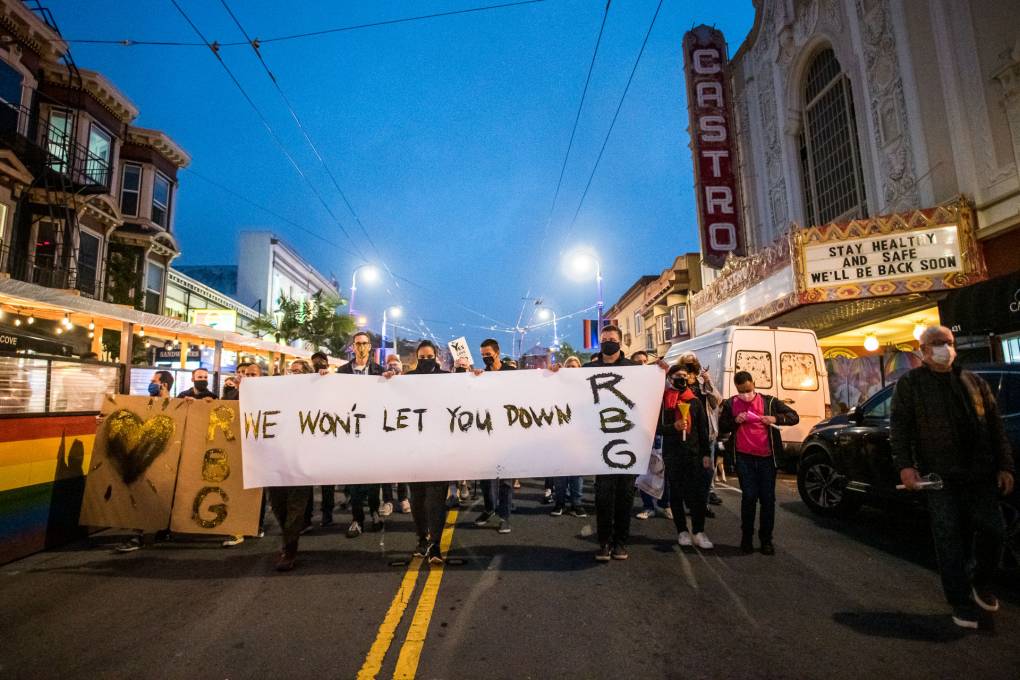
"caption": "Approximately 500 people gathered in the Castro for a candlelit vigil to honor the life of Ruth Bader Ginsburg on Sep. 18, 2020.",
"description": "Approximately 500 people gathered in the Castro for a candlelit vigil to honor the life of Ruth Bader Ginsburg on Sep. 18, 2020.",
"title": "005_KQED_SanFrancisco_RGBVigil_09182020",
"credit": "Beth LaBerge/KQED",
"status": "inherit",
"isLoading": false,
"fetchFailed": false
},
"news_11826095": {
"type": "attachments",
"id": "news_11826095",
"meta": {
"index": "attachments_1716263798",
"site": "news",
"id": "11826095",
"found": true
},
"parent": 11826040,
"imgSizes": {
"apple_news_ca_landscape_5_5": {
"file": "https://ww2.kqed.org/app/uploads/sites/10/2020/06/840-1044x783.jpg",
"width": 1044,
"mimeType": "image/jpeg",
"height": 783
},
"apple_news_ca_square_4_0": {
"file": "https://ww2.kqed.org/app/uploads/sites/10/2020/06/840-470x470.jpg",
"width": 470,
"mimeType": "image/jpeg",
"height": 470
},
"twentyfourteen-full-width": {
"file": "https://ww2.kqed.org/app/uploads/sites/10/2020/06/840-1038x576.jpg",
"width": 1038,
"mimeType": "image/jpeg",
"height": 576
},
"thumbnail": {
"file": "https://ww2.kqed.org/app/uploads/sites/10/2020/06/840-160x105.jpg",
"width": 160,
"mimeType": "image/jpeg",
"height": 105
},
"post-thumbnail": {
"file": "https://ww2.kqed.org/app/uploads/sites/10/2020/06/840-672x372.jpg",
"width": 672,
"mimeType": "image/jpeg",
"height": 372
},
"kqedFullSize": {
"file": "https://ww2.kqed.org/app/uploads/sites/10/2020/06/840-scaled-e1593045875858.jpg",
"width": 1920,
"height": 1264
},
"2048x2048": {
"file": "https://ww2.kqed.org/app/uploads/sites/10/2020/06/840-2048x1348.jpg",
"width": 2048,
"mimeType": "image/jpeg",
"height": 1348
},
"apple_news_ca_landscape_4_7": {
"file": "https://ww2.kqed.org/app/uploads/sites/10/2020/06/840-632x474.jpg",
"width": 632,
"mimeType": "image/jpeg",
"height": 474
},
"large": {
"file": "https://ww2.kqed.org/app/uploads/sites/10/2020/06/840-1020x671.jpg",
"width": 1020,
"mimeType": "image/jpeg",
"height": 671
},
"apple_news_ca_landscape_4_0": {
"file": "https://ww2.kqed.org/app/uploads/sites/10/2020/06/840-536x402.jpg",
"width": 536,
"mimeType": "image/jpeg",
"height": 402
},
"apple_news_ca_portrait_12_9": {
"file": "https://ww2.kqed.org/app/uploads/sites/10/2020/06/840-1122x1496.jpg",
"width": 1122,
"mimeType": "image/jpeg",
"height": 1496
},
"medium": {
"file": "https://ww2.kqed.org/app/uploads/sites/10/2020/06/840-800x527.jpg",
"width": 800,
"mimeType": "image/jpeg",
"height": 527
},
"apple_news_ca_portrait_4_0": {
"file": "https://ww2.kqed.org/app/uploads/sites/10/2020/06/840-354x472.jpg",
"width": 354,
"mimeType": "image/jpeg",
"height": 472
},
"apple_news_ca_portrait_9_7": {
"file": "https://ww2.kqed.org/app/uploads/sites/10/2020/06/840-840x1120.jpg",
"width": 840,
"mimeType": "image/jpeg",
"height": 1120
},
"apple_news_ca_landscape_12_9": {
"file": "https://ww2.kqed.org/app/uploads/sites/10/2020/06/840-1832x1374.jpg",
"width": 1832,
"mimeType": "image/jpeg",
"height": 1374
},
"apple_news_ca_square_9_7": {
"file": "https://ww2.kqed.org/app/uploads/sites/10/2020/06/840-1104x1104.jpg",
"width": 1104,
"mimeType": "image/jpeg",
"height": 1104
},
"1536x1536": {
"file": "https://ww2.kqed.org/app/uploads/sites/10/2020/06/840-1536x1011.jpg",
"width": 1536,
"mimeType": "image/jpeg",
"height": 1011
},
"apple_news_ca_portrait_4_7": {
"file": "https://ww2.kqed.org/app/uploads/sites/10/2020/06/840-414x552.jpg",
"width": 414,
"mimeType": "image/jpeg",
"height": 552
},
"apple_news_ca_square_12_9": {
"file": "https://ww2.kqed.org/app/uploads/sites/10/2020/06/840-1472x1472.jpg",
"width": 1472,
"mimeType": "image/jpeg",
"height": 1472
},
"apple_news_ca_portrait_5_5": {
"file": "https://ww2.kqed.org/app/uploads/sites/10/2020/06/840-687x916.jpg",
"width": 687,
"mimeType": "image/jpeg",
"height": 916
},
"full-width": {
"file": "https://ww2.kqed.org/app/uploads/sites/10/2020/06/840-1920x1264.jpg",
"width": 1920,
"mimeType": "image/jpeg",
"height": 1264
},
"apple_news_ca_square_4_7": {
"file": "https://ww2.kqed.org/app/uploads/sites/10/2020/06/840-550x550.jpg",
"width": 550,
"mimeType": "image/jpeg",
"height": 550
},
"apple_news_ca_landscape_9_7": {
"file": "https://ww2.kqed.org/app/uploads/sites/10/2020/06/840-1376x1032.jpg",
"width": 1376,
"mimeType": "image/jpeg",
"height": 1032
},
"apple_news_ca_square_5_5": {
"file": "https://ww2.kqed.org/app/uploads/sites/10/2020/06/840-912x912.jpg",
"width": 912,
"mimeType": "image/jpeg",
"height": 912
}
},
"publishDate": 1593045842,
"modified": 1593051442,
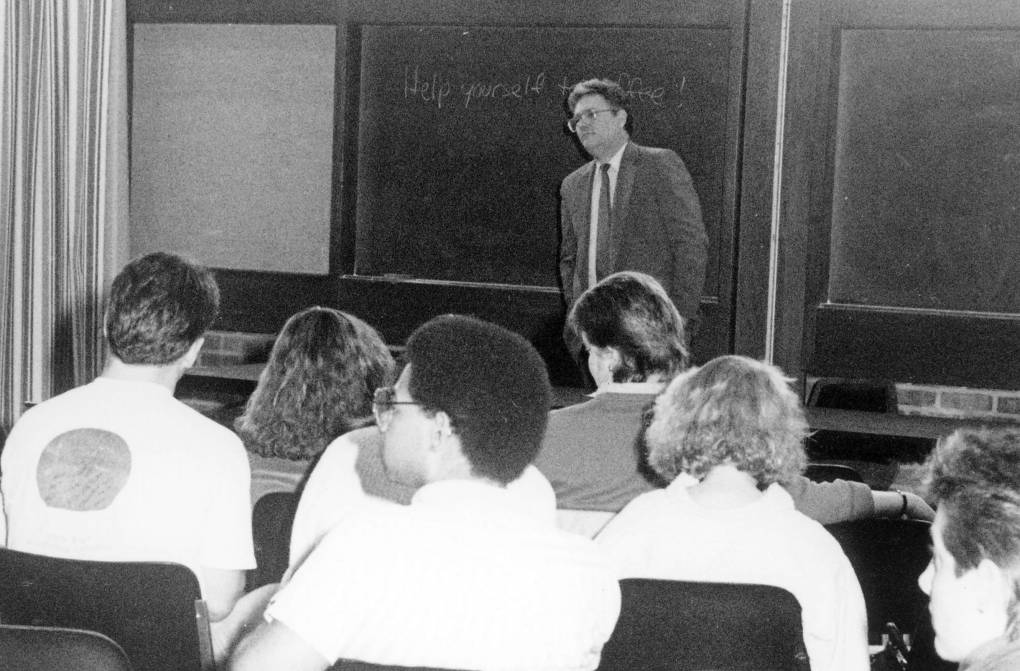
"caption": "Former San Francisco Supervisor, Harry Britt, speaking to a group at San Jose State University on AIDS awareness in 1988.",
"description": "Former San Francisco Supervisor, Harry Britt, speaking to a group at San Jose State University on AIDS awareness in 1988.",
"title": "840",
"credit": "Ted Sahl Collection/San José State University Special Collections & Archives.",
"status": "inherit",
"isLoading": false,
"fetchFailed": false
},
"news_11724264": {
"type": "attachments",
"id": "news_11724264",
"meta": {
"index": "attachments_1716263798",
"site": "news",
"id": "11724264",
"found": true
},
"parent": 11724262,
"imgSizes": {
"twentyfourteen-full-width": {
"file": "https://ww2.kqed.org/app/uploads/sites/10/2019/02/Screen-Shot-2019-02-06-at-4.24.56-PM-803x576.png",
"width": 803,
"mimeType": "image/png",
"height": 576
},
"thumbnail": {
"file": "https://ww2.kqed.org/app/uploads/sites/10/2019/02/Screen-Shot-2019-02-06-at-4.24.56-PM-160x117.png",
"width": 160,
"mimeType": "image/png",
"height": 117
},
"post-thumbnail": {
"file": "https://ww2.kqed.org/app/uploads/sites/10/2019/02/Screen-Shot-2019-02-06-at-4.24.56-PM-672x372.png",
"width": 672,
"mimeType": "image/png",
"height": 372
},
"kqedFullSize": {
"file": "https://ww2.kqed.org/app/uploads/sites/10/2019/02/Screen-Shot-2019-02-06-at-4.24.56-PM.png",
"width": 803,
"height": 585
},
"guest-author-50": {
"file": "https://ww2.kqed.org/app/uploads/sites/10/2019/02/Screen-Shot-2019-02-06-at-4.24.56-PM-50x50.png",
"width": 50,
"mimeType": "image/png",
"height": 50
},
"guest-author-96": {
"file": "https://ww2.kqed.org/app/uploads/sites/10/2019/02/Screen-Shot-2019-02-06-at-4.24.56-PM-96x96.png",
"width": 96,
"mimeType": "image/png",
"height": 96
},
"medium": {
"file": "https://ww2.kqed.org/app/uploads/sites/10/2019/02/Screen-Shot-2019-02-06-at-4.24.56-PM-800x583.png",
"width": 800,
"mimeType": "image/png",
"height": 583
},
"guest-author-64": {
"file": "https://ww2.kqed.org/app/uploads/sites/10/2019/02/Screen-Shot-2019-02-06-at-4.24.56-PM-64x64.png",
"width": 64,
"mimeType": "image/png",
"height": 64
},
"detail": {
"file": "https://ww2.kqed.org/app/uploads/sites/10/2019/02/Screen-Shot-2019-02-06-at-4.24.56-PM-150x150.png",
"width": 150,
"mimeType": "image/png",
"height": 150
},
"guest-author-32": {
"file": "https://ww2.kqed.org/app/uploads/sites/10/2019/02/Screen-Shot-2019-02-06-at-4.24.56-PM-32x32.png",
"width": 32,
"mimeType": "image/png",
"height": 32
},
"guest-author-128": {
"file": "https://ww2.kqed.org/app/uploads/sites/10/2019/02/Screen-Shot-2019-02-06-at-4.24.56-PM-128x128.png",
"width": 128,
"mimeType": "image/png",
"height": 128
}
},
"publishDate": 1549499131,
"modified": 1549501942,
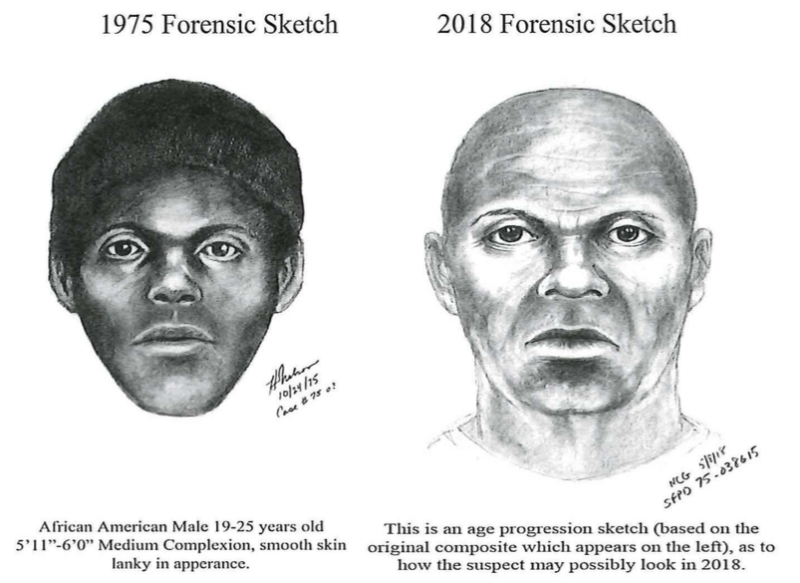
"caption": "The newly released sketch (right) depicts the suspect's age progression based on the original composite (right) from 1975.",
"description": null,
"title": "Screen Shot 2019-02-06 at 4.24.56 PM",
"credit": "Courtesy of the San Francisco Police Department",
"status": "inherit",
"isLoading": false,
"fetchFailed": false
},
"news_11708017": {
"type": "attachments",
"id": "news_11708017",
"meta": {
"index": "attachments_1716263798",
"site": "news",
"id": "11708017",
"found": true
},
"parent": 11707429,
"imgSizes": {
"twentyfourteen-full-width": {
"file": "https://ww2.kqed.org/app/uploads/sites/10/2018/11/RS34087_GettyImages-108007553-qut-1038x576.jpg",
"width": 1038,
"mimeType": "image/jpeg",
"height": 576
},
"thumbnail": {
"file": "https://ww2.kqed.org/app/uploads/sites/10/2018/11/RS34087_GettyImages-108007553-qut-160x104.jpg",
"width": 160,
"mimeType": "image/jpeg",
"height": 104
},
"post-thumbnail": {
"file": "https://ww2.kqed.org/app/uploads/sites/10/2018/11/RS34087_GettyImages-108007553-qut-672x372.jpg",
"width": 672,
"mimeType": "image/jpeg",
"height": 372
},
"kqedFullSize": {
"file": "https://ww2.kqed.org/app/uploads/sites/10/2018/11/RS34087_GettyImages-108007553-qut.jpg",
"width": 1920,
"height": 1252
},
"large": {
"file": "https://ww2.kqed.org/app/uploads/sites/10/2018/11/RS34087_GettyImages-108007553-qut-1020x665.jpg",
"width": 1020,
"mimeType": "image/jpeg",
"height": 665
},
"complete_open_graph": {
"file": "https://ww2.kqed.org/app/uploads/sites/10/2018/11/RS34087_GettyImages-108007553-qut-1200x783.jpg",
"width": 1200,
"mimeType": "image/jpeg",
"height": 783
},
"guest-author-50": {
"file": "https://ww2.kqed.org/app/uploads/sites/10/2018/11/RS34087_GettyImages-108007553-qut-50x50.jpg",
"width": 50,
"mimeType": "image/jpeg",
"height": 50
},
"guest-author-96": {
"file": "https://ww2.kqed.org/app/uploads/sites/10/2018/11/RS34087_GettyImages-108007553-qut-96x96.jpg",
"width": 96,
"mimeType": "image/jpeg",
"height": 96
},
"medium": {
"file": "https://ww2.kqed.org/app/uploads/sites/10/2018/11/RS34087_GettyImages-108007553-qut-800x522.jpg",
"width": 800,
"mimeType": "image/jpeg",
"height": 522
},
"guest-author-64": {
"file": "https://ww2.kqed.org/app/uploads/sites/10/2018/11/RS34087_GettyImages-108007553-qut-64x64.jpg",
"width": 64,
"mimeType": "image/jpeg",
"height": 64
},
"guest-author-32": {
"file": "https://ww2.kqed.org/app/uploads/sites/10/2018/11/RS34087_GettyImages-108007553-qut-32x32.jpg",
"width": 32,
"mimeType": "image/jpeg",
"height": 32
},
"full-width": {
"file": "https://ww2.kqed.org/app/uploads/sites/10/2018/11/RS34087_GettyImages-108007553-qut-1920x1252.jpg",
"width": 1920,
"mimeType": "image/jpeg",
"height": 1252
},
"detail": {
"file": "https://ww2.kqed.org/app/uploads/sites/10/2018/11/RS34087_GettyImages-108007553-qut-150x150.jpg",
"width": 150,
"mimeType": "image/jpeg",
"height": 150
},
"guest-author-128": {
"file": "https://ww2.kqed.org/app/uploads/sites/10/2018/11/RS34087_GettyImages-108007553-qut-128x128.jpg",
"width": 128,
"mimeType": "image/jpeg",
"height": 128
}
},
"publishDate": 1543093456,
"modified": 1543093503,
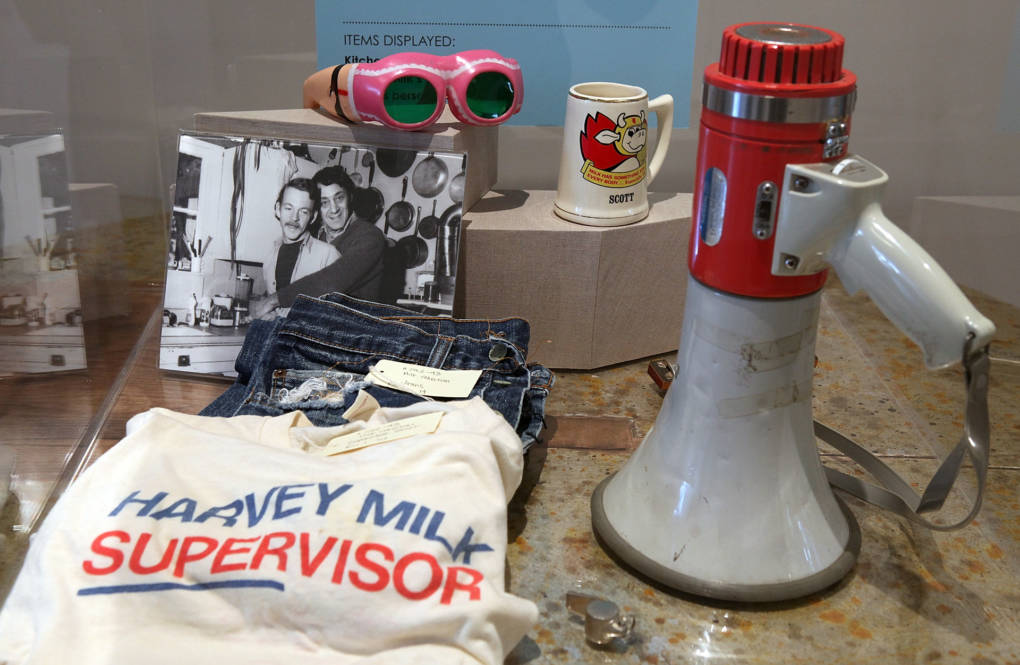
"caption": "Personal possessions of the late San Francisco supervisor Harvey Milk are displayed during the grand opening of the Gay, Lesbian, Bisexual and Transgender History Museum on January 12, 2011 in San Francisco, California.",
"description": "Personal possessions of the late San Francisco supervisor Harvey Milk are displayed during the grand opening of the Gay, Lesbian, Bisexual and Transgender History Museum on January 12, 2011 in San Francisco, California.",
"title": "Country's First Gay, Lesbian, Bisexual, And Transgender History Museum Opens",
"credit": "Justin Sullivan/Getty Images",
"status": "inherit",
"isLoading": false,
"fetchFailed": false
},
"news_10467212": {
"type": "attachments",
"id": "news_10467212",
"meta": {
"index": "attachments_1716263798",
"site": "news",
"id": "10467212",
"found": true
},
"parent": 10467199,
"imgSizes": {
"twentyfourteen-full-width": {
"file": "https://ww2.kqed.org/app/uploads/sites/10/2015/03/George-R.-Moscone-photo-courtesy-Moscone-Family-date-unknown-Credit-University-of-the-Pacific-4-1038x576.jpg",
"width": 1038,
"mimeType": "image/jpeg",
"height": 576
},
"thumbnail": {
"file": "https://ww2.kqed.org/app/uploads/sites/10/2015/03/George-R.-Moscone-photo-courtesy-Moscone-Family-date-unknown-Credit-University-of-the-Pacific-4-400x319.jpg",
"width": 400,
"mimeType": "image/jpeg",
"height": 319
},
"fd-sm": {
"file": "https://ww2.kqed.org/app/uploads/sites/10/2015/03/George-R.-Moscone-photo-courtesy-Moscone-Family-date-unknown-Credit-University-of-the-Pacific-4-320x256.jpg",
"width": 320,
"mimeType": "image/jpeg",
"height": 256
},
"post-thumbnail": {
"file": "https://ww2.kqed.org/app/uploads/sites/10/2015/03/George-R.-Moscone-photo-courtesy-Moscone-Family-date-unknown-Credit-University-of-the-Pacific-4-672x372.jpg",
"width": 672,
"mimeType": "image/jpeg",
"height": 372
},
"kqedFullSize": {
"file": "https://ww2.kqed.org/app/uploads/sites/10/2015/03/George-R.-Moscone-photo-courtesy-Moscone-Family-date-unknown-Credit-University-of-the-Pacific-4-e1543284255983.jpg",
"width": 1920,
"height": 1533
},
"large": {
"file": "https://ww2.kqed.org/app/uploads/sites/10/2015/03/George-R.-Moscone-photo-courtesy-Moscone-Family-date-unknown-Credit-University-of-the-Pacific-4-1440x1150.jpg",
"width": 1440,
"mimeType": "image/jpeg",
"height": 1150
},
"guest-author-96": {
"file": "https://ww2.kqed.org/app/uploads/sites/10/2015/03/George-R.-Moscone-photo-courtesy-Moscone-Family-date-unknown-Credit-University-of-the-Pacific-4-96x96.jpg",
"width": 96,
"mimeType": "image/jpeg",
"height": 96
},
"medium": {
"file": "https://ww2.kqed.org/app/uploads/sites/10/2015/03/George-R.-Moscone-photo-courtesy-Moscone-Family-date-unknown-Credit-University-of-the-Pacific-4-800x639.jpg",
"width": 800,
"mimeType": "image/jpeg",
"height": 639
},
"guest-author-64": {
"file": "https://ww2.kqed.org/app/uploads/sites/10/2015/03/George-R.-Moscone-photo-courtesy-Moscone-Family-date-unknown-Credit-University-of-the-Pacific-4-64x64.jpg",
"width": 64,
"mimeType": "image/jpeg",
"height": 64
},
"guest-author-32": {
"file": "https://ww2.kqed.org/app/uploads/sites/10/2015/03/George-R.-Moscone-photo-courtesy-Moscone-Family-date-unknown-Credit-University-of-the-Pacific-4-32x32.jpg",
"width": 32,
"mimeType": "image/jpeg",
"height": 32
},
"fd-lrg": {
"file": "https://ww2.kqed.org/app/uploads/sites/10/2015/03/George-R.-Moscone-photo-courtesy-Moscone-Family-date-unknown-Credit-University-of-the-Pacific-4-1180x942.jpg",
"width": 1180,
"mimeType": "image/jpeg",
"height": 942
},
"fd-med": {
"file": "https://ww2.kqed.org/app/uploads/sites/10/2015/03/George-R.-Moscone-photo-courtesy-Moscone-Family-date-unknown-Credit-University-of-the-Pacific-4-768x613.jpg",
"width": 768,
"mimeType": "image/jpeg",
"height": 613
},
"detail": {
"file": "https://ww2.kqed.org/app/uploads/sites/10/2015/03/George-R.-Moscone-photo-courtesy-Moscone-Family-date-unknown-Credit-University-of-the-Pacific-4-75x75.jpg",
"width": 75,
"mimeType": "image/jpeg",
"height": 75
},
"guest-author-128": {
"file": "https://ww2.kqed.org/app/uploads/sites/10/2015/03/George-R.-Moscone-photo-courtesy-Moscone-Family-date-unknown-Credit-University-of-the-Pacific-4-128x128.jpg",
"width": 128,
"mimeType": "image/jpeg",
"height": 128
}
},
"publishDate": 1427413743,
"modified": 1427417327,
"caption": "Mayor George Moscone was assassinated in November 1978 at San Francisco's City Hall.",
"description": "Mayor George Moscone was assassinated in November 1978 at San Francisco's City Hall.",
"title": "George R. Moscone; photo courtesy Moscone Family; date unknown; Credit University of the Pacific (4)",
"credit": "Photo courtesy of University of the Pacific",
"status": "inherit",
"isLoading": false,
"fetchFailed": false
},
"news_11708237": {
"type": "attachments",
"id": "news_11708237",
"meta": {
"index": "attachments_1716263798",
"site": "news",
"id": "11708237",
"found": true
},
"parent": 11707340,
"imgSizes": {
"twentyfourteen-full-width": {
"file": "https://ww2.kqed.org/app/uploads/sites/10/2018/11/RS34106_Museum.05-qut-1038x576.jpg",
"width": 1038,
"mimeType": "image/jpeg",
"height": 576
},
"thumbnail": {
"file": "https://ww2.kqed.org/app/uploads/sites/10/2018/11/RS34106_Museum.05-qut-160x120.jpg",
"width": 160,
"mimeType": "image/jpeg",
"height": 120
},
"post-thumbnail": {
"file": "https://ww2.kqed.org/app/uploads/sites/10/2018/11/RS34106_Museum.05-qut-672x372.jpg",
"width": 672,
"mimeType": "image/jpeg",
"height": 372
},
"kqedFullSize": {
"file": "https://ww2.kqed.org/app/uploads/sites/10/2018/11/RS34106_Museum.05-qut.jpg",
"width": 1920,
"height": 1440
},
"large": {
"file": "https://ww2.kqed.org/app/uploads/sites/10/2018/11/RS34106_Museum.05-qut-1020x765.jpg",
"width": 1020,
"mimeType": "image/jpeg",
"height": 765
},
"complete_open_graph": {
"file": "https://ww2.kqed.org/app/uploads/sites/10/2018/11/RS34106_Museum.05-qut-1200x900.jpg",
"width": 1200,
"mimeType": "image/jpeg",
"height": 900
},
"guest-author-50": {
"file": "https://ww2.kqed.org/app/uploads/sites/10/2018/11/RS34106_Museum.05-qut-50x50.jpg",
"width": 50,
"mimeType": "image/jpeg",
"height": 50
},
"guest-author-96": {
"file": "https://ww2.kqed.org/app/uploads/sites/10/2018/11/RS34106_Museum.05-qut-96x96.jpg",
"width": 96,
"mimeType": "image/jpeg",
"height": 96
},
"medium": {
"file": "https://ww2.kqed.org/app/uploads/sites/10/2018/11/RS34106_Museum.05-qut-800x600.jpg",
"width": 800,
"mimeType": "image/jpeg",
"height": 600
},
"guest-author-64": {
"file": "https://ww2.kqed.org/app/uploads/sites/10/2018/11/RS34106_Museum.05-qut-64x64.jpg",
"width": 64,
"mimeType": "image/jpeg",
"height": 64
},
"guest-author-32": {
"file": "https://ww2.kqed.org/app/uploads/sites/10/2018/11/RS34106_Museum.05-qut-32x32.jpg",
"width": 32,
"mimeType": "image/jpeg",
"height": 32
},
"full-width": {
"file": "https://ww2.kqed.org/app/uploads/sites/10/2018/11/RS34106_Museum.05-qut-1920x1440.jpg",
"width": 1920,
"mimeType": "image/jpeg",
"height": 1440
},
"detail": {
"file": "https://ww2.kqed.org/app/uploads/sites/10/2018/11/RS34106_Museum.05-qut-150x150.jpg",
"width": 150,
"mimeType": "image/jpeg",
"height": 150
},
"guest-author-128": {
"file": "https://ww2.kqed.org/app/uploads/sites/10/2018/11/RS34106_Museum.05-qut-128x128.jpg",
"width": 128,
"mimeType": "image/jpeg",
"height": 128
}
},
"publishDate": 1543269597,
"modified": 1543269703,
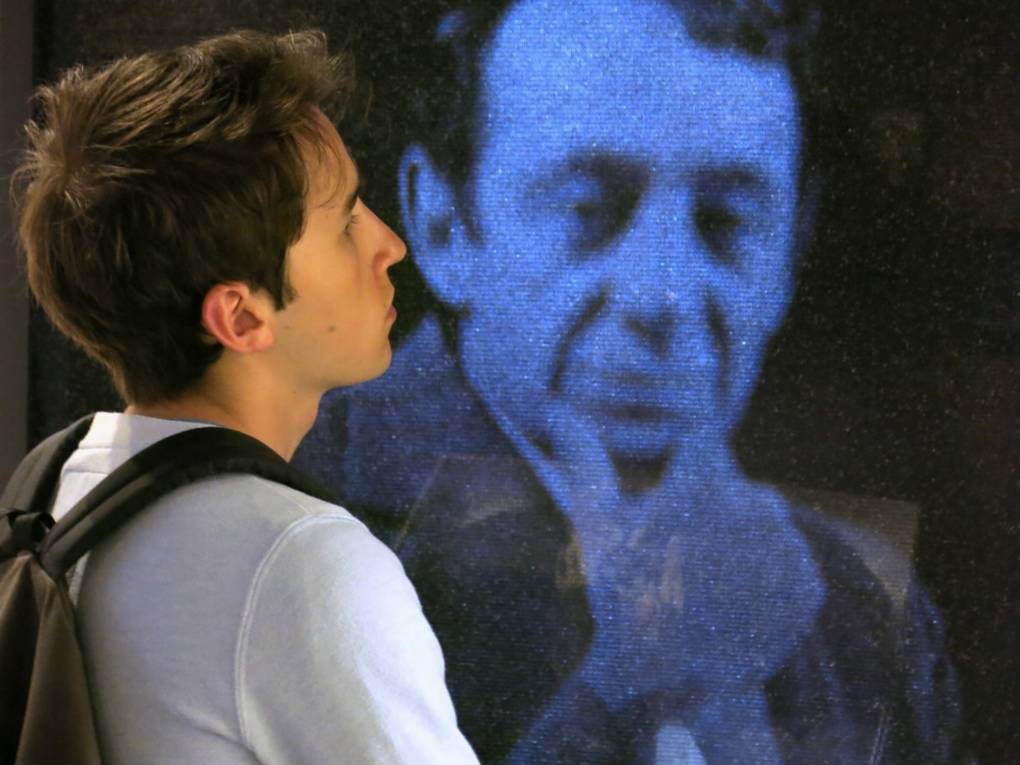
"caption": "A visitor to the GLBT Historical Society Museum listens intently to the recorded will of Harvey Milk, the first openly gay member of the San Francisco Board of Supervisors, who was assassinated in 1978.",
"description": "A visitor to the GLBT Historical Society Museum listens intently to the recorded will of Harvey Milk, the first openly gay member of the San Francisco Board of Supervisors, who was assassinated in 1978.",
"title": "RS34106_Museum.05-qut",
"credit": "Courtesy of Gerard Koskovich, GLBT Historical Society Museum",
"status": "inherit",
"isLoading": false,
"fetchFailed": false
},
"news_11706995": {
"type": "attachments",
"id": "news_11706995",
"meta": {
"index": "attachments_1716263798",
"site": "news",
"id": "11706995",
"found": true
},
"parent": 11705963,
"imgSizes": {
"twentyfourteen-full-width": {
"file": "https://ww2.kqed.org/app/uploads/sites/10/2018/11/Jim_Jones_in_front_of_the_International_Hotel-1038x576.jpg",
"width": 1038,
"mimeType": "image/jpeg",
"height": 576
},
"thumbnail": {
"file": "https://ww2.kqed.org/app/uploads/sites/10/2018/11/Jim_Jones_in_front_of_the_International_Hotel-160x106.jpg",
"width": 160,
"mimeType": "image/jpeg",
"height": 106
},
"post-thumbnail": {
"file": "https://ww2.kqed.org/app/uploads/sites/10/2018/11/Jim_Jones_in_front_of_the_International_Hotel-672x372.jpg",
"width": 672,
"mimeType": "image/jpeg",
"height": 372
},
"kqedFullSize": {
"file": "https://ww2.kqed.org/app/uploads/sites/10/2018/11/Jim_Jones_in_front_of_the_International_Hotel.jpg",
"width": 1590,
"height": 1057
},
"large": {
"file": "https://ww2.kqed.org/app/uploads/sites/10/2018/11/Jim_Jones_in_front_of_the_International_Hotel-1020x678.jpg",
"width": 1020,
"mimeType": "image/jpeg",
"height": 678
},
"complete_open_graph": {
"file": "https://ww2.kqed.org/app/uploads/sites/10/2018/11/Jim_Jones_in_front_of_the_International_Hotel-1200x798.jpg",
"width": 1200,
"mimeType": "image/jpeg",
"height": 798
},
"guest-author-50": {
"file": "https://ww2.kqed.org/app/uploads/sites/10/2018/11/Jim_Jones_in_front_of_the_International_Hotel-50x50.jpg",
"width": 50,
"mimeType": "image/jpeg",
"height": 50
},
"guest-author-96": {
"file": "https://ww2.kqed.org/app/uploads/sites/10/2018/11/Jim_Jones_in_front_of_the_International_Hotel-96x96.jpg",
"width": 96,
"mimeType": "image/jpeg",
"height": 96
},
"medium": {
"file": "https://ww2.kqed.org/app/uploads/sites/10/2018/11/Jim_Jones_in_front_of_the_International_Hotel-800x532.jpg",
"width": 800,
"mimeType": "image/jpeg",
"height": 532
},
"guest-author-64": {
"file": "https://ww2.kqed.org/app/uploads/sites/10/2018/11/Jim_Jones_in_front_of_the_International_Hotel-64x64.jpg",
"width": 64,
"mimeType": "image/jpeg",
"height": 64
},
"guest-author-32": {
"file": "https://ww2.kqed.org/app/uploads/sites/10/2018/11/Jim_Jones_in_front_of_the_International_Hotel-32x32.jpg",
"width": 32,
"mimeType": "image/jpeg",
"height": 32
},
"detail": {
"file": "https://ww2.kqed.org/app/uploads/sites/10/2018/11/Jim_Jones_in_front_of_the_International_Hotel-150x150.jpg",
"width": 150,
"mimeType": "image/jpeg",
"height": 150
},
"guest-author-128": {
"file": "https://ww2.kqed.org/app/uploads/sites/10/2018/11/Jim_Jones_in_front_of_the_International_Hotel-128x128.jpg",
"width": 128,
"mimeType": "image/jpeg",
"height": 128
}
},
"publishDate": 1542414350,
"modified": 1542414875,
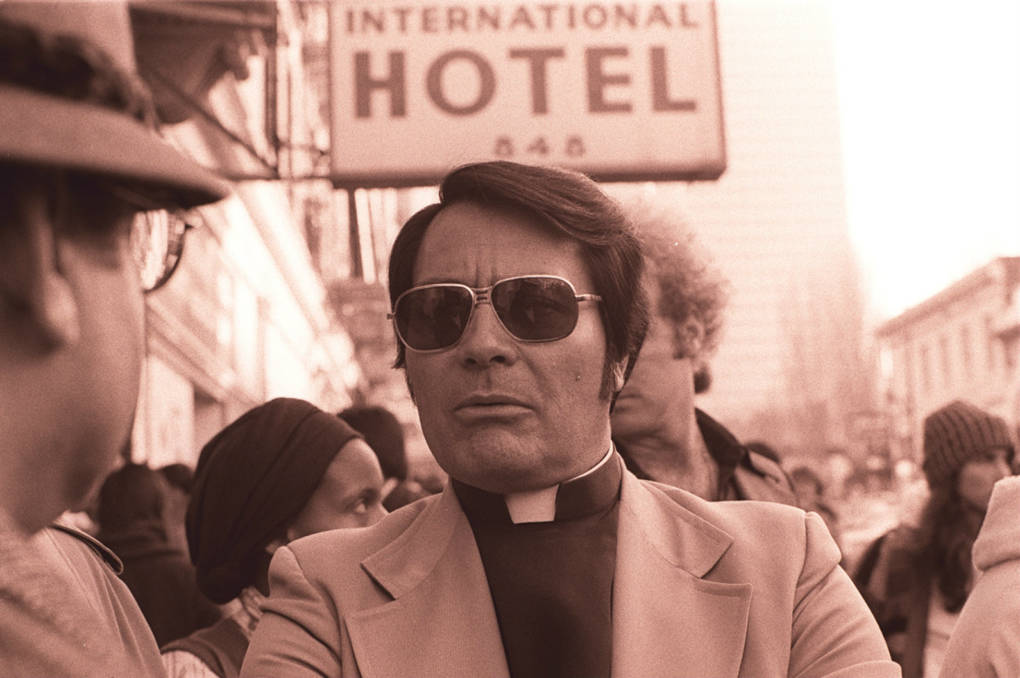
"caption": "San Francisco Housing Commissioner Jim Jones at an anti-eviction rally at the I-Hotel at 848 Kearny Street in Manilatown, Sunday, January 16, 1977. Jones was the leader of the People's Temple and 900 members of the church perished after Jones ordered them to drink cyanide-laced punch. ",
"description": null,
"title": "Jim_Jones_in_front_of_the_International_Hotel",
"credit": "Nancy Wong/Wikimedia",
"status": "inherit",
"isLoading": false,
"fetchFailed": false
},
"news_136821": {
"type": "attachments",
"id": "news_136821",
"meta": {
"index": "attachments_1716263798",
"site": "news",
"id": "136821",
"found": true
},
"parent": 136819,
"imgSizes": {
"kqedFullSize": {
"file": "https://ww2.kqed.org/app/uploads/sites/10/2014/05/harvey-milk-stamp.jpg",
"width": 385,
"height": 600
}
},
"publishDate": 1400795168,
"modified": 1400795168,
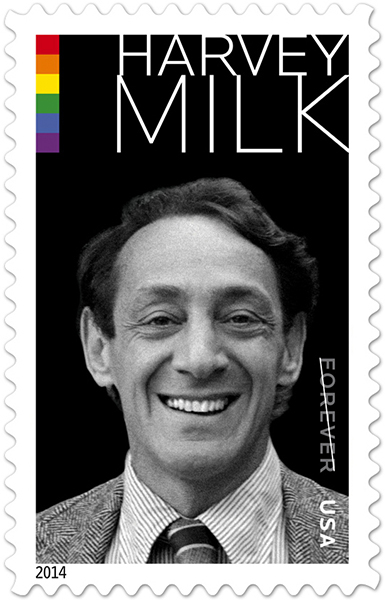
"caption": "Harvey Milk stamp released May 22, 2014, by the U.S. Postal Service. (USPS)",
"description": "Harvey Milk stamp released May 22, 2014, by the U.S. Postal Service. (USPS)",
"title": "Harvey Milk Stamp",
"credit": null,
"status": "inherit",
"isLoading": false,
"fetchFailed": false
},
"news_133328": {
"type": "attachments",
"id": "news_133328",
"meta": {
"index": "attachments_1716263798",
"site": "news",
"id": "133328",
"found": true
},
"parent": 133323,
"imgSizes": {
"kqedFullSize": {
"file": "https://ww2.kqed.org/app/uploads/sites/10/2014/04/harveymilk2.jpg",
"width": 383,
"height": 600
}
},
"publishDate": 1398100417,
"modified": 1398100417,
"caption": "The new Harvey Milk stamp, released today.",
"description": null,
"title": "harveymilk",
"credit": null,
"status": "inherit",
"isLoading": false,
"fetchFailed": false
},
"news_119524": {
"type": "attachments",
"id": "news_119524",
"meta": {
"index": "attachments_1716263798",
"site": "news",
"id": "119524",
"found": true
},
"parent": 119515,
"imgSizes": {
"kqedFullSize": {
"file": "https://ww2.kqed.org/app/uploads/sites/10/2013/11/George-Moscone-Harvey-Milk.jpg",
"width": 640,
"height": 490
}
},
"publishDate": 1385587440,
"modified": 1385587440,
"caption": null,
"description": null,
"title": "Moscone-Milk Assassination",
"credit": null,
"status": "inherit",
"isLoading": false,
"fetchFailed": false
}
},
"audioPlayerReducer": {
"postId": "stream_live",
"isPaused": true,
"isPlaying": false,
"pfsActive": false,
"pledgeModalIsOpen": true,
"playerDrawerIsOpen": false,
"liveAudioPlayStartedAt": 0,
"liveAudioPlayContext": ""
},
"authorsReducer": {
"byline_news_11724262": {
"type": "authors",
"id": "byline_news_11724262",
"meta": {
"override": true
},
"slug": "byline_news_11724262",
"name": "\u003cstrong>Olga R. Rodriguez and Jocelyn Gecker\u003cbr>Associated Press\u003c/strong>",
"isLoading": false
},
"jbrooks": {
"type": "authors",
"id": "80",
"meta": {
"index": "authors_1716337520",
"id": "80",
"found": true
},
"name": "Jon Brooks",
"firstName": "Jon",
"lastName": "Brooks",
"slug": "jbrooks",
"email": "jbrooks@kqed.org",
"display_author_email": true,
"staff_mastheads": [
"science"
],
"title": "Digital Editor",
"bio": "Jon Brooks is a former Digital Editor for KQED Science. He is the former editor of KQED’s daily news blog, News Fix. In 2014, he won a California Journalism Award for his coverage of ride services like Uber and Lyft and the taxi industry. A veteran blogger, he previously worked for Yahoo! in various news writing and editing roles. Jon is also a playwright whose work has been produced in San Francisco, New York, Italy, and around the U.S. He has written about film for his own blog and studied film at Boston University.",
"avatar": "https://secure.gravatar.com/avatar/98887f7ed1c876ed414d4c915e969584?s=600&d=blank&r=g",
"twitter": "jbrooksfoy",
"facebook": null,
"instagram": null,
"linkedin": null,
"sites": [
{
"site": "arts",
"roles": [
"Contributor",
"editor"
]
},
{
"site": "news",
"roles": [
"author"
]
},
{
"site": "futureofyou",
"roles": [
"administrator"
]
},
{
"site": "mindshift",
"roles": [
"editor"
]
},
{
"site": "stateofhealth",
"roles": [
"editor"
]
},
{
"site": "science",
"roles": [
"administrator"
]
},
{
"site": "quest",
"roles": [
"editor"
]
}
],
"headData": {
"title": "Jon Brooks | KQED",
"description": "Digital Editor",
"ogImgSrc": "https://secure.gravatar.com/avatar/98887f7ed1c876ed414d4c915e969584?s=600&d=blank&r=g",
"twImgSrc": "https://secure.gravatar.com/avatar/98887f7ed1c876ed414d4c915e969584?s=600&d=blank&r=g"
},
"isLoading": false,
"link": "/author/jbrooks"
},
"danbrekke": {
"type": "authors",
"id": "222",
"meta": {
"index": "authors_1716337520",
"id": "222",
"found": true
},
"name": "Dan Brekke",
"firstName": "Dan",
"lastName": "Brekke",
"slug": "danbrekke",
"email": "dbrekke@kqed.org",
"display_author_email": true,
"staff_mastheads": [
"news",
"science"
],
"title": "KQED Editor and Reporter",
"bio": "Dan Brekke is a reporter and editor for KQED News, responsible for coverage of topics ranging from California water issues to the Bay Area's transportation challenges. In a newsroom career that began in Chicago in 1972, Dan has worked for \u003cem>The San Francisco Examiner,\u003c/em> Wired and TechTV and has been published in The New York Times, The New York Times Magazine, Business 2.0, Salon and elsewhere.\r\n\r\nSince joining KQED in 2007, Dan has reported, edited and produced both radio and online features and breaking news pieces. He has shared as both editor and reporter in four Society of Professional Journalists Norcal Excellence in Journalism awards and one Edward R. Murrow regional award. He was chosen for a spring 2017 residency at the Mesa Refuge to advance his research on California salmon.\r\n\r\nEmail Dan at: \u003ca href=\"mailto:dbrekke@kqed.org\">dbrekke@kqed.org\u003c/a>\r\n\r\n\u003cstrong>Twitter:\u003c/strong> \u003ca href=\"https://twitter.com/danbrekke\" rel=\"noopener noreferrer\">twitter.com/danbrekke\u003c/a>\r\n\u003cstrong>Facebook:\u003c/strong> \u003ca href=\"https://www.facebook.com/danbrekke\" rel=\"noopener noreferrer\">www.facebook.com/danbrekke\u003c/a>\r\n\u003cstrong>LinkedIn:\u003c/strong> \u003ca href=\"https://www.linkedin.com/in/danbrekke\" rel=\"noopener noreferrer\">www.linkedin.com/in/danbrekke\u003c/a>",
"avatar": "https://secure.gravatar.com/avatar/c8126230345efca3f7aa89b1a402be45?s=600&d=mm&r=g",
"twitter": "danbrekke",
"facebook": null,
"instagram": "https://www.instagram.com/dan.brekke/",
"linkedin": "https://www.linkedin.com/in/danbrekke/",
"sites": [
{
"site": "news",
"roles": [
"administrator",
"create_posts"
]
},
{
"site": "stateofhealth",
"roles": [
"editor"
]
},
{
"site": "science",
"roles": [
"editor"
]
},
{
"site": "quest",
"roles": [
"contributor"
]
},
{
"site": "food",
"roles": [
"contributor"
]
},
{
"site": "forum",
"roles": [
"contributor"
]
},
{
"site": "liveblog",
"roles": [
"editor"
]
}
],
"headData": {
"title": "Dan Brekke | KQED",
"description": "KQED Editor and Reporter",
"ogImgSrc": "https://secure.gravatar.com/avatar/c8126230345efca3f7aa89b1a402be45?s=600&d=mm&r=g",
"twImgSrc": "https://secure.gravatar.com/avatar/c8126230345efca3f7aa89b1a402be45?s=600&d=mm&r=g"
},
"isLoading": false,
"link": "/author/danbrekke"
},
"kqed": {
"type": "authors",
"id": "236",
"meta": {
"index": "authors_1716337520",
"id": "236",
"found": true
},
"name": "KQED News Staff",
"firstName": "KQED News Staff",
"lastName": null,
"slug": "kqed",
"email": "faq@kqed.org",
"display_author_email": false,
"staff_mastheads": [],
"title": null,
"bio": null,
"avatar": "https://secure.gravatar.com/avatar/ef0e801a68c4c54afa9180db14084167?s=600&d=blank&r=g",
"twitter": null,
"facebook": null,
"instagram": null,
"linkedin": null,
"sites": [
{
"site": "arts",
"roles": [
"contributor"
]
},
{
"site": "news",
"roles": [
"editor"
]
},
{
"site": "futureofyou",
"roles": [
"author"
]
}
],
"headData": {
"title": "KQED News Staff | KQED",
"description": null,
"ogImgSrc": "https://secure.gravatar.com/avatar/ef0e801a68c4c54afa9180db14084167?s=600&d=blank&r=g",
"twImgSrc": "https://secure.gravatar.com/avatar/ef0e801a68c4c54afa9180db14084167?s=600&d=blank&r=g"
},
"isLoading": false,
"link": "/author/kqed"
},
"scottshafer": {
"type": "authors",
"id": "255",
"meta": {
"index": "authors_1716337520",
"id": "255",
"found": true
},
"name": "Scott Shafer",
"firstName": "Scott",
"lastName": "Shafer",
"slug": "scottshafer",
"email": "sshafer@kqed.org",
"display_author_email": false,
"staff_mastheads": [
"news"
],
"title": "KQED Contributor",
"bio": "Scott Shafer is a senior editor with the KQED Politics and Government desk. He is co-host of Political Breakdown, the award-winning radio show and podcast with a personal take on the world of politics. Scott came to KQED in 1998 to host the statewide\u003cem> California Report\u003c/em>. Prior to that he had extended stints in politics and government\u003cem>.\u003c/em> He uses that inside experience at KQED in his, reporting, hosting and analysis for the politics desk. Scott collaborated \u003cem>Political Breakdown a\u003c/em>nd on \u003cem>The Political Mind of Jerry Brown, \u003c/em>an eight-part series about the life and extraordinary political career of the former governor. For fun, he plays water polo with the San Francisco Tsunami.",
"avatar": "https://secure.gravatar.com/avatar/a62ebae45b79d7aed1a39a0e3bf68104?s=600&d=blank&r=g",
"twitter": "scottshafer",
"bluesky": null,
"facebook": null,
"instagram": null,
"linkedin": null,
"sites": [
{
"site": "news",
"roles": [
"editor"
]
},
{
"site": "stateofhealth",
"roles": [
"author"
]
},
{
"site": "science",
"roles": [
"author"
]
},
{
"site": "forum",
"roles": [
"subscriber"
]
},
{
"site": "liveblog",
"roles": [
"author"
]
}
],
"headData": {
"title": "Scott Shafer | KQED",
"description": "KQED Contributor",
"ogImgSrc": "https://secure.gravatar.com/avatar/a62ebae45b79d7aed1a39a0e3bf68104?s=600&d=blank&r=g",
"twImgSrc": "https://secure.gravatar.com/avatar/a62ebae45b79d7aed1a39a0e3bf68104?s=600&d=blank&r=g"
},
"isLoading": false,
"link": "/author/scottshafer"
},
"tarasiler": {
"type": "authors",
"id": "257",
"meta": {
"index": "authors_1716337520",
"id": "257",
"found": true
},
"name": "Tara Siler",
"firstName": "Tara",
"lastName": "Siler",
"slug": "tarasiler",
"email": "tsiler@kqed.org",
"display_author_email": false,
"staff_mastheads": [
"news"
],
"title": "KQED Contributor",
"bio": "Tara reports and anchors for KQED news. She covers a range of issues from community-police relations to local politics. Tara started out in community radio in the Bay Area, where she was raised. She eventually moved to Washington DC where she covered Congress for eight years for Pacifica and Monitor Radio. Her stories have also been heard on NPR's All Things Considered, Morning Edition and The World.\r\n\r\nTara lives with her husband in Oakland-- where they raised their two sons. She enjoys spending time with her family, gardening and hiking in the Oakland hills... and keeping up with the news.",
"avatar": "https://secure.gravatar.com/avatar/99802f9746fb80b65fd8ec6c57954450?s=600&d=blank&r=g",
"twitter": null,
"facebook": null,
"instagram": null,
"linkedin": null,
"sites": [
{
"site": "news",
"roles": [
"contributor",
"edit_others_posts"
]
},
{
"site": "stateofhealth",
"roles": [
"author"
]
}
],
"headData": {
"title": "Tara Siler | KQED",
"description": "KQED Contributor",
"ogImgSrc": "https://secure.gravatar.com/avatar/99802f9746fb80b65fd8ec6c57954450?s=600&d=blank&r=g",
"twImgSrc": "https://secure.gravatar.com/avatar/99802f9746fb80b65fd8ec6c57954450?s=600&d=blank&r=g"
},
"isLoading": false,
"link": "/author/tarasiler"
},
"rlevi": {
"type": "authors",
"id": "11260",
"meta": {
"index": "authors_1716337520",
"id": "11260",
"found": true
},
"name": "Ryan Levi",
"firstName": "Ryan",
"lastName": "Levi",
"slug": "rlevi",
"email": "rlevi@KQED.org",
"display_author_email": false,
"staff_mastheads": [],
"title": "KQED Contributor",
"bio": "Ryan Levi was a reporter and podcast producer at KQED News from 2016-2019. He worked on \u003ca href=\"https://www.kqed.org/news/series/baycurious\">Bay Curious\u003c/a>, \u003ca href=\"https://www.kqed.org/news/tag/the-bay/\">The Bay, \u003c/a>and \u003ca href=\"https://podcasts.apple.com/us/podcast/the-california-report-magazine/id1314750545\">The California Report Magazine\u003c/a>, as well as hosting and producing the weekly \u003ca href=\"https://www.kqed.org/news/program/qedup/\">Q'ed Up podcast. \u003c/a>He also helped inaugurate KQED's weekend news coverage in 2017 as one of two original digital producers. Ryan holds degrees in multimedia journalism and Spanish from the University of Missouri.",
"avatar": "https://secure.gravatar.com/avatar/4cb2ddd028ac8807d1adf09609c5555d?s=600&d=blank&r=g",
"twitter": "ryan_levi",
"facebook": null,
"instagram": null,
"linkedin": null,
"sites": [
{
"site": "arts",
"roles": [
"editor"
]
},
{
"site": "news",
"roles": [
"subscriber"
]
},
{
"site": "stateofhealth",
"roles": [
"editor"
]
},
{
"site": "science",
"roles": [
"editor"
]
},
{
"site": "forum",
"roles": [
"administrator"
]
},
{
"site": "perspectives",
"roles": [
"administrator"
]
}
],
"headData": {
"title": "Ryan Levi | KQED",
"description": "KQED Contributor",
"ogImgSrc": "https://secure.gravatar.com/avatar/4cb2ddd028ac8807d1adf09609c5555d?s=600&d=blank&r=g",
"twImgSrc": "https://secure.gravatar.com/avatar/4cb2ddd028ac8807d1adf09609c5555d?s=600&d=blank&r=g"
},
"isLoading": false,
"link": "/author/rlevi"
},
"katewolffe": {
"type": "authors",
"id": "11523",
"meta": {
"index": "authors_1716337520",
"id": "11523",
"found": true
},
"name": "Kate Wolffe",
"firstName": "Kate",
"lastName": "Wolffe",
"slug": "katewolffe",
"email": "kwolffe@kqed.org",
"display_author_email": true,
"staff_mastheads": [
"news"
],
"title": "KQED Reporter + Weekend Host",
"bio": "Kate Wolffe reports on local Bay Area happenings for KQED, and hosts the news on weekend afternoons. She joined KQED in 2018 as an intern on the Forum team, before moving to cover topics ranging from politics to criminal justice to homelessness. A Bay Area native and UC Berkeley graduate, Kate loves to discover new corners of the region.",
"avatar": "https://secure.gravatar.com/avatar/22455f14db824a03ee252f73052fe939?s=600&d=blank&r=g",
"twitter": "katewolffe",
"facebook": null,
"instagram": null,
"linkedin": null,
"sites": [
{
"site": "arts",
"roles": [
"editor"
]
},
{
"site": "news",
"roles": [
"author",
"edit_others_posts"
]
},
{
"site": "forum",
"roles": [
"editor"
]
}
],
"headData": {
"title": "Kate Wolffe | KQED",
"description": "KQED Reporter + Weekend Host",
"ogImgSrc": "https://secure.gravatar.com/avatar/22455f14db824a03ee252f73052fe939?s=600&d=blank&r=g",
"twImgSrc": "https://secure.gravatar.com/avatar/22455f14db824a03ee252f73052fe939?s=600&d=blank&r=g"
},
"isLoading": false,
"link": "/author/katewolffe"
}
},
"pagesReducer": {
"news_tag_harvey-milk": {
"type": "terms",
"id": "news_1682",
"meta": {
"index": "terms_1716263798",
"site": "news",
"id": "1682",
"score": 9.553094
},
"featImg": null,
"name": "Harvey Milk",
"description": null,
"taxonomy": "tag",
"headData": {
"twImgId": null,
"twTitle": null,
"ogTitle": null,
"ogImgId": null,
"twDescription": null,
"description": null,
"title": "Harvey Milk Archives | KQED News",
"ogDescription": null
},
"ttid": 1694,
"slug": "harvey-milk",
"isLoading": false,
"title": "Harvey Milk",
"pageMeta": {
"site": "news",
"WpPageTemplate": "page-topic-editorial",
"currentPage": 2
},
"blocks": [
{
"blockName": "kqed/post-list",
"attrs": {
"layout": "cardArticle2",
"query": "posts/news?tag=harvey-milk",
"seeMore": false,
"paginated": true,
"page": 2
}
},
{
"blockName": "kqed/ad"
}
]
}
},
"pfsSessionReducer": {},
"postsReducer": {
"stream_live": {
"type": "live",
"id": "stream_live",
"audioUrl": "https://streams.kqed.org/kqedradio",
"title": "Live Stream",
"excerpt": "Live Stream information currently unavailable.",
"link": "/radio",
"featImg": "",
"label": {
"name": "KQED Live",
"link": "/"
}
},
"stream_kqedNewscast": {
"type": "posts",
"id": "stream_kqedNewscast",
"audioUrl": "https://www.kqed.org/.stream/anon/radio/RDnews/newscast.mp3?_=1",
"title": "KQED Newscast",
"featImg": "",
"label": {
"name": "88.5 FM",
"link": "/"
}
},
"news_11838859": {
"type": "posts",
"id": "news_11838859",
"meta": {
"index": "posts_1716263798",
"site": "news",
"id": "11838859",
"score": null,
"sort": [
1600496319000
]
},
"guestAuthors": [],
"slug": "hundreds-gather-to-honor-the-life-of-ruth-bader-ginsburg-in-the-castro",
"title": "Hundreds Gather in the Castro to Honor the Life of Ruth Bader Ginsburg",
"publishDate": 1600496319,
"format": "audio",
"headTitle": "Hundreds Gather in the Castro to Honor the Life of Ruth Bader Ginsburg | KQED",
"labelTerm": {
"site": "news"
},
"content": "\u003cp>Hundreds of mourners gathered in the Castro neighborhood of San Francisco Friday night for a candlelit vigil honoring the late Supreme Court Justice Ruth Bader Ginsburg, who \u003ca href=\"https://www.kqed.org/news/11838760/justice-ruth-bader-ginsburg-champion-of-gender-equality-dies-at-87\" rel=\"noopener noreferrer\" target=\"_blank\">died Friday of complications from cancer at age 87\u003c/a>.\u003c/p>\n\u003cp>Many attendees rushed to Harvey Milk Plaza on less than one hour’s notice — alerted by social media posts and an email from organizer Manny Yekutiel, owner of the community space Manny’s in the Mission. \u003c/p>\n\u003cp>Those assembled described feeling numb and in disbelief at Ginsburg’s passing. \u003c/p>\n\u003cp>“I think a lot of us felt like, ‘Well, as long as RBG is there, we’re gonna be good, we’re gonna be good’,” said San Francisco resident Shawn Rosenmoss. “Now I’m a little lost, which is why I’m here.” \u003c/p>\n\u003cfigure id=\"attachment_11838872\" class=\"wp-caption aligncenter\" style=\"max-width: 800px\">\u003cimg loading=\"lazy\" decoding=\"async\" src=\"https://ww2.kqed.org/app/uploads/sites/10/2020/09/027_KQED_SanFrancisco_RGBVigil_09182020-1-800x533.jpg\" alt=\"Betty Doerr brought her Ruth Bader Ginsburg figurine that she bought at Cliff's Variety to the candlelit vigil in Ginsburg's honor on Sep. 18, 2020. \" width=\"800\" height=\"533\" class=\"size-medium wp-image-11838872\" srcset=\"https://cdn.kqed.org/wp-content/uploads/sites/10/2020/09/027_KQED_SanFrancisco_RGBVigil_09182020-1-800x533.jpg 800w, https://cdn.kqed.org/wp-content/uploads/sites/10/2020/09/027_KQED_SanFrancisco_RGBVigil_09182020-1-1020x680.jpg 1020w, https://cdn.kqed.org/wp-content/uploads/sites/10/2020/09/027_KQED_SanFrancisco_RGBVigil_09182020-1-160x107.jpg 160w, https://cdn.kqed.org/wp-content/uploads/sites/10/2020/09/027_KQED_SanFrancisco_RGBVigil_09182020-1-1536x1024.jpg 1536w, https://cdn.kqed.org/wp-content/uploads/sites/10/2020/09/027_KQED_SanFrancisco_RGBVigil_09182020-1.jpg 1920w\" sizes=\"(max-width: 800px) 100vw, 800px\">\u003cfigcaption class=\"wp-caption-text\">Betty Doerr brought her Ruth Bader Ginsburg figurine that she bought at Cliff’s Variety to the candlelit vigil in Ginsburg’s honor on Sep. 18, 2020. \u003ccite>(Beth LaBerge/KQED)\u003c/cite>\u003c/figcaption>\u003c/figure>\n\u003cp>Although there were few tears, every speech of the night contained an impassioned plea to continue fighting for the late Justice’s gains.\u003c/p>\n\u003cp>[ad fullwidth]\u003c/p>\n\u003cp>Pastor Megan Rohrer led the assembled group in singing the folk song “Singing for Our Lives” by Holly Near. Rohrer, a transgender pastor who ministers in the Sunset district, said that when their wife told them the news, they were distraught. \u003c/p>\n\u003cp>“The feeling is just when you didn’t think you could have more fear and doubt about what might be happening next in the world, another thing happens and makes you wonder,” they said. “Not knowing what’s going to happen next becomes a source of fear once again.”\u003c/p>\n\u003cp>The evening’s impromptu program also featured two Hebrew prayers to honor Ginsburg, who was Jewish, on the first night of Rosh Hashanah, the start of Jewish New Year. \u003c/p>\n\u003cfigure id=\"attachment_11838869\" class=\"wp-caption aligncenter\" style=\"max-width: 1920px\">\u003cimg loading=\"lazy\" decoding=\"async\" src=\"https://ww2.kqed.org/app/uploads/sites/10/2020/09/019_KQED_SanFrancisco_RGBVigil_09182020.jpg\" alt=\"The candlelit vigil in honor of Ruth Bader Ginsburg made its way from Harvey Milk Plaza to the Human Rights Campaign Action Center and Store where there were several speakers. The building was once home to Harvey Milk's camera shop, Castro Camera.\" width=\"1920\" height=\"1280\" class=\"size-full wp-image-11838869\" srcset=\"https://cdn.kqed.org/wp-content/uploads/sites/10/2020/09/019_KQED_SanFrancisco_RGBVigil_09182020.jpg 1920w, https://cdn.kqed.org/wp-content/uploads/sites/10/2020/09/019_KQED_SanFrancisco_RGBVigil_09182020-800x533.jpg 800w, https://cdn.kqed.org/wp-content/uploads/sites/10/2020/09/019_KQED_SanFrancisco_RGBVigil_09182020-1020x680.jpg 1020w, https://cdn.kqed.org/wp-content/uploads/sites/10/2020/09/019_KQED_SanFrancisco_RGBVigil_09182020-160x107.jpg 160w, https://cdn.kqed.org/wp-content/uploads/sites/10/2020/09/019_KQED_SanFrancisco_RGBVigil_09182020-1536x1024.jpg 1536w\" sizes=\"(max-width: 1920px) 100vw, 1920px\">\u003cfigcaption class=\"wp-caption-text\">The candlelit vigil in honor of Ruth Bader Ginsburg made its way from Harvey Milk Plaza to the Human Rights Campaign Action Center and Store where there were several speakers. The building was once home to Harvey Milk’s camera shop, Castro Camera. \u003ccite>(Beth LaBerge/KQED)\u003c/cite>\u003c/figcaption>\u003c/figure>\n\u003cp>The Castro, a predominately LGBT neighborhood, seemed a fitting location due to the contributions the late justice made to that community. \u003c/p>\n\u003cp>“For the LGBTQ community — for us — elections and the courts are a matter of life and death,” said state Sen. Scott Wiener, D-San Francisco, who attended the gathering and ensuing march. “Ruth Bader Ginsburg helped create so much of the modern civil rights framework legally. There will never be another like her.”\u003c/p>\n\u003cp>The group of 200 swelled to more than 500 and slowly marched toward the site of Harvey Milk’s former camera shop on Castro Street. Wiener and District 8 Supervisor Rafael Mandelman along with activist Cleve Jones led the march, flanked by signs reading “RBG” and “We Won’t Let You Down, RBG.” Diners sitting outdoors on the busy street stopped to watch, with many applauding.\u003c/p>\n\u003cfigure id=\"attachment_11838866\" class=\"wp-caption aligncenter\" style=\"max-width: 800px\">\u003cimg loading=\"lazy\" decoding=\"async\" src=\"https://ww2.kqed.org/app/uploads/sites/10/2020/09/003_KQED_SanFrancisco_RGBVigil_09182020-800x533.jpg\" alt=\"Gillian Reid holds a Ruth Bader Ginsburg candle during a vigil in her honor in the Castro on Sep. 18, 2020.\" width=\"800\" height=\"533\" class=\"size-medium wp-image-11838866\" srcset=\"https://cdn.kqed.org/wp-content/uploads/sites/10/2020/09/003_KQED_SanFrancisco_RGBVigil_09182020-800x533.jpg 800w, https://cdn.kqed.org/wp-content/uploads/sites/10/2020/09/003_KQED_SanFrancisco_RGBVigil_09182020-1020x680.jpg 1020w, https://cdn.kqed.org/wp-content/uploads/sites/10/2020/09/003_KQED_SanFrancisco_RGBVigil_09182020-160x107.jpg 160w, https://cdn.kqed.org/wp-content/uploads/sites/10/2020/09/003_KQED_SanFrancisco_RGBVigil_09182020-1536x1024.jpg 1536w, https://cdn.kqed.org/wp-content/uploads/sites/10/2020/09/003_KQED_SanFrancisco_RGBVigil_09182020.jpg 1920w\" sizes=\"(max-width: 800px) 100vw, 800px\">\u003cfigcaption class=\"wp-caption-text\">Gillian Reid holds a Ruth Bader Ginsburg candle during a vigil in her honor in the Castro on Sep. 18, 2020. \u003ccite>(Beth LaBerge/KQED)\u003c/cite>\u003c/figcaption>\u003c/figure>\n\u003cp>Mandelman said he had “been a mess” since he heard the news. He said the Justice’s legacy “is very much up to us over these last two months,” stressing the importance of keeping President Trump from appointing Ginsburg’s successor. \u003c/p>\n\u003cp>That sentiment was echoed by Wiener, who called Ginsburg a “hero,” and emphasized the need to “fight to make sure Donald Trump and Mitch McConnell don’t steal this election.”\u003c/p>\n\u003cp>As for Rosenmoss, she pointed to her two daughters — one in medical school, one applying to law school — as carrying on Ginsburg’s legacy. More broadly, Rosenmoss gestured to the battles that Ginsburg fought “in her life to be an attorney and a mom and a married person. It’s really sad that we have to, every day, keep fighting those fights.”\u003c/p>\n\u003cfigure id=\"attachment_11838878\" class=\"wp-caption aligncenter\" style=\"max-width: 800px\">\u003cimg loading=\"lazy\" decoding=\"async\" src=\"https://ww2.kqed.org/app/uploads/sites/10/2020/09/002_KQED_SanFrancisco_RGBVigil_09182020-800x533.jpg\" alt=\"Stephan Ferris lights a candle for Cleve Jones during a vigil to honor the life of Ruth Bader Ginsburg in the Castro on Sep. 18, 2020.\" width=\"800\" height=\"533\" class=\"size-medium wp-image-11838878\" srcset=\"https://cdn.kqed.org/wp-content/uploads/sites/10/2020/09/002_KQED_SanFrancisco_RGBVigil_09182020-800x533.jpg 800w, https://cdn.kqed.org/wp-content/uploads/sites/10/2020/09/002_KQED_SanFrancisco_RGBVigil_09182020-1020x680.jpg 1020w, https://cdn.kqed.org/wp-content/uploads/sites/10/2020/09/002_KQED_SanFrancisco_RGBVigil_09182020-160x107.jpg 160w, https://cdn.kqed.org/wp-content/uploads/sites/10/2020/09/002_KQED_SanFrancisco_RGBVigil_09182020-1536x1024.jpg 1536w, https://cdn.kqed.org/wp-content/uploads/sites/10/2020/09/002_KQED_SanFrancisco_RGBVigil_09182020.jpg 1920w\" sizes=\"(max-width: 800px) 100vw, 800px\">\u003cfigcaption class=\"wp-caption-text\">Stephan Ferris lights a candle for Cleve Jones during a vigil to honor the life of Ruth Bader Ginsburg in the Castro on Sep. 18, 2020. \u003ccite>(Beth LaBerge/KQED)\u003c/cite>\u003c/figcaption>\u003c/figure>\n\u003cp>Speakers urged those assembled to vote, stay politically involved, and organize in swing states. Many shared messages of hope for the future.\u003c/p>\n\u003cp>\u003c/p>\n\u003cp>“Have her memory be a blessing and move forward to build a better country and a safer world,” said Jones. “That is what she would want us to do, and we all know that.”\u003c/p>\n\n",
"blocks": [],
"excerpt": "A vigil honoring the life of Supreme Court Justice Ruth Bader Ginsburg drew a group of 500 in San Francisco on Friday night.",
"status": "publish",
"parent": 0,
"modified": 1721156245,
"stats": {
"hasAudio": false,
"hasVideo": false,
"hasChartOrMap": false,
"iframeSrcs": [],
"hasGoogleForm": false,
"hasGallery": false,
"hasHearkenModule": false,
"hasPolis": false,
"paragraphCount": 18,
"wordCount": 789
},
"headData": {
"title": "Hundreds Gather in the Castro to Honor the Life of Ruth Bader Ginsburg | KQED",
"description": "A vigil honoring the life of Supreme Court Justice Ruth Bader Ginsburg drew a group of 500 in San Francisco on Friday night.",
"ogTitle": "",
"ogDescription": "",
"ogImgId": "",
"twTitle": "",
"twDescription": "",
"twImgId": "",
"schema": {
"@context": "https://schema.org",
"@type": "NewsArticle",
"headline": "Hundreds Gather in the Castro to Honor the Life of Ruth Bader Ginsburg",
"datePublished": "2020-09-18T23:18:39-07:00",
"dateModified": "2024-07-16T11:57:25-07:00",
"image": "https://cdn.kqed.org/wp-content/uploads/2020/02/KQED-OG-Image@1x.png",
"isAccessibleForFree": "True",
"publisher": {
"@type": "NewsMediaOrganization",
"@id": "https://www.kqed.org/#organization",
"name": "KQED",
"logo": "https://cdn.kqed.org/wp-content/uploads/2020/02/KQED-OG-Image@1x.png",
"url": "https://www.kqed.org",
"sameAs": [
"https://www.facebook.com/KQED",
"https://twitter.com/KQED",
"https://www.instagram.com/kqed/",
"https://www.tiktok.com/@kqedofficial",
"https://www.linkedin.com/company/kqed",
"https://www.youtube.com/channel/UCeC0IOo7i1P_61zVUWbJ4nw"
]
}
}
},
"audioUrl": "https://www.kqed.org/.stream/anon/radio/RDnews/2020/09/WolffeRBGVigilCastro.mp3",
"sticky": false,
"templateType": "standard",
"featuredImageType": "standard",
"path": "/news/11838859/hundreds-gather-to-honor-the-life-of-ruth-bader-ginsburg-in-the-castro",
"audioTrackLength": null,
"parsedContent": [
{
"type": "contentString",
"content": "\u003cdiv class=\"post-body\">\u003cp>\u003cp>Hundreds of mourners gathered in the Castro neighborhood of San Francisco Friday night for a candlelit vigil honoring the late Supreme Court Justice Ruth Bader Ginsburg, who \u003ca href=\"https://www.kqed.org/news/11838760/justice-ruth-bader-ginsburg-champion-of-gender-equality-dies-at-87\" rel=\"noopener noreferrer\" target=\"_blank\">died Friday of complications from cancer at age 87\u003c/a>.\u003c/p>\n\u003cp>Many attendees rushed to Harvey Milk Plaza on less than one hour’s notice — alerted by social media posts and an email from organizer Manny Yekutiel, owner of the community space Manny’s in the Mission. \u003c/p>\n\u003cp>Those assembled described feeling numb and in disbelief at Ginsburg’s passing. \u003c/p>\n\u003cp>“I think a lot of us felt like, ‘Well, as long as RBG is there, we’re gonna be good, we’re gonna be good’,” said San Francisco resident Shawn Rosenmoss. “Now I’m a little lost, which is why I’m here.” \u003c/p>\n\u003cfigure id=\"attachment_11838872\" class=\"wp-caption aligncenter\" style=\"max-width: 800px\">\u003cimg loading=\"lazy\" decoding=\"async\" src=\"https://ww2.kqed.org/app/uploads/sites/10/2020/09/027_KQED_SanFrancisco_RGBVigil_09182020-1-800x533.jpg\" alt=\"Betty Doerr brought her Ruth Bader Ginsburg figurine that she bought at Cliff's Variety to the candlelit vigil in Ginsburg's honor on Sep. 18, 2020. \" width=\"800\" height=\"533\" class=\"size-medium wp-image-11838872\" srcset=\"https://cdn.kqed.org/wp-content/uploads/sites/10/2020/09/027_KQED_SanFrancisco_RGBVigil_09182020-1-800x533.jpg 800w, https://cdn.kqed.org/wp-content/uploads/sites/10/2020/09/027_KQED_SanFrancisco_RGBVigil_09182020-1-1020x680.jpg 1020w, https://cdn.kqed.org/wp-content/uploads/sites/10/2020/09/027_KQED_SanFrancisco_RGBVigil_09182020-1-160x107.jpg 160w, https://cdn.kqed.org/wp-content/uploads/sites/10/2020/09/027_KQED_SanFrancisco_RGBVigil_09182020-1-1536x1024.jpg 1536w, https://cdn.kqed.org/wp-content/uploads/sites/10/2020/09/027_KQED_SanFrancisco_RGBVigil_09182020-1.jpg 1920w\" sizes=\"(max-width: 800px) 100vw, 800px\">\u003cfigcaption class=\"wp-caption-text\">Betty Doerr brought her Ruth Bader Ginsburg figurine that she bought at Cliff’s Variety to the candlelit vigil in Ginsburg’s honor on Sep. 18, 2020. \u003ccite>(Beth LaBerge/KQED)\u003c/cite>\u003c/figcaption>\u003c/figure>\n\u003cp>Although there were few tears, every speech of the night contained an impassioned plea to continue fighting for the late Justice’s gains.\u003c/p>\n\u003cp>\u003c/p>\u003c/div>",
"attributes": {
"named": {},
"numeric": []
}
},
{
"type": "component",
"content": "",
"name": "ad",
"attributes": {
"named": {
"label": "fullwidth"
},
"numeric": [
"fullwidth"
]
}
},
{
"type": "contentString",
"content": "\u003cdiv class=\"post-body\">\u003cp>\u003c/p>\n\u003cp>Pastor Megan Rohrer led the assembled group in singing the folk song “Singing for Our Lives” by Holly Near. Rohrer, a transgender pastor who ministers in the Sunset district, said that when their wife told them the news, they were distraught. \u003c/p>\n\u003cp>“The feeling is just when you didn’t think you could have more fear and doubt about what might be happening next in the world, another thing happens and makes you wonder,” they said. “Not knowing what’s going to happen next becomes a source of fear once again.”\u003c/p>\n\u003cp>The evening’s impromptu program also featured two Hebrew prayers to honor Ginsburg, who was Jewish, on the first night of Rosh Hashanah, the start of Jewish New Year. \u003c/p>\n\u003cfigure id=\"attachment_11838869\" class=\"wp-caption aligncenter\" style=\"max-width: 1920px\">\u003cimg loading=\"lazy\" decoding=\"async\" src=\"https://ww2.kqed.org/app/uploads/sites/10/2020/09/019_KQED_SanFrancisco_RGBVigil_09182020.jpg\" alt=\"The candlelit vigil in honor of Ruth Bader Ginsburg made its way from Harvey Milk Plaza to the Human Rights Campaign Action Center and Store where there were several speakers. The building was once home to Harvey Milk's camera shop, Castro Camera.\" width=\"1920\" height=\"1280\" class=\"size-full wp-image-11838869\" srcset=\"https://cdn.kqed.org/wp-content/uploads/sites/10/2020/09/019_KQED_SanFrancisco_RGBVigil_09182020.jpg 1920w, https://cdn.kqed.org/wp-content/uploads/sites/10/2020/09/019_KQED_SanFrancisco_RGBVigil_09182020-800x533.jpg 800w, https://cdn.kqed.org/wp-content/uploads/sites/10/2020/09/019_KQED_SanFrancisco_RGBVigil_09182020-1020x680.jpg 1020w, https://cdn.kqed.org/wp-content/uploads/sites/10/2020/09/019_KQED_SanFrancisco_RGBVigil_09182020-160x107.jpg 160w, https://cdn.kqed.org/wp-content/uploads/sites/10/2020/09/019_KQED_SanFrancisco_RGBVigil_09182020-1536x1024.jpg 1536w\" sizes=\"(max-width: 1920px) 100vw, 1920px\">\u003cfigcaption class=\"wp-caption-text\">The candlelit vigil in honor of Ruth Bader Ginsburg made its way from Harvey Milk Plaza to the Human Rights Campaign Action Center and Store where there were several speakers. The building was once home to Harvey Milk’s camera shop, Castro Camera. \u003ccite>(Beth LaBerge/KQED)\u003c/cite>\u003c/figcaption>\u003c/figure>\n\u003cp>The Castro, a predominately LGBT neighborhood, seemed a fitting location due to the contributions the late justice made to that community. \u003c/p>\n\u003cp>“For the LGBTQ community — for us — elections and the courts are a matter of life and death,” said state Sen. Scott Wiener, D-San Francisco, who attended the gathering and ensuing march. “Ruth Bader Ginsburg helped create so much of the modern civil rights framework legally. There will never be another like her.”\u003c/p>\n\u003cp>The group of 200 swelled to more than 500 and slowly marched toward the site of Harvey Milk’s former camera shop on Castro Street. Wiener and District 8 Supervisor Rafael Mandelman along with activist Cleve Jones led the march, flanked by signs reading “RBG” and “We Won’t Let You Down, RBG.” Diners sitting outdoors on the busy street stopped to watch, with many applauding.\u003c/p>\n\u003cfigure id=\"attachment_11838866\" class=\"wp-caption aligncenter\" style=\"max-width: 800px\">\u003cimg loading=\"lazy\" decoding=\"async\" src=\"https://ww2.kqed.org/app/uploads/sites/10/2020/09/003_KQED_SanFrancisco_RGBVigil_09182020-800x533.jpg\" alt=\"Gillian Reid holds a Ruth Bader Ginsburg candle during a vigil in her honor in the Castro on Sep. 18, 2020.\" width=\"800\" height=\"533\" class=\"size-medium wp-image-11838866\" srcset=\"https://cdn.kqed.org/wp-content/uploads/sites/10/2020/09/003_KQED_SanFrancisco_RGBVigil_09182020-800x533.jpg 800w, https://cdn.kqed.org/wp-content/uploads/sites/10/2020/09/003_KQED_SanFrancisco_RGBVigil_09182020-1020x680.jpg 1020w, https://cdn.kqed.org/wp-content/uploads/sites/10/2020/09/003_KQED_SanFrancisco_RGBVigil_09182020-160x107.jpg 160w, https://cdn.kqed.org/wp-content/uploads/sites/10/2020/09/003_KQED_SanFrancisco_RGBVigil_09182020-1536x1024.jpg 1536w, https://cdn.kqed.org/wp-content/uploads/sites/10/2020/09/003_KQED_SanFrancisco_RGBVigil_09182020.jpg 1920w\" sizes=\"(max-width: 800px) 100vw, 800px\">\u003cfigcaption class=\"wp-caption-text\">Gillian Reid holds a Ruth Bader Ginsburg candle during a vigil in her honor in the Castro on Sep. 18, 2020. \u003ccite>(Beth LaBerge/KQED)\u003c/cite>\u003c/figcaption>\u003c/figure>\n\u003cp>Mandelman said he had “been a mess” since he heard the news. He said the Justice’s legacy “is very much up to us over these last two months,” stressing the importance of keeping President Trump from appointing Ginsburg’s successor. \u003c/p>\n\u003cp>That sentiment was echoed by Wiener, who called Ginsburg a “hero,” and emphasized the need to “fight to make sure Donald Trump and Mitch McConnell don’t steal this election.”\u003c/p>\n\u003cp>As for Rosenmoss, she pointed to her two daughters — one in medical school, one applying to law school — as carrying on Ginsburg’s legacy. More broadly, Rosenmoss gestured to the battles that Ginsburg fought “in her life to be an attorney and a mom and a married person. It’s really sad that we have to, every day, keep fighting those fights.”\u003c/p>\n\u003cfigure id=\"attachment_11838878\" class=\"wp-caption aligncenter\" style=\"max-width: 800px\">\u003cimg loading=\"lazy\" decoding=\"async\" src=\"https://ww2.kqed.org/app/uploads/sites/10/2020/09/002_KQED_SanFrancisco_RGBVigil_09182020-800x533.jpg\" alt=\"Stephan Ferris lights a candle for Cleve Jones during a vigil to honor the life of Ruth Bader Ginsburg in the Castro on Sep. 18, 2020.\" width=\"800\" height=\"533\" class=\"size-medium wp-image-11838878\" srcset=\"https://cdn.kqed.org/wp-content/uploads/sites/10/2020/09/002_KQED_SanFrancisco_RGBVigil_09182020-800x533.jpg 800w, https://cdn.kqed.org/wp-content/uploads/sites/10/2020/09/002_KQED_SanFrancisco_RGBVigil_09182020-1020x680.jpg 1020w, https://cdn.kqed.org/wp-content/uploads/sites/10/2020/09/002_KQED_SanFrancisco_RGBVigil_09182020-160x107.jpg 160w, https://cdn.kqed.org/wp-content/uploads/sites/10/2020/09/002_KQED_SanFrancisco_RGBVigil_09182020-1536x1024.jpg 1536w, https://cdn.kqed.org/wp-content/uploads/sites/10/2020/09/002_KQED_SanFrancisco_RGBVigil_09182020.jpg 1920w\" sizes=\"(max-width: 800px) 100vw, 800px\">\u003cfigcaption class=\"wp-caption-text\">Stephan Ferris lights a candle for Cleve Jones during a vigil to honor the life of Ruth Bader Ginsburg in the Castro on Sep. 18, 2020. \u003ccite>(Beth LaBerge/KQED)\u003c/cite>\u003c/figcaption>\u003c/figure>\n\u003cp>Speakers urged those assembled to vote, stay politically involved, and organize in swing states. Many shared messages of hope for the future.\u003c/p>\n\u003cp>\u003c/p>\n\u003cp>“Have her memory be a blessing and move forward to build a better country and a safer world,” said Jones. “That is what she would want us to do, and we all know that.”\u003c/p>\n\n\u003c/div>\u003c/p>",
"attributes": {
"named": {},
"numeric": []
}
}
],
"link": "/news/11838859/hundreds-gather-to-honor-the-life-of-ruth-bader-ginsburg-in-the-castro",
"authors": [
"11523"
],
"categories": [
"news_6188",
"news_8",
"news_13"
],
"tags": [
"news_370",
"news_27626",
"news_1682",
"news_21442",
"news_82",
"news_22467",
"news_1217",
"news_932",
"news_28568"
],
"featImg": "news_11838868",
"label": "news"
},
"news_11826040": {
"type": "posts",
"id": "news_11826040",
"meta": {
"index": "posts_1716263798",
"site": "news",
"id": "11826040",
"score": null,
"sort": [
1593090058000
]
},
"parent": 0,
"labelTerm": {
"site": "news"
},
"blocks": [],
"publishDate": 1593090058,
"format": "standard",
"disqusTitle": "Gay Supervisor Harry Britt Dead at 82; Appointed After Harvey Milk's Assassination",
"title": "Gay Supervisor Harry Britt Dead at 82; Appointed After Harvey Milk's Assassination",
"headTitle": "KQED News",
"content": "\u003cp>Harry Britt, a soft-spoken openly gay Methodist preacher who was thrust into politics when then-Mayor Dianne Feinstein appointed him to the San Francisco Board of Supervisors after Supervisor Harvey Milk and Mayor George Moscone were assassinated in 1978, died Tuesday night. He was 82.\u003c/p>\n\u003cp>Britt, a natural introvert who didn't seek the spotlight, was one of four people Milk named as his preferred successors in the event of his death.\u003c/p>\n\u003cp>\"Harry was progressive before the word became vogue,\" said Feinstein, now California's senior U.S. Senator. \"He was a powerful advocate for the gay community who never took no for an answer. Strong, passionate advocates like Harry have done so much for San Francisco and the country, and I’m glad to have known him. He’ll be missed.”\u003c/p>\n\u003cp>Britt was born in Port Arthur, Texas in 1938 and eventually made his way to San Francisco as the gay rights movement was gaining momentum. Although he was not a natural politician, Britt was tapped to fulfill the vision of a slain gay icon, Harvey Milk.\u003c/p>\n\u003cp>\"He didn't like the limelight. He didn't care for it -- for any of that,\" said Tom Ammiano, another openly gay politician who later served on the Board of Supervisors. \"In a way, I hate to say it this way, but, you know, he did us a favor by saying, yes [to Feinstein], he sacrificed a lot. But I think he realized it was bigger than him because we who knew him and Harvey knew that we could trust him.\"\u003cbr>\n[pullquote size=\"medium\" align=\"right\" citation=\"Sharon Johnson, who worked for Britt while he was a supervisor\"]'Social justice, economic justice and equality for all humankind — that was his deep passion. Equality in the truest sense of equality and really all social justice issues were important to him.'[/pullquote]\u003c/p>\n\u003cp>As a supervisor, Britt championed domestic partners legislation, an early form of legal recognition for same-sex couples. But when the legislation landed on Mayor Feinstein's desk in 1982, she vetoed it.\u003c/p>\n\u003cp>\"He was really hurt deeply by that,\" said Sharon Johnson, who worked in City Hall for Britt during his years as supervisor.\u003c/p>\n\u003cp>And yet when Britt gave remarks last year at the Board of Supervisors where he received a commendation 40 years after taking office, he tearfully thanked Feinstein for appointing him.\u003c/p>\n\u003cp>\"She saw something good in me,\" Britt said. \"Without Dianne I know my life would never have taken the course it took.\"\u003c/p>\n\u003cp>Johnson, who remained close to Britt until he died, said he always felt unworthy of following Milk on the Board of Supervisors.\u003c/p>\n\u003cp>\"He was truly an introvert,\" Johnson said. \"I always said that Harry lived in his head but made decisions from his heart. And that's how I found him to be.\"\u003c/p>\n\u003cp>[ad fullwidth]\u003c/p>\n\u003cp>Johnson recalled that Britt, who attended Duke University, was a big basketball fan and also enjoyed spending time at the horse racing track where he would place bets.\u003c/p>\n\u003cp>\"He came into the office one day and said, 'Sharon, there's a horse named Jennifer Ray. And I'm going to bet on this horse because it's named after your daughter, Jennifer Ray. But the horse isn't going to win because it's running on mud and not the the hard ground that it's accustomed to. But I want you to know I'm gonna bet on it.'\"\u003c/p>\n\u003cp>Indeed, Johnson said, the horse lost.\u003c/p>\n\u003cp>Besides LGBTQ rights, Britt continued Milk's alliance with organized labor and working people in general. He also left his mark on police reform, helping to create the San Francisco Office of Citizens Complaints, which investigated allegations of police misuse or abuse of power. He also helped enact the city's rent control law.\u003c/p>\n\u003cp>\"Social justice, economic justice and equality for all humankind — that was his deep passion,\" Johnson said. \"Equality in the truest sense of equality and really all social justice issues were important to him.\"\u003c/p>\n\u003cp>Although not a natural politician himself, Britt nudged others to enter public service, said Tim Wolfred, a longtime friend of Britt's.\u003c/p>\n\u003cp>\"He was always out there encouraging other people to get involved, take on roles. I mean, he's the one who said, 'Tim, you have to run for Community College Board,'\" which Wolfred was elected to. \"Over the years he did that with other people too.\"\u003c/p>\n\u003cp>[aside tag=\"lgbtq\" label=\"related coverage\"]\u003c/p>\n\u003cp>In 1987, Britt was one of at least a dozen candidates running for the congressional seat left open by the death of Sala Burton. Nancy Pelosi eventually won the seat, but Britt gave her a run for her money, presenting his candidacy as a chance to send an openly gay man to Congress.\u003c/p>\n\u003cp>While the loss to Pelosi was bitter at the time, Johnson said Britt recognized that the best person won.\u003c/p>\n\u003cp>\"What she brought to the office was something he could never bring,\" Johnson said, \"and the way he simply put it is, 'She raises more money by her first cup of coffee than I can in a year and a half.'\"\u003c/p>\n\u003cp>At the ceremony in his honor at City Hall last year, Britt recalled Harvey Milk as \"a prophet and a dreamer.\"\u003c/p>\n\u003cp>\u003cspan style=\"font-weight: 400\">\"I would not be me without him and our city would not be our city without him,\" Britt said. \"\u003c/span>\u003cspan style=\"font-weight: 400\">I love the history that I have been a part of.\"\u003c/span>\u003c/p>\n\u003cp>Britt was living at the Laguna Honda skilled nursing facility when he died. His friends say they're waiting for the COVID-19 pandemic to subside before planning an in-person tribute to Britt's life.\u003c/p>\n\u003cp>\u003c/p>\n",
"disqusIdentifier": "11826040 https://ww2.kqed.org/news/?p=11826040",
"disqusUrl": "https://ww2.kqed.org/news/2020/06/25/gay-supervisor-harry-britt-dead-at-82-appointed-after-harvey-milks-assassination/",
"stats": {
"hasVideo": false,
"hasChartOrMap": false,
"hasAudio": false,
"hasPolis": false,
"wordCount": 946,
"hasGoogleForm": false,
"hasGallery": false,
"hasHearkenModule": false,
"iframeSrcs": [],
"paragraphCount": 27
},
"modified": 1593093033,
"excerpt": "Harry Britt was an LGBTQ activist and soft-spoken politician who took up the mantle of a murdered gay icon.",
"headData": {
"twImgId": "",
"twTitle": "",
"ogTitle": "",
"ogImgId": "",
"twDescription": "",
"description": "Harry Britt was an LGBTQ activist and soft-spoken politician who took up the mantle of a murdered gay icon.",
"title": "Gay Supervisor Harry Britt Dead at 82; Appointed After Harvey Milk's Assassination | KQED",
"ogDescription": "",
"schema": {
"@context": "https://schema.org",
"@type": "NewsArticle",
"headline": "Gay Supervisor Harry Britt Dead at 82; Appointed After Harvey Milk's Assassination",
"datePublished": "2020-06-25T06:00:58-07:00",
"dateModified": "2020-06-25T06:50:33-07:00",
"image": "https://cdn.kqed.org/wp-content/uploads/2020/02/KQED-OG-Image@1x.png",
"isAccessibleForFree": "True",
"publisher": {
"@type": "NewsMediaOrganization",
"@id": "https://www.kqed.org/#organization",
"name": "KQED",
"logo": "https://cdn.kqed.org/wp-content/uploads/2020/02/KQED-OG-Image@1x.png",
"url": "https://www.kqed.org",
"sameAs": [
"https://www.facebook.com/KQED",
"https://twitter.com/KQED",
"https://www.instagram.com/kqed/",
"https://www.tiktok.com/@kqedofficial",
"https://www.linkedin.com/company/kqed",
"https://www.youtube.com/channel/UCeC0IOo7i1P_61zVUWbJ4nw"
]
}
}
},
"guestAuthors": [],
"slug": "gay-supervisor-harry-britt-dead-at-82-appointed-after-harvey-milks-assassination",
"status": "publish",
"path": "/news/11826040/gay-supervisor-harry-britt-dead-at-82-appointed-after-harvey-milks-assassination",
"audioTrackLength": null,
"parsedContent": [
{
"type": "contentString",
"content": "\u003cdiv class=\"post-body\">\u003cp>\u003cp>Harry Britt, a soft-spoken openly gay Methodist preacher who was thrust into politics when then-Mayor Dianne Feinstein appointed him to the San Francisco Board of Supervisors after Supervisor Harvey Milk and Mayor George Moscone were assassinated in 1978, died Tuesday night. He was 82.\u003c/p>\n\u003cp>Britt, a natural introvert who didn't seek the spotlight, was one of four people Milk named as his preferred successors in the event of his death.\u003c/p>\n\u003cp>\"Harry was progressive before the word became vogue,\" said Feinstein, now California's senior U.S. Senator. \"He was a powerful advocate for the gay community who never took no for an answer. Strong, passionate advocates like Harry have done so much for San Francisco and the country, and I’m glad to have known him. He’ll be missed.”\u003c/p>\n\u003cp>Britt was born in Port Arthur, Texas in 1938 and eventually made his way to San Francisco as the gay rights movement was gaining momentum. Although he was not a natural politician, Britt was tapped to fulfill the vision of a slain gay icon, Harvey Milk.\u003c/p>\n\u003cp>\"He didn't like the limelight. He didn't care for it -- for any of that,\" said Tom Ammiano, another openly gay politician who later served on the Board of Supervisors. \"In a way, I hate to say it this way, but, you know, he did us a favor by saying, yes [to Feinstein], he sacrificed a lot. But I think he realized it was bigger than him because we who knew him and Harvey knew that we could trust him.\"\u003cbr>\n\u003c/p>\u003c/div>",
"attributes": {
"named": {},
"numeric": []
}
},
{
"type": "component",
"content": "'Social justice, economic justice and equality for all humankind — that was his deep passion. Equality in the truest sense of equality and really all social justice issues were important to him.'",
"name": "pullquote",
"attributes": {
"named": {
"size": "medium",
"align": "right",
"citation": "Sharon Johnson, who worked for Britt while he was a supervisor",
"label": ""
},
"numeric": []
}
},
{
"type": "contentString",
"content": "\u003cdiv class=\"post-body\">\u003cp>\u003c/p>\n\u003cp>As a supervisor, Britt championed domestic partners legislation, an early form of legal recognition for same-sex couples. But when the legislation landed on Mayor Feinstein's desk in 1982, she vetoed it.\u003c/p>\n\u003cp>\"He was really hurt deeply by that,\" said Sharon Johnson, who worked in City Hall for Britt during his years as supervisor.\u003c/p>\n\u003cp>And yet when Britt gave remarks last year at the Board of Supervisors where he received a commendation 40 years after taking office, he tearfully thanked Feinstein for appointing him.\u003c/p>\n\u003cp>\"She saw something good in me,\" Britt said. \"Without Dianne I know my life would never have taken the course it took.\"\u003c/p>\n\u003cp>Johnson, who remained close to Britt until he died, said he always felt unworthy of following Milk on the Board of Supervisors.\u003c/p>\n\u003cp>\"He was truly an introvert,\" Johnson said. \"I always said that Harry lived in his head but made decisions from his heart. And that's how I found him to be.\"\u003c/p>\n\u003cp>\u003c/p>\u003c/div>",
"attributes": {
"named": {},
"numeric": []
}
},
{
"type": "component",
"content": "",
"name": "ad",
"attributes": {
"named": {
"label": "fullwidth"
},
"numeric": [
"fullwidth"
]
}
},
{
"type": "contentString",
"content": "\u003cdiv class=\"post-body\">\u003cp>\u003c/p>\n\u003cp>Johnson recalled that Britt, who attended Duke University, was a big basketball fan and also enjoyed spending time at the horse racing track where he would place bets.\u003c/p>\n\u003cp>\"He came into the office one day and said, 'Sharon, there's a horse named Jennifer Ray. And I'm going to bet on this horse because it's named after your daughter, Jennifer Ray. But the horse isn't going to win because it's running on mud and not the the hard ground that it's accustomed to. But I want you to know I'm gonna bet on it.'\"\u003c/p>\n\u003cp>Indeed, Johnson said, the horse lost.\u003c/p>\n\u003cp>Besides LGBTQ rights, Britt continued Milk's alliance with organized labor and working people in general. He also left his mark on police reform, helping to create the San Francisco Office of Citizens Complaints, which investigated allegations of police misuse or abuse of power. He also helped enact the city's rent control law.\u003c/p>\n\u003cp>\"Social justice, economic justice and equality for all humankind — that was his deep passion,\" Johnson said. \"Equality in the truest sense of equality and really all social justice issues were important to him.\"\u003c/p>\n\u003cp>Although not a natural politician himself, Britt nudged others to enter public service, said Tim Wolfred, a longtime friend of Britt's.\u003c/p>\n\u003cp>\"He was always out there encouraging other people to get involved, take on roles. I mean, he's the one who said, 'Tim, you have to run for Community College Board,'\" which Wolfred was elected to. \"Over the years he did that with other people too.\"\u003c/p>\n\u003cp>\u003c/p>\u003c/div>",
"attributes": {
"named": {},
"numeric": []
}
},
{
"type": "component",
"content": "",
"name": "aside",
"attributes": {
"named": {
"tag": "lgbtq",
"label": "related coverage "
},
"numeric": []
}
},
{
"type": "contentString",
"content": "\u003cdiv class=\"post-body\">\u003cp>\u003c/p>\n\u003cp>In 1987, Britt was one of at least a dozen candidates running for the congressional seat left open by the death of Sala Burton. Nancy Pelosi eventually won the seat, but Britt gave her a run for her money, presenting his candidacy as a chance to send an openly gay man to Congress.\u003c/p>\n\u003cp>While the loss to Pelosi was bitter at the time, Johnson said Britt recognized that the best person won.\u003c/p>\n\u003cp>\"What she brought to the office was something he could never bring,\" Johnson said, \"and the way he simply put it is, 'She raises more money by her first cup of coffee than I can in a year and a half.'\"\u003c/p>\n\u003cp>At the ceremony in his honor at City Hall last year, Britt recalled Harvey Milk as \"a prophet and a dreamer.\"\u003c/p>\n\u003cp>\u003cspan style=\"font-weight: 400\">\"I would not be me without him and our city would not be our city without him,\" Britt said. \"\u003c/span>\u003cspan style=\"font-weight: 400\">I love the history that I have been a part of.\"\u003c/span>\u003c/p>\n\u003cp>Britt was living at the Laguna Honda skilled nursing facility when he died. His friends say they're waiting for the COVID-19 pandemic to subside before planning an in-person tribute to Britt's life.\u003c/p>\n\u003cp>\u003c/p>\n\u003c/div>\u003c/p>",
"attributes": {
"named": {},
"numeric": []
}
}
],
"link": "/news/11826040/gay-supervisor-harry-britt-dead-at-82-appointed-after-harvey-milks-assassination",
"authors": [
"255"
],
"categories": [
"news_8",
"news_13"
],
"tags": [
"news_1682",
"news_82",
"news_20004",
"news_17968",
"news_196"
],
"featImg": "news_11826095",
"label": "news"
},
"news_11724262": {
"type": "posts",
"id": "news_11724262",
"meta": {
"index": "posts_1716263798",
"site": "news",
"id": "11724262",
"score": null,
"sort": [
1549505584000
]
},
"parent": 0,
"labelTerm": {
"site": "news",
"term": 72
},
"blocks": [],
"publishDate": 1549505584,
"format": "standard",
"disqusTitle": "San Francisco Police Release Sketch of 'Doodler' Serial Killer",
"title": "San Francisco Police Release Sketch of 'Doodler' Serial Killer",
"headTitle": "The California Report | KQED News",
"content": "\u003cp>More than 40 years after a serial killer dubbed the \"Doodler\" terrorized San Francisco's gay community, police released a sketch Wednesday of what the man might look like today and announced a $100,000 reward for details leading to his capture.\u003c/p>\n\u003cp>Police believe the killer stabbed at least five men to death from early 1974 to late 1975.\u003c/p>\n\u003caside class=\"pullquote alignright\">'In the 1970s, this was gripping the gay community and San Francisco.'\u003ccite>Police Commander Greg McEachern\u003c/cite>\u003c/aside>\n\u003cp>He became known as the \"Doodler\" after a victim who survived an attack told police the man was doodling while they talked at a late-night diner and said he was a cartoonist.\u003c/p>\n\u003cp>At a news conference, police released a pair of images that showed a 1975 sketch of the man and an \"age-progression\" showing what he might look like now.\u003c/p>\n\u003cp>\"In the 1970s, this was gripping the gay community and San Francisco,\" police Commander Greg McEachern told the news conference, saying authorities were releasing the new sketch in hopes of bringing justice to victims of the \"horrendous homicides.\"\u003c/p>\n\u003cp>[ad fullwidth]\u003c/p>\n\u003cp>It's one of several cases, particularly serial crimes, being re-examined after the capture last year of the notorious \"Golden State Killer\" through DNA analysis, McEachern said. Police have submitted DNA samples from some of the 1970s crime scenes in the Doodler case and were waiting for results from a lab.\u003c/p>\n\u003caside class=\"alignright\">\n\u003ch3>\u003ca href=\"https://www.kqed.org/news/11720206/letter-to-my-california-dreamer-the-hinton-sisters-from-colorado-find-paradise-in-southern-california\">Letter to My California Dreamer: The Hinton 'Sisters' From Colorado Find Paradise in Southern California\u003c/a>\u003c/h3>\n\u003cfigure>\u003ca href=\"https://www.kqed.org/news/11720206/letter-to-my-california-dreamer-the-hinton-sisters-from-colorado-find-paradise-in-southern-california\">\u003cimg src=\"https://ww2.kqed.org/wp-content/uploads/sites/10/2019/02/letter.jpg\" alt=\"\">\u003c/a>\u003c/figure>\n\u003c/aside>\n\u003cp>Police described the killer as an African-American male, about 5-feet, 11-inches tall with a lanky build who was likely in his early 20s during the attacks.\u003c/p>\n\u003cp>At the time, a witness was able to give investigators a description of the attacker, leading to a man being detained in 1976 but never charged.\u003c/p>\n\u003cp>McEachern said police have interviewed the man since returning to the case and he remains a person of interest. His name was not released and authorities declined to say if he resembled the man in the sketches.\u003c/p>\n\u003cp>The killer targeted white men he met at after-hours gay clubs and restaurants in San Francisco. He usually sketched them before having sex and stabbing them.\u003c/p>\n\u003cp>The bodies of four men were found along the beach. Another stabbing victim was found in Golden Gate Park.\u003c/p>\n\u003cp>\"Even now, the story gives me chills,\" said prominent gay activist Cleve Jones, who recalled how the string of killings terrified the gay community. \"Imagine, you're out at a club having a drink, and someone hands you a sketch they've done of you. I can't think of a more disarming ploy to gain someone's trust.\"\u003c/p>\n\u003cp>An Associated Press story from 1977 quotes police as saying the suspect at the time could not be charged because three survivors, including a \"well-known entertainer\" and a diplomat were reluctant to \"come out of the closet\" to testify against him.\u003c/p>\n\u003caside class=\"alignright\">\n\u003ch3>\u003ca href=\"https://www.kqed.org/news/11707340/why-harvey-milk-still-matters-to-these-young-people\">Why Harvey Milk Still Matters to These Young People\u003c/a>\u003c/h3>\n\u003cfigure>\u003ca href=\"https://www.kqed.org/news/11707340/why-harvey-milk-still-matters-to-these-young-people\">\u003cimg src=\"https://ww2.kqed.org/wp-content/uploads/sites/10/2018/11/RS34106_Museum.05-qut-1020x765.jpg\" alt=\"\">\u003c/a>\u003c/figure>\n\u003c/aside>\n\u003cp>AP interviewed gay rights advocate Harvey Milk at the time about the victims' refusal to testify.\u003c/p>\n\u003cp>\"I can understand their position,\" Milk said. \"I respect the pressure society has put on them.\"\u003c/p>\n\u003cp>The interview with AP came just over a year before Milk, the first openly gay man elected to public office in the U.S., was assassinated.\u003c/p>\n\u003cp>Police on Wednesday also announced a reward of $100,000 for information leading to the arrest of the killer and released audio of an anonymous call made to police on Jan. 27, 1974, reporting a body found near Ocean Beach in San Francisco.\u003c/p>\n\u003cp>Responding officers discovered the body of 50-year-old Gerald Cavanaugh, the first of the killer's five known victims.\u003c/p>\n\u003cp>Police are seeking information on the identity of the caller, who declined to give his name.\u003c/p>\n\u003cp>\"I believe there might be a dead person,\" the caller said. \"But I didn't want to get too close to him because you never know what could happen.\"\u003c/p>\n\u003cp>\u003c/p>\n",
"disqusIdentifier": "11724262 https://ww2.kqed.org/news/?p=11724262",
"disqusUrl": "https://ww2.kqed.org/news/2019/02/06/san-francisco-police-release-sketch-of-doodler-serial-killer/",
"stats": {
"hasVideo": false,
"hasChartOrMap": false,
"hasAudio": false,
"hasPolis": false,
"wordCount": 658,
"hasGoogleForm": false,
"hasGallery": false,
"hasHearkenModule": false,
"iframeSrcs": [],
"paragraphCount": 22
},
"modified": 1549564730,
"excerpt": "The 'Doodler' is believed to have fatally stabbed at least five gay men between January 1974 and September 1975.",
"headData": {
"twImgId": "",
"twTitle": "",
"ogTitle": "",
"ogImgId": "",
"twDescription": "",
"description": "The 'Doodler' is believed to have fatally stabbed at least five gay men between January 1974 and September 1975.",
"title": "San Francisco Police Release Sketch of 'Doodler' Serial Killer | KQED",
"ogDescription": "",
"schema": {
"@context": "https://schema.org",
"@type": "NewsArticle",
"headline": "San Francisco Police Release Sketch of 'Doodler' Serial Killer",
"datePublished": "2019-02-06T18:13:04-08:00",
"dateModified": "2019-02-07T10:38:50-08:00",
"image": "https://cdn.kqed.org/wp-content/uploads/2020/02/KQED-OG-Image@1x.png",
"isAccessibleForFree": "True",
"publisher": {
"@type": "NewsMediaOrganization",
"@id": "https://www.kqed.org/#organization",
"name": "KQED",
"logo": "https://cdn.kqed.org/wp-content/uploads/2020/02/KQED-OG-Image@1x.png",
"url": "https://www.kqed.org",
"sameAs": [
"https://www.facebook.com/KQED",
"https://twitter.com/KQED",
"https://www.instagram.com/kqed/",
"https://www.tiktok.com/@kqedofficial",
"https://www.linkedin.com/company/kqed",
"https://www.youtube.com/channel/UCeC0IOo7i1P_61zVUWbJ4nw"
]
}
}
},
"guestAuthors": [],
"slug": "san-francisco-police-release-sketch-of-doodler-serial-killer",
"status": "publish",
"nprByline": "\u003cstrong>Olga R. Rodriguez and Jocelyn Gecker\u003cbr>Associated Press\u003c/strong>",
"path": "/news/11724262/san-francisco-police-release-sketch-of-doodler-serial-killer",
"audioTrackLength": null,
"parsedContent": [
{
"type": "contentString",
"content": "\u003cdiv class=\"post-body\">\u003cp>\u003cp>More than 40 years after a serial killer dubbed the \"Doodler\" terrorized San Francisco's gay community, police released a sketch Wednesday of what the man might look like today and announced a $100,000 reward for details leading to his capture.\u003c/p>\n\u003cp>Police believe the killer stabbed at least five men to death from early 1974 to late 1975.\u003c/p>\n\u003caside class=\"pullquote alignright\">'In the 1970s, this was gripping the gay community and San Francisco.'\u003ccite>Police Commander Greg McEachern\u003c/cite>\u003c/aside>\n\u003cp>He became known as the \"Doodler\" after a victim who survived an attack told police the man was doodling while they talked at a late-night diner and said he was a cartoonist.\u003c/p>\n\u003cp>At a news conference, police released a pair of images that showed a 1975 sketch of the man and an \"age-progression\" showing what he might look like now.\u003c/p>\n\u003cp>\"In the 1970s, this was gripping the gay community and San Francisco,\" police Commander Greg McEachern told the news conference, saying authorities were releasing the new sketch in hopes of bringing justice to victims of the \"horrendous homicides.\"\u003c/p>\n\u003cp>\u003c/p>\u003c/div>",
"attributes": {
"named": {},
"numeric": []
}
},
{
"type": "component",
"content": "",
"name": "ad",
"attributes": {
"named": {
"label": "fullwidth"
},
"numeric": [
"fullwidth"
]
}
},
{
"type": "contentString",
"content": "\u003cdiv class=\"post-body\">\u003cp>\u003c/p>\n\u003cp>It's one of several cases, particularly serial crimes, being re-examined after the capture last year of the notorious \"Golden State Killer\" through DNA analysis, McEachern said. Police have submitted DNA samples from some of the 1970s crime scenes in the Doodler case and were waiting for results from a lab.\u003c/p>\n\u003caside class=\"alignright\">\n\u003ch3>\u003ca href=\"https://www.kqed.org/news/11720206/letter-to-my-california-dreamer-the-hinton-sisters-from-colorado-find-paradise-in-southern-california\">Letter to My California Dreamer: The Hinton 'Sisters' From Colorado Find Paradise in Southern California\u003c/a>\u003c/h3>\n\u003cfigure>\u003ca href=\"https://www.kqed.org/news/11720206/letter-to-my-california-dreamer-the-hinton-sisters-from-colorado-find-paradise-in-southern-california\">\u003cimg src=\"https://ww2.kqed.org/wp-content/uploads/sites/10/2019/02/letter.jpg\" alt=\"\">\u003c/a>\u003c/figure>\n\u003c/aside>\n\u003cp>Police described the killer as an African-American male, about 5-feet, 11-inches tall with a lanky build who was likely in his early 20s during the attacks.\u003c/p>\n\u003cp>At the time, a witness was able to give investigators a description of the attacker, leading to a man being detained in 1976 but never charged.\u003c/p>\n\u003cp>McEachern said police have interviewed the man since returning to the case and he remains a person of interest. His name was not released and authorities declined to say if he resembled the man in the sketches.\u003c/p>\n\u003cp>The killer targeted white men he met at after-hours gay clubs and restaurants in San Francisco. He usually sketched them before having sex and stabbing them.\u003c/p>\n\u003cp>The bodies of four men were found along the beach. Another stabbing victim was found in Golden Gate Park.\u003c/p>\n\u003cp>\"Even now, the story gives me chills,\" said prominent gay activist Cleve Jones, who recalled how the string of killings terrified the gay community. \"Imagine, you're out at a club having a drink, and someone hands you a sketch they've done of you. I can't think of a more disarming ploy to gain someone's trust.\"\u003c/p>\n\u003cp>An Associated Press story from 1977 quotes police as saying the suspect at the time could not be charged because three survivors, including a \"well-known entertainer\" and a diplomat were reluctant to \"come out of the closet\" to testify against him.\u003c/p>\n\u003caside class=\"alignright\">\n\u003ch3>\u003ca href=\"https://www.kqed.org/news/11707340/why-harvey-milk-still-matters-to-these-young-people\">Why Harvey Milk Still Matters to These Young People\u003c/a>\u003c/h3>\n\u003cfigure>\u003ca href=\"https://www.kqed.org/news/11707340/why-harvey-milk-still-matters-to-these-young-people\">\u003cimg src=\"https://ww2.kqed.org/wp-content/uploads/sites/10/2018/11/RS34106_Museum.05-qut-1020x765.jpg\" alt=\"\">\u003c/a>\u003c/figure>\n\u003c/aside>\n\u003cp>AP interviewed gay rights advocate Harvey Milk at the time about the victims' refusal to testify.\u003c/p>\n\u003cp>\"I can understand their position,\" Milk said. \"I respect the pressure society has put on them.\"\u003c/p>\n\u003cp>The interview with AP came just over a year before Milk, the first openly gay man elected to public office in the U.S., was assassinated.\u003c/p>\n\u003cp>Police on Wednesday also announced a reward of $100,000 for information leading to the arrest of the killer and released audio of an anonymous call made to police on Jan. 27, 1974, reporting a body found near Ocean Beach in San Francisco.\u003c/p>\n\u003cp>Responding officers discovered the body of 50-year-old Gerald Cavanaugh, the first of the killer's five known victims.\u003c/p>\n\u003cp>Police are seeking information on the identity of the caller, who declined to give his name.\u003c/p>\n\u003cp>\"I believe there might be a dead person,\" the caller said. \"But I didn't want to get too close to him because you never know what could happen.\"\u003c/p>\n\u003cp>\u003c/p>\n\u003c/div>\u003c/p>",
"attributes": {
"named": {},
"numeric": []
}
}
],
"link": "/news/11724262/san-francisco-police-release-sketch-of-doodler-serial-killer",
"authors": [
"byline_news_11724262"
],
"programs": [
"news_72"
],
"categories": [
"news_6188",
"news_8"
],
"tags": [
"news_1682",
"news_20004",
"news_20003",
"news_545",
"news_23080"
],
"featImg": "news_11724264",
"label": "news_72"
},
"news_11706248": {
"type": "posts",
"id": "news_11706248",
"meta": {
"index": "posts_1716263798",
"site": "news",
"id": "11706248",
"score": null,
"sort": [
1543305806000
]
},
"guestAuthors": [],
"slug": "40-years-after-assassinations-assessing-the-legacies-of-harvey-milk-and-george-moscone",
"title": "40 Years After Assassinations, Assessing the Legacies of Harvey Milk and George Moscone",
"publishDate": 1543305806,
"format": "image",
"headTitle": "40 Years After Assassinations, Assessing the Legacies of Harvey Milk and George Moscone | KQED",
"labelTerm": {
"term": 72,
"site": "news"
},
"content": "\u003cp>[dropcap]T[/dropcap]his month, Colorado elected the nation’s \u003ca href=\"https://www.npr.org/2018/11/07/665387829/in-colorado-jared-polis-becomes-first-openly-gay-elected-governor\" target=\"_blank\" rel=\"noopener\">first openly gay governor\u003c/a> and voters across the country sent a record number of \u003ca href=\"https://www.nytimes.com/2018/11/07/us/politics/lgbt-election-winners-midterms.html\" target=\"_blank\" rel=\"noopener\">LGBT candidates\u003c/a> to Congress. Here in California, Los Angeles state Sen. Ricardo Lara was elected state insurance commissioner, making him the first openly LGBT candidate to win a statewide election.\u003c/p>\n\u003cp>It all comes 40 years after the assassination of the first openly gay elected official in California: Harvey Milk.\u003c/p>\n\u003cp>Back then, the recent success of LGBT candidates in the midterm elections would have been hard to imagine.\u003c/p>\n\u003cp>In California, a conservative state senator named John Briggs was pushing a statewide ballot measure, known as Proposition 6 or the Briggs Initiative, to ban gay and lesbian teachers. Milk, an openly gay member of the San Francisco Board of Supervisors, led the fight against the proposition, debating Briggs around the state, and that November, voters overwhelmingly defeated Proposition 6.\u003c/p>\n\u003cp>But just 11 days later, San Francisco was thrown into shock. More than 900 Peoples Temple followers of the Rev. Jim Jones died at Jonestown on Nov. 18, 1978, after following his orders to drink fruit punch laced with cyanide.\u003c/p>\n\u003cp>[ad fullwidth]\u003c/p>\n\u003cp>Then, nine days after that, Dianne Feinstein, then the president of the Board of Supervisors, announced to the world that Milk and San Francisco Mayor George Moscone had been gunned down in City Hall by former Supervisor Dan White.\u003c/p>\n\u003cp>“I remember this so well, and it’s still traumatic,” Feinstein, now a U.S. senator, recently said on \u003ca href=\"https://www.kqed.org/news/11701374/i-get-things-done-dianne-feinstein-on-her-history-political-style-and-the-future-of-compromise-in-the-senate\" target=\"_blank\" rel=\"noopener\">KQED’s Political Breakdown\u003c/a>.\u003c/p>\n\u003cp>She vividly recalls the day she found Milk’s body. “Because I tried to get a pulse in his wrist and put my finger in a bullet hole,” she said. “And it was clear he was dead. And that changed the world.”\u003c/p>\n\u003cp>\u003cstrong>‘He Wanted to Open the City Up to Everyone’\u003c/strong>\u003c/p>\n\u003cp>Moscone had been elected mayor three years earlier, earning a tough, narrow victory over John Barbagelata, a very conservative opponent who represented old San Francisco.\u003c/p>\n\u003cp>“Moscone was a charmer,” said filmmaker Steve Talbot. “He was an extremely handsome guy. Everybody said he had a movie star smile. He loved people. They called him the people’s mayor when he got into office, and everyone called him ‘George.’ ”\u003c/p>\n\u003cp>Talbot wrote a new PBS documentary titled “\u003ca href=\"https://www.pbs.org/video/moscone-a-legacy-of-change-hlozkc/\" target=\"_blank\" rel=\"noopener\">Moscone: A Legacy of Change\u003c/a>” that is airing on KQED this month.\u003c/p>\n\u003caside class=\"alignright\">\n\u003ch3>\u003ca href=\"https://www.kqed.org/news/11708263/remembering-george-moscone-the-peoples-mayor-of-san-francisco\" target=\"_blank\" rel=\"noopener\">Remembering George Moscone, ‘The People’s Mayor’ of San Francisco\u003c/a>\u003c/h3>\n\u003cfigure>\u003ca href=\"https://www.kqed.org/news/11708263/remembering-george-moscone-the-peoples-mayor-of-san-francisco\" target=\"_blank\" rel=\"noopener\">\u003cimg loading=\"lazy\" decoding=\"async\" src=\"https://ww2.kqed.org/news/wp-content/uploads/sites/10/2015/03/George-R.-Moscone-photo-courtesy-Moscone-Family-date-unknown-Credit-University-of-the-Pacific-4-800x639.jpg\" alt=\"\" width=\"800\" height=\"639\" class=\"size-medium wp-image-10467212\">\u003c/a>\u003c/figure>\n\u003cp>Often overshadowed by Harvey Milk in death, George Moscone left behind a lasting progressive legacy as a state legislator and mayor.\u003c/p>\n\u003c/aside>\n\u003cp>“I think that was a watershed election in the history of San Francisco,” Talbot said. “It really changed things because the old establishment in San Francisco, which was essentially white Italian and Irish guys, gave way to this new guy who is also white Italian. But he wanted to open the city up to everybody. The full rainbow of San Francisco people, including Harvey Milk, who he appointed to his first commission.”\u003c/p>\n\u003cp>Back then, the San Francisco we know today was just beginning to emerge. Art Agnos, who became mayor more than a decade later, says Moscone opened up city government.\u003c/p>\n\u003cp>“For the first time, neighborhood activists in large proportions were put on commissions by Mayor Moscone, and that signaled a kind of new engagement by neighborhoods that we hadn’t seen in San Francisco before,” Agnos said.\u003c/p>\n\u003cp>\u003cstrong>‘What We Were Doing Was Brand-New’\u003c/strong>\u003c/p>\n\u003cp>Thousands of gay men and lesbians were flocking to the city at the time — some rejected by their families, others just wanting a place to be themselves. Many gravitated to the city’s Castro District, where Milk, then just a colorful neighborhood activist, owned a camera store.\u003c/p>\n\u003cp>At the time, Cleve Jones was in his early 20s and drawn to Milk’s brand of populism.\u003c/p>\n\u003cp>“It’s just a wonderful thing when one is allowed to participate in something that is brand-new,” Jones recalled recently. “And we all knew that what we were doing was brand-new. Nobody had ever seen this before.\u003c/p>\n\u003cfigure id=\"attachment_11706591\" class=\"wp-caption alignright\" style=\"max-width: 720px\">\u003cimg loading=\"lazy\" decoding=\"async\" class=\"wp-image-11706591 size-full\" src=\"https://ww2.kqed.org/news/wp-content/uploads/sites/10/2018/11/gwen-and-harvey-1.jpg\" alt=\"As a young activist Gwenn Craig worked with Harvey Milk to defeat an anti-gay ballot measure in 1978.\" width=\"720\" height=\"540\" srcset=\"https://cdn.kqed.org/wp-content/uploads/sites/10/2018/11/gwen-and-harvey-1.jpg 720w, https://cdn.kqed.org/wp-content/uploads/sites/10/2018/11/gwen-and-harvey-1-160x120.jpg 160w\" sizes=\"(max-width: 720px) 100vw, 720px\">\u003cfigcaption class=\"wp-caption-text\">As a young activist Gwenn Craig worked with Harvey Milk to defeat an anti-gay ballot measure in 1978. \u003ccite>(Courtesy of Gwenn Craig)\u003c/cite>\u003c/figcaption>\u003c/figure>\n\u003cp>Milk’s rise also attracted people like Gwenn Craig to get involved in his campaign for gay rights.\u003c/p>\n\u003cp>“It was amazing the number of people we had volunteering on his campaign and the number of people who saw him as the best hope for how we were going to succeed as a movement,” Craig said.\u003c/p>\n\u003cp>In 1977, when Milk won a seat on the San Francisco Board of Supervisors, Craig said there were a lot of tears.\u003c/p>\n\u003cp>“People were so swept up because to them it meant not just Harvey’s acceptance by the voters of San Francisco, but also their acceptance by society,” she said.\u003c/p>\n\u003cp>\u003cstrong>Death at City Hall\u003c/strong>\u003c/p>\n\u003cp>But the celebration in San Francisco was short-lived. On Nov. 27, 1978, less than two weeks after the Jonestown massacre, former Supervisor Dan White climbed through a basement window at City Hall carrying a loaded gun and headed for the mayor’s office.\u003c/p>\n\u003cp>White had suddenly resigned from the board and went into a rage after learning that Mayor Moscone would not reappoint him. After shooting Moscone, White walked across City Hall and shot and killed Milk.\u003c/p>\n\u003cp>Cleve Jones, then a student intern working for Milk, got the news while he was on Castro Street that day. He raced back to City Hall and up to Milk’s office.\u003c/p>\n\u003cp>“I went running up the stairs to find Harvey and saw his body when I turned the corner,” Jones said. “It was just horrifying. I’d never seen a dead person before.”\u003c/p>\n\u003cp>Devastated, Jones organized a candlelight march that night from the Castro down Market Street.\u003c/p>\n\u003cp>“I just thought ‘Well, it’s all over now.’ But then the sun went down and people began to gather, and they were gay and straight and young and old and black and brown and white, and we marched to Civic Center and filled it with candlelight,” he said. “And I remember standing in that huge crowd and realizing that of course it wasn’t over. It was, in fact, just beginning.”\u003c/p>\n\u003cp>\u003cstrong>LGBT Representation 40 Years After Milk\u003c/strong>\u003c/p>\n\u003cp>Since Milk, the gay rights movement has scored political victories that would have been inconceivable four decades ago. Today, Milk’s seat on the Board of Supervisors is occupied by another openly gay supervisor, Rafael Mandelman.\u003c/p>\n\u003cp>“As someone who was 5 years old when he was shot, I am continually grateful not just for Harvey but for the folks of that generation who really did change the world,” Mandelman said.\u003c/p>\n\u003caside class=\"alignright\">\n\u003ch3>\u003ca href=\"https://www.kqed.org/news/11707340/why-harvey-milk-still-matters-to-these-young-people\" target=\"_blank\" rel=\"noopener\">Why Harvey Milk Still Matters to These Young People\u003c/a>\u003c/h3>\n\u003cfigure>\u003ca href=\"https://www.kqed.org/news/11707340/why-harvey-milk-still-matters-to-these-young-people\" rel=\"noopener\">\u003cimg loading=\"lazy\" decoding=\"async\" class=\"size-medium wp-image-11708237\" src=\"https://ww2.kqed.org/news/wp-content/uploads/sites/10/2018/11/RS34106_Museum.05-qut-800x600.jpg\" alt=\"\" width=\"800\" height=\"600\" srcset=\"https://cdn.kqed.org/wp-content/uploads/sites/10/2018/11/RS34106_Museum.05-qut-800x600.jpg 800w, https://cdn.kqed.org/wp-content/uploads/sites/10/2018/11/RS34106_Museum.05-qut-160x120.jpg 160w, https://cdn.kqed.org/wp-content/uploads/sites/10/2018/11/RS34106_Museum.05-qut-1020x765.jpg 1020w, https://cdn.kqed.org/wp-content/uploads/sites/10/2018/11/RS34106_Museum.05-qut-1200x900.jpg 1200w, https://cdn.kqed.org/wp-content/uploads/sites/10/2018/11/RS34106_Museum.05-qut.jpg 1920w\" sizes=\"(max-width: 800px) 100vw, 800px\">\u003c/a>\u003c/figure>\n\u003cp>A lot has changed in the LGBT world in the last 40 years. How much do young queer people today know about Harvey Milk? And what does he mean to them?\u003c/p>\n\u003c/aside>\n\u003cp>But first, Mandelman notes, Milk changed himself. The closeted former Wall Street stockbroker left New York and came to San Francisco, where he could open a small business and be out.\u003c/p>\n\u003cp>“Today, young queer professionals certainly can be in San Francisco and be out and proud and work at Salesforce or in real estate or banks or any aspect of American business and do just fine,” he said.\u003c/p>\n\u003cp>Mandelman is hoping to build on Milk’s legacy of progressive politics, but he worries that as queer people are \u003ca href=\"https://www.kqed.org/news/11634601/is-the-castro-getting-less-gay\" target=\"_blank\" rel=\"noopener\">priced out of gay neighborhoods\u003c/a> like the Castro, it dilutes their political power.\u003c/p>\n\u003cp>“You know, I am the only LGBT person on the Board of Supervisors, and that is less representation than our community has had in decades. That’s a little concerning to me,” he said.\u003c/p>\n\u003cp>But there is much more LGBT representation where it would have been hard to imagine four decades ago, in places like rural Minnesota, Kansas and Arizona, where voters elected LGBT officials earlier this month.\u003c/p>\n\u003cp>Gwenn Craig, who came to San Francisco in the 1970s and worked with Milk before he was killed, traces it all back to Milk pushing people to come out of the closet.\u003c/p>\n\u003cp>“I do think that he sort of started this path that made it possible for the openly gay officials that were elected in this last round. And it makes me so proud,” Craig said.\u003c/p>\n\u003cp>[ad floatright]\u003c/p>\n\u003cp>And it surely would have made Harvey Milk proud, too.\u003c/p>\n\n",
"blocks": [],
"excerpt": "The LGBT community scored legal and political victories unimaginable in 1978. And local activists got involved with city government, signaling unprecedented engagement by neighborhoods.",
"status": "publish",
"parent": 0,
"modified": 1728425664,
"stats": {
"hasAudio": false,
"hasVideo": false,
"hasChartOrMap": false,
"iframeSrcs": [],
"hasGoogleForm": false,
"hasGallery": false,
"hasHearkenModule": false,
"hasPolis": false,
"paragraphCount": 45,
"wordCount": 1468
},
"headData": {
"title": "40 Years After Assassinations, Assessing the Legacies of Harvey Milk and George Moscone | KQED",
"description": "The LGBT community scored legal and political victories unimaginable in 1978. And local activists got involved with city government, signaling unprecedented engagement by neighborhoods.",
"ogTitle": "",
"ogDescription": "",
"ogImgId": "",
"twTitle": "",
"twDescription": "",
"twImgId": "",
"schema": {
"@context": "https://schema.org",
"@type": "NewsArticle",
"headline": "40 Years After Assassinations, Assessing the Legacies of Harvey Milk and George Moscone",
"datePublished": "2018-11-27T00:03:26-08:00",
"dateModified": "2024-10-08T15:14:24-07:00",
"image": "https://cdn.kqed.org/wp-content/uploads/2020/02/KQED-OG-Image@1x.png",
"isAccessibleForFree": "True",
"publisher": {
"@type": "NewsMediaOrganization",
"@id": "https://www.kqed.org/#organization",
"name": "KQED",
"logo": "https://cdn.kqed.org/wp-content/uploads/2020/02/KQED-OG-Image@1x.png",
"url": "https://www.kqed.org",
"sameAs": [
"https://www.facebook.com/KQED",
"https://twitter.com/KQED",
"https://www.instagram.com/kqed/",
"https://www.tiktok.com/@kqedofficial",
"https://www.linkedin.com/company/kqed",
"https://www.youtube.com/channel/UCeC0IOo7i1P_61zVUWbJ4nw"
]
}
}
},
"audioUrl": "https://www.kqed.org/.stream/anon/radio/RDnews/2018/11/ShaferMilkMosconeFeature.mp3",
"sticky": false,
"audioTrackLength": 571,
"path": "/news/11706248/40-years-after-assassinations-assessing-the-legacies-of-harvey-milk-and-george-moscone",
"audioDuration": 557000,
"parsedContent": [
{
"type": "contentString",
"content": "\u003cdiv class=\"post-body\">\u003cp>\u003cp>\u003c/p>\u003cp>\u003cspan class=\"utils-parseShortcode-shortcodes-__dropcapShortcode__dropcap\">T\u003c/span>\u003c/p>\u003cp>his month, Colorado elected the nation’s \u003ca href=\"https://www.npr.org/2018/11/07/665387829/in-colorado-jared-polis-becomes-first-openly-gay-elected-governor\" target=\"_blank\" rel=\"noopener\">first openly gay governor\u003c/a> and voters across the country sent a record number of \u003ca href=\"https://www.nytimes.com/2018/11/07/us/politics/lgbt-election-winners-midterms.html\" target=\"_blank\" rel=\"noopener\">LGBT candidates\u003c/a> to Congress. Here in California, Los Angeles state Sen. Ricardo Lara was elected state insurance commissioner, making him the first openly LGBT candidate to win a statewide election.\u003c/p>\n\u003cp>It all comes 40 years after the assassination of the first openly gay elected official in California: Harvey Milk.\u003c/p>\n\u003cp>Back then, the recent success of LGBT candidates in the midterm elections would have been hard to imagine.\u003c/p>\n\u003cp>In California, a conservative state senator named John Briggs was pushing a statewide ballot measure, known as Proposition 6 or the Briggs Initiative, to ban gay and lesbian teachers. Milk, an openly gay member of the San Francisco Board of Supervisors, led the fight against the proposition, debating Briggs around the state, and that November, voters overwhelmingly defeated Proposition 6.\u003c/p>\n\u003cp>But just 11 days later, San Francisco was thrown into shock. More than 900 Peoples Temple followers of the Rev. Jim Jones died at Jonestown on Nov. 18, 1978, after following his orders to drink fruit punch laced with cyanide.\u003c/p>\n\u003cp>\u003c/p>\u003c/div>",
"attributes": {
"named": {},
"numeric": []
}
},
{
"type": "component",
"content": "",
"name": "ad",
"attributes": {
"named": {
"label": "fullwidth"
},
"numeric": [
"fullwidth"
]
}
},
{
"type": "contentString",
"content": "\u003cdiv class=\"post-body\">\u003cp>\u003c/p>\n\u003cp>Then, nine days after that, Dianne Feinstein, then the president of the Board of Supervisors, announced to the world that Milk and San Francisco Mayor George Moscone had been gunned down in City Hall by former Supervisor Dan White.\u003c/p>\n\u003cp>“I remember this so well, and it’s still traumatic,” Feinstein, now a U.S. senator, recently said on \u003ca href=\"https://www.kqed.org/news/11701374/i-get-things-done-dianne-feinstein-on-her-history-political-style-and-the-future-of-compromise-in-the-senate\" target=\"_blank\" rel=\"noopener\">KQED’s Political Breakdown\u003c/a>.\u003c/p>\n\u003cp>She vividly recalls the day she found Milk’s body. “Because I tried to get a pulse in his wrist and put my finger in a bullet hole,” she said. “And it was clear he was dead. And that changed the world.”\u003c/p>\n\u003cp>\u003cstrong>‘He Wanted to Open the City Up to Everyone’\u003c/strong>\u003c/p>\n\u003cp>Moscone had been elected mayor three years earlier, earning a tough, narrow victory over John Barbagelata, a very conservative opponent who represented old San Francisco.\u003c/p>\n\u003cp>“Moscone was a charmer,” said filmmaker Steve Talbot. “He was an extremely handsome guy. Everybody said he had a movie star smile. He loved people. They called him the people’s mayor when he got into office, and everyone called him ‘George.’ ”\u003c/p>\n\u003cp>Talbot wrote a new PBS documentary titled “\u003ca href=\"https://www.pbs.org/video/moscone-a-legacy-of-change-hlozkc/\" target=\"_blank\" rel=\"noopener\">Moscone: A Legacy of Change\u003c/a>” that is airing on KQED this month.\u003c/p>\n\u003caside class=\"alignright\">\n\u003ch3>\u003ca href=\"https://www.kqed.org/news/11708263/remembering-george-moscone-the-peoples-mayor-of-san-francisco\" target=\"_blank\" rel=\"noopener\">Remembering George Moscone, ‘The People’s Mayor’ of San Francisco\u003c/a>\u003c/h3>\n\u003cfigure>\u003ca href=\"https://www.kqed.org/news/11708263/remembering-george-moscone-the-peoples-mayor-of-san-francisco\" target=\"_blank\" rel=\"noopener\">\u003cimg loading=\"lazy\" decoding=\"async\" src=\"https://ww2.kqed.org/news/wp-content/uploads/sites/10/2015/03/George-R.-Moscone-photo-courtesy-Moscone-Family-date-unknown-Credit-University-of-the-Pacific-4-800x639.jpg\" alt=\"\" width=\"800\" height=\"639\" class=\"size-medium wp-image-10467212\">\u003c/a>\u003c/figure>\n\u003cp>Often overshadowed by Harvey Milk in death, George Moscone left behind a lasting progressive legacy as a state legislator and mayor.\u003c/p>\n\u003c/aside>\n\u003cp>“I think that was a watershed election in the history of San Francisco,” Talbot said. “It really changed things because the old establishment in San Francisco, which was essentially white Italian and Irish guys, gave way to this new guy who is also white Italian. But he wanted to open the city up to everybody. The full rainbow of San Francisco people, including Harvey Milk, who he appointed to his first commission.”\u003c/p>\n\u003cp>Back then, the San Francisco we know today was just beginning to emerge. Art Agnos, who became mayor more than a decade later, says Moscone opened up city government.\u003c/p>\n\u003cp>“For the first time, neighborhood activists in large proportions were put on commissions by Mayor Moscone, and that signaled a kind of new engagement by neighborhoods that we hadn’t seen in San Francisco before,” Agnos said.\u003c/p>\n\u003cp>\u003cstrong>‘What We Were Doing Was Brand-New’\u003c/strong>\u003c/p>\n\u003cp>Thousands of gay men and lesbians were flocking to the city at the time — some rejected by their families, others just wanting a place to be themselves. Many gravitated to the city’s Castro District, where Milk, then just a colorful neighborhood activist, owned a camera store.\u003c/p>\n\u003cp>At the time, Cleve Jones was in his early 20s and drawn to Milk’s brand of populism.\u003c/p>\n\u003cp>“It’s just a wonderful thing when one is allowed to participate in something that is brand-new,” Jones recalled recently. “And we all knew that what we were doing was brand-new. Nobody had ever seen this before.\u003c/p>\n\u003cfigure id=\"attachment_11706591\" class=\"wp-caption alignright\" style=\"max-width: 720px\">\u003cimg loading=\"lazy\" decoding=\"async\" class=\"wp-image-11706591 size-full\" src=\"https://ww2.kqed.org/news/wp-content/uploads/sites/10/2018/11/gwen-and-harvey-1.jpg\" alt=\"As a young activist Gwenn Craig worked with Harvey Milk to defeat an anti-gay ballot measure in 1978.\" width=\"720\" height=\"540\" srcset=\"https://cdn.kqed.org/wp-content/uploads/sites/10/2018/11/gwen-and-harvey-1.jpg 720w, https://cdn.kqed.org/wp-content/uploads/sites/10/2018/11/gwen-and-harvey-1-160x120.jpg 160w\" sizes=\"(max-width: 720px) 100vw, 720px\">\u003cfigcaption class=\"wp-caption-text\">As a young activist Gwenn Craig worked with Harvey Milk to defeat an anti-gay ballot measure in 1978. \u003ccite>(Courtesy of Gwenn Craig)\u003c/cite>\u003c/figcaption>\u003c/figure>\n\u003cp>Milk’s rise also attracted people like Gwenn Craig to get involved in his campaign for gay rights.\u003c/p>\n\u003cp>“It was amazing the number of people we had volunteering on his campaign and the number of people who saw him as the best hope for how we were going to succeed as a movement,” Craig said.\u003c/p>\n\u003cp>In 1977, when Milk won a seat on the San Francisco Board of Supervisors, Craig said there were a lot of tears.\u003c/p>\n\u003cp>“People were so swept up because to them it meant not just Harvey’s acceptance by the voters of San Francisco, but also their acceptance by society,” she said.\u003c/p>\n\u003cp>\u003cstrong>Death at City Hall\u003c/strong>\u003c/p>\n\u003cp>But the celebration in San Francisco was short-lived. On Nov. 27, 1978, less than two weeks after the Jonestown massacre, former Supervisor Dan White climbed through a basement window at City Hall carrying a loaded gun and headed for the mayor’s office.\u003c/p>\n\u003cp>White had suddenly resigned from the board and went into a rage after learning that Mayor Moscone would not reappoint him. After shooting Moscone, White walked across City Hall and shot and killed Milk.\u003c/p>\n\u003cp>Cleve Jones, then a student intern working for Milk, got the news while he was on Castro Street that day. He raced back to City Hall and up to Milk’s office.\u003c/p>\n\u003cp>“I went running up the stairs to find Harvey and saw his body when I turned the corner,” Jones said. “It was just horrifying. I’d never seen a dead person before.”\u003c/p>\n\u003cp>Devastated, Jones organized a candlelight march that night from the Castro down Market Street.\u003c/p>\n\u003cp>“I just thought ‘Well, it’s all over now.’ But then the sun went down and people began to gather, and they were gay and straight and young and old and black and brown and white, and we marched to Civic Center and filled it with candlelight,” he said. “And I remember standing in that huge crowd and realizing that of course it wasn’t over. It was, in fact, just beginning.”\u003c/p>\n\u003cp>\u003cstrong>LGBT Representation 40 Years After Milk\u003c/strong>\u003c/p>\n\u003cp>Since Milk, the gay rights movement has scored political victories that would have been inconceivable four decades ago. Today, Milk’s seat on the Board of Supervisors is occupied by another openly gay supervisor, Rafael Mandelman.\u003c/p>\n\u003cp>“As someone who was 5 years old when he was shot, I am continually grateful not just for Harvey but for the folks of that generation who really did change the world,” Mandelman said.\u003c/p>\n\u003caside class=\"alignright\">\n\u003ch3>\u003ca href=\"https://www.kqed.org/news/11707340/why-harvey-milk-still-matters-to-these-young-people\" target=\"_blank\" rel=\"noopener\">Why Harvey Milk Still Matters to These Young People\u003c/a>\u003c/h3>\n\u003cfigure>\u003ca href=\"https://www.kqed.org/news/11707340/why-harvey-milk-still-matters-to-these-young-people\" rel=\"noopener\">\u003cimg loading=\"lazy\" decoding=\"async\" class=\"size-medium wp-image-11708237\" src=\"https://ww2.kqed.org/news/wp-content/uploads/sites/10/2018/11/RS34106_Museum.05-qut-800x600.jpg\" alt=\"\" width=\"800\" height=\"600\" srcset=\"https://cdn.kqed.org/wp-content/uploads/sites/10/2018/11/RS34106_Museum.05-qut-800x600.jpg 800w, https://cdn.kqed.org/wp-content/uploads/sites/10/2018/11/RS34106_Museum.05-qut-160x120.jpg 160w, https://cdn.kqed.org/wp-content/uploads/sites/10/2018/11/RS34106_Museum.05-qut-1020x765.jpg 1020w, https://cdn.kqed.org/wp-content/uploads/sites/10/2018/11/RS34106_Museum.05-qut-1200x900.jpg 1200w, https://cdn.kqed.org/wp-content/uploads/sites/10/2018/11/RS34106_Museum.05-qut.jpg 1920w\" sizes=\"(max-width: 800px) 100vw, 800px\">\u003c/a>\u003c/figure>\n\u003cp>A lot has changed in the LGBT world in the last 40 years. How much do young queer people today know about Harvey Milk? And what does he mean to them?\u003c/p>\n\u003c/aside>\n\u003cp>But first, Mandelman notes, Milk changed himself. The closeted former Wall Street stockbroker left New York and came to San Francisco, where he could open a small business and be out.\u003c/p>\n\u003cp>“Today, young queer professionals certainly can be in San Francisco and be out and proud and work at Salesforce or in real estate or banks or any aspect of American business and do just fine,” he said.\u003c/p>\n\u003cp>Mandelman is hoping to build on Milk’s legacy of progressive politics, but he worries that as queer people are \u003ca href=\"https://www.kqed.org/news/11634601/is-the-castro-getting-less-gay\" target=\"_blank\" rel=\"noopener\">priced out of gay neighborhoods\u003c/a> like the Castro, it dilutes their political power.\u003c/p>\n\u003cp>“You know, I am the only LGBT person on the Board of Supervisors, and that is less representation than our community has had in decades. That’s a little concerning to me,” he said.\u003c/p>\n\u003cp>But there is much more LGBT representation where it would have been hard to imagine four decades ago, in places like rural Minnesota, Kansas and Arizona, where voters elected LGBT officials earlier this month.\u003c/p>\n\u003cp>Gwenn Craig, who came to San Francisco in the 1970s and worked with Milk before he was killed, traces it all back to Milk pushing people to come out of the closet.\u003c/p>\n\u003cp>“I do think that he sort of started this path that made it possible for the openly gay officials that were elected in this last round. And it makes me so proud,” Craig said.\u003c/p>\n\u003cp>\u003c/p>\u003c/div>",
"attributes": {
"named": {},
"numeric": []
}
},
{
"type": "component",
"content": "",
"name": "ad",
"attributes": {
"named": {
"label": "floatright"
},
"numeric": [
"floatright"
]
}
},
{
"type": "contentString",
"content": "\u003cdiv class=\"post-body\">\u003cp>\u003c/p>\n\u003cp>And it surely would have made Harvey Milk proud, too.\u003c/p>\n\n\u003c/div>\u003c/p>",
"attributes": {
"named": {},
"numeric": []
}
}
],
"link": "/news/11706248/40-years-after-assassinations-assessing-the-legacies-of-harvey-milk-and-george-moscone",
"authors": [
"255"
],
"programs": [
"news_72"
],
"categories": [
"news_8",
"news_33520",
"news_13"
],
"tags": [
"news_19542",
"news_1681",
"news_1682",
"news_17896",
"news_24543",
"news_17968",
"news_17041"
],
"featImg": "news_11708017",
"label": "news_72"
},
"news_11708263": {
"type": "posts",
"id": "news_11708263",
"meta": {
"index": "posts_1716263798",
"site": "news",
"id": "11708263",
"score": null,
"sort": [
1543305737000
]
},
"parent": 0,
"labelTerm": {
"site": "news",
"term": 72
},
"blocks": [],
"publishDate": 1543305737,
"format": "audio",
"disqusTitle": "Remembering George Moscone, 'The People's Mayor' of San Francisco",
"title": "Remembering George Moscone, 'The People's Mayor' of San Francisco",
"headTitle": "The California Report | KQED News",
"content": "\u003cp>George Moscone took office as mayor of San Francisco in 1976, but he served for less than three years before he was killed in his City Hall office by former Supervisor Dan White on Nov. 27, 1978. White also killed Supervisor Harvey Milk, California's first openly gay elected official and a celebrated gay rights advocate.\u003c/p>\n\u003cp>In many ways, Milk's memory and accomplishments have eclipsed those of Moscone, whose administration signaled the beginning of a new, more inclusive San Francisco.\u003c/p>\n\u003cp>Before Moscone was elected, city government was dominated mostly by wealthy white men, many with ties to the business community. When Moscone took over, he gave the keys to the city to people who had previously been locked out by the ruling elite: African-Americans, Asian-Americans, women and members of the LGBT community.\u003c/p>\n\u003cp>\"My dad was the first one to open the door,\" said Moscone's son, Jonathan, in a new PBS documentary about his dad, \"Moscone: A Legacy of Change.\" \"He kept them open, and they never closed.\"\u003cbr>\n[ad fullwidth]\u003cbr>\n\u003cstrong>'A Son of the City'\u003c/strong>\u003c/p>\n\u003cp>Moscone was raised by a single mom in a relatively poor family in San Francisco during the Great Depression.\u003c/p>\n\u003cp>\"It was tough,\" said Steve Talbot, who wrote the new PBS documentary, of Moscone's childhood. \"It was the Depression, but his mother was very loyal to him and really believed in him and really encouraged him.\"\u003c/p>\n\u003cp>He attended St. Ignatius, one of the city's elite Catholic schools, where Moscone was an all-city basketball player. San Francisco during Moscone's childhood was very segregated, and much of Moscone's world was white and Catholic, including his St. Ignatius basketball team. But he also played ball on playgrounds around the city, and that experience — playing outside his white and Catholic neighborhood against people who were different from him — had a profound impact on him.\u003c/p>\n\u003caside class=\"alignright\">\n\u003ch3>\u003ca href=\"https://www.kqed.org/news/11706248/40-years-after-assassinations-assessing-the-legacies-of-harvey-milk-and-george-moscone\" target=\"_blank\" rel=\"noopener\">40 Years After Assassinations, Assessing the Legacies of Harvey Milk and George Moscone\u003c/a>\u003c/h3>\n\u003cfigure>\u003ca href=\"https://www.kqed.org/news/11706248/40-years-after-assassinations-assessing-the-legacies-of-harvey-milk-and-george-moscone\" rel=\"noopener\">\u003cimg class=\"aligncenter size-medium wp-image-11708059\" src=\"https://ww2.kqed.org/news/wp-content/uploads/sites/10/2018/11/RS34087_GettyImages-108007553-qut-1-800x522.jpg\" alt=\"\" width=\"800\" height=\"522\" srcset=\"https://ww2.kqed.org/app/uploads/sites/10/2018/11/RS34087_GettyImages-108007553-qut-1-800x522.jpg 800w, https://ww2.kqed.org/app/uploads/sites/10/2018/11/RS34087_GettyImages-108007553-qut-1-160x104.jpg 160w, https://ww2.kqed.org/app/uploads/sites/10/2018/11/RS34087_GettyImages-108007553-qut-1-1020x665.jpg 1020w, https://ww2.kqed.org/app/uploads/sites/10/2018/11/RS34087_GettyImages-108007553-qut-1-1200x783.jpg 1200w, https://ww2.kqed.org/app/uploads/sites/10/2018/11/RS34087_GettyImages-108007553-qut-1.jpg 1920w\" sizes=\"(max-width: 800px) 100vw, 800px\">\u003c/a>\u003c/figure>\n\u003cp>On Nov. 27, 1978, San Francisco Supervisor Harvey Milk and Mayor George Moscone were gunned down in City Hall by former Supervisor Dan White. Take a look back at a San Francisco that was at a crossroads and the day that changed the city forever.\u003c/p>\n\u003c/aside>\n\u003cp>\"If you played basketball, you went from neighborhood to neighborhood in the playgrounds, and you had to get along with all sorts of different people,\" Talbot told KQED. \"And he met a lot of black people that way, and I think some of his comfort level [with African-Americans] came from that.\"\u003c/p>\n\u003cp>\u003cstrong>A State Legislator Who Could Get Things Done\u003c/strong>\u003c/p>\n\u003cp>Moscone was a natural politician, according to Talbot.\u003c/p>\n\u003cp>\"He was a charmer,\" Talbot said. \"He was an extremely handsome guy. Everyone says that, especially women, but everybody said it. He had a movie star smile. He loved people.\"\u003c/p>\n\u003cp>Moscone spent three years on the San Francisco Board of Supervisors, before being elected to the California Senate in 1966, where he would serve until being elected mayor in 1975.\u003c/p>\n\u003cp>He spent much of his time in the state Senate as the majority leader for the Democrats, earning a reputation as someone who could get progressive legislation passed and, even more importantly, signed into law by Republican Gov. Ronald Reagan.\u003c/p>\n\u003cp>Moscone was able to pass legislation reducing marijuana sentences, granting abortion rights, establishing a school meals program and overturning the state's anti-sodomy laws.\u003c/p>\n\u003cp>\"Moscone, under the radar to most people in Sacramento, was a guy who could cross the aisle,\" Talbot said, citing Moscone's own conservative background as a useful tool. \"As this guy who came from a conservative background — Italian-American neighborhood, old neighborhood, traditional in San Francisco — he knew those people. He was from that neighborhood. He could talk to the other side.\"\u003c/p>\n\u003cp>\u003cstrong>'The People's Mayor'\u003c/strong>\u003c/p>\n\u003cp>In 1975, Moscone was elected mayor of San Francisco in a close runoff election against conservative John Barbagelata.\u003c/p>\n\u003cp>\"I think that was a watershed election in the history of San Francisco,\" Talbot said. \"It really changed things because the old establishment in San Francisco, which was essentially white Italian and Irish guys, gave way to this new guy, who is also white Italian. But he wanted to open the city up to everybody, the full rainbow of San Francisco.\"\u003c/p>\n\u003cp>Moscone appointed diverse neighborhood activists to city commissions that had long been dominated by white wealthy men. One of those appointments was Harvey Milk, a gay rights advocate who had developed a political following as the owner of a camera shop in the Castro District.\u003c/p>\n\u003caside class=\"alignright\">\n\u003ch3>\u003ca href=\"https://www.kqed.org/news/11707340/why-harvey-milk-still-matters-to-these-young-people\" target=\"_blank\" rel=\"noopener\">Why Harvey Milk Still Matters to These Young People\u003c/a>\u003c/h3>\n\u003cfigure>\u003ca href=\"https://www.kqed.org/news/11707340/why-harvey-milk-still-matters-to-these-young-people\" rel=\"noopener\">\u003cimg class=\"size-medium wp-image-11708237\" src=\"https://ww2.kqed.org/news/wp-content/uploads/sites/10/2018/11/RS34106_Museum.05-qut-800x600.jpg\" alt=\"\" width=\"800\" height=\"600\" srcset=\"https://ww2.kqed.org/app/uploads/sites/10/2018/11/RS34106_Museum.05-qut-800x600.jpg 800w, https://ww2.kqed.org/app/uploads/sites/10/2018/11/RS34106_Museum.05-qut-160x120.jpg 160w, https://ww2.kqed.org/app/uploads/sites/10/2018/11/RS34106_Museum.05-qut-1020x765.jpg 1020w, https://ww2.kqed.org/app/uploads/sites/10/2018/11/RS34106_Museum.05-qut-1200x900.jpg 1200w, https://ww2.kqed.org/app/uploads/sites/10/2018/11/RS34106_Museum.05-qut.jpg 1920w\" sizes=\"(max-width: 800px) 100vw, 800px\">\u003c/a>\u003c/figure>\n\u003cp>A lot has changed in the LGBT world in the last 40 years. How much do young queer people today know about Harvey Milk? And what does he mean to them?\u003c/p>\n\u003c/aside>\n\u003cp>And yet, many of Moscone's progressive goals were stymied by a 6-5 conservative majority on the Board of Supervisors. One of those six votes belonged to Dan White, a former San Francisco firefighter who strongly opposed Moscone and Milk, who was elected to the board in 1977.\u003c/p>\n\u003cp>In November 1978, White resigned from the Board of Supervisors, only to change his mind a few days later and ask for his job back. On Nov. 27, 1978, having found out that Moscone was not going to re-appoint him to his old seat, White sneaked into City Hall and fatally shot the mayor, before walking across the building and doing the same to Milk.\u003c/p>\n\u003cp>In the 40 years since the assassinations, Milk has been lionized as a hero and martyr of the gay rights movement, but Moscone has been remembered less widely.\u003c/p>\n\u003cp>\"They were so close politically, and Milk owed a great deal of his career to Moscone,\" Talbot said. \"But Moscone, in the state Senate in California and as mayor of San Francisco, was a pioneer himself. He left a fantastic progressive legislative legacy for the whole state.\"\u003c/p>\n\u003cp>Moscone also forever changed San Francisco. Every mayor who followed has continued his efforts to make city government more diverse.\u003c/p>\n\u003cp>\"He is this guy that really opened up city politics in San Francisco in a way that made this a much better, more inclusive city,\" Talbot said.\u003c/p>\n\u003cp>\u003c/p>\n",
"disqusIdentifier": "11708263 https://ww2.kqed.org/news/?p=11708263",
"disqusUrl": "https://ww2.kqed.org/news/2018/11/27/remembering-george-moscone-the-peoples-mayor-of-san-francisco/",
"stats": {
"hasVideo": false,
"hasChartOrMap": false,
"hasAudio": false,
"hasPolis": false,
"wordCount": 1035,
"hasGoogleForm": false,
"hasGallery": false,
"hasHearkenModule": false,
"iframeSrcs": [],
"paragraphCount": 28
},
"modified": 1543362142,
"excerpt": "Moscone was a strong progressive as a state legislator and mayor, but his legacy has often been overshadowed by Harvey Milk, who was assassinated with him on Nov. 27, 1978.",
"headData": {
"twImgId": "",
"twTitle": "",
"ogTitle": "",
"ogImgId": "",
"twDescription": "",
"description": "Moscone was a strong progressive as a state legislator and mayor, but his legacy has often been overshadowed by Harvey Milk, who was assassinated with him on Nov. 27, 1978.",
"title": "Remembering George Moscone, 'The People's Mayor' of San Francisco | KQED",
"ogDescription": "",
"schema": {
"@context": "https://schema.org",
"@type": "NewsArticle",
"headline": "Remembering George Moscone, 'The People's Mayor' of San Francisco",
"datePublished": "2018-11-27T00:02:17-08:00",
"dateModified": "2018-11-27T15:42:22-08:00",
"image": "https://cdn.kqed.org/wp-content/uploads/2020/02/KQED-OG-Image@1x.png",
"isAccessibleForFree": "True",
"publisher": {
"@type": "NewsMediaOrganization",
"@id": "https://www.kqed.org/#organization",
"name": "KQED",
"logo": "https://cdn.kqed.org/wp-content/uploads/2020/02/KQED-OG-Image@1x.png",
"url": "https://www.kqed.org",
"sameAs": [
"https://www.facebook.com/KQED",
"https://twitter.com/KQED",
"https://www.instagram.com/kqed/",
"https://www.tiktok.com/@kqedofficial",
"https://www.linkedin.com/company/kqed",
"https://www.youtube.com/channel/UCeC0IOo7i1P_61zVUWbJ4nw"
]
}
}
},
"guestAuthors": [],
"slug": "remembering-george-moscone-the-peoples-mayor-of-san-francisco",
"status": "publish",
"audioUrl": "https://www.kqed.org/.stream/anon/radio/RDnews/2018/11/MosconeShafer2way.mp3",
"audioTrackLength": 594,
"path": "/news/11708263/remembering-george-moscone-the-peoples-mayor-of-san-francisco",
"parsedContent": [
{
"type": "contentString",
"content": "\u003cdiv class=\"post-body\">\u003cp>\u003cp>George Moscone took office as mayor of San Francisco in 1976, but he served for less than three years before he was killed in his City Hall office by former Supervisor Dan White on Nov. 27, 1978. White also killed Supervisor Harvey Milk, California's first openly gay elected official and a celebrated gay rights advocate.\u003c/p>\n\u003cp>In many ways, Milk's memory and accomplishments have eclipsed those of Moscone, whose administration signaled the beginning of a new, more inclusive San Francisco.\u003c/p>\n\u003cp>Before Moscone was elected, city government was dominated mostly by wealthy white men, many with ties to the business community. When Moscone took over, he gave the keys to the city to people who had previously been locked out by the ruling elite: African-Americans, Asian-Americans, women and members of the LGBT community.\u003c/p>\n\u003cp>\"My dad was the first one to open the door,\" said Moscone's son, Jonathan, in a new PBS documentary about his dad, \"Moscone: A Legacy of Change.\" \"He kept them open, and they never closed.\"\u003cbr>\n\u003c/p>\u003c/div>",
"attributes": {
"named": {},
"numeric": []
}
},
{
"type": "component",
"content": "",
"name": "ad",
"attributes": {
"named": {
"label": "fullwidth"
},
"numeric": [
"fullwidth"
]
}
},
{
"type": "contentString",
"content": "\u003cdiv class=\"post-body\">\u003cp>\u003cbr>\n\u003cstrong>'A Son of the City'\u003c/strong>\u003c/p>\n\u003cp>Moscone was raised by a single mom in a relatively poor family in San Francisco during the Great Depression.\u003c/p>\n\u003cp>\"It was tough,\" said Steve Talbot, who wrote the new PBS documentary, of Moscone's childhood. \"It was the Depression, but his mother was very loyal to him and really believed in him and really encouraged him.\"\u003c/p>\n\u003cp>He attended St. Ignatius, one of the city's elite Catholic schools, where Moscone was an all-city basketball player. San Francisco during Moscone's childhood was very segregated, and much of Moscone's world was white and Catholic, including his St. Ignatius basketball team. But he also played ball on playgrounds around the city, and that experience — playing outside his white and Catholic neighborhood against people who were different from him — had a profound impact on him.\u003c/p>\n\u003caside class=\"alignright\">\n\u003ch3>\u003ca href=\"https://www.kqed.org/news/11706248/40-years-after-assassinations-assessing-the-legacies-of-harvey-milk-and-george-moscone\" target=\"_blank\" rel=\"noopener\">40 Years After Assassinations, Assessing the Legacies of Harvey Milk and George Moscone\u003c/a>\u003c/h3>\n\u003cfigure>\u003ca href=\"https://www.kqed.org/news/11706248/40-years-after-assassinations-assessing-the-legacies-of-harvey-milk-and-george-moscone\" rel=\"noopener\">\u003cimg class=\"aligncenter size-medium wp-image-11708059\" src=\"https://ww2.kqed.org/news/wp-content/uploads/sites/10/2018/11/RS34087_GettyImages-108007553-qut-1-800x522.jpg\" alt=\"\" width=\"800\" height=\"522\" srcset=\"https://ww2.kqed.org/app/uploads/sites/10/2018/11/RS34087_GettyImages-108007553-qut-1-800x522.jpg 800w, https://ww2.kqed.org/app/uploads/sites/10/2018/11/RS34087_GettyImages-108007553-qut-1-160x104.jpg 160w, https://ww2.kqed.org/app/uploads/sites/10/2018/11/RS34087_GettyImages-108007553-qut-1-1020x665.jpg 1020w, https://ww2.kqed.org/app/uploads/sites/10/2018/11/RS34087_GettyImages-108007553-qut-1-1200x783.jpg 1200w, https://ww2.kqed.org/app/uploads/sites/10/2018/11/RS34087_GettyImages-108007553-qut-1.jpg 1920w\" sizes=\"(max-width: 800px) 100vw, 800px\">\u003c/a>\u003c/figure>\n\u003cp>On Nov. 27, 1978, San Francisco Supervisor Harvey Milk and Mayor George Moscone were gunned down in City Hall by former Supervisor Dan White. Take a look back at a San Francisco that was at a crossroads and the day that changed the city forever.\u003c/p>\n\u003c/aside>\n\u003cp>\"If you played basketball, you went from neighborhood to neighborhood in the playgrounds, and you had to get along with all sorts of different people,\" Talbot told KQED. \"And he met a lot of black people that way, and I think some of his comfort level [with African-Americans] came from that.\"\u003c/p>\n\u003cp>\u003cstrong>A State Legislator Who Could Get Things Done\u003c/strong>\u003c/p>\n\u003cp>Moscone was a natural politician, according to Talbot.\u003c/p>\n\u003cp>\"He was a charmer,\" Talbot said. \"He was an extremely handsome guy. Everyone says that, especially women, but everybody said it. He had a movie star smile. He loved people.\"\u003c/p>\n\u003cp>Moscone spent three years on the San Francisco Board of Supervisors, before being elected to the California Senate in 1966, where he would serve until being elected mayor in 1975.\u003c/p>\n\u003cp>He spent much of his time in the state Senate as the majority leader for the Democrats, earning a reputation as someone who could get progressive legislation passed and, even more importantly, signed into law by Republican Gov. Ronald Reagan.\u003c/p>\n\u003cp>Moscone was able to pass legislation reducing marijuana sentences, granting abortion rights, establishing a school meals program and overturning the state's anti-sodomy laws.\u003c/p>\n\u003cp>\"Moscone, under the radar to most people in Sacramento, was a guy who could cross the aisle,\" Talbot said, citing Moscone's own conservative background as a useful tool. \"As this guy who came from a conservative background — Italian-American neighborhood, old neighborhood, traditional in San Francisco — he knew those people. He was from that neighborhood. He could talk to the other side.\"\u003c/p>\n\u003cp>\u003cstrong>'The People's Mayor'\u003c/strong>\u003c/p>\n\u003cp>In 1975, Moscone was elected mayor of San Francisco in a close runoff election against conservative John Barbagelata.\u003c/p>\n\u003cp>\"I think that was a watershed election in the history of San Francisco,\" Talbot said. \"It really changed things because the old establishment in San Francisco, which was essentially white Italian and Irish guys, gave way to this new guy, who is also white Italian. But he wanted to open the city up to everybody, the full rainbow of San Francisco.\"\u003c/p>\n\u003cp>Moscone appointed diverse neighborhood activists to city commissions that had long been dominated by white wealthy men. One of those appointments was Harvey Milk, a gay rights advocate who had developed a political following as the owner of a camera shop in the Castro District.\u003c/p>\n\u003caside class=\"alignright\">\n\u003ch3>\u003ca href=\"https://www.kqed.org/news/11707340/why-harvey-milk-still-matters-to-these-young-people\" target=\"_blank\" rel=\"noopener\">Why Harvey Milk Still Matters to These Young People\u003c/a>\u003c/h3>\n\u003cfigure>\u003ca href=\"https://www.kqed.org/news/11707340/why-harvey-milk-still-matters-to-these-young-people\" rel=\"noopener\">\u003cimg class=\"size-medium wp-image-11708237\" src=\"https://ww2.kqed.org/news/wp-content/uploads/sites/10/2018/11/RS34106_Museum.05-qut-800x600.jpg\" alt=\"\" width=\"800\" height=\"600\" srcset=\"https://ww2.kqed.org/app/uploads/sites/10/2018/11/RS34106_Museum.05-qut-800x600.jpg 800w, https://ww2.kqed.org/app/uploads/sites/10/2018/11/RS34106_Museum.05-qut-160x120.jpg 160w, https://ww2.kqed.org/app/uploads/sites/10/2018/11/RS34106_Museum.05-qut-1020x765.jpg 1020w, https://ww2.kqed.org/app/uploads/sites/10/2018/11/RS34106_Museum.05-qut-1200x900.jpg 1200w, https://ww2.kqed.org/app/uploads/sites/10/2018/11/RS34106_Museum.05-qut.jpg 1920w\" sizes=\"(max-width: 800px) 100vw, 800px\">\u003c/a>\u003c/figure>\n\u003cp>A lot has changed in the LGBT world in the last 40 years. How much do young queer people today know about Harvey Milk? And what does he mean to them?\u003c/p>\n\u003c/aside>\n\u003cp>And yet, many of Moscone's progressive goals were stymied by a 6-5 conservative majority on the Board of Supervisors. One of those six votes belonged to Dan White, a former San Francisco firefighter who strongly opposed Moscone and Milk, who was elected to the board in 1977.\u003c/p>\n\u003cp>In November 1978, White resigned from the Board of Supervisors, only to change his mind a few days later and ask for his job back. On Nov. 27, 1978, having found out that Moscone was not going to re-appoint him to his old seat, White sneaked into City Hall and fatally shot the mayor, before walking across the building and doing the same to Milk.\u003c/p>\n\u003cp>In the 40 years since the assassinations, Milk has been lionized as a hero and martyr of the gay rights movement, but Moscone has been remembered less widely.\u003c/p>\n\u003cp>\"They were so close politically, and Milk owed a great deal of his career to Moscone,\" Talbot said. \"But Moscone, in the state Senate in California and as mayor of San Francisco, was a pioneer himself. He left a fantastic progressive legislative legacy for the whole state.\"\u003c/p>\n\u003cp>Moscone also forever changed San Francisco. Every mayor who followed has continued his efforts to make city government more diverse.\u003c/p>\n\u003cp>\"He is this guy that really opened up city politics in San Francisco in a way that made this a much better, more inclusive city,\" Talbot said.\u003c/p>\n\u003cp>\u003c/p>\n\u003c/div>\u003c/p>",
"attributes": {
"named": {},
"numeric": []
}
}
],
"link": "/news/11708263/remembering-george-moscone-the-peoples-mayor-of-san-francisco",
"authors": [
"11260",
"255"
],
"programs": [
"news_72"
],
"categories": [
"news_8",
"news_13"
],
"tags": [
"news_1681",
"news_1682",
"news_24543"
],
"featImg": "news_10467212",
"label": "news_72"
},
"news_11707340": {
"type": "posts",
"id": "news_11707340",
"meta": {
"index": "posts_1716263798",
"site": "news",
"id": "11707340",
"score": null,
"sort": [
1543305661000
]
},
"parent": 0,
"labelTerm": {
"site": "news",
"term": 72
},
"blocks": [],
"publishDate": 1543305661,
"format": "audio",
"disqusTitle": "Why Harvey Milk Still Matters to These Young People",
"title": "Why Harvey Milk Still Matters to These Young People",
"headTitle": "The California Report | KQED News",
"content": "\u003cp>I first learned about Harvey Milk 10 years ago when I saw the movie \"Milk,\" starring Sean Penn. I was 14 at the time and just starting to come to terms with being queer.\u003c/p>\n\u003cp>I don't remember much about the movie itself, which tells the story of the San Francisco supervisor who became the first openly gay elected official in California before being gunned down along with the mayor in City Hall.\u003c/p>\n\u003cp>What I do remember is being captivated by seeing a gay person as the subject of a Hollywood movie, and making sure that I didn't seem \u003cem>too\u003c/em> captivated — people might start to ask uncomfortable questions.\u003c/p>\n\u003cp>https://www.youtube.com/watch?v=hF05_CB81c0\u003c/p>\n\u003cp>Since then, I've come out and moved to the Bay Area. And while I have tried to learn more about the LGBTQ history in which Harvey Milk was such a central figure, that history can still feel very distant and removed from my day-to-day life.\u003c/p>\n\u003cp>[ad fullwidth]\u003c/p>\n\u003cp>So as we prepared to mark the 40th anniversary of the assassination of Milk and San Francisco Mayor George Moscone by former Supervisor Dan White, I started to wonder how other young queer people think about Milk. Is he more or less a part of their lives than he is mine?\u003c/p>\n\u003cp>I sat in on Breana Bahar Hansen's Introduction to LGBT Studies class at City College of San Francisco, which teaches students about Harvey Milk. I figured the students might — like me — not be that knowledgeable about Milk, but I was shocked when several of Bahar Hansen's students had never even heard of him.\u003c/p>\n\u003cp>\"This class is really involved in LGBT issues,\" Bahar Hansen said. \"A lot of them are activists. Many of them are already doing work in the communities and are just coming here because they wanted a space to talk about LGBT issues in academia. And so the fact that so few knew [about Milk], and the ones that knew [about him] really only knew him from the lens of the 2008 film, that really surprised me.\"\u003c/p>\n\u003caside class=\"alignright\">\n\u003ch3>\u003ca href=\"https://www.kqed.org/news/11706248/40-years-after-assassinations-assessing-the-legacies-of-harvey-milk-and-george-moscone\" target=\"_blank\" rel=\"noopener noreferrer\">40 Years After Assassinations, Assessing the Legacies of Harvey Milk and George Moscone\u003c/a>\u003c/h3>\n\u003cfigure>\u003ca href=\"https://www.kqed.org/news/11706248/40-years-after-assassinations-assessing-the-legacies-of-harvey-milk-and-george-moscone\" rel=\"noopener\">\u003cimg class=\"aligncenter size-medium wp-image-11708059\" src=\"https://ww2.kqed.org/news/wp-content/uploads/sites/10/2018/11/RS34087_GettyImages-108007553-qut-1-800x522.jpg\" alt=\"\" width=\"800\" height=\"522\" srcset=\"https://ww2.kqed.org/app/uploads/sites/10/2018/11/RS34087_GettyImages-108007553-qut-1-800x522.jpg 800w, https://ww2.kqed.org/app/uploads/sites/10/2018/11/RS34087_GettyImages-108007553-qut-1-160x104.jpg 160w, https://ww2.kqed.org/app/uploads/sites/10/2018/11/RS34087_GettyImages-108007553-qut-1-1020x665.jpg 1020w, https://ww2.kqed.org/app/uploads/sites/10/2018/11/RS34087_GettyImages-108007553-qut-1-1200x783.jpg 1200w, https://ww2.kqed.org/app/uploads/sites/10/2018/11/RS34087_GettyImages-108007553-qut-1.jpg 1920w\" sizes=\"(max-width: 800px) 100vw, 800px\">\u003c/a>\u003c/figure>\n\u003cp>On Nov. 27, 1978, San Francisco Supervisor Harvey Milk and Mayor George Moscone were gunned down in City Hall by former Supervisor Dan White. Take a look back at a San Francisco that was at a crossroads and the day that changed the city forever.\u003c/p>\n\u003c/aside>\n\u003cp>Some students were more familiar with Milk's story. Miranda LaBounty said she grew up \"with Harvey Milk mentioned in the same sentence as Martin Luther King.\" But even she was hazy on the specifics.\u003c/p>\n\u003cp>\"I always assumed Milk was [killed] like 50 or 60 years ago,\" she said during in-class discussion. \"That it was only 40 years ago he was assassinated? Our parents were walking around during that time.\"\u003c/p>\n\u003cp>So instead of the quick refresher and in-depth discussion Bahar Hansen was planning, the approach pivoted to introducing the students to Milk and his story: Born and raised in New York, Milk served in the U.S. Navy before moving to San Francisco in the 1970s and becoming an outspoken gay activist. He ran a camera store on Castro Street before he became the first openly gay elected official in California, when he won a spot on the San Francisco Board of Supervisors in 1977.\u003c/p>\n\u003cp>Less than a year into his first term, Milk and San Francisco Mayor George Moscone were shot and killed in City Hall by former Supervisor Dan White. For the double murder, White served only five years in prison, a fact that shocked and disgusted the students in Bahar Hansen's class.\u003c/p>\n\u003cp>\"If Harvey Milk somehow killed Dan White and Moscone, he would get life in prison,\" LaBounty said, \"but because it was a white cis[gender] straight man doing it ...\"\u003c/p>\n\u003cp>\"If it were a black guy or a trans person [who committed the murder],\" added Mikaela Kendrick, another student, \"that person would be institutionalized or still in jail to this day.\"\u003c/p>\n\u003cp>A lot of the conversations in the class touched on these ideas of race and gender identity privilege, not just for Dan White but for Milk, too. The idea of intersectionality — the way a person’s sexual orientation combines with their race, gender, socioeconomic status and other identities — is something that young queer people talk about a lot, and it impacts how they view someone like Milk.\u003c/p>\n\u003cp>\"I do connect with him in some sense because he is a hero, and I will never sit there and say that he's not a hero because he literally died for us,\" said student Le Shawn Purcell. \"At the same time, he comes from a different background, and I don't think he encapsulated everybody.\"\u003c/p>\n\u003cp>Purcell said he could connect with Milk because both of them are cisgender males. But for Purcell, who’s black, that’s where the similarities end. He said being a white cisgender male allowed Milk to be the outspoken advocate and eventual hero he became, options that weren't available to transgender activists like Marsha P. Johnson and Sylvia Rivera.\u003c/p>\n\u003cp>But even while they looked critically at how his privileges allowed Milk to do what he did, the students still recognized the kind of impact Milk had.\u003c/p>\n\u003caside class=\"alignright\">\n\u003ch3>\u003ca href=\"https://www.kqed.org/news/11708263/remembering-george-moscone-the-peoples-mayor-of-san-francisco\" target=\"_blank\" rel=\"noopener noreferrer\">Remembering George Moscone, 'The People's Mayor' of San Francisco\u003c/a>\u003c/h3>\n\u003cfigure>\u003ca href=\"https://www.kqed.org/news/11708263/remembering-george-moscone-the-peoples-mayor-of-san-francisco\" target=\"_blank\" rel=\"noopener noreferrer\">\u003cimg class=\"size-medium wp-image-10467212\" src=\"https://ww2.kqed.org/news/wp-content/uploads/sites/10/2015/03/George-R.-Moscone-photo-courtesy-Moscone-Family-date-unknown-Credit-University-of-the-Pacific-4-800x639.jpg\" alt=\"\" width=\"800\" height=\"639\">\u003c/a>\u003c/figure>\n\u003cp>Often overshadowed by Harvey Milk in death, George Moscone left behind a lasting progressive legacy as a state legislator and mayor.\u003c/p>\n\u003c/aside>\n\u003cp>\"If it wasn't for him, this class wouldn't have been able to even be in college. That's a fact,\" said Michael Thomas.\u003c/p>\n\u003cp>Milk also opened the door to a generation of LGBT elected officials in San Francisco who felt like they could be political players without hiding who they were.\u003c/p>\n\u003cp>LaBounty noted that voters \u003ca href=\"https://www.kqed.org/news/11674589/leno-concession-expected-london-breed-on-track-to-be-next-s-f-mayor\" target=\"_blank\" rel=\"noopener noreferrer\">almost elected\u003c/a> San Francisco’s first openly gay mayor this year, former supervisor and state Sen. Mark Leno. He ended up coming in second, ahead of Korean-American Jane Kim and behind London Breed, the city’s first African-American female mayor.\u003c/p>\n\u003cp>\"The fact that our election was between two women of color and a gay man, I don’t know, that made me kind of happy,\" LaBounty said.\u003c/p>\n\u003cp>After class, I asked Bahar Hansen why students — some of whom had never heard of Milk before — still seemed to feel a connection with him.\u003c/p>\n\u003cp>Bahar-Hansen said even though the LGBTQ community has made significant gains in the last 40 years, many of the students still don't feel safe because of their queer identities.\u003c/p>\n\u003cp>\"Even here in San Francisco, there's been just some very heart-wrenching stories of not being accepted by families,\" Bahar Hansen said. \"Really, the issues that Harvey Milk was talking about in the '70s still so apply to their lives today.\"\u003c/p>\n\u003cp>[ad floatright]\u003c/p>\n\u003cp>Because those issues of oppression are still present for these young people, Harvey Milk and his legacy still matter to them, even if they only just learned about him.\u003c/p>\n\n",
"disqusIdentifier": "11707340 https://ww2.kqed.org/news/?p=11707340",
"disqusUrl": "https://ww2.kqed.org/news/2018/11/27/why-harvey-milk-still-matters-to-these-young-people/",
"stats": {
"hasVideo": true,
"hasChartOrMap": false,
"hasAudio": false,
"hasPolis": false,
"wordCount": 1183,
"hasGoogleForm": false,
"hasGallery": false,
"hasHearkenModule": false,
"iframeSrcs": [],
"paragraphCount": 29
},
"modified": 1636400911,
"excerpt": "We talked to students at an Introduction to LGBT Studies class at City College of San Francisco to find out.",
"headData": {
"twImgId": "",
"twTitle": "",
"ogTitle": "",
"ogImgId": "",
"twDescription": "",
"description": "We talked to students at an Introduction to LGBT Studies class at City College of San Francisco to find out.",
"title": "Why Harvey Milk Still Matters to These Young People | KQED",
"ogDescription": "",
"schema": {
"@context": "https://schema.org",
"@type": "NewsArticle",
"headline": "Why Harvey Milk Still Matters to These Young People",
"datePublished": "2018-11-27T00:01:01-08:00",
"dateModified": "2021-11-08T11:48:31-08:00",
"image": "https://cdn.kqed.org/wp-content/uploads/2020/02/KQED-OG-Image@1x.png",
"isAccessibleForFree": "True",
"publisher": {
"@type": "NewsMediaOrganization",
"@id": "https://www.kqed.org/#organization",
"name": "KQED",
"logo": "https://cdn.kqed.org/wp-content/uploads/2020/02/KQED-OG-Image@1x.png",
"url": "https://www.kqed.org",
"sameAs": [
"https://www.facebook.com/KQED",
"https://twitter.com/KQED",
"https://www.instagram.com/kqed/",
"https://www.tiktok.com/@kqedofficial",
"https://www.linkedin.com/company/kqed",
"https://www.youtube.com/channel/UCeC0IOo7i1P_61zVUWbJ4nw"
]
}
}
},
"guestAuthors": [],
"slug": "why-harvey-milk-still-matters-to-these-young-people",
"status": "publish",
"audioUrl": "https://www.kqed.org/.stream/anon/radio/RDnews/2018/11/LeviMilk.mp3",
"excludeFromSiteSearch": "Include",
"audioTrackLength": 226,
"path": "/news/11707340/why-harvey-milk-still-matters-to-these-young-people",
"audioDuration": 213000,
"parsedContent": [
{
"type": "contentString",
"content": "\u003cdiv class=\"post-body\">\u003cp>\u003cp>I first learned about Harvey Milk 10 years ago when I saw the movie \"Milk,\" starring Sean Penn. I was 14 at the time and just starting to come to terms with being queer.\u003c/p>\n\u003cp>I don't remember much about the movie itself, which tells the story of the San Francisco supervisor who became the first openly gay elected official in California before being gunned down along with the mayor in City Hall.\u003c/p>\n\u003cp>What I do remember is being captivated by seeing a gay person as the subject of a Hollywood movie, and making sure that I didn't seem \u003cem>too\u003c/em> captivated — people might start to ask uncomfortable questions.\u003c/p>\u003c/p>\u003cp>\u003cspan class='utils-parseShortcode-shortcodes-__youtubeShortcode__embedYoutube'>\n \u003cspan class='utils-parseShortcode-shortcodes-__youtubeShortcode__embedYoutubeInside'>\n \u003ciframe\n loading='lazy'\n class='utils-parseShortcode-shortcodes-__youtubeShortcode__youtubePlayer'\n type='text/html'\n src='//www.youtube.com/embed/hF05_CB81c0'\n title='//www.youtube.com/embed/hF05_CB81c0'\n allowfullscreen='true'\n style='border:0;'>\u003c/iframe>\n \u003c/span>\n \u003c/span>\u003c/p>\u003cp>\u003cp>Since then, I've come out and moved to the Bay Area. And while I have tried to learn more about the LGBTQ history in which Harvey Milk was such a central figure, that history can still feel very distant and removed from my day-to-day life.\u003c/p>\n\u003cp>\u003c/p>\u003c/div>",
"attributes": {
"named": {},
"numeric": []
}
},
{
"type": "component",
"content": "",
"name": "ad",
"attributes": {
"named": {
"label": "fullwidth"
},
"numeric": [
"fullwidth"
]
}
},
{
"type": "contentString",
"content": "\u003cdiv class=\"post-body\">\u003cp>\u003c/p>\n\u003cp>So as we prepared to mark the 40th anniversary of the assassination of Milk and San Francisco Mayor George Moscone by former Supervisor Dan White, I started to wonder how other young queer people think about Milk. Is he more or less a part of their lives than he is mine?\u003c/p>\n\u003cp>I sat in on Breana Bahar Hansen's Introduction to LGBT Studies class at City College of San Francisco, which teaches students about Harvey Milk. I figured the students might — like me — not be that knowledgeable about Milk, but I was shocked when several of Bahar Hansen's students had never even heard of him.\u003c/p>\n\u003cp>\"This class is really involved in LGBT issues,\" Bahar Hansen said. \"A lot of them are activists. Many of them are already doing work in the communities and are just coming here because they wanted a space to talk about LGBT issues in academia. And so the fact that so few knew [about Milk], and the ones that knew [about him] really only knew him from the lens of the 2008 film, that really surprised me.\"\u003c/p>\n\u003caside class=\"alignright\">\n\u003ch3>\u003ca href=\"https://www.kqed.org/news/11706248/40-years-after-assassinations-assessing-the-legacies-of-harvey-milk-and-george-moscone\" target=\"_blank\" rel=\"noopener noreferrer\">40 Years After Assassinations, Assessing the Legacies of Harvey Milk and George Moscone\u003c/a>\u003c/h3>\n\u003cfigure>\u003ca href=\"https://www.kqed.org/news/11706248/40-years-after-assassinations-assessing-the-legacies-of-harvey-milk-and-george-moscone\" rel=\"noopener\">\u003cimg class=\"aligncenter size-medium wp-image-11708059\" src=\"https://ww2.kqed.org/news/wp-content/uploads/sites/10/2018/11/RS34087_GettyImages-108007553-qut-1-800x522.jpg\" alt=\"\" width=\"800\" height=\"522\" srcset=\"https://ww2.kqed.org/app/uploads/sites/10/2018/11/RS34087_GettyImages-108007553-qut-1-800x522.jpg 800w, https://ww2.kqed.org/app/uploads/sites/10/2018/11/RS34087_GettyImages-108007553-qut-1-160x104.jpg 160w, https://ww2.kqed.org/app/uploads/sites/10/2018/11/RS34087_GettyImages-108007553-qut-1-1020x665.jpg 1020w, https://ww2.kqed.org/app/uploads/sites/10/2018/11/RS34087_GettyImages-108007553-qut-1-1200x783.jpg 1200w, https://ww2.kqed.org/app/uploads/sites/10/2018/11/RS34087_GettyImages-108007553-qut-1.jpg 1920w\" sizes=\"(max-width: 800px) 100vw, 800px\">\u003c/a>\u003c/figure>\n\u003cp>On Nov. 27, 1978, San Francisco Supervisor Harvey Milk and Mayor George Moscone were gunned down in City Hall by former Supervisor Dan White. Take a look back at a San Francisco that was at a crossroads and the day that changed the city forever.\u003c/p>\n\u003c/aside>\n\u003cp>Some students were more familiar with Milk's story. Miranda LaBounty said she grew up \"with Harvey Milk mentioned in the same sentence as Martin Luther King.\" But even she was hazy on the specifics.\u003c/p>\n\u003cp>\"I always assumed Milk was [killed] like 50 or 60 years ago,\" she said during in-class discussion. \"That it was only 40 years ago he was assassinated? Our parents were walking around during that time.\"\u003c/p>\n\u003cp>So instead of the quick refresher and in-depth discussion Bahar Hansen was planning, the approach pivoted to introducing the students to Milk and his story: Born and raised in New York, Milk served in the U.S. Navy before moving to San Francisco in the 1970s and becoming an outspoken gay activist. He ran a camera store on Castro Street before he became the first openly gay elected official in California, when he won a spot on the San Francisco Board of Supervisors in 1977.\u003c/p>\n\u003cp>Less than a year into his first term, Milk and San Francisco Mayor George Moscone were shot and killed in City Hall by former Supervisor Dan White. For the double murder, White served only five years in prison, a fact that shocked and disgusted the students in Bahar Hansen's class.\u003c/p>\n\u003cp>\"If Harvey Milk somehow killed Dan White and Moscone, he would get life in prison,\" LaBounty said, \"but because it was a white cis[gender] straight man doing it ...\"\u003c/p>\n\u003cp>\"If it were a black guy or a trans person [who committed the murder],\" added Mikaela Kendrick, another student, \"that person would be institutionalized or still in jail to this day.\"\u003c/p>\n\u003cp>A lot of the conversations in the class touched on these ideas of race and gender identity privilege, not just for Dan White but for Milk, too. The idea of intersectionality — the way a person’s sexual orientation combines with their race, gender, socioeconomic status and other identities — is something that young queer people talk about a lot, and it impacts how they view someone like Milk.\u003c/p>\n\u003cp>\"I do connect with him in some sense because he is a hero, and I will never sit there and say that he's not a hero because he literally died for us,\" said student Le Shawn Purcell. \"At the same time, he comes from a different background, and I don't think he encapsulated everybody.\"\u003c/p>\n\u003cp>Purcell said he could connect with Milk because both of them are cisgender males. But for Purcell, who’s black, that’s where the similarities end. He said being a white cisgender male allowed Milk to be the outspoken advocate and eventual hero he became, options that weren't available to transgender activists like Marsha P. Johnson and Sylvia Rivera.\u003c/p>\n\u003cp>But even while they looked critically at how his privileges allowed Milk to do what he did, the students still recognized the kind of impact Milk had.\u003c/p>\n\u003caside class=\"alignright\">\n\u003ch3>\u003ca href=\"https://www.kqed.org/news/11708263/remembering-george-moscone-the-peoples-mayor-of-san-francisco\" target=\"_blank\" rel=\"noopener noreferrer\">Remembering George Moscone, 'The People's Mayor' of San Francisco\u003c/a>\u003c/h3>\n\u003cfigure>\u003ca href=\"https://www.kqed.org/news/11708263/remembering-george-moscone-the-peoples-mayor-of-san-francisco\" target=\"_blank\" rel=\"noopener noreferrer\">\u003cimg class=\"size-medium wp-image-10467212\" src=\"https://ww2.kqed.org/news/wp-content/uploads/sites/10/2015/03/George-R.-Moscone-photo-courtesy-Moscone-Family-date-unknown-Credit-University-of-the-Pacific-4-800x639.jpg\" alt=\"\" width=\"800\" height=\"639\">\u003c/a>\u003c/figure>\n\u003cp>Often overshadowed by Harvey Milk in death, George Moscone left behind a lasting progressive legacy as a state legislator and mayor.\u003c/p>\n\u003c/aside>\n\u003cp>\"If it wasn't for him, this class wouldn't have been able to even be in college. That's a fact,\" said Michael Thomas.\u003c/p>\n\u003cp>Milk also opened the door to a generation of LGBT elected officials in San Francisco who felt like they could be political players without hiding who they were.\u003c/p>\n\u003cp>LaBounty noted that voters \u003ca href=\"https://www.kqed.org/news/11674589/leno-concession-expected-london-breed-on-track-to-be-next-s-f-mayor\" target=\"_blank\" rel=\"noopener noreferrer\">almost elected\u003c/a> San Francisco’s first openly gay mayor this year, former supervisor and state Sen. Mark Leno. He ended up coming in second, ahead of Korean-American Jane Kim and behind London Breed, the city’s first African-American female mayor.\u003c/p>\n\u003cp>\"The fact that our election was between two women of color and a gay man, I don’t know, that made me kind of happy,\" LaBounty said.\u003c/p>\n\u003cp>After class, I asked Bahar Hansen why students — some of whom had never heard of Milk before — still seemed to feel a connection with him.\u003c/p>\n\u003cp>Bahar-Hansen said even though the LGBTQ community has made significant gains in the last 40 years, many of the students still don't feel safe because of their queer identities.\u003c/p>\n\u003cp>\"Even here in San Francisco, there's been just some very heart-wrenching stories of not being accepted by families,\" Bahar Hansen said. \"Really, the issues that Harvey Milk was talking about in the '70s still so apply to their lives today.\"\u003c/p>\n\u003cp>\u003c/p>\u003c/div>",
"attributes": {
"named": {},
"numeric": []
}
},
{
"type": "component",
"content": "",
"name": "ad",
"attributes": {
"named": {
"label": "floatright"
},
"numeric": [
"floatright"
]
}
},
{
"type": "contentString",
"content": "\u003cdiv class=\"post-body\">\u003cp>\u003c/p>\n\u003cp>Because those issues of oppression are still present for these young people, Harvey Milk and his legacy still matter to them, even if they only just learned about him.\u003c/p>\n\n\u003c/div>\u003c/p>",
"attributes": {
"named": {},
"numeric": []
}
}
],
"link": "/news/11707340/why-harvey-milk-still-matters-to-these-young-people",
"authors": [
"11260"
],
"programs": [
"news_72"
],
"categories": [
"news_8"
],
"tags": [
"news_2863",
"news_1681",
"news_1682",
"news_19345",
"news_24543"
],
"featImg": "news_11708237",
"label": "news_72"
},
"news_11707227": {
"type": "posts",
"id": "news_11707227",
"meta": {
"index": "posts_1716263798",
"site": "news",
"id": "11707227",
"score": null,
"sort": [
1542591540000
]
},
"parent": 0,
"labelTerm": {
"site": "news"
},
"blocks": [],
"publishDate": 1542591540,
"format": "audio",
"disqusTitle": "40 Years After Jonestown, Moscone and Milk",
"title": "40 Years After Jonestown, Moscone and Milk",
"headTitle": "KQED News",
"content": "\u003cp>In November 1978, the city of San Francisco was struck by back-to-back tragedies. First, a local religious group became an international story when its leader ordered nearly a thousand of his followers to commit suicide at Jonestown. Then, just nine days later, Mayor George Moscone and Supervisor Harvey Milk were gunned down in City Hall. On the 40th anniversary of this time of overwhelming grief in San Francisco, we look back on the impact the assassinations had on the city, and we hear the story of \u003ca href=\"https://www.kqed.org/news/11705963/do-you-really-want-to-know-one-mans-search-for-family-from-jonestown-and-beyond\" rel=\"noopener\" target=\"_blank\">one man\u003c/a> determined to trace his personal connection back to Jonestown. \u003c/p>\n\u003cp>Click the play button above to listen to a KQED News special.\u003c/p>\n\u003cp>[ad fullwidth]\u003c/p>\u003cp>\u003c/p>\n",
"disqusIdentifier": "11707227 https://ww2.kqed.org/news/?p=11707227",
"disqusUrl": "https://ww2.kqed.org/news/2018/11/18/40-years-after-jonestown-moscone-and-milk/",
"stats": {
"hasVideo": false,
"hasChartOrMap": false,
"hasAudio": false,
"hasPolis": false,
"wordCount": 113,
"hasGoogleForm": false,
"hasGallery": false,
"hasHearkenModule": false,
"iframeSrcs": [],
"paragraphCount": 4
},
"modified": 1543331578,
"excerpt": "KQED looks back on the 40th anniversary of the mass suicide at Jonestown and the assassinations of San Francisco Mayor George Moscone and Supervisor Harvey Milk.",
"headData": {
"twImgId": "",
"twTitle": "",
"ogTitle": "",
"ogImgId": "",
"twDescription": "",
"description": "KQED looks back on the 40th anniversary of the mass suicide at Jonestown and the assassinations of San Francisco Mayor George Moscone and Supervisor Harvey Milk.",
"title": "40 Years After Jonestown, Moscone and Milk | KQED",
"ogDescription": "",
"schema": {
"@context": "https://schema.org",
"@type": "NewsArticle",
"headline": "40 Years After Jonestown, Moscone and Milk",
"datePublished": "2018-11-18T17:39:00-08:00",
"dateModified": "2018-11-27T07:12:58-08:00",
"image": "https://cdn.kqed.org/wp-content/uploads/2020/02/KQED-OG-Image@1x.png",
"isAccessibleForFree": "True",
"publisher": {
"@type": "NewsMediaOrganization",
"@id": "https://www.kqed.org/#organization",
"name": "KQED",
"logo": "https://cdn.kqed.org/wp-content/uploads/2020/02/KQED-OG-Image@1x.png",
"url": "https://www.kqed.org",
"sameAs": [
"https://www.facebook.com/KQED",
"https://twitter.com/KQED",
"https://www.instagram.com/kqed/",
"https://www.tiktok.com/@kqedofficial",
"https://www.linkedin.com/company/kqed",
"https://www.youtube.com/channel/UCeC0IOo7i1P_61zVUWbJ4nw"
]
}
}
},
"guestAuthors": [],
"slug": "40-years-after-jonestown-moscone-and-milk",
"status": "publish",
"audioUrl": "https://www.kqed.org/.stream/anon/radio/RDnews/2018/11/KQEDNews40YearsAfterJonestownMosconeandMilk.mp3",
"audioTrackLength": 3103,
"path": "/news/11707227/40-years-after-jonestown-moscone-and-milk",
"parsedContent": [
{
"type": "contentString",
"content": "\u003cdiv class=\"post-body\">\u003cp>\u003cp>In November 1978, the city of San Francisco was struck by back-to-back tragedies. First, a local religious group became an international story when its leader ordered nearly a thousand of his followers to commit suicide at Jonestown. Then, just nine days later, Mayor George Moscone and Supervisor Harvey Milk were gunned down in City Hall. On the 40th anniversary of this time of overwhelming grief in San Francisco, we look back on the impact the assassinations had on the city, and we hear the story of \u003ca href=\"https://www.kqed.org/news/11705963/do-you-really-want-to-know-one-mans-search-for-family-from-jonestown-and-beyond\" rel=\"noopener\" target=\"_blank\">one man\u003c/a> determined to trace his personal connection back to Jonestown. \u003c/p>\n\u003cp>Click the play button above to listen to a KQED News special.\u003c/p>\n\u003cp>\u003c/p>\u003c/div>",
"attributes": {
"named": {},
"numeric": []
}
},
{
"type": "component",
"content": "",
"name": "ad",
"attributes": {
"named": {
"label": "fullwidth"
},
"numeric": [
"fullwidth"
]
}
},
{
"type": "contentString",
"content": "\u003cdiv class=\"post-body\">\u003cp>\u003c/p>\u003cp>\u003c/p>\n\u003c/div>\u003c/p>",
"attributes": {
"named": {},
"numeric": []
}
}
],
"link": "/news/11707227/40-years-after-jonestown-moscone-and-milk",
"authors": [
"255",
"257",
"11260"
],
"categories": [
"news_8"
],
"tags": [
"news_1681",
"news_1682",
"news_938",
"news_24543"
],
"featImg": "news_11706995",
"label": "news"
},
"news_136819": {
"type": "posts",
"id": "news_136819",
"meta": {
"index": "posts_1716263798",
"site": "news",
"id": "136819",
"score": null,
"sort": [
1400798639000
]
},
"parent": 0,
"labelTerm": {
"site": "news",
"term": 6944
},
"blocks": [],
"publishDate": 1400798639,
"format": "aside",
"disqusTitle": "Harvey Milk Stamp Draws a Crowd to Castro Post Office",
"title": "Harvey Milk Stamp Draws a Crowd to Castro Post Office",
"headTitle": "News Fix | KQED News",
"content": "\u003cp>\u003cstrong>By Dan Brekke and Alex Helmick\u003c/strong>\u003c/p>\n\u003cfigure id=\"attachment_136821\" class=\"wp-caption alignright\" style=\"max-width: 385px\">\u003ca href=\"http://ww2.kqed.org/news/wp-content/uploads/sites/10/2014/05/harvey-milk-stamp.jpg\">\u003cimg src=\"http://ww2.kqed.org/news/wp-content/uploads/sites/10/2014/05/harvey-milk-stamp.jpg\" alt=\"Harvey Milk stamp released May 22, 2014, by the U.S. Postal Service. (USPS)\" width=\"385\" height=\"600\" class=\"size-full wp-image-136821\">\u003c/a>\u003cfigcaption class=\"wp-caption-text\">Harvey Milk stamp released May 22, 2014, by the U.S. Postal Service. (USPS)\u003c/figcaption>\u003c/figure>\n\u003cp>\u003ca href=\"http://milkfoundation.org/about/harvey-milk-biography/\" target=\"_blank\">Harvey Milk, champion of gay rights\u003c/a> assassinated at San Francisco City Hall in 1978, would have turned 84 Thursday. And now, like hundreds of renowned Americans before him, from \u003ca href=\"http://www.fotuva.org/online/frameload.htm?/online/stamp.html\" target=\"_blank\">Richard Feynman\u003c/a> to \u003ca href=\"http://usstampgallery.com/view.php?id=6bdc80c8779152ebaf9b2f25dc2cb8ca953234ed&Dr_Martin_Luther_King__Jr&st=&ss=&t=62&s=192&syear=&eyear=\" target=\"_blank\">Martin Luther King Jr.\u003c/a> to \u003ca href=\"https://store.usps.com/store/browse/productDetailSingleSku.jsp?productId=S_588004&categoryId=forever-stamps\" target=\"_blank\">Jimi Hendrix\u003c/a>, the U.S. Postal Service has released a stamp bearing his likeness. \u003c/p>\n\u003cp>The release of the stamp, marked with \u003ca href=\"http://www.sfgate.com/bayarea/article/White-House-event-celebrates-Harvey-Milk-stamp-5498402.php\" target=\"_blank\">a White House ceremony\u003c/a>, drew a crowd to San Francisco's Castro neighborhood post office. \u003c/p>\n\u003cp>Long lines formed outside the facility at 18th and Diamond streets, and Postal Service spokesman James Wigdel says that office sold 5,000 of the Milk stamps in the first two hours it was on sale. The price of the stamp: 49 cents. \u003c/p>\n\u003cp>Postal Service spokesman James Wigdel say long lines formed outside the Castro post office, which sold 5,000 of the Milk stamps in the first two hours. \u003c/p>\n\u003cp>[ad fullwidth]\u003c/p>\n\u003cp>Stuart Milk, Harvey Milk’s nephew, spoke to KQED from the White House ceremony honoring his uncle.\u003c/p>\n\u003cp>“It's a reminder that we all play a role in carrying hope forward,\" Milk said. \"Not just for LGBT people but for immigrants and for women and for people who are still marginalized or diminished or not treated equally.\"\u003c/p>\n\u003cp>Harvey Milk was elected to the Board of Supervisors in 1977, and the following year played a leading role in defeating a state ballot initiative that would have mandated the firing of gay and lesbian teachers and other school employees. Milk and Mayor George Moscone were assassinated Nov. 27, 1978, by Dan White, who had recently resigned his seat on the Board of Supervisors. White had failed to persuade the mayor to reappoint him to the board and reportedly felt Milk had been working to keep him from rejoining the board. White confronted and shot both men in their City Hall offices.\u003c/p>\n\u003cp>Wigdel says the Postal Service has issued 30 million to 35 million Milk stamps in its first run. More could be issued later. In comparison, the first run on a blockbuster stamp like the Harry Potter series was around 100 million. \u003c/p>\n\u003cp>Wigdel says the stamp sends an important message. \u003c/p>\n\u003cp>\u003c/p>\n\u003cp>“It’s a great thing for the Postal Service,” said Wigdel. “The postal service is very inclusive. It embraces diversity and we want to spread that diversity throughout the country. It’s a wonderful thing.” \u003c/p>\n\n",
"disqusIdentifier": "136819 http://ww2.kqed.org/news/?p=136819",
"disqusUrl": "https://ww2.kqed.org/news/2014/05/22/harvey-milk-stamp-draws-a-crowd-to-castro-post-office/",
"stats": {
"hasVideo": false,
"hasChartOrMap": false,
"hasAudio": false,
"hasPolis": false,
"wordCount": 416,
"hasGoogleForm": false,
"hasGallery": false,
"hasHearkenModule": false,
"iframeSrcs": [],
"paragraphCount": 13
},
"modified": 1400800186,
"excerpt": "San Francisco gay rights pioneer draws a long line of notable persons celebrated on U.S. postage. ",
"headData": {
"twImgId": "",
"twTitle": "",
"ogTitle": "",
"ogImgId": "",
"twDescription": "",
"description": "San Francisco gay rights pioneer draws a long line of notable persons celebrated on U.S. postage. ",
"title": "Harvey Milk Stamp Draws a Crowd to Castro Post Office | KQED",
"ogDescription": "",
"schema": {
"@context": "https://schema.org",
"@type": "NewsArticle",
"headline": "Harvey Milk Stamp Draws a Crowd to Castro Post Office",
"datePublished": "2014-05-22T15:43:59-07:00",
"dateModified": "2014-05-22T16:09:46-07:00",
"image": "https://cdn.kqed.org/wp-content/uploads/2020/02/KQED-OG-Image@1x.png",
"isAccessibleForFree": "True",
"publisher": {
"@type": "NewsMediaOrganization",
"@id": "https://www.kqed.org/#organization",
"name": "KQED",
"logo": "https://cdn.kqed.org/wp-content/uploads/2020/02/KQED-OG-Image@1x.png",
"url": "https://www.kqed.org",
"sameAs": [
"https://www.facebook.com/KQED",
"https://twitter.com/KQED",
"https://www.instagram.com/kqed/",
"https://www.tiktok.com/@kqedofficial",
"https://www.linkedin.com/company/kqed",
"https://www.youtube.com/channel/UCeC0IOo7i1P_61zVUWbJ4nw"
]
}
}
},
"guestAuthors": [],
"slug": "harvey-milk-stamp-draws-a-crowd-to-castro-post-office",
"status": "publish",
"customPermalink": "2014/05/22/harvey-milk-stamp-draws-crowd-to-castro-post-office/",
"path": "/news/136819/harvey-milk-stamp-draws-a-crowd-to-castro-post-office",
"audioTrackLength": null,
"parsedContent": [
{
"type": "contentString",
"content": "\u003cdiv class=\"post-body\">\u003cp>\u003cp>\u003cstrong>By Dan Brekke and Alex Helmick\u003c/strong>\u003c/p>\n\u003cfigure id=\"attachment_136821\" class=\"wp-caption alignright\" style=\"max-width: 385px\">\u003ca href=\"http://ww2.kqed.org/news/wp-content/uploads/sites/10/2014/05/harvey-milk-stamp.jpg\">\u003cimg src=\"http://ww2.kqed.org/news/wp-content/uploads/sites/10/2014/05/harvey-milk-stamp.jpg\" alt=\"Harvey Milk stamp released May 22, 2014, by the U.S. Postal Service. (USPS)\" width=\"385\" height=\"600\" class=\"size-full wp-image-136821\">\u003c/a>\u003cfigcaption class=\"wp-caption-text\">Harvey Milk stamp released May 22, 2014, by the U.S. Postal Service. (USPS)\u003c/figcaption>\u003c/figure>\n\u003cp>\u003ca href=\"http://milkfoundation.org/about/harvey-milk-biography/\" target=\"_blank\">Harvey Milk, champion of gay rights\u003c/a> assassinated at San Francisco City Hall in 1978, would have turned 84 Thursday. And now, like hundreds of renowned Americans before him, from \u003ca href=\"http://www.fotuva.org/online/frameload.htm?/online/stamp.html\" target=\"_blank\">Richard Feynman\u003c/a> to \u003ca href=\"http://usstampgallery.com/view.php?id=6bdc80c8779152ebaf9b2f25dc2cb8ca953234ed&Dr_Martin_Luther_King__Jr&st=&ss=&t=62&s=192&syear=&eyear=\" target=\"_blank\">Martin Luther King Jr.\u003c/a> to \u003ca href=\"https://store.usps.com/store/browse/productDetailSingleSku.jsp?productId=S_588004&categoryId=forever-stamps\" target=\"_blank\">Jimi Hendrix\u003c/a>, the U.S. Postal Service has released a stamp bearing his likeness. \u003c/p>\n\u003cp>The release of the stamp, marked with \u003ca href=\"http://www.sfgate.com/bayarea/article/White-House-event-celebrates-Harvey-Milk-stamp-5498402.php\" target=\"_blank\">a White House ceremony\u003c/a>, drew a crowd to San Francisco's Castro neighborhood post office. \u003c/p>\n\u003cp>Long lines formed outside the facility at 18th and Diamond streets, and Postal Service spokesman James Wigdel says that office sold 5,000 of the Milk stamps in the first two hours it was on sale. The price of the stamp: 49 cents. \u003c/p>\n\u003cp>Postal Service spokesman James Wigdel say long lines formed outside the Castro post office, which sold 5,000 of the Milk stamps in the first two hours. \u003c/p>\n\u003cp>\u003c/p>\u003c/div>",
"attributes": {
"named": {},
"numeric": []
}
},
{
"type": "component",
"content": "",
"name": "ad",
"attributes": {
"named": {
"label": "fullwidth"
},
"numeric": [
"fullwidth"
]
}
},
{
"type": "contentString",
"content": "\u003cdiv class=\"post-body\">\u003cp>\u003c/p>\n\u003cp>Stuart Milk, Harvey Milk’s nephew, spoke to KQED from the White House ceremony honoring his uncle.\u003c/p>\n\u003cp>“It's a reminder that we all play a role in carrying hope forward,\" Milk said. \"Not just for LGBT people but for immigrants and for women and for people who are still marginalized or diminished or not treated equally.\"\u003c/p>\n\u003cp>Harvey Milk was elected to the Board of Supervisors in 1977, and the following year played a leading role in defeating a state ballot initiative that would have mandated the firing of gay and lesbian teachers and other school employees. Milk and Mayor George Moscone were assassinated Nov. 27, 1978, by Dan White, who had recently resigned his seat on the Board of Supervisors. White had failed to persuade the mayor to reappoint him to the board and reportedly felt Milk had been working to keep him from rejoining the board. White confronted and shot both men in their City Hall offices.\u003c/p>\n\u003cp>Wigdel says the Postal Service has issued 30 million to 35 million Milk stamps in its first run. More could be issued later. In comparison, the first run on a blockbuster stamp like the Harry Potter series was around 100 million. \u003c/p>\n\u003cp>Wigdel says the stamp sends an important message. \u003c/p>\n\u003cp>\u003c/p>\n\u003cp>“It’s a great thing for the Postal Service,” said Wigdel. “The postal service is very inclusive. It embraces diversity and we want to spread that diversity throughout the country. It’s a wonderful thing.” \u003c/p>\n\n\u003c/div>\u003c/p>",
"attributes": {
"named": {},
"numeric": []
}
}
],
"link": "/news/136819/harvey-milk-stamp-draws-a-crowd-to-castro-post-office",
"authors": [
"236"
],
"programs": [
"news_6944"
],
"categories": [
"news_8"
],
"tags": [
"news_5438",
"news_1682",
"news_5539"
],
"featImg": "news_136821",
"label": "news_6944"
},
"news_133323": {
"type": "posts",
"id": "news_133323",
"meta": {
"index": "posts_1716263798",
"site": "news",
"id": "133323",
"score": null,
"sort": [
1398101673000
]
},
"parent": 0,
"labelTerm": {
"site": "news",
"term": 6944
},
"blocks": [],
"publishDate": 1398101673,
"format": "aside",
"disqusTitle": "Harvey Milk Stamp Officially Revealed",
"title": "Harvey Milk Stamp Officially Revealed",
"headTitle": "News Fix | KQED News",
"content": "\u003cp> \u003c/p>\n\u003cfigure id=\"attachment_133328\" class=\"wp-caption aligncenter\" style=\"max-width: 383px\">\u003cimg class=\"size-full wp-image-133328\" src=\"http://ww2.kqed.org/news/wp-content/uploads/sites/10/2014/04/harveymilk2.jpg\" alt=\"The new Harvey Milk stamp, released today.\" width=\"383\" height=\"600\">\u003cfigcaption class=\"wp-caption-text\">The new Harvey Milk stamp, released today.\u003c/figcaption>\u003c/figure>\n\u003cp> \u003c/p>\n\u003cp>LGBT rights advocates have been on a roll the last few years. \u003ca href=\"http://ww2.kqed.org/news/2013/06/25/proposition-8-supreme-court/\" target=\"_blank\">Supreme Court victories\u003c/a>, unprecedentedly favorable \u003ca href=\"http://www.washingtonpost.com/politics/support-for-same-sex-marriage-hits-new-high-half-say-constitution-guarantees-right/2014/03/04/f737e87e-a3e5-11e3-a5fa-55f0c77bf39c_story.html\" target=\"_blank\">public opinion polls\u003c/a>, pop cultural \u003ca href=\"http://www.hbo.com/looking#/\" target=\"_blank\">milestones\u003c/a>, and perhaps the most underrated achievement in contemporary American life — the \u003ca href=\"http://ww2.kqed.org/news/2014/04/03/harvey-milk-stamp/\" target=\"_blank\">imprimatur\u003c/a> of the United States Postal Service.\u003c/p>\n\u003cp>The Postal Service officially revealed the Harvey Milk Forever Stamp today; the stamp collecting website Linns.com \u003ca href=\"http://ww2.kqed.org/news/2014/04/03/harvey-milk-stamp/\" target=\"_blank\">published a leaked image\u003c/a> of the stamp a few weeks ago.\u003c/p>\n\u003cp>A special dedication ceremony will take place May 28 in San Francisco, exact time and location to be announced.\u003c/p>\n\u003cp>[ad fullwidth]\u003c/p>\n\u003cp>The post office said the stamp's image is based on a \"circa 1977 black and white photograph of Milk in front of his Castro Street Camera store in San Francisco taken by Daniel Nicoletta of Grants Pass, OR.\"\u003c/p>\n\u003cp>\u003c/p>\n\u003cp>This is not the first federal recognition of the iconic gay rights advocate. President Obama awarded him a posthumous Medal of Freedom in 2009.\u003c/p>\n\n",
"disqusIdentifier": "133323 http://ww2.kqed.org/news/?p=133323",
"disqusUrl": "https://ww2.kqed.org/news/2014/04/21/harvey-milk-stamp-officially-revealed/",
"stats": {
"hasVideo": false,
"hasChartOrMap": false,
"hasAudio": false,
"hasPolis": false,
"wordCount": 163,
"hasGoogleForm": false,
"hasGallery": false,
"hasHearkenModule": false,
"iframeSrcs": [],
"paragraphCount": 7
},
"modified": 1398116783,
"excerpt": "A special dedication ceremony for the stamp will take place May 28 in San Francisco.",
"headData": {
"twImgId": "",
"twTitle": "",
"ogTitle": "",
"ogImgId": "",
"twDescription": "",
"description": "A special dedication ceremony for the stamp will take place May 28 in San Francisco.",
"title": "Harvey Milk Stamp Officially Revealed | KQED",
"ogDescription": "",
"schema": {
"@context": "https://schema.org",
"@type": "NewsArticle",
"headline": "Harvey Milk Stamp Officially Revealed",
"datePublished": "2014-04-21T10:34:33-07:00",
"dateModified": "2014-04-21T14:46:23-07:00",
"image": "https://cdn.kqed.org/wp-content/uploads/2020/02/KQED-OG-Image@1x.png",
"isAccessibleForFree": "True",
"publisher": {
"@type": "NewsMediaOrganization",
"@id": "https://www.kqed.org/#organization",
"name": "KQED",
"logo": "https://cdn.kqed.org/wp-content/uploads/2020/02/KQED-OG-Image@1x.png",
"url": "https://www.kqed.org",
"sameAs": [
"https://www.facebook.com/KQED",
"https://twitter.com/KQED",
"https://www.instagram.com/kqed/",
"https://www.tiktok.com/@kqedofficial",
"https://www.linkedin.com/company/kqed",
"https://www.youtube.com/channel/UCeC0IOo7i1P_61zVUWbJ4nw"
]
}
}
},
"guestAuthors": [],
"slug": "harvey-milk-stamp-officially-revealed",
"status": "publish",
"customPermalink": "2014/04/21/harvey-milk-stamp-2/",
"path": "/news/133323/harvey-milk-stamp-officially-revealed",
"audioTrackLength": null,
"parsedContent": [
{
"type": "contentString",
"content": "\u003cdiv class=\"post-body\">\u003cp>\u003cp> \u003c/p>\n\u003cfigure id=\"attachment_133328\" class=\"wp-caption aligncenter\" style=\"max-width: 383px\">\u003cimg class=\"size-full wp-image-133328\" src=\"http://ww2.kqed.org/news/wp-content/uploads/sites/10/2014/04/harveymilk2.jpg\" alt=\"The new Harvey Milk stamp, released today.\" width=\"383\" height=\"600\">\u003cfigcaption class=\"wp-caption-text\">The new Harvey Milk stamp, released today.\u003c/figcaption>\u003c/figure>\n\u003cp> \u003c/p>\n\u003cp>LGBT rights advocates have been on a roll the last few years. \u003ca href=\"http://ww2.kqed.org/news/2013/06/25/proposition-8-supreme-court/\" target=\"_blank\">Supreme Court victories\u003c/a>, unprecedentedly favorable \u003ca href=\"http://www.washingtonpost.com/politics/support-for-same-sex-marriage-hits-new-high-half-say-constitution-guarantees-right/2014/03/04/f737e87e-a3e5-11e3-a5fa-55f0c77bf39c_story.html\" target=\"_blank\">public opinion polls\u003c/a>, pop cultural \u003ca href=\"http://www.hbo.com/looking#/\" target=\"_blank\">milestones\u003c/a>, and perhaps the most underrated achievement in contemporary American life — the \u003ca href=\"http://ww2.kqed.org/news/2014/04/03/harvey-milk-stamp/\" target=\"_blank\">imprimatur\u003c/a> of the United States Postal Service.\u003c/p>\n\u003cp>The Postal Service officially revealed the Harvey Milk Forever Stamp today; the stamp collecting website Linns.com \u003ca href=\"http://ww2.kqed.org/news/2014/04/03/harvey-milk-stamp/\" target=\"_blank\">published a leaked image\u003c/a> of the stamp a few weeks ago.\u003c/p>\n\u003cp>A special dedication ceremony will take place May 28 in San Francisco, exact time and location to be announced.\u003c/p>\n\u003cp>\u003c/p>\u003c/div>",
"attributes": {
"named": {},
"numeric": []
}
},
{
"type": "component",
"content": "",
"name": "ad",
"attributes": {
"named": {
"label": "fullwidth"
},
"numeric": [
"fullwidth"
]
}
},
{
"type": "contentString",
"content": "\u003cdiv class=\"post-body\">\u003cp>\u003c/p>\n\u003cp>The post office said the stamp's image is based on a \"circa 1977 black and white photograph of Milk in front of his Castro Street Camera store in San Francisco taken by Daniel Nicoletta of Grants Pass, OR.\"\u003c/p>\n\u003cp>\u003c/p>\n\u003cp>This is not the first federal recognition of the iconic gay rights advocate. President Obama awarded him a posthumous Medal of Freedom in 2009.\u003c/p>\n\n\u003c/div>\u003c/p>",
"attributes": {
"named": {},
"numeric": []
}
}
],
"link": "/news/133323/harvey-milk-stamp-officially-revealed",
"authors": [
"80"
],
"programs": [
"news_6944"
],
"tags": [
"news_1682",
"news_82",
"news_38"
],
"featImg": "news_133328",
"label": "news_6944"
},
"news_119515": {
"type": "posts",
"id": "news_119515",
"meta": {
"index": "posts_1716263798",
"site": "news",
"id": "119515",
"score": null,
"sort": [
1385595896000
]
},
"parent": 0,
"labelTerm": {
"site": "news",
"term": 6944
},
"blocks": [],
"publishDate": 1385595896,
"format": "aside",
"disqusTitle": "Our November Anniversaries: Season of Sorrow and Hope",
"title": "Our November Anniversaries: Season of Sorrow and Hope",
"headTitle": "News Fix | KQED News",
"content": "\u003cp>\u003ca href=\"http://ww2.kqed.org/news/2013/11/27/jfk-jonestown-moscone-milk-anniversaries/george-moscone-harvey-milk/\" rel=\"attachment wp-att-119524\">\u003cimg class=\"aligncenter size-full wp-image-119524\" src=\"http://ww2.kqed.org/news/wp-content/uploads/sites/10/2013/11/George-Moscone-Harvey-Milk.jpg\" alt=\"Moscone-Milk Assassination\" width=\"640\" height=\"490\">\u003c/a>We've just marked the 50th anniversary of the John F. Kennedy assassination, a national wound that, amid \u003ca href=\"http://www.salon.com/2013/11/06/the_jfk_assassination_we_still_dont_know_what_happened/\" target=\"_blank\">unresolved questions\u003c/a> and \u003ca href=\"http://www.npr.org/2008/04/04/89365887/robert-kennedy-delivering-news-of-kings-death\" target=\"_blank\">ensuing political murders\u003c/a>, has never really healed.\u003c/p>\n\u003cp>Here in the Bay Area, November is our own season of dreadful anniversaries. Last week, we \u003ca href=\"http://ww2.kqed.org/news/2013/11/18/jonestown-cult-massacre-remembered-35-years-later/\" target=\"_blank\">took note\u003c/a> of the 35th anniversary of the mass killings at Jonestown. Just mentioning that name can reawaken the horror of that 1978 episode: the tension at the People's Temple settlement in Guyana as Congressman Leo Ryan arrived to meet with leader Jim Jones and investigate conditions there; how some Jonestown residents menaced Ryan and the journalists who accompanied him; how Ryan and others in his party were shot and killed as they prepared to fly out of the jungle; and finally, how Jones led the more than 900 settlement residents in a death ritual.\u003c/p>\n\u003caside class=\"pullquote alignleft\">Remembrance of Moscone-Milk Assassinations\u003c/aside>\n\u003cdiv style=\"text-align: left !important; font-size: 12pt;\">Nov. 27, 2013\u003cbr>\n4:30 p.m.: Remembrance at City Hall\u003cbr>\n5:30 p.m.: March to the Castro\u003c/div>\n\u003cp>Jonestown overshadowed a political drama that was playing out in San Francisco at the time — the resignation of a freshman member of the Board of Supervisors, Dan White. A former firefighter and police officer from the Outer Mission, he'd been elected in the city's first district elections in November 1977. But just a year later, he resigned the position, only to change his mind and ask to get the job back. Mayor George Moscone at first seemed willing to reappoint White to the board, then decided not to. One of those who reportedly urged Moscone not to reappoint White was another first-year supervisor, Harvey Milk, a gay-rights crusader and the first openly gay man elected to public office in California.\u003c/p>\n\u003cp>Thirty-five years ago today, I was taking someone over to the old Greyhound station on 7th Street, just south of Market. It was midday, and as we walked up Mission Street, an older man, a guy who looked like he might be living on the street, stopped us and shouted, \"They shot the mayor! They shot the mayor and the supervisor!\" The first thing I thought of was Jonestown. What the guy was saying sounded so crazy and scary, I told him to get away from me and continued on to Greyhound.\u003c/p>\n\u003cp>The bus station had those old \"TV chairs\" — molded plastic chairs with miniature black-and-white televisions built in. If you fed the TV a quarter, you could watch for maybe 15 minutes. The first thing I noticed when we got to Greyhound was that a lot of those TVs were in use and almost everyone was watching the same thing, a report on the shooting of George Moscone and Harvey Milk. I don't completely trust my memory on this — I'm not sure this moment was shown on live TV or not — but I think I started watching just as Dianne Feinstein, the president of the Board of Supervisors, \u003ca href=\"http://www.youtube.com/watch?v=4MnY59V0exw\" target=\"_blank\">announced\u003c/a> that the mayor and the supervisor had been killed and that Dan White was the suspect. People at the bus station gasped in disbelief, just as they did at City Hall, where Feinstein was making the announcement. That footage is still wrenching to watch.\u003c/p>\n\u003cp>[ad fullwidth]\u003c/p>\n\u003cp>At that moment, the entire city seemed to be unhinged and crazy. And the story would become more incredible with White's \"diminished capacity\" defense based in part on his poor diet; his acquittal on murder charges (he was convicted of voluntary manslaughter and served just over five years in prison); the rage and riot that followed the verdict; and White's eventual \u003ca href=\"http://www.nytimes.com/1985/10/22/us/dan-white-killer-of-san-francisco-mayor-a-suicide.html\" target=\"_blank\">suicide\u003c/a>.\u003c/p>\n\u003cp>Of course, something other than shock and grief emerged from the darkness of that day: a determination that Milk's legacy should live. And it has. In death, Milk's stature has grown to that of a globally recognized champion of human rights. In San Francisco decades later, one of Moscone's successors as mayor declared same-sex marriage legal, launching a movement that's seen the gay marriage become the law in 16 states and the District of Columbia.\u003c/p>\n\u003cp>One of my newsroom colleagues, Kat Snow, recalled earlier today that the determination to turn the tragedy of the Milk-Moscone murder into a movement goes back to the hours after the killings. The night of Nov. 27, 1978, thousands of people marched from the Castro to a vigil at San Francisco City Hall. One of those in attendance was singer Holly Near, who had composed a song in response to the killing, \"Singing for Our Lives.\" That song became an anthem for human rights campaigners worldwide. Below, Near performs the song with the San Francisco Gay Men's Chorus at the commemoration of the 30th anniversary of the assassinations. And here's one version of the lyrics (the video contains others):\u003c/p>\n\u003cp>\u003cem>We are a gentle angry people\u003c/em>\u003c/p>\n\u003cp>And we are singing, singing for our lives\u003c/p>\n\u003cp>We are a land of many colors\u003c/p>\n\u003cp>We are gay and straight together\u003c/p>\n\u003cp>\u003c/p>\n\u003cp>We are a peaceful loving people\u003c/p>\n\u003cdiv class=\"single-video\">\u003ciframe src=\"//www.youtube.com/embed/LbXq0oU5osg\" width=\"420\" height=\"315\" frameborder=\"0\">\u003c/iframe>\u003c/div>\n\n",
"disqusIdentifier": "119515 http://ww2.kqed.org/news/?p=119515",
"disqusUrl": "https://ww2.kqed.org/news/2013/11/27/our-november-anniversaries-season-of-sorrow-and-hope/",
"stats": {
"hasVideo": true,
"hasChartOrMap": false,
"hasAudio": false,
"hasPolis": false,
"wordCount": 842,
"hasGoogleForm": false,
"hasGallery": false,
"hasHearkenModule": false,
"iframeSrcs": [],
"paragraphCount": 15
},
"modified": 1469839965,
"excerpt": "Remembering the determination that followed one of the darkest moments in San Francisco history. ",
"headData": {
"twImgId": "",
"twTitle": "",
"ogTitle": "",
"ogImgId": "",
"twDescription": "",
"description": "Remembering the determination that followed one of the darkest moments in San Francisco history. ",
"title": "Our November Anniversaries: Season of Sorrow and Hope | KQED",
"ogDescription": "",
"schema": {
"@context": "https://schema.org",
"@type": "NewsArticle",
"headline": "Our November Anniversaries: Season of Sorrow and Hope",
"datePublished": "2013-11-27T15:44:56-08:00",
"dateModified": "2016-07-29T17:52:45-07:00",
"image": "https://cdn.kqed.org/wp-content/uploads/2020/02/KQED-OG-Image@1x.png",
"isAccessibleForFree": "True",
"publisher": {
"@type": "NewsMediaOrganization",
"@id": "https://www.kqed.org/#organization",
"name": "KQED",
"logo": "https://cdn.kqed.org/wp-content/uploads/2020/02/KQED-OG-Image@1x.png",
"url": "https://www.kqed.org",
"sameAs": [
"https://www.facebook.com/KQED",
"https://twitter.com/KQED",
"https://www.instagram.com/kqed/",
"https://www.tiktok.com/@kqedofficial",
"https://www.linkedin.com/company/kqed",
"https://www.youtube.com/channel/UCeC0IOo7i1P_61zVUWbJ4nw"
]
}
}
},
"guestAuthors": [],
"slug": "our-november-anniversaries-season-of-sorrow-and-hope",
"status": "publish",
"customPermalink": "2013/11/27/jfk-jonestown-moscone-milk-anniversaries/",
"path": "/news/119515/our-november-anniversaries-season-of-sorrow-and-hope",
"audioTrackLength": null,
"parsedContent": [
{
"type": "contentString",
"content": "\u003cdiv class=\"post-body\">\u003cp>\u003cp>\u003ca href=\"http://ww2.kqed.org/news/2013/11/27/jfk-jonestown-moscone-milk-anniversaries/george-moscone-harvey-milk/\" rel=\"attachment wp-att-119524\">\u003cimg class=\"aligncenter size-full wp-image-119524\" src=\"http://ww2.kqed.org/news/wp-content/uploads/sites/10/2013/11/George-Moscone-Harvey-Milk.jpg\" alt=\"Moscone-Milk Assassination\" width=\"640\" height=\"490\">\u003c/a>We've just marked the 50th anniversary of the John F. Kennedy assassination, a national wound that, amid \u003ca href=\"http://www.salon.com/2013/11/06/the_jfk_assassination_we_still_dont_know_what_happened/\" target=\"_blank\">unresolved questions\u003c/a> and \u003ca href=\"http://www.npr.org/2008/04/04/89365887/robert-kennedy-delivering-news-of-kings-death\" target=\"_blank\">ensuing political murders\u003c/a>, has never really healed.\u003c/p>\n\u003cp>Here in the Bay Area, November is our own season of dreadful anniversaries. Last week, we \u003ca href=\"http://ww2.kqed.org/news/2013/11/18/jonestown-cult-massacre-remembered-35-years-later/\" target=\"_blank\">took note\u003c/a> of the 35th anniversary of the mass killings at Jonestown. Just mentioning that name can reawaken the horror of that 1978 episode: the tension at the People's Temple settlement in Guyana as Congressman Leo Ryan arrived to meet with leader Jim Jones and investigate conditions there; how some Jonestown residents menaced Ryan and the journalists who accompanied him; how Ryan and others in his party were shot and killed as they prepared to fly out of the jungle; and finally, how Jones led the more than 900 settlement residents in a death ritual.\u003c/p>\n\u003caside class=\"pullquote alignleft\">Remembrance of Moscone-Milk Assassinations\u003c/aside>\n\u003cdiv style=\"text-align: left !important; font-size: 12pt;\">Nov. 27, 2013\u003cbr>\n4:30 p.m.: Remembrance at City Hall\u003cbr>\n5:30 p.m.: March to the Castro\u003c/div>\n\u003cp>Jonestown overshadowed a political drama that was playing out in San Francisco at the time — the resignation of a freshman member of the Board of Supervisors, Dan White. A former firefighter and police officer from the Outer Mission, he'd been elected in the city's first district elections in November 1977. But just a year later, he resigned the position, only to change his mind and ask to get the job back. Mayor George Moscone at first seemed willing to reappoint White to the board, then decided not to. One of those who reportedly urged Moscone not to reappoint White was another first-year supervisor, Harvey Milk, a gay-rights crusader and the first openly gay man elected to public office in California.\u003c/p>\n\u003cp>Thirty-five years ago today, I was taking someone over to the old Greyhound station on 7th Street, just south of Market. It was midday, and as we walked up Mission Street, an older man, a guy who looked like he might be living on the street, stopped us and shouted, \"They shot the mayor! They shot the mayor and the supervisor!\" The first thing I thought of was Jonestown. What the guy was saying sounded so crazy and scary, I told him to get away from me and continued on to Greyhound.\u003c/p>\n\u003cp>The bus station had those old \"TV chairs\" — molded plastic chairs with miniature black-and-white televisions built in. If you fed the TV a quarter, you could watch for maybe 15 minutes. The first thing I noticed when we got to Greyhound was that a lot of those TVs were in use and almost everyone was watching the same thing, a report on the shooting of George Moscone and Harvey Milk. I don't completely trust my memory on this — I'm not sure this moment was shown on live TV or not — but I think I started watching just as Dianne Feinstein, the president of the Board of Supervisors, \u003ca href=\"http://www.youtube.com/watch?v=4MnY59V0exw\" target=\"_blank\">announced\u003c/a> that the mayor and the supervisor had been killed and that Dan White was the suspect. People at the bus station gasped in disbelief, just as they did at City Hall, where Feinstein was making the announcement. That footage is still wrenching to watch.\u003c/p>\n\u003cp>\u003c/p>\u003c/div>",
"attributes": {
"named": {},
"numeric": []
}
},
{
"type": "component",
"content": "",
"name": "ad",
"attributes": {
"named": {
"label": "fullwidth"
},
"numeric": [
"fullwidth"
]
}
},
{
"type": "contentString",
"content": "\u003cdiv class=\"post-body\">\u003cp>\u003c/p>\n\u003cp>At that moment, the entire city seemed to be unhinged and crazy. And the story would become more incredible with White's \"diminished capacity\" defense based in part on his poor diet; his acquittal on murder charges (he was convicted of voluntary manslaughter and served just over five years in prison); the rage and riot that followed the verdict; and White's eventual \u003ca href=\"http://www.nytimes.com/1985/10/22/us/dan-white-killer-of-san-francisco-mayor-a-suicide.html\" target=\"_blank\">suicide\u003c/a>.\u003c/p>\n\u003cp>Of course, something other than shock and grief emerged from the darkness of that day: a determination that Milk's legacy should live. And it has. In death, Milk's stature has grown to that of a globally recognized champion of human rights. In San Francisco decades later, one of Moscone's successors as mayor declared same-sex marriage legal, launching a movement that's seen the gay marriage become the law in 16 states and the District of Columbia.\u003c/p>\n\u003cp>One of my newsroom colleagues, Kat Snow, recalled earlier today that the determination to turn the tragedy of the Milk-Moscone murder into a movement goes back to the hours after the killings. The night of Nov. 27, 1978, thousands of people marched from the Castro to a vigil at San Francisco City Hall. One of those in attendance was singer Holly Near, who had composed a song in response to the killing, \"Singing for Our Lives.\" That song became an anthem for human rights campaigners worldwide. Below, Near performs the song with the San Francisco Gay Men's Chorus at the commemoration of the 30th anniversary of the assassinations. And here's one version of the lyrics (the video contains others):\u003c/p>\n\u003cp>\u003cem>We are a gentle angry people\u003c/em>\u003c/p>\n\u003cp>And we are singing, singing for our lives\u003c/p>\n\u003cp>We are a land of many colors\u003c/p>\n\u003cp>We are gay and straight together\u003c/p>\n\u003cp>\u003c/p>\n\u003cp>We are a peaceful loving people\u003c/p>\n\u003cdiv class=\"single-video\">\u003ciframe src=\"//www.youtube.com/embed/LbXq0oU5osg\" width=\"420\" height=\"315\" frameborder=\"0\">\u003c/iframe>\u003c/div>\n\n\u003c/div>\u003c/p>",
"attributes": {
"named": {},
"numeric": []
}
}
],
"link": "/news/119515/our-november-anniversaries-season-of-sorrow-and-hope",
"authors": [
"222"
],
"programs": [
"news_6944"
],
"categories": [
"news_8"
],
"tags": [
"news_274",
"news_1681",
"news_1682",
"news_938"
],
"featImg": "news_119524",
"label": "news_6944"
},
"news_33611": {
"type": "posts",
"id": "news_33611",
"meta": {
"index": "posts_1716263798",
"site": "news",
"id": "33611",
"score": null,
"sort": [
1310426360000
]
},
"guestAuthors": [],
"slug": "jonathan-moscone-talks-about-ghost-light-about-dealing-with-death-of-his-father-george-moscone",
"title": "Jonathan Moscone on \"Ghost Light,\" About Dealing With Death of His Father, George Moscone",
"publishDate": 1310426360,
"format": "aside",
"headTitle": "Jonathan Moscone on “Ghost Light,” About Dealing With Death of His Father, George Moscone | KQED",
"labelTerm": {
"term": 6944,
"site": "news"
},
"content": "\u003cp>Some events are so much larger than life that one can really only apprehend them on a grand scale, as part of the sweep of history and not occurrences that turned the lives of actual individuals upside down. \u003c/p>\n\u003cp>Arguably, the assassination of Harvey Milk has become such an event. Over the years iconized in documentary, opera, major motion picture, one begins to understand how the murder of his co-victim, San Francisco Mayor George Moscone, became relegated to almost an after-thought.\u003c/p>\n\u003cp>\u003ca href=\"http://www.osfashland.org/browse/production.aspx?prod=207\">\u003cimg loading=\"lazy\" decoding=\"async\" src=\"http://ww2.kqed.org/news/wp-content/uploads/sites/10/2011/07/ghostlight1.jpg\" alt=\"\" title=\"ghostlight\" width=\"490\" height=\"132\" class=\"aligncenter size-full wp-image-33690\">\u003c/a>But if Moscone lives on in the public’s consciousness as merely a subset of the Milk story, he plays a much bigger part in the mindset of Jonathan Moscone. He’s the \u003ca href=\"http://www.calshakes.org/\">Artistic Director of California Shakespeare Theater\u003c/a> who shares a last name with the former mayor because he happens to be his son.\u003c/p>\n\u003cp>Moscone delves into the effect of his father’s death on the 14-year-old boy that he was and the man that he became in \u003ca href=\"http://www.osfashland.org/browse/production.aspx?prod=207\">\u003cem>Ghost Light\u003c/em>\u003c/a>, which he conceived with Berkeley Rep’s \u003ca href=\"http://www.berkeleyrep.org/html/abouttherep/staff.html\">Tony Taccone\u003c/a>, who also wrote the script. Directed by Moscone, the play is now on stage at the Oregon Shakespeare Festival through November 5.\u003c/p>\n\u003cp>Theater critic Karen D’Souza writes this about \u003cem>Ghost Light\u003c/em> in her Mercury News \u003ca href=\"http://www.mercurynews.com/theater-dance/ci_18412682\">review\u003c/a>:\u003c/p>\n\u003cblockquote>\u003cp>Moscone found himself caught between the fault lines of myth and history when his father, San Francisco Mayor George Moscone, was gunned down by Dan White in a bloody rampage that shook the Bay Area in 1978. He was just 14. Now, Moscone and his old friend Tony Taccone revisit that memory in a compelling exploration of how tragedy sculpts destiny…\u003c/p>\n\u003cp>“Ghost Light” shimmers with the force of repressed truths. Part of OSF’s insanely ambitious cycle of history plays, “American Revolutions,” this piece fuses the intimate and the epic with riveting results. While the play still feels unfinished, particularly in its second half, there’s a candor to the memoir that hits home.\n\u003c/p>\u003c/blockquote>\n\u003cp>Last week, KQED’s Cy Musiker interviewed Moscone about the play, his family, and the emotions he has had to cope with around his father’s death. Parts of the conversation are below; an edited transcript follows each audio clip:\u003c/p>\n\u003cp>[ad fullwidth]\u003c/p>\n\u003cp>\u003ca href=\"http://ww2.kqed.org/news/wp-content/uploads/sites/10/2011/07/moscone1fatherpolitics1.mp3\">\u003cstrong>Jonathan Moscone on the eclipsing of his father’s death by that of Harvey Milk\u003c/strong> \u003c/a>\u003cbr>\n[audio:http://ww2.kqed.org/news/wp-content/uploads/sites/10/2011/07/moscone1fatherpolitics1.mp3|titles=moscone1fatherpolitics]\u003c/p>\n\u003cp>\u003c!--more-->\u003c/p>\n\u003cblockquote>\u003cp>\n\u003cstrong>It seems that your father’s story has been eclipsed by his fellow victim and the way that the gay movement has enshrined him. Why should George Moscone’s story be told, and why is that only a small piece of this story? \u003c/strong>\u003c/p>\n\u003cp>It’s actually the subtext of the entire play, the fact that he has been suppressed in the national consciousness, but also in the consciousness of the boy, the man, the son in the play. A lot of the play is about the fact that he’s repressed the kind of mourning that would keep his father alive for him. \u003c/p>\n\u003cp>And I think we as a country, we don’t mourn past a certain point. Back in the 1970s when this all happened, it turned pretty quickly into the 80s and Reagan, and the city of San Francisco grew exponentially; developed so fast and it changed its look and face forever. I think what started to submerge is the need for progressive politics, the definition of progressive politics as a necessary response to a status quo that had been running the country. Now progressivism is an extremist term. \u003c/p>\n\u003c/blockquote>\n\u003cp>\u003ca href=\"http://ww2.kqed.org/news/wp-content/uploads/sites/10/2011/07/moscone2etchsketch.mp3\">\u003cstrong>On the connection of a particular scene to his life as a boy\u003c/strong>\u003c/a>\u003cbr>\n[audio:http://ww2.kqed.org/news/wp-content/uploads/sites/10/2011/07/moscone2etchsketch.mp3|titles=moscone2etchsketch]\u003c/p>\n\u003cblockquote>\n\u003cp>I went to therapy when I was a kid, before my dad died, actually, and not after. Because I thought he was going to be killed, and I used to freak out and not want him to leave the house. So I remember going to a therapist, and one time I brought my Etch A Sketch with me…no, it was a Spirograph, but that’s not an easy prop to get on and off stage and to act with. \u003c/p>\n\u003cp>The iconography of this child’s life in the ’70s was the Etch a Sketch, the OP shirt, the watching “Thunderbirds are Go: on TV. That was my childhood. If I were to do any story of a child, I would probably reference those things. The Etch a Sketch was also his way of connecting to a reality that existed before his father died. \u003c/p>\n\u003c/blockquote>\n\u003cp>\u003ca>\u003c/a>\u003ca href=\"http://ww2.kqed.org/news/wp-content/uploads/sites/10/2011/07/moscone3.mp3\">\u003cstrong>On the main character’s self-hatred, and on his grandfather\u003c/strong>\u003c/a>\u003cbr>\n[audio:http://ww2.kqed.org/news/wp-content/uploads/sites/10/2011/07/moscone3.mp3|titles=moscone3]\u003c/p>\n\u003cblockquote>\u003cp>…The character of Jon uses Dan White’s gun, the .38 Smith & Wesson, to motivate him into killing off a part of himself that he hates.\u003c/p>\n\u003cp>\u003cstrong>What is that part? \u003c/strong>\u003c/p>\n\u003cp>It’s a hundred things. One of them is his self-hatred as a gay man. His anger at losing his dad. The part of himself that’s protecting himself. There’s a line in the play where Jon admits he always thought it was his mother who was trying to protect herself from grieving so she could hold on to her husband. But he realizes he’s the one that’s been holding on. And the boy right from the beginning is not going to let go. \u003c/p>\n\u003cp>That seeps into the character, so that 33 years later, what the character has done is create a kind of a shell of a human being that has a lot of self- motivated anger and cynicism and bitterness and incapacity for intimacy, and all that is in the body of a self that needs to be killed. \u003c/p>\n\u003cp>And that is embodied theatrically by his grandfather, whom he doesn’t recognize as his grandfather, because — as in my story — he never met his grandfather. In fact none of us met my grandfather. He was excised from my parents life from when my father was very young. We never talked about him. All I know about him is that he was a prison guard at San Quentin. \u003c/p>\n\u003cp>I think it might be an apocryphal story about him — but bringing my dad to San Quentin was one of the instigating reasons for my dad’s very strong stand against capital punishment. \u003c/p>\n\u003c/blockquote>\n\u003cp>\u003ca href=\"http://ww2.kqed.org/news/wp-content/uploads/sites/10/2011/07/moscone4tombstone1.mp3\">\u003cstrong>On the privacy of pain and the issue of his father’s tombstone\u003c/strong>\u003c/a>\u003cbr>\n[audio:http://ww2.kqed.org/news/wp-content/uploads/sites/10/2011/07/moscone4tombstone1.mp3|titles=moscone4tombstone]\u003c/p>\n\u003cblockquote>\u003cp>What Tony’s done in the play a lot is taken stories that I told him and almost like a psychiatrist translate them into a dramatic idea. Tony asked me what the name of my grandfather is. I answered it, and he called me and said “you’re wrong.” I said “really? I had no idea.” \u003c/p>\n\u003cp>And it’s about owning your own. It’s so private, so private, and someone gets inside of your own privacy, which is so insinuating. But what else are you going to do when you’re not accessing him. Jon refuses to meet (the character of) Basil, so what else is Basil going to do? He ‘s going to spend hours online researching him and his father. \u003c/p>\n\u003cp>There’s a site online called findagrave.com. For real. People can actually find a grave and read a grave site. It’s like people who slow down and watch accidents. Why are you watching other people’s pain? Why are you watching that happen? Why are you investigating it? It’s not yours. \u003c/p>\n\u003cp>And I finally admitted today, as I was looking at the grave site in the play, that I used to be much like Jon’s character, kind of angry at my mother, thinking it was inappropriate that it was a small, regular tombstone in Colma. \u003c/p>\n\u003cp>I finally admitted that my mother was onto something. It was kind of a classy move on her part to not erect a statue like Eva Peron or something. It was just about the family. He’s got a parking garage and a convention center and a couple of delicatessens and a park named after him. And the place where he died is just about us losing him. \u003c/p>\n\u003c/blockquote>\n\u003cp>\u003ca href=\"http://ww2.kqed.org/news/wp-content/uploads/sites/10/2011/07/moscone5memory.mp3\">\u003cstrong>On his lack of knowledge about his father\u003c/strong>\u003c/a>\u003cbr>\n[audio:http://ww2.kqed.org/news/wp-content/uploads/sites/10/2011/07/moscone5memory.mp3|titles=moscone5memory]\u003c/p>\n\u003cp>\u003cstrong>There’s a certain jealousy of the character, toward others who perhaps know his father better. How does that work in the character’s mind, or how did you experience it? \u003c/strong>\u003c/p>\n\u003cblockquote>\u003cp>There’s a documentary film that’s being made about my father, and there are people who have been talking about him, and I have been asked questions by the documentarian, and I’m like, “I have no idea.” \u003c/p>\n\u003cp>I ran into Phil Bronstein the other night, who covered my dad and knew him, and he was telling me stuff. And I’m like, Phil Bronstein knew this about George? I can barely remember him. \u003c/p>\u003c/blockquote>\n\u003cp>[ad floatright]\u003c/p>\n\u003cp>\u003ca href=\"http://ww2.kqed.org/news/wp-content/uploads/sites/10/2011/07/moscone6bio.mp3\">\u003cstrong>On the inadequacy of the biographical form in narrative works\u003c/strong>\u003c/a>\u003cbr>\n[audio:http://ww2.kqed.org/news/wp-content/uploads/sites/10/2011/07/moscone6bio.mp3|titles=moscone6bio]\u003c/p>\n\u003cblockquote>\u003cp>\u003cstrong>The play is kind of a memoir but its not. How do you avoid the pitfall that it’ll be an act of self-pity to put on this play?\u003c/strong>\u003c/p>\n\u003cp>The head of the stagehands here said to me, “I thought I was going to hate you, I thought this was going to be some self-indulgent pity party, that it was going to be all about you. And it’s not like that at all.” \u003c/p>\n\u003cp>I’m not the smartest fellow in the world, but I had a really good instinct, that right when (Oregon Shakespeare Festival Artistic Director) Bill Rauch and I first thought of working on this, I knew I needed a colleague, one that was not going to be a subservient chronicler of my story. \u003c/p>\n\u003cp>The only biopic I’ve ever liked was the movie \u003cem>I’m Not There\u003c/em>. Because it admits it can’t ever begin to capture Bob Dylan. Because it’s a lie and a fantasy. And I felt at the end that I knew Bob Dylan more than I knew Ray Charles in \u003cem>Ray\u003c/em>or Johnny Cash in \u003cem>Ring of Fire\u003c/em>. In \u003cem>Milk\u003c/em>, there’s as much fantasy in that movie as there is fact. And yet it’s called Milk. So why is that any truer?\n\u003c/p>\u003c/blockquote>\n\n",
"blocks": [],
"excerpt": null,
"status": "publish",
"parent": 0,
"modified": 1721147667,
"stats": {
"hasAudio": true,
"hasVideo": false,
"hasChartOrMap": false,
"iframeSrcs": [],
"hasGoogleForm": false,
"hasGallery": false,
"hasHearkenModule": false,
"hasPolis": false,
"paragraphCount": 40,
"wordCount": 1837
},
"headData": {
"title": "Jonathan Moscone on \"Ghost Light,\" About Dealing With Death of His Father, George Moscone | KQED",
"description": "Some events are so much larger than life that one can really only apprehend them on a grand scale, as part of the sweep of history and not occurrences that turned the lives of actual individuals upside down. Arguably, the assassination of Harvey Milk has become such an event. Over the years iconized in documentary,",
"ogTitle": "",
"ogDescription": "",
"ogImgId": "",
"twTitle": "",
"twDescription": "",
"twImgId": "",
"schema": {
"@context": "https://schema.org",
"@type": "NewsArticle",
"headline": "Jonathan Moscone on \"Ghost Light,\" About Dealing With Death of His Father, George Moscone",
"datePublished": "2011-07-11T16:19:20-07:00",
"dateModified": "2024-07-16T09:34:27-07:00",
"image": "https://cdn.kqed.org/wp-content/uploads/2020/02/KQED-OG-Image@1x.png",
"isAccessibleForFree": "True",
"publisher": {
"@type": "NewsMediaOrganization",
"@id": "https://www.kqed.org/#organization",
"name": "KQED",
"logo": "https://cdn.kqed.org/wp-content/uploads/2020/02/KQED-OG-Image@1x.png",
"url": "https://www.kqed.org",
"sameAs": [
"https://www.facebook.com/KQED",
"https://twitter.com/KQED",
"https://www.instagram.com/kqed/",
"https://www.tiktok.com/@kqedofficial",
"https://www.linkedin.com/company/kqed",
"https://www.youtube.com/channel/UCeC0IOo7i1P_61zVUWbJ4nw"
]
}
}
},
"sticky": false,
"path": "/news/33611/jonathan-moscone-talks-about-ghost-light-about-dealing-with-death-of-his-father-george-moscone",
"audioUrl": "http://ww2.kqed.org/news/files/2011/07/moscone1fatherpolitics1.mp3",
"audioDuration": null,
"audioTrackLength": null,
"parsedContent": [
{
"type": "contentString",
"content": "\u003cdiv class=\"post-body\">\u003cp>\u003cp>Some events are so much larger than life that one can really only apprehend them on a grand scale, as part of the sweep of history and not occurrences that turned the lives of actual individuals upside down. \u003c/p>\n\u003cp>Arguably, the assassination of Harvey Milk has become such an event. Over the years iconized in documentary, opera, major motion picture, one begins to understand how the murder of his co-victim, San Francisco Mayor George Moscone, became relegated to almost an after-thought.\u003c/p>\n\u003cp>\u003ca href=\"http://www.osfashland.org/browse/production.aspx?prod=207\">\u003cimg loading=\"lazy\" decoding=\"async\" src=\"http://ww2.kqed.org/news/wp-content/uploads/sites/10/2011/07/ghostlight1.jpg\" alt=\"\" title=\"ghostlight\" width=\"490\" height=\"132\" class=\"aligncenter size-full wp-image-33690\">\u003c/a>But if Moscone lives on in the public’s consciousness as merely a subset of the Milk story, he plays a much bigger part in the mindset of Jonathan Moscone. He’s the \u003ca href=\"http://www.calshakes.org/\">Artistic Director of California Shakespeare Theater\u003c/a> who shares a last name with the former mayor because he happens to be his son.\u003c/p>\n\u003cp>Moscone delves into the effect of his father’s death on the 14-year-old boy that he was and the man that he became in \u003ca href=\"http://www.osfashland.org/browse/production.aspx?prod=207\">\u003cem>Ghost Light\u003c/em>\u003c/a>, which he conceived with Berkeley Rep’s \u003ca href=\"http://www.berkeleyrep.org/html/abouttherep/staff.html\">Tony Taccone\u003c/a>, who also wrote the script. Directed by Moscone, the play is now on stage at the Oregon Shakespeare Festival through November 5.\u003c/p>\n\u003cp>Theater critic Karen D’Souza writes this about \u003cem>Ghost Light\u003c/em> in her Mercury News \u003ca href=\"http://www.mercurynews.com/theater-dance/ci_18412682\">review\u003c/a>:\u003c/p>\n\u003cblockquote>\u003cp>Moscone found himself caught between the fault lines of myth and history when his father, San Francisco Mayor George Moscone, was gunned down by Dan White in a bloody rampage that shook the Bay Area in 1978. He was just 14. Now, Moscone and his old friend Tony Taccone revisit that memory in a compelling exploration of how tragedy sculpts destiny…\u003c/p>\n\u003cp>“Ghost Light” shimmers with the force of repressed truths. Part of OSF’s insanely ambitious cycle of history plays, “American Revolutions,” this piece fuses the intimate and the epic with riveting results. While the play still feels unfinished, particularly in its second half, there’s a candor to the memoir that hits home.\n\u003c/p>\u003c/blockquote>\n\u003cp>Last week, KQED’s Cy Musiker interviewed Moscone about the play, his family, and the emotions he has had to cope with around his father’s death. Parts of the conversation are below; an edited transcript follows each audio clip:\u003c/p>\n\u003cp>\u003c/p>\u003c/div>",
"attributes": {
"named": {},
"numeric": []
}
},
{
"type": "component",
"content": "",
"name": "ad",
"attributes": {
"named": {
"label": "fullwidth"
},
"numeric": [
"fullwidth"
]
}
},
{
"type": "contentString",
"content": "\u003cdiv class=\"post-body\">\u003cp>\u003c/p>\n\u003cp>\u003ca href=\"http://ww2.kqed.org/news/wp-content/uploads/sites/10/2011/07/moscone1fatherpolitics1.mp3\">\u003cstrong>Jonathan Moscone on the eclipsing of his father’s death by that of Harvey Milk\u003c/strong> \u003c/a>\u003cbr>\n\u003c/p>\u003c/div>",
"attributes": {
"named": {},
"numeric": []
}
},
{
"type": "component",
"content": "",
"name": "audio",
"attributes": {
"named": {
"label": ":http://ww2.kqed.org/news/wp-content/uploads/sites/10/2011/07/moscone1fatherpolitics1.mp3|titles=moscone1fatherpolitics"
},
"numeric": [
":http://ww2.kqed.org/news/wp-content/uploads/sites/10/2011/07/moscone1fatherpolitics1.mp3|titles=moscone1fatherpolitics"
]
}
},
{
"type": "contentString",
"content": "\u003cdiv class=\"post-body\">\u003cp>\u003c/p>\n\u003cp>\u003c!--more-->\u003c/p>\n\u003cblockquote>\u003cp>\n\u003cstrong>It seems that your father’s story has been eclipsed by his fellow victim and the way that the gay movement has enshrined him. Why should George Moscone’s story be told, and why is that only a small piece of this story? \u003c/strong>\u003c/p>\n\u003cp>It’s actually the subtext of the entire play, the fact that he has been suppressed in the national consciousness, but also in the consciousness of the boy, the man, the son in the play. A lot of the play is about the fact that he’s repressed the kind of mourning that would keep his father alive for him. \u003c/p>\n\u003cp>And I think we as a country, we don’t mourn past a certain point. Back in the 1970s when this all happened, it turned pretty quickly into the 80s and Reagan, and the city of San Francisco grew exponentially; developed so fast and it changed its look and face forever. I think what started to submerge is the need for progressive politics, the definition of progressive politics as a necessary response to a status quo that had been running the country. Now progressivism is an extremist term. \u003c/p>\n\u003c/blockquote>\n\u003cp>\u003ca href=\"http://ww2.kqed.org/news/wp-content/uploads/sites/10/2011/07/moscone2etchsketch.mp3\">\u003cstrong>On the connection of a particular scene to his life as a boy\u003c/strong>\u003c/a>\u003cbr>\n\u003c/p>\u003c/div>",
"attributes": {
"named": {},
"numeric": []
}
},
{
"type": "component",
"content": "",
"name": "audio",
"attributes": {
"named": {
"label": ":http://ww2.kqed.org/news/wp-content/uploads/sites/10/2011/07/moscone2etchsketch.mp3|titles=moscone2etchsketch"
},
"numeric": [
":http://ww2.kqed.org/news/wp-content/uploads/sites/10/2011/07/moscone2etchsketch.mp3|titles=moscone2etchsketch"
]
}
},
{
"type": "contentString",
"content": "\u003cdiv class=\"post-body\">\u003cp>\u003c/p>\n\u003cblockquote>\n\u003cp>I went to therapy when I was a kid, before my dad died, actually, and not after. Because I thought he was going to be killed, and I used to freak out and not want him to leave the house. So I remember going to a therapist, and one time I brought my Etch A Sketch with me…no, it was a Spirograph, but that’s not an easy prop to get on and off stage and to act with. \u003c/p>\n\u003cp>The iconography of this child’s life in the ’70s was the Etch a Sketch, the OP shirt, the watching “Thunderbirds are Go: on TV. That was my childhood. If I were to do any story of a child, I would probably reference those things. The Etch a Sketch was also his way of connecting to a reality that existed before his father died. \u003c/p>\n\u003c/blockquote>\n\u003cp>\u003ca>\u003c/a>\u003ca href=\"http://ww2.kqed.org/news/wp-content/uploads/sites/10/2011/07/moscone3.mp3\">\u003cstrong>On the main character’s self-hatred, and on his grandfather\u003c/strong>\u003c/a>\u003cbr>\n\u003c/p>\u003c/div>",
"attributes": {
"named": {},
"numeric": []
}
},
{
"type": "component",
"content": "",
"name": "audio",
"attributes": {
"named": {
"label": ":http://ww2.kqed.org/news/wp-content/uploads/sites/10/2011/07/moscone3.mp3|titles=moscone3"
},
"numeric": [
":http://ww2.kqed.org/news/wp-content/uploads/sites/10/2011/07/moscone3.mp3|titles=moscone3"
]
}
},
{
"type": "contentString",
"content": "\u003cdiv class=\"post-body\">\u003cp>\u003c/p>\n\u003cblockquote>\u003cp>…The character of Jon uses Dan White’s gun, the .38 Smith & Wesson, to motivate him into killing off a part of himself that he hates.\u003c/p>\n\u003cp>\u003cstrong>What is that part? \u003c/strong>\u003c/p>\n\u003cp>It’s a hundred things. One of them is his self-hatred as a gay man. His anger at losing his dad. The part of himself that’s protecting himself. There’s a line in the play where Jon admits he always thought it was his mother who was trying to protect herself from grieving so she could hold on to her husband. But he realizes he’s the one that’s been holding on. And the boy right from the beginning is not going to let go. \u003c/p>\n\u003cp>That seeps into the character, so that 33 years later, what the character has done is create a kind of a shell of a human being that has a lot of self- motivated anger and cynicism and bitterness and incapacity for intimacy, and all that is in the body of a self that needs to be killed. \u003c/p>\n\u003cp>And that is embodied theatrically by his grandfather, whom he doesn’t recognize as his grandfather, because — as in my story — he never met his grandfather. In fact none of us met my grandfather. He was excised from my parents life from when my father was very young. We never talked about him. All I know about him is that he was a prison guard at San Quentin. \u003c/p>\n\u003cp>I think it might be an apocryphal story about him — but bringing my dad to San Quentin was one of the instigating reasons for my dad’s very strong stand against capital punishment. \u003c/p>\n\u003c/blockquote>\n\u003cp>\u003ca href=\"http://ww2.kqed.org/news/wp-content/uploads/sites/10/2011/07/moscone4tombstone1.mp3\">\u003cstrong>On the privacy of pain and the issue of his father’s tombstone\u003c/strong>\u003c/a>\u003cbr>\n\u003c/p>\u003c/div>",
"attributes": {
"named": {},
"numeric": []
}
},
{
"type": "component",
"content": "",
"name": "audio",
"attributes": {
"named": {
"label": ":http://ww2.kqed.org/news/wp-content/uploads/sites/10/2011/07/moscone4tombstone1.mp3|titles=moscone4tombstone"
},
"numeric": [
":http://ww2.kqed.org/news/wp-content/uploads/sites/10/2011/07/moscone4tombstone1.mp3|titles=moscone4tombstone"
]
}
},
{
"type": "contentString",
"content": "\u003cdiv class=\"post-body\">\u003cp>\u003c/p>\n\u003cblockquote>\u003cp>What Tony’s done in the play a lot is taken stories that I told him and almost like a psychiatrist translate them into a dramatic idea. Tony asked me what the name of my grandfather is. I answered it, and he called me and said “you’re wrong.” I said “really? I had no idea.” \u003c/p>\n\u003cp>And it’s about owning your own. It’s so private, so private, and someone gets inside of your own privacy, which is so insinuating. But what else are you going to do when you’re not accessing him. Jon refuses to meet (the character of) Basil, so what else is Basil going to do? He ‘s going to spend hours online researching him and his father. \u003c/p>\n\u003cp>There’s a site online called findagrave.com. For real. People can actually find a grave and read a grave site. It’s like people who slow down and watch accidents. Why are you watching other people’s pain? Why are you watching that happen? Why are you investigating it? It’s not yours. \u003c/p>\n\u003cp>And I finally admitted today, as I was looking at the grave site in the play, that I used to be much like Jon’s character, kind of angry at my mother, thinking it was inappropriate that it was a small, regular tombstone in Colma. \u003c/p>\n\u003cp>I finally admitted that my mother was onto something. It was kind of a classy move on her part to not erect a statue like Eva Peron or something. It was just about the family. He’s got a parking garage and a convention center and a couple of delicatessens and a park named after him. And the place where he died is just about us losing him. \u003c/p>\n\u003c/blockquote>\n\u003cp>\u003ca href=\"http://ww2.kqed.org/news/wp-content/uploads/sites/10/2011/07/moscone5memory.mp3\">\u003cstrong>On his lack of knowledge about his father\u003c/strong>\u003c/a>\u003cbr>\n\u003c/p>\u003c/div>",
"attributes": {
"named": {},
"numeric": []
}
},
{
"type": "component",
"content": "",
"name": "audio",
"attributes": {
"named": {
"label": ":http://ww2.kqed.org/news/wp-content/uploads/sites/10/2011/07/moscone5memory.mp3|titles=moscone5memory"
},
"numeric": [
":http://ww2.kqed.org/news/wp-content/uploads/sites/10/2011/07/moscone5memory.mp3|titles=moscone5memory"
]
}
},
{
"type": "contentString",
"content": "\u003cdiv class=\"post-body\">\u003cp>\u003c/p>\n\u003cp>\u003cstrong>There’s a certain jealousy of the character, toward others who perhaps know his father better. How does that work in the character’s mind, or how did you experience it? \u003c/strong>\u003c/p>\n\u003cblockquote>\u003cp>There’s a documentary film that’s being made about my father, and there are people who have been talking about him, and I have been asked questions by the documentarian, and I’m like, “I have no idea.” \u003c/p>\n\u003cp>I ran into Phil Bronstein the other night, who covered my dad and knew him, and he was telling me stuff. And I’m like, Phil Bronstein knew this about George? I can barely remember him. \u003c/p>\u003c/blockquote>\n\u003cp>\u003c/p>\u003c/div>",
"attributes": {
"named": {},
"numeric": []
}
},
{
"type": "component",
"content": "",
"name": "ad",
"attributes": {
"named": {
"label": "floatright"
},
"numeric": [
"floatright"
]
}
},
{
"type": "contentString",
"content": "\u003cdiv class=\"post-body\">\u003cp>\u003c/p>\n\u003cp>\u003ca href=\"http://ww2.kqed.org/news/wp-content/uploads/sites/10/2011/07/moscone6bio.mp3\">\u003cstrong>On the inadequacy of the biographical form in narrative works\u003c/strong>\u003c/a>\u003cbr>\n\u003c/p>\u003c/div>",
"attributes": {
"named": {},
"numeric": []
}
},
{
"type": "component",
"content": "",
"name": "audio",
"attributes": {
"named": {
"label": ":http://ww2.kqed.org/news/wp-content/uploads/sites/10/2011/07/moscone6bio.mp3|titles=moscone6bio"
},
"numeric": [
":http://ww2.kqed.org/news/wp-content/uploads/sites/10/2011/07/moscone6bio.mp3|titles=moscone6bio"
]
}
},
{
"type": "contentString",
"content": "\u003cdiv class=\"post-body\">\u003cp>\u003c/p>\n\u003cblockquote>\u003cp>\u003cstrong>The play is kind of a memoir but its not. How do you avoid the pitfall that it’ll be an act of self-pity to put on this play?\u003c/strong>\u003c/p>\n\u003cp>The head of the stagehands here said to me, “I thought I was going to hate you, I thought this was going to be some self-indulgent pity party, that it was going to be all about you. And it’s not like that at all.” \u003c/p>\n\u003cp>I’m not the smartest fellow in the world, but I had a really good instinct, that right when (Oregon Shakespeare Festival Artistic Director) Bill Rauch and I first thought of working on this, I knew I needed a colleague, one that was not going to be a subservient chronicler of my story. \u003c/p>\n\u003cp>The only biopic I’ve ever liked was the movie \u003cem>I’m Not There\u003c/em>. Because it admits it can’t ever begin to capture Bob Dylan. Because it’s a lie and a fantasy. And I felt at the end that I knew Bob Dylan more than I knew Ray Charles in \u003cem>Ray\u003c/em>or Johnny Cash in \u003cem>Ring of Fire\u003c/em>. In \u003cem>Milk\u003c/em>, there’s as much fantasy in that movie as there is fact. And yet it’s called Milk. So why is that any truer?\n\u003c/p>\u003c/blockquote>\n\n\u003c/div>\u003c/p>",
"attributes": {
"named": {},
"numeric": []
}
}
],
"link": "/news/33611/jonathan-moscone-talks-about-ghost-light-about-dealing-with-death-of-his-father-george-moscone",
"authors": [
"80"
],
"programs": [
"news_6944"
],
"categories": [
"news_223"
],
"tags": [
"news_1681",
"news_1680",
"news_1682",
"news_82",
"news_38"
],
"label": "news_6944"
}
},
"podcastsReducer": {
"isFetching": false,
"fetchFailed": false,
"hasFetched": false,
"podcasts": {}
},
"radioProgramsReducer": {
"isFetching": false,
"fetchFailed": false,
"hasFetched": false,
"radioPrograms": {}
},
"programsReducer": {
"all-things-considered": {
"id": "all-things-considered",
"title": "All Things Considered",
"info": "Every weekday, \u003cem>All Things Considered\u003c/em> hosts Robert Siegel, Audie Cornish, Ari Shapiro, and Kelly McEvers present the program's trademark mix of news, interviews, commentaries, reviews, and offbeat features. Michel Martin hosts on the weekends.",
"airtime": "MON-FRI 1pm-2pm, 4:30pm-6:30pm\u003cbr />SAT-SUN 5pm-6pm",
"imageSrc": "https://cdn.kqed.org/wp-content/uploads/2024/04/All-Things-Considered-Podcast-Tile-360x360-1.jpg",
"officialWebsiteLink": "https://www.npr.org/programs/all-things-considered/",
"meta": {
"site": "news",
"source": "npr"
},
"link": "/radio/program/all-things-considered"
},
"american-suburb-podcast": {
"id": "american-suburb-podcast",
"title": "American Suburb: The Podcast",
"tagline": "The flip side of gentrification, told through one town",
"info": "Gentrification is changing cities across America, forcing people from neighborhoods they have long called home. Call them the displaced. Now those priced out of the Bay Area are looking for a better life in an unlikely place. American Suburb follows this migration to one California town along the Delta, 45 miles from San Francisco. But is this once sleepy suburb ready for them?",
"imageSrc": "https://cdn.kqed.org/wp-content/uploads/2024/04/American-Suburb-Podcast-Tile-703x703-1.jpg",
"officialWebsiteLink": "/news/series/american-suburb-podcast",
"meta": {
"site": "news",
"source": "kqed",
"order": 19
},
"link": "/news/series/american-suburb-podcast/",
"subscribe": {
"npr": "https://rpb3r.app.goo.gl/RBrW",
"apple": "https://itunes.apple.com/WebObjects/MZStore.woa/wa/viewPodcast?mt=2&id=1287748328",
"tuneIn": "https://tunein.com/radio/American-Suburb-p1086805/",
"rss": "https://ww2.kqed.org/news/series/american-suburb-podcast/feed/podcast",
"google": "https://podcasts.google.com/feed/aHR0cHM6Ly9mZWVkcy5tZWdhcGhvbmUuZm0vS1FJTkMzMDExODgxNjA5"
}
},
"baycurious": {
"id": "baycurious",
"title": "Bay Curious",
"tagline": "Exploring the Bay Area, one question at a time",
"info": "KQED’s new podcast, Bay Curious, gets to the bottom of the mysteries — both profound and peculiar — that give the Bay Area its unique identity. And we’ll do it with your help! You ask the questions. You decide what Bay Curious investigates. And you join us on the journey to find the answers.",
"imageSrc": "https://cdn.kqed.org/wp-content/uploads/2024/04/Bay-Curious-Podcast-Tile-703x703-1.jpg",
"imageAlt": "KQED Bay Curious",
"officialWebsiteLink": "/news/series/baycurious",
"meta": {
"site": "news",
"source": "kqed",
"order": 3
},
"link": "/podcasts/baycurious",
"subscribe": {
"apple": "https://podcasts.apple.com/us/podcast/bay-curious/id1172473406",
"npr": "https://www.npr.org/podcasts/500557090/bay-curious",
"rss": "https://ww2.kqed.org/news/category/bay-curious-podcast/feed/podcast",
"amazon": "https://music.amazon.com/podcasts/9a90d476-aa04-455d-9a4c-0871ed6216d4/bay-curious",
"stitcher": "https://www.stitcher.com/podcast/kqed/bay-curious",
"spotify": "https://open.spotify.com/show/6O76IdmhixfijmhTZLIJ8k"
}
},
"bbc-world-service": {
"id": "bbc-world-service",
"title": "BBC World Service",
"info": "The day's top stories from BBC News compiled twice daily in the week, once at weekends.",
"airtime": "MON-FRI 9pm-10pm, TUE-FRI 1am-2am",
"imageSrc": "https://cdn.kqed.org/wp-content/uploads/2024/04/BBC-World-Service-Podcast-Tile-360x360-1.jpg",
"officialWebsiteLink": "https://www.bbc.co.uk/sounds/play/live:bbc_world_service",
"meta": {
"site": "news",
"source": "BBC World Service"
},
"link": "/radio/program/bbc-world-service",
"subscribe": {
"apple": "https://itunes.apple.com/us/podcast/global-news-podcast/id135067274?mt=2",
"tuneIn": "https://tunein.com/radio/BBC-World-Service-p455581/",
"rss": "https://podcasts.files.bbci.co.uk/p02nq0gn.rss"
}
},
"californiareport": {
"id": "californiareport",
"title": "The California Report",
"tagline": "California, day by day",
"info": "KQED’s statewide radio news program providing daily coverage of issues, trends and public policy decisions.",
"imageSrc": "https://cdn.kqed.org/wp-content/uploads/2024/04/The-California-Report-Podcast-Tile-703x703-1.jpg",
"imageAlt": "KQED The California Report",
"officialWebsiteLink": "/californiareport",
"meta": {
"site": "news",
"source": "kqed",
"order": 8
},
"link": "/californiareport",
"subscribe": {
"apple": "https://podcasts.apple.com/us/podcast/kqeds-the-california-report/id79681292",
"amazon": "https://music.amazon.com/podcasts/26099305-72af-4542-9dde-ac1807fe36d5/kqed-s-the-california-report",
"npr": "https://www.npr.org/podcasts/432285393/the-california-report",
"stitcher": "https://www.stitcher.com/podcast/kqedfm-kqeds-the-california-report-podcast-8838",
"rss": "https://ww2.kqed.org/news/tag/tcram/feed/podcast"
}
},
"californiareportmagazine": {
"id": "californiareportmagazine",
"title": "The California Report Magazine",
"tagline": "Your state, your stories",
"info": "Every week, The California Report Magazine takes you on a road trip for the ears: to visit the places and meet the people who make California unique. The in-depth storytelling podcast from the California Report.",
"airtime": "FRI 4:30pm-5pm, 6:30pm-7pm, 11pm-11:30pm",
"imageSrc": "https://cdn.kqed.org/wp-content/uploads/2024/04/The-California-Report-Magazine-Podcast-Tile-703x703-1.jpg",
"imageAlt": "KQED The California Report Magazine",
"officialWebsiteLink": "/californiareportmagazine",
"meta": {
"site": "news",
"source": "kqed",
"order": 10
},
"link": "/californiareportmagazine",
"subscribe": {
"apple": "https://podcasts.apple.com/us/podcast/the-california-report-magazine/id1314750545",
"google": "https://podcasts.google.com/feed/aHR0cHM6Ly9mZWVkcy5tZWdhcGhvbmUuZm0vS1FJTkM3NjkwNjk1OTAz",
"npr": "https://www.npr.org/podcasts/564733126/the-california-report-magazine",
"stitcher": "https://www.stitcher.com/podcast/kqed/the-california-report-magazine",
"rss": "https://ww2.kqed.org/news/tag/tcrmag/feed/podcast"
}
},
"city-arts": {
"id": "city-arts",
"title": "City Arts & Lectures",
"info": "A one-hour radio program to hear celebrated writers, artists and thinkers address contemporary ideas and values, often discussing the creative process. Please note: tapes or transcripts are not available",
"imageSrc": "https://ww2.kqed.org/radio/wp-content/uploads/sites/50/2018/05/cityartsandlecture-300x300.jpg",
"officialWebsiteLink": "https://www.cityarts.net/",
"airtime": "SUN 1pm-2pm, TUE 10pm, WED 1am",
"meta": {
"site": "news",
"source": "City Arts & Lectures"
},
"link": "https://www.cityarts.net",
"subscribe": {
"tuneIn": "https://tunein.com/radio/City-Arts-and-Lectures-p692/",
"rss": "https://www.cityarts.net/feed/"
}
},
"closealltabs": {
"id": "closealltabs",
"title": "Close All Tabs",
"tagline": "Your irreverent guide to the trends redefining our world",
"info": "Close All Tabs breaks down how digital culture shapes our world through thoughtful insights and irreverent humor.",
"imageSrc": "https://cdn.kqed.org/wp-content/uploads/2025/02/CAT_2_Tile-scaled.jpg",
"imageAlt": "KQED Close All Tabs",
"officialWebsiteLink": "/podcasts/closealltabs",
"meta": {
"site": "news",
"source": "kqed",
"order": 1
},
"link": "/podcasts/closealltabs",
"subscribe": {
"apple": "https://podcasts.apple.com/us/podcast/close-all-tabs/id214663465",
"rss": "https://feeds.megaphone.fm/KQINC6993880386",
"amazon": "https://music.amazon.com/podcasts/92d9d4ac-67a3-4eed-b10a-fb45d45b1ef2/close-all-tabs",
"spotify": "https://open.spotify.com/show/6LAJFHnGK1pYXYzv6SIol6?si=deb0cae19813417c"
}
},
"code-switch-life-kit": {
"id": "code-switch-life-kit",
"title": "Code Switch / Life Kit",
"info": "\u003cem>Code Switch\u003c/em>, which listeners will hear in the first part of the hour, has fearless and much-needed conversations about race. Hosted by journalists of color, the show tackles the subject of race head-on, exploring how it impacts every part of society — from politics and pop culture to history, sports and more.\u003cbr />\u003cbr />\u003cem>Life Kit\u003c/em>, which will be in the second part of the hour, guides you through spaces and feelings no one prepares you for — from finances to mental health, from workplace microaggressions to imposter syndrome, from relationships to parenting. The show features experts with real world experience and shares their knowledge. Because everyone needs a little help being human.\u003cbr />\u003cbr />\u003ca href=\"https://www.npr.org/podcasts/510312/codeswitch\">\u003cem>Code Switch\u003c/em> offical site and podcast\u003c/a>\u003cbr />\u003ca href=\"https://www.npr.org/lifekit\">\u003cem>Life Kit\u003c/em> offical site and podcast\u003c/a>\u003cbr />",
"airtime": "SUN 9pm-10pm",
"imageSrc": "https://cdn.kqed.org/wp-content/uploads/2024/04/Code-Switch-Life-Kit-Podcast-Tile-360x360-1.jpg",
"meta": {
"site": "radio",
"source": "npr"
},
"link": "/radio/program/code-switch-life-kit",
"subscribe": {
"apple": "https://podcasts.apple.com/podcast/1112190608?mt=2&at=11l79Y&ct=nprdirectory",
"google": "https://podcasts.google.com/feed/aHR0cHM6Ly93d3cubnByLm9yZy9yc3MvcG9kY2FzdC5waHA_aWQ9NTEwMzEy",
"spotify": "https://open.spotify.com/show/3bExJ9JQpkwNhoHvaIIuyV",
"rss": "https://feeds.npr.org/510312/podcast.xml"
}
},
"commonwealth-club": {
"id": "commonwealth-club",
"title": "Commonwealth Club of California Podcast",
"info": "The Commonwealth Club of California is the nation's oldest and largest public affairs forum. As a non-partisan forum, The Club brings to the public airwaves diverse viewpoints on important topics. The Club's weekly radio broadcast - the oldest in the U.S., dating back to 1924 - is carried across the nation on public radio stations and is now podcasting. Our website archive features audio of our recent programs, as well as selected speeches from our long and distinguished history. This podcast feed is usually updated twice a week and is always un-edited.",
"airtime": "THU 10pm, FRI 1am",
"imageSrc": "https://cdn.kqed.org/wp-content/uploads/2024/04/Commonwealth-Club-Podcast-Tile-360x360-1.jpg",
"officialWebsiteLink": "https://www.commonwealthclub.org/podcasts",
"meta": {
"site": "news",
"source": "Commonwealth Club of California"
},
"link": "/radio/program/commonwealth-club",
"subscribe": {
"apple": "https://itunes.apple.com/us/podcast/commonwealth-club-of-california-podcast/id976334034?mt=2",
"google": "https://podcasts.google.com/feed/aHR0cDovL3d3dy5jb21tb253ZWFsdGhjbHViLm9yZy9hdWRpby9wb2RjYXN0L3dlZWtseS54bWw",
"tuneIn": "https://tunein.com/radio/Commonwealth-Club-of-California-p1060/"
}
},
"forum": {
"id": "forum",
"title": "Forum",
"tagline": "The conversation starts here",
"info": "KQED’s live call-in program discussing local, state, national and international issues, as well as in-depth interviews.",
"airtime": "MON-FRI 9am-11am, 10pm-11pm",
"imageSrc": "https://cdn.kqed.org/wp-content/uploads/2024/04/Forum-Podcast-Tile-703x703-1.jpg",
"imageAlt": "KQED Forum with Mina Kim and Alexis Madrigal",
"officialWebsiteLink": "/forum",
"meta": {
"site": "news",
"source": "kqed",
"order": 9
},
"link": "/forum",
"subscribe": {
"apple": "https://podcasts.apple.com/us/podcast/kqeds-forum/id73329719",
"google": "https://podcasts.google.com/feed/aHR0cHM6Ly9mZWVkcy5tZWdhcGhvbmUuZm0vS1FJTkM5NTU3MzgxNjMz",
"npr": "https://www.npr.org/podcasts/432307980/forum",
"stitcher": "https://www.stitcher.com/podcast/kqedfm-kqeds-forum-podcast",
"rss": "https://feeds.megaphone.fm/KQINC9557381633"
}
},
"freakonomics-radio": {
"id": "freakonomics-radio",
"title": "Freakonomics Radio",
"info": "Freakonomics Radio is a one-hour award-winning podcast and public-radio project hosted by Stephen Dubner, with co-author Steve Levitt as a regular guest. It is produced in partnership with WNYC.",
"imageSrc": "https://ww2.kqed.org/news/wp-content/uploads/sites/10/2018/05/freakonomicsRadio.png",
"officialWebsiteLink": "http://freakonomics.com/",
"airtime": "SUN 1am-2am, SAT 3pm-4pm",
"meta": {
"site": "radio",
"source": "WNYC"
},
"link": "/radio/program/freakonomics-radio",
"subscribe": {
"npr": "https://rpb3r.app.goo.gl/4s8b",
"apple": "https://itunes.apple.com/us/podcast/freakonomics-radio/id354668519",
"tuneIn": "https://tunein.com/podcasts/WNYC-Podcasts/Freakonomics-Radio-p272293/",
"rss": "https://feeds.feedburner.com/freakonomicsradio"
}
},
"fresh-air": {
"id": "fresh-air",
"title": "Fresh Air",
"info": "Hosted by Terry Gross, \u003cem>Fresh Air from WHYY\u003c/em> is the Peabody Award-winning weekday magazine of contemporary arts and issues. One of public radio's most popular programs, Fresh Air features intimate conversations with today's biggest luminaries.",
"airtime": "MON-FRI 7pm-8pm",
"imageSrc": "https://cdn.kqed.org/wp-content/uploads/2024/04/Fresh-Air-Podcast-Tile-360x360-1.jpg",
"officialWebsiteLink": "https://www.npr.org/programs/fresh-air/",
"meta": {
"site": "radio",
"source": "npr"
},
"link": "/radio/program/fresh-air",
"subscribe": {
"npr": "https://rpb3r.app.goo.gl/4s8b",
"apple": "https://itunes.apple.com/WebObjects/MZStore.woa/wa/viewPodcast?s=143441&mt=2&id=214089682&at=11l79Y&ct=nprdirectory",
"tuneIn": "https://tunein.com/radio/Fresh-Air-p17/",
"rss": "https://feeds.npr.org/381444908/podcast.xml"
}
},
"here-and-now": {
"id": "here-and-now",
"title": "Here & Now",
"info": "A live production of NPR and WBUR Boston, in collaboration with stations across the country, Here & Now reflects the fluid world of news as it's happening in the middle of the day, with timely, in-depth news, interviews and conversation. Hosted by Robin Young, Jeremy Hobson and Tonya Mosley.",
"airtime": "MON-THU 11am-12pm",
"imageSrc": "https://cdn.kqed.org/wp-content/uploads/2024/04/Here-And-Now-Podcast-Tile-360x360-1.jpg",
"officialWebsiteLink": "http://www.wbur.org/hereandnow",
"meta": {
"site": "news",
"source": "npr"
},
"link": "/radio/program/here-and-now",
"subsdcribe": {
"apple": "https://itunes.apple.com/WebObjects/MZStore.woa/wa/viewPodcast?mt=2&id=426698661",
"tuneIn": "https://tunein.com/radio/Here--Now-p211/",
"rss": "https://feeds.npr.org/510051/podcast.xml"
}
},
"hidden-brain": {
"id": "hidden-brain",
"title": "Hidden Brain",
"info": "Shankar Vedantam uses science and storytelling to reveal the unconscious patterns that drive human behavior, shape our choices and direct our relationships.",
"imageSrc": "https://ww2.kqed.org/radio/wp-content/uploads/sites/50/2018/05/hiddenbrain.jpg",
"officialWebsiteLink": "https://www.npr.org/series/423302056/hidden-brain",
"airtime": "SUN 7pm-8pm",
"meta": {
"site": "news",
"source": "NPR"
},
"link": "/radio/program/hidden-brain",
"subscribe": {
"apple": "https://itunes.apple.com/us/podcast/hidden-brain/id1028908750?mt=2",
"tuneIn": "https://tunein.com/podcasts/Science-Podcasts/Hidden-Brain-p787503/",
"rss": "https://feeds.npr.org/510308/podcast.xml"
}
},
"how-i-built-this": {
"id": "how-i-built-this",
"title": "How I Built This with Guy Raz",
"info": "Guy Raz dives into the stories behind some of the world's best known companies. How I Built This weaves a narrative journey about innovators, entrepreneurs and idealists—and the movements they built.",
"imageSrc": "https://ww2.kqed.org/news/wp-content/uploads/sites/10/2018/05/howIBuiltThis.png",
"officialWebsiteLink": "https://www.npr.org/podcasts/510313/how-i-built-this",
"airtime": "SUN 7:30pm-8pm",
"meta": {
"site": "news",
"source": "npr"
},
"link": "/radio/program/how-i-built-this",
"subscribe": {
"npr": "https://rpb3r.app.goo.gl/3zxy",
"apple": "https://itunes.apple.com/us/podcast/how-i-built-this-with-guy-raz/id1150510297?mt=2",
"tuneIn": "https://tunein.com/podcasts/Arts--Culture-Podcasts/How-I-Built-This-p910896/",
"rss": "https://feeds.npr.org/510313/podcast.xml"
}
},
"hyphenacion": {
"id": "hyphenacion",
"title": "Hyphenación",
"tagline": "Where conversation and cultura meet",
"info": "What kind of no sabo word is Hyphenación? For us, it’s about living within a hyphenation. Like being a third-gen Mexican-American from the Texas border now living that Bay Area Chicano life. Like Xorje! Each week we bring together a couple of hyphenated Latinos to talk all about personal life choices: family, careers, relationships, belonging … everything is on the table. ",
"imageSrc": "https://cdn.kqed.org/wp-content/uploads/2025/03/Hyphenacion_FinalAssets_PodcastTile.png",
"imageAlt": "KQED Hyphenación",
"officialWebsiteLink": "/podcasts/hyphenacion",
"meta": {
"site": "news",
"source": "kqed",
"order": 15
},
"link": "/podcasts/hyphenacion",
"subscribe": {
"apple": "https://podcasts.apple.com/us/podcast/hyphenaci%C3%B3n/id1191591838",
"spotify": "https://open.spotify.com/show/2p3Fifq96nw9BPcmFdIq0o?si=39209f7b25774f38",
"youtube": "https://www.youtube.com/c/kqedarts",
"amazon": "https://music.amazon.com/podcasts/6c3dd23c-93fb-4aab-97ba-1725fa6315f1/hyphenaci%C3%B3n",
"rss": "https://feeds.megaphone.fm/KQINC2275451163"
}
},
"jerrybrown": {
"id": "jerrybrown",
"title": "The Political Mind of Jerry Brown",
"tagline": "Lessons from a lifetime in politics",
"info": "The Political Mind of Jerry Brown brings listeners the wisdom of the former Governor, Mayor, and presidential candidate. Scott Shafer interviewed Brown for more than 40 hours, covering the former governor's life and half-century in the political game – and Brown has some lessons he'd like to share. ",
"imageSrc": "https://cdn.kqed.org/wp-content/uploads/2024/04/The-Political-Mind-of-Jerry-Brown-Podcast-Tile-703x703-1.jpg",
"imageAlt": "KQED The Political Mind of Jerry Brown",
"officialWebsiteLink": "/podcasts/jerrybrown",
"meta": {
"site": "news",
"source": "kqed",
"order": 18
},
"link": "/podcasts/jerrybrown",
"subscribe": {
"npr": "https://www.npr.org/podcasts/790253322/the-political-mind-of-jerry-brown",
"apple": "https://itunes.apple.com/us/podcast/id1492194549",
"rss": "https://ww2.kqed.org/news/series/jerrybrown/feed/podcast/",
"tuneIn": "http://tun.in/pjGcK",
"stitcher": "https://www.stitcher.com/podcast/kqed/the-political-mind-of-jerry-brown",
"spotify": "https://open.spotify.com/show/54C1dmuyFyKMFttY6X2j6r?si=K8SgRCoISNK6ZbjpXrX5-w",
"amazon": "https://music.amazon.com/podcasts/44420f75-3b0e-4301-ab3b-16da6b09e543/the-political-mind-of-jerry-brown"
}
},
"latino-usa": {
"id": "latino-usa",
"title": "Latino USA",
"airtime": "MON 1am-2am, SUN 6pm-7pm",
"info": "Latino USA, the radio journal of news and culture, is the only national, English-language radio program produced from a Latino perspective.",
"imageSrc": "https://ww2.kqed.org/radio/wp-content/uploads/sites/50/2018/04/latinoUsa.jpg",
"officialWebsiteLink": "http://latinousa.org/",
"meta": {
"site": "news",
"source": "npr"
},
"link": "/radio/program/latino-usa",
"subscribe": {
"npr": "https://rpb3r.app.goo.gl/xtTd",
"apple": "https://itunes.apple.com/WebObjects/MZStore.woa/wa/viewPodcast?s=143441&mt=2&id=79681317&at=11l79Y&ct=nprdirectory",
"tuneIn": "https://tunein.com/radio/Latino-USA-p621/",
"rss": "https://feeds.npr.org/510016/podcast.xml"
}
},
"marketplace": {
"id": "marketplace",
"title": "Marketplace",
"info": "Our flagship program, helmed by Kai Ryssdal, examines what the day in money delivered, through stories, conversations, newsworthy numbers and more. Updated Monday through Friday at about 3:30 p.m. PT.",
"airtime": "MON-FRI 4pm-4:30pm, MON-WED 6:30pm-7pm",
"imageSrc": "https://cdn.kqed.org/wp-content/uploads/2024/04/Marketplace-Podcast-Tile-360x360-1.jpg",
"officialWebsiteLink": "https://www.marketplace.org/",
"meta": {
"site": "news",
"source": "American Public Media"
},
"link": "/radio/program/marketplace",
"subscribe": {
"apple": "https://itunes.apple.com/WebObjects/MZStore.woa/wa/viewPodcast?s=143441&mt=2&id=201853034&at=11l79Y&ct=nprdirectory",
"tuneIn": "https://tunein.com/radio/APM-Marketplace-p88/",
"rss": "https://feeds.publicradio.org/public_feeds/marketplace-pm/rss/rss"
}
},
"masters-of-scale": {
"id": "masters-of-scale",
"title": "Masters of Scale",
"info": "Masters of Scale is an original podcast in which LinkedIn co-founder and Greylock Partner Reid Hoffman sets out to describe and prove theories that explain how great entrepreneurs take their companies from zero to a gazillion in ingenious fashion.",
"airtime": "Every other Wednesday June 12 through October 16 at 8pm (repeats Thursdays at 2am)",
"imageSrc": "https://cdn.kqed.org/wp-content/uploads/2024/04/Masters-of-Scale-Podcast-Tile-360x360-1.jpg",
"officialWebsiteLink": "https://mastersofscale.com/",
"meta": {
"site": "radio",
"source": "WaitWhat"
},
"link": "/radio/program/masters-of-scale",
"subscribe": {
"apple": "http://mastersofscale.app.link/",
"rss": "https://rss.art19.com/masters-of-scale"
}
},
"mindshift": {
"id": "mindshift",
"title": "MindShift",
"tagline": "A podcast about the future of learning and how we raise our kids",
"info": "The MindShift podcast explores the innovations in education that are shaping how kids learn. Hosts Ki Sung and Katrina Schwartz introduce listeners to educators, researchers, parents and students who are developing effective ways to improve how kids learn. We cover topics like how fed-up administrators are developing surprising tactics to deal with classroom disruptions; how listening to podcasts are helping kids develop reading skills; the consequences of overparenting; and why interdisciplinary learning can engage students on all ends of the traditional achievement spectrum. This podcast is part of the MindShift education site, a division of KQED News. KQED is an NPR/PBS member station based in San Francisco. You can also visit the MindShift website for episodes and supplemental blog posts or tweet us \u003ca href=\"https://twitter.com/MindShiftKQED\">@MindShiftKQED\u003c/a> or visit us at \u003ca href=\"/mindshift\">MindShift.KQED.org\u003c/a>",
"imageSrc": "https://cdn.kqed.org/wp-content/uploads/2024/04/Mindshift-Podcast-Tile-703x703-1.jpg",
"imageAlt": "KQED MindShift: How We Will Learn",
"officialWebsiteLink": "/mindshift/",
"meta": {
"site": "news",
"source": "kqed",
"order": 12
},
"link": "/podcasts/mindshift",
"subscribe": {
"apple": "https://podcasts.apple.com/us/podcast/mindshift-podcast/id1078765985",
"google": "https://podcasts.google.com/feed/aHR0cHM6Ly9mZWVkcy5tZWdhcGhvbmUuZm0vS1FJTkM1NzY0NjAwNDI5",
"npr": "https://www.npr.org/podcasts/464615685/mind-shift-podcast",
"stitcher": "https://www.stitcher.com/podcast/kqed/stories-teachers-share",
"spotify": "https://open.spotify.com/show/0MxSpNYZKNprFLCl7eEtyx"
}
},
"morning-edition": {
"id": "morning-edition",
"title": "Morning Edition",
"info": "\u003cem>Morning Edition\u003c/em> takes listeners around the country and the world with multi-faceted stories and commentaries every weekday. Hosts Steve Inskeep, David Greene and Rachel Martin bring you the latest breaking news and features to prepare you for the day.",
"airtime": "MON-FRI 3am-9am",
"imageSrc": "https://cdn.kqed.org/wp-content/uploads/2024/04/Morning-Edition-Podcast-Tile-360x360-1.jpg",
"officialWebsiteLink": "https://www.npr.org/programs/morning-edition/",
"meta": {
"site": "news",
"source": "npr"
},
"link": "/radio/program/morning-edition"
},
"onourwatch": {
"id": "onourwatch",
"title": "On Our Watch",
"tagline": "Deeply-reported investigative journalism",
"info": "For decades, the process for how police police themselves has been inconsistent – if not opaque. In some states, like California, these proceedings were completely hidden. After a new police transparency law unsealed scores of internal affairs files, our reporters set out to examine these cases and the shadow world of police discipline. On Our Watch brings listeners into the rooms where officers are questioned and witnesses are interrogated to find out who this system is really protecting. Is it the officers, or the public they've sworn to serve?",
"imageSrc": "https://cdn.kqed.org/wp-content/uploads/2024/04/On-Our-Watch-Podcast-Tile-703x703-1.jpg",
"imageAlt": "On Our Watch from NPR and KQED",
"officialWebsiteLink": "/podcasts/onourwatch",
"meta": {
"site": "news",
"source": "kqed",
"order": 11
},
"link": "/podcasts/onourwatch",
"subscribe": {
"apple": "https://podcasts.apple.com/podcast/id1567098962",
"google": "https://podcasts.google.com/feed/aHR0cHM6Ly9mZWVkcy5ucHIub3JnLzUxMDM2MC9wb2RjYXN0LnhtbD9zYz1nb29nbGVwb2RjYXN0cw",
"npr": "https://rpb3r.app.goo.gl/onourwatch",
"spotify": "https://open.spotify.com/show/0OLWoyizopu6tY1XiuX70x",
"tuneIn": "https://tunein.com/radio/On-Our-Watch-p1436229/",
"stitcher": "https://www.stitcher.com/show/on-our-watch",
"rss": "https://feeds.npr.org/510360/podcast.xml"
}
},
"on-the-media": {
"id": "on-the-media",
"title": "On The Media",
"info": "Our weekly podcast explores how the media 'sausage' is made, casts an incisive eye on fluctuations in the marketplace of ideas, and examines threats to the freedom of information and expression in America and abroad. For one hour a week, the show tries to lift the veil from the process of \"making media,\" especially news media, because it's through that lens that we see the world and the world sees us",
"airtime": "SUN 2pm-3pm, MON 12am-1am",
"imageSrc": "https://ww2.kqed.org/radio/wp-content/uploads/sites/50/2018/04/onTheMedia.png",
"officialWebsiteLink": "https://www.wnycstudios.org/shows/otm",
"meta": {
"site": "news",
"source": "wnyc"
},
"link": "/radio/program/on-the-media",
"subscribe": {
"apple": "https://itunes.apple.com/us/podcast/on-the-media/id73330715?mt=2",
"tuneIn": "https://tunein.com/radio/On-the-Media-p69/",
"rss": "http://feeds.wnyc.org/onthemedia"
}
},
"pbs-newshour": {
"id": "pbs-newshour",
"title": "PBS NewsHour",
"info": "Analysis, background reports and updates from the PBS NewsHour putting today's news in context.",
"airtime": "MON-FRI 3pm-4pm",
"imageSrc": "https://cdn.kqed.org/wp-content/uploads/2024/04/PBS-News-Hour-Podcast-Tile-360x360-1.jpg",
"officialWebsiteLink": "https://www.pbs.org/newshour/",
"meta": {
"site": "news",
"source": "pbs"
},
"link": "/radio/program/pbs-newshour",
"subscribe": {
"apple": "https://itunes.apple.com/us/podcast/pbs-newshour-full-show/id394432287?mt=2",
"tuneIn": "https://tunein.com/radio/PBS-NewsHour---Full-Show-p425698/",
"rss": "https://www.pbs.org/newshour/feeds/rss/podcasts/show"
}
},
"perspectives": {
"id": "perspectives",
"title": "Perspectives",
"tagline": "KQED's series of daily listener commentaries since 1991",
"info": "KQED's series of daily listener commentaries since 1991.",
"imageSrc": "https://cdn.kqed.org/wp-content/uploads/2025/01/Perspectives_Tile_Final.jpg",
"imageAlt": "KQED Perspectives",
"officialWebsiteLink": "/perspectives/",
"meta": {
"site": "radio",
"source": "kqed",
"order": 14
},
"link": "/perspectives",
"subscribe": {
"apple": "https://podcasts.apple.com/us/podcast/id73801135",
"npr": "https://www.npr.org/podcasts/432309616/perspectives",
"rss": "https://ww2.kqed.org/perspectives/category/perspectives/feed/",
"google": "https://podcasts.google.com/feed/aHR0cHM6Ly93dzIua3FlZC5vcmcvcGVyc3BlY3RpdmVzL2NhdGVnb3J5L3BlcnNwZWN0aXZlcy9mZWVkLw"
}
},
"planet-money": {
"id": "planet-money",
"title": "Planet Money",
"info": "The economy explained. Imagine you could call up a friend and say, Meet me at the bar and tell me what's going on with the economy. Now imagine that's actually a fun evening.",
"airtime": "SUN 3pm-4pm",
"imageSrc": "https://ww2.kqed.org/radio/wp-content/uploads/sites/50/2018/04/planetmoney.jpg",
"officialWebsiteLink": "https://www.npr.org/sections/money/",
"meta": {
"site": "news",
"source": "npr"
},
"link": "/radio/program/planet-money",
"subscribe": {
"npr": "https://rpb3r.app.goo.gl/M4f5",
"apple": "https://itunes.apple.com/us/podcast/planet-money/id290783428?mt=2",
"tuneIn": "https://tunein.com/podcasts/Business--Economics-Podcasts/Planet-Money-p164680/",
"rss": "https://feeds.npr.org/510289/podcast.xml"
}
},
"politicalbreakdown": {
"id": "politicalbreakdown",
"title": "Political Breakdown",
"tagline": "Politics from a personal perspective",
"info": "Political Breakdown is a new series that explores the political intersection of California and the nation. Each week hosts Scott Shafer and Marisa Lagos are joined with a new special guest to unpack politics -- with personality — and offer an insider’s glimpse at how politics happens.",
"airtime": "THU 6:30pm-7pm",
"imageSrc": "https://cdn.kqed.org/wp-content/uploads/2024/04/Political-Breakdown-2024-Podcast-Tile-703x703-1.jpg",
"imageAlt": "KQED Political Breakdown",
"officialWebsiteLink": "/podcasts/politicalbreakdown",
"meta": {
"site": "radio",
"source": "kqed",
"order": 5
},
"link": "/podcasts/politicalbreakdown",
"subscribe": {
"apple": "https://podcasts.apple.com/us/podcast/political-breakdown/id1327641087",
"amazon": "https://music.amazon.com/podcasts/e0c2d153-ad36-4c8d-901d-f1da6a724824/political-breakdown",
"npr": "https://www.npr.org/podcasts/572155894/political-breakdown",
"stitcher": "https://www.stitcher.com/podcast/kqed/political-breakdown",
"spotify": "https://open.spotify.com/show/07RVyIjIdk2WDuVehvBMoN",
"rss": "https://ww2.kqed.org/news/tag/political-breakdown/feed/podcast"
}
},
"possible": {
"id": "possible",
"title": "Possible",
"info": "Possible is hosted by entrepreneur Reid Hoffman and writer Aria Finger. Together in Possible, Hoffman and Finger lead enlightening discussions about building a brighter collective future. The show features interviews with visionary guests like Trevor Noah, Sam Altman and Janette Sadik-Khan. Possible paints an optimistic portrait of the world we can create through science, policy, business, art and our shared humanity. It asks: What if everything goes right for once? How can we get there? Each episode also includes a short fiction story generated by advanced AI GPT-4, serving as a thought-provoking springboard to speculate how humanity could leverage technology for good.",
"airtime": "SUN 2pm",
"imageSrc": "https://cdn.kqed.org/wp-content/uploads/2024/04/Possible-Podcast-Tile-360x360-1.jpg",
"officialWebsiteLink": "https://www.possible.fm/",
"meta": {
"site": "news",
"source": "Possible"
},
"link": "/radio/program/possible",
"subscribe": {
"apple": "https://podcasts.apple.com/us/podcast/possible/id1677184070",
"spotify": "https://open.spotify.com/show/730YpdUSNlMyPQwNnyjp4k"
}
},
"pri-the-world": {
"id": "pri-the-world",
"title": "PRI's The World: Latest Edition",
"info": "Each weekday, host Marco Werman and his team of producers bring you the world's most interesting stories in an hour of radio that reminds us just how small our planet really is.",
"airtime": "MON-FRI 2pm-3pm",
"imageSrc": "https://cdn.kqed.org/wp-content/uploads/2024/04/The-World-Podcast-Tile-360x360-1.jpg",
"officialWebsiteLink": "https://www.pri.org/programs/the-world",
"meta": {
"site": "news",
"source": "PRI"
},
"link": "/radio/program/pri-the-world",
"subscribe": {
"apple": "https://itunes.apple.com/us/podcast/pris-the-world-latest-edition/id278196007?mt=2",
"tuneIn": "https://tunein.com/podcasts/News--Politics-Podcasts/PRIs-The-World-p24/",
"rss": "http://feeds.feedburner.com/pri/theworld"
}
},
"radiolab": {
"id": "radiolab",
"title": "Radiolab",
"info": "A two-time Peabody Award-winner, Radiolab is an investigation told through sounds and stories, and centered around one big idea. In the Radiolab world, information sounds like music and science and culture collide. Hosted by Jad Abumrad and Robert Krulwich, the show is designed for listeners who demand skepticism, but appreciate wonder. WNYC Studios is the producer of other leading podcasts including Freakonomics Radio, Death, Sex & Money, On the Media and many more.",
"airtime": "SUN 12am-1am, SAT 2pm-3pm",
"imageSrc": "https://ww2.kqed.org/radio/wp-content/uploads/sites/50/2018/04/radiolab1400.png",
"officialWebsiteLink": "https://www.wnycstudios.org/shows/radiolab/",
"meta": {
"site": "science",
"source": "WNYC"
},
"link": "/radio/program/radiolab",
"subscribe": {
"apple": "https://itunes.apple.com/us/podcast/radiolab/id152249110?mt=2",
"tuneIn": "https://tunein.com/radio/RadioLab-p68032/",
"rss": "https://feeds.wnyc.org/radiolab"
}
},
"reveal": {
"id": "reveal",
"title": "Reveal",
"info": "Created by The Center for Investigative Reporting and PRX, Reveal is public radios first one-hour weekly radio show and podcast dedicated to investigative reporting. Credible, fact based and without a partisan agenda, Reveal combines the power and artistry of driveway moment storytelling with data-rich reporting on critically important issues. The result is stories that inform and inspire, arming our listeners with information to right injustices, hold the powerful accountable and improve lives.Reveal is hosted by Al Letson and showcases the award-winning work of CIR and newsrooms large and small across the nation. In a radio and podcast market crowded with choices, Reveal focuses on important and often surprising stories that illuminate the world for our listeners.",
"airtime": "SAT 4pm-5pm",
"imageSrc": "https://ww2.kqed.org/radio/wp-content/uploads/sites/50/2018/04/reveal300px.png",
"officialWebsiteLink": "https://www.revealnews.org/episodes/",
"meta": {
"site": "news",
"source": "npr"
},
"link": "/radio/program/reveal",
"subscribe": {
"apple": "https://itunes.apple.com/us/podcast/reveal/id886009669",
"tuneIn": "https://tunein.com/radio/Reveal-p679597/",
"rss": "http://feeds.revealradio.org/revealpodcast"
}
},
"rightnowish": {
"id": "rightnowish",
"title": "Rightnowish",
"tagline": "Art is where you find it",
"info": "Rightnowish digs into life in the Bay Area right now… ish. Journalist Pendarvis Harshaw takes us to galleries painted on the sides of liquor stores in West Oakland. We'll dance in warehouses in the Bayview, make smoothies with kids in South Berkeley, and listen to classical music in a 1984 Cutlass Supreme in Richmond. Every week, Pen talks to movers and shakers about how the Bay Area shapes what they create, and how they shape the place we call home.",
"imageSrc": "https://cdn.kqed.org/wp-content/uploads/2024/04/Rightnowish-Podcast-Tile-500x500-1.jpg",
"imageAlt": "KQED Rightnowish with Pendarvis Harshaw",
"officialWebsiteLink": "/podcasts/rightnowish",
"meta": {
"site": "arts",
"source": "kqed",
"order": 16
},
"link": "/podcasts/rightnowish",
"subscribe": {
"npr": "https://www.npr.org/podcasts/721590300/rightnowish",
"rss": "https://ww2.kqed.org/arts/programs/rightnowish/feed/podcast",
"apple": "https://podcasts.apple.com/us/podcast/rightnowish/id1482187648",
"stitcher": "https://www.stitcher.com/podcast/kqed/rightnowish",
"google": "https://podcasts.google.com/feed/aHR0cHM6Ly9mZWVkcy5tZWdhcGhvbmUuZm0vS1FJTkMxMjU5MTY3NDc4",
"spotify": "https://open.spotify.com/show/7kEJuafTzTVan7B78ttz1I"
}
},
"science-friday": {
"id": "science-friday",
"title": "Science Friday",
"info": "Science Friday is a weekly science talk show, broadcast live over public radio stations nationwide. Each week, the show focuses on science topics that are in the news and tries to bring an educated, balanced discussion to bear on the scientific issues at hand. Panels of expert guests join host Ira Flatow, a veteran science journalist, to discuss science and to take questions from listeners during the call-in portion of the program.",
"airtime": "FRI 11am-1pm",
"imageSrc": "https://cdn.kqed.org/wp-content/uploads/2024/04/Science-Friday-Podcast-Tile-360x360-1.jpg",
"officialWebsiteLink": "https://www.wnycstudios.org/shows/science-friday",
"meta": {
"site": "news",
"source": "npr"
},
"link": "/radio/program/science-friday",
"subscribe": {
"apple": "https://itunes.apple.com/WebObjects/MZStore.woa/wa/viewPodcast?s=143441&mt=2&id=73329284&at=11l79Y&ct=nprdirectory",
"tuneIn": "https://tunein.com/radio/Science-Friday-p394/",
"rss": "http://feeds.wnyc.org/science-friday"
}
},
"snap-judgment": {
"id": "snap-judgment",
"title": "Snap Judgment",
"tagline": "Real stories with killer beats",
"info": "The Snap Judgment radio show and podcast mixes real stories with killer beats to produce cinematic, dramatic radio. Snap's musical brand of storytelling dares listeners to see the world through the eyes of another. This is storytelling... with a BEAT!! Snap first aired on public radio stations nationwide in July 2010. Today, Snap Judgment airs on over 450 public radio stations and is brought to the airwaves by KQED & PRX.",
"airtime": "SAT 1pm-2pm, 9pm-10pm",
"imageSrc": "https://cdn.kqed.org/wp-content/uploads/2024/05/Snap-Judgment-Podcast-Tile-703x703-1.jpg",
"imageAlt": "KQED Snap Judgment",
"officialWebsiteLink": "https://snapjudgment.org",
"meta": {
"site": "arts",
"source": "kqed",
"order": 4
},
"link": "https://snapjudgment.org",
"subscribe": {
"apple": "https://podcasts.apple.com/us/podcast/snap-judgment/id283657561",
"npr": "https://www.npr.org/podcasts/449018144/snap-judgment",
"stitcher": "https://www.pandora.com/podcast/snap-judgment/PC:241?source=stitcher-sunset",
"spotify": "https://open.spotify.com/show/3Cct7ZWmxHNAtLgBTqjC5v",
"rss": "https://snap.feed.snapjudgment.org/"
}
},
"soldout": {
"id": "soldout",
"title": "SOLD OUT: Rethinking Housing in America",
"tagline": "A new future for housing",
"info": "Sold Out: Rethinking Housing in America",
"imageSrc": "https://cdn.kqed.org/wp-content/uploads/2024/04/Sold-Out-Podcast-Tile-703x703-1.jpg",
"imageAlt": "KQED Sold Out: Rethinking Housing in America",
"officialWebsiteLink": "/podcasts/soldout",
"meta": {
"site": "news",
"source": "kqed",
"order": 13
},
"link": "/podcasts/soldout",
"subscribe": {
"npr": "https://www.npr.org/podcasts/911586047/s-o-l-d-o-u-t-a-new-future-for-housing",
"apple": "https://podcasts.apple.com/us/podcast/introducing-sold-out-rethinking-housing-in-america/id1531354937",
"rss": "https://feeds.megaphone.fm/soldout",
"spotify": "https://open.spotify.com/show/38dTBSk2ISFoPiyYNoKn1X",
"stitcher": "https://www.stitcher.com/podcast/kqed/sold-out-rethinking-housing-in-america",
"tunein": "https://tunein.com/radio/SOLD-OUT-Rethinking-Housing-in-America-p1365871/"
}
},
"spooked": {
"id": "spooked",
"title": "Spooked",
"tagline": "True-life supernatural stories",
"info": "",
"imageSrc": "https://cdn.kqed.org/wp-content/uploads/2024/10/Spooked-Podcast-Tile-703x703-1.jpg",
"imageAlt": "KQED Spooked",
"officialWebsiteLink": "https://spookedpodcast.org/",
"meta": {
"site": "news",
"source": "kqed",
"order": 7
},
"link": "https://spookedpodcast.org/",
"subscribe": {
"apple": "https://podcasts.apple.com/us/podcast/spooked/id1279361017",
"npr": "https://www.npr.org/podcasts/549547848/snap-judgment-presents-spooked",
"spotify": "https://open.spotify.com/show/76571Rfl3m7PLJQZKQIGCT",
"rss": "https://feeds.simplecast.com/TBotaapn"
}
},
"tech-nation": {
"id": "tech-nation",
"title": "Tech Nation Radio Podcast",
"info": "Tech Nation is a weekly public radio program, hosted by Dr. Moira Gunn. Founded in 1993, it has grown from a simple interview show to a multi-faceted production, featuring conversations with noted technology and science leaders, and a weekly science and technology-related commentary.",
"airtime": "FRI 10pm",
"imageSrc": "https://cdn.kqed.org/wp-content/uploads/2024/04/Tech-Nation-Radio-Podcast-Tile-360x360-1.jpg",
"officialWebsiteLink": "http://technation.podomatic.com/",
"meta": {
"site": "science",
"source": "Tech Nation Media"
},
"link": "/radio/program/tech-nation",
"subscribe": {
"rss": "https://technation.podomatic.com/rss2.xml"
}
},
"ted-radio-hour": {
"id": "ted-radio-hour",
"title": "TED Radio Hour",
"info": "The TED Radio Hour is a journey through fascinating ideas, astonishing inventions, fresh approaches to old problems, and new ways to think and create.",
"airtime": "SUN 3pm-4pm, SAT 10pm-11pm",
"imageSrc": "https://ww2.kqed.org/radio/wp-content/uploads/sites/50/2018/04/tedRadioHour.jpg",
"officialWebsiteLink": "https://www.npr.org/programs/ted-radio-hour/?showDate=2018-06-22",
"meta": {
"site": "news",
"source": "npr"
},
"link": "/radio/program/ted-radio-hour",
"subscribe": {
"npr": "https://rpb3r.app.goo.gl/8vsS",
"apple": "https://itunes.apple.com/WebObjects/MZStore.woa/wa/viewPodcast?s=143441&mt=2&id=523121474&at=11l79Y&ct=nprdirectory",
"tuneIn": "https://tunein.com/radio/TED-Radio-Hour-p418021/",
"rss": "https://feeds.npr.org/510298/podcast.xml"
}
},
"thebay": {
"id": "thebay",
"title": "The Bay",
"tagline": "Local news to keep you rooted",
"info": "Host Devin Katayama walks you through the biggest story of the day with reporters and newsmakers.",
"imageSrc": "https://cdn.kqed.org/wp-content/uploads/2024/04/The-Bay-Podcast-Tile-703x703-1.jpg",
"imageAlt": "KQED The Bay",
"officialWebsiteLink": "/podcasts/thebay",
"meta": {
"site": "radio",
"source": "kqed",
"order": 2
},
"link": "/podcasts/thebay",
"subscribe": {
"apple": "https://podcasts.apple.com/us/podcast/the-bay/id1350043452",
"amazon": "https://music.amazon.com/podcasts/d800ea4c-7a2c-42f2-b861-edaf78a5db0b/the-bay",
"npr": "https://www.npr.org/podcasts/586725995/the-bay",
"stitcher": "https://www.stitcher.com/podcast/kqed/the-bay",
"spotify": "https://open.spotify.com/show/4BIKBKIujizLHlIlBNaAqQ",
"rss": "https://feeds.megaphone.fm/KQINC8259786327"
}
},
"thelatest": {
"id": "thelatest",
"title": "The Latest",
"tagline": "Trusted local news in real time",
"info": "",
"imageSrc": "https://cdn.kqed.org/wp-content/uploads/2025/05/The-Latest-2025-Podcast-Tile-703x703-1.jpg",
"imageAlt": "KQED The Latest",
"officialWebsiteLink": "/thelatest",
"meta": {
"site": "news",
"source": "kqed",
"order": 6
},
"link": "/thelatest",
"subscribe": {
"apple": "https://podcasts.apple.com/us/podcast/the-latest-from-kqed/id1197721799",
"npr": "https://www.npr.org/podcasts/1257949365/the-latest-from-k-q-e-d",
"spotify": "https://open.spotify.com/show/5KIIXMgM9GTi5AepwOYvIZ?si=bd3053fec7244dba",
"rss": "https://feeds.megaphone.fm/KQINC9137121918"
}
},
"theleap": {
"id": "theleap",
"title": "The Leap",
"tagline": "What if you closed your eyes, and jumped?",
"info": "Stories about people making dramatic, risky changes, told by award-winning public radio reporter Judy Campbell.",
"imageSrc": "https://cdn.kqed.org/wp-content/uploads/2024/04/The-Leap-Podcast-Tile-703x703-1.jpg",
"imageAlt": "KQED The Leap",
"officialWebsiteLink": "/podcasts/theleap",
"meta": {
"site": "news",
"source": "kqed",
"order": 17
},
"link": "/podcasts/theleap",
"subscribe": {
"apple": "https://podcasts.apple.com/us/podcast/the-leap/id1046668171",
"npr": "https://www.npr.org/podcasts/447248267/the-leap",
"stitcher": "https://www.stitcher.com/podcast/kqed/the-leap",
"spotify": "https://open.spotify.com/show/3sSlVHHzU0ytLwuGs1SD1U",
"rss": "https://ww2.kqed.org/news/programs/the-leap/feed/podcast"
}
},
"the-moth-radio-hour": {
"id": "the-moth-radio-hour",
"title": "The Moth Radio Hour",
"info": "Since its launch in 1997, The Moth has presented thousands of true stories, told live and without notes, to standing-room-only crowds worldwide. Moth storytellers stand alone, under a spotlight, with only a microphone and a roomful of strangers. The storyteller and the audience embark on a high-wire act of shared experience which is both terrifying and exhilarating. Since 2008, The Moth podcast has featured many of our favorite stories told live on Moth stages around the country. For information on all of our programs and live events, visit themoth.org.",
"airtime": "SAT 8pm-9pm and SUN 11am-12pm",
"imageSrc": "https://ww2.kqed.org/radio/wp-content/uploads/sites/50/2018/04/theMoth.jpg",
"officialWebsiteLink": "https://themoth.org/",
"meta": {
"site": "arts",
"source": "prx"
},
"link": "/radio/program/the-moth-radio-hour",
"subscribe": {
"apple": "https://itunes.apple.com/us/podcast/the-moth-podcast/id275699983?mt=2",
"tuneIn": "https://tunein.com/radio/The-Moth-p273888/",
"rss": "http://feeds.themoth.org/themothpodcast"
}
},
"the-new-yorker-radio-hour": {
"id": "the-new-yorker-radio-hour",
"title": "The New Yorker Radio Hour",
"info": "The New Yorker Radio Hour is a weekly program presented by the magazine's editor, David Remnick, and produced by WNYC Studios and The New Yorker. Each episode features a diverse mix of interviews, profiles, storytelling, and an occasional burst of humor inspired by the magazine, and shaped by its writers, artists, and editors. This isn't a radio version of a magazine, but something all its own, reflecting the rich possibilities of audio storytelling and conversation. Theme music for the show was composed and performed by Merrill Garbus of tUnE-YArDs.",
"airtime": "SAT 10am-11am",
"imageSrc": "https://cdn.kqed.org/wp-content/uploads/2024/04/The-New-Yorker-Podcast-Tile-360x360-1.jpg",
"officialWebsiteLink": "https://www.wnycstudios.org/shows/tnyradiohour",
"meta": {
"site": "arts",
"source": "WNYC"
},
"link": "/radio/program/the-new-yorker-radio-hour",
"subscribe": {
"apple": "https://itunes.apple.com/us/podcast/id1050430296",
"tuneIn": "https://tunein.com/podcasts/WNYC-Podcasts/New-Yorker-Radio-Hour-p803804/",
"rss": "https://feeds.feedburner.com/newyorkerradiohour"
}
},
"the-sam-sanders-show": {
"id": "the-sam-sanders-show",
"title": "The Sam Sanders Show",
"info": "One of public radio's most dynamic voices, Sam Sanders helped launch The NPR Politics Podcast and hosted NPR's hit show It's Been A Minute. Now, the award-winning host returns with something brand new, The Sam Sanders Show. Every week, Sam Sanders and friends dig into the culture that shapes our lives: what's driving the biggest trends, how artists really think, and even the memes you can't stop scrolling past. Sam is beloved for his way of unpacking the world and bringing you up close to fresh currents and engaging conversations. The Sam Sanders Show is smart, funny and always a good time.",
"airtime": "FRI 12-1pm AND SAT 11am-12pm",
"imageSrc": "https://cdn.kqed.org/wp-content/uploads/2025/11/The-Sam-Sanders-Show-Podcast-Tile-400x400-1.jpg",
"officialWebsiteLink": "https://www.kcrw.com/shows/the-sam-sanders-show/latest",
"meta": {
"site": "arts",
"source": "KCRW"
},
"link": "https://www.kcrw.com/shows/the-sam-sanders-show/latest",
"subscribe": {
"rss": "https://feed.cdnstream1.com/zjb/feed/download/ac/28/59/ac28594c-e1d0-4231-8728-61865cdc80e8.xml"
}
},
"the-splendid-table": {
"id": "the-splendid-table",
"title": "The Splendid Table",
"info": "\u003cem>The Splendid Table\u003c/em> hosts our nation's conversations about cooking, sustainability and food culture.",
"imageSrc": "https://cdn.kqed.org/wp-content/uploads/2024/04/The-Splendid-Table-Podcast-Tile-360x360-1.jpg",
"officialWebsiteLink": "https://www.splendidtable.org/",
"airtime": "SUN 10-11 pm",
"meta": {
"site": "radio",
"source": "npr"
},
"link": "/radio/program/the-splendid-table"
},
"this-american-life": {
"id": "this-american-life",
"title": "This American Life",
"info": "This American Life is a weekly public radio show, heard by 2.2 million people on more than 500 stations. Another 2.5 million people download the weekly podcast. It is hosted by Ira Glass, produced in collaboration with Chicago Public Media, delivered to stations by PRX The Public Radio Exchange, and has won all of the major broadcasting awards.",
"airtime": "SAT 12pm-1pm, 7pm-8pm",
"imageSrc": "https://ww2.kqed.org/radio/wp-content/uploads/sites/50/2018/04/thisAmericanLife.png",
"officialWebsiteLink": "https://www.thisamericanlife.org/",
"meta": {
"site": "news",
"source": "wbez"
},
"link": "/radio/program/this-american-life",
"subscribe": {
"apple": "https://itunes.apple.com/WebObjects/MZStore.woa/wa/viewPodcast?s=143441&mt=2&id=201671138&at=11l79Y&ct=nprdirectory",
"rss": "https://www.thisamericanlife.org/podcast/rss.xml"
}
},
"tinydeskradio": {
"id": "tinydeskradio",
"title": "Tiny Desk Radio",
"info": "We're bringing the best of Tiny Desk to the airwaves, only on public radio.",
"airtime": "SUN 8pm and SAT 9pm",
"imageSrc": "https://cdn.kqed.org/wp-content/uploads/2025/04/300x300-For-Member-Station-Logo-Tiny-Desk-Radio-@2x.png",
"officialWebsiteLink": "https://www.npr.org/series/g-s1-52030/tiny-desk-radio",
"meta": {
"site": "news",
"source": "npr"
},
"link": "/radio/program/tinydeskradio",
"subscribe": {
"rss": "https://feeds.npr.org/g-s1-52030/rss.xml"
}
},
"wait-wait-dont-tell-me": {
"id": "wait-wait-dont-tell-me",
"title": "Wait Wait... Don't Tell Me!",
"info": "Peter Sagal and Bill Kurtis host the weekly NPR News quiz show alongside some of the best and brightest news and entertainment personalities.",
"airtime": "SUN 10am-11am, SAT 11am-12pm, SAT 6pm-7pm",
"imageSrc": "https://cdn.kqed.org/wp-content/uploads/2024/04/Wait-Wait-Podcast-Tile-300x300-1.jpg",
"officialWebsiteLink": "https://www.npr.org/programs/wait-wait-dont-tell-me/",
"meta": {
"site": "news",
"source": "npr"
},
"link": "/radio/program/wait-wait-dont-tell-me",
"subscribe": {
"npr": "https://rpb3r.app.goo.gl/Xogv",
"apple": "https://itunes.apple.com/WebObjects/MZStore.woa/wa/viewPodcast?s=143441&mt=2&id=121493804&at=11l79Y&ct=nprdirectory",
"tuneIn": "https://tunein.com/radio/Wait-Wait-Dont-Tell-Me-p46/",
"rss": "https://feeds.npr.org/344098539/podcast.xml"
}
},
"weekend-edition-saturday": {
"id": "weekend-edition-saturday",
"title": "Weekend Edition Saturday",
"info": "Weekend Edition Saturday wraps up the week's news and offers a mix of analysis and features on a wide range of topics, including arts, sports, entertainment, and human interest stories. The two-hour program is hosted by NPR's Peabody Award-winning Scott Simon.",
"airtime": "SAT 5am-10am",
"imageSrc": "https://cdn.kqed.org/wp-content/uploads/2024/04/Weekend-Edition-Podcast-Tile-360x360-1.jpg",
"officialWebsiteLink": "https://www.npr.org/programs/weekend-edition-saturday/",
"meta": {
"site": "news",
"source": "npr"
},
"link": "/radio/program/weekend-edition-saturday"
},
"weekend-edition-sunday": {
"id": "weekend-edition-sunday",
"title": "Weekend Edition Sunday",
"info": "Weekend Edition Sunday features interviews with newsmakers, artists, scientists, politicians, musicians, writers, theologians and historians. The program has covered news events from Nelson Mandela's 1990 release from a South African prison to the capture of Saddam Hussein.",
"airtime": "SUN 5am-10am",
"imageSrc": "https://cdn.kqed.org/wp-content/uploads/2024/04/Weekend-Edition-Podcast-Tile-360x360-1.jpg",
"officialWebsiteLink": "https://www.npr.org/programs/weekend-edition-sunday/",
"meta": {
"site": "news",
"source": "npr"
},
"link": "/radio/program/weekend-edition-sunday"
}
},
"racesReducer": {},
"racesGenElectionReducer": {},
"racesGenElection2026Reducer": {},
"radioSchedulesReducer": {},
"listsReducer": {
"posts/news?tag=harvey-milk": {
"isFetching": false,
"latestQuery": {
"from": 12,
"size": 12
},
"vitalsOnly": false,
"totalRequested": 11,
"isLoading": false,
"isLoadingMore": true,
"total": {
"value": 23,
"relation": "eq"
},
"items": [
"news_11838859",
"news_11826040",
"news_11724262",
"news_11706248",
"news_11708263",
"news_11707340",
"news_11707227",
"news_136819",
"news_133323",
"news_119515",
"news_33611"
],
"complete": true
}
},
"recallGuideReducer": {
"intros": {},
"policy": {},
"candidates": {}
},
"savedArticleReducer": {
"articles": [],
"status": {}
},
"newslettersReducer": {
"isFetching": false,
"fetchFailed": false,
"hasFetched": false,
"newsletters": {},
"isSubscribing": false,
"isUnsubscribing": false,
"subscribedNewsletters": {}
},
"termsReducer": {
"about": {
"name": "About",
"type": "terms",
"id": "about",
"slug": "about",
"link": "/about",
"taxonomy": "site"
},
"arts": {
"name": "Arts & Culture",
"grouping": [
"arts",
"pop",
"trulyca"
],
"description": "KQED Arts provides daily in-depth coverage of the Bay Area's music, art, film, performing arts, literature and arts news, as well as cultural commentary and criticism.",
"type": "terms",
"id": "arts",
"slug": "arts",
"link": "/arts",
"taxonomy": "site"
},
"artschool": {
"name": "Art School",
"parent": "arts",
"type": "terms",
"id": "artschool",
"slug": "artschool",
"link": "/artschool",
"taxonomy": "site"
},
"bayareabites": {
"name": "KQED food",
"grouping": [
"food",
"bayareabites",
"checkplease"
],
"parent": "food",
"type": "terms",
"id": "bayareabites",
"slug": "bayareabites",
"link": "/food",
"taxonomy": "site"
},
"bayareahiphop": {
"name": "Bay Area Hiphop",
"type": "terms",
"id": "bayareahiphop",
"slug": "bayareahiphop",
"link": "/bayareahiphop",
"taxonomy": "site"
},
"campaign21": {
"name": "Campaign 21",
"type": "terms",
"id": "campaign21",
"slug": "campaign21",
"link": "/campaign21",
"taxonomy": "site"
},
"careers": {
"name": "Careers",
"type": "terms",
"id": "careers",
"slug": "careers",
"link": "/careers",
"taxonomy": "site"
},
"checkplease": {
"name": "KQED food",
"grouping": [
"food",
"bayareabites",
"checkplease"
],
"parent": "food",
"type": "terms",
"id": "checkplease",
"slug": "checkplease",
"link": "/food",
"taxonomy": "site"
},
"education": {
"name": "Education",
"grouping": [
"education"
],
"type": "terms",
"id": "education",
"slug": "education",
"link": "/education",
"taxonomy": "site"
},
"elections": {
"name": "Elections",
"type": "terms",
"id": "elections",
"slug": "elections",
"link": "/elections",
"taxonomy": "site"
},
"events": {
"name": "Events",
"type": "terms",
"id": "events",
"slug": "events",
"link": "/events",
"taxonomy": "site"
},
"event": {
"name": "Event",
"alias": "events",
"type": "terms",
"id": "event",
"slug": "event",
"link": "/event",
"taxonomy": "site"
},
"filmschoolshorts": {
"name": "Film School Shorts",
"type": "terms",
"id": "filmschoolshorts",
"slug": "filmschoolshorts",
"link": "/filmschoolshorts",
"taxonomy": "site"
},
"food": {
"name": "KQED food",
"grouping": [
"food",
"bayareabites",
"checkplease"
],
"type": "terms",
"id": "food",
"slug": "food",
"link": "/food",
"taxonomy": "site"
},
"forum": {
"name": "Forum",
"relatedContentQuery": "posts/forum?",
"parent": "news",
"type": "terms",
"id": "forum",
"slug": "forum",
"link": "/forum",
"taxonomy": "site"
},
"futureofyou": {
"name": "Future of You",
"grouping": [
"science",
"futureofyou"
],
"parent": "science",
"type": "terms",
"id": "futureofyou",
"slug": "futureofyou",
"link": "/futureofyou",
"taxonomy": "site"
},
"jpepinheart": {
"name": "KQED food",
"relatedContentQuery": "posts/food,bayareabites,checkplease",
"parent": "food",
"type": "terms",
"id": "jpepinheart",
"slug": "jpepinheart",
"link": "/food",
"taxonomy": "site"
},
"liveblog": {
"name": "Live Blog",
"type": "terms",
"id": "liveblog",
"slug": "liveblog",
"link": "/liveblog",
"taxonomy": "site"
},
"livetv": {
"name": "Live TV",
"parent": "tv",
"type": "terms",
"id": "livetv",
"slug": "livetv",
"link": "/livetv",
"taxonomy": "site"
},
"lowdown": {
"name": "The Lowdown",
"relatedContentQuery": "posts/lowdown?",
"parent": "news",
"type": "terms",
"id": "lowdown",
"slug": "lowdown",
"link": "/lowdown",
"taxonomy": "site"
},
"mindshift": {
"name": "Mindshift",
"parent": "news",
"description": "MindShift explores the future of education by highlighting the innovative – and sometimes counterintuitive – ways educators and parents are helping all children succeed.",
"type": "terms",
"id": "mindshift",
"slug": "mindshift",
"link": "/mindshift",
"taxonomy": "site"
},
"news": {
"name": "News",
"grouping": [
"news",
"forum"
],
"type": "terms",
"id": "news",
"slug": "news",
"link": "/news",
"taxonomy": "site"
},
"newsletters": {
"name": "newsletters",
"type": "terms",
"id": "newsletters",
"slug": "newsletters",
"link": "/newsletters",
"taxonomy": "site"
},
"perspectives": {
"name": "Perspectives",
"parent": "radio",
"type": "terms",
"id": "perspectives",
"slug": "perspectives",
"link": "/perspectives",
"taxonomy": "site"
},
"podcasts": {
"name": "Podcasts",
"type": "terms",
"id": "podcasts",
"slug": "podcasts",
"link": "/podcasts",
"taxonomy": "site"
},
"pop": {
"name": "Pop",
"parent": "arts",
"type": "terms",
"id": "pop",
"slug": "pop",
"link": "/pop",
"taxonomy": "site"
},
"pressroom": {
"name": "Pressroom",
"type": "terms",
"id": "pressroom",
"slug": "pressroom",
"link": "/pressroom",
"taxonomy": "site"
},
"quest": {
"name": "Quest",
"parent": "science",
"type": "terms",
"id": "quest",
"slug": "quest",
"link": "/quest",
"taxonomy": "site"
},
"radio": {
"name": "Radio",
"grouping": [
"forum",
"perspectives"
],
"description": "Listen to KQED Public Radio – home of Forum and The California Report – on 88.5 FM in San Francisco, 89.3 FM in Sacramento, 88.3 FM in Santa Rosa and 88.1 FM in Martinez.",
"type": "terms",
"id": "radio",
"slug": "radio",
"link": "/radio",
"taxonomy": "site"
},
"root": {
"name": "KQED",
"image": "https://ww2.kqed.org/app/uploads/2020/02/KQED-OG-Image@1x.png",
"imageWidth": 1200,
"imageHeight": 630,
"headData": {
"title": "KQED | News, Radio, Podcasts, TV | Public Media for Northern California",
"description": "KQED provides public radio, television, and independent reporting on issues that matter to the Bay Area. We’re the NPR and PBS member station for Northern California."
},
"type": "terms",
"id": "root",
"slug": "root",
"link": "/root",
"taxonomy": "site"
},
"science": {
"name": "Science",
"grouping": [
"science",
"futureofyou"
],
"description": "KQED Science brings you award-winning science and environment coverage from the Bay Area and beyond.",
"type": "terms",
"id": "science",
"slug": "science",
"link": "/science",
"taxonomy": "site"
},
"stateofhealth": {
"name": "State of Health",
"parent": "science",
"type": "terms",
"id": "stateofhealth",
"slug": "stateofhealth",
"link": "/stateofhealth",
"taxonomy": "site"
},
"support": {
"name": "Support",
"type": "terms",
"id": "support",
"slug": "support",
"link": "/support",
"taxonomy": "site"
},
"thedolist": {
"name": "The Do List",
"parent": "arts",
"type": "terms",
"id": "thedolist",
"slug": "thedolist",
"link": "/thedolist",
"taxonomy": "site"
},
"trulyca": {
"name": "Truly CA",
"grouping": [
"arts",
"pop",
"trulyca"
],
"parent": "arts",
"type": "terms",
"id": "trulyca",
"slug": "trulyca",
"link": "/trulyca",
"taxonomy": "site"
},
"tv": {
"name": "TV",
"type": "terms",
"id": "tv",
"slug": "tv",
"link": "/tv",
"taxonomy": "site"
},
"voterguide": {
"name": "Voter Guide",
"parent": "elections",
"alias": "elections",
"type": "terms",
"id": "voterguide",
"slug": "voterguide",
"link": "/voterguide",
"taxonomy": "site"
},
"guiaelectoral": {
"name": "Guia Electoral",
"parent": "elections",
"alias": "elections",
"type": "terms",
"id": "guiaelectoral",
"slug": "guiaelectoral",
"link": "/guiaelectoral",
"taxonomy": "site"
},
"news_tag_harvey-milk": {
"isLoading": true
},
"news_1682": {
"type": "terms",
"id": "news_1682",
"meta": {
"index": "terms_1716263798",
"site": "news",
"id": "1682",
"found": true
},
"relationships": {},
"featImg": null,
"name": "Harvey Milk",
"description": null,
"taxonomy": "tag",
"headData": {
"twImgId": null,
"twTitle": null,
"ogTitle": null,
"ogImgId": null,
"twDescription": null,
"description": null,
"title": "Harvey Milk Archives | KQED News",
"ogDescription": null
},
"ttid": 1694,
"slug": "harvey-milk",
"isLoading": false,
"link": "/news/tag/harvey-milk"
},
"news_6188": {
"type": "terms",
"id": "news_6188",
"meta": {
"index": "terms_1716263798",
"site": "news",
"id": "6188",
"found": true
},
"relationships": {},
"featImg": null,
"name": "Law and Justice",
"description": null,
"taxonomy": "category",
"headData": {
"twImgId": null,
"twTitle": null,
"ogTitle": null,
"ogImgId": null,
"twDescription": null,
"description": null,
"title": "Law and Justice Archives | KQED News",
"ogDescription": null
},
"ttid": 6212,
"slug": "law-and-justice",
"isLoading": false,
"link": "/news/category/law-and-justice"
},
"news_8": {
"type": "terms",
"id": "news_8",
"meta": {
"index": "terms_1716263798",
"site": "news",
"id": "8",
"found": true
},
"relationships": {},
"featImg": null,
"name": "News",
"description": null,
"taxonomy": "category",
"headData": {
"twImgId": null,
"twTitle": null,
"ogTitle": null,
"ogImgId": null,
"twDescription": null,
"description": null,
"title": "News Archives | KQED News",
"ogDescription": null
},
"ttid": 8,
"slug": "news",
"isLoading": false,
"link": "/news/category/news"
},
"news_13": {
"type": "terms",
"id": "news_13",
"meta": {
"index": "terms_1716263798",
"site": "news",
"id": "13",
"found": true
},
"relationships": {},
"name": "Politics",
"slug": "politics",
"taxonomy": "category",
"description": null,
"featImg": null,
"headData": {
"title": "Politics | KQED News",
"description": null,
"ogTitle": null,
"ogDescription": null,
"ogImgId": null,
"twTitle": null,
"twDescription": null,
"twImgId": null
},
"ttid": 13,
"isLoading": false,
"link": "/news/category/politics"
},
"news_370": {
"type": "terms",
"id": "news_370",
"meta": {
"index": "terms_1716263798",
"site": "news",
"id": "370",
"found": true
},
"relationships": {},
"name": "Cleve Jones",
"slug": "cleve-jones",
"taxonomy": "tag",
"description": null,
"featImg": null,
"headData": {
"title": "Cleve Jones | KQED News",
"description": null,
"ogTitle": null,
"ogDescription": null,
"ogImgId": null,
"twTitle": null,
"twDescription": null,
"twImgId": null,
"metaRobotsNoIndex": "noindex"
},
"ttid": 378,
"isLoading": false,
"link": "/news/tag/cleve-jones"
},
"news_27626": {
"type": "terms",
"id": "news_27626",
"meta": {
"index": "terms_1716263798",
"site": "news",
"id": "27626",
"found": true
},
"relationships": {},
"featImg": null,
"name": "featured-news",
"description": null,
"taxonomy": "tag",
"headData": {
"twImgId": null,
"twTitle": null,
"ogTitle": null,
"ogImgId": null,
"twDescription": null,
"description": null,
"title": "featured-news Archives | KQED News",
"ogDescription": null
},
"ttid": 27643,
"slug": "featured-news",
"isLoading": false,
"link": "/news/tag/featured-news"
},
"news_21442": {
"type": "terms",
"id": "news_21442",
"meta": {
"index": "terms_1716263798",
"site": "news",
"id": "21442",
"found": true
},
"relationships": {},
"featImg": null,
"name": "law",
"description": null,
"taxonomy": "tag",
"headData": {
"twImgId": null,
"twTitle": null,
"ogTitle": null,
"ogImgId": null,
"twDescription": null,
"description": null,
"title": "law Archives | KQED News",
"ogDescription": null
},
"ttid": 21459,
"slug": "law",
"isLoading": false,
"link": "/news/tag/law"
},
"news_82": {
"type": "terms",
"id": "news_82",
"meta": {
"index": "terms_1716263798",
"site": "news",
"id": "82",
"found": true
},
"relationships": {},
"featImg": null,
"name": "LGBT",
"description": null,
"taxonomy": "tag",
"headData": {
"twImgId": null,
"twTitle": null,
"ogTitle": null,
"ogImgId": null,
"twDescription": null,
"description": null,
"title": "LGBT Archives | KQED News",
"ogDescription": null
},
"ttid": 83,
"slug": "lgbt",
"isLoading": false,
"link": "/news/tag/lgbt"
},
"news_22467": {
"type": "terms",
"id": "news_22467",
"meta": {
"index": "terms_1716263798",
"site": "news",
"id": "22467",
"found": true
},
"relationships": {},
"featImg": null,
"name": "Ruth Bader Ginsburg",
"description": null,
"taxonomy": "tag",
"headData": {
"twImgId": null,
"twTitle": null,
"ogTitle": null,
"ogImgId": null,
"twDescription": null,
"description": null,
"title": "Ruth Bader Ginsburg Archives | KQED News",
"ogDescription": null
},
"ttid": 22484,
"slug": "ruth-bader-ginsburg",
"isLoading": false,
"link": "/news/tag/ruth-bader-ginsburg"
},
"news_1217": {
"type": "terms",
"id": "news_1217",
"meta": {
"index": "terms_1716263798",
"site": "news",
"id": "1217",
"found": true
},
"relationships": {},
"featImg": null,
"name": "Scott Wiener",
"description": null,
"taxonomy": "tag",
"headData": {
"twImgId": null,
"twTitle": null,
"ogTitle": null,
"ogImgId": null,
"twDescription": null,
"description": null,
"title": "Scott Wiener Archives | KQED News",
"ogDescription": null
},
"ttid": 1229,
"slug": "scott-wiener",
"isLoading": false,
"link": "/news/tag/scott-wiener"
},
"news_932": {
"type": "terms",
"id": "news_932",
"meta": {
"index": "terms_1716263798",
"site": "news",
"id": "932",
"found": true
},
"relationships": {},
"featImg": null,
"name": "supreme court",
"description": null,
"taxonomy": "tag",
"headData": {
"twImgId": null,
"twTitle": null,
"ogTitle": null,
"ogImgId": null,
"twDescription": null,
"description": null,
"title": "supreme court Archives | KQED News",
"ogDescription": null
},
"ttid": 942,
"slug": "supreme-court",
"isLoading": false,
"link": "/news/tag/supreme-court"
},
"news_28568": {
"type": "terms",
"id": "news_28568",
"meta": {
"index": "terms_1716263798",
"site": "news",
"id": "28568",
"found": true
},
"relationships": {},
"name": "the castro",
"slug": "the-castro",
"taxonomy": "tag",
"description": null,
"featImg": null,
"headData": {
"title": "the castro | KQED News",
"description": null,
"ogTitle": null,
"ogDescription": null,
"ogImgId": null,
"twTitle": null,
"twDescription": null,
"twImgId": null,
"metaRobotsNoIndex": "noindex"
},
"ttid": 28585,
"isLoading": false,
"link": "/news/tag/the-castro"
},
"news_20004": {
"type": "terms",
"id": "news_20004",
"meta": {
"index": "terms_1716263798",
"site": "news",
"id": "20004",
"found": true
},
"relationships": {},
"featImg": null,
"name": "LGBTQ",
"description": null,
"taxonomy": "tag",
"headData": {
"twImgId": null,
"twTitle": null,
"ogTitle": null,
"ogImgId": null,
"twDescription": null,
"description": null,
"title": "LGBTQ Archives | KQED News",
"ogDescription": null
},
"ttid": 20021,
"slug": "lgbtq",
"isLoading": false,
"link": "/news/tag/lgbtq"
},
"news_17968": {
"type": "terms",
"id": "news_17968",
"meta": {
"index": "terms_1716263798",
"site": "news",
"id": "17968",
"found": true
},
"relationships": {},
"name": "Politics",
"slug": "politics",
"taxonomy": "tag",
"description": null,
"featImg": null,
"headData": {
"title": "Politics | KQED News",
"description": null,
"ogTitle": null,
"ogDescription": null,
"ogImgId": null,
"twTitle": null,
"twDescription": null,
"twImgId": null
},
"ttid": 18002,
"isLoading": false,
"link": "/news/tag/politics"
},
"news_196": {
"type": "terms",
"id": "news_196",
"meta": {
"index": "terms_1716263798",
"site": "news",
"id": "196",
"found": true
},
"relationships": {},
"featImg": null,
"name": "San Francisco Board of Supervisors",
"description": null,
"taxonomy": "tag",
"headData": {
"twImgId": null,
"twTitle": null,
"ogTitle": null,
"ogImgId": null,
"twDescription": null,
"description": null,
"title": "San Francisco Board of Supervisors Archives | KQED News",
"ogDescription": null
},
"ttid": 204,
"slug": "san-francisco-board-of-supervisors",
"isLoading": false,
"link": "/news/tag/san-francisco-board-of-supervisors"
},
"news_72": {
"type": "terms",
"id": "news_72",
"meta": {
"index": "terms_1716263798",
"site": "news",
"id": "72",
"found": true
},
"relationships": {},
"featImg": "https://ww2.kqed.org/app/uploads/sites/10/2014/10/TCR-2-Logo-Web-Banners-03.png",
"name": "The California Report",
"description": null,
"taxonomy": "program",
"headData": {
"twImgId": null,
"twTitle": null,
"ogTitle": null,
"ogImgId": null,
"twDescription": null,
"description": null,
"title": "The California Report Archives | KQED News",
"ogDescription": null
},
"ttid": 6969,
"slug": "the-california-report",
"isLoading": false,
"link": "/news/program/the-california-report"
},
"news_20003": {
"type": "terms",
"id": "news_20003",
"meta": {
"index": "terms_1716263798",
"site": "news",
"id": "20003",
"found": true
},
"relationships": {},
"featImg": null,
"name": "LGBTQ community",
"description": null,
"taxonomy": "tag",
"headData": {
"twImgId": null,
"twTitle": null,
"ogTitle": null,
"ogImgId": null,
"twDescription": null,
"description": null,
"title": "LGBTQ community Archives | KQED News",
"ogDescription": null
},
"ttid": 20020,
"slug": "lgbtq-community",
"isLoading": false,
"link": "/news/tag/lgbtq-community"
},
"news_545": {
"type": "terms",
"id": "news_545",
"meta": {
"index": "terms_1716263798",
"site": "news",
"id": "545",
"found": true
},
"relationships": {},
"featImg": null,
"name": "San Francisco Police Department",
"description": null,
"taxonomy": "tag",
"headData": {
"twImgId": null,
"twTitle": null,
"ogTitle": null,
"ogImgId": null,
"twDescription": null,
"description": null,
"title": "San Francisco Police Department Archives | KQED News",
"ogDescription": null
},
"ttid": 554,
"slug": "san-francisco-police-department",
"isLoading": false,
"link": "/news/tag/san-francisco-police-department"
},
"news_23080": {
"type": "terms",
"id": "news_23080",
"meta": {
"index": "terms_1716263798",
"site": "news",
"id": "23080",
"found": true
},
"relationships": {},
"featImg": null,
"name": "serial killers",
"description": null,
"taxonomy": "tag",
"headData": {
"twImgId": null,
"twTitle": null,
"ogTitle": null,
"ogImgId": null,
"twDescription": null,
"description": null,
"title": "serial killers Archives | KQED News",
"ogDescription": null
},
"ttid": 23097,
"slug": "serial-killers",
"isLoading": false,
"link": "/news/tag/serial-killers"
},
"news_33520": {
"type": "terms",
"id": "news_33520",
"meta": {
"index": "terms_1716263798",
"site": "news",
"id": "33520",
"found": true
},
"relationships": {},
"featImg": null,
"name": "Podcast",
"description": null,
"taxonomy": "category",
"headData": {
"twImgId": null,
"twTitle": null,
"ogTitle": null,
"ogImgId": null,
"twDescription": null,
"description": null,
"title": "Podcast Archives | KQED News",
"ogDescription": null
},
"ttid": 33537,
"slug": "podcast",
"isLoading": false,
"link": "/news/category/podcast"
},
"news_19542": {
"type": "terms",
"id": "news_19542",
"meta": {
"index": "terms_1716263798",
"site": "news",
"id": "19542",
"found": true
},
"relationships": {},
"featImg": null,
"name": "featured",
"description": null,
"taxonomy": "tag",
"headData": {
"twImgId": null,
"twTitle": null,
"ogTitle": null,
"ogImgId": null,
"twDescription": null,
"description": null,
"title": "featured Archives | KQED News",
"ogDescription": null
},
"ttid": 19559,
"slug": "featured",
"isLoading": false,
"link": "/news/tag/featured"
},
"news_1681": {
"type": "terms",
"id": "news_1681",
"meta": {
"index": "terms_1716263798",
"site": "news",
"id": "1681",
"found": true
},
"relationships": {},
"featImg": null,
"name": "George Moscone",
"description": null,
"taxonomy": "tag",
"headData": {
"twImgId": null,
"twTitle": null,
"ogTitle": null,
"ogImgId": null,
"twDescription": null,
"description": null,
"title": "George Moscone Archives | KQED News",
"ogDescription": null
},
"ttid": 1693,
"slug": "george-moscone",
"isLoading": false,
"link": "/news/tag/george-moscone"
},
"news_17896": {
"type": "terms",
"id": "news_17896",
"meta": {
"index": "terms_1716263798",
"site": "news",
"id": "17896",
"found": true
},
"relationships": {},
"featImg": null,
"name": "LGBT rights",
"description": null,
"taxonomy": "tag",
"headData": {
"twImgId": null,
"twTitle": null,
"ogTitle": null,
"ogImgId": null,
"twDescription": null,
"description": null,
"title": "LGBT rights Archives | KQED News",
"ogDescription": null
},
"ttid": 17930,
"slug": "lgbt-rights",
"isLoading": false,
"link": "/news/tag/lgbt-rights"
},
"news_24543": {
"type": "terms",
"id": "news_24543",
"meta": {
"index": "terms_1716263798",
"site": "news",
"id": "24543",
"found": true
},
"relationships": {},
"featImg": null,
"name": "Milk Moscone 40",
"description": null,
"taxonomy": "tag",
"headData": {
"twImgId": null,
"twTitle": null,
"ogTitle": null,
"ogImgId": null,
"twDescription": null,
"description": null,
"title": "Milk Moscone 40 Archives | KQED News",
"ogDescription": null
},
"ttid": 24560,
"slug": "milk-moscone-40",
"isLoading": false,
"link": "/news/tag/milk-moscone-40"
},
"news_17041": {
"type": "terms",
"id": "news_17041",
"meta": {
"index": "terms_1716263798",
"site": "news",
"id": "17041",
"found": true
},
"relationships": {},
"featImg": null,
"name": "the-california-report-featured",
"description": null,
"taxonomy": "tag",
"headData": {
"twImgId": null,
"twTitle": null,
"ogTitle": null,
"ogImgId": null,
"twDescription": null,
"description": null,
"title": "the-california-report-featured Archives | KQED News",
"ogDescription": null
},
"ttid": 17067,
"slug": "the-california-report-featured",
"isLoading": false,
"link": "/news/tag/the-california-report-featured"
},
"news_2863": {
"type": "terms",
"id": "news_2863",
"meta": {
"index": "terms_1716263798",
"site": "news",
"id": "2863",
"found": true
},
"relationships": {},
"featImg": null,
"name": "City College of San Francisco",
"description": null,
"taxonomy": "tag",
"headData": {
"twImgId": null,
"twTitle": null,
"ogTitle": null,
"ogImgId": null,
"twDescription": null,
"description": null,
"title": "City College of San Francisco Archives | KQED News",
"ogDescription": null
},
"ttid": 2881,
"slug": "city-college-of-san-francisco",
"isLoading": false,
"link": "/news/tag/city-college-of-san-francisco"
},
"news_19345": {
"type": "terms",
"id": "news_19345",
"meta": {
"index": "terms_1716263798",
"site": "news",
"id": "19345",
"found": true
},
"relationships": {},
"featImg": null,
"name": "LGBTQ rights",
"description": null,
"taxonomy": "tag",
"headData": {
"twImgId": null,
"twTitle": null,
"ogTitle": null,
"ogImgId": null,
"twDescription": null,
"description": null,
"title": "LGBTQ rights Archives | KQED News",
"ogDescription": null
},
"ttid": 19362,
"slug": "lgbtq-rights",
"isLoading": false,
"link": "/news/tag/lgbtq-rights"
},
"news_6944": {
"type": "terms",
"id": "news_6944",
"meta": {
"index": "terms_1716263798",
"site": "news",
"id": "6944",
"found": true
},
"relationships": {},
"featImg": "https://ww2.kqed.org/app/uploads/sites/10/2014/10/News-Fix-Logo-Web-Banners-04.png",
"name": "News Fix",
"description": null,
"taxonomy": "program",
"headData": {
"twImgId": null,
"twTitle": null,
"ogTitle": null,
"ogImgId": null,
"twDescription": null,
"description": "The News Fix is a daily news podcast from KQED that breaks down the latest headlines and provides in-depth analysis of the stories that matter to the Bay Area.",
"title": "News Fix - Daily Dose of Bay Area News | KQED",
"ogDescription": null
},
"ttid": 6968,
"slug": "news-fix",
"isLoading": false,
"link": "/news/program/news-fix"
},
"news_5438": {
"type": "terms",
"id": "news_5438",
"meta": {
"index": "terms_1716263798",
"site": "news",
"id": "5438",
"found": true
},
"relationships": {},
"featImg": null,
"name": "gay rights",
"description": null,
"taxonomy": "tag",
"headData": {
"twImgId": null,
"twTitle": null,
"ogTitle": null,
"ogImgId": null,
"twDescription": null,
"description": null,
"title": "gay rights Archives | KQED News",
"ogDescription": null
},
"ttid": 5461,
"slug": "gay-rights",
"isLoading": false,
"link": "/news/tag/gay-rights"
},
"news_5539": {
"type": "terms",
"id": "news_5539",
"meta": {
"index": "terms_1716263798",
"site": "news",
"id": "5539",
"found": true
},
"relationships": {},
"featImg": null,
"name": "U.S. Postal Service",
"description": null,
"taxonomy": "tag",
"headData": {
"twImgId": null,
"twTitle": null,
"ogTitle": null,
"ogImgId": null,
"twDescription": null,
"description": null,
"title": "U.S. Postal Service Archives | KQED News",
"ogDescription": null
},
"ttid": 5562,
"slug": "u-s-postal-service",
"isLoading": false,
"link": "/news/tag/u-s-postal-service"
},
"news_38": {
"type": "terms",
"id": "news_38",
"meta": {
"index": "terms_1716263798",
"site": "news",
"id": "38",
"found": true
},
"relationships": {},
"featImg": null,
"name": "San Francisco",
"description": null,
"taxonomy": "tag",
"headData": {
"twImgId": null,
"twTitle": null,
"ogTitle": null,
"ogImgId": null,
"twDescription": null,
"description": null,
"title": "San Francisco Archives | KQED News",
"ogDescription": null
},
"ttid": 58,
"slug": "san-francisco",
"isLoading": false,
"link": "/news/tag/san-francisco"
},
"news_274": {
"type": "terms",
"id": "news_274",
"meta": {
"index": "terms_1716263798",
"site": "news",
"id": "274",
"found": true
},
"relationships": {},
"featImg": null,
"name": "Dianne Feinstein",
"description": null,
"taxonomy": "tag",
"headData": {
"twImgId": null,
"twTitle": null,
"ogTitle": null,
"ogImgId": null,
"twDescription": null,
"description": null,
"title": "Dianne Feinstein Archives | KQED News",
"ogDescription": null
},
"ttid": 282,
"slug": "dianne-feinstein",
"isLoading": false,
"link": "/news/tag/dianne-feinstein"
},
"news_223": {
"type": "terms",
"id": "news_223",
"meta": {
"index": "terms_1716263798",
"site": "news",
"id": "223",
"found": true
},
"relationships": {},
"featImg": null,
"name": "Arts and Culture",
"description": null,
"taxonomy": "category",
"headData": {
"twImgId": null,
"twTitle": null,
"ogTitle": null,
"ogImgId": null,
"twDescription": null,
"description": null,
"title": "Arts and Culture Archives | KQED News",
"ogDescription": null
},
"ttid": 231,
"slug": "arts-and-culture",
"isLoading": false,
"link": "/news/category/arts-and-culture"
},
"news_1680": {
"type": "terms",
"id": "news_1680",
"meta": {
"index": "terms_1716263798",
"site": "news",
"id": "1680",
"found": true
},
"relationships": {},
"name": "Ghost Light",
"slug": "ghost-light",
"taxonomy": "tag",
"description": null,
"featImg": null,
"headData": {
"title": "Ghost Light | KQED News",
"description": null,
"ogTitle": null,
"ogDescription": null,
"ogImgId": null,
"twTitle": null,
"twDescription": null,
"twImgId": null,
"metaRobotsNoIndex": "noindex"
},
"ttid": 1692,
"isLoading": false,
"link": "/news/tag/ghost-light"
}
},
"userPermissionsReducer": {
"wpLoggedIn": false
},
"eventsReducer": {},
"fssReducer": {},
"tvDailyScheduleReducer": {},
"tvWeeklyScheduleReducer": {},
"tvPrimetimeScheduleReducer": {},
"tvMonthlyScheduleReducer": {},
"userAccountReducer": {
"user": {
"email": null,
"emailStatus": "EMAIL_UNVALIDATED",
"loggedStatus": "LOGGED_OUT",
"loggingChecked": false,
"articles": [],
"firstName": null,
"lastName": null,
"phoneNumber": null,
"fetchingMembership": false,
"membershipError": false,
"memberships": [
{
"id": null,
"startDate": null,
"firstName": null,
"lastName": null,
"familyNumber": null,
"memberNumber": null,
"memberSince": null,
"expirationDate": null,
"pfsEligible": false,
"isSustaining": false,
"membershipLevel": "Prospect",
"membershipStatus": "Non Member",
"lastGiftDate": null,
"renewalDate": null,
"lastDonationAmount": null
}
]
},
"authModal": {
"isOpen": false,
"view": "LANDING_VIEW"
},
"error": null
},
"youthMediaReducer": {},
"checkPleaseReducer": {
"filterData": {
"region": {
"key": "Restaurant Region",
"filters": [
"Any Region"
]
},
"cuisine": {
"key": "Restaurant Cuisine",
"filters": [
"Any Cuisine"
]
}
},
"restaurantDataById": {},
"restaurantIdsSorted": [],
"error": null
},
"userAgentReducer": {
"userAgent": "Mozilla/5.0 AppleWebKit/537.36 (KHTML, like Gecko; compatible; ClaudeBot/1.0; +claudebot@anthropic.com)",
"isBot": true
}
}