window.__IS_SSR__=true
window.__INITIAL_STATE__={
"attachmentsReducer": {
"audio_0": {
"type": "attachments",
"id": "audio_0",
"imgSizes": {
"kqedFullSize": {
"file": "https://ww2.kqed.org/news/wp-content/themes/KQED-unified/img/audio_bgs/background0.jpg"
}
}
},
"audio_1": {
"type": "attachments",
"id": "audio_1",
"imgSizes": {
"kqedFullSize": {
"file": "https://ww2.kqed.org/news/wp-content/themes/KQED-unified/img/audio_bgs/background1.jpg"
}
}
},
"audio_2": {
"type": "attachments",
"id": "audio_2",
"imgSizes": {
"kqedFullSize": {
"file": "https://ww2.kqed.org/news/wp-content/themes/KQED-unified/img/audio_bgs/background2.jpg"
}
}
},
"audio_3": {
"type": "attachments",
"id": "audio_3",
"imgSizes": {
"kqedFullSize": {
"file": "https://ww2.kqed.org/news/wp-content/themes/KQED-unified/img/audio_bgs/background3.jpg"
}
}
},
"audio_4": {
"type": "attachments",
"id": "audio_4",
"imgSizes": {
"kqedFullSize": {
"file": "https://ww2.kqed.org/news/wp-content/themes/KQED-unified/img/audio_bgs/background4.jpg"
}
}
},
"placeholder": {
"type": "attachments",
"id": "placeholder",
"imgSizes": {
"thumbnail": {
"file": "https://cdn.kqed.org/wp-content/uploads/2024/12/KQED-Default-Image-816638274-2000x1333-1-160x107.jpg",
"width": 160,
"height": 107,
"mimeType": "image/jpeg"
},
"medium": {
"file": "https://cdn.kqed.org/wp-content/uploads/2024/12/KQED-Default-Image-816638274-2000x1333-1-800x533.jpg",
"width": 800,
"height": 533,
"mimeType": "image/jpeg"
},
"medium_large": {
"file": "https://cdn.kqed.org/wp-content/uploads/2024/12/KQED-Default-Image-816638274-2000x1333-1-768x512.jpg",
"width": 768,
"height": 512,
"mimeType": "image/jpeg"
},
"large": {
"file": "https://cdn.kqed.org/wp-content/uploads/2024/12/KQED-Default-Image-816638274-2000x1333-1-1020x680.jpg",
"width": 1020,
"height": 680,
"mimeType": "image/jpeg"
},
"1536x1536": {
"file": "https://cdn.kqed.org/wp-content/uploads/2024/12/KQED-Default-Image-816638274-2000x1333-1-1536x1024.jpg",
"width": 1536,
"height": 1024,
"mimeType": "image/jpeg"
},
"fd-lrg": {
"file": "https://cdn.kqed.org/wp-content/uploads/2024/12/KQED-Default-Image-816638274-2000x1333-1-1536x1024.jpg",
"width": 1536,
"height": 1024,
"mimeType": "image/jpeg"
},
"fd-med": {
"file": "https://cdn.kqed.org/wp-content/uploads/2024/12/KQED-Default-Image-816638274-2000x1333-1-1020x680.jpg",
"width": 1020,
"height": 680,
"mimeType": "image/jpeg"
},
"fd-sm": {
"file": "https://cdn.kqed.org/wp-content/uploads/2024/12/KQED-Default-Image-816638274-2000x1333-1-800x533.jpg",
"width": 800,
"height": 533,
"mimeType": "image/jpeg"
},
"post-thumbnail": {
"file": "https://cdn.kqed.org/wp-content/uploads/2024/12/KQED-Default-Image-816638274-2000x1333-1-672x372.jpg",
"width": 672,
"height": 372,
"mimeType": "image/jpeg"
},
"twentyfourteen-full-width": {
"file": "https://cdn.kqed.org/wp-content/uploads/2024/12/KQED-Default-Image-816638274-2000x1333-1-1038x576.jpg",
"width": 1038,
"height": 576,
"mimeType": "image/jpeg"
},
"xxsmall": {
"file": "https://cdn.kqed.org/wp-content/uploads/2024/12/KQED-Default-Image-816638274-2000x1333-1-160x107.jpg",
"width": 160,
"height": 107,
"mimeType": "image/jpeg"
},
"xsmall": {
"file": "https://cdn.kqed.org/wp-content/uploads/2024/12/KQED-Default-Image-816638274-2000x1333-1-672x372.jpg",
"width": 672,
"height": 372,
"mimeType": "image/jpeg"
},
"small": {
"file": "https://cdn.kqed.org/wp-content/uploads/2024/12/KQED-Default-Image-816638274-2000x1333-1-672x372.jpg",
"width": 672,
"height": 372,
"mimeType": "image/jpeg"
},
"xlarge": {
"file": "https://cdn.kqed.org/wp-content/uploads/2024/12/KQED-Default-Image-816638274-2000x1333-1-1020x680.jpg",
"width": 1020,
"height": 680,
"mimeType": "image/jpeg"
},
"full-width": {
"file": "https://cdn.kqed.org/wp-content/uploads/2024/12/KQED-Default-Image-816638274-2000x1333-1-1920x1280.jpg",
"width": 1920,
"height": 1280,
"mimeType": "image/jpeg"
},
"guest-author-32": {
"file": "https://cdn.kqed.org/wp-content/uploads/2025/01/KQED-Default-Image-816638274-1333x1333-1-160x160.jpg",
"width": 32,
"height": 32,
"mimeType": "image/jpeg"
},
"guest-author-50": {
"file": "https://cdn.kqed.org/wp-content/uploads/2025/01/KQED-Default-Image-816638274-1333x1333-1-160x160.jpg",
"width": 50,
"height": 50,
"mimeType": "image/jpeg"
},
"guest-author-64": {
"file": "https://cdn.kqed.org/wp-content/uploads/2025/01/KQED-Default-Image-816638274-1333x1333-1-160x160.jpg",
"width": 64,
"height": 64,
"mimeType": "image/jpeg"
},
"guest-author-96": {
"file": "https://cdn.kqed.org/wp-content/uploads/2025/01/KQED-Default-Image-816638274-1333x1333-1-160x160.jpg",
"width": 96,
"height": 96,
"mimeType": "image/jpeg"
},
"guest-author-128": {
"file": "https://cdn.kqed.org/wp-content/uploads/2025/01/KQED-Default-Image-816638274-1333x1333-1-160x160.jpg",
"width": 128,
"height": 128,
"mimeType": "image/jpeg"
},
"detail": {
"file": "https://cdn.kqed.org/wp-content/uploads/2025/01/KQED-Default-Image-816638274-1333x1333-1-160x160.jpg",
"width": 160,
"height": 160,
"mimeType": "image/jpeg"
},
"kqedFullSize": {
"file": "https://cdn.kqed.org/wp-content/uploads/2024/12/KQED-Default-Image-816638274-2000x1333-1.jpg",
"width": 2000,
"height": 1333
}
}
},
"news_11860100": {
"type": "attachments",
"id": "news_11860100",
"meta": {
"index": "attachments_1716263798",
"site": "news",
"id": "11860100",
"found": true
},
"parent": 11859941,
"imgSizes": {
"apple_news_ca_landscape_5_5": {
"file": "https://ww2.kqed.org/app/uploads/sites/10/2021/02/RS42375_020_KQED_BethLaBerge_BloomEnergy_Newsom_03282020-qut-1044x783.jpg",
"width": 1044,
"mimeType": "image/jpeg",
"height": 783
},
"apple_news_ca_square_4_0": {
"file": "https://ww2.kqed.org/app/uploads/sites/10/2021/02/RS42375_020_KQED_BethLaBerge_BloomEnergy_Newsom_03282020-qut-470x470.jpg",
"width": 470,
"mimeType": "image/jpeg",
"height": 470
},
"twentyfourteen-full-width": {
"file": "https://ww2.kqed.org/app/uploads/sites/10/2021/02/RS42375_020_KQED_BethLaBerge_BloomEnergy_Newsom_03282020-qut-1038x576.jpg",
"width": 1038,
"mimeType": "image/jpeg",
"height": 576
},
"thumbnail": {
"file": "https://ww2.kqed.org/app/uploads/sites/10/2021/02/RS42375_020_KQED_BethLaBerge_BloomEnergy_Newsom_03282020-qut-160x107.jpg",
"width": 160,
"mimeType": "image/jpeg",
"height": 107
},
"post-thumbnail": {
"file": "https://ww2.kqed.org/app/uploads/sites/10/2021/02/RS42375_020_KQED_BethLaBerge_BloomEnergy_Newsom_03282020-qut-672x372.jpg",
"width": 672,
"mimeType": "image/jpeg",
"height": 372
},
"kqedFullSize": {
"file": "https://ww2.kqed.org/app/uploads/sites/10/2021/02/RS42375_020_KQED_BethLaBerge_BloomEnergy_Newsom_03282020-qut.jpg",
"width": 1920,
"height": 1278
},
"apple_news_ca_landscape_4_7": {
"file": "https://ww2.kqed.org/app/uploads/sites/10/2021/02/RS42375_020_KQED_BethLaBerge_BloomEnergy_Newsom_03282020-qut-632x474.jpg",
"width": 632,
"mimeType": "image/jpeg",
"height": 474
},
"large": {
"file": "https://ww2.kqed.org/app/uploads/sites/10/2021/02/RS42375_020_KQED_BethLaBerge_BloomEnergy_Newsom_03282020-qut-1020x679.jpg",
"width": 1020,
"mimeType": "image/jpeg",
"height": 679
},
"apple_news_ca_landscape_4_0": {
"file": "https://ww2.kqed.org/app/uploads/sites/10/2021/02/RS42375_020_KQED_BethLaBerge_BloomEnergy_Newsom_03282020-qut-536x402.jpg",
"width": 536,
"mimeType": "image/jpeg",
"height": 402
},
"apple_news_ca_portrait_12_9": {
"file": "https://ww2.kqed.org/app/uploads/sites/10/2021/02/RS42375_020_KQED_BethLaBerge_BloomEnergy_Newsom_03282020-qut-1122x1278.jpg",
"width": 1122,
"mimeType": "image/jpeg",
"height": 1278
},
"medium": {
"file": "https://ww2.kqed.org/app/uploads/sites/10/2021/02/RS42375_020_KQED_BethLaBerge_BloomEnergy_Newsom_03282020-qut-800x533.jpg",
"width": 800,
"mimeType": "image/jpeg",
"height": 533
},
"apple_news_ca_portrait_4_0": {
"file": "https://ww2.kqed.org/app/uploads/sites/10/2021/02/RS42375_020_KQED_BethLaBerge_BloomEnergy_Newsom_03282020-qut-354x472.jpg",
"width": 354,
"mimeType": "image/jpeg",
"height": 472
},
"apple_news_ca_portrait_9_7": {
"file": "https://ww2.kqed.org/app/uploads/sites/10/2021/02/RS42375_020_KQED_BethLaBerge_BloomEnergy_Newsom_03282020-qut-840x1120.jpg",
"width": 840,
"mimeType": "image/jpeg",
"height": 1120
},
"apple_news_ca_landscape_12_9": {
"file": "https://ww2.kqed.org/app/uploads/sites/10/2021/02/RS42375_020_KQED_BethLaBerge_BloomEnergy_Newsom_03282020-qut-1832x1278.jpg",
"width": 1832,
"mimeType": "image/jpeg",
"height": 1278
},
"apple_news_ca_square_9_7": {
"file": "https://ww2.kqed.org/app/uploads/sites/10/2021/02/RS42375_020_KQED_BethLaBerge_BloomEnergy_Newsom_03282020-qut-1104x1104.jpg",
"width": 1104,
"mimeType": "image/jpeg",
"height": 1104
},
"1536x1536": {
"file": "https://ww2.kqed.org/app/uploads/sites/10/2021/02/RS42375_020_KQED_BethLaBerge_BloomEnergy_Newsom_03282020-qut-1536x1022.jpg",
"width": 1536,
"mimeType": "image/jpeg",
"height": 1022
},
"apple_news_ca_portrait_4_7": {
"file": "https://ww2.kqed.org/app/uploads/sites/10/2021/02/RS42375_020_KQED_BethLaBerge_BloomEnergy_Newsom_03282020-qut-414x552.jpg",
"width": 414,
"mimeType": "image/jpeg",
"height": 552
},
"apple_news_ca_square_12_9": {
"file": "https://ww2.kqed.org/app/uploads/sites/10/2021/02/RS42375_020_KQED_BethLaBerge_BloomEnergy_Newsom_03282020-qut-1472x1278.jpg",
"width": 1472,
"mimeType": "image/jpeg",
"height": 1278
},
"apple_news_ca_portrait_5_5": {
"file": "https://ww2.kqed.org/app/uploads/sites/10/2021/02/RS42375_020_KQED_BethLaBerge_BloomEnergy_Newsom_03282020-qut-687x916.jpg",
"width": 687,
"mimeType": "image/jpeg",
"height": 916
},
"apple_news_ca_square_4_7": {
"file": "https://ww2.kqed.org/app/uploads/sites/10/2021/02/RS42375_020_KQED_BethLaBerge_BloomEnergy_Newsom_03282020-qut-550x550.jpg",
"width": 550,
"mimeType": "image/jpeg",
"height": 550
},
"apple_news_ca_landscape_9_7": {
"file": "https://ww2.kqed.org/app/uploads/sites/10/2021/02/RS42375_020_KQED_BethLaBerge_BloomEnergy_Newsom_03282020-qut-1376x1032.jpg",
"width": 1376,
"mimeType": "image/jpeg",
"height": 1032
},
"apple_news_ca_square_5_5": {
"file": "https://ww2.kqed.org/app/uploads/sites/10/2021/02/RS42375_020_KQED_BethLaBerge_BloomEnergy_Newsom_03282020-qut-912x912.jpg",
"width": 912,
"mimeType": "image/jpeg",
"height": 912
}
},
"publishDate": 1613090434,
"modified": 1613095195,
"caption": "Gov. Gavin Newsom takes a tour of the Bloom Energy Sunnyvale campus on Mar. 28, 2020.",
"description": "Gov. Gavin Newsom takes a tour of the Bloom Energy Sunnyvale campus on Mar. 28, 2020.",
"title": "RS42375_020_KQED_BethLaBerge_BloomEnergy_Newsom_03282020-qut",
"credit": "Beth LaBerge/KQED",
"status": "inherit",
"altTag": null,
"isLoading": false,
"fetchFailed": false
},
"news_11859558": {
"type": "attachments",
"id": "news_11859558",
"meta": {
"index": "attachments_1716263798",
"site": "news",
"id": "11859558",
"found": true
},
"parent": 11859495,
"imgSizes": {
"apple_news_ca_landscape_5_5": {
"file": "https://ww2.kqed.org/app/uploads/sites/10/2021/02/Image-from-iOS-25-1-1044x783.jpg",
"width": 1044,
"mimeType": "image/jpeg",
"height": 783
},
"apple_news_ca_square_4_0": {
"file": "https://ww2.kqed.org/app/uploads/sites/10/2021/02/Image-from-iOS-25-1-470x470.jpg",
"width": 470,
"mimeType": "image/jpeg",
"height": 470
},
"twentyfourteen-full-width": {
"file": "https://ww2.kqed.org/app/uploads/sites/10/2021/02/Image-from-iOS-25-1-1038x576.jpg",
"width": 1038,
"mimeType": "image/jpeg",
"height": 576
},
"thumbnail": {
"file": "https://ww2.kqed.org/app/uploads/sites/10/2021/02/Image-from-iOS-25-1-160x107.jpg",
"width": 160,
"mimeType": "image/jpeg",
"height": 107
},
"post-thumbnail": {
"file": "https://ww2.kqed.org/app/uploads/sites/10/2021/02/Image-from-iOS-25-1-672x372.jpg",
"width": 672,
"mimeType": "image/jpeg",
"height": 372
},
"kqedFullSize": {
"file": "https://ww2.kqed.org/app/uploads/sites/10/2021/02/Image-from-iOS-25-1.jpg",
"width": 1920,
"height": 1280
},
"apple_news_ca_landscape_4_7": {
"file": "https://ww2.kqed.org/app/uploads/sites/10/2021/02/Image-from-iOS-25-1-632x474.jpg",
"width": 632,
"mimeType": "image/jpeg",
"height": 474
},
"large": {
"file": "https://ww2.kqed.org/app/uploads/sites/10/2021/02/Image-from-iOS-25-1-1020x680.jpg",
"width": 1020,
"mimeType": "image/jpeg",
"height": 680
},
"apple_news_ca_landscape_4_0": {
"file": "https://ww2.kqed.org/app/uploads/sites/10/2021/02/Image-from-iOS-25-1-536x402.jpg",
"width": 536,
"mimeType": "image/jpeg",
"height": 402
},
"apple_news_ca_portrait_12_9": {
"file": "https://ww2.kqed.org/app/uploads/sites/10/2021/02/Image-from-iOS-25-1-1122x1280.jpg",
"width": 1122,
"mimeType": "image/jpeg",
"height": 1280
},
"medium": {
"file": "https://ww2.kqed.org/app/uploads/sites/10/2021/02/Image-from-iOS-25-1-800x533.jpg",
"width": 800,
"mimeType": "image/jpeg",
"height": 533
},
"apple_news_ca_portrait_4_0": {
"file": "https://ww2.kqed.org/app/uploads/sites/10/2021/02/Image-from-iOS-25-1-354x472.jpg",
"width": 354,
"mimeType": "image/jpeg",
"height": 472
},
"apple_news_ca_portrait_9_7": {
"file": "https://ww2.kqed.org/app/uploads/sites/10/2021/02/Image-from-iOS-25-1-840x1120.jpg",
"width": 840,
"mimeType": "image/jpeg",
"height": 1120
},
"apple_news_ca_landscape_12_9": {
"file": "https://ww2.kqed.org/app/uploads/sites/10/2021/02/Image-from-iOS-25-1-1832x1280.jpg",
"width": 1832,
"mimeType": "image/jpeg",
"height": 1280
},
"apple_news_ca_square_9_7": {
"file": "https://ww2.kqed.org/app/uploads/sites/10/2021/02/Image-from-iOS-25-1-1104x1104.jpg",
"width": 1104,
"mimeType": "image/jpeg",
"height": 1104
},
"1536x1536": {
"file": "https://ww2.kqed.org/app/uploads/sites/10/2021/02/Image-from-iOS-25-1-1536x1024.jpg",
"width": 1536,
"mimeType": "image/jpeg",
"height": 1024
},
"apple_news_ca_portrait_4_7": {
"file": "https://ww2.kqed.org/app/uploads/sites/10/2021/02/Image-from-iOS-25-1-414x552.jpg",
"width": 414,
"mimeType": "image/jpeg",
"height": 552
},
"apple_news_ca_square_12_9": {
"file": "https://ww2.kqed.org/app/uploads/sites/10/2021/02/Image-from-iOS-25-1-1472x1280.jpg",
"width": 1472,
"mimeType": "image/jpeg",
"height": 1280
},
"apple_news_ca_portrait_5_5": {
"file": "https://ww2.kqed.org/app/uploads/sites/10/2021/02/Image-from-iOS-25-1-687x916.jpg",
"width": 687,
"mimeType": "image/jpeg",
"height": 916
},
"apple_news_ca_square_4_7": {
"file": "https://ww2.kqed.org/app/uploads/sites/10/2021/02/Image-from-iOS-25-1-550x550.jpg",
"width": 550,
"mimeType": "image/jpeg",
"height": 550
},
"apple_news_ca_landscape_9_7": {
"file": "https://ww2.kqed.org/app/uploads/sites/10/2021/02/Image-from-iOS-25-1-1376x1032.jpg",
"width": 1376,
"mimeType": "image/jpeg",
"height": 1032
},
"apple_news_ca_square_5_5": {
"file": "https://ww2.kqed.org/app/uploads/sites/10/2021/02/Image-from-iOS-25-1-912x912.jpg",
"width": 912,
"mimeType": "image/jpeg",
"height": 912
}
},
"publishDate": 1612920976,
"modified": 1612921012,
"caption": "San Jose resident Cornelia Arzaga, 76, prepares to receive her first dose of the COVID-19 vaccine at Levi’s Stadium on Feb. 9, 2021.",
"description": "San Jose resident Cornelia Arzaga, 76, prepares to receive her first dose of the COVID-19 vaccine at Levi’s Stadium on Feb. 9, 2021.",
"title": "Image from iOS (25) (1)",
"credit": "Beth LaBerge/KQED",
"status": "inherit",
"altTag": null,
"isLoading": false,
"fetchFailed": false
},
"news_11859276": {
"type": "attachments",
"id": "news_11859276",
"meta": {
"index": "attachments_1716263798",
"site": "news",
"id": "11859276",
"found": true
},
"parent": 11859259,
"imgSizes": {
"apple_news_ca_landscape_5_5": {
"file": "https://ww2.kqed.org/app/uploads/sites/10/2021/02/sd-photos-freelance-contract-711244-sd-me-petco-newsom-005-1044x783.jpg",
"width": 1044,
"mimeType": "image/jpeg",
"height": 783
},
"apple_news_ca_square_4_0": {
"file": "https://ww2.kqed.org/app/uploads/sites/10/2021/02/sd-photos-freelance-contract-711244-sd-me-petco-newsom-005-470x470.jpg",
"width": 470,
"mimeType": "image/jpeg",
"height": 470
},
"twentyfourteen-full-width": {
"file": "https://ww2.kqed.org/app/uploads/sites/10/2021/02/sd-photos-freelance-contract-711244-sd-me-petco-newsom-005-1038x576.jpg",
"width": 1038,
"mimeType": "image/jpeg",
"height": 576
},
"thumbnail": {
"file": "https://ww2.kqed.org/app/uploads/sites/10/2021/02/sd-photos-freelance-contract-711244-sd-me-petco-newsom-005-160x107.jpg",
"width": 160,
"mimeType": "image/jpeg",
"height": 107
},
"post-thumbnail": {
"file": "https://ww2.kqed.org/app/uploads/sites/10/2021/02/sd-photos-freelance-contract-711244-sd-me-petco-newsom-005-672x372.jpg",
"width": 672,
"mimeType": "image/jpeg",
"height": 372
},
"kqedFullSize": {
"file": "https://ww2.kqed.org/app/uploads/sites/10/2021/02/sd-photos-freelance-contract-711244-sd-me-petco-newsom-005-scaled-e1612830729568.jpg",
"width": 1920,
"height": 1280
},
"2048x2048": {
"file": "https://ww2.kqed.org/app/uploads/sites/10/2021/02/sd-photos-freelance-contract-711244-sd-me-petco-newsom-005-2048x1365.jpg",
"width": 2048,
"mimeType": "image/jpeg",
"height": 1365
},
"apple_news_ca_landscape_4_7": {
"file": "https://ww2.kqed.org/app/uploads/sites/10/2021/02/sd-photos-freelance-contract-711244-sd-me-petco-newsom-005-632x474.jpg",
"width": 632,
"mimeType": "image/jpeg",
"height": 474
},
"large": {
"file": "https://ww2.kqed.org/app/uploads/sites/10/2021/02/sd-photos-freelance-contract-711244-sd-me-petco-newsom-005-1020x680.jpg",
"width": 1020,
"mimeType": "image/jpeg",
"height": 680
},
"apple_news_ca_landscape_4_0": {
"file": "https://ww2.kqed.org/app/uploads/sites/10/2021/02/sd-photos-freelance-contract-711244-sd-me-petco-newsom-005-536x402.jpg",
"width": 536,
"mimeType": "image/jpeg",
"height": 402
},
"apple_news_ca_portrait_12_9": {
"file": "https://ww2.kqed.org/app/uploads/sites/10/2021/02/sd-photos-freelance-contract-711244-sd-me-petco-newsom-005-1122x1496.jpg",
"width": 1122,
"mimeType": "image/jpeg",
"height": 1496
},
"medium": {
"file": "https://ww2.kqed.org/app/uploads/sites/10/2021/02/sd-photos-freelance-contract-711244-sd-me-petco-newsom-005-800x533.jpg",
"width": 800,
"mimeType": "image/jpeg",
"height": 533
},
"apple_news_ca_portrait_4_0": {
"file": "https://ww2.kqed.org/app/uploads/sites/10/2021/02/sd-photos-freelance-contract-711244-sd-me-petco-newsom-005-354x472.jpg",
"width": 354,
"mimeType": "image/jpeg",
"height": 472
},
"apple_news_ca_portrait_9_7": {
"file": "https://ww2.kqed.org/app/uploads/sites/10/2021/02/sd-photos-freelance-contract-711244-sd-me-petco-newsom-005-840x1120.jpg",
"width": 840,
"mimeType": "image/jpeg",
"height": 1120
},
"apple_news_ca_landscape_12_9": {
"file": "https://ww2.kqed.org/app/uploads/sites/10/2021/02/sd-photos-freelance-contract-711244-sd-me-petco-newsom-005-1832x1374.jpg",
"width": 1832,
"mimeType": "image/jpeg",
"height": 1374
},
"apple_news_ca_square_9_7": {
"file": "https://ww2.kqed.org/app/uploads/sites/10/2021/02/sd-photos-freelance-contract-711244-sd-me-petco-newsom-005-1104x1104.jpg",
"width": 1104,
"mimeType": "image/jpeg",
"height": 1104
},
"1536x1536": {
"file": "https://ww2.kqed.org/app/uploads/sites/10/2021/02/sd-photos-freelance-contract-711244-sd-me-petco-newsom-005-1536x1024.jpg",
"width": 1536,
"mimeType": "image/jpeg",
"height": 1024
},
"apple_news_ca_portrait_4_7": {
"file": "https://ww2.kqed.org/app/uploads/sites/10/2021/02/sd-photos-freelance-contract-711244-sd-me-petco-newsom-005-414x552.jpg",
"width": 414,
"mimeType": "image/jpeg",
"height": 552
},
"apple_news_ca_square_12_9": {
"file": "https://ww2.kqed.org/app/uploads/sites/10/2021/02/sd-photos-freelance-contract-711244-sd-me-petco-newsom-005-1472x1472.jpg",
"width": 1472,
"mimeType": "image/jpeg",
"height": 1472
},
"apple_news_ca_portrait_5_5": {
"file": "https://ww2.kqed.org/app/uploads/sites/10/2021/02/sd-photos-freelance-contract-711244-sd-me-petco-newsom-005-687x916.jpg",
"width": 687,
"mimeType": "image/jpeg",
"height": 916
},
"full-width": {
"file": "https://ww2.kqed.org/app/uploads/sites/10/2021/02/sd-photos-freelance-contract-711244-sd-me-petco-newsom-005-1920x1280.jpg",
"width": 1920,
"mimeType": "image/jpeg",
"height": 1280
},
"apple_news_ca_square_4_7": {
"file": "https://ww2.kqed.org/app/uploads/sites/10/2021/02/sd-photos-freelance-contract-711244-sd-me-petco-newsom-005-550x550.jpg",
"width": 550,
"mimeType": "image/jpeg",
"height": 550
},
"apple_news_ca_landscape_9_7": {
"file": "https://ww2.kqed.org/app/uploads/sites/10/2021/02/sd-photos-freelance-contract-711244-sd-me-petco-newsom-005-1376x1032.jpg",
"width": 1376,
"mimeType": "image/jpeg",
"height": 1032
},
"apple_news_ca_square_5_5": {
"file": "https://ww2.kqed.org/app/uploads/sites/10/2021/02/sd-photos-freelance-contract-711244-sd-me-petco-newsom-005-912x912.jpg",
"width": 912,
"mimeType": "image/jpeg",
"height": 912
}
},
"publishDate": 1612830453,
"modified": 1612895674,
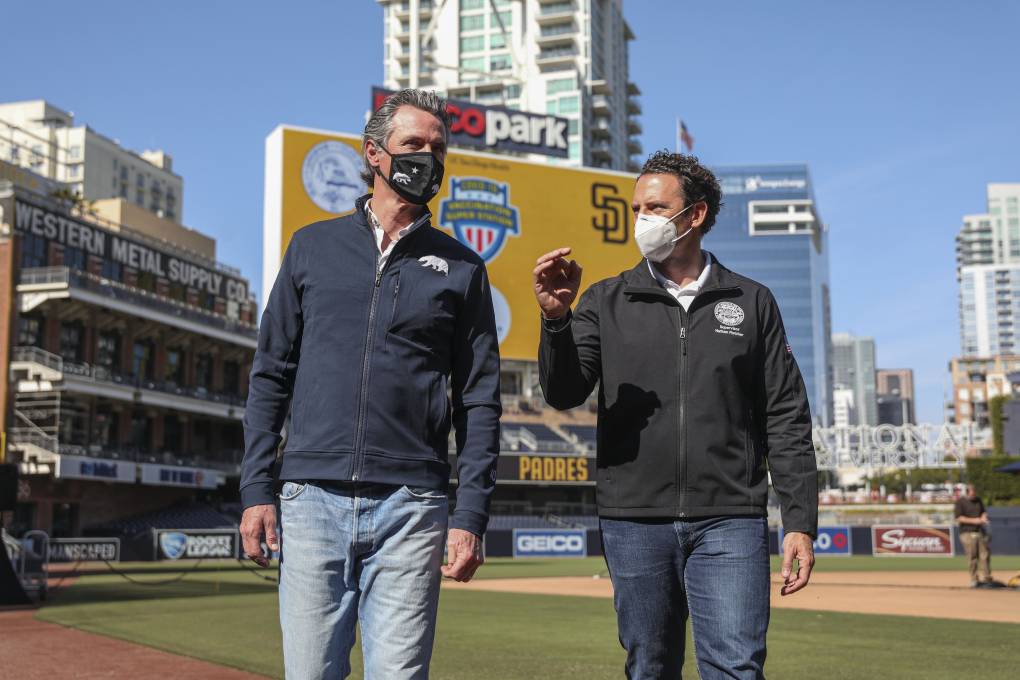
"caption": "Gov. Gavin Newsom speaks with San Diego County Supervisor Nathan Fletcher after a press conference at Petco Park on Feb. 8, 2021 in San Diego. The Petco Park Vaccination Supersite, in a parking lot next to the ballpark, has the capacity to dole out about 5,000 COVID-19 vaccines per day.",
"description": null,
"title": "Newsom Visits San Diego Vaccine Supersite",
"credit": "Sandy Huffaker/Pool via The San Diego Union-Tribune",
"status": "inherit",
"altTag": null,
"isLoading": false,
"fetchFailed": false
},
"news_11859034": {
"type": "attachments",
"id": "news_11859034",
"meta": {
"index": "attachments_1716263798",
"site": "news",
"id": "11859034",
"found": true
},
"parent": 11858951,
"imgSizes": {
"apple_news_ca_landscape_5_5": {
"file": "https://ww2.kqed.org/app/uploads/sites/10/2021/02/816_MARQUEE-1-1044x720.jpg",
"width": 1044,
"mimeType": "image/jpeg",
"height": 720
},
"apple_news_ca_square_4_0": {
"file": "https://ww2.kqed.org/app/uploads/sites/10/2021/02/816_MARQUEE-1-470x470.jpg",
"width": 470,
"mimeType": "image/jpeg",
"height": 470
},
"twentyfourteen-full-width": {
"file": "https://ww2.kqed.org/app/uploads/sites/10/2021/02/816_MARQUEE-1-1038x576.jpg",
"width": 1038,
"mimeType": "image/jpeg",
"height": 576
},
"thumbnail": {
"file": "https://ww2.kqed.org/app/uploads/sites/10/2021/02/816_MARQUEE-1-160x90.jpg",
"width": 160,
"mimeType": "image/jpeg",
"height": 90
},
"post-thumbnail": {
"file": "https://ww2.kqed.org/app/uploads/sites/10/2021/02/816_MARQUEE-1-672x372.jpg",
"width": 672,
"mimeType": "image/jpeg",
"height": 372
},
"kqedFullSize": {
"file": "https://ww2.kqed.org/app/uploads/sites/10/2021/02/816_MARQUEE-1.jpg",
"width": 1280,
"height": 720
},
"apple_news_ca_landscape_4_7": {
"file": "https://ww2.kqed.org/app/uploads/sites/10/2021/02/816_MARQUEE-1-632x474.jpg",
"width": 632,
"mimeType": "image/jpeg",
"height": 474
},
"large": {
"file": "https://ww2.kqed.org/app/uploads/sites/10/2021/02/816_MARQUEE-1-1020x574.jpg",
"width": 1020,
"mimeType": "image/jpeg",
"height": 574
},
"apple_news_ca_landscape_4_0": {
"file": "https://ww2.kqed.org/app/uploads/sites/10/2021/02/816_MARQUEE-1-536x402.jpg",
"width": 536,
"mimeType": "image/jpeg",
"height": 402
},
"apple_news_ca_portrait_12_9": {
"file": "https://ww2.kqed.org/app/uploads/sites/10/2021/02/816_MARQUEE-1-1122x720.jpg",
"width": 1122,
"mimeType": "image/jpeg",
"height": 720
},
"medium": {
"file": "https://ww2.kqed.org/app/uploads/sites/10/2021/02/816_MARQUEE-1-800x450.jpg",
"width": 800,
"mimeType": "image/jpeg",
"height": 450
},
"apple_news_ca_portrait_4_0": {
"file": "https://ww2.kqed.org/app/uploads/sites/10/2021/02/816_MARQUEE-1-354x472.jpg",
"width": 354,
"mimeType": "image/jpeg",
"height": 472
},
"apple_news_ca_portrait_9_7": {
"file": "https://ww2.kqed.org/app/uploads/sites/10/2021/02/816_MARQUEE-1-840x720.jpg",
"width": 840,
"mimeType": "image/jpeg",
"height": 720
},
"apple_news_ca_square_9_7": {
"file": "https://ww2.kqed.org/app/uploads/sites/10/2021/02/816_MARQUEE-1-1104x720.jpg",
"width": 1104,
"mimeType": "image/jpeg",
"height": 720
},
"apple_news_ca_portrait_4_7": {
"file": "https://ww2.kqed.org/app/uploads/sites/10/2021/02/816_MARQUEE-1-414x552.jpg",
"width": 414,
"mimeType": "image/jpeg",
"height": 552
},
"apple_news_ca_portrait_5_5": {
"file": "https://ww2.kqed.org/app/uploads/sites/10/2021/02/816_MARQUEE-1-687x720.jpg",
"width": 687,
"mimeType": "image/jpeg",
"height": 720
},
"apple_news_ca_square_4_7": {
"file": "https://ww2.kqed.org/app/uploads/sites/10/2021/02/816_MARQUEE-1-550x550.jpg",
"width": 550,
"mimeType": "image/jpeg",
"height": 550
},
"apple_news_ca_square_5_5": {
"file": "https://ww2.kqed.org/app/uploads/sites/10/2021/02/816_MARQUEE-1-912x720.jpg",
"width": 912,
"mimeType": "image/jpeg",
"height": 720
}
},
"publishDate": 1612571437,
"modified": 1612571437,
"caption": null,
"description": null,
"title": "816_MARQUEE 1",
"credit": null,
"status": "inherit",
"altTag": null,
"isLoading": false,
"fetchFailed": false
},
"news_11858512": {
"type": "attachments",
"id": "news_11858512",
"meta": {
"index": "attachments_1716263798",
"site": "news",
"id": "11858512",
"found": true
},
"parent": 11858456,
"imgSizes": {
"apple_news_ca_landscape_5_5": {
"file": "https://ww2.kqed.org/app/uploads/sites/10/2021/02/Kevin_Faulconer_by_Gage_Skidmore-1044x783.jpg",
"width": 1044,
"mimeType": "image/jpeg",
"height": 783
},
"apple_news_ca_square_4_0": {
"file": "https://ww2.kqed.org/app/uploads/sites/10/2021/02/Kevin_Faulconer_by_Gage_Skidmore-470x470.jpg",
"width": 470,
"mimeType": "image/jpeg",
"height": 470
},
"twentyfourteen-full-width": {
"file": "https://ww2.kqed.org/app/uploads/sites/10/2021/02/Kevin_Faulconer_by_Gage_Skidmore-1038x576.jpg",
"width": 1038,
"mimeType": "image/jpeg",
"height": 576
},
"thumbnail": {
"file": "https://ww2.kqed.org/app/uploads/sites/10/2021/02/Kevin_Faulconer_by_Gage_Skidmore-160x107.jpg",
"width": 160,
"mimeType": "image/jpeg",
"height": 107
},
"post-thumbnail": {
"file": "https://ww2.kqed.org/app/uploads/sites/10/2021/02/Kevin_Faulconer_by_Gage_Skidmore-672x372.jpg",
"width": 672,
"mimeType": "image/jpeg",
"height": 372
},
"kqedFullSize": {
"file": "https://ww2.kqed.org/app/uploads/sites/10/2021/02/Kevin_Faulconer_by_Gage_Skidmore-scaled-e1612388823366.jpg",
"width": 1920,
"height": 1280
},
"2048x2048": {
"file": "https://ww2.kqed.org/app/uploads/sites/10/2021/02/Kevin_Faulconer_by_Gage_Skidmore-2048x1365.jpg",
"width": 2048,
"mimeType": "image/jpeg",
"height": 1365
},
"apple_news_ca_landscape_4_7": {
"file": "https://ww2.kqed.org/app/uploads/sites/10/2021/02/Kevin_Faulconer_by_Gage_Skidmore-632x474.jpg",
"width": 632,
"mimeType": "image/jpeg",
"height": 474
},
"large": {
"file": "https://ww2.kqed.org/app/uploads/sites/10/2021/02/Kevin_Faulconer_by_Gage_Skidmore-1020x680.jpg",
"width": 1020,
"mimeType": "image/jpeg",
"height": 680
},
"apple_news_ca_landscape_4_0": {
"file": "https://ww2.kqed.org/app/uploads/sites/10/2021/02/Kevin_Faulconer_by_Gage_Skidmore-536x402.jpg",
"width": 536,
"mimeType": "image/jpeg",
"height": 402
},
"apple_news_ca_portrait_12_9": {
"file": "https://ww2.kqed.org/app/uploads/sites/10/2021/02/Kevin_Faulconer_by_Gage_Skidmore-1122x1496.jpg",
"width": 1122,
"mimeType": "image/jpeg",
"height": 1496
},
"medium": {
"file": "https://ww2.kqed.org/app/uploads/sites/10/2021/02/Kevin_Faulconer_by_Gage_Skidmore-800x533.jpg",
"width": 800,
"mimeType": "image/jpeg",
"height": 533
},
"apple_news_ca_portrait_4_0": {
"file": "https://ww2.kqed.org/app/uploads/sites/10/2021/02/Kevin_Faulconer_by_Gage_Skidmore-354x472.jpg",
"width": 354,
"mimeType": "image/jpeg",
"height": 472
},
"apple_news_ca_portrait_9_7": {
"file": "https://ww2.kqed.org/app/uploads/sites/10/2021/02/Kevin_Faulconer_by_Gage_Skidmore-840x1120.jpg",
"width": 840,
"mimeType": "image/jpeg",
"height": 1120
},
"apple_news_ca_landscape_12_9": {
"file": "https://ww2.kqed.org/app/uploads/sites/10/2021/02/Kevin_Faulconer_by_Gage_Skidmore-1832x1374.jpg",
"width": 1832,
"mimeType": "image/jpeg",
"height": 1374
},
"apple_news_ca_square_9_7": {
"file": "https://ww2.kqed.org/app/uploads/sites/10/2021/02/Kevin_Faulconer_by_Gage_Skidmore-1104x1104.jpg",
"width": 1104,
"mimeType": "image/jpeg",
"height": 1104
},
"1536x1536": {
"file": "https://ww2.kqed.org/app/uploads/sites/10/2021/02/Kevin_Faulconer_by_Gage_Skidmore-1536x1024.jpg",
"width": 1536,
"mimeType": "image/jpeg",
"height": 1024
},
"apple_news_ca_portrait_4_7": {
"file": "https://ww2.kqed.org/app/uploads/sites/10/2021/02/Kevin_Faulconer_by_Gage_Skidmore-414x552.jpg",
"width": 414,
"mimeType": "image/jpeg",
"height": 552
},
"apple_news_ca_square_12_9": {
"file": "https://ww2.kqed.org/app/uploads/sites/10/2021/02/Kevin_Faulconer_by_Gage_Skidmore-1472x1472.jpg",
"width": 1472,
"mimeType": "image/jpeg",
"height": 1472
},
"apple_news_ca_portrait_5_5": {
"file": "https://ww2.kqed.org/app/uploads/sites/10/2021/02/Kevin_Faulconer_by_Gage_Skidmore-687x916.jpg",
"width": 687,
"mimeType": "image/jpeg",
"height": 916
},
"full-width": {
"file": "https://ww2.kqed.org/app/uploads/sites/10/2021/02/Kevin_Faulconer_by_Gage_Skidmore-1920x1280.jpg",
"width": 1920,
"mimeType": "image/jpeg",
"height": 1280
},
"apple_news_ca_square_4_7": {
"file": "https://ww2.kqed.org/app/uploads/sites/10/2021/02/Kevin_Faulconer_by_Gage_Skidmore-550x550.jpg",
"width": 550,
"mimeType": "image/jpeg",
"height": 550
},
"apple_news_ca_landscape_9_7": {
"file": "https://ww2.kqed.org/app/uploads/sites/10/2021/02/Kevin_Faulconer_by_Gage_Skidmore-1376x1032.jpg",
"width": 1376,
"mimeType": "image/jpeg",
"height": 1032
},
"apple_news_ca_square_5_5": {
"file": "https://ww2.kqed.org/app/uploads/sites/10/2021/02/Kevin_Faulconer_by_Gage_Skidmore-912x912.jpg",
"width": 912,
"mimeType": "image/jpeg",
"height": 912
}
},
"publishDate": 1612388716,
"modified": 1612396725,
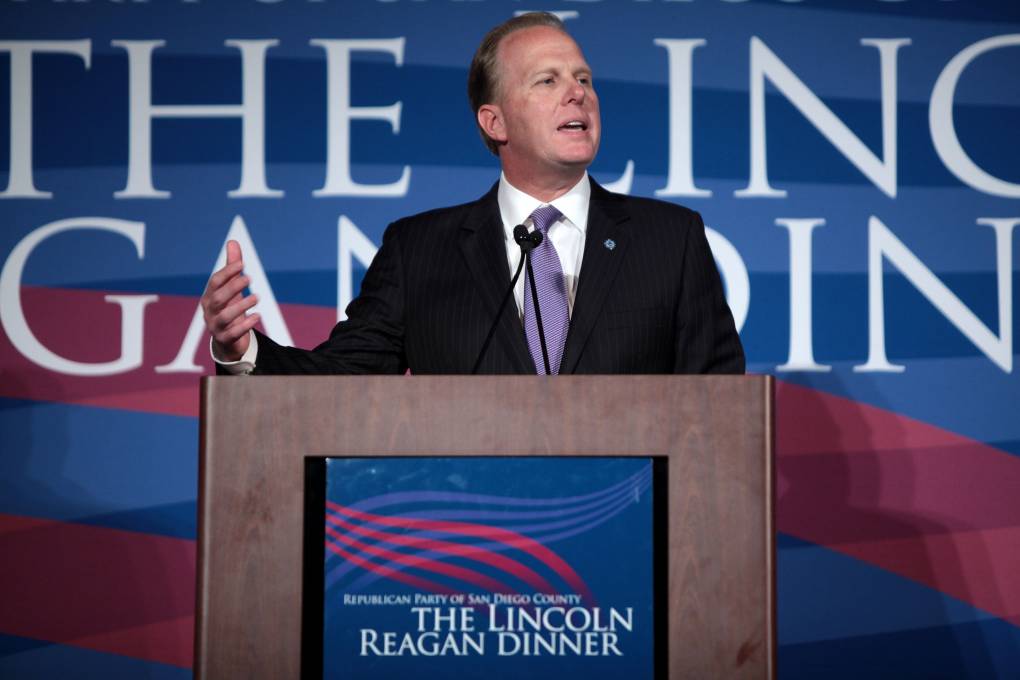
"caption": "Then-Mayor Kevin Faulconer speaking at the 2015 Lincoln-Reagan Dinner in San Diego.\n",
"description": "Then-Mayor Kevin Faulconer speaking at the 2015 Lincoln-Reagan Dinner in San Diego.\n",
"title": "Kevin_Faulconer_by_Gage_Skidmore",
"credit": "Gage Skidmore/Wikimedia Commons ",
"status": "inherit",
"altTag": null,
"isLoading": false,
"fetchFailed": false
},
"news_11795349": {
"type": "attachments",
"id": "news_11795349",
"meta": {
"index": "attachments_1716263798",
"site": "news",
"id": "11795349",
"found": true
},
"parent": 11795344,
"imgSizes": {
"apple_news_ca_landscape_5_5": {
"file": "https://ww2.kqed.org/app/uploads/sites/10/2020/01/RS34628_GettyImages-1058495872-qut-1044x783.jpg",
"width": 1044,
"mimeType": "image/jpeg",
"height": 783
},
"apple_news_ca_square_4_0": {
"file": "https://ww2.kqed.org/app/uploads/sites/10/2020/01/RS34628_GettyImages-1058495872-qut-470x470.jpg",
"width": 470,
"mimeType": "image/jpeg",
"height": 470
},
"twentyfourteen-full-width": {
"file": "https://ww2.kqed.org/app/uploads/sites/10/2020/01/RS34628_GettyImages-1058495872-qut-1038x576.jpg",
"width": 1038,
"mimeType": "image/jpeg",
"height": 576
},
"thumbnail": {
"file": "https://ww2.kqed.org/app/uploads/sites/10/2020/01/RS34628_GettyImages-1058495872-qut-160x96.jpg",
"width": 160,
"mimeType": "image/jpeg",
"height": 96
},
"post-thumbnail": {
"file": "https://ww2.kqed.org/app/uploads/sites/10/2020/01/RS34628_GettyImages-1058495872-qut-672x372.jpg",
"width": 672,
"mimeType": "image/jpeg",
"height": 372
},
"kqedFullSize": {
"file": "https://ww2.kqed.org/app/uploads/sites/10/2020/01/RS34628_GettyImages-1058495872-qut.jpg",
"width": 1920,
"height": 1151
},
"apple_news_ca_landscape_4_7": {
"file": "https://ww2.kqed.org/app/uploads/sites/10/2020/01/RS34628_GettyImages-1058495872-qut-632x474.jpg",
"width": 632,
"mimeType": "image/jpeg",
"height": 474
},
"large": {
"file": "https://ww2.kqed.org/app/uploads/sites/10/2020/01/RS34628_GettyImages-1058495872-qut-1020x611.jpg",
"width": 1020,
"mimeType": "image/jpeg",
"height": 611
},
"complete_open_graph": {
"file": "https://ww2.kqed.org/app/uploads/sites/10/2020/01/RS34628_GettyImages-1058495872-qut-1200x719.jpg",
"width": 1200,
"mimeType": "image/jpeg",
"height": 719
},
"apple_news_ca_landscape_4_0": {
"file": "https://ww2.kqed.org/app/uploads/sites/10/2020/01/RS34628_GettyImages-1058495872-qut-536x402.jpg",
"width": 536,
"mimeType": "image/jpeg",
"height": 402
},
"apple_news_ca_portrait_12_9": {
"file": "https://ww2.kqed.org/app/uploads/sites/10/2020/01/RS34628_GettyImages-1058495872-qut-1122x1151.jpg",
"width": 1122,
"mimeType": "image/jpeg",
"height": 1151
},
"medium": {
"file": "https://ww2.kqed.org/app/uploads/sites/10/2020/01/RS34628_GettyImages-1058495872-qut-800x480.jpg",
"width": 800,
"mimeType": "image/jpeg",
"height": 480
},
"apple_news_ca_portrait_4_0": {
"file": "https://ww2.kqed.org/app/uploads/sites/10/2020/01/RS34628_GettyImages-1058495872-qut-354x472.jpg",
"width": 354,
"mimeType": "image/jpeg",
"height": 472
},
"apple_news_ca_portrait_9_7": {
"file": "https://ww2.kqed.org/app/uploads/sites/10/2020/01/RS34628_GettyImages-1058495872-qut-840x1120.jpg",
"width": 840,
"mimeType": "image/jpeg",
"height": 1120
},
"apple_news_ca_landscape_12_9": {
"file": "https://ww2.kqed.org/app/uploads/sites/10/2020/01/RS34628_GettyImages-1058495872-qut-1832x1151.jpg",
"width": 1832,
"mimeType": "image/jpeg",
"height": 1151
},
"apple_news_ca_square_9_7": {
"file": "https://ww2.kqed.org/app/uploads/sites/10/2020/01/RS34628_GettyImages-1058495872-qut-1104x1104.jpg",
"width": 1104,
"mimeType": "image/jpeg",
"height": 1104
},
"apple_news_ca_portrait_4_7": {
"file": "https://ww2.kqed.org/app/uploads/sites/10/2020/01/RS34628_GettyImages-1058495872-qut-414x552.jpg",
"width": 414,
"mimeType": "image/jpeg",
"height": 552
},
"apple_news_ca_square_12_9": {
"file": "https://ww2.kqed.org/app/uploads/sites/10/2020/01/RS34628_GettyImages-1058495872-qut-1472x1151.jpg",
"width": 1472,
"mimeType": "image/jpeg",
"height": 1151
},
"apple_news_ca_portrait_5_5": {
"file": "https://ww2.kqed.org/app/uploads/sites/10/2020/01/RS34628_GettyImages-1058495872-qut-687x916.jpg",
"width": 687,
"mimeType": "image/jpeg",
"height": 916
},
"full-width": {
"file": "https://ww2.kqed.org/app/uploads/sites/10/2020/01/RS34628_GettyImages-1058495872-qut-1920x1151.jpg",
"width": 1920,
"mimeType": "image/jpeg",
"height": 1151
},
"apple_news_ca_square_4_7": {
"file": "https://ww2.kqed.org/app/uploads/sites/10/2020/01/RS34628_GettyImages-1058495872-qut-550x550.jpg",
"width": 550,
"mimeType": "image/jpeg",
"height": 550
},
"apple_news_ca_landscape_9_7": {
"file": "https://ww2.kqed.org/app/uploads/sites/10/2020/01/RS34628_GettyImages-1058495872-qut-1376x1032.jpg",
"width": 1376,
"mimeType": "image/jpeg",
"height": 1032
},
"apple_news_ca_square_5_5": {
"file": "https://ww2.kqed.org/app/uploads/sites/10/2020/01/RS34628_GettyImages-1058495872-qut-912x912.jpg",
"width": 912,
"mimeType": "image/jpeg",
"height": 912
}
},
"publishDate": 1578677756,
"modified": 1612316104,
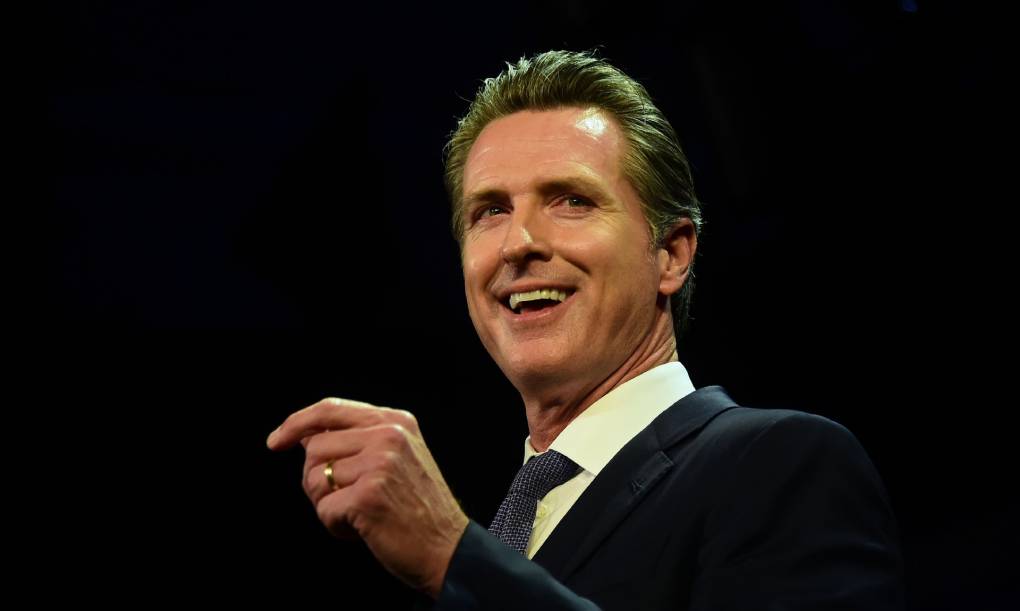
"caption": "Governor Gavin Newsom.",
"description": null,
"title": "US-POLITICS-VOTE-ELECTIONS",
"credit": "Frederic J. Brown/AFP/Getty Images",
"status": "inherit",
"altTag": null,
"isLoading": false,
"fetchFailed": false
},
"news_11858126": {
"type": "attachments",
"id": "news_11858126",
"meta": {
"index": "attachments_1716263798",
"site": "news",
"id": "11858126",
"found": true
},
"parent": 11858051,
"imgSizes": {
"apple_news_ca_square_4_0": {
"file": "https://ww2.kqed.org/app/uploads/sites/10/2021/02/GettyImages-1230605566-470x470.jpg",
"width": 470,
"mimeType": "image/jpeg",
"height": 470
},
"twentyfourteen-full-width": {
"file": "https://ww2.kqed.org/app/uploads/sites/10/2021/02/GettyImages-1230605566-1024x576.jpg",
"width": 1024,
"mimeType": "image/jpeg",
"height": 576
},
"thumbnail": {
"file": "https://ww2.kqed.org/app/uploads/sites/10/2021/02/GettyImages-1230605566-160x107.jpg",
"width": 160,
"mimeType": "image/jpeg",
"height": 107
},
"post-thumbnail": {
"file": "https://ww2.kqed.org/app/uploads/sites/10/2021/02/GettyImages-1230605566-672x372.jpg",
"width": 672,
"mimeType": "image/jpeg",
"height": 372
},
"kqedFullSize": {
"file": "https://ww2.kqed.org/app/uploads/sites/10/2021/02/GettyImages-1230605566.jpg",
"width": 1024,
"height": 683
},
"apple_news_ca_landscape_4_7": {
"file": "https://ww2.kqed.org/app/uploads/sites/10/2021/02/GettyImages-1230605566-632x474.jpg",
"width": 632,
"mimeType": "image/jpeg",
"height": 474
},
"large": {
"file": "https://ww2.kqed.org/app/uploads/sites/10/2021/02/GettyImages-1230605566-1020x680.jpg",
"width": 1020,
"mimeType": "image/jpeg",
"height": 680
},
"apple_news_ca_landscape_4_0": {
"file": "https://ww2.kqed.org/app/uploads/sites/10/2021/02/GettyImages-1230605566-536x402.jpg",
"width": 536,
"mimeType": "image/jpeg",
"height": 402
},
"medium": {
"file": "https://ww2.kqed.org/app/uploads/sites/10/2021/02/GettyImages-1230605566-800x534.jpg",
"width": 800,
"mimeType": "image/jpeg",
"height": 534
},
"apple_news_ca_portrait_4_0": {
"file": "https://ww2.kqed.org/app/uploads/sites/10/2021/02/GettyImages-1230605566-354x472.jpg",
"width": 354,
"mimeType": "image/jpeg",
"height": 472
},
"apple_news_ca_portrait_9_7": {
"file": "https://ww2.kqed.org/app/uploads/sites/10/2021/02/GettyImages-1230605566-840x683.jpg",
"width": 840,
"mimeType": "image/jpeg",
"height": 683
},
"apple_news_ca_portrait_4_7": {
"file": "https://ww2.kqed.org/app/uploads/sites/10/2021/02/GettyImages-1230605566-414x552.jpg",
"width": 414,
"mimeType": "image/jpeg",
"height": 552
},
"apple_news_ca_portrait_5_5": {
"file": "https://ww2.kqed.org/app/uploads/sites/10/2021/02/GettyImages-1230605566-687x683.jpg",
"width": 687,
"mimeType": "image/jpeg",
"height": 683
},
"apple_news_ca_square_4_7": {
"file": "https://ww2.kqed.org/app/uploads/sites/10/2021/02/GettyImages-1230605566-550x550.jpg",
"width": 550,
"mimeType": "image/jpeg",
"height": 550
},
"apple_news_ca_square_5_5": {
"file": "https://ww2.kqed.org/app/uploads/sites/10/2021/02/GettyImages-1230605566-912x683.jpg",
"width": 912,
"mimeType": "image/jpeg",
"height": 683
}
},
"publishDate": 1612230813,
"modified": 1612293782,
"caption": "Gov. Gavin Newsom holds a press conference at the launch of a mass COVID-19 vaccination site at Dodger Stadium in Los Angeles on Jan. 15, 2021.",
"description": "Gov. Gavin Newsom holds a press conference at the launch of a mass COVID-19 vaccination site at Dodger Stadium in Los Angeles on Jan. 15, 2021.",
"title": "US-HEALTH-VIRUS-VACCINES",
"credit": "Irfan Khan/Pool/AFP via Getty Images",
"status": "inherit",
"altTag": null,
"isLoading": false,
"fetchFailed": false
},
"news_11857749": {
"type": "attachments",
"id": "news_11857749",
"meta": {
"index": "attachments_1716263798",
"site": "news",
"id": "11857749",
"found": true
},
"parent": 11857714,
"imgSizes": {
"apple_news_ca_landscape_5_5": {
"file": "https://ww2.kqed.org/app/uploads/sites/10/2021/01/RS43269_003_KQED_Edd_03162020-qut-1044x783.jpg",
"width": 1044,
"mimeType": "image/jpeg",
"height": 783
},
"apple_news_ca_square_4_0": {
"file": "https://ww2.kqed.org/app/uploads/sites/10/2021/01/RS43269_003_KQED_Edd_03162020-qut-470x470.jpg",
"width": 470,
"mimeType": "image/jpeg",
"height": 470
},
"twentyfourteen-full-width": {
"file": "https://ww2.kqed.org/app/uploads/sites/10/2021/01/RS43269_003_KQED_Edd_03162020-qut-1038x576.jpg",
"width": 1038,
"mimeType": "image/jpeg",
"height": 576
},
"thumbnail": {
"file": "https://ww2.kqed.org/app/uploads/sites/10/2021/01/RS43269_003_KQED_Edd_03162020-qut-160x107.jpg",
"width": 160,
"mimeType": "image/jpeg",
"height": 107
},
"post-thumbnail": {
"file": "https://ww2.kqed.org/app/uploads/sites/10/2021/01/RS43269_003_KQED_Edd_03162020-qut-672x372.jpg",
"width": 672,
"mimeType": "image/jpeg",
"height": 372
},
"kqedFullSize": {
"file": "https://ww2.kqed.org/app/uploads/sites/10/2021/01/RS43269_003_KQED_Edd_03162020-qut.jpg",
"width": 1920,
"height": 1280
},
"apple_news_ca_landscape_4_7": {
"file": "https://ww2.kqed.org/app/uploads/sites/10/2021/01/RS43269_003_KQED_Edd_03162020-qut-632x474.jpg",
"width": 632,
"mimeType": "image/jpeg",
"height": 474
},
"large": {
"file": "https://ww2.kqed.org/app/uploads/sites/10/2021/01/RS43269_003_KQED_Edd_03162020-qut-1020x680.jpg",
"width": 1020,
"mimeType": "image/jpeg",
"height": 680
},
"apple_news_ca_landscape_4_0": {
"file": "https://ww2.kqed.org/app/uploads/sites/10/2021/01/RS43269_003_KQED_Edd_03162020-qut-536x402.jpg",
"width": 536,
"mimeType": "image/jpeg",
"height": 402
},
"apple_news_ca_portrait_12_9": {
"file": "https://ww2.kqed.org/app/uploads/sites/10/2021/01/RS43269_003_KQED_Edd_03162020-qut-1122x1280.jpg",
"width": 1122,
"mimeType": "image/jpeg",
"height": 1280
},
"medium": {
"file": "https://ww2.kqed.org/app/uploads/sites/10/2021/01/RS43269_003_KQED_Edd_03162020-qut-800x533.jpg",
"width": 800,
"mimeType": "image/jpeg",
"height": 533
},
"apple_news_ca_portrait_4_0": {
"file": "https://ww2.kqed.org/app/uploads/sites/10/2021/01/RS43269_003_KQED_Edd_03162020-qut-354x472.jpg",
"width": 354,
"mimeType": "image/jpeg",
"height": 472
},
"apple_news_ca_portrait_9_7": {
"file": "https://ww2.kqed.org/app/uploads/sites/10/2021/01/RS43269_003_KQED_Edd_03162020-qut-840x1120.jpg",
"width": 840,
"mimeType": "image/jpeg",
"height": 1120
},
"apple_news_ca_landscape_12_9": {
"file": "https://ww2.kqed.org/app/uploads/sites/10/2021/01/RS43269_003_KQED_Edd_03162020-qut-1832x1280.jpg",
"width": 1832,
"mimeType": "image/jpeg",
"height": 1280
},
"apple_news_ca_square_9_7": {
"file": "https://ww2.kqed.org/app/uploads/sites/10/2021/01/RS43269_003_KQED_Edd_03162020-qut-1104x1104.jpg",
"width": 1104,
"mimeType": "image/jpeg",
"height": 1104
},
"1536x1536": {
"file": "https://ww2.kqed.org/app/uploads/sites/10/2021/01/RS43269_003_KQED_Edd_03162020-qut-1536x1024.jpg",
"width": 1536,
"mimeType": "image/jpeg",
"height": 1024
},
"apple_news_ca_portrait_4_7": {
"file": "https://ww2.kqed.org/app/uploads/sites/10/2021/01/RS43269_003_KQED_Edd_03162020-qut-414x552.jpg",
"width": 414,
"mimeType": "image/jpeg",
"height": 552
},
"apple_news_ca_square_12_9": {
"file": "https://ww2.kqed.org/app/uploads/sites/10/2021/01/RS43269_003_KQED_Edd_03162020-qut-1472x1280.jpg",
"width": 1472,
"mimeType": "image/jpeg",
"height": 1280
},
"apple_news_ca_portrait_5_5": {
"file": "https://ww2.kqed.org/app/uploads/sites/10/2021/01/RS43269_003_KQED_Edd_03162020-qut-687x916.jpg",
"width": 687,
"mimeType": "image/jpeg",
"height": 916
},
"apple_news_ca_square_4_7": {
"file": "https://ww2.kqed.org/app/uploads/sites/10/2021/01/RS43269_003_KQED_Edd_03162020-qut-550x550.jpg",
"width": 550,
"mimeType": "image/jpeg",
"height": 550
},
"apple_news_ca_landscape_9_7": {
"file": "https://ww2.kqed.org/app/uploads/sites/10/2021/01/RS43269_003_KQED_Edd_03162020-qut-1376x1032.jpg",
"width": 1376,
"mimeType": "image/jpeg",
"height": 1032
},
"apple_news_ca_square_5_5": {
"file": "https://ww2.kqed.org/app/uploads/sites/10/2021/01/RS43269_003_KQED_Edd_03162020-qut-912x912.jpg",
"width": 912,
"mimeType": "image/jpeg",
"height": 912
}
},
"publishDate": 1611958824,
"modified": 1613398890,
"caption": null,
"description": "A woman looks at the Employment Development Department (EDD) website, where California residents can file for unemployment on Mar. 16, 2020.",
"title": "RS43269_003_KQED_Edd_03162020-qut",
"credit": "Beth LaBerge/KQED",
"status": "inherit",
"altTag": "A woman looks at the Employment Development Department (EDD) website, where California residents can file for unemployment on Mar. 16, 2020.",
"isLoading": false,
"fetchFailed": false
},
"news_11857834": {
"type": "attachments",
"id": "news_11857834",
"meta": {
"index": "attachments_1716263798",
"site": "news",
"id": "11857834",
"found": true
},
"parent": 11857670,
"imgSizes": {
"apple_news_ca_landscape_5_5": {
"file": "https://ww2.kqed.org/app/uploads/sites/10/2021/01/MARQUEE_815-1044x783.jpg",
"width": 1044,
"mimeType": "image/jpeg",
"height": 783
},
"apple_news_ca_square_4_0": {
"file": "https://ww2.kqed.org/app/uploads/sites/10/2021/01/MARQUEE_815-470x470.jpg",
"width": 470,
"mimeType": "image/jpeg",
"height": 470
},
"twentyfourteen-full-width": {
"file": "https://ww2.kqed.org/app/uploads/sites/10/2021/01/MARQUEE_815-1038x576.jpg",
"width": 1038,
"mimeType": "image/jpeg",
"height": 576
},
"thumbnail": {
"file": "https://ww2.kqed.org/app/uploads/sites/10/2021/01/MARQUEE_815-160x90.jpg",
"width": 160,
"mimeType": "image/jpeg",
"height": 90
},
"post-thumbnail": {
"file": "https://ww2.kqed.org/app/uploads/sites/10/2021/01/MARQUEE_815-672x372.jpg",
"width": 672,
"mimeType": "image/jpeg",
"height": 372
},
"kqedFullSize": {
"file": "https://ww2.kqed.org/app/uploads/sites/10/2021/01/MARQUEE_815.jpg",
"width": 1920,
"height": 1080
},
"apple_news_ca_landscape_4_7": {
"file": "https://ww2.kqed.org/app/uploads/sites/10/2021/01/MARQUEE_815-632x474.jpg",
"width": 632,
"mimeType": "image/jpeg",
"height": 474
},
"large": {
"file": "https://ww2.kqed.org/app/uploads/sites/10/2021/01/MARQUEE_815-1020x574.jpg",
"width": 1020,
"mimeType": "image/jpeg",
"height": 574
},
"apple_news_ca_landscape_4_0": {
"file": "https://ww2.kqed.org/app/uploads/sites/10/2021/01/MARQUEE_815-536x402.jpg",
"width": 536,
"mimeType": "image/jpeg",
"height": 402
},
"apple_news_ca_portrait_12_9": {
"file": "https://ww2.kqed.org/app/uploads/sites/10/2021/01/MARQUEE_815-1122x1080.jpg",
"width": 1122,
"mimeType": "image/jpeg",
"height": 1080
},
"medium": {
"file": "https://ww2.kqed.org/app/uploads/sites/10/2021/01/MARQUEE_815-800x450.jpg",
"width": 800,
"mimeType": "image/jpeg",
"height": 450
},
"apple_news_ca_portrait_4_0": {
"file": "https://ww2.kqed.org/app/uploads/sites/10/2021/01/MARQUEE_815-354x472.jpg",
"width": 354,
"mimeType": "image/jpeg",
"height": 472
},
"apple_news_ca_portrait_9_7": {
"file": "https://ww2.kqed.org/app/uploads/sites/10/2021/01/MARQUEE_815-840x1080.jpg",
"width": 840,
"mimeType": "image/jpeg",
"height": 1080
},
"apple_news_ca_landscape_12_9": {
"file": "https://ww2.kqed.org/app/uploads/sites/10/2021/01/MARQUEE_815-1832x1080.jpg",
"width": 1832,
"mimeType": "image/jpeg",
"height": 1080
},
"apple_news_ca_square_9_7": {
"file": "https://ww2.kqed.org/app/uploads/sites/10/2021/01/MARQUEE_815-1104x1080.jpg",
"width": 1104,
"mimeType": "image/jpeg",
"height": 1080
},
"1536x1536": {
"file": "https://ww2.kqed.org/app/uploads/sites/10/2021/01/MARQUEE_815-1536x864.jpg",
"width": 1536,
"mimeType": "image/jpeg",
"height": 864
},
"apple_news_ca_portrait_4_7": {
"file": "https://ww2.kqed.org/app/uploads/sites/10/2021/01/MARQUEE_815-414x552.jpg",
"width": 414,
"mimeType": "image/jpeg",
"height": 552
},
"apple_news_ca_square_12_9": {
"file": "https://ww2.kqed.org/app/uploads/sites/10/2021/01/MARQUEE_815-1472x1080.jpg",
"width": 1472,
"mimeType": "image/jpeg",
"height": 1080
},
"apple_news_ca_portrait_5_5": {
"file": "https://ww2.kqed.org/app/uploads/sites/10/2021/01/MARQUEE_815-687x916.jpg",
"width": 687,
"mimeType": "image/jpeg",
"height": 916
},
"apple_news_ca_square_4_7": {
"file": "https://ww2.kqed.org/app/uploads/sites/10/2021/01/MARQUEE_815-550x550.jpg",
"width": 550,
"mimeType": "image/jpeg",
"height": 550
},
"apple_news_ca_landscape_9_7": {
"file": "https://ww2.kqed.org/app/uploads/sites/10/2021/01/MARQUEE_815-1376x1032.jpg",
"width": 1376,
"mimeType": "image/jpeg",
"height": 1032
},
"apple_news_ca_square_5_5": {
"file": "https://ww2.kqed.org/app/uploads/sites/10/2021/01/MARQUEE_815-912x912.jpg",
"width": 912,
"mimeType": "image/jpeg",
"height": 912
}
},
"publishDate": 1611970476,
"modified": 1611974981,
"caption": "(Photo Courtesy: Tim Scales)",
"description": null,
"title": "MARQUEE_815",
"credit": null,
"status": "inherit",
"altTag": null,
"isLoading": false,
"fetchFailed": false
},
"news_11857696": {
"type": "attachments",
"id": "news_11857696",
"meta": {
"index": "attachments_1716263798",
"site": "news",
"id": "11857696",
"found": true
},
"parent": 11857659,
"imgSizes": {
"apple_news_ca_square_4_0": {
"file": "https://ww2.kqed.org/app/uploads/sites/10/2021/01/GettyImages-1211479742-470x470.jpg",
"width": 470,
"mimeType": "image/jpeg",
"height": 470
},
"twentyfourteen-full-width": {
"file": "https://ww2.kqed.org/app/uploads/sites/10/2021/01/GettyImages-1211479742-1024x576.jpg",
"width": 1024,
"mimeType": "image/jpeg",
"height": 576
},
"thumbnail": {
"file": "https://ww2.kqed.org/app/uploads/sites/10/2021/01/GettyImages-1211479742-160x106.jpg",
"width": 160,
"mimeType": "image/jpeg",
"height": 106
},
"post-thumbnail": {
"file": "https://ww2.kqed.org/app/uploads/sites/10/2021/01/GettyImages-1211479742-672x372.jpg",
"width": 672,
"mimeType": "image/jpeg",
"height": 372
},
"kqedFullSize": {
"file": "https://ww2.kqed.org/app/uploads/sites/10/2021/01/GettyImages-1211479742.jpg",
"width": 1024,
"height": 679
},
"apple_news_ca_landscape_4_7": {
"file": "https://ww2.kqed.org/app/uploads/sites/10/2021/01/GettyImages-1211479742-632x474.jpg",
"width": 632,
"mimeType": "image/jpeg",
"height": 474
},
"large": {
"file": "https://ww2.kqed.org/app/uploads/sites/10/2021/01/GettyImages-1211479742-1020x676.jpg",
"width": 1020,
"mimeType": "image/jpeg",
"height": 676
},
"apple_news_ca_landscape_4_0": {
"file": "https://ww2.kqed.org/app/uploads/sites/10/2021/01/GettyImages-1211479742-536x402.jpg",
"width": 536,
"mimeType": "image/jpeg",
"height": 402
},
"medium": {
"file": "https://ww2.kqed.org/app/uploads/sites/10/2021/01/GettyImages-1211479742-800x530.jpg",
"width": 800,
"mimeType": "image/jpeg",
"height": 530
},
"apple_news_ca_portrait_4_0": {
"file": "https://ww2.kqed.org/app/uploads/sites/10/2021/01/GettyImages-1211479742-354x472.jpg",
"width": 354,
"mimeType": "image/jpeg",
"height": 472
},
"apple_news_ca_portrait_9_7": {
"file": "https://ww2.kqed.org/app/uploads/sites/10/2021/01/GettyImages-1211479742-840x679.jpg",
"width": 840,
"mimeType": "image/jpeg",
"height": 679
},
"apple_news_ca_portrait_4_7": {
"file": "https://ww2.kqed.org/app/uploads/sites/10/2021/01/GettyImages-1211479742-414x552.jpg",
"width": 414,
"mimeType": "image/jpeg",
"height": 552
},
"apple_news_ca_portrait_5_5": {
"file": "https://ww2.kqed.org/app/uploads/sites/10/2021/01/GettyImages-1211479742-687x679.jpg",
"width": 687,
"mimeType": "image/jpeg",
"height": 679
},
"apple_news_ca_square_4_7": {
"file": "https://ww2.kqed.org/app/uploads/sites/10/2021/01/GettyImages-1211479742-550x550.jpg",
"width": 550,
"mimeType": "image/jpeg",
"height": 550
},
"apple_news_ca_square_5_5": {
"file": "https://ww2.kqed.org/app/uploads/sites/10/2021/01/GettyImages-1211479742-912x679.jpg",
"width": 912,
"mimeType": "image/jpeg",
"height": 679
}
},
"publishDate": 1611950877,
"modified": 1611951988,
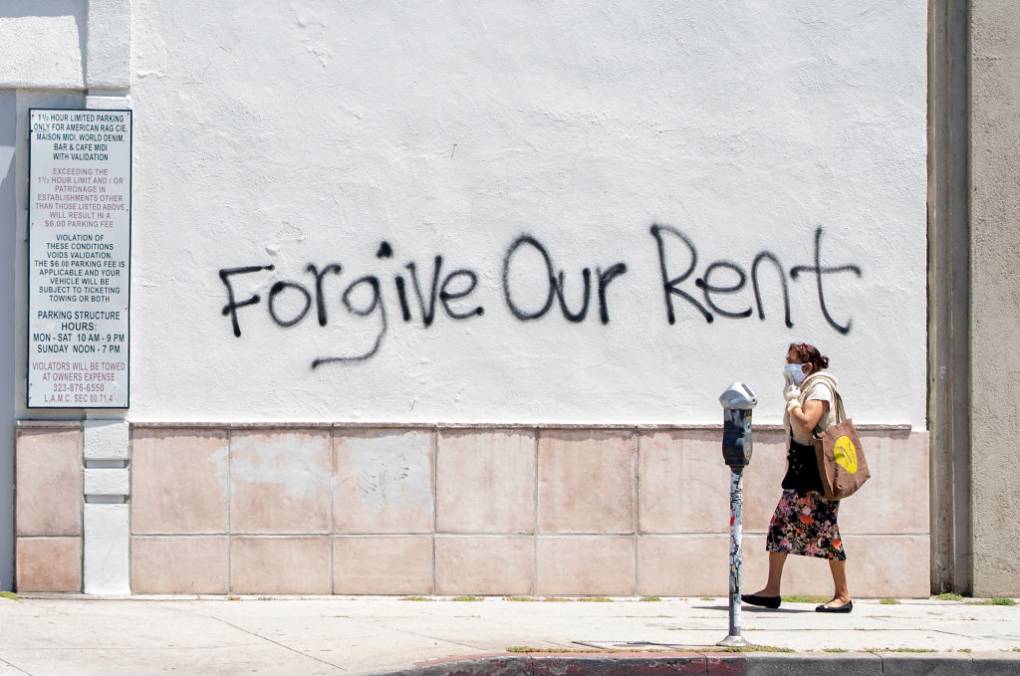
"caption": "A woman wearing a mask walks past a wall in Los Angeles on May 1, 2020 with a graffiti message demanding rent forgiveness.",
"description": null,
"title": "us-health-virus-epidemic-transport-diplomacy-politics-pandemic",
"credit": "Valerie Macon/AFP via Getty Images",
"status": "inherit",
"altTag": null,
"isLoading": false,
"fetchFailed": false
},
"news_11857405": {
"type": "attachments",
"id": "news_11857405",
"meta": {
"index": "attachments_1716263798",
"site": "news",
"id": "11857405",
"found": true
},
"parent": 11857199,
"imgSizes": {
"apple_news_ca_landscape_5_5": {
"file": "https://ww2.kqed.org/app/uploads/sites/10/2021/01/GettyImages-106107335-1-1044x783.jpg",
"width": 1044,
"mimeType": "image/jpeg",
"height": 783
},
"apple_news_ca_square_4_0": {
"file": "https://ww2.kqed.org/app/uploads/sites/10/2021/01/GettyImages-106107335-1-470x470.jpg",
"width": 470,
"mimeType": "image/jpeg",
"height": 470
},
"twentyfourteen-full-width": {
"file": "https://ww2.kqed.org/app/uploads/sites/10/2021/01/GettyImages-106107335-1-1038x576.jpg",
"width": 1038,
"mimeType": "image/jpeg",
"height": 576
},
"thumbnail": {
"file": "https://ww2.kqed.org/app/uploads/sites/10/2021/01/GettyImages-106107335-1-160x93.jpg",
"width": 160,
"mimeType": "image/jpeg",
"height": 93
},
"post-thumbnail": {
"file": "https://ww2.kqed.org/app/uploads/sites/10/2021/01/GettyImages-106107335-1-672x372.jpg",
"width": 672,
"mimeType": "image/jpeg",
"height": 372
},
"kqedFullSize": {
"file": "https://ww2.kqed.org/app/uploads/sites/10/2021/01/GettyImages-106107335-1.jpg",
"width": 1900,
"height": 1108
},
"apple_news_ca_landscape_4_7": {
"file": "https://ww2.kqed.org/app/uploads/sites/10/2021/01/GettyImages-106107335-1-632x474.jpg",
"width": 632,
"mimeType": "image/jpeg",
"height": 474
},
"large": {
"file": "https://ww2.kqed.org/app/uploads/sites/10/2021/01/GettyImages-106107335-1-1020x595.jpg",
"width": 1020,
"mimeType": "image/jpeg",
"height": 595
},
"apple_news_ca_landscape_4_0": {
"file": "https://ww2.kqed.org/app/uploads/sites/10/2021/01/GettyImages-106107335-1-536x402.jpg",
"width": 536,
"mimeType": "image/jpeg",
"height": 402
},
"apple_news_ca_portrait_12_9": {
"file": "https://ww2.kqed.org/app/uploads/sites/10/2021/01/GettyImages-106107335-1-1122x1108.jpg",
"width": 1122,
"mimeType": "image/jpeg",
"height": 1108
},
"medium": {
"file": "https://ww2.kqed.org/app/uploads/sites/10/2021/01/GettyImages-106107335-1-800x467.jpg",
"width": 800,
"mimeType": "image/jpeg",
"height": 467
},
"apple_news_ca_portrait_4_0": {
"file": "https://ww2.kqed.org/app/uploads/sites/10/2021/01/GettyImages-106107335-1-354x472.jpg",
"width": 354,
"mimeType": "image/jpeg",
"height": 472
},
"apple_news_ca_portrait_9_7": {
"file": "https://ww2.kqed.org/app/uploads/sites/10/2021/01/GettyImages-106107335-1-840x1108.jpg",
"width": 840,
"mimeType": "image/jpeg",
"height": 1108
},
"apple_news_ca_landscape_12_9": {
"file": "https://ww2.kqed.org/app/uploads/sites/10/2021/01/GettyImages-106107335-1-1832x1108.jpg",
"width": 1832,
"mimeType": "image/jpeg",
"height": 1108
},
"apple_news_ca_square_9_7": {
"file": "https://ww2.kqed.org/app/uploads/sites/10/2021/01/GettyImages-106107335-1-1104x1104.jpg",
"width": 1104,
"mimeType": "image/jpeg",
"height": 1104
},
"1536x1536": {
"file": "https://ww2.kqed.org/app/uploads/sites/10/2021/01/GettyImages-106107335-1-1536x896.jpg",
"width": 1536,
"mimeType": "image/jpeg",
"height": 896
},
"apple_news_ca_portrait_4_7": {
"file": "https://ww2.kqed.org/app/uploads/sites/10/2021/01/GettyImages-106107335-1-414x552.jpg",
"width": 414,
"mimeType": "image/jpeg",
"height": 552
},
"apple_news_ca_square_12_9": {
"file": "https://ww2.kqed.org/app/uploads/sites/10/2021/01/GettyImages-106107335-1-1472x1108.jpg",
"width": 1472,
"mimeType": "image/jpeg",
"height": 1108
},
"apple_news_ca_portrait_5_5": {
"file": "https://ww2.kqed.org/app/uploads/sites/10/2021/01/GettyImages-106107335-1-687x916.jpg",
"width": 687,
"mimeType": "image/jpeg",
"height": 916
},
"apple_news_ca_square_4_7": {
"file": "https://ww2.kqed.org/app/uploads/sites/10/2021/01/GettyImages-106107335-1-550x550.jpg",
"width": 550,
"mimeType": "image/jpeg",
"height": 550
},
"apple_news_ca_landscape_9_7": {
"file": "https://ww2.kqed.org/app/uploads/sites/10/2021/01/GettyImages-106107335-1-1376x1032.jpg",
"width": 1376,
"mimeType": "image/jpeg",
"height": 1032
},
"apple_news_ca_square_5_5": {
"file": "https://ww2.kqed.org/app/uploads/sites/10/2021/01/GettyImages-106107335-1-912x912.jpg",
"width": 912,
"mimeType": "image/jpeg",
"height": 912
}
},
"publishDate": 1611788073,
"modified": 1611792890,
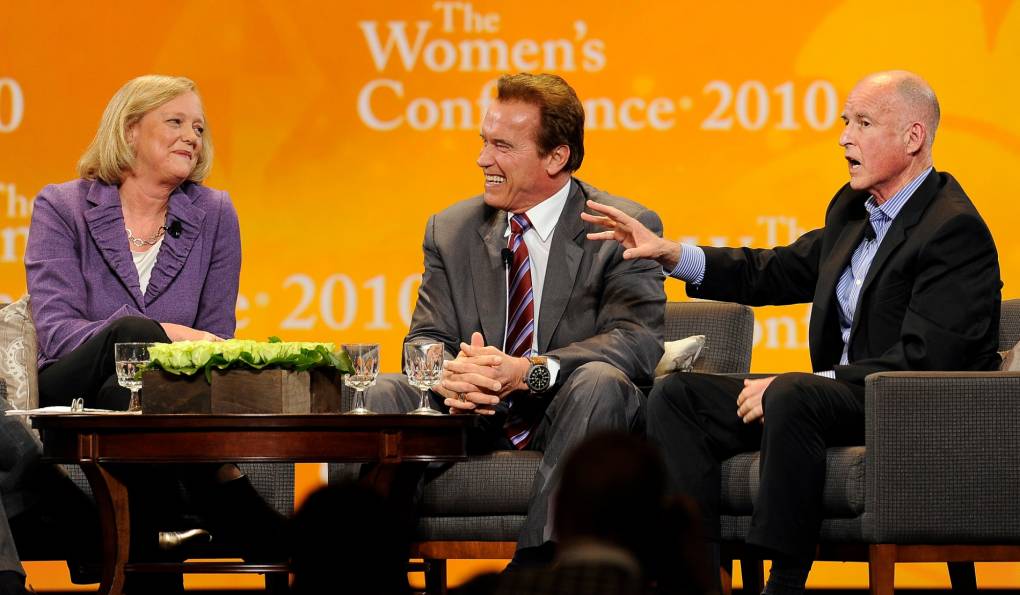
"caption": "California Republican gubernatorial candidate and former eBay CEO Meg Whitman (L), former Gov. Jerry Brown (R) and former Gov. Arnold Schwarzenegger (C) speak during a discussion on the future of California at the Women's Conference 2010 on Oct. 26, 2010 at the Long Beach Convention Center.",
"description": "California Republican gubernatorial candidate and former eBay CEO Meg Whitman (L), former Gov. Jerry Brown (R) and former Gov. Arnold Schwarzenegger (C) speak during a discussion on the future of California at the Women's Conference 2010 on October 26, 2010 at the Long Beach Convention Center in Long Beach, California. ",
"title": "GettyImages-106107335 (1)",
"credit": "Robyn Beck/AFP via Getty Images",
"status": "inherit",
"altTag": null,
"isLoading": false,
"fetchFailed": false
},
"news_11857257": {
"type": "attachments",
"id": "news_11857257",
"meta": {
"index": "attachments_1716263798",
"site": "news",
"id": "11857257",
"found": true
},
"parent": 11857197,
"imgSizes": {
"apple_news_ca_landscape_5_5": {
"file": "https://ww2.kqed.org/app/uploads/sites/10/2021/01/Gavin-Newsom-1044x783.jpg",
"width": 1044,
"mimeType": "image/jpeg",
"height": 783
},
"apple_news_ca_square_4_0": {
"file": "https://ww2.kqed.org/app/uploads/sites/10/2021/01/Gavin-Newsom-470x470.jpg",
"width": 470,
"mimeType": "image/jpeg",
"height": 470
},
"twentyfourteen-full-width": {
"file": "https://ww2.kqed.org/app/uploads/sites/10/2021/01/Gavin-Newsom-1038x576.jpg",
"width": 1038,
"mimeType": "image/jpeg",
"height": 576
},
"thumbnail": {
"file": "https://ww2.kqed.org/app/uploads/sites/10/2021/01/Gavin-Newsom-160x107.jpg",
"width": 160,
"mimeType": "image/jpeg",
"height": 107
},
"post-thumbnail": {
"file": "https://ww2.kqed.org/app/uploads/sites/10/2021/01/Gavin-Newsom-672x372.jpg",
"width": 672,
"mimeType": "image/jpeg",
"height": 372
},
"kqedFullSize": {
"file": "https://ww2.kqed.org/app/uploads/sites/10/2021/01/Gavin-Newsom.jpg",
"width": 1920,
"height": 1280
},
"apple_news_ca_landscape_4_7": {
"file": "https://ww2.kqed.org/app/uploads/sites/10/2021/01/Gavin-Newsom-632x474.jpg",
"width": 632,
"mimeType": "image/jpeg",
"height": 474
},
"large": {
"file": "https://ww2.kqed.org/app/uploads/sites/10/2021/01/Gavin-Newsom-1020x680.jpg",
"width": 1020,
"mimeType": "image/jpeg",
"height": 680
},
"apple_news_ca_landscape_4_0": {
"file": "https://ww2.kqed.org/app/uploads/sites/10/2021/01/Gavin-Newsom-536x402.jpg",
"width": 536,
"mimeType": "image/jpeg",
"height": 402
},
"apple_news_ca_portrait_12_9": {
"file": "https://ww2.kqed.org/app/uploads/sites/10/2021/01/Gavin-Newsom-1122x1280.jpg",
"width": 1122,
"mimeType": "image/jpeg",
"height": 1280
},
"medium": {
"file": "https://ww2.kqed.org/app/uploads/sites/10/2021/01/Gavin-Newsom-800x533.jpg",
"width": 800,
"mimeType": "image/jpeg",
"height": 533
},
"apple_news_ca_portrait_4_0": {
"file": "https://ww2.kqed.org/app/uploads/sites/10/2021/01/Gavin-Newsom-354x472.jpg",
"width": 354,
"mimeType": "image/jpeg",
"height": 472
},
"apple_news_ca_portrait_9_7": {
"file": "https://ww2.kqed.org/app/uploads/sites/10/2021/01/Gavin-Newsom-840x1120.jpg",
"width": 840,
"mimeType": "image/jpeg",
"height": 1120
},
"apple_news_ca_landscape_12_9": {
"file": "https://ww2.kqed.org/app/uploads/sites/10/2021/01/Gavin-Newsom-1832x1280.jpg",
"width": 1832,
"mimeType": "image/jpeg",
"height": 1280
},
"apple_news_ca_square_9_7": {
"file": "https://ww2.kqed.org/app/uploads/sites/10/2021/01/Gavin-Newsom-1104x1104.jpg",
"width": 1104,
"mimeType": "image/jpeg",
"height": 1104
},
"1536x1536": {
"file": "https://ww2.kqed.org/app/uploads/sites/10/2021/01/Gavin-Newsom-1536x1024.jpg",
"width": 1536,
"mimeType": "image/jpeg",
"height": 1024
},
"apple_news_ca_portrait_4_7": {
"file": "https://ww2.kqed.org/app/uploads/sites/10/2021/01/Gavin-Newsom-414x552.jpg",
"width": 414,
"mimeType": "image/jpeg",
"height": 552
},
"apple_news_ca_square_12_9": {
"file": "https://ww2.kqed.org/app/uploads/sites/10/2021/01/Gavin-Newsom-1472x1280.jpg",
"width": 1472,
"mimeType": "image/jpeg",
"height": 1280
},
"apple_news_ca_portrait_5_5": {
"file": "https://ww2.kqed.org/app/uploads/sites/10/2021/01/Gavin-Newsom-687x916.jpg",
"width": 687,
"mimeType": "image/jpeg",
"height": 916
},
"apple_news_ca_square_4_7": {
"file": "https://ww2.kqed.org/app/uploads/sites/10/2021/01/Gavin-Newsom-550x550.jpg",
"width": 550,
"mimeType": "image/jpeg",
"height": 550
},
"apple_news_ca_landscape_9_7": {
"file": "https://ww2.kqed.org/app/uploads/sites/10/2021/01/Gavin-Newsom-1376x1032.jpg",
"width": 1376,
"mimeType": "image/jpeg",
"height": 1032
},
"apple_news_ca_square_5_5": {
"file": "https://ww2.kqed.org/app/uploads/sites/10/2021/01/Gavin-Newsom-912x912.jpg",
"width": 912,
"mimeType": "image/jpeg",
"height": 912
}
},
"publishDate": 1611710039,
"modified": 1612228863,
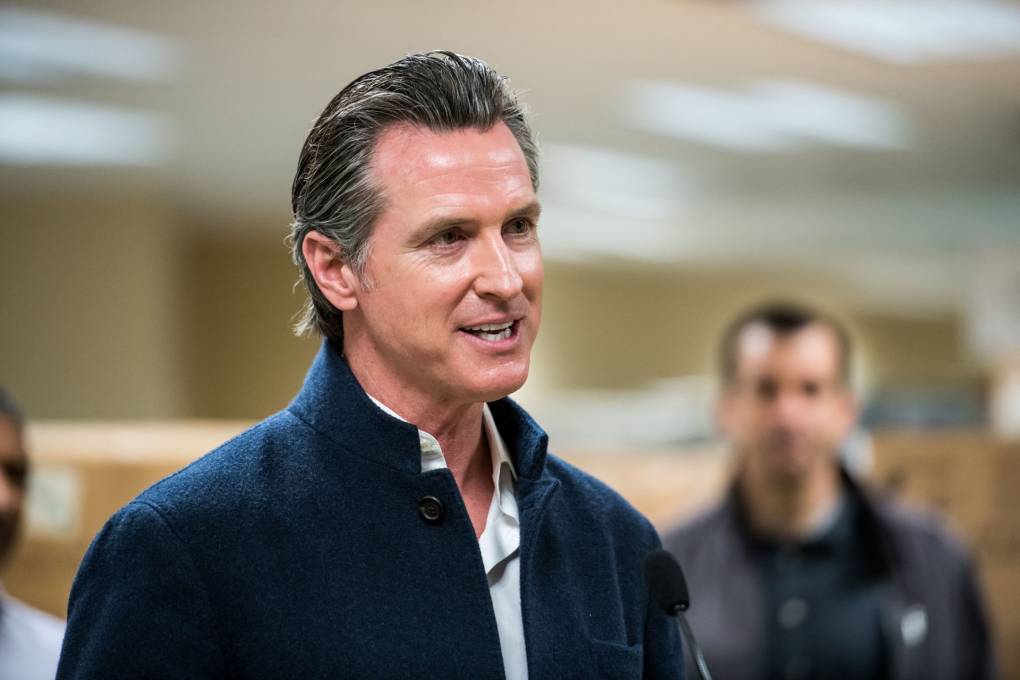
"caption": "Gov. Gavin Newsom speaks during a press conference in March 2020.",
"description": "Gov. Gavin Newsom speaks during a press conference in March 2020.",
"title": "Gavin-Newsom",
"credit": "Beth LaBerge/KQED",
"status": "inherit",
"altTag": "Gavin Newsom speaking",
"isLoading": false,
"fetchFailed": false
}
},
"audioPlayerReducer": {
"postId": "stream_live",
"isPaused": true,
"isPlaying": false,
"pfsActive": false,
"pledgeModalIsOpen": true,
"playerDrawerIsOpen": false,
"liveAudioPlayStartedAt": 0,
"liveAudioPlayContext": ""
},
"authorsReducer": {
"gmarzorati": {
"type": "authors",
"id": "227",
"meta": {
"index": "authors_1716337520",
"id": "227",
"found": true
},
"name": "Guy Marzorati",
"firstName": "Guy",
"lastName": "Marzorati",
"slug": "gmarzorati",
"email": "gmarzorati@KQED.org",
"display_author_email": true,
"staff_mastheads": [
"news"
],
"title": "Correspondent",
"bio": "Guy Marzorati is a correspondent on KQED's California Politics and Government Desk, based in San Jose. A graduate of Santa Clara University, Guy joined KQED in 2013. He reports on state and local politics and produces KQED's digital voter guide.",
"avatar": "https://secure.gravatar.com/avatar/e7038b8dbfd55b104369b76b1cd0b9de?s=600&d=blank&r=g",
"twitter": "guymarzorati",
"facebook": null,
"instagram": null,
"linkedin": null,
"sites": [
{
"site": "",
"roles": [
"editor"
]
},
{
"site": "news",
"roles": [
"editor"
]
},
{
"site": "science",
"roles": [
"editor"
]
},
{
"site": "forum",
"roles": [
"editor"
]
},
{
"site": "elections",
"roles": [
"editor"
]
},
{
"site": "liveblog",
"roles": [
"editor"
]
}
],
"headData": {
"title": "Guy Marzorati | KQED",
"description": "Correspondent",
"ogImgSrc": "https://secure.gravatar.com/avatar/e7038b8dbfd55b104369b76b1cd0b9de?s=600&d=blank&r=g",
"twImgSrc": "https://secure.gravatar.com/avatar/e7038b8dbfd55b104369b76b1cd0b9de?s=600&d=blank&r=g"
},
"isLoading": false,
"link": "/author/gmarzorati"
},
"kqed": {
"type": "authors",
"id": "236",
"meta": {
"index": "authors_1716337520",
"id": "236",
"found": true
},
"name": "KQED News Staff",
"firstName": "KQED News Staff",
"lastName": null,
"slug": "kqed",
"email": "faq@kqed.org",
"display_author_email": false,
"staff_mastheads": [],
"title": null,
"bio": null,
"avatar": "https://secure.gravatar.com/avatar/ef0e801a68c4c54afa9180db14084167?s=600&d=blank&r=g",
"twitter": null,
"facebook": null,
"instagram": null,
"linkedin": null,
"sites": [
{
"site": "arts",
"roles": [
"contributor"
]
},
{
"site": "news",
"roles": [
"editor"
]
},
{
"site": "futureofyou",
"roles": [
"author"
]
}
],
"headData": {
"title": "KQED News Staff | KQED",
"description": null,
"ogImgSrc": "https://secure.gravatar.com/avatar/ef0e801a68c4c54afa9180db14084167?s=600&d=blank&r=g",
"twImgSrc": "https://secure.gravatar.com/avatar/ef0e801a68c4c54afa9180db14084167?s=600&d=blank&r=g"
},
"isLoading": false,
"link": "/author/kqed"
},
"kqednewsstaffandwires": {
"type": "authors",
"id": "237",
"meta": {
"index": "authors_1716337520",
"id": "237",
"found": true
},
"name": "KQED News Staff and Wires",
"firstName": "KQED News Staff and Wires",
"lastName": null,
"slug": "kqednewsstaffandwires",
"email": "onlinenewsstaff@kqed.org",
"display_author_email": false,
"staff_mastheads": [],
"title": null,
"bio": null,
"avatar": "https://secure.gravatar.com/avatar/72295af8ebbfbd19a4948f5271285664?s=600&d=blank&r=g",
"twitter": null,
"facebook": null,
"instagram": null,
"linkedin": null,
"sites": [
{
"site": "arts",
"roles": [
"contributor"
]
},
{
"site": "news",
"roles": [
"contributor"
]
},
{
"site": "lowdown",
"roles": [
"author"
]
},
{
"site": "stateofhealth",
"roles": [
"contributor"
]
},
{
"site": "food",
"roles": [
"author"
]
}
],
"headData": {
"title": "KQED News Staff and Wires | KQED",
"description": null,
"ogImgSrc": "https://secure.gravatar.com/avatar/72295af8ebbfbd19a4948f5271285664?s=600&d=blank&r=g",
"twImgSrc": "https://secure.gravatar.com/avatar/72295af8ebbfbd19a4948f5271285664?s=600&d=blank&r=g"
},
"isLoading": false,
"link": "/author/kqednewsstaffandwires"
},
"scottshafer": {
"type": "authors",
"id": "255",
"meta": {
"index": "authors_1716337520",
"id": "255",
"found": true
},
"name": "Scott Shafer",
"firstName": "Scott",
"lastName": "Shafer",
"slug": "scottshafer",
"email": "sshafer@kqed.org",
"display_author_email": false,
"staff_mastheads": [
"news"
],
"title": "KQED Contributor",
"bio": "Scott Shafer is a senior editor with the KQED Politics and Government desk. He is co-host of Political Breakdown, the award-winning radio show and podcast with a personal take on the world of politics. Scott came to KQED in 1998 to host the statewide\u003cem> California Report\u003c/em>. Prior to that he had extended stints in politics and government\u003cem>.\u003c/em> He uses that inside experience at KQED in his, reporting, hosting and analysis for the politics desk. Scott collaborated \u003cem>Political Breakdown a\u003c/em>nd on \u003cem>The Political Mind of Jerry Brown, \u003c/em>an eight-part series about the life and extraordinary political career of the former governor. For fun, he plays water polo with the San Francisco Tsunami.",
"avatar": "https://secure.gravatar.com/avatar/a62ebae45b79d7aed1a39a0e3bf68104?s=600&d=blank&r=g",
"twitter": "scottshafer",
"bluesky": null,
"facebook": null,
"instagram": null,
"linkedin": null,
"sites": [
{
"site": "news",
"roles": [
"editor"
]
},
{
"site": "stateofhealth",
"roles": [
"author"
]
},
{
"site": "science",
"roles": [
"author"
]
},
{
"site": "forum",
"roles": [
"subscriber"
]
},
{
"site": "liveblog",
"roles": [
"author"
]
}
],
"headData": {
"title": "Scott Shafer | KQED",
"description": "KQED Contributor",
"ogImgSrc": "https://secure.gravatar.com/avatar/a62ebae45b79d7aed1a39a0e3bf68104?s=600&d=blank&r=g",
"twImgSrc": "https://secure.gravatar.com/avatar/a62ebae45b79d7aed1a39a0e3bf68104?s=600&d=blank&r=g"
},
"isLoading": false,
"link": "/author/scottshafer"
},
"mlagos": {
"type": "authors",
"id": "3239",
"meta": {
"index": "authors_1716337520",
"id": "3239",
"found": true
},
"name": "Marisa Lagos",
"firstName": "Marisa",
"lastName": "Lagos",
"slug": "mlagos",
"email": "mlagos@kqed.org",
"display_author_email": false,
"staff_mastheads": [
"news"
],
"title": "KQED Contributor",
"bio": "Marisa Lagos is a correspondent for KQED’s California Politics and Government Desk and co-hosts the award-winning show and podcast, Political Breakdown. At KQED, Lagos also conducts reporting, analysis and investigations into state, local and national politics for radio, TV, online and onstage. In 2022, she and co-host, Scott Shafer, moderated the only gubernatorial debate in California. In 2020, the \u003ci>Washington Post\u003c/i> named her one of the top political journalists in California; she was nominated for a Peabody and won several other awards for her work investigating the 2017 California wildfires. She has worked at the \u003ci>San Francisco Chronicle\u003c/i>, \u003ci>San Francisco Examiner\u003c/i> and \u003ci>Los Angeles Times\u003c/i>. A UC Santa Barbara graduate, she lives in San Francisco with her two sons and husband.",
"avatar": "https://secure.gravatar.com/avatar/a261a0d3696fc066871ef96b85b5e7d2?s=600&d=blank&r=g",
"twitter": "@mlagos",
"facebook": null,
"instagram": null,
"linkedin": null,
"sites": [
{
"site": "arts",
"roles": [
"author"
]
},
{
"site": "news",
"roles": [
"editor"
]
},
{
"site": "science",
"roles": [
"editor"
]
},
{
"site": "forum",
"roles": [
"author"
]
},
{
"site": "liveblog",
"roles": [
"author"
]
}
],
"headData": {
"title": "Marisa Lagos | KQED",
"description": "KQED Contributor",
"ogImgSrc": "https://secure.gravatar.com/avatar/a261a0d3696fc066871ef96b85b5e7d2?s=600&d=blank&r=g",
"twImgSrc": "https://secure.gravatar.com/avatar/a261a0d3696fc066871ef96b85b5e7d2?s=600&d=blank&r=g"
},
"isLoading": false,
"link": "/author/mlagos"
},
"korr": {
"type": "authors",
"id": "11200",
"meta": {
"index": "authors_1716337520",
"id": "11200",
"found": true
},
"name": "Katie Orr",
"firstName": "Katie",
"lastName": "Orr",
"slug": "korr",
"email": "korr@kqed.org",
"display_author_email": false,
"staff_mastheads": [],
"title": "KQED Contributor",
"bio": "Katie Orr was a Sacramento-based reporter for KQED's Politics and Government Desk, covering the state Capitol and a variety of issues including women in politics, voting and elections and legislation. Prior to joining KQED in 2016, Katie was state government reporter for Capital Public Radio in Sacramento. She's also worked for KPBS in San Diego, where she covered City Hall.\r\n\r\nKatie received her masters degree in political science from San Diego State University and holds a Bachelors degree in broadcast journalism from Arizona State University.\r\n\r\nIn 2015 Katie won a national Clarion Award for a series of stories she did on women in California politics. She's been honored by the Society for Professional Journalists and, in 2013, was named by \u003cem>The Washington Post\u003c/em> as one of the country's top state Capitol reporters. She's also reported for the award-winning documentary series \u003cem>The View from Here \u003c/em>and was part of the team that won national PRNDI and Gabriel Awards in 2015. She lives in Sacramento with her husband. Twitter: @1KatieOrr",
"avatar": "https://secure.gravatar.com/avatar/41a40b25845adc78f50808670860449e?s=600&d=blank&r=g",
"twitter": "1katieorr",
"facebook": null,
"instagram": null,
"linkedin": null,
"sites": [
{
"site": "news",
"roles": [
"subscriber"
]
},
{
"site": "stateofhealth",
"roles": [
"author"
]
},
{
"site": "forum",
"roles": [
"author"
]
}
],
"headData": {
"title": "Katie Orr | KQED",
"description": "KQED Contributor",
"ogImgSrc": "https://secure.gravatar.com/avatar/41a40b25845adc78f50808670860449e?s=600&d=blank&r=g",
"twImgSrc": "https://secure.gravatar.com/avatar/41a40b25845adc78f50808670860449e?s=600&d=blank&r=g"
},
"isLoading": false,
"link": "/author/korr"
},
"vrancano": {
"type": "authors",
"id": "11276",
"meta": {
"index": "authors_1716337520",
"id": "11276",
"found": true
},
"name": "Vanessa Rancaño",
"firstName": "Vanessa",
"lastName": "Rancaño",
"slug": "vrancano",
"email": "vrancano@kqed.org",
"display_author_email": false,
"staff_mastheads": [
"news"
],
"title": "Reporter",
"bio": "Vanessa Rancaño is a features reporter for KQED. She’s also covered homelessness and education for the station and reported from the Central Valley. Her work has aired across public radio, from flagship national news shows to longform narrative podcasts. Before taking up a mic, she worked as a freelance print journalist. She’s been recognized with a number of national and regional awards. Vanessa grew up in California's Central Valley. She's a former NPR Kroc Fellow, and a graduate of the UC Berkeley Graduate School of Journalism.",
"avatar": "https://secure.gravatar.com/avatar/b3a383dfb0e7ee1c17568f2cf067904ab654d6e3de9743fc661f3c788ade1bed?s=600&d=blank&r=g",
"twitter": "vanessarancano",
"bluesky": null,
"facebook": null,
"instagram": null,
"linkedin": null,
"sites": [
{
"site": "arts",
"roles": [
"editor"
]
},
{
"site": "news",
"roles": [
"editor"
]
},
{
"site": "liveblog",
"roles": [
"contributor"
]
}
],
"headData": {
"title": "Vanessa Rancaño | KQED",
"description": "Reporter",
"ogImgSrc": "https://secure.gravatar.com/avatar/b3a383dfb0e7ee1c17568f2cf067904ab654d6e3de9743fc661f3c788ade1bed?s=600&d=blank&r=g",
"twImgSrc": "https://secure.gravatar.com/avatar/b3a383dfb0e7ee1c17568f2cf067904ab654d6e3de9743fc661f3c788ade1bed?s=600&d=blank&r=g"
},
"isLoading": false,
"link": "/author/vrancano"
}
},
"pagesReducer": {
"news_tag_gavin-newsom": {
"type": "terms",
"id": "news_16",
"meta": {
"index": "terms_1716263798",
"site": "news",
"id": "16",
"score": 8.937016
},
"featImg": null,
"name": "Gavin Newsom",
"description": null,
"taxonomy": "tag",
"headData": {
"twImgId": null,
"twTitle": null,
"ogTitle": null,
"ogImgId": null,
"twDescription": null,
"description": null,
"title": "Gavin Newsom Archives | KQED News",
"ogDescription": null
},
"ttid": 16,
"slug": "gavin-newsom",
"isLoading": false,
"title": "Gavin Newsom",
"pageMeta": {
"site": "news",
"WpPageTemplate": "page-topic-editorial",
"currentPage": 64
},
"blocks": [
{
"blockName": "kqed/post-list",
"attrs": {
"layout": "cardArticle2",
"query": "posts/news?tag=gavin-newsom",
"seeMore": false,
"paginated": true,
"page": 64
}
},
{
"blockName": "kqed/ad"
}
]
}
},
"pfsSessionReducer": {},
"postsReducer": {
"stream_live": {
"type": "live",
"id": "stream_live",
"audioUrl": "https://streams.kqed.org/kqedradio",
"title": "Live Stream",
"excerpt": "Live Stream information currently unavailable.",
"link": "/radio",
"featImg": "",
"label": {
"name": "KQED Live",
"link": "/"
}
},
"stream_kqedNewscast": {
"type": "posts",
"id": "stream_kqedNewscast",
"audioUrl": "https://www.kqed.org/.stream/anon/radio/RDnews/newscast.mp3?_=1",
"title": "KQED Newscast",
"featImg": "",
"label": {
"name": "88.5 FM",
"link": "/"
}
},
"news_11859941": {
"type": "posts",
"id": "news_11859941",
"meta": {
"index": "posts_1716263798",
"site": "news",
"id": "11859941",
"score": null,
"sort": [
1613120439000
]
},
"parent": 0,
"labelTerm": {
"site": "news"
},
"blocks": [],
"publishDate": 1613120439,
"format": "standard",
"disqusTitle": "Will California's Big Businesses Get Behind a Recall of Gavin Newsom?",
"title": "Will California's Big Businesses Get Behind a Recall of Gavin Newsom?",
"headTitle": "KQED News",
"content": "\u003cp>California businesses have their issues with Gov. Gavin Newsom: Age-old \u003ca href=\"https://www.kqed.org/news/11851866/very-troubling-what-the-departure-of-some-big-tech-firms-means-for-californias-business-horizon\" target=\"_blank\" rel=\"noopener noreferrer\">concerns about the state's high tax rates and barriers to development have been compounded\u003c/a> by recent spats over Newsom's signing of labor-friendly legislation and his handling of business regulations during the pandemic.\u003c/p>\n\u003cp>But the state's major corporations and their wealthy executives have so far steered clear of a burgeoning effort to recall Newsom from office.\u003c/p>\n\u003cp>\"I would say still at this point, big business is not participating in the recall,\" said Tom Del Beccaro, chair of Rescue California, one of the committees driving the recall.\u003c/p>\n\u003cp>And if history is any guide, these companies — with war chests capable of transforming the recall campaign overnight — are likely to remain on the sidelines until Newsom's fate is more clear.\u003c/p>\n\u003cp>\"Honestly, I think big business is willing to continue to play the game of trying to get along with the governor, or they're leaving the state,\" Del Beccaro said. \"I think that's a mistake and it hurts the people of California and hurts the businesses that remain. They need to step up and participate in this process.\" [aside tag=\"gavin-newsom,newsom-recall\" label=\"related coverage\"]\u003c/p>\n\u003cp>The recall campaign has until March 17 to collect nearly 1.5 million valid signatures and trigger an election, which could take place in the fall. Two groups are spearheading the effort: California Patriot Coalition, the official recall petitioner, and Rescue California, a committee raising money and organizing signature-gathering campaigns.\u003c/p>\n\u003cp>Recall organizers say they've raised around $3.5 million from the two committees through 14,000 donations.\u003c/p>\n\u003cp>The largest donations to date have come from Orange County entrepreneur John Kruger's consulting firm Prov 3:9 LLC, developer Geoff Palmer, venture capitalist Chamath Palihapitiya and DGB Ranch, a mysterious Los Angeles-based company.\u003c/p>\n\u003cp>Businesses in the state are not a political monolith — though they occasionally can unite to form a political force, as with last year's $76 million campaign to defeat property tax increases proposed in Proposition 15.\u003c/p>\n\u003cp>A wide array of businesses fumed when Newsom signed Assembly Bill 5 in 2019, which restricted the ability of employers to classify workers as independent contractors. Several gig companies including Uber and DoorDash tossed in more than $200 million dollars to push Proposition 22 over the finish line, granting themselves an escape hatch from AB 5 in the labor code.\u003c/p>\n\u003cp>And anger has only grown over the past year. \u003ca href=\"https://twitter.com/CalRoundtable/status/1336408876736946176\" target=\"_blank\" rel=\"noopener noreferrer\">Companies have complained\u003c/a> that the Newsom administration left them in the dark when crafting coronavirus regulations.\u003c/p>\n\u003cp>But the inherent political cautiousness of large businesses is holding them back from turning their anger against Newsom into action, said Sean Walsh, a Republican adviser to Arnold Schwarzenegger during the 2003 recall campaign.\u003c/p>\n\u003cp>By backing a recall, companies would be betting on an undefined replacement — while running the very real risk of making a permanent enemy should Newsom survive and remain in office. And the current recall calendar likely ensures the election would take place in the fall, after the governor has decided the fate of hundreds of bills on his desk.\u003c/p>\n\u003cp>\"There are bills that come up that directly affect individual businesses,\" Walsh said. \"And some could say it would be irresponsible of that business to take on a governor when he could veto something that could be very, very important.\" [ad fullwidth]\u003c/p>\n\u003cp>It explains why during California's last recall election, in 2003, many large corporations stayed out of the fray or backed Democratic Gov. Gray Davis — until they had no other choice.\u003c/p>\n\u003cp>Companies including Chevron, Citigroup, Genentech, HP, Intel and the so-called Big Four accounting firms poured hundreds of thousands of dollars into Arnold Schwarzenegger's campaign, \u003cem>after \u003c/em>the celebrity actor had emerged victorious in the October election — helping Schwarzenegger \u003ca href=\"https://www.latimes.com/archives/la-xpm-2003-oct-01-me-nuloan1-story.html\" target=\"_blank\" rel=\"noopener noreferrer\">pay back millions of dollars of loans\u003c/a> that he took out during his run.\u003c/p>\n\u003cp>And corporations that backed Davis in the election — including AT&T, the mortgage giant Ameriquest, and Mercury General Insurance — had no qualms about contributing to Schwarzenegger's recall committee in the months after the votes were counted.\u003c/p>\n\u003cp>That \u003ca href=\"https://www.kqed.org/news/10524388/california-interest-groups-hedge-their-bets-give-cash-to-anyone-in-power\" target=\"_blank\" rel=\"noopener noreferrer\">hedge-betting approach is commonplace in Sacramento\u003c/a>, where large business interests typically spread campaign donations to legislators in both parties.\u003c/p>\n\u003cp>And it's a dynamic that favors Newsom in a potential recall campaign, as his allies in organized labor are expected to spend heavily to keep him in office.\u003c/p>\n\u003cp>\"The business community is innately conservative and conservative insofar as they like certainty,\" Walsh said. \"So even if you've got the devil, it's the devil you know, and you try and work through the devil that you know — that's just how the business community in California works.\"\u003c/p>\n\u003cp>The one exception, Walsh said, is Silicon Valley — where an executive could use their own fortune to propel the recall, like Congressman Darrell Issa did in 2003, when he spent more than $1 million to gather enough signatures to trigger an election.\u003c/p>\n\u003cp>[pullquote size='medium' align='right' citation='Sean Walsh, Republican advisor']'The business community is innately conservative and conservative insofar as they like certainty ... So even if you've got the devil, it's the devil you know, and you try and work through the devil that you know — that's just how the business community in California works'[/pullquote]\u003c/p>\n\u003cp>\"Something that could upset the apple cart is the fact that we have so many fantastically wealthy Silicon Valley business people,\" Walsh said. \"Their egos are huge in business, but their egos are also huge, thinking that they, too, could be the governor.\"\u003c/p>\n\u003cp>Venture capitalists Palihapitiya (who briefly flirted with a run) and David Sacks are among the top donors to the recall, which they have promoted in recent weeks on their All-In podcast.\u003c/p>\n\u003cp>\"If you have the means to donate, please do,\" Sacks said on a recent episode. \"We’re not going to get any positive change in this state until the politicians are held accountable, and this recall is the starting point for that.”\u003c/p>\n\u003cp>But it remains to be seen if others follow suit; in his 2018 run for governor, \u003ca href=\"https://www.kqed.org/news/11667073/where-are-big-gop-donors-giving-in-governors-race-to-democrats\" target=\"_blank\" rel=\"noopener noreferrer\">Newsom was able to win over Silicon Valley donors\u003c/a> who had supported Republicans in the past, including venture capitalist Peter Thiel and Yahoo co-founder Jerry Yang.\u003c/p>\n\u003cp>Ultimately, businesses will have to consider how going against the governor will affect both their state policy interests and their public image.\u003c/p>\n\u003cp>\"You don't want to piss off a governor who may survive, but also you don't want to be branded as a Trumpist ally,\" said Republican consultant Luis Alvarado.\u003c/p>\n\u003cp>At this stage, the recall push is strictly partisan: \u003ca href=\"https://escholarship.org/uc/item/1tj8q5rb\" target=\"_blank\" rel=\"noopener noreferrer\">A poll released last week from the Berkeley Institute of Governmental Studies\u003c/a> finds just 11% of Democratic voters support recalling Newsom, compared with 84% of Republicans.\u003c/p>\n\u003cp>And the Republican operatives who have been pursuing a recall against Newsom since his first year in office have yet to solidify a coalition with corporate interests inflamed by pandemic-related business restrictions and school closures.\u003c/p>\n\u003cp>\"I don't think they've actually met in the middle yet, but they are much closer than they have ever been,\" Alvarado said. \"Once the signature gatherers reach their mark and the recall is officially called on the ballot, then members of the business community will have to make a decision if they want to be a part of it financially or not.\"\u003c/p>\n\u003cp>[ad floatright]\u003c/p>\n",
"disqusIdentifier": "11859941 https://ww2.kqed.org/news/?p=11859941",
"disqusUrl": "https://ww2.kqed.org/news/2021/02/12/will-californias-big-businesses-get-behind-a-recall-of-gavin-newsom/",
"stats": {
"hasVideo": false,
"hasChartOrMap": false,
"hasAudio": false,
"hasPolis": false,
"wordCount": 1247,
"hasGoogleForm": false,
"hasGallery": false,
"hasHearkenModule": false,
"iframeSrcs": [],
"paragraphCount": 32
},
"modified": 1613156647,
"excerpt": "Business groups may have gripes with Newsom, but a break with the governor seems unlikely.",
"headData": {
"twImgId": "",
"twTitle": "",
"ogTitle": "",
"ogImgId": "",
"twDescription": "",
"description": "Business groups may have gripes with Newsom, but a break with the governor seems unlikely.",
"title": "Will California's Big Businesses Get Behind a Recall of Gavin Newsom? | KQED",
"ogDescription": "",
"schema": {
"@context": "https://schema.org",
"@type": "NewsArticle",
"headline": "Will California's Big Businesses Get Behind a Recall of Gavin Newsom?",
"datePublished": "2021-02-12T01:00:39-08:00",
"dateModified": "2021-02-12T11:04:07-08:00",
"image": "https://cdn.kqed.org/wp-content/uploads/2020/02/KQED-OG-Image@1x.png",
"isAccessibleForFree": "True",
"publisher": {
"@type": "NewsMediaOrganization",
"@id": "https://www.kqed.org/#organization",
"name": "KQED",
"logo": "https://cdn.kqed.org/wp-content/uploads/2020/02/KQED-OG-Image@1x.png",
"url": "https://www.kqed.org",
"sameAs": [
"https://www.facebook.com/KQED",
"https://twitter.com/KQED",
"https://www.instagram.com/kqed/",
"https://www.tiktok.com/@kqedofficial",
"https://www.linkedin.com/company/kqed",
"https://www.youtube.com/channel/UCeC0IOo7i1P_61zVUWbJ4nw"
]
}
}
},
"guestAuthors": [],
"slug": "will-californias-big-businesses-get-behind-a-recall-of-gavin-newsom",
"status": "publish",
"path": "/news/11859941/will-californias-big-businesses-get-behind-a-recall-of-gavin-newsom",
"audioTrackLength": null,
"parsedContent": [
{
"type": "contentString",
"content": "\u003cdiv class=\"post-body\">\u003cp>\u003cp>California businesses have their issues with Gov. Gavin Newsom: Age-old \u003ca href=\"https://www.kqed.org/news/11851866/very-troubling-what-the-departure-of-some-big-tech-firms-means-for-californias-business-horizon\" target=\"_blank\" rel=\"noopener noreferrer\">concerns about the state's high tax rates and barriers to development have been compounded\u003c/a> by recent spats over Newsom's signing of labor-friendly legislation and his handling of business regulations during the pandemic.\u003c/p>\n\u003cp>But the state's major corporations and their wealthy executives have so far steered clear of a burgeoning effort to recall Newsom from office.\u003c/p>\n\u003cp>\"I would say still at this point, big business is not participating in the recall,\" said Tom Del Beccaro, chair of Rescue California, one of the committees driving the recall.\u003c/p>\n\u003cp>And if history is any guide, these companies — with war chests capable of transforming the recall campaign overnight — are likely to remain on the sidelines until Newsom's fate is more clear.\u003c/p>\n\u003cp>\"Honestly, I think big business is willing to continue to play the game of trying to get along with the governor, or they're leaving the state,\" Del Beccaro said. \"I think that's a mistake and it hurts the people of California and hurts the businesses that remain. They need to step up and participate in this process.\" \u003c/p>\u003c/div>",
"attributes": {
"named": {},
"numeric": []
}
},
{
"type": "component",
"content": "",
"name": "aside",
"attributes": {
"named": {
"tag": "gavin-newsom,newsom-recall",
"label": "related coverage "
},
"numeric": []
}
},
{
"type": "contentString",
"content": "\u003cdiv class=\"post-body\">\u003cp>\u003c/p>\n\u003cp>The recall campaign has until March 17 to collect nearly 1.5 million valid signatures and trigger an election, which could take place in the fall. Two groups are spearheading the effort: California Patriot Coalition, the official recall petitioner, and Rescue California, a committee raising money and organizing signature-gathering campaigns.\u003c/p>\n\u003cp>Recall organizers say they've raised around $3.5 million from the two committees through 14,000 donations.\u003c/p>\n\u003cp>The largest donations to date have come from Orange County entrepreneur John Kruger's consulting firm Prov 3:9 LLC, developer Geoff Palmer, venture capitalist Chamath Palihapitiya and DGB Ranch, a mysterious Los Angeles-based company.\u003c/p>\n\u003cp>Businesses in the state are not a political monolith — though they occasionally can unite to form a political force, as with last year's $76 million campaign to defeat property tax increases proposed in Proposition 15.\u003c/p>\n\u003cp>A wide array of businesses fumed when Newsom signed Assembly Bill 5 in 2019, which restricted the ability of employers to classify workers as independent contractors. Several gig companies including Uber and DoorDash tossed in more than $200 million dollars to push Proposition 22 over the finish line, granting themselves an escape hatch from AB 5 in the labor code.\u003c/p>\n\u003cp>And anger has only grown over the past year. \u003ca href=\"https://twitter.com/CalRoundtable/status/1336408876736946176\" target=\"_blank\" rel=\"noopener noreferrer\">Companies have complained\u003c/a> that the Newsom administration left them in the dark when crafting coronavirus regulations.\u003c/p>\n\u003cp>But the inherent political cautiousness of large businesses is holding them back from turning their anger against Newsom into action, said Sean Walsh, a Republican adviser to Arnold Schwarzenegger during the 2003 recall campaign.\u003c/p>\n\u003cp>By backing a recall, companies would be betting on an undefined replacement — while running the very real risk of making a permanent enemy should Newsom survive and remain in office. And the current recall calendar likely ensures the election would take place in the fall, after the governor has decided the fate of hundreds of bills on his desk.\u003c/p>\n\u003cp>\"There are bills that come up that directly affect individual businesses,\" Walsh said. \"And some could say it would be irresponsible of that business to take on a governor when he could veto something that could be very, very important.\" \u003c/p>\u003c/div>",
"attributes": {
"named": {},
"numeric": []
}
},
{
"type": "component",
"content": "",
"name": "ad",
"attributes": {
"named": {
"label": "fullwidth"
},
"numeric": [
"fullwidth"
]
}
},
{
"type": "contentString",
"content": "\u003cdiv class=\"post-body\">\u003cp>\u003c/p>\n\u003cp>It explains why during California's last recall election, in 2003, many large corporations stayed out of the fray or backed Democratic Gov. Gray Davis — until they had no other choice.\u003c/p>\n\u003cp>Companies including Chevron, Citigroup, Genentech, HP, Intel and the so-called Big Four accounting firms poured hundreds of thousands of dollars into Arnold Schwarzenegger's campaign, \u003cem>after \u003c/em>the celebrity actor had emerged victorious in the October election — helping Schwarzenegger \u003ca href=\"https://www.latimes.com/archives/la-xpm-2003-oct-01-me-nuloan1-story.html\" target=\"_blank\" rel=\"noopener noreferrer\">pay back millions of dollars of loans\u003c/a> that he took out during his run.\u003c/p>\n\u003cp>And corporations that backed Davis in the election — including AT&T, the mortgage giant Ameriquest, and Mercury General Insurance — had no qualms about contributing to Schwarzenegger's recall committee in the months after the votes were counted.\u003c/p>\n\u003cp>That \u003ca href=\"https://www.kqed.org/news/10524388/california-interest-groups-hedge-their-bets-give-cash-to-anyone-in-power\" target=\"_blank\" rel=\"noopener noreferrer\">hedge-betting approach is commonplace in Sacramento\u003c/a>, where large business interests typically spread campaign donations to legislators in both parties.\u003c/p>\n\u003cp>And it's a dynamic that favors Newsom in a potential recall campaign, as his allies in organized labor are expected to spend heavily to keep him in office.\u003c/p>\n\u003cp>\"The business community is innately conservative and conservative insofar as they like certainty,\" Walsh said. \"So even if you've got the devil, it's the devil you know, and you try and work through the devil that you know — that's just how the business community in California works.\"\u003c/p>\n\u003cp>The one exception, Walsh said, is Silicon Valley — where an executive could use their own fortune to propel the recall, like Congressman Darrell Issa did in 2003, when he spent more than $1 million to gather enough signatures to trigger an election.\u003c/p>\n\u003cp>\u003c/p>\u003c/div>",
"attributes": {
"named": {},
"numeric": []
}
},
{
"type": "component",
"content": "'The business community is innately conservative and conservative insofar as they like certainty ... So even if you've got the devil, it's the devil you know, and you try and work through the devil that you know — that's just how the business community in California works'",
"name": "pullquote",
"attributes": {
"named": {
"size": "medium",
"align": "right",
"citation": "Sean Walsh, Republican advisor",
"label": ""
},
"numeric": []
}
},
{
"type": "contentString",
"content": "\u003cdiv class=\"post-body\">\u003cp>\u003c/p>\n\u003cp>\"Something that could upset the apple cart is the fact that we have so many fantastically wealthy Silicon Valley business people,\" Walsh said. \"Their egos are huge in business, but their egos are also huge, thinking that they, too, could be the governor.\"\u003c/p>\n\u003cp>Venture capitalists Palihapitiya (who briefly flirted with a run) and David Sacks are among the top donors to the recall, which they have promoted in recent weeks on their All-In podcast.\u003c/p>\n\u003cp>\"If you have the means to donate, please do,\" Sacks said on a recent episode. \"We’re not going to get any positive change in this state until the politicians are held accountable, and this recall is the starting point for that.”\u003c/p>\n\u003cp>But it remains to be seen if others follow suit; in his 2018 run for governor, \u003ca href=\"https://www.kqed.org/news/11667073/where-are-big-gop-donors-giving-in-governors-race-to-democrats\" target=\"_blank\" rel=\"noopener noreferrer\">Newsom was able to win over Silicon Valley donors\u003c/a> who had supported Republicans in the past, including venture capitalist Peter Thiel and Yahoo co-founder Jerry Yang.\u003c/p>\n\u003cp>Ultimately, businesses will have to consider how going against the governor will affect both their state policy interests and their public image.\u003c/p>\n\u003cp>\"You don't want to piss off a governor who may survive, but also you don't want to be branded as a Trumpist ally,\" said Republican consultant Luis Alvarado.\u003c/p>\n\u003cp>At this stage, the recall push is strictly partisan: \u003ca href=\"https://escholarship.org/uc/item/1tj8q5rb\" target=\"_blank\" rel=\"noopener noreferrer\">A poll released last week from the Berkeley Institute of Governmental Studies\u003c/a> finds just 11% of Democratic voters support recalling Newsom, compared with 84% of Republicans.\u003c/p>\n\u003cp>And the Republican operatives who have been pursuing a recall against Newsom since his first year in office have yet to solidify a coalition with corporate interests inflamed by pandemic-related business restrictions and school closures.\u003c/p>\n\u003cp>\"I don't think they've actually met in the middle yet, but they are much closer than they have ever been,\" Alvarado said. \"Once the signature gatherers reach their mark and the recall is officially called on the ballot, then members of the business community will have to make a decision if they want to be a part of it financially or not.\"\u003c/p>\n\u003cp>\u003c/p>\u003c/div>",
"attributes": {
"named": {},
"numeric": []
}
},
{
"type": "component",
"content": "",
"name": "ad",
"attributes": {
"named": {
"label": "floatright"
},
"numeric": [
"floatright"
]
}
},
{
"type": "contentString",
"content": "\u003cdiv class=\"post-body\">\u003cp>\u003c/p>\n\u003c/div>\u003c/p>",
"attributes": {
"named": {},
"numeric": []
}
}
],
"link": "/news/11859941/will-californias-big-businesses-get-behind-a-recall-of-gavin-newsom",
"authors": [
"227"
],
"categories": [
"news_8",
"news_13"
],
"tags": [
"news_16",
"news_28988",
"news_17968"
],
"featImg": "news_11860100",
"label": "news"
},
"news_11859495": {
"type": "posts",
"id": "news_11859495",
"meta": {
"index": "posts_1716263798",
"site": "news",
"id": "11859495",
"score": null,
"sort": [
1612922418000
]
},
"guestAuthors": [],
"slug": "californias-largest-covid-19-vaccination-site-opens-for-business-at-49ers-levis-stadium-in-santa-clara",
"title": "California's Largest COVID-19 Vaccination Site Opens for Business at 49ers' Levi's Stadium in Santa Clara",
"publishDate": 1612922418,
"format": "standard",
"headTitle": "California’s Largest COVID-19 Vaccination Site Opens for Business at 49ers’ Levi’s Stadium in Santa Clara | KQED",
"labelTerm": {
"site": "news"
},
"content": "\u003cp>The largest COVID-19 mass vaccination center in the state opened Tuesday at Levi’s Stadium in Santa Clara, with Gov. Gavin Newsom and local officials taking to the field to celebrate the kickoff.\u003c/p>\n\u003cp>The site, which opened for appointments at noon, has the capacity to vaccinate 5,000 people per day, with plans to ramp up to 15,000.\u003c/p>\n\u003cp>“Santa Clara County is among the leaders [in terms of vaccine administration],” Newsom said at Levi’s Stadium. “I’m honored to be here joining their partners and joining community leaders that are making this site possible.”\u003c/p>\n\u003cp>Vaccinations at the stadium will only be open to residents of Santa Clara County or health care workers who work in the county. Currently, only residents 65 years and older and health care workers are eligible for the vaccine.\u003c/p>\n\u003cp>County Supervisors Cindy Chavez and Susan Ellenberg, as well as state Assemblymember Ash Kalra, D-San Jose, joined the governor on the stadium’s field to tout the new site.\u003c/p>\n\u003cp>[ad fullwidth]\u003c/p>\n\u003cp>Ellenberg said the site will help residents across the county get vaccinated quicker and ensure more equitable access to the vaccine.\u003c/p>\n\u003cp>“Levi’s Stadium is an important site because of its central location in the county, proximity to public transportation and ability to serve a large number of residents every day,” she said.\u003c/p>\n\u003cp>To that end, the \u003ca href=\"https://www.vta.org/\">Santa Clara Valley Transportation Authority\u003c/a> is now providing front-door services to the stadium and has increased the number of buses that stop there, while also suspending fare collection on its buses and light-rail trains.\u003c/p>\n\u003cfigure id=\"attachment_11859562\" class=\"wp-caption alignnone\" style=\"max-width: 800px\">\u003cimg loading=\"lazy\" decoding=\"async\" class=\"size-medium wp-image-11859562\" src=\"https://ww2.kqed.org/app/uploads/sites/10/2021/02/Image-from-iOS-26-800x533.jpg\" alt=\"\" width=\"800\" height=\"533\" srcset=\"https://cdn.kqed.org/wp-content/uploads/sites/10/2021/02/Image-from-iOS-26-800x533.jpg 800w, https://cdn.kqed.org/wp-content/uploads/sites/10/2021/02/Image-from-iOS-26-1020x680.jpg 1020w, https://cdn.kqed.org/wp-content/uploads/sites/10/2021/02/Image-from-iOS-26-160x107.jpg 160w, https://cdn.kqed.org/wp-content/uploads/sites/10/2021/02/Image-from-iOS-26-1536x1024.jpg 1536w, https://cdn.kqed.org/wp-content/uploads/sites/10/2021/02/Image-from-iOS-26.jpg 1620w\" sizes=\"(max-width: 800px) 100vw, 800px\">\u003cfigcaption class=\"wp-caption-text\">A large screen reads, “Thanks for getting vaccinated at Levi’s stadium” above the bleachers at the vaccination site on Feb. 9, 2021. \u003ccite>(Beth LaBerge/KQED)\u003c/cite>\u003c/figcaption>\u003c/figure>\n\u003cp>Dr. Jennifer Tong, associate chief medical officer for Santa Clara Valley Medical Center, said the new site expands the county’s ability to vaccinate at scale.\u003c/p>\n\u003cp>Levi’s Stadium is Santa Clara County’s fourth mass vaccination site, joining two in San Jose and one in Mountain View.\u003c/p>\n\u003cp>So far, the county’s health system has provided more than 113,000 first doses, with more than 40,000 vaccine appointments scheduled in the week ahead, Tong said. Other providers also administered about 100,000 doses to date in the county.\u003c/p>\n\u003cp>[pullquote size=\"medium\" align=\"right\" citation=\"Gov. Gavin Newsom, speaking about vaccines\"]‘Supply is the issue. That is the constraint.’[/pullquote]\u003c/p>\n\u003cp>Eligible residents in Santa Clara County can book an appointment at Levi’s Stadium and other vaccination sites at \u003ca href=\"http://sccfreevax.org\">sccfreevax.org\u003c/a>.\u003cbr>\nThe county has also instituted a “no wrong door” policy, allowing all residents 65 years and older to get vaccinated at any site or private health care provider, regardless of their insurance.\u003c/p>\n\u003cp>California is now administering an average of about 1 million doses a week. That’s a huge jump from last month, when state officials were criticized for lagging efforts.\u003c/p>\n\u003cp>“I remind you, that’s more than double where we were a few weeks ago and more than triple where we were three to four weeks ago,” Newsom said.\u003c/p>\n\u003cp>Supersites like Levi’s Stadium now dot the state, and an increasing number of mobile units are also being dispatched to reach underserved communities, such as farm workers.\u003c/p>\n\u003cp>https://twitter.com/CAgovernor/status/1358921091477958657\u003c/p>\n\u003cp>But the effectiveness of those efforts all hinges on vaccine supply, officials noted.\u003c/p>\n\u003cp>“Supply is the issue. That is the constraint,” Newsom said.\u003c/p>\n\u003cp>To date, more than 4.9 million doses of the vaccine have been doled out in California. But that’s only been enough to accommodate a tiny percentage of the state’s massive population, the vast majority of which have yet to receive even the first of the required two doses.\u003c/p>\n\u003cp>However, Santa Clara County Executive Officer Dr. Jeff Smith on Tuesday said he was optimistic the state would soon be receiving markedly larger quantities of the vaccine.\u003c/p>\n\u003cp>“The president has promised an extra 20% allocation to all the states,” Smith said. “We know that a new vaccine is on the horizon with Johnson & Johnson. We know that more Moderna is being made, more of the Pfizer is being made.”\u003c/p>\n\u003cp>Newsom said the Johnson & Johnson vaccine, which would only require one dose and is easier to store than the Pfizer and Moderna vaccines — although not as effective — could be available by the end of the month.\u003c/p>\n\u003cp>Additionally, the Biden administration recently announced it would be sending a million doses directly to California pharmacies and may begin sending them to community clinics as well, Newsom said.\u003c/p>\n\u003cfigure id=\"attachment_11859561\" class=\"wp-caption alignnone\" style=\"max-width: 800px\">\u003cimg loading=\"lazy\" decoding=\"async\" class=\"size-medium wp-image-11859561\" src=\"https://ww2.kqed.org/app/uploads/sites/10/2021/02/Image-from-iOS-27-800x533.jpg\" alt=\"\" width=\"800\" height=\"533\" srcset=\"https://cdn.kqed.org/wp-content/uploads/sites/10/2021/02/Image-from-iOS-27-800x533.jpg 800w, https://cdn.kqed.org/wp-content/uploads/sites/10/2021/02/Image-from-iOS-27-1020x680.jpg 1020w, https://cdn.kqed.org/wp-content/uploads/sites/10/2021/02/Image-from-iOS-27-160x107.jpg 160w, https://cdn.kqed.org/wp-content/uploads/sites/10/2021/02/Image-from-iOS-27-1536x1024.jpg 1536w, https://cdn.kqed.org/wp-content/uploads/sites/10/2021/02/Image-from-iOS-27.jpg 1620w\" sizes=\"(max-width: 800px) 100vw, 800px\">\u003cfigcaption class=\"wp-caption-text\">Monitors at Levi’s Stadium read, “Pfizer Vaccine” during the first day of vaccinations at the Santa Clara County mass vaccination site on Feb. 9, 2021. \u003ccite>(Beth LaBerge/KQED)\u003c/cite>\u003c/figcaption>\u003c/figure>\n\u003cp>The governor also highlighted the \u003ca href=\"https://covid19.ca.gov/state-dashboard/\">significant drop\u003c/a> in statewide case counts, hospitalizations and deaths, all of which are a fraction of what they were a month ago.\u003c/p>\n\u003cp>The positive news comes as Newsom and state lawmakers say they are close to reaching a deal to help reopen elementary schools, as pressure mounts to get younger kids back in the classroom.\u003c/p>\n\u003cp>Newsom, on Tuesday, said the deal would include $6.6 billion in immediate money to address learning loss and safety measures, and believes the state’s youngest children can safely return to school in small groups.\u003c/p>\n\u003cfigure id=\"attachment_11859560\" class=\"wp-caption alignnone\" style=\"max-width: 800px\">\u003cimg loading=\"lazy\" decoding=\"async\" class=\"size-medium wp-image-11859560\" src=\"https://ww2.kqed.org/app/uploads/sites/10/2021/02/Image-from-iOS-28-800x534.jpg\" alt=\"\" width=\"800\" height=\"534\" srcset=\"https://cdn.kqed.org/wp-content/uploads/sites/10/2021/02/Image-from-iOS-28-800x534.jpg 800w, https://cdn.kqed.org/wp-content/uploads/sites/10/2021/02/Image-from-iOS-28-1020x680.jpg 1020w, https://cdn.kqed.org/wp-content/uploads/sites/10/2021/02/Image-from-iOS-28-160x107.jpg 160w, https://cdn.kqed.org/wp-content/uploads/sites/10/2021/02/Image-from-iOS-28.jpg 1513w\" sizes=\"(max-width: 800px) 100vw, 800px\">\u003cfigcaption class=\"wp-caption-text\">Rick and Colleen Fanciullo wait in line for their COVID-19 vaccination at Levi’s Stadium on Feb. 9, 2021. \u003ccite>(Beth LaBerge/KQED)\u003c/cite>\u003c/figcaption>\u003c/figure>\n\u003cp>“I’m committed to their safety. I’m committed to our kids’ education. And I believe the best education is in-person education,” he said. “And I believe for our youngest kids, it’s essential, particularly black and brown kids, particularly kids with special needs.”\u003c/p>\n\u003cp>Still, he acknowledged\u003ca href=\"https://www.kqed.org/news/11858457/as-battle-over-reopening-san-francisco-schools-turns-ugly-equity-emerges-as-fault-line\"> the pushback from teachers unions\u003c/a>, who have maintained that their members — most of whom have not yet received even a first dose — should be prioritized to get the vaccine before returning to the classroom.\u003c/p>\n\u003cfigure id=\"attachment_11859647\" class=\"wp-caption aligncenter\" style=\"max-width: 1456px\">\u003ca href=\"https://ww2.kqed.org/app/uploads/sites/10/2021/02/Image-from-iOS-2.jpg\">\u003cimg loading=\"lazy\" decoding=\"async\" class=\"wp-image-11859647 size-full\" src=\"https://ww2.kqed.org/app/uploads/sites/10/2021/02/Image-from-iOS-2.jpg\" alt=\"\" width=\"1456\" height=\"971\" srcset=\"https://cdn.kqed.org/wp-content/uploads/sites/10/2021/02/Image-from-iOS-2.jpg 1456w, https://cdn.kqed.org/wp-content/uploads/sites/10/2021/02/Image-from-iOS-2-800x534.jpg 800w, https://cdn.kqed.org/wp-content/uploads/sites/10/2021/02/Image-from-iOS-2-1020x680.jpg 1020w, https://cdn.kqed.org/wp-content/uploads/sites/10/2021/02/Image-from-iOS-2-160x107.jpg 160w\" sizes=\"(max-width: 1456px) 100vw, 1456px\">\u003c/a>\u003cfigcaption class=\"wp-caption-text\">Cornelia Arzaga, 76, with her son Eric after receiving the COVID-19 vaccine at Levi’s Stadium on Feb. 9, 2021. \u003ccite>(Beth LaBerge/KQED)\u003c/cite>\u003c/figcaption>\u003c/figure>\n\u003cp>“We need to be honest with people,” he said. “It’s very unlikely that we’ll be able to accomplish that very idealistic goal [to vaccinate teachers] before the end of the school year.”\u003c/p>\n\u003cp>Teachers would only be able to go to the front of the vaccine line “if we took them away from the vast majority of others are seniors and are most medically vulnerable,” Newsom said. “That’s the unfortunate position we’re all in.”\u003c/p>\n\u003cp>[ad floatright]\u003c/p>\n\u003cp>\u003cem>This article includes reporting from KQED’s Katie Orr and Matthew Green, and Bay City News.\u003c/em>\u003c/p>\n\n",
"blocks": [],
"excerpt": "Gov. Gavin Newsom unveiled the new mass vaccination site, which will eventually have the capacity to vaccinate some 15,000 people a day. He also said he's nearing with state lawmakers to reopen elementary schools, as new case counts drop significantly.",
"status": "publish",
"parent": 0,
"modified": 1722644518,
"stats": {
"hasAudio": false,
"hasVideo": false,
"hasChartOrMap": false,
"iframeSrcs": [],
"hasGoogleForm": false,
"hasGallery": false,
"hasHearkenModule": false,
"hasPolis": false,
"paragraphCount": 33,
"wordCount": 1170
},
"headData": {
"title": "California's Largest COVID-19 Vaccination Site Opens for Business at 49ers' Levi's Stadium in Santa Clara | KQED",
"description": "Gov. Gavin Newsom unveiled the new mass vaccination site, which will eventually have the capacity to vaccinate some 15,000 people a day. He also said he's nearing with state lawmakers to reopen elementary schools, as new case counts drop significantly.",
"ogTitle": "",
"ogDescription": "",
"ogImgId": "",
"twTitle": "",
"twDescription": "",
"twImgId": "",
"schema": {
"@context": "https://schema.org",
"@type": "NewsArticle",
"headline": "California's Largest COVID-19 Vaccination Site Opens for Business at 49ers' Levi's Stadium in Santa Clara",
"datePublished": "2021-02-09T18:00:18-08:00",
"dateModified": "2024-08-02T17:21:58-07:00",
"image": "https://cdn.kqed.org/wp-content/uploads/2020/02/KQED-OG-Image@1x.png",
"isAccessibleForFree": "True",
"publisher": {
"@type": "NewsMediaOrganization",
"@id": "https://www.kqed.org/#organization",
"name": "KQED",
"logo": "https://cdn.kqed.org/wp-content/uploads/2020/02/KQED-OG-Image@1x.png",
"url": "https://www.kqed.org",
"sameAs": [
"https://www.facebook.com/KQED",
"https://twitter.com/KQED",
"https://www.instagram.com/kqed/",
"https://www.tiktok.com/@kqedofficial",
"https://www.linkedin.com/company/kqed",
"https://www.youtube.com/channel/UCeC0IOo7i1P_61zVUWbJ4nw"
]
}
}
},
"sticky": false,
"path": "/news/11859495/californias-largest-covid-19-vaccination-site-opens-for-business-at-49ers-levis-stadium-in-santa-clara",
"audioTrackLength": null,
"parsedContent": [
{
"type": "contentString",
"content": "\u003cdiv class=\"post-body\">\u003cp>\u003cp>The largest COVID-19 mass vaccination center in the state opened Tuesday at Levi’s Stadium in Santa Clara, with Gov. Gavin Newsom and local officials taking to the field to celebrate the kickoff.\u003c/p>\n\u003cp>The site, which opened for appointments at noon, has the capacity to vaccinate 5,000 people per day, with plans to ramp up to 15,000.\u003c/p>\n\u003cp>“Santa Clara County is among the leaders [in terms of vaccine administration],” Newsom said at Levi’s Stadium. “I’m honored to be here joining their partners and joining community leaders that are making this site possible.”\u003c/p>\n\u003cp>Vaccinations at the stadium will only be open to residents of Santa Clara County or health care workers who work in the county. Currently, only residents 65 years and older and health care workers are eligible for the vaccine.\u003c/p>\n\u003cp>County Supervisors Cindy Chavez and Susan Ellenberg, as well as state Assemblymember Ash Kalra, D-San Jose, joined the governor on the stadium’s field to tout the new site.\u003c/p>\n\u003cp>\u003c/p>\u003c/div>",
"attributes": {
"named": {},
"numeric": []
}
},
{
"type": "component",
"content": "",
"name": "ad",
"attributes": {
"named": {
"label": "fullwidth"
},
"numeric": [
"fullwidth"
]
}
},
{
"type": "contentString",
"content": "\u003cdiv class=\"post-body\">\u003cp>\u003c/p>\n\u003cp>Ellenberg said the site will help residents across the county get vaccinated quicker and ensure more equitable access to the vaccine.\u003c/p>\n\u003cp>“Levi’s Stadium is an important site because of its central location in the county, proximity to public transportation and ability to serve a large number of residents every day,” she said.\u003c/p>\n\u003cp>To that end, the \u003ca href=\"https://www.vta.org/\">Santa Clara Valley Transportation Authority\u003c/a> is now providing front-door services to the stadium and has increased the number of buses that stop there, while also suspending fare collection on its buses and light-rail trains.\u003c/p>\n\u003cfigure id=\"attachment_11859562\" class=\"wp-caption alignnone\" style=\"max-width: 800px\">\u003cimg loading=\"lazy\" decoding=\"async\" class=\"size-medium wp-image-11859562\" src=\"https://ww2.kqed.org/app/uploads/sites/10/2021/02/Image-from-iOS-26-800x533.jpg\" alt=\"\" width=\"800\" height=\"533\" srcset=\"https://cdn.kqed.org/wp-content/uploads/sites/10/2021/02/Image-from-iOS-26-800x533.jpg 800w, https://cdn.kqed.org/wp-content/uploads/sites/10/2021/02/Image-from-iOS-26-1020x680.jpg 1020w, https://cdn.kqed.org/wp-content/uploads/sites/10/2021/02/Image-from-iOS-26-160x107.jpg 160w, https://cdn.kqed.org/wp-content/uploads/sites/10/2021/02/Image-from-iOS-26-1536x1024.jpg 1536w, https://cdn.kqed.org/wp-content/uploads/sites/10/2021/02/Image-from-iOS-26.jpg 1620w\" sizes=\"(max-width: 800px) 100vw, 800px\">\u003cfigcaption class=\"wp-caption-text\">A large screen reads, “Thanks for getting vaccinated at Levi’s stadium” above the bleachers at the vaccination site on Feb. 9, 2021. \u003ccite>(Beth LaBerge/KQED)\u003c/cite>\u003c/figcaption>\u003c/figure>\n\u003cp>Dr. Jennifer Tong, associate chief medical officer for Santa Clara Valley Medical Center, said the new site expands the county’s ability to vaccinate at scale.\u003c/p>\n\u003cp>Levi’s Stadium is Santa Clara County’s fourth mass vaccination site, joining two in San Jose and one in Mountain View.\u003c/p>\n\u003cp>So far, the county’s health system has provided more than 113,000 first doses, with more than 40,000 vaccine appointments scheduled in the week ahead, Tong said. Other providers also administered about 100,000 doses to date in the county.\u003c/p>\n\u003cp>\u003c/p>\u003c/div>",
"attributes": {
"named": {},
"numeric": []
}
},
{
"type": "component",
"content": "‘Supply is the issue. That is the constraint.’",
"name": "pullquote",
"attributes": {
"named": {
"size": "medium",
"align": "right",
"citation": "Gov. Gavin Newsom, speaking about vaccines",
"label": ""
},
"numeric": []
}
},
{
"type": "contentString",
"content": "\u003cdiv class=\"post-body\">\u003cp>\u003c/p>\n\u003cp>Eligible residents in Santa Clara County can book an appointment at Levi’s Stadium and other vaccination sites at \u003ca href=\"http://sccfreevax.org\">sccfreevax.org\u003c/a>.\u003cbr>\nThe county has also instituted a “no wrong door” policy, allowing all residents 65 years and older to get vaccinated at any site or private health care provider, regardless of their insurance.\u003c/p>\n\u003cp>California is now administering an average of about 1 million doses a week. That’s a huge jump from last month, when state officials were criticized for lagging efforts.\u003c/p>\n\u003cp>“I remind you, that’s more than double where we were a few weeks ago and more than triple where we were three to four weeks ago,” Newsom said.\u003c/p>\n\u003cp>Supersites like Levi’s Stadium now dot the state, and an increasing number of mobile units are also being dispatched to reach underserved communities, such as farm workers.\u003c/p>\u003c/p>\u003c/div>",
"attributes": {
"named": {},
"numeric": []
}
},
{
"type": "component",
"content": "",
"name": "singleTwitterStatus",
"attributes": {
"named": {
"id": "1358921091477958657"
},
"numeric": []
}
},
{
"type": "contentString",
"content": "\u003cdiv class=\"post-body\">\u003cp>\n\u003cp>But the effectiveness of those efforts all hinges on vaccine supply, officials noted.\u003c/p>\n\u003cp>“Supply is the issue. That is the constraint,” Newsom said.\u003c/p>\n\u003cp>To date, more than 4.9 million doses of the vaccine have been doled out in California. But that’s only been enough to accommodate a tiny percentage of the state’s massive population, the vast majority of which have yet to receive even the first of the required two doses.\u003c/p>\n\u003cp>However, Santa Clara County Executive Officer Dr. Jeff Smith on Tuesday said he was optimistic the state would soon be receiving markedly larger quantities of the vaccine.\u003c/p>\n\u003cp>“The president has promised an extra 20% allocation to all the states,” Smith said. “We know that a new vaccine is on the horizon with Johnson & Johnson. We know that more Moderna is being made, more of the Pfizer is being made.”\u003c/p>\n\u003cp>Newsom said the Johnson & Johnson vaccine, which would only require one dose and is easier to store than the Pfizer and Moderna vaccines — although not as effective — could be available by the end of the month.\u003c/p>\n\u003cp>Additionally, the Biden administration recently announced it would be sending a million doses directly to California pharmacies and may begin sending them to community clinics as well, Newsom said.\u003c/p>\n\u003cfigure id=\"attachment_11859561\" class=\"wp-caption alignnone\" style=\"max-width: 800px\">\u003cimg loading=\"lazy\" decoding=\"async\" class=\"size-medium wp-image-11859561\" src=\"https://ww2.kqed.org/app/uploads/sites/10/2021/02/Image-from-iOS-27-800x533.jpg\" alt=\"\" width=\"800\" height=\"533\" srcset=\"https://cdn.kqed.org/wp-content/uploads/sites/10/2021/02/Image-from-iOS-27-800x533.jpg 800w, https://cdn.kqed.org/wp-content/uploads/sites/10/2021/02/Image-from-iOS-27-1020x680.jpg 1020w, https://cdn.kqed.org/wp-content/uploads/sites/10/2021/02/Image-from-iOS-27-160x107.jpg 160w, https://cdn.kqed.org/wp-content/uploads/sites/10/2021/02/Image-from-iOS-27-1536x1024.jpg 1536w, https://cdn.kqed.org/wp-content/uploads/sites/10/2021/02/Image-from-iOS-27.jpg 1620w\" sizes=\"(max-width: 800px) 100vw, 800px\">\u003cfigcaption class=\"wp-caption-text\">Monitors at Levi’s Stadium read, “Pfizer Vaccine” during the first day of vaccinations at the Santa Clara County mass vaccination site on Feb. 9, 2021. \u003ccite>(Beth LaBerge/KQED)\u003c/cite>\u003c/figcaption>\u003c/figure>\n\u003cp>The governor also highlighted the \u003ca href=\"https://covid19.ca.gov/state-dashboard/\">significant drop\u003c/a> in statewide case counts, hospitalizations and deaths, all of which are a fraction of what they were a month ago.\u003c/p>\n\u003cp>The positive news comes as Newsom and state lawmakers say they are close to reaching a deal to help reopen elementary schools, as pressure mounts to get younger kids back in the classroom.\u003c/p>\n\u003cp>Newsom, on Tuesday, said the deal would include $6.6 billion in immediate money to address learning loss and safety measures, and believes the state’s youngest children can safely return to school in small groups.\u003c/p>\n\u003cfigure id=\"attachment_11859560\" class=\"wp-caption alignnone\" style=\"max-width: 800px\">\u003cimg loading=\"lazy\" decoding=\"async\" class=\"size-medium wp-image-11859560\" src=\"https://ww2.kqed.org/app/uploads/sites/10/2021/02/Image-from-iOS-28-800x534.jpg\" alt=\"\" width=\"800\" height=\"534\" srcset=\"https://cdn.kqed.org/wp-content/uploads/sites/10/2021/02/Image-from-iOS-28-800x534.jpg 800w, https://cdn.kqed.org/wp-content/uploads/sites/10/2021/02/Image-from-iOS-28-1020x680.jpg 1020w, https://cdn.kqed.org/wp-content/uploads/sites/10/2021/02/Image-from-iOS-28-160x107.jpg 160w, https://cdn.kqed.org/wp-content/uploads/sites/10/2021/02/Image-from-iOS-28.jpg 1513w\" sizes=\"(max-width: 800px) 100vw, 800px\">\u003cfigcaption class=\"wp-caption-text\">Rick and Colleen Fanciullo wait in line for their COVID-19 vaccination at Levi’s Stadium on Feb. 9, 2021. \u003ccite>(Beth LaBerge/KQED)\u003c/cite>\u003c/figcaption>\u003c/figure>\n\u003cp>“I’m committed to their safety. I’m committed to our kids’ education. And I believe the best education is in-person education,” he said. “And I believe for our youngest kids, it’s essential, particularly black and brown kids, particularly kids with special needs.”\u003c/p>\n\u003cp>Still, he acknowledged\u003ca href=\"https://www.kqed.org/news/11858457/as-battle-over-reopening-san-francisco-schools-turns-ugly-equity-emerges-as-fault-line\"> the pushback from teachers unions\u003c/a>, who have maintained that their members — most of whom have not yet received even a first dose — should be prioritized to get the vaccine before returning to the classroom.\u003c/p>\n\u003cfigure id=\"attachment_11859647\" class=\"wp-caption aligncenter\" style=\"max-width: 1456px\">\u003ca href=\"https://ww2.kqed.org/app/uploads/sites/10/2021/02/Image-from-iOS-2.jpg\">\u003cimg loading=\"lazy\" decoding=\"async\" class=\"wp-image-11859647 size-full\" src=\"https://ww2.kqed.org/app/uploads/sites/10/2021/02/Image-from-iOS-2.jpg\" alt=\"\" width=\"1456\" height=\"971\" srcset=\"https://cdn.kqed.org/wp-content/uploads/sites/10/2021/02/Image-from-iOS-2.jpg 1456w, https://cdn.kqed.org/wp-content/uploads/sites/10/2021/02/Image-from-iOS-2-800x534.jpg 800w, https://cdn.kqed.org/wp-content/uploads/sites/10/2021/02/Image-from-iOS-2-1020x680.jpg 1020w, https://cdn.kqed.org/wp-content/uploads/sites/10/2021/02/Image-from-iOS-2-160x107.jpg 160w\" sizes=\"(max-width: 1456px) 100vw, 1456px\">\u003c/a>\u003cfigcaption class=\"wp-caption-text\">Cornelia Arzaga, 76, with her son Eric after receiving the COVID-19 vaccine at Levi’s Stadium on Feb. 9, 2021. \u003ccite>(Beth LaBerge/KQED)\u003c/cite>\u003c/figcaption>\u003c/figure>\n\u003cp>“We need to be honest with people,” he said. “It’s very unlikely that we’ll be able to accomplish that very idealistic goal [to vaccinate teachers] before the end of the school year.”\u003c/p>\n\u003cp>Teachers would only be able to go to the front of the vaccine line “if we took them away from the vast majority of others are seniors and are most medically vulnerable,” Newsom said. “That’s the unfortunate position we’re all in.”\u003c/p>\n\u003cp>\u003c/p>\u003c/div>",
"attributes": {
"named": {},
"numeric": []
}
},
{
"type": "component",
"content": "",
"name": "ad",
"attributes": {
"named": {
"label": "floatright"
},
"numeric": [
"floatright"
]
}
},
{
"type": "contentString",
"content": "\u003cdiv class=\"post-body\">\u003cp>\u003c/p>\n\u003cp>\u003cem>This article includes reporting from KQED’s Katie Orr and Matthew Green, and Bay City News.\u003c/em>\u003c/p>\n\n\u003c/div>\u003c/p>",
"attributes": {
"named": {},
"numeric": []
}
}
],
"link": "/news/11859495/californias-largest-covid-19-vaccination-site-opens-for-business-at-49ers-levis-stadium-in-santa-clara",
"authors": [
"237"
],
"categories": [
"news_8"
],
"tags": [
"news_27350",
"news_27504",
"news_16",
"news_3228",
"news_981"
],
"featImg": "news_11859558",
"label": "news"
},
"news_11859259": {
"type": "posts",
"id": "news_11859259",
"meta": {
"index": "posts_1716263798",
"site": "news",
"id": "11859259",
"score": null,
"sort": [
1612837204000
]
},
"parent": 0,
"labelTerm": {
"site": "news"
},
"blocks": [],
"publishDate": 1612837204,
"format": "standard",
"disqusTitle": "Newsom Says California Still Not Receiving Nearly Enough Vaccine Doses, Even as Coronavirus Cases Plummet",
"title": "Newsom Says California Still Not Receiving Nearly Enough Vaccine Doses, Even as Coronavirus Cases Plummet",
"headTitle": "KQED News",
"content": "\u003cp>California is not receiving nearly enough COVID-19 vaccine to meet overwhelming demand, and that won't change in the near term, Gov. Gavin Newsom conceded Monday.\u003c/p>\n\u003cp>About 800,000 Californians are fully immunized now but millions of others who are eligible have yet to get their first doses. Newsom said the state received just over 1 million doses of vaccine last week and the next weekly shipment will be only slightly larger.\u003c/p>\n\u003cp>“We need to see that ramped up,\" Newsom said during a news conference at San Diego's Petco Park, which is serving as a mass vaccination center. “We’re going to need to see more doses coming into the state of California in order to keep these mass sites operational and to keep things moving.”\u003c/p>\n\u003cp>Newsom commended San Diego Mayor Todd Gloria for establishing the stadium as California's first \"vaccine super station,\" a collaboration between the state, county and UC San Diego.\u003c/p>\n\u003cp>San Diego County has four mass vaccination sites and, with its other facilities, could vaccinate 20,000 people a day. But it’s doing half that because of supply shortages.\u003c/p>\n\u003cp>[ad fullwidth]\u003c/p>\n\u003cp>“I just fear whatever we do is not going to be enough until the supply is adequate,” Newsom said, praising local efforts to increase capacity.\u003c/p>\n\u003cp>Counties from San Diego to Napa to Los Angeles have said they'll be using the bulk of their vaccination appointment slots this week to administer second doses to people who were initially vaccinated about a month ago.\u003c/p>\n\u003cp>For the Pfizer vaccine, a second dose is recommended three weeks after the first, and for the Moderna vaccine it's four weeks. But both can be given up to six weeks after the initial shot and still work optimally, according to the most recent guidance from the Centers for Disease Control and Prevention.\u003c/p>\n\u003cp>In Los Angeles County, where one in four of the state's nearly 40 million residents live, officials expect to receive about 218,000 doses this week, with about 55% going for second shots, Barbara Ferrer, the county's health director, said during a virtual briefing. Starting Tuesday, the county's six mass vaccination centers will only provide second doses.\u003c/p>\n\u003cp>Altogether, California has administered 4.7 million vaccine doses and now is averaging about 1 million a week, a jump from last month when officials were criticized for lagging efforts. Super sites like Petco now dot the state, and mobile units are being dispatched to reach underserved communities, such as farmworkers. But officials say they’re constrained by supply.\u003c/p>\n\u003cp>Nearly one in 10 Americans have now received at least one shot, but just 2.9% of the U.S. population has been fully vaccinated, a long way from the 70% or more that experts say must be inoculated to conquer the outbreak.\u003c/p>\n\u003cp>Newsom also said California has given money to 110 community-based organizations, part of the \"three-legged stool\" of equity, speed and efficiency that makes up the state's vaccine distribution plan, and its ongoing effort to use trusted community messengers to combat vaccine misinformation.\u003c/p>\n\u003cp>Notable next steps in the state's vaccine rollout include a possible announcement on prioritizing teachers, as well as an expected Feb. 15 rollout of the state's partnership with Blue Cross, Blue Shield and Kaiser Permanente.\u003c/p>\n\u003cp>[aside label=\"related coverage\" tag=\"coronavirus\"]San Diego County Supervisor Nathan Fletcher, who appeared with Newsom on Monday, said the county has administered a half-million shots. That's the highest per capita rate of any of the state's 58 counties. Petco, home to Major League Baseball's Padres, was the first super site in the state and has administered more than 100,000 shots since opening Jan. 11.\u003c/p>\n\u003cp>Fletcher said second-dose appointments are given priority but so far the county has also been able to keep appointments of those who are getting their first dose.\u003c/p>\n\u003cp>“We have not held any back, but what we are doing is honoring second dose appointments first,” he said.\u003c/p>\n\u003cp>The effort comes as virus cases and hospitalizations \u003ca href=\"https://covid19.ca.gov/state-dashboard/\">fall at a rapid clip\u003c/a> after rising faster than ever at the end of 2020 and into the first half of January. California on Monday reported 10,414 new virus cases, the lowest daily level since November, down from about 50,000 a month ago.\u003c/p>\n\u003cp>Newsom also reported a 25% reduction in the number of COVID-19 patients in ICU beds over the last two weeks.\u003c/p>\n\u003cp>The seven-day positivity rate for those tested was 5%, compared with 14% a month ago. Hospitalizations for the virus now total about 12,000, a drop of more than 10,000 since their peak in early January.\u003c/p>\n\u003cp>\"Everything that should be up is up, and everything that should be down is down,\" Newsom said.\u003c/p>\n\u003cp>Deaths are also starting to decline after rising at an extraordinary rate since the start of the year. Overall, more than 44,000 Californians have died from the virus, the second-highest total in the country.\u003c/p>\n\u003cp>\u003c/p>\n\u003cp>\u003cem>This article includes reporting from KQED's Lakshmi Sarah and the Associated Press.\u003c/em>\u003c/p>\n\n",
"disqusIdentifier": "11859259 https://ww2.kqed.org/news/?p=11859259",
"disqusUrl": "https://ww2.kqed.org/news/2021/02/08/newsom-says-california-still-not-receiving-nearly-enough-vaccine-doses-even-as-new-coronavirus-cases-plummet/",
"stats": {
"hasVideo": false,
"hasChartOrMap": false,
"hasAudio": false,
"hasPolis": false,
"wordCount": 854,
"hasGoogleForm": false,
"hasGallery": false,
"hasHearkenModule": false,
"iframeSrcs": [],
"paragraphCount": 24
},
"modified": 1612899160,
"excerpt": "About 800,000 Californians are fully immunized now, but millions of others who are eligible to get the vaccine have yet to get their first doses because of inadequate supplies, Gov. Gavin Newsom said Monday. ",
"headData": {
"twImgId": "",
"twTitle": "",
"ogTitle": "",
"ogImgId": "",
"twDescription": "",
"description": "About 800,000 Californians are fully immunized now, but millions of others who are eligible to get the vaccine have yet to get their first doses because of inadequate supplies, Gov. Gavin Newsom said Monday. ",
"title": "Newsom Says California Still Not Receiving Nearly Enough Vaccine Doses, Even as Coronavirus Cases Plummet | KQED",
"ogDescription": "",
"schema": {
"@context": "https://schema.org",
"@type": "NewsArticle",
"headline": "Newsom Says California Still Not Receiving Nearly Enough Vaccine Doses, Even as Coronavirus Cases Plummet",
"datePublished": "2021-02-08T18:20:04-08:00",
"dateModified": "2021-02-09T11:32:40-08:00",
"image": "https://cdn.kqed.org/wp-content/uploads/2020/02/KQED-OG-Image@1x.png",
"isAccessibleForFree": "True",
"publisher": {
"@type": "NewsMediaOrganization",
"@id": "https://www.kqed.org/#organization",
"name": "KQED",
"logo": "https://cdn.kqed.org/wp-content/uploads/2020/02/KQED-OG-Image@1x.png",
"url": "https://www.kqed.org",
"sameAs": [
"https://www.facebook.com/KQED",
"https://twitter.com/KQED",
"https://www.instagram.com/kqed/",
"https://www.tiktok.com/@kqedofficial",
"https://www.linkedin.com/company/kqed",
"https://www.youtube.com/channel/UCeC0IOo7i1P_61zVUWbJ4nw"
]
}
}
},
"guestAuthors": [],
"slug": "newsom-says-california-still-not-receiving-nearly-enough-vaccine-doses-even-as-new-coronavirus-cases-plummet",
"status": "publish",
"path": "/news/11859259/newsom-says-california-still-not-receiving-nearly-enough-vaccine-doses-even-as-new-coronavirus-cases-plummet",
"audioTrackLength": null,
"parsedContent": [
{
"type": "contentString",
"content": "\u003cdiv class=\"post-body\">\u003cp>\u003cp>California is not receiving nearly enough COVID-19 vaccine to meet overwhelming demand, and that won't change in the near term, Gov. Gavin Newsom conceded Monday.\u003c/p>\n\u003cp>About 800,000 Californians are fully immunized now but millions of others who are eligible have yet to get their first doses. Newsom said the state received just over 1 million doses of vaccine last week and the next weekly shipment will be only slightly larger.\u003c/p>\n\u003cp>“We need to see that ramped up,\" Newsom said during a news conference at San Diego's Petco Park, which is serving as a mass vaccination center. “We’re going to need to see more doses coming into the state of California in order to keep these mass sites operational and to keep things moving.”\u003c/p>\n\u003cp>Newsom commended San Diego Mayor Todd Gloria for establishing the stadium as California's first \"vaccine super station,\" a collaboration between the state, county and UC San Diego.\u003c/p>\n\u003cp>San Diego County has four mass vaccination sites and, with its other facilities, could vaccinate 20,000 people a day. But it’s doing half that because of supply shortages.\u003c/p>\n\u003cp>\u003c/p>\u003c/div>",
"attributes": {
"named": {},
"numeric": []
}
},
{
"type": "component",
"content": "",
"name": "ad",
"attributes": {
"named": {
"label": "fullwidth"
},
"numeric": [
"fullwidth"
]
}
},
{
"type": "contentString",
"content": "\u003cdiv class=\"post-body\">\u003cp>\u003c/p>\n\u003cp>“I just fear whatever we do is not going to be enough until the supply is adequate,” Newsom said, praising local efforts to increase capacity.\u003c/p>\n\u003cp>Counties from San Diego to Napa to Los Angeles have said they'll be using the bulk of their vaccination appointment slots this week to administer second doses to people who were initially vaccinated about a month ago.\u003c/p>\n\u003cp>For the Pfizer vaccine, a second dose is recommended three weeks after the first, and for the Moderna vaccine it's four weeks. But both can be given up to six weeks after the initial shot and still work optimally, according to the most recent guidance from the Centers for Disease Control and Prevention.\u003c/p>\n\u003cp>In Los Angeles County, where one in four of the state's nearly 40 million residents live, officials expect to receive about 218,000 doses this week, with about 55% going for second shots, Barbara Ferrer, the county's health director, said during a virtual briefing. Starting Tuesday, the county's six mass vaccination centers will only provide second doses.\u003c/p>\n\u003cp>Altogether, California has administered 4.7 million vaccine doses and now is averaging about 1 million a week, a jump from last month when officials were criticized for lagging efforts. Super sites like Petco now dot the state, and mobile units are being dispatched to reach underserved communities, such as farmworkers. But officials say they’re constrained by supply.\u003c/p>\n\u003cp>Nearly one in 10 Americans have now received at least one shot, but just 2.9% of the U.S. population has been fully vaccinated, a long way from the 70% or more that experts say must be inoculated to conquer the outbreak.\u003c/p>\n\u003cp>Newsom also said California has given money to 110 community-based organizations, part of the \"three-legged stool\" of equity, speed and efficiency that makes up the state's vaccine distribution plan, and its ongoing effort to use trusted community messengers to combat vaccine misinformation.\u003c/p>\n\u003cp>Notable next steps in the state's vaccine rollout include a possible announcement on prioritizing teachers, as well as an expected Feb. 15 rollout of the state's partnership with Blue Cross, Blue Shield and Kaiser Permanente.\u003c/p>\n\u003cp>\u003c/p>\u003c/div>",
"attributes": {
"named": {},
"numeric": []
}
},
{
"type": "component",
"content": "",
"name": "aside",
"attributes": {
"named": {
"label": "related coverage ",
"tag": "coronavirus"
},
"numeric": []
}
},
{
"type": "contentString",
"content": "\u003cdiv class=\"post-body\">\u003cp>San Diego County Supervisor Nathan Fletcher, who appeared with Newsom on Monday, said the county has administered a half-million shots. That's the highest per capita rate of any of the state's 58 counties. Petco, home to Major League Baseball's Padres, was the first super site in the state and has administered more than 100,000 shots since opening Jan. 11.\u003c/p>\n\u003cp>Fletcher said second-dose appointments are given priority but so far the county has also been able to keep appointments of those who are getting their first dose.\u003c/p>\n\u003cp>“We have not held any back, but what we are doing is honoring second dose appointments first,” he said.\u003c/p>\n\u003cp>The effort comes as virus cases and hospitalizations \u003ca href=\"https://covid19.ca.gov/state-dashboard/\">fall at a rapid clip\u003c/a> after rising faster than ever at the end of 2020 and into the first half of January. California on Monday reported 10,414 new virus cases, the lowest daily level since November, down from about 50,000 a month ago.\u003c/p>\n\u003cp>Newsom also reported a 25% reduction in the number of COVID-19 patients in ICU beds over the last two weeks.\u003c/p>\n\u003cp>The seven-day positivity rate for those tested was 5%, compared with 14% a month ago. Hospitalizations for the virus now total about 12,000, a drop of more than 10,000 since their peak in early January.\u003c/p>\n\u003cp>\"Everything that should be up is up, and everything that should be down is down,\" Newsom said.\u003c/p>\n\u003cp>Deaths are also starting to decline after rising at an extraordinary rate since the start of the year. Overall, more than 44,000 Californians have died from the virus, the second-highest total in the country.\u003c/p>\n\u003cp>\u003c/p>\n\u003cp>\u003cem>This article includes reporting from KQED's Lakshmi Sarah and the Associated Press.\u003c/em>\u003c/p>\n\n\u003c/div>\u003c/p>",
"attributes": {
"named": {},
"numeric": []
}
}
],
"link": "/news/11859259/newsom-says-california-still-not-receiving-nearly-enough-vaccine-doses-even-as-new-coronavirus-cases-plummet",
"authors": [
"237"
],
"categories": [
"news_457",
"news_8"
],
"tags": [
"news_27350",
"news_27504",
"news_27626",
"news_16",
"news_4486"
],
"featImg": "news_11859276",
"label": "news"
},
"news_11858951": {
"type": "posts",
"id": "news_11858951",
"meta": {
"index": "posts_1716263798",
"site": "news",
"id": "11858951",
"score": null,
"sort": [
1612571686000
]
},
"parent": 0,
"labelTerm": {
"site": "news",
"term": 7052
},
"blocks": [],
"publishDate": 1612571686,
"format": "video",
"disqusTitle": "California Sen. Alex Padilla, This Week in California Politics",
"title": "California Sen. Alex Padilla, This Week in California Politics",
"headTitle": "KQED Newsroom | KQED News",
"content": "\u003cp>\u003cb>California Sen. Alex Padilla\u003cbr>\n\u003c/b>\u003cspan style=\"font-weight: 400\">In a one-on-one with Democrat Alex Padilla,\u003c/span> \u003cspan style=\"font-weight: 400\">California’s newly-appointed U.S. Senator, we talk with him about COVID-19 relief funding, vaccine rollout, immigration and the upcoming Senate impeachment trial of former President Donald Trump. \u003c/span>\u003c/p>\n\u003cp>\u003cspan style=\"font-weight: 400\">Guest:\u003c/span>\u003c/p>\n\u003cul>\n\u003cli style=\"font-weight: 400\">\u003cspan style=\"font-weight: 400\">Sen. Alex Padilla, D-California\u003c/span>\u003c/li>\n\u003c/ul>\n\u003cp>\u003cb>This Week in California Politics\u003cbr>\n\u003c/b>\u003cspan style=\"font-weight: 400\">Our political experts break down the top stories of the week — from San Francisco suing its own school board, to a challenger officially filing papers to battle Gov. Gavin Newsom for the governor’s seat.\u003c/span>\u003c/p>\n\u003cp>\u003cspan style=\"font-weight: 400\">Guests:\u003c/span>\u003c/p>\n\u003cul>\n\u003cli style=\"font-weight: 400\">\u003cspan style=\"font-weight: 400\">Heather Knight, San Francisco Chronicle columnist\u003c/span>\u003c/li>\n\u003cli style=\"font-weight: 400\">\u003cspan style=\"font-weight: 400\">Scott Shafer, KQED politics and government desk senior editor\u003c/span>\u003c/li>\n\u003c/ul>\n\u003cp>\u003cb>Something Beautiful: Bay Area Zoos\u003cbr>\n\u003c/b>\u003cspan style=\"font-weight: 400\">The Oakland Zoo reopened this week and the San Francisco Zoo is open, too. They set the scene for this week’s look at Something Beautiful. \u003c/span>\u003c/p>\n\u003cp>[ad fullwidth]\u003c/p>\u003cp>\u003c/p>\n",
"disqusIdentifier": "11858951 https://ww2.kqed.org/news/?p=11858951",
"disqusUrl": "https://ww2.kqed.org/news/2021/02/05/california-sen-alex-padilla-this-week-in-california-politics/",
"stats": {
"hasVideo": false,
"hasChartOrMap": false,
"hasAudio": false,
"hasPolis": false,
"wordCount": 143,
"hasGoogleForm": false,
"hasGallery": false,
"hasHearkenModule": false,
"iframeSrcs": [],
"paragraphCount": 7
},
"modified": 1612571686,
"excerpt": null,
"headData": {
"twImgId": "",
"twTitle": "",
"ogTitle": "",
"ogImgId": "",
"twDescription": "",
"description": "California Sen. Alex Padilla In a one-on-one with Democrat Alex Padilla, California’s newly-appointed U.S. Senator, we talk with him about COVID-19 relief funding, vaccine rollout, immigration and the upcoming Senate impeachment trial of former President Donald Trump. Guest: Sen. Alex Padilla, D-California This Week in California Politics Our political experts break down the top stories",
"title": "California Sen. Alex Padilla, This Week in California Politics | KQED",
"ogDescription": "",
"schema": {
"@context": "https://schema.org",
"@type": "NewsArticle",
"headline": "California Sen. Alex Padilla, This Week in California Politics",
"datePublished": "2021-02-05T16:34:46-08:00",
"dateModified": "2021-02-05T16:34:46-08:00",
"image": "https://cdn.kqed.org/wp-content/uploads/2020/02/KQED-OG-Image@1x.png",
"isAccessibleForFree": "True",
"publisher": {
"@type": "NewsMediaOrganization",
"@id": "https://www.kqed.org/#organization",
"name": "KQED",
"logo": "https://cdn.kqed.org/wp-content/uploads/2020/02/KQED-OG-Image@1x.png",
"url": "https://www.kqed.org",
"sameAs": [
"https://www.facebook.com/KQED",
"https://twitter.com/KQED",
"https://www.instagram.com/kqed/",
"https://www.tiktok.com/@kqedofficial",
"https://www.linkedin.com/company/kqed",
"https://www.youtube.com/channel/UCeC0IOo7i1P_61zVUWbJ4nw"
]
}
}
},
"guestAuthors": [],
"slug": "california-sen-alex-padilla-this-week-in-california-politics",
"status": "publish",
"videoEmbed": "https://youtu.be/qtw2vQjv36k ",
"path": "/news/11858951/california-sen-alex-padilla-this-week-in-california-politics",
"audioTrackLength": null,
"parsedContent": [
{
"type": "contentString",
"content": "\u003cdiv class=\"post-body\">\u003cp>\u003cp>\u003cb>California Sen. Alex Padilla\u003cbr>\n\u003c/b>\u003cspan style=\"font-weight: 400\">In a one-on-one with Democrat Alex Padilla,\u003c/span> \u003cspan style=\"font-weight: 400\">California’s newly-appointed U.S. Senator, we talk with him about COVID-19 relief funding, vaccine rollout, immigration and the upcoming Senate impeachment trial of former President Donald Trump. \u003c/span>\u003c/p>\n\u003cp>\u003cspan style=\"font-weight: 400\">Guest:\u003c/span>\u003c/p>\n\u003cul>\n\u003cli style=\"font-weight: 400\">\u003cspan style=\"font-weight: 400\">Sen. Alex Padilla, D-California\u003c/span>\u003c/li>\n\u003c/ul>\n\u003cp>\u003cb>This Week in California Politics\u003cbr>\n\u003c/b>\u003cspan style=\"font-weight: 400\">Our political experts break down the top stories of the week — from San Francisco suing its own school board, to a challenger officially filing papers to battle Gov. Gavin Newsom for the governor’s seat.\u003c/span>\u003c/p>\n\u003cp>\u003cspan style=\"font-weight: 400\">Guests:\u003c/span>\u003c/p>\n\u003cul>\n\u003cli style=\"font-weight: 400\">\u003cspan style=\"font-weight: 400\">Heather Knight, San Francisco Chronicle columnist\u003c/span>\u003c/li>\n\u003cli style=\"font-weight: 400\">\u003cspan style=\"font-weight: 400\">Scott Shafer, KQED politics and government desk senior editor\u003c/span>\u003c/li>\n\u003c/ul>\n\u003cp>\u003cb>Something Beautiful: Bay Area Zoos\u003cbr>\n\u003c/b>\u003cspan style=\"font-weight: 400\">The Oakland Zoo reopened this week and the San Francisco Zoo is open, too. They set the scene for this week’s look at Something Beautiful. \u003c/span>\u003c/p>\n\u003cp>\u003c/p>\u003c/div>",
"attributes": {
"named": {},
"numeric": []
}
},
{
"type": "component",
"content": "",
"name": "ad",
"attributes": {
"named": {
"label": "fullwidth"
},
"numeric": [
"fullwidth"
]
}
},
{
"type": "contentString",
"content": "\u003cdiv class=\"post-body\">\u003cp>\u003c/p>\u003cp>\u003c/p>\n\u003c/div>\u003c/p>",
"attributes": {
"named": {},
"numeric": []
}
}
],
"link": "/news/11858951/california-sen-alex-padilla-this-week-in-california-politics",
"authors": [
"236"
],
"programs": [
"news_7052"
],
"categories": [
"news_1758",
"news_28250",
"news_8",
"news_13"
],
"tags": [
"news_19112",
"news_16",
"news_29136",
"news_21116",
"news_20297",
"news_19177",
"news_1353",
"news_303",
"news_163",
"news_1290"
],
"featImg": "news_11859034",
"label": "news_7052"
},
"news_11858456": {
"type": "posts",
"id": "news_11858456",
"meta": {
"index": "posts_1716263798",
"site": "news",
"id": "11858456",
"score": null,
"sort": [
1612395722000
]
},
"guestAuthors": [],
"slug": "kevin-faulconer-on-running-for-governor-tackling-the-pandemic-and-voting-for-trump",
"title": "Kevin Faulconer on Running for Governor, Tackling the Pandemic and Voting for Trump",
"publishDate": 1612395722,
"format": "standard",
"headTitle": "Kevin Faulconer on Running for Governor, Tackling the Pandemic and Voting for Trump | KQED",
"labelTerm": {
"site": "news"
},
"content": "\u003cp>On Monday, former San Diego Mayor Kevin Faulconer \u003ca href=\"https://www.kqed.org/news/11857956/former-san-diego-mayor-kevin-faulconer-jumps-into-the-governors-race\">announced his run for governor\u003c/a>, challenging Gov. Gavin Newsom either in 2022 or sooner if \u003ca href=\"https://www.kqed.org/news/11854170/recall-newsom-campaign-reaches-1-million-signatures-proponents-say\">a recall effort\u003c/a> qualifies for the ballot.\u003c/p>\n\u003cp>KQED caught up with Faulconer a day after his big announcement, to ask the moderate Republican about his record as mayor of California’s second-largest city, a position he held from 2014 to 2020, and why he’s throwing his hat in the ring to be the state’s chief executive. What follows are portions of that conversation, edited for clarity and brevity.\u003c/p>\n\u003cp>\u003cstrong>Let’s start with your campaign slogan: “Get ready for a California comeback.” And yet, over the past few years, California has been responsible for more than our share of jobs created. We sent more tax revenue to the federal government than we got back. So what are we coming back \u003cem>from\u003c/em>?\u003c/strong>[pullquote align=\"right\" size=\"medium\" citation=\"Kevin Faulconer\"]‘A California comeback is the time for us to unite everybody. It’s about Republicans, Democrats, Independents and people that understand that there is a sense of urgency for a change in our state right now.’[/pullquote]Well, it is time for a California comeback to get our state back on track. And I feel pretty strongly and passionately about that. The fact that we have had so many of our jobs that are leaving our state for other states, the fact that our state continues to see a dramatic increase in homelessness in virtually every city in our state. And yet we were able to do the exact opposite in San Diego the last couple of years where we reduced homelessness by double digits. It’s really about coming back for our quality of life, our neighborhoods and our state, to get people proud of our state.\u003c/p>\n\u003cp>\u003cstrong>That slogan “California comeback” — some might think, “Oh, that’s kind of like, ‘Make California Great Again,'” Donald Trump’s MAGA slogan. What would you say to that?\u003c/strong>\u003c/p>\n\u003cp>A California comeback is the time for us to unite everybody. It’s about Republicans, Democrats, Independents and people that understand that there is a sense of urgency for a change in our state right now, who are very frustrated at the direction our state is going.\u003c/p>\n\u003cp>[ad fullwidth]\u003c/p>\n\u003cp>\u003cstrong>So, how would you get the schools open? What would you do?\u003c/strong>\u003c/p>\n\u003cp>As mayor of San Diego during the pandemic, I worked with our firefighters union, our police officers union, our librarians, our refuse collectors. We wanted to get people back to work safely, have that conversations to make it happen. And we did. The fact that in virtually every state, every state across this country, schools are reopening. But California isn’t — that’s a lack of leadership.\u003c/p>\n\u003cp>\u003cstrong>The foundation of your campaign is the governor’s mishandling, as you would say, of the pandemic. But San Diego County hasn’t done any better than most other California counties. In fact, it’s doing worse than some Democratic-controlled counties like San Francisco and Alameda when it comes to per capita case and positivity rates. So how do you make the case that you can do better as governor when you didn’t necessarily do better as mayor?\u003c/strong>\u003c/p>\n\u003cp>Well, the foundation of my campaign is (that I’m) a mayor that got results in the second-largest city in our state. I think it’s incredibly important that we follow the science, and what we have seen with our shifting metrics coming out of the governor’s office, shifting virtually every other month, is that a lot of it was not based on science.\u003c/p>\n\u003cp>[pullquote align=\"right\" size=\"medium\" citation=\"Kevin Faulconer\"]‘The fact that our great state is at the bottom of vaccine distribution is unacceptable. That’s what needs to change.’[/pullquote]The fact that we closed outdoor dining down with absolutely no science behind outdoor transmission\u003cstrong> \u003c/strong>was occurring. The fact that the governor came out several months ago and shut down playgrounds for kids and families before he changed his mind a week later. That’s not science. And then the fact that the governor’s office doesn’t share the reasoning, the data behind some of these decisions with folks like yourself in the media and the public, because they said it was too complicated for people to understand — that’s the wrong approach. I would take a dramatically different approach.\u003c/p>\n\u003cp>\u003cstrong>Even though there’s lots to criticize when it comes to how the governor has handled the pandemic, there isn’t really a playbook for how to do it. A lot of states are struggling with this. And when you look at the case rates per capita and positivity rates per capita in San Diego, they’re not really better than other parts of the state. So, why should people believe that you’ll do a better job as governor?\u003c/strong>\u003c/p>\n\u003cp>We all have the same goal: Let’s keep Californians safe. And we all have the same goal: Let’s get Californians vaccinated. And yet, as the most entrepreneurial, innovative state in the country, we were almost dead last … The fact that our great state is at the bottom of vaccine distribution is unacceptable. That’s what needs to change.\u003c/p>\n\u003cp>\u003cstrong>When you were mayor, there was a big outbreak of hepatitis A — I think the biggest outbreak in 20 years. There was a grand jury investigation that said the crisis was mishandled by the city and the county. So, what did you take from that, and what should voters take from that?\u003c/strong>\u003c/p>\n\u003cp>[aside label=\"related coverage\" tag=\"kevin-faulconer\"]I tell you, we had a hepatitis A outbreak in San Diego County and it hit us in the urban portion in the city particularly hard. It changed everything. It changed how we look at what was not happening in terms of bureaucracy. And I had one goal: get people vaccinated. We did an all hands on deck and we had folks out in the riverbeds. And the fact that we stopped it in its tracks, I think spoke volumes about the city and the county and the partnership, with one goal: keeping people safe.\u003c/p>\n\u003cp>\u003cstrong>Gov. Newsom just signed a bill extending the moratorium on tenant evictions, in part to prevent homelessness. Would you have signed that as governor?\u003c/strong>\u003c/p>\n\u003cp>Yeah, strongly supported the eviction moratoriums in San Diego. Again, we want to protect folks. We want to keep people healthy.\u003c/p>\n\u003cp>\u003cstrong>The Republican brand has been damaged in California for some time. A lot of voters will be wondering: What kind of Republican are you? You’re more moderate on some things. You support abortion rights and LGBT rights. But at the same time, you voted for Donald Trump in November. And that’s after all of his lies about the rigged election, his policy of forced family separations at the border, and so on. So why should voters believe that you’ll be a moderate as governor when you voted for Trump?\u003c/strong>\u003c/p>\n\u003cp>I think I’m known as a Republican who brings people together. I’m a big believer and you’re going to have a difference of views and opinions and parties, and that’s fine. But I treat people with dignity and respect, even if we disagree on some of the issues. That’s the type of approach that I would take as governor. And I think that’s the approach that’s been lacking right now in Sacramento.\u003c/p>\n\u003cp>\u003cstrong>If you had known that the president was going to encourage his supporters to storm the Capitol to disrupt the confirmation of the election, would you still have voted for him?\u003c/strong>\u003c/p>\n\u003cp>[pullquote align=\"right\" size=\"medium\" citation=\"Kevin Faulconer\"]‘I think I’m known as a Republican who brings people together. I’m a big believer and you’re going to have a difference of views and opinions and parties, and that’s fine. But I treat people with dignity and respect, even if we disagree on some of the issues.’[/pullquote]Look, I was very vocal that what happened with those folks that stormed the Capitol was wrong. That was a very dark day in our nation’s history. Absolutely wrong. And they need to be held accountable. And like I said, I know that Gavin Newsom wants to make this election about Donald Trump, but it’s not Donald Trump’s failure on the vaccine rollout that’s happening in our state. It’s not Donald Trump’s failures that Gavin Newsom has allowed $31 billion of fraud from our\u003cb>\u003c/b> economic development department. It went to criminals, not California families that are hurting and can’t get their unemployment benefits.\u003cem> \u003c/em>\u003c/p>\n\u003cp>So while he wants to make that about Donald Trump, I want to focus on California and what I think we should be doing here and now. And I think that’s what Californians want to hear.\u003c/p>\n\u003cp>\u003cstrong>One more question. It’s a little odd to end on this, I’ll admit. Newsom enacted a moratorium on executions in California, would you reverse that if you were governor?\u003c/strong>\u003c/p>\n\u003cp>[ad floatright]\u003c/p>\n\u003cp>Well, I tell you, I strongly support the death penalty in California. I think it’s incredibly important. I would reverse it. It should never have been changed.\u003c/p>\n\n",
"blocks": [],
"excerpt": "In an interview with KQED a day after announcing his run for governor, the former San Diego mayor criticized Gov. Gavin Newsom's handling of the pandemic and defended his own record heading up California's second-largest city.",
"status": "publish",
"parent": 0,
"modified": 1721128563,
"stats": {
"hasAudio": false,
"hasVideo": false,
"hasChartOrMap": false,
"iframeSrcs": [],
"hasGoogleForm": false,
"hasGallery": false,
"hasHearkenModule": false,
"hasPolis": false,
"paragraphCount": 25,
"wordCount": 1621
},
"headData": {
"title": "Kevin Faulconer on Running for Governor, Tackling the Pandemic and Voting for Trump | KQED",
"description": "In an interview with KQED a day after announcing his run for governor, the former San Diego mayor criticized Gov. Gavin Newsom's handling of the pandemic and defended his own record heading up California's second-largest city.",
"ogTitle": "",
"ogDescription": "",
"ogImgId": "",
"twTitle": "",
"twDescription": "",
"twImgId": "",
"schema": {
"@context": "https://schema.org",
"@type": "NewsArticle",
"headline": "Kevin Faulconer on Running for Governor, Tackling the Pandemic and Voting for Trump",
"datePublished": "2021-02-03T15:42:02-08:00",
"dateModified": "2024-07-16T04:16:03-07:00",
"image": "https://cdn.kqed.org/wp-content/uploads/2020/02/KQED-OG-Image@1x.png",
"isAccessibleForFree": "True",
"publisher": {
"@type": "NewsMediaOrganization",
"@id": "https://www.kqed.org/#organization",
"name": "KQED",
"logo": "https://cdn.kqed.org/wp-content/uploads/2020/02/KQED-OG-Image@1x.png",
"url": "https://www.kqed.org",
"sameAs": [
"https://www.facebook.com/KQED",
"https://twitter.com/KQED",
"https://www.instagram.com/kqed/",
"https://www.tiktok.com/@kqedofficial",
"https://www.linkedin.com/company/kqed",
"https://www.youtube.com/channel/UCeC0IOo7i1P_61zVUWbJ4nw"
]
}
}
},
"sticky": false,
"path": "/news/11858456/kevin-faulconer-on-running-for-governor-tackling-the-pandemic-and-voting-for-trump",
"audioTrackLength": null,
"parsedContent": [
{
"type": "contentString",
"content": "\u003cdiv class=\"post-body\">\u003cp>\u003cp>On Monday, former San Diego Mayor Kevin Faulconer \u003ca href=\"https://www.kqed.org/news/11857956/former-san-diego-mayor-kevin-faulconer-jumps-into-the-governors-race\">announced his run for governor\u003c/a>, challenging Gov. Gavin Newsom either in 2022 or sooner if \u003ca href=\"https://www.kqed.org/news/11854170/recall-newsom-campaign-reaches-1-million-signatures-proponents-say\">a recall effort\u003c/a> qualifies for the ballot.\u003c/p>\n\u003cp>KQED caught up with Faulconer a day after his big announcement, to ask the moderate Republican about his record as mayor of California’s second-largest city, a position he held from 2014 to 2020, and why he’s throwing his hat in the ring to be the state’s chief executive. What follows are portions of that conversation, edited for clarity and brevity.\u003c/p>\n\u003cp>\u003cstrong>Let’s start with your campaign slogan: “Get ready for a California comeback.” And yet, over the past few years, California has been responsible for more than our share of jobs created. We sent more tax revenue to the federal government than we got back. So what are we coming back \u003cem>from\u003c/em>?\u003c/strong>\u003c/p>\u003c/div>",
"attributes": {
"named": {},
"numeric": []
}
},
{
"type": "component",
"content": "‘A California comeback is the time for us to unite everybody. It’s about Republicans, Democrats, Independents and people that understand that there is a sense of urgency for a change in our state right now.’",
"name": "pullquote",
"attributes": {
"named": {
"align": "right",
"size": "medium",
"citation": "Kevin Faulconer",
"label": ""
},
"numeric": []
}
},
{
"type": "contentString",
"content": "\u003cdiv class=\"post-body\">\u003cp>Well, it is time for a California comeback to get our state back on track. And I feel pretty strongly and passionately about that. The fact that we have had so many of our jobs that are leaving our state for other states, the fact that our state continues to see a dramatic increase in homelessness in virtually every city in our state. And yet we were able to do the exact opposite in San Diego the last couple of years where we reduced homelessness by double digits. It’s really about coming back for our quality of life, our neighborhoods and our state, to get people proud of our state.\u003c/p>\n\u003cp>\u003cstrong>That slogan “California comeback” — some might think, “Oh, that’s kind of like, ‘Make California Great Again,'” Donald Trump’s MAGA slogan. What would you say to that?\u003c/strong>\u003c/p>\n\u003cp>A California comeback is the time for us to unite everybody. It’s about Republicans, Democrats, Independents and people that understand that there is a sense of urgency for a change in our state right now, who are very frustrated at the direction our state is going.\u003c/p>\n\u003cp>\u003c/p>\u003c/div>",
"attributes": {
"named": {},
"numeric": []
}
},
{
"type": "component",
"content": "",
"name": "ad",
"attributes": {
"named": {
"label": "fullwidth"
},
"numeric": [
"fullwidth"
]
}
},
{
"type": "contentString",
"content": "\u003cdiv class=\"post-body\">\u003cp>\u003c/p>\n\u003cp>\u003cstrong>So, how would you get the schools open? What would you do?\u003c/strong>\u003c/p>\n\u003cp>As mayor of San Diego during the pandemic, I worked with our firefighters union, our police officers union, our librarians, our refuse collectors. We wanted to get people back to work safely, have that conversations to make it happen. And we did. The fact that in virtually every state, every state across this country, schools are reopening. But California isn’t — that’s a lack of leadership.\u003c/p>\n\u003cp>\u003cstrong>The foundation of your campaign is the governor’s mishandling, as you would say, of the pandemic. But San Diego County hasn’t done any better than most other California counties. In fact, it’s doing worse than some Democratic-controlled counties like San Francisco and Alameda when it comes to per capita case and positivity rates. So how do you make the case that you can do better as governor when you didn’t necessarily do better as mayor?\u003c/strong>\u003c/p>\n\u003cp>Well, the foundation of my campaign is (that I’m) a mayor that got results in the second-largest city in our state. I think it’s incredibly important that we follow the science, and what we have seen with our shifting metrics coming out of the governor’s office, shifting virtually every other month, is that a lot of it was not based on science.\u003c/p>\n\u003cp>\u003c/p>\u003c/div>",
"attributes": {
"named": {},
"numeric": []
}
},
{
"type": "component",
"content": "‘The fact that our great state is at the bottom of vaccine distribution is unacceptable. That’s what needs to change.’",
"name": "pullquote",
"attributes": {
"named": {
"align": "right",
"size": "medium",
"citation": "Kevin Faulconer",
"label": ""
},
"numeric": []
}
},
{
"type": "contentString",
"content": "\u003cdiv class=\"post-body\">\u003cp>The fact that we closed outdoor dining down with absolutely no science behind outdoor transmission\u003cstrong> \u003c/strong>was occurring. The fact that the governor came out several months ago and shut down playgrounds for kids and families before he changed his mind a week later. That’s not science. And then the fact that the governor’s office doesn’t share the reasoning, the data behind some of these decisions with folks like yourself in the media and the public, because they said it was too complicated for people to understand — that’s the wrong approach. I would take a dramatically different approach.\u003c/p>\n\u003cp>\u003cstrong>Even though there’s lots to criticize when it comes to how the governor has handled the pandemic, there isn’t really a playbook for how to do it. A lot of states are struggling with this. And when you look at the case rates per capita and positivity rates per capita in San Diego, they’re not really better than other parts of the state. So, why should people believe that you’ll do a better job as governor?\u003c/strong>\u003c/p>\n\u003cp>We all have the same goal: Let’s keep Californians safe. And we all have the same goal: Let’s get Californians vaccinated. And yet, as the most entrepreneurial, innovative state in the country, we were almost dead last … The fact that our great state is at the bottom of vaccine distribution is unacceptable. That’s what needs to change.\u003c/p>\n\u003cp>\u003cstrong>When you were mayor, there was a big outbreak of hepatitis A — I think the biggest outbreak in 20 years. There was a grand jury investigation that said the crisis was mishandled by the city and the county. So, what did you take from that, and what should voters take from that?\u003c/strong>\u003c/p>\n\u003cp>\u003c/p>\u003c/div>",
"attributes": {
"named": {},
"numeric": []
}
},
{
"type": "component",
"content": "",
"name": "aside",
"attributes": {
"named": {
"label": "related coverage ",
"tag": "kevin-faulconer"
},
"numeric": []
}
},
{
"type": "contentString",
"content": "\u003cdiv class=\"post-body\">\u003cp>I tell you, we had a hepatitis A outbreak in San Diego County and it hit us in the urban portion in the city particularly hard. It changed everything. It changed how we look at what was not happening in terms of bureaucracy. And I had one goal: get people vaccinated. We did an all hands on deck and we had folks out in the riverbeds. And the fact that we stopped it in its tracks, I think spoke volumes about the city and the county and the partnership, with one goal: keeping people safe.\u003c/p>\n\u003cp>\u003cstrong>Gov. Newsom just signed a bill extending the moratorium on tenant evictions, in part to prevent homelessness. Would you have signed that as governor?\u003c/strong>\u003c/p>\n\u003cp>Yeah, strongly supported the eviction moratoriums in San Diego. Again, we want to protect folks. We want to keep people healthy.\u003c/p>\n\u003cp>\u003cstrong>The Republican brand has been damaged in California for some time. A lot of voters will be wondering: What kind of Republican are you? You’re more moderate on some things. You support abortion rights and LGBT rights. But at the same time, you voted for Donald Trump in November. And that’s after all of his lies about the rigged election, his policy of forced family separations at the border, and so on. So why should voters believe that you’ll be a moderate as governor when you voted for Trump?\u003c/strong>\u003c/p>\n\u003cp>I think I’m known as a Republican who brings people together. I’m a big believer and you’re going to have a difference of views and opinions and parties, and that’s fine. But I treat people with dignity and respect, even if we disagree on some of the issues. That’s the type of approach that I would take as governor. And I think that’s the approach that’s been lacking right now in Sacramento.\u003c/p>\n\u003cp>\u003cstrong>If you had known that the president was going to encourage his supporters to storm the Capitol to disrupt the confirmation of the election, would you still have voted for him?\u003c/strong>\u003c/p>\n\u003cp>\u003c/p>\u003c/div>",
"attributes": {
"named": {},
"numeric": []
}
},
{
"type": "component",
"content": "‘I think I’m known as a Republican who brings people together. I’m a big believer and you’re going to have a difference of views and opinions and parties, and that’s fine. But I treat people with dignity and respect, even if we disagree on some of the issues.’",
"name": "pullquote",
"attributes": {
"named": {
"align": "right",
"size": "medium",
"citation": "Kevin Faulconer",
"label": ""
},
"numeric": []
}
},
{
"type": "contentString",
"content": "\u003cdiv class=\"post-body\">\u003cp>Look, I was very vocal that what happened with those folks that stormed the Capitol was wrong. That was a very dark day in our nation’s history. Absolutely wrong. And they need to be held accountable. And like I said, I know that Gavin Newsom wants to make this election about Donald Trump, but it’s not Donald Trump’s failure on the vaccine rollout that’s happening in our state. It’s not Donald Trump’s failures that Gavin Newsom has allowed $31 billion of fraud from our\u003cb>\u003c/b> economic development department. It went to criminals, not California families that are hurting and can’t get their unemployment benefits.\u003cem> \u003c/em>\u003c/p>\n\u003cp>So while he wants to make that about Donald Trump, I want to focus on California and what I think we should be doing here and now. And I think that’s what Californians want to hear.\u003c/p>\n\u003cp>\u003cstrong>One more question. It’s a little odd to end on this, I’ll admit. Newsom enacted a moratorium on executions in California, would you reverse that if you were governor?\u003c/strong>\u003c/p>\n\u003cp>\u003c/p>\u003c/div>",
"attributes": {
"named": {},
"numeric": []
}
},
{
"type": "component",
"content": "",
"name": "ad",
"attributes": {
"named": {
"label": "floatright"
},
"numeric": [
"floatright"
]
}
},
{
"type": "contentString",
"content": "\u003cdiv class=\"post-body\">\u003cp>\u003c/p>\n\u003cp>Well, I tell you, I strongly support the death penalty in California. I think it’s incredibly important. I would reverse it. It should never have been changed.\u003c/p>\n\n\u003c/div>\u003c/p>",
"attributes": {
"named": {},
"numeric": []
}
}
],
"link": "/news/11858456/kevin-faulconer-on-running-for-governor-tackling-the-pandemic-and-voting-for-trump",
"authors": [
"255"
],
"categories": [
"news_8",
"news_13"
],
"tags": [
"news_29125",
"news_16",
"news_5973",
"news_28988",
"news_17968"
],
"featImg": "news_11858512",
"label": "news"
},
"news_11858273": {
"type": "posts",
"id": "news_11858273",
"meta": {
"index": "posts_1716263798",
"site": "news",
"id": "11858273",
"score": null,
"sort": [
1612315817000
]
},
"guestAuthors": [],
"slug": "another-poll-finds-better-news-for-governor-gavin-newsom",
"title": "Another Poll Finds Better News for Gov. Gavin Newsom",
"publishDate": 1612315817,
"format": "standard",
"headTitle": "Another Poll Finds Better News for Gov. Gavin Newsom | KQED",
"labelTerm": {
"site": "news"
},
"content": "\u003cp>There are two respected, statewide, nonpartisan pollsters in California: The Public Policy Institute of California and the Institute of Governmental Studies at UC Berkeley. As Newsom faces the increasing likelihood of a recall election, those polls are in an unusual disagreement about how Californians feel about the governor.\u003c/p>\n\u003cp>In two surveys, conducted during an almost identical time period last month, the pollsters found very different states of affairs for California’s increasingly embattled governor.\u003c/p>\n\u003cp>One day after \u003ca href=\"https://www.kqed.org/news/11858051/poll-finds-newsoms-approval-plummeting-as-recall-looms\">the UC Berkeley poll found\u003c/a> Gov. Gavin Newsom’s approval rating underwater, the public policy institute released results indicating he’s still largely liked by California voters.\u003c/p>\n\u003cp>[ad fullwidth]\u003c/p>\n\u003cp>The public policy institute poll finds 54% of California adults and 52% of likely voters approve of Newsom’s job as governor; that’s not a big difference from last January, before the COVID-19 pandemic, when 51% of adults and 49% of likely voters approved of Newsom. (It also shows relatively solid ratings for other state lawmakers, who enjoy 51% approval from all Californians and 46% of likely voters).\u003c/p>\n\u003cp>But the poll didn’t ask specifically about the recall election which could be largely influenced by how the governor is handling perhaps the biggest challenge of his career, the coronavirus pandemic, which has crippled portions of the U.S. economy and upended all other political priorities.\u003c/p>\n\u003cp>COVID-19 did come up in the poll that found higher approval ratings for Newsom, though. A majority of adults (53%) and half of likely voters (50%) approve of how Newsom is handling the coronavirus outbreak.\u003c/p>\n\u003cp>And when the public policy institute asked poll respondents \u003cem>which one issue\u003c/em> they think is most important for the governor and state Legislature to work in 2021 — across all regions, COVID-19 topped the list, followed by jobs and the economy. By contrast, last January the most frequently named issue was homelessness.\u003c/p>\n\u003cp>https://twitter.com/GuyMarzorati/status/1356640988635140096\u003c/p>\n\u003cp>And the public policy institute poll also shows Californians feel confident that Newsom and lawmakers can tackle the pandemic issue. About six-in-ten Californians, and likely voters, say they can work together and accomplish a lot, a number similar to last January, pre-pandemic.\u003c/p>\n\u003cp>One of the main issues plaguing Newsom and other policymakers is the ongoing debate on how to handle school reopening — but two-thirds (67%) of adults surveyed still approve of Newsom’s $2 billion proposals to encourage schools to reopen.\u003c/p>\n\u003cp>That’s his Safe Schools for All plan, which would bring back in-classroom learning for students from preschool to second grade and those who are most vulnerable and have special needs beginning this month, with older elementary students following in March. Schools would get at least $450 per student if they agreed to requirements for COVID-19 testing and negotiated a pandemic safety plan with their employee unions.\u003c/p>\n\u003cp>The plan requires approval from lawmakers, who’ve so far been unwilling to give it. In recent hearings, some legislators called for pushing back the timeline. The plan also received pushback from the superintendents of the state’s largest school districts, including Oakland and San Francisco, who argued it could worsen inequalities between affluent districts and large, urban districts like theirs.\u003c/p>\n\u003cp>https://twitter.com/PPICNotes/status/1356767614509469697\u003c/p>\n\u003cp>Despite those critiques, the new survey found widespread support for the plan across the state’s regions and demographic groups. And though there is a partisan divide, majorities of Democrats (69%) and Republicans (54%) approve of the plan.\u003c/p>\n\u003cp>The public policy institute poll was conducted between Jan. 21 and 31 by phone among 1,703 adult state residents. The sampling error is +/- 3.3 percentage points.\u003c/p>\n\u003cp>By contrast, the UC Berkeley poll — which put Newsom’s approval rating among likely voters at 46% — was conducted online between Jan. 23-29 among 10,357 registered California voters. The sampling error on that poll is +/-2 percentage points.\u003c/p>\n\u003cp>\u003c/p>\n",
"blocks": [],
"excerpt": "A new Public Policy Institute of California poll finds Gov. Gavin Newsom with far higher approval ratings than another survey conducted around the same time.",
"status": "publish",
"parent": 0,
"modified": 1728425584,
"stats": {
"hasAudio": false,
"hasVideo": false,
"hasChartOrMap": false,
"iframeSrcs": [],
"hasGoogleForm": false,
"hasGallery": false,
"hasHearkenModule": false,
"hasPolis": false,
"paragraphCount": 16,
"wordCount": 662
},
"headData": {
"title": "Another Poll Finds Better News for Gov. Gavin Newsom | KQED",
"description": "A new Public Policy Institute of California poll finds Gov. Gavin Newsom with far higher approval ratings than another survey conducted around the same time.",
"ogTitle": "",
"ogDescription": "",
"ogImgId": "",
"twTitle": "",
"twDescription": "",
"twImgId": "",
"schema": {
"@context": "https://schema.org",
"@type": "NewsArticle",
"headline": "Another Poll Finds Better News for Gov. Gavin Newsom",
"datePublished": "2021-02-02T17:30:17-08:00",
"dateModified": "2024-10-08T15:13:04-07:00",
"image": "https://cdn.kqed.org/wp-content/uploads/2020/02/KQED-OG-Image@1x.png",
"isAccessibleForFree": "True",
"publisher": {
"@type": "NewsMediaOrganization",
"@id": "https://www.kqed.org/#organization",
"name": "KQED",
"logo": "https://cdn.kqed.org/wp-content/uploads/2020/02/KQED-OG-Image@1x.png",
"url": "https://www.kqed.org",
"sameAs": [
"https://www.facebook.com/KQED",
"https://twitter.com/KQED",
"https://www.instagram.com/kqed/",
"https://www.tiktok.com/@kqedofficial",
"https://www.linkedin.com/company/kqed",
"https://www.youtube.com/channel/UCeC0IOo7i1P_61zVUWbJ4nw"
]
}
}
},
"sticky": false,
"path": "/news/11858273/another-poll-finds-better-news-for-governor-gavin-newsom",
"audioTrackLength": null,
"parsedContent": [
{
"type": "contentString",
"content": "\u003cdiv class=\"post-body\">\u003cp>\u003cp>There are two respected, statewide, nonpartisan pollsters in California: The Public Policy Institute of California and the Institute of Governmental Studies at UC Berkeley. As Newsom faces the increasing likelihood of a recall election, those polls are in an unusual disagreement about how Californians feel about the governor.\u003c/p>\n\u003cp>In two surveys, conducted during an almost identical time period last month, the pollsters found very different states of affairs for California’s increasingly embattled governor.\u003c/p>\n\u003cp>One day after \u003ca href=\"https://www.kqed.org/news/11858051/poll-finds-newsoms-approval-plummeting-as-recall-looms\">the UC Berkeley poll found\u003c/a> Gov. Gavin Newsom’s approval rating underwater, the public policy institute released results indicating he’s still largely liked by California voters.\u003c/p>\n\u003cp>\u003c/p>\u003c/div>",
"attributes": {
"named": {},
"numeric": []
}
},
{
"type": "component",
"content": "",
"name": "ad",
"attributes": {
"named": {
"label": "fullwidth"
},
"numeric": [
"fullwidth"
]
}
},
{
"type": "contentString",
"content": "\u003cdiv class=\"post-body\">\u003cp>\u003c/p>\n\u003cp>The public policy institute poll finds 54% of California adults and 52% of likely voters approve of Newsom’s job as governor; that’s not a big difference from last January, before the COVID-19 pandemic, when 51% of adults and 49% of likely voters approved of Newsom. (It also shows relatively solid ratings for other state lawmakers, who enjoy 51% approval from all Californians and 46% of likely voters).\u003c/p>\n\u003cp>But the poll didn’t ask specifically about the recall election which could be largely influenced by how the governor is handling perhaps the biggest challenge of his career, the coronavirus pandemic, which has crippled portions of the U.S. economy and upended all other political priorities.\u003c/p>\n\u003cp>COVID-19 did come up in the poll that found higher approval ratings for Newsom, though. A majority of adults (53%) and half of likely voters (50%) approve of how Newsom is handling the coronavirus outbreak.\u003c/p>\n\u003cp>And when the public policy institute asked poll respondents \u003cem>which one issue\u003c/em> they think is most important for the governor and state Legislature to work in 2021 — across all regions, COVID-19 topped the list, followed by jobs and the economy. By contrast, last January the most frequently named issue was homelessness.\u003c/p>\u003c/p>\u003c/div>",
"attributes": {
"named": {},
"numeric": []
}
},
{
"type": "component",
"content": "",
"name": "singleTwitterStatus",
"attributes": {
"named": {
"id": "1356640988635140096"
},
"numeric": []
}
},
{
"type": "contentString",
"content": "\u003cdiv class=\"post-body\">\u003cp>\n\u003cp>And the public policy institute poll also shows Californians feel confident that Newsom and lawmakers can tackle the pandemic issue. About six-in-ten Californians, and likely voters, say they can work together and accomplish a lot, a number similar to last January, pre-pandemic.\u003c/p>\n\u003cp>One of the main issues plaguing Newsom and other policymakers is the ongoing debate on how to handle school reopening — but two-thirds (67%) of adults surveyed still approve of Newsom’s $2 billion proposals to encourage schools to reopen.\u003c/p>\n\u003cp>That’s his Safe Schools for All plan, which would bring back in-classroom learning for students from preschool to second grade and those who are most vulnerable and have special needs beginning this month, with older elementary students following in March. Schools would get at least $450 per student if they agreed to requirements for COVID-19 testing and negotiated a pandemic safety plan with their employee unions.\u003c/p>\n\u003cp>The plan requires approval from lawmakers, who’ve so far been unwilling to give it. In recent hearings, some legislators called for pushing back the timeline. The plan also received pushback from the superintendents of the state’s largest school districts, including Oakland and San Francisco, who argued it could worsen inequalities between affluent districts and large, urban districts like theirs.\u003c/p>\u003c/p>\u003c/div>",
"attributes": {
"named": {},
"numeric": []
}
},
{
"type": "component",
"content": "",
"name": "singleTwitterStatus",
"attributes": {
"named": {
"id": "1356767614509469697"
},
"numeric": []
}
},
{
"type": "contentString",
"content": "\u003cdiv class=\"post-body\">\u003cp>\n\u003cp>Despite those critiques, the new survey found widespread support for the plan across the state’s regions and demographic groups. And though there is a partisan divide, majorities of Democrats (69%) and Republicans (54%) approve of the plan.\u003c/p>\n\u003cp>The public policy institute poll was conducted between Jan. 21 and 31 by phone among 1,703 adult state residents. The sampling error is +/- 3.3 percentage points.\u003c/p>\n\u003cp>By contrast, the UC Berkeley poll — which put Newsom’s approval rating among likely voters at 46% — was conducted online between Jan. 23-29 among 10,357 registered California voters. The sampling error on that poll is +/-2 percentage points.\u003c/p>\n\u003cp>\u003c/p>\n\u003c/div>\u003c/p>",
"attributes": {
"named": {},
"numeric": []
}
}
],
"link": "/news/11858273/another-poll-finds-better-news-for-governor-gavin-newsom",
"authors": [
"3239",
"11276"
],
"categories": [
"news_8",
"news_13"
],
"tags": [
"news_16",
"news_28988",
"news_17968",
"news_24473",
"news_347"
],
"featImg": "news_11795349",
"label": "news"
},
"news_11858051": {
"type": "posts",
"id": "news_11858051",
"meta": {
"index": "posts_1716263798",
"site": "news",
"id": "11858051",
"score": null,
"sort": [
1612274479000
]
},
"guestAuthors": [],
"slug": "poll-finds-newsoms-approval-plummeting-as-recall-looms",
"title": "Poll Finds Newsom's Approval Plummeting as Recall Looms",
"publishDate": 1612274479,
"format": "audio",
"headTitle": "Poll Finds Newsom’s Approval Plummeting as Recall Looms | KQED",
"labelTerm": {
"site": "news"
},
"content": "\u003cp>Just four short months ago, Gov. Gavin Newsom enjoyed an impressive 64% approval rating among California voters — but as the pandemic has dragged on, that number has plummeted to 46%, according to a new poll from UC Berkeley.\u003c/p>\n\u003cp>The dramatic decline comes as opponents of Newsom inch closer to qualifying a recall campaign against the governor, and as California continues to grapple with its vaccine rollout, while most schools remain closed and businesses struggle to survive.\u003c/p>\n\u003cp>“This certainly changes the political landscape in California. Voters now have a much more critical view of the performance of Gov. Newsom, whereas last year, large majorities had a very positive impression of the job he was doing,” said Mark DiCamillo, director of the \u003ca href=\"https://www.igs.berkeley.edu/research/berkeley-igs-poll\">Berkeley Institute of Governmental Studies Poll\u003c/a>.\u003c/p>\n\u003cp>Now, 48% of voters disapprove of Newsom’s job performance, up from 36% \u003ca href=\"https://escholarship.org/uc/item/6c33n2vr\">in September\u003c/a>, a wild swing directly attributable to the pandemic, DiCamillo said.\u003c/p>\n\u003cp>“In September, most voters thought that [handling the pandemic] was one of his strongest areas,” he said.\u003c/p>\n\u003cp>[ad fullwidth]\u003c/p>\n\u003cp>DiCamillo noted that just 31% of respondents now say Newsom is doing an “excellent/good” job with pandemic response, compared to 49% in September. And many are distrustful of how the state is imposing pandemic-related restrictions: Nearly half, say they don’t trust Newsom and state government in setting stay-at-home orders and guidelines for businesses.\u003c/p>\n\u003cp>But not everyone is mad at Newsom for those rules. The top descriptors that voters used to describe the state’s changing orders and rules were “inconsistent” and “confusing,” followed by “necessary” and “science-based.”\u003c/p>\n\u003cp>That split, along with the unusually tough spot Newsom finds himself in — leading the state through a once-in-a-generation pandemic — could provide political opportunity as well.\u003c/p>\n\u003cp>“There are just situational elements in this poll that are negatively affecting the governor,” DiCamillo said. If the pandemic gets more under control and the vaccine starts being distributed in greater quantities, he said, Newsom could certainly see a rebound.\u003c/p>\n\u003cp>[aside label=\"related coverage\" tag=\"gavin-newsom\"]But when it comes to how vulnerable the governor would be to a recall campaign, DiCamillo said the poll results are inconclusive.\u003c/p>\n\u003cp>Even with his plummeting approval rating, DiCamillo said, Newsom is in a much better position than was Gray Davis, the last governor to be recalled in California: Davis hit an all-time low of 22% that fall, just before he was recalled.\u003c/p>\n\u003cp>Additionally, 49% of those polled said they think a recall election would be a bad thing for the state, as opposed to 36% who said it would be a positive development.\u003c/p>\n\u003cp>But even in 2003, DiCamillo said, when Davis’ approval ratings were rock bottom, voters didn’t like the idea of what he called a “disruptive” recall election.\u003c/p>\n\u003cp>He said the more telling number in regard to Newsom’s shot at surviving a recall is how respondents said they would vote if the question was on the ballot today: 46% said they’d vote to retain Newsom as governor; 36% said they would remove him.\u003c/p>\n\u003cp>“But a relatively large proportion — 19% — are undecided,” he said “That’s much, much higher than what we saw in 2003 with Gray Davis. People had opinions one way or the other in the early going on his recall. I think voters here are kind of waiting and seeing how things unfold with regard to the pandemic.”\u003c/p>\n\u003cp>Whatever happens in the coming months, DiCamillo said, it’s unlikely Newsom will be able to recapture those sky-high approval ratings he enjoyed as recently as last fall.\u003c/p>\n\u003cp>\u003cb>\u003c/b>“You know, he used to have a 65% approval rating. Now it’s in the mid-40s,” he said. “You certainly can rebound when things get better, but it’s unusual for someone to regain their former high-level job approval. … I’m not expecting this governor to get back to those levels of approval any time soon.”\u003c/p>\n\u003cp>\u003c/p>\n\u003cp>The poll was conducted online from Jan. 23-29, in English and Spanish, among 10,357 registered California voters. The sampling error is +/-2 percentage points.\u003c/p>\n\n",
"blocks": [],
"excerpt": "Gov. Gavin Newsom's approval rating has dropped nearly 20% in just a few months, according to a new poll from UC Berkeley.",
"status": "publish",
"parent": 0,
"modified": 1722644525,
"stats": {
"hasAudio": false,
"hasVideo": false,
"hasChartOrMap": false,
"iframeSrcs": [],
"hasGoogleForm": false,
"hasGallery": false,
"hasHearkenModule": false,
"hasPolis": false,
"paragraphCount": 20,
"wordCount": 721
},
"headData": {
"title": "Poll Finds Newsom's Approval Plummeting as Recall Looms | KQED",
"description": "Gov. Gavin Newsom's approval rating has dropped nearly 20% in just a few months, according to a new poll from UC Berkeley.",
"ogTitle": "",
"ogDescription": "",
"ogImgId": "",
"twTitle": "",
"twDescription": "",
"twImgId": "",
"schema": {
"@context": "https://schema.org",
"@type": "NewsArticle",
"headline": "Poll Finds Newsom's Approval Plummeting as Recall Looms",
"datePublished": "2021-02-02T06:01:19-08:00",
"dateModified": "2024-08-02T17:22:05-07:00",
"image": "https://cdn.kqed.org/wp-content/uploads/2020/02/KQED-OG-Image@1x.png",
"isAccessibleForFree": "True",
"publisher": {
"@type": "NewsMediaOrganization",
"@id": "https://www.kqed.org/#organization",
"name": "KQED",
"logo": "https://cdn.kqed.org/wp-content/uploads/2020/02/KQED-OG-Image@1x.png",
"url": "https://www.kqed.org",
"sameAs": [
"https://www.facebook.com/KQED",
"https://twitter.com/KQED",
"https://www.instagram.com/kqed/",
"https://www.tiktok.com/@kqedofficial",
"https://www.linkedin.com/company/kqed",
"https://www.youtube.com/channel/UCeC0IOo7i1P_61zVUWbJ4nw"
]
}
}
},
"audioUrl": "https://traffic.omny.fm/d/clips/0af137ef-751e-4b19-a055-aaef00d2d578/ffca7e9f-6831-41c5-bcaf-aaef00f5a073/3cad75c8-b4bc-4146-8832-acc30135fd95/audio.mp3",
"sticky": false,
"path": "/news/11858051/poll-finds-newsoms-approval-plummeting-as-recall-looms",
"audioTrackLength": null,
"parsedContent": [
{
"type": "contentString",
"content": "\u003cdiv class=\"post-body\">\u003cp>\u003cp>Just four short months ago, Gov. Gavin Newsom enjoyed an impressive 64% approval rating among California voters — but as the pandemic has dragged on, that number has plummeted to 46%, according to a new poll from UC Berkeley.\u003c/p>\n\u003cp>The dramatic decline comes as opponents of Newsom inch closer to qualifying a recall campaign against the governor, and as California continues to grapple with its vaccine rollout, while most schools remain closed and businesses struggle to survive.\u003c/p>\n\u003cp>“This certainly changes the political landscape in California. Voters now have a much more critical view of the performance of Gov. Newsom, whereas last year, large majorities had a very positive impression of the job he was doing,” said Mark DiCamillo, director of the \u003ca href=\"https://www.igs.berkeley.edu/research/berkeley-igs-poll\">Berkeley Institute of Governmental Studies Poll\u003c/a>.\u003c/p>\n\u003cp>Now, 48% of voters disapprove of Newsom’s job performance, up from 36% \u003ca href=\"https://escholarship.org/uc/item/6c33n2vr\">in September\u003c/a>, a wild swing directly attributable to the pandemic, DiCamillo said.\u003c/p>\n\u003cp>“In September, most voters thought that [handling the pandemic] was one of his strongest areas,” he said.\u003c/p>\n\u003cp>\u003c/p>\u003c/div>",
"attributes": {
"named": {},
"numeric": []
}
},
{
"type": "component",
"content": "",
"name": "ad",
"attributes": {
"named": {
"label": "fullwidth"
},
"numeric": [
"fullwidth"
]
}
},
{
"type": "contentString",
"content": "\u003cdiv class=\"post-body\">\u003cp>\u003c/p>\n\u003cp>DiCamillo noted that just 31% of respondents now say Newsom is doing an “excellent/good” job with pandemic response, compared to 49% in September. And many are distrustful of how the state is imposing pandemic-related restrictions: Nearly half, say they don’t trust Newsom and state government in setting stay-at-home orders and guidelines for businesses.\u003c/p>\n\u003cp>But not everyone is mad at Newsom for those rules. The top descriptors that voters used to describe the state’s changing orders and rules were “inconsistent” and “confusing,” followed by “necessary” and “science-based.”\u003c/p>\n\u003cp>That split, along with the unusually tough spot Newsom finds himself in — leading the state through a once-in-a-generation pandemic — could provide political opportunity as well.\u003c/p>\n\u003cp>“There are just situational elements in this poll that are negatively affecting the governor,” DiCamillo said. If the pandemic gets more under control and the vaccine starts being distributed in greater quantities, he said, Newsom could certainly see a rebound.\u003c/p>\n\u003cp>\u003c/p>\u003c/div>",
"attributes": {
"named": {},
"numeric": []
}
},
{
"type": "component",
"content": "",
"name": "aside",
"attributes": {
"named": {
"label": "related coverage ",
"tag": "gavin-newsom"
},
"numeric": []
}
},
{
"type": "contentString",
"content": "\u003cdiv class=\"post-body\">\u003cp>But when it comes to how vulnerable the governor would be to a recall campaign, DiCamillo said the poll results are inconclusive.\u003c/p>\n\u003cp>Even with his plummeting approval rating, DiCamillo said, Newsom is in a much better position than was Gray Davis, the last governor to be recalled in California: Davis hit an all-time low of 22% that fall, just before he was recalled.\u003c/p>\n\u003cp>Additionally, 49% of those polled said they think a recall election would be a bad thing for the state, as opposed to 36% who said it would be a positive development.\u003c/p>\n\u003cp>But even in 2003, DiCamillo said, when Davis’ approval ratings were rock bottom, voters didn’t like the idea of what he called a “disruptive” recall election.\u003c/p>\n\u003cp>He said the more telling number in regard to Newsom’s shot at surviving a recall is how respondents said they would vote if the question was on the ballot today: 46% said they’d vote to retain Newsom as governor; 36% said they would remove him.\u003c/p>\n\u003cp>“But a relatively large proportion — 19% — are undecided,” he said “That’s much, much higher than what we saw in 2003 with Gray Davis. People had opinions one way or the other in the early going on his recall. I think voters here are kind of waiting and seeing how things unfold with regard to the pandemic.”\u003c/p>\n\u003cp>Whatever happens in the coming months, DiCamillo said, it’s unlikely Newsom will be able to recapture those sky-high approval ratings he enjoyed as recently as last fall.\u003c/p>\n\u003cp>\u003cb>\u003c/b>“You know, he used to have a 65% approval rating. Now it’s in the mid-40s,” he said. “You certainly can rebound when things get better, but it’s unusual for someone to regain their former high-level job approval. … I’m not expecting this governor to get back to those levels of approval any time soon.”\u003c/p>\n\u003cp>\u003c/p>\n\u003cp>The poll was conducted online from Jan. 23-29, in English and Spanish, among 10,357 registered California voters. The sampling error is +/-2 percentage points.\u003c/p>\n\n\u003c/div>\u003c/p>",
"attributes": {
"named": {},
"numeric": []
}
}
],
"link": "/news/11858051/poll-finds-newsoms-approval-plummeting-as-recall-looms",
"authors": [
"3239"
],
"categories": [
"news_8",
"news_13"
],
"tags": [
"news_27350",
"news_27504",
"news_16"
],
"featImg": "news_11858126",
"label": "news"
},
"news_11857714": {
"type": "posts",
"id": "news_11857714",
"meta": {
"index": "posts_1716263798",
"site": "news",
"id": "11857714",
"score": null,
"sort": [
1611970716000
]
},
"guestAuthors": [],
"slug": "california-may-continue-paying-fraudulent-unemployment-claims",
"title": "California May Continue Paying Fraudulent Unemployment Claims",
"publishDate": 1611970716,
"format": "standard",
"headTitle": "California May Continue Paying Fraudulent Unemployment Claims | KQED",
"labelTerm": {
"site": "news"
},
"content": "\u003cp>State Auditor Elaine Howle \u003ca href=\"https://apnews.com/article/california-jobless-claims-coronavirus-pandemic-0281a79c0e644fbe283f970ee1227ba6\" target=\"_blank\" rel=\"noopener noreferrer\">found Thursday\u003c/a> the state agency that oversees unemployment benefits paid out at least \u003ca href=\"https://www.latimes.com/california/story/2021-01-25/california-unemployment-fraud-11-billion-investigations\" target=\"_blank\" rel=\"noopener noreferrer\">$10.4 billion in fraudulent claims\u003c/a> due to “significant missteps and inaction.”\u003c/p>\n\u003cp>At one point, just two people were assigned to look into reports of 1,000 fraudulent claims per day. The audit found the agency paid at least $810 million to prison inmates, more than double the amount previously thought.\u003c/p>\n\u003cp>The findings are the latest examination of the agency’s struggles as it rushed to pay claims to millions of Californians who lost their jobs amid coronavirus-related business closures. While some say Gov. Gavin Newsom is at fault, several Democratic lawmakers and a former gubernatorial chief of staff say it’s unfair to blame Newsom for the Employment Development Department’s problems, and that the focus should be on fixing the department. But Republicans and at least one outside expert say fraud could have been halted sooner.[pullquote size=\"medium\" align=\"right\" citation=\"Susan Kennedy, former chief of staff to Republican Gov. Arnold Schwarzenegger\"]‘There is no magic wand for a state this large with this much volume with an antiquated computer system. The only thing you can do is cut through the bureaucracy.’[/pullquote]\u003c/p>\n\u003cp>Newsom spokeswoman Erin Mellon said the new federal unemployment program created last year was the source of most of the fraud, with the Trump administration giving states little assistance to combat it. She pointed to actions Newsom has taken like creating a strike force in August to evaluate the agency and, more recently, a fraud task force. But she declined to directly answer questions about whether the governor was aware of identity theft issues, how often he met with the unemployment department’s leadership in 2020 and who in his office was responsible for communicating with the department about problems.\u003c/p>\n\u003cp>The audit found the federal government warned the state at least three times in the early months of the pandemic to beef up its fraud protections. In May, the U.S. Department of Labor’s Office of the Inspector General warned California its surge of 2.9 million claims in March and April were likely tainted by at least $1.2 billion in fraud.\u003c/p>\n\u003cp>[ad fullwidth]\u003c/p>\n\u003cp>Still, the auditor found the state “continues to pay claims despite having evidence that they are very likely fraudulent.”\u003c/p>\n\u003cp>In an interview with \u003ca href=\"https://www.kqed.org/forum/2010101881829/edd-spokesperson-loree-levy-responds-to-state-audits\" target=\"_blank\" rel=\"noopener noreferrer\">KQED Forum\u003c/a>, Loree Levy, the deputy director of public affairs for California’s Employee Development Department told KQED that efforts by the department prevented $60 billion worth of fraudulent claims. She noted the new identification system — \u003ca href=\"https://help.id.me/hc/en-us/articles/360054836774-How-do-I-verify-my-identity-for-the-California-Employment-Development-Department-EDD-\" target=\"_blank\" rel=\"noopener noreferrer\">ID.me\u003c/a> was key to this. Levy also said that criminals were going state to state “to see where the vulnerabilities are.” She also noted that it’s an evolving situation in which “the plane continues to be rebuilt in midair.” [aside postID=\"news_2010101881829\"]\u003c/p>\n\u003cp>While EDD implemented ID.me to fight fraud and eliminate tedious manual processing times, applicants have reported hours-long wait times to verify their identities with the platform. These are especially tedious when claimants are redirected to the service’s video call center, which happens if ID.me can’t immediately process their verification document uploads.\u003c/p>\n\u003cp>On Monday, ID.me CEO Blake Hall said more than 70,000 Californians were redirected to the video service in January alone. ID.me is also less accessible for people who don’t have smartphones and is currently only available in English and Spanish.\u003c/p>\n\u003cp>The EDD is under new leadership after the director retired in December. No department leaders were fired over the fraud.\u003c/p>\n\u003cp>“If California was a bank they wouldn’t be able to be in business anymore. The regulators would shut them down because they’re just not following normal business practices,” said Haywood Talcove, CEO of LexisNexis’ Risk Solutions Government division, an identity verification and fraud detection service that works with banks and some state governments. He said the state could have put in place protections without revamping its entire system.\u003c/p>\n\u003cp>But Susan Kennedy, who served as chief of staff to former Republican Gov. Arnold Schwarzenegger and in the administration of Democratic Gov. Gray Davis, said the state’s outdated systems have plagued the unemployment agency for decades. Faced with millions of Californians suddenly out of work and in need of benefits, state officials had little choice but to get benefits out as quickly as possible, even if fraud slipped in, she said.\u003c/p>\n\u003cp>“There is no magic wand for a state this large with this much volume with an antiquated computer system,” Kennedy said. “The only thing you can do is cut through the bureaucracy.”\u003c/p>\n\u003cp>Republicans, who hold the minority in the state Legislature, said Newsom bears the responsibility for the agency’s failures. Assemblyman Jim Patterson, R-Fresno, said his Democratic colleagues might not hold Newsom accountable.\u003c/p>\n\u003cp>“You get very close to politically covering up the responsibility of the governor,” Patterson said. [aside tag=\"unemployment, fraud\" label=\"More Related Stories\"]\u003c/p>\n\u003cp>Assemblyman Rudy Salas, D-Bakersfield, who chairs the Joint Legislative Audit Committee, said Newsom needs to “fully engage and immerse himself in fixing the problems at EDD.”\u003c/p>\n\u003cp>“I think it’s something that Californians are demanding and they’re demanding it now because they’re hurting,” Salas said. He said Newsom took a good first step by creating the strike team last summer.\u003c/p>\n\u003cp>Assemblyman David Chiu, a San Francisco Democrat who has been highly critical of the department, said it’s possible agency officials weren’t being truthful with the administration, though he hadn’t spoken directly to Newsom about the audit.\u003c/p>\n\u003cp>The audit found that the department had played a “significant role” in directing Bank of America, which handles unemployment debit cards, to freeze 344,000 accounts in September, many belonging to legitimate claimants. But the department had earlier told lawmakers that the bank had made the decision to freeze the accounts.\u003c/p>\n\u003cp>“Legislators have been given completely misleading, deceptive information,” Chiu said. “I suspect that that might also be true for the governor’s office.”\u003c/p>\n\u003cp>\u003c/p>\n\u003cp>__\u003cbr>\n\u003cem>\u003cbr>\nAssociated Press reporters Kathleen Ronayne and Adam Beam and KQED’s Mary Franklin Harvin and Lakshmi Sarah contributed to this post.\u003c/em>\u003c/p>\n\n",
"blocks": [],
"excerpt": "A state audit that oversees unemployment benefits found at least $11.4 billion in fraudulent claims due to 'significant missteps and inaction.'",
"status": "publish",
"parent": 0,
"modified": 1740181736,
"stats": {
"hasAudio": false,
"hasVideo": false,
"hasChartOrMap": false,
"iframeSrcs": [],
"hasGoogleForm": false,
"hasGallery": false,
"hasHearkenModule": false,
"hasPolis": false,
"paragraphCount": 23,
"wordCount": 1073
},
"headData": {
"title": "California May Continue Paying Fraudulent Unemployment Claims | KQED",
"description": "A state audit that oversees unemployment benefits found at least $11.4 billion in fraudulent claims due to 'significant missteps and inaction.'",
"ogTitle": "",
"ogDescription": "",
"ogImgId": "",
"twTitle": "",
"twDescription": "",
"twImgId": "",
"schema": {
"@context": "https://schema.org",
"@type": "NewsArticle",
"headline": "California May Continue Paying Fraudulent Unemployment Claims",
"datePublished": "2021-01-29T17:38:36-08:00",
"dateModified": "2025-02-21T15:48:56-08:00",
"image": "https://cdn.kqed.org/wp-content/uploads/2020/02/KQED-OG-Image@1x.png",
"isAccessibleForFree": "True",
"publisher": {
"@type": "NewsMediaOrganization",
"@id": "https://www.kqed.org/#organization",
"name": "KQED",
"logo": "https://cdn.kqed.org/wp-content/uploads/2020/02/KQED-OG-Image@1x.png",
"url": "https://www.kqed.org",
"sameAs": [
"https://www.facebook.com/KQED",
"https://twitter.com/KQED",
"https://www.instagram.com/kqed/",
"https://www.tiktok.com/@kqedofficial",
"https://www.linkedin.com/company/kqed",
"https://www.youtube.com/channel/UCeC0IOo7i1P_61zVUWbJ4nw"
]
}
}
},
"sticky": false,
"path": "/news/11857714/california-may-continue-paying-fraudulent-unemployment-claims",
"audioTrackLength": null,
"parsedContent": [
{
"type": "contentString",
"content": "\u003cdiv class=\"post-body\">\u003cp>\u003cp>State Auditor Elaine Howle \u003ca href=\"https://apnews.com/article/california-jobless-claims-coronavirus-pandemic-0281a79c0e644fbe283f970ee1227ba6\" target=\"_blank\" rel=\"noopener noreferrer\">found Thursday\u003c/a> the state agency that oversees unemployment benefits paid out at least \u003ca href=\"https://www.latimes.com/california/story/2021-01-25/california-unemployment-fraud-11-billion-investigations\" target=\"_blank\" rel=\"noopener noreferrer\">$10.4 billion in fraudulent claims\u003c/a> due to “significant missteps and inaction.”\u003c/p>\n\u003cp>At one point, just two people were assigned to look into reports of 1,000 fraudulent claims per day. The audit found the agency paid at least $810 million to prison inmates, more than double the amount previously thought.\u003c/p>\n\u003cp>The findings are the latest examination of the agency’s struggles as it rushed to pay claims to millions of Californians who lost their jobs amid coronavirus-related business closures. While some say Gov. Gavin Newsom is at fault, several Democratic lawmakers and a former gubernatorial chief of staff say it’s unfair to blame Newsom for the Employment Development Department’s problems, and that the focus should be on fixing the department. But Republicans and at least one outside expert say fraud could have been halted sooner.\u003c/p>\u003c/div>",
"attributes": {
"named": {},
"numeric": []
}
},
{
"type": "component",
"content": "‘There is no magic wand for a state this large with this much volume with an antiquated computer system. The only thing you can do is cut through the bureaucracy.’",
"name": "pullquote",
"attributes": {
"named": {
"size": "medium",
"align": "right",
"citation": "Susan Kennedy, former chief of staff to Republican Gov. Arnold Schwarzenegger",
"label": ""
},
"numeric": []
}
},
{
"type": "contentString",
"content": "\u003cdiv class=\"post-body\">\u003cp>\u003c/p>\n\u003cp>Newsom spokeswoman Erin Mellon said the new federal unemployment program created last year was the source of most of the fraud, with the Trump administration giving states little assistance to combat it. She pointed to actions Newsom has taken like creating a strike force in August to evaluate the agency and, more recently, a fraud task force. But she declined to directly answer questions about whether the governor was aware of identity theft issues, how often he met with the unemployment department’s leadership in 2020 and who in his office was responsible for communicating with the department about problems.\u003c/p>\n\u003cp>The audit found the federal government warned the state at least three times in the early months of the pandemic to beef up its fraud protections. In May, the U.S. Department of Labor’s Office of the Inspector General warned California its surge of 2.9 million claims in March and April were likely tainted by at least $1.2 billion in fraud.\u003c/p>\n\u003cp>\u003c/p>\u003c/div>",
"attributes": {
"named": {},
"numeric": []
}
},
{
"type": "component",
"content": "",
"name": "ad",
"attributes": {
"named": {
"label": "fullwidth"
},
"numeric": [
"fullwidth"
]
}
},
{
"type": "contentString",
"content": "\u003cdiv class=\"post-body\">\u003cp>\u003c/p>\n\u003cp>Still, the auditor found the state “continues to pay claims despite having evidence that they are very likely fraudulent.”\u003c/p>\n\u003cp>In an interview with \u003ca href=\"https://www.kqed.org/forum/2010101881829/edd-spokesperson-loree-levy-responds-to-state-audits\" target=\"_blank\" rel=\"noopener noreferrer\">KQED Forum\u003c/a>, Loree Levy, the deputy director of public affairs for California’s Employee Development Department told KQED that efforts by the department prevented $60 billion worth of fraudulent claims. She noted the new identification system — \u003ca href=\"https://help.id.me/hc/en-us/articles/360054836774-How-do-I-verify-my-identity-for-the-California-Employment-Development-Department-EDD-\" target=\"_blank\" rel=\"noopener noreferrer\">ID.me\u003c/a> was key to this. Levy also said that criminals were going state to state “to see where the vulnerabilities are.” She also noted that it’s an evolving situation in which “the plane continues to be rebuilt in midair.” \u003c/p>\u003c/div>",
"attributes": {
"named": {},
"numeric": []
}
},
{
"type": "component",
"content": "",
"name": "aside",
"attributes": {
"named": {
"postid": "news_2010101881829",
"label": ""
},
"numeric": []
}
},
{
"type": "contentString",
"content": "\u003cdiv class=\"post-body\">\u003cp>\u003c/p>\n\u003cp>While EDD implemented ID.me to fight fraud and eliminate tedious manual processing times, applicants have reported hours-long wait times to verify their identities with the platform. These are especially tedious when claimants are redirected to the service’s video call center, which happens if ID.me can’t immediately process their verification document uploads.\u003c/p>\n\u003cp>On Monday, ID.me CEO Blake Hall said more than 70,000 Californians were redirected to the video service in January alone. ID.me is also less accessible for people who don’t have smartphones and is currently only available in English and Spanish.\u003c/p>\n\u003cp>The EDD is under new leadership after the director retired in December. No department leaders were fired over the fraud.\u003c/p>\n\u003cp>“If California was a bank they wouldn’t be able to be in business anymore. The regulators would shut them down because they’re just not following normal business practices,” said Haywood Talcove, CEO of LexisNexis’ Risk Solutions Government division, an identity verification and fraud detection service that works with banks and some state governments. He said the state could have put in place protections without revamping its entire system.\u003c/p>\n\u003cp>But Susan Kennedy, who served as chief of staff to former Republican Gov. Arnold Schwarzenegger and in the administration of Democratic Gov. Gray Davis, said the state’s outdated systems have plagued the unemployment agency for decades. Faced with millions of Californians suddenly out of work and in need of benefits, state officials had little choice but to get benefits out as quickly as possible, even if fraud slipped in, she said.\u003c/p>\n\u003cp>“There is no magic wand for a state this large with this much volume with an antiquated computer system,” Kennedy said. “The only thing you can do is cut through the bureaucracy.”\u003c/p>\n\u003cp>Republicans, who hold the minority in the state Legislature, said Newsom bears the responsibility for the agency’s failures. Assemblyman Jim Patterson, R-Fresno, said his Democratic colleagues might not hold Newsom accountable.\u003c/p>\n\u003cp>“You get very close to politically covering up the responsibility of the governor,” Patterson said. \u003c/p>\u003c/div>",
"attributes": {
"named": {},
"numeric": []
}
},
{
"type": "component",
"content": "",
"name": "aside",
"attributes": {
"named": {
"tag": "unemployment, fraud",
"label": "More Related Stories "
},
"numeric": []
}
},
{
"type": "contentString",
"content": "\u003cdiv class=\"post-body\">\u003cp>\u003c/p>\n\u003cp>Assemblyman Rudy Salas, D-Bakersfield, who chairs the Joint Legislative Audit Committee, said Newsom needs to “fully engage and immerse himself in fixing the problems at EDD.”\u003c/p>\n\u003cp>“I think it’s something that Californians are demanding and they’re demanding it now because they’re hurting,” Salas said. He said Newsom took a good first step by creating the strike team last summer.\u003c/p>\n\u003cp>Assemblyman David Chiu, a San Francisco Democrat who has been highly critical of the department, said it’s possible agency officials weren’t being truthful with the administration, though he hadn’t spoken directly to Newsom about the audit.\u003c/p>\n\u003cp>The audit found that the department had played a “significant role” in directing Bank of America, which handles unemployment debit cards, to freeze 344,000 accounts in September, many belonging to legitimate claimants. But the department had earlier told lawmakers that the bank had made the decision to freeze the accounts.\u003c/p>\n\u003cp>“Legislators have been given completely misleading, deceptive information,” Chiu said. “I suspect that that might also be true for the governor’s office.”\u003c/p>\n\u003cp>\u003c/p>\n\u003cp>__\u003cbr>\n\u003cem>\u003cbr>\nAssociated Press reporters Kathleen Ronayne and Adam Beam and KQED’s Mary Franklin Harvin and Lakshmi Sarah contributed to this post.\u003c/em>\u003c/p>\n\n\u003c/div>\u003c/p>",
"attributes": {
"named": {},
"numeric": []
}
}
],
"link": "/news/11857714/california-may-continue-paying-fraudulent-unemployment-claims",
"authors": [
"237"
],
"categories": [
"news_8"
],
"tags": [
"news_69",
"news_28339",
"news_23052",
"news_16",
"news_631",
"news_27765"
],
"featImg": "news_11857749",
"label": "news"
},
"news_11857670": {
"type": "posts",
"id": "news_11857670",
"meta": {
"index": "posts_1716263798",
"site": "news",
"id": "11857670",
"score": null,
"sort": [
1611970676000
]
},
"guestAuthors": [],
"slug": "california-politics-climate-change-and-lake-tahoe",
"title": "California Politics, Climate Change and Lake Tahoe",
"publishDate": 1611970676,
"format": "video",
"headTitle": "California Politics, Climate Change and Lake Tahoe | KQED",
"labelTerm": {
"term": 7052,
"site": "news"
},
"content": "\u003cp>\u003cb>This Week in California Politics\u003cbr>\n\u003c/b>\u003cspan style=\"font-weight: 400\">We talk through the week’s biggest political stories: the governor’s sudden lifting of statewide stay-at-home orders amid a growing movement to recall him, newly confirmed Secretary of State Shirley Weber, newly appointed U.S. Sen. Alex Padilla and the decision by the San Francisco Board of Education to rename 44 schools in the name of social justice — even though most schools remain shuttered.\u003c/span>\u003c/p>\n\u003cp>\u003cspan style=\"font-weight: 400\">Guests:\u003c/span>\u003c/p>\n\u003cul>\n\u003cli style=\"font-weight: 400\">\u003cspan style=\"font-weight: 400\">Joe Garofoli, San Francisco Chronicle senior political writer \u003c/span>\u003c/li>\n\u003cli style=\"font-weight: 400\">\u003cspan style=\"font-weight: 400\">Marisa Lagos, KQED politics and government correspondent\u003c/span>\u003c/li>\n\u003c/ul>\n\u003cp>\u003cb>Climate Change and Lake Tahoe\u003cbr>\n\u003c/b>\u003cspan style=\"font-weight: 400\">Lake Tahoe received several feet of snowfall this week, but a conference of climate change experts who gathered for the Operation Sierra Snowstorm Conference have a dire long-term prediction. At the current rate of warming, they say, many ski resorts will be seeing rain instead of snow at elevations of 5,000, 6,000 or even 7,000 feet in the decades to come.\u003c/span>\u003c/p>\n\u003cp>\u003cspan style=\"font-weight: 400\">Guests:\u003c/span>\u003c/p>\n\u003cul>\n\u003cli style=\"font-weight: 400\">\u003cspan style=\"font-weight: 400\">Dorian Fougères, California Tahoe Conservancy acting deputy director\u003c/span>\u003c/li>\n\u003cli style=\"font-weight: 400\">\u003cspan style=\"font-weight: 400\">Daniel Swain, UCLA \u003c/span>\u003cspan style=\"font-weight: 400\">Institute of the Environment and Sustainability \u003c/span>\u003cspan style=\"font-weight: 400\">climate scientist\u003c/span>\u003cspan style=\"font-weight: 400\"> \u003c/span>\u003c/li>\n\u003c/ul>\n\u003cp>\u003cb>Something Beautiful: California Coastline\u003cbr>\n\u003c/b>\u003cspan style=\"font-weight: 400\">California’s coastline winds for more than 3,000 miles along the western edge of the United States. Videographer Jim McKee captured just a portion of its splendor in this week’s look at something beautiful.\u003c/span>\u003c/p>\n\u003cp>[ad fullwidth]\u003c/p>\u003cp>\u003c/p>\n",
"blocks": [],
"excerpt": null,
"status": "publish",
"parent": 0,
"modified": 1726001081,
"stats": {
"hasAudio": false,
"hasVideo": false,
"hasChartOrMap": false,
"iframeSrcs": [],
"hasGoogleForm": false,
"hasGallery": false,
"hasHearkenModule": false,
"hasPolis": false,
"paragraphCount": 7,
"wordCount": 229
},
"headData": {
"title": "California Politics, Climate Change and Lake Tahoe | KQED",
"description": "This Week in California Politics We talk through the week’s biggest political stories: the governor’s sudden lifting of statewide stay-at-home orders amid a growing movement to recall him, newly confirmed Secretary of State Shirley Weber, newly appointed U.S. Sen. Alex Padilla and the decision by the San Francisco Board of Education to rename 44 schools in the name of social justice — even though most schools remain shuttered. Guests: Joe Garofoli, San Francisco Chronicle senior political writer Marisa Lagos, KQED politics and government correspondent Climate Change and Lake Tahoe Lake Tahoe received several feet of snowfall this week, but a",
"ogTitle": "",
"ogDescription": "",
"ogImgId": "",
"twTitle": "",
"twDescription": "",
"twImgId": "",
"schema": {
"@context": "https://schema.org",
"@type": "NewsArticle",
"headline": "California Politics, Climate Change and Lake Tahoe",
"datePublished": "2021-01-29T17:37:56-08:00",
"dateModified": "2024-09-10T13:44:41-07:00",
"image": "https://cdn.kqed.org/wp-content/uploads/2020/02/KQED-OG-Image@1x.png",
"isAccessibleForFree": "True",
"publisher": {
"@type": "NewsMediaOrganization",
"@id": "https://www.kqed.org/#organization",
"name": "KQED",
"logo": "https://cdn.kqed.org/wp-content/uploads/2020/02/KQED-OG-Image@1x.png",
"url": "https://www.kqed.org",
"sameAs": [
"https://www.facebook.com/KQED",
"https://twitter.com/KQED",
"https://www.instagram.com/kqed/",
"https://www.tiktok.com/@kqedofficial",
"https://www.linkedin.com/company/kqed",
"https://www.youtube.com/channel/UCeC0IOo7i1P_61zVUWbJ4nw"
]
}
}
},
"videoEmbed": "https://youtu.be/Au4xyPtajOc ",
"sticky": false,
"path": "/news/11857670/california-politics-climate-change-and-lake-tahoe",
"audioTrackLength": null,
"parsedContent": [
{
"type": "contentString",
"content": "\u003cdiv class=\"post-body\">\u003cp>\u003cp>\u003cb>This Week in California Politics\u003cbr>\n\u003c/b>\u003cspan style=\"font-weight: 400\">We talk through the week’s biggest political stories: the governor’s sudden lifting of statewide stay-at-home orders amid a growing movement to recall him, newly confirmed Secretary of State Shirley Weber, newly appointed U.S. Sen. Alex Padilla and the decision by the San Francisco Board of Education to rename 44 schools in the name of social justice — even though most schools remain shuttered.\u003c/span>\u003c/p>\n\u003cp>\u003cspan style=\"font-weight: 400\">Guests:\u003c/span>\u003c/p>\n\u003cul>\n\u003cli style=\"font-weight: 400\">\u003cspan style=\"font-weight: 400\">Joe Garofoli, San Francisco Chronicle senior political writer \u003c/span>\u003c/li>\n\u003cli style=\"font-weight: 400\">\u003cspan style=\"font-weight: 400\">Marisa Lagos, KQED politics and government correspondent\u003c/span>\u003c/li>\n\u003c/ul>\n\u003cp>\u003cb>Climate Change and Lake Tahoe\u003cbr>\n\u003c/b>\u003cspan style=\"font-weight: 400\">Lake Tahoe received several feet of snowfall this week, but a conference of climate change experts who gathered for the Operation Sierra Snowstorm Conference have a dire long-term prediction. At the current rate of warming, they say, many ski resorts will be seeing rain instead of snow at elevations of 5,000, 6,000 or even 7,000 feet in the decades to come.\u003c/span>\u003c/p>\n\u003cp>\u003cspan style=\"font-weight: 400\">Guests:\u003c/span>\u003c/p>\n\u003cul>\n\u003cli style=\"font-weight: 400\">\u003cspan style=\"font-weight: 400\">Dorian Fougères, California Tahoe Conservancy acting deputy director\u003c/span>\u003c/li>\n\u003cli style=\"font-weight: 400\">\u003cspan style=\"font-weight: 400\">Daniel Swain, UCLA \u003c/span>\u003cspan style=\"font-weight: 400\">Institute of the Environment and Sustainability \u003c/span>\u003cspan style=\"font-weight: 400\">climate scientist\u003c/span>\u003cspan style=\"font-weight: 400\"> \u003c/span>\u003c/li>\n\u003c/ul>\n\u003cp>\u003cb>Something Beautiful: California Coastline\u003cbr>\n\u003c/b>\u003cspan style=\"font-weight: 400\">California’s coastline winds for more than 3,000 miles along the western edge of the United States. Videographer Jim McKee captured just a portion of its splendor in this week’s look at something beautiful.\u003c/span>\u003c/p>\n\u003cp>\u003c/p>\u003c/div>",
"attributes": {
"named": {},
"numeric": []
}
},
{
"type": "component",
"content": "",
"name": "ad",
"attributes": {
"named": {
"label": "fullwidth"
},
"numeric": [
"fullwidth"
]
}
},
{
"type": "contentString",
"content": "\u003cdiv class=\"post-body\">\u003cp>\u003c/p>\u003cp>\u003c/p>\n\u003c/div>\u003c/p>",
"attributes": {
"named": {},
"numeric": []
}
}
],
"link": "/news/11857670/california-politics-climate-change-and-lake-tahoe",
"authors": [
"236"
],
"programs": [
"news_7052"
],
"categories": [
"news_34165",
"news_19906",
"news_1169",
"news_6188",
"news_28250",
"news_8",
"news_13",
"news_356"
],
"tags": [
"news_19112",
"news_255",
"news_16",
"news_3682",
"news_20297",
"news_19177",
"news_1430",
"news_20562",
"news_28988",
"news_5930",
"news_1290",
"news_3"
],
"featImg": "news_11857834",
"label": "news_7052"
},
"news_11857659": {
"type": "posts",
"id": "news_11857659",
"meta": {
"index": "posts_1716263798",
"site": "news",
"id": "11857659",
"score": null,
"sort": [
1611951337000
]
},
"parent": 0,
"labelTerm": {
"site": "news"
},
"blocks": [],
"publishDate": 1611951337,
"format": "standard",
"disqusTitle": "Newsom Signs Legislation to Extend Statewide Eviction Protections Through June",
"title": "Newsom Signs Legislation to Extend Statewide Eviction Protections Through June",
"headTitle": "KQED News",
"content": "\u003cp>Gov. Gavin Newsom signed emergency legislation on Friday to extend California's eviction moratorium through the end of June.\u003c/p>\n\u003cp>The state can now also use $2.6 billion in federal stimulus money to pay off up to 80% of some tenants' unpaid rent — but only if landlords agree to forgive the remaining 20%.\u003c/p>\n\u003cp>\u003ca href=\"https://leginfo.legislature.ca.gov/faces/billTextClient.xhtml?bill_id=202120220SB91\">Senate Bill 91\u003c/a>, which Newsom helped negotiate with the state's top lawmakers, is California's first major attempt to clear unpaid rents that have piled up during the pandemic, resulting from millions of people losing their jobs because of government-ordered business closures.[pullquote align=\"right\" size=\"medium\" citation=\"Toni Atkins, state Senate Pro Tempore\"]'We are painfully aware of the plight that California families are facing as they struggle to pay their rent or mortgages at no fault of their own because of the pandemic that we are in.'[/pullquote]“The issue of evictions, the issue of this moment and the economic anxiety that so many people are struggling and suffering through, \u003cem>is the issue\u003c/em>, and we have not lost sight of that,” Newsom said Friday before signing the pair of bills. “This is a significant moment. Not only extending protections that were due to expire this Sunday ... but also providing mercy relief: $2.6 billion, drawing down those federal supports.”\u003c/p>\n\u003cp>But the move is risky because of two big unknowns: Is $2.6 billion enough to cover all of the unpaid rent in the state, and how many landlords will take the deal? If landlords refuse the deal, the state would pay off only 25% of tenants' unpaid rent to make sure they qualify for eviction protections.\u003c/p>\n\u003cp>No one knows for sure how much unpaid rent there is in California, the nation's most populous state, with nearly 40 million people. Estimates range from a high of $3.6 billion — from the advocacy group Housing NOW! California — to a low of $400 million from the nonpartisan Legislative Analyst's Office.\u003c/p>\n\u003cp>Last year, Newsom signed a law that banned tenants from being evicted for not paying their rent during the coronavirus, but only if they paid at least 25% of what they owed after Sept. 1. The move prevented what many feared would be an “eviction tsunami,\" but still required tenants to repay their debts, empowering landlords to take them to court to recoup their money.\u003c/p>\n\u003cp>Those protections would have expired on Monday. SB 91 extends those protections through at least June 30 — retaining the 25% minimum requirement — while also giving landlords and tenants the opportunity for a clean slate.\u003c/p>\n\u003cp>https://twitter.com/GavinNewsom/status/1355221268891459585\u003c/p>\n\u003cp>“We are painfully aware of the plight that California families are facing as they struggle to pay their rent or mortgages at no fault of their own because of the pandemic that we are in,” said state Senate President Pro Tem Toni Atkins, D-San Diego. “So today we help Californians keep a roof over their head and keep their heads above water.”\u003c/p>\n\u003cp>Newsom administration officials say California is so far the only state using federal stimulus dollars to entice landlords to forgive debt.\u003c/p>\n\u003cp>The legislation goes beyond protections enacted in New York last month that freeze evictions and certain foreclosures for two months, or until May 1 for renters who assert that they've faced hardship from the coronavirus pandemic. The measure also requires a statewide multilingual call center, in part to help landlords and tenants in vulnerable communities who lack internet access.\u003c/p>\n\u003cp>But some housing advocacy groups worry that California's legislation gives too much power to landlords and shouldn't be voluntary. If landlords refuse the deal, the state only pays off 25% of a tenants' debt — enough to ensure they could not be evicted.\u003c/p>\n\u003cp>[ad fullwidth]\u003c/p>\n\u003cp>That is “a troubling power imbalance,” said Assemblyman David Chiu, D-San Francisco, among many objecting to that provision.\u003c/p>\n\u003cp>“This is not a perfect deal,” said Chiu, who heads the Assembly housing committee, said Thursday as he and Democratic Assembly Speaker Anthony Rendon noted lawmakers must do more to fill the gaps before the new protections expire in June. Yet, “At this deadliest of moments in the pandemic, we can’t have tenants pushed out into the streets,” with the current protections set to expire this weekend.\u003c/p>\n\u003cp>“While this new law will help many landlords and tenants, we are worried about the most vulnerable tenants who maybe have landlords that have been wanting to get them out and now are going to be missing out on protections because of the shortcomings of this new law,” said Francisco Dueñas, executive director of Housing NOW! California. “It's really going to be up to the goodwill of the landlords to decide whether their tenants get the rent relief. We really feel that's going to obviously leave out a lot of folks.”\u003c/p>\n\u003cp>Tenants' advocates also point out that the bill still allows evictions for reasons beside falling behind on rent, such as lease violations or nuisance claims, which they fear some landlords will take advantage of.\u003c/p>\n\u003cp>In the Bay Area, \u003ca href=\"https://www.kqed.org/news/11857277/protesters-block-san-jose-courthouse-in-demand-for-stronger-state-eviction-protections\">there were at least 527 evictions\u003c/a> between the start of the statewide coronavirus lockdown on March 19 and the end of 2020, according to data from sheriffs’ offices in the nine counties.\u003c/p>\n\u003cp>Some groups representing landlords, while welcoming the relief, also voiced concerns with the specific terms of the legislation.\u003c/p>\n\u003cp>[aside label=\"related coverage\" tag=\"evictions\"]“Getting dollars to landlords is imperative. Many landlords have not received rent in over a year and some owners are on the brink of losing their homes,” Debra Carlton, a lobbyist for the California Apartment Association, said in an email. “What is not covered in the legislation are those situations where the tenants do not cooperate. ... We are asking the state to help owners in those situations with both policy and dollars.”\u003c/p>\n\u003cp>The legislation had rare bipartisan support, passing 71-1 in the 80-member Assembly and 34-0 in the 40-member Senate with some Republicans not voting.\u003c/p>\n\u003cp>“This isn’t perfect ... but we are in a desperate time right now,” said Assemblyman Devon Mathis, R-Visalia, though he and other Republicans said they remain concerned that there will be bureaucratic complications over administering the program.\u003c/p>\n\u003cp>“We ask Gov. Newsom to please not screw this one up, too,” Mathis said, referencing ongoing delays and billions of dollars in fraud in allocating pandemic unemployment benefits.\u003c/p>\n\u003cp>The federal money includes $1.5 billion sent to the state and another $1.1 billion sent to some cities and counties.\u003c/p>\n\u003cp>The money could also be used to pay for unpaid utility bills. A survey by the State Water Resources Control Board found 1.6 million residential water customers, or 12% of all households, have unpaid bills amounting to $1 billion.\u003c/p>\n\u003cp>\u003cem>This story includes reporting from KQED's Molly Solomon and Erin Baldassari, and the Associated Press.\u003c/em>\u003c/p>\n\u003cp>[ad floatright]\u003c/p>\n",
"disqusIdentifier": "11857659 https://ww2.kqed.org/news/?p=11857659",
"disqusUrl": "https://ww2.kqed.org/news/2021/01/29/newsom-signs-bills-to-extend-statewide-eviction-protections-use-2-6-billion-to-cover-unpaid-rent/",
"stats": {
"hasVideo": false,
"hasChartOrMap": false,
"hasAudio": false,
"hasPolis": false,
"wordCount": 1182,
"hasGoogleForm": false,
"hasGallery": false,
"hasHearkenModule": false,
"iframeSrcs": [],
"paragraphCount": 26
},
"modified": 1611972209,
"excerpt": "Under SB 91, the state can now also use $2.6 billion in federal stimulus money to pay off up to 80% of some tenants' unpaid rent — but only if landlords agree to forgive the remaining 20%. ",
"headData": {
"twImgId": "",
"twTitle": "",
"ogTitle": "",
"ogImgId": "",
"twDescription": "",
"description": "Under SB 91, the state can now also use $2.6 billion in federal stimulus money to pay off up to 80% of some tenants' unpaid rent — but only if landlords agree to forgive the remaining 20%. ",
"title": "Newsom Signs Legislation to Extend Statewide Eviction Protections Through June | KQED",
"ogDescription": "",
"schema": {
"@context": "https://schema.org",
"@type": "NewsArticle",
"headline": "Newsom Signs Legislation to Extend Statewide Eviction Protections Through June",
"datePublished": "2021-01-29T12:15:37-08:00",
"dateModified": "2021-01-29T18:03:29-08:00",
"image": "https://cdn.kqed.org/wp-content/uploads/2020/02/KQED-OG-Image@1x.png",
"isAccessibleForFree": "True",
"publisher": {
"@type": "NewsMediaOrganization",
"@id": "https://www.kqed.org/#organization",
"name": "KQED",
"logo": "https://cdn.kqed.org/wp-content/uploads/2020/02/KQED-OG-Image@1x.png",
"url": "https://www.kqed.org",
"sameAs": [
"https://www.facebook.com/KQED",
"https://twitter.com/KQED",
"https://www.instagram.com/kqed/",
"https://www.tiktok.com/@kqedofficial",
"https://www.linkedin.com/company/kqed",
"https://www.youtube.com/channel/UCeC0IOo7i1P_61zVUWbJ4nw"
]
}
}
},
"guestAuthors": [],
"slug": "newsom-signs-bills-to-extend-statewide-eviction-protections-use-2-6-billion-to-cover-unpaid-rent",
"status": "publish",
"audioUrl": "https://www.kqed.org/.stream/anon/radio/RDnews/2021/01/SilerSolomonEmergencyHousingExtension2Way.mp3",
"path": "/news/11857659/newsom-signs-bills-to-extend-statewide-eviction-protections-use-2-6-billion-to-cover-unpaid-rent",
"audioTrackLength": null,
"parsedContent": [
{
"type": "contentString",
"content": "\u003cdiv class=\"post-body\">\u003cp>\u003cp>Gov. Gavin Newsom signed emergency legislation on Friday to extend California's eviction moratorium through the end of June.\u003c/p>\n\u003cp>The state can now also use $2.6 billion in federal stimulus money to pay off up to 80% of some tenants' unpaid rent — but only if landlords agree to forgive the remaining 20%.\u003c/p>\n\u003cp>\u003ca href=\"https://leginfo.legislature.ca.gov/faces/billTextClient.xhtml?bill_id=202120220SB91\">Senate Bill 91\u003c/a>, which Newsom helped negotiate with the state's top lawmakers, is California's first major attempt to clear unpaid rents that have piled up during the pandemic, resulting from millions of people losing their jobs because of government-ordered business closures.\u003c/p>\u003c/div>",
"attributes": {
"named": {},
"numeric": []
}
},
{
"type": "component",
"content": "'We are painfully aware of the plight that California families are facing as they struggle to pay their rent or mortgages at no fault of their own because of the pandemic that we are in.'",
"name": "pullquote",
"attributes": {
"named": {
"align": "right",
"size": "medium",
"citation": "Toni Atkins, state Senate Pro Tempore",
"label": ""
},
"numeric": []
}
},
{
"type": "contentString",
"content": "\u003cdiv class=\"post-body\">\u003cp>“The issue of evictions, the issue of this moment and the economic anxiety that so many people are struggling and suffering through, \u003cem>is the issue\u003c/em>, and we have not lost sight of that,” Newsom said Friday before signing the pair of bills. “This is a significant moment. Not only extending protections that were due to expire this Sunday ... but also providing mercy relief: $2.6 billion, drawing down those federal supports.”\u003c/p>\n\u003cp>But the move is risky because of two big unknowns: Is $2.6 billion enough to cover all of the unpaid rent in the state, and how many landlords will take the deal? If landlords refuse the deal, the state would pay off only 25% of tenants' unpaid rent to make sure they qualify for eviction protections.\u003c/p>\n\u003cp>No one knows for sure how much unpaid rent there is in California, the nation's most populous state, with nearly 40 million people. Estimates range from a high of $3.6 billion — from the advocacy group Housing NOW! California — to a low of $400 million from the nonpartisan Legislative Analyst's Office.\u003c/p>\n\u003cp>Last year, Newsom signed a law that banned tenants from being evicted for not paying their rent during the coronavirus, but only if they paid at least 25% of what they owed after Sept. 1. The move prevented what many feared would be an “eviction tsunami,\" but still required tenants to repay their debts, empowering landlords to take them to court to recoup their money.\u003c/p>\n\u003cp>Those protections would have expired on Monday. SB 91 extends those protections through at least June 30 — retaining the 25% minimum requirement — while also giving landlords and tenants the opportunity for a clean slate.\u003c/p>\u003c/p>\u003c/div>",
"attributes": {
"named": {},
"numeric": []
}
},
{
"type": "component",
"content": "",
"name": "singleTwitterStatus",
"attributes": {
"named": {
"id": "1355221268891459585"
},
"numeric": []
}
},
{
"type": "contentString",
"content": "\u003cdiv class=\"post-body\">\u003cp>\n\u003cp>“We are painfully aware of the plight that California families are facing as they struggle to pay their rent or mortgages at no fault of their own because of the pandemic that we are in,” said state Senate President Pro Tem Toni Atkins, D-San Diego. “So today we help Californians keep a roof over their head and keep their heads above water.”\u003c/p>\n\u003cp>Newsom administration officials say California is so far the only state using federal stimulus dollars to entice landlords to forgive debt.\u003c/p>\n\u003cp>The legislation goes beyond protections enacted in New York last month that freeze evictions and certain foreclosures for two months, or until May 1 for renters who assert that they've faced hardship from the coronavirus pandemic. The measure also requires a statewide multilingual call center, in part to help landlords and tenants in vulnerable communities who lack internet access.\u003c/p>\n\u003cp>But some housing advocacy groups worry that California's legislation gives too much power to landlords and shouldn't be voluntary. If landlords refuse the deal, the state only pays off 25% of a tenants' debt — enough to ensure they could not be evicted.\u003c/p>\n\u003cp>\u003c/p>\u003c/div>",
"attributes": {
"named": {},
"numeric": []
}
},
{
"type": "component",
"content": "",
"name": "ad",
"attributes": {
"named": {
"label": "fullwidth"
},
"numeric": [
"fullwidth"
]
}
},
{
"type": "contentString",
"content": "\u003cdiv class=\"post-body\">\u003cp>\u003c/p>\n\u003cp>That is “a troubling power imbalance,” said Assemblyman David Chiu, D-San Francisco, among many objecting to that provision.\u003c/p>\n\u003cp>“This is not a perfect deal,” said Chiu, who heads the Assembly housing committee, said Thursday as he and Democratic Assembly Speaker Anthony Rendon noted lawmakers must do more to fill the gaps before the new protections expire in June. Yet, “At this deadliest of moments in the pandemic, we can’t have tenants pushed out into the streets,” with the current protections set to expire this weekend.\u003c/p>\n\u003cp>“While this new law will help many landlords and tenants, we are worried about the most vulnerable tenants who maybe have landlords that have been wanting to get them out and now are going to be missing out on protections because of the shortcomings of this new law,” said Francisco Dueñas, executive director of Housing NOW! California. “It's really going to be up to the goodwill of the landlords to decide whether their tenants get the rent relief. We really feel that's going to obviously leave out a lot of folks.”\u003c/p>\n\u003cp>Tenants' advocates also point out that the bill still allows evictions for reasons beside falling behind on rent, such as lease violations or nuisance claims, which they fear some landlords will take advantage of.\u003c/p>\n\u003cp>In the Bay Area, \u003ca href=\"https://www.kqed.org/news/11857277/protesters-block-san-jose-courthouse-in-demand-for-stronger-state-eviction-protections\">there were at least 527 evictions\u003c/a> between the start of the statewide coronavirus lockdown on March 19 and the end of 2020, according to data from sheriffs’ offices in the nine counties.\u003c/p>\n\u003cp>Some groups representing landlords, while welcoming the relief, also voiced concerns with the specific terms of the legislation.\u003c/p>\n\u003cp>\u003c/p>\u003c/div>",
"attributes": {
"named": {},
"numeric": []
}
},
{
"type": "component",
"content": "",
"name": "aside",
"attributes": {
"named": {
"label": "related coverage ",
"tag": "evictions"
},
"numeric": []
}
},
{
"type": "contentString",
"content": "\u003cdiv class=\"post-body\">\u003cp>“Getting dollars to landlords is imperative. Many landlords have not received rent in over a year and some owners are on the brink of losing their homes,” Debra Carlton, a lobbyist for the California Apartment Association, said in an email. “What is not covered in the legislation are those situations where the tenants do not cooperate. ... We are asking the state to help owners in those situations with both policy and dollars.”\u003c/p>\n\u003cp>The legislation had rare bipartisan support, passing 71-1 in the 80-member Assembly and 34-0 in the 40-member Senate with some Republicans not voting.\u003c/p>\n\u003cp>“This isn’t perfect ... but we are in a desperate time right now,” said Assemblyman Devon Mathis, R-Visalia, though he and other Republicans said they remain concerned that there will be bureaucratic complications over administering the program.\u003c/p>\n\u003cp>“We ask Gov. Newsom to please not screw this one up, too,” Mathis said, referencing ongoing delays and billions of dollars in fraud in allocating pandemic unemployment benefits.\u003c/p>\n\u003cp>The federal money includes $1.5 billion sent to the state and another $1.1 billion sent to some cities and counties.\u003c/p>\n\u003cp>The money could also be used to pay for unpaid utility bills. A survey by the State Water Resources Control Board found 1.6 million residential water customers, or 12% of all households, have unpaid bills amounting to $1 billion.\u003c/p>\n\u003cp>\u003cem>This story includes reporting from KQED's Molly Solomon and Erin Baldassari, and the Associated Press.\u003c/em>\u003c/p>\n\u003cp>\u003c/p>\u003c/div>",
"attributes": {
"named": {},
"numeric": []
}
},
{
"type": "component",
"content": "",
"name": "ad",
"attributes": {
"named": {
"label": "floatright"
},
"numeric": [
"floatright"
]
}
},
{
"type": "contentString",
"content": "\u003cdiv class=\"post-body\">\u003cp>\u003c/p>\n\u003c/div>\u003c/p>",
"attributes": {
"named": {},
"numeric": []
}
}
],
"link": "/news/11857659/newsom-signs-bills-to-extend-statewide-eviction-protections-use-2-6-billion-to-cover-unpaid-rent",
"authors": [
"237"
],
"categories": [
"news_6266",
"news_8"
],
"tags": [
"news_27701",
"news_18372",
"news_27626",
"news_16",
"news_1775"
],
"featImg": "news_11857696",
"label": "news"
},
"news_11857199": {
"type": "posts",
"id": "news_11857199",
"meta": {
"index": "posts_1716263798",
"site": "news",
"id": "11857199",
"score": null,
"sort": [
1611792970000
]
},
"parent": 0,
"labelTerm": {
"site": "news",
"term": 72
},
"blocks": [],
"publishDate": 1611792970,
"format": "audio",
"disqusTitle": "After Trump, California GOP Seeks to Reset and Rebrand",
"title": "After Trump, California GOP Seeks to Reset and Rebrand",
"headTitle": "The California Report | KQED News",
"content": "\u003cp>There’s an old saying in politics that “you can’t beat somebody with nobody.” And at the statewide level, Republican candidates in California have pretty much been “nobodies” ... at least nobody who can \u003cem>win\u003c/em>.\u003c/p>\n\u003cp>\"There hasn't been a full-on competitive Republican candidate in California in a decade since Meg Whitman ran for governor,\" said Republican campaign consultant Rob Stutzman, harkening back to 2010 when the former eBay CEO challenged Jerry Brown before losing the governor’s race by 13 points.\u003c/p>\n\u003cp>Despite mixed results at the ballot box in November, Republicans such as Stutzman sense growing disenchantment with Gov. Gavin Newsom and some of the ideas promoted by Democrats as an opportunity they haven't had in more than a decade.\u003c/p>\n\u003cp>Stutzman says the current political environment, stoked by the governor’s uneven handling of the pandemic, opens the door for a Republican return to relevance. \"Newsom has provided a real rallying point, organizational point for Republicans that they never had during the Jerry Brown years,\" he says.\u003c/p>\n\u003cp>To be sure, Newsom was dealt a much tougher hand than Gov. Brown. He didn’t cause the pandemic. But his handling of it — compounded by \u003ca href=\"https://www.kqed.org/news/11857101/unemployed-californians-pay-the-price-as-edd-struggles-to-sort-fraud-from-fair-claims\">the massive failure of the state’s unemployment agency under his watch\u003c/a> — has generated anger even among some people who voted for him.\u003c/p>\n\u003cp>[ad fullwidth]\u003c/p>\n\u003cp>The Hoover Institution’s Lanhee Chen, who works in Republican politics, sees a real opportunity for the party in California.\u003c/p>\n\u003cp>\"I live in the middle of a very progressive part of California. And I talk to moms and dads every day who just don't understand why we can't get basic things right,\" Chen says.\u003c/p>\n\u003cp>California’s Republican party has been shrinking for years — it’s now just a quarter of registered voters. Former Gov. Arnold Schwarzenegger warned about its decline at a party convention in 2007, saying, \"We're dying at the box office,\" and urging party leaders to move toward the middle of the political spectrum.\u003c/p>\n\u003cp>[pullquote size=\"medium\" align=\"right\" citation=\"Lanhee Chen, Hoover Institution\"]\"The most important thing that Republicans can do is to articulate what it is that you're actually going to do if you're given the opportunity to lead. And that's something that I think, unfortunately, Republicans haven't been good enough at doing.\"[/pullquote]\u003c/p>\n\u003cp>The party rejected that advice and many eventually rejected Schwarzenegger, too, with conservatives calling him a RINO — Republican in name only.\u003c/p>\n\u003cp>Schwarzenegger recently returned the favor, releasing a much-watched \u003ca href=\"https://www.youtube.com/watch?v=x_P-0I6sAck\">video\u003c/a> comparing fringe elements of the GOP who challenged Joe Biden's victory over Donald Trump to the Nazis of his youth in Austria.\u003c/p>\n\u003cp>Since Schwarzenegger left office in 2011, Republicans have been frozen out of statewide office so long they’ve become little more than critics. Lanhee Chen says that needs to change.\u003c/p>\n\u003cp>\"The most important thing that Republicans can do is to articulate what it is that you're actually going to do if you're given the opportunity to lead. And that's something that I think, unfortunately, Republicans haven't been good enough at doing,\" Chen said.\u003c/p>\n\u003cp>GOP consultant Stutzman adds that the party as it stands today will require a significant upgrade in \"organizational coherency\" before making real gains in Sacramento.\u003c/p>\n\u003cp>\"There's an opportunity to suggest that government could be more competently run, more efficiently,\" said Stutzman, who remained a Republican despite misgivings about Trump. \"But, you know, we talk about the Republican Party — it's really not an entity that's organized in any way.\"\u003c/p>\n\u003cp>Chad Mayes — once the Republican leader in the Assembly — left the GOP over former President Trump, and got reelected last year as a member of no party.\u003c/p>\n\u003cp>\"Today, the Trump Republicans own the Republican Party nationally and the Trump Republicans own the California Republican Party as well,\" Mayes said. \"The question is, will they pivot and shift into a new direction?\"\u003c/p>\n\u003cp>https://www.youtube.com/watch?v=x_P-0I6sAck\u003c/p>\n\u003cp>Mayes, I-Yucca Valley, thinks the party took a step in that direction recently by ditching state Senate Republican Leader Shannon Grove, R-Bakersfield.\u003c/p>\n\u003cp>\"Shannon represented the extreme part of the Republican Party, that these are the Trump supporters, the MAGA supporters and maybe even some of the QAnon conspirators,\" Mayes said.\u003c/p>\n\u003cp>The caucus replaced her with its most moderate member, state Sen. Scott Wilk, R-Santa Clarita, who just won reelection in an increasingly purple district in the exurbs of Los Angeles. Mayes says elevating Wilk, who is a more traditional conservative, shows Republicans are trying to rebrand the party.\u003c/p>\n\u003cp>\"Scott understands that for the Republican Party to succeed in California, it has to begin to act and behave a lot more like what Californians believe,\" Mayes said. \"I think that's a good development for that caucus and for the Republican Party at large,\" Mayes said.[aside postID=\"news_11854275\" label=\"CA Republicans and the Attack on the Capitol\"]\u003c/p>\n\u003cp>Lanhee Chen agrees. \"The Senate caucus and the Assembly caucus, I mean, their responsibility is to demonstrate an alternative vision to poor governance. And if making that change in leadership allows them to do that better, then I think that's great,\" Chen said.\u003c/p>\n\u003cp>Changing its leaders may help the party rebrand itself. But even though Republicans picked up four congressional seats in California last November, it will require more than an insider shake-up to make serious inroads with voters and make up for decades of decline.\u003c/p>\n\u003cp>\u003c/p>\n\u003cp>They have a very long way to go before accumulating any real power in Sacramento.\u003c/p>\n\n",
"disqusIdentifier": "11857199 https://ww2.kqed.org/news/?p=11857199",
"disqusUrl": "https://ww2.kqed.org/news/2021/01/27/post-trump-california-gop-seeks-to-reset-and-rebrand/",
"stats": {
"hasVideo": true,
"hasChartOrMap": false,
"hasAudio": false,
"hasPolis": false,
"wordCount": 943,
"hasGoogleForm": false,
"hasGallery": false,
"hasHearkenModule": false,
"iframeSrcs": [],
"paragraphCount": 26
},
"modified": 1611856401,
"excerpt": "The GOP is changing leaders and hoping frustration with Gov. Newsom leads to opportunities for the party.",
"headData": {
"twImgId": "",
"twTitle": "",
"ogTitle": "",
"ogImgId": "",
"twDescription": "",
"description": "The GOP is changing leaders and hoping frustration with Gov. Newsom leads to opportunities for the party.",
"title": "After Trump, California GOP Seeks to Reset and Rebrand | KQED",
"ogDescription": "",
"schema": {
"@context": "https://schema.org",
"@type": "NewsArticle",
"headline": "After Trump, California GOP Seeks to Reset and Rebrand",
"datePublished": "2021-01-27T16:16:10-08:00",
"dateModified": "2021-01-28T09:53:21-08:00",
"image": "https://cdn.kqed.org/wp-content/uploads/2020/02/KQED-OG-Image@1x.png",
"isAccessibleForFree": "True",
"publisher": {
"@type": "NewsMediaOrganization",
"@id": "https://www.kqed.org/#organization",
"name": "KQED",
"logo": "https://cdn.kqed.org/wp-content/uploads/2020/02/KQED-OG-Image@1x.png",
"url": "https://www.kqed.org",
"sameAs": [
"https://www.facebook.com/KQED",
"https://twitter.com/KQED",
"https://www.instagram.com/kqed/",
"https://www.tiktok.com/@kqedofficial",
"https://www.linkedin.com/company/kqed",
"https://www.youtube.com/channel/UCeC0IOo7i1P_61zVUWbJ4nw"
]
}
}
},
"guestAuthors": [],
"slug": "post-trump-california-gop-seeks-to-reset-and-rebrand",
"status": "publish",
"audioUrl": "https://traffic.omny.fm/d/clips/0af137ef-751e-4b19-a055-aaef00d2d578/ffca7e9f-6831-41c5-bcaf-aaef00f5a073/49af877a-a970-48b1-98f4-acbe0112e561/audio.mp3",
"path": "/news/11857199/post-trump-california-gop-seeks-to-reset-and-rebrand",
"audioDuration": 220000,
"audioTrackLength": null,
"parsedContent": [
{
"type": "contentString",
"content": "\u003cdiv class=\"post-body\">\u003cp>\u003cp>There’s an old saying in politics that “you can’t beat somebody with nobody.” And at the statewide level, Republican candidates in California have pretty much been “nobodies” ... at least nobody who can \u003cem>win\u003c/em>.\u003c/p>\n\u003cp>\"There hasn't been a full-on competitive Republican candidate in California in a decade since Meg Whitman ran for governor,\" said Republican campaign consultant Rob Stutzman, harkening back to 2010 when the former eBay CEO challenged Jerry Brown before losing the governor’s race by 13 points.\u003c/p>\n\u003cp>Despite mixed results at the ballot box in November, Republicans such as Stutzman sense growing disenchantment with Gov. Gavin Newsom and some of the ideas promoted by Democrats as an opportunity they haven't had in more than a decade.\u003c/p>\n\u003cp>Stutzman says the current political environment, stoked by the governor’s uneven handling of the pandemic, opens the door for a Republican return to relevance. \"Newsom has provided a real rallying point, organizational point for Republicans that they never had during the Jerry Brown years,\" he says.\u003c/p>\n\u003cp>To be sure, Newsom was dealt a much tougher hand than Gov. Brown. He didn’t cause the pandemic. But his handling of it — compounded by \u003ca href=\"https://www.kqed.org/news/11857101/unemployed-californians-pay-the-price-as-edd-struggles-to-sort-fraud-from-fair-claims\">the massive failure of the state’s unemployment agency under his watch\u003c/a> — has generated anger even among some people who voted for him.\u003c/p>\n\u003cp>\u003c/p>\u003c/div>",
"attributes": {
"named": {},
"numeric": []
}
},
{
"type": "component",
"content": "",
"name": "ad",
"attributes": {
"named": {
"label": "fullwidth"
},
"numeric": [
"fullwidth"
]
}
},
{
"type": "contentString",
"content": "\u003cdiv class=\"post-body\">\u003cp>\u003c/p>\n\u003cp>The Hoover Institution’s Lanhee Chen, who works in Republican politics, sees a real opportunity for the party in California.\u003c/p>\n\u003cp>\"I live in the middle of a very progressive part of California. And I talk to moms and dads every day who just don't understand why we can't get basic things right,\" Chen says.\u003c/p>\n\u003cp>California’s Republican party has been shrinking for years — it’s now just a quarter of registered voters. Former Gov. Arnold Schwarzenegger warned about its decline at a party convention in 2007, saying, \"We're dying at the box office,\" and urging party leaders to move toward the middle of the political spectrum.\u003c/p>\n\u003cp>\u003c/p>\u003c/div>",
"attributes": {
"named": {},
"numeric": []
}
},
{
"type": "component",
"content": "\"The most important thing that Republicans can do is to articulate what it is that you're actually going to do if you're given the opportunity to lead. And that's something that I think, unfortunately, Republicans haven't been good enough at doing.\"",
"name": "pullquote",
"attributes": {
"named": {
"size": "medium",
"align": "right",
"citation": "Lanhee Chen, Hoover Institution",
"label": ""
},
"numeric": []
}
},
{
"type": "contentString",
"content": "\u003cdiv class=\"post-body\">\u003cp>\u003c/p>\n\u003cp>The party rejected that advice and many eventually rejected Schwarzenegger, too, with conservatives calling him a RINO — Republican in name only.\u003c/p>\n\u003cp>Schwarzenegger recently returned the favor, releasing a much-watched \u003ca href=\"https://www.youtube.com/watch?v=x_P-0I6sAck\">video\u003c/a> comparing fringe elements of the GOP who challenged Joe Biden's victory over Donald Trump to the Nazis of his youth in Austria.\u003c/p>\n\u003cp>Since Schwarzenegger left office in 2011, Republicans have been frozen out of statewide office so long they’ve become little more than critics. Lanhee Chen says that needs to change.\u003c/p>\n\u003cp>\"The most important thing that Republicans can do is to articulate what it is that you're actually going to do if you're given the opportunity to lead. And that's something that I think, unfortunately, Republicans haven't been good enough at doing,\" Chen said.\u003c/p>\n\u003cp>GOP consultant Stutzman adds that the party as it stands today will require a significant upgrade in \"organizational coherency\" before making real gains in Sacramento.\u003c/p>\n\u003cp>\"There's an opportunity to suggest that government could be more competently run, more efficiently,\" said Stutzman, who remained a Republican despite misgivings about Trump. \"But, you know, we talk about the Republican Party — it's really not an entity that's organized in any way.\"\u003c/p>\n\u003cp>Chad Mayes — once the Republican leader in the Assembly — left the GOP over former President Trump, and got reelected last year as a member of no party.\u003c/p>\n\u003cp>\"Today, the Trump Republicans own the Republican Party nationally and the Trump Republicans own the California Republican Party as well,\" Mayes said. \"The question is, will they pivot and shift into a new direction?\"\u003c/p>\u003c/p>\u003cp>\u003cspan class='utils-parseShortcode-shortcodes-__youtubeShortcode__embedYoutube'>\n \u003cspan class='utils-parseShortcode-shortcodes-__youtubeShortcode__embedYoutubeInside'>\n \u003ciframe\n loading='lazy'\n class='utils-parseShortcode-shortcodes-__youtubeShortcode__youtubePlayer'\n type='text/html'\n src='//www.youtube.com/embed/x_P-0I6sAck'\n title='//www.youtube.com/embed/x_P-0I6sAck'\n allowfullscreen='true'\n style='border:0;'>\u003c/iframe>\n \u003c/span>\n \u003c/span>\u003c/p>\u003cp>\u003cp>Mayes, I-Yucca Valley, thinks the party took a step in that direction recently by ditching state Senate Republican Leader Shannon Grove, R-Bakersfield.\u003c/p>\n\u003cp>\"Shannon represented the extreme part of the Republican Party, that these are the Trump supporters, the MAGA supporters and maybe even some of the QAnon conspirators,\" Mayes said.\u003c/p>\n\u003cp>The caucus replaced her with its most moderate member, state Sen. Scott Wilk, R-Santa Clarita, who just won reelection in an increasingly purple district in the exurbs of Los Angeles. Mayes says elevating Wilk, who is a more traditional conservative, shows Republicans are trying to rebrand the party.\u003c/p>\n\u003cp>\"Scott understands that for the Republican Party to succeed in California, it has to begin to act and behave a lot more like what Californians believe,\" Mayes said. \"I think that's a good development for that caucus and for the Republican Party at large,\" Mayes said.\u003c/p>\u003c/div>",
"attributes": {
"named": {},
"numeric": []
}
},
{
"type": "component",
"content": "",
"name": "aside",
"attributes": {
"named": {
"postid": "news_11854275",
"label": "CA Republicans and the Attack on the Capitol "
},
"numeric": []
}
},
{
"type": "contentString",
"content": "\u003cdiv class=\"post-body\">\u003cp>\u003c/p>\n\u003cp>Lanhee Chen agrees. \"The Senate caucus and the Assembly caucus, I mean, their responsibility is to demonstrate an alternative vision to poor governance. And if making that change in leadership allows them to do that better, then I think that's great,\" Chen said.\u003c/p>\n\u003cp>Changing its leaders may help the party rebrand itself. But even though Republicans picked up four congressional seats in California last November, it will require more than an insider shake-up to make serious inroads with voters and make up for decades of decline.\u003c/p>\n\u003cp>\u003c/p>\n\u003cp>They have a very long way to go before accumulating any real power in Sacramento.\u003c/p>\n\n\u003c/div>\u003c/p>",
"attributes": {
"named": {},
"numeric": []
}
}
],
"link": "/news/11857199/post-trump-california-gop-seeks-to-reset-and-rebrand",
"authors": [
"255"
],
"programs": [
"news_72"
],
"categories": [
"news_8",
"news_13"
],
"tags": [
"news_65",
"news_18538",
"news_1871",
"news_20615",
"news_1323",
"news_16",
"news_17968"
],
"featImg": "news_11857405",
"label": "news_72"
},
"news_11857197": {
"type": "posts",
"id": "news_11857197",
"meta": {
"index": "posts_1716263798",
"site": "news",
"id": "11857197",
"score": null,
"sort": [
1611738125000
]
},
"parent": 0,
"labelTerm": {
"site": "news",
"term": 72
},
"blocks": [],
"publishDate": 1611738125,
"format": "audio",
"disqusTitle": "Lawmakers Vent After Being 'Blindsided' by Newsom",
"title": "Lawmakers Vent After Being 'Blindsided' by Newsom",
"headTitle": "The California Report | KQED News",
"content": "\u003cp>There’s a natural push and pull between California's governor and the Legislature, no matter who’s in charge.\u003c/p>\n\u003cp>But tensions seem especially high since news leaked last weekend that Gov. Gavin Newsom was \u003ca href=\"https://www.kqed.org/coronavirusliveupdates/news/11856850/california-lifts-stay-at-home-orders-for-all-regions\">lifting the state's COVID-19 stay-at-home orders for all regions\u003c/a> on Monday, a move that seemed to catch many lawmakers off guard.\u003c/p>\n\u003cp>While it’s not unusual for legislators to privately have gripes about the governor, Newsom's announcement pushed some of those grievances out into the open.\u003c/p>\n\u003cp>Several lawmakers openly complained on Twitter about learning Newsom was relaxing COVID-19 restrictions via social media, rather from the governor’s office.\u003c/p>\n\u003cp>https://twitter.com/Evan_Low/status/1353791621108703232?s=20\u003c/p>\n\u003cp>https://twitter.com/laurafriedman43/status/1353773182054932480?s=20\u003c/p>\n\u003cp>Assemblyman Chad Mayes, I-Yucca Valley, said many of his colleagues are tired of feeling like they’ve been left out of the loop.\u003c/p>\n\u003cp>“There is this very, very real frustration, not just among Republicans, but also among Democrats in the Legislature, that the administration has not done a good job of reaching out to them to be able to communicate with them on the decisions that are being made,\" Mayes said.\u003c/p>\n\u003cp>It’s not just about Newsom’s abrupt lifting of the stay-at-home orders.\u003c/p>\n\u003cp>Lawmakers have skewered Newsom’s Employment Development Department for \u003ca href=\"https://www.kqed.org/news/11857101/unemployed-californians-pay-the-price-as-edd-struggles-to-sort-fraud-from-fair-claims\">mismanaging unemployment claims\u003c/a> during the pandemic. They’ve complained the governor was making decisions unilaterally while the Legislature was in recess because of COVID-19.\u003c/p>\n\u003cp>Mayes said lawmakers have a right to be informed and included.\u003c/p>\n\u003cp>“The Legislature is a coequal branch of government and the new administration has really sidelined the Legislature as related to the pandemic,\" he said.\u003c/p>\n\u003cp>[ad fullwidth]\u003c/p>\n\u003cp>Democratic Consultant Robin Swanson said Newsom risks losing support for key proposals, like the budget, if he doesn’t improve his relationship with lawmakers. Luckily for him, Swanson said Newsom recently hired a senior staffer, Jim DeBoo, who has a long history in the Legislature.\u003c/p>\n\u003cp>“I think that the governor's going to need to rely on those relationships and really strong communication with those members to move his agenda forward,\" Swanson said.\u003c/p>\n\u003cp>Obviously, DeBoo's arrival has not led to a quick turn around in the governor's office, which has long faced criticism for its lack of communication and go-it-alone style.\u003c/p>\n\u003cp>Still, Swanson acknowledged Newsom is facing some unprecedented challenges right now.\u003c/p>\n\u003cp>And state Sen. Scott Wiener, D-San Francisco, agreed.\u003c/p>\n\u003cp>“The governor is drinking water from a fire hose and has been for a couple of years now between a once-in-a-century pandemic, an economic collapse, record-setting wildfires, a collapsing utility and PG&E and so forth,\" Wiener said.\u003c/p>\n\u003cp>[aside label='More Politics' tag='politics']Wiener said there are always times when communication could be better. But he said it’s healthy and normal for there to be tension between governors and lawmakers. And Wiener brushed off comparisons to Newsom's \u003ca href=\"https://www.sfgate.com/bayarea/article/Many-casualties-in-Newsom-Peskin-war-of-words-3294756.php\">poor relationship\u003c/a> with the San Francisco Board of Supervisors when Newsom was mayor.\u003c/p>\n\u003cp>\"That Board of Supervisors went out of its way to poke then-Mayor Newsom in the eye to oppose anything that he was for,\" Wiener said. \"So it was a very different kind of dynamic. And I don't see that dynamic at all in the governor's relationship with the Legislature.\"\u003c/p>\n\u003cp>When asked in a press conference Monday about whether he left the Legislature out of the loop on his decision to lift the stay at home order, Newsom said sometimes he needs to act quickly.\u003c/p>\n\u003cp>\"Do we delay that for a long, protracted, comprehensive outreach or do we just move forward?\" he said.\u003c/p>\n\u003cp>Whether or not lawmakers accept that explanation, or look for ways to reassert themselves, will become more clear in the coming weeks. And with a possible recall of the governor on a future ballot, Newsom will need all the friends he can get.\u003c/p>\n\u003cp>\u003c/p>\n",
"disqusIdentifier": "11857197 https://ww2.kqed.org/news/?p=11857197",
"disqusUrl": "https://ww2.kqed.org/news/2021/01/27/lawmakers-vent-after-being-blindsided-by-newsom/",
"stats": {
"hasVideo": false,
"hasChartOrMap": false,
"hasAudio": false,
"hasPolis": false,
"wordCount": 669,
"hasGoogleForm": false,
"hasGallery": false,
"hasHearkenModule": false,
"iframeSrcs": [],
"paragraphCount": 23
},
"modified": 1611791967,
"excerpt": "Tensions seem especially high in Sacramento since news leaked that Gov. Gavin Newsom was lifting the state's COVID-19 stay-at-home orders, a move that seemed to catch many lawmakers off guard on Monday.",
"headData": {
"twImgId": "",
"twTitle": "",
"ogTitle": "",
"ogImgId": "",
"twDescription": "",
"description": "Tensions seem especially high in Sacramento since news leaked that Gov. Gavin Newsom was lifting the state's COVID-19 stay-at-home orders, a move that seemed to catch many lawmakers off guard on Monday.",
"title": "Lawmakers Vent After Being 'Blindsided' by Newsom | KQED",
"ogDescription": "",
"schema": {
"@context": "https://schema.org",
"@type": "NewsArticle",
"headline": "Lawmakers Vent After Being 'Blindsided' by Newsom",
"datePublished": "2021-01-27T01:02:05-08:00",
"dateModified": "2021-01-27T15:59:27-08:00",
"image": "https://cdn.kqed.org/wp-content/uploads/2020/02/KQED-OG-Image@1x.png",
"isAccessibleForFree": "True",
"publisher": {
"@type": "NewsMediaOrganization",
"@id": "https://www.kqed.org/#organization",
"name": "KQED",
"logo": "https://cdn.kqed.org/wp-content/uploads/2020/02/KQED-OG-Image@1x.png",
"url": "https://www.kqed.org",
"sameAs": [
"https://www.facebook.com/KQED",
"https://twitter.com/KQED",
"https://www.instagram.com/kqed/",
"https://www.tiktok.com/@kqedofficial",
"https://www.linkedin.com/company/kqed",
"https://www.youtube.com/channel/UCeC0IOo7i1P_61zVUWbJ4nw"
]
}
}
},
"guestAuthors": [],
"slug": "lawmakers-vent-after-being-blindsided-by-newsom",
"status": "publish",
"audioUrl": "https://traffic.omny.fm/d/clips/0af137ef-751e-4b19-a055-aaef00d2d578/ffca7e9f-6831-41c5-bcaf-aaef00f5a073/5fa756bc-463f-436f-b1f0-acbd011d278b/audio.mp3",
"path": "/news/11857197/lawmakers-vent-after-being-blindsided-by-newsom",
"audioDuration": 189000,
"audioTrackLength": null,
"parsedContent": [
{
"type": "contentString",
"content": "\u003cdiv class=\"post-body\">\u003cp>\u003cp>There’s a natural push and pull between California's governor and the Legislature, no matter who’s in charge.\u003c/p>\n\u003cp>But tensions seem especially high since news leaked last weekend that Gov. Gavin Newsom was \u003ca href=\"https://www.kqed.org/coronavirusliveupdates/news/11856850/california-lifts-stay-at-home-orders-for-all-regions\">lifting the state's COVID-19 stay-at-home orders for all regions\u003c/a> on Monday, a move that seemed to catch many lawmakers off guard.\u003c/p>\n\u003cp>While it’s not unusual for legislators to privately have gripes about the governor, Newsom's announcement pushed some of those grievances out into the open.\u003c/p>\n\u003cp>Several lawmakers openly complained on Twitter about learning Newsom was relaxing COVID-19 restrictions via social media, rather from the governor’s office.\u003c/p>\u003c/p>\u003c/div>",
"attributes": {
"named": {},
"numeric": []
}
},
{
"type": "component",
"content": "",
"name": "singleTwitterStatus",
"attributes": {
"named": {
"id": "1353791621108703232"
},
"numeric": []
}
},
{
"type": "contentString",
"content": "\u003cdiv class=\"post-body\">\u003cp>\u003c/p>\u003c/div>",
"attributes": {
"named": {},
"numeric": []
}
},
{
"type": "component",
"content": "",
"name": "singleTwitterStatus",
"attributes": {
"named": {
"id": "1353773182054932480"
},
"numeric": []
}
},
{
"type": "contentString",
"content": "\u003cdiv class=\"post-body\">\u003cp>\n\u003cp>Assemblyman Chad Mayes, I-Yucca Valley, said many of his colleagues are tired of feeling like they’ve been left out of the loop.\u003c/p>\n\u003cp>“There is this very, very real frustration, not just among Republicans, but also among Democrats in the Legislature, that the administration has not done a good job of reaching out to them to be able to communicate with them on the decisions that are being made,\" Mayes said.\u003c/p>\n\u003cp>It’s not just about Newsom’s abrupt lifting of the stay-at-home orders.\u003c/p>\n\u003cp>Lawmakers have skewered Newsom’s Employment Development Department for \u003ca href=\"https://www.kqed.org/news/11857101/unemployed-californians-pay-the-price-as-edd-struggles-to-sort-fraud-from-fair-claims\">mismanaging unemployment claims\u003c/a> during the pandemic. They’ve complained the governor was making decisions unilaterally while the Legislature was in recess because of COVID-19.\u003c/p>\n\u003cp>Mayes said lawmakers have a right to be informed and included.\u003c/p>\n\u003cp>“The Legislature is a coequal branch of government and the new administration has really sidelined the Legislature as related to the pandemic,\" he said.\u003c/p>\n\u003cp>\u003c/p>\u003c/div>",
"attributes": {
"named": {},
"numeric": []
}
},
{
"type": "component",
"content": "",
"name": "ad",
"attributes": {
"named": {
"label": "fullwidth"
},
"numeric": [
"fullwidth"
]
}
},
{
"type": "contentString",
"content": "\u003cdiv class=\"post-body\">\u003cp>\u003c/p>\n\u003cp>Democratic Consultant Robin Swanson said Newsom risks losing support for key proposals, like the budget, if he doesn’t improve his relationship with lawmakers. Luckily for him, Swanson said Newsom recently hired a senior staffer, Jim DeBoo, who has a long history in the Legislature.\u003c/p>\n\u003cp>“I think that the governor's going to need to rely on those relationships and really strong communication with those members to move his agenda forward,\" Swanson said.\u003c/p>\n\u003cp>Obviously, DeBoo's arrival has not led to a quick turn around in the governor's office, which has long faced criticism for its lack of communication and go-it-alone style.\u003c/p>\n\u003cp>Still, Swanson acknowledged Newsom is facing some unprecedented challenges right now.\u003c/p>\n\u003cp>And state Sen. Scott Wiener, D-San Francisco, agreed.\u003c/p>\n\u003cp>“The governor is drinking water from a fire hose and has been for a couple of years now between a once-in-a-century pandemic, an economic collapse, record-setting wildfires, a collapsing utility and PG&E and so forth,\" Wiener said.\u003c/p>\n\u003cp>\u003c/p>\u003c/div>",
"attributes": {
"named": {},
"numeric": []
}
},
{
"type": "component",
"content": "",
"name": "aside",
"attributes": {
"named": {
"label": "More Politics ",
"tag": "politics"
},
"numeric": []
}
},
{
"type": "contentString",
"content": "\u003cdiv class=\"post-body\">\u003cp>Wiener said there are always times when communication could be better. But he said it’s healthy and normal for there to be tension between governors and lawmakers. And Wiener brushed off comparisons to Newsom's \u003ca href=\"https://www.sfgate.com/bayarea/article/Many-casualties-in-Newsom-Peskin-war-of-words-3294756.php\">poor relationship\u003c/a> with the San Francisco Board of Supervisors when Newsom was mayor.\u003c/p>\n\u003cp>\"That Board of Supervisors went out of its way to poke then-Mayor Newsom in the eye to oppose anything that he was for,\" Wiener said. \"So it was a very different kind of dynamic. And I don't see that dynamic at all in the governor's relationship with the Legislature.\"\u003c/p>\n\u003cp>When asked in a press conference Monday about whether he left the Legislature out of the loop on his decision to lift the stay at home order, Newsom said sometimes he needs to act quickly.\u003c/p>\n\u003cp>\"Do we delay that for a long, protracted, comprehensive outreach or do we just move forward?\" he said.\u003c/p>\n\u003cp>Whether or not lawmakers accept that explanation, or look for ways to reassert themselves, will become more clear in the coming weeks. And with a possible recall of the governor on a future ballot, Newsom will need all the friends he can get.\u003c/p>\n\u003cp>\u003c/p>\n\u003c/div>\u003c/p>",
"attributes": {
"named": {},
"numeric": []
}
}
],
"link": "/news/11857197/lawmakers-vent-after-being-blindsided-by-newsom",
"authors": [
"11200"
],
"programs": [
"news_72"
],
"categories": [
"news_457",
"news_8",
"news_13"
],
"tags": [
"news_19113",
"news_2704",
"news_20615",
"news_27504",
"news_28339",
"news_29089",
"news_16",
"news_27660",
"news_17968",
"news_24023"
],
"featImg": "news_11857257",
"label": "news_72"
}
},
"podcastsReducer": {
"isFetching": false,
"fetchFailed": false,
"hasFetched": false,
"podcasts": {}
},
"radioProgramsReducer": {
"isFetching": false,
"fetchFailed": false,
"hasFetched": false,
"radioPrograms": {}
},
"radioSearchSegmentsReducer": {},
"programsReducer": {
"all-things-considered": {
"id": "all-things-considered",
"title": "All Things Considered",
"info": "Every weekday, \u003cem>All Things Considered\u003c/em> hosts Robert Siegel, Audie Cornish, Ari Shapiro, and Kelly McEvers present the program's trademark mix of news, interviews, commentaries, reviews, and offbeat features. Michel Martin hosts on the weekends.",
"airtime": "MON-FRI 1pm-2pm, 4:30pm-6:30pm\u003cbr />SAT-SUN 5pm-6pm",
"imageSrc": "https://cdn.kqed.org/wp-content/uploads/2024/04/All-Things-Considered-Podcast-Tile-360x360-1.jpg",
"officialWebsiteLink": "https://www.npr.org/programs/all-things-considered/",
"meta": {
"site": "news",
"source": "npr"
},
"link": "/radio/program/all-things-considered"
},
"american-suburb-podcast": {
"id": "american-suburb-podcast",
"title": "American Suburb: The Podcast",
"tagline": "The flip side of gentrification, told through one town",
"info": "Gentrification is changing cities across America, forcing people from neighborhoods they have long called home. Call them the displaced. Now those priced out of the Bay Area are looking for a better life in an unlikely place. American Suburb follows this migration to one California town along the Delta, 45 miles from San Francisco. But is this once sleepy suburb ready for them?",
"imageSrc": "https://cdn.kqed.org/wp-content/uploads/2024/04/American-Suburb-Podcast-Tile-703x703-1.jpg",
"officialWebsiteLink": "/news/series/american-suburb-podcast",
"meta": {
"site": "news",
"source": "kqed",
"order": 19
},
"link": "/news/series/american-suburb-podcast/",
"subscribe": {
"npr": "https://rpb3r.app.goo.gl/RBrW",
"apple": "https://itunes.apple.com/WebObjects/MZStore.woa/wa/viewPodcast?mt=2&id=1287748328",
"tuneIn": "https://tunein.com/radio/American-Suburb-p1086805/",
"rss": "https://ww2.kqed.org/news/series/american-suburb-podcast/feed/podcast",
"google": "https://podcasts.google.com/feed/aHR0cHM6Ly9mZWVkcy5tZWdhcGhvbmUuZm0vS1FJTkMzMDExODgxNjA5"
}
},
"baycurious": {
"id": "baycurious",
"title": "Bay Curious",
"tagline": "Exploring the Bay Area, one question at a time",
"info": "KQED’s new podcast, Bay Curious, gets to the bottom of the mysteries — both profound and peculiar — that give the Bay Area its unique identity. And we’ll do it with your help! You ask the questions. You decide what Bay Curious investigates. And you join us on the journey to find the answers.",
"imageSrc": "https://cdn.kqed.org/wp-content/uploads/2024/04/Bay-Curious-Podcast-Tile-703x703-1.jpg",
"imageAlt": "KQED Bay Curious",
"officialWebsiteLink": "/news/series/baycurious",
"meta": {
"site": "news",
"source": "kqed",
"order": 3
},
"link": "/podcasts/baycurious",
"subscribe": {
"apple": "https://podcasts.apple.com/us/podcast/bay-curious/id1172473406",
"npr": "https://www.npr.org/podcasts/500557090/bay-curious",
"rss": "https://ww2.kqed.org/news/category/bay-curious-podcast/feed/podcast",
"amazon": "https://music.amazon.com/podcasts/9a90d476-aa04-455d-9a4c-0871ed6216d4/bay-curious",
"stitcher": "https://www.stitcher.com/podcast/kqed/bay-curious",
"spotify": "https://open.spotify.com/show/6O76IdmhixfijmhTZLIJ8k"
}
},
"bbc-world-service": {
"id": "bbc-world-service",
"title": "BBC World Service",
"info": "The day's top stories from BBC News compiled twice daily in the week, once at weekends.",
"airtime": "MON-FRI 9pm-10pm, TUE-FRI 1am-2am",
"imageSrc": "https://cdn.kqed.org/wp-content/uploads/2024/04/BBC-World-Service-Podcast-Tile-360x360-1.jpg",
"officialWebsiteLink": "https://www.bbc.co.uk/sounds/play/live:bbc_world_service",
"meta": {
"site": "news",
"source": "BBC World Service"
},
"link": "/radio/program/bbc-world-service",
"subscribe": {
"apple": "https://itunes.apple.com/us/podcast/global-news-podcast/id135067274?mt=2",
"tuneIn": "https://tunein.com/radio/BBC-World-Service-p455581/",
"rss": "https://podcasts.files.bbci.co.uk/p02nq0gn.rss"
}
},
"californiareport": {
"id": "californiareport",
"title": "The California Report",
"tagline": "California, day by day",
"info": "KQED’s statewide radio news program providing daily coverage of issues, trends and public policy decisions.",
"imageSrc": "https://cdn.kqed.org/wp-content/uploads/2024/04/The-California-Report-Podcast-Tile-703x703-1.jpg",
"imageAlt": "KQED The California Report",
"officialWebsiteLink": "/californiareport",
"meta": {
"site": "news",
"source": "kqed",
"order": 8
},
"link": "/californiareport",
"subscribe": {
"apple": "https://podcasts.apple.com/us/podcast/kqeds-the-california-report/id79681292",
"amazon": "https://music.amazon.com/podcasts/26099305-72af-4542-9dde-ac1807fe36d5/kqed-s-the-california-report",
"npr": "https://www.npr.org/podcasts/432285393/the-california-report",
"stitcher": "https://www.stitcher.com/podcast/kqedfm-kqeds-the-california-report-podcast-8838",
"rss": "https://ww2.kqed.org/news/tag/tcram/feed/podcast"
}
},
"californiareportmagazine": {
"id": "californiareportmagazine",
"title": "The California Report Magazine",
"tagline": "Your state, your stories",
"info": "Every week, The California Report Magazine takes you on a road trip for the ears: to visit the places and meet the people who make California unique. The in-depth storytelling podcast from the California Report.",
"airtime": "FRI 4:30pm-5pm, 6:30pm-7pm, 11pm-11:30pm",
"imageSrc": "https://cdn.kqed.org/wp-content/uploads/2024/04/The-California-Report-Magazine-Podcast-Tile-703x703-1.jpg",
"imageAlt": "KQED The California Report Magazine",
"officialWebsiteLink": "/californiareportmagazine",
"meta": {
"site": "news",
"source": "kqed",
"order": 10
},
"link": "/californiareportmagazine",
"subscribe": {
"apple": "https://podcasts.apple.com/us/podcast/the-california-report-magazine/id1314750545",
"google": "https://podcasts.google.com/feed/aHR0cHM6Ly9mZWVkcy5tZWdhcGhvbmUuZm0vS1FJTkM3NjkwNjk1OTAz",
"npr": "https://www.npr.org/podcasts/564733126/the-california-report-magazine",
"stitcher": "https://www.stitcher.com/podcast/kqed/the-california-report-magazine",
"rss": "https://ww2.kqed.org/news/tag/tcrmag/feed/podcast"
}
},
"city-arts": {
"id": "city-arts",
"title": "City Arts & Lectures",
"info": "A one-hour radio program to hear celebrated writers, artists and thinkers address contemporary ideas and values, often discussing the creative process. Please note: tapes or transcripts are not available",
"imageSrc": "https://ww2.kqed.org/radio/wp-content/uploads/sites/50/2018/05/cityartsandlecture-300x300.jpg",
"officialWebsiteLink": "https://www.cityarts.net/",
"airtime": "SUN 1pm-2pm, TUE 10pm, WED 1am",
"meta": {
"site": "news",
"source": "City Arts & Lectures"
},
"link": "https://www.cityarts.net",
"subscribe": {
"tuneIn": "https://tunein.com/radio/City-Arts-and-Lectures-p692/",
"rss": "https://www.cityarts.net/feed/"
}
},
"closealltabs": {
"id": "closealltabs",
"title": "Close All Tabs",
"tagline": "Your irreverent guide to the trends redefining our world",
"info": "Close All Tabs breaks down how digital culture shapes our world through thoughtful insights and irreverent humor.",
"imageSrc": "https://cdn.kqed.org/wp-content/uploads/2025/02/CAT_2_Tile-scaled.jpg",
"imageAlt": "KQED Close All Tabs",
"officialWebsiteLink": "/podcasts/closealltabs",
"meta": {
"site": "news",
"source": "kqed",
"order": 1
},
"link": "/podcasts/closealltabs",
"subscribe": {
"apple": "https://podcasts.apple.com/us/podcast/close-all-tabs/id214663465",
"rss": "https://feeds.megaphone.fm/KQINC6993880386",
"amazon": "https://music.amazon.com/podcasts/92d9d4ac-67a3-4eed-b10a-fb45d45b1ef2/close-all-tabs",
"spotify": "https://open.spotify.com/show/6LAJFHnGK1pYXYzv6SIol6?si=deb0cae19813417c"
}
},
"code-switch-life-kit": {
"id": "code-switch-life-kit",
"title": "Code Switch / Life Kit",
"info": "\u003cem>Code Switch\u003c/em>, which listeners will hear in the first part of the hour, has fearless and much-needed conversations about race. Hosted by journalists of color, the show tackles the subject of race head-on, exploring how it impacts every part of society — from politics and pop culture to history, sports and more.\u003cbr />\u003cbr />\u003cem>Life Kit\u003c/em>, which will be in the second part of the hour, guides you through spaces and feelings no one prepares you for — from finances to mental health, from workplace microaggressions to imposter syndrome, from relationships to parenting. The show features experts with real world experience and shares their knowledge. Because everyone needs a little help being human.\u003cbr />\u003cbr />\u003ca href=\"https://www.npr.org/podcasts/510312/codeswitch\">\u003cem>Code Switch\u003c/em> offical site and podcast\u003c/a>\u003cbr />\u003ca href=\"https://www.npr.org/lifekit\">\u003cem>Life Kit\u003c/em> offical site and podcast\u003c/a>\u003cbr />",
"airtime": "SUN 9pm-10pm",
"imageSrc": "https://cdn.kqed.org/wp-content/uploads/2024/04/Code-Switch-Life-Kit-Podcast-Tile-360x360-1.jpg",
"meta": {
"site": "radio",
"source": "npr"
},
"link": "/radio/program/code-switch-life-kit",
"subscribe": {
"apple": "https://podcasts.apple.com/podcast/1112190608?mt=2&at=11l79Y&ct=nprdirectory",
"google": "https://podcasts.google.com/feed/aHR0cHM6Ly93d3cubnByLm9yZy9yc3MvcG9kY2FzdC5waHA_aWQ9NTEwMzEy",
"spotify": "https://open.spotify.com/show/3bExJ9JQpkwNhoHvaIIuyV",
"rss": "https://feeds.npr.org/510312/podcast.xml"
}
},
"commonwealth-club": {
"id": "commonwealth-club",
"title": "Commonwealth Club of California Podcast",
"info": "The Commonwealth Club of California is the nation's oldest and largest public affairs forum. As a non-partisan forum, The Club brings to the public airwaves diverse viewpoints on important topics. The Club's weekly radio broadcast - the oldest in the U.S., dating back to 1924 - is carried across the nation on public radio stations and is now podcasting. Our website archive features audio of our recent programs, as well as selected speeches from our long and distinguished history. This podcast feed is usually updated twice a week and is always un-edited.",
"airtime": "THU 10pm, FRI 1am",
"imageSrc": "https://cdn.kqed.org/wp-content/uploads/2024/04/Commonwealth-Club-Podcast-Tile-360x360-1.jpg",
"officialWebsiteLink": "https://www.commonwealthclub.org/podcasts",
"meta": {
"site": "news",
"source": "Commonwealth Club of California"
},
"link": "/radio/program/commonwealth-club",
"subscribe": {
"apple": "https://itunes.apple.com/us/podcast/commonwealth-club-of-california-podcast/id976334034?mt=2",
"google": "https://podcasts.google.com/feed/aHR0cDovL3d3dy5jb21tb253ZWFsdGhjbHViLm9yZy9hdWRpby9wb2RjYXN0L3dlZWtseS54bWw",
"tuneIn": "https://tunein.com/radio/Commonwealth-Club-of-California-p1060/"
}
},
"forum": {
"id": "forum",
"title": "Forum",
"tagline": "The conversation starts here",
"info": "KQED’s live call-in program discussing local, state, national and international issues, as well as in-depth interviews.",
"airtime": "MON-FRI 9am-11am, 10pm-11pm",
"imageSrc": "https://cdn.kqed.org/wp-content/uploads/2024/04/Forum-Podcast-Tile-703x703-1.jpg",
"imageAlt": "KQED Forum with Mina Kim and Alexis Madrigal",
"officialWebsiteLink": "/forum",
"meta": {
"site": "news",
"source": "kqed",
"order": 9
},
"link": "/forum",
"subscribe": {
"apple": "https://podcasts.apple.com/us/podcast/kqeds-forum/id73329719",
"google": "https://podcasts.google.com/feed/aHR0cHM6Ly9mZWVkcy5tZWdhcGhvbmUuZm0vS1FJTkM5NTU3MzgxNjMz",
"npr": "https://www.npr.org/podcasts/432307980/forum",
"stitcher": "https://www.stitcher.com/podcast/kqedfm-kqeds-forum-podcast",
"rss": "https://feeds.megaphone.fm/KQINC9557381633"
}
},
"freakonomics-radio": {
"id": "freakonomics-radio",
"title": "Freakonomics Radio",
"info": "Freakonomics Radio is a one-hour award-winning podcast and public-radio project hosted by Stephen Dubner, with co-author Steve Levitt as a regular guest. It is produced in partnership with WNYC.",
"imageSrc": "https://ww2.kqed.org/news/wp-content/uploads/sites/10/2018/05/freakonomicsRadio.png",
"officialWebsiteLink": "http://freakonomics.com/",
"airtime": "SUN 1am-2am, SAT 3pm-4pm",
"meta": {
"site": "radio",
"source": "WNYC"
},
"link": "/radio/program/freakonomics-radio",
"subscribe": {
"npr": "https://rpb3r.app.goo.gl/4s8b",
"apple": "https://itunes.apple.com/us/podcast/freakonomics-radio/id354668519",
"tuneIn": "https://tunein.com/podcasts/WNYC-Podcasts/Freakonomics-Radio-p272293/",
"rss": "https://feeds.feedburner.com/freakonomicsradio"
}
},
"fresh-air": {
"id": "fresh-air",
"title": "Fresh Air",
"info": "Hosted by Terry Gross, \u003cem>Fresh Air from WHYY\u003c/em> is the Peabody Award-winning weekday magazine of contemporary arts and issues. One of public radio's most popular programs, Fresh Air features intimate conversations with today's biggest luminaries.",
"airtime": "MON-FRI 7pm-8pm",
"imageSrc": "https://cdn.kqed.org/wp-content/uploads/2024/04/Fresh-Air-Podcast-Tile-360x360-1.jpg",
"officialWebsiteLink": "https://www.npr.org/programs/fresh-air/",
"meta": {
"site": "radio",
"source": "npr"
},
"link": "/radio/program/fresh-air",
"subscribe": {
"npr": "https://rpb3r.app.goo.gl/4s8b",
"apple": "https://itunes.apple.com/WebObjects/MZStore.woa/wa/viewPodcast?s=143441&mt=2&id=214089682&at=11l79Y&ct=nprdirectory",
"tuneIn": "https://tunein.com/radio/Fresh-Air-p17/",
"rss": "https://feeds.npr.org/381444908/podcast.xml"
}
},
"here-and-now": {
"id": "here-and-now",
"title": "Here & Now",
"info": "A live production of NPR and WBUR Boston, in collaboration with stations across the country, Here & Now reflects the fluid world of news as it's happening in the middle of the day, with timely, in-depth news, interviews and conversation. Hosted by Robin Young, Jeremy Hobson and Tonya Mosley.",
"airtime": "MON-THU 11am-12pm",
"imageSrc": "https://cdn.kqed.org/wp-content/uploads/2024/04/Here-And-Now-Podcast-Tile-360x360-1.jpg",
"officialWebsiteLink": "http://www.wbur.org/hereandnow",
"meta": {
"site": "news",
"source": "npr"
},
"link": "/radio/program/here-and-now",
"subsdcribe": {
"apple": "https://itunes.apple.com/WebObjects/MZStore.woa/wa/viewPodcast?mt=2&id=426698661",
"tuneIn": "https://tunein.com/radio/Here--Now-p211/",
"rss": "https://feeds.npr.org/510051/podcast.xml"
}
},
"hidden-brain": {
"id": "hidden-brain",
"title": "Hidden Brain",
"info": "Shankar Vedantam uses science and storytelling to reveal the unconscious patterns that drive human behavior, shape our choices and direct our relationships.",
"imageSrc": "https://ww2.kqed.org/radio/wp-content/uploads/sites/50/2018/05/hiddenbrain.jpg",
"officialWebsiteLink": "https://www.npr.org/series/423302056/hidden-brain",
"airtime": "SUN 7pm-8pm",
"meta": {
"site": "news",
"source": "NPR"
},
"link": "/radio/program/hidden-brain",
"subscribe": {
"apple": "https://itunes.apple.com/us/podcast/hidden-brain/id1028908750?mt=2",
"tuneIn": "https://tunein.com/podcasts/Science-Podcasts/Hidden-Brain-p787503/",
"rss": "https://feeds.npr.org/510308/podcast.xml"
}
},
"how-i-built-this": {
"id": "how-i-built-this",
"title": "How I Built This with Guy Raz",
"info": "Guy Raz dives into the stories behind some of the world's best known companies. How I Built This weaves a narrative journey about innovators, entrepreneurs and idealists—and the movements they built.",
"imageSrc": "https://ww2.kqed.org/news/wp-content/uploads/sites/10/2018/05/howIBuiltThis.png",
"officialWebsiteLink": "https://www.npr.org/podcasts/510313/how-i-built-this",
"airtime": "SUN 7:30pm-8pm",
"meta": {
"site": "news",
"source": "npr"
},
"link": "/radio/program/how-i-built-this",
"subscribe": {
"npr": "https://rpb3r.app.goo.gl/3zxy",
"apple": "https://itunes.apple.com/us/podcast/how-i-built-this-with-guy-raz/id1150510297?mt=2",
"tuneIn": "https://tunein.com/podcasts/Arts--Culture-Podcasts/How-I-Built-This-p910896/",
"rss": "https://feeds.npr.org/510313/podcast.xml"
}
},
"hyphenacion": {
"id": "hyphenacion",
"title": "Hyphenación",
"tagline": "Where conversation and cultura meet",
"info": "What kind of no sabo word is Hyphenación? For us, it’s about living within a hyphenation. Like being a third-gen Mexican-American from the Texas border now living that Bay Area Chicano life. Like Xorje! Each week we bring together a couple of hyphenated Latinos to talk all about personal life choices: family, careers, relationships, belonging … everything is on the table. ",
"imageSrc": "https://cdn.kqed.org/wp-content/uploads/2025/03/Hyphenacion_FinalAssets_PodcastTile.png",
"imageAlt": "KQED Hyphenación",
"officialWebsiteLink": "/podcasts/hyphenacion",
"meta": {
"site": "news",
"source": "kqed",
"order": 15
},
"link": "/podcasts/hyphenacion",
"subscribe": {
"apple": "https://podcasts.apple.com/us/podcast/hyphenaci%C3%B3n/id1191591838",
"spotify": "https://open.spotify.com/show/2p3Fifq96nw9BPcmFdIq0o?si=39209f7b25774f38",
"youtube": "https://www.youtube.com/c/kqedarts",
"amazon": "https://music.amazon.com/podcasts/6c3dd23c-93fb-4aab-97ba-1725fa6315f1/hyphenaci%C3%B3n",
"rss": "https://feeds.megaphone.fm/KQINC2275451163"
}
},
"jerrybrown": {
"id": "jerrybrown",
"title": "The Political Mind of Jerry Brown",
"tagline": "Lessons from a lifetime in politics",
"info": "The Political Mind of Jerry Brown brings listeners the wisdom of the former Governor, Mayor, and presidential candidate. Scott Shafer interviewed Brown for more than 40 hours, covering the former governor's life and half-century in the political game – and Brown has some lessons he'd like to share. ",
"imageSrc": "https://cdn.kqed.org/wp-content/uploads/2024/04/The-Political-Mind-of-Jerry-Brown-Podcast-Tile-703x703-1.jpg",
"imageAlt": "KQED The Political Mind of Jerry Brown",
"officialWebsiteLink": "/podcasts/jerrybrown",
"meta": {
"site": "news",
"source": "kqed",
"order": 18
},
"link": "/podcasts/jerrybrown",
"subscribe": {
"npr": "https://www.npr.org/podcasts/790253322/the-political-mind-of-jerry-brown",
"apple": "https://itunes.apple.com/us/podcast/id1492194549",
"rss": "https://ww2.kqed.org/news/series/jerrybrown/feed/podcast/",
"tuneIn": "http://tun.in/pjGcK",
"stitcher": "https://www.stitcher.com/podcast/kqed/the-political-mind-of-jerry-brown",
"spotify": "https://open.spotify.com/show/54C1dmuyFyKMFttY6X2j6r?si=K8SgRCoISNK6ZbjpXrX5-w",
"amazon": "https://music.amazon.com/podcasts/44420f75-3b0e-4301-ab3b-16da6b09e543/the-political-mind-of-jerry-brown"
}
},
"latino-usa": {
"id": "latino-usa",
"title": "Latino USA",
"airtime": "MON 1am-2am, SUN 6pm-7pm",
"info": "Latino USA, the radio journal of news and culture, is the only national, English-language radio program produced from a Latino perspective.",
"imageSrc": "https://ww2.kqed.org/radio/wp-content/uploads/sites/50/2018/04/latinoUsa.jpg",
"officialWebsiteLink": "http://latinousa.org/",
"meta": {
"site": "news",
"source": "npr"
},
"link": "/radio/program/latino-usa",
"subscribe": {
"npr": "https://rpb3r.app.goo.gl/xtTd",
"apple": "https://itunes.apple.com/WebObjects/MZStore.woa/wa/viewPodcast?s=143441&mt=2&id=79681317&at=11l79Y&ct=nprdirectory",
"tuneIn": "https://tunein.com/radio/Latino-USA-p621/",
"rss": "https://feeds.npr.org/510016/podcast.xml"
}
},
"marketplace": {
"id": "marketplace",
"title": "Marketplace",
"info": "Our flagship program, helmed by Kai Ryssdal, examines what the day in money delivered, through stories, conversations, newsworthy numbers and more. Updated Monday through Friday at about 3:30 p.m. PT.",
"airtime": "MON-FRI 4pm-4:30pm, MON-WED 6:30pm-7pm",
"imageSrc": "https://cdn.kqed.org/wp-content/uploads/2024/04/Marketplace-Podcast-Tile-360x360-1.jpg",
"officialWebsiteLink": "https://www.marketplace.org/",
"meta": {
"site": "news",
"source": "American Public Media"
},
"link": "/radio/program/marketplace",
"subscribe": {
"apple": "https://itunes.apple.com/WebObjects/MZStore.woa/wa/viewPodcast?s=143441&mt=2&id=201853034&at=11l79Y&ct=nprdirectory",
"tuneIn": "https://tunein.com/radio/APM-Marketplace-p88/",
"rss": "https://feeds.publicradio.org/public_feeds/marketplace-pm/rss/rss"
}
},
"masters-of-scale": {
"id": "masters-of-scale",
"title": "Masters of Scale",
"info": "Masters of Scale is an original podcast in which LinkedIn co-founder and Greylock Partner Reid Hoffman sets out to describe and prove theories that explain how great entrepreneurs take their companies from zero to a gazillion in ingenious fashion.",
"airtime": "Every other Wednesday June 12 through October 16 at 8pm (repeats Thursdays at 2am)",
"imageSrc": "https://cdn.kqed.org/wp-content/uploads/2024/04/Masters-of-Scale-Podcast-Tile-360x360-1.jpg",
"officialWebsiteLink": "https://mastersofscale.com/",
"meta": {
"site": "radio",
"source": "WaitWhat"
},
"link": "/radio/program/masters-of-scale",
"subscribe": {
"apple": "http://mastersofscale.app.link/",
"rss": "https://rss.art19.com/masters-of-scale"
}
},
"mindshift": {
"id": "mindshift",
"title": "MindShift",
"tagline": "A podcast about the future of learning and how we raise our kids",
"info": "The MindShift podcast explores the innovations in education that are shaping how kids learn. Hosts Ki Sung and Katrina Schwartz introduce listeners to educators, researchers, parents and students who are developing effective ways to improve how kids learn. We cover topics like how fed-up administrators are developing surprising tactics to deal with classroom disruptions; how listening to podcasts are helping kids develop reading skills; the consequences of overparenting; and why interdisciplinary learning can engage students on all ends of the traditional achievement spectrum. This podcast is part of the MindShift education site, a division of KQED News. KQED is an NPR/PBS member station based in San Francisco. You can also visit the MindShift website for episodes and supplemental blog posts or tweet us \u003ca href=\"https://twitter.com/MindShiftKQED\">@MindShiftKQED\u003c/a> or visit us at \u003ca href=\"/mindshift\">MindShift.KQED.org\u003c/a>",
"imageSrc": "https://cdn.kqed.org/wp-content/uploads/2024/04/Mindshift-Podcast-Tile-703x703-1.jpg",
"imageAlt": "KQED MindShift: How We Will Learn",
"officialWebsiteLink": "/mindshift/",
"meta": {
"site": "news",
"source": "kqed",
"order": 12
},
"link": "/podcasts/mindshift",
"subscribe": {
"apple": "https://podcasts.apple.com/us/podcast/mindshift-podcast/id1078765985",
"google": "https://podcasts.google.com/feed/aHR0cHM6Ly9mZWVkcy5tZWdhcGhvbmUuZm0vS1FJTkM1NzY0NjAwNDI5",
"npr": "https://www.npr.org/podcasts/464615685/mind-shift-podcast",
"stitcher": "https://www.stitcher.com/podcast/kqed/stories-teachers-share",
"spotify": "https://open.spotify.com/show/0MxSpNYZKNprFLCl7eEtyx"
}
},
"morning-edition": {
"id": "morning-edition",
"title": "Morning Edition",
"info": "\u003cem>Morning Edition\u003c/em> takes listeners around the country and the world with multi-faceted stories and commentaries every weekday. Hosts Steve Inskeep, David Greene and Rachel Martin bring you the latest breaking news and features to prepare you for the day.",
"airtime": "MON-FRI 3am-9am",
"imageSrc": "https://cdn.kqed.org/wp-content/uploads/2024/04/Morning-Edition-Podcast-Tile-360x360-1.jpg",
"officialWebsiteLink": "https://www.npr.org/programs/morning-edition/",
"meta": {
"site": "news",
"source": "npr"
},
"link": "/radio/program/morning-edition"
},
"onourwatch": {
"id": "onourwatch",
"title": "On Our Watch",
"tagline": "Deeply-reported investigative journalism",
"info": "For decades, the process for how police police themselves has been inconsistent – if not opaque. In some states, like California, these proceedings were completely hidden. After a new police transparency law unsealed scores of internal affairs files, our reporters set out to examine these cases and the shadow world of police discipline. On Our Watch brings listeners into the rooms where officers are questioned and witnesses are interrogated to find out who this system is really protecting. Is it the officers, or the public they've sworn to serve?",
"imageSrc": "https://cdn.kqed.org/wp-content/uploads/2024/04/On-Our-Watch-Podcast-Tile-703x703-1.jpg",
"imageAlt": "On Our Watch from NPR and KQED",
"officialWebsiteLink": "/podcasts/onourwatch",
"meta": {
"site": "news",
"source": "kqed",
"order": 11
},
"link": "/podcasts/onourwatch",
"subscribe": {
"apple": "https://podcasts.apple.com/podcast/id1567098962",
"google": "https://podcasts.google.com/feed/aHR0cHM6Ly9mZWVkcy5ucHIub3JnLzUxMDM2MC9wb2RjYXN0LnhtbD9zYz1nb29nbGVwb2RjYXN0cw",
"npr": "https://rpb3r.app.goo.gl/onourwatch",
"spotify": "https://open.spotify.com/show/0OLWoyizopu6tY1XiuX70x",
"tuneIn": "https://tunein.com/radio/On-Our-Watch-p1436229/",
"stitcher": "https://www.stitcher.com/show/on-our-watch",
"rss": "https://feeds.npr.org/510360/podcast.xml"
}
},
"on-the-media": {
"id": "on-the-media",
"title": "On The Media",
"info": "Our weekly podcast explores how the media 'sausage' is made, casts an incisive eye on fluctuations in the marketplace of ideas, and examines threats to the freedom of information and expression in America and abroad. For one hour a week, the show tries to lift the veil from the process of \"making media,\" especially news media, because it's through that lens that we see the world and the world sees us",
"airtime": "SUN 2pm-3pm, MON 12am-1am",
"imageSrc": "https://ww2.kqed.org/radio/wp-content/uploads/sites/50/2018/04/onTheMedia.png",
"officialWebsiteLink": "https://www.wnycstudios.org/shows/otm",
"meta": {
"site": "news",
"source": "wnyc"
},
"link": "/radio/program/on-the-media",
"subscribe": {
"apple": "https://itunes.apple.com/us/podcast/on-the-media/id73330715?mt=2",
"tuneIn": "https://tunein.com/radio/On-the-Media-p69/",
"rss": "http://feeds.wnyc.org/onthemedia"
}
},
"pbs-newshour": {
"id": "pbs-newshour",
"title": "PBS NewsHour",
"info": "Analysis, background reports and updates from the PBS NewsHour putting today's news in context.",
"airtime": "MON-FRI 3pm-4pm",
"imageSrc": "https://cdn.kqed.org/wp-content/uploads/2024/04/PBS-News-Hour-Podcast-Tile-360x360-1.jpg",
"officialWebsiteLink": "https://www.pbs.org/newshour/",
"meta": {
"site": "news",
"source": "pbs"
},
"link": "/radio/program/pbs-newshour",
"subscribe": {
"apple": "https://itunes.apple.com/us/podcast/pbs-newshour-full-show/id394432287?mt=2",
"tuneIn": "https://tunein.com/radio/PBS-NewsHour---Full-Show-p425698/",
"rss": "https://www.pbs.org/newshour/feeds/rss/podcasts/show"
}
},
"perspectives": {
"id": "perspectives",
"title": "Perspectives",
"tagline": "KQED's series of daily listener commentaries since 1991",
"info": "KQED's series of daily listener commentaries since 1991.",
"imageSrc": "https://cdn.kqed.org/wp-content/uploads/2025/01/Perspectives_Tile_Final.jpg",
"imageAlt": "KQED Perspectives",
"officialWebsiteLink": "/perspectives/",
"meta": {
"site": "radio",
"source": "kqed",
"order": 14
},
"link": "/perspectives",
"subscribe": {
"apple": "https://podcasts.apple.com/us/podcast/id73801135",
"npr": "https://www.npr.org/podcasts/432309616/perspectives",
"rss": "https://ww2.kqed.org/perspectives/category/perspectives/feed/",
"google": "https://podcasts.google.com/feed/aHR0cHM6Ly93dzIua3FlZC5vcmcvcGVyc3BlY3RpdmVzL2NhdGVnb3J5L3BlcnNwZWN0aXZlcy9mZWVkLw"
}
},
"planet-money": {
"id": "planet-money",
"title": "Planet Money",
"info": "The economy explained. Imagine you could call up a friend and say, Meet me at the bar and tell me what's going on with the economy. Now imagine that's actually a fun evening.",
"airtime": "SUN 3pm-4pm",
"imageSrc": "https://ww2.kqed.org/radio/wp-content/uploads/sites/50/2018/04/planetmoney.jpg",
"officialWebsiteLink": "https://www.npr.org/sections/money/",
"meta": {
"site": "news",
"source": "npr"
},
"link": "/radio/program/planet-money",
"subscribe": {
"npr": "https://rpb3r.app.goo.gl/M4f5",
"apple": "https://itunes.apple.com/us/podcast/planet-money/id290783428?mt=2",
"tuneIn": "https://tunein.com/podcasts/Business--Economics-Podcasts/Planet-Money-p164680/",
"rss": "https://feeds.npr.org/510289/podcast.xml"
}
},
"politicalbreakdown": {
"id": "politicalbreakdown",
"title": "Political Breakdown",
"tagline": "Politics from a personal perspective",
"info": "Political Breakdown is a new series that explores the political intersection of California and the nation. Each week hosts Scott Shafer and Marisa Lagos are joined with a new special guest to unpack politics -- with personality — and offer an insider’s glimpse at how politics happens.",
"airtime": "THU 6:30pm-7pm",
"imageSrc": "https://cdn.kqed.org/wp-content/uploads/2024/04/Political-Breakdown-2024-Podcast-Tile-703x703-1.jpg",
"imageAlt": "KQED Political Breakdown",
"officialWebsiteLink": "/podcasts/politicalbreakdown",
"meta": {
"site": "radio",
"source": "kqed",
"order": 5
},
"link": "/podcasts/politicalbreakdown",
"subscribe": {
"apple": "https://podcasts.apple.com/us/podcast/political-breakdown/id1327641087",
"amazon": "https://music.amazon.com/podcasts/e0c2d153-ad36-4c8d-901d-f1da6a724824/political-breakdown",
"npr": "https://www.npr.org/podcasts/572155894/political-breakdown",
"stitcher": "https://www.stitcher.com/podcast/kqed/political-breakdown",
"spotify": "https://open.spotify.com/show/07RVyIjIdk2WDuVehvBMoN",
"rss": "https://ww2.kqed.org/news/tag/political-breakdown/feed/podcast"
}
},
"possible": {
"id": "possible",
"title": "Possible",
"info": "Possible is hosted by entrepreneur Reid Hoffman and writer Aria Finger. Together in Possible, Hoffman and Finger lead enlightening discussions about building a brighter collective future. The show features interviews with visionary guests like Trevor Noah, Sam Altman and Janette Sadik-Khan. Possible paints an optimistic portrait of the world we can create through science, policy, business, art and our shared humanity. It asks: What if everything goes right for once? How can we get there? Each episode also includes a short fiction story generated by advanced AI GPT-4, serving as a thought-provoking springboard to speculate how humanity could leverage technology for good.",
"airtime": "SUN 2pm",
"imageSrc": "https://cdn.kqed.org/wp-content/uploads/2024/04/Possible-Podcast-Tile-360x360-1.jpg",
"officialWebsiteLink": "https://www.possible.fm/",
"meta": {
"site": "news",
"source": "Possible"
},
"link": "/radio/program/possible",
"subscribe": {
"apple": "https://podcasts.apple.com/us/podcast/possible/id1677184070",
"spotify": "https://open.spotify.com/show/730YpdUSNlMyPQwNnyjp4k"
}
},
"pri-the-world": {
"id": "pri-the-world",
"title": "PRI's The World: Latest Edition",
"info": "Each weekday, host Marco Werman and his team of producers bring you the world's most interesting stories in an hour of radio that reminds us just how small our planet really is.",
"airtime": "MON-FRI 2pm-3pm",
"imageSrc": "https://cdn.kqed.org/wp-content/uploads/2024/04/The-World-Podcast-Tile-360x360-1.jpg",
"officialWebsiteLink": "https://www.pri.org/programs/the-world",
"meta": {
"site": "news",
"source": "PRI"
},
"link": "/radio/program/pri-the-world",
"subscribe": {
"apple": "https://itunes.apple.com/us/podcast/pris-the-world-latest-edition/id278196007?mt=2",
"tuneIn": "https://tunein.com/podcasts/News--Politics-Podcasts/PRIs-The-World-p24/",
"rss": "http://feeds.feedburner.com/pri/theworld"
}
},
"radiolab": {
"id": "radiolab",
"title": "Radiolab",
"info": "A two-time Peabody Award-winner, Radiolab is an investigation told through sounds and stories, and centered around one big idea. In the Radiolab world, information sounds like music and science and culture collide. Hosted by Jad Abumrad and Robert Krulwich, the show is designed for listeners who demand skepticism, but appreciate wonder. WNYC Studios is the producer of other leading podcasts including Freakonomics Radio, Death, Sex & Money, On the Media and many more.",
"airtime": "SUN 12am-1am, SAT 2pm-3pm",
"imageSrc": "https://ww2.kqed.org/radio/wp-content/uploads/sites/50/2018/04/radiolab1400.png",
"officialWebsiteLink": "https://www.wnycstudios.org/shows/radiolab/",
"meta": {
"site": "science",
"source": "WNYC"
},
"link": "/radio/program/radiolab",
"subscribe": {
"apple": "https://itunes.apple.com/us/podcast/radiolab/id152249110?mt=2",
"tuneIn": "https://tunein.com/radio/RadioLab-p68032/",
"rss": "https://feeds.wnyc.org/radiolab"
}
},
"reveal": {
"id": "reveal",
"title": "Reveal",
"info": "Created by The Center for Investigative Reporting and PRX, Reveal is public radios first one-hour weekly radio show and podcast dedicated to investigative reporting. Credible, fact based and without a partisan agenda, Reveal combines the power and artistry of driveway moment storytelling with data-rich reporting on critically important issues. The result is stories that inform and inspire, arming our listeners with information to right injustices, hold the powerful accountable and improve lives.Reveal is hosted by Al Letson and showcases the award-winning work of CIR and newsrooms large and small across the nation. In a radio and podcast market crowded with choices, Reveal focuses on important and often surprising stories that illuminate the world for our listeners.",
"airtime": "SAT 4pm-5pm",
"imageSrc": "https://ww2.kqed.org/radio/wp-content/uploads/sites/50/2018/04/reveal300px.png",
"officialWebsiteLink": "https://www.revealnews.org/episodes/",
"meta": {
"site": "news",
"source": "npr"
},
"link": "/radio/program/reveal",
"subscribe": {
"apple": "https://itunes.apple.com/us/podcast/reveal/id886009669",
"tuneIn": "https://tunein.com/radio/Reveal-p679597/",
"rss": "http://feeds.revealradio.org/revealpodcast"
}
},
"rightnowish": {
"id": "rightnowish",
"title": "Rightnowish",
"tagline": "Art is where you find it",
"info": "Rightnowish digs into life in the Bay Area right now… ish. Journalist Pendarvis Harshaw takes us to galleries painted on the sides of liquor stores in West Oakland. We'll dance in warehouses in the Bayview, make smoothies with kids in South Berkeley, and listen to classical music in a 1984 Cutlass Supreme in Richmond. Every week, Pen talks to movers and shakers about how the Bay Area shapes what they create, and how they shape the place we call home.",
"imageSrc": "https://cdn.kqed.org/wp-content/uploads/2024/04/Rightnowish-Podcast-Tile-500x500-1.jpg",
"imageAlt": "KQED Rightnowish with Pendarvis Harshaw",
"officialWebsiteLink": "/podcasts/rightnowish",
"meta": {
"site": "arts",
"source": "kqed",
"order": 16
},
"link": "/podcasts/rightnowish",
"subscribe": {
"npr": "https://www.npr.org/podcasts/721590300/rightnowish",
"rss": "https://ww2.kqed.org/arts/programs/rightnowish/feed/podcast",
"apple": "https://podcasts.apple.com/us/podcast/rightnowish/id1482187648",
"stitcher": "https://www.stitcher.com/podcast/kqed/rightnowish",
"google": "https://podcasts.google.com/feed/aHR0cHM6Ly9mZWVkcy5tZWdhcGhvbmUuZm0vS1FJTkMxMjU5MTY3NDc4",
"spotify": "https://open.spotify.com/show/7kEJuafTzTVan7B78ttz1I"
}
},
"science-friday": {
"id": "science-friday",
"title": "Science Friday",
"info": "Science Friday is a weekly science talk show, broadcast live over public radio stations nationwide. Each week, the show focuses on science topics that are in the news and tries to bring an educated, balanced discussion to bear on the scientific issues at hand. Panels of expert guests join host Ira Flatow, a veteran science journalist, to discuss science and to take questions from listeners during the call-in portion of the program.",
"airtime": "FRI 11am-1pm",
"imageSrc": "https://cdn.kqed.org/wp-content/uploads/2024/04/Science-Friday-Podcast-Tile-360x360-1.jpg",
"officialWebsiteLink": "https://www.wnycstudios.org/shows/science-friday",
"meta": {
"site": "news",
"source": "npr"
},
"link": "/radio/program/science-friday",
"subscribe": {
"apple": "https://itunes.apple.com/WebObjects/MZStore.woa/wa/viewPodcast?s=143441&mt=2&id=73329284&at=11l79Y&ct=nprdirectory",
"tuneIn": "https://tunein.com/radio/Science-Friday-p394/",
"rss": "http://feeds.wnyc.org/science-friday"
}
},
"snap-judgment": {
"id": "snap-judgment",
"title": "Snap Judgment",
"tagline": "Real stories with killer beats",
"info": "The Snap Judgment radio show and podcast mixes real stories with killer beats to produce cinematic, dramatic radio. Snap's musical brand of storytelling dares listeners to see the world through the eyes of another. This is storytelling... with a BEAT!! Snap first aired on public radio stations nationwide in July 2010. Today, Snap Judgment airs on over 450 public radio stations and is brought to the airwaves by KQED & PRX.",
"airtime": "SAT 1pm-2pm, 9pm-10pm",
"imageSrc": "https://cdn.kqed.org/wp-content/uploads/2024/05/Snap-Judgment-Podcast-Tile-703x703-1.jpg",
"imageAlt": "KQED Snap Judgment",
"officialWebsiteLink": "https://snapjudgment.org",
"meta": {
"site": "arts",
"source": "kqed",
"order": 4
},
"link": "https://snapjudgment.org",
"subscribe": {
"apple": "https://podcasts.apple.com/us/podcast/snap-judgment/id283657561",
"npr": "https://www.npr.org/podcasts/449018144/snap-judgment",
"stitcher": "https://www.pandora.com/podcast/snap-judgment/PC:241?source=stitcher-sunset",
"spotify": "https://open.spotify.com/show/3Cct7ZWmxHNAtLgBTqjC5v",
"rss": "https://snap.feed.snapjudgment.org/"
}
},
"soldout": {
"id": "soldout",
"title": "SOLD OUT: Rethinking Housing in America",
"tagline": "A new future for housing",
"info": "Sold Out: Rethinking Housing in America",
"imageSrc": "https://cdn.kqed.org/wp-content/uploads/2024/04/Sold-Out-Podcast-Tile-703x703-1.jpg",
"imageAlt": "KQED Sold Out: Rethinking Housing in America",
"officialWebsiteLink": "/podcasts/soldout",
"meta": {
"site": "news",
"source": "kqed",
"order": 13
},
"link": "/podcasts/soldout",
"subscribe": {
"npr": "https://www.npr.org/podcasts/911586047/s-o-l-d-o-u-t-a-new-future-for-housing",
"apple": "https://podcasts.apple.com/us/podcast/introducing-sold-out-rethinking-housing-in-america/id1531354937",
"rss": "https://feeds.megaphone.fm/soldout",
"spotify": "https://open.spotify.com/show/38dTBSk2ISFoPiyYNoKn1X",
"stitcher": "https://www.stitcher.com/podcast/kqed/sold-out-rethinking-housing-in-america",
"tunein": "https://tunein.com/radio/SOLD-OUT-Rethinking-Housing-in-America-p1365871/"
}
},
"spooked": {
"id": "spooked",
"title": "Spooked",
"tagline": "True-life supernatural stories",
"info": "",
"imageSrc": "https://cdn.kqed.org/wp-content/uploads/2024/10/Spooked-Podcast-Tile-703x703-1.jpg",
"imageAlt": "KQED Spooked",
"officialWebsiteLink": "https://spookedpodcast.org/",
"meta": {
"site": "news",
"source": "kqed",
"order": 7
},
"link": "https://spookedpodcast.org/",
"subscribe": {
"apple": "https://podcasts.apple.com/us/podcast/spooked/id1279361017",
"npr": "https://www.npr.org/podcasts/549547848/snap-judgment-presents-spooked",
"spotify": "https://open.spotify.com/show/76571Rfl3m7PLJQZKQIGCT",
"rss": "https://feeds.simplecast.com/TBotaapn"
}
},
"tech-nation": {
"id": "tech-nation",
"title": "Tech Nation Radio Podcast",
"info": "Tech Nation is a weekly public radio program, hosted by Dr. Moira Gunn. Founded in 1993, it has grown from a simple interview show to a multi-faceted production, featuring conversations with noted technology and science leaders, and a weekly science and technology-related commentary.",
"airtime": "FRI 10pm",
"imageSrc": "https://cdn.kqed.org/wp-content/uploads/2024/04/Tech-Nation-Radio-Podcast-Tile-360x360-1.jpg",
"officialWebsiteLink": "http://technation.podomatic.com/",
"meta": {
"site": "science",
"source": "Tech Nation Media"
},
"link": "/radio/program/tech-nation",
"subscribe": {
"rss": "https://technation.podomatic.com/rss2.xml"
}
},
"ted-radio-hour": {
"id": "ted-radio-hour",
"title": "TED Radio Hour",
"info": "The TED Radio Hour is a journey through fascinating ideas, astonishing inventions, fresh approaches to old problems, and new ways to think and create.",
"airtime": "SUN 3pm-4pm, SAT 10pm-11pm",
"imageSrc": "https://ww2.kqed.org/radio/wp-content/uploads/sites/50/2018/04/tedRadioHour.jpg",
"officialWebsiteLink": "https://www.npr.org/programs/ted-radio-hour/?showDate=2018-06-22",
"meta": {
"site": "news",
"source": "npr"
},
"link": "/radio/program/ted-radio-hour",
"subscribe": {
"npr": "https://rpb3r.app.goo.gl/8vsS",
"apple": "https://itunes.apple.com/WebObjects/MZStore.woa/wa/viewPodcast?s=143441&mt=2&id=523121474&at=11l79Y&ct=nprdirectory",
"tuneIn": "https://tunein.com/radio/TED-Radio-Hour-p418021/",
"rss": "https://feeds.npr.org/510298/podcast.xml"
}
},
"thebay": {
"id": "thebay",
"title": "The Bay",
"tagline": "Local news to keep you rooted",
"info": "Host Devin Katayama walks you through the biggest story of the day with reporters and newsmakers.",
"imageSrc": "https://cdn.kqed.org/wp-content/uploads/2024/04/The-Bay-Podcast-Tile-703x703-1.jpg",
"imageAlt": "KQED The Bay",
"officialWebsiteLink": "/podcasts/thebay",
"meta": {
"site": "radio",
"source": "kqed",
"order": 2
},
"link": "/podcasts/thebay",
"subscribe": {
"apple": "https://podcasts.apple.com/us/podcast/the-bay/id1350043452",
"amazon": "https://music.amazon.com/podcasts/d800ea4c-7a2c-42f2-b861-edaf78a5db0b/the-bay",
"npr": "https://www.npr.org/podcasts/586725995/the-bay",
"stitcher": "https://www.stitcher.com/podcast/kqed/the-bay",
"spotify": "https://open.spotify.com/show/4BIKBKIujizLHlIlBNaAqQ",
"rss": "https://feeds.megaphone.fm/KQINC8259786327"
}
},
"thelatest": {
"id": "thelatest",
"title": "The Latest",
"tagline": "Trusted local news in real time",
"info": "",
"imageSrc": "https://cdn.kqed.org/wp-content/uploads/2025/05/The-Latest-2025-Podcast-Tile-703x703-1.jpg",
"imageAlt": "KQED The Latest",
"officialWebsiteLink": "/thelatest",
"meta": {
"site": "news",
"source": "kqed",
"order": 6
},
"link": "/thelatest",
"subscribe": {
"apple": "https://podcasts.apple.com/us/podcast/the-latest-from-kqed/id1197721799",
"npr": "https://www.npr.org/podcasts/1257949365/the-latest-from-k-q-e-d",
"spotify": "https://open.spotify.com/show/5KIIXMgM9GTi5AepwOYvIZ?si=bd3053fec7244dba",
"rss": "https://feeds.megaphone.fm/KQINC9137121918"
}
},
"theleap": {
"id": "theleap",
"title": "The Leap",
"tagline": "What if you closed your eyes, and jumped?",
"info": "Stories about people making dramatic, risky changes, told by award-winning public radio reporter Judy Campbell.",
"imageSrc": "https://cdn.kqed.org/wp-content/uploads/2024/04/The-Leap-Podcast-Tile-703x703-1.jpg",
"imageAlt": "KQED The Leap",
"officialWebsiteLink": "/podcasts/theleap",
"meta": {
"site": "news",
"source": "kqed",
"order": 17
},
"link": "/podcasts/theleap",
"subscribe": {
"apple": "https://podcasts.apple.com/us/podcast/the-leap/id1046668171",
"npr": "https://www.npr.org/podcasts/447248267/the-leap",
"stitcher": "https://www.stitcher.com/podcast/kqed/the-leap",
"spotify": "https://open.spotify.com/show/3sSlVHHzU0ytLwuGs1SD1U",
"rss": "https://ww2.kqed.org/news/programs/the-leap/feed/podcast"
}
},
"the-moth-radio-hour": {
"id": "the-moth-radio-hour",
"title": "The Moth Radio Hour",
"info": "Since its launch in 1997, The Moth has presented thousands of true stories, told live and without notes, to standing-room-only crowds worldwide. Moth storytellers stand alone, under a spotlight, with only a microphone and a roomful of strangers. The storyteller and the audience embark on a high-wire act of shared experience which is both terrifying and exhilarating. Since 2008, The Moth podcast has featured many of our favorite stories told live on Moth stages around the country. For information on all of our programs and live events, visit themoth.org.",
"airtime": "SAT 8pm-9pm and SUN 11am-12pm",
"imageSrc": "https://ww2.kqed.org/radio/wp-content/uploads/sites/50/2018/04/theMoth.jpg",
"officialWebsiteLink": "https://themoth.org/",
"meta": {
"site": "arts",
"source": "prx"
},
"link": "/radio/program/the-moth-radio-hour",
"subscribe": {
"apple": "https://itunes.apple.com/us/podcast/the-moth-podcast/id275699983?mt=2",
"tuneIn": "https://tunein.com/radio/The-Moth-p273888/",
"rss": "http://feeds.themoth.org/themothpodcast"
}
},
"the-new-yorker-radio-hour": {
"id": "the-new-yorker-radio-hour",
"title": "The New Yorker Radio Hour",
"info": "The New Yorker Radio Hour is a weekly program presented by the magazine's editor, David Remnick, and produced by WNYC Studios and The New Yorker. Each episode features a diverse mix of interviews, profiles, storytelling, and an occasional burst of humor inspired by the magazine, and shaped by its writers, artists, and editors. This isn't a radio version of a magazine, but something all its own, reflecting the rich possibilities of audio storytelling and conversation. Theme music for the show was composed and performed by Merrill Garbus of tUnE-YArDs.",
"airtime": "SAT 10am-11am",
"imageSrc": "https://cdn.kqed.org/wp-content/uploads/2024/04/The-New-Yorker-Podcast-Tile-360x360-1.jpg",
"officialWebsiteLink": "https://www.wnycstudios.org/shows/tnyradiohour",
"meta": {
"site": "arts",
"source": "WNYC"
},
"link": "/radio/program/the-new-yorker-radio-hour",
"subscribe": {
"apple": "https://itunes.apple.com/us/podcast/id1050430296",
"tuneIn": "https://tunein.com/podcasts/WNYC-Podcasts/New-Yorker-Radio-Hour-p803804/",
"rss": "https://feeds.feedburner.com/newyorkerradiohour"
}
},
"the-sam-sanders-show": {
"id": "the-sam-sanders-show",
"title": "The Sam Sanders Show",
"info": "One of public radio's most dynamic voices, Sam Sanders helped launch The NPR Politics Podcast and hosted NPR's hit show It's Been A Minute. Now, the award-winning host returns with something brand new, The Sam Sanders Show. Every week, Sam Sanders and friends dig into the culture that shapes our lives: what's driving the biggest trends, how artists really think, and even the memes you can't stop scrolling past. Sam is beloved for his way of unpacking the world and bringing you up close to fresh currents and engaging conversations. The Sam Sanders Show is smart, funny and always a good time.",
"airtime": "FRI 12-1pm AND SAT 11am-12pm",
"imageSrc": "https://cdn.kqed.org/wp-content/uploads/2025/11/The-Sam-Sanders-Show-Podcast-Tile-400x400-1.jpg",
"officialWebsiteLink": "https://www.kcrw.com/shows/the-sam-sanders-show/latest",
"meta": {
"site": "arts",
"source": "KCRW"
},
"link": "https://www.kcrw.com/shows/the-sam-sanders-show/latest",
"subscribe": {
"rss": "https://feed.cdnstream1.com/zjb/feed/download/ac/28/59/ac28594c-e1d0-4231-8728-61865cdc80e8.xml"
}
},
"the-splendid-table": {
"id": "the-splendid-table",
"title": "The Splendid Table",
"info": "\u003cem>The Splendid Table\u003c/em> hosts our nation's conversations about cooking, sustainability and food culture.",
"imageSrc": "https://cdn.kqed.org/wp-content/uploads/2024/04/The-Splendid-Table-Podcast-Tile-360x360-1.jpg",
"officialWebsiteLink": "https://www.splendidtable.org/",
"airtime": "SUN 10-11 pm",
"meta": {
"site": "radio",
"source": "npr"
},
"link": "/radio/program/the-splendid-table"
},
"this-american-life": {
"id": "this-american-life",
"title": "This American Life",
"info": "This American Life is a weekly public radio show, heard by 2.2 million people on more than 500 stations. Another 2.5 million people download the weekly podcast. It is hosted by Ira Glass, produced in collaboration with Chicago Public Media, delivered to stations by PRX The Public Radio Exchange, and has won all of the major broadcasting awards.",
"airtime": "SAT 12pm-1pm, 7pm-8pm",
"imageSrc": "https://ww2.kqed.org/radio/wp-content/uploads/sites/50/2018/04/thisAmericanLife.png",
"officialWebsiteLink": "https://www.thisamericanlife.org/",
"meta": {
"site": "news",
"source": "wbez"
},
"link": "/radio/program/this-american-life",
"subscribe": {
"apple": "https://itunes.apple.com/WebObjects/MZStore.woa/wa/viewPodcast?s=143441&mt=2&id=201671138&at=11l79Y&ct=nprdirectory",
"rss": "https://www.thisamericanlife.org/podcast/rss.xml"
}
},
"tinydeskradio": {
"id": "tinydeskradio",
"title": "Tiny Desk Radio",
"info": "We're bringing the best of Tiny Desk to the airwaves, only on public radio.",
"airtime": "SUN 8pm and SAT 9pm",
"imageSrc": "https://cdn.kqed.org/wp-content/uploads/2025/04/300x300-For-Member-Station-Logo-Tiny-Desk-Radio-@2x.png",
"officialWebsiteLink": "https://www.npr.org/series/g-s1-52030/tiny-desk-radio",
"meta": {
"site": "news",
"source": "npr"
},
"link": "/radio/program/tinydeskradio",
"subscribe": {
"rss": "https://feeds.npr.org/g-s1-52030/rss.xml"
}
},
"wait-wait-dont-tell-me": {
"id": "wait-wait-dont-tell-me",
"title": "Wait Wait... Don't Tell Me!",
"info": "Peter Sagal and Bill Kurtis host the weekly NPR News quiz show alongside some of the best and brightest news and entertainment personalities.",
"airtime": "SUN 10am-11am, SAT 11am-12pm, SAT 6pm-7pm",
"imageSrc": "https://cdn.kqed.org/wp-content/uploads/2024/04/Wait-Wait-Podcast-Tile-300x300-1.jpg",
"officialWebsiteLink": "https://www.npr.org/programs/wait-wait-dont-tell-me/",
"meta": {
"site": "news",
"source": "npr"
},
"link": "/radio/program/wait-wait-dont-tell-me",
"subscribe": {
"npr": "https://rpb3r.app.goo.gl/Xogv",
"apple": "https://itunes.apple.com/WebObjects/MZStore.woa/wa/viewPodcast?s=143441&mt=2&id=121493804&at=11l79Y&ct=nprdirectory",
"tuneIn": "https://tunein.com/radio/Wait-Wait-Dont-Tell-Me-p46/",
"rss": "https://feeds.npr.org/344098539/podcast.xml"
}
},
"weekend-edition-saturday": {
"id": "weekend-edition-saturday",
"title": "Weekend Edition Saturday",
"info": "Weekend Edition Saturday wraps up the week's news and offers a mix of analysis and features on a wide range of topics, including arts, sports, entertainment, and human interest stories. The two-hour program is hosted by NPR's Peabody Award-winning Scott Simon.",
"airtime": "SAT 5am-10am",
"imageSrc": "https://cdn.kqed.org/wp-content/uploads/2024/04/Weekend-Edition-Podcast-Tile-360x360-1.jpg",
"officialWebsiteLink": "https://www.npr.org/programs/weekend-edition-saturday/",
"meta": {
"site": "news",
"source": "npr"
},
"link": "/radio/program/weekend-edition-saturday"
},
"weekend-edition-sunday": {
"id": "weekend-edition-sunday",
"title": "Weekend Edition Sunday",
"info": "Weekend Edition Sunday features interviews with newsmakers, artists, scientists, politicians, musicians, writers, theologians and historians. The program has covered news events from Nelson Mandela's 1990 release from a South African prison to the capture of Saddam Hussein.",
"airtime": "SUN 5am-10am",
"imageSrc": "https://cdn.kqed.org/wp-content/uploads/2024/04/Weekend-Edition-Podcast-Tile-360x360-1.jpg",
"officialWebsiteLink": "https://www.npr.org/programs/weekend-edition-sunday/",
"meta": {
"site": "news",
"source": "npr"
},
"link": "/radio/program/weekend-edition-sunday"
}
},
"racesReducer": {},
"racesGenElectionReducer": {},
"racesGenElection2026Reducer": {},
"radioSchedulesReducer": {},
"listsReducer": {
"posts/news?tag=gavin-newsom": {
"isFetching": false,
"latestQuery": {
"from": 756,
"size": 12
},
"vitalsOnly": false,
"totalRequested": 12,
"isLoading": false,
"isLoadingMore": true,
"total": {
"value": 1221,
"relation": "eq"
},
"items": [
"news_11859941",
"news_11859495",
"news_11859259",
"news_11858951",
"news_11858456",
"news_11858273",
"news_11858051",
"news_11857714",
"news_11857670",
"news_11857659",
"news_11857199",
"news_11857197"
],
"complete": true
}
},
"recallGuideReducer": {
"intros": {},
"policy": {},
"candidates": {}
},
"savedArticleReducer": {
"articles": [],
"status": {}
},
"newslettersReducer": {
"isFetching": false,
"fetchFailed": false,
"hasFetched": false,
"newsletters": {},
"isSubscribing": false,
"isUnsubscribing": false,
"subscribedNewsletters": {}
},
"termsReducer": {
"about": {
"name": "About",
"type": "terms",
"id": "about",
"slug": "about",
"link": "/about",
"taxonomy": "site"
},
"arts": {
"name": "Arts & Culture",
"grouping": [
"arts",
"pop",
"trulyca"
],
"description": "KQED Arts provides daily in-depth coverage of the Bay Area's music, art, film, performing arts, literature and arts news, as well as cultural commentary and criticism.",
"type": "terms",
"id": "arts",
"slug": "arts",
"link": "/arts",
"taxonomy": "site"
},
"artschool": {
"name": "Art School",
"parent": "arts",
"type": "terms",
"id": "artschool",
"slug": "artschool",
"link": "/artschool",
"taxonomy": "site"
},
"bayareabites": {
"name": "KQED food",
"grouping": [
"food",
"bayareabites",
"checkplease"
],
"parent": "food",
"type": "terms",
"id": "bayareabites",
"slug": "bayareabites",
"link": "/food",
"taxonomy": "site"
},
"bayareahiphop": {
"name": "Bay Area Hiphop",
"type": "terms",
"id": "bayareahiphop",
"slug": "bayareahiphop",
"link": "/bayareahiphop",
"taxonomy": "site"
},
"campaign21": {
"name": "Campaign 21",
"type": "terms",
"id": "campaign21",
"slug": "campaign21",
"link": "/campaign21",
"taxonomy": "site"
},
"careers": {
"name": "Careers",
"type": "terms",
"id": "careers",
"slug": "careers",
"link": "/careers",
"taxonomy": "site"
},
"checkplease": {
"name": "KQED food",
"grouping": [
"food",
"bayareabites",
"checkplease"
],
"parent": "food",
"type": "terms",
"id": "checkplease",
"slug": "checkplease",
"link": "/food",
"taxonomy": "site"
},
"education": {
"name": "Education",
"grouping": [
"education"
],
"type": "terms",
"id": "education",
"slug": "education",
"link": "/education",
"taxonomy": "site"
},
"elections": {
"name": "Elections",
"type": "terms",
"id": "elections",
"slug": "elections",
"link": "/elections",
"taxonomy": "site"
},
"events": {
"name": "Events",
"type": "terms",
"id": "events",
"slug": "events",
"link": "/events",
"taxonomy": "site"
},
"event": {
"name": "Event",
"alias": "events",
"type": "terms",
"id": "event",
"slug": "event",
"link": "/event",
"taxonomy": "site"
},
"filmschoolshorts": {
"name": "Film School Shorts",
"type": "terms",
"id": "filmschoolshorts",
"slug": "filmschoolshorts",
"link": "/filmschoolshorts",
"taxonomy": "site"
},
"food": {
"name": "KQED food",
"grouping": [
"food",
"bayareabites",
"checkplease"
],
"type": "terms",
"id": "food",
"slug": "food",
"link": "/food",
"taxonomy": "site"
},
"forum": {
"name": "Forum",
"relatedContentQuery": "posts/forum?",
"parent": "news",
"type": "terms",
"id": "forum",
"slug": "forum",
"link": "/forum",
"taxonomy": "site"
},
"futureofyou": {
"name": "Future of You",
"grouping": [
"science",
"futureofyou"
],
"parent": "science",
"type": "terms",
"id": "futureofyou",
"slug": "futureofyou",
"link": "/futureofyou",
"taxonomy": "site"
},
"jpepinheart": {
"name": "KQED food",
"relatedContentQuery": "posts/food,bayareabites,checkplease",
"parent": "food",
"type": "terms",
"id": "jpepinheart",
"slug": "jpepinheart",
"link": "/food",
"taxonomy": "site"
},
"liveblog": {
"name": "Live Blog",
"type": "terms",
"id": "liveblog",
"slug": "liveblog",
"link": "/liveblog",
"taxonomy": "site"
},
"livetv": {
"name": "Live TV",
"parent": "tv",
"type": "terms",
"id": "livetv",
"slug": "livetv",
"link": "/livetv",
"taxonomy": "site"
},
"lowdown": {
"name": "The Lowdown",
"relatedContentQuery": "posts/lowdown?",
"parent": "news",
"type": "terms",
"id": "lowdown",
"slug": "lowdown",
"link": "/lowdown",
"taxonomy": "site"
},
"mindshift": {
"name": "Mindshift",
"parent": "news",
"description": "MindShift explores the future of education by highlighting the innovative – and sometimes counterintuitive – ways educators and parents are helping all children succeed.",
"type": "terms",
"id": "mindshift",
"slug": "mindshift",
"link": "/mindshift",
"taxonomy": "site"
},
"news": {
"name": "News",
"grouping": [
"news",
"forum"
],
"type": "terms",
"id": "news",
"slug": "news",
"link": "/news",
"taxonomy": "site"
},
"newsletters": {
"name": "newsletters",
"type": "terms",
"id": "newsletters",
"slug": "newsletters",
"link": "/newsletters",
"taxonomy": "site"
},
"perspectives": {
"name": "Perspectives",
"parent": "radio",
"type": "terms",
"id": "perspectives",
"slug": "perspectives",
"link": "/perspectives",
"taxonomy": "site"
},
"podcasts": {
"name": "Podcasts",
"type": "terms",
"id": "podcasts",
"slug": "podcasts",
"link": "/podcasts",
"taxonomy": "site"
},
"pop": {
"name": "Pop",
"parent": "arts",
"type": "terms",
"id": "pop",
"slug": "pop",
"link": "/pop",
"taxonomy": "site"
},
"pressroom": {
"name": "Pressroom",
"type": "terms",
"id": "pressroom",
"slug": "pressroom",
"link": "/pressroom",
"taxonomy": "site"
},
"quest": {
"name": "Quest",
"parent": "science",
"type": "terms",
"id": "quest",
"slug": "quest",
"link": "/quest",
"taxonomy": "site"
},
"radio": {
"name": "Radio",
"grouping": [
"forum",
"perspectives"
],
"description": "Listen to KQED Public Radio – home of Forum and The California Report – on 88.5 FM in San Francisco, 89.3 FM in Sacramento, 88.3 FM in Santa Rosa and 88.1 FM in Martinez.",
"type": "terms",
"id": "radio",
"slug": "radio",
"link": "/radio",
"taxonomy": "site"
},
"root": {
"name": "KQED",
"image": "https://ww2.kqed.org/app/uploads/2020/02/KQED-OG-Image@1x.png",
"imageWidth": 1200,
"imageHeight": 630,
"headData": {
"title": "KQED | News, Radio, Podcasts, TV | Public Media for Northern California",
"description": "KQED provides public radio, television, and independent reporting on issues that matter to the Bay Area. We’re the NPR and PBS member station for Northern California."
},
"type": "terms",
"id": "root",
"slug": "root",
"link": "/root",
"taxonomy": "site"
},
"science": {
"name": "Science",
"grouping": [
"science",
"futureofyou"
],
"description": "KQED Science brings you award-winning science and environment coverage from the Bay Area and beyond.",
"type": "terms",
"id": "science",
"slug": "science",
"link": "/science",
"taxonomy": "site"
},
"stateofhealth": {
"name": "State of Health",
"parent": "science",
"type": "terms",
"id": "stateofhealth",
"slug": "stateofhealth",
"link": "/stateofhealth",
"taxonomy": "site"
},
"support": {
"name": "Support",
"type": "terms",
"id": "support",
"slug": "support",
"link": "/support",
"taxonomy": "site"
},
"thedolist": {
"name": "The Do List",
"parent": "arts",
"type": "terms",
"id": "thedolist",
"slug": "thedolist",
"link": "/thedolist",
"taxonomy": "site"
},
"trulyca": {
"name": "Truly CA",
"grouping": [
"arts",
"pop",
"trulyca"
],
"parent": "arts",
"type": "terms",
"id": "trulyca",
"slug": "trulyca",
"link": "/trulyca",
"taxonomy": "site"
},
"tv": {
"name": "TV",
"type": "terms",
"id": "tv",
"slug": "tv",
"link": "/tv",
"taxonomy": "site"
},
"voterguide": {
"name": "Voter Guide",
"parent": "elections",
"alias": "elections",
"type": "terms",
"id": "voterguide",
"slug": "voterguide",
"link": "/voterguide",
"taxonomy": "site"
},
"guiaelectoral": {
"name": "Guia Electoral",
"parent": "elections",
"alias": "elections",
"type": "terms",
"id": "guiaelectoral",
"slug": "guiaelectoral",
"link": "/guiaelectoral",
"taxonomy": "site"
},
"news_tag_gavin-newsom": {
"isLoading": true
},
"news_16": {
"type": "terms",
"id": "news_16",
"meta": {
"index": "terms_1716263798",
"site": "news",
"id": "16",
"found": true
},
"relationships": {},
"featImg": null,
"name": "Gavin Newsom",
"description": null,
"taxonomy": "tag",
"headData": {
"twImgId": null,
"twTitle": null,
"ogTitle": null,
"ogImgId": null,
"twDescription": null,
"description": null,
"title": "Gavin Newsom Archives | KQED News",
"ogDescription": null
},
"ttid": 16,
"slug": "gavin-newsom",
"isLoading": false,
"link": "/news/tag/gavin-newsom"
},
"news_8": {
"type": "terms",
"id": "news_8",
"meta": {
"index": "terms_1716263798",
"site": "news",
"id": "8",
"found": true
},
"relationships": {},
"featImg": null,
"name": "News",
"description": null,
"taxonomy": "category",
"headData": {
"twImgId": null,
"twTitle": null,
"ogTitle": null,
"ogImgId": null,
"twDescription": null,
"description": null,
"title": "News Archives | KQED News",
"ogDescription": null
},
"ttid": 8,
"slug": "news",
"isLoading": false,
"link": "/news/category/news"
},
"news_13": {
"type": "terms",
"id": "news_13",
"meta": {
"index": "terms_1716263798",
"site": "news",
"id": "13",
"found": true
},
"relationships": {},
"name": "Politics",
"slug": "politics",
"taxonomy": "category",
"description": null,
"featImg": null,
"headData": {
"title": "Politics | KQED News",
"description": null,
"ogTitle": null,
"ogDescription": null,
"ogImgId": null,
"twTitle": null,
"twDescription": null,
"twImgId": null
},
"ttid": 13,
"isLoading": false,
"link": "/news/category/politics"
},
"news_28988": {
"type": "terms",
"id": "news_28988",
"meta": {
"index": "terms_1716263798",
"site": "news",
"id": "28988",
"found": true
},
"relationships": {},
"featImg": null,
"name": "Newsom Recall",
"description": "KQED's coverage of the 2021 recall election.",
"taxonomy": "tag",
"headData": {
"twImgId": null,
"twTitle": null,
"ogTitle": null,
"ogImgId": null,
"twDescription": null,
"description": "KQED's coverage of the 2021 recall election.",
"title": "Newsom Recall Archives | KQED News",
"ogDescription": null
},
"ttid": 29005,
"slug": "newsom-recall",
"isLoading": false,
"link": "/news/tag/newsom-recall"
},
"news_17968": {
"type": "terms",
"id": "news_17968",
"meta": {
"index": "terms_1716263798",
"site": "news",
"id": "17968",
"found": true
},
"relationships": {},
"name": "Politics",
"slug": "politics",
"taxonomy": "tag",
"description": null,
"featImg": null,
"headData": {
"title": "Politics | KQED News",
"description": null,
"ogTitle": null,
"ogDescription": null,
"ogImgId": null,
"twTitle": null,
"twDescription": null,
"twImgId": null
},
"ttid": 18002,
"isLoading": false,
"link": "/news/tag/politics"
},
"news_27350": {
"type": "terms",
"id": "news_27350",
"meta": {
"index": "terms_1716263798",
"site": "news",
"id": "27350",
"found": true
},
"relationships": {},
"featImg": null,
"name": "coronavirus",
"description": null,
"taxonomy": "tag",
"headData": {
"twImgId": null,
"twTitle": null,
"ogTitle": null,
"ogImgId": null,
"twDescription": null,
"description": null,
"title": "coronavirus Archives | KQED News",
"ogDescription": null
},
"ttid": 27367,
"slug": "coronavirus",
"isLoading": false,
"link": "/news/tag/coronavirus"
},
"news_27504": {
"type": "terms",
"id": "news_27504",
"meta": {
"index": "terms_1716263798",
"site": "news",
"id": "27504",
"found": true
},
"relationships": {},
"featImg": null,
"name": "covid-19",
"description": null,
"taxonomy": "tag",
"headData": {
"twImgId": null,
"twTitle": null,
"ogTitle": null,
"ogImgId": null,
"twDescription": null,
"description": null,
"title": "covid-19 Archives | KQED News",
"ogDescription": null
},
"ttid": 27521,
"slug": "covid-19",
"isLoading": false,
"link": "/news/tag/covid-19"
},
"news_3228": {
"type": "terms",
"id": "news_3228",
"meta": {
"index": "terms_1716263798",
"site": "news",
"id": "3228",
"found": true
},
"relationships": {},
"featImg": null,
"name": "vaccination",
"description": null,
"taxonomy": "tag",
"headData": {
"twImgId": null,
"twTitle": null,
"ogTitle": null,
"ogImgId": null,
"twDescription": null,
"description": null,
"title": "vaccination Archives | KQED News",
"ogDescription": null
},
"ttid": 3246,
"slug": "vaccination",
"isLoading": false,
"link": "/news/tag/vaccination"
},
"news_981": {
"type": "terms",
"id": "news_981",
"meta": {
"index": "terms_1716263798",
"site": "news",
"id": "981",
"found": true
},
"relationships": {},
"name": "Vaccines",
"slug": "vaccines",
"taxonomy": "tag",
"description": null,
"featImg": null,
"headData": {
"title": "Vaccines | KQED News",
"description": null,
"ogTitle": null,
"ogDescription": null,
"ogImgId": null,
"twTitle": null,
"twDescription": null,
"twImgId": null
},
"ttid": 991,
"isLoading": false,
"link": "/news/tag/vaccines"
},
"news_457": {
"type": "terms",
"id": "news_457",
"meta": {
"index": "terms_1716263798",
"site": "news",
"id": "457",
"found": true
},
"relationships": {},
"featImg": null,
"name": "Health",
"description": null,
"taxonomy": "category",
"headData": {
"twImgId": null,
"twTitle": null,
"ogTitle": null,
"ogImgId": null,
"twDescription": null,
"description": null,
"title": "Health Archives | KQED News",
"ogDescription": null
},
"ttid": 16998,
"slug": "health",
"isLoading": false,
"link": "/news/category/health"
},
"news_27626": {
"type": "terms",
"id": "news_27626",
"meta": {
"index": "terms_1716263798",
"site": "news",
"id": "27626",
"found": true
},
"relationships": {},
"featImg": null,
"name": "featured-news",
"description": null,
"taxonomy": "tag",
"headData": {
"twImgId": null,
"twTitle": null,
"ogTitle": null,
"ogImgId": null,
"twDescription": null,
"description": null,
"title": "featured-news Archives | KQED News",
"ogDescription": null
},
"ttid": 27643,
"slug": "featured-news",
"isLoading": false,
"link": "/news/tag/featured-news"
},
"news_4486": {
"type": "terms",
"id": "news_4486",
"meta": {
"index": "terms_1716263798",
"site": "news",
"id": "4486",
"found": true
},
"relationships": {},
"featImg": null,
"name": "San Diego",
"description": null,
"taxonomy": "tag",
"headData": {
"twImgId": null,
"twTitle": null,
"ogTitle": null,
"ogImgId": null,
"twDescription": null,
"description": null,
"title": "San Diego Archives | KQED News",
"ogDescription": null
},
"ttid": 4505,
"slug": "san-diego",
"isLoading": false,
"link": "/news/tag/san-diego"
},
"news_7052": {
"type": "terms",
"id": "news_7052",
"meta": {
"index": "terms_1716263798",
"site": "news",
"id": "7052",
"found": true
},
"relationships": {
"ogImgId": {
"data": {
"type": "attachments",
"id": "news_117396"
}
}
},
"featImg": "https://ww2.kqed.org/app/uploads/sites/10/2014/10/KQED-Newsroom-Logo-Web-Banners-051.png",
"name": "KQED Newsroom",
"description": null,
"taxonomy": "program",
"headData": {
"twImgId": null,
"twTitle": null,
"ogTitle": "KQED Newsroom",
"ogImgId": "news_117396",
"twDescription": null,
"description": "KQED Newsroom airs every Friday on KQED-9",
"title": "KQED Newsroom | KQED Arts",
"ogDescription": "KQED Newsroom is our weekly show highlighting the issues that matter most to the people of Northern California."
},
"ttid": 7078,
"slug": "kqed-newsroom",
"isLoading": false,
"link": "/news/program/kqed-newsroom"
},
"news_1758": {
"type": "terms",
"id": "news_1758",
"meta": {
"index": "terms_1716263798",
"site": "news",
"id": "1758",
"found": true
},
"relationships": {},
"featImg": null,
"name": "Economy",
"description": null,
"taxonomy": "category",
"headData": {
"twImgId": null,
"twTitle": null,
"ogTitle": null,
"ogImgId": null,
"twDescription": null,
"description": "Full coverage of the economy",
"title": "Economy Archives | KQED News",
"ogDescription": null
},
"ttid": 2648,
"slug": "economy",
"isLoading": false,
"link": "/news/category/economy"
},
"news_28250": {
"type": "terms",
"id": "news_28250",
"meta": {
"index": "terms_1716263798",
"site": "news",
"id": "28250",
"found": true
},
"relationships": {},
"featImg": null,
"name": "Local",
"description": null,
"taxonomy": "category",
"headData": {
"twImgId": null,
"twTitle": null,
"ogTitle": null,
"ogImgId": null,
"twDescription": null,
"description": null,
"title": "Local Archives | KQED News",
"ogDescription": null
},
"ttid": 28267,
"slug": "local",
"isLoading": false,
"link": "/news/category/local"
},
"news_19112": {
"type": "terms",
"id": "news_19112",
"meta": {
"index": "terms_1716263798",
"site": "news",
"id": "19112",
"found": true
},
"relationships": {},
"featImg": null,
"name": "Alex Padilla",
"description": null,
"taxonomy": "tag",
"headData": {
"twImgId": null,
"twTitle": null,
"ogTitle": null,
"ogImgId": null,
"twDescription": null,
"description": null,
"title": "Alex Padilla Archives | KQED News",
"ogDescription": null
},
"ttid": 19129,
"slug": "alex-padilla",
"isLoading": false,
"link": "/news/tag/alex-padilla"
},
"news_21116": {
"type": "terms",
"id": "news_21116",
"meta": {
"index": "terms_1716263798",
"site": "news",
"id": "21116",
"found": true
},
"relationships": {},
"featImg": null,
"name": "impeachment",
"description": null,
"taxonomy": "tag",
"headData": {
"twImgId": null,
"twTitle": null,
"ogTitle": null,
"ogImgId": null,
"twDescription": null,
"description": null,
"title": "impeachment Archives | KQED News",
"ogDescription": null
},
"ttid": 21133,
"slug": "impeachment",
"isLoading": false,
"link": "/news/tag/impeachment"
},
"news_20297": {
"type": "terms",
"id": "news_20297",
"meta": {
"index": "terms_1716263798",
"site": "news",
"id": "20297",
"found": true
},
"relationships": {},
"featImg": "https://ww2.kqed.org/app/uploads/sites/10/2014/10/KQED-Newsroom-Logo-Web-Banners-051.png",
"name": "KQED Newsroom Full Episodes",
"description": null,
"taxonomy": "tag",
"headData": {
"twImgId": null,
"twTitle": null,
"ogTitle": null,
"ogImgId": null,
"twDescription": null,
"description": null,
"title": "KQED Newsroom Full Episodes Archives | KQED News",
"ogDescription": null
},
"ttid": 20314,
"slug": "kqed-newsroom-episode",
"isLoading": false,
"link": "/news/tag/kqed-newsroom-episode"
},
"news_19177": {
"type": "terms",
"id": "news_19177",
"meta": {
"index": "terms_1716263798",
"site": "news",
"id": "19177",
"found": true
},
"relationships": {},
"featImg": null,
"name": "kqed-newsroom-featured",
"description": null,
"taxonomy": "tag",
"headData": {
"twImgId": null,
"twTitle": null,
"ogTitle": null,
"ogImgId": null,
"twDescription": null,
"description": null,
"title": "kqed-newsroom-featured Archives | KQED News",
"ogDescription": null
},
"ttid": 19194,
"slug": "kqed-newsroom-featured",
"isLoading": false,
"link": "/news/tag/kqed-newsroom-featured"
},
"news_1353": {
"type": "terms",
"id": "news_1353",
"meta": {
"index": "terms_1716263798",
"site": "news",
"id": "1353",
"found": true
},
"relationships": {},
"featImg": null,
"name": "Oakland Zoo",
"description": null,
"taxonomy": "tag",
"headData": {
"twImgId": null,
"twTitle": null,
"ogTitle": null,
"ogImgId": null,
"twDescription": null,
"description": null,
"title": "Oakland Zoo Archives | KQED News",
"ogDescription": null
},
"ttid": 1365,
"slug": "oakland-zoo",
"isLoading": false,
"link": "/news/tag/oakland-zoo"
},
"news_303": {
"type": "terms",
"id": "news_303",
"meta": {
"index": "terms_1716263798",
"site": "news",
"id": "303",
"found": true
},
"relationships": {},
"featImg": null,
"name": "San Francisco Zoo",
"description": null,
"taxonomy": "tag",
"headData": {
"twImgId": null,
"twTitle": null,
"ogTitle": null,
"ogImgId": null,
"twDescription": null,
"description": null,
"title": "San Francisco Zoo Archives | KQED News",
"ogDescription": null
},
"ttid": 311,
"slug": "san-francisco-zoo",
"isLoading": false,
"link": "/news/tag/san-francisco-zoo"
},
"news_163": {
"type": "terms",
"id": "news_163",
"meta": {
"index": "terms_1716263798",
"site": "news",
"id": "163",
"found": true
},
"relationships": {},
"featImg": null,
"name": "Scott Shafer",
"description": null,
"taxonomy": "tag",
"headData": {
"twImgId": null,
"twTitle": null,
"ogTitle": null,
"ogImgId": null,
"twDescription": null,
"description": null,
"title": "Scott Shafer Archives | KQED News",
"ogDescription": null
},
"ttid": 170,
"slug": "scott-shafer",
"isLoading": false,
"link": "/news/tag/scott-shafer"
},
"news_1290": {
"type": "terms",
"id": "news_1290",
"meta": {
"index": "terms_1716263798",
"site": "news",
"id": "1290",
"found": true
},
"relationships": {},
"featImg": null,
"name": "SFUSD",
"description": null,
"taxonomy": "tag",
"headData": {
"twImgId": null,
"twTitle": null,
"ogTitle": null,
"ogImgId": null,
"twDescription": null,
"description": null,
"title": "SFUSD Archives | KQED News",
"ogDescription": null
},
"ttid": 1302,
"slug": "sfusd",
"isLoading": false,
"link": "/news/tag/sfusd"
},
"news_29125": {
"type": "terms",
"id": "news_29125",
"meta": {
"index": "terms_1716263798",
"site": "news",
"id": "29125",
"found": true
},
"relationships": {},
"featImg": null,
"name": "california governor",
"description": null,
"taxonomy": "tag",
"headData": {
"twImgId": null,
"twTitle": null,
"ogTitle": null,
"ogImgId": null,
"twDescription": null,
"description": null,
"title": "california governor Archives | KQED News",
"ogDescription": null
},
"ttid": 29142,
"slug": "california-governor",
"isLoading": false,
"link": "/news/tag/california-governor"
},
"news_5973": {
"type": "terms",
"id": "news_5973",
"meta": {
"index": "terms_1716263798",
"site": "news",
"id": "5973",
"found": true
},
"relationships": {},
"featImg": null,
"name": "Kevin Faulconer",
"description": null,
"taxonomy": "tag",
"headData": {
"twImgId": null,
"twTitle": null,
"ogTitle": null,
"ogImgId": null,
"twDescription": null,
"description": null,
"title": "Kevin Faulconer Archives | KQED News",
"ogDescription": null
},
"ttid": 5997,
"slug": "kevin-faulconer",
"isLoading": false,
"link": "/news/tag/kevin-faulconer"
},
"news_24473": {
"type": "terms",
"id": "news_24473",
"meta": {
"index": "terms_1716263798",
"site": "news",
"id": "24473",
"found": true
},
"relationships": {},
"featImg": null,
"name": "polls",
"description": null,
"taxonomy": "tag",
"headData": {
"twImgId": null,
"twTitle": null,
"ogTitle": null,
"ogImgId": null,
"twDescription": null,
"description": null,
"title": "polls Archives | KQED News",
"ogDescription": null
},
"ttid": 24490,
"slug": "polls",
"isLoading": false,
"link": "/news/tag/polls"
},
"news_347": {
"type": "terms",
"id": "news_347",
"meta": {
"index": "terms_1716263798",
"site": "news",
"id": "347",
"found": true
},
"relationships": {},
"featImg": null,
"name": "PPIC",
"description": null,
"taxonomy": "tag",
"headData": {
"twImgId": null,
"twTitle": null,
"ogTitle": null,
"ogImgId": null,
"twDescription": null,
"description": null,
"title": "PPIC Archives | KQED News",
"ogDescription": null
},
"ttid": 355,
"slug": "ppic",
"isLoading": false,
"link": "/news/tag/ppic"
},
"news_69": {
"type": "terms",
"id": "news_69",
"meta": {
"index": "terms_1716263798",
"site": "news",
"id": "69",
"found": true
},
"relationships": {},
"name": "Banks",
"slug": "banks",
"taxonomy": "tag",
"description": null,
"featImg": null,
"headData": {
"title": "Banks | KQED News",
"description": null,
"ogTitle": null,
"ogDescription": null,
"ogImgId": null,
"twTitle": null,
"twDescription": null,
"twImgId": null
},
"ttid": 70,
"isLoading": false,
"link": "/news/tag/banks"
},
"news_28339": {
"type": "terms",
"id": "news_28339",
"meta": {
"index": "terms_1716263798",
"site": "news",
"id": "28339",
"found": true
},
"relationships": {},
"featImg": null,
"name": "EDD",
"description": null,
"taxonomy": "tag",
"headData": {
"twImgId": null,
"twTitle": null,
"ogTitle": null,
"ogImgId": null,
"twDescription": null,
"description": null,
"title": "EDD Archives | KQED News",
"ogDescription": null
},
"ttid": 28356,
"slug": "edd",
"isLoading": false,
"link": "/news/tag/edd"
},
"news_23052": {
"type": "terms",
"id": "news_23052",
"meta": {
"index": "terms_1716263798",
"site": "news",
"id": "23052",
"found": true
},
"relationships": {},
"featImg": null,
"name": "fraud",
"description": null,
"taxonomy": "tag",
"headData": {
"twImgId": null,
"twTitle": null,
"ogTitle": null,
"ogImgId": null,
"twDescription": null,
"description": null,
"title": "fraud Archives | KQED News",
"ogDescription": null
},
"ttid": 23069,
"slug": "fraud",
"isLoading": false,
"link": "/news/tag/fraud"
},
"news_631": {
"type": "terms",
"id": "news_631",
"meta": {
"index": "terms_1716263798",
"site": "news",
"id": "631",
"found": true
},
"relationships": {},
"featImg": null,
"name": "unemployment",
"description": null,
"taxonomy": "tag",
"headData": {
"twImgId": null,
"twTitle": null,
"ogTitle": null,
"ogImgId": null,
"twDescription": null,
"description": null,
"title": "unemployment Archives | KQED News",
"ogDescription": null
},
"ttid": 640,
"slug": "unemployment",
"isLoading": false,
"link": "/news/tag/unemployment"
},
"news_27765": {
"type": "terms",
"id": "news_27765",
"meta": {
"index": "terms_1716263798",
"site": "news",
"id": "27765",
"found": true
},
"relationships": {},
"featImg": null,
"name": "unemployment insurance",
"description": null,
"taxonomy": "tag",
"headData": {
"twImgId": null,
"twTitle": null,
"ogTitle": null,
"ogImgId": null,
"twDescription": null,
"description": null,
"title": "unemployment insurance Archives | KQED News",
"ogDescription": null
},
"ttid": 27782,
"slug": "unemployment-insurance",
"isLoading": false,
"link": "/news/tag/unemployment-insurance"
},
"news_34165": {
"type": "terms",
"id": "news_34165",
"meta": {
"index": "terms_1716263798",
"site": "news",
"id": "34165",
"found": true
},
"relationships": {},
"name": "Climate",
"slug": "climate",
"taxonomy": "category",
"description": null,
"featImg": null,
"headData": {
"title": "Climate Archives | KQED News",
"description": null,
"ogTitle": null,
"ogDescription": null,
"ogImgId": null,
"twTitle": null,
"twDescription": null,
"twImgId": null
},
"ttid": 34182,
"isLoading": false,
"link": "/news/category/climate"
},
"news_19906": {
"type": "terms",
"id": "news_19906",
"meta": {
"index": "terms_1716263798",
"site": "news",
"id": "19906",
"found": true
},
"relationships": {},
"featImg": null,
"name": "Environment",
"description": null,
"taxonomy": "category",
"headData": {
"twImgId": null,
"twTitle": null,
"ogTitle": null,
"ogImgId": null,
"twDescription": null,
"description": null,
"title": "Environment Archives | KQED News",
"ogDescription": null
},
"ttid": 19923,
"slug": "environment",
"isLoading": false,
"link": "/news/category/environment"
},
"news_1169": {
"type": "terms",
"id": "news_1169",
"meta": {
"index": "terms_1716263798",
"site": "news",
"id": "1169",
"found": true
},
"relationships": {},
"featImg": null,
"name": "Immigration",
"description": null,
"taxonomy": "category",
"headData": {
"twImgId": null,
"twTitle": null,
"ogTitle": null,
"ogImgId": null,
"twDescription": null,
"description": null,
"title": "Immigration Archives | KQED News",
"ogDescription": null
},
"ttid": 1180,
"slug": "immigration",
"isLoading": false,
"link": "/news/category/immigration"
},
"news_6188": {
"type": "terms",
"id": "news_6188",
"meta": {
"index": "terms_1716263798",
"site": "news",
"id": "6188",
"found": true
},
"relationships": {},
"featImg": null,
"name": "Law and Justice",
"description": null,
"taxonomy": "category",
"headData": {
"twImgId": null,
"twTitle": null,
"ogTitle": null,
"ogImgId": null,
"twDescription": null,
"description": null,
"title": "Law and Justice Archives | KQED News",
"ogDescription": null
},
"ttid": 6212,
"slug": "law-and-justice",
"isLoading": false,
"link": "/news/category/law-and-justice"
},
"news_356": {
"type": "terms",
"id": "news_356",
"meta": {
"index": "terms_1716263798",
"site": "news",
"id": "356",
"found": true
},
"relationships": {},
"featImg": null,
"name": "Science",
"description": null,
"taxonomy": "category",
"headData": {
"twImgId": null,
"twTitle": null,
"ogTitle": null,
"ogImgId": null,
"twDescription": null,
"description": null,
"title": "Science Archives | KQED News",
"ogDescription": null
},
"ttid": 364,
"slug": "science",
"isLoading": false,
"link": "/news/category/science"
},
"news_255": {
"type": "terms",
"id": "news_255",
"meta": {
"index": "terms_1716263798",
"site": "news",
"id": "255",
"found": true
},
"relationships": {},
"featImg": null,
"name": "climate change",
"description": null,
"taxonomy": "tag",
"headData": {
"twImgId": null,
"twTitle": null,
"ogTitle": null,
"ogImgId": null,
"twDescription": null,
"description": null,
"title": "climate change Archives | KQED News",
"ogDescription": null
},
"ttid": 263,
"slug": "climate-change",
"isLoading": false,
"link": "/news/tag/climate-change"
},
"news_3682": {
"type": "terms",
"id": "news_3682",
"meta": {
"index": "terms_1716263798",
"site": "news",
"id": "3682",
"found": true
},
"relationships": {},
"featImg": null,
"name": "Joe Garofoli",
"description": null,
"taxonomy": "tag",
"headData": {
"twImgId": null,
"twTitle": null,
"ogTitle": null,
"ogImgId": null,
"twDescription": null,
"description": null,
"title": "Joe Garofoli Archives | KQED News",
"ogDescription": null
},
"ttid": 3700,
"slug": "joe-garofoli",
"isLoading": false,
"link": "/news/tag/joe-garofoli"
},
"news_1430": {
"type": "terms",
"id": "news_1430",
"meta": {
"index": "terms_1716263798",
"site": "news",
"id": "1430",
"found": true
},
"relationships": {},
"featImg": null,
"name": "Lake Tahoe",
"description": null,
"taxonomy": "tag",
"headData": {
"twImgId": null,
"twTitle": null,
"ogTitle": null,
"ogImgId": null,
"twDescription": null,
"description": null,
"title": "Lake Tahoe Archives | KQED News",
"ogDescription": null
},
"ttid": 1442,
"slug": "lake-tahoe",
"isLoading": false,
"link": "/news/tag/lake-tahoe"
},
"news_20562": {
"type": "terms",
"id": "news_20562",
"meta": {
"index": "terms_1716263798",
"site": "news",
"id": "20562",
"found": true
},
"relationships": {},
"featImg": null,
"name": "Marisa Lagos",
"description": null,
"taxonomy": "tag",
"headData": {
"twImgId": null,
"twTitle": null,
"ogTitle": null,
"ogImgId": null,
"twDescription": null,
"description": null,
"title": "Marisa Lagos Archives | KQED News",
"ogDescription": null
},
"ttid": 20579,
"slug": "marisa-lagos",
"isLoading": false,
"link": "/news/tag/marisa-lagos"
},
"news_5930": {
"type": "terms",
"id": "news_5930",
"meta": {
"index": "terms_1716263798",
"site": "news",
"id": "5930",
"found": true
},
"relationships": {},
"featImg": null,
"name": "Northern California",
"description": null,
"taxonomy": "tag",
"headData": {
"twImgId": null,
"twTitle": null,
"ogTitle": null,
"ogImgId": null,
"twDescription": null,
"description": null,
"title": "Northern California Archives | KQED News",
"ogDescription": null
},
"ttid": 5954,
"slug": "northern-california",
"isLoading": false,
"link": "/news/tag/northern-california"
},
"news_3": {
"type": "terms",
"id": "news_3",
"meta": {
"index": "terms_1716263798",
"site": "news",
"id": "3",
"found": true
},
"relationships": {},
"featImg": null,
"name": "weather",
"description": null,
"taxonomy": "tag",
"headData": {
"twImgId": null,
"twTitle": null,
"ogTitle": null,
"ogImgId": null,
"twDescription": null,
"description": null,
"title": "weather Archives | KQED News",
"ogDescription": null
},
"ttid": 3,
"slug": "weather",
"isLoading": false,
"link": "/news/tag/weather"
},
"news_6266": {
"type": "terms",
"id": "news_6266",
"meta": {
"index": "terms_1716263798",
"site": "news",
"id": "6266",
"found": true
},
"relationships": {},
"featImg": null,
"name": "Housing",
"description": null,
"taxonomy": "category",
"headData": {
"twImgId": null,
"twTitle": null,
"ogTitle": null,
"ogImgId": null,
"twDescription": null,
"description": null,
"title": "Housing Archives | KQED News",
"ogDescription": null
},
"ttid": 6290,
"slug": "housing",
"isLoading": false,
"link": "/news/category/housing"
},
"news_27701": {
"type": "terms",
"id": "news_27701",
"meta": {
"index": "terms_1716263798",
"site": "news",
"id": "27701",
"found": true
},
"relationships": {},
"featImg": null,
"name": "eviction moratorium",
"description": null,
"taxonomy": "tag",
"headData": {
"twImgId": null,
"twTitle": null,
"ogTitle": null,
"ogImgId": null,
"twDescription": null,
"description": null,
"title": "eviction moratorium Archives | KQED News",
"ogDescription": null
},
"ttid": 27718,
"slug": "eviction-moratorium",
"isLoading": false,
"link": "/news/tag/eviction-moratorium"
},
"news_18372": {
"type": "terms",
"id": "news_18372",
"meta": {
"index": "terms_1716263798",
"site": "news",
"id": "18372",
"found": true
},
"relationships": {},
"featImg": null,
"name": "evictions",
"description": null,
"taxonomy": "tag",
"headData": {
"twImgId": null,
"twTitle": null,
"ogTitle": null,
"ogImgId": null,
"twDescription": null,
"description": null,
"title": "evictions Archives | KQED News",
"ogDescription": null
},
"ttid": 18406,
"slug": "evictions",
"isLoading": false,
"link": "/news/tag/evictions"
},
"news_1775": {
"type": "terms",
"id": "news_1775",
"meta": {
"index": "terms_1716263798",
"site": "news",
"id": "1775",
"found": true
},
"relationships": {},
"featImg": null,
"name": "housing",
"description": null,
"taxonomy": "tag",
"headData": {
"twImgId": null,
"twTitle": null,
"ogTitle": null,
"ogImgId": null,
"twDescription": null,
"description": null,
"title": "housing Archives | KQED News",
"ogDescription": null
},
"ttid": 1790,
"slug": "housing",
"isLoading": false,
"link": "/news/tag/housing"
},
"news_72": {
"type": "terms",
"id": "news_72",
"meta": {
"index": "terms_1716263798",
"site": "news",
"id": "72",
"found": true
},
"relationships": {},
"featImg": "https://ww2.kqed.org/app/uploads/sites/10/2014/10/TCR-2-Logo-Web-Banners-03.png",
"name": "The California Report",
"description": null,
"taxonomy": "program",
"headData": {
"twImgId": null,
"twTitle": null,
"ogTitle": null,
"ogImgId": null,
"twDescription": null,
"description": null,
"title": "The California Report Archives | KQED News",
"ogDescription": null
},
"ttid": 6969,
"slug": "the-california-report",
"isLoading": false,
"link": "/news/program/the-california-report"
},
"news_65": {
"type": "terms",
"id": "news_65",
"meta": {
"index": "terms_1716263798",
"site": "news",
"id": "65",
"found": true
},
"relationships": {},
"featImg": null,
"name": "Arnold Schwarzenegger",
"description": null,
"taxonomy": "tag",
"headData": {
"twImgId": null,
"twTitle": null,
"ogTitle": null,
"ogImgId": null,
"twDescription": null,
"description": null,
"title": "Arnold Schwarzenegger Archives | KQED News",
"ogDescription": null
},
"ttid": 66,
"slug": "arnold-schwarzenegger",
"isLoading": false,
"link": "/news/tag/arnold-schwarzenegger"
},
"news_18538": {
"type": "terms",
"id": "news_18538",
"meta": {
"index": "terms_1716263798",
"site": "news",
"id": "18538",
"found": true
},
"relationships": {},
"featImg": null,
"name": "California",
"description": null,
"taxonomy": "tag",
"headData": {
"twImgId": null,
"twTitle": null,
"ogTitle": null,
"ogImgId": null,
"twDescription": null,
"description": null,
"title": "California Archives | KQED News",
"ogDescription": null
},
"ttid": 31,
"slug": "california",
"isLoading": false,
"link": "/news/tag/california"
},
"news_1871": {
"type": "terms",
"id": "news_1871",
"meta": {
"index": "terms_1716263798",
"site": "news",
"id": "1871",
"found": true
},
"relationships": {},
"featImg": null,
"name": "California GOP",
"description": null,
"taxonomy": "tag",
"headData": {
"twImgId": null,
"twTitle": null,
"ogTitle": null,
"ogImgId": null,
"twDescription": null,
"description": null,
"title": "California GOP Archives | KQED News",
"ogDescription": null
},
"ttid": 1886,
"slug": "california-gop",
"isLoading": false,
"link": "/news/tag/california-gop"
},
"news_20615": {
"type": "terms",
"id": "news_20615",
"meta": {
"index": "terms_1716263798",
"site": "news",
"id": "20615",
"found": true
},
"relationships": {},
"featImg": null,
"name": "Chad Mayes",
"description": null,
"taxonomy": "tag",
"headData": {
"twImgId": null,
"twTitle": null,
"ogTitle": null,
"ogImgId": null,
"twDescription": null,
"description": null,
"title": "Chad Mayes Archives | KQED News",
"ogDescription": null
},
"ttid": 20632,
"slug": "chad-mayes",
"isLoading": false,
"link": "/news/tag/chad-mayes"
},
"news_1323": {
"type": "terms",
"id": "news_1323",
"meta": {
"index": "terms_1716263798",
"site": "news",
"id": "1323",
"found": true
},
"relationships": {},
"featImg": null,
"name": "Donald Trump",
"description": null,
"taxonomy": "tag",
"headData": {
"twImgId": null,
"twTitle": null,
"ogTitle": null,
"ogImgId": null,
"twDescription": null,
"description": null,
"title": "Donald Trump Archives | KQED News",
"ogDescription": null
},
"ttid": 1335,
"slug": "donald-trump",
"isLoading": false,
"link": "/news/tag/donald-trump"
},
"news_19113": {
"type": "terms",
"id": "news_19113",
"meta": {
"index": "terms_1716263798",
"site": "news",
"id": "19113",
"found": true
},
"relationships": {},
"featImg": null,
"name": "assembly",
"description": null,
"taxonomy": "tag",
"headData": {
"twImgId": null,
"twTitle": null,
"ogTitle": null,
"ogImgId": null,
"twDescription": null,
"description": null,
"title": "assembly Archives | KQED News",
"ogDescription": null
},
"ttid": 19130,
"slug": "assembly",
"isLoading": false,
"link": "/news/tag/assembly"
},
"news_2704": {
"type": "terms",
"id": "news_2704",
"meta": {
"index": "terms_1716263798",
"site": "news",
"id": "2704",
"found": true
},
"relationships": {},
"featImg": null,
"name": "California Legislature",
"description": null,
"taxonomy": "tag",
"headData": {
"twImgId": null,
"twTitle": null,
"ogTitle": null,
"ogImgId": null,
"twDescription": null,
"description": null,
"title": "California Legislature Archives | KQED News",
"ogDescription": null
},
"ttid": 2722,
"slug": "california-legislature",
"isLoading": false,
"link": "/news/tag/california-legislature"
},
"news_27660": {
"type": "terms",
"id": "news_27660",
"meta": {
"index": "terms_1716263798",
"site": "news",
"id": "27660",
"found": true
},
"relationships": {},
"featImg": null,
"name": "pandemic",
"description": null,
"taxonomy": "tag",
"headData": {
"twImgId": null,
"twTitle": null,
"ogTitle": null,
"ogImgId": null,
"twDescription": null,
"description": null,
"title": "pandemic Archives | KQED News",
"ogDescription": null
},
"ttid": 27677,
"slug": "pandemic",
"isLoading": false,
"link": "/news/tag/pandemic"
},
"news_24023": {
"type": "terms",
"id": "news_24023",
"meta": {
"index": "terms_1716263798",
"site": "news",
"id": "24023",
"found": true
},
"relationships": {},
"featImg": null,
"name": "Senate",
"description": null,
"taxonomy": "tag",
"headData": {
"twImgId": null,
"twTitle": null,
"ogTitle": null,
"ogImgId": null,
"twDescription": null,
"description": null,
"title": "Senate Archives | KQED News",
"ogDescription": null
},
"ttid": 24040,
"slug": "senate",
"isLoading": false,
"link": "/news/tag/senate"
}
},
"userPermissionsReducer": {
"wpLoggedIn": false
},
"eventsReducer": {},
"fssReducer": {},
"tvDailyScheduleReducer": {},
"tvWeeklyScheduleReducer": {},
"tvPrimetimeScheduleReducer": {},
"tvMonthlyScheduleReducer": {},
"userAccountReducer": {
"user": {
"email": null,
"emailStatus": "EMAIL_UNVALIDATED",
"loggedStatus": "LOGGED_OUT",
"loggingChecked": false,
"articles": [],
"firstName": null,
"lastName": null,
"phoneNumber": null,
"fetchingMembership": false,
"membershipError": false,
"memberships": [
{
"id": null,
"startDate": null,
"firstName": null,
"lastName": null,
"familyNumber": null,
"memberNumber": null,
"memberSince": null,
"expirationDate": null,
"pfsEligible": false,
"isSustaining": false,
"membershipLevel": "Prospect",
"membershipStatus": "Non Member",
"lastGiftDate": null,
"renewalDate": null,
"lastDonationAmount": null
}
]
},
"authModal": {
"isOpen": false,
"view": "LANDING_VIEW"
},
"error": null
},
"youthMediaReducer": {},
"checkPleaseReducer": {
"filterData": {
"region": {
"key": "Restaurant Region",
"filters": [
"Any Region"
]
},
"cuisine": {
"key": "Restaurant Cuisine",
"filters": [
"Any Cuisine"
]
}
},
"restaurantDataById": {},
"restaurantIdsSorted": [],
"error": null
},
"userAgentReducer": {
"userAgent": "Mozilla/5.0 AppleWebKit/537.36 (KHTML, like Gecko; compatible; ClaudeBot/1.0; +claudebot@anthropic.com)",
"isBot": true
},
"requestOutcomesReducer": {
"notFound": []
}
}