window.__IS_SSR__=true
window.__INITIAL_STATE__={
"attachmentsReducer": {
"audio_0": {
"type": "attachments",
"id": "audio_0",
"imgSizes": {
"kqedFullSize": {
"file": "https://ww2.kqed.org/news/wp-content/themes/KQED-unified/img/audio_bgs/background0.jpg"
}
}
},
"audio_1": {
"type": "attachments",
"id": "audio_1",
"imgSizes": {
"kqedFullSize": {
"file": "https://ww2.kqed.org/news/wp-content/themes/KQED-unified/img/audio_bgs/background1.jpg"
}
}
},
"audio_2": {
"type": "attachments",
"id": "audio_2",
"imgSizes": {
"kqedFullSize": {
"file": "https://ww2.kqed.org/news/wp-content/themes/KQED-unified/img/audio_bgs/background2.jpg"
}
}
},
"audio_3": {
"type": "attachments",
"id": "audio_3",
"imgSizes": {
"kqedFullSize": {
"file": "https://ww2.kqed.org/news/wp-content/themes/KQED-unified/img/audio_bgs/background3.jpg"
}
}
},
"audio_4": {
"type": "attachments",
"id": "audio_4",
"imgSizes": {
"kqedFullSize": {
"file": "https://ww2.kqed.org/news/wp-content/themes/KQED-unified/img/audio_bgs/background4.jpg"
}
}
},
"placeholder": {
"type": "attachments",
"id": "placeholder",
"imgSizes": {
"thumbnail": {
"file": "https://cdn.kqed.org/wp-content/uploads/2024/12/KQED-Default-Image-816638274-2000x1333-1-160x107.jpg",
"width": 160,
"height": 107,
"mimeType": "image/jpeg"
},
"medium": {
"file": "https://cdn.kqed.org/wp-content/uploads/2024/12/KQED-Default-Image-816638274-2000x1333-1-800x533.jpg",
"width": 800,
"height": 533,
"mimeType": "image/jpeg"
},
"medium_large": {
"file": "https://cdn.kqed.org/wp-content/uploads/2024/12/KQED-Default-Image-816638274-2000x1333-1-768x512.jpg",
"width": 768,
"height": 512,
"mimeType": "image/jpeg"
},
"large": {
"file": "https://cdn.kqed.org/wp-content/uploads/2024/12/KQED-Default-Image-816638274-2000x1333-1-1020x680.jpg",
"width": 1020,
"height": 680,
"mimeType": "image/jpeg"
},
"1536x1536": {
"file": "https://cdn.kqed.org/wp-content/uploads/2024/12/KQED-Default-Image-816638274-2000x1333-1-1536x1024.jpg",
"width": 1536,
"height": 1024,
"mimeType": "image/jpeg"
},
"fd-lrg": {
"file": "https://cdn.kqed.org/wp-content/uploads/2024/12/KQED-Default-Image-816638274-2000x1333-1-1536x1024.jpg",
"width": 1536,
"height": 1024,
"mimeType": "image/jpeg"
},
"fd-med": {
"file": "https://cdn.kqed.org/wp-content/uploads/2024/12/KQED-Default-Image-816638274-2000x1333-1-1020x680.jpg",
"width": 1020,
"height": 680,
"mimeType": "image/jpeg"
},
"fd-sm": {
"file": "https://cdn.kqed.org/wp-content/uploads/2024/12/KQED-Default-Image-816638274-2000x1333-1-800x533.jpg",
"width": 800,
"height": 533,
"mimeType": "image/jpeg"
},
"post-thumbnail": {
"file": "https://cdn.kqed.org/wp-content/uploads/2024/12/KQED-Default-Image-816638274-2000x1333-1-672x372.jpg",
"width": 672,
"height": 372,
"mimeType": "image/jpeg"
},
"twentyfourteen-full-width": {
"file": "https://cdn.kqed.org/wp-content/uploads/2024/12/KQED-Default-Image-816638274-2000x1333-1-1038x576.jpg",
"width": 1038,
"height": 576,
"mimeType": "image/jpeg"
},
"xxsmall": {
"file": "https://cdn.kqed.org/wp-content/uploads/2024/12/KQED-Default-Image-816638274-2000x1333-1-160x107.jpg",
"width": 160,
"height": 107,
"mimeType": "image/jpeg"
},
"xsmall": {
"file": "https://cdn.kqed.org/wp-content/uploads/2024/12/KQED-Default-Image-816638274-2000x1333-1-672x372.jpg",
"width": 672,
"height": 372,
"mimeType": "image/jpeg"
},
"small": {
"file": "https://cdn.kqed.org/wp-content/uploads/2024/12/KQED-Default-Image-816638274-2000x1333-1-672x372.jpg",
"width": 672,
"height": 372,
"mimeType": "image/jpeg"
},
"xlarge": {
"file": "https://cdn.kqed.org/wp-content/uploads/2024/12/KQED-Default-Image-816638274-2000x1333-1-1020x680.jpg",
"width": 1020,
"height": 680,
"mimeType": "image/jpeg"
},
"full-width": {
"file": "https://cdn.kqed.org/wp-content/uploads/2024/12/KQED-Default-Image-816638274-2000x1333-1-1920x1280.jpg",
"width": 1920,
"height": 1280,
"mimeType": "image/jpeg"
},
"guest-author-32": {
"file": "https://cdn.kqed.org/wp-content/uploads/2025/01/KQED-Default-Image-816638274-1333x1333-1-160x160.jpg",
"width": 32,
"height": 32,
"mimeType": "image/jpeg"
},
"guest-author-50": {
"file": "https://cdn.kqed.org/wp-content/uploads/2025/01/KQED-Default-Image-816638274-1333x1333-1-160x160.jpg",
"width": 50,
"height": 50,
"mimeType": "image/jpeg"
},
"guest-author-64": {
"file": "https://cdn.kqed.org/wp-content/uploads/2025/01/KQED-Default-Image-816638274-1333x1333-1-160x160.jpg",
"width": 64,
"height": 64,
"mimeType": "image/jpeg"
},
"guest-author-96": {
"file": "https://cdn.kqed.org/wp-content/uploads/2025/01/KQED-Default-Image-816638274-1333x1333-1-160x160.jpg",
"width": 96,
"height": 96,
"mimeType": "image/jpeg"
},
"guest-author-128": {
"file": "https://cdn.kqed.org/wp-content/uploads/2025/01/KQED-Default-Image-816638274-1333x1333-1-160x160.jpg",
"width": 128,
"height": 128,
"mimeType": "image/jpeg"
},
"detail": {
"file": "https://cdn.kqed.org/wp-content/uploads/2025/01/KQED-Default-Image-816638274-1333x1333-1-160x160.jpg",
"width": 160,
"height": 160,
"mimeType": "image/jpeg"
},
"kqedFullSize": {
"file": "https://cdn.kqed.org/wp-content/uploads/2024/12/KQED-Default-Image-816638274-2000x1333-1.jpg",
"width": 2000,
"height": 1333
}
}
},
"news_11856866": {
"type": "attachments",
"id": "news_11856866",
"meta": {
"index": "attachments_1716263798",
"site": "news",
"id": "11856866",
"found": true
},
"parent": 11856860,
"imgSizes": {
"apple_news_ca_square_4_0": {
"file": "https://ww2.kqed.org/app/uploads/sites/10/2021/01/GettyImages-1230733287-470x470.jpg",
"width": 470,
"mimeType": "image/jpeg",
"height": 470
},
"twentyfourteen-full-width": {
"file": "https://ww2.kqed.org/app/uploads/sites/10/2021/01/GettyImages-1230733287-1024x576.jpg",
"width": 1024,
"mimeType": "image/jpeg",
"height": 576
},
"thumbnail": {
"file": "https://ww2.kqed.org/app/uploads/sites/10/2021/01/GettyImages-1230733287-160x95.jpg",
"width": 160,
"mimeType": "image/jpeg",
"height": 95
},
"post-thumbnail": {
"file": "https://ww2.kqed.org/app/uploads/sites/10/2021/01/GettyImages-1230733287-672x372.jpg",
"width": 672,
"mimeType": "image/jpeg",
"height": 372
},
"kqedFullSize": {
"file": "https://ww2.kqed.org/app/uploads/sites/10/2021/01/GettyImages-1230733287.jpg",
"width": 1024,
"height": 606
},
"apple_news_ca_landscape_4_7": {
"file": "https://ww2.kqed.org/app/uploads/sites/10/2021/01/GettyImages-1230733287-632x474.jpg",
"width": 632,
"mimeType": "image/jpeg",
"height": 474
},
"large": {
"file": "https://ww2.kqed.org/app/uploads/sites/10/2021/01/GettyImages-1230733287-1020x604.jpg",
"width": 1020,
"mimeType": "image/jpeg",
"height": 604
},
"apple_news_ca_landscape_4_0": {
"file": "https://ww2.kqed.org/app/uploads/sites/10/2021/01/GettyImages-1230733287-536x402.jpg",
"width": 536,
"mimeType": "image/jpeg",
"height": 402
},
"medium": {
"file": "https://ww2.kqed.org/app/uploads/sites/10/2021/01/GettyImages-1230733287-800x473.jpg",
"width": 800,
"mimeType": "image/jpeg",
"height": 473
},
"apple_news_ca_portrait_4_0": {
"file": "https://ww2.kqed.org/app/uploads/sites/10/2021/01/GettyImages-1230733287-354x472.jpg",
"width": 354,
"mimeType": "image/jpeg",
"height": 472
},
"apple_news_ca_portrait_9_7": {
"file": "https://ww2.kqed.org/app/uploads/sites/10/2021/01/GettyImages-1230733287-840x606.jpg",
"width": 840,
"mimeType": "image/jpeg",
"height": 606
},
"apple_news_ca_portrait_4_7": {
"file": "https://ww2.kqed.org/app/uploads/sites/10/2021/01/GettyImages-1230733287-414x552.jpg",
"width": 414,
"mimeType": "image/jpeg",
"height": 552
},
"apple_news_ca_portrait_5_5": {
"file": "https://ww2.kqed.org/app/uploads/sites/10/2021/01/GettyImages-1230733287-687x606.jpg",
"width": 687,
"mimeType": "image/jpeg",
"height": 606
},
"apple_news_ca_square_4_7": {
"file": "https://ww2.kqed.org/app/uploads/sites/10/2021/01/GettyImages-1230733287-550x550.jpg",
"width": 550,
"mimeType": "image/jpeg",
"height": 550
},
"apple_news_ca_square_5_5": {
"file": "https://ww2.kqed.org/app/uploads/sites/10/2021/01/GettyImages-1230733287-912x606.jpg",
"width": 912,
"mimeType": "image/jpeg",
"height": 606
}
},
"publishDate": 1611597739,
"modified": 1612382994,
"caption": "Health care personnel dressed in protective gear help inoculate people with the COVID-19 vaccine on Jan. 22, 2021 at the Fairplex in Pomona, California, one of five mass vaccination sites that opened across Los Angeles County this week.",
"description": "Health care personnel dressed in protective gear help inoculate people with the COVID-19 vaccine on Jan. 22, 2021 at the Fairplex in Pomona, California, one of five mass vaccination sites that opened across Los Angeles County this week.",
"title": "US-HEALTH-VIRUS-VACCINE",
"credit": "Frederic J. Brown/AFP via Getty Images",
"status": "inherit",
"altTag": null,
"isLoading": false,
"fetchFailed": false
},
"news_11856790": {
"type": "attachments",
"id": "news_11856790",
"meta": {
"index": "attachments_1716263798",
"site": "news",
"id": "11856790",
"found": true
},
"parent": 11856731,
"imgSizes": {
"apple_news_ca_landscape_5_5": {
"file": "https://ww2.kqed.org/app/uploads/sites/10/2021/01/MARQUEE_814-1044x720.jpg",
"width": 1044,
"mimeType": "image/jpeg",
"height": 720
},
"apple_news_ca_square_4_0": {
"file": "https://ww2.kqed.org/app/uploads/sites/10/2021/01/MARQUEE_814-470x470.jpg",
"width": 470,
"mimeType": "image/jpeg",
"height": 470
},
"twentyfourteen-full-width": {
"file": "https://ww2.kqed.org/app/uploads/sites/10/2021/01/MARQUEE_814-1038x576.jpg",
"width": 1038,
"mimeType": "image/jpeg",
"height": 576
},
"thumbnail": {
"file": "https://ww2.kqed.org/app/uploads/sites/10/2021/01/MARQUEE_814-160x90.jpg",
"width": 160,
"mimeType": "image/jpeg",
"height": 90
},
"post-thumbnail": {
"file": "https://ww2.kqed.org/app/uploads/sites/10/2021/01/MARQUEE_814-672x372.jpg",
"width": 672,
"mimeType": "image/jpeg",
"height": 372
},
"kqedFullSize": {
"file": "https://ww2.kqed.org/app/uploads/sites/10/2021/01/MARQUEE_814.jpg",
"width": 1280,
"height": 720
},
"apple_news_ca_landscape_4_7": {
"file": "https://ww2.kqed.org/app/uploads/sites/10/2021/01/MARQUEE_814-632x474.jpg",
"width": 632,
"mimeType": "image/jpeg",
"height": 474
},
"large": {
"file": "https://ww2.kqed.org/app/uploads/sites/10/2021/01/MARQUEE_814-1020x574.jpg",
"width": 1020,
"mimeType": "image/jpeg",
"height": 574
},
"apple_news_ca_landscape_4_0": {
"file": "https://ww2.kqed.org/app/uploads/sites/10/2021/01/MARQUEE_814-536x402.jpg",
"width": 536,
"mimeType": "image/jpeg",
"height": 402
},
"apple_news_ca_portrait_12_9": {
"file": "https://ww2.kqed.org/app/uploads/sites/10/2021/01/MARQUEE_814-1122x720.jpg",
"width": 1122,
"mimeType": "image/jpeg",
"height": 720
},
"medium": {
"file": "https://ww2.kqed.org/app/uploads/sites/10/2021/01/MARQUEE_814-800x450.jpg",
"width": 800,
"mimeType": "image/jpeg",
"height": 450
},
"apple_news_ca_portrait_4_0": {
"file": "https://ww2.kqed.org/app/uploads/sites/10/2021/01/MARQUEE_814-354x472.jpg",
"width": 354,
"mimeType": "image/jpeg",
"height": 472
},
"apple_news_ca_portrait_9_7": {
"file": "https://ww2.kqed.org/app/uploads/sites/10/2021/01/MARQUEE_814-840x720.jpg",
"width": 840,
"mimeType": "image/jpeg",
"height": 720
},
"apple_news_ca_square_9_7": {
"file": "https://ww2.kqed.org/app/uploads/sites/10/2021/01/MARQUEE_814-1104x720.jpg",
"width": 1104,
"mimeType": "image/jpeg",
"height": 720
},
"apple_news_ca_portrait_4_7": {
"file": "https://ww2.kqed.org/app/uploads/sites/10/2021/01/MARQUEE_814-414x552.jpg",
"width": 414,
"mimeType": "image/jpeg",
"height": 552
},
"apple_news_ca_portrait_5_5": {
"file": "https://ww2.kqed.org/app/uploads/sites/10/2021/01/MARQUEE_814-687x720.jpg",
"width": 687,
"mimeType": "image/jpeg",
"height": 720
},
"apple_news_ca_square_4_7": {
"file": "https://ww2.kqed.org/app/uploads/sites/10/2021/01/MARQUEE_814-550x550.jpg",
"width": 550,
"mimeType": "image/jpeg",
"height": 550
},
"apple_news_ca_square_5_5": {
"file": "https://ww2.kqed.org/app/uploads/sites/10/2021/01/MARQUEE_814-912x720.jpg",
"width": 912,
"mimeType": "image/jpeg",
"height": 720
}
},
"publishDate": 1611364022,
"modified": 1611364022,
"caption": null,
"description": null,
"title": "MARQUEE_814",
"credit": null,
"status": "inherit",
"altTag": null,
"isLoading": false,
"fetchFailed": false
},
"news_11850121": {
"type": "attachments",
"id": "news_11850121",
"meta": {
"index": "attachments_1716263798",
"site": "news",
"id": "11850121",
"found": true
},
"title": "California Gov. Newsom And CA Attorney Gen. Becerra Hold News Conference Responding To Trump Revoking State's Emissions Waiver",
"publishDate": 1607385365,
"status": "inherit",
"parent": 11850090,
"modified": 1778885595,
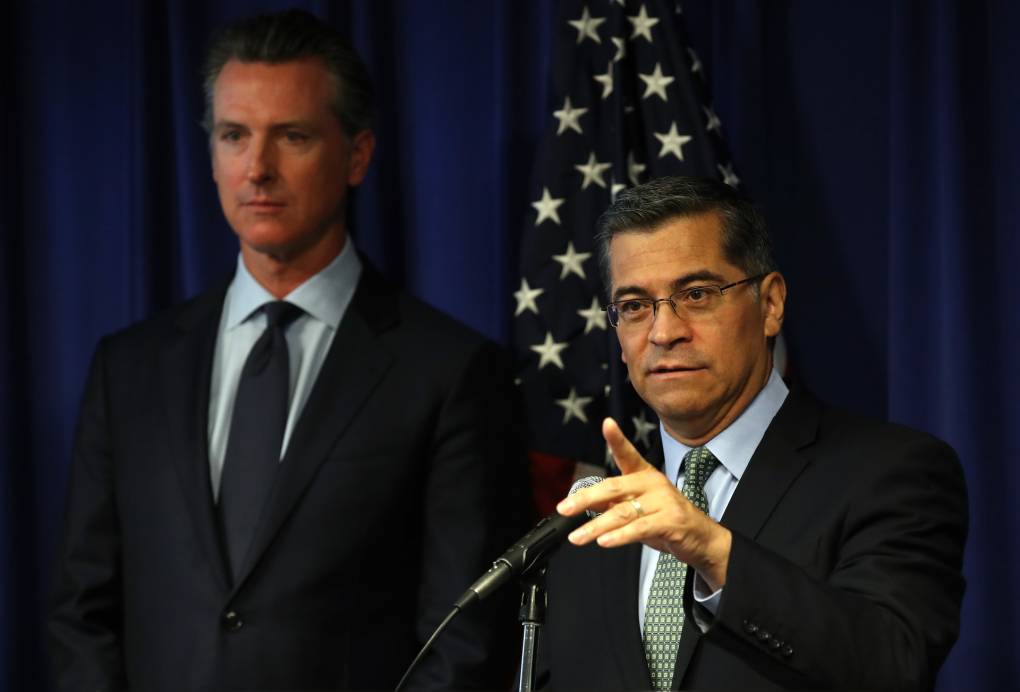
"caption": "Former California Attorney General Xavier Becerra speaks as Gov. Gavin Newsom looks on during a news conference in September 2019.",
"credit": "Justin Sullivan/Getty Images",
"altTag": "\"\"",
"description": "California Attorney General Xavier Becerra speaks as Gov. Gavin Newsom looks on during a news conference in Sept. 2019.",
"imgSizes": {
"medium": {
"file": "https://cdn.kqed.org/wp-content/uploads/sites/10/2020/12/RS46247_GettyImages-1175529279-qut-800x543.jpg",
"width": 800,
"height": 543,
"mimeType": "image/jpeg"
},
"large": {
"file": "https://cdn.kqed.org/wp-content/uploads/sites/10/2020/12/RS46247_GettyImages-1175529279-qut-1020x692.jpg",
"width": 1020,
"height": 692,
"mimeType": "image/jpeg"
},
"thumbnail": {
"file": "https://cdn.kqed.org/wp-content/uploads/sites/10/2020/12/RS46247_GettyImages-1175529279-qut-160x109.jpg",
"width": 160,
"height": 109,
"mimeType": "image/jpeg"
},
"1536x1536": {
"file": "https://cdn.kqed.org/wp-content/uploads/sites/10/2020/12/RS46247_GettyImages-1175529279-qut-1536x1042.jpg",
"width": 1536,
"height": 1042,
"mimeType": "image/jpeg"
},
"post-thumbnail": {
"file": "https://cdn.kqed.org/wp-content/uploads/sites/10/2020/12/RS46247_GettyImages-1175529279-qut-672x372.jpg",
"width": 672,
"height": 372,
"mimeType": "image/jpeg"
},
"twentyfourteen-full-width": {
"file": "https://cdn.kqed.org/wp-content/uploads/sites/10/2020/12/RS46247_GettyImages-1175529279-qut-1038x576.jpg",
"width": 1038,
"height": 576,
"mimeType": "image/jpeg"
},
"apple_news_ca_landscape_12_9": {
"file": "https://cdn.kqed.org/wp-content/uploads/sites/10/2020/12/RS46247_GettyImages-1175529279-qut-1832x1302.jpg",
"width": 1832,
"height": 1302,
"mimeType": "image/jpeg"
},
"apple_news_ca_landscape_9_7": {
"file": "https://cdn.kqed.org/wp-content/uploads/sites/10/2020/12/RS46247_GettyImages-1175529279-qut-1376x1032.jpg",
"width": 1376,
"height": 1032,
"mimeType": "image/jpeg"
},
"apple_news_ca_landscape_5_5": {
"file": "https://cdn.kqed.org/wp-content/uploads/sites/10/2020/12/RS46247_GettyImages-1175529279-qut-1044x783.jpg",
"width": 1044,
"height": 783,
"mimeType": "image/jpeg"
},
"apple_news_ca_landscape_4_7": {
"file": "https://cdn.kqed.org/wp-content/uploads/sites/10/2020/12/RS46247_GettyImages-1175529279-qut-632x474.jpg",
"width": 632,
"height": 474,
"mimeType": "image/jpeg"
},
"apple_news_ca_landscape_4_0": {
"file": "https://cdn.kqed.org/wp-content/uploads/sites/10/2020/12/RS46247_GettyImages-1175529279-qut-536x402.jpg",
"width": 536,
"height": 402,
"mimeType": "image/jpeg"
},
"apple_news_ca_portrait_12_9": {
"file": "https://cdn.kqed.org/wp-content/uploads/sites/10/2020/12/RS46247_GettyImages-1175529279-qut-1122x1302.jpg",
"width": 1122,
"height": 1302,
"mimeType": "image/jpeg"
},
"apple_news_ca_portrait_9_7": {
"file": "https://cdn.kqed.org/wp-content/uploads/sites/10/2020/12/RS46247_GettyImages-1175529279-qut-840x1120.jpg",
"width": 840,
"height": 1120,
"mimeType": "image/jpeg"
},
"apple_news_ca_portrait_5_5": {
"file": "https://cdn.kqed.org/wp-content/uploads/sites/10/2020/12/RS46247_GettyImages-1175529279-qut-687x916.jpg",
"width": 687,
"height": 916,
"mimeType": "image/jpeg"
},
"apple_news_ca_portrait_4_7": {
"file": "https://cdn.kqed.org/wp-content/uploads/sites/10/2020/12/RS46247_GettyImages-1175529279-qut-414x552.jpg",
"width": 414,
"height": 552,
"mimeType": "image/jpeg"
},
"apple_news_ca_portrait_4_0": {
"file": "https://cdn.kqed.org/wp-content/uploads/sites/10/2020/12/RS46247_GettyImages-1175529279-qut-354x472.jpg",
"width": 354,
"height": 472,
"mimeType": "image/jpeg"
},
"apple_news_ca_square_12_9": {
"file": "https://cdn.kqed.org/wp-content/uploads/sites/10/2020/12/RS46247_GettyImages-1175529279-qut-1472x1302.jpg",
"width": 1472,
"height": 1302,
"mimeType": "image/jpeg"
},
"apple_news_ca_square_9_7": {
"file": "https://cdn.kqed.org/wp-content/uploads/sites/10/2020/12/RS46247_GettyImages-1175529279-qut-1104x1104.jpg",
"width": 1104,
"height": 1104,
"mimeType": "image/jpeg"
},
"apple_news_ca_square_5_5": {
"file": "https://cdn.kqed.org/wp-content/uploads/sites/10/2020/12/RS46247_GettyImages-1175529279-qut-912x912.jpg",
"width": 912,
"height": 912,
"mimeType": "image/jpeg"
},
"apple_news_ca_square_4_7": {
"file": "https://cdn.kqed.org/wp-content/uploads/sites/10/2020/12/RS46247_GettyImages-1175529279-qut-550x550.jpg",
"width": 550,
"height": 550,
"mimeType": "image/jpeg"
},
"apple_news_ca_square_4_0": {
"file": "https://cdn.kqed.org/wp-content/uploads/sites/10/2020/12/RS46247_GettyImages-1175529279-qut-470x470.jpg",
"width": 470,
"height": 470,
"mimeType": "image/jpeg"
},
"kqedFullSize": {
"file": "https://cdn.kqed.org/wp-content/uploads/sites/10/2020/12/RS46247_GettyImages-1175529279-qut.jpg",
"width": 1920,
"height": 1302
}
},
"isLoading": false,
"fetchFailed": false
},
"news_11846522": {
"type": "attachments",
"id": "news_11846522",
"meta": {
"index": "attachments_1716263798",
"site": "news",
"id": "11846522",
"found": true
},
"parent": 11846520,
"imgSizes": {
"apple_news_ca_landscape_5_5": {
"file": "https://ww2.kqed.org/app/uploads/sites/10/2020/11/GettyImages-1229520136-1-1044x783.jpg",
"width": 1044,
"mimeType": "image/jpeg",
"height": 783
},
"apple_news_ca_square_4_0": {
"file": "https://ww2.kqed.org/app/uploads/sites/10/2020/11/GettyImages-1229520136-1-470x470.jpg",
"width": 470,
"mimeType": "image/jpeg",
"height": 470
},
"twentyfourteen-full-width": {
"file": "https://ww2.kqed.org/app/uploads/sites/10/2020/11/GettyImages-1229520136-1-1038x576.jpg",
"width": 1038,
"mimeType": "image/jpeg",
"height": 576
},
"thumbnail": {
"file": "https://ww2.kqed.org/app/uploads/sites/10/2020/11/GettyImages-1229520136-1-160x107.jpg",
"width": 160,
"mimeType": "image/jpeg",
"height": 107
},
"post-thumbnail": {
"file": "https://ww2.kqed.org/app/uploads/sites/10/2020/11/GettyImages-1229520136-1-672x372.jpg",
"width": 672,
"mimeType": "image/jpeg",
"height": 372
},
"kqedFullSize": {
"file": "https://ww2.kqed.org/app/uploads/sites/10/2020/11/GettyImages-1229520136-1.jpg",
"width": 1900,
"height": 1267
},
"apple_news_ca_landscape_4_7": {
"file": "https://ww2.kqed.org/app/uploads/sites/10/2020/11/GettyImages-1229520136-1-632x474.jpg",
"width": 632,
"mimeType": "image/jpeg",
"height": 474
},
"large": {
"file": "https://ww2.kqed.org/app/uploads/sites/10/2020/11/GettyImages-1229520136-1-1020x680.jpg",
"width": 1020,
"mimeType": "image/jpeg",
"height": 680
},
"apple_news_ca_landscape_4_0": {
"file": "https://ww2.kqed.org/app/uploads/sites/10/2020/11/GettyImages-1229520136-1-536x402.jpg",
"width": 536,
"mimeType": "image/jpeg",
"height": 402
},
"apple_news_ca_portrait_12_9": {
"file": "https://ww2.kqed.org/app/uploads/sites/10/2020/11/GettyImages-1229520136-1-1122x1267.jpg",
"width": 1122,
"mimeType": "image/jpeg",
"height": 1267
},
"medium": {
"file": "https://ww2.kqed.org/app/uploads/sites/10/2020/11/GettyImages-1229520136-1-800x533.jpg",
"width": 800,
"mimeType": "image/jpeg",
"height": 533
},
"apple_news_ca_portrait_4_0": {
"file": "https://ww2.kqed.org/app/uploads/sites/10/2020/11/GettyImages-1229520136-1-354x472.jpg",
"width": 354,
"mimeType": "image/jpeg",
"height": 472
},
"apple_news_ca_portrait_9_7": {
"file": "https://ww2.kqed.org/app/uploads/sites/10/2020/11/GettyImages-1229520136-1-840x1120.jpg",
"width": 840,
"mimeType": "image/jpeg",
"height": 1120
},
"apple_news_ca_landscape_12_9": {
"file": "https://ww2.kqed.org/app/uploads/sites/10/2020/11/GettyImages-1229520136-1-1832x1267.jpg",
"width": 1832,
"mimeType": "image/jpeg",
"height": 1267
},
"apple_news_ca_square_9_7": {
"file": "https://ww2.kqed.org/app/uploads/sites/10/2020/11/GettyImages-1229520136-1-1104x1104.jpg",
"width": 1104,
"mimeType": "image/jpeg",
"height": 1104
},
"1536x1536": {
"file": "https://ww2.kqed.org/app/uploads/sites/10/2020/11/GettyImages-1229520136-1-1536x1024.jpg",
"width": 1536,
"mimeType": "image/jpeg",
"height": 1024
},
"apple_news_ca_portrait_4_7": {
"file": "https://ww2.kqed.org/app/uploads/sites/10/2020/11/GettyImages-1229520136-1-414x552.jpg",
"width": 414,
"mimeType": "image/jpeg",
"height": 552
},
"apple_news_ca_square_12_9": {
"file": "https://ww2.kqed.org/app/uploads/sites/10/2020/11/GettyImages-1229520136-1-1472x1267.jpg",
"width": 1472,
"mimeType": "image/jpeg",
"height": 1267
},
"apple_news_ca_portrait_5_5": {
"file": "https://ww2.kqed.org/app/uploads/sites/10/2020/11/GettyImages-1229520136-1-687x916.jpg",
"width": 687,
"mimeType": "image/jpeg",
"height": 916
},
"apple_news_ca_square_4_7": {
"file": "https://ww2.kqed.org/app/uploads/sites/10/2020/11/GettyImages-1229520136-1-550x550.jpg",
"width": 550,
"mimeType": "image/jpeg",
"height": 550
},
"apple_news_ca_landscape_9_7": {
"file": "https://ww2.kqed.org/app/uploads/sites/10/2020/11/GettyImages-1229520136-1-1376x1032.jpg",
"width": 1376,
"mimeType": "image/jpeg",
"height": 1032
},
"apple_news_ca_square_5_5": {
"file": "https://ww2.kqed.org/app/uploads/sites/10/2020/11/GettyImages-1229520136-1-912x912.jpg",
"width": 912,
"mimeType": "image/jpeg",
"height": 912
}
},
"publishDate": 1604803508,
"modified": 1611086200,
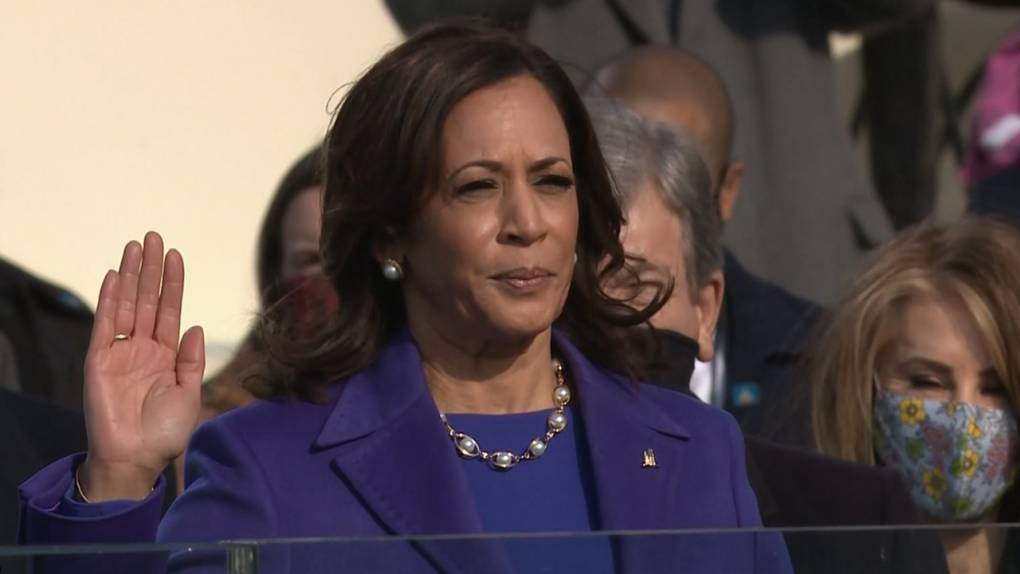
"caption": "Vice President-elect Kamala Harris delivers remarks at the Chase Center before President-elect Joe Biden's address to the nation Nov. 7, 2020 in Wilmington, Delaware. ",
"description": "Vice President-elect Kamala Harris delivers remarks at the Chase Center before President-elect Joe Biden's address to the nation November 07, 2020 in Wilmington, Delaware. ",
"title": "GettyImages-1229520136 (1)",
"credit": "Photo by Andrew Harnik-Pool/Getty Images",
"status": "inherit",
"altTag": null,
"isLoading": false,
"fetchFailed": false
},
"news_11855782": {
"type": "attachments",
"id": "news_11855782",
"meta": {
"index": "attachments_1716263798",
"site": "news",
"id": "11855782",
"found": true
},
"parent": 11855613,
"imgSizes": {
"apple_news_ca_landscape_5_5": {
"file": "https://ww2.kqed.org/app/uploads/sites/10/2021/01/MARQUEE__813-1-1044x720.jpg",
"width": 1044,
"mimeType": "image/jpeg",
"height": 720
},
"apple_news_ca_square_4_0": {
"file": "https://ww2.kqed.org/app/uploads/sites/10/2021/01/MARQUEE__813-1-470x470.jpg",
"width": 470,
"mimeType": "image/jpeg",
"height": 470
},
"twentyfourteen-full-width": {
"file": "https://ww2.kqed.org/app/uploads/sites/10/2021/01/MARQUEE__813-1-1038x576.jpg",
"width": 1038,
"mimeType": "image/jpeg",
"height": 576
},
"thumbnail": {
"file": "https://ww2.kqed.org/app/uploads/sites/10/2021/01/MARQUEE__813-1-160x90.jpg",
"width": 160,
"mimeType": "image/jpeg",
"height": 90
},
"post-thumbnail": {
"file": "https://ww2.kqed.org/app/uploads/sites/10/2021/01/MARQUEE__813-1-672x372.jpg",
"width": 672,
"mimeType": "image/jpeg",
"height": 372
},
"kqedFullSize": {
"file": "https://ww2.kqed.org/app/uploads/sites/10/2021/01/MARQUEE__813-1.jpg",
"width": 1280,
"height": 720
},
"apple_news_ca_landscape_4_7": {
"file": "https://ww2.kqed.org/app/uploads/sites/10/2021/01/MARQUEE__813-1-632x474.jpg",
"width": 632,
"mimeType": "image/jpeg",
"height": 474
},
"large": {
"file": "https://ww2.kqed.org/app/uploads/sites/10/2021/01/MARQUEE__813-1-1020x574.jpg",
"width": 1020,
"mimeType": "image/jpeg",
"height": 574
},
"apple_news_ca_landscape_4_0": {
"file": "https://ww2.kqed.org/app/uploads/sites/10/2021/01/MARQUEE__813-1-536x402.jpg",
"width": 536,
"mimeType": "image/jpeg",
"height": 402
},
"apple_news_ca_portrait_12_9": {
"file": "https://ww2.kqed.org/app/uploads/sites/10/2021/01/MARQUEE__813-1-1122x720.jpg",
"width": 1122,
"mimeType": "image/jpeg",
"height": 720
},
"medium": {
"file": "https://ww2.kqed.org/app/uploads/sites/10/2021/01/MARQUEE__813-1-800x450.jpg",
"width": 800,
"mimeType": "image/jpeg",
"height": 450
},
"apple_news_ca_portrait_4_0": {
"file": "https://ww2.kqed.org/app/uploads/sites/10/2021/01/MARQUEE__813-1-354x472.jpg",
"width": 354,
"mimeType": "image/jpeg",
"height": 472
},
"apple_news_ca_portrait_9_7": {
"file": "https://ww2.kqed.org/app/uploads/sites/10/2021/01/MARQUEE__813-1-840x720.jpg",
"width": 840,
"mimeType": "image/jpeg",
"height": 720
},
"apple_news_ca_square_9_7": {
"file": "https://ww2.kqed.org/app/uploads/sites/10/2021/01/MARQUEE__813-1-1104x720.jpg",
"width": 1104,
"mimeType": "image/jpeg",
"height": 720
},
"apple_news_ca_portrait_4_7": {
"file": "https://ww2.kqed.org/app/uploads/sites/10/2021/01/MARQUEE__813-1-414x552.jpg",
"width": 414,
"mimeType": "image/jpeg",
"height": 552
},
"apple_news_ca_portrait_5_5": {
"file": "https://ww2.kqed.org/app/uploads/sites/10/2021/01/MARQUEE__813-1-687x720.jpg",
"width": 687,
"mimeType": "image/jpeg",
"height": 720
},
"apple_news_ca_square_4_7": {
"file": "https://ww2.kqed.org/app/uploads/sites/10/2021/01/MARQUEE__813-1-550x550.jpg",
"width": 550,
"mimeType": "image/jpeg",
"height": 550
},
"apple_news_ca_square_5_5": {
"file": "https://ww2.kqed.org/app/uploads/sites/10/2021/01/MARQUEE__813-1-912x720.jpg",
"width": 912,
"mimeType": "image/jpeg",
"height": 720
}
},
"publishDate": 1610767691,
"modified": 1610767691,
"caption": null,
"description": null,
"title": "MARQUEE__813",
"credit": null,
"status": "inherit",
"altTag": null,
"isLoading": false,
"fetchFailed": false
},
"news_11825065": {
"type": "attachments",
"id": "news_11825065",
"meta": {
"index": "attachments_1716263798",
"site": "news",
"id": "11825065",
"found": true
},
"parent": 11824855,
"imgSizes": {
"apple_news_ca_landscape_5_5": {
"file": "https://ww2.kqed.org/app/uploads/sites/10/2020/06/RS21716_GettyImages-84931235-qut-1044x783.jpg",
"width": 1044,
"mimeType": "image/jpeg",
"height": 783
},
"apple_news_ca_square_4_0": {
"file": "https://ww2.kqed.org/app/uploads/sites/10/2020/06/RS21716_GettyImages-84931235-qut-470x470.jpg",
"width": 470,
"mimeType": "image/jpeg",
"height": 470
},
"twentyfourteen-full-width": {
"file": "https://ww2.kqed.org/app/uploads/sites/10/2020/06/RS21716_GettyImages-84931235-qut-1038x576.jpg",
"width": 1038,
"mimeType": "image/jpeg",
"height": 576
},
"thumbnail": {
"file": "https://ww2.kqed.org/app/uploads/sites/10/2020/06/RS21716_GettyImages-84931235-qut-160x106.jpg",
"width": 160,
"mimeType": "image/jpeg",
"height": 106
},
"post-thumbnail": {
"file": "https://ww2.kqed.org/app/uploads/sites/10/2020/06/RS21716_GettyImages-84931235-qut-672x372.jpg",
"width": 672,
"mimeType": "image/jpeg",
"height": 372
},
"kqedFullSize": {
"file": "https://ww2.kqed.org/app/uploads/sites/10/2020/06/RS21716_GettyImages-84931235-qut.jpg",
"width": 1920,
"height": 1270
},
"apple_news_ca_landscape_4_7": {
"file": "https://ww2.kqed.org/app/uploads/sites/10/2020/06/RS21716_GettyImages-84931235-qut-632x474.jpg",
"width": 632,
"mimeType": "image/jpeg",
"height": 474
},
"large": {
"file": "https://ww2.kqed.org/app/uploads/sites/10/2020/06/RS21716_GettyImages-84931235-qut-1020x675.jpg",
"width": 1020,
"mimeType": "image/jpeg",
"height": 675
},
"apple_news_ca_landscape_4_0": {
"file": "https://ww2.kqed.org/app/uploads/sites/10/2020/06/RS21716_GettyImages-84931235-qut-536x402.jpg",
"width": 536,
"mimeType": "image/jpeg",
"height": 402
},
"apple_news_ca_portrait_12_9": {
"file": "https://ww2.kqed.org/app/uploads/sites/10/2020/06/RS21716_GettyImages-84931235-qut-1122x1270.jpg",
"width": 1122,
"mimeType": "image/jpeg",
"height": 1270
},
"medium": {
"file": "https://ww2.kqed.org/app/uploads/sites/10/2020/06/RS21716_GettyImages-84931235-qut-800x529.jpg",
"width": 800,
"mimeType": "image/jpeg",
"height": 529
},
"apple_news_ca_portrait_4_0": {
"file": "https://ww2.kqed.org/app/uploads/sites/10/2020/06/RS21716_GettyImages-84931235-qut-354x472.jpg",
"width": 354,
"mimeType": "image/jpeg",
"height": 472
},
"apple_news_ca_portrait_9_7": {
"file": "https://ww2.kqed.org/app/uploads/sites/10/2020/06/RS21716_GettyImages-84931235-qut-840x1120.jpg",
"width": 840,
"mimeType": "image/jpeg",
"height": 1120
},
"apple_news_ca_landscape_12_9": {
"file": "https://ww2.kqed.org/app/uploads/sites/10/2020/06/RS21716_GettyImages-84931235-qut-1832x1270.jpg",
"width": 1832,
"mimeType": "image/jpeg",
"height": 1270
},
"apple_news_ca_square_9_7": {
"file": "https://ww2.kqed.org/app/uploads/sites/10/2020/06/RS21716_GettyImages-84931235-qut-1104x1104.jpg",
"width": 1104,
"mimeType": "image/jpeg",
"height": 1104
},
"apple_news_ca_portrait_4_7": {
"file": "https://ww2.kqed.org/app/uploads/sites/10/2020/06/RS21716_GettyImages-84931235-qut-414x552.jpg",
"width": 414,
"mimeType": "image/jpeg",
"height": 552
},
"apple_news_ca_square_12_9": {
"file": "https://ww2.kqed.org/app/uploads/sites/10/2020/06/RS21716_GettyImages-84931235-qut-1472x1270.jpg",
"width": 1472,
"mimeType": "image/jpeg",
"height": 1270
},
"apple_news_ca_portrait_5_5": {
"file": "https://ww2.kqed.org/app/uploads/sites/10/2020/06/RS21716_GettyImages-84931235-qut-687x916.jpg",
"width": 687,
"mimeType": "image/jpeg",
"height": 916
},
"full-width": {
"file": "https://ww2.kqed.org/app/uploads/sites/10/2020/06/RS21716_GettyImages-84931235-qut-1920x1270.jpg",
"width": 1920,
"mimeType": "image/jpeg",
"height": 1270
},
"apple_news_ca_square_4_7": {
"file": "https://ww2.kqed.org/app/uploads/sites/10/2020/06/RS21716_GettyImages-84931235-qut-550x550.jpg",
"width": 550,
"mimeType": "image/jpeg",
"height": 550
},
"apple_news_ca_landscape_9_7": {
"file": "https://ww2.kqed.org/app/uploads/sites/10/2020/06/RS21716_GettyImages-84931235-qut-1376x1032.jpg",
"width": 1376,
"mimeType": "image/jpeg",
"height": 1032
},
"apple_news_ca_square_5_5": {
"file": "https://ww2.kqed.org/app/uploads/sites/10/2020/06/RS21716_GettyImages-84931235-qut-912x912.jpg",
"width": 912,
"mimeType": "image/jpeg",
"height": 912
}
},
"publishDate": 1592456349,
"modified": 1610754214,
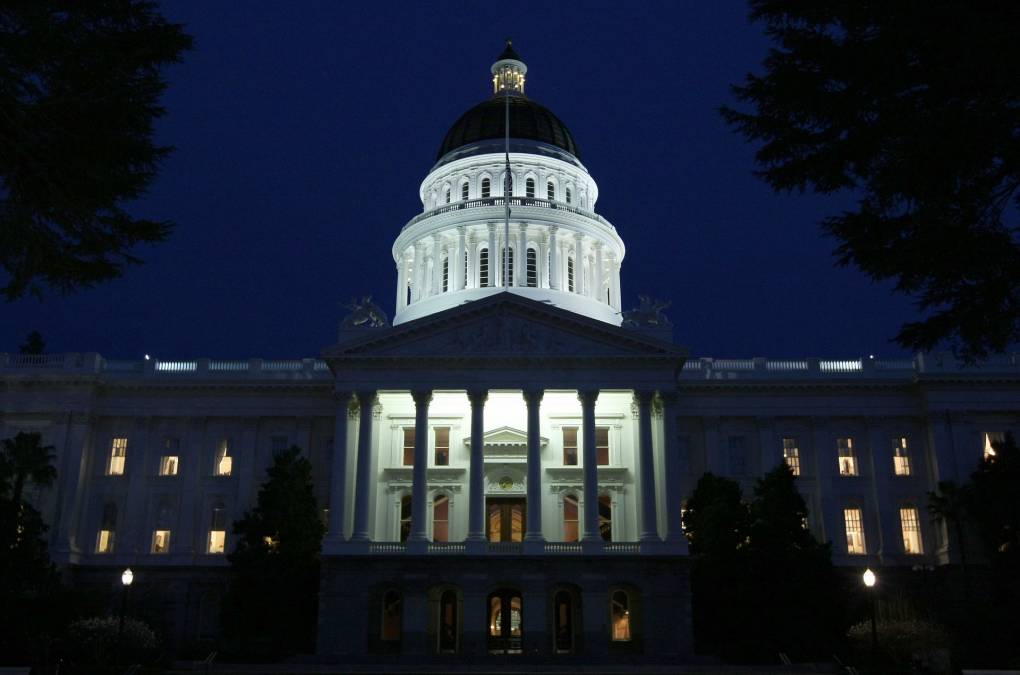
"caption": "A view of the California state Capitol in Sacramento.",
"description": "A view of the California State Capitol. ",
"title": "RS21716_GettyImages-84931235-qut",
"credit": "Justin Sullivan/Getty Images",
"status": "inherit",
"altTag": null,
"isLoading": false,
"fetchFailed": false
},
"news_11854598": {
"type": "attachments",
"id": "news_11854598",
"meta": {
"index": "attachments_1716263798",
"site": "news",
"id": "11854598",
"found": true
},
"parent": 11854484,
"imgSizes": {
"apple_news_ca_landscape_5_5": {
"file": "https://ww2.kqed.org/app/uploads/sites/10/2021/01/MARQUEE_812-1044x720.jpg",
"width": 1044,
"mimeType": "image/jpeg",
"height": 720
},
"apple_news_ca_square_4_0": {
"file": "https://ww2.kqed.org/app/uploads/sites/10/2021/01/MARQUEE_812-470x470.jpg",
"width": 470,
"mimeType": "image/jpeg",
"height": 470
},
"twentyfourteen-full-width": {
"file": "https://ww2.kqed.org/app/uploads/sites/10/2021/01/MARQUEE_812-1038x576.jpg",
"width": 1038,
"mimeType": "image/jpeg",
"height": 576
},
"thumbnail": {
"file": "https://ww2.kqed.org/app/uploads/sites/10/2021/01/MARQUEE_812-160x90.jpg",
"width": 160,
"mimeType": "image/jpeg",
"height": 90
},
"post-thumbnail": {
"file": "https://ww2.kqed.org/app/uploads/sites/10/2021/01/MARQUEE_812-672x372.jpg",
"width": 672,
"mimeType": "image/jpeg",
"height": 372
},
"kqedFullSize": {
"file": "https://ww2.kqed.org/app/uploads/sites/10/2021/01/MARQUEE_812.jpg",
"width": 1280,
"height": 720
},
"apple_news_ca_landscape_4_7": {
"file": "https://ww2.kqed.org/app/uploads/sites/10/2021/01/MARQUEE_812-632x474.jpg",
"width": 632,
"mimeType": "image/jpeg",
"height": 474
},
"large": {
"file": "https://ww2.kqed.org/app/uploads/sites/10/2021/01/MARQUEE_812-1020x574.jpg",
"width": 1020,
"mimeType": "image/jpeg",
"height": 574
},
"apple_news_ca_landscape_4_0": {
"file": "https://ww2.kqed.org/app/uploads/sites/10/2021/01/MARQUEE_812-536x402.jpg",
"width": 536,
"mimeType": "image/jpeg",
"height": 402
},
"apple_news_ca_portrait_12_9": {
"file": "https://ww2.kqed.org/app/uploads/sites/10/2021/01/MARQUEE_812-1122x720.jpg",
"width": 1122,
"mimeType": "image/jpeg",
"height": 720
},
"medium": {
"file": "https://ww2.kqed.org/app/uploads/sites/10/2021/01/MARQUEE_812-800x450.jpg",
"width": 800,
"mimeType": "image/jpeg",
"height": 450
},
"apple_news_ca_portrait_4_0": {
"file": "https://ww2.kqed.org/app/uploads/sites/10/2021/01/MARQUEE_812-354x472.jpg",
"width": 354,
"mimeType": "image/jpeg",
"height": 472
},
"apple_news_ca_portrait_9_7": {
"file": "https://ww2.kqed.org/app/uploads/sites/10/2021/01/MARQUEE_812-840x720.jpg",
"width": 840,
"mimeType": "image/jpeg",
"height": 720
},
"apple_news_ca_square_9_7": {
"file": "https://ww2.kqed.org/app/uploads/sites/10/2021/01/MARQUEE_812-1104x720.jpg",
"width": 1104,
"mimeType": "image/jpeg",
"height": 720
},
"apple_news_ca_portrait_4_7": {
"file": "https://ww2.kqed.org/app/uploads/sites/10/2021/01/MARQUEE_812-414x552.jpg",
"width": 414,
"mimeType": "image/jpeg",
"height": 552
},
"apple_news_ca_portrait_5_5": {
"file": "https://ww2.kqed.org/app/uploads/sites/10/2021/01/MARQUEE_812-687x720.jpg",
"width": 687,
"mimeType": "image/jpeg",
"height": 720
},
"apple_news_ca_square_4_7": {
"file": "https://ww2.kqed.org/app/uploads/sites/10/2021/01/MARQUEE_812-550x550.jpg",
"width": 550,
"mimeType": "image/jpeg",
"height": 550
},
"apple_news_ca_square_5_5": {
"file": "https://ww2.kqed.org/app/uploads/sites/10/2021/01/MARQUEE_812-912x720.jpg",
"width": 912,
"mimeType": "image/jpeg",
"height": 720
}
},
"publishDate": 1610156749,
"modified": 1610156749,
"caption": null,
"description": null,
"title": "MARQUEE_812",
"credit": null,
"status": "inherit",
"altTag": null,
"isLoading": false,
"fetchFailed": false
},
"news_11854464": {
"type": "attachments",
"id": "news_11854464",
"meta": {
"index": "attachments_1716263798",
"site": "news",
"id": "11854464",
"found": true
},
"parent": 11854455,
"imgSizes": {
"apple_news_ca_landscape_5_5": {
"file": "https://ww2.kqed.org/app/uploads/sites/10/2021/01/RS42393_038_KQED_BethLaBerge_BloomEnergy_Newsom_03282020-qut-1044x783.jpg",
"width": 1044,
"mimeType": "image/jpeg",
"height": 783
},
"apple_news_ca_square_4_0": {
"file": "https://ww2.kqed.org/app/uploads/sites/10/2021/01/RS42393_038_KQED_BethLaBerge_BloomEnergy_Newsom_03282020-qut-470x470.jpg",
"width": 470,
"mimeType": "image/jpeg",
"height": 470
},
"twentyfourteen-full-width": {
"file": "https://ww2.kqed.org/app/uploads/sites/10/2021/01/RS42393_038_KQED_BethLaBerge_BloomEnergy_Newsom_03282020-qut-1038x576.jpg",
"width": 1038,
"mimeType": "image/jpeg",
"height": 576
},
"thumbnail": {
"file": "https://ww2.kqed.org/app/uploads/sites/10/2021/01/RS42393_038_KQED_BethLaBerge_BloomEnergy_Newsom_03282020-qut-160x107.jpg",
"width": 160,
"mimeType": "image/jpeg",
"height": 107
},
"post-thumbnail": {
"file": "https://ww2.kqed.org/app/uploads/sites/10/2021/01/RS42393_038_KQED_BethLaBerge_BloomEnergy_Newsom_03282020-qut-672x372.jpg",
"width": 672,
"mimeType": "image/jpeg",
"height": 372
},
"kqedFullSize": {
"file": "https://ww2.kqed.org/app/uploads/sites/10/2021/01/RS42393_038_KQED_BethLaBerge_BloomEnergy_Newsom_03282020-qut.jpg",
"width": 1920,
"height": 1280
},
"apple_news_ca_landscape_4_7": {
"file": "https://ww2.kqed.org/app/uploads/sites/10/2021/01/RS42393_038_KQED_BethLaBerge_BloomEnergy_Newsom_03282020-qut-632x474.jpg",
"width": 632,
"mimeType": "image/jpeg",
"height": 474
},
"large": {
"file": "https://ww2.kqed.org/app/uploads/sites/10/2021/01/RS42393_038_KQED_BethLaBerge_BloomEnergy_Newsom_03282020-qut-1020x680.jpg",
"width": 1020,
"mimeType": "image/jpeg",
"height": 680
},
"apple_news_ca_landscape_4_0": {
"file": "https://ww2.kqed.org/app/uploads/sites/10/2021/01/RS42393_038_KQED_BethLaBerge_BloomEnergy_Newsom_03282020-qut-536x402.jpg",
"width": 536,
"mimeType": "image/jpeg",
"height": 402
},
"apple_news_ca_portrait_12_9": {
"file": "https://ww2.kqed.org/app/uploads/sites/10/2021/01/RS42393_038_KQED_BethLaBerge_BloomEnergy_Newsom_03282020-qut-1122x1280.jpg",
"width": 1122,
"mimeType": "image/jpeg",
"height": 1280
},
"medium": {
"file": "https://ww2.kqed.org/app/uploads/sites/10/2021/01/RS42393_038_KQED_BethLaBerge_BloomEnergy_Newsom_03282020-qut-800x533.jpg",
"width": 800,
"mimeType": "image/jpeg",
"height": 533
},
"apple_news_ca_portrait_4_0": {
"file": "https://ww2.kqed.org/app/uploads/sites/10/2021/01/RS42393_038_KQED_BethLaBerge_BloomEnergy_Newsom_03282020-qut-354x472.jpg",
"width": 354,
"mimeType": "image/jpeg",
"height": 472
},
"apple_news_ca_portrait_9_7": {
"file": "https://ww2.kqed.org/app/uploads/sites/10/2021/01/RS42393_038_KQED_BethLaBerge_BloomEnergy_Newsom_03282020-qut-840x1120.jpg",
"width": 840,
"mimeType": "image/jpeg",
"height": 1120
},
"apple_news_ca_landscape_12_9": {
"file": "https://ww2.kqed.org/app/uploads/sites/10/2021/01/RS42393_038_KQED_BethLaBerge_BloomEnergy_Newsom_03282020-qut-1832x1280.jpg",
"width": 1832,
"mimeType": "image/jpeg",
"height": 1280
},
"apple_news_ca_square_9_7": {
"file": "https://ww2.kqed.org/app/uploads/sites/10/2021/01/RS42393_038_KQED_BethLaBerge_BloomEnergy_Newsom_03282020-qut-1104x1104.jpg",
"width": 1104,
"mimeType": "image/jpeg",
"height": 1104
},
"1536x1536": {
"file": "https://ww2.kqed.org/app/uploads/sites/10/2021/01/RS42393_038_KQED_BethLaBerge_BloomEnergy_Newsom_03282020-qut-1536x1024.jpg",
"width": 1536,
"mimeType": "image/jpeg",
"height": 1024
},
"apple_news_ca_portrait_4_7": {
"file": "https://ww2.kqed.org/app/uploads/sites/10/2021/01/RS42393_038_KQED_BethLaBerge_BloomEnergy_Newsom_03282020-qut-414x552.jpg",
"width": 414,
"mimeType": "image/jpeg",
"height": 552
},
"apple_news_ca_square_12_9": {
"file": "https://ww2.kqed.org/app/uploads/sites/10/2021/01/RS42393_038_KQED_BethLaBerge_BloomEnergy_Newsom_03282020-qut-1472x1280.jpg",
"width": 1472,
"mimeType": "image/jpeg",
"height": 1280
},
"apple_news_ca_portrait_5_5": {
"file": "https://ww2.kqed.org/app/uploads/sites/10/2021/01/RS42393_038_KQED_BethLaBerge_BloomEnergy_Newsom_03282020-qut-687x916.jpg",
"width": 687,
"mimeType": "image/jpeg",
"height": 916
},
"apple_news_ca_square_4_7": {
"file": "https://ww2.kqed.org/app/uploads/sites/10/2021/01/RS42393_038_KQED_BethLaBerge_BloomEnergy_Newsom_03282020-qut-550x550.jpg",
"width": 550,
"mimeType": "image/jpeg",
"height": 550
},
"apple_news_ca_landscape_9_7": {
"file": "https://ww2.kqed.org/app/uploads/sites/10/2021/01/RS42393_038_KQED_BethLaBerge_BloomEnergy_Newsom_03282020-qut-1376x1032.jpg",
"width": 1376,
"mimeType": "image/jpeg",
"height": 1032
},
"apple_news_ca_square_5_5": {
"file": "https://ww2.kqed.org/app/uploads/sites/10/2021/01/RS42393_038_KQED_BethLaBerge_BloomEnergy_Newsom_03282020-qut-912x912.jpg",
"width": 912,
"mimeType": "image/jpeg",
"height": 912
}
},
"publishDate": 1610136688,
"modified": 1610142407,
"caption": "Gov. Gavin Newsom (pictured in March) said California 'is poised for an economic recovery' as he unveiled his new state budget proposal Friday.",
"description": "Gov. Gavin Newsom (pictured in March) said California 'is poised for an economic recovery' as he unveiled his new state budget proposal Friday.",
"title": "RS42393_038_KQED_BethLaBerge_BloomEnergy_Newsom_03282020-qut",
"credit": "Beth LaBerge/KQED",
"status": "inherit",
"altTag": "Gov. Gavin Newsom photographed in March, 2020",
"isLoading": false,
"fetchFailed": false
},
"news_11854196": {
"type": "attachments",
"id": "news_11854196",
"meta": {
"index": "attachments_1716263798",
"site": "news",
"id": "11854196",
"found": true
},
"parent": 11854170,
"imgSizes": {
"apple_news_ca_landscape_5_5": {
"file": "https://ww2.kqed.org/app/uploads/sites/10/2021/01/RS42402_047_KQED_BethLaBerge_BloomEnergy_Newsom_03282020-qut-1044x783.jpg",
"width": 1044,
"mimeType": "image/jpeg",
"height": 783
},
"apple_news_ca_square_4_0": {
"file": "https://ww2.kqed.org/app/uploads/sites/10/2021/01/RS42402_047_KQED_BethLaBerge_BloomEnergy_Newsom_03282020-qut-470x470.jpg",
"width": 470,
"mimeType": "image/jpeg",
"height": 470
},
"twentyfourteen-full-width": {
"file": "https://ww2.kqed.org/app/uploads/sites/10/2021/01/RS42402_047_KQED_BethLaBerge_BloomEnergy_Newsom_03282020-qut-1038x576.jpg",
"width": 1038,
"mimeType": "image/jpeg",
"height": 576
},
"thumbnail": {
"file": "https://ww2.kqed.org/app/uploads/sites/10/2021/01/RS42402_047_KQED_BethLaBerge_BloomEnergy_Newsom_03282020-qut-160x107.jpg",
"width": 160,
"mimeType": "image/jpeg",
"height": 107
},
"post-thumbnail": {
"file": "https://ww2.kqed.org/app/uploads/sites/10/2021/01/RS42402_047_KQED_BethLaBerge_BloomEnergy_Newsom_03282020-qut-672x372.jpg",
"width": 672,
"mimeType": "image/jpeg",
"height": 372
},
"kqedFullSize": {
"file": "https://ww2.kqed.org/app/uploads/sites/10/2021/01/RS42402_047_KQED_BethLaBerge_BloomEnergy_Newsom_03282020-qut.jpg",
"width": 1920,
"height": 1280
},
"apple_news_ca_landscape_4_7": {
"file": "https://ww2.kqed.org/app/uploads/sites/10/2021/01/RS42402_047_KQED_BethLaBerge_BloomEnergy_Newsom_03282020-qut-632x474.jpg",
"width": 632,
"mimeType": "image/jpeg",
"height": 474
},
"large": {
"file": "https://ww2.kqed.org/app/uploads/sites/10/2021/01/RS42402_047_KQED_BethLaBerge_BloomEnergy_Newsom_03282020-qut-1020x680.jpg",
"width": 1020,
"mimeType": "image/jpeg",
"height": 680
},
"apple_news_ca_landscape_4_0": {
"file": "https://ww2.kqed.org/app/uploads/sites/10/2021/01/RS42402_047_KQED_BethLaBerge_BloomEnergy_Newsom_03282020-qut-536x402.jpg",
"width": 536,
"mimeType": "image/jpeg",
"height": 402
},
"apple_news_ca_portrait_12_9": {
"file": "https://ww2.kqed.org/app/uploads/sites/10/2021/01/RS42402_047_KQED_BethLaBerge_BloomEnergy_Newsom_03282020-qut-1122x1280.jpg",
"width": 1122,
"mimeType": "image/jpeg",
"height": 1280
},
"medium": {
"file": "https://ww2.kqed.org/app/uploads/sites/10/2021/01/RS42402_047_KQED_BethLaBerge_BloomEnergy_Newsom_03282020-qut-800x533.jpg",
"width": 800,
"mimeType": "image/jpeg",
"height": 533
},
"apple_news_ca_portrait_4_0": {
"file": "https://ww2.kqed.org/app/uploads/sites/10/2021/01/RS42402_047_KQED_BethLaBerge_BloomEnergy_Newsom_03282020-qut-354x472.jpg",
"width": 354,
"mimeType": "image/jpeg",
"height": 472
},
"apple_news_ca_portrait_9_7": {
"file": "https://ww2.kqed.org/app/uploads/sites/10/2021/01/RS42402_047_KQED_BethLaBerge_BloomEnergy_Newsom_03282020-qut-840x1120.jpg",
"width": 840,
"mimeType": "image/jpeg",
"height": 1120
},
"apple_news_ca_landscape_12_9": {
"file": "https://ww2.kqed.org/app/uploads/sites/10/2021/01/RS42402_047_KQED_BethLaBerge_BloomEnergy_Newsom_03282020-qut-1832x1280.jpg",
"width": 1832,
"mimeType": "image/jpeg",
"height": 1280
},
"apple_news_ca_square_9_7": {
"file": "https://ww2.kqed.org/app/uploads/sites/10/2021/01/RS42402_047_KQED_BethLaBerge_BloomEnergy_Newsom_03282020-qut-1104x1104.jpg",
"width": 1104,
"mimeType": "image/jpeg",
"height": 1104
},
"1536x1536": {
"file": "https://ww2.kqed.org/app/uploads/sites/10/2021/01/RS42402_047_KQED_BethLaBerge_BloomEnergy_Newsom_03282020-qut-1536x1024.jpg",
"width": 1536,
"mimeType": "image/jpeg",
"height": 1024
},
"apple_news_ca_portrait_4_7": {
"file": "https://ww2.kqed.org/app/uploads/sites/10/2021/01/RS42402_047_KQED_BethLaBerge_BloomEnergy_Newsom_03282020-qut-414x552.jpg",
"width": 414,
"mimeType": "image/jpeg",
"height": 552
},
"apple_news_ca_square_12_9": {
"file": "https://ww2.kqed.org/app/uploads/sites/10/2021/01/RS42402_047_KQED_BethLaBerge_BloomEnergy_Newsom_03282020-qut-1472x1280.jpg",
"width": 1472,
"mimeType": "image/jpeg",
"height": 1280
},
"apple_news_ca_portrait_5_5": {
"file": "https://ww2.kqed.org/app/uploads/sites/10/2021/01/RS42402_047_KQED_BethLaBerge_BloomEnergy_Newsom_03282020-qut-687x916.jpg",
"width": 687,
"mimeType": "image/jpeg",
"height": 916
},
"apple_news_ca_square_4_7": {
"file": "https://ww2.kqed.org/app/uploads/sites/10/2021/01/RS42402_047_KQED_BethLaBerge_BloomEnergy_Newsom_03282020-qut-550x550.jpg",
"width": 550,
"mimeType": "image/jpeg",
"height": 550
},
"apple_news_ca_landscape_9_7": {
"file": "https://ww2.kqed.org/app/uploads/sites/10/2021/01/RS42402_047_KQED_BethLaBerge_BloomEnergy_Newsom_03282020-qut-1376x1032.jpg",
"width": 1376,
"mimeType": "image/jpeg",
"height": 1032
},
"apple_news_ca_square_5_5": {
"file": "https://ww2.kqed.org/app/uploads/sites/10/2021/01/RS42402_047_KQED_BethLaBerge_BloomEnergy_Newsom_03282020-qut-912x912.jpg",
"width": 912,
"mimeType": "image/jpeg",
"height": 912
}
},
"publishDate": 1610051607,
"modified": 1610060366,
"caption": "California Gov. Gavin Newsom speaks during a press conference at the Bloom Energy Sunnyvale campus on March 28, 2020.",
"description": null,
"title": "RS42402_047_KQED_BethLaBerge_BloomEnergy_Newsom_03282020-qut",
"credit": "Beth LaBerge/KQED",
"status": "inherit",
"altTag": "Gavin Newsom speaking",
"isLoading": false,
"fetchFailed": false
},
"news_11853247": {
"type": "attachments",
"id": "news_11853247",
"meta": {
"index": "attachments_1716263798",
"site": "news",
"id": "11853247",
"found": true
},
"parent": 11853246,
"imgSizes": {
"apple_news_ca_landscape_5_5": {
"file": "https://ww2.kqed.org/app/uploads/sites/10/2020/12/GettyImages-1229643785-1044x783.jpg",
"width": 1044,
"mimeType": "image/jpeg",
"height": 783
},
"apple_news_ca_square_4_0": {
"file": "https://ww2.kqed.org/app/uploads/sites/10/2020/12/GettyImages-1229643785-470x470.jpg",
"width": 470,
"mimeType": "image/jpeg",
"height": 470
},
"twentyfourteen-full-width": {
"file": "https://ww2.kqed.org/app/uploads/sites/10/2020/12/GettyImages-1229643785-1038x576.jpg",
"width": 1038,
"mimeType": "image/jpeg",
"height": 576
},
"thumbnail": {
"file": "https://ww2.kqed.org/app/uploads/sites/10/2020/12/GettyImages-1229643785-160x99.jpg",
"width": 160,
"mimeType": "image/jpeg",
"height": 99
},
"post-thumbnail": {
"file": "https://ww2.kqed.org/app/uploads/sites/10/2020/12/GettyImages-1229643785-672x372.jpg",
"width": 672,
"mimeType": "image/jpeg",
"height": 372
},
"kqedFullSize": {
"file": "https://ww2.kqed.org/app/uploads/sites/10/2020/12/GettyImages-1229643785-scaled.jpg",
"width": 2560,
"height": 1579
},
"2048x2048": {
"file": "https://ww2.kqed.org/app/uploads/sites/10/2020/12/GettyImages-1229643785-2048x1263.jpg",
"width": 2048,
"mimeType": "image/jpeg",
"height": 1263
},
"apple_news_ca_landscape_4_7": {
"file": "https://ww2.kqed.org/app/uploads/sites/10/2020/12/GettyImages-1229643785-632x474.jpg",
"width": 632,
"mimeType": "image/jpeg",
"height": 474
},
"large": {
"file": "https://ww2.kqed.org/app/uploads/sites/10/2020/12/GettyImages-1229643785-1020x629.jpg",
"width": 1020,
"mimeType": "image/jpeg",
"height": 629
},
"apple_news_ca_landscape_4_0": {
"file": "https://ww2.kqed.org/app/uploads/sites/10/2020/12/GettyImages-1229643785-536x402.jpg",
"width": 536,
"mimeType": "image/jpeg",
"height": 402
},
"apple_news_ca_portrait_12_9": {
"file": "https://ww2.kqed.org/app/uploads/sites/10/2020/12/GettyImages-1229643785-1122x1496.jpg",
"width": 1122,
"mimeType": "image/jpeg",
"height": 1496
},
"medium": {
"file": "https://ww2.kqed.org/app/uploads/sites/10/2020/12/GettyImages-1229643785-800x494.jpg",
"width": 800,
"mimeType": "image/jpeg",
"height": 494
},
"apple_news_ca_portrait_4_0": {
"file": "https://ww2.kqed.org/app/uploads/sites/10/2020/12/GettyImages-1229643785-354x472.jpg",
"width": 354,
"mimeType": "image/jpeg",
"height": 472
},
"apple_news_ca_portrait_9_7": {
"file": "https://ww2.kqed.org/app/uploads/sites/10/2020/12/GettyImages-1229643785-840x1120.jpg",
"width": 840,
"mimeType": "image/jpeg",
"height": 1120
},
"apple_news_ca_landscape_12_9": {
"file": "https://ww2.kqed.org/app/uploads/sites/10/2020/12/GettyImages-1229643785-1832x1374.jpg",
"width": 1832,
"mimeType": "image/jpeg",
"height": 1374
},
"apple_news_ca_square_9_7": {
"file": "https://ww2.kqed.org/app/uploads/sites/10/2020/12/GettyImages-1229643785-1104x1104.jpg",
"width": 1104,
"mimeType": "image/jpeg",
"height": 1104
},
"1536x1536": {
"file": "https://ww2.kqed.org/app/uploads/sites/10/2020/12/GettyImages-1229643785-1536x948.jpg",
"width": 1536,
"mimeType": "image/jpeg",
"height": 948
},
"apple_news_ca_portrait_4_7": {
"file": "https://ww2.kqed.org/app/uploads/sites/10/2020/12/GettyImages-1229643785-414x552.jpg",
"width": 414,
"mimeType": "image/jpeg",
"height": 552
},
"apple_news_ca_square_12_9": {
"file": "https://ww2.kqed.org/app/uploads/sites/10/2020/12/GettyImages-1229643785-1472x1472.jpg",
"width": 1472,
"mimeType": "image/jpeg",
"height": 1472
},
"apple_news_ca_portrait_5_5": {
"file": "https://ww2.kqed.org/app/uploads/sites/10/2020/12/GettyImages-1229643785-687x916.jpg",
"width": 687,
"mimeType": "image/jpeg",
"height": 916
},
"full-width": {
"file": "https://ww2.kqed.org/app/uploads/sites/10/2020/12/GettyImages-1229643785-1920x1184.jpg",
"width": 1920,
"mimeType": "image/jpeg",
"height": 1184
},
"apple_news_ca_square_4_7": {
"file": "https://ww2.kqed.org/app/uploads/sites/10/2020/12/GettyImages-1229643785-550x550.jpg",
"width": 550,
"mimeType": "image/jpeg",
"height": 550
},
"apple_news_ca_landscape_9_7": {
"file": "https://ww2.kqed.org/app/uploads/sites/10/2020/12/GettyImages-1229643785-1376x1032.jpg",
"width": 1376,
"mimeType": "image/jpeg",
"height": 1032
},
"apple_news_ca_square_5_5": {
"file": "https://ww2.kqed.org/app/uploads/sites/10/2020/12/GettyImages-1229643785-912x912.jpg",
"width": 912,
"mimeType": "image/jpeg",
"height": 912
}
},
"publishDate": 1609360097,
"modified": 1609372187,
"caption": "First grade students prepare for class at St. Joseph Catholic School in La Puente, California on Nov. 16, 2020, where pre-kindergarten to second grade students in need of special services returned to the classroom for in-person instruction. ",
"description": null,
"title": "GettyImages-1229643785",
"credit": "Frederic J. Brown/AFP via Getty Images",
"status": "inherit",
"altTag": "First grade students prepare for class at St. Joseph Catholic School in La Puente, California on November 16, 2020, where pre-kindergarten to second grade students in need of special services returned to the classroom for in-person instruction.",
"isLoading": false,
"fetchFailed": false
},
"news_11852435": {
"type": "attachments",
"id": "news_11852435",
"meta": {
"index": "attachments_1716263798",
"site": "news",
"id": "11852435",
"found": true
},
"parent": 11852409,
"imgSizes": {
"apple_news_ca_square_4_0": {
"file": "https://ww2.kqed.org/app/uploads/sites/10/2020/12/GettyImages-907820910-470x470.jpg",
"width": 470,
"mimeType": "image/jpeg",
"height": 470
},
"twentyfourteen-full-width": {
"file": "https://ww2.kqed.org/app/uploads/sites/10/2020/12/GettyImages-907820910-1024x576.jpg",
"width": 1024,
"mimeType": "image/jpeg",
"height": 576
},
"thumbnail": {
"file": "https://ww2.kqed.org/app/uploads/sites/10/2020/12/GettyImages-907820910-160x122.jpg",
"width": 160,
"mimeType": "image/jpeg",
"height": 122
},
"post-thumbnail": {
"file": "https://ww2.kqed.org/app/uploads/sites/10/2020/12/GettyImages-907820910-672x372.jpg",
"width": 672,
"mimeType": "image/jpeg",
"height": 372
},
"kqedFullSize": {
"file": "https://ww2.kqed.org/app/uploads/sites/10/2020/12/GettyImages-907820910.jpg",
"width": 1024,
"height": 780
},
"apple_news_ca_landscape_4_7": {
"file": "https://ww2.kqed.org/app/uploads/sites/10/2020/12/GettyImages-907820910-632x474.jpg",
"width": 632,
"mimeType": "image/jpeg",
"height": 474
},
"large": {
"file": "https://ww2.kqed.org/app/uploads/sites/10/2020/12/GettyImages-907820910-1020x777.jpg",
"width": 1020,
"mimeType": "image/jpeg",
"height": 777
},
"apple_news_ca_landscape_4_0": {
"file": "https://ww2.kqed.org/app/uploads/sites/10/2020/12/GettyImages-907820910-536x402.jpg",
"width": 536,
"mimeType": "image/jpeg",
"height": 402
},
"medium": {
"file": "https://ww2.kqed.org/app/uploads/sites/10/2020/12/GettyImages-907820910-800x609.jpg",
"width": 800,
"mimeType": "image/jpeg",
"height": 609
},
"apple_news_ca_portrait_4_0": {
"file": "https://ww2.kqed.org/app/uploads/sites/10/2020/12/GettyImages-907820910-354x472.jpg",
"width": 354,
"mimeType": "image/jpeg",
"height": 472
},
"apple_news_ca_portrait_9_7": {
"file": "https://ww2.kqed.org/app/uploads/sites/10/2020/12/GettyImages-907820910-840x780.jpg",
"width": 840,
"mimeType": "image/jpeg",
"height": 780
},
"apple_news_ca_portrait_4_7": {
"file": "https://ww2.kqed.org/app/uploads/sites/10/2020/12/GettyImages-907820910-414x552.jpg",
"width": 414,
"mimeType": "image/jpeg",
"height": 552
},
"apple_news_ca_portrait_5_5": {
"file": "https://ww2.kqed.org/app/uploads/sites/10/2020/12/GettyImages-907820910-687x780.jpg",
"width": 687,
"mimeType": "image/jpeg",
"height": 780
},
"apple_news_ca_square_4_7": {
"file": "https://ww2.kqed.org/app/uploads/sites/10/2020/12/GettyImages-907820910-550x550.jpg",
"width": 550,
"mimeType": "image/jpeg",
"height": 550
},
"apple_news_ca_square_5_5": {
"file": "https://ww2.kqed.org/app/uploads/sites/10/2020/12/GettyImages-907820910-912x780.jpg",
"width": 912,
"mimeType": "image/jpeg",
"height": 780
}
},
"publishDate": 1608666021,
"modified": 1608668233,
"caption": "California Secretary of State Alex Padilla speaks onstage at the Women's March Los Angeles on Jan. 20, 2018.",
"description": null,
"title": "2018 Women's March Los Angeles",
"credit": "Amanda Edwards/Getty Images",
"status": "inherit",
"altTag": null,
"isLoading": false,
"fetchFailed": false
},
"news_11752399": {
"type": "attachments",
"id": "news_11752399",
"meta": {
"index": "attachments_1716263798",
"site": "news",
"id": "11752399",
"found": true
},
"parent": 11752360,
"imgSizes": {
"apple_news_ca_landscape_5_5": {
"file": "https://ww2.kqed.org/app/uploads/sites/10/2019/06/06042019_Becerra10-qut-1044x783.jpg",
"width": 1044,
"mimeType": "image/jpeg",
"height": 783
},
"apple_news_ca_square_4_0": {
"file": "https://ww2.kqed.org/app/uploads/sites/10/2019/06/06042019_Becerra10-qut-470x470.jpg",
"width": 470,
"mimeType": "image/jpeg",
"height": 470
},
"twentyfourteen-full-width": {
"file": "https://ww2.kqed.org/app/uploads/sites/10/2019/06/06042019_Becerra10-qut-1038x576.jpg",
"width": 1038,
"mimeType": "image/jpeg",
"height": 576
},
"thumbnail": {
"file": "https://ww2.kqed.org/app/uploads/sites/10/2019/06/06042019_Becerra10-qut-160x107.jpg",
"width": 160,
"mimeType": "image/jpeg",
"height": 107
},
"post-thumbnail": {
"file": "https://ww2.kqed.org/app/uploads/sites/10/2019/06/06042019_Becerra10-qut-672x372.jpg",
"width": 672,
"mimeType": "image/jpeg",
"height": 372
},
"kqedFullSize": {
"file": "https://ww2.kqed.org/app/uploads/sites/10/2019/06/06042019_Becerra10-qut.jpg",
"width": 1920,
"height": 1280
},
"apple_news_ca_landscape_4_7": {
"file": "https://ww2.kqed.org/app/uploads/sites/10/2019/06/06042019_Becerra10-qut-632x474.jpg",
"width": 632,
"mimeType": "image/jpeg",
"height": 474
},
"large": {
"file": "https://ww2.kqed.org/app/uploads/sites/10/2019/06/06042019_Becerra10-qut-1020x680.jpg",
"width": 1020,
"mimeType": "image/jpeg",
"height": 680
},
"complete_open_graph": {
"file": "https://ww2.kqed.org/app/uploads/sites/10/2019/06/06042019_Becerra10-qut-1200x800.jpg",
"width": 1200,
"mimeType": "image/jpeg",
"height": 800
},
"apple_news_ca_landscape_4_0": {
"file": "https://ww2.kqed.org/app/uploads/sites/10/2019/06/06042019_Becerra10-qut-536x402.jpg",
"width": 536,
"mimeType": "image/jpeg",
"height": 402
},
"apple_news_ca_portrait_12_9": {
"file": "https://ww2.kqed.org/app/uploads/sites/10/2019/06/06042019_Becerra10-qut-1122x1280.jpg",
"width": 1122,
"mimeType": "image/jpeg",
"height": 1280
},
"medium": {
"file": "https://ww2.kqed.org/app/uploads/sites/10/2019/06/06042019_Becerra10-qut-800x533.jpg",
"width": 800,
"mimeType": "image/jpeg",
"height": 533
},
"apple_news_ca_portrait_4_0": {
"file": "https://ww2.kqed.org/app/uploads/sites/10/2019/06/06042019_Becerra10-qut-354x472.jpg",
"width": 354,
"mimeType": "image/jpeg",
"height": 472
},
"apple_news_ca_portrait_9_7": {
"file": "https://ww2.kqed.org/app/uploads/sites/10/2019/06/06042019_Becerra10-qut-840x1120.jpg",
"width": 840,
"mimeType": "image/jpeg",
"height": 1120
},
"apple_news_ca_landscape_12_9": {
"file": "https://ww2.kqed.org/app/uploads/sites/10/2019/06/06042019_Becerra10-qut-1832x1280.jpg",
"width": 1832,
"mimeType": "image/jpeg",
"height": 1280
},
"apple_news_ca_square_9_7": {
"file": "https://ww2.kqed.org/app/uploads/sites/10/2019/06/06042019_Becerra10-qut-1104x1104.jpg",
"width": 1104,
"mimeType": "image/jpeg",
"height": 1104
},
"apple_news_ca_portrait_4_7": {
"file": "https://ww2.kqed.org/app/uploads/sites/10/2019/06/06042019_Becerra10-qut-414x552.jpg",
"width": 414,
"mimeType": "image/jpeg",
"height": 552
},
"apple_news_ca_square_12_9": {
"file": "https://ww2.kqed.org/app/uploads/sites/10/2019/06/06042019_Becerra10-qut-1472x1280.jpg",
"width": 1472,
"mimeType": "image/jpeg",
"height": 1280
},
"apple_news_ca_portrait_5_5": {
"file": "https://ww2.kqed.org/app/uploads/sites/10/2019/06/06042019_Becerra10-qut-687x916.jpg",
"width": 687,
"mimeType": "image/jpeg",
"height": 916
},
"full-width": {
"file": "https://ww2.kqed.org/app/uploads/sites/10/2019/06/06042019_Becerra10-qut-1920x1280.jpg",
"width": 1920,
"mimeType": "image/jpeg",
"height": 1280
},
"apple_news_ca_square_4_7": {
"file": "https://ww2.kqed.org/app/uploads/sites/10/2019/06/06042019_Becerra10-qut-550x550.jpg",
"width": 550,
"mimeType": "image/jpeg",
"height": 550
},
"apple_news_ca_landscape_9_7": {
"file": "https://ww2.kqed.org/app/uploads/sites/10/2019/06/06042019_Becerra10-qut-1376x1032.jpg",
"width": 1376,
"mimeType": "image/jpeg",
"height": 1032
},
"apple_news_ca_square_5_5": {
"file": "https://ww2.kqed.org/app/uploads/sites/10/2019/06/06042019_Becerra10-qut-912x912.jpg",
"width": 912,
"mimeType": "image/jpeg",
"height": 912
}
},
"publishDate": 1559692999,
"modified": 1559696170,
"caption": "California Attorney General Xavier Becerra speaks in San Francisco on Sept. 7, 2018.",
"description": "California Attorney General Xavier Becerra speaks at the Department of Justice San Francisco building on Sept. 7, 2018.",
"title": "06042019_Becerra10-qut",
"credit": "Anne Wernikoff/KQED",
"status": "inherit",
"isLoading": false,
"fetchFailed": false
}
},
"audioPlayerReducer": {
"postId": "stream_live",
"isPaused": true,
"isPlaying": false,
"pfsActive": false,
"pledgeModalIsOpen": true,
"playerDrawerIsOpen": false,
"liveAudioPlayStartedAt": 0,
"liveAudioPlayContext": ""
},
"authorsReducer": {
"byline_news_11855838": {
"type": "authors",
"id": "byline_news_11855838",
"meta": {
"override": true
},
"slug": "byline_news_11855838",
"name": "Bill Barrow, KQED Staff",
"isLoading": false
},
"byline_news_11853246": {
"type": "authors",
"id": "byline_news_11853246",
"meta": {
"override": true
},
"slug": "byline_news_11853246",
"name": "Don Thompson\u003cbr>Associated Press ",
"isLoading": false
},
"byline_news_11849981": {
"type": "authors",
"id": "byline_news_11849981",
"meta": {
"override": true
},
"slug": "byline_news_11849981",
"name": "Michael Balsamo, Ricardo Alonso-Zaldivar, and KQED Staff",
"isLoading": false
},
"gmarzorati": {
"type": "authors",
"id": "227",
"meta": {
"index": "authors_1716337520",
"id": "227",
"found": true
},
"name": "Guy Marzorati",
"firstName": "Guy",
"lastName": "Marzorati",
"slug": "gmarzorati",
"email": "gmarzorati@KQED.org",
"display_author_email": true,
"staff_mastheads": [
"news"
],
"title": "Correspondent",
"bio": "Guy Marzorati is a correspondent on KQED's California Politics and Government Desk, based in San Jose. A graduate of Santa Clara University, Guy joined KQED in 2013. He reports on state and local politics and produces KQED's digital voter guide.",
"avatar": "https://secure.gravatar.com/avatar/e7038b8dbfd55b104369b76b1cd0b9de?s=600&d=blank&r=g",
"twitter": "guymarzorati",
"facebook": null,
"instagram": null,
"linkedin": null,
"sites": [
{
"site": "",
"roles": [
"editor"
]
},
{
"site": "news",
"roles": [
"editor"
]
},
{
"site": "science",
"roles": [
"editor"
]
},
{
"site": "forum",
"roles": [
"editor"
]
},
{
"site": "elections",
"roles": [
"editor"
]
},
{
"site": "liveblog",
"roles": [
"editor"
]
}
],
"headData": {
"title": "Guy Marzorati | KQED",
"description": "Correspondent",
"ogImgSrc": "https://secure.gravatar.com/avatar/e7038b8dbfd55b104369b76b1cd0b9de?s=600&d=blank&r=g",
"twImgSrc": "https://secure.gravatar.com/avatar/e7038b8dbfd55b104369b76b1cd0b9de?s=600&d=blank&r=g"
},
"isLoading": false,
"link": "/author/gmarzorati"
},
"kqed": {
"type": "authors",
"id": "236",
"meta": {
"index": "authors_1716337520",
"id": "236",
"found": true
},
"name": "KQED News Staff",
"firstName": "KQED News Staff",
"lastName": null,
"slug": "kqed",
"email": "faq@kqed.org",
"display_author_email": false,
"staff_mastheads": [],
"title": null,
"bio": null,
"avatar": "https://secure.gravatar.com/avatar/ef0e801a68c4c54afa9180db14084167?s=600&d=blank&r=g",
"twitter": null,
"facebook": null,
"instagram": null,
"linkedin": null,
"sites": [
{
"site": "arts",
"roles": [
"contributor"
]
},
{
"site": "news",
"roles": [
"editor"
]
},
{
"site": "futureofyou",
"roles": [
"author"
]
}
],
"headData": {
"title": "KQED News Staff | KQED",
"description": null,
"ogImgSrc": "https://secure.gravatar.com/avatar/ef0e801a68c4c54afa9180db14084167?s=600&d=blank&r=g",
"twImgSrc": "https://secure.gravatar.com/avatar/ef0e801a68c4c54afa9180db14084167?s=600&d=blank&r=g"
},
"isLoading": false,
"link": "/author/kqed"
},
"kqednewsstaffandwires": {
"type": "authors",
"id": "237",
"meta": {
"index": "authors_1716337520",
"id": "237",
"found": true
},
"name": "KQED News Staff and Wires",
"firstName": "KQED News Staff and Wires",
"lastName": null,
"slug": "kqednewsstaffandwires",
"email": "onlinenewsstaff@kqed.org",
"display_author_email": false,
"staff_mastheads": [],
"title": null,
"bio": null,
"avatar": "https://secure.gravatar.com/avatar/72295af8ebbfbd19a4948f5271285664?s=600&d=blank&r=g",
"twitter": null,
"facebook": null,
"instagram": null,
"linkedin": null,
"sites": [
{
"site": "arts",
"roles": [
"contributor"
]
},
{
"site": "news",
"roles": [
"contributor"
]
},
{
"site": "lowdown",
"roles": [
"author"
]
},
{
"site": "stateofhealth",
"roles": [
"contributor"
]
},
{
"site": "food",
"roles": [
"author"
]
}
],
"headData": {
"title": "KQED News Staff and Wires | KQED",
"description": null,
"ogImgSrc": "https://secure.gravatar.com/avatar/72295af8ebbfbd19a4948f5271285664?s=600&d=blank&r=g",
"twImgSrc": "https://secure.gravatar.com/avatar/72295af8ebbfbd19a4948f5271285664?s=600&d=blank&r=g"
},
"isLoading": false,
"link": "/author/kqednewsstaffandwires"
},
"mlagos": {
"type": "authors",
"id": "3239",
"meta": {
"index": "authors_1716337520",
"id": "3239",
"found": true
},
"name": "Marisa Lagos",
"firstName": "Marisa",
"lastName": "Lagos",
"slug": "mlagos",
"email": "mlagos@kqed.org",
"display_author_email": false,
"staff_mastheads": [
"news"
],
"title": "KQED Contributor",
"bio": "Marisa Lagos is a correspondent for KQED’s California Politics and Government Desk and co-hosts the award-winning show and podcast, Political Breakdown. At KQED, Lagos also conducts reporting, analysis and investigations into state, local and national politics for radio, TV, online and onstage. In 2022, she and co-host, Scott Shafer, moderated the only gubernatorial debate in California. In 2020, the \u003ci>Washington Post\u003c/i> named her one of the top political journalists in California; she was nominated for a Peabody and won several other awards for her work investigating the 2017 California wildfires. She has worked at the \u003ci>San Francisco Chronicle\u003c/i>, \u003ci>San Francisco Examiner\u003c/i> and \u003ci>Los Angeles Times\u003c/i>. A UC Santa Barbara graduate, she lives in San Francisco with her two sons and husband.",
"avatar": "https://secure.gravatar.com/avatar/a261a0d3696fc066871ef96b85b5e7d2?s=600&d=blank&r=g",
"twitter": "@mlagos",
"facebook": null,
"instagram": null,
"linkedin": null,
"sites": [
{
"site": "arts",
"roles": [
"author"
]
},
{
"site": "news",
"roles": [
"editor"
]
},
{
"site": "science",
"roles": [
"editor"
]
},
{
"site": "forum",
"roles": [
"author"
]
},
{
"site": "liveblog",
"roles": [
"author"
]
}
],
"headData": {
"title": "Marisa Lagos | KQED",
"description": "KQED Contributor",
"ogImgSrc": "https://secure.gravatar.com/avatar/a261a0d3696fc066871ef96b85b5e7d2?s=600&d=blank&r=g",
"twImgSrc": "https://secure.gravatar.com/avatar/a261a0d3696fc066871ef96b85b5e7d2?s=600&d=blank&r=g"
},
"isLoading": false,
"link": "/author/mlagos"
},
"korr": {
"type": "authors",
"id": "11200",
"meta": {
"index": "authors_1716337520",
"id": "11200",
"found": true
},
"name": "Katie Orr",
"firstName": "Katie",
"lastName": "Orr",
"slug": "korr",
"email": "korr@kqed.org",
"display_author_email": false,
"staff_mastheads": [],
"title": "KQED Contributor",
"bio": "Katie Orr was a Sacramento-based reporter for KQED's Politics and Government Desk, covering the state Capitol and a variety of issues including women in politics, voting and elections and legislation. Prior to joining KQED in 2016, Katie was state government reporter for Capital Public Radio in Sacramento. She's also worked for KPBS in San Diego, where she covered City Hall.\r\n\r\nKatie received her masters degree in political science from San Diego State University and holds a Bachelors degree in broadcast journalism from Arizona State University.\r\n\r\nIn 2015 Katie won a national Clarion Award for a series of stories she did on women in California politics. She's been honored by the Society for Professional Journalists and, in 2013, was named by \u003cem>The Washington Post\u003c/em> as one of the country's top state Capitol reporters. She's also reported for the award-winning documentary series \u003cem>The View from Here \u003c/em>and was part of the team that won national PRNDI and Gabriel Awards in 2015. She lives in Sacramento with her husband. Twitter: @1KatieOrr",
"avatar": "https://secure.gravatar.com/avatar/41a40b25845adc78f50808670860449e?s=600&d=blank&r=g",
"twitter": "1katieorr",
"facebook": null,
"instagram": null,
"linkedin": null,
"sites": [
{
"site": "news",
"roles": [
"subscriber"
]
},
{
"site": "stateofhealth",
"roles": [
"author"
]
},
{
"site": "forum",
"roles": [
"author"
]
}
],
"headData": {
"title": "Katie Orr | KQED",
"description": "KQED Contributor",
"ogImgSrc": "https://secure.gravatar.com/avatar/41a40b25845adc78f50808670860449e?s=600&d=blank&r=g",
"twImgSrc": "https://secure.gravatar.com/avatar/41a40b25845adc78f50808670860449e?s=600&d=blank&r=g"
},
"isLoading": false,
"link": "/author/korr"
}
},
"pagesReducer": {
"news_tag_gavin-newsom": {
"type": "terms",
"id": "news_16",
"meta": {
"index": "terms_1716263798",
"site": "news",
"id": "16",
"score": 8.936995
},
"featImg": null,
"name": "Gavin Newsom",
"description": null,
"taxonomy": "tag",
"headData": {
"twImgId": null,
"twTitle": null,
"ogTitle": null,
"ogImgId": null,
"twDescription": null,
"description": null,
"title": "Gavin Newsom Archives | KQED News",
"ogDescription": null
},
"ttid": 16,
"slug": "gavin-newsom",
"isLoading": false,
"title": "Gavin Newsom",
"pageMeta": {
"site": "news",
"WpPageTemplate": "page-topic-editorial",
"currentPage": 65
},
"blocks": [
{
"blockName": "kqed/post-list",
"attrs": {
"layout": "cardArticle2",
"query": "posts/news?tag=gavin-newsom",
"seeMore": false,
"paginated": true,
"page": 65
}
},
{
"blockName": "kqed/ad"
}
]
}
},
"pfsSessionReducer": {},
"postsReducer": {
"stream_live": {
"type": "live",
"id": "stream_live",
"audioUrl": "https://streams.kqed.org/kqedradio",
"title": "Live Stream",
"excerpt": "Live Stream information currently unavailable.",
"link": "/radio",
"featImg": "",
"label": {
"name": "KQED Live",
"link": "/"
}
},
"stream_kqedNewscast": {
"type": "posts",
"id": "stream_kqedNewscast",
"audioUrl": "https://www.kqed.org/.stream/anon/radio/RDnews/newscast.mp3?_=1",
"title": "KQED Newscast",
"featImg": "",
"label": {
"name": "88.5 FM",
"link": "/"
}
},
"news_11856860": {
"type": "posts",
"id": "news_11856860",
"meta": {
"index": "posts_1716263798",
"site": "news",
"id": "11856860",
"score": null,
"sort": [
1611597914000
]
},
"parent": 0,
"labelTerm": {
"site": "news"
},
"blocks": [],
"publishDate": 1611597914,
"format": "standard",
"disqusTitle": "California Lifts Regional Stay-at-Home Orders and Statewide Curfew",
"title": "California Lifts Regional Stay-at-Home Orders and Statewide Curfew",
"headTitle": "KQED News",
"content": "\u003cp>\u003cem>Updated 2 p.m. Monday\u003c/em>\u003c/p>\n\u003cp>Gov. Gavin Newsom on Monday lifted regional stay-at-home orders across the state in response to improving coronavirus conditions and increased hospital capacity, returning the state to a tier-based system of county-by-county restrictions.\u003c/p>\n\u003cp>\"All regions, effective immediately, are no longer in the stay-at-home order,\" Newsom said at a press briefing Monday. \"We're seeing a flattening of the curve. Everything that should be up is up. Everything that should be down is down.\"\u003c/p>\n\u003cp>The order had been in place for over a month in the Bay Area, San Joaquin Valley and Southern California regions, covering the majority of the state's counties. All but four counties will now go back to the most restrictive purple tier, which allows for modified outdoor dining, outdoor church services and some youth sports competitions. Hair and nail salons can also reopen indoors at limited capacity. But bars that only serve beverages must still remain shuttered.\u003c/p>\n\u003cp>Individual counties can still impose stricter requirements despite the relaxed mandate from the state.\u003c/p>\n\u003cp>The state is also lifting a 10 p.m. to 5 a.m. curfew.\u003c/p>\n\u003cp>https://twitter.com/Mollydacious/status/1353757298875797504\u003c/p>\n\u003cp>Following Monday's announcement, officials in many California counties — including Marin, Contra Costa, Alameda and Santa Clara — announced they would allow outdoor restaurant dining and other services to reopen. San Francisco will wait until Thursday to do so, Mayor London Breed said on Monday. “We will be moving forward with some limited re-openings, including outdoor dining and personal services,” she wrote in a tweet.\u003c/p>\n\u003cp>Orange County planned to lift some restrictions as well, said Jessica Good, a spokesperson for the county health agency.\u003c/p>\n\u003cp>In Los Angeles County, home to 10 million people, county Public Health Director Barbara Ferrer said outdoor dining will reopen Friday with capacity limits for restaurants.\u003c/p>\n\u003cp>The state's decision comes amid improving trends in California's rate of infections, hospitalizations and \u003ca href=\"https://covid19.ca.gov/stay-home-except-for-essential-needs/#icu-capacity\">intensive care unit capacity\u003c/a>, as well as vaccinations.\u003c/p>\n\u003cp>\"Today, we can lay claim to starting to see some real light at the end of the tunnel as it relates to case numbers,\" Newsom said, pointing to a notable decline in average statewide case rates over the last two weeks and a nearly 20% decrease in hospitalizations.\u003c/p>\n\u003cp>\"Each region's a little bit different, but we are in a position projecting four weeks forward with a significant decline in the case rates, positivity rates,\" he said. \"We are anticipating still more declines in hospitalizations and more declines in ICU use. And that's why we're lifting that stay-at-home order effective immediately today.\"\u003c/p>\n\u003cp>But he warned that despite the encouraging data, the virus was still raging, and California was by no means \"out of the woods.\" As of Monday, the state topped 3.1 million confirmed COVID-19 cases and 37,118 deaths, according to its\u003ca href=\"https://covid19.ca.gov/state-dashboard/\"> public health website\u003c/a>.\u003c/p>\n\u003cp>Newsom imposed the stay-at-home order in December, as new coronavirus cases exploded. Under the system, a multi-county region had to shut down most businesses and order people to stay home if ICU capacity dropped below 15%. An 11-county Northern California region was never under the order. The Greater Sacramento region exited the order earlier this month.\u003c/p>\n\u003cp>The state makes its determinations based on four-week projections of ICU capacity, although officials have not fully disclosed \u003ca href=\"https://apnews.com/article/sacramento-california-coronavirus-pandemic-gavin-newsom-38bb44ea7cb39eab9f6f6c621daeaf10\">the methodology\u003c/a> behind the forecasts, spurring confusion among many local and state leaders. Newsom said those projections are based on four variables, including each region's case rates, rates of transmission, ICU capacity and the percentage of cases that end up in the ICU.\u003c/p>\n\u003cp>California's overall projected ICU capacity for Feb. 21 is just over 30%, he said, with regional projected ICU capacities ranging from 18.9% in the Greater Sacramento region to 33.3% in Southern California.\u003c/p>\n\u003cp>[aside label=\"related coverage\" tag=\"coronavirus\"]Last weekend, the Bay Area's ICU capacity increased significantly, to 23% — up from single digits just last week — while the San Joaquin Valley agricultural region rose to 1.3%, its first time above zero in more than a month. The huge Southern California region, the state's most populous, remains at zero ICU capacity.\u003c/p>\n\u003cp>If Monday's announcement feels familiar, it's because this marks the third time during the pandemic that Newsom has imposed sweeping restrictions across the state in response to surges of the virus, and then subsequently eased those rules, allowing counties to reopen at different rates.\u003c/p>\n\u003cp>Republicans said Newsom was relaxing the rules in response to political pressure and the threat of a recall. Republican organizers have until mid-March to gather 1.5 million signatures to force a recall against Newsom, who is halfway through his first term.\u003c/p>\n\u003cp>\"This Governor’s decisions have never been based on science. Him re-opening our state is not an attempt to help working Californians, but rather an attempt to counter the Recall Movement. It’s sad and pathetic,\" California Republican Party Chairwoman Jessica Millan Patterson tweeted.\u003c/p>\n\u003cp>Criticism wasn't limited to Newsom's political opponents.\u003c/p>\n\u003cp>Jeff Smith, Santa Clara County executive, said his county had no plans to impose stricter rules but still criticized the state's decision.\u003c/p>\n\u003cp>\"Essentially it’s a decision being made politically that puts people’s lives at risk, especially in Southern California,\" he told The Mercury News.\u003c/p>\n\u003cp>Newsom called the suggestion that he was lifting the order due to political pressure \"complete, utter nonsense.\"\u003c/p>\n\u003cp>Last summer, the state developed a \u003ca href=\"https://covid19.ca.gov/safer-economy/\">system of color-coded tiers\u003c/a> that dictated the level of restrictions on businesses and individuals based on virus conditions in each of California's 58 counties.\u003cbr>\n[ad fullwidth]\u003c/p>\n\u003cp>Newsom on Monday also said the rate of COVID-19 vaccine inoculations in California, which has lagged behind many other states, is rapidly increasing. That rate has tripled in recent weeks, he said, with an average of nearly 127,000 doses\u003ca href=\"https://www.latimes.com/projects/california-coronavirus-cases-tracking-outbreak/covid-19-vaccines-distribution/\"> administered per day\u003c/a> over the last week.\u003c/p>\n\u003cp>\"And we're just getting going,\" he said, comparing California to a large ship. \"It takes a little bit of time to shift course. But when it shifts course, it builds tremendous momentum. That's exactly what we have done.\"\u003c/p>\n\u003cp>He also announced the launch of \"\u003ca href=\"https://myturn.ca.gov/\">My Turn\u003c/a>,\" a new site being piloted in Los Angeles and San Diego counties that informs residents when and where they can receive the vaccine. Newsom called it \"the most comprehensive end-to-end system of its type in the United States,\" and said he expects it to soon launch statewide. The effort comes in response to the state's largely decentralized and often chaotic vaccine rollout that has led to widespread confusion and caused major backups.\u003c/p>\n\u003cp>On Monday, the governor also said \u003ca href=\"https://apnews.com/article/legislature-coronavirus-pandemic-california-gavin-newsom-state-legislature-7180696ef98110ed0ec80b932a2d24d3\">he had reached an agreement\u003c/a> with top legislative leaders to extend eviction protections through the end of June, while using federal money to pay off up to 80% of most tenants' unpaid rent.\u003c/p>\n\u003cp>The proposal, which must be approved by the state Legislature, would extend a state law scheduled to expire next Monday that prevents landlords from evicting tenants who could not pay their rent between March and August because of the coronavirus pandemic.\u003c/p>\n\u003cp>To be eligible for that protection, tenants must sign a \"declaration of hardship\" that they they have been impacted by the pandemic and must pay at least 25% of their rent due between Sept. 1 and Jan. 31.\u003c/p>\n\u003cp>\u003cem>This article includes reporting from KQED's Matthew Green and the Associated Press' Kathleen Ronayne and John Antczak.\u003c/em>\u003c/p>\n\u003cp>[ad floatright]\u003c/p>\n",
"disqusIdentifier": "11856860 https://ww2.kqed.org/news/?p=11856860",
"disqusUrl": "https://ww2.kqed.org/news/2021/01/25/california-lifts-regional-stay-at-home-orders-and-statewide-curfew/",
"stats": {
"hasVideo": false,
"hasChartOrMap": false,
"hasAudio": false,
"hasPolis": false,
"wordCount": 1266,
"hasGoogleForm": false,
"hasGallery": false,
"hasHearkenModule": false,
"iframeSrcs": [],
"paragraphCount": 33
},
"modified": 1611683137,
"excerpt": "Newsom said the state will return to a system of county-by-county restrictions, allowing certain impacted businesses — such as restaurants and hair salons — to resume limited operations — including those in most Bay Area counties.",
"headData": {
"twImgId": "",
"twTitle": "",
"ogTitle": "",
"ogImgId": "",
"twDescription": "",
"description": "Newsom said the state will return to a system of county-by-county restrictions, allowing certain impacted businesses — such as restaurants and hair salons — to resume limited operations — including those in most Bay Area counties.",
"title": "California Lifts Regional Stay-at-Home Orders and Statewide Curfew | KQED",
"ogDescription": "",
"schema": {
"@context": "https://schema.org",
"@type": "NewsArticle",
"headline": "California Lifts Regional Stay-at-Home Orders and Statewide Curfew",
"datePublished": "2021-01-25T10:05:14-08:00",
"dateModified": "2021-01-26T09:45:37-08:00",
"image": "https://cdn.kqed.org/wp-content/uploads/2020/02/KQED-OG-Image@1x.png",
"isAccessibleForFree": "True",
"publisher": {
"@type": "NewsMediaOrganization",
"@id": "https://www.kqed.org/#organization",
"name": "KQED",
"logo": "https://cdn.kqed.org/wp-content/uploads/2020/02/KQED-OG-Image@1x.png",
"url": "https://www.kqed.org",
"sameAs": [
"https://www.facebook.com/KQED",
"https://twitter.com/KQED",
"https://www.instagram.com/kqed/",
"https://www.tiktok.com/@kqedofficial",
"https://www.linkedin.com/company/kqed",
"https://www.youtube.com/channel/UCeC0IOo7i1P_61zVUWbJ4nw"
]
}
}
},
"guestAuthors": [],
"slug": "california-lifts-regional-stay-at-home-orders-and-statewide-curfew",
"status": "publish",
"path": "/news/11856860/california-lifts-regional-stay-at-home-orders-and-statewide-curfew",
"audioTrackLength": null,
"parsedContent": [
{
"type": "contentString",
"content": "\u003cdiv class=\"post-body\">\u003cp>\u003cp>\u003cem>Updated 2 p.m. Monday\u003c/em>\u003c/p>\n\u003cp>Gov. Gavin Newsom on Monday lifted regional stay-at-home orders across the state in response to improving coronavirus conditions and increased hospital capacity, returning the state to a tier-based system of county-by-county restrictions.\u003c/p>\n\u003cp>\"All regions, effective immediately, are no longer in the stay-at-home order,\" Newsom said at a press briefing Monday. \"We're seeing a flattening of the curve. Everything that should be up is up. Everything that should be down is down.\"\u003c/p>\n\u003cp>The order had been in place for over a month in the Bay Area, San Joaquin Valley and Southern California regions, covering the majority of the state's counties. All but four counties will now go back to the most restrictive purple tier, which allows for modified outdoor dining, outdoor church services and some youth sports competitions. Hair and nail salons can also reopen indoors at limited capacity. But bars that only serve beverages must still remain shuttered.\u003c/p>\n\u003cp>Individual counties can still impose stricter requirements despite the relaxed mandate from the state.\u003c/p>\n\u003cp>The state is also lifting a 10 p.m. to 5 a.m. curfew.\u003c/p>\u003c/p>\u003c/div>",
"attributes": {
"named": {},
"numeric": []
}
},
{
"type": "component",
"content": "",
"name": "singleTwitterStatus",
"attributes": {
"named": {
"id": "1353757298875797504"
},
"numeric": []
}
},
{
"type": "contentString",
"content": "\u003cdiv class=\"post-body\">\u003cp>\n\u003cp>Following Monday's announcement, officials in many California counties — including Marin, Contra Costa, Alameda and Santa Clara — announced they would allow outdoor restaurant dining and other services to reopen. San Francisco will wait until Thursday to do so, Mayor London Breed said on Monday. “We will be moving forward with some limited re-openings, including outdoor dining and personal services,” she wrote in a tweet.\u003c/p>\n\u003cp>Orange County planned to lift some restrictions as well, said Jessica Good, a spokesperson for the county health agency.\u003c/p>\n\u003cp>In Los Angeles County, home to 10 million people, county Public Health Director Barbara Ferrer said outdoor dining will reopen Friday with capacity limits for restaurants.\u003c/p>\n\u003cp>The state's decision comes amid improving trends in California's rate of infections, hospitalizations and \u003ca href=\"https://covid19.ca.gov/stay-home-except-for-essential-needs/#icu-capacity\">intensive care unit capacity\u003c/a>, as well as vaccinations.\u003c/p>\n\u003cp>\"Today, we can lay claim to starting to see some real light at the end of the tunnel as it relates to case numbers,\" Newsom said, pointing to a notable decline in average statewide case rates over the last two weeks and a nearly 20% decrease in hospitalizations.\u003c/p>\n\u003cp>\"Each region's a little bit different, but we are in a position projecting four weeks forward with a significant decline in the case rates, positivity rates,\" he said. \"We are anticipating still more declines in hospitalizations and more declines in ICU use. And that's why we're lifting that stay-at-home order effective immediately today.\"\u003c/p>\n\u003cp>But he warned that despite the encouraging data, the virus was still raging, and California was by no means \"out of the woods.\" As of Monday, the state topped 3.1 million confirmed COVID-19 cases and 37,118 deaths, according to its\u003ca href=\"https://covid19.ca.gov/state-dashboard/\"> public health website\u003c/a>.\u003c/p>\n\u003cp>Newsom imposed the stay-at-home order in December, as new coronavirus cases exploded. Under the system, a multi-county region had to shut down most businesses and order people to stay home if ICU capacity dropped below 15%. An 11-county Northern California region was never under the order. The Greater Sacramento region exited the order earlier this month.\u003c/p>\n\u003cp>The state makes its determinations based on four-week projections of ICU capacity, although officials have not fully disclosed \u003ca href=\"https://apnews.com/article/sacramento-california-coronavirus-pandemic-gavin-newsom-38bb44ea7cb39eab9f6f6c621daeaf10\">the methodology\u003c/a> behind the forecasts, spurring confusion among many local and state leaders. Newsom said those projections are based on four variables, including each region's case rates, rates of transmission, ICU capacity and the percentage of cases that end up in the ICU.\u003c/p>\n\u003cp>California's overall projected ICU capacity for Feb. 21 is just over 30%, he said, with regional projected ICU capacities ranging from 18.9% in the Greater Sacramento region to 33.3% in Southern California.\u003c/p>\n\u003cp>\u003c/p>\u003c/div>",
"attributes": {
"named": {},
"numeric": []
}
},
{
"type": "component",
"content": "",
"name": "aside",
"attributes": {
"named": {
"label": "related coverage ",
"tag": "coronavirus"
},
"numeric": []
}
},
{
"type": "contentString",
"content": "\u003cdiv class=\"post-body\">\u003cp>Last weekend, the Bay Area's ICU capacity increased significantly, to 23% — up from single digits just last week — while the San Joaquin Valley agricultural region rose to 1.3%, its first time above zero in more than a month. The huge Southern California region, the state's most populous, remains at zero ICU capacity.\u003c/p>\n\u003cp>If Monday's announcement feels familiar, it's because this marks the third time during the pandemic that Newsom has imposed sweeping restrictions across the state in response to surges of the virus, and then subsequently eased those rules, allowing counties to reopen at different rates.\u003c/p>\n\u003cp>Republicans said Newsom was relaxing the rules in response to political pressure and the threat of a recall. Republican organizers have until mid-March to gather 1.5 million signatures to force a recall against Newsom, who is halfway through his first term.\u003c/p>\n\u003cp>\"This Governor’s decisions have never been based on science. Him re-opening our state is not an attempt to help working Californians, but rather an attempt to counter the Recall Movement. It’s sad and pathetic,\" California Republican Party Chairwoman Jessica Millan Patterson tweeted.\u003c/p>\n\u003cp>Criticism wasn't limited to Newsom's political opponents.\u003c/p>\n\u003cp>Jeff Smith, Santa Clara County executive, said his county had no plans to impose stricter rules but still criticized the state's decision.\u003c/p>\n\u003cp>\"Essentially it’s a decision being made politically that puts people’s lives at risk, especially in Southern California,\" he told The Mercury News.\u003c/p>\n\u003cp>Newsom called the suggestion that he was lifting the order due to political pressure \"complete, utter nonsense.\"\u003c/p>\n\u003cp>Last summer, the state developed a \u003ca href=\"https://covid19.ca.gov/safer-economy/\">system of color-coded tiers\u003c/a> that dictated the level of restrictions on businesses and individuals based on virus conditions in each of California's 58 counties.\u003cbr>\n\u003c/p>\u003c/div>",
"attributes": {
"named": {},
"numeric": []
}
},
{
"type": "component",
"content": "",
"name": "ad",
"attributes": {
"named": {
"label": "fullwidth"
},
"numeric": [
"fullwidth"
]
}
},
{
"type": "contentString",
"content": "\u003cdiv class=\"post-body\">\u003cp>\u003c/p>\n\u003cp>Newsom on Monday also said the rate of COVID-19 vaccine inoculations in California, which has lagged behind many other states, is rapidly increasing. That rate has tripled in recent weeks, he said, with an average of nearly 127,000 doses\u003ca href=\"https://www.latimes.com/projects/california-coronavirus-cases-tracking-outbreak/covid-19-vaccines-distribution/\"> administered per day\u003c/a> over the last week.\u003c/p>\n\u003cp>\"And we're just getting going,\" he said, comparing California to a large ship. \"It takes a little bit of time to shift course. But when it shifts course, it builds tremendous momentum. That's exactly what we have done.\"\u003c/p>\n\u003cp>He also announced the launch of \"\u003ca href=\"https://myturn.ca.gov/\">My Turn\u003c/a>,\" a new site being piloted in Los Angeles and San Diego counties that informs residents when and where they can receive the vaccine. Newsom called it \"the most comprehensive end-to-end system of its type in the United States,\" and said he expects it to soon launch statewide. The effort comes in response to the state's largely decentralized and often chaotic vaccine rollout that has led to widespread confusion and caused major backups.\u003c/p>\n\u003cp>On Monday, the governor also said \u003ca href=\"https://apnews.com/article/legislature-coronavirus-pandemic-california-gavin-newsom-state-legislature-7180696ef98110ed0ec80b932a2d24d3\">he had reached an agreement\u003c/a> with top legislative leaders to extend eviction protections through the end of June, while using federal money to pay off up to 80% of most tenants' unpaid rent.\u003c/p>\n\u003cp>The proposal, which must be approved by the state Legislature, would extend a state law scheduled to expire next Monday that prevents landlords from evicting tenants who could not pay their rent between March and August because of the coronavirus pandemic.\u003c/p>\n\u003cp>To be eligible for that protection, tenants must sign a \"declaration of hardship\" that they they have been impacted by the pandemic and must pay at least 25% of their rent due between Sept. 1 and Jan. 31.\u003c/p>\n\u003cp>\u003cem>This article includes reporting from KQED's Matthew Green and the Associated Press' Kathleen Ronayne and John Antczak.\u003c/em>\u003c/p>\n\u003cp>\u003c/p>\u003c/div>",
"attributes": {
"named": {},
"numeric": []
}
},
{
"type": "component",
"content": "",
"name": "ad",
"attributes": {
"named": {
"label": "floatright"
},
"numeric": [
"floatright"
]
}
},
{
"type": "contentString",
"content": "\u003cdiv class=\"post-body\">\u003cp>\u003c/p>\n\u003c/div>\u003c/p>",
"attributes": {
"named": {},
"numeric": []
}
}
],
"link": "/news/11856860/california-lifts-regional-stay-at-home-orders-and-statewide-curfew",
"authors": [
"237"
],
"categories": [
"news_8"
],
"tags": [
"news_27350",
"news_27504",
"news_28046",
"news_27626",
"news_16",
"news_28862"
],
"featImg": "news_11856866",
"label": "news"
},
"news_11856731": {
"type": "posts",
"id": "news_11856731",
"meta": {
"index": "posts_1716263798",
"site": "news",
"id": "11856731",
"score": null,
"sort": [
1611364089000
]
},
"guestAuthors": [],
"slug": "biden-and-harris-first-100-days-restaurants-vs-newsom-kamala-inspired-menus-covid-19-update",
"title": "Biden and Harris’ First 100 Days, Restaurants vs. Newsom, Kamala-Inspired Menus, COVID-19 Update",
"publishDate": 1611364089,
"format": "video",
"headTitle": "Biden and Harris’ First 100 Days, Restaurants vs. Newsom, Kamala-Inspired Menus, COVID-19 Update | KQED",
"labelTerm": {},
"content": "\u003cp>\u003cb>Biden and Harris: First 100 Days\u003cbr>\n\u003c/b>\u003cspan style=\"font-weight: 400\">This week, the nation’s 46th president, Joe Biden, stepped into office. \u003c/span>\u003cspan style=\"font-weight: 400\">He’s accompanied by Kamala Harris, a native Californian who’s the nation’s first female vice president, the first Black vice president and the first South Asian vice president. \u003c/span>\u003cspan style=\"font-weight: 400\">The two have launched into the first 100 days of the new administration with vigor, rescinding dozens of Trump administration decisions related to immigration, the environment and the pandemic.\u003c/span>\u003c/p>\n\u003cp>\u003cspan style=\"font-weight: 400\">Guests:\u003c/span>\u003c/p>\n\u003cul>\n\u003cli style=\"font-weight: 400\">\u003cspan style=\"font-weight: 400\">Carla Marinucci, Politico senior writer\u003c/span>\u003c/li>\n\u003cli style=\"font-weight: 400\">\u003cspan style=\"font-weight: 400\">Scott Shafer, KQED politics and government desk senior editor\u003c/span>\u003c/li>\n\u003c/ul>\n\u003cp>\u003cb>A Menu in Honor of East Bay Native Kamala Harris\u003cbr>\n\u003c/b>\u003cspan style=\"font-weight: 400\">Hometown pride beamed from the Bay Area at the inauguration of former California Sen. Kamala Harris. To celebrate a native daughter’s success, businesses around the Bay Area have been crafting special culinary treats in her honor. Reporter Monica Lam sampled several East Bay offerings.\u003c/span>\u003c/p>\n\u003cp>\u003cb>Restaurants vs. Newsom\u003cbr>\n\u003c/b>\u003cspan style=\"font-weight: 400\">More than 50 Northern California restaurants and wineries filed a lawsuit this week against Gov. Gavin Newsom for restricting dining while allowing other businesses, such as indoor retail, to continue. One of the lead plaintiffs tells us why he feels the ban is unfair.\u003c/span>\u003c/p>\n\u003cp>\u003cspan style=\"font-weight: 400\">Guest:\u003c/span>\u003c/p>\n\u003cul>\n\u003cli style=\"font-weight: 400\">\u003cspan style=\"font-weight: 400\">Carl Dene, Brannan Cottage Inn and Sam’s General Store owner\u003c/span>\u003c/li>\n\u003c/ul>\n\u003cp>\u003cb>COVID-19 Update\u003cbr>\n\u003c/b>\u003cspan style=\"font-weight: 400\">The pandemic continues to kill thousands around the world, with California’s death toll hitting more than 35,000 this week. We get the latest on coronavirus case numbers, vaccine distribution and equity here in the Golden State.\u003c/span>\u003c/p>\n\u003cp>[ad fullwidth]\u003c/p>\n\u003cp>\u003cspan style=\"font-weight: 400\">Guests:\u003c/span>\u003c/p>\n\u003cul>\n\u003cli style=\"font-weight: 400\">\u003cspan style=\"font-weight: 400\">April Dembosky, KQED health correspondent\u003c/span>\u003c/li>\n\u003cli style=\"font-weight: 400\">\u003cspan style=\"font-weight: 400\">Lesley McClurg, KQED science reporter\u003c/span>\u003c/li>\n\u003c/ul>\n\u003cp>\u003c/p>\n\u003cp>\u003cb>Something Beautiful: Social Distance\u003cbr>\n\u003c/b>\u003cspan style=\"font-weight: 400\">Over the past year, we’ve grown accustomed to all kinds of signs reminding us to stay 6 feet away from others. Bay Area photographer Scott Strazzante found art in those reminders in this week’s look at something beautiful.\u003c/span>\u003c/p>\n\n",
"blocks": [],
"excerpt": null,
"status": "publish",
"parent": 0,
"modified": 1740614543,
"stats": {
"hasAudio": false,
"hasVideo": false,
"hasChartOrMap": false,
"iframeSrcs": [],
"hasGoogleForm": false,
"hasGallery": false,
"hasHearkenModule": false,
"hasPolis": false,
"paragraphCount": 10,
"wordCount": 313
},
"headData": {
"title": "Biden and Harris’ First 100 Days, Restaurants vs. Newsom, Kamala-Inspired Menus, COVID-19 Update | KQED",
"description": "Biden and Harris: First 100 Days This week, the nation’s 46th president, Joe Biden, stepped into office. He's accompanied by Kamala Harris, a native Californian who's the nation’s first female vice president, the first Black vice president and the first South Asian vice president. The two have launched into the first 100 days of the new administration with vigor, rescinding dozens of Trump administration decisions related to immigration, the environment and the pandemic. Guests: Carla Marinucci, Politico senior writer Scott Shafer, KQED politics and government desk senior editor A Menu in Honor of East Bay Native Kamala Harris Hometown pride",
"ogTitle": "",
"ogDescription": "",
"ogImgId": "",
"twTitle": "",
"twDescription": "",
"twImgId": "",
"schema": {
"@context": "https://schema.org",
"@type": "NewsArticle",
"headline": "Biden and Harris’ First 100 Days, Restaurants vs. Newsom, Kamala-Inspired Menus, COVID-19 Update",
"datePublished": "2021-01-22T17:08:09-08:00",
"dateModified": "2025-02-26T16:02:23-08:00",
"image": "https://cdn.kqed.org/wp-content/uploads/2020/02/KQED-OG-Image@1x.png",
"isAccessibleForFree": "True",
"publisher": {
"@type": "NewsMediaOrganization",
"@id": "https://www.kqed.org/#organization",
"name": "KQED",
"logo": "https://cdn.kqed.org/wp-content/uploads/2020/02/KQED-OG-Image@1x.png",
"url": "https://www.kqed.org",
"sameAs": [
"https://www.facebook.com/KQED",
"https://twitter.com/KQED",
"https://www.instagram.com/kqed/",
"https://www.tiktok.com/@kqedofficial",
"https://www.linkedin.com/company/kqed",
"https://www.youtube.com/channel/UCeC0IOo7i1P_61zVUWbJ4nw"
]
}
}
},
"videoEmbed": "https://youtu.be/TwhjgjpMt6o ",
"source": "Food",
"sourceUrl": "https://www.kqed.org/food",
"sticky": false,
"path": "/news/11856731/biden-and-harris-first-100-days-restaurants-vs-newsom-kamala-inspired-menus-covid-19-update",
"audioTrackLength": null,
"parsedContent": [
{
"type": "contentString",
"content": "\u003cdiv class=\"post-body\">\u003cp>\u003cp>\u003cb>Biden and Harris: First 100 Days\u003cbr>\n\u003c/b>\u003cspan style=\"font-weight: 400\">This week, the nation’s 46th president, Joe Biden, stepped into office. \u003c/span>\u003cspan style=\"font-weight: 400\">He’s accompanied by Kamala Harris, a native Californian who’s the nation’s first female vice president, the first Black vice president and the first South Asian vice president. \u003c/span>\u003cspan style=\"font-weight: 400\">The two have launched into the first 100 days of the new administration with vigor, rescinding dozens of Trump administration decisions related to immigration, the environment and the pandemic.\u003c/span>\u003c/p>\n\u003cp>\u003cspan style=\"font-weight: 400\">Guests:\u003c/span>\u003c/p>\n\u003cul>\n\u003cli style=\"font-weight: 400\">\u003cspan style=\"font-weight: 400\">Carla Marinucci, Politico senior writer\u003c/span>\u003c/li>\n\u003cli style=\"font-weight: 400\">\u003cspan style=\"font-weight: 400\">Scott Shafer, KQED politics and government desk senior editor\u003c/span>\u003c/li>\n\u003c/ul>\n\u003cp>\u003cb>A Menu in Honor of East Bay Native Kamala Harris\u003cbr>\n\u003c/b>\u003cspan style=\"font-weight: 400\">Hometown pride beamed from the Bay Area at the inauguration of former California Sen. Kamala Harris. To celebrate a native daughter’s success, businesses around the Bay Area have been crafting special culinary treats in her honor. Reporter Monica Lam sampled several East Bay offerings.\u003c/span>\u003c/p>\n\u003cp>\u003cb>Restaurants vs. Newsom\u003cbr>\n\u003c/b>\u003cspan style=\"font-weight: 400\">More than 50 Northern California restaurants and wineries filed a lawsuit this week against Gov. Gavin Newsom for restricting dining while allowing other businesses, such as indoor retail, to continue. One of the lead plaintiffs tells us why he feels the ban is unfair.\u003c/span>\u003c/p>\n\u003cp>\u003cspan style=\"font-weight: 400\">Guest:\u003c/span>\u003c/p>\n\u003cul>\n\u003cli style=\"font-weight: 400\">\u003cspan style=\"font-weight: 400\">Carl Dene, Brannan Cottage Inn and Sam’s General Store owner\u003c/span>\u003c/li>\n\u003c/ul>\n\u003cp>\u003cb>COVID-19 Update\u003cbr>\n\u003c/b>\u003cspan style=\"font-weight: 400\">The pandemic continues to kill thousands around the world, with California’s death toll hitting more than 35,000 this week. We get the latest on coronavirus case numbers, vaccine distribution and equity here in the Golden State.\u003c/span>\u003c/p>\n\u003cp>\u003c/p>\u003c/div>",
"attributes": {
"named": {},
"numeric": []
}
},
{
"type": "component",
"content": "",
"name": "ad",
"attributes": {
"named": {
"label": "fullwidth"
},
"numeric": [
"fullwidth"
]
}
},
{
"type": "contentString",
"content": "\u003cdiv class=\"post-body\">\u003cp>\u003c/p>\n\u003cp>\u003cspan style=\"font-weight: 400\">Guests:\u003c/span>\u003c/p>\n\u003cul>\n\u003cli style=\"font-weight: 400\">\u003cspan style=\"font-weight: 400\">April Dembosky, KQED health correspondent\u003c/span>\u003c/li>\n\u003cli style=\"font-weight: 400\">\u003cspan style=\"font-weight: 400\">Lesley McClurg, KQED science reporter\u003c/span>\u003c/li>\n\u003c/ul>\n\u003cp>\u003c/p>\n\u003cp>\u003cb>Something Beautiful: Social Distance\u003cbr>\n\u003c/b>\u003cspan style=\"font-weight: 400\">Over the past year, we’ve grown accustomed to all kinds of signs reminding us to stay 6 feet away from others. Bay Area photographer Scott Strazzante found art in those reminders in this week’s look at something beautiful.\u003c/span>\u003c/p>\n\n\u003c/div>\u003c/p>",
"attributes": {
"named": {},
"numeric": []
}
}
],
"link": "/news/11856731/biden-and-harris-first-100-days-restaurants-vs-newsom-kamala-inspired-menus-covid-19-update",
"authors": [
"236"
],
"programs": [
"news_7052"
],
"categories": [
"news_223",
"news_24114",
"news_6188",
"news_28250",
"news_8",
"news_13"
],
"tags": [
"news_20807",
"news_262",
"news_28801",
"news_16",
"news_717",
"news_61",
"news_20297",
"news_19177",
"news_163"
],
"featImg": "news_11856790",
"label": "source_news_11856731"
},
"news_11856475": {
"type": "posts",
"id": "news_11856475",
"meta": {
"index": "posts_1716263798",
"site": "news",
"id": "11856475",
"score": null,
"sort": [
1611345788000
]
},
"guestAuthors": [],
"slug": "as-californias-attorney-general-prepares-to-move-up-democrats-vie-for-coveted-job",
"title": "As California's Attorney General Prepares to Move Up, Democrats Vie for Coveted Job",
"publishDate": 1611345788,
"format": "audio",
"headTitle": "As California’s Attorney General Prepares to Move Up, Democrats Vie for Coveted Job | KQED",
"labelTerm": {
"term": 72,
"site": "news"
},
"content": "\u003cp>The post of California attorney general may be one of the most coveted political positions in the state, if not the country. It has served as a launching pad to higher office for several former attorneys general, including Vice President Kamala Harris.\u003c/p>\n\u003cp>Now, like so many before him, current Attorney General Xavier Becerra is moving up. \u003c/p>\n\u003cp>Becerra \u003ca href=\"https://www.kqed.org/news/11849981/biden-picks-ca-attorney-general-to-be-first-latino-health-secretary\">has been tapped\u003c/a> as President Joe Biden’s nominee for secretary of the U.S. Department of Health and Human Services. His confirmation is likely now that Democrats \u003ca href=\"https://www.npr.org/2021/01/06/953712195/democrats-move-closer-to-senate-control-as-counting-continues-in-georgia\">control the U.S. Senate\u003c/a>. Becerra’s resignation would mean Gov. Gavin Newsom gets to pick a new attorney general for the state. Democratic consultant Brian Brokaw, who’s worked for both Harris and Newsom, said competition is stiff.\u003c/p>\n\u003cp>“It is a very powerful position and it’s a very unique position,” Brokaw said. “There’s a reason why it is so sought after now, and every election year.”\u003c/p>\n\u003cp>There’s an old joke that AG actually stands for \u003cem>aspiring governor\u003c/em>. That may be one reason Brokaw said the job is drawing a lot of interest.\u003c/p>\n\u003cp>“I certainly know there are people in Washington who would be willing and interested in coming back to serve in the role,” he said. “I think there are a lot of people in Sacramento and throughout the state who are interested in the position.”\u003c/p>\n\u003cp>[ad fullwidth]\u003c/p>\n\u003cp>Several Democrats well known around the state Capitol have been mentioned as contenders, including Sacramento Mayor and former state Senate President Darrell Steinberg, and Oakland Assemblyman Rob Bonta. Both have good relationships with Newsom. The names of U.S. Reps. Ted Lieu, D-Torrance, and Adam Schiff, D-Burbank, are also in the mix. \u003c/p>\n\u003cp>Women in the California Legislature are pushing Newsom to \u003ca href=\"https://womenscaucus.legislature.ca.gov/news/2021-01-07-democratic-legislative-womens-caucus-releases-statement-regarding-attorney-general\">appoint a woman\u003c/a>.\u003c/p>\n\u003cp>[aside label='Politics Coverage' tag='politics']Loyola Law School professor Jessica Levinson said Newsom will likely want someone he feels comfortable with. He may take gender or racial diversity into consideration, and, Levinson said, Newsom has shown he likes to break barriers with his appointments.\u003c/p>\n\u003cp>“I just think that Gov. Newsom really loves being a king or queen maker,” she said. “And he wants to put his stamp on the next big up and comer.”\u003c/p>\n\u003ch3>‘A Very, Very Different Job’\u003c/h3>\n\u003cp>Whoever the pick, he or she won’t be in the same situation as Becerra was. He served during the entire Trump administration, filing more than 120 lawsuits against the president. And while that put Becerra in a very public-facing position, Levinson said the next attorney general probably won’t be as visible.\u003c/p>\n\u003cp>“We now have a federal administration where California will probably be working with that administration, will be supporting the administration. And that is just a very, very different job,” she said.\u003c/p>\n\u003cp>However, Levinson said the next attorney general will probably still spend a lot of time pressing California’s case on environmental and immigration issues. \u003c/p>\n\u003cp>Former Gov. Jerry Brown (and another former attorney general) agrees the job will be different under the Biden administration. But he said there will still be plenty to do.\u003c/p>\n\u003cp>“The appetite for litigation is endless and the opportunities to sue people are endless,” Brown said. “So don’t worry about the lawyers sitting around the water cooler twiddling their thumbs. They’ll find plenty of paper to push around.”\u003c/p>\n\u003cp>Maybe while dreaming about what office they might hold next.\u003c/p>\n\u003cp>\u003c/p>\n",
"blocks": [],
"excerpt": "California Attorney General Xavier Becerra will likely be appointed to Biden's cabinet, leaving behind one of the most coveted political positions in the state.",
"status": "publish",
"parent": 0,
"modified": 1727137025,
"stats": {
"hasAudio": false,
"hasVideo": false,
"hasChartOrMap": false,
"iframeSrcs": [],
"hasGoogleForm": false,
"hasGallery": false,
"hasHearkenModule": false,
"hasPolis": false,
"paragraphCount": 18,
"wordCount": 594
},
"headData": {
"title": "As California's Attorney General Prepares to Move Up, Democrats Vie for Coveted Job | KQED",
"description": "California Attorney General Xavier Becerra will likely be appointed to Biden's cabinet, leaving behind one of the most coveted political positions in the state.",
"ogTitle": "",
"ogDescription": "",
"ogImgId": "",
"twTitle": "",
"twDescription": "",
"twImgId": "",
"schema": {
"@context": "https://schema.org",
"@type": "NewsArticle",
"headline": "As California's Attorney General Prepares to Move Up, Democrats Vie for Coveted Job",
"datePublished": "2021-01-22T12:03:08-08:00",
"dateModified": "2024-09-23T17:17:05-07:00",
"image": "https://cdn.kqed.org/wp-content/uploads/2020/02/KQED-OG-Image@1x.png",
"isAccessibleForFree": "True",
"publisher": {
"@type": "NewsMediaOrganization",
"@id": "https://www.kqed.org/#organization",
"name": "KQED",
"logo": "https://cdn.kqed.org/wp-content/uploads/2020/02/KQED-OG-Image@1x.png",
"url": "https://www.kqed.org",
"sameAs": [
"https://www.facebook.com/KQED",
"https://twitter.com/KQED",
"https://www.instagram.com/kqed/",
"https://www.tiktok.com/@kqedofficial",
"https://www.linkedin.com/company/kqed",
"https://www.youtube.com/channel/UCeC0IOo7i1P_61zVUWbJ4nw"
]
}
}
},
"audioUrl": "https://traffic.omny.fm/d/clips/0af137ef-751e-4b19-a055-aaef00d2d578/ffca7e9f-6831-41c5-bcaf-aaef00f5a073/52664c8b-207b-4b6c-ba83-acb801073622/audio.mp3",
"sticky": false,
"path": "/news/11856475/as-californias-attorney-general-prepares-to-move-up-democrats-vie-for-coveted-job",
"audioDuration": 210000,
"audioTrackLength": null,
"parsedContent": [
{
"type": "contentString",
"content": "\u003cdiv class=\"post-body\">\u003cp>\u003cp>The post of California attorney general may be one of the most coveted political positions in the state, if not the country. It has served as a launching pad to higher office for several former attorneys general, including Vice President Kamala Harris.\u003c/p>\n\u003cp>Now, like so many before him, current Attorney General Xavier Becerra is moving up. \u003c/p>\n\u003cp>Becerra \u003ca href=\"https://www.kqed.org/news/11849981/biden-picks-ca-attorney-general-to-be-first-latino-health-secretary\">has been tapped\u003c/a> as President Joe Biden’s nominee for secretary of the U.S. Department of Health and Human Services. His confirmation is likely now that Democrats \u003ca href=\"https://www.npr.org/2021/01/06/953712195/democrats-move-closer-to-senate-control-as-counting-continues-in-georgia\">control the U.S. Senate\u003c/a>. Becerra’s resignation would mean Gov. Gavin Newsom gets to pick a new attorney general for the state. Democratic consultant Brian Brokaw, who’s worked for both Harris and Newsom, said competition is stiff.\u003c/p>\n\u003cp>“It is a very powerful position and it’s a very unique position,” Brokaw said. “There’s a reason why it is so sought after now, and every election year.”\u003c/p>\n\u003cp>There’s an old joke that AG actually stands for \u003cem>aspiring governor\u003c/em>. That may be one reason Brokaw said the job is drawing a lot of interest.\u003c/p>\n\u003cp>“I certainly know there are people in Washington who would be willing and interested in coming back to serve in the role,” he said. “I think there are a lot of people in Sacramento and throughout the state who are interested in the position.”\u003c/p>\n\u003cp>\u003c/p>\u003c/div>",
"attributes": {
"named": {},
"numeric": []
}
},
{
"type": "component",
"content": "",
"name": "ad",
"attributes": {
"named": {
"label": "fullwidth"
},
"numeric": [
"fullwidth"
]
}
},
{
"type": "contentString",
"content": "\u003cdiv class=\"post-body\">\u003cp>\u003c/p>\n\u003cp>Several Democrats well known around the state Capitol have been mentioned as contenders, including Sacramento Mayor and former state Senate President Darrell Steinberg, and Oakland Assemblyman Rob Bonta. Both have good relationships with Newsom. The names of U.S. Reps. Ted Lieu, D-Torrance, and Adam Schiff, D-Burbank, are also in the mix. \u003c/p>\n\u003cp>Women in the California Legislature are pushing Newsom to \u003ca href=\"https://womenscaucus.legislature.ca.gov/news/2021-01-07-democratic-legislative-womens-caucus-releases-statement-regarding-attorney-general\">appoint a woman\u003c/a>.\u003c/p>\n\u003cp>\u003c/p>\u003c/div>",
"attributes": {
"named": {},
"numeric": []
}
},
{
"type": "component",
"content": "",
"name": "aside",
"attributes": {
"named": {
"label": "Politics Coverage ",
"tag": "politics"
},
"numeric": []
}
},
{
"type": "contentString",
"content": "\u003cdiv class=\"post-body\">\u003cp>Loyola Law School professor Jessica Levinson said Newsom will likely want someone he feels comfortable with. He may take gender or racial diversity into consideration, and, Levinson said, Newsom has shown he likes to break barriers with his appointments.\u003c/p>\n\u003cp>“I just think that Gov. Newsom really loves being a king or queen maker,” she said. “And he wants to put his stamp on the next big up and comer.”\u003c/p>\n\u003ch3>‘A Very, Very Different Job’\u003c/h3>\n\u003cp>Whoever the pick, he or she won’t be in the same situation as Becerra was. He served during the entire Trump administration, filing more than 120 lawsuits against the president. And while that put Becerra in a very public-facing position, Levinson said the next attorney general probably won’t be as visible.\u003c/p>\n\u003cp>“We now have a federal administration where California will probably be working with that administration, will be supporting the administration. And that is just a very, very different job,” she said.\u003c/p>\n\u003cp>However, Levinson said the next attorney general will probably still spend a lot of time pressing California’s case on environmental and immigration issues. \u003c/p>\n\u003cp>Former Gov. Jerry Brown (and another former attorney general) agrees the job will be different under the Biden administration. But he said there will still be plenty to do.\u003c/p>\n\u003cp>“The appetite for litigation is endless and the opportunities to sue people are endless,” Brown said. “So don’t worry about the lawyers sitting around the water cooler twiddling their thumbs. They’ll find plenty of paper to push around.”\u003c/p>\n\u003cp>Maybe while dreaming about what office they might hold next.\u003c/p>\n\u003cp>\u003c/p>\n\u003c/div>\u003c/p>",
"attributes": {
"named": {},
"numeric": []
}
}
],
"link": "/news/11856475/as-californias-attorney-general-prepares-to-move-up-democrats-vie-for-coveted-job",
"authors": [
"11200"
],
"programs": [
"news_72"
],
"categories": [
"news_8",
"news_33520",
"news_13"
],
"tags": [
"news_18538",
"news_16",
"news_717",
"news_61",
"news_17968",
"news_20378"
],
"featImg": "news_11850121",
"label": "news_72"
},
"news_11855838": {
"type": "posts",
"id": "news_11855838",
"meta": {
"index": "posts_1716263798",
"site": "news",
"id": "11855838",
"score": null,
"sort": [
1611009782000
]
},
"guestAuthors": [],
"slug": "vice-president-elect-harris-formally-resigns-senate-seat-gov-newsom-appoints-replacement",
"title": "Vice President-elect Harris Formally Resigns Senate Seat, Gov. Newsom Appoints Replacement",
"publishDate": 1611009782,
"format": "standard",
"headTitle": "Vice President-elect Harris Formally Resigns Senate Seat, Gov. Newsom Appoints Replacement | KQED",
"labelTerm": {},
"content": "\u003cp>Ahead of Wednesday’s Inauguration Day, Vice President-elect Kamala Harris formally submitted her resignation to Gov. Gavin Newsom as United States senator for California.\u003c/p>\n\u003cp>In \u003ca href=\"https://twitter.com/KamalaHarris/status/1351227920405180424?s=20\">a video address\u003c/a>, the self-proclaimed “kid from Oakland” recalled being a Senate intern as sophomore at Howard University in 1984, as well as highlights from her four-year career in the chamber, including fighting climate change and her advocacy in making lynching a federal crime.\u003c/p>\n\u003cp>“I just wanted to say thank you, of course I’m not saying ‘goodbye,’ ” Harris said. “In many ways I’m saying ‘hello’ as your vice president, but I do want to thank you for the honor of representing the place of my birth as a proud daughter of California.”\u003c/p>\n\u003cp>Harris was born in Oakland, raised in Berkeley and rose up through the rough-and-tumble political world of San Francisco.\u003c/p>\n\u003cp>Harris’ resignation clears way for fellow Democrat Alex Padilla, now California’s secretary of state, to serve the final two years of Harris’ term. Padilla will be the first Latino senator from California, where about 40% of residents are Hispanic. Newsom announced his choice in December, following intense lobbying for the rare Senate vacancy from the nation’s most populous state.\u003c/p>\n\u003cp>[ad fullwidth]\u003c/p>\n\u003cp>Newsom also nominated Assemblymember Shirley Weber, D-San Diego, to replace Padilla, who would become California’s first African American secretary of state.\u003c/p>\n\u003cp>Harris will give no farewell Senate floor speech. The Senate is not scheduled to reconvene until Tuesday, the eve of Inauguration Day, two weeks after supporters of outgoing President Trump stormed the Capitol as lawmakers were meeting to affirm Joe Biden’s election victory.\u003c/p>\n\u003cp>That siege, Harris said in an interview broadcast Sunday, “was seismic. It was an inflection moment. You know, sometimes we think an inflection moment is the bringing of something that is positive. No. It was in many ways a reckoning. It was an exposure of the vulnerability of our democracy.”\u003c/p>\n\u003cp>https://twitter.com/scottshafer/status/1351236435882504197\u003c/p>\n\u003cp>Padilla’s arrival, along with Harris becoming the Senate’s presiding officer when she’s sworn in as vice president, is part of Democrats’ upcoming Senate majority. But the party still needs Sens.-elect Jon Ossoff and \u003ca href=\"https://www.kqed.org/news/11855811/warnock-calls-for-equity-and-integrity-in-sermon-at-ebenezer-baptist-ahead-of-mlk-day\">Raphael Warnock of Georgia to be certified as victors\u003c/a> in their Jan. 5 elections and then be sworn in.\u003c/p>\n\u003cp>Harris is the first woman ever elected vice president — and the first Black woman and first woman of South Asian descent to serve in that office. But her Senate departure leaves the chamber’s roster without a Black woman. Harris was just the second Black female senator, winning her California election 17 years after Democrat Carol Moseley Braun finished a single term representing Illinois.\u003c/p>\n\u003cp>Among many potential successors to Harris, Newsom passed over at least two prominent Black women, U.S. Reps. Karen Bass, D-Los Angeles, and Barbara Lee, D-Oakland. Bass also was among Biden’s finalists for running mate.\u003c/p>\n\u003cp>Democrats were in the minority during Harris’ four years on Capitol Hill. Perhaps her biggest mark came as a fierce questioner of judicial nominees and other witnesses as a member of the Senate Judiciary Committee.\u003c/p>\n\u003cp>Harris was viewed as a future presidential candidate almost immediately upon joining the Senate in 2017. She announced her White House bid in January 2019 but dropped out the subsequent December after a lackluster campaign and before the ballots were cast in Iowa’s first-in-the-nation caucuses. Biden, himself a former senator, invited her to join the national ticket in August.\u003c/p>\n\u003cp>The wins by Ossoff and Warnock in Georgia ensured a 50-50 Senate, positioning Harris as the tie-breaking vote for Democratic control. But Ossoff and Warnock cannot join the chamber until Georgia Secretary of State Brad Raffensperger certifies the final vote tally. Raffensperger, a Republican, has said he could act as soon as Tuesday, conceivably allowing Padilla, Ossoff and Warnock to join the Senate together as early as that afternoon’s session.\u003c/p>\n\u003cp>https://twitter.com/KQEDnews/status/1351266935816679425\u003c/p>\n\u003cp>But Republicans will maintain a narrow majority until all three take office and Harris sits in the presiding officer’s chair.\u003c/p>\n\u003cp>Harris’ early departure from the Senate has multiple precedents.[aside tag=\"politics\" label=\"More Politics coverage\"]\u003c/p>\n\u003cp>Biden was the last sitting senator to be elected vice president. He resigned his Delaware post on Jan. 15, 2009, five days before he and Barack Obama were inaugurated. Obama, a senator at the time of his election, had resigned his Illinois seat two months before Biden.\u003c/p>\n\u003cp>Harris and her husband, Doug Emhoff, have enjoyed conversations and debates over how Emhoff should be addressed when Harris takes office.\u003c/p>\n\u003cp>During their joint interview with “CBS Sunday Morning,” Harris joked that some of Emhoff’s friends suggested he could be dubbed the “first dude.” Emhoff added there were other ideas “I can’t repeat on national television.”\u003c/p>\n\u003cp>Vice presidents’ spouses — all of them wives before Emhoff have at times been called the “second lady,” a nod to the “first lady” being the president’s wife.\u003c/p>\n\u003cp>\u003c/p>\n\u003cp>All kidding aside, Emhoff told CBS’ Jane Pauley, he would be the first “second gentleman” in U.S. history.\u003c/p>\n\n",
"blocks": [],
"excerpt": "Vice President-elect Kamala Harris resigns from her California senate seat, clearing the way for Gov. Gavin Newsom to appoint Secretary of State Alex Padilla to fill out her term. ",
"status": "publish",
"parent": 0,
"modified": 1722644532,
"stats": {
"hasAudio": false,
"hasVideo": false,
"hasChartOrMap": false,
"iframeSrcs": [],
"hasGoogleForm": false,
"hasGallery": false,
"hasHearkenModule": false,
"hasPolis": false,
"paragraphCount": 23,
"wordCount": 904
},
"headData": {
"title": "Vice President-elect Harris Formally Resigns Senate Seat, Gov. Newsom Appoints Replacement | KQED",
"description": "Vice President-elect Kamala Harris resigns from her California senate seat, clearing the way for Gov. Gavin Newsom to appoint Secretary of State Alex Padilla to fill out her term. ",
"ogTitle": "",
"ogDescription": "",
"ogImgId": "",
"twTitle": "",
"twDescription": "",
"twImgId": "",
"schema": {
"@context": "https://schema.org",
"@type": "NewsArticle",
"headline": "Vice President-elect Harris Formally Resigns Senate Seat, Gov. Newsom Appoints Replacement",
"datePublished": "2021-01-18T14:43:02-08:00",
"dateModified": "2024-08-02T17:22:12-07:00",
"image": "https://cdn.kqed.org/wp-content/uploads/2020/02/KQED-OG-Image@1x.png",
"isAccessibleForFree": "True",
"publisher": {
"@type": "NewsMediaOrganization",
"@id": "https://www.kqed.org/#organization",
"name": "KQED",
"logo": "https://cdn.kqed.org/wp-content/uploads/2020/02/KQED-OG-Image@1x.png",
"url": "https://www.kqed.org",
"sameAs": [
"https://www.facebook.com/KQED",
"https://twitter.com/KQED",
"https://www.instagram.com/kqed/",
"https://www.tiktok.com/@kqedofficial",
"https://www.linkedin.com/company/kqed",
"https://www.youtube.com/channel/UCeC0IOo7i1P_61zVUWbJ4nw"
]
}
}
},
"source": "AP",
"sticky": false,
"nprByline": "Bill Barrow, KQED Staff",
"excludeFromSiteSearch": "Include",
"showOnAuthorArchivePages": "No",
"articleAge": "0",
"path": "/news/11855838/vice-president-elect-harris-formally-resigns-senate-seat-gov-newsom-appoints-replacement",
"audioTrackLength": null,
"parsedContent": [
{
"type": "contentString",
"content": "\u003cdiv class=\"post-body\">\u003cp>\u003cp>Ahead of Wednesday’s Inauguration Day, Vice President-elect Kamala Harris formally submitted her resignation to Gov. Gavin Newsom as United States senator for California.\u003c/p>\n\u003cp>In \u003ca href=\"https://twitter.com/KamalaHarris/status/1351227920405180424?s=20\">a video address\u003c/a>, the self-proclaimed “kid from Oakland” recalled being a Senate intern as sophomore at Howard University in 1984, as well as highlights from her four-year career in the chamber, including fighting climate change and her advocacy in making lynching a federal crime.\u003c/p>\n\u003cp>“I just wanted to say thank you, of course I’m not saying ‘goodbye,’ ” Harris said. “In many ways I’m saying ‘hello’ as your vice president, but I do want to thank you for the honor of representing the place of my birth as a proud daughter of California.”\u003c/p>\n\u003cp>Harris was born in Oakland, raised in Berkeley and rose up through the rough-and-tumble political world of San Francisco.\u003c/p>\n\u003cp>Harris’ resignation clears way for fellow Democrat Alex Padilla, now California’s secretary of state, to serve the final two years of Harris’ term. Padilla will be the first Latino senator from California, where about 40% of residents are Hispanic. Newsom announced his choice in December, following intense lobbying for the rare Senate vacancy from the nation’s most populous state.\u003c/p>\n\u003cp>\u003c/p>\u003c/div>",
"attributes": {
"named": {},
"numeric": []
}
},
{
"type": "component",
"content": "",
"name": "ad",
"attributes": {
"named": {
"label": "fullwidth"
},
"numeric": [
"fullwidth"
]
}
},
{
"type": "contentString",
"content": "\u003cdiv class=\"post-body\">\u003cp>\u003c/p>\n\u003cp>Newsom also nominated Assemblymember Shirley Weber, D-San Diego, to replace Padilla, who would become California’s first African American secretary of state.\u003c/p>\n\u003cp>Harris will give no farewell Senate floor speech. The Senate is not scheduled to reconvene until Tuesday, the eve of Inauguration Day, two weeks after supporters of outgoing President Trump stormed the Capitol as lawmakers were meeting to affirm Joe Biden’s election victory.\u003c/p>\n\u003cp>That siege, Harris said in an interview broadcast Sunday, “was seismic. It was an inflection moment. You know, sometimes we think an inflection moment is the bringing of something that is positive. No. It was in many ways a reckoning. It was an exposure of the vulnerability of our democracy.”\u003c/p>\u003c/p>\u003c/div>",
"attributes": {
"named": {},
"numeric": []
}
},
{
"type": "component",
"content": "",
"name": "singleTwitterStatus",
"attributes": {
"named": {
"id": "1351236435882504197"
},
"numeric": []
}
},
{
"type": "contentString",
"content": "\u003cdiv class=\"post-body\">\u003cp>\n\u003cp>Padilla’s arrival, along with Harris becoming the Senate’s presiding officer when she’s sworn in as vice president, is part of Democrats’ upcoming Senate majority. But the party still needs Sens.-elect Jon Ossoff and \u003ca href=\"https://www.kqed.org/news/11855811/warnock-calls-for-equity-and-integrity-in-sermon-at-ebenezer-baptist-ahead-of-mlk-day\">Raphael Warnock of Georgia to be certified as victors\u003c/a> in their Jan. 5 elections and then be sworn in.\u003c/p>\n\u003cp>Harris is the first woman ever elected vice president — and the first Black woman and first woman of South Asian descent to serve in that office. But her Senate departure leaves the chamber’s roster without a Black woman. Harris was just the second Black female senator, winning her California election 17 years after Democrat Carol Moseley Braun finished a single term representing Illinois.\u003c/p>\n\u003cp>Among many potential successors to Harris, Newsom passed over at least two prominent Black women, U.S. Reps. Karen Bass, D-Los Angeles, and Barbara Lee, D-Oakland. Bass also was among Biden’s finalists for running mate.\u003c/p>\n\u003cp>Democrats were in the minority during Harris’ four years on Capitol Hill. Perhaps her biggest mark came as a fierce questioner of judicial nominees and other witnesses as a member of the Senate Judiciary Committee.\u003c/p>\n\u003cp>Harris was viewed as a future presidential candidate almost immediately upon joining the Senate in 2017. She announced her White House bid in January 2019 but dropped out the subsequent December after a lackluster campaign and before the ballots were cast in Iowa’s first-in-the-nation caucuses. Biden, himself a former senator, invited her to join the national ticket in August.\u003c/p>\n\u003cp>The wins by Ossoff and Warnock in Georgia ensured a 50-50 Senate, positioning Harris as the tie-breaking vote for Democratic control. But Ossoff and Warnock cannot join the chamber until Georgia Secretary of State Brad Raffensperger certifies the final vote tally. Raffensperger, a Republican, has said he could act as soon as Tuesday, conceivably allowing Padilla, Ossoff and Warnock to join the Senate together as early as that afternoon’s session.\u003c/p>\u003c/p>\u003c/div>",
"attributes": {
"named": {},
"numeric": []
}
},
{
"type": "component",
"content": "",
"name": "singleTwitterStatus",
"attributes": {
"named": {
"id": "1351266935816679425"
},
"numeric": []
}
},
{
"type": "contentString",
"content": "\u003cdiv class=\"post-body\">\u003cp>\n\u003cp>But Republicans will maintain a narrow majority until all three take office and Harris sits in the presiding officer’s chair.\u003c/p>\n\u003cp>Harris’ early departure from the Senate has multiple precedents.\u003c/p>\u003c/div>",
"attributes": {
"named": {},
"numeric": []
}
},
{
"type": "component",
"content": "",
"name": "aside",
"attributes": {
"named": {
"tag": "politics",
"label": "More Politics coverage "
},
"numeric": []
}
},
{
"type": "contentString",
"content": "\u003cdiv class=\"post-body\">\u003cp>\u003c/p>\n\u003cp>Biden was the last sitting senator to be elected vice president. He resigned his Delaware post on Jan. 15, 2009, five days before he and Barack Obama were inaugurated. Obama, a senator at the time of his election, had resigned his Illinois seat two months before Biden.\u003c/p>\n\u003cp>Harris and her husband, Doug Emhoff, have enjoyed conversations and debates over how Emhoff should be addressed when Harris takes office.\u003c/p>\n\u003cp>During their joint interview with “CBS Sunday Morning,” Harris joked that some of Emhoff’s friends suggested he could be dubbed the “first dude.” Emhoff added there were other ideas “I can’t repeat on national television.”\u003c/p>\n\u003cp>Vice presidents’ spouses — all of them wives before Emhoff have at times been called the “second lady,” a nod to the “first lady” being the president’s wife.\u003c/p>\n\u003cp>\u003c/p>\n\u003cp>All kidding aside, Emhoff told CBS’ Jane Pauley, he would be the first “second gentleman” in U.S. history.\u003c/p>\n\n\u003c/div>\u003c/p>",
"attributes": {
"named": {},
"numeric": []
}
}
],
"link": "/news/11855838/vice-president-elect-harris-formally-resigns-senate-seat-gov-newsom-appoints-replacement",
"authors": [
"byline_news_11855838"
],
"categories": [
"news_8",
"news_13"
],
"tags": [
"news_19112",
"news_16",
"news_61"
],
"featImg": "news_11846522",
"label": "source_news_11855838"
},
"news_11855613": {
"type": "posts",
"id": "news_11855613",
"meta": {
"index": "posts_1716263798",
"site": "news",
"id": "11855613",
"score": null,
"sort": [
1610758564000
]
},
"guestAuthors": [],
"slug": "us-reps-barbara-lee-and-eric-swalwell-state-epidemiologist-dr-erica-pan",
"title": "US Reps. Barbara Lee and Eric Swalwell, State Epidemiologist Dr. Erica Pan",
"publishDate": 1610758564,
"format": "video",
"headTitle": "US Reps. Barbara Lee and Eric Swalwell, State Epidemiologist Dr. Erica Pan | KQED",
"labelTerm": {
"term": 7052,
"site": "news"
},
"content": "\u003cp>\u003cb>US Reps. Barbara Lee and Eric Swalwell\u003cbr>\n\u003c/b>\u003cspan style=\"font-weight: 400\">California Reps. Barbara Lee, D-Oakland, and Eric Swalwell, D-Castro Valley, talk with us about their votes for the historic second impeachment of President Trump and weigh in on the troubling rise of white nationalism.\u003c/span>\u003c/p>\n\u003cp>\u003cb>State Epidemiologist Dr. Erica Pan\u003cbr>\n\u003c/b>\u003cspan style=\"font-weight: 400\">As mass vaccination sites are beginning to open in California and some regions are rolling back lockdown restrictions, we ask state epidemiologist Dr. Erica Pan about the hurdles she has overcome with vaccine distribution.\u003c/span>\u003c/p>\n\u003cp>\u003cb>This Week in California Politics\u003cbr>\n\u003c/b>\u003cspan style=\"font-weight: 400\">From the role of California Republicans in the impeachment effort to the latest news from Sacramento — we round up the week’s big political stories with KQED’s Scott Shafer and Marisa Lagos.\u003c/span>\u003c/p>\n\u003cp>\u003cb>Something Beautiful: Muir Woods National Monument\u003cbr>\n\u003c/b>\u003cspan style=\"font-weight: 400\">Take a walk through towering old-growth redwoods in Muir Woods, which were named after naturalist John Muir by President Theodore Roosevelt in 1908.\u003c/span>\u003c/p>\n\u003cp>[ad fullwidth]\u003c/p>\u003cp>\u003c/p>\n",
"blocks": [],
"excerpt": null,
"status": "publish",
"parent": 0,
"modified": 1721105466,
"stats": {
"hasAudio": false,
"hasVideo": false,
"hasChartOrMap": false,
"iframeSrcs": [],
"hasGoogleForm": false,
"hasGallery": false,
"hasHearkenModule": false,
"hasPolis": false,
"paragraphCount": 6,
"wordCount": 155
},
"headData": {
"title": "US Reps. Barbara Lee and Eric Swalwell, State Epidemiologist Dr. Erica Pan | KQED",
"description": "US Reps. Barbara Lee and Eric Swalwell California Reps. Barbara Lee, D-Oakland, and Eric Swalwell, D-Castro Valley, talk with us about their votes for the historic second impeachment of President Trump and weigh in on the troubling rise of white nationalism. State Epidemiologist Dr. Erica Pan As mass vaccination sites are beginning to open in",
"ogTitle": "",
"ogDescription": "",
"ogImgId": "",
"twTitle": "",
"twDescription": "",
"twImgId": "",
"schema": {
"@context": "https://schema.org",
"@type": "NewsArticle",
"headline": "US Reps. Barbara Lee and Eric Swalwell, State Epidemiologist Dr. Erica Pan",
"datePublished": "2021-01-15T16:56:04-08:00",
"dateModified": "2024-07-15T21:51:06-07:00",
"image": "https://cdn.kqed.org/wp-content/uploads/2020/02/KQED-OG-Image@1x.png",
"isAccessibleForFree": "True",
"publisher": {
"@type": "NewsMediaOrganization",
"@id": "https://www.kqed.org/#organization",
"name": "KQED",
"logo": "https://cdn.kqed.org/wp-content/uploads/2020/02/KQED-OG-Image@1x.png",
"url": "https://www.kqed.org",
"sameAs": [
"https://www.facebook.com/KQED",
"https://twitter.com/KQED",
"https://www.instagram.com/kqed/",
"https://www.tiktok.com/@kqedofficial",
"https://www.linkedin.com/company/kqed",
"https://www.youtube.com/channel/UCeC0IOo7i1P_61zVUWbJ4nw"
]
}
}
},
"videoEmbed": "https://youtu.be/DPPLuQ_nZeg ",
"sticky": false,
"path": "/news/11855613/us-reps-barbara-lee-and-eric-swalwell-state-epidemiologist-dr-erica-pan",
"audioTrackLength": null,
"parsedContent": [
{
"type": "contentString",
"content": "\u003cdiv class=\"post-body\">\u003cp>\u003cp>\u003cb>US Reps. Barbara Lee and Eric Swalwell\u003cbr>\n\u003c/b>\u003cspan style=\"font-weight: 400\">California Reps. Barbara Lee, D-Oakland, and Eric Swalwell, D-Castro Valley, talk with us about their votes for the historic second impeachment of President Trump and weigh in on the troubling rise of white nationalism.\u003c/span>\u003c/p>\n\u003cp>\u003cb>State Epidemiologist Dr. Erica Pan\u003cbr>\n\u003c/b>\u003cspan style=\"font-weight: 400\">As mass vaccination sites are beginning to open in California and some regions are rolling back lockdown restrictions, we ask state epidemiologist Dr. Erica Pan about the hurdles she has overcome with vaccine distribution.\u003c/span>\u003c/p>\n\u003cp>\u003cb>This Week in California Politics\u003cbr>\n\u003c/b>\u003cspan style=\"font-weight: 400\">From the role of California Republicans in the impeachment effort to the latest news from Sacramento — we round up the week’s big political stories with KQED’s Scott Shafer and Marisa Lagos.\u003c/span>\u003c/p>\n\u003cp>\u003cb>Something Beautiful: Muir Woods National Monument\u003cbr>\n\u003c/b>\u003cspan style=\"font-weight: 400\">Take a walk through towering old-growth redwoods in Muir Woods, which were named after naturalist John Muir by President Theodore Roosevelt in 1908.\u003c/span>\u003c/p>\n\u003cp>\u003c/p>\u003c/div>",
"attributes": {
"named": {},
"numeric": []
}
},
{
"type": "component",
"content": "",
"name": "ad",
"attributes": {
"named": {
"label": "fullwidth"
},
"numeric": [
"fullwidth"
]
}
},
{
"type": "contentString",
"content": "\u003cdiv class=\"post-body\">\u003cp>\u003c/p>\u003cp>\u003c/p>\n\u003c/div>\u003c/p>",
"attributes": {
"named": {},
"numeric": []
}
}
],
"link": "/news/11855613/us-reps-barbara-lee-and-eric-swalwell-state-epidemiologist-dr-erica-pan",
"authors": [
"236"
],
"programs": [
"news_7052"
],
"categories": [
"news_457",
"news_6188",
"news_8",
"news_13"
],
"tags": [
"news_22185",
"news_28801",
"news_1323",
"news_20910",
"news_16",
"news_21116",
"news_20297",
"news_19177",
"news_20562",
"news_3971",
"news_163",
"news_23074"
],
"featImg": "news_11855782",
"label": "news_7052"
},
"news_11855466": {
"type": "posts",
"id": "news_11855466",
"meta": {
"index": "posts_1716263798",
"site": "news",
"id": "11855466",
"score": null,
"sort": [
1610741548000
]
},
"guestAuthors": [],
"slug": "pandemic-pushes-california-lawmakers-into-fast-action-on-state-budget",
"title": "Pandemic Pushes California Lawmakers Into Fast Action on State Budget",
"publishDate": 1610741548,
"format": "standard",
"headTitle": "Pandemic Pushes California Lawmakers Into Fast Action on State Budget | KQED",
"labelTerm": {
"term": 72,
"site": "news"
},
"content": "\u003cp>California lawmakers are wasting little time debating the \u003ca href=\"https://www.kqed.org/news/11854455/newsom-adds-billions-for-covid-19-relief-k-12-schools-in-new-budget\">$227 billion budget proposal\u003c/a> Gov. Gavin Newsom announced last week.\u003c/p>\n\u003cp>In a break with the normally slow-moving process that drags out for months, budget committees in both the Assembly and state Senate convened this week to review the governor’s spending plan, which includes immediate financial relief to families and businesses hard hit by the pandemic.\u003c/p>\n\u003cp>Newsom and lawmakers are aiming to send out immediate relief funding by the end of January, ahead of when the majority of the budget will be implemented in July.\u003c/p>\n\u003cp>During a meeting of the Assembly Budget Committee on Monday, Chair Phil Ting, D-San Francisco, said much of what Newsom proposed matches up with the Assembly’s budget priorities.\u003c/p>\n\u003cp>“We also wanted to have an adequate response to COVID-19 to ensure that there were investments in public health infrastructure, vaccine distribution, as well as safe reopening of schools,” Ting said.\u003c/p>\n\u003cp>[ad fullwidth]\u003c/p>\n\u003cp>Despite the economic downturn, the state finds itself with a one-time budget surplus of about $15 billion. That money primarily comes from California’s wealthiest taxpayers, whose jobs and investments have been largely shielded from pandemic-related losses. Newsom’s proposal calls for using $5 billion of that surplus to take immediate action on several COVID-19 relief items, including a $600 one-time payment to the state’s lowest-income earners.\u003c/p>\n\u003cp>State Sen. Nancy Skinner, D-Berkeley, chair of her house’s Budget and Fiscal Review Committee, which met Thursday, said the state must keep its most vulnerable residents in mind when making spending decisions. That means looking at the numbers, she said, “with the latest data strongly pointing to women, and women of color especially, being the most hard hit economically.”\u003c/p>\n\u003cp>But even though state bank accounts are relatively flush, there are still many competing priorities in this year’s budget, with limited funding available.\u003c/p>\n\u003cp>Several lawmakers, for instance, have questioned whether Newsom’s proposal includes enough spending on wildfire prevention. His plan allocates about $1 billion for prevention and protection, in addition to money for new firefighting crews and equipment.\u003c/p>\n\u003cp>[aside label=\"related coverage\" tag=\"budget\"]Some legislators also challenged Newsom’s proposal to direct a sizable amount of funding toward state environmental initiatives.\u003c/p>\n\u003cp>Assemblyman Jim Wood, D-Santa Rosa, asked if the governor’s proposal to build new electrical vehicle charging stations throughout the state should be a top priority right now.\u003c/p>\n\u003cp>“We have $1.5 billion in the budget for electric car infrastructure and incentives,” he said. “We have $575 million going to small businesses. I wonder, is that the right number?”\u003c/p>\n\u003cp>Lawmakers also discussed the right approach to reopening schools, weighing Newsom’s plan, which calls for increased testing and safety measures.\u003c/p>\n\u003cp>Assemblyman James Gallagher, R-Yuba City, said the state’s focus should be on vaccinating teachers.\u003c/p>\n\u003cp>\u003c/p>\n\u003cp>“We all say we want to get our schools open,” he said. “Well, the biggest thing we can do to get our schools open is to get our teachers and support staff vaccinated.”\u003c/p>\n\n",
"blocks": [],
"excerpt": "Budget committees in both the Assembly and state Senate convened this week to review the governor's $227 billion spending plan, which includes immediate financial relief to families and businesses hard hit by the pandemic.",
"status": "publish",
"parent": 0,
"modified": 1721753490,
"stats": {
"hasAudio": false,
"hasVideo": false,
"hasChartOrMap": false,
"iframeSrcs": [],
"hasGoogleForm": false,
"hasGallery": false,
"hasHearkenModule": false,
"hasPolis": false,
"paragraphCount": 17,
"wordCount": 531
},
"headData": {
"title": "Pandemic Pushes California Lawmakers Into Fast Action on State Budget | KQED",
"description": "Budget committees in both the Assembly and state Senate convened this week to review the governor's $227 billion spending plan, which includes immediate financial relief to families and businesses hard hit by the pandemic.",
"ogTitle": "",
"ogDescription": "",
"ogImgId": "",
"twTitle": "",
"twDescription": "",
"twImgId": "",
"schema": {
"@context": "https://schema.org",
"@type": "NewsArticle",
"headline": "Pandemic Pushes California Lawmakers Into Fast Action on State Budget",
"datePublished": "2021-01-15T12:12:28-08:00",
"dateModified": "2024-07-23T09:51:30-07:00",
"image": "https://cdn.kqed.org/wp-content/uploads/2020/02/KQED-OG-Image@1x.png",
"isAccessibleForFree": "True",
"publisher": {
"@type": "NewsMediaOrganization",
"@id": "https://www.kqed.org/#organization",
"name": "KQED",
"logo": "https://cdn.kqed.org/wp-content/uploads/2020/02/KQED-OG-Image@1x.png",
"url": "https://www.kqed.org",
"sameAs": [
"https://www.facebook.com/KQED",
"https://twitter.com/KQED",
"https://www.instagram.com/kqed/",
"https://www.tiktok.com/@kqedofficial",
"https://www.linkedin.com/company/kqed",
"https://www.youtube.com/channel/UCeC0IOo7i1P_61zVUWbJ4nw"
]
}
}
},
"sticky": false,
"excludeFromSiteSearch": "Include",
"articleAge": "0",
"path": "/news/11855466/pandemic-pushes-california-lawmakers-into-fast-action-on-state-budget",
"audioTrackLength": null,
"parsedContent": [
{
"type": "contentString",
"content": "\u003cdiv class=\"post-body\">\u003cp>\u003cp>California lawmakers are wasting little time debating the \u003ca href=\"https://www.kqed.org/news/11854455/newsom-adds-billions-for-covid-19-relief-k-12-schools-in-new-budget\">$227 billion budget proposal\u003c/a> Gov. Gavin Newsom announced last week.\u003c/p>\n\u003cp>In a break with the normally slow-moving process that drags out for months, budget committees in both the Assembly and state Senate convened this week to review the governor’s spending plan, which includes immediate financial relief to families and businesses hard hit by the pandemic.\u003c/p>\n\u003cp>Newsom and lawmakers are aiming to send out immediate relief funding by the end of January, ahead of when the majority of the budget will be implemented in July.\u003c/p>\n\u003cp>During a meeting of the Assembly Budget Committee on Monday, Chair Phil Ting, D-San Francisco, said much of what Newsom proposed matches up with the Assembly’s budget priorities.\u003c/p>\n\u003cp>“We also wanted to have an adequate response to COVID-19 to ensure that there were investments in public health infrastructure, vaccine distribution, as well as safe reopening of schools,” Ting said.\u003c/p>\n\u003cp>\u003c/p>\u003c/div>",
"attributes": {
"named": {},
"numeric": []
}
},
{
"type": "component",
"content": "",
"name": "ad",
"attributes": {
"named": {
"label": "fullwidth"
},
"numeric": [
"fullwidth"
]
}
},
{
"type": "contentString",
"content": "\u003cdiv class=\"post-body\">\u003cp>\u003c/p>\n\u003cp>Despite the economic downturn, the state finds itself with a one-time budget surplus of about $15 billion. That money primarily comes from California’s wealthiest taxpayers, whose jobs and investments have been largely shielded from pandemic-related losses. Newsom’s proposal calls for using $5 billion of that surplus to take immediate action on several COVID-19 relief items, including a $600 one-time payment to the state’s lowest-income earners.\u003c/p>\n\u003cp>State Sen. Nancy Skinner, D-Berkeley, chair of her house’s Budget and Fiscal Review Committee, which met Thursday, said the state must keep its most vulnerable residents in mind when making spending decisions. That means looking at the numbers, she said, “with the latest data strongly pointing to women, and women of color especially, being the most hard hit economically.”\u003c/p>\n\u003cp>But even though state bank accounts are relatively flush, there are still many competing priorities in this year’s budget, with limited funding available.\u003c/p>\n\u003cp>Several lawmakers, for instance, have questioned whether Newsom’s proposal includes enough spending on wildfire prevention. His plan allocates about $1 billion for prevention and protection, in addition to money for new firefighting crews and equipment.\u003c/p>\n\u003cp>\u003c/p>\u003c/div>",
"attributes": {
"named": {},
"numeric": []
}
},
{
"type": "component",
"content": "",
"name": "aside",
"attributes": {
"named": {
"label": "related coverage ",
"tag": "budget"
},
"numeric": []
}
},
{
"type": "contentString",
"content": "\u003cdiv class=\"post-body\">\u003cp>Some legislators also challenged Newsom’s proposal to direct a sizable amount of funding toward state environmental initiatives.\u003c/p>\n\u003cp>Assemblyman Jim Wood, D-Santa Rosa, asked if the governor’s proposal to build new electrical vehicle charging stations throughout the state should be a top priority right now.\u003c/p>\n\u003cp>“We have $1.5 billion in the budget for electric car infrastructure and incentives,” he said. “We have $575 million going to small businesses. I wonder, is that the right number?”\u003c/p>\n\u003cp>Lawmakers also discussed the right approach to reopening schools, weighing Newsom’s plan, which calls for increased testing and safety measures.\u003c/p>\n\u003cp>Assemblyman James Gallagher, R-Yuba City, said the state’s focus should be on vaccinating teachers.\u003c/p>\n\u003cp>\u003c/p>\n\u003cp>“We all say we want to get our schools open,” he said. “Well, the biggest thing we can do to get our schools open is to get our teachers and support staff vaccinated.”\u003c/p>\n\n\u003c/div>\u003c/p>",
"attributes": {
"named": {},
"numeric": []
}
}
],
"link": "/news/11855466/pandemic-pushes-california-lawmakers-into-fast-action-on-state-budget",
"authors": [
"11200"
],
"programs": [
"news_72"
],
"categories": [
"news_8",
"news_13"
],
"tags": [
"news_1759",
"news_2704",
"news_27350",
"news_27504",
"news_16",
"news_17968"
],
"featImg": "news_11825065",
"label": "news_72"
},
"news_11854484": {
"type": "posts",
"id": "news_11854484",
"meta": {
"index": "posts_1716263798",
"site": "news",
"id": "11854484",
"score": null,
"sort": [
1610157121000
]
},
"guestAuthors": [],
"slug": "la-da-george-gascon-covid-19-vaccine-distribution-week-in-politics",
"title": "LA DA George Gascón, COVID-19 Vaccine Distribution, Week in Politics",
"publishDate": 1610157121,
"format": "video",
"headTitle": "LA DA George Gascón, COVID-19 Vaccine Distribution, Week in Politics | KQED",
"labelTerm": {
"term": 7052,
"site": "news"
},
"content": "\u003cp>\u003cb>Los Angeles District Attorney George Gascón\u003cbr>\n\u003c/b>\u003cspan style=\"font-weight: 400\">Did skin color make a difference in the police response to the insurrection in Washington, D.C.? G\u003c/span>\u003cspan style=\"font-weight: 400\">eorge Gascón, the newly elected district attorney of Los Angeles County, says absolutely yes. \u003c/span>\u003cspan style=\"font-weight: 400\">He shares with us his strategy for a more equitable criminal justice system.\u003c/span>\u003c/p>\n\u003cp>\u003cb>California COVID-19 Vaccine Update\u003cbr>\n\u003c/b>\u003cspan style=\"font-weight: 400\">Hundreds of thousands of the new COVID-19 vaccine have been stuck in warehouses or in transit, and Gov. Gavin Newsom has acknowledged that the state needs to do better. We get the latest on vaccine distribution from Stanford University infectious disease expert Dr. Yvonne Maldonado. \u003c/span>\u003c/p>\n\u003cp>\u003cb>Week in Politics: US Capitol Riots and Recall Efforts\u003cbr>\n\u003c/b>\u003cspan style=\"font-weight: 400\">From the armed insurgency at the U.S. Capitol to efforts to recall Gov. Gavin Newsom — we round up the week’s big political stories with KQED’s Scott Shafer and Marisa Lagos.\u003c/span>\u003c/p>\n\u003cp>\u003cb>Something Musical: ‘Georgia on My Mind’\u003cbr>\n\u003c/b>\u003cspan style=\"font-weight: 400\">East Los Angeles-based band Las Cafeteras dedicated a song to promote voter turnout in Georgia’s closely watched U.S. Senate race. It’s their version of Ray Charles’ classic rendition, “Georgia on My Mind,” sung in Spanish and English. Las Cafeteras are known for remixing iconic songs to tell modern-day stories about immigrants and BIPOC communities.\u003c/span>\u003c/p>\n\u003cp>[ad fullwidth]\u003c/p>\u003cp>\u003c/p>\n",
"blocks": [],
"excerpt": null,
"status": "publish",
"parent": 0,
"modified": 1726006788,
"stats": {
"hasAudio": false,
"hasVideo": false,
"hasChartOrMap": false,
"iframeSrcs": [],
"hasGoogleForm": false,
"hasGallery": false,
"hasHearkenModule": false,
"hasPolis": false,
"paragraphCount": 6,
"wordCount": 225
},
"headData": {
"title": "LA DA George Gascón, COVID-19 Vaccine Distribution, Week in Politics | KQED",
"description": "Los Angeles District Attorney George Gascón Did skin color make a difference in the police response to the insurrection in Washington, D.C.? George Gascón, the newly elected district attorney of Los Angeles County, says absolutely yes. He shares with us his strategy for a more equitable criminal justice system. California COVID-19 Vaccine Update Hundreds of thousands of the new COVID-19 vaccine have been stuck in warehouses or in transit, and Gov. Gavin Newsom has acknowledged that the state needs to do better. We get the latest on vaccine distribution from Stanford University infectious disease expert Dr. Yvonne Maldonado. Week in",
"ogTitle": "",
"ogDescription": "",
"ogImgId": "",
"twTitle": "",
"twDescription": "",
"twImgId": "",
"schema": {
"@context": "https://schema.org",
"@type": "NewsArticle",
"headline": "LA DA George Gascón, COVID-19 Vaccine Distribution, Week in Politics",
"datePublished": "2021-01-08T17:52:01-08:00",
"dateModified": "2024-09-10T15:19:48-07:00",
"image": "https://cdn.kqed.org/wp-content/uploads/2020/02/KQED-OG-Image@1x.png",
"isAccessibleForFree": "True",
"publisher": {
"@type": "NewsMediaOrganization",
"@id": "https://www.kqed.org/#organization",
"name": "KQED",
"logo": "https://cdn.kqed.org/wp-content/uploads/2020/02/KQED-OG-Image@1x.png",
"url": "https://www.kqed.org",
"sameAs": [
"https://www.facebook.com/KQED",
"https://twitter.com/KQED",
"https://www.instagram.com/kqed/",
"https://www.tiktok.com/@kqedofficial",
"https://www.linkedin.com/company/kqed",
"https://www.youtube.com/channel/UCeC0IOo7i1P_61zVUWbJ4nw"
]
}
}
},
"videoEmbed": "https://youtu.be/zh3cLEu3Keg ",
"sticky": false,
"path": "/news/11854484/la-da-george-gascon-covid-19-vaccine-distribution-week-in-politics",
"audioTrackLength": null,
"parsedContent": [
{
"type": "contentString",
"content": "\u003cdiv class=\"post-body\">\u003cp>\u003cp>\u003cb>Los Angeles District Attorney George Gascón\u003cbr>\n\u003c/b>\u003cspan style=\"font-weight: 400\">Did skin color make a difference in the police response to the insurrection in Washington, D.C.? G\u003c/span>\u003cspan style=\"font-weight: 400\">eorge Gascón, the newly elected district attorney of Los Angeles County, says absolutely yes. \u003c/span>\u003cspan style=\"font-weight: 400\">He shares with us his strategy for a more equitable criminal justice system.\u003c/span>\u003c/p>\n\u003cp>\u003cb>California COVID-19 Vaccine Update\u003cbr>\n\u003c/b>\u003cspan style=\"font-weight: 400\">Hundreds of thousands of the new COVID-19 vaccine have been stuck in warehouses or in transit, and Gov. Gavin Newsom has acknowledged that the state needs to do better. We get the latest on vaccine distribution from Stanford University infectious disease expert Dr. Yvonne Maldonado. \u003c/span>\u003c/p>\n\u003cp>\u003cb>Week in Politics: US Capitol Riots and Recall Efforts\u003cbr>\n\u003c/b>\u003cspan style=\"font-weight: 400\">From the armed insurgency at the U.S. Capitol to efforts to recall Gov. Gavin Newsom — we round up the week’s big political stories with KQED’s Scott Shafer and Marisa Lagos.\u003c/span>\u003c/p>\n\u003cp>\u003cb>Something Musical: ‘Georgia on My Mind’\u003cbr>\n\u003c/b>\u003cspan style=\"font-weight: 400\">East Los Angeles-based band Las Cafeteras dedicated a song to promote voter turnout in Georgia’s closely watched U.S. Senate race. It’s their version of Ray Charles’ classic rendition, “Georgia on My Mind,” sung in Spanish and English. Las Cafeteras are known for remixing iconic songs to tell modern-day stories about immigrants and BIPOC communities.\u003c/span>\u003c/p>\n\u003cp>\u003c/p>\u003c/div>",
"attributes": {
"named": {},
"numeric": []
}
},
{
"type": "component",
"content": "",
"name": "ad",
"attributes": {
"named": {
"label": "fullwidth"
},
"numeric": [
"fullwidth"
]
}
},
{
"type": "contentString",
"content": "\u003cdiv class=\"post-body\">\u003cp>\u003c/p>\u003cp>\u003c/p>\n\u003c/div>\u003c/p>",
"attributes": {
"named": {},
"numeric": []
}
}
],
"link": "/news/11854484/la-da-george-gascon-covid-19-vaccine-distribution-week-in-politics",
"authors": [
"236"
],
"programs": [
"news_7052"
],
"categories": [
"news_223",
"news_457",
"news_6188",
"news_28250",
"news_8",
"news_13",
"news_356"
],
"tags": [
"news_18538",
"news_28801",
"news_1323",
"news_16",
"news_546",
"news_18543",
"news_20297",
"news_19177",
"news_4",
"news_20562",
"news_163",
"news_1928",
"news_28983"
],
"featImg": "news_11854598",
"label": "news_7052"
},
"news_11854455": {
"type": "posts",
"id": "news_11854455",
"meta": {
"index": "posts_1716263798",
"site": "news",
"id": "11854455",
"score": null,
"sort": [
1610136888000
]
},
"parent": 0,
"labelTerm": {
"site": "news"
},
"blocks": [],
"publishDate": 1610136888,
"format": "standard",
"disqusTitle": "Newsom Budget Adds Billions for COVID-19 Relief, K-12 Schools",
"title": "Newsom Budget Adds Billions for COVID-19 Relief, K-12 Schools",
"headTitle": "KQED News",
"content": "\u003cp>Gov. Gavin Newsom presented an upbeat outlook as he unveiled his proposal for the 2021-22 state budget Friday, saying that despite the coronavirus pandemic-induced recession, California is poised for a strong recovery.\u003c/p>\n\u003cp>Newsom’s $227 billion budget proposal highlights the extent to which California’s progressive tax structure will help the state weather a recession. Despite historic levels of unemployment and a precipitous drop in the state’s GDP last year, the tax income from wealthy residents has resulted in a $15 billion surplus for the budget year beginning in July.\u003c/p>\n\u003cp>[pullquote size=\"medium\" align=\"right\" citation=\"Gov. Gavin Newsom\"]'We are proposing to the Legislature a record investment in our public schools.'[/pullquote]\"The state is still this remarkable, remarkable home to more dreamers and doers than any other part of the globe,\" Newsom said.\u003c/p>\n\u003cp>One of the biggest winners in the proposed budget is the state’s K-12 school system, which stands to receive a record $85.8 billion under the governor’s proposal.\u003c/p>\n\u003cp>“We are proposing to the Legislature a record investment in our public schools,” Newsom said.\u003c/p>\n\u003cp>The budget plan typically covers proposals for the following fiscal year, which begins in July. But because of the unexpected windfall in tax revenue, Newsom is also proposing $5 billion in immediate investments he hopes lawmakers will approve this month on schools and COVID-19 relief.\u003c/p>\n\u003cp>That includes $2.4 billion for one-time $600 direct payments to low-income Californians.\u003c/p>\n\u003cp>“Four million people get the benefit of that program if we move quickly,” Newsom said.\u003c/p>\n\u003cp>Additionally, the governor wants to see $575 million for grants to small businesses and nonprofits struggling because of the pandemic-induced recession, $71 million in fee waivers for small businesses adopted and $2 billion to help schools reopen safely.\u003c/p>\n\u003cp>Newsom also wants to extend an eviction moratorium that is set to expire at the end of January.\u003c/p>\n\u003cp>[ad fullwidth]\u003c/p>\n\u003cp>Generally, Newsom said his budget is focused on meeting the most urgent needs of Californians, which he listed as vaccination rollout, safely reopening schools, providing support for small businesses, putting money in the pockets of Californians who need it and wildfire preparedness.\u003c/p>\n\u003cp>“Clearly California is poised for an economic recovery,” Newsom said Friday. “We are in a much better fiscal footing than anyone would have thought a few months ago.”\u003c/p>\n\u003cp>But he warned that the fiscal picture a few years out is not as rosy, with a projected deficit of $11.3 billion by the 2024-2025 fiscal year.\u003c/p>\n\u003cp>\"While we are enjoying the fruits of a lot of one-time energy and surplus, it's not permanent,\" Newsom said. \"We have to be mindful of over-committing ... and exacerbating some of the structural challenges that we still have to face going forward.\"\u003c/p>\n\u003cp>And, Newsom said his administration is focused on helping those who are struggling the most right now.\u003c/p>\n\u003cp>“We are all better off when we are all better off,” he said.\u003c/p>\n\u003cp>California Republicans have criticized Newsom's response to the pandemic – particularly his restrictions on businesses and gatherings.\u003c/p>\n\u003cp>[aside postID=news_11854170 hero='https://ww2.kqed.org/app/uploads/sites/10/2021/01/RS42402_047_KQED_BethLaBerge_BloomEnergy_Newsom_03282020-qut-1020x680.jpg']Assemblyman Vince Fong, R-Bakersfield, the vice chair of the Assembly Budget Committee, said Newsom's budget proposal doesn't change the fact that the governor is \"failing.\"\u003c/p>\n\u003cp>\"Sacramento is failing to address California’s affordability crisis, homelessness crisis, power shutoffs, and an incompetent EDD bureaucracy,\" Fong said in a statement.\u003c/p>\n\u003ch3>Reopening Schools?\u003c/h3>\n\u003cp>In recent weeks, Newsom has charted a course for the youngest California students to return to in-person instruction as soon as February.\u003c/p>\n\u003cp>The governor proposed spending an additional $2 billion in the current budget year on testing and protective gear in order to incentivize schools to reopen their doors for grades K-12.\u003c/p>\n\u003cp>The plan would apply to schools in counties with fewer than 28 coronavirus cases per 100,000 residents – a threshold that \u003ca href=\"https://www.kqed.org/news/11809760/how-many-california-coronavirus-cases-see-latest-numbers-by-county\">all but a handful of counties\u003c/a> in the state have surpassed.\u003c/p>\n\u003cp>“If we can’t do it safe, we can’t do it,” Newsom reiterated on Friday.\u003c/p>\n\u003cp>This week, a group of large school districts – including Los Angeles, San Diego, San Francisco and Oakland – criticized the plan for setting an unrealistic benchmark for bringing kids back to classrooms.\u003c/p>\n\u003cp>“A funding model which supports only schools in communities less impacted by the virus is at odds with California’s long-standing efforts to provide more support to students from low-income families,” the districts \u003ca href=\"https://www.sfusd.edu/about/news/seven-california-superintendents-send-letter-governor-newsom-regarding-safe-schools-all-plan\" target=\"_blank\" rel=\"noopener noreferrer\">wrote in a letter to Newsom\u003c/a>. “The initial target date of Feb. 1 doesn’t reflect the COVID reality in many of the communities we serve.”\u003c/p>\n\u003cp>Newsom said he would be meeting with the leaders of seven school districts on Monday, and his proposal provides full funding for districts whose opening is delayed by the virus spread.\u003c/p>\n\u003cp>A new round of relief funding from the federal government could add another $6.7 billion for California schools, Newsom said.\u003c/p>\n\u003ch3>COVID-19 Response\u003c/h3>\n\u003cp>Newsom’s proposal comes as the state faces the darkest days yet of the pandemic. Hospitals \u003ca href=\"https://www.kqed.org/news/11850757/california-icu-capacity-see-your-countys-available-beds\">are overrun in some areas\u003c/a> and rationing care.\u003c/p>\n\u003cp>[aside label='Coronavirus Coverage' tag='coronavirus']Newsom said he wants the state to invest billions more dollars in testing, tracing and vaccine distribution – much of which would be reimbursed by the federal government.\u003c/p>\n\u003cp>“Not lost on anyone is the importance and imperative of continuing our investments on testing and contact tracing, isolation and quarantine,” he said.\u003c/p>\n\u003cp>Among his proposals: $300 million for vaccine distribution, which he calls an initial investment and said would include a public awareness campaign to increase vaccine adoption.\u003c/p>\n\u003ch3>'Doubling Down' on Project Homekey\u003c/h3>\n\u003cp>The governor is hoping to continue purchasing hotels and motels in the state and converting them to housing for the homeless.\u003c/p>\n\u003cp>The program, dubbed Project Homekey, began as a way to identify temporary housing for people experiencing homelessness during the pandemic. By the end of 2020, the state had spent nearly $900 million to purchase and convert more than 6,000 units into permanent housing, complete with supportive services for residents with health or addiction issues.\u003c/p>\n\u003cp>Now Newsom is proposing to spend $750 million to continue the motel acquisition program, with a third of the money to be spent in the current fiscal year.\u003c/p>\n\u003cp>“Because it worked, we’re hoping to double down on it,” Newsom said.\u003c/p>\n\u003cp>[ad floatright]\u003c/p>\n",
"disqusIdentifier": "11854455 https://ww2.kqed.org/news/?p=11854455",
"disqusUrl": "https://ww2.kqed.org/news/2021/01/08/newsom-adds-billions-for-covid-19-relief-k-12-schools-in-new-budget/",
"stats": {
"hasVideo": false,
"hasChartOrMap": false,
"hasAudio": false,
"hasPolis": false,
"wordCount": 1096,
"hasGoogleForm": false,
"hasGallery": false,
"hasHearkenModule": false,
"iframeSrcs": [],
"paragraphCount": 37
},
"modified": 1610147111,
"excerpt": "Gov. Gavin Newsom presented an upbeat outlook Friday as he unveiled his state budget proposal, saying despite the recession induced by the coronavirus pandemic, California is poised for recovery.",
"headData": {
"twImgId": "",
"twTitle": "",
"ogTitle": "",
"ogImgId": "",
"twDescription": "",
"description": "Gov. Gavin Newsom presented an upbeat outlook Friday as he unveiled his state budget proposal, saying despite the recession induced by the coronavirus pandemic, California is poised for recovery.",
"title": "Newsom Budget Adds Billions for COVID-19 Relief, K-12 Schools | KQED",
"ogDescription": "",
"schema": {
"@context": "https://schema.org",
"@type": "NewsArticle",
"headline": "Newsom Budget Adds Billions for COVID-19 Relief, K-12 Schools",
"datePublished": "2021-01-08T12:14:48-08:00",
"dateModified": "2021-01-08T15:05:11-08:00",
"image": "https://cdn.kqed.org/wp-content/uploads/2020/02/KQED-OG-Image@1x.png",
"isAccessibleForFree": "True",
"publisher": {
"@type": "NewsMediaOrganization",
"@id": "https://www.kqed.org/#organization",
"name": "KQED",
"logo": "https://cdn.kqed.org/wp-content/uploads/2020/02/KQED-OG-Image@1x.png",
"url": "https://www.kqed.org",
"sameAs": [
"https://www.facebook.com/KQED",
"https://twitter.com/KQED",
"https://www.instagram.com/kqed/",
"https://www.tiktok.com/@kqedofficial",
"https://www.linkedin.com/company/kqed",
"https://www.youtube.com/channel/UCeC0IOo7i1P_61zVUWbJ4nw"
]
}
}
},
"guestAuthors": [],
"slug": "newsom-adds-billions-for-covid-19-relief-k-12-schools-in-new-budget",
"status": "publish",
"path": "/news/11854455/newsom-adds-billions-for-covid-19-relief-k-12-schools-in-new-budget",
"audioTrackLength": null,
"parsedContent": [
{
"type": "contentString",
"content": "\u003cdiv class=\"post-body\">\u003cp>\u003cp>Gov. Gavin Newsom presented an upbeat outlook as he unveiled his proposal for the 2021-22 state budget Friday, saying that despite the coronavirus pandemic-induced recession, California is poised for a strong recovery.\u003c/p>\n\u003cp>Newsom’s $227 billion budget proposal highlights the extent to which California’s progressive tax structure will help the state weather a recession. Despite historic levels of unemployment and a precipitous drop in the state’s GDP last year, the tax income from wealthy residents has resulted in a $15 billion surplus for the budget year beginning in July.\u003c/p>\n\u003cp>\u003c/p>\u003c/div>",
"attributes": {
"named": {},
"numeric": []
}
},
{
"type": "component",
"content": "'We are proposing to the Legislature a record investment in our public schools.'",
"name": "pullquote",
"attributes": {
"named": {
"size": "medium",
"align": "right",
"citation": "Gov. Gavin Newsom",
"label": ""
},
"numeric": []
}
},
{
"type": "contentString",
"content": "\u003cdiv class=\"post-body\">\u003cp>\"The state is still this remarkable, remarkable home to more dreamers and doers than any other part of the globe,\" Newsom said.\u003c/p>\n\u003cp>One of the biggest winners in the proposed budget is the state’s K-12 school system, which stands to receive a record $85.8 billion under the governor’s proposal.\u003c/p>\n\u003cp>“We are proposing to the Legislature a record investment in our public schools,” Newsom said.\u003c/p>\n\u003cp>The budget plan typically covers proposals for the following fiscal year, which begins in July. But because of the unexpected windfall in tax revenue, Newsom is also proposing $5 billion in immediate investments he hopes lawmakers will approve this month on schools and COVID-19 relief.\u003c/p>\n\u003cp>That includes $2.4 billion for one-time $600 direct payments to low-income Californians.\u003c/p>\n\u003cp>“Four million people get the benefit of that program if we move quickly,” Newsom said.\u003c/p>\n\u003cp>Additionally, the governor wants to see $575 million for grants to small businesses and nonprofits struggling because of the pandemic-induced recession, $71 million in fee waivers for small businesses adopted and $2 billion to help schools reopen safely.\u003c/p>\n\u003cp>Newsom also wants to extend an eviction moratorium that is set to expire at the end of January.\u003c/p>\n\u003cp>\u003c/p>\u003c/div>",
"attributes": {
"named": {},
"numeric": []
}
},
{
"type": "component",
"content": "",
"name": "ad",
"attributes": {
"named": {
"label": "fullwidth"
},
"numeric": [
"fullwidth"
]
}
},
{
"type": "contentString",
"content": "\u003cdiv class=\"post-body\">\u003cp>\u003c/p>\n\u003cp>Generally, Newsom said his budget is focused on meeting the most urgent needs of Californians, which he listed as vaccination rollout, safely reopening schools, providing support for small businesses, putting money in the pockets of Californians who need it and wildfire preparedness.\u003c/p>\n\u003cp>“Clearly California is poised for an economic recovery,” Newsom said Friday. “We are in a much better fiscal footing than anyone would have thought a few months ago.”\u003c/p>\n\u003cp>But he warned that the fiscal picture a few years out is not as rosy, with a projected deficit of $11.3 billion by the 2024-2025 fiscal year.\u003c/p>\n\u003cp>\"While we are enjoying the fruits of a lot of one-time energy and surplus, it's not permanent,\" Newsom said. \"We have to be mindful of over-committing ... and exacerbating some of the structural challenges that we still have to face going forward.\"\u003c/p>\n\u003cp>And, Newsom said his administration is focused on helping those who are struggling the most right now.\u003c/p>\n\u003cp>“We are all better off when we are all better off,” he said.\u003c/p>\n\u003cp>California Republicans have criticized Newsom's response to the pandemic – particularly his restrictions on businesses and gatherings.\u003c/p>\n\u003cp>\u003c/p>\u003c/div>",
"attributes": {
"named": {},
"numeric": []
}
},
{
"type": "component",
"content": "",
"name": "aside",
"attributes": {
"named": {
"postid": "news_11854170",
"hero": "https://ww2.kqed.org/app/uploads/sites/10/2021/01/RS42402_047_KQED_BethLaBerge_BloomEnergy_Newsom_03282020-qut-1020x680.jpg",
"label": ""
},
"numeric": []
}
},
{
"type": "contentString",
"content": "\u003cdiv class=\"post-body\">\u003cp>Assemblyman Vince Fong, R-Bakersfield, the vice chair of the Assembly Budget Committee, said Newsom's budget proposal doesn't change the fact that the governor is \"failing.\"\u003c/p>\n\u003cp>\"Sacramento is failing to address California’s affordability crisis, homelessness crisis, power shutoffs, and an incompetent EDD bureaucracy,\" Fong said in a statement.\u003c/p>\n\u003ch3>Reopening Schools?\u003c/h3>\n\u003cp>In recent weeks, Newsom has charted a course for the youngest California students to return to in-person instruction as soon as February.\u003c/p>\n\u003cp>The governor proposed spending an additional $2 billion in the current budget year on testing and protective gear in order to incentivize schools to reopen their doors for grades K-12.\u003c/p>\n\u003cp>The plan would apply to schools in counties with fewer than 28 coronavirus cases per 100,000 residents – a threshold that \u003ca href=\"https://www.kqed.org/news/11809760/how-many-california-coronavirus-cases-see-latest-numbers-by-county\">all but a handful of counties\u003c/a> in the state have surpassed.\u003c/p>\n\u003cp>“If we can’t do it safe, we can’t do it,” Newsom reiterated on Friday.\u003c/p>\n\u003cp>This week, a group of large school districts – including Los Angeles, San Diego, San Francisco and Oakland – criticized the plan for setting an unrealistic benchmark for bringing kids back to classrooms.\u003c/p>\n\u003cp>“A funding model which supports only schools in communities less impacted by the virus is at odds with California’s long-standing efforts to provide more support to students from low-income families,” the districts \u003ca href=\"https://www.sfusd.edu/about/news/seven-california-superintendents-send-letter-governor-newsom-regarding-safe-schools-all-plan\" target=\"_blank\" rel=\"noopener noreferrer\">wrote in a letter to Newsom\u003c/a>. “The initial target date of Feb. 1 doesn’t reflect the COVID reality in many of the communities we serve.”\u003c/p>\n\u003cp>Newsom said he would be meeting with the leaders of seven school districts on Monday, and his proposal provides full funding for districts whose opening is delayed by the virus spread.\u003c/p>\n\u003cp>A new round of relief funding from the federal government could add another $6.7 billion for California schools, Newsom said.\u003c/p>\n\u003ch3>COVID-19 Response\u003c/h3>\n\u003cp>Newsom’s proposal comes as the state faces the darkest days yet of the pandemic. Hospitals \u003ca href=\"https://www.kqed.org/news/11850757/california-icu-capacity-see-your-countys-available-beds\">are overrun in some areas\u003c/a> and rationing care.\u003c/p>\n\u003cp>\u003c/p>\u003c/div>",
"attributes": {
"named": {},
"numeric": []
}
},
{
"type": "component",
"content": "",
"name": "aside",
"attributes": {
"named": {
"label": "Coronavirus Coverage ",
"tag": "coronavirus"
},
"numeric": []
}
},
{
"type": "contentString",
"content": "\u003cdiv class=\"post-body\">\u003cp>Newsom said he wants the state to invest billions more dollars in testing, tracing and vaccine distribution – much of which would be reimbursed by the federal government.\u003c/p>\n\u003cp>“Not lost on anyone is the importance and imperative of continuing our investments on testing and contact tracing, isolation and quarantine,” he said.\u003c/p>\n\u003cp>Among his proposals: $300 million for vaccine distribution, which he calls an initial investment and said would include a public awareness campaign to increase vaccine adoption.\u003c/p>\n\u003ch3>'Doubling Down' on Project Homekey\u003c/h3>\n\u003cp>The governor is hoping to continue purchasing hotels and motels in the state and converting them to housing for the homeless.\u003c/p>\n\u003cp>The program, dubbed Project Homekey, began as a way to identify temporary housing for people experiencing homelessness during the pandemic. By the end of 2020, the state had spent nearly $900 million to purchase and convert more than 6,000 units into permanent housing, complete with supportive services for residents with health or addiction issues.\u003c/p>\n\u003cp>Now Newsom is proposing to spend $750 million to continue the motel acquisition program, with a third of the money to be spent in the current fiscal year.\u003c/p>\n\u003cp>“Because it worked, we’re hoping to double down on it,” Newsom said.\u003c/p>\n\u003cp>\u003c/p>\u003c/div>",
"attributes": {
"named": {},
"numeric": []
}
},
{
"type": "component",
"content": "",
"name": "ad",
"attributes": {
"named": {
"label": "floatright"
},
"numeric": [
"floatright"
]
}
},
{
"type": "contentString",
"content": "\u003cdiv class=\"post-body\">\u003cp>\u003c/p>\n\u003c/div>\u003c/p>",
"attributes": {
"named": {},
"numeric": []
}
}
],
"link": "/news/11854455/newsom-adds-billions-for-covid-19-relief-k-12-schools-in-new-budget",
"authors": [
"227",
"3239"
],
"categories": [
"news_18540",
"news_457",
"news_8",
"news_13"
],
"tags": [
"news_1759",
"news_18538",
"news_27350",
"news_20013",
"news_16",
"news_17968",
"news_70"
],
"featImg": "news_11854464",
"label": "news"
},
"news_11854170": {
"type": "posts",
"id": "news_11854170",
"meta": {
"index": "posts_1716263798",
"site": "news",
"id": "11854170",
"score": null,
"sort": [
1610058393000
]
},
"parent": 0,
"labelTerm": {
"site": "news"
},
"blocks": [],
"publishDate": 1610058393,
"format": "standard",
"title": "Recall Newsom Campaign Reaches 1 Million Signatures, Proponents Say",
"headTitle": "KQED News",
"content": "\u003cp>The official proponents of a campaign to recall California Gov. Gavin Newsom from office said Thursday that they’ve collected more than 1 million signatures.\u003c/p>\n\u003cp>“The people are being heard loud and clear, and it is not a matter of IF we are going to reach our goal necessary that will trigger a recall election of Newsom, it is just when we cross the finish line,” said Orrin Heatlie, a former Yolo County sheriff’s deputy who filed the recall petition, in a statement.\u003c/p>\n\u003cp>The milestone marks the approximate halfway point toward qualifying the petitions and forcing a recall election, which would potentially take place in late 2021 or early 2022.\u003c/p>\n\u003cp>The campaign must submit about 1.5 million valid signatures of registered voters to county elections officials by March 17. Proponents hope to present around 2 million raw signatures to account for those rejected during the review process.\u003c/p>\n\u003cp>Supporters of the recall have been gathering signatures since the summer, but momentum surged late last year.\u003c/p>\n\u003cp>In November, Newsom was seen \u003ca href=\"https://www.kqed.org/news/11847570/gov-newsom-went-to-party-violated-own-virus-rules\">dining with a large group at the posh French Laundry restaurant\u003c/a> in Napa County, despite his own warnings against mixing households. The outing generated howls of criticism and cries of hypocrisy.\u003c/p>\n\u003cp>California is also facing its most severe surge of COVID-19, with intensive care capacity stretched thin, many businesses forced to once again close their doors, and a continuation of remote learning in schools, all of which are stoking anger and frustration.\u003c/p>\n\u003cp>Republican officials in California have begun coalescing behind the recall effort.\u003c/p>\n\u003cp>Last week, former San Diego Mayor Kevin Faulconer tweeted his support for the recall campaign – days before announcing the launch of an exploratory committee to run against Newsom for governor in 2022.\u003c/p>\n\u003cp>\"It’s a new year. We need a new governor,” Faulconer wrote. \"Jobs are leaving, homelessness is skyrocketing, and the state can’t even issue unemployment checks to people struggling right now to get by.”\u003c/p>\n\u003cp>[ad fullwidth]\u003c/p>\n\u003cp>It remains to be seen if the campaign can garner enough financial backing to ramp up signature collection before the deadline. The state’s major Republican donors have yet to buy into the campaign, but GOP operatives have started a direct-mail operation to build support.\u003c/p>\n\u003cp>The largest donation in support of the recall came from Prov 3:9, LLC, a mysterious Orange County firm bankrolled by entrepreneur \u003ca href=\"https://www.politico.com/states/california/story/2021/01/05/opponent-of-newsom-church-restrictions-identified-as-california-recall-donor-1352561\">John Kruger\u003c/a>. The company sent $500,000 to Rescue California, a political action committee led by former state Republican Party Chairman Tom Del Beccaro that is sending out a mailer with the recall petition.\u003c/p>\n\u003cp>Thomas Liu, a representative for Prov 3:9, LLC, said the contribution was spurred by the Newsom administration’s rules governing gatherings of religious congregations during the pandemic.\u003c/p>\n\u003cp>“Prov 3:9’s mission is Faith-based,” Liu said in a statement. “Both Mr. Kruger and I believe that the Governor’s Executive actions prohibiting religious assembly and worship violated the constitutional rights of Californians to congregate and worship.”\u003c/p>\n\u003cp>Liu is listed as the firm’s “responsible officer” on campaign filings, and said he was behind the decision to make the contribution.\u003c/p>\n\u003cp>[aside label='Politics Coverage' tag='politics']Ann Ravel, the former chair of the California Fair Political Practices Commission, said that the agency should investigate whether “Proverbs 3:9, LLC” violated campaign law by not listing Kruger as the source of the funds. Ravel said the firm’s lack of business activity means it cannot qualify for the disclosure exemption enjoyed by business entities.\u003c/p>\n\u003cp>“When you look at the background of this LLC, it apparently is really not in business to do anything,” Ravel said. “And so it seems, on its face, to have just been a pass-through for this amount of money for a political campaign.”\u003c/p>\n\u003cp>A spokesman for the commission said it has received Ravel's request and that it could take up to a few weeks to review the complaint.\u003c/p>\n\u003cp>An important update on the recall progress could arrive in the coming weeks, when the secretary of state's office will release a tally of the number of signatures received and verified by counties as of Jan. 13.\u003c/p>\n\u003cp>The recall signatures submitted by the campaign would need to be verified by late April. After that would come months of procedural review, setting up a potential recall election in late 2021. However, if the state Legislature votes to move the state's primary from June 2022 to March, the recall could be consolidated with the state's primary election.\u003c/p>\n\u003cp>\u003c/p>\n",
"stats": {
"hasVideo": false,
"hasChartOrMap": false,
"hasAudio": false,
"hasPolis": false,
"wordCount": 775,
"hasGoogleForm": false,
"hasGallery": false,
"hasHearkenModule": false,
"iframeSrcs": [],
"paragraphCount": 22
},
"modified": 1677711349,
"excerpt": "The milestone marks the approximate halfway point toward qualifying the petitions and forcing a recall election of Gov. Gavin Newsom.",
"headData": {
"twImgId": "",
"twTitle": "",
"ogTitle": "",
"ogImgId": "",
"twDescription": "",
"description": "The milestone marks the approximate halfway point toward qualifying the petitions and forcing a recall election of Gov. Gavin Newsom.",
"title": "Recall Newsom Campaign Reaches 1 Million Signatures, Proponents Say | KQED",
"ogDescription": "",
"schema": {
"@context": "https://schema.org",
"@type": "NewsArticle",
"headline": "Recall Newsom Campaign Reaches 1 Million Signatures, Proponents Say",
"datePublished": "2021-01-07T14:26:33-08:00",
"dateModified": "2023-03-01T14:55:49-08:00",
"image": "https://cdn.kqed.org/wp-content/uploads/2020/02/KQED-OG-Image@1x.png",
"isAccessibleForFree": "True",
"publisher": {
"@type": "NewsMediaOrganization",
"@id": "https://www.kqed.org/#organization",
"name": "KQED",
"logo": "https://cdn.kqed.org/wp-content/uploads/2020/02/KQED-OG-Image@1x.png",
"url": "https://www.kqed.org",
"sameAs": [
"https://www.facebook.com/KQED",
"https://twitter.com/KQED",
"https://www.instagram.com/kqed/",
"https://www.tiktok.com/@kqedofficial",
"https://www.linkedin.com/company/kqed",
"https://www.youtube.com/channel/UCeC0IOo7i1P_61zVUWbJ4nw"
]
}
}
},
"guestAuthors": [],
"slug": "recall-newsom-campaign-reaches-1-million-signatures-proponents-say",
"status": "publish",
"templateType": "standard",
"excludeFromSiteSearch": "Include",
"featuredImageType": "standard",
"articleAge": "0",
"path": "/news/11854170/recall-newsom-campaign-reaches-1-million-signatures-proponents-say",
"audioTrackLength": null,
"parsedContent": [
{
"type": "contentString",
"content": "\u003cdiv class=\"post-body\">\u003cp>\u003cp>The official proponents of a campaign to recall California Gov. Gavin Newsom from office said Thursday that they’ve collected more than 1 million signatures.\u003c/p>\n\u003cp>“The people are being heard loud and clear, and it is not a matter of IF we are going to reach our goal necessary that will trigger a recall election of Newsom, it is just when we cross the finish line,” said Orrin Heatlie, a former Yolo County sheriff’s deputy who filed the recall petition, in a statement.\u003c/p>\n\u003cp>The milestone marks the approximate halfway point toward qualifying the petitions and forcing a recall election, which would potentially take place in late 2021 or early 2022.\u003c/p>\n\u003cp>The campaign must submit about 1.5 million valid signatures of registered voters to county elections officials by March 17. Proponents hope to present around 2 million raw signatures to account for those rejected during the review process.\u003c/p>\n\u003cp>Supporters of the recall have been gathering signatures since the summer, but momentum surged late last year.\u003c/p>\n\u003cp>In November, Newsom was seen \u003ca href=\"https://www.kqed.org/news/11847570/gov-newsom-went-to-party-violated-own-virus-rules\">dining with a large group at the posh French Laundry restaurant\u003c/a> in Napa County, despite his own warnings against mixing households. The outing generated howls of criticism and cries of hypocrisy.\u003c/p>\n\u003cp>California is also facing its most severe surge of COVID-19, with intensive care capacity stretched thin, many businesses forced to once again close their doors, and a continuation of remote learning in schools, all of which are stoking anger and frustration.\u003c/p>\n\u003cp>Republican officials in California have begun coalescing behind the recall effort.\u003c/p>\n\u003cp>Last week, former San Diego Mayor Kevin Faulconer tweeted his support for the recall campaign – days before announcing the launch of an exploratory committee to run against Newsom for governor in 2022.\u003c/p>\n\u003cp>\"It’s a new year. We need a new governor,” Faulconer wrote. \"Jobs are leaving, homelessness is skyrocketing, and the state can’t even issue unemployment checks to people struggling right now to get by.”\u003c/p>\n\u003cp>\u003c/p>\u003c/div>",
"attributes": {
"named": {},
"numeric": []
}
},
{
"type": "component",
"content": "",
"name": "ad",
"attributes": {
"named": {
"label": "fullwidth"
},
"numeric": [
"fullwidth"
]
}
},
{
"type": "contentString",
"content": "\u003cdiv class=\"post-body\">\u003cp>\u003c/p>\n\u003cp>It remains to be seen if the campaign can garner enough financial backing to ramp up signature collection before the deadline. The state’s major Republican donors have yet to buy into the campaign, but GOP operatives have started a direct-mail operation to build support.\u003c/p>\n\u003cp>The largest donation in support of the recall came from Prov 3:9, LLC, a mysterious Orange County firm bankrolled by entrepreneur \u003ca href=\"https://www.politico.com/states/california/story/2021/01/05/opponent-of-newsom-church-restrictions-identified-as-california-recall-donor-1352561\">John Kruger\u003c/a>. The company sent $500,000 to Rescue California, a political action committee led by former state Republican Party Chairman Tom Del Beccaro that is sending out a mailer with the recall petition.\u003c/p>\n\u003cp>Thomas Liu, a representative for Prov 3:9, LLC, said the contribution was spurred by the Newsom administration’s rules governing gatherings of religious congregations during the pandemic.\u003c/p>\n\u003cp>“Prov 3:9’s mission is Faith-based,” Liu said in a statement. “Both Mr. Kruger and I believe that the Governor’s Executive actions prohibiting religious assembly and worship violated the constitutional rights of Californians to congregate and worship.”\u003c/p>\n\u003cp>Liu is listed as the firm’s “responsible officer” on campaign filings, and said he was behind the decision to make the contribution.\u003c/p>\n\u003cp>\u003c/p>\u003c/div>",
"attributes": {
"named": {},
"numeric": []
}
},
{
"type": "component",
"content": "",
"name": "aside",
"attributes": {
"named": {
"label": "Politics Coverage ",
"tag": "politics"
},
"numeric": []
}
},
{
"type": "contentString",
"content": "\u003cdiv class=\"post-body\">\u003cp>Ann Ravel, the former chair of the California Fair Political Practices Commission, said that the agency should investigate whether “Proverbs 3:9, LLC” violated campaign law by not listing Kruger as the source of the funds. Ravel said the firm’s lack of business activity means it cannot qualify for the disclosure exemption enjoyed by business entities.\u003c/p>\n\u003cp>“When you look at the background of this LLC, it apparently is really not in business to do anything,” Ravel said. “And so it seems, on its face, to have just been a pass-through for this amount of money for a political campaign.”\u003c/p>\n\u003cp>A spokesman for the commission said it has received Ravel's request and that it could take up to a few weeks to review the complaint.\u003c/p>\n\u003cp>An important update on the recall progress could arrive in the coming weeks, when the secretary of state's office will release a tally of the number of signatures received and verified by counties as of Jan. 13.\u003c/p>\n\u003cp>The recall signatures submitted by the campaign would need to be verified by late April. After that would come months of procedural review, setting up a potential recall election in late 2021. However, if the state Legislature votes to move the state's primary from June 2022 to March, the recall could be consolidated with the state's primary election.\u003c/p>\n\u003cp>\u003c/p>\n\u003c/div>\u003c/p>",
"attributes": {
"named": {},
"numeric": []
}
}
],
"link": "/news/11854170/recall-newsom-campaign-reaches-1-million-signatures-proponents-say",
"authors": [
"227"
],
"categories": [
"news_8",
"news_13"
],
"tags": [
"news_18538",
"news_16",
"news_28988",
"news_17968",
"news_21509"
],
"featImg": "news_11854196",
"label": "news"
},
"news_11853246": {
"type": "posts",
"id": "news_11853246",
"meta": {
"index": "posts_1716263798",
"site": "news",
"id": "11853246",
"score": null,
"sort": [
1609364517000
]
},
"parent": 0,
"labelTerm": {
"site": "news"
},
"blocks": [],
"publishDate": 1609364517,
"format": "standard",
"disqusTitle": "Gov. Gavin Newsom Offers Plans to Reopen In-Person Schools",
"title": "Gov. Gavin Newsom Offers Plans to Reopen In-Person Schools",
"headTitle": "KQED News",
"content": "\u003cp>California Gov. Gavin Newsom on Wednesday encouraged schools to resume in-person education next year, starting with the youngest students, and promised $2 billion in state aid to promote coronavirus testing, increased ventilation of classrooms and personal protective equipment.\u003c/p>\n\u003cp>The recommendation was driven by \u003ca href=\"https://www.cdph.ca.gov/Programs/CID/DCDC/Pages/COVID-19/Safe-Schools-for-All-Plan-Science.aspx\">increasing evidence\u003c/a> that there are lower risks and increased benefits from in-person instruction particularly for the youngest students, he said. It comes amid increased pressure on schools to reopen campuses based on those rationales.\u003c/p>\n\u003cp>“As a father of four, I know firsthand what parents, educators and pediatricians continue to say: In-person is the best setting to meet not only the learning needs, but the mental health and social-emotional needs of our kids,” Newsom said in a statement.\u003c/p>\n\u003cp>\u003ca href=\"https://www.cdph.ca.gov/Programs/CID/DCDC/Pages/COVID-19/Safe-Schools-for-All-Plan-Summary.aspx\">The proposal\u003c/a> comes as California remains consumed by a growing pandemic crisis.\u003c/p>\n\u003cp>The governor announced 432 additional deaths, a record for a single day’s reporting but likely including lagging death reports from the holiday. Newsom did not immediately clarify. California has had more than 24,500 deaths during the pandemic.\u003c/p>\n\u003cp>[ad fullwidth]\u003c/p>\n\u003cp>Hospitals, particularly in Southern California, are increasingly stretched by soaring cases that are expected to grow in coming weeks. But hope is on the horizon as vaccines begin rolling out, with educators among those recommended for shots after the initial round goes to health care workers and those in congregate care facilities.\u003c/p>\n\u003cp>Newsom called for \u003ca href=\"https://www.gov.ca.gov/2020/12/30/governor-newsom-unveils-californias-safe-schools-for-all-plan/\">a phased approach\u003c/a>, focusing first on those in transitional kindergarten through second grade as well as children with disabilities, those who have limited access to technology at home and those who he said “have struggled more than most with distance learning.”[pullquote size=\"medium\" align=\"right\" citation=\"Gov. Gavin Newsom\"]'As a father of four, I know firsthand what parents, educators and pediatricians continue to say: In-person is the best setting to meet not only the learning needs, but the mental health and social-emotional needs of our kids.'[/pullquote]\u003c/p>\n\u003cp>The plan's \u003ca href=\"https://www.cdph.ca.gov/Programs/CID/DCDC/Pages/COVID-19/Safe-Schools-for-All-Plan-Rationale.aspx\">rationale\u003c/a> also highlights that schools provide safety and stability for foster and homeless youth, and other students disproportionately impacted by the pandemic.\u003c/p>\n\u003cp>Other grades would be phased in during the spring, but remote learning would continue to be allowed if parents and students wish, and for those who have health vulnerabilities that make it risky to return to the classroom.\u003c/p>\n\u003cp>Aside from the $2 billion in assistance that Newsom said he will include in his proposed budget next month, he said his administration will push for safety measures.\u003c/p>\n\u003cp>Those include frequent testing for all students and staff, up to weekly testing in areas with high rates of virus transmission. All students and staff should have masks, there should be increased contact tracing for those who test positive for the virus, and he backed making school staff a priority for vaccinations.\u003c/p>\n\u003cp>https://twitter.com/GavinNewsom/status/1344359614448431105?s=20\u003cbr>\nhttps://twitter.com/GavinNewsom/status/1344359618210746368\u003c/p>\n\u003cp>Dr. Naomi Bardach, a UCSF pediatrician and expert on school safety, will lead what Newsom is calling a Safe Schools for All Team composed of state health, education and occupational safety representatives. He said the team will help schools with their safety plans and provide support materials for educators.\u003c/p>\n\u003cp>Additionally, Newsom said all schools will be required to submit their safety plans to the state, which will be made publicly available online. They will also have to report in real time data, including any in-school transmissions.\u003c/p>\n\u003cp>The state will also have a website where parents and students can see their school’s reopening status, state funding and any school outbreaks. It will also have a way for educators and parents to report any problems or concerns, which he said will allow the state to impose what his office called “escalating levels of intervention beginning with technical assistance and ending with legal enforcement.”\u003c/p>\n\u003cp>California State PTA President Celia Jaffe, in a statement provided by Newsom’s office, said the plan “is rooted in science, health and safety — all key tenets to any conversation about returning to in-person instruction.”\u003c/p>\n\u003cp>His office also had other statements of support from state lawmakers, educators and health experts.\u003c/p>\n\u003cp>The move comes even as the state’s most densely populated area continues to set new death and hospitalization records and will remain under strict stay-home orders for the foreseeable future as another hospital-filling coronavirus surge looms in mere weeks.[aside postID=\"news_11851837,news_11848013,news_11847863\" label=\"Related Coverage\"]\u003c/p>\n\u003cp>California’s top health official, Dr. Mark Ghaly, announced Tuesday an extension of the Dec. 6 lockdown restrictions for L.A. County and 22 others in Southern California and the agricultural San Joaquin Valley. The regions have about 60% of the state’s population of 40 million and also have seen COVID-19 surges since the Thanksgiving holiday that have left hospitals struggling to find beds for emergency room and intensive care unit patients.\u003c/p>\n\u003cp>Some hospitals have set up tents to hold ER patients, and one converted a disused cafeteria to handle patients.\u003c/p>\n\u003cp>State officials notified hospitals late Monday they should prepare for the possibility that they will have to resort to “crisis care” guidelines established earlier in the pandemic, which allow for rationing treatment when staff, medicine and supplies are running short.\u003c/p>\n\u003cp>Ghaly and other health officials have said people ignoring social distancing to gather with friends and relatives over Thanksgiving led to a “surge on top of a surge” that has resulted in the medical crisis.\u003c/p>\n\u003cp>The hospital rates appeared to be stabilizing in general statewide but they remained explosively high in the south, and Ghaly urged people to stay home on New Year’s to avoid an even worse surge in January and early February.\u003c/p>\n\u003cp>\u003c/p>\n\u003cp>\u003cem>KQED's Joe Fitzgerald Rodriguez and Cecilia Lei also contributed to this report.\u003c/em>\u003c/p>\n\n",
"disqusIdentifier": "11853246 https://ww2.kqed.org/news/?p=11853246",
"disqusUrl": "https://ww2.kqed.org/news/2020/12/30/gov-gavin-newsom-offers-plans-to-reopen-in-person-schools/",
"stats": {
"hasVideo": false,
"hasChartOrMap": false,
"hasAudio": false,
"hasPolis": false,
"wordCount": 975,
"hasGoogleForm": false,
"hasGallery": false,
"hasHearkenModule": false,
"iframeSrcs": [],
"paragraphCount": 25
},
"modified": 1609372190,
"excerpt": "The recommendation was driven by increasing evidence that there are lower risks and increased benefits from in-person instruction, particularly for the youngest students, the governor said",
"headData": {
"twImgId": "",
"twTitle": "",
"ogTitle": "",
"ogImgId": "",
"twDescription": "",
"description": "The recommendation was driven by increasing evidence that there are lower risks and increased benefits from in-person instruction, particularly for the youngest students, the governor said",
"title": "Gov. Gavin Newsom Offers Plans to Reopen In-Person Schools | KQED",
"ogDescription": "",
"schema": {
"@context": "https://schema.org",
"@type": "NewsArticle",
"headline": "Gov. Gavin Newsom Offers Plans to Reopen In-Person Schools",
"datePublished": "2020-12-30T13:41:57-08:00",
"dateModified": "2020-12-30T15:49:50-08:00",
"image": "https://cdn.kqed.org/wp-content/uploads/2020/02/KQED-OG-Image@1x.png",
"isAccessibleForFree": "True",
"publisher": {
"@type": "NewsMediaOrganization",
"@id": "https://www.kqed.org/#organization",
"name": "KQED",
"logo": "https://cdn.kqed.org/wp-content/uploads/2020/02/KQED-OG-Image@1x.png",
"url": "https://www.kqed.org",
"sameAs": [
"https://www.facebook.com/KQED",
"https://twitter.com/KQED",
"https://www.instagram.com/kqed/",
"https://www.tiktok.com/@kqedofficial",
"https://www.linkedin.com/company/kqed",
"https://www.youtube.com/channel/UCeC0IOo7i1P_61zVUWbJ4nw"
]
}
}
},
"guestAuthors": [],
"slug": "gov-gavin-newsom-offers-plans-to-reopen-in-person-schools",
"status": "publish",
"nprByline": "Don Thompson\u003cbr>Associated Press ",
"path": "/news/11853246/gov-gavin-newsom-offers-plans-to-reopen-in-person-schools",
"audioTrackLength": null,
"parsedContent": [
{
"type": "contentString",
"content": "\u003cdiv class=\"post-body\">\u003cp>\u003cp>California Gov. Gavin Newsom on Wednesday encouraged schools to resume in-person education next year, starting with the youngest students, and promised $2 billion in state aid to promote coronavirus testing, increased ventilation of classrooms and personal protective equipment.\u003c/p>\n\u003cp>The recommendation was driven by \u003ca href=\"https://www.cdph.ca.gov/Programs/CID/DCDC/Pages/COVID-19/Safe-Schools-for-All-Plan-Science.aspx\">increasing evidence\u003c/a> that there are lower risks and increased benefits from in-person instruction particularly for the youngest students, he said. It comes amid increased pressure on schools to reopen campuses based on those rationales.\u003c/p>\n\u003cp>“As a father of four, I know firsthand what parents, educators and pediatricians continue to say: In-person is the best setting to meet not only the learning needs, but the mental health and social-emotional needs of our kids,” Newsom said in a statement.\u003c/p>\n\u003cp>\u003ca href=\"https://www.cdph.ca.gov/Programs/CID/DCDC/Pages/COVID-19/Safe-Schools-for-All-Plan-Summary.aspx\">The proposal\u003c/a> comes as California remains consumed by a growing pandemic crisis.\u003c/p>\n\u003cp>The governor announced 432 additional deaths, a record for a single day’s reporting but likely including lagging death reports from the holiday. Newsom did not immediately clarify. California has had more than 24,500 deaths during the pandemic.\u003c/p>\n\u003cp>\u003c/p>\u003c/div>",
"attributes": {
"named": {},
"numeric": []
}
},
{
"type": "component",
"content": "",
"name": "ad",
"attributes": {
"named": {
"label": "fullwidth"
},
"numeric": [
"fullwidth"
]
}
},
{
"type": "contentString",
"content": "\u003cdiv class=\"post-body\">\u003cp>\u003c/p>\n\u003cp>Hospitals, particularly in Southern California, are increasingly stretched by soaring cases that are expected to grow in coming weeks. But hope is on the horizon as vaccines begin rolling out, with educators among those recommended for shots after the initial round goes to health care workers and those in congregate care facilities.\u003c/p>\n\u003cp>Newsom called for \u003ca href=\"https://www.gov.ca.gov/2020/12/30/governor-newsom-unveils-californias-safe-schools-for-all-plan/\">a phased approach\u003c/a>, focusing first on those in transitional kindergarten through second grade as well as children with disabilities, those who have limited access to technology at home and those who he said “have struggled more than most with distance learning.”\u003c/p>\u003c/div>",
"attributes": {
"named": {},
"numeric": []
}
},
{
"type": "component",
"content": "'As a father of four, I know firsthand what parents, educators and pediatricians continue to say: In-person is the best setting to meet not only the learning needs, but the mental health and social-emotional needs of our kids.'",
"name": "pullquote",
"attributes": {
"named": {
"size": "medium",
"align": "right",
"citation": "Gov. Gavin Newsom",
"label": ""
},
"numeric": []
}
},
{
"type": "contentString",
"content": "\u003cdiv class=\"post-body\">\u003cp>\u003c/p>\n\u003cp>The plan's \u003ca href=\"https://www.cdph.ca.gov/Programs/CID/DCDC/Pages/COVID-19/Safe-Schools-for-All-Plan-Rationale.aspx\">rationale\u003c/a> also highlights that schools provide safety and stability for foster and homeless youth, and other students disproportionately impacted by the pandemic.\u003c/p>\n\u003cp>Other grades would be phased in during the spring, but remote learning would continue to be allowed if parents and students wish, and for those who have health vulnerabilities that make it risky to return to the classroom.\u003c/p>\n\u003cp>Aside from the $2 billion in assistance that Newsom said he will include in his proposed budget next month, he said his administration will push for safety measures.\u003c/p>\n\u003cp>Those include frequent testing for all students and staff, up to weekly testing in areas with high rates of virus transmission. All students and staff should have masks, there should be increased contact tracing for those who test positive for the virus, and he backed making school staff a priority for vaccinations.\u003c/p>\u003c/p>\u003c/div>",
"attributes": {
"named": {},
"numeric": []
}
},
{
"type": "component",
"content": "",
"name": "singleTwitterStatus",
"attributes": {
"named": {
"id": "1344359614448431105"
},
"numeric": []
}
},
{
"type": "contentString",
"content": "\u003cdiv class=\"post-body\">\u003cp>\u003cbr>\u003c/p>\u003c/div>",
"attributes": {
"named": {},
"numeric": []
}
},
{
"type": "component",
"content": "",
"name": "singleTwitterStatus",
"attributes": {
"named": {
"id": "1344359618210746368"
},
"numeric": []
}
},
{
"type": "contentString",
"content": "\u003cdiv class=\"post-body\">\u003cp>\n\u003cp>Dr. Naomi Bardach, a UCSF pediatrician and expert on school safety, will lead what Newsom is calling a Safe Schools for All Team composed of state health, education and occupational safety representatives. He said the team will help schools with their safety plans and provide support materials for educators.\u003c/p>\n\u003cp>Additionally, Newsom said all schools will be required to submit their safety plans to the state, which will be made publicly available online. They will also have to report in real time data, including any in-school transmissions.\u003c/p>\n\u003cp>The state will also have a website where parents and students can see their school’s reopening status, state funding and any school outbreaks. It will also have a way for educators and parents to report any problems or concerns, which he said will allow the state to impose what his office called “escalating levels of intervention beginning with technical assistance and ending with legal enforcement.”\u003c/p>\n\u003cp>California State PTA President Celia Jaffe, in a statement provided by Newsom’s office, said the plan “is rooted in science, health and safety — all key tenets to any conversation about returning to in-person instruction.”\u003c/p>\n\u003cp>His office also had other statements of support from state lawmakers, educators and health experts.\u003c/p>\n\u003cp>The move comes even as the state’s most densely populated area continues to set new death and hospitalization records and will remain under strict stay-home orders for the foreseeable future as another hospital-filling coronavirus surge looms in mere weeks.\u003c/p>\u003c/div>",
"attributes": {
"named": {},
"numeric": []
}
},
{
"type": "component",
"content": "",
"name": "aside",
"attributes": {
"named": {
"postid": "news_11851837,news_11848013,news_11847863",
"label": "Related Coverage "
},
"numeric": []
}
},
{
"type": "contentString",
"content": "\u003cdiv class=\"post-body\">\u003cp>\u003c/p>\n\u003cp>California’s top health official, Dr. Mark Ghaly, announced Tuesday an extension of the Dec. 6 lockdown restrictions for L.A. County and 22 others in Southern California and the agricultural San Joaquin Valley. The regions have about 60% of the state’s population of 40 million and also have seen COVID-19 surges since the Thanksgiving holiday that have left hospitals struggling to find beds for emergency room and intensive care unit patients.\u003c/p>\n\u003cp>Some hospitals have set up tents to hold ER patients, and one converted a disused cafeteria to handle patients.\u003c/p>\n\u003cp>State officials notified hospitals late Monday they should prepare for the possibility that they will have to resort to “crisis care” guidelines established earlier in the pandemic, which allow for rationing treatment when staff, medicine and supplies are running short.\u003c/p>\n\u003cp>Ghaly and other health officials have said people ignoring social distancing to gather with friends and relatives over Thanksgiving led to a “surge on top of a surge” that has resulted in the medical crisis.\u003c/p>\n\u003cp>The hospital rates appeared to be stabilizing in general statewide but they remained explosively high in the south, and Ghaly urged people to stay home on New Year’s to avoid an even worse surge in January and early February.\u003c/p>\n\u003cp>\u003c/p>\n\u003cp>\u003cem>KQED's Joe Fitzgerald Rodriguez and Cecilia Lei also contributed to this report.\u003c/em>\u003c/p>\n\n\u003c/div>\u003c/p>",
"attributes": {
"named": {},
"numeric": []
}
}
],
"link": "/news/11853246/gov-gavin-newsom-offers-plans-to-reopen-in-person-schools",
"authors": [
"byline_news_11853246"
],
"categories": [
"news_18540",
"news_8"
],
"tags": [
"news_18538",
"news_27350",
"news_20013",
"news_16",
"news_2998"
],
"featImg": "news_11853247",
"label": "news"
},
"news_11852409": {
"type": "posts",
"id": "news_11852409",
"meta": {
"index": "posts_1716263798",
"site": "news",
"id": "11852409",
"score": null,
"sort": [
1608666201000
]
},
"guestAuthors": [],
"slug": "secretary-of-state-alex-padilla-named-californias-new-u-s-senator",
"title": "Newsom Taps California Election Chief Alex Padilla for US Senate",
"publishDate": 1608666201,
"format": "standard",
"headTitle": "Newsom Taps California Election Chief Alex Padilla for US Senate | KQED",
"labelTerm": {
"site": "news"
},
"content": "\u003cp>California Secretary of State Alex Padilla has been tapped by Gov. Gavin Newsom to fill the final two years of Vice President-elect Kamala Harris’ U.S. Senate term, the governor’s office announced Tuesday.\u003c/p>\n\u003cp>Padilla, who will become California’s first Latino U.S. senator, has served six years as the state’s top elections official and more than a dozen years in state and local government.\u003c/p>\n\u003cp>Newsom offered Padilla the position in a \u003ca href=\"https://twitter.com/GavinNewsom/status/1341444411700350976\" target=\"_blank\" rel=\"noopener noreferrer\">video conference call\u003c/a> recorded on Monday night, and released by the governor’s office on Tuesday morning. During the call, Padilla reflected on his working-class roots and the sacrifices his parents made.\u003c/p>\n\u003cp>“That’s why I try so hard to make sure our democracy is as inclusive in California as we’ve built,” Padilla said. “And it’s a hell of an important perspective to bring to Washington.”\u003c/p>\n\u003cp>Padilla was long the favorite to fill the Senate vacancy — created when then-Sen. Harris was elected vice president.\u003c/p>\n\u003cp>[ad fullwidth]\u003c/p>\n\u003cp>Still, Newsom weighed the decision for weeks \u003ca href=\"https://www.kqed.org/news/11849699/pressure-mounts-on-newsom-over-pick-to-succeed-harris-as-californias-new-senator\" target=\"_blank\" rel=\"noopener noreferrer\">amid calls from allies\u003c/a> to name a Black, Latino or LGBT candidate. Harris is currently the only Black woman in the U.S. Senate.\u003c/p>\n\u003cp>Should he seek to keep his Senate seat, Padilla will appear on the ballot for reelection alongside Newsom in 2022. At just 47 years old, he is poised to hold the seat for decades to come.\u003c/p>\n\u003cp>“Through his tenacity, integrity, smarts and grit, California is gaining a tested fighter in their corner who will be a fierce ally in D.C., lifting up our state’s values and making sure we secure the critical resources to emerge stronger from this pandemic,” Newsom said in a statement.\u003c/p>\n\u003cp>Padilla grew up in the city of Pacoima, in Los Angeles’ San Fernando Valley. His parents were both immigrants from Mexico; his father was a short-order cook and his mother cleaned houses.\u003c/p>\n\u003cp>https://twitter.com/scottshafer/status/1341447355233550337\u003c/p>\n\u003cp>At San Fernando High School, teachers encouraged Padilla to apply to the Massachusetts Institute of Technology — a school he had only seen in brochures.\u003c/p>\n\u003cp>“An acceptance letter was not just a chance of a lifetime for me, but frankly, the fulfillment of my parents’ dreams and struggles and sacrifice,” Padilla told KQED’s \u003ca href=\"https://www.kqed.org/news/11812695/alex-padilla-on-preparing-for-the-november-vote-and-his-stint-as-mayor-of-l-a-on-9-11\" target=\"_blank\" rel=\"noopener noreferrer\">Political Breakdown\u003c/a> earlier this year.\u003c/p>\n\u003cp>Padilla returned home from college in 1994 to work for Hughes Aircraft Company as an engineer, but found the aerospace industry in post-Cold War decline.\u003c/p>\n\u003cp>It didn’t take long for him to find his new calling.\u003c/p>\n\u003cp>Like many California Latino politicians of his generation, Padilla’s interest in politics blossomed that fall in response to Proposition 187, the ballot measure that aimed to block undocumented immigrants from accessing public services.\u003c/p>\n\u003cp>“Prop. 187 changed my life trajectory dramatically,” Padilla said. “I realized that I needed to engage politically, finally, if we wanted to not be scapegoated anymore.”\u003c/p>\n\u003cp>After a brief stint working as an aide for California Democratic Sen. Dianne Feinstein, Padilla ran the upstart state Assembly campaign of Tony Cárdenas, a fellow Pacoima native, who won the seat in 1996.\u003c/p>\n\u003cp>“I went from volunteer to a volunteer organizer to campaign manager within a couple of months,” Padilla recalled.\u003c/p>\n\u003cp>In 1999, Padilla won a seat on the Los Angeles City Council, and two years later, he became the council president at just 28 years old.\u003c/p>\n\u003cp>[aside label=\"related coverage\" tag=\"alex-padilla\"]Padilla’s first political trial by fire came just after the 9/11 terrorist attacks in 2001. With Los Angeles Mayor James Hahn stranded on a lobbying trip in Washington, D.C, Padilla was left as acting mayor — giving daily briefings in English and Spanish, and urging Angelenos to return to work and school.\u003c/p>\n\u003cp>Padilla went on to serve eight years in the state Senate before being elected secretary of state in 2014.\u003c/p>\n\u003cp>He inherited an office that \u003ca href=\"https://www.kqed.org/news/132384/california-and-mississippi-together-again-at-the-bottom-in-elections\">faced criticism \u003c/a>over its administration of elections — and took the helm on the heels of a midterm with \u003ca href=\"https://www.kqed.org/news/10429365/californias-2014-voter-turnout-was-even-worse-than-you-thought\">historically low voter turnout\u003c/a>.\u003c/p>\n\u003cp>Padilla presided over a number of initiatives credited with boosting democratic participation in the state, including a new “motor voter” program that automatically registered DMV visitors to vote, and the 2016 Voter’s Choice Act, under which more than a dozen counties automatically sent every registered voter a ballot.\u003c/p>\n\u003cp>After the COVID-19 pandemic hit, Padilla urged lawmakers to expand the principles of the Voter’s Choice Act statewide, backing a plan to send every registered voter a ballot while consolidating many in-person voting locations.\u003c/p>\n\u003cp>The changes resulted in historic turnout: More than 70% of eligible Californians cast a ballot (the highest mark since 1952), and the state \u003ca href=\"https://www.kqed.org/news/11847064/inside-californias-pandemic-election-how-covid-19-changes-could-shape-the-future-of-voting\">avoided having any widespread voting issues\u003c/a>.\u003c/p>\n\u003cp>However, not every initiative Padilla pursued as secretary of state went off without a hitch. A state audit found the “motor voter” program was responsible for hundreds of thousands of \u003ca href=\"https://apnews.com/article/42cd6b5eeda94a218caa250b460b8503\">discrepancies in voter registration files\u003c/a>. And Los Angeles County’s transition to the Voter’s Choice Act model resulted in \u003ca href=\"https://www.kqed.org/news/11805477/lawmakers-demand-changes-to-los-angeles-voting-after-long-lines-and-delays\">long lines and delays\u003c/a> during the March 2020 primary.\u003c/p>\n\u003cp>\u003c/p>\n\u003cp>And though his job calls for the nonpartisan administration of elections, \u003ca href=\"https://www.kqed.org/news/11841574/some-wonder-if-californias-election-chief-is-too-partisan\">Padilla has raised some eyebrows\u003c/a> by remaining active in Democratic party politics, regularly endorsing candidates and ballot measures. This fall, he was \u003ca href=\"https://apnews.com/article/election-2020-virus-outbreak-ca-state-wire-us-news-dd6828533f65960c4dbfe823a662cd56\">criticized for authorizing a contract\u003c/a> for voter outreach with a firm that had ties to Joe Biden’s presidential campaign.\u003c/p>\n\n",
"blocks": [],
"excerpt": "In a highly anticipated appointment, Gov. Gavin Newsom tapped Padilla to fill Vice President-elect Kamala Harris' Senate seat. He will become California's first Latino senator. ",
"status": "publish",
"parent": 0,
"modified": 1721126203,
"stats": {
"hasAudio": false,
"hasVideo": false,
"hasChartOrMap": false,
"iframeSrcs": [],
"hasGoogleForm": false,
"hasGallery": false,
"hasHearkenModule": false,
"hasPolis": false,
"paragraphCount": 28,
"wordCount": 933
},
"headData": {
"title": "Newsom Taps California Election Chief Alex Padilla for US Senate | KQED",
"description": "In a highly anticipated appointment, Gov. Gavin Newsom tapped Padilla to fill Vice President-elect Kamala Harris' Senate seat. He will become California's first Latino senator. ",
"ogTitle": "",
"ogDescription": "",
"ogImgId": "",
"twTitle": "",
"twDescription": "",
"twImgId": "",
"schema": {
"@context": "https://schema.org",
"@type": "NewsArticle",
"headline": "Newsom Taps California Election Chief Alex Padilla for US Senate",
"datePublished": "2020-12-22T11:43:21-08:00",
"dateModified": "2024-07-16T03:36:43-07:00",
"image": "https://cdn.kqed.org/wp-content/uploads/2020/02/KQED-OG-Image@1x.png",
"isAccessibleForFree": "True",
"publisher": {
"@type": "NewsMediaOrganization",
"@id": "https://www.kqed.org/#organization",
"name": "KQED",
"logo": "https://cdn.kqed.org/wp-content/uploads/2020/02/KQED-OG-Image@1x.png",
"url": "https://www.kqed.org",
"sameAs": [
"https://www.facebook.com/KQED",
"https://twitter.com/KQED",
"https://www.instagram.com/kqed/",
"https://www.tiktok.com/@kqedofficial",
"https://www.linkedin.com/company/kqed",
"https://www.youtube.com/channel/UCeC0IOo7i1P_61zVUWbJ4nw"
]
}
}
},
"audioUrl": "https://traffic.omny.fm/d/clips/0af137ef-751e-4b19-a055-aaef00d2d578/ffca7e9f-6831-41c5-bcaf-aaef00f5a073/09151411-1670-4ad7-be32-ac9a011f8633/audio.mp3",
"sticky": false,
"path": "/news/11852409/secretary-of-state-alex-padilla-named-californias-new-u-s-senator",
"audioTrackLength": null,
"parsedContent": [
{
"type": "contentString",
"content": "\u003cdiv class=\"post-body\">\u003cp>\u003cp>California Secretary of State Alex Padilla has been tapped by Gov. Gavin Newsom to fill the final two years of Vice President-elect Kamala Harris’ U.S. Senate term, the governor’s office announced Tuesday.\u003c/p>\n\u003cp>Padilla, who will become California’s first Latino U.S. senator, has served six years as the state’s top elections official and more than a dozen years in state and local government.\u003c/p>\n\u003cp>Newsom offered Padilla the position in a \u003ca href=\"https://twitter.com/GavinNewsom/status/1341444411700350976\" target=\"_blank\" rel=\"noopener noreferrer\">video conference call\u003c/a> recorded on Monday night, and released by the governor’s office on Tuesday morning. During the call, Padilla reflected on his working-class roots and the sacrifices his parents made.\u003c/p>\n\u003cp>“That’s why I try so hard to make sure our democracy is as inclusive in California as we’ve built,” Padilla said. “And it’s a hell of an important perspective to bring to Washington.”\u003c/p>\n\u003cp>Padilla was long the favorite to fill the Senate vacancy — created when then-Sen. Harris was elected vice president.\u003c/p>\n\u003cp>\u003c/p>\u003c/div>",
"attributes": {
"named": {},
"numeric": []
}
},
{
"type": "component",
"content": "",
"name": "ad",
"attributes": {
"named": {
"label": "fullwidth"
},
"numeric": [
"fullwidth"
]
}
},
{
"type": "contentString",
"content": "\u003cdiv class=\"post-body\">\u003cp>\u003c/p>\n\u003cp>Still, Newsom weighed the decision for weeks \u003ca href=\"https://www.kqed.org/news/11849699/pressure-mounts-on-newsom-over-pick-to-succeed-harris-as-californias-new-senator\" target=\"_blank\" rel=\"noopener noreferrer\">amid calls from allies\u003c/a> to name a Black, Latino or LGBT candidate. Harris is currently the only Black woman in the U.S. Senate.\u003c/p>\n\u003cp>Should he seek to keep his Senate seat, Padilla will appear on the ballot for reelection alongside Newsom in 2022. At just 47 years old, he is poised to hold the seat for decades to come.\u003c/p>\n\u003cp>“Through his tenacity, integrity, smarts and grit, California is gaining a tested fighter in their corner who will be a fierce ally in D.C., lifting up our state’s values and making sure we secure the critical resources to emerge stronger from this pandemic,” Newsom said in a statement.\u003c/p>\n\u003cp>Padilla grew up in the city of Pacoima, in Los Angeles’ San Fernando Valley. His parents were both immigrants from Mexico; his father was a short-order cook and his mother cleaned houses.\u003c/p>\u003c/p>\u003c/div>",
"attributes": {
"named": {},
"numeric": []
}
},
{
"type": "component",
"content": "",
"name": "singleTwitterStatus",
"attributes": {
"named": {
"id": "1341447355233550337"
},
"numeric": []
}
},
{
"type": "contentString",
"content": "\u003cdiv class=\"post-body\">\u003cp>\n\u003cp>At San Fernando High School, teachers encouraged Padilla to apply to the Massachusetts Institute of Technology — a school he had only seen in brochures.\u003c/p>\n\u003cp>“An acceptance letter was not just a chance of a lifetime for me, but frankly, the fulfillment of my parents’ dreams and struggles and sacrifice,” Padilla told KQED’s \u003ca href=\"https://www.kqed.org/news/11812695/alex-padilla-on-preparing-for-the-november-vote-and-his-stint-as-mayor-of-l-a-on-9-11\" target=\"_blank\" rel=\"noopener noreferrer\">Political Breakdown\u003c/a> earlier this year.\u003c/p>\n\u003cp>Padilla returned home from college in 1994 to work for Hughes Aircraft Company as an engineer, but found the aerospace industry in post-Cold War decline.\u003c/p>\n\u003cp>It didn’t take long for him to find his new calling.\u003c/p>\n\u003cp>Like many California Latino politicians of his generation, Padilla’s interest in politics blossomed that fall in response to Proposition 187, the ballot measure that aimed to block undocumented immigrants from accessing public services.\u003c/p>\n\u003cp>“Prop. 187 changed my life trajectory dramatically,” Padilla said. “I realized that I needed to engage politically, finally, if we wanted to not be scapegoated anymore.”\u003c/p>\n\u003cp>After a brief stint working as an aide for California Democratic Sen. Dianne Feinstein, Padilla ran the upstart state Assembly campaign of Tony Cárdenas, a fellow Pacoima native, who won the seat in 1996.\u003c/p>\n\u003cp>“I went from volunteer to a volunteer organizer to campaign manager within a couple of months,” Padilla recalled.\u003c/p>\n\u003cp>In 1999, Padilla won a seat on the Los Angeles City Council, and two years later, he became the council president at just 28 years old.\u003c/p>\n\u003cp>\u003c/p>\u003c/div>",
"attributes": {
"named": {},
"numeric": []
}
},
{
"type": "component",
"content": "",
"name": "aside",
"attributes": {
"named": {
"label": "related coverage ",
"tag": "alex-padilla"
},
"numeric": []
}
},
{
"type": "contentString",
"content": "\u003cdiv class=\"post-body\">\u003cp>Padilla’s first political trial by fire came just after the 9/11 terrorist attacks in 2001. With Los Angeles Mayor James Hahn stranded on a lobbying trip in Washington, D.C, Padilla was left as acting mayor — giving daily briefings in English and Spanish, and urging Angelenos to return to work and school.\u003c/p>\n\u003cp>Padilla went on to serve eight years in the state Senate before being elected secretary of state in 2014.\u003c/p>\n\u003cp>He inherited an office that \u003ca href=\"https://www.kqed.org/news/132384/california-and-mississippi-together-again-at-the-bottom-in-elections\">faced criticism \u003c/a>over its administration of elections — and took the helm on the heels of a midterm with \u003ca href=\"https://www.kqed.org/news/10429365/californias-2014-voter-turnout-was-even-worse-than-you-thought\">historically low voter turnout\u003c/a>.\u003c/p>\n\u003cp>Padilla presided over a number of initiatives credited with boosting democratic participation in the state, including a new “motor voter” program that automatically registered DMV visitors to vote, and the 2016 Voter’s Choice Act, under which more than a dozen counties automatically sent every registered voter a ballot.\u003c/p>\n\u003cp>After the COVID-19 pandemic hit, Padilla urged lawmakers to expand the principles of the Voter’s Choice Act statewide, backing a plan to send every registered voter a ballot while consolidating many in-person voting locations.\u003c/p>\n\u003cp>The changes resulted in historic turnout: More than 70% of eligible Californians cast a ballot (the highest mark since 1952), and the state \u003ca href=\"https://www.kqed.org/news/11847064/inside-californias-pandemic-election-how-covid-19-changes-could-shape-the-future-of-voting\">avoided having any widespread voting issues\u003c/a>.\u003c/p>\n\u003cp>However, not every initiative Padilla pursued as secretary of state went off without a hitch. A state audit found the “motor voter” program was responsible for hundreds of thousands of \u003ca href=\"https://apnews.com/article/42cd6b5eeda94a218caa250b460b8503\">discrepancies in voter registration files\u003c/a>. And Los Angeles County’s transition to the Voter’s Choice Act model resulted in \u003ca href=\"https://www.kqed.org/news/11805477/lawmakers-demand-changes-to-los-angeles-voting-after-long-lines-and-delays\">long lines and delays\u003c/a> during the March 2020 primary.\u003c/p>\n\u003cp>\u003c/p>\n\u003cp>And though his job calls for the nonpartisan administration of elections, \u003ca href=\"https://www.kqed.org/news/11841574/some-wonder-if-californias-election-chief-is-too-partisan\">Padilla has raised some eyebrows\u003c/a> by remaining active in Democratic party politics, regularly endorsing candidates and ballot measures. This fall, he was \u003ca href=\"https://apnews.com/article/election-2020-virus-outbreak-ca-state-wire-us-news-dd6828533f65960c4dbfe823a662cd56\">criticized for authorizing a contract\u003c/a> for voter outreach with a firm that had ties to Joe Biden’s presidential campaign.\u003c/p>\n\n\u003c/div>\u003c/p>",
"attributes": {
"named": {},
"numeric": []
}
}
],
"link": "/news/11852409/secretary-of-state-alex-padilla-named-californias-new-u-s-senator",
"authors": [
"227"
],
"categories": [
"news_8",
"news_13"
],
"tags": [
"news_19112",
"news_27626",
"news_16",
"news_61",
"news_17968"
],
"featImg": "news_11852435",
"label": "news"
},
"news_11849981": {
"type": "posts",
"id": "news_11849981",
"meta": {
"index": "posts_1716263798",
"site": "news",
"id": "11849981",
"score": null,
"sort": [
1607299360000
]
},
"guestAuthors": [],
"slug": "biden-picks-ca-attorney-general-to-be-first-latino-health-secretary",
"title": "Biden Picks California Attorney General to Be First Latino Health Secretary",
"publishDate": 1607299360,
"format": "standard",
"headTitle": "Biden Picks California Attorney General to Be First Latino Health Secretary | KQED",
"labelTerm": {},
"content": "\u003cp>President-elect Joe Biden has picked California Attorney General Xavier Becerra to be his health secretary, putting a defender of the Affordable Care Act in a leading role to oversee his administration’s coronavirus response.\u003c/p>\n\u003cp>If confirmed by the Senate, Becerra, 62, will be the first Latino to head the Department of Health and Human Services, a $1 trillion-plus agency with 80,000 employees and a portfolio that includes drugs and vaccines, leading-edge medical research and health insurance programs covering more than 130 million Americans.\u003c/p>\n\u003cp>Becerra was also said to be among Gov. Gavin Newsom’s \u003ca href=\"https://www.kqed.org/news/11849699/pressure-mounts-on-newsom-over-pick-to-succeed-harris-as-californias-new-senator\">potential picks to fill Vice President-elect Kamala Harris’ Senate seat\u003c/a>. Newsom has until late January to appoint a new senator, as multiple Democratic factions push him to choose between competing constituencies.\u003c/p>\n\u003cp>Some Democrats were pushing Newsom to consider appointing a Latino to the seat, with Becerra and California Secretary of State Alex Padilla topping that list. Others want Newsom to appoint a Black woman to maintain the representation Harris brought to the Senate.\u003c/p>\n\u003cp>https://twitter.com/GavinNewsom/status/1335730236562886658\u003c/p>\n\u003cp>[ad fullwidth]\u003c/p>\n\u003cp>As California’s attorney general, Becerra has led the coalition of Democratic states defending Obamacare from the Trump administration’s latest effort to overturn it, a legal case awaiting a Supreme Court decision next year.\u003c/p>\n\u003cp>A former senior House Democrat, Becerra played a role in steering the Obama health law through Congress in 2009 and 2010. At the time he would tell reporters that one of the primary motivations for him was having tens of thousands of uninsured people in his Southern California district.\u003c/p>\n\u003cp>Overseeing the coronavirus response will be the most complicated task Becerra has ever contemplated. By next year, the U.S. will be engaged in a mass vaccination campaign, the groundwork for which has been laid under the Trump administration. Although the vaccines appear very promising, and no effort has been spared to plan for their distribution, it’s impossible to tell yet how well things will go when it’s time to get shots in the arms of millions of Americans.\u003c/p>\n\u003cp>The core components of HHS are the boots on the ground of the government’s coronavirus response. The Food and Drug Administration oversees vaccines and treatments, while much of the underlying scientific and medical research comes from the National Institutes of Health. The Centers for Disease Control and Prevention takes the lead in detecting and containing the spread of diseases. The Centers for Medicare and Medicaid Services provides insurance coverage for more than 1 in 3 Americans, including vulnerable seniors, as well as many children and low-income people.\u003c/p>\n\u003cp>https://twitter.com/scottshafer/status/1335726132369342464\u003c/p>\n\u003cp>Under President Trump, CDC was relegated to a lesser role after agency scientists issued a stark early warning that contradicted Trump’s assurances the virus was under control, rattling financial markets. The FDA was the target of repeated attacks from a president who suspected its scientists were politically motivated and who also wanted them to rubber-stamp unproven treatments.\u003c/p>\n\u003cp>As California’s attorney general, Becerra jokingly became known in Democratic legal circles as the man who sued Trump more than anyone else. Beyond health care, the lawsuits centered on issues from immigration to environmental policies.\u003c/p>\n\u003cp>Before he became California’s attorney general, Becerra had served for more than a decade in Congress, representing parts of Los Angeles County. He had also served in the California state Assembly after attending law school at Stanford.\u003c/p>\n\u003cp>\u003c/p>\n\u003cp>His mother was born in Jalisco, Mexico, and emigrated to the U.S. after marrying his father.\u003c/p>\n\n",
"blocks": [],
"excerpt": "California Attorney General Xavier Becerra will serve in the Biden administration. Becerra was also among Gov. Gavin Newsom's potential picks for a Senate appointment.",
"status": "publish",
"parent": 0,
"modified": 1722644538,
"stats": {
"hasAudio": false,
"hasVideo": false,
"hasChartOrMap": false,
"iframeSrcs": [],
"hasGoogleForm": false,
"hasGallery": false,
"hasHearkenModule": false,
"hasPolis": false,
"paragraphCount": 14,
"wordCount": 601
},
"headData": {
"title": "Biden Picks California Attorney General to Be First Latino Health Secretary | KQED",
"description": "California Attorney General Xavier Becerra will serve in the Biden administration. Becerra was also among Gov. Gavin Newsom's potential picks for a Senate appointment.",
"ogTitle": "",
"ogDescription": "",
"ogImgId": "",
"twTitle": "",
"twDescription": "",
"twImgId": "",
"schema": {
"@context": "https://schema.org",
"@type": "NewsArticle",
"headline": "Biden Picks California Attorney General to Be First Latino Health Secretary",
"datePublished": "2020-12-06T16:02:40-08:00",
"dateModified": "2024-08-02T17:22:18-07:00",
"image": "https://cdn.kqed.org/wp-content/uploads/2020/02/KQED-OG-Image@1x.png",
"isAccessibleForFree": "True",
"publisher": {
"@type": "NewsMediaOrganization",
"@id": "https://www.kqed.org/#organization",
"name": "KQED",
"logo": "https://cdn.kqed.org/wp-content/uploads/2020/02/KQED-OG-Image@1x.png",
"url": "https://www.kqed.org",
"sameAs": [
"https://www.facebook.com/KQED",
"https://twitter.com/KQED",
"https://www.instagram.com/kqed/",
"https://www.tiktok.com/@kqedofficial",
"https://www.linkedin.com/company/kqed",
"https://www.youtube.com/channel/UCeC0IOo7i1P_61zVUWbJ4nw"
]
}
}
},
"source": "AP",
"sticky": false,
"nprByline": "Michael Balsamo, Ricardo Alonso-Zaldivar, and KQED Staff",
"subhead": "CA Attorney General Xavier Becerra was also among CA Gov. Gavin Newsom's potential picks for a Senate appointment",
"excludeFromSiteSearch": "Include",
"showOnAuthorArchivePages": "No",
"articleAge": "0",
"path": "/news/11849981/biden-picks-ca-attorney-general-to-be-first-latino-health-secretary",
"audioTrackLength": null,
"parsedContent": [
{
"type": "contentString",
"content": "\u003cdiv class=\"post-body\">\u003cp>\u003cp>President-elect Joe Biden has picked California Attorney General Xavier Becerra to be his health secretary, putting a defender of the Affordable Care Act in a leading role to oversee his administration’s coronavirus response.\u003c/p>\n\u003cp>If confirmed by the Senate, Becerra, 62, will be the first Latino to head the Department of Health and Human Services, a $1 trillion-plus agency with 80,000 employees and a portfolio that includes drugs and vaccines, leading-edge medical research and health insurance programs covering more than 130 million Americans.\u003c/p>\n\u003cp>Becerra was also said to be among Gov. Gavin Newsom’s \u003ca href=\"https://www.kqed.org/news/11849699/pressure-mounts-on-newsom-over-pick-to-succeed-harris-as-californias-new-senator\">potential picks to fill Vice President-elect Kamala Harris’ Senate seat\u003c/a>. Newsom has until late January to appoint a new senator, as multiple Democratic factions push him to choose between competing constituencies.\u003c/p>\n\u003cp>Some Democrats were pushing Newsom to consider appointing a Latino to the seat, with Becerra and California Secretary of State Alex Padilla topping that list. Others want Newsom to appoint a Black woman to maintain the representation Harris brought to the Senate.\u003c/p>\u003c/p>\u003c/div>",
"attributes": {
"named": {},
"numeric": []
}
},
{
"type": "component",
"content": "",
"name": "singleTwitterStatus",
"attributes": {
"named": {
"id": "1335730236562886658"
},
"numeric": []
}
},
{
"type": "contentString",
"content": "\u003cdiv class=\"post-body\">\u003cp>\n\u003cp>\u003c/p>\u003c/div>",
"attributes": {
"named": {},
"numeric": []
}
},
{
"type": "component",
"content": "",
"name": "ad",
"attributes": {
"named": {
"label": "fullwidth"
},
"numeric": [
"fullwidth"
]
}
},
{
"type": "contentString",
"content": "\u003cdiv class=\"post-body\">\u003cp>\u003c/p>\n\u003cp>As California’s attorney general, Becerra has led the coalition of Democratic states defending Obamacare from the Trump administration’s latest effort to overturn it, a legal case awaiting a Supreme Court decision next year.\u003c/p>\n\u003cp>A former senior House Democrat, Becerra played a role in steering the Obama health law through Congress in 2009 and 2010. At the time he would tell reporters that one of the primary motivations for him was having tens of thousands of uninsured people in his Southern California district.\u003c/p>\n\u003cp>Overseeing the coronavirus response will be the most complicated task Becerra has ever contemplated. By next year, the U.S. will be engaged in a mass vaccination campaign, the groundwork for which has been laid under the Trump administration. Although the vaccines appear very promising, and no effort has been spared to plan for their distribution, it’s impossible to tell yet how well things will go when it’s time to get shots in the arms of millions of Americans.\u003c/p>\n\u003cp>The core components of HHS are the boots on the ground of the government’s coronavirus response. The Food and Drug Administration oversees vaccines and treatments, while much of the underlying scientific and medical research comes from the National Institutes of Health. The Centers for Disease Control and Prevention takes the lead in detecting and containing the spread of diseases. The Centers for Medicare and Medicaid Services provides insurance coverage for more than 1 in 3 Americans, including vulnerable seniors, as well as many children and low-income people.\u003c/p>\u003c/p>\u003c/div>",
"attributes": {
"named": {},
"numeric": []
}
},
{
"type": "component",
"content": "",
"name": "singleTwitterStatus",
"attributes": {
"named": {
"id": "1335726132369342464"
},
"numeric": []
}
},
{
"type": "contentString",
"content": "\u003cdiv class=\"post-body\">\u003cp>\n\u003cp>Under President Trump, CDC was relegated to a lesser role after agency scientists issued a stark early warning that contradicted Trump’s assurances the virus was under control, rattling financial markets. The FDA was the target of repeated attacks from a president who suspected its scientists were politically motivated and who also wanted them to rubber-stamp unproven treatments.\u003c/p>\n\u003cp>As California’s attorney general, Becerra jokingly became known in Democratic legal circles as the man who sued Trump more than anyone else. Beyond health care, the lawsuits centered on issues from immigration to environmental policies.\u003c/p>\n\u003cp>Before he became California’s attorney general, Becerra had served for more than a decade in Congress, representing parts of Los Angeles County. He had also served in the California state Assembly after attending law school at Stanford.\u003c/p>\n\u003cp>\u003c/p>\n\u003cp>His mother was born in Jalisco, Mexico, and emigrated to the U.S. after marrying his father.\u003c/p>\n\n\u003c/div>\u003c/p>",
"attributes": {
"named": {},
"numeric": []
}
}
],
"link": "/news/11849981/biden-picks-ca-attorney-general-to-be-first-latino-health-secretary",
"authors": [
"byline_news_11849981"
],
"categories": [
"news_8"
],
"tags": [
"news_27626",
"news_16",
"news_61",
"news_20378"
],
"featImg": "news_11752399",
"label": "source_news_11849981"
}
},
"podcastsReducer": {
"isFetching": false,
"fetchFailed": false,
"hasFetched": false,
"podcasts": {}
},
"radioProgramsReducer": {
"isFetching": false,
"fetchFailed": false,
"hasFetched": false,
"radioPrograms": {}
},
"radioSearchSegmentsReducer": {},
"programsReducer": {
"all-things-considered": {
"id": "all-things-considered",
"title": "All Things Considered",
"info": "Every weekday, \u003cem>All Things Considered\u003c/em> hosts Robert Siegel, Audie Cornish, Ari Shapiro, and Kelly McEvers present the program's trademark mix of news, interviews, commentaries, reviews, and offbeat features. Michel Martin hosts on the weekends.",
"airtime": "MON-FRI 1pm-2pm, 4:30pm-6:30pm\u003cbr />SAT-SUN 5pm-6pm",
"imageSrc": "https://cdn.kqed.org/wp-content/uploads/2024/04/All-Things-Considered-Podcast-Tile-360x360-1.jpg",
"officialWebsiteLink": "https://www.npr.org/programs/all-things-considered/",
"meta": {
"site": "news",
"source": "npr"
},
"link": "/radio/program/all-things-considered"
},
"american-suburb-podcast": {
"id": "american-suburb-podcast",
"title": "American Suburb: The Podcast",
"tagline": "The flip side of gentrification, told through one town",
"info": "Gentrification is changing cities across America, forcing people from neighborhoods they have long called home. Call them the displaced. Now those priced out of the Bay Area are looking for a better life in an unlikely place. American Suburb follows this migration to one California town along the Delta, 45 miles from San Francisco. But is this once sleepy suburb ready for them?",
"imageSrc": "https://cdn.kqed.org/wp-content/uploads/2024/04/American-Suburb-Podcast-Tile-703x703-1.jpg",
"officialWebsiteLink": "/news/series/american-suburb-podcast",
"meta": {
"site": "news",
"source": "kqed",
"order": 19
},
"link": "/news/series/american-suburb-podcast/",
"subscribe": {
"npr": "https://rpb3r.app.goo.gl/RBrW",
"apple": "https://itunes.apple.com/WebObjects/MZStore.woa/wa/viewPodcast?mt=2&id=1287748328",
"tuneIn": "https://tunein.com/radio/American-Suburb-p1086805/",
"rss": "https://ww2.kqed.org/news/series/american-suburb-podcast/feed/podcast",
"google": "https://podcasts.google.com/feed/aHR0cHM6Ly9mZWVkcy5tZWdhcGhvbmUuZm0vS1FJTkMzMDExODgxNjA5"
}
},
"baycurious": {
"id": "baycurious",
"title": "Bay Curious",
"tagline": "Exploring the Bay Area, one question at a time",
"info": "KQED’s new podcast, Bay Curious, gets to the bottom of the mysteries — both profound and peculiar — that give the Bay Area its unique identity. And we’ll do it with your help! You ask the questions. You decide what Bay Curious investigates. And you join us on the journey to find the answers.",
"imageSrc": "https://cdn.kqed.org/wp-content/uploads/2024/04/Bay-Curious-Podcast-Tile-703x703-1.jpg",
"imageAlt": "KQED Bay Curious",
"officialWebsiteLink": "/news/series/baycurious",
"meta": {
"site": "news",
"source": "kqed",
"order": 3
},
"link": "/podcasts/baycurious",
"subscribe": {
"apple": "https://podcasts.apple.com/us/podcast/bay-curious/id1172473406",
"npr": "https://www.npr.org/podcasts/500557090/bay-curious",
"rss": "https://ww2.kqed.org/news/category/bay-curious-podcast/feed/podcast",
"amazon": "https://music.amazon.com/podcasts/9a90d476-aa04-455d-9a4c-0871ed6216d4/bay-curious",
"stitcher": "https://www.stitcher.com/podcast/kqed/bay-curious",
"spotify": "https://open.spotify.com/show/6O76IdmhixfijmhTZLIJ8k"
}
},
"bbc-world-service": {
"id": "bbc-world-service",
"title": "BBC World Service",
"info": "The day's top stories from BBC News compiled twice daily in the week, once at weekends.",
"airtime": "MON-FRI 9pm-10pm, TUE-FRI 1am-2am",
"imageSrc": "https://cdn.kqed.org/wp-content/uploads/2024/04/BBC-World-Service-Podcast-Tile-360x360-1.jpg",
"officialWebsiteLink": "https://www.bbc.co.uk/sounds/play/live:bbc_world_service",
"meta": {
"site": "news",
"source": "BBC World Service"
},
"link": "/radio/program/bbc-world-service",
"subscribe": {
"apple": "https://itunes.apple.com/us/podcast/global-news-podcast/id135067274?mt=2",
"tuneIn": "https://tunein.com/radio/BBC-World-Service-p455581/",
"rss": "https://podcasts.files.bbci.co.uk/p02nq0gn.rss"
}
},
"californiareport": {
"id": "californiareport",
"title": "The California Report",
"tagline": "California, day by day",
"info": "KQED’s statewide radio news program providing daily coverage of issues, trends and public policy decisions.",
"imageSrc": "https://cdn.kqed.org/wp-content/uploads/2024/04/The-California-Report-Podcast-Tile-703x703-1.jpg",
"imageAlt": "KQED The California Report",
"officialWebsiteLink": "/californiareport",
"meta": {
"site": "news",
"source": "kqed",
"order": 8
},
"link": "/californiareport",
"subscribe": {
"apple": "https://podcasts.apple.com/us/podcast/kqeds-the-california-report/id79681292",
"amazon": "https://music.amazon.com/podcasts/26099305-72af-4542-9dde-ac1807fe36d5/kqed-s-the-california-report",
"npr": "https://www.npr.org/podcasts/432285393/the-california-report",
"stitcher": "https://www.stitcher.com/podcast/kqedfm-kqeds-the-california-report-podcast-8838",
"rss": "https://ww2.kqed.org/news/tag/tcram/feed/podcast"
}
},
"californiareportmagazine": {
"id": "californiareportmagazine",
"title": "The California Report Magazine",
"tagline": "Your state, your stories",
"info": "Every week, The California Report Magazine takes you on a road trip for the ears: to visit the places and meet the people who make California unique. The in-depth storytelling podcast from the California Report.",
"airtime": "FRI 4:30pm-5pm, 6:30pm-7pm, 11pm-11:30pm",
"imageSrc": "https://cdn.kqed.org/wp-content/uploads/2024/04/The-California-Report-Magazine-Podcast-Tile-703x703-1.jpg",
"imageAlt": "KQED The California Report Magazine",
"officialWebsiteLink": "/californiareportmagazine",
"meta": {
"site": "news",
"source": "kqed",
"order": 10
},
"link": "/californiareportmagazine",
"subscribe": {
"apple": "https://podcasts.apple.com/us/podcast/the-california-report-magazine/id1314750545",
"google": "https://podcasts.google.com/feed/aHR0cHM6Ly9mZWVkcy5tZWdhcGhvbmUuZm0vS1FJTkM3NjkwNjk1OTAz",
"npr": "https://www.npr.org/podcasts/564733126/the-california-report-magazine",
"stitcher": "https://www.stitcher.com/podcast/kqed/the-california-report-magazine",
"rss": "https://ww2.kqed.org/news/tag/tcrmag/feed/podcast"
}
},
"city-arts": {
"id": "city-arts",
"title": "City Arts & Lectures",
"info": "A one-hour radio program to hear celebrated writers, artists and thinkers address contemporary ideas and values, often discussing the creative process. Please note: tapes or transcripts are not available",
"imageSrc": "https://ww2.kqed.org/radio/wp-content/uploads/sites/50/2018/05/cityartsandlecture-300x300.jpg",
"officialWebsiteLink": "https://www.cityarts.net/",
"airtime": "SUN 1pm-2pm, TUE 10pm, WED 1am",
"meta": {
"site": "news",
"source": "City Arts & Lectures"
},
"link": "https://www.cityarts.net",
"subscribe": {
"tuneIn": "https://tunein.com/radio/City-Arts-and-Lectures-p692/",
"rss": "https://www.cityarts.net/feed/"
}
},
"closealltabs": {
"id": "closealltabs",
"title": "Close All Tabs",
"tagline": "Your irreverent guide to the trends redefining our world",
"info": "Close All Tabs breaks down how digital culture shapes our world through thoughtful insights and irreverent humor.",
"imageSrc": "https://cdn.kqed.org/wp-content/uploads/2025/02/CAT_2_Tile-scaled.jpg",
"imageAlt": "KQED Close All Tabs",
"officialWebsiteLink": "/podcasts/closealltabs",
"meta": {
"site": "news",
"source": "kqed",
"order": 1
},
"link": "/podcasts/closealltabs",
"subscribe": {
"apple": "https://podcasts.apple.com/us/podcast/close-all-tabs/id214663465",
"rss": "https://feeds.megaphone.fm/KQINC6993880386",
"amazon": "https://music.amazon.com/podcasts/92d9d4ac-67a3-4eed-b10a-fb45d45b1ef2/close-all-tabs",
"spotify": "https://open.spotify.com/show/6LAJFHnGK1pYXYzv6SIol6?si=deb0cae19813417c"
}
},
"code-switch-life-kit": {
"id": "code-switch-life-kit",
"title": "Code Switch / Life Kit",
"info": "\u003cem>Code Switch\u003c/em>, which listeners will hear in the first part of the hour, has fearless and much-needed conversations about race. Hosted by journalists of color, the show tackles the subject of race head-on, exploring how it impacts every part of society — from politics and pop culture to history, sports and more.\u003cbr />\u003cbr />\u003cem>Life Kit\u003c/em>, which will be in the second part of the hour, guides you through spaces and feelings no one prepares you for — from finances to mental health, from workplace microaggressions to imposter syndrome, from relationships to parenting. The show features experts with real world experience and shares their knowledge. Because everyone needs a little help being human.\u003cbr />\u003cbr />\u003ca href=\"https://www.npr.org/podcasts/510312/codeswitch\">\u003cem>Code Switch\u003c/em> offical site and podcast\u003c/a>\u003cbr />\u003ca href=\"https://www.npr.org/lifekit\">\u003cem>Life Kit\u003c/em> offical site and podcast\u003c/a>\u003cbr />",
"airtime": "SUN 9pm-10pm",
"imageSrc": "https://cdn.kqed.org/wp-content/uploads/2024/04/Code-Switch-Life-Kit-Podcast-Tile-360x360-1.jpg",
"meta": {
"site": "radio",
"source": "npr"
},
"link": "/radio/program/code-switch-life-kit",
"subscribe": {
"apple": "https://podcasts.apple.com/podcast/1112190608?mt=2&at=11l79Y&ct=nprdirectory",
"google": "https://podcasts.google.com/feed/aHR0cHM6Ly93d3cubnByLm9yZy9yc3MvcG9kY2FzdC5waHA_aWQ9NTEwMzEy",
"spotify": "https://open.spotify.com/show/3bExJ9JQpkwNhoHvaIIuyV",
"rss": "https://feeds.npr.org/510312/podcast.xml"
}
},
"commonwealth-club": {
"id": "commonwealth-club",
"title": "Commonwealth Club of California Podcast",
"info": "The Commonwealth Club of California is the nation's oldest and largest public affairs forum. As a non-partisan forum, The Club brings to the public airwaves diverse viewpoints on important topics. The Club's weekly radio broadcast - the oldest in the U.S., dating back to 1924 - is carried across the nation on public radio stations and is now podcasting. Our website archive features audio of our recent programs, as well as selected speeches from our long and distinguished history. This podcast feed is usually updated twice a week and is always un-edited.",
"airtime": "THU 10pm, FRI 1am",
"imageSrc": "https://cdn.kqed.org/wp-content/uploads/2024/04/Commonwealth-Club-Podcast-Tile-360x360-1.jpg",
"officialWebsiteLink": "https://www.commonwealthclub.org/podcasts",
"meta": {
"site": "news",
"source": "Commonwealth Club of California"
},
"link": "/radio/program/commonwealth-club",
"subscribe": {
"apple": "https://itunes.apple.com/us/podcast/commonwealth-club-of-california-podcast/id976334034?mt=2",
"google": "https://podcasts.google.com/feed/aHR0cDovL3d3dy5jb21tb253ZWFsdGhjbHViLm9yZy9hdWRpby9wb2RjYXN0L3dlZWtseS54bWw",
"tuneIn": "https://tunein.com/radio/Commonwealth-Club-of-California-p1060/"
}
},
"forum": {
"id": "forum",
"title": "Forum",
"tagline": "The conversation starts here",
"info": "KQED’s live call-in program discussing local, state, national and international issues, as well as in-depth interviews.",
"airtime": "MON-FRI 9am-11am, 10pm-11pm",
"imageSrc": "https://cdn.kqed.org/wp-content/uploads/2024/04/Forum-Podcast-Tile-703x703-1.jpg",
"imageAlt": "KQED Forum with Mina Kim and Alexis Madrigal",
"officialWebsiteLink": "/forum",
"meta": {
"site": "news",
"source": "kqed",
"order": 9
},
"link": "/forum",
"subscribe": {
"apple": "https://podcasts.apple.com/us/podcast/kqeds-forum/id73329719",
"google": "https://podcasts.google.com/feed/aHR0cHM6Ly9mZWVkcy5tZWdhcGhvbmUuZm0vS1FJTkM5NTU3MzgxNjMz",
"npr": "https://www.npr.org/podcasts/432307980/forum",
"stitcher": "https://www.stitcher.com/podcast/kqedfm-kqeds-forum-podcast",
"rss": "https://feeds.megaphone.fm/KQINC9557381633"
}
},
"freakonomics-radio": {
"id": "freakonomics-radio",
"title": "Freakonomics Radio",
"info": "Freakonomics Radio is a one-hour award-winning podcast and public-radio project hosted by Stephen Dubner, with co-author Steve Levitt as a regular guest. It is produced in partnership with WNYC.",
"imageSrc": "https://ww2.kqed.org/news/wp-content/uploads/sites/10/2018/05/freakonomicsRadio.png",
"officialWebsiteLink": "http://freakonomics.com/",
"airtime": "SUN 1am-2am, SAT 3pm-4pm",
"meta": {
"site": "radio",
"source": "WNYC"
},
"link": "/radio/program/freakonomics-radio",
"subscribe": {
"npr": "https://rpb3r.app.goo.gl/4s8b",
"apple": "https://itunes.apple.com/us/podcast/freakonomics-radio/id354668519",
"tuneIn": "https://tunein.com/podcasts/WNYC-Podcasts/Freakonomics-Radio-p272293/",
"rss": "https://feeds.feedburner.com/freakonomicsradio"
}
},
"fresh-air": {
"id": "fresh-air",
"title": "Fresh Air",
"info": "Hosted by Terry Gross, \u003cem>Fresh Air from WHYY\u003c/em> is the Peabody Award-winning weekday magazine of contemporary arts and issues. One of public radio's most popular programs, Fresh Air features intimate conversations with today's biggest luminaries.",
"airtime": "MON-FRI 7pm-8pm",
"imageSrc": "https://cdn.kqed.org/wp-content/uploads/2024/04/Fresh-Air-Podcast-Tile-360x360-1.jpg",
"officialWebsiteLink": "https://www.npr.org/programs/fresh-air/",
"meta": {
"site": "radio",
"source": "npr"
},
"link": "/radio/program/fresh-air",
"subscribe": {
"npr": "https://rpb3r.app.goo.gl/4s8b",
"apple": "https://itunes.apple.com/WebObjects/MZStore.woa/wa/viewPodcast?s=143441&mt=2&id=214089682&at=11l79Y&ct=nprdirectory",
"tuneIn": "https://tunein.com/radio/Fresh-Air-p17/",
"rss": "https://feeds.npr.org/381444908/podcast.xml"
}
},
"here-and-now": {
"id": "here-and-now",
"title": "Here & Now",
"info": "A live production of NPR and WBUR Boston, in collaboration with stations across the country, Here & Now reflects the fluid world of news as it's happening in the middle of the day, with timely, in-depth news, interviews and conversation. Hosted by Robin Young, Jeremy Hobson and Tonya Mosley.",
"airtime": "MON-THU 11am-12pm",
"imageSrc": "https://cdn.kqed.org/wp-content/uploads/2024/04/Here-And-Now-Podcast-Tile-360x360-1.jpg",
"officialWebsiteLink": "http://www.wbur.org/hereandnow",
"meta": {
"site": "news",
"source": "npr"
},
"link": "/radio/program/here-and-now",
"subsdcribe": {
"apple": "https://itunes.apple.com/WebObjects/MZStore.woa/wa/viewPodcast?mt=2&id=426698661",
"tuneIn": "https://tunein.com/radio/Here--Now-p211/",
"rss": "https://feeds.npr.org/510051/podcast.xml"
}
},
"hidden-brain": {
"id": "hidden-brain",
"title": "Hidden Brain",
"info": "Shankar Vedantam uses science and storytelling to reveal the unconscious patterns that drive human behavior, shape our choices and direct our relationships.",
"imageSrc": "https://ww2.kqed.org/radio/wp-content/uploads/sites/50/2018/05/hiddenbrain.jpg",
"officialWebsiteLink": "https://www.npr.org/series/423302056/hidden-brain",
"airtime": "SUN 7pm-8pm",
"meta": {
"site": "news",
"source": "NPR"
},
"link": "/radio/program/hidden-brain",
"subscribe": {
"apple": "https://itunes.apple.com/us/podcast/hidden-brain/id1028908750?mt=2",
"tuneIn": "https://tunein.com/podcasts/Science-Podcasts/Hidden-Brain-p787503/",
"rss": "https://feeds.npr.org/510308/podcast.xml"
}
},
"how-i-built-this": {
"id": "how-i-built-this",
"title": "How I Built This with Guy Raz",
"info": "Guy Raz dives into the stories behind some of the world's best known companies. How I Built This weaves a narrative journey about innovators, entrepreneurs and idealists—and the movements they built.",
"imageSrc": "https://ww2.kqed.org/news/wp-content/uploads/sites/10/2018/05/howIBuiltThis.png",
"officialWebsiteLink": "https://www.npr.org/podcasts/510313/how-i-built-this",
"airtime": "SUN 7:30pm-8pm",
"meta": {
"site": "news",
"source": "npr"
},
"link": "/radio/program/how-i-built-this",
"subscribe": {
"npr": "https://rpb3r.app.goo.gl/3zxy",
"apple": "https://itunes.apple.com/us/podcast/how-i-built-this-with-guy-raz/id1150510297?mt=2",
"tuneIn": "https://tunein.com/podcasts/Arts--Culture-Podcasts/How-I-Built-This-p910896/",
"rss": "https://feeds.npr.org/510313/podcast.xml"
}
},
"hyphenacion": {
"id": "hyphenacion",
"title": "Hyphenación",
"tagline": "Where conversation and cultura meet",
"info": "What kind of no sabo word is Hyphenación? For us, it’s about living within a hyphenation. Like being a third-gen Mexican-American from the Texas border now living that Bay Area Chicano life. Like Xorje! Each week we bring together a couple of hyphenated Latinos to talk all about personal life choices: family, careers, relationships, belonging … everything is on the table. ",
"imageSrc": "https://cdn.kqed.org/wp-content/uploads/2025/03/Hyphenacion_FinalAssets_PodcastTile.png",
"imageAlt": "KQED Hyphenación",
"officialWebsiteLink": "/podcasts/hyphenacion",
"meta": {
"site": "news",
"source": "kqed",
"order": 15
},
"link": "/podcasts/hyphenacion",
"subscribe": {
"apple": "https://podcasts.apple.com/us/podcast/hyphenaci%C3%B3n/id1191591838",
"spotify": "https://open.spotify.com/show/2p3Fifq96nw9BPcmFdIq0o?si=39209f7b25774f38",
"youtube": "https://www.youtube.com/c/kqedarts",
"amazon": "https://music.amazon.com/podcasts/6c3dd23c-93fb-4aab-97ba-1725fa6315f1/hyphenaci%C3%B3n",
"rss": "https://feeds.megaphone.fm/KQINC2275451163"
}
},
"jerrybrown": {
"id": "jerrybrown",
"title": "The Political Mind of Jerry Brown",
"tagline": "Lessons from a lifetime in politics",
"info": "The Political Mind of Jerry Brown brings listeners the wisdom of the former Governor, Mayor, and presidential candidate. Scott Shafer interviewed Brown for more than 40 hours, covering the former governor's life and half-century in the political game – and Brown has some lessons he'd like to share. ",
"imageSrc": "https://cdn.kqed.org/wp-content/uploads/2024/04/The-Political-Mind-of-Jerry-Brown-Podcast-Tile-703x703-1.jpg",
"imageAlt": "KQED The Political Mind of Jerry Brown",
"officialWebsiteLink": "/podcasts/jerrybrown",
"meta": {
"site": "news",
"source": "kqed",
"order": 18
},
"link": "/podcasts/jerrybrown",
"subscribe": {
"npr": "https://www.npr.org/podcasts/790253322/the-political-mind-of-jerry-brown",
"apple": "https://itunes.apple.com/us/podcast/id1492194549",
"rss": "https://ww2.kqed.org/news/series/jerrybrown/feed/podcast/",
"tuneIn": "http://tun.in/pjGcK",
"stitcher": "https://www.stitcher.com/podcast/kqed/the-political-mind-of-jerry-brown",
"spotify": "https://open.spotify.com/show/54C1dmuyFyKMFttY6X2j6r?si=K8SgRCoISNK6ZbjpXrX5-w",
"amazon": "https://music.amazon.com/podcasts/44420f75-3b0e-4301-ab3b-16da6b09e543/the-political-mind-of-jerry-brown"
}
},
"latino-usa": {
"id": "latino-usa",
"title": "Latino USA",
"airtime": "MON 1am-2am, SUN 6pm-7pm",
"info": "Latino USA, the radio journal of news and culture, is the only national, English-language radio program produced from a Latino perspective.",
"imageSrc": "https://ww2.kqed.org/radio/wp-content/uploads/sites/50/2018/04/latinoUsa.jpg",
"officialWebsiteLink": "http://latinousa.org/",
"meta": {
"site": "news",
"source": "npr"
},
"link": "/radio/program/latino-usa",
"subscribe": {
"npr": "https://rpb3r.app.goo.gl/xtTd",
"apple": "https://itunes.apple.com/WebObjects/MZStore.woa/wa/viewPodcast?s=143441&mt=2&id=79681317&at=11l79Y&ct=nprdirectory",
"tuneIn": "https://tunein.com/radio/Latino-USA-p621/",
"rss": "https://feeds.npr.org/510016/podcast.xml"
}
},
"marketplace": {
"id": "marketplace",
"title": "Marketplace",
"info": "Our flagship program, helmed by Kai Ryssdal, examines what the day in money delivered, through stories, conversations, newsworthy numbers and more. Updated Monday through Friday at about 3:30 p.m. PT.",
"airtime": "MON-FRI 4pm-4:30pm, MON-WED 6:30pm-7pm",
"imageSrc": "https://cdn.kqed.org/wp-content/uploads/2024/04/Marketplace-Podcast-Tile-360x360-1.jpg",
"officialWebsiteLink": "https://www.marketplace.org/",
"meta": {
"site": "news",
"source": "American Public Media"
},
"link": "/radio/program/marketplace",
"subscribe": {
"apple": "https://itunes.apple.com/WebObjects/MZStore.woa/wa/viewPodcast?s=143441&mt=2&id=201853034&at=11l79Y&ct=nprdirectory",
"tuneIn": "https://tunein.com/radio/APM-Marketplace-p88/",
"rss": "https://feeds.publicradio.org/public_feeds/marketplace-pm/rss/rss"
}
},
"masters-of-scale": {
"id": "masters-of-scale",
"title": "Masters of Scale",
"info": "Masters of Scale is an original podcast in which LinkedIn co-founder and Greylock Partner Reid Hoffman sets out to describe and prove theories that explain how great entrepreneurs take their companies from zero to a gazillion in ingenious fashion.",
"airtime": "Every other Wednesday June 12 through October 16 at 8pm (repeats Thursdays at 2am)",
"imageSrc": "https://cdn.kqed.org/wp-content/uploads/2024/04/Masters-of-Scale-Podcast-Tile-360x360-1.jpg",
"officialWebsiteLink": "https://mastersofscale.com/",
"meta": {
"site": "radio",
"source": "WaitWhat"
},
"link": "/radio/program/masters-of-scale",
"subscribe": {
"apple": "http://mastersofscale.app.link/",
"rss": "https://rss.art19.com/masters-of-scale"
}
},
"mindshift": {
"id": "mindshift",
"title": "MindShift",
"tagline": "A podcast about the future of learning and how we raise our kids",
"info": "The MindShift podcast explores the innovations in education that are shaping how kids learn. Hosts Ki Sung and Katrina Schwartz introduce listeners to educators, researchers, parents and students who are developing effective ways to improve how kids learn. We cover topics like how fed-up administrators are developing surprising tactics to deal with classroom disruptions; how listening to podcasts are helping kids develop reading skills; the consequences of overparenting; and why interdisciplinary learning can engage students on all ends of the traditional achievement spectrum. This podcast is part of the MindShift education site, a division of KQED News. KQED is an NPR/PBS member station based in San Francisco. You can also visit the MindShift website for episodes and supplemental blog posts or tweet us \u003ca href=\"https://twitter.com/MindShiftKQED\">@MindShiftKQED\u003c/a> or visit us at \u003ca href=\"/mindshift\">MindShift.KQED.org\u003c/a>",
"imageSrc": "https://cdn.kqed.org/wp-content/uploads/2024/04/Mindshift-Podcast-Tile-703x703-1.jpg",
"imageAlt": "KQED MindShift: How We Will Learn",
"officialWebsiteLink": "/mindshift/",
"meta": {
"site": "news",
"source": "kqed",
"order": 12
},
"link": "/podcasts/mindshift",
"subscribe": {
"apple": "https://podcasts.apple.com/us/podcast/mindshift-podcast/id1078765985",
"google": "https://podcasts.google.com/feed/aHR0cHM6Ly9mZWVkcy5tZWdhcGhvbmUuZm0vS1FJTkM1NzY0NjAwNDI5",
"npr": "https://www.npr.org/podcasts/464615685/mind-shift-podcast",
"stitcher": "https://www.stitcher.com/podcast/kqed/stories-teachers-share",
"spotify": "https://open.spotify.com/show/0MxSpNYZKNprFLCl7eEtyx"
}
},
"morning-edition": {
"id": "morning-edition",
"title": "Morning Edition",
"info": "\u003cem>Morning Edition\u003c/em> takes listeners around the country and the world with multi-faceted stories and commentaries every weekday. Hosts Steve Inskeep, David Greene and Rachel Martin bring you the latest breaking news and features to prepare you for the day.",
"airtime": "MON-FRI 3am-9am",
"imageSrc": "https://cdn.kqed.org/wp-content/uploads/2024/04/Morning-Edition-Podcast-Tile-360x360-1.jpg",
"officialWebsiteLink": "https://www.npr.org/programs/morning-edition/",
"meta": {
"site": "news",
"source": "npr"
},
"link": "/radio/program/morning-edition"
},
"onourwatch": {
"id": "onourwatch",
"title": "On Our Watch",
"tagline": "Deeply-reported investigative journalism",
"info": "For decades, the process for how police police themselves has been inconsistent – if not opaque. In some states, like California, these proceedings were completely hidden. After a new police transparency law unsealed scores of internal affairs files, our reporters set out to examine these cases and the shadow world of police discipline. On Our Watch brings listeners into the rooms where officers are questioned and witnesses are interrogated to find out who this system is really protecting. Is it the officers, or the public they've sworn to serve?",
"imageSrc": "https://cdn.kqed.org/wp-content/uploads/2024/04/On-Our-Watch-Podcast-Tile-703x703-1.jpg",
"imageAlt": "On Our Watch from NPR and KQED",
"officialWebsiteLink": "/podcasts/onourwatch",
"meta": {
"site": "news",
"source": "kqed",
"order": 11
},
"link": "/podcasts/onourwatch",
"subscribe": {
"apple": "https://podcasts.apple.com/podcast/id1567098962",
"google": "https://podcasts.google.com/feed/aHR0cHM6Ly9mZWVkcy5ucHIub3JnLzUxMDM2MC9wb2RjYXN0LnhtbD9zYz1nb29nbGVwb2RjYXN0cw",
"npr": "https://rpb3r.app.goo.gl/onourwatch",
"spotify": "https://open.spotify.com/show/0OLWoyizopu6tY1XiuX70x",
"tuneIn": "https://tunein.com/radio/On-Our-Watch-p1436229/",
"stitcher": "https://www.stitcher.com/show/on-our-watch",
"rss": "https://feeds.npr.org/510360/podcast.xml"
}
},
"on-the-media": {
"id": "on-the-media",
"title": "On The Media",
"info": "Our weekly podcast explores how the media 'sausage' is made, casts an incisive eye on fluctuations in the marketplace of ideas, and examines threats to the freedom of information and expression in America and abroad. For one hour a week, the show tries to lift the veil from the process of \"making media,\" especially news media, because it's through that lens that we see the world and the world sees us",
"airtime": "SUN 2pm-3pm, MON 12am-1am",
"imageSrc": "https://ww2.kqed.org/radio/wp-content/uploads/sites/50/2018/04/onTheMedia.png",
"officialWebsiteLink": "https://www.wnycstudios.org/shows/otm",
"meta": {
"site": "news",
"source": "wnyc"
},
"link": "/radio/program/on-the-media",
"subscribe": {
"apple": "https://itunes.apple.com/us/podcast/on-the-media/id73330715?mt=2",
"tuneIn": "https://tunein.com/radio/On-the-Media-p69/",
"rss": "http://feeds.wnyc.org/onthemedia"
}
},
"pbs-newshour": {
"id": "pbs-newshour",
"title": "PBS NewsHour",
"info": "Analysis, background reports and updates from the PBS NewsHour putting today's news in context.",
"airtime": "MON-FRI 3pm-4pm",
"imageSrc": "https://cdn.kqed.org/wp-content/uploads/2024/04/PBS-News-Hour-Podcast-Tile-360x360-1.jpg",
"officialWebsiteLink": "https://www.pbs.org/newshour/",
"meta": {
"site": "news",
"source": "pbs"
},
"link": "/radio/program/pbs-newshour",
"subscribe": {
"apple": "https://itunes.apple.com/us/podcast/pbs-newshour-full-show/id394432287?mt=2",
"tuneIn": "https://tunein.com/radio/PBS-NewsHour---Full-Show-p425698/",
"rss": "https://www.pbs.org/newshour/feeds/rss/podcasts/show"
}
},
"perspectives": {
"id": "perspectives",
"title": "Perspectives",
"tagline": "KQED's series of daily listener commentaries since 1991",
"info": "KQED's series of daily listener commentaries since 1991.",
"imageSrc": "https://cdn.kqed.org/wp-content/uploads/2025/01/Perspectives_Tile_Final.jpg",
"imageAlt": "KQED Perspectives",
"officialWebsiteLink": "/perspectives/",
"meta": {
"site": "radio",
"source": "kqed",
"order": 14
},
"link": "/perspectives",
"subscribe": {
"apple": "https://podcasts.apple.com/us/podcast/id73801135",
"npr": "https://www.npr.org/podcasts/432309616/perspectives",
"rss": "https://ww2.kqed.org/perspectives/category/perspectives/feed/",
"google": "https://podcasts.google.com/feed/aHR0cHM6Ly93dzIua3FlZC5vcmcvcGVyc3BlY3RpdmVzL2NhdGVnb3J5L3BlcnNwZWN0aXZlcy9mZWVkLw"
}
},
"planet-money": {
"id": "planet-money",
"title": "Planet Money",
"info": "The economy explained. Imagine you could call up a friend and say, Meet me at the bar and tell me what's going on with the economy. Now imagine that's actually a fun evening.",
"airtime": "SUN 3pm-4pm",
"imageSrc": "https://ww2.kqed.org/radio/wp-content/uploads/sites/50/2018/04/planetmoney.jpg",
"officialWebsiteLink": "https://www.npr.org/sections/money/",
"meta": {
"site": "news",
"source": "npr"
},
"link": "/radio/program/planet-money",
"subscribe": {
"npr": "https://rpb3r.app.goo.gl/M4f5",
"apple": "https://itunes.apple.com/us/podcast/planet-money/id290783428?mt=2",
"tuneIn": "https://tunein.com/podcasts/Business--Economics-Podcasts/Planet-Money-p164680/",
"rss": "https://feeds.npr.org/510289/podcast.xml"
}
},
"politicalbreakdown": {
"id": "politicalbreakdown",
"title": "Political Breakdown",
"tagline": "Politics from a personal perspective",
"info": "Political Breakdown is a new series that explores the political intersection of California and the nation. Each week hosts Scott Shafer and Marisa Lagos are joined with a new special guest to unpack politics -- with personality — and offer an insider’s glimpse at how politics happens.",
"airtime": "THU 6:30pm-7pm",
"imageSrc": "https://cdn.kqed.org/wp-content/uploads/2024/04/Political-Breakdown-2024-Podcast-Tile-703x703-1.jpg",
"imageAlt": "KQED Political Breakdown",
"officialWebsiteLink": "/podcasts/politicalbreakdown",
"meta": {
"site": "radio",
"source": "kqed",
"order": 5
},
"link": "/podcasts/politicalbreakdown",
"subscribe": {
"apple": "https://podcasts.apple.com/us/podcast/political-breakdown/id1327641087",
"amazon": "https://music.amazon.com/podcasts/e0c2d153-ad36-4c8d-901d-f1da6a724824/political-breakdown",
"npr": "https://www.npr.org/podcasts/572155894/political-breakdown",
"stitcher": "https://www.stitcher.com/podcast/kqed/political-breakdown",
"spotify": "https://open.spotify.com/show/07RVyIjIdk2WDuVehvBMoN",
"rss": "https://ww2.kqed.org/news/tag/political-breakdown/feed/podcast"
}
},
"possible": {
"id": "possible",
"title": "Possible",
"info": "Possible is hosted by entrepreneur Reid Hoffman and writer Aria Finger. Together in Possible, Hoffman and Finger lead enlightening discussions about building a brighter collective future. The show features interviews with visionary guests like Trevor Noah, Sam Altman and Janette Sadik-Khan. Possible paints an optimistic portrait of the world we can create through science, policy, business, art and our shared humanity. It asks: What if everything goes right for once? How can we get there? Each episode also includes a short fiction story generated by advanced AI GPT-4, serving as a thought-provoking springboard to speculate how humanity could leverage technology for good.",
"airtime": "SUN 2pm",
"imageSrc": "https://cdn.kqed.org/wp-content/uploads/2024/04/Possible-Podcast-Tile-360x360-1.jpg",
"officialWebsiteLink": "https://www.possible.fm/",
"meta": {
"site": "news",
"source": "Possible"
},
"link": "/radio/program/possible",
"subscribe": {
"apple": "https://podcasts.apple.com/us/podcast/possible/id1677184070",
"spotify": "https://open.spotify.com/show/730YpdUSNlMyPQwNnyjp4k"
}
},
"pri-the-world": {
"id": "pri-the-world",
"title": "PRI's The World: Latest Edition",
"info": "Each weekday, host Marco Werman and his team of producers bring you the world's most interesting stories in an hour of radio that reminds us just how small our planet really is.",
"airtime": "MON-FRI 2pm-3pm",
"imageSrc": "https://cdn.kqed.org/wp-content/uploads/2024/04/The-World-Podcast-Tile-360x360-1.jpg",
"officialWebsiteLink": "https://www.pri.org/programs/the-world",
"meta": {
"site": "news",
"source": "PRI"
},
"link": "/radio/program/pri-the-world",
"subscribe": {
"apple": "https://itunes.apple.com/us/podcast/pris-the-world-latest-edition/id278196007?mt=2",
"tuneIn": "https://tunein.com/podcasts/News--Politics-Podcasts/PRIs-The-World-p24/",
"rss": "http://feeds.feedburner.com/pri/theworld"
}
},
"radiolab": {
"id": "radiolab",
"title": "Radiolab",
"info": "A two-time Peabody Award-winner, Radiolab is an investigation told through sounds and stories, and centered around one big idea. In the Radiolab world, information sounds like music and science and culture collide. Hosted by Jad Abumrad and Robert Krulwich, the show is designed for listeners who demand skepticism, but appreciate wonder. WNYC Studios is the producer of other leading podcasts including Freakonomics Radio, Death, Sex & Money, On the Media and many more.",
"airtime": "SUN 12am-1am, SAT 2pm-3pm",
"imageSrc": "https://ww2.kqed.org/radio/wp-content/uploads/sites/50/2018/04/radiolab1400.png",
"officialWebsiteLink": "https://www.wnycstudios.org/shows/radiolab/",
"meta": {
"site": "science",
"source": "WNYC"
},
"link": "/radio/program/radiolab",
"subscribe": {
"apple": "https://itunes.apple.com/us/podcast/radiolab/id152249110?mt=2",
"tuneIn": "https://tunein.com/radio/RadioLab-p68032/",
"rss": "https://feeds.wnyc.org/radiolab"
}
},
"reveal": {
"id": "reveal",
"title": "Reveal",
"info": "Created by The Center for Investigative Reporting and PRX, Reveal is public radios first one-hour weekly radio show and podcast dedicated to investigative reporting. Credible, fact based and without a partisan agenda, Reveal combines the power and artistry of driveway moment storytelling with data-rich reporting on critically important issues. The result is stories that inform and inspire, arming our listeners with information to right injustices, hold the powerful accountable and improve lives.Reveal is hosted by Al Letson and showcases the award-winning work of CIR and newsrooms large and small across the nation. In a radio and podcast market crowded with choices, Reveal focuses on important and often surprising stories that illuminate the world for our listeners.",
"airtime": "SAT 4pm-5pm",
"imageSrc": "https://ww2.kqed.org/radio/wp-content/uploads/sites/50/2018/04/reveal300px.png",
"officialWebsiteLink": "https://www.revealnews.org/episodes/",
"meta": {
"site": "news",
"source": "npr"
},
"link": "/radio/program/reveal",
"subscribe": {
"apple": "https://itunes.apple.com/us/podcast/reveal/id886009669",
"tuneIn": "https://tunein.com/radio/Reveal-p679597/",
"rss": "http://feeds.revealradio.org/revealpodcast"
}
},
"rightnowish": {
"id": "rightnowish",
"title": "Rightnowish",
"tagline": "Art is where you find it",
"info": "Rightnowish digs into life in the Bay Area right now… ish. Journalist Pendarvis Harshaw takes us to galleries painted on the sides of liquor stores in West Oakland. We'll dance in warehouses in the Bayview, make smoothies with kids in South Berkeley, and listen to classical music in a 1984 Cutlass Supreme in Richmond. Every week, Pen talks to movers and shakers about how the Bay Area shapes what they create, and how they shape the place we call home.",
"imageSrc": "https://cdn.kqed.org/wp-content/uploads/2024/04/Rightnowish-Podcast-Tile-500x500-1.jpg",
"imageAlt": "KQED Rightnowish with Pendarvis Harshaw",
"officialWebsiteLink": "/podcasts/rightnowish",
"meta": {
"site": "arts",
"source": "kqed",
"order": 16
},
"link": "/podcasts/rightnowish",
"subscribe": {
"npr": "https://www.npr.org/podcasts/721590300/rightnowish",
"rss": "https://ww2.kqed.org/arts/programs/rightnowish/feed/podcast",
"apple": "https://podcasts.apple.com/us/podcast/rightnowish/id1482187648",
"stitcher": "https://www.stitcher.com/podcast/kqed/rightnowish",
"google": "https://podcasts.google.com/feed/aHR0cHM6Ly9mZWVkcy5tZWdhcGhvbmUuZm0vS1FJTkMxMjU5MTY3NDc4",
"spotify": "https://open.spotify.com/show/7kEJuafTzTVan7B78ttz1I"
}
},
"science-friday": {
"id": "science-friday",
"title": "Science Friday",
"info": "Science Friday is a weekly science talk show, broadcast live over public radio stations nationwide. Each week, the show focuses on science topics that are in the news and tries to bring an educated, balanced discussion to bear on the scientific issues at hand. Panels of expert guests join host Ira Flatow, a veteran science journalist, to discuss science and to take questions from listeners during the call-in portion of the program.",
"airtime": "FRI 11am-1pm",
"imageSrc": "https://cdn.kqed.org/wp-content/uploads/2024/04/Science-Friday-Podcast-Tile-360x360-1.jpg",
"officialWebsiteLink": "https://www.wnycstudios.org/shows/science-friday",
"meta": {
"site": "news",
"source": "npr"
},
"link": "/radio/program/science-friday",
"subscribe": {
"apple": "https://itunes.apple.com/WebObjects/MZStore.woa/wa/viewPodcast?s=143441&mt=2&id=73329284&at=11l79Y&ct=nprdirectory",
"tuneIn": "https://tunein.com/radio/Science-Friday-p394/",
"rss": "http://feeds.wnyc.org/science-friday"
}
},
"snap-judgment": {
"id": "snap-judgment",
"title": "Snap Judgment",
"tagline": "Real stories with killer beats",
"info": "The Snap Judgment radio show and podcast mixes real stories with killer beats to produce cinematic, dramatic radio. Snap's musical brand of storytelling dares listeners to see the world through the eyes of another. This is storytelling... with a BEAT!! Snap first aired on public radio stations nationwide in July 2010. Today, Snap Judgment airs on over 450 public radio stations and is brought to the airwaves by KQED & PRX.",
"airtime": "SAT 1pm-2pm, 9pm-10pm",
"imageSrc": "https://cdn.kqed.org/wp-content/uploads/2024/05/Snap-Judgment-Podcast-Tile-703x703-1.jpg",
"imageAlt": "KQED Snap Judgment",
"officialWebsiteLink": "https://snapjudgment.org",
"meta": {
"site": "arts",
"source": "kqed",
"order": 4
},
"link": "https://snapjudgment.org",
"subscribe": {
"apple": "https://podcasts.apple.com/us/podcast/snap-judgment/id283657561",
"npr": "https://www.npr.org/podcasts/449018144/snap-judgment",
"stitcher": "https://www.pandora.com/podcast/snap-judgment/PC:241?source=stitcher-sunset",
"spotify": "https://open.spotify.com/show/3Cct7ZWmxHNAtLgBTqjC5v",
"rss": "https://snap.feed.snapjudgment.org/"
}
},
"soldout": {
"id": "soldout",
"title": "SOLD OUT: Rethinking Housing in America",
"tagline": "A new future for housing",
"info": "Sold Out: Rethinking Housing in America",
"imageSrc": "https://cdn.kqed.org/wp-content/uploads/2024/04/Sold-Out-Podcast-Tile-703x703-1.jpg",
"imageAlt": "KQED Sold Out: Rethinking Housing in America",
"officialWebsiteLink": "/podcasts/soldout",
"meta": {
"site": "news",
"source": "kqed",
"order": 13
},
"link": "/podcasts/soldout",
"subscribe": {
"npr": "https://www.npr.org/podcasts/911586047/s-o-l-d-o-u-t-a-new-future-for-housing",
"apple": "https://podcasts.apple.com/us/podcast/introducing-sold-out-rethinking-housing-in-america/id1531354937",
"rss": "https://feeds.megaphone.fm/soldout",
"spotify": "https://open.spotify.com/show/38dTBSk2ISFoPiyYNoKn1X",
"stitcher": "https://www.stitcher.com/podcast/kqed/sold-out-rethinking-housing-in-america",
"tunein": "https://tunein.com/radio/SOLD-OUT-Rethinking-Housing-in-America-p1365871/"
}
},
"spooked": {
"id": "spooked",
"title": "Spooked",
"tagline": "True-life supernatural stories",
"info": "",
"imageSrc": "https://cdn.kqed.org/wp-content/uploads/2024/10/Spooked-Podcast-Tile-703x703-1.jpg",
"imageAlt": "KQED Spooked",
"officialWebsiteLink": "https://spookedpodcast.org/",
"meta": {
"site": "news",
"source": "kqed",
"order": 7
},
"link": "https://spookedpodcast.org/",
"subscribe": {
"apple": "https://podcasts.apple.com/us/podcast/spooked/id1279361017",
"npr": "https://www.npr.org/podcasts/549547848/snap-judgment-presents-spooked",
"spotify": "https://open.spotify.com/show/76571Rfl3m7PLJQZKQIGCT",
"rss": "https://feeds.simplecast.com/TBotaapn"
}
},
"tech-nation": {
"id": "tech-nation",
"title": "Tech Nation Radio Podcast",
"info": "Tech Nation is a weekly public radio program, hosted by Dr. Moira Gunn. Founded in 1993, it has grown from a simple interview show to a multi-faceted production, featuring conversations with noted technology and science leaders, and a weekly science and technology-related commentary.",
"airtime": "FRI 10pm",
"imageSrc": "https://cdn.kqed.org/wp-content/uploads/2024/04/Tech-Nation-Radio-Podcast-Tile-360x360-1.jpg",
"officialWebsiteLink": "http://technation.podomatic.com/",
"meta": {
"site": "science",
"source": "Tech Nation Media"
},
"link": "/radio/program/tech-nation",
"subscribe": {
"rss": "https://technation.podomatic.com/rss2.xml"
}
},
"ted-radio-hour": {
"id": "ted-radio-hour",
"title": "TED Radio Hour",
"info": "The TED Radio Hour is a journey through fascinating ideas, astonishing inventions, fresh approaches to old problems, and new ways to think and create.",
"airtime": "SUN 3pm-4pm, SAT 10pm-11pm",
"imageSrc": "https://ww2.kqed.org/radio/wp-content/uploads/sites/50/2018/04/tedRadioHour.jpg",
"officialWebsiteLink": "https://www.npr.org/programs/ted-radio-hour/?showDate=2018-06-22",
"meta": {
"site": "news",
"source": "npr"
},
"link": "/radio/program/ted-radio-hour",
"subscribe": {
"npr": "https://rpb3r.app.goo.gl/8vsS",
"apple": "https://itunes.apple.com/WebObjects/MZStore.woa/wa/viewPodcast?s=143441&mt=2&id=523121474&at=11l79Y&ct=nprdirectory",
"tuneIn": "https://tunein.com/radio/TED-Radio-Hour-p418021/",
"rss": "https://feeds.npr.org/510298/podcast.xml"
}
},
"thebay": {
"id": "thebay",
"title": "The Bay",
"tagline": "Local news to keep you rooted",
"info": "Host Devin Katayama walks you through the biggest story of the day with reporters and newsmakers.",
"imageSrc": "https://cdn.kqed.org/wp-content/uploads/2024/04/The-Bay-Podcast-Tile-703x703-1.jpg",
"imageAlt": "KQED The Bay",
"officialWebsiteLink": "/podcasts/thebay",
"meta": {
"site": "radio",
"source": "kqed",
"order": 2
},
"link": "/podcasts/thebay",
"subscribe": {
"apple": "https://podcasts.apple.com/us/podcast/the-bay/id1350043452",
"amazon": "https://music.amazon.com/podcasts/d800ea4c-7a2c-42f2-b861-edaf78a5db0b/the-bay",
"npr": "https://www.npr.org/podcasts/586725995/the-bay",
"stitcher": "https://www.stitcher.com/podcast/kqed/the-bay",
"spotify": "https://open.spotify.com/show/4BIKBKIujizLHlIlBNaAqQ",
"rss": "https://feeds.megaphone.fm/KQINC8259786327"
}
},
"thelatest": {
"id": "thelatest",
"title": "The Latest",
"tagline": "Trusted local news in real time",
"info": "",
"imageSrc": "https://cdn.kqed.org/wp-content/uploads/2025/05/The-Latest-2025-Podcast-Tile-703x703-1.jpg",
"imageAlt": "KQED The Latest",
"officialWebsiteLink": "/thelatest",
"meta": {
"site": "news",
"source": "kqed",
"order": 6
},
"link": "/thelatest",
"subscribe": {
"apple": "https://podcasts.apple.com/us/podcast/the-latest-from-kqed/id1197721799",
"npr": "https://www.npr.org/podcasts/1257949365/the-latest-from-k-q-e-d",
"spotify": "https://open.spotify.com/show/5KIIXMgM9GTi5AepwOYvIZ?si=bd3053fec7244dba",
"rss": "https://feeds.megaphone.fm/KQINC9137121918"
}
},
"theleap": {
"id": "theleap",
"title": "The Leap",
"tagline": "What if you closed your eyes, and jumped?",
"info": "Stories about people making dramatic, risky changes, told by award-winning public radio reporter Judy Campbell.",
"imageSrc": "https://cdn.kqed.org/wp-content/uploads/2024/04/The-Leap-Podcast-Tile-703x703-1.jpg",
"imageAlt": "KQED The Leap",
"officialWebsiteLink": "/podcasts/theleap",
"meta": {
"site": "news",
"source": "kqed",
"order": 17
},
"link": "/podcasts/theleap",
"subscribe": {
"apple": "https://podcasts.apple.com/us/podcast/the-leap/id1046668171",
"npr": "https://www.npr.org/podcasts/447248267/the-leap",
"stitcher": "https://www.stitcher.com/podcast/kqed/the-leap",
"spotify": "https://open.spotify.com/show/3sSlVHHzU0ytLwuGs1SD1U",
"rss": "https://ww2.kqed.org/news/programs/the-leap/feed/podcast"
}
},
"the-moth-radio-hour": {
"id": "the-moth-radio-hour",
"title": "The Moth Radio Hour",
"info": "Since its launch in 1997, The Moth has presented thousands of true stories, told live and without notes, to standing-room-only crowds worldwide. Moth storytellers stand alone, under a spotlight, with only a microphone and a roomful of strangers. The storyteller and the audience embark on a high-wire act of shared experience which is both terrifying and exhilarating. Since 2008, The Moth podcast has featured many of our favorite stories told live on Moth stages around the country. For information on all of our programs and live events, visit themoth.org.",
"airtime": "SAT 8pm-9pm and SUN 11am-12pm",
"imageSrc": "https://ww2.kqed.org/radio/wp-content/uploads/sites/50/2018/04/theMoth.jpg",
"officialWebsiteLink": "https://themoth.org/",
"meta": {
"site": "arts",
"source": "prx"
},
"link": "/radio/program/the-moth-radio-hour",
"subscribe": {
"apple": "https://itunes.apple.com/us/podcast/the-moth-podcast/id275699983?mt=2",
"tuneIn": "https://tunein.com/radio/The-Moth-p273888/",
"rss": "http://feeds.themoth.org/themothpodcast"
}
},
"the-new-yorker-radio-hour": {
"id": "the-new-yorker-radio-hour",
"title": "The New Yorker Radio Hour",
"info": "The New Yorker Radio Hour is a weekly program presented by the magazine's editor, David Remnick, and produced by WNYC Studios and The New Yorker. Each episode features a diverse mix of interviews, profiles, storytelling, and an occasional burst of humor inspired by the magazine, and shaped by its writers, artists, and editors. This isn't a radio version of a magazine, but something all its own, reflecting the rich possibilities of audio storytelling and conversation. Theme music for the show was composed and performed by Merrill Garbus of tUnE-YArDs.",
"airtime": "SAT 10am-11am",
"imageSrc": "https://cdn.kqed.org/wp-content/uploads/2024/04/The-New-Yorker-Podcast-Tile-360x360-1.jpg",
"officialWebsiteLink": "https://www.wnycstudios.org/shows/tnyradiohour",
"meta": {
"site": "arts",
"source": "WNYC"
},
"link": "/radio/program/the-new-yorker-radio-hour",
"subscribe": {
"apple": "https://itunes.apple.com/us/podcast/id1050430296",
"tuneIn": "https://tunein.com/podcasts/WNYC-Podcasts/New-Yorker-Radio-Hour-p803804/",
"rss": "https://feeds.feedburner.com/newyorkerradiohour"
}
},
"the-sam-sanders-show": {
"id": "the-sam-sanders-show",
"title": "The Sam Sanders Show",
"info": "One of public radio's most dynamic voices, Sam Sanders helped launch The NPR Politics Podcast and hosted NPR's hit show It's Been A Minute. Now, the award-winning host returns with something brand new, The Sam Sanders Show. Every week, Sam Sanders and friends dig into the culture that shapes our lives: what's driving the biggest trends, how artists really think, and even the memes you can't stop scrolling past. Sam is beloved for his way of unpacking the world and bringing you up close to fresh currents and engaging conversations. The Sam Sanders Show is smart, funny and always a good time.",
"airtime": "FRI 12-1pm AND SAT 11am-12pm",
"imageSrc": "https://cdn.kqed.org/wp-content/uploads/2025/11/The-Sam-Sanders-Show-Podcast-Tile-400x400-1.jpg",
"officialWebsiteLink": "https://www.kcrw.com/shows/the-sam-sanders-show/latest",
"meta": {
"site": "arts",
"source": "KCRW"
},
"link": "https://www.kcrw.com/shows/the-sam-sanders-show/latest",
"subscribe": {
"rss": "https://feed.cdnstream1.com/zjb/feed/download/ac/28/59/ac28594c-e1d0-4231-8728-61865cdc80e8.xml"
}
},
"the-splendid-table": {
"id": "the-splendid-table",
"title": "The Splendid Table",
"info": "\u003cem>The Splendid Table\u003c/em> hosts our nation's conversations about cooking, sustainability and food culture.",
"imageSrc": "https://cdn.kqed.org/wp-content/uploads/2024/04/The-Splendid-Table-Podcast-Tile-360x360-1.jpg",
"officialWebsiteLink": "https://www.splendidtable.org/",
"airtime": "SUN 10-11 pm",
"meta": {
"site": "radio",
"source": "npr"
},
"link": "/radio/program/the-splendid-table"
},
"this-american-life": {
"id": "this-american-life",
"title": "This American Life",
"info": "This American Life is a weekly public radio show, heard by 2.2 million people on more than 500 stations. Another 2.5 million people download the weekly podcast. It is hosted by Ira Glass, produced in collaboration with Chicago Public Media, delivered to stations by PRX The Public Radio Exchange, and has won all of the major broadcasting awards.",
"airtime": "SAT 12pm-1pm, 7pm-8pm",
"imageSrc": "https://ww2.kqed.org/radio/wp-content/uploads/sites/50/2018/04/thisAmericanLife.png",
"officialWebsiteLink": "https://www.thisamericanlife.org/",
"meta": {
"site": "news",
"source": "wbez"
},
"link": "/radio/program/this-american-life",
"subscribe": {
"apple": "https://itunes.apple.com/WebObjects/MZStore.woa/wa/viewPodcast?s=143441&mt=2&id=201671138&at=11l79Y&ct=nprdirectory",
"rss": "https://www.thisamericanlife.org/podcast/rss.xml"
}
},
"tinydeskradio": {
"id": "tinydeskradio",
"title": "Tiny Desk Radio",
"info": "We're bringing the best of Tiny Desk to the airwaves, only on public radio.",
"airtime": "SUN 8pm and SAT 9pm",
"imageSrc": "https://cdn.kqed.org/wp-content/uploads/2025/04/300x300-For-Member-Station-Logo-Tiny-Desk-Radio-@2x.png",
"officialWebsiteLink": "https://www.npr.org/series/g-s1-52030/tiny-desk-radio",
"meta": {
"site": "news",
"source": "npr"
},
"link": "/radio/program/tinydeskradio",
"subscribe": {
"rss": "https://feeds.npr.org/g-s1-52030/rss.xml"
}
},
"wait-wait-dont-tell-me": {
"id": "wait-wait-dont-tell-me",
"title": "Wait Wait... Don't Tell Me!",
"info": "Peter Sagal and Bill Kurtis host the weekly NPR News quiz show alongside some of the best and brightest news and entertainment personalities.",
"airtime": "SUN 10am-11am, SAT 11am-12pm, SAT 6pm-7pm",
"imageSrc": "https://cdn.kqed.org/wp-content/uploads/2024/04/Wait-Wait-Podcast-Tile-300x300-1.jpg",
"officialWebsiteLink": "https://www.npr.org/programs/wait-wait-dont-tell-me/",
"meta": {
"site": "news",
"source": "npr"
},
"link": "/radio/program/wait-wait-dont-tell-me",
"subscribe": {
"npr": "https://rpb3r.app.goo.gl/Xogv",
"apple": "https://itunes.apple.com/WebObjects/MZStore.woa/wa/viewPodcast?s=143441&mt=2&id=121493804&at=11l79Y&ct=nprdirectory",
"tuneIn": "https://tunein.com/radio/Wait-Wait-Dont-Tell-Me-p46/",
"rss": "https://feeds.npr.org/344098539/podcast.xml"
}
},
"weekend-edition-saturday": {
"id": "weekend-edition-saturday",
"title": "Weekend Edition Saturday",
"info": "Weekend Edition Saturday wraps up the week's news and offers a mix of analysis and features on a wide range of topics, including arts, sports, entertainment, and human interest stories. The two-hour program is hosted by NPR's Peabody Award-winning Scott Simon.",
"airtime": "SAT 5am-10am",
"imageSrc": "https://cdn.kqed.org/wp-content/uploads/2024/04/Weekend-Edition-Podcast-Tile-360x360-1.jpg",
"officialWebsiteLink": "https://www.npr.org/programs/weekend-edition-saturday/",
"meta": {
"site": "news",
"source": "npr"
},
"link": "/radio/program/weekend-edition-saturday"
},
"weekend-edition-sunday": {
"id": "weekend-edition-sunday",
"title": "Weekend Edition Sunday",
"info": "Weekend Edition Sunday features interviews with newsmakers, artists, scientists, politicians, musicians, writers, theologians and historians. The program has covered news events from Nelson Mandela's 1990 release from a South African prison to the capture of Saddam Hussein.",
"airtime": "SUN 5am-10am",
"imageSrc": "https://cdn.kqed.org/wp-content/uploads/2024/04/Weekend-Edition-Podcast-Tile-360x360-1.jpg",
"officialWebsiteLink": "https://www.npr.org/programs/weekend-edition-sunday/",
"meta": {
"site": "news",
"source": "npr"
},
"link": "/radio/program/weekend-edition-sunday"
}
},
"racesReducer": {},
"racesGenElectionReducer": {},
"racesGenElection2026Reducer": {},
"radioSchedulesReducer": {},
"listsReducer": {
"posts/news?tag=gavin-newsom": {
"isFetching": false,
"latestQuery": {
"from": 768,
"size": 12
},
"vitalsOnly": false,
"totalRequested": 12,
"isLoading": false,
"isLoadingMore": true,
"total": {
"value": 1221,
"relation": "eq"
},
"items": [
"news_11856860",
"news_11856731",
"news_11856475",
"news_11855838",
"news_11855613",
"news_11855466",
"news_11854484",
"news_11854455",
"news_11854170",
"news_11853246",
"news_11852409",
"news_11849981"
],
"complete": true
}
},
"recallGuideReducer": {
"intros": {},
"policy": {},
"candidates": {}
},
"savedArticleReducer": {
"articles": [],
"status": {}
},
"newslettersReducer": {
"isFetching": false,
"fetchFailed": false,
"hasFetched": false,
"newsletters": {},
"isSubscribing": false,
"isUnsubscribing": false,
"subscribedNewsletters": {}
},
"termsReducer": {
"about": {
"name": "About",
"type": "terms",
"id": "about",
"slug": "about",
"link": "/about",
"taxonomy": "site"
},
"arts": {
"name": "Arts & Culture",
"grouping": [
"arts",
"pop",
"trulyca"
],
"description": "KQED Arts provides daily in-depth coverage of the Bay Area's music, art, film, performing arts, literature and arts news, as well as cultural commentary and criticism.",
"type": "terms",
"id": "arts",
"slug": "arts",
"link": "/arts",
"taxonomy": "site"
},
"artschool": {
"name": "Art School",
"parent": "arts",
"type": "terms",
"id": "artschool",
"slug": "artschool",
"link": "/artschool",
"taxonomy": "site"
},
"bayareabites": {
"name": "KQED food",
"grouping": [
"food",
"bayareabites",
"checkplease"
],
"parent": "food",
"type": "terms",
"id": "bayareabites",
"slug": "bayareabites",
"link": "/food",
"taxonomy": "site"
},
"bayareahiphop": {
"name": "Bay Area Hiphop",
"type": "terms",
"id": "bayareahiphop",
"slug": "bayareahiphop",
"link": "/bayareahiphop",
"taxonomy": "site"
},
"campaign21": {
"name": "Campaign 21",
"type": "terms",
"id": "campaign21",
"slug": "campaign21",
"link": "/campaign21",
"taxonomy": "site"
},
"careers": {
"name": "Careers",
"type": "terms",
"id": "careers",
"slug": "careers",
"link": "/careers",
"taxonomy": "site"
},
"checkplease": {
"name": "KQED food",
"grouping": [
"food",
"bayareabites",
"checkplease"
],
"parent": "food",
"type": "terms",
"id": "checkplease",
"slug": "checkplease",
"link": "/food",
"taxonomy": "site"
},
"education": {
"name": "Education",
"grouping": [
"education"
],
"type": "terms",
"id": "education",
"slug": "education",
"link": "/education",
"taxonomy": "site"
},
"elections": {
"name": "Elections",
"type": "terms",
"id": "elections",
"slug": "elections",
"link": "/elections",
"taxonomy": "site"
},
"events": {
"name": "Events",
"type": "terms",
"id": "events",
"slug": "events",
"link": "/events",
"taxonomy": "site"
},
"event": {
"name": "Event",
"alias": "events",
"type": "terms",
"id": "event",
"slug": "event",
"link": "/event",
"taxonomy": "site"
},
"filmschoolshorts": {
"name": "Film School Shorts",
"type": "terms",
"id": "filmschoolshorts",
"slug": "filmschoolshorts",
"link": "/filmschoolshorts",
"taxonomy": "site"
},
"food": {
"name": "KQED food",
"grouping": [
"food",
"bayareabites",
"checkplease"
],
"type": "terms",
"id": "food",
"slug": "food",
"link": "/food",
"taxonomy": "site"
},
"forum": {
"name": "Forum",
"relatedContentQuery": "posts/forum?",
"parent": "news",
"type": "terms",
"id": "forum",
"slug": "forum",
"link": "/forum",
"taxonomy": "site"
},
"futureofyou": {
"name": "Future of You",
"grouping": [
"science",
"futureofyou"
],
"parent": "science",
"type": "terms",
"id": "futureofyou",
"slug": "futureofyou",
"link": "/futureofyou",
"taxonomy": "site"
},
"jpepinheart": {
"name": "KQED food",
"relatedContentQuery": "posts/food,bayareabites,checkplease",
"parent": "food",
"type": "terms",
"id": "jpepinheart",
"slug": "jpepinheart",
"link": "/food",
"taxonomy": "site"
},
"liveblog": {
"name": "Live Blog",
"type": "terms",
"id": "liveblog",
"slug": "liveblog",
"link": "/liveblog",
"taxonomy": "site"
},
"livetv": {
"name": "Live TV",
"parent": "tv",
"type": "terms",
"id": "livetv",
"slug": "livetv",
"link": "/livetv",
"taxonomy": "site"
},
"lowdown": {
"name": "The Lowdown",
"relatedContentQuery": "posts/lowdown?",
"parent": "news",
"type": "terms",
"id": "lowdown",
"slug": "lowdown",
"link": "/lowdown",
"taxonomy": "site"
},
"mindshift": {
"name": "Mindshift",
"parent": "news",
"description": "MindShift explores the future of education by highlighting the innovative – and sometimes counterintuitive – ways educators and parents are helping all children succeed.",
"type": "terms",
"id": "mindshift",
"slug": "mindshift",
"link": "/mindshift",
"taxonomy": "site"
},
"news": {
"name": "News",
"grouping": [
"news",
"forum"
],
"type": "terms",
"id": "news",
"slug": "news",
"link": "/news",
"taxonomy": "site"
},
"newsletters": {
"name": "newsletters",
"type": "terms",
"id": "newsletters",
"slug": "newsletters",
"link": "/newsletters",
"taxonomy": "site"
},
"perspectives": {
"name": "Perspectives",
"parent": "radio",
"type": "terms",
"id": "perspectives",
"slug": "perspectives",
"link": "/perspectives",
"taxonomy": "site"
},
"podcasts": {
"name": "Podcasts",
"type": "terms",
"id": "podcasts",
"slug": "podcasts",
"link": "/podcasts",
"taxonomy": "site"
},
"pop": {
"name": "Pop",
"parent": "arts",
"type": "terms",
"id": "pop",
"slug": "pop",
"link": "/pop",
"taxonomy": "site"
},
"pressroom": {
"name": "Pressroom",
"type": "terms",
"id": "pressroom",
"slug": "pressroom",
"link": "/pressroom",
"taxonomy": "site"
},
"quest": {
"name": "Quest",
"parent": "science",
"type": "terms",
"id": "quest",
"slug": "quest",
"link": "/quest",
"taxonomy": "site"
},
"radio": {
"name": "Radio",
"grouping": [
"forum",
"perspectives"
],
"description": "Listen to KQED Public Radio – home of Forum and The California Report – on 88.5 FM in San Francisco, 89.3 FM in Sacramento, 88.3 FM in Santa Rosa and 88.1 FM in Martinez.",
"type": "terms",
"id": "radio",
"slug": "radio",
"link": "/radio",
"taxonomy": "site"
},
"root": {
"name": "KQED",
"image": "https://ww2.kqed.org/app/uploads/2020/02/KQED-OG-Image@1x.png",
"imageWidth": 1200,
"imageHeight": 630,
"headData": {
"title": "KQED | News, Radio, Podcasts, TV | Public Media for Northern California",
"description": "KQED provides public radio, television, and independent reporting on issues that matter to the Bay Area. We’re the NPR and PBS member station for Northern California."
},
"type": "terms",
"id": "root",
"slug": "root",
"link": "/root",
"taxonomy": "site"
},
"science": {
"name": "Science",
"grouping": [
"science",
"futureofyou"
],
"description": "KQED Science brings you award-winning science and environment coverage from the Bay Area and beyond.",
"type": "terms",
"id": "science",
"slug": "science",
"link": "/science",
"taxonomy": "site"
},
"stateofhealth": {
"name": "State of Health",
"parent": "science",
"type": "terms",
"id": "stateofhealth",
"slug": "stateofhealth",
"link": "/stateofhealth",
"taxonomy": "site"
},
"support": {
"name": "Support",
"type": "terms",
"id": "support",
"slug": "support",
"link": "/support",
"taxonomy": "site"
},
"thedolist": {
"name": "The Do List",
"parent": "arts",
"type": "terms",
"id": "thedolist",
"slug": "thedolist",
"link": "/thedolist",
"taxonomy": "site"
},
"trulyca": {
"name": "Truly CA",
"grouping": [
"arts",
"pop",
"trulyca"
],
"parent": "arts",
"type": "terms",
"id": "trulyca",
"slug": "trulyca",
"link": "/trulyca",
"taxonomy": "site"
},
"tv": {
"name": "TV",
"type": "terms",
"id": "tv",
"slug": "tv",
"link": "/tv",
"taxonomy": "site"
},
"voterguide": {
"name": "Voter Guide",
"parent": "elections",
"alias": "elections",
"type": "terms",
"id": "voterguide",
"slug": "voterguide",
"link": "/voterguide",
"taxonomy": "site"
},
"guiaelectoral": {
"name": "Guia Electoral",
"parent": "elections",
"alias": "elections",
"type": "terms",
"id": "guiaelectoral",
"slug": "guiaelectoral",
"link": "/guiaelectoral",
"taxonomy": "site"
},
"news_tag_gavin-newsom": {
"isLoading": true
},
"news_16": {
"type": "terms",
"id": "news_16",
"meta": {
"index": "terms_1716263798",
"site": "news",
"id": "16",
"found": true
},
"relationships": {},
"featImg": null,
"name": "Gavin Newsom",
"description": null,
"taxonomy": "tag",
"headData": {
"twImgId": null,
"twTitle": null,
"ogTitle": null,
"ogImgId": null,
"twDescription": null,
"description": null,
"title": "Gavin Newsom Archives | KQED News",
"ogDescription": null
},
"ttid": 16,
"slug": "gavin-newsom",
"isLoading": false,
"link": "/news/tag/gavin-newsom"
},
"source_news_11856731": {
"type": "terms",
"id": "source_news_11856731",
"meta": {
"override": true
},
"name": "Food",
"link": "https://www.kqed.org/food",
"isLoading": false
},
"source_news_11855838": {
"type": "terms",
"id": "source_news_11855838",
"meta": {
"override": true
},
"name": "AP",
"isLoading": false
},
"source_news_11849981": {
"type": "terms",
"id": "source_news_11849981",
"meta": {
"override": true
},
"name": "AP",
"isLoading": false
},
"news_8": {
"type": "terms",
"id": "news_8",
"meta": {
"index": "terms_1716263798",
"site": "news",
"id": "8",
"found": true
},
"relationships": {},
"featImg": null,
"name": "News",
"description": null,
"taxonomy": "category",
"headData": {
"twImgId": null,
"twTitle": null,
"ogTitle": null,
"ogImgId": null,
"twDescription": null,
"description": null,
"title": "News Archives | KQED News",
"ogDescription": null
},
"ttid": 8,
"slug": "news",
"isLoading": false,
"link": "/news/category/news"
},
"news_27350": {
"type": "terms",
"id": "news_27350",
"meta": {
"index": "terms_1716263798",
"site": "news",
"id": "27350",
"found": true
},
"relationships": {},
"featImg": null,
"name": "coronavirus",
"description": null,
"taxonomy": "tag",
"headData": {
"twImgId": null,
"twTitle": null,
"ogTitle": null,
"ogImgId": null,
"twDescription": null,
"description": null,
"title": "coronavirus Archives | KQED News",
"ogDescription": null
},
"ttid": 27367,
"slug": "coronavirus",
"isLoading": false,
"link": "/news/tag/coronavirus"
},
"news_27504": {
"type": "terms",
"id": "news_27504",
"meta": {
"index": "terms_1716263798",
"site": "news",
"id": "27504",
"found": true
},
"relationships": {},
"featImg": null,
"name": "covid-19",
"description": null,
"taxonomy": "tag",
"headData": {
"twImgId": null,
"twTitle": null,
"ogTitle": null,
"ogImgId": null,
"twDescription": null,
"description": null,
"title": "covid-19 Archives | KQED News",
"ogDescription": null
},
"ttid": 27521,
"slug": "covid-19",
"isLoading": false,
"link": "/news/tag/covid-19"
},
"news_28046": {
"type": "terms",
"id": "news_28046",
"meta": {
"index": "terms_1716263798",
"site": "news",
"id": "28046",
"found": true
},
"relationships": {},
"featImg": null,
"name": "curfews",
"description": null,
"taxonomy": "tag",
"headData": {
"twImgId": null,
"twTitle": null,
"ogTitle": null,
"ogImgId": null,
"twDescription": null,
"description": null,
"title": "curfews Archives | KQED News",
"ogDescription": null
},
"ttid": 28063,
"slug": "curfews",
"isLoading": false,
"link": "/news/tag/curfews"
},
"news_27626": {
"type": "terms",
"id": "news_27626",
"meta": {
"index": "terms_1716263798",
"site": "news",
"id": "27626",
"found": true
},
"relationships": {},
"featImg": null,
"name": "featured-news",
"description": null,
"taxonomy": "tag",
"headData": {
"twImgId": null,
"twTitle": null,
"ogTitle": null,
"ogImgId": null,
"twDescription": null,
"description": null,
"title": "featured-news Archives | KQED News",
"ogDescription": null
},
"ttid": 27643,
"slug": "featured-news",
"isLoading": false,
"link": "/news/tag/featured-news"
},
"news_28862": {
"type": "terms",
"id": "news_28862",
"meta": {
"index": "terms_1716263798",
"site": "news",
"id": "28862",
"found": true
},
"relationships": {},
"featImg": null,
"name": "stay-at-home order",
"description": null,
"taxonomy": "tag",
"headData": {
"twImgId": null,
"twTitle": null,
"ogTitle": null,
"ogImgId": null,
"twDescription": null,
"description": null,
"title": "stay-at-home order Archives | KQED News",
"ogDescription": null
},
"ttid": 28879,
"slug": "stay-at-home-order",
"isLoading": false,
"link": "/news/tag/stay-at-home-order"
},
"news_7052": {
"type": "terms",
"id": "news_7052",
"meta": {
"index": "terms_1716263798",
"site": "news",
"id": "7052",
"found": true
},
"relationships": {
"ogImgId": {
"data": {
"type": "attachments",
"id": "news_117396"
}
}
},
"featImg": "https://ww2.kqed.org/app/uploads/sites/10/2014/10/KQED-Newsroom-Logo-Web-Banners-051.png",
"name": "KQED Newsroom",
"description": null,
"taxonomy": "program",
"headData": {
"twImgId": null,
"twTitle": null,
"ogTitle": "KQED Newsroom",
"ogImgId": "news_117396",
"twDescription": null,
"description": "KQED Newsroom airs every Friday on KQED-9",
"title": "KQED Newsroom | KQED Arts",
"ogDescription": "KQED Newsroom is our weekly show highlighting the issues that matter most to the people of Northern California."
},
"ttid": 7078,
"slug": "kqed-newsroom",
"isLoading": false,
"link": "/news/program/kqed-newsroom"
},
"news_223": {
"type": "terms",
"id": "news_223",
"meta": {
"index": "terms_1716263798",
"site": "news",
"id": "223",
"found": true
},
"relationships": {},
"featImg": null,
"name": "Arts and Culture",
"description": null,
"taxonomy": "category",
"headData": {
"twImgId": null,
"twTitle": null,
"ogTitle": null,
"ogImgId": null,
"twDescription": null,
"description": null,
"title": "Arts and Culture Archives | KQED News",
"ogDescription": null
},
"ttid": 231,
"slug": "arts-and-culture",
"isLoading": false,
"link": "/news/category/arts-and-culture"
},
"news_24114": {
"type": "terms",
"id": "news_24114",
"meta": {
"index": "terms_1716263798",
"site": "news",
"id": "24114",
"found": true
},
"relationships": {},
"featImg": null,
"name": "Food",
"description": null,
"taxonomy": "category",
"headData": {
"twImgId": null,
"twTitle": null,
"ogTitle": null,
"ogImgId": null,
"twDescription": null,
"description": null,
"title": "Food Archives | KQED News",
"ogDescription": null
},
"ttid": 24131,
"slug": "food",
"isLoading": false,
"link": "/news/category/food"
},
"news_6188": {
"type": "terms",
"id": "news_6188",
"meta": {
"index": "terms_1716263798",
"site": "news",
"id": "6188",
"found": true
},
"relationships": {},
"featImg": null,
"name": "Law and Justice",
"description": null,
"taxonomy": "category",
"headData": {
"twImgId": null,
"twTitle": null,
"ogTitle": null,
"ogImgId": null,
"twDescription": null,
"description": null,
"title": "Law and Justice Archives | KQED News",
"ogDescription": null
},
"ttid": 6212,
"slug": "law-and-justice",
"isLoading": false,
"link": "/news/category/law-and-justice"
},
"news_28250": {
"type": "terms",
"id": "news_28250",
"meta": {
"index": "terms_1716263798",
"site": "news",
"id": "28250",
"found": true
},
"relationships": {},
"featImg": null,
"name": "Local",
"description": null,
"taxonomy": "category",
"headData": {
"twImgId": null,
"twTitle": null,
"ogTitle": null,
"ogImgId": null,
"twDescription": null,
"description": null,
"title": "Local Archives | KQED News",
"ogDescription": null
},
"ttid": 28267,
"slug": "local",
"isLoading": false,
"link": "/news/category/local"
},
"news_13": {
"type": "terms",
"id": "news_13",
"meta": {
"index": "terms_1716263798",
"site": "news",
"id": "13",
"found": true
},
"relationships": {},
"name": "Politics",
"slug": "politics",
"taxonomy": "category",
"description": null,
"featImg": null,
"headData": {
"title": "Politics | KQED News",
"description": null,
"ogTitle": null,
"ogDescription": null,
"ogImgId": null,
"twTitle": null,
"twDescription": null,
"twImgId": null
},
"ttid": 13,
"isLoading": false,
"link": "/news/category/politics"
},
"news_20807": {
"type": "terms",
"id": "news_20807",
"meta": {
"index": "terms_1716263798",
"site": "news",
"id": "20807",
"found": true
},
"relationships": {},
"featImg": null,
"name": "April Dembosky",
"description": null,
"taxonomy": "tag",
"headData": {
"twImgId": null,
"twTitle": null,
"ogTitle": null,
"ogImgId": null,
"twDescription": null,
"description": null,
"title": "April Dembosky Archives | KQED News",
"ogDescription": null
},
"ttid": 20824,
"slug": "april-dembosky",
"isLoading": false,
"link": "/news/tag/april-dembosky"
},
"news_262": {
"type": "terms",
"id": "news_262",
"meta": {
"index": "terms_1716263798",
"site": "news",
"id": "262",
"found": true
},
"relationships": {},
"featImg": null,
"name": "Carla Marinucci",
"description": null,
"taxonomy": "tag",
"headData": {
"twImgId": null,
"twTitle": null,
"ogTitle": null,
"ogImgId": null,
"twDescription": null,
"description": null,
"title": "Carla Marinucci Archives | KQED News",
"ogDescription": null
},
"ttid": 270,
"slug": "carla-marinucci",
"isLoading": false,
"link": "/news/tag/carla-marinucci"
},
"news_28801": {
"type": "terms",
"id": "news_28801",
"meta": {
"index": "terms_1716263798",
"site": "news",
"id": "28801",
"found": true
},
"relationships": {},
"name": "COVID vaccines",
"slug": "covid-vaccines",
"taxonomy": "tag",
"description": null,
"featImg": null,
"headData": {
"title": "COVID vaccines | KQED News",
"description": null,
"ogTitle": null,
"ogDescription": null,
"ogImgId": null,
"twTitle": null,
"twDescription": null,
"twImgId": null
},
"ttid": 28818,
"isLoading": false,
"link": "/news/tag/covid-vaccines"
},
"news_717": {
"type": "terms",
"id": "news_717",
"meta": {
"index": "terms_1716263798",
"site": "news",
"id": "717",
"found": true
},
"relationships": {},
"featImg": null,
"name": "Joe Biden",
"description": null,
"taxonomy": "tag",
"headData": {
"twImgId": null,
"twTitle": null,
"ogTitle": null,
"ogImgId": null,
"twDescription": null,
"description": null,
"title": "Joe Biden Archives | KQED News",
"ogDescription": null
},
"ttid": 726,
"slug": "joe-biden",
"isLoading": false,
"link": "/news/tag/joe-biden"
},
"news_61": {
"type": "terms",
"id": "news_61",
"meta": {
"index": "terms_1716263798",
"site": "news",
"id": "61",
"found": true
},
"relationships": {},
"name": "Kamala Harris",
"slug": "kamala-harris",
"taxonomy": "tag",
"description": "Browse all our stories on Vice President Kamala Harris, including archive coverage of her accomplishments — and controversies — during her time in Bay Area and California politics before 2020.\r\n\r\nThe Oakland-born, Berkeley-raised Harris was San Francisco district attorney from 2004–10, California attorney general from 2011–17 and United States senator for California from 2017–21. In 2020, she became the first woman, the first Black woman and the first South Asian woman to be elected to vice president.",
"featImg": null,
"headData": {
"title": "Kamala Harris Archives | KQED News",
"description": "Browse all our stories on Vice President Kamala Harris, including archive coverage of her accomplishments — and controversies — during her time in Bay Area and California politics before 2020. The Oakland-born, Berkeley-raised Harris was San Francisco district attorney from 2004–10, California attorney general from 2011–17 and United States senator for California from 2017–21. In 2020, she became the first woman, the first Black woman and the first South Asian woman to be elected to vice president.",
"ogTitle": null,
"ogDescription": null,
"ogImgId": null,
"twTitle": null,
"twDescription": null,
"twImgId": null
},
"ttid": 62,
"isLoading": false,
"link": "/news/tag/kamala-harris"
},
"news_20297": {
"type": "terms",
"id": "news_20297",
"meta": {
"index": "terms_1716263798",
"site": "news",
"id": "20297",
"found": true
},
"relationships": {},
"featImg": "https://ww2.kqed.org/app/uploads/sites/10/2014/10/KQED-Newsroom-Logo-Web-Banners-051.png",
"name": "KQED Newsroom Full Episodes",
"description": null,
"taxonomy": "tag",
"headData": {
"twImgId": null,
"twTitle": null,
"ogTitle": null,
"ogImgId": null,
"twDescription": null,
"description": null,
"title": "KQED Newsroom Full Episodes Archives | KQED News",
"ogDescription": null
},
"ttid": 20314,
"slug": "kqed-newsroom-episode",
"isLoading": false,
"link": "/news/tag/kqed-newsroom-episode"
},
"news_19177": {
"type": "terms",
"id": "news_19177",
"meta": {
"index": "terms_1716263798",
"site": "news",
"id": "19177",
"found": true
},
"relationships": {},
"featImg": null,
"name": "kqed-newsroom-featured",
"description": null,
"taxonomy": "tag",
"headData": {
"twImgId": null,
"twTitle": null,
"ogTitle": null,
"ogImgId": null,
"twDescription": null,
"description": null,
"title": "kqed-newsroom-featured Archives | KQED News",
"ogDescription": null
},
"ttid": 19194,
"slug": "kqed-newsroom-featured",
"isLoading": false,
"link": "/news/tag/kqed-newsroom-featured"
},
"news_163": {
"type": "terms",
"id": "news_163",
"meta": {
"index": "terms_1716263798",
"site": "news",
"id": "163",
"found": true
},
"relationships": {},
"featImg": null,
"name": "Scott Shafer",
"description": null,
"taxonomy": "tag",
"headData": {
"twImgId": null,
"twTitle": null,
"ogTitle": null,
"ogImgId": null,
"twDescription": null,
"description": null,
"title": "Scott Shafer Archives | KQED News",
"ogDescription": null
},
"ttid": 170,
"slug": "scott-shafer",
"isLoading": false,
"link": "/news/tag/scott-shafer"
},
"news_72": {
"type": "terms",
"id": "news_72",
"meta": {
"index": "terms_1716263798",
"site": "news",
"id": "72",
"found": true
},
"relationships": {},
"featImg": "https://ww2.kqed.org/app/uploads/sites/10/2014/10/TCR-2-Logo-Web-Banners-03.png",
"name": "The California Report",
"description": null,
"taxonomy": "program",
"headData": {
"twImgId": null,
"twTitle": null,
"ogTitle": null,
"ogImgId": null,
"twDescription": null,
"description": null,
"title": "The California Report Archives | KQED News",
"ogDescription": null
},
"ttid": 6969,
"slug": "the-california-report",
"isLoading": false,
"link": "/news/program/the-california-report"
},
"news_33520": {
"type": "terms",
"id": "news_33520",
"meta": {
"index": "terms_1716263798",
"site": "news",
"id": "33520",
"found": true
},
"relationships": {},
"featImg": null,
"name": "Podcast",
"description": null,
"taxonomy": "category",
"headData": {
"twImgId": null,
"twTitle": null,
"ogTitle": null,
"ogImgId": null,
"twDescription": null,
"description": null,
"title": "Podcast Archives | KQED News",
"ogDescription": null
},
"ttid": 33537,
"slug": "podcast",
"isLoading": false,
"link": "/news/category/podcast"
},
"news_18538": {
"type": "terms",
"id": "news_18538",
"meta": {
"index": "terms_1716263798",
"site": "news",
"id": "18538",
"found": true
},
"relationships": {},
"featImg": null,
"name": "California",
"description": null,
"taxonomy": "tag",
"headData": {
"twImgId": null,
"twTitle": null,
"ogTitle": null,
"ogImgId": null,
"twDescription": null,
"description": null,
"title": "California Archives | KQED News",
"ogDescription": null
},
"ttid": 31,
"slug": "california",
"isLoading": false,
"link": "/news/tag/california"
},
"news_17968": {
"type": "terms",
"id": "news_17968",
"meta": {
"index": "terms_1716263798",
"site": "news",
"id": "17968",
"found": true
},
"relationships": {},
"name": "Politics",
"slug": "politics",
"taxonomy": "tag",
"description": null,
"featImg": null,
"headData": {
"title": "Politics | KQED News",
"description": null,
"ogTitle": null,
"ogDescription": null,
"ogImgId": null,
"twTitle": null,
"twDescription": null,
"twImgId": null
},
"ttid": 18002,
"isLoading": false,
"link": "/news/tag/politics"
},
"news_20378": {
"type": "terms",
"id": "news_20378",
"meta": {
"index": "terms_1716263798",
"site": "news",
"id": "20378",
"found": true
},
"relationships": {},
"featImg": null,
"name": "Xavier Becerra",
"description": null,
"taxonomy": "tag",
"headData": {
"twImgId": null,
"twTitle": null,
"ogTitle": null,
"ogImgId": null,
"twDescription": null,
"description": null,
"title": "Xavier Becerra Archives | KQED News",
"ogDescription": null
},
"ttid": 20395,
"slug": "xavier-becerra",
"isLoading": false,
"link": "/news/tag/xavier-becerra"
},
"news_19112": {
"type": "terms",
"id": "news_19112",
"meta": {
"index": "terms_1716263798",
"site": "news",
"id": "19112",
"found": true
},
"relationships": {},
"featImg": null,
"name": "Alex Padilla",
"description": null,
"taxonomy": "tag",
"headData": {
"twImgId": null,
"twTitle": null,
"ogTitle": null,
"ogImgId": null,
"twDescription": null,
"description": null,
"title": "Alex Padilla Archives | KQED News",
"ogDescription": null
},
"ttid": 19129,
"slug": "alex-padilla",
"isLoading": false,
"link": "/news/tag/alex-padilla"
},
"news_457": {
"type": "terms",
"id": "news_457",
"meta": {
"index": "terms_1716263798",
"site": "news",
"id": "457",
"found": true
},
"relationships": {},
"featImg": null,
"name": "Health",
"description": null,
"taxonomy": "category",
"headData": {
"twImgId": null,
"twTitle": null,
"ogTitle": null,
"ogImgId": null,
"twDescription": null,
"description": null,
"title": "Health Archives | KQED News",
"ogDescription": null
},
"ttid": 16998,
"slug": "health",
"isLoading": false,
"link": "/news/category/health"
},
"news_22185": {
"type": "terms",
"id": "news_22185",
"meta": {
"index": "terms_1716263798",
"site": "news",
"id": "22185",
"found": true
},
"relationships": {},
"featImg": null,
"name": "Barbara Lee",
"description": null,
"taxonomy": "tag",
"headData": {
"twImgId": null,
"twTitle": null,
"ogTitle": null,
"ogImgId": null,
"twDescription": null,
"description": null,
"title": "Barbara Lee Archives | KQED News",
"ogDescription": null
},
"ttid": 22202,
"slug": "barbara-lee",
"isLoading": false,
"link": "/news/tag/barbara-lee"
},
"news_1323": {
"type": "terms",
"id": "news_1323",
"meta": {
"index": "terms_1716263798",
"site": "news",
"id": "1323",
"found": true
},
"relationships": {},
"featImg": null,
"name": "Donald Trump",
"description": null,
"taxonomy": "tag",
"headData": {
"twImgId": null,
"twTitle": null,
"ogTitle": null,
"ogImgId": null,
"twDescription": null,
"description": null,
"title": "Donald Trump Archives | KQED News",
"ogDescription": null
},
"ttid": 1335,
"slug": "donald-trump",
"isLoading": false,
"link": "/news/tag/donald-trump"
},
"news_20910": {
"type": "terms",
"id": "news_20910",
"meta": {
"index": "terms_1716263798",
"site": "news",
"id": "20910",
"found": true
},
"relationships": {},
"featImg": null,
"name": "Eric Swalwell",
"description": null,
"taxonomy": "tag",
"headData": {
"twImgId": null,
"twTitle": null,
"ogTitle": null,
"ogImgId": null,
"twDescription": null,
"description": null,
"title": "Eric Swalwell Archives | KQED News",
"ogDescription": null
},
"ttid": 20927,
"slug": "eric-swalwell",
"isLoading": false,
"link": "/news/tag/eric-swalwell"
},
"news_21116": {
"type": "terms",
"id": "news_21116",
"meta": {
"index": "terms_1716263798",
"site": "news",
"id": "21116",
"found": true
},
"relationships": {},
"featImg": null,
"name": "impeachment",
"description": null,
"taxonomy": "tag",
"headData": {
"twImgId": null,
"twTitle": null,
"ogTitle": null,
"ogImgId": null,
"twDescription": null,
"description": null,
"title": "impeachment Archives | KQED News",
"ogDescription": null
},
"ttid": 21133,
"slug": "impeachment",
"isLoading": false,
"link": "/news/tag/impeachment"
},
"news_20562": {
"type": "terms",
"id": "news_20562",
"meta": {
"index": "terms_1716263798",
"site": "news",
"id": "20562",
"found": true
},
"relationships": {},
"featImg": null,
"name": "Marisa Lagos",
"description": null,
"taxonomy": "tag",
"headData": {
"twImgId": null,
"twTitle": null,
"ogTitle": null,
"ogImgId": null,
"twDescription": null,
"description": null,
"title": "Marisa Lagos Archives | KQED News",
"ogDescription": null
},
"ttid": 20579,
"slug": "marisa-lagos",
"isLoading": false,
"link": "/news/tag/marisa-lagos"
},
"news_3971": {
"type": "terms",
"id": "news_3971",
"meta": {
"index": "terms_1716263798",
"site": "news",
"id": "3971",
"found": true
},
"relationships": {},
"featImg": null,
"name": "muir woods",
"description": null,
"taxonomy": "tag",
"headData": {
"twImgId": null,
"twTitle": null,
"ogTitle": null,
"ogImgId": null,
"twDescription": null,
"description": null,
"title": "muir woods Archives | KQED News",
"ogDescription": null
},
"ttid": 3990,
"slug": "muir-woods",
"isLoading": false,
"link": "/news/tag/muir-woods"
},
"news_23074": {
"type": "terms",
"id": "news_23074",
"meta": {
"index": "terms_1716263798",
"site": "news",
"id": "23074",
"found": true
},
"relationships": {},
"featImg": null,
"name": "shootings",
"description": null,
"taxonomy": "tag",
"headData": {
"twImgId": null,
"twTitle": null,
"ogTitle": null,
"ogImgId": null,
"twDescription": null,
"description": null,
"title": "shootings Archives | KQED News",
"ogDescription": null
},
"ttid": 23091,
"slug": "shootings",
"isLoading": false,
"link": "/news/tag/shootings"
},
"news_1759": {
"type": "terms",
"id": "news_1759",
"meta": {
"index": "terms_1716263798",
"site": "news",
"id": "1759",
"found": true
},
"relationships": {},
"featImg": null,
"name": "budget",
"description": null,
"taxonomy": "tag",
"headData": {
"twImgId": null,
"twTitle": null,
"ogTitle": null,
"ogImgId": null,
"twDescription": null,
"description": null,
"title": "budget Archives | KQED News",
"ogDescription": null
},
"ttid": 1772,
"slug": "budget",
"isLoading": false,
"link": "/news/tag/budget"
},
"news_2704": {
"type": "terms",
"id": "news_2704",
"meta": {
"index": "terms_1716263798",
"site": "news",
"id": "2704",
"found": true
},
"relationships": {},
"featImg": null,
"name": "California Legislature",
"description": null,
"taxonomy": "tag",
"headData": {
"twImgId": null,
"twTitle": null,
"ogTitle": null,
"ogImgId": null,
"twDescription": null,
"description": null,
"title": "California Legislature Archives | KQED News",
"ogDescription": null
},
"ttid": 2722,
"slug": "california-legislature",
"isLoading": false,
"link": "/news/tag/california-legislature"
},
"news_356": {
"type": "terms",
"id": "news_356",
"meta": {
"index": "terms_1716263798",
"site": "news",
"id": "356",
"found": true
},
"relationships": {},
"featImg": null,
"name": "Science",
"description": null,
"taxonomy": "category",
"headData": {
"twImgId": null,
"twTitle": null,
"ogTitle": null,
"ogImgId": null,
"twDescription": null,
"description": null,
"title": "Science Archives | KQED News",
"ogDescription": null
},
"ttid": 364,
"slug": "science",
"isLoading": false,
"link": "/news/category/science"
},
"news_546": {
"type": "terms",
"id": "news_546",
"meta": {
"index": "terms_1716263798",
"site": "news",
"id": "546",
"found": true
},
"relationships": {},
"featImg": null,
"name": "George Gascon",
"description": null,
"taxonomy": "tag",
"headData": {
"twImgId": null,
"twTitle": null,
"ogTitle": null,
"ogImgId": null,
"twDescription": null,
"description": null,
"title": "George Gascon Archives | KQED News",
"ogDescription": null
},
"ttid": 555,
"slug": "george-gascon",
"isLoading": false,
"link": "/news/tag/george-gascon"
},
"news_18543": {
"type": "terms",
"id": "news_18543",
"meta": {
"index": "terms_1716263798",
"site": "news",
"id": "18543",
"found": true
},
"relationships": {},
"featImg": null,
"name": "Health",
"description": null,
"taxonomy": "tag",
"headData": {
"twImgId": null,
"twTitle": null,
"ogTitle": null,
"ogImgId": null,
"twDescription": null,
"description": null,
"title": "Health Archives | KQED News",
"ogDescription": null
},
"ttid": 466,
"slug": "health",
"isLoading": false,
"link": "/news/tag/health"
},
"news_4": {
"type": "terms",
"id": "news_4",
"meta": {
"index": "terms_1716263798",
"site": "news",
"id": "4",
"found": true
},
"relationships": {},
"featImg": null,
"name": "los angeles",
"description": null,
"taxonomy": "tag",
"headData": {
"twImgId": null,
"twTitle": null,
"ogTitle": null,
"ogImgId": null,
"twDescription": null,
"description": null,
"title": "los angeles Archives | KQED News",
"ogDescription": null
},
"ttid": 4,
"slug": "los-angeles",
"isLoading": false,
"link": "/news/tag/los-angeles"
},
"news_1928": {
"type": "terms",
"id": "news_1928",
"meta": {
"index": "terms_1716263798",
"site": "news",
"id": "1928",
"found": true
},
"relationships": {},
"featImg": null,
"name": "Stanford University",
"description": null,
"taxonomy": "tag",
"headData": {
"twImgId": null,
"twTitle": null,
"ogTitle": null,
"ogImgId": null,
"twDescription": null,
"description": null,
"title": "Stanford University Archives | KQED News",
"ogDescription": null
},
"ttid": 1943,
"slug": "stanford-university",
"isLoading": false,
"link": "/news/tag/stanford-university"
},
"news_28983": {
"type": "terms",
"id": "news_28983",
"meta": {
"index": "terms_1716263798",
"site": "news",
"id": "28983",
"found": true
},
"relationships": {},
"featImg": null,
"name": "U.S. Capitol",
"description": null,
"taxonomy": "tag",
"headData": {
"twImgId": null,
"twTitle": null,
"ogTitle": null,
"ogImgId": null,
"twDescription": null,
"description": null,
"title": "U.S. Capitol Archives | KQED News",
"ogDescription": null
},
"ttid": 29000,
"slug": "u-s-capitol",
"isLoading": false,
"link": "/news/tag/u-s-capitol"
},
"news_18540": {
"type": "terms",
"id": "news_18540",
"meta": {
"index": "terms_1716263798",
"site": "news",
"id": "18540",
"found": true
},
"relationships": {},
"featImg": null,
"name": "Education",
"description": null,
"taxonomy": "category",
"headData": {
"twImgId": null,
"twTitle": null,
"ogTitle": null,
"ogImgId": null,
"twDescription": null,
"description": null,
"title": "Education Archives | KQED News",
"ogDescription": null
},
"ttid": 2595,
"slug": "education",
"isLoading": false,
"link": "/news/category/education"
},
"news_20013": {
"type": "terms",
"id": "news_20013",
"meta": {
"index": "terms_1716263798",
"site": "news",
"id": "20013",
"found": true
},
"relationships": {},
"featImg": null,
"name": "education",
"description": null,
"taxonomy": "tag",
"headData": {
"twImgId": null,
"twTitle": null,
"ogTitle": null,
"ogImgId": null,
"twDescription": null,
"description": null,
"title": "education Archives | KQED News",
"ogDescription": null
},
"ttid": 20030,
"slug": "education",
"isLoading": false,
"link": "/news/tag/education"
},
"news_70": {
"type": "terms",
"id": "news_70",
"meta": {
"index": "terms_1716263798",
"site": "news",
"id": "70",
"found": true
},
"relationships": {},
"featImg": null,
"name": "state budget",
"description": null,
"taxonomy": "tag",
"headData": {
"twImgId": null,
"twTitle": null,
"ogTitle": null,
"ogImgId": null,
"twDescription": null,
"description": null,
"title": "state budget Archives | KQED News",
"ogDescription": null
},
"ttid": 71,
"slug": "state-budget",
"isLoading": false,
"link": "/news/tag/state-budget"
},
"news_28988": {
"type": "terms",
"id": "news_28988",
"meta": {
"index": "terms_1716263798",
"site": "news",
"id": "28988",
"found": true
},
"relationships": {},
"featImg": null,
"name": "Newsom Recall",
"description": "KQED's coverage of the 2021 recall election.",
"taxonomy": "tag",
"headData": {
"twImgId": null,
"twTitle": null,
"ogTitle": null,
"ogImgId": null,
"twDescription": null,
"description": "KQED's coverage of the 2021 recall election.",
"title": "Newsom Recall Archives | KQED News",
"ogDescription": null
},
"ttid": 29005,
"slug": "newsom-recall",
"isLoading": false,
"link": "/news/tag/newsom-recall"
},
"news_21509": {
"type": "terms",
"id": "news_21509",
"meta": {
"index": "terms_1716263798",
"site": "news",
"id": "21509",
"found": true
},
"relationships": {},
"featImg": null,
"name": "recall",
"description": null,
"taxonomy": "tag",
"headData": {
"twImgId": null,
"twTitle": null,
"ogTitle": null,
"ogImgId": null,
"twDescription": null,
"description": null,
"title": "recall Archives | KQED News",
"ogDescription": null
},
"ttid": 21526,
"slug": "recall",
"isLoading": false,
"link": "/news/tag/recall"
},
"news_2998": {
"type": "terms",
"id": "news_2998",
"meta": {
"index": "terms_1716263798",
"site": "news",
"id": "2998",
"found": true
},
"relationships": {},
"featImg": null,
"name": "schools",
"description": null,
"taxonomy": "tag",
"headData": {
"twImgId": null,
"twTitle": null,
"ogTitle": null,
"ogImgId": null,
"twDescription": null,
"description": null,
"title": "schools Archives | KQED News",
"ogDescription": null
},
"ttid": 3016,
"slug": "schools",
"isLoading": false,
"link": "/news/tag/schools"
}
},
"userPermissionsReducer": {
"wpLoggedIn": false
},
"eventsReducer": {},
"fssReducer": {},
"tvDailyScheduleReducer": {},
"tvWeeklyScheduleReducer": {},
"tvPrimetimeScheduleReducer": {},
"tvMonthlyScheduleReducer": {},
"userAccountReducer": {
"user": {
"email": null,
"emailStatus": "EMAIL_UNVALIDATED",
"loggedStatus": "LOGGED_OUT",
"loggingChecked": false,
"articles": [],
"firstName": null,
"lastName": null,
"phoneNumber": null,
"fetchingMembership": false,
"membershipError": false,
"memberships": [
{
"id": null,
"startDate": null,
"firstName": null,
"lastName": null,
"familyNumber": null,
"memberNumber": null,
"memberSince": null,
"expirationDate": null,
"pfsEligible": false,
"isSustaining": false,
"membershipLevel": "Prospect",
"membershipStatus": "Non Member",
"lastGiftDate": null,
"renewalDate": null,
"lastDonationAmount": null
}
]
},
"authModal": {
"isOpen": false,
"view": "LANDING_VIEW"
},
"error": null
},
"youthMediaReducer": {},
"checkPleaseReducer": {
"filterData": {
"region": {
"key": "Restaurant Region",
"filters": [
"Any Region"
]
},
"cuisine": {
"key": "Restaurant Cuisine",
"filters": [
"Any Cuisine"
]
}
},
"restaurantDataById": {},
"restaurantIdsSorted": [],
"error": null
},
"userAgentReducer": {
"userAgent": "Mozilla/5.0 AppleWebKit/537.36 (KHTML, like Gecko; compatible; ClaudeBot/1.0; +claudebot@anthropic.com)",
"isBot": true
},
"requestOutcomesReducer": {
"notFound": []
}
}