window.__IS_SSR__=true
window.__INITIAL_STATE__={
"attachmentsReducer": {
"audio_0": {
"type": "attachments",
"id": "audio_0",
"imgSizes": {
"kqedFullSize": {
"file": "https://ww2.kqed.org/news/wp-content/themes/KQED-unified/img/audio_bgs/background0.jpg"
}
}
},
"audio_1": {
"type": "attachments",
"id": "audio_1",
"imgSizes": {
"kqedFullSize": {
"file": "https://ww2.kqed.org/news/wp-content/themes/KQED-unified/img/audio_bgs/background1.jpg"
}
}
},
"audio_2": {
"type": "attachments",
"id": "audio_2",
"imgSizes": {
"kqedFullSize": {
"file": "https://ww2.kqed.org/news/wp-content/themes/KQED-unified/img/audio_bgs/background2.jpg"
}
}
},
"audio_3": {
"type": "attachments",
"id": "audio_3",
"imgSizes": {
"kqedFullSize": {
"file": "https://ww2.kqed.org/news/wp-content/themes/KQED-unified/img/audio_bgs/background3.jpg"
}
}
},
"audio_4": {
"type": "attachments",
"id": "audio_4",
"imgSizes": {
"kqedFullSize": {
"file": "https://ww2.kqed.org/news/wp-content/themes/KQED-unified/img/audio_bgs/background4.jpg"
}
}
},
"placeholder": {
"type": "attachments",
"id": "placeholder",
"imgSizes": {
"thumbnail": {
"file": "https://cdn.kqed.org/wp-content/uploads/2024/12/KQED-Default-Image-816638274-2000x1333-1-160x107.jpg",
"width": 160,
"height": 107,
"mimeType": "image/jpeg"
},
"medium": {
"file": "https://cdn.kqed.org/wp-content/uploads/2024/12/KQED-Default-Image-816638274-2000x1333-1-800x533.jpg",
"width": 800,
"height": 533,
"mimeType": "image/jpeg"
},
"medium_large": {
"file": "https://cdn.kqed.org/wp-content/uploads/2024/12/KQED-Default-Image-816638274-2000x1333-1-768x512.jpg",
"width": 768,
"height": 512,
"mimeType": "image/jpeg"
},
"large": {
"file": "https://cdn.kqed.org/wp-content/uploads/2024/12/KQED-Default-Image-816638274-2000x1333-1-1020x680.jpg",
"width": 1020,
"height": 680,
"mimeType": "image/jpeg"
},
"1536x1536": {
"file": "https://cdn.kqed.org/wp-content/uploads/2024/12/KQED-Default-Image-816638274-2000x1333-1-1536x1024.jpg",
"width": 1536,
"height": 1024,
"mimeType": "image/jpeg"
},
"fd-lrg": {
"file": "https://cdn.kqed.org/wp-content/uploads/2024/12/KQED-Default-Image-816638274-2000x1333-1-1536x1024.jpg",
"width": 1536,
"height": 1024,
"mimeType": "image/jpeg"
},
"fd-med": {
"file": "https://cdn.kqed.org/wp-content/uploads/2024/12/KQED-Default-Image-816638274-2000x1333-1-1020x680.jpg",
"width": 1020,
"height": 680,
"mimeType": "image/jpeg"
},
"fd-sm": {
"file": "https://cdn.kqed.org/wp-content/uploads/2024/12/KQED-Default-Image-816638274-2000x1333-1-800x533.jpg",
"width": 800,
"height": 533,
"mimeType": "image/jpeg"
},
"post-thumbnail": {
"file": "https://cdn.kqed.org/wp-content/uploads/2024/12/KQED-Default-Image-816638274-2000x1333-1-672x372.jpg",
"width": 672,
"height": 372,
"mimeType": "image/jpeg"
},
"twentyfourteen-full-width": {
"file": "https://cdn.kqed.org/wp-content/uploads/2024/12/KQED-Default-Image-816638274-2000x1333-1-1038x576.jpg",
"width": 1038,
"height": 576,
"mimeType": "image/jpeg"
},
"xxsmall": {
"file": "https://cdn.kqed.org/wp-content/uploads/2024/12/KQED-Default-Image-816638274-2000x1333-1-160x107.jpg",
"width": 160,
"height": 107,
"mimeType": "image/jpeg"
},
"xsmall": {
"file": "https://cdn.kqed.org/wp-content/uploads/2024/12/KQED-Default-Image-816638274-2000x1333-1-672x372.jpg",
"width": 672,
"height": 372,
"mimeType": "image/jpeg"
},
"small": {
"file": "https://cdn.kqed.org/wp-content/uploads/2024/12/KQED-Default-Image-816638274-2000x1333-1-672x372.jpg",
"width": 672,
"height": 372,
"mimeType": "image/jpeg"
},
"xlarge": {
"file": "https://cdn.kqed.org/wp-content/uploads/2024/12/KQED-Default-Image-816638274-2000x1333-1-1020x680.jpg",
"width": 1020,
"height": 680,
"mimeType": "image/jpeg"
},
"full-width": {
"file": "https://cdn.kqed.org/wp-content/uploads/2024/12/KQED-Default-Image-816638274-2000x1333-1-1920x1280.jpg",
"width": 1920,
"height": 1280,
"mimeType": "image/jpeg"
},
"guest-author-32": {
"file": "https://cdn.kqed.org/wp-content/uploads/2025/01/KQED-Default-Image-816638274-1333x1333-1-160x160.jpg",
"width": 32,
"height": 32,
"mimeType": "image/jpeg"
},
"guest-author-50": {
"file": "https://cdn.kqed.org/wp-content/uploads/2025/01/KQED-Default-Image-816638274-1333x1333-1-160x160.jpg",
"width": 50,
"height": 50,
"mimeType": "image/jpeg"
},
"guest-author-64": {
"file": "https://cdn.kqed.org/wp-content/uploads/2025/01/KQED-Default-Image-816638274-1333x1333-1-160x160.jpg",
"width": 64,
"height": 64,
"mimeType": "image/jpeg"
},
"guest-author-96": {
"file": "https://cdn.kqed.org/wp-content/uploads/2025/01/KQED-Default-Image-816638274-1333x1333-1-160x160.jpg",
"width": 96,
"height": 96,
"mimeType": "image/jpeg"
},
"guest-author-128": {
"file": "https://cdn.kqed.org/wp-content/uploads/2025/01/KQED-Default-Image-816638274-1333x1333-1-160x160.jpg",
"width": 128,
"height": 128,
"mimeType": "image/jpeg"
},
"detail": {
"file": "https://cdn.kqed.org/wp-content/uploads/2025/01/KQED-Default-Image-816638274-1333x1333-1-160x160.jpg",
"width": 160,
"height": 160,
"mimeType": "image/jpeg"
},
"kqedFullSize": {
"file": "https://cdn.kqed.org/wp-content/uploads/2024/12/KQED-Default-Image-816638274-2000x1333-1.jpg",
"width": 2000,
"height": 1333
}
}
},
"news_11864066": {
"type": "attachments",
"id": "news_11864066",
"meta": {
"index": "attachments_1716263798",
"site": "news",
"id": "11864066",
"found": true
},
"parent": 11864034,
"imgSizes": {
"twentyfourteen-full-width": {
"file": "https://ww2.kqed.org/app/uploads/sites/10/2021/03/GettyImages-1231619984-1-1038x576.jpg",
"width": 1038,
"mimeType": "image/jpeg",
"height": 576
},
"thumbnail": {
"file": "https://ww2.kqed.org/app/uploads/sites/10/2021/03/GettyImages-1231619984-1-160x107.jpg",
"width": 160,
"mimeType": "image/jpeg",
"height": 107
},
"post-thumbnail": {
"file": "https://ww2.kqed.org/app/uploads/sites/10/2021/03/GettyImages-1231619984-1-672x372.jpg",
"width": 672,
"mimeType": "image/jpeg",
"height": 372
},
"kqedFullSize": {
"file": "https://ww2.kqed.org/app/uploads/sites/10/2021/03/GettyImages-1231619984-1.jpg",
"width": 1920,
"height": 1280
},
"large": {
"file": "https://ww2.kqed.org/app/uploads/sites/10/2021/03/GettyImages-1231619984-1-1020x680.jpg",
"width": 1020,
"mimeType": "image/jpeg",
"height": 680
},
"1536x1536": {
"file": "https://ww2.kqed.org/app/uploads/sites/10/2021/03/GettyImages-1231619984-1-1536x1024.jpg",
"width": 1536,
"mimeType": "image/jpeg",
"height": 1024
},
"medium": {
"file": "https://ww2.kqed.org/app/uploads/sites/10/2021/03/GettyImages-1231619984-1-800x533.jpg",
"width": 800,
"mimeType": "image/jpeg",
"height": 533
}
},
"publishDate": 1615345168,
"modified": 1615400575,
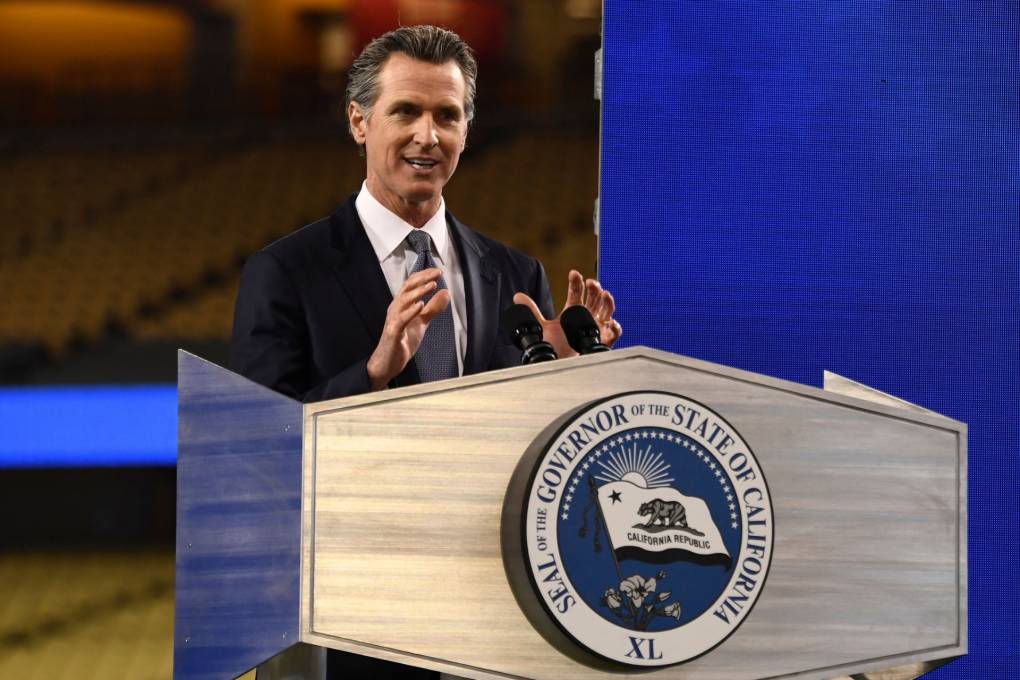
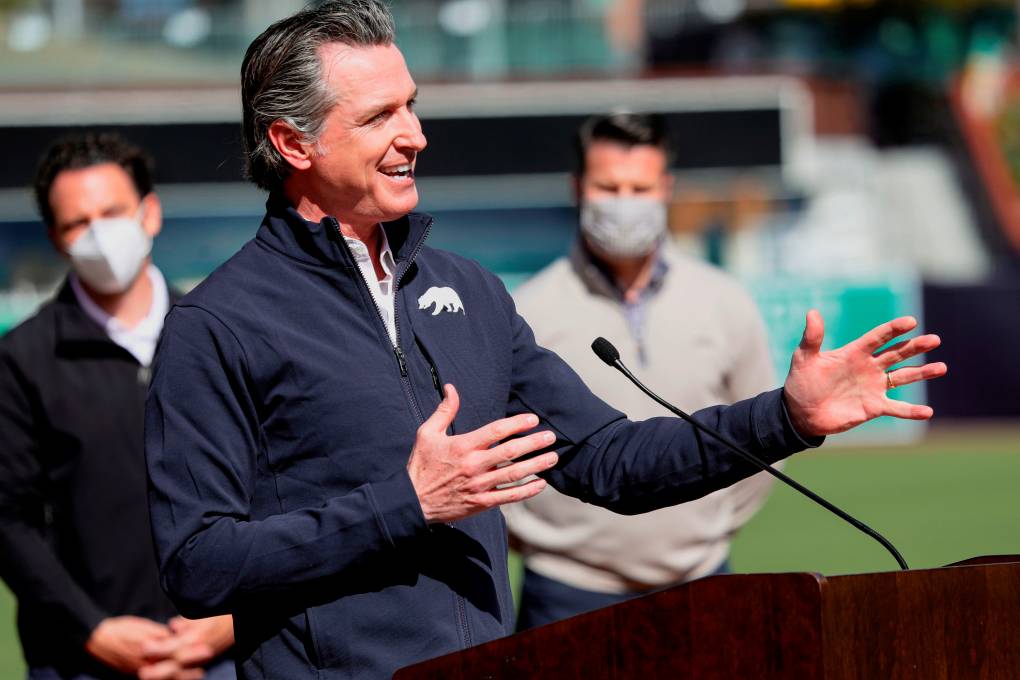
"caption": "California Gov. Gavin Newsom delivers the State of the State address at Dodger Stadium in Los Angeles on March 9, 2021.",
"description": "California Governor Gavin Newsom delivers the State of the State address at Dodger Stadium in Los Angeles, California, on March 9, 2021. ",
"title": "GettyImages-1231619984 (1)",
"credit": "Patrick T. Fallon/AFP via Getty Images",
"status": "inherit",
"altTag": null,
"isLoading": false,
"fetchFailed": false
},
"news_11863866": {
"type": "attachments",
"id": "news_11863866",
"meta": {
"index": "attachments_1716263798",
"site": "news",
"id": "11863866",
"found": true
},
"parent": 11863841,
"imgSizes": {
"apple_news_ca_landscape_5_5": {
"file": "https://ww2.kqed.org/app/uploads/sites/10/2021/03/IMG_4863-1044x783.jpg",
"width": 1044,
"mimeType": "image/jpeg",
"height": 783
},
"apple_news_ca_square_4_0": {
"file": "https://ww2.kqed.org/app/uploads/sites/10/2021/03/IMG_4863-470x470.jpg",
"width": 470,
"mimeType": "image/jpeg",
"height": 470
},
"twentyfourteen-full-width": {
"file": "https://ww2.kqed.org/app/uploads/sites/10/2021/03/IMG_4863-1038x576.jpg",
"width": 1038,
"mimeType": "image/jpeg",
"height": 576
},
"thumbnail": {
"file": "https://ww2.kqed.org/app/uploads/sites/10/2021/03/IMG_4863-160x120.jpg",
"width": 160,
"mimeType": "image/jpeg",
"height": 120
},
"post-thumbnail": {
"file": "https://ww2.kqed.org/app/uploads/sites/10/2021/03/IMG_4863-672x372.jpg",
"width": 672,
"mimeType": "image/jpeg",
"height": 372
},
"kqedFullSize": {
"file": "https://ww2.kqed.org/app/uploads/sites/10/2021/03/IMG_4863-scaled-e1615317156270.jpg",
"width": 1920,
"height": 1440
},
"2048x2048": {
"file": "https://ww2.kqed.org/app/uploads/sites/10/2021/03/IMG_4863-2048x1536.jpg",
"width": 2048,
"mimeType": "image/jpeg",
"height": 1536
},
"apple_news_ca_landscape_4_7": {
"file": "https://ww2.kqed.org/app/uploads/sites/10/2021/03/IMG_4863-632x474.jpg",
"width": 632,
"mimeType": "image/jpeg",
"height": 474
},
"large": {
"file": "https://ww2.kqed.org/app/uploads/sites/10/2021/03/IMG_4863-1020x765.jpg",
"width": 1020,
"mimeType": "image/jpeg",
"height": 765
},
"apple_news_ca_landscape_4_0": {
"file": "https://ww2.kqed.org/app/uploads/sites/10/2021/03/IMG_4863-536x402.jpg",
"width": 536,
"mimeType": "image/jpeg",
"height": 402
},
"apple_news_ca_portrait_12_9": {
"file": "https://ww2.kqed.org/app/uploads/sites/10/2021/03/IMG_4863-1122x1496.jpg",
"width": 1122,
"mimeType": "image/jpeg",
"height": 1496
},
"medium": {
"file": "https://ww2.kqed.org/app/uploads/sites/10/2021/03/IMG_4863-800x600.jpg",
"width": 800,
"mimeType": "image/jpeg",
"height": 600
},
"apple_news_ca_portrait_4_0": {
"file": "https://ww2.kqed.org/app/uploads/sites/10/2021/03/IMG_4863-354x472.jpg",
"width": 354,
"mimeType": "image/jpeg",
"height": 472
},
"apple_news_ca_portrait_9_7": {
"file": "https://ww2.kqed.org/app/uploads/sites/10/2021/03/IMG_4863-840x1120.jpg",
"width": 840,
"mimeType": "image/jpeg",
"height": 1120
},
"apple_news_ca_landscape_12_9": {
"file": "https://ww2.kqed.org/app/uploads/sites/10/2021/03/IMG_4863-1832x1374.jpg",
"width": 1832,
"mimeType": "image/jpeg",
"height": 1374
},
"apple_news_ca_square_9_7": {
"file": "https://ww2.kqed.org/app/uploads/sites/10/2021/03/IMG_4863-1104x1104.jpg",
"width": 1104,
"mimeType": "image/jpeg",
"height": 1104
},
"1536x1536": {
"file": "https://ww2.kqed.org/app/uploads/sites/10/2021/03/IMG_4863-1536x1152.jpg",
"width": 1536,
"mimeType": "image/jpeg",
"height": 1152
},
"apple_news_ca_portrait_4_7": {
"file": "https://ww2.kqed.org/app/uploads/sites/10/2021/03/IMG_4863-414x552.jpg",
"width": 414,
"mimeType": "image/jpeg",
"height": 552
},
"apple_news_ca_square_12_9": {
"file": "https://ww2.kqed.org/app/uploads/sites/10/2021/03/IMG_4863-1472x1472.jpg",
"width": 1472,
"mimeType": "image/jpeg",
"height": 1472
},
"apple_news_ca_portrait_5_5": {
"file": "https://ww2.kqed.org/app/uploads/sites/10/2021/03/IMG_4863-687x916.jpg",
"width": 687,
"mimeType": "image/jpeg",
"height": 916
},
"full-width": {
"file": "https://ww2.kqed.org/app/uploads/sites/10/2021/03/IMG_4863-1920x1440.jpg",
"width": 1920,
"mimeType": "image/jpeg",
"height": 1440
},
"apple_news_ca_square_4_7": {
"file": "https://ww2.kqed.org/app/uploads/sites/10/2021/03/IMG_4863-550x550.jpg",
"width": 550,
"mimeType": "image/jpeg",
"height": 550
},
"apple_news_ca_landscape_9_7": {
"file": "https://ww2.kqed.org/app/uploads/sites/10/2021/03/IMG_4863-1376x1032.jpg",
"width": 1376,
"mimeType": "image/jpeg",
"height": 1032
},
"apple_news_ca_square_5_5": {
"file": "https://ww2.kqed.org/app/uploads/sites/10/2021/03/IMG_4863-912x912.jpg",
"width": 912,
"mimeType": "image/jpeg",
"height": 912
}
},
"publishDate": 1615306086,
"modified": 1615322378,
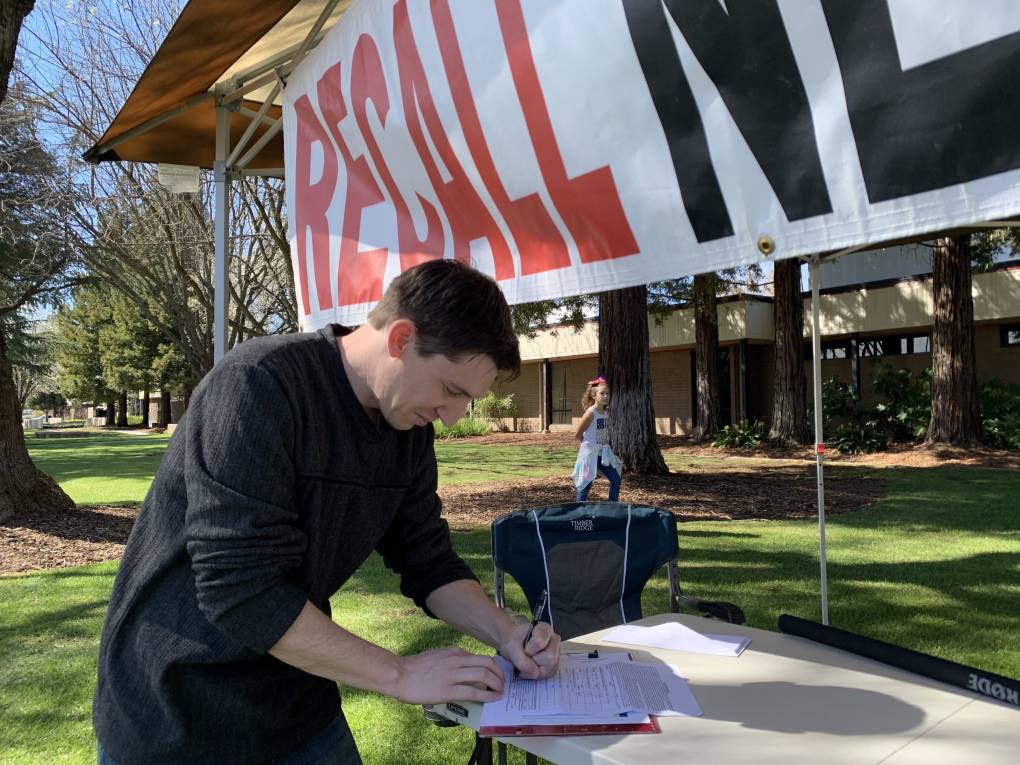
"caption": "David Verza, 32, signs a petition to recall Gov. Gavin Newsom during a recall rally in Vacaville on March 6, 2021. Verza says the governor doesn't care about ordinary people like him.",
"description": null,
"title": "Recall Newsom petition signer",
"credit": "Scott Shafer/KQED",
"status": "inherit",
"altTag": null,
"isLoading": false,
"fetchFailed": false
},
"news_11863819": {
"type": "attachments",
"id": "news_11863819",
"meta": {
"index": "attachments_1716263798",
"site": "news",
"id": "11863819",
"found": true
},
"parent": 11863474,
"imgSizes": {
"apple_news_ca_square_4_0": {
"file": "https://ww2.kqed.org/app/uploads/sites/10/2021/03/GettyImages-1231186926-470x470.jpg",
"width": 470,
"mimeType": "image/jpeg",
"height": 470
},
"thumbnail": {
"file": "https://ww2.kqed.org/app/uploads/sites/10/2021/03/GettyImages-1231186926-160x90.jpg",
"width": 160,
"mimeType": "image/jpeg",
"height": 90
},
"post-thumbnail": {
"file": "https://ww2.kqed.org/app/uploads/sites/10/2021/03/GettyImages-1231186926-672x372.jpg",
"width": 672,
"mimeType": "image/jpeg",
"height": 372
},
"kqedFullSize": {
"file": "https://ww2.kqed.org/app/uploads/sites/10/2021/03/GettyImages-1231186926.jpg",
"width": 1024,
"height": 577
},
"apple_news_ca_landscape_4_7": {
"file": "https://ww2.kqed.org/app/uploads/sites/10/2021/03/GettyImages-1231186926-632x474.jpg",
"width": 632,
"mimeType": "image/jpeg",
"height": 474
},
"large": {
"file": "https://ww2.kqed.org/app/uploads/sites/10/2021/03/GettyImages-1231186926-1020x575.jpg",
"width": 1020,
"mimeType": "image/jpeg",
"height": 575
},
"apple_news_ca_landscape_4_0": {
"file": "https://ww2.kqed.org/app/uploads/sites/10/2021/03/GettyImages-1231186926-536x402.jpg",
"width": 536,
"mimeType": "image/jpeg",
"height": 402
},
"medium": {
"file": "https://ww2.kqed.org/app/uploads/sites/10/2021/03/GettyImages-1231186926-800x451.jpg",
"width": 800,
"mimeType": "image/jpeg",
"height": 451
},
"apple_news_ca_portrait_4_0": {
"file": "https://ww2.kqed.org/app/uploads/sites/10/2021/03/GettyImages-1231186926-354x472.jpg",
"width": 354,
"mimeType": "image/jpeg",
"height": 472
},
"apple_news_ca_portrait_9_7": {
"file": "https://ww2.kqed.org/app/uploads/sites/10/2021/03/GettyImages-1231186926-840x577.jpg",
"width": 840,
"mimeType": "image/jpeg",
"height": 577
},
"apple_news_ca_portrait_4_7": {
"file": "https://ww2.kqed.org/app/uploads/sites/10/2021/03/GettyImages-1231186926-414x552.jpg",
"width": 414,
"mimeType": "image/jpeg",
"height": 552
},
"apple_news_ca_portrait_5_5": {
"file": "https://ww2.kqed.org/app/uploads/sites/10/2021/03/GettyImages-1231186926-687x577.jpg",
"width": 687,
"mimeType": "image/jpeg",
"height": 577
},
"apple_news_ca_square_4_7": {
"file": "https://ww2.kqed.org/app/uploads/sites/10/2021/03/GettyImages-1231186926-550x550.jpg",
"width": 550,
"mimeType": "image/jpeg",
"height": 550
},
"apple_news_ca_square_5_5": {
"file": "https://ww2.kqed.org/app/uploads/sites/10/2021/03/GettyImages-1231186926-912x577.jpg",
"width": 912,
"mimeType": "image/jpeg",
"height": 577
}
},
"publishDate": 1615250841,
"modified": 1615253088,
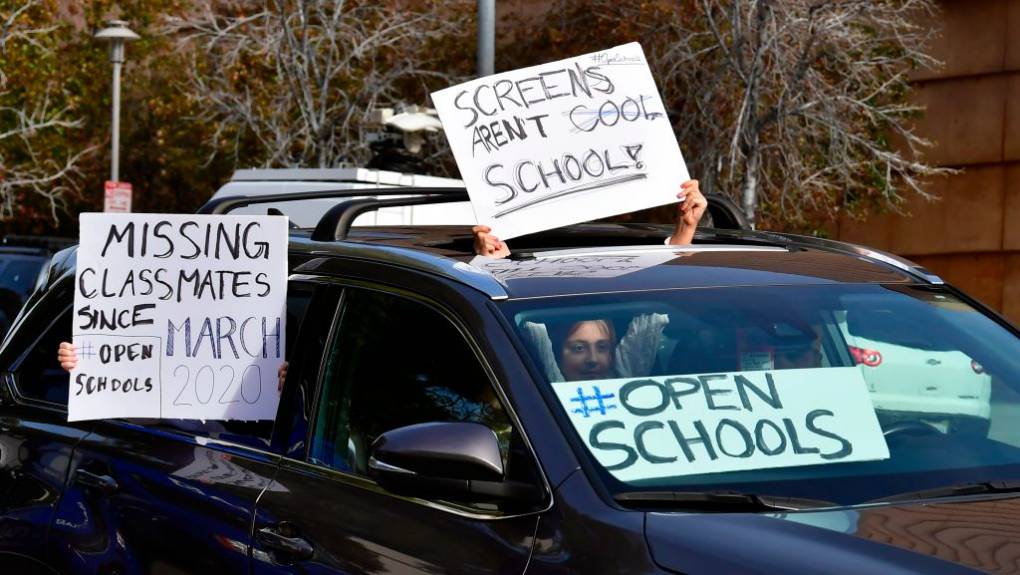
"caption": "Demonstrators in a car caravan during an 'Open Schools Now' rally on Feb. 15, 2021 in Los Angeles.",
"description": null,
"title": "US-HEALTH-VIRUS-EDUCATION",
"credit": "Frederic J. Brown/AFP via Getty Images",
"status": "inherit",
"altTag": null,
"isLoading": false,
"fetchFailed": false
},
"news_11863599": {
"type": "attachments",
"id": "news_11863599",
"meta": {
"index": "attachments_1716263798",
"site": "news",
"id": "11863599",
"found": true
},
"parent": 11863555,
"imgSizes": {
"apple_news_ca_landscape_5_5": {
"file": "https://ww2.kqed.org/app/uploads/sites/10/2021/03/819_MARQUEE-1044x720.jpg",
"width": 1044,
"mimeType": "image/jpeg",
"height": 720
},
"apple_news_ca_square_4_0": {
"file": "https://ww2.kqed.org/app/uploads/sites/10/2021/03/819_MARQUEE-470x470.jpg",
"width": 470,
"mimeType": "image/jpeg",
"height": 470
},
"twentyfourteen-full-width": {
"file": "https://ww2.kqed.org/app/uploads/sites/10/2021/03/819_MARQUEE-1038x576.jpg",
"width": 1038,
"mimeType": "image/jpeg",
"height": 576
},
"thumbnail": {
"file": "https://ww2.kqed.org/app/uploads/sites/10/2021/03/819_MARQUEE-160x90.jpg",
"width": 160,
"mimeType": "image/jpeg",
"height": 90
},
"post-thumbnail": {
"file": "https://ww2.kqed.org/app/uploads/sites/10/2021/03/819_MARQUEE-672x372.jpg",
"width": 672,
"mimeType": "image/jpeg",
"height": 372
},
"kqedFullSize": {
"file": "https://ww2.kqed.org/app/uploads/sites/10/2021/03/819_MARQUEE.jpg",
"width": 1280,
"height": 720
},
"apple_news_ca_landscape_4_7": {
"file": "https://ww2.kqed.org/app/uploads/sites/10/2021/03/819_MARQUEE-632x474.jpg",
"width": 632,
"mimeType": "image/jpeg",
"height": 474
},
"large": {
"file": "https://ww2.kqed.org/app/uploads/sites/10/2021/03/819_MARQUEE-1020x574.jpg",
"width": 1020,
"mimeType": "image/jpeg",
"height": 574
},
"apple_news_ca_landscape_4_0": {
"file": "https://ww2.kqed.org/app/uploads/sites/10/2021/03/819_MARQUEE-536x402.jpg",
"width": 536,
"mimeType": "image/jpeg",
"height": 402
},
"apple_news_ca_portrait_12_9": {
"file": "https://ww2.kqed.org/app/uploads/sites/10/2021/03/819_MARQUEE-1122x720.jpg",
"width": 1122,
"mimeType": "image/jpeg",
"height": 720
},
"medium": {
"file": "https://ww2.kqed.org/app/uploads/sites/10/2021/03/819_MARQUEE-800x450.jpg",
"width": 800,
"mimeType": "image/jpeg",
"height": 450
},
"apple_news_ca_portrait_4_0": {
"file": "https://ww2.kqed.org/app/uploads/sites/10/2021/03/819_MARQUEE-354x472.jpg",
"width": 354,
"mimeType": "image/jpeg",
"height": 472
},
"apple_news_ca_portrait_9_7": {
"file": "https://ww2.kqed.org/app/uploads/sites/10/2021/03/819_MARQUEE-840x720.jpg",
"width": 840,
"mimeType": "image/jpeg",
"height": 720
},
"apple_news_ca_square_9_7": {
"file": "https://ww2.kqed.org/app/uploads/sites/10/2021/03/819_MARQUEE-1104x720.jpg",
"width": 1104,
"mimeType": "image/jpeg",
"height": 720
},
"apple_news_ca_portrait_4_7": {
"file": "https://ww2.kqed.org/app/uploads/sites/10/2021/03/819_MARQUEE-414x552.jpg",
"width": 414,
"mimeType": "image/jpeg",
"height": 552
},
"apple_news_ca_portrait_5_5": {
"file": "https://ww2.kqed.org/app/uploads/sites/10/2021/03/819_MARQUEE-687x720.jpg",
"width": 687,
"mimeType": "image/jpeg",
"height": 720
},
"apple_news_ca_square_4_7": {
"file": "https://ww2.kqed.org/app/uploads/sites/10/2021/03/819_MARQUEE-550x550.jpg",
"width": 550,
"mimeType": "image/jpeg",
"height": 550
},
"apple_news_ca_square_5_5": {
"file": "https://ww2.kqed.org/app/uploads/sites/10/2021/03/819_MARQUEE-912x720.jpg",
"width": 912,
"mimeType": "image/jpeg",
"height": 720
}
},
"publishDate": 1614991337,
"modified": 1614991337,
"caption": null,
"description": null,
"title": "819_MARQUEE",
"credit": null,
"status": "inherit",
"altTag": null,
"isLoading": false,
"fetchFailed": false
},
"news_11863328": {
"type": "attachments",
"id": "news_11863328",
"meta": {
"index": "attachments_1716263798",
"site": "news",
"id": "11863328",
"found": true
},
"parent": 11863282,
"imgSizes": {
"apple_news_ca_portrait_9_7": {
"file": "https://ww2.kqed.org/app/uploads/sites/10/2021/03/IMG_2629_Resized2-840x499.jpg",
"width": 840,
"mimeType": "image/jpeg",
"height": 499
},
"apple_news_ca_square_4_0": {
"file": "https://ww2.kqed.org/app/uploads/sites/10/2021/03/IMG_2629_Resized2-470x470.jpg",
"width": 470,
"mimeType": "image/jpeg",
"height": 470
},
"thumbnail": {
"file": "https://ww2.kqed.org/app/uploads/sites/10/2021/03/IMG_2629_Resized2-160x93.jpg",
"width": 160,
"mimeType": "image/jpeg",
"height": 93
},
"post-thumbnail": {
"file": "https://ww2.kqed.org/app/uploads/sites/10/2021/03/IMG_2629_Resized2-672x372.jpg",
"width": 672,
"mimeType": "image/jpeg",
"height": 372
},
"kqedFullSize": {
"file": "https://ww2.kqed.org/app/uploads/sites/10/2021/03/IMG_2629_Resized2.jpg",
"width": 861,
"height": 499
},
"apple_news_ca_landscape_4_7": {
"file": "https://ww2.kqed.org/app/uploads/sites/10/2021/03/IMG_2629_Resized2-632x474.jpg",
"width": 632,
"mimeType": "image/jpeg",
"height": 474
},
"apple_news_ca_portrait_4_7": {
"file": "https://ww2.kqed.org/app/uploads/sites/10/2021/03/IMG_2629_Resized2-414x499.jpg",
"width": 414,
"mimeType": "image/jpeg",
"height": 499
},
"apple_news_ca_portrait_5_5": {
"file": "https://ww2.kqed.org/app/uploads/sites/10/2021/03/IMG_2629_Resized2-687x499.jpg",
"width": 687,
"mimeType": "image/jpeg",
"height": 499
},
"apple_news_ca_square_4_7": {
"file": "https://ww2.kqed.org/app/uploads/sites/10/2021/03/IMG_2629_Resized2-550x499.jpg",
"width": 550,
"mimeType": "image/jpeg",
"height": 499
},
"apple_news_ca_landscape_4_0": {
"file": "https://ww2.kqed.org/app/uploads/sites/10/2021/03/IMG_2629_Resized2-536x402.jpg",
"width": 536,
"mimeType": "image/jpeg",
"height": 402
},
"medium": {
"file": "https://ww2.kqed.org/app/uploads/sites/10/2021/03/IMG_2629_Resized2-800x464.jpg",
"width": 800,
"mimeType": "image/jpeg",
"height": 464
},
"apple_news_ca_portrait_4_0": {
"file": "https://ww2.kqed.org/app/uploads/sites/10/2021/03/IMG_2629_Resized2-354x472.jpg",
"width": 354,
"mimeType": "image/jpeg",
"height": 472
}
},
"publishDate": 1614896445,
"modified": 1615589964,
"caption": "(Left to right) Melina Kritikopoulos, Joy Cheng and Isabella Brenneman are all students at Bay Area high schools. They're all nervous about returning to in-person classes.",
"description": null,
"title": "IMG_2629_Resized2",
"credit": "KQED News",
"status": "inherit",
"altTag": null,
"isLoading": false,
"fetchFailed": false
},
"news_11862602": {
"type": "attachments",
"id": "news_11862602",
"meta": {
"index": "attachments_1716263798",
"site": "news",
"id": "11862602",
"found": true
},
"parent": 11877048,
"imgSizes": {
"apple_news_ca_landscape_5_5": {
"file": "https://ww2.kqed.org/app/uploads/sites/10/2021/03/GettyImages-1231222911-1044x783.jpg",
"width": 1044,
"mimeType": "image/jpeg",
"height": 783
},
"apple_news_ca_square_4_0": {
"file": "https://ww2.kqed.org/app/uploads/sites/10/2021/03/GettyImages-1231222911-470x470.jpg",
"width": 470,
"mimeType": "image/jpeg",
"height": 470
},
"twentyfourteen-full-width": {
"file": "https://ww2.kqed.org/app/uploads/sites/10/2021/03/GettyImages-1231222911-1038x576.jpg",
"width": 1038,
"mimeType": "image/jpeg",
"height": 576
},
"thumbnail": {
"file": "https://ww2.kqed.org/app/uploads/sites/10/2021/03/GettyImages-1231222911-160x107.jpg",
"width": 160,
"mimeType": "image/jpeg",
"height": 107
},
"post-thumbnail": {
"file": "https://ww2.kqed.org/app/uploads/sites/10/2021/03/GettyImages-1231222911-672x372.jpg",
"width": 672,
"mimeType": "image/jpeg",
"height": 372
},
"kqedFullSize": {
"file": "https://ww2.kqed.org/app/uploads/sites/10/2021/03/GettyImages-1231222911-scaled.jpg",
"width": 2560,
"height": 1707
},
"2048x2048": {
"file": "https://ww2.kqed.org/app/uploads/sites/10/2021/03/GettyImages-1231222911-2048x1365.jpg",
"width": 2048,
"mimeType": "image/jpeg",
"height": 1365
},
"apple_news_ca_landscape_4_7": {
"file": "https://ww2.kqed.org/app/uploads/sites/10/2021/03/GettyImages-1231222911-632x474.jpg",
"width": 632,
"mimeType": "image/jpeg",
"height": 474
},
"large": {
"file": "https://ww2.kqed.org/app/uploads/sites/10/2021/03/GettyImages-1231222911-1020x680.jpg",
"width": 1020,
"mimeType": "image/jpeg",
"height": 680
},
"apple_news_ca_landscape_4_0": {
"file": "https://ww2.kqed.org/app/uploads/sites/10/2021/03/GettyImages-1231222911-536x402.jpg",
"width": 536,
"mimeType": "image/jpeg",
"height": 402
},
"apple_news_ca_portrait_12_9": {
"file": "https://ww2.kqed.org/app/uploads/sites/10/2021/03/GettyImages-1231222911-1122x1496.jpg",
"width": 1122,
"mimeType": "image/jpeg",
"height": 1496
},
"medium": {
"file": "https://ww2.kqed.org/app/uploads/sites/10/2021/03/GettyImages-1231222911-800x533.jpg",
"width": 800,
"mimeType": "image/jpeg",
"height": 533
},
"apple_news_ca_portrait_4_0": {
"file": "https://ww2.kqed.org/app/uploads/sites/10/2021/03/GettyImages-1231222911-354x472.jpg",
"width": 354,
"mimeType": "image/jpeg",
"height": 472
},
"apple_news_ca_portrait_9_7": {
"file": "https://ww2.kqed.org/app/uploads/sites/10/2021/03/GettyImages-1231222911-840x1120.jpg",
"width": 840,
"mimeType": "image/jpeg",
"height": 1120
},
"apple_news_ca_landscape_12_9": {
"file": "https://ww2.kqed.org/app/uploads/sites/10/2021/03/GettyImages-1231222911-1832x1374.jpg",
"width": 1832,
"mimeType": "image/jpeg",
"height": 1374
},
"apple_news_ca_square_9_7": {
"file": "https://ww2.kqed.org/app/uploads/sites/10/2021/03/GettyImages-1231222911-1104x1104.jpg",
"width": 1104,
"mimeType": "image/jpeg",
"height": 1104
},
"1536x1536": {
"file": "https://ww2.kqed.org/app/uploads/sites/10/2021/03/GettyImages-1231222911-1536x1024.jpg",
"width": 1536,
"mimeType": "image/jpeg",
"height": 1024
},
"apple_news_ca_portrait_4_7": {
"file": "https://ww2.kqed.org/app/uploads/sites/10/2021/03/GettyImages-1231222911-414x552.jpg",
"width": 414,
"mimeType": "image/jpeg",
"height": 552
},
"apple_news_ca_square_12_9": {
"file": "https://ww2.kqed.org/app/uploads/sites/10/2021/03/GettyImages-1231222911-1472x1472.jpg",
"width": 1472,
"mimeType": "image/jpeg",
"height": 1472
},
"apple_news_ca_portrait_5_5": {
"file": "https://ww2.kqed.org/app/uploads/sites/10/2021/03/GettyImages-1231222911-687x916.jpg",
"width": 687,
"mimeType": "image/jpeg",
"height": 916
},
"full-width": {
"file": "https://ww2.kqed.org/app/uploads/sites/10/2021/03/GettyImages-1231222911-1920x1280.jpg",
"width": 1920,
"mimeType": "image/jpeg",
"height": 1280
},
"apple_news_ca_square_4_7": {
"file": "https://ww2.kqed.org/app/uploads/sites/10/2021/03/GettyImages-1231222911-550x550.jpg",
"width": 550,
"mimeType": "image/jpeg",
"height": 550
},
"apple_news_ca_landscape_9_7": {
"file": "https://ww2.kqed.org/app/uploads/sites/10/2021/03/GettyImages-1231222911-1376x1032.jpg",
"width": 1376,
"mimeType": "image/jpeg",
"height": 1032
},
"apple_news_ca_square_5_5": {
"file": "https://ww2.kqed.org/app/uploads/sites/10/2021/03/GettyImages-1231222911-912x912.jpg",
"width": 912,
"mimeType": "image/jpeg",
"height": 912
}
},
"publishDate": 1614630924,
"modified": 1623255773,
"caption": "Children attend online classes at a learning hub inside the Crenshaw Family YMCA on Feb. 17, 2021 in Los Angeles.",
"description": null,
"title": "US-HEALTH-VIRUS-SCHOOLS",
"credit": "Patrick T. Fallon/AFP via Getty Images",
"status": "inherit",
"altTag": null,
"isLoading": false,
"fetchFailed": false
},
"news_11862462": {
"type": "attachments",
"id": "news_11862462",
"meta": {
"index": "attachments_1716263798",
"site": "news",
"id": "11862462",
"found": true
},
"parent": 11862460,
"imgSizes": {
"apple_news_ca_landscape_5_5": {
"file": "https://ww2.kqed.org/app/uploads/sites/10/2021/02/GettyImages-1231051262-1044x783.jpg",
"width": 1044,
"mimeType": "image/jpeg",
"height": 783
},
"apple_news_ca_square_4_0": {
"file": "https://ww2.kqed.org/app/uploads/sites/10/2021/02/GettyImages-1231051262-470x470.jpg",
"width": 470,
"mimeType": "image/jpeg",
"height": 470
},
"twentyfourteen-full-width": {
"file": "https://ww2.kqed.org/app/uploads/sites/10/2021/02/GettyImages-1231051262-1038x576.jpg",
"width": 1038,
"mimeType": "image/jpeg",
"height": 576
},
"thumbnail": {
"file": "https://ww2.kqed.org/app/uploads/sites/10/2021/02/GettyImages-1231051262-160x107.jpg",
"width": 160,
"mimeType": "image/jpeg",
"height": 107
},
"post-thumbnail": {
"file": "https://ww2.kqed.org/app/uploads/sites/10/2021/02/GettyImages-1231051262-672x372.jpg",
"width": 672,
"mimeType": "image/jpeg",
"height": 372
},
"kqedFullSize": {
"file": "https://ww2.kqed.org/app/uploads/sites/10/2021/02/GettyImages-1231051262-scaled.jpg",
"width": 2560,
"height": 1706
},
"2048x2048": {
"file": "https://ww2.kqed.org/app/uploads/sites/10/2021/02/GettyImages-1231051262-2048x1365.jpg",
"width": 2048,
"mimeType": "image/jpeg",
"height": 1365
},
"apple_news_ca_landscape_4_7": {
"file": "https://ww2.kqed.org/app/uploads/sites/10/2021/02/GettyImages-1231051262-632x474.jpg",
"width": 632,
"mimeType": "image/jpeg",
"height": 474
},
"large": {
"file": "https://ww2.kqed.org/app/uploads/sites/10/2021/02/GettyImages-1231051262-1020x680.jpg",
"width": 1020,
"mimeType": "image/jpeg",
"height": 680
},
"apple_news_ca_landscape_4_0": {
"file": "https://ww2.kqed.org/app/uploads/sites/10/2021/02/GettyImages-1231051262-536x402.jpg",
"width": 536,
"mimeType": "image/jpeg",
"height": 402
},
"apple_news_ca_portrait_12_9": {
"file": "https://ww2.kqed.org/app/uploads/sites/10/2021/02/GettyImages-1231051262-1122x1496.jpg",
"width": 1122,
"mimeType": "image/jpeg",
"height": 1496
},
"medium": {
"file": "https://ww2.kqed.org/app/uploads/sites/10/2021/02/GettyImages-1231051262-800x533.jpg",
"width": 800,
"mimeType": "image/jpeg",
"height": 533
},
"apple_news_ca_portrait_4_0": {
"file": "https://ww2.kqed.org/app/uploads/sites/10/2021/02/GettyImages-1231051262-354x472.jpg",
"width": 354,
"mimeType": "image/jpeg",
"height": 472
},
"apple_news_ca_portrait_9_7": {
"file": "https://ww2.kqed.org/app/uploads/sites/10/2021/02/GettyImages-1231051262-840x1120.jpg",
"width": 840,
"mimeType": "image/jpeg",
"height": 1120
},
"apple_news_ca_landscape_12_9": {
"file": "https://ww2.kqed.org/app/uploads/sites/10/2021/02/GettyImages-1231051262-1832x1374.jpg",
"width": 1832,
"mimeType": "image/jpeg",
"height": 1374
},
"apple_news_ca_square_9_7": {
"file": "https://ww2.kqed.org/app/uploads/sites/10/2021/02/GettyImages-1231051262-1104x1104.jpg",
"width": 1104,
"mimeType": "image/jpeg",
"height": 1104
},
"1536x1536": {
"file": "https://ww2.kqed.org/app/uploads/sites/10/2021/02/GettyImages-1231051262-1536x1024.jpg",
"width": 1536,
"mimeType": "image/jpeg",
"height": 1024
},
"apple_news_ca_portrait_4_7": {
"file": "https://ww2.kqed.org/app/uploads/sites/10/2021/02/GettyImages-1231051262-414x552.jpg",
"width": 414,
"mimeType": "image/jpeg",
"height": 552
},
"apple_news_ca_square_12_9": {
"file": "https://ww2.kqed.org/app/uploads/sites/10/2021/02/GettyImages-1231051262-1472x1472.jpg",
"width": 1472,
"mimeType": "image/jpeg",
"height": 1472
},
"apple_news_ca_portrait_5_5": {
"file": "https://ww2.kqed.org/app/uploads/sites/10/2021/02/GettyImages-1231051262-687x916.jpg",
"width": 687,
"mimeType": "image/jpeg",
"height": 916
},
"full-width": {
"file": "https://ww2.kqed.org/app/uploads/sites/10/2021/02/GettyImages-1231051262-1920x1280.jpg",
"width": 1920,
"mimeType": "image/jpeg",
"height": 1280
},
"apple_news_ca_square_4_7": {
"file": "https://ww2.kqed.org/app/uploads/sites/10/2021/02/GettyImages-1231051262-550x550.jpg",
"width": 550,
"mimeType": "image/jpeg",
"height": 550
},
"apple_news_ca_landscape_9_7": {
"file": "https://ww2.kqed.org/app/uploads/sites/10/2021/02/GettyImages-1231051262-1376x1032.jpg",
"width": 1376,
"mimeType": "image/jpeg",
"height": 1032
},
"apple_news_ca_square_5_5": {
"file": "https://ww2.kqed.org/app/uploads/sites/10/2021/02/GettyImages-1231051262-912x912.jpg",
"width": 912,
"mimeType": "image/jpeg",
"height": 912
}
},
"publishDate": 1614535111,
"modified": 1614623735,
"caption": "Gov. Gavin Newsom speaks to the the media during a press conference at a super vaccination site at San Diego's Petco Park on February 8, 2021. The Newsom administration projects Californians will earn $185 billion from capital gains, resulting in $18.5 billion in tax revenue for the state.",
"description": "A photo of California Gov. Gavin Newsom as he speaks to members of the media during a press conference at Petco Park on Feb. 8, 2021 in San Diego during a visit to the Petco Park Vaccination Supersite.",
"title": "US-HEALTH-VIRUS-VACCINE",
"credit": "Sandy Huffaker/Pool/AFP via Getty Images",
"status": "inherit",
"altTag": null,
"isLoading": false,
"fetchFailed": false
},
"news_11874922": {
"type": "attachments",
"id": "news_11874922",
"meta": {
"index": "attachments_1716263798",
"site": "news",
"id": "11874922",
"found": true
},
"parent": 11861500,
"imgSizes": {
"thumbnail": {
"file": "https://ww2.kqed.org/app/uploads/sites/10/2021/02/soldout-tunein-656x336-2021-160x82.jpg",
"width": 160,
"mimeType": "image/jpeg",
"height": 82
},
"kqedFullSize": {
"file": "https://ww2.kqed.org/app/uploads/sites/10/2021/02/soldout-tunein-656x336-2021.jpg",
"width": 656,
"height": 336
}
},
"publishDate": 1621728496,
"modified": 1621728502,
"caption": null,
"description": null,
"title": "soldout-tunein-656x336-2021",
"credit": null,
"status": "inherit",
"altTag": "Sold Out: Rethinking Housing in America Logo with illustration of houses and tent encampment",
"isLoading": false,
"fetchFailed": false
},
"news_11854196": {
"type": "attachments",
"id": "news_11854196",
"meta": {
"index": "attachments_1716263798",
"site": "news",
"id": "11854196",
"found": true
},
"parent": 11854170,
"imgSizes": {
"apple_news_ca_landscape_5_5": {
"file": "https://ww2.kqed.org/app/uploads/sites/10/2021/01/RS42402_047_KQED_BethLaBerge_BloomEnergy_Newsom_03282020-qut-1044x783.jpg",
"width": 1044,
"mimeType": "image/jpeg",
"height": 783
},
"apple_news_ca_square_4_0": {
"file": "https://ww2.kqed.org/app/uploads/sites/10/2021/01/RS42402_047_KQED_BethLaBerge_BloomEnergy_Newsom_03282020-qut-470x470.jpg",
"width": 470,
"mimeType": "image/jpeg",
"height": 470
},
"twentyfourteen-full-width": {
"file": "https://ww2.kqed.org/app/uploads/sites/10/2021/01/RS42402_047_KQED_BethLaBerge_BloomEnergy_Newsom_03282020-qut-1038x576.jpg",
"width": 1038,
"mimeType": "image/jpeg",
"height": 576
},
"thumbnail": {
"file": "https://ww2.kqed.org/app/uploads/sites/10/2021/01/RS42402_047_KQED_BethLaBerge_BloomEnergy_Newsom_03282020-qut-160x107.jpg",
"width": 160,
"mimeType": "image/jpeg",
"height": 107
},
"post-thumbnail": {
"file": "https://ww2.kqed.org/app/uploads/sites/10/2021/01/RS42402_047_KQED_BethLaBerge_BloomEnergy_Newsom_03282020-qut-672x372.jpg",
"width": 672,
"mimeType": "image/jpeg",
"height": 372
},
"kqedFullSize": {
"file": "https://ww2.kqed.org/app/uploads/sites/10/2021/01/RS42402_047_KQED_BethLaBerge_BloomEnergy_Newsom_03282020-qut.jpg",
"width": 1920,
"height": 1280
},
"apple_news_ca_landscape_4_7": {
"file": "https://ww2.kqed.org/app/uploads/sites/10/2021/01/RS42402_047_KQED_BethLaBerge_BloomEnergy_Newsom_03282020-qut-632x474.jpg",
"width": 632,
"mimeType": "image/jpeg",
"height": 474
},
"large": {
"file": "https://ww2.kqed.org/app/uploads/sites/10/2021/01/RS42402_047_KQED_BethLaBerge_BloomEnergy_Newsom_03282020-qut-1020x680.jpg",
"width": 1020,
"mimeType": "image/jpeg",
"height": 680
},
"apple_news_ca_landscape_4_0": {
"file": "https://ww2.kqed.org/app/uploads/sites/10/2021/01/RS42402_047_KQED_BethLaBerge_BloomEnergy_Newsom_03282020-qut-536x402.jpg",
"width": 536,
"mimeType": "image/jpeg",
"height": 402
},
"apple_news_ca_portrait_12_9": {
"file": "https://ww2.kqed.org/app/uploads/sites/10/2021/01/RS42402_047_KQED_BethLaBerge_BloomEnergy_Newsom_03282020-qut-1122x1280.jpg",
"width": 1122,
"mimeType": "image/jpeg",
"height": 1280
},
"medium": {
"file": "https://ww2.kqed.org/app/uploads/sites/10/2021/01/RS42402_047_KQED_BethLaBerge_BloomEnergy_Newsom_03282020-qut-800x533.jpg",
"width": 800,
"mimeType": "image/jpeg",
"height": 533
},
"apple_news_ca_portrait_4_0": {
"file": "https://ww2.kqed.org/app/uploads/sites/10/2021/01/RS42402_047_KQED_BethLaBerge_BloomEnergy_Newsom_03282020-qut-354x472.jpg",
"width": 354,
"mimeType": "image/jpeg",
"height": 472
},
"apple_news_ca_portrait_9_7": {
"file": "https://ww2.kqed.org/app/uploads/sites/10/2021/01/RS42402_047_KQED_BethLaBerge_BloomEnergy_Newsom_03282020-qut-840x1120.jpg",
"width": 840,
"mimeType": "image/jpeg",
"height": 1120
},
"apple_news_ca_landscape_12_9": {
"file": "https://ww2.kqed.org/app/uploads/sites/10/2021/01/RS42402_047_KQED_BethLaBerge_BloomEnergy_Newsom_03282020-qut-1832x1280.jpg",
"width": 1832,
"mimeType": "image/jpeg",
"height": 1280
},
"apple_news_ca_square_9_7": {
"file": "https://ww2.kqed.org/app/uploads/sites/10/2021/01/RS42402_047_KQED_BethLaBerge_BloomEnergy_Newsom_03282020-qut-1104x1104.jpg",
"width": 1104,
"mimeType": "image/jpeg",
"height": 1104
},
"1536x1536": {
"file": "https://ww2.kqed.org/app/uploads/sites/10/2021/01/RS42402_047_KQED_BethLaBerge_BloomEnergy_Newsom_03282020-qut-1536x1024.jpg",
"width": 1536,
"mimeType": "image/jpeg",
"height": 1024
},
"apple_news_ca_portrait_4_7": {
"file": "https://ww2.kqed.org/app/uploads/sites/10/2021/01/RS42402_047_KQED_BethLaBerge_BloomEnergy_Newsom_03282020-qut-414x552.jpg",
"width": 414,
"mimeType": "image/jpeg",
"height": 552
},
"apple_news_ca_square_12_9": {
"file": "https://ww2.kqed.org/app/uploads/sites/10/2021/01/RS42402_047_KQED_BethLaBerge_BloomEnergy_Newsom_03282020-qut-1472x1280.jpg",
"width": 1472,
"mimeType": "image/jpeg",
"height": 1280
},
"apple_news_ca_portrait_5_5": {
"file": "https://ww2.kqed.org/app/uploads/sites/10/2021/01/RS42402_047_KQED_BethLaBerge_BloomEnergy_Newsom_03282020-qut-687x916.jpg",
"width": 687,
"mimeType": "image/jpeg",
"height": 916
},
"apple_news_ca_square_4_7": {
"file": "https://ww2.kqed.org/app/uploads/sites/10/2021/01/RS42402_047_KQED_BethLaBerge_BloomEnergy_Newsom_03282020-qut-550x550.jpg",
"width": 550,
"mimeType": "image/jpeg",
"height": 550
},
"apple_news_ca_landscape_9_7": {
"file": "https://ww2.kqed.org/app/uploads/sites/10/2021/01/RS42402_047_KQED_BethLaBerge_BloomEnergy_Newsom_03282020-qut-1376x1032.jpg",
"width": 1376,
"mimeType": "image/jpeg",
"height": 1032
},
"apple_news_ca_square_5_5": {
"file": "https://ww2.kqed.org/app/uploads/sites/10/2021/01/RS42402_047_KQED_BethLaBerge_BloomEnergy_Newsom_03282020-qut-912x912.jpg",
"width": 912,
"mimeType": "image/jpeg",
"height": 912
}
},
"publishDate": 1610051607,
"modified": 1610060366,
"caption": "California Gov. Gavin Newsom speaks during a press conference at the Bloom Energy Sunnyvale campus on March 28, 2020.",
"description": null,
"title": "RS42402_047_KQED_BethLaBerge_BloomEnergy_Newsom_03282020-qut",
"credit": "Beth LaBerge/KQED",
"status": "inherit",
"altTag": "Gavin Newsom speaking",
"isLoading": false,
"fetchFailed": false
},
"news_11861526": {
"type": "attachments",
"id": "news_11861526",
"meta": {
"index": "attachments_1716263798",
"site": "news",
"id": "11861526",
"found": true
},
"parent": 11861442,
"imgSizes": {
"apple_news_ca_landscape_5_5": {
"file": "https://ww2.kqed.org/app/uploads/sites/10/2021/02/GettyImages-1231326933-1044x783.jpg",
"width": 1044,
"mimeType": "image/jpeg",
"height": 783
},
"apple_news_ca_square_4_0": {
"file": "https://ww2.kqed.org/app/uploads/sites/10/2021/02/GettyImages-1231326933-470x470.jpg",
"width": 470,
"mimeType": "image/jpeg",
"height": 470
},
"twentyfourteen-full-width": {
"file": "https://ww2.kqed.org/app/uploads/sites/10/2021/02/GettyImages-1231326933-1038x576.jpg",
"width": 1038,
"mimeType": "image/jpeg",
"height": 576
},
"thumbnail": {
"file": "https://ww2.kqed.org/app/uploads/sites/10/2021/02/GettyImages-1231326933-160x107.jpg",
"width": 160,
"mimeType": "image/jpeg",
"height": 107
},
"post-thumbnail": {
"file": "https://ww2.kqed.org/app/uploads/sites/10/2021/02/GettyImages-1231326933-672x372.jpg",
"width": 672,
"mimeType": "image/jpeg",
"height": 372
},
"kqedFullSize": {
"file": "https://ww2.kqed.org/app/uploads/sites/10/2021/02/GettyImages-1231326933-scaled.jpg",
"width": 2560,
"height": 1707
},
"2048x2048": {
"file": "https://ww2.kqed.org/app/uploads/sites/10/2021/02/GettyImages-1231326933-2048x1365.jpg",
"width": 2048,
"mimeType": "image/jpeg",
"height": 1365
},
"apple_news_ca_landscape_4_7": {
"file": "https://ww2.kqed.org/app/uploads/sites/10/2021/02/GettyImages-1231326933-632x474.jpg",
"width": 632,
"mimeType": "image/jpeg",
"height": 474
},
"large": {
"file": "https://ww2.kqed.org/app/uploads/sites/10/2021/02/GettyImages-1231326933-1020x680.jpg",
"width": 1020,
"mimeType": "image/jpeg",
"height": 680
},
"apple_news_ca_landscape_4_0": {
"file": "https://ww2.kqed.org/app/uploads/sites/10/2021/02/GettyImages-1231326933-536x402.jpg",
"width": 536,
"mimeType": "image/jpeg",
"height": 402
},
"apple_news_ca_portrait_12_9": {
"file": "https://ww2.kqed.org/app/uploads/sites/10/2021/02/GettyImages-1231326933-1122x1496.jpg",
"width": 1122,
"mimeType": "image/jpeg",
"height": 1496
},
"medium": {
"file": "https://ww2.kqed.org/app/uploads/sites/10/2021/02/GettyImages-1231326933-800x533.jpg",
"width": 800,
"mimeType": "image/jpeg",
"height": 533
},
"apple_news_ca_portrait_4_0": {
"file": "https://ww2.kqed.org/app/uploads/sites/10/2021/02/GettyImages-1231326933-354x472.jpg",
"width": 354,
"mimeType": "image/jpeg",
"height": 472
},
"apple_news_ca_portrait_9_7": {
"file": "https://ww2.kqed.org/app/uploads/sites/10/2021/02/GettyImages-1231326933-840x1120.jpg",
"width": 840,
"mimeType": "image/jpeg",
"height": 1120
},
"apple_news_ca_landscape_12_9": {
"file": "https://ww2.kqed.org/app/uploads/sites/10/2021/02/GettyImages-1231326933-1832x1374.jpg",
"width": 1832,
"mimeType": "image/jpeg",
"height": 1374
},
"apple_news_ca_square_9_7": {
"file": "https://ww2.kqed.org/app/uploads/sites/10/2021/02/GettyImages-1231326933-1104x1104.jpg",
"width": 1104,
"mimeType": "image/jpeg",
"height": 1104
},
"1536x1536": {
"file": "https://ww2.kqed.org/app/uploads/sites/10/2021/02/GettyImages-1231326933-1536x1024.jpg",
"width": 1536,
"mimeType": "image/jpeg",
"height": 1024
},
"apple_news_ca_portrait_4_7": {
"file": "https://ww2.kqed.org/app/uploads/sites/10/2021/02/GettyImages-1231326933-414x552.jpg",
"width": 414,
"mimeType": "image/jpeg",
"height": 552
},
"apple_news_ca_square_12_9": {
"file": "https://ww2.kqed.org/app/uploads/sites/10/2021/02/GettyImages-1231326933-1472x1472.jpg",
"width": 1472,
"mimeType": "image/jpeg",
"height": 1472
},
"apple_news_ca_portrait_5_5": {
"file": "https://ww2.kqed.org/app/uploads/sites/10/2021/02/GettyImages-1231326933-687x916.jpg",
"width": 687,
"mimeType": "image/jpeg",
"height": 916
},
"full-width": {
"file": "https://ww2.kqed.org/app/uploads/sites/10/2021/02/GettyImages-1231326933-1920x1280.jpg",
"width": 1920,
"mimeType": "image/jpeg",
"height": 1280
},
"apple_news_ca_square_4_7": {
"file": "https://ww2.kqed.org/app/uploads/sites/10/2021/02/GettyImages-1231326933-550x550.jpg",
"width": 550,
"mimeType": "image/jpeg",
"height": 550
},
"apple_news_ca_landscape_9_7": {
"file": "https://ww2.kqed.org/app/uploads/sites/10/2021/02/GettyImages-1231326933-1376x1032.jpg",
"width": 1376,
"mimeType": "image/jpeg",
"height": 1032
},
"apple_news_ca_square_5_5": {
"file": "https://ww2.kqed.org/app/uploads/sites/10/2021/02/GettyImages-1231326933-912x912.jpg",
"width": 912,
"mimeType": "image/jpeg",
"height": 912
}
},
"publishDate": 1614027213,
"modified": 1614039250,
"caption": "Gov. Gavin Newsom speaks after touring a COVID-19 vaccination site at the Long Beach Convention Center on Feb. 22, 2021. Newsom pointed out that this mass vaccination site is only operating at a third of its full capacity due to a lack of supply.",
"description": null,
"title": "US-VIRUS-HEALTH-pandemic",
"credit": "Patrick T. Fallon/AFP via Getty Images",
"status": "inherit",
"altTag": null,
"isLoading": false,
"fetchFailed": false
},
"news_11861106": {
"type": "attachments",
"id": "news_11861106",
"meta": {
"index": "attachments_1716263798",
"site": "news",
"id": "11861106",
"found": true
},
"parent": 11860986,
"imgSizes": {
"apple_news_ca_landscape_5_5": {
"file": "https://ww2.kqed.org/app/uploads/sites/10/2021/02/RS47278_025_SanFrancisco_ClarendonSchoolReopeningRally_02182021-qut-1044x783.jpg",
"width": 1044,
"mimeType": "image/jpeg",
"height": 783
},
"apple_news_ca_square_4_0": {
"file": "https://ww2.kqed.org/app/uploads/sites/10/2021/02/RS47278_025_SanFrancisco_ClarendonSchoolReopeningRally_02182021-qut-470x470.jpg",
"width": 470,
"mimeType": "image/jpeg",
"height": 470
},
"twentyfourteen-full-width": {
"file": "https://ww2.kqed.org/app/uploads/sites/10/2021/02/RS47278_025_SanFrancisco_ClarendonSchoolReopeningRally_02182021-qut-1038x576.jpg",
"width": 1038,
"mimeType": "image/jpeg",
"height": 576
},
"thumbnail": {
"file": "https://ww2.kqed.org/app/uploads/sites/10/2021/02/RS47278_025_SanFrancisco_ClarendonSchoolReopeningRally_02182021-qut-160x107.jpg",
"width": 160,
"mimeType": "image/jpeg",
"height": 107
},
"post-thumbnail": {
"file": "https://ww2.kqed.org/app/uploads/sites/10/2021/02/RS47278_025_SanFrancisco_ClarendonSchoolReopeningRally_02182021-qut-672x372.jpg",
"width": 672,
"mimeType": "image/jpeg",
"height": 372
},
"kqedFullSize": {
"file": "https://ww2.kqed.org/app/uploads/sites/10/2021/02/RS47278_025_SanFrancisco_ClarendonSchoolReopeningRally_02182021-qut.jpg",
"width": 1920,
"height": 1280
},
"apple_news_ca_landscape_4_7": {
"file": "https://ww2.kqed.org/app/uploads/sites/10/2021/02/RS47278_025_SanFrancisco_ClarendonSchoolReopeningRally_02182021-qut-632x474.jpg",
"width": 632,
"mimeType": "image/jpeg",
"height": 474
},
"large": {
"file": "https://ww2.kqed.org/app/uploads/sites/10/2021/02/RS47278_025_SanFrancisco_ClarendonSchoolReopeningRally_02182021-qut-1020x680.jpg",
"width": 1020,
"mimeType": "image/jpeg",
"height": 680
},
"apple_news_ca_landscape_4_0": {
"file": "https://ww2.kqed.org/app/uploads/sites/10/2021/02/RS47278_025_SanFrancisco_ClarendonSchoolReopeningRally_02182021-qut-536x402.jpg",
"width": 536,
"mimeType": "image/jpeg",
"height": 402
},
"apple_news_ca_portrait_12_9": {
"file": "https://ww2.kqed.org/app/uploads/sites/10/2021/02/RS47278_025_SanFrancisco_ClarendonSchoolReopeningRally_02182021-qut-1122x1280.jpg",
"width": 1122,
"mimeType": "image/jpeg",
"height": 1280
},
"medium": {
"file": "https://ww2.kqed.org/app/uploads/sites/10/2021/02/RS47278_025_SanFrancisco_ClarendonSchoolReopeningRally_02182021-qut-800x533.jpg",
"width": 800,
"mimeType": "image/jpeg",
"height": 533
},
"apple_news_ca_portrait_4_0": {
"file": "https://ww2.kqed.org/app/uploads/sites/10/2021/02/RS47278_025_SanFrancisco_ClarendonSchoolReopeningRally_02182021-qut-354x472.jpg",
"width": 354,
"mimeType": "image/jpeg",
"height": 472
},
"apple_news_ca_portrait_9_7": {
"file": "https://ww2.kqed.org/app/uploads/sites/10/2021/02/RS47278_025_SanFrancisco_ClarendonSchoolReopeningRally_02182021-qut-840x1120.jpg",
"width": 840,
"mimeType": "image/jpeg",
"height": 1120
},
"apple_news_ca_landscape_12_9": {
"file": "https://ww2.kqed.org/app/uploads/sites/10/2021/02/RS47278_025_SanFrancisco_ClarendonSchoolReopeningRally_02182021-qut-1832x1280.jpg",
"width": 1832,
"mimeType": "image/jpeg",
"height": 1280
},
"apple_news_ca_square_9_7": {
"file": "https://ww2.kqed.org/app/uploads/sites/10/2021/02/RS47278_025_SanFrancisco_ClarendonSchoolReopeningRally_02182021-qut-1104x1104.jpg",
"width": 1104,
"mimeType": "image/jpeg",
"height": 1104
},
"1536x1536": {
"file": "https://ww2.kqed.org/app/uploads/sites/10/2021/02/RS47278_025_SanFrancisco_ClarendonSchoolReopeningRally_02182021-qut-1536x1024.jpg",
"width": 1536,
"mimeType": "image/jpeg",
"height": 1024
},
"apple_news_ca_portrait_4_7": {
"file": "https://ww2.kqed.org/app/uploads/sites/10/2021/02/RS47278_025_SanFrancisco_ClarendonSchoolReopeningRally_02182021-qut-414x552.jpg",
"width": 414,
"mimeType": "image/jpeg",
"height": 552
},
"apple_news_ca_square_12_9": {
"file": "https://ww2.kqed.org/app/uploads/sites/10/2021/02/RS47278_025_SanFrancisco_ClarendonSchoolReopeningRally_02182021-qut-1472x1280.jpg",
"width": 1472,
"mimeType": "image/jpeg",
"height": 1280
},
"apple_news_ca_portrait_5_5": {
"file": "https://ww2.kqed.org/app/uploads/sites/10/2021/02/RS47278_025_SanFrancisco_ClarendonSchoolReopeningRally_02182021-qut-687x916.jpg",
"width": 687,
"mimeType": "image/jpeg",
"height": 916
},
"apple_news_ca_square_4_7": {
"file": "https://ww2.kqed.org/app/uploads/sites/10/2021/02/RS47278_025_SanFrancisco_ClarendonSchoolReopeningRally_02182021-qut-550x550.jpg",
"width": 550,
"mimeType": "image/jpeg",
"height": 550
},
"apple_news_ca_landscape_9_7": {
"file": "https://ww2.kqed.org/app/uploads/sites/10/2021/02/RS47278_025_SanFrancisco_ClarendonSchoolReopeningRally_02182021-qut-1376x1032.jpg",
"width": 1376,
"mimeType": "image/jpeg",
"height": 1032
},
"apple_news_ca_square_5_5": {
"file": "https://ww2.kqed.org/app/uploads/sites/10/2021/02/RS47278_025_SanFrancisco_ClarendonSchoolReopeningRally_02182021-qut-912x912.jpg",
"width": 912,
"mimeType": "image/jpeg",
"height": 912
}
},
"publishDate": 1613704560,
"modified": 1613704594,
"caption": "Students attend distance learning Zoom classes across from Clarendon Elementary School in San Francisco on Feb. 18, 2021. Students and parents in support of school reopening rallied outside of the closed elementary school.",
"description": null,
"title": "RS47278_025_SanFrancisco_ClarendonSchoolReopeningRally_02182021-qut",
"credit": "Beth LaBerge/KQED",
"status": "inherit",
"altTag": null,
"isLoading": false,
"fetchFailed": false
},
"news_11860358": {
"type": "attachments",
"id": "news_11860358",
"meta": {
"index": "attachments_1716263798",
"site": "news",
"id": "11860358",
"found": true
},
"parent": 11860268,
"imgSizes": {
"apple_news_ca_square_4_0": {
"file": "https://ww2.kqed.org/app/uploads/sites/10/2021/02/MARQUEE-2-470x470.jpg",
"width": 470,
"mimeType": "image/jpeg",
"height": 470
},
"thumbnail": {
"file": "https://ww2.kqed.org/app/uploads/sites/10/2021/02/MARQUEE-2-160x108.jpg",
"width": 160,
"mimeType": "image/jpeg",
"height": 108
},
"post-thumbnail": {
"file": "https://ww2.kqed.org/app/uploads/sites/10/2021/02/MARQUEE-2-672x372.jpg",
"width": 672,
"mimeType": "image/jpeg",
"height": 372
},
"kqedFullSize": {
"file": "https://ww2.kqed.org/app/uploads/sites/10/2021/02/MARQUEE-2.jpg",
"width": 720,
"height": 486
},
"apple_news_ca_landscape_4_7": {
"file": "https://ww2.kqed.org/app/uploads/sites/10/2021/02/MARQUEE-2-632x474.jpg",
"width": 632,
"mimeType": "image/jpeg",
"height": 474
},
"apple_news_ca_portrait_4_7": {
"file": "https://ww2.kqed.org/app/uploads/sites/10/2021/02/MARQUEE-2-414x486.jpg",
"width": 414,
"mimeType": "image/jpeg",
"height": 486
},
"apple_news_ca_portrait_5_5": {
"file": "https://ww2.kqed.org/app/uploads/sites/10/2021/02/MARQUEE-2-687x486.jpg",
"width": 687,
"mimeType": "image/jpeg",
"height": 486
},
"apple_news_ca_square_4_7": {
"file": "https://ww2.kqed.org/app/uploads/sites/10/2021/02/MARQUEE-2-550x486.jpg",
"width": 550,
"mimeType": "image/jpeg",
"height": 486
},
"apple_news_ca_landscape_4_0": {
"file": "https://ww2.kqed.org/app/uploads/sites/10/2021/02/MARQUEE-2-536x402.jpg",
"width": 536,
"mimeType": "image/jpeg",
"height": 402
},
"apple_news_ca_portrait_4_0": {
"file": "https://ww2.kqed.org/app/uploads/sites/10/2021/02/MARQUEE-2-354x472.jpg",
"width": 354,
"mimeType": "image/jpeg",
"height": 472
}
},
"publishDate": 1613181408,
"modified": 1613181408,
"caption": null,
"description": null,
"title": "MARQUEE 2",
"credit": null,
"status": "inherit",
"altTag": null,
"isLoading": false,
"fetchFailed": false
}
},
"audioPlayerReducer": {
"postId": "stream_live",
"isPaused": true,
"isPlaying": false,
"pfsActive": false,
"pledgeModalIsOpen": true,
"playerDrawerIsOpen": false,
"liveAudioPlayStartedAt": 0,
"liveAudioPlayContext": ""
},
"authorsReducer": {
"byline_news_11862460": {
"type": "authors",
"id": "byline_news_11862460",
"meta": {
"override": true
},
"slug": "byline_news_11862460",
"name": "Adam Beam \u003cbr> The Associated Press",
"isLoading": false
},
"byline_news_11861667": {
"type": "authors",
"id": "byline_news_11861667",
"meta": {
"override": true
},
"slug": "byline_news_11861667",
"name": "Adam Beam \u003cbr> The Associated Press",
"isLoading": false
},
"gmarzorati": {
"type": "authors",
"id": "227",
"meta": {
"index": "authors_1716337520",
"id": "227",
"found": true
},
"name": "Guy Marzorati",
"firstName": "Guy",
"lastName": "Marzorati",
"slug": "gmarzorati",
"email": "gmarzorati@KQED.org",
"display_author_email": true,
"staff_mastheads": [
"news"
],
"title": "Correspondent",
"bio": "Guy Marzorati is a correspondent on KQED's California Politics and Government Desk, based in San Jose. A graduate of Santa Clara University, Guy joined KQED in 2013. He reports on state and local politics and produces KQED's digital voter guide.",
"avatar": "https://secure.gravatar.com/avatar/e7038b8dbfd55b104369b76b1cd0b9de?s=600&d=blank&r=g",
"twitter": "guymarzorati",
"facebook": null,
"instagram": null,
"linkedin": null,
"sites": [
{
"site": "",
"roles": [
"editor"
]
},
{
"site": "news",
"roles": [
"editor"
]
},
{
"site": "science",
"roles": [
"editor"
]
},
{
"site": "forum",
"roles": [
"editor"
]
},
{
"site": "elections",
"roles": [
"editor"
]
},
{
"site": "liveblog",
"roles": [
"editor"
]
}
],
"headData": {
"title": "Guy Marzorati | KQED",
"description": "Correspondent",
"ogImgSrc": "https://secure.gravatar.com/avatar/e7038b8dbfd55b104369b76b1cd0b9de?s=600&d=blank&r=g",
"twImgSrc": "https://secure.gravatar.com/avatar/e7038b8dbfd55b104369b76b1cd0b9de?s=600&d=blank&r=g"
},
"isLoading": false,
"link": "/author/gmarzorati"
},
"kqed": {
"type": "authors",
"id": "236",
"meta": {
"index": "authors_1716337520",
"id": "236",
"found": true
},
"name": "KQED News Staff",
"firstName": "KQED News Staff",
"lastName": null,
"slug": "kqed",
"email": "faq@kqed.org",
"display_author_email": false,
"staff_mastheads": [],
"title": null,
"bio": null,
"avatar": "https://secure.gravatar.com/avatar/ef0e801a68c4c54afa9180db14084167?s=600&d=blank&r=g",
"twitter": null,
"facebook": null,
"instagram": null,
"linkedin": null,
"sites": [
{
"site": "arts",
"roles": [
"contributor"
]
},
{
"site": "news",
"roles": [
"editor"
]
},
{
"site": "futureofyou",
"roles": [
"author"
]
}
],
"headData": {
"title": "KQED News Staff | KQED",
"description": null,
"ogImgSrc": "https://secure.gravatar.com/avatar/ef0e801a68c4c54afa9180db14084167?s=600&d=blank&r=g",
"twImgSrc": "https://secure.gravatar.com/avatar/ef0e801a68c4c54afa9180db14084167?s=600&d=blank&r=g"
},
"isLoading": false,
"link": "/author/kqed"
},
"kqednewsstaffandwires": {
"type": "authors",
"id": "237",
"meta": {
"index": "authors_1716337520",
"id": "237",
"found": true
},
"name": "KQED News Staff and Wires",
"firstName": "KQED News Staff and Wires",
"lastName": null,
"slug": "kqednewsstaffandwires",
"email": "onlinenewsstaff@kqed.org",
"display_author_email": false,
"staff_mastheads": [],
"title": null,
"bio": null,
"avatar": "https://secure.gravatar.com/avatar/72295af8ebbfbd19a4948f5271285664?s=600&d=blank&r=g",
"twitter": null,
"facebook": null,
"instagram": null,
"linkedin": null,
"sites": [
{
"site": "arts",
"roles": [
"contributor"
]
},
{
"site": "news",
"roles": [
"contributor"
]
},
{
"site": "lowdown",
"roles": [
"author"
]
},
{
"site": "stateofhealth",
"roles": [
"contributor"
]
},
{
"site": "food",
"roles": [
"author"
]
}
],
"headData": {
"title": "KQED News Staff and Wires | KQED",
"description": null,
"ogImgSrc": "https://secure.gravatar.com/avatar/72295af8ebbfbd19a4948f5271285664?s=600&d=blank&r=g",
"twImgSrc": "https://secure.gravatar.com/avatar/72295af8ebbfbd19a4948f5271285664?s=600&d=blank&r=g"
},
"isLoading": false,
"link": "/author/kqednewsstaffandwires"
},
"scottshafer": {
"type": "authors",
"id": "255",
"meta": {
"index": "authors_1716337520",
"id": "255",
"found": true
},
"name": "Scott Shafer",
"firstName": "Scott",
"lastName": "Shafer",
"slug": "scottshafer",
"email": "sshafer@kqed.org",
"display_author_email": false,
"staff_mastheads": [
"news"
],
"title": "KQED Contributor",
"bio": "Scott Shafer is a senior editor with the KQED Politics and Government desk. He is co-host of Political Breakdown, the award-winning radio show and podcast with a personal take on the world of politics. Scott came to KQED in 1998 to host the statewide\u003cem> California Report\u003c/em>. Prior to that he had extended stints in politics and government\u003cem>.\u003c/em> He uses that inside experience at KQED in his, reporting, hosting and analysis for the politics desk. Scott collaborated \u003cem>Political Breakdown a\u003c/em>nd on \u003cem>The Political Mind of Jerry Brown, \u003c/em>an eight-part series about the life and extraordinary political career of the former governor. For fun, he plays water polo with the San Francisco Tsunami.",
"avatar": "https://secure.gravatar.com/avatar/a62ebae45b79d7aed1a39a0e3bf68104?s=600&d=blank&r=g",
"twitter": "scottshafer",
"bluesky": null,
"facebook": null,
"instagram": null,
"linkedin": null,
"sites": [
{
"site": "news",
"roles": [
"editor"
]
},
{
"site": "stateofhealth",
"roles": [
"author"
]
},
{
"site": "science",
"roles": [
"author"
]
},
{
"site": "forum",
"roles": [
"subscriber"
]
},
{
"site": "liveblog",
"roles": [
"author"
]
}
],
"headData": {
"title": "Scott Shafer | KQED",
"description": "KQED Contributor",
"ogImgSrc": "https://secure.gravatar.com/avatar/a62ebae45b79d7aed1a39a0e3bf68104?s=600&d=blank&r=g",
"twImgSrc": "https://secure.gravatar.com/avatar/a62ebae45b79d7aed1a39a0e3bf68104?s=600&d=blank&r=g"
},
"isLoading": false,
"link": "/author/scottshafer"
},
"dkatayama": {
"type": "authors",
"id": "7240",
"meta": {
"index": "authors_1716337520",
"id": "7240",
"found": true
},
"name": "Devin Katayama",
"firstName": "Devin",
"lastName": "Katayama",
"slug": "dkatayama",
"email": "dkatayama@kqed.org",
"display_author_email": true,
"staff_mastheads": [
"news"
],
"title": "Editor of Talent and Development",
"bio": "Devin Katayama is former Editor of Talent and Development for KQED. He supported our internship program and on-call staff by looking for equitable opportunities to improve the newsroom.\r\n\r\nHe previously hosted The Bay and American Suburb podcasts from KQED News. Prior to returning to the Bay Area in 2015, Devin was the education reporter for WFPL in Louisville and worked as a producer with radio stations in Chicago and Portland, OR. His work has appeared on NPR’s \u003cem>Morning Edition, All Things Considered, The Takeaway\u003c/em> and \u003cem>Here and Now.\u003c/em>\r\n\r\nDevin earned his MA in Journalism from Columbia College Chicago, where he was a Follett Fellow and the recipient of the 2011 Studs Terkel Community Media Workshop Scholarship for his story on Chicago's homeless youth. He won WBUR's 2014 Daniel Schorr award and a regional RTNDA Edward R. Murrow Award for his documentary \"At Risk\" that looked at issues facing some of Louisville's students. Devin has also received numerous local awards from the Associated Press and the Society of Professional Journalists.",
"avatar": "https://secure.gravatar.com/avatar/d0d2978a31002fb2de107921a8e18405?s=600&d=blank&r=g",
"twitter": "RadioDevin",
"facebook": null,
"instagram": null,
"linkedin": null,
"sites": [
{
"site": "arts",
"roles": []
},
{
"site": "news",
"roles": [
"author"
]
},
{
"site": "stateofhealth",
"roles": [
"author"
]
},
{
"site": "forum",
"roles": [
"editor"
]
},
{
"site": "perspectives",
"roles": [
"editor"
]
}
],
"headData": {
"title": "Devin Katayama | KQED",
"description": "Editor of Talent and Development",
"ogImgSrc": "https://secure.gravatar.com/avatar/d0d2978a31002fb2de107921a8e18405?s=600&d=blank&r=g",
"twImgSrc": "https://secure.gravatar.com/avatar/d0d2978a31002fb2de107921a8e18405?s=600&d=blank&r=g"
},
"isLoading": false,
"link": "/author/dkatayama"
},
"ecruzguevarra": {
"type": "authors",
"id": "8654",
"meta": {
"index": "authors_1716337520",
"id": "8654",
"found": true
},
"name": "Ericka Cruz Guevarra",
"firstName": "Ericka",
"lastName": "Cruz Guevarra",
"slug": "ecruzguevarra",
"email": "ecruzguevarra@kqed.org",
"display_author_email": true,
"staff_mastheads": [
"news"
],
"title": "Producer, The Bay Podcast",
"bio": "Ericka Cruz Guevarra is host of \u003ca href=\"https://www.kqed.org/podcasts/thebay\">\u003cem>The Bay\u003c/em>\u003c/a> podcast at KQED. Before host, she was the show’s producer. Her work in that capacity includes a three-part reported series on policing in Vallejo, which won a 2020 excellence in journalism award from the Society of Professional Journalists. Ericka has worked as a breaking news reporter at Oregon Public Broadcasting, helped produce the Code Switch podcast, and was KQED’s inaugural Raul Ramirez Diversity Fund intern. She’s also an alumna of NPR’s Next Generation Radio program. Send her an email if you have strong feelings about whether Fairfield and Suisun City are the Bay. Ericka is represented by SAG-AFTRA.",
"avatar": "https://secure.gravatar.com/avatar/accefc1de4bafc7e234b69bcb9b6f6536c130fd84709bc3069ef11a78787e1bb?s=600&d=blank&r=g",
"twitter": "NotoriousECG",
"bluesky": null,
"facebook": null,
"instagram": null,
"linkedin": null,
"sites": [
{
"site": "arts",
"roles": [
"subscriber"
]
},
{
"site": "news",
"roles": [
"editor",
"manage_categories"
]
},
{
"site": "futureofyou",
"roles": [
"subscriber"
]
},
{
"site": "stateofhealth",
"roles": [
"subscriber"
]
},
{
"site": "science",
"roles": [
"editor"
]
},
{
"site": "forum",
"roles": [
"subscriber"
]
}
],
"headData": {
"title": "Ericka Cruz Guevarra | KQED",
"description": "Producer, The Bay Podcast",
"ogImgSrc": "https://secure.gravatar.com/avatar/accefc1de4bafc7e234b69bcb9b6f6536c130fd84709bc3069ef11a78787e1bb?s=600&d=blank&r=g",
"twImgSrc": "https://secure.gravatar.com/avatar/accefc1de4bafc7e234b69bcb9b6f6536c130fd84709bc3069ef11a78787e1bb?s=600&d=blank&r=g"
},
"isLoading": false,
"link": "/author/ecruzguevarra"
},
"vrancano": {
"type": "authors",
"id": "11276",
"meta": {
"index": "authors_1716337520",
"id": "11276",
"found": true
},
"name": "Vanessa Rancaño",
"firstName": "Vanessa",
"lastName": "Rancaño",
"slug": "vrancano",
"email": "vrancano@kqed.org",
"display_author_email": false,
"staff_mastheads": [
"news"
],
"title": "Reporter",
"bio": "Vanessa Rancaño is a features reporter for KQED. She’s also covered homelessness and education for the station and reported from the Central Valley. Her work has aired across public radio, from flagship national news shows to longform narrative podcasts. Before taking up a mic, she worked as a freelance print journalist. She’s been recognized with a number of national and regional awards. Vanessa grew up in California's Central Valley. She's a former NPR Kroc Fellow, and a graduate of the UC Berkeley Graduate School of Journalism.",
"avatar": "https://secure.gravatar.com/avatar/b3a383dfb0e7ee1c17568f2cf067904ab654d6e3de9743fc661f3c788ade1bed?s=600&d=blank&r=g",
"twitter": "vanessarancano",
"bluesky": null,
"facebook": null,
"instagram": null,
"linkedin": null,
"sites": [
{
"site": "arts",
"roles": [
"editor"
]
},
{
"site": "news",
"roles": [
"editor"
]
},
{
"site": "liveblog",
"roles": [
"contributor"
]
}
],
"headData": {
"title": "Vanessa Rancaño | KQED",
"description": "Reporter",
"ogImgSrc": "https://secure.gravatar.com/avatar/b3a383dfb0e7ee1c17568f2cf067904ab654d6e3de9743fc661f3c788ade1bed?s=600&d=blank&r=g",
"twImgSrc": "https://secure.gravatar.com/avatar/b3a383dfb0e7ee1c17568f2cf067904ab654d6e3de9743fc661f3c788ade1bed?s=600&d=blank&r=g"
},
"isLoading": false,
"link": "/author/vrancano"
},
"msolomon": {
"type": "authors",
"id": "11651",
"meta": {
"index": "authors_1716337520",
"id": "11651",
"found": true
},
"name": "Molly Solomon",
"firstName": "Molly",
"lastName": "Solomon",
"slug": "msolomon",
"email": "msolomon@KQED.org",
"display_author_email": false,
"staff_mastheads": [
"news"
],
"title": "Senior Editor",
"bio": "Molly Solomon is the senior editor of KQED's California Politics and Government Desk. Previously, she was the station's editor-at-large, with a focus on editing early childhood education, politics, and criminal justice. Before that, she managed and edited statewide election coverage for The California Newsroom, a collaboration of local public radio stations, CalMatters and NPR. Molly joined KQED in 2019 to launch the station’s housing affordability desk, where she reported on homelessness, evictions and is the co-host of KQED’s housing podcast, SOLD OUT: Rethinking Housing in America. Before that, she was the Southwest Washington Bureau Chief for Oregon Public Broadcasting and a reporter at Hawaii Public Radio. Her stories have aired on NPR’s \u003cem>Morning Edition\u003c/em>, \u003cem>All Things Considered\u003c/em>, \u003cem>Here & Now\u003c/em>, \u003cem>Science Friday\u003c/em> and \u003cem>Marketplace\u003c/em>. Molly's award-winning reporting has been honored by the Best of the West, Edward R. Murrow awards, Society of Professional Journalists, National Headliner Awards, and the Asian American Journalists Association. Born and raised in Berkeley, Molly is a big fan of burritos and her scruffy terrier, Ollie.",
"avatar": "https://secure.gravatar.com/avatar/9ad9794616923d81c9a79897161545bd?s=600&d=blank&r=g",
"twitter": "solomonout",
"facebook": null,
"instagram": null,
"linkedin": null,
"sites": [
{
"site": "news",
"roles": [
"editor"
]
},
{
"site": "science",
"roles": [
"editor"
]
}
],
"headData": {
"title": "Molly Solomon | KQED",
"description": "Senior Editor",
"ogImgSrc": "https://secure.gravatar.com/avatar/9ad9794616923d81c9a79897161545bd?s=600&d=blank&r=g",
"twImgSrc": "https://secure.gravatar.com/avatar/9ad9794616923d81c9a79897161545bd?s=600&d=blank&r=g"
},
"isLoading": false,
"link": "/author/msolomon"
},
"ebaldassari": {
"type": "authors",
"id": "11652",
"meta": {
"index": "authors_1716337520",
"id": "11652",
"found": true
},
"name": "Erin Baldassari",
"firstName": "Erin",
"lastName": "Baldassari",
"slug": "ebaldassari",
"email": "ebaldassari@KQED.org",
"display_author_email": true,
"staff_mastheads": [
"news"
],
"title": "Staff Writer",
"bio": "Erin Baldassari covers housing for KQED. She's a former print journalist and most recently worked as the transportation reporter for the \u003cem>Mercury News\u003c/em> and \u003cem>East Bay Times. \u003c/em>There, she focused on how the Bay Area’s housing shortage has changed the way people move around the region. She also served on the \u003cem>East Bay Times\u003c/em>’ 2017 Pulitzer Prize-winning team for coverage of the Ghost Ship Fire in Oakland. Prior to that, Erin worked as a breaking news and general assignment reporter for a variety of outlets in the Bay Area and the greater Boston area. A Tufts University alumna, Erin grew up in the foothills of the Sierra Nevada mountains and in Sonoma County. She is a life-long KQED listener.",
"avatar": "https://secure.gravatar.com/avatar/5e95cad64a8ca08288082212e199d2b0cbeb4fd8e8ef5339395f361032bbe005?s=600&d=blank&r=g",
"twitter": "e_baldi",
"bluesky": null,
"facebook": null,
"instagram": null,
"linkedin": null,
"sites": [
{
"site": "news",
"roles": [
"edit_others_posts",
"editor"
]
},
{
"site": "science",
"roles": [
"editor"
]
},
{
"site": "liveblog",
"roles": [
"editor"
]
}
],
"headData": {
"title": "Erin Baldassari | KQED",
"description": "Staff Writer",
"ogImgSrc": "https://secure.gravatar.com/avatar/5e95cad64a8ca08288082212e199d2b0cbeb4fd8e8ef5339395f361032bbe005?s=600&d=blank&r=g",
"twImgSrc": "https://secure.gravatar.com/avatar/5e95cad64a8ca08288082212e199d2b0cbeb4fd8e8ef5339395f361032bbe005?s=600&d=blank&r=g"
},
"isLoading": false,
"link": "/author/ebaldassari"
},
"abandlamudi": {
"type": "authors",
"id": "11672",
"meta": {
"index": "authors_1716337520",
"id": "11672",
"found": true
},
"name": "Adhiti Bandlamudi",
"firstName": "Adhiti",
"lastName": "Bandlamudi",
"slug": "abandlamudi",
"email": "abandlamudi@kqed.org",
"display_author_email": false,
"staff_mastheads": [
"news"
],
"title": "KQED Housing Reporter",
"bio": "Adhiti Bandlamudi reports for KQED's Housing desk. She focuses on how housing gets built across the Bay Area. Before joining KQED in 2020, she reported for WUNC in Durham, North Carolina, WABE in Atlanta, Georgia and Capital Public Radio in Sacramento. In 2017, she was awarded a Kroc Fellowship at NPR where she reported on everything from sprinkles to the Golden State Killer's arrest. When she's not reporting, she's baking new recipes in her kitchen or watching movies with friends and family. She's originally from Georgia and has strong opinions about Great British Bake Off.",
"avatar": "https://secure.gravatar.com/avatar/868129c8b257bb99a3500e2c86a65400?s=600&d=mm&r=g",
"twitter": "oddity_adhiti",
"facebook": null,
"instagram": null,
"linkedin": null,
"sites": [
{
"site": "arts",
"roles": [
"author"
]
},
{
"site": "news",
"roles": [
"editor"
]
},
{
"site": "liveblog",
"roles": [
"author"
]
}
],
"headData": {
"title": "Adhiti Bandlamudi | KQED",
"description": "KQED Housing Reporter",
"ogImgSrc": "https://secure.gravatar.com/avatar/868129c8b257bb99a3500e2c86a65400?s=600&d=mm&r=g",
"twImgSrc": "https://secure.gravatar.com/avatar/868129c8b257bb99a3500e2c86a65400?s=600&d=mm&r=g"
},
"isLoading": false,
"link": "/author/abandlamudi"
}
},
"pagesReducer": {
"news_tag_gavin-newsom": {
"type": "terms",
"id": "news_16",
"meta": {
"index": "terms_1716263798",
"site": "news",
"id": "16",
"score": 8.936995
},
"featImg": null,
"name": "Gavin Newsom",
"description": null,
"taxonomy": "tag",
"headData": {
"twImgId": null,
"twTitle": null,
"ogTitle": null,
"ogImgId": null,
"twDescription": null,
"description": null,
"title": "Gavin Newsom Archives | KQED News",
"ogDescription": null
},
"ttid": 16,
"slug": "gavin-newsom",
"isLoading": false,
"title": "Gavin Newsom",
"pageMeta": {
"site": "news",
"WpPageTemplate": "page-topic-editorial",
"currentPage": 63
},
"blocks": [
{
"blockName": "kqed/post-list",
"attrs": {
"layout": "cardArticle2",
"query": "posts/news?tag=gavin-newsom",
"seeMore": false,
"paginated": true,
"page": 63
}
},
{
"blockName": "kqed/ad"
}
]
}
},
"pfsSessionReducer": {},
"postsReducer": {
"stream_live": {
"type": "live",
"id": "stream_live",
"audioUrl": "https://streams.kqed.org/kqedradio",
"title": "Live Stream",
"excerpt": "Live Stream information currently unavailable.",
"link": "/radio",
"featImg": "",
"label": {
"name": "KQED Live",
"link": "/"
}
},
"stream_kqedNewscast": {
"type": "posts",
"id": "stream_kqedNewscast",
"audioUrl": "https://www.kqed.org/.stream/anon/radio/RDnews/newscast.mp3?_=1",
"title": "KQED Newscast",
"featImg": "",
"label": {
"name": "88.5 FM",
"link": "/"
}
},
"news_11864034": {
"type": "posts",
"id": "news_11864034",
"meta": {
"index": "posts_1716263798",
"site": "news",
"id": "11864034",
"score": null,
"sort": [
1615345500000
]
},
"parent": 0,
"labelTerm": {
"site": "news"
},
"blocks": [],
"publishDate": 1615345500,
"format": "audio",
"disqusTitle": "Newsom Aims for 'Brighter Days Ahead' in State of the State Address",
"title": "Newsom Aims for 'Brighter Days Ahead' in State of the State Address",
"headTitle": "KQED News",
"content": "\u003cp>Gov. Gavin Newsom delivered his annual State of the State address on Tuesday, speaking of “brighter days ahead” for the state, after a pandemic year that reshaped life for millions of Californians — and left the governor on shaky political footing.\u003c/p>\n\u003cp>In his speech, Newsom made plain his priorities for the year ahead: “Getting kids back to school, getting shots in arms and getting the economy back on its feet.”\u003c/p>\n\u003cp>Those three goals will go a long way in determining whether the governor can rebound from a dip in public approval and survive a potential recall election.\u003c/p>\n\u003cp>[ad fullwidth]\u003c/p>\n\u003cp>Newsom’s address, delivered in prime time from a nearly empty Dodger Stadium in Los Angeles, broke format with the traditional remarks made to a crowded chamber of legislators in the state Assembly.\u003c/p>\n\u003cp>The choice of venue was as much about symbolism as safety: The state’s death toll from COVID-19 nearly matches the ballpark’s capacity.\u003c/p>\n\u003cp>“54,395 Californians we now mourn with broken hearts,” Newsom said. “That’s almost the same number of empty seats behind me, marking a silent tribute to loved ones who live forever in our memories.”\u003c/p>\n\u003cfigure id=\"attachment_11864065\" class=\"wp-caption alignnone\" style=\"max-width: 1920px\">\u003cimg class=\"size-full wp-image-11864065\" src=\"https://ww2.kqed.org/app/uploads/sites/10/2021/03/GettyImages-1231619854-1.jpg\" alt=\"\" width=\"1920\" height=\"1080\" srcset=\"https://ww2.kqed.org/app/uploads/sites/10/2021/03/GettyImages-1231619854-1.jpg 1920w, https://ww2.kqed.org/app/uploads/sites/10/2021/03/GettyImages-1231619854-1-800x450.jpg 800w, https://ww2.kqed.org/app/uploads/sites/10/2021/03/GettyImages-1231619854-1-1020x574.jpg 1020w, https://ww2.kqed.org/app/uploads/sites/10/2021/03/GettyImages-1231619854-1-160x90.jpg 160w, https://ww2.kqed.org/app/uploads/sites/10/2021/03/GettyImages-1231619854-1-1536x864.jpg 1536w\" sizes=\"(max-width: 1920px) 100vw, 1920px\">\u003cfigcaption class=\"wp-caption-text\">California Gov. Gavin Newsom delivers the State of the State address at Dodger Stadium in Los Angeles on March 9, 2021. \u003ccite>(Patrick T. Fallon/AFP via Getty Images)\u003c/cite>\u003c/figcaption>\u003c/figure>\n\u003cp>As one of the state’s mass vaccination centers, Dodger Stadium also represents the pathway for California to emerge from the pandemic.\u003c/p>\n\u003cp>More than 10 million doses have been administered in California, the most of any state, leading Newsom to boast in his speech of “the most robust vaccination program in America.”\u003c/p>\n\u003cp>But \u003ca href=\"https://www.kqed.org/news/11856356/california-considers-prioritizing-speed-over-equity-in-vaccine-distribution-plan\" target=\"_blank\" rel=\"noopener noreferrer\">after a rocky start\u003c/a> to the state’s vaccine rollout, California \u003ca href=\"https://www.npr.org/sections/health-shots/2021/01/28/960901166/how-is-the-covid-19-vaccination-campaign-going-in-your-state\" target=\"_blank\" rel=\"noopener noreferrer\">still only ranks 34th out of 50 states\u003c/a> in the percentage of its supply that has been administered.\u003c/p>\n\u003cp>Newsom began his address by reflecting on the toll the pandemic has taken on Californians in the last year.\u003c/p>\n\u003cp>“COVID was no one’s fault — but it quickly became everyone’s burden,” Newsom said. “It magnified daily worries about feeding your kids, paying rent and keeping loved ones safe.”\u003c/p>\n\u003cp>In mid-March of 2020, Newsom imposed the nation’s first statewide stay-at-home order, shuttering schools, restaurants and small businesses as the rate of infections rose.\u003c/p>\n\u003cp>https://twitter.com/Kevin_Faulconer/status/1369451556471517187\u003c/p>\n\u003cp>On Tuesday, he vowed to “fight” for the “millions of Californians pushed out of the workforce and essential workers with no choice but to keep showing up.”\u003c/p>\n\u003cp>That job will be made easier with California’s surprising, rosy budget outlook. Despite a recession and a 5% jump in the state’s unemployment rate, the rising wealth of the state’s top earners has resulted in billions of dollars in unexpected revenue.\u003c/p>\n\u003cp>Newsom touted the two massive spending bills he has already enacted this year with the Legislature to revive the state’s economy and reopen public schools.\u003c/p>\n\u003cp>A \u003ca href=\"https://www.kqed.org/news/11861667/gov-newsom-signs-7-6-billion-stimulus-package\" target=\"_blank\" rel=\"noopener noreferrer\">$7.6 billion plan\u003c/a> dubbed the Golden State Stimulus will send $600 checks to millions of residents and dole out grants to small businesses.\u003c/p>\n\u003cp>And just last week, Newsom signed Assembly Bill 86, \u003ca href=\"https://www.kqed.org/news/11863208/california-legislature-approves-plan-to-reopen-schools\" target=\"_blank\" rel=\"noopener noreferrer\">sending $6.6 billion to California school districts\u003c/a> if they reopen classrooms for the state’s youngest students.\u003c/p>\n\u003cp>But neither initiative has quelled criticism of the governor, particularly among California Republicans, who have united behind an effort to remove Newsom from office through a recall election.\u003c/p>\n\u003cp>Newsom made only passing reference to what he labeled “a partisan power grab,” but the recall campaign says it will soon submit enough signatures to force an election later this year.\u003c/p>\n\u003cp>[pullquote size=\"medium\" align=\"right\" citation=\"Gov. Gavin Newsom\"]'I know our progress hasn’t always felt fast enough ... And look, we’ve made mistakes. I’ve made mistakes. But we own them, learn from them and never stop trying.'[/pullquote]The campaign gained momentum in November after Newsom was spotted eating dinner at the fancy French Laundry restaurant in Napa Valley while urging Californians to limit gatherings.\u003c/p>\n\u003cp>Weeks later, COVID-19 infections surged in the state, leading to another round of business closures. Fraud at the state’s Employment Development Department — \u003ca href=\"https://www.kqed.org/news/11858814/edd-and-bank-of-america-make-millions-on-california-unemployment\">which may total $31 billion\u003c/a> — along with prolonged school closures and a slow start to the state’s inoculation program contributed to \u003ca href=\"https://www.kqed.org/news/11858273/another-poll-finds-better-news-for-governor-gavin-newsom\" target=\"_blank\" rel=\"noopener noreferrer\">dragging down\u003c/a> Newsom’s previously sky-high approval rating.\u003c/p>\n\u003cp>“I know our progress hasn’t always felt fast enough,” Newsom said. “And look, we’ve made mistakes. I’ve made mistakes. But we own them, learn from them and never stop trying.”\u003c/p>\n\u003cp>In a videotaped address released on Tuesday afternoon, former San Diego Mayor Kevin Faulconer, a Republican aiming to replace Newsom in the recall election, said Newsom has cleared “a high bar for a recall ... several times over.”\u003c/p>\n\u003cp>https://twitter.com/GuyMarzorati/status/1369473283515584513\u003c/p>\n\u003cp>“Californians are being held back by the pandemic and a state government response that makes it clear that this crisis exceeds the current governor’s ability to deal with it,” Faulconer said.\u003c/p>\n\u003cp>In a speech delivered a political lifetime ago, Newsom’s last State of the State address in February 2020 focused exclusively on the state’s homelessness crisis.\u003c/p>\n\u003cp>On Tuesday, he touted his administration’s \u003ca href=\"https://www.kqed.org/news/11838323/heres-how-california-is-turning-hotels-into-housing-for-formerly-homeless-people\" target=\"_blank\" rel=\"noopener noreferrer\">Project Homekey\u003c/a> — which used federal funds to convert motels into supportive housing — along with \u003ca href=\"https://www.kqed.org/news/11857659/newsom-signs-bills-to-extend-statewide-eviction-protections-use-2-6-billion-to-cover-unpaid-rent\" target=\"_blank\" rel=\"noopener noreferrer\">legislation to prevent evictions\u003c/a> he signed earlier this year.\u003c/p>\n\u003cp>But that progress is unlikely to shield Newsom from criticism that the state’s cost of living still puts the California dream out of reach for too many residents.\u003c/p>\n\u003cp>[aside label=\"Related Stories\" postID=\"news_11859941,news_11858051,forum_2010101881866\"]“Gavin Newsom’s vision problems didn’t begin with the pandemic,” said John Cox, another Republican gubernatorial hopeful who Newsom defeated in the 2018 election. “Prior to the pandemic, despite Newsom’s bold campaign promises, California built fewer homes and the cost of living has kept going up, way up.\"\u003c/p>\n\u003cp>Other Republicans blasted Newsom for failing to bring up \u003ca href=\"https://www.kqed.org/forum/2010101881829/edd-spokesperson-loree-levy-responds-to-state-audits\" target=\"_blank\" rel=\"noopener noreferrer\">mismanagement and fraud at EDD\u003c/a> during his address.\u003c/p>\n\u003cp>“The governor didn’t mention the EDD and the hundreds of thousands of Californians that are trapped in red tape and bureaucracy. I didn’t see any details of how he was going to fix a state department under his watch,\" said Assemblyman Vince Fong, R-Bakersfield, on a statewide KQED/\u003ca href=\"https://www.capradio.org/\">CapRadio\u003c/a> broadcast after the speech.\u003c/p>\n\u003cp>\"Californians are so fed up that they are like, 'We want the option for a change,' \" Fong said.\u003c/p>\n\u003cp>Despite the acrimony from Republicans looking to unseat Newsom, the governor's Democratic allies voiced praise for his speech Tuesday, including Assemblymember David Chiu, D-San Francisco.\u003c/p>\n\u003cp>\"I think he struck exactly a right tone for how incredibly challenging this period has been,\" Chiu said on the broadcast. \"I would submit he has made the right decisions in so many instances to save lives, to shut down when we needed to, and to reopen when we had to.\"\u003c/p>\n\u003cp>[ad floatright]\u003c/p>\n",
"disqusIdentifier": "11864034 https://ww2.kqed.org/news/?p=11864034",
"disqusUrl": "https://ww2.kqed.org/news/2021/03/09/newsom-resolves-for-brighter-days-ahead-in-state-of-state-address/",
"stats": {
"hasVideo": false,
"hasChartOrMap": false,
"hasAudio": false,
"hasPolis": false,
"wordCount": 1210,
"hasGoogleForm": false,
"hasGallery": false,
"hasHearkenModule": false,
"iframeSrcs": [],
"paragraphCount": 35
},
"modified": 1615567932,
"excerpt": "Gov. Gavin Newsom, in his annual State of the State address, said COVID-19 forced \"hard-working Californians into impossible choices\"— going to work to risk infection or staying home and losing a job. ",
"headData": {
"twImgId": "",
"twTitle": "",
"ogTitle": "",
"ogImgId": "",
"twDescription": "",
"description": "Gov. Gavin Newsom, in his annual State of the State address, said COVID-19 forced "hard-working Californians into impossible choices"— going to work to risk infection or staying home and losing a job. ",
"title": "Newsom Aims for 'Brighter Days Ahead' in State of the State Address | KQED",
"ogDescription": "",
"schema": {
"@context": "https://schema.org",
"@type": "NewsArticle",
"headline": "Newsom Aims for 'Brighter Days Ahead' in State of the State Address",
"datePublished": "2021-03-09T19:05:00-08:00",
"dateModified": "2021-03-12T08:52:12-08:00",
"image": "https://cdn.kqed.org/wp-content/uploads/2020/02/KQED-OG-Image@1x.png",
"isAccessibleForFree": "True",
"publisher": {
"@type": "NewsMediaOrganization",
"@id": "https://www.kqed.org/#organization",
"name": "KQED",
"logo": "https://cdn.kqed.org/wp-content/uploads/2020/02/KQED-OG-Image@1x.png",
"url": "https://www.kqed.org",
"sameAs": [
"https://www.facebook.com/KQED",
"https://twitter.com/KQED",
"https://www.instagram.com/kqed/",
"https://www.tiktok.com/@kqedofficial",
"https://www.linkedin.com/company/kqed",
"https://www.youtube.com/channel/UCeC0IOo7i1P_61zVUWbJ4nw"
]
}
}
},
"guestAuthors": [],
"slug": "newsom-resolves-for-brighter-days-ahead-in-state-of-state-address",
"status": "publish",
"audioUrl": "https://traffic.omny.fm/d/clips/0af137ef-751e-4b19-a055-aaef00d2d578/ffca7e9f-6831-41c5-bcaf-aaef00f5a073/e1db49b3-a2a2-489c-b32a-ace70118f004/audio.mp3",
"path": "/news/11864034/newsom-resolves-for-brighter-days-ahead-in-state-of-state-address",
"audioDuration": 126000,
"audioTrackLength": null,
"parsedContent": [
{
"type": "contentString",
"content": "\u003cdiv class=\"post-body\">\u003cp>\u003cp>Gov. Gavin Newsom delivered his annual State of the State address on Tuesday, speaking of “brighter days ahead” for the state, after a pandemic year that reshaped life for millions of Californians — and left the governor on shaky political footing.\u003c/p>\n\u003cp>In his speech, Newsom made plain his priorities for the year ahead: “Getting kids back to school, getting shots in arms and getting the economy back on its feet.”\u003c/p>\n\u003cp>Those three goals will go a long way in determining whether the governor can rebound from a dip in public approval and survive a potential recall election.\u003c/p>\n\u003cp>\u003c/p>\u003c/div>",
"attributes": {
"named": {},
"numeric": []
}
},
{
"type": "component",
"content": "",
"name": "ad",
"attributes": {
"named": {
"label": "fullwidth"
},
"numeric": [
"fullwidth"
]
}
},
{
"type": "contentString",
"content": "\u003cdiv class=\"post-body\">\u003cp>\u003c/p>\n\u003cp>Newsom’s address, delivered in prime time from a nearly empty Dodger Stadium in Los Angeles, broke format with the traditional remarks made to a crowded chamber of legislators in the state Assembly.\u003c/p>\n\u003cp>The choice of venue was as much about symbolism as safety: The state’s death toll from COVID-19 nearly matches the ballpark’s capacity.\u003c/p>\n\u003cp>“54,395 Californians we now mourn with broken hearts,” Newsom said. “That’s almost the same number of empty seats behind me, marking a silent tribute to loved ones who live forever in our memories.”\u003c/p>\n\u003cfigure id=\"attachment_11864065\" class=\"wp-caption alignnone\" style=\"max-width: 1920px\">\u003cimg class=\"size-full wp-image-11864065\" src=\"https://ww2.kqed.org/app/uploads/sites/10/2021/03/GettyImages-1231619854-1.jpg\" alt=\"\" width=\"1920\" height=\"1080\" srcset=\"https://ww2.kqed.org/app/uploads/sites/10/2021/03/GettyImages-1231619854-1.jpg 1920w, https://ww2.kqed.org/app/uploads/sites/10/2021/03/GettyImages-1231619854-1-800x450.jpg 800w, https://ww2.kqed.org/app/uploads/sites/10/2021/03/GettyImages-1231619854-1-1020x574.jpg 1020w, https://ww2.kqed.org/app/uploads/sites/10/2021/03/GettyImages-1231619854-1-160x90.jpg 160w, https://ww2.kqed.org/app/uploads/sites/10/2021/03/GettyImages-1231619854-1-1536x864.jpg 1536w\" sizes=\"(max-width: 1920px) 100vw, 1920px\">\u003cfigcaption class=\"wp-caption-text\">California Gov. Gavin Newsom delivers the State of the State address at Dodger Stadium in Los Angeles on March 9, 2021. \u003ccite>(Patrick T. Fallon/AFP via Getty Images)\u003c/cite>\u003c/figcaption>\u003c/figure>\n\u003cp>As one of the state’s mass vaccination centers, Dodger Stadium also represents the pathway for California to emerge from the pandemic.\u003c/p>\n\u003cp>More than 10 million doses have been administered in California, the most of any state, leading Newsom to boast in his speech of “the most robust vaccination program in America.”\u003c/p>\n\u003cp>But \u003ca href=\"https://www.kqed.org/news/11856356/california-considers-prioritizing-speed-over-equity-in-vaccine-distribution-plan\" target=\"_blank\" rel=\"noopener noreferrer\">after a rocky start\u003c/a> to the state’s vaccine rollout, California \u003ca href=\"https://www.npr.org/sections/health-shots/2021/01/28/960901166/how-is-the-covid-19-vaccination-campaign-going-in-your-state\" target=\"_blank\" rel=\"noopener noreferrer\">still only ranks 34th out of 50 states\u003c/a> in the percentage of its supply that has been administered.\u003c/p>\n\u003cp>Newsom began his address by reflecting on the toll the pandemic has taken on Californians in the last year.\u003c/p>\n\u003cp>“COVID was no one’s fault — but it quickly became everyone’s burden,” Newsom said. “It magnified daily worries about feeding your kids, paying rent and keeping loved ones safe.”\u003c/p>\n\u003cp>In mid-March of 2020, Newsom imposed the nation’s first statewide stay-at-home order, shuttering schools, restaurants and small businesses as the rate of infections rose.\u003c/p>\u003c/p>\u003c/div>",
"attributes": {
"named": {},
"numeric": []
}
},
{
"type": "component",
"content": "",
"name": "singleTwitterStatus",
"attributes": {
"named": {
"id": "1369451556471517187"
},
"numeric": []
}
},
{
"type": "contentString",
"content": "\u003cdiv class=\"post-body\">\u003cp>\n\u003cp>On Tuesday, he vowed to “fight” for the “millions of Californians pushed out of the workforce and essential workers with no choice but to keep showing up.”\u003c/p>\n\u003cp>That job will be made easier with California’s surprising, rosy budget outlook. Despite a recession and a 5% jump in the state’s unemployment rate, the rising wealth of the state’s top earners has resulted in billions of dollars in unexpected revenue.\u003c/p>\n\u003cp>Newsom touted the two massive spending bills he has already enacted this year with the Legislature to revive the state’s economy and reopen public schools.\u003c/p>\n\u003cp>A \u003ca href=\"https://www.kqed.org/news/11861667/gov-newsom-signs-7-6-billion-stimulus-package\" target=\"_blank\" rel=\"noopener noreferrer\">$7.6 billion plan\u003c/a> dubbed the Golden State Stimulus will send $600 checks to millions of residents and dole out grants to small businesses.\u003c/p>\n\u003cp>And just last week, Newsom signed Assembly Bill 86, \u003ca href=\"https://www.kqed.org/news/11863208/california-legislature-approves-plan-to-reopen-schools\" target=\"_blank\" rel=\"noopener noreferrer\">sending $6.6 billion to California school districts\u003c/a> if they reopen classrooms for the state’s youngest students.\u003c/p>\n\u003cp>But neither initiative has quelled criticism of the governor, particularly among California Republicans, who have united behind an effort to remove Newsom from office through a recall election.\u003c/p>\n\u003cp>Newsom made only passing reference to what he labeled “a partisan power grab,” but the recall campaign says it will soon submit enough signatures to force an election later this year.\u003c/p>\n\u003cp>\u003c/p>\u003c/div>",
"attributes": {
"named": {},
"numeric": []
}
},
{
"type": "component",
"content": "'I know our progress hasn’t always felt fast enough ... And look, we’ve made mistakes. I’ve made mistakes. But we own them, learn from them and never stop trying.'",
"name": "pullquote",
"attributes": {
"named": {
"size": "medium",
"align": "right",
"citation": "Gov. Gavin Newsom",
"label": ""
},
"numeric": []
}
},
{
"type": "contentString",
"content": "\u003cdiv class=\"post-body\">\u003cp>The campaign gained momentum in November after Newsom was spotted eating dinner at the fancy French Laundry restaurant in Napa Valley while urging Californians to limit gatherings.\u003c/p>\n\u003cp>Weeks later, COVID-19 infections surged in the state, leading to another round of business closures. Fraud at the state’s Employment Development Department — \u003ca href=\"https://www.kqed.org/news/11858814/edd-and-bank-of-america-make-millions-on-california-unemployment\">which may total $31 billion\u003c/a> — along with prolonged school closures and a slow start to the state’s inoculation program contributed to \u003ca href=\"https://www.kqed.org/news/11858273/another-poll-finds-better-news-for-governor-gavin-newsom\" target=\"_blank\" rel=\"noopener noreferrer\">dragging down\u003c/a> Newsom’s previously sky-high approval rating.\u003c/p>\n\u003cp>“I know our progress hasn’t always felt fast enough,” Newsom said. “And look, we’ve made mistakes. I’ve made mistakes. But we own them, learn from them and never stop trying.”\u003c/p>\n\u003cp>In a videotaped address released on Tuesday afternoon, former San Diego Mayor Kevin Faulconer, a Republican aiming to replace Newsom in the recall election, said Newsom has cleared “a high bar for a recall ... several times over.”\u003c/p>\u003c/p>\u003c/div>",
"attributes": {
"named": {},
"numeric": []
}
},
{
"type": "component",
"content": "",
"name": "singleTwitterStatus",
"attributes": {
"named": {
"id": "1369473283515584513"
},
"numeric": []
}
},
{
"type": "contentString",
"content": "\u003cdiv class=\"post-body\">\u003cp>\n\u003cp>“Californians are being held back by the pandemic and a state government response that makes it clear that this crisis exceeds the current governor’s ability to deal with it,” Faulconer said.\u003c/p>\n\u003cp>In a speech delivered a political lifetime ago, Newsom’s last State of the State address in February 2020 focused exclusively on the state’s homelessness crisis.\u003c/p>\n\u003cp>On Tuesday, he touted his administration’s \u003ca href=\"https://www.kqed.org/news/11838323/heres-how-california-is-turning-hotels-into-housing-for-formerly-homeless-people\" target=\"_blank\" rel=\"noopener noreferrer\">Project Homekey\u003c/a> — which used federal funds to convert motels into supportive housing — along with \u003ca href=\"https://www.kqed.org/news/11857659/newsom-signs-bills-to-extend-statewide-eviction-protections-use-2-6-billion-to-cover-unpaid-rent\" target=\"_blank\" rel=\"noopener noreferrer\">legislation to prevent evictions\u003c/a> he signed earlier this year.\u003c/p>\n\u003cp>But that progress is unlikely to shield Newsom from criticism that the state’s cost of living still puts the California dream out of reach for too many residents.\u003c/p>\n\u003cp>\u003c/p>\u003c/div>",
"attributes": {
"named": {},
"numeric": []
}
},
{
"type": "component",
"content": "",
"name": "aside",
"attributes": {
"named": {
"label": "Related Stories ",
"postid": "news_11859941,news_11858051,forum_2010101881866"
},
"numeric": []
}
},
{
"type": "contentString",
"content": "\u003cdiv class=\"post-body\">\u003cp>“Gavin Newsom’s vision problems didn’t begin with the pandemic,” said John Cox, another Republican gubernatorial hopeful who Newsom defeated in the 2018 election. “Prior to the pandemic, despite Newsom’s bold campaign promises, California built fewer homes and the cost of living has kept going up, way up.\"\u003c/p>\n\u003cp>Other Republicans blasted Newsom for failing to bring up \u003ca href=\"https://www.kqed.org/forum/2010101881829/edd-spokesperson-loree-levy-responds-to-state-audits\" target=\"_blank\" rel=\"noopener noreferrer\">mismanagement and fraud at EDD\u003c/a> during his address.\u003c/p>\n\u003cp>“The governor didn’t mention the EDD and the hundreds of thousands of Californians that are trapped in red tape and bureaucracy. I didn’t see any details of how he was going to fix a state department under his watch,\" said Assemblyman Vince Fong, R-Bakersfield, on a statewide KQED/\u003ca href=\"https://www.capradio.org/\">CapRadio\u003c/a> broadcast after the speech.\u003c/p>\n\u003cp>\"Californians are so fed up that they are like, 'We want the option for a change,' \" Fong said.\u003c/p>\n\u003cp>Despite the acrimony from Republicans looking to unseat Newsom, the governor's Democratic allies voiced praise for his speech Tuesday, including Assemblymember David Chiu, D-San Francisco.\u003c/p>\n\u003cp>\"I think he struck exactly a right tone for how incredibly challenging this period has been,\" Chiu said on the broadcast. \"I would submit he has made the right decisions in so many instances to save lives, to shut down when we needed to, and to reopen when we had to.\"\u003c/p>\n\u003cp>\u003c/p>\u003c/div>",
"attributes": {
"named": {},
"numeric": []
}
},
{
"type": "component",
"content": "",
"name": "ad",
"attributes": {
"named": {
"label": "floatright"
},
"numeric": [
"floatright"
]
}
},
{
"type": "contentString",
"content": "\u003cdiv class=\"post-body\">\u003cp>\u003c/p>\n\u003c/div>\u003c/p>",
"attributes": {
"named": {},
"numeric": []
}
}
],
"link": "/news/11864034/newsom-resolves-for-brighter-days-ahead-in-state-of-state-address",
"authors": [
"227"
],
"categories": [
"news_8",
"news_13"
],
"tags": [
"news_18538",
"news_27350",
"news_16",
"news_17968",
"news_21509",
"news_29229",
"news_720",
"news_981"
],
"featImg": "news_11864066",
"label": "news"
},
"news_11863841": {
"type": "posts",
"id": "news_11863841",
"meta": {
"index": "posts_1716263798",
"site": "news",
"id": "11863841",
"score": null,
"sort": [
1615321412000
]
},
"parent": 0,
"labelTerm": {
"site": "news"
},
"blocks": [],
"publishDate": 1615321412,
"format": "audio",
"disqusTitle": "Newsom Recall: What California's GOP Stands to Win (Even if They Lose)",
"title": "Newsom Recall: What California's GOP Stands to Win (Even if They Lose)",
"headTitle": "KQED News",
"content": "\u003cp>When Gov. Gavin Newsom delivers his State of the State speech from Dodger Stadium in Los Angeles tonight, he may or may not mention the campaign to recall him from office. But with recall backers saying they've collected enough signatures to place it on the ballot, the campaign to remove Newsom will certainly be the backdrop.\u003c/p>\n\u003cp>At least two relatively high-profile Republicans — former San Diego Mayor Kevin Faulconer and San Diego businessman John Cox (who was crushed by Newsom in 2018) — have endorsed the recall and are running to replace him.\u003c/p>\n\u003cp>But whether or not the recall ultimately succeeds, the California Republican Party is hoping to benefit from it.\u003c/p>\n\u003cp>[pullquote align=\"right\" size=\"medium\" citation=\"David Verza, Solano County resident\"]'My friend group, family group, we're having a hard time here. And it just feels like Newsom isn't helping us out at all. It feels like he doesn't care.'[/pullquote]Michele Guerra, chair of the Solano County Republican Party, helped organize a recall rally last weekend in Vacaville, where volunteers waved American flags in front of City Hall as passersby in cars honked their horns in support.\u003c/p>\n\u003cp>In addition to corralling people to sign recall petitions, Guerra is making sure their voter information is up to date.\u003c/p>\n\u003cp>\"We ask how long has it been since you've updated your registration and your signature? Because that is one way that the ballot gets kicked out, if your signature isn't correct. Have you updated your information?\" Guerra said. \"It's really important for Republicans to be out here and helping people see that they have a voice.\"\u003c/p>\n\u003cp>Among those who stopped to sign the petition this past weekend was David Verza, 32, a Republican who says the recall for him is personal.\u003c/p>\n\u003cp>\"My friend group, family group, we're having a hard time here. And it just feels like Newsom isn't helping us out at all. It feels like he doesn't care,\" Verza said. \"You know, when we see him eat in restaurants and doing stuff like that, it really shows where his loyalties lie.\"\u003c/p>\n\u003cfigure id=\"attachment_11863864\" class=\"wp-caption aligncenter\" style=\"max-width: 2560px\">\u003ca href=\"https://ww2.kqed.org/app/uploads/sites/10/2021/03/IMG_4856-scaled.jpg\">\u003cimg class=\"size-full wp-image-11863864\" src=\"https://ww2.kqed.org/app/uploads/sites/10/2021/03/IMG_4856-scaled.jpg\" alt=\"\" width=\"2560\" height=\"1920\" srcset=\"https://ww2.kqed.org/app/uploads/sites/10/2021/03/IMG_4856-scaled.jpg 2560w, https://ww2.kqed.org/app/uploads/sites/10/2021/03/IMG_4856-800x600.jpg 800w, https://ww2.kqed.org/app/uploads/sites/10/2021/03/IMG_4856-1020x765.jpg 1020w, https://ww2.kqed.org/app/uploads/sites/10/2021/03/IMG_4856-160x120.jpg 160w, https://ww2.kqed.org/app/uploads/sites/10/2021/03/IMG_4856-1536x1152.jpg 1536w, https://ww2.kqed.org/app/uploads/sites/10/2021/03/IMG_4856-2048x1536.jpg 2048w, https://ww2.kqed.org/app/uploads/sites/10/2021/03/IMG_4856-1920x1440.jpg 1920w, https://ww2.kqed.org/app/uploads/sites/10/2021/03/IMG_4856-1832x1374.jpg 1832w, https://ww2.kqed.org/app/uploads/sites/10/2021/03/IMG_4856-1376x1032.jpg 1376w, https://ww2.kqed.org/app/uploads/sites/10/2021/03/IMG_4856-1044x783.jpg 1044w, https://ww2.kqed.org/app/uploads/sites/10/2021/03/IMG_4856-632x474.jpg 632w, https://ww2.kqed.org/app/uploads/sites/10/2021/03/IMG_4856-536x402.jpg 536w\" sizes=\"(max-width: 2560px) 100vw, 2560px\">\u003c/a>\u003cfigcaption class=\"wp-caption-text\">A sign for a Newsom recall rally in Vacaville on March 6, 2021. \u003ccite>(Scott Shafer/KQED)\u003c/cite>\u003c/figcaption>\u003c/figure>\n\u003cp>A week from tomorrow is the deadline for signatures, and recall organizers say they already have nearly 2 million — more than enough, assuming they’re all valid. Just shy of 1.5 million valid signatures — 12% of the total votes cast in the previous gubernatorial election — are needed to qualify for the ballot, \u003ca href=\"https://ballotpedia.org/Laws_governing_recall_in_California\">per state election rules\u003c/a>.\u003c/p>\n\u003cp>Jessica Millan Patterson, chair of the California Republican Party, says the recall didn’t start out as a purely Republican effort, but the party's all in now.\u003c/p>\n\u003cp>[aside label=\"Related Stories\" postID=\"news_11859941,news_11858051,forum_2010101881866\"]\"We saw that there was a movement there and we joined on to it because it's the right thing to do for Californians,\" she said.\u003c/p>\n\u003cp>Patterson says the recall is a chance to showcase the GOP as an alternative to Democratic policies they don’t like, from the pandemic shutdown to taxes and immigration.\u003c/p>\n\u003cp>\"We have an opportunity to right the ship here and we can do that through this recall. And we don't have to wait until 2022 to do it,\" Patterson said.\u003c/p>\n\u003cp>It’s also a way to keep volunteers engaged in what was supposed to be a relatively quiet political year, Patterson says.\u003c/p>\n\u003cp>\"We've done about a million phone calls,\" she said. \"So keeping the volunteers engaged in a quote unquote off year is phenomenal.\"\u003c/p>\n\u003cp>With the help of $250,000 from the Republican National Committee toward the recall effort, it looks like money won’t be a problem for the campaign if it qualifies for the ballot.\u003c/p>\n\u003cp>Randy Economy, official spokesman for the recall campaign, is a former Democrat turned independent turned Republican — and he insists the effort is nonpartisan.\u003c/p>\n\u003cp>\"I know that the Republican Party structure has decided to get involved in the campaign. Of course they are. We couldn't stop them from doing that,\" Economy said. \"Everybody has the right to get involved. But our campaign is not based upon, you know, the wishes of the Republican Party or its Republican Party operatives.\"\u003c/p>\n\u003cp>At the same time, Economy acknowledges, \"some of our greatest volunteers are, you know, chairmen of individual county Republican parties up in Nevada County or El Dorado County or Alameda and Orange County.\"\u003c/p>\n\u003cp>[ad fullwidth]If nothing else, says Anne Dunsmore, a consultant for the recall campaign, the effort to get rid of Newsom puts Democrats on the defensive while giving the GOP an opportunity to reach voters who might not otherwise be receptive to the party's message.\u003c/p>\n\u003cp>\"They're certainly using it as an organizing tool. It's certainly catching fire,\" she said. \"And every day you can see it because all the county parties are starting to surf that wave.\"\u003c/p>\n\u003cp>Republican consultant Rob Stutzman, who worked on the successful 2003 recall of Gov. Gray Davis, said the current effort gives Republicans a chance to talk about how they would govern the state differently from Democrats.\u003c/p>\n\u003cfigure id=\"attachment_11863861\" class=\"wp-caption aligncenter\" style=\"max-width: 1280px\">\u003ca href=\"https://ww2.kqed.org/app/uploads/sites/10/2021/03/recall-1.jpg\">\u003cimg class=\"size-full wp-image-11863861\" src=\"https://ww2.kqed.org/app/uploads/sites/10/2021/03/recall-1.jpg\" alt=\"\" width=\"1280\" height=\"960\" srcset=\"https://ww2.kqed.org/app/uploads/sites/10/2021/03/recall-1.jpg 1280w, https://ww2.kqed.org/app/uploads/sites/10/2021/03/recall-1-800x600.jpg 800w, https://ww2.kqed.org/app/uploads/sites/10/2021/03/recall-1-1020x765.jpg 1020w, https://ww2.kqed.org/app/uploads/sites/10/2021/03/recall-1-160x120.jpg 160w, https://ww2.kqed.org/app/uploads/sites/10/2021/03/recall-1-1044x783.jpg 1044w, https://ww2.kqed.org/app/uploads/sites/10/2021/03/recall-1-632x474.jpg 632w, https://ww2.kqed.org/app/uploads/sites/10/2021/03/recall-1-536x402.jpg 536w\" sizes=\"(max-width: 1280px) 100vw, 1280px\">\u003c/a>\u003cfigcaption class=\"wp-caption-text\">Newsom recall supporters gather signatures in La Cañada Flintridge in Southern California on March 6, 2021. \u003ccite>(Saul Gonzalez/KQED)\u003c/cite>\u003c/figcaption>\u003c/figure>\n\u003cp>\"And as long as Trump-related candidates stay out of it, they're not talking about Donald Trump. So it's a very good opportunity for the party to frankly grow beyond its current base,\" he said.\u003c/p>\n\u003cp>Patterson, the state GOP chair, said the party is looking ahead to next year, when it will be defending five newly minted Republican House seats in California. She sees the recall as key to raising money, volunteers and visibility in competitive congressional districts.\u003c/p>\n\u003cp>\"And so we have a huge opportunity, depending on how redistricting goes, to be a major player in taking back the House, building the infrastructure and having that in place before we get into 2022. I think it's going to be critical to wins,\" Patterson said.\u003c/p>\n\u003cp>Meanwhile, Newsom is hoping that if the recall election does happen later this year, the pandemic by that time will be in the rearview mirror and voters will be in no mood to replace him with a Republican.\u003c/p>\n\u003cp>\u003c/p>\n",
"disqusIdentifier": "11863841 https://ww2.kqed.org/news/?p=11863841",
"disqusUrl": "https://ww2.kqed.org/news/2021/03/09/newsom-recall-what-californias-gop-stands-to-win-even-if-they-lose/",
"stats": {
"hasVideo": false,
"hasChartOrMap": false,
"hasAudio": false,
"hasPolis": false,
"wordCount": 1049,
"hasGoogleForm": false,
"hasGallery": false,
"hasHearkenModule": false,
"iframeSrcs": [],
"paragraphCount": 27
},
"modified": 1615324934,
"excerpt": "Whether or not the recall campaign ultimately succeeds, the California Republican Party is hoping to benefit from the effort by engaging voters in what was expected to be a relatively quiet political year.",
"headData": {
"twImgId": "",
"twTitle": "",
"ogTitle": "",
"ogImgId": "",
"twDescription": "",
"description": "Whether or not the recall campaign ultimately succeeds, the California Republican Party is hoping to benefit from the effort by engaging voters in what was expected to be a relatively quiet political year.",
"title": "Newsom Recall: What California's GOP Stands to Win (Even if They Lose) | KQED",
"ogDescription": "",
"schema": {
"@context": "https://schema.org",
"@type": "NewsArticle",
"headline": "Newsom Recall: What California's GOP Stands to Win (Even if They Lose)",
"datePublished": "2021-03-09T12:23:32-08:00",
"dateModified": "2021-03-09T13:22:14-08:00",
"image": "https://cdn.kqed.org/wp-content/uploads/2020/02/KQED-OG-Image@1x.png",
"isAccessibleForFree": "True",
"publisher": {
"@type": "NewsMediaOrganization",
"@id": "https://www.kqed.org/#organization",
"name": "KQED",
"logo": "https://cdn.kqed.org/wp-content/uploads/2020/02/KQED-OG-Image@1x.png",
"url": "https://www.kqed.org",
"sameAs": [
"https://www.facebook.com/KQED",
"https://twitter.com/KQED",
"https://www.instagram.com/kqed/",
"https://www.tiktok.com/@kqedofficial",
"https://www.linkedin.com/company/kqed",
"https://www.youtube.com/channel/UCeC0IOo7i1P_61zVUWbJ4nw"
]
}
}
},
"guestAuthors": [],
"slug": "newsom-recall-what-californias-gop-stands-to-win-even-if-they-lose",
"status": "publish",
"audioUrl": "https://traffic.omny.fm/d/clips/0af137ef-751e-4b19-a055-aaef00d2d578/ffca7e9f-6831-4[…]f-aaef00f5a073/163643a8-ef00-44f6-98e7-ace601137468/audio.mp3",
"path": "/news/11863841/newsom-recall-what-californias-gop-stands-to-win-even-if-they-lose",
"audioTrackLength": null,
"parsedContent": [
{
"type": "contentString",
"content": "\u003cdiv class=\"post-body\">\u003cp>\u003cp>When Gov. Gavin Newsom delivers his State of the State speech from Dodger Stadium in Los Angeles tonight, he may or may not mention the campaign to recall him from office. But with recall backers saying they've collected enough signatures to place it on the ballot, the campaign to remove Newsom will certainly be the backdrop.\u003c/p>\n\u003cp>At least two relatively high-profile Republicans — former San Diego Mayor Kevin Faulconer and San Diego businessman John Cox (who was crushed by Newsom in 2018) — have endorsed the recall and are running to replace him.\u003c/p>\n\u003cp>But whether or not the recall ultimately succeeds, the California Republican Party is hoping to benefit from it.\u003c/p>\n\u003cp>\u003c/p>\u003c/div>",
"attributes": {
"named": {},
"numeric": []
}
},
{
"type": "component",
"content": "'My friend group, family group, we're having a hard time here. And it just feels like Newsom isn't helping us out at all. It feels like he doesn't care.'",
"name": "pullquote",
"attributes": {
"named": {
"align": "right",
"size": "medium",
"citation": "David Verza, Solano County resident",
"label": ""
},
"numeric": []
}
},
{
"type": "contentString",
"content": "\u003cdiv class=\"post-body\">\u003cp>Michele Guerra, chair of the Solano County Republican Party, helped organize a recall rally last weekend in Vacaville, where volunteers waved American flags in front of City Hall as passersby in cars honked their horns in support.\u003c/p>\n\u003cp>In addition to corralling people to sign recall petitions, Guerra is making sure their voter information is up to date.\u003c/p>\n\u003cp>\"We ask how long has it been since you've updated your registration and your signature? Because that is one way that the ballot gets kicked out, if your signature isn't correct. Have you updated your information?\" Guerra said. \"It's really important for Republicans to be out here and helping people see that they have a voice.\"\u003c/p>\n\u003cp>Among those who stopped to sign the petition this past weekend was David Verza, 32, a Republican who says the recall for him is personal.\u003c/p>\n\u003cp>\"My friend group, family group, we're having a hard time here. And it just feels like Newsom isn't helping us out at all. It feels like he doesn't care,\" Verza said. \"You know, when we see him eat in restaurants and doing stuff like that, it really shows where his loyalties lie.\"\u003c/p>\n\u003cfigure id=\"attachment_11863864\" class=\"wp-caption aligncenter\" style=\"max-width: 2560px\">\u003ca href=\"https://ww2.kqed.org/app/uploads/sites/10/2021/03/IMG_4856-scaled.jpg\">\u003cimg class=\"size-full wp-image-11863864\" src=\"https://ww2.kqed.org/app/uploads/sites/10/2021/03/IMG_4856-scaled.jpg\" alt=\"\" width=\"2560\" height=\"1920\" srcset=\"https://ww2.kqed.org/app/uploads/sites/10/2021/03/IMG_4856-scaled.jpg 2560w, https://ww2.kqed.org/app/uploads/sites/10/2021/03/IMG_4856-800x600.jpg 800w, https://ww2.kqed.org/app/uploads/sites/10/2021/03/IMG_4856-1020x765.jpg 1020w, https://ww2.kqed.org/app/uploads/sites/10/2021/03/IMG_4856-160x120.jpg 160w, https://ww2.kqed.org/app/uploads/sites/10/2021/03/IMG_4856-1536x1152.jpg 1536w, https://ww2.kqed.org/app/uploads/sites/10/2021/03/IMG_4856-2048x1536.jpg 2048w, https://ww2.kqed.org/app/uploads/sites/10/2021/03/IMG_4856-1920x1440.jpg 1920w, https://ww2.kqed.org/app/uploads/sites/10/2021/03/IMG_4856-1832x1374.jpg 1832w, https://ww2.kqed.org/app/uploads/sites/10/2021/03/IMG_4856-1376x1032.jpg 1376w, https://ww2.kqed.org/app/uploads/sites/10/2021/03/IMG_4856-1044x783.jpg 1044w, https://ww2.kqed.org/app/uploads/sites/10/2021/03/IMG_4856-632x474.jpg 632w, https://ww2.kqed.org/app/uploads/sites/10/2021/03/IMG_4856-536x402.jpg 536w\" sizes=\"(max-width: 2560px) 100vw, 2560px\">\u003c/a>\u003cfigcaption class=\"wp-caption-text\">A sign for a Newsom recall rally in Vacaville on March 6, 2021. \u003ccite>(Scott Shafer/KQED)\u003c/cite>\u003c/figcaption>\u003c/figure>\n\u003cp>A week from tomorrow is the deadline for signatures, and recall organizers say they already have nearly 2 million — more than enough, assuming they’re all valid. Just shy of 1.5 million valid signatures — 12% of the total votes cast in the previous gubernatorial election — are needed to qualify for the ballot, \u003ca href=\"https://ballotpedia.org/Laws_governing_recall_in_California\">per state election rules\u003c/a>.\u003c/p>\n\u003cp>Jessica Millan Patterson, chair of the California Republican Party, says the recall didn’t start out as a purely Republican effort, but the party's all in now.\u003c/p>\n\u003cp>\u003c/p>\u003c/div>",
"attributes": {
"named": {},
"numeric": []
}
},
{
"type": "component",
"content": "",
"name": "aside",
"attributes": {
"named": {
"label": "Related Stories ",
"postid": "news_11859941,news_11858051,forum_2010101881866"
},
"numeric": []
}
},
{
"type": "contentString",
"content": "\u003cdiv class=\"post-body\">\u003cp>\"We saw that there was a movement there and we joined on to it because it's the right thing to do for Californians,\" she said.\u003c/p>\n\u003cp>Patterson says the recall is a chance to showcase the GOP as an alternative to Democratic policies they don’t like, from the pandemic shutdown to taxes and immigration.\u003c/p>\n\u003cp>\"We have an opportunity to right the ship here and we can do that through this recall. And we don't have to wait until 2022 to do it,\" Patterson said.\u003c/p>\n\u003cp>It’s also a way to keep volunteers engaged in what was supposed to be a relatively quiet political year, Patterson says.\u003c/p>\n\u003cp>\"We've done about a million phone calls,\" she said. \"So keeping the volunteers engaged in a quote unquote off year is phenomenal.\"\u003c/p>\n\u003cp>With the help of $250,000 from the Republican National Committee toward the recall effort, it looks like money won’t be a problem for the campaign if it qualifies for the ballot.\u003c/p>\n\u003cp>Randy Economy, official spokesman for the recall campaign, is a former Democrat turned independent turned Republican — and he insists the effort is nonpartisan.\u003c/p>\n\u003cp>\"I know that the Republican Party structure has decided to get involved in the campaign. Of course they are. We couldn't stop them from doing that,\" Economy said. \"Everybody has the right to get involved. But our campaign is not based upon, you know, the wishes of the Republican Party or its Republican Party operatives.\"\u003c/p>\n\u003cp>At the same time, Economy acknowledges, \"some of our greatest volunteers are, you know, chairmen of individual county Republican parties up in Nevada County or El Dorado County or Alameda and Orange County.\"\u003c/p>\n\u003cp>\u003c/p>\u003c/div>",
"attributes": {
"named": {},
"numeric": []
}
},
{
"type": "component",
"content": "",
"name": "ad",
"attributes": {
"named": {
"label": "fullwidth"
},
"numeric": [
"fullwidth"
]
}
},
{
"type": "contentString",
"content": "\u003cdiv class=\"post-body\">\u003cp>If nothing else, says Anne Dunsmore, a consultant for the recall campaign, the effort to get rid of Newsom puts Democrats on the defensive while giving the GOP an opportunity to reach voters who might not otherwise be receptive to the party's message.\u003c/p>\n\u003cp>\"They're certainly using it as an organizing tool. It's certainly catching fire,\" she said. \"And every day you can see it because all the county parties are starting to surf that wave.\"\u003c/p>\n\u003cp>Republican consultant Rob Stutzman, who worked on the successful 2003 recall of Gov. Gray Davis, said the current effort gives Republicans a chance to talk about how they would govern the state differently from Democrats.\u003c/p>\n\u003cfigure id=\"attachment_11863861\" class=\"wp-caption aligncenter\" style=\"max-width: 1280px\">\u003ca href=\"https://ww2.kqed.org/app/uploads/sites/10/2021/03/recall-1.jpg\">\u003cimg class=\"size-full wp-image-11863861\" src=\"https://ww2.kqed.org/app/uploads/sites/10/2021/03/recall-1.jpg\" alt=\"\" width=\"1280\" height=\"960\" srcset=\"https://ww2.kqed.org/app/uploads/sites/10/2021/03/recall-1.jpg 1280w, https://ww2.kqed.org/app/uploads/sites/10/2021/03/recall-1-800x600.jpg 800w, https://ww2.kqed.org/app/uploads/sites/10/2021/03/recall-1-1020x765.jpg 1020w, https://ww2.kqed.org/app/uploads/sites/10/2021/03/recall-1-160x120.jpg 160w, https://ww2.kqed.org/app/uploads/sites/10/2021/03/recall-1-1044x783.jpg 1044w, https://ww2.kqed.org/app/uploads/sites/10/2021/03/recall-1-632x474.jpg 632w, https://ww2.kqed.org/app/uploads/sites/10/2021/03/recall-1-536x402.jpg 536w\" sizes=\"(max-width: 1280px) 100vw, 1280px\">\u003c/a>\u003cfigcaption class=\"wp-caption-text\">Newsom recall supporters gather signatures in La Cañada Flintridge in Southern California on March 6, 2021. \u003ccite>(Saul Gonzalez/KQED)\u003c/cite>\u003c/figcaption>\u003c/figure>\n\u003cp>\"And as long as Trump-related candidates stay out of it, they're not talking about Donald Trump. So it's a very good opportunity for the party to frankly grow beyond its current base,\" he said.\u003c/p>\n\u003cp>Patterson, the state GOP chair, said the party is looking ahead to next year, when it will be defending five newly minted Republican House seats in California. She sees the recall as key to raising money, volunteers and visibility in competitive congressional districts.\u003c/p>\n\u003cp>\"And so we have a huge opportunity, depending on how redistricting goes, to be a major player in taking back the House, building the infrastructure and having that in place before we get into 2022. I think it's going to be critical to wins,\" Patterson said.\u003c/p>\n\u003cp>Meanwhile, Newsom is hoping that if the recall election does happen later this year, the pandemic by that time will be in the rearview mirror and voters will be in no mood to replace him with a Republican.\u003c/p>\n\u003cp>\u003c/p>\n\u003c/div>\u003c/p>",
"attributes": {
"named": {},
"numeric": []
}
}
],
"link": "/news/11863841/newsom-recall-what-californias-gop-stands-to-win-even-if-they-lose",
"authors": [
"255"
],
"categories": [
"news_8",
"news_13"
],
"tags": [
"news_1871",
"news_16",
"news_28988",
"news_17968"
],
"featImg": "news_11863866",
"label": "news"
},
"news_11863474": {
"type": "posts",
"id": "news_11863474",
"meta": {
"index": "posts_1716263798",
"site": "news",
"id": "11863474",
"score": null,
"sort": [
1615251316000
]
},
"guestAuthors": [],
"slug": "local-control-in-reopening-debate-puts-scrutiny-on-elected-school-boards",
"title": "'Local Control' in Reopening Debate Puts Scrutiny on Elected School Boards",
"publishDate": 1615251316,
"format": "audio",
"headTitle": "‘Local Control’ in Reopening Debate Puts Scrutiny on Elected School Boards | KQED",
"labelTerm": {
"term": 72,
"site": "news"
},
"content": "\u003cp>When Gov. Gavin Newsom signed Assembly Bill 86 into law on Friday, he marshaled the state’s mighty resources to facilitate a return to classroom learning in thousands of public schools.\u003c/p>\n\u003cp>His signature also ends, for now, the state government’s direct involvement in California’s clamorous school reopening dispute — the latest skirmish in a decades-long debate over whether school policy in California should be driven by state or local officials.\u003c/p>\n\u003cp>\u003ca href=\"https://www.kqed.org/news/11863208/california-legislature-approves-plan-to-reopen-schools\">Under the legislation\u003c/a>, the state is paying for improved school ventilation, cleaning, tutoring and counseling needed to bring the state’s youngest kids back to class in the next month.\u003c/p>\n\u003cp>But the bill does \u003cem>not\u003c/em> force districts to bring back in-person education, thus leaving the most important details for many parents and students (reopening dates, school-day length, classroom setup) in the hands of locally elected school boards.[pullquote align=\"right\" size=\"medium\" citation=\"Pat Reilly, Democratic political consultant\"]‘Having individual school districts try to negotiate with their labor partners in the thousand-plus school districts in California, from my perspective, is like setting off a bunch of brush fires across the state.’[/pullquote]Legislators of both parties hailed AB 86 as a victory for local control, the concept of leaving decision-making power to officials closest to the voters.\u003c/p>\n\u003cp>“Everybody loves to talk about local control, it’s kind of like something sacred, like motherhood and apple pie,” said Gloria Romero, the former Democratic chair of the state Senate Education Committee.\u003c/p>\n\u003cp>But critics of the approach believe many school boards are proving ineffectual\u003ca href=\"https://www.kqed.org/news/11861466/sfusd-isnt-alone-escalating-pressures-facing-lawmakers-in-school-reopening-debate-across-bay-area\" target=\"_blank\" rel=\"noopener noreferrer\"> in the face of competing local pressures\u003c/a>. In San Francisco, parent groups want to change how school boards are constructed, arguing that a switch to mayoral appointments may produce more competent boards.\u003c/p>\n\u003cp>Others think that the decision to reopen schools is simply too important to delegate to an entanglement of forces working between the Capitol building and California classrooms — what Romero calls the “Byzantine labyrinth” that includes elected school boards, powerful teachers unions, county and state offices of education and the independently elected superintendent of public instruction.\u003c/p>\n\u003cp>“We’re finding out that local control … there are so many fingers in the pot stirring it, blocking it, adding in poison pills,” said Romero, a longtime charter school advocate. “Despite how convoluted that is, the governor has the bully pulpit.”\u003c/p>\n\u003ch3>\u003cstrong>Fear of Local ‘Brush Fires’\u003c/strong>\u003c/h3>\n\u003cp>Critics of Newsom have for months called on him to use executive authority to force teachers back into the classroom — potentially by \u003ca href=\"https://edsource.org/2021/to-help-get-kids-back-in-school-california-should-temporarily-suspend-local-collective-bargaining/646857\" target=\"_blank\" rel=\"noopener noreferrer\">suspending collective bargaining\u003c/a> at the local level.\u003c/p>\n\u003cp>“He should have shown leadership,” said Romero. “He was just, I think, embarrassingly weak and without a backbone.”\u003c/p>\n\u003cp>Now, the fate of reopening will likely be decided through the contentious negotiations taking place between school districts and unions representing teachers, bus drivers, custodians and administrators. Many large districts, including Los Angeles, San Diego and San Francisco, are unlikely to reopen by April 1, after which, the amount of grant funding in AB 86 starts to decline.\u003c/p>\n\u003cp>“Having individual school districts try to negotiate with their labor partners in the thousand-plus school districts in California, from my perspective, is like setting off a bunch of brush fires across the state,” said Pat Reilly, a Democratic political consultant and advocate with the group \u003ca href=\"https://www.openschoolsca.com/\">OpenSchoolsCA\u003c/a>.\u003c/p>\n\u003cp>After months of distance learning, legislative leaders grew impatient with the progress of local reopening talks. Some appeared flummoxed that districts hadn’t done more to resume in-person schooling when infection rates ebbed in September and October.\u003c/p>\n\u003cp>“I am normally a huge proponent of local control, but this year, local control has been a complete failure,” said state Assembly Budget Chair Phil Ting, D-San Francisco, in a hearing last month on the school reopening plan.\u003c/p>\n\u003ch3>\u003cstrong>‘A First Step’\u003c/strong>\u003c/h3>\n\u003cp>In the end, however, local control carried the day. Lawmakers hailed AB 86 for setting a uniform standard of “flexibility.”\u003c/p>\n\u003cp>[aside label=\"related coverage\" tag=\"school-reopening\"]But without a mandate, the bill might not move the needle in the most stubborn negotiations. And the legislation has no effect at all on the vast majority of middle and high school students. The plan only provides grants to bring back elementary school grades, along with one grade of middle or high school.\u003c/p>\n\u003cp>At Friday’s virtual bill-signing ceremony, Ting was left to describe the bill he authored as “a first step.”\u003c/p>\n\u003cp>“We’re going to go home to all our districts and beg all our districts to open up, use this money,” he added.\u003c/p>\n\u003cp>To be sure, the deference that Newsom and the Legislature have given to local decision-making is borne of the vast differences in public schools throughout the state.\u003c/p>\n\u003cp>“When you look at 58 counties, a thousand-plus school districts, this truly is a challenge at scale that no other state in the country is faced with,” Newsom said as he signed the legislation.\u003c/p>\n\u003cp>By comparison, former Rhode Island Gov. Gina Raimondo, a Democrat who \u003ca href=\"https://www.nytimes.com/2021/02/10/magazine/school-reopenings-rhode-island.html\" target=\"_blank\" rel=\"noopener noreferrer\">gained national recognition\u003c/a> for her work in reopening schools last year, dealt with roughly 60 districts — and the state already had control over its largest school district, in Providence.\u003c/p>\n\u003cp>California’s new legislation ensures the state will not be a hurdle for districts keen on opening their doors: There are no mandates to vaccinate teachers or reach collective bargaining agreements with unions — and districts located in counties outside of California’s purple COVID-19 tier will not be required to test students and staff for the virus.\u003c/p>\n\u003cp>Ultimately, the bill’s guarantee that 10% of the state’s vaccine doses be set aside for school employees (codifying an earlier promise made by Newsom) may be the most important provision in nudging teachers back into the classroom. In just the last week, an increasing vaccine supply and the hope of a continued decline in infections has accelerated the progress of reopening schools in large districts like \u003ca href=\"https://www.kqed.org/news/11863665/questions-linger-as-san-francisco-schools-aim-to-reopen-next-month\" target=\"_blank\" rel=\"noopener noreferrer\">San Francisco\u003c/a> and \u003ca href=\"https://www.fresnobee.com/news/local/education-lab/article249615263.html\" target=\"_blank\" rel=\"noopener noreferrer\">Fresno\u003c/a>.\u003c/p>\n\u003cp>Republicans are generally supportive of handing authority to local governments; the leading Republicans seeking to challenge Newsom in a potential recall election this year said they would also not have suspended collective bargaining rights to force reopenings. Just four GOP legislators in the state Senate and Assembly voted against the plan.\u003c/p>\n\u003cp>State Sen. Rosilicie Ochoa Bogh, R-Yucaipa, argued that “it is essential that we have local control.”\u003c/p>\n\u003cp>She recalled a recent meeting with constituents, when a frustrated audience member asked her who bears responsibility for the decisions being made at his local school.\u003c/p>\n\u003cp>“I said, ‘You are, you are ultimately in control of your local schools,’ ” said Ochoa Bogh, who served on the Yucaipa-Calimesa Joint Unified School District before her election to the Senate last year.\u003c/p>\n\u003cp>“If you’re not happy then, lo and behold, go ahead and find candidates that reflect your values and your vision of education and get them elected,” she said.\u003c/p>\n\u003ch3>\u003cstrong>Attention on School Boards \u003c/strong>\u003c/h3>\n\u003cp>In a number of cities across the state, many parents aren’t waiting for the next election to decide the fate of their school boards. Recall campaigns against individual board members have been launched in Benicia, La Mesa and San Ramon. And in San Francisco, critics of the board are pursuing a recall and a wholesale change in how members are selected.\u003c/p>\n\u003cp>Facing both impatient Sacramento lawmakers and exasperated parents, “school boards have really been stuck in the middle,” said Troy Flint, senior director of communications for the California School Boards Association.\u003c/p>\n\u003cp>“They’re dealing with parent communities which are often rife with division on this issue,” he said. “And they don’t really have the framework needed to effectively pursue negotiations on reopening, because there hasn’t until now been the standard for the state on what acceptable measures of safety are to reopen.”\u003cbr>\n[ad fullwidth]\u003cbr>\nBy and large, parents furious with the lack of progress on reopenings argue their elected boards are too aligned with local teachers unions — and thus more likely to prioritize the safety of educators over the education and \u003ca href=\"https://www.npr.org/sections/health-shots/2021/01/18/953581851/ive-tried-everything-pandemic-has-cut-options-for-kids-with-mental-illness\" target=\"_blank\" rel=\"noopener noreferrer\">mental well-being\u003c/a> of students, which have \u003ca href=\"https://www.ppic.org/publication/who-is-losing-ground-with-distance-learning-in-california/\" target=\"_blank\" rel=\"noopener noreferrer\">suffered greatly\u003c/a> during the pandemic.\u003c/p>\n\u003cp>That perceived imbalance is likely a result of shifts in education decision-making over the last half century, said Gary Hart, the former state secretary of education under Gov. Gray Davis.\u003c/p>\n\u003cp>Until the 1970s, school boards had greater control over decisions to tax and spend on local schools. That provided an incentive for business-minded community members to run for seats on the board to provide a check on members more sympathetic to teachers.\u003c/p>\n\u003cp>That began to change in 1971, when the California Supreme Court ruled that the state’s education funding scheme \u003ca href=\"https://scocal.stanford.edu/opinion/serrano-v-priest-27628\" target=\"_blank\" rel=\"noopener noreferrer\">disadvantaged students in low-income neighborhoods\u003c/a> where fewer local taxes could be raised to pay for schools. Then, in 1978, voters overwhelmingly approved Proposition 13, the landmark initiative that dramatically shrunk the amount of local property tax revenue that schools had traditionally relied on, forcing districts to feed from the trough of state revenue controlled by the Legislature and governor.\u003c/p>\n\u003cp>“School boards no longer had much overall control of their school budgets, particularly as it related to increases in spending,” Hart said. “So as a result of that, I think there was a diminishment of civic leaders serving on school boards.”\u003c/p>\n\u003cp>In their place, he said, emerged increasingly diverse school board candidates who were more aligned with the California Teachers Association.\u003c/p>\n\u003ch3>\u003cstrong>Mayoral Involvement\u003c/strong>\u003c/h3>\n\u003cp>Beyond recall campaigns, parent advocates and some supervisors in San Francisco say the answer is to \u003ca href=\"https://www.kqed.org/coronavirusliveupdates/news/11861151/new-pac-targets-san-francisco-school-board-over-reopening\" target=\"_blank\" rel=\"noopener noreferrer\">move away from a citywide election of school board members\u003c/a> — either by splitting the election into districts, or by \u003ca href=\"https://www.sfchronicle.com/local/heatherknight/article/Should-S-F-City-Hall-control-the-school-board-16005019.php\" target=\"_blank\" rel=\"noopener noreferrer\">giving the mayor direct power\u003c/a> to appoint the board.\u003c/p>\n\u003cp>“I think that there needs to be some change, what that change is, is yet to be determined,” San Francisco Mayor London Breed said in a \u003ca href=\"https://www.kqed.org/forum/2010101882236/2010101882236\" target=\"_blank\" rel=\"noopener noreferrer\">recent interview on KQED Forum\u003c/a>, when asked about the possibility of appointing the board. “I know that folks who don’t even have kids in the school district are paying very close attention to the fact that the leaders of our school district are not up for the task of doing what’s necessary to get our kids back in school.”\u003c/p>\n\u003cp>Oakland Mayor Libby Schaaf, who has joined parents at recent rallies to support reopening, was reluctant to endorse more mayoral control over schools. She told KQED she believes “shared governance in our city is the best model right now.”\u003c/p>\n\u003cp>[pullquote align=\"right\" size=\"medium\" citation=\"San Francisco Mayor London Breed\"]‘I think that there needs to be some change, what that change is, is yet to be determined.’[/pullquote]Mayors in cities such as Chicago and New York (where schools have opened) appoint a controlling share of their local school boards. But in California, efforts by mayors to play a larger role in school policy have largely fallen flat.\u003c/p>\n\u003cp>In 2000, then-Oakland Mayor Jerry Brown \u003ca href=\"https://www.kqed.org/news/11795095/direct-action\" target=\"_blank\" rel=\"noopener noreferrer\">convinced voters to pass Measure D\u003c/a>, giving him three appointments to the school board. But still lacking a majority, Brown wrestled with the board for the next few years before turning his attention to creating his own charter schools.\u003c/p>\n\u003cp>And in Los Angeles, former Mayor Antonio Villaraigosa, an adamant proponent of charter schools, received permission from the Legislature to take control of individual schools and hire the district’s superintendent. But months after those changes were enacted, \u003ca href=\"https://www.npr.org/templates/story/story.php?storyId=6663370\" target=\"_blank\" rel=\"noopener noreferrer\">they were ruled unconstitutional \u003c/a>by a Superior Court judge.\u003c/p>\n\u003cp>In recent years, school boards have trended toward even greater localized control — with hundreds of districts \u003ca href=\"https://edsource.org/2019/california-school-district-latest-to-change-board-elections-to-better-reflect-diversity-of-community/609854\" target=\"_blank\" rel=\"noopener noreferrer\">switching to electing members\u003c/a> from individual geographic districts, rather than through citywide elections. Most recently, voters in San Diego (who rejected the idea of appointed school board members in 2010), \u003ca href=\"https://www.kpbs.org/news/2020/nov/03/election-2020-san-diego-measures-c-d/\" target=\"_blank\" rel=\"noopener noreferrer\">opted to move away\u003c/a> from at-large elections altogether.\u003c/p>\n\u003cp>The debate over reopening schools brings to a head the conflicting feelings of voters, said Larry Tramutola, a political strategist known for his work in school campaigns.\u003c/p>\n\u003cp>“People would like to have school boards to be more competent and represent all people,” he said. “But on the other hand, they want district elections, where school board members are elected by basically small neighborhoods, so it’s often difficult to find quality people — experienced, knowledgeable — to run for these seats.”\u003c/p>\n\u003cp>Those school board seats often become launching pads for elected officials aspiring to reach higher office — though the reopening debate is certain to test the veracity of that narrative.\u003c/p>\n\u003cp>“They can be a stepping stone,” Tramutola said. “But it can be a step into quicksand, too.”\u003c/p>\n\u003cp>\u003cem>KQED’s Sara Hossaini contributed to this report. \u003c/em>\u003c/p>\n\u003cp>[ad floatright]\u003c/p>\n",
"blocks": [],
"excerpt": "Critics say local school boards aren't up to the task, and in San Francisco, parents are aiming to change how board members are picked. ",
"status": "publish",
"parent": 0,
"modified": 1721128826,
"stats": {
"hasAudio": false,
"hasVideo": false,
"hasChartOrMap": false,
"iframeSrcs": [],
"hasGoogleForm": false,
"hasGallery": false,
"hasHearkenModule": false,
"hasPolis": false,
"paragraphCount": 49,
"wordCount": 2177
},
"headData": {
"title": "'Local Control' in Reopening Debate Puts Scrutiny on Elected School Boards | KQED",
"description": "Critics say local school boards aren't up to the task, and in San Francisco, parents are aiming to change how board members are picked. ",
"ogTitle": "",
"ogDescription": "",
"ogImgId": "",
"twTitle": "",
"twDescription": "",
"twImgId": "",
"schema": {
"@context": "https://schema.org",
"@type": "NewsArticle",
"headline": "'Local Control' in Reopening Debate Puts Scrutiny on Elected School Boards",
"datePublished": "2021-03-08T16:55:16-08:00",
"dateModified": "2024-07-16T04:20:26-07:00",
"image": "https://cdn.kqed.org/wp-content/uploads/2020/02/KQED-OG-Image@1x.png",
"isAccessibleForFree": "True",
"publisher": {
"@type": "NewsMediaOrganization",
"@id": "https://www.kqed.org/#organization",
"name": "KQED",
"logo": "https://cdn.kqed.org/wp-content/uploads/2020/02/KQED-OG-Image@1x.png",
"url": "https://www.kqed.org",
"sameAs": [
"https://www.facebook.com/KQED",
"https://twitter.com/KQED",
"https://www.instagram.com/kqed/",
"https://www.tiktok.com/@kqedofficial",
"https://www.linkedin.com/company/kqed",
"https://www.youtube.com/channel/UCeC0IOo7i1P_61zVUWbJ4nw"
]
}
}
},
"audioUrl": "https://traffic.omny.fm/d/clips/0af137ef-751e-4b19-a055-aaef00d2d578/ffca7e9f-6831-41c5-bcaf-aaef00f5a073/7ee6ecee-38b0-49a6-837b-ace60117f13b/audio.mp3",
"sticky": false,
"path": "/news/11863474/local-control-in-reopening-debate-puts-scrutiny-on-elected-school-boards",
"audioDuration": 199000,
"audioTrackLength": null,
"parsedContent": [
{
"type": "contentString",
"content": "\u003cdiv class=\"post-body\">\u003cp>\u003cp>When Gov. Gavin Newsom signed Assembly Bill 86 into law on Friday, he marshaled the state’s mighty resources to facilitate a return to classroom learning in thousands of public schools.\u003c/p>\n\u003cp>His signature also ends, for now, the state government’s direct involvement in California’s clamorous school reopening dispute — the latest skirmish in a decades-long debate over whether school policy in California should be driven by state or local officials.\u003c/p>\n\u003cp>\u003ca href=\"https://www.kqed.org/news/11863208/california-legislature-approves-plan-to-reopen-schools\">Under the legislation\u003c/a>, the state is paying for improved school ventilation, cleaning, tutoring and counseling needed to bring the state’s youngest kids back to class in the next month.\u003c/p>\n\u003cp>But the bill does \u003cem>not\u003c/em> force districts to bring back in-person education, thus leaving the most important details for many parents and students (reopening dates, school-day length, classroom setup) in the hands of locally elected school boards.\u003c/p>\u003c/div>",
"attributes": {
"named": {},
"numeric": []
}
},
{
"type": "component",
"content": "‘Having individual school districts try to negotiate with their labor partners in the thousand-plus school districts in California, from my perspective, is like setting off a bunch of brush fires across the state.’",
"name": "pullquote",
"attributes": {
"named": {
"align": "right",
"size": "medium",
"citation": "Pat Reilly, Democratic political consultant",
"label": ""
},
"numeric": []
}
},
{
"type": "contentString",
"content": "\u003cdiv class=\"post-body\">\u003cp>Legislators of both parties hailed AB 86 as a victory for local control, the concept of leaving decision-making power to officials closest to the voters.\u003c/p>\n\u003cp>“Everybody loves to talk about local control, it’s kind of like something sacred, like motherhood and apple pie,” said Gloria Romero, the former Democratic chair of the state Senate Education Committee.\u003c/p>\n\u003cp>But critics of the approach believe many school boards are proving ineffectual\u003ca href=\"https://www.kqed.org/news/11861466/sfusd-isnt-alone-escalating-pressures-facing-lawmakers-in-school-reopening-debate-across-bay-area\" target=\"_blank\" rel=\"noopener noreferrer\"> in the face of competing local pressures\u003c/a>. In San Francisco, parent groups want to change how school boards are constructed, arguing that a switch to mayoral appointments may produce more competent boards.\u003c/p>\n\u003cp>Others think that the decision to reopen schools is simply too important to delegate to an entanglement of forces working between the Capitol building and California classrooms — what Romero calls the “Byzantine labyrinth” that includes elected school boards, powerful teachers unions, county and state offices of education and the independently elected superintendent of public instruction.\u003c/p>\n\u003cp>“We’re finding out that local control … there are so many fingers in the pot stirring it, blocking it, adding in poison pills,” said Romero, a longtime charter school advocate. “Despite how convoluted that is, the governor has the bully pulpit.”\u003c/p>\n\u003ch3>\u003cstrong>Fear of Local ‘Brush Fires’\u003c/strong>\u003c/h3>\n\u003cp>Critics of Newsom have for months called on him to use executive authority to force teachers back into the classroom — potentially by \u003ca href=\"https://edsource.org/2021/to-help-get-kids-back-in-school-california-should-temporarily-suspend-local-collective-bargaining/646857\" target=\"_blank\" rel=\"noopener noreferrer\">suspending collective bargaining\u003c/a> at the local level.\u003c/p>\n\u003cp>“He should have shown leadership,” said Romero. “He was just, I think, embarrassingly weak and without a backbone.”\u003c/p>\n\u003cp>Now, the fate of reopening will likely be decided through the contentious negotiations taking place between school districts and unions representing teachers, bus drivers, custodians and administrators. Many large districts, including Los Angeles, San Diego and San Francisco, are unlikely to reopen by April 1, after which, the amount of grant funding in AB 86 starts to decline.\u003c/p>\n\u003cp>“Having individual school districts try to negotiate with their labor partners in the thousand-plus school districts in California, from my perspective, is like setting off a bunch of brush fires across the state,” said Pat Reilly, a Democratic political consultant and advocate with the group \u003ca href=\"https://www.openschoolsca.com/\">OpenSchoolsCA\u003c/a>.\u003c/p>\n\u003cp>After months of distance learning, legislative leaders grew impatient with the progress of local reopening talks. Some appeared flummoxed that districts hadn’t done more to resume in-person schooling when infection rates ebbed in September and October.\u003c/p>\n\u003cp>“I am normally a huge proponent of local control, but this year, local control has been a complete failure,” said state Assembly Budget Chair Phil Ting, D-San Francisco, in a hearing last month on the school reopening plan.\u003c/p>\n\u003ch3>\u003cstrong>‘A First Step’\u003c/strong>\u003c/h3>\n\u003cp>In the end, however, local control carried the day. Lawmakers hailed AB 86 for setting a uniform standard of “flexibility.”\u003c/p>\n\u003cp>\u003c/p>\u003c/div>",
"attributes": {
"named": {},
"numeric": []
}
},
{
"type": "component",
"content": "",
"name": "aside",
"attributes": {
"named": {
"label": "related coverage ",
"tag": "school-reopening"
},
"numeric": []
}
},
{
"type": "contentString",
"content": "\u003cdiv class=\"post-body\">\u003cp>But without a mandate, the bill might not move the needle in the most stubborn negotiations. And the legislation has no effect at all on the vast majority of middle and high school students. The plan only provides grants to bring back elementary school grades, along with one grade of middle or high school.\u003c/p>\n\u003cp>At Friday’s virtual bill-signing ceremony, Ting was left to describe the bill he authored as “a first step.”\u003c/p>\n\u003cp>“We’re going to go home to all our districts and beg all our districts to open up, use this money,” he added.\u003c/p>\n\u003cp>To be sure, the deference that Newsom and the Legislature have given to local decision-making is borne of the vast differences in public schools throughout the state.\u003c/p>\n\u003cp>“When you look at 58 counties, a thousand-plus school districts, this truly is a challenge at scale that no other state in the country is faced with,” Newsom said as he signed the legislation.\u003c/p>\n\u003cp>By comparison, former Rhode Island Gov. Gina Raimondo, a Democrat who \u003ca href=\"https://www.nytimes.com/2021/02/10/magazine/school-reopenings-rhode-island.html\" target=\"_blank\" rel=\"noopener noreferrer\">gained national recognition\u003c/a> for her work in reopening schools last year, dealt with roughly 60 districts — and the state already had control over its largest school district, in Providence.\u003c/p>\n\u003cp>California’s new legislation ensures the state will not be a hurdle for districts keen on opening their doors: There are no mandates to vaccinate teachers or reach collective bargaining agreements with unions — and districts located in counties outside of California’s purple COVID-19 tier will not be required to test students and staff for the virus.\u003c/p>\n\u003cp>Ultimately, the bill’s guarantee that 10% of the state’s vaccine doses be set aside for school employees (codifying an earlier promise made by Newsom) may be the most important provision in nudging teachers back into the classroom. In just the last week, an increasing vaccine supply and the hope of a continued decline in infections has accelerated the progress of reopening schools in large districts like \u003ca href=\"https://www.kqed.org/news/11863665/questions-linger-as-san-francisco-schools-aim-to-reopen-next-month\" target=\"_blank\" rel=\"noopener noreferrer\">San Francisco\u003c/a> and \u003ca href=\"https://www.fresnobee.com/news/local/education-lab/article249615263.html\" target=\"_blank\" rel=\"noopener noreferrer\">Fresno\u003c/a>.\u003c/p>\n\u003cp>Republicans are generally supportive of handing authority to local governments; the leading Republicans seeking to challenge Newsom in a potential recall election this year said they would also not have suspended collective bargaining rights to force reopenings. Just four GOP legislators in the state Senate and Assembly voted against the plan.\u003c/p>\n\u003cp>State Sen. Rosilicie Ochoa Bogh, R-Yucaipa, argued that “it is essential that we have local control.”\u003c/p>\n\u003cp>She recalled a recent meeting with constituents, when a frustrated audience member asked her who bears responsibility for the decisions being made at his local school.\u003c/p>\n\u003cp>“I said, ‘You are, you are ultimately in control of your local schools,’ ” said Ochoa Bogh, who served on the Yucaipa-Calimesa Joint Unified School District before her election to the Senate last year.\u003c/p>\n\u003cp>“If you’re not happy then, lo and behold, go ahead and find candidates that reflect your values and your vision of education and get them elected,” she said.\u003c/p>\n\u003ch3>\u003cstrong>Attention on School Boards \u003c/strong>\u003c/h3>\n\u003cp>In a number of cities across the state, many parents aren’t waiting for the next election to decide the fate of their school boards. Recall campaigns against individual board members have been launched in Benicia, La Mesa and San Ramon. And in San Francisco, critics of the board are pursuing a recall and a wholesale change in how members are selected.\u003c/p>\n\u003cp>Facing both impatient Sacramento lawmakers and exasperated parents, “school boards have really been stuck in the middle,” said Troy Flint, senior director of communications for the California School Boards Association.\u003c/p>\n\u003cp>“They’re dealing with parent communities which are often rife with division on this issue,” he said. “And they don’t really have the framework needed to effectively pursue negotiations on reopening, because there hasn’t until now been the standard for the state on what acceptable measures of safety are to reopen.”\u003cbr>\n\u003c/p>\u003c/div>",
"attributes": {
"named": {},
"numeric": []
}
},
{
"type": "component",
"content": "",
"name": "ad",
"attributes": {
"named": {
"label": "fullwidth"
},
"numeric": [
"fullwidth"
]
}
},
{
"type": "contentString",
"content": "\u003cdiv class=\"post-body\">\u003cp>\u003cbr>\nBy and large, parents furious with the lack of progress on reopenings argue their elected boards are too aligned with local teachers unions — and thus more likely to prioritize the safety of educators over the education and \u003ca href=\"https://www.npr.org/sections/health-shots/2021/01/18/953581851/ive-tried-everything-pandemic-has-cut-options-for-kids-with-mental-illness\" target=\"_blank\" rel=\"noopener noreferrer\">mental well-being\u003c/a> of students, which have \u003ca href=\"https://www.ppic.org/publication/who-is-losing-ground-with-distance-learning-in-california/\" target=\"_blank\" rel=\"noopener noreferrer\">suffered greatly\u003c/a> during the pandemic.\u003c/p>\n\u003cp>That perceived imbalance is likely a result of shifts in education decision-making over the last half century, said Gary Hart, the former state secretary of education under Gov. Gray Davis.\u003c/p>\n\u003cp>Until the 1970s, school boards had greater control over decisions to tax and spend on local schools. That provided an incentive for business-minded community members to run for seats on the board to provide a check on members more sympathetic to teachers.\u003c/p>\n\u003cp>That began to change in 1971, when the California Supreme Court ruled that the state’s education funding scheme \u003ca href=\"https://scocal.stanford.edu/opinion/serrano-v-priest-27628\" target=\"_blank\" rel=\"noopener noreferrer\">disadvantaged students in low-income neighborhoods\u003c/a> where fewer local taxes could be raised to pay for schools. Then, in 1978, voters overwhelmingly approved Proposition 13, the landmark initiative that dramatically shrunk the amount of local property tax revenue that schools had traditionally relied on, forcing districts to feed from the trough of state revenue controlled by the Legislature and governor.\u003c/p>\n\u003cp>“School boards no longer had much overall control of their school budgets, particularly as it related to increases in spending,” Hart said. “So as a result of that, I think there was a diminishment of civic leaders serving on school boards.”\u003c/p>\n\u003cp>In their place, he said, emerged increasingly diverse school board candidates who were more aligned with the California Teachers Association.\u003c/p>\n\u003ch3>\u003cstrong>Mayoral Involvement\u003c/strong>\u003c/h3>\n\u003cp>Beyond recall campaigns, parent advocates and some supervisors in San Francisco say the answer is to \u003ca href=\"https://www.kqed.org/coronavirusliveupdates/news/11861151/new-pac-targets-san-francisco-school-board-over-reopening\" target=\"_blank\" rel=\"noopener noreferrer\">move away from a citywide election of school board members\u003c/a> — either by splitting the election into districts, or by \u003ca href=\"https://www.sfchronicle.com/local/heatherknight/article/Should-S-F-City-Hall-control-the-school-board-16005019.php\" target=\"_blank\" rel=\"noopener noreferrer\">giving the mayor direct power\u003c/a> to appoint the board.\u003c/p>\n\u003cp>“I think that there needs to be some change, what that change is, is yet to be determined,” San Francisco Mayor London Breed said in a \u003ca href=\"https://www.kqed.org/forum/2010101882236/2010101882236\" target=\"_blank\" rel=\"noopener noreferrer\">recent interview on KQED Forum\u003c/a>, when asked about the possibility of appointing the board. “I know that folks who don’t even have kids in the school district are paying very close attention to the fact that the leaders of our school district are not up for the task of doing what’s necessary to get our kids back in school.”\u003c/p>\n\u003cp>Oakland Mayor Libby Schaaf, who has joined parents at recent rallies to support reopening, was reluctant to endorse more mayoral control over schools. She told KQED she believes “shared governance in our city is the best model right now.”\u003c/p>\n\u003cp>\u003c/p>\u003c/div>",
"attributes": {
"named": {},
"numeric": []
}
},
{
"type": "component",
"content": "‘I think that there needs to be some change, what that change is, is yet to be determined.’",
"name": "pullquote",
"attributes": {
"named": {
"align": "right",
"size": "medium",
"citation": "San Francisco Mayor London Breed",
"label": ""
},
"numeric": []
}
},
{
"type": "contentString",
"content": "\u003cdiv class=\"post-body\">\u003cp>Mayors in cities such as Chicago and New York (where schools have opened) appoint a controlling share of their local school boards. But in California, efforts by mayors to play a larger role in school policy have largely fallen flat.\u003c/p>\n\u003cp>In 2000, then-Oakland Mayor Jerry Brown \u003ca href=\"https://www.kqed.org/news/11795095/direct-action\" target=\"_blank\" rel=\"noopener noreferrer\">convinced voters to pass Measure D\u003c/a>, giving him three appointments to the school board. But still lacking a majority, Brown wrestled with the board for the next few years before turning his attention to creating his own charter schools.\u003c/p>\n\u003cp>And in Los Angeles, former Mayor Antonio Villaraigosa, an adamant proponent of charter schools, received permission from the Legislature to take control of individual schools and hire the district’s superintendent. But months after those changes were enacted, \u003ca href=\"https://www.npr.org/templates/story/story.php?storyId=6663370\" target=\"_blank\" rel=\"noopener noreferrer\">they were ruled unconstitutional \u003c/a>by a Superior Court judge.\u003c/p>\n\u003cp>In recent years, school boards have trended toward even greater localized control — with hundreds of districts \u003ca href=\"https://edsource.org/2019/california-school-district-latest-to-change-board-elections-to-better-reflect-diversity-of-community/609854\" target=\"_blank\" rel=\"noopener noreferrer\">switching to electing members\u003c/a> from individual geographic districts, rather than through citywide elections. Most recently, voters in San Diego (who rejected the idea of appointed school board members in 2010), \u003ca href=\"https://www.kpbs.org/news/2020/nov/03/election-2020-san-diego-measures-c-d/\" target=\"_blank\" rel=\"noopener noreferrer\">opted to move away\u003c/a> from at-large elections altogether.\u003c/p>\n\u003cp>The debate over reopening schools brings to a head the conflicting feelings of voters, said Larry Tramutola, a political strategist known for his work in school campaigns.\u003c/p>\n\u003cp>“People would like to have school boards to be more competent and represent all people,” he said. “But on the other hand, they want district elections, where school board members are elected by basically small neighborhoods, so it’s often difficult to find quality people — experienced, knowledgeable — to run for these seats.”\u003c/p>\n\u003cp>Those school board seats often become launching pads for elected officials aspiring to reach higher office — though the reopening debate is certain to test the veracity of that narrative.\u003c/p>\n\u003cp>“They can be a stepping stone,” Tramutola said. “But it can be a step into quicksand, too.”\u003c/p>\n\u003cp>\u003cem>KQED’s Sara Hossaini contributed to this report. \u003c/em>\u003c/p>\n\u003cp>\u003c/p>\u003c/div>",
"attributes": {
"named": {},
"numeric": []
}
},
{
"type": "component",
"content": "",
"name": "ad",
"attributes": {
"named": {
"label": "floatright"
},
"numeric": [
"floatright"
]
}
},
{
"type": "contentString",
"content": "\u003cdiv class=\"post-body\">\u003cp>\u003c/p>\n\u003c/div>\u003c/p>",
"attributes": {
"named": {},
"numeric": []
}
}
],
"link": "/news/11863474/local-control-in-reopening-debate-puts-scrutiny-on-elected-school-boards",
"authors": [
"227"
],
"programs": [
"news_72"
],
"categories": [
"news_18540",
"news_8",
"news_13"
],
"tags": [
"news_18538",
"news_2704",
"news_20013",
"news_27626",
"news_16",
"news_17968",
"news_123",
"news_28267"
],
"featImg": "news_11863819",
"label": "news_72"
},
"news_11863555": {
"type": "posts",
"id": "news_11863555",
"meta": {
"index": "posts_1716263798",
"site": "news",
"id": "11863555",
"score": null,
"sort": [
1614991356000
]
},
"guestAuthors": [],
"slug": "mina-kim-on-equity-in-journalism-this-week-in-california-politics",
"title": "Mina Kim on Equity in Journalism | This Week in California Politics",
"publishDate": 1614991356,
"format": "video",
"headTitle": "Mina Kim on Equity in Journalism | This Week in California Politics | KQED",
"labelTerm": {
"term": 7052,
"site": "news"
},
"content": "\u003cp>\u003cb>This Week in California Politics\u003cbr>\n\u003c/b>\u003cspan style=\"font-weight: 400\">This week, Gov. Gavin Newsom signed legislation to reopen public schools after intense negotiations between lawmakers and teachers unions. He also announced a bold move to double the vaccine supply going to ZIP codes with higher COVID-19 infection rates. Plus, who’s in line to become the state’s next attorney general, and what’s the future of House Speaker Nancy Pelosi’s seat? \u003c/span>\u003c/p>\n\u003cp>\u003cb>Guests:\u003c/b>\u003c/p>\n\u003cul>\n\u003cli style=\"font-weight: 400\">\u003cspan style=\"font-weight: 400\">Mark Z. Barabak, Los Angeles Times columnist\u003c/span>\u003c/li>\n\u003cli style=\"font-weight: 400\">\u003cspan style=\"font-weight: 400\">Marisa Lagos, KQED politics and government correspondent\u003c/span>\u003c/li>\n\u003c/ul>\n\u003cp>\u003cb>Mina Kim on Equity in Journalism\u003cbr>\n\u003c/b>\u003cspan style=\"font-weight: 400\">KQED Forum host Mina Kim joins us for a deep-dive interview on covering race, justice and equality as the show revamps its focus and widens its distribution. \u003c/span>\u003c/p>\n\u003cp>\u003cb>Something Beautiful: Pups at Play\u003cbr>\n\u003c/b>\u003cspan style=\"font-weight: 400\">As the weather grows warmer and the days grow longer, dog parks are seeing more and more four-legged visitors. Their joyful play is this week’s look at Something Beautiful. \u003c/span>\u003c/p>\n\u003cp>[ad fullwidth]\u003c/p>\u003cp>\u003c/p>\n",
"blocks": [],
"excerpt": null,
"status": "publish",
"parent": 0,
"modified": 1740614866,
"stats": {
"hasAudio": false,
"hasVideo": false,
"hasChartOrMap": false,
"iframeSrcs": [],
"hasGoogleForm": false,
"hasGallery": false,
"hasHearkenModule": false,
"hasPolis": false,
"paragraphCount": 6,
"wordCount": 164
},
"headData": {
"title": "Mina Kim on Equity in Journalism | This Week in California Politics | KQED",
"description": "This Week in California Politics This week, Gov. Gavin Newsom signed legislation to reopen public schools after intense negotiations between lawmakers and teachers unions. He also announced a bold move to double the vaccine supply going to ZIP codes with higher COVID-19 infection rates. Plus, who’s in line to become the state’s next attorney general, and what’s the future of House Speaker Nancy Pelosi’s seat? Guests: Mark Z. Barabak, Los Angeles Times columnist Marisa Lagos, KQED politics and government correspondent Mina Kim on Equity in Journalism KQED Forum host Mina Kim joins us for a deep-dive interview on covering race,",
"ogTitle": "",
"ogDescription": "",
"ogImgId": "",
"twTitle": "",
"twDescription": "",
"twImgId": "",
"schema": {
"@context": "https://schema.org",
"@type": "NewsArticle",
"headline": "Mina Kim on Equity in Journalism | This Week in California Politics",
"datePublished": "2021-03-05T16:42:36-08:00",
"dateModified": "2025-02-26T16:07:46-08:00",
"image": "https://cdn.kqed.org/wp-content/uploads/2020/02/KQED-OG-Image@1x.png",
"isAccessibleForFree": "True",
"publisher": {
"@type": "NewsMediaOrganization",
"@id": "https://www.kqed.org/#organization",
"name": "KQED",
"logo": "https://cdn.kqed.org/wp-content/uploads/2020/02/KQED-OG-Image@1x.png",
"url": "https://www.kqed.org",
"sameAs": [
"https://www.facebook.com/KQED",
"https://twitter.com/KQED",
"https://www.instagram.com/kqed/",
"https://www.tiktok.com/@kqedofficial",
"https://www.linkedin.com/company/kqed",
"https://www.youtube.com/channel/UCeC0IOo7i1P_61zVUWbJ4nw"
]
}
}
},
"videoEmbed": "https://youtu.be/8YlFi8q1xqM ",
"sticky": false,
"path": "/news/11863555/mina-kim-on-equity-in-journalism-this-week-in-california-politics",
"audioTrackLength": null,
"parsedContent": [
{
"type": "contentString",
"content": "\u003cdiv class=\"post-body\">\u003cp>\u003cp>\u003cb>This Week in California Politics\u003cbr>\n\u003c/b>\u003cspan style=\"font-weight: 400\">This week, Gov. Gavin Newsom signed legislation to reopen public schools after intense negotiations between lawmakers and teachers unions. He also announced a bold move to double the vaccine supply going to ZIP codes with higher COVID-19 infection rates. Plus, who’s in line to become the state’s next attorney general, and what’s the future of House Speaker Nancy Pelosi’s seat? \u003c/span>\u003c/p>\n\u003cp>\u003cb>Guests:\u003c/b>\u003c/p>\n\u003cul>\n\u003cli style=\"font-weight: 400\">\u003cspan style=\"font-weight: 400\">Mark Z. Barabak, Los Angeles Times columnist\u003c/span>\u003c/li>\n\u003cli style=\"font-weight: 400\">\u003cspan style=\"font-weight: 400\">Marisa Lagos, KQED politics and government correspondent\u003c/span>\u003c/li>\n\u003c/ul>\n\u003cp>\u003cb>Mina Kim on Equity in Journalism\u003cbr>\n\u003c/b>\u003cspan style=\"font-weight: 400\">KQED Forum host Mina Kim joins us for a deep-dive interview on covering race, justice and equality as the show revamps its focus and widens its distribution. \u003c/span>\u003c/p>\n\u003cp>\u003cb>Something Beautiful: Pups at Play\u003cbr>\n\u003c/b>\u003cspan style=\"font-weight: 400\">As the weather grows warmer and the days grow longer, dog parks are seeing more and more four-legged visitors. Their joyful play is this week’s look at Something Beautiful. \u003c/span>\u003c/p>\n\u003cp>\u003c/p>\u003c/div>",
"attributes": {
"named": {},
"numeric": []
}
},
{
"type": "component",
"content": "",
"name": "ad",
"attributes": {
"named": {
"label": "fullwidth"
},
"numeric": [
"fullwidth"
]
}
},
{
"type": "contentString",
"content": "\u003cdiv class=\"post-body\">\u003cp>\u003c/p>\u003cp>\u003c/p>\n\u003c/div>\u003c/p>",
"attributes": {
"named": {},
"numeric": []
}
}
],
"link": "/news/11863555/mina-kim-on-equity-in-journalism-this-week-in-california-politics",
"authors": [
"236"
],
"programs": [
"news_7052"
],
"categories": [
"news_28250",
"news_8",
"news_13"
],
"tags": [
"news_28801",
"news_19201",
"news_16",
"news_5946",
"news_20297",
"news_19177",
"news_20562",
"news_1806",
"news_177",
"news_28988",
"news_17968",
"news_29223"
],
"featImg": "news_11863599",
"label": "news_7052"
},
"news_11863282": {
"type": "posts",
"id": "news_11863282",
"meta": {
"index": "posts_1716263798",
"site": "news",
"id": "11863282",
"score": null,
"sort": [
1614942053000
]
},
"guestAuthors": [],
"slug": "what-students-think-about-reopening-schools-california-newsom",
"title": "What Students Think About Reopening Schools",
"publishDate": 1614942053,
"format": "audio",
"headTitle": "What Students Think About Reopening Schools | KQED",
"labelTerm": {},
"content": "\u003cp>On Thursday, the\u003ca href=\"https://www.kqed.org/news/11863208/california-legislature-approves-plan-to-reopen-schools\"> California state Legislature approved a $6.6 billion plan\u003c/a> to encourage school districts to resume in-person learning for the youngest public school students in the state. Meanwhile, some students have noticed their perspectives missing from the conversation about re-opening schools, even though many of these decisions will have a huge impact on their daily lives.\u003c/p>\n\u003cp>“It’s honestly really exhausting,” said Joy Cheng, a senior at Lowell High School in San Francisco. “Everyone seems to be very burnt out.”\u003c/p>\n\u003cp>Students agree online learning has been hard. Cheng says her online classes go for thirty-five minutes each, which means a lot material is now condensed into a much shorter school day.\u003c/p>\n\u003cp>\u003cspan style=\"font-weight: 400\">Melina Kritikopoulos, a senior at Santa Clara High School has classes that last eighty minutes.\u003c/span>\u003c/p>\n\u003cp>“That’s a whole different awfulness,” she said.\u003c/p>\n\u003cp>[ad fullwidth]\u003c/p>\n\u003cp>Still, students like \u003cspan style=\"font-weight: 400\"> Isabella Brenneman, a junior at Kit Carson International Academy in Sacramento, have concerns about reopening schools — though no one has really asked her or her peers what it’ll take for them to feel safe returning to school. \u003c/span>\u003c/p>\n\u003cp>“It feels like the people who aren’t being affected are the ones that are making all of the decisions,” Brenneman said.\u003c/p>\n\u003cp>\u003cspan style=\"font-weight: 400\">In this episode of The Bay, host Devin Katayama talks with three high schoolers about how distance learning is going, what it’ll take for them to feel safe going back to school, and how they’re coping in the meantime. Below are highlights from their conversation.\u003c/span>\u003c/p>\n\u003chr>\n\u003cp>\u003cstrong>Katayama: How does that feel to have a condensed form of classes in such a short period of time?\u003c/strong>\u003c/p>\n\u003cp>\u003cb>\u003c/b>\u003cstrong>Brenneman:\u003c/strong> It is really exhausting having to go and learn on a Zoom. I don’t know why it’s exhausting because you would think being in physical class would be more tiring, but I feel so much more exhausted and like burned out with homework and all of that. \u003cb>\u003c/b>It all kind of blends together. Like all my classwork just feels like homework. At the end of the day, it’s I’m usually scrambling to get it done because I have too much to do.\u003c/p>\n\u003cp>\u003cstrong>Katayama: Do you feel like you’re learning at all?\u003c/strong>\u003c/p>\n\u003cp>\u003cstrong>Cheng: \u003c/strong>\u003cb>\u003c/b>I think it’s really challenging, honestly, because there’s a lot of self studying going on\u003ci>.\u003c/i>\u003c/p>\n\u003cp>\u003cb>\u003c/b>\u003cstrong>Kritikopoulos: \u003c/strong>I definitely agree with the fact that I don’t feel like I’m learning. I feel bad for the teachers, so I have my camera on in every single class because I feel bad when it’s just a black screen. So I always get my camera on, but then it makes me hyper aware of what I look like, which means I’m not paying attention. My phone is always right there, which means I’m not paying attention. So it’s just really hard to have self control in a way. And on top of that, teachers are likely very tired. So I feel like they’re putting in less effort. It’s justified, but they’re putting in a little less effort, some of them.\u003c/p>\n\u003cp>\u003cstrong>Katayama: So there have been a lot of conversations about reopening schools lately. And I feel like a lot of the people who we’re hearing from are the governor or are the school district officials. And I’m just wondering, has anybody ever asked you your thoughts?\u003c/strong>\u003c/p>\n\u003cp>\u003cb>\u003c/b>\u003cstrong>Brenneman\u003c/strong>\u003cem>\u003cstrong>: \u003c/strong>\u003c/em>No, weirdly enough, no. I don’t think anybody has. My mom was a teacher for a while so she asked me personally how I was feeling about it.\u003c/p>\n\u003cp>\u003cb>\u003c/b>I haven’t heard a lot about at-risk students, how they’re feeling. I’m not at risk. I know my sister is, which is why I think about that a lot. But I haven’t heard any students who maybe have lung problems or autoimmune disorders, anything like that. I haven’t heard any voices from them, which I think it would be interesting to hear that from them.\u003c/p>\n\u003cp>\u003cb>\u003c/b>\u003cstrong>Kritikopoulos: \u003c/strong>We’ve all just kind of accepted our fate, that it’s up to the adults to figure out what’s happening. We don’t really have a say in it.\u003c/p>\n\u003cp>\u003cb>\u003c/b>\u003cstrong>Katayama: Well, let’s actually ask you then. How do you feel about reopening and going back to to school in person? Like, what are you thinking about? \u003c/strong>\u003c/p>\n\u003cp>\u003cb>\u003c/b>\u003cstrong>Kritikopoulos:\u003c/strong> We don’t trust our fellow classmates at all. We see on Instagram and Twitter or whatever every day. Nobody follows precautions who are our peers. We all follow each other on Instagram and there’s one group of friends who’s like in Santa Cruz every other weekend and we’re like, do you not go to school? And none of them are wearing masks ever, and they’re all posing next to each other. So we don’t trust our fellow classmates, even if they’re all wearing masks and socially distanced from us. We just don’t trust that.\u003c/p>\n\u003cp>\u003cb>\u003c/b>\u003cstrong>Brenneman: \u003c/strong>No, I’m definitely worried because none of us students are vaccinated or anything yet. And it seems like we won’t be getting vaccinated until the summer. I have a sister who’s at risk. So going to school is really scary for me and her going to school is really scary too, because I don’t want her to get anything.\u003c/p>\n\u003cp>\u003cb>\u003c/b>\u003cstrong>Katayama: W\u003c/strong>\u003cb>\u003c/b>\u003cstrong>hat do you want people to know about what you and your peers are going through right now? \u003c/strong>\u003c/p>\n\u003cp>\u003cb>\u003c/b>\u003cstrong>Kritikopoulos: \u003c/strong>Especially since we’re teens and people probably think ‘You’re already on a screen all day anyways. Like, how different is it?’ It is just as hard for us as it is for you, potentially even harder because a lot of teachers have not changed their curriculum to be more compatible with this system. They’re even doing more sometimes. And schoolwork is just as hard as whatever job you have.\u003c/p>\n\u003cp>\u003cb>\u003c/b>\u003cstrong>Brenneman: \u003c/strong>Mostly for parents, I wish they would understand how difficult it is to get up and get into your Zoom. They might think it’s really easy just because you can roll over in bed and get on it. But it’s just really tiring. It’s really difficult to have any motivation to do homework and that sort of thing. And I also wish teachers would understand that I’m trying my best and it is really difficult to get everything done whenever you want it. And I know it’s hard on them too. So I wish we would have some communication where we each understand that both of our jobs is really hard at the moment.\u003c/p>\n\u003cp>\u003cstrong>Cheng: \u003c/strong>A\u003cb>\u003c/b>bove all, I’d ask for understanding, especially for the seniors this year. A lot of us aren’t eighteen yet. And even if we are eighteen, that’s just a part of being a child and just becoming an adult. And I think having that year like having memorable times taken away from us, like prom, graduation, those things which are like keys to adulthood, I guess some would say we didn’t get. So I think it would be really nice if people could see that just beyond like us not liking online school. It’s also a part of our life.\u003c/p>\n\u003cp>[ad floatright]\u003c/p>\n\u003cp>\u003cem>Subscribe to our newsletter \u003c/em>\u003ca href=\"https://docs.google.com/forms/d/e/1FAIpQLSfeiQTfCnzwvOkxyTf8kUNPHsaoishgMkbMpQ25W5UpHOn9bw/viewform\" target=\"_blank\" rel=\"noopener noreferrer\">\u003cem>here\u003c/em>\u003c/a>\u003cem>. Episode transcript is \u003ca href=\"http://bit.ly/3sPLTPB\">here\u003c/a>.\u003c/em>\u003c/p>\n\n",
"blocks": [],
"excerpt": "On Thursday, the Legislature approved a $6.6 billion school reopening plan. Meanwhile, some students have said their perspectives are missing from the conversation about reopening, even though many of these decisions will have a huge impact on their daily lives.",
"status": "publish",
"parent": 0,
"modified": 1721128377,
"stats": {
"hasAudio": false,
"hasVideo": false,
"hasChartOrMap": false,
"iframeSrcs": [],
"hasGoogleForm": false,
"hasGallery": false,
"hasHearkenModule": false,
"hasPolis": false,
"paragraphCount": 27,
"wordCount": 1294
},
"headData": {
"title": "What Students Think About Reopening Schools | KQED",
"description": "On Thursday, the Legislature approved a $6.6 billion school reopening plan. Meanwhile, some students have said their perspectives are missing from the conversation about reopening, even though many of these decisions will have a huge impact on their daily lives.",
"ogTitle": "",
"ogDescription": "",
"ogImgId": "",
"twTitle": "",
"twDescription": "",
"twImgId": "",
"schema": {
"@context": "https://schema.org",
"@type": "NewsArticle",
"headline": "What Students Think About Reopening Schools",
"datePublished": "2021-03-05T03:00:53-08:00",
"dateModified": "2024-07-16T04:12:57-07:00",
"image": "https://cdn.kqed.org/wp-content/uploads/2020/02/KQED-OG-Image@1x.png",
"isAccessibleForFree": "True",
"publisher": {
"@type": "NewsMediaOrganization",
"@id": "https://www.kqed.org/#organization",
"name": "KQED",
"logo": "https://cdn.kqed.org/wp-content/uploads/2020/02/KQED-OG-Image@1x.png",
"url": "https://www.kqed.org",
"sameAs": [
"https://www.facebook.com/KQED",
"https://twitter.com/KQED",
"https://www.instagram.com/kqed/",
"https://www.tiktok.com/@kqedofficial",
"https://www.linkedin.com/company/kqed",
"https://www.youtube.com/channel/UCeC0IOo7i1P_61zVUWbJ4nw"
]
}
}
},
"source": "The Bay",
"sourceUrl": "https://www.kqed.org/podcasts/thebay",
"audioUrl": "https://www.podtrac.com/pts/redirect.mp3/traffic.megaphone.fm/KQINC4149698160.mp3",
"sticky": false,
"path": "/news/11863282/what-students-think-about-reopening-schools-california-newsom",
"audioTrackLength": null,
"parsedContent": [
{
"type": "contentString",
"content": "\u003cdiv class=\"post-body\">\u003cp>\u003cp>On Thursday, the\u003ca href=\"https://www.kqed.org/news/11863208/california-legislature-approves-plan-to-reopen-schools\"> California state Legislature approved a $6.6 billion plan\u003c/a> to encourage school districts to resume in-person learning for the youngest public school students in the state. Meanwhile, some students have noticed their perspectives missing from the conversation about re-opening schools, even though many of these decisions will have a huge impact on their daily lives.\u003c/p>\n\u003cp>“It’s honestly really exhausting,” said Joy Cheng, a senior at Lowell High School in San Francisco. “Everyone seems to be very burnt out.”\u003c/p>\n\u003cp>Students agree online learning has been hard. Cheng says her online classes go for thirty-five minutes each, which means a lot material is now condensed into a much shorter school day.\u003c/p>\n\u003cp>\u003cspan style=\"font-weight: 400\">Melina Kritikopoulos, a senior at Santa Clara High School has classes that last eighty minutes.\u003c/span>\u003c/p>\n\u003cp>“That’s a whole different awfulness,” she said.\u003c/p>\n\u003cp>\u003c/p>\u003c/div>",
"attributes": {
"named": {},
"numeric": []
}
},
{
"type": "component",
"content": "",
"name": "ad",
"attributes": {
"named": {
"label": "fullwidth"
},
"numeric": [
"fullwidth"
]
}
},
{
"type": "contentString",
"content": "\u003cdiv class=\"post-body\">\u003cp>\u003c/p>\n\u003cp>Still, students like \u003cspan style=\"font-weight: 400\"> Isabella Brenneman, a junior at Kit Carson International Academy in Sacramento, have concerns about reopening schools — though no one has really asked her or her peers what it’ll take for them to feel safe returning to school. \u003c/span>\u003c/p>\n\u003cp>“It feels like the people who aren’t being affected are the ones that are making all of the decisions,” Brenneman said.\u003c/p>\n\u003cp>\u003cspan style=\"font-weight: 400\">In this episode of The Bay, host Devin Katayama talks with three high schoolers about how distance learning is going, what it’ll take for them to feel safe going back to school, and how they’re coping in the meantime. Below are highlights from their conversation.\u003c/span>\u003c/p>\n\u003chr>\n\u003cp>\u003cstrong>Katayama: How does that feel to have a condensed form of classes in such a short period of time?\u003c/strong>\u003c/p>\n\u003cp>\u003cb>\u003c/b>\u003cstrong>Brenneman:\u003c/strong> It is really exhausting having to go and learn on a Zoom. I don’t know why it’s exhausting because you would think being in physical class would be more tiring, but I feel so much more exhausted and like burned out with homework and all of that. \u003cb>\u003c/b>It all kind of blends together. Like all my classwork just feels like homework. At the end of the day, it’s I’m usually scrambling to get it done because I have too much to do.\u003c/p>\n\u003cp>\u003cstrong>Katayama: Do you feel like you’re learning at all?\u003c/strong>\u003c/p>\n\u003cp>\u003cstrong>Cheng: \u003c/strong>\u003cb>\u003c/b>I think it’s really challenging, honestly, because there’s a lot of self studying going on\u003ci>.\u003c/i>\u003c/p>\n\u003cp>\u003cb>\u003c/b>\u003cstrong>Kritikopoulos: \u003c/strong>I definitely agree with the fact that I don’t feel like I’m learning. I feel bad for the teachers, so I have my camera on in every single class because I feel bad when it’s just a black screen. So I always get my camera on, but then it makes me hyper aware of what I look like, which means I’m not paying attention. My phone is always right there, which means I’m not paying attention. So it’s just really hard to have self control in a way. And on top of that, teachers are likely very tired. So I feel like they’re putting in less effort. It’s justified, but they’re putting in a little less effort, some of them.\u003c/p>\n\u003cp>\u003cstrong>Katayama: So there have been a lot of conversations about reopening schools lately. And I feel like a lot of the people who we’re hearing from are the governor or are the school district officials. And I’m just wondering, has anybody ever asked you your thoughts?\u003c/strong>\u003c/p>\n\u003cp>\u003cb>\u003c/b>\u003cstrong>Brenneman\u003c/strong>\u003cem>\u003cstrong>: \u003c/strong>\u003c/em>No, weirdly enough, no. I don’t think anybody has. My mom was a teacher for a while so she asked me personally how I was feeling about it.\u003c/p>\n\u003cp>\u003cb>\u003c/b>I haven’t heard a lot about at-risk students, how they’re feeling. I’m not at risk. I know my sister is, which is why I think about that a lot. But I haven’t heard any students who maybe have lung problems or autoimmune disorders, anything like that. I haven’t heard any voices from them, which I think it would be interesting to hear that from them.\u003c/p>\n\u003cp>\u003cb>\u003c/b>\u003cstrong>Kritikopoulos: \u003c/strong>We’ve all just kind of accepted our fate, that it’s up to the adults to figure out what’s happening. We don’t really have a say in it.\u003c/p>\n\u003cp>\u003cb>\u003c/b>\u003cstrong>Katayama: Well, let’s actually ask you then. How do you feel about reopening and going back to to school in person? Like, what are you thinking about? \u003c/strong>\u003c/p>\n\u003cp>\u003cb>\u003c/b>\u003cstrong>Kritikopoulos:\u003c/strong> We don’t trust our fellow classmates at all. We see on Instagram and Twitter or whatever every day. Nobody follows precautions who are our peers. We all follow each other on Instagram and there’s one group of friends who’s like in Santa Cruz every other weekend and we’re like, do you not go to school? And none of them are wearing masks ever, and they’re all posing next to each other. So we don’t trust our fellow classmates, even if they’re all wearing masks and socially distanced from us. We just don’t trust that.\u003c/p>\n\u003cp>\u003cb>\u003c/b>\u003cstrong>Brenneman: \u003c/strong>No, I’m definitely worried because none of us students are vaccinated or anything yet. And it seems like we won’t be getting vaccinated until the summer. I have a sister who’s at risk. So going to school is really scary for me and her going to school is really scary too, because I don’t want her to get anything.\u003c/p>\n\u003cp>\u003cb>\u003c/b>\u003cstrong>Katayama: W\u003c/strong>\u003cb>\u003c/b>\u003cstrong>hat do you want people to know about what you and your peers are going through right now? \u003c/strong>\u003c/p>\n\u003cp>\u003cb>\u003c/b>\u003cstrong>Kritikopoulos: \u003c/strong>Especially since we’re teens and people probably think ‘You’re already on a screen all day anyways. Like, how different is it?’ It is just as hard for us as it is for you, potentially even harder because a lot of teachers have not changed their curriculum to be more compatible with this system. They’re even doing more sometimes. And schoolwork is just as hard as whatever job you have.\u003c/p>\n\u003cp>\u003cb>\u003c/b>\u003cstrong>Brenneman: \u003c/strong>Mostly for parents, I wish they would understand how difficult it is to get up and get into your Zoom. They might think it’s really easy just because you can roll over in bed and get on it. But it’s just really tiring. It’s really difficult to have any motivation to do homework and that sort of thing. And I also wish teachers would understand that I’m trying my best and it is really difficult to get everything done whenever you want it. And I know it’s hard on them too. So I wish we would have some communication where we each understand that both of our jobs is really hard at the moment.\u003c/p>\n\u003cp>\u003cstrong>Cheng: \u003c/strong>A\u003cb>\u003c/b>bove all, I’d ask for understanding, especially for the seniors this year. A lot of us aren’t eighteen yet. And even if we are eighteen, that’s just a part of being a child and just becoming an adult. And I think having that year like having memorable times taken away from us, like prom, graduation, those things which are like keys to adulthood, I guess some would say we didn’t get. So I think it would be really nice if people could see that just beyond like us not liking online school. It’s also a part of our life.\u003c/p>\n\u003cp>\u003c/p>\u003c/div>",
"attributes": {
"named": {},
"numeric": []
}
},
{
"type": "component",
"content": "",
"name": "ad",
"attributes": {
"named": {
"label": "floatright"
},
"numeric": [
"floatright"
]
}
},
{
"type": "contentString",
"content": "\u003cdiv class=\"post-body\">\u003cp>\u003c/p>\n\u003cp>\u003cem>Subscribe to our newsletter \u003c/em>\u003ca href=\"https://docs.google.com/forms/d/e/1FAIpQLSfeiQTfCnzwvOkxyTf8kUNPHsaoishgMkbMpQ25W5UpHOn9bw/viewform\" target=\"_blank\" rel=\"noopener noreferrer\">\u003cem>here\u003c/em>\u003c/a>\u003cem>. Episode transcript is \u003ca href=\"http://bit.ly/3sPLTPB\">here\u003c/a>.\u003c/em>\u003c/p>\n\n\u003c/div>\u003c/p>",
"attributes": {
"named": {},
"numeric": []
}
}
],
"link": "/news/11863282/what-students-think-about-reopening-schools-california-newsom",
"authors": [
"7240",
"11672",
"8654"
],
"programs": [
"news_28779"
],
"categories": [
"news_18540",
"news_8",
"news_33520"
],
"tags": [
"news_29216",
"news_20013",
"news_27626",
"news_16",
"news_28267",
"news_22598",
"news_23013"
],
"featImg": "news_11863328",
"label": "source_news_11863282"
},
"news_11862538": {
"type": "posts",
"id": "news_11862538",
"meta": {
"index": "posts_1716263798",
"site": "news",
"id": "11862538",
"score": null,
"sort": [
1614630221000
]
},
"parent": 0,
"labelTerm": {
"site": "news"
},
"blocks": [],
"publishDate": 1614630221,
"format": "standard",
"disqusTitle": "Newsom, Legislative Leaders Reach Deal Encouraging Schools to Reopen",
"title": "Newsom, Legislative Leaders Reach Deal Encouraging Schools to Reopen",
"headTitle": "KQED News",
"content": "\u003cp>Gov. Gavin Newsom and state legislative leaders have agreed on a deal to resume in-person education for some California public school students, providing incentives — but not a mandate — for thousands of schools to open their doors by the end of March.\u003c/p>\n\u003cp>The legislation, announced Monday, comes after weeks of high-stakes negotiations between Newsom and top Democrats in the state Senate and Assembly. The two sides were tasked with \u003ca href=\"https://www.kqed.org/news/11861466/sfusd-isnt-alone-escalating-pressures-facing-lawmakers-in-school-reopening-debate-across-bay-area\" target=\"_blank\" rel=\"noopener noreferrer\">balancing the demands\u003c/a> of parents eager for their children to return to class and the hesitancy of powerful teachers unions who are demanding heightened COVID-19 protection measures for their members, including vaccination of teachers.\u003c/p>\n\u003cp>\"We all are united around coming back safely into the schools and helping with the social and emotional supports that our kids so desperately need,\" Newsom said at a press conference announcing the deal.\u003c/p>\n\u003cp>Newsom has faced daily questions about the progress of reopening talks, as his political opponents have made the school debate a centerpiece of their effort to recall him from office.\u003c/p>\n\u003cp>Under the agreement, the state is dangling $2 billion in incentives for school districts to open classrooms — without many of the hurdles contained in previous proposals.\u003c/p>\n\u003cp>[ad fullwidth]\u003c/p>\n\u003cp>“The Governor and Legislature clearly understood the obstacles to reopening expressed by local school leaders and their communities,\" said Alameda County Superintendent L. K. Monroe, the president of the California County Superintendents Educational Services Association, in a statement.\u003c/p>\n\u003cp>\"To their credit, this plan delivers the resources we need to teach more students in-person and it removes barriers that have previously slowed that process,\" Monroe added.\u003c/p>\n\u003cp>For one, children in kindergarten through second grade will be able to return to class if they are in a county in the\u003ca href=\"https://covid19.ca.gov/safer-economy/\" target=\"_blank\" rel=\"noopener noreferrer\"> purple, most restrictive, reopening tier\u003c/a> (with at least seven new daily coronavirus cases per 100,000 residents and a test positivity rate of 8%), which the vast majority of the state currently falls under.\u003c/p>\n\u003cp>An \u003ca href=\"https://www.kqed.org/news/11860986/democratic-state-legislators-split-with-newsom-on-school-reopening\" target=\"_blank\" rel=\"noopener noreferrer\">earlier proposal by legislative leaders\u003c/a> would have delayed reopening until counties fell into the state's red tier — of four to seven new daily cases per 100,000 residents — a position aligned with the demands of the California Teachers Association.\u003c/p>\n\u003cp>Now, districts in the red tier — including those in Marin and San Mateo counties — must bring back all elementary students, and at least one grade of middle or high school, if they opt into the plan.\u003c/p>\n\u003cp>Likewise, only districts falling in the purple tier will have to conduct asymptomatic testing of students and teachers, a requirement many smaller districts have criticized as too logistically challenging.\u003c/p>\n\u003cp>[aside label=\"related coverage\" tag=\"school-reopening\"]Gone, too, are previous proposed requirements for districts to send the state a ratified collective bargaining plan with local teachers unions before reopening — though those unions will still have a powerful voice in local decision making.\u003c/p>\n\u003cp>And in an effort to placate the unions, the legislation addresses their most controversial demand: that teachers receive vaccines before returning to class. The bill does not require school staff to be vaccinated or offered vaccines, but it does codify Newsom's promise that \u003ca href=\"https://www.kqed.org/coronavirusliveupdates/news/11862207/california-to-dedicate-75000-doses-per-week-for-teachers-education-staff\" target=\"_blank\" rel=\"noopener noreferrer\">10% of the state's doses\u003c/a> will be reserved for education workers.\u003c/p>\n\u003cp>\"Today’s proposed agreement includes the multi-tiered safety measures educators have been calling for,\" said California Teachers Association President E. Toby Boyd, in a statement. \"It recognizes community transmission rates and the importance of prioritizing educators for the COVID-19 vaccine before reopening for in-person instruction. We commend the governor and the Legislature for recognizing those concerns.\"\u003c/p>\n\u003cp>The deal also comes with a stricter timeline than those floated since December, when Newsom first unveiled a framework to resume in-person instruction.\u003c/p>\n\u003cp>If the deal is enacted, districts have three weeks to post a reopening plan. Then, starting April 1, each district's portion of the $2 billion will drop by 1% for each day that in-person instruction is not offered.\u003c/p>\n\u003cp>Districts that fail to open classrooms by May 15 will forfeit their share of the $2 billion.\u003c/p>\n\u003cp>It remains to be seen if the incentives will move the needle for districts that have so far eschewed a return to classroom instruction, as the plan places no direct requirement on districts to do so.\u003c/p>\n\u003cp>The San Francisco Unified School District is currently negotiating a return of grades K-2, but if the county moves into the state's red tier, they will be required to bring back older children or risk losing state funds.\u003c/p>\n\u003cp>\"Based on what they've currently agreed to, they don't meet the reopening guidelines,\" said Assemblyman Budget Chair Phil Ting, D-San Francisco. \"I'm hoping that this [deal] will spur them to do that.\"\u003c/p>\n\u003cp>Parents advocating for more widespread school openings were disappointed in the plan's narrow focus on elementary school students.\u003c/p>\n\u003cp>\"What's particularly disturbing to this mom of a middle schooler and a high schooler is it completely leaves those kids out,\" said Pat Reilly, a Democratic consultant and parent advocate for the group OpenSchoolsCA.\u003c/p>\n\u003cp>Reilly added, \"We are nearly two weeks away from being locked out of our schools for nearly a year, more than any other place in the United States and kids are suffering and parents are suffering, particularly women and moms.\"\u003c/p>\n\u003cp>Newsom and state lawmakers are betting that the windfall of cash available to schools (a reflection of how wealthy California taxpayers thrived during the pandemic) will loosen the schoolhouse doors.\u003c/p>\n\u003cp>Independent of the reopening grants, more than $4.5 billion will be available to districts across the state. That money will be apportioned based on enrollment and the state's local control funding formula, but 85% must be spent on in-person learning, potentially on initiatives like summer school to make up for learning loss.\u003c/p>\n\u003cp>\"We cannot turn the clock back and make up the time that our kids, our young people have lost,\" said Senate President Pro Tem Toni Atkins, D-San Diego. \"So we’re going to have to make up for that in a different way and that’s part of what some of this funding can do.\"\u003c/p>\n\u003cp>Superintendent Adam Clark of the Mount Diablo Unified School District applauded the funding for summer instruction that could help kids catch up after so many months out of the classroom.\u003c/p>\n\u003cp>\"To be able to do widespread summer school for students and provide interventions and to provide enrichment and counseling services, that is a plus, and that will do nothing but help our students,\" Clark said.\u003c/p>\n\u003cp>[ad floatright]\u003c/p>\n\u003cp>\u003cem>KQED's Vanessa Rancaño contributed to this report. \u003c/em>\u003c/p>\n\n",
"disqusIdentifier": "11862538 https://ww2.kqed.org/news/?p=11862538",
"disqusUrl": "https://ww2.kqed.org/news/2021/03/01/newsom-legislative-leaders-reach-deal-to-push-schools-to-reopen/",
"stats": {
"hasVideo": false,
"hasChartOrMap": false,
"hasAudio": false,
"hasPolis": false,
"wordCount": 1103,
"hasGoogleForm": false,
"hasGallery": false,
"hasHearkenModule": false,
"iframeSrcs": [],
"paragraphCount": 31
},
"modified": 1614658627,
"excerpt": "The state is dangling $2 billion for school districts to reopen classrooms, as part of a new plan that scraps many of the hurdles contained in previous proposals. ",
"headData": {
"twImgId": "",
"twTitle": "",
"ogTitle": "",
"ogImgId": "",
"twDescription": "",
"description": "The state is dangling $2 billion for school districts to reopen classrooms, as part of a new plan that scraps many of the hurdles contained in previous proposals. ",
"title": "Newsom, Legislative Leaders Reach Deal Encouraging Schools to Reopen | KQED",
"ogDescription": "",
"schema": {
"@context": "https://schema.org",
"@type": "NewsArticle",
"headline": "Newsom, Legislative Leaders Reach Deal Encouraging Schools to Reopen",
"datePublished": "2021-03-01T12:23:41-08:00",
"dateModified": "2021-03-01T20:17:07-08:00",
"image": "https://cdn.kqed.org/wp-content/uploads/2020/02/KQED-OG-Image@1x.png",
"isAccessibleForFree": "True",
"publisher": {
"@type": "NewsMediaOrganization",
"@id": "https://www.kqed.org/#organization",
"name": "KQED",
"logo": "https://cdn.kqed.org/wp-content/uploads/2020/02/KQED-OG-Image@1x.png",
"url": "https://www.kqed.org",
"sameAs": [
"https://www.facebook.com/KQED",
"https://twitter.com/KQED",
"https://www.instagram.com/kqed/",
"https://www.tiktok.com/@kqedofficial",
"https://www.linkedin.com/company/kqed",
"https://www.youtube.com/channel/UCeC0IOo7i1P_61zVUWbJ4nw"
]
}
}
},
"guestAuthors": [],
"slug": "newsom-legislative-leaders-reach-deal-to-push-schools-to-reopen",
"status": "publish",
"path": "/news/11862538/newsom-legislative-leaders-reach-deal-to-push-schools-to-reopen",
"audioTrackLength": null,
"parsedContent": [
{
"type": "contentString",
"content": "\u003cdiv class=\"post-body\">\u003cp>\u003cp>Gov. Gavin Newsom and state legislative leaders have agreed on a deal to resume in-person education for some California public school students, providing incentives — but not a mandate — for thousands of schools to open their doors by the end of March.\u003c/p>\n\u003cp>The legislation, announced Monday, comes after weeks of high-stakes negotiations between Newsom and top Democrats in the state Senate and Assembly. The two sides were tasked with \u003ca href=\"https://www.kqed.org/news/11861466/sfusd-isnt-alone-escalating-pressures-facing-lawmakers-in-school-reopening-debate-across-bay-area\" target=\"_blank\" rel=\"noopener noreferrer\">balancing the demands\u003c/a> of parents eager for their children to return to class and the hesitancy of powerful teachers unions who are demanding heightened COVID-19 protection measures for their members, including vaccination of teachers.\u003c/p>\n\u003cp>\"We all are united around coming back safely into the schools and helping with the social and emotional supports that our kids so desperately need,\" Newsom said at a press conference announcing the deal.\u003c/p>\n\u003cp>Newsom has faced daily questions about the progress of reopening talks, as his political opponents have made the school debate a centerpiece of their effort to recall him from office.\u003c/p>\n\u003cp>Under the agreement, the state is dangling $2 billion in incentives for school districts to open classrooms — without many of the hurdles contained in previous proposals.\u003c/p>\n\u003cp>\u003c/p>\u003c/div>",
"attributes": {
"named": {},
"numeric": []
}
},
{
"type": "component",
"content": "",
"name": "ad",
"attributes": {
"named": {
"label": "fullwidth"
},
"numeric": [
"fullwidth"
]
}
},
{
"type": "contentString",
"content": "\u003cdiv class=\"post-body\">\u003cp>\u003c/p>\n\u003cp>“The Governor and Legislature clearly understood the obstacles to reopening expressed by local school leaders and their communities,\" said Alameda County Superintendent L. K. Monroe, the president of the California County Superintendents Educational Services Association, in a statement.\u003c/p>\n\u003cp>\"To their credit, this plan delivers the resources we need to teach more students in-person and it removes barriers that have previously slowed that process,\" Monroe added.\u003c/p>\n\u003cp>For one, children in kindergarten through second grade will be able to return to class if they are in a county in the\u003ca href=\"https://covid19.ca.gov/safer-economy/\" target=\"_blank\" rel=\"noopener noreferrer\"> purple, most restrictive, reopening tier\u003c/a> (with at least seven new daily coronavirus cases per 100,000 residents and a test positivity rate of 8%), which the vast majority of the state currently falls under.\u003c/p>\n\u003cp>An \u003ca href=\"https://www.kqed.org/news/11860986/democratic-state-legislators-split-with-newsom-on-school-reopening\" target=\"_blank\" rel=\"noopener noreferrer\">earlier proposal by legislative leaders\u003c/a> would have delayed reopening until counties fell into the state's red tier — of four to seven new daily cases per 100,000 residents — a position aligned with the demands of the California Teachers Association.\u003c/p>\n\u003cp>Now, districts in the red tier — including those in Marin and San Mateo counties — must bring back all elementary students, and at least one grade of middle or high school, if they opt into the plan.\u003c/p>\n\u003cp>Likewise, only districts falling in the purple tier will have to conduct asymptomatic testing of students and teachers, a requirement many smaller districts have criticized as too logistically challenging.\u003c/p>\n\u003cp>\u003c/p>\u003c/div>",
"attributes": {
"named": {},
"numeric": []
}
},
{
"type": "component",
"content": "",
"name": "aside",
"attributes": {
"named": {
"label": "related coverage ",
"tag": "school-reopening"
},
"numeric": []
}
},
{
"type": "contentString",
"content": "\u003cdiv class=\"post-body\">\u003cp>Gone, too, are previous proposed requirements for districts to send the state a ratified collective bargaining plan with local teachers unions before reopening — though those unions will still have a powerful voice in local decision making.\u003c/p>\n\u003cp>And in an effort to placate the unions, the legislation addresses their most controversial demand: that teachers receive vaccines before returning to class. The bill does not require school staff to be vaccinated or offered vaccines, but it does codify Newsom's promise that \u003ca href=\"https://www.kqed.org/coronavirusliveupdates/news/11862207/california-to-dedicate-75000-doses-per-week-for-teachers-education-staff\" target=\"_blank\" rel=\"noopener noreferrer\">10% of the state's doses\u003c/a> will be reserved for education workers.\u003c/p>\n\u003cp>\"Today’s proposed agreement includes the multi-tiered safety measures educators have been calling for,\" said California Teachers Association President E. Toby Boyd, in a statement. \"It recognizes community transmission rates and the importance of prioritizing educators for the COVID-19 vaccine before reopening for in-person instruction. We commend the governor and the Legislature for recognizing those concerns.\"\u003c/p>\n\u003cp>The deal also comes with a stricter timeline than those floated since December, when Newsom first unveiled a framework to resume in-person instruction.\u003c/p>\n\u003cp>If the deal is enacted, districts have three weeks to post a reopening plan. Then, starting April 1, each district's portion of the $2 billion will drop by 1% for each day that in-person instruction is not offered.\u003c/p>\n\u003cp>Districts that fail to open classrooms by May 15 will forfeit their share of the $2 billion.\u003c/p>\n\u003cp>It remains to be seen if the incentives will move the needle for districts that have so far eschewed a return to classroom instruction, as the plan places no direct requirement on districts to do so.\u003c/p>\n\u003cp>The San Francisco Unified School District is currently negotiating a return of grades K-2, but if the county moves into the state's red tier, they will be required to bring back older children or risk losing state funds.\u003c/p>\n\u003cp>\"Based on what they've currently agreed to, they don't meet the reopening guidelines,\" said Assemblyman Budget Chair Phil Ting, D-San Francisco. \"I'm hoping that this [deal] will spur them to do that.\"\u003c/p>\n\u003cp>Parents advocating for more widespread school openings were disappointed in the plan's narrow focus on elementary school students.\u003c/p>\n\u003cp>\"What's particularly disturbing to this mom of a middle schooler and a high schooler is it completely leaves those kids out,\" said Pat Reilly, a Democratic consultant and parent advocate for the group OpenSchoolsCA.\u003c/p>\n\u003cp>Reilly added, \"We are nearly two weeks away from being locked out of our schools for nearly a year, more than any other place in the United States and kids are suffering and parents are suffering, particularly women and moms.\"\u003c/p>\n\u003cp>Newsom and state lawmakers are betting that the windfall of cash available to schools (a reflection of how wealthy California taxpayers thrived during the pandemic) will loosen the schoolhouse doors.\u003c/p>\n\u003cp>Independent of the reopening grants, more than $4.5 billion will be available to districts across the state. That money will be apportioned based on enrollment and the state's local control funding formula, but 85% must be spent on in-person learning, potentially on initiatives like summer school to make up for learning loss.\u003c/p>\n\u003cp>\"We cannot turn the clock back and make up the time that our kids, our young people have lost,\" said Senate President Pro Tem Toni Atkins, D-San Diego. \"So we’re going to have to make up for that in a different way and that’s part of what some of this funding can do.\"\u003c/p>\n\u003cp>Superintendent Adam Clark of the Mount Diablo Unified School District applauded the funding for summer instruction that could help kids catch up after so many months out of the classroom.\u003c/p>\n\u003cp>\"To be able to do widespread summer school for students and provide interventions and to provide enrichment and counseling services, that is a plus, and that will do nothing but help our students,\" Clark said.\u003c/p>\n\u003cp>\u003c/p>\u003c/div>",
"attributes": {
"named": {},
"numeric": []
}
},
{
"type": "component",
"content": "",
"name": "ad",
"attributes": {
"named": {
"label": "floatright"
},
"numeric": [
"floatright"
]
}
},
{
"type": "contentString",
"content": "\u003cdiv class=\"post-body\">\u003cp>\u003c/p>\n\u003cp>\u003cem>KQED's Vanessa Rancaño contributed to this report. \u003c/em>\u003c/p>\n\n\u003c/div>\u003c/p>",
"attributes": {
"named": {},
"numeric": []
}
}
],
"link": "/news/11862538/newsom-legislative-leaders-reach-deal-to-push-schools-to-reopen",
"authors": [
"227"
],
"categories": [
"news_18540",
"news_8"
],
"tags": [
"news_18538",
"news_27350",
"news_27504",
"news_20013",
"news_27626",
"news_16",
"news_17968",
"news_28267"
],
"featImg": "news_11862602",
"label": "news"
},
"news_11862460": {
"type": "posts",
"id": "news_11862460",
"meta": {
"index": "posts_1716263798",
"site": "news",
"id": "11862460",
"score": null,
"sort": [
1614537017000
]
},
"guestAuthors": [],
"slug": "as-californias-rich-get-richer-state-expects-10-5-billion-surplus-despite-slow-economy",
"title": "As California's Rich Get Richer, State Expects $10.5 Billion Surplus Despite Slow Economy",
"publishDate": 1614537017,
"format": "standard",
"headTitle": "As California’s Rich Get Richer, State Expects $10.5 Billion Surplus Despite Slow Economy | KQED",
"labelTerm": {
"site": "news"
},
"content": "\u003cp>At the end of 2020, California had lost a record 1.6 million jobs during the pandemic. Nearly a half-million people stopped even trying to look for work. Business properties saw their value plummet more than 30%.\u003c/p>\n\u003cp>But California’s bank account is overflowing. As of January, the state’s tax collections were $10.5 billion ahead of projections. By the end of the fiscal year on July 1, Gov. Gavin Newsom and the state Legislature could have a $19 billion surplus to spend.\u003c/p>\n\u003cp>It’s so much money that, for just the second time ever, the state is projected to trigger a state law requiring the government to send refunds to taxpayers.\u003c/p>\n\u003cp>[aside postID=\"news_11861698\" hero=\"https://ww2.kqed.org/app/uploads/sites/10/2020/04/RS42583_003_KQED_SanFrancisco_Businesses_04072020-qut-1020x680.jpg\"]Economic downturns usually put state governments in a bind, forcing them to cut services at a time when people need them most. That’s what happened a decade ago during the Great Recession when the housing market collapsed and the stock market tanked, creating a cascade of losses from the wealthy on down.\u003c/p>\n\u003cp>But this time, with the pandemic forcing the closure of bars, restaurants, theme parks, sporting events and small businesses, lower-wage workers bore the brunt of the losses while the wealthier worked from home. The economic losses started at the bottom of the income ladder and so far they haven’t made their way up to the top.\u003c/p>\n\u003cp>That’s put states like California, with a tax code that relies heavily on the rich, in a strange place. A year ago, state lawmakers thought this downturn would behave like other downturns. They cut spending, raised taxes on some businesses, borrowed money and pulled from the state’s savings account — all to prepare for having less money.\u003cbr>\n[ad fullwidth]\u003cbr>\nBut the state’s revenues went up. And billions of dollars from the federal government, which paid for things like hotel rooms for the homeless and home-delivered meals for seniors, also softened the blow.\u003c/p>\n\u003cp>“This isn’t a recession that was driven by economic failures, this is a recession driven by a global pandemic,” said Chris Hoene, executive director of the \u003ca href=\"https://calbudgetcenter.org/\">California Budget and Policy Center\u003c/a>. “It just has different structural elements to it.”\u003c/p>\n\u003cp>Unlike most states, California taxes capital gains — mostly money made from investments and stocks — the same as money made from wages and salaries. The result is 1% of the population accounts for nearly half of the state’s income tax collections.\u003c/p>\n\u003cp>[pullquote align=\"right\" size=\"medium\" citation=\"David Kline, spokesman for the California Taxpayers Association\"]‘It does point to an overreliance of a very small population of taxpayers. … In general, you want a broad base of taxpayers at the lowest rate possible.’[/pullquote]That 1% had a pretty good year in 2020, financially speaking. The stock market is 16% above its pre-pandemic high in February 2020. A slew of California tech companies, led by Airbnb and DoorDash, debuted on the stock market last year, adding to the state’s population of millionaires and billionaires.\u003c/p>\n\u003cp>The Newsom administration projects Californians will earn $185 billion from capital gains — the most ever — resulting in $18.5 billion in tax revenue for the state.\u003c/p>\n\u003cp>“It does point to an overreliance of a very small population of taxpayers,” said David Kline, spokesman for the California Taxpayers Association, which favors limited taxation. “In general, you want a broad base of taxpayers at the lowest rate possible.”\u003c/p>\n\u003cp>But California’s windfall means it can increase spending at a time when many people can’t. Last week, Newsom signed off on \u003ca href=\"https://www.kqed.org/news/11861667/gov-newsom-signs-7-6-billion-stimulus-package\">$7.6 billion in new spending\u003c/a>, including more than $2 billion in grants for struggling small businesses and $3.6 billion to send \u003ca href=\"https://ww2.kqed.org/news/2021/02/23/newsom-signs-coronavirus-relief-package-with-aid-for-small-businesses-low-income-residents/\">$600 one-time payments\u003c/a> to nearly 5.7 million people.\u003c/p>\n\u003cp>Legislative leaders say they plan to pass another $2.3 billion in tax breaks for businesses in the coming weeks, bringing the state’s aid package to nearly $10 billion.\u003c/p>\n\u003cp>While California has more money, the pandemic has brought more expenses. Schools need more money to reopen after months of distance learning, a thorny subject that \u003ca href=\"https://www.kqed.org/news/11860986/democratic-state-legislators-split-with-newsom-on-school-reopening\">has split Newsom\u003c/a> from the Democrat-controlled Legislature.\u003c/p>\n\u003cp>While employment has increased slightly in California for people who earn $60,000 a year or more, employment has dropped nearly 30% for people earning less than $27,000 per year, according to Opportunity Insights, an economic tracker based at Harvard University.\u003c/p>\n\u003cp>California’s economy has been buoyed by unemployment benefits, which Congress has expanded and extended multiple times. As of December, nearly 90% of people either unemployed or underemployed were receiving jobless benefits in California, according to new research from the \u003ca href=\"https://www.capolicylab.org/\">California Policy Lab\u003c/a>. That’s an increase from earlier in the pandemic, when only about half such people were getting benefits.\u003c/p>\n\u003cp>“The rather recent spurt in revenue growth that we’ve seen should in no way be taken to mean that California’s economy overall has recovered from the COVID-19 recession,” said H.D. Palmer, spokesman for the California Department of Finance. “Unfortunately, we’ve got a long way to go.”\u003c/p>\n\u003cp>[aside label ='Related Coverage' tag='california']Other states are also seeing revenue increases. Data from the U.S. Bureau of Economic Analysis shows state and local government revenue increased slightly in the third quarter of 2020 compared to the same time period in 2019. In addition to California, leaders in Maryland, New Mexico, Pennsylvania and North Carolina have either approved or are considering state-level coronavirus aid packages.\u003c/p>\n\u003cp>Some Republicans in Congress have used those numbers to argue against sending more aid to state and local governments. While states are doing better than expected, they still have less money overall than they would have had without the pandemic, according to Brian Sigritz, director of state and fiscal studies at the \u003ca href=\"https://www.nasbo.org/home\">National Association of State Budget\u003c/a> Officers.\u003c/p>\n\u003cp>“We’ve seen states still have negative impacts on their revenues, but not to the extent that was predicted,” he said. “States aren’t out of the woods yet.”\u003c/p>\n\u003cp>[ad fullwidth]\u003c/p>\n\u003cp>\u003c/p>\n",
"blocks": [],
"excerpt": "By the end of the fiscal year on July 1, Gov. Gavin Newsom and the California Legislature could have a $19 billion surplus to spend.",
"status": "publish",
"parent": 0,
"modified": 1721156554,
"stats": {
"hasAudio": false,
"hasVideo": false,
"hasChartOrMap": false,
"iframeSrcs": [],
"hasGoogleForm": false,
"hasGallery": false,
"hasHearkenModule": false,
"hasPolis": false,
"paragraphCount": 22,
"wordCount": 1055
},
"headData": {
"title": "As California's Rich Get Richer, State Expects $10.5 Billion Surplus Despite Slow Economy | KQED",
"description": "By the end of the fiscal year on July 1, Gov. Gavin Newsom and the California Legislature could have a $19 billion surplus to spend.",
"ogTitle": "",
"ogDescription": "",
"ogImgId": "",
"twTitle": "",
"twDescription": "",
"twImgId": "",
"schema": {
"@context": "https://schema.org",
"@type": "NewsArticle",
"headline": "As California's Rich Get Richer, State Expects $10.5 Billion Surplus Despite Slow Economy",
"datePublished": "2021-02-28T10:30:17-08:00",
"dateModified": "2024-07-16T12:02:34-07:00",
"image": "https://cdn.kqed.org/wp-content/uploads/2020/02/KQED-OG-Image@1x.png",
"isAccessibleForFree": "True",
"publisher": {
"@type": "NewsMediaOrganization",
"@id": "https://www.kqed.org/#organization",
"name": "KQED",
"logo": "https://cdn.kqed.org/wp-content/uploads/2020/02/KQED-OG-Image@1x.png",
"url": "https://www.kqed.org",
"sameAs": [
"https://www.facebook.com/KQED",
"https://twitter.com/KQED",
"https://www.instagram.com/kqed/",
"https://www.tiktok.com/@kqedofficial",
"https://www.linkedin.com/company/kqed",
"https://www.youtube.com/channel/UCeC0IOo7i1P_61zVUWbJ4nw"
]
}
}
},
"sticky": false,
"nprByline": "Adam Beam \u003cbr> The Associated Press",
"path": "/news/11862460/as-californias-rich-get-richer-state-expects-10-5-billion-surplus-despite-slow-economy",
"audioTrackLength": null,
"parsedContent": [
{
"type": "contentString",
"content": "\u003cdiv class=\"post-body\">\u003cp>\u003cp>At the end of 2020, California had lost a record 1.6 million jobs during the pandemic. Nearly a half-million people stopped even trying to look for work. Business properties saw their value plummet more than 30%.\u003c/p>\n\u003cp>But California’s bank account is overflowing. As of January, the state’s tax collections were $10.5 billion ahead of projections. By the end of the fiscal year on July 1, Gov. Gavin Newsom and the state Legislature could have a $19 billion surplus to spend.\u003c/p>\n\u003cp>It’s so much money that, for just the second time ever, the state is projected to trigger a state law requiring the government to send refunds to taxpayers.\u003c/p>\n\u003cp>\u003c/p>\u003c/div>",
"attributes": {
"named": {},
"numeric": []
}
},
{
"type": "component",
"content": "",
"name": "aside",
"attributes": {
"named": {
"postid": "news_11861698",
"hero": "https://ww2.kqed.org/app/uploads/sites/10/2020/04/RS42583_003_KQED_SanFrancisco_Businesses_04072020-qut-1020x680.jpg",
"label": ""
},
"numeric": []
}
},
{
"type": "contentString",
"content": "\u003cdiv class=\"post-body\">\u003cp>Economic downturns usually put state governments in a bind, forcing them to cut services at a time when people need them most. That’s what happened a decade ago during the Great Recession when the housing market collapsed and the stock market tanked, creating a cascade of losses from the wealthy on down.\u003c/p>\n\u003cp>But this time, with the pandemic forcing the closure of bars, restaurants, theme parks, sporting events and small businesses, lower-wage workers bore the brunt of the losses while the wealthier worked from home. The economic losses started at the bottom of the income ladder and so far they haven’t made their way up to the top.\u003c/p>\n\u003cp>That’s put states like California, with a tax code that relies heavily on the rich, in a strange place. A year ago, state lawmakers thought this downturn would behave like other downturns. They cut spending, raised taxes on some businesses, borrowed money and pulled from the state’s savings account — all to prepare for having less money.\u003cbr>\n\u003c/p>\u003c/div>",
"attributes": {
"named": {},
"numeric": []
}
},
{
"type": "component",
"content": "",
"name": "ad",
"attributes": {
"named": {
"label": "fullwidth"
},
"numeric": [
"fullwidth"
]
}
},
{
"type": "contentString",
"content": "\u003cdiv class=\"post-body\">\u003cp>\u003cbr>\nBut the state’s revenues went up. And billions of dollars from the federal government, which paid for things like hotel rooms for the homeless and home-delivered meals for seniors, also softened the blow.\u003c/p>\n\u003cp>“This isn’t a recession that was driven by economic failures, this is a recession driven by a global pandemic,” said Chris Hoene, executive director of the \u003ca href=\"https://calbudgetcenter.org/\">California Budget and Policy Center\u003c/a>. “It just has different structural elements to it.”\u003c/p>\n\u003cp>Unlike most states, California taxes capital gains — mostly money made from investments and stocks — the same as money made from wages and salaries. The result is 1% of the population accounts for nearly half of the state’s income tax collections.\u003c/p>\n\u003cp>\u003c/p>\u003c/div>",
"attributes": {
"named": {},
"numeric": []
}
},
{
"type": "component",
"content": "‘It does point to an overreliance of a very small population of taxpayers. … In general, you want a broad base of taxpayers at the lowest rate possible.’",
"name": "pullquote",
"attributes": {
"named": {
"align": "right",
"size": "medium",
"citation": "David Kline, spokesman for the California Taxpayers Association",
"label": ""
},
"numeric": []
}
},
{
"type": "contentString",
"content": "\u003cdiv class=\"post-body\">\u003cp>That 1% had a pretty good year in 2020, financially speaking. The stock market is 16% above its pre-pandemic high in February 2020. A slew of California tech companies, led by Airbnb and DoorDash, debuted on the stock market last year, adding to the state’s population of millionaires and billionaires.\u003c/p>\n\u003cp>The Newsom administration projects Californians will earn $185 billion from capital gains — the most ever — resulting in $18.5 billion in tax revenue for the state.\u003c/p>\n\u003cp>“It does point to an overreliance of a very small population of taxpayers,” said David Kline, spokesman for the California Taxpayers Association, which favors limited taxation. “In general, you want a broad base of taxpayers at the lowest rate possible.”\u003c/p>\n\u003cp>But California’s windfall means it can increase spending at a time when many people can’t. Last week, Newsom signed off on \u003ca href=\"https://www.kqed.org/news/11861667/gov-newsom-signs-7-6-billion-stimulus-package\">$7.6 billion in new spending\u003c/a>, including more than $2 billion in grants for struggling small businesses and $3.6 billion to send \u003ca href=\"https://ww2.kqed.org/news/2021/02/23/newsom-signs-coronavirus-relief-package-with-aid-for-small-businesses-low-income-residents/\">$600 one-time payments\u003c/a> to nearly 5.7 million people.\u003c/p>\n\u003cp>Legislative leaders say they plan to pass another $2.3 billion in tax breaks for businesses in the coming weeks, bringing the state’s aid package to nearly $10 billion.\u003c/p>\n\u003cp>While California has more money, the pandemic has brought more expenses. Schools need more money to reopen after months of distance learning, a thorny subject that \u003ca href=\"https://www.kqed.org/news/11860986/democratic-state-legislators-split-with-newsom-on-school-reopening\">has split Newsom\u003c/a> from the Democrat-controlled Legislature.\u003c/p>\n\u003cp>While employment has increased slightly in California for people who earn $60,000 a year or more, employment has dropped nearly 30% for people earning less than $27,000 per year, according to Opportunity Insights, an economic tracker based at Harvard University.\u003c/p>\n\u003cp>California’s economy has been buoyed by unemployment benefits, which Congress has expanded and extended multiple times. As of December, nearly 90% of people either unemployed or underemployed were receiving jobless benefits in California, according to new research from the \u003ca href=\"https://www.capolicylab.org/\">California Policy Lab\u003c/a>. That’s an increase from earlier in the pandemic, when only about half such people were getting benefits.\u003c/p>\n\u003cp>“The rather recent spurt in revenue growth that we’ve seen should in no way be taken to mean that California’s economy overall has recovered from the COVID-19 recession,” said H.D. Palmer, spokesman for the California Department of Finance. “Unfortunately, we’ve got a long way to go.”\u003c/p>\n\u003cp>\u003c/p>\u003c/div>",
"attributes": {
"named": {},
"numeric": []
}
},
{
"type": "component",
"content": "",
"name": "aside",
"attributes": {
"named": {
"label": "Related Coverage ",
"tag": "california"
},
"numeric": []
}
},
{
"type": "contentString",
"content": "\u003cdiv class=\"post-body\">\u003cp>Other states are also seeing revenue increases. Data from the U.S. Bureau of Economic Analysis shows state and local government revenue increased slightly in the third quarter of 2020 compared to the same time period in 2019. In addition to California, leaders in Maryland, New Mexico, Pennsylvania and North Carolina have either approved or are considering state-level coronavirus aid packages.\u003c/p>\n\u003cp>Some Republicans in Congress have used those numbers to argue against sending more aid to state and local governments. While states are doing better than expected, they still have less money overall than they would have had without the pandemic, according to Brian Sigritz, director of state and fiscal studies at the \u003ca href=\"https://www.nasbo.org/home\">National Association of State Budget\u003c/a> Officers.\u003c/p>\n\u003cp>“We’ve seen states still have negative impacts on their revenues, but not to the extent that was predicted,” he said. “States aren’t out of the woods yet.”\u003c/p>\n\u003cp>\u003c/p>\u003c/div>",
"attributes": {
"named": {},
"numeric": []
}
},
{
"type": "component",
"content": "",
"name": "ad",
"attributes": {
"named": {
"label": "fullwidth"
},
"numeric": [
"fullwidth"
]
}
},
{
"type": "contentString",
"content": "\u003cdiv class=\"post-body\">\u003cp>\u003c/p>\n\u003cp>\u003c/p>\n\u003c/div>\u003c/p>",
"attributes": {
"named": {},
"numeric": []
}
}
],
"link": "/news/11862460/as-californias-rich-get-richer-state-expects-10-5-billion-surplus-despite-slow-economy",
"authors": [
"byline_news_11862460"
],
"categories": [
"news_8",
"news_13"
],
"tags": [
"news_18538",
"news_27350",
"news_27504",
"news_21405",
"news_16",
"news_17968",
"news_28844",
"news_631"
],
"featImg": "news_11862462",
"label": "news"
},
"news_11861500": {
"type": "posts",
"id": "news_11861500",
"meta": {
"index": "posts_1716263798",
"site": "news",
"id": "11861500",
"score": null,
"sort": [
1614175218000
]
},
"guestAuthors": [],
"slug": "sold-out-the-big-updates-you-need-to-know-about-californias-housing-crisis",
"title": "'SOLD OUT: Rethinking Housing in America' The Big Updates You Need to Know About California's Housing Crisis",
"publishDate": 1614175218,
"format": "standard",
"headTitle": "‘SOLD OUT: Rethinking Housing in America’ The Big Updates You Need to Know About California’s Housing Crisis | KQED",
"labelTerm": {
"term": 33522,
"site": "news"
},
"content": "\u003cp>A LOT has happened since we brought you SOLD OUT: Rethinking Housing in America.\u003c/p>\n\u003cp>The \u003ca href=\"https://www.kqed.org/podcasts/soldout\">five-part series\u003c/a>, which aired in September and October last year, dove into solutions to the country’s growing housing affordability crisis.\u003c/p>\n\u003cp>[aside label=\"related coverage\" tag=\"housing\"]We received tons of comments and questions from listeners, so we decided to sit down and answer some of them, and bring you an update episode.\u003c/p>\n\u003cp>We’re planning a second full season of SOLD OUT for this fall. But in the meantime, we want to keep answering your questions.\u003c/p>\n\u003cp>So get in touch on Twitter at \u003ca href=\"https://twitter.com/e_baldi?lang=en\">@e_baldi\u003c/a> or \u003ca href=\"https://twitter.com/solomonout\">@solomonout\u003c/a>.\u003c/p>\n\u003cp>You can also email us at \u003ca href=\"mailto:msolomon@kqed.org\">msolomon@kqed.org\u003c/a> or \u003ca href=\"mailto:ebaldassari@kqed.org\">ebaldassari@kqed.org\u003c/a>.\u003c/p>\n\u003cp>Here’s the latest on some of the big stories we talked about last season:\u003c/p>\n\u003ch3>\u003cstrong>Homeless Housing During COVID\u003c/strong>\u003c/h3>\n\u003cp>Our first episode, “\u003ca href=\"https://www.kqed.org/news/11838323/heres-how-california-is-turning-hotels-into-housing-for-formerly-homeless-people\" target=\"_blank\" rel=\"noopener noreferrer\">Hotel Corona\u003c/a>,” looked at Project Roomkey, a state-led effort that ultimately housed 23,000 people experiencing homelessness during the pandemic, temporarily placing them in some 16,000 hotel rooms.\u003c/p>\n\u003cp>\u003c!-- iframe plugin v.4.3 wordpress.org/plugins/iframe/ -->\u003cbr>\n\u003ciframe loading=\"lazy\" frameborder=\"0\" height=\"200\" scrolling=\"no\" src=\"https://playlist.megaphone.fm?e=KQINC9791597532&light=true\" width=\"100%\" class=\"iframe-class\">\u003c/iframe>\u003c/p>\n\u003cp>Project Roomkey was always intended to be a temporary program, designed to protect people particularly vulnerable to the virus. But when Gov. Gavin Newsom announced the program in April, he also said it would be a jumping-off point for more \u003ca href=\"https://www.facebook.com/282059655808032/videos/198302828289931\" target=\"_blank\" rel=\"noopener noreferrer\">permanent housing\u003c/a>.\u003c/p>\n\u003cp>So, how many people who left the hotels actually got into permanent housing? We found that just \u003ca href=\"https://www.kqed.org/news/11847782/thousands-of-homeless-people-were-placed-in-hotels-due-to-covid-19-now-many-are-homeless-again\" target=\"_blank\" rel=\"noopener noreferrer\">16% of the people in the Bay Area\u003c/a> who left the hotels moved into permanent housing. The remainder went on to live in temporary housing, moved in with family and friends or returned to homelessness.\u003c/p>\n\u003cfigure id=\"attachment_11838473\" class=\"wp-caption aligncenter\" style=\"max-width: 1920px\">\u003ca href=\"https://ww2.kqed.org/app/uploads/sites/10/2020/09/RS44965_IMG_6145-qut-e1600382038634.jpg\">\u003cimg loading=\"lazy\" decoding=\"async\" class=\"size-full wp-image-11838473\" src=\"https://ww2.kqed.org/app/uploads/sites/10/2020/09/RS44965_IMG_6145-qut-e1600382038634.jpg\" alt=\"Sonja Summerville Trotter looks out the window in her new studio apartment in downtown Oakland on Wednesday, July 29, 2020. Summerville Trotter was able to secure one of more than 11,600 hotel rooms through California's Project Roomkey, which some homeless residents to safely shelter in place during the pandemic. Alameda County officials were later able to move her into permanent housing. (Photo by Molly Solomon/KQED)\" width=\"1920\" height=\"1440\" srcset=\"https://cdn.kqed.org/wp-content/uploads/sites/10/2020/09/RS44965_IMG_6145-qut-e1600382038634.jpg 1920w, https://cdn.kqed.org/wp-content/uploads/sites/10/2020/09/RS44965_IMG_6145-qut-e1600382038634-800x600.jpg 800w, https://cdn.kqed.org/wp-content/uploads/sites/10/2020/09/RS44965_IMG_6145-qut-e1600382038634-1020x765.jpg 1020w, https://cdn.kqed.org/wp-content/uploads/sites/10/2020/09/RS44965_IMG_6145-qut-e1600382038634-160x120.jpg 160w, https://cdn.kqed.org/wp-content/uploads/sites/10/2020/09/RS44965_IMG_6145-qut-e1600382038634-1536x1152.jpg 1536w, https://cdn.kqed.org/wp-content/uploads/sites/10/2020/09/RS44965_IMG_6145-qut-e1600382038634-1832x1374.jpg 1832w, https://cdn.kqed.org/wp-content/uploads/sites/10/2020/09/RS44965_IMG_6145-qut-e1600382038634-1376x1032.jpg 1376w, https://cdn.kqed.org/wp-content/uploads/sites/10/2020/09/RS44965_IMG_6145-qut-e1600382038634-1044x783.jpg 1044w, https://cdn.kqed.org/wp-content/uploads/sites/10/2020/09/RS44965_IMG_6145-qut-e1600382038634-632x474.jpg 632w, https://cdn.kqed.org/wp-content/uploads/sites/10/2020/09/RS44965_IMG_6145-qut-e1600382038634-536x402.jpg 536w\" sizes=\"auto, (max-width: 1920px) 100vw, 1920px\">\u003c/a>\u003cfigcaption class=\"wp-caption-text\">Sonja Summerville Trotter looks out the window in her new studio apartment in downtown Oakland on July 29, 2020. Summerville Trotter was able to secure one of more than 16,000 hotel rooms through California’s Project Roomkey, a program to help some homeless residents safely shelter in place during the pandemic. Alameda County officials were later able to move her into permanent housing. \u003ccite>(Molly Solomon/KQED)\u003c/cite>\u003c/figcaption>\u003c/figure>\n\u003cp>Jason Elliott, the governor’s senior housing policy director, acknowledged the real challenge of getting people into permanently affordable housing.\u003c/p>\n\u003cp>“We don’t succeed 100% of the time,” Elliott told us. “This is a population with some potentially serious behavioral health challenges, and in many cases a long history of chronic homelessness. And that’s not an easy transition to make for a lot of people.”\u003c/p>\n\u003cp>Many of the counties operating the hotels being used for this program had been planning on soon shutting them down, due to uncertainty over the continuation of Federal Emergency Management Agency funding. But that changed in a big way after President Biden stepped into office in January.\u003c/p>\n\u003cp>Biden announced FEMA would \u003ca href=\"https://missionlocal.org/2021/01/president-biden-orders-100-percent-reimbursement-for-citys-covid-hotels/\" target=\"_blank\" rel=\"noopener noreferrer\">reimburse 100% of the cost\u003c/a> of that program until the end of September 2021, and would also pay retroactively back to January 2020. As a result, many counties are now planning to keep their hotels open through at least the summer.\u003c/p>\n\u003ch3>\u003cstrong>Single-Family Neighborhoods\u003c/strong>\u003c/h3>\n\u003cp>“\u003ca href=\"https://www.kqed.org/news/11840548/the-racist-history-of-single-family-home-zoning\" target=\"_blank\" rel=\"noopener noreferrer\">Zoning Out\u003c/a>” took a look at the racist history of single-family zoning in the country, which began in none other than true-blue, progressive Berkeley. The city’s rules prohibit affordable, multifamily housing in certain parts of the city by limiting development to one home per lot.\u003c/p>\n\u003cp>\u003c!-- iframe plugin v.4.3 wordpress.org/plugins/iframe/ -->\u003cbr>\n\u003ciframe loading=\"lazy\" frameborder=\"0\" height=\"200\" scrolling=\"no\" src=\"https://playlist.megaphone.fm?e=KQINC7736024153&light=true\" width=\"100%\" class=\"iframe-class\">\u003c/iframe>\u003c/p>\n\u003cp>Since then, officials in \u003ca href=\"https://www.kqed.org/news/11860308/why-just-allowing-fourplexes-wont-solve-californias-housing-affordability-crisis\" target=\"_blank\" rel=\"noopener noreferrer\">several California cities\u003c/a>, including Berkeley, have introduced legislation to allow fourplexes. Berkeley Councilmember and Vice Mayor Lori Droste called single-family zoning the “embodiment of racism in our zoning code.”\u003c/p>\n\u003cp>“We’re Berkeley,” she told us. “We care about socioeconomic and racial diversity and equity. So we need to act on that.”\u003c/p>\n\u003cfigure id=\"attachment_11841205\" class=\"wp-caption aligncenter\" style=\"max-width: 580px\">\u003ca href=\"https://ww2.kqed.org/app/uploads/sites/10/2020/10/Before-After-Claremont.gif\">\u003cimg loading=\"lazy\" decoding=\"async\" class=\"size-full wp-image-11841205\" src=\"https://ww2.kqed.org/app/uploads/sites/10/2020/10/Before-After-Claremont.gif\" alt=\"\" width=\"580\" height=\"359\">\u003c/a>\u003cfigcaption class=\"wp-caption-text\">The entrance to the Claremont neighborhood, then and now. The entrance gates were built to mark a dividing line — between the city’s white residents and everyone else. \u003ccite>(Carly Severn/KQED)\u003c/cite>\u003c/figcaption>\u003c/figure>\n\u003cp>The Sacramento City Council went one step further, \u003ca href=\"https://ktla.com/news/california/sacramento-moves-toward-becoming-one-of-1st-u-s-cities-to-eliminate-single-family-zoning/\" target=\"_blank\" rel=\"noopener noreferrer\"> voting unanimously in January to approve a draft plan\u003c/a> to allow fourplexes throughout the city — the first in the state to do so.\u003c/p>\n\u003cp>And last year, California Senate Pro Tem Toni Atkins, D-San Diego, introduced statewide legislation to allow up to two duplexes on lots where only one home had previously been permitted. The bill \u003ca href=\"https://www.latimes.com/homeless-housing/story/2020-09-01/california-assembly-sb-1120-duplexes#:~:text=SB%201120%20came%20out%20of,they%20were%20single%2Dfamily%20neighborhoods.\" target=\"_blank\" rel=\"noopener noreferrer\">died in the literal 11th hour of last year’s legislative session\u003c/a>, but it’s back again this year as \u003ca href=\"https://leginfo.legislature.ca.gov/faces/billNavClient.xhtml?bill_id=202120220SB9\" target=\"_blank\" rel=\"noopener noreferrer\">Senate Bill 9\u003c/a>.\u003c/p>\n\u003ch3>\u003cstrong>Biden: ‘Housing Is a Right in America’\u003c/strong>\u003c/h3>\n\u003cp>For the first time since President Franklin D. Roosevelt did so nearly 80 years ago, an American president has declared housing a human right. That was a topic we dove into for our final episode of SOLD OUT, \u003ca href=\"https://www.kqed.org/news/11842392/how-moms-4-housing-changed-laws-and-inspired-a-movement\" target=\"_blank\" rel=\"noopener noreferrer\">A Right to Housing\u003c/a>.\u003c/p>\n\u003cp>\u003c!-- iframe plugin v.4.3 wordpress.org/plugins/iframe/ -->\u003cbr>\n\u003ciframe loading=\"lazy\" frameborder=\"0\" height=\"200\" scrolling=\"no\" src=\"https://playlist.megaphone.fm?e=KQINC2804177590&light=true\" width=\"100%\" class=\"iframe-class\">\u003c/iframe>\u003c/p>\n\u003cp>“Housing is a right in America and home ownership is an essential tool to wealth creation and to be passed down to generations,” Biden said in January, as he directed the U.S. Department of Housing and Urban Development to redress historical racism in federal housing policies.\u003c/p>\n\u003cfigure id=\"attachment_11847031\" class=\"wp-caption aligncenter\" style=\"max-width: 1920px\">\u003ca href=\"https://ww2.kqed.org/app/uploads/sites/10/2020/11/RS40615_IMG_2315-qut.jpg\">\u003cimg loading=\"lazy\" decoding=\"async\" class=\"wp-image-11847031 size-full\" src=\"https://ww2.kqed.org/app/uploads/sites/10/2020/11/RS40615_IMG_2315-qut.jpg\" alt=\"\" width=\"1920\" height=\"1440\" srcset=\"https://cdn.kqed.org/wp-content/uploads/sites/10/2020/11/RS40615_IMG_2315-qut.jpg 1920w, https://cdn.kqed.org/wp-content/uploads/sites/10/2020/11/RS40615_IMG_2315-qut-800x600.jpg 800w, https://cdn.kqed.org/wp-content/uploads/sites/10/2020/11/RS40615_IMG_2315-qut-1020x765.jpg 1020w, https://cdn.kqed.org/wp-content/uploads/sites/10/2020/11/RS40615_IMG_2315-qut-160x120.jpg 160w, https://cdn.kqed.org/wp-content/uploads/sites/10/2020/11/RS40615_IMG_2315-qut-1536x1152.jpg 1536w, https://cdn.kqed.org/wp-content/uploads/sites/10/2020/11/RS40615_IMG_2315-qut-1832x1374.jpg 1832w, https://cdn.kqed.org/wp-content/uploads/sites/10/2020/11/RS40615_IMG_2315-qut-1376x1032.jpg 1376w, https://cdn.kqed.org/wp-content/uploads/sites/10/2020/11/RS40615_IMG_2315-qut-1044x783.jpg 1044w, https://cdn.kqed.org/wp-content/uploads/sites/10/2020/11/RS40615_IMG_2315-qut-632x474.jpg 632w, https://cdn.kqed.org/wp-content/uploads/sites/10/2020/11/RS40615_IMG_2315-qut-536x402.jpg 536w\" sizes=\"auto, (max-width: 1920px) 100vw, 1920px\">\u003c/a>\u003cfigcaption class=\"wp-caption-text\">Sharena Thomas, left, Carroll Fife, center, Dominique Walker, back right, and Tolani King, right, outside a vacant home in West Oakland in December 2019. The women are part of a group called Moms 4 Housing, which fought against an eviction effort after occupying the vacant house on Magnolia Street to protest the rise of corporate ownership of housing at the expense of owner-occupants. Their slogan, ‘Housing is a human right,’ has filtered up to the federal government, with the inauguration of President Biden. \u003ccite>(Kate Wolffe/KQED)\u003c/cite>\u003c/figcaption>\u003c/figure>\n\u003cp>On day one of his presidency, Biden \u003ca href=\"https://www.whitehouse.gov/briefing-room/statements-releases/2021/01/20/fact-sheet-president-elect-bidens-day-one-executive-actions-deliver-relief-for-families-across-america-amid-converging-crises/\" target=\"_blank\" rel=\"noopener noreferrer\">extended the federal eviction moratorium\u003c/a> through March 2021, and introduced a new \u003ca href=\"https://www.whitehouse.gov/briefing-room/legislation/2021/01/20/president-biden-announces-american-rescue-plan/\" target=\"_blank\" rel=\"noopener noreferrer\">stimulus package\u003c/a> that would extend it even further, through September. The package also calls for $25 billion in rental assistance.\u003c/p>\n\u003cp>[ad fullwidth]\u003cbr>\nBiden has also \u003ca href=\"https://joebiden.com/housing/\" target=\"_blank\" rel=\"noopener noreferrer\">campaigned on promises\u003c/a> to expand the Housing Choice Voucher Program, more commonly known as Section 8, to more Americans. Currently, only \u003ca href=\"https://www.urban.org/urban-wire/its-time-reinforce-housing-safety-net-adopting-universal-vouchers-low-income-renters#:~:text=Households%20with%20an%20income%20of,are%20eligible%20for%20the%20program.\" target=\"_blank\" rel=\"noopener noreferrer\">one in five people\u003c/a> eligible for a Section 8 voucher receive one, and \u003ca href=\"https://local12.com/newsletter-daily/receiving-a-section-8-voucher-for-housing-is-compared-to-winning-the-lottery-cincinnati\" target=\"_blank\" rel=\"noopener noreferrer\">waitlists can stretch on for years\u003c/a>.\u003c/p>\n\u003cp>Biden’s plan calls for making rental assistance vouchers an entitlement program, meaning they would be available to anyone who qualifies.\u003c/p>\n\u003cp>Read the episode transcript \u003ca href=\"https://drive.google.com/file/d/1iUyW38fOMvoDE5Rb0tkcsAPA7__-X-N5/view?usp=sharing\" target=\"_blank\" rel=\"noopener noreferrer\">here\u003c/a>.\u003c/p>\n\u003cp>\u003c/p>\n",
"blocks": [],
"excerpt": "A lot has happened since hosts Molly Solomon and Erin Baldassari brought you SOLD OUT: Rethinking Housing in America. The five-part podcast dove into possible solutions to the housing affordability crisis in California and nationwide. We'll catch you up here.",
"status": "publish",
"parent": 0,
"modified": 1740517188,
"stats": {
"hasAudio": true,
"hasVideo": false,
"hasChartOrMap": false,
"iframeSrcs": [],
"hasGoogleForm": false,
"hasGallery": false,
"hasHearkenModule": false,
"hasPolis": false,
"paragraphCount": 29,
"wordCount": 1042
},
"headData": {
"title": "'SOLD OUT: Rethinking Housing in America' The Big Updates You Need to Know About California's Housing Crisis | KQED",
"description": "KQED’s podcast "SOLD OUT: Rethinking Housing in America" examines housing affordability by zeroing in on the epicenter of the crisis — California.",
"ogTitle": "",
"ogDescription": "",
"ogImgId": "",
"twTitle": "",
"twDescription": "",
"twImgId": "",
"socialDescription": "KQED’s podcast "SOLD OUT: Rethinking Housing in America" examines housing affordability by zeroing in on the epicenter of the crisis — California.",
"schema": {
"@context": "https://schema.org",
"@type": "NewsArticle",
"headline": "'SOLD OUT: Rethinking Housing in America' The Big Updates You Need to Know About California's Housing Crisis",
"datePublished": "2021-02-24T06:00:18-08:00",
"dateModified": "2025-02-25T12:59:48-08:00",
"image": "https://cdn.kqed.org/wp-content/uploads/2020/02/KQED-OG-Image@1x.png",
"isAccessibleForFree": "True",
"publisher": {
"@type": "NewsMediaOrganization",
"@id": "https://www.kqed.org/#organization",
"name": "KQED",
"logo": "https://cdn.kqed.org/wp-content/uploads/2020/02/KQED-OG-Image@1x.png",
"url": "https://www.kqed.org",
"sameAs": [
"https://www.facebook.com/KQED",
"https://twitter.com/KQED",
"https://www.instagram.com/kqed/",
"https://www.tiktok.com/@kqedofficial",
"https://www.linkedin.com/company/kqed",
"https://www.youtube.com/channel/UCeC0IOo7i1P_61zVUWbJ4nw"
]
}
}
},
"audioUrl": "https://www.podtrac.com/pts/redirect.mp3/traffic.megaphone.fm/KQINC9516912168.mp3?updated=1619223655",
"sticky": false,
"path": "/news/11861500/sold-out-the-big-updates-you-need-to-know-about-californias-housing-crisis",
"audioTrackLength": null,
"parsedContent": [
{
"type": "contentString",
"content": "\u003cdiv class=\"post-body\">\u003cp>\u003cp>A LOT has happened since we brought you SOLD OUT: Rethinking Housing in America.\u003c/p>\n\u003cp>The \u003ca href=\"https://www.kqed.org/podcasts/soldout\">five-part series\u003c/a>, which aired in September and October last year, dove into solutions to the country’s growing housing affordability crisis.\u003c/p>\n\u003cp>\u003c/p>\u003c/div>",
"attributes": {
"named": {},
"numeric": []
}
},
{
"type": "component",
"content": "",
"name": "aside",
"attributes": {
"named": {
"label": "related coverage ",
"tag": "housing"
},
"numeric": []
}
},
{
"type": "contentString",
"content": "\u003cdiv class=\"post-body\">\u003cp>We received tons of comments and questions from listeners, so we decided to sit down and answer some of them, and bring you an update episode.\u003c/p>\n\u003cp>We’re planning a second full season of SOLD OUT for this fall. But in the meantime, we want to keep answering your questions.\u003c/p>\n\u003cp>So get in touch on Twitter at \u003ca href=\"https://twitter.com/e_baldi?lang=en\">@e_baldi\u003c/a> or \u003ca href=\"https://twitter.com/solomonout\">@solomonout\u003c/a>.\u003c/p>\n\u003cp>You can also email us at \u003ca href=\"mailto:msolomon@kqed.org\">msolomon@kqed.org\u003c/a> or \u003ca href=\"mailto:ebaldassari@kqed.org\">ebaldassari@kqed.org\u003c/a>.\u003c/p>\n\u003cp>Here’s the latest on some of the big stories we talked about last season:\u003c/p>\n\u003ch3>\u003cstrong>Homeless Housing During COVID\u003c/strong>\u003c/h3>\n\u003cp>Our first episode, “\u003ca href=\"https://www.kqed.org/news/11838323/heres-how-california-is-turning-hotels-into-housing-for-formerly-homeless-people\" target=\"_blank\" rel=\"noopener noreferrer\">Hotel Corona\u003c/a>,” looked at Project Roomkey, a state-led effort that ultimately housed 23,000 people experiencing homelessness during the pandemic, temporarily placing them in some 16,000 hotel rooms.\u003c/p>\n\u003cp>\u003c!-- iframe plugin v.4.3 wordpress.org/plugins/iframe/ -->\u003cbr>\n\u003ciframe loading=\"lazy\" frameborder=\"0\" height=\"200\" scrolling=\"no\" src=\"https://playlist.megaphone.fm?e=KQINC9791597532&light=true\" width=\"100%\" class=\"iframe-class\">\u003c/iframe>\u003c/p>\n\u003cp>Project Roomkey was always intended to be a temporary program, designed to protect people particularly vulnerable to the virus. But when Gov. Gavin Newsom announced the program in April, he also said it would be a jumping-off point for more \u003ca href=\"https://www.facebook.com/282059655808032/videos/198302828289931\" target=\"_blank\" rel=\"noopener noreferrer\">permanent housing\u003c/a>.\u003c/p>\n\u003cp>So, how many people who left the hotels actually got into permanent housing? We found that just \u003ca href=\"https://www.kqed.org/news/11847782/thousands-of-homeless-people-were-placed-in-hotels-due-to-covid-19-now-many-are-homeless-again\" target=\"_blank\" rel=\"noopener noreferrer\">16% of the people in the Bay Area\u003c/a> who left the hotels moved into permanent housing. The remainder went on to live in temporary housing, moved in with family and friends or returned to homelessness.\u003c/p>\n\u003cfigure id=\"attachment_11838473\" class=\"wp-caption aligncenter\" style=\"max-width: 1920px\">\u003ca href=\"https://ww2.kqed.org/app/uploads/sites/10/2020/09/RS44965_IMG_6145-qut-e1600382038634.jpg\">\u003cimg loading=\"lazy\" decoding=\"async\" class=\"size-full wp-image-11838473\" src=\"https://ww2.kqed.org/app/uploads/sites/10/2020/09/RS44965_IMG_6145-qut-e1600382038634.jpg\" alt=\"Sonja Summerville Trotter looks out the window in her new studio apartment in downtown Oakland on Wednesday, July 29, 2020. Summerville Trotter was able to secure one of more than 11,600 hotel rooms through California's Project Roomkey, which some homeless residents to safely shelter in place during the pandemic. Alameda County officials were later able to move her into permanent housing. (Photo by Molly Solomon/KQED)\" width=\"1920\" height=\"1440\" srcset=\"https://cdn.kqed.org/wp-content/uploads/sites/10/2020/09/RS44965_IMG_6145-qut-e1600382038634.jpg 1920w, https://cdn.kqed.org/wp-content/uploads/sites/10/2020/09/RS44965_IMG_6145-qut-e1600382038634-800x600.jpg 800w, https://cdn.kqed.org/wp-content/uploads/sites/10/2020/09/RS44965_IMG_6145-qut-e1600382038634-1020x765.jpg 1020w, https://cdn.kqed.org/wp-content/uploads/sites/10/2020/09/RS44965_IMG_6145-qut-e1600382038634-160x120.jpg 160w, https://cdn.kqed.org/wp-content/uploads/sites/10/2020/09/RS44965_IMG_6145-qut-e1600382038634-1536x1152.jpg 1536w, https://cdn.kqed.org/wp-content/uploads/sites/10/2020/09/RS44965_IMG_6145-qut-e1600382038634-1832x1374.jpg 1832w, https://cdn.kqed.org/wp-content/uploads/sites/10/2020/09/RS44965_IMG_6145-qut-e1600382038634-1376x1032.jpg 1376w, https://cdn.kqed.org/wp-content/uploads/sites/10/2020/09/RS44965_IMG_6145-qut-e1600382038634-1044x783.jpg 1044w, https://cdn.kqed.org/wp-content/uploads/sites/10/2020/09/RS44965_IMG_6145-qut-e1600382038634-632x474.jpg 632w, https://cdn.kqed.org/wp-content/uploads/sites/10/2020/09/RS44965_IMG_6145-qut-e1600382038634-536x402.jpg 536w\" sizes=\"auto, (max-width: 1920px) 100vw, 1920px\">\u003c/a>\u003cfigcaption class=\"wp-caption-text\">Sonja Summerville Trotter looks out the window in her new studio apartment in downtown Oakland on July 29, 2020. Summerville Trotter was able to secure one of more than 16,000 hotel rooms through California’s Project Roomkey, a program to help some homeless residents safely shelter in place during the pandemic. Alameda County officials were later able to move her into permanent housing. \u003ccite>(Molly Solomon/KQED)\u003c/cite>\u003c/figcaption>\u003c/figure>\n\u003cp>Jason Elliott, the governor’s senior housing policy director, acknowledged the real challenge of getting people into permanently affordable housing.\u003c/p>\n\u003cp>“We don’t succeed 100% of the time,” Elliott told us. “This is a population with some potentially serious behavioral health challenges, and in many cases a long history of chronic homelessness. And that’s not an easy transition to make for a lot of people.”\u003c/p>\n\u003cp>Many of the counties operating the hotels being used for this program had been planning on soon shutting them down, due to uncertainty over the continuation of Federal Emergency Management Agency funding. But that changed in a big way after President Biden stepped into office in January.\u003c/p>\n\u003cp>Biden announced FEMA would \u003ca href=\"https://missionlocal.org/2021/01/president-biden-orders-100-percent-reimbursement-for-citys-covid-hotels/\" target=\"_blank\" rel=\"noopener noreferrer\">reimburse 100% of the cost\u003c/a> of that program until the end of September 2021, and would also pay retroactively back to January 2020. As a result, many counties are now planning to keep their hotels open through at least the summer.\u003c/p>\n\u003ch3>\u003cstrong>Single-Family Neighborhoods\u003c/strong>\u003c/h3>\n\u003cp>“\u003ca href=\"https://www.kqed.org/news/11840548/the-racist-history-of-single-family-home-zoning\" target=\"_blank\" rel=\"noopener noreferrer\">Zoning Out\u003c/a>” took a look at the racist history of single-family zoning in the country, which began in none other than true-blue, progressive Berkeley. The city’s rules prohibit affordable, multifamily housing in certain parts of the city by limiting development to one home per lot.\u003c/p>\n\u003cp>\u003c!-- iframe plugin v.4.3 wordpress.org/plugins/iframe/ -->\u003cbr>\n\u003ciframe loading=\"lazy\" frameborder=\"0\" height=\"200\" scrolling=\"no\" src=\"https://playlist.megaphone.fm?e=KQINC7736024153&light=true\" width=\"100%\" class=\"iframe-class\">\u003c/iframe>\u003c/p>\n\u003cp>Since then, officials in \u003ca href=\"https://www.kqed.org/news/11860308/why-just-allowing-fourplexes-wont-solve-californias-housing-affordability-crisis\" target=\"_blank\" rel=\"noopener noreferrer\">several California cities\u003c/a>, including Berkeley, have introduced legislation to allow fourplexes. Berkeley Councilmember and Vice Mayor Lori Droste called single-family zoning the “embodiment of racism in our zoning code.”\u003c/p>\n\u003cp>“We’re Berkeley,” she told us. “We care about socioeconomic and racial diversity and equity. So we need to act on that.”\u003c/p>\n\u003cfigure id=\"attachment_11841205\" class=\"wp-caption aligncenter\" style=\"max-width: 580px\">\u003ca href=\"https://ww2.kqed.org/app/uploads/sites/10/2020/10/Before-After-Claremont.gif\">\u003cimg loading=\"lazy\" decoding=\"async\" class=\"size-full wp-image-11841205\" src=\"https://ww2.kqed.org/app/uploads/sites/10/2020/10/Before-After-Claremont.gif\" alt=\"\" width=\"580\" height=\"359\">\u003c/a>\u003cfigcaption class=\"wp-caption-text\">The entrance to the Claremont neighborhood, then and now. The entrance gates were built to mark a dividing line — between the city’s white residents and everyone else. \u003ccite>(Carly Severn/KQED)\u003c/cite>\u003c/figcaption>\u003c/figure>\n\u003cp>The Sacramento City Council went one step further, \u003ca href=\"https://ktla.com/news/california/sacramento-moves-toward-becoming-one-of-1st-u-s-cities-to-eliminate-single-family-zoning/\" target=\"_blank\" rel=\"noopener noreferrer\"> voting unanimously in January to approve a draft plan\u003c/a> to allow fourplexes throughout the city — the first in the state to do so.\u003c/p>\n\u003cp>And last year, California Senate Pro Tem Toni Atkins, D-San Diego, introduced statewide legislation to allow up to two duplexes on lots where only one home had previously been permitted. The bill \u003ca href=\"https://www.latimes.com/homeless-housing/story/2020-09-01/california-assembly-sb-1120-duplexes#:~:text=SB%201120%20came%20out%20of,they%20were%20single%2Dfamily%20neighborhoods.\" target=\"_blank\" rel=\"noopener noreferrer\">died in the literal 11th hour of last year’s legislative session\u003c/a>, but it’s back again this year as \u003ca href=\"https://leginfo.legislature.ca.gov/faces/billNavClient.xhtml?bill_id=202120220SB9\" target=\"_blank\" rel=\"noopener noreferrer\">Senate Bill 9\u003c/a>.\u003c/p>\n\u003ch3>\u003cstrong>Biden: ‘Housing Is a Right in America’\u003c/strong>\u003c/h3>\n\u003cp>For the first time since President Franklin D. Roosevelt did so nearly 80 years ago, an American president has declared housing a human right. That was a topic we dove into for our final episode of SOLD OUT, \u003ca href=\"https://www.kqed.org/news/11842392/how-moms-4-housing-changed-laws-and-inspired-a-movement\" target=\"_blank\" rel=\"noopener noreferrer\">A Right to Housing\u003c/a>.\u003c/p>\n\u003cp>\u003c!-- iframe plugin v.4.3 wordpress.org/plugins/iframe/ -->\u003cbr>\n\u003ciframe loading=\"lazy\" frameborder=\"0\" height=\"200\" scrolling=\"no\" src=\"https://playlist.megaphone.fm?e=KQINC2804177590&light=true\" width=\"100%\" class=\"iframe-class\">\u003c/iframe>\u003c/p>\n\u003cp>“Housing is a right in America and home ownership is an essential tool to wealth creation and to be passed down to generations,” Biden said in January, as he directed the U.S. Department of Housing and Urban Development to redress historical racism in federal housing policies.\u003c/p>\n\u003cfigure id=\"attachment_11847031\" class=\"wp-caption aligncenter\" style=\"max-width: 1920px\">\u003ca href=\"https://ww2.kqed.org/app/uploads/sites/10/2020/11/RS40615_IMG_2315-qut.jpg\">\u003cimg loading=\"lazy\" decoding=\"async\" class=\"wp-image-11847031 size-full\" src=\"https://ww2.kqed.org/app/uploads/sites/10/2020/11/RS40615_IMG_2315-qut.jpg\" alt=\"\" width=\"1920\" height=\"1440\" srcset=\"https://cdn.kqed.org/wp-content/uploads/sites/10/2020/11/RS40615_IMG_2315-qut.jpg 1920w, https://cdn.kqed.org/wp-content/uploads/sites/10/2020/11/RS40615_IMG_2315-qut-800x600.jpg 800w, https://cdn.kqed.org/wp-content/uploads/sites/10/2020/11/RS40615_IMG_2315-qut-1020x765.jpg 1020w, https://cdn.kqed.org/wp-content/uploads/sites/10/2020/11/RS40615_IMG_2315-qut-160x120.jpg 160w, https://cdn.kqed.org/wp-content/uploads/sites/10/2020/11/RS40615_IMG_2315-qut-1536x1152.jpg 1536w, https://cdn.kqed.org/wp-content/uploads/sites/10/2020/11/RS40615_IMG_2315-qut-1832x1374.jpg 1832w, https://cdn.kqed.org/wp-content/uploads/sites/10/2020/11/RS40615_IMG_2315-qut-1376x1032.jpg 1376w, https://cdn.kqed.org/wp-content/uploads/sites/10/2020/11/RS40615_IMG_2315-qut-1044x783.jpg 1044w, https://cdn.kqed.org/wp-content/uploads/sites/10/2020/11/RS40615_IMG_2315-qut-632x474.jpg 632w, https://cdn.kqed.org/wp-content/uploads/sites/10/2020/11/RS40615_IMG_2315-qut-536x402.jpg 536w\" sizes=\"auto, (max-width: 1920px) 100vw, 1920px\">\u003c/a>\u003cfigcaption class=\"wp-caption-text\">Sharena Thomas, left, Carroll Fife, center, Dominique Walker, back right, and Tolani King, right, outside a vacant home in West Oakland in December 2019. The women are part of a group called Moms 4 Housing, which fought against an eviction effort after occupying the vacant house on Magnolia Street to protest the rise of corporate ownership of housing at the expense of owner-occupants. Their slogan, ‘Housing is a human right,’ has filtered up to the federal government, with the inauguration of President Biden. \u003ccite>(Kate Wolffe/KQED)\u003c/cite>\u003c/figcaption>\u003c/figure>\n\u003cp>On day one of his presidency, Biden \u003ca href=\"https://www.whitehouse.gov/briefing-room/statements-releases/2021/01/20/fact-sheet-president-elect-bidens-day-one-executive-actions-deliver-relief-for-families-across-america-amid-converging-crises/\" target=\"_blank\" rel=\"noopener noreferrer\">extended the federal eviction moratorium\u003c/a> through March 2021, and introduced a new \u003ca href=\"https://www.whitehouse.gov/briefing-room/legislation/2021/01/20/president-biden-announces-american-rescue-plan/\" target=\"_blank\" rel=\"noopener noreferrer\">stimulus package\u003c/a> that would extend it even further, through September. The package also calls for $25 billion in rental assistance.\u003c/p>\n\u003cp>\u003c/p>\u003c/div>",
"attributes": {
"named": {},
"numeric": []
}
},
{
"type": "component",
"content": "",
"name": "ad",
"attributes": {
"named": {
"label": "fullwidth"
},
"numeric": [
"fullwidth"
]
}
},
{
"type": "contentString",
"content": "\u003cdiv class=\"post-body\">\u003cp>\u003cbr>\nBiden has also \u003ca href=\"https://joebiden.com/housing/\" target=\"_blank\" rel=\"noopener noreferrer\">campaigned on promises\u003c/a> to expand the Housing Choice Voucher Program, more commonly known as Section 8, to more Americans. Currently, only \u003ca href=\"https://www.urban.org/urban-wire/its-time-reinforce-housing-safety-net-adopting-universal-vouchers-low-income-renters#:~:text=Households%20with%20an%20income%20of,are%20eligible%20for%20the%20program.\" target=\"_blank\" rel=\"noopener noreferrer\">one in five people\u003c/a> eligible for a Section 8 voucher receive one, and \u003ca href=\"https://local12.com/newsletter-daily/receiving-a-section-8-voucher-for-housing-is-compared-to-winning-the-lottery-cincinnati\" target=\"_blank\" rel=\"noopener noreferrer\">waitlists can stretch on for years\u003c/a>.\u003c/p>\n\u003cp>Biden’s plan calls for making rental assistance vouchers an entitlement program, meaning they would be available to anyone who qualifies.\u003c/p>\n\u003cp>Read the episode transcript \u003ca href=\"https://drive.google.com/file/d/1iUyW38fOMvoDE5Rb0tkcsAPA7__-X-N5/view?usp=sharing\" target=\"_blank\" rel=\"noopener noreferrer\">here\u003c/a>.\u003c/p>\n\u003cp>\u003c/p>\n\u003c/div>\u003c/p>",
"attributes": {
"named": {},
"numeric": []
}
}
],
"link": "/news/11861500/sold-out-the-big-updates-you-need-to-know-about-californias-housing-crisis",
"authors": [
"11652",
"11651"
],
"programs": [
"news_33522"
],
"categories": [
"news_6266",
"news_8",
"news_33520"
],
"tags": [
"news_3921",
"news_29052",
"news_18538",
"news_16",
"news_4020",
"news_1775",
"news_21358",
"news_717",
"news_28541"
],
"featImg": "news_11874922",
"label": "news_33522"
},
"news_11861667": {
"type": "posts",
"id": "news_11861667",
"meta": {
"index": "posts_1716263798",
"site": "news",
"id": "11861667",
"score": null,
"sort": [
1614109240000
]
},
"guestAuthors": [],
"slug": "gov-newsom-signs-7-6-billion-stimulus-package",
"title": "Gov. Newsom Signs $7.6 Billion COVID-19 Relief Package",
"publishDate": 1614109240,
"format": "standard",
"headTitle": "Gov. Newsom Signs $7.6 Billion COVID-19 Relief Package | KQED",
"labelTerm": {
"site": "news"
},
"content": "\u003cp>Gov. Gavin Newsom signed a $7.6 billion coronavirus relief package on Tuesday that will give at least $600 one-time payments to 5.7 million people while setting aside more than $2 billion in grants for struggling small businesses.\u003c/p>\n\u003cp>Newsom signed the law as Congress is debating a much larger \u003ca href=\"https://www.npr.org/2021/02/22/970122376/highlights-from-the-house-covid-bill\">stimulus package for the nation\u003c/a>, a proposal that could also put money into the pockets of most Americans. And it comes as the first-term governor is facing a recall effort fueled in part by widespread anger over his handling of the coronavirus, particularly its impact on businesses.[aside postID=\"news_11859941\" label=\"more on recall effort\"]\u003c/p>\n\u003cp>“The backbone of our economy is small business. We recognize the stress, the strain that so many small businesses have been under,” Newsom said at a bill-signing ceremony at Solomon’s Deli in Sacramento. “And we recognize as well our responsibility to do more and to do better to help support these small businesses through this very difficult and trying time.”\u003c/p>\n\u003cp>The Newsom administration still bans indoor dining in most of the state while limiting how many people can enter retail stores at the same time. Newsom said Tuesday the state will ease those restrictions in five counties, with more to come in the coming weeks as the number of new infections have fallen in recent weeks along with coronavirus-related hospitalizations.\u003c/p>\n\u003cp>https://twitter.com/CAgovernor/status/1364275825156087812\u003c/p>\n\u003cp>Newsom used his emergency powers in November to set aside $500 million for small business grants. In the first round of funding, the program received more than 334,000 applications totaling more than $4.4 billion in requests.\u003c/p>\n\u003cp>The law Newsom signed on Thursday puts another $2 billion into that program. Businesses with annual revenues between $1,000 and $2.5 million are eligible for the money, with a priority given to businesses owned by women and minorities and businesses in areas with high unemployment rates.\u003c/p>\n\u003cp>[ad fullwidth]\u003c/p>\n\u003cp>The Legislature will likely approve more aid for businesses next week. Lawmakers had planned to pass a bill on Monday that would have let businesses deduct up to $150,000 in expenses covered by federal loans from their state taxes — a $2 billion benefit over six years. But they decided to amend the bill to let businesses deduct more than $150,000 from their taxes, raising the price tag for the state to about $2.3 billion, Newsom said.[aside postID=\"news_11858051\" label=\"californians turn up the heat on newsom\"]\u003c/p>\n\u003cp>Once that law is passed, it will bring the total state stimulus package to just under $10 billion.\u003c/p>\n\u003cp>“That’s big even for California standards,” Newsom said.\u003c/p>\n\u003cp>The package includes $3.7 billion to pay at least $600 in one-time payments to about 5.7 million people. Most of these people will get the money by \u003ca href=\"https://www.kqed.org/news/11823707/will-newsom-back-benefits-for-undocumented-californians\">claiming the California “earned income tax credit”\u003c/a> on their tax returns. In general, those are people who make $30,000 per year or less.\u003c/p>\n\u003cp>The money will also go to people who earn under $75,000 per year and use an individual taxpayer identification number to file their income taxes. These are people who don’t have Social Security numbers, including immigrants who were ineligible for the federal stimulus payments Congress approved last year.\u003c/p>\n\u003cp>\u003c/p>\n",
"blocks": [],
"excerpt": "Newsom signed a relief package on Tuesday that will give at least $600 one-time payments to 5.7 million people while setting aside more than $2 billion in grants for struggling small businesses.",
"status": "publish",
"parent": 0,
"modified": 1722643817,
"stats": {
"hasAudio": false,
"hasVideo": false,
"hasChartOrMap": false,
"iframeSrcs": [],
"hasGoogleForm": false,
"hasGallery": false,
"hasHearkenModule": false,
"hasPolis": false,
"paragraphCount": 13,
"wordCount": 557
},
"headData": {
"title": "Gov. Newsom Signs $7.6 Billion COVID-19 Relief Package | KQED",
"description": "Newsom signed a relief package on Tuesday that will give at least $600 one-time payments to 5.7 million people while setting aside more than $2 billion in grants for struggling small businesses.",
"ogTitle": "",
"ogDescription": "",
"ogImgId": "",
"twTitle": "",
"twDescription": "",
"twImgId": "",
"schema": {
"@context": "https://schema.org",
"@type": "NewsArticle",
"headline": "Gov. Newsom Signs $7.6 Billion COVID-19 Relief Package",
"datePublished": "2021-02-23T11:40:40-08:00",
"dateModified": "2024-08-02T17:10:17-07:00",
"image": "https://cdn.kqed.org/wp-content/uploads/2020/02/KQED-OG-Image@1x.png",
"isAccessibleForFree": "True",
"publisher": {
"@type": "NewsMediaOrganization",
"@id": "https://www.kqed.org/#organization",
"name": "KQED",
"logo": "https://cdn.kqed.org/wp-content/uploads/2020/02/KQED-OG-Image@1x.png",
"url": "https://www.kqed.org",
"sameAs": [
"https://www.facebook.com/KQED",
"https://twitter.com/KQED",
"https://www.instagram.com/kqed/",
"https://www.tiktok.com/@kqedofficial",
"https://www.linkedin.com/company/kqed",
"https://www.youtube.com/channel/UCeC0IOo7i1P_61zVUWbJ4nw"
]
}
}
},
"sticky": false,
"nprByline": "Adam Beam \u003cbr> The Associated Press",
"path": "/news/11861667/gov-newsom-signs-7-6-billion-stimulus-package",
"audioTrackLength": null,
"parsedContent": [
{
"type": "contentString",
"content": "\u003cdiv class=\"post-body\">\u003cp>\u003cp>Gov. Gavin Newsom signed a $7.6 billion coronavirus relief package on Tuesday that will give at least $600 one-time payments to 5.7 million people while setting aside more than $2 billion in grants for struggling small businesses.\u003c/p>\n\u003cp>Newsom signed the law as Congress is debating a much larger \u003ca href=\"https://www.npr.org/2021/02/22/970122376/highlights-from-the-house-covid-bill\">stimulus package for the nation\u003c/a>, a proposal that could also put money into the pockets of most Americans. And it comes as the first-term governor is facing a recall effort fueled in part by widespread anger over his handling of the coronavirus, particularly its impact on businesses.\u003c/p>\u003c/div>",
"attributes": {
"named": {},
"numeric": []
}
},
{
"type": "component",
"content": "",
"name": "aside",
"attributes": {
"named": {
"postid": "news_11859941",
"label": "more on recall effort "
},
"numeric": []
}
},
{
"type": "contentString",
"content": "\u003cdiv class=\"post-body\">\u003cp>\u003c/p>\n\u003cp>“The backbone of our economy is small business. We recognize the stress, the strain that so many small businesses have been under,” Newsom said at a bill-signing ceremony at Solomon’s Deli in Sacramento. “And we recognize as well our responsibility to do more and to do better to help support these small businesses through this very difficult and trying time.”\u003c/p>\n\u003cp>The Newsom administration still bans indoor dining in most of the state while limiting how many people can enter retail stores at the same time. Newsom said Tuesday the state will ease those restrictions in five counties, with more to come in the coming weeks as the number of new infections have fallen in recent weeks along with coronavirus-related hospitalizations.\u003c/p>\u003c/p>\u003c/div>",
"attributes": {
"named": {},
"numeric": []
}
},
{
"type": "component",
"content": "",
"name": "singleTwitterStatus",
"attributes": {
"named": {
"id": "1364275825156087812"
},
"numeric": []
}
},
{
"type": "contentString",
"content": "\u003cdiv class=\"post-body\">\u003cp>\n\u003cp>Newsom used his emergency powers in November to set aside $500 million for small business grants. In the first round of funding, the program received more than 334,000 applications totaling more than $4.4 billion in requests.\u003c/p>\n\u003cp>The law Newsom signed on Thursday puts another $2 billion into that program. Businesses with annual revenues between $1,000 and $2.5 million are eligible for the money, with a priority given to businesses owned by women and minorities and businesses in areas with high unemployment rates.\u003c/p>\n\u003cp>\u003c/p>\u003c/div>",
"attributes": {
"named": {},
"numeric": []
}
},
{
"type": "component",
"content": "",
"name": "ad",
"attributes": {
"named": {
"label": "fullwidth"
},
"numeric": [
"fullwidth"
]
}
},
{
"type": "contentString",
"content": "\u003cdiv class=\"post-body\">\u003cp>\u003c/p>\n\u003cp>The Legislature will likely approve more aid for businesses next week. Lawmakers had planned to pass a bill on Monday that would have let businesses deduct up to $150,000 in expenses covered by federal loans from their state taxes — a $2 billion benefit over six years. But they decided to amend the bill to let businesses deduct more than $150,000 from their taxes, raising the price tag for the state to about $2.3 billion, Newsom said.\u003c/p>\u003c/div>",
"attributes": {
"named": {},
"numeric": []
}
},
{
"type": "component",
"content": "",
"name": "aside",
"attributes": {
"named": {
"postid": "news_11858051",
"label": "californians turn up the heat on newsom "
},
"numeric": []
}
},
{
"type": "contentString",
"content": "\u003cdiv class=\"post-body\">\u003cp>\u003c/p>\n\u003cp>Once that law is passed, it will bring the total state stimulus package to just under $10 billion.\u003c/p>\n\u003cp>“That’s big even for California standards,” Newsom said.\u003c/p>\n\u003cp>The package includes $3.7 billion to pay at least $600 in one-time payments to about 5.7 million people. Most of these people will get the money by \u003ca href=\"https://www.kqed.org/news/11823707/will-newsom-back-benefits-for-undocumented-californians\">claiming the California “earned income tax credit”\u003c/a> on their tax returns. In general, those are people who make $30,000 per year or less.\u003c/p>\n\u003cp>The money will also go to people who earn under $75,000 per year and use an individual taxpayer identification number to file their income taxes. These are people who don’t have Social Security numbers, including immigrants who were ineligible for the federal stimulus payments Congress approved last year.\u003c/p>\n\u003cp>\u003c/p>\n\u003c/div>\u003c/p>",
"attributes": {
"named": {},
"numeric": []
}
}
],
"link": "/news/11861667/gov-newsom-signs-7-6-billion-stimulus-package",
"authors": [
"byline_news_11861667"
],
"categories": [
"news_8",
"news_13"
],
"tags": [
"news_18538",
"news_27350",
"news_27504",
"news_27626",
"news_16",
"news_28988",
"news_17968",
"news_631"
],
"featImg": "news_11854196",
"label": "news"
},
"news_11861490": {
"type": "posts",
"id": "news_11861490",
"meta": {
"index": "posts_1716263798",
"site": "news",
"id": "11861490",
"score": null,
"sort": [
1614039033000
]
},
"guestAuthors": [],
"slug": "not-enough-newsom-says-more-vaccine-doses-needed-as-state-transitions-to-new-centralized-system",
"title": "Manufacturer Constraints and Confusion About 'My Turn' Trouble Vaccine Rollout",
"publishDate": 1614039033,
"format": "standard",
"headTitle": "Manufacturer Constraints and Confusion About ‘My Turn’ Trouble Vaccine Rollout | KQED",
"labelTerm": {
"site": "news"
},
"content": "\u003cp>On a \u003ca href=\"https://twitter.com/LongBeachCity/status/1363896414435115008\">visit to Long Beach\u003c/a> this morning, Gov. Gavin Newsom declared in a briefing that the only thing holding back the state’s vaccination plan is the limited capacity of vaccine manufacturers.\u003c/p>\n\u003cp>“There’s not enough doses. There’s not enough vaccines to accommodate the need and demand,” Newsom said, speaking from the massive vaccination site at the Long Beach Convention Center, where local health authorities have been vaccinating teachers for about a month.\u003c/p>\n\u003cp>“Manufacturing supply in the United States of America is limited,” Newsom stressed. “While it’s good that we are administering roughly 200,000 doses a day, we’re receiving just shy of that if you average the amount of doses we receive on a weekly basis.”\u003c/p>\n\u003cp>The latest numbers from the state show that 7.4 Californians have been vaccinated, about 18% of the overall population.\u003c/p>\n\u003cp>This week, California expects to vaccinate 1.4 million more people, just as Blue Shield takes over the helm of the state’s vaccine distribution plan. According to $15 million \u003ca href=\"https://files.covid19.ca.gov/pdf/Blue-shield-of-california-GovOps.pdf\">the contract\u003c/a> signed between the state and Blue Shield, the care provider will have to amp the weekly vaccination number up to 4 million by April.\u003c/p>\n\u003cp>San Francisco and other Bay Area counties are expected to fully join the Blue Shield network next month. This system will use \u003ca href=\"https://myturn.ca.gov/\">My Turn\u003c/a> as the designated place to sign up for a vaccination.\u003c/p>\n\u003cp>Blue Shield, along with the state government, will develop an algorithm to determine how vaccines are allocated and set incentive payments and performance aimed at getting providers to give doses out more quickly and to the right populations.\u003c/p>\n\u003cp>The state also will set goals for what percentage of vaccines go to people in low-income or otherwise disadvantaged areas.\u003c/p>\n\u003cp>Newsom used the press briefing to also hold up Long Beach as an example of success on how local health authorities can move forward with reopening schools. Long Beach Unified \u003ca href=\"https://www.lbschools.net/Asset/Files/District/Coronavirus/School-Reopening-Board-Update-2021-02-17.pdf\">plans to resume in-person learning\u003c/a> for elementary schools on March 29.\u003c/p>\n\u003cp>And while Long Beach authorities seem confident about this goal, their inoculation strategy is still restricted by a low vaccine supply. Newsom commented that the Conference Center site is only operating at about a third of its full capacity.\u003c/p>\n\u003cp>Local health authorities, however, point out that confusion about which counties can move to the Blue Shield system, and when, may also make it even harder for vaccines to reach the population.\u003c/p>\n\u003cp>Brynn Carrigan, director of public health for Kern County, said she was told that as of last Sunday everyone must make appointments through My Turn, the state’s vaccine sign-up system.\u003c/p>\n\u003cp>“Our hope is there’s not a lot of hiccups and this goes smoothly.” Darrel Ng, vaccine spokesman for the state’s public health agency, declined to answer questions about what to expect during the transition.\u003c/p>\n\u003cp>[aside postID=\"news_11855623\" hero=\"https://ww2.kqed.org/app/uploads/sites/10/2021/01/GettyImages-1230603226-1020x605.jpg\"]\u003cbr>\nIn the Bay Area, eligible residents in San Francisco and Alameda County, which includes adults over 65, educators, food workers, emergency services employees and all healthcare workers listed in Phase 1A of the state’s vaccination plan, can use My Turn to make a vaccination appointment at the Oakland Coliseum.\u003c/p>\n\u003cp>Beyond the Coliseum, those wanting to get vaccinated in the Bay Area can contact their county’s health department or their medical care provider.\u003c/p>\n\u003cp>The state government hopes that by spring, My Turn will serve as the one platform Californians can go to get vaccinated, instead of having to possibly contact multiple counties, clinics or insurance companies to schedule a vaccine.\u003c/p>\n\u003cp>But there still exists challenges to get the state, Blue Shield and the vast network of vaccination providers across the state on the same page.\u003c/p>\n\u003cp>[pullquote align=\"right\" size=\"medium\" citation=\"Brynn Carrigan, Director of Public Health for Kern County\"]‘Making changes without a lot of explanation, without a lot of details, is a little bit scary for us, to be frank.’[/pullquote]Carrigan said there are currently more than 90 vaccination sites in her county of 900,000 people, and her office doesn’t have a say which ones will remain under Blue Shield.\u003c/p>\n\u003cp>The county has been using spreadsheets to keep track of vaccinations and will continue to do so for people who already have appointments and for those who have received first doses and are awaiting a second, she said.\u003c/p>\n\u003cp>“We feel like in Kern County we have this system dialed in. We’re ready. We just need more supply,” she said. “So making changes without a lot of explanation, without a lot of details, is a little bit scary for us, to be frank.”\u003c/p>\n\u003cp>\u003cem>This post includes reporting from KQED’s \u003ca href=\"https://www.kqed.org/author/ccabreralomeli\">Carlos Cabrera-Lomelí\u003c/a> and the \u003ca href=\"https://apnews.com/\">Associated Press\u003c/a>.\u003c/em>\u003c/p>\n\u003chr>\n\u003cp>\u003cem>KQED has brought together information on how and where to get vaccinated for COVID-19 in the Bay Area and is answering questions you may have about the process. \u003cstrong>Check out our guide, available in both \u003ca href=\"https://www.kqed.org/news/11855623/where-can-i-get-a-covid-19-vaccine-in-the-bay-area-your-questions-answered\">English\u003c/a> and \u003ca href=\"https://www.kqed.org/news/11856006/cuando-y-donde-puede-vacunarse-contra-covid-19-en-el-area-de-la-bahia-aqui-tiene-las-respuestas\">Spanish\u003c/a>.\u003c/strong>\u003c/em>\u003cbr>\n[ad fullwidth]\u003c/p>\n\u003cp>\u003c/p>\n",
"blocks": [],
"excerpt": "Governor Gavin Newsom made it clear he holds manufacturer constraints responsible for a slow vaccine rollout in California during a press briefing in Long Beach today.",
"status": "publish",
"parent": 0,
"modified": 1740614513,
"stats": {
"hasAudio": false,
"hasVideo": false,
"hasChartOrMap": false,
"iframeSrcs": [],
"hasGoogleForm": false,
"hasGallery": false,
"hasHearkenModule": false,
"hasPolis": false,
"paragraphCount": 23,
"wordCount": 863
},
"headData": {
"title": "Manufacturer Constraints and Confusion About 'My Turn' Trouble Vaccine Rollout | KQED",
"description": "Governor Gavin Newsom made it clear he holds manufacturer constraints responsible for a slow vaccine rollout in California during a press briefing in Long Beach today.",
"ogTitle": "",
"ogDescription": "",
"ogImgId": "",
"twTitle": "",
"twDescription": "",
"twImgId": "",
"schema": {
"@context": "https://schema.org",
"@type": "NewsArticle",
"headline": "Manufacturer Constraints and Confusion About 'My Turn' Trouble Vaccine Rollout",
"datePublished": "2021-02-22T16:10:33-08:00",
"dateModified": "2025-02-26T16:01:53-08:00",
"image": "https://cdn.kqed.org/wp-content/uploads/2020/02/KQED-OG-Image@1x.png",
"isAccessibleForFree": "True",
"publisher": {
"@type": "NewsMediaOrganization",
"@id": "https://www.kqed.org/#organization",
"name": "KQED",
"logo": "https://cdn.kqed.org/wp-content/uploads/2020/02/KQED-OG-Image@1x.png",
"url": "https://www.kqed.org",
"sameAs": [
"https://www.facebook.com/KQED",
"https://twitter.com/KQED",
"https://www.instagram.com/kqed/",
"https://www.tiktok.com/@kqedofficial",
"https://www.linkedin.com/company/kqed",
"https://www.youtube.com/channel/UCeC0IOo7i1P_61zVUWbJ4nw"
]
}
}
},
"sticky": false,
"path": "/news/11861490/not-enough-newsom-says-more-vaccine-doses-needed-as-state-transitions-to-new-centralized-system",
"audioTrackLength": null,
"parsedContent": [
{
"type": "contentString",
"content": "\u003cdiv class=\"post-body\">\u003cp>\u003cp>On a \u003ca href=\"https://twitter.com/LongBeachCity/status/1363896414435115008\">visit to Long Beach\u003c/a> this morning, Gov. Gavin Newsom declared in a briefing that the only thing holding back the state’s vaccination plan is the limited capacity of vaccine manufacturers.\u003c/p>\n\u003cp>“There’s not enough doses. There’s not enough vaccines to accommodate the need and demand,” Newsom said, speaking from the massive vaccination site at the Long Beach Convention Center, where local health authorities have been vaccinating teachers for about a month.\u003c/p>\n\u003cp>“Manufacturing supply in the United States of America is limited,” Newsom stressed. “While it’s good that we are administering roughly 200,000 doses a day, we’re receiving just shy of that if you average the amount of doses we receive on a weekly basis.”\u003c/p>\n\u003cp>The latest numbers from the state show that 7.4 Californians have been vaccinated, about 18% of the overall population.\u003c/p>\n\u003cp>This week, California expects to vaccinate 1.4 million more people, just as Blue Shield takes over the helm of the state’s vaccine distribution plan. According to $15 million \u003ca href=\"https://files.covid19.ca.gov/pdf/Blue-shield-of-california-GovOps.pdf\">the contract\u003c/a> signed between the state and Blue Shield, the care provider will have to amp the weekly vaccination number up to 4 million by April.\u003c/p>\n\u003cp>San Francisco and other Bay Area counties are expected to fully join the Blue Shield network next month. This system will use \u003ca href=\"https://myturn.ca.gov/\">My Turn\u003c/a> as the designated place to sign up for a vaccination.\u003c/p>\n\u003cp>Blue Shield, along with the state government, will develop an algorithm to determine how vaccines are allocated and set incentive payments and performance aimed at getting providers to give doses out more quickly and to the right populations.\u003c/p>\n\u003cp>The state also will set goals for what percentage of vaccines go to people in low-income or otherwise disadvantaged areas.\u003c/p>\n\u003cp>Newsom used the press briefing to also hold up Long Beach as an example of success on how local health authorities can move forward with reopening schools. Long Beach Unified \u003ca href=\"https://www.lbschools.net/Asset/Files/District/Coronavirus/School-Reopening-Board-Update-2021-02-17.pdf\">plans to resume in-person learning\u003c/a> for elementary schools on March 29.\u003c/p>\n\u003cp>And while Long Beach authorities seem confident about this goal, their inoculation strategy is still restricted by a low vaccine supply. Newsom commented that the Conference Center site is only operating at about a third of its full capacity.\u003c/p>\n\u003cp>Local health authorities, however, point out that confusion about which counties can move to the Blue Shield system, and when, may also make it even harder for vaccines to reach the population.\u003c/p>\n\u003cp>Brynn Carrigan, director of public health for Kern County, said she was told that as of last Sunday everyone must make appointments through My Turn, the state’s vaccine sign-up system.\u003c/p>\n\u003cp>“Our hope is there’s not a lot of hiccups and this goes smoothly.” Darrel Ng, vaccine spokesman for the state’s public health agency, declined to answer questions about what to expect during the transition.\u003c/p>\n\u003cp>\u003c/p>\u003c/div>",
"attributes": {
"named": {},
"numeric": []
}
},
{
"type": "component",
"content": "",
"name": "aside",
"attributes": {
"named": {
"postid": "news_11855623",
"hero": "https://ww2.kqed.org/app/uploads/sites/10/2021/01/GettyImages-1230603226-1020x605.jpg",
"label": ""
},
"numeric": []
}
},
{
"type": "contentString",
"content": "\u003cdiv class=\"post-body\">\u003cp>\u003cbr>\nIn the Bay Area, eligible residents in San Francisco and Alameda County, which includes adults over 65, educators, food workers, emergency services employees and all healthcare workers listed in Phase 1A of the state’s vaccination plan, can use My Turn to make a vaccination appointment at the Oakland Coliseum.\u003c/p>\n\u003cp>Beyond the Coliseum, those wanting to get vaccinated in the Bay Area can contact their county’s health department or their medical care provider.\u003c/p>\n\u003cp>The state government hopes that by spring, My Turn will serve as the one platform Californians can go to get vaccinated, instead of having to possibly contact multiple counties, clinics or insurance companies to schedule a vaccine.\u003c/p>\n\u003cp>But there still exists challenges to get the state, Blue Shield and the vast network of vaccination providers across the state on the same page.\u003c/p>\n\u003cp>\u003c/p>\u003c/div>",
"attributes": {
"named": {},
"numeric": []
}
},
{
"type": "component",
"content": "‘Making changes without a lot of explanation, without a lot of details, is a little bit scary for us, to be frank.’",
"name": "pullquote",
"attributes": {
"named": {
"align": "right",
"size": "medium",
"citation": "Brynn Carrigan, Director of Public Health for Kern County",
"label": ""
},
"numeric": []
}
},
{
"type": "contentString",
"content": "\u003cdiv class=\"post-body\">\u003cp>Carrigan said there are currently more than 90 vaccination sites in her county of 900,000 people, and her office doesn’t have a say which ones will remain under Blue Shield.\u003c/p>\n\u003cp>The county has been using spreadsheets to keep track of vaccinations and will continue to do so for people who already have appointments and for those who have received first doses and are awaiting a second, she said.\u003c/p>\n\u003cp>“We feel like in Kern County we have this system dialed in. We’re ready. We just need more supply,” she said. “So making changes without a lot of explanation, without a lot of details, is a little bit scary for us, to be frank.”\u003c/p>\n\u003cp>\u003cem>This post includes reporting from KQED’s \u003ca href=\"https://www.kqed.org/author/ccabreralomeli\">Carlos Cabrera-Lomelí\u003c/a> and the \u003ca href=\"https://apnews.com/\">Associated Press\u003c/a>.\u003c/em>\u003c/p>\n\u003chr>\n\u003cp>\u003cem>KQED has brought together information on how and where to get vaccinated for COVID-19 in the Bay Area and is answering questions you may have about the process. \u003cstrong>Check out our guide, available in both \u003ca href=\"https://www.kqed.org/news/11855623/where-can-i-get-a-covid-19-vaccine-in-the-bay-area-your-questions-answered\">English\u003c/a> and \u003ca href=\"https://www.kqed.org/news/11856006/cuando-y-donde-puede-vacunarse-contra-covid-19-en-el-area-de-la-bahia-aqui-tiene-las-respuestas\">Spanish\u003c/a>.\u003c/strong>\u003c/em>\u003cbr>\n\u003c/p>\u003c/div>",
"attributes": {
"named": {},
"numeric": []
}
},
{
"type": "component",
"content": "",
"name": "ad",
"attributes": {
"named": {
"label": "fullwidth"
},
"numeric": [
"fullwidth"
]
}
},
{
"type": "contentString",
"content": "\u003cdiv class=\"post-body\">\u003cp>\u003c/p>\n\u003cp>\u003c/p>\n\u003c/div>\u003c/p>",
"attributes": {
"named": {},
"numeric": []
}
}
],
"link": "/news/11861490/not-enough-newsom-says-more-vaccine-doses-needed-as-state-transitions-to-new-centralized-system",
"authors": [
"237"
],
"categories": [
"news_8"
],
"tags": [
"news_27350",
"news_28801",
"news_16",
"news_20320",
"news_981"
],
"featImg": "news_11861526",
"label": "news"
},
"news_11860986": {
"type": "posts",
"id": "news_11860986",
"meta": {
"index": "posts_1716263798",
"site": "news",
"id": "11860986",
"score": null,
"sort": [
1613709620000
]
},
"parent": 0,
"labelTerm": {
"site": "news"
},
"blocks": [],
"publishDate": 1613709620,
"format": "standard",
"disqusTitle": "Democratic State Legislators Split With Newsom on School Reopening",
"title": "Democratic State Legislators Split With Newsom on School Reopening",
"headTitle": "KQED News",
"content": "\u003cp>Democratic state lawmakers split with Gov. Gavin Newsom on Thursday over the reopening of California public schools, offering a plan to resume in-person learning in April if coronavirus infection rates drop and teachers are offered vaccines.\u003c/p>\n\u003cp>With the spread of COVID-19 slowing, political pressure has \u003ca href=\"https://www.kqed.org/news/11859494/the-messy-path-towards-re-opening-bay-area-schools\" target=\"_blank\" rel=\"noopener noreferrer\">mounted on lawmakers\u003c/a> to bring California's youngest students back into classrooms. The legislative plan, Senate Bill 86, offers schools $6.6 billion to prepare classrooms and boost student learning after months of remote instruction.\u003c/p>\n\u003cp>“This is a major step, but it is not cause for taking a victory lap,\" said Assembly Speaker Anthony Rendon, D-Lakewood, in a statement. \"This legislation moves us closer to our common goal of getting each student safely into an optimal learning situation. It provides a plan and it provides funding — both for safe school opening and for extra attention to learning recovery.\"\u003c/p>\n\u003cp>But the proposal was rebuffed by Newsom, who has pushed to reopen schools without requirements around vaccines.\u003c/p>\n\u003cp>\"While the Legislature’s proposal represents a step in the right direction, it doesn’t go far enough or fast enough,\" Newsom said, in a statement. \"I look forward to building on the growing momentum to get our schools open and continuing discussions with the Legislature to get our kids back in school as safely and quickly as possible.\"\u003c/p>\n\u003cp>Nevertheless, lawmakers are moving toward a Monday afternoon vote on the plan, which lays out guidance for schools to resume in-person instruction by April 15.\u003c/p>\n\u003cp>Students needing extra academic support, including foster and homeless youth, as well as chronically absent students, would be allowed to return under the state's strictest, \"purple\" coronavirus tier, which all but six counties are currently in.\u003c/p>\n\u003cp>Schools located in counties that fall under the state's \"red\" tier, which requires fewer than eight new daily cases per 100,000 residents, will be allowed to open their doors to grades K-6.\u003c/p>\n\u003cp>Falling infection rates could qualify more counties for the red tier in the coming weeks.\u003c/p>\n\u003cp>\"We think with these elements in place, plus the fact that the counties are leaving the purple tier, going to the red tier and the yellow, that this is the right opportunity,\" said Assemblymember Kevin McCarty, D-Sacramento, who chairs the Assembly's budget subcommittee focused on education. \"Frankly, it's time to get kids back learning.\"\u003c/p>\n\u003cp>[ad fullwidth]\u003c/p>\n\u003cp>The California Teachers Association, the state's powerful union representing educators, said it was still reviewing the plan, but praised the bill's requirements for testing and prioritization of vaccines for school staff.\u003c/p>\n\u003cp>\"This will help stop the yo-yo effect of schools opening and closing, and ensure stability for students, educators and their families,\" the union said in a statement. \"We also strongly appreciate the Legislature’s focus on supporting students who need extra help coming out of this pandemic.\"\u003c/p>\n\u003cp>Though infections are on the decline in the state, school reopenings face a plethora of hurdles, including stipulations on vaccines, testing and requirements for collective bargaining on the district level.\u003c/p>\n\u003cp>The Legislature's plan requires local health departments to make vaccines available for employees working on-site in schools that have reopened to students.\u003c/p>\n\u003cp>Assembly Budget Committee Chair Phil Ting, D-San Francisco, said the plan offers a long enough runway before reopening to allow any staff who wants a vaccine to get one.\u003c/p>\n\u003cp>\"We do believe that we can find a way to vaccinate hundreds of thousands of school employees who want to go back before school begins,\" Ting said.\u003c/p>\n\u003cp>[aside label='Related Coverage' tag='school-reopening']The vaccine language is sure to provide a test for some lawmakers over whether to break with the governor. For weeks, Newsom has echoed guidance from the Centers for Disease Control and Prevention that schools can safely reopen without vaccinating all staff.\u003c/p>\n\u003cp>\"Prioritizing teachers is important, but it should not hold up our progress,\" said state Sen. Bill Dodd, D-Napa, in a statement Thursday after the plan was announced. \"Allowing our children to continue their education is essential for their well-being, to achieve equity and for the overall economy.\"\u003c/p>\n\u003cp>Republicans, who have made school reopenings a central theme of their effort to \u003ca href=\"https://www.kqed.org/news/tag/newsom-recall\" target=\"_blank\" rel=\"noopener noreferrer\">recall Newsom from office\u003c/a>, are likely to agree with the governor that the Legislature's plan puts too much emphasis on inoculations.\u003c/p>\n\u003cp>\"The data and science recommends that we open schools without delay,\" said Asm. Kevin Kiley, R-Rocklin, the top Republican on the Assembly Education Committee, in a statement. \"Any proposal to open classrooms should guarantee that every child in California has the option to receive in-person instruction immediately.\"\u003c/p>\n\u003cp>Requirements in SB 86 for collective bargaining agreements between districts and local unions could also prove to be a hurdle for reopening, said Kevin Gordon, president of Capitol Advisors Group, which represents hundreds of school districts across the state.\u003c/p>\n\u003cp>\"We've heard that's potentially a big problem,\" he said.\u003c/p>\n\u003cp>Districts will also have to weigh whether the funding coming from the state will be enough to institute a strict testing regime of asymptomatic teachers and students.\u003c/p>\n\u003cp>If school districts choose to remain in distance learning, they will not be able to access the $2 billion in reopening funds, and they won't be able to spend their portion of the $4.6 billion reserved for \"learning recovery\" until their doors open.\u003c/p>\n\u003cp>The plan also includes $6 billion in school reopening aid previously approved by the federal government.\u003c/p>\n\u003cp>\u003c/p>\n",
"disqusIdentifier": "11860986 https://ww2.kqed.org/news/?p=11860986",
"disqusUrl": "https://ww2.kqed.org/news/2021/02/18/democratic-state-legislators-split-with-newsom-on-school-reopening/",
"stats": {
"hasVideo": false,
"hasChartOrMap": false,
"hasAudio": false,
"hasPolis": false,
"wordCount": 911,
"hasGoogleForm": false,
"hasGallery": false,
"hasHearkenModule": false,
"iframeSrcs": [],
"paragraphCount": 27
},
"modified": 1613766439,
"excerpt": "Legislative leaders want to offer vaccines to teachers before reopening, setting up a clash with Gov. Gavin Newsom.",
"headData": {
"twImgId": "",
"twTitle": "",
"ogTitle": "",
"ogImgId": "",
"twDescription": "",
"description": "Legislative leaders want to offer vaccines to teachers before reopening, setting up a clash with Gov. Gavin Newsom.",
"title": "Democratic State Legislators Split With Newsom on School Reopening | KQED",
"ogDescription": "",
"schema": {
"@context": "https://schema.org",
"@type": "NewsArticle",
"headline": "Democratic State Legislators Split With Newsom on School Reopening",
"datePublished": "2021-02-18T20:40:20-08:00",
"dateModified": "2021-02-19T12:27:19-08:00",
"image": "https://cdn.kqed.org/wp-content/uploads/2020/02/KQED-OG-Image@1x.png",
"isAccessibleForFree": "True",
"publisher": {
"@type": "NewsMediaOrganization",
"@id": "https://www.kqed.org/#organization",
"name": "KQED",
"logo": "https://cdn.kqed.org/wp-content/uploads/2020/02/KQED-OG-Image@1x.png",
"url": "https://www.kqed.org",
"sameAs": [
"https://www.facebook.com/KQED",
"https://twitter.com/KQED",
"https://www.instagram.com/kqed/",
"https://www.tiktok.com/@kqedofficial",
"https://www.linkedin.com/company/kqed",
"https://www.youtube.com/channel/UCeC0IOo7i1P_61zVUWbJ4nw"
]
}
}
},
"guestAuthors": [],
"slug": "democratic-state-legislators-split-with-newsom-on-school-reopening",
"status": "publish",
"path": "/news/11860986/democratic-state-legislators-split-with-newsom-on-school-reopening",
"audioTrackLength": null,
"parsedContent": [
{
"type": "contentString",
"content": "\u003cdiv class=\"post-body\">\u003cp>\u003cp>Democratic state lawmakers split with Gov. Gavin Newsom on Thursday over the reopening of California public schools, offering a plan to resume in-person learning in April if coronavirus infection rates drop and teachers are offered vaccines.\u003c/p>\n\u003cp>With the spread of COVID-19 slowing, political pressure has \u003ca href=\"https://www.kqed.org/news/11859494/the-messy-path-towards-re-opening-bay-area-schools\" target=\"_blank\" rel=\"noopener noreferrer\">mounted on lawmakers\u003c/a> to bring California's youngest students back into classrooms. The legislative plan, Senate Bill 86, offers schools $6.6 billion to prepare classrooms and boost student learning after months of remote instruction.\u003c/p>\n\u003cp>“This is a major step, but it is not cause for taking a victory lap,\" said Assembly Speaker Anthony Rendon, D-Lakewood, in a statement. \"This legislation moves us closer to our common goal of getting each student safely into an optimal learning situation. It provides a plan and it provides funding — both for safe school opening and for extra attention to learning recovery.\"\u003c/p>\n\u003cp>But the proposal was rebuffed by Newsom, who has pushed to reopen schools without requirements around vaccines.\u003c/p>\n\u003cp>\"While the Legislature’s proposal represents a step in the right direction, it doesn’t go far enough or fast enough,\" Newsom said, in a statement. \"I look forward to building on the growing momentum to get our schools open and continuing discussions with the Legislature to get our kids back in school as safely and quickly as possible.\"\u003c/p>\n\u003cp>Nevertheless, lawmakers are moving toward a Monday afternoon vote on the plan, which lays out guidance for schools to resume in-person instruction by April 15.\u003c/p>\n\u003cp>Students needing extra academic support, including foster and homeless youth, as well as chronically absent students, would be allowed to return under the state's strictest, \"purple\" coronavirus tier, which all but six counties are currently in.\u003c/p>\n\u003cp>Schools located in counties that fall under the state's \"red\" tier, which requires fewer than eight new daily cases per 100,000 residents, will be allowed to open their doors to grades K-6.\u003c/p>\n\u003cp>Falling infection rates could qualify more counties for the red tier in the coming weeks.\u003c/p>\n\u003cp>\"We think with these elements in place, plus the fact that the counties are leaving the purple tier, going to the red tier and the yellow, that this is the right opportunity,\" said Assemblymember Kevin McCarty, D-Sacramento, who chairs the Assembly's budget subcommittee focused on education. \"Frankly, it's time to get kids back learning.\"\u003c/p>\n\u003cp>\u003c/p>\u003c/div>",
"attributes": {
"named": {},
"numeric": []
}
},
{
"type": "component",
"content": "",
"name": "ad",
"attributes": {
"named": {
"label": "fullwidth"
},
"numeric": [
"fullwidth"
]
}
},
{
"type": "contentString",
"content": "\u003cdiv class=\"post-body\">\u003cp>\u003c/p>\n\u003cp>The California Teachers Association, the state's powerful union representing educators, said it was still reviewing the plan, but praised the bill's requirements for testing and prioritization of vaccines for school staff.\u003c/p>\n\u003cp>\"This will help stop the yo-yo effect of schools opening and closing, and ensure stability for students, educators and their families,\" the union said in a statement. \"We also strongly appreciate the Legislature’s focus on supporting students who need extra help coming out of this pandemic.\"\u003c/p>\n\u003cp>Though infections are on the decline in the state, school reopenings face a plethora of hurdles, including stipulations on vaccines, testing and requirements for collective bargaining on the district level.\u003c/p>\n\u003cp>The Legislature's plan requires local health departments to make vaccines available for employees working on-site in schools that have reopened to students.\u003c/p>\n\u003cp>Assembly Budget Committee Chair Phil Ting, D-San Francisco, said the plan offers a long enough runway before reopening to allow any staff who wants a vaccine to get one.\u003c/p>\n\u003cp>\"We do believe that we can find a way to vaccinate hundreds of thousands of school employees who want to go back before school begins,\" Ting said.\u003c/p>\n\u003cp>\u003c/p>\u003c/div>",
"attributes": {
"named": {},
"numeric": []
}
},
{
"type": "component",
"content": "",
"name": "aside",
"attributes": {
"named": {
"label": "Related Coverage ",
"tag": "school-reopening"
},
"numeric": []
}
},
{
"type": "contentString",
"content": "\u003cdiv class=\"post-body\">\u003cp>The vaccine language is sure to provide a test for some lawmakers over whether to break with the governor. For weeks, Newsom has echoed guidance from the Centers for Disease Control and Prevention that schools can safely reopen without vaccinating all staff.\u003c/p>\n\u003cp>\"Prioritizing teachers is important, but it should not hold up our progress,\" said state Sen. Bill Dodd, D-Napa, in a statement Thursday after the plan was announced. \"Allowing our children to continue their education is essential for their well-being, to achieve equity and for the overall economy.\"\u003c/p>\n\u003cp>Republicans, who have made school reopenings a central theme of their effort to \u003ca href=\"https://www.kqed.org/news/tag/newsom-recall\" target=\"_blank\" rel=\"noopener noreferrer\">recall Newsom from office\u003c/a>, are likely to agree with the governor that the Legislature's plan puts too much emphasis on inoculations.\u003c/p>\n\u003cp>\"The data and science recommends that we open schools without delay,\" said Asm. Kevin Kiley, R-Rocklin, the top Republican on the Assembly Education Committee, in a statement. \"Any proposal to open classrooms should guarantee that every child in California has the option to receive in-person instruction immediately.\"\u003c/p>\n\u003cp>Requirements in SB 86 for collective bargaining agreements between districts and local unions could also prove to be a hurdle for reopening, said Kevin Gordon, president of Capitol Advisors Group, which represents hundreds of school districts across the state.\u003c/p>\n\u003cp>\"We've heard that's potentially a big problem,\" he said.\u003c/p>\n\u003cp>Districts will also have to weigh whether the funding coming from the state will be enough to institute a strict testing regime of asymptomatic teachers and students.\u003c/p>\n\u003cp>If school districts choose to remain in distance learning, they will not be able to access the $2 billion in reopening funds, and they won't be able to spend their portion of the $4.6 billion reserved for \"learning recovery\" until their doors open.\u003c/p>\n\u003cp>The plan also includes $6 billion in school reopening aid previously approved by the federal government.\u003c/p>\n\u003cp>\u003c/p>\n\u003c/div>\u003c/p>",
"attributes": {
"named": {},
"numeric": []
}
}
],
"link": "/news/11860986/democratic-state-legislators-split-with-newsom-on-school-reopening",
"authors": [
"227",
"11276"
],
"categories": [
"news_18540",
"news_8",
"news_13"
],
"tags": [
"news_20013",
"news_16",
"news_17968",
"news_28267",
"news_2998"
],
"featImg": "news_11861106",
"label": "news"
},
"news_11860268": {
"type": "posts",
"id": "news_11860268",
"meta": {
"index": "posts_1716263798",
"site": "news",
"id": "11860268",
"score": null,
"sort": [
1613181675000
]
},
"guestAuthors": [],
"slug": "michael-krasny-retires-prison-covid-report-this-week-in-california-politics",
"title": "Michael Krasny Retires, Prison COVID Report, This Week in California Politics",
"publishDate": 1613181675,
"format": "video",
"headTitle": "Michael Krasny Retires, Prison COVID Report, This Week in California Politics | KQED",
"labelTerm": {
"term": 7052,
"site": "news"
},
"content": "\u003cp>\u003cb>This Week in California Politics\u003cbr>\n\u003c/b>\u003cspan style=\"font-weight: 400\">Coronavirus case counts are dropping and new vaccination centers are opening. Meanwhile, whether California schools will reopen across California remains in limbo. We chew on the week’s political headlines with KQED’s politics and government desk senior editor Scott Shafer and reporter Katie Orr.\u003c/span>\u003c/p>\n\u003cp>\u003cb>Prison COVID-19 Report\u003cbr>\n\u003c/b>\u003cspan style=\"font-weight: 400\">It’s been a year since the coronavirus began its deadly march across California. While the virus has affected people from all demographics, among the hardest hit are those who live in group settings like nursing homes and prisons. Reporter Monica Lam takes a look at the impact of COVID-19 on incarcerated people.\u003c/span>\u003c/p>\n\u003cp>\u003cb>Michael Krasny Retires After 28 Years With KQED Forum\u003cbr>\n\u003c/b>\u003cspan style=\"font-weight: 400\">Bay Area broadcast veteran Michael Krasny, beloved by many at KQED and across California, is retiring after 28 years of hosting the station’s flagship call-in talk show, Forum. He joins us after his last morning of hosting Forum to talk about his childhood, key moments in his career and even cracks a couple jokes.\u003c/span>\u003c/p>\n\u003cp>\u003cb>Something Beautiful: Blackie’s Pasture\u003cbr>\n\u003c/b>\u003cspan style=\"font-weight: 400\">This week’s Something Beautiful was suggested by Michael Krasny, who told us that one of his favorite places is Blackie’s Pasture in Tiburon, a serene field featuring a statue of a much-loved horse that once lived there. \u003c/span>\u003c/p>\n\u003cp>[ad fullwidth]\u003c/p>\u003cp>\u003c/p>\n",
"blocks": [],
"excerpt": null,
"status": "publish",
"parent": 0,
"modified": 1740614533,
"stats": {
"hasAudio": false,
"hasVideo": false,
"hasChartOrMap": false,
"iframeSrcs": [],
"hasGoogleForm": false,
"hasGallery": false,
"hasHearkenModule": false,
"hasPolis": false,
"paragraphCount": 6,
"wordCount": 227
},
"headData": {
"title": "Michael Krasny Retires, Prison COVID Report, This Week in California Politics | KQED",
"description": "This Week in California Politics Coronavirus case counts are dropping and new vaccination centers are opening. Meanwhile, whether California schools will reopen across California remains in limbo. We chew on the week’s political headlines with KQED’s politics and government desk senior editor Scott Shafer and reporter Katie Orr. Prison COVID-19 Report It’s been a year since the coronavirus began its deadly march across California. While the virus has affected people from all demographics, among the hardest hit are those who live in group settings like nursing homes and prisons. Reporter Monica Lam takes a look at the impact of COVID-19",
"ogTitle": "",
"ogDescription": "",
"ogImgId": "",
"twTitle": "",
"twDescription": "",
"twImgId": "",
"schema": {
"@context": "https://schema.org",
"@type": "NewsArticle",
"headline": "Michael Krasny Retires, Prison COVID Report, This Week in California Politics",
"datePublished": "2021-02-12T18:01:15-08:00",
"dateModified": "2025-02-26T16:02:13-08:00",
"image": "https://cdn.kqed.org/wp-content/uploads/2020/02/KQED-OG-Image@1x.png",
"isAccessibleForFree": "True",
"publisher": {
"@type": "NewsMediaOrganization",
"@id": "https://www.kqed.org/#organization",
"name": "KQED",
"logo": "https://cdn.kqed.org/wp-content/uploads/2020/02/KQED-OG-Image@1x.png",
"url": "https://www.kqed.org",
"sameAs": [
"https://www.facebook.com/KQED",
"https://twitter.com/KQED",
"https://www.instagram.com/kqed/",
"https://www.tiktok.com/@kqedofficial",
"https://www.linkedin.com/company/kqed",
"https://www.youtube.com/channel/UCeC0IOo7i1P_61zVUWbJ4nw"
]
}
}
},
"videoEmbed": "https://youtu.be/5SUQZAUV1fI ",
"sticky": false,
"path": "/news/11860268/michael-krasny-retires-prison-covid-report-this-week-in-california-politics",
"audioTrackLength": null,
"parsedContent": [
{
"type": "contentString",
"content": "\u003cdiv class=\"post-body\">\u003cp>\u003cp>\u003cb>This Week in California Politics\u003cbr>\n\u003c/b>\u003cspan style=\"font-weight: 400\">Coronavirus case counts are dropping and new vaccination centers are opening. Meanwhile, whether California schools will reopen across California remains in limbo. We chew on the week’s political headlines with KQED’s politics and government desk senior editor Scott Shafer and reporter Katie Orr.\u003c/span>\u003c/p>\n\u003cp>\u003cb>Prison COVID-19 Report\u003cbr>\n\u003c/b>\u003cspan style=\"font-weight: 400\">It’s been a year since the coronavirus began its deadly march across California. While the virus has affected people from all demographics, among the hardest hit are those who live in group settings like nursing homes and prisons. Reporter Monica Lam takes a look at the impact of COVID-19 on incarcerated people.\u003c/span>\u003c/p>\n\u003cp>\u003cb>Michael Krasny Retires After 28 Years With KQED Forum\u003cbr>\n\u003c/b>\u003cspan style=\"font-weight: 400\">Bay Area broadcast veteran Michael Krasny, beloved by many at KQED and across California, is retiring after 28 years of hosting the station’s flagship call-in talk show, Forum. He joins us after his last morning of hosting Forum to talk about his childhood, key moments in his career and even cracks a couple jokes.\u003c/span>\u003c/p>\n\u003cp>\u003cb>Something Beautiful: Blackie’s Pasture\u003cbr>\n\u003c/b>\u003cspan style=\"font-weight: 400\">This week’s Something Beautiful was suggested by Michael Krasny, who told us that one of his favorite places is Blackie’s Pasture in Tiburon, a serene field featuring a statue of a much-loved horse that once lived there. \u003c/span>\u003c/p>\n\u003cp>\u003c/p>\u003c/div>",
"attributes": {
"named": {},
"numeric": []
}
},
{
"type": "component",
"content": "",
"name": "ad",
"attributes": {
"named": {
"label": "fullwidth"
},
"numeric": [
"fullwidth"
]
}
},
{
"type": "contentString",
"content": "\u003cdiv class=\"post-body\">\u003cp>\u003c/p>\u003cp>\u003c/p>\n\u003c/div>\u003c/p>",
"attributes": {
"named": {},
"numeric": []
}
}
],
"link": "/news/11860268/michael-krasny-retires-prison-covid-report-this-week-in-california-politics",
"authors": [
"236"
],
"programs": [
"news_7052"
],
"categories": [
"news_457",
"news_6188",
"news_28250",
"news_8",
"news_13"
],
"tags": [
"news_28801",
"news_16",
"news_20870",
"news_5946",
"news_20297",
"news_19177",
"news_3627",
"news_1471",
"news_163"
],
"featImg": "news_11860358",
"label": "news_7052"
}
},
"podcastsReducer": {
"isFetching": false,
"fetchFailed": false,
"hasFetched": false,
"podcasts": {}
},
"radioProgramsReducer": {
"isFetching": false,
"fetchFailed": false,
"hasFetched": false,
"radioPrograms": {}
},
"radioSearchSegmentsReducer": {},
"programsReducer": {
"all-things-considered": {
"id": "all-things-considered",
"title": "All Things Considered",
"info": "Every weekday, \u003cem>All Things Considered\u003c/em> hosts Robert Siegel, Audie Cornish, Ari Shapiro, and Kelly McEvers present the program's trademark mix of news, interviews, commentaries, reviews, and offbeat features. Michel Martin hosts on the weekends.",
"airtime": "MON-FRI 1pm-2pm, 4:30pm-6:30pm\u003cbr />SAT-SUN 5pm-6pm",
"imageSrc": "https://cdn.kqed.org/wp-content/uploads/2024/04/All-Things-Considered-Podcast-Tile-360x360-1.jpg",
"officialWebsiteLink": "https://www.npr.org/programs/all-things-considered/",
"meta": {
"site": "news",
"source": "npr"
},
"link": "/radio/program/all-things-considered"
},
"american-suburb-podcast": {
"id": "american-suburb-podcast",
"title": "American Suburb: The Podcast",
"tagline": "The flip side of gentrification, told through one town",
"info": "Gentrification is changing cities across America, forcing people from neighborhoods they have long called home. Call them the displaced. Now those priced out of the Bay Area are looking for a better life in an unlikely place. American Suburb follows this migration to one California town along the Delta, 45 miles from San Francisco. But is this once sleepy suburb ready for them?",
"imageSrc": "https://cdn.kqed.org/wp-content/uploads/2024/04/American-Suburb-Podcast-Tile-703x703-1.jpg",
"officialWebsiteLink": "/news/series/american-suburb-podcast",
"meta": {
"site": "news",
"source": "kqed",
"order": 19
},
"link": "/news/series/american-suburb-podcast/",
"subscribe": {
"npr": "https://rpb3r.app.goo.gl/RBrW",
"apple": "https://itunes.apple.com/WebObjects/MZStore.woa/wa/viewPodcast?mt=2&id=1287748328",
"tuneIn": "https://tunein.com/radio/American-Suburb-p1086805/",
"rss": "https://ww2.kqed.org/news/series/american-suburb-podcast/feed/podcast",
"google": "https://podcasts.google.com/feed/aHR0cHM6Ly9mZWVkcy5tZWdhcGhvbmUuZm0vS1FJTkMzMDExODgxNjA5"
}
},
"baycurious": {
"id": "baycurious",
"title": "Bay Curious",
"tagline": "Exploring the Bay Area, one question at a time",
"info": "KQED’s new podcast, Bay Curious, gets to the bottom of the mysteries — both profound and peculiar — that give the Bay Area its unique identity. And we’ll do it with your help! You ask the questions. You decide what Bay Curious investigates. And you join us on the journey to find the answers.",
"imageSrc": "https://cdn.kqed.org/wp-content/uploads/2024/04/Bay-Curious-Podcast-Tile-703x703-1.jpg",
"imageAlt": "KQED Bay Curious",
"officialWebsiteLink": "/news/series/baycurious",
"meta": {
"site": "news",
"source": "kqed",
"order": 3
},
"link": "/podcasts/baycurious",
"subscribe": {
"apple": "https://podcasts.apple.com/us/podcast/bay-curious/id1172473406",
"npr": "https://www.npr.org/podcasts/500557090/bay-curious",
"rss": "https://ww2.kqed.org/news/category/bay-curious-podcast/feed/podcast",
"amazon": "https://music.amazon.com/podcasts/9a90d476-aa04-455d-9a4c-0871ed6216d4/bay-curious",
"stitcher": "https://www.stitcher.com/podcast/kqed/bay-curious",
"spotify": "https://open.spotify.com/show/6O76IdmhixfijmhTZLIJ8k"
}
},
"bbc-world-service": {
"id": "bbc-world-service",
"title": "BBC World Service",
"info": "The day's top stories from BBC News compiled twice daily in the week, once at weekends.",
"airtime": "MON-FRI 9pm-10pm, TUE-FRI 1am-2am",
"imageSrc": "https://cdn.kqed.org/wp-content/uploads/2024/04/BBC-World-Service-Podcast-Tile-360x360-1.jpg",
"officialWebsiteLink": "https://www.bbc.co.uk/sounds/play/live:bbc_world_service",
"meta": {
"site": "news",
"source": "BBC World Service"
},
"link": "/radio/program/bbc-world-service",
"subscribe": {
"apple": "https://itunes.apple.com/us/podcast/global-news-podcast/id135067274?mt=2",
"tuneIn": "https://tunein.com/radio/BBC-World-Service-p455581/",
"rss": "https://podcasts.files.bbci.co.uk/p02nq0gn.rss"
}
},
"californiareport": {
"id": "californiareport",
"title": "The California Report",
"tagline": "California, day by day",
"info": "KQED’s statewide radio news program providing daily coverage of issues, trends and public policy decisions.",
"imageSrc": "https://cdn.kqed.org/wp-content/uploads/2024/04/The-California-Report-Podcast-Tile-703x703-1.jpg",
"imageAlt": "KQED The California Report",
"officialWebsiteLink": "/californiareport",
"meta": {
"site": "news",
"source": "kqed",
"order": 8
},
"link": "/californiareport",
"subscribe": {
"apple": "https://podcasts.apple.com/us/podcast/kqeds-the-california-report/id79681292",
"amazon": "https://music.amazon.com/podcasts/26099305-72af-4542-9dde-ac1807fe36d5/kqed-s-the-california-report",
"npr": "https://www.npr.org/podcasts/432285393/the-california-report",
"stitcher": "https://www.stitcher.com/podcast/kqedfm-kqeds-the-california-report-podcast-8838",
"rss": "https://ww2.kqed.org/news/tag/tcram/feed/podcast"
}
},
"californiareportmagazine": {
"id": "californiareportmagazine",
"title": "The California Report Magazine",
"tagline": "Your state, your stories",
"info": "Every week, The California Report Magazine takes you on a road trip for the ears: to visit the places and meet the people who make California unique. The in-depth storytelling podcast from the California Report.",
"airtime": "FRI 4:30pm-5pm, 6:30pm-7pm, 11pm-11:30pm",
"imageSrc": "https://cdn.kqed.org/wp-content/uploads/2024/04/The-California-Report-Magazine-Podcast-Tile-703x703-1.jpg",
"imageAlt": "KQED The California Report Magazine",
"officialWebsiteLink": "/californiareportmagazine",
"meta": {
"site": "news",
"source": "kqed",
"order": 10
},
"link": "/californiareportmagazine",
"subscribe": {
"apple": "https://podcasts.apple.com/us/podcast/the-california-report-magazine/id1314750545",
"google": "https://podcasts.google.com/feed/aHR0cHM6Ly9mZWVkcy5tZWdhcGhvbmUuZm0vS1FJTkM3NjkwNjk1OTAz",
"npr": "https://www.npr.org/podcasts/564733126/the-california-report-magazine",
"stitcher": "https://www.stitcher.com/podcast/kqed/the-california-report-magazine",
"rss": "https://ww2.kqed.org/news/tag/tcrmag/feed/podcast"
}
},
"city-arts": {
"id": "city-arts",
"title": "City Arts & Lectures",
"info": "A one-hour radio program to hear celebrated writers, artists and thinkers address contemporary ideas and values, often discussing the creative process. Please note: tapes or transcripts are not available",
"imageSrc": "https://ww2.kqed.org/radio/wp-content/uploads/sites/50/2018/05/cityartsandlecture-300x300.jpg",
"officialWebsiteLink": "https://www.cityarts.net/",
"airtime": "SUN 1pm-2pm, TUE 10pm, WED 1am",
"meta": {
"site": "news",
"source": "City Arts & Lectures"
},
"link": "https://www.cityarts.net",
"subscribe": {
"tuneIn": "https://tunein.com/radio/City-Arts-and-Lectures-p692/",
"rss": "https://www.cityarts.net/feed/"
}
},
"closealltabs": {
"id": "closealltabs",
"title": "Close All Tabs",
"tagline": "Your irreverent guide to the trends redefining our world",
"info": "Close All Tabs breaks down how digital culture shapes our world through thoughtful insights and irreverent humor.",
"imageSrc": "https://cdn.kqed.org/wp-content/uploads/2025/02/CAT_2_Tile-scaled.jpg",
"imageAlt": "KQED Close All Tabs",
"officialWebsiteLink": "/podcasts/closealltabs",
"meta": {
"site": "news",
"source": "kqed",
"order": 1
},
"link": "/podcasts/closealltabs",
"subscribe": {
"apple": "https://podcasts.apple.com/us/podcast/close-all-tabs/id214663465",
"rss": "https://feeds.megaphone.fm/KQINC6993880386",
"amazon": "https://music.amazon.com/podcasts/92d9d4ac-67a3-4eed-b10a-fb45d45b1ef2/close-all-tabs",
"spotify": "https://open.spotify.com/show/6LAJFHnGK1pYXYzv6SIol6?si=deb0cae19813417c"
}
},
"code-switch-life-kit": {
"id": "code-switch-life-kit",
"title": "Code Switch / Life Kit",
"info": "\u003cem>Code Switch\u003c/em>, which listeners will hear in the first part of the hour, has fearless and much-needed conversations about race. Hosted by journalists of color, the show tackles the subject of race head-on, exploring how it impacts every part of society — from politics and pop culture to history, sports and more.\u003cbr />\u003cbr />\u003cem>Life Kit\u003c/em>, which will be in the second part of the hour, guides you through spaces and feelings no one prepares you for — from finances to mental health, from workplace microaggressions to imposter syndrome, from relationships to parenting. The show features experts with real world experience and shares their knowledge. Because everyone needs a little help being human.\u003cbr />\u003cbr />\u003ca href=\"https://www.npr.org/podcasts/510312/codeswitch\">\u003cem>Code Switch\u003c/em> offical site and podcast\u003c/a>\u003cbr />\u003ca href=\"https://www.npr.org/lifekit\">\u003cem>Life Kit\u003c/em> offical site and podcast\u003c/a>\u003cbr />",
"airtime": "SUN 9pm-10pm",
"imageSrc": "https://cdn.kqed.org/wp-content/uploads/2024/04/Code-Switch-Life-Kit-Podcast-Tile-360x360-1.jpg",
"meta": {
"site": "radio",
"source": "npr"
},
"link": "/radio/program/code-switch-life-kit",
"subscribe": {
"apple": "https://podcasts.apple.com/podcast/1112190608?mt=2&at=11l79Y&ct=nprdirectory",
"google": "https://podcasts.google.com/feed/aHR0cHM6Ly93d3cubnByLm9yZy9yc3MvcG9kY2FzdC5waHA_aWQ9NTEwMzEy",
"spotify": "https://open.spotify.com/show/3bExJ9JQpkwNhoHvaIIuyV",
"rss": "https://feeds.npr.org/510312/podcast.xml"
}
},
"commonwealth-club": {
"id": "commonwealth-club",
"title": "Commonwealth Club of California Podcast",
"info": "The Commonwealth Club of California is the nation's oldest and largest public affairs forum. As a non-partisan forum, The Club brings to the public airwaves diverse viewpoints on important topics. The Club's weekly radio broadcast - the oldest in the U.S., dating back to 1924 - is carried across the nation on public radio stations and is now podcasting. Our website archive features audio of our recent programs, as well as selected speeches from our long and distinguished history. This podcast feed is usually updated twice a week and is always un-edited.",
"airtime": "THU 10pm, FRI 1am",
"imageSrc": "https://cdn.kqed.org/wp-content/uploads/2024/04/Commonwealth-Club-Podcast-Tile-360x360-1.jpg",
"officialWebsiteLink": "https://www.commonwealthclub.org/podcasts",
"meta": {
"site": "news",
"source": "Commonwealth Club of California"
},
"link": "/radio/program/commonwealth-club",
"subscribe": {
"apple": "https://itunes.apple.com/us/podcast/commonwealth-club-of-california-podcast/id976334034?mt=2",
"google": "https://podcasts.google.com/feed/aHR0cDovL3d3dy5jb21tb253ZWFsdGhjbHViLm9yZy9hdWRpby9wb2RjYXN0L3dlZWtseS54bWw",
"tuneIn": "https://tunein.com/radio/Commonwealth-Club-of-California-p1060/"
}
},
"forum": {
"id": "forum",
"title": "Forum",
"tagline": "The conversation starts here",
"info": "KQED’s live call-in program discussing local, state, national and international issues, as well as in-depth interviews.",
"airtime": "MON-FRI 9am-11am, 10pm-11pm",
"imageSrc": "https://cdn.kqed.org/wp-content/uploads/2024/04/Forum-Podcast-Tile-703x703-1.jpg",
"imageAlt": "KQED Forum with Mina Kim and Alexis Madrigal",
"officialWebsiteLink": "/forum",
"meta": {
"site": "news",
"source": "kqed",
"order": 9
},
"link": "/forum",
"subscribe": {
"apple": "https://podcasts.apple.com/us/podcast/kqeds-forum/id73329719",
"google": "https://podcasts.google.com/feed/aHR0cHM6Ly9mZWVkcy5tZWdhcGhvbmUuZm0vS1FJTkM5NTU3MzgxNjMz",
"npr": "https://www.npr.org/podcasts/432307980/forum",
"stitcher": "https://www.stitcher.com/podcast/kqedfm-kqeds-forum-podcast",
"rss": "https://feeds.megaphone.fm/KQINC9557381633"
}
},
"freakonomics-radio": {
"id": "freakonomics-radio",
"title": "Freakonomics Radio",
"info": "Freakonomics Radio is a one-hour award-winning podcast and public-radio project hosted by Stephen Dubner, with co-author Steve Levitt as a regular guest. It is produced in partnership with WNYC.",
"imageSrc": "https://ww2.kqed.org/news/wp-content/uploads/sites/10/2018/05/freakonomicsRadio.png",
"officialWebsiteLink": "http://freakonomics.com/",
"airtime": "SUN 1am-2am, SAT 3pm-4pm",
"meta": {
"site": "radio",
"source": "WNYC"
},
"link": "/radio/program/freakonomics-radio",
"subscribe": {
"npr": "https://rpb3r.app.goo.gl/4s8b",
"apple": "https://itunes.apple.com/us/podcast/freakonomics-radio/id354668519",
"tuneIn": "https://tunein.com/podcasts/WNYC-Podcasts/Freakonomics-Radio-p272293/",
"rss": "https://feeds.feedburner.com/freakonomicsradio"
}
},
"fresh-air": {
"id": "fresh-air",
"title": "Fresh Air",
"info": "Hosted by Terry Gross, \u003cem>Fresh Air from WHYY\u003c/em> is the Peabody Award-winning weekday magazine of contemporary arts and issues. One of public radio's most popular programs, Fresh Air features intimate conversations with today's biggest luminaries.",
"airtime": "MON-FRI 7pm-8pm",
"imageSrc": "https://cdn.kqed.org/wp-content/uploads/2024/04/Fresh-Air-Podcast-Tile-360x360-1.jpg",
"officialWebsiteLink": "https://www.npr.org/programs/fresh-air/",
"meta": {
"site": "radio",
"source": "npr"
},
"link": "/radio/program/fresh-air",
"subscribe": {
"npr": "https://rpb3r.app.goo.gl/4s8b",
"apple": "https://itunes.apple.com/WebObjects/MZStore.woa/wa/viewPodcast?s=143441&mt=2&id=214089682&at=11l79Y&ct=nprdirectory",
"tuneIn": "https://tunein.com/radio/Fresh-Air-p17/",
"rss": "https://feeds.npr.org/381444908/podcast.xml"
}
},
"here-and-now": {
"id": "here-and-now",
"title": "Here & Now",
"info": "A live production of NPR and WBUR Boston, in collaboration with stations across the country, Here & Now reflects the fluid world of news as it's happening in the middle of the day, with timely, in-depth news, interviews and conversation. Hosted by Robin Young, Jeremy Hobson and Tonya Mosley.",
"airtime": "MON-THU 11am-12pm",
"imageSrc": "https://cdn.kqed.org/wp-content/uploads/2024/04/Here-And-Now-Podcast-Tile-360x360-1.jpg",
"officialWebsiteLink": "http://www.wbur.org/hereandnow",
"meta": {
"site": "news",
"source": "npr"
},
"link": "/radio/program/here-and-now",
"subsdcribe": {
"apple": "https://itunes.apple.com/WebObjects/MZStore.woa/wa/viewPodcast?mt=2&id=426698661",
"tuneIn": "https://tunein.com/radio/Here--Now-p211/",
"rss": "https://feeds.npr.org/510051/podcast.xml"
}
},
"hidden-brain": {
"id": "hidden-brain",
"title": "Hidden Brain",
"info": "Shankar Vedantam uses science and storytelling to reveal the unconscious patterns that drive human behavior, shape our choices and direct our relationships.",
"imageSrc": "https://ww2.kqed.org/radio/wp-content/uploads/sites/50/2018/05/hiddenbrain.jpg",
"officialWebsiteLink": "https://www.npr.org/series/423302056/hidden-brain",
"airtime": "SUN 7pm-8pm",
"meta": {
"site": "news",
"source": "NPR"
},
"link": "/radio/program/hidden-brain",
"subscribe": {
"apple": "https://itunes.apple.com/us/podcast/hidden-brain/id1028908750?mt=2",
"tuneIn": "https://tunein.com/podcasts/Science-Podcasts/Hidden-Brain-p787503/",
"rss": "https://feeds.npr.org/510308/podcast.xml"
}
},
"how-i-built-this": {
"id": "how-i-built-this",
"title": "How I Built This with Guy Raz",
"info": "Guy Raz dives into the stories behind some of the world's best known companies. How I Built This weaves a narrative journey about innovators, entrepreneurs and idealists—and the movements they built.",
"imageSrc": "https://ww2.kqed.org/news/wp-content/uploads/sites/10/2018/05/howIBuiltThis.png",
"officialWebsiteLink": "https://www.npr.org/podcasts/510313/how-i-built-this",
"airtime": "SUN 7:30pm-8pm",
"meta": {
"site": "news",
"source": "npr"
},
"link": "/radio/program/how-i-built-this",
"subscribe": {
"npr": "https://rpb3r.app.goo.gl/3zxy",
"apple": "https://itunes.apple.com/us/podcast/how-i-built-this-with-guy-raz/id1150510297?mt=2",
"tuneIn": "https://tunein.com/podcasts/Arts--Culture-Podcasts/How-I-Built-This-p910896/",
"rss": "https://feeds.npr.org/510313/podcast.xml"
}
},
"hyphenacion": {
"id": "hyphenacion",
"title": "Hyphenación",
"tagline": "Where conversation and cultura meet",
"info": "What kind of no sabo word is Hyphenación? For us, it’s about living within a hyphenation. Like being a third-gen Mexican-American from the Texas border now living that Bay Area Chicano life. Like Xorje! Each week we bring together a couple of hyphenated Latinos to talk all about personal life choices: family, careers, relationships, belonging … everything is on the table. ",
"imageSrc": "https://cdn.kqed.org/wp-content/uploads/2025/03/Hyphenacion_FinalAssets_PodcastTile.png",
"imageAlt": "KQED Hyphenación",
"officialWebsiteLink": "/podcasts/hyphenacion",
"meta": {
"site": "news",
"source": "kqed",
"order": 15
},
"link": "/podcasts/hyphenacion",
"subscribe": {
"apple": "https://podcasts.apple.com/us/podcast/hyphenaci%C3%B3n/id1191591838",
"spotify": "https://open.spotify.com/show/2p3Fifq96nw9BPcmFdIq0o?si=39209f7b25774f38",
"youtube": "https://www.youtube.com/c/kqedarts",
"amazon": "https://music.amazon.com/podcasts/6c3dd23c-93fb-4aab-97ba-1725fa6315f1/hyphenaci%C3%B3n",
"rss": "https://feeds.megaphone.fm/KQINC2275451163"
}
},
"jerrybrown": {
"id": "jerrybrown",
"title": "The Political Mind of Jerry Brown",
"tagline": "Lessons from a lifetime in politics",
"info": "The Political Mind of Jerry Brown brings listeners the wisdom of the former Governor, Mayor, and presidential candidate. Scott Shafer interviewed Brown for more than 40 hours, covering the former governor's life and half-century in the political game – and Brown has some lessons he'd like to share. ",
"imageSrc": "https://cdn.kqed.org/wp-content/uploads/2024/04/The-Political-Mind-of-Jerry-Brown-Podcast-Tile-703x703-1.jpg",
"imageAlt": "KQED The Political Mind of Jerry Brown",
"officialWebsiteLink": "/podcasts/jerrybrown",
"meta": {
"site": "news",
"source": "kqed",
"order": 18
},
"link": "/podcasts/jerrybrown",
"subscribe": {
"npr": "https://www.npr.org/podcasts/790253322/the-political-mind-of-jerry-brown",
"apple": "https://itunes.apple.com/us/podcast/id1492194549",
"rss": "https://ww2.kqed.org/news/series/jerrybrown/feed/podcast/",
"tuneIn": "http://tun.in/pjGcK",
"stitcher": "https://www.stitcher.com/podcast/kqed/the-political-mind-of-jerry-brown",
"spotify": "https://open.spotify.com/show/54C1dmuyFyKMFttY6X2j6r?si=K8SgRCoISNK6ZbjpXrX5-w",
"amazon": "https://music.amazon.com/podcasts/44420f75-3b0e-4301-ab3b-16da6b09e543/the-political-mind-of-jerry-brown"
}
},
"latino-usa": {
"id": "latino-usa",
"title": "Latino USA",
"airtime": "MON 1am-2am, SUN 6pm-7pm",
"info": "Latino USA, the radio journal of news and culture, is the only national, English-language radio program produced from a Latino perspective.",
"imageSrc": "https://ww2.kqed.org/radio/wp-content/uploads/sites/50/2018/04/latinoUsa.jpg",
"officialWebsiteLink": "http://latinousa.org/",
"meta": {
"site": "news",
"source": "npr"
},
"link": "/radio/program/latino-usa",
"subscribe": {
"npr": "https://rpb3r.app.goo.gl/xtTd",
"apple": "https://itunes.apple.com/WebObjects/MZStore.woa/wa/viewPodcast?s=143441&mt=2&id=79681317&at=11l79Y&ct=nprdirectory",
"tuneIn": "https://tunein.com/radio/Latino-USA-p621/",
"rss": "https://feeds.npr.org/510016/podcast.xml"
}
},
"marketplace": {
"id": "marketplace",
"title": "Marketplace",
"info": "Our flagship program, helmed by Kai Ryssdal, examines what the day in money delivered, through stories, conversations, newsworthy numbers and more. Updated Monday through Friday at about 3:30 p.m. PT.",
"airtime": "MON-FRI 4pm-4:30pm, MON-WED 6:30pm-7pm",
"imageSrc": "https://cdn.kqed.org/wp-content/uploads/2024/04/Marketplace-Podcast-Tile-360x360-1.jpg",
"officialWebsiteLink": "https://www.marketplace.org/",
"meta": {
"site": "news",
"source": "American Public Media"
},
"link": "/radio/program/marketplace",
"subscribe": {
"apple": "https://itunes.apple.com/WebObjects/MZStore.woa/wa/viewPodcast?s=143441&mt=2&id=201853034&at=11l79Y&ct=nprdirectory",
"tuneIn": "https://tunein.com/radio/APM-Marketplace-p88/",
"rss": "https://feeds.publicradio.org/public_feeds/marketplace-pm/rss/rss"
}
},
"masters-of-scale": {
"id": "masters-of-scale",
"title": "Masters of Scale",
"info": "Masters of Scale is an original podcast in which LinkedIn co-founder and Greylock Partner Reid Hoffman sets out to describe and prove theories that explain how great entrepreneurs take their companies from zero to a gazillion in ingenious fashion.",
"airtime": "Every other Wednesday June 12 through October 16 at 8pm (repeats Thursdays at 2am)",
"imageSrc": "https://cdn.kqed.org/wp-content/uploads/2024/04/Masters-of-Scale-Podcast-Tile-360x360-1.jpg",
"officialWebsiteLink": "https://mastersofscale.com/",
"meta": {
"site": "radio",
"source": "WaitWhat"
},
"link": "/radio/program/masters-of-scale",
"subscribe": {
"apple": "http://mastersofscale.app.link/",
"rss": "https://rss.art19.com/masters-of-scale"
}
},
"mindshift": {
"id": "mindshift",
"title": "MindShift",
"tagline": "A podcast about the future of learning and how we raise our kids",
"info": "The MindShift podcast explores the innovations in education that are shaping how kids learn. Hosts Ki Sung and Katrina Schwartz introduce listeners to educators, researchers, parents and students who are developing effective ways to improve how kids learn. We cover topics like how fed-up administrators are developing surprising tactics to deal with classroom disruptions; how listening to podcasts are helping kids develop reading skills; the consequences of overparenting; and why interdisciplinary learning can engage students on all ends of the traditional achievement spectrum. This podcast is part of the MindShift education site, a division of KQED News. KQED is an NPR/PBS member station based in San Francisco. You can also visit the MindShift website for episodes and supplemental blog posts or tweet us \u003ca href=\"https://twitter.com/MindShiftKQED\">@MindShiftKQED\u003c/a> or visit us at \u003ca href=\"/mindshift\">MindShift.KQED.org\u003c/a>",
"imageSrc": "https://cdn.kqed.org/wp-content/uploads/2024/04/Mindshift-Podcast-Tile-703x703-1.jpg",
"imageAlt": "KQED MindShift: How We Will Learn",
"officialWebsiteLink": "/mindshift/",
"meta": {
"site": "news",
"source": "kqed",
"order": 12
},
"link": "/podcasts/mindshift",
"subscribe": {
"apple": "https://podcasts.apple.com/us/podcast/mindshift-podcast/id1078765985",
"google": "https://podcasts.google.com/feed/aHR0cHM6Ly9mZWVkcy5tZWdhcGhvbmUuZm0vS1FJTkM1NzY0NjAwNDI5",
"npr": "https://www.npr.org/podcasts/464615685/mind-shift-podcast",
"stitcher": "https://www.stitcher.com/podcast/kqed/stories-teachers-share",
"spotify": "https://open.spotify.com/show/0MxSpNYZKNprFLCl7eEtyx"
}
},
"morning-edition": {
"id": "morning-edition",
"title": "Morning Edition",
"info": "\u003cem>Morning Edition\u003c/em> takes listeners around the country and the world with multi-faceted stories and commentaries every weekday. Hosts Steve Inskeep, David Greene and Rachel Martin bring you the latest breaking news and features to prepare you for the day.",
"airtime": "MON-FRI 3am-9am",
"imageSrc": "https://cdn.kqed.org/wp-content/uploads/2024/04/Morning-Edition-Podcast-Tile-360x360-1.jpg",
"officialWebsiteLink": "https://www.npr.org/programs/morning-edition/",
"meta": {
"site": "news",
"source": "npr"
},
"link": "/radio/program/morning-edition"
},
"onourwatch": {
"id": "onourwatch",
"title": "On Our Watch",
"tagline": "Deeply-reported investigative journalism",
"info": "For decades, the process for how police police themselves has been inconsistent – if not opaque. In some states, like California, these proceedings were completely hidden. After a new police transparency law unsealed scores of internal affairs files, our reporters set out to examine these cases and the shadow world of police discipline. On Our Watch brings listeners into the rooms where officers are questioned and witnesses are interrogated to find out who this system is really protecting. Is it the officers, or the public they've sworn to serve?",
"imageSrc": "https://cdn.kqed.org/wp-content/uploads/2024/04/On-Our-Watch-Podcast-Tile-703x703-1.jpg",
"imageAlt": "On Our Watch from NPR and KQED",
"officialWebsiteLink": "/podcasts/onourwatch",
"meta": {
"site": "news",
"source": "kqed",
"order": 11
},
"link": "/podcasts/onourwatch",
"subscribe": {
"apple": "https://podcasts.apple.com/podcast/id1567098962",
"google": "https://podcasts.google.com/feed/aHR0cHM6Ly9mZWVkcy5ucHIub3JnLzUxMDM2MC9wb2RjYXN0LnhtbD9zYz1nb29nbGVwb2RjYXN0cw",
"npr": "https://rpb3r.app.goo.gl/onourwatch",
"spotify": "https://open.spotify.com/show/0OLWoyizopu6tY1XiuX70x",
"tuneIn": "https://tunein.com/radio/On-Our-Watch-p1436229/",
"stitcher": "https://www.stitcher.com/show/on-our-watch",
"rss": "https://feeds.npr.org/510360/podcast.xml"
}
},
"on-the-media": {
"id": "on-the-media",
"title": "On The Media",
"info": "Our weekly podcast explores how the media 'sausage' is made, casts an incisive eye on fluctuations in the marketplace of ideas, and examines threats to the freedom of information and expression in America and abroad. For one hour a week, the show tries to lift the veil from the process of \"making media,\" especially news media, because it's through that lens that we see the world and the world sees us",
"airtime": "SUN 2pm-3pm, MON 12am-1am",
"imageSrc": "https://ww2.kqed.org/radio/wp-content/uploads/sites/50/2018/04/onTheMedia.png",
"officialWebsiteLink": "https://www.wnycstudios.org/shows/otm",
"meta": {
"site": "news",
"source": "wnyc"
},
"link": "/radio/program/on-the-media",
"subscribe": {
"apple": "https://itunes.apple.com/us/podcast/on-the-media/id73330715?mt=2",
"tuneIn": "https://tunein.com/radio/On-the-Media-p69/",
"rss": "http://feeds.wnyc.org/onthemedia"
}
},
"pbs-newshour": {
"id": "pbs-newshour",
"title": "PBS NewsHour",
"info": "Analysis, background reports and updates from the PBS NewsHour putting today's news in context.",
"airtime": "MON-FRI 3pm-4pm",
"imageSrc": "https://cdn.kqed.org/wp-content/uploads/2024/04/PBS-News-Hour-Podcast-Tile-360x360-1.jpg",
"officialWebsiteLink": "https://www.pbs.org/newshour/",
"meta": {
"site": "news",
"source": "pbs"
},
"link": "/radio/program/pbs-newshour",
"subscribe": {
"apple": "https://itunes.apple.com/us/podcast/pbs-newshour-full-show/id394432287?mt=2",
"tuneIn": "https://tunein.com/radio/PBS-NewsHour---Full-Show-p425698/",
"rss": "https://www.pbs.org/newshour/feeds/rss/podcasts/show"
}
},
"perspectives": {
"id": "perspectives",
"title": "Perspectives",
"tagline": "KQED's series of daily listener commentaries since 1991",
"info": "KQED's series of daily listener commentaries since 1991.",
"imageSrc": "https://cdn.kqed.org/wp-content/uploads/2025/01/Perspectives_Tile_Final.jpg",
"imageAlt": "KQED Perspectives",
"officialWebsiteLink": "/perspectives/",
"meta": {
"site": "radio",
"source": "kqed",
"order": 14
},
"link": "/perspectives",
"subscribe": {
"apple": "https://podcasts.apple.com/us/podcast/id73801135",
"npr": "https://www.npr.org/podcasts/432309616/perspectives",
"rss": "https://ww2.kqed.org/perspectives/category/perspectives/feed/",
"google": "https://podcasts.google.com/feed/aHR0cHM6Ly93dzIua3FlZC5vcmcvcGVyc3BlY3RpdmVzL2NhdGVnb3J5L3BlcnNwZWN0aXZlcy9mZWVkLw"
}
},
"planet-money": {
"id": "planet-money",
"title": "Planet Money",
"info": "The economy explained. Imagine you could call up a friend and say, Meet me at the bar and tell me what's going on with the economy. Now imagine that's actually a fun evening.",
"airtime": "SUN 3pm-4pm",
"imageSrc": "https://ww2.kqed.org/radio/wp-content/uploads/sites/50/2018/04/planetmoney.jpg",
"officialWebsiteLink": "https://www.npr.org/sections/money/",
"meta": {
"site": "news",
"source": "npr"
},
"link": "/radio/program/planet-money",
"subscribe": {
"npr": "https://rpb3r.app.goo.gl/M4f5",
"apple": "https://itunes.apple.com/us/podcast/planet-money/id290783428?mt=2",
"tuneIn": "https://tunein.com/podcasts/Business--Economics-Podcasts/Planet-Money-p164680/",
"rss": "https://feeds.npr.org/510289/podcast.xml"
}
},
"politicalbreakdown": {
"id": "politicalbreakdown",
"title": "Political Breakdown",
"tagline": "Politics from a personal perspective",
"info": "Political Breakdown is a new series that explores the political intersection of California and the nation. Each week hosts Scott Shafer and Marisa Lagos are joined with a new special guest to unpack politics -- with personality — and offer an insider’s glimpse at how politics happens.",
"airtime": "THU 6:30pm-7pm",
"imageSrc": "https://cdn.kqed.org/wp-content/uploads/2024/04/Political-Breakdown-2024-Podcast-Tile-703x703-1.jpg",
"imageAlt": "KQED Political Breakdown",
"officialWebsiteLink": "/podcasts/politicalbreakdown",
"meta": {
"site": "radio",
"source": "kqed",
"order": 5
},
"link": "/podcasts/politicalbreakdown",
"subscribe": {
"apple": "https://podcasts.apple.com/us/podcast/political-breakdown/id1327641087",
"amazon": "https://music.amazon.com/podcasts/e0c2d153-ad36-4c8d-901d-f1da6a724824/political-breakdown",
"npr": "https://www.npr.org/podcasts/572155894/political-breakdown",
"stitcher": "https://www.stitcher.com/podcast/kqed/political-breakdown",
"spotify": "https://open.spotify.com/show/07RVyIjIdk2WDuVehvBMoN",
"rss": "https://ww2.kqed.org/news/tag/political-breakdown/feed/podcast"
}
},
"possible": {
"id": "possible",
"title": "Possible",
"info": "Possible is hosted by entrepreneur Reid Hoffman and writer Aria Finger. Together in Possible, Hoffman and Finger lead enlightening discussions about building a brighter collective future. The show features interviews with visionary guests like Trevor Noah, Sam Altman and Janette Sadik-Khan. Possible paints an optimistic portrait of the world we can create through science, policy, business, art and our shared humanity. It asks: What if everything goes right for once? How can we get there? Each episode also includes a short fiction story generated by advanced AI GPT-4, serving as a thought-provoking springboard to speculate how humanity could leverage technology for good.",
"airtime": "SUN 2pm",
"imageSrc": "https://cdn.kqed.org/wp-content/uploads/2024/04/Possible-Podcast-Tile-360x360-1.jpg",
"officialWebsiteLink": "https://www.possible.fm/",
"meta": {
"site": "news",
"source": "Possible"
},
"link": "/radio/program/possible",
"subscribe": {
"apple": "https://podcasts.apple.com/us/podcast/possible/id1677184070",
"spotify": "https://open.spotify.com/show/730YpdUSNlMyPQwNnyjp4k"
}
},
"pri-the-world": {
"id": "pri-the-world",
"title": "PRI's The World: Latest Edition",
"info": "Each weekday, host Marco Werman and his team of producers bring you the world's most interesting stories in an hour of radio that reminds us just how small our planet really is.",
"airtime": "MON-FRI 2pm-3pm",
"imageSrc": "https://cdn.kqed.org/wp-content/uploads/2024/04/The-World-Podcast-Tile-360x360-1.jpg",
"officialWebsiteLink": "https://www.pri.org/programs/the-world",
"meta": {
"site": "news",
"source": "PRI"
},
"link": "/radio/program/pri-the-world",
"subscribe": {
"apple": "https://itunes.apple.com/us/podcast/pris-the-world-latest-edition/id278196007?mt=2",
"tuneIn": "https://tunein.com/podcasts/News--Politics-Podcasts/PRIs-The-World-p24/",
"rss": "http://feeds.feedburner.com/pri/theworld"
}
},
"radiolab": {
"id": "radiolab",
"title": "Radiolab",
"info": "A two-time Peabody Award-winner, Radiolab is an investigation told through sounds and stories, and centered around one big idea. In the Radiolab world, information sounds like music and science and culture collide. Hosted by Jad Abumrad and Robert Krulwich, the show is designed for listeners who demand skepticism, but appreciate wonder. WNYC Studios is the producer of other leading podcasts including Freakonomics Radio, Death, Sex & Money, On the Media and many more.",
"airtime": "SUN 12am-1am, SAT 2pm-3pm",
"imageSrc": "https://ww2.kqed.org/radio/wp-content/uploads/sites/50/2018/04/radiolab1400.png",
"officialWebsiteLink": "https://www.wnycstudios.org/shows/radiolab/",
"meta": {
"site": "science",
"source": "WNYC"
},
"link": "/radio/program/radiolab",
"subscribe": {
"apple": "https://itunes.apple.com/us/podcast/radiolab/id152249110?mt=2",
"tuneIn": "https://tunein.com/radio/RadioLab-p68032/",
"rss": "https://feeds.wnyc.org/radiolab"
}
},
"reveal": {
"id": "reveal",
"title": "Reveal",
"info": "Created by The Center for Investigative Reporting and PRX, Reveal is public radios first one-hour weekly radio show and podcast dedicated to investigative reporting. Credible, fact based and without a partisan agenda, Reveal combines the power and artistry of driveway moment storytelling with data-rich reporting on critically important issues. The result is stories that inform and inspire, arming our listeners with information to right injustices, hold the powerful accountable and improve lives.Reveal is hosted by Al Letson and showcases the award-winning work of CIR and newsrooms large and small across the nation. In a radio and podcast market crowded with choices, Reveal focuses on important and often surprising stories that illuminate the world for our listeners.",
"airtime": "SAT 4pm-5pm",
"imageSrc": "https://ww2.kqed.org/radio/wp-content/uploads/sites/50/2018/04/reveal300px.png",
"officialWebsiteLink": "https://www.revealnews.org/episodes/",
"meta": {
"site": "news",
"source": "npr"
},
"link": "/radio/program/reveal",
"subscribe": {
"apple": "https://itunes.apple.com/us/podcast/reveal/id886009669",
"tuneIn": "https://tunein.com/radio/Reveal-p679597/",
"rss": "http://feeds.revealradio.org/revealpodcast"
}
},
"rightnowish": {
"id": "rightnowish",
"title": "Rightnowish",
"tagline": "Art is where you find it",
"info": "Rightnowish digs into life in the Bay Area right now… ish. Journalist Pendarvis Harshaw takes us to galleries painted on the sides of liquor stores in West Oakland. We'll dance in warehouses in the Bayview, make smoothies with kids in South Berkeley, and listen to classical music in a 1984 Cutlass Supreme in Richmond. Every week, Pen talks to movers and shakers about how the Bay Area shapes what they create, and how they shape the place we call home.",
"imageSrc": "https://cdn.kqed.org/wp-content/uploads/2024/04/Rightnowish-Podcast-Tile-500x500-1.jpg",
"imageAlt": "KQED Rightnowish with Pendarvis Harshaw",
"officialWebsiteLink": "/podcasts/rightnowish",
"meta": {
"site": "arts",
"source": "kqed",
"order": 16
},
"link": "/podcasts/rightnowish",
"subscribe": {
"npr": "https://www.npr.org/podcasts/721590300/rightnowish",
"rss": "https://ww2.kqed.org/arts/programs/rightnowish/feed/podcast",
"apple": "https://podcasts.apple.com/us/podcast/rightnowish/id1482187648",
"stitcher": "https://www.stitcher.com/podcast/kqed/rightnowish",
"google": "https://podcasts.google.com/feed/aHR0cHM6Ly9mZWVkcy5tZWdhcGhvbmUuZm0vS1FJTkMxMjU5MTY3NDc4",
"spotify": "https://open.spotify.com/show/7kEJuafTzTVan7B78ttz1I"
}
},
"science-friday": {
"id": "science-friday",
"title": "Science Friday",
"info": "Science Friday is a weekly science talk show, broadcast live over public radio stations nationwide. Each week, the show focuses on science topics that are in the news and tries to bring an educated, balanced discussion to bear on the scientific issues at hand. Panels of expert guests join host Ira Flatow, a veteran science journalist, to discuss science and to take questions from listeners during the call-in portion of the program.",
"airtime": "FRI 11am-1pm",
"imageSrc": "https://cdn.kqed.org/wp-content/uploads/2024/04/Science-Friday-Podcast-Tile-360x360-1.jpg",
"officialWebsiteLink": "https://www.wnycstudios.org/shows/science-friday",
"meta": {
"site": "news",
"source": "npr"
},
"link": "/radio/program/science-friday",
"subscribe": {
"apple": "https://itunes.apple.com/WebObjects/MZStore.woa/wa/viewPodcast?s=143441&mt=2&id=73329284&at=11l79Y&ct=nprdirectory",
"tuneIn": "https://tunein.com/radio/Science-Friday-p394/",
"rss": "http://feeds.wnyc.org/science-friday"
}
},
"snap-judgment": {
"id": "snap-judgment",
"title": "Snap Judgment",
"tagline": "Real stories with killer beats",
"info": "The Snap Judgment radio show and podcast mixes real stories with killer beats to produce cinematic, dramatic radio. Snap's musical brand of storytelling dares listeners to see the world through the eyes of another. This is storytelling... with a BEAT!! Snap first aired on public radio stations nationwide in July 2010. Today, Snap Judgment airs on over 450 public radio stations and is brought to the airwaves by KQED & PRX.",
"airtime": "SAT 1pm-2pm, 9pm-10pm",
"imageSrc": "https://cdn.kqed.org/wp-content/uploads/2024/05/Snap-Judgment-Podcast-Tile-703x703-1.jpg",
"imageAlt": "KQED Snap Judgment",
"officialWebsiteLink": "https://snapjudgment.org",
"meta": {
"site": "arts",
"source": "kqed",
"order": 4
},
"link": "https://snapjudgment.org",
"subscribe": {
"apple": "https://podcasts.apple.com/us/podcast/snap-judgment/id283657561",
"npr": "https://www.npr.org/podcasts/449018144/snap-judgment",
"stitcher": "https://www.pandora.com/podcast/snap-judgment/PC:241?source=stitcher-sunset",
"spotify": "https://open.spotify.com/show/3Cct7ZWmxHNAtLgBTqjC5v",
"rss": "https://snap.feed.snapjudgment.org/"
}
},
"soldout": {
"id": "soldout",
"title": "SOLD OUT: Rethinking Housing in America",
"tagline": "A new future for housing",
"info": "Sold Out: Rethinking Housing in America",
"imageSrc": "https://cdn.kqed.org/wp-content/uploads/2024/04/Sold-Out-Podcast-Tile-703x703-1.jpg",
"imageAlt": "KQED Sold Out: Rethinking Housing in America",
"officialWebsiteLink": "/podcasts/soldout",
"meta": {
"site": "news",
"source": "kqed",
"order": 13
},
"link": "/podcasts/soldout",
"subscribe": {
"npr": "https://www.npr.org/podcasts/911586047/s-o-l-d-o-u-t-a-new-future-for-housing",
"apple": "https://podcasts.apple.com/us/podcast/introducing-sold-out-rethinking-housing-in-america/id1531354937",
"rss": "https://feeds.megaphone.fm/soldout",
"spotify": "https://open.spotify.com/show/38dTBSk2ISFoPiyYNoKn1X",
"stitcher": "https://www.stitcher.com/podcast/kqed/sold-out-rethinking-housing-in-america",
"tunein": "https://tunein.com/radio/SOLD-OUT-Rethinking-Housing-in-America-p1365871/"
}
},
"spooked": {
"id": "spooked",
"title": "Spooked",
"tagline": "True-life supernatural stories",
"info": "",
"imageSrc": "https://cdn.kqed.org/wp-content/uploads/2024/10/Spooked-Podcast-Tile-703x703-1.jpg",
"imageAlt": "KQED Spooked",
"officialWebsiteLink": "https://spookedpodcast.org/",
"meta": {
"site": "news",
"source": "kqed",
"order": 7
},
"link": "https://spookedpodcast.org/",
"subscribe": {
"apple": "https://podcasts.apple.com/us/podcast/spooked/id1279361017",
"npr": "https://www.npr.org/podcasts/549547848/snap-judgment-presents-spooked",
"spotify": "https://open.spotify.com/show/76571Rfl3m7PLJQZKQIGCT",
"rss": "https://feeds.simplecast.com/TBotaapn"
}
},
"tech-nation": {
"id": "tech-nation",
"title": "Tech Nation Radio Podcast",
"info": "Tech Nation is a weekly public radio program, hosted by Dr. Moira Gunn. Founded in 1993, it has grown from a simple interview show to a multi-faceted production, featuring conversations with noted technology and science leaders, and a weekly science and technology-related commentary.",
"airtime": "FRI 10pm",
"imageSrc": "https://cdn.kqed.org/wp-content/uploads/2024/04/Tech-Nation-Radio-Podcast-Tile-360x360-1.jpg",
"officialWebsiteLink": "http://technation.podomatic.com/",
"meta": {
"site": "science",
"source": "Tech Nation Media"
},
"link": "/radio/program/tech-nation",
"subscribe": {
"rss": "https://technation.podomatic.com/rss2.xml"
}
},
"ted-radio-hour": {
"id": "ted-radio-hour",
"title": "TED Radio Hour",
"info": "The TED Radio Hour is a journey through fascinating ideas, astonishing inventions, fresh approaches to old problems, and new ways to think and create.",
"airtime": "SUN 3pm-4pm, SAT 10pm-11pm",
"imageSrc": "https://ww2.kqed.org/radio/wp-content/uploads/sites/50/2018/04/tedRadioHour.jpg",
"officialWebsiteLink": "https://www.npr.org/programs/ted-radio-hour/?showDate=2018-06-22",
"meta": {
"site": "news",
"source": "npr"
},
"link": "/radio/program/ted-radio-hour",
"subscribe": {
"npr": "https://rpb3r.app.goo.gl/8vsS",
"apple": "https://itunes.apple.com/WebObjects/MZStore.woa/wa/viewPodcast?s=143441&mt=2&id=523121474&at=11l79Y&ct=nprdirectory",
"tuneIn": "https://tunein.com/radio/TED-Radio-Hour-p418021/",
"rss": "https://feeds.npr.org/510298/podcast.xml"
}
},
"thebay": {
"id": "thebay",
"title": "The Bay",
"tagline": "Local news to keep you rooted",
"info": "Host Devin Katayama walks you through the biggest story of the day with reporters and newsmakers.",
"imageSrc": "https://cdn.kqed.org/wp-content/uploads/2024/04/The-Bay-Podcast-Tile-703x703-1.jpg",
"imageAlt": "KQED The Bay",
"officialWebsiteLink": "/podcasts/thebay",
"meta": {
"site": "radio",
"source": "kqed",
"order": 2
},
"link": "/podcasts/thebay",
"subscribe": {
"apple": "https://podcasts.apple.com/us/podcast/the-bay/id1350043452",
"amazon": "https://music.amazon.com/podcasts/d800ea4c-7a2c-42f2-b861-edaf78a5db0b/the-bay",
"npr": "https://www.npr.org/podcasts/586725995/the-bay",
"stitcher": "https://www.stitcher.com/podcast/kqed/the-bay",
"spotify": "https://open.spotify.com/show/4BIKBKIujizLHlIlBNaAqQ",
"rss": "https://feeds.megaphone.fm/KQINC8259786327"
}
},
"thelatest": {
"id": "thelatest",
"title": "The Latest",
"tagline": "Trusted local news in real time",
"info": "",
"imageSrc": "https://cdn.kqed.org/wp-content/uploads/2025/05/The-Latest-2025-Podcast-Tile-703x703-1.jpg",
"imageAlt": "KQED The Latest",
"officialWebsiteLink": "/thelatest",
"meta": {
"site": "news",
"source": "kqed",
"order": 6
},
"link": "/thelatest",
"subscribe": {
"apple": "https://podcasts.apple.com/us/podcast/the-latest-from-kqed/id1197721799",
"npr": "https://www.npr.org/podcasts/1257949365/the-latest-from-k-q-e-d",
"spotify": "https://open.spotify.com/show/5KIIXMgM9GTi5AepwOYvIZ?si=bd3053fec7244dba",
"rss": "https://feeds.megaphone.fm/KQINC9137121918"
}
},
"theleap": {
"id": "theleap",
"title": "The Leap",
"tagline": "What if you closed your eyes, and jumped?",
"info": "Stories about people making dramatic, risky changes, told by award-winning public radio reporter Judy Campbell.",
"imageSrc": "https://cdn.kqed.org/wp-content/uploads/2024/04/The-Leap-Podcast-Tile-703x703-1.jpg",
"imageAlt": "KQED The Leap",
"officialWebsiteLink": "/podcasts/theleap",
"meta": {
"site": "news",
"source": "kqed",
"order": 17
},
"link": "/podcasts/theleap",
"subscribe": {
"apple": "https://podcasts.apple.com/us/podcast/the-leap/id1046668171",
"npr": "https://www.npr.org/podcasts/447248267/the-leap",
"stitcher": "https://www.stitcher.com/podcast/kqed/the-leap",
"spotify": "https://open.spotify.com/show/3sSlVHHzU0ytLwuGs1SD1U",
"rss": "https://ww2.kqed.org/news/programs/the-leap/feed/podcast"
}
},
"the-moth-radio-hour": {
"id": "the-moth-radio-hour",
"title": "The Moth Radio Hour",
"info": "Since its launch in 1997, The Moth has presented thousands of true stories, told live and without notes, to standing-room-only crowds worldwide. Moth storytellers stand alone, under a spotlight, with only a microphone and a roomful of strangers. The storyteller and the audience embark on a high-wire act of shared experience which is both terrifying and exhilarating. Since 2008, The Moth podcast has featured many of our favorite stories told live on Moth stages around the country. For information on all of our programs and live events, visit themoth.org.",
"airtime": "SAT 8pm-9pm and SUN 11am-12pm",
"imageSrc": "https://ww2.kqed.org/radio/wp-content/uploads/sites/50/2018/04/theMoth.jpg",
"officialWebsiteLink": "https://themoth.org/",
"meta": {
"site": "arts",
"source": "prx"
},
"link": "/radio/program/the-moth-radio-hour",
"subscribe": {
"apple": "https://itunes.apple.com/us/podcast/the-moth-podcast/id275699983?mt=2",
"tuneIn": "https://tunein.com/radio/The-Moth-p273888/",
"rss": "http://feeds.themoth.org/themothpodcast"
}
},
"the-new-yorker-radio-hour": {
"id": "the-new-yorker-radio-hour",
"title": "The New Yorker Radio Hour",
"info": "The New Yorker Radio Hour is a weekly program presented by the magazine's editor, David Remnick, and produced by WNYC Studios and The New Yorker. Each episode features a diverse mix of interviews, profiles, storytelling, and an occasional burst of humor inspired by the magazine, and shaped by its writers, artists, and editors. This isn't a radio version of a magazine, but something all its own, reflecting the rich possibilities of audio storytelling and conversation. Theme music for the show was composed and performed by Merrill Garbus of tUnE-YArDs.",
"airtime": "SAT 10am-11am",
"imageSrc": "https://cdn.kqed.org/wp-content/uploads/2024/04/The-New-Yorker-Podcast-Tile-360x360-1.jpg",
"officialWebsiteLink": "https://www.wnycstudios.org/shows/tnyradiohour",
"meta": {
"site": "arts",
"source": "WNYC"
},
"link": "/radio/program/the-new-yorker-radio-hour",
"subscribe": {
"apple": "https://itunes.apple.com/us/podcast/id1050430296",
"tuneIn": "https://tunein.com/podcasts/WNYC-Podcasts/New-Yorker-Radio-Hour-p803804/",
"rss": "https://feeds.feedburner.com/newyorkerradiohour"
}
},
"the-sam-sanders-show": {
"id": "the-sam-sanders-show",
"title": "The Sam Sanders Show",
"info": "One of public radio's most dynamic voices, Sam Sanders helped launch The NPR Politics Podcast and hosted NPR's hit show It's Been A Minute. Now, the award-winning host returns with something brand new, The Sam Sanders Show. Every week, Sam Sanders and friends dig into the culture that shapes our lives: what's driving the biggest trends, how artists really think, and even the memes you can't stop scrolling past. Sam is beloved for his way of unpacking the world and bringing you up close to fresh currents and engaging conversations. The Sam Sanders Show is smart, funny and always a good time.",
"airtime": "FRI 12-1pm AND SAT 11am-12pm",
"imageSrc": "https://cdn.kqed.org/wp-content/uploads/2025/11/The-Sam-Sanders-Show-Podcast-Tile-400x400-1.jpg",
"officialWebsiteLink": "https://www.kcrw.com/shows/the-sam-sanders-show/latest",
"meta": {
"site": "arts",
"source": "KCRW"
},
"link": "https://www.kcrw.com/shows/the-sam-sanders-show/latest",
"subscribe": {
"rss": "https://feed.cdnstream1.com/zjb/feed/download/ac/28/59/ac28594c-e1d0-4231-8728-61865cdc80e8.xml"
}
},
"the-splendid-table": {
"id": "the-splendid-table",
"title": "The Splendid Table",
"info": "\u003cem>The Splendid Table\u003c/em> hosts our nation's conversations about cooking, sustainability and food culture.",
"imageSrc": "https://cdn.kqed.org/wp-content/uploads/2024/04/The-Splendid-Table-Podcast-Tile-360x360-1.jpg",
"officialWebsiteLink": "https://www.splendidtable.org/",
"airtime": "SUN 10-11 pm",
"meta": {
"site": "radio",
"source": "npr"
},
"link": "/radio/program/the-splendid-table"
},
"this-american-life": {
"id": "this-american-life",
"title": "This American Life",
"info": "This American Life is a weekly public radio show, heard by 2.2 million people on more than 500 stations. Another 2.5 million people download the weekly podcast. It is hosted by Ira Glass, produced in collaboration with Chicago Public Media, delivered to stations by PRX The Public Radio Exchange, and has won all of the major broadcasting awards.",
"airtime": "SAT 12pm-1pm, 7pm-8pm",
"imageSrc": "https://ww2.kqed.org/radio/wp-content/uploads/sites/50/2018/04/thisAmericanLife.png",
"officialWebsiteLink": "https://www.thisamericanlife.org/",
"meta": {
"site": "news",
"source": "wbez"
},
"link": "/radio/program/this-american-life",
"subscribe": {
"apple": "https://itunes.apple.com/WebObjects/MZStore.woa/wa/viewPodcast?s=143441&mt=2&id=201671138&at=11l79Y&ct=nprdirectory",
"rss": "https://www.thisamericanlife.org/podcast/rss.xml"
}
},
"tinydeskradio": {
"id": "tinydeskradio",
"title": "Tiny Desk Radio",
"info": "We're bringing the best of Tiny Desk to the airwaves, only on public radio.",
"airtime": "SUN 8pm and SAT 9pm",
"imageSrc": "https://cdn.kqed.org/wp-content/uploads/2025/04/300x300-For-Member-Station-Logo-Tiny-Desk-Radio-@2x.png",
"officialWebsiteLink": "https://www.npr.org/series/g-s1-52030/tiny-desk-radio",
"meta": {
"site": "news",
"source": "npr"
},
"link": "/radio/program/tinydeskradio",
"subscribe": {
"rss": "https://feeds.npr.org/g-s1-52030/rss.xml"
}
},
"wait-wait-dont-tell-me": {
"id": "wait-wait-dont-tell-me",
"title": "Wait Wait... Don't Tell Me!",
"info": "Peter Sagal and Bill Kurtis host the weekly NPR News quiz show alongside some of the best and brightest news and entertainment personalities.",
"airtime": "SUN 10am-11am, SAT 11am-12pm, SAT 6pm-7pm",
"imageSrc": "https://cdn.kqed.org/wp-content/uploads/2024/04/Wait-Wait-Podcast-Tile-300x300-1.jpg",
"officialWebsiteLink": "https://www.npr.org/programs/wait-wait-dont-tell-me/",
"meta": {
"site": "news",
"source": "npr"
},
"link": "/radio/program/wait-wait-dont-tell-me",
"subscribe": {
"npr": "https://rpb3r.app.goo.gl/Xogv",
"apple": "https://itunes.apple.com/WebObjects/MZStore.woa/wa/viewPodcast?s=143441&mt=2&id=121493804&at=11l79Y&ct=nprdirectory",
"tuneIn": "https://tunein.com/radio/Wait-Wait-Dont-Tell-Me-p46/",
"rss": "https://feeds.npr.org/344098539/podcast.xml"
}
},
"weekend-edition-saturday": {
"id": "weekend-edition-saturday",
"title": "Weekend Edition Saturday",
"info": "Weekend Edition Saturday wraps up the week's news and offers a mix of analysis and features on a wide range of topics, including arts, sports, entertainment, and human interest stories. The two-hour program is hosted by NPR's Peabody Award-winning Scott Simon.",
"airtime": "SAT 5am-10am",
"imageSrc": "https://cdn.kqed.org/wp-content/uploads/2024/04/Weekend-Edition-Podcast-Tile-360x360-1.jpg",
"officialWebsiteLink": "https://www.npr.org/programs/weekend-edition-saturday/",
"meta": {
"site": "news",
"source": "npr"
},
"link": "/radio/program/weekend-edition-saturday"
},
"weekend-edition-sunday": {
"id": "weekend-edition-sunday",
"title": "Weekend Edition Sunday",
"info": "Weekend Edition Sunday features interviews with newsmakers, artists, scientists, politicians, musicians, writers, theologians and historians. The program has covered news events from Nelson Mandela's 1990 release from a South African prison to the capture of Saddam Hussein.",
"airtime": "SUN 5am-10am",
"imageSrc": "https://cdn.kqed.org/wp-content/uploads/2024/04/Weekend-Edition-Podcast-Tile-360x360-1.jpg",
"officialWebsiteLink": "https://www.npr.org/programs/weekend-edition-sunday/",
"meta": {
"site": "news",
"source": "npr"
},
"link": "/radio/program/weekend-edition-sunday"
}
},
"racesReducer": {},
"racesGenElectionReducer": {},
"racesGenElection2026Reducer": {},
"radioSchedulesReducer": {},
"listsReducer": {
"posts/news?tag=gavin-newsom": {
"isFetching": false,
"latestQuery": {
"from": 744,
"size": 12
},
"vitalsOnly": false,
"totalRequested": 12,
"isLoading": false,
"isLoadingMore": true,
"total": {
"value": 1221,
"relation": "eq"
},
"items": [
"news_11864034",
"news_11863841",
"news_11863474",
"news_11863555",
"news_11863282",
"news_11862538",
"news_11862460",
"news_11861500",
"news_11861667",
"news_11861490",
"news_11860986",
"news_11860268"
],
"complete": true
}
},
"recallGuideReducer": {
"intros": {},
"policy": {},
"candidates": {}
},
"savedArticleReducer": {
"articles": [],
"status": {}
},
"newslettersReducer": {
"isFetching": false,
"fetchFailed": false,
"hasFetched": false,
"newsletters": {},
"isSubscribing": false,
"isUnsubscribing": false,
"subscribedNewsletters": {}
},
"termsReducer": {
"about": {
"name": "About",
"type": "terms",
"id": "about",
"slug": "about",
"link": "/about",
"taxonomy": "site"
},
"arts": {
"name": "Arts & Culture",
"grouping": [
"arts",
"pop",
"trulyca"
],
"description": "KQED Arts provides daily in-depth coverage of the Bay Area's music, art, film, performing arts, literature and arts news, as well as cultural commentary and criticism.",
"type": "terms",
"id": "arts",
"slug": "arts",
"link": "/arts",
"taxonomy": "site"
},
"artschool": {
"name": "Art School",
"parent": "arts",
"type": "terms",
"id": "artschool",
"slug": "artschool",
"link": "/artschool",
"taxonomy": "site"
},
"bayareabites": {
"name": "KQED food",
"grouping": [
"food",
"bayareabites",
"checkplease"
],
"parent": "food",
"type": "terms",
"id": "bayareabites",
"slug": "bayareabites",
"link": "/food",
"taxonomy": "site"
},
"bayareahiphop": {
"name": "Bay Area Hiphop",
"type": "terms",
"id": "bayareahiphop",
"slug": "bayareahiphop",
"link": "/bayareahiphop",
"taxonomy": "site"
},
"campaign21": {
"name": "Campaign 21",
"type": "terms",
"id": "campaign21",
"slug": "campaign21",
"link": "/campaign21",
"taxonomy": "site"
},
"careers": {
"name": "Careers",
"type": "terms",
"id": "careers",
"slug": "careers",
"link": "/careers",
"taxonomy": "site"
},
"checkplease": {
"name": "KQED food",
"grouping": [
"food",
"bayareabites",
"checkplease"
],
"parent": "food",
"type": "terms",
"id": "checkplease",
"slug": "checkplease",
"link": "/food",
"taxonomy": "site"
},
"education": {
"name": "Education",
"grouping": [
"education"
],
"type": "terms",
"id": "education",
"slug": "education",
"link": "/education",
"taxonomy": "site"
},
"elections": {
"name": "Elections",
"type": "terms",
"id": "elections",
"slug": "elections",
"link": "/elections",
"taxonomy": "site"
},
"events": {
"name": "Events",
"type": "terms",
"id": "events",
"slug": "events",
"link": "/events",
"taxonomy": "site"
},
"event": {
"name": "Event",
"alias": "events",
"type": "terms",
"id": "event",
"slug": "event",
"link": "/event",
"taxonomy": "site"
},
"filmschoolshorts": {
"name": "Film School Shorts",
"type": "terms",
"id": "filmschoolshorts",
"slug": "filmschoolshorts",
"link": "/filmschoolshorts",
"taxonomy": "site"
},
"food": {
"name": "KQED food",
"grouping": [
"food",
"bayareabites",
"checkplease"
],
"type": "terms",
"id": "food",
"slug": "food",
"link": "/food",
"taxonomy": "site"
},
"forum": {
"name": "Forum",
"relatedContentQuery": "posts/forum?",
"parent": "news",
"type": "terms",
"id": "forum",
"slug": "forum",
"link": "/forum",
"taxonomy": "site"
},
"futureofyou": {
"name": "Future of You",
"grouping": [
"science",
"futureofyou"
],
"parent": "science",
"type": "terms",
"id": "futureofyou",
"slug": "futureofyou",
"link": "/futureofyou",
"taxonomy": "site"
},
"jpepinheart": {
"name": "KQED food",
"relatedContentQuery": "posts/food,bayareabites,checkplease",
"parent": "food",
"type": "terms",
"id": "jpepinheart",
"slug": "jpepinheart",
"link": "/food",
"taxonomy": "site"
},
"liveblog": {
"name": "Live Blog",
"type": "terms",
"id": "liveblog",
"slug": "liveblog",
"link": "/liveblog",
"taxonomy": "site"
},
"livetv": {
"name": "Live TV",
"parent": "tv",
"type": "terms",
"id": "livetv",
"slug": "livetv",
"link": "/livetv",
"taxonomy": "site"
},
"lowdown": {
"name": "The Lowdown",
"relatedContentQuery": "posts/lowdown?",
"parent": "news",
"type": "terms",
"id": "lowdown",
"slug": "lowdown",
"link": "/lowdown",
"taxonomy": "site"
},
"mindshift": {
"name": "Mindshift",
"parent": "news",
"description": "MindShift explores the future of education by highlighting the innovative – and sometimes counterintuitive – ways educators and parents are helping all children succeed.",
"type": "terms",
"id": "mindshift",
"slug": "mindshift",
"link": "/mindshift",
"taxonomy": "site"
},
"news": {
"name": "News",
"grouping": [
"news",
"forum"
],
"type": "terms",
"id": "news",
"slug": "news",
"link": "/news",
"taxonomy": "site"
},
"newsletters": {
"name": "newsletters",
"type": "terms",
"id": "newsletters",
"slug": "newsletters",
"link": "/newsletters",
"taxonomy": "site"
},
"perspectives": {
"name": "Perspectives",
"parent": "radio",
"type": "terms",
"id": "perspectives",
"slug": "perspectives",
"link": "/perspectives",
"taxonomy": "site"
},
"podcasts": {
"name": "Podcasts",
"type": "terms",
"id": "podcasts",
"slug": "podcasts",
"link": "/podcasts",
"taxonomy": "site"
},
"pop": {
"name": "Pop",
"parent": "arts",
"type": "terms",
"id": "pop",
"slug": "pop",
"link": "/pop",
"taxonomy": "site"
},
"pressroom": {
"name": "Pressroom",
"type": "terms",
"id": "pressroom",
"slug": "pressroom",
"link": "/pressroom",
"taxonomy": "site"
},
"quest": {
"name": "Quest",
"parent": "science",
"type": "terms",
"id": "quest",
"slug": "quest",
"link": "/quest",
"taxonomy": "site"
},
"radio": {
"name": "Radio",
"grouping": [
"forum",
"perspectives"
],
"description": "Listen to KQED Public Radio – home of Forum and The California Report – on 88.5 FM in San Francisco, 89.3 FM in Sacramento, 88.3 FM in Santa Rosa and 88.1 FM in Martinez.",
"type": "terms",
"id": "radio",
"slug": "radio",
"link": "/radio",
"taxonomy": "site"
},
"root": {
"name": "KQED",
"image": "https://ww2.kqed.org/app/uploads/2020/02/KQED-OG-Image@1x.png",
"imageWidth": 1200,
"imageHeight": 630,
"headData": {
"title": "KQED | News, Radio, Podcasts, TV | Public Media for Northern California",
"description": "KQED provides public radio, television, and independent reporting on issues that matter to the Bay Area. We’re the NPR and PBS member station for Northern California."
},
"type": "terms",
"id": "root",
"slug": "root",
"link": "/root",
"taxonomy": "site"
},
"science": {
"name": "Science",
"grouping": [
"science",
"futureofyou"
],
"description": "KQED Science brings you award-winning science and environment coverage from the Bay Area and beyond.",
"type": "terms",
"id": "science",
"slug": "science",
"link": "/science",
"taxonomy": "site"
},
"stateofhealth": {
"name": "State of Health",
"parent": "science",
"type": "terms",
"id": "stateofhealth",
"slug": "stateofhealth",
"link": "/stateofhealth",
"taxonomy": "site"
},
"support": {
"name": "Support",
"type": "terms",
"id": "support",
"slug": "support",
"link": "/support",
"taxonomy": "site"
},
"thedolist": {
"name": "The Do List",
"parent": "arts",
"type": "terms",
"id": "thedolist",
"slug": "thedolist",
"link": "/thedolist",
"taxonomy": "site"
},
"trulyca": {
"name": "Truly CA",
"grouping": [
"arts",
"pop",
"trulyca"
],
"parent": "arts",
"type": "terms",
"id": "trulyca",
"slug": "trulyca",
"link": "/trulyca",
"taxonomy": "site"
},
"tv": {
"name": "TV",
"type": "terms",
"id": "tv",
"slug": "tv",
"link": "/tv",
"taxonomy": "site"
},
"voterguide": {
"name": "Voter Guide",
"parent": "elections",
"alias": "elections",
"type": "terms",
"id": "voterguide",
"slug": "voterguide",
"link": "/voterguide",
"taxonomy": "site"
},
"guiaelectoral": {
"name": "Guia Electoral",
"parent": "elections",
"alias": "elections",
"type": "terms",
"id": "guiaelectoral",
"slug": "guiaelectoral",
"link": "/guiaelectoral",
"taxonomy": "site"
},
"news_tag_gavin-newsom": {
"isLoading": true
},
"news_16": {
"type": "terms",
"id": "news_16",
"meta": {
"index": "terms_1716263798",
"site": "news",
"id": "16",
"found": true
},
"relationships": {},
"featImg": null,
"name": "Gavin Newsom",
"description": null,
"taxonomy": "tag",
"headData": {
"twImgId": null,
"twTitle": null,
"ogTitle": null,
"ogImgId": null,
"twDescription": null,
"description": null,
"title": "Gavin Newsom Archives | KQED News",
"ogDescription": null
},
"ttid": 16,
"slug": "gavin-newsom",
"isLoading": false,
"link": "/news/tag/gavin-newsom"
},
"source_news_11863282": {
"type": "terms",
"id": "source_news_11863282",
"meta": {
"override": true
},
"name": "The Bay",
"link": "https://www.kqed.org/podcasts/thebay",
"isLoading": false
},
"news_8": {
"type": "terms",
"id": "news_8",
"meta": {
"index": "terms_1716263798",
"site": "news",
"id": "8",
"found": true
},
"relationships": {},
"featImg": null,
"name": "News",
"description": null,
"taxonomy": "category",
"headData": {
"twImgId": null,
"twTitle": null,
"ogTitle": null,
"ogImgId": null,
"twDescription": null,
"description": null,
"title": "News Archives | KQED News",
"ogDescription": null
},
"ttid": 8,
"slug": "news",
"isLoading": false,
"link": "/news/category/news"
},
"news_13": {
"type": "terms",
"id": "news_13",
"meta": {
"index": "terms_1716263798",
"site": "news",
"id": "13",
"found": true
},
"relationships": {},
"name": "Politics",
"slug": "politics",
"taxonomy": "category",
"description": null,
"featImg": null,
"headData": {
"title": "Politics | KQED News",
"description": null,
"ogTitle": null,
"ogDescription": null,
"ogImgId": null,
"twTitle": null,
"twDescription": null,
"twImgId": null
},
"ttid": 13,
"isLoading": false,
"link": "/news/category/politics"
},
"news_18538": {
"type": "terms",
"id": "news_18538",
"meta": {
"index": "terms_1716263798",
"site": "news",
"id": "18538",
"found": true
},
"relationships": {},
"featImg": null,
"name": "California",
"description": null,
"taxonomy": "tag",
"headData": {
"twImgId": null,
"twTitle": null,
"ogTitle": null,
"ogImgId": null,
"twDescription": null,
"description": null,
"title": "California Archives | KQED News",
"ogDescription": null
},
"ttid": 31,
"slug": "california",
"isLoading": false,
"link": "/news/tag/california"
},
"news_27350": {
"type": "terms",
"id": "news_27350",
"meta": {
"index": "terms_1716263798",
"site": "news",
"id": "27350",
"found": true
},
"relationships": {},
"featImg": null,
"name": "coronavirus",
"description": null,
"taxonomy": "tag",
"headData": {
"twImgId": null,
"twTitle": null,
"ogTitle": null,
"ogImgId": null,
"twDescription": null,
"description": null,
"title": "coronavirus Archives | KQED News",
"ogDescription": null
},
"ttid": 27367,
"slug": "coronavirus",
"isLoading": false,
"link": "/news/tag/coronavirus"
},
"news_17968": {
"type": "terms",
"id": "news_17968",
"meta": {
"index": "terms_1716263798",
"site": "news",
"id": "17968",
"found": true
},
"relationships": {},
"name": "Politics",
"slug": "politics",
"taxonomy": "tag",
"description": null,
"featImg": null,
"headData": {
"title": "Politics | KQED News",
"description": null,
"ogTitle": null,
"ogDescription": null,
"ogImgId": null,
"twTitle": null,
"twDescription": null,
"twImgId": null
},
"ttid": 18002,
"isLoading": false,
"link": "/news/tag/politics"
},
"news_21509": {
"type": "terms",
"id": "news_21509",
"meta": {
"index": "terms_1716263798",
"site": "news",
"id": "21509",
"found": true
},
"relationships": {},
"featImg": null,
"name": "recall",
"description": null,
"taxonomy": "tag",
"headData": {
"twImgId": null,
"twTitle": null,
"ogTitle": null,
"ogImgId": null,
"twDescription": null,
"description": null,
"title": "recall Archives | KQED News",
"ogDescription": null
},
"ttid": 21526,
"slug": "recall",
"isLoading": false,
"link": "/news/tag/recall"
},
"news_29229": {
"type": "terms",
"id": "news_29229",
"meta": {
"index": "terms_1716263798",
"site": "news",
"id": "29229",
"found": true
},
"relationships": {},
"featImg": null,
"name": "school reopenings",
"description": null,
"taxonomy": "tag",
"headData": {
"twImgId": null,
"twTitle": null,
"ogTitle": null,
"ogImgId": null,
"twDescription": null,
"description": null,
"title": "school reopenings Archives | KQED News",
"ogDescription": null
},
"ttid": 29246,
"slug": "school-reopenings",
"isLoading": false,
"link": "/news/tag/school-reopenings"
},
"news_720": {
"type": "terms",
"id": "news_720",
"meta": {
"index": "terms_1716263798",
"site": "news",
"id": "720",
"found": true
},
"relationships": {},
"featImg": null,
"name": "State of the State",
"description": null,
"taxonomy": "tag",
"headData": {
"twImgId": null,
"twTitle": null,
"ogTitle": null,
"ogImgId": null,
"twDescription": null,
"description": null,
"title": "State of the State Archives | KQED News",
"ogDescription": null
},
"ttid": 729,
"slug": "state-of-the-state",
"isLoading": false,
"link": "/news/tag/state-of-the-state"
},
"news_981": {
"type": "terms",
"id": "news_981",
"meta": {
"index": "terms_1716263798",
"site": "news",
"id": "981",
"found": true
},
"relationships": {},
"name": "Vaccines",
"slug": "vaccines",
"taxonomy": "tag",
"description": null,
"featImg": null,
"headData": {
"title": "Vaccines | KQED News",
"description": null,
"ogTitle": null,
"ogDescription": null,
"ogImgId": null,
"twTitle": null,
"twDescription": null,
"twImgId": null
},
"ttid": 991,
"isLoading": false,
"link": "/news/tag/vaccines"
},
"news_1871": {
"type": "terms",
"id": "news_1871",
"meta": {
"index": "terms_1716263798",
"site": "news",
"id": "1871",
"found": true
},
"relationships": {},
"featImg": null,
"name": "California GOP",
"description": null,
"taxonomy": "tag",
"headData": {
"twImgId": null,
"twTitle": null,
"ogTitle": null,
"ogImgId": null,
"twDescription": null,
"description": null,
"title": "California GOP Archives | KQED News",
"ogDescription": null
},
"ttid": 1886,
"slug": "california-gop",
"isLoading": false,
"link": "/news/tag/california-gop"
},
"news_28988": {
"type": "terms",
"id": "news_28988",
"meta": {
"index": "terms_1716263798",
"site": "news",
"id": "28988",
"found": true
},
"relationships": {},
"featImg": null,
"name": "Newsom Recall",
"description": "KQED's coverage of the 2021 recall election.",
"taxonomy": "tag",
"headData": {
"twImgId": null,
"twTitle": null,
"ogTitle": null,
"ogImgId": null,
"twDescription": null,
"description": "KQED's coverage of the 2021 recall election.",
"title": "Newsom Recall Archives | KQED News",
"ogDescription": null
},
"ttid": 29005,
"slug": "newsom-recall",
"isLoading": false,
"link": "/news/tag/newsom-recall"
},
"news_72": {
"type": "terms",
"id": "news_72",
"meta": {
"index": "terms_1716263798",
"site": "news",
"id": "72",
"found": true
},
"relationships": {},
"featImg": "https://ww2.kqed.org/app/uploads/sites/10/2014/10/TCR-2-Logo-Web-Banners-03.png",
"name": "The California Report",
"description": null,
"taxonomy": "program",
"headData": {
"twImgId": null,
"twTitle": null,
"ogTitle": null,
"ogImgId": null,
"twDescription": null,
"description": null,
"title": "The California Report Archives | KQED News",
"ogDescription": null
},
"ttid": 6969,
"slug": "the-california-report",
"isLoading": false,
"link": "/news/program/the-california-report"
},
"news_18540": {
"type": "terms",
"id": "news_18540",
"meta": {
"index": "terms_1716263798",
"site": "news",
"id": "18540",
"found": true
},
"relationships": {},
"featImg": null,
"name": "Education",
"description": null,
"taxonomy": "category",
"headData": {
"twImgId": null,
"twTitle": null,
"ogTitle": null,
"ogImgId": null,
"twDescription": null,
"description": null,
"title": "Education Archives | KQED News",
"ogDescription": null
},
"ttid": 2595,
"slug": "education",
"isLoading": false,
"link": "/news/category/education"
},
"news_2704": {
"type": "terms",
"id": "news_2704",
"meta": {
"index": "terms_1716263798",
"site": "news",
"id": "2704",
"found": true
},
"relationships": {},
"featImg": null,
"name": "California Legislature",
"description": null,
"taxonomy": "tag",
"headData": {
"twImgId": null,
"twTitle": null,
"ogTitle": null,
"ogImgId": null,
"twDescription": null,
"description": null,
"title": "California Legislature Archives | KQED News",
"ogDescription": null
},
"ttid": 2722,
"slug": "california-legislature",
"isLoading": false,
"link": "/news/tag/california-legislature"
},
"news_20013": {
"type": "terms",
"id": "news_20013",
"meta": {
"index": "terms_1716263798",
"site": "news",
"id": "20013",
"found": true
},
"relationships": {},
"featImg": null,
"name": "education",
"description": null,
"taxonomy": "tag",
"headData": {
"twImgId": null,
"twTitle": null,
"ogTitle": null,
"ogImgId": null,
"twDescription": null,
"description": null,
"title": "education Archives | KQED News",
"ogDescription": null
},
"ttid": 20030,
"slug": "education",
"isLoading": false,
"link": "/news/tag/education"
},
"news_27626": {
"type": "terms",
"id": "news_27626",
"meta": {
"index": "terms_1716263798",
"site": "news",
"id": "27626",
"found": true
},
"relationships": {},
"featImg": null,
"name": "featured-news",
"description": null,
"taxonomy": "tag",
"headData": {
"twImgId": null,
"twTitle": null,
"ogTitle": null,
"ogImgId": null,
"twDescription": null,
"description": null,
"title": "featured-news Archives | KQED News",
"ogDescription": null
},
"ttid": 27643,
"slug": "featured-news",
"isLoading": false,
"link": "/news/tag/featured-news"
},
"news_123": {
"type": "terms",
"id": "news_123",
"meta": {
"index": "terms_1716263798",
"site": "news",
"id": "123",
"found": true
},
"relationships": {},
"featImg": null,
"name": "San Francisco School Board",
"description": null,
"taxonomy": "tag",
"headData": {
"twImgId": null,
"twTitle": null,
"ogTitle": null,
"ogImgId": null,
"twDescription": null,
"description": null,
"title": "San Francisco School Board Archives | KQED News",
"ogDescription": null
},
"ttid": 127,
"slug": "san-francisco-school-board",
"isLoading": false,
"link": "/news/tag/san-francisco-school-board"
},
"news_28267": {
"type": "terms",
"id": "news_28267",
"meta": {
"index": "terms_1716263798",
"site": "news",
"id": "28267",
"found": true
},
"relationships": {},
"featImg": null,
"name": "school reopening",
"description": null,
"taxonomy": "tag",
"headData": {
"twImgId": null,
"twTitle": null,
"ogTitle": null,
"ogImgId": null,
"twDescription": null,
"description": null,
"title": "school reopening Archives | KQED News",
"ogDescription": null
},
"ttid": 28284,
"slug": "school-reopening",
"isLoading": false,
"link": "/news/tag/school-reopening"
},
"news_7052": {
"type": "terms",
"id": "news_7052",
"meta": {
"index": "terms_1716263798",
"site": "news",
"id": "7052",
"found": true
},
"relationships": {
"ogImgId": {
"data": {
"type": "attachments",
"id": "news_117396"
}
}
},
"featImg": "https://ww2.kqed.org/app/uploads/sites/10/2014/10/KQED-Newsroom-Logo-Web-Banners-051.png",
"name": "KQED Newsroom",
"description": null,
"taxonomy": "program",
"headData": {
"twImgId": null,
"twTitle": null,
"ogTitle": "KQED Newsroom",
"ogImgId": "news_117396",
"twDescription": null,
"description": "KQED Newsroom airs every Friday on KQED-9",
"title": "KQED Newsroom | KQED Arts",
"ogDescription": "KQED Newsroom is our weekly show highlighting the issues that matter most to the people of Northern California."
},
"ttid": 7078,
"slug": "kqed-newsroom",
"isLoading": false,
"link": "/news/program/kqed-newsroom"
},
"news_28250": {
"type": "terms",
"id": "news_28250",
"meta": {
"index": "terms_1716263798",
"site": "news",
"id": "28250",
"found": true
},
"relationships": {},
"featImg": null,
"name": "Local",
"description": null,
"taxonomy": "category",
"headData": {
"twImgId": null,
"twTitle": null,
"ogTitle": null,
"ogImgId": null,
"twDescription": null,
"description": null,
"title": "Local Archives | KQED News",
"ogDescription": null
},
"ttid": 28267,
"slug": "local",
"isLoading": false,
"link": "/news/category/local"
},
"news_28801": {
"type": "terms",
"id": "news_28801",
"meta": {
"index": "terms_1716263798",
"site": "news",
"id": "28801",
"found": true
},
"relationships": {},
"name": "COVID vaccines",
"slug": "covid-vaccines",
"taxonomy": "tag",
"description": null,
"featImg": null,
"headData": {
"title": "COVID vaccines | KQED News",
"description": null,
"ogTitle": null,
"ogDescription": null,
"ogImgId": null,
"twTitle": null,
"twDescription": null,
"twImgId": null
},
"ttid": 28818,
"isLoading": false,
"link": "/news/tag/covid-vaccines"
},
"news_19201": {
"type": "terms",
"id": "news_19201",
"meta": {
"index": "terms_1716263798",
"site": "news",
"id": "19201",
"found": true
},
"relationships": {},
"featImg": null,
"name": "Dogs",
"description": null,
"taxonomy": "tag",
"headData": {
"twImgId": null,
"twTitle": null,
"ogTitle": null,
"ogImgId": null,
"twDescription": null,
"description": null,
"title": "Dogs Archives | KQED News",
"ogDescription": null
},
"ttid": 19218,
"slug": "dogs",
"isLoading": false,
"link": "/news/tag/dogs"
},
"news_5946": {
"type": "terms",
"id": "news_5946",
"meta": {
"index": "terms_1716263798",
"site": "news",
"id": "5946",
"found": true
},
"relationships": {},
"featImg": null,
"name": "KQED Forum",
"description": null,
"taxonomy": "tag",
"headData": {
"twImgId": null,
"twTitle": null,
"ogTitle": null,
"ogImgId": null,
"twDescription": null,
"description": null,
"title": "KQED Forum Archives | KQED News",
"ogDescription": null
},
"ttid": 5970,
"slug": "kqed-forum",
"isLoading": false,
"link": "/news/tag/kqed-forum"
},
"news_20297": {
"type": "terms",
"id": "news_20297",
"meta": {
"index": "terms_1716263798",
"site": "news",
"id": "20297",
"found": true
},
"relationships": {},
"featImg": "https://ww2.kqed.org/app/uploads/sites/10/2014/10/KQED-Newsroom-Logo-Web-Banners-051.png",
"name": "KQED Newsroom Full Episodes",
"description": null,
"taxonomy": "tag",
"headData": {
"twImgId": null,
"twTitle": null,
"ogTitle": null,
"ogImgId": null,
"twDescription": null,
"description": null,
"title": "KQED Newsroom Full Episodes Archives | KQED News",
"ogDescription": null
},
"ttid": 20314,
"slug": "kqed-newsroom-episode",
"isLoading": false,
"link": "/news/tag/kqed-newsroom-episode"
},
"news_19177": {
"type": "terms",
"id": "news_19177",
"meta": {
"index": "terms_1716263798",
"site": "news",
"id": "19177",
"found": true
},
"relationships": {},
"featImg": null,
"name": "kqed-newsroom-featured",
"description": null,
"taxonomy": "tag",
"headData": {
"twImgId": null,
"twTitle": null,
"ogTitle": null,
"ogImgId": null,
"twDescription": null,
"description": null,
"title": "kqed-newsroom-featured Archives | KQED News",
"ogDescription": null
},
"ttid": 19194,
"slug": "kqed-newsroom-featured",
"isLoading": false,
"link": "/news/tag/kqed-newsroom-featured"
},
"news_20562": {
"type": "terms",
"id": "news_20562",
"meta": {
"index": "terms_1716263798",
"site": "news",
"id": "20562",
"found": true
},
"relationships": {},
"featImg": null,
"name": "Marisa Lagos",
"description": null,
"taxonomy": "tag",
"headData": {
"twImgId": null,
"twTitle": null,
"ogTitle": null,
"ogImgId": null,
"twDescription": null,
"description": null,
"title": "Marisa Lagos Archives | KQED News",
"ogDescription": null
},
"ttid": 20579,
"slug": "marisa-lagos",
"isLoading": false,
"link": "/news/tag/marisa-lagos"
},
"news_1806": {
"type": "terms",
"id": "news_1806",
"meta": {
"index": "terms_1716263798",
"site": "news",
"id": "1806",
"found": true
},
"relationships": {},
"name": "Mina Kim",
"slug": "mina-kim",
"taxonomy": "tag",
"description": null,
"featImg": null,
"headData": {
"title": "Mina Kim | KQED News",
"description": null,
"ogTitle": null,
"ogDescription": null,
"ogImgId": null,
"twTitle": null,
"twDescription": null,
"twImgId": null,
"metaRobotsNoIndex": "noindex"
},
"ttid": 1821,
"isLoading": false,
"link": "/news/tag/mina-kim"
},
"news_177": {
"type": "terms",
"id": "news_177",
"meta": {
"index": "terms_1716263798",
"site": "news",
"id": "177",
"found": true
},
"relationships": {},
"featImg": null,
"name": "Nancy Pelosi",
"description": null,
"taxonomy": "tag",
"headData": {
"twImgId": null,
"twTitle": null,
"ogTitle": null,
"ogImgId": null,
"twDescription": null,
"description": null,
"title": "Nancy Pelosi Archives | KQED News",
"ogDescription": null
},
"ttid": 184,
"slug": "nancy-pelosi",
"isLoading": false,
"link": "/news/tag/nancy-pelosi"
},
"news_29223": {
"type": "terms",
"id": "news_29223",
"meta": {
"index": "terms_1716263798",
"site": "news",
"id": "29223",
"found": true
},
"relationships": {},
"featImg": null,
"name": "schools reopening",
"description": null,
"taxonomy": "tag",
"headData": {
"twImgId": null,
"twTitle": null,
"ogTitle": null,
"ogImgId": null,
"twDescription": null,
"description": null,
"title": "schools reopening Archives | KQED News",
"ogDescription": null
},
"ttid": 29240,
"slug": "schools-reopening",
"isLoading": false,
"link": "/news/tag/schools-reopening"
},
"news_28779": {
"type": "terms",
"id": "news_28779",
"meta": {
"index": "terms_1716263798",
"site": "news",
"id": "28779",
"found": true
},
"relationships": {},
"featImg": null,
"name": "The Bay",
"description": null,
"taxonomy": "program",
"headData": {
"twImgId": null,
"twTitle": null,
"ogTitle": null,
"ogImgId": null,
"twDescription": null,
"description": "The Bay is a daily news and culture program from KQED that covers the latest headlines, trends, and stories that matter to the Bay Area.",
"title": "The Bay Area Archives | KQED",
"ogDescription": null
},
"ttid": 28796,
"slug": "the-bay",
"isLoading": false,
"link": "/news/program/the-bay"
},
"news_33520": {
"type": "terms",
"id": "news_33520",
"meta": {
"index": "terms_1716263798",
"site": "news",
"id": "33520",
"found": true
},
"relationships": {},
"featImg": null,
"name": "Podcast",
"description": null,
"taxonomy": "category",
"headData": {
"twImgId": null,
"twTitle": null,
"ogTitle": null,
"ogImgId": null,
"twDescription": null,
"description": null,
"title": "Podcast Archives | KQED News",
"ogDescription": null
},
"ttid": 33537,
"slug": "podcast",
"isLoading": false,
"link": "/news/category/podcast"
},
"news_29216": {
"type": "terms",
"id": "news_29216",
"meta": {
"index": "terms_1716263798",
"site": "news",
"id": "29216",
"found": true
},
"relationships": {},
"name": "A Year of COVID",
"slug": "a-year-of-covid",
"taxonomy": "tag",
"description": null,
"featImg": null,
"headData": {
"title": "A Year of COVID | KQED News",
"description": null,
"ogTitle": null,
"ogDescription": null,
"ogImgId": null,
"twTitle": null,
"twDescription": null,
"twImgId": null,
"metaRobotsNoIndex": "noindex"
},
"ttid": 29233,
"isLoading": false,
"link": "/news/tag/a-year-of-covid"
},
"news_22598": {
"type": "terms",
"id": "news_22598",
"meta": {
"index": "terms_1716263798",
"site": "news",
"id": "22598",
"found": true
},
"relationships": {},
"featImg": null,
"name": "The Bay",
"description": "\u003cimg class=\"alignnone size-medium wp-image-11638190\" src=\"https://ww2.kqed.org/news/wp-content/uploads/sites/10/2018/02/TheBay_1200x6301.png\" alt=\"\" />\r\n\u003cbr/>\r\n\r\nEvery good story starts local. So that’s where we start. \u003ci>The Bay\u003c/i> is storytelling for daily news. KQED host Devin Katayama talks with reporters to help us make sense of what’s happening in the Bay Area. One story. One conversation. One idea.\r\n\r\n\u003cstrong>Subscribe to The Bay:\u003c/strong>\r\n\r\n\u003ca href=\"https://itunes.apple.com/us/podcast/the-bay/id1350043452?mt=2\">\u003cimg src=\"https://ww2.kqed.org/news/wp-content/uploads/sites/10/2018/01/Listen_on_Apple_Podcasts_sRGB_US-e1515635079510.png\" />\u003c/a>",
"taxonomy": "tag",
"headData": {
"twImgId": null,
"twTitle": null,
"ogTitle": null,
"ogImgId": null,
"twDescription": null,
"description": "Every good story starts local. So that’s where we start. The Bay is storytelling for daily news. KQED host Devin Katayama talks with reporters to help us make sense of what’s happening in the Bay Area. One story. One conversation. One idea. Subscribe to The Bay:",
"title": "The Bay Archives | KQED News",
"ogDescription": null
},
"ttid": 22615,
"slug": "the-bay",
"isLoading": false,
"link": "/news/tag/the-bay"
},
"news_23013": {
"type": "terms",
"id": "news_23013",
"meta": {
"index": "terms_1716263798",
"site": "news",
"id": "23013",
"found": true
},
"relationships": {},
"featImg": null,
"name": "Youth Takeover",
"description": null,
"taxonomy": "tag",
"headData": {
"twImgId": null,
"twTitle": null,
"ogTitle": null,
"ogImgId": null,
"twDescription": null,
"description": null,
"title": "Youth Takeover Archives | KQED News",
"ogDescription": null
},
"ttid": 23030,
"slug": "youth-takeover",
"isLoading": false,
"link": "/news/tag/youth-takeover"
},
"news_27504": {
"type": "terms",
"id": "news_27504",
"meta": {
"index": "terms_1716263798",
"site": "news",
"id": "27504",
"found": true
},
"relationships": {},
"featImg": null,
"name": "covid-19",
"description": null,
"taxonomy": "tag",
"headData": {
"twImgId": null,
"twTitle": null,
"ogTitle": null,
"ogImgId": null,
"twDescription": null,
"description": null,
"title": "covid-19 Archives | KQED News",
"ogDescription": null
},
"ttid": 27521,
"slug": "covid-19",
"isLoading": false,
"link": "/news/tag/covid-19"
},
"news_21405": {
"type": "terms",
"id": "news_21405",
"meta": {
"index": "terms_1716263798",
"site": "news",
"id": "21405",
"found": true
},
"relationships": {},
"featImg": null,
"name": "equity",
"description": null,
"taxonomy": "tag",
"headData": {
"twImgId": null,
"twTitle": null,
"ogTitle": null,
"ogImgId": null,
"twDescription": null,
"description": null,
"title": "equity Archives | KQED News",
"ogDescription": null
},
"ttid": 21422,
"slug": "equity",
"isLoading": false,
"link": "/news/tag/equity"
},
"news_28844": {
"type": "terms",
"id": "news_28844",
"meta": {
"index": "terms_1716263798",
"site": "news",
"id": "28844",
"found": true
},
"relationships": {},
"featImg": null,
"name": "recession",
"description": null,
"taxonomy": "tag",
"headData": {
"twImgId": null,
"twTitle": null,
"ogTitle": null,
"ogImgId": null,
"twDescription": null,
"description": null,
"title": "recession Archives | KQED News",
"ogDescription": null
},
"ttid": 28861,
"slug": "recession",
"isLoading": false,
"link": "/news/tag/recession"
},
"news_631": {
"type": "terms",
"id": "news_631",
"meta": {
"index": "terms_1716263798",
"site": "news",
"id": "631",
"found": true
},
"relationships": {},
"featImg": null,
"name": "unemployment",
"description": null,
"taxonomy": "tag",
"headData": {
"twImgId": null,
"twTitle": null,
"ogTitle": null,
"ogImgId": null,
"twDescription": null,
"description": null,
"title": "unemployment Archives | KQED News",
"ogDescription": null
},
"ttid": 640,
"slug": "unemployment",
"isLoading": false,
"link": "/news/tag/unemployment"
},
"news_33522": {
"type": "terms",
"id": "news_33522",
"meta": {
"index": "terms_1716263798",
"site": "news",
"id": "33522",
"found": true
},
"relationships": {},
"featImg": null,
"name": "SOLD OUT",
"description": null,
"taxonomy": "program",
"headData": {
"twImgId": null,
"twTitle": null,
"ogTitle": null,
"ogImgId": null,
"twDescription": null,
"description": null,
"title": "SOLD OUT Archives | KQED News",
"ogDescription": null
},
"ttid": 33539,
"slug": "sold-out",
"isLoading": false,
"link": "/news/program/sold-out"
},
"news_6266": {
"type": "terms",
"id": "news_6266",
"meta": {
"index": "terms_1716263798",
"site": "news",
"id": "6266",
"found": true
},
"relationships": {},
"featImg": null,
"name": "Housing",
"description": null,
"taxonomy": "category",
"headData": {
"twImgId": null,
"twTitle": null,
"ogTitle": null,
"ogImgId": null,
"twDescription": null,
"description": null,
"title": "Housing Archives | KQED News",
"ogDescription": null
},
"ttid": 6290,
"slug": "housing",
"isLoading": false,
"link": "/news/category/housing"
},
"news_3921": {
"type": "terms",
"id": "news_3921",
"meta": {
"index": "terms_1716263798",
"site": "news",
"id": "3921",
"found": true
},
"relationships": {},
"featImg": null,
"name": "affordable housing",
"description": null,
"taxonomy": "tag",
"headData": {
"twImgId": null,
"twTitle": null,
"ogTitle": null,
"ogImgId": null,
"twDescription": null,
"description": null,
"title": "affordable housing Archives | KQED News",
"ogDescription": null
},
"ttid": 3940,
"slug": "affordable-housing",
"isLoading": false,
"link": "/news/tag/affordable-housing"
},
"news_29052": {
"type": "terms",
"id": "news_29052",
"meta": {
"index": "terms_1716263798",
"site": "news",
"id": "29052",
"found": true
},
"relationships": {},
"featImg": null,
"name": "biden administration",
"description": null,
"taxonomy": "tag",
"headData": {
"twImgId": null,
"twTitle": null,
"ogTitle": null,
"ogImgId": null,
"twDescription": null,
"description": null,
"title": "biden administration Archives | KQED News",
"ogDescription": null
},
"ttid": 29069,
"slug": "biden-administration",
"isLoading": false,
"link": "/news/tag/biden-administration"
},
"news_4020": {
"type": "terms",
"id": "news_4020",
"meta": {
"index": "terms_1716263798",
"site": "news",
"id": "4020",
"found": true
},
"relationships": {},
"name": "Homelessness",
"slug": "homelessness",
"taxonomy": "tag",
"description": null,
"featImg": null,
"headData": {
"title": "Homelessness | KQED News",
"description": null,
"ogTitle": null,
"ogDescription": null,
"ogImgId": null,
"twTitle": null,
"twDescription": null,
"twImgId": null,
"metaRobotsNoIndex": "index"
},
"ttid": 4039,
"isLoading": false,
"link": "/news/tag/homelessness"
},
"news_1775": {
"type": "terms",
"id": "news_1775",
"meta": {
"index": "terms_1716263798",
"site": "news",
"id": "1775",
"found": true
},
"relationships": {},
"featImg": null,
"name": "housing",
"description": null,
"taxonomy": "tag",
"headData": {
"twImgId": null,
"twTitle": null,
"ogTitle": null,
"ogImgId": null,
"twDescription": null,
"description": null,
"title": "housing Archives | KQED News",
"ogDescription": null
},
"ttid": 1790,
"slug": "housing",
"isLoading": false,
"link": "/news/tag/housing"
},
"news_21358": {
"type": "terms",
"id": "news_21358",
"meta": {
"index": "terms_1716263798",
"site": "news",
"id": "21358",
"found": true
},
"relationships": {},
"featImg": null,
"name": "housing crisis",
"description": null,
"taxonomy": "tag",
"headData": {
"twImgId": null,
"twTitle": null,
"ogTitle": null,
"ogImgId": null,
"twDescription": null,
"description": null,
"title": "housing crisis Archives | KQED News",
"ogDescription": null
},
"ttid": 21375,
"slug": "housing-crisis",
"isLoading": false,
"link": "/news/tag/housing-crisis"
},
"news_717": {
"type": "terms",
"id": "news_717",
"meta": {
"index": "terms_1716263798",
"site": "news",
"id": "717",
"found": true
},
"relationships": {},
"featImg": null,
"name": "Joe Biden",
"description": null,
"taxonomy": "tag",
"headData": {
"twImgId": null,
"twTitle": null,
"ogTitle": null,
"ogImgId": null,
"twDescription": null,
"description": null,
"title": "Joe Biden Archives | KQED News",
"ogDescription": null
},
"ttid": 726,
"slug": "joe-biden",
"isLoading": false,
"link": "/news/tag/joe-biden"
},
"news_28541": {
"type": "terms",
"id": "news_28541",
"meta": {
"index": "terms_1716263798",
"site": "news",
"id": "28541",
"found": true
},
"relationships": {},
"featImg": null,
"name": "sold out",
"description": null,
"taxonomy": "tag",
"headData": {
"twImgId": null,
"twTitle": null,
"ogTitle": null,
"ogImgId": null,
"twDescription": null,
"description": null,
"title": "sold out Archives | KQED News",
"ogDescription": null
},
"ttid": 28558,
"slug": "sold-out",
"isLoading": false,
"link": "/news/tag/sold-out"
},
"news_20320": {
"type": "terms",
"id": "news_20320",
"meta": {
"index": "terms_1716263798",
"site": "news",
"id": "20320",
"found": true
},
"relationships": {},
"featImg": null,
"name": "kern county",
"description": null,
"taxonomy": "tag",
"headData": {
"twImgId": null,
"twTitle": null,
"ogTitle": null,
"ogImgId": null,
"twDescription": null,
"description": null,
"title": "kern county Archives | KQED News",
"ogDescription": null
},
"ttid": 20337,
"slug": "kern-county",
"isLoading": false,
"link": "/news/tag/kern-county"
},
"news_2998": {
"type": "terms",
"id": "news_2998",
"meta": {
"index": "terms_1716263798",
"site": "news",
"id": "2998",
"found": true
},
"relationships": {},
"featImg": null,
"name": "schools",
"description": null,
"taxonomy": "tag",
"headData": {
"twImgId": null,
"twTitle": null,
"ogTitle": null,
"ogImgId": null,
"twDescription": null,
"description": null,
"title": "schools Archives | KQED News",
"ogDescription": null
},
"ttid": 3016,
"slug": "schools",
"isLoading": false,
"link": "/news/tag/schools"
},
"news_457": {
"type": "terms",
"id": "news_457",
"meta": {
"index": "terms_1716263798",
"site": "news",
"id": "457",
"found": true
},
"relationships": {},
"featImg": null,
"name": "Health",
"description": null,
"taxonomy": "category",
"headData": {
"twImgId": null,
"twTitle": null,
"ogTitle": null,
"ogImgId": null,
"twDescription": null,
"description": null,
"title": "Health Archives | KQED News",
"ogDescription": null
},
"ttid": 16998,
"slug": "health",
"isLoading": false,
"link": "/news/category/health"
},
"news_6188": {
"type": "terms",
"id": "news_6188",
"meta": {
"index": "terms_1716263798",
"site": "news",
"id": "6188",
"found": true
},
"relationships": {},
"featImg": null,
"name": "Law and Justice",
"description": null,
"taxonomy": "category",
"headData": {
"twImgId": null,
"twTitle": null,
"ogTitle": null,
"ogImgId": null,
"twDescription": null,
"description": null,
"title": "Law and Justice Archives | KQED News",
"ogDescription": null
},
"ttid": 6212,
"slug": "law-and-justice",
"isLoading": false,
"link": "/news/category/law-and-justice"
},
"news_20870": {
"type": "terms",
"id": "news_20870",
"meta": {
"index": "terms_1716263798",
"site": "news",
"id": "20870",
"found": true
},
"relationships": {},
"featImg": null,
"name": "katie orr",
"description": null,
"taxonomy": "tag",
"headData": {
"twImgId": null,
"twTitle": null,
"ogTitle": null,
"ogImgId": null,
"twDescription": null,
"description": null,
"title": "katie orr Archives | KQED News",
"ogDescription": null
},
"ttid": 20887,
"slug": "katie-orr",
"isLoading": false,
"link": "/news/tag/katie-orr"
},
"news_3627": {
"type": "terms",
"id": "news_3627",
"meta": {
"index": "terms_1716263798",
"site": "news",
"id": "3627",
"found": true
},
"relationships": {},
"featImg": null,
"name": "Michael Krasny",
"description": null,
"taxonomy": "tag",
"headData": {
"twImgId": null,
"twTitle": null,
"ogTitle": null,
"ogImgId": null,
"twDescription": null,
"description": null,
"title": "Michael Krasny Archives | KQED News",
"ogDescription": null
},
"ttid": 3645,
"slug": "michael-krasny",
"isLoading": false,
"link": "/news/tag/michael-krasny"
},
"news_1471": {
"type": "terms",
"id": "news_1471",
"meta": {
"index": "terms_1716263798",
"site": "news",
"id": "1471",
"found": true
},
"relationships": {},
"featImg": null,
"name": "prisons",
"description": null,
"taxonomy": "tag",
"headData": {
"twImgId": null,
"twTitle": null,
"ogTitle": null,
"ogImgId": null,
"twDescription": null,
"description": null,
"title": "prisons Archives | KQED News",
"ogDescription": null
},
"ttid": 1483,
"slug": "prisons",
"isLoading": false,
"link": "/news/tag/prisons"
},
"news_163": {
"type": "terms",
"id": "news_163",
"meta": {
"index": "terms_1716263798",
"site": "news",
"id": "163",
"found": true
},
"relationships": {},
"featImg": null,
"name": "Scott Shafer",
"description": null,
"taxonomy": "tag",
"headData": {
"twImgId": null,
"twTitle": null,
"ogTitle": null,
"ogImgId": null,
"twDescription": null,
"description": null,
"title": "Scott Shafer Archives | KQED News",
"ogDescription": null
},
"ttid": 170,
"slug": "scott-shafer",
"isLoading": false,
"link": "/news/tag/scott-shafer"
}
},
"userPermissionsReducer": {
"wpLoggedIn": false
},
"eventsReducer": {},
"fssReducer": {},
"tvDailyScheduleReducer": {},
"tvWeeklyScheduleReducer": {},
"tvPrimetimeScheduleReducer": {},
"tvMonthlyScheduleReducer": {},
"userAccountReducer": {
"user": {
"email": null,
"emailStatus": "EMAIL_UNVALIDATED",
"loggedStatus": "LOGGED_OUT",
"loggingChecked": false,
"articles": [],
"firstName": null,
"lastName": null,
"phoneNumber": null,
"fetchingMembership": false,
"membershipError": false,
"memberships": [
{
"id": null,
"startDate": null,
"firstName": null,
"lastName": null,
"familyNumber": null,
"memberNumber": null,
"memberSince": null,
"expirationDate": null,
"pfsEligible": false,
"isSustaining": false,
"membershipLevel": "Prospect",
"membershipStatus": "Non Member",
"lastGiftDate": null,
"renewalDate": null,
"lastDonationAmount": null
}
]
},
"authModal": {
"isOpen": false,
"view": "LANDING_VIEW"
},
"error": null
},
"youthMediaReducer": {},
"checkPleaseReducer": {
"filterData": {
"region": {
"key": "Restaurant Region",
"filters": [
"Any Region"
]
},
"cuisine": {
"key": "Restaurant Cuisine",
"filters": [
"Any Cuisine"
]
}
},
"restaurantDataById": {},
"restaurantIdsSorted": [],
"error": null
},
"userAgentReducer": {
"userAgent": "Mozilla/5.0 AppleWebKit/537.36 (KHTML, like Gecko; compatible; ClaudeBot/1.0; +claudebot@anthropic.com)",
"isBot": true
},
"requestOutcomesReducer": {
"notFound": []
}
}