The Rebirth of Mabuhay Gardens, SF’s Legendary Punk Venue
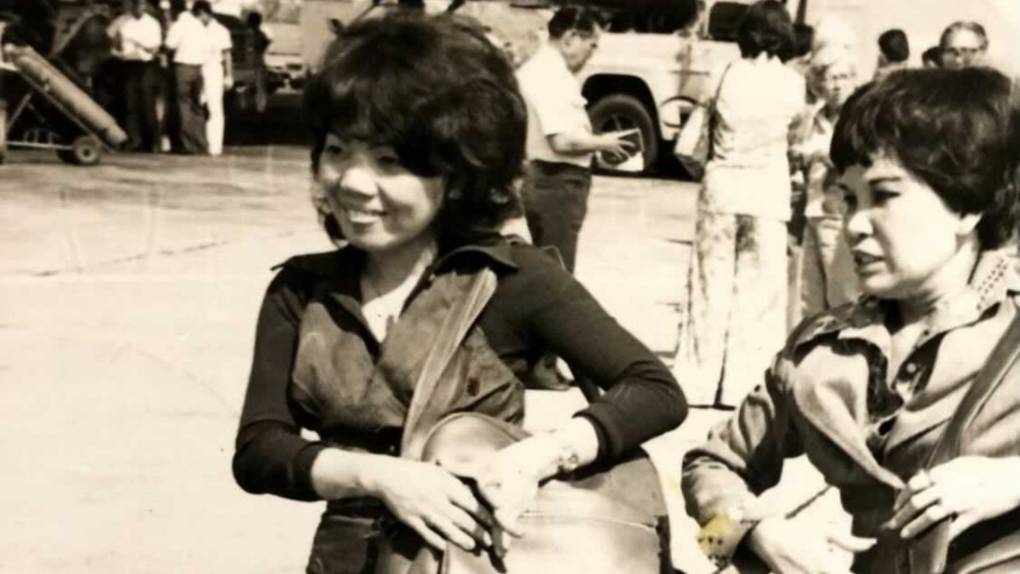
In Daly City, the Bayanihan Spirit Is Alive and Well
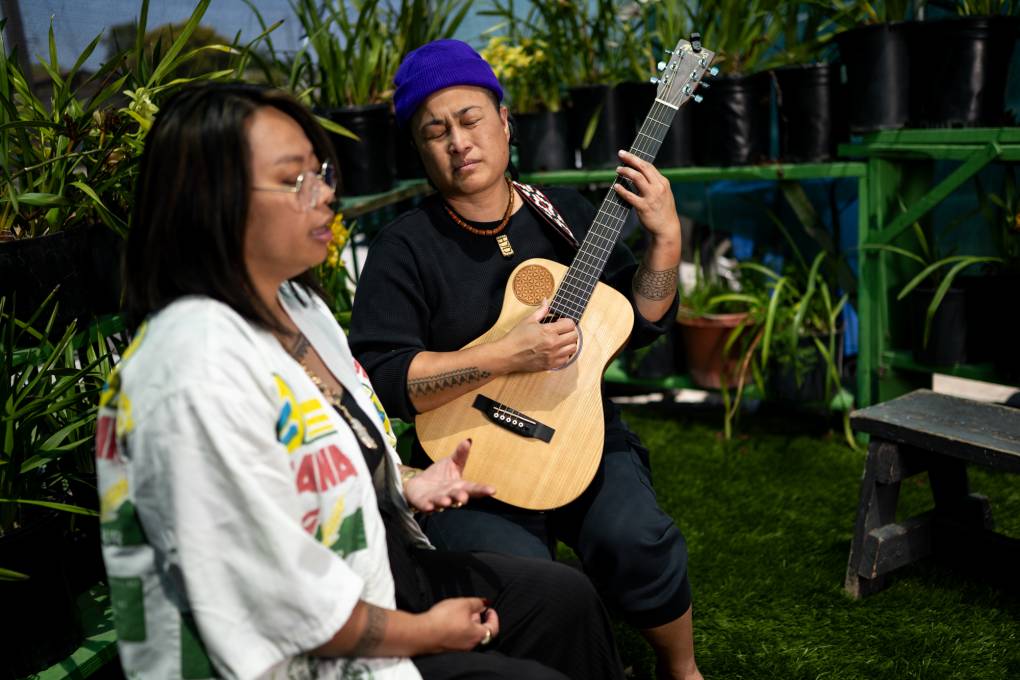
In Song and Self: How Queer Pinay Duo AstraLogik Finds Belonging Through Music
Are California’s AI Rules in Jeopardy? Plus, New Data on Oakland’s Non-Police Response, and the Bay Area’s Ruby Ibarra Wins NPR’s Tiny Desk Contest
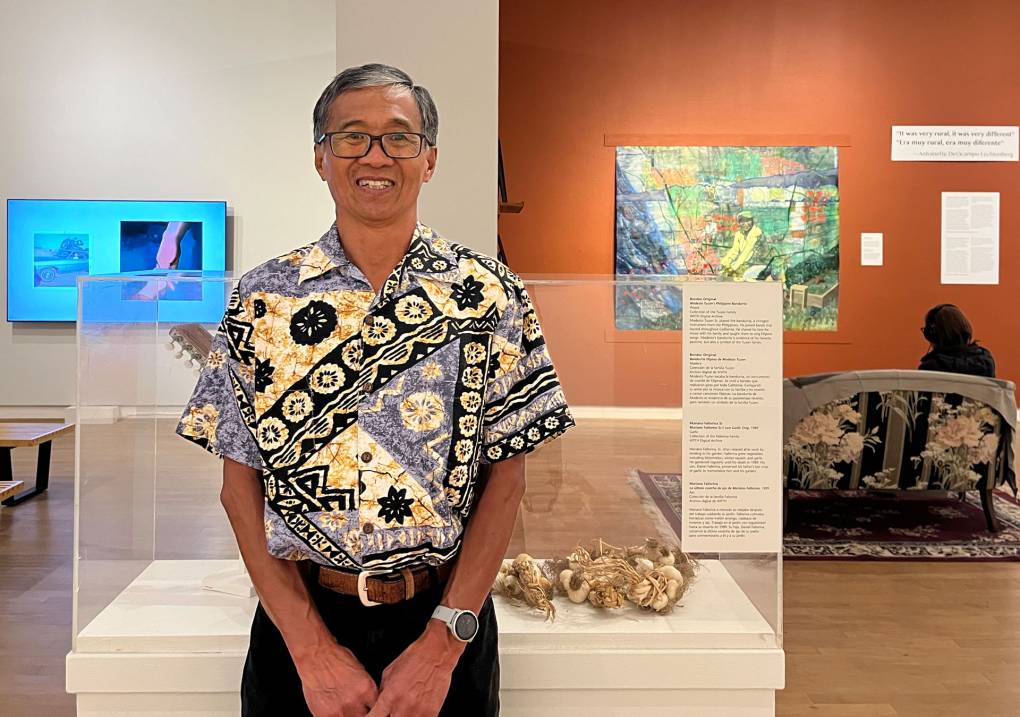
Fathers at the Heart of Santa Cruz Exhibit Celebrating Early Filipino Farmworkers
What Does It Mean to Be Mixed? A Conversation Between Generations
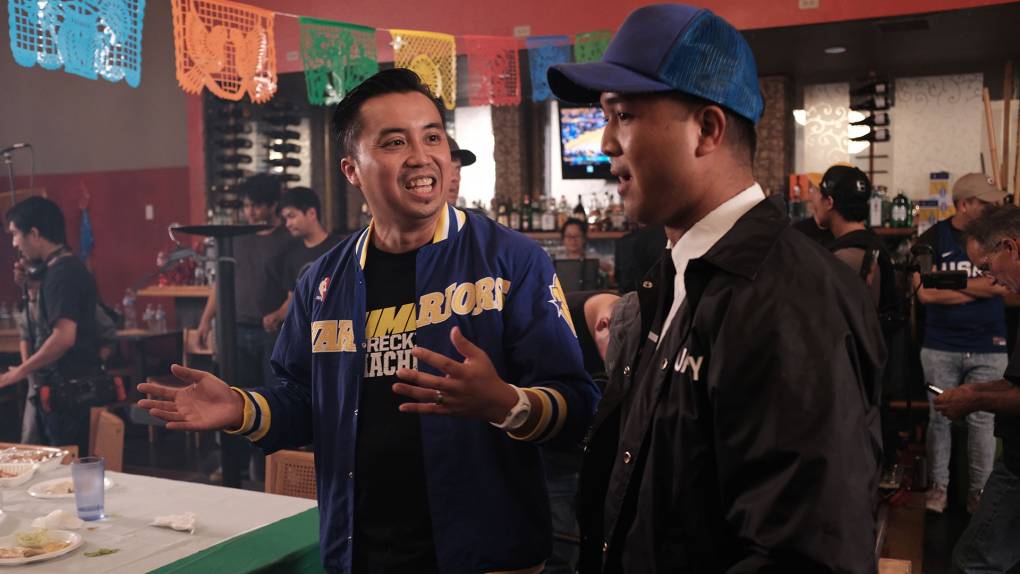
How Growing Up in Daly City Influenced Filmmaker Patricio Ginelsa
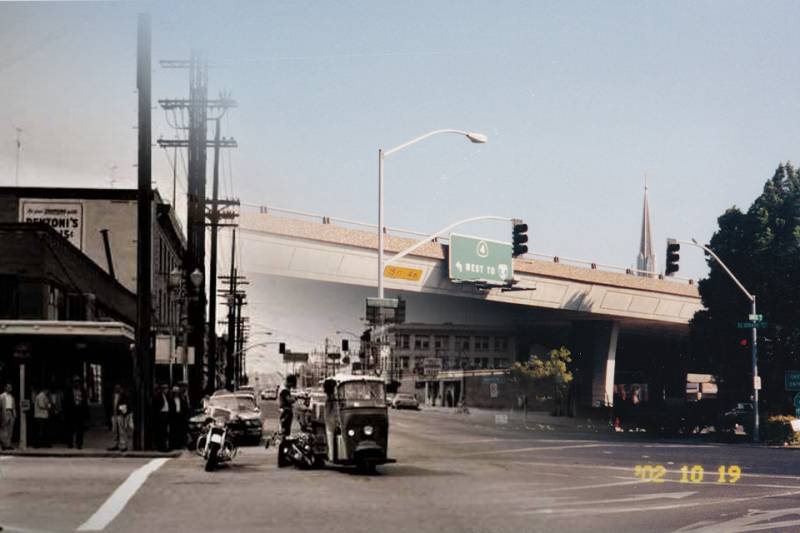
Little Manila Perseveres: How Filipinx Leaders in Stockton Are Organizing for the Next Generation
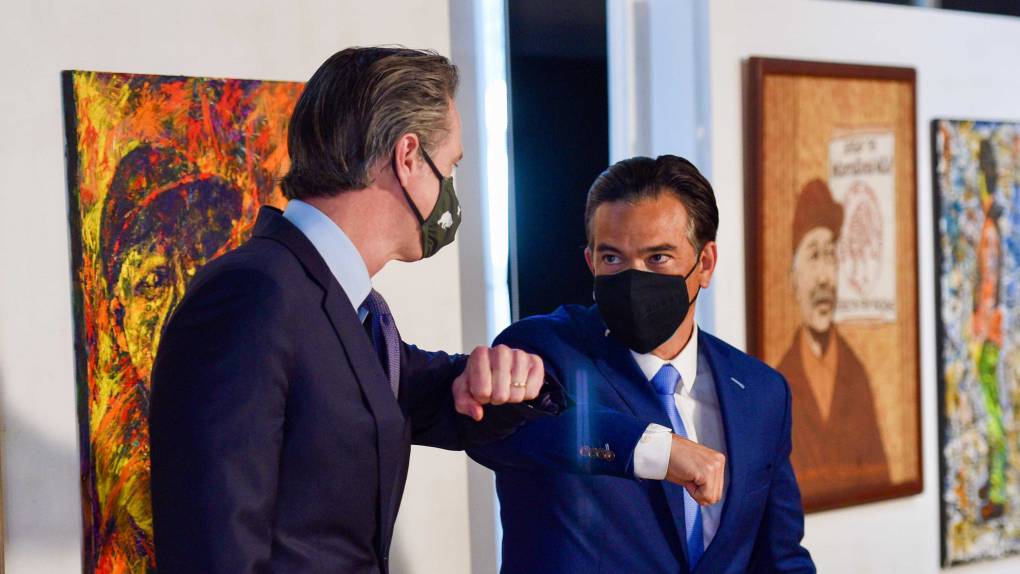
California Confirms Rob Bonta as First Filipino American Attorney General
Sponsored
Player sponsored by
window.__IS_SSR__=true
window.__INITIAL_STATE__={
"attachmentsReducer": {
"audio_0": {
"type": "attachments",
"id": "audio_0",
"imgSizes": {
"kqedFullSize": {
"file": "https://ww2.kqed.org/news/wp-content/themes/KQED-unified/img/audio_bgs/background0.jpg"
}
}
},
"audio_1": {
"type": "attachments",
"id": "audio_1",
"imgSizes": {
"kqedFullSize": {
"file": "https://ww2.kqed.org/news/wp-content/themes/KQED-unified/img/audio_bgs/background1.jpg"
}
}
},
"audio_2": {
"type": "attachments",
"id": "audio_2",
"imgSizes": {
"kqedFullSize": {
"file": "https://ww2.kqed.org/news/wp-content/themes/KQED-unified/img/audio_bgs/background2.jpg"
}
}
},
"audio_3": {
"type": "attachments",
"id": "audio_3",
"imgSizes": {
"kqedFullSize": {
"file": "https://ww2.kqed.org/news/wp-content/themes/KQED-unified/img/audio_bgs/background3.jpg"
}
}
},
"audio_4": {
"type": "attachments",
"id": "audio_4",
"imgSizes": {
"kqedFullSize": {
"file": "https://ww2.kqed.org/news/wp-content/themes/KQED-unified/img/audio_bgs/background4.jpg"
}
}
},
"placeholder": {
"type": "attachments",
"id": "placeholder",
"imgSizes": {
"thumbnail": {
"file": "https://cdn.kqed.org/wp-content/uploads/2024/12/KQED-Default-Image-816638274-2000x1333-1-160x107.jpg",
"width": 160,
"height": 107,
"mimeType": "image/jpeg"
},
"medium": {
"file": "https://cdn.kqed.org/wp-content/uploads/2024/12/KQED-Default-Image-816638274-2000x1333-1-800x533.jpg",
"width": 800,
"height": 533,
"mimeType": "image/jpeg"
},
"medium_large": {
"file": "https://cdn.kqed.org/wp-content/uploads/2024/12/KQED-Default-Image-816638274-2000x1333-1-768x512.jpg",
"width": 768,
"height": 512,
"mimeType": "image/jpeg"
},
"large": {
"file": "https://cdn.kqed.org/wp-content/uploads/2024/12/KQED-Default-Image-816638274-2000x1333-1-1020x680.jpg",
"width": 1020,
"height": 680,
"mimeType": "image/jpeg"
},
"1536x1536": {
"file": "https://cdn.kqed.org/wp-content/uploads/2024/12/KQED-Default-Image-816638274-2000x1333-1-1536x1024.jpg",
"width": 1536,
"height": 1024,
"mimeType": "image/jpeg"
},
"fd-lrg": {
"file": "https://cdn.kqed.org/wp-content/uploads/2024/12/KQED-Default-Image-816638274-2000x1333-1-1536x1024.jpg",
"width": 1536,
"height": 1024,
"mimeType": "image/jpeg"
},
"fd-med": {
"file": "https://cdn.kqed.org/wp-content/uploads/2024/12/KQED-Default-Image-816638274-2000x1333-1-1020x680.jpg",
"width": 1020,
"height": 680,
"mimeType": "image/jpeg"
},
"fd-sm": {
"file": "https://cdn.kqed.org/wp-content/uploads/2024/12/KQED-Default-Image-816638274-2000x1333-1-800x533.jpg",
"width": 800,
"height": 533,
"mimeType": "image/jpeg"
},
"post-thumbnail": {
"file": "https://cdn.kqed.org/wp-content/uploads/2024/12/KQED-Default-Image-816638274-2000x1333-1-672x372.jpg",
"width": 672,
"height": 372,
"mimeType": "image/jpeg"
},
"twentyfourteen-full-width": {
"file": "https://cdn.kqed.org/wp-content/uploads/2024/12/KQED-Default-Image-816638274-2000x1333-1-1038x576.jpg",
"width": 1038,
"height": 576,
"mimeType": "image/jpeg"
},
"xxsmall": {
"file": "https://cdn.kqed.org/wp-content/uploads/2024/12/KQED-Default-Image-816638274-2000x1333-1-160x107.jpg",
"width": 160,
"height": 107,
"mimeType": "image/jpeg"
},
"xsmall": {
"file": "https://cdn.kqed.org/wp-content/uploads/2024/12/KQED-Default-Image-816638274-2000x1333-1-672x372.jpg",
"width": 672,
"height": 372,
"mimeType": "image/jpeg"
},
"small": {
"file": "https://cdn.kqed.org/wp-content/uploads/2024/12/KQED-Default-Image-816638274-2000x1333-1-672x372.jpg",
"width": 672,
"height": 372,
"mimeType": "image/jpeg"
},
"xlarge": {
"file": "https://cdn.kqed.org/wp-content/uploads/2024/12/KQED-Default-Image-816638274-2000x1333-1-1020x680.jpg",
"width": 1020,
"height": 680,
"mimeType": "image/jpeg"
},
"full-width": {
"file": "https://cdn.kqed.org/wp-content/uploads/2024/12/KQED-Default-Image-816638274-2000x1333-1-1920x1280.jpg",
"width": 1920,
"height": 1280,
"mimeType": "image/jpeg"
},
"guest-author-32": {
"file": "https://cdn.kqed.org/wp-content/uploads/2025/01/KQED-Default-Image-816638274-1333x1333-1-160x160.jpg",
"width": 32,
"height": 32,
"mimeType": "image/jpeg"
},
"guest-author-50": {
"file": "https://cdn.kqed.org/wp-content/uploads/2025/01/KQED-Default-Image-816638274-1333x1333-1-160x160.jpg",
"width": 50,
"height": 50,
"mimeType": "image/jpeg"
},
"guest-author-64": {
"file": "https://cdn.kqed.org/wp-content/uploads/2025/01/KQED-Default-Image-816638274-1333x1333-1-160x160.jpg",
"width": 64,
"height": 64,
"mimeType": "image/jpeg"
},
"guest-author-96": {
"file": "https://cdn.kqed.org/wp-content/uploads/2025/01/KQED-Default-Image-816638274-1333x1333-1-160x160.jpg",
"width": 96,
"height": 96,
"mimeType": "image/jpeg"
},
"guest-author-128": {
"file": "https://cdn.kqed.org/wp-content/uploads/2025/01/KQED-Default-Image-816638274-1333x1333-1-160x160.jpg",
"width": 128,
"height": 128,
"mimeType": "image/jpeg"
},
"detail": {
"file": "https://cdn.kqed.org/wp-content/uploads/2025/01/KQED-Default-Image-816638274-1333x1333-1-160x160.jpg",
"width": 160,
"height": 160,
"mimeType": "image/jpeg"
},
"kqedFullSize": {
"file": "https://cdn.kqed.org/wp-content/uploads/2024/12/KQED-Default-Image-816638274-2000x1333-1.jpg",
"width": 2000,
"height": 1333
}
}
},
"news_12058115": {
"type": "attachments",
"id": "news_12058115",
"meta": {
"index": "attachments_1716263798",
"site": "news",
"id": "12058115",
"found": true
},
"title": "BROADWAY_STUDIO_FAME-100",
"publishDate": 1759258458,
"status": "inherit",
"parent": 12058112,
"modified": 1759258552,
"caption": "The former stage of Mabuhay Gardens on Broadway in San Francisco's North Beach neighborhood.",
"credit": "Stefanie Atkinson Schwartz",
"altTag": null,
"description": null,
"imgSizes": {
"medium": {
"file": "https://cdn.kqed.org/wp-content/uploads/sites/10/2025/09/BROADWAY_STUDIO_FAME-100-2000x1333.jpg",
"width": 2000,
"height": 1333,
"mimeType": "image/jpeg"
},
"large": {
"file": "https://cdn.kqed.org/wp-content/uploads/sites/10/2025/09/BROADWAY_STUDIO_FAME-100-2000x1333.jpg",
"width": 2000,
"height": 1333,
"mimeType": "image/jpeg"
},
"thumbnail": {
"file": "https://cdn.kqed.org/wp-content/uploads/sites/10/2025/09/BROADWAY_STUDIO_FAME-100-160x107.jpg",
"width": 160,
"height": 107,
"mimeType": "image/jpeg"
},
"1536x1536": {
"file": "https://cdn.kqed.org/wp-content/uploads/sites/10/2025/09/BROADWAY_STUDIO_FAME-100-1536x1024.jpg",
"width": 1536,
"height": 1024,
"mimeType": "image/jpeg"
},
"2048x2048": {
"file": "https://cdn.kqed.org/wp-content/uploads/sites/10/2025/09/BROADWAY_STUDIO_FAME-100-2048x1365.jpg",
"width": 2048,
"height": 1365,
"mimeType": "image/jpeg"
},
"post-thumbnail": {
"file": "https://cdn.kqed.org/wp-content/uploads/sites/10/2025/09/BROADWAY_STUDIO_FAME-100-672x372.jpg",
"width": 672,
"height": 372,
"mimeType": "image/jpeg"
},
"twentyfourteen-full-width": {
"file": "https://cdn.kqed.org/wp-content/uploads/sites/10/2025/09/BROADWAY_STUDIO_FAME-100-1038x576.jpg",
"width": 1038,
"height": 576,
"mimeType": "image/jpeg"
},
"full-width": {
"file": "https://cdn.kqed.org/wp-content/uploads/sites/10/2025/09/BROADWAY_STUDIO_FAME-100-2000x1333.jpg",
"width": 2000,
"height": 1333,
"mimeType": "image/jpeg"
},
"kqedFullSize": {
"file": "https://cdn.kqed.org/wp-content/uploads/sites/10/2025/09/BROADWAY_STUDIO_FAME-100-scaled.jpg",
"width": 2560,
"height": 1707
}
},
"fetchFailed": false,
"isLoading": false
},
"news_11883672": {
"type": "attachments",
"id": "news_11883672",
"meta": {
"index": "attachments_1716263798",
"site": "news",
"id": "11883672",
"found": true
},
"parent": 11883382,
"imgSizes": {
"twentyfourteen-full-width": {
"file": "https://ww2.kqed.org/app/uploads/sites/10/2021/08/Josie-Manalo-leaving-for-America-1920x1080-1-1038x576.jpg",
"width": 1038,
"mimeType": "image/jpeg",
"height": 576
},
"thumbnail": {
"file": "https://ww2.kqed.org/app/uploads/sites/10/2021/08/Josie-Manalo-leaving-for-America-1920x1080-1-160x90.jpg",
"width": 160,
"mimeType": "image/jpeg",
"height": 90
},
"post-thumbnail": {
"file": "https://ww2.kqed.org/app/uploads/sites/10/2021/08/Josie-Manalo-leaving-for-America-1920x1080-1-672x372.jpg",
"width": 672,
"mimeType": "image/jpeg",
"height": 372
},
"kqedFullSize": {
"file": "https://ww2.kqed.org/app/uploads/sites/10/2021/08/Josie-Manalo-leaving-for-America-1920x1080-1.jpg",
"width": 1920,
"height": 1080
},
"large": {
"file": "https://ww2.kqed.org/app/uploads/sites/10/2021/08/Josie-Manalo-leaving-for-America-1920x1080-1-1020x574.jpg",
"width": 1020,
"mimeType": "image/jpeg",
"height": 574
},
"1536x1536": {
"file": "https://ww2.kqed.org/app/uploads/sites/10/2021/08/Josie-Manalo-leaving-for-America-1920x1080-1-1536x864.jpg",
"width": 1536,
"mimeType": "image/jpeg",
"height": 864
},
"medium": {
"file": "https://ww2.kqed.org/app/uploads/sites/10/2021/08/Josie-Manalo-leaving-for-America-1920x1080-1-800x450.jpg",
"width": 800,
"mimeType": "image/jpeg",
"height": 450
}
},
"publishDate": 1628084533,
"modified": 1628176740,
"caption": "Josie Manalo, the mother of Daly City Mayor Juslyn Manalo, getting ready to board her flight from the Philippines to the United States in 1973.",
"description": "A young woman smiles while carrying a large bag over her shoulder. She wears a collared top. There is an airplane in the background.",
"title": "Josie Manalo leaving for America 1920x1080",
"credit": "Courtesy of Juslyn Manalo",
"status": "inherit",
"altTag": "A young woman smiles while carrying a large bag over her shoulder. She wears a collared top. There is an airplane in the background.",
"fetchFailed": false,
"isLoading": false
},
"news_12042266": {
"type": "attachments",
"id": "news_12042266",
"meta": {
"index": "attachments_1716263798",
"site": "news",
"id": "12042266",
"found": true
},
"title": "250530-ASTRALOGIK-13-BL-KQED",
"publishDate": 1748643689,
"status": "inherit",
"parent": 0,
"modified": 1748643764,
"caption": "Charito Soriano (left) and Chen Conlu practice for an upcoming show for their band AstraLogik at their home in Hayward on May 30, 2025.",
"credit": "Beth LaBerge/KQED",
"altTag": null,
"description": null,
"imgSizes": {
"medium": {
"file": "https://cdn.kqed.org/wp-content/uploads/sites/10/2025/05/250530-ASTRALOGIK-13-BL-KQED-800x533.jpg",
"width": 800,
"height": 533,
"mimeType": "image/jpeg"
},
"large": {
"file": "https://cdn.kqed.org/wp-content/uploads/sites/10/2025/05/250530-ASTRALOGIK-13-BL-KQED-1020x680.jpg",
"width": 1020,
"height": 680,
"mimeType": "image/jpeg"
},
"thumbnail": {
"file": "https://cdn.kqed.org/wp-content/uploads/sites/10/2025/05/250530-ASTRALOGIK-13-BL-KQED-160x107.jpg",
"width": 160,
"height": 107,
"mimeType": "image/jpeg"
},
"1536x1536": {
"file": "https://cdn.kqed.org/wp-content/uploads/sites/10/2025/05/250530-ASTRALOGIK-13-BL-KQED-1536x1024.jpg",
"width": 1536,
"height": 1024,
"mimeType": "image/jpeg"
},
"post-thumbnail": {
"file": "https://cdn.kqed.org/wp-content/uploads/sites/10/2025/05/250530-ASTRALOGIK-13-BL-KQED-672x372.jpg",
"width": 672,
"height": 372,
"mimeType": "image/jpeg"
},
"twentyfourteen-full-width": {
"file": "https://cdn.kqed.org/wp-content/uploads/sites/10/2025/05/250530-ASTRALOGIK-13-BL-KQED-1038x576.jpg",
"width": 1038,
"height": 576,
"mimeType": "image/jpeg"
},
"full-width": {
"file": "https://cdn.kqed.org/wp-content/uploads/sites/10/2025/05/250530-ASTRALOGIK-13-BL-KQED-1920x1280.jpg",
"width": 1920,
"height": 1280,
"mimeType": "image/jpeg"
},
"kqedFullSize": {
"file": "https://cdn.kqed.org/wp-content/uploads/sites/10/2025/05/250530-ASTRALOGIK-13-BL-KQED.jpg",
"width": 2000,
"height": 1333
}
},
"fetchFailed": false,
"isLoading": false
},
"news_12015403": {
"type": "attachments",
"id": "news_12015403",
"meta": {
"index": "attachments_1716263798",
"site": "news",
"id": "12015403",
"found": true
},
"title": "U.S. Capitol",
"publishDate": 1732229773,
"status": "inherit",
"parent": 12015395,
"modified": 1732232930,
"caption": "The U.S. Capitol, including the House of Representatives, left, are seen on Thursday, Nov. 14, 2024, in Washington. ",
"credit": "AP Photo/Mariam Zuhaib",
"altTag": null,
"description": null,
"imgSizes": {
"medium": {
"file": "https://cdn.kqed.org/wp-content/uploads/sites/10/2024/11/AP24319624163000-800x533.jpg",
"width": 800,
"height": 533,
"mimeType": "image/jpeg"
},
"large": {
"file": "https://cdn.kqed.org/wp-content/uploads/sites/10/2024/11/AP24319624163000-1020x680.jpg",
"width": 1020,
"height": 680,
"mimeType": "image/jpeg"
},
"thumbnail": {
"file": "https://cdn.kqed.org/wp-content/uploads/sites/10/2024/11/AP24319624163000-160x107.jpg",
"width": 160,
"height": 107,
"mimeType": "image/jpeg"
},
"1536x1536": {
"file": "https://cdn.kqed.org/wp-content/uploads/sites/10/2024/11/AP24319624163000-1536x1024.jpg",
"width": 1536,
"height": 1024,
"mimeType": "image/jpeg"
},
"2048x2048": {
"file": "https://cdn.kqed.org/wp-content/uploads/sites/10/2024/11/AP24319624163000-2048x1365.jpg",
"width": 2048,
"height": 1365,
"mimeType": "image/jpeg"
},
"post-thumbnail": {
"file": "https://cdn.kqed.org/wp-content/uploads/sites/10/2024/11/AP24319624163000-672x372.jpg",
"width": 672,
"height": 372,
"mimeType": "image/jpeg"
},
"twentyfourteen-full-width": {
"file": "https://cdn.kqed.org/wp-content/uploads/sites/10/2024/11/AP24319624163000-1038x576.jpg",
"width": 1038,
"height": 576,
"mimeType": "image/jpeg"
},
"full-width": {
"file": "https://cdn.kqed.org/wp-content/uploads/sites/10/2024/11/AP24319624163000-1920x1280.jpg",
"width": 1920,
"height": 1280,
"mimeType": "image/jpeg"
},
"kqedFullSize": {
"file": "https://cdn.kqed.org/wp-content/uploads/sites/10/2024/11/AP24319624163000-scaled-e1738263690738.jpg",
"width": 2000,
"height": 1333
}
},
"fetchFailed": false,
"isLoading": false
},
"news_11989923": {
"type": "attachments",
"id": "news_11989923",
"meta": {
"index": "attachments_1716263798",
"site": "news",
"id": "11989923",
"found": true
},
"title": "Dan-garlic",
"publishDate": 1718214017,
"status": "inherit",
"parent": 0,
"modified": 1718308748,
"caption": "Daniel Fallorina, 67, stands in front of a display showing his father's last crop of braided garlic at the exhibit 'Sowing Seeds: Filipino American Stories from the Pajaro Valley' at the Santa Cruz Museum of Art & History.",
"credit": "Courtesy Janelle Salanga",
"altTag": "A man wearing glasses and a shirt with exotic designs stands in front of a display of old garlic.",
"description": null,
"imgSizes": {
"medium": {
"file": "https://cdn.kqed.org/wp-content/uploads/sites/10/2024/06/Dan-garlic-800x563.jpg",
"width": 800,
"height": 563,
"mimeType": "image/jpeg"
},
"large": {
"file": "https://cdn.kqed.org/wp-content/uploads/sites/10/2024/06/Dan-garlic-1020x717.jpg",
"width": 1020,
"height": 717,
"mimeType": "image/jpeg"
},
"thumbnail": {
"file": "https://cdn.kqed.org/wp-content/uploads/sites/10/2024/06/Dan-garlic-160x113.jpg",
"width": 160,
"height": 113,
"mimeType": "image/jpeg"
},
"1536x1536": {
"file": "https://cdn.kqed.org/wp-content/uploads/sites/10/2024/06/Dan-garlic-1536x1080.jpg",
"width": 1536,
"height": 1080,
"mimeType": "image/jpeg"
},
"post-thumbnail": {
"file": "https://cdn.kqed.org/wp-content/uploads/sites/10/2024/06/Dan-garlic-672x372.jpg",
"width": 672,
"height": 372,
"mimeType": "image/jpeg"
},
"twentyfourteen-full-width": {
"file": "https://cdn.kqed.org/wp-content/uploads/sites/10/2024/06/Dan-garlic-1038x576.jpg",
"width": 1038,
"height": 576,
"mimeType": "image/jpeg"
},
"kqedFullSize": {
"file": "https://cdn.kqed.org/wp-content/uploads/sites/10/2024/06/Dan-garlic.jpg",
"width": 1920,
"height": 1350
}
},
"fetchFailed": false,
"isLoading": false
},
"news_11894840": {
"type": "attachments",
"id": "news_11894840",
"meta": {
"index": "attachments_1716263798",
"site": "news",
"id": "11894840",
"found": true
},
"parent": 11894797,
"imgSizes": {
"thumbnail": {
"file": "https://ww2.kqed.org/app/uploads/sites/10/2021/11/Katrina-and-family-160x128.jpeg",
"width": 160,
"mimeType": "image/jpeg",
"height": 128
},
"post-thumbnail": {
"file": "https://ww2.kqed.org/app/uploads/sites/10/2021/11/Katrina-and-family-512x372.jpeg",
"width": 512,
"mimeType": "image/jpeg",
"height": 372
},
"kqedFullSize": {
"file": "https://ww2.kqed.org/app/uploads/sites/10/2021/11/Katrina-and-family.jpeg",
"width": 512,
"height": 409
}
},
"publishDate": 1635893973,
"modified": 1636150237,
"caption": "Katrina Bullock says growing up with a Black father and Filipina mother in the 2000s was a very different experience from what it is for an older generation of mixed folks. ",
"description": null,
"title": "Katrina and family",
"credit": "Courtesy Katrina Bullock",
"status": "inherit",
"altTag": "A family portrait of two daughters, a mother and a father.",
"fetchFailed": false,
"isLoading": false
},
"news_11883786": {
"type": "attachments",
"id": "news_11883786",
"meta": {
"index": "attachments_1716263798",
"site": "news",
"id": "11883786",
"found": true
},
"parent": 11883780,
"imgSizes": {
"twentyfourteen-full-width": {
"file": "https://ww2.kqed.org/app/uploads/sites/10/2021/08/PG_FrancisCustodio-sized-1038x576.jpg",
"width": 1038,
"mimeType": "image/jpeg",
"height": 576
},
"thumbnail": {
"file": "https://ww2.kqed.org/app/uploads/sites/10/2021/08/PG_FrancisCustodio-sized-160x90.jpg",
"width": 160,
"mimeType": "image/jpeg",
"height": 90
},
"post-thumbnail": {
"file": "https://ww2.kqed.org/app/uploads/sites/10/2021/08/PG_FrancisCustodio-sized-672x372.jpg",
"width": 672,
"mimeType": "image/jpeg",
"height": 372
},
"kqedFullSize": {
"file": "https://ww2.kqed.org/app/uploads/sites/10/2021/08/PG_FrancisCustodio-sized.jpg",
"width": 1920,
"height": 1080
},
"large": {
"file": "https://ww2.kqed.org/app/uploads/sites/10/2021/08/PG_FrancisCustodio-sized-1020x574.jpg",
"width": 1020,
"mimeType": "image/jpeg",
"height": 574
},
"1536x1536": {
"file": "https://ww2.kqed.org/app/uploads/sites/10/2021/08/PG_FrancisCustodio-sized-1536x864.jpg",
"width": 1536,
"mimeType": "image/jpeg",
"height": 864
},
"medium": {
"file": "https://ww2.kqed.org/app/uploads/sites/10/2021/08/PG_FrancisCustodio-sized-800x450.jpg",
"width": 800,
"mimeType": "image/jpeg",
"height": 450
}
},
"publishDate": 1628119836,
"modified": 1628271775,
"caption": "Patricio Ginelsa (left) directs childhood friend Francis Custodio in \u003ci>Lumpia With a Vengeance\u003c/i>.",
"description": "Patricio Ginelsa (left) directs childhood friend Francis Custodio in \u003ci>Lumpia With a Vengeance\u003c/i>.",
"title": "PG_FrancisCustodio-sized",
"credit": "\u003ca href=\"https://jcasasphotography.com/\">J.J Casas\u003c/a>/Courtesy \u003ca href=\"https://www.kidheroes.net/\">Kid Heroes Productions\u003c/a>",
"status": "inherit",
"altTag": "Patricio Ginelsa (left) directs childhood friend Francis Custodio in \"Lumpia With a Vengeance.\"",
"fetchFailed": false,
"isLoading": false
},
"news_11872594": {
"type": "attachments",
"id": "news_11872594",
"meta": {
"index": "attachments_1716263798",
"site": "news",
"id": "11872594",
"found": true
},
"parent": 11872593,
"imgSizes": {
"twentyfourteen-full-width": {
"file": "https://ww2.kqed.org/app/uploads/sites/10/2021/05/lm-collage-3-960x576.jpg",
"width": 960,
"mimeType": "image/jpeg",
"height": 576
},
"thumbnail": {
"file": "https://ww2.kqed.org/app/uploads/sites/10/2021/05/lm-collage-3-160x107.jpg",
"width": 160,
"mimeType": "image/jpeg",
"height": 107
},
"post-thumbnail": {
"file": "https://ww2.kqed.org/app/uploads/sites/10/2021/05/lm-collage-3-672x372.jpg",
"width": 672,
"mimeType": "image/jpeg",
"height": 372
},
"kqedFullSize": {
"file": "https://ww2.kqed.org/app/uploads/sites/10/2021/05/lm-collage-3.jpg",
"width": 960,
"height": 640
},
"medium": {
"file": "https://ww2.kqed.org/app/uploads/sites/10/2021/05/lm-collage-3-800x533.jpg",
"width": 800,
"mimeType": "image/jpeg",
"height": 533
}
},
"publishDate": 1620335099,
"modified": 1624039778,
"caption": "Stockton demolished many homes, businesses and community centers in historic Little Manila to build a cross-town freeway in the early 1970s. ",
"description": null,
"title": "lm-collage-3",
"credit": "Photos courtesy of SPD Historical Archives and Elena Mangahas",
"status": "inherit",
"altTag": null,
"fetchFailed": false,
"isLoading": false
},
"news_11870750": {
"type": "attachments",
"id": "news_11870750",
"meta": {
"index": "attachments_1716263798",
"site": "news",
"id": "11870750",
"found": true
},
"parent": 11870739,
"imgSizes": {
"twentyfourteen-full-width": {
"file": "https://ww2.kqed.org/app/uploads/sites/10/2021/04/1920_Newsom_Bonta-copy-1038x576.jpg",
"width": 1038,
"mimeType": "image/jpeg",
"height": 576
},
"thumbnail": {
"file": "https://ww2.kqed.org/app/uploads/sites/10/2021/04/1920_Newsom_Bonta-copy-160x90.jpg",
"width": 160,
"mimeType": "image/jpeg",
"height": 90
},
"post-thumbnail": {
"file": "https://ww2.kqed.org/app/uploads/sites/10/2021/04/1920_Newsom_Bonta-copy-672x372.jpg",
"width": 672,
"mimeType": "image/jpeg",
"height": 372
},
"kqedFullSize": {
"file": "https://ww2.kqed.org/app/uploads/sites/10/2021/04/1920_Newsom_Bonta-copy-scaled.jpg",
"width": 2560,
"height": 1440
},
"2048x2048": {
"file": "https://ww2.kqed.org/app/uploads/sites/10/2021/04/1920_Newsom_Bonta-copy-2048x1152.jpg",
"width": 2048,
"mimeType": "image/jpeg",
"height": 1152
},
"large": {
"file": "https://ww2.kqed.org/app/uploads/sites/10/2021/04/1920_Newsom_Bonta-copy-1020x574.jpg",
"width": 1020,
"mimeType": "image/jpeg",
"height": 574
},
"1536x1536": {
"file": "https://ww2.kqed.org/app/uploads/sites/10/2021/04/1920_Newsom_Bonta-copy-1536x864.jpg",
"width": 1536,
"mimeType": "image/jpeg",
"height": 864
},
"full-width": {
"file": "https://ww2.kqed.org/app/uploads/sites/10/2021/04/1920_Newsom_Bonta-copy-1920x1080.jpg",
"width": 1920,
"mimeType": "image/jpeg",
"height": 1080
},
"medium": {
"file": "https://ww2.kqed.org/app/uploads/sites/10/2021/04/1920_Newsom_Bonta-copy-800x450.jpg",
"width": 800,
"mimeType": "image/jpeg",
"height": 450
}
},
"publishDate": 1619121578,
"modified": 1619122329,
"caption": "Rob Bonta and Gov. Gavin Newsom bump elbows at a press conference in San Francisco on March 24, 2021, where Gov. Newsom announced his nomination for California attorney general.",
"description": null,
"title": "1920_Newsom_Bonta copy",
"credit": "Beth LaBerge/KQED ",
"status": "inherit",
"altTag": null,
"fetchFailed": false,
"isLoading": false
}
},
"audioPlayerReducer": {
"postId": "stream_live",
"isPaused": true,
"isPlaying": false,
"pfsActive": false,
"pledgeModalIsOpen": true,
"playerDrawerIsOpen": false
},
"authorsReducer": {
"byline_news_12041727": {
"type": "authors",
"id": "byline_news_12041727",
"meta": {
"override": true
},
"slug": "byline_news_12041727",
"name": "I-Yun Chan",
"isLoading": false
},
"byline_news_11990010": {
"type": "authors",
"id": "byline_news_11990010",
"meta": {
"override": true
},
"slug": "byline_news_11990010",
"name": "Janelle Salanga",
"isLoading": false
},
"byline_news_11870739": {
"type": "authors",
"id": "byline_news_11870739",
"meta": {
"override": true
},
"slug": "byline_news_11870739",
"name": "Don Thompson \u003cbr> Associated Press",
"isLoading": false
},
"astupi": {
"type": "authors",
"id": "70",
"meta": {
"index": "authors_1716337520",
"id": "70",
"found": true
},
"name": "Amanda Stupi",
"firstName": "Amanda",
"lastName": "Stupi",
"slug": "astupi",
"email": "astupi@kqed.org",
"display_author_email": false,
"staff_mastheads": [],
"title": "Senior Engagement Producer",
"bio": "Amanda joined KQED Science’s engagement team as a Senior Audience Engagement Strategist in the spring of 2019. She has helped craft messaging around wildfires, the coronavirus pandemic, climate change and many other stories. She has also brought KQED Science to new platforms such as Reddit’s Ask Me Anything series. Prior to joining KQED Science, Amanda spent seven years as an engagement producer with Forum, KQED’s daily live call-in show. She got her start in radio at KALW's weekly call in show, City Visions, before going on to an internship and stint at NPR's Talk of the Nation.\r\n\r\nPrior to journalism, Amanda taught English at Lowell High School. She's a native of Petaluma and currently lives under the \"South San Francisco the Industrial City\" sign in South City. She believes that engagement is vital to news’s future and that good journalism listens as much as it asks questions.",
"avatar": "https://secure.gravatar.com/avatar/e981c503e5c162da701dcaccfbf87e35?s=600&d=blank&r=g",
"twitter": null,
"facebook": null,
"instagram": null,
"linkedin": null,
"sites": [
{
"site": "arts",
"roles": [
"Contributor"
]
},
{
"site": "news",
"roles": [
"editor"
]
},
{
"site": "pop",
"roles": [
"contributor"
]
},
{
"site": "stateofhealth",
"roles": [
"editor"
]
},
{
"site": "science",
"roles": []
},
{
"site": "perspectives",
"roles": [
"editor"
]
}
],
"headData": {
"title": "Amanda Stupi | KQED",
"description": "Senior Engagement Producer",
"ogImgSrc": "https://secure.gravatar.com/avatar/e981c503e5c162da701dcaccfbf87e35?s=600&d=blank&r=g",
"twImgSrc": "https://secure.gravatar.com/avatar/e981c503e5c162da701dcaccfbf87e35?s=600&d=blank&r=g"
},
"isLoading": false,
"link": "/author/astupi"
},
"katrinaschwartz": {
"type": "authors",
"id": "234",
"meta": {
"index": "authors_1716337520",
"id": "234",
"found": true
},
"name": "Katrina Schwartz",
"firstName": "Katrina",
"lastName": "Schwartz",
"slug": "katrinaschwartz",
"email": "kschwartz@kqed.org",
"display_author_email": false,
"staff_mastheads": [
"news"
],
"title": "Producer",
"bio": "Katrina Schwartz is a journalist based in San Francisco. She's worked at KPCC public radio in LA and has reported on air and online for KQED since 2010. She covered how teaching and learning is changing for MindShift between 2012 and 2020. She is the co-host of the MindShift podcast and now produces KQED's Bay Curious podcast.",
"avatar": "https://secure.gravatar.com/avatar/a6a567574dafefa959593925eead665c?s=600&d=blank&r=g",
"twitter": "kschwart",
"facebook": null,
"instagram": null,
"linkedin": null,
"sites": [
{
"site": "news",
"roles": [
"editor"
]
},
{
"site": "mindshift",
"roles": [
"administrator"
]
},
{
"site": "stateofhealth",
"roles": [
"author"
]
},
{
"site": "science",
"roles": [
"editor"
]
}
],
"headData": {
"title": "Katrina Schwartz | KQED",
"description": "Producer",
"ogImgSrc": "https://secure.gravatar.com/avatar/a6a567574dafefa959593925eead665c?s=600&d=blank&r=g",
"twImgSrc": "https://secure.gravatar.com/avatar/a6a567574dafefa959593925eead665c?s=600&d=blank&r=g"
},
"isLoading": false,
"link": "/author/katrinaschwartz"
},
"sasha-khokha": {
"type": "authors",
"id": "254",
"meta": {
"index": "authors_1716337520",
"id": "254",
"found": true
},
"name": "Sasha Khokha",
"firstName": "Sasha",
"lastName": "Khokha",
"slug": "sasha-khokha",
"email": "skhokha@kqed.org",
"display_author_email": true,
"staff_mastheads": [
"news"
],
"title": "Host, The California Report Magazine",
"bio": "Sasha Khokha is the host of \u003cem>The California Report's \u003c/em> weekly magazine program, which takes listeners on sound-rich excursions to meet the people that make the Golden State unique -- through audio documentaries and long-form stories. As \u003cem>The California Report's\u003c/em> Central Valley Bureau Chief based in Fresno for nearly a dozen years, Sasha brought the lives and concerns of rural Californians to listeners around the state. Her reporting helped expose the hidden price immigrant women janitors and farmworkers may pay to keep their jobs: sexual assault at work. It inspired two new California laws to protect them from sexual harassment. She was a key member of the reporting team for the Frontline film \u003cem>Rape on the Night Shift, \u003c/em>which was nominated for two national Emmys. Sasha has also won a national Edward R. Murrow and a national PRNDI award for investigative reporting, as well as multiple prizes from the Society for Professional Journalists. Sasha is a proud alum of the UC Berkeley Graduate School of Journalism and Brown University and a member of the South Asian Journalists Association.",
"avatar": "https://secure.gravatar.com/avatar/e4b5e1541aaeea2aa356aa1fb2a68950?s=600&d=blank&r=g",
"twitter": "KQEDSashaKhokha",
"facebook": null,
"instagram": null,
"linkedin": null,
"sites": [
{
"site": "news",
"roles": [
"editor"
]
},
{
"site": "stateofhealth",
"roles": [
"author"
]
},
{
"site": "science",
"roles": [
"author"
]
},
{
"site": "quest",
"roles": [
"subscriber"
]
}
],
"headData": {
"title": "Sasha Khokha | KQED",
"description": "Host, The California Report Magazine",
"ogImgSrc": "https://secure.gravatar.com/avatar/e4b5e1541aaeea2aa356aa1fb2a68950?s=600&d=blank&r=g",
"twImgSrc": "https://secure.gravatar.com/avatar/e4b5e1541aaeea2aa356aa1fb2a68950?s=600&d=blank&r=g"
},
"isLoading": false,
"link": "/author/sasha-khokha"
},
"mlagos": {
"type": "authors",
"id": "3239",
"meta": {
"index": "authors_1716337520",
"id": "3239",
"found": true
},
"name": "Marisa Lagos",
"firstName": "Marisa",
"lastName": "Lagos",
"slug": "mlagos",
"email": "mlagos@kqed.org",
"display_author_email": false,
"staff_mastheads": [
"news"
],
"title": "KQED Contributor",
"bio": "Marisa Lagos is a correspondent for KQED’s California Politics and Government Desk and co-hosts the award-winning show and podcast, Political Breakdown. At KQED, Lagos also conducts reporting, analysis and investigations into state, local and national politics for radio, TV, online and onstage. In 2022, she and co-host, Scott Shafer, moderated the only gubernatorial debate in California. In 2020, the \u003ci>Washington Post\u003c/i> named her one of the top political journalists in California; she was nominated for a Peabody and won several other awards for her work investigating the 2017 California wildfires. She has worked at the \u003ci>San Francisco Chronicle\u003c/i>, \u003ci>San Francisco Examiner\u003c/i> and \u003ci>Los Angeles Times\u003c/i>. A UC Santa Barbara graduate, she lives in San Francisco with her two sons and husband.",
"avatar": "https://secure.gravatar.com/avatar/a261a0d3696fc066871ef96b85b5e7d2?s=600&d=blank&r=g",
"twitter": "@mlagos",
"facebook": null,
"instagram": null,
"linkedin": null,
"sites": [
{
"site": "arts",
"roles": [
"author"
]
},
{
"site": "news",
"roles": [
"editor"
]
},
{
"site": "science",
"roles": [
"editor"
]
},
{
"site": "forum",
"roles": [
"author"
]
},
{
"site": "liveblog",
"roles": [
"author"
]
}
],
"headData": {
"title": "Marisa Lagos | KQED",
"description": "KQED Contributor",
"ogImgSrc": "https://secure.gravatar.com/avatar/a261a0d3696fc066871ef96b85b5e7d2?s=600&d=blank&r=g",
"twImgSrc": "https://secure.gravatar.com/avatar/a261a0d3696fc066871ef96b85b5e7d2?s=600&d=blank&r=g"
},
"isLoading": false,
"link": "/author/mlagos"
},
"ecruzguevarra": {
"type": "authors",
"id": "8654",
"meta": {
"index": "authors_1716337520",
"id": "8654",
"found": true
},
"name": "Ericka Cruz Guevarra",
"firstName": "Ericka",
"lastName": "Cruz Guevarra",
"slug": "ecruzguevarra",
"email": "ecruzguevarra@kqed.org",
"display_author_email": true,
"staff_mastheads": [
"news"
],
"title": "Producer, The Bay Podcast",
"bio": "Ericka Cruz Guevarra is host of \u003ca href=\"https://www.kqed.org/podcasts/thebay\">\u003cem>The Bay\u003c/em>\u003c/a> podcast at KQED. Before host, she was the show’s producer. Her work in that capacity includes a three-part reported series on policing in Vallejo, which won a 2020 excellence in journalism award from the Society of Professional Journalists. Ericka has worked as a breaking news reporter at Oregon Public Broadcasting, helped produce the Code Switch podcast, and was KQED’s inaugural Raul Ramirez Diversity Fund intern. She’s also an alumna of NPR’s Next Generation Radio program. Send her an email if you have strong feelings about whether Fairfield and Suisun City are the Bay. Ericka is represented by SAG-AFTRA.",
"avatar": "https://secure.gravatar.com/avatar/25e5ab8d3d53fad2dcc7bb2b5c506b1a?s=600&d=blank&r=g",
"twitter": "NotoriousECG",
"facebook": null,
"instagram": null,
"linkedin": null,
"sites": [
{
"site": "arts",
"roles": [
"subscriber"
]
},
{
"site": "news",
"roles": [
"editor",
"manage_categories"
]
},
{
"site": "futureofyou",
"roles": [
"subscriber"
]
},
{
"site": "stateofhealth",
"roles": [
"subscriber"
]
},
{
"site": "science",
"roles": [
"editor"
]
},
{
"site": "forum",
"roles": [
"subscriber"
]
}
],
"headData": {
"title": "Ericka Cruz Guevarra | KQED",
"description": "Producer, The Bay Podcast",
"ogImgSrc": "https://secure.gravatar.com/avatar/25e5ab8d3d53fad2dcc7bb2b5c506b1a?s=600&d=blank&r=g",
"twImgSrc": "https://secure.gravatar.com/avatar/25e5ab8d3d53fad2dcc7bb2b5c506b1a?s=600&d=blank&r=g"
},
"isLoading": false,
"link": "/author/ecruzguevarra"
},
"amontecillo": {
"type": "authors",
"id": "11649",
"meta": {
"index": "authors_1716337520",
"id": "11649",
"found": true
},
"name": "Alan Montecillo",
"firstName": "Alan",
"lastName": "Montecillo",
"slug": "amontecillo",
"email": "amontecillo@kqed.org",
"display_author_email": false,
"staff_mastheads": [
"news"
],
"title": "KQED Contributor",
"bio": "Alan Montecillo is the senior editor of \u003cem>\u003ca href=\"http://kqed.org/thebay\">The Bay\u003c/a>, \u003c/em> KQED's local news podcast. Before moving to the Bay Area, he worked as a senior talk show producer for WILL in Champaign-Urbana, Illinois and at Oregon Public Broadcasting in Portland, Oregon. He has won journalism awards from the Society of Professional Journalists Northern California, the Public Media Journalists Association, The Signal Awards, and has also received a regional Edward R. Murrow award. Alan is a Filipino American from Hong Kong and a graduate of Reed College.",
"avatar": "https://secure.gravatar.com/avatar/d5e4e7a76481969ccba76f4e2b5ccabc?s=600&d=blank&r=g",
"twitter": "alanmontecillo",
"facebook": null,
"instagram": null,
"linkedin": null,
"sites": [
{
"site": "",
"roles": [
"editor"
]
},
{
"site": "news",
"roles": [
"editor",
"manage_categories"
]
}
],
"headData": {
"title": "Alan Montecillo | KQED",
"description": "KQED Contributor",
"ogImgSrc": "https://secure.gravatar.com/avatar/d5e4e7a76481969ccba76f4e2b5ccabc?s=600&d=blank&r=g",
"twImgSrc": "https://secure.gravatar.com/avatar/d5e4e7a76481969ccba76f4e2b5ccabc?s=600&d=blank&r=g"
},
"isLoading": false,
"link": "/author/amontecillo"
},
"smartos": {
"type": "authors",
"id": "11741",
"meta": {
"index": "authors_1716337520",
"id": "11741",
"found": true
},
"name": "Shaylyn Martos",
"firstName": "Shaylyn",
"lastName": "Martos",
"slug": "smartos",
"email": "smartos@kqed.org",
"display_author_email": false,
"staff_mastheads": [],
"title": "KQED Contributor",
"bio": null,
"avatar": "https://secure.gravatar.com/avatar/ca566efb61a864c9a7fff48e77d45f31?s=600&d=blank&r=g",
"twitter": "@shaylynmartos",
"facebook": null,
"instagram": null,
"linkedin": null,
"sites": [
{
"site": "news",
"roles": [
"author"
]
}
],
"headData": {
"title": "Shaylyn Martos | KQED",
"description": "KQED Contributor",
"ogImgSrc": "https://secure.gravatar.com/avatar/ca566efb61a864c9a7fff48e77d45f31?s=600&d=blank&r=g",
"twImgSrc": "https://secure.gravatar.com/avatar/ca566efb61a864c9a7fff48e77d45f31?s=600&d=blank&r=g"
},
"isLoading": false,
"link": "/author/smartos"
},
"jessicakariisa": {
"type": "authors",
"id": "11831",
"meta": {
"index": "authors_1716337520",
"id": "11831",
"found": true
},
"name": "Jessica Kariisa",
"firstName": "Jessica",
"lastName": "Kariisa",
"slug": "jessicakariisa",
"email": "jkariisa@kqed.org",
"display_author_email": false,
"staff_mastheads": [
"news"
],
"title": "Producer, The Bay",
"bio": "Jessica Kariisa is the producer of The Bay. She first joined KQED as an intern for The California Report Magazine, after which she became an on-call producer. She reported a Bay Curious episode on the use of rap lyrics in criminal trials which won a Society of Professional Journalists award in 2023 for Excellence in Features Journalism and the 2023 Signal Award for Best Conversation Starter. She’s worked on podcasts for Snap Judgment and American Public Media. Before embarking on her audio career, she was a music journalist.\r\n\r\nJessica Kariisa is represented by SAG-AFTRA.",
"avatar": "https://secure.gravatar.com/avatar/4afd355fd24f5515aeab77fd6c72b671?s=600&d=blank&r=g",
"twitter": null,
"facebook": null,
"instagram": null,
"linkedin": null,
"sites": [
{
"site": "arts",
"roles": [
"author"
]
},
{
"site": "news",
"roles": [
"editor",
"manage_categories"
]
}
],
"headData": {
"title": "Jessica Kariisa | KQED",
"description": "Producer, The Bay",
"ogImgSrc": "https://secure.gravatar.com/avatar/4afd355fd24f5515aeab77fd6c72b671?s=600&d=blank&r=g",
"twImgSrc": "https://secure.gravatar.com/avatar/4afd355fd24f5515aeab77fd6c72b671?s=600&d=blank&r=g"
},
"isLoading": false,
"link": "/author/jessicakariisa"
},
"mvelasquez": {
"type": "authors",
"id": "11939",
"meta": {
"index": "authors_1716337520",
"id": "11939",
"found": true
},
"name": "Mel Velasquez",
"firstName": "Mel",
"lastName": "Velasquez",
"slug": "mvelasquez",
"email": "mvelasquez@kqed.org",
"display_author_email": false,
"staff_mastheads": [],
"title": "KQED Contributor",
"bio": null,
"avatar": "https://secure.gravatar.com/avatar/409094312d56fab09fef4251e949ffa6?s=600&d=blank&r=g",
"twitter": null,
"facebook": null,
"instagram": null,
"linkedin": "www.linkedin.com/in/melanievelasquezz",
"sites": [
{
"site": "news",
"roles": [
"editor"
]
}
],
"headData": {
"title": "Mel Velasquez | KQED",
"description": "KQED Contributor",
"ogImgSrc": "https://secure.gravatar.com/avatar/409094312d56fab09fef4251e949ffa6?s=600&d=blank&r=g",
"twImgSrc": "https://secure.gravatar.com/avatar/409094312d56fab09fef4251e949ffa6?s=600&d=blank&r=g"
},
"isLoading": false,
"link": "/author/mvelasquez"
},
"gglueck": {
"type": "authors",
"id": "11946",
"meta": {
"index": "authors_1716337520",
"id": "11946",
"found": true
},
"name": "Gabriela Glueck",
"firstName": "Gabriela",
"lastName": "Glueck",
"slug": "gglueck",
"email": "gglueck@kqed.org",
"display_author_email": false,
"staff_mastheads": [
"news"
],
"title": "KQED Contributor",
"bio": null,
"avatar": "https://secure.gravatar.com/avatar/097b777fe1ad90e753bb1882b1ae01f3?s=600&d=blank&r=g",
"twitter": null,
"facebook": null,
"instagram": null,
"linkedin": null,
"sites": [
{
"site": "news",
"roles": [
"editor"
]
}
],
"headData": {
"title": "Gabriela Glueck | KQED",
"description": "KQED Contributor",
"ogImgSrc": "https://secure.gravatar.com/avatar/097b777fe1ad90e753bb1882b1ae01f3?s=600&d=blank&r=g",
"twImgSrc": "https://secure.gravatar.com/avatar/097b777fe1ad90e753bb1882b1ae01f3?s=600&d=blank&r=g"
},
"isLoading": false,
"link": "/author/gglueck"
}
},
"breakingNewsReducer": {},
"pagesReducer": {},
"postsReducer": {
"stream_live": {
"type": "live",
"id": "stream_live",
"audioUrl": "https://streams.kqed.org/kqedradio",
"title": "Live Stream",
"excerpt": "Live Stream information currently unavailable.",
"link": "/radio",
"featImg": "",
"label": {
"name": "KQED Live",
"link": "/"
}
},
"stream_kqedNewscast": {
"type": "posts",
"id": "stream_kqedNewscast",
"audioUrl": "https://www.kqed.org/.stream/anon/radio/RDnews/newscast.mp3?_=1",
"title": "KQED Newscast",
"featImg": "",
"label": {
"name": "88.5 FM",
"link": "/"
}
},
"news_12058112": {
"type": "posts",
"id": "news_12058112",
"meta": {
"index": "posts_1716263798",
"site": "news",
"id": "12058112",
"score": null,
"sort": [
1759312841000
]
},
"guestAuthors": [],
"slug": "the-rebirth-of-mabuhay-gardens-sfs-legendary-punk-venue",
"title": "The Rebirth of Mabuhay Gardens, SF’s Legendary Punk Venue",
"publishDate": 1759312841,
"format": "audio",
"headTitle": "The Rebirth of Mabuhay Gardens, SF’s Legendary Punk Venue | KQED",
"labelTerm": {},
"content": "\u003cp>\u003cspan style=\"font-weight: 400\">Mabuhay Gardens was a Filipino restaurant, nightclub, and music venue that was essential to San Francisco’s punk scene before its closure in 1987. Now, a group of local investors and North Beach neighbors are working to bring it back. \u003c/span>\u003c/p>\n\u003cp>\u003cspan data-slate-node=\"text\">\u003cspan class=\"sc-kAyceB grEoze\" data-slate-leaf=\"true\">\u003cem>You can find out about upcoming shows on the venue’s \u003c/em>\u003c/span>\u003c/span>\u003ca class=\"e-91036-text-link e-91036-baseline e-91036-overflow-wrap-anywhere encore-internal-color-text-announcement e-91036-text-link--use-focus sc-kpDqfm ejcycC\" href=\"https://www.instagram.com/mabuhayvenue/?hl=en\" data-encore-id=\"textLink\" data-slate-node=\"element\" data-slate-inline=\"true\" data-slate-fragment=\"JTVCJTdCJTIydHlwZSUyMiUzQSUyMnBhcmFncmFwaCUyMiUyQyUyMmNoaWxkcmVuJTIyJTNBJTVCJTdCJTIydGV4dCUyMiUzQSUyMllvdSUyMGNhbiUyMGZpbmQlMjBvdXQlMjBhYm91dCUyMHVwY29taW5nJTIwc2hvd3MlMjBvbiUyMHRoZSUyMHZlbnVlJ3MlMjAlMjIlMkMlMjJpdGFsaWMlMjIlM0F0cnVlJTdEJTJDJTdCJTIydHlwZSUyMiUzQSUyMmxpbmslMjIlMkMlMjJ1cmwlMjIlM0ElMjJodHRwcyUzQSUyRiUyRnd3dy5pbnN0YWdyYW0uY29tJTJGbWFidWhheXZlbnVlJTJGJTNGaGwlM0RlbiUyMiUyQyUyMmNoaWxkcmVuJTIyJTNBJTVCJTdCJTIyaXRhbGljJTIyJTNBdHJ1ZSUyQyUyMnRleHQlMjIlM0ElMjJJbnN0YWdyYW0lMjBwYWdlLiUyMCUyMiU3RCU1RCUyQyUyMnRhcmdldCUyMiUzQSUyMl9ibGFuayUyMiUyQyUyMnJlbCUyMiUzQSUyMm5vb3BlbmVyJTIwbm9yZWZlcmVyJTIyJTdEJTJDJTdCJTIydGV4dCUyMiUzQSUyMiUyMiU3RCU1RCU3RCU1RA==\">\u003cspan data-slate-node=\"text\">\u003cspan class=\"sc-kAyceB grEoze\" data-slate-leaf=\"true\">\u003cem>Instagram page. \u003c/em>\u003c/span>\u003c/span>\u003c/a>\u003c/p>\n\u003cp>\u003c!-- iframe plugin v.4.3 wordpress.org/plugins/iframe/ -->\u003cbr>\n\u003ciframe loading=\"lazy\" frameborder=\"0\" height=\"200\" scrolling=\"no\" src=\"https://playlist.megaphone.fm?e=KQINC6054251154\" width=\"100%\" class=\"iframe-class\">\u003c/iframe>\u003c/p>\n\u003cp>\u003cb>Links:\u003c/b>\u003c/p>\n\u003cul>\n\u003cli style=\"font-weight: 400\">\u003ca href=\"https://www.kqed.org/arts/13980619/mabuhay-gardens-reopening-sf-punk-club-north-beach\">\u003cspan style=\"font-weight: 400\">Legendary SF Punk Club Mabuhay Gardens Is on the Verge of Reopening\u003c/span>\u003c/a>\u003c/li>\n\u003c/ul>\n\u003cp>\u003cem>\u003ci>Some members of the KQED podcast team are represented by The Screen Actors Guild, American Federation of Television and Radio Artists. San Francisco Northern California Local.\u003c/i>\u003c/em>\u003c/p>\n\u003cp>[ad fullwidth]\u003c/p>\n\u003cp>\u003cem>This is a computer-generated transcript. While our team has reviewed it, there may be errors.\u003c/em>\u003c/p>\n\u003cp>\u003cstrong>Jessica Kariisa \u003c/strong>[00:00:00] I’m Jessica Kariisa, in for Ericka Cruz Guevarra, and welcome to The Bay. Local news to keep you rooted. There’s this building on Broadway in San Francisco’s North Beach neighborhood. It sits between an alleyway and a parking lot, and unless you’re looking for it, you might not even notice it. But there are all these photos pasted in the window. One is of Henry Rollins, the lead singer of the punk band Black Flag, and he’s performing on a stage. The other is of the band Blondie, also performing on stage. They were performing at 435 Broadway. Also known as Mabuhay Gardens, or The Mab for short. The Mab was an institution in San Francisco’s punk scene in the 70s and 80s. Countless bands performed there, including Metallica, The Clash, The Ramones, The Dead Kennedys. The list goes on and on. It started off as a Filipino restaurant and nightclub until a punk promoter named Dirk Dirksen got involved, and it became the legendary punk venue people know it for today. The Mabuhay Gardens closed in 1987, but now a group of longtime friends of The Mab are working hard to reopen its doors.\u003c/p>\n\u003cp>\u003cstrong>Tom Watson \u003c/strong>[00:01:43] It’s gonna be great to feel that energy within this room again, with some live music, with cheap $20, $25 tickets, so everyone can enjoy it, and we’ll lift the roof.\u003c/p>\n\u003cp>\u003cstrong>Jessica Kariisa \u003c/strong>[00:01:55] Today, the people trying to bring back The Mab.\u003c/p>\n\u003cp>\u003cstrong>Tom Watson \u003c/strong>[00:02:09] Good afternoon. My name is Tom Watson, and you are right in the middle of the formerly called Mabuhay Gardens, currently called Broadway Studios, for which we’re bringing back to The Mab. Mabuhay Gardens was a Filipino restaurant, and that was downstairs. And so it was this nice sort of, have some food and have a drink, and then the bands would come on.\u003c/p>\n\u003cp>\u003cstrong>Jessica Kariisa \u003c/strong>[00:02:38] So now we’re downstairs, and we’re walking through some curtains to get to the original location.\u003c/p>\n\u003cp>\u003cstrong>Tom Watson \u003c/strong>[00:02:46] Yeah, so we’ve got some posters of the Fab Mab with some of the performers.\u003c/p>\n\u003cp>\u003cstrong>Jessica Kariisa \u003c/strong>[00:02:53] I love all this memorabilia on the wall. George Lopez? Oh, that’s funny. Lots of people have come through here.\u003c/p>\n\u003cp>\u003cstrong>Tom Watson \u003c/strong>[00:03:01] Robin Williams as well, performed on stage.\u003c/p>\n\u003cp>\u003cstrong>Jessica Kariisa \u003c/strong>[00:03:04] So yeah, I mean, it’s not too big of a space, but I can imagine it packed full of people. It’s like a rectangular room. We have this pretty small stage. So I guess the shows felt pretty intimate.\u003c/p>\n\u003cp>\u003cstrong>Tom Watson \u003c/strong>[00:03:17] Great observation. So actually the stage was brought forwards more recently when I’ve been talking to my friends about, got this amazing project. They will ask me if they’ve been here. Do they still have the purple curtains? Oh, really? Yeah.\u003c/p>\n\u003cp>\u003cstrong>Jessica Kariisa \u003c/strong>[00:03:30] That’s so funny. So these are the original purple curtains. Wow, I’m sure they’ve seen a lot.\u003c/p>\n\u003cp>\u003cstrong>Tom Watson \u003c/strong>[00:03:36] I think to me it was this nice mix of cultures that came here drawn by this sort of new bands. Unfortunately, I never experienced it, but we have a sort of group of people who did and who can help guide us. So we don’t make any mistakes in terms of honoring that heritage and what it stood for and then being able to extrapolate that and being a creative platform for anyone who wants to do anything.\u003c/p>\n\u003cp>\u003cstrong>V Vale \u003c/strong>[00:04:16] Yeah, my name’s V Vale and I made Search and Destroy the first punk publication to document the emerging punk rock counterculture movement.\u003c/p>\n\u003cp>\u003cstrong>Jessica Kariisa \u003c/strong>[00:04:31] For people who aren’t familiar, how would you describe the Mab and its heyday? What was it like?\u003c/p>\n\u003cp>\u003cstrong>V Vale \u003c/strong>[00:04:37] It started out as a restaurant, but also a nightclub because they actually had Filipino singers and they had acts here that were pretty niche appeal to Filipino community members. Ness Aquino was the owner of the restaurant, but somehow this man from Germany named Dirk Dirksen came here and talked him into, here, let me bring in these bands to play and you’ll keep all the money you make from food, serving restaurants, and we’ll put on the shows and we will do all the promotion and all that. So Dirk Dirksen was the German instigator of early punk rock.\u003c/p>\n\u003cp>\u003cstrong>V Vale \u003c/strong>[00:05:30] All the bands, punk bands all over the world wanted to come to San Francisco and play the Mabuhay because that’s the only club there was. No one else would let punk shows happen that I know of, at least. And so that made it very simple. You go to San Fransisco, you play the Mabuhay. You go there every night, there’s a punk show.\u003c/p>\n\u003cp>\u003cstrong>Jessica Kariisa \u003c/strong>[00:06:00] Could you describe what a typical night was like here?\u003c/p>\n\u003cp>\u003cstrong>V Vale \u003c/strong>[00:06:04] Yeah, it was always three bands. They’re from all over the world, really. And it made it like an international movement, which indeed it was. And punk was great, it lowered the bar to the ground. Anyone could start a band after playing an instrument for one week. And the songs were always about pretty much black humor about what’s wrong with the world. But they had to be kind of witty, you know? It’s not just anger. Black humor must be present, meaning very dark humor.\u003c/p>\n\u003cp>\u003cstrong>Jessica Kariisa \u003c/strong>[00:06:52] Do you have any favorite memories of bands that you saw here?\u003c/p>\n\u003cp>\u003cstrong>V Vale \u003c/strong>[00:06:56] There was one spectacular night when Blondie played from New York, but David Bowie was here in the audience. And Iggy Pop was in the audience.\u003c/p>\n\u003cp>\u003cstrong>Jessica Kariisa \u003c/strong>[00:07:08] Just watching.\u003c/p>\n\u003cp>\u003cstrong>V Vale \u003c/strong>[00:07:09] Just watching. And for some reason, the word got out and the club was more jammed than I’ve ever seen it before since.\u003c/p>\n\u003cp>\u003cstrong>Jessica Kariisa \u003c/strong>[00:07:24] And we saw the space downstairs and the ceilings are kind of low and I can imagine it gets pretty tight in there. What did it feel like? I imagine it was super sweaty.\u003c/p>\n\u003cp>\u003cstrong>V Vale \u003c/strong>[00:07:34] No, I don’t think so. It never got that bad, I mean, that I remember. I mean I had my black leather jacket on in photos. If it were hot, I would have taken it off. Actually, people were a lot nicer to each other than you might think. And the cliche about punk rock. You know, people, if you fell to the ground, people would pick you up.\u003c/p>\n\u003cp>\u003cstrong>Jessica Kariisa \u003c/strong>[00:08:11] You stopped going because you said the culture was changing. What made you stop?\u003c/p>\n\u003cp>\u003cstrong>V Vale \u003c/strong>[00:08:14] One word, violence. I just, I thought it was very unpleasant to be anywhere near a mosh pit. And all the girls immediately disappeared. The Mabuhay became overnight a rooster club. It’s only guys, no beautiful punk women. Anyway, that’s when I started phasing out my publishing away from punk because I did not like this change. I mean, I wanted women there. In fact, women and gays were in the forefront of our early punk rock band formations.\u003c/p>\n\u003cp>\u003cstrong>Jessica Kariisa \u003c/strong>[00:08:59] After Mabuhay Gardens officially closed in the late 80s, a young Filipino woman who used to clean the building took over the space. Her name was Francesca Valdez. She always wanted to reopen Mabuhay Gardens as a performance venue, but struggled to over the decades until she met Tom Watson in February of 2025. Tom is a civil engineer who moved to the Bay Area in 2011 and was looking for a building to work on. They joined forces and set plans in motion to reopen the Mabuhay. But then in July of 2025, she passed away. Tom, I wanted to bring you in. I know you didn’t grow up going to the Mabuhae, but how did you hear about it? How did you get involved?\u003c/p>\n\u003cp>\u003cstrong>Tom Watson \u003c/strong>[00:09:48] Really from meeting Francesca at the beginning of the year and just coming into the space and feeling how special it was and just feeling, wow, this place, this space needs to be shared. It’s such an inspiring venue. If you just look up above us now, you’ve got this wonderful light coming in and the wonderful architecture of the building and will naturally inspire you and elevate you.\u003c/p>\n\u003cp>\u003cstrong>Jessica Kariisa \u003c/strong>[00:10:14] Before she passed, you and her had plans for you to help revive the space. How did that come about?\u003c/p>\n\u003cp>\u003cstrong>Tom Watson \u003c/strong>[00:10:22] I told her what I’d done in Germany, which was transforming an abandoned building into this cultural space. And then she passed away. And I always sort of felt this was her baby. And I didn’t feel able to really do much apart from support what she wanted. But her sister just was sort of like, over to you if you wanna do this, but do you really, really wanna do this because. I’ve experienced 30 years of this and it’s been really, really hard. But there’s a great strong community here who love the space. It meant a lot to a lot of people. So we are very easily able to galvanize energy and support from people who are excited about this returning to a live music venue and other things.\u003c/p>\n\u003cp>\u003cstrong>Jessica Kariisa \u003c/strong>[00:11:15] Yeah, I wonder if you could, I know you’ve talked about it in a lot of different ways so far, but if you can distill your vision of the space into like a sentence or two, like how would you describe it?\u003c/p>\n\u003cp>\u003cstrong>Tom Watson \u003c/strong>[00:11:25] A creative platform for all.\u003c/p>\n\u003cp>\u003cstrong>V Vale \u003c/strong>[00:11:27] A creative platform for all, that’s bigger than just a live music venue. I mean, anything that brings people together, I guess you can do lectures, you can show movies, you can short films, you can have film festivals, you can add the small music festivals, you could have concerts. You just have to think of ideas that actually make people come here.\u003c/p>\n\u003cp>\u003cstrong>Jessica Kariisa \u003c/strong>[00:11:52] And I know there’s still a big challenge of continuing to raise money, right, to actually be able to keep the space, right? Is that the biggest challenge?\u003c/p>\n\u003cp>[ad floatright]\u003c/p>\n\u003cp>\u003cstrong>Tom Watson \u003c/strong>[00:12:01] It’s a big challenge. I think also we have a big responsibility that comes with this space and making sure that we pay respect to that history. It’s an interesting time we’re in at the moment. It’s great, similar moment where the punk scene was raging against the machine, against what was happening. And now again, we are in a place of real turmoil. And so having a place that people can hear their voice, and maybe that is the poetry slams, that is, the workshops, the meetings. Having a place where people feel safe that they can come together in and talk about what’s front of mind for them, that they’re not alone. And hearing a sort of common voice, you know, we’re stronger when we stand together.\u003c/p>\n\n\n",
"blocks": [],
"excerpt": "The original club closed in 1987. Now, a group of local investors and North Beach neighbors are working to bring it back. ",
"status": "publish",
"parent": 0,
"modified": 1759339483,
"stats": {
"hasAudio": true,
"hasVideo": false,
"hasChartOrMap": false,
"iframeSrcs": [],
"hasGoogleForm": false,
"hasGallery": false,
"hasHearkenModule": false,
"hasPolis": false,
"paragraphCount": 43,
"wordCount": 2106
},
"headData": {
"title": "The Rebirth of Mabuhay Gardens, SF’s Legendary Punk Venue | KQED",
"description": "The original club closed in 1987. Now, a group of local investors and North Beach neighbors are working to bring it back. ",
"ogTitle": "",
"ogDescription": "",
"ogImgId": "",
"twTitle": "",
"twDescription": "",
"twImgId": "",
"schema": {
"@context": "https://schema.org",
"@type": "NewsArticle",
"headline": "The Rebirth of Mabuhay Gardens, SF’s Legendary Punk Venue",
"datePublished": "2025-10-01T03:00:41-07:00",
"dateModified": "2025-10-01T10:24:43-07:00",
"image": "https://cdn.kqed.org/wp-content/uploads/2020/02/KQED-OG-Image@1x.png",
"isAccessibleForFree": "True",
"publisher": {
"@type": "NewsMediaOrganization",
"@id": "https://www.kqed.org/#organization",
"name": "KQED",
"logo": "https://cdn.kqed.org/wp-content/uploads/2020/02/KQED-OG-Image@1x.png",
"url": "https://www.kqed.org",
"sameAs": [
"https://www.facebook.com/KQED",
"https://twitter.com/KQED",
"https://www.instagram.com/kqed/",
"https://www.tiktok.com/@kqedofficial",
"https://www.linkedin.com/company/kqed",
"https://www.youtube.com/channel/UCeC0IOo7i1P_61zVUWbJ4nw"
]
}
}
},
"primaryCategory": {
"termId": 8,
"slug": "news",
"name": "News"
},
"source": "The Bay",
"sourceUrl": "https://www.kqed.org/podcasts/thebay",
"audioUrl": "https://www.podtrac.com/pts/redirect.mp3/chrt.fm/track/G6C7C3/traffic.megaphone.fm/KQINC6054251154.mp3",
"sticky": false,
"nprStoryId": "kqed-12058112",
"templateType": "standard",
"featuredImageType": "standard",
"excludeFromSiteSearch": "Include",
"articleAge": "0",
"path": "/news/12058112/the-rebirth-of-mabuhay-gardens-sfs-legendary-punk-venue",
"audioTrackLength": null,
"parsedContent": [
{
"type": "contentString",
"content": "\u003cdiv class=\"post-body\">\u003cp>\u003cp>\u003cspan style=\"font-weight: 400\">Mabuhay Gardens was a Filipino restaurant, nightclub, and music venue that was essential to San Francisco’s punk scene before its closure in 1987. Now, a group of local investors and North Beach neighbors are working to bring it back. \u003c/span>\u003c/p>\n\u003cp>\u003cspan data-slate-node=\"text\">\u003cspan class=\"sc-kAyceB grEoze\" data-slate-leaf=\"true\">\u003cem>You can find out about upcoming shows on the venue’s \u003c/em>\u003c/span>\u003c/span>\u003ca class=\"e-91036-text-link e-91036-baseline e-91036-overflow-wrap-anywhere encore-internal-color-text-announcement e-91036-text-link--use-focus sc-kpDqfm ejcycC\" href=\"https://www.instagram.com/mabuhayvenue/?hl=en\" data-encore-id=\"textLink\" data-slate-node=\"element\" data-slate-inline=\"true\" data-slate-fragment=\"JTVCJTdCJTIydHlwZSUyMiUzQSUyMnBhcmFncmFwaCUyMiUyQyUyMmNoaWxkcmVuJTIyJTNBJTVCJTdCJTIydGV4dCUyMiUzQSUyMllvdSUyMGNhbiUyMGZpbmQlMjBvdXQlMjBhYm91dCUyMHVwY29taW5nJTIwc2hvd3MlMjBvbiUyMHRoZSUyMHZlbnVlJ3MlMjAlMjIlMkMlMjJpdGFsaWMlMjIlM0F0cnVlJTdEJTJDJTdCJTIydHlwZSUyMiUzQSUyMmxpbmslMjIlMkMlMjJ1cmwlMjIlM0ElMjJodHRwcyUzQSUyRiUyRnd3dy5pbnN0YWdyYW0uY29tJTJGbWFidWhheXZlbnVlJTJGJTNGaGwlM0RlbiUyMiUyQyUyMmNoaWxkcmVuJTIyJTNBJTVCJTdCJTIyaXRhbGljJTIyJTNBdHJ1ZSUyQyUyMnRleHQlMjIlM0ElMjJJbnN0YWdyYW0lMjBwYWdlLiUyMCUyMiU3RCU1RCUyQyUyMnRhcmdldCUyMiUzQSUyMl9ibGFuayUyMiUyQyUyMnJlbCUyMiUzQSUyMm5vb3BlbmVyJTIwbm9yZWZlcmVyJTIyJTdEJTJDJTdCJTIydGV4dCUyMiUzQSUyMiUyMiU3RCU1RCU3RCU1RA==\">\u003cspan data-slate-node=\"text\">\u003cspan class=\"sc-kAyceB grEoze\" data-slate-leaf=\"true\">\u003cem>Instagram page. \u003c/em>\u003c/span>\u003c/span>\u003c/a>\u003c/p>\n\u003cp>\u003c!-- iframe plugin v.4.3 wordpress.org/plugins/iframe/ -->\u003cbr>\n\u003ciframe loading=\"lazy\" frameborder=\"0\" height=\"200\" scrolling=\"no\" src=\"https://playlist.megaphone.fm?e=KQINC6054251154\" width=\"100%\" class=\"iframe-class\">\u003c/iframe>\u003c/p>\n\u003cp>\u003cb>Links:\u003c/b>\u003c/p>\n\u003cul>\n\u003cli style=\"font-weight: 400\">\u003ca href=\"https://www.kqed.org/arts/13980619/mabuhay-gardens-reopening-sf-punk-club-north-beach\">\u003cspan style=\"font-weight: 400\">Legendary SF Punk Club Mabuhay Gardens Is on the Verge of Reopening\u003c/span>\u003c/a>\u003c/li>\n\u003c/ul>\n\u003cp>\u003cem>\u003ci>Some members of the KQED podcast team are represented by The Screen Actors Guild, American Federation of Television and Radio Artists. San Francisco Northern California Local.\u003c/i>\u003c/em>\u003c/p>\n\u003cp>\u003c/p>\u003c/div>",
"attributes": {
"named": {},
"numeric": []
}
},
{
"type": "component",
"content": "",
"name": "ad",
"attributes": {
"named": {
"label": "fullwidth"
},
"numeric": [
"fullwidth"
]
}
},
{
"type": "contentString",
"content": "\u003cdiv class=\"post-body\">\u003cp>\u003c/p>\n\u003cp>\u003cem>This is a computer-generated transcript. While our team has reviewed it, there may be errors.\u003c/em>\u003c/p>\n\u003cp>\u003cstrong>Jessica Kariisa \u003c/strong>[00:00:00] I’m Jessica Kariisa, in for Ericka Cruz Guevarra, and welcome to The Bay. Local news to keep you rooted. There’s this building on Broadway in San Francisco’s North Beach neighborhood. It sits between an alleyway and a parking lot, and unless you’re looking for it, you might not even notice it. But there are all these photos pasted in the window. One is of Henry Rollins, the lead singer of the punk band Black Flag, and he’s performing on a stage. The other is of the band Blondie, also performing on stage. They were performing at 435 Broadway. Also known as Mabuhay Gardens, or The Mab for short. The Mab was an institution in San Francisco’s punk scene in the 70s and 80s. Countless bands performed there, including Metallica, The Clash, The Ramones, The Dead Kennedys. The list goes on and on. It started off as a Filipino restaurant and nightclub until a punk promoter named Dirk Dirksen got involved, and it became the legendary punk venue people know it for today. The Mabuhay Gardens closed in 1987, but now a group of longtime friends of The Mab are working hard to reopen its doors.\u003c/p>\n\u003cp>\u003cstrong>Tom Watson \u003c/strong>[00:01:43] It’s gonna be great to feel that energy within this room again, with some live music, with cheap $20, $25 tickets, so everyone can enjoy it, and we’ll lift the roof.\u003c/p>\n\u003cp>\u003cstrong>Jessica Kariisa \u003c/strong>[00:01:55] Today, the people trying to bring back The Mab.\u003c/p>\n\u003cp>\u003cstrong>Tom Watson \u003c/strong>[00:02:09] Good afternoon. My name is Tom Watson, and you are right in the middle of the formerly called Mabuhay Gardens, currently called Broadway Studios, for which we’re bringing back to The Mab. Mabuhay Gardens was a Filipino restaurant, and that was downstairs. And so it was this nice sort of, have some food and have a drink, and then the bands would come on.\u003c/p>\n\u003cp>\u003cstrong>Jessica Kariisa \u003c/strong>[00:02:38] So now we’re downstairs, and we’re walking through some curtains to get to the original location.\u003c/p>\n\u003cp>\u003cstrong>Tom Watson \u003c/strong>[00:02:46] Yeah, so we’ve got some posters of the Fab Mab with some of the performers.\u003c/p>\n\u003cp>\u003cstrong>Jessica Kariisa \u003c/strong>[00:02:53] I love all this memorabilia on the wall. George Lopez? Oh, that’s funny. Lots of people have come through here.\u003c/p>\n\u003cp>\u003cstrong>Tom Watson \u003c/strong>[00:03:01] Robin Williams as well, performed on stage.\u003c/p>\n\u003cp>\u003cstrong>Jessica Kariisa \u003c/strong>[00:03:04] So yeah, I mean, it’s not too big of a space, but I can imagine it packed full of people. It’s like a rectangular room. We have this pretty small stage. So I guess the shows felt pretty intimate.\u003c/p>\n\u003cp>\u003cstrong>Tom Watson \u003c/strong>[00:03:17] Great observation. So actually the stage was brought forwards more recently when I’ve been talking to my friends about, got this amazing project. They will ask me if they’ve been here. Do they still have the purple curtains? Oh, really? Yeah.\u003c/p>\n\u003cp>\u003cstrong>Jessica Kariisa \u003c/strong>[00:03:30] That’s so funny. So these are the original purple curtains. Wow, I’m sure they’ve seen a lot.\u003c/p>\n\u003cp>\u003cstrong>Tom Watson \u003c/strong>[00:03:36] I think to me it was this nice mix of cultures that came here drawn by this sort of new bands. Unfortunately, I never experienced it, but we have a sort of group of people who did and who can help guide us. So we don’t make any mistakes in terms of honoring that heritage and what it stood for and then being able to extrapolate that and being a creative platform for anyone who wants to do anything.\u003c/p>\n\u003cp>\u003cstrong>V Vale \u003c/strong>[00:04:16] Yeah, my name’s V Vale and I made Search and Destroy the first punk publication to document the emerging punk rock counterculture movement.\u003c/p>\n\u003cp>\u003cstrong>Jessica Kariisa \u003c/strong>[00:04:31] For people who aren’t familiar, how would you describe the Mab and its heyday? What was it like?\u003c/p>\n\u003cp>\u003cstrong>V Vale \u003c/strong>[00:04:37] It started out as a restaurant, but also a nightclub because they actually had Filipino singers and they had acts here that were pretty niche appeal to Filipino community members. Ness Aquino was the owner of the restaurant, but somehow this man from Germany named Dirk Dirksen came here and talked him into, here, let me bring in these bands to play and you’ll keep all the money you make from food, serving restaurants, and we’ll put on the shows and we will do all the promotion and all that. So Dirk Dirksen was the German instigator of early punk rock.\u003c/p>\n\u003cp>\u003cstrong>V Vale \u003c/strong>[00:05:30] All the bands, punk bands all over the world wanted to come to San Francisco and play the Mabuhay because that’s the only club there was. No one else would let punk shows happen that I know of, at least. And so that made it very simple. You go to San Fransisco, you play the Mabuhay. You go there every night, there’s a punk show.\u003c/p>\n\u003cp>\u003cstrong>Jessica Kariisa \u003c/strong>[00:06:00] Could you describe what a typical night was like here?\u003c/p>\n\u003cp>\u003cstrong>V Vale \u003c/strong>[00:06:04] Yeah, it was always three bands. They’re from all over the world, really. And it made it like an international movement, which indeed it was. And punk was great, it lowered the bar to the ground. Anyone could start a band after playing an instrument for one week. And the songs were always about pretty much black humor about what’s wrong with the world. But they had to be kind of witty, you know? It’s not just anger. Black humor must be present, meaning very dark humor.\u003c/p>\n\u003cp>\u003cstrong>Jessica Kariisa \u003c/strong>[00:06:52] Do you have any favorite memories of bands that you saw here?\u003c/p>\n\u003cp>\u003cstrong>V Vale \u003c/strong>[00:06:56] There was one spectacular night when Blondie played from New York, but David Bowie was here in the audience. And Iggy Pop was in the audience.\u003c/p>\n\u003cp>\u003cstrong>Jessica Kariisa \u003c/strong>[00:07:08] Just watching.\u003c/p>\n\u003cp>\u003cstrong>V Vale \u003c/strong>[00:07:09] Just watching. And for some reason, the word got out and the club was more jammed than I’ve ever seen it before since.\u003c/p>\n\u003cp>\u003cstrong>Jessica Kariisa \u003c/strong>[00:07:24] And we saw the space downstairs and the ceilings are kind of low and I can imagine it gets pretty tight in there. What did it feel like? I imagine it was super sweaty.\u003c/p>\n\u003cp>\u003cstrong>V Vale \u003c/strong>[00:07:34] No, I don’t think so. It never got that bad, I mean, that I remember. I mean I had my black leather jacket on in photos. If it were hot, I would have taken it off. Actually, people were a lot nicer to each other than you might think. And the cliche about punk rock. You know, people, if you fell to the ground, people would pick you up.\u003c/p>\n\u003cp>\u003cstrong>Jessica Kariisa \u003c/strong>[00:08:11] You stopped going because you said the culture was changing. What made you stop?\u003c/p>\n\u003cp>\u003cstrong>V Vale \u003c/strong>[00:08:14] One word, violence. I just, I thought it was very unpleasant to be anywhere near a mosh pit. And all the girls immediately disappeared. The Mabuhay became overnight a rooster club. It’s only guys, no beautiful punk women. Anyway, that’s when I started phasing out my publishing away from punk because I did not like this change. I mean, I wanted women there. In fact, women and gays were in the forefront of our early punk rock band formations.\u003c/p>\n\u003cp>\u003cstrong>Jessica Kariisa \u003c/strong>[00:08:59] After Mabuhay Gardens officially closed in the late 80s, a young Filipino woman who used to clean the building took over the space. Her name was Francesca Valdez. She always wanted to reopen Mabuhay Gardens as a performance venue, but struggled to over the decades until she met Tom Watson in February of 2025. Tom is a civil engineer who moved to the Bay Area in 2011 and was looking for a building to work on. They joined forces and set plans in motion to reopen the Mabuhay. But then in July of 2025, she passed away. Tom, I wanted to bring you in. I know you didn’t grow up going to the Mabuhae, but how did you hear about it? How did you get involved?\u003c/p>\n\u003cp>\u003cstrong>Tom Watson \u003c/strong>[00:09:48] Really from meeting Francesca at the beginning of the year and just coming into the space and feeling how special it was and just feeling, wow, this place, this space needs to be shared. It’s such an inspiring venue. If you just look up above us now, you’ve got this wonderful light coming in and the wonderful architecture of the building and will naturally inspire you and elevate you.\u003c/p>\n\u003cp>\u003cstrong>Jessica Kariisa \u003c/strong>[00:10:14] Before she passed, you and her had plans for you to help revive the space. How did that come about?\u003c/p>\n\u003cp>\u003cstrong>Tom Watson \u003c/strong>[00:10:22] I told her what I’d done in Germany, which was transforming an abandoned building into this cultural space. And then she passed away. And I always sort of felt this was her baby. And I didn’t feel able to really do much apart from support what she wanted. But her sister just was sort of like, over to you if you wanna do this, but do you really, really wanna do this because. I’ve experienced 30 years of this and it’s been really, really hard. But there’s a great strong community here who love the space. It meant a lot to a lot of people. So we are very easily able to galvanize energy and support from people who are excited about this returning to a live music venue and other things.\u003c/p>\n\u003cp>\u003cstrong>Jessica Kariisa \u003c/strong>[00:11:15] Yeah, I wonder if you could, I know you’ve talked about it in a lot of different ways so far, but if you can distill your vision of the space into like a sentence or two, like how would you describe it?\u003c/p>\n\u003cp>\u003cstrong>Tom Watson \u003c/strong>[00:11:25] A creative platform for all.\u003c/p>\n\u003cp>\u003cstrong>V Vale \u003c/strong>[00:11:27] A creative platform for all, that’s bigger than just a live music venue. I mean, anything that brings people together, I guess you can do lectures, you can show movies, you can short films, you can have film festivals, you can add the small music festivals, you could have concerts. You just have to think of ideas that actually make people come here.\u003c/p>\n\u003cp>\u003cstrong>Jessica Kariisa \u003c/strong>[00:11:52] And I know there’s still a big challenge of continuing to raise money, right, to actually be able to keep the space, right? Is that the biggest challenge?\u003c/p>\n\u003cp>\u003c/p>\u003c/div>",
"attributes": {
"named": {},
"numeric": []
}
},
{
"type": "component",
"content": "",
"name": "ad",
"attributes": {
"named": {
"label": "floatright"
},
"numeric": [
"floatright"
]
}
},
{
"type": "contentString",
"content": "\u003cdiv class=\"post-body\">\u003cp>\u003c/p>\n\u003cp>\u003cstrong>Tom Watson \u003c/strong>[00:12:01] It’s a big challenge. I think also we have a big responsibility that comes with this space and making sure that we pay respect to that history. It’s an interesting time we’re in at the moment. It’s great, similar moment where the punk scene was raging against the machine, against what was happening. And now again, we are in a place of real turmoil. And so having a place that people can hear their voice, and maybe that is the poetry slams, that is, the workshops, the meetings. Having a place where people feel safe that they can come together in and talk about what’s front of mind for them, that they’re not alone. And hearing a sort of common voice, you know, we’re stronger when we stand together.\u003c/p>\n\n\n\u003c/div>\u003c/p>",
"attributes": {
"named": {},
"numeric": []
}
}
],
"link": "/news/12058112/the-rebirth-of-mabuhay-gardens-sfs-legendary-punk-venue",
"authors": [
"11831",
"8654",
"11946",
"11649"
],
"categories": [
"news_8"
],
"tags": [
"news_5056",
"news_33812",
"news_35923",
"news_1425",
"news_1198",
"news_35924",
"news_22598"
],
"featImg": "news_12058115",
"label": "source_news_12058112"
},
"news_11883382": {
"type": "posts",
"id": "news_11883382",
"meta": {
"index": "posts_1716263798",
"site": "news",
"id": "11883382",
"score": null,
"sort": [
1753351218000
]
},
"guestAuthors": [],
"slug": "in-daly-city-the-bayanihan-spirit-is-alive-and-well",
"title": "In Daly City, the Bayanihan Spirit Is Alive and Well",
"publishDate": 1753351218,
"format": "image",
"headTitle": "In Daly City, the Bayanihan Spirit Is Alive and Well | KQED",
"labelTerm": {},
"content": "\u003cp>\u003cem>\u003ca href=\"#episode-transcript\">View the full episode transcript.\u003c/a>\u003c/em>\u003c/p>\n\u003cp>\u003cem>This article first published August 5, 2021. Since then, Juslyn Manalo finished her term as mayor and has transitioned back onto the city council.\u003c/em>\u003c/p>\n\u003cp>Whether it’s the smells of señorita bread wafting from Ling Nam Starbread, or storefronts advertising \u003ca href=\"https://www.latimes.com/local/lanow/la-me-balikbayan-boxes-20180428-htmlstory.html\">balikbayan boxes\u003c/a> — Filipinos and Filipino Americans often find something familiar in Daly City.\u003c/p>\n\u003cp>Nearly one in three Daly City residents identify as Filipino, \u003ca href=\"https://data.census.gov/cedsci/table?q=Daly%20City&tid=ACSDP1Y2019.DP05&hidePreview=false\">according to 2019 Census data\u003c/a>. But it wasn’t always this way. After World War II, a lot of \u003ca href=\"https://www.kqed.org/news/11882379/how-daly-city-became-one-of-the-most-densely-populated-cities-in-the-country\">the houses built in Daly City were in whites-only developments like Westlake\u003c/a>.\u003c/p>\n\u003cp>Ricky Tjandra works for a language school in San Francisco, and used to be in charge of finding families for students to live with. Often the retired couples who hosted students were living in Daly City. And more often than not, they were Filipino American.\u003c/p>\n\u003cp>[ad fullwidth]\u003c/p>\n\u003cp>This got Ricky wondering about the connection between Daly City and the Philippines.\u003c/p>\n\u003cp>[baycuriouspodcastinfo]\u003c/p>\n\u003cp>“I notice that there’s a large Filipino community in Daly City, and I’m just wondering how that came to be,” he asked.\u003c/p>\n\u003ch3>Golden Gate Nursery\u003c/h3>\n\u003cp>Why have so many Filipino immigrants and Filipino Americans chosen Daly City, as opposed to say Berkeley or Oakland?\u003c/p>\n\u003cp>“There was a big nursery, one of the biggest in Northern California,” said Dan Gonzales, who teaches Asian American Studies at San Francisco State University. “It was called the Golden Gate Nursery. And the anchor crew was mostly Filipino.”\u003c/p>\n\u003cp>The nursery ran along Hillside Boulevard opposite the \u003ca href=\"https://www.kqed.org/news/10779164/why-are-so-many-dead-people-in-colma-and-so-few-in-san-francisco\">cemeteries in Colma\u003c/a>. It was a major supplier of cut flowers to the cemeteries and florists in the area, said Gonzales. His mother and father worked there alongside some of the first Filipino families to buy homes in Daly City.\u003c/p>\n\u003cfigure id=\"attachment_11882808\" class=\"wp-caption aligncenter\" style=\"max-width: 2500px\">\u003cimg loading=\"lazy\" decoding=\"async\" class=\"size-full wp-image-11882808\" src=\"https://ww2.kqed.org/app/uploads/sites/10/2021/07/07272021_MinoBucheli_DalyCity-0272.jpg\" alt=\"A view from the Saint Francis neighborhood in Daly City. \" width=\"2500\" height=\"1667\" srcset=\"https://cdn.kqed.org/wp-content/uploads/sites/10/2021/07/07272021_MinoBucheli_DalyCity-0272.jpg 2500w, https://cdn.kqed.org/wp-content/uploads/sites/10/2021/07/07272021_MinoBucheli_DalyCity-0272-800x533.jpg 800w, https://cdn.kqed.org/wp-content/uploads/sites/10/2021/07/07272021_MinoBucheli_DalyCity-0272-1020x680.jpg 1020w, https://cdn.kqed.org/wp-content/uploads/sites/10/2021/07/07272021_MinoBucheli_DalyCity-0272-160x107.jpg 160w, https://cdn.kqed.org/wp-content/uploads/sites/10/2021/07/07272021_MinoBucheli_DalyCity-0272-1536x1024.jpg 1536w, https://cdn.kqed.org/wp-content/uploads/sites/10/2021/07/07272021_MinoBucheli_DalyCity-0272-2048x1366.jpg 2048w, https://cdn.kqed.org/wp-content/uploads/sites/10/2021/07/07272021_MinoBucheli_DalyCity-0272-1920x1280.jpg 1920w\" sizes=\"auto, (max-width: 2500px) 100vw, 2500px\">\u003cfigcaption class=\"wp-caption-text\">A view from the St. Francis neighborhood in Daly City. \u003ccite>(Sebastian Miño-Bucheli/KQED)\u003c/cite>\u003c/figcaption>\u003c/figure>\n\u003cp>“[Filipinos] started moving out to Daly City as early as the mid and late ’50s, but they were relegated to the area to the east of Junipero Serra [Boulevard],” said Gonzales.\u003c/p>\n\u003cp>Those older homes were often owned by Italian immigrants and were not part of redlined developments like Westlake where \u003ca href=\"https://www.kqed.org/news/11882379/how-daly-city-became-one-of-the-most-densely-populated-cities-in-the-country\">racial covenants prevented Filipinos or anyone of color from buying\u003c/a>.\u003c/p>\n\u003cp>As those first families left Daly City for jobs and homes further down the peninsula, they often sold their homes to other Filipino families. This likely established the roots of Daly City’s Filipino American population.\u003c/p>\n\u003cp>But to fully answer Ricky’s question, we need to step back and look at the complicated relationship between the Philippines and the United States going back over 100 years.\u003c/p>\n\u003ch3>A Relationship Built on Colonialism\u003c/h3>\n\u003cp>\u003ca href=\"https://history.state.gov/milestones/1899-1913/war\" target=\"_blank\" rel=\"noopener noreferrer\">The United States took control of the Philippines\u003c/a> after driving the Spanish out of the islands in 1898. Filipinos fought U.S. occupation for three years. The war and subsequent famine and disease killed an estimated 200,000 Filipino civilians.\u003c/p>\n\u003cp>It wasn’t long before English was being taught in Filipino elementary schools, American nurses were \u003ca href=\"https://www.zocalopublicsquare.org/2019/09/30/why-are-there-so-many-filipino-nurses-in-california/ideas/essay/\" target=\"_blank\" rel=\"noopener noreferrer\">teaching Western methods to students\u003c/a> and American businesses used the islands as a source of cheap labor.\u003c/p>\n\u003cp>https://www.youtube.com/watch?v=yw8a8n7ZAZg\u003c/p>\n\u003cp>That labor connection has driven a lot of emigration from the Philippines to the U.S., which occurred in three major waves.\u003c/p>\n\u003ch3>A Bachelor Society\u003c/h3>\n\u003cp>The first large wave of Filipino immigrants arrived in the early 1900s — thousands of single men answered the call for agricultural labor in Hawaii and California.\u003c/p>\n\u003cp>These men created a so-called bachelor society in California’s Central Valley, including a “Little Manila” neighborhood in Stockton.\u003c/p>\n\u003cp>“That group was really the beginning of really substantial arrival and settlement in the United States,” said Gonzales.\u003c/p>\n\u003cp>https://www.youtube.com/watch?v=FNCZ8sGJs8I\u003c/p>\n\u003ch3>Home From War\u003c/h3>\n\u003cp>Thousands of Filipinos joined the United States military to liberate the Philippines from the Japanese during World War II and to defend the United States.\u003c/p>\n\u003cp>“My father was one of them, my wife’s father. In my generation, just about all of our fathers” joined the war effort, said Gonzales.\u003c/p>\n\u003cp>Many of the soldiers stationed in the Philippines brought wives and children home with them, creating another spike in immigration from the islands.\u003c/p>\n\u003cfigure id=\"attachment_11883676\" class=\"wp-caption aligncenter\" style=\"max-width: 756px\">\u003cimg loading=\"lazy\" decoding=\"async\" class=\"wp-image-11883676 size-full\" src=\"https://ww2.kqed.org/app/uploads/sites/10/2021/08/Soledad-and-Julian-Gonzales-1959-in-front-of-their-house-in-SF.png\" alt=\"A well-dressed Filipino couple stop for a photo in front of their house in 1959.\" width=\"756\" height=\"755\" srcset=\"https://cdn.kqed.org/wp-content/uploads/sites/10/2021/08/Soledad-and-Julian-Gonzales-1959-in-front-of-their-house-in-SF.png 756w, https://cdn.kqed.org/wp-content/uploads/sites/10/2021/08/Soledad-and-Julian-Gonzales-1959-in-front-of-their-house-in-SF-160x160.png 160w\" sizes=\"auto, (max-width: 756px) 100vw, 756px\">\u003cfigcaption class=\"wp-caption-text\">Soledad and Julian Gonzales met during World War II when Julian was in the Army and stationed in the Philippines. \u003ccite>(Courtesy of Dan Gonzales)\u003c/cite>\u003c/figcaption>\u003c/figure>\n\u003cp>In Gonzales’ case, his mother, Soledad, married his father, Julian, several years after the war, giving him time to save up money for a wedding. After marrying in the Philippines, they moved to a small apartment in San Francisco’s South of Market neighborhood, but eventually bought a house in the Excelsior/Crocker Amazon neighborhood.\u003c/p>\n\u003cp>“I have really vivid recollections of segregation,” said Gonzales. “There was always an issue of, you know, will the white people let you live there? I mean, it was it was very clear that white people had the power to exclude.”\u003c/p>\n\u003cfigure id=\"attachment_11883682\" class=\"wp-caption aligncenter\" style=\"max-width: 756px\">\u003cimg loading=\"lazy\" decoding=\"async\" class=\"wp-image-11883682 size-full\" src=\"https://ww2.kqed.org/app/uploads/sites/10/2021/08/Dan-Gonzales-1960.png\" alt=\"A young Filipino boy straddles a bike in front of a house in 1960.\" width=\"756\" height=\"1008\" srcset=\"https://cdn.kqed.org/wp-content/uploads/sites/10/2021/08/Dan-Gonzales-1960.png 756w, https://cdn.kqed.org/wp-content/uploads/sites/10/2021/08/Dan-Gonzales-1960-160x213.png 160w\" sizes=\"auto, (max-width: 756px) 100vw, 756px\">\u003cfigcaption class=\"wp-caption-text\">Dan Gonzales grew up around a community of Filipino immigrants and Filipino Americans. He said discrimination was common, so the community relied on one another for help and support. \u003ccite>(Courtesy Dan Gonzales)\u003c/cite>\u003c/figcaption>\u003c/figure>\n\u003cp>He recalls one time when he and his parents were driving around San Francisco and they stopped to look at a house that was for sale.\u003c/p>\n\u003cp>“The [real estate agent] ran up the stairs and he was really eager to talk to the owner to see whether or not he would show the house to my parents,” said Gonzales. “He talked to the owner for a couple of moments, walked down the stairs very slowly and he walked up to the driver’s side of the car where my father was sitting and said, ‘I’m sorry, Mr. and Mrs. Gonzales, but the owner refuses to show you the house and he has the right to do that.’ ”\u003c/p>\n\u003cp>Gonzales said that his dad, who had been in the U.S. since before the war, wasn’t surprised. But his mother was shocked. “I think she cried for three days. … She never missed work,” said Gonzales, “but she didn’t go to work the next day.”\u003c/p>\n\u003ch3>A Change in Policy\u003c/h3>\n\u003cp>“People refer to the third wave very commonly as the 1965 group,” Gonzales said. “Post 65. Those are the big numbers.”\u003c/p>\n\u003cp>The third large wave of immigrants from the Philippines came after the \u003ca href=\"https://history.house.gov/Historical-Highlights/1951-2000/Immigration-and-Nationality-Act-of-1965/\">Immigration and Nationality Act of 1965\u003c/a>, which changed United States policy from one focused on country of origin to one that prioritized people with desirable skills and family already in the U.S. Many Filipinos had both, due in part to the Americanization of their culture during the U.S occupation of the Philippines.\u003c/p>\n\u003cp>Juslyn Manalo grew up in Daly City and is now mayor. Her mother, Josie, came to the U.S. by herself in 1973 with plans to teach. \u003ca href=\"https://www.zocalopublicsquare.org/2019/09/30/why-are-there-so-many-filipino-nurses-in-california/ideas/essay/\">Like nursing\u003c/a>, teaching is a profession for which many Filipinos are recruited to come to the U.S.\u003c/p>\n\u003cfigure id=\"attachment_11883670\" class=\"wp-caption aligncenter\" style=\"max-width: 1125px\">\u003cimg loading=\"lazy\" decoding=\"async\" class=\"size-full wp-image-11883670\" src=\"https://ww2.kqed.org/app/uploads/sites/10/2021/08/Image-from-iOS-3.jpg\" alt=\"A Filipino American family poses for a photograph. They are wearing clothes and have hairstyles that were popular in the 1990s.\" width=\"1125\" height=\"1370\" srcset=\"https://cdn.kqed.org/wp-content/uploads/sites/10/2021/08/Image-from-iOS-3.jpg 1125w, https://cdn.kqed.org/wp-content/uploads/sites/10/2021/08/Image-from-iOS-3-800x974.jpg 800w, https://cdn.kqed.org/wp-content/uploads/sites/10/2021/08/Image-from-iOS-3-1020x1242.jpg 1020w, https://cdn.kqed.org/wp-content/uploads/sites/10/2021/08/Image-from-iOS-3-160x195.jpg 160w\" sizes=\"auto, (max-width: 1125px) 100vw, 1125px\">\u003cfigcaption class=\"wp-caption-text\">Daly City Mayor Juslyn Manalo’s family poses for a photo in their Daly City home during the 1990s. \u003ccite>(Courtesy Juslyn Manalo)\u003c/cite>\u003c/figcaption>\u003c/figure>\n\u003cp>Manalo recalls her mother’s classroom experience with laughter: “And at that point, you know, she’s 5 feet. She got the sixth grade class. And unfortunately, she was like, ‘Oh, my goodness!’ She was in culture shock.”\u003c/p>\n\u003cp>Manalo’s father, Carlito, moved to San Francisco several years later, on the day that Manalo was born.\u003c/p>\n\u003cp>They also lived in an apartment in San Francisco before buying a house in Daly City, which they chose for it’s short commute to the city, Manalo said.\u003c/p>\n\u003cfigure id=\"attachment_11883705\" class=\"wp-caption aligncenter\" style=\"max-width: 1920px\">\u003cimg loading=\"lazy\" decoding=\"async\" class=\"size-full wp-image-11883705\" src=\"https://ww2.kqed.org/app/uploads/sites/10/2021/08/JuslynManaloCityHall.jpg\" alt=\"Daly City Mayor Juslyn Manalo points to a wall of past mayors on the wall of City Hall. For many years white men dominated, but more recently the city's diverse community is represented here too.\" width=\"1920\" height=\"1080\" srcset=\"https://cdn.kqed.org/wp-content/uploads/sites/10/2021/08/JuslynManaloCityHall.jpg 1920w, https://cdn.kqed.org/wp-content/uploads/sites/10/2021/08/JuslynManaloCityHall-800x450.jpg 800w, https://cdn.kqed.org/wp-content/uploads/sites/10/2021/08/JuslynManaloCityHall-1020x574.jpg 1020w, https://cdn.kqed.org/wp-content/uploads/sites/10/2021/08/JuslynManaloCityHall-160x90.jpg 160w, https://cdn.kqed.org/wp-content/uploads/sites/10/2021/08/JuslynManaloCityHall-1536x864.jpg 1536w\" sizes=\"auto, (max-width: 1920px) 100vw, 1920px\">\u003cfigcaption class=\"wp-caption-text\">Daly City Mayor Juslyn Manalo points to a wall of past mayors on the wall of City Hall. For many years white men dominated, but more recently the city’s diverse community has been represented here, too. \u003ccite>(Sebastian Miño-Bucheli/KQED)\u003c/cite>\u003c/figcaption>\u003c/figure>\n\u003cp>Manalo’s parents worked hard to pay their mortgage and support the family. They didn’t get involved in local politics, but Manalo said her desire to represent her community is built on the shoulders of leaders who came before her.\u003c/p>\n\u003cp>“There was and is a robust, civically engaged group of Filipino Americans that, you know, my parents probably weren’t involved in,” said Manalo. She cites the decades-old Filipino American Democratic Club of San Mateo County and Alice Peña Bulos, the “Godmother of Filipino American politics.”\u003c/p>\n\u003ch3>Daly City’s International Name Recognition\u003c/h3>\n\u003cfigure id=\"attachment_11883701\" class=\"wp-caption aligncenter\" style=\"max-width: 1920px\">\u003cimg loading=\"lazy\" decoding=\"async\" class=\"size-full wp-image-11883701\" src=\"https://ww2.kqed.org/app/uploads/sites/10/2021/08/Jollibees.jpg\" alt=\"There are now 37 Jollibees locations across the U.S., but the first one opened in Daly City.\" width=\"1920\" height=\"1080\" srcset=\"https://cdn.kqed.org/wp-content/uploads/sites/10/2021/08/Jollibees.jpg 1920w, https://cdn.kqed.org/wp-content/uploads/sites/10/2021/08/Jollibees-800x450.jpg 800w, https://cdn.kqed.org/wp-content/uploads/sites/10/2021/08/Jollibees-1020x574.jpg 1020w, https://cdn.kqed.org/wp-content/uploads/sites/10/2021/08/Jollibees-160x90.jpg 160w, https://cdn.kqed.org/wp-content/uploads/sites/10/2021/08/Jollibees-1536x864.jpg 1536w\" sizes=\"auto, (max-width: 1920px) 100vw, 1920px\">\u003cfigcaption class=\"wp-caption-text\">There are now 37 Jollibee locations across the U.S., but the first one opened in Daly City. \u003ccite>(Sebastian Muño-Bucheli/KQEDii)\u003c/cite>\u003c/figcaption>\u003c/figure>\n\u003cp>“A lot of it is just a matter of practicality,” said James Zarsadiaz, director of the University of San Francisco’s \u003ca href=\"https://www.usfca.edu/arts-sciences/undergraduate-programs/philippine-studies\">Yuchengco Philippine Studies Program\u003c/a>, when asked why so many Filipino Americans have settled in Daly City. He’s right: From those first homebuyers who worked at the Colma nursery, to Juslyn Manalo and Dan Gonzales’ parents, proximity to work and a desire for more space has brought a lot of people to this particular suburb.\u003c/p>\n\u003cp>And Daly City is certainly not alone in having a large Filipino American population. Large Filipino American communities exist in Southern California, in New York and in Seattle. According to 2019 census data, 4.2 million people who identify as Filipino or Filipino and another race live in the United States.\u003c/p>\n\u003cp>But Daly City has something those cities don’t have: name recognition.\u003c/p>\n\u003cp>“Among Filipino Americans and Filipinos around the world, you can say Daly City and they know where that is because they probably have a friend, a relative, some family member or connection that lives in Daly City,” Zarsadiaz said.\u003c/p>\n\u003cfigure id=\"attachment_11883703\" class=\"wp-caption aligncenter\" style=\"max-width: 1920px\">\u003cimg loading=\"lazy\" decoding=\"async\" class=\"size-full wp-image-11883703\" src=\"https://ww2.kqed.org/app/uploads/sites/10/2021/08/JollibeesMenu.jpg\" alt=\"\" width=\"1920\" height=\"1080\" srcset=\"https://cdn.kqed.org/wp-content/uploads/sites/10/2021/08/JollibeesMenu.jpg 1920w, https://cdn.kqed.org/wp-content/uploads/sites/10/2021/08/JollibeesMenu-800x450.jpg 800w, https://cdn.kqed.org/wp-content/uploads/sites/10/2021/08/JollibeesMenu-1020x574.jpg 1020w, https://cdn.kqed.org/wp-content/uploads/sites/10/2021/08/JollibeesMenu-160x90.jpg 160w, https://cdn.kqed.org/wp-content/uploads/sites/10/2021/08/JollibeesMenu-1536x864.jpg 1536w\" sizes=\"auto, (max-width: 1920px) 100vw, 1920px\">\u003cfigcaption class=\"wp-caption-text\">Jolly Spaghetti and ChickenJoy are just a few of the items that have made Jollibee popular around the world. \u003ccite>(Sebastian Miño-Bucheli/KQED)\u003c/cite>\u003c/figcaption>\u003c/figure>\n\u003cp>There are business connections, too. The Filipino Channel is headquartered in Daly City. And the Filipino fast food restaurant chain Jollibee picked Daly City for its first U.S. location.\u003c/p>\n\u003cp>“It may not be the Philippines itself, but you have access to the goods, to friends and social networks that make it easier [for immigrants] to feel more comfortable and to kind of ease into a new landscape and new way of life,” Zarsadiaz said.\u003c/p>\n\u003cp>Growing up as part of a large Filipino community has helped shape the identity of many younger Daly City residents who were born here or came to the U.S when they were young.\u003c/p>\n\u003cp>“They grew up with these spaces, these foods, these traditions,” said Zarsadiaz. “And it’s a big part of who they are and how they see themselves as part of a wider network and community.”\u003c/p>\n\u003cp>https://youtu.be/lEmsbjbcE8Q\u003c/p>\n\u003ch3>Bayanihan Spirit\u003c/h3>\n\u003cp>“When there is family that moved to a certain place, then other family members will move close by,” said Manalo.\u003c/p>\n\u003cp>She mentioned bayanihan, the Filipino concept of doing something for the greater good.\u003c/p>\n\u003cp>Things like running for city council, packing up a balikbayan box with your cousins’ favorite cookies, being an extra in your young neighbor’s movie, hosting a foreign language student in your home — these are all examples of the bayanihan spirit.\u003c/p>\n\u003cp>[baycuriousquestion]\u003c/p>\n\u003ch2>\u003ca id=\"episode-transcript\">\u003c/a>Episode Transcript\u003c/h2>\n\u003cp>\u003cem>This is a computer-generated transcript. While our team has reviewed it, there may be errors.\u003c/em>\u003c/p>\n\u003cp>\u003cb>Patricio Ginelsa: \u003c/b>The running joke of Daly city is that the reason why it’s so foggy is because everyone opens up the rice cookers at the same time.\u003c/p>\n\u003cp>\u003cb>Katrina Schwartz:\u003c/b> This is Patricio Ginelsa. He directed the indy cult classic \u003ci>Lumpia\u003c/i> and its sequel, \u003ci>Lumpia with a Vengeance\u003c/i>.\u003c/p>\n\u003cp>\u003cb>From Lumpia With A Vengeance Trailer: \u003c/b>All my sexy Pinoys and Pinais!\u003c/p>\n\u003cp>\u003cb>Katrina Schwartz: \u003c/b>The fictional Fogtown in the film is really his hometown…Daly City.\u003c/p>\n\u003cp>\u003cb>\u003c/b>\u003cb>From Lumpia With A Vengeance Trailer: \u003c/b>Welcome to fogtown where over 60 percent of the population is Filipino.\u003c/p>\n\u003cp>\u003cb>Katrina Schwartz: \u003c/b>Patricio shot the first Lumpia movie when he was home on summer break from USC film school. His friends are the actors, his neighbors the extras….and the Filipino food staple lumpia… his hero’s weapon of choice.\u003c/p>\n\u003cp>\u003cb>From Lumpia With A Vengeance Trailer: \u003c/b>It’s not a taquito. It’s Lumpia, the Filipino eggroll.\u003c/p>\n\u003cp>\u003cb>Katrina Schwartz: \u003c/b>It’s a very fun film…an action comedy, but deals with the sensitive issue of discrimination against newer immigrants within the Filipino community.\u003c/p>\n\u003cp>\u003cb>Patricio Ginelsa: \u003c/b>It gave me an opportunity to talk about these experiences through a wacky comic book filter.\u003c/p>\n\u003cp>\u003cb>Katrina Schwartz: \u003c/b>I met up with Patricio at his old high school, Jefferson High, where he shot scenes for both movies. Growing up he didn’t realize how unique it was to be surrounded by so many Filipino people.\u003c/p>\n\u003cp>\u003cb>Patricio Ginelsa: \u003c/b>I thought it was like this everywhere else in the United States at that point.\u003c/p>\n\u003cp>\u003cb>Katrina Schwartz: \u003c/b>But Daly City is not like everywhere else. Filipino people are not a minority here..a fact that’s apparent to anyone who works in the community. Ricky Tjandra, our question asker this week, used to help international students find homestay placements. Many families he worked with in Daly City were Filipino.\u003c/p>\n\u003cp>\u003cb>Ricky Tjandra: \u003c/b>I noticed that there’s a large Filipino population in Daly City and I was always curious about the origins of that and how it came about.\u003c/p>\n\u003cp>\u003cb>Katrina Schwartz: \u003c/b>Daly City does have a large Filipino population, about 30%. But it wasn’t always this way. After World War II, a lot of the houses built in Daly City were in whites-only developments like Westlake. We made a Bay Curious episode all about that history — I’ll put a link to it in the show notes. Check it out.\u003c/p>\n\u003cp>Today, we’re going back more than a hundred years to explain the complicated relationship between the US and the Philippines, why so many Filipino people chose to settle in Daly City, and how this place has become a cultural touchstone for Filipinos around the world. This episode first aired in August of 2021.\u003c/p>\n\u003cp>I’m Katrina Schwartz and you’re listening to Bay Curious.\u003c/p>\n\u003cp>\u003ci>Sponsor Message\u003c/i>\u003c/p>\n\u003cp>\u003cb>Katrina Schwartz: \u003c/b>Producer Amanda Stupi used to live in South San Francisco and has family in Daly City. She’s spent her fair share of time hanging out at the Serramonte Mall food court. And she’s been looking into why Daly City is such a hub for the Filipino community. Hi, Amanda.\u003c/p>\n\u003cp>\u003cb>Amanda Stupi:\u003c/b> Hi, Katrina.\u003c/p>\n\u003cp>\u003cb>Katrina Schwartz:\u003c/b> I know the relationship between the U.S. and the Philippines goes back a long way. When do we see immigration from the Philippines begin?\u003c/p>\n\u003cp>\u003cb>Amanda Stupi:\u003c/b> Filipino immigration to the US goes back to the 1890s.\u003c/p>\n\u003cp>By then, the western United States had seen a lot of immigration from Asia and many white people resented that immigrants from places like China and Japan were starting to buy land and farm.\u003c/p>\n\u003cp>\u003cb>Dan Gonzales: \u003c/b>And then in nineteen twenty four, there was a strong push nationally, not just statewide, but nationally to exclude Japanese immigrants, but what they did was they said why just exclude Japanese immigrants? Let’s exclude them all.\u003c/p>\n\u003cp>\u003cb>Amanda Stupi: \u003c/b>This is Dan Gonzales, professor of Asian American studies at San Francisco State. Back then, the Philippines were technically part of the United States because after the US military drove the Spanish out of the Philippines, the Americans decided to occupy the islands and colonize them.\u003c/p>\n\u003cp>\u003cb>Dan Gonzales:\u003c/b> Because the American flag flew over the Philippines they couldn’t be excluded, Filipinos could be restricted, but they couldn’t be excluded.\u003c/p>\n\u003cp>\u003cb>Amanda Stupi: \u003c/b>At the same time, California was becoming an agricultural powerhouse. Farmers and businesses needed cheap labor. They found it in the Philippines. Thousands of young Filipino men came to California to harvest crops like asparagus.\u003c/p>\n\u003cp>\u003cb>Dimitri Ente Jr: \u003c/b>The hardest work I ever done was asparagus. You had to get the asparagus out of the fields because during the hot day, the sun will soak up the liquid in the grass, the asparagus.\u003c/p>\n\u003cp>\u003cb>Amanda Stupi: \u003c/b>That’s Dimitri Ente Jr, who was interviewed in a PBS documentary about Stockton’s Little Manila neighborhood.\u003c/p>\n\u003cp>\u003cb>Dimitri Ente Jr:\u003c/b> When working in the grass, the wind was just blowing on that peat dust. You couldn’t see your hand in front of your face. I wore two pairs of pants, 3 shirts, a bandana over my head, a scarf and goggles.\u003c/p>\n\u003cp>\u003cb>Amanda Stupi: \u003c/b>During the Great Depression of the 1930s displaced people flooded into California looking for jobs. Jobs Filipino immigrants were already doing. That set the stage for conflict. Gonzales says that animosity spurred the US government to once again limit immigration, this time from the Philippines.\u003c/p>\n\u003cp>Dan Gonzales again.\u003c/p>\n\u003cp>\u003cb>Dan Gonzales:\u003c/b> It was just as much race, as it was for economic reasons.\u003c/p>\n\u003cp>\u003cb>Amanda Stupi: \u003c/b>Immigration from the Philippines dried to a trickle until World War 2.\u003c/p>\n\u003cp>\u003cb>Amanda Stupi: \u003c/b>By the time the war broke out…the US had seen 50 years of immigration from the Philippines. Thousands of those immigrants joined the military to fight the Japanese in the Pacific.\u003c/p>\n\u003cp>\u003cb>Dan Gonzales: \u003c/b>My father was one of them, my father, my and my wife’s father, my generation, just about all of our fathers.\u003c/p>\n\u003cp>\u003cb>Amanda Stupi: \u003c/b>Many of those soldiers… who’d fought in the Pacific… met and married wives in the Philippines. That led to a second wave of immigration…this time with women and children.\u003c/p>\n\u003cp>\u003cb>Amanda Stupi: \u003c/b>Gonzales’ mother married his father a couple of years after the war, giving him time to save up for a wedding and … Gonzales teases, for his mother to be\u003c/p>\n\u003cp>\u003cb>Dan Gonzales: \u003c/b>Courted properly. Right.\u003c/p>\n\u003cp>\u003cb>Amanda Stupi: \u003c/b> When she first arrived in San Francisco, Gonzales’ mother and father worked at Golden Gate Nursery…a huge operation that sold flowers to the Colma cemeteries.\u003c/p>\n\u003cp>\u003cb>Dan Gonzales: \u003c/b>There was a big nursery, one of the biggest in Northern California. And the anchor crew was mostly Filipino.\u003c/p>\n\u003cp>\u003cb>Amanda Stupi: \u003c/b>Gonzalez says the nursery workers were some of the first Filipinos to buy houses in Daly City. And when they moved on — often for jobs down the peninsula — they sold their houses to other Filipino families. That’s likely how Filipino Americans started to build a community in Daly City.\u003c/p>\n\u003cp>\u003cb>Dan Gonzales: \u003c/b>They started moving out to Daly City as early as the mid and late 50s, but they were relegated to the area to the east of Junipero Serra. And typically to the older homes that were built in the 20s and 30s.\u003c/p>\n\u003cp>\u003cb>Amanda Stupi: \u003c/b>These houses weren’t part of big developments…and didn’t have rules about who could…or couldn’t… live there like some Daly City neighborhoods.\u003c/p>\n\u003cp>\u003cb>Dan Gonzales:\u003c/b> There was always an issue of, you know, will the white people let you live there? I mean, it was very clear that white people had the power to exclude.\u003c/p>\n\u003cp>\u003cb>Amanda Stupi: \u003c/b>Dan Gonzalez remembers growing up in the South of Market area ….one of the few places Filipino families could rent when they arrived in San Francisco.\u003c/p>\n\u003cp>\u003cb>Dan Gonzales: \u003c/b>I have really vivid recollections of segregation.\u003c/p>\n\u003cp>\u003cb>Amanda Stupi: \u003c/b>After saving up money, his parents started thinking about moving. He remembers a time in the 1950s when they were driving around and stopped to look at a house that was for sale. The real estate agent went to ask the owner about showing it to Gonazales’ parents.\u003c/p>\n\u003cp>\u003cb>Dan Gonzales: \u003c/b>He talked to the owner for a couple of moments, walked down the stairs very slowly and he walked up to the driver’s side of the car where my father was sitting and and said, I’m sorry, Mr. and Mrs. Gonzales, but the owner refuses to show you the house and he has the right to do that.\u003c/p>\n\u003cp>\u003ci>Music starts playing\u003c/i>\u003c/p>\n\u003cp>\u003cb>Dan Gonzales: \u003c/b>And you know, my dad, who had been here since before the Second World War, he knew about that. And so he knew he had to accept that when my mother, who had not come here until after the Second World War, was shocked by it, dismayed by it. And I tell you, I think she cried for three days because one of the few times that she didn’t go to work the next day, she never missed work.\u003c/p>\n\u003cp>\u003cb>Amanda Stupi: \u003c/b>Gonzales’ family did eventually buy a home and settle down in San Francisco’s Excelsior neighborhood, now a thriving, diverse neighborhood.\u003c/p>\n\u003cp>\u003ci>Music\u003c/i>\u003c/p>\n\u003cp>A small but steady stream of Filipinos continued immigrating to the US through the 1960s. Then, immigration policy shifted in a major way.\u003c/p>\n\u003cp>In 1965, the U.S got rid of its racist immigration policy that kept Asian immigrants out. The law now favored people with education or who had family already in the United States. Many Filipinos had both.\u003c/p>\n\u003cp>\u003cb>Dan Gonzales: \u003c/b>As the Filipinos arrive after 1965, some of them are not only educated, but they are experienced. They actually have been working in their professions in the Philippines. And so they’re recruited to pretty decent jobs.\u003c/p>\n\u003cp>\u003cb>Amanda Stupi: \u003c/b>One of those people was Josie Manalo.\u003c/p>\n\u003cp>\u003cb>Juslyn Manalo: \u003c/b>My mother, Josie Manolo, she came in 1974 as a single woman and she came here, you know, of course for a better opportunity.\u003c/p>\n\u003cp>\u003cb>Amanda Stupi: \u003c/b>This is Daly City mayor Juslyn Manalo.\u003c/p>\n\u003cp>\u003cb>Juslyn Manalo: \u003c/b>She came to be a teacher over here, but her story is when she went to get her kind of first assignment, they gave her the sixth grade class. you know, she’s five feet. she was in culture shock.\u003c/p>\n\u003cp>\u003cb>Amanda Stupi: \u003c/b>Like a lot of immigrants, Juslyn’s parents moved directly to San Francisco where there was a Filipino community and jobs. And then, after saving up money, and growing tired of living in a small apartment, they moved to the closest, most affordable suburb — Daly City.\u003c/p>\n\u003cp>\u003cb>Juslyn Manalo: \u003c/b>As an eight year old I thought it was so far. I mean, going on a freeway, I was like, oh, my gosh, I’m moving so far. And in hindsight, it was actually so close.\u003c/p>\n\u003cp>\u003cb>Amanda Stupi: \u003c/b>Around this time, San Francisco planners were tearing down and “redeveloping” the Fillmore and South of Market neighborhoods. So whether they wanted to leave or not, the Filipinos living in those areas needed another affordable place to live and many found that in Daly City.\u003c/p>\n\u003cp>By this time the Fair Housing Act of 1968 had passed, making housing discrimination based on race illegal. That set the stage for Daly City to become the diverse place it is today.\u003c/p>\n\u003cp>\u003ci>Music\u003c/i>\u003c/p>\n\u003cp>\u003cb>Juslyn Manalo: \u003c/b>When there is family that moved to a certain place, then other family members will move close by. And I think that’s also, you know, how the population grew.\u003c/p>\n\u003cp>\u003cb>Amanda Stupi: \u003c/b>And people in the Filipino community help one another. It’s a cultural value called bayanihan.\u003c/p>\n\u003cp>\u003cb>J\u003c/b>\u003cb>ames Zarsadiaz:\u003c/b> So when folks say they’re doing something in the bayanihan spirit, what they’re often referring to is doing something for the greater good, for the community at large.\u003c/p>\n\u003cp>\u003cb>Amanda Stupi: \u003c/b>Here’s James Zarsadiaz, head of the Yuchengo Center for Filipino Studies at the University of San Francisco.\u003c/p>\n\u003cp>Zarzadiaz says the Bayanihan spirit has helped Daly City thrive. Now it has something a lot of other Filipino communities around the country don’t have.\u003c/p>\n\u003cp>\u003cb>J\u003c/b>\u003cb>ames Zarsadiaz: \u003c/b>International name recognition among Filipino Americans and Filipinos around the world, you can say Daly City and they know where that is because they probably have a friend, a relative, some family member or connection that lives in Daly City.\u003c/p>\n\u003cp>\u003cb>Amanda Stupi: \u003c/b>The Filipino Channel is headquartered in Daly City. There are dozens of Filipino restaurants and bakeries. And the Filipino fast food restaurant Jollibees picked Daly City for its first U.S. location.\u003c/p>\n\u003cp>\u003cb>J\u003c/b>\u003cb>ames Zarsadiaz:\u003c/b> It may not be the Philippines itself, but you have access to the goods, to friends and social networks that make it easier for them to feel more comfortable and to kind of ease into a new landscape and new way of life.\u003c/p>\n\u003cp>\u003ci>Music in\u003c/i>\u003c/p>\n\u003cp>\u003cb>Amanda Stupi: \u003c/b>Mayor Juslyn Manalo is from a generation of Filipino Americans who grew up surrounded by these tastes and sounds of Filipino culture.\u003c/p>\n\u003cp>\u003cb>J\u003c/b>\u003cb>ames Zarsadiaz:\u003c/b> It’s part of their identity. They grew up with these spaces, these foods, these traditions. And it’s a big part of who they are and how they see themselves as part of a wider network and community.\u003c/p>\n\u003cp>\u003cb>Amanda Stupi: \u003c/b>Now Manalo is committed to making Daly City a welcoming place for people of all backgrounds. She says she owes it to her elders.\u003c/p>\n\u003cp>\u003cb>Juslyn Manalo: \u003c/b>So I’m a beneficiary of those that were leaders way before my time.\u003c/p>\n\u003cp>\u003cb>Amanda Stupi: \u003c/b>The Filipino and Filipino-American roots run deep in Daly City. More than 70 years. You can see it at City Hall. There’s this wall with photos of past mayors.\u003c/p>\n\u003cp>\u003cb>Juslyn Manalo: \u003c/b>You’ll see kind of the change along the years, there was heavily Caucasian men on that wall and then finally a Caucasian woman. And then further down the line, you saw diversity. So you know, there has been that change that reflects the population.\u003c/p>\n\u003cp>\u003cb>Amanda Stupi: \u003c/b>Over the last three decades Manalo says Filipino Americans like her have been showing up on that wall.\u003c/p>\n\u003cp>\u003cb>Katrina Schwartz:\u003c/b> That was producer Amanda Stupi.\u003c/p>\n\u003cp>Be sure to check out our other episode about \u003ca href=\"https://www.kqed.org/news/11882379/how-daly-city-became-one-of-the-most-densely-populated-cities-in-the-country\">why Daly City is so densely populated\u003c/a>. We’ll put a link to it in our show notes. You’ll also see a link to donate there. As you may have heard, funding for public media is in jeopardy right now and we need folks like you to step up and support the show. Every little bit helps. We really appreciate it.\u003c/p>\n\u003cp>Bay Curious is a production of member-supported KQED in San Francisco.\u003c/p>\n\u003cp>Our show is made by Gabriela Glueck, Christopher Beale and me, Katrina Schwartz. With extra support from Maha Sanad, Katie Springer, Jen Chien and everyone at team KQED.\u003c/p>\n\u003cp>Some members of the KQED podcast team are represented by The Screen Actors Guild, American Federation of Television and Radio Artists. San Francisco Northern California Local.\u003c/p>\n\u003cp>[ad floatright]\u003c/p>\n\u003cp>Thanks for listening! Have a great week.\u003c/p>\n\n",
"blocks": [],
"excerpt": "We dig into why and how Daly City on San Francisco's southern border has an international reputation as a Filipino hub.",
"status": "publish",
"parent": 0,
"modified": 1752880890,
"stats": {
"hasAudio": false,
"hasVideo": true,
"hasChartOrMap": false,
"iframeSrcs": [],
"hasGoogleForm": false,
"hasGallery": false,
"hasHearkenModule": true,
"hasPolis": false,
"paragraphCount": 138,
"wordCount": 4508
},
"headData": {
"title": "In Daly City, the Bayanihan Spirit Is Alive and Well | KQED",
"description": "We dig into why and how Daly City on San Francisco's southern border has an international reputation as a Filipino hub.",
"ogTitle": "",
"ogDescription": "",
"ogImgId": "",
"twTitle": "",
"twDescription": "",
"twImgId": "",
"schema": {
"@context": "https://schema.org",
"@type": "NewsArticle",
"headline": "In Daly City, the Bayanihan Spirit Is Alive and Well",
"datePublished": "2025-07-24T03:00:18-07:00",
"dateModified": "2025-07-18T16:21:30-07:00",
"image": "https://cdn.kqed.org/wp-content/uploads/2020/02/KQED-OG-Image@1x.png",
"isAccessibleForFree": "True",
"publisher": {
"@type": "NewsMediaOrganization",
"@id": "https://www.kqed.org/#organization",
"name": "KQED",
"logo": "https://cdn.kqed.org/wp-content/uploads/2020/02/KQED-OG-Image@1x.png",
"url": "https://www.kqed.org",
"sameAs": [
"https://www.facebook.com/KQED",
"https://twitter.com/KQED",
"https://www.instagram.com/kqed/",
"https://www.tiktok.com/@kqedofficial",
"https://www.linkedin.com/company/kqed",
"https://www.youtube.com/channel/UCeC0IOo7i1P_61zVUWbJ4nw"
]
}
}
},
"primaryCategory": {
"termId": 223,
"slug": "arts-and-culture",
"name": "Arts and Culture"
},
"source": "Bay Curious",
"sourceUrl": "https://www.kqed.org/podcasts/baycurious",
"audioUrl": "https://www.podtrac.com/pts/redirect.mp3/pdst.fm/e/chrt.fm/track/G6C7C3/traffic.megaphone.fm/KQINC8056802343.mp3?updated=1752271547",
"sticky": false,
"templateType": "standard",
"featuredImageType": "standard",
"excludeFromSiteSearch": "Include",
"articleAge": "0",
"path": "/news/11883382/in-daly-city-the-bayanihan-spirit-is-alive-and-well",
"audioTrackLength": null,
"parsedContent": [
{
"type": "contentString",
"content": "\u003cdiv class=\"post-body\">\u003cp>\u003cp>\u003cem>\u003ca href=\"#episode-transcript\">View the full episode transcript.\u003c/a>\u003c/em>\u003c/p>\n\u003cp>\u003cem>This article first published August 5, 2021. Since then, Juslyn Manalo finished her term as mayor and has transitioned back onto the city council.\u003c/em>\u003c/p>\n\u003cp>Whether it’s the smells of señorita bread wafting from Ling Nam Starbread, or storefronts advertising \u003ca href=\"https://www.latimes.com/local/lanow/la-me-balikbayan-boxes-20180428-htmlstory.html\">balikbayan boxes\u003c/a> — Filipinos and Filipino Americans often find something familiar in Daly City.\u003c/p>\n\u003cp>Nearly one in three Daly City residents identify as Filipino, \u003ca href=\"https://data.census.gov/cedsci/table?q=Daly%20City&tid=ACSDP1Y2019.DP05&hidePreview=false\">according to 2019 Census data\u003c/a>. But it wasn’t always this way. After World War II, a lot of \u003ca href=\"https://www.kqed.org/news/11882379/how-daly-city-became-one-of-the-most-densely-populated-cities-in-the-country\">the houses built in Daly City were in whites-only developments like Westlake\u003c/a>.\u003c/p>\n\u003cp>Ricky Tjandra works for a language school in San Francisco, and used to be in charge of finding families for students to live with. Often the retired couples who hosted students were living in Daly City. And more often than not, they were Filipino American.\u003c/p>\n\u003cp>\u003c/p>\u003c/div>",
"attributes": {
"named": {},
"numeric": []
}
},
{
"type": "component",
"content": "",
"name": "ad",
"attributes": {
"named": {
"label": "fullwidth"
},
"numeric": [
"fullwidth"
]
}
},
{
"type": "contentString",
"content": "\u003cdiv class=\"post-body\">\u003cp>\u003c/p>\n\u003cp>This got Ricky wondering about the connection between Daly City and the Philippines.\u003c/p>\n\u003cp>\u003c/p>\u003cp>\u003caside class=\"alignleft utils-parseShortcode-shortcodes-__bayCuriousPodcastShortcode__bayCurious\">\u003cimg src=https://cdn.kqed.org/wp-content/uploads/2023/02/bayCuriousLogo.png alt=\"Bay Curious Podcast\" loading=\"lazy\" />\n \u003ca href=\"/news/series/baycurious\">Bay Curious\u003c/a> is a podcast that answers your questions about the Bay Area.\n Subscribe on \u003ca href=\"https://itunes.apple.com/us/podcast/bay-curious/id1172473406\" target=\"_blank\" rel=\"noopener noreferrer\">Apple Podcasts\u003c/a>,\n \u003ca href=\"http://www.npr.org/podcasts/500557090/bay-curious\" target=\"_blank\" rel=\"noopener noreferrer\">NPR One\u003c/a> or your favorite podcast platform.\u003c/aside>\u003c/p>\u003cp>\u003c/p>\n\u003cp>“I notice that there’s a large Filipino community in Daly City, and I’m just wondering how that came to be,” he asked.\u003c/p>\n\u003ch3>Golden Gate Nursery\u003c/h3>\n\u003cp>Why have so many Filipino immigrants and Filipino Americans chosen Daly City, as opposed to say Berkeley or Oakland?\u003c/p>\n\u003cp>“There was a big nursery, one of the biggest in Northern California,” said Dan Gonzales, who teaches Asian American Studies at San Francisco State University. “It was called the Golden Gate Nursery. And the anchor crew was mostly Filipino.”\u003c/p>\n\u003cp>The nursery ran along Hillside Boulevard opposite the \u003ca href=\"https://www.kqed.org/news/10779164/why-are-so-many-dead-people-in-colma-and-so-few-in-san-francisco\">cemeteries in Colma\u003c/a>. It was a major supplier of cut flowers to the cemeteries and florists in the area, said Gonzales. His mother and father worked there alongside some of the first Filipino families to buy homes in Daly City.\u003c/p>\n\u003cfigure id=\"attachment_11882808\" class=\"wp-caption aligncenter\" style=\"max-width: 2500px\">\u003cimg loading=\"lazy\" decoding=\"async\" class=\"size-full wp-image-11882808\" src=\"https://ww2.kqed.org/app/uploads/sites/10/2021/07/07272021_MinoBucheli_DalyCity-0272.jpg\" alt=\"A view from the Saint Francis neighborhood in Daly City. \" width=\"2500\" height=\"1667\" srcset=\"https://cdn.kqed.org/wp-content/uploads/sites/10/2021/07/07272021_MinoBucheli_DalyCity-0272.jpg 2500w, https://cdn.kqed.org/wp-content/uploads/sites/10/2021/07/07272021_MinoBucheli_DalyCity-0272-800x533.jpg 800w, https://cdn.kqed.org/wp-content/uploads/sites/10/2021/07/07272021_MinoBucheli_DalyCity-0272-1020x680.jpg 1020w, https://cdn.kqed.org/wp-content/uploads/sites/10/2021/07/07272021_MinoBucheli_DalyCity-0272-160x107.jpg 160w, https://cdn.kqed.org/wp-content/uploads/sites/10/2021/07/07272021_MinoBucheli_DalyCity-0272-1536x1024.jpg 1536w, https://cdn.kqed.org/wp-content/uploads/sites/10/2021/07/07272021_MinoBucheli_DalyCity-0272-2048x1366.jpg 2048w, https://cdn.kqed.org/wp-content/uploads/sites/10/2021/07/07272021_MinoBucheli_DalyCity-0272-1920x1280.jpg 1920w\" sizes=\"auto, (max-width: 2500px) 100vw, 2500px\">\u003cfigcaption class=\"wp-caption-text\">A view from the St. Francis neighborhood in Daly City. \u003ccite>(Sebastian Miño-Bucheli/KQED)\u003c/cite>\u003c/figcaption>\u003c/figure>\n\u003cp>“[Filipinos] started moving out to Daly City as early as the mid and late ’50s, but they were relegated to the area to the east of Junipero Serra [Boulevard],” said Gonzales.\u003c/p>\n\u003cp>Those older homes were often owned by Italian immigrants and were not part of redlined developments like Westlake where \u003ca href=\"https://www.kqed.org/news/11882379/how-daly-city-became-one-of-the-most-densely-populated-cities-in-the-country\">racial covenants prevented Filipinos or anyone of color from buying\u003c/a>.\u003c/p>\n\u003cp>As those first families left Daly City for jobs and homes further down the peninsula, they often sold their homes to other Filipino families. This likely established the roots of Daly City’s Filipino American population.\u003c/p>\n\u003cp>But to fully answer Ricky’s question, we need to step back and look at the complicated relationship between the Philippines and the United States going back over 100 years.\u003c/p>\n\u003ch3>A Relationship Built on Colonialism\u003c/h3>\n\u003cp>\u003ca href=\"https://history.state.gov/milestones/1899-1913/war\" target=\"_blank\" rel=\"noopener noreferrer\">The United States took control of the Philippines\u003c/a> after driving the Spanish out of the islands in 1898. Filipinos fought U.S. occupation for three years. The war and subsequent famine and disease killed an estimated 200,000 Filipino civilians.\u003c/p>\n\u003cp>It wasn’t long before English was being taught in Filipino elementary schools, American nurses were \u003ca href=\"https://www.zocalopublicsquare.org/2019/09/30/why-are-there-so-many-filipino-nurses-in-california/ideas/essay/\" target=\"_blank\" rel=\"noopener noreferrer\">teaching Western methods to students\u003c/a> and American businesses used the islands as a source of cheap labor.\u003c/p>\u003c/p>\u003cp>\u003cspan class='utils-parseShortcode-shortcodes-__youtubeShortcode__embedYoutube'>\n \u003cspan class='utils-parseShortcode-shortcodes-__youtubeShortcode__embedYoutubeInside'>\n \u003ciframe\n loading='lazy'\n class='utils-parseShortcode-shortcodes-__youtubeShortcode__youtubePlayer'\n type='text/html'\n src='//www.youtube.com/embed/yw8a8n7ZAZg'\n title='//www.youtube.com/embed/yw8a8n7ZAZg'\n allowfullscreen='true'\n style='border:0;'>\u003c/iframe>\n \u003c/span>\n \u003c/span>\u003c/p>\u003cp>\u003cp>That labor connection has driven a lot of emigration from the Philippines to the U.S., which occurred in three major waves.\u003c/p>\n\u003ch3>A Bachelor Society\u003c/h3>\n\u003cp>The first large wave of Filipino immigrants arrived in the early 1900s — thousands of single men answered the call for agricultural labor in Hawaii and California.\u003c/p>\n\u003cp>These men created a so-called bachelor society in California’s Central Valley, including a “Little Manila” neighborhood in Stockton.\u003c/p>\n\u003cp>“That group was really the beginning of really substantial arrival and settlement in the United States,” said Gonzales.\u003c/p>\u003c/p>\u003cp>\u003cspan class='utils-parseShortcode-shortcodes-__youtubeShortcode__embedYoutube'>\n \u003cspan class='utils-parseShortcode-shortcodes-__youtubeShortcode__embedYoutubeInside'>\n \u003ciframe\n loading='lazy'\n class='utils-parseShortcode-shortcodes-__youtubeShortcode__youtubePlayer'\n type='text/html'\n src='//www.youtube.com/embed/FNCZ8sGJs8I'\n title='//www.youtube.com/embed/FNCZ8sGJs8I'\n allowfullscreen='true'\n style='border:0;'>\u003c/iframe>\n \u003c/span>\n \u003c/span>\u003c/p>\u003cp>\u003ch3>Home From War\u003c/h3>\n\u003cp>Thousands of Filipinos joined the United States military to liberate the Philippines from the Japanese during World War II and to defend the United States.\u003c/p>\n\u003cp>“My father was one of them, my wife’s father. In my generation, just about all of our fathers” joined the war effort, said Gonzales.\u003c/p>\n\u003cp>Many of the soldiers stationed in the Philippines brought wives and children home with them, creating another spike in immigration from the islands.\u003c/p>\n\u003cfigure id=\"attachment_11883676\" class=\"wp-caption aligncenter\" style=\"max-width: 756px\">\u003cimg loading=\"lazy\" decoding=\"async\" class=\"wp-image-11883676 size-full\" src=\"https://ww2.kqed.org/app/uploads/sites/10/2021/08/Soledad-and-Julian-Gonzales-1959-in-front-of-their-house-in-SF.png\" alt=\"A well-dressed Filipino couple stop for a photo in front of their house in 1959.\" width=\"756\" height=\"755\" srcset=\"https://cdn.kqed.org/wp-content/uploads/sites/10/2021/08/Soledad-and-Julian-Gonzales-1959-in-front-of-their-house-in-SF.png 756w, https://cdn.kqed.org/wp-content/uploads/sites/10/2021/08/Soledad-and-Julian-Gonzales-1959-in-front-of-their-house-in-SF-160x160.png 160w\" sizes=\"auto, (max-width: 756px) 100vw, 756px\">\u003cfigcaption class=\"wp-caption-text\">Soledad and Julian Gonzales met during World War II when Julian was in the Army and stationed in the Philippines. \u003ccite>(Courtesy of Dan Gonzales)\u003c/cite>\u003c/figcaption>\u003c/figure>\n\u003cp>In Gonzales’ case, his mother, Soledad, married his father, Julian, several years after the war, giving him time to save up money for a wedding. After marrying in the Philippines, they moved to a small apartment in San Francisco’s South of Market neighborhood, but eventually bought a house in the Excelsior/Crocker Amazon neighborhood.\u003c/p>\n\u003cp>“I have really vivid recollections of segregation,” said Gonzales. “There was always an issue of, you know, will the white people let you live there? I mean, it was it was very clear that white people had the power to exclude.”\u003c/p>\n\u003cfigure id=\"attachment_11883682\" class=\"wp-caption aligncenter\" style=\"max-width: 756px\">\u003cimg loading=\"lazy\" decoding=\"async\" class=\"wp-image-11883682 size-full\" src=\"https://ww2.kqed.org/app/uploads/sites/10/2021/08/Dan-Gonzales-1960.png\" alt=\"A young Filipino boy straddles a bike in front of a house in 1960.\" width=\"756\" height=\"1008\" srcset=\"https://cdn.kqed.org/wp-content/uploads/sites/10/2021/08/Dan-Gonzales-1960.png 756w, https://cdn.kqed.org/wp-content/uploads/sites/10/2021/08/Dan-Gonzales-1960-160x213.png 160w\" sizes=\"auto, (max-width: 756px) 100vw, 756px\">\u003cfigcaption class=\"wp-caption-text\">Dan Gonzales grew up around a community of Filipino immigrants and Filipino Americans. He said discrimination was common, so the community relied on one another for help and support. \u003ccite>(Courtesy Dan Gonzales)\u003c/cite>\u003c/figcaption>\u003c/figure>\n\u003cp>He recalls one time when he and his parents were driving around San Francisco and they stopped to look at a house that was for sale.\u003c/p>\n\u003cp>“The [real estate agent] ran up the stairs and he was really eager to talk to the owner to see whether or not he would show the house to my parents,” said Gonzales. “He talked to the owner for a couple of moments, walked down the stairs very slowly and he walked up to the driver’s side of the car where my father was sitting and said, ‘I’m sorry, Mr. and Mrs. Gonzales, but the owner refuses to show you the house and he has the right to do that.’ ”\u003c/p>\n\u003cp>Gonzales said that his dad, who had been in the U.S. since before the war, wasn’t surprised. But his mother was shocked. “I think she cried for three days. … She never missed work,” said Gonzales, “but she didn’t go to work the next day.”\u003c/p>\n\u003ch3>A Change in Policy\u003c/h3>\n\u003cp>“People refer to the third wave very commonly as the 1965 group,” Gonzales said. “Post 65. Those are the big numbers.”\u003c/p>\n\u003cp>The third large wave of immigrants from the Philippines came after the \u003ca href=\"https://history.house.gov/Historical-Highlights/1951-2000/Immigration-and-Nationality-Act-of-1965/\">Immigration and Nationality Act of 1965\u003c/a>, which changed United States policy from one focused on country of origin to one that prioritized people with desirable skills and family already in the U.S. Many Filipinos had both, due in part to the Americanization of their culture during the U.S occupation of the Philippines.\u003c/p>\n\u003cp>Juslyn Manalo grew up in Daly City and is now mayor. Her mother, Josie, came to the U.S. by herself in 1973 with plans to teach. \u003ca href=\"https://www.zocalopublicsquare.org/2019/09/30/why-are-there-so-many-filipino-nurses-in-california/ideas/essay/\">Like nursing\u003c/a>, teaching is a profession for which many Filipinos are recruited to come to the U.S.\u003c/p>\n\u003cfigure id=\"attachment_11883670\" class=\"wp-caption aligncenter\" style=\"max-width: 1125px\">\u003cimg loading=\"lazy\" decoding=\"async\" class=\"size-full wp-image-11883670\" src=\"https://ww2.kqed.org/app/uploads/sites/10/2021/08/Image-from-iOS-3.jpg\" alt=\"A Filipino American family poses for a photograph. They are wearing clothes and have hairstyles that were popular in the 1990s.\" width=\"1125\" height=\"1370\" srcset=\"https://cdn.kqed.org/wp-content/uploads/sites/10/2021/08/Image-from-iOS-3.jpg 1125w, https://cdn.kqed.org/wp-content/uploads/sites/10/2021/08/Image-from-iOS-3-800x974.jpg 800w, https://cdn.kqed.org/wp-content/uploads/sites/10/2021/08/Image-from-iOS-3-1020x1242.jpg 1020w, https://cdn.kqed.org/wp-content/uploads/sites/10/2021/08/Image-from-iOS-3-160x195.jpg 160w\" sizes=\"auto, (max-width: 1125px) 100vw, 1125px\">\u003cfigcaption class=\"wp-caption-text\">Daly City Mayor Juslyn Manalo’s family poses for a photo in their Daly City home during the 1990s. \u003ccite>(Courtesy Juslyn Manalo)\u003c/cite>\u003c/figcaption>\u003c/figure>\n\u003cp>Manalo recalls her mother’s classroom experience with laughter: “And at that point, you know, she’s 5 feet. She got the sixth grade class. And unfortunately, she was like, ‘Oh, my goodness!’ She was in culture shock.”\u003c/p>\n\u003cp>Manalo’s father, Carlito, moved to San Francisco several years later, on the day that Manalo was born.\u003c/p>\n\u003cp>They also lived in an apartment in San Francisco before buying a house in Daly City, which they chose for it’s short commute to the city, Manalo said.\u003c/p>\n\u003cfigure id=\"attachment_11883705\" class=\"wp-caption aligncenter\" style=\"max-width: 1920px\">\u003cimg loading=\"lazy\" decoding=\"async\" class=\"size-full wp-image-11883705\" src=\"https://ww2.kqed.org/app/uploads/sites/10/2021/08/JuslynManaloCityHall.jpg\" alt=\"Daly City Mayor Juslyn Manalo points to a wall of past mayors on the wall of City Hall. For many years white men dominated, but more recently the city's diverse community is represented here too.\" width=\"1920\" height=\"1080\" srcset=\"https://cdn.kqed.org/wp-content/uploads/sites/10/2021/08/JuslynManaloCityHall.jpg 1920w, https://cdn.kqed.org/wp-content/uploads/sites/10/2021/08/JuslynManaloCityHall-800x450.jpg 800w, https://cdn.kqed.org/wp-content/uploads/sites/10/2021/08/JuslynManaloCityHall-1020x574.jpg 1020w, https://cdn.kqed.org/wp-content/uploads/sites/10/2021/08/JuslynManaloCityHall-160x90.jpg 160w, https://cdn.kqed.org/wp-content/uploads/sites/10/2021/08/JuslynManaloCityHall-1536x864.jpg 1536w\" sizes=\"auto, (max-width: 1920px) 100vw, 1920px\">\u003cfigcaption class=\"wp-caption-text\">Daly City Mayor Juslyn Manalo points to a wall of past mayors on the wall of City Hall. For many years white men dominated, but more recently the city’s diverse community has been represented here, too. \u003ccite>(Sebastian Miño-Bucheli/KQED)\u003c/cite>\u003c/figcaption>\u003c/figure>\n\u003cp>Manalo’s parents worked hard to pay their mortgage and support the family. They didn’t get involved in local politics, but Manalo said her desire to represent her community is built on the shoulders of leaders who came before her.\u003c/p>\n\u003cp>“There was and is a robust, civically engaged group of Filipino Americans that, you know, my parents probably weren’t involved in,” said Manalo. She cites the decades-old Filipino American Democratic Club of San Mateo County and Alice Peña Bulos, the “Godmother of Filipino American politics.”\u003c/p>\n\u003ch3>Daly City’s International Name Recognition\u003c/h3>\n\u003cfigure id=\"attachment_11883701\" class=\"wp-caption aligncenter\" style=\"max-width: 1920px\">\u003cimg loading=\"lazy\" decoding=\"async\" class=\"size-full wp-image-11883701\" src=\"https://ww2.kqed.org/app/uploads/sites/10/2021/08/Jollibees.jpg\" alt=\"There are now 37 Jollibees locations across the U.S., but the first one opened in Daly City.\" width=\"1920\" height=\"1080\" srcset=\"https://cdn.kqed.org/wp-content/uploads/sites/10/2021/08/Jollibees.jpg 1920w, https://cdn.kqed.org/wp-content/uploads/sites/10/2021/08/Jollibees-800x450.jpg 800w, https://cdn.kqed.org/wp-content/uploads/sites/10/2021/08/Jollibees-1020x574.jpg 1020w, https://cdn.kqed.org/wp-content/uploads/sites/10/2021/08/Jollibees-160x90.jpg 160w, https://cdn.kqed.org/wp-content/uploads/sites/10/2021/08/Jollibees-1536x864.jpg 1536w\" sizes=\"auto, (max-width: 1920px) 100vw, 1920px\">\u003cfigcaption class=\"wp-caption-text\">There are now 37 Jollibee locations across the U.S., but the first one opened in Daly City. \u003ccite>(Sebastian Muño-Bucheli/KQEDii)\u003c/cite>\u003c/figcaption>\u003c/figure>\n\u003cp>“A lot of it is just a matter of practicality,” said James Zarsadiaz, director of the University of San Francisco’s \u003ca href=\"https://www.usfca.edu/arts-sciences/undergraduate-programs/philippine-studies\">Yuchengco Philippine Studies Program\u003c/a>, when asked why so many Filipino Americans have settled in Daly City. He’s right: From those first homebuyers who worked at the Colma nursery, to Juslyn Manalo and Dan Gonzales’ parents, proximity to work and a desire for more space has brought a lot of people to this particular suburb.\u003c/p>\n\u003cp>And Daly City is certainly not alone in having a large Filipino American population. Large Filipino American communities exist in Southern California, in New York and in Seattle. According to 2019 census data, 4.2 million people who identify as Filipino or Filipino and another race live in the United States.\u003c/p>\n\u003cp>But Daly City has something those cities don’t have: name recognition.\u003c/p>\n\u003cp>“Among Filipino Americans and Filipinos around the world, you can say Daly City and they know where that is because they probably have a friend, a relative, some family member or connection that lives in Daly City,” Zarsadiaz said.\u003c/p>\n\u003cfigure id=\"attachment_11883703\" class=\"wp-caption aligncenter\" style=\"max-width: 1920px\">\u003cimg loading=\"lazy\" decoding=\"async\" class=\"size-full wp-image-11883703\" src=\"https://ww2.kqed.org/app/uploads/sites/10/2021/08/JollibeesMenu.jpg\" alt=\"\" width=\"1920\" height=\"1080\" srcset=\"https://cdn.kqed.org/wp-content/uploads/sites/10/2021/08/JollibeesMenu.jpg 1920w, https://cdn.kqed.org/wp-content/uploads/sites/10/2021/08/JollibeesMenu-800x450.jpg 800w, https://cdn.kqed.org/wp-content/uploads/sites/10/2021/08/JollibeesMenu-1020x574.jpg 1020w, https://cdn.kqed.org/wp-content/uploads/sites/10/2021/08/JollibeesMenu-160x90.jpg 160w, https://cdn.kqed.org/wp-content/uploads/sites/10/2021/08/JollibeesMenu-1536x864.jpg 1536w\" sizes=\"auto, (max-width: 1920px) 100vw, 1920px\">\u003cfigcaption class=\"wp-caption-text\">Jolly Spaghetti and ChickenJoy are just a few of the items that have made Jollibee popular around the world. \u003ccite>(Sebastian Miño-Bucheli/KQED)\u003c/cite>\u003c/figcaption>\u003c/figure>\n\u003cp>There are business connections, too. The Filipino Channel is headquartered in Daly City. And the Filipino fast food restaurant chain Jollibee picked Daly City for its first U.S. location.\u003c/p>\n\u003cp>“It may not be the Philippines itself, but you have access to the goods, to friends and social networks that make it easier [for immigrants] to feel more comfortable and to kind of ease into a new landscape and new way of life,” Zarsadiaz said.\u003c/p>\n\u003cp>Growing up as part of a large Filipino community has helped shape the identity of many younger Daly City residents who were born here or came to the U.S when they were young.\u003c/p>\n\u003cp>“They grew up with these spaces, these foods, these traditions,” said Zarsadiaz. “And it’s a big part of who they are and how they see themselves as part of a wider network and community.”\u003c/p>\u003c/p>\u003cp>\u003cspan class='utils-parseShortcode-shortcodes-__youtubeShortcode__embedYoutube'>\n \u003cspan class='utils-parseShortcode-shortcodes-__youtubeShortcode__embedYoutubeInside'>\n \u003ciframe\n loading='lazy'\n class='utils-parseShortcode-shortcodes-__youtubeShortcode__youtubePlayer'\n type='text/html'\n src='//www.youtube.com/embed/lEmsbjbcE8Q'\n title='//www.youtube.com/embed/lEmsbjbcE8Q'\n allowfullscreen='true'\n style='border:0;'>\u003c/iframe>\n \u003c/span>\n \u003c/span>\u003c/p>\u003cp>\u003ch3>Bayanihan Spirit\u003c/h3>\n\u003cp>“When there is family that moved to a certain place, then other family members will move close by,” said Manalo.\u003c/p>\n\u003cp>She mentioned bayanihan, the Filipino concept of doing something for the greater good.\u003c/p>\n\u003cp>Things like running for city council, packing up a balikbayan box with your cousins’ favorite cookies, being an extra in your young neighbor’s movie, hosting a foreign language student in your home — these are all examples of the bayanihan spirit.\u003c/p>\n\u003cp>\u003c/p>\u003c/div>",
"attributes": {
"named": {},
"numeric": []
}
},
{
"type": "component",
"content": "",
"name": "baycuriousquestion",
"attributes": {
"named": {
"label": ""
},
"numeric": []
}
},
{
"type": "contentString",
"content": "\u003cdiv class=\"post-body\">\u003cp>\u003c/p>\n\u003ch2>\u003ca id=\"episode-transcript\">\u003c/a>Episode Transcript\u003c/h2>\n\u003cp>\u003cem>This is a computer-generated transcript. While our team has reviewed it, there may be errors.\u003c/em>\u003c/p>\n\u003cp>\u003cb>Patricio Ginelsa: \u003c/b>The running joke of Daly city is that the reason why it’s so foggy is because everyone opens up the rice cookers at the same time.\u003c/p>\n\u003cp>\u003cb>Katrina Schwartz:\u003c/b> This is Patricio Ginelsa. He directed the indy cult classic \u003ci>Lumpia\u003c/i> and its sequel, \u003ci>Lumpia with a Vengeance\u003c/i>.\u003c/p>\n\u003cp>\u003cb>From Lumpia With A Vengeance Trailer: \u003c/b>All my sexy Pinoys and Pinais!\u003c/p>\n\u003cp>\u003cb>Katrina Schwartz: \u003c/b>The fictional Fogtown in the film is really his hometown…Daly City.\u003c/p>\n\u003cp>\u003cb>\u003c/b>\u003cb>From Lumpia With A Vengeance Trailer: \u003c/b>Welcome to fogtown where over 60 percent of the population is Filipino.\u003c/p>\n\u003cp>\u003cb>Katrina Schwartz: \u003c/b>Patricio shot the first Lumpia movie when he was home on summer break from USC film school. His friends are the actors, his neighbors the extras….and the Filipino food staple lumpia… his hero’s weapon of choice.\u003c/p>\n\u003cp>\u003cb>From Lumpia With A Vengeance Trailer: \u003c/b>It’s not a taquito. It’s Lumpia, the Filipino eggroll.\u003c/p>\n\u003cp>\u003cb>Katrina Schwartz: \u003c/b>It’s a very fun film…an action comedy, but deals with the sensitive issue of discrimination against newer immigrants within the Filipino community.\u003c/p>\n\u003cp>\u003cb>Patricio Ginelsa: \u003c/b>It gave me an opportunity to talk about these experiences through a wacky comic book filter.\u003c/p>\n\u003cp>\u003cb>Katrina Schwartz: \u003c/b>I met up with Patricio at his old high school, Jefferson High, where he shot scenes for both movies. Growing up he didn’t realize how unique it was to be surrounded by so many Filipino people.\u003c/p>\n\u003cp>\u003cb>Patricio Ginelsa: \u003c/b>I thought it was like this everywhere else in the United States at that point.\u003c/p>\n\u003cp>\u003cb>Katrina Schwartz: \u003c/b>But Daly City is not like everywhere else. Filipino people are not a minority here..a fact that’s apparent to anyone who works in the community. Ricky Tjandra, our question asker this week, used to help international students find homestay placements. Many families he worked with in Daly City were Filipino.\u003c/p>\n\u003cp>\u003cb>Ricky Tjandra: \u003c/b>I noticed that there’s a large Filipino population in Daly City and I was always curious about the origins of that and how it came about.\u003c/p>\n\u003cp>\u003cb>Katrina Schwartz: \u003c/b>Daly City does have a large Filipino population, about 30%. But it wasn’t always this way. After World War II, a lot of the houses built in Daly City were in whites-only developments like Westlake. We made a Bay Curious episode all about that history — I’ll put a link to it in the show notes. Check it out.\u003c/p>\n\u003cp>Today, we’re going back more than a hundred years to explain the complicated relationship between the US and the Philippines, why so many Filipino people chose to settle in Daly City, and how this place has become a cultural touchstone for Filipinos around the world. This episode first aired in August of 2021.\u003c/p>\n\u003cp>I’m Katrina Schwartz and you’re listening to Bay Curious.\u003c/p>\n\u003cp>\u003ci>Sponsor Message\u003c/i>\u003c/p>\n\u003cp>\u003cb>Katrina Schwartz: \u003c/b>Producer Amanda Stupi used to live in South San Francisco and has family in Daly City. She’s spent her fair share of time hanging out at the Serramonte Mall food court. And she’s been looking into why Daly City is such a hub for the Filipino community. Hi, Amanda.\u003c/p>\n\u003cp>\u003cb>Amanda Stupi:\u003c/b> Hi, Katrina.\u003c/p>\n\u003cp>\u003cb>Katrina Schwartz:\u003c/b> I know the relationship between the U.S. and the Philippines goes back a long way. When do we see immigration from the Philippines begin?\u003c/p>\n\u003cp>\u003cb>Amanda Stupi:\u003c/b> Filipino immigration to the US goes back to the 1890s.\u003c/p>\n\u003cp>By then, the western United States had seen a lot of immigration from Asia and many white people resented that immigrants from places like China and Japan were starting to buy land and farm.\u003c/p>\n\u003cp>\u003cb>Dan Gonzales: \u003c/b>And then in nineteen twenty four, there was a strong push nationally, not just statewide, but nationally to exclude Japanese immigrants, but what they did was they said why just exclude Japanese immigrants? Let’s exclude them all.\u003c/p>\n\u003cp>\u003cb>Amanda Stupi: \u003c/b>This is Dan Gonzales, professor of Asian American studies at San Francisco State. Back then, the Philippines were technically part of the United States because after the US military drove the Spanish out of the Philippines, the Americans decided to occupy the islands and colonize them.\u003c/p>\n\u003cp>\u003cb>Dan Gonzales:\u003c/b> Because the American flag flew over the Philippines they couldn’t be excluded, Filipinos could be restricted, but they couldn’t be excluded.\u003c/p>\n\u003cp>\u003cb>Amanda Stupi: \u003c/b>At the same time, California was becoming an agricultural powerhouse. Farmers and businesses needed cheap labor. They found it in the Philippines. Thousands of young Filipino men came to California to harvest crops like asparagus.\u003c/p>\n\u003cp>\u003cb>Dimitri Ente Jr: \u003c/b>The hardest work I ever done was asparagus. You had to get the asparagus out of the fields because during the hot day, the sun will soak up the liquid in the grass, the asparagus.\u003c/p>\n\u003cp>\u003cb>Amanda Stupi: \u003c/b>That’s Dimitri Ente Jr, who was interviewed in a PBS documentary about Stockton’s Little Manila neighborhood.\u003c/p>\n\u003cp>\u003cb>Dimitri Ente Jr:\u003c/b> When working in the grass, the wind was just blowing on that peat dust. You couldn’t see your hand in front of your face. I wore two pairs of pants, 3 shirts, a bandana over my head, a scarf and goggles.\u003c/p>\n\u003cp>\u003cb>Amanda Stupi: \u003c/b>During the Great Depression of the 1930s displaced people flooded into California looking for jobs. Jobs Filipino immigrants were already doing. That set the stage for conflict. Gonzales says that animosity spurred the US government to once again limit immigration, this time from the Philippines.\u003c/p>\n\u003cp>Dan Gonzales again.\u003c/p>\n\u003cp>\u003cb>Dan Gonzales:\u003c/b> It was just as much race, as it was for economic reasons.\u003c/p>\n\u003cp>\u003cb>Amanda Stupi: \u003c/b>Immigration from the Philippines dried to a trickle until World War 2.\u003c/p>\n\u003cp>\u003cb>Amanda Stupi: \u003c/b>By the time the war broke out…the US had seen 50 years of immigration from the Philippines. Thousands of those immigrants joined the military to fight the Japanese in the Pacific.\u003c/p>\n\u003cp>\u003cb>Dan Gonzales: \u003c/b>My father was one of them, my father, my and my wife’s father, my generation, just about all of our fathers.\u003c/p>\n\u003cp>\u003cb>Amanda Stupi: \u003c/b>Many of those soldiers… who’d fought in the Pacific… met and married wives in the Philippines. That led to a second wave of immigration…this time with women and children.\u003c/p>\n\u003cp>\u003cb>Amanda Stupi: \u003c/b>Gonzales’ mother married his father a couple of years after the war, giving him time to save up for a wedding and … Gonzales teases, for his mother to be\u003c/p>\n\u003cp>\u003cb>Dan Gonzales: \u003c/b>Courted properly. Right.\u003c/p>\n\u003cp>\u003cb>Amanda Stupi: \u003c/b> When she first arrived in San Francisco, Gonzales’ mother and father worked at Golden Gate Nursery…a huge operation that sold flowers to the Colma cemeteries.\u003c/p>\n\u003cp>\u003cb>Dan Gonzales: \u003c/b>There was a big nursery, one of the biggest in Northern California. And the anchor crew was mostly Filipino.\u003c/p>\n\u003cp>\u003cb>Amanda Stupi: \u003c/b>Gonzalez says the nursery workers were some of the first Filipinos to buy houses in Daly City. And when they moved on — often for jobs down the peninsula — they sold their houses to other Filipino families. That’s likely how Filipino Americans started to build a community in Daly City.\u003c/p>\n\u003cp>\u003cb>Dan Gonzales: \u003c/b>They started moving out to Daly City as early as the mid and late 50s, but they were relegated to the area to the east of Junipero Serra. And typically to the older homes that were built in the 20s and 30s.\u003c/p>\n\u003cp>\u003cb>Amanda Stupi: \u003c/b>These houses weren’t part of big developments…and didn’t have rules about who could…or couldn’t… live there like some Daly City neighborhoods.\u003c/p>\n\u003cp>\u003cb>Dan Gonzales:\u003c/b> There was always an issue of, you know, will the white people let you live there? I mean, it was very clear that white people had the power to exclude.\u003c/p>\n\u003cp>\u003cb>Amanda Stupi: \u003c/b>Dan Gonzalez remembers growing up in the South of Market area ….one of the few places Filipino families could rent when they arrived in San Francisco.\u003c/p>\n\u003cp>\u003cb>Dan Gonzales: \u003c/b>I have really vivid recollections of segregation.\u003c/p>\n\u003cp>\u003cb>Amanda Stupi: \u003c/b>After saving up money, his parents started thinking about moving. He remembers a time in the 1950s when they were driving around and stopped to look at a house that was for sale. The real estate agent went to ask the owner about showing it to Gonazales’ parents.\u003c/p>\n\u003cp>\u003cb>Dan Gonzales: \u003c/b>He talked to the owner for a couple of moments, walked down the stairs very slowly and he walked up to the driver’s side of the car where my father was sitting and and said, I’m sorry, Mr. and Mrs. Gonzales, but the owner refuses to show you the house and he has the right to do that.\u003c/p>\n\u003cp>\u003ci>Music starts playing\u003c/i>\u003c/p>\n\u003cp>\u003cb>Dan Gonzales: \u003c/b>And you know, my dad, who had been here since before the Second World War, he knew about that. And so he knew he had to accept that when my mother, who had not come here until after the Second World War, was shocked by it, dismayed by it. And I tell you, I think she cried for three days because one of the few times that she didn’t go to work the next day, she never missed work.\u003c/p>\n\u003cp>\u003cb>Amanda Stupi: \u003c/b>Gonzales’ family did eventually buy a home and settle down in San Francisco’s Excelsior neighborhood, now a thriving, diverse neighborhood.\u003c/p>\n\u003cp>\u003ci>Music\u003c/i>\u003c/p>\n\u003cp>A small but steady stream of Filipinos continued immigrating to the US through the 1960s. Then, immigration policy shifted in a major way.\u003c/p>\n\u003cp>In 1965, the U.S got rid of its racist immigration policy that kept Asian immigrants out. The law now favored people with education or who had family already in the United States. Many Filipinos had both.\u003c/p>\n\u003cp>\u003cb>Dan Gonzales: \u003c/b>As the Filipinos arrive after 1965, some of them are not only educated, but they are experienced. They actually have been working in their professions in the Philippines. And so they’re recruited to pretty decent jobs.\u003c/p>\n\u003cp>\u003cb>Amanda Stupi: \u003c/b>One of those people was Josie Manalo.\u003c/p>\n\u003cp>\u003cb>Juslyn Manalo: \u003c/b>My mother, Josie Manolo, she came in 1974 as a single woman and she came here, you know, of course for a better opportunity.\u003c/p>\n\u003cp>\u003cb>Amanda Stupi: \u003c/b>This is Daly City mayor Juslyn Manalo.\u003c/p>\n\u003cp>\u003cb>Juslyn Manalo: \u003c/b>She came to be a teacher over here, but her story is when she went to get her kind of first assignment, they gave her the sixth grade class. you know, she’s five feet. she was in culture shock.\u003c/p>\n\u003cp>\u003cb>Amanda Stupi: \u003c/b>Like a lot of immigrants, Juslyn’s parents moved directly to San Francisco where there was a Filipino community and jobs. And then, after saving up money, and growing tired of living in a small apartment, they moved to the closest, most affordable suburb — Daly City.\u003c/p>\n\u003cp>\u003cb>Juslyn Manalo: \u003c/b>As an eight year old I thought it was so far. I mean, going on a freeway, I was like, oh, my gosh, I’m moving so far. And in hindsight, it was actually so close.\u003c/p>\n\u003cp>\u003cb>Amanda Stupi: \u003c/b>Around this time, San Francisco planners were tearing down and “redeveloping” the Fillmore and South of Market neighborhoods. So whether they wanted to leave or not, the Filipinos living in those areas needed another affordable place to live and many found that in Daly City.\u003c/p>\n\u003cp>By this time the Fair Housing Act of 1968 had passed, making housing discrimination based on race illegal. That set the stage for Daly City to become the diverse place it is today.\u003c/p>\n\u003cp>\u003ci>Music\u003c/i>\u003c/p>\n\u003cp>\u003cb>Juslyn Manalo: \u003c/b>When there is family that moved to a certain place, then other family members will move close by. And I think that’s also, you know, how the population grew.\u003c/p>\n\u003cp>\u003cb>Amanda Stupi: \u003c/b>And people in the Filipino community help one another. It’s a cultural value called bayanihan.\u003c/p>\n\u003cp>\u003cb>J\u003c/b>\u003cb>ames Zarsadiaz:\u003c/b> So when folks say they’re doing something in the bayanihan spirit, what they’re often referring to is doing something for the greater good, for the community at large.\u003c/p>\n\u003cp>\u003cb>Amanda Stupi: \u003c/b>Here’s James Zarsadiaz, head of the Yuchengo Center for Filipino Studies at the University of San Francisco.\u003c/p>\n\u003cp>Zarzadiaz says the Bayanihan spirit has helped Daly City thrive. Now it has something a lot of other Filipino communities around the country don’t have.\u003c/p>\n\u003cp>\u003cb>J\u003c/b>\u003cb>ames Zarsadiaz: \u003c/b>International name recognition among Filipino Americans and Filipinos around the world, you can say Daly City and they know where that is because they probably have a friend, a relative, some family member or connection that lives in Daly City.\u003c/p>\n\u003cp>\u003cb>Amanda Stupi: \u003c/b>The Filipino Channel is headquartered in Daly City. There are dozens of Filipino restaurants and bakeries. And the Filipino fast food restaurant Jollibees picked Daly City for its first U.S. location.\u003c/p>\n\u003cp>\u003cb>J\u003c/b>\u003cb>ames Zarsadiaz:\u003c/b> It may not be the Philippines itself, but you have access to the goods, to friends and social networks that make it easier for them to feel more comfortable and to kind of ease into a new landscape and new way of life.\u003c/p>\n\u003cp>\u003ci>Music in\u003c/i>\u003c/p>\n\u003cp>\u003cb>Amanda Stupi: \u003c/b>Mayor Juslyn Manalo is from a generation of Filipino Americans who grew up surrounded by these tastes and sounds of Filipino culture.\u003c/p>\n\u003cp>\u003cb>J\u003c/b>\u003cb>ames Zarsadiaz:\u003c/b> It’s part of their identity. They grew up with these spaces, these foods, these traditions. And it’s a big part of who they are and how they see themselves as part of a wider network and community.\u003c/p>\n\u003cp>\u003cb>Amanda Stupi: \u003c/b>Now Manalo is committed to making Daly City a welcoming place for people of all backgrounds. She says she owes it to her elders.\u003c/p>\n\u003cp>\u003cb>Juslyn Manalo: \u003c/b>So I’m a beneficiary of those that were leaders way before my time.\u003c/p>\n\u003cp>\u003cb>Amanda Stupi: \u003c/b>The Filipino and Filipino-American roots run deep in Daly City. More than 70 years. You can see it at City Hall. There’s this wall with photos of past mayors.\u003c/p>\n\u003cp>\u003cb>Juslyn Manalo: \u003c/b>You’ll see kind of the change along the years, there was heavily Caucasian men on that wall and then finally a Caucasian woman. And then further down the line, you saw diversity. So you know, there has been that change that reflects the population.\u003c/p>\n\u003cp>\u003cb>Amanda Stupi: \u003c/b>Over the last three decades Manalo says Filipino Americans like her have been showing up on that wall.\u003c/p>\n\u003cp>\u003cb>Katrina Schwartz:\u003c/b> That was producer Amanda Stupi.\u003c/p>\n\u003cp>Be sure to check out our other episode about \u003ca href=\"https://www.kqed.org/news/11882379/how-daly-city-became-one-of-the-most-densely-populated-cities-in-the-country\">why Daly City is so densely populated\u003c/a>. We’ll put a link to it in our show notes. You’ll also see a link to donate there. As you may have heard, funding for public media is in jeopardy right now and we need folks like you to step up and support the show. Every little bit helps. We really appreciate it.\u003c/p>\n\u003cp>Bay Curious is a production of member-supported KQED in San Francisco.\u003c/p>\n\u003cp>Our show is made by Gabriela Glueck, Christopher Beale and me, Katrina Schwartz. With extra support from Maha Sanad, Katie Springer, Jen Chien and everyone at team KQED.\u003c/p>\n\u003cp>Some members of the KQED podcast team are represented by The Screen Actors Guild, American Federation of Television and Radio Artists. San Francisco Northern California Local.\u003c/p>\n\u003cp>\u003c/p>\u003c/div>",
"attributes": {
"named": {},
"numeric": []
}
},
{
"type": "component",
"content": "",
"name": "ad",
"attributes": {
"named": {
"label": "floatright"
},
"numeric": [
"floatright"
]
}
},
{
"type": "contentString",
"content": "\u003cdiv class=\"post-body\">\u003cp>\u003c/p>\n\u003cp>Thanks for listening! Have a great week.\u003c/p>\n\n\u003c/div>\u003c/p>",
"attributes": {
"named": {},
"numeric": []
}
}
],
"link": "/news/11883382/in-daly-city-the-bayanihan-spirit-is-alive-and-well",
"authors": [
"70"
],
"programs": [
"news_33523",
"news_34552",
"news_28779"
],
"series": [
"news_17986"
],
"categories": [
"news_223",
"news_1169",
"news_28250",
"news_8",
"news_33520"
],
"tags": [
"news_20855",
"news_5056",
"news_20202"
],
"featImg": "news_11883672",
"label": "source_news_11883382"
},
"news_12041727": {
"type": "posts",
"id": "news_12041727",
"meta": {
"index": "posts_1716263798",
"site": "news",
"id": "12041727",
"score": null,
"sort": [
1748700008000
]
},
"guestAuthors": [],
"slug": "in-song-and-self-how-queer-pinay-duo-astralogik-finds-belonging-through-music",
"title": "In Song and Self: How Queer Pinay Duo AstraLogik Finds Belonging Through Music",
"publishDate": 1748700008,
"format": "standard",
"headTitle": "In Song and Self: How Queer Pinay Duo AstraLogik Finds Belonging Through Music | KQED",
"labelTerm": {
"term": 26731,
"site": "news"
},
"content": "\u003cp>On a warm evening in a backyard tucked into a \u003ca href=\"https://www.kqed.org/arts/tag/oakland\">North Oakland neighborhood\u003c/a>, people sipped drinks, sat on outdoor cushions and blankets, their heads turned toward a small stage strung with lights. At the center were two women, one singing, the other strumming a guitar.\u003c/p>\n\u003cp>“We wrote this song 13 years ago,” said Charito Soriano, before launching into the opening chords of “Be,” the first song she ever wrote with her musical partner, Chen Conlu. “It still applies today. Our music is like a self-help book for me. I hope it self-helps you, too.”\u003c/p>\n\u003cp>As \u003ca href=\"https://astralogik.com/\">AstraLogik, Soriano and Conlu\u003c/a> have been performing together for more than a decade. Their music blends R&B, soul and spoken word with themes of healing, self-acceptance, and identity.\u003c/p>\n\u003cp>[ad fullwidth]\u003c/p>\n\u003cp>They met nearly 15 years ago through a mutual friend who insisted they had to connect. The first time they played together — Soriano singing, Conlu on guitar — something clicked. Soriano later wrote “Be” during a jam session with Conlu, scribbling lyrics on a napkin as Conlu played the guitar.\u003c/p>\n\u003cp>“I’ve never done that before,” Soriano said. “I’ve never been so inspired by hearing someone play that I was just like, ‘Oh, I want to write all this stuff down. I’m going to sing on top of it.’”\u003c/p>\n\u003cfigure id=\"attachment_12042270\" class=\"wp-caption aligncenter\" style=\"max-width: 2000px\">\u003cimg loading=\"lazy\" decoding=\"async\" class=\"size-full wp-image-12042270\" src=\"https://cdn.kqed.org/wp-content/uploads/sites/10/2025/05/250530-ASTRALOGIK-21-BL-KQED.jpg\" alt=\"\" width=\"2000\" height=\"1333\" srcset=\"https://cdn.kqed.org/wp-content/uploads/sites/10/2025/05/250530-ASTRALOGIK-21-BL-KQED.jpg 2000w, https://cdn.kqed.org/wp-content/uploads/sites/10/2025/05/250530-ASTRALOGIK-21-BL-KQED-800x533.jpg 800w, https://cdn.kqed.org/wp-content/uploads/sites/10/2025/05/250530-ASTRALOGIK-21-BL-KQED-1020x680.jpg 1020w, https://cdn.kqed.org/wp-content/uploads/sites/10/2025/05/250530-ASTRALOGIK-21-BL-KQED-160x107.jpg 160w, https://cdn.kqed.org/wp-content/uploads/sites/10/2025/05/250530-ASTRALOGIK-21-BL-KQED-1536x1024.jpg 1536w, https://cdn.kqed.org/wp-content/uploads/sites/10/2025/05/250530-ASTRALOGIK-21-BL-KQED-1920x1280.jpg 1920w\" sizes=\"auto, (max-width: 2000px) 100vw, 2000px\">\u003cfigcaption class=\"wp-caption-text\">Charito Soriano holds family photos at home in Hayward on May 30, 2025. \u003ccite>(Beth LaBerge/KQED)\u003c/cite>\u003c/figcaption>\u003c/figure>\n\u003cp>That chemistry sparked not only a musical partnership but a personal one. The two eventually became romantic partners and creative collaborators. Through music, they found a way to understand themselves more deeply, as individuals and as a couple.\u003c/p>\n\u003cp>Soriano said she often felt the weight of her family’s expectations growing up in an immigrant household, where success often meant chasing a version of the American dream tied to social status and constant productivity. But through her relationship with Conlu, she began to question that pace and the pressure to always do more.\u003c/p>\n\u003cp>“I was always chasing something, trying to be the good daughter, thinking about what I had to do next,” Soriano said. “But Chen was one of the few people that showed me that it’s okay to slow down, to sit still and not think about tomorrow.”[aside postID=news_12040449 hero='https://cdn.kqed.org/wp-content/uploads/sites/10/2025/05/250513-REENA-ESMAIL-1-KQED-1020x680.jpg']Their name, \u003ca href=\"https://astralogik.com/\">AstraLogik\u003c/a>, reflects the roles they play in each other’s lives. Conlu is the “Astra” — the dreamer. Soriano is the “Logik” — the planner. Through their music and partnership, they’ve learned to slow down, listen inward and be present.\u003c/p>\n\u003cp>As children of Filipino immigrants who grew up outside the Philippines, both have wrestled with what it means to be Filipino in diaspora.\u003c/p>\n\u003cp>Conlu, raised in Guam, said she often felt out of place among her Chamorro peers.\u003c/p>\n\u003cp>“I honestly didn’t identify as a Filipino in school,” Conlu said. “I was trying to understand, how come this family speaks different languages from my family? When I was younger, I was always questioning my whereabouts and who I belonged to.”\u003c/p>\n\u003cp>Her relationship with Filipino culture deepened after moving to the United States after high school. She learned Filipino martial arts and was exposed to home-cooked Filipino food through her cousins in Seattle.\u003c/p>\n\u003cp>Soriano, meanwhile, grew up in the Bay Area but still felt disconnected from her heritage as a kid.\u003c/p>\n\u003cfigure id=\"attachment_12042269\" class=\"wp-caption aligncenter\" style=\"max-width: 2000px\">\u003cimg loading=\"lazy\" decoding=\"async\" class=\"size-full wp-image-12042269\" src=\"https://cdn.kqed.org/wp-content/uploads/sites/10/2025/05/250530-ASTRALOGIK-18-BL-KQED.jpg\" alt=\"\" width=\"2000\" height=\"1333\" srcset=\"https://cdn.kqed.org/wp-content/uploads/sites/10/2025/05/250530-ASTRALOGIK-18-BL-KQED.jpg 2000w, https://cdn.kqed.org/wp-content/uploads/sites/10/2025/05/250530-ASTRALOGIK-18-BL-KQED-800x533.jpg 800w, https://cdn.kqed.org/wp-content/uploads/sites/10/2025/05/250530-ASTRALOGIK-18-BL-KQED-1020x680.jpg 1020w, https://cdn.kqed.org/wp-content/uploads/sites/10/2025/05/250530-ASTRALOGIK-18-BL-KQED-160x107.jpg 160w, https://cdn.kqed.org/wp-content/uploads/sites/10/2025/05/250530-ASTRALOGIK-18-BL-KQED-1536x1024.jpg 1536w, https://cdn.kqed.org/wp-content/uploads/sites/10/2025/05/250530-ASTRALOGIK-18-BL-KQED-1920x1280.jpg 1920w\" sizes=\"auto, (max-width: 2000px) 100vw, 2000px\">\u003cfigcaption class=\"wp-caption-text\">Chen Conlu holds a photo of family members at home in Hayward on May 30, 2025. \u003ccite>(Beth LaBerge/KQED)\u003c/cite>\u003c/figcaption>\u003c/figure>\n\u003cp>“I lived in the ‘suburbias’ of California,” she said. “I almost didn’t feel Filipino for a long time. Most of my young life, when I was a child and an adolescent, I was trying to be what I saw on TV, which was pretty white people.”\u003c/p>\n\u003cp>Her experience is far from unique. Anthony Ocampo, a sociologist and author who studies the Filipino American experience, said many Filipinos raised outside ethnic enclaves often grow up ashamed of their heritage.\u003c/p>\n\u003cp>“I’m seeing more and more Filipinos trying to assert their American-ness or their sense of belonging,” Ocampo said. “Part of that is actually othering and marginalizing people in their own community.”\u003c/p>\n\u003cp>Ocampo tied that internalized shame and obsession with whiteness to nearly four centuries of Western colonization in the Philippines — first by Spain, from 1565 to 1898, and then by the United States until 1946. And that colonial legacy still affects many Filipino Americans today.\u003c/p>\n\u003cfigure id=\"attachment_12042264\" class=\"wp-caption aligncenter\" style=\"max-width: 2000px\">\u003cimg loading=\"lazy\" decoding=\"async\" class=\"wp-image-12042264 size-full\" src=\"https://cdn.kqed.org/wp-content/uploads/sites/10/2025/05/250530-ASTRALOGIK-07-BL-KQED.jpg\" alt=\"\" width=\"2000\" height=\"1333\" srcset=\"https://cdn.kqed.org/wp-content/uploads/sites/10/2025/05/250530-ASTRALOGIK-07-BL-KQED.jpg 2000w, https://cdn.kqed.org/wp-content/uploads/sites/10/2025/05/250530-ASTRALOGIK-07-BL-KQED-800x533.jpg 800w, https://cdn.kqed.org/wp-content/uploads/sites/10/2025/05/250530-ASTRALOGIK-07-BL-KQED-1020x680.jpg 1020w, https://cdn.kqed.org/wp-content/uploads/sites/10/2025/05/250530-ASTRALOGIK-07-BL-KQED-160x107.jpg 160w, https://cdn.kqed.org/wp-content/uploads/sites/10/2025/05/250530-ASTRALOGIK-07-BL-KQED-1536x1024.jpg 1536w, https://cdn.kqed.org/wp-content/uploads/sites/10/2025/05/250530-ASTRALOGIK-07-BL-KQED-1920x1280.jpg 1920w\" sizes=\"auto, (max-width: 2000px) 100vw, 2000px\">\u003cfigcaption class=\"wp-caption-text\">Charito Soriano (left) and Chen Conlu practice for an upcoming show for their band AstraLogik at their home in Hayward on May 30, 2025. \u003ccite>(Beth LaBerge/KQED)\u003c/cite>\u003c/figcaption>\u003c/figure>\n\u003cp>But he also sees a growing number of Filipino artists using their work to reverse that trend and embrace their heritage with pride.\u003c/p>\n\u003cp>And that’s exactly what AstraLogik is doing.\u003c/p>\n\u003cp>“I think the awareness of how colonialism has taken hold of our culture, our internal programming since birth,” Conlu said. “I think it’s acknowledging that, being brave to step out of that matrix.”\u003c/p>\n\u003cp>AstraLogik’s music has become a vessel for that reclamation. Through lyrics and community performances, they create spaces that affirm their intersecting identities — queer, Filipina and children of immigrants.\u003c/p>\n\u003cp>Coming out queer wasn’t easy. Soriano struggled with the fear of losing family support and being judged by her community.[aside postID=news_12037162 hero='https://cdn.kqed.org/wp-content/uploads/sites/10/2025/04/250407-EL-COMPA-NEGRO-01-KQED-1020x680.jpg']But performing and making music with Conlu allowed her to show up authentically.\u003c/p>\n\u003cp>“Having music to continuously be together and show ourselves, and to see how the response was that we are embraced,” Soriano said. “It’s the only reason that we’re still getting gigs today. People accept us how we are.”\u003c/p>\n\u003cp>Through music, they’ve found a way not just to express, but to build a community. Their songs have become affirmations of identity, resilience, and love. And in a time of rising anti-LGBTQ+ legislation across the country, \u003ca href=\"https://www.aclu.org/legislative-attacks-on-lgbtq-rights-2025\">including bills targeting gender-affirming care and inclusive curricula\u003c/a>, creating a space for joy and connection feels more urgent than ever.\u003c/p>\n\u003cp>AstraLogik performs mostly at community-based shows across the Bay Area, like the backyard concert in Oakland. Conlu said intimate spaces like these are where true connections happen.\u003c/p>\n\u003cp>“During these crazy times, I just hope we can still gather in community,” she said. “And still find joy in the sadness that we’re all going through.”\u003c/p>\n\u003cp>\u003cem>I-Yun Chan is a recent graduate of UC Berkeley Graduate School of Journalism and an audio producer covering mental health, human rights and the LGBTQ+ community.\u003c/em>\u003c/p>\n\u003cp>[ad floatright]\u003c/p>\n",
"blocks": [],
"excerpt": "The Bay Area duo explores what it means to be Filipinx in the diaspora and how music can bring people together. ",
"status": "publish",
"parent": 0,
"modified": 1748706734,
"stats": {
"hasAudio": false,
"hasVideo": false,
"hasChartOrMap": false,
"iframeSrcs": [],
"hasGoogleForm": false,
"hasGallery": false,
"hasHearkenModule": false,
"hasPolis": false,
"paragraphCount": 29,
"wordCount": 1179
},
"headData": {
"title": "In Song and Self: How Queer Pinay Duo AstraLogik Finds Belonging Through Music | KQED",
"description": "The Bay Area duo explores what it means to be Filipinx in the diaspora and how music can bring people together. ",
"ogTitle": "",
"ogDescription": "",
"ogImgId": "",
"twTitle": "",
"twDescription": "",
"twImgId": "",
"schema": {
"@context": "https://schema.org",
"@type": "NewsArticle",
"headline": "In Song and Self: How Queer Pinay Duo AstraLogik Finds Belonging Through Music",
"datePublished": "2025-05-31T07:00:08-07:00",
"dateModified": "2025-05-31T08:52:14-07:00",
"image": "https://cdn.kqed.org/wp-content/uploads/2020/02/KQED-OG-Image@1x.png",
"isAccessibleForFree": "True",
"publisher": {
"@type": "NewsMediaOrganization",
"@id": "https://www.kqed.org/#organization",
"name": "KQED",
"logo": "https://cdn.kqed.org/wp-content/uploads/2020/02/KQED-OG-Image@1x.png",
"url": "https://www.kqed.org",
"sameAs": [
"https://www.facebook.com/KQED",
"https://twitter.com/KQED",
"https://www.instagram.com/kqed/",
"https://www.tiktok.com/@kqedofficial",
"https://www.linkedin.com/company/kqed",
"https://www.youtube.com/channel/UCeC0IOo7i1P_61zVUWbJ4nw"
]
}
}
},
"audioUrl": "https://traffic.omny.fm/d/clips/0af137ef-751e-4b19-a055-aaef00d2d578/ffca7e9f-6831-41c5-bcaf-aaef00f5a073/71cb30a2-2f07-491a-83e0-b2ea016351a1/audio.mp3",
"sticky": false,
"WpOldSlug": "the-eaton-fire-hit-caltech-scientists-close-to-home-now-theyre-studying-the-toxic-aftermath-2",
"nprByline": "I-Yun Chan",
"nprStoryId": "kqed-12041727",
"templateType": "standard",
"featuredImageType": "standard",
"excludeFromSiteSearch": "Include",
"showOnAuthorArchivePages": "No",
"articleAge": "0",
"path": "/news/12041727/in-song-and-self-how-queer-pinay-duo-astralogik-finds-belonging-through-music",
"audioTrackLength": null,
"parsedContent": [
{
"type": "contentString",
"content": "\u003cdiv class=\"post-body\">\u003cp>\u003cp>On a warm evening in a backyard tucked into a \u003ca href=\"https://www.kqed.org/arts/tag/oakland\">North Oakland neighborhood\u003c/a>, people sipped drinks, sat on outdoor cushions and blankets, their heads turned toward a small stage strung with lights. At the center were two women, one singing, the other strumming a guitar.\u003c/p>\n\u003cp>“We wrote this song 13 years ago,” said Charito Soriano, before launching into the opening chords of “Be,” the first song she ever wrote with her musical partner, Chen Conlu. “It still applies today. Our music is like a self-help book for me. I hope it self-helps you, too.”\u003c/p>\n\u003cp>As \u003ca href=\"https://astralogik.com/\">AstraLogik, Soriano and Conlu\u003c/a> have been performing together for more than a decade. Their music blends R&B, soul and spoken word with themes of healing, self-acceptance, and identity.\u003c/p>\n\u003cp>\u003c/p>\u003c/div>",
"attributes": {
"named": {},
"numeric": []
}
},
{
"type": "component",
"content": "",
"name": "ad",
"attributes": {
"named": {
"label": "fullwidth"
},
"numeric": [
"fullwidth"
]
}
},
{
"type": "contentString",
"content": "\u003cdiv class=\"post-body\">\u003cp>\u003c/p>\n\u003cp>They met nearly 15 years ago through a mutual friend who insisted they had to connect. The first time they played together — Soriano singing, Conlu on guitar — something clicked. Soriano later wrote “Be” during a jam session with Conlu, scribbling lyrics on a napkin as Conlu played the guitar.\u003c/p>\n\u003cp>“I’ve never done that before,” Soriano said. “I’ve never been so inspired by hearing someone play that I was just like, ‘Oh, I want to write all this stuff down. I’m going to sing on top of it.’”\u003c/p>\n\u003cfigure id=\"attachment_12042270\" class=\"wp-caption aligncenter\" style=\"max-width: 2000px\">\u003cimg loading=\"lazy\" decoding=\"async\" class=\"size-full wp-image-12042270\" src=\"https://cdn.kqed.org/wp-content/uploads/sites/10/2025/05/250530-ASTRALOGIK-21-BL-KQED.jpg\" alt=\"\" width=\"2000\" height=\"1333\" srcset=\"https://cdn.kqed.org/wp-content/uploads/sites/10/2025/05/250530-ASTRALOGIK-21-BL-KQED.jpg 2000w, https://cdn.kqed.org/wp-content/uploads/sites/10/2025/05/250530-ASTRALOGIK-21-BL-KQED-800x533.jpg 800w, https://cdn.kqed.org/wp-content/uploads/sites/10/2025/05/250530-ASTRALOGIK-21-BL-KQED-1020x680.jpg 1020w, https://cdn.kqed.org/wp-content/uploads/sites/10/2025/05/250530-ASTRALOGIK-21-BL-KQED-160x107.jpg 160w, https://cdn.kqed.org/wp-content/uploads/sites/10/2025/05/250530-ASTRALOGIK-21-BL-KQED-1536x1024.jpg 1536w, https://cdn.kqed.org/wp-content/uploads/sites/10/2025/05/250530-ASTRALOGIK-21-BL-KQED-1920x1280.jpg 1920w\" sizes=\"auto, (max-width: 2000px) 100vw, 2000px\">\u003cfigcaption class=\"wp-caption-text\">Charito Soriano holds family photos at home in Hayward on May 30, 2025. \u003ccite>(Beth LaBerge/KQED)\u003c/cite>\u003c/figcaption>\u003c/figure>\n\u003cp>That chemistry sparked not only a musical partnership but a personal one. The two eventually became romantic partners and creative collaborators. Through music, they found a way to understand themselves more deeply, as individuals and as a couple.\u003c/p>\n\u003cp>Soriano said she often felt the weight of her family’s expectations growing up in an immigrant household, where success often meant chasing a version of the American dream tied to social status and constant productivity. But through her relationship with Conlu, she began to question that pace and the pressure to always do more.\u003c/p>\n\u003cp>“I was always chasing something, trying to be the good daughter, thinking about what I had to do next,” Soriano said. “But Chen was one of the few people that showed me that it’s okay to slow down, to sit still and not think about tomorrow.”\u003c/p>\u003c/div>",
"attributes": {
"named": {},
"numeric": []
}
},
{
"type": "component",
"content": "",
"name": "aside",
"attributes": {
"named": {
"postid": "news_12040449",
"hero": "https://cdn.kqed.org/wp-content/uploads/sites/10/2025/05/250513-REENA-ESMAIL-1-KQED-1020x680.jpg",
"label": ""
},
"numeric": []
}
},
{
"type": "contentString",
"content": "\u003cdiv class=\"post-body\">\u003cp>Their name, \u003ca href=\"https://astralogik.com/\">AstraLogik\u003c/a>, reflects the roles they play in each other’s lives. Conlu is the “Astra” — the dreamer. Soriano is the “Logik” — the planner. Through their music and partnership, they’ve learned to slow down, listen inward and be present.\u003c/p>\n\u003cp>As children of Filipino immigrants who grew up outside the Philippines, both have wrestled with what it means to be Filipino in diaspora.\u003c/p>\n\u003cp>Conlu, raised in Guam, said she often felt out of place among her Chamorro peers.\u003c/p>\n\u003cp>“I honestly didn’t identify as a Filipino in school,” Conlu said. “I was trying to understand, how come this family speaks different languages from my family? When I was younger, I was always questioning my whereabouts and who I belonged to.”\u003c/p>\n\u003cp>Her relationship with Filipino culture deepened after moving to the United States after high school. She learned Filipino martial arts and was exposed to home-cooked Filipino food through her cousins in Seattle.\u003c/p>\n\u003cp>Soriano, meanwhile, grew up in the Bay Area but still felt disconnected from her heritage as a kid.\u003c/p>\n\u003cfigure id=\"attachment_12042269\" class=\"wp-caption aligncenter\" style=\"max-width: 2000px\">\u003cimg loading=\"lazy\" decoding=\"async\" class=\"size-full wp-image-12042269\" src=\"https://cdn.kqed.org/wp-content/uploads/sites/10/2025/05/250530-ASTRALOGIK-18-BL-KQED.jpg\" alt=\"\" width=\"2000\" height=\"1333\" srcset=\"https://cdn.kqed.org/wp-content/uploads/sites/10/2025/05/250530-ASTRALOGIK-18-BL-KQED.jpg 2000w, https://cdn.kqed.org/wp-content/uploads/sites/10/2025/05/250530-ASTRALOGIK-18-BL-KQED-800x533.jpg 800w, https://cdn.kqed.org/wp-content/uploads/sites/10/2025/05/250530-ASTRALOGIK-18-BL-KQED-1020x680.jpg 1020w, https://cdn.kqed.org/wp-content/uploads/sites/10/2025/05/250530-ASTRALOGIK-18-BL-KQED-160x107.jpg 160w, https://cdn.kqed.org/wp-content/uploads/sites/10/2025/05/250530-ASTRALOGIK-18-BL-KQED-1536x1024.jpg 1536w, https://cdn.kqed.org/wp-content/uploads/sites/10/2025/05/250530-ASTRALOGIK-18-BL-KQED-1920x1280.jpg 1920w\" sizes=\"auto, (max-width: 2000px) 100vw, 2000px\">\u003cfigcaption class=\"wp-caption-text\">Chen Conlu holds a photo of family members at home in Hayward on May 30, 2025. \u003ccite>(Beth LaBerge/KQED)\u003c/cite>\u003c/figcaption>\u003c/figure>\n\u003cp>“I lived in the ‘suburbias’ of California,” she said. “I almost didn’t feel Filipino for a long time. Most of my young life, when I was a child and an adolescent, I was trying to be what I saw on TV, which was pretty white people.”\u003c/p>\n\u003cp>Her experience is far from unique. Anthony Ocampo, a sociologist and author who studies the Filipino American experience, said many Filipinos raised outside ethnic enclaves often grow up ashamed of their heritage.\u003c/p>\n\u003cp>“I’m seeing more and more Filipinos trying to assert their American-ness or their sense of belonging,” Ocampo said. “Part of that is actually othering and marginalizing people in their own community.”\u003c/p>\n\u003cp>Ocampo tied that internalized shame and obsession with whiteness to nearly four centuries of Western colonization in the Philippines — first by Spain, from 1565 to 1898, and then by the United States until 1946. And that colonial legacy still affects many Filipino Americans today.\u003c/p>\n\u003cfigure id=\"attachment_12042264\" class=\"wp-caption aligncenter\" style=\"max-width: 2000px\">\u003cimg loading=\"lazy\" decoding=\"async\" class=\"wp-image-12042264 size-full\" src=\"https://cdn.kqed.org/wp-content/uploads/sites/10/2025/05/250530-ASTRALOGIK-07-BL-KQED.jpg\" alt=\"\" width=\"2000\" height=\"1333\" srcset=\"https://cdn.kqed.org/wp-content/uploads/sites/10/2025/05/250530-ASTRALOGIK-07-BL-KQED.jpg 2000w, https://cdn.kqed.org/wp-content/uploads/sites/10/2025/05/250530-ASTRALOGIK-07-BL-KQED-800x533.jpg 800w, https://cdn.kqed.org/wp-content/uploads/sites/10/2025/05/250530-ASTRALOGIK-07-BL-KQED-1020x680.jpg 1020w, https://cdn.kqed.org/wp-content/uploads/sites/10/2025/05/250530-ASTRALOGIK-07-BL-KQED-160x107.jpg 160w, https://cdn.kqed.org/wp-content/uploads/sites/10/2025/05/250530-ASTRALOGIK-07-BL-KQED-1536x1024.jpg 1536w, https://cdn.kqed.org/wp-content/uploads/sites/10/2025/05/250530-ASTRALOGIK-07-BL-KQED-1920x1280.jpg 1920w\" sizes=\"auto, (max-width: 2000px) 100vw, 2000px\">\u003cfigcaption class=\"wp-caption-text\">Charito Soriano (left) and Chen Conlu practice for an upcoming show for their band AstraLogik at their home in Hayward on May 30, 2025. \u003ccite>(Beth LaBerge/KQED)\u003c/cite>\u003c/figcaption>\u003c/figure>\n\u003cp>But he also sees a growing number of Filipino artists using their work to reverse that trend and embrace their heritage with pride.\u003c/p>\n\u003cp>And that’s exactly what AstraLogik is doing.\u003c/p>\n\u003cp>“I think the awareness of how colonialism has taken hold of our culture, our internal programming since birth,” Conlu said. “I think it’s acknowledging that, being brave to step out of that matrix.”\u003c/p>\n\u003cp>AstraLogik’s music has become a vessel for that reclamation. Through lyrics and community performances, they create spaces that affirm their intersecting identities — queer, Filipina and children of immigrants.\u003c/p>\n\u003cp>Coming out queer wasn’t easy. Soriano struggled with the fear of losing family support and being judged by her community.\u003c/p>\u003c/div>",
"attributes": {
"named": {},
"numeric": []
}
},
{
"type": "component",
"content": "",
"name": "aside",
"attributes": {
"named": {
"postid": "news_12037162",
"hero": "https://cdn.kqed.org/wp-content/uploads/sites/10/2025/04/250407-EL-COMPA-NEGRO-01-KQED-1020x680.jpg",
"label": ""
},
"numeric": []
}
},
{
"type": "contentString",
"content": "\u003cdiv class=\"post-body\">\u003cp>But performing and making music with Conlu allowed her to show up authentically.\u003c/p>\n\u003cp>“Having music to continuously be together and show ourselves, and to see how the response was that we are embraced,” Soriano said. “It’s the only reason that we’re still getting gigs today. People accept us how we are.”\u003c/p>\n\u003cp>Through music, they’ve found a way not just to express, but to build a community. Their songs have become affirmations of identity, resilience, and love. And in a time of rising anti-LGBTQ+ legislation across the country, \u003ca href=\"https://www.aclu.org/legislative-attacks-on-lgbtq-rights-2025\">including bills targeting gender-affirming care and inclusive curricula\u003c/a>, creating a space for joy and connection feels more urgent than ever.\u003c/p>\n\u003cp>AstraLogik performs mostly at community-based shows across the Bay Area, like the backyard concert in Oakland. Conlu said intimate spaces like these are where true connections happen.\u003c/p>\n\u003cp>“During these crazy times, I just hope we can still gather in community,” she said. “And still find joy in the sadness that we’re all going through.”\u003c/p>\n\u003cp>\u003cem>I-Yun Chan is a recent graduate of UC Berkeley Graduate School of Journalism and an audio producer covering mental health, human rights and the LGBTQ+ community.\u003c/em>\u003c/p>\n\u003cp>\u003c/p>\u003c/div>",
"attributes": {
"named": {},
"numeric": []
}
},
{
"type": "component",
"content": "",
"name": "ad",
"attributes": {
"named": {
"label": "floatright"
},
"numeric": [
"floatright"
]
}
},
{
"type": "contentString",
"content": "\u003cdiv class=\"post-body\">\u003cp>\u003c/p>\n\u003c/div>\u003c/p>",
"attributes": {
"named": {},
"numeric": []
}
}
],
"link": "/news/12041727/in-song-and-self-how-queer-pinay-duo-astralogik-finds-belonging-through-music",
"authors": [
"byline_news_12041727"
],
"programs": [
"news_72",
"news_26731"
],
"categories": [
"news_223",
"news_31795",
"news_8",
"news_34018"
],
"tags": [
"news_1386",
"news_18538",
"news_5056",
"news_28094",
"news_20003",
"news_1425",
"news_17996",
"news_34054",
"news_20851",
"news_30162"
],
"featImg": "news_12042266",
"label": "news_26731"
},
"news_12041993": {
"type": "posts",
"id": "news_12041993",
"meta": {
"index": "posts_1716263798",
"site": "news",
"id": "12041993",
"score": null,
"sort": [
1748599238000
]
},
"guestAuthors": [],
"slug": "are-californias-ai-rules-in-jeopardy-plus-new-data-on-oaklands-non-police-response-and-the-bay-areas-ruby-ibarra-wins-nprs-tiny-desk-contest",
"title": "Are California’s AI Rules in Jeopardy? Plus, New Data on Oakland’s Non-Police Response, and the Bay Area’s Ruby Ibarra Wins NPR’s Tiny Desk Contest",
"publishDate": 1748599238,
"format": "audio",
"headTitle": "Are California’s AI Rules in Jeopardy? Plus, New Data on Oakland’s Non-Police Response, and the Bay Area’s Ruby Ibarra Wins NPR’s Tiny Desk Contest | KQED",
"labelTerm": {},
"content": "\u003cp>On this month’s edition of The Bay’s news roundup, we talk about a proposed 10-year ban on state AI regulations that the House of Representatives passed as part of President Trump’s budget bill. Plus, Oakland’s MACRO program – a non-emergency alternative to police – releases new data, and the Bay Area’s very own Ruby Ibarra wins NPR’s Tiny Desk Contest.\u003c/p>\n\u003cp>\u003cstrong>Links:\u003c/strong>\u003c/p>\n\u003cul>\n\u003cli class=\"entry-title \">\u003ca href=\"https://calmatters.org/economy/technology/2025/05/state-ai-regulation-ban/\">Californians would lose AI protections under bill advancing in Congress\u003c/a>\u003c/li>\n\u003cli>\u003ca href=\"https://www.ktvu.com/news/oaklands-macro-touts-improvements-despite-criticism-needs-4m-year-survive\">Oakland’s MACRO touts improvements despite criticism; needs $4M a year to survive\u003c/a>\u003c/li>\n\u003cli>\u003ca href=\"https://www.npr.org/2025/05/29/g-s1-69049/ruby-ibarra-tiny-desk-concert\">Ruby Ibarra: NPR Tiny Desk Concert\u003c/a>\u003c/li>\n\u003c/ul>\n\u003cp>\u003c!-- iframe plugin v.4.3 wordpress.org/plugins/iframe/ -->\u003cbr>\n\u003ciframe loading=\"lazy\" frameborder=\"0\" height=\"200\" scrolling=\"no\" src=\"https://playlist.megaphone.fm?e=KQINC5175160153&light=true\" width=\"100%\" class=\"iframe-class\">\u003c/iframe>\u003c/p>\n\u003cp>\u003cem>This is a computer-generated transcript. While our team has reviewed it, there may be errors.\u003c/em>\u003c/p>\n\u003cp>\u003cb>Ericka Cruz Guevarra: \u003c/b>\u003cem>[00:00:54] \u003c/em>I’m Ericka Cruz Guevara and welcome to The Bay, local news to keep you rooted. And welcome to the Bay’s May news roundup where I sit down with the rest of the Bay team to talk about some of the other Bay Area stories that we’ve been following this month. I’m joined by our producer, Jessica Carissa. Hey Jessica.\u003c/p>\n\u003cp>[ad fullwidth]\u003c/p>\n\u003cp>\u003cb>Jessica Kariisa: \u003c/b>\u003cem>[00:01:12] \u003c/em>Hey.\u003c/p>\n\u003cp>\u003cb>Ericka Cruz Guevarra: \u003c/b>\u003cem>[00:01:14] \u003c/em>And senior editor, Alan Montesilio. What’s up, Alan?\u003c/p>\n\u003cp>\u003cb>Alan Montecillo: \u003c/b>\u003cem>[00:01:17] \u003c/em>Hello.\u003c/p>\n\u003cp>\u003cb>Ericka Cruz Guevarra: \u003c/b>\u003cem>[00:01:18] \u003c/em>And also our intern, Mel Velasquez.\u003c/p>\n\u003cp>\u003cb>Mel Velasquez: \u003c/b>\u003cem>[00:01:21] \u003c/em>\u003c/p>\n\u003cp>\u003cb>Ericka Cruz Guevarra: \u003c/b>\u003cem>[00:01:22] \u003c/em>Well, first I wanna take a quick look back at some of the stories that we did cover on this show this month. This May we marked 50 years since the fall of Saigon and talked about how that moment in history really shaped Santa Clara County and San Jose as we know it today. We discussed the Trump administration’s cancelation of federal arts funds and what that is going to mean for the local art scene here in the Bay Area. And we talked about the Golden State Valkyries who began their first season here in the Bay area and also they recently had their first win. And Mel, I wanna turn to you for a second because you actually went out to a pre-season game party in the Mission to get a sense of the vibes, the excitement around the Valkyrys for our show. And you also went to the home opener. How was that?\u003c/p>\n\u003cp>\u003cb>Mel Velasquez: \u003c/b>\u003cem>[00:02:22] \u003c/em>It was really fun, it was really packed. I went to Standard Deviant, which is in the mission, and it was hosted by Ricky’s, which will be the new women’s sports bar that’s coming to the Castro soon. There were a lot of people who were excited for the Valkyries, and it just a pre-season game. Um, but then when I went to the home opener, it was completely sold out. I mean, the energy was insane. They had pyrotechnics inside the Chase Center. It was a sea of purple. People were screaming and then they had like the segment where they were showing like the first Valkyries fan that entered the Chase Center at their first game. There was just like a lot of celebration, yeah it was just a really good time.\u003c/p>\n\u003cp>\u003cb>Ericka Cruz Guevarra: \u003c/b>\u003cem>[00:03:17] \u003c/em>And if you listen to the show, you probably know that our senior editor, Alan Montecilio, is a basketball head. Alan, how have you been feeling about the Valkyries starting their season here in the Bay? I mean, you already have a Valkry’s sweater.\u003c/p>\n\u003cp>\u003cb>Alan Montecillo: \u003c/b>\u003cem>[00:03:35] \u003c/em>Oh yeah, I have a Valkyries hoodie. Got a lot of compliments on it. Thank you for asking. As Mel was saying, they really leaned into the first theme. The t-shirts around the stands had the words first of a lifetime on them. And actually we have two wins as of this taping. The Valkyrys are two and two. You know, expectations for a lot of wins are not super high, but it’s more about getting excited for the team, getting to know the players. So yeah, it’s cool to just walk around and see people wearing the gear and watching Chase Center. Get really loud. I mean the Warriors season is over too so you know for the next four to five months the Valkyries will be the only pro basketball team in the Bay Area playing at Chase Center.\u003c/p>\n\u003cp>\u003cb>Ericka Cruz Guevarra: \u003c/b>\u003cem>[00:04:16] \u003c/em>That’s true, I didn’t even think about that. And yeah, I really have been seeing more and more gear out there. Last weekend we went and visited Jessica in San Jose, where she lives, and I feel like I was even seeing Valkyrie’s gear out in the wild over there. Are you excited about the Valkyrys, Jessica? Are you planning to watch?\u003c/p>\n\u003cp>\u003cb>Jessica Kariisa: \u003c/b>\u003cem>[00:04:41] \u003c/em>Oh yeah, definitely. I think, you know, I’m just really excited for women’s sports period in the Bay Area. I think being down in San Jose, I’m pretty close to where Bay FC plays. And so that’s also a top of my list as a summer activity. And when we covered the Valkyries, I was looking up a lot of sports content. And so now my YouTube algorithm is just purely basketball. So that’s, also dragged me into the NBA playoffs too. I’m generally just really excited about sports this summer.\u003c/p>\n\u003cp>\u003cb>Alan Montecillo: \u003c/b>\u003cem>[00:05:13] \u003c/em>Yes, join us. The algorithm is roping you in.\u003c/p>\n\u003cp>\u003cb>Ericka Cruz Guevarra: \u003c/b>\u003cem>[00:05:20] \u003c/em>Well, Mel, thank you so much for joining us for this first part of our news roundup.\u003c/p>\n\u003cp>\u003cb>Mel Velasquez: \u003c/b>\u003cem>[00:05:27] \u003c/em>It’s always a pleasure, Ericka. And when we come back, we’ll dig into some of the other stories that we’ve been following this month. Stay with us.\u003c/p>\n\u003cp>\u003cb>Ericka Cruz Guevarra: \u003c/b>\u003cem>[00:06:44] \u003c/em>And welcome back to the Bays Monthly News Roundup where we talk about some of the other stories that we’ve been following this month and Alan will dive right in with your story. What have you been following?\u003c/p>\n\u003cp>\u003cb>Alan Montecillo: \u003c/b>\u003cem>[00:06:55] \u003c/em>Well, obviously, at the federal level, one of the biggest pieces of news is President Trump’s so-called big, beautiful bill, a.k.a. The big budget reconciliation bill that is making its way through Congress recently past the House. There are many different aspects to it that are getting attention, including potential cuts to the safety net, things like Medicaid, Medicare, potential tax breaks for the rich. But one. Element of this bill that has also gotten attention here in California has to do with artificial intelligence. Most of the reporting I read to prep for this segment, uh, comes from Kari Johnson from CalMatters. So the bill that passed the house recently that’s being considered in the Senate includes a moratorium, essentially a ban on state regulations of AI for 10 years, you know, that has obviously caused considerable alarm here in California. Which is not only home to many, many AI companies, including OpenAI, but also home to many state-level regulations of\u003c/p>\n\u003cp>\u003cb>Jessica Kariisa: \u003c/b>\u003cem>[00:07:55] \u003c/em>Wow, I mean, living in Silicon Valley and being a journalist, I can definitely understand the concerns, you know, articles have been used to train AI, and that’s been a big issue. But I guess what’s the argument behind this ban?\u003c/p>\n\u003cp>\u003cb>Alan Montecillo: \u003c/b>\u003cem>[00:08:12] \u003c/em>One argument that House Republicans have made is that we essentially have a patchwork of regulations right now when it comes to AI.\u003c/p>\n\u003cp>\u003cb>Rep. Jay Obernolte: \u003c/b>\u003cem>[00:08:19] \u003c/em>What we absolutely cannot have is a situation where the rules on the governance of AI change every time the winds of political fortune shift one way or another.\u003c/p>\n\u003cp>\u003cb>Alan Montecillo: \u003c/b>\u003cem>[00:08:29] \u003c/em>Representative Jay Obernolte, who is a Republican and represents parts of LA, Kern County, San Bernardino counties, at a committee hearing earlier this month, basically argued that this patchwork of regulations that we have across states, so it’s different in each state, is bad for U.S. Competitiveness. It’s bad for entrepreneurs who will sort of have to navigate different sets of rules across states.\u003c/p>\n\u003cp>\u003cb>Rep. Jay Obernolte: \u003c/b>\u003cem>[00:08:54] \u003c/em>Innovators and investors that are making billion-dollar decisions on R&D and procurement, and they need regulatory certainty to do that, and the only way that that happens is if we provide that leadership.\u003c/p>\n\u003cp>\u003cb>Alan Montecillo: \u003c/b>\u003cem>[00:09:04] \u003c/em>Some Republicans have argued that this moratorium would pave the way for a more comprehensive federal approach to AI. But I think big picture, President Trump and his administration have signaled an interest in deregulation more broadly, whether it’s AI, whether its the environment, whether it’s financial institutions. So there’s sort of different arguments in that vein, but those are some of the reasons why there’s this 10-year ban on regulations of AI in this bill.\u003c/p>\n\u003cp>\u003cb>Ericka Cruz Guevarra: \u003c/b>\u003cem>[00:09:35] \u003c/em>So I mean, how would this even work exactly, Alan? I mean aren’t we talking about laws that have already been passed by the California State Legislature and signed into law? And then isn’t California also currently considering a bunch of AI regulations now? I mean what would this ban do exactly? How would it work?\u003c/p>\n\u003cp>\u003cb>Alan Montecillo: \u003c/b>\u003cem>[00:10:01] \u003c/em>Well, I mean, it would make it unlawful to enforce many of our laws regarding AI here in California, and it would potentially preempt the nearly 30 bills that are currently being considered in the California state legislature. Now last year, the legislature passed around 20 laws related to AI. Some advocates wanted the state to get going even stronger on regulations, but there For many that did pass, including things like… Um, requiring political campaigns to disclose when AI is being used in advertising measures that protect children, you know, requiring companies to provide free AI detection tools to the public. This 10 year ban would render many of these measures unlawful to enforce.\u003c/p>\n\u003cp>\u003cb>Jessica Kariisa: \u003c/b>\u003cem>[00:10:43] \u003c/em>What have the reactions been?\u003c/p>\n\u003cp>\u003cb>Alan Montecillo: \u003c/b>\u003cem>[00:10:45] \u003c/em>You know, some Democrats in Congress have expressed concern, although they don’t really have any power to stop it since they’re in the minority.\u003c/p>\n\u003cp>\u003cb>Rep Kevin Mullen: \u003c/b>\u003cem>[00:10:51] \u003c/em>The idea that we have to pick between innovation and safeguards just doesn’t hold up.\u003c/p>\n\u003cp>\u003cb>Alan Montecillo: \u003c/b>\u003cem>[00:10:55] \u003c/em>Representative Kevin Mullen, who represents the peninsula, sat in an energy committee hearing that he thinks this sort of blanket deregulation, as he called it, isn’t the right approach.\u003c/p>\n\u003cp>\u003cb>Rep Kevin Mullen: \u003c/b>\u003cem>[00:11:05] \u003c/em>The real threat to U.S. Leadership in AI isn’t regulation, it’s inaction. If we allow AI systems operate without guardrails, we risk eroding public trust. So when we talk about AI regulation and American leadership, the real question isn’t whether to regulate. It’s where and how.\u003c/p>\n\u003cp>\u003cb>Alan Montecillo: \u003c/b>\u003cem>[00:11:23] \u003c/em>The California Privacy Protection Agency sent a letter to Congress saying that this moratorium could, quote, rob millions of Americans of rights they already enjoy. So certainly from, you know, many Democrats here in California and privacy advocates, This is pretty alarming.\u003c/p>\n\u003cp>\u003cb>Ericka Cruz Guevarra: \u003c/b>\u003cem>[00:11:39] \u003c/em>I mean, will this ban on AI regulations actually happen or not? Like how likely is it that this will in fact move forward?\u003c/p>\n\u003cp>\u003cb>Alan Montecillo: \u003c/b>\u003cem>[00:11:52] \u003c/em>It’s unclear, and it’s a little wheezy, but the reason it’s unclear is because the so-called big, beautiful bill of President Trump’s is what’s called a budget reconciliation bill, which is to say that this sweeping bill needs to include measures that are related to fiscal matters in order for it to pass, and in order to only need 51 senators for it pass. One privacy advocate who spoke to Kari Johnson from CalMatters… Pointed out that a 10 year moratorium on AI regulations, is that a fiscal matter? I mean, probably not. But these advocates are still concerned because it sort of puts a marker down for how House Republicans are thinking about this issue. And maybe even if it doesn’t make it into this giant budget bill, it may get attached to a different bill related to AI later down the line.\u003c/p>\n\u003cp>\u003cb>Ericka Cruz Guevarra: \u003c/b>\u003cem>[00:12:38] \u003c/em>Well, definitely something to watch in the coming months. Alan, thank you so much. And next we have my story that I’ve been following this month, which is an update on an alternative to police that was established in Oakland after the murder of George Floyd in 2020. If you all remember, Oakland really became the epicenter nationally of efforts to find an alternative to policing. They really went ahead with a program really try to do that and now there’s new data on how that alternative has been working in the last few years. Oakland’s civilian response team also known as the mobile assistance community responders of Oakland you probably know it more or hear it more so referred to as MACRO has responded to more than 6 000 incidents last year according to a report released to the city council this week. And it was able to divert hundreds of calls away from law enforcement and emergency services according to this data, which the folks behind MACRO really see as a success.\u003c/p>\n\u003cp>\u003cb>Jessica Kariisa: \u003c/b>\u003cem>[00:14:02] \u003c/em>You mentioned that they responded to over 6,000 incidents, and those were instances that people avoided calling the police. So what kinds of non-emergency incidents were they responding to?\u003c/p>\n\u003cp>\u003cb>Ericka Cruz Guevarra: \u003c/b>\u003cem>[00:14:15] \u003c/em>Yeah, so MACRO was really looking at the kind of situations that have too often led to violence only after police show up. You know, a mental health crisis that escalates, a man sleeping in a car, for example, and they really stress that their focus is these non-violent incidents. Anything that involves violence is really, in their minds, a police matter.\u003c/p>\n\u003cp>\u003cb>Alan Montecillo: \u003c/b>\u003cem>[00:14:42] \u003c/em>So what else can you tell us about this data? And I’m curious, are there any areas of improvements, places where macro could do better?\u003c/p>\n\u003cp>\u003cb>Ericka Cruz Guevarra: \u003c/b>\u003cem>[00:14:50] \u003c/em>Yeah, so the data shows that most of the incidents that they responded to occurred downtown and on city streets. So really, this shows that they’re dealing mostly with the city’s unhoused population. And the most common incident was actually a wellness check that made up 54% of the calls that they received. That was followed by sleeping checks and also behavioral concerns. Most notably, Macro says that its dispatched responses diverted 34% of calls away from law enforcement and away from emergency services. Almost 100% of these incidents were resolved on site without requiring police or EMS intervention. Elliot Jones, who’s the program manager for Macro, delivered some of this data to Oakland City Council earlier this week in. He shared this example of the kind of stuff that they’re responding to.\u003c/p>\n\u003cp>\u003cb>Elliot Jones: \u003c/b>\u003cem>[00:15:52] \u003c/em>Couple days ago, we get a call about an elderly individual on a porch on the North Oakland Berkeley border. We get there, this man had wandered out of his home. He was having memory issues, but MACRO was able to respond and make the connection. And while it doesn’t always show up on the stat sheet, and the news report didn’t include us, it did say, update, he’s been found.\u003c/p>\n\u003cp>\u003cb>Ericka Cruz Guevarra: \u003c/b>\u003cem>[00:16:13] \u003c/em>That said, there was criticism at the city council meeting around macro. Some say that the team is just too limited in the things that it could actually do to help the problems going on in Oakland. Some say that too few 911 calls are being even routed to macro. Others said that, you know, this money could be used for the Oakland fire department, which has had to close fire stations around the city. And others say that not enough people know that macro is even a service that’s available to people in the community. There’s also this question around independent auditing of macro. These numbers that were shared at the city council meeting were mostly just numbers that macro itself was keeping track of. And Jones agrees with critics that there should be some sort of independent oversight. And monitoring of how exactly Macro is doing to help him make the case that this is a program actually worth keeping around if it could get the resources it needs to do what I think many Oaklanders have really demanded after the death of George Floyd.\u003c/p>\n\u003cp>\u003cb>Jessica Kariisa: \u003c/b>\u003cem>[00:17:33] \u003c/em>So, I mean, what happens next? I mean I know Oakland’s in the middle of a major budget crisis. So, you know, is macro gonna be able to stick around? Do we know anything?\u003c/p>\n\u003cp>\u003cb>Ericka Cruz Guevarra: \u003c/b>\u003cem>[00:17:45] \u003c/em>Yeah, I think Elliot Jones, Macros program manager, is very aware of Oakland’s budget issues. He told KTVU that a state grant of $10 million that they’ve been using to really run this program ends next year, at the end of 2026, and that it’s gonna take about $4 million annually to keep this program running. And Joan says that he is working with the city and also really looking for grants to make sure that this kind of program can stay afloat in Oakland. All right, and that is it for the story I’ve been following this month. Jessica Kariisa, we will end it off with you and a fun story\u003c/p>\n\u003cp>\u003cb>Jessica Kariisa: \u003c/b>\u003cem>[00:18:40] \u003c/em>Yeah, this is more maybe an announcement than story per se, but the Bay Area’s very own Ruby Ibarra won NPR’s 2025 Tiny Desk Contest.\u003c/p>\n\u003cp>\u003cb>Ruby Ibarra (rapping): \u003c/b>\u003cem>[00:18:52] \u003c/em>Hello America, break your backs for dollars they don’t carry ya Seven thousand miles away from home with language barriers Land of opportunity, tell me is it good to ya But six feet deep on stolen land is where they bury ya November 1991\u003c/p>\n\u003cp>\u003cb>Jessica Kariisa: \u003c/b>\u003cem>[00:19:04] \u003c/em>She was chosen as the winner from over 7,000 submissions of independent artists from across the country. It’s a really huge deal. It’s really huge platform. Most people have heard of Tiny Desk. She’s joining the ranks of lots of great artists, including Fantastic Negrito, who also was based in the Bay Area, and Tank and the Bangas, and so many other great artists.\u003c/p>\n\u003cp>\u003cb>Ruby Ibarra (rapping): \u003c/b>\u003cem>[00:19:29] \u003c/em>They always feed in a slice Made to believe I don’t exist unless I wear a disguise Cause I’ve been constantly lying Too broken to die till I cry Till I no longer recognize the person that was inside Until we fail like the sun\u003c/p>\n\u003cp>\u003cb>Alan Montecillo: \u003c/b>\u003cem>[00:19:40] \u003c/em>This is super exciting for the Bay Area. Ruby Ibarra is someone who, you know, I’ve been aware of for a while because she’s Filipina. ECG as well. But Jessica, can you tell us a bit more about her background in the Bay area and the kind of music she performs?\u003c/p>\n\u003cp>\u003cb>Jessica Kariisa: \u003c/b>\u003cem>[00:19:56] \u003c/em>For sure, yeah. So Ruby, she was born in the Philippines. She immigrated to the U.S. As a young child. She grew up in San Lorenzo, shout out to the East Bay. And, you know, she’s been making music for a while. I mean, her debut mixtape came out in 2012. Her immigrant experience has been a huge part of her music, dating back to her debut album, Circa 91. You know, her raps in multiple languages. She raps English and also multiple Filipino languages, including Tagalog and her native Waray. You know, she’s someone I heard about when I first moved to the Bay Area and was looking into the music scene. She’s really just been a staple in the Bay area as an independent artist for so long. So this really feels like a victory lap and a culmination of all her really hard work.\u003c/p>\n\u003cp>\u003cb>Ericka Cruz Guevarra: \u003c/b>\u003cem>[00:20:43] \u003c/em>One thing I really love about Ruby Ibara, I feel like she’s one of those artists who shares in her success. Like she lifts up others as she’s also coming up. I got a chance to interview her at a Filipino arts event that we did at KQED in 2023. And one of the things that she did during her performance was like, have a young up and coming Filipino American artists perform with her. And I feel like. She also really highlights other people in the community in the winning song that she performed. Can you talk a little bit more about the tiny desk that she preformed and that actually ended up winning?\u003c/p>\n\u003cp>\u003cb>Jessica Kariisa: \u003c/b>\u003cem>[00:21:25] \u003c/em>Yeah, so the song is called Bakunawa.\u003c/p>\n\u003cp>\u003cb>Ruby Ibarra (rapping): \u003c/b>\u003cem>[00:21:28] \u003c/em>I need a Samaria combined into one I’ve been blue like the ocean, we all grew When we moved one of you like our red Till I’m white, that’s the bluest Blue like the moon, like the eyes in the brew\u003c/p>\n\u003cp>\u003cb>Jessica Kariisa: \u003c/b>\u003cem>[00:21:38] \u003c/em>and it’s a reference to a dragon-like serpent in Philippine mythology who swallows the moon and is believed to cause eclipses, earthquakes, and you know other weather-related events. Basically like a disruptive force that typically people want to banish but she told KQED that she wanted to flip the story and embody the Bakunawa.\u003c/p>\n\u003cp>\u003cb>Singing: \u003c/b>\u003cem>[00:22:00] \u003c/em>Hoi hoi hoiii\u003cem> \u003c/em>\u003c/p>\n\u003cp>\u003cb>Jessica Kariisa: \u003c/b>\u003cem>[00:22:08] \u003c/em>and that she interpreted the story as a metaphor for resistance and a battle cry against erasure. And the performance video is really cool. She had an all-Filipina band. She was pregnant with her first child while she made the song and while she recorded the video. And so she’s talked about how her daughter and being pregnant has also played a big part in it. And also the song is just great. It’s really funky. There’s a spoken word portion. There’s the rap portion. Like I said before, it’s in multiple languages. And it’s just a really, really beautiful, powerful video.\u003c/p>\n\u003cp>\u003cb>Singing: \u003c/b>\u003cem>[00:22:45] \u003c/em>If I don’t know me, what is my past? If I dont know me what is…\u003c/p>\n\u003cp>\u003cb>Alan Montecillo: \u003c/b>\u003cem>[00:22:58] \u003c/em>So winning Tiny Desk. Huge deal. So what happens now that she’s won the contest?\u003c/p>\n\u003cp>\u003cb>Jessica Kariisa: \u003c/b>\u003cem>[00:23:03] \u003c/em>She submitted her video, she won, and the next step was to record an actual Tiny Desk at the Tiny Desks in D.C. And that just dropped on YouTube, so you can go watch that. And that performance is expanded. It’s three songs, so, you get to listen to a bit more of her catalog. And she’s also going to headline a 10-city Tiny Desktour this summer. You can buy tickets to that already at tinydeskcontest.npr.org. There’ll be a stop in the Bay Area and Petaluma. And yeah, I mean, like you were saying, it’s a huge, huge platform. So, you know, she’s already collected new fans. She’ll keep collecting more new fans and it’s really gonna be just a huge leveling up of her career.\u003c/p>\n\u003cp>\u003cb>Ruby Ibarra (rapping): \u003c/b>\u003cem>[00:23:47] \u003c/em>The sun touched my skin in hopes that I’d win Hands etched with sorrows deeper than the ocean’s depths History rooted in my people’s death This breath been enveloped, consumed, swallowed whole On nights where one moon seems fleeting so Even seven moons don’t illuminate like my soul My rage spoon-feeder, moon eater, truth keeper Naabay kahadlukan wala diri Bisaya ni ang dilahait kaayotan awa ni Gigaun ang bulan revolution in me Naan na ang bakunawa Rebirth the new moon\u003c/p>\n\u003cp>\u003cb>Ericka Cruz Guevarra: \u003c/b>\u003cem>[00:24:26] \u003c/em>It’s so exciting to see Ruby Ibarra up there on that tiny desk and representing the Bay Area and Bay Area Pin Eyes. Thanks for sharing this one, Jessica.\u003c/p>\n\u003cp>\u003cb>Jessica Kariisa: \u003c/b>\u003cem>[00:24:37] \u003c/em>Yeah, absolutely.\u003c/p>\n\u003cp>\u003cb>Ericka Cruz Guevarra: \u003c/b>\u003cem>[00:24:45] \u003c/em>Well, that’s it for the Bays monthly news roundup. Jessica Kariisa, producer, and Alan Montecillo, thank you both so much for joining me.\u003c/p>\n\u003cp>[ad floatright]\u003c/p>\n\u003cp>\u003cem>\u003ci>Some members of the KQED podcast team are represented by The Screen Actors Guild, American Federation of Television and Radio Artists. San Francisco Northern California Local.\u003c/i>\u003c/em>\u003c/p>\n\n",
"blocks": [],
"excerpt": "On this month’s edition of The Bay’s news roundup, we talk about a proposed 10-year ban on state AI regulations that the House of Representatives passed as part of President Trump’s budget bill. Plus, Oakland’s MACRO program – a non-emergency alternative to police – releases new data, and the Bay Area’s very own Ruby Ibarra wins NPR’s Tiny Desk Contest.",
"status": "publish",
"parent": 0,
"modified": 1748883892,
"stats": {
"hasAudio": true,
"hasVideo": false,
"hasChartOrMap": false,
"iframeSrcs": [],
"hasGoogleForm": false,
"hasGallery": false,
"hasHearkenModule": false,
"hasPolis": false,
"paragraphCount": 68,
"wordCount": 4269
},
"headData": {
"title": "Are California’s AI Rules in Jeopardy? Plus, New Data on Oakland’s Non-Police Response, and the Bay Area’s Ruby Ibarra Wins NPR’s Tiny Desk Contest | KQED",
"description": "On this month’s edition of The Bay’s news roundup, we talk about a proposed 10-year ban on state AI regulations that the House of Representatives passed as part of President Trump’s budget bill. Plus, Oakland’s MACRO program – a non-emergency alternative to police – releases new data, and the Bay Area’s very own Ruby Ibarra wins NPR’s Tiny Desk Contest.",
"ogTitle": "",
"ogDescription": "",
"ogImgId": "",
"twTitle": "",
"twDescription": "",
"twImgId": "",
"schema": {
"@context": "https://schema.org",
"@type": "NewsArticle",
"headline": "Are California’s AI Rules in Jeopardy? Plus, New Data on Oakland’s Non-Police Response, and the Bay Area’s Ruby Ibarra Wins NPR’s Tiny Desk Contest",
"datePublished": "2025-05-30T03:00:38-07:00",
"dateModified": "2025-06-02T10:04:52-07:00",
"image": "https://cdn.kqed.org/wp-content/uploads/2020/02/KQED-OG-Image@1x.png",
"isAccessibleForFree": "True",
"publisher": {
"@type": "NewsMediaOrganization",
"@id": "https://www.kqed.org/#organization",
"name": "KQED",
"logo": "https://cdn.kqed.org/wp-content/uploads/2020/02/KQED-OG-Image@1x.png",
"url": "https://www.kqed.org",
"sameAs": [
"https://www.facebook.com/KQED",
"https://twitter.com/KQED",
"https://www.instagram.com/kqed/",
"https://www.tiktok.com/@kqedofficial",
"https://www.linkedin.com/company/kqed",
"https://www.youtube.com/channel/UCeC0IOo7i1P_61zVUWbJ4nw"
]
}
}
},
"source": "The Bay",
"sourceUrl": "https://www.kqed.org/podcasts/thebay",
"audioUrl": "https://www.podtrac.com/pts/redirect.mp3/chrt.fm/track/G6C7C3/traffic.megaphone.fm/KQINC5175160153.mp3?updated=1748545892",
"sticky": false,
"nprStoryId": "kqed-12041993",
"templateType": "standard",
"featuredImageType": "standard",
"excludeFromSiteSearch": "Include",
"articleAge": "0",
"path": "/news/12041993/are-californias-ai-rules-in-jeopardy-plus-new-data-on-oaklands-non-police-response-and-the-bay-areas-ruby-ibarra-wins-nprs-tiny-desk-contest",
"audioTrackLength": null,
"parsedContent": [
{
"type": "contentString",
"content": "\u003cdiv class=\"post-body\">\u003cp>\u003cp>On this month’s edition of The Bay’s news roundup, we talk about a proposed 10-year ban on state AI regulations that the House of Representatives passed as part of President Trump’s budget bill. Plus, Oakland’s MACRO program – a non-emergency alternative to police – releases new data, and the Bay Area’s very own Ruby Ibarra wins NPR’s Tiny Desk Contest.\u003c/p>\n\u003cp>\u003cstrong>Links:\u003c/strong>\u003c/p>\n\u003cul>\n\u003cli class=\"entry-title \">\u003ca href=\"https://calmatters.org/economy/technology/2025/05/state-ai-regulation-ban/\">Californians would lose AI protections under bill advancing in Congress\u003c/a>\u003c/li>\n\u003cli>\u003ca href=\"https://www.ktvu.com/news/oaklands-macro-touts-improvements-despite-criticism-needs-4m-year-survive\">Oakland’s MACRO touts improvements despite criticism; needs $4M a year to survive\u003c/a>\u003c/li>\n\u003cli>\u003ca href=\"https://www.npr.org/2025/05/29/g-s1-69049/ruby-ibarra-tiny-desk-concert\">Ruby Ibarra: NPR Tiny Desk Concert\u003c/a>\u003c/li>\n\u003c/ul>\n\u003cp>\u003c!-- iframe plugin v.4.3 wordpress.org/plugins/iframe/ -->\u003cbr>\n\u003ciframe loading=\"lazy\" frameborder=\"0\" height=\"200\" scrolling=\"no\" src=\"https://playlist.megaphone.fm?e=KQINC5175160153&light=true\" width=\"100%\" class=\"iframe-class\">\u003c/iframe>\u003c/p>\n\u003cp>\u003cem>This is a computer-generated transcript. While our team has reviewed it, there may be errors.\u003c/em>\u003c/p>\n\u003cp>\u003cb>Ericka Cruz Guevarra: \u003c/b>\u003cem>[00:00:54] \u003c/em>I’m Ericka Cruz Guevara and welcome to The Bay, local news to keep you rooted. And welcome to the Bay’s May news roundup where I sit down with the rest of the Bay team to talk about some of the other Bay Area stories that we’ve been following this month. I’m joined by our producer, Jessica Carissa. Hey Jessica.\u003c/p>\n\u003cp>\u003c/p>\u003c/div>",
"attributes": {
"named": {},
"numeric": []
}
},
{
"type": "component",
"content": "",
"name": "ad",
"attributes": {
"named": {
"label": "fullwidth"
},
"numeric": [
"fullwidth"
]
}
},
{
"type": "contentString",
"content": "\u003cdiv class=\"post-body\">\u003cp>\u003c/p>\n\u003cp>\u003cb>Jessica Kariisa: \u003c/b>\u003cem>[00:01:12] \u003c/em>Hey.\u003c/p>\n\u003cp>\u003cb>Ericka Cruz Guevarra: \u003c/b>\u003cem>[00:01:14] \u003c/em>And senior editor, Alan Montesilio. What’s up, Alan?\u003c/p>\n\u003cp>\u003cb>Alan Montecillo: \u003c/b>\u003cem>[00:01:17] \u003c/em>Hello.\u003c/p>\n\u003cp>\u003cb>Ericka Cruz Guevarra: \u003c/b>\u003cem>[00:01:18] \u003c/em>And also our intern, Mel Velasquez.\u003c/p>\n\u003cp>\u003cb>Mel Velasquez: \u003c/b>\u003cem>[00:01:21] \u003c/em>\u003c/p>\n\u003cp>\u003cb>Ericka Cruz Guevarra: \u003c/b>\u003cem>[00:01:22] \u003c/em>Well, first I wanna take a quick look back at some of the stories that we did cover on this show this month. This May we marked 50 years since the fall of Saigon and talked about how that moment in history really shaped Santa Clara County and San Jose as we know it today. We discussed the Trump administration’s cancelation of federal arts funds and what that is going to mean for the local art scene here in the Bay Area. And we talked about the Golden State Valkyries who began their first season here in the Bay area and also they recently had their first win. And Mel, I wanna turn to you for a second because you actually went out to a pre-season game party in the Mission to get a sense of the vibes, the excitement around the Valkyrys for our show. And you also went to the home opener. How was that?\u003c/p>\n\u003cp>\u003cb>Mel Velasquez: \u003c/b>\u003cem>[00:02:22] \u003c/em>It was really fun, it was really packed. I went to Standard Deviant, which is in the mission, and it was hosted by Ricky’s, which will be the new women’s sports bar that’s coming to the Castro soon. There were a lot of people who were excited for the Valkyries, and it just a pre-season game. Um, but then when I went to the home opener, it was completely sold out. I mean, the energy was insane. They had pyrotechnics inside the Chase Center. It was a sea of purple. People were screaming and then they had like the segment where they were showing like the first Valkyries fan that entered the Chase Center at their first game. There was just like a lot of celebration, yeah it was just a really good time.\u003c/p>\n\u003cp>\u003cb>Ericka Cruz Guevarra: \u003c/b>\u003cem>[00:03:17] \u003c/em>And if you listen to the show, you probably know that our senior editor, Alan Montecilio, is a basketball head. Alan, how have you been feeling about the Valkyries starting their season here in the Bay? I mean, you already have a Valkry’s sweater.\u003c/p>\n\u003cp>\u003cb>Alan Montecillo: \u003c/b>\u003cem>[00:03:35] \u003c/em>Oh yeah, I have a Valkyries hoodie. Got a lot of compliments on it. Thank you for asking. As Mel was saying, they really leaned into the first theme. The t-shirts around the stands had the words first of a lifetime on them. And actually we have two wins as of this taping. The Valkyrys are two and two. You know, expectations for a lot of wins are not super high, but it’s more about getting excited for the team, getting to know the players. So yeah, it’s cool to just walk around and see people wearing the gear and watching Chase Center. Get really loud. I mean the Warriors season is over too so you know for the next four to five months the Valkyries will be the only pro basketball team in the Bay Area playing at Chase Center.\u003c/p>\n\u003cp>\u003cb>Ericka Cruz Guevarra: \u003c/b>\u003cem>[00:04:16] \u003c/em>That’s true, I didn’t even think about that. And yeah, I really have been seeing more and more gear out there. Last weekend we went and visited Jessica in San Jose, where she lives, and I feel like I was even seeing Valkyrie’s gear out in the wild over there. Are you excited about the Valkyrys, Jessica? Are you planning to watch?\u003c/p>\n\u003cp>\u003cb>Jessica Kariisa: \u003c/b>\u003cem>[00:04:41] \u003c/em>Oh yeah, definitely. I think, you know, I’m just really excited for women’s sports period in the Bay Area. I think being down in San Jose, I’m pretty close to where Bay FC plays. And so that’s also a top of my list as a summer activity. And when we covered the Valkyries, I was looking up a lot of sports content. And so now my YouTube algorithm is just purely basketball. So that’s, also dragged me into the NBA playoffs too. I’m generally just really excited about sports this summer.\u003c/p>\n\u003cp>\u003cb>Alan Montecillo: \u003c/b>\u003cem>[00:05:13] \u003c/em>Yes, join us. The algorithm is roping you in.\u003c/p>\n\u003cp>\u003cb>Ericka Cruz Guevarra: \u003c/b>\u003cem>[00:05:20] \u003c/em>Well, Mel, thank you so much for joining us for this first part of our news roundup.\u003c/p>\n\u003cp>\u003cb>Mel Velasquez: \u003c/b>\u003cem>[00:05:27] \u003c/em>It’s always a pleasure, Ericka. And when we come back, we’ll dig into some of the other stories that we’ve been following this month. Stay with us.\u003c/p>\n\u003cp>\u003cb>Ericka Cruz Guevarra: \u003c/b>\u003cem>[00:06:44] \u003c/em>And welcome back to the Bays Monthly News Roundup where we talk about some of the other stories that we’ve been following this month and Alan will dive right in with your story. What have you been following?\u003c/p>\n\u003cp>\u003cb>Alan Montecillo: \u003c/b>\u003cem>[00:06:55] \u003c/em>Well, obviously, at the federal level, one of the biggest pieces of news is President Trump’s so-called big, beautiful bill, a.k.a. The big budget reconciliation bill that is making its way through Congress recently past the House. There are many different aspects to it that are getting attention, including potential cuts to the safety net, things like Medicaid, Medicare, potential tax breaks for the rich. But one. Element of this bill that has also gotten attention here in California has to do with artificial intelligence. Most of the reporting I read to prep for this segment, uh, comes from Kari Johnson from CalMatters. So the bill that passed the house recently that’s being considered in the Senate includes a moratorium, essentially a ban on state regulations of AI for 10 years, you know, that has obviously caused considerable alarm here in California. Which is not only home to many, many AI companies, including OpenAI, but also home to many state-level regulations of\u003c/p>\n\u003cp>\u003cb>Jessica Kariisa: \u003c/b>\u003cem>[00:07:55] \u003c/em>Wow, I mean, living in Silicon Valley and being a journalist, I can definitely understand the concerns, you know, articles have been used to train AI, and that’s been a big issue. But I guess what’s the argument behind this ban?\u003c/p>\n\u003cp>\u003cb>Alan Montecillo: \u003c/b>\u003cem>[00:08:12] \u003c/em>One argument that House Republicans have made is that we essentially have a patchwork of regulations right now when it comes to AI.\u003c/p>\n\u003cp>\u003cb>Rep. Jay Obernolte: \u003c/b>\u003cem>[00:08:19] \u003c/em>What we absolutely cannot have is a situation where the rules on the governance of AI change every time the winds of political fortune shift one way or another.\u003c/p>\n\u003cp>\u003cb>Alan Montecillo: \u003c/b>\u003cem>[00:08:29] \u003c/em>Representative Jay Obernolte, who is a Republican and represents parts of LA, Kern County, San Bernardino counties, at a committee hearing earlier this month, basically argued that this patchwork of regulations that we have across states, so it’s different in each state, is bad for U.S. Competitiveness. It’s bad for entrepreneurs who will sort of have to navigate different sets of rules across states.\u003c/p>\n\u003cp>\u003cb>Rep. Jay Obernolte: \u003c/b>\u003cem>[00:08:54] \u003c/em>Innovators and investors that are making billion-dollar decisions on R&D and procurement, and they need regulatory certainty to do that, and the only way that that happens is if we provide that leadership.\u003c/p>\n\u003cp>\u003cb>Alan Montecillo: \u003c/b>\u003cem>[00:09:04] \u003c/em>Some Republicans have argued that this moratorium would pave the way for a more comprehensive federal approach to AI. But I think big picture, President Trump and his administration have signaled an interest in deregulation more broadly, whether it’s AI, whether its the environment, whether it’s financial institutions. So there’s sort of different arguments in that vein, but those are some of the reasons why there’s this 10-year ban on regulations of AI in this bill.\u003c/p>\n\u003cp>\u003cb>Ericka Cruz Guevarra: \u003c/b>\u003cem>[00:09:35] \u003c/em>So I mean, how would this even work exactly, Alan? I mean aren’t we talking about laws that have already been passed by the California State Legislature and signed into law? And then isn’t California also currently considering a bunch of AI regulations now? I mean what would this ban do exactly? How would it work?\u003c/p>\n\u003cp>\u003cb>Alan Montecillo: \u003c/b>\u003cem>[00:10:01] \u003c/em>Well, I mean, it would make it unlawful to enforce many of our laws regarding AI here in California, and it would potentially preempt the nearly 30 bills that are currently being considered in the California state legislature. Now last year, the legislature passed around 20 laws related to AI. Some advocates wanted the state to get going even stronger on regulations, but there For many that did pass, including things like… Um, requiring political campaigns to disclose when AI is being used in advertising measures that protect children, you know, requiring companies to provide free AI detection tools to the public. This 10 year ban would render many of these measures unlawful to enforce.\u003c/p>\n\u003cp>\u003cb>Jessica Kariisa: \u003c/b>\u003cem>[00:10:43] \u003c/em>What have the reactions been?\u003c/p>\n\u003cp>\u003cb>Alan Montecillo: \u003c/b>\u003cem>[00:10:45] \u003c/em>You know, some Democrats in Congress have expressed concern, although they don’t really have any power to stop it since they’re in the minority.\u003c/p>\n\u003cp>\u003cb>Rep Kevin Mullen: \u003c/b>\u003cem>[00:10:51] \u003c/em>The idea that we have to pick between innovation and safeguards just doesn’t hold up.\u003c/p>\n\u003cp>\u003cb>Alan Montecillo: \u003c/b>\u003cem>[00:10:55] \u003c/em>Representative Kevin Mullen, who represents the peninsula, sat in an energy committee hearing that he thinks this sort of blanket deregulation, as he called it, isn’t the right approach.\u003c/p>\n\u003cp>\u003cb>Rep Kevin Mullen: \u003c/b>\u003cem>[00:11:05] \u003c/em>The real threat to U.S. Leadership in AI isn’t regulation, it’s inaction. If we allow AI systems operate without guardrails, we risk eroding public trust. So when we talk about AI regulation and American leadership, the real question isn’t whether to regulate. It’s where and how.\u003c/p>\n\u003cp>\u003cb>Alan Montecillo: \u003c/b>\u003cem>[00:11:23] \u003c/em>The California Privacy Protection Agency sent a letter to Congress saying that this moratorium could, quote, rob millions of Americans of rights they already enjoy. So certainly from, you know, many Democrats here in California and privacy advocates, This is pretty alarming.\u003c/p>\n\u003cp>\u003cb>Ericka Cruz Guevarra: \u003c/b>\u003cem>[00:11:39] \u003c/em>I mean, will this ban on AI regulations actually happen or not? Like how likely is it that this will in fact move forward?\u003c/p>\n\u003cp>\u003cb>Alan Montecillo: \u003c/b>\u003cem>[00:11:52] \u003c/em>It’s unclear, and it’s a little wheezy, but the reason it’s unclear is because the so-called big, beautiful bill of President Trump’s is what’s called a budget reconciliation bill, which is to say that this sweeping bill needs to include measures that are related to fiscal matters in order for it to pass, and in order to only need 51 senators for it pass. One privacy advocate who spoke to Kari Johnson from CalMatters… Pointed out that a 10 year moratorium on AI regulations, is that a fiscal matter? I mean, probably not. But these advocates are still concerned because it sort of puts a marker down for how House Republicans are thinking about this issue. And maybe even if it doesn’t make it into this giant budget bill, it may get attached to a different bill related to AI later down the line.\u003c/p>\n\u003cp>\u003cb>Ericka Cruz Guevarra: \u003c/b>\u003cem>[00:12:38] \u003c/em>Well, definitely something to watch in the coming months. Alan, thank you so much. And next we have my story that I’ve been following this month, which is an update on an alternative to police that was established in Oakland after the murder of George Floyd in 2020. If you all remember, Oakland really became the epicenter nationally of efforts to find an alternative to policing. They really went ahead with a program really try to do that and now there’s new data on how that alternative has been working in the last few years. Oakland’s civilian response team also known as the mobile assistance community responders of Oakland you probably know it more or hear it more so referred to as MACRO has responded to more than 6 000 incidents last year according to a report released to the city council this week. And it was able to divert hundreds of calls away from law enforcement and emergency services according to this data, which the folks behind MACRO really see as a success.\u003c/p>\n\u003cp>\u003cb>Jessica Kariisa: \u003c/b>\u003cem>[00:14:02] \u003c/em>You mentioned that they responded to over 6,000 incidents, and those were instances that people avoided calling the police. So what kinds of non-emergency incidents were they responding to?\u003c/p>\n\u003cp>\u003cb>Ericka Cruz Guevarra: \u003c/b>\u003cem>[00:14:15] \u003c/em>Yeah, so MACRO was really looking at the kind of situations that have too often led to violence only after police show up. You know, a mental health crisis that escalates, a man sleeping in a car, for example, and they really stress that their focus is these non-violent incidents. Anything that involves violence is really, in their minds, a police matter.\u003c/p>\n\u003cp>\u003cb>Alan Montecillo: \u003c/b>\u003cem>[00:14:42] \u003c/em>So what else can you tell us about this data? And I’m curious, are there any areas of improvements, places where macro could do better?\u003c/p>\n\u003cp>\u003cb>Ericka Cruz Guevarra: \u003c/b>\u003cem>[00:14:50] \u003c/em>Yeah, so the data shows that most of the incidents that they responded to occurred downtown and on city streets. So really, this shows that they’re dealing mostly with the city’s unhoused population. And the most common incident was actually a wellness check that made up 54% of the calls that they received. That was followed by sleeping checks and also behavioral concerns. Most notably, Macro says that its dispatched responses diverted 34% of calls away from law enforcement and away from emergency services. Almost 100% of these incidents were resolved on site without requiring police or EMS intervention. Elliot Jones, who’s the program manager for Macro, delivered some of this data to Oakland City Council earlier this week in. He shared this example of the kind of stuff that they’re responding to.\u003c/p>\n\u003cp>\u003cb>Elliot Jones: \u003c/b>\u003cem>[00:15:52] \u003c/em>Couple days ago, we get a call about an elderly individual on a porch on the North Oakland Berkeley border. We get there, this man had wandered out of his home. He was having memory issues, but MACRO was able to respond and make the connection. And while it doesn’t always show up on the stat sheet, and the news report didn’t include us, it did say, update, he’s been found.\u003c/p>\n\u003cp>\u003cb>Ericka Cruz Guevarra: \u003c/b>\u003cem>[00:16:13] \u003c/em>That said, there was criticism at the city council meeting around macro. Some say that the team is just too limited in the things that it could actually do to help the problems going on in Oakland. Some say that too few 911 calls are being even routed to macro. Others said that, you know, this money could be used for the Oakland fire department, which has had to close fire stations around the city. And others say that not enough people know that macro is even a service that’s available to people in the community. There’s also this question around independent auditing of macro. These numbers that were shared at the city council meeting were mostly just numbers that macro itself was keeping track of. And Jones agrees with critics that there should be some sort of independent oversight. And monitoring of how exactly Macro is doing to help him make the case that this is a program actually worth keeping around if it could get the resources it needs to do what I think many Oaklanders have really demanded after the death of George Floyd.\u003c/p>\n\u003cp>\u003cb>Jessica Kariisa: \u003c/b>\u003cem>[00:17:33] \u003c/em>So, I mean, what happens next? I mean I know Oakland’s in the middle of a major budget crisis. So, you know, is macro gonna be able to stick around? Do we know anything?\u003c/p>\n\u003cp>\u003cb>Ericka Cruz Guevarra: \u003c/b>\u003cem>[00:17:45] \u003c/em>Yeah, I think Elliot Jones, Macros program manager, is very aware of Oakland’s budget issues. He told KTVU that a state grant of $10 million that they’ve been using to really run this program ends next year, at the end of 2026, and that it’s gonna take about $4 million annually to keep this program running. And Joan says that he is working with the city and also really looking for grants to make sure that this kind of program can stay afloat in Oakland. All right, and that is it for the story I’ve been following this month. Jessica Kariisa, we will end it off with you and a fun story\u003c/p>\n\u003cp>\u003cb>Jessica Kariisa: \u003c/b>\u003cem>[00:18:40] \u003c/em>Yeah, this is more maybe an announcement than story per se, but the Bay Area’s very own Ruby Ibarra won NPR’s 2025 Tiny Desk Contest.\u003c/p>\n\u003cp>\u003cb>Ruby Ibarra (rapping): \u003c/b>\u003cem>[00:18:52] \u003c/em>Hello America, break your backs for dollars they don’t carry ya Seven thousand miles away from home with language barriers Land of opportunity, tell me is it good to ya But six feet deep on stolen land is where they bury ya November 1991\u003c/p>\n\u003cp>\u003cb>Jessica Kariisa: \u003c/b>\u003cem>[00:19:04] \u003c/em>She was chosen as the winner from over 7,000 submissions of independent artists from across the country. It’s a really huge deal. It’s really huge platform. Most people have heard of Tiny Desk. She’s joining the ranks of lots of great artists, including Fantastic Negrito, who also was based in the Bay Area, and Tank and the Bangas, and so many other great artists.\u003c/p>\n\u003cp>\u003cb>Ruby Ibarra (rapping): \u003c/b>\u003cem>[00:19:29] \u003c/em>They always feed in a slice Made to believe I don’t exist unless I wear a disguise Cause I’ve been constantly lying Too broken to die till I cry Till I no longer recognize the person that was inside Until we fail like the sun\u003c/p>\n\u003cp>\u003cb>Alan Montecillo: \u003c/b>\u003cem>[00:19:40] \u003c/em>This is super exciting for the Bay Area. Ruby Ibarra is someone who, you know, I’ve been aware of for a while because she’s Filipina. ECG as well. But Jessica, can you tell us a bit more about her background in the Bay area and the kind of music she performs?\u003c/p>\n\u003cp>\u003cb>Jessica Kariisa: \u003c/b>\u003cem>[00:19:56] \u003c/em>For sure, yeah. So Ruby, she was born in the Philippines. She immigrated to the U.S. As a young child. She grew up in San Lorenzo, shout out to the East Bay. And, you know, she’s been making music for a while. I mean, her debut mixtape came out in 2012. Her immigrant experience has been a huge part of her music, dating back to her debut album, Circa 91. You know, her raps in multiple languages. She raps English and also multiple Filipino languages, including Tagalog and her native Waray. You know, she’s someone I heard about when I first moved to the Bay Area and was looking into the music scene. She’s really just been a staple in the Bay area as an independent artist for so long. So this really feels like a victory lap and a culmination of all her really hard work.\u003c/p>\n\u003cp>\u003cb>Ericka Cruz Guevarra: \u003c/b>\u003cem>[00:20:43] \u003c/em>One thing I really love about Ruby Ibara, I feel like she’s one of those artists who shares in her success. Like she lifts up others as she’s also coming up. I got a chance to interview her at a Filipino arts event that we did at KQED in 2023. And one of the things that she did during her performance was like, have a young up and coming Filipino American artists perform with her. And I feel like. She also really highlights other people in the community in the winning song that she performed. Can you talk a little bit more about the tiny desk that she preformed and that actually ended up winning?\u003c/p>\n\u003cp>\u003cb>Jessica Kariisa: \u003c/b>\u003cem>[00:21:25] \u003c/em>Yeah, so the song is called Bakunawa.\u003c/p>\n\u003cp>\u003cb>Ruby Ibarra (rapping): \u003c/b>\u003cem>[00:21:28] \u003c/em>I need a Samaria combined into one I’ve been blue like the ocean, we all grew When we moved one of you like our red Till I’m white, that’s the bluest Blue like the moon, like the eyes in the brew\u003c/p>\n\u003cp>\u003cb>Jessica Kariisa: \u003c/b>\u003cem>[00:21:38] \u003c/em>and it’s a reference to a dragon-like serpent in Philippine mythology who swallows the moon and is believed to cause eclipses, earthquakes, and you know other weather-related events. Basically like a disruptive force that typically people want to banish but she told KQED that she wanted to flip the story and embody the Bakunawa.\u003c/p>\n\u003cp>\u003cb>Singing: \u003c/b>\u003cem>[00:22:00] \u003c/em>Hoi hoi hoiii\u003cem> \u003c/em>\u003c/p>\n\u003cp>\u003cb>Jessica Kariisa: \u003c/b>\u003cem>[00:22:08] \u003c/em>and that she interpreted the story as a metaphor for resistance and a battle cry against erasure. And the performance video is really cool. She had an all-Filipina band. She was pregnant with her first child while she made the song and while she recorded the video. And so she’s talked about how her daughter and being pregnant has also played a big part in it. And also the song is just great. It’s really funky. There’s a spoken word portion. There’s the rap portion. Like I said before, it’s in multiple languages. And it’s just a really, really beautiful, powerful video.\u003c/p>\n\u003cp>\u003cb>Singing: \u003c/b>\u003cem>[00:22:45] \u003c/em>If I don’t know me, what is my past? If I dont know me what is…\u003c/p>\n\u003cp>\u003cb>Alan Montecillo: \u003c/b>\u003cem>[00:22:58] \u003c/em>So winning Tiny Desk. Huge deal. So what happens now that she’s won the contest?\u003c/p>\n\u003cp>\u003cb>Jessica Kariisa: \u003c/b>\u003cem>[00:23:03] \u003c/em>She submitted her video, she won, and the next step was to record an actual Tiny Desk at the Tiny Desks in D.C. And that just dropped on YouTube, so you can go watch that. And that performance is expanded. It’s three songs, so, you get to listen to a bit more of her catalog. And she’s also going to headline a 10-city Tiny Desktour this summer. You can buy tickets to that already at tinydeskcontest.npr.org. There’ll be a stop in the Bay Area and Petaluma. And yeah, I mean, like you were saying, it’s a huge, huge platform. So, you know, she’s already collected new fans. She’ll keep collecting more new fans and it’s really gonna be just a huge leveling up of her career.\u003c/p>\n\u003cp>\u003cb>Ruby Ibarra (rapping): \u003c/b>\u003cem>[00:23:47] \u003c/em>The sun touched my skin in hopes that I’d win Hands etched with sorrows deeper than the ocean’s depths History rooted in my people’s death This breath been enveloped, consumed, swallowed whole On nights where one moon seems fleeting so Even seven moons don’t illuminate like my soul My rage spoon-feeder, moon eater, truth keeper Naabay kahadlukan wala diri Bisaya ni ang dilahait kaayotan awa ni Gigaun ang bulan revolution in me Naan na ang bakunawa Rebirth the new moon\u003c/p>\n\u003cp>\u003cb>Ericka Cruz Guevarra: \u003c/b>\u003cem>[00:24:26] \u003c/em>It’s so exciting to see Ruby Ibarra up there on that tiny desk and representing the Bay Area and Bay Area Pin Eyes. Thanks for sharing this one, Jessica.\u003c/p>\n\u003cp>\u003cb>Jessica Kariisa: \u003c/b>\u003cem>[00:24:37] \u003c/em>Yeah, absolutely.\u003c/p>\n\u003cp>\u003cb>Ericka Cruz Guevarra: \u003c/b>\u003cem>[00:24:45] \u003c/em>Well, that’s it for the Bays monthly news roundup. Jessica Kariisa, producer, and Alan Montecillo, thank you both so much for joining me.\u003c/p>\n\u003cp>\u003c/p>\u003c/div>",
"attributes": {
"named": {},
"numeric": []
}
},
{
"type": "component",
"content": "",
"name": "ad",
"attributes": {
"named": {
"label": "floatright"
},
"numeric": [
"floatright"
]
}
},
{
"type": "contentString",
"content": "\u003cdiv class=\"post-body\">\u003cp>\u003c/p>\n\u003cp>\u003cem>\u003ci>Some members of the KQED podcast team are represented by The Screen Actors Guild, American Federation of Television and Radio Artists. San Francisco Northern California Local.\u003c/i>\u003c/em>\u003c/p>\n\n\u003c/div>\u003c/p>",
"attributes": {
"named": {},
"numeric": []
}
}
],
"link": "/news/12041993/are-californias-ai-rules-in-jeopardy-plus-new-data-on-oaklands-non-police-response-and-the-bay-areas-ruby-ibarra-wins-nprs-tiny-desk-contest",
"authors": [
"8654",
"11831",
"11649",
"11939"
],
"categories": [
"news_8"
],
"tags": [
"news_25184",
"news_34755",
"news_18538",
"news_20149",
"news_1323",
"news_5056",
"news_33812",
"news_1425",
"news_18542",
"news_34054",
"news_116",
"news_1631",
"news_22598"
],
"featImg": "news_12015403",
"label": "source_news_12041993"
},
"news_11990010": {
"type": "posts",
"id": "news_11990010",
"meta": {
"index": "posts_1716263798",
"site": "news",
"id": "11990010",
"score": null,
"sort": [
1718375422000
]
},
"guestAuthors": [],
"slug": "fathers-at-the-heart-of-santa-cruz-exhibit-celebrating-early-filipino-farmworkers",
"title": "Fathers at the Heart of Santa Cruz Exhibit Celebrating Early Filipino Farmworkers",
"publishDate": 1718375422,
"format": "standard",
"headTitle": "Fathers at the Heart of Santa Cruz Exhibit Celebrating Early Filipino Farmworkers | KQED",
"labelTerm": {
"term": 26731,
"site": "news"
},
"content": "\u003cp>Joanne De Los Reyes-Hilario, 51, still lives in the Watsonville house where she spent her childhood.\u003c/p>\n\u003cp>She said it wasn’t a coincidence that her dad, Johnny Tabol Irao De Los Reyes, chose to live near the coast.\u003c/p>\n\u003cp>“Their little town where he grew up [in the Philippines] … was right on the water,” De Los Reyes-Hilario said.\u003c/p>\n\u003cp>Her dad was one of the first Filipinos to immigrate to the United States in the 1920s and ’30s, part of what’s called the Manong generation. ‘Manong’ means elder in Ilokano.\u003c/p>\n\u003cp>Because many of the early manongs worked in the fields, De Los Reyes-Hilario said the lineage of Watsonville Filipinos begins ‘in the ground.’\u003c/p>\n\u003cp>[ad fullwidth]\u003c/p>\n\u003cp>“I remember my dad coming home and just smelling the fresh dirt, just the way he smelled in his flannel, and the dust,” she said. “We came from dirt.”\u003c/p>\n\u003cp>Her family story is now part of a new exhibit at the Santa Cruz Museum of Art and History that runs through August called \u003ca href=\"https://www.santacruzmah.org/exhibitions/sowing-seeds\">Sowing Seeds: Filipino American Stories from the Pajaro Valley\u003c/a>.\u003c/p>\n\u003cfigure id=\"attachment_11989922\" class=\"wp-caption aligncenter\" style=\"max-width: 1920px\">\u003ca href=\"https://cdn.kqed.org/wp-content/uploads/sites/10/2024/06/Exhibit-family-photos.jpg\">\u003cimg loading=\"lazy\" decoding=\"async\" class=\"size-full wp-image-11989922\" src=\"https://cdn.kqed.org/wp-content/uploads/sites/10/2024/06/Exhibit-family-photos.jpg\" alt=\"A wall showing family photos from different eras.\" width=\"1920\" height=\"1329\" srcset=\"https://cdn.kqed.org/wp-content/uploads/sites/10/2024/06/Exhibit-family-photos.jpg 1920w, https://cdn.kqed.org/wp-content/uploads/sites/10/2024/06/Exhibit-family-photos-800x554.jpg 800w, https://cdn.kqed.org/wp-content/uploads/sites/10/2024/06/Exhibit-family-photos-1020x706.jpg 1020w, https://cdn.kqed.org/wp-content/uploads/sites/10/2024/06/Exhibit-family-photos-160x111.jpg 160w, https://cdn.kqed.org/wp-content/uploads/sites/10/2024/06/Exhibit-family-photos-1536x1063.jpg 1536w\" sizes=\"(max-width: 1920px) 100vw, 1920px\">\u003c/a>\u003cfigcaption class=\"wp-caption-text\">Many family photos are on-view as part of the exhibit ‘Sowing Seeds: Filipino American Stories from the Pajaro Valley,’ at the Santa Cruz Museum of Art & History. \u003ccite>(Courtesy Janelle Salanga)\u003c/cite>\u003c/figcaption>\u003c/figure>\n\u003cp>The manongs were predominantly men, and Sowing Seeds chronicles how they became fathers, built families and made a community. Fathers are featured in the family photos on display and in personal artifacts that tell the manongs’ stories. A dining table set with porcelain. Framed family photos mounted on shelves. Childhood Maria Clara dress sleeves hanging on the walls.\u003c/p>\n\u003cp>There’s even a braid of garlic heads that’s decades old — the last garlic crop Mariano Fallorina harvested from his personal garden before he died.\u003c/p>\n\u003cp>“Even though he worked out in [the] fields, he still had a garden at home because he was able to plant the things that he wanted to and enjoy those things,” his son, Daniel Fallorina, 67, said at the exhibit’s reception.\u003c/p>\n\u003cp>“When I was growing up, I didn’t know anything about the Filipino stories,” added Fallorina. “As I’ve grown older, [I’ve found out] how hard all these older Filipinos worked. Their stories weren’t captured.”\u003c/p>\n\u003cfigure id=\"attachment_11989924\" class=\"wp-caption aligncenter\" style=\"max-width: 1920px\">\u003ca href=\"https://cdn.kqed.org/wp-content/uploads/sites/10/2024/06/Christina-show.jpg\">\u003cimg loading=\"lazy\" decoding=\"async\" class=\"size-full wp-image-11989924\" src=\"https://cdn.kqed.org/wp-content/uploads/sites/10/2024/06/Christina-show.jpg\" alt=\"A woman wearing a jean jacket and red dress stands near a map on a wall with another person looking on to the right of her.\" width=\"1920\" height=\"1300\" srcset=\"https://cdn.kqed.org/wp-content/uploads/sites/10/2024/06/Christina-show.jpg 1920w, https://cdn.kqed.org/wp-content/uploads/sites/10/2024/06/Christina-show-800x542.jpg 800w, https://cdn.kqed.org/wp-content/uploads/sites/10/2024/06/Christina-show-1020x691.jpg 1020w, https://cdn.kqed.org/wp-content/uploads/sites/10/2024/06/Christina-show-160x108.jpg 160w, https://cdn.kqed.org/wp-content/uploads/sites/10/2024/06/Christina-show-1536x1040.jpg 1536w\" sizes=\"(max-width: 1920px) 100vw, 1920px\">\u003c/a>\u003cfigcaption class=\"wp-caption-text\">Curator Christina Ayson-Plank explains a section of the exhibit ‘Sowing Seeds: Filipino American Stories from the Pajaro Valley’ to Santa Cruz Museum of Art & History staff just before opening on April 12. \u003ccite>(Courtesy Janelle Salanga)\u003c/cite>\u003c/figcaption>\u003c/figure>\n\u003cp>Fallorino’s father wasn’t the only Pajaro Valley farmworker who had grown a personal garden for himself. That’s part of why the exhibit is called Sowing Seeds, said Christina Ayson-Plank, who curated the exhibit.\u003c/p>\n\u003cp>“Their gardening practice was their way of taking back the narrative,” she said.\u003c/p>\n\u003cp>While gathering oral histories for Watsonville is in the Heart, Ayson-Plank and her fellow researchers asked themselves, “Why would this group of farmworkers who worked several hours of their day, doing this intensive labor, want to come back home to garden?”\u003c/p>\n\u003cp>“[They’re] saying, ‘This garden that we’ve created is for us, and we are doing this for our community,’” she explained.\u003c/p>\n\u003cp>The title of the exhibit, Sowing Seeds, is multifaceted, Ayson-Plank said. It reflects the predominantly agricultural community and is a metaphor for the exhibit itself, which sows seeds for future research.\u003c/p>\n\u003cp>But it also represents how the Filipino American community has been “recording, preserving and developing all of these amazing research and histories that are just waiting to be told,” she said.\u003c/p>\n\u003ch2>For manongs’ children, anti-Filipino race riots a “hidden history”\u003c/h2>\n\u003cp>As the former mayor of Watsonville, Manuel Bersamin is familiar with Watsonville Plaza, which is kitty-corner to the city hall. He also remembers it as a place his late father, Max Bersamin, used to come and hang out during his lifetime.\u003c/p>\n\u003cp>“I’m holding a picture of my father now, and I remember he actually used to sit in a bench over there — and he would sit not only with Filipinos, but he would sit with retired Mexicans, retired Anglo, Euro Americans,” he said. “I kind of think that that’s how I like to remember him. He was a friend to everyone.”\u003c/p>\n\u003cp>Bersamin contributed several memories of his father to an oral history archive called \u003ca href=\"https://wiith.ucsc.edu/\">Watsonville is in the Heart\u003c/a>, a partnership between the \u003ca href=\"https://www.toberaproject.com/\">Tobera Project\u003c/a>, a community organization, and UC Santa Cruz. The oral histories, accounts of Pajaro Valley life through the eyes of manongs’ children, are the backbone of the exhibit. Visitors can listen to snippets from fourteen oral histories, including Fallorina’s and Bersamin’s, through the exhibit’s audio guide.\u003c/p>\n\u003cp>Bersamin wanted to share his father’s story to honor his dad’s life and decades of work in the fields.\u003c/p>\n\u003cp>“I hope his essence isn’t just blown away in the smoke trails of history,” he said.\u003c/p>\n\u003cfigure id=\"attachment_11989920\" class=\"wp-caption aligncenter\" style=\"max-width: 1920px\">\u003ca href=\"https://cdn.kqed.org/wp-content/uploads/sites/10/2024/06/Max-Bersamin.jpg\">\u003cimg loading=\"lazy\" decoding=\"async\" class=\"size-full wp-image-11989920\" src=\"https://cdn.kqed.org/wp-content/uploads/sites/10/2024/06/Max-Bersamin.jpg\" alt=\"A hand holds a small picture of a man wearing a hat.\" width=\"1920\" height=\"1173\" srcset=\"https://cdn.kqed.org/wp-content/uploads/sites/10/2024/06/Max-Bersamin.jpg 1920w, https://cdn.kqed.org/wp-content/uploads/sites/10/2024/06/Max-Bersamin-800x489.jpg 800w, https://cdn.kqed.org/wp-content/uploads/sites/10/2024/06/Max-Bersamin-1020x623.jpg 1020w, https://cdn.kqed.org/wp-content/uploads/sites/10/2024/06/Max-Bersamin-160x98.jpg 160w, https://cdn.kqed.org/wp-content/uploads/sites/10/2024/06/Max-Bersamin-1536x938.jpg 1536w\" sizes=\"(max-width: 1920px) 100vw, 1920px\">\u003c/a>\u003cfigcaption class=\"wp-caption-text\">A photo shows Max Bersamin, the late father of former Watsonville mayor Manuel Bersamin. Manuel said he told his sisters to take their grandkids to see the ‘Sowing Seeds’ exhibit ‘so they can actually start to teach their own children, and my father’s great-grandchildren, about what my father went through when he came to this country.’ \u003ccite>(Courtesy Janelle Salanga)\u003c/cite>\u003c/figcaption>\u003c/figure>\n\u003cp>In \u003ca href=\"https://soundcloud.com/ucsclibrary/manuel-bersamin-interviewed-by-steve-mckay?in=ucsclibrary/sets/watsonville-is-in-the-heart\">his oral history\u003c/a>, Bersamin remembers his dad as a great cook, chicken fighter, gambler, and a laborer active in the burgeoning United Farm Workers union in the ‘60s and ‘70s.\u003c/p>\n\u003cp>But he said his father never mentioned the \u003ca href=\"https://www.ksbw.com/article/aapi-heritage-remembering-the-watsonville-riots-of-1930/36482159\">anti-Filipino riots\u003c/a> that happened in Watsonville in the 1930s.\u003c/p>\n\u003cp>Racism and economic anxieties during the Great Depression heightened tensions between early Filipino immigrants, who were mostly single men, and local white men.\u003c/p>\n\u003cp>They saw Filipinos as competition for jobs. And when Filipino men were seen dancing with white women at a newly opened dance hall, white men’s frustrations and prejudice boiled over.\u003c/p>\n\u003cp>Over three days, more than 500 men ransacked Filipino laborers’ homes. They \u003ca href=\"https://calendar.eji.org/racial-injustice/jan/19\">killed Fermin Tobera\u003c/a>, a 22-year-old Filipino farmworker.\u003c/p>\n\u003cp>It wasn’t until 2020 that Watsonville \u003ca href=\"https://www.watsonville.gov/AgendaCenter/ViewFile/Agenda/_11102020-563\">passed a resolution\u003c/a> apologizing to its Filipino community for the racist violence decades earlier. The Monterey County Board of Supervisors \u003ca href=\"https://www.ksbw.com/article/monterey-county-honors-aapi-month-issues-apology-to-filipino-community/43843468\">followed suit last year\u003c/a>, apologizing for jailing Filipinos across the Pajaro River during the riots.\u003c/p>\n\u003cp>Bersamin said that painful part of local Filipino American history wasn’t dinner table conversation as he grew up. Instead, it was a “hidden history” that scarred the manong generation.\u003c/p>\n\u003cp>“I didn’t hear any of that [history] from my father or the older Filipinos that we called uncles,” he said.\u003c/p>\n\u003cp>Bersamin first learned about the riots and the deep history of Filipinos in Watsonville when he went to college at UC Irvine and took an Asian American history class.\u003c/p>\n\u003cp>Bersamin said he wishes he and his dad could have had a more open dialogue about that history. Not just about the riots but the persistence it took to survive and build a life despite intense racism and the low wages many early Filipino immigrants earned as farmworkers.\u003c/p>\n\u003ch2>Recontextualizing the history of Filipinos in the Pajaro Valley\u003c/h2>\n\u003cp>Filipino history in Watsonville is often reduced to just the anti-Filipino riots of the 1930s, said UC Santa Cruz history professor Kathleen Gutierrez, who is the co-principal investigator for the \u003ca href=\"https://wiith.ucsc.edu/\">oral history and digital research archive\u003c/a>.\u003c/p>\n\u003cp>“That moment gets very, very much cemented in Asian American history, Filipino American history, even U.S. history as really, this kind of incredible shame,” she said.\u003c/p>\n\u003cp>But the Sowing Seeds exhibit opens a window into a fuller history of the Filipino community’s resilience despite racism and prejudice.\u003c/p>\n\u003cp>“We’re … hearing from Filipino Americans themselves here, about not only that event but other aspects of that history,” she said.\u003c/p>\n\u003cp>Many oral histories focus on families spending time at beaches or fishing and foraging — something distinct from other agrarian Filipino enclaves in California, like Delano, Stockton and Bakersfield.\u003c/p>\n\u003cfigure id=\"attachment_11989921\" class=\"wp-caption aligncenter\" style=\"max-width: 1920px\">\u003ca href=\"https://cdn.kqed.org/wp-content/uploads/sites/10/2024/06/Joanne-library.jpg\">\u003cimg loading=\"lazy\" decoding=\"async\" class=\"size-full wp-image-11989921\" src=\"https://cdn.kqed.org/wp-content/uploads/sites/10/2024/06/Joanne-library.jpg\" alt=\"A woman wearing a navy blue jacket stands outside of a home. \" width=\"1920\" height=\"1260\" srcset=\"https://cdn.kqed.org/wp-content/uploads/sites/10/2024/06/Joanne-library.jpg 1920w, https://cdn.kqed.org/wp-content/uploads/sites/10/2024/06/Joanne-library-800x525.jpg 800w, https://cdn.kqed.org/wp-content/uploads/sites/10/2024/06/Joanne-library-1020x669.jpg 1020w, https://cdn.kqed.org/wp-content/uploads/sites/10/2024/06/Joanne-library-160x105.jpg 160w, https://cdn.kqed.org/wp-content/uploads/sites/10/2024/06/Joanne-library-1536x1008.jpg 1536w\" sizes=\"(max-width: 1920px) 100vw, 1920px\">\u003c/a>\u003cfigcaption class=\"wp-caption-text\">Joanne De Los Reyes-Hilario stands in front of the library in Marina, Calif. Her family’s story is part of the exhibit ‘Sowing Seeds: Filipino American Stories from the Pajaro Valley’ at the Santa Cruz Museum of Art & History. \u003ccite>(Courtesy Janelle Salanga)\u003c/cite>\u003c/figcaption>\u003c/figure>\n\u003cp>That includes Joanne De Los Reyes-Hilario, whose oral history talks about how she inherited her father’s love of fishing and the ocean.\u003c/p>\n\u003cp>On the last Father’s Day before he passed away, De Los Reyes-Hilario drove her dad to the nearest body of water she could think of — the Elkhorn Slough, about a ten-minute drive south of Watsonville. He had been in a convalescent home after a stroke in 1986 and hadn’t been near the shore since then.\u003c/p>\n\u003cp>At the time, she said, she remembers thinking: “Dad loved the fish — I know he would appreciate being close to the water.”\u003c/p>\n\u003cp>Decades after his passing, she realized that Father’s Day outing was the best gift she could’ve given him.\u003c/p>\n\u003cp>“I loved him so much. And I know that he would do the best that he could,” she said.\u003c/p>\n\u003cp>As she’s grown older, Joanne said she’s thought about how these stories of fathers from the manong generation and their kids could be lost if they aren’t archived and shared.\u003c/p>\n\u003cp>For her, the archive and exhibit’s value also lies in its ability to help her daughter understand her lineage.\u003c/p>\n\u003cp>“This is a gift that I’m gonna leave for you,” she said, tearing up. “This is gonna be forever. It’s gonna be there — once I’m gone, if you miss my voice, you can go back and hear my voice. If there’s anything that you can leave behind, it’s the stories that you tell, and it’s things like this.”\u003c/p>\n\u003cp>[ad floatright]\u003c/p>\n\u003cp>\u003ci>The exhibit is \u003c/i>\u003ca href=\"https://www.santacruzmah.org/exhibitions/sowing-seeds\">\u003ci>on display through August\u003c/i>\u003c/a>\u003ci>, and the Watsonville is in the Heart archive is \u003c/i>\u003ca href=\"https://wiith-archive.ucsc.edu/\">\u003ci>viewable online\u003c/i>\u003c/a>\u003ci>. \u003c/i>\u003c/p>\n\n",
"blocks": [],
"excerpt": "The multimedia exhibit at the Santa Cruz Museum of Art and History highlights the first generation of Filipinos who worked in the fields in California and their descendants.",
"status": "publish",
"parent": 0,
"modified": 1718726125,
"stats": {
"hasAudio": false,
"hasVideo": false,
"hasChartOrMap": false,
"iframeSrcs": [],
"hasGoogleForm": false,
"hasGallery": false,
"hasHearkenModule": false,
"hasPolis": false,
"paragraphCount": 48,
"wordCount": 1757
},
"headData": {
"title": "Fathers at the Heart of Santa Cruz Exhibit Celebrating Early Filipino Farmworkers | KQED",
"description": "The multimedia exhibit at the Santa Cruz Museum of Art and History highlights the first generation of Filipinos who worked in the fields in California and their descendants.",
"ogTitle": "",
"ogDescription": "",
"ogImgId": "",
"twTitle": "",
"twDescription": "",
"twImgId": "",
"schema": {
"@context": "https://schema.org",
"@type": "NewsArticle",
"headline": "Fathers at the Heart of Santa Cruz Exhibit Celebrating Early Filipino Farmworkers",
"datePublished": "2024-06-14T07:30:22-07:00",
"dateModified": "2024-06-18T08:55:25-07:00",
"image": "https://cdn.kqed.org/wp-content/uploads/2020/02/KQED-OG-Image@1x.png",
"isAccessibleForFree": "True",
"publisher": {
"@type": "NewsMediaOrganization",
"@id": "https://www.kqed.org/#organization",
"name": "KQED",
"logo": "https://cdn.kqed.org/wp-content/uploads/2020/02/KQED-OG-Image@1x.png",
"url": "https://www.kqed.org",
"sameAs": [
"https://www.facebook.com/KQED",
"https://twitter.com/KQED",
"https://www.instagram.com/kqed/",
"https://www.tiktok.com/@kqedofficial",
"https://www.linkedin.com/company/kqed",
"https://www.youtube.com/channel/UCeC0IOo7i1P_61zVUWbJ4nw"
]
}
}
},
"audioUrl": "https://traffic.omny.fm/d/clips/0af137ef-751e-4b19-a055-aaef00d2d578/ffca7e9f-6831-41c5-bcaf-aaef00f5a073/77f5d36a-810a-4354-a228-b18d012f1c35/audio.mp3",
"sticky": false,
"nprByline": "Janelle Salanga",
"nprStoryId": "kqed-11990010",
"excludeFromSiteSearch": "Include",
"showOnAuthorArchivePages": "No",
"articleAge": "0",
"path": "/news/11990010/fathers-at-the-heart-of-santa-cruz-exhibit-celebrating-early-filipino-farmworkers",
"audioTrackLength": null,
"parsedContent": [
{
"type": "contentString",
"content": "\u003cdiv class=\"post-body\">\u003cp>\u003cp>Joanne De Los Reyes-Hilario, 51, still lives in the Watsonville house where she spent her childhood.\u003c/p>\n\u003cp>She said it wasn’t a coincidence that her dad, Johnny Tabol Irao De Los Reyes, chose to live near the coast.\u003c/p>\n\u003cp>“Their little town where he grew up [in the Philippines] … was right on the water,” De Los Reyes-Hilario said.\u003c/p>\n\u003cp>Her dad was one of the first Filipinos to immigrate to the United States in the 1920s and ’30s, part of what’s called the Manong generation. ‘Manong’ means elder in Ilokano.\u003c/p>\n\u003cp>Because many of the early manongs worked in the fields, De Los Reyes-Hilario said the lineage of Watsonville Filipinos begins ‘in the ground.’\u003c/p>\n\u003cp>\u003c/p>\u003c/div>",
"attributes": {
"named": {},
"numeric": []
}
},
{
"type": "component",
"content": "",
"name": "ad",
"attributes": {
"named": {
"label": "fullwidth"
},
"numeric": [
"fullwidth"
]
}
},
{
"type": "contentString",
"content": "\u003cdiv class=\"post-body\">\u003cp>\u003c/p>\n\u003cp>“I remember my dad coming home and just smelling the fresh dirt, just the way he smelled in his flannel, and the dust,” she said. “We came from dirt.”\u003c/p>\n\u003cp>Her family story is now part of a new exhibit at the Santa Cruz Museum of Art and History that runs through August called \u003ca href=\"https://www.santacruzmah.org/exhibitions/sowing-seeds\">Sowing Seeds: Filipino American Stories from the Pajaro Valley\u003c/a>.\u003c/p>\n\u003cfigure id=\"attachment_11989922\" class=\"wp-caption aligncenter\" style=\"max-width: 1920px\">\u003ca href=\"https://cdn.kqed.org/wp-content/uploads/sites/10/2024/06/Exhibit-family-photos.jpg\">\u003cimg loading=\"lazy\" decoding=\"async\" class=\"size-full wp-image-11989922\" src=\"https://cdn.kqed.org/wp-content/uploads/sites/10/2024/06/Exhibit-family-photos.jpg\" alt=\"A wall showing family photos from different eras.\" width=\"1920\" height=\"1329\" srcset=\"https://cdn.kqed.org/wp-content/uploads/sites/10/2024/06/Exhibit-family-photos.jpg 1920w, https://cdn.kqed.org/wp-content/uploads/sites/10/2024/06/Exhibit-family-photos-800x554.jpg 800w, https://cdn.kqed.org/wp-content/uploads/sites/10/2024/06/Exhibit-family-photos-1020x706.jpg 1020w, https://cdn.kqed.org/wp-content/uploads/sites/10/2024/06/Exhibit-family-photos-160x111.jpg 160w, https://cdn.kqed.org/wp-content/uploads/sites/10/2024/06/Exhibit-family-photos-1536x1063.jpg 1536w\" sizes=\"(max-width: 1920px) 100vw, 1920px\">\u003c/a>\u003cfigcaption class=\"wp-caption-text\">Many family photos are on-view as part of the exhibit ‘Sowing Seeds: Filipino American Stories from the Pajaro Valley,’ at the Santa Cruz Museum of Art & History. \u003ccite>(Courtesy Janelle Salanga)\u003c/cite>\u003c/figcaption>\u003c/figure>\n\u003cp>The manongs were predominantly men, and Sowing Seeds chronicles how they became fathers, built families and made a community. Fathers are featured in the family photos on display and in personal artifacts that tell the manongs’ stories. A dining table set with porcelain. Framed family photos mounted on shelves. Childhood Maria Clara dress sleeves hanging on the walls.\u003c/p>\n\u003cp>There’s even a braid of garlic heads that’s decades old — the last garlic crop Mariano Fallorina harvested from his personal garden before he died.\u003c/p>\n\u003cp>“Even though he worked out in [the] fields, he still had a garden at home because he was able to plant the things that he wanted to and enjoy those things,” his son, Daniel Fallorina, 67, said at the exhibit’s reception.\u003c/p>\n\u003cp>“When I was growing up, I didn’t know anything about the Filipino stories,” added Fallorina. “As I’ve grown older, [I’ve found out] how hard all these older Filipinos worked. Their stories weren’t captured.”\u003c/p>\n\u003cfigure id=\"attachment_11989924\" class=\"wp-caption aligncenter\" style=\"max-width: 1920px\">\u003ca href=\"https://cdn.kqed.org/wp-content/uploads/sites/10/2024/06/Christina-show.jpg\">\u003cimg loading=\"lazy\" decoding=\"async\" class=\"size-full wp-image-11989924\" src=\"https://cdn.kqed.org/wp-content/uploads/sites/10/2024/06/Christina-show.jpg\" alt=\"A woman wearing a jean jacket and red dress stands near a map on a wall with another person looking on to the right of her.\" width=\"1920\" height=\"1300\" srcset=\"https://cdn.kqed.org/wp-content/uploads/sites/10/2024/06/Christina-show.jpg 1920w, https://cdn.kqed.org/wp-content/uploads/sites/10/2024/06/Christina-show-800x542.jpg 800w, https://cdn.kqed.org/wp-content/uploads/sites/10/2024/06/Christina-show-1020x691.jpg 1020w, https://cdn.kqed.org/wp-content/uploads/sites/10/2024/06/Christina-show-160x108.jpg 160w, https://cdn.kqed.org/wp-content/uploads/sites/10/2024/06/Christina-show-1536x1040.jpg 1536w\" sizes=\"(max-width: 1920px) 100vw, 1920px\">\u003c/a>\u003cfigcaption class=\"wp-caption-text\">Curator Christina Ayson-Plank explains a section of the exhibit ‘Sowing Seeds: Filipino American Stories from the Pajaro Valley’ to Santa Cruz Museum of Art & History staff just before opening on April 12. \u003ccite>(Courtesy Janelle Salanga)\u003c/cite>\u003c/figcaption>\u003c/figure>\n\u003cp>Fallorino’s father wasn’t the only Pajaro Valley farmworker who had grown a personal garden for himself. That’s part of why the exhibit is called Sowing Seeds, said Christina Ayson-Plank, who curated the exhibit.\u003c/p>\n\u003cp>“Their gardening practice was their way of taking back the narrative,” she said.\u003c/p>\n\u003cp>While gathering oral histories for Watsonville is in the Heart, Ayson-Plank and her fellow researchers asked themselves, “Why would this group of farmworkers who worked several hours of their day, doing this intensive labor, want to come back home to garden?”\u003c/p>\n\u003cp>“[They’re] saying, ‘This garden that we’ve created is for us, and we are doing this for our community,’” she explained.\u003c/p>\n\u003cp>The title of the exhibit, Sowing Seeds, is multifaceted, Ayson-Plank said. It reflects the predominantly agricultural community and is a metaphor for the exhibit itself, which sows seeds for future research.\u003c/p>\n\u003cp>But it also represents how the Filipino American community has been “recording, preserving and developing all of these amazing research and histories that are just waiting to be told,” she said.\u003c/p>\n\u003ch2>For manongs’ children, anti-Filipino race riots a “hidden history”\u003c/h2>\n\u003cp>As the former mayor of Watsonville, Manuel Bersamin is familiar with Watsonville Plaza, which is kitty-corner to the city hall. He also remembers it as a place his late father, Max Bersamin, used to come and hang out during his lifetime.\u003c/p>\n\u003cp>“I’m holding a picture of my father now, and I remember he actually used to sit in a bench over there — and he would sit not only with Filipinos, but he would sit with retired Mexicans, retired Anglo, Euro Americans,” he said. “I kind of think that that’s how I like to remember him. He was a friend to everyone.”\u003c/p>\n\u003cp>Bersamin contributed several memories of his father to an oral history archive called \u003ca href=\"https://wiith.ucsc.edu/\">Watsonville is in the Heart\u003c/a>, a partnership between the \u003ca href=\"https://www.toberaproject.com/\">Tobera Project\u003c/a>, a community organization, and UC Santa Cruz. The oral histories, accounts of Pajaro Valley life through the eyes of manongs’ children, are the backbone of the exhibit. Visitors can listen to snippets from fourteen oral histories, including Fallorina’s and Bersamin’s, through the exhibit’s audio guide.\u003c/p>\n\u003cp>Bersamin wanted to share his father’s story to honor his dad’s life and decades of work in the fields.\u003c/p>\n\u003cp>“I hope his essence isn’t just blown away in the smoke trails of history,” he said.\u003c/p>\n\u003cfigure id=\"attachment_11989920\" class=\"wp-caption aligncenter\" style=\"max-width: 1920px\">\u003ca href=\"https://cdn.kqed.org/wp-content/uploads/sites/10/2024/06/Max-Bersamin.jpg\">\u003cimg loading=\"lazy\" decoding=\"async\" class=\"size-full wp-image-11989920\" src=\"https://cdn.kqed.org/wp-content/uploads/sites/10/2024/06/Max-Bersamin.jpg\" alt=\"A hand holds a small picture of a man wearing a hat.\" width=\"1920\" height=\"1173\" srcset=\"https://cdn.kqed.org/wp-content/uploads/sites/10/2024/06/Max-Bersamin.jpg 1920w, https://cdn.kqed.org/wp-content/uploads/sites/10/2024/06/Max-Bersamin-800x489.jpg 800w, https://cdn.kqed.org/wp-content/uploads/sites/10/2024/06/Max-Bersamin-1020x623.jpg 1020w, https://cdn.kqed.org/wp-content/uploads/sites/10/2024/06/Max-Bersamin-160x98.jpg 160w, https://cdn.kqed.org/wp-content/uploads/sites/10/2024/06/Max-Bersamin-1536x938.jpg 1536w\" sizes=\"(max-width: 1920px) 100vw, 1920px\">\u003c/a>\u003cfigcaption class=\"wp-caption-text\">A photo shows Max Bersamin, the late father of former Watsonville mayor Manuel Bersamin. Manuel said he told his sisters to take their grandkids to see the ‘Sowing Seeds’ exhibit ‘so they can actually start to teach their own children, and my father’s great-grandchildren, about what my father went through when he came to this country.’ \u003ccite>(Courtesy Janelle Salanga)\u003c/cite>\u003c/figcaption>\u003c/figure>\n\u003cp>In \u003ca href=\"https://soundcloud.com/ucsclibrary/manuel-bersamin-interviewed-by-steve-mckay?in=ucsclibrary/sets/watsonville-is-in-the-heart\">his oral history\u003c/a>, Bersamin remembers his dad as a great cook, chicken fighter, gambler, and a laborer active in the burgeoning United Farm Workers union in the ‘60s and ‘70s.\u003c/p>\n\u003cp>But he said his father never mentioned the \u003ca href=\"https://www.ksbw.com/article/aapi-heritage-remembering-the-watsonville-riots-of-1930/36482159\">anti-Filipino riots\u003c/a> that happened in Watsonville in the 1930s.\u003c/p>\n\u003cp>Racism and economic anxieties during the Great Depression heightened tensions between early Filipino immigrants, who were mostly single men, and local white men.\u003c/p>\n\u003cp>They saw Filipinos as competition for jobs. And when Filipino men were seen dancing with white women at a newly opened dance hall, white men’s frustrations and prejudice boiled over.\u003c/p>\n\u003cp>Over three days, more than 500 men ransacked Filipino laborers’ homes. They \u003ca href=\"https://calendar.eji.org/racial-injustice/jan/19\">killed Fermin Tobera\u003c/a>, a 22-year-old Filipino farmworker.\u003c/p>\n\u003cp>It wasn’t until 2020 that Watsonville \u003ca href=\"https://www.watsonville.gov/AgendaCenter/ViewFile/Agenda/_11102020-563\">passed a resolution\u003c/a> apologizing to its Filipino community for the racist violence decades earlier. The Monterey County Board of Supervisors \u003ca href=\"https://www.ksbw.com/article/monterey-county-honors-aapi-month-issues-apology-to-filipino-community/43843468\">followed suit last year\u003c/a>, apologizing for jailing Filipinos across the Pajaro River during the riots.\u003c/p>\n\u003cp>Bersamin said that painful part of local Filipino American history wasn’t dinner table conversation as he grew up. Instead, it was a “hidden history” that scarred the manong generation.\u003c/p>\n\u003cp>“I didn’t hear any of that [history] from my father or the older Filipinos that we called uncles,” he said.\u003c/p>\n\u003cp>Bersamin first learned about the riots and the deep history of Filipinos in Watsonville when he went to college at UC Irvine and took an Asian American history class.\u003c/p>\n\u003cp>Bersamin said he wishes he and his dad could have had a more open dialogue about that history. Not just about the riots but the persistence it took to survive and build a life despite intense racism and the low wages many early Filipino immigrants earned as farmworkers.\u003c/p>\n\u003ch2>Recontextualizing the history of Filipinos in the Pajaro Valley\u003c/h2>\n\u003cp>Filipino history in Watsonville is often reduced to just the anti-Filipino riots of the 1930s, said UC Santa Cruz history professor Kathleen Gutierrez, who is the co-principal investigator for the \u003ca href=\"https://wiith.ucsc.edu/\">oral history and digital research archive\u003c/a>.\u003c/p>\n\u003cp>“That moment gets very, very much cemented in Asian American history, Filipino American history, even U.S. history as really, this kind of incredible shame,” she said.\u003c/p>\n\u003cp>But the Sowing Seeds exhibit opens a window into a fuller history of the Filipino community’s resilience despite racism and prejudice.\u003c/p>\n\u003cp>“We’re … hearing from Filipino Americans themselves here, about not only that event but other aspects of that history,” she said.\u003c/p>\n\u003cp>Many oral histories focus on families spending time at beaches or fishing and foraging — something distinct from other agrarian Filipino enclaves in California, like Delano, Stockton and Bakersfield.\u003c/p>\n\u003cfigure id=\"attachment_11989921\" class=\"wp-caption aligncenter\" style=\"max-width: 1920px\">\u003ca href=\"https://cdn.kqed.org/wp-content/uploads/sites/10/2024/06/Joanne-library.jpg\">\u003cimg loading=\"lazy\" decoding=\"async\" class=\"size-full wp-image-11989921\" src=\"https://cdn.kqed.org/wp-content/uploads/sites/10/2024/06/Joanne-library.jpg\" alt=\"A woman wearing a navy blue jacket stands outside of a home. \" width=\"1920\" height=\"1260\" srcset=\"https://cdn.kqed.org/wp-content/uploads/sites/10/2024/06/Joanne-library.jpg 1920w, https://cdn.kqed.org/wp-content/uploads/sites/10/2024/06/Joanne-library-800x525.jpg 800w, https://cdn.kqed.org/wp-content/uploads/sites/10/2024/06/Joanne-library-1020x669.jpg 1020w, https://cdn.kqed.org/wp-content/uploads/sites/10/2024/06/Joanne-library-160x105.jpg 160w, https://cdn.kqed.org/wp-content/uploads/sites/10/2024/06/Joanne-library-1536x1008.jpg 1536w\" sizes=\"(max-width: 1920px) 100vw, 1920px\">\u003c/a>\u003cfigcaption class=\"wp-caption-text\">Joanne De Los Reyes-Hilario stands in front of the library in Marina, Calif. Her family’s story is part of the exhibit ‘Sowing Seeds: Filipino American Stories from the Pajaro Valley’ at the Santa Cruz Museum of Art & History. \u003ccite>(Courtesy Janelle Salanga)\u003c/cite>\u003c/figcaption>\u003c/figure>\n\u003cp>That includes Joanne De Los Reyes-Hilario, whose oral history talks about how she inherited her father’s love of fishing and the ocean.\u003c/p>\n\u003cp>On the last Father’s Day before he passed away, De Los Reyes-Hilario drove her dad to the nearest body of water she could think of — the Elkhorn Slough, about a ten-minute drive south of Watsonville. He had been in a convalescent home after a stroke in 1986 and hadn’t been near the shore since then.\u003c/p>\n\u003cp>At the time, she said, she remembers thinking: “Dad loved the fish — I know he would appreciate being close to the water.”\u003c/p>\n\u003cp>Decades after his passing, she realized that Father’s Day outing was the best gift she could’ve given him.\u003c/p>\n\u003cp>“I loved him so much. And I know that he would do the best that he could,” she said.\u003c/p>\n\u003cp>As she’s grown older, Joanne said she’s thought about how these stories of fathers from the manong generation and their kids could be lost if they aren’t archived and shared.\u003c/p>\n\u003cp>For her, the archive and exhibit’s value also lies in its ability to help her daughter understand her lineage.\u003c/p>\n\u003cp>“This is a gift that I’m gonna leave for you,” she said, tearing up. “This is gonna be forever. It’s gonna be there — once I’m gone, if you miss my voice, you can go back and hear my voice. If there’s anything that you can leave behind, it’s the stories that you tell, and it’s things like this.”\u003c/p>\n\u003cp>\u003c/p>\u003c/div>",
"attributes": {
"named": {},
"numeric": []
}
},
{
"type": "component",
"content": "",
"name": "ad",
"attributes": {
"named": {
"label": "floatright"
},
"numeric": [
"floatright"
]
}
},
{
"type": "contentString",
"content": "\u003cdiv class=\"post-body\">\u003cp>\u003c/p>\n\u003cp>\u003ci>The exhibit is \u003c/i>\u003ca href=\"https://www.santacruzmah.org/exhibitions/sowing-seeds\">\u003ci>on display through August\u003c/i>\u003c/a>\u003ci>, and the Watsonville is in the Heart archive is \u003c/i>\u003ca href=\"https://wiith-archive.ucsc.edu/\">\u003ci>viewable online\u003c/i>\u003c/a>\u003ci>. \u003c/i>\u003c/p>\n\n\u003c/div>\u003c/p>",
"attributes": {
"named": {},
"numeric": []
}
}
],
"link": "/news/11990010/fathers-at-the-heart-of-santa-cruz-exhibit-celebrating-early-filipino-farmworkers",
"authors": [
"byline_news_11990010"
],
"programs": [
"news_72",
"news_26731"
],
"categories": [
"news_1169",
"news_8"
],
"tags": [
"news_18163",
"news_27626",
"news_5056",
"news_160",
"news_639"
],
"featImg": "news_11989923",
"label": "news_26731"
},
"news_11894797": {
"type": "posts",
"id": "news_11894797",
"meta": {
"index": "posts_1716263798",
"site": "news",
"id": "11894797",
"score": null,
"sort": [
1636150309000
]
},
"guestAuthors": [],
"slug": "what-does-it-mean-to-be-mixed-a-conversation-between-generations",
"title": "What Does It Mean to Be Mixed? A Conversation Between Generations",
"publishDate": 1636150309,
"format": "standard",
"headTitle": "What Does It Mean to Be Mixed? A Conversation Between Generations | KQED",
"labelTerm": {
"term": 26731,
"site": "news"
},
"content": "\u003cp>\u003ca href=\"https://www.kqed.org/news/tag/mixed-race\">\u003ci>This post is part of a series of stories featured on this week’s episode of The California Report Magazine about the experience of being mixed race.\u003c/i>\u003c/a>\u003c/p>\n\u003chr>\n\u003cp>For some mixed-race people, finding a sense of belonging can feel like a balancing act. One common experience is the feeling of being an outsider. But it can create a type of kinship that’s held together by loneliness.\u003c/p>\n\u003cp>\u003cem>Two California Report Magazine listeners who share a common background — their mothers are Filipina, their fathers are Black — sat down to have a conversation about identity and growing up mixed in different eras and different parts of the Golden State.\u003c/em>\u003c/p>\n\u003cfigure id=\"attachment_11895300\" class=\"wp-caption aligncenter\" style=\"max-width: 1367px\">\u003ca href=\"https://ww2.kqed.org/app/uploads/sites/10/2021/11/mixed2.png\">\u003cimg loading=\"lazy\" decoding=\"async\" class=\"wp-image-11895300 size-full\" src=\"https://ww2.kqed.org/app/uploads/sites/10/2021/11/mixed2.png\" alt=\"Two women side by side.\" width=\"1367\" height=\"609\" srcset=\"https://cdn.kqed.org/wp-content/uploads/sites/10/2021/11/mixed2.png 1367w, https://cdn.kqed.org/wp-content/uploads/sites/10/2021/11/mixed2-800x356.png 800w, https://cdn.kqed.org/wp-content/uploads/sites/10/2021/11/mixed2-1020x454.png 1020w, https://cdn.kqed.org/wp-content/uploads/sites/10/2021/11/mixed2-160x71.png 160w\" sizes=\"(max-width: 1367px) 100vw, 1367px\">\u003c/a>\u003cfigcaption class=\"wp-caption-text\">Camille Seiberling, 48, (left) is a business owner in her hometown of San Francisco, and mother of two sons. Katrina Bullock, 21, is a student at UC Berkeley, where she’s involved with the Mixed at Berkeley club. \u003ccite>(Courtesy of Sieberling and Bullock)\u003c/cite>\u003c/figcaption>\u003c/figure>\n\u003cp>\u003cem>Camille Seiberling, 48, is a business owner in her hometown of San Francisco, where she grew up. She has two sons.\u003c/em>\u003c/p>\n\u003cp>\u003cem>Katrina Bullock, 21, a student at UC Berkeley, grew up in Santa Clarita, just outside Los Angeles. She helps run a program called \u003ca href=\"http://mixedatberkeley.com\">Mixed at Berkeley\u003c/a>, which aims to support mixed-race students who are the first in their families to go to college.\u003c/em>\u003c/p>\n\u003cp>\u003cem>The conversation has been edited for brevity and clarity.\u003c/em>\u003c/p>\n\u003ch3>\u003cstrong>The question all mixed people get: “What are you?”\u003c/strong>\u003c/h3>\n\u003cp>KB: I’m an Aries. I am Black and Filipino. I’m a woman. I identify as a lot of things, [I’m] a multifaceted person. The question is definitely interesting. When I get asked it, I like to kind of give people a little bit more of my personality. I’m like, “Oh, I’m funny” or “I’m cool” or things like that. Just so they have to really explicitly ask, “What is your ethnic or racial background?”\u003c/p>\n\u003cp>CS: I’m 48, and I’ve been asked that same question for a long time. When I was younger, it was awkward. Sometimes it depended on who was asking the question. If it was somebody who was white, I would be a little bit curious about why they’re asking that question. If [it was] someone who is Filipino, too, or African American or mixed themselves, I would get what they’re trying to figure out and it wouldn’t bother me as much.\u003c/p>\n\u003cfigure id=\"attachment_11894920\" class=\"wp-caption alignnone\" style=\"max-width: 512px\">\u003cimg loading=\"lazy\" decoding=\"async\" class=\"size-full wp-image-11894920\" src=\"https://ww2.kqed.org/app/uploads/sites/10/2021/11/Camille-and-family.jpeg\" alt=\"\" width=\"512\" height=\"375\" srcset=\"https://cdn.kqed.org/wp-content/uploads/sites/10/2021/11/Camille-and-family.jpeg 512w, https://cdn.kqed.org/wp-content/uploads/sites/10/2021/11/Camille-and-family-160x117.jpeg 160w\" sizes=\"(max-width: 512px) 100vw, 512px\">\u003cfigcaption class=\"wp-caption-text\">Camille Seiberling and her husband and two kids. \u003ccite>(Courtesy Camille Seiberling)\u003c/cite>\u003c/figcaption>\u003c/figure>\n\u003cp>KB: Yeah, it really depends on who I’m interacting with and like how they construct race by their experiences. In Santa Clarita, which is a predominantly white community, the people there have a very narrow perception of Blackness. So when they see me, it’s very much like I am the tokenized Black person, like I’m the representative of the Black community. Whereas when I interact with people who are in more multicultural spaces, or have a broadened view of the Black community, they will identify that I am mixed and treat me differently.\u003c/p>\n\u003cp>[aside label=\"More From the California Report's 'Mixed' Series\" postID=\"news_11894632,news_11894597\"]CS: I know there are Black and Filipino girls like Katrina, but I didn’t have that growing up. There were mostly Black and white mixed women that I grew up around. I was really unique, and I still am, actually, in my group of friends.\u003c/p>\n\u003cp>KB: I think that we really all find like a collective identity in this feeling of never fitting in or never feeling like you’re fully anything. And then when you find a space with other mixed people who feel the same way, then you kind of take a step back and realize, “Oh, I am a full person. I can be fully Black and fully Filipino. I can just be truly me without having to deal with other people’s opinions on what my racial makeup is and like what that says about me. It’s just truly who I am.”\u003c/p>\n\u003ch3>\u003cstrong>Race is a lot about how you’re perceived\u003c/strong>\u003c/h3>\n\u003cp>CS: Being mixed, I never really felt that people thought I was African American. I was an actress for a while, [and when] I was going out for parts, they always wanted me to be Latina. When I went to Vietnam, they thought I was Vietnamese. When I went to Morocco, they thought I was Moroccan.\u003c/p>\n\u003cp>KB: Racially I think I present as Black. But culturally, I feel like I still hold Filipino traditions and practices. So growing up in a suburban community that’s majority white, a lot of people have these racial assumptions like [from] the get-go. They see one Black person — because there’s not that many Black people in my suburban city — and so they see me and they’re like, “OK, she knows everything. I bet she can rap all the Drake songs.”\u003c/p>\n\u003cfigure id=\"attachment_11894918\" class=\"wp-caption alignnone\" style=\"max-width: 800px\">\u003cimg loading=\"lazy\" decoding=\"async\" class=\"size-medium wp-image-11894918\" src=\"https://ww2.kqed.org/app/uploads/sites/10/2021/11/IMG_4645-e1635961139131-800x600.jpg\" alt=\"\" width=\"800\" height=\"600\" srcset=\"https://cdn.kqed.org/wp-content/uploads/sites/10/2021/11/IMG_4645-e1635961139131-800x600.jpg 800w, https://cdn.kqed.org/wp-content/uploads/sites/10/2021/11/IMG_4645-e1635961139131-1020x765.jpg 1020w, https://cdn.kqed.org/wp-content/uploads/sites/10/2021/11/IMG_4645-e1635961139131-160x120.jpg 160w, https://cdn.kqed.org/wp-content/uploads/sites/10/2021/11/IMG_4645-e1635961139131.jpg 1280w\" sizes=\"(max-width: 800px) 100vw, 800px\">\u003cfigcaption class=\"wp-caption-text\">Katrina Bullock (far left) and her parents and sister. \u003ccite>(Courtesy Katrina Bullock)\u003c/cite>\u003c/figcaption>\u003c/figure>\n\u003ch3>\u003cstrong>Anti-blackness within mixed families\u003c/strong>\u003c/h3>\n\u003cp>KB: One of the first racialized experiences I remember having was in my elementary school. I went to a school where there was a large Filipino population, and I had a classmate who was Filipino and our moms were friends. We were on the playground playing tag, and I tagged him. I’m sure I said something a little bit arrogant, like, “I got you,” and he turned around, and said, “Well, at least I’m not Black.”\u003c/p>\n\u003cp>[Later] [m]y dad [told my mom], “Well, she is Black. That’s just something that she’s going to learn.” That was just my first experience, understanding the aggression that I would face because I’m Black. From that moment forward, I think my dad made it a really strong point in our household for me to know my Black history. We watched a lot of movies and documentaries about Black history.\u003c/p>\n\u003cfigure id=\"attachment_11894919\" class=\"wp-caption aligncenter\" style=\"max-width: 512px\">\u003ca href=\"https://ww2.kqed.org/app/uploads/sites/10/2021/11/Camille-and-family-transamerica-pyramid.jpeg\">\u003cimg loading=\"lazy\" decoding=\"async\" class=\"size-full wp-image-11894919\" src=\"https://ww2.kqed.org/app/uploads/sites/10/2021/11/Camille-and-family-transamerica-pyramid.jpeg\" alt=\"A family photo of eight people in front of the TransAmerica Pyramid building in San Francisco.\" width=\"512\" height=\"322\" srcset=\"https://cdn.kqed.org/wp-content/uploads/sites/10/2021/11/Camille-and-family-transamerica-pyramid.jpeg 512w, https://cdn.kqed.org/wp-content/uploads/sites/10/2021/11/Camille-and-family-transamerica-pyramid-160x101.jpeg 160w\" sizes=\"(max-width: 512px) 100vw, 512px\">\u003c/a>\u003cfigcaption class=\"wp-caption-text\">Camille Seiberling, second from right, and the Filipino side of her family pose in front of San Francisco’s Transamerica Pyramid. \u003ccite>(Courtesy Camille Seiberling)\u003c/cite>\u003c/figcaption>\u003c/figure>\n\u003cp>CS: I didn’t have that, not only because my parents separated, [but] because they didn’t talk about our history or what they felt about it. I think it has a lot to do with coming out of the ’60s and civil rights and my dad struggling. I feel like if he was there more, then I could talk to him about my feelings and get more information about how he was feeling about things. But I just had my mom’s perspective, really. So I had to navigate these things myself.\u003c/p>\n\u003cfigure id=\"attachment_11894921\" class=\"wp-caption alignnone\" style=\"max-width: 502px\">\u003cimg loading=\"lazy\" decoding=\"async\" class=\"size-full wp-image-11894921\" src=\"https://ww2.kqed.org/app/uploads/sites/10/2021/11/Camille-and-her-dad.jpeg\" alt=\"\" width=\"502\" height=\"512\" srcset=\"https://cdn.kqed.org/wp-content/uploads/sites/10/2021/11/Camille-and-her-dad.jpeg 502w, https://cdn.kqed.org/wp-content/uploads/sites/10/2021/11/Camille-and-her-dad-160x163.jpeg 160w\" sizes=\"(max-width: 502px) 100vw, 502px\">\u003cfigcaption class=\"wp-caption-text\">Camille Seiberling, hugging her father in an undated photo. \u003ccite>(Courtesy Camille Seiberling)\u003c/cite>\u003c/figcaption>\u003c/figure>\n\u003cp>When my mom first decided to be with my dad, there were racist comments. I think [for] my grandmother, my dad not always being there [meant] her stereotypes came true and so were reinforced in some way. I remember the store down the street was owned by a Chinese couple. I remember, they used to always kind of be afraid of my dad coming in [to the store], like he was going to do something. I grew up with those things. They felt very familiar to me.\u003c/p>\n\u003ch3>\u003cstrong>The curly hair chronicles\u003c/strong>\u003c/h3>\n\u003cp>KB: Once I hit middle school, I think that’s when my mom gave me control over my hair. I had a lot of white peers who were straightening their hair. And so, I just adopted that and straightened my hair until probably like the middle of high school. Once I got to Berkeley — actually [in] my club \u003ca href=\"https://www.instagram.com/mixedatberkeley/\">Mixed at Berkeley\u003c/a> — they have a program called The Curly Hair Chronicles, where people talk about their curly hair experiences and how to properly deal with curly and textured hair.\u003c/p>\n\u003cfigure id=\"attachment_11894817\" class=\"wp-caption alignnone\" style=\"max-width: 800px\">\u003cimg loading=\"lazy\" decoding=\"async\" class=\"size-medium wp-image-11894817\" src=\"https://ww2.kqed.org/app/uploads/sites/10/2021/11/IMG_4019-800x533.jpg\" alt=\"\" width=\"800\" height=\"533\" srcset=\"https://cdn.kqed.org/wp-content/uploads/sites/10/2021/11/IMG_4019-800x533.jpg 800w, https://cdn.kqed.org/wp-content/uploads/sites/10/2021/11/IMG_4019-1020x680.jpg 1020w, https://cdn.kqed.org/wp-content/uploads/sites/10/2021/11/IMG_4019-160x107.jpg 160w, https://cdn.kqed.org/wp-content/uploads/sites/10/2021/11/IMG_4019-1536x1024.jpg 1536w, https://cdn.kqed.org/wp-content/uploads/sites/10/2021/11/IMG_4019-2048x1365.jpg 2048w, https://cdn.kqed.org/wp-content/uploads/sites/10/2021/11/IMG_4019-1920x1280.jpg 1920w\" sizes=\"(max-width: 800px) 100vw, 800px\">\u003cfigcaption class=\"wp-caption-text\">Katrina Bullock and friends who are part of Mixed at Berkeley, a club for mixed-race students. \u003ccite>(Courtesy Katrina Bullock)\u003c/cite>\u003c/figcaption>\u003c/figure>\n\u003cp>CS: I wish I had that. One thing that’s good is that my mom didn’t chemically straighten [my or] my sister’s hair. I always say how it looks like ‘Chaka Khan hair’ when it’s down. But I always wear it up, back from my face. I think it’s because of the attention I got, not wanting that attention. When I went to private schools, I was objectified. I got a lot of attention for being mixed or not white.\u003c/p>\n\u003cp>[ad fullwidth]\u003c/p>\n\u003cp>KB: Mixed people are obviously fetishized. I believe that’s a tool of like white supremacy to keep us kind of subjugated and not thinking about the racial hierarchy. Why has our idea of beauty been shaped around being ethnically ambiguous?\u003c/p>\n\u003cp>My mom actually doesn’t talk about race as much as my dad did. Just recently, we had a conversation about colorism. I was just telling her [that] in Black communities, I benefit from colorism. But in Filipino communities, I’m more like the victim of colorism.\u003c/p>\n\u003cp>Growing up [in] Filipino communities, it was like, “You need to have whitening lotion,” and “You need to pin your nose together so it doesn’t look so wide.”\u003c/p>\n\u003cp>CS: I think that right now the next generation is looking at this stuff and talking about it more, because there are more of us. When I hear Katrina, I feel that.\u003c/p>\n\u003cp>KB: Camille, thank you so much for sharing your story. I absolutely love talking to people who are of the same mix because I think it just showcases how diverse the mixed community is. We come from the same racial background, her parents are of the same race [as my parents], but we have such different experiences growing up in different parts of the states during a different era.\u003c/p>\n\u003cp>[hearken id=\"7528\" src=\"https://modules.wearehearken.com/kqed/embed/7528.js\"]\u003c/p>\n\u003cp>[ad floatright]\u003c/p>\n",
"blocks": [],
"excerpt": "These two California Report Magazine listeners both have Filipina moms and Black dads, but navigate their mixed identities in different ways. ",
"status": "publish",
"parent": 0,
"modified": 1729712892,
"stats": {
"hasAudio": false,
"hasVideo": false,
"hasChartOrMap": false,
"iframeSrcs": [],
"hasGoogleForm": false,
"hasGallery": false,
"hasHearkenModule": true,
"hasPolis": false,
"paragraphCount": 27,
"wordCount": 1704
},
"headData": {
"title": "What Does It Mean to Be Mixed? A Conversation Between Generations | KQED",
"description": "These two California Report Magazine listeners both have Filipina moms and Black dads, but navigate their mixed identities in different ways. ",
"ogTitle": "",
"ogDescription": "",
"ogImgId": "",
"twTitle": "",
"twDescription": "",
"twImgId": "",
"schema": {
"@context": "https://schema.org",
"@type": "NewsArticle",
"headline": "What Does It Mean to Be Mixed? A Conversation Between Generations",
"datePublished": "2021-11-05T15:11:49-07:00",
"dateModified": "2024-10-23T12:48:12-07:00",
"image": "https://cdn.kqed.org/wp-content/uploads/2020/02/KQED-OG-Image@1x.png",
"isAccessibleForFree": "True",
"publisher": {
"@type": "NewsMediaOrganization",
"@id": "https://www.kqed.org/#organization",
"name": "KQED",
"logo": "https://cdn.kqed.org/wp-content/uploads/2020/02/KQED-OG-Image@1x.png",
"url": "https://www.kqed.org",
"sameAs": [
"https://www.facebook.com/KQED",
"https://twitter.com/KQED",
"https://www.instagram.com/kqed/",
"https://www.tiktok.com/@kqedofficial",
"https://www.linkedin.com/company/kqed",
"https://www.youtube.com/channel/UCeC0IOo7i1P_61zVUWbJ4nw"
]
}
}
},
"audioUrl": "https://traffic.omny.fm/d/clips/0af137ef-751e-4b19-a055-aaef00d2d578/ffca7e9f-6831-41c5-bcaf-aaef00f5a073/d7f7d74b-a2da-4f47-9994-add6017259fe/audio.mp3",
"sticky": false,
"excludeFromSiteSearch": "Include",
"articleAge": "0",
"path": "/news/11894797/what-does-it-mean-to-be-mixed-a-conversation-between-generations",
"audioTrackLength": null,
"parsedContent": [
{
"type": "contentString",
"content": "\u003cdiv class=\"post-body\">\u003cp>\u003cp>\u003ca href=\"https://www.kqed.org/news/tag/mixed-race\">\u003ci>This post is part of a series of stories featured on this week’s episode of The California Report Magazine about the experience of being mixed race.\u003c/i>\u003c/a>\u003c/p>\n\u003chr>\n\u003cp>For some mixed-race people, finding a sense of belonging can feel like a balancing act. One common experience is the feeling of being an outsider. But it can create a type of kinship that’s held together by loneliness.\u003c/p>\n\u003cp>\u003cem>Two California Report Magazine listeners who share a common background — their mothers are Filipina, their fathers are Black — sat down to have a conversation about identity and growing up mixed in different eras and different parts of the Golden State.\u003c/em>\u003c/p>\n\u003cfigure id=\"attachment_11895300\" class=\"wp-caption aligncenter\" style=\"max-width: 1367px\">\u003ca href=\"https://ww2.kqed.org/app/uploads/sites/10/2021/11/mixed2.png\">\u003cimg loading=\"lazy\" decoding=\"async\" class=\"wp-image-11895300 size-full\" src=\"https://ww2.kqed.org/app/uploads/sites/10/2021/11/mixed2.png\" alt=\"Two women side by side.\" width=\"1367\" height=\"609\" srcset=\"https://cdn.kqed.org/wp-content/uploads/sites/10/2021/11/mixed2.png 1367w, https://cdn.kqed.org/wp-content/uploads/sites/10/2021/11/mixed2-800x356.png 800w, https://cdn.kqed.org/wp-content/uploads/sites/10/2021/11/mixed2-1020x454.png 1020w, https://cdn.kqed.org/wp-content/uploads/sites/10/2021/11/mixed2-160x71.png 160w\" sizes=\"(max-width: 1367px) 100vw, 1367px\">\u003c/a>\u003cfigcaption class=\"wp-caption-text\">Camille Seiberling, 48, (left) is a business owner in her hometown of San Francisco, and mother of two sons. Katrina Bullock, 21, is a student at UC Berkeley, where she’s involved with the Mixed at Berkeley club. \u003ccite>(Courtesy of Sieberling and Bullock)\u003c/cite>\u003c/figcaption>\u003c/figure>\n\u003cp>\u003cem>Camille Seiberling, 48, is a business owner in her hometown of San Francisco, where she grew up. She has two sons.\u003c/em>\u003c/p>\n\u003cp>\u003cem>Katrina Bullock, 21, a student at UC Berkeley, grew up in Santa Clarita, just outside Los Angeles. She helps run a program called \u003ca href=\"http://mixedatberkeley.com\">Mixed at Berkeley\u003c/a>, which aims to support mixed-race students who are the first in their families to go to college.\u003c/em>\u003c/p>\n\u003cp>\u003cem>The conversation has been edited for brevity and clarity.\u003c/em>\u003c/p>\n\u003ch3>\u003cstrong>The question all mixed people get: “What are you?”\u003c/strong>\u003c/h3>\n\u003cp>KB: I’m an Aries. I am Black and Filipino. I’m a woman. I identify as a lot of things, [I’m] a multifaceted person. The question is definitely interesting. When I get asked it, I like to kind of give people a little bit more of my personality. I’m like, “Oh, I’m funny” or “I’m cool” or things like that. Just so they have to really explicitly ask, “What is your ethnic or racial background?”\u003c/p>\n\u003cp>CS: I’m 48, and I’ve been asked that same question for a long time. When I was younger, it was awkward. Sometimes it depended on who was asking the question. If it was somebody who was white, I would be a little bit curious about why they’re asking that question. If [it was] someone who is Filipino, too, or African American or mixed themselves, I would get what they’re trying to figure out and it wouldn’t bother me as much.\u003c/p>\n\u003cfigure id=\"attachment_11894920\" class=\"wp-caption alignnone\" style=\"max-width: 512px\">\u003cimg loading=\"lazy\" decoding=\"async\" class=\"size-full wp-image-11894920\" src=\"https://ww2.kqed.org/app/uploads/sites/10/2021/11/Camille-and-family.jpeg\" alt=\"\" width=\"512\" height=\"375\" srcset=\"https://cdn.kqed.org/wp-content/uploads/sites/10/2021/11/Camille-and-family.jpeg 512w, https://cdn.kqed.org/wp-content/uploads/sites/10/2021/11/Camille-and-family-160x117.jpeg 160w\" sizes=\"(max-width: 512px) 100vw, 512px\">\u003cfigcaption class=\"wp-caption-text\">Camille Seiberling and her husband and two kids. \u003ccite>(Courtesy Camille Seiberling)\u003c/cite>\u003c/figcaption>\u003c/figure>\n\u003cp>KB: Yeah, it really depends on who I’m interacting with and like how they construct race by their experiences. In Santa Clarita, which is a predominantly white community, the people there have a very narrow perception of Blackness. So when they see me, it’s very much like I am the tokenized Black person, like I’m the representative of the Black community. Whereas when I interact with people who are in more multicultural spaces, or have a broadened view of the Black community, they will identify that I am mixed and treat me differently.\u003c/p>\n\u003cp>\u003c/p>\u003c/div>",
"attributes": {
"named": {},
"numeric": []
}
},
{
"type": "component",
"content": "",
"name": "aside",
"attributes": {
"named": {
"label": "More From the California Report's 'Mixed' Series ",
"postid": "news_11894632,news_11894597"
},
"numeric": []
}
},
{
"type": "contentString",
"content": "\u003cdiv class=\"post-body\">\u003cp>CS: I know there are Black and Filipino girls like Katrina, but I didn’t have that growing up. There were mostly Black and white mixed women that I grew up around. I was really unique, and I still am, actually, in my group of friends.\u003c/p>\n\u003cp>KB: I think that we really all find like a collective identity in this feeling of never fitting in or never feeling like you’re fully anything. And then when you find a space with other mixed people who feel the same way, then you kind of take a step back and realize, “Oh, I am a full person. I can be fully Black and fully Filipino. I can just be truly me without having to deal with other people’s opinions on what my racial makeup is and like what that says about me. It’s just truly who I am.”\u003c/p>\n\u003ch3>\u003cstrong>Race is a lot about how you’re perceived\u003c/strong>\u003c/h3>\n\u003cp>CS: Being mixed, I never really felt that people thought I was African American. I was an actress for a while, [and when] I was going out for parts, they always wanted me to be Latina. When I went to Vietnam, they thought I was Vietnamese. When I went to Morocco, they thought I was Moroccan.\u003c/p>\n\u003cp>KB: Racially I think I present as Black. But culturally, I feel like I still hold Filipino traditions and practices. So growing up in a suburban community that’s majority white, a lot of people have these racial assumptions like [from] the get-go. They see one Black person — because there’s not that many Black people in my suburban city — and so they see me and they’re like, “OK, she knows everything. I bet she can rap all the Drake songs.”\u003c/p>\n\u003cfigure id=\"attachment_11894918\" class=\"wp-caption alignnone\" style=\"max-width: 800px\">\u003cimg loading=\"lazy\" decoding=\"async\" class=\"size-medium wp-image-11894918\" src=\"https://ww2.kqed.org/app/uploads/sites/10/2021/11/IMG_4645-e1635961139131-800x600.jpg\" alt=\"\" width=\"800\" height=\"600\" srcset=\"https://cdn.kqed.org/wp-content/uploads/sites/10/2021/11/IMG_4645-e1635961139131-800x600.jpg 800w, https://cdn.kqed.org/wp-content/uploads/sites/10/2021/11/IMG_4645-e1635961139131-1020x765.jpg 1020w, https://cdn.kqed.org/wp-content/uploads/sites/10/2021/11/IMG_4645-e1635961139131-160x120.jpg 160w, https://cdn.kqed.org/wp-content/uploads/sites/10/2021/11/IMG_4645-e1635961139131.jpg 1280w\" sizes=\"(max-width: 800px) 100vw, 800px\">\u003cfigcaption class=\"wp-caption-text\">Katrina Bullock (far left) and her parents and sister. \u003ccite>(Courtesy Katrina Bullock)\u003c/cite>\u003c/figcaption>\u003c/figure>\n\u003ch3>\u003cstrong>Anti-blackness within mixed families\u003c/strong>\u003c/h3>\n\u003cp>KB: One of the first racialized experiences I remember having was in my elementary school. I went to a school where there was a large Filipino population, and I had a classmate who was Filipino and our moms were friends. We were on the playground playing tag, and I tagged him. I’m sure I said something a little bit arrogant, like, “I got you,” and he turned around, and said, “Well, at least I’m not Black.”\u003c/p>\n\u003cp>[Later] [m]y dad [told my mom], “Well, she is Black. That’s just something that she’s going to learn.” That was just my first experience, understanding the aggression that I would face because I’m Black. From that moment forward, I think my dad made it a really strong point in our household for me to know my Black history. We watched a lot of movies and documentaries about Black history.\u003c/p>\n\u003cfigure id=\"attachment_11894919\" class=\"wp-caption aligncenter\" style=\"max-width: 512px\">\u003ca href=\"https://ww2.kqed.org/app/uploads/sites/10/2021/11/Camille-and-family-transamerica-pyramid.jpeg\">\u003cimg loading=\"lazy\" decoding=\"async\" class=\"size-full wp-image-11894919\" src=\"https://ww2.kqed.org/app/uploads/sites/10/2021/11/Camille-and-family-transamerica-pyramid.jpeg\" alt=\"A family photo of eight people in front of the TransAmerica Pyramid building in San Francisco.\" width=\"512\" height=\"322\" srcset=\"https://cdn.kqed.org/wp-content/uploads/sites/10/2021/11/Camille-and-family-transamerica-pyramid.jpeg 512w, https://cdn.kqed.org/wp-content/uploads/sites/10/2021/11/Camille-and-family-transamerica-pyramid-160x101.jpeg 160w\" sizes=\"(max-width: 512px) 100vw, 512px\">\u003c/a>\u003cfigcaption class=\"wp-caption-text\">Camille Seiberling, second from right, and the Filipino side of her family pose in front of San Francisco’s Transamerica Pyramid. \u003ccite>(Courtesy Camille Seiberling)\u003c/cite>\u003c/figcaption>\u003c/figure>\n\u003cp>CS: I didn’t have that, not only because my parents separated, [but] because they didn’t talk about our history or what they felt about it. I think it has a lot to do with coming out of the ’60s and civil rights and my dad struggling. I feel like if he was there more, then I could talk to him about my feelings and get more information about how he was feeling about things. But I just had my mom’s perspective, really. So I had to navigate these things myself.\u003c/p>\n\u003cfigure id=\"attachment_11894921\" class=\"wp-caption alignnone\" style=\"max-width: 502px\">\u003cimg loading=\"lazy\" decoding=\"async\" class=\"size-full wp-image-11894921\" src=\"https://ww2.kqed.org/app/uploads/sites/10/2021/11/Camille-and-her-dad.jpeg\" alt=\"\" width=\"502\" height=\"512\" srcset=\"https://cdn.kqed.org/wp-content/uploads/sites/10/2021/11/Camille-and-her-dad.jpeg 502w, https://cdn.kqed.org/wp-content/uploads/sites/10/2021/11/Camille-and-her-dad-160x163.jpeg 160w\" sizes=\"(max-width: 502px) 100vw, 502px\">\u003cfigcaption class=\"wp-caption-text\">Camille Seiberling, hugging her father in an undated photo. \u003ccite>(Courtesy Camille Seiberling)\u003c/cite>\u003c/figcaption>\u003c/figure>\n\u003cp>When my mom first decided to be with my dad, there were racist comments. I think [for] my grandmother, my dad not always being there [meant] her stereotypes came true and so were reinforced in some way. I remember the store down the street was owned by a Chinese couple. I remember, they used to always kind of be afraid of my dad coming in [to the store], like he was going to do something. I grew up with those things. They felt very familiar to me.\u003c/p>\n\u003ch3>\u003cstrong>The curly hair chronicles\u003c/strong>\u003c/h3>\n\u003cp>KB: Once I hit middle school, I think that’s when my mom gave me control over my hair. I had a lot of white peers who were straightening their hair. And so, I just adopted that and straightened my hair until probably like the middle of high school. Once I got to Berkeley — actually [in] my club \u003ca href=\"https://www.instagram.com/mixedatberkeley/\">Mixed at Berkeley\u003c/a> — they have a program called The Curly Hair Chronicles, where people talk about their curly hair experiences and how to properly deal with curly and textured hair.\u003c/p>\n\u003cfigure id=\"attachment_11894817\" class=\"wp-caption alignnone\" style=\"max-width: 800px\">\u003cimg loading=\"lazy\" decoding=\"async\" class=\"size-medium wp-image-11894817\" src=\"https://ww2.kqed.org/app/uploads/sites/10/2021/11/IMG_4019-800x533.jpg\" alt=\"\" width=\"800\" height=\"533\" srcset=\"https://cdn.kqed.org/wp-content/uploads/sites/10/2021/11/IMG_4019-800x533.jpg 800w, https://cdn.kqed.org/wp-content/uploads/sites/10/2021/11/IMG_4019-1020x680.jpg 1020w, https://cdn.kqed.org/wp-content/uploads/sites/10/2021/11/IMG_4019-160x107.jpg 160w, https://cdn.kqed.org/wp-content/uploads/sites/10/2021/11/IMG_4019-1536x1024.jpg 1536w, https://cdn.kqed.org/wp-content/uploads/sites/10/2021/11/IMG_4019-2048x1365.jpg 2048w, https://cdn.kqed.org/wp-content/uploads/sites/10/2021/11/IMG_4019-1920x1280.jpg 1920w\" sizes=\"(max-width: 800px) 100vw, 800px\">\u003cfigcaption class=\"wp-caption-text\">Katrina Bullock and friends who are part of Mixed at Berkeley, a club for mixed-race students. \u003ccite>(Courtesy Katrina Bullock)\u003c/cite>\u003c/figcaption>\u003c/figure>\n\u003cp>CS: I wish I had that. One thing that’s good is that my mom didn’t chemically straighten [my or] my sister’s hair. I always say how it looks like ‘Chaka Khan hair’ when it’s down. But I always wear it up, back from my face. I think it’s because of the attention I got, not wanting that attention. When I went to private schools, I was objectified. I got a lot of attention for being mixed or not white.\u003c/p>\n\u003cp>\u003c/p>\u003c/div>",
"attributes": {
"named": {},
"numeric": []
}
},
{
"type": "component",
"content": "",
"name": "ad",
"attributes": {
"named": {
"label": "fullwidth"
},
"numeric": [
"fullwidth"
]
}
},
{
"type": "contentString",
"content": "\u003cdiv class=\"post-body\">\u003cp>\u003c/p>\n\u003cp>KB: Mixed people are obviously fetishized. I believe that’s a tool of like white supremacy to keep us kind of subjugated and not thinking about the racial hierarchy. Why has our idea of beauty been shaped around being ethnically ambiguous?\u003c/p>\n\u003cp>My mom actually doesn’t talk about race as much as my dad did. Just recently, we had a conversation about colorism. I was just telling her [that] in Black communities, I benefit from colorism. But in Filipino communities, I’m more like the victim of colorism.\u003c/p>\n\u003cp>Growing up [in] Filipino communities, it was like, “You need to have whitening lotion,” and “You need to pin your nose together so it doesn’t look so wide.”\u003c/p>\n\u003cp>CS: I think that right now the next generation is looking at this stuff and talking about it more, because there are more of us. When I hear Katrina, I feel that.\u003c/p>\n\u003cp>KB: Camille, thank you so much for sharing your story. I absolutely love talking to people who are of the same mix because I think it just showcases how diverse the mixed community is. We come from the same racial background, her parents are of the same race [as my parents], but we have such different experiences growing up in different parts of the states during a different era.\u003c/p>\n\u003cp>\u003c/p>\u003c/div>",
"attributes": {
"named": {},
"numeric": []
}
},
{
"type": "component",
"content": "",
"name": "hearken",
"attributes": {
"named": {
"id": "7528",
"src": "https://modules.wearehearken.com/kqed/embed/7528.js",
"label": ""
},
"numeric": []
}
},
{
"type": "contentString",
"content": "\u003cdiv class=\"post-body\">\u003cp>\u003c/p>\n\u003cp>\u003c/p>\u003c/div>",
"attributes": {
"named": {},
"numeric": []
}
},
{
"type": "component",
"content": "",
"name": "ad",
"attributes": {
"named": {
"label": "floatright"
},
"numeric": [
"floatright"
]
}
},
{
"type": "contentString",
"content": "\u003cdiv class=\"post-body\">\u003cp>\u003c/p>\n\u003c/div>\u003c/p>",
"attributes": {
"named": {},
"numeric": []
}
}
],
"link": "/news/11894797/what-does-it-mean-to-be-mixed-a-conversation-between-generations",
"authors": [
"254",
"3239"
],
"programs": [
"news_72",
"news_26731"
],
"categories": [
"news_223",
"news_8",
"news_33520"
],
"tags": [
"news_20855",
"news_5056",
"news_32533",
"news_28093",
"news_20219",
"news_38",
"news_17597"
],
"featImg": "news_11894840",
"label": "news_26731"
},
"news_11883780": {
"type": "posts",
"id": "news_11883780",
"meta": {
"index": "posts_1716263798",
"site": "news",
"id": "11883780",
"score": null,
"sort": [
1628244028000
]
},
"parent": 0,
"labelTerm": {},
"blocks": [],
"publishDate": 1628244028,
"format": "standard",
"title": "How Growing Up in Daly City Influenced Filmmaker Patricio Ginelsa",
"headTitle": "How Growing Up in Daly City Influenced Filmmaker Patricio Ginelsa | KQED",
"content": "\u003cp>I met up with \u003ca href=\"http://www.patricioginelsa.com/\">Patricio Ginelsa\u003c/a> at his alma mater, Jefferson High School in Daly City. There’s a flagpole out front, a big box of a gymnasium, and a central courtyard where Ginelsa said “the cool kids” hung out. From the outside, it looks like a lot of Bay Area high schools. But for Ginelsa, it’s more than that. It’s where he fell in love with filmmaking.\u003c/p>\n\u003cp>Ginelsa pointed to a ground-level outdoor walkway at the front of the school: “We definitely shot around this area here.” Ginelsa is best known for his feature-length film “Lumpia,” first filmed in 1996 when he was home for summer break from the University of Southern California’s film school and completed in 2003.\u003c/p>\n\u003cp>“This is where we first meet the protagonist, when he trips,” he said. “It does bring back memories.”\u003c/p>\n\u003cp>[baycuriouspodcastinfo]\u003c/p>\n\u003cp>The film’s fictional Fogtown is Ginelsa’s hometown of Daly City, where \u003ca href=\"https://www.kqed.org/news/11883382/in-daly-city-the-bayanihan-spirit-is-alive-and-well\">about 30% of the population is Filipino\u003c/a>, like he is. “Lumpia,” a fun action-comedy, deals with discrimination against newer immigrants within the Filipino community.\u003c/p>\n\u003cp>[ad fullwidth]\u003c/p>\n\u003cp>“I’m a nerd at heart and I just felt it would be so much cooler and wackier to have a Filipino American as the central hero in this comic book world,” Ginelsa said. “And also some of the things I tackle are very serious in tone and I wanted to kind of make it more lighthearted and fun.”\u003c/p>\n\u003cfigure id=\"attachment_11883795\" class=\"wp-caption aligncenter\" style=\"max-width: 900px\">\u003cimg decoding=\"async\" loading=\"lazy\" class=\"size-full wp-image-11883795\" src=\"https://ww2.kqed.org/app/uploads/sites/10/2021/08/LUMPIA_MoviePoster-sm-1.jpg\" alt=\"A life-long comic book fan, Patricio Ginelsa featured a Filipino American hero in his first movie, making the weapon of choice the Filipino food staple lumpia.\" width=\"900\" height=\"1184\" srcset=\"https://ww2.kqed.org/app/uploads/sites/10/2021/08/LUMPIA_MoviePoster-sm-1.jpg 900w, https://ww2.kqed.org/app/uploads/sites/10/2021/08/LUMPIA_MoviePoster-sm-1-800x1052.jpg 800w, https://ww2.kqed.org/app/uploads/sites/10/2021/08/LUMPIA_MoviePoster-sm-1-160x210.jpg 160w\" sizes=\"(max-width: 900px) 100vw, 900px\">\u003cfigcaption class=\"wp-caption-text\">A life-long comic book fan, Patricio Ginelsa featured a Filipino American hero in his first movie, making the weapon of choice the Filipino food staple lumpia. \u003ccite>(Courtesy Kid Heroes Productions)\u003c/cite>\u003c/figcaption>\u003c/figure>\n\u003cp>Ginelsa said that, growing up in Daly City, he didn’t realize how special it was to be surrounded by such a large and vibrant Filipino community. All the student body officers he remembers were Filipino, and “the most popular person in high school was never the football jock — it was the Filipino deejay that would get you into the dance parties.”\u003c/p>\n\u003cp>It was only after Ginelsa left for film school that he understood what he’d taken for granted. At USC, he joined some Filipino student groups, something he’d never felt the need to do before, to try to build a similar community.\u003c/p>\n\u003ch3>Ginelsa’s Filmmaking Goes Way Back\u003c/h3>\n\u003cp>Ginelsa grew up near Hillside Park surrounded by other families with kids. He says that, more than any other place in his life, that park represents community. He and his friends would play baseball, then run to one of their houses for a snack. One summer, Ginelsa coordinated his friends to make a superhero movie they called “Kid Heroes.” Moviemaking soon became a summer tradition.\u003c/p>\n\u003cp>“And these superhero movies we would do during the summer started becoming popular,” Ginelsa said.\u003c/p>\n\u003cfigure id=\"attachment_11883799\" class=\"wp-caption aligncenter\" style=\"max-width: 1920px\">\u003cimg decoding=\"async\" loading=\"lazy\" class=\"size-full wp-image-11883799\" src=\"https://ww2.kqed.org/app/uploads/sites/10/2021/08/LumpiaVengeance_JeffersonHS.jpg\" alt=\"The cast and crew shot scenes at Ginelsa's alma mater, Jefferson High School in Daly City, for both the first "Lumpia" movie and "Lumpia With a Vengeance."\" width=\"1920\" height=\"1080\" srcset=\"https://ww2.kqed.org/app/uploads/sites/10/2021/08/LumpiaVengeance_JeffersonHS.jpg 1920w, https://ww2.kqed.org/app/uploads/sites/10/2021/08/LumpiaVengeance_JeffersonHS-800x450.jpg 800w, https://ww2.kqed.org/app/uploads/sites/10/2021/08/LumpiaVengeance_JeffersonHS-1020x574.jpg 1020w, https://ww2.kqed.org/app/uploads/sites/10/2021/08/LumpiaVengeance_JeffersonHS-160x90.jpg 160w, https://ww2.kqed.org/app/uploads/sites/10/2021/08/LumpiaVengeance_JeffersonHS-1536x864.jpg 1536w\" sizes=\"(max-width: 1920px) 100vw, 1920px\">\u003cfigcaption class=\"wp-caption-text\">The cast and crew shot scenes at Ginelsa’s alma mater, Jefferson High School in Daly City, for both the first “Lumpia” movie and “Lumpia With a Vengeance.” \u003ccite>(\u003ca href=\"https://www.jdbcreativity.com/\">Jamison Boyer\u003c/a>/Courtesy Kid Heroes Productions)\u003c/cite>\u003c/figcaption>\u003c/figure>\n\u003cp>They’d premier the movie on VHS at his house at the end of the summer and then pass it around to friends once school started in the fall. Each kid who watched had to sign a “slam book” where they wrote their favorite scenes and gave feedback on how Ginelsa and his friends could improve. By the end of the school year, everyone wanted to be in the next film.\u003c/p>\n\u003cp>So, when Ginelsa came home from USC, he and his friends decided to create a reunion summer movie — footage that was eventually added to the final cut of “Lumpia.”\u003c/p>\n\u003cp>“It started out with a bunch of Filipino kids in the neighborhood just making movies together. And now we’re playing on a playground that’s just a little bit bigger,” Ginelsa said.\u003c/p>\n\u003ch3>Fighting for Representation\u003c/h3>\n\u003cp>Ginelsa said that when he first showed up at USC, he felt pressure to make things that were more mainstream. It was hard to push back against critiques that no one would want to watch movies about Filipino characters.\u003c/p>\n\u003cp>“I didn’t find my voice until I got involved with the movie called ‘The Debut’,” he said. Ginelsa interned on the independent feature-length film starring Dante Basco (of “Hook” fame), the first Filipino American film to be released theatrically nationwide.\u003c/p>\n\u003cp>Working on that film, touring with it, meeting pockets of Filipino Americans around the country and selling the film to business people: “That was my real film school,” Ginelsa said. “Seeing what it takes to make a Filipino American film and getting it out there. And that gave me the confidence to put out this homemade movie I shot [“Lumpia”] and to finish it.”\u003c/p>\n\u003cp>Energized by what he’d learned on tour with “The Debut,” Ginelsa rewrote the third act of “Lumpia” and reconvened his friends and neighbors to shoot the end seven years after capturing the original scenes at Jefferson High.\u003c/p>\n\u003ch3>Infusing Filipino Heritage Into Other Projects\u003c/h3>\n\u003cp>“Lumpia” became a cult classic, and Ginelsa went on to work on some other big projects, including directing two music videos for the Black Eyed Peas, including “Bebot.”\u003c/p>\n\u003cp>https://www.youtube.com/watch?v=sV_Jh51XyBo\u003c/p>\n\u003cp>“I set it in Stockton, California,” he said of “Bebot.” “There’s a whole history of this where, you know, back in the ’30s, that’s where asparagus farmers came in. I felt like even though it’s a commercial to sell music for the Black Eyed Peas, at least I feel like I did some part to shine a light on that history that you don’t normally read in history books.”\u003c/p>\n\u003cp>In 2013, to honor the 10-year anniversary of “Lumpia,” Ginelsa started crowdfunding to make a sequel — what would eventually become “Lumpia With a Vengeance.” He raised $50,000 to make the movie and started shooting it in 2017. Now, he’s touring the country screening it at film festivals and seeking a distributor.\u003c/p>\n\u003cp>https://www.youtube.com/watch?v=IjiRMHszDJk\u003c/p>\n\u003ch3>On His Daly City Roots\u003c/h3>\n\u003cp>Ginelsa has come a long way from the “Kid Heroes” summer movie project, but Daly City has left an indelible stamp on his identity and his art. He lives in Los Angeles now, but when he returns to Daly City to visit family, he revels in the fog and makes sure to visit his old stomping grounds — Hillside Park, Jefferson High, and, of course, the Serramonte mall.\u003c/p>\n\u003cp>“Growing up here, I just felt like it boosted my pride in terms of being Fil-Am,” Ginelsa said. “As a filmmaker, it became almost like a responsibility to use my platform to tell my stories.”\u003c/p>\n\u003cp>[ad floatright]\u003c/p>\n\u003cp>[baycuriousquestion]\u003c/p>\n\n",
"stats": {
"hasVideo": true,
"hasChartOrMap": false,
"hasAudio": false,
"hasPolis": false,
"wordCount": 1201,
"hasGoogleForm": false,
"hasGallery": false,
"hasHearkenModule": true,
"iframeSrcs": [],
"paragraphCount": 25
},
"modified": 1700588155,
"excerpt": "Patricio Ginelsa draws inspiration for his movies from his experiences growing up in Daly City's large Filipino community.",
"headData": {
"twImgId": "",
"twTitle": "",
"ogTitle": "",
"ogImgId": "",
"twDescription": "",
"description": "Patricio Ginelsa draws inspiration for his movies from his experiences growing up in Daly City's large Filipino community.",
"title": "How Growing Up in Daly City Influenced Filmmaker Patricio Ginelsa | KQED",
"ogDescription": "",
"schema": {
"@context": "https://schema.org",
"@type": "NewsArticle",
"headline": "How Growing Up in Daly City Influenced Filmmaker Patricio Ginelsa",
"datePublished": "2021-08-06T03:00:28-07:00",
"dateModified": "2023-11-21T09:35:55-08:00",
"image": "https://cdn.kqed.org/wp-content/uploads/2020/02/KQED-OG-Image@1x.png",
"isAccessibleForFree": "True",
"publisher": {
"@type": "NewsMediaOrganization",
"@id": "https://www.kqed.org/#organization",
"name": "KQED",
"logo": "https://cdn.kqed.org/wp-content/uploads/2020/02/KQED-OG-Image@1x.png",
"url": "https://www.kqed.org",
"sameAs": [
"https://www.facebook.com/KQED",
"https://twitter.com/KQED",
"https://www.instagram.com/kqed/",
"https://www.tiktok.com/@kqedofficial",
"https://www.linkedin.com/company/kqed",
"https://www.youtube.com/channel/UCeC0IOo7i1P_61zVUWbJ4nw"
]
}
}
},
"guestAuthors": [],
"slug": "how-growing-up-in-daly-city-influenced-filmmaker-patricio-ginelsa",
"status": "publish",
"sourceUrl": "https://www.kqed.org/podcasts/baycurious",
"audioUrl": "https://www.podtrac.com/pts/redirect.mp3/traffic.megaphone.fm/KQINC1406853302.mp3?updated=1627082759",
"source": "Bay Curious",
"path": "/news/11883780/how-growing-up-in-daly-city-influenced-filmmaker-patricio-ginelsa",
"audioTrackLength": null,
"parsedContent": [
{
"type": "contentString",
"content": "\u003cdiv class=\"post-body\">\u003cp>\u003cp>I met up with \u003ca href=\"http://www.patricioginelsa.com/\">Patricio Ginelsa\u003c/a> at his alma mater, Jefferson High School in Daly City. There’s a flagpole out front, a big box of a gymnasium, and a central courtyard where Ginelsa said “the cool kids” hung out. From the outside, it looks like a lot of Bay Area high schools. But for Ginelsa, it’s more than that. It’s where he fell in love with filmmaking.\u003c/p>\n\u003cp>Ginelsa pointed to a ground-level outdoor walkway at the front of the school: “We definitely shot around this area here.” Ginelsa is best known for his feature-length film “Lumpia,” first filmed in 1996 when he was home for summer break from the University of Southern California’s film school and completed in 2003.\u003c/p>\n\u003cp>“This is where we first meet the protagonist, when he trips,” he said. “It does bring back memories.”\u003c/p>\n\u003cp>\u003c/p>\u003cp>\u003caside class=\"alignleft utils-parseShortcode-shortcodes-__bayCuriousPodcastShortcode__bayCurious\">\u003cimg src=https://cdn.kqed.org/wp-content/uploads/2023/02/bayCuriousLogo.png alt=\"Bay Curious Podcast\" loading=\"lazy\" />\n \u003ca href=\"/news/series/baycurious\">Bay Curious\u003c/a> is a podcast that answers your questions about the Bay Area.\n Subscribe on \u003ca href=\"https://itunes.apple.com/us/podcast/bay-curious/id1172473406\" target=\"_blank\" rel=\"noopener noreferrer\">Apple Podcasts\u003c/a>,\n \u003ca href=\"http://www.npr.org/podcasts/500557090/bay-curious\" target=\"_blank\" rel=\"noopener noreferrer\">NPR One\u003c/a> or your favorite podcast platform.\u003c/aside>\u003c/p>\u003cp>\u003c/p>\n\u003cp>The film’s fictional Fogtown is Ginelsa’s hometown of Daly City, where \u003ca href=\"https://www.kqed.org/news/11883382/in-daly-city-the-bayanihan-spirit-is-alive-and-well\">about 30% of the population is Filipino\u003c/a>, like he is. “Lumpia,” a fun action-comedy, deals with discrimination against newer immigrants within the Filipino community.\u003c/p>\n\u003cp>\u003c/p>\u003c/div>",
"attributes": {
"named": {},
"numeric": []
}
},
{
"type": "component",
"content": "",
"name": "ad",
"attributes": {
"named": {
"label": "fullwidth"
},
"numeric": [
"fullwidth"
]
}
},
{
"type": "contentString",
"content": "\u003cdiv class=\"post-body\">\u003cp>\u003c/p>\n\u003cp>“I’m a nerd at heart and I just felt it would be so much cooler and wackier to have a Filipino American as the central hero in this comic book world,” Ginelsa said. “And also some of the things I tackle are very serious in tone and I wanted to kind of make it more lighthearted and fun.”\u003c/p>\n\u003cfigure id=\"attachment_11883795\" class=\"wp-caption aligncenter\" style=\"max-width: 900px\">\u003cimg decoding=\"async\" loading=\"lazy\" class=\"size-full wp-image-11883795\" src=\"https://ww2.kqed.org/app/uploads/sites/10/2021/08/LUMPIA_MoviePoster-sm-1.jpg\" alt=\"A life-long comic book fan, Patricio Ginelsa featured a Filipino American hero in his first movie, making the weapon of choice the Filipino food staple lumpia.\" width=\"900\" height=\"1184\" srcset=\"https://ww2.kqed.org/app/uploads/sites/10/2021/08/LUMPIA_MoviePoster-sm-1.jpg 900w, https://ww2.kqed.org/app/uploads/sites/10/2021/08/LUMPIA_MoviePoster-sm-1-800x1052.jpg 800w, https://ww2.kqed.org/app/uploads/sites/10/2021/08/LUMPIA_MoviePoster-sm-1-160x210.jpg 160w\" sizes=\"(max-width: 900px) 100vw, 900px\">\u003cfigcaption class=\"wp-caption-text\">A life-long comic book fan, Patricio Ginelsa featured a Filipino American hero in his first movie, making the weapon of choice the Filipino food staple lumpia. \u003ccite>(Courtesy Kid Heroes Productions)\u003c/cite>\u003c/figcaption>\u003c/figure>\n\u003cp>Ginelsa said that, growing up in Daly City, he didn’t realize how special it was to be surrounded by such a large and vibrant Filipino community. All the student body officers he remembers were Filipino, and “the most popular person in high school was never the football jock — it was the Filipino deejay that would get you into the dance parties.”\u003c/p>\n\u003cp>It was only after Ginelsa left for film school that he understood what he’d taken for granted. At USC, he joined some Filipino student groups, something he’d never felt the need to do before, to try to build a similar community.\u003c/p>\n\u003ch3>Ginelsa’s Filmmaking Goes Way Back\u003c/h3>\n\u003cp>Ginelsa grew up near Hillside Park surrounded by other families with kids. He says that, more than any other place in his life, that park represents community. He and his friends would play baseball, then run to one of their houses for a snack. One summer, Ginelsa coordinated his friends to make a superhero movie they called “Kid Heroes.” Moviemaking soon became a summer tradition.\u003c/p>\n\u003cp>“And these superhero movies we would do during the summer started becoming popular,” Ginelsa said.\u003c/p>\n\u003cfigure id=\"attachment_11883799\" class=\"wp-caption aligncenter\" style=\"max-width: 1920px\">\u003cimg decoding=\"async\" loading=\"lazy\" class=\"size-full wp-image-11883799\" src=\"https://ww2.kqed.org/app/uploads/sites/10/2021/08/LumpiaVengeance_JeffersonHS.jpg\" alt=\"The cast and crew shot scenes at Ginelsa's alma mater, Jefferson High School in Daly City, for both the first "Lumpia" movie and "Lumpia With a Vengeance."\" width=\"1920\" height=\"1080\" srcset=\"https://ww2.kqed.org/app/uploads/sites/10/2021/08/LumpiaVengeance_JeffersonHS.jpg 1920w, https://ww2.kqed.org/app/uploads/sites/10/2021/08/LumpiaVengeance_JeffersonHS-800x450.jpg 800w, https://ww2.kqed.org/app/uploads/sites/10/2021/08/LumpiaVengeance_JeffersonHS-1020x574.jpg 1020w, https://ww2.kqed.org/app/uploads/sites/10/2021/08/LumpiaVengeance_JeffersonHS-160x90.jpg 160w, https://ww2.kqed.org/app/uploads/sites/10/2021/08/LumpiaVengeance_JeffersonHS-1536x864.jpg 1536w\" sizes=\"(max-width: 1920px) 100vw, 1920px\">\u003cfigcaption class=\"wp-caption-text\">The cast and crew shot scenes at Ginelsa’s alma mater, Jefferson High School in Daly City, for both the first “Lumpia” movie and “Lumpia With a Vengeance.” \u003ccite>(\u003ca href=\"https://www.jdbcreativity.com/\">Jamison Boyer\u003c/a>/Courtesy Kid Heroes Productions)\u003c/cite>\u003c/figcaption>\u003c/figure>\n\u003cp>They’d premier the movie on VHS at his house at the end of the summer and then pass it around to friends once school started in the fall. Each kid who watched had to sign a “slam book” where they wrote their favorite scenes and gave feedback on how Ginelsa and his friends could improve. By the end of the school year, everyone wanted to be in the next film.\u003c/p>\n\u003cp>So, when Ginelsa came home from USC, he and his friends decided to create a reunion summer movie — footage that was eventually added to the final cut of “Lumpia.”\u003c/p>\n\u003cp>“It started out with a bunch of Filipino kids in the neighborhood just making movies together. And now we’re playing on a playground that’s just a little bit bigger,” Ginelsa said.\u003c/p>\n\u003ch3>Fighting for Representation\u003c/h3>\n\u003cp>Ginelsa said that when he first showed up at USC, he felt pressure to make things that were more mainstream. It was hard to push back against critiques that no one would want to watch movies about Filipino characters.\u003c/p>\n\u003cp>“I didn’t find my voice until I got involved with the movie called ‘The Debut’,” he said. Ginelsa interned on the independent feature-length film starring Dante Basco (of “Hook” fame), the first Filipino American film to be released theatrically nationwide.\u003c/p>\n\u003cp>Working on that film, touring with it, meeting pockets of Filipino Americans around the country and selling the film to business people: “That was my real film school,” Ginelsa said. “Seeing what it takes to make a Filipino American film and getting it out there. And that gave me the confidence to put out this homemade movie I shot [“Lumpia”] and to finish it.”\u003c/p>\n\u003cp>Energized by what he’d learned on tour with “The Debut,” Ginelsa rewrote the third act of “Lumpia” and reconvened his friends and neighbors to shoot the end seven years after capturing the original scenes at Jefferson High.\u003c/p>\n\u003ch3>Infusing Filipino Heritage Into Other Projects\u003c/h3>\n\u003cp>“Lumpia” became a cult classic, and Ginelsa went on to work on some other big projects, including directing two music videos for the Black Eyed Peas, including “Bebot.”\u003c/p>\u003c/p>\u003cp>\u003cspan class='utils-parseShortcode-shortcodes-__youtubeShortcode__embedYoutube'>\n \u003cspan class='utils-parseShortcode-shortcodes-__youtubeShortcode__embedYoutubeInside'>\n \u003ciframe\n loading='lazy'\n class='utils-parseShortcode-shortcodes-__youtubeShortcode__youtubePlayer'\n type='text/html'\n src='//www.youtube.com/embed/sV_Jh51XyBo'\n title='//www.youtube.com/embed/sV_Jh51XyBo'\n allowfullscreen='true'\n style='border:0;'>\u003c/iframe>\n \u003c/span>\n \u003c/span>\u003c/p>\u003cp>\u003cp>“I set it in Stockton, California,” he said of “Bebot.” “There’s a whole history of this where, you know, back in the ’30s, that’s where asparagus farmers came in. I felt like even though it’s a commercial to sell music for the Black Eyed Peas, at least I feel like I did some part to shine a light on that history that you don’t normally read in history books.”\u003c/p>\n\u003cp>In 2013, to honor the 10-year anniversary of “Lumpia,” Ginelsa started crowdfunding to make a sequel — what would eventually become “Lumpia With a Vengeance.” He raised $50,000 to make the movie and started shooting it in 2017. Now, he’s touring the country screening it at film festivals and seeking a distributor.\u003c/p>\u003c/p>\u003cp>\u003cspan class='utils-parseShortcode-shortcodes-__youtubeShortcode__embedYoutube'>\n \u003cspan class='utils-parseShortcode-shortcodes-__youtubeShortcode__embedYoutubeInside'>\n \u003ciframe\n loading='lazy'\n class='utils-parseShortcode-shortcodes-__youtubeShortcode__youtubePlayer'\n type='text/html'\n src='//www.youtube.com/embed/IjiRMHszDJk'\n title='//www.youtube.com/embed/IjiRMHszDJk'\n allowfullscreen='true'\n style='border:0;'>\u003c/iframe>\n \u003c/span>\n \u003c/span>\u003c/p>\u003cp>\u003ch3>On His Daly City Roots\u003c/h3>\n\u003cp>Ginelsa has come a long way from the “Kid Heroes” summer movie project, but Daly City has left an indelible stamp on his identity and his art. He lives in Los Angeles now, but when he returns to Daly City to visit family, he revels in the fog and makes sure to visit his old stomping grounds — Hillside Park, Jefferson High, and, of course, the Serramonte mall.\u003c/p>\n\u003cp>“Growing up here, I just felt like it boosted my pride in terms of being Fil-Am,” Ginelsa said. “As a filmmaker, it became almost like a responsibility to use my platform to tell my stories.”\u003c/p>\n\u003cp>\u003c/p>\u003c/div>",
"attributes": {
"named": {},
"numeric": []
}
},
{
"type": "component",
"content": "",
"name": "ad",
"attributes": {
"named": {
"label": "floatright"
},
"numeric": [
"floatright"
]
}
},
{
"type": "contentString",
"content": "\u003cdiv class=\"post-body\">\u003cp>\u003c/p>\n\u003cp>\u003c/p>\u003c/div>",
"attributes": {
"named": {},
"numeric": []
}
},
{
"type": "component",
"content": "",
"name": "baycuriousquestion",
"attributes": {
"named": {
"label": ""
},
"numeric": []
}
},
{
"type": "contentString",
"content": "\u003cdiv class=\"post-body\">\u003cp>\u003c/p>\n\n\u003c/div>\u003c/p>",
"attributes": {
"named": {},
"numeric": []
}
}
],
"link": "/news/11883780/how-growing-up-in-daly-city-influenced-filmmaker-patricio-ginelsa",
"authors": [
"234"
],
"programs": [
"news_33523"
],
"series": [
"news_17986"
],
"categories": [
"news_223",
"news_8",
"news_33520"
],
"tags": [
"news_2567",
"news_5056",
"news_701"
],
"featImg": "news_11883786",
"label": "source_news_11883780"
},
"news_11878030": {
"type": "posts",
"id": "news_11878030",
"meta": {
"index": "posts_1716263798",
"site": "news",
"id": "11878030",
"score": null,
"sort": [
1624021231000
]
},
"guestAuthors": [],
"slug": "little-manila-perseveres-how-filipinx-leaders-in-stockton-are-organizing-for-the-next-generation",
"title": "Little Manila Perseveres: How Filipinx Leaders in Stockton Are Organizing for the Next Generation",
"publishDate": 1624021231,
"format": "standard",
"headTitle": "Little Manila Perseveres: How Filipinx Leaders in Stockton Are Organizing for the Next Generation | KQED",
"labelTerm": {
"term": 28779,
"site": "news"
},
"content": "\u003cp>On El Dorado Street in Stockton, only two buildings exist from the city’s original Little Manila neighborhood, though it was once home to the largest Filipino population outside of Manila itself.\u003c/p>\n\u003cp>Stockton was at the epicenter of Filipino migration in the 1920s, but as a queer and gender non-binary person who grew up in the city generations later, Donald Donaire did not feel supported by the Filipinx community.\u003c/p>\n\u003cp>“There was this culture that a lot of young people faced — a lot of my friends faced — that if we wanted to live happy lives, successful lives, we had to study and leave Stockton,” Donaire said.\u003c/p>\n\u003cp>Only when Donaire left Stockton in 2011 and studied at UC San Diego did they learn about the strong legacy of Filipino organizing and activism in their hometown. Now Donaire is one of several Filipinx people who have returned to Stockton as part of a new generation of leaders in the city working to reclaim their history.\u003c/p>\n\u003cp>“I think we’re definitely building on that legacy here, and really trying to make it more robust and inclusive to be responsive to the pandemic and movements that are happening at the same time for racial justice,” said Donaire.\u003c/p>\n\u003cfigure id=\"attachment_11687514\" class=\"wp-caption alignnone\" style=\"max-width: 800px\">\u003cimg loading=\"lazy\" decoding=\"async\" class=\"size-medium wp-image-11687514\" src=\"https://ww2.kqed.org/app/uploads/sites/10/2018/08/RS32460_littlemanila-1-qut-800x488.jpg\" alt=\"\" width=\"800\" height=\"488\" srcset=\"https://cdn.kqed.org/wp-content/uploads/sites/10/2018/08/RS32460_littlemanila-1-qut-800x488.jpg 800w, https://cdn.kqed.org/wp-content/uploads/sites/10/2018/08/RS32460_littlemanila-1-qut-160x98.jpg 160w, https://cdn.kqed.org/wp-content/uploads/sites/10/2018/08/RS32460_littlemanila-1-qut-1020x623.jpg 1020w, https://cdn.kqed.org/wp-content/uploads/sites/10/2018/08/RS32460_littlemanila-1-qut-1200x733.jpg 1200w, https://cdn.kqed.org/wp-content/uploads/sites/10/2018/08/RS32460_littlemanila-1-qut.jpg 1920w, https://cdn.kqed.org/wp-content/uploads/sites/10/2018/08/RS32460_littlemanila-1-qut-1180x720.jpg 1180w, https://cdn.kqed.org/wp-content/uploads/sites/10/2018/08/RS32460_littlemanila-1-qut-960x586.jpg 960w, https://cdn.kqed.org/wp-content/uploads/sites/10/2018/08/RS32460_littlemanila-1-qut-240x147.jpg 240w, https://cdn.kqed.org/wp-content/uploads/sites/10/2018/08/RS32460_littlemanila-1-qut-375x229.jpg 375w, https://cdn.kqed.org/wp-content/uploads/sites/10/2018/08/RS32460_littlemanila-1-qut-520x317.jpg 520w\" sizes=\"(max-width: 800px) 100vw, 800px\">\u003cfigcaption class=\"wp-caption-text\">The northern end of Little Manila in Stockton, at El Dorado and Washington streets, in the late 1920s. \u003ccite>(Photo: Frank Mancao. Courtesy of the Filipino American National Historic Society)\u003c/cite>\u003c/figcaption>\u003c/figure>\n\u003ch3>\u003cb>The Pioneers of Little Manila in Stockton\u003c/b>\u003c/h3>\n\u003cp>The history of Filipinos in Stockton dates back a century. After the Philippine-American War, a large influx of Filipino men came to California during the 1920s and ’30s to perform cheap labor — in the Central Valley that was mostly farming. Many Filipinos settled in Stockton, and in time built businesses, fraternities, churches and community spaces on El Dorado Street, which became known as Little Manila.\u003c/p>\n\u003cp>[ad fullwidth]\u003c/p>\n\u003cp>Leatrice Bantillo Perez is a part of the Manang/Manong Generation that pioneered the early days of Little Manila. Filipinx people use manang/manong to show respect to elders, meaning an older sibling, aunt or uncle. At 92 years old, Perez — known as Manang Letty — lived through the establishment of Filipino businesses and culture, while working in farm labor, and eventually serving as the president of the \u003ca href=\"http://fanhsstockton.com/home\">Filipino American National Historical Society\u003c/a> chapter in Stockton.\u003c/p>\n\u003cp>The majority of Filipinos in Stockton during the first wave of migration were bachelors in their 20s. They weren’t allowed to own property or marry white women, and they couldn’t live in certain neighborhoods due to racist housing policies like redlining. Because of this discrimination, Perez remembers that her mother always made time to check in with the young men of the community.\u003c/p>\n\u003cfigure id=\"attachment_109456\" class=\"wp-caption aligncenter\" style=\"max-width: 410px\">\u003cimg loading=\"lazy\" decoding=\"async\" class=\"size-full wp-image-109456\" src=\"https://ww2.kqed.org/app/uploads/sites/10/2013/09/Little-Manila-3.jpeg\" alt=\"\" width=\"410\" height=\"640\">\u003cfigcaption class=\"wp-caption-text\">Filipinos dressed up for photos headed back home in order to send the message ‘Doing well here in California!’ \u003ccite>(Courtesy of the Filipino American National Historical Society)\u003c/cite>\u003c/figcaption>\u003c/figure>\n\u003cp>“As we walked down the street, ‘Hello, hello, kamusta kayo?’ You know, very friendly,” Perez said. “And the men felt good because at least somebody recognized them as a human being.”\u003c/p>\n\u003cp>There were also very few Filipina women or families. By some counts, there were \u003ca href=\"https://www.littlemanila.org/more-than-history\">more than a dozen men to each woman\u003c/a> during the early years of Little Manila, and Perez said a young woman was lucky if she had 20 suitors. Some suitors, she remembers, would offer to take the whole family to the movies, but Perez’s mother would step in and offer Perez as a chaperone instead.\u003c/p>\n\u003cp>“My mother would go, ‘Kawawa niman, he is making so little money and he has to pay for the whole family,’ ” Perez said.\u003c/p>\n\u003cp>Perez and her community were pioneers of a new Filipino American identity — at the same time they banded together and organized efforts to fight for labor rights. In 1939, laborers who picked asparagus went on strike for three days against unfair wage reduction. This is now known as the Good Friday Asparagus Strike.\u003c/p>\n\u003cp>“Not one Filipino went out to the asparagus fields,” Perez said. “About 7,000 Filipinos did not go into the field.”\u003c/p>\n\u003cp>[pullquote size=\"medium\" align=\"right\" citation=\"Donald Donaire, Little Manila After School Program\"]‘I didn’t know that there was something so deep here in the city that I grew up in or that I call my hometown.’[/pullquote]\u003c/p>\n\u003cp>The asparagus workers formed a union called the Filipino Agricultural Labor Association, or FALA, to protest their pay cut. Since they worked and lived in company camps on the farms, the striking workers had no place to stay and no food to eat.\u003c/p>\n\u003cp>“The union and the Filipino community got together and asked the women of the community to do the cooking,” said Perez. “My mother cooked big kettles of chicken stew and some of the men would come and sit on our porch and eat there.”\u003c/p>\n\u003cp>From the 1930s through the 1950s, the Filipino community in Stockton continued to organize for workers’ rights, fighting for fair wages and safer working conditions. The organizing work didn’t stop even once Filipinos were granted citizenship after World War II, allowing those who fought in the war to own businesses and property and bring wives over from the Philippines.\u003c/p>\n\u003ch3>\u003cb>The Filipinx Force Behind the Farm Labor Movement\u003c/b>\u003c/h3>\n\u003cp>As Little Manila began to flourish with independent, family-owned businesses and community spaces, the landscape of agricultural work began to change; a large influx of Latinx farm laborers came to the Central Valley. The workers began to form their own unions and organizing bodies and banded together with the Filipinos to bolster their strength in numbers.\u003c/p>\n\u003cp>But the Filipino influence is often overlooked.\u003c/p>\n\u003cp>\u003c!-- iframe plugin v.4.3 wordpress.org/plugins/iframe/ -->\u003cbr>\n\u003ciframe loading=\"lazy\" frameborder=\"0\" height=\"200\" scrolling=\"no\" src=\"https://playlist.megaphone.fm?e=KQINC9465054694&light=true\" width=\"100%\" class=\"iframe-class\">\u003c/iframe>\u003c/p>\n\u003cp>Many people know about the organizing of the\u003ca href=\"https://ufw.org/\"> United Farm Workers\u003c/a>, and the National Farm Workers Association. They know about Cesar Chavez or Dolores Huerta. But one of the most famous agricultural worker strikes, the 1965 \u003ca href=\"https://ufw.org/1965-1970-delano-grape-strike-boycott/\">Delano Grape Strike\u003c/a> in California, was started by Filipino organizers and spearheaded by Larry Itliong, who characterized himself as a “son of a bitch” when it came to fighting for agricultural workers’ rights.\u003c/p>\n\u003cp>“I did not learn about Larry Itliong or what was going on here in my place of growing up until I got to college at Long Beach State,” said Gayle Romasanta, a writer, educator and publisher who grew up in Stockton.\u003c/p>\n\u003cp>When Romasanta’s daughter received a school assignment to write about a figure in history, she realized there was a huge gap in education — there were no children’s books on Larry Itliong.\u003c/p>\n\u003cp>“I thought, my God, don’t tell me I have to write it myself!” Romasanta said.\u003c/p>\n\u003cp>She partnered with historian and author Dr. Dawn Bohulano Mabalon, who wrote one of the few historical books that exists on Stockton’s Little Manila called “\u003ca href=\"https://www.dukeupress.edu/little-manila-is-in-the-heart\">Little Manila Is in the Heart: The Making of the Filipina/o American Community in Stockton, California\u003c/a>.” Together they wrote the children’s book “\u003ca href=\"https://www.bridgedelta.com/purchase/journey-for-justice-the-life-of-larry-itliong\">Journey to Justice: The Life of Larry Itliong\u003c/a>.” A copy of the book, illustrated by Andre Sibayan, was donated to every school in Stockton.\u003c/p>\n\u003cp>\u003ciframe loading=\"lazy\" title=\"Journey for Justice: The Life of Larry Itliong Read Aloud\" width=\"500\" height=\"281\" src=\"https://www.youtube.com/embed/jTl17BnAaPk?start=256&feature=oembed\" frameborder=\"0\" allow=\"accelerometer; autoplay; clipboard-write; encrypted-media; gyroscope; picture-in-picture; web-share\" referrerpolicy=\"strict-origin-when-cross-origin\" allowfullscreen>\u003c/iframe>\u003c/p>\n\u003cp>Romasanta said that there need to be more Filipinx historians and more people committed to sharing the history of Larry Itliong and the Filipinx people within the farm labor movement.\u003c/p>\n\u003cp>“We have to understand that Filipinos had decades worth of experience going on strike, and demanding for the living wage and working conditions,” Romasanta said. “Once we get to understand that … then we understand that we can continue that fight and it’s not recreating the wheel.”\u003c/p>\n\u003ch3>\u003cb>The Organizers Against Urban Renewal in Little Manila\u003c/b>\u003c/h3>\n\u003cp>Despite having spent decades building up Little Manila, Stockton’s local government enacted urban renewal policies that drastically changed the neighborhood from the 1960s to the 1980s. Businesses were shuttered and buildings knocked down to make space for a cross-town freeway.\u003c/p>\n\u003cp>[aside postID=\"news_11872593\" label=\"More on Little Manila\"]\u003c/p>\n\u003cp>The city’s Filipino community was changing, too. Many of the people who worked in the fields were growing older and the new Filipinx immigrants were professionals and skilled workers, like doctors and nurses who had no connection to the city’s Filipino labor organizing history, according to Manang Leatrice Perez.\u003c/p>\n\u003cp>Little Manila was in grave danger. As more of the manangs and manongs passed, the Filipinx people in Stockton were not only losing their oral historians, but the physical spaces they worked to build together were disappearing, too. The city tore down most of the last remaining block of Little Manila during the \u003ca href=\"https://books.google.com/books?id=1ES2AgAAQBAJ&pg=PA335&lpg=PA335&dq=gateway+project+stockton+california+1990s+crosstown+freeway&source=bl&ots=uOAakT15X_&sig=ACfU3U2EYJnol3kEopKgXe1nkF2DLPdjAw&hl=en&sa=X&ved=2ahUKEwiGusvx5ZfxAhXVJjQIHbKfBvQQ6AEwD3oECB0QAw#v=onepage&q=gateway%20project%20stockton%20california%201990s%20crosstown%20freeway&f=false\">Gateway Project\u003c/a> in 1999.\u003c/p>\n\u003cp>Stockton natives Dr. Mabalon and her friend Dillon Delvo found out about this demolition and decided to fight to preserve the history that was being lost.\u003c/p>\n\u003cp>“Dawn Mabalon was one of the foremost Filipino historians in America,” Delvo said. “And for me, she was one of my best friends, one of my best childhood friends.”\u003c/p>\n\u003cfigure id=\"attachment_11687512\" class=\"wp-caption aligncenter\" style=\"max-width: 1920px\">\u003cimg loading=\"lazy\" decoding=\"async\" class=\"wp-image-11687512 size-full\" src=\"https://ww2.kqed.org/app/uploads/sites/10/2018/08/RS32454_Dawn_Home1-qut.jpg\" alt=\"Dawn Bohulano Mabalon was a professor of history at San Francisco State University, co-founder of the Little Manila Foundation, and a board member of the Filipino National Historical Society.\" width=\"1920\" height=\"1280\" srcset=\"https://cdn.kqed.org/wp-content/uploads/sites/10/2018/08/RS32454_Dawn_Home1-qut.jpg 1920w, https://cdn.kqed.org/wp-content/uploads/sites/10/2018/08/RS32454_Dawn_Home1-qut-160x107.jpg 160w, https://cdn.kqed.org/wp-content/uploads/sites/10/2018/08/RS32454_Dawn_Home1-qut-800x533.jpg 800w, https://cdn.kqed.org/wp-content/uploads/sites/10/2018/08/RS32454_Dawn_Home1-qut-1020x680.jpg 1020w, https://cdn.kqed.org/wp-content/uploads/sites/10/2018/08/RS32454_Dawn_Home1-qut-1200x800.jpg 1200w, https://cdn.kqed.org/wp-content/uploads/sites/10/2018/08/RS32454_Dawn_Home1-qut-1180x787.jpg 1180w, https://cdn.kqed.org/wp-content/uploads/sites/10/2018/08/RS32454_Dawn_Home1-qut-960x640.jpg 960w, https://cdn.kqed.org/wp-content/uploads/sites/10/2018/08/RS32454_Dawn_Home1-qut-240x160.jpg 240w, https://cdn.kqed.org/wp-content/uploads/sites/10/2018/08/RS32454_Dawn_Home1-qut-375x250.jpg 375w, https://cdn.kqed.org/wp-content/uploads/sites/10/2018/08/RS32454_Dawn_Home1-qut-520x347.jpg 520w\" sizes=\"(max-width: 1920px) 100vw, 1920px\">\u003cfigcaption class=\"wp-caption-text\">Dawn Bohulano Mabalon was a professor of history at San Francisco State University, co-founder of the Little Manila Foundation and a board member of the Filipino National Historical Society. \u003ccite>(Courtesy of Gena Roma Photography)\u003c/cite>\u003c/figcaption>\u003c/figure>\n\u003cp>Delvo and Mabalon had left Stockton to study at San Francisco State University and UCLA, respectively, where they each found a deep love for ethnic studies and learned about the history of Little Manila and Filipino farm laborers in the Central Valley.\u003c/p>\n\u003cp>“Before ethnic studies I saw the experience [of being Filipino] as something you had to deal with, to progress from, that there wasn’t anything special, that it was embarrassing,” Delvo said. “But I realized, wow this is something extremely beautiful.”\u003c/p>\n\u003cp>Delvo and Mabalon returned to Stockton but were unable to stop the destruction of the neighborhood.\u003c/p>\n\u003cp>“We started raising funds to mark the area, so that people know this is a significant location not just to Filipino history but also to American history,” Delvo said.\u003c/p>\n\u003cfigure id=\"attachment_11878033\" class=\"wp-caption aligncenter\" style=\"max-width: 1920px\">\u003cimg loading=\"lazy\" decoding=\"async\" class=\"wp-image-11878033\" src=\"https://ww2.kqed.org/app/uploads/sites/10/2021/06/LM.Student-Tours.2012.jpg\" alt=\"\" width=\"1920\" height=\"1440\" srcset=\"https://cdn.kqed.org/wp-content/uploads/sites/10/2021/06/LM.Student-Tours.2012.jpg 960w, https://cdn.kqed.org/wp-content/uploads/sites/10/2021/06/LM.Student-Tours.2012-800x600.jpg 800w, https://cdn.kqed.org/wp-content/uploads/sites/10/2021/06/LM.Student-Tours.2012-160x120.jpg 160w\" sizes=\"(max-width: 1920px) 100vw, 1920px\">\u003cfigcaption class=\"wp-caption-text\">Volunteers from Little Manila Rising give a tour of the historic Little Manila neighborhood in Stockton in 2012. \u003ccite>(Courtesy of Elena Mangahas)\u003c/cite>\u003c/figcaption>\u003c/figure>\n\u003cp>They created an organization called Little Manila Rising (formerly the Little Manila Foundation) to prevent further destruction of the neighborhood, and in 2001 they were successful at getting the city to designate Little Manila as a historical site.\u003c/p>\n\u003cp>Over the next two decades, Little Manila Rising grew as a historical preservation organization, and implemented an after-school program in partnership with groups like the Filipino American National Historical Society.\u003c/p>\n\u003cp>In 2018, Mabalon passed from an asthma attack, which was a shock to the many people who organized with her, learned from her and were inspired by her. The most recent version of the \u003ca href=\"https://oehha.ca.gov/calenviroscreen/report/calenviroscreen-30\">California Communities Environmental Health Screening Tool (CalEnviroScreen)\u003c/a>, which identifies communities with multiple sources of pollution, showed that Stockton is in the 100th percentile of asthma-related issues, in large part due to long-term exposure to pollutants. Those pollutants can also be trace to the cross-town freeway that replaced much of Little Manila.\u003c/p>\n\u003cp>In her honor, Delvo and Little Manila Rising expanded its focus to include public health and mental health education, environmental justice, immigration rights and educational outreach for COVID-19 in South Stockton, including organizing testing and vaccination centers.\u003c/p>\n\u003cp>“If you just stay in historic preservation, you do not acknowledge that same freeway that destroyed your community is still killing people today,” Delvo said.\u003c/p>\n\u003cp>In October 2020, the city demolished the \u003ca href=\"https://www.littlemanila.org/blog/2020/10/22/the-demolition-of-the-rizal-social-club\">Rizal Social Club\u003c/a> building, and today, only two original buildings in Little Manila exist.\u003c/p>\n\u003cfigure id=\"attachment_11878034\" class=\"wp-caption aligncenter\" style=\"max-width: 1920px\">\u003cimg loading=\"lazy\" decoding=\"async\" class=\"wp-image-11878034\" src=\"https://ww2.kqed.org/app/uploads/sites/10/2021/06/LM.Three-Endangered-Buildings.2002-800x473.jpg\" alt=\"\" width=\"1920\" height=\"1134\" srcset=\"https://cdn.kqed.org/wp-content/uploads/sites/10/2021/06/LM.Three-Endangered-Buildings.2002-800x473.jpg 800w, https://cdn.kqed.org/wp-content/uploads/sites/10/2021/06/LM.Three-Endangered-Buildings.2002-1020x603.jpg 1020w, https://cdn.kqed.org/wp-content/uploads/sites/10/2021/06/LM.Three-Endangered-Buildings.2002-160x95.jpg 160w, https://cdn.kqed.org/wp-content/uploads/sites/10/2021/06/LM.Three-Endangered-Buildings.2002-1536x908.jpg 1536w, https://cdn.kqed.org/wp-content/uploads/sites/10/2021/06/LM.Three-Endangered-Buildings.2002-2048x1210.jpg 2048w, https://cdn.kqed.org/wp-content/uploads/sites/10/2021/06/LM.Three-Endangered-Buildings.2002-1920x1134.jpg 1920w\" sizes=\"(max-width: 1920px) 100vw, 1920px\">\u003cfigcaption class=\"wp-caption-text\">Little Manila Rising works to preserve the last remaining buildings of Stockton’s Little Manila. In October 2020, the Rizal Social Club, pictured in middle, was demolished. \u003ccite>(Courtesy of Elena Mangahas)\u003c/cite>\u003c/figcaption>\u003c/figure>\n\u003ch3>\u003cb>The New Generation of Filipinx Leaders in Stockton\u003c/b>\u003c/h3>\n\u003cp>Donald Donaire’s life changed when they met Dr. Dawn Mabalon. Mabalon was giving a talk at UC San Diego for her book, and Donaire realized that there were people working to preserve the history of their hometown and organize the Filipinx community in Stockton.\u003c/p>\n\u003cp>So they decided to come back.\u003c/p>\n\u003cp>“I didn’t know that there was something so deep here in the city that I grew up in or that I call my hometown,” they said.\u003c/p>\n\u003cp>When Donaire returned in 2015, they worked as a youth educator with the \u003ca href=\"https://www.littlemanila.org/lmasp\">Little Manila After School Program (LMASP)\u003c/a>, which holds workshops for students and partners with other cultural groups, including Healing Pilipinx Uplifting Self & Others, Little Manila Dance Collective and the Kulintang Academy.\u003c/p>\n\u003cp>The program discusses the history of Little Manilla, Filipinx America and farm labor organizing, but Donaire says the students also learn about anti-Blackness within Asian communities, queer and transgender identity, Latinx history, the effects of COVID-19 on communities of color and more. Each year, the program culminates in a showcase — LMASP’s version of a \u003ca href=\"https://blog.sfgate.com/chroncast/2007/05/08/pilipino-cultural-night-a-rite-of-passage-for-students/\">Pilipino Cultural Night\u003c/a> — where the students write and perform their own work.\u003c/p>\n\u003cp>\u003ciframe loading=\"lazy\" title=\"A Tribe Called Maguindanao - From the 2018 Little Manila Community Showcase\" width=\"500\" height=\"281\" src=\"https://www.youtube.com/embed/d_l1UuYb2Us?feature=oembed\" frameborder=\"0\" allow=\"accelerometer; autoplay; clipboard-write; encrypted-media; gyroscope; picture-in-picture; web-share\" referrerpolicy=\"strict-origin-when-cross-origin\" allowfullscreen>\u003c/iframe>\u003c/p>\n\u003cp>“I think the reason why Gen Z and the younger generation are so active at this moment is because, especially in COVID, there is so much going on and there are so many material needs that need to be met,” said Donaire. “And there’s so much organizing that’s happening to build bigger networks of care and mutual aid.”\u003c/p>\n\u003cp>For Donaire, this work allows them the opportunity to not only educate younger people in ethnic studies and community organizing, but also provide space for them to feel supported by the community — something they didn’t have growing up.\u003c/p>\n\u003cp>[ad floatright]\u003c/p>\n\u003cp>“I wanted to change that reality for young people now, coming back to Stockton, coming back to Little Manila,” said Donaire. “And making sure that they know that they can change the community in a way that makes them feel safe and wanted and loved and belong.”\u003c/p>\n\n",
"blocks": [],
"excerpt": "Stockton was at the epicenter of Filipino migration in the 1920s. Now a new generation of leaders is working to ensure the city remembers their story. ",
"status": "publish",
"parent": 0,
"modified": 1721157232,
"stats": {
"hasAudio": true,
"hasVideo": true,
"hasChartOrMap": false,
"iframeSrcs": [],
"hasGoogleForm": false,
"hasGallery": false,
"hasHearkenModule": false,
"hasPolis": false,
"paragraphCount": 55,
"wordCount": 2367
},
"headData": {
"title": "Little Manila Perseveres: How Filipinx Leaders in Stockton Are Organizing for the Next Generation | KQED",
"description": "Stockton was at the epicenter of Filipino migration in the 1920s. Now a new generation of leaders is working to ensure the city remembers their story. ",
"ogTitle": "",
"ogDescription": "",
"ogImgId": "",
"twTitle": "",
"twDescription": "",
"twImgId": "",
"schema": {
"@context": "https://schema.org",
"@type": "NewsArticle",
"headline": "Little Manila Perseveres: How Filipinx Leaders in Stockton Are Organizing for the Next Generation",
"datePublished": "2021-06-18T06:00:31-07:00",
"dateModified": "2024-07-16T12:13:52-07:00",
"image": "https://cdn.kqed.org/wp-content/uploads/2020/02/KQED-OG-Image@1x.png",
"isAccessibleForFree": "True",
"publisher": {
"@type": "NewsMediaOrganization",
"@id": "https://www.kqed.org/#organization",
"name": "KQED",
"logo": "https://cdn.kqed.org/wp-content/uploads/2020/02/KQED-OG-Image@1x.png",
"url": "https://www.kqed.org",
"sameAs": [
"https://www.facebook.com/KQED",
"https://twitter.com/KQED",
"https://www.instagram.com/kqed/",
"https://www.tiktok.com/@kqedofficial",
"https://www.linkedin.com/company/kqed",
"https://www.youtube.com/channel/UCeC0IOo7i1P_61zVUWbJ4nw"
]
}
}
},
"audioUrl": "https://www.podtrac.com/pts/redirect.mp3/traffic.megaphone.fm/KQINC9465054694.mp3?updated=1620365493",
"sticky": false,
"path": "/news/11878030/little-manila-perseveres-how-filipinx-leaders-in-stockton-are-organizing-for-the-next-generation",
"audioTrackLength": null,
"parsedContent": [
{
"type": "contentString",
"content": "\u003cdiv class=\"post-body\">\u003cp>\u003cp>On El Dorado Street in Stockton, only two buildings exist from the city’s original Little Manila neighborhood, though it was once home to the largest Filipino population outside of Manila itself.\u003c/p>\n\u003cp>Stockton was at the epicenter of Filipino migration in the 1920s, but as a queer and gender non-binary person who grew up in the city generations later, Donald Donaire did not feel supported by the Filipinx community.\u003c/p>\n\u003cp>“There was this culture that a lot of young people faced — a lot of my friends faced — that if we wanted to live happy lives, successful lives, we had to study and leave Stockton,” Donaire said.\u003c/p>\n\u003cp>Only when Donaire left Stockton in 2011 and studied at UC San Diego did they learn about the strong legacy of Filipino organizing and activism in their hometown. Now Donaire is one of several Filipinx people who have returned to Stockton as part of a new generation of leaders in the city working to reclaim their history.\u003c/p>\n\u003cp>“I think we’re definitely building on that legacy here, and really trying to make it more robust and inclusive to be responsive to the pandemic and movements that are happening at the same time for racial justice,” said Donaire.\u003c/p>\n\u003cfigure id=\"attachment_11687514\" class=\"wp-caption alignnone\" style=\"max-width: 800px\">\u003cimg loading=\"lazy\" decoding=\"async\" class=\"size-medium wp-image-11687514\" src=\"https://ww2.kqed.org/app/uploads/sites/10/2018/08/RS32460_littlemanila-1-qut-800x488.jpg\" alt=\"\" width=\"800\" height=\"488\" srcset=\"https://cdn.kqed.org/wp-content/uploads/sites/10/2018/08/RS32460_littlemanila-1-qut-800x488.jpg 800w, https://cdn.kqed.org/wp-content/uploads/sites/10/2018/08/RS32460_littlemanila-1-qut-160x98.jpg 160w, https://cdn.kqed.org/wp-content/uploads/sites/10/2018/08/RS32460_littlemanila-1-qut-1020x623.jpg 1020w, https://cdn.kqed.org/wp-content/uploads/sites/10/2018/08/RS32460_littlemanila-1-qut-1200x733.jpg 1200w, https://cdn.kqed.org/wp-content/uploads/sites/10/2018/08/RS32460_littlemanila-1-qut.jpg 1920w, https://cdn.kqed.org/wp-content/uploads/sites/10/2018/08/RS32460_littlemanila-1-qut-1180x720.jpg 1180w, https://cdn.kqed.org/wp-content/uploads/sites/10/2018/08/RS32460_littlemanila-1-qut-960x586.jpg 960w, https://cdn.kqed.org/wp-content/uploads/sites/10/2018/08/RS32460_littlemanila-1-qut-240x147.jpg 240w, https://cdn.kqed.org/wp-content/uploads/sites/10/2018/08/RS32460_littlemanila-1-qut-375x229.jpg 375w, https://cdn.kqed.org/wp-content/uploads/sites/10/2018/08/RS32460_littlemanila-1-qut-520x317.jpg 520w\" sizes=\"(max-width: 800px) 100vw, 800px\">\u003cfigcaption class=\"wp-caption-text\">The northern end of Little Manila in Stockton, at El Dorado and Washington streets, in the late 1920s. \u003ccite>(Photo: Frank Mancao. Courtesy of the Filipino American National Historic Society)\u003c/cite>\u003c/figcaption>\u003c/figure>\n\u003ch3>\u003cb>The Pioneers of Little Manila in Stockton\u003c/b>\u003c/h3>\n\u003cp>The history of Filipinos in Stockton dates back a century. After the Philippine-American War, a large influx of Filipino men came to California during the 1920s and ’30s to perform cheap labor — in the Central Valley that was mostly farming. Many Filipinos settled in Stockton, and in time built businesses, fraternities, churches and community spaces on El Dorado Street, which became known as Little Manila.\u003c/p>\n\u003cp>\u003c/p>\u003c/div>",
"attributes": {
"named": {},
"numeric": []
}
},
{
"type": "component",
"content": "",
"name": "ad",
"attributes": {
"named": {
"label": "fullwidth"
},
"numeric": [
"fullwidth"
]
}
},
{
"type": "contentString",
"content": "\u003cdiv class=\"post-body\">\u003cp>\u003c/p>\n\u003cp>Leatrice Bantillo Perez is a part of the Manang/Manong Generation that pioneered the early days of Little Manila. Filipinx people use manang/manong to show respect to elders, meaning an older sibling, aunt or uncle. At 92 years old, Perez — known as Manang Letty — lived through the establishment of Filipino businesses and culture, while working in farm labor, and eventually serving as the president of the \u003ca href=\"http://fanhsstockton.com/home\">Filipino American National Historical Society\u003c/a> chapter in Stockton.\u003c/p>\n\u003cp>The majority of Filipinos in Stockton during the first wave of migration were bachelors in their 20s. They weren’t allowed to own property or marry white women, and they couldn’t live in certain neighborhoods due to racist housing policies like redlining. Because of this discrimination, Perez remembers that her mother always made time to check in with the young men of the community.\u003c/p>\n\u003cfigure id=\"attachment_109456\" class=\"wp-caption aligncenter\" style=\"max-width: 410px\">\u003cimg loading=\"lazy\" decoding=\"async\" class=\"size-full wp-image-109456\" src=\"https://ww2.kqed.org/app/uploads/sites/10/2013/09/Little-Manila-3.jpeg\" alt=\"\" width=\"410\" height=\"640\">\u003cfigcaption class=\"wp-caption-text\">Filipinos dressed up for photos headed back home in order to send the message ‘Doing well here in California!’ \u003ccite>(Courtesy of the Filipino American National Historical Society)\u003c/cite>\u003c/figcaption>\u003c/figure>\n\u003cp>“As we walked down the street, ‘Hello, hello, kamusta kayo?’ You know, very friendly,” Perez said. “And the men felt good because at least somebody recognized them as a human being.”\u003c/p>\n\u003cp>There were also very few Filipina women or families. By some counts, there were \u003ca href=\"https://www.littlemanila.org/more-than-history\">more than a dozen men to each woman\u003c/a> during the early years of Little Manila, and Perez said a young woman was lucky if she had 20 suitors. Some suitors, she remembers, would offer to take the whole family to the movies, but Perez’s mother would step in and offer Perez as a chaperone instead.\u003c/p>\n\u003cp>“My mother would go, ‘Kawawa niman, he is making so little money and he has to pay for the whole family,’ ” Perez said.\u003c/p>\n\u003cp>Perez and her community were pioneers of a new Filipino American identity — at the same time they banded together and organized efforts to fight for labor rights. In 1939, laborers who picked asparagus went on strike for three days against unfair wage reduction. This is now known as the Good Friday Asparagus Strike.\u003c/p>\n\u003cp>“Not one Filipino went out to the asparagus fields,” Perez said. “About 7,000 Filipinos did not go into the field.”\u003c/p>\n\u003cp>\u003c/p>\u003c/div>",
"attributes": {
"named": {},
"numeric": []
}
},
{
"type": "component",
"content": "‘I didn’t know that there was something so deep here in the city that I grew up in or that I call my hometown.’",
"name": "pullquote",
"attributes": {
"named": {
"size": "medium",
"align": "right",
"citation": "Donald Donaire, Little Manila After School Program",
"label": ""
},
"numeric": []
}
},
{
"type": "contentString",
"content": "\u003cdiv class=\"post-body\">\u003cp>\u003c/p>\n\u003cp>The asparagus workers formed a union called the Filipino Agricultural Labor Association, or FALA, to protest their pay cut. Since they worked and lived in company camps on the farms, the striking workers had no place to stay and no food to eat.\u003c/p>\n\u003cp>“The union and the Filipino community got together and asked the women of the community to do the cooking,” said Perez. “My mother cooked big kettles of chicken stew and some of the men would come and sit on our porch and eat there.”\u003c/p>\n\u003cp>From the 1930s through the 1950s, the Filipino community in Stockton continued to organize for workers’ rights, fighting for fair wages and safer working conditions. The organizing work didn’t stop even once Filipinos were granted citizenship after World War II, allowing those who fought in the war to own businesses and property and bring wives over from the Philippines.\u003c/p>\n\u003ch3>\u003cb>The Filipinx Force Behind the Farm Labor Movement\u003c/b>\u003c/h3>\n\u003cp>As Little Manila began to flourish with independent, family-owned businesses and community spaces, the landscape of agricultural work began to change; a large influx of Latinx farm laborers came to the Central Valley. The workers began to form their own unions and organizing bodies and banded together with the Filipinos to bolster their strength in numbers.\u003c/p>\n\u003cp>But the Filipino influence is often overlooked.\u003c/p>\n\u003cp>\u003c!-- iframe plugin v.4.3 wordpress.org/plugins/iframe/ -->\u003cbr>\n\u003ciframe loading=\"lazy\" frameborder=\"0\" height=\"200\" scrolling=\"no\" src=\"https://playlist.megaphone.fm?e=KQINC9465054694&light=true\" width=\"100%\" class=\"iframe-class\">\u003c/iframe>\u003c/p>\n\u003cp>Many people know about the organizing of the\u003ca href=\"https://ufw.org/\"> United Farm Workers\u003c/a>, and the National Farm Workers Association. They know about Cesar Chavez or Dolores Huerta. But one of the most famous agricultural worker strikes, the 1965 \u003ca href=\"https://ufw.org/1965-1970-delano-grape-strike-boycott/\">Delano Grape Strike\u003c/a> in California, was started by Filipino organizers and spearheaded by Larry Itliong, who characterized himself as a “son of a bitch” when it came to fighting for agricultural workers’ rights.\u003c/p>\n\u003cp>“I did not learn about Larry Itliong or what was going on here in my place of growing up until I got to college at Long Beach State,” said Gayle Romasanta, a writer, educator and publisher who grew up in Stockton.\u003c/p>\n\u003cp>When Romasanta’s daughter received a school assignment to write about a figure in history, she realized there was a huge gap in education — there were no children’s books on Larry Itliong.\u003c/p>\n\u003cp>“I thought, my God, don’t tell me I have to write it myself!” Romasanta said.\u003c/p>\n\u003cp>She partnered with historian and author Dr. Dawn Bohulano Mabalon, who wrote one of the few historical books that exists on Stockton’s Little Manila called “\u003ca href=\"https://www.dukeupress.edu/little-manila-is-in-the-heart\">Little Manila Is in the Heart: The Making of the Filipina/o American Community in Stockton, California\u003c/a>.” Together they wrote the children’s book “\u003ca href=\"https://www.bridgedelta.com/purchase/journey-for-justice-the-life-of-larry-itliong\">Journey to Justice: The Life of Larry Itliong\u003c/a>.” A copy of the book, illustrated by Andre Sibayan, was donated to every school in Stockton.\u003c/p>\n\u003cp>\u003ciframe loading=\"lazy\" title=\"Journey for Justice: The Life of Larry Itliong Read Aloud\" width=\"500\" height=\"281\" src=\"https://www.youtube.com/embed/jTl17BnAaPk?start=256&feature=oembed\" frameborder=\"0\" allow=\"accelerometer; autoplay; clipboard-write; encrypted-media; gyroscope; picture-in-picture; web-share\" referrerpolicy=\"strict-origin-when-cross-origin\" allowfullscreen>\u003c/iframe>\u003c/p>\n\u003cp>Romasanta said that there need to be more Filipinx historians and more people committed to sharing the history of Larry Itliong and the Filipinx people within the farm labor movement.\u003c/p>\n\u003cp>“We have to understand that Filipinos had decades worth of experience going on strike, and demanding for the living wage and working conditions,” Romasanta said. “Once we get to understand that … then we understand that we can continue that fight and it’s not recreating the wheel.”\u003c/p>\n\u003ch3>\u003cb>The Organizers Against Urban Renewal in Little Manila\u003c/b>\u003c/h3>\n\u003cp>Despite having spent decades building up Little Manila, Stockton’s local government enacted urban renewal policies that drastically changed the neighborhood from the 1960s to the 1980s. Businesses were shuttered and buildings knocked down to make space for a cross-town freeway.\u003c/p>\n\u003cp>\u003c/p>\u003c/div>",
"attributes": {
"named": {},
"numeric": []
}
},
{
"type": "component",
"content": "",
"name": "aside",
"attributes": {
"named": {
"postid": "news_11872593",
"label": "More on Little Manila "
},
"numeric": []
}
},
{
"type": "contentString",
"content": "\u003cdiv class=\"post-body\">\u003cp>\u003c/p>\n\u003cp>The city’s Filipino community was changing, too. Many of the people who worked in the fields were growing older and the new Filipinx immigrants were professionals and skilled workers, like doctors and nurses who had no connection to the city’s Filipino labor organizing history, according to Manang Leatrice Perez.\u003c/p>\n\u003cp>Little Manila was in grave danger. As more of the manangs and manongs passed, the Filipinx people in Stockton were not only losing their oral historians, but the physical spaces they worked to build together were disappearing, too. The city tore down most of the last remaining block of Little Manila during the \u003ca href=\"https://books.google.com/books?id=1ES2AgAAQBAJ&pg=PA335&lpg=PA335&dq=gateway+project+stockton+california+1990s+crosstown+freeway&source=bl&ots=uOAakT15X_&sig=ACfU3U2EYJnol3kEopKgXe1nkF2DLPdjAw&hl=en&sa=X&ved=2ahUKEwiGusvx5ZfxAhXVJjQIHbKfBvQQ6AEwD3oECB0QAw#v=onepage&q=gateway%20project%20stockton%20california%201990s%20crosstown%20freeway&f=false\">Gateway Project\u003c/a> in 1999.\u003c/p>\n\u003cp>Stockton natives Dr. Mabalon and her friend Dillon Delvo found out about this demolition and decided to fight to preserve the history that was being lost.\u003c/p>\n\u003cp>“Dawn Mabalon was one of the foremost Filipino historians in America,” Delvo said. “And for me, she was one of my best friends, one of my best childhood friends.”\u003c/p>\n\u003cfigure id=\"attachment_11687512\" class=\"wp-caption aligncenter\" style=\"max-width: 1920px\">\u003cimg loading=\"lazy\" decoding=\"async\" class=\"wp-image-11687512 size-full\" src=\"https://ww2.kqed.org/app/uploads/sites/10/2018/08/RS32454_Dawn_Home1-qut.jpg\" alt=\"Dawn Bohulano Mabalon was a professor of history at San Francisco State University, co-founder of the Little Manila Foundation, and a board member of the Filipino National Historical Society.\" width=\"1920\" height=\"1280\" srcset=\"https://cdn.kqed.org/wp-content/uploads/sites/10/2018/08/RS32454_Dawn_Home1-qut.jpg 1920w, https://cdn.kqed.org/wp-content/uploads/sites/10/2018/08/RS32454_Dawn_Home1-qut-160x107.jpg 160w, https://cdn.kqed.org/wp-content/uploads/sites/10/2018/08/RS32454_Dawn_Home1-qut-800x533.jpg 800w, https://cdn.kqed.org/wp-content/uploads/sites/10/2018/08/RS32454_Dawn_Home1-qut-1020x680.jpg 1020w, https://cdn.kqed.org/wp-content/uploads/sites/10/2018/08/RS32454_Dawn_Home1-qut-1200x800.jpg 1200w, https://cdn.kqed.org/wp-content/uploads/sites/10/2018/08/RS32454_Dawn_Home1-qut-1180x787.jpg 1180w, https://cdn.kqed.org/wp-content/uploads/sites/10/2018/08/RS32454_Dawn_Home1-qut-960x640.jpg 960w, https://cdn.kqed.org/wp-content/uploads/sites/10/2018/08/RS32454_Dawn_Home1-qut-240x160.jpg 240w, https://cdn.kqed.org/wp-content/uploads/sites/10/2018/08/RS32454_Dawn_Home1-qut-375x250.jpg 375w, https://cdn.kqed.org/wp-content/uploads/sites/10/2018/08/RS32454_Dawn_Home1-qut-520x347.jpg 520w\" sizes=\"(max-width: 1920px) 100vw, 1920px\">\u003cfigcaption class=\"wp-caption-text\">Dawn Bohulano Mabalon was a professor of history at San Francisco State University, co-founder of the Little Manila Foundation and a board member of the Filipino National Historical Society. \u003ccite>(Courtesy of Gena Roma Photography)\u003c/cite>\u003c/figcaption>\u003c/figure>\n\u003cp>Delvo and Mabalon had left Stockton to study at San Francisco State University and UCLA, respectively, where they each found a deep love for ethnic studies and learned about the history of Little Manila and Filipino farm laborers in the Central Valley.\u003c/p>\n\u003cp>“Before ethnic studies I saw the experience [of being Filipino] as something you had to deal with, to progress from, that there wasn’t anything special, that it was embarrassing,” Delvo said. “But I realized, wow this is something extremely beautiful.”\u003c/p>\n\u003cp>Delvo and Mabalon returned to Stockton but were unable to stop the destruction of the neighborhood.\u003c/p>\n\u003cp>“We started raising funds to mark the area, so that people know this is a significant location not just to Filipino history but also to American history,” Delvo said.\u003c/p>\n\u003cfigure id=\"attachment_11878033\" class=\"wp-caption aligncenter\" style=\"max-width: 1920px\">\u003cimg loading=\"lazy\" decoding=\"async\" class=\"wp-image-11878033\" src=\"https://ww2.kqed.org/app/uploads/sites/10/2021/06/LM.Student-Tours.2012.jpg\" alt=\"\" width=\"1920\" height=\"1440\" srcset=\"https://cdn.kqed.org/wp-content/uploads/sites/10/2021/06/LM.Student-Tours.2012.jpg 960w, https://cdn.kqed.org/wp-content/uploads/sites/10/2021/06/LM.Student-Tours.2012-800x600.jpg 800w, https://cdn.kqed.org/wp-content/uploads/sites/10/2021/06/LM.Student-Tours.2012-160x120.jpg 160w\" sizes=\"(max-width: 1920px) 100vw, 1920px\">\u003cfigcaption class=\"wp-caption-text\">Volunteers from Little Manila Rising give a tour of the historic Little Manila neighborhood in Stockton in 2012. \u003ccite>(Courtesy of Elena Mangahas)\u003c/cite>\u003c/figcaption>\u003c/figure>\n\u003cp>They created an organization called Little Manila Rising (formerly the Little Manila Foundation) to prevent further destruction of the neighborhood, and in 2001 they were successful at getting the city to designate Little Manila as a historical site.\u003c/p>\n\u003cp>Over the next two decades, Little Manila Rising grew as a historical preservation organization, and implemented an after-school program in partnership with groups like the Filipino American National Historical Society.\u003c/p>\n\u003cp>In 2018, Mabalon passed from an asthma attack, which was a shock to the many people who organized with her, learned from her and were inspired by her. The most recent version of the \u003ca href=\"https://oehha.ca.gov/calenviroscreen/report/calenviroscreen-30\">California Communities Environmental Health Screening Tool (CalEnviroScreen)\u003c/a>, which identifies communities with multiple sources of pollution, showed that Stockton is in the 100th percentile of asthma-related issues, in large part due to long-term exposure to pollutants. Those pollutants can also be trace to the cross-town freeway that replaced much of Little Manila.\u003c/p>\n\u003cp>In her honor, Delvo and Little Manila Rising expanded its focus to include public health and mental health education, environmental justice, immigration rights and educational outreach for COVID-19 in South Stockton, including organizing testing and vaccination centers.\u003c/p>\n\u003cp>“If you just stay in historic preservation, you do not acknowledge that same freeway that destroyed your community is still killing people today,” Delvo said.\u003c/p>\n\u003cp>In October 2020, the city demolished the \u003ca href=\"https://www.littlemanila.org/blog/2020/10/22/the-demolition-of-the-rizal-social-club\">Rizal Social Club\u003c/a> building, and today, only two original buildings in Little Manila exist.\u003c/p>\n\u003cfigure id=\"attachment_11878034\" class=\"wp-caption aligncenter\" style=\"max-width: 1920px\">\u003cimg loading=\"lazy\" decoding=\"async\" class=\"wp-image-11878034\" src=\"https://ww2.kqed.org/app/uploads/sites/10/2021/06/LM.Three-Endangered-Buildings.2002-800x473.jpg\" alt=\"\" width=\"1920\" height=\"1134\" srcset=\"https://cdn.kqed.org/wp-content/uploads/sites/10/2021/06/LM.Three-Endangered-Buildings.2002-800x473.jpg 800w, https://cdn.kqed.org/wp-content/uploads/sites/10/2021/06/LM.Three-Endangered-Buildings.2002-1020x603.jpg 1020w, https://cdn.kqed.org/wp-content/uploads/sites/10/2021/06/LM.Three-Endangered-Buildings.2002-160x95.jpg 160w, https://cdn.kqed.org/wp-content/uploads/sites/10/2021/06/LM.Three-Endangered-Buildings.2002-1536x908.jpg 1536w, https://cdn.kqed.org/wp-content/uploads/sites/10/2021/06/LM.Three-Endangered-Buildings.2002-2048x1210.jpg 2048w, https://cdn.kqed.org/wp-content/uploads/sites/10/2021/06/LM.Three-Endangered-Buildings.2002-1920x1134.jpg 1920w\" sizes=\"(max-width: 1920px) 100vw, 1920px\">\u003cfigcaption class=\"wp-caption-text\">Little Manila Rising works to preserve the last remaining buildings of Stockton’s Little Manila. In October 2020, the Rizal Social Club, pictured in middle, was demolished. \u003ccite>(Courtesy of Elena Mangahas)\u003c/cite>\u003c/figcaption>\u003c/figure>\n\u003ch3>\u003cb>The New Generation of Filipinx Leaders in Stockton\u003c/b>\u003c/h3>\n\u003cp>Donald Donaire’s life changed when they met Dr. Dawn Mabalon. Mabalon was giving a talk at UC San Diego for her book, and Donaire realized that there were people working to preserve the history of their hometown and organize the Filipinx community in Stockton.\u003c/p>\n\u003cp>So they decided to come back.\u003c/p>\n\u003cp>“I didn’t know that there was something so deep here in the city that I grew up in or that I call my hometown,” they said.\u003c/p>\n\u003cp>When Donaire returned in 2015, they worked as a youth educator with the \u003ca href=\"https://www.littlemanila.org/lmasp\">Little Manila After School Program (LMASP)\u003c/a>, which holds workshops for students and partners with other cultural groups, including Healing Pilipinx Uplifting Self & Others, Little Manila Dance Collective and the Kulintang Academy.\u003c/p>\n\u003cp>The program discusses the history of Little Manilla, Filipinx America and farm labor organizing, but Donaire says the students also learn about anti-Blackness within Asian communities, queer and transgender identity, Latinx history, the effects of COVID-19 on communities of color and more. Each year, the program culminates in a showcase — LMASP’s version of a \u003ca href=\"https://blog.sfgate.com/chroncast/2007/05/08/pilipino-cultural-night-a-rite-of-passage-for-students/\">Pilipino Cultural Night\u003c/a> — where the students write and perform their own work.\u003c/p>\n\u003cp>\u003ciframe loading=\"lazy\" title=\"A Tribe Called Maguindanao - From the 2018 Little Manila Community Showcase\" width=\"500\" height=\"281\" src=\"https://www.youtube.com/embed/d_l1UuYb2Us?feature=oembed\" frameborder=\"0\" allow=\"accelerometer; autoplay; clipboard-write; encrypted-media; gyroscope; picture-in-picture; web-share\" referrerpolicy=\"strict-origin-when-cross-origin\" allowfullscreen>\u003c/iframe>\u003c/p>\n\u003cp>“I think the reason why Gen Z and the younger generation are so active at this moment is because, especially in COVID, there is so much going on and there are so many material needs that need to be met,” said Donaire. “And there’s so much organizing that’s happening to build bigger networks of care and mutual aid.”\u003c/p>\n\u003cp>For Donaire, this work allows them the opportunity to not only educate younger people in ethnic studies and community organizing, but also provide space for them to feel supported by the community — something they didn’t have growing up.\u003c/p>\n\u003cp>\u003c/p>\u003c/div>",
"attributes": {
"named": {},
"numeric": []
}
},
{
"type": "component",
"content": "",
"name": "ad",
"attributes": {
"named": {
"label": "floatright"
},
"numeric": [
"floatright"
]
}
},
{
"type": "contentString",
"content": "\u003cdiv class=\"post-body\">\u003cp>\u003c/p>\n\u003cp>“I wanted to change that reality for young people now, coming back to Stockton, coming back to Little Manila,” said Donaire. “And making sure that they know that they can change the community in a way that makes them feel safe and wanted and loved and belong.”\u003c/p>\n\n\u003c/div>\u003c/p>",
"attributes": {
"named": {},
"numeric": []
}
}
],
"link": "/news/11878030/little-manila-perseveres-how-filipinx-leaders-in-stockton-are-organizing-for-the-next-generation",
"authors": [
"11741"
],
"programs": [
"news_28779"
],
"categories": [
"news_223",
"news_8",
"news_33520"
],
"tags": [
"news_5056",
"news_784",
"news_22598"
],
"featImg": "news_11872594",
"label": "news_28779"
},
"news_11870739": {
"type": "posts",
"id": "news_11870739",
"meta": {
"index": "posts_1716263798",
"site": "news",
"id": "11870739",
"score": null,
"sort": [
1619123159000
]
},
"guestAuthors": [],
"slug": "california-confirms-rob-bonta-as-first-filipino-american-attorney-general",
"title": "California Confirms Rob Bonta as First Filipino American Attorney General",
"publishDate": 1619123159,
"format": "standard",
"headTitle": "California Confirms Rob Bonta as First Filipino American Attorney General | KQED",
"labelTerm": {
"site": "news"
},
"content": "\u003cp>California lawmakers on Thursday approved the state’s first Filipino American to hold the top law enforcement job in the nation’s most populous state, saying the progressive Democrat is taking office during a critical debate over racial justice and the changing role of police.\u003c/p>\n\u003cp>Rob Bonta becomes California’s second attorney general of Asian descent, after Kamala Harris. Harris’ rise to U.S. senator and now vice president illustrates the prominence of the job. [pullquote size=\"medium\" align=\"right\" citation=\"Rob Bonta, attorney general of California\"]‘To fight for everyday folks, the vulnerable, the voiceless, the disadvantaged, those who need a champion, those who are hurting, being abused, and to push back and fight back against those in power who are overreaching that power or abusing that power … That’s the job.’[/pullquote]\u003c/p>\n\u003cp>“It’s the right choice at the right time,” said state Sen. Dave Min, D-Irvine. “Our Asian American community is experiencing unprecedented levels of hate and violence. We’ve seen at the same time that our state and nation are grappling with a wide array of challenges on racial unrest, domestic terrorism, a surge in gun violence and the need for meaningful law enforcement reforms.”\u003c/p>\n\u003cp>Democratic Gov. Gavin Newsom nominated Bonta, 49, a Democratic assemblyman from the east San Francisco Bay Area city of Alameda, to succeed Xavier Becerra. He resigned to become the U.S. Health and Human Services secretary.\u003c/p>\n\u003cp>The Assembly approved Bonta’s nomination on a 62-0 vote with Republicans abstaining, while the Senate followed on a 29-6 roll call with three additional Republicans not voting.\u003c/p>\n\u003cp>[ad fullwidth]\u003c/p>\n\u003cp>GOP Caucus Chairwoman Sen. Patricia Bates, R-Laguna Niguel, said Republicans remain concerned about Bonta’s progressive track record since he was elected to the Assembly in 2012, but were reassured by his promise “that he is very committed to a bipartisan role on issues that do affect our constituents.”\u003c/p>\n\u003cp>Republicans didn’t support his nomination, Bates said, “but do want to recognize a commitment and a passion that he will bring to this assignment, and we wish him well and we very much look forward to working with him in the coming years.” [aside label=\"related coverage\" tag=\"rob-bonta\"]\u003c/p>\n\u003cp>Bonta will be up for election with other statewide officials next year.\u003c/p>\n\u003cp>He takes office during a time of “a very strong examining of our justice system and whether it has really truly been just,” said state Sen. Nancy Skinner, D-Bekeley. \u003c/p>\n\u003cp>Bonta will be responsible for enforcing laws that the Legislature has recently enacted “through the lens of racial equity,” Skinner said, including a law requiring his office to investigate police shootings that result in the deaths of unarmed civilians.\u003c/p>\n\u003cp>Bonta said after his confirmation that he views the attorney general as “the people’s attorney.”\u003c/p>\n\u003cp>\u003c/p>\n\u003cp>“To fight for everyday folks, the vulnerable, the voiceless, the disadvantaged, those who need a champion, those who are hurting, being abused, and to push back and fight back against those in power who are overreaching that power or abusing that power,” he said. “That’s the job.”\u003c/p>\n\n",
"blocks": [],
"excerpt": "'To fight for everyday folks, the vulnerable, the voiceless, the disadvantaged, those who need a champion ... and fight back against those in power who are overreaching that power or abusing that power,' Rob Bonta said. 'That’s the job.'",
"status": "publish",
"parent": 0,
"modified": 1727137018,
"stats": {
"hasAudio": false,
"hasVideo": false,
"hasChartOrMap": false,
"iframeSrcs": [],
"hasGoogleForm": false,
"hasGallery": false,
"hasHearkenModule": false,
"hasPolis": false,
"paragraphCount": 14,
"wordCount": 546
},
"headData": {
"title": "California Confirms Rob Bonta as First Filipino American Attorney General | KQED",
"description": "'To fight for everyday folks, the vulnerable, the voiceless, the disadvantaged, those who need a champion ... and fight back against those in power who are overreaching that power or abusing that power,' Rob Bonta said. 'That’s the job.'",
"ogTitle": "",
"ogDescription": "",
"ogImgId": "",
"twTitle": "",
"twDescription": "",
"twImgId": "",
"schema": {
"@context": "https://schema.org",
"@type": "NewsArticle",
"headline": "California Confirms Rob Bonta as First Filipino American Attorney General",
"datePublished": "2021-04-22T13:25:59-07:00",
"dateModified": "2024-09-23T17:16:58-07:00",
"image": "https://cdn.kqed.org/wp-content/uploads/2020/02/KQED-OG-Image@1x.png",
"isAccessibleForFree": "True",
"publisher": {
"@type": "NewsMediaOrganization",
"@id": "https://www.kqed.org/#organization",
"name": "KQED",
"logo": "https://cdn.kqed.org/wp-content/uploads/2020/02/KQED-OG-Image@1x.png",
"url": "https://www.kqed.org",
"sameAs": [
"https://www.facebook.com/KQED",
"https://twitter.com/KQED",
"https://www.instagram.com/kqed/",
"https://www.tiktok.com/@kqedofficial",
"https://www.linkedin.com/company/kqed",
"https://www.youtube.com/channel/UCeC0IOo7i1P_61zVUWbJ4nw"
]
}
}
},
"sticky": false,
"nprByline": "Don Thompson \u003cbr> Associated Press",
"path": "/news/11870739/california-confirms-rob-bonta-as-first-filipino-american-attorney-general",
"audioTrackLength": null,
"parsedContent": [
{
"type": "contentString",
"content": "\u003cdiv class=\"post-body\">\u003cp>\u003cp>California lawmakers on Thursday approved the state’s first Filipino American to hold the top law enforcement job in the nation’s most populous state, saying the progressive Democrat is taking office during a critical debate over racial justice and the changing role of police.\u003c/p>\n\u003cp>Rob Bonta becomes California’s second attorney general of Asian descent, after Kamala Harris. Harris’ rise to U.S. senator and now vice president illustrates the prominence of the job. \u003c/p>\u003c/div>",
"attributes": {
"named": {},
"numeric": []
}
},
{
"type": "component",
"content": "‘To fight for everyday folks, the vulnerable, the voiceless, the disadvantaged, those who need a champion, those who are hurting, being abused, and to push back and fight back against those in power who are overreaching that power or abusing that power … That’s the job.’",
"name": "pullquote",
"attributes": {
"named": {
"size": "medium",
"align": "right",
"citation": "Rob Bonta, attorney general of California",
"label": ""
},
"numeric": []
}
},
{
"type": "contentString",
"content": "\u003cdiv class=\"post-body\">\u003cp>\u003c/p>\n\u003cp>“It’s the right choice at the right time,” said state Sen. Dave Min, D-Irvine. “Our Asian American community is experiencing unprecedented levels of hate and violence. We’ve seen at the same time that our state and nation are grappling with a wide array of challenges on racial unrest, domestic terrorism, a surge in gun violence and the need for meaningful law enforcement reforms.”\u003c/p>\n\u003cp>Democratic Gov. Gavin Newsom nominated Bonta, 49, a Democratic assemblyman from the east San Francisco Bay Area city of Alameda, to succeed Xavier Becerra. He resigned to become the U.S. Health and Human Services secretary.\u003c/p>\n\u003cp>The Assembly approved Bonta’s nomination on a 62-0 vote with Republicans abstaining, while the Senate followed on a 29-6 roll call with three additional Republicans not voting.\u003c/p>\n\u003cp>\u003c/p>\u003c/div>",
"attributes": {
"named": {},
"numeric": []
}
},
{
"type": "component",
"content": "",
"name": "ad",
"attributes": {
"named": {
"label": "fullwidth"
},
"numeric": [
"fullwidth"
]
}
},
{
"type": "contentString",
"content": "\u003cdiv class=\"post-body\">\u003cp>\u003c/p>\n\u003cp>GOP Caucus Chairwoman Sen. Patricia Bates, R-Laguna Niguel, said Republicans remain concerned about Bonta’s progressive track record since he was elected to the Assembly in 2012, but were reassured by his promise “that he is very committed to a bipartisan role on issues that do affect our constituents.”\u003c/p>\n\u003cp>Republicans didn’t support his nomination, Bates said, “but do want to recognize a commitment and a passion that he will bring to this assignment, and we wish him well and we very much look forward to working with him in the coming years.” \u003c/p>\u003c/div>",
"attributes": {
"named": {},
"numeric": []
}
},
{
"type": "component",
"content": "",
"name": "aside",
"attributes": {
"named": {
"label": "related coverage ",
"tag": "rob-bonta"
},
"numeric": []
}
},
{
"type": "contentString",
"content": "\u003cdiv class=\"post-body\">\u003cp>\u003c/p>\n\u003cp>Bonta will be up for election with other statewide officials next year.\u003c/p>\n\u003cp>He takes office during a time of “a very strong examining of our justice system and whether it has really truly been just,” said state Sen. Nancy Skinner, D-Bekeley. \u003c/p>\n\u003cp>Bonta will be responsible for enforcing laws that the Legislature has recently enacted “through the lens of racial equity,” Skinner said, including a law requiring his office to investigate police shootings that result in the deaths of unarmed civilians.\u003c/p>\n\u003cp>Bonta said after his confirmation that he views the attorney general as “the people’s attorney.”\u003c/p>\n\u003cp>\u003c/p>\n\u003cp>“To fight for everyday folks, the vulnerable, the voiceless, the disadvantaged, those who need a champion, those who are hurting, being abused, and to push back and fight back against those in power who are overreaching that power or abusing that power,” he said. “That’s the job.”\u003c/p>\n\n\u003c/div>\u003c/p>",
"attributes": {
"named": {},
"numeric": []
}
}
],
"link": "/news/11870739/california-confirms-rob-bonta-as-first-filipino-american-attorney-general",
"authors": [
"byline_news_11870739"
],
"categories": [
"news_8",
"news_13"
],
"tags": [
"news_18538",
"news_20855",
"news_5056",
"news_17968",
"news_3674"
],
"featImg": "news_11870750",
"label": "news"
}
},
"programsReducer": {
"all-things-considered": {
"id": "all-things-considered",
"title": "All Things Considered",
"info": "Every weekday, \u003cem>All Things Considered\u003c/em> hosts Robert Siegel, Audie Cornish, Ari Shapiro, and Kelly McEvers present the program's trademark mix of news, interviews, commentaries, reviews, and offbeat features. Michel Martin hosts on the weekends.",
"airtime": "MON-FRI 1pm-2pm, 4:30pm-6:30pm\u003cbr />SAT-SUN 5pm-6pm",
"imageSrc": "https://cdn.kqed.org/wp-content/uploads/2024/04/All-Things-Considered-Podcast-Tile-360x360-1.jpg",
"officialWebsiteLink": "https://www.npr.org/programs/all-things-considered/",
"meta": {
"site": "news",
"source": "npr"
},
"link": "/radio/program/all-things-considered"
},
"american-suburb-podcast": {
"id": "american-suburb-podcast",
"title": "American Suburb: The Podcast",
"tagline": "The flip side of gentrification, told through one town",
"info": "Gentrification is changing cities across America, forcing people from neighborhoods they have long called home. Call them the displaced. Now those priced out of the Bay Area are looking for a better life in an unlikely place. American Suburb follows this migration to one California town along the Delta, 45 miles from San Francisco. But is this once sleepy suburb ready for them?",
"imageSrc": "https://cdn.kqed.org/wp-content/uploads/2024/04/American-Suburb-Podcast-Tile-703x703-1.jpg",
"officialWebsiteLink": "/news/series/american-suburb-podcast",
"meta": {
"site": "news",
"source": "kqed",
"order": 19
},
"link": "/news/series/american-suburb-podcast/",
"subscribe": {
"npr": "https://rpb3r.app.goo.gl/RBrW",
"apple": "https://itunes.apple.com/WebObjects/MZStore.woa/wa/viewPodcast?mt=2&id=1287748328",
"tuneIn": "https://tunein.com/radio/American-Suburb-p1086805/",
"rss": "https://ww2.kqed.org/news/series/american-suburb-podcast/feed/podcast",
"google": "https://podcasts.google.com/feed/aHR0cHM6Ly9mZWVkcy5tZWdhcGhvbmUuZm0vS1FJTkMzMDExODgxNjA5"
}
},
"baycurious": {
"id": "baycurious",
"title": "Bay Curious",
"tagline": "Exploring the Bay Area, one question at a time",
"info": "KQED’s new podcast, Bay Curious, gets to the bottom of the mysteries — both profound and peculiar — that give the Bay Area its unique identity. And we’ll do it with your help! You ask the questions. You decide what Bay Curious investigates. And you join us on the journey to find the answers.",
"imageSrc": "https://cdn.kqed.org/wp-content/uploads/2024/04/Bay-Curious-Podcast-Tile-703x703-1.jpg",
"imageAlt": "\"KQED Bay Curious",
"officialWebsiteLink": "/news/series/baycurious",
"meta": {
"site": "news",
"source": "kqed",
"order": 3
},
"link": "/podcasts/baycurious",
"subscribe": {
"apple": "https://podcasts.apple.com/us/podcast/bay-curious/id1172473406",
"npr": "https://www.npr.org/podcasts/500557090/bay-curious",
"rss": "https://ww2.kqed.org/news/category/bay-curious-podcast/feed/podcast",
"google": "https://podcasts.google.com/feed/aHR0cHM6Ly93dzIua3FlZC5vcmcvbmV3cy9jYXRlZ29yeS9iYXktY3VyaW91cy1wb2RjYXN0L2ZlZWQvcG9kY2FzdA",
"stitcher": "https://www.stitcher.com/podcast/kqed/bay-curious",
"spotify": "https://open.spotify.com/show/6O76IdmhixfijmhTZLIJ8k"
}
},
"bbc-world-service": {
"id": "bbc-world-service",
"title": "BBC World Service",
"info": "The day's top stories from BBC News compiled twice daily in the week, once at weekends.",
"airtime": "MON-FRI 9pm-10pm, TUE-FRI 1am-2am",
"imageSrc": "https://cdn.kqed.org/wp-content/uploads/2024/04/BBC-World-Service-Podcast-Tile-360x360-1.jpg",
"officialWebsiteLink": "https://www.bbc.co.uk/sounds/play/live:bbc_world_service",
"meta": {
"site": "news",
"source": "BBC World Service"
},
"link": "/radio/program/bbc-world-service",
"subscribe": {
"apple": "https://itunes.apple.com/us/podcast/global-news-podcast/id135067274?mt=2",
"tuneIn": "https://tunein.com/radio/BBC-World-Service-p455581/",
"rss": "https://podcasts.files.bbci.co.uk/p02nq0gn.rss"
}
},
"californiareport": {
"id": "californiareport",
"title": "The California Report",
"tagline": "California, day by day",
"info": "KQED’s statewide radio news program providing daily coverage of issues, trends and public policy decisions.",
"imageSrc": "https://cdn.kqed.org/wp-content/uploads/2024/04/The-California-Report-Podcast-Tile-703x703-1.jpg",
"imageAlt": "KQED The California Report",
"officialWebsiteLink": "/californiareport",
"meta": {
"site": "news",
"source": "kqed",
"order": 8
},
"link": "/californiareport",
"subscribe": {
"apple": "https://podcasts.apple.com/us/podcast/kqeds-the-california-report/id79681292",
"google": "https://podcasts.google.com/feed/aHR0cHM6Ly9mZWVkcy5tZWdhcGhvbmUuZm0vS1FJTkM1MDAyODE4NTgz",
"npr": "https://www.npr.org/podcasts/432285393/the-california-report",
"stitcher": "https://www.stitcher.com/podcast/kqedfm-kqeds-the-california-report-podcast-8838",
"rss": "https://ww2.kqed.org/news/tag/tcram/feed/podcast"
}
},
"californiareportmagazine": {
"id": "californiareportmagazine",
"title": "The California Report Magazine",
"tagline": "Your state, your stories",
"info": "Every week, The California Report Magazine takes you on a road trip for the ears: to visit the places and meet the people who make California unique. The in-depth storytelling podcast from the California Report.",
"airtime": "FRI 4:30pm-5pm, 6:30pm-7pm, 11pm-11:30pm",
"imageSrc": "https://cdn.kqed.org/wp-content/uploads/2024/04/The-California-Report-Magazine-Podcast-Tile-703x703-1.jpg",
"imageAlt": "KQED The California Report Magazine",
"officialWebsiteLink": "/californiareportmagazine",
"meta": {
"site": "news",
"source": "kqed",
"order": 10
},
"link": "/californiareportmagazine",
"subscribe": {
"apple": "https://podcasts.apple.com/us/podcast/the-california-report-magazine/id1314750545",
"google": "https://podcasts.google.com/feed/aHR0cHM6Ly9mZWVkcy5tZWdhcGhvbmUuZm0vS1FJTkM3NjkwNjk1OTAz",
"npr": "https://www.npr.org/podcasts/564733126/the-california-report-magazine",
"stitcher": "https://www.stitcher.com/podcast/kqed/the-california-report-magazine",
"rss": "https://ww2.kqed.org/news/tag/tcrmag/feed/podcast"
}
},
"city-arts": {
"id": "city-arts",
"title": "City Arts & Lectures",
"info": "A one-hour radio program to hear celebrated writers, artists and thinkers address contemporary ideas and values, often discussing the creative process. Please note: tapes or transcripts are not available",
"imageSrc": "https://ww2.kqed.org/radio/wp-content/uploads/sites/50/2018/05/cityartsandlecture-300x300.jpg",
"officialWebsiteLink": "https://www.cityarts.net/",
"airtime": "SUN 1pm-2pm, TUE 10pm, WED 1am",
"meta": {
"site": "news",
"source": "City Arts & Lectures"
},
"link": "https://www.cityarts.net",
"subscribe": {
"tuneIn": "https://tunein.com/radio/City-Arts-and-Lectures-p692/",
"rss": "https://www.cityarts.net/feed/"
}
},
"closealltabs": {
"id": "closealltabs",
"title": "Close All Tabs",
"tagline": "Your irreverent guide to the trends redefining our world",
"info": "Close All Tabs breaks down how digital culture shapes our world through thoughtful insights and irreverent humor.",
"imageSrc": "https://cdn.kqed.org/wp-content/uploads/2025/02/CAT_2_Tile-scaled.jpg",
"imageAlt": "\"KQED Close All Tabs",
"officialWebsiteLink": "/podcasts/closealltabs",
"meta": {
"site": "news",
"source": "kqed",
"order": 1
},
"link": "/podcasts/closealltabs",
"subscribe": {
"apple": "https://podcasts.apple.com/us/podcast/close-all-tabs/id214663465",
"rss": "https://feeds.megaphone.fm/KQINC6993880386",
"amazon": "https://music.amazon.com/podcasts/92d9d4ac-67a3-4eed-b10a-fb45d45b1ef2/close-all-tabs",
"spotify": "https://open.spotify.com/show/6LAJFHnGK1pYXYzv6SIol6?si=deb0cae19813417c"
}
},
"code-switch-life-kit": {
"id": "code-switch-life-kit",
"title": "Code Switch / Life Kit",
"info": "\u003cem>Code Switch\u003c/em>, which listeners will hear in the first part of the hour, has fearless and much-needed conversations about race. Hosted by journalists of color, the show tackles the subject of race head-on, exploring how it impacts every part of society — from politics and pop culture to history, sports and more.\u003cbr />\u003cbr />\u003cem>Life Kit\u003c/em>, which will be in the second part of the hour, guides you through spaces and feelings no one prepares you for — from finances to mental health, from workplace microaggressions to imposter syndrome, from relationships to parenting. The show features experts with real world experience and shares their knowledge. Because everyone needs a little help being human.\u003cbr />\u003cbr />\u003ca href=\"https://www.npr.org/podcasts/510312/codeswitch\">\u003cem>Code Switch\u003c/em> offical site and podcast\u003c/a>\u003cbr />\u003ca href=\"https://www.npr.org/lifekit\">\u003cem>Life Kit\u003c/em> offical site and podcast\u003c/a>\u003cbr />",
"airtime": "SUN 9pm-10pm",
"imageSrc": "https://cdn.kqed.org/wp-content/uploads/2024/04/Code-Switch-Life-Kit-Podcast-Tile-360x360-1.jpg",
"meta": {
"site": "radio",
"source": "npr"
},
"link": "/radio/program/code-switch-life-kit",
"subscribe": {
"apple": "https://podcasts.apple.com/podcast/1112190608?mt=2&at=11l79Y&ct=nprdirectory",
"google": "https://podcasts.google.com/feed/aHR0cHM6Ly93d3cubnByLm9yZy9yc3MvcG9kY2FzdC5waHA_aWQ9NTEwMzEy",
"spotify": "https://open.spotify.com/show/3bExJ9JQpkwNhoHvaIIuyV",
"rss": "https://feeds.npr.org/510312/podcast.xml"
}
},
"commonwealth-club": {
"id": "commonwealth-club",
"title": "Commonwealth Club of California Podcast",
"info": "The Commonwealth Club of California is the nation's oldest and largest public affairs forum. As a non-partisan forum, The Club brings to the public airwaves diverse viewpoints on important topics. The Club's weekly radio broadcast - the oldest in the U.S., dating back to 1924 - is carried across the nation on public radio stations and is now podcasting. Our website archive features audio of our recent programs, as well as selected speeches from our long and distinguished history. This podcast feed is usually updated twice a week and is always un-edited.",
"airtime": "THU 10pm, FRI 1am",
"imageSrc": "https://cdn.kqed.org/wp-content/uploads/2024/04/Commonwealth-Club-Podcast-Tile-360x360-1.jpg",
"officialWebsiteLink": "https://www.commonwealthclub.org/podcasts",
"meta": {
"site": "news",
"source": "Commonwealth Club of California"
},
"link": "/radio/program/commonwealth-club",
"subscribe": {
"apple": "https://itunes.apple.com/us/podcast/commonwealth-club-of-california-podcast/id976334034?mt=2",
"google": "https://podcasts.google.com/feed/aHR0cDovL3d3dy5jb21tb253ZWFsdGhjbHViLm9yZy9hdWRpby9wb2RjYXN0L3dlZWtseS54bWw",
"tuneIn": "https://tunein.com/radio/Commonwealth-Club-of-California-p1060/"
}
},
"forum": {
"id": "forum",
"title": "Forum",
"tagline": "The conversation starts here",
"info": "KQED’s live call-in program discussing local, state, national and international issues, as well as in-depth interviews.",
"airtime": "MON-FRI 9am-11am, 10pm-11pm",
"imageSrc": "https://cdn.kqed.org/wp-content/uploads/2024/04/Forum-Podcast-Tile-703x703-1.jpg",
"imageAlt": "KQED Forum with Mina Kim and Alexis Madrigal",
"officialWebsiteLink": "/forum",
"meta": {
"site": "news",
"source": "kqed",
"order": 9
},
"link": "/forum",
"subscribe": {
"apple": "https://podcasts.apple.com/us/podcast/kqeds-forum/id73329719",
"google": "https://podcasts.google.com/feed/aHR0cHM6Ly9mZWVkcy5tZWdhcGhvbmUuZm0vS1FJTkM5NTU3MzgxNjMz",
"npr": "https://www.npr.org/podcasts/432307980/forum",
"stitcher": "https://www.stitcher.com/podcast/kqedfm-kqeds-forum-podcast",
"rss": "https://feeds.megaphone.fm/KQINC9557381633"
}
},
"freakonomics-radio": {
"id": "freakonomics-radio",
"title": "Freakonomics Radio",
"info": "Freakonomics Radio is a one-hour award-winning podcast and public-radio project hosted by Stephen Dubner, with co-author Steve Levitt as a regular guest. It is produced in partnership with WNYC.",
"imageSrc": "https://ww2.kqed.org/news/wp-content/uploads/sites/10/2018/05/freakonomicsRadio.png",
"officialWebsiteLink": "http://freakonomics.com/",
"airtime": "SUN 1am-2am, SAT 3pm-4pm",
"meta": {
"site": "radio",
"source": "WNYC"
},
"link": "/radio/program/freakonomics-radio",
"subscribe": {
"npr": "https://rpb3r.app.goo.gl/4s8b",
"apple": "https://itunes.apple.com/us/podcast/freakonomics-radio/id354668519",
"tuneIn": "https://tunein.com/podcasts/WNYC-Podcasts/Freakonomics-Radio-p272293/",
"rss": "https://feeds.feedburner.com/freakonomicsradio"
}
},
"fresh-air": {
"id": "fresh-air",
"title": "Fresh Air",
"info": "Hosted by Terry Gross, \u003cem>Fresh Air from WHYY\u003c/em> is the Peabody Award-winning weekday magazine of contemporary arts and issues. One of public radio's most popular programs, Fresh Air features intimate conversations with today's biggest luminaries.",
"airtime": "MON-FRI 7pm-8pm",
"imageSrc": "https://cdn.kqed.org/wp-content/uploads/2024/04/Fresh-Air-Podcast-Tile-360x360-1.jpg",
"officialWebsiteLink": "https://www.npr.org/programs/fresh-air/",
"meta": {
"site": "radio",
"source": "npr"
},
"link": "/radio/program/fresh-air",
"subscribe": {
"npr": "https://rpb3r.app.goo.gl/4s8b",
"apple": "https://itunes.apple.com/WebObjects/MZStore.woa/wa/viewPodcast?s=143441&mt=2&id=214089682&at=11l79Y&ct=nprdirectory",
"tuneIn": "https://tunein.com/radio/Fresh-Air-p17/",
"rss": "https://feeds.npr.org/381444908/podcast.xml"
}
},
"here-and-now": {
"id": "here-and-now",
"title": "Here & Now",
"info": "A live production of NPR and WBUR Boston, in collaboration with stations across the country, Here & Now reflects the fluid world of news as it's happening in the middle of the day, with timely, in-depth news, interviews and conversation. Hosted by Robin Young, Jeremy Hobson and Tonya Mosley.",
"airtime": "MON-THU 11am-12pm",
"imageSrc": "https://cdn.kqed.org/wp-content/uploads/2024/04/Here-And-Now-Podcast-Tile-360x360-1.jpg",
"officialWebsiteLink": "http://www.wbur.org/hereandnow",
"meta": {
"site": "news",
"source": "npr"
},
"link": "/radio/program/here-and-now",
"subsdcribe": {
"apple": "https://itunes.apple.com/WebObjects/MZStore.woa/wa/viewPodcast?mt=2&id=426698661",
"tuneIn": "https://tunein.com/radio/Here--Now-p211/",
"rss": "https://feeds.npr.org/510051/podcast.xml"
}
},
"hidden-brain": {
"id": "hidden-brain",
"title": "Hidden Brain",
"info": "Shankar Vedantam uses science and storytelling to reveal the unconscious patterns that drive human behavior, shape our choices and direct our relationships.",
"imageSrc": "https://ww2.kqed.org/radio/wp-content/uploads/sites/50/2018/05/hiddenbrain.jpg",
"officialWebsiteLink": "https://www.npr.org/series/423302056/hidden-brain",
"airtime": "SUN 7pm-8pm",
"meta": {
"site": "news",
"source": "NPR"
},
"link": "/radio/program/hidden-brain",
"subscribe": {
"apple": "https://itunes.apple.com/us/podcast/hidden-brain/id1028908750?mt=2",
"tuneIn": "https://tunein.com/podcasts/Science-Podcasts/Hidden-Brain-p787503/",
"rss": "https://feeds.npr.org/510308/podcast.xml"
}
},
"how-i-built-this": {
"id": "how-i-built-this",
"title": "How I Built This with Guy Raz",
"info": "Guy Raz dives into the stories behind some of the world's best known companies. How I Built This weaves a narrative journey about innovators, entrepreneurs and idealists—and the movements they built.",
"imageSrc": "https://ww2.kqed.org/news/wp-content/uploads/sites/10/2018/05/howIBuiltThis.png",
"officialWebsiteLink": "https://www.npr.org/podcasts/510313/how-i-built-this",
"airtime": "SUN 7:30pm-8pm",
"meta": {
"site": "news",
"source": "npr"
},
"link": "/radio/program/how-i-built-this",
"subscribe": {
"npr": "https://rpb3r.app.goo.gl/3zxy",
"apple": "https://itunes.apple.com/us/podcast/how-i-built-this-with-guy-raz/id1150510297?mt=2",
"tuneIn": "https://tunein.com/podcasts/Arts--Culture-Podcasts/How-I-Built-This-p910896/",
"rss": "https://feeds.npr.org/510313/podcast.xml"
}
},
"hyphenacion": {
"id": "hyphenacion",
"title": "Hyphenación",
"tagline": "Where conversation and cultura meet",
"info": "What kind of no sabo word is Hyphenación? For us, it’s about living within a hyphenation. Like being a third-gen Mexican-American from the Texas border now living that Bay Area Chicano life. Like Xorje! Each week we bring together a couple of hyphenated Latinos to talk all about personal life choices: family, careers, relationships, belonging … everything is on the table. ",
"imageSrc": "https://cdn.kqed.org/wp-content/uploads/2025/03/Hyphenacion_FinalAssets_PodcastTile.png",
"imageAlt": "KQED Hyphenación",
"officialWebsiteLink": "/podcasts/hyphenacion",
"meta": {
"site": "news",
"source": "kqed",
"order": 15
},
"link": "/podcasts/hyphenacion",
"subscribe": {
"apple": "https://podcasts.apple.com/us/podcast/hyphenaci%C3%B3n/id1191591838",
"spotify": "https://open.spotify.com/show/2p3Fifq96nw9BPcmFdIq0o?si=39209f7b25774f38",
"youtube": "https://www.youtube.com/c/kqedarts",
"amazon": "https://music.amazon.com/podcasts/6c3dd23c-93fb-4aab-97ba-1725fa6315f1/hyphenaci%C3%B3n",
"rss": "https://feeds.megaphone.fm/KQINC2275451163"
}
},
"jerrybrown": {
"id": "jerrybrown",
"title": "The Political Mind of Jerry Brown",
"tagline": "Lessons from a lifetime in politics",
"info": "The Political Mind of Jerry Brown brings listeners the wisdom of the former Governor, Mayor, and presidential candidate. Scott Shafer interviewed Brown for more than 40 hours, covering the former governor's life and half-century in the political game – and Brown has some lessons he'd like to share. ",
"imageSrc": "https://cdn.kqed.org/wp-content/uploads/2024/04/The-Political-Mind-of-Jerry-Brown-Podcast-Tile-703x703-1.jpg",
"imageAlt": "KQED The Political Mind of Jerry Brown",
"officialWebsiteLink": "/podcasts/jerrybrown",
"meta": {
"site": "news",
"source": "kqed",
"order": 18
},
"link": "/podcasts/jerrybrown",
"subscribe": {
"npr": "https://www.npr.org/podcasts/790253322/the-political-mind-of-jerry-brown",
"apple": "https://itunes.apple.com/us/podcast/id1492194549",
"rss": "https://ww2.kqed.org/news/series/jerrybrown/feed/podcast/",
"tuneIn": "http://tun.in/pjGcK",
"stitcher": "https://www.stitcher.com/podcast/kqed/the-political-mind-of-jerry-brown",
"spotify": "https://open.spotify.com/show/54C1dmuyFyKMFttY6X2j6r?si=K8SgRCoISNK6ZbjpXrX5-w",
"google": "https://podcasts.google.com/feed/aHR0cHM6Ly93dzIua3FlZC5vcmcvbmV3cy9zZXJpZXMvamVycnlicm93bi9mZWVkL3BvZGNhc3Qv"
}
},
"latino-usa": {
"id": "latino-usa",
"title": "Latino USA",
"airtime": "MON 1am-2am, SUN 6pm-7pm",
"info": "Latino USA, the radio journal of news and culture, is the only national, English-language radio program produced from a Latino perspective.",
"imageSrc": "https://ww2.kqed.org/radio/wp-content/uploads/sites/50/2018/04/latinoUsa.jpg",
"officialWebsiteLink": "http://latinousa.org/",
"meta": {
"site": "news",
"source": "npr"
},
"link": "/radio/program/latino-usa",
"subscribe": {
"npr": "https://rpb3r.app.goo.gl/xtTd",
"apple": "https://itunes.apple.com/WebObjects/MZStore.woa/wa/viewPodcast?s=143441&mt=2&id=79681317&at=11l79Y&ct=nprdirectory",
"tuneIn": "https://tunein.com/radio/Latino-USA-p621/",
"rss": "https://feeds.npr.org/510016/podcast.xml"
}
},
"marketplace": {
"id": "marketplace",
"title": "Marketplace",
"info": "Our flagship program, helmed by Kai Ryssdal, examines what the day in money delivered, through stories, conversations, newsworthy numbers and more. Updated Monday through Friday at about 3:30 p.m. PT.",
"airtime": "MON-FRI 4pm-4:30pm, MON-WED 6:30pm-7pm",
"imageSrc": "https://cdn.kqed.org/wp-content/uploads/2024/04/Marketplace-Podcast-Tile-360x360-1.jpg",
"officialWebsiteLink": "https://www.marketplace.org/",
"meta": {
"site": "news",
"source": "American Public Media"
},
"link": "/radio/program/marketplace",
"subscribe": {
"apple": "https://itunes.apple.com/WebObjects/MZStore.woa/wa/viewPodcast?s=143441&mt=2&id=201853034&at=11l79Y&ct=nprdirectory",
"tuneIn": "https://tunein.com/radio/APM-Marketplace-p88/",
"rss": "https://feeds.publicradio.org/public_feeds/marketplace-pm/rss/rss"
}
},
"masters-of-scale": {
"id": "masters-of-scale",
"title": "Masters of Scale",
"info": "Masters of Scale is an original podcast in which LinkedIn co-founder and Greylock Partner Reid Hoffman sets out to describe and prove theories that explain how great entrepreneurs take their companies from zero to a gazillion in ingenious fashion.",
"airtime": "Every other Wednesday June 12 through October 16 at 8pm (repeats Thursdays at 2am)",
"imageSrc": "https://cdn.kqed.org/wp-content/uploads/2024/04/Masters-of-Scale-Podcast-Tile-360x360-1.jpg",
"officialWebsiteLink": "https://mastersofscale.com/",
"meta": {
"site": "radio",
"source": "WaitWhat"
},
"link": "/radio/program/masters-of-scale",
"subscribe": {
"apple": "http://mastersofscale.app.link/",
"rss": "https://rss.art19.com/masters-of-scale"
}
},
"mindshift": {
"id": "mindshift",
"title": "MindShift",
"tagline": "A podcast about the future of learning and how we raise our kids",
"info": "The MindShift podcast explores the innovations in education that are shaping how kids learn. Hosts Ki Sung and Katrina Schwartz introduce listeners to educators, researchers, parents and students who are developing effective ways to improve how kids learn. We cover topics like how fed-up administrators are developing surprising tactics to deal with classroom disruptions; how listening to podcasts are helping kids develop reading skills; the consequences of overparenting; and why interdisciplinary learning can engage students on all ends of the traditional achievement spectrum. This podcast is part of the MindShift education site, a division of KQED News. KQED is an NPR/PBS member station based in San Francisco. You can also visit the MindShift website for episodes and supplemental blog posts or tweet us \u003ca href=\"https://twitter.com/MindShiftKQED\">@MindShiftKQED\u003c/a> or visit us at \u003ca href=\"/mindshift\">MindShift.KQED.org\u003c/a>",
"imageSrc": "https://cdn.kqed.org/wp-content/uploads/2024/04/Mindshift-Podcast-Tile-703x703-1.jpg",
"imageAlt": "KQED MindShift: How We Will Learn",
"officialWebsiteLink": "/mindshift/",
"meta": {
"site": "news",
"source": "kqed",
"order": 12
},
"link": "/podcasts/mindshift",
"subscribe": {
"apple": "https://podcasts.apple.com/us/podcast/mindshift-podcast/id1078765985",
"google": "https://podcasts.google.com/feed/aHR0cHM6Ly9mZWVkcy5tZWdhcGhvbmUuZm0vS1FJTkM1NzY0NjAwNDI5",
"npr": "https://www.npr.org/podcasts/464615685/mind-shift-podcast",
"stitcher": "https://www.stitcher.com/podcast/kqed/stories-teachers-share",
"spotify": "https://open.spotify.com/show/0MxSpNYZKNprFLCl7eEtyx"
}
},
"morning-edition": {
"id": "morning-edition",
"title": "Morning Edition",
"info": "\u003cem>Morning Edition\u003c/em> takes listeners around the country and the world with multi-faceted stories and commentaries every weekday. Hosts Steve Inskeep, David Greene and Rachel Martin bring you the latest breaking news and features to prepare you for the day.",
"airtime": "MON-FRI 3am-9am",
"imageSrc": "https://cdn.kqed.org/wp-content/uploads/2024/04/Morning-Edition-Podcast-Tile-360x360-1.jpg",
"officialWebsiteLink": "https://www.npr.org/programs/morning-edition/",
"meta": {
"site": "news",
"source": "npr"
},
"link": "/radio/program/morning-edition"
},
"onourwatch": {
"id": "onourwatch",
"title": "On Our Watch",
"tagline": "Deeply-reported investigative journalism",
"info": "For decades, the process for how police police themselves has been inconsistent – if not opaque. In some states, like California, these proceedings were completely hidden. After a new police transparency law unsealed scores of internal affairs files, our reporters set out to examine these cases and the shadow world of police discipline. On Our Watch brings listeners into the rooms where officers are questioned and witnesses are interrogated to find out who this system is really protecting. Is it the officers, or the public they've sworn to serve?",
"imageSrc": "https://cdn.kqed.org/wp-content/uploads/2024/04/On-Our-Watch-Podcast-Tile-703x703-1.jpg",
"imageAlt": "On Our Watch from NPR and KQED",
"officialWebsiteLink": "/podcasts/onourwatch",
"meta": {
"site": "news",
"source": "kqed",
"order": 11
},
"link": "/podcasts/onourwatch",
"subscribe": {
"apple": "https://podcasts.apple.com/podcast/id1567098962",
"google": "https://podcasts.google.com/feed/aHR0cHM6Ly9mZWVkcy5ucHIub3JnLzUxMDM2MC9wb2RjYXN0LnhtbD9zYz1nb29nbGVwb2RjYXN0cw",
"npr": "https://rpb3r.app.goo.gl/onourwatch",
"spotify": "https://open.spotify.com/show/0OLWoyizopu6tY1XiuX70x",
"tuneIn": "https://tunein.com/radio/On-Our-Watch-p1436229/",
"stitcher": "https://www.stitcher.com/show/on-our-watch",
"rss": "https://feeds.npr.org/510360/podcast.xml"
}
},
"on-the-media": {
"id": "on-the-media",
"title": "On The Media",
"info": "Our weekly podcast explores how the media 'sausage' is made, casts an incisive eye on fluctuations in the marketplace of ideas, and examines threats to the freedom of information and expression in America and abroad. For one hour a week, the show tries to lift the veil from the process of \"making media,\" especially news media, because it's through that lens that we see the world and the world sees us",
"airtime": "SUN 2pm-3pm, MON 12am-1am",
"imageSrc": "https://ww2.kqed.org/radio/wp-content/uploads/sites/50/2018/04/onTheMedia.png",
"officialWebsiteLink": "https://www.wnycstudios.org/shows/otm",
"meta": {
"site": "news",
"source": "wnyc"
},
"link": "/radio/program/on-the-media",
"subscribe": {
"apple": "https://itunes.apple.com/us/podcast/on-the-media/id73330715?mt=2",
"tuneIn": "https://tunein.com/radio/On-the-Media-p69/",
"rss": "http://feeds.wnyc.org/onthemedia"
}
},
"pbs-newshour": {
"id": "pbs-newshour",
"title": "PBS NewsHour",
"info": "Analysis, background reports and updates from the PBS NewsHour putting today's news in context.",
"airtime": "MON-FRI 3pm-4pm",
"imageSrc": "https://cdn.kqed.org/wp-content/uploads/2024/04/PBS-News-Hour-Podcast-Tile-360x360-1.jpg",
"officialWebsiteLink": "https://www.pbs.org/newshour/",
"meta": {
"site": "news",
"source": "pbs"
},
"link": "/radio/program/pbs-newshour",
"subscribe": {
"apple": "https://itunes.apple.com/us/podcast/pbs-newshour-full-show/id394432287?mt=2",
"tuneIn": "https://tunein.com/radio/PBS-NewsHour---Full-Show-p425698/",
"rss": "https://www.pbs.org/newshour/feeds/rss/podcasts/show"
}
},
"perspectives": {
"id": "perspectives",
"title": "Perspectives",
"tagline": "KQED's series of daily listener commentaries since 1991",
"info": "KQED's series of daily listener commentaries since 1991.",
"imageSrc": "https://cdn.kqed.org/wp-content/uploads/2025/01/Perspectives_Tile_Final.jpg",
"officialWebsiteLink": "/perspectives/",
"meta": {
"site": "radio",
"source": "kqed",
"order": 14
},
"link": "/perspectives",
"subscribe": {
"apple": "https://podcasts.apple.com/us/podcast/id73801135",
"npr": "https://www.npr.org/podcasts/432309616/perspectives",
"rss": "https://ww2.kqed.org/perspectives/category/perspectives/feed/",
"google": "https://podcasts.google.com/feed/aHR0cHM6Ly93dzIua3FlZC5vcmcvcGVyc3BlY3RpdmVzL2NhdGVnb3J5L3BlcnNwZWN0aXZlcy9mZWVkLw"
}
},
"planet-money": {
"id": "planet-money",
"title": "Planet Money",
"info": "The economy explained. Imagine you could call up a friend and say, Meet me at the bar and tell me what's going on with the economy. Now imagine that's actually a fun evening.",
"airtime": "SUN 3pm-4pm",
"imageSrc": "https://ww2.kqed.org/radio/wp-content/uploads/sites/50/2018/04/planetmoney.jpg",
"officialWebsiteLink": "https://www.npr.org/sections/money/",
"meta": {
"site": "news",
"source": "npr"
},
"link": "/radio/program/planet-money",
"subscribe": {
"npr": "https://rpb3r.app.goo.gl/M4f5",
"apple": "https://itunes.apple.com/us/podcast/planet-money/id290783428?mt=2",
"tuneIn": "https://tunein.com/podcasts/Business--Economics-Podcasts/Planet-Money-p164680/",
"rss": "https://feeds.npr.org/510289/podcast.xml"
}
},
"politicalbreakdown": {
"id": "politicalbreakdown",
"title": "Political Breakdown",
"tagline": "Politics from a personal perspective",
"info": "Political Breakdown is a new series that explores the political intersection of California and the nation. Each week hosts Scott Shafer and Marisa Lagos are joined with a new special guest to unpack politics -- with personality — and offer an insider’s glimpse at how politics happens.",
"airtime": "THU 6:30pm-7pm",
"imageSrc": "https://cdn.kqed.org/wp-content/uploads/2024/04/Political-Breakdown-2024-Podcast-Tile-703x703-1.jpg",
"imageAlt": "KQED Political Breakdown",
"officialWebsiteLink": "/podcasts/politicalbreakdown",
"meta": {
"site": "radio",
"source": "kqed",
"order": 5
},
"link": "/podcasts/politicalbreakdown",
"subscribe": {
"apple": "https://podcasts.apple.com/us/podcast/political-breakdown/id1327641087",
"google": "https://podcasts.google.com/feed/aHR0cHM6Ly9mZWVkcy5tZWdhcGhvbmUuZm0vS1FJTkM5Nzk2MzI2MTEx",
"npr": "https://www.npr.org/podcasts/572155894/political-breakdown",
"stitcher": "https://www.stitcher.com/podcast/kqed/political-breakdown",
"spotify": "https://open.spotify.com/show/07RVyIjIdk2WDuVehvBMoN",
"rss": "https://ww2.kqed.org/news/tag/political-breakdown/feed/podcast"
}
},
"possible": {
"id": "possible",
"title": "Possible",
"info": "Possible is hosted by entrepreneur Reid Hoffman and writer Aria Finger. Together in Possible, Hoffman and Finger lead enlightening discussions about building a brighter collective future. The show features interviews with visionary guests like Trevor Noah, Sam Altman and Janette Sadik-Khan. Possible paints an optimistic portrait of the world we can create through science, policy, business, art and our shared humanity. It asks: What if everything goes right for once? How can we get there? Each episode also includes a short fiction story generated by advanced AI GPT-4, serving as a thought-provoking springboard to speculate how humanity could leverage technology for good.",
"airtime": "SUN 2pm",
"imageSrc": "https://cdn.kqed.org/wp-content/uploads/2024/04/Possible-Podcast-Tile-360x360-1.jpg",
"officialWebsiteLink": "https://www.possible.fm/",
"meta": {
"site": "news",
"source": "Possible"
},
"link": "/radio/program/possible",
"subscribe": {
"apple": "https://podcasts.apple.com/us/podcast/possible/id1677184070",
"spotify": "https://open.spotify.com/show/730YpdUSNlMyPQwNnyjp4k"
}
},
"pri-the-world": {
"id": "pri-the-world",
"title": "PRI's The World: Latest Edition",
"info": "Each weekday, host Marco Werman and his team of producers bring you the world's most interesting stories in an hour of radio that reminds us just how small our planet really is.",
"airtime": "MON-FRI 2pm-3pm",
"imageSrc": "https://cdn.kqed.org/wp-content/uploads/2024/04/The-World-Podcast-Tile-360x360-1.jpg",
"officialWebsiteLink": "https://www.pri.org/programs/the-world",
"meta": {
"site": "news",
"source": "PRI"
},
"link": "/radio/program/pri-the-world",
"subscribe": {
"apple": "https://itunes.apple.com/us/podcast/pris-the-world-latest-edition/id278196007?mt=2",
"tuneIn": "https://tunein.com/podcasts/News--Politics-Podcasts/PRIs-The-World-p24/",
"rss": "http://feeds.feedburner.com/pri/theworld"
}
},
"radiolab": {
"id": "radiolab",
"title": "Radiolab",
"info": "A two-time Peabody Award-winner, Radiolab is an investigation told through sounds and stories, and centered around one big idea. In the Radiolab world, information sounds like music and science and culture collide. Hosted by Jad Abumrad and Robert Krulwich, the show is designed for listeners who demand skepticism, but appreciate wonder. WNYC Studios is the producer of other leading podcasts including Freakonomics Radio, Death, Sex & Money, On the Media and many more.",
"airtime": "SUN 12am-1am, SAT 2pm-3pm",
"imageSrc": "https://ww2.kqed.org/radio/wp-content/uploads/sites/50/2018/04/radiolab1400.png",
"officialWebsiteLink": "https://www.wnycstudios.org/shows/radiolab/",
"meta": {
"site": "science",
"source": "WNYC"
},
"link": "/radio/program/radiolab",
"subscribe": {
"apple": "https://itunes.apple.com/us/podcast/radiolab/id152249110?mt=2",
"tuneIn": "https://tunein.com/radio/RadioLab-p68032/",
"rss": "https://feeds.wnyc.org/radiolab"
}
},
"reveal": {
"id": "reveal",
"title": "Reveal",
"info": "Created by The Center for Investigative Reporting and PRX, Reveal is public radios first one-hour weekly radio show and podcast dedicated to investigative reporting. Credible, fact based and without a partisan agenda, Reveal combines the power and artistry of driveway moment storytelling with data-rich reporting on critically important issues. The result is stories that inform and inspire, arming our listeners with information to right injustices, hold the powerful accountable and improve lives.Reveal is hosted by Al Letson and showcases the award-winning work of CIR and newsrooms large and small across the nation. In a radio and podcast market crowded with choices, Reveal focuses on important and often surprising stories that illuminate the world for our listeners.",
"airtime": "SAT 4pm-5pm",
"imageSrc": "https://ww2.kqed.org/radio/wp-content/uploads/sites/50/2018/04/reveal300px.png",
"officialWebsiteLink": "https://www.revealnews.org/episodes/",
"meta": {
"site": "news",
"source": "npr"
},
"link": "/radio/program/reveal",
"subscribe": {
"apple": "https://itunes.apple.com/us/podcast/reveal/id886009669",
"tuneIn": "https://tunein.com/radio/Reveal-p679597/",
"rss": "http://feeds.revealradio.org/revealpodcast"
}
},
"rightnowish": {
"id": "rightnowish",
"title": "Rightnowish",
"tagline": "Art is where you find it",
"info": "Rightnowish digs into life in the Bay Area right now… ish. Journalist Pendarvis Harshaw takes us to galleries painted on the sides of liquor stores in West Oakland. We'll dance in warehouses in the Bayview, make smoothies with kids in South Berkeley, and listen to classical music in a 1984 Cutlass Supreme in Richmond. Every week, Pen talks to movers and shakers about how the Bay Area shapes what they create, and how they shape the place we call home.",
"imageSrc": "https://cdn.kqed.org/wp-content/uploads/2024/04/Rightnowish-Podcast-Tile-500x500-1.jpg",
"imageAlt": "KQED Rightnowish with Pendarvis Harshaw",
"officialWebsiteLink": "/podcasts/rightnowish",
"meta": {
"site": "arts",
"source": "kqed",
"order": 16
},
"link": "/podcasts/rightnowish",
"subscribe": {
"npr": "https://www.npr.org/podcasts/721590300/rightnowish",
"rss": "https://ww2.kqed.org/arts/programs/rightnowish/feed/podcast",
"apple": "https://podcasts.apple.com/us/podcast/rightnowish/id1482187648",
"stitcher": "https://www.stitcher.com/podcast/kqed/rightnowish",
"google": "https://podcasts.google.com/feed/aHR0cHM6Ly9mZWVkcy5tZWdhcGhvbmUuZm0vS1FJTkMxMjU5MTY3NDc4",
"spotify": "https://open.spotify.com/show/7kEJuafTzTVan7B78ttz1I"
}
},
"science-friday": {
"id": "science-friday",
"title": "Science Friday",
"info": "Science Friday is a weekly science talk show, broadcast live over public radio stations nationwide. Each week, the show focuses on science topics that are in the news and tries to bring an educated, balanced discussion to bear on the scientific issues at hand. Panels of expert guests join host Ira Flatow, a veteran science journalist, to discuss science and to take questions from listeners during the call-in portion of the program.",
"airtime": "FRI 11am-1pm",
"imageSrc": "https://cdn.kqed.org/wp-content/uploads/2024/04/Science-Friday-Podcast-Tile-360x360-1.jpg",
"officialWebsiteLink": "https://www.wnycstudios.org/shows/science-friday",
"meta": {
"site": "news",
"source": "npr"
},
"link": "/radio/program/science-friday",
"subscribe": {
"apple": "https://itunes.apple.com/WebObjects/MZStore.woa/wa/viewPodcast?s=143441&mt=2&id=73329284&at=11l79Y&ct=nprdirectory",
"tuneIn": "https://tunein.com/radio/Science-Friday-p394/",
"rss": "http://feeds.wnyc.org/science-friday"
}
},
"snap-judgment": {
"id": "snap-judgment",
"title": "Snap Judgment",
"tagline": "Real stories with killer beats",
"info": "The Snap Judgment radio show and podcast mixes real stories with killer beats to produce cinematic, dramatic radio. Snap's musical brand of storytelling dares listeners to see the world through the eyes of another. This is storytelling... with a BEAT!! Snap first aired on public radio stations nationwide in July 2010. Today, Snap Judgment airs on over 450 public radio stations and is brought to the airwaves by KQED & PRX.",
"airtime": "SAT 1pm-2pm, 9pm-10pm",
"imageSrc": "https://cdn.kqed.org/wp-content/uploads/2024/05/Snap-Judgment-Podcast-Tile-703x703-1.jpg",
"officialWebsiteLink": "https://snapjudgment.org",
"meta": {
"site": "arts",
"source": "kqed",
"order": 4
},
"link": "https://snapjudgment.org",
"subscribe": {
"apple": "https://podcasts.apple.com/us/podcast/snap-judgment/id283657561",
"npr": "https://www.npr.org/podcasts/449018144/snap-judgment",
"stitcher": "https://www.pandora.com/podcast/snap-judgment/PC:241?source=stitcher-sunset",
"spotify": "https://open.spotify.com/show/3Cct7ZWmxHNAtLgBTqjC5v",
"rss": "https://snap.feed.snapjudgment.org/"
}
},
"soldout": {
"id": "soldout",
"title": "SOLD OUT: Rethinking Housing in America",
"tagline": "A new future for housing",
"info": "Sold Out: Rethinking Housing in America",
"imageSrc": "https://cdn.kqed.org/wp-content/uploads/2024/04/Sold-Out-Podcast-Tile-703x703-1.jpg",
"imageAlt": "KQED Sold Out: Rethinking Housing in America",
"officialWebsiteLink": "/podcasts/soldout",
"meta": {
"site": "news",
"source": "kqed",
"order": 13
},
"link": "/podcasts/soldout",
"subscribe": {
"npr": "https://www.npr.org/podcasts/911586047/s-o-l-d-o-u-t-a-new-future-for-housing",
"apple": "https://podcasts.apple.com/us/podcast/introducing-sold-out-rethinking-housing-in-america/id1531354937",
"rss": "https://feeds.megaphone.fm/soldout",
"spotify": "https://open.spotify.com/show/38dTBSk2ISFoPiyYNoKn1X",
"stitcher": "https://www.stitcher.com/podcast/kqed/sold-out-rethinking-housing-in-america",
"tunein": "https://tunein.com/radio/SOLD-OUT-Rethinking-Housing-in-America-p1365871/",
"google": "https://podcasts.google.com/feed/aHR0cHM6Ly9mZWVkcy5tZWdhcGhvbmUuZm0vc29sZG91dA"
}
},
"spooked": {
"id": "spooked",
"title": "Spooked",
"tagline": "True-life supernatural stories",
"info": "",
"imageSrc": "https://cdn.kqed.org/wp-content/uploads/2024/10/Spooked-Podcast-Tile-703x703-1.jpg",
"imageAlt": "",
"officialWebsiteLink": "https://spookedpodcast.org/",
"meta": {
"site": "news",
"source": "kqed",
"order": 7
},
"link": "https://spookedpodcast.org/",
"subscribe": {
"apple": "https://podcasts.apple.com/us/podcast/spooked/id1279361017",
"npr": "https://www.npr.org/podcasts/549547848/snap-judgment-presents-spooked",
"spotify": "https://open.spotify.com/show/76571Rfl3m7PLJQZKQIGCT",
"rss": "https://feeds.simplecast.com/TBotaapn"
}
},
"tech-nation": {
"id": "tech-nation",
"title": "Tech Nation Radio Podcast",
"info": "Tech Nation is a weekly public radio program, hosted by Dr. Moira Gunn. Founded in 1993, it has grown from a simple interview show to a multi-faceted production, featuring conversations with noted technology and science leaders, and a weekly science and technology-related commentary.",
"airtime": "FRI 10pm",
"imageSrc": "https://cdn.kqed.org/wp-content/uploads/2024/04/Tech-Nation-Radio-Podcast-Tile-360x360-1.jpg",
"officialWebsiteLink": "http://technation.podomatic.com/",
"meta": {
"site": "science",
"source": "Tech Nation Media"
},
"link": "/radio/program/tech-nation",
"subscribe": {
"rss": "https://technation.podomatic.com/rss2.xml"
}
},
"ted-radio-hour": {
"id": "ted-radio-hour",
"title": "TED Radio Hour",
"info": "The TED Radio Hour is a journey through fascinating ideas, astonishing inventions, fresh approaches to old problems, and new ways to think and create.",
"airtime": "SUN 3pm-4pm, SAT 10pm-11pm",
"imageSrc": "https://ww2.kqed.org/radio/wp-content/uploads/sites/50/2018/04/tedRadioHour.jpg",
"officialWebsiteLink": "https://www.npr.org/programs/ted-radio-hour/?showDate=2018-06-22",
"meta": {
"site": "news",
"source": "npr"
},
"link": "/radio/program/ted-radio-hour",
"subscribe": {
"npr": "https://rpb3r.app.goo.gl/8vsS",
"apple": "https://itunes.apple.com/WebObjects/MZStore.woa/wa/viewPodcast?s=143441&mt=2&id=523121474&at=11l79Y&ct=nprdirectory",
"tuneIn": "https://tunein.com/radio/TED-Radio-Hour-p418021/",
"rss": "https://feeds.npr.org/510298/podcast.xml"
}
},
"thebay": {
"id": "thebay",
"title": "The Bay",
"tagline": "Local news to keep you rooted",
"info": "Host Devin Katayama walks you through the biggest story of the day with reporters and newsmakers.",
"imageSrc": "https://cdn.kqed.org/wp-content/uploads/2024/04/The-Bay-Podcast-Tile-703x703-1.jpg",
"imageAlt": "KQED The Bay",
"officialWebsiteLink": "/podcasts/thebay",
"meta": {
"site": "radio",
"source": "kqed",
"order": 2
},
"link": "/podcasts/thebay",
"subscribe": {
"apple": "https://podcasts.apple.com/us/podcast/the-bay/id1350043452",
"google": "https://podcasts.google.com/feed/aHR0cHM6Ly9mZWVkcy5tZWdhcGhvbmUuZm0vS1FJTkM4MjU5Nzg2MzI3",
"npr": "https://www.npr.org/podcasts/586725995/the-bay",
"stitcher": "https://www.stitcher.com/podcast/kqed/the-bay",
"spotify": "https://open.spotify.com/show/4BIKBKIujizLHlIlBNaAqQ",
"rss": "https://feeds.megaphone.fm/KQINC8259786327"
}
},
"thelatest": {
"id": "thelatest",
"title": "The Latest",
"tagline": "Trusted local news in real time",
"info": "",
"imageSrc": "https://cdn.kqed.org/wp-content/uploads/2025/05/The-Latest-2025-Podcast-Tile-703x703-1.jpg",
"imageAlt": "KQED The Latest",
"officialWebsiteLink": "/thelatest",
"meta": {
"site": "news",
"source": "kqed",
"order": 6
},
"link": "/thelatest",
"subscribe": {
"apple": "https://podcasts.apple.com/us/podcast/the-latest-from-kqed/id1197721799",
"npr": "https://www.npr.org/podcasts/1257949365/the-latest-from-k-q-e-d",
"spotify": "https://open.spotify.com/show/5KIIXMgM9GTi5AepwOYvIZ?si=bd3053fec7244dba",
"rss": "https://feeds.megaphone.fm/KQINC9137121918"
}
},
"theleap": {
"id": "theleap",
"title": "The Leap",
"tagline": "What if you closed your eyes, and jumped?",
"info": "Stories about people making dramatic, risky changes, told by award-winning public radio reporter Judy Campbell.",
"imageSrc": "https://cdn.kqed.org/wp-content/uploads/2024/04/The-Leap-Podcast-Tile-703x703-1.jpg",
"imageAlt": "KQED The Leap",
"officialWebsiteLink": "/podcasts/theleap",
"meta": {
"site": "news",
"source": "kqed",
"order": 17
},
"link": "/podcasts/theleap",
"subscribe": {
"apple": "https://podcasts.apple.com/us/podcast/the-leap/id1046668171",
"google": "https://podcasts.google.com/feed/aHR0cHM6Ly9mZWVkcy5tZWdhcGhvbmUuZm0vS1FJTkM0NTcwODQ2MjY2",
"npr": "https://www.npr.org/podcasts/447248267/the-leap",
"stitcher": "https://www.stitcher.com/podcast/kqed/the-leap",
"spotify": "https://open.spotify.com/show/3sSlVHHzU0ytLwuGs1SD1U",
"rss": "https://ww2.kqed.org/news/programs/the-leap/feed/podcast"
}
},
"the-moth-radio-hour": {
"id": "the-moth-radio-hour",
"title": "The Moth Radio Hour",
"info": "Since its launch in 1997, The Moth has presented thousands of true stories, told live and without notes, to standing-room-only crowds worldwide. Moth storytellers stand alone, under a spotlight, with only a microphone and a roomful of strangers. The storyteller and the audience embark on a high-wire act of shared experience which is both terrifying and exhilarating. Since 2008, The Moth podcast has featured many of our favorite stories told live on Moth stages around the country. For information on all of our programs and live events, visit themoth.org.",
"airtime": "SAT 8pm-9pm and SUN 11am-12pm",
"imageSrc": "https://ww2.kqed.org/radio/wp-content/uploads/sites/50/2018/04/theMoth.jpg",
"officialWebsiteLink": "https://themoth.org/",
"meta": {
"site": "arts",
"source": "prx"
},
"link": "/radio/program/the-moth-radio-hour",
"subscribe": {
"apple": "https://itunes.apple.com/us/podcast/the-moth-podcast/id275699983?mt=2",
"tuneIn": "https://tunein.com/radio/The-Moth-p273888/",
"rss": "http://feeds.themoth.org/themothpodcast"
}
},
"the-new-yorker-radio-hour": {
"id": "the-new-yorker-radio-hour",
"title": "The New Yorker Radio Hour",
"info": "The New Yorker Radio Hour is a weekly program presented by the magazine's editor, David Remnick, and produced by WNYC Studios and The New Yorker. Each episode features a diverse mix of interviews, profiles, storytelling, and an occasional burst of humor inspired by the magazine, and shaped by its writers, artists, and editors. This isn't a radio version of a magazine, but something all its own, reflecting the rich possibilities of audio storytelling and conversation. Theme music for the show was composed and performed by Merrill Garbus of tUnE-YArDs.",
"airtime": "SAT 10am-11am",
"imageSrc": "https://cdn.kqed.org/wp-content/uploads/2024/04/The-New-Yorker-Podcast-Tile-360x360-1.jpg",
"officialWebsiteLink": "https://www.wnycstudios.org/shows/tnyradiohour",
"meta": {
"site": "arts",
"source": "WNYC"
},
"link": "/radio/program/the-new-yorker-radio-hour",
"subscribe": {
"apple": "https://itunes.apple.com/us/podcast/id1050430296",
"tuneIn": "https://tunein.com/podcasts/WNYC-Podcasts/New-Yorker-Radio-Hour-p803804/",
"rss": "https://feeds.feedburner.com/newyorkerradiohour"
}
},
"the-sam-sanders-show": {
"id": "the-sam-sanders-show",
"title": "The Sam Sanders Show",
"info": "One of public radio's most dynamic voices, Sam Sanders helped launch The NPR Politics Podcast and hosted NPR's hit show It's Been A Minute. Now, the award-winning host returns with something brand new, The Sam Sanders Show. Every week, Sam Sanders and friends dig into the culture that shapes our lives: what's driving the biggest trends, how artists really think, and even the memes you can't stop scrolling past. Sam is beloved for his way of unpacking the world and bringing you up close to fresh currents and engaging conversations. The Sam Sanders Show is smart, funny and always a good time.",
"airtime": "FRI 12-1pm AND SAT 11am-12pm",
"imageSrc": "https://cdn.kqed.org/wp-content/uploads/2025/11/The-Sam-Sanders-Show-Podcast-Tile-400x400-1.jpg",
"officialWebsiteLink": "https://www.kcrw.com/shows/the-sam-sanders-show/latest",
"meta": {
"site": "arts",
"source": "KCRW"
},
"link": "https://www.kcrw.com/shows/the-sam-sanders-show/latest",
"subscribe": {
"rss": "https://feed.cdnstream1.com/zjb/feed/download/ac/28/59/ac28594c-e1d0-4231-8728-61865cdc80e8.xml"
}
},
"the-splendid-table": {
"id": "the-splendid-table",
"title": "The Splendid Table",
"info": "\u003cem>The Splendid Table\u003c/em> hosts our nation's conversations about cooking, sustainability and food culture.",
"imageSrc": "https://cdn.kqed.org/wp-content/uploads/2024/04/The-Splendid-Table-Podcast-Tile-360x360-1.jpg",
"officialWebsiteLink": "https://www.splendidtable.org/",
"airtime": "SUN 10-11 pm",
"meta": {
"site": "radio",
"source": "npr"
},
"link": "/radio/program/the-splendid-table"
},
"this-american-life": {
"id": "this-american-life",
"title": "This American Life",
"info": "This American Life is a weekly public radio show, heard by 2.2 million people on more than 500 stations. Another 2.5 million people download the weekly podcast. It is hosted by Ira Glass, produced in collaboration with Chicago Public Media, delivered to stations by PRX The Public Radio Exchange, and has won all of the major broadcasting awards.",
"airtime": "SAT 12pm-1pm, 7pm-8pm",
"imageSrc": "https://ww2.kqed.org/radio/wp-content/uploads/sites/50/2018/04/thisAmericanLife.png",
"officialWebsiteLink": "https://www.thisamericanlife.org/",
"meta": {
"site": "news",
"source": "wbez"
},
"link": "/radio/program/this-american-life",
"subscribe": {
"apple": "https://itunes.apple.com/WebObjects/MZStore.woa/wa/viewPodcast?s=143441&mt=2&id=201671138&at=11l79Y&ct=nprdirectory",
"rss": "https://www.thisamericanlife.org/podcast/rss.xml"
}
},
"tinydeskradio": {
"id": "tinydeskradio",
"title": "Tiny Desk Radio",
"info": "We're bringing the best of Tiny Desk to the airwaves, only on public radio.",
"airtime": "SUN 8pm and SAT 9pm",
"imageSrc": "https://cdn.kqed.org/wp-content/uploads/2025/04/300x300-For-Member-Station-Logo-Tiny-Desk-Radio-@2x.png",
"officialWebsiteLink": "https://www.npr.org/series/g-s1-52030/tiny-desk-radio",
"meta": {
"site": "news",
"source": "npr"
},
"link": "/radio/program/tinydeskradio",
"subscribe": {
"rss": "https://feeds.npr.org/g-s1-52030/rss.xml"
}
},
"wait-wait-dont-tell-me": {
"id": "wait-wait-dont-tell-me",
"title": "Wait Wait... Don't Tell Me!",
"info": "Peter Sagal and Bill Kurtis host the weekly NPR News quiz show alongside some of the best and brightest news and entertainment personalities.",
"airtime": "SUN 10am-11am, SAT 11am-12pm, SAT 6pm-7pm",
"imageSrc": "https://cdn.kqed.org/wp-content/uploads/2024/04/Wait-Wait-Podcast-Tile-300x300-1.jpg",
"officialWebsiteLink": "https://www.npr.org/programs/wait-wait-dont-tell-me/",
"meta": {
"site": "news",
"source": "npr"
},
"link": "/radio/program/wait-wait-dont-tell-me",
"subscribe": {
"npr": "https://rpb3r.app.goo.gl/Xogv",
"apple": "https://itunes.apple.com/WebObjects/MZStore.woa/wa/viewPodcast?s=143441&mt=2&id=121493804&at=11l79Y&ct=nprdirectory",
"tuneIn": "https://tunein.com/radio/Wait-Wait-Dont-Tell-Me-p46/",
"rss": "https://feeds.npr.org/344098539/podcast.xml"
}
},
"weekend-edition-saturday": {
"id": "weekend-edition-saturday",
"title": "Weekend Edition Saturday",
"info": "Weekend Edition Saturday wraps up the week's news and offers a mix of analysis and features on a wide range of topics, including arts, sports, entertainment, and human interest stories. The two-hour program is hosted by NPR's Peabody Award-winning Scott Simon.",
"airtime": "SAT 5am-10am",
"imageSrc": "https://cdn.kqed.org/wp-content/uploads/2024/04/Weekend-Edition-Podcast-Tile-360x360-1.jpg",
"officialWebsiteLink": "https://www.npr.org/programs/weekend-edition-saturday/",
"meta": {
"site": "news",
"source": "npr"
},
"link": "/radio/program/weekend-edition-saturday"
},
"weekend-edition-sunday": {
"id": "weekend-edition-sunday",
"title": "Weekend Edition Sunday",
"info": "Weekend Edition Sunday features interviews with newsmakers, artists, scientists, politicians, musicians, writers, theologians and historians. The program has covered news events from Nelson Mandela's 1990 release from a South African prison to the capture of Saddam Hussein.",
"airtime": "SUN 5am-10am",
"imageSrc": "https://cdn.kqed.org/wp-content/uploads/2024/04/Weekend-Edition-Podcast-Tile-360x360-1.jpg",
"officialWebsiteLink": "https://www.npr.org/programs/weekend-edition-sunday/",
"meta": {
"site": "news",
"source": "npr"
},
"link": "/radio/program/weekend-edition-sunday"
}
},
"racesReducer": {},
"racesGenElectionReducer": {},
"radioSchedulesReducer": {},
"listsReducer": {
"posts/news?tag=filipino-americans": {
"isFetching": false,
"latestQuery": {
"from": 0,
"postsToRender": 9
},
"tag": null,
"vitalsOnly": true,
"totalRequested": 9,
"isLoading": false,
"isLoadingMore": true,
"total": {
"value": 36,
"relation": "eq"
},
"items": [
"news_12058112",
"news_11883382",
"news_12041727",
"news_12041993",
"news_11990010",
"news_11894797",
"news_11883780",
"news_11878030",
"news_11870739"
]
}
},
"recallGuideReducer": {
"intros": {},
"policy": {},
"candidates": {}
},
"savedArticleReducer": {
"articles": [],
"status": {}
},
"pfsSessionReducer": {},
"subscriptionsReducer": {},
"termsReducer": {
"about": {
"name": "About",
"type": "terms",
"id": "about",
"slug": "about",
"link": "/about",
"taxonomy": "site"
},
"arts": {
"name": "Arts & Culture",
"grouping": [
"arts",
"pop",
"trulyca"
],
"description": "KQED Arts provides daily in-depth coverage of the Bay Area's music, art, film, performing arts, literature and arts news, as well as cultural commentary and criticism.",
"type": "terms",
"id": "arts",
"slug": "arts",
"link": "/arts",
"taxonomy": "site"
},
"artschool": {
"name": "Art School",
"parent": "arts",
"type": "terms",
"id": "artschool",
"slug": "artschool",
"link": "/artschool",
"taxonomy": "site"
},
"bayareabites": {
"name": "KQED food",
"grouping": [
"food",
"bayareabites",
"checkplease"
],
"parent": "food",
"type": "terms",
"id": "bayareabites",
"slug": "bayareabites",
"link": "/food",
"taxonomy": "site"
},
"bayareahiphop": {
"name": "Bay Area Hiphop",
"type": "terms",
"id": "bayareahiphop",
"slug": "bayareahiphop",
"link": "/bayareahiphop",
"taxonomy": "site"
},
"campaign21": {
"name": "Campaign 21",
"type": "terms",
"id": "campaign21",
"slug": "campaign21",
"link": "/campaign21",
"taxonomy": "site"
},
"checkplease": {
"name": "KQED food",
"grouping": [
"food",
"bayareabites",
"checkplease"
],
"parent": "food",
"type": "terms",
"id": "checkplease",
"slug": "checkplease",
"link": "/food",
"taxonomy": "site"
},
"education": {
"name": "Education",
"grouping": [
"education"
],
"type": "terms",
"id": "education",
"slug": "education",
"link": "/education",
"taxonomy": "site"
},
"elections": {
"name": "Elections",
"type": "terms",
"id": "elections",
"slug": "elections",
"link": "/elections",
"taxonomy": "site"
},
"events": {
"name": "Events",
"type": "terms",
"id": "events",
"slug": "events",
"link": "/events",
"taxonomy": "site"
},
"event": {
"name": "Event",
"alias": "events",
"type": "terms",
"id": "event",
"slug": "event",
"link": "/event",
"taxonomy": "site"
},
"filmschoolshorts": {
"name": "Film School Shorts",
"type": "terms",
"id": "filmschoolshorts",
"slug": "filmschoolshorts",
"link": "/filmschoolshorts",
"taxonomy": "site"
},
"food": {
"name": "KQED food",
"grouping": [
"food",
"bayareabites",
"checkplease"
],
"type": "terms",
"id": "food",
"slug": "food",
"link": "/food",
"taxonomy": "site"
},
"forum": {
"name": "Forum",
"relatedContentQuery": "posts/forum?",
"parent": "news",
"type": "terms",
"id": "forum",
"slug": "forum",
"link": "/forum",
"taxonomy": "site"
},
"futureofyou": {
"name": "Future of You",
"grouping": [
"science",
"futureofyou"
],
"parent": "science",
"type": "terms",
"id": "futureofyou",
"slug": "futureofyou",
"link": "/futureofyou",
"taxonomy": "site"
},
"jpepinheart": {
"name": "KQED food",
"relatedContentQuery": "posts/food,bayareabites,checkplease",
"parent": "food",
"type": "terms",
"id": "jpepinheart",
"slug": "jpepinheart",
"link": "/food",
"taxonomy": "site"
},
"liveblog": {
"name": "Live Blog",
"type": "terms",
"id": "liveblog",
"slug": "liveblog",
"link": "/liveblog",
"taxonomy": "site"
},
"livetv": {
"name": "Live TV",
"parent": "tv",
"type": "terms",
"id": "livetv",
"slug": "livetv",
"link": "/livetv",
"taxonomy": "site"
},
"lowdown": {
"name": "The Lowdown",
"relatedContentQuery": "posts/lowdown?",
"parent": "news",
"type": "terms",
"id": "lowdown",
"slug": "lowdown",
"link": "/lowdown",
"taxonomy": "site"
},
"mindshift": {
"name": "Mindshift",
"parent": "news",
"description": "MindShift explores the future of education by highlighting the innovative – and sometimes counterintuitive – ways educators and parents are helping all children succeed.",
"type": "terms",
"id": "mindshift",
"slug": "mindshift",
"link": "/mindshift",
"taxonomy": "site"
},
"news": {
"name": "News",
"grouping": [
"news",
"forum"
],
"type": "terms",
"id": "news",
"slug": "news",
"link": "/news",
"taxonomy": "site"
},
"perspectives": {
"name": "Perspectives",
"parent": "radio",
"type": "terms",
"id": "perspectives",
"slug": "perspectives",
"link": "/perspectives",
"taxonomy": "site"
},
"podcasts": {
"name": "Podcasts",
"type": "terms",
"id": "podcasts",
"slug": "podcasts",
"link": "/podcasts",
"taxonomy": "site"
},
"pop": {
"name": "Pop",
"parent": "arts",
"type": "terms",
"id": "pop",
"slug": "pop",
"link": "/pop",
"taxonomy": "site"
},
"pressroom": {
"name": "Pressroom",
"type": "terms",
"id": "pressroom",
"slug": "pressroom",
"link": "/pressroom",
"taxonomy": "site"
},
"quest": {
"name": "Quest",
"parent": "science",
"type": "terms",
"id": "quest",
"slug": "quest",
"link": "/quest",
"taxonomy": "site"
},
"radio": {
"name": "Radio",
"grouping": [
"forum",
"perspectives"
],
"description": "Listen to KQED Public Radio – home of Forum and The California Report – on 88.5 FM in San Francisco, 89.3 FM in Sacramento, 88.3 FM in Santa Rosa and 88.1 FM in Martinez.",
"type": "terms",
"id": "radio",
"slug": "radio",
"link": "/radio",
"taxonomy": "site"
},
"root": {
"name": "KQED",
"image": "https://ww2.kqed.org/app/uploads/2020/02/KQED-OG-Image@1x.png",
"imageWidth": 1200,
"imageHeight": 630,
"headData": {
"title": "KQED | News, Radio, Podcasts, TV | Public Media for Northern California",
"description": "KQED provides public radio, television, and independent reporting on issues that matter to the Bay Area. We’re the NPR and PBS member station for Northern California."
},
"type": "terms",
"id": "root",
"slug": "root",
"link": "/root",
"taxonomy": "site"
},
"science": {
"name": "Science",
"grouping": [
"science",
"futureofyou"
],
"description": "KQED Science brings you award-winning science and environment coverage from the Bay Area and beyond.",
"type": "terms",
"id": "science",
"slug": "science",
"link": "/science",
"taxonomy": "site"
},
"stateofhealth": {
"name": "State of Health",
"parent": "science",
"type": "terms",
"id": "stateofhealth",
"slug": "stateofhealth",
"link": "/stateofhealth",
"taxonomy": "site"
},
"support": {
"name": "Support",
"type": "terms",
"id": "support",
"slug": "support",
"link": "/support",
"taxonomy": "site"
},
"thedolist": {
"name": "The Do List",
"parent": "arts",
"type": "terms",
"id": "thedolist",
"slug": "thedolist",
"link": "/thedolist",
"taxonomy": "site"
},
"trulyca": {
"name": "Truly CA",
"grouping": [
"arts",
"pop",
"trulyca"
],
"parent": "arts",
"type": "terms",
"id": "trulyca",
"slug": "trulyca",
"link": "/trulyca",
"taxonomy": "site"
},
"tv": {
"name": "TV",
"type": "terms",
"id": "tv",
"slug": "tv",
"link": "/tv",
"taxonomy": "site"
},
"voterguide": {
"name": "Voter Guide",
"parent": "elections",
"alias": "elections",
"type": "terms",
"id": "voterguide",
"slug": "voterguide",
"link": "/voterguide",
"taxonomy": "site"
},
"guiaelectoral": {
"name": "Guia Electoral",
"parent": "elections",
"alias": "elections",
"type": "terms",
"id": "guiaelectoral",
"slug": "guiaelectoral",
"link": "/guiaelectoral",
"taxonomy": "site"
},
"news_5056": {
"type": "terms",
"id": "news_5056",
"meta": {
"index": "terms_1716263798",
"site": "news",
"id": "5056",
"found": true
},
"relationships": {},
"featImg": null,
"name": "Filipino Americans",
"description": null,
"taxonomy": "tag",
"headData": {
"twImgId": null,
"twTitle": null,
"ogTitle": null,
"ogImgId": null,
"twDescription": null,
"description": null,
"title": "Filipino Americans Archives | KQED News",
"ogDescription": null,
"imageData": {
"ogImageSize": {
"file": "https://cdn.kqed.org/wp-content/uploads/2020/02/KQED-OG-Image@1x.png",
"width": 1200,
"height": 630
},
"twImageSize": {
"file": "https://cdn.kqed.org/wp-content/uploads/2020/02/KQED-OG-Image@1x.png"
},
"twitterCard": "summary_large_image"
}
},
"ttid": 5077,
"slug": "filipino-americans",
"isLoading": false,
"link": "/news/tag/filipino-americans"
},
"source_news_12058112": {
"type": "terms",
"id": "source_news_12058112",
"meta": {
"override": true
},
"name": "The Bay",
"link": "https://www.kqed.org/podcasts/thebay",
"isLoading": false
},
"source_news_11883382": {
"type": "terms",
"id": "source_news_11883382",
"meta": {
"override": true
},
"name": "Bay Curious",
"link": "https://www.kqed.org/podcasts/baycurious",
"isLoading": false
},
"source_news_12041993": {
"type": "terms",
"id": "source_news_12041993",
"meta": {
"override": true
},
"name": "The Bay",
"link": "https://www.kqed.org/podcasts/thebay",
"isLoading": false
},
"source_news_11883780": {
"type": "terms",
"id": "source_news_11883780",
"meta": {
"override": true
},
"name": "Bay Curious",
"link": "https://www.kqed.org/podcasts/baycurious",
"isLoading": false
},
"news_8": {
"type": "terms",
"id": "news_8",
"meta": {
"index": "terms_1716263798",
"site": "news",
"id": "8",
"found": true
},
"relationships": {},
"featImg": null,
"name": "News",
"description": null,
"taxonomy": "category",
"headData": {
"twImgId": null,
"twTitle": null,
"ogTitle": null,
"ogImgId": null,
"twDescription": null,
"description": null,
"title": "News Archives | KQED News",
"ogDescription": null
},
"ttid": 8,
"slug": "news",
"isLoading": false,
"link": "/news/category/news"
},
"news_33812": {
"type": "terms",
"id": "news_33812",
"meta": {
"index": "terms_1716263798",
"site": "news",
"id": "33812",
"found": true
},
"relationships": {},
"featImg": null,
"name": "Interests",
"description": null,
"taxonomy": "tag",
"headData": {
"twImgId": null,
"twTitle": null,
"ogTitle": null,
"ogImgId": null,
"twDescription": null,
"description": null,
"title": "Interests Archives | KQED News",
"ogDescription": null
},
"ttid": 33829,
"slug": "interests",
"isLoading": false,
"link": "/news/tag/interests"
},
"news_35923": {
"type": "terms",
"id": "news_35923",
"meta": {
"index": "terms_1716263798",
"site": "news",
"id": "35923",
"found": true
},
"relationships": {},
"name": "mabuhay gardens",
"slug": "mabuhay-gardens",
"taxonomy": "tag",
"description": null,
"featImg": null,
"headData": {
"title": "mabuhay gardens | KQED News",
"description": null,
"ogTitle": null,
"ogDescription": null,
"ogImgId": null,
"twTitle": null,
"twDescription": null,
"twImgId": null
},
"ttid": 35940,
"isLoading": false,
"link": "/news/tag/mabuhay-gardens"
},
"news_1425": {
"type": "terms",
"id": "news_1425",
"meta": {
"index": "terms_1716263798",
"site": "news",
"id": "1425",
"found": true
},
"relationships": {},
"featImg": null,
"name": "music",
"description": null,
"taxonomy": "tag",
"headData": {
"twImgId": null,
"twTitle": null,
"ogTitle": null,
"ogImgId": null,
"twDescription": null,
"description": null,
"title": "music Archives | KQED News",
"ogDescription": null
},
"ttid": 1437,
"slug": "music",
"isLoading": false,
"link": "/news/tag/music"
},
"news_1198": {
"type": "terms",
"id": "news_1198",
"meta": {
"index": "terms_1716263798",
"site": "news",
"id": "1198",
"found": true
},
"relationships": {},
"featImg": null,
"name": "North Beach",
"description": null,
"taxonomy": "tag",
"headData": {
"twImgId": null,
"twTitle": null,
"ogTitle": null,
"ogImgId": null,
"twDescription": null,
"description": null,
"title": "North Beach Archives | KQED News",
"ogDescription": null
},
"ttid": 1210,
"slug": "north-beach",
"isLoading": false,
"link": "/news/tag/north-beach"
},
"news_35924": {
"type": "terms",
"id": "news_35924",
"meta": {
"index": "terms_1716263798",
"site": "news",
"id": "35924",
"found": true
},
"relationships": {},
"name": "punk",
"slug": "punk",
"taxonomy": "tag",
"description": null,
"featImg": null,
"headData": {
"title": "punk | KQED News",
"description": null,
"ogTitle": null,
"ogDescription": null,
"ogImgId": null,
"twTitle": null,
"twDescription": null,
"twImgId": null
},
"ttid": 35941,
"isLoading": false,
"link": "/news/tag/punk"
},
"news_22598": {
"type": "terms",
"id": "news_22598",
"meta": {
"index": "terms_1716263798",
"site": "news",
"id": "22598",
"found": true
},
"relationships": {},
"featImg": null,
"name": "The Bay",
"description": "\u003cimg class=\"alignnone size-medium wp-image-11638190\" src=\"https://ww2.kqed.org/news/wp-content/uploads/sites/10/2018/02/TheBay_1200x6301.png\" alt=\"\" />\r\n\u003cbr/>\r\n\r\nEvery good story starts local. So that’s where we start. \u003ci>The Bay\u003c/i> is storytelling for daily news. KQED host Devin Katayama talks with reporters to help us make sense of what’s happening in the Bay Area. One story. One conversation. One idea.\r\n\r\n\u003cstrong>Subscribe to The Bay:\u003c/strong>\r\n\r\n\u003ca href=\"https://itunes.apple.com/us/podcast/the-bay/id1350043452?mt=2\">\u003cimg src=\"https://ww2.kqed.org/news/wp-content/uploads/sites/10/2018/01/Listen_on_Apple_Podcasts_sRGB_US-e1515635079510.png\" />\u003c/a>",
"taxonomy": "tag",
"headData": {
"twImgId": null,
"twTitle": null,
"ogTitle": null,
"ogImgId": null,
"twDescription": null,
"description": "Every good story starts local. So that’s where we start. The Bay is storytelling for daily news. KQED host Devin Katayama talks with reporters to help us make sense of what’s happening in the Bay Area. One story. One conversation. One idea. Subscribe to The Bay:",
"title": "The Bay Archives | KQED News",
"ogDescription": null
},
"ttid": 22615,
"slug": "the-bay",
"isLoading": false,
"link": "/news/tag/the-bay"
},
"news_33523": {
"type": "terms",
"id": "news_33523",
"meta": {
"index": "terms_1716263798",
"site": "news",
"id": "33523",
"found": true
},
"relationships": {},
"featImg": null,
"name": "Bay Curious",
"description": null,
"taxonomy": "program",
"headData": {
"twImgId": null,
"twTitle": null,
"ogTitle": null,
"ogImgId": null,
"twDescription": null,
"description": null,
"title": "Bay Curious Archives | KQED News",
"ogDescription": null
},
"ttid": 33540,
"slug": "bay-curious",
"isLoading": false,
"link": "/news/program/bay-curious"
},
"news_34552": {
"type": "terms",
"id": "news_34552",
"meta": {
"index": "terms_1716263798",
"site": "news",
"id": "34552",
"found": true
},
"relationships": {},
"name": "baycurious",
"slug": "baycurious",
"taxonomy": "program",
"description": null,
"featImg": null,
"headData": {
"title": "baycurious | KQED News",
"description": null,
"ogTitle": null,
"ogDescription": null,
"ogImgId": null,
"twTitle": null,
"twDescription": null,
"twImgId": null
},
"ttid": 34569,
"isLoading": false,
"link": "/news/program/baycurious"
},
"news_28779": {
"type": "terms",
"id": "news_28779",
"meta": {
"index": "terms_1716263798",
"site": "news",
"id": "28779",
"found": true
},
"relationships": {},
"featImg": null,
"name": "The Bay",
"description": null,
"taxonomy": "program",
"headData": {
"twImgId": null,
"twTitle": null,
"ogTitle": null,
"ogImgId": null,
"twDescription": null,
"description": "The Bay is a daily news and culture program from KQED that covers the latest headlines, trends, and stories that matter to the Bay Area.",
"title": "The Bay Area Archives | KQED",
"ogDescription": null
},
"ttid": 28796,
"slug": "the-bay",
"isLoading": false,
"link": "/news/program/the-bay"
},
"news_17986": {
"type": "terms",
"id": "news_17986",
"meta": {
"index": "terms_1716263798",
"site": "news",
"id": "17986",
"found": true
},
"relationships": {},
"featImg": "https://ww2.kqed.org/app/uploads/sites/10/2016/11/BayCuriousLogoFinal01-e1493662037229.png",
"name": "Bay Curious",
"description": "\u003ch2>A podcast exploring the Bay Area one question at a time\u003c/h2>\r\n\r\n\u003caside>\r\n\u003cdiv style=\"width: 100%; padding-right: 20px;\">\r\n\r\nKQED’s \u003cstrong>Bay Curious\u003c/strong> gets to the bottom of the mysteries — both profound and peculiar — that give the Bay Area its unique identity. And we’ll do it with your help! You ask the questions. You decide what Bay Curious investigates. And you join us on the journey to find the answers.\r\n\u003cbr />\r\n\u003cspan class=\"alignleft\">\u003ca href=\"https://itunes.apple.com/us/podcast/id1172473406\">\u003cimg width=\"75px\" src=\"https://ww2.kqed.org/news/wp-content/uploads/sites/10/2016/11/DownloadOniTunes_100x100.png\">\u003c/a> \u003ca href=\"https://goo.gl/app/playmusic?ibi=com.google.PlayMusic&isi=691797987&ius=googleplaymusic&link=https://play.google.com/music/m/Ipi2mc5aqfen4nr2daayiziiyuy?t%3DBay_Curious\">\u003cimg width=\"75px\" src=\"https://ww2.kqed.org/news/wp-content/uploads/sites/10/2016/11/Google_Play_100x100.png\">\u003c/a>\u003c/span>\u003c/div>\r\n\u003c/aside> \r\n\u003ch2>What's your question?\u003c/h2>\r\n\u003cdiv id=\"huxq6\" class=\"curiosity-module\" data-pym-src=\"//modules.wearehearken.com/kqed/curiosity_modules/133\">\u003c/div>\r\n\u003cscript src=\"//assets.wearehearken.com/production/thirdparty/p.m.js\">\u003c/script>\r\n\u003ch2>Bay Curious monthly newsletter\u003c/h2>\r\nWe're launching it soon! \u003ca href=\"https://docs.google.com/forms/d/e/1FAIpQLSdEtzbyNbSQkRHCCAkKhoGiAl3Bd0zWxhk0ZseJ1KH_o_ZDjQ/viewform\" target=\"_blank\">Sign up\u003c/a> so you don't miss it when it drops.\r\n",
"taxonomy": "series",
"headData": {
"twImgId": null,
"twTitle": null,
"ogTitle": null,
"ogImgId": null,
"twDescription": null,
"description": "A podcast exploring the Bay Area one question at a time KQED’s Bay Curious gets to the bottom of the mysteries — both profound and peculiar — that give the Bay Area its unique identity. And we’ll do it with your help! You ask the questions. You decide what Bay Curious investigates. And you join us on the journey to find the answers. What's your question? Bay Curious monthly newsletter We're launching it soon! Sign up so you don't miss it when it drops.",
"title": "Bay Curious Archives | KQED News",
"ogDescription": null
},
"ttid": 18020,
"slug": "baycurious",
"isLoading": false,
"link": "/news/series/baycurious"
},
"news_223": {
"type": "terms",
"id": "news_223",
"meta": {
"index": "terms_1716263798",
"site": "news",
"id": "223",
"found": true
},
"relationships": {},
"featImg": null,
"name": "Arts and Culture",
"description": null,
"taxonomy": "category",
"headData": {
"twImgId": null,
"twTitle": null,
"ogTitle": null,
"ogImgId": null,
"twDescription": null,
"description": null,
"title": "Arts and Culture Archives | KQED News",
"ogDescription": null
},
"ttid": 231,
"slug": "arts-and-culture",
"isLoading": false,
"link": "/news/category/arts-and-culture"
},
"news_1169": {
"type": "terms",
"id": "news_1169",
"meta": {
"index": "terms_1716263798",
"site": "news",
"id": "1169",
"found": true
},
"relationships": {},
"featImg": null,
"name": "Immigration",
"description": null,
"taxonomy": "category",
"headData": {
"twImgId": null,
"twTitle": null,
"ogTitle": null,
"ogImgId": null,
"twDescription": null,
"description": null,
"title": "Immigration Archives | KQED News",
"ogDescription": null
},
"ttid": 1180,
"slug": "immigration",
"isLoading": false,
"link": "/news/category/immigration"
},
"news_28250": {
"type": "terms",
"id": "news_28250",
"meta": {
"index": "terms_1716263798",
"site": "news",
"id": "28250",
"found": true
},
"relationships": {},
"featImg": null,
"name": "Local",
"description": null,
"taxonomy": "category",
"headData": {
"twImgId": null,
"twTitle": null,
"ogTitle": null,
"ogImgId": null,
"twDescription": null,
"description": null,
"title": "Local Archives | KQED News",
"ogDescription": null
},
"ttid": 28267,
"slug": "local",
"isLoading": false,
"link": "/news/category/local"
},
"news_33520": {
"type": "terms",
"id": "news_33520",
"meta": {
"index": "terms_1716263798",
"site": "news",
"id": "33520",
"found": true
},
"relationships": {},
"featImg": null,
"name": "Podcast",
"description": null,
"taxonomy": "category",
"headData": {
"twImgId": null,
"twTitle": null,
"ogTitle": null,
"ogImgId": null,
"twDescription": null,
"description": null,
"title": "Podcast Archives | KQED News",
"ogDescription": null
},
"ttid": 33537,
"slug": "podcast",
"isLoading": false,
"link": "/news/category/podcast"
},
"news_20855": {
"type": "terms",
"id": "news_20855",
"meta": {
"index": "terms_1716263798",
"site": "news",
"id": "20855",
"found": true
},
"relationships": {},
"featImg": null,
"name": "Filipino",
"description": null,
"taxonomy": "tag",
"headData": {
"twImgId": null,
"twTitle": null,
"ogTitle": null,
"ogImgId": null,
"twDescription": null,
"description": null,
"title": "Filipino Archives | KQED News",
"ogDescription": null
},
"ttid": 20872,
"slug": "filipino",
"isLoading": false,
"link": "/news/tag/filipino"
},
"news_20202": {
"type": "terms",
"id": "news_20202",
"meta": {
"index": "terms_1716263798",
"site": "news",
"id": "20202",
"found": true
},
"relationships": {},
"featImg": null,
"name": "immigration",
"description": null,
"taxonomy": "tag",
"headData": {
"twImgId": null,
"twTitle": null,
"ogTitle": null,
"ogImgId": null,
"twDescription": null,
"description": null,
"title": "immigration Archives | KQED News",
"ogDescription": null
},
"ttid": 20219,
"slug": "immigration",
"isLoading": false,
"link": "/news/tag/immigration"
},
"news_72": {
"type": "terms",
"id": "news_72",
"meta": {
"index": "terms_1716263798",
"site": "news",
"id": "72",
"found": true
},
"relationships": {},
"featImg": "https://ww2.kqed.org/app/uploads/sites/10/2014/10/TCR-2-Logo-Web-Banners-03.png",
"name": "The California Report",
"description": null,
"taxonomy": "program",
"headData": {
"twImgId": null,
"twTitle": null,
"ogTitle": null,
"ogImgId": null,
"twDescription": null,
"description": null,
"title": "The California Report Archives | KQED News",
"ogDescription": null
},
"ttid": 6969,
"slug": "the-california-report",
"isLoading": false,
"link": "/news/program/the-california-report"
},
"news_26731": {
"type": "terms",
"id": "news_26731",
"meta": {
"index": "terms_1716263798",
"site": "news",
"id": "26731",
"found": true
},
"relationships": {},
"featImg": null,
"name": "The California Report Magazine",
"description": null,
"taxonomy": "program",
"headData": {
"twImgId": null,
"twTitle": null,
"ogTitle": null,
"ogImgId": null,
"twDescription": null,
"description": null,
"title": "The California Report Magazine Archives | KQED News",
"ogDescription": null
},
"ttid": 26748,
"slug": "the-california-report-magazine",
"isLoading": false,
"link": "/news/program/the-california-report-magazine"
},
"news_31795": {
"type": "terms",
"id": "news_31795",
"meta": {
"index": "terms_1716263798",
"site": "news",
"id": "31795",
"found": true
},
"relationships": {},
"featImg": null,
"name": "California",
"description": null,
"taxonomy": "category",
"headData": {
"twImgId": null,
"twTitle": null,
"ogTitle": null,
"ogImgId": null,
"twDescription": null,
"description": null,
"title": "California Archives | KQED News",
"ogDescription": null
},
"ttid": 31812,
"slug": "california",
"isLoading": false,
"link": "/news/category/california"
},
"news_34018": {
"type": "terms",
"id": "news_34018",
"meta": {
"index": "terms_1716263798",
"site": "news",
"id": "34018",
"found": true
},
"relationships": {},
"featImg": null,
"name": "tcr",
"description": null,
"taxonomy": "category",
"headData": {
"twImgId": null,
"twTitle": null,
"ogTitle": null,
"ogImgId": null,
"twDescription": null,
"description": null,
"title": "tcr Archives | KQED News",
"ogDescription": null
},
"ttid": 34035,
"slug": "tcr",
"isLoading": false,
"link": "/news/category/tcr"
},
"news_1386": {
"type": "terms",
"id": "news_1386",
"meta": {
"index": "terms_1716263798",
"site": "news",
"id": "1386",
"found": true
},
"relationships": {},
"featImg": null,
"name": "Bay Area",
"description": null,
"taxonomy": "tag",
"headData": {
"twImgId": null,
"twTitle": null,
"ogTitle": null,
"ogImgId": null,
"twDescription": null,
"description": null,
"title": "Bay Area Archives | KQED News",
"ogDescription": null
},
"ttid": 1398,
"slug": "bay-area",
"isLoading": false,
"link": "/news/tag/bay-area"
},
"news_18538": {
"type": "terms",
"id": "news_18538",
"meta": {
"index": "terms_1716263798",
"site": "news",
"id": "18538",
"found": true
},
"relationships": {},
"featImg": null,
"name": "California",
"description": null,
"taxonomy": "tag",
"headData": {
"twImgId": null,
"twTitle": null,
"ogTitle": null,
"ogImgId": null,
"twDescription": null,
"description": null,
"title": "California Archives | KQED News",
"ogDescription": null
},
"ttid": 31,
"slug": "california",
"isLoading": false,
"link": "/news/tag/california"
},
"news_28094": {
"type": "terms",
"id": "news_28094",
"meta": {
"index": "terms_1716263798",
"site": "news",
"id": "28094",
"found": true
},
"relationships": {},
"featImg": null,
"name": "identity",
"description": null,
"taxonomy": "tag",
"headData": {
"twImgId": null,
"twTitle": null,
"ogTitle": null,
"ogImgId": null,
"twDescription": null,
"description": null,
"title": "identity Archives | KQED News",
"ogDescription": null
},
"ttid": 28111,
"slug": "identity",
"isLoading": false,
"link": "/news/tag/identity"
},
"news_20003": {
"type": "terms",
"id": "news_20003",
"meta": {
"index": "terms_1716263798",
"site": "news",
"id": "20003",
"found": true
},
"relationships": {},
"featImg": null,
"name": "LGBTQ community",
"description": null,
"taxonomy": "tag",
"headData": {
"twImgId": null,
"twTitle": null,
"ogTitle": null,
"ogImgId": null,
"twDescription": null,
"description": null,
"title": "LGBTQ community Archives | KQED News",
"ogDescription": null
},
"ttid": 20020,
"slug": "lgbtq-community",
"isLoading": false,
"link": "/news/tag/lgbtq-community"
},
"news_17996": {
"type": "terms",
"id": "news_17996",
"meta": {
"index": "terms_1716263798",
"site": "news",
"id": "17996",
"found": true
},
"relationships": {},
"featImg": null,
"name": "News",
"description": null,
"taxonomy": "tag",
"headData": {
"twImgId": null,
"twTitle": null,
"ogTitle": null,
"ogImgId": null,
"twDescription": null,
"description": null,
"title": "News Archives | KQED News",
"ogDescription": null
},
"ttid": 18030,
"slug": "news",
"isLoading": false,
"link": "/news/tag/news"
},
"news_34054": {
"type": "terms",
"id": "news_34054",
"meta": {
"index": "terms_1716263798",
"site": "news",
"id": "34054",
"found": true
},
"relationships": {},
"featImg": null,
"name": "oakland",
"description": null,
"taxonomy": "tag",
"headData": {
"twImgId": null,
"twTitle": null,
"ogTitle": null,
"ogImgId": null,
"twDescription": null,
"description": null,
"title": "oakland Archives | KQED News",
"ogDescription": null
},
"ttid": 34071,
"slug": "oakland",
"isLoading": false,
"link": "/news/tag/oakland"
},
"news_20851": {
"type": "terms",
"id": "news_20851",
"meta": {
"index": "terms_1716263798",
"site": "news",
"id": "20851",
"found": true
},
"relationships": {},
"featImg": null,
"name": "The California Report",
"description": null,
"taxonomy": "tag",
"headData": {
"twImgId": null,
"twTitle": null,
"ogTitle": null,
"ogImgId": null,
"twDescription": null,
"description": null,
"title": "The California Report Archives | KQED News",
"ogDescription": null
},
"ttid": 20868,
"slug": "the-california-report",
"isLoading": false,
"link": "/news/tag/the-california-report"
},
"news_30162": {
"type": "terms",
"id": "news_30162",
"meta": {
"index": "terms_1716263798",
"site": "news",
"id": "30162",
"found": true
},
"relationships": {},
"featImg": null,
"name": "The California Report Magazine",
"description": null,
"taxonomy": "tag",
"headData": {
"twImgId": null,
"twTitle": null,
"ogTitle": null,
"ogImgId": null,
"twDescription": null,
"description": null,
"title": "The California Report Magazine Archives | KQED News",
"ogDescription": null
},
"ttid": 30179,
"slug": "the-california-report-magazine",
"isLoading": false,
"link": "/news/tag/the-california-report-magazine"
},
"news_33736": {
"type": "terms",
"id": "news_33736",
"meta": {
"index": "terms_1716263798",
"site": "news",
"id": "33736",
"found": true
},
"relationships": {},
"featImg": null,
"name": "Arts and Culture",
"description": null,
"taxonomy": "interest",
"headData": {
"twImgId": null,
"twTitle": null,
"ogTitle": null,
"ogImgId": null,
"twDescription": null,
"description": null,
"title": "Arts and Culture Archives | KQED News",
"ogDescription": null
},
"ttid": 33753,
"slug": "arts-and-culture",
"isLoading": false,
"link": "/news/interest/arts-and-culture"
},
"news_33738": {
"type": "terms",
"id": "news_33738",
"meta": {
"index": "terms_1716263798",
"site": "news",
"id": "33738",
"found": true
},
"relationships": {},
"featImg": null,
"name": "California",
"description": null,
"taxonomy": "interest",
"headData": {
"twImgId": null,
"twTitle": null,
"ogTitle": null,
"ogImgId": null,
"twDescription": null,
"description": null,
"title": "California Archives | KQED News",
"ogDescription": null
},
"ttid": 33755,
"slug": "california",
"isLoading": false,
"link": "/news/interest/california"
},
"news_33733": {
"type": "terms",
"id": "news_33733",
"meta": {
"index": "terms_1716263798",
"site": "news",
"id": "33733",
"found": true
},
"relationships": {},
"featImg": null,
"name": "News",
"description": null,
"taxonomy": "interest",
"headData": {
"twImgId": null,
"twTitle": null,
"ogTitle": null,
"ogImgId": null,
"twDescription": null,
"description": null,
"title": "News Archives | KQED News",
"ogDescription": null
},
"ttid": 33750,
"slug": "news",
"isLoading": false,
"link": "/news/interest/news"
},
"news_25184": {
"type": "terms",
"id": "news_25184",
"meta": {
"index": "terms_1716263798",
"site": "news",
"id": "25184",
"found": true
},
"relationships": {},
"featImg": null,
"name": "AI",
"description": null,
"taxonomy": "tag",
"headData": {
"twImgId": null,
"twTitle": null,
"ogTitle": null,
"ogImgId": null,
"twDescription": null,
"description": null,
"title": "AI Archives | KQED News",
"ogDescription": null
},
"ttid": 25201,
"slug": "ai",
"isLoading": false,
"link": "/news/tag/ai"
},
"news_34755": {
"type": "terms",
"id": "news_34755",
"meta": {
"index": "terms_1716263798",
"site": "news",
"id": "34755",
"found": true
},
"relationships": {},
"name": "artificial intelligence",
"slug": "artificial-intelligence",
"taxonomy": "tag",
"description": null,
"featImg": null,
"headData": {
"title": "artificial intelligence | KQED News",
"description": null,
"ogTitle": null,
"ogDescription": null,
"ogImgId": null,
"twTitle": null,
"twDescription": null,
"twImgId": null
},
"ttid": 34772,
"isLoading": false,
"link": "/news/tag/artificial-intelligence"
},
"news_20149": {
"type": "terms",
"id": "news_20149",
"meta": {
"index": "terms_1716263798",
"site": "news",
"id": "20149",
"found": true
},
"relationships": {},
"featImg": null,
"name": "Congress",
"description": null,
"taxonomy": "tag",
"headData": {
"twImgId": null,
"twTitle": null,
"ogTitle": null,
"ogImgId": null,
"twDescription": null,
"description": null,
"title": "Congress Archives | KQED News",
"ogDescription": null
},
"ttid": 20166,
"slug": "congress",
"isLoading": false,
"link": "/news/tag/congress"
},
"news_1323": {
"type": "terms",
"id": "news_1323",
"meta": {
"index": "terms_1716263798",
"site": "news",
"id": "1323",
"found": true
},
"relationships": {},
"featImg": null,
"name": "Donald Trump",
"description": null,
"taxonomy": "tag",
"headData": {
"twImgId": null,
"twTitle": null,
"ogTitle": null,
"ogImgId": null,
"twDescription": null,
"description": null,
"title": "Donald Trump Archives | KQED News",
"ogDescription": null
},
"ttid": 1335,
"slug": "donald-trump",
"isLoading": false,
"link": "/news/tag/donald-trump"
},
"news_18542": {
"type": "terms",
"id": "news_18542",
"meta": {
"index": "terms_1716263798",
"site": "news",
"id": "18542",
"found": true
},
"relationships": {},
"featImg": null,
"name": "NPR",
"description": null,
"taxonomy": "tag",
"headData": {
"twImgId": null,
"twTitle": null,
"ogTitle": null,
"ogImgId": null,
"twDescription": null,
"description": null,
"title": "NPR Archives | KQED News",
"ogDescription": null
},
"ttid": 261,
"slug": "npr",
"isLoading": false,
"link": "/news/tag/npr"
},
"news_116": {
"type": "terms",
"id": "news_116",
"meta": {
"index": "terms_1716263798",
"site": "news",
"id": "116",
"found": true
},
"relationships": {},
"featImg": null,
"name": "police",
"description": null,
"taxonomy": "tag",
"headData": {
"twImgId": null,
"twTitle": null,
"ogTitle": null,
"ogImgId": null,
"twDescription": null,
"description": null,
"title": "police Archives | KQED News",
"ogDescription": null
},
"ttid": 120,
"slug": "police",
"isLoading": false,
"link": "/news/tag/police"
},
"news_1631": {
"type": "terms",
"id": "news_1631",
"meta": {
"index": "terms_1716263798",
"site": "news",
"id": "1631",
"found": true
},
"relationships": {},
"name": "Technology",
"slug": "technology",
"taxonomy": "tag",
"description": null,
"featImg": null,
"headData": {
"title": "Technology | KQED News",
"description": null,
"ogTitle": null,
"ogDescription": null,
"ogImgId": null,
"twTitle": null,
"twDescription": null,
"twImgId": null
},
"ttid": 1643,
"isLoading": false,
"link": "/news/tag/technology"
},
"news_18163": {
"type": "terms",
"id": "news_18163",
"meta": {
"index": "terms_1716263798",
"site": "news",
"id": "18163",
"found": true
},
"relationships": {},
"featImg": null,
"name": "Farmers",
"description": null,
"taxonomy": "tag",
"headData": {
"twImgId": null,
"twTitle": null,
"ogTitle": null,
"ogImgId": null,
"twDescription": null,
"description": null,
"title": "Farmers Archives | KQED News",
"ogDescription": null
},
"ttid": 18197,
"slug": "farmers",
"isLoading": false,
"link": "/news/tag/farmers"
},
"news_27626": {
"type": "terms",
"id": "news_27626",
"meta": {
"index": "terms_1716263798",
"site": "news",
"id": "27626",
"found": true
},
"relationships": {},
"featImg": null,
"name": "featured-news",
"description": null,
"taxonomy": "tag",
"headData": {
"twImgId": null,
"twTitle": null,
"ogTitle": null,
"ogImgId": null,
"twDescription": null,
"description": null,
"title": "featured-news Archives | KQED News",
"ogDescription": null
},
"ttid": 27643,
"slug": "featured-news",
"isLoading": false,
"link": "/news/tag/featured-news"
},
"news_160": {
"type": "terms",
"id": "news_160",
"meta": {
"index": "terms_1716263798",
"site": "news",
"id": "160",
"found": true
},
"relationships": {},
"featImg": null,
"name": "history",
"description": null,
"taxonomy": "tag",
"headData": {
"twImgId": null,
"twTitle": null,
"ogTitle": null,
"ogImgId": null,
"twDescription": null,
"description": null,
"title": "history Archives | KQED News",
"ogDescription": null
},
"ttid": 167,
"slug": "history",
"isLoading": false,
"link": "/news/tag/history"
},
"news_639": {
"type": "terms",
"id": "news_639",
"meta": {
"index": "terms_1716263798",
"site": "news",
"id": "639",
"found": true
},
"relationships": {},
"featImg": null,
"name": "museums",
"description": null,
"taxonomy": "tag",
"headData": {
"twImgId": null,
"twTitle": null,
"ogTitle": null,
"ogImgId": null,
"twDescription": null,
"description": null,
"title": "museums Archives | KQED News",
"ogDescription": null
},
"ttid": 648,
"slug": "museums",
"isLoading": false,
"link": "/news/tag/museums"
},
"news_32533": {
"type": "terms",
"id": "news_32533",
"meta": {
"index": "terms_1716263798",
"site": "news",
"id": "32533",
"found": true
},
"relationships": {},
"featImg": null,
"name": "Mixed",
"description": null,
"taxonomy": "tag",
"headData": {
"twImgId": null,
"twTitle": null,
"ogTitle": null,
"ogImgId": null,
"twDescription": null,
"description": null,
"title": "Mixed Archives | KQED News",
"ogDescription": null
},
"ttid": 32550,
"slug": "mixed",
"isLoading": false,
"link": "/news/tag/mixed"
},
"news_28093": {
"type": "terms",
"id": "news_28093",
"meta": {
"index": "terms_1716263798",
"site": "news",
"id": "28093",
"found": true
},
"relationships": {},
"featImg": null,
"name": "mixed race",
"description": null,
"taxonomy": "tag",
"headData": {
"twImgId": null,
"twTitle": null,
"ogTitle": null,
"ogImgId": null,
"twDescription": null,
"description": null,
"title": "mixed race Archives | KQED News",
"ogDescription": null
},
"ttid": 28110,
"slug": "mixed-race",
"isLoading": false,
"link": "/news/tag/mixed-race"
},
"news_20219": {
"type": "terms",
"id": "news_20219",
"meta": {
"index": "terms_1716263798",
"site": "news",
"id": "20219",
"found": true
},
"relationships": {},
"featImg": null,
"name": "race",
"description": null,
"taxonomy": "tag",
"headData": {
"twImgId": null,
"twTitle": null,
"ogTitle": null,
"ogImgId": null,
"twDescription": null,
"description": null,
"title": "race Archives | KQED News",
"ogDescription": null
},
"ttid": 20236,
"slug": "race",
"isLoading": false,
"link": "/news/tag/race"
},
"news_38": {
"type": "terms",
"id": "news_38",
"meta": {
"index": "terms_1716263798",
"site": "news",
"id": "38",
"found": true
},
"relationships": {},
"featImg": null,
"name": "San Francisco",
"description": null,
"taxonomy": "tag",
"headData": {
"twImgId": null,
"twTitle": null,
"ogTitle": null,
"ogImgId": null,
"twDescription": null,
"description": null,
"title": "San Francisco Archives | KQED News",
"ogDescription": null
},
"ttid": 58,
"slug": "san-francisco",
"isLoading": false,
"link": "/news/tag/san-francisco"
},
"news_17597": {
"type": "terms",
"id": "news_17597",
"meta": {
"index": "terms_1716263798",
"site": "news",
"id": "17597",
"found": true
},
"relationships": {},
"featImg": null,
"name": "UC Berkeley",
"description": null,
"taxonomy": "tag",
"headData": {
"twImgId": null,
"twTitle": null,
"ogTitle": null,
"ogImgId": null,
"twDescription": null,
"description": null,
"title": "UC Berkeley Archives | KQED News",
"ogDescription": null
},
"ttid": 17631,
"slug": "uc-berkeley",
"isLoading": false,
"link": "/news/tag/uc-berkeley"
},
"news_2567": {
"type": "terms",
"id": "news_2567",
"meta": {
"index": "terms_1716263798",
"site": "news",
"id": "2567",
"found": true
},
"relationships": {},
"featImg": null,
"name": "Daly City",
"description": null,
"taxonomy": "tag",
"headData": {
"twImgId": null,
"twTitle": null,
"ogTitle": null,
"ogImgId": null,
"twDescription": null,
"description": null,
"title": "Daly City Archives | KQED News",
"ogDescription": null
},
"ttid": 2582,
"slug": "daly-city",
"isLoading": false,
"link": "/news/tag/daly-city"
},
"news_701": {
"type": "terms",
"id": "news_701",
"meta": {
"index": "terms_1716263798",
"site": "news",
"id": "701",
"found": true
},
"relationships": {},
"featImg": null,
"name": "movies",
"description": null,
"taxonomy": "tag",
"headData": {
"twImgId": null,
"twTitle": null,
"ogTitle": null,
"ogImgId": null,
"twDescription": null,
"description": null,
"title": "movies Archives | KQED News",
"ogDescription": null
},
"ttid": 710,
"slug": "movies",
"isLoading": false,
"link": "/news/tag/movies"
},
"news_784": {
"type": "terms",
"id": "news_784",
"meta": {
"index": "terms_1716263798",
"site": "news",
"id": "784",
"found": true
},
"relationships": {},
"featImg": null,
"name": "Stockton",
"description": null,
"taxonomy": "tag",
"headData": {
"twImgId": null,
"twTitle": null,
"ogTitle": null,
"ogImgId": null,
"twDescription": null,
"description": null,
"title": "Stockton Archives | KQED News",
"ogDescription": null
},
"ttid": 794,
"slug": "stockton",
"isLoading": false,
"link": "/news/tag/stockton"
},
"news_13": {
"type": "terms",
"id": "news_13",
"meta": {
"index": "terms_1716263798",
"site": "news",
"id": "13",
"found": true
},
"relationships": {},
"name": "Politics",
"slug": "politics",
"taxonomy": "category",
"description": null,
"featImg": null,
"headData": {
"title": "Politics | KQED News",
"description": null,
"ogTitle": null,
"ogDescription": null,
"ogImgId": null,
"twTitle": null,
"twDescription": null,
"twImgId": null
},
"ttid": 13,
"isLoading": false,
"link": "/news/category/politics"
},
"news_17968": {
"type": "terms",
"id": "news_17968",
"meta": {
"index": "terms_1716263798",
"site": "news",
"id": "17968",
"found": true
},
"relationships": {},
"name": "Politics",
"slug": "politics",
"taxonomy": "tag",
"description": null,
"featImg": null,
"headData": {
"title": "Politics | KQED News",
"description": null,
"ogTitle": null,
"ogDescription": null,
"ogImgId": null,
"twTitle": null,
"twDescription": null,
"twImgId": null
},
"ttid": 18002,
"isLoading": false,
"link": "/news/tag/politics"
},
"news_3674": {
"type": "terms",
"id": "news_3674",
"meta": {
"index": "terms_1716263798",
"site": "news",
"id": "3674",
"found": true
},
"relationships": {},
"featImg": null,
"name": "Rob Bonta",
"description": null,
"taxonomy": "tag",
"headData": {
"twImgId": null,
"twTitle": null,
"ogTitle": null,
"ogImgId": null,
"twDescription": null,
"description": null,
"title": "Rob Bonta Archives | KQED News",
"ogDescription": null
},
"ttid": 3692,
"slug": "rob-bonta",
"isLoading": false,
"link": "/news/tag/rob-bonta"
}
},
"userAgentReducer": {
"userAgent": "Mozilla/5.0 AppleWebKit/537.36 (KHTML, like Gecko; compatible; ClaudeBot/1.0; +claudebot@anthropic.com)",
"isBot": true
},
"userPermissionsReducer": {
"wpLoggedIn": false
},
"localStorageReducer": {},
"browserHistoryReducer": [],
"eventsReducer": {},
"fssReducer": {},
"tvDailyScheduleReducer": {},
"tvWeeklyScheduleReducer": {},
"tvPrimetimeScheduleReducer": {},
"tvMonthlyScheduleReducer": {},
"userAccountReducer": {
"user": {
"email": null,
"emailStatus": "EMAIL_UNVALIDATED",
"loggedStatus": "LOGGED_OUT",
"loggingChecked": false,
"articles": [],
"firstName": null,
"lastName": null,
"phoneNumber": null,
"fetchingMembership": false,
"membershipError": false,
"memberships": [
{
"id": null,
"startDate": null,
"firstName": null,
"lastName": null,
"familyNumber": null,
"memberNumber": null,
"memberSince": null,
"expirationDate": null,
"pfsEligible": false,
"isSustaining": false,
"membershipLevel": "Prospect",
"membershipStatus": "Non Member",
"lastGiftDate": null,
"renewalDate": null,
"lastDonationAmount": null
}
]
},
"authModal": {
"isOpen": false,
"view": "LANDING_VIEW"
},
"error": null
},
"youthMediaReducer": {},
"checkPleaseReducer": {
"filterData": {},
"restaurantData": []
},
"location": {
"pathname": "/news/tag/filipino-americans",
"previousPathname": "/"
}
}