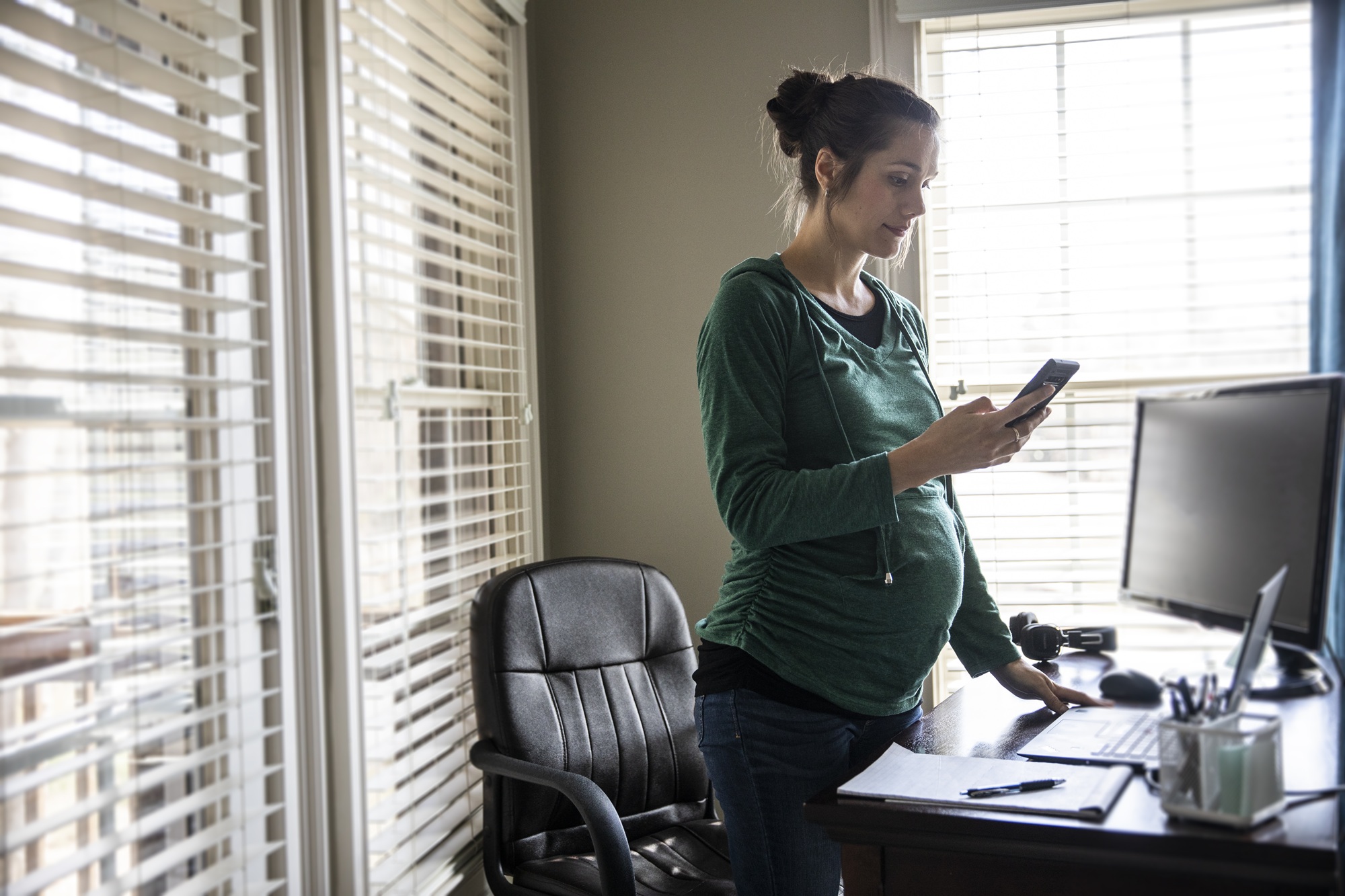
Need Parental Leave in California? The 6 Things That Might Surprise (or Confuse) You
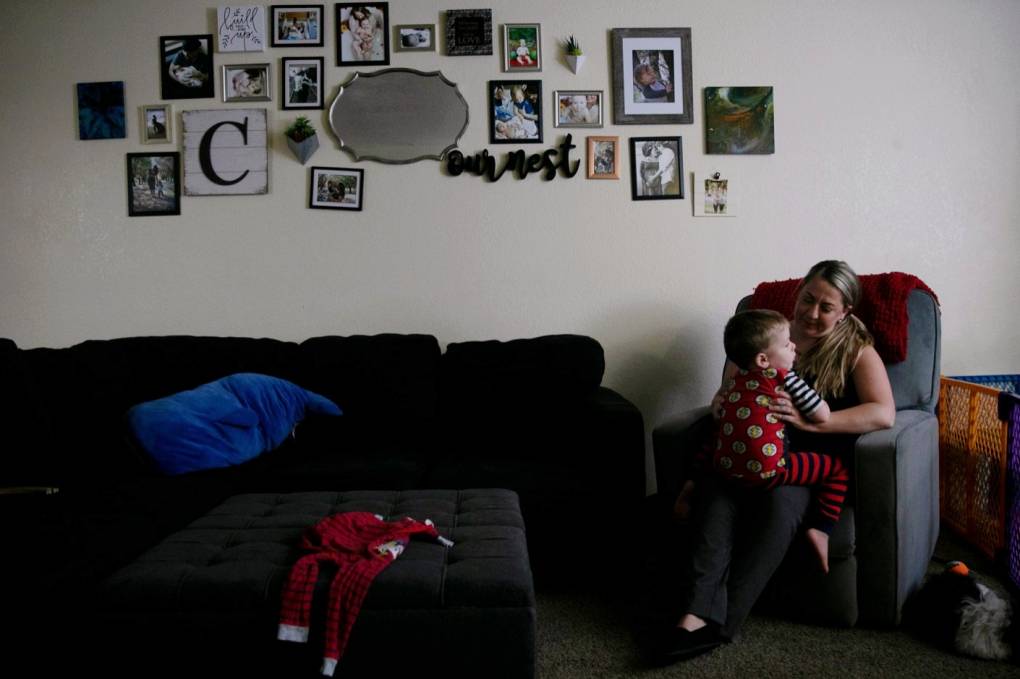
For Some Californians, Family Leave Is 'Unattainable.' This Bill Seeks to Change That
Pregnant or Trying? Here’s How to Get the Most out of California’s New Paid Family Leave Law
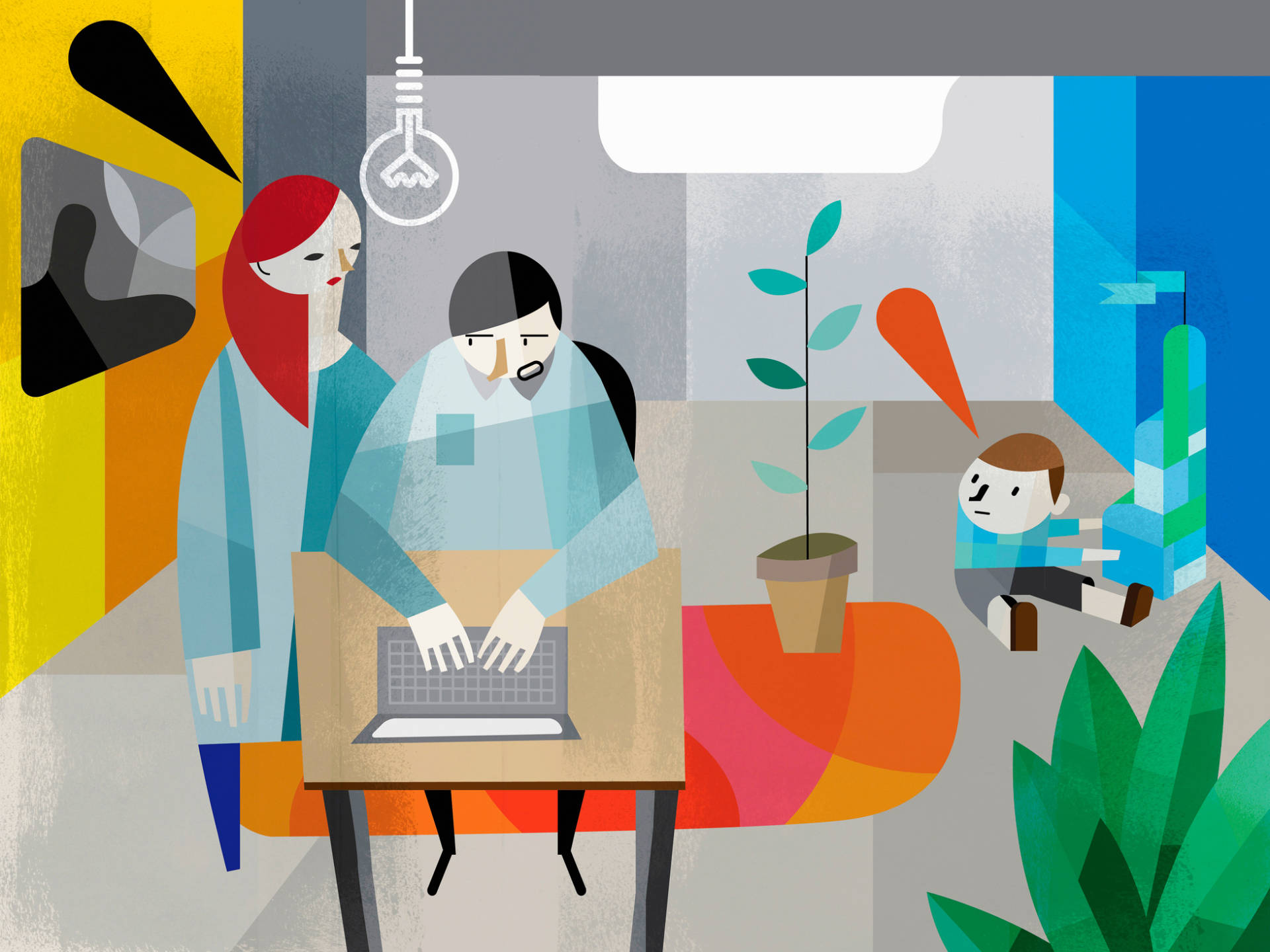
California Fails to Extend Family Leave Rights for Parents in Small Businesses
How California's 'Paid Family Leave' Law Buys Time for New Parents
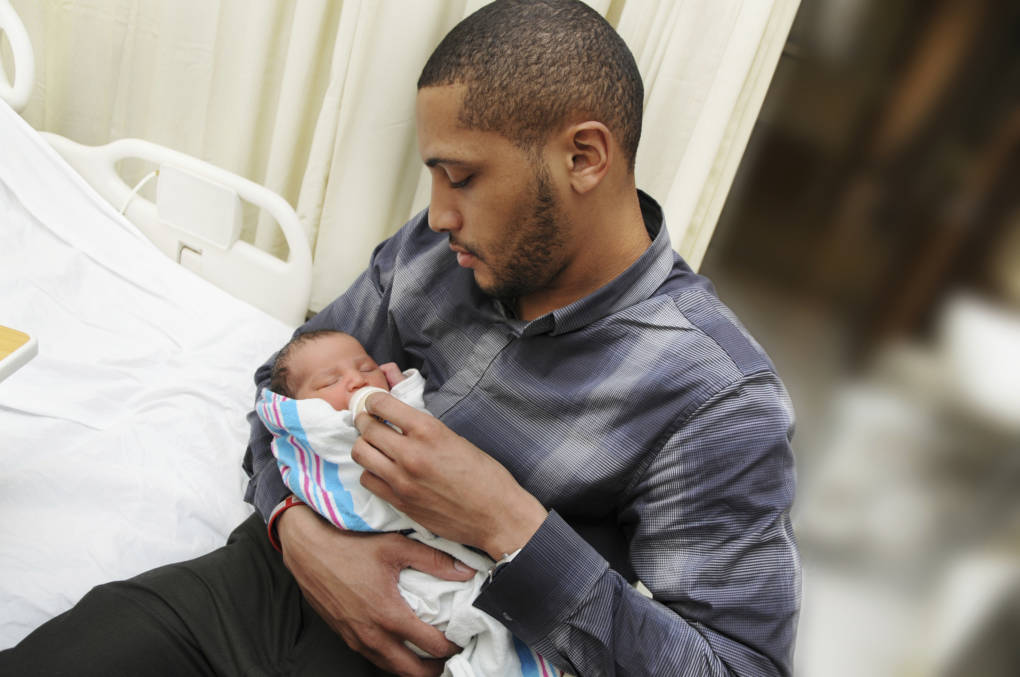
Lawmakers Back Bill to Give New Parents Time Off
Gov. Brown Signs Bill Increasing Paid Family Leave Benefits
Facebook's Zuckerberg Says He'll Take Two Months Off for Daughter's Birth
Sponsored
Player sponsored by
window.__IS_SSR__=true
window.__INITIAL_STATE__={
"attachmentsReducer": {
"audio_0": {
"type": "attachments",
"id": "audio_0",
"imgSizes": {
"kqedFullSize": {
"file": "https://ww2.kqed.org/news/wp-content/themes/KQED-unified/img/audio_bgs/background0.jpg"
}
}
},
"audio_1": {
"type": "attachments",
"id": "audio_1",
"imgSizes": {
"kqedFullSize": {
"file": "https://ww2.kqed.org/news/wp-content/themes/KQED-unified/img/audio_bgs/background1.jpg"
}
}
},
"audio_2": {
"type": "attachments",
"id": "audio_2",
"imgSizes": {
"kqedFullSize": {
"file": "https://ww2.kqed.org/news/wp-content/themes/KQED-unified/img/audio_bgs/background2.jpg"
}
}
},
"audio_3": {
"type": "attachments",
"id": "audio_3",
"imgSizes": {
"kqedFullSize": {
"file": "https://ww2.kqed.org/news/wp-content/themes/KQED-unified/img/audio_bgs/background3.jpg"
}
}
},
"audio_4": {
"type": "attachments",
"id": "audio_4",
"imgSizes": {
"kqedFullSize": {
"file": "https://ww2.kqed.org/news/wp-content/themes/KQED-unified/img/audio_bgs/background4.jpg"
}
}
},
"placeholder": {
"type": "attachments",
"id": "placeholder",
"imgSizes": {
"thumbnail": {
"file": "https://cdn.kqed.org/wp-content/uploads/2024/12/KQED-Default-Image-816638274-2000x1333-1-160x107.jpg",
"width": 160,
"height": 107,
"mimeType": "image/jpeg"
},
"medium": {
"file": "https://cdn.kqed.org/wp-content/uploads/2024/12/KQED-Default-Image-816638274-2000x1333-1-800x533.jpg",
"width": 800,
"height": 533,
"mimeType": "image/jpeg"
},
"medium_large": {
"file": "https://cdn.kqed.org/wp-content/uploads/2024/12/KQED-Default-Image-816638274-2000x1333-1-768x512.jpg",
"width": 768,
"height": 512,
"mimeType": "image/jpeg"
},
"large": {
"file": "https://cdn.kqed.org/wp-content/uploads/2024/12/KQED-Default-Image-816638274-2000x1333-1-1020x680.jpg",
"width": 1020,
"height": 680,
"mimeType": "image/jpeg"
},
"1536x1536": {
"file": "https://cdn.kqed.org/wp-content/uploads/2024/12/KQED-Default-Image-816638274-2000x1333-1-1536x1024.jpg",
"width": 1536,
"height": 1024,
"mimeType": "image/jpeg"
},
"fd-lrg": {
"file": "https://cdn.kqed.org/wp-content/uploads/2024/12/KQED-Default-Image-816638274-2000x1333-1-1536x1024.jpg",
"width": 1536,
"height": 1024,
"mimeType": "image/jpeg"
},
"fd-med": {
"file": "https://cdn.kqed.org/wp-content/uploads/2024/12/KQED-Default-Image-816638274-2000x1333-1-1020x680.jpg",
"width": 1020,
"height": 680,
"mimeType": "image/jpeg"
},
"fd-sm": {
"file": "https://cdn.kqed.org/wp-content/uploads/2024/12/KQED-Default-Image-816638274-2000x1333-1-800x533.jpg",
"width": 800,
"height": 533,
"mimeType": "image/jpeg"
},
"post-thumbnail": {
"file": "https://cdn.kqed.org/wp-content/uploads/2024/12/KQED-Default-Image-816638274-2000x1333-1-672x372.jpg",
"width": 672,
"height": 372,
"mimeType": "image/jpeg"
},
"twentyfourteen-full-width": {
"file": "https://cdn.kqed.org/wp-content/uploads/2024/12/KQED-Default-Image-816638274-2000x1333-1-1038x576.jpg",
"width": 1038,
"height": 576,
"mimeType": "image/jpeg"
},
"xxsmall": {
"file": "https://cdn.kqed.org/wp-content/uploads/2024/12/KQED-Default-Image-816638274-2000x1333-1-160x107.jpg",
"width": 160,
"height": 107,
"mimeType": "image/jpeg"
},
"xsmall": {
"file": "https://cdn.kqed.org/wp-content/uploads/2024/12/KQED-Default-Image-816638274-2000x1333-1-672x372.jpg",
"width": 672,
"height": 372,
"mimeType": "image/jpeg"
},
"small": {
"file": "https://cdn.kqed.org/wp-content/uploads/2024/12/KQED-Default-Image-816638274-2000x1333-1-672x372.jpg",
"width": 672,
"height": 372,
"mimeType": "image/jpeg"
},
"xlarge": {
"file": "https://cdn.kqed.org/wp-content/uploads/2024/12/KQED-Default-Image-816638274-2000x1333-1-1020x680.jpg",
"width": 1020,
"height": 680,
"mimeType": "image/jpeg"
},
"full-width": {
"file": "https://cdn.kqed.org/wp-content/uploads/2024/12/KQED-Default-Image-816638274-2000x1333-1-1920x1280.jpg",
"width": 1920,
"height": 1280,
"mimeType": "image/jpeg"
},
"guest-author-32": {
"file": "https://cdn.kqed.org/wp-content/uploads/2025/01/KQED-Default-Image-816638274-1333x1333-1-160x160.jpg",
"width": 32,
"height": 32,
"mimeType": "image/jpeg"
},
"guest-author-50": {
"file": "https://cdn.kqed.org/wp-content/uploads/2025/01/KQED-Default-Image-816638274-1333x1333-1-160x160.jpg",
"width": 50,
"height": 50,
"mimeType": "image/jpeg"
},
"guest-author-64": {
"file": "https://cdn.kqed.org/wp-content/uploads/2025/01/KQED-Default-Image-816638274-1333x1333-1-160x160.jpg",
"width": 64,
"height": 64,
"mimeType": "image/jpeg"
},
"guest-author-96": {
"file": "https://cdn.kqed.org/wp-content/uploads/2025/01/KQED-Default-Image-816638274-1333x1333-1-160x160.jpg",
"width": 96,
"height": 96,
"mimeType": "image/jpeg"
},
"guest-author-128": {
"file": "https://cdn.kqed.org/wp-content/uploads/2025/01/KQED-Default-Image-816638274-1333x1333-1-160x160.jpg",
"width": 128,
"height": 128,
"mimeType": "image/jpeg"
},
"detail": {
"file": "https://cdn.kqed.org/wp-content/uploads/2025/01/KQED-Default-Image-816638274-1333x1333-1-160x160.jpg",
"width": 160,
"height": 160,
"mimeType": "image/jpeg"
},
"kqedFullSize": {
"file": "https://cdn.kqed.org/wp-content/uploads/2024/12/KQED-Default-Image-816638274-2000x1333-1.jpg",
"width": 2000,
"height": 1333
}
}
},
"news_12046881": {
"type": "attachments",
"id": "news_12046881",
"meta": {
"index": "attachments_1716263798",
"site": "news",
"id": "12046881",
"found": true
},
"title": "Pregnant woman using smartphone in home office",
"publishDate": 1751486831,
"status": "inherit",
"parent": 12046874,
"modified": 1751486855,
"caption": "Navigating the options for taking time off after having a baby can be challenging — or downright confusing. Here’s an overview of your options.",
"credit": "MoMo Productions/Getty Images",
"altTag": null,
"description": null,
"imgSizes": {
"thumbnail": {
"file": "https://cdn.kqed.org/wp-content/uploads/sites/10/2025/07/MaternityLeaveGetty1-160x107.jpg",
"width": 160,
"height": 107,
"mimeType": "image/jpeg"
},
"1536x1536": {
"file": "https://cdn.kqed.org/wp-content/uploads/sites/10/2025/07/MaternityLeaveGetty1-1536x1024.jpg",
"width": 1536,
"height": 1024,
"mimeType": "image/jpeg"
},
"post-thumbnail": {
"file": "https://cdn.kqed.org/wp-content/uploads/sites/10/2025/07/MaternityLeaveGetty1-672x372.jpg",
"width": 672,
"height": 372,
"mimeType": "image/jpeg"
},
"twentyfourteen-full-width": {
"file": "https://cdn.kqed.org/wp-content/uploads/sites/10/2025/07/MaternityLeaveGetty1-1038x576.jpg",
"width": 1038,
"height": 576,
"mimeType": "image/jpeg"
},
"kqedFullSize": {
"file": "https://cdn.kqed.org/wp-content/uploads/sites/10/2025/07/MaternityLeaveGetty1.jpg",
"width": 2000,
"height": 1333
}
},
"fetchFailed": false,
"isLoading": false
},
"news_11881050": {
"type": "attachments",
"id": "news_11881050",
"meta": {
"index": "attachments_1716263798",
"site": "news",
"id": "11881050",
"found": true
},
"parent": 11881047,
"imgSizes": {
"twentyfourteen-full-width": {
"file": "https://ww2.kqed.org/app/uploads/sites/10/2021/07/070821_FamilyLeave_AW_sized_08-1-1038x576.jpg",
"width": 1038,
"mimeType": "image/jpeg",
"height": 576
},
"thumbnail": {
"file": "https://ww2.kqed.org/app/uploads/sites/10/2021/07/070821_FamilyLeave_AW_sized_08-1-160x107.jpg",
"width": 160,
"mimeType": "image/jpeg",
"height": 107
},
"post-thumbnail": {
"file": "https://ww2.kqed.org/app/uploads/sites/10/2021/07/070821_FamilyLeave_AW_sized_08-1-672x372.jpg",
"width": 672,
"mimeType": "image/jpeg",
"height": 372
},
"kqedFullSize": {
"file": "https://ww2.kqed.org/app/uploads/sites/10/2021/07/070821_FamilyLeave_AW_sized_08-1.jpg",
"width": 1410,
"height": 939
},
"large": {
"file": "https://ww2.kqed.org/app/uploads/sites/10/2021/07/070821_FamilyLeave_AW_sized_08-1-1020x679.jpg",
"width": 1020,
"mimeType": "image/jpeg",
"height": 679
},
"medium": {
"file": "https://ww2.kqed.org/app/uploads/sites/10/2021/07/070821_FamilyLeave_AW_sized_08-1-800x533.jpg",
"width": 800,
"mimeType": "image/jpeg",
"height": 533
}
},
"publishDate": 1626205890,
"modified": 1626289655,
"caption": "Miranda Griswold cuddles her 3-year-old, Rhys, before bedtime at their Merced home on July 8, 2021. 'Six weeks is nothing,' Griswold said of the current family leave allotment. 'It’s barely time to recover [from C-section] and on top of navigating breast feeding.'",
"description": "Miranda Griswold cuddles her three-year-old, Rhys, before bedtime at their Merced home on July 8, 2021. “Six weeks is nothing,” Griswold said of the current family leave allotment. “It’s barely time to recover [from C-section] and on top of navigating breast feeding.”",
"title": "070821_FamilyLeave_AW_sized_08 (1)",
"credit": "Anne Wernikoff/CalMatters",
"status": "inherit",
"altTag": "An adult with blond hair sits on a couch and carries an infant. Both are in a dark living room. There are many photos hung on the wall besides them.",
"fetchFailed": false,
"isLoading": false
},
"news_11767857": {
"type": "attachments",
"id": "news_11767857",
"meta": {
"index": "attachments_1716263798",
"site": "news",
"id": "11767857",
"found": true
},
"parent": 11767839,
"imgSizes": {
"apple_news_ca_landscape_5_5": {
"file": "https://ww2.kqed.org/app/uploads/sites/10/2019/08/RS13988_iStock_000016287227_Large-1044x783.jpg",
"width": 1044,
"mimeType": "image/jpeg",
"height": 783
},
"apple_news_ca_square_4_0": {
"file": "https://ww2.kqed.org/app/uploads/sites/10/2019/08/RS13988_iStock_000016287227_Large-470x470.jpg",
"width": 470,
"mimeType": "image/jpeg",
"height": 470
},
"twentyfourteen-full-width": {
"file": "https://ww2.kqed.org/app/uploads/sites/10/2019/08/RS13988_iStock_000016287227_Large-1038x576.jpg",
"width": 1038,
"mimeType": "image/jpeg",
"height": 576
},
"thumbnail": {
"file": "https://ww2.kqed.org/app/uploads/sites/10/2019/08/RS13988_iStock_000016287227_Large-160x106.jpg",
"width": 160,
"mimeType": "image/jpeg",
"height": 106
},
"post-thumbnail": {
"file": "https://ww2.kqed.org/app/uploads/sites/10/2019/08/RS13988_iStock_000016287227_Large-672x372.jpg",
"width": 672,
"mimeType": "image/jpeg",
"height": 372
},
"kqedFullSize": {
"file": "https://ww2.kqed.org/app/uploads/sites/10/2019/08/RS13988_iStock_000016287227_Large-e1565907652467.jpg",
"width": 1920,
"height": 1275
},
"apple_news_ca_landscape_4_7": {
"file": "https://ww2.kqed.org/app/uploads/sites/10/2019/08/RS13988_iStock_000016287227_Large-632x474.jpg",
"width": 632,
"mimeType": "image/jpeg",
"height": 474
},
"large": {
"file": "https://ww2.kqed.org/app/uploads/sites/10/2019/08/RS13988_iStock_000016287227_Large-1020x677.jpg",
"width": 1020,
"mimeType": "image/jpeg",
"height": 677
},
"complete_open_graph": {
"file": "https://ww2.kqed.org/app/uploads/sites/10/2019/08/RS13988_iStock_000016287227_Large-1200x797.jpg",
"width": 1200,
"mimeType": "image/jpeg",
"height": 797
},
"apple_news_ca_landscape_4_0": {
"file": "https://ww2.kqed.org/app/uploads/sites/10/2019/08/RS13988_iStock_000016287227_Large-536x402.jpg",
"width": 536,
"mimeType": "image/jpeg",
"height": 402
},
"apple_news_ca_portrait_12_9": {
"file": "https://ww2.kqed.org/app/uploads/sites/10/2019/08/RS13988_iStock_000016287227_Large-1122x1496.jpg",
"width": 1122,
"mimeType": "image/jpeg",
"height": 1496
},
"medium": {
"file": "https://ww2.kqed.org/app/uploads/sites/10/2019/08/RS13988_iStock_000016287227_Large-800x531.jpg",
"width": 800,
"mimeType": "image/jpeg",
"height": 531
},
"apple_news_ca_portrait_4_0": {
"file": "https://ww2.kqed.org/app/uploads/sites/10/2019/08/RS13988_iStock_000016287227_Large-354x472.jpg",
"width": 354,
"mimeType": "image/jpeg",
"height": 472
},
"apple_news_ca_portrait_9_7": {
"file": "https://ww2.kqed.org/app/uploads/sites/10/2019/08/RS13988_iStock_000016287227_Large-840x1120.jpg",
"width": 840,
"mimeType": "image/jpeg",
"height": 1120
},
"apple_news_ca_landscape_12_9": {
"file": "https://ww2.kqed.org/app/uploads/sites/10/2019/08/RS13988_iStock_000016287227_Large-1832x1374.jpg",
"width": 1832,
"mimeType": "image/jpeg",
"height": 1374
},
"apple_news_ca_square_9_7": {
"file": "https://ww2.kqed.org/app/uploads/sites/10/2019/08/RS13988_iStock_000016287227_Large-1104x1104.jpg",
"width": 1104,
"mimeType": "image/jpeg",
"height": 1104
},
"apple_news_ca_portrait_4_7": {
"file": "https://ww2.kqed.org/app/uploads/sites/10/2019/08/RS13988_iStock_000016287227_Large-414x552.jpg",
"width": 414,
"mimeType": "image/jpeg",
"height": 552
},
"apple_news_ca_square_12_9": {
"file": "https://ww2.kqed.org/app/uploads/sites/10/2019/08/RS13988_iStock_000016287227_Large-1472x1472.jpg",
"width": 1472,
"mimeType": "image/jpeg",
"height": 1472
},
"apple_news_ca_portrait_5_5": {
"file": "https://ww2.kqed.org/app/uploads/sites/10/2019/08/RS13988_iStock_000016287227_Large-687x916.jpg",
"width": 687,
"mimeType": "image/jpeg",
"height": 916
},
"full-width": {
"file": "https://ww2.kqed.org/app/uploads/sites/10/2019/08/RS13988_iStock_000016287227_Large-1920x1275.jpg",
"width": 1920,
"mimeType": "image/jpeg",
"height": 1275
},
"apple_news_ca_square_4_7": {
"file": "https://ww2.kqed.org/app/uploads/sites/10/2019/08/RS13988_iStock_000016287227_Large-550x550.jpg",
"width": 550,
"mimeType": "image/jpeg",
"height": 550
},
"apple_news_ca_landscape_9_7": {
"file": "https://ww2.kqed.org/app/uploads/sites/10/2019/08/RS13988_iStock_000016287227_Large-1376x1032.jpg",
"width": 1376,
"mimeType": "image/jpeg",
"height": 1032
},
"apple_news_ca_square_5_5": {
"file": "https://ww2.kqed.org/app/uploads/sites/10/2019/08/RS13988_iStock_000016287227_Large-912x912.jpg",
"width": 912,
"mimeType": "image/jpeg",
"height": 912
}
},
"publishDate": 1565907615,
"modified": 1565907867,
"caption": "A father with his newborn baby. Under an expansion of California's paid family leave law, which goes into effect July 1, 2020, workers will be able to take up to eight weeks off with partial pay to bond with a new baby. ",
"description": null,
"title": "RS13988_iStock_000016287227_Large",
"credit": "iStock",
"status": "inherit",
"fetchFailed": false,
"isLoading": false
},
"news_11125327": {
"type": "attachments",
"id": "news_11125327",
"meta": {
"index": "attachments_1716263798",
"site": "news",
"id": "11125327",
"found": true
},
"parent": 11125326,
"imgSizes": {
"twentyfourteen-full-width": {
"file": "https://ww2.kqed.org/app/uploads/sites/10/2016/10/family-dc598f8d59f62e263afb961290ed8cfe74e9eed0-1038x576.jpg",
"width": 1038,
"mimeType": "image/jpeg",
"height": 576
},
"thumbnail": {
"file": "https://ww2.kqed.org/app/uploads/sites/10/2016/10/family-dc598f8d59f62e263afb961290ed8cfe74e9eed0-400x300.jpg",
"width": 400,
"mimeType": "image/jpeg",
"height": 300
},
"fd-sm": {
"file": "https://ww2.kqed.org/app/uploads/sites/10/2016/10/family-dc598f8d59f62e263afb961290ed8cfe74e9eed0-960x720.jpg",
"width": 960,
"mimeType": "image/jpeg",
"height": 720
},
"post-thumbnail": {
"file": "https://ww2.kqed.org/app/uploads/sites/10/2016/10/family-dc598f8d59f62e263afb961290ed8cfe74e9eed0-672x372.jpg",
"width": 672,
"mimeType": "image/jpeg",
"height": 372
},
"kqedFullSize": {
"file": "https://ww2.kqed.org/app/uploads/sites/10/2016/10/family-dc598f8d59f62e263afb961290ed8cfe74e9eed0-e1476211904300.jpg",
"width": 1920,
"height": 1440
},
"large": {
"file": "https://ww2.kqed.org/app/uploads/sites/10/2016/10/family-dc598f8d59f62e263afb961290ed8cfe74e9eed0-1920x1440.jpg",
"width": 1920,
"mimeType": "image/jpeg",
"height": 1440
},
"guest-author-50": {
"file": "https://ww2.kqed.org/app/uploads/sites/10/2016/10/family-dc598f8d59f62e263afb961290ed8cfe74e9eed0-50x50.jpg",
"width": 50,
"mimeType": "image/jpeg",
"height": 50
},
"guest-author-96": {
"file": "https://ww2.kqed.org/app/uploads/sites/10/2016/10/family-dc598f8d59f62e263afb961290ed8cfe74e9eed0-96x96.jpg",
"width": 96,
"mimeType": "image/jpeg",
"height": 96
},
"medium": {
"file": "https://ww2.kqed.org/app/uploads/sites/10/2016/10/family-dc598f8d59f62e263afb961290ed8cfe74e9eed0-800x600.jpg",
"width": 800,
"mimeType": "image/jpeg",
"height": 600
},
"guest-author-64": {
"file": "https://ww2.kqed.org/app/uploads/sites/10/2016/10/family-dc598f8d59f62e263afb961290ed8cfe74e9eed0-64x64.jpg",
"width": 64,
"mimeType": "image/jpeg",
"height": 64
},
"guest-author-32": {
"file": "https://ww2.kqed.org/app/uploads/sites/10/2016/10/family-dc598f8d59f62e263afb961290ed8cfe74e9eed0-32x32.jpg",
"width": 32,
"mimeType": "image/jpeg",
"height": 32
},
"jmtc-small-thumb": {
"file": "https://ww2.kqed.org/app/uploads/sites/10/2016/10/family-dc598f8d59f62e263afb961290ed8cfe74e9eed0-280x150.jpg",
"width": 280,
"mimeType": "image/jpeg",
"height": 150
},
"fd-lrg": {
"file": "https://ww2.kqed.org/app/uploads/sites/10/2016/10/family-dc598f8d59f62e263afb961290ed8cfe74e9eed0-1920x1440.jpg",
"width": 1920,
"mimeType": "image/jpeg",
"height": 1440
},
"fd-med": {
"file": "https://ww2.kqed.org/app/uploads/sites/10/2016/10/family-dc598f8d59f62e263afb961290ed8cfe74e9eed0-1180x885.jpg",
"width": 1180,
"mimeType": "image/jpeg",
"height": 885
},
"detail": {
"file": "https://ww2.kqed.org/app/uploads/sites/10/2016/10/family-dc598f8d59f62e263afb961290ed8cfe74e9eed0-150x150.jpg",
"width": 150,
"mimeType": "image/jpeg",
"height": 150
},
"guest-author-128": {
"file": "https://ww2.kqed.org/app/uploads/sites/10/2016/10/family-dc598f8d59f62e263afb961290ed8cfe74e9eed0-128x128.jpg",
"width": 128,
"mimeType": "image/jpeg",
"height": 128
}
},
"publishDate": 1476211165,
"modified": 1476211981,
"caption": "Gov. Jerry Brown vetoed a bill that would have guaranteed employees of small businesses can keep their jobs if they take parental leave to bond with a new child.",
"description": "Gov. Jerry Brown vetoes a bill that would have guaranteed employees of small businesses can keep their jobs if they take parental leave to bond with a new child.",
"title": "maternity leave",
"credit": "Skopein/Ikon Images/Getty Images ",
"status": "inherit",
"fetchFailed": false,
"isLoading": false
},
"news_11123752": {
"type": "attachments",
"id": "news_11123752",
"meta": {
"index": "attachments_1716263798",
"site": "news",
"id": "11123752",
"found": true
},
"parent": 11123751,
"imgSizes": {
"twentyfourteen-full-width": {
"file": "https://ww2.kqed.org/app/uploads/sites/10/2016/10/cafamily-1_enl-a3cc64338890567ba10e3f9a468ed4a5a3549cb4-1038x576.jpg",
"width": 1038,
"mimeType": "image/jpeg",
"height": 576
},
"thumbnail": {
"file": "https://ww2.kqed.org/app/uploads/sites/10/2016/10/cafamily-1_enl-a3cc64338890567ba10e3f9a468ed4a5a3549cb4-400x266.jpg",
"width": 400,
"mimeType": "image/jpeg",
"height": 266
},
"fd-sm": {
"file": "https://ww2.kqed.org/app/uploads/sites/10/2016/10/cafamily-1_enl-a3cc64338890567ba10e3f9a468ed4a5a3549cb4-960x637.jpg",
"width": 960,
"mimeType": "image/jpeg",
"height": 637
},
"post-thumbnail": {
"file": "https://ww2.kqed.org/app/uploads/sites/10/2016/10/cafamily-1_enl-a3cc64338890567ba10e3f9a468ed4a5a3549cb4-672x372.jpg",
"width": 672,
"mimeType": "image/jpeg",
"height": 372
},
"kqedFullSize": {
"file": "https://ww2.kqed.org/app/uploads/sites/10/2016/10/cafamily-1_enl-a3cc64338890567ba10e3f9a468ed4a5a3549cb4.jpg",
"width": 2000,
"height": 1328
},
"large": {
"file": "https://ww2.kqed.org/app/uploads/sites/10/2016/10/cafamily-1_enl-a3cc64338890567ba10e3f9a468ed4a5a3549cb4-1920x1275.jpg",
"width": 1920,
"mimeType": "image/jpeg",
"height": 1275
},
"guest-author-50": {
"file": "https://ww2.kqed.org/app/uploads/sites/10/2016/10/cafamily-1_enl-a3cc64338890567ba10e3f9a468ed4a5a3549cb4-50x50.jpg",
"width": 50,
"mimeType": "image/jpeg",
"height": 50
},
"guest-author-96": {
"file": "https://ww2.kqed.org/app/uploads/sites/10/2016/10/cafamily-1_enl-a3cc64338890567ba10e3f9a468ed4a5a3549cb4-96x96.jpg",
"width": 96,
"mimeType": "image/jpeg",
"height": 96
},
"medium": {
"file": "https://ww2.kqed.org/app/uploads/sites/10/2016/10/cafamily-1_enl-a3cc64338890567ba10e3f9a468ed4a5a3549cb4-800x531.jpg",
"width": 800,
"mimeType": "image/jpeg",
"height": 531
},
"guest-author-64": {
"file": "https://ww2.kqed.org/app/uploads/sites/10/2016/10/cafamily-1_enl-a3cc64338890567ba10e3f9a468ed4a5a3549cb4-64x64.jpg",
"width": 64,
"mimeType": "image/jpeg",
"height": 64
},
"guest-author-32": {
"file": "https://ww2.kqed.org/app/uploads/sites/10/2016/10/cafamily-1_enl-a3cc64338890567ba10e3f9a468ed4a5a3549cb4-32x32.jpg",
"width": 32,
"mimeType": "image/jpeg",
"height": 32
},
"jmtc-small-thumb": {
"file": "https://ww2.kqed.org/app/uploads/sites/10/2016/10/cafamily-1_enl-a3cc64338890567ba10e3f9a468ed4a5a3549cb4-280x150.jpg",
"width": 280,
"mimeType": "image/jpeg",
"height": 150
},
"fd-lrg": {
"file": "https://ww2.kqed.org/app/uploads/sites/10/2016/10/cafamily-1_enl-a3cc64338890567ba10e3f9a468ed4a5a3549cb4-1920x1275.jpg",
"width": 1920,
"mimeType": "image/jpeg",
"height": 1275
},
"fd-med": {
"file": "https://ww2.kqed.org/app/uploads/sites/10/2016/10/cafamily-1_enl-a3cc64338890567ba10e3f9a468ed4a5a3549cb4-1180x784.jpg",
"width": 1180,
"mimeType": "image/jpeg",
"height": 784
},
"detail": {
"file": "https://ww2.kqed.org/app/uploads/sites/10/2016/10/cafamily-1_enl-a3cc64338890567ba10e3f9a468ed4a5a3549cb4-150x150.jpg",
"width": 150,
"mimeType": "image/jpeg",
"height": 150
},
"guest-author-128": {
"file": "https://ww2.kqed.org/app/uploads/sites/10/2016/10/cafamily-1_enl-a3cc64338890567ba10e3f9a468ed4a5a3549cb4-128x128.jpg",
"width": 128,
"mimeType": "image/jpeg",
"height": 128
}
},
"publishDate": 1476121998,
"modified": 1476146858,
"caption": "Iris and Eli Fugate with their 6-month-old son, Jack, at the family's home in San Diego. Thanks to California's paid family leave law, Iris was able to take six weeks off when Jack was born, and Eli took three weeks, with plans to take the remaining time over the next few months.",
"description": "Iris and Eli Fugate with their 6-month-old son, Jack, at the family's home in San Diego. Thanks to California's paid family leave law, Iris was able to take six weeks off when Jack was born, and Eli took three weeks, with plans to take the remaining time over the next few months.",
"title": "Iris and Eli Fugate with their 6-month-old son Jack, at the family's home in San Diego. Thanks to California's paid family leave law, Iris was able to take six weeks off when Jack was born, and Eli took three weeks, with plans to take the remaining time over the next few months.",
"credit": "Sandy Huffaker for NPR",
"status": "inherit",
"fetchFailed": false,
"isLoading": false
},
"news_11065836": {
"type": "attachments",
"id": "news_11065836",
"meta": {
"index": "attachments_1716263798",
"site": "news",
"id": "11065836",
"found": true
},
"parent": 11065831,
"imgSizes": {
"twentyfourteen-full-width": {
"file": "https://ww2.kqed.org/app/uploads/sites/10/2016/08/RS13988_iStock_000016287227_Large-qut-1038x576.jpg",
"width": 1038,
"mimeType": "image/jpeg",
"height": 576
},
"thumbnail": {
"file": "https://ww2.kqed.org/app/uploads/sites/10/2016/08/RS13988_iStock_000016287227_Large-qut-400x266.jpg",
"width": 400,
"mimeType": "image/jpeg",
"height": 266
},
"fd-sm": {
"file": "https://ww2.kqed.org/app/uploads/sites/10/2016/08/RS13988_iStock_000016287227_Large-qut-960x637.jpg",
"width": 960,
"mimeType": "image/jpeg",
"height": 637
},
"post-thumbnail": {
"file": "https://ww2.kqed.org/app/uploads/sites/10/2016/08/RS13988_iStock_000016287227_Large-qut-672x372.jpg",
"width": 672,
"mimeType": "image/jpeg",
"height": 372
},
"kqedFullSize": {
"file": "https://ww2.kqed.org/app/uploads/sites/10/2016/08/RS13988_iStock_000016287227_Large-qut.jpg",
"width": 1440,
"height": 956
},
"guest-author-50": {
"file": "https://ww2.kqed.org/app/uploads/sites/10/2016/08/RS13988_iStock_000016287227_Large-qut-50x50.jpg",
"width": 50,
"mimeType": "image/jpeg",
"height": 50
},
"guest-author-96": {
"file": "https://ww2.kqed.org/app/uploads/sites/10/2016/08/RS13988_iStock_000016287227_Large-qut-96x96.jpg",
"width": 96,
"mimeType": "image/jpeg",
"height": 96
},
"medium": {
"file": "https://ww2.kqed.org/app/uploads/sites/10/2016/08/RS13988_iStock_000016287227_Large-qut-800x531.jpg",
"width": 800,
"mimeType": "image/jpeg",
"height": 531
},
"guest-author-64": {
"file": "https://ww2.kqed.org/app/uploads/sites/10/2016/08/RS13988_iStock_000016287227_Large-qut-64x64.jpg",
"width": 64,
"mimeType": "image/jpeg",
"height": 64
},
"guest-author-32": {
"file": "https://ww2.kqed.org/app/uploads/sites/10/2016/08/RS13988_iStock_000016287227_Large-qut-32x32.jpg",
"width": 32,
"mimeType": "image/jpeg",
"height": 32
},
"jmtc-small-thumb": {
"file": "https://ww2.kqed.org/app/uploads/sites/10/2016/08/RS13988_iStock_000016287227_Large-qut-280x150.jpg",
"width": 280,
"mimeType": "image/jpeg",
"height": 150
},
"fd-med": {
"file": "https://ww2.kqed.org/app/uploads/sites/10/2016/08/RS13988_iStock_000016287227_Large-qut-1180x783.jpg",
"width": 1180,
"mimeType": "image/jpeg",
"height": 783
},
"detail": {
"file": "https://ww2.kqed.org/app/uploads/sites/10/2016/08/RS13988_iStock_000016287227_Large-qut-150x150.jpg",
"width": 150,
"mimeType": "image/jpeg",
"height": 150
},
"guest-author-128": {
"file": "https://ww2.kqed.org/app/uploads/sites/10/2016/08/RS13988_iStock_000016287227_Large-qut-128x128.jpg",
"width": 128,
"mimeType": "image/jpeg",
"height": 128
}
},
"publishDate": 1472579027,
"modified": 1472579074,
"caption": "A father holds his new baby. ",
"description": null,
"title": "RS13988_iStock_000016287227_Large-qut",
"credit": "Getty Images",
"status": "inherit",
"fetchFailed": false,
"isLoading": false
},
"stateofhealth_171412": {
"type": "attachments",
"id": "stateofhealth_171412",
"meta": {
"index": "attachments_1716263798",
"site": "stateofhealth",
"id": "171412",
"found": true
},
"parent": 171411,
"imgSizes": {
"twentyfourteen-full-width": {
"file": "https://ww2.kqed.org/app/uploads/sites/27/2016/04/iStock_000060521410_Large-1038x576.jpg",
"width": 1038,
"mimeType": "image/jpeg",
"height": 576
},
"thumbnail": {
"file": "https://ww2.kqed.org/app/uploads/sites/27/2016/04/iStock_000060521410_Large-400x267.jpg",
"width": 400,
"mimeType": "image/jpeg",
"height": 267
},
"fd-sm": {
"file": "https://ww2.kqed.org/app/uploads/sites/27/2016/04/iStock_000060521410_Large-960x640.jpg",
"width": 960,
"mimeType": "image/jpeg",
"height": 640
},
"post-thumbnail": {
"file": "https://ww2.kqed.org/app/uploads/sites/27/2016/04/iStock_000060521410_Large-672x372.jpg",
"width": 672,
"mimeType": "image/jpeg",
"height": 372
},
"kqedFullSize": {
"file": "https://ww2.kqed.org/app/uploads/sites/27/2016/04/iStock_000060521410_Large.jpg",
"width": 2716,
"height": 1810
},
"large": {
"file": "https://ww2.kqed.org/app/uploads/sites/27/2016/04/iStock_000060521410_Large-1440x960.jpg",
"width": 1440,
"mimeType": "image/jpeg",
"height": 960
},
"guest-author-96": {
"file": "https://ww2.kqed.org/app/uploads/sites/27/2016/04/iStock_000060521410_Large-96x96.jpg",
"width": 96,
"mimeType": "image/jpeg",
"height": 96
},
"medium": {
"file": "https://ww2.kqed.org/app/uploads/sites/27/2016/04/iStock_000060521410_Large-800x533.jpg",
"width": 800,
"mimeType": "image/jpeg",
"height": 533
},
"guest-author-64": {
"file": "https://ww2.kqed.org/app/uploads/sites/27/2016/04/iStock_000060521410_Large-64x64.jpg",
"width": 64,
"mimeType": "image/jpeg",
"height": 64
},
"guest-author-32": {
"file": "https://ww2.kqed.org/app/uploads/sites/27/2016/04/iStock_000060521410_Large-32x32.jpg",
"width": 32,
"mimeType": "image/jpeg",
"height": 32
},
"jmtc-small-thumb": {
"file": "https://ww2.kqed.org/app/uploads/sites/27/2016/04/iStock_000060521410_Large-280x150.jpg",
"width": 280,
"mimeType": "image/jpeg",
"height": 150
},
"fd-lrg": {
"file": "https://ww2.kqed.org/app/uploads/sites/27/2016/04/iStock_000060521410_Large-1920x1280.jpg",
"width": 1920,
"mimeType": "image/jpeg",
"height": 1280
},
"fd-med": {
"file": "https://ww2.kqed.org/app/uploads/sites/27/2016/04/iStock_000060521410_Large-1180x786.jpg",
"width": 1180,
"mimeType": "image/jpeg",
"height": 786
},
"detail": {
"file": "https://ww2.kqed.org/app/uploads/sites/27/2016/04/iStock_000060521410_Large-75x75.jpg",
"width": 75,
"mimeType": "image/jpeg",
"height": 75
},
"medium_large": {
"file": "https://ww2.kqed.org/app/uploads/sites/27/2016/04/iStock_000060521410_Large-768x512.jpg",
"width": 768,
"mimeType": "image/jpeg",
"height": 512
},
"guest-author-128": {
"file": "https://ww2.kqed.org/app/uploads/sites/27/2016/04/iStock_000060521410_Large-128x128.jpg",
"width": 128,
"mimeType": "image/jpeg",
"height": 128
}
},
"publishDate": 1460404253,
"modified": 1460404306,
"caption": null,
"description": "newborn baby",
"title": "Newborn baby",
"credit": "iStock/Getty images",
"status": "inherit",
"fetchFailed": false,
"isLoading": false
},
"news_10344018": {
"type": "attachments",
"id": "news_10344018",
"meta": {
"index": "attachments_1716263798",
"site": "news",
"id": "10344018",
"found": true
},
"parent": 10344016,
"imgSizes": {
"twentyfourteen-full-width": {
"file": "https://ww2.kqed.org/app/uploads/sites/10/2014/10/451970690-1038x576.jpg",
"width": 1038,
"mimeType": "image/jpeg",
"height": 576
},
"thumbnail": {
"file": "https://ww2.kqed.org/app/uploads/sites/10/2014/10/451970690-400x267.jpg",
"width": 400,
"mimeType": "image/jpeg",
"height": 267
},
"post-thumbnail": {
"file": "https://ww2.kqed.org/app/uploads/sites/10/2014/10/451970690-672x372.jpg",
"width": 672,
"mimeType": "image/jpeg",
"height": 372
},
"kqedFullSize": {
"file": "https://ww2.kqed.org/app/uploads/sites/10/2014/10/451970690-e1413475506646.jpg",
"width": 1440,
"height": 962
},
"large": {
"file": "https://ww2.kqed.org/app/uploads/sites/10/2014/10/451970690-1440x962.jpg",
"width": 1440,
"mimeType": "image/jpeg",
"height": 962
},
"guest-author-96": {
"file": "https://ww2.kqed.org/app/uploads/sites/10/2014/10/451970690-96x96.jpg",
"width": 96,
"mimeType": "image/jpeg",
"height": 96
},
"medium": {
"file": "https://ww2.kqed.org/app/uploads/sites/10/2014/10/451970690-800x534.jpg",
"width": 800,
"mimeType": "image/jpeg",
"height": 534
},
"guest-author-64": {
"file": "https://ww2.kqed.org/app/uploads/sites/10/2014/10/451970690-64x64.jpg",
"width": 64,
"mimeType": "image/jpeg",
"height": 64
},
"detail": {
"file": "https://ww2.kqed.org/app/uploads/sites/10/2014/10/451970690-75x75.jpg",
"width": 75,
"mimeType": "image/jpeg",
"height": 75
},
"guest-author-32": {
"file": "https://ww2.kqed.org/app/uploads/sites/10/2014/10/451970690-32x32.jpg",
"width": 32,
"mimeType": "image/jpeg",
"height": 32
},
"guest-author-128": {
"file": "https://ww2.kqed.org/app/uploads/sites/10/2014/10/451970690-128x128.jpg",
"width": 128,
"mimeType": "image/jpeg",
"height": 128
}
},
"publishDate": 1413475363,
"modified": 1448137255,
"caption": "Priscilla Chan and Mark Zuckerberg at a conference in Sun Valley, Idaho, in July. ",
"description": "Priscilla Chan and Mark Zuckerberg at a conference in Sun Valley, Idaho, in July 2014. (Scott Olson/Getty Images)",
"title": "Zuckerberg-Chan",
"credit": "Scott Olson/Getty Images",
"status": "inherit",
"fetchFailed": false,
"isLoading": false
}
},
"audioPlayerReducer": {
"postId": "stream_live",
"isPaused": true,
"isPlaying": false,
"pfsActive": false,
"pledgeModalIsOpen": true,
"playerDrawerIsOpen": false
},
"authorsReducer": {
"byline_news_11881047": {
"type": "authors",
"id": "byline_news_11881047",
"meta": {
"override": true
},
"slug": "byline_news_11881047",
"name": "\u003ca href=\"https://calmatters.org/author/sameea-kamal/\">Sameea Kamal\u003c/a>",
"isLoading": false
},
"byline_news_11767839": {
"type": "authors",
"id": "byline_news_11767839",
"meta": {
"override": true
},
"slug": "byline_news_11767839",
"name": "\u003ca href=\"https://calmatters.org/author/laurel-rosenhall/\">Lauren Rosenhall\u003c/a>\u003cbr>CalMatters",
"isLoading": false
},
"byline_news_11125326": {
"type": "authors",
"id": "byline_news_11125326",
"meta": {
"override": true
},
"slug": "byline_news_11125326",
"name": "\u003cstrong>Michelle Andrews \u003cbr> Kaiser Health News \u003c/br>\u003c/strong>",
"isLoading": false
},
"byline_news_11123751": {
"type": "authors",
"id": "byline_news_11123751",
"meta": {
"override": true
},
"slug": "byline_news_11123751",
"name": "\u003cstrong>\u003ca href=\"http://www.npr.org/people/2100955/patti-neighmond\">Patti Neighmond\u003c/a>\u003c/strong>",
"isLoading": false
},
"byline_stateofhealth_171411": {
"type": "authors",
"id": "byline_stateofhealth_171411",
"meta": {
"override": true
},
"slug": "byline_stateofhealth_171411",
"name": "Associated Press",
"isLoading": false
},
"danbrekke": {
"type": "authors",
"id": "222",
"meta": {
"index": "authors_1716337520",
"id": "222",
"found": true
},
"name": "Dan Brekke",
"firstName": "Dan",
"lastName": "Brekke",
"slug": "danbrekke",
"email": "dbrekke@kqed.org",
"display_author_email": true,
"staff_mastheads": [
"news",
"science"
],
"title": "KQED Editor and Reporter",
"bio": "Dan Brekke is a reporter and editor for KQED News, responsible for coverage of topics ranging from California water issues to the Bay Area's transportation challenges. In a newsroom career that began in Chicago in 1972, Dan has worked for \u003cem>The San Francisco Examiner,\u003c/em> Wired and TechTV and has been published in The New York Times, The New York Times Magazine, Business 2.0, Salon and elsewhere.\r\n\r\nSince joining KQED in 2007, Dan has reported, edited and produced both radio and online features and breaking news pieces. He has shared as both editor and reporter in four Society of Professional Journalists Norcal Excellence in Journalism awards and one Edward R. Murrow regional award. He was chosen for a spring 2017 residency at the Mesa Refuge to advance his research on California salmon.\r\n\r\nEmail Dan at: \u003ca href=\"mailto:dbrekke@kqed.org\">dbrekke@kqed.org\u003c/a>\r\n\r\n\u003cstrong>Twitter:\u003c/strong> \u003ca href=\"https://twitter.com/danbrekke\" rel=\"noopener noreferrer\">twitter.com/danbrekke\u003c/a>\r\n\u003cstrong>Facebook:\u003c/strong> \u003ca href=\"https://www.facebook.com/danbrekke\" rel=\"noopener noreferrer\">www.facebook.com/danbrekke\u003c/a>\r\n\u003cstrong>LinkedIn:\u003c/strong> \u003ca href=\"https://www.linkedin.com/in/danbrekke\" rel=\"noopener noreferrer\">www.linkedin.com/in/danbrekke\u003c/a>",
"avatar": "https://secure.gravatar.com/avatar/c8126230345efca3f7aa89b1a402be45?s=600&d=mm&r=g",
"twitter": "danbrekke",
"facebook": null,
"instagram": "https://www.instagram.com/dan.brekke/",
"linkedin": "https://www.linkedin.com/in/danbrekke/",
"sites": [
{
"site": "news",
"roles": [
"administrator",
"create_posts"
]
},
{
"site": "stateofhealth",
"roles": [
"editor"
]
},
{
"site": "science",
"roles": [
"editor"
]
},
{
"site": "quest",
"roles": [
"contributor"
]
},
{
"site": "food",
"roles": [
"contributor"
]
},
{
"site": "forum",
"roles": [
"contributor"
]
},
{
"site": "liveblog",
"roles": [
"editor"
]
}
],
"headData": {
"title": "Dan Brekke | KQED",
"description": "KQED Editor and Reporter",
"ogImgSrc": "https://secure.gravatar.com/avatar/c8126230345efca3f7aa89b1a402be45?s=600&d=mm&r=g",
"twImgSrc": "https://secure.gravatar.com/avatar/c8126230345efca3f7aa89b1a402be45?s=600&d=mm&r=g"
},
"isLoading": false,
"link": "/author/danbrekke"
},
"shossaini": {
"type": "authors",
"id": "3214",
"meta": {
"index": "authors_1716337520",
"id": "3214",
"found": true
},
"name": "Sara Hossaini",
"firstName": "Sara",
"lastName": "Hossaini",
"slug": "shossaini",
"email": "shossaini@kqed.org",
"display_author_email": true,
"staff_mastheads": [
"news"
],
"title": "KQED Reporter",
"bio": "Sara Hossaini came to general assignment reporting at KQED in 2013 after two winters reporting at Wyoming Public Radio. She holds a bachelor's degree in broadcast journalism from the University of Nebraska-Lincoln. Her radio romance began after a bitter breakup with documentary film (Ok, maybe it's still complicated). Her first simultaneous jobs in San Francisco were as Associate Producer on a PBS film series through the Center for Asian American Media and as a butler. She likes to trot, plot and make things with her hands.",
"avatar": "https://secure.gravatar.com/avatar/060e9f56b9554e17942e89f413242774?s=600&d=blank&r=g",
"twitter": "mshossaini",
"facebook": null,
"instagram": null,
"linkedin": null,
"sites": [
{
"site": "news",
"roles": [
"author"
]
},
{
"site": "stateofhealth",
"roles": [
"author"
]
}
],
"headData": {
"title": "Sara Hossaini | KQED",
"description": "KQED Reporter",
"ogImgSrc": "https://secure.gravatar.com/avatar/060e9f56b9554e17942e89f413242774?s=600&d=blank&r=g",
"twImgSrc": "https://secure.gravatar.com/avatar/060e9f56b9554e17942e89f413242774?s=600&d=blank&r=g"
},
"isLoading": false,
"link": "/author/shossaini"
},
"mlagos": {
"type": "authors",
"id": "3239",
"meta": {
"index": "authors_1716337520",
"id": "3239",
"found": true
},
"name": "Marisa Lagos",
"firstName": "Marisa",
"lastName": "Lagos",
"slug": "mlagos",
"email": "mlagos@kqed.org",
"display_author_email": false,
"staff_mastheads": [
"news"
],
"title": "KQED Contributor",
"bio": "Marisa Lagos is a correspondent for KQED’s California Politics and Government Desk and co-hosts the award-winning show and podcast, Political Breakdown. At KQED, Lagos also conducts reporting, analysis and investigations into state, local and national politics for radio, TV, online and onstage. In 2022, she and co-host, Scott Shafer, moderated the only gubernatorial debate in California. In 2020, the \u003ci>Washington Post\u003c/i> named her one of the top political journalists in California; she was nominated for a Peabody and won several other awards for her work investigating the 2017 California wildfires. She has worked at the \u003ci>San Francisco Chronicle\u003c/i>, \u003ci>San Francisco Examiner\u003c/i> and \u003ci>Los Angeles Times\u003c/i>. A UC Santa Barbara graduate, she lives in San Francisco with her two sons and husband.",
"avatar": "https://secure.gravatar.com/avatar/a261a0d3696fc066871ef96b85b5e7d2?s=600&d=blank&r=g",
"twitter": "@mlagos",
"facebook": null,
"instagram": null,
"linkedin": null,
"sites": [
{
"site": "arts",
"roles": [
"author"
]
},
{
"site": "news",
"roles": [
"editor"
]
},
{
"site": "science",
"roles": [
"editor"
]
},
{
"site": "forum",
"roles": [
"author"
]
},
{
"site": "liveblog",
"roles": [
"author"
]
}
],
"headData": {
"title": "Marisa Lagos | KQED",
"description": "KQED Contributor",
"ogImgSrc": "https://secure.gravatar.com/avatar/a261a0d3696fc066871ef96b85b5e7d2?s=600&d=blank&r=g",
"twImgSrc": "https://secure.gravatar.com/avatar/a261a0d3696fc066871ef96b85b5e7d2?s=600&d=blank&r=g"
},
"isLoading": false,
"link": "/author/mlagos"
}
},
"breakingNewsReducer": {},
"pagesReducer": {},
"postsReducer": {
"stream_live": {
"type": "live",
"id": "stream_live",
"audioUrl": "https://streams.kqed.org/kqedradio",
"title": "Live Stream",
"excerpt": "Live Stream information currently unavailable.",
"link": "/radio",
"featImg": "",
"label": {
"name": "KQED Live",
"link": "/"
}
},
"stream_kqedNewscast": {
"type": "posts",
"id": "stream_kqedNewscast",
"audioUrl": "https://www.kqed.org/.stream/anon/radio/RDnews/newscast.mp3?_=1",
"title": "KQED Newscast",
"featImg": "",
"label": {
"name": "88.5 FM",
"link": "/"
}
},
"news_12046874": {
"type": "posts",
"id": "news_12046874",
"meta": {
"index": "posts_1716263798",
"site": "news",
"id": "12046874",
"score": null,
"sort": [
1751886036000
]
},
"guestAuthors": [],
"slug": "need-parental-leave-in-california-the-6-things-that-might-surprise-or-confuse-you",
"title": "Need Parental Leave in California? The 6 Things That Might Surprise (or Confuse) You",
"publishDate": 1751886036,
"format": "standard",
"headTitle": "Need Parental Leave in California? The 6 Things That Might Surprise (or Confuse) You | KQED",
"labelTerm": {
"site": "news"
},
"content": "\u003cp>Despite working in health care administration and describing herself as “a little type A,” first-time mother Rabiha Ahmed-Sheikh of Hayward said neither proved an advantage when wrestling with her maternity leave options.\u003c/p>\n\u003cp>“This is such a confusing thing if you’ve not gone through it before,” Ahmed-Sheikh said. “It’s really hard to know if you’re doing the right thing.”\u003c/p>\n\u003cp>Ahmed-Sheikh struggled for years with infertility and miscarriages before becoming pregnant with her first child last year. Like many moms, she said she got more valuable information from chatting with coworkers in the hallway than from the parental leave webinar her employer offered.\u003c/p>\n\u003cp>[ad fullwidth]\u003c/p>\n\u003cp>Ahmed-Sheikh had not yet emerged from sleepless nights and what she referred to as an emotional funk when she returned to work in April, five months after giving birth by emergency cesarean section. She learned that she’d inadvertently used up her employer-provided paid time off while she was out.\u003c/p>\n\u003cp>“I felt kind of cheated,” she said.\u003c/p>\n\u003ch2>‘Such a confusing thing’\u003c/h2>\n\u003cp>Ahmed-Sheikh hadn’t realized asking her company to bank her PTO for later was even an option. And after her physician recently referred her to a postpartum support group, she’s now exploring whether she might be eligible to resume paid disability benefits, which, in the most extreme cases, can be extended for up to a full year.\u003c/p>\n\u003cp>And she’s not alone in this; navigating maternity leave can be incredibly confusing for many expectant parents. So KQED spoke to Julia Parish, senior staff attorney at \u003ca href=\"https://legalaidatwork.org/\">Legal Aid at Work\u003c/a>, a nonprofit advocacy group that helps people understand their workplace rights, to break down the parts of taking parental leave in California that can trip up parents-to-be, and the aspects that are often downright unexpected.\u003c/p>\n\u003cp>Please note that this isn’t legal advice, and you should always seek guidance on your specific situation. You’ll also find more resources and further reading at the bottom of this story.\u003c/p>\n\u003ch2>Don’t assume ‘parental leave’ \u003cem>always \u003c/em>means ‘paid time off’\u003c/h2>\n\u003cp>Think of parental leave as falling into two categories: “pay” and “time off work,” with job protection, Parish said. In this context, “job protection” means you should return to the same position or a comparable one when you return.\u003c/p>\n\u003cp>The two categories have different eligibility requirements and timeframes, said Parish. Ideally, they’ll “line up and people get both at the same time for the same period of time.” But be warned: “It doesn’t always work that way,” she said.[aside postID=news_12046217 hero='https://cdn.kqed.org/wp-content/uploads/sites/10/2025/03/npr.brightspotcdn-copy-13-1020x680.jpg']The big picture: In an uncomplicated pregnancy and childbirth, your job protection will last longer than the money. In California, you can get up to 22–24 weeks of job protection and 17–19 weeks of pay, depending on how you deliver your baby.\u003c/p>\n\u003cp>If you experience complications — such as \u003ca href=\"https://www.mayoclinic.org/diseases-conditions/preeclampsia/symptoms-causes/syc-20355745\">preeclampsia\u003c/a>, \u003ca href=\"https://www.mayoclinic.org/diseases-conditions/placenta-previa/symptoms-causes/syc-20352768\">placenta previa\u003c/a>, persistent postpartum depression, anxiety or even pregnancy loss — the paid portion of your leave can increase, up to a maximum of 52 weeks with seven months of job protection and pay for the whole disability period, minus five weeks.\u003c/p>\n\u003cp>(The five-week gap in disability pay reflects the one-week waiting period for disability pay, plus the four-week gap between bonding pay and bonding job protection — more on this below.)\u003c/p>\n\u003cp>The paid portion of your leave may even eclipse the typical job protection thresholds noted above.\u003c/p>\n\u003cp>At this point, unless your employer can prove hardship, you may be eligible for other disability-related job protections under the state’s Fair Employment and Housing Act and the federal Americans with Disabilities Act.\u003c/p>\n\u003ch2>Not all employees get the same length of parental leave — or are even eligible\u003c/h2>\n\u003cp>\u003ca href=\"https://legalaidatwork.org/factsheet/workplace-protections-for-pregnant-and-parenting-federal-employees/\">Federal\u003c/a> employees, \u003ca href=\"https://edd.ca.gov/en/Disability/FAQ_DI_State_Employees\">state employees\u003c/a> and \u003ca href=\"https://www.edweek.org/teaching-learning/do-teachers-get-paid-maternity-leave-do-they-get-vacation-days-these-answers-and-more/2022/08\">teachers\u003c/a> all have different programs and policies around parental leave. If you’re in one of these roles, you can check in with your union about what your contract offers.\u003c/p>\n\u003cp>But if you’re an independent contractor\u003cstrong>, \u003c/strong>you may not even be entitled to any assistance with parental leave, although this may be different if you choose to contribute to the \u003ca href=\"https://edd.ca.gov/en/Payroll_Taxes/Disability_Insurance_Elective_Coverage\">Disability Insurance Elective Coverage\u003c/a> program.\u003c/p>\n\u003cfigure id=\"attachment_12046883\" class=\"wp-caption aligncenter\" style=\"max-width: 1920px\">\u003cimg loading=\"lazy\" decoding=\"async\" class=\"size-full wp-image-12046883\" src=\"https://cdn.kqed.org/wp-content/uploads/sites/10/2025/07/McClurgBirth_007.jpg\" alt=\"\" width=\"1920\" height=\"1312\" srcset=\"https://cdn.kqed.org/wp-content/uploads/sites/10/2025/07/McClurgBirth_007.jpg 1920w, https://cdn.kqed.org/wp-content/uploads/sites/10/2025/07/McClurgBirth_007-160x109.jpg 160w, https://cdn.kqed.org/wp-content/uploads/sites/10/2025/07/McClurgBirth_007-1536x1050.jpg 1536w\" sizes=\"auto, (max-width: 1920px) 100vw, 1920px\">\u003cfigcaption class=\"wp-caption-text\">A woman turns to fix a play mat that her baby will use when it’s born. \u003ccite>(Lindsey Moore/KQED)\u003c/cite>\u003c/figcaption>\u003c/figure>\n\u003cp>To determine if you’re eligible for pay, check your pay stubs. Do you contribute to California State Disability or SDI? Have you earned at least $300 in your \u003ca href=\"https://edd.ca.gov/en/disability/Calculating_PFL_Benefit_Payment_Amounts/\">“base period\u003c/a>”? If yes, you’re likely eligible for \u003ca href=\"https://legalaidatwork.org/guides/undocumented-workers-guide-to-applying-for-california-disability-insurance-paid-family-leave/\">paid leave regardless of immigration status\u003c/a>.\u003c/p>\n\u003cp>To determine if you may be able to take protected time off, ask yourself:\u003c/p>\n\u003cul>\n\u003cli>Will you have worked for your employer for at least one year by the time you’re going on leave?\u003c/li>\n\u003cli>Does your employer have at least five employees?\u003c/li>\n\u003cli>Will you have worked 1,250 hours in the year before your leave starts?\u003c/li>\n\u003c/ul>\n\u003cp>If you answered “yes” to all of the questions, then it’s likely you’ll get the maximum benefit when it comes to your protected leave. If you answered “no” to any of them, that’ll affect how much time you’ll be able to get off work.\u003c/p>\n\u003ch2>In California, you’ll start your parental leave through programs intended for healing …\u003c/h2>\n\u003cp>Californians can use these two programs to initially go on parental leave:\u003c/p>\n\u003cul>\n\u003cli>\u003cstrong>State Disability Insurance, or SDI (for your pay) \u003c/strong>\u003c/li>\n\u003cli>\u003cstrong>Pregnancy Disability Leave, or PDL (for your job protection) \u003c/strong>\u003c/li>\n\u003c/ul>\n\u003cp>How it works: Unless your doctor orders you to take it easy even earlier, you’ll temporarily retire from your job four weeks before your due date. Parish said there’s no advantage to not doing this, unless, of course, you need your full pay.\u003c/p>\n\u003cfigure id=\"attachment_12046885\" class=\"wp-caption aligncenter\" style=\"max-width: 2000px\">\u003cimg loading=\"lazy\" decoding=\"async\" class=\"wp-image-12046885 size-full\" src=\"https://cdn.kqed.org/wp-content/uploads/sites/10/2025/07/iStock_000039661108_Large_qed.jpg\" alt=\"\" width=\"2000\" height=\"1330\" srcset=\"https://cdn.kqed.org/wp-content/uploads/sites/10/2025/07/iStock_000039661108_Large_qed.jpg 2000w, https://cdn.kqed.org/wp-content/uploads/sites/10/2025/07/iStock_000039661108_Large_qed-160x106.jpg 160w, https://cdn.kqed.org/wp-content/uploads/sites/10/2025/07/iStock_000039661108_Large_qed-1536x1021.jpg 1536w\" sizes=\"auto, (max-width: 2000px) 100vw, 2000px\">\u003cfigcaption class=\"wp-caption-text\">Parental leave in California comes with a tangle of rules, acronyms and timelines that can catch expectant parents off guard. \u003ccite>(iStock/Getty Images)\u003c/cite>\u003c/figcaption>\u003c/figure>\n\u003cp>She also said that it’s also a common misconception among employers that starting SDI and PDL before the birth — rather than when it happens — will mean you’ll lose four weeks of paid leave on the other side, which isn’t true. That’s because California’s laws are actually more robust than the federal Family and Medical Leave Act, which offers a total of 12 weeks. The \u003ca href=\"https://edd.ca.gov/en/disability/faqs-fmla-cfra/\">FMLA\u003c/a> isn’t really relevant to Californians unless they are federal employees, said Parish.\u003c/p>\n\u003cp>Since SDI has a one-week unpaid waiting period, you can apply on your first day of leave. You’ll continue to be paid through SDI for six to eight weeks after giving birth — with C-section births qualifying for the longer duration — minus a one-week unpaid waiting period.\u003c/p>\n\u003cp>In 2025, SDI will cover 90% of wages for those earning under $60,000 a year and 70% for those with higher incomes, up to a cap of about $1,600 a week. There’s more on how SDI can be extended in certain circumstances below.\u003c/p>\n\u003cp>Meanwhile, your time off is provided by PDL, which ensures that your job, or a comparable position, is secure for about four months from your first day out on leave.\u003c/p>\n\u003ch2>… followed by leave intended for bonding with your baby\u003c/h2>\n\u003cp>After using SDI and PDL for time to heal, a person can then use these two benefits, intended to allow a bonding period for a new family:\u003c/p>\n\u003cul>\n\u003cli>\u003cstrong>Paid Family Leave, or PFL (for your pay)\u003c/strong>\u003c/li>\n\u003cli>\u003cstrong>California Family Rights Act or CFRA (for your job protection).\u003c/strong>\u003c/li>\n\u003c/ul>\n\u003cp>The benefits aren’t just for new moms. Parish said bonding benefits are “underused by other \u003ca href=\"https://legalaidatwork.org/factsheet/workplace-rights-for-lgbtq-parents/\">parents\u003c/a>, like dads or \u003ca href=\"https://legalaidatwork.org/factsheet/overview-taking-leave-from-work-for-foster-parents-in-california/\">foster parents \u003c/a>or adoptive parents and other people that are responsible for caring for the baby\u003cem>.\u003c/em>”\u003c/p>\n\u003cp>PFL pay lasts for eight weeks and can be taken intermittently up until your baby turns one. It uses the same pay formula as mothers get with SDI. That is to say, the amount you get paid by PFL is calculated using the highest earning quarter of your last year. (Those who work for a San Francisco employer may even be eligible to get their pay increased to 100% during this time, thanks to \u003ca href=\"https://www.sf.gov/information--paid-parental-leave-ordinance\">San Francisco’s Paid Parental Leave Ordinance\u003c/a>.)\u003c/p>\n\u003cp>CFRA, meanwhile, provides 12 weeks of job protection for bonding.\u003c/p>\n\u003ch2>You have options to extend parental leave due to pregnancy or birth-related disability\u003c/h2>\n\u003cp>Californians who have a \u003ca href=\"https://govt.westlaw.com/calregs/Document/I682942735A0A11EC8227000D3A7C4BC3?viewType=FullText&originationContext=documenttoc&transitionType=CategoryPageItem&contextData=(sc.Default)&bhcp=1\">health condition\u003c/a> after a birth that’s classified as a disability, including \u003ca href=\"https://www.mayoclinic.org/diseases-conditions/postpartum-depression/symptoms-causes/syc-20376617?utm_source=chatgpt.com\">postpartum depression and anxiety\u003c/a> that prevents them from working, can extend SDI disability pay up to 52 weeks in some cases.\u003c/p>\n\u003cp>Be aware that the job protections from PDL and CFRA would only cover you for a total of seven months off the job, although other job \u003ca href=\"https://govt.westlaw.com/calregs/Document/I6B027A235A0A11EC8227000D3A7C4BC3?viewType=FullText&originationContext=documenttoc&transitionType=CategoryPageItem&contextData=(sc.Default)&bhcp=1\">protections\u003c/a>, such as \u003ca href=\"https://legalaidatwork.org/factsheet/leave-pay-and-accommodations-for-pregnant-and-birthing-workers-in-california/\">reasonable disability accommodations\u003c/a>, might be possible unless your employer can prove hardship.\u003c/p>\n\u003cfigure id=\"attachment_12046894\" class=\"wp-caption aligncenter\" style=\"max-width: 2000px\">\u003cimg loading=\"lazy\" decoding=\"async\" class=\"size-full wp-image-12046894\" src=\"https://cdn.kqed.org/wp-content/uploads/sites/10/2025/07/20250525_OralHistory_GC-24_qed.jpg\" alt=\"\" width=\"2000\" height=\"1333\" srcset=\"https://cdn.kqed.org/wp-content/uploads/sites/10/2025/07/20250525_OralHistory_GC-24_qed.jpg 2000w, https://cdn.kqed.org/wp-content/uploads/sites/10/2025/07/20250525_OralHistory_GC-24_qed-160x107.jpg 160w, https://cdn.kqed.org/wp-content/uploads/sites/10/2025/07/20250525_OralHistory_GC-24_qed-1536x1024.jpg 1536w\" sizes=\"auto, (max-width: 2000px) 100vw, 2000px\">\u003cfigcaption class=\"wp-caption-text\">A mother and her 8-month-old baby play with Mahjong tiles at their home in Oakland on May 25, 2025. \u003ccite>(Gina Castro/KQED)\u003c/cite>\u003c/figcaption>\u003c/figure>\n\u003cp>To extend your disability for persistent postpartum depression or another condition, a certified medical provider — such as a doctor, doctor-supervised midwife, psychiatrist or psychologist — must submit documentation to the Employment Development Department. Be aware that while licensed marriage and family therapists or licensed clinical social workers can diagnose the conditions and may communicate with your doctor, they aren’t currently included in \u003ca href=\"https://edd.ca.gov/en/disability/Basics_for_Physicians-Practitioners/\">EDD’s list of professionals\u003c/a> approved to help you get extended wage replacement for your disability (However, therapists \u003cem>can\u003c/em> certify you for extended time off, which may be useful if you’re new to your workplace and not yet eligible for disability pay.)\u003c/p>\n\u003cp>Parish said that this extension also requires you to provide your \u003cem>employer \u003c/em>with a doctor’s note explaining that you’re still recovering from a pregnancy or childbirth-related disability, which doesn’t need to name the specific diagnosis.\u003c/p>\n\u003ch2>How your existing PTO and sick leave relate to parental leave can depend on your employer\u003c/h2>\n\u003cp>This is an area where employer rules can \u003cem>really \u003c/em>vary. For example, your employer may require you to only use sick or vacation time during certain periods.\u003c/p>\n\u003cp>A good rule of thumb, said Parish, is to answer this question: Is your goal to maximize your time off? Or your pay?\u003c/p>\n\u003cp>You can also work with your human resources department to \u003ca href=\"https://edd.ca.gov/en/disability/integration-coordination\">strategize how best to navigate this aspect\u003c/a>. If you still have questions, call Legal Aid at Work’s helpline at 800-880-8047.\u003c/p>\n\u003ch2>Want more reading about taking leave after childbirth?\u003c/h2>\n\u003cul>\n\u003cli>\u003ca href=\"https://legalaidatwork.org/factsheet/pregnancy-parenting-my-job-in-california/\">Pregnancy/Parenting + My Job (in California)\u003c/a>, from Legal Aid at Work\u003c/li>\n\u003cli>\u003ca href=\"https://legalaidatwork.org/videos/pregnant-and-parenting-employees-workplace-rights-to-paid-leave-and-accommodations-in-california/\">Video: Pregnant and Parenting Employees’ Workplace Rights to Paid Leave and Accommodations in California\u003c/a>, from Legal Aid at Work\u003c/li>\n\u003cli>\u003ca href=\"https://calcivilrights.ca.gov/employment/#faqPBody\">FAQ: Pregnancy Disability\u003c/a>, from California’s Civil Rights Department\u003c/li>\n\u003cli>\u003ca href=\"https://edd.ca.gov/en/disability/integration-coordination\">Combined Wages With Benefits\u003c/a>, from EDD\u003c/li>\n\u003cli>\u003ca href=\"https://edd.ca.gov/en/disability/faq_di_pregnancy/\">Disability Insurance — Pregnancy FAQs\u003c/a>, from EDD\u003c/li>\n\u003c/ul>\n\u003cp>\u003ca href=\"https://askedd.edd.ca.gov/s/\">Ask EDD\u003c/a>: Submit a question directly to EDD about your situation by selecting \u003cem>Paid Family Leave > Miscellaneous Inquiry > Other (Questions)\u003c/em>.\u003c/p>\n\u003cp>[ad floatright]\u003c/p>\n",
"blocks": [],
"excerpt": "Navigating the options for taking time off after having a baby can be challenging — or downright confusing. Here’s an overview of your options.",
"status": "publish",
"parent": 0,
"modified": 1751492397,
"stats": {
"hasAudio": false,
"hasVideo": false,
"hasChartOrMap": false,
"iframeSrcs": [],
"hasGoogleForm": false,
"hasGallery": false,
"hasHearkenModule": false,
"hasPolis": false,
"paragraphCount": 39,
"wordCount": 1911
},
"headData": {
"title": "Need Parental Leave in California? The 6 Things That Might Surprise (or Confuse) You | KQED",
"description": "Navigating the options for taking time off after having a baby can be challenging — or downright confusing. Here’s an overview of your options.",
"ogTitle": "",
"ogDescription": "",
"ogImgId": "",
"twTitle": "",
"twDescription": "",
"twImgId": "",
"schema": {
"@context": "https://schema.org",
"@type": "NewsArticle",
"headline": "Need Parental Leave in California? The 6 Things That Might Surprise (or Confuse) You",
"datePublished": "2025-07-07T04:00:36-07:00",
"dateModified": "2025-07-02T14:39:57-07:00",
"image": "https://cdn.kqed.org/wp-content/uploads/2020/02/KQED-OG-Image@1x.png",
"isAccessibleForFree": "True",
"publisher": {
"@type": "NewsMediaOrganization",
"@id": "https://www.kqed.org/#organization",
"name": "KQED",
"logo": "https://cdn.kqed.org/wp-content/uploads/2020/02/KQED-OG-Image@1x.png",
"url": "https://www.kqed.org",
"sameAs": [
"https://www.facebook.com/KQED",
"https://twitter.com/KQED",
"https://www.instagram.com/kqed/",
"https://www.tiktok.com/@kqedofficial",
"https://www.linkedin.com/company/kqed",
"https://www.youtube.com/channel/UCeC0IOo7i1P_61zVUWbJ4nw"
]
}
}
},
"primaryCategory": {
"termId": 8,
"slug": "news",
"name": "News"
},
"sticky": false,
"templateType": "standard",
"featuredImageType": "standard",
"excludeFromSiteSearch": "Include",
"articleAge": "0",
"path": "/news/12046874/need-parental-leave-in-california-the-6-things-that-might-surprise-or-confuse-you",
"audioTrackLength": null,
"parsedContent": [
{
"type": "contentString",
"content": "\u003cdiv class=\"post-body\">\u003cp>\u003cp>Despite working in health care administration and describing herself as “a little type A,” first-time mother Rabiha Ahmed-Sheikh of Hayward said neither proved an advantage when wrestling with her maternity leave options.\u003c/p>\n\u003cp>“This is such a confusing thing if you’ve not gone through it before,” Ahmed-Sheikh said. “It’s really hard to know if you’re doing the right thing.”\u003c/p>\n\u003cp>Ahmed-Sheikh struggled for years with infertility and miscarriages before becoming pregnant with her first child last year. Like many moms, she said she got more valuable information from chatting with coworkers in the hallway than from the parental leave webinar her employer offered.\u003c/p>\n\u003cp>\u003c/p>\u003c/div>",
"attributes": {
"named": {},
"numeric": []
}
},
{
"type": "component",
"content": "",
"name": "ad",
"attributes": {
"named": {
"label": "fullwidth"
},
"numeric": [
"fullwidth"
]
}
},
{
"type": "contentString",
"content": "\u003cdiv class=\"post-body\">\u003cp>\u003c/p>\n\u003cp>Ahmed-Sheikh had not yet emerged from sleepless nights and what she referred to as an emotional funk when she returned to work in April, five months after giving birth by emergency cesarean section. She learned that she’d inadvertently used up her employer-provided paid time off while she was out.\u003c/p>\n\u003cp>“I felt kind of cheated,” she said.\u003c/p>\n\u003ch2>‘Such a confusing thing’\u003c/h2>\n\u003cp>Ahmed-Sheikh hadn’t realized asking her company to bank her PTO for later was even an option. And after her physician recently referred her to a postpartum support group, she’s now exploring whether she might be eligible to resume paid disability benefits, which, in the most extreme cases, can be extended for up to a full year.\u003c/p>\n\u003cp>And she’s not alone in this; navigating maternity leave can be incredibly confusing for many expectant parents. So KQED spoke to Julia Parish, senior staff attorney at \u003ca href=\"https://legalaidatwork.org/\">Legal Aid at Work\u003c/a>, a nonprofit advocacy group that helps people understand their workplace rights, to break down the parts of taking parental leave in California that can trip up parents-to-be, and the aspects that are often downright unexpected.\u003c/p>\n\u003cp>Please note that this isn’t legal advice, and you should always seek guidance on your specific situation. You’ll also find more resources and further reading at the bottom of this story.\u003c/p>\n\u003ch2>Don’t assume ‘parental leave’ \u003cem>always \u003c/em>means ‘paid time off’\u003c/h2>\n\u003cp>Think of parental leave as falling into two categories: “pay” and “time off work,” with job protection, Parish said. In this context, “job protection” means you should return to the same position or a comparable one when you return.\u003c/p>\n\u003cp>The two categories have different eligibility requirements and timeframes, said Parish. Ideally, they’ll “line up and people get both at the same time for the same period of time.” But be warned: “It doesn’t always work that way,” she said.\u003c/p>\u003c/div>",
"attributes": {
"named": {},
"numeric": []
}
},
{
"type": "component",
"content": "",
"name": "aside",
"attributes": {
"named": {
"postid": "news_12046217",
"hero": "https://cdn.kqed.org/wp-content/uploads/sites/10/2025/03/npr.brightspotcdn-copy-13-1020x680.jpg",
"label": ""
},
"numeric": []
}
},
{
"type": "contentString",
"content": "\u003cdiv class=\"post-body\">\u003cp>The big picture: In an uncomplicated pregnancy and childbirth, your job protection will last longer than the money. In California, you can get up to 22–24 weeks of job protection and 17–19 weeks of pay, depending on how you deliver your baby.\u003c/p>\n\u003cp>If you experience complications — such as \u003ca href=\"https://www.mayoclinic.org/diseases-conditions/preeclampsia/symptoms-causes/syc-20355745\">preeclampsia\u003c/a>, \u003ca href=\"https://www.mayoclinic.org/diseases-conditions/placenta-previa/symptoms-causes/syc-20352768\">placenta previa\u003c/a>, persistent postpartum depression, anxiety or even pregnancy loss — the paid portion of your leave can increase, up to a maximum of 52 weeks with seven months of job protection and pay for the whole disability period, minus five weeks.\u003c/p>\n\u003cp>(The five-week gap in disability pay reflects the one-week waiting period for disability pay, plus the four-week gap between bonding pay and bonding job protection — more on this below.)\u003c/p>\n\u003cp>The paid portion of your leave may even eclipse the typical job protection thresholds noted above.\u003c/p>\n\u003cp>At this point, unless your employer can prove hardship, you may be eligible for other disability-related job protections under the state’s Fair Employment and Housing Act and the federal Americans with Disabilities Act.\u003c/p>\n\u003ch2>Not all employees get the same length of parental leave — or are even eligible\u003c/h2>\n\u003cp>\u003ca href=\"https://legalaidatwork.org/factsheet/workplace-protections-for-pregnant-and-parenting-federal-employees/\">Federal\u003c/a> employees, \u003ca href=\"https://edd.ca.gov/en/Disability/FAQ_DI_State_Employees\">state employees\u003c/a> and \u003ca href=\"https://www.edweek.org/teaching-learning/do-teachers-get-paid-maternity-leave-do-they-get-vacation-days-these-answers-and-more/2022/08\">teachers\u003c/a> all have different programs and policies around parental leave. If you’re in one of these roles, you can check in with your union about what your contract offers.\u003c/p>\n\u003cp>But if you’re an independent contractor\u003cstrong>, \u003c/strong>you may not even be entitled to any assistance with parental leave, although this may be different if you choose to contribute to the \u003ca href=\"https://edd.ca.gov/en/Payroll_Taxes/Disability_Insurance_Elective_Coverage\">Disability Insurance Elective Coverage\u003c/a> program.\u003c/p>\n\u003cfigure id=\"attachment_12046883\" class=\"wp-caption aligncenter\" style=\"max-width: 1920px\">\u003cimg loading=\"lazy\" decoding=\"async\" class=\"size-full wp-image-12046883\" src=\"https://cdn.kqed.org/wp-content/uploads/sites/10/2025/07/McClurgBirth_007.jpg\" alt=\"\" width=\"1920\" height=\"1312\" srcset=\"https://cdn.kqed.org/wp-content/uploads/sites/10/2025/07/McClurgBirth_007.jpg 1920w, https://cdn.kqed.org/wp-content/uploads/sites/10/2025/07/McClurgBirth_007-160x109.jpg 160w, https://cdn.kqed.org/wp-content/uploads/sites/10/2025/07/McClurgBirth_007-1536x1050.jpg 1536w\" sizes=\"auto, (max-width: 1920px) 100vw, 1920px\">\u003cfigcaption class=\"wp-caption-text\">A woman turns to fix a play mat that her baby will use when it’s born. \u003ccite>(Lindsey Moore/KQED)\u003c/cite>\u003c/figcaption>\u003c/figure>\n\u003cp>To determine if you’re eligible for pay, check your pay stubs. Do you contribute to California State Disability or SDI? Have you earned at least $300 in your \u003ca href=\"https://edd.ca.gov/en/disability/Calculating_PFL_Benefit_Payment_Amounts/\">“base period\u003c/a>”? If yes, you’re likely eligible for \u003ca href=\"https://legalaidatwork.org/guides/undocumented-workers-guide-to-applying-for-california-disability-insurance-paid-family-leave/\">paid leave regardless of immigration status\u003c/a>.\u003c/p>\n\u003cp>To determine if you may be able to take protected time off, ask yourself:\u003c/p>\n\u003cul>\n\u003cli>Will you have worked for your employer for at least one year by the time you’re going on leave?\u003c/li>\n\u003cli>Does your employer have at least five employees?\u003c/li>\n\u003cli>Will you have worked 1,250 hours in the year before your leave starts?\u003c/li>\n\u003c/ul>\n\u003cp>If you answered “yes” to all of the questions, then it’s likely you’ll get the maximum benefit when it comes to your protected leave. If you answered “no” to any of them, that’ll affect how much time you’ll be able to get off work.\u003c/p>\n\u003ch2>In California, you’ll start your parental leave through programs intended for healing …\u003c/h2>\n\u003cp>Californians can use these two programs to initially go on parental leave:\u003c/p>\n\u003cul>\n\u003cli>\u003cstrong>State Disability Insurance, or SDI (for your pay) \u003c/strong>\u003c/li>\n\u003cli>\u003cstrong>Pregnancy Disability Leave, or PDL (for your job protection) \u003c/strong>\u003c/li>\n\u003c/ul>\n\u003cp>How it works: Unless your doctor orders you to take it easy even earlier, you’ll temporarily retire from your job four weeks before your due date. Parish said there’s no advantage to not doing this, unless, of course, you need your full pay.\u003c/p>\n\u003cfigure id=\"attachment_12046885\" class=\"wp-caption aligncenter\" style=\"max-width: 2000px\">\u003cimg loading=\"lazy\" decoding=\"async\" class=\"wp-image-12046885 size-full\" src=\"https://cdn.kqed.org/wp-content/uploads/sites/10/2025/07/iStock_000039661108_Large_qed.jpg\" alt=\"\" width=\"2000\" height=\"1330\" srcset=\"https://cdn.kqed.org/wp-content/uploads/sites/10/2025/07/iStock_000039661108_Large_qed.jpg 2000w, https://cdn.kqed.org/wp-content/uploads/sites/10/2025/07/iStock_000039661108_Large_qed-160x106.jpg 160w, https://cdn.kqed.org/wp-content/uploads/sites/10/2025/07/iStock_000039661108_Large_qed-1536x1021.jpg 1536w\" sizes=\"auto, (max-width: 2000px) 100vw, 2000px\">\u003cfigcaption class=\"wp-caption-text\">Parental leave in California comes with a tangle of rules, acronyms and timelines that can catch expectant parents off guard. \u003ccite>(iStock/Getty Images)\u003c/cite>\u003c/figcaption>\u003c/figure>\n\u003cp>She also said that it’s also a common misconception among employers that starting SDI and PDL before the birth — rather than when it happens — will mean you’ll lose four weeks of paid leave on the other side, which isn’t true. That’s because California’s laws are actually more robust than the federal Family and Medical Leave Act, which offers a total of 12 weeks. The \u003ca href=\"https://edd.ca.gov/en/disability/faqs-fmla-cfra/\">FMLA\u003c/a> isn’t really relevant to Californians unless they are federal employees, said Parish.\u003c/p>\n\u003cp>Since SDI has a one-week unpaid waiting period, you can apply on your first day of leave. You’ll continue to be paid through SDI for six to eight weeks after giving birth — with C-section births qualifying for the longer duration — minus a one-week unpaid waiting period.\u003c/p>\n\u003cp>In 2025, SDI will cover 90% of wages for those earning under $60,000 a year and 70% for those with higher incomes, up to a cap of about $1,600 a week. There’s more on how SDI can be extended in certain circumstances below.\u003c/p>\n\u003cp>Meanwhile, your time off is provided by PDL, which ensures that your job, or a comparable position, is secure for about four months from your first day out on leave.\u003c/p>\n\u003ch2>… followed by leave intended for bonding with your baby\u003c/h2>\n\u003cp>After using SDI and PDL for time to heal, a person can then use these two benefits, intended to allow a bonding period for a new family:\u003c/p>\n\u003cul>\n\u003cli>\u003cstrong>Paid Family Leave, or PFL (for your pay)\u003c/strong>\u003c/li>\n\u003cli>\u003cstrong>California Family Rights Act or CFRA (for your job protection).\u003c/strong>\u003c/li>\n\u003c/ul>\n\u003cp>The benefits aren’t just for new moms. Parish said bonding benefits are “underused by other \u003ca href=\"https://legalaidatwork.org/factsheet/workplace-rights-for-lgbtq-parents/\">parents\u003c/a>, like dads or \u003ca href=\"https://legalaidatwork.org/factsheet/overview-taking-leave-from-work-for-foster-parents-in-california/\">foster parents \u003c/a>or adoptive parents and other people that are responsible for caring for the baby\u003cem>.\u003c/em>”\u003c/p>\n\u003cp>PFL pay lasts for eight weeks and can be taken intermittently up until your baby turns one. It uses the same pay formula as mothers get with SDI. That is to say, the amount you get paid by PFL is calculated using the highest earning quarter of your last year. (Those who work for a San Francisco employer may even be eligible to get their pay increased to 100% during this time, thanks to \u003ca href=\"https://www.sf.gov/information--paid-parental-leave-ordinance\">San Francisco’s Paid Parental Leave Ordinance\u003c/a>.)\u003c/p>\n\u003cp>CFRA, meanwhile, provides 12 weeks of job protection for bonding.\u003c/p>\n\u003ch2>You have options to extend parental leave due to pregnancy or birth-related disability\u003c/h2>\n\u003cp>Californians who have a \u003ca href=\"https://govt.westlaw.com/calregs/Document/I682942735A0A11EC8227000D3A7C4BC3?viewType=FullText&originationContext=documenttoc&transitionType=CategoryPageItem&contextData=(sc.Default)&bhcp=1\">health condition\u003c/a> after a birth that’s classified as a disability, including \u003ca href=\"https://www.mayoclinic.org/diseases-conditions/postpartum-depression/symptoms-causes/syc-20376617?utm_source=chatgpt.com\">postpartum depression and anxiety\u003c/a> that prevents them from working, can extend SDI disability pay up to 52 weeks in some cases.\u003c/p>\n\u003cp>Be aware that the job protections from PDL and CFRA would only cover you for a total of seven months off the job, although other job \u003ca href=\"https://govt.westlaw.com/calregs/Document/I6B027A235A0A11EC8227000D3A7C4BC3?viewType=FullText&originationContext=documenttoc&transitionType=CategoryPageItem&contextData=(sc.Default)&bhcp=1\">protections\u003c/a>, such as \u003ca href=\"https://legalaidatwork.org/factsheet/leave-pay-and-accommodations-for-pregnant-and-birthing-workers-in-california/\">reasonable disability accommodations\u003c/a>, might be possible unless your employer can prove hardship.\u003c/p>\n\u003cfigure id=\"attachment_12046894\" class=\"wp-caption aligncenter\" style=\"max-width: 2000px\">\u003cimg loading=\"lazy\" decoding=\"async\" class=\"size-full wp-image-12046894\" src=\"https://cdn.kqed.org/wp-content/uploads/sites/10/2025/07/20250525_OralHistory_GC-24_qed.jpg\" alt=\"\" width=\"2000\" height=\"1333\" srcset=\"https://cdn.kqed.org/wp-content/uploads/sites/10/2025/07/20250525_OralHistory_GC-24_qed.jpg 2000w, https://cdn.kqed.org/wp-content/uploads/sites/10/2025/07/20250525_OralHistory_GC-24_qed-160x107.jpg 160w, https://cdn.kqed.org/wp-content/uploads/sites/10/2025/07/20250525_OralHistory_GC-24_qed-1536x1024.jpg 1536w\" sizes=\"auto, (max-width: 2000px) 100vw, 2000px\">\u003cfigcaption class=\"wp-caption-text\">A mother and her 8-month-old baby play with Mahjong tiles at their home in Oakland on May 25, 2025. \u003ccite>(Gina Castro/KQED)\u003c/cite>\u003c/figcaption>\u003c/figure>\n\u003cp>To extend your disability for persistent postpartum depression or another condition, a certified medical provider — such as a doctor, doctor-supervised midwife, psychiatrist or psychologist — must submit documentation to the Employment Development Department. Be aware that while licensed marriage and family therapists or licensed clinical social workers can diagnose the conditions and may communicate with your doctor, they aren’t currently included in \u003ca href=\"https://edd.ca.gov/en/disability/Basics_for_Physicians-Practitioners/\">EDD’s list of professionals\u003c/a> approved to help you get extended wage replacement for your disability (However, therapists \u003cem>can\u003c/em> certify you for extended time off, which may be useful if you’re new to your workplace and not yet eligible for disability pay.)\u003c/p>\n\u003cp>Parish said that this extension also requires you to provide your \u003cem>employer \u003c/em>with a doctor’s note explaining that you’re still recovering from a pregnancy or childbirth-related disability, which doesn’t need to name the specific diagnosis.\u003c/p>\n\u003ch2>How your existing PTO and sick leave relate to parental leave can depend on your employer\u003c/h2>\n\u003cp>This is an area where employer rules can \u003cem>really \u003c/em>vary. For example, your employer may require you to only use sick or vacation time during certain periods.\u003c/p>\n\u003cp>A good rule of thumb, said Parish, is to answer this question: Is your goal to maximize your time off? Or your pay?\u003c/p>\n\u003cp>You can also work with your human resources department to \u003ca href=\"https://edd.ca.gov/en/disability/integration-coordination\">strategize how best to navigate this aspect\u003c/a>. If you still have questions, call Legal Aid at Work’s helpline at 800-880-8047.\u003c/p>\n\u003ch2>Want more reading about taking leave after childbirth?\u003c/h2>\n\u003cul>\n\u003cli>\u003ca href=\"https://legalaidatwork.org/factsheet/pregnancy-parenting-my-job-in-california/\">Pregnancy/Parenting + My Job (in California)\u003c/a>, from Legal Aid at Work\u003c/li>\n\u003cli>\u003ca href=\"https://legalaidatwork.org/videos/pregnant-and-parenting-employees-workplace-rights-to-paid-leave-and-accommodations-in-california/\">Video: Pregnant and Parenting Employees’ Workplace Rights to Paid Leave and Accommodations in California\u003c/a>, from Legal Aid at Work\u003c/li>\n\u003cli>\u003ca href=\"https://calcivilrights.ca.gov/employment/#faqPBody\">FAQ: Pregnancy Disability\u003c/a>, from California’s Civil Rights Department\u003c/li>\n\u003cli>\u003ca href=\"https://edd.ca.gov/en/disability/integration-coordination\">Combined Wages With Benefits\u003c/a>, from EDD\u003c/li>\n\u003cli>\u003ca href=\"https://edd.ca.gov/en/disability/faq_di_pregnancy/\">Disability Insurance — Pregnancy FAQs\u003c/a>, from EDD\u003c/li>\n\u003c/ul>\n\u003cp>\u003ca href=\"https://askedd.edd.ca.gov/s/\">Ask EDD\u003c/a>: Submit a question directly to EDD about your situation by selecting \u003cem>Paid Family Leave > Miscellaneous Inquiry > Other (Questions)\u003c/em>.\u003c/p>\n\u003cp>\u003c/p>\u003c/div>",
"attributes": {
"named": {},
"numeric": []
}
},
{
"type": "component",
"content": "",
"name": "ad",
"attributes": {
"named": {
"label": "floatright"
},
"numeric": [
"floatright"
]
}
},
{
"type": "contentString",
"content": "\u003cdiv class=\"post-body\">\u003cp>\u003c/p>\n\u003c/div>\u003c/p>",
"attributes": {
"named": {},
"numeric": []
}
}
],
"link": "/news/12046874/need-parental-leave-in-california-the-6-things-that-might-surprise-or-confuse-you",
"authors": [
"3214"
],
"categories": [
"news_31795",
"news_34168",
"news_457",
"news_8"
],
"tags": [
"news_32707",
"news_18538",
"news_18919",
"news_27626",
"news_18543",
"news_33578",
"news_34346",
"news_19743",
"news_689",
"news_28373",
"news_18077",
"news_28486"
],
"featImg": "news_12046881",
"label": "news"
},
"news_11881047": {
"type": "posts",
"id": "news_11881047",
"meta": {
"index": "posts_1716263798",
"site": "news",
"id": "11881047",
"score": null,
"sort": [
1626222635000
]
},
"parent": 0,
"labelTerm": {},
"blocks": [],
"publishDate": 1626222635,
"format": "standard",
"disqusTitle": "For Some Californians, Family Leave Is 'Unattainable.' This Bill Seeks to Change That",
"title": "For Some Californians, Family Leave Is 'Unattainable.' This Bill Seeks to Change That",
"headTitle": "CALmatters | KQED News",
"content": "\u003cp>Miranda Griswold and her partner were thrilled to grow their family when they had their first child in 2018. The less thrilling part: adding baby costs to their existing expenses — alimony payments, student loans and credit card bills.\u003c/p>\n\u003cp>Griswold had a C-section and her doctor recommended she stay at her Merced home for six weeks of recovery time. Her fiance, who works at a commercial printing press, returned to work after one week of vacation because they couldn’t afford for him to take more time off using family leave, which would replace only 60% of his wages.\u003c/p>\n\u003cp>“There was no way we could make that percentage work,” said Griswold.\u003c/p>\n\u003cp>[pullquote align=\"right\" size=\"medium\" citation=\"Assemblymember Lorena Gonzalez\"]'I think it is cruel that ... we actually deduct the 1.2% from their paycheck and yet we are dangling something that is unattainable if you can’t afford it.'[/pullquote]That’s the case for many workers in California. Assemblymember Lorena Gonzalez, a Democrat from San Diego County, authored a bill this year to increase that percentage — making it more realistic for low-income earners to use the leave that they’re required to fund with 1.2% of every paycheck.\u003c/p>\n\u003cp>Assembly Bill 123, which the Assembly \u003ca href=\"https://leginfo.legislature.ca.gov/faces/billVotesClient.xhtml?bill_id=202120220AB123\">passed on a 65-0 vote\u003c/a> in May and is now in the Senate, would \u003ca href=\"https://leginfo.legislature.ca.gov/faces/billTextClient.xhtml?bill_id=202120220AB123\">increase the wage replacement rate\u003c/a> from at least 60% to 90% of a worker’s highest quarterly earnings in the past 18 months.\u003c/p>\n\u003cp>“I think it is cruel that we actually deduct the 1.2% from their paycheck and yet we are dangling something that is unattainable if you can’t afford it,” Gonzalez said in an interview.\u003cbr>\n[ad fullwidth]\u003cbr>\nUnder current law, California’s paid family leave is often being used by those who can more easily afford going without full pay.\u003c/p>\n\u003cp>Workers making less than $20,000 a year filed nearly 48,000 family leave claims in 2019, only slightly more than the 46,000 filed by those earning $100,000 or more a year, \u003ca href=\"https://www.edd.ca.gov/about_edd/pdf/Impact-of-Increasing-the-State-Disability-Insurance-Wage-Replacement.pdf\">according to the state Employment Development Department\u003c/a> (EDD). And between 2017 and 2019, the \u003ca href=\"https://www.edd.ca.gov/about_edd/pdf/Impact-of-Increasing-the-State-Disability-Insurance-Wage-Replacement.pdf\">number of claims from the lowest-wage workers declined\u003c/a> while claims by workers of every other income group increased, with claims from the highest earners rising most of all, by one-third.\u003c/p>\n\u003cp>\u003c!-- iframe plugin v.4.3 wordpress.org/plugins/iframe/ -->\u003cbr>\n\u003ciframe src=\"https://e.infogram.com/85faf7d8-12f0-4a13-96eb-d87eb3d4c7f7?src=embed\" title=\"Paid family leave claims\" width=\"800\" height=\"750\" scrolling=\"no\" frameborder=\"0\" style=\"border:none;\" allowfullscreen=\"allowfullscreen\" class=\"iframe-class\">\u003c/iframe>\u003c/p>\n\u003cp>In total in 2019, the state paid nearly $1.1 billion in family leave benefits, including $287 million to those making $100,000 or more a year. The maximum benefit is $1,300 a week, for as long as eight weeks. \u003c/p>\n\u003ch3>Expanding Access to Leave\u003c/h3>\n\u003cp>AB 123 is the latest in a series of efforts to make paid family leave a more financially realistic option for more employees.\u003c/p>\n\u003cp>In 2002, California became the first state to adopt a family leave benefit. It was included as an expansion of the state’s disability insurance program, compensating employees who took time off to care for a seriously ill family member or to bond with a new child.\u003c/p>\n\u003cp>[pullquote align=\"right\" size=\"medium\" citation=\"Jill Thompson, Audrey Irmas Project for Women and Girls’ Rights at Public Counsel\"]'I almost feel like low-wage workers are subsidizing the rest of us because they’re paying into the system but not reaping the benefits.'[/pullquote]In 2016, then-Assemblymember Jimmy Gomez of Los Angeles authored a bill to \u003ca href=\"https://leginfo.legislature.ca.gov/faces/billTextClient.xhtml?bill_id=201520160AB908\">increase wage replacements based on income\u003c/a>: 70% for those earning below one-third of the state average, and 60% for those who earn more.\u003c/p>\n\u003cp>In 2019, Gov. Gavin Newsom extended the amount of time employees could take off from six to eight weeks. And last year, he \u003ca href=\"https://leginfo.legislature.ca.gov/faces/billTextClient.xhtml?bill_id=201920200SB1383\">signed a bill\u003c/a> authored by Sen. Hannah-Beth Jackson of Santa Barbara, which expanded the law requiring large employers to \u003ca href=\"https://calmatters.org/politics/2020/09/family-leave-bill-working-moms/\">grant 12 weeks of unpaid leave\u003c/a> to any employer with at least five workers.\u003c/p>\n\u003cp>The wage replacement rates in the 2016 law were due to expire on Jan. 1, 2022. In the budget deal last month between Newsom and the Legislature, the higher rates were extended to Jan. 1, 2023.\u003c/p>\n\u003cp>The wage replacement of at least 90% was also advocated in a December 2020 report from the California Health and Human Services Agency \u003ca href=\"https://cdn-west-prod-chhs-01.dsh.ca.gov/chhs/uploads/2020/12/01104743/Master-Plan-for-Early-Learning-and-Care-Making-California-For-All-Kids-FINAL.pdf\">outlining a revamp of the state’s early learning and child care system\u003c/a>.\u003c/p>\n\u003cp>Jill Thompson, directing attorney of the Audrey Irmas Project for Women and Girls’ Rights at Public Counsel, said she would like to see the higher benefits available for at least the lowest-wage earners.\u003c/p>\n\u003cp>“I almost feel like low-wage workers are subsidizing the rest of us because they’re paying into the system but not reaping the benefits,” she said.\u003c/p>\n\u003cp>Now, full-time workers at small businesses making California’s current minimum wage of $13 an hour get $6.24 a week deducted from their paycheck for family leave. Their pay before taxes is $520 a week, which means a weekly benefit of $364 under current law.\u003c/p>\n\u003cp>“That amount is under the poverty line,” Thompson said. “They’re expected to live under the poverty limit? No wonder people don’t do it. It’s not viable.”\u003c/p>\n\u003cp>\u003c!-- iframe plugin v.4.3 wordpress.org/plugins/iframe/ -->\u003cbr>\n\u003ciframe src=\"https://e.infogram.com/eb949d75-af4b-4094-82b1-12bbcd53b706?src=embed\" title=\"Paid family leave for different employees\" width=\"800\" height=\"843\" scrolling=\"no\" frameborder=\"0\" style=\"border:none;\" allowfullscreen=\"allowfullscreen\" class=\"iframe-class\">\u003c/iframe>\u003c/p>\n\u003ch3>Paid Family Leave in Real Life\u003c/h3>\n\u003cp>For Jerry Sandoval, a 36-year old San Diego resident, the 60% wage replacement was not enough. He made about $1,000 a week in 2014 and took paid family leave after the birth of his daughter. But he went back to work after getting his first reduced paycheck.\u003c/p>\n\u003cp>Sandoval, who now helps advocate for increased wages with the California Work and Family Coalition, recalls his hustle as a new father, working in a hotel by day and a graveyard shift at a casino at night. For a few hours in between, he’d go home to spend time with his baby.\u003c/p>\n\u003cp>“It’s tough. You don’t realize how hard it is until you go through it,” he said. “I do feel like in the future, if I ever have to use paid leave, I want to be able to take full advantage of it.”\u003c/p>\n\u003cp>Even for higher wage-earners, the coronavirus pandemic added new layers of financial difficulty to trying to take California’s paid family leave.\u003c/p>\n\u003cp>Arissa Palmer, 44, of Orange, brought her mother-in-law for a visit from Maryland before the pandemic but she was unable to fly back. She suffers from dementia and needs care 24 hours a day. But with a mortgage to pay and a household to maintain, neither Palmer nor her husband could afford to take leave or hire someone to take care of her.\u003c/p>\n\u003cfigure id=\"attachment_11881098\" class=\"wp-caption alignnone\" style=\"max-width: 1024px\">\u003cimg class=\"size-full wp-image-11881098\" src=\"https://ww2.kqed.org/app/uploads/sites/10/2021/07/070821_FamilyLeave_AW_sized_10.jpg\" alt=\"Two adults are sitting on the couch, looking at a baby, who is resting on the lap of one of the adults. Another young child plays with a dog on the carpet not too far from them.\" width=\"1024\" height=\"682\" srcset=\"https://ww2.kqed.org/app/uploads/sites/10/2021/07/070821_FamilyLeave_AW_sized_10.jpg 1024w, https://ww2.kqed.org/app/uploads/sites/10/2021/07/070821_FamilyLeave_AW_sized_10-800x533.jpg 800w, https://ww2.kqed.org/app/uploads/sites/10/2021/07/070821_FamilyLeave_AW_sized_10-1020x679.jpg 1020w, https://ww2.kqed.org/app/uploads/sites/10/2021/07/070821_FamilyLeave_AW_sized_10-160x107.jpg 160w\" sizes=\"(max-width: 1024px) 100vw, 1024px\">\u003cfigcaption class=\"wp-caption-text\">Miranda Griswold dresses 23-month-old Jax for bed with her fiance, Matt Calhoun, while 3-year-old Rhys plays with the family dog at their Merced home on July 8, 2021. 'What are we doing to our families?' asked Griswold of the current family leave policy, and adds, 'there’s no support.' \u003ccite>(Anne Wernikoff/CalMatters)\u003c/cite>\u003c/figcaption>\u003c/figure>\n\u003cp>“We didn’t even know if it was safe to have someone in the home caring for her — and honestly, couldn’t even afford it,” she said.\u003c/p>\n\u003cp>Palmer switched jobs so she could work from home. She serves as the executive director of BreastfeedLA, which has been advocating for the passage of the bill alongside the Work and Family Coalition.\u003c/p>\n\u003cp>“Allowing that paid time where parents and the babies can learn to get to know each other and learn each other’s cues is so important,” she said.\u003c/p>\n\u003cfigure id=\"attachment_11881099\" class=\"wp-caption alignnone\" style=\"max-width: 1024px\">\u003cimg src=\"https://ww2.kqed.org/app/uploads/sites/10/2021/07/070821_FamilyLeave_AW_sized_04.jpg\" alt=\"The camera views at the arm of a child who plays with a toy train. The toy train is red and made of wood and moves around wooden railroad tracks that are set in a circle.\" width=\"1024\" height=\"682\" class=\"size-full wp-image-11881099\" srcset=\"https://ww2.kqed.org/app/uploads/sites/10/2021/07/070821_FamilyLeave_AW_sized_04.jpg 1024w, https://ww2.kqed.org/app/uploads/sites/10/2021/07/070821_FamilyLeave_AW_sized_04-800x533.jpg 800w, https://ww2.kqed.org/app/uploads/sites/10/2021/07/070821_FamilyLeave_AW_sized_04-1020x679.jpg 1020w, https://ww2.kqed.org/app/uploads/sites/10/2021/07/070821_FamilyLeave_AW_sized_04-160x107.jpg 160w\" sizes=\"(max-width: 1024px) 100vw, 1024px\">\u003cfigcaption class=\"wp-caption-text\">Matt Calhoun, plays with this son Rhys, 3, at their Merced home on July 8, 2021. Calhoun was only able to afford to take one week off from his job at a printing press when Rhys was born in 2018. \u003ccite>(Anne Wernikoff/CalMatters)\u003c/cite>\u003c/figcaption>\u003c/figure>\n\u003ch3>Looking at the Bottom Line\u003c/h3>\n\u003cp>The bill does not increase employer contributions; instead, it increases the amount that employees pay into the state family leave fund from each paycheck.\u003c/p>\n\u003cp>While businesses will adapt and accommodate leaves as needed, the bill may be a bad deal for employees, according to the Central Valley Business Federation.\u003c/p>\n\u003cp>[pullquote align=\"right\" size=\"medium\" citation=\"Clint Olivier, Business Federation of the Central Valley\"]'The state says, well, this is such a small amount of money the worker won’t be able to feel it. But the situation on the ground is much different.'[/pullquote]“In terms of this legislation, it’s a tax increase on everyday Californians, and so many workers in the state of California are having a hard time making ends meet with the cost of things going up,” said Clint Olivier, CEO of the federation, which represents about 70 businesses and associations across five counties, including Chevron and the California Association of Food Banks.\u003c/p>\n\u003cp>The bill would increase worker contributions by 0.1% to 0.2% per year, which Olivier estimates will be about $300 out of workers’ paychecks by 2025.\u003c/p>\n\u003cp>“The state says, well, this is such a small amount of money the worker won’t be able to feel it. But the situation on the ground is much different,” Olivier told CalMatters. “It begs the question: Who is in a better place to determine how that money is spent, the individual or the state? And so I believe it’s the individual.”\u003c/p>\n\u003cp>Miranda Griswold and her partner had their second child in 2019, when they had fewer debts to pay off. Her fiance picked up extra shifts beforehand, so his paychecks would be higher and he could take the full six weeks off.\u003c/p>\n\u003cp>“We still ended up having to save a ton to make up the difference. Rent is still due, bills are still due,” she said. “On the one hand I almost feel grateful that we got what we did. Having two kids, there’s no way I could have done it by myself.”\u003c/p>\n\u003cp>“At least California offers this,” she said. “But for a lot of families, it’s still not enough.”\u003cbr>\n[ad fullwidth]\u003c/p>\n\u003cp>[ad floatright]\u003c/p>\n",
"disqusIdentifier": "11881047 https://ww2.kqed.org/news/?p=11881047",
"disqusUrl": "https://ww2.kqed.org/news/2021/07/13/low-wage-workers-in-california-cant-afford-to-take-family-leave/",
"stats": {
"hasVideo": false,
"hasChartOrMap": true,
"hasAudio": false,
"hasPolis": false,
"wordCount": 1707,
"hasGoogleForm": false,
"hasGallery": false,
"hasHearkenModule": false,
"iframeSrcs": [
"https://e.infogram.com/85faf7d8-12f0-4a13-96eb-d87eb3d4c7f7",
"https://e.infogram.com/eb949d75-af4b-4094-82b1-12bbcd53b706"
],
"paragraphCount": 37
},
"modified": 1626289702,
"excerpt": "AB 123 would increase the wage replacement rate for employees in California who go on family leave. Currently, family leave is deducted from the paychecks of Californians.",
"headData": {
"twImgId": "",
"twTitle": "",
"ogTitle": "",
"ogImgId": "",
"twDescription": "",
"description": "AB 123 would increase the wage replacement rate for employees in California who go on family leave. Currently, family leave is deducted from the paychecks of Californians.",
"title": "For Some Californians, Family Leave Is 'Unattainable.' This Bill Seeks to Change That | KQED",
"ogDescription": "",
"schema": {
"@context": "https://schema.org",
"@type": "NewsArticle",
"headline": "For Some Californians, Family Leave Is 'Unattainable.' This Bill Seeks to Change That",
"datePublished": "2021-07-13T17:30:35-07:00",
"dateModified": "2021-07-14T12:08:22-07:00",
"image": "https://cdn.kqed.org/wp-content/uploads/2020/02/KQED-OG-Image@1x.png",
"isAccessibleForFree": "True",
"publisher": {
"@type": "NewsMediaOrganization",
"@id": "https://www.kqed.org/#organization",
"name": "KQED",
"logo": "https://cdn.kqed.org/wp-content/uploads/2020/02/KQED-OG-Image@1x.png",
"url": "https://www.kqed.org",
"sameAs": [
"https://www.facebook.com/KQED",
"https://twitter.com/KQED",
"https://www.instagram.com/kqed/",
"https://www.tiktok.com/@kqedofficial",
"https://www.linkedin.com/company/kqed",
"https://www.youtube.com/channel/UCeC0IOo7i1P_61zVUWbJ4nw"
]
}
}
},
"guestAuthors": [],
"slug": "low-wage-workers-in-california-cant-afford-to-take-family-leave",
"status": "publish",
"sourceUrl": "https://calmatters.org/",
"nprByline": "\u003ca href=\"https://calmatters.org/author/sameea-kamal/\">Sameea Kamal\u003c/a>",
"source": "CalMatters",
"path": "/news/11881047/low-wage-workers-in-california-cant-afford-to-take-family-leave",
"audioTrackLength": null,
"parsedContent": [
{
"type": "contentString",
"content": "\u003cdiv class=\"post-body\">\u003cp>\u003cp>Miranda Griswold and her partner were thrilled to grow their family when they had their first child in 2018. The less thrilling part: adding baby costs to their existing expenses — alimony payments, student loans and credit card bills.\u003c/p>\n\u003cp>Griswold had a C-section and her doctor recommended she stay at her Merced home for six weeks of recovery time. Her fiance, who works at a commercial printing press, returned to work after one week of vacation because they couldn’t afford for him to take more time off using family leave, which would replace only 60% of his wages.\u003c/p>\n\u003cp>“There was no way we could make that percentage work,” said Griswold.\u003c/p>\n\u003cp>\u003c/p>\u003c/div>",
"attributes": {
"named": {},
"numeric": []
}
},
{
"type": "component",
"content": "'I think it is cruel that ... we actually deduct the 1.2% from their paycheck and yet we are dangling something that is unattainable if you can’t afford it.'",
"name": "pullquote",
"attributes": {
"named": {
"align": "right",
"size": "medium",
"citation": "Assemblymember Lorena Gonzalez",
"label": ""
},
"numeric": []
}
},
{
"type": "contentString",
"content": "\u003cdiv class=\"post-body\">\u003cp>That’s the case for many workers in California. Assemblymember Lorena Gonzalez, a Democrat from San Diego County, authored a bill this year to increase that percentage — making it more realistic for low-income earners to use the leave that they’re required to fund with 1.2% of every paycheck.\u003c/p>\n\u003cp>Assembly Bill 123, which the Assembly \u003ca href=\"https://leginfo.legislature.ca.gov/faces/billVotesClient.xhtml?bill_id=202120220AB123\">passed on a 65-0 vote\u003c/a> in May and is now in the Senate, would \u003ca href=\"https://leginfo.legislature.ca.gov/faces/billTextClient.xhtml?bill_id=202120220AB123\">increase the wage replacement rate\u003c/a> from at least 60% to 90% of a worker’s highest quarterly earnings in the past 18 months.\u003c/p>\n\u003cp>“I think it is cruel that we actually deduct the 1.2% from their paycheck and yet we are dangling something that is unattainable if you can’t afford it,” Gonzalez said in an interview.\u003cbr>\n\u003c/p>\u003c/div>",
"attributes": {
"named": {},
"numeric": []
}
},
{
"type": "component",
"content": "",
"name": "ad",
"attributes": {
"named": {
"label": "fullwidth"
},
"numeric": [
"fullwidth"
]
}
},
{
"type": "contentString",
"content": "\u003cdiv class=\"post-body\">\u003cp>\u003cbr>\nUnder current law, California’s paid family leave is often being used by those who can more easily afford going without full pay.\u003c/p>\n\u003cp>Workers making less than $20,000 a year filed nearly 48,000 family leave claims in 2019, only slightly more than the 46,000 filed by those earning $100,000 or more a year, \u003ca href=\"https://www.edd.ca.gov/about_edd/pdf/Impact-of-Increasing-the-State-Disability-Insurance-Wage-Replacement.pdf\">according to the state Employment Development Department\u003c/a> (EDD). And between 2017 and 2019, the \u003ca href=\"https://www.edd.ca.gov/about_edd/pdf/Impact-of-Increasing-the-State-Disability-Insurance-Wage-Replacement.pdf\">number of claims from the lowest-wage workers declined\u003c/a> while claims by workers of every other income group increased, with claims from the highest earners rising most of all, by one-third.\u003c/p>\n\u003cp>\u003c!-- iframe plugin v.4.3 wordpress.org/plugins/iframe/ -->\u003cbr>\n\u003ciframe src=\"https://e.infogram.com/85faf7d8-12f0-4a13-96eb-d87eb3d4c7f7?src=embed\" title=\"Paid family leave claims\" width=\"800\" height=\"750\" scrolling=\"no\" frameborder=\"0\" style=\"border:none;\" allowfullscreen=\"allowfullscreen\" class=\"iframe-class\">\u003c/iframe>\u003c/p>\n\u003cp>In total in 2019, the state paid nearly $1.1 billion in family leave benefits, including $287 million to those making $100,000 or more a year. The maximum benefit is $1,300 a week, for as long as eight weeks. \u003c/p>\n\u003ch3>Expanding Access to Leave\u003c/h3>\n\u003cp>AB 123 is the latest in a series of efforts to make paid family leave a more financially realistic option for more employees.\u003c/p>\n\u003cp>In 2002, California became the first state to adopt a family leave benefit. It was included as an expansion of the state’s disability insurance program, compensating employees who took time off to care for a seriously ill family member or to bond with a new child.\u003c/p>\n\u003cp>\u003c/p>\u003c/div>",
"attributes": {
"named": {},
"numeric": []
}
},
{
"type": "component",
"content": "'I almost feel like low-wage workers are subsidizing the rest of us because they’re paying into the system but not reaping the benefits.'",
"name": "pullquote",
"attributes": {
"named": {
"align": "right",
"size": "medium",
"citation": "Jill Thompson, Audrey Irmas Project for Women and Girls’ Rights at Public Counsel",
"label": ""
},
"numeric": []
}
},
{
"type": "contentString",
"content": "\u003cdiv class=\"post-body\">\u003cp>In 2016, then-Assemblymember Jimmy Gomez of Los Angeles authored a bill to \u003ca href=\"https://leginfo.legislature.ca.gov/faces/billTextClient.xhtml?bill_id=201520160AB908\">increase wage replacements based on income\u003c/a>: 70% for those earning below one-third of the state average, and 60% for those who earn more.\u003c/p>\n\u003cp>In 2019, Gov. Gavin Newsom extended the amount of time employees could take off from six to eight weeks. And last year, he \u003ca href=\"https://leginfo.legislature.ca.gov/faces/billTextClient.xhtml?bill_id=201920200SB1383\">signed a bill\u003c/a> authored by Sen. Hannah-Beth Jackson of Santa Barbara, which expanded the law requiring large employers to \u003ca href=\"https://calmatters.org/politics/2020/09/family-leave-bill-working-moms/\">grant 12 weeks of unpaid leave\u003c/a> to any employer with at least five workers.\u003c/p>\n\u003cp>The wage replacement rates in the 2016 law were due to expire on Jan. 1, 2022. In the budget deal last month between Newsom and the Legislature, the higher rates were extended to Jan. 1, 2023.\u003c/p>\n\u003cp>The wage replacement of at least 90% was also advocated in a December 2020 report from the California Health and Human Services Agency \u003ca href=\"https://cdn-west-prod-chhs-01.dsh.ca.gov/chhs/uploads/2020/12/01104743/Master-Plan-for-Early-Learning-and-Care-Making-California-For-All-Kids-FINAL.pdf\">outlining a revamp of the state’s early learning and child care system\u003c/a>.\u003c/p>\n\u003cp>Jill Thompson, directing attorney of the Audrey Irmas Project for Women and Girls’ Rights at Public Counsel, said she would like to see the higher benefits available for at least the lowest-wage earners.\u003c/p>\n\u003cp>“I almost feel like low-wage workers are subsidizing the rest of us because they’re paying into the system but not reaping the benefits,” she said.\u003c/p>\n\u003cp>Now, full-time workers at small businesses making California’s current minimum wage of $13 an hour get $6.24 a week deducted from their paycheck for family leave. Their pay before taxes is $520 a week, which means a weekly benefit of $364 under current law.\u003c/p>\n\u003cp>“That amount is under the poverty line,” Thompson said. “They’re expected to live under the poverty limit? No wonder people don’t do it. It’s not viable.”\u003c/p>\n\u003cp>\u003c!-- iframe plugin v.4.3 wordpress.org/plugins/iframe/ -->\u003cbr>\n\u003ciframe src=\"https://e.infogram.com/eb949d75-af4b-4094-82b1-12bbcd53b706?src=embed\" title=\"Paid family leave for different employees\" width=\"800\" height=\"843\" scrolling=\"no\" frameborder=\"0\" style=\"border:none;\" allowfullscreen=\"allowfullscreen\" class=\"iframe-class\">\u003c/iframe>\u003c/p>\n\u003ch3>Paid Family Leave in Real Life\u003c/h3>\n\u003cp>For Jerry Sandoval, a 36-year old San Diego resident, the 60% wage replacement was not enough. He made about $1,000 a week in 2014 and took paid family leave after the birth of his daughter. But he went back to work after getting his first reduced paycheck.\u003c/p>\n\u003cp>Sandoval, who now helps advocate for increased wages with the California Work and Family Coalition, recalls his hustle as a new father, working in a hotel by day and a graveyard shift at a casino at night. For a few hours in between, he’d go home to spend time with his baby.\u003c/p>\n\u003cp>“It’s tough. You don’t realize how hard it is until you go through it,” he said. “I do feel like in the future, if I ever have to use paid leave, I want to be able to take full advantage of it.”\u003c/p>\n\u003cp>Even for higher wage-earners, the coronavirus pandemic added new layers of financial difficulty to trying to take California’s paid family leave.\u003c/p>\n\u003cp>Arissa Palmer, 44, of Orange, brought her mother-in-law for a visit from Maryland before the pandemic but she was unable to fly back. She suffers from dementia and needs care 24 hours a day. But with a mortgage to pay and a household to maintain, neither Palmer nor her husband could afford to take leave or hire someone to take care of her.\u003c/p>\n\u003cfigure id=\"attachment_11881098\" class=\"wp-caption alignnone\" style=\"max-width: 1024px\">\u003cimg class=\"size-full wp-image-11881098\" src=\"https://ww2.kqed.org/app/uploads/sites/10/2021/07/070821_FamilyLeave_AW_sized_10.jpg\" alt=\"Two adults are sitting on the couch, looking at a baby, who is resting on the lap of one of the adults. Another young child plays with a dog on the carpet not too far from them.\" width=\"1024\" height=\"682\" srcset=\"https://ww2.kqed.org/app/uploads/sites/10/2021/07/070821_FamilyLeave_AW_sized_10.jpg 1024w, https://ww2.kqed.org/app/uploads/sites/10/2021/07/070821_FamilyLeave_AW_sized_10-800x533.jpg 800w, https://ww2.kqed.org/app/uploads/sites/10/2021/07/070821_FamilyLeave_AW_sized_10-1020x679.jpg 1020w, https://ww2.kqed.org/app/uploads/sites/10/2021/07/070821_FamilyLeave_AW_sized_10-160x107.jpg 160w\" sizes=\"(max-width: 1024px) 100vw, 1024px\">\u003cfigcaption class=\"wp-caption-text\">Miranda Griswold dresses 23-month-old Jax for bed with her fiance, Matt Calhoun, while 3-year-old Rhys plays with the family dog at their Merced home on July 8, 2021. 'What are we doing to our families?' asked Griswold of the current family leave policy, and adds, 'there’s no support.' \u003ccite>(Anne Wernikoff/CalMatters)\u003c/cite>\u003c/figcaption>\u003c/figure>\n\u003cp>“We didn’t even know if it was safe to have someone in the home caring for her — and honestly, couldn’t even afford it,” she said.\u003c/p>\n\u003cp>Palmer switched jobs so she could work from home. She serves as the executive director of BreastfeedLA, which has been advocating for the passage of the bill alongside the Work and Family Coalition.\u003c/p>\n\u003cp>“Allowing that paid time where parents and the babies can learn to get to know each other and learn each other’s cues is so important,” she said.\u003c/p>\n\u003cfigure id=\"attachment_11881099\" class=\"wp-caption alignnone\" style=\"max-width: 1024px\">\u003cimg src=\"https://ww2.kqed.org/app/uploads/sites/10/2021/07/070821_FamilyLeave_AW_sized_04.jpg\" alt=\"The camera views at the arm of a child who plays with a toy train. The toy train is red and made of wood and moves around wooden railroad tracks that are set in a circle.\" width=\"1024\" height=\"682\" class=\"size-full wp-image-11881099\" srcset=\"https://ww2.kqed.org/app/uploads/sites/10/2021/07/070821_FamilyLeave_AW_sized_04.jpg 1024w, https://ww2.kqed.org/app/uploads/sites/10/2021/07/070821_FamilyLeave_AW_sized_04-800x533.jpg 800w, https://ww2.kqed.org/app/uploads/sites/10/2021/07/070821_FamilyLeave_AW_sized_04-1020x679.jpg 1020w, https://ww2.kqed.org/app/uploads/sites/10/2021/07/070821_FamilyLeave_AW_sized_04-160x107.jpg 160w\" sizes=\"(max-width: 1024px) 100vw, 1024px\">\u003cfigcaption class=\"wp-caption-text\">Matt Calhoun, plays with this son Rhys, 3, at their Merced home on July 8, 2021. Calhoun was only able to afford to take one week off from his job at a printing press when Rhys was born in 2018. \u003ccite>(Anne Wernikoff/CalMatters)\u003c/cite>\u003c/figcaption>\u003c/figure>\n\u003ch3>Looking at the Bottom Line\u003c/h3>\n\u003cp>The bill does not increase employer contributions; instead, it increases the amount that employees pay into the state family leave fund from each paycheck.\u003c/p>\n\u003cp>While businesses will adapt and accommodate leaves as needed, the bill may be a bad deal for employees, according to the Central Valley Business Federation.\u003c/p>\n\u003cp>\u003c/p>\u003c/div>",
"attributes": {
"named": {},
"numeric": []
}
},
{
"type": "component",
"content": "'The state says, well, this is such a small amount of money the worker won’t be able to feel it. But the situation on the ground is much different.'",
"name": "pullquote",
"attributes": {
"named": {
"align": "right",
"size": "medium",
"citation": "Clint Olivier, Business Federation of the Central Valley",
"label": ""
},
"numeric": []
}
},
{
"type": "contentString",
"content": "\u003cdiv class=\"post-body\">\u003cp>“In terms of this legislation, it’s a tax increase on everyday Californians, and so many workers in the state of California are having a hard time making ends meet with the cost of things going up,” said Clint Olivier, CEO of the federation, which represents about 70 businesses and associations across five counties, including Chevron and the California Association of Food Banks.\u003c/p>\n\u003cp>The bill would increase worker contributions by 0.1% to 0.2% per year, which Olivier estimates will be about $300 out of workers’ paychecks by 2025.\u003c/p>\n\u003cp>“The state says, well, this is such a small amount of money the worker won’t be able to feel it. But the situation on the ground is much different,” Olivier told CalMatters. “It begs the question: Who is in a better place to determine how that money is spent, the individual or the state? And so I believe it’s the individual.”\u003c/p>\n\u003cp>Miranda Griswold and her partner had their second child in 2019, when they had fewer debts to pay off. Her fiance picked up extra shifts beforehand, so his paychecks would be higher and he could take the full six weeks off.\u003c/p>\n\u003cp>“We still ended up having to save a ton to make up the difference. Rent is still due, bills are still due,” she said. “On the one hand I almost feel grateful that we got what we did. Having two kids, there’s no way I could have done it by myself.”\u003c/p>\n\u003cp>“At least California offers this,” she said. “But for a lot of families, it’s still not enough.”\u003cbr>\n\u003c/p>\u003c/div>",
"attributes": {
"named": {},
"numeric": []
}
},
{
"type": "component",
"content": "",
"name": "ad",
"attributes": {
"named": {
"label": "fullwidth"
},
"numeric": [
"fullwidth"
]
}
},
{
"type": "contentString",
"content": "\u003cdiv class=\"post-body\">\u003cp>\u003c/p>\n\u003cp>\u003c/p>\u003c/div>",
"attributes": {
"named": {},
"numeric": []
}
},
{
"type": "component",
"content": "",
"name": "ad",
"attributes": {
"named": {
"label": "floatright"
},
"numeric": [
"floatright"
]
}
},
{
"type": "contentString",
"content": "\u003cdiv class=\"post-body\">\u003cp>\u003c/p>\n\u003c/div>\u003c/p>",
"attributes": {
"named": {},
"numeric": []
}
}
],
"link": "/news/11881047/low-wage-workers-in-california-cant-afford-to-take-family-leave",
"authors": [
"byline_news_11881047"
],
"categories": [
"news_457",
"news_8"
],
"tags": [
"news_29671",
"news_18538",
"news_28339",
"news_18143",
"news_18919",
"news_29670",
"news_26062",
"news_25405",
"news_25523"
],
"affiliates": [
"news_18481"
],
"featImg": "news_11881050",
"label": "source_news_11881047"
},
"news_11767839": {
"type": "posts",
"id": "news_11767839",
"meta": {
"index": "posts_1716263798",
"site": "news",
"id": "11767839",
"score": null,
"sort": [
1565908354000
]
},
"guestAuthors": [],
"slug": "pregnant-or-trying-heres-how-to-get-the-most-out-of-californias-new-paid-family-leave-law",
"title": "Pregnant or Trying? Here’s How to Get the Most out of California’s New Paid Family Leave Law",
"publishDate": 1565908354,
"format": "standard",
"headTitle": "Pregnant or Trying? Here’s How to Get the Most out of California’s New Paid Family Leave Law | KQED",
"labelTerm": {},
"content": "\u003cp>California recently approved a \u003ca href=\"https://calmatters.org/economy/2019/01/newsom-paid-family-leave-proposal-analyzed/\">longer paid family leave\u003c/a>, allowing workers whose pregnancies fall on the right side of the new law to take up to eight weeks off with partial pay to bond with a new baby. How’s that going to work? We asked the experts and read the fine print to help you figure it out now, before you’re too sleep deprived to think straight.\u003c/p>\n\u003cp>The ovulation calendar, that part’s on you.\u003c/p>\n\u003ch3>I’m about to have or adopt a baby. Do I get the longer paid leave?\u003c/h3>\n\u003cp>Probably not. The new eight-week plan kicks in on July 1, 2020. If you file a claim to take paid family leave before that date, you will likely be put on the current plan that allows for six weeks of paid leave, according to Loree Levy, deputy director of the Employment Development Department. She said the rules are still being finalized, but that’s how she expects it will work.\u003c/p>\n\u003cp>Remember: Paid family leave is on top of the six weeks of\u003ca href=\"https://www.dfeh.ca.gov/resources/frequently-asked-questions/employment-faqs/pregnancy-disability-leave-faqs/\"> disability pay\u003c/a> that women can get after childbirth.\u003c/p>\n\u003ch3>Can I take six weeks of paid family leave now and get two more weeks after July 1, 2020?\u003c/h3>\n\u003cp>Probably not, Levy said. Again, the rules aren’t final but that’s her expectation based on how changes have been made in the past.\u003c/p>\n\u003ch3>Does my baby have to be born after July 1, 2020, for me to take eight weeks of paid leave?\u003c/h3>\n\u003cp>Probably not. Whether you get six or eight weeks of paid leave will likely depend on the “effective date” you enter on the paperwork you file with the state, not when your baby is born or adopted. Same caveat as above: The rules are still in the works.\u003c/p>\n\u003cp>[aside label=\"related coverage\" tag=\"family-leave\"]\u003c/p>\n\u003cp>A glimmer of good news for families expecting a baby in the spring: If your baby is born before July 1 and you can wait to start taking paid leave, you may be able to get eight weeks of paid leave by putting a July 1, 2020, effective date on your claim.\u003c/p>\n\u003ch3>I’m not pregnant but my partner is. Do I get eight weeks of paid leave too?\u003c/h3>\n\u003cp>Yes. Both parents can take up to eight weeks of paid family leave.\u003c/p>\n\u003ch4>How much will I get paid?\u003c/h4>\n\u003cp>About 60% to 70% of your normal wages, \u003ca href=\"https://www.edd.ca.gov/Disability/Calculating_PFL_Benefit_Payment_Amounts.htm\">depending on your income\u003c/a>. Gov. Gavin Newsom has put together a task force to study how to increase that to 90% for low-income workers, but it hasn’t yet come up with a plan.\u003c/p>\n\u003cp>Some employers may allow you to take vacation time or provide other benefits to get your paycheck up to 100%, said Sebastian Chilco, an employment attorney with Littler, a law firm in San Francisco. Though you can file for paid family leave through the state without telling your employer, he recommends letting your company know so you can find out what other benefits are available.\u003c/p>\n\u003cp>“It’s a lot easier to deal with things in advance,” Chilco said.\u003c/p>\n\u003ch3>How do I know if I qualify for paid family leave?\u003c/h3>\n\u003cp>You need to have paid into the State Disability Insurance fund in the last five to 18 months. In general, this is a program for private sector workers, though some government employees also participate. Check your pay stub for payments to “CASDI” and \u003ca href=\"https://www.edd.ca.gov/Disability/Am_I_Eligible_for_PFL_Benefits.htm\" target=\"_blank\" rel=\"noopener\">click here\u003c/a> for more details.\u003c/p>\n\u003cp>\u003c!-- iframe plugin v.4.3 wordpress.org/plugins/iframe/ -->\u003cbr>\n\u003ciframe loading=\"lazy\" src=\"https://e.infogram.com/c01df46d-aa66-4d56-bc4b-5041f4eac695?src=embed\" title=\"paid family leave\" width=\"800\" height=\"850\" scrolling=\"no\" frameborder=\"0\" style=\"border:none;\" allowfullscreen=\"allowfullscreen\" class=\"iframe-class\">\u003c/iframe>\u003c/p>\n\u003ch3>Does my employer have to let me take the longer leave if I want it?\u003c/h3>\n\u003cp>Only in certain circumstances. If you have worked at your company for at least 26 hours a week over the last year \u003cem>and\u003c/em> your worksite has at least 20 employees, your employer has to hold your job for you while you take baby-bonding leave.\u003c/p>\n\u003cp>But smaller companies are not required to hold your job for you. That means about 25% of California workers are paying into the leave system but could be fired if they take it, said Jenna Gerry, an attorney at Legal Aid at Work.\u003c/p>\n\u003cp>Her group supported \u003ca href=\"http://leginfo.legislature.ca.gov/faces/billNavClient.xhtml?bill_id=201920200SB135\" target=\"_blank\" rel=\"noopener\">a bill\u003c/a> this year that would have aligned the rules “so if you qualify for paid family leave you also qualify for the right to take time off and return to your job after your leave,” Gerry said. The bill stalled, but advocates plan to try again next year.\u003c/p>\n\u003ch3>I thought Gov. Newsom proposed six months of paid leave for new parents. Why are you talking about eight weeks?\u003c/h3>\n\u003cp>It’s true that Newsom proposed six months of paid leave, saying in January that “there is no substitute for parents spending time with their children.”\u003c/p>\n\u003cp>[ad fullwidth]\u003c/p>\n\u003cp>But his idea is that each baby in California will be \u003ca href=\"https://calmatters.org/economy/2019/01/newsom-paid-family-leave-proposal-analyzed/\">cared for by a parent or close family member for six months\u003c/a>, not that each worker will get six months of paid leave. Newsom’s plan envisions two family members each taking two to four months off to care for their baby. So for two-parent families, the new eight-week paid leave gets pretty close to that goal. If one parent is the birth mother who also takes six weeks of pregnancy disability pay, the family would get 22 weeks of paid time off, or about five and a half months.\u003c/p>\n\u003cp>Newsom’s task force is studying how California could structure a paid leave plan that would allow six months of family care for every baby. It’s expected to make recommendations in November.\u003c/p>\n\u003ch3>Who’s paying for all this?\u003c/h3>\n\u003cp>You are, if you’re among the 95% of California workers who pay into the State Disability Insurance fund through a 1% tax on your paycheck. The state is lowering the amount of money held in the fund’s reserves to cover the cost of the additional two weeks of leave.\u003c/p>\n\u003ch3>Paid leave isn’t just for parents, though — right?\u003c/h3>\n\u003cp>Right. You can take six weeks of paid family leave to care for a seriously ill child, parent, parent-in-law, grandparent, grandchild, sibling, spouse or registered domestic partner. And that increases to eight weeks on July 1, 2020. But the job protection rules are a little different than they are for people taking leave to bond with a baby.\u003c/p>\n\u003cp>\u003ca href=\"http://calmatters.org/\">CalMatters.org\u003c/a> is a nonprofit, nonpartisan media venture explaining California policies and politics.\u003c/p>\n\u003cp>[ad floatright]\u003c/p>\n",
"blocks": [],
"excerpt": "Gov. Gavin Newsom just expanded California's paid family leave law. Will you and your baby make the most of it?\r\n",
"status": "publish",
"parent": 0,
"modified": 1721122569,
"stats": {
"hasAudio": false,
"hasVideo": false,
"hasChartOrMap": true,
"iframeSrcs": [
"https://e.infogram.com/c01df46d-aa66-4d56-bc4b-5041f4eac695"
],
"hasGoogleForm": false,
"hasGallery": false,
"hasHearkenModule": false,
"hasPolis": false,
"paragraphCount": 25,
"wordCount": 1091
},
"headData": {
"title": "Pregnant or Trying? Here’s How to Get the Most out of California’s New Paid Family Leave Law | KQED",
"description": "Gov. Gavin Newsom just expanded California's paid family leave law. Will you and your baby make the most of it?\r\n",
"ogTitle": "",
"ogDescription": "",
"ogImgId": "",
"twTitle": "",
"twDescription": "",
"twImgId": "",
"schema": {
"@context": "https://schema.org",
"@type": "NewsArticle",
"headline": "Pregnant or Trying? Here’s How to Get the Most out of California’s New Paid Family Leave Law",
"datePublished": "2019-08-15T15:32:34-07:00",
"dateModified": "2024-07-16T02:36:09-07:00",
"image": "https://cdn.kqed.org/wp-content/uploads/2020/02/KQED-OG-Image@1x.png",
"isAccessibleForFree": "True",
"publisher": {
"@type": "NewsMediaOrganization",
"@id": "https://www.kqed.org/#organization",
"name": "KQED",
"logo": "https://cdn.kqed.org/wp-content/uploads/2020/02/KQED-OG-Image@1x.png",
"url": "https://www.kqed.org",
"sameAs": [
"https://www.facebook.com/KQED",
"https://twitter.com/KQED",
"https://www.instagram.com/kqed/",
"https://www.tiktok.com/@kqedofficial",
"https://www.linkedin.com/company/kqed",
"https://www.youtube.com/channel/UCeC0IOo7i1P_61zVUWbJ4nw"
]
}
}
},
"source": "CalMatters",
"sourceUrl": "https://calmatters.org/",
"sticky": false,
"nprByline": "\u003ca href=\"https://calmatters.org/author/laurel-rosenhall/\">Lauren Rosenhall\u003c/a>\u003cbr>CalMatters",
"path": "/news/11767839/pregnant-or-trying-heres-how-to-get-the-most-out-of-californias-new-paid-family-leave-law",
"audioTrackLength": null,
"parsedContent": [
{
"type": "contentString",
"content": "\u003cdiv class=\"post-body\">\u003cp>\u003cp>California recently approved a \u003ca href=\"https://calmatters.org/economy/2019/01/newsom-paid-family-leave-proposal-analyzed/\">longer paid family leave\u003c/a>, allowing workers whose pregnancies fall on the right side of the new law to take up to eight weeks off with partial pay to bond with a new baby. How’s that going to work? We asked the experts and read the fine print to help you figure it out now, before you’re too sleep deprived to think straight.\u003c/p>\n\u003cp>The ovulation calendar, that part’s on you.\u003c/p>\n\u003ch3>I’m about to have or adopt a baby. Do I get the longer paid leave?\u003c/h3>\n\u003cp>Probably not. The new eight-week plan kicks in on July 1, 2020. If you file a claim to take paid family leave before that date, you will likely be put on the current plan that allows for six weeks of paid leave, according to Loree Levy, deputy director of the Employment Development Department. She said the rules are still being finalized, but that’s how she expects it will work.\u003c/p>\n\u003cp>Remember: Paid family leave is on top of the six weeks of\u003ca href=\"https://www.dfeh.ca.gov/resources/frequently-asked-questions/employment-faqs/pregnancy-disability-leave-faqs/\"> disability pay\u003c/a> that women can get after childbirth.\u003c/p>\n\u003ch3>Can I take six weeks of paid family leave now and get two more weeks after July 1, 2020?\u003c/h3>\n\u003cp>Probably not, Levy said. Again, the rules aren’t final but that’s her expectation based on how changes have been made in the past.\u003c/p>\n\u003ch3>Does my baby have to be born after July 1, 2020, for me to take eight weeks of paid leave?\u003c/h3>\n\u003cp>Probably not. Whether you get six or eight weeks of paid leave will likely depend on the “effective date” you enter on the paperwork you file with the state, not when your baby is born or adopted. Same caveat as above: The rules are still in the works.\u003c/p>\n\u003cp>\u003c/p>\u003c/div>",
"attributes": {
"named": {},
"numeric": []
}
},
{
"type": "component",
"content": "",
"name": "aside",
"attributes": {
"named": {
"label": "related coverage ",
"tag": "family-leave"
},
"numeric": []
}
},
{
"type": "contentString",
"content": "\u003cdiv class=\"post-body\">\u003cp>\u003c/p>\n\u003cp>A glimmer of good news for families expecting a baby in the spring: If your baby is born before July 1 and you can wait to start taking paid leave, you may be able to get eight weeks of paid leave by putting a July 1, 2020, effective date on your claim.\u003c/p>\n\u003ch3>I’m not pregnant but my partner is. Do I get eight weeks of paid leave too?\u003c/h3>\n\u003cp>Yes. Both parents can take up to eight weeks of paid family leave.\u003c/p>\n\u003ch4>How much will I get paid?\u003c/h4>\n\u003cp>About 60% to 70% of your normal wages, \u003ca href=\"https://www.edd.ca.gov/Disability/Calculating_PFL_Benefit_Payment_Amounts.htm\">depending on your income\u003c/a>. Gov. Gavin Newsom has put together a task force to study how to increase that to 90% for low-income workers, but it hasn’t yet come up with a plan.\u003c/p>\n\u003cp>Some employers may allow you to take vacation time or provide other benefits to get your paycheck up to 100%, said Sebastian Chilco, an employment attorney with Littler, a law firm in San Francisco. Though you can file for paid family leave through the state without telling your employer, he recommends letting your company know so you can find out what other benefits are available.\u003c/p>\n\u003cp>“It’s a lot easier to deal with things in advance,” Chilco said.\u003c/p>\n\u003ch3>How do I know if I qualify for paid family leave?\u003c/h3>\n\u003cp>You need to have paid into the State Disability Insurance fund in the last five to 18 months. In general, this is a program for private sector workers, though some government employees also participate. Check your pay stub for payments to “CASDI” and \u003ca href=\"https://www.edd.ca.gov/Disability/Am_I_Eligible_for_PFL_Benefits.htm\" target=\"_blank\" rel=\"noopener\">click here\u003c/a> for more details.\u003c/p>\n\u003cp>\u003c!-- iframe plugin v.4.3 wordpress.org/plugins/iframe/ -->\u003cbr>\n\u003ciframe loading=\"lazy\" src=\"https://e.infogram.com/c01df46d-aa66-4d56-bc4b-5041f4eac695?src=embed\" title=\"paid family leave\" width=\"800\" height=\"850\" scrolling=\"no\" frameborder=\"0\" style=\"border:none;\" allowfullscreen=\"allowfullscreen\" class=\"iframe-class\">\u003c/iframe>\u003c/p>\n\u003ch3>Does my employer have to let me take the longer leave if I want it?\u003c/h3>\n\u003cp>Only in certain circumstances. If you have worked at your company for at least 26 hours a week over the last year \u003cem>and\u003c/em> your worksite has at least 20 employees, your employer has to hold your job for you while you take baby-bonding leave.\u003c/p>\n\u003cp>But smaller companies are not required to hold your job for you. That means about 25% of California workers are paying into the leave system but could be fired if they take it, said Jenna Gerry, an attorney at Legal Aid at Work.\u003c/p>\n\u003cp>Her group supported \u003ca href=\"http://leginfo.legislature.ca.gov/faces/billNavClient.xhtml?bill_id=201920200SB135\" target=\"_blank\" rel=\"noopener\">a bill\u003c/a> this year that would have aligned the rules “so if you qualify for paid family leave you also qualify for the right to take time off and return to your job after your leave,” Gerry said. The bill stalled, but advocates plan to try again next year.\u003c/p>\n\u003ch3>I thought Gov. Newsom proposed six months of paid leave for new parents. Why are you talking about eight weeks?\u003c/h3>\n\u003cp>It’s true that Newsom proposed six months of paid leave, saying in January that “there is no substitute for parents spending time with their children.”\u003c/p>\n\u003cp>\u003c/p>\u003c/div>",
"attributes": {
"named": {},
"numeric": []
}
},
{
"type": "component",
"content": "",
"name": "ad",
"attributes": {
"named": {
"label": "fullwidth"
},
"numeric": [
"fullwidth"
]
}
},
{
"type": "contentString",
"content": "\u003cdiv class=\"post-body\">\u003cp>\u003c/p>\n\u003cp>But his idea is that each baby in California will be \u003ca href=\"https://calmatters.org/economy/2019/01/newsom-paid-family-leave-proposal-analyzed/\">cared for by a parent or close family member for six months\u003c/a>, not that each worker will get six months of paid leave. Newsom’s plan envisions two family members each taking two to four months off to care for their baby. So for two-parent families, the new eight-week paid leave gets pretty close to that goal. If one parent is the birth mother who also takes six weeks of pregnancy disability pay, the family would get 22 weeks of paid time off, or about five and a half months.\u003c/p>\n\u003cp>Newsom’s task force is studying how California could structure a paid leave plan that would allow six months of family care for every baby. It’s expected to make recommendations in November.\u003c/p>\n\u003ch3>Who’s paying for all this?\u003c/h3>\n\u003cp>You are, if you’re among the 95% of California workers who pay into the State Disability Insurance fund through a 1% tax on your paycheck. The state is lowering the amount of money held in the fund’s reserves to cover the cost of the additional two weeks of leave.\u003c/p>\n\u003ch3>Paid leave isn’t just for parents, though — right?\u003c/h3>\n\u003cp>Right. You can take six weeks of paid family leave to care for a seriously ill child, parent, parent-in-law, grandparent, grandchild, sibling, spouse or registered domestic partner. And that increases to eight weeks on July 1, 2020. But the job protection rules are a little different than they are for people taking leave to bond with a baby.\u003c/p>\n\u003cp>\u003ca href=\"http://calmatters.org/\">CalMatters.org\u003c/a> is a nonprofit, nonpartisan media venture explaining California policies and politics.\u003c/p>\n\u003cp>\u003c/p>\u003c/div>",
"attributes": {
"named": {},
"numeric": []
}
},
{
"type": "component",
"content": "",
"name": "ad",
"attributes": {
"named": {
"label": "floatright"
},
"numeric": [
"floatright"
]
}
},
{
"type": "contentString",
"content": "\u003cdiv class=\"post-body\">\u003cp>\u003c/p>\n\u003c/div>\u003c/p>",
"attributes": {
"named": {},
"numeric": []
}
}
],
"link": "/news/11767839/pregnant-or-trying-heres-how-to-get-the-most-out-of-californias-new-paid-family-leave-law",
"authors": [
"byline_news_11767839"
],
"programs": [
"news_72"
],
"categories": [
"news_457",
"news_8"
],
"tags": [
"news_18919",
"news_19542",
"news_19904",
"news_25405",
"news_21771",
"news_17041"
],
"featImg": "news_11767857",
"label": "source_news_11767839"
},
"news_11125326": {
"type": "posts",
"id": "news_11125326",
"meta": {
"index": "posts_1716263798",
"site": "news",
"id": "11125326",
"score": null,
"sort": [
1476212334000
]
},
"parent": 0,
"labelTerm": {},
"blocks": [],
"publishDate": 1476212334,
"format": "standard",
"disqusTitle": "California Fails to Extend Family Leave Rights for Parents in Small Businesses",
"title": "California Fails to Extend Family Leave Rights for Parents in Small Businesses",
"headTitle": "Election 2016 | The California Report | KQED News",
"content": "\u003cp>Aiming to attract and keep top-notch talent, a growing number of companies are dangling family-friendly perks such as lengthy paid leave for new moms and dads, backup child care and on-site infant vaccines. But the attention-grabbing headlines — such as \"\u003ca href=\"http://fortune.com/2015/07/13/ibm-ship-employee-breast-milk/\">IBM plans to ship employees' breast milk home\u003c/a>\" — obscure the reality that for many workers, basic benefits such as guaranteed parental leave, even unpaid, is unavailable.\u003c/p>\n\u003cp>In California, long a \u003ca href=\"http://www.npr.org/sections/health-shots/2016/10/07/496936072/how-californias-paid-family-leave-law-buys-time-for-new-parents\">trailblazer on paid leave\u003c/a>, work-life advocates suffered a setback recently when the governor vetoed a bill that would have required small businesses to guarantee employees' jobs after they take a parental leave.\u003c/p>\n\u003cp>Workers at larger employers already have that protection under federal law. The Family and Medical Leave Act allows workers at companies with 50 or more employees to \u003ca href=\"https://www.dol.gov/whd/regs/compliance/whdfs28.pdf\">take up to 12 weeks off without pay\u003c/a> following the birth or adoption of a child without jeopardizing their job. It also applies for care for themselves or a family member with a serious health condition.\u003c/p>\n\u003cp>California takes it a step further, however. It's one of just four states that \u003ca href=\"http://www.nationalpartnership.org/research-library/work-family/paid-leave/state-paid-family-leave-laws.pdf\">replace a portion of workers' wages\u003c/a> while they're on unpaid family leave. New Jersey, Rhode Island and, beginning in 2018, New York, are the others. Washington state also has passed a law but never funded it.\u003c/p>\n\u003cp>Though other states have expressed interest in this type of coverage, \"change is glacial, and most people still don't have access\" to paid family leave, said Vicki Shabo, vice president at the National Partnership for Women and Families, an advocacy group based in Washington, D.C.\u003c/p>\n\u003cp>[ad fullwidth]\u003c/p>\n\u003cp>In California, workers at companies of all sizes who take family leave can receive up to 55 percent of their wages, going up to a maximum 70 percent in 2018, for up to six weeks to care for a newborn, newly adopted or foster child or ill family member. The leave is financed by a payroll tax on employees that was added to the state's existing temporary disability program.\u003c/p>\n\u003cp>But even though workers pay into the fund and are entitled to the state payments during a family leave, people who use the benefit can find themselves out of work at smaller companies. In some cases, workers reluctantly use their more limited paid vacation instead, or they may skip parental leave entirely.\u003c/p>\n\u003cp>When Charles and Angelique Anderson's daughter was born in July, Charles asked his company for a month off to bond with the baby. But the debt collection company he works for turned down his request because, he said, they told him his office of roughly 30 workers isn't bound by the family leave law. So when the baby was born, Anderson, 32, took just a week of vacation before returning to his Sacramento job.\u003c/p>\n\u003cp>\"I was angry,\" said Anderson, who has worked at the firm since 2007. \"Now I have my first baby and they deny me leave because it would have hurt their money.\"\u003c/p>\n\u003cp>The \u003ca href=\"https://leginfo.legislature.ca.gov/faces/billTextClient.xhtml?bill_id=201520160SB654\">bill vetoed\u003c/a> by Gov. Jerry Brown on Sept. 30, would have allowed workers at small businesses with between 20 and 49 employees to take up to six weeks off after the birth or adoption of a child without losing their jobs.\u003c/p>\n\u003cp>In his \u003ca href=\"https://www.gov.ca.gov/docs/SB_654_Veto_Message.pdf\">veto message\u003c/a>, Brown said he was worried about the effect on small businesses. The California Chamber of Commerce \u003ca href=\"http://advocacy.calchamber.com/2016/08/23/sb-654-is-attack-on-small-business-calchamber-issues-call-to-action/\">opposed the bill\u003c/a>, calling it a \"job killer\" because it would impose another protected leave of absence on small businesses. The chamber didn't respond to a request for comment.\u003c/p>\n\u003cp>Small businesses, however, didn't necessarily agree with that assessment.\u003c/p>\n\u003cp>\"Small employers need to compete for talent and they want to be able to offer their employees the whole suite of benefits,\" said Mark Herbert, California director of the Small Business Majority, an advocacy group.\u003c/p>\n\u003cp>Although the organization didn't take a position on the bill, Herbert said the financial consequences of such a law might be positive for small businesses. That's because employers don't pay workers' wages while they're on family leave.\u003c/p>\n\u003cp>A survey of 250 California employers in 2010 found that roughly 90 percent \u003ca href=\"https://www.dol.gov/asp/evaluation/reports/PaidLeaveDeliverable.pdf\">reported no problems\u003c/a> with morale, productivity, profit or costs because of the family leaves. That's generally consistent with national employer surveys about family leave laws.\u003c/p>\n\u003cp>Nationally, just 13 percent of private sector workers have access to paid family leave, while 87 percent have access to unpaid family leave, according to the U.S. Department of Labor's \u003ca href=\"http://www.bls.gov/ncs/ebs/benefits/2016/ebbl0059.pdf\">annual national compensation survey\u003c/a> of employee benefits.\u003c/p>\n\u003cp>Sixteen percent of workers who were eligible for leave under the federal Family and Medical Leave Act in 2012 took it, usually because of their own illness. Of those, about one in five took leave because of pregnancy or a new child, \u003ca href=\"https://www.dol.gov/asp/evaluation/fmla/fmla-2012-technical-report.pdf\">according to a report\u003c/a> prepared by Abt Associates for the Department of Labor.\u003c/p>\n\u003cp>Although big-name companies offer generous paid family benefits — sometimes months of leave for both parents — many workers can't take more than a few days off, even without pay. But work-life advocates say they're encouraged by generous corporate perks.\u003c/p>\n\u003cp>\"It's a cultural shift,\" said Maya Raghu, director of workplace equality at the National Women's Law Center. \"Some employees don't see this as a benefit but as a necessity.\"\u003c/p>\n\u003cp>For their part, California advocates aren't giving up on small business protections. \"Instead of being sad, people feel really energized,\" said Jenya Cassidy, director of the California Work and Family Coalition, which advocated for the bill. \"We're still not done.\"\u003c/p>\n\u003cp>\u003c/p>\n\u003cp>\u003cem>Kaiser Health News is an editorially independent news service that is part of the nonpartisan Henry J. Kaiser Family Foundation. \u003c/em>\u003cem>Michelle Andrews is on Twitter: \u003c/em>\u003ca href=\"https://twitter.com/mandrews110\">@mandrews110\u003c/a>.\u003c/p>\n\u003cdiv class=\"fullattribution\">Copyright 2016 Kaiser Health News. To see more, visit \u003ca href=\"http://www.kaiserhealthnews.org/\">Kaiser Health News\u003c/a>.\u003cimg src=\"http://www.google-analytics.com/__utm.gif?utmac=UA-5828686-4&utmdt=California+Fails+To+Extend+Family+Leave+Rights+For+Parents+In+Small+Businesses&utme=8(APIKey)9(MDAxOTAwOTE4MDEyMTkxMDAzNjczZDljZA004)\">\u003c/div>\n\n",
"disqusIdentifier": "11125326 http://ww2.kqed.org/news/?p=11125326",
"disqusUrl": "https://ww2.kqed.org/news/2016/10/11/california-fails-to-extend-family-leave-rights-for-parents-in-small-businesses/",
"stats": {
"hasVideo": false,
"hasChartOrMap": false,
"hasAudio": false,
"hasPolis": false,
"wordCount": 969,
"hasGoogleForm": false,
"hasGallery": false,
"hasHearkenModule": false,
"iframeSrcs": [],
"paragraphCount": 23
},
"modified": 1476226782,
"excerpt": "The reality for many workers is that basic benefits such as guaranteed parental leave are unavailable.",
"headData": {
"twImgId": "",
"twTitle": "",
"ogTitle": "",
"ogImgId": "",
"twDescription": "",
"description": "The reality for many workers is that basic benefits such as guaranteed parental leave are unavailable.",
"title": "California Fails to Extend Family Leave Rights for Parents in Small Businesses | KQED",
"ogDescription": "",
"schema": {
"@context": "https://schema.org",
"@type": "NewsArticle",
"headline": "California Fails to Extend Family Leave Rights for Parents in Small Businesses",
"datePublished": "2016-10-11T11:58:54-07:00",
"dateModified": "2016-10-11T15:59:42-07:00",
"image": "https://cdn.kqed.org/wp-content/uploads/2020/02/KQED-OG-Image@1x.png",
"isAccessibleForFree": "True",
"publisher": {
"@type": "NewsMediaOrganization",
"@id": "https://www.kqed.org/#organization",
"name": "KQED",
"logo": "https://cdn.kqed.org/wp-content/uploads/2020/02/KQED-OG-Image@1x.png",
"url": "https://www.kqed.org",
"sameAs": [
"https://www.facebook.com/KQED",
"https://twitter.com/KQED",
"https://www.instagram.com/kqed/",
"https://www.tiktok.com/@kqedofficial",
"https://www.linkedin.com/company/kqed",
"https://www.youtube.com/channel/UCeC0IOo7i1P_61zVUWbJ4nw"
]
}
}
},
"guestAuthors": [],
"slug": "california-fails-to-extend-family-leave-rights-for-parents-in-small-businesses",
"status": "publish",
"nprApiLink": "http://api.npr.org/query?id=497522507&apiKey=MDAxOTAwOTE4MDEyMTkxMDAzNjczZDljZA004",
"nprByline": "\u003cstrong>Michelle Andrews \u003cbr> Kaiser Health News \u003c/br>\u003c/strong>",
"nprStoryDate": "Tue, 11 Oct 2016 11:58:00 -0400",
"nprLastModifiedDate": "Tue, 11 Oct 2016 12:06:24 -0400",
"nprHtmlLink": "http://www.npr.org/sections/health-shots/2016/10/11/497522507/california-fails-to-extend-rights-for-parents-in-small-businesses?ft=nprml&f=497522507",
"nprImageAgency": "Ikon Images/Getty Images",
"nprImageCredit": "Skopein",
"source": "NPR",
"nprStoryId": "497522507",
"nprRetrievedStory": "1",
"nprPubDate": "Tue, 11 Oct 2016 11:59:00 -0400",
"path": "/news/11125326/california-fails-to-extend-family-leave-rights-for-parents-in-small-businesses",
"audioTrackLength": null,
"parsedContent": [
{
"type": "contentString",
"content": "\u003cdiv class=\"post-body\">\u003cp>\u003cp>Aiming to attract and keep top-notch talent, a growing number of companies are dangling family-friendly perks such as lengthy paid leave for new moms and dads, backup child care and on-site infant vaccines. But the attention-grabbing headlines — such as \"\u003ca href=\"http://fortune.com/2015/07/13/ibm-ship-employee-breast-milk/\">IBM plans to ship employees' breast milk home\u003c/a>\" — obscure the reality that for many workers, basic benefits such as guaranteed parental leave, even unpaid, is unavailable.\u003c/p>\n\u003cp>In California, long a \u003ca href=\"http://www.npr.org/sections/health-shots/2016/10/07/496936072/how-californias-paid-family-leave-law-buys-time-for-new-parents\">trailblazer on paid leave\u003c/a>, work-life advocates suffered a setback recently when the governor vetoed a bill that would have required small businesses to guarantee employees' jobs after they take a parental leave.\u003c/p>\n\u003cp>Workers at larger employers already have that protection under federal law. The Family and Medical Leave Act allows workers at companies with 50 or more employees to \u003ca href=\"https://www.dol.gov/whd/regs/compliance/whdfs28.pdf\">take up to 12 weeks off without pay\u003c/a> following the birth or adoption of a child without jeopardizing their job. It also applies for care for themselves or a family member with a serious health condition.\u003c/p>\n\u003cp>California takes it a step further, however. It's one of just four states that \u003ca href=\"http://www.nationalpartnership.org/research-library/work-family/paid-leave/state-paid-family-leave-laws.pdf\">replace a portion of workers' wages\u003c/a> while they're on unpaid family leave. New Jersey, Rhode Island and, beginning in 2018, New York, are the others. Washington state also has passed a law but never funded it.\u003c/p>\n\u003cp>Though other states have expressed interest in this type of coverage, \"change is glacial, and most people still don't have access\" to paid family leave, said Vicki Shabo, vice president at the National Partnership for Women and Families, an advocacy group based in Washington, D.C.\u003c/p>\n\u003cp>\u003c/p>\u003c/div>",
"attributes": {
"named": {},
"numeric": []
}
},
{
"type": "component",
"content": "",
"name": "ad",
"attributes": {
"named": {
"label": "fullwidth"
},
"numeric": [
"fullwidth"
]
}
},
{
"type": "contentString",
"content": "\u003cdiv class=\"post-body\">\u003cp>\u003c/p>\n\u003cp>In California, workers at companies of all sizes who take family leave can receive up to 55 percent of their wages, going up to a maximum 70 percent in 2018, for up to six weeks to care for a newborn, newly adopted or foster child or ill family member. The leave is financed by a payroll tax on employees that was added to the state's existing temporary disability program.\u003c/p>\n\u003cp>But even though workers pay into the fund and are entitled to the state payments during a family leave, people who use the benefit can find themselves out of work at smaller companies. In some cases, workers reluctantly use their more limited paid vacation instead, or they may skip parental leave entirely.\u003c/p>\n\u003cp>When Charles and Angelique Anderson's daughter was born in July, Charles asked his company for a month off to bond with the baby. But the debt collection company he works for turned down his request because, he said, they told him his office of roughly 30 workers isn't bound by the family leave law. So when the baby was born, Anderson, 32, took just a week of vacation before returning to his Sacramento job.\u003c/p>\n\u003cp>\"I was angry,\" said Anderson, who has worked at the firm since 2007. \"Now I have my first baby and they deny me leave because it would have hurt their money.\"\u003c/p>\n\u003cp>The \u003ca href=\"https://leginfo.legislature.ca.gov/faces/billTextClient.xhtml?bill_id=201520160SB654\">bill vetoed\u003c/a> by Gov. Jerry Brown on Sept. 30, would have allowed workers at small businesses with between 20 and 49 employees to take up to six weeks off after the birth or adoption of a child without losing their jobs.\u003c/p>\n\u003cp>In his \u003ca href=\"https://www.gov.ca.gov/docs/SB_654_Veto_Message.pdf\">veto message\u003c/a>, Brown said he was worried about the effect on small businesses. The California Chamber of Commerce \u003ca href=\"http://advocacy.calchamber.com/2016/08/23/sb-654-is-attack-on-small-business-calchamber-issues-call-to-action/\">opposed the bill\u003c/a>, calling it a \"job killer\" because it would impose another protected leave of absence on small businesses. The chamber didn't respond to a request for comment.\u003c/p>\n\u003cp>Small businesses, however, didn't necessarily agree with that assessment.\u003c/p>\n\u003cp>\"Small employers need to compete for talent and they want to be able to offer their employees the whole suite of benefits,\" said Mark Herbert, California director of the Small Business Majority, an advocacy group.\u003c/p>\n\u003cp>Although the organization didn't take a position on the bill, Herbert said the financial consequences of such a law might be positive for small businesses. That's because employers don't pay workers' wages while they're on family leave.\u003c/p>\n\u003cp>A survey of 250 California employers in 2010 found that roughly 90 percent \u003ca href=\"https://www.dol.gov/asp/evaluation/reports/PaidLeaveDeliverable.pdf\">reported no problems\u003c/a> with morale, productivity, profit or costs because of the family leaves. That's generally consistent with national employer surveys about family leave laws.\u003c/p>\n\u003cp>Nationally, just 13 percent of private sector workers have access to paid family leave, while 87 percent have access to unpaid family leave, according to the U.S. Department of Labor's \u003ca href=\"http://www.bls.gov/ncs/ebs/benefits/2016/ebbl0059.pdf\">annual national compensation survey\u003c/a> of employee benefits.\u003c/p>\n\u003cp>Sixteen percent of workers who were eligible for leave under the federal Family and Medical Leave Act in 2012 took it, usually because of their own illness. Of those, about one in five took leave because of pregnancy or a new child, \u003ca href=\"https://www.dol.gov/asp/evaluation/fmla/fmla-2012-technical-report.pdf\">according to a report\u003c/a> prepared by Abt Associates for the Department of Labor.\u003c/p>\n\u003cp>Although big-name companies offer generous paid family benefits — sometimes months of leave for both parents — many workers can't take more than a few days off, even without pay. But work-life advocates say they're encouraged by generous corporate perks.\u003c/p>\n\u003cp>\"It's a cultural shift,\" said Maya Raghu, director of workplace equality at the National Women's Law Center. \"Some employees don't see this as a benefit but as a necessity.\"\u003c/p>\n\u003cp>For their part, California advocates aren't giving up on small business protections. \"Instead of being sad, people feel really energized,\" said Jenya Cassidy, director of the California Work and Family Coalition, which advocated for the bill. \"We're still not done.\"\u003c/p>\n\u003cp>\u003c/p>\n\u003cp>\u003cem>Kaiser Health News is an editorially independent news service that is part of the nonpartisan Henry J. Kaiser Family Foundation. \u003c/em>\u003cem>Michelle Andrews is on Twitter: \u003c/em>\u003ca href=\"https://twitter.com/mandrews110\">@mandrews110\u003c/a>.\u003c/p>\n\u003cdiv class=\"fullattribution\">Copyright 2016 Kaiser Health News. To see more, visit \u003ca href=\"http://www.kaiserhealthnews.org/\">Kaiser Health News\u003c/a>.\u003cimg src=\"http://www.google-analytics.com/__utm.gif?utmac=UA-5828686-4&utmdt=California+Fails+To+Extend+Family+Leave+Rights+For+Parents+In+Small+Businesses&utme=8(APIKey)9(MDAxOTAwOTE4MDEyMTkxMDAzNjczZDljZA004)\">\u003c/div>\n\n\u003c/div>\u003c/p>",
"attributes": {
"named": {},
"numeric": []
}
}
],
"link": "/news/11125326/california-fails-to-extend-family-leave-rights-for-parents-in-small-businesses",
"authors": [
"byline_news_11125326"
],
"programs": [
"news_6944",
"news_72"
],
"series": [
"news_19101"
],
"categories": [
"news_1758",
"news_457",
"news_8"
],
"tags": [
"news_18919",
"news_30"
],
"featImg": "news_11125327",
"label": "source_news_11125326"
},
"news_11123751": {
"type": "posts",
"id": "news_11123751",
"meta": {
"index": "posts_1716263798",
"site": "news",
"id": "11123751",
"score": null,
"sort": [
1476185414000
]
},
"parent": 0,
"labelTerm": {},
"blocks": [],
"publishDate": 1476185414,
"format": "standard",
"disqusTitle": "How California's 'Paid Family Leave' Law Buys Time for New Parents",
"title": "How California's 'Paid Family Leave' Law Buys Time for New Parents",
"headTitle": "The California Report | KQED News",
"content": "\u003cp>Back in 2002, California passed a law that provides \u003ca href=\"http://www.edd.ca.gov/disability/paid_family_leave.htm\">paid family leave benefits\u003c/a> to eligible workers. In many ways, the law mimicked paid parental leave policies that are in effect in \u003ca href=\"http://www.npr.org/2016/10/06/495839588/countries-around-the-world-beat-the-u-s-on-paid-parental-leave\">nearly every other country\u003c/a> in the world. But it was the first of its kind in the U.S., and several other states have \u003ca href=\"http://www.npr.org/2016/10/07/497079311/state-laws-build-momentum-for-first-national-paid-family-leave-program\">since followed suit\u003c/a>.\u003c/p>\n\u003cp>Here's how California's law, part of the state's disability insurance program, works: Most workers in the state have small deductions (less than 1 percent of their wages) withheld from each paycheck\u003cstrong>.\u003c/strong>\u003c/p>\n\u003cp>The program works sort of like the federal Social Security system, creating a pool of money employees can draw from if and when they need to take time off work to care for a seriously ill relative, or when they have a new baby.\u003c/p>\n\u003cp>New moms and dads get six weeks off at a little more than half their weekly pay — 55 percent, with a cap that's indexed to inflation each year.\u003cstrong>\u003cbr>\n\u003c/strong>\u003c/p>\n\u003cp>Iris and Eli Fugate, who live in San Diego, say the paid leave gave them precious time to welcome their son, Jack, into the family. Iris took the full six weeks of leave after Jack was born five months ago. Eli took three weeks, and plans to spread the rest out over the next few months.\u003c/p>\n\u003cfigure id=\"attachment_11123753\" class=\"wp-caption aligncenter\" style=\"max-width: 800px\">\u003cimg src=\"http://ww2.kqed.org/news/wp-content/uploads/sites/10/2016/10/cafamily-2_enl-fc34b2936b23c9298392c3d4ec1ceca4d7203069-800x534.jpg\" alt=\"Iris Fugate says having the time with her husband, Eli, to jointly care for their baby in Jack's first weeks of life helped them learn how to parent together.\" width=\"800\" height=\"534\" class=\"size-medium wp-image-11123753\" srcset=\"https://ww2.kqed.org/app/uploads/sites/10/2016/10/cafamily-2_enl-fc34b2936b23c9298392c3d4ec1ceca4d7203069-800x534.jpg 800w, https://ww2.kqed.org/app/uploads/sites/10/2016/10/cafamily-2_enl-fc34b2936b23c9298392c3d4ec1ceca4d7203069-400x267.jpg 400w, https://ww2.kqed.org/app/uploads/sites/10/2016/10/cafamily-2_enl-fc34b2936b23c9298392c3d4ec1ceca4d7203069-1920x1281.jpg 1920w, https://ww2.kqed.org/app/uploads/sites/10/2016/10/cafamily-2_enl-fc34b2936b23c9298392c3d4ec1ceca4d7203069-1180x787.jpg 1180w, https://ww2.kqed.org/app/uploads/sites/10/2016/10/cafamily-2_enl-fc34b2936b23c9298392c3d4ec1ceca4d7203069-960x641.jpg 960w, https://ww2.kqed.org/app/uploads/sites/10/2016/10/cafamily-2_enl-fc34b2936b23c9298392c3d4ec1ceca4d7203069.jpg 1996w\" sizes=\"(max-width: 800px) 100vw, 800px\">\u003cfigcaption class=\"wp-caption-text\">Iris Fugate says having the time with her husband, Eli, to jointly care for their baby in Jack's first weeks of life helped them learn how to parent together. \u003ccite>(Sandy Huffaker for NPR)\u003c/cite>\u003c/figcaption>\u003c/figure>\n\u003cp>\"We both got time to get to know him \u003cem>together\u003c/em>,\" Iris says of that early time with baby Jack. \"Really meaningful — I can't imagine it going any other way.\"\u003c/p>\n\u003cp>[ad fullwidth]\u003c/p>\n\u003cp>Eli agrees. \"It was really important during that first week or two especially,\" he says. Being able to encourage one of his son's first milestones — turning over for the first time — and share the baby's delight was priceless, he says.\u003c/p>\n\u003cp>Since the family leave law went into effect more than a decade ago, it's had a positive impact, says sociologist \u003ca href=\"https://www.gc.cuny.edu/Faculty/Core-Bios/Ruth-Milkman\">Ruth Milkman\u003c/a>, a professor at City University of New York, who has studied the law and its history. Business interests initially opposed the law, Milkman says, claiming it would kill jobs and drive small business out of business.\u003c/p>\n\u003cp>But when she and a colleague \u003ca href=\"http://cepr.net/documents/publications/paid-family-leave-1-2011.pdf\">surveyed \u003c/a>large, midsize and small companies in California five years after the state's family leave law went into effect, they discovered those early fears hadn't played out.\u003c/p>\n\u003cp>More than 90 percent of businesses reported a neutral or even positive impact on their companies after the law. The positive impact had to do with improved employee productivity and morale.\u003c/p>\n\u003cp>That makes sense, Milkman says. \"It's a new benefit and employees are happy about it.\"\u003c/p>\n\u003cp>Families too, have reported positive changes, she says. There's been a steady, significant increase in the number of new dads like Eli taking paternity leave to bond with their babies. And, since the law launched, the length of time new mothers like Iris breastfeed has doubled.\u003c/p>\n\u003cp>The law still requires sacrifice on the part of anyone taking the benefit. It doesn't provide a full paycheck — just 55 percent of an employee's weekly salary. The Fugates say living on a tighter budget each week wasn't easy, but the couple had enough saved to make that work. Eli works as a manager for a large grocery chain, and Iris is a lawyer.\u003c/p>\n\u003cp>But for many families, especially low-wage workers, living on half-pay is much tougher, or even impossible.\u003c/p>\n\u003cfigure id=\"attachment_11123754\" class=\"wp-caption aligncenter\" style=\"max-width: 800px\">\u003cimg src=\"http://ww2.kqed.org/news/wp-content/uploads/sites/10/2016/10/cafamily-duo_enl-c7df7d322a9aa9a2ab25f323c6a021ee3565b652-800x264.jpg\" alt=\"It was financially challenging to live on 55 percent of the family's income in the weeks after Jack was born, Iris Fugate says, but the couple had been able to save enough money to make it work.\" width=\"800\" height=\"264\" class=\"size-medium wp-image-11123754\" srcset=\"https://ww2.kqed.org/app/uploads/sites/10/2016/10/cafamily-duo_enl-c7df7d322a9aa9a2ab25f323c6a021ee3565b652-800x264.jpg 800w, https://ww2.kqed.org/app/uploads/sites/10/2016/10/cafamily-duo_enl-c7df7d322a9aa9a2ab25f323c6a021ee3565b652-400x132.jpg 400w, https://ww2.kqed.org/app/uploads/sites/10/2016/10/cafamily-duo_enl-c7df7d322a9aa9a2ab25f323c6a021ee3565b652-1920x634.jpg 1920w, https://ww2.kqed.org/app/uploads/sites/10/2016/10/cafamily-duo_enl-c7df7d322a9aa9a2ab25f323c6a021ee3565b652-1180x390.jpg 1180w, https://ww2.kqed.org/app/uploads/sites/10/2016/10/cafamily-duo_enl-c7df7d322a9aa9a2ab25f323c6a021ee3565b652-960x317.jpg 960w\" sizes=\"(max-width: 800px) 100vw, 800px\">\u003cfigcaption class=\"wp-caption-text\">It was financially challenging to live on 55 percent of the family's income in the weeks after Jack was born, Iris Fugate says, but the couple had been able to save enough money to make it work. \u003ccite>(Sandy Huffaker for NPR)\u003c/cite>\u003c/figcaption>\u003c/figure>\n\u003cp>Kitty Jensen and her husband, Lasha Gabrichi, live in North Hollywood, where Jensen works as a personal assistant to a clothing designer. Her boss encouraged her to take maternity leave after her baby was born, Jensen says, and never pressured her to return to work early.\u003c/p>\n\u003cp>Still, in the end, she returned to work much earlier than she wanted to. At the time of their son Leo's birth, Gabrichi was out of work, which meant the new family was living on half of Jensen's moderate salary.\u003c/p>\n\u003cp>It was money, says Jensen, but it felt like \"nothing!\" The family still had to pay rent, utilities, telephone, food, health insurance, car insurance, plus all the other new costs of having a baby — from medical bills to diapers.\u003c/p>\n\u003cp>\"If you're not in the upper middle class, I don't know how people survive on it,\" Jensen says. \"We certainly didn't.\"\u003c/p>\n\u003cp>Jensen turned to her parents for help. They're not well off, she says, but contributed as much as they could. Jensen and Gabrichi also started selling possessions on Craig's List — \"furniture and art stuff I had, vintage art pieces, chairs,\" Jensen says. \"I just sold anything I possibly could — all year.\"\u003c/p>\n\u003cp>Despite the financial strain, Jensen says she's grateful for the time she was able take away from her job to spend with the baby. But many workers who are eligible for family leave don't take it because they are even more stretched financially.\u003c/p>\n\u003cp>Beyond her survey of how companies were affected by the state law, Milkman also looked at whether Californians were able to take advantage of the family benefit. One-third of those surveyed said they couldn't afford to take the leave.\u003c/p>\n\u003cfigure id=\"attachment_11123755\" class=\"wp-caption aligncenter\" style=\"max-width: 800px\">\u003cimg src=\"http://ww2.kqed.org/news/wp-content/uploads/sites/10/2016/10/cafamily-5_enl-313fdbeb8e5b6f5d2d2ce3558c6cac7b026a0f4a-800x533.jpg\" alt=\"The Fugates still make time to stroll their San Diego neighborhood together. In a survey of California companies, more than 90 percent of businesses reported a neutral or positive impact on their companies after the 2002 California family leave law was enacted.\" width=\"800\" height=\"533\" class=\"size-medium wp-image-11123755\" srcset=\"https://ww2.kqed.org/app/uploads/sites/10/2016/10/cafamily-5_enl-313fdbeb8e5b6f5d2d2ce3558c6cac7b026a0f4a-800x533.jpg 800w, https://ww2.kqed.org/app/uploads/sites/10/2016/10/cafamily-5_enl-313fdbeb8e5b6f5d2d2ce3558c6cac7b026a0f4a-400x266.jpg 400w, https://ww2.kqed.org/app/uploads/sites/10/2016/10/cafamily-5_enl-313fdbeb8e5b6f5d2d2ce3558c6cac7b026a0f4a-1920x1279.jpg 1920w, https://ww2.kqed.org/app/uploads/sites/10/2016/10/cafamily-5_enl-313fdbeb8e5b6f5d2d2ce3558c6cac7b026a0f4a-1180x786.jpg 1180w, https://ww2.kqed.org/app/uploads/sites/10/2016/10/cafamily-5_enl-313fdbeb8e5b6f5d2d2ce3558c6cac7b026a0f4a-960x639.jpg 960w, https://ww2.kqed.org/app/uploads/sites/10/2016/10/cafamily-5_enl-313fdbeb8e5b6f5d2d2ce3558c6cac7b026a0f4a.jpg 2000w\" sizes=\"(max-width: 800px) 100vw, 800px\">\u003cfigcaption class=\"wp-caption-text\">The Fugates still make time to stroll their San Diego neighborhood together. In a survey of California companies, more than 90 percent of businesses reported a neutral or positive impact on their companies after the 2002 California family leave law was enacted. \u003ccite>(Sandy Huffaker for NPR)\u003c/cite>\u003c/figcaption>\u003c/figure>\n\u003cp>Even worse, says Milkman, more than half of those surveyed weren't even aware the law exists, she says.\u003c/p>\n\u003cp>\"And the people who need it most — immigrants, young workers, poor people, low-wage workers — they are the least likely to know about it,\" Milkman found.\u003c/p>\n\u003cp>Service industry workers, like Claudia Chi-Ku, who lives in Los Angeles, are often among those who don't realize they have the option of paid leave. Chi-Ku has worked in numerous restaurants, and is now doing housecleaning at a health care facility. But when she got pregnant with her fourth child several years ago, she was working for a large car wash chain.\u003c/p>\n\u003cp>\"At that time, to be honest with you I had no idea — none whatsoever — about the paid leave law and the benefits it came with,\" Chi-Ku says. Even half a paycheck would have been a godsend, she says.\u003c/p>\n\u003cp>\"I would have used that money,\" Chi-Ku says. \"I really needed it at that time.\"\u003c/p>\n\u003cp>Today Chi-Ku works with advocacy groups, like the\u003ca href=\"http://rocunited.org/\"> Restaurant Opportunities Centers United\u003c/a>, to help other low-wage workers understand their rights under the paid leave law.\u003c/p>\n\u003cp>[ad floatright]\u003c/p>\n\u003cp>And changes are on the way. Come 2018, leave benefits in California will be boosted to 60 percent of an employee's salary, and 70 percent for low-wage workers like Chi-Ku. State lawmakers have also worked to put more job protections in place for people who opt to take the leave.\u003c/p>\n\u003cdiv class=\"fullattribution\">Copyright 2016 NPR. To see more, visit http://www.npr.org/.\u003cimg src=\"http://www.google-analytics.com/__utm.gif?utmac=UA-5828686-4&utmdt=How+California%27s+%27Paid+Family+Leave%27+Law+Buys+Time+For+New+Parents&utme=8(APIKey)9(MDAxOTAwOTE4MDEyMTkxMDAzNjczZDljZA004)\">\u003c/div>\n\n",
"disqusIdentifier": "11123751 http://ww2.kqed.org/news/?p=11123751",
"disqusUrl": "https://ww2.kqed.org/news/2016/10/11/how-californias-paid-family-leave-law-buys-time-for-new-parents/",
"stats": {
"hasVideo": false,
"hasChartOrMap": false,
"hasAudio": false,
"hasPolis": false,
"wordCount": 1251,
"hasGoogleForm": false,
"hasGallery": false,
"hasHearkenModule": false,
"iframeSrcs": [],
"paragraphCount": 30
},
"modified": 1476147532,
"excerpt": "The state's 2002 law offers six weeks of leave at a little over half-pay to eligible workers after the birth of a child. Ninety percent of businesses say the law's had a 'neutral or positive' impact.",
"headData": {
"twImgId": "",
"twTitle": "",
"ogTitle": "",
"ogImgId": "",
"twDescription": "",
"description": "The state's 2002 law offers six weeks of leave at a little over half-pay to eligible workers after the birth of a child. Ninety percent of businesses say the law's had a 'neutral or positive' impact.",
"title": "How California's 'Paid Family Leave' Law Buys Time for New Parents | KQED",
"ogDescription": "",
"schema": {
"@context": "https://schema.org",
"@type": "NewsArticle",
"headline": "How California's 'Paid Family Leave' Law Buys Time for New Parents",
"datePublished": "2016-10-11T04:30:14-07:00",
"dateModified": "2016-10-10T17:58:52-07:00",
"image": "https://cdn.kqed.org/wp-content/uploads/2020/02/KQED-OG-Image@1x.png",
"isAccessibleForFree": "True",
"publisher": {
"@type": "NewsMediaOrganization",
"@id": "https://www.kqed.org/#organization",
"name": "KQED",
"logo": "https://cdn.kqed.org/wp-content/uploads/2020/02/KQED-OG-Image@1x.png",
"url": "https://www.kqed.org",
"sameAs": [
"https://www.facebook.com/KQED",
"https://twitter.com/KQED",
"https://www.instagram.com/kqed/",
"https://www.tiktok.com/@kqedofficial",
"https://www.linkedin.com/company/kqed",
"https://www.youtube.com/channel/UCeC0IOo7i1P_61zVUWbJ4nw"
]
}
}
},
"guestAuthors": [],
"slug": "how-californias-paid-family-leave-law-buys-time-for-new-parents",
"status": "publish",
"nprApiLink": "http://api.npr.org/query?id=496936072&apiKey=MDAxOTAwOTE4MDEyMTkxMDAzNjczZDljZA004",
"nprStoryDate": "Fri, 07 Oct 2016 16:33:00 -0400",
"nprLastModifiedDate": "Sun, 09 Oct 2016 16:43:55 -0400",
"nprHtmlLink": "http://www.npr.org/sections/health-shots/2016/10/07/496936072/how-californias-paid-family-leave-law-buys-time-for-new-parents?ft=nprml&f=496936072",
"nprAudio": "https://ondemand.npr.org/anon.npr-mp3/npr/atc/2016/10/20161007_atc_how_californias_paid_family_leave_law_buys_time_for_new_parents.mp3?orgId=1&topicId=1091&aggIds=496729626&d=310&p=2&story=496936072&t=progseg&e=496985593&seg=12&ft=nprml&f=496936072",
"nprImageAgency": "Sandy Huffaker for NPR",
"source": "NPR",
"nprAudioM3u": "http://api.npr.org/m3u/1497079378-08e5dc.m3u?orgId=1&topicId=1091&aggIds=496729626&d=310&p=2&story=496936072&t=progseg&e=496985593&seg=12&ft=nprml&f=496936072",
"nprStoryId": "496936072",
"sourceUrl": "http://www.npr.org/",
"nprByline": "\u003cstrong>\u003ca href=\"http://www.npr.org/people/2100955/patti-neighmond\">Patti Neighmond\u003c/a>\u003c/strong>",
"nprRetrievedStory": "1",
"nprPubDate": "Fri, 07 Oct 2016 22:40:00 -0400",
"path": "/news/11123751/how-californias-paid-family-leave-law-buys-time-for-new-parents",
"audioUrl": "https://ondemand.npr.org/anon.npr-mp3/npr/atc/2016/10/20161007_atc_how_californias_paid_family_leave_law_buys_time_for_new_parents.mp3?orgId=1&topicId=1091&aggIds=496729626&d=310&p=2&story=496936072&t=progseg&e=496985593&seg=12&ft=nprml&f=496936072",
"audioTrackLength": null,
"parsedContent": [
{
"type": "contentString",
"content": "\u003cdiv class=\"post-body\">\u003cp>\u003cp>Back in 2002, California passed a law that provides \u003ca href=\"http://www.edd.ca.gov/disability/paid_family_leave.htm\">paid family leave benefits\u003c/a> to eligible workers. In many ways, the law mimicked paid parental leave policies that are in effect in \u003ca href=\"http://www.npr.org/2016/10/06/495839588/countries-around-the-world-beat-the-u-s-on-paid-parental-leave\">nearly every other country\u003c/a> in the world. But it was the first of its kind in the U.S., and several other states have \u003ca href=\"http://www.npr.org/2016/10/07/497079311/state-laws-build-momentum-for-first-national-paid-family-leave-program\">since followed suit\u003c/a>.\u003c/p>\n\u003cp>Here's how California's law, part of the state's disability insurance program, works: Most workers in the state have small deductions (less than 1 percent of their wages) withheld from each paycheck\u003cstrong>.\u003c/strong>\u003c/p>\n\u003cp>The program works sort of like the federal Social Security system, creating a pool of money employees can draw from if and when they need to take time off work to care for a seriously ill relative, or when they have a new baby.\u003c/p>\n\u003cp>New moms and dads get six weeks off at a little more than half their weekly pay — 55 percent, with a cap that's indexed to inflation each year.\u003cstrong>\u003cbr>\n\u003c/strong>\u003c/p>\n\u003cp>Iris and Eli Fugate, who live in San Diego, say the paid leave gave them precious time to welcome their son, Jack, into the family. Iris took the full six weeks of leave after Jack was born five months ago. Eli took three weeks, and plans to spread the rest out over the next few months.\u003c/p>\n\u003cfigure id=\"attachment_11123753\" class=\"wp-caption aligncenter\" style=\"max-width: 800px\">\u003cimg src=\"http://ww2.kqed.org/news/wp-content/uploads/sites/10/2016/10/cafamily-2_enl-fc34b2936b23c9298392c3d4ec1ceca4d7203069-800x534.jpg\" alt=\"Iris Fugate says having the time with her husband, Eli, to jointly care for their baby in Jack's first weeks of life helped them learn how to parent together.\" width=\"800\" height=\"534\" class=\"size-medium wp-image-11123753\" srcset=\"https://ww2.kqed.org/app/uploads/sites/10/2016/10/cafamily-2_enl-fc34b2936b23c9298392c3d4ec1ceca4d7203069-800x534.jpg 800w, https://ww2.kqed.org/app/uploads/sites/10/2016/10/cafamily-2_enl-fc34b2936b23c9298392c3d4ec1ceca4d7203069-400x267.jpg 400w, https://ww2.kqed.org/app/uploads/sites/10/2016/10/cafamily-2_enl-fc34b2936b23c9298392c3d4ec1ceca4d7203069-1920x1281.jpg 1920w, https://ww2.kqed.org/app/uploads/sites/10/2016/10/cafamily-2_enl-fc34b2936b23c9298392c3d4ec1ceca4d7203069-1180x787.jpg 1180w, https://ww2.kqed.org/app/uploads/sites/10/2016/10/cafamily-2_enl-fc34b2936b23c9298392c3d4ec1ceca4d7203069-960x641.jpg 960w, https://ww2.kqed.org/app/uploads/sites/10/2016/10/cafamily-2_enl-fc34b2936b23c9298392c3d4ec1ceca4d7203069.jpg 1996w\" sizes=\"(max-width: 800px) 100vw, 800px\">\u003cfigcaption class=\"wp-caption-text\">Iris Fugate says having the time with her husband, Eli, to jointly care for their baby in Jack's first weeks of life helped them learn how to parent together. \u003ccite>(Sandy Huffaker for NPR)\u003c/cite>\u003c/figcaption>\u003c/figure>\n\u003cp>\"We both got time to get to know him \u003cem>together\u003c/em>,\" Iris says of that early time with baby Jack. \"Really meaningful — I can't imagine it going any other way.\"\u003c/p>\n\u003cp>\u003c/p>\u003c/div>",
"attributes": {
"named": {},
"numeric": []
}
},
{
"type": "component",
"content": "",
"name": "ad",
"attributes": {
"named": {
"label": "fullwidth"
},
"numeric": [
"fullwidth"
]
}
},
{
"type": "contentString",
"content": "\u003cdiv class=\"post-body\">\u003cp>\u003c/p>\n\u003cp>Eli agrees. \"It was really important during that first week or two especially,\" he says. Being able to encourage one of his son's first milestones — turning over for the first time — and share the baby's delight was priceless, he says.\u003c/p>\n\u003cp>Since the family leave law went into effect more than a decade ago, it's had a positive impact, says sociologist \u003ca href=\"https://www.gc.cuny.edu/Faculty/Core-Bios/Ruth-Milkman\">Ruth Milkman\u003c/a>, a professor at City University of New York, who has studied the law and its history. Business interests initially opposed the law, Milkman says, claiming it would kill jobs and drive small business out of business.\u003c/p>\n\u003cp>But when she and a colleague \u003ca href=\"http://cepr.net/documents/publications/paid-family-leave-1-2011.pdf\">surveyed \u003c/a>large, midsize and small companies in California five years after the state's family leave law went into effect, they discovered those early fears hadn't played out.\u003c/p>\n\u003cp>More than 90 percent of businesses reported a neutral or even positive impact on their companies after the law. The positive impact had to do with improved employee productivity and morale.\u003c/p>\n\u003cp>That makes sense, Milkman says. \"It's a new benefit and employees are happy about it.\"\u003c/p>\n\u003cp>Families too, have reported positive changes, she says. There's been a steady, significant increase in the number of new dads like Eli taking paternity leave to bond with their babies. And, since the law launched, the length of time new mothers like Iris breastfeed has doubled.\u003c/p>\n\u003cp>The law still requires sacrifice on the part of anyone taking the benefit. It doesn't provide a full paycheck — just 55 percent of an employee's weekly salary. The Fugates say living on a tighter budget each week wasn't easy, but the couple had enough saved to make that work. Eli works as a manager for a large grocery chain, and Iris is a lawyer.\u003c/p>\n\u003cp>But for many families, especially low-wage workers, living on half-pay is much tougher, or even impossible.\u003c/p>\n\u003cfigure id=\"attachment_11123754\" class=\"wp-caption aligncenter\" style=\"max-width: 800px\">\u003cimg src=\"http://ww2.kqed.org/news/wp-content/uploads/sites/10/2016/10/cafamily-duo_enl-c7df7d322a9aa9a2ab25f323c6a021ee3565b652-800x264.jpg\" alt=\"It was financially challenging to live on 55 percent of the family's income in the weeks after Jack was born, Iris Fugate says, but the couple had been able to save enough money to make it work.\" width=\"800\" height=\"264\" class=\"size-medium wp-image-11123754\" srcset=\"https://ww2.kqed.org/app/uploads/sites/10/2016/10/cafamily-duo_enl-c7df7d322a9aa9a2ab25f323c6a021ee3565b652-800x264.jpg 800w, https://ww2.kqed.org/app/uploads/sites/10/2016/10/cafamily-duo_enl-c7df7d322a9aa9a2ab25f323c6a021ee3565b652-400x132.jpg 400w, https://ww2.kqed.org/app/uploads/sites/10/2016/10/cafamily-duo_enl-c7df7d322a9aa9a2ab25f323c6a021ee3565b652-1920x634.jpg 1920w, https://ww2.kqed.org/app/uploads/sites/10/2016/10/cafamily-duo_enl-c7df7d322a9aa9a2ab25f323c6a021ee3565b652-1180x390.jpg 1180w, https://ww2.kqed.org/app/uploads/sites/10/2016/10/cafamily-duo_enl-c7df7d322a9aa9a2ab25f323c6a021ee3565b652-960x317.jpg 960w\" sizes=\"(max-width: 800px) 100vw, 800px\">\u003cfigcaption class=\"wp-caption-text\">It was financially challenging to live on 55 percent of the family's income in the weeks after Jack was born, Iris Fugate says, but the couple had been able to save enough money to make it work. \u003ccite>(Sandy Huffaker for NPR)\u003c/cite>\u003c/figcaption>\u003c/figure>\n\u003cp>Kitty Jensen and her husband, Lasha Gabrichi, live in North Hollywood, where Jensen works as a personal assistant to a clothing designer. Her boss encouraged her to take maternity leave after her baby was born, Jensen says, and never pressured her to return to work early.\u003c/p>\n\u003cp>Still, in the end, she returned to work much earlier than she wanted to. At the time of their son Leo's birth, Gabrichi was out of work, which meant the new family was living on half of Jensen's moderate salary.\u003c/p>\n\u003cp>It was money, says Jensen, but it felt like \"nothing!\" The family still had to pay rent, utilities, telephone, food, health insurance, car insurance, plus all the other new costs of having a baby — from medical bills to diapers.\u003c/p>\n\u003cp>\"If you're not in the upper middle class, I don't know how people survive on it,\" Jensen says. \"We certainly didn't.\"\u003c/p>\n\u003cp>Jensen turned to her parents for help. They're not well off, she says, but contributed as much as they could. Jensen and Gabrichi also started selling possessions on Craig's List — \"furniture and art stuff I had, vintage art pieces, chairs,\" Jensen says. \"I just sold anything I possibly could — all year.\"\u003c/p>\n\u003cp>Despite the financial strain, Jensen says she's grateful for the time she was able take away from her job to spend with the baby. But many workers who are eligible for family leave don't take it because they are even more stretched financially.\u003c/p>\n\u003cp>Beyond her survey of how companies were affected by the state law, Milkman also looked at whether Californians were able to take advantage of the family benefit. One-third of those surveyed said they couldn't afford to take the leave.\u003c/p>\n\u003cfigure id=\"attachment_11123755\" class=\"wp-caption aligncenter\" style=\"max-width: 800px\">\u003cimg src=\"http://ww2.kqed.org/news/wp-content/uploads/sites/10/2016/10/cafamily-5_enl-313fdbeb8e5b6f5d2d2ce3558c6cac7b026a0f4a-800x533.jpg\" alt=\"The Fugates still make time to stroll their San Diego neighborhood together. In a survey of California companies, more than 90 percent of businesses reported a neutral or positive impact on their companies after the 2002 California family leave law was enacted.\" width=\"800\" height=\"533\" class=\"size-medium wp-image-11123755\" srcset=\"https://ww2.kqed.org/app/uploads/sites/10/2016/10/cafamily-5_enl-313fdbeb8e5b6f5d2d2ce3558c6cac7b026a0f4a-800x533.jpg 800w, https://ww2.kqed.org/app/uploads/sites/10/2016/10/cafamily-5_enl-313fdbeb8e5b6f5d2d2ce3558c6cac7b026a0f4a-400x266.jpg 400w, https://ww2.kqed.org/app/uploads/sites/10/2016/10/cafamily-5_enl-313fdbeb8e5b6f5d2d2ce3558c6cac7b026a0f4a-1920x1279.jpg 1920w, https://ww2.kqed.org/app/uploads/sites/10/2016/10/cafamily-5_enl-313fdbeb8e5b6f5d2d2ce3558c6cac7b026a0f4a-1180x786.jpg 1180w, https://ww2.kqed.org/app/uploads/sites/10/2016/10/cafamily-5_enl-313fdbeb8e5b6f5d2d2ce3558c6cac7b026a0f4a-960x639.jpg 960w, https://ww2.kqed.org/app/uploads/sites/10/2016/10/cafamily-5_enl-313fdbeb8e5b6f5d2d2ce3558c6cac7b026a0f4a.jpg 2000w\" sizes=\"(max-width: 800px) 100vw, 800px\">\u003cfigcaption class=\"wp-caption-text\">The Fugates still make time to stroll their San Diego neighborhood together. In a survey of California companies, more than 90 percent of businesses reported a neutral or positive impact on their companies after the 2002 California family leave law was enacted. \u003ccite>(Sandy Huffaker for NPR)\u003c/cite>\u003c/figcaption>\u003c/figure>\n\u003cp>Even worse, says Milkman, more than half of those surveyed weren't even aware the law exists, she says.\u003c/p>\n\u003cp>\"And the people who need it most — immigrants, young workers, poor people, low-wage workers — they are the least likely to know about it,\" Milkman found.\u003c/p>\n\u003cp>Service industry workers, like Claudia Chi-Ku, who lives in Los Angeles, are often among those who don't realize they have the option of paid leave. Chi-Ku has worked in numerous restaurants, and is now doing housecleaning at a health care facility. But when she got pregnant with her fourth child several years ago, she was working for a large car wash chain.\u003c/p>\n\u003cp>\"At that time, to be honest with you I had no idea — none whatsoever — about the paid leave law and the benefits it came with,\" Chi-Ku says. Even half a paycheck would have been a godsend, she says.\u003c/p>\n\u003cp>\"I would have used that money,\" Chi-Ku says. \"I really needed it at that time.\"\u003c/p>\n\u003cp>Today Chi-Ku works with advocacy groups, like the\u003ca href=\"http://rocunited.org/\"> Restaurant Opportunities Centers United\u003c/a>, to help other low-wage workers understand their rights under the paid leave law.\u003c/p>\n\u003cp>\u003c/p>\u003c/div>",
"attributes": {
"named": {},
"numeric": []
}
},
{
"type": "component",
"content": "",
"name": "ad",
"attributes": {
"named": {
"label": "floatright"
},
"numeric": [
"floatright"
]
}
},
{
"type": "contentString",
"content": "\u003cdiv class=\"post-body\">\u003cp>\u003c/p>\n\u003cp>And changes are on the way. Come 2018, leave benefits in California will be boosted to 60 percent of an employee's salary, and 70 percent for low-wage workers like Chi-Ku. State lawmakers have also worked to put more job protections in place for people who opt to take the leave.\u003c/p>\n\u003cdiv class=\"fullattribution\">Copyright 2016 NPR. To see more, visit http://www.npr.org/.\u003cimg src=\"http://www.google-analytics.com/__utm.gif?utmac=UA-5828686-4&utmdt=How+California%27s+%27Paid+Family+Leave%27+Law+Buys+Time+For+New+Parents&utme=8(APIKey)9(MDAxOTAwOTE4MDEyMTkxMDAzNjczZDljZA004)\">\u003c/div>\n\n\u003c/div>\u003c/p>",
"attributes": {
"named": {},
"numeric": []
}
}
],
"link": "/news/11123751/how-californias-paid-family-leave-law-buys-time-for-new-parents",
"authors": [
"byline_news_11123751"
],
"programs": [
"news_72"
],
"categories": [
"news_1758",
"news_457",
"news_8"
],
"tags": [
"news_18143",
"news_18919",
"news_17286"
],
"affiliates": [
"news_253"
],
"featImg": "news_11123752",
"label": "source_news_11123751"
},
"news_11065831": {
"type": "posts",
"id": "news_11065831",
"meta": {
"index": "posts_1716263798",
"site": "news",
"id": "11065831",
"score": null,
"sort": [
1472606938000
]
},
"parent": 0,
"labelTerm": {
"site": "news",
"term": 72
},
"blocks": [],
"publishDate": 1472606938,
"format": "standard",
"disqusTitle": "Lawmakers Back Bill to Give New Parents Time Off",
"title": "Lawmakers Back Bill to Give New Parents Time Off",
"headTitle": "The California Report | KQED News",
"content": "\u003cp>California workers at small companies may soon be able to take up to six weeks off work without fear of being fired when they give birth, adopt or foster a new child.\u003c/p>\n\u003cp>Lawmakers in the state Assembly approved \u003ca href=\"http://leginfo.legislature.ca.gov/faces/billTextClient.xhtml?bill_id=201520160SB654\">Senate Bill 654\u003c/a> on a bipartisan 43-15 vote Tuesday. The bill now faces one more vote in the Senate, where a stronger version already passed, before it can be sent to Gov. Jerry Brown.\u003c/p>\n\u003cp>[soundcloud url=\"https://api.soundcloud.com/tracks/280743959\" params=\"color=ff5500&auto_play=false&hide_related=false&show_comments=true&show_user=true&show_reposts=false\" width=\"100%\" height=\"166\" iframe=\"true\" /]\u003c/p>\n\u003cp>The measure wouldn't require companies to pay employees for the time off, but it would expand the state's existing family leave job protections for anyone -- man or woman -- with a new child within a year of their birth, adoption or foster placement. It was a top priority of the Legislative Women's Caucus, noted Assemblywoman Toni Atkins (D-San Diego), who framed the bill as much larger than a women's issue.\u003c/p>\n\u003cp>\"As long as only mothers are permitted parental leave, child care will always be women's work,\" Atkins said. \"This is a measure to bring some equality and support to families.\"\u003c/p>\n\u003cp>[ad fullwidth]\u003c/p>\n\u003cp>Debate on the measure was unusually personal Tuesday as men and women talked about their children's and grandchildren's births -- and it led to some surprising support from Republicans who usually vote with the Chamber of Commerce.\u003c/p>\n\u003cp>Assemblywoman Melissa Melendez, a Republican from Lake Elsinore and Navy veteran, acknowledged that she doesn't normally vote against the chamber.\u003c/p>\n\u003caside class=\"pullquote alignright\">'As long as only mothers are permitted parental leave, child care will always be women’s work.'\u003ccite>Assemblywoman Toni Atkins\u003c/cite>\u003c/aside>\n\u003cp>\"This bill is listed as a job killer bill, so it might surprise you to know I am not standing up in opposition to it,\" she said. \"We keep having these conversations about supporting women, right? But every time we have something like this come up, we always find a reason to not support it. And somehow it always revolves around money.\"\u003c/p>\n\u003cp>Melendez, now a mother of five, said she left the Navy in part because she didn't want to leave a newborn in child care. She acknowledged that allowing an employee to leave a small business that depends on them for up to six weeks is a burden. But she noted that the government already protects jobs for some small-business employees.\u003c/p>\n\u003cp>\"Any member of the guard, the reserves, the military, if they are recalled to active duty today, their job is guaranteed by their employer no matter who it is, guaranteed, because their country needs their service. So is the birth of a child less important than service to one's country?\" she asked.\u003c/p>\n\u003cp>Currently, California's family leave laws apply only to businesses with 50 or more employers. SB 654 would include businesses with 20 or more employees within 75 miles of one another, meaning a business with multiple job sites would have to comply even if there are only a handful of workers at each location.\u003c/p>\n\u003cp>And because many employees at these types of companies already pay into the state's family leave fund, they could qualify for state payment while they are off work. Its author, state Sen. Hannah-Beth Jackson, cited a 2011 Field Poll that found two out of five California workers are eligible for six weeks of paid family leave benefits, but didn't use them because they feared repercussions at work.\u003c/p>\n\u003cp>The measure would apply to employees who have been at a company for more than a year, and would also protect a worker's employer-paid health insurance while they are on leave. Jackson estimates it would affect 6 percent of California businesses and 16 percent of the state's workforce.\u003c/p>\n\u003cp>The bill has been watered down since it was first introduced, but was still vociferously opposed by the California Chamber of Commerce.\u003c/p>\n\u003cp>Assemblyman Don Wagner, a Republican from Irvine, said it is burdensome and unnecessary.\u003c/p>\n\u003cp>\"Somehow for the first 200-plus years of this country's history, we managed to raise our children. ... We managed to bond with our children, at the same time we still managed to do the business that still needs to be done,\" he said.\u003c/p>\n\u003cp>The measure was also the subject of an interesting personal dispute between lawmakers.\u003c/p>\n\u003cp>SB 654 was originally introduced as Senate Bill 1166. It passed the state Senate, but in June died in the Assembly Committee on Labor and Employment after four male members of the committee --including the committee chair, Assemblyman Roger Hernandez -- \u003ca href=\"https://ww2.kqed.org/news/2016/06/22/effort-to-expand-parental-leave-law-stalls-in-assembly-committee/\">abstained from voting on the bill\u003c/a>.\u003c/p>\n\u003cp>Many saw the lack of votes as payback by Hernandez, who was accused by his now-ex-wife of \u003ca href=\"http://www.latimes.com/politics/la-pol-sac-essential-politics-assemblyman-roger-hernandez-fa-1464226118-htmlstory.html\">physically abusing her\u003c/a> during their three-year marriage.\u003c/p>\n\u003cp>Two months before the committee hearing, Jackson, as leader of the Legislative Women's Caucus, had c\u003ca href=\"http://www.sacbee.com/news/politics-government/capitol-alert/article73071247.html\">alled for Hernandez to take a leave of absence \u003c/a>because of those domestic violence allegations. He refused, but was later \u003ca href=\"http://www.sacbee.com/news/politics-government/capitol-alert/article87326447.html\">stripped of that very committee chairmanship and taken off all of his committees\u003c/a> by Speaker Anthony Rendon, D-Los Angeles, after a judge \u003ca href=\"http://www.sgvtribune.com/social-affairs/20160701/assemblyman-roger-hernandez-ordered-to-stay-away-from-wife-due-to-abuse-allegations\">granted his ex-wife a restraining order\u003c/a> in the divorce case.\u003c/p>\n\u003cp>\u003c/p>\n\u003cp>On Tuesday, Hernandez voted for the bill.\u003c/p>\n\n",
"disqusIdentifier": "11065831 http://ww2.kqed.org/news/?p=11065831",
"disqusUrl": "https://ww2.kqed.org/news/2016/08/30/lawmakers-back-bill-to-give-new-parents-time-off/",
"stats": {
"hasVideo": false,
"hasChartOrMap": false,
"hasAudio": false,
"hasPolis": false,
"wordCount": 896,
"hasGoogleForm": false,
"hasGallery": false,
"hasHearkenModule": false,
"iframeSrcs": [],
"paragraphCount": 23
},
"modified": 1472685362,
"excerpt": "Legislation would let workers take up to six weeks off without pay to care for a new child. ",
"headData": {
"twImgId": "",
"twTitle": "",
"ogTitle": "",
"ogImgId": "",
"twDescription": "",
"description": "Legislation would let workers take up to six weeks off without pay to care for a new child. ",
"title": "Lawmakers Back Bill to Give New Parents Time Off | KQED",
"ogDescription": "",
"schema": {
"@context": "https://schema.org",
"@type": "NewsArticle",
"headline": "Lawmakers Back Bill to Give New Parents Time Off",
"datePublished": "2016-08-30T18:28:58-07:00",
"dateModified": "2016-08-31T16:16:02-07:00",
"image": "https://cdn.kqed.org/wp-content/uploads/2020/02/KQED-OG-Image@1x.png",
"isAccessibleForFree": "True",
"publisher": {
"@type": "NewsMediaOrganization",
"@id": "https://www.kqed.org/#organization",
"name": "KQED",
"logo": "https://cdn.kqed.org/wp-content/uploads/2020/02/KQED-OG-Image@1x.png",
"url": "https://www.kqed.org",
"sameAs": [
"https://www.facebook.com/KQED",
"https://twitter.com/KQED",
"https://www.instagram.com/kqed/",
"https://www.tiktok.com/@kqedofficial",
"https://www.linkedin.com/company/kqed",
"https://www.youtube.com/channel/UCeC0IOo7i1P_61zVUWbJ4nw"
]
}
}
},
"guestAuthors": [],
"slug": "lawmakers-back-bill-to-give-new-parents-time-off",
"status": "publish",
"nprStoryId": "492027221",
"path": "/news/11065831/lawmakers-back-bill-to-give-new-parents-time-off",
"audioTrackLength": null,
"parsedContent": [
{
"type": "contentString",
"content": "\u003cdiv class=\"post-body\">\u003cp>\u003cp>California workers at small companies may soon be able to take up to six weeks off work without fear of being fired when they give birth, adopt or foster a new child.\u003c/p>\n\u003cp>Lawmakers in the state Assembly approved \u003ca href=\"http://leginfo.legislature.ca.gov/faces/billTextClient.xhtml?bill_id=201520160SB654\">Senate Bill 654\u003c/a> on a bipartisan 43-15 vote Tuesday. The bill now faces one more vote in the Senate, where a stronger version already passed, before it can be sent to Gov. Jerry Brown.\u003c/p>\n\u003cp>\u003c/p>\u003cp>\u003cdiv class='utils-parseShortcode-shortcodes-__shortcodes__shortcodeWrapper'>\n \u003ciframe width='100%' height='166'\n scrolling='no' frameborder='no'\n src='https://w.soundcloud.com/player/?url=https://api.soundcloud.com/tracks/280743959&visual=true&color=ff5500&auto_play=false&hide_related=false&show_comments=true&show_user=true&show_reposts=false'\n title='https://api.soundcloud.com/tracks/280743959'>\n \u003c/iframe>\n \u003c/div>\u003c/p>\u003cp>\u003c/p>\n\u003cp>The measure wouldn't require companies to pay employees for the time off, but it would expand the state's existing family leave job protections for anyone -- man or woman -- with a new child within a year of their birth, adoption or foster placement. It was a top priority of the Legislative Women's Caucus, noted Assemblywoman Toni Atkins (D-San Diego), who framed the bill as much larger than a women's issue.\u003c/p>\n\u003cp>\"As long as only mothers are permitted parental leave, child care will always be women's work,\" Atkins said. \"This is a measure to bring some equality and support to families.\"\u003c/p>\n\u003cp>\u003c/p>\u003c/div>",
"attributes": {
"named": {},
"numeric": []
}
},
{
"type": "component",
"content": "",
"name": "ad",
"attributes": {
"named": {
"label": "fullwidth"
},
"numeric": [
"fullwidth"
]
}
},
{
"type": "contentString",
"content": "\u003cdiv class=\"post-body\">\u003cp>\u003c/p>\n\u003cp>Debate on the measure was unusually personal Tuesday as men and women talked about their children's and grandchildren's births -- and it led to some surprising support from Republicans who usually vote with the Chamber of Commerce.\u003c/p>\n\u003cp>Assemblywoman Melissa Melendez, a Republican from Lake Elsinore and Navy veteran, acknowledged that she doesn't normally vote against the chamber.\u003c/p>\n\u003caside class=\"pullquote alignright\">'As long as only mothers are permitted parental leave, child care will always be women’s work.'\u003ccite>Assemblywoman Toni Atkins\u003c/cite>\u003c/aside>\n\u003cp>\"This bill is listed as a job killer bill, so it might surprise you to know I am not standing up in opposition to it,\" she said. \"We keep having these conversations about supporting women, right? But every time we have something like this come up, we always find a reason to not support it. And somehow it always revolves around money.\"\u003c/p>\n\u003cp>Melendez, now a mother of five, said she left the Navy in part because she didn't want to leave a newborn in child care. She acknowledged that allowing an employee to leave a small business that depends on them for up to six weeks is a burden. But she noted that the government already protects jobs for some small-business employees.\u003c/p>\n\u003cp>\"Any member of the guard, the reserves, the military, if they are recalled to active duty today, their job is guaranteed by their employer no matter who it is, guaranteed, because their country needs their service. So is the birth of a child less important than service to one's country?\" she asked.\u003c/p>\n\u003cp>Currently, California's family leave laws apply only to businesses with 50 or more employers. SB 654 would include businesses with 20 or more employees within 75 miles of one another, meaning a business with multiple job sites would have to comply even if there are only a handful of workers at each location.\u003c/p>\n\u003cp>And because many employees at these types of companies already pay into the state's family leave fund, they could qualify for state payment while they are off work. Its author, state Sen. Hannah-Beth Jackson, cited a 2011 Field Poll that found two out of five California workers are eligible for six weeks of paid family leave benefits, but didn't use them because they feared repercussions at work.\u003c/p>\n\u003cp>The measure would apply to employees who have been at a company for more than a year, and would also protect a worker's employer-paid health insurance while they are on leave. Jackson estimates it would affect 6 percent of California businesses and 16 percent of the state's workforce.\u003c/p>\n\u003cp>The bill has been watered down since it was first introduced, but was still vociferously opposed by the California Chamber of Commerce.\u003c/p>\n\u003cp>Assemblyman Don Wagner, a Republican from Irvine, said it is burdensome and unnecessary.\u003c/p>\n\u003cp>\"Somehow for the first 200-plus years of this country's history, we managed to raise our children. ... We managed to bond with our children, at the same time we still managed to do the business that still needs to be done,\" he said.\u003c/p>\n\u003cp>The measure was also the subject of an interesting personal dispute between lawmakers.\u003c/p>\n\u003cp>SB 654 was originally introduced as Senate Bill 1166. It passed the state Senate, but in June died in the Assembly Committee on Labor and Employment after four male members of the committee --including the committee chair, Assemblyman Roger Hernandez -- \u003ca href=\"https://ww2.kqed.org/news/2016/06/22/effort-to-expand-parental-leave-law-stalls-in-assembly-committee/\">abstained from voting on the bill\u003c/a>.\u003c/p>\n\u003cp>Many saw the lack of votes as payback by Hernandez, who was accused by his now-ex-wife of \u003ca href=\"http://www.latimes.com/politics/la-pol-sac-essential-politics-assemblyman-roger-hernandez-fa-1464226118-htmlstory.html\">physically abusing her\u003c/a> during their three-year marriage.\u003c/p>\n\u003cp>Two months before the committee hearing, Jackson, as leader of the Legislative Women's Caucus, had c\u003ca href=\"http://www.sacbee.com/news/politics-government/capitol-alert/article73071247.html\">alled for Hernandez to take a leave of absence \u003c/a>because of those domestic violence allegations. He refused, but was later \u003ca href=\"http://www.sacbee.com/news/politics-government/capitol-alert/article87326447.html\">stripped of that very committee chairmanship and taken off all of his committees\u003c/a> by Speaker Anthony Rendon, D-Los Angeles, after a judge \u003ca href=\"http://www.sgvtribune.com/social-affairs/20160701/assemblyman-roger-hernandez-ordered-to-stay-away-from-wife-due-to-abuse-allegations\">granted his ex-wife a restraining order\u003c/a> in the divorce case.\u003c/p>\n\u003cp>\u003c/p>\n\u003cp>On Tuesday, Hernandez voted for the bill.\u003c/p>\n\n\u003c/div>\u003c/p>",
"attributes": {
"named": {},
"numeric": []
}
}
],
"link": "/news/11065831/lawmakers-back-bill-to-give-new-parents-time-off",
"authors": [
"3239"
],
"programs": [
"news_6944",
"news_72"
],
"categories": [
"news_1758",
"news_457",
"news_8",
"news_13"
],
"tags": [
"news_18919",
"news_17286",
"news_17041"
],
"featImg": "news_11065836",
"label": "news_72"
},
"stateofhealth_171411": {
"type": "posts",
"id": "stateofhealth_171411",
"meta": {
"index": "posts_1716263798",
"site": "stateofhealth",
"id": "171411",
"score": null,
"sort": [
1460405156000
]
},
"parent": 0,
"labelTerm": {
"site": "stateofhealth"
},
"blocks": [],
"publishDate": 1460405156,
"format": "standard",
"disqusTitle": "Gov. Brown Signs Bill Increasing Paid Family Leave Benefits",
"title": "Gov. Brown Signs Bill Increasing Paid Family Leave Benefits",
"headTitle": "State of Health | KQED News",
"content": "\u003cp>Gov. Jerry Brown signed a bill \u003cspan class=\"aBn\">\u003cspan class=\"aQJ\">Monday\u003c/span>\u003c/span> that increases the amount of pay employers must give workers who take time off to care for their family.\u003c/p>\n\u003cp>Brown said he wants to create a \"more decent and empathetic kind of community.\"\u003c/p>\n\u003cp>Californians can take up to six weeks off work to bond with a new child or care for sick family members and receive 55 percent of their wages.\u003c/p>\n\u003cp>The measure increases the pay to 60 percent of wages starting in 2018 and creates a new classification for low-income workers to receive 70 percent of their pay.\u003c/p>\n\u003cp>There was little opposition voiced in the state Legislature. Last week Brown signed legislation boosting California's minimum wage to $15 an hour by 2022.\u003c/p>\n\u003cp>[ad fullwidth]\u003c/p>\n\u003cp>San Francisco recently approved full pay during family leave and New York state extended partial pay from six weeks to 12.\u003c/p>\n\u003cp>\u003c/p>\n\u003cp> \u003c/p>\n\n",
"disqusIdentifier": "171411 http://ww2.kqed.org/stateofhealth/?p=171411",
"disqusUrl": "https://ww2.kqed.org/stateofhealth/2016/04/11/gov-brown-signs-bill-increasing-paid-family-leave-benefits/",
"stats": {
"hasVideo": false,
"hasChartOrMap": false,
"hasAudio": false,
"hasPolis": false,
"wordCount": 146,
"hasGoogleForm": false,
"hasGallery": false,
"hasHearkenModule": false,
"iframeSrcs": [],
"paragraphCount": 8
},
"modified": 1460408214,
"excerpt": "The measure increases the pay to 60 percent of wages starting in 2018 and allows low-income workers to receive 70 percent of their pay.",
"headData": {
"twImgId": "",
"twTitle": "",
"ogTitle": "",
"ogImgId": "",
"twDescription": "",
"description": "The measure increases the pay to 60 percent of wages starting in 2018 and allows low-income workers to receive 70 percent of their pay.",
"title": "Gov. Brown Signs Bill Increasing Paid Family Leave Benefits | KQED",
"ogDescription": "",
"schema": {
"@context": "https://schema.org",
"@type": "Article",
"headline": "Gov. Brown Signs Bill Increasing Paid Family Leave Benefits",
"datePublished": "2016-04-11T13:05:56-07:00",
"dateModified": "2016-04-11T13:56:54-07:00",
"image": "https://cdn.kqed.org/wp-content/uploads/2020/02/KQED-OG-Image@1x.png"
}
},
"guestAuthors": [],
"slug": "gov-brown-signs-bill-increasing-paid-family-leave-benefits",
"status": "publish",
"nprByline": "Associated Press",
"path": "/stateofhealth/171411/gov-brown-signs-bill-increasing-paid-family-leave-benefits",
"audioTrackLength": null,
"parsedContent": [
{
"type": "contentString",
"content": "\u003cdiv class=\"post-body\">\u003cp>\u003cp>Gov. Jerry Brown signed a bill \u003cspan class=\"aBn\">\u003cspan class=\"aQJ\">Monday\u003c/span>\u003c/span> that increases the amount of pay employers must give workers who take time off to care for their family.\u003c/p>\n\u003cp>Brown said he wants to create a \"more decent and empathetic kind of community.\"\u003c/p>\n\u003cp>Californians can take up to six weeks off work to bond with a new child or care for sick family members and receive 55 percent of their wages.\u003c/p>\n\u003cp>The measure increases the pay to 60 percent of wages starting in 2018 and creates a new classification for low-income workers to receive 70 percent of their pay.\u003c/p>\n\u003cp>There was little opposition voiced in the state Legislature. Last week Brown signed legislation boosting California's minimum wage to $15 an hour by 2022.\u003c/p>\n\u003cp>\u003c/p>\u003c/div>",
"attributes": {
"named": {},
"numeric": []
}
},
{
"type": "component",
"content": "",
"name": "ad",
"attributes": {
"named": {
"label": "fullwidth"
},
"numeric": [
"fullwidth"
]
}
},
{
"type": "contentString",
"content": "\u003cdiv class=\"post-body\">\u003cp>\u003c/p>\n\u003cp>San Francisco recently approved full pay during family leave and New York state extended partial pay from six weeks to 12.\u003c/p>\n\u003cp>\u003c/p>\n\u003cp> \u003c/p>\n\n\u003c/div>\u003c/p>",
"attributes": {
"named": {},
"numeric": []
}
}
],
"link": "/stateofhealth/171411/gov-brown-signs-bill-increasing-paid-family-leave-benefits",
"authors": [
"byline_stateofhealth_171411"
],
"categories": [
"stateofhealth_14"
],
"tags": [
"stateofhealth_2637",
"stateofhealth_2722",
"stateofhealth_2519"
],
"featImg": "stateofhealth_171412",
"label": "stateofhealth"
},
"news_10767097": {
"type": "posts",
"id": "news_10767097",
"meta": {
"index": "posts_1716263798",
"site": "news",
"id": "10767097",
"score": null,
"sort": [
1448137361000
]
},
"parent": 0,
"labelTerm": {
"site": "news",
"term": 6944
},
"blocks": [],
"publishDate": 1448137361,
"format": "standard",
"disqusTitle": "Facebook's Zuckerberg Says He'll Take Two Months Off for Daughter's Birth",
"title": "Facebook's Zuckerberg Says He'll Take Two Months Off for Daughter's Birth",
"headTitle": "News Fix | KQED News",
"content": "\u003cp>Facebook founder Mark Zuckerberg is going where very few technology titans have gone before: He's planning to trade the 24/7 pressure of leading one of the world's biggest companies for a different kind of round-the-clock job.\u003c/p>\n\u003cp>In a \u003ca href=\"#zuckerbergpost\">Facebook post\u003c/a> Friday, Zuckerberg said he'll take advantage of his company's generous parental leave policy as he and his wife, Priscilla Chan, get ready for the birth of their first child sometime in the next few months.\u003c/p>\n\u003cp>Zuckerberg said he and Chan, a pediatrician, have been \"thinking about how we're going to take time off during the first months of her life. This is a very personal decision, and I've decided to take 2 months of paternity leave when our daughter arrives.\"\u003c/p>\n\u003cp>He added: \"Studies show that when working parents take time to be with their newborns, outcomes are better for the children and families.\"\u003c/p>\n\u003cp>Zuckerberg's announcement was met with the standard hearty congratulations. Facebook's chief operating officer, Sheryl Sandberg, who has two children, wrote, \"Enjoy the precious early months with your daughter — I can’t wait to meet her.\"\u003c/p>\n\u003cp>[ad fullwidth]\u003c/p>\n\u003cp>Some commenters called on Zuckerberg to support a movement for more extensive parental leave. He noted in his post that Facebook, offers its U.S. employees up to four months of paid parental leave.\u003c/p>\n\u003cp>It's among \u003ca href=\"http://www.entrepreneur.com/slideshow/249467\" target=\"_blank\">a growing list of mostly tech-centric companies\u003c/a> that offer generous childbirth benefits.\u003c/p>\n\u003cp>Netflix said in August it was giving U.S. workers up to a year of paid leave following the birth or adoption of a child. Twitter, Reddit, Google, Adobe Systems and Microsoft all offer extensive benefits, ranging from 10 to 20 weeks of fully paid leave for mothers and fathers.\u003c/p>\n\u003cp>But few in the U.S. workforce enjoy anything like that kind of benefit. The \u003ca href=\"http://www.dol.gov/wb/PaidLeave/PaidLeave.htm\" target=\"_blank\">U.S. Department of Labor says\u003c/a> just 12 percent of the nation's private-sector employees have access to paid family leave.\u003c/p>\n\u003cp>\u003c/p>\n\u003cp>\u003ca id=\"zuckerbergpost\">\u003c/a>\u003cbr>\n[ZuckerbergPost]\u003c/p>\n\n",
"disqusIdentifier": "10767097 http://ww2.kqed.org/news/?p=10767097",
"disqusUrl": "https://ww2.kqed.org/news/2015/11/21/facebooks-zuckerberg-says-hell-take-two-months-off-for-daughters-birth/",
"stats": {
"hasVideo": false,
"hasChartOrMap": false,
"hasAudio": false,
"hasPolis": false,
"wordCount": 331,
"hasGoogleForm": false,
"hasGallery": false,
"hasHearkenModule": false,
"iframeSrcs": [],
"paragraphCount": 12
},
"modified": 1448320575,
"excerpt": "Announcement comes as a growing number of firms in technology sector adopt more generous parental leave policies. ",
"headData": {
"twImgId": "",
"twTitle": "",
"ogTitle": "",
"ogImgId": "",
"twDescription": "",
"description": "Announcement comes as a growing number of firms in technology sector adopt more generous parental leave policies. ",
"title": "Facebook's Zuckerberg Says He'll Take Two Months Off for Daughter's Birth | KQED",
"ogDescription": "",
"schema": {
"@context": "https://schema.org",
"@type": "NewsArticle",
"headline": "Facebook's Zuckerberg Says He'll Take Two Months Off for Daughter's Birth",
"datePublished": "2015-11-21T12:22:41-08:00",
"dateModified": "2015-11-23T15:16:15-08:00",
"image": "https://cdn.kqed.org/wp-content/uploads/2020/02/KQED-OG-Image@1x.png",
"isAccessibleForFree": "True",
"publisher": {
"@type": "NewsMediaOrganization",
"@id": "https://www.kqed.org/#organization",
"name": "KQED",
"logo": "https://cdn.kqed.org/wp-content/uploads/2020/02/KQED-OG-Image@1x.png",
"url": "https://www.kqed.org",
"sameAs": [
"https://www.facebook.com/KQED",
"https://twitter.com/KQED",
"https://www.instagram.com/kqed/",
"https://www.tiktok.com/@kqedofficial",
"https://www.linkedin.com/company/kqed",
"https://www.youtube.com/channel/UCeC0IOo7i1P_61zVUWbJ4nw"
]
}
}
},
"guestAuthors": [],
"slug": "facebooks-zuckerberg-says-hell-take-two-months-off-for-daughters-birth",
"status": "publish",
"path": "/news/10767097/facebooks-zuckerberg-says-hell-take-two-months-off-for-daughters-birth",
"audioTrackLength": null,
"parsedContent": [
{
"type": "contentString",
"content": "\u003cdiv class=\"post-body\">\u003cp>\u003cp>Facebook founder Mark Zuckerberg is going where very few technology titans have gone before: He's planning to trade the 24/7 pressure of leading one of the world's biggest companies for a different kind of round-the-clock job.\u003c/p>\n\u003cp>In a \u003ca href=\"#zuckerbergpost\">Facebook post\u003c/a> Friday, Zuckerberg said he'll take advantage of his company's generous parental leave policy as he and his wife, Priscilla Chan, get ready for the birth of their first child sometime in the next few months.\u003c/p>\n\u003cp>Zuckerberg said he and Chan, a pediatrician, have been \"thinking about how we're going to take time off during the first months of her life. This is a very personal decision, and I've decided to take 2 months of paternity leave when our daughter arrives.\"\u003c/p>\n\u003cp>He added: \"Studies show that when working parents take time to be with their newborns, outcomes are better for the children and families.\"\u003c/p>\n\u003cp>Zuckerberg's announcement was met with the standard hearty congratulations. Facebook's chief operating officer, Sheryl Sandberg, who has two children, wrote, \"Enjoy the precious early months with your daughter — I can’t wait to meet her.\"\u003c/p>\n\u003cp>\u003c/p>\u003c/div>",
"attributes": {
"named": {},
"numeric": []
}
},
{
"type": "component",
"content": "",
"name": "ad",
"attributes": {
"named": {
"label": "fullwidth"
},
"numeric": [
"fullwidth"
]
}
},
{
"type": "contentString",
"content": "\u003cdiv class=\"post-body\">\u003cp>\u003c/p>\n\u003cp>Some commenters called on Zuckerberg to support a movement for more extensive parental leave. He noted in his post that Facebook, offers its U.S. employees up to four months of paid parental leave.\u003c/p>\n\u003cp>It's among \u003ca href=\"http://www.entrepreneur.com/slideshow/249467\" target=\"_blank\">a growing list of mostly tech-centric companies\u003c/a> that offer generous childbirth benefits.\u003c/p>\n\u003cp>Netflix said in August it was giving U.S. workers up to a year of paid leave following the birth or adoption of a child. Twitter, Reddit, Google, Adobe Systems and Microsoft all offer extensive benefits, ranging from 10 to 20 weeks of fully paid leave for mothers and fathers.\u003c/p>\n\u003cp>But few in the U.S. workforce enjoy anything like that kind of benefit. The \u003ca href=\"http://www.dol.gov/wb/PaidLeave/PaidLeave.htm\" target=\"_blank\">U.S. Department of Labor says\u003c/a> just 12 percent of the nation's private-sector employees have access to paid family leave.\u003c/p>\n\u003cp>\u003c/p>\n\u003cp>\u003ca id=\"zuckerbergpost\">\u003c/a>\u003cbr>\n[ZuckerbergPost]\u003c/p>\n\n\u003c/div>\u003c/p>",
"attributes": {
"named": {},
"numeric": []
}
}
],
"link": "/news/10767097/facebooks-zuckerberg-says-hell-take-two-months-off-for-daughters-birth",
"authors": [
"222"
],
"programs": [
"news_6944"
],
"categories": [
"news_248"
],
"tags": [
"news_249",
"news_18919",
"news_250"
],
"featImg": "news_10344018",
"label": "news_6944"
}
},
"programsReducer": {
"all-things-considered": {
"id": "all-things-considered",
"title": "All Things Considered",
"info": "Every weekday, \u003cem>All Things Considered\u003c/em> hosts Robert Siegel, Audie Cornish, Ari Shapiro, and Kelly McEvers present the program's trademark mix of news, interviews, commentaries, reviews, and offbeat features. Michel Martin hosts on the weekends.",
"airtime": "MON-FRI 1pm-2pm, 4:30pm-6:30pm\u003cbr />SAT-SUN 5pm-6pm",
"imageSrc": "https://cdn.kqed.org/wp-content/uploads/2024/04/All-Things-Considered-Podcast-Tile-360x360-1.jpg",
"officialWebsiteLink": "https://www.npr.org/programs/all-things-considered/",
"meta": {
"site": "news",
"source": "npr"
},
"link": "/radio/program/all-things-considered"
},
"american-suburb-podcast": {
"id": "american-suburb-podcast",
"title": "American Suburb: The Podcast",
"tagline": "The flip side of gentrification, told through one town",
"info": "Gentrification is changing cities across America, forcing people from neighborhoods they have long called home. Call them the displaced. Now those priced out of the Bay Area are looking for a better life in an unlikely place. American Suburb follows this migration to one California town along the Delta, 45 miles from San Francisco. But is this once sleepy suburb ready for them?",
"imageSrc": "https://cdn.kqed.org/wp-content/uploads/2024/04/American-Suburb-Podcast-Tile-703x703-1.jpg",
"officialWebsiteLink": "/news/series/american-suburb-podcast",
"meta": {
"site": "news",
"source": "kqed",
"order": 19
},
"link": "/news/series/american-suburb-podcast/",
"subscribe": {
"npr": "https://rpb3r.app.goo.gl/RBrW",
"apple": "https://itunes.apple.com/WebObjects/MZStore.woa/wa/viewPodcast?mt=2&id=1287748328",
"tuneIn": "https://tunein.com/radio/American-Suburb-p1086805/",
"rss": "https://ww2.kqed.org/news/series/american-suburb-podcast/feed/podcast",
"google": "https://podcasts.google.com/feed/aHR0cHM6Ly9mZWVkcy5tZWdhcGhvbmUuZm0vS1FJTkMzMDExODgxNjA5"
}
},
"baycurious": {
"id": "baycurious",
"title": "Bay Curious",
"tagline": "Exploring the Bay Area, one question at a time",
"info": "KQED’s new podcast, Bay Curious, gets to the bottom of the mysteries — both profound and peculiar — that give the Bay Area its unique identity. And we’ll do it with your help! You ask the questions. You decide what Bay Curious investigates. And you join us on the journey to find the answers.",
"imageSrc": "https://cdn.kqed.org/wp-content/uploads/2024/04/Bay-Curious-Podcast-Tile-703x703-1.jpg",
"imageAlt": "\"KQED Bay Curious",
"officialWebsiteLink": "/news/series/baycurious",
"meta": {
"site": "news",
"source": "kqed",
"order": 3
},
"link": "/podcasts/baycurious",
"subscribe": {
"apple": "https://podcasts.apple.com/us/podcast/bay-curious/id1172473406",
"npr": "https://www.npr.org/podcasts/500557090/bay-curious",
"rss": "https://ww2.kqed.org/news/category/bay-curious-podcast/feed/podcast",
"google": "https://podcasts.google.com/feed/aHR0cHM6Ly93dzIua3FlZC5vcmcvbmV3cy9jYXRlZ29yeS9iYXktY3VyaW91cy1wb2RjYXN0L2ZlZWQvcG9kY2FzdA",
"stitcher": "https://www.stitcher.com/podcast/kqed/bay-curious",
"spotify": "https://open.spotify.com/show/6O76IdmhixfijmhTZLIJ8k"
}
},
"bbc-world-service": {
"id": "bbc-world-service",
"title": "BBC World Service",
"info": "The day's top stories from BBC News compiled twice daily in the week, once at weekends.",
"airtime": "MON-FRI 9pm-10pm, TUE-FRI 1am-2am",
"imageSrc": "https://cdn.kqed.org/wp-content/uploads/2024/04/BBC-World-Service-Podcast-Tile-360x360-1.jpg",
"officialWebsiteLink": "https://www.bbc.co.uk/sounds/play/live:bbc_world_service",
"meta": {
"site": "news",
"source": "BBC World Service"
},
"link": "/radio/program/bbc-world-service",
"subscribe": {
"apple": "https://itunes.apple.com/us/podcast/global-news-podcast/id135067274?mt=2",
"tuneIn": "https://tunein.com/radio/BBC-World-Service-p455581/",
"rss": "https://podcasts.files.bbci.co.uk/p02nq0gn.rss"
}
},
"californiareport": {
"id": "californiareport",
"title": "The California Report",
"tagline": "California, day by day",
"info": "KQED’s statewide radio news program providing daily coverage of issues, trends and public policy decisions.",
"imageSrc": "https://cdn.kqed.org/wp-content/uploads/2024/04/The-California-Report-Podcast-Tile-703x703-1.jpg",
"imageAlt": "KQED The California Report",
"officialWebsiteLink": "/californiareport",
"meta": {
"site": "news",
"source": "kqed",
"order": 8
},
"link": "/californiareport",
"subscribe": {
"apple": "https://podcasts.apple.com/us/podcast/kqeds-the-california-report/id79681292",
"google": "https://podcasts.google.com/feed/aHR0cHM6Ly9mZWVkcy5tZWdhcGhvbmUuZm0vS1FJTkM1MDAyODE4NTgz",
"npr": "https://www.npr.org/podcasts/432285393/the-california-report",
"stitcher": "https://www.stitcher.com/podcast/kqedfm-kqeds-the-california-report-podcast-8838",
"rss": "https://ww2.kqed.org/news/tag/tcram/feed/podcast"
}
},
"californiareportmagazine": {
"id": "californiareportmagazine",
"title": "The California Report Magazine",
"tagline": "Your state, your stories",
"info": "Every week, The California Report Magazine takes you on a road trip for the ears: to visit the places and meet the people who make California unique. The in-depth storytelling podcast from the California Report.",
"airtime": "FRI 4:30pm-5pm, 6:30pm-7pm, 11pm-11:30pm",
"imageSrc": "https://cdn.kqed.org/wp-content/uploads/2024/04/The-California-Report-Magazine-Podcast-Tile-703x703-1.jpg",
"imageAlt": "KQED The California Report Magazine",
"officialWebsiteLink": "/californiareportmagazine",
"meta": {
"site": "news",
"source": "kqed",
"order": 10
},
"link": "/californiareportmagazine",
"subscribe": {
"apple": "https://podcasts.apple.com/us/podcast/the-california-report-magazine/id1314750545",
"google": "https://podcasts.google.com/feed/aHR0cHM6Ly9mZWVkcy5tZWdhcGhvbmUuZm0vS1FJTkM3NjkwNjk1OTAz",
"npr": "https://www.npr.org/podcasts/564733126/the-california-report-magazine",
"stitcher": "https://www.stitcher.com/podcast/kqed/the-california-report-magazine",
"rss": "https://ww2.kqed.org/news/tag/tcrmag/feed/podcast"
}
},
"city-arts": {
"id": "city-arts",
"title": "City Arts & Lectures",
"info": "A one-hour radio program to hear celebrated writers, artists and thinkers address contemporary ideas and values, often discussing the creative process. Please note: tapes or transcripts are not available",
"imageSrc": "https://ww2.kqed.org/radio/wp-content/uploads/sites/50/2018/05/cityartsandlecture-300x300.jpg",
"officialWebsiteLink": "https://www.cityarts.net/",
"airtime": "SUN 1pm-2pm, TUE 10pm, WED 1am",
"meta": {
"site": "news",
"source": "City Arts & Lectures"
},
"link": "https://www.cityarts.net",
"subscribe": {
"tuneIn": "https://tunein.com/radio/City-Arts-and-Lectures-p692/",
"rss": "https://www.cityarts.net/feed/"
}
},
"closealltabs": {
"id": "closealltabs",
"title": "Close All Tabs",
"tagline": "Your irreverent guide to the trends redefining our world",
"info": "Close All Tabs breaks down how digital culture shapes our world through thoughtful insights and irreverent humor.",
"imageSrc": "https://cdn.kqed.org/wp-content/uploads/2025/02/CAT_2_Tile-scaled.jpg",
"imageAlt": "\"KQED Close All Tabs",
"officialWebsiteLink": "/podcasts/closealltabs",
"meta": {
"site": "news",
"source": "kqed",
"order": 1
},
"link": "/podcasts/closealltabs",
"subscribe": {
"apple": "https://podcasts.apple.com/us/podcast/close-all-tabs/id214663465",
"rss": "https://feeds.megaphone.fm/KQINC6993880386",
"amazon": "https://music.amazon.com/podcasts/92d9d4ac-67a3-4eed-b10a-fb45d45b1ef2/close-all-tabs",
"spotify": "https://open.spotify.com/show/6LAJFHnGK1pYXYzv6SIol6?si=deb0cae19813417c"
}
},
"code-switch-life-kit": {
"id": "code-switch-life-kit",
"title": "Code Switch / Life Kit",
"info": "\u003cem>Code Switch\u003c/em>, which listeners will hear in the first part of the hour, has fearless and much-needed conversations about race. Hosted by journalists of color, the show tackles the subject of race head-on, exploring how it impacts every part of society — from politics and pop culture to history, sports and more.\u003cbr />\u003cbr />\u003cem>Life Kit\u003c/em>, which will be in the second part of the hour, guides you through spaces and feelings no one prepares you for — from finances to mental health, from workplace microaggressions to imposter syndrome, from relationships to parenting. The show features experts with real world experience and shares their knowledge. Because everyone needs a little help being human.\u003cbr />\u003cbr />\u003ca href=\"https://www.npr.org/podcasts/510312/codeswitch\">\u003cem>Code Switch\u003c/em> offical site and podcast\u003c/a>\u003cbr />\u003ca href=\"https://www.npr.org/lifekit\">\u003cem>Life Kit\u003c/em> offical site and podcast\u003c/a>\u003cbr />",
"airtime": "SUN 9pm-10pm",
"imageSrc": "https://cdn.kqed.org/wp-content/uploads/2024/04/Code-Switch-Life-Kit-Podcast-Tile-360x360-1.jpg",
"meta": {
"site": "radio",
"source": "npr"
},
"link": "/radio/program/code-switch-life-kit",
"subscribe": {
"apple": "https://podcasts.apple.com/podcast/1112190608?mt=2&at=11l79Y&ct=nprdirectory",
"google": "https://podcasts.google.com/feed/aHR0cHM6Ly93d3cubnByLm9yZy9yc3MvcG9kY2FzdC5waHA_aWQ9NTEwMzEy",
"spotify": "https://open.spotify.com/show/3bExJ9JQpkwNhoHvaIIuyV",
"rss": "https://feeds.npr.org/510312/podcast.xml"
}
},
"commonwealth-club": {
"id": "commonwealth-club",
"title": "Commonwealth Club of California Podcast",
"info": "The Commonwealth Club of California is the nation's oldest and largest public affairs forum. As a non-partisan forum, The Club brings to the public airwaves diverse viewpoints on important topics. The Club's weekly radio broadcast - the oldest in the U.S., dating back to 1924 - is carried across the nation on public radio stations and is now podcasting. Our website archive features audio of our recent programs, as well as selected speeches from our long and distinguished history. This podcast feed is usually updated twice a week and is always un-edited.",
"airtime": "THU 10pm, FRI 1am",
"imageSrc": "https://cdn.kqed.org/wp-content/uploads/2024/04/Commonwealth-Club-Podcast-Tile-360x360-1.jpg",
"officialWebsiteLink": "https://www.commonwealthclub.org/podcasts",
"meta": {
"site": "news",
"source": "Commonwealth Club of California"
},
"link": "/radio/program/commonwealth-club",
"subscribe": {
"apple": "https://itunes.apple.com/us/podcast/commonwealth-club-of-california-podcast/id976334034?mt=2",
"google": "https://podcasts.google.com/feed/aHR0cDovL3d3dy5jb21tb253ZWFsdGhjbHViLm9yZy9hdWRpby9wb2RjYXN0L3dlZWtseS54bWw",
"tuneIn": "https://tunein.com/radio/Commonwealth-Club-of-California-p1060/"
}
},
"forum": {
"id": "forum",
"title": "Forum",
"tagline": "The conversation starts here",
"info": "KQED’s live call-in program discussing local, state, national and international issues, as well as in-depth interviews.",
"airtime": "MON-FRI 9am-11am, 10pm-11pm",
"imageSrc": "https://cdn.kqed.org/wp-content/uploads/2024/04/Forum-Podcast-Tile-703x703-1.jpg",
"imageAlt": "KQED Forum with Mina Kim and Alexis Madrigal",
"officialWebsiteLink": "/forum",
"meta": {
"site": "news",
"source": "kqed",
"order": 9
},
"link": "/forum",
"subscribe": {
"apple": "https://podcasts.apple.com/us/podcast/kqeds-forum/id73329719",
"google": "https://podcasts.google.com/feed/aHR0cHM6Ly9mZWVkcy5tZWdhcGhvbmUuZm0vS1FJTkM5NTU3MzgxNjMz",
"npr": "https://www.npr.org/podcasts/432307980/forum",
"stitcher": "https://www.stitcher.com/podcast/kqedfm-kqeds-forum-podcast",
"rss": "https://feeds.megaphone.fm/KQINC9557381633"
}
},
"freakonomics-radio": {
"id": "freakonomics-radio",
"title": "Freakonomics Radio",
"info": "Freakonomics Radio is a one-hour award-winning podcast and public-radio project hosted by Stephen Dubner, with co-author Steve Levitt as a regular guest. It is produced in partnership with WNYC.",
"imageSrc": "https://ww2.kqed.org/news/wp-content/uploads/sites/10/2018/05/freakonomicsRadio.png",
"officialWebsiteLink": "http://freakonomics.com/",
"airtime": "SUN 1am-2am, SAT 3pm-4pm",
"meta": {
"site": "radio",
"source": "WNYC"
},
"link": "/radio/program/freakonomics-radio",
"subscribe": {
"npr": "https://rpb3r.app.goo.gl/4s8b",
"apple": "https://itunes.apple.com/us/podcast/freakonomics-radio/id354668519",
"tuneIn": "https://tunein.com/podcasts/WNYC-Podcasts/Freakonomics-Radio-p272293/",
"rss": "https://feeds.feedburner.com/freakonomicsradio"
}
},
"fresh-air": {
"id": "fresh-air",
"title": "Fresh Air",
"info": "Hosted by Terry Gross, \u003cem>Fresh Air from WHYY\u003c/em> is the Peabody Award-winning weekday magazine of contemporary arts and issues. One of public radio's most popular programs, Fresh Air features intimate conversations with today's biggest luminaries.",
"airtime": "MON-FRI 7pm-8pm",
"imageSrc": "https://cdn.kqed.org/wp-content/uploads/2024/04/Fresh-Air-Podcast-Tile-360x360-1.jpg",
"officialWebsiteLink": "https://www.npr.org/programs/fresh-air/",
"meta": {
"site": "radio",
"source": "npr"
},
"link": "/radio/program/fresh-air",
"subscribe": {
"npr": "https://rpb3r.app.goo.gl/4s8b",
"apple": "https://itunes.apple.com/WebObjects/MZStore.woa/wa/viewPodcast?s=143441&mt=2&id=214089682&at=11l79Y&ct=nprdirectory",
"tuneIn": "https://tunein.com/radio/Fresh-Air-p17/",
"rss": "https://feeds.npr.org/381444908/podcast.xml"
}
},
"here-and-now": {
"id": "here-and-now",
"title": "Here & Now",
"info": "A live production of NPR and WBUR Boston, in collaboration with stations across the country, Here & Now reflects the fluid world of news as it's happening in the middle of the day, with timely, in-depth news, interviews and conversation. Hosted by Robin Young, Jeremy Hobson and Tonya Mosley.",
"airtime": "MON-THU 11am-12pm",
"imageSrc": "https://cdn.kqed.org/wp-content/uploads/2024/04/Here-And-Now-Podcast-Tile-360x360-1.jpg",
"officialWebsiteLink": "http://www.wbur.org/hereandnow",
"meta": {
"site": "news",
"source": "npr"
},
"link": "/radio/program/here-and-now",
"subsdcribe": {
"apple": "https://itunes.apple.com/WebObjects/MZStore.woa/wa/viewPodcast?mt=2&id=426698661",
"tuneIn": "https://tunein.com/radio/Here--Now-p211/",
"rss": "https://feeds.npr.org/510051/podcast.xml"
}
},
"hidden-brain": {
"id": "hidden-brain",
"title": "Hidden Brain",
"info": "Shankar Vedantam uses science and storytelling to reveal the unconscious patterns that drive human behavior, shape our choices and direct our relationships.",
"imageSrc": "https://ww2.kqed.org/radio/wp-content/uploads/sites/50/2018/05/hiddenbrain.jpg",
"officialWebsiteLink": "https://www.npr.org/series/423302056/hidden-brain",
"airtime": "SUN 7pm-8pm",
"meta": {
"site": "news",
"source": "NPR"
},
"link": "/radio/program/hidden-brain",
"subscribe": {
"apple": "https://itunes.apple.com/us/podcast/hidden-brain/id1028908750?mt=2",
"tuneIn": "https://tunein.com/podcasts/Science-Podcasts/Hidden-Brain-p787503/",
"rss": "https://feeds.npr.org/510308/podcast.xml"
}
},
"how-i-built-this": {
"id": "how-i-built-this",
"title": "How I Built This with Guy Raz",
"info": "Guy Raz dives into the stories behind some of the world's best known companies. How I Built This weaves a narrative journey about innovators, entrepreneurs and idealists—and the movements they built.",
"imageSrc": "https://ww2.kqed.org/news/wp-content/uploads/sites/10/2018/05/howIBuiltThis.png",
"officialWebsiteLink": "https://www.npr.org/podcasts/510313/how-i-built-this",
"airtime": "SUN 7:30pm-8pm",
"meta": {
"site": "news",
"source": "npr"
},
"link": "/radio/program/how-i-built-this",
"subscribe": {
"npr": "https://rpb3r.app.goo.gl/3zxy",
"apple": "https://itunes.apple.com/us/podcast/how-i-built-this-with-guy-raz/id1150510297?mt=2",
"tuneIn": "https://tunein.com/podcasts/Arts--Culture-Podcasts/How-I-Built-This-p910896/",
"rss": "https://feeds.npr.org/510313/podcast.xml"
}
},
"hyphenacion": {
"id": "hyphenacion",
"title": "Hyphenación",
"tagline": "Where conversation and cultura meet",
"info": "What kind of no sabo word is Hyphenación? For us, it’s about living within a hyphenation. Like being a third-gen Mexican-American from the Texas border now living that Bay Area Chicano life. Like Xorje! Each week we bring together a couple of hyphenated Latinos to talk all about personal life choices: family, careers, relationships, belonging … everything is on the table. ",
"imageSrc": "https://cdn.kqed.org/wp-content/uploads/2025/03/Hyphenacion_FinalAssets_PodcastTile.png",
"imageAlt": "KQED Hyphenación",
"officialWebsiteLink": "/podcasts/hyphenacion",
"meta": {
"site": "news",
"source": "kqed",
"order": 15
},
"link": "/podcasts/hyphenacion",
"subscribe": {
"apple": "https://podcasts.apple.com/us/podcast/hyphenaci%C3%B3n/id1191591838",
"spotify": "https://open.spotify.com/show/2p3Fifq96nw9BPcmFdIq0o?si=39209f7b25774f38",
"youtube": "https://www.youtube.com/c/kqedarts",
"amazon": "https://music.amazon.com/podcasts/6c3dd23c-93fb-4aab-97ba-1725fa6315f1/hyphenaci%C3%B3n",
"rss": "https://feeds.megaphone.fm/KQINC2275451163"
}
},
"jerrybrown": {
"id": "jerrybrown",
"title": "The Political Mind of Jerry Brown",
"tagline": "Lessons from a lifetime in politics",
"info": "The Political Mind of Jerry Brown brings listeners the wisdom of the former Governor, Mayor, and presidential candidate. Scott Shafer interviewed Brown for more than 40 hours, covering the former governor's life and half-century in the political game – and Brown has some lessons he'd like to share. ",
"imageSrc": "https://cdn.kqed.org/wp-content/uploads/2024/04/The-Political-Mind-of-Jerry-Brown-Podcast-Tile-703x703-1.jpg",
"imageAlt": "KQED The Political Mind of Jerry Brown",
"officialWebsiteLink": "/podcasts/jerrybrown",
"meta": {
"site": "news",
"source": "kqed",
"order": 18
},
"link": "/podcasts/jerrybrown",
"subscribe": {
"npr": "https://www.npr.org/podcasts/790253322/the-political-mind-of-jerry-brown",
"apple": "https://itunes.apple.com/us/podcast/id1492194549",
"rss": "https://ww2.kqed.org/news/series/jerrybrown/feed/podcast/",
"tuneIn": "http://tun.in/pjGcK",
"stitcher": "https://www.stitcher.com/podcast/kqed/the-political-mind-of-jerry-brown",
"spotify": "https://open.spotify.com/show/54C1dmuyFyKMFttY6X2j6r?si=K8SgRCoISNK6ZbjpXrX5-w",
"google": "https://podcasts.google.com/feed/aHR0cHM6Ly93dzIua3FlZC5vcmcvbmV3cy9zZXJpZXMvamVycnlicm93bi9mZWVkL3BvZGNhc3Qv"
}
},
"latino-usa": {
"id": "latino-usa",
"title": "Latino USA",
"airtime": "MON 1am-2am, SUN 6pm-7pm",
"info": "Latino USA, the radio journal of news and culture, is the only national, English-language radio program produced from a Latino perspective.",
"imageSrc": "https://ww2.kqed.org/radio/wp-content/uploads/sites/50/2018/04/latinoUsa.jpg",
"officialWebsiteLink": "http://latinousa.org/",
"meta": {
"site": "news",
"source": "npr"
},
"link": "/radio/program/latino-usa",
"subscribe": {
"npr": "https://rpb3r.app.goo.gl/xtTd",
"apple": "https://itunes.apple.com/WebObjects/MZStore.woa/wa/viewPodcast?s=143441&mt=2&id=79681317&at=11l79Y&ct=nprdirectory",
"tuneIn": "https://tunein.com/radio/Latino-USA-p621/",
"rss": "https://feeds.npr.org/510016/podcast.xml"
}
},
"marketplace": {
"id": "marketplace",
"title": "Marketplace",
"info": "Our flagship program, helmed by Kai Ryssdal, examines what the day in money delivered, through stories, conversations, newsworthy numbers and more. Updated Monday through Friday at about 3:30 p.m. PT.",
"airtime": "MON-FRI 4pm-4:30pm, MON-WED 6:30pm-7pm",
"imageSrc": "https://cdn.kqed.org/wp-content/uploads/2024/04/Marketplace-Podcast-Tile-360x360-1.jpg",
"officialWebsiteLink": "https://www.marketplace.org/",
"meta": {
"site": "news",
"source": "American Public Media"
},
"link": "/radio/program/marketplace",
"subscribe": {
"apple": "https://itunes.apple.com/WebObjects/MZStore.woa/wa/viewPodcast?s=143441&mt=2&id=201853034&at=11l79Y&ct=nprdirectory",
"tuneIn": "https://tunein.com/radio/APM-Marketplace-p88/",
"rss": "https://feeds.publicradio.org/public_feeds/marketplace-pm/rss/rss"
}
},
"masters-of-scale": {
"id": "masters-of-scale",
"title": "Masters of Scale",
"info": "Masters of Scale is an original podcast in which LinkedIn co-founder and Greylock Partner Reid Hoffman sets out to describe and prove theories that explain how great entrepreneurs take their companies from zero to a gazillion in ingenious fashion.",
"airtime": "Every other Wednesday June 12 through October 16 at 8pm (repeats Thursdays at 2am)",
"imageSrc": "https://cdn.kqed.org/wp-content/uploads/2024/04/Masters-of-Scale-Podcast-Tile-360x360-1.jpg",
"officialWebsiteLink": "https://mastersofscale.com/",
"meta": {
"site": "radio",
"source": "WaitWhat"
},
"link": "/radio/program/masters-of-scale",
"subscribe": {
"apple": "http://mastersofscale.app.link/",
"rss": "https://rss.art19.com/masters-of-scale"
}
},
"mindshift": {
"id": "mindshift",
"title": "MindShift",
"tagline": "A podcast about the future of learning and how we raise our kids",
"info": "The MindShift podcast explores the innovations in education that are shaping how kids learn. Hosts Ki Sung and Katrina Schwartz introduce listeners to educators, researchers, parents and students who are developing effective ways to improve how kids learn. We cover topics like how fed-up administrators are developing surprising tactics to deal with classroom disruptions; how listening to podcasts are helping kids develop reading skills; the consequences of overparenting; and why interdisciplinary learning can engage students on all ends of the traditional achievement spectrum. This podcast is part of the MindShift education site, a division of KQED News. KQED is an NPR/PBS member station based in San Francisco. You can also visit the MindShift website for episodes and supplemental blog posts or tweet us \u003ca href=\"https://twitter.com/MindShiftKQED\">@MindShiftKQED\u003c/a> or visit us at \u003ca href=\"/mindshift\">MindShift.KQED.org\u003c/a>",
"imageSrc": "https://cdn.kqed.org/wp-content/uploads/2024/04/Mindshift-Podcast-Tile-703x703-1.jpg",
"imageAlt": "KQED MindShift: How We Will Learn",
"officialWebsiteLink": "/mindshift/",
"meta": {
"site": "news",
"source": "kqed",
"order": 12
},
"link": "/podcasts/mindshift",
"subscribe": {
"apple": "https://podcasts.apple.com/us/podcast/mindshift-podcast/id1078765985",
"google": "https://podcasts.google.com/feed/aHR0cHM6Ly9mZWVkcy5tZWdhcGhvbmUuZm0vS1FJTkM1NzY0NjAwNDI5",
"npr": "https://www.npr.org/podcasts/464615685/mind-shift-podcast",
"stitcher": "https://www.stitcher.com/podcast/kqed/stories-teachers-share",
"spotify": "https://open.spotify.com/show/0MxSpNYZKNprFLCl7eEtyx"
}
},
"morning-edition": {
"id": "morning-edition",
"title": "Morning Edition",
"info": "\u003cem>Morning Edition\u003c/em> takes listeners around the country and the world with multi-faceted stories and commentaries every weekday. Hosts Steve Inskeep, David Greene and Rachel Martin bring you the latest breaking news and features to prepare you for the day.",
"airtime": "MON-FRI 3am-9am",
"imageSrc": "https://cdn.kqed.org/wp-content/uploads/2024/04/Morning-Edition-Podcast-Tile-360x360-1.jpg",
"officialWebsiteLink": "https://www.npr.org/programs/morning-edition/",
"meta": {
"site": "news",
"source": "npr"
},
"link": "/radio/program/morning-edition"
},
"onourwatch": {
"id": "onourwatch",
"title": "On Our Watch",
"tagline": "Deeply-reported investigative journalism",
"info": "For decades, the process for how police police themselves has been inconsistent – if not opaque. In some states, like California, these proceedings were completely hidden. After a new police transparency law unsealed scores of internal affairs files, our reporters set out to examine these cases and the shadow world of police discipline. On Our Watch brings listeners into the rooms where officers are questioned and witnesses are interrogated to find out who this system is really protecting. Is it the officers, or the public they've sworn to serve?",
"imageSrc": "https://cdn.kqed.org/wp-content/uploads/2024/04/On-Our-Watch-Podcast-Tile-703x703-1.jpg",
"imageAlt": "On Our Watch from NPR and KQED",
"officialWebsiteLink": "/podcasts/onourwatch",
"meta": {
"site": "news",
"source": "kqed",
"order": 11
},
"link": "/podcasts/onourwatch",
"subscribe": {
"apple": "https://podcasts.apple.com/podcast/id1567098962",
"google": "https://podcasts.google.com/feed/aHR0cHM6Ly9mZWVkcy5ucHIub3JnLzUxMDM2MC9wb2RjYXN0LnhtbD9zYz1nb29nbGVwb2RjYXN0cw",
"npr": "https://rpb3r.app.goo.gl/onourwatch",
"spotify": "https://open.spotify.com/show/0OLWoyizopu6tY1XiuX70x",
"tuneIn": "https://tunein.com/radio/On-Our-Watch-p1436229/",
"stitcher": "https://www.stitcher.com/show/on-our-watch",
"rss": "https://feeds.npr.org/510360/podcast.xml"
}
},
"on-the-media": {
"id": "on-the-media",
"title": "On The Media",
"info": "Our weekly podcast explores how the media 'sausage' is made, casts an incisive eye on fluctuations in the marketplace of ideas, and examines threats to the freedom of information and expression in America and abroad. For one hour a week, the show tries to lift the veil from the process of \"making media,\" especially news media, because it's through that lens that we see the world and the world sees us",
"airtime": "SUN 2pm-3pm, MON 12am-1am",
"imageSrc": "https://ww2.kqed.org/radio/wp-content/uploads/sites/50/2018/04/onTheMedia.png",
"officialWebsiteLink": "https://www.wnycstudios.org/shows/otm",
"meta": {
"site": "news",
"source": "wnyc"
},
"link": "/radio/program/on-the-media",
"subscribe": {
"apple": "https://itunes.apple.com/us/podcast/on-the-media/id73330715?mt=2",
"tuneIn": "https://tunein.com/radio/On-the-Media-p69/",
"rss": "http://feeds.wnyc.org/onthemedia"
}
},
"pbs-newshour": {
"id": "pbs-newshour",
"title": "PBS NewsHour",
"info": "Analysis, background reports and updates from the PBS NewsHour putting today's news in context.",
"airtime": "MON-FRI 3pm-4pm",
"imageSrc": "https://cdn.kqed.org/wp-content/uploads/2024/04/PBS-News-Hour-Podcast-Tile-360x360-1.jpg",
"officialWebsiteLink": "https://www.pbs.org/newshour/",
"meta": {
"site": "news",
"source": "pbs"
},
"link": "/radio/program/pbs-newshour",
"subscribe": {
"apple": "https://itunes.apple.com/us/podcast/pbs-newshour-full-show/id394432287?mt=2",
"tuneIn": "https://tunein.com/radio/PBS-NewsHour---Full-Show-p425698/",
"rss": "https://www.pbs.org/newshour/feeds/rss/podcasts/show"
}
},
"perspectives": {
"id": "perspectives",
"title": "Perspectives",
"tagline": "KQED's series of daily listener commentaries since 1991",
"info": "KQED's series of daily listener commentaries since 1991.",
"imageSrc": "https://cdn.kqed.org/wp-content/uploads/2025/01/Perspectives_Tile_Final.jpg",
"officialWebsiteLink": "/perspectives/",
"meta": {
"site": "radio",
"source": "kqed",
"order": 14
},
"link": "/perspectives",
"subscribe": {
"apple": "https://podcasts.apple.com/us/podcast/id73801135",
"npr": "https://www.npr.org/podcasts/432309616/perspectives",
"rss": "https://ww2.kqed.org/perspectives/category/perspectives/feed/",
"google": "https://podcasts.google.com/feed/aHR0cHM6Ly93dzIua3FlZC5vcmcvcGVyc3BlY3RpdmVzL2NhdGVnb3J5L3BlcnNwZWN0aXZlcy9mZWVkLw"
}
},
"planet-money": {
"id": "planet-money",
"title": "Planet Money",
"info": "The economy explained. Imagine you could call up a friend and say, Meet me at the bar and tell me what's going on with the economy. Now imagine that's actually a fun evening.",
"airtime": "SUN 3pm-4pm",
"imageSrc": "https://ww2.kqed.org/radio/wp-content/uploads/sites/50/2018/04/planetmoney.jpg",
"officialWebsiteLink": "https://www.npr.org/sections/money/",
"meta": {
"site": "news",
"source": "npr"
},
"link": "/radio/program/planet-money",
"subscribe": {
"npr": "https://rpb3r.app.goo.gl/M4f5",
"apple": "https://itunes.apple.com/us/podcast/planet-money/id290783428?mt=2",
"tuneIn": "https://tunein.com/podcasts/Business--Economics-Podcasts/Planet-Money-p164680/",
"rss": "https://feeds.npr.org/510289/podcast.xml"
}
},
"politicalbreakdown": {
"id": "politicalbreakdown",
"title": "Political Breakdown",
"tagline": "Politics from a personal perspective",
"info": "Political Breakdown is a new series that explores the political intersection of California and the nation. Each week hosts Scott Shafer and Marisa Lagos are joined with a new special guest to unpack politics -- with personality — and offer an insider’s glimpse at how politics happens.",
"airtime": "THU 6:30pm-7pm",
"imageSrc": "https://cdn.kqed.org/wp-content/uploads/2024/04/Political-Breakdown-2024-Podcast-Tile-703x703-1.jpg",
"imageAlt": "KQED Political Breakdown",
"officialWebsiteLink": "/podcasts/politicalbreakdown",
"meta": {
"site": "radio",
"source": "kqed",
"order": 5
},
"link": "/podcasts/politicalbreakdown",
"subscribe": {
"apple": "https://podcasts.apple.com/us/podcast/political-breakdown/id1327641087",
"google": "https://podcasts.google.com/feed/aHR0cHM6Ly9mZWVkcy5tZWdhcGhvbmUuZm0vS1FJTkM5Nzk2MzI2MTEx",
"npr": "https://www.npr.org/podcasts/572155894/political-breakdown",
"stitcher": "https://www.stitcher.com/podcast/kqed/political-breakdown",
"spotify": "https://open.spotify.com/show/07RVyIjIdk2WDuVehvBMoN",
"rss": "https://ww2.kqed.org/news/tag/political-breakdown/feed/podcast"
}
},
"possible": {
"id": "possible",
"title": "Possible",
"info": "Possible is hosted by entrepreneur Reid Hoffman and writer Aria Finger. Together in Possible, Hoffman and Finger lead enlightening discussions about building a brighter collective future. The show features interviews with visionary guests like Trevor Noah, Sam Altman and Janette Sadik-Khan. Possible paints an optimistic portrait of the world we can create through science, policy, business, art and our shared humanity. It asks: What if everything goes right for once? How can we get there? Each episode also includes a short fiction story generated by advanced AI GPT-4, serving as a thought-provoking springboard to speculate how humanity could leverage technology for good.",
"airtime": "SUN 2pm",
"imageSrc": "https://cdn.kqed.org/wp-content/uploads/2024/04/Possible-Podcast-Tile-360x360-1.jpg",
"officialWebsiteLink": "https://www.possible.fm/",
"meta": {
"site": "news",
"source": "Possible"
},
"link": "/radio/program/possible",
"subscribe": {
"apple": "https://podcasts.apple.com/us/podcast/possible/id1677184070",
"spotify": "https://open.spotify.com/show/730YpdUSNlMyPQwNnyjp4k"
}
},
"pri-the-world": {
"id": "pri-the-world",
"title": "PRI's The World: Latest Edition",
"info": "Each weekday, host Marco Werman and his team of producers bring you the world's most interesting stories in an hour of radio that reminds us just how small our planet really is.",
"airtime": "MON-FRI 2pm-3pm",
"imageSrc": "https://cdn.kqed.org/wp-content/uploads/2024/04/The-World-Podcast-Tile-360x360-1.jpg",
"officialWebsiteLink": "https://www.pri.org/programs/the-world",
"meta": {
"site": "news",
"source": "PRI"
},
"link": "/radio/program/pri-the-world",
"subscribe": {
"apple": "https://itunes.apple.com/us/podcast/pris-the-world-latest-edition/id278196007?mt=2",
"tuneIn": "https://tunein.com/podcasts/News--Politics-Podcasts/PRIs-The-World-p24/",
"rss": "http://feeds.feedburner.com/pri/theworld"
}
},
"radiolab": {
"id": "radiolab",
"title": "Radiolab",
"info": "A two-time Peabody Award-winner, Radiolab is an investigation told through sounds and stories, and centered around one big idea. In the Radiolab world, information sounds like music and science and culture collide. Hosted by Jad Abumrad and Robert Krulwich, the show is designed for listeners who demand skepticism, but appreciate wonder. WNYC Studios is the producer of other leading podcasts including Freakonomics Radio, Death, Sex & Money, On the Media and many more.",
"airtime": "SUN 12am-1am, SAT 2pm-3pm",
"imageSrc": "https://ww2.kqed.org/radio/wp-content/uploads/sites/50/2018/04/radiolab1400.png",
"officialWebsiteLink": "https://www.wnycstudios.org/shows/radiolab/",
"meta": {
"site": "science",
"source": "WNYC"
},
"link": "/radio/program/radiolab",
"subscribe": {
"apple": "https://itunes.apple.com/us/podcast/radiolab/id152249110?mt=2",
"tuneIn": "https://tunein.com/radio/RadioLab-p68032/",
"rss": "https://feeds.wnyc.org/radiolab"
}
},
"reveal": {
"id": "reveal",
"title": "Reveal",
"info": "Created by The Center for Investigative Reporting and PRX, Reveal is public radios first one-hour weekly radio show and podcast dedicated to investigative reporting. Credible, fact based and without a partisan agenda, Reveal combines the power and artistry of driveway moment storytelling with data-rich reporting on critically important issues. The result is stories that inform and inspire, arming our listeners with information to right injustices, hold the powerful accountable and improve lives.Reveal is hosted by Al Letson and showcases the award-winning work of CIR and newsrooms large and small across the nation. In a radio and podcast market crowded with choices, Reveal focuses on important and often surprising stories that illuminate the world for our listeners.",
"airtime": "SAT 4pm-5pm",
"imageSrc": "https://ww2.kqed.org/radio/wp-content/uploads/sites/50/2018/04/reveal300px.png",
"officialWebsiteLink": "https://www.revealnews.org/episodes/",
"meta": {
"site": "news",
"source": "npr"
},
"link": "/radio/program/reveal",
"subscribe": {
"apple": "https://itunes.apple.com/us/podcast/reveal/id886009669",
"tuneIn": "https://tunein.com/radio/Reveal-p679597/",
"rss": "http://feeds.revealradio.org/revealpodcast"
}
},
"rightnowish": {
"id": "rightnowish",
"title": "Rightnowish",
"tagline": "Art is where you find it",
"info": "Rightnowish digs into life in the Bay Area right now… ish. Journalist Pendarvis Harshaw takes us to galleries painted on the sides of liquor stores in West Oakland. We'll dance in warehouses in the Bayview, make smoothies with kids in South Berkeley, and listen to classical music in a 1984 Cutlass Supreme in Richmond. Every week, Pen talks to movers and shakers about how the Bay Area shapes what they create, and how they shape the place we call home.",
"imageSrc": "https://cdn.kqed.org/wp-content/uploads/2024/04/Rightnowish-Podcast-Tile-500x500-1.jpg",
"imageAlt": "KQED Rightnowish with Pendarvis Harshaw",
"officialWebsiteLink": "/podcasts/rightnowish",
"meta": {
"site": "arts",
"source": "kqed",
"order": 16
},
"link": "/podcasts/rightnowish",
"subscribe": {
"npr": "https://www.npr.org/podcasts/721590300/rightnowish",
"rss": "https://ww2.kqed.org/arts/programs/rightnowish/feed/podcast",
"apple": "https://podcasts.apple.com/us/podcast/rightnowish/id1482187648",
"stitcher": "https://www.stitcher.com/podcast/kqed/rightnowish",
"google": "https://podcasts.google.com/feed/aHR0cHM6Ly9mZWVkcy5tZWdhcGhvbmUuZm0vS1FJTkMxMjU5MTY3NDc4",
"spotify": "https://open.spotify.com/show/7kEJuafTzTVan7B78ttz1I"
}
},
"science-friday": {
"id": "science-friday",
"title": "Science Friday",
"info": "Science Friday is a weekly science talk show, broadcast live over public radio stations nationwide. Each week, the show focuses on science topics that are in the news and tries to bring an educated, balanced discussion to bear on the scientific issues at hand. Panels of expert guests join host Ira Flatow, a veteran science journalist, to discuss science and to take questions from listeners during the call-in portion of the program.",
"airtime": "FRI 11am-1pm",
"imageSrc": "https://cdn.kqed.org/wp-content/uploads/2024/04/Science-Friday-Podcast-Tile-360x360-1.jpg",
"officialWebsiteLink": "https://www.wnycstudios.org/shows/science-friday",
"meta": {
"site": "news",
"source": "npr"
},
"link": "/radio/program/science-friday",
"subscribe": {
"apple": "https://itunes.apple.com/WebObjects/MZStore.woa/wa/viewPodcast?s=143441&mt=2&id=73329284&at=11l79Y&ct=nprdirectory",
"tuneIn": "https://tunein.com/radio/Science-Friday-p394/",
"rss": "http://feeds.wnyc.org/science-friday"
}
},
"snap-judgment": {
"id": "snap-judgment",
"title": "Snap Judgment",
"tagline": "Real stories with killer beats",
"info": "The Snap Judgment radio show and podcast mixes real stories with killer beats to produce cinematic, dramatic radio. Snap's musical brand of storytelling dares listeners to see the world through the eyes of another. This is storytelling... with a BEAT!! Snap first aired on public radio stations nationwide in July 2010. Today, Snap Judgment airs on over 450 public radio stations and is brought to the airwaves by KQED & PRX.",
"airtime": "SAT 1pm-2pm, 9pm-10pm",
"imageSrc": "https://cdn.kqed.org/wp-content/uploads/2024/05/Snap-Judgment-Podcast-Tile-703x703-1.jpg",
"officialWebsiteLink": "https://snapjudgment.org",
"meta": {
"site": "arts",
"source": "kqed",
"order": 4
},
"link": "https://snapjudgment.org",
"subscribe": {
"apple": "https://podcasts.apple.com/us/podcast/snap-judgment/id283657561",
"npr": "https://www.npr.org/podcasts/449018144/snap-judgment",
"stitcher": "https://www.pandora.com/podcast/snap-judgment/PC:241?source=stitcher-sunset",
"spotify": "https://open.spotify.com/show/3Cct7ZWmxHNAtLgBTqjC5v",
"rss": "https://snap.feed.snapjudgment.org/"
}
},
"soldout": {
"id": "soldout",
"title": "SOLD OUT: Rethinking Housing in America",
"tagline": "A new future for housing",
"info": "Sold Out: Rethinking Housing in America",
"imageSrc": "https://cdn.kqed.org/wp-content/uploads/2024/04/Sold-Out-Podcast-Tile-703x703-1.jpg",
"imageAlt": "KQED Sold Out: Rethinking Housing in America",
"officialWebsiteLink": "/podcasts/soldout",
"meta": {
"site": "news",
"source": "kqed",
"order": 13
},
"link": "/podcasts/soldout",
"subscribe": {
"npr": "https://www.npr.org/podcasts/911586047/s-o-l-d-o-u-t-a-new-future-for-housing",
"apple": "https://podcasts.apple.com/us/podcast/introducing-sold-out-rethinking-housing-in-america/id1531354937",
"rss": "https://feeds.megaphone.fm/soldout",
"spotify": "https://open.spotify.com/show/38dTBSk2ISFoPiyYNoKn1X",
"stitcher": "https://www.stitcher.com/podcast/kqed/sold-out-rethinking-housing-in-america",
"tunein": "https://tunein.com/radio/SOLD-OUT-Rethinking-Housing-in-America-p1365871/",
"google": "https://podcasts.google.com/feed/aHR0cHM6Ly9mZWVkcy5tZWdhcGhvbmUuZm0vc29sZG91dA"
}
},
"spooked": {
"id": "spooked",
"title": "Spooked",
"tagline": "True-life supernatural stories",
"info": "",
"imageSrc": "https://cdn.kqed.org/wp-content/uploads/2024/10/Spooked-Podcast-Tile-703x703-1.jpg",
"imageAlt": "",
"officialWebsiteLink": "https://spookedpodcast.org/",
"meta": {
"site": "news",
"source": "kqed",
"order": 7
},
"link": "https://spookedpodcast.org/",
"subscribe": {
"apple": "https://podcasts.apple.com/us/podcast/spooked/id1279361017",
"npr": "https://www.npr.org/podcasts/549547848/snap-judgment-presents-spooked",
"spotify": "https://open.spotify.com/show/76571Rfl3m7PLJQZKQIGCT",
"rss": "https://feeds.simplecast.com/TBotaapn"
}
},
"tech-nation": {
"id": "tech-nation",
"title": "Tech Nation Radio Podcast",
"info": "Tech Nation is a weekly public radio program, hosted by Dr. Moira Gunn. Founded in 1993, it has grown from a simple interview show to a multi-faceted production, featuring conversations with noted technology and science leaders, and a weekly science and technology-related commentary.",
"airtime": "FRI 10pm",
"imageSrc": "https://cdn.kqed.org/wp-content/uploads/2024/04/Tech-Nation-Radio-Podcast-Tile-360x360-1.jpg",
"officialWebsiteLink": "http://technation.podomatic.com/",
"meta": {
"site": "science",
"source": "Tech Nation Media"
},
"link": "/radio/program/tech-nation",
"subscribe": {
"rss": "https://technation.podomatic.com/rss2.xml"
}
},
"ted-radio-hour": {
"id": "ted-radio-hour",
"title": "TED Radio Hour",
"info": "The TED Radio Hour is a journey through fascinating ideas, astonishing inventions, fresh approaches to old problems, and new ways to think and create.",
"airtime": "SUN 3pm-4pm, SAT 10pm-11pm",
"imageSrc": "https://ww2.kqed.org/radio/wp-content/uploads/sites/50/2018/04/tedRadioHour.jpg",
"officialWebsiteLink": "https://www.npr.org/programs/ted-radio-hour/?showDate=2018-06-22",
"meta": {
"site": "news",
"source": "npr"
},
"link": "/radio/program/ted-radio-hour",
"subscribe": {
"npr": "https://rpb3r.app.goo.gl/8vsS",
"apple": "https://itunes.apple.com/WebObjects/MZStore.woa/wa/viewPodcast?s=143441&mt=2&id=523121474&at=11l79Y&ct=nprdirectory",
"tuneIn": "https://tunein.com/radio/TED-Radio-Hour-p418021/",
"rss": "https://feeds.npr.org/510298/podcast.xml"
}
},
"thebay": {
"id": "thebay",
"title": "The Bay",
"tagline": "Local news to keep you rooted",
"info": "Host Devin Katayama walks you through the biggest story of the day with reporters and newsmakers.",
"imageSrc": "https://cdn.kqed.org/wp-content/uploads/2024/04/The-Bay-Podcast-Tile-703x703-1.jpg",
"imageAlt": "KQED The Bay",
"officialWebsiteLink": "/podcasts/thebay",
"meta": {
"site": "radio",
"source": "kqed",
"order": 2
},
"link": "/podcasts/thebay",
"subscribe": {
"apple": "https://podcasts.apple.com/us/podcast/the-bay/id1350043452",
"google": "https://podcasts.google.com/feed/aHR0cHM6Ly9mZWVkcy5tZWdhcGhvbmUuZm0vS1FJTkM4MjU5Nzg2MzI3",
"npr": "https://www.npr.org/podcasts/586725995/the-bay",
"stitcher": "https://www.stitcher.com/podcast/kqed/the-bay",
"spotify": "https://open.spotify.com/show/4BIKBKIujizLHlIlBNaAqQ",
"rss": "https://feeds.megaphone.fm/KQINC8259786327"
}
},
"thelatest": {
"id": "thelatest",
"title": "The Latest",
"tagline": "Trusted local news in real time",
"info": "",
"imageSrc": "https://cdn.kqed.org/wp-content/uploads/2025/05/The-Latest-2025-Podcast-Tile-703x703-1.jpg",
"imageAlt": "KQED The Latest",
"officialWebsiteLink": "/thelatest",
"meta": {
"site": "news",
"source": "kqed",
"order": 6
},
"link": "/thelatest",
"subscribe": {
"apple": "https://podcasts.apple.com/us/podcast/the-latest-from-kqed/id1197721799",
"npr": "https://www.npr.org/podcasts/1257949365/the-latest-from-k-q-e-d",
"spotify": "https://open.spotify.com/show/5KIIXMgM9GTi5AepwOYvIZ?si=bd3053fec7244dba",
"rss": "https://feeds.megaphone.fm/KQINC9137121918"
}
},
"theleap": {
"id": "theleap",
"title": "The Leap",
"tagline": "What if you closed your eyes, and jumped?",
"info": "Stories about people making dramatic, risky changes, told by award-winning public radio reporter Judy Campbell.",
"imageSrc": "https://cdn.kqed.org/wp-content/uploads/2024/04/The-Leap-Podcast-Tile-703x703-1.jpg",
"imageAlt": "KQED The Leap",
"officialWebsiteLink": "/podcasts/theleap",
"meta": {
"site": "news",
"source": "kqed",
"order": 17
},
"link": "/podcasts/theleap",
"subscribe": {
"apple": "https://podcasts.apple.com/us/podcast/the-leap/id1046668171",
"google": "https://podcasts.google.com/feed/aHR0cHM6Ly9mZWVkcy5tZWdhcGhvbmUuZm0vS1FJTkM0NTcwODQ2MjY2",
"npr": "https://www.npr.org/podcasts/447248267/the-leap",
"stitcher": "https://www.stitcher.com/podcast/kqed/the-leap",
"spotify": "https://open.spotify.com/show/3sSlVHHzU0ytLwuGs1SD1U",
"rss": "https://ww2.kqed.org/news/programs/the-leap/feed/podcast"
}
},
"the-moth-radio-hour": {
"id": "the-moth-radio-hour",
"title": "The Moth Radio Hour",
"info": "Since its launch in 1997, The Moth has presented thousands of true stories, told live and without notes, to standing-room-only crowds worldwide. Moth storytellers stand alone, under a spotlight, with only a microphone and a roomful of strangers. The storyteller and the audience embark on a high-wire act of shared experience which is both terrifying and exhilarating. Since 2008, The Moth podcast has featured many of our favorite stories told live on Moth stages around the country. For information on all of our programs and live events, visit themoth.org.",
"airtime": "SAT 8pm-9pm and SUN 11am-12pm",
"imageSrc": "https://ww2.kqed.org/radio/wp-content/uploads/sites/50/2018/04/theMoth.jpg",
"officialWebsiteLink": "https://themoth.org/",
"meta": {
"site": "arts",
"source": "prx"
},
"link": "/radio/program/the-moth-radio-hour",
"subscribe": {
"apple": "https://itunes.apple.com/us/podcast/the-moth-podcast/id275699983?mt=2",
"tuneIn": "https://tunein.com/radio/The-Moth-p273888/",
"rss": "http://feeds.themoth.org/themothpodcast"
}
},
"the-new-yorker-radio-hour": {
"id": "the-new-yorker-radio-hour",
"title": "The New Yorker Radio Hour",
"info": "The New Yorker Radio Hour is a weekly program presented by the magazine's editor, David Remnick, and produced by WNYC Studios and The New Yorker. Each episode features a diverse mix of interviews, profiles, storytelling, and an occasional burst of humor inspired by the magazine, and shaped by its writers, artists, and editors. This isn't a radio version of a magazine, but something all its own, reflecting the rich possibilities of audio storytelling and conversation. Theme music for the show was composed and performed by Merrill Garbus of tUnE-YArDs.",
"airtime": "SAT 10am-11am",
"imageSrc": "https://cdn.kqed.org/wp-content/uploads/2024/04/The-New-Yorker-Podcast-Tile-360x360-1.jpg",
"officialWebsiteLink": "https://www.wnycstudios.org/shows/tnyradiohour",
"meta": {
"site": "arts",
"source": "WNYC"
},
"link": "/radio/program/the-new-yorker-radio-hour",
"subscribe": {
"apple": "https://itunes.apple.com/us/podcast/id1050430296",
"tuneIn": "https://tunein.com/podcasts/WNYC-Podcasts/New-Yorker-Radio-Hour-p803804/",
"rss": "https://feeds.feedburner.com/newyorkerradiohour"
}
},
"the-sam-sanders-show": {
"id": "the-sam-sanders-show",
"title": "The Sam Sanders Show",
"info": "One of public radio's most dynamic voices, Sam Sanders helped launch The NPR Politics Podcast and hosted NPR's hit show It's Been A Minute. Now, the award-winning host returns with something brand new, The Sam Sanders Show. Every week, Sam Sanders and friends dig into the culture that shapes our lives: what's driving the biggest trends, how artists really think, and even the memes you can't stop scrolling past. Sam is beloved for his way of unpacking the world and bringing you up close to fresh currents and engaging conversations. The Sam Sanders Show is smart, funny and always a good time.",
"airtime": "FRI 12-1pm AND SAT 11am-12pm",
"imageSrc": "https://cdn.kqed.org/wp-content/uploads/2025/11/The-Sam-Sanders-Show-Podcast-Tile-400x400-1.jpg",
"officialWebsiteLink": "https://www.kcrw.com/shows/the-sam-sanders-show/latest",
"meta": {
"site": "arts",
"source": "KCRW"
},
"link": "https://www.kcrw.com/shows/the-sam-sanders-show/latest",
"subscribe": {
"rss": "https://feed.cdnstream1.com/zjb/feed/download/ac/28/59/ac28594c-e1d0-4231-8728-61865cdc80e8.xml"
}
},
"the-splendid-table": {
"id": "the-splendid-table",
"title": "The Splendid Table",
"info": "\u003cem>The Splendid Table\u003c/em> hosts our nation's conversations about cooking, sustainability and food culture.",
"imageSrc": "https://cdn.kqed.org/wp-content/uploads/2024/04/The-Splendid-Table-Podcast-Tile-360x360-1.jpg",
"officialWebsiteLink": "https://www.splendidtable.org/",
"airtime": "SUN 10-11 pm",
"meta": {
"site": "radio",
"source": "npr"
},
"link": "/radio/program/the-splendid-table"
},
"this-american-life": {
"id": "this-american-life",
"title": "This American Life",
"info": "This American Life is a weekly public radio show, heard by 2.2 million people on more than 500 stations. Another 2.5 million people download the weekly podcast. It is hosted by Ira Glass, produced in collaboration with Chicago Public Media, delivered to stations by PRX The Public Radio Exchange, and has won all of the major broadcasting awards.",
"airtime": "SAT 12pm-1pm, 7pm-8pm",
"imageSrc": "https://ww2.kqed.org/radio/wp-content/uploads/sites/50/2018/04/thisAmericanLife.png",
"officialWebsiteLink": "https://www.thisamericanlife.org/",
"meta": {
"site": "news",
"source": "wbez"
},
"link": "/radio/program/this-american-life",
"subscribe": {
"apple": "https://itunes.apple.com/WebObjects/MZStore.woa/wa/viewPodcast?s=143441&mt=2&id=201671138&at=11l79Y&ct=nprdirectory",
"rss": "https://www.thisamericanlife.org/podcast/rss.xml"
}
},
"tinydeskradio": {
"id": "tinydeskradio",
"title": "Tiny Desk Radio",
"info": "We're bringing the best of Tiny Desk to the airwaves, only on public radio.",
"airtime": "SUN 8pm and SAT 9pm",
"imageSrc": "https://cdn.kqed.org/wp-content/uploads/2025/04/300x300-For-Member-Station-Logo-Tiny-Desk-Radio-@2x.png",
"officialWebsiteLink": "https://www.npr.org/series/g-s1-52030/tiny-desk-radio",
"meta": {
"site": "news",
"source": "npr"
},
"link": "/radio/program/tinydeskradio",
"subscribe": {
"rss": "https://feeds.npr.org/g-s1-52030/rss.xml"
}
},
"wait-wait-dont-tell-me": {
"id": "wait-wait-dont-tell-me",
"title": "Wait Wait... Don't Tell Me!",
"info": "Peter Sagal and Bill Kurtis host the weekly NPR News quiz show alongside some of the best and brightest news and entertainment personalities.",
"airtime": "SUN 10am-11am, SAT 11am-12pm, SAT 6pm-7pm",
"imageSrc": "https://cdn.kqed.org/wp-content/uploads/2024/04/Wait-Wait-Podcast-Tile-300x300-1.jpg",
"officialWebsiteLink": "https://www.npr.org/programs/wait-wait-dont-tell-me/",
"meta": {
"site": "news",
"source": "npr"
},
"link": "/radio/program/wait-wait-dont-tell-me",
"subscribe": {
"npr": "https://rpb3r.app.goo.gl/Xogv",
"apple": "https://itunes.apple.com/WebObjects/MZStore.woa/wa/viewPodcast?s=143441&mt=2&id=121493804&at=11l79Y&ct=nprdirectory",
"tuneIn": "https://tunein.com/radio/Wait-Wait-Dont-Tell-Me-p46/",
"rss": "https://feeds.npr.org/344098539/podcast.xml"
}
},
"weekend-edition-saturday": {
"id": "weekend-edition-saturday",
"title": "Weekend Edition Saturday",
"info": "Weekend Edition Saturday wraps up the week's news and offers a mix of analysis and features on a wide range of topics, including arts, sports, entertainment, and human interest stories. The two-hour program is hosted by NPR's Peabody Award-winning Scott Simon.",
"airtime": "SAT 5am-10am",
"imageSrc": "https://cdn.kqed.org/wp-content/uploads/2024/04/Weekend-Edition-Podcast-Tile-360x360-1.jpg",
"officialWebsiteLink": "https://www.npr.org/programs/weekend-edition-saturday/",
"meta": {
"site": "news",
"source": "npr"
},
"link": "/radio/program/weekend-edition-saturday"
},
"weekend-edition-sunday": {
"id": "weekend-edition-sunday",
"title": "Weekend Edition Sunday",
"info": "Weekend Edition Sunday features interviews with newsmakers, artists, scientists, politicians, musicians, writers, theologians and historians. The program has covered news events from Nelson Mandela's 1990 release from a South African prison to the capture of Saddam Hussein.",
"airtime": "SUN 5am-10am",
"imageSrc": "https://cdn.kqed.org/wp-content/uploads/2024/04/Weekend-Edition-Podcast-Tile-360x360-1.jpg",
"officialWebsiteLink": "https://www.npr.org/programs/weekend-edition-sunday/",
"meta": {
"site": "news",
"source": "npr"
},
"link": "/radio/program/weekend-edition-sunday"
}
},
"racesReducer": {},
"racesGenElectionReducer": {},
"radioSchedulesReducer": {},
"listsReducer": {
"posts/news?tag=family-leave": {
"isFetching": false,
"latestQuery": {
"from": 0,
"postsToRender": 9
},
"tag": null,
"vitalsOnly": true,
"totalRequested": 8,
"isLoading": false,
"isLoadingMore": true,
"total": {
"value": 8,
"relation": "eq"
},
"items": [
"news_12046874",
"news_11881047",
"news_11767839",
"news_11125326",
"news_11123751",
"news_11065831",
"stateofhealth_171411",
"news_10767097"
]
}
},
"recallGuideReducer": {
"intros": {},
"policy": {},
"candidates": {}
},
"savedArticleReducer": {
"articles": [],
"status": {}
},
"pfsSessionReducer": {},
"subscriptionsReducer": {},
"termsReducer": {
"about": {
"name": "About",
"type": "terms",
"id": "about",
"slug": "about",
"link": "/about",
"taxonomy": "site"
},
"arts": {
"name": "Arts & Culture",
"grouping": [
"arts",
"pop",
"trulyca"
],
"description": "KQED Arts provides daily in-depth coverage of the Bay Area's music, art, film, performing arts, literature and arts news, as well as cultural commentary and criticism.",
"type": "terms",
"id": "arts",
"slug": "arts",
"link": "/arts",
"taxonomy": "site"
},
"artschool": {
"name": "Art School",
"parent": "arts",
"type": "terms",
"id": "artschool",
"slug": "artschool",
"link": "/artschool",
"taxonomy": "site"
},
"bayareabites": {
"name": "KQED food",
"grouping": [
"food",
"bayareabites",
"checkplease"
],
"parent": "food",
"type": "terms",
"id": "bayareabites",
"slug": "bayareabites",
"link": "/food",
"taxonomy": "site"
},
"bayareahiphop": {
"name": "Bay Area Hiphop",
"type": "terms",
"id": "bayareahiphop",
"slug": "bayareahiphop",
"link": "/bayareahiphop",
"taxonomy": "site"
},
"campaign21": {
"name": "Campaign 21",
"type": "terms",
"id": "campaign21",
"slug": "campaign21",
"link": "/campaign21",
"taxonomy": "site"
},
"checkplease": {
"name": "KQED food",
"grouping": [
"food",
"bayareabites",
"checkplease"
],
"parent": "food",
"type": "terms",
"id": "checkplease",
"slug": "checkplease",
"link": "/food",
"taxonomy": "site"
},
"education": {
"name": "Education",
"grouping": [
"education"
],
"type": "terms",
"id": "education",
"slug": "education",
"link": "/education",
"taxonomy": "site"
},
"elections": {
"name": "Elections",
"type": "terms",
"id": "elections",
"slug": "elections",
"link": "/elections",
"taxonomy": "site"
},
"events": {
"name": "Events",
"type": "terms",
"id": "events",
"slug": "events",
"link": "/events",
"taxonomy": "site"
},
"event": {
"name": "Event",
"alias": "events",
"type": "terms",
"id": "event",
"slug": "event",
"link": "/event",
"taxonomy": "site"
},
"filmschoolshorts": {
"name": "Film School Shorts",
"type": "terms",
"id": "filmschoolshorts",
"slug": "filmschoolshorts",
"link": "/filmschoolshorts",
"taxonomy": "site"
},
"food": {
"name": "KQED food",
"grouping": [
"food",
"bayareabites",
"checkplease"
],
"type": "terms",
"id": "food",
"slug": "food",
"link": "/food",
"taxonomy": "site"
},
"forum": {
"name": "Forum",
"relatedContentQuery": "posts/forum?",
"parent": "news",
"type": "terms",
"id": "forum",
"slug": "forum",
"link": "/forum",
"taxonomy": "site"
},
"futureofyou": {
"name": "Future of You",
"grouping": [
"science",
"futureofyou"
],
"parent": "science",
"type": "terms",
"id": "futureofyou",
"slug": "futureofyou",
"link": "/futureofyou",
"taxonomy": "site"
},
"jpepinheart": {
"name": "KQED food",
"relatedContentQuery": "posts/food,bayareabites,checkplease",
"parent": "food",
"type": "terms",
"id": "jpepinheart",
"slug": "jpepinheart",
"link": "/food",
"taxonomy": "site"
},
"liveblog": {
"name": "Live Blog",
"type": "terms",
"id": "liveblog",
"slug": "liveblog",
"link": "/liveblog",
"taxonomy": "site"
},
"livetv": {
"name": "Live TV",
"parent": "tv",
"type": "terms",
"id": "livetv",
"slug": "livetv",
"link": "/livetv",
"taxonomy": "site"
},
"lowdown": {
"name": "The Lowdown",
"relatedContentQuery": "posts/lowdown?",
"parent": "news",
"type": "terms",
"id": "lowdown",
"slug": "lowdown",
"link": "/lowdown",
"taxonomy": "site"
},
"mindshift": {
"name": "Mindshift",
"parent": "news",
"description": "MindShift explores the future of education by highlighting the innovative – and sometimes counterintuitive – ways educators and parents are helping all children succeed.",
"type": "terms",
"id": "mindshift",
"slug": "mindshift",
"link": "/mindshift",
"taxonomy": "site"
},
"news": {
"name": "News",
"grouping": [
"news",
"forum"
],
"type": "terms",
"id": "news",
"slug": "news",
"link": "/news",
"taxonomy": "site"
},
"perspectives": {
"name": "Perspectives",
"parent": "radio",
"type": "terms",
"id": "perspectives",
"slug": "perspectives",
"link": "/perspectives",
"taxonomy": "site"
},
"podcasts": {
"name": "Podcasts",
"type": "terms",
"id": "podcasts",
"slug": "podcasts",
"link": "/podcasts",
"taxonomy": "site"
},
"pop": {
"name": "Pop",
"parent": "arts",
"type": "terms",
"id": "pop",
"slug": "pop",
"link": "/pop",
"taxonomy": "site"
},
"pressroom": {
"name": "Pressroom",
"type": "terms",
"id": "pressroom",
"slug": "pressroom",
"link": "/pressroom",
"taxonomy": "site"
},
"quest": {
"name": "Quest",
"parent": "science",
"type": "terms",
"id": "quest",
"slug": "quest",
"link": "/quest",
"taxonomy": "site"
},
"radio": {
"name": "Radio",
"grouping": [
"forum",
"perspectives"
],
"description": "Listen to KQED Public Radio – home of Forum and The California Report – on 88.5 FM in San Francisco, 89.3 FM in Sacramento, 88.3 FM in Santa Rosa and 88.1 FM in Martinez.",
"type": "terms",
"id": "radio",
"slug": "radio",
"link": "/radio",
"taxonomy": "site"
},
"root": {
"name": "KQED",
"image": "https://ww2.kqed.org/app/uploads/2020/02/KQED-OG-Image@1x.png",
"imageWidth": 1200,
"imageHeight": 630,
"headData": {
"title": "KQED | News, Radio, Podcasts, TV | Public Media for Northern California",
"description": "KQED provides public radio, television, and independent reporting on issues that matter to the Bay Area. We’re the NPR and PBS member station for Northern California."
},
"type": "terms",
"id": "root",
"slug": "root",
"link": "/root",
"taxonomy": "site"
},
"science": {
"name": "Science",
"grouping": [
"science",
"futureofyou"
],
"description": "KQED Science brings you award-winning science and environment coverage from the Bay Area and beyond.",
"type": "terms",
"id": "science",
"slug": "science",
"link": "/science",
"taxonomy": "site"
},
"stateofhealth": {
"name": "State of Health",
"parent": "science",
"type": "terms",
"id": "stateofhealth",
"slug": "stateofhealth",
"link": "/stateofhealth",
"taxonomy": "site"
},
"support": {
"name": "Support",
"type": "terms",
"id": "support",
"slug": "support",
"link": "/support",
"taxonomy": "site"
},
"thedolist": {
"name": "The Do List",
"parent": "arts",
"type": "terms",
"id": "thedolist",
"slug": "thedolist",
"link": "/thedolist",
"taxonomy": "site"
},
"trulyca": {
"name": "Truly CA",
"grouping": [
"arts",
"pop",
"trulyca"
],
"parent": "arts",
"type": "terms",
"id": "trulyca",
"slug": "trulyca",
"link": "/trulyca",
"taxonomy": "site"
},
"tv": {
"name": "TV",
"type": "terms",
"id": "tv",
"slug": "tv",
"link": "/tv",
"taxonomy": "site"
},
"voterguide": {
"name": "Voter Guide",
"parent": "elections",
"alias": "elections",
"type": "terms",
"id": "voterguide",
"slug": "voterguide",
"link": "/voterguide",
"taxonomy": "site"
},
"guiaelectoral": {
"name": "Guia Electoral",
"parent": "elections",
"alias": "elections",
"type": "terms",
"id": "guiaelectoral",
"slug": "guiaelectoral",
"link": "/guiaelectoral",
"taxonomy": "site"
},
"news_18919": {
"type": "terms",
"id": "news_18919",
"meta": {
"index": "terms_1716263798",
"site": "news",
"id": "18919",
"found": true
},
"relationships": {},
"featImg": null,
"name": "family leave",
"description": null,
"taxonomy": "tag",
"headData": {
"twImgId": null,
"twTitle": null,
"ogTitle": null,
"ogImgId": null,
"twDescription": null,
"description": null,
"title": "family leave Archives | KQED News",
"ogDescription": null,
"imageData": {
"ogImageSize": {
"file": "https://cdn.kqed.org/wp-content/uploads/2020/02/KQED-OG-Image@1x.png",
"width": 1200,
"height": 630
},
"twImageSize": {
"file": "https://cdn.kqed.org/wp-content/uploads/2020/02/KQED-OG-Image@1x.png"
},
"twitterCard": "summary_large_image"
}
},
"ttid": 18936,
"slug": "family-leave",
"isLoading": false,
"link": "/news/tag/family-leave"
},
"source_news_11881047": {
"type": "terms",
"id": "source_news_11881047",
"meta": {
"override": true
},
"name": "CalMatters",
"link": "https://calmatters.org/",
"isLoading": false
},
"source_news_11767839": {
"type": "terms",
"id": "source_news_11767839",
"meta": {
"override": true
},
"name": "CalMatters",
"link": "https://calmatters.org/",
"isLoading": false
},
"source_news_11125326": {
"type": "terms",
"id": "source_news_11125326",
"meta": {
"override": true
},
"name": "NPR",
"isLoading": false
},
"source_news_11123751": {
"type": "terms",
"id": "source_news_11123751",
"meta": {
"override": true
},
"name": "NPR",
"link": "http://www.npr.org/",
"isLoading": false
},
"news_31795": {
"type": "terms",
"id": "news_31795",
"meta": {
"index": "terms_1716263798",
"site": "news",
"id": "31795",
"found": true
},
"relationships": {},
"featImg": null,
"name": "California",
"description": null,
"taxonomy": "category",
"headData": {
"twImgId": null,
"twTitle": null,
"ogTitle": null,
"ogImgId": null,
"twDescription": null,
"description": null,
"title": "California Archives | KQED News",
"ogDescription": null
},
"ttid": 31812,
"slug": "california",
"isLoading": false,
"link": "/news/category/california"
},
"news_34168": {
"type": "terms",
"id": "news_34168",
"meta": {
"index": "terms_1716263798",
"site": "news",
"id": "34168",
"found": true
},
"relationships": {},
"name": "Guides and Explainers",
"slug": "guides-and-explainers",
"taxonomy": "category",
"description": null,
"featImg": null,
"headData": {
"title": "Guides and Explainers Archives | KQED News",
"description": null,
"ogTitle": null,
"ogDescription": null,
"ogImgId": null,
"twTitle": null,
"twDescription": null,
"twImgId": null
},
"ttid": 34185,
"isLoading": false,
"link": "/news/category/guides-and-explainers"
},
"news_457": {
"type": "terms",
"id": "news_457",
"meta": {
"index": "terms_1716263798",
"site": "news",
"id": "457",
"found": true
},
"relationships": {},
"featImg": null,
"name": "Health",
"description": null,
"taxonomy": "category",
"headData": {
"twImgId": null,
"twTitle": null,
"ogTitle": null,
"ogImgId": null,
"twDescription": null,
"description": null,
"title": "Health Archives | KQED News",
"ogDescription": null
},
"ttid": 16998,
"slug": "health",
"isLoading": false,
"link": "/news/category/health"
},
"news_8": {
"type": "terms",
"id": "news_8",
"meta": {
"index": "terms_1716263798",
"site": "news",
"id": "8",
"found": true
},
"relationships": {},
"featImg": null,
"name": "News",
"description": null,
"taxonomy": "category",
"headData": {
"twImgId": null,
"twTitle": null,
"ogTitle": null,
"ogImgId": null,
"twDescription": null,
"description": null,
"title": "News Archives | KQED News",
"ogDescription": null
},
"ttid": 8,
"slug": "news",
"isLoading": false,
"link": "/news/category/news"
},
"news_32707": {
"type": "terms",
"id": "news_32707",
"meta": {
"index": "terms_1716263798",
"site": "news",
"id": "32707",
"found": true
},
"relationships": {},
"featImg": null,
"name": "audience-news",
"description": null,
"taxonomy": "tag",
"headData": {
"twImgId": null,
"twTitle": null,
"ogTitle": null,
"ogImgId": null,
"twDescription": null,
"description": null,
"title": "audience-news Archives | KQED News",
"ogDescription": null
},
"ttid": 32724,
"slug": "audience-news",
"isLoading": false,
"link": "/news/tag/audience-news"
},
"news_18538": {
"type": "terms",
"id": "news_18538",
"meta": {
"index": "terms_1716263798",
"site": "news",
"id": "18538",
"found": true
},
"relationships": {},
"featImg": null,
"name": "California",
"description": null,
"taxonomy": "tag",
"headData": {
"twImgId": null,
"twTitle": null,
"ogTitle": null,
"ogImgId": null,
"twDescription": null,
"description": null,
"title": "California Archives | KQED News",
"ogDescription": null
},
"ttid": 31,
"slug": "california",
"isLoading": false,
"link": "/news/tag/california"
},
"news_27626": {
"type": "terms",
"id": "news_27626",
"meta": {
"index": "terms_1716263798",
"site": "news",
"id": "27626",
"found": true
},
"relationships": {},
"featImg": null,
"name": "featured-news",
"description": null,
"taxonomy": "tag",
"headData": {
"twImgId": null,
"twTitle": null,
"ogTitle": null,
"ogImgId": null,
"twDescription": null,
"description": null,
"title": "featured-news Archives | KQED News",
"ogDescription": null
},
"ttid": 27643,
"slug": "featured-news",
"isLoading": false,
"link": "/news/tag/featured-news"
},
"news_18543": {
"type": "terms",
"id": "news_18543",
"meta": {
"index": "terms_1716263798",
"site": "news",
"id": "18543",
"found": true
},
"relationships": {},
"featImg": null,
"name": "Health",
"description": null,
"taxonomy": "tag",
"headData": {
"twImgId": null,
"twTitle": null,
"ogTitle": null,
"ogImgId": null,
"twDescription": null,
"description": null,
"title": "Health Archives | KQED News",
"ogDescription": null
},
"ttid": 466,
"slug": "health",
"isLoading": false,
"link": "/news/tag/health"
},
"news_33578": {
"type": "terms",
"id": "news_33578",
"meta": {
"index": "terms_1716263798",
"site": "news",
"id": "33578",
"found": true
},
"relationships": {},
"featImg": null,
"name": "maternity care",
"description": null,
"taxonomy": "tag",
"headData": {
"twImgId": null,
"twTitle": null,
"ogTitle": null,
"ogImgId": null,
"twDescription": null,
"description": null,
"title": "maternity care Archives | KQED News",
"ogDescription": null
},
"ttid": 33595,
"slug": "maternity-care",
"isLoading": false,
"link": "/news/tag/maternity-care"
},
"news_34346": {
"type": "terms",
"id": "news_34346",
"meta": {
"index": "terms_1716263798",
"site": "news",
"id": "34346",
"found": true
},
"relationships": {},
"name": "mother",
"slug": "mother",
"taxonomy": "tag",
"description": null,
"featImg": null,
"headData": {
"title": "mother Archives | KQED News",
"description": null,
"ogTitle": null,
"ogDescription": null,
"ogImgId": null,
"twTitle": null,
"twDescription": null,
"twImgId": null
},
"ttid": 34363,
"isLoading": false,
"link": "/news/tag/mother"
},
"news_19743": {
"type": "terms",
"id": "news_19743",
"meta": {
"index": "terms_1716263798",
"site": "news",
"id": "19743",
"found": true
},
"relationships": {},
"featImg": null,
"name": "motherhood",
"description": null,
"taxonomy": "tag",
"headData": {
"twImgId": null,
"twTitle": null,
"ogTitle": null,
"ogImgId": null,
"twDescription": null,
"description": null,
"title": "motherhood Archives | KQED News",
"ogDescription": null
},
"ttid": 19760,
"slug": "motherhood",
"isLoading": false,
"link": "/news/tag/motherhood"
},
"news_689": {
"type": "terms",
"id": "news_689",
"meta": {
"index": "terms_1716263798",
"site": "news",
"id": "689",
"found": true
},
"relationships": {},
"featImg": null,
"name": "Parenting",
"description": null,
"taxonomy": "tag",
"headData": {
"twImgId": null,
"twTitle": null,
"ogTitle": null,
"ogImgId": null,
"twDescription": null,
"description": null,
"title": "Parenting Archives | KQED News",
"ogDescription": null
},
"ttid": 698,
"slug": "parenting",
"isLoading": false,
"link": "/news/tag/parenting"
},
"news_28373": {
"type": "terms",
"id": "news_28373",
"meta": {
"index": "terms_1716263798",
"site": "news",
"id": "28373",
"found": true
},
"relationships": {},
"featImg": null,
"name": "parents",
"description": null,
"taxonomy": "tag",
"headData": {
"twImgId": null,
"twTitle": null,
"ogTitle": null,
"ogImgId": null,
"twDescription": null,
"description": null,
"title": "parents Archives | KQED News",
"ogDescription": null
},
"ttid": 28390,
"slug": "parents",
"isLoading": false,
"link": "/news/tag/parents"
},
"news_18077": {
"type": "terms",
"id": "news_18077",
"meta": {
"index": "terms_1716263798",
"site": "news",
"id": "18077",
"found": true
},
"relationships": {},
"featImg": null,
"name": "Women's Health",
"description": null,
"taxonomy": "tag",
"headData": {
"twImgId": null,
"twTitle": null,
"ogTitle": null,
"ogImgId": null,
"twDescription": null,
"description": null,
"title": "Women's Health Archives | KQED News",
"ogDescription": null
},
"ttid": 18111,
"slug": "womens-health",
"isLoading": false,
"link": "/news/tag/womens-health"
},
"news_28486": {
"type": "terms",
"id": "news_28486",
"meta": {
"index": "terms_1716263798",
"site": "news",
"id": "28486",
"found": true
},
"relationships": {},
"featImg": null,
"name": "working mothers",
"description": null,
"taxonomy": "tag",
"headData": {
"twImgId": null,
"twTitle": null,
"ogTitle": null,
"ogImgId": null,
"twDescription": null,
"description": null,
"title": "working mothers Archives | KQED News",
"ogDescription": null
},
"ttid": 28503,
"slug": "working-mothers",
"isLoading": false,
"link": "/news/tag/working-mothers"
},
"news_33738": {
"type": "terms",
"id": "news_33738",
"meta": {
"index": "terms_1716263798",
"site": "news",
"id": "33738",
"found": true
},
"relationships": {},
"featImg": null,
"name": "California",
"description": null,
"taxonomy": "interest",
"headData": {
"twImgId": null,
"twTitle": null,
"ogTitle": null,
"ogImgId": null,
"twDescription": null,
"description": null,
"title": "California Archives | KQED News",
"ogDescription": null
},
"ttid": 33755,
"slug": "california",
"isLoading": false,
"link": "/news/interest/california"
},
"news_33747": {
"type": "terms",
"id": "news_33747",
"meta": {
"index": "terms_1716263798",
"site": "news",
"id": "33747",
"found": true
},
"relationships": {},
"featImg": null,
"name": "Health",
"description": null,
"taxonomy": "interest",
"headData": {
"twImgId": null,
"twTitle": null,
"ogTitle": null,
"ogImgId": null,
"twDescription": null,
"description": null,
"title": "Health Archives | KQED News",
"ogDescription": null
},
"ttid": 33764,
"slug": "health",
"isLoading": false,
"link": "/news/interest/health"
},
"news_33733": {
"type": "terms",
"id": "news_33733",
"meta": {
"index": "terms_1716263798",
"site": "news",
"id": "33733",
"found": true
},
"relationships": {},
"featImg": null,
"name": "News",
"description": null,
"taxonomy": "interest",
"headData": {
"twImgId": null,
"twTitle": null,
"ogTitle": null,
"ogImgId": null,
"twDescription": null,
"description": null,
"title": "News Archives | KQED News",
"ogDescription": null
},
"ttid": 33750,
"slug": "news",
"isLoading": false,
"link": "/news/interest/news"
},
"news_28339": {
"type": "terms",
"id": "news_28339",
"meta": {
"index": "terms_1716263798",
"site": "news",
"id": "28339",
"found": true
},
"relationships": {},
"featImg": null,
"name": "EDD",
"description": null,
"taxonomy": "tag",
"headData": {
"twImgId": null,
"twTitle": null,
"ogTitle": null,
"ogImgId": null,
"twDescription": null,
"description": null,
"title": "EDD Archives | KQED News",
"ogDescription": null
},
"ttid": 28356,
"slug": "edd",
"isLoading": false,
"link": "/news/tag/edd"
},
"news_18143": {
"type": "terms",
"id": "news_18143",
"meta": {
"index": "terms_1716263798",
"site": "news",
"id": "18143",
"found": true
},
"relationships": {},
"featImg": null,
"name": "family",
"description": null,
"taxonomy": "tag",
"headData": {
"twImgId": null,
"twTitle": null,
"ogTitle": null,
"ogImgId": null,
"twDescription": null,
"description": null,
"title": "family Archives | KQED News",
"ogDescription": null
},
"ttid": 18177,
"slug": "family",
"isLoading": false,
"link": "/news/tag/family"
},
"news_26062": {
"type": "terms",
"id": "news_26062",
"meta": {
"index": "terms_1716263798",
"site": "news",
"id": "26062",
"found": true
},
"relationships": {},
"featImg": null,
"name": "lorena gonzalez",
"description": null,
"taxonomy": "tag",
"headData": {
"twImgId": null,
"twTitle": null,
"ogTitle": null,
"ogImgId": null,
"twDescription": null,
"description": null,
"title": "lorena gonzalez Archives | KQED News",
"ogDescription": null
},
"ttid": 26079,
"slug": "lorena-gonzalez",
"isLoading": false,
"link": "/news/tag/lorena-gonzalez"
},
"news_25405": {
"type": "terms",
"id": "news_25405",
"meta": {
"index": "terms_1716263798",
"site": "news",
"id": "25405",
"found": true
},
"relationships": {},
"featImg": null,
"name": "Paid Family Leave",
"description": null,
"taxonomy": "tag",
"headData": {
"twImgId": null,
"twTitle": null,
"ogTitle": null,
"ogImgId": null,
"twDescription": null,
"description": null,
"title": "Paid Family Leave Archives | KQED News",
"ogDescription": null
},
"ttid": 25422,
"slug": "paid-family-leave",
"isLoading": false,
"link": "/news/tag/paid-family-leave"
},
"news_25523": {
"type": "terms",
"id": "news_25523",
"meta": {
"index": "terms_1716263798",
"site": "news",
"id": "25523",
"found": true
},
"relationships": {},
"featImg": null,
"name": "student loans",
"description": null,
"taxonomy": "tag",
"headData": {
"twImgId": null,
"twTitle": null,
"ogTitle": null,
"ogImgId": null,
"twDescription": null,
"description": null,
"title": "student loans Archives | KQED News",
"ogDescription": null
},
"ttid": 25540,
"slug": "student-loans",
"isLoading": false,
"link": "/news/tag/student-loans"
},
"news_18481": {
"type": "terms",
"id": "news_18481",
"meta": {
"index": "terms_1716263798",
"site": "news",
"id": "18481",
"found": true
},
"relationships": {},
"featImg": null,
"name": "CALmatters",
"description": null,
"taxonomy": "affiliate",
"headData": {
"twImgId": null,
"twTitle": null,
"ogTitle": null,
"ogImgId": null,
"twDescription": null,
"description": null,
"title": "CALmatters Archives | KQED Arts",
"ogDescription": null
},
"ttid": 18515,
"slug": "calmatters",
"isLoading": false,
"link": "/news/affiliate/calmatters"
},
"news_72": {
"type": "terms",
"id": "news_72",
"meta": {
"index": "terms_1716263798",
"site": "news",
"id": "72",
"found": true
},
"relationships": {},
"featImg": "https://ww2.kqed.org/app/uploads/sites/10/2014/10/TCR-2-Logo-Web-Banners-03.png",
"name": "The California Report",
"description": null,
"taxonomy": "program",
"headData": {
"twImgId": null,
"twTitle": null,
"ogTitle": null,
"ogImgId": null,
"twDescription": null,
"description": null,
"title": "The California Report Archives | KQED News",
"ogDescription": null
},
"ttid": 6969,
"slug": "the-california-report",
"isLoading": false,
"link": "/news/program/the-california-report"
},
"news_19542": {
"type": "terms",
"id": "news_19542",
"meta": {
"index": "terms_1716263798",
"site": "news",
"id": "19542",
"found": true
},
"relationships": {},
"featImg": null,
"name": "featured",
"description": null,
"taxonomy": "tag",
"headData": {
"twImgId": null,
"twTitle": null,
"ogTitle": null,
"ogImgId": null,
"twDescription": null,
"description": null,
"title": "featured Archives | KQED News",
"ogDescription": null
},
"ttid": 19559,
"slug": "featured",
"isLoading": false,
"link": "/news/tag/featured"
},
"news_19904": {
"type": "terms",
"id": "news_19904",
"meta": {
"index": "terms_1716263798",
"site": "news",
"id": "19904",
"found": true
},
"relationships": {},
"name": "Labor",
"slug": "labor",
"taxonomy": "tag",
"description": null,
"featImg": null,
"headData": {
"title": "Labor | KQED News",
"description": null,
"ogTitle": null,
"ogDescription": null,
"ogImgId": null,
"twTitle": null,
"twDescription": null,
"twImgId": null
},
"ttid": 19921,
"isLoading": false,
"link": "/news/tag/labor"
},
"news_21771": {
"type": "terms",
"id": "news_21771",
"meta": {
"index": "terms_1716263798",
"site": "news",
"id": "21771",
"found": true
},
"relationships": {},
"featImg": null,
"name": "pregnancy",
"description": null,
"taxonomy": "tag",
"headData": {
"twImgId": null,
"twTitle": null,
"ogTitle": null,
"ogImgId": null,
"twDescription": null,
"description": null,
"title": "pregnancy Archives | KQED News",
"ogDescription": null
},
"ttid": 21788,
"slug": "pregnancy",
"isLoading": false,
"link": "/news/tag/pregnancy"
},
"news_17041": {
"type": "terms",
"id": "news_17041",
"meta": {
"index": "terms_1716263798",
"site": "news",
"id": "17041",
"found": true
},
"relationships": {},
"featImg": null,
"name": "the-california-report-featured",
"description": null,
"taxonomy": "tag",
"headData": {
"twImgId": null,
"twTitle": null,
"ogTitle": null,
"ogImgId": null,
"twDescription": null,
"description": null,
"title": "the-california-report-featured Archives | KQED News",
"ogDescription": null
},
"ttid": 17067,
"slug": "the-california-report-featured",
"isLoading": false,
"link": "/news/tag/the-california-report-featured"
},
"news_6944": {
"type": "terms",
"id": "news_6944",
"meta": {
"index": "terms_1716263798",
"site": "news",
"id": "6944",
"found": true
},
"relationships": {},
"featImg": "https://ww2.kqed.org/app/uploads/sites/10/2014/10/News-Fix-Logo-Web-Banners-04.png",
"name": "News Fix",
"description": null,
"taxonomy": "program",
"headData": {
"twImgId": null,
"twTitle": null,
"ogTitle": null,
"ogImgId": null,
"twDescription": null,
"description": "The News Fix is a daily news podcast from KQED that breaks down the latest headlines and provides in-depth analysis of the stories that matter to the Bay Area.",
"title": "News Fix - Daily Dose of Bay Area News | KQED",
"ogDescription": null
},
"ttid": 6968,
"slug": "news-fix",
"isLoading": false,
"link": "/news/program/news-fix"
},
"news_19101": {
"type": "terms",
"id": "news_19101",
"meta": {
"index": "terms_1716263798",
"site": "news",
"id": "19101",
"found": true
},
"relationships": {},
"featImg": "https://ww2.kqed.org/app/uploads/sites/10/2016/04/election2016_hor.png",
"name": "Election 2016",
"description": null,
"taxonomy": "series",
"headData": {
"twImgId": null,
"twTitle": null,
"ogTitle": null,
"ogImgId": null,
"twDescription": null,
"description": null,
"title": "Election 2016 Archives | KQED News",
"ogDescription": null
},
"ttid": 19118,
"slug": "election-2016",
"isLoading": false,
"link": "/news/series/election-2016"
},
"news_1758": {
"type": "terms",
"id": "news_1758",
"meta": {
"index": "terms_1716263798",
"site": "news",
"id": "1758",
"found": true
},
"relationships": {},
"featImg": null,
"name": "Economy",
"description": null,
"taxonomy": "category",
"headData": {
"twImgId": null,
"twTitle": null,
"ogTitle": null,
"ogImgId": null,
"twDescription": null,
"description": "Full coverage of the economy",
"title": "Economy Archives | KQED News",
"ogDescription": null
},
"ttid": 2648,
"slug": "economy",
"isLoading": false,
"link": "/news/category/economy"
},
"news_30": {
"type": "terms",
"id": "news_30",
"meta": {
"index": "terms_1716263798",
"site": "news",
"id": "30",
"found": true
},
"relationships": {},
"featImg": null,
"name": "Jerry Brown",
"description": null,
"taxonomy": "tag",
"headData": {
"twImgId": null,
"twTitle": null,
"ogTitle": null,
"ogImgId": null,
"twDescription": null,
"description": null,
"title": "Jerry Brown Archives | KQED News",
"ogDescription": null
},
"ttid": 30,
"slug": "jerry-brown",
"isLoading": false,
"link": "/news/tag/jerry-brown"
},
"news_17286": {
"type": "terms",
"id": "news_17286",
"meta": {
"index": "terms_1716263798",
"site": "news",
"id": "17286",
"found": true
},
"relationships": {},
"featImg": null,
"name": "tcr",
"description": null,
"taxonomy": "tag",
"headData": {
"twImgId": null,
"twTitle": null,
"ogTitle": null,
"ogImgId": null,
"twDescription": null,
"description": null,
"title": "tcr Archives | KQED News",
"ogDescription": null
},
"ttid": 17318,
"slug": "tcr",
"isLoading": false,
"link": "/news/tag/tcr"
},
"news_253": {
"type": "terms",
"id": "news_253",
"meta": {
"index": "terms_1716263798",
"site": "news",
"id": "253",
"found": true
},
"relationships": {},
"featImg": null,
"name": "NPR",
"description": null,
"taxonomy": "affiliate",
"headData": {
"twImgId": null,
"twTitle": null,
"ogTitle": null,
"ogImgId": null,
"twDescription": null,
"description": "KQED is the NPR station for the Bay Area, providing award-winning news, programming, and community engagement.",
"title": "NPR Archives - Get the Latest News and Reports from California | KQED",
"ogDescription": null
},
"ttid": 7083,
"slug": "npr",
"isLoading": false,
"link": "/news/affiliate/npr"
},
"news_13": {
"type": "terms",
"id": "news_13",
"meta": {
"index": "terms_1716263798",
"site": "news",
"id": "13",
"found": true
},
"relationships": {},
"name": "Politics",
"slug": "politics",
"taxonomy": "category",
"description": null,
"featImg": null,
"headData": {
"title": "Politics | KQED News",
"description": null,
"ogTitle": null,
"ogDescription": null,
"ogImgId": null,
"twTitle": null,
"twDescription": null,
"twImgId": null
},
"ttid": 13,
"isLoading": false,
"link": "/news/category/politics"
},
"stateofhealth_14": {
"type": "terms",
"id": "stateofhealth_14",
"meta": {
"index": "terms_1716263798",
"site": "stateofhealth",
"id": "14",
"found": true
},
"relationships": {},
"featImg": null,
"name": "Policy",
"description": "Actions by people in power – lawmakers, regulators and the like – can make a difference to your health, for better or for worse. We keep you informed",
"taxonomy": "category",
"headData": {
"twImgId": null,
"twTitle": null,
"ogTitle": null,
"ogImgId": null,
"twDescription": null,
"description": "Actions by people in power – lawmakers, regulators and the like – can make a difference to your health, for better or for worse. We keep you informed",
"title": "Policy Archives | KQED Arts",
"ogDescription": null
},
"ttid": 14,
"slug": "policy",
"isLoading": false,
"link": "/stateofhealth/category/policy"
},
"stateofhealth_2637": {
"type": "terms",
"id": "stateofhealth_2637",
"meta": {
"index": "terms_1716263798",
"site": "stateofhealth",
"id": "2637",
"found": true
},
"relationships": {},
"featImg": null,
"name": "Brown",
"description": null,
"taxonomy": "tag",
"headData": {
"twImgId": null,
"twTitle": null,
"ogTitle": null,
"ogImgId": null,
"twDescription": null,
"description": null,
"title": "Brown Archives | KQED Arts",
"ogDescription": null
},
"ttid": 2646,
"slug": "brown",
"isLoading": false,
"link": "/stateofhealth/tag/brown"
},
"stateofhealth_2722": {
"type": "terms",
"id": "stateofhealth_2722",
"meta": {
"index": "terms_1716263798",
"site": "stateofhealth",
"id": "2722",
"found": true
},
"relationships": {},
"featImg": null,
"name": "California",
"description": null,
"taxonomy": "tag",
"headData": {
"twImgId": null,
"twTitle": null,
"ogTitle": null,
"ogImgId": null,
"twDescription": null,
"description": null,
"title": "California Archives | KQED Arts",
"ogDescription": null
},
"ttid": 2731,
"slug": "california",
"isLoading": false,
"link": "/stateofhealth/tag/california"
},
"stateofhealth_2519": {
"type": "terms",
"id": "stateofhealth_2519",
"meta": {
"index": "terms_1716263798",
"site": "stateofhealth",
"id": "2519",
"found": true
},
"relationships": {},
"featImg": null,
"name": "News",
"description": null,
"taxonomy": "tag",
"headData": {
"twImgId": null,
"twTitle": null,
"ogTitle": null,
"ogImgId": null,
"twDescription": null,
"description": null,
"title": "News Archives | KQED Arts",
"ogDescription": null
},
"ttid": 2528,
"slug": "news",
"isLoading": false,
"link": "/stateofhealth/tag/news"
},
"news_248": {
"type": "terms",
"id": "news_248",
"meta": {
"index": "terms_1716263798",
"site": "news",
"id": "248",
"found": true
},
"relationships": {},
"featImg": null,
"name": "Technology",
"description": null,
"taxonomy": "category",
"headData": {
"twImgId": null,
"twTitle": null,
"ogTitle": null,
"ogImgId": null,
"twDescription": null,
"description": null,
"title": "Technology Archives | KQED News",
"ogDescription": null
},
"ttid": 256,
"slug": "technology",
"isLoading": false,
"link": "/news/category/technology"
},
"news_249": {
"type": "terms",
"id": "news_249",
"meta": {
"index": "terms_1716263798",
"site": "news",
"id": "249",
"found": true
},
"relationships": {},
"featImg": null,
"name": "Facebook",
"description": null,
"taxonomy": "tag",
"headData": {
"twImgId": null,
"twTitle": null,
"ogTitle": null,
"ogImgId": null,
"twDescription": null,
"description": null,
"title": "Facebook Archives | KQED News",
"ogDescription": null
},
"ttid": 257,
"slug": "facebook",
"isLoading": false,
"link": "/news/tag/facebook"
},
"news_250": {
"type": "terms",
"id": "news_250",
"meta": {
"index": "terms_1716263798",
"site": "news",
"id": "250",
"found": true
},
"relationships": {},
"featImg": null,
"name": "Mark Zuckerberg",
"description": null,
"taxonomy": "tag",
"headData": {
"twImgId": null,
"twTitle": null,
"ogTitle": null,
"ogImgId": null,
"twDescription": null,
"description": null,
"title": "Mark Zuckerberg Archives | KQED News",
"ogDescription": null
},
"ttid": 258,
"slug": "mark-zuckerberg",
"isLoading": false,
"link": "/news/tag/mark-zuckerberg"
}
},
"userAgentReducer": {
"userAgent": "Mozilla/5.0 AppleWebKit/537.36 (KHTML, like Gecko; compatible; ClaudeBot/1.0; +claudebot@anthropic.com)",
"isBot": true
},
"userPermissionsReducer": {
"wpLoggedIn": false
},
"localStorageReducer": {},
"browserHistoryReducer": [],
"eventsReducer": {},
"fssReducer": {},
"tvDailyScheduleReducer": {},
"tvWeeklyScheduleReducer": {},
"tvPrimetimeScheduleReducer": {},
"tvMonthlyScheduleReducer": {},
"userAccountReducer": {
"user": {
"email": null,
"emailStatus": "EMAIL_UNVALIDATED",
"loggedStatus": "LOGGED_OUT",
"loggingChecked": false,
"articles": [],
"firstName": null,
"lastName": null,
"phoneNumber": null,
"fetchingMembership": false,
"membershipError": false,
"memberships": [
{
"id": null,
"startDate": null,
"firstName": null,
"lastName": null,
"familyNumber": null,
"memberNumber": null,
"memberSince": null,
"expirationDate": null,
"pfsEligible": false,
"isSustaining": false,
"membershipLevel": "Prospect",
"membershipStatus": "Non Member",
"lastGiftDate": null,
"renewalDate": null,
"lastDonationAmount": null
}
]
},
"authModal": {
"isOpen": false,
"view": "LANDING_VIEW"
},
"error": null
},
"youthMediaReducer": {},
"checkPleaseReducer": {
"filterData": {},
"restaurantData": []
},
"location": {
"pathname": "/news/tag/family-leave",
"previousPathname": "/"
}
}