How to Talk About Death and Dying During a Pandemic
Using Lessons From the AIDS Pandemic to Inform Palliative Care for COVID-19 Patients
Palliative Care Doctors Turn to Technology to Help Those Dying Alone
After a Freak Accident, UCSF Doctor Finds Insight Into 'Living Life and Facing Death'
Now You Can Choose to Have Your Cremains Help Redwoods Grow
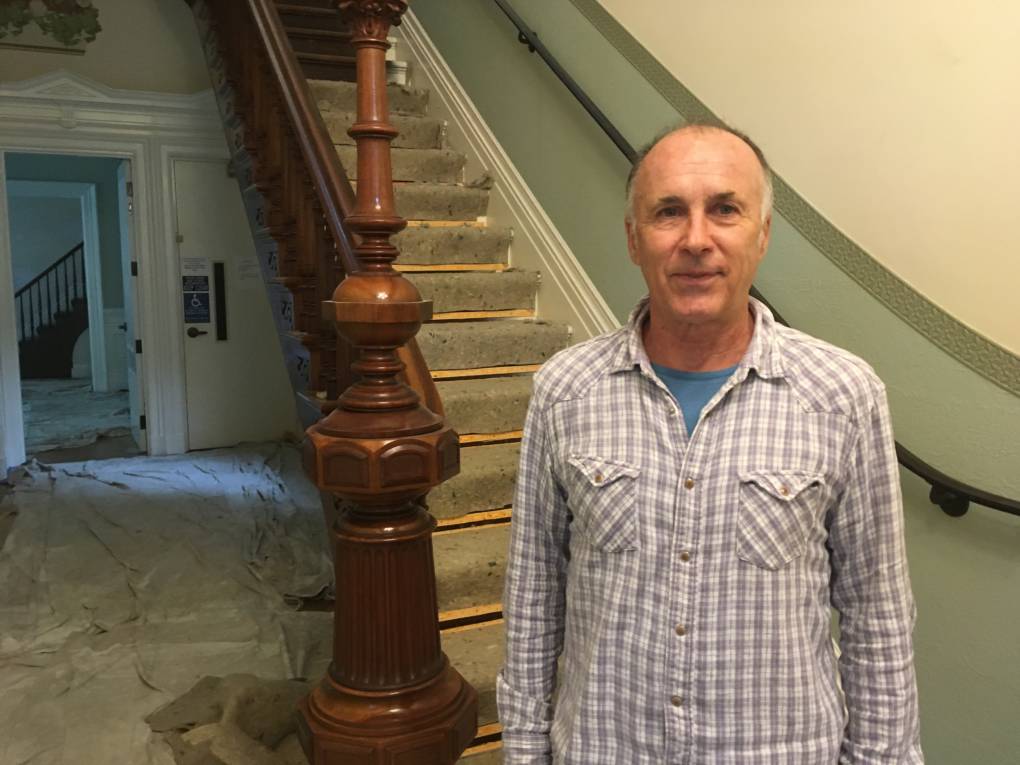
Beloved San Francisco Zen Hospice Project Confronts Its Own End
Too Late To Operate? Surgery Near End Of Life Is Common, Costly
Bay Area Cancer Patient Confronts and Embraces His Right to Die
California Governor Signs Physician-Assisted Suicide Bill Into Law
Sponsored
Player sponsored by
window.__IS_SSR__=true
window.__INITIAL_STATE__={
"attachmentsReducer": {
"audio_0": {
"type": "attachments",
"id": "audio_0",
"imgSizes": {
"kqedFullSize": {
"file": "https://ww2.kqed.org/news/wp-content/themes/KQED-unified/img/audio_bgs/background0.jpg"
}
}
},
"audio_1": {
"type": "attachments",
"id": "audio_1",
"imgSizes": {
"kqedFullSize": {
"file": "https://ww2.kqed.org/news/wp-content/themes/KQED-unified/img/audio_bgs/background1.jpg"
}
}
},
"audio_2": {
"type": "attachments",
"id": "audio_2",
"imgSizes": {
"kqedFullSize": {
"file": "https://ww2.kqed.org/news/wp-content/themes/KQED-unified/img/audio_bgs/background2.jpg"
}
}
},
"audio_3": {
"type": "attachments",
"id": "audio_3",
"imgSizes": {
"kqedFullSize": {
"file": "https://ww2.kqed.org/news/wp-content/themes/KQED-unified/img/audio_bgs/background3.jpg"
}
}
},
"audio_4": {
"type": "attachments",
"id": "audio_4",
"imgSizes": {
"kqedFullSize": {
"file": "https://ww2.kqed.org/news/wp-content/themes/KQED-unified/img/audio_bgs/background4.jpg"
}
}
},
"placeholder": {
"type": "attachments",
"id": "placeholder",
"imgSizes": {
"thumbnail": {
"file": "https://cdn.kqed.org/wp-content/uploads/2024/12/KQED-Default-Image-816638274-2000x1333-1-160x107.jpg",
"width": 160,
"height": 107,
"mimeType": "image/jpeg"
},
"medium": {
"file": "https://cdn.kqed.org/wp-content/uploads/2024/12/KQED-Default-Image-816638274-2000x1333-1-800x533.jpg",
"width": 800,
"height": 533,
"mimeType": "image/jpeg"
},
"medium_large": {
"file": "https://cdn.kqed.org/wp-content/uploads/2024/12/KQED-Default-Image-816638274-2000x1333-1-768x512.jpg",
"width": 768,
"height": 512,
"mimeType": "image/jpeg"
},
"large": {
"file": "https://cdn.kqed.org/wp-content/uploads/2024/12/KQED-Default-Image-816638274-2000x1333-1-1020x680.jpg",
"width": 1020,
"height": 680,
"mimeType": "image/jpeg"
},
"1536x1536": {
"file": "https://cdn.kqed.org/wp-content/uploads/2024/12/KQED-Default-Image-816638274-2000x1333-1-1536x1024.jpg",
"width": 1536,
"height": 1024,
"mimeType": "image/jpeg"
},
"fd-lrg": {
"file": "https://cdn.kqed.org/wp-content/uploads/2024/12/KQED-Default-Image-816638274-2000x1333-1-1536x1024.jpg",
"width": 1536,
"height": 1024,
"mimeType": "image/jpeg"
},
"fd-med": {
"file": "https://cdn.kqed.org/wp-content/uploads/2024/12/KQED-Default-Image-816638274-2000x1333-1-1020x680.jpg",
"width": 1020,
"height": 680,
"mimeType": "image/jpeg"
},
"fd-sm": {
"file": "https://cdn.kqed.org/wp-content/uploads/2024/12/KQED-Default-Image-816638274-2000x1333-1-800x533.jpg",
"width": 800,
"height": 533,
"mimeType": "image/jpeg"
},
"post-thumbnail": {
"file": "https://cdn.kqed.org/wp-content/uploads/2024/12/KQED-Default-Image-816638274-2000x1333-1-672x372.jpg",
"width": 672,
"height": 372,
"mimeType": "image/jpeg"
},
"twentyfourteen-full-width": {
"file": "https://cdn.kqed.org/wp-content/uploads/2024/12/KQED-Default-Image-816638274-2000x1333-1-1038x576.jpg",
"width": 1038,
"height": 576,
"mimeType": "image/jpeg"
},
"xxsmall": {
"file": "https://cdn.kqed.org/wp-content/uploads/2024/12/KQED-Default-Image-816638274-2000x1333-1-160x107.jpg",
"width": 160,
"height": 107,
"mimeType": "image/jpeg"
},
"xsmall": {
"file": "https://cdn.kqed.org/wp-content/uploads/2024/12/KQED-Default-Image-816638274-2000x1333-1-672x372.jpg",
"width": 672,
"height": 372,
"mimeType": "image/jpeg"
},
"small": {
"file": "https://cdn.kqed.org/wp-content/uploads/2024/12/KQED-Default-Image-816638274-2000x1333-1-672x372.jpg",
"width": 672,
"height": 372,
"mimeType": "image/jpeg"
},
"xlarge": {
"file": "https://cdn.kqed.org/wp-content/uploads/2024/12/KQED-Default-Image-816638274-2000x1333-1-1020x680.jpg",
"width": 1020,
"height": 680,
"mimeType": "image/jpeg"
},
"full-width": {
"file": "https://cdn.kqed.org/wp-content/uploads/2024/12/KQED-Default-Image-816638274-2000x1333-1-1920x1280.jpg",
"width": 1920,
"height": 1280,
"mimeType": "image/jpeg"
},
"guest-author-32": {
"file": "https://cdn.kqed.org/wp-content/uploads/2025/01/KQED-Default-Image-816638274-1333x1333-1-160x160.jpg",
"width": 32,
"height": 32,
"mimeType": "image/jpeg"
},
"guest-author-50": {
"file": "https://cdn.kqed.org/wp-content/uploads/2025/01/KQED-Default-Image-816638274-1333x1333-1-160x160.jpg",
"width": 50,
"height": 50,
"mimeType": "image/jpeg"
},
"guest-author-64": {
"file": "https://cdn.kqed.org/wp-content/uploads/2025/01/KQED-Default-Image-816638274-1333x1333-1-160x160.jpg",
"width": 64,
"height": 64,
"mimeType": "image/jpeg"
},
"guest-author-96": {
"file": "https://cdn.kqed.org/wp-content/uploads/2025/01/KQED-Default-Image-816638274-1333x1333-1-160x160.jpg",
"width": 96,
"height": 96,
"mimeType": "image/jpeg"
},
"guest-author-128": {
"file": "https://cdn.kqed.org/wp-content/uploads/2025/01/KQED-Default-Image-816638274-1333x1333-1-160x160.jpg",
"width": 128,
"height": 128,
"mimeType": "image/jpeg"
},
"detail": {
"file": "https://cdn.kqed.org/wp-content/uploads/2025/01/KQED-Default-Image-816638274-1333x1333-1-160x160.jpg",
"width": 160,
"height": 160,
"mimeType": "image/jpeg"
},
"kqedFullSize": {
"file": "https://cdn.kqed.org/wp-content/uploads/2024/12/KQED-Default-Image-816638274-2000x1333-1.jpg",
"width": 2000,
"height": 1333
}
}
},
"news_11838189": {
"type": "attachments",
"id": "news_11838189",
"meta": {
"index": "attachments_1716263798",
"site": "news",
"id": "11838189",
"found": true
},
"parent": 11838180,
"imgSizes": {
"apple_news_ca_landscape_5_5": {
"file": "https://ww2.kqed.org/app/uploads/sites/10/2020/09/RS44907_3_Michael-Thomas-Jess-Betty-Clark-in-Zoom-qut-1044x783.jpg",
"width": 1044,
"mimeType": "image/jpeg",
"height": 783
},
"apple_news_ca_square_4_0": {
"file": "https://ww2.kqed.org/app/uploads/sites/10/2020/09/RS44907_3_Michael-Thomas-Jess-Betty-Clark-in-Zoom-qut-470x470.jpg",
"width": 470,
"mimeType": "image/jpeg",
"height": 470
},
"twentyfourteen-full-width": {
"file": "https://ww2.kqed.org/app/uploads/sites/10/2020/09/RS44907_3_Michael-Thomas-Jess-Betty-Clark-in-Zoom-qut-1038x576.jpg",
"width": 1038,
"mimeType": "image/jpeg",
"height": 576
},
"thumbnail": {
"file": "https://ww2.kqed.org/app/uploads/sites/10/2020/09/RS44907_3_Michael-Thomas-Jess-Betty-Clark-in-Zoom-qut-160x90.jpg",
"width": 160,
"mimeType": "image/jpeg",
"height": 90
},
"post-thumbnail": {
"file": "https://ww2.kqed.org/app/uploads/sites/10/2020/09/RS44907_3_Michael-Thomas-Jess-Betty-Clark-in-Zoom-qut-672x372.jpg",
"width": 672,
"mimeType": "image/jpeg",
"height": 372
},
"kqedFullSize": {
"file": "https://ww2.kqed.org/app/uploads/sites/10/2020/09/RS44907_3_Michael-Thomas-Jess-Betty-Clark-in-Zoom-qut.jpg",
"width": 1920,
"height": 1079
},
"apple_news_ca_landscape_4_7": {
"file": "https://ww2.kqed.org/app/uploads/sites/10/2020/09/RS44907_3_Michael-Thomas-Jess-Betty-Clark-in-Zoom-qut-632x474.jpg",
"width": 632,
"mimeType": "image/jpeg",
"height": 474
},
"large": {
"file": "https://ww2.kqed.org/app/uploads/sites/10/2020/09/RS44907_3_Michael-Thomas-Jess-Betty-Clark-in-Zoom-qut-1020x573.jpg",
"width": 1020,
"mimeType": "image/jpeg",
"height": 573
},
"apple_news_ca_landscape_4_0": {
"file": "https://ww2.kqed.org/app/uploads/sites/10/2020/09/RS44907_3_Michael-Thomas-Jess-Betty-Clark-in-Zoom-qut-536x402.jpg",
"width": 536,
"mimeType": "image/jpeg",
"height": 402
},
"apple_news_ca_portrait_12_9": {
"file": "https://ww2.kqed.org/app/uploads/sites/10/2020/09/RS44907_3_Michael-Thomas-Jess-Betty-Clark-in-Zoom-qut-1122x1079.jpg",
"width": 1122,
"mimeType": "image/jpeg",
"height": 1079
},
"medium": {
"file": "https://ww2.kqed.org/app/uploads/sites/10/2020/09/RS44907_3_Michael-Thomas-Jess-Betty-Clark-in-Zoom-qut-800x450.jpg",
"width": 800,
"mimeType": "image/jpeg",
"height": 450
},
"apple_news_ca_portrait_4_0": {
"file": "https://ww2.kqed.org/app/uploads/sites/10/2020/09/RS44907_3_Michael-Thomas-Jess-Betty-Clark-in-Zoom-qut-354x472.jpg",
"width": 354,
"mimeType": "image/jpeg",
"height": 472
},
"apple_news_ca_portrait_9_7": {
"file": "https://ww2.kqed.org/app/uploads/sites/10/2020/09/RS44907_3_Michael-Thomas-Jess-Betty-Clark-in-Zoom-qut-840x1079.jpg",
"width": 840,
"mimeType": "image/jpeg",
"height": 1079
},
"apple_news_ca_landscape_12_9": {
"file": "https://ww2.kqed.org/app/uploads/sites/10/2020/09/RS44907_3_Michael-Thomas-Jess-Betty-Clark-in-Zoom-qut-1832x1079.jpg",
"width": 1832,
"mimeType": "image/jpeg",
"height": 1079
},
"apple_news_ca_square_9_7": {
"file": "https://ww2.kqed.org/app/uploads/sites/10/2020/09/RS44907_3_Michael-Thomas-Jess-Betty-Clark-in-Zoom-qut-1104x1079.jpg",
"width": 1104,
"mimeType": "image/jpeg",
"height": 1079
},
"1536x1536": {
"file": "https://ww2.kqed.org/app/uploads/sites/10/2020/09/RS44907_3_Michael-Thomas-Jess-Betty-Clark-in-Zoom-qut-1536x863.jpg",
"width": 1536,
"mimeType": "image/jpeg",
"height": 863
},
"apple_news_ca_portrait_4_7": {
"file": "https://ww2.kqed.org/app/uploads/sites/10/2020/09/RS44907_3_Michael-Thomas-Jess-Betty-Clark-in-Zoom-qut-414x552.jpg",
"width": 414,
"mimeType": "image/jpeg",
"height": 552
},
"apple_news_ca_square_12_9": {
"file": "https://ww2.kqed.org/app/uploads/sites/10/2020/09/RS44907_3_Michael-Thomas-Jess-Betty-Clark-in-Zoom-qut-1472x1079.jpg",
"width": 1472,
"mimeType": "image/jpeg",
"height": 1079
},
"apple_news_ca_portrait_5_5": {
"file": "https://ww2.kqed.org/app/uploads/sites/10/2020/09/RS44907_3_Michael-Thomas-Jess-Betty-Clark-in-Zoom-qut-687x916.jpg",
"width": 687,
"mimeType": "image/jpeg",
"height": 916
},
"apple_news_ca_square_4_7": {
"file": "https://ww2.kqed.org/app/uploads/sites/10/2020/09/RS44907_3_Michael-Thomas-Jess-Betty-Clark-in-Zoom-qut-550x550.jpg",
"width": 550,
"mimeType": "image/jpeg",
"height": 550
},
"apple_news_ca_landscape_9_7": {
"file": "https://ww2.kqed.org/app/uploads/sites/10/2020/09/RS44907_3_Michael-Thomas-Jess-Betty-Clark-in-Zoom-qut-1376x1032.jpg",
"width": 1376,
"mimeType": "image/jpeg",
"height": 1032
},
"apple_news_ca_square_5_5": {
"file": "https://ww2.kqed.org/app/uploads/sites/10/2020/09/RS44907_3_Michael-Thomas-Jess-Betty-Clark-in-Zoom-qut-912x912.jpg",
"width": 912,
"mimeType": "image/jpeg",
"height": 912
}
},
"publishDate": 1600277428,
"modified": 1600468609,
"caption": "Dr. Jessica Zitter (top right) talks via Zoom with patient Michael Thomas (top left), and Highland Hospital's chaplain, Pastor Betty Clark (bottom). Zitter helps people with serious illness make plans for how they’d like to be cared for and how they’d like to die. ",
"description": null,
"title": "RS44907_3_Michael Thomas, Jess, Betty Clark in Zoom-qut",
"credit": "Photo Courtesy of Jessica Zitter",
"status": "inherit",
"fetchFailed": false,
"isLoading": false
},
"news_11813014": {
"type": "attachments",
"id": "news_11813014",
"meta": {
"index": "attachments_1716263798",
"site": "news",
"id": "11813014",
"found": true
},
"parent": 11813006,
"imgSizes": {
"apple_news_ca_landscape_5_5": {
"file": "https://ww2.kqed.org/app/uploads/sites/10/2020/04/RS42531_007_KQED_SanFrancisco_StevePantilatMD_04032020-qut-1044x783.jpg",
"width": 1044,
"mimeType": "image/jpeg",
"height": 783
},
"apple_news_ca_square_4_0": {
"file": "https://ww2.kqed.org/app/uploads/sites/10/2020/04/RS42531_007_KQED_SanFrancisco_StevePantilatMD_04032020-qut-470x470.jpg",
"width": 470,
"mimeType": "image/jpeg",
"height": 470
},
"twentyfourteen-full-width": {
"file": "https://ww2.kqed.org/app/uploads/sites/10/2020/04/RS42531_007_KQED_SanFrancisco_StevePantilatMD_04032020-qut-1038x576.jpg",
"width": 1038,
"mimeType": "image/jpeg",
"height": 576
},
"thumbnail": {
"file": "https://ww2.kqed.org/app/uploads/sites/10/2020/04/RS42531_007_KQED_SanFrancisco_StevePantilatMD_04032020-qut-160x107.jpg",
"width": 160,
"mimeType": "image/jpeg",
"height": 107
},
"post-thumbnail": {
"file": "https://ww2.kqed.org/app/uploads/sites/10/2020/04/RS42531_007_KQED_SanFrancisco_StevePantilatMD_04032020-qut-672x372.jpg",
"width": 672,
"mimeType": "image/jpeg",
"height": 372
},
"kqedFullSize": {
"file": "https://ww2.kqed.org/app/uploads/sites/10/2020/04/RS42531_007_KQED_SanFrancisco_StevePantilatMD_04032020-qut.jpg",
"width": 1920,
"height": 1280
},
"apple_news_ca_landscape_4_7": {
"file": "https://ww2.kqed.org/app/uploads/sites/10/2020/04/RS42531_007_KQED_SanFrancisco_StevePantilatMD_04032020-qut-632x474.jpg",
"width": 632,
"mimeType": "image/jpeg",
"height": 474
},
"large": {
"file": "https://ww2.kqed.org/app/uploads/sites/10/2020/04/RS42531_007_KQED_SanFrancisco_StevePantilatMD_04032020-qut-1020x680.jpg",
"width": 1020,
"mimeType": "image/jpeg",
"height": 680
},
"apple_news_ca_landscape_4_0": {
"file": "https://ww2.kqed.org/app/uploads/sites/10/2020/04/RS42531_007_KQED_SanFrancisco_StevePantilatMD_04032020-qut-536x402.jpg",
"width": 536,
"mimeType": "image/jpeg",
"height": 402
},
"apple_news_ca_portrait_12_9": {
"file": "https://ww2.kqed.org/app/uploads/sites/10/2020/04/RS42531_007_KQED_SanFrancisco_StevePantilatMD_04032020-qut-1122x1280.jpg",
"width": 1122,
"mimeType": "image/jpeg",
"height": 1280
},
"medium": {
"file": "https://ww2.kqed.org/app/uploads/sites/10/2020/04/RS42531_007_KQED_SanFrancisco_StevePantilatMD_04032020-qut-800x533.jpg",
"width": 800,
"mimeType": "image/jpeg",
"height": 533
},
"apple_news_ca_portrait_4_0": {
"file": "https://ww2.kqed.org/app/uploads/sites/10/2020/04/RS42531_007_KQED_SanFrancisco_StevePantilatMD_04032020-qut-354x472.jpg",
"width": 354,
"mimeType": "image/jpeg",
"height": 472
},
"apple_news_ca_portrait_9_7": {
"file": "https://ww2.kqed.org/app/uploads/sites/10/2020/04/RS42531_007_KQED_SanFrancisco_StevePantilatMD_04032020-qut-840x1120.jpg",
"width": 840,
"mimeType": "image/jpeg",
"height": 1120
},
"apple_news_ca_landscape_12_9": {
"file": "https://ww2.kqed.org/app/uploads/sites/10/2020/04/RS42531_007_KQED_SanFrancisco_StevePantilatMD_04032020-qut-1832x1280.jpg",
"width": 1832,
"mimeType": "image/jpeg",
"height": 1280
},
"apple_news_ca_square_9_7": {
"file": "https://ww2.kqed.org/app/uploads/sites/10/2020/04/RS42531_007_KQED_SanFrancisco_StevePantilatMD_04032020-qut-1104x1104.jpg",
"width": 1104,
"mimeType": "image/jpeg",
"height": 1104
},
"apple_news_ca_portrait_4_7": {
"file": "https://ww2.kqed.org/app/uploads/sites/10/2020/04/RS42531_007_KQED_SanFrancisco_StevePantilatMD_04032020-qut-414x552.jpg",
"width": 414,
"mimeType": "image/jpeg",
"height": 552
},
"apple_news_ca_square_12_9": {
"file": "https://ww2.kqed.org/app/uploads/sites/10/2020/04/RS42531_007_KQED_SanFrancisco_StevePantilatMD_04032020-qut-1472x1280.jpg",
"width": 1472,
"mimeType": "image/jpeg",
"height": 1280
},
"apple_news_ca_portrait_5_5": {
"file": "https://ww2.kqed.org/app/uploads/sites/10/2020/04/RS42531_007_KQED_SanFrancisco_StevePantilatMD_04032020-qut-687x916.jpg",
"width": 687,
"mimeType": "image/jpeg",
"height": 916
},
"full-width": {
"file": "https://ww2.kqed.org/app/uploads/sites/10/2020/04/RS42531_007_KQED_SanFrancisco_StevePantilatMD_04032020-qut-1920x1280.jpg",
"width": 1920,
"mimeType": "image/jpeg",
"height": 1280
},
"apple_news_ca_square_4_7": {
"file": "https://ww2.kqed.org/app/uploads/sites/10/2020/04/RS42531_007_KQED_SanFrancisco_StevePantilatMD_04032020-qut-550x550.jpg",
"width": 550,
"mimeType": "image/jpeg",
"height": 550
},
"apple_news_ca_landscape_9_7": {
"file": "https://ww2.kqed.org/app/uploads/sites/10/2020/04/RS42531_007_KQED_SanFrancisco_StevePantilatMD_04032020-qut-1376x1032.jpg",
"width": 1376,
"mimeType": "image/jpeg",
"height": 1032
},
"apple_news_ca_square_5_5": {
"file": "https://ww2.kqed.org/app/uploads/sites/10/2020/04/RS42531_007_KQED_SanFrancisco_StevePantilatMD_04032020-qut-912x912.jpg",
"width": 912,
"mimeType": "image/jpeg",
"height": 912
}
},
"publishDate": 1587180215,
"modified": 1587180261,
"caption": "Steve Pantilat, MD, a palliative care doctor for the University of California, San Francisco (UCSF) on April 3, 2020.",
"description": null,
"title": "RS42531_007_KQED_SanFrancisco_StevePantilatMD_04032020-qut",
"credit": "Beth LaBerge/KQED",
"status": "inherit",
"fetchFailed": false,
"isLoading": false
},
"news_11810596": {
"type": "attachments",
"id": "news_11810596",
"meta": {
"index": "attachments_1716263798",
"site": "news",
"id": "11810596",
"found": true
},
"parent": 11810405,
"imgSizes": {
"apple_news_ca_landscape_5_5": {
"file": "https://ww2.kqed.org/app/uploads/sites/10/2020/04/RS42537_004_KQED_Oakland_JessicaZitter_04032020-qut-1044x783.jpg",
"width": 1044,
"mimeType": "image/jpeg",
"height": 783
},
"apple_news_ca_square_4_0": {
"file": "https://ww2.kqed.org/app/uploads/sites/10/2020/04/RS42537_004_KQED_Oakland_JessicaZitter_04032020-qut-470x470.jpg",
"width": 470,
"mimeType": "image/jpeg",
"height": 470
},
"twentyfourteen-full-width": {
"file": "https://ww2.kqed.org/app/uploads/sites/10/2020/04/RS42537_004_KQED_Oakland_JessicaZitter_04032020-qut-1038x576.jpg",
"width": 1038,
"mimeType": "image/jpeg",
"height": 576
},
"thumbnail": {
"file": "https://ww2.kqed.org/app/uploads/sites/10/2020/04/RS42537_004_KQED_Oakland_JessicaZitter_04032020-qut-160x107.jpg",
"width": 160,
"mimeType": "image/jpeg",
"height": 107
},
"post-thumbnail": {
"file": "https://ww2.kqed.org/app/uploads/sites/10/2020/04/RS42537_004_KQED_Oakland_JessicaZitter_04032020-qut-672x372.jpg",
"width": 672,
"mimeType": "image/jpeg",
"height": 372
},
"kqedFullSize": {
"file": "https://ww2.kqed.org/app/uploads/sites/10/2020/04/RS42537_004_KQED_Oakland_JessicaZitter_04032020-qut.jpg",
"width": 1920,
"height": 1280
},
"apple_news_ca_landscape_4_7": {
"file": "https://ww2.kqed.org/app/uploads/sites/10/2020/04/RS42537_004_KQED_Oakland_JessicaZitter_04032020-qut-632x474.jpg",
"width": 632,
"mimeType": "image/jpeg",
"height": 474
},
"large": {
"file": "https://ww2.kqed.org/app/uploads/sites/10/2020/04/RS42537_004_KQED_Oakland_JessicaZitter_04032020-qut-1020x680.jpg",
"width": 1020,
"mimeType": "image/jpeg",
"height": 680
},
"apple_news_ca_landscape_4_0": {
"file": "https://ww2.kqed.org/app/uploads/sites/10/2020/04/RS42537_004_KQED_Oakland_JessicaZitter_04032020-qut-536x402.jpg",
"width": 536,
"mimeType": "image/jpeg",
"height": 402
},
"apple_news_ca_portrait_12_9": {
"file": "https://ww2.kqed.org/app/uploads/sites/10/2020/04/RS42537_004_KQED_Oakland_JessicaZitter_04032020-qut-1122x1280.jpg",
"width": 1122,
"mimeType": "image/jpeg",
"height": 1280
},
"medium": {
"file": "https://ww2.kqed.org/app/uploads/sites/10/2020/04/RS42537_004_KQED_Oakland_JessicaZitter_04032020-qut-800x533.jpg",
"width": 800,
"mimeType": "image/jpeg",
"height": 533
},
"apple_news_ca_portrait_4_0": {
"file": "https://ww2.kqed.org/app/uploads/sites/10/2020/04/RS42537_004_KQED_Oakland_JessicaZitter_04032020-qut-354x472.jpg",
"width": 354,
"mimeType": "image/jpeg",
"height": 472
},
"apple_news_ca_portrait_9_7": {
"file": "https://ww2.kqed.org/app/uploads/sites/10/2020/04/RS42537_004_KQED_Oakland_JessicaZitter_04032020-qut-840x1120.jpg",
"width": 840,
"mimeType": "image/jpeg",
"height": 1120
},
"apple_news_ca_landscape_12_9": {
"file": "https://ww2.kqed.org/app/uploads/sites/10/2020/04/RS42537_004_KQED_Oakland_JessicaZitter_04032020-qut-1832x1280.jpg",
"width": 1832,
"mimeType": "image/jpeg",
"height": 1280
},
"apple_news_ca_square_9_7": {
"file": "https://ww2.kqed.org/app/uploads/sites/10/2020/04/RS42537_004_KQED_Oakland_JessicaZitter_04032020-qut-1104x1104.jpg",
"width": 1104,
"mimeType": "image/jpeg",
"height": 1104
},
"apple_news_ca_portrait_4_7": {
"file": "https://ww2.kqed.org/app/uploads/sites/10/2020/04/RS42537_004_KQED_Oakland_JessicaZitter_04032020-qut-414x552.jpg",
"width": 414,
"mimeType": "image/jpeg",
"height": 552
},
"apple_news_ca_square_12_9": {
"file": "https://ww2.kqed.org/app/uploads/sites/10/2020/04/RS42537_004_KQED_Oakland_JessicaZitter_04032020-qut-1472x1280.jpg",
"width": 1472,
"mimeType": "image/jpeg",
"height": 1280
},
"apple_news_ca_portrait_5_5": {
"file": "https://ww2.kqed.org/app/uploads/sites/10/2020/04/RS42537_004_KQED_Oakland_JessicaZitter_04032020-qut-687x916.jpg",
"width": 687,
"mimeType": "image/jpeg",
"height": 916
},
"full-width": {
"file": "https://ww2.kqed.org/app/uploads/sites/10/2020/04/RS42537_004_KQED_Oakland_JessicaZitter_04032020-qut-1920x1280.jpg",
"width": 1920,
"mimeType": "image/jpeg",
"height": 1280
},
"apple_news_ca_square_4_7": {
"file": "https://ww2.kqed.org/app/uploads/sites/10/2020/04/RS42537_004_KQED_Oakland_JessicaZitter_04032020-qut-550x550.jpg",
"width": 550,
"mimeType": "image/jpeg",
"height": 550
},
"apple_news_ca_landscape_9_7": {
"file": "https://ww2.kqed.org/app/uploads/sites/10/2020/04/RS42537_004_KQED_Oakland_JessicaZitter_04032020-qut-1376x1032.jpg",
"width": 1376,
"mimeType": "image/jpeg",
"height": 1032
},
"apple_news_ca_square_5_5": {
"file": "https://ww2.kqed.org/app/uploads/sites/10/2020/04/RS42537_004_KQED_Oakland_JessicaZitter_04032020-qut-912x912.jpg",
"width": 912,
"mimeType": "image/jpeg",
"height": 912
}
},
"publishDate": 1585953311,
"modified": 1585954457,
"caption": "Dr. Jessica Zitter, a palliative care specialist at Highland Hospital in Oakland, is seeing patients remotely during coronavirus shelter-in-place orders.",
"description": "Dr. Jessica Zitter, a palliative care specialist at Highland Hospital in Oakland, is seeing patients remotely during coronavirus shelter-in-place orders.",
"title": "Dr. Jessica Zitter, a palliative care specialist, on April 3, 2020.",
"credit": "Beth LaBerge/KQED",
"status": "inherit",
"fetchFailed": false,
"isLoading": false
},
"news_11759956": {
"type": "attachments",
"id": "news_11759956",
"meta": {
"index": "attachments_1716263798",
"site": "news",
"id": "11759956",
"found": true
},
"parent": 11759125,
"imgSizes": {
"apple_news_ca_landscape_5_5": {
"file": "https://ww2.kqed.org/app/uploads/sites/10/2019/07/Point-Arena-Coastal-Redwood-e1562623443751-1-1044x783.jpg",
"width": 1044,
"mimeType": "image/jpeg",
"height": 783
},
"apple_news_ca_square_4_0": {
"file": "https://ww2.kqed.org/app/uploads/sites/10/2019/07/Point-Arena-Coastal-Redwood-e1562623443751-1-470x470.jpg",
"width": 470,
"mimeType": "image/jpeg",
"height": 470
},
"twentyfourteen-full-width": {
"file": "https://ww2.kqed.org/app/uploads/sites/10/2019/07/Point-Arena-Coastal-Redwood-e1562623443751-1-1038x576.jpg",
"width": 1038,
"mimeType": "image/jpeg",
"height": 576
},
"thumbnail": {
"file": "https://ww2.kqed.org/app/uploads/sites/10/2019/07/Point-Arena-Coastal-Redwood-e1562623443751-1-160x96.jpg",
"width": 160,
"mimeType": "image/jpeg",
"height": 96
},
"post-thumbnail": {
"file": "https://ww2.kqed.org/app/uploads/sites/10/2019/07/Point-Arena-Coastal-Redwood-e1562623443751-1-672x372.jpg",
"width": 672,
"mimeType": "image/jpeg",
"height": 372
},
"kqedFullSize": {
"file": "https://ww2.kqed.org/app/uploads/sites/10/2019/07/Point-Arena-Coastal-Redwood-e1562623443751-1.jpg",
"width": 1729,
"height": 1039
},
"apple_news_ca_landscape_4_7": {
"file": "https://ww2.kqed.org/app/uploads/sites/10/2019/07/Point-Arena-Coastal-Redwood-e1562623443751-1-632x474.jpg",
"width": 632,
"mimeType": "image/jpeg",
"height": 474
},
"large": {
"file": "https://ww2.kqed.org/app/uploads/sites/10/2019/07/Point-Arena-Coastal-Redwood-e1562623443751-1-1020x613.jpg",
"width": 1020,
"mimeType": "image/jpeg",
"height": 613
},
"complete_open_graph": {
"file": "https://ww2.kqed.org/app/uploads/sites/10/2019/07/Point-Arena-Coastal-Redwood-e1562623443751-1-1200x721.jpg",
"width": 1200,
"mimeType": "image/jpeg",
"height": 721
},
"apple_news_ca_landscape_4_0": {
"file": "https://ww2.kqed.org/app/uploads/sites/10/2019/07/Point-Arena-Coastal-Redwood-e1562623443751-1-536x402.jpg",
"width": 536,
"mimeType": "image/jpeg",
"height": 402
},
"apple_news_ca_portrait_12_9": {
"file": "https://ww2.kqed.org/app/uploads/sites/10/2019/07/Point-Arena-Coastal-Redwood-e1562623443751-1-1122x1039.jpg",
"width": 1122,
"mimeType": "image/jpeg",
"height": 1039
},
"medium": {
"file": "https://ww2.kqed.org/app/uploads/sites/10/2019/07/Point-Arena-Coastal-Redwood-e1562623443751-1-800x481.jpg",
"width": 800,
"mimeType": "image/jpeg",
"height": 481
},
"apple_news_ca_portrait_4_0": {
"file": "https://ww2.kqed.org/app/uploads/sites/10/2019/07/Point-Arena-Coastal-Redwood-e1562623443751-1-354x472.jpg",
"width": 354,
"mimeType": "image/jpeg",
"height": 472
},
"apple_news_ca_portrait_9_7": {
"file": "https://ww2.kqed.org/app/uploads/sites/10/2019/07/Point-Arena-Coastal-Redwood-e1562623443751-1-840x1039.jpg",
"width": 840,
"mimeType": "image/jpeg",
"height": 1039
},
"apple_news_ca_square_9_7": {
"file": "https://ww2.kqed.org/app/uploads/sites/10/2019/07/Point-Arena-Coastal-Redwood-e1562623443751-1-1104x1039.jpg",
"width": 1104,
"mimeType": "image/jpeg",
"height": 1039
},
"apple_news_ca_portrait_4_7": {
"file": "https://ww2.kqed.org/app/uploads/sites/10/2019/07/Point-Arena-Coastal-Redwood-e1562623443751-1-414x552.jpg",
"width": 414,
"mimeType": "image/jpeg",
"height": 552
},
"apple_news_ca_square_12_9": {
"file": "https://ww2.kqed.org/app/uploads/sites/10/2019/07/Point-Arena-Coastal-Redwood-e1562623443751-1-1472x1039.jpg",
"width": 1472,
"mimeType": "image/jpeg",
"height": 1039
},
"apple_news_ca_portrait_5_5": {
"file": "https://ww2.kqed.org/app/uploads/sites/10/2019/07/Point-Arena-Coastal-Redwood-e1562623443751-1-687x916.jpg",
"width": 687,
"mimeType": "image/jpeg",
"height": 916
},
"apple_news_ca_square_4_7": {
"file": "https://ww2.kqed.org/app/uploads/sites/10/2019/07/Point-Arena-Coastal-Redwood-e1562623443751-1-550x550.jpg",
"width": 550,
"mimeType": "image/jpeg",
"height": 550
},
"apple_news_ca_landscape_9_7": {
"file": "https://ww2.kqed.org/app/uploads/sites/10/2019/07/Point-Arena-Coastal-Redwood-e1562623443751-1-1376x1032.jpg",
"width": 1376,
"mimeType": "image/jpeg",
"height": 1032
},
"apple_news_ca_square_5_5": {
"file": "https://ww2.kqed.org/app/uploads/sites/10/2019/07/Point-Arena-Coastal-Redwood-e1562623443751-1-912x912.jpg",
"width": 912,
"mimeType": "image/jpeg",
"height": 912
}
},
"publishDate": 1562703122,
"modified": 1562703151,
"caption": "Co-founder of Better Place Forests Sandy Gibson says he was inspired to start the business after his own personal experience with loss. ",
"description": "Co-founder of Better Place Forests Sandy Gibson says he was inspired to start the business after his own personal experience with loss. ",
"title": "Point-Arena-Coastal-Redwood-e1562623443751",
"credit": "Courtesy of Better Place Forests",
"status": "inherit",
"fetchFailed": false,
"isLoading": false
},
"stateofhealth_364226": {
"type": "attachments",
"id": "stateofhealth_364226",
"meta": {
"index": "attachments_1716263798",
"site": "stateofhealth",
"id": "364226",
"found": true
},
"parent": 364223,
"imgSizes": {
"small": {
"file": "https://ww2.kqed.org/app/uploads/sites/27/2018/08/George-Kellar-in-ZHP-foyer-520x390.jpg",
"width": 520,
"mimeType": "image/jpeg",
"height": 390
},
"twentyfourteen-full-width": {
"file": "https://ww2.kqed.org/app/uploads/sites/27/2018/08/George-Kellar-in-ZHP-foyer-1038x576.jpg",
"width": 1038,
"mimeType": "image/jpeg",
"height": 576
},
"thumbnail": {
"file": "https://ww2.kqed.org/app/uploads/sites/27/2018/08/George-Kellar-in-ZHP-foyer-160x120.jpg",
"width": 160,
"mimeType": "image/jpeg",
"height": 120
},
"fd-sm": {
"file": "https://ww2.kqed.org/app/uploads/sites/27/2018/08/George-Kellar-in-ZHP-foyer-960x720.jpg",
"width": 960,
"mimeType": "image/jpeg",
"height": 720
},
"post-thumbnail": {
"file": "https://ww2.kqed.org/app/uploads/sites/27/2018/08/George-Kellar-in-ZHP-foyer-672x372.jpg",
"width": 672,
"mimeType": "image/jpeg",
"height": 372
},
"xsmall": {
"file": "https://ww2.kqed.org/app/uploads/sites/27/2018/08/George-Kellar-in-ZHP-foyer-375x281.jpg",
"width": 375,
"mimeType": "image/jpeg",
"height": 281
},
"kqedFullSize": {
"file": "https://ww2.kqed.org/app/uploads/sites/27/2018/08/George-Kellar-in-ZHP-foyer-e1534262172505.jpg",
"width": 1920,
"height": 1440
},
"large": {
"file": "https://ww2.kqed.org/app/uploads/sites/27/2018/08/George-Kellar-in-ZHP-foyer-1020x765.jpg",
"width": 1020,
"mimeType": "image/jpeg",
"height": 765
},
"xlarge": {
"file": "https://ww2.kqed.org/app/uploads/sites/27/2018/08/George-Kellar-in-ZHP-foyer-1180x885.jpg",
"width": 1180,
"mimeType": "image/jpeg",
"height": 885
},
"complete_open_graph": {
"file": "https://ww2.kqed.org/app/uploads/sites/27/2018/08/George-Kellar-in-ZHP-foyer-1200x900.jpg",
"width": 1200,
"mimeType": "image/jpeg",
"height": 900
},
"guest-author-50": {
"file": "https://ww2.kqed.org/app/uploads/sites/27/2018/08/George-Kellar-in-ZHP-foyer-50x50.jpg",
"width": 50,
"mimeType": "image/jpeg",
"height": 50
},
"guest-author-96": {
"file": "https://ww2.kqed.org/app/uploads/sites/27/2018/08/George-Kellar-in-ZHP-foyer-96x96.jpg",
"width": 96,
"mimeType": "image/jpeg",
"height": 96
},
"medium": {
"file": "https://ww2.kqed.org/app/uploads/sites/27/2018/08/George-Kellar-in-ZHP-foyer-800x600.jpg",
"width": 800,
"mimeType": "image/jpeg",
"height": 600
},
"guest-author-64": {
"file": "https://ww2.kqed.org/app/uploads/sites/27/2018/08/George-Kellar-in-ZHP-foyer-64x64.jpg",
"width": 64,
"mimeType": "image/jpeg",
"height": 64
},
"guest-author-32": {
"file": "https://ww2.kqed.org/app/uploads/sites/27/2018/08/George-Kellar-in-ZHP-foyer-32x32.jpg",
"width": 32,
"mimeType": "image/jpeg",
"height": 32
},
"fd-lrg": {
"file": "https://ww2.kqed.org/app/uploads/sites/27/2018/08/George-Kellar-in-ZHP-foyer-1920x1440.jpg",
"width": 1920,
"mimeType": "image/jpeg",
"height": 1440
},
"fd-med": {
"file": "https://ww2.kqed.org/app/uploads/sites/27/2018/08/George-Kellar-in-ZHP-foyer-1180x885.jpg",
"width": 1180,
"mimeType": "image/jpeg",
"height": 885
},
"full-width": {
"file": "https://ww2.kqed.org/app/uploads/sites/27/2018/08/George-Kellar-in-ZHP-foyer-1920x1440.jpg",
"width": 1920,
"mimeType": "image/jpeg",
"height": 1440
},
"detail": {
"file": "https://ww2.kqed.org/app/uploads/sites/27/2018/08/George-Kellar-in-ZHP-foyer-150x150.jpg",
"width": 150,
"mimeType": "image/jpeg",
"height": 150
},
"medium_large": {
"file": "https://ww2.kqed.org/app/uploads/sites/27/2018/08/George-Kellar-in-ZHP-foyer-768x576.jpg",
"width": 768,
"mimeType": "image/jpeg",
"height": 576
},
"guest-author-128": {
"file": "https://ww2.kqed.org/app/uploads/sites/27/2018/08/George-Kellar-in-ZHP-foyer-128x128.jpg",
"width": 128,
"mimeType": "image/jpeg",
"height": 128
},
"xxsmall": {
"file": "https://ww2.kqed.org/app/uploads/sites/27/2018/08/George-Kellar-in-ZHP-foyer-240x180.jpg",
"width": 240,
"mimeType": "image/jpeg",
"height": 180
}
},
"publishDate": 1534261834,
"modified": 1534296652,
"caption": "George Kellar, executive director of the Zen Hospice Project, surveys the painting work at the guest house. It will be put on the market for sale in September.",
"description": "George Kellar, executive director of the Zen Hospice Project, surveys the painting work at the guest house. It will be put on the market for sale in September.",
"title": "George Kellar in ZHP foyer",
"credit": "April Dembosky/KQED",
"status": "inherit",
"fetchFailed": false,
"isLoading": false
},
"news_11652867": {
"type": "attachments",
"id": "news_11652867",
"meta": {
"index": "attachments_1716263798",
"site": "news",
"id": "11652867",
"found": true
},
"parent": 11652866,
"imgSizes": {
"small": {
"file": "https://ww2.kqed.org/app/uploads/sites/10/2018/02/maxine-stanich-toned-11-751faa27499f5799691b75403d2929f3a1b4cb83-520x390.jpg",
"width": 520,
"mimeType": "image/jpeg",
"height": 390
},
"twentyfourteen-full-width": {
"file": "https://ww2.kqed.org/app/uploads/sites/10/2018/02/maxine-stanich-toned-11-751faa27499f5799691b75403d2929f3a1b4cb83-1038x576.jpg",
"width": 1038,
"mimeType": "image/jpeg",
"height": 576
},
"thumbnail": {
"file": "https://ww2.kqed.org/app/uploads/sites/10/2018/02/maxine-stanich-toned-11-751faa27499f5799691b75403d2929f3a1b4cb83-160x120.jpg",
"width": 160,
"mimeType": "image/jpeg",
"height": 120
},
"fd-sm": {
"file": "https://ww2.kqed.org/app/uploads/sites/10/2018/02/maxine-stanich-toned-11-751faa27499f5799691b75403d2929f3a1b4cb83-960x720.jpg",
"width": 960,
"mimeType": "image/jpeg",
"height": 720
},
"post-thumbnail": {
"file": "https://ww2.kqed.org/app/uploads/sites/10/2018/02/maxine-stanich-toned-11-751faa27499f5799691b75403d2929f3a1b4cb83-672x372.jpg",
"width": 672,
"mimeType": "image/jpeg",
"height": 372
},
"xsmall": {
"file": "https://ww2.kqed.org/app/uploads/sites/10/2018/02/maxine-stanich-toned-11-751faa27499f5799691b75403d2929f3a1b4cb83-375x281.jpg",
"width": 375,
"mimeType": "image/jpeg",
"height": 281
},
"kqedFullSize": {
"file": "https://ww2.kqed.org/app/uploads/sites/10/2018/02/maxine-stanich-toned-11-751faa27499f5799691b75403d2929f3a1b4cb83.jpg",
"width": 1771,
"height": 1328
},
"large": {
"file": "https://ww2.kqed.org/app/uploads/sites/10/2018/02/maxine-stanich-toned-11-751faa27499f5799691b75403d2929f3a1b4cb83-1020x765.jpg",
"width": 1020,
"mimeType": "image/jpeg",
"height": 765
},
"xlarge": {
"file": "https://ww2.kqed.org/app/uploads/sites/10/2018/02/maxine-stanich-toned-11-751faa27499f5799691b75403d2929f3a1b4cb83-1180x885.jpg",
"width": 1180,
"mimeType": "image/jpeg",
"height": 885
},
"guest-author-50": {
"file": "https://ww2.kqed.org/app/uploads/sites/10/2018/02/maxine-stanich-toned-11-751faa27499f5799691b75403d2929f3a1b4cb83-50x50.jpg",
"width": 50,
"mimeType": "image/jpeg",
"height": 50
},
"guest-author-96": {
"file": "https://ww2.kqed.org/app/uploads/sites/10/2018/02/maxine-stanich-toned-11-751faa27499f5799691b75403d2929f3a1b4cb83-96x96.jpg",
"width": 96,
"mimeType": "image/jpeg",
"height": 96
},
"medium": {
"file": "https://ww2.kqed.org/app/uploads/sites/10/2018/02/maxine-stanich-toned-11-751faa27499f5799691b75403d2929f3a1b4cb83-800x600.jpg",
"width": 800,
"mimeType": "image/jpeg",
"height": 600
},
"guest-author-64": {
"file": "https://ww2.kqed.org/app/uploads/sites/10/2018/02/maxine-stanich-toned-11-751faa27499f5799691b75403d2929f3a1b4cb83-64x64.jpg",
"width": 64,
"mimeType": "image/jpeg",
"height": 64
},
"guest-author-32": {
"file": "https://ww2.kqed.org/app/uploads/sites/10/2018/02/maxine-stanich-toned-11-751faa27499f5799691b75403d2929f3a1b4cb83-32x32.jpg",
"width": 32,
"mimeType": "image/jpeg",
"height": 32
},
"fd-med": {
"file": "https://ww2.kqed.org/app/uploads/sites/10/2018/02/maxine-stanich-toned-11-751faa27499f5799691b75403d2929f3a1b4cb83-1180x885.jpg",
"width": 1180,
"mimeType": "image/jpeg",
"height": 885
},
"detail": {
"file": "https://ww2.kqed.org/app/uploads/sites/10/2018/02/maxine-stanich-toned-11-751faa27499f5799691b75403d2929f3a1b4cb83-150x150.jpg",
"width": 150,
"mimeType": "image/jpeg",
"height": 150
},
"guest-author-128": {
"file": "https://ww2.kqed.org/app/uploads/sites/10/2018/02/maxine-stanich-toned-11-751faa27499f5799691b75403d2929f3a1b4cb83-128x128.jpg",
"width": 128,
"mimeType": "image/jpeg",
"height": 128
},
"xxsmall": {
"file": "https://ww2.kqed.org/app/uploads/sites/10/2018/02/maxine-stanich-toned-11-751faa27499f5799691b75403d2929f3a1b4cb83-240x180.jpg",
"width": 240,
"mimeType": "image/jpeg",
"height": 180
}
},
"publishDate": 1519864349,
"modified": 1519866141,
"caption": "Maxine Stanich celebrated her 90th birthday with friends and family in 2010, more than two years after her implanted defibrillator was deactivated by Dr. Rita Redberg to comply with Stanich's \"do not resuscitate\" directive.",
"description": "Maxine Stanich celebrated her 90th birthday with friends and family in 2010, more than two years after her implanted defibrillator was deactivated by Dr. Rita Redberg to comply with Stanich's \"do not resuscitate\" directive.",
"title": "Maxine Stanich celebrated her 90th birthday with friends and family in 2010, more than two years after her implanted defibrillator was deactivated by Dr. Rita Redberg to comply with Stanich's \"do not resuscitate\" directive.",
"credit": "Photo Courtesy of Susan Giaquinto/Kaiser Health News",
"status": "inherit",
"fetchFailed": false,
"isLoading": false
},
"stateofhealth_281571": {
"type": "attachments",
"id": "stateofhealth_281571",
"meta": {
"index": "attachments_1716263798",
"site": "stateofhealth",
"id": "281571",
"found": true
},
"parent": 281518,
"imgSizes": {
"small": {
"file": "https://ww2.kqed.org/app/uploads/sites/27/2017/01/Chemo-Face-2014-03-1-520x390.jpeg",
"width": 520,
"mimeType": "image/jpeg",
"height": 390
},
"twentyfourteen-full-width": {
"file": "https://ww2.kqed.org/app/uploads/sites/27/2017/01/Chemo-Face-2014-03-1-1038x576.jpeg",
"width": 1038,
"mimeType": "image/jpeg",
"height": 576
},
"thumbnail": {
"file": "https://ww2.kqed.org/app/uploads/sites/27/2017/01/Chemo-Face-2014-03-1-160x120.jpeg",
"width": 160,
"mimeType": "image/jpeg",
"height": 120
},
"fd-sm": {
"file": "https://ww2.kqed.org/app/uploads/sites/27/2017/01/Chemo-Face-2014-03-1-960x720.jpeg",
"width": 960,
"mimeType": "image/jpeg",
"height": 720
},
"post-thumbnail": {
"file": "https://ww2.kqed.org/app/uploads/sites/27/2017/01/Chemo-Face-2014-03-1-672x372.jpeg",
"width": 672,
"mimeType": "image/jpeg",
"height": 372
},
"xsmall": {
"file": "https://ww2.kqed.org/app/uploads/sites/27/2017/01/Chemo-Face-2014-03-1-375x281.jpeg",
"width": 375,
"mimeType": "image/jpeg",
"height": 281
},
"kqedFullSize": {
"file": "https://ww2.kqed.org/app/uploads/sites/27/2017/01/Chemo-Face-2014-03-1-e1483732084175.jpeg",
"width": 1280,
"height": 960
},
"large": {
"file": "https://ww2.kqed.org/app/uploads/sites/27/2017/01/Chemo-Face-2014-03-1-1020x765.jpeg",
"width": 1020,
"mimeType": "image/jpeg",
"height": 765
},
"xlarge": {
"file": "https://ww2.kqed.org/app/uploads/sites/27/2017/01/Chemo-Face-2014-03-1-1180x885.jpeg",
"width": 1180,
"mimeType": "image/jpeg",
"height": 885
},
"guest-author-50": {
"file": "https://ww2.kqed.org/app/uploads/sites/27/2017/01/Chemo-Face-2014-03-1-50x50.jpeg",
"width": 50,
"mimeType": "image/jpeg",
"height": 50
},
"guest-author-96": {
"file": "https://ww2.kqed.org/app/uploads/sites/27/2017/01/Chemo-Face-2014-03-1-96x96.jpeg",
"width": 96,
"mimeType": "image/jpeg",
"height": 96
},
"medium": {
"file": "https://ww2.kqed.org/app/uploads/sites/27/2017/01/Chemo-Face-2014-03-1-800x600.jpeg",
"width": 800,
"mimeType": "image/jpeg",
"height": 600
},
"guest-author-64": {
"file": "https://ww2.kqed.org/app/uploads/sites/27/2017/01/Chemo-Face-2014-03-1-64x64.jpeg",
"width": 64,
"mimeType": "image/jpeg",
"height": 64
},
"guest-author-32": {
"file": "https://ww2.kqed.org/app/uploads/sites/27/2017/01/Chemo-Face-2014-03-1-32x32.jpeg",
"width": 32,
"mimeType": "image/jpeg",
"height": 32
},
"jmtc-small-thumb": {
"file": "https://ww2.kqed.org/app/uploads/sites/27/2017/01/Chemo-Face-2014-03-1-280x150.jpeg",
"width": 280,
"mimeType": "image/jpeg",
"height": 150
},
"fd-med": {
"file": "https://ww2.kqed.org/app/uploads/sites/27/2017/01/Chemo-Face-2014-03-1-1180x885.jpeg",
"width": 1180,
"mimeType": "image/jpeg",
"height": 885
},
"detail": {
"file": "https://ww2.kqed.org/app/uploads/sites/27/2017/01/Chemo-Face-2014-03-1-150x150.jpeg",
"width": 150,
"mimeType": "image/jpeg",
"height": 150
},
"medium_large": {
"file": "https://ww2.kqed.org/app/uploads/sites/27/2017/01/Chemo-Face-2014-03-1-768x576.jpeg",
"width": 768,
"mimeType": "image/jpeg",
"height": 576
},
"guest-author-128": {
"file": "https://ww2.kqed.org/app/uploads/sites/27/2017/01/Chemo-Face-2014-03-1-128x128.jpeg",
"width": 128,
"mimeType": "image/jpeg",
"height": 128
},
"xxsmall": {
"file": "https://ww2.kqed.org/app/uploads/sites/27/2017/01/Chemo-Face-2014-03-1-240x180.jpeg",
"width": 240,
"mimeType": "image/jpeg",
"height": 180
}
},
"publishDate": 1483732062,
"modified": 1483744512,
"caption": "Ray Perman was diagnosed with prostate cancer five years ago. His doctors told him two months ago there was nothing more they could do for him. ",
"description": "Ray Perman was diagnosed with prostate cancer and sarcoma carcinoma five years ago. His doctors told him two months ago there was nothing more they could do for him. ",
"title": "chemo-face-2014-03",
"credit": "Courtesy Ray Perman",
"status": "inherit",
"fetchFailed": false,
"isLoading": false
},
"stateofhealth_89043": {
"type": "attachments",
"id": "stateofhealth_89043",
"meta": {
"index": "attachments_1716263798",
"site": "stateofhealth",
"id": "89043",
"found": true
},
"parent": 87522,
"imgSizes": {
"twentyfourteen-full-width": {
"file": "https://ww2.kqed.org/app/uploads/sites/27/2016/11/GettyImages-471560410-2-1038x576.jpg",
"width": 1038,
"mimeType": "image/jpeg",
"height": 576
},
"thumbnail": {
"file": "https://ww2.kqed.org/app/uploads/sites/27/2016/11/GettyImages-471560410-2-400x267.jpg",
"width": 400,
"mimeType": "image/jpeg",
"height": 267
},
"fd-sm": {
"file": "https://ww2.kqed.org/app/uploads/sites/27/2016/11/GettyImages-471560410-2-960x640.jpg",
"width": 960,
"mimeType": "image/jpeg",
"height": 640
},
"post-thumbnail": {
"file": "https://ww2.kqed.org/app/uploads/sites/27/2016/11/GettyImages-471560410-2-672x372.jpg",
"width": 672,
"mimeType": "image/jpeg",
"height": 372
},
"kqedFullSize": {
"file": "https://ww2.kqed.org/app/uploads/sites/27/2016/11/GettyImages-471560410-2-e1444080118509.jpg",
"width": 1920,
"height": 1279
},
"large": {
"file": "https://ww2.kqed.org/app/uploads/sites/27/2016/11/GettyImages-471560410-2-1440x960.jpg",
"width": 1440,
"mimeType": "image/jpeg",
"height": 960
},
"guest-author-96": {
"file": "https://ww2.kqed.org/app/uploads/sites/27/2016/11/GettyImages-471560410-2-96x96.jpg",
"width": 96,
"mimeType": "image/jpeg",
"height": 96
},
"medium": {
"file": "https://ww2.kqed.org/app/uploads/sites/27/2016/11/GettyImages-471560410-2-800x533.jpg",
"width": 800,
"mimeType": "image/jpeg",
"height": 533
},
"guest-author-64": {
"file": "https://ww2.kqed.org/app/uploads/sites/27/2016/11/GettyImages-471560410-2-64x64.jpg",
"width": 64,
"mimeType": "image/jpeg",
"height": 64
},
"guest-author-32": {
"file": "https://ww2.kqed.org/app/uploads/sites/27/2016/11/GettyImages-471560410-2-32x32.jpg",
"width": 32,
"mimeType": "image/jpeg",
"height": 32
},
"jmtc-small-thumb": {
"file": "https://ww2.kqed.org/app/uploads/sites/27/2016/11/GettyImages-471560410-2-280x150.jpg",
"width": 280,
"mimeType": "image/jpeg",
"height": 150
},
"fd-lrg": {
"file": "https://ww2.kqed.org/app/uploads/sites/27/2016/11/GettyImages-471560410-2-1920x1279.jpg",
"width": 1920,
"mimeType": "image/jpeg",
"height": 1279
},
"fd-med": {
"file": "https://ww2.kqed.org/app/uploads/sites/27/2016/11/GettyImages-471560410-2-1180x786.jpg",
"width": 1180,
"mimeType": "image/jpeg",
"height": 786
},
"detail": {
"file": "https://ww2.kqed.org/app/uploads/sites/27/2016/11/GettyImages-471560410-2-75x75.jpg",
"width": 75,
"mimeType": "image/jpeg",
"height": 75
},
"guest-author-128": {
"file": "https://ww2.kqed.org/app/uploads/sites/27/2016/11/GettyImages-471560410-2-128x128.jpg",
"width": 128,
"mimeType": "image/jpeg",
"height": 128
}
},
"publishDate": 1444074745,
"modified": 1444080111,
"caption": "California Governor Jerry Brown in a file photo from April 2015. ",
"description": null,
"title": "California Governor Jerry Brown Discusses Gov't Response To Climate Change",
"credit": "David McNew/Getty Images",
"status": "inherit",
"fetchFailed": false,
"isLoading": false
}
},
"audioPlayerReducer": {
"postId": "stream_live",
"isPaused": true,
"isPlaying": false,
"pfsActive": false,
"pledgeModalIsOpen": true,
"playerDrawerIsOpen": false
},
"authorsReducer": {
"byline_news_11789524": {
"type": "authors",
"id": "byline_news_11789524",
"meta": {
"override": true
},
"slug": "byline_news_11789524",
"name": "Terry Gross",
"isLoading": false
},
"byline_news_11652866": {
"type": "authors",
"id": "byline_news_11652866",
"meta": {
"override": true
},
"slug": "byline_news_11652866",
"name": "Liz Szabo",
"isLoading": false
},
"adembosky": {
"type": "authors",
"id": "3205",
"meta": {
"index": "authors_1716337520",
"id": "3205",
"found": true
},
"name": "April Dembosky",
"firstName": "April",
"lastName": "Dembosky",
"slug": "adembosky",
"email": "adembosky@kqed.org",
"display_author_email": false,
"staff_mastheads": [
"news",
"science"
],
"title": "KQED Health Correspondent",
"bio": "April Dembosky is the health correspondent for KQED News and a regular contributor to NPR. She specializes in covering altered states of mind, from postpartum depression to methamphetamine-induced psychosis to the insanity defense. Her investigative series on insurance companies sidestepping mental health laws won multiple awards, including first place in beat reporting from the national Association of Health Care Journalists. She is the recipient of numerous other prizes and fellowships, including a national Edward R. Murrow award for investigative reporting, a Society of Professional Journalists award for long-form storytelling, and a Carter Center Fellowship for Mental Health Journalism.\r\n\r\nDembosky reported and produced \u003cem>Soundtrack of Silence\u003c/em>, an audio documentary about music and memory that is currently being made into a feature film by Paramount Pictures.\r\n\r\nBefore joining KQED in 2013, Dembosky covered technology and Silicon Valley for \u003cem>The Financial Times of London,\u003c/em> and contributed business and arts stories to \u003cem>Marketplace \u003c/em>and \u003cem>The New York Times.\u003c/em> She got her undergraduate degree in philosophy from Smith College and her master's in journalism from the University of California, Berkeley. She is a classically trained violinist and proud alum of the first symphony orchestra at Burning Man.",
"avatar": "https://secure.gravatar.com/avatar/ef92999be4ceb9ea60701e7dc276f813?s=600&d=blank&r=g",
"twitter": "adembosky",
"facebook": null,
"instagram": null,
"linkedin": null,
"sites": [
{
"site": "arts",
"roles": [
"author"
]
},
{
"site": "news",
"roles": [
"editor"
]
},
{
"site": "futureofyou",
"roles": [
"author"
]
},
{
"site": "stateofhealth",
"roles": [
"editor"
]
},
{
"site": "science",
"roles": [
"editor"
]
},
{
"site": "forum",
"roles": [
"editor"
]
}
],
"headData": {
"title": "April Dembosky | KQED",
"description": "KQED Health Correspondent",
"ogImgSrc": "https://secure.gravatar.com/avatar/ef92999be4ceb9ea60701e7dc276f813?s=600&d=blank&r=g",
"twImgSrc": "https://secure.gravatar.com/avatar/ef92999be4ceb9ea60701e7dc276f813?s=600&d=blank&r=g"
},
"isLoading": false,
"link": "/author/adembosky"
},
"mwiley": {
"type": "authors",
"id": "11526",
"meta": {
"index": "authors_1716337520",
"id": "11526",
"found": true
},
"name": "Michelle Wiley",
"firstName": "Michelle",
"lastName": "Wiley",
"slug": "mwiley",
"email": "mwiley@KQED.org",
"display_author_email": true,
"staff_mastheads": [],
"title": null,
"bio": "Michelle Wiley was the senior editor of weekends.",
"avatar": "https://secure.gravatar.com/avatar/3b897d82a09e8587e8e73fa69fbcc635?s=600&d=blank&r=g",
"twitter": "michelleewiley",
"facebook": null,
"instagram": null,
"linkedin": null,
"sites": [
{
"site": "",
"roles": [
"editor"
]
},
{
"site": "arts",
"roles": [
"editor"
]
},
{
"site": "news",
"roles": [
"subscriber"
]
},
{
"site": "lowdown",
"roles": [
"editor"
]
},
{
"site": "science",
"roles": [
"editor"
]
},
{
"site": "podcasts",
"roles": [
"editor"
]
}
],
"headData": {
"title": "Michelle Wiley | KQED",
"description": null,
"ogImgSrc": "https://secure.gravatar.com/avatar/3b897d82a09e8587e8e73fa69fbcc635?s=600&d=blank&r=g",
"twImgSrc": "https://secure.gravatar.com/avatar/3b897d82a09e8587e8e73fa69fbcc635?s=600&d=blank&r=g"
},
"isLoading": false,
"link": "/author/mwiley"
},
"amarkowitz": {
"type": "authors",
"id": "11660",
"meta": {
"index": "authors_1716337520",
"id": "11660",
"found": true
},
"name": "Ariella Markowitz",
"firstName": "Ariella",
"lastName": "Markowitz",
"slug": "amarkowitz",
"email": "amarkowitz@kqed.org",
"display_author_email": false,
"staff_mastheads": [],
"title": "KQED Contributor",
"bio": "Ariella is a former intern for the California Report Magazine. Before that, she helped mobilize freelance journalists with Association of Independents in Radio (AIR) and made radio features for KALW. Ariella loves investigative reporting, personal stories that interrogate power, and spicy vegan cooking.",
"avatar": "https://secure.gravatar.com/avatar/a49317e9a9fc1762b408b2ca90b38a13?s=600&d=blank&r=g",
"twitter": "ariellaudio",
"facebook": null,
"instagram": null,
"linkedin": null,
"sites": [
{
"site": "news",
"roles": [
"subscriber"
]
},
{
"site": "forum",
"roles": [
"editor"
]
},
{
"site": "perspectives",
"roles": [
"administrator"
]
}
],
"headData": {
"title": "Ariella Markowitz | KQED",
"description": "KQED Contributor",
"ogImgSrc": "https://secure.gravatar.com/avatar/a49317e9a9fc1762b408b2ca90b38a13?s=600&d=blank&r=g",
"twImgSrc": "https://secure.gravatar.com/avatar/a49317e9a9fc1762b408b2ca90b38a13?s=600&d=blank&r=g"
},
"isLoading": false,
"link": "/author/amarkowitz"
}
},
"breakingNewsReducer": {},
"pagesReducer": {},
"postsReducer": {
"stream_live": {
"type": "live",
"id": "stream_live",
"audioUrl": "https://streams.kqed.org/kqedradio",
"title": "Live Stream",
"excerpt": "Live Stream information currently unavailable.",
"link": "/radio",
"featImg": "",
"label": {
"name": "KQED Live",
"link": "/"
}
},
"stream_kqedNewscast": {
"type": "posts",
"id": "stream_kqedNewscast",
"audioUrl": "https://www.kqed.org/.stream/anon/radio/RDnews/newscast.mp3?_=1",
"title": "KQED Newscast",
"featImg": "",
"label": {
"name": "88.5 FM",
"link": "/"
}
},
"news_11838180": {
"type": "posts",
"id": "news_11838180",
"meta": {
"index": "posts_1716263798",
"site": "news",
"id": "11838180",
"score": null,
"sort": [
1600470722000
]
},
"guestAuthors": [],
"slug": "how-to-talk-about-death-and-dying-during-a-pandemic",
"title": "How to Talk About Death and Dying During a Pandemic",
"publishDate": 1600470722,
"format": "audio",
"headTitle": "How to Talk About Death and Dying During a Pandemic | KQED",
"labelTerm": {
"term": 26731,
"site": "news"
},
"content": "\u003cp>Dr. Jessica Zitter specializes in critical and palliative care medicine and practices at Highland Hospital in Oakland, where she helps people with serious illness talk about how they want to live, all the way to the end.\u003c/p>\n\u003cp>Zitter says those are conversations we all should be having with our loved ones — even if we’re healthy and young. She is the author of \u003ca href=\"https://protect-us.mimecast.com/s/GEp6CyPmRxsNByzzfZXprl?domain=jessicazitter.com\" target=\"_blank\" rel=\"noopener noreferrer\">Extreme Measures: Finding a Better Path to the End of Life,\u003c/a> and her work has been featured in the documentary \u003ca href=\"https://www.netflix.com/title/80106307\">“Extremis”\u003c/a> on Netflix, as well as the forthcoming film \u003ca href=\"https://protect-us.mimecast.com/s/YsLqCzpn0ysRjmppUXnBtw?domain=caregiveralovestory.com\">“Caregiver: A Love Story.” \u003c/a>\u003c/p>\n\u003cp>Here are three stories about her patients, followed by some concrete tools you can use for planning and talking about the end of your life with loved ones.\u003c/p>\n\u003ch3>Michael Thomas: ‘Enjoying Every Moment’\u003c/h3>\n\u003cp>Michael Thomas is 64 and has COPD, a lung disease that makes it hard to breathe. He has already been in and out of the hospital several times this year and is particularly vulnerable if he were to get sick with COVID-19.\u003c/p>\n\u003cp>When Zitter talked with him over Zoom this spring, she asked him what he wanted most. His answer? To be with his children and grandchildren in Ohio. But he also said he didn’t feel a sense of urgency to visit them, because he believed he had plenty of time left.\u003c/p>\n\u003cfigure id=\"attachment_11838731\" class=\"wp-caption alignnone\" style=\"max-width: 800px\">\u003cimg loading=\"lazy\" decoding=\"async\" class=\"size-medium wp-image-11838731\" src=\"https://ww2.kqed.org/app/uploads/sites/10/2020/09/RS44913_Michael-Thomas-with-family_cropped-800x450.jpg\" alt=\"Michael Thomas' family visits him in an Ohio hospital.\" width=\"800\" height=\"450\" srcset=\"https://cdn.kqed.org/wp-content/uploads/sites/10/2020/09/RS44913_Michael-Thomas-with-family_cropped-800x450.jpg 800w, https://cdn.kqed.org/wp-content/uploads/sites/10/2020/09/RS44913_Michael-Thomas-with-family_cropped-1020x574.jpg 1020w, https://cdn.kqed.org/wp-content/uploads/sites/10/2020/09/RS44913_Michael-Thomas-with-family_cropped-160x90.jpg 160w, https://cdn.kqed.org/wp-content/uploads/sites/10/2020/09/RS44913_Michael-Thomas-with-family_cropped-1536x864.jpg 1536w, https://cdn.kqed.org/wp-content/uploads/sites/10/2020/09/RS44913_Michael-Thomas-with-family_cropped.jpg 1920w\" sizes=\"(max-width: 800px) 100vw, 800px\">\u003cfigcaption class=\"wp-caption-text\">Michael Thomas’ family visits him in an Ohio hospital. \u003ccite>(Courtesy of Michael Thomas)\u003c/cite>\u003c/figcaption>\u003c/figure>\n\u003cp>“You are a more confident person than I am about myself!” Zitter told him. “I want to be totally frank with you, because I think you deserve that. I’m concerned you may not have as much time to live as you think you do. If someone told me, ‘Michael is going to die within the next six months,’ I would not be surprised.”\u003c/p>\n\u003cp>[ad fullwidth]\u003c/p>\n\u003cp>Zitter said she has to steel herself to deliver this kind of news. But she believes her patients deserve to know the truth.\u003c/p>\n\u003cp>“I know you have some serious goals, and they include being with family,” she told Thomas. “I would hate for you to miss that opportunity.”\u003c/p>\n\u003cp>[pullquote size=\"medium\" align=\"right\" citation=\"Dr. Jessica Zitter, critical and palliative care specialist\"]‘This is really what palliative care is all about. It’s about how people want to live their lives. That informs how people want to die. But it really starts with how they want to live.’[/pullquote]\u003c/p>\n\u003cp>Thomas has since moved to Ohio to be close to his family — a decision sparked by his conversation with Zitter and Highland Hospital’s chaplain, Pastor Betty Clark.\u003c/p>\n\u003cp>“I didn’t want to come home. I didn’t want my family to see me in the condition that I’m in,” Thomas told Zitter over zoom after his move to Ohio. “That’s why I was hesitant to come. But then I know they love me so much. And here I am today, enjoying every moment.”\u003c/p>\n\u003cp>“It just shows that if we can just bring ourselves to just face our mortality and plan for it, we can get what Michael got,” Zitter said. “We can get this precious time with the people that he loved the most or whatever it is that’s most important to you.”\u003c/p>\n\u003cfigure id=\"attachment_11838351\" class=\"wp-caption alignnone\" style=\"max-width: 800px\">\u003cimg loading=\"lazy\" decoding=\"async\" class=\"size-medium wp-image-11838351\" src=\"https://ww2.kqed.org/app/uploads/sites/10/2020/09/RS44911_Jessica-Zitter-Evan-Rusoja-with-patient-qut-800x533.jpg\" alt=\"Dr. Jessica Zitter with a patient at Highland Hospital in Oakland. \" width=\"800\" height=\"533\" srcset=\"https://cdn.kqed.org/wp-content/uploads/sites/10/2020/09/RS44911_Jessica-Zitter-Evan-Rusoja-with-patient-qut-800x533.jpg 800w, https://cdn.kqed.org/wp-content/uploads/sites/10/2020/09/RS44911_Jessica-Zitter-Evan-Rusoja-with-patient-qut-1020x680.jpg 1020w, https://cdn.kqed.org/wp-content/uploads/sites/10/2020/09/RS44911_Jessica-Zitter-Evan-Rusoja-with-patient-qut-160x107.jpg 160w, https://cdn.kqed.org/wp-content/uploads/sites/10/2020/09/RS44911_Jessica-Zitter-Evan-Rusoja-with-patient-qut-1536x1024.jpg 1536w, https://cdn.kqed.org/wp-content/uploads/sites/10/2020/09/RS44911_Jessica-Zitter-Evan-Rusoja-with-patient-qut.jpg 1920w\" sizes=\"(max-width: 800px) 100vw, 800px\">\u003cfigcaption class=\"wp-caption-text\">Dr. Jessica Zitter with a patient at Highland Hospital in Oakland. \u003ccite>(Courtesy of Jessica Zitter)\u003c/cite>\u003c/figcaption>\u003c/figure>\n\u003ch3>Evelyn Jarillo: ‘It Makes You Think About Others’\u003c/h3>\n\u003cp>Evelyn Jarillo is a grocery store worker in Los Angeles who got sick with COVID-19 in March. She recovered, but her husband, who has diabetes, also tested positive and is still suffering from health complications. She’s also worried about her 22-year-old son.\u003c/p>\n\u003cp>“When you’re sick and you’re feeling the way you feel, it makes you think about others,” Jarillo told Zitter when they spoke by Zoom recently. “It made you think about what happens if my son gets sick, what happens if he doesn’t make it? No mother will be able to deal with [talking to] their kids about, ‘Son, if you die tomorrow, what do you want me to do?’ ”\u003c/p>\n\u003cp>“Wait, let me make sure I understand,” Zitter said. “Are you saying you can’t ask your son, ‘What you want me to do if you got COVID and you were in the hospital on a ventilator?’ You don’t feel like you could talk to him about that?”\u003c/p>\n\u003cp>“I can’t,” Jarillo told her.\u003c/p>\n\u003cp>“Evelyn saw something that most of us don’t get a chance to see,” said Zitter. “She saw the potential for death.”\u003c/p>\n\u003cp>Like many of us, when Jarillo thought about members of her family dying, she faced a mental block, Zitter said. It seemed easier for Jarillo to share her thoughts about flower arrangements for her own funeral than to think about tough topics like a do-not-resuscitate order or discussing it with her children.\u003c/p>\n\u003cp>[aside tag=\"end-of-life\" label=\"related coverage\"]\u003c/p>\n\u003cp>Zitter had a similar conversation with her own son on his 18th birthday by playing a game called \u003ca href=\"http://www.gowish.org/\">Go Wish\u003c/a>. The game helps families talk about their preferences around death and the important things they want to hold on to throughout the course of their life.\u003c/p>\n\u003cp>“Like Evelyn, the last thing I want to do is think about my children dying,” said Zitter. “It’s just grim. It’s horrifying. It feels in some ways like not what a mother does, right? A mother is supposed to focus on the positives, the weddings. We’re not supposed to focus on the deathbed moments of a child. But asking open-ended questions is something you can and should do with your family. Just leaving space for more.”\u003c/p>\n\u003cp>Zitter has conducted workshops on death and dying with teenagers. Just like sex education, she says, there should be a place for death education in high schools.\u003c/p>\n\u003ch3>Andrew Rich: ‘This Is Where I Want to Die’\u003c/h3>\n\u003cfigure id=\"attachment_11838192\" class=\"wp-caption alignnone\" style=\"max-width: 800px\">\u003cimg loading=\"lazy\" decoding=\"async\" class=\"size-medium wp-image-11838192\" src=\"https://ww2.kqed.org/app/uploads/sites/10/2020/09/RS44908_Andrew-Neville-smiling-qut-800x803.jpg\" alt=\"\" width=\"800\" height=\"803\" srcset=\"https://cdn.kqed.org/wp-content/uploads/sites/10/2020/09/RS44908_Andrew-Neville-smiling-qut-800x803.jpg 800w, https://cdn.kqed.org/wp-content/uploads/sites/10/2020/09/RS44908_Andrew-Neville-smiling-qut-1020x1024.jpg 1020w, https://cdn.kqed.org/wp-content/uploads/sites/10/2020/09/RS44908_Andrew-Neville-smiling-qut-160x161.jpg 160w, https://cdn.kqed.org/wp-content/uploads/sites/10/2020/09/RS44908_Andrew-Neville-smiling-qut-1530x1536.jpg 1530w, https://cdn.kqed.org/wp-content/uploads/sites/10/2020/09/RS44908_Andrew-Neville-smiling-qut.jpg 1904w\" sizes=\"(max-width: 800px) 100vw, 800px\">\u003cfigcaption class=\"wp-caption-text\">Andrew Rich with his dad, Neville Rich. \u003ccite>(Courtesy of Andrew Rich.)\u003c/cite>\u003c/figcaption>\u003c/figure>\n\u003cp>Andrew Rich traveled to Sonoma early in the pandemic to celebrate his dad’s 92nd birthday. During the visit, his father got sick. They didn’t realize it was COVID-19, and when his father had great difficulty breathing, the family decided to bring him to an emergency room. He spent two weeks on a ventilator and then died alone in the hospital, because COVID-19 rules meant no one could visit him.\u003c/p>\n\u003cp>Rich said that was not what his dad had planned when he imagined his death.\u003c/p>\n\u003cp>“If we could rewind the clock two weeks to that Sunday morning when he collapsed, if we could have put him back in bed and said, ‘Dad, there’s the high likelihood that you have COVID and you’re 92, what do you want to do?’ He absolutely would have said, ‘Leave me here. This is where I want to be. I want to be in this bedroom looking out in the valley. And if I die, this is where I want to die,’ ” Rich said.\u003c/p>\n\u003cp>“The best-laid plans can get completely upended in the face of fear and illness and symptoms and your family not being there with you,” said Zitter, who recommends that families talk proactively about their wishes. “These conversations have to happen early and frequently. We have to get over the fear of talking about it and make it part of our family’s conversations around the dinner table.”\u003c/p>\n\u003cp>Zitter said that she is “very much committed” to critical care medicine and said that it is “in some ways miraculous.” But Zitter says the medicine that keeps us alive should not distract us from the truth of our mortality.\u003c/p>\n\u003cp>“We’ve watched the rise of the hospital and the intensive care unit to the point that we’ve become enamored of the many interventions and treatments that we consider to be the offerings of our modern medical system,” she said. “We’ve really lost the discriminating power and allowed ourselves to get completely distracted from making the preparations we need to face death, from thinking about our deaths and how we want to live, right to the end.”\u003c/p>\n\u003cp>“This is really what palliative care is all about. It’s about how people want to live their lives,” Zitter said. “That informs how people want to die. But it really starts with how they want to live.”\u003c/p>\n\u003ch3>\u003cstrong>Resources\u003c/strong>\u003c/h3>\n\u003cp>Here are things you can do to prepare, no matter your age or health.\u003c/p>\n\u003cul>\n\u003cli>Play “\u003ca href=\"http://gowish.org/\">Go Wish\u003c/a>” with your loved ones. The game helps people start talking about what is most important to them in terms of health and life.\u003c/li>\n\u003cli>Have a conversation about death at the dinner table. The interactive website \u003ca href=\"https://deathoverdinner.org/\">Death Over Dinner\u003c/a> can help you plan your conversation.\u003c/li>\n\u003cli>Write up an \u003ca href=\"https://www.nhpco.org/patients-and-caregivers/advance-care-planning/advance-directives/downloading-your-states-advance-directive/\">Advance Directive\u003c/a> and give it to your doctors and your loved ones. This document should be reviewed whenever your medical condition changes or you learn new information about an illness or condition.\u003c/li>\n\u003cli>People with advanced illness who are considered to be at risk for a life-threatening clinical event should talk to their doctor about completing a \u003ca href=\"https://polst.org/form-patients\">POLST\u003c/a> form. A POLST form is a medical order that documents a person’s preferences for receiving or not receiving certain types of medical interventions (for example, chest compressions, a feeding tube or a breathing tube).\u003c/li>\n\u003cli>If needed, execute a \u003ca href=\"https://www.nolo.com/legal-encyclopedia/california-financial-power-of-attorney-31871.html\">Durable Financial Power of Attorney\u003c/a>, a simple way to arrange for someone to handle your finances, such a bills or insurance matters, if you are unable to do so yourself.\u003c/li>\n\u003cli>Write your \u003ca href=\"https://money.usnews.com/money/personal-finance/family-finance/articles/steps-to-writing-a-will\">last will and testament\u003c/a> and/or a \u003ca href=\"https://www.nextavenue.org/do-you-need-a-trust-for-your-estate-plan/\">revocable trust \u003c/a>to clarify and determine how your assets are distributed after death.\u003c/li>\n\u003cli>Consider what your preferences are for a memorial ceremony, and discuss it with your loved ones.\u003c/li>\n\u003c/ul>\n\u003cp>[ad floatright]\u003c/p>\n\u003cp>https://www.youtube.com/watch?v=TJiY8duVgz0\u003c/p>\n\n",
"blocks": [],
"excerpt": "Palliative care expert Dr. Jessica Zitter says that conversations about end-of-life options can help inform how we want to live our lives.",
"status": "publish",
"parent": 0,
"modified": 1726006867,
"stats": {
"hasAudio": false,
"hasVideo": true,
"hasChartOrMap": false,
"iframeSrcs": [],
"hasGoogleForm": false,
"hasGallery": false,
"hasHearkenModule": false,
"hasPolis": false,
"paragraphCount": 32,
"wordCount": 1742
},
"headData": {
"title": "How to Talk About Death and Dying During a Pandemic | KQED",
"description": "Palliative care expert Dr. Jessica Zitter says that conversations about end-of-life options can help inform how we want to live our lives.",
"ogTitle": "",
"ogDescription": "",
"ogImgId": "",
"twTitle": "",
"twDescription": "",
"twImgId": "",
"schema": {
"@context": "https://schema.org",
"@type": "NewsArticle",
"headline": "How to Talk About Death and Dying During a Pandemic",
"datePublished": "2020-09-18T16:12:02-07:00",
"dateModified": "2024-09-10T15:21:07-07:00",
"image": "https://cdn.kqed.org/wp-content/uploads/2020/02/KQED-OG-Image@1x.png",
"isAccessibleForFree": "True",
"publisher": {
"@type": "NewsMediaOrganization",
"@id": "https://www.kqed.org/#organization",
"name": "KQED",
"logo": "https://cdn.kqed.org/wp-content/uploads/2020/02/KQED-OG-Image@1x.png",
"url": "https://www.kqed.org",
"sameAs": [
"https://www.facebook.com/KQED",
"https://twitter.com/KQED",
"https://www.instagram.com/kqed/",
"https://www.tiktok.com/@kqedofficial",
"https://www.linkedin.com/company/kqed",
"https://www.youtube.com/channel/UCeC0IOo7i1P_61zVUWbJ4nw"
]
}
}
},
"audioUrl": "https://www.podtrac.com/pts/redirect.mp3/traffic.megaphone.fm/KQINC6055648221.mp3",
"sticky": false,
"path": "/news/11838180/how-to-talk-about-death-and-dying-during-a-pandemic",
"audioTrackLength": null,
"parsedContent": [
{
"type": "contentString",
"content": "\u003cdiv class=\"post-body\">\u003cp>\u003cp>Dr. Jessica Zitter specializes in critical and palliative care medicine and practices at Highland Hospital in Oakland, where she helps people with serious illness talk about how they want to live, all the way to the end.\u003c/p>\n\u003cp>Zitter says those are conversations we all should be having with our loved ones — even if we’re healthy and young. She is the author of \u003ca href=\"https://protect-us.mimecast.com/s/GEp6CyPmRxsNByzzfZXprl?domain=jessicazitter.com\" target=\"_blank\" rel=\"noopener noreferrer\">Extreme Measures: Finding a Better Path to the End of Life,\u003c/a> and her work has been featured in the documentary \u003ca href=\"https://www.netflix.com/title/80106307\">“Extremis”\u003c/a> on Netflix, as well as the forthcoming film \u003ca href=\"https://protect-us.mimecast.com/s/YsLqCzpn0ysRjmppUXnBtw?domain=caregiveralovestory.com\">“Caregiver: A Love Story.” \u003c/a>\u003c/p>\n\u003cp>Here are three stories about her patients, followed by some concrete tools you can use for planning and talking about the end of your life with loved ones.\u003c/p>\n\u003ch3>Michael Thomas: ‘Enjoying Every Moment’\u003c/h3>\n\u003cp>Michael Thomas is 64 and has COPD, a lung disease that makes it hard to breathe. He has already been in and out of the hospital several times this year and is particularly vulnerable if he were to get sick with COVID-19.\u003c/p>\n\u003cp>When Zitter talked with him over Zoom this spring, she asked him what he wanted most. His answer? To be with his children and grandchildren in Ohio. But he also said he didn’t feel a sense of urgency to visit them, because he believed he had plenty of time left.\u003c/p>\n\u003cfigure id=\"attachment_11838731\" class=\"wp-caption alignnone\" style=\"max-width: 800px\">\u003cimg loading=\"lazy\" decoding=\"async\" class=\"size-medium wp-image-11838731\" src=\"https://ww2.kqed.org/app/uploads/sites/10/2020/09/RS44913_Michael-Thomas-with-family_cropped-800x450.jpg\" alt=\"Michael Thomas' family visits him in an Ohio hospital.\" width=\"800\" height=\"450\" srcset=\"https://cdn.kqed.org/wp-content/uploads/sites/10/2020/09/RS44913_Michael-Thomas-with-family_cropped-800x450.jpg 800w, https://cdn.kqed.org/wp-content/uploads/sites/10/2020/09/RS44913_Michael-Thomas-with-family_cropped-1020x574.jpg 1020w, https://cdn.kqed.org/wp-content/uploads/sites/10/2020/09/RS44913_Michael-Thomas-with-family_cropped-160x90.jpg 160w, https://cdn.kqed.org/wp-content/uploads/sites/10/2020/09/RS44913_Michael-Thomas-with-family_cropped-1536x864.jpg 1536w, https://cdn.kqed.org/wp-content/uploads/sites/10/2020/09/RS44913_Michael-Thomas-with-family_cropped.jpg 1920w\" sizes=\"(max-width: 800px) 100vw, 800px\">\u003cfigcaption class=\"wp-caption-text\">Michael Thomas’ family visits him in an Ohio hospital. \u003ccite>(Courtesy of Michael Thomas)\u003c/cite>\u003c/figcaption>\u003c/figure>\n\u003cp>“You are a more confident person than I am about myself!” Zitter told him. “I want to be totally frank with you, because I think you deserve that. I’m concerned you may not have as much time to live as you think you do. If someone told me, ‘Michael is going to die within the next six months,’ I would not be surprised.”\u003c/p>\n\u003cp>\u003c/p>\u003c/div>",
"attributes": {
"named": {},
"numeric": []
}
},
{
"type": "component",
"content": "",
"name": "ad",
"attributes": {
"named": {
"label": "fullwidth"
},
"numeric": [
"fullwidth"
]
}
},
{
"type": "contentString",
"content": "\u003cdiv class=\"post-body\">\u003cp>\u003c/p>\n\u003cp>Zitter said she has to steel herself to deliver this kind of news. But she believes her patients deserve to know the truth.\u003c/p>\n\u003cp>“I know you have some serious goals, and they include being with family,” she told Thomas. “I would hate for you to miss that opportunity.”\u003c/p>\n\u003cp>\u003c/p>\u003c/div>",
"attributes": {
"named": {},
"numeric": []
}
},
{
"type": "component",
"content": "‘This is really what palliative care is all about. It’s about how people want to live their lives. That informs how people want to die. But it really starts with how they want to live.’",
"name": "pullquote",
"attributes": {
"named": {
"size": "medium",
"align": "right",
"citation": "Dr. Jessica Zitter, critical and palliative care specialist",
"label": ""
},
"numeric": []
}
},
{
"type": "contentString",
"content": "\u003cdiv class=\"post-body\">\u003cp>\u003c/p>\n\u003cp>Thomas has since moved to Ohio to be close to his family — a decision sparked by his conversation with Zitter and Highland Hospital’s chaplain, Pastor Betty Clark.\u003c/p>\n\u003cp>“I didn’t want to come home. I didn’t want my family to see me in the condition that I’m in,” Thomas told Zitter over zoom after his move to Ohio. “That’s why I was hesitant to come. But then I know they love me so much. And here I am today, enjoying every moment.”\u003c/p>\n\u003cp>“It just shows that if we can just bring ourselves to just face our mortality and plan for it, we can get what Michael got,” Zitter said. “We can get this precious time with the people that he loved the most or whatever it is that’s most important to you.”\u003c/p>\n\u003cfigure id=\"attachment_11838351\" class=\"wp-caption alignnone\" style=\"max-width: 800px\">\u003cimg loading=\"lazy\" decoding=\"async\" class=\"size-medium wp-image-11838351\" src=\"https://ww2.kqed.org/app/uploads/sites/10/2020/09/RS44911_Jessica-Zitter-Evan-Rusoja-with-patient-qut-800x533.jpg\" alt=\"Dr. Jessica Zitter with a patient at Highland Hospital in Oakland. \" width=\"800\" height=\"533\" srcset=\"https://cdn.kqed.org/wp-content/uploads/sites/10/2020/09/RS44911_Jessica-Zitter-Evan-Rusoja-with-patient-qut-800x533.jpg 800w, https://cdn.kqed.org/wp-content/uploads/sites/10/2020/09/RS44911_Jessica-Zitter-Evan-Rusoja-with-patient-qut-1020x680.jpg 1020w, https://cdn.kqed.org/wp-content/uploads/sites/10/2020/09/RS44911_Jessica-Zitter-Evan-Rusoja-with-patient-qut-160x107.jpg 160w, https://cdn.kqed.org/wp-content/uploads/sites/10/2020/09/RS44911_Jessica-Zitter-Evan-Rusoja-with-patient-qut-1536x1024.jpg 1536w, https://cdn.kqed.org/wp-content/uploads/sites/10/2020/09/RS44911_Jessica-Zitter-Evan-Rusoja-with-patient-qut.jpg 1920w\" sizes=\"(max-width: 800px) 100vw, 800px\">\u003cfigcaption class=\"wp-caption-text\">Dr. Jessica Zitter with a patient at Highland Hospital in Oakland. \u003ccite>(Courtesy of Jessica Zitter)\u003c/cite>\u003c/figcaption>\u003c/figure>\n\u003ch3>Evelyn Jarillo: ‘It Makes You Think About Others’\u003c/h3>\n\u003cp>Evelyn Jarillo is a grocery store worker in Los Angeles who got sick with COVID-19 in March. She recovered, but her husband, who has diabetes, also tested positive and is still suffering from health complications. She’s also worried about her 22-year-old son.\u003c/p>\n\u003cp>“When you’re sick and you’re feeling the way you feel, it makes you think about others,” Jarillo told Zitter when they spoke by Zoom recently. “It made you think about what happens if my son gets sick, what happens if he doesn’t make it? No mother will be able to deal with [talking to] their kids about, ‘Son, if you die tomorrow, what do you want me to do?’ ”\u003c/p>\n\u003cp>“Wait, let me make sure I understand,” Zitter said. “Are you saying you can’t ask your son, ‘What you want me to do if you got COVID and you were in the hospital on a ventilator?’ You don’t feel like you could talk to him about that?”\u003c/p>\n\u003cp>“I can’t,” Jarillo told her.\u003c/p>\n\u003cp>“Evelyn saw something that most of us don’t get a chance to see,” said Zitter. “She saw the potential for death.”\u003c/p>\n\u003cp>Like many of us, when Jarillo thought about members of her family dying, she faced a mental block, Zitter said. It seemed easier for Jarillo to share her thoughts about flower arrangements for her own funeral than to think about tough topics like a do-not-resuscitate order or discussing it with her children.\u003c/p>\n\u003cp>\u003c/p>\u003c/div>",
"attributes": {
"named": {},
"numeric": []
}
},
{
"type": "component",
"content": "",
"name": "aside",
"attributes": {
"named": {
"tag": "end-of-life",
"label": "related coverage "
},
"numeric": []
}
},
{
"type": "contentString",
"content": "\u003cdiv class=\"post-body\">\u003cp>\u003c/p>\n\u003cp>Zitter had a similar conversation with her own son on his 18th birthday by playing a game called \u003ca href=\"http://www.gowish.org/\">Go Wish\u003c/a>. The game helps families talk about their preferences around death and the important things they want to hold on to throughout the course of their life.\u003c/p>\n\u003cp>“Like Evelyn, the last thing I want to do is think about my children dying,” said Zitter. “It’s just grim. It’s horrifying. It feels in some ways like not what a mother does, right? A mother is supposed to focus on the positives, the weddings. We’re not supposed to focus on the deathbed moments of a child. But asking open-ended questions is something you can and should do with your family. Just leaving space for more.”\u003c/p>\n\u003cp>Zitter has conducted workshops on death and dying with teenagers. Just like sex education, she says, there should be a place for death education in high schools.\u003c/p>\n\u003ch3>Andrew Rich: ‘This Is Where I Want to Die’\u003c/h3>\n\u003cfigure id=\"attachment_11838192\" class=\"wp-caption alignnone\" style=\"max-width: 800px\">\u003cimg loading=\"lazy\" decoding=\"async\" class=\"size-medium wp-image-11838192\" src=\"https://ww2.kqed.org/app/uploads/sites/10/2020/09/RS44908_Andrew-Neville-smiling-qut-800x803.jpg\" alt=\"\" width=\"800\" height=\"803\" srcset=\"https://cdn.kqed.org/wp-content/uploads/sites/10/2020/09/RS44908_Andrew-Neville-smiling-qut-800x803.jpg 800w, https://cdn.kqed.org/wp-content/uploads/sites/10/2020/09/RS44908_Andrew-Neville-smiling-qut-1020x1024.jpg 1020w, https://cdn.kqed.org/wp-content/uploads/sites/10/2020/09/RS44908_Andrew-Neville-smiling-qut-160x161.jpg 160w, https://cdn.kqed.org/wp-content/uploads/sites/10/2020/09/RS44908_Andrew-Neville-smiling-qut-1530x1536.jpg 1530w, https://cdn.kqed.org/wp-content/uploads/sites/10/2020/09/RS44908_Andrew-Neville-smiling-qut.jpg 1904w\" sizes=\"(max-width: 800px) 100vw, 800px\">\u003cfigcaption class=\"wp-caption-text\">Andrew Rich with his dad, Neville Rich. \u003ccite>(Courtesy of Andrew Rich.)\u003c/cite>\u003c/figcaption>\u003c/figure>\n\u003cp>Andrew Rich traveled to Sonoma early in the pandemic to celebrate his dad’s 92nd birthday. During the visit, his father got sick. They didn’t realize it was COVID-19, and when his father had great difficulty breathing, the family decided to bring him to an emergency room. He spent two weeks on a ventilator and then died alone in the hospital, because COVID-19 rules meant no one could visit him.\u003c/p>\n\u003cp>Rich said that was not what his dad had planned when he imagined his death.\u003c/p>\n\u003cp>“If we could rewind the clock two weeks to that Sunday morning when he collapsed, if we could have put him back in bed and said, ‘Dad, there’s the high likelihood that you have COVID and you’re 92, what do you want to do?’ He absolutely would have said, ‘Leave me here. This is where I want to be. I want to be in this bedroom looking out in the valley. And if I die, this is where I want to die,’ ” Rich said.\u003c/p>\n\u003cp>“The best-laid plans can get completely upended in the face of fear and illness and symptoms and your family not being there with you,” said Zitter, who recommends that families talk proactively about their wishes. “These conversations have to happen early and frequently. We have to get over the fear of talking about it and make it part of our family’s conversations around the dinner table.”\u003c/p>\n\u003cp>Zitter said that she is “very much committed” to critical care medicine and said that it is “in some ways miraculous.” But Zitter says the medicine that keeps us alive should not distract us from the truth of our mortality.\u003c/p>\n\u003cp>“We’ve watched the rise of the hospital and the intensive care unit to the point that we’ve become enamored of the many interventions and treatments that we consider to be the offerings of our modern medical system,” she said. “We’ve really lost the discriminating power and allowed ourselves to get completely distracted from making the preparations we need to face death, from thinking about our deaths and how we want to live, right to the end.”\u003c/p>\n\u003cp>“This is really what palliative care is all about. It’s about how people want to live their lives,” Zitter said. “That informs how people want to die. But it really starts with how they want to live.”\u003c/p>\n\u003ch3>\u003cstrong>Resources\u003c/strong>\u003c/h3>\n\u003cp>Here are things you can do to prepare, no matter your age or health.\u003c/p>\n\u003cul>\n\u003cli>Play “\u003ca href=\"http://gowish.org/\">Go Wish\u003c/a>” with your loved ones. The game helps people start talking about what is most important to them in terms of health and life.\u003c/li>\n\u003cli>Have a conversation about death at the dinner table. The interactive website \u003ca href=\"https://deathoverdinner.org/\">Death Over Dinner\u003c/a> can help you plan your conversation.\u003c/li>\n\u003cli>Write up an \u003ca href=\"https://www.nhpco.org/patients-and-caregivers/advance-care-planning/advance-directives/downloading-your-states-advance-directive/\">Advance Directive\u003c/a> and give it to your doctors and your loved ones. This document should be reviewed whenever your medical condition changes or you learn new information about an illness or condition.\u003c/li>\n\u003cli>People with advanced illness who are considered to be at risk for a life-threatening clinical event should talk to their doctor about completing a \u003ca href=\"https://polst.org/form-patients\">POLST\u003c/a> form. A POLST form is a medical order that documents a person’s preferences for receiving or not receiving certain types of medical interventions (for example, chest compressions, a feeding tube or a breathing tube).\u003c/li>\n\u003cli>If needed, execute a \u003ca href=\"https://www.nolo.com/legal-encyclopedia/california-financial-power-of-attorney-31871.html\">Durable Financial Power of Attorney\u003c/a>, a simple way to arrange for someone to handle your finances, such a bills or insurance matters, if you are unable to do so yourself.\u003c/li>\n\u003cli>Write your \u003ca href=\"https://money.usnews.com/money/personal-finance/family-finance/articles/steps-to-writing-a-will\">last will and testament\u003c/a> and/or a \u003ca href=\"https://www.nextavenue.org/do-you-need-a-trust-for-your-estate-plan/\">revocable trust \u003c/a>to clarify and determine how your assets are distributed after death.\u003c/li>\n\u003cli>Consider what your preferences are for a memorial ceremony, and discuss it with your loved ones.\u003c/li>\n\u003c/ul>\n\u003cp>\u003c/p>\u003c/div>",
"attributes": {
"named": {},
"numeric": []
}
},
{
"type": "component",
"content": "",
"name": "ad",
"attributes": {
"named": {
"label": "floatright"
},
"numeric": [
"floatright"
]
}
},
{
"type": "contentString",
"content": "\u003cdiv class=\"post-body\">\u003cp>\u003c/p>\u003c/p>\u003cp>\u003cspan class='utils-parseShortcode-shortcodes-__youtubeShortcode__embedYoutube'>\n \u003cspan class='utils-parseShortcode-shortcodes-__youtubeShortcode__embedYoutubeInside'>\n \u003ciframe\n loading='lazy'\n class='utils-parseShortcode-shortcodes-__youtubeShortcode__youtubePlayer'\n type='text/html'\n src='//www.youtube.com/embed/TJiY8duVgz0'\n title='//www.youtube.com/embed/TJiY8duVgz0'\n allowfullscreen='true'\n style='border:0;'>\u003c/iframe>\n \u003c/span>\n \u003c/span>\u003c/p>\u003cp>\n\u003c/div>\u003c/p>",
"attributes": {
"named": {},
"numeric": []
}
}
],
"link": "/news/11838180/how-to-talk-about-death-and-dying-during-a-pandemic",
"authors": [
"11660"
],
"programs": [
"news_72",
"news_26731"
],
"categories": [
"news_457",
"news_8"
],
"tags": [
"news_27350",
"news_29029",
"news_27504",
"news_28005",
"news_22434",
"news_18202",
"news_27626",
"news_18543",
"news_23654"
],
"featImg": "news_11838189",
"label": "news_26731"
},
"news_11813006": {
"type": "posts",
"id": "news_11813006",
"meta": {
"index": "posts_1716263798",
"site": "news",
"id": "11813006",
"score": null,
"sort": [
1587222022000
]
},
"guestAuthors": [],
"slug": "using-the-aids-pandemic-to-inform-palliative-care-for-covid-19-patients",
"title": "Using Lessons From the AIDS Pandemic to Inform Palliative Care for COVID-19 Patients",
"publishDate": 1587222022,
"format": "audio",
"headTitle": "Using Lessons From the AIDS Pandemic to Inform Palliative Care for COVID-19 Patients | KQED",
"labelTerm": {},
"content": "\u003cp>Steve Pantilat was in medical school and residency training in San Francisco at the peak of the AIDS crisis.\u003c/p>\n\u003cp>“While that was a different type of pandemic, there are a lot of echoes of that, of an illness we can’t treat, of people dying, a lot. Young people dying,” he said.\u003c/p>\n\u003cp>Back in the 1980s, health workers knew they could contract HIV from accidental needle sticks. The risk of contagion with coronavirus is very different.\u003c/p>\n\u003cp>“In this situation, anybody can get sick like this,” Pantilat said. “I could get sick like this also.”\u003c/p>\n\u003cp>Pantilat became a pioneer in palliative medicine, shepherding patients through serious illness and the dying process. He founded, and now directs the palliative care program at UCSF, where he’s setting the protocols that are guiding how the first generation of COVID-19 patients dies.\u003c/p>\n\u003cp>[ad fullwidth]\u003c/p>\n\u003cp>Compared to AIDS, this is much more personal.\u003c/p>\n\u003cp>“My wife and I are both in our 50s,” Pantilat said. “That is a higher risk group for serious complications, including dying of COVID-19. So in our house at least, we think about this a lot because of the work that I do and my wife does, but it’s much more tangible now.” [pullquote size=\"medium\" align=\"right\" citation=\"Dr. Steve Pantilat, chief of palliative care at UCSF\"]“All the clothes go directly in the washing machine. She goes to the shower first thing. We then wipe down every door knob and surface that she touched on the way in the house. And then, we say hello.”[/pullquote]\u003c/p>\n\u003cp>Pantilat’s wife is also a doctor. She’s been on the front lines in the hospital, caring for COVID-19 patients. The concern with carrying the infection home has led to some elaborate routines.\u003c/p>\n\u003cp>“She undresses in the garage, leaves her shoes there, wipes everything down, including the car, her shoes, her stethoscope,” Pantilat said. “She comes into the house, undressed — all the clothes go directly in the washing machine. She goes to the shower first thing. We then wipe down every door knob and surface that she touched on the way in the house. And then, we say hello.”\u003c/p>\n\u003cp>Pantilat, on the other hand, has been protecting himself and his team by working almost exclusively from home, doing his consults over video. While doctors would normally sit on the side of a patient’s bed and hold their hand when delivering bad news, now, all patients have to hold is an iPad.\u003c/p>\n\u003cp>“In order to limit exposure of our staff and to preserve the personal protection equipment, we’ve decided that we will see patients as much as we can by telemedicine, even for patients in the hospital,” he said. \u003c/p>\n\u003cp>Family and visitors are limited to video and phone calls, too. This is hard for doctors like Pantilat, who have made it their life’s work to honor peoples’ last wishes.\u003c/p>\n\u003cp>“I’ve been in rooms where there are 35 family members, people are playing music and holding a vigil and saying prayers and singing,” he said. “They’re even having weddings in the hospital. Just last month, we had another wedding for someone who was dying.”\u003c/p>\n\u003cp>But in the age of coronavirus, all that is out. There’s too much risk of visitors getting sick and there aren’t enough masks to go around. So the new policy at UCSF is one visitor, and only for patients who are actively dying.\u003c/p>\n\u003cp>“We’ve never really faced this before of trying to make these really kind of gut wrenching decisions about visitation and when and who and how many,” he said. “I think that’s really, really, really distressing for everyone involved.”\u003c/p>\n\u003cp>Many of these kinds of decisions are rushed right now. In some cases, COVID-19 can progress so fast, there’s not enough time for a considered conversation with patients about what kind of care they’re willing to have, what’s important to them, and what they want for the end of their lives. Pantilat says we should all be having these conversations with our loved ones now.\u003c/p>\n\u003cp>“Some of us who might not have thought about these issues and thought, ‘Oh, I’ve got a lot of time before I have to worry about this,’ are suddenly facing the reality that you could get suddenly sick and suddenly very, very sick,” he said. \u003c/p>\n\u003cp>Just in case, we should all be saying our goodbyes.\u003c/p>\n\u003cp>“No harm in saying, I love you and thank you and forgive me and I forgive you to the people you care about at any time,” he says. “It’s a really good time to do that now.” [aside tag=\"coronavirus\" label=\"Related Coverage\"]\u003c/p>\n\u003cp>But not all doctors take their own advice. “Good friends of ours sent us a, this sort of letter about, if both of them die, you know, asking us to be sort of official godparents to their three children,” Pantilat said.\u003c/p>\n\u003cp>Pantilat and his wife have two kids. The oldest is grown, but his younger son is 16 and still at home. They don’t have a plan for him. Neither of them have a will. \u003c/p>\n\u003cp>“We’ve talked about it, we have this sort of informal will. We have life insurance, we’ve gone that far,” he says. “But it’s a little embarrassing, as someone who takes care of people who are seriously ill, to say that we don’t have a will, but we don’t have one yet.”\u003c/p>\n\u003cp>Even now, with the haunting pressure of a fatal pandemic, Pantilat wavers. He sighs. He can’t bring himself to write an official plan for his own end. \u003c/p>\n\u003cp>\u003c/p>\n\u003cp>“You know, probably like a lot of people, there’s a little bit of denial, too, like, is this really going to happen to both of us at the same time in the next few months?” he said. “It’s very sobering to get just this very small taste of what I imagine my seriously ill patients must be thinking about all the time.”\u003c/p>\n\n",
"blocks": [],
"excerpt": "Steve Pantilat became a pioneer in palliative medicine assisting patients through the dying process. He founded, and now directs the palliative care program at UCSF, where he’s setting the protocols on COVID-19 patients.",
"status": "publish",
"parent": 0,
"modified": 1721123857,
"stats": {
"hasAudio": false,
"hasVideo": false,
"hasChartOrMap": false,
"iframeSrcs": [],
"hasGoogleForm": false,
"hasGallery": false,
"hasHearkenModule": false,
"hasPolis": false,
"paragraphCount": 26,
"wordCount": 1080
},
"headData": {
"title": "Using Lessons From the AIDS Pandemic to Inform Palliative Care for COVID-19 Patients | KQED",
"description": "Steve Pantilat became a pioneer in palliative medicine assisting patients through the dying process. He founded, and now directs the palliative care program at UCSF, where he’s setting the protocols on COVID-19 patients.",
"ogTitle": "",
"ogDescription": "",
"ogImgId": "",
"twTitle": "",
"twDescription": "",
"twImgId": "",
"schema": {
"@context": "https://schema.org",
"@type": "NewsArticle",
"headline": "Using Lessons From the AIDS Pandemic to Inform Palliative Care for COVID-19 Patients",
"datePublished": "2020-04-18T08:00:22-07:00",
"dateModified": "2024-07-16T02:57:37-07:00",
"image": "https://cdn.kqed.org/wp-content/uploads/2020/02/KQED-OG-Image@1x.png",
"isAccessibleForFree": "True",
"publisher": {
"@type": "NewsMediaOrganization",
"@id": "https://www.kqed.org/#organization",
"name": "KQED",
"logo": "https://cdn.kqed.org/wp-content/uploads/2020/02/KQED-OG-Image@1x.png",
"url": "https://www.kqed.org",
"sameAs": [
"https://www.facebook.com/KQED",
"https://twitter.com/KQED",
"https://www.instagram.com/kqed/",
"https://www.tiktok.com/@kqedofficial",
"https://www.linkedin.com/company/kqed",
"https://www.youtube.com/channel/UCeC0IOo7i1P_61zVUWbJ4nw"
]
}
}
},
"source": "Coronavirus",
"sourceUrl": "https://www.kqed.org/coronavirus",
"audioUrl": "https://traffic.omny.fm/d/clips/0af137ef-751e-4b19-a055-aaef00d2d578/ffca7e9f-6831-41c5-bcaf-aaef00f5a073/c2c32e47-61c8-44e3-a0ae-aba00188ad91/audio.mp3",
"sticky": false,
"path": "/news/11813006/using-the-aids-pandemic-to-inform-palliative-care-for-covid-19-patients",
"audioTrackLength": null,
"parsedContent": [
{
"type": "contentString",
"content": "\u003cdiv class=\"post-body\">\u003cp>\u003cp>Steve Pantilat was in medical school and residency training in San Francisco at the peak of the AIDS crisis.\u003c/p>\n\u003cp>“While that was a different type of pandemic, there are a lot of echoes of that, of an illness we can’t treat, of people dying, a lot. Young people dying,” he said.\u003c/p>\n\u003cp>Back in the 1980s, health workers knew they could contract HIV from accidental needle sticks. The risk of contagion with coronavirus is very different.\u003c/p>\n\u003cp>“In this situation, anybody can get sick like this,” Pantilat said. “I could get sick like this also.”\u003c/p>\n\u003cp>Pantilat became a pioneer in palliative medicine, shepherding patients through serious illness and the dying process. He founded, and now directs the palliative care program at UCSF, where he’s setting the protocols that are guiding how the first generation of COVID-19 patients dies.\u003c/p>\n\u003cp>\u003c/p>\u003c/div>",
"attributes": {
"named": {},
"numeric": []
}
},
{
"type": "component",
"content": "",
"name": "ad",
"attributes": {
"named": {
"label": "fullwidth"
},
"numeric": [
"fullwidth"
]
}
},
{
"type": "contentString",
"content": "\u003cdiv class=\"post-body\">\u003cp>\u003c/p>\n\u003cp>Compared to AIDS, this is much more personal.\u003c/p>\n\u003cp>“My wife and I are both in our 50s,” Pantilat said. “That is a higher risk group for serious complications, including dying of COVID-19. So in our house at least, we think about this a lot because of the work that I do and my wife does, but it’s much more tangible now.” \u003c/p>\u003c/div>",
"attributes": {
"named": {},
"numeric": []
}
},
{
"type": "component",
"content": "“All the clothes go directly in the washing machine. She goes to the shower first thing. We then wipe down every door knob and surface that she touched on the way in the house. And then, we say hello.”",
"name": "pullquote",
"attributes": {
"named": {
"size": "medium",
"align": "right",
"citation": "Dr. Steve Pantilat, chief of palliative care at UCSF",
"label": ""
},
"numeric": []
}
},
{
"type": "contentString",
"content": "\u003cdiv class=\"post-body\">\u003cp>\u003c/p>\n\u003cp>Pantilat’s wife is also a doctor. She’s been on the front lines in the hospital, caring for COVID-19 patients. The concern with carrying the infection home has led to some elaborate routines.\u003c/p>\n\u003cp>“She undresses in the garage, leaves her shoes there, wipes everything down, including the car, her shoes, her stethoscope,” Pantilat said. “She comes into the house, undressed — all the clothes go directly in the washing machine. She goes to the shower first thing. We then wipe down every door knob and surface that she touched on the way in the house. And then, we say hello.”\u003c/p>\n\u003cp>Pantilat, on the other hand, has been protecting himself and his team by working almost exclusively from home, doing his consults over video. While doctors would normally sit on the side of a patient’s bed and hold their hand when delivering bad news, now, all patients have to hold is an iPad.\u003c/p>\n\u003cp>“In order to limit exposure of our staff and to preserve the personal protection equipment, we’ve decided that we will see patients as much as we can by telemedicine, even for patients in the hospital,” he said. \u003c/p>\n\u003cp>Family and visitors are limited to video and phone calls, too. This is hard for doctors like Pantilat, who have made it their life’s work to honor peoples’ last wishes.\u003c/p>\n\u003cp>“I’ve been in rooms where there are 35 family members, people are playing music and holding a vigil and saying prayers and singing,” he said. “They’re even having weddings in the hospital. Just last month, we had another wedding for someone who was dying.”\u003c/p>\n\u003cp>But in the age of coronavirus, all that is out. There’s too much risk of visitors getting sick and there aren’t enough masks to go around. So the new policy at UCSF is one visitor, and only for patients who are actively dying.\u003c/p>\n\u003cp>“We’ve never really faced this before of trying to make these really kind of gut wrenching decisions about visitation and when and who and how many,” he said. “I think that’s really, really, really distressing for everyone involved.”\u003c/p>\n\u003cp>Many of these kinds of decisions are rushed right now. In some cases, COVID-19 can progress so fast, there’s not enough time for a considered conversation with patients about what kind of care they’re willing to have, what’s important to them, and what they want for the end of their lives. Pantilat says we should all be having these conversations with our loved ones now.\u003c/p>\n\u003cp>“Some of us who might not have thought about these issues and thought, ‘Oh, I’ve got a lot of time before I have to worry about this,’ are suddenly facing the reality that you could get suddenly sick and suddenly very, very sick,” he said. \u003c/p>\n\u003cp>Just in case, we should all be saying our goodbyes.\u003c/p>\n\u003cp>“No harm in saying, I love you and thank you and forgive me and I forgive you to the people you care about at any time,” he says. “It’s a really good time to do that now.” \u003c/p>\u003c/div>",
"attributes": {
"named": {},
"numeric": []
}
},
{
"type": "component",
"content": "",
"name": "aside",
"attributes": {
"named": {
"tag": "coronavirus",
"label": "Related Coverage "
},
"numeric": []
}
},
{
"type": "contentString",
"content": "\u003cdiv class=\"post-body\">\u003cp>\u003c/p>\n\u003cp>But not all doctors take their own advice. “Good friends of ours sent us a, this sort of letter about, if both of them die, you know, asking us to be sort of official godparents to their three children,” Pantilat said.\u003c/p>\n\u003cp>Pantilat and his wife have two kids. The oldest is grown, but his younger son is 16 and still at home. They don’t have a plan for him. Neither of them have a will. \u003c/p>\n\u003cp>“We’ve talked about it, we have this sort of informal will. We have life insurance, we’ve gone that far,” he says. “But it’s a little embarrassing, as someone who takes care of people who are seriously ill, to say that we don’t have a will, but we don’t have one yet.”\u003c/p>\n\u003cp>Even now, with the haunting pressure of a fatal pandemic, Pantilat wavers. He sighs. He can’t bring himself to write an official plan for his own end. \u003c/p>\n\u003cp>\u003c/p>\n\u003cp>“You know, probably like a lot of people, there’s a little bit of denial, too, like, is this really going to happen to both of us at the same time in the next few months?” he said. “It’s very sobering to get just this very small taste of what I imagine my seriously ill patients must be thinking about all the time.”\u003c/p>\n\n\u003c/div>\u003c/p>",
"attributes": {
"named": {},
"numeric": []
}
}
],
"link": "/news/11813006/using-the-aids-pandemic-to-inform-palliative-care-for-covid-19-patients",
"authors": [
"3205"
],
"categories": [
"news_8"
],
"tags": [
"news_27350",
"news_27504",
"news_22434",
"news_18202",
"news_18543"
],
"featImg": "news_11813014",
"label": "source_news_11813006"
},
"news_11810405": {
"type": "posts",
"id": "news_11810405",
"meta": {
"index": "posts_1716263798",
"site": "news",
"id": "11810405",
"score": null,
"sort": [
1585954460000
]
},
"guestAuthors": [],
"slug": "palliative-care-doctors-turn-to-technology-to-help-those-dying-alone",
"title": "Palliative Care Doctors Turn to Technology to Help Those Dying Alone",
"publishDate": 1585954460,
"format": "standard",
"headTitle": "Palliative Care Doctors Turn to Technology to Help Those Dying Alone | KQED",
"labelTerm": {},
"content": "\u003cp>When Dr. Steve Pantilat asks his patients what they want most at the end of life, the answer is almost always the same: To be comfortable and surrounded by people they love.\u003c/p>\n\u003cp>“I’ve been in rooms where there are 35 family members, people are playing music and holding a vigil, saying prayers and singing,” said Pantilat, chief of palliative medicine at UCSF and author of \u003ca href=\"https://www.stevepantilat.com/latdbook\">Life After the Diagnosis\u003c/a>. “They’re even having weddings in the hospital. Just last month, we had another wedding for someone who was dying.”\u003c/p>\n\u003cp>But in the age of coronavirus, none of this is happening. There’s too much risk of visitors getting sick or infecting critical frontline staff, and there’s not enough protective equipment to go around. So the new policy at UCSF and hospitals across the country is: One visitor, and only for patients who are actively dying.\u003c/p>\n\u003cp>“I think that’s really, really, really distressing for everyone involved,” Pantilat said. “We’ve never really faced this before, trying to make these really gut wrenching decisions about visitation of when and who and how many. It’s a very sacred time, and yet, for this pandemic, it’s really important to limit spread.”\u003c/p>\n\u003cp>Between 100,000 and 240,000 Americans are expected to die from COVID-19, according to the latest projections from the Trump administration’s pandemic scientists. Palliative care specialists, whose expertise is managing pain and disease symptoms as well as having difficult conversations about the end of life, are already feeling overstretched.\u003c/p>\n\u003cp>[pullquote size=\"medium\" align=\"right\" citation=\"Dr. Steve Pantilat, chief of palliative care at UCSF\"]“No harm in saying, I love you and thank you and forgive me and I forgive you to the people you care about at any time. It’s a really good time to do that now.”[/pullquote]\u003c/p>\n\u003cp>Dozens of hospitals in the Bay Area and beyond are racing to move their palliative care services online, using video visits and phone calls to keep patients connected with their families and their doctors. Apple donated 140 iPads to UCSF to use in their telemedicine program, and the Stupski Foundation gave $275,000 to Highland Hospital in Oakland to fast-track the building of their telemedicine program so it can be operational for the pandemic.\u003c/p>\n\u003cp>“Is a remote visit from a palliative care service as effective as an in-person visit where we’re sitting on the side of a bed and holding someone’s hand? I would say no,” said Jessica Zitter, a palliative care doctor at Highland and author of the book \u003ca href=\"https://jessicazitter.com/extreme-measures/\" target=\"_blank\" rel=\"noopener noreferrer\">Extreme Measures\u003c/a>.\u003c/p>\n\u003cp>But the technology will have to do. Her team is small, she said, and if one or two doctors get sick, the whole service would be wiped out.\u003c/p>\n\u003cp>“If we want to stay in the game here and offer our services as I think we’ll need to, I think we’re going to do better if we are working from a remote virtual platform,” she said.\u003c/p>\n\u003cfigure id=\"attachment_11810595\" class=\"wp-caption alignnone\" style=\"max-width: 800px\">\u003cimg loading=\"lazy\" decoding=\"async\" class=\"size-medium wp-image-11810595\" src=\"https://ww2.kqed.org/app/uploads/sites/10/2020/04/RS42538_005_KQED_Oakland_JessicaZitter_04032020-qut-800x533.jpg\" alt=\"Dr. Jessica Zitter, a palliative care specialist at Highland Hospital in Oakland, is working from home during coronavirus shelter-in-place orders.\" width=\"800\" height=\"533\" srcset=\"https://cdn.kqed.org/wp-content/uploads/sites/10/2020/04/RS42538_005_KQED_Oakland_JessicaZitter_04032020-qut-800x533.jpg 800w, https://cdn.kqed.org/wp-content/uploads/sites/10/2020/04/RS42538_005_KQED_Oakland_JessicaZitter_04032020-qut-160x107.jpg 160w, https://cdn.kqed.org/wp-content/uploads/sites/10/2020/04/RS42538_005_KQED_Oakland_JessicaZitter_04032020-qut-1020x680.jpg 1020w, https://cdn.kqed.org/wp-content/uploads/sites/10/2020/04/RS42538_005_KQED_Oakland_JessicaZitter_04032020-qut.jpg 1920w\" sizes=\"(max-width: 800px) 100vw, 800px\">\u003cfigcaption class=\"wp-caption-text\">Dr. Jessica Zitter, a palliative care specialist at Highland Hospital in Oakland, is working from home during coronavirus shelter-in-place orders. \u003ccite>(Beth LaBerge/KQED)\u003c/cite>\u003c/figcaption>\u003c/figure>\n\u003cp>Palliative care doctors have been fighting for permission to use telemedicine for years. Especially in rural areas, they’ve wanted the ease of video visits so patients who are ill and in pain don’t have to go to the trouble of coming in to a doctor’s office. But the federal government has refused to pay doctors for most video visits and insisted on various rules and restrictions, including making patients in rural areas drive to local clinics for a telemedicine appointment rather than doing it from their own home.\u003c/p>\n\u003cp>The coronavirus has forced some changes, and just two weeks ago, the feds abruptly shifted policy. At a White House press briefing on March 17, Seema Verma, administrator of the Centers for Medicare and Medicaid Services, said the agency was dropping the restrictions, as well as the fines doctors faced for using unapproved technology. She encouraged doctors to go digital.\u003c/p>\n\u003cp>[ad fullwidth]\u003c/p>\n\u003cp>“Doctors can provide telehealth with their own phones,” Verma said. “In an emergency, those on the frontlines shouldn’t have to worry about federal rules and red tape hamstringing them when they need flexibility above all else.”\u003c/p>\n\u003cp>Doctors can now get reimbursed for a video visit at the same rate as an in-person office visit, whether the patient or the doctor is at home.\u003c/p>\n\u003cp>“We’re in a system where the only way physicians’ practices keep the lights on is through what they’re able to bill,” said Chris Acevedo, who runs Acevedo Consulting, a health care billing firm in Delray Beach, Florida. “Without the changes that the government put in place, there would really be zero access to telehealth because the doctors wouldn’t have any remuneration for it.”\u003c/p>\n\u003cp>[aside tag=\"coronavirus\" label=\"Related Coverage\"]\u003c/p>\n\u003cp>The policy changes will encourage the uptake of telemedicine, Acevedo said, and by extension, increase access to palliative care for patients. That includes people who are sick and dying from COVID-19, but also patients who are sick at home with other serious illnesses, some of whom are dying and some who will recover.\u003c/p>\n\u003cp>Rae Anne McLaughlin was one of those patients a few years ago. After she went through 12 rounds of chemotherapy and 35 radiation treatments to treat her stage four head and neck cancer, the last thing she wanted was to drive 70 miles from her home on Long Island to the hospital in the city. She had a palliative care team that would call her up and have normal conversations — not science jargon — about how she was feeling, what she could do about the tingling in her hands and feet and how to manage the opioids she was taking for pain. All of this was over the phone.\u003c/p>\n\u003cp>“It was fabulous,” McLaughlin recalled. “I didn’t have to shower if I didn’t feel like it. Imagine just feeling really, really crummy and then having to get in a car and drive an hour and a half. I didn’t want to do it.”\u003c/p>\n\u003cp>She had private insurance that covered the telephone calls. She’s fully recovered now, three years later, but she can still email her palliative care team. And she did recently to ask whether she was more at risk for becoming ill from coronavirus and to get advice about how to protect herself. They told her to stay home and get her exercise in her house and backyard.\u003c/p>\n\u003cp>Even before the coronavirus pandemic, palliative care specialists — including doctors, nurses and social workers — were in short supply. The subspecialty “didn’t get formal approval until 2007, and we didn’t start training palliative care specialists in any kind of serious numbers until recently,” said Dr. Diane Meier, director of the national Center to Advance Palliative Care and a gerontologist at Mount Sinai Health Systems in New York.\u003c/p>\n\u003cp>Meier knew they wouldn’t have enough palliative care specialists at her hospital to meet the demand of COVID-19 patients needing pain and symptom relief, especially shortness of breath. Her plan was to train frontline emergency department doctors and nurses how to do this themselves, but patients overwhelmed the hospital so fast, they didn’t have time.\u003c/p>\n\u003cp>“They’re getting a new patient in the door of the ED (emergency department) every 30 seconds,” she said. “So we’re creating things like pocket cards and 24/7 hotline numbers that a clinician can call at any hour of the day or night to get very specific advice: ‘What dose do I use? What do I do if it doesn’t work? How long do I wait before I give more?’”\u003c/p>\n\u003cp>But delivering bad news and having tough conversations is a skill they can’t easily delegate. And because COVID-19 can progress so quickly — with patients going from okay to barely able to breathe in an hour — there’s so little time to talk with patients about what kind of care they’re willing to have, what’s important to them and what they want for the end of their lives.\u003c/p>\n\u003cfigure id=\"attachment_11810593\" class=\"wp-caption alignnone\" style=\"max-width: 800px\">\u003cimg loading=\"lazy\" decoding=\"async\" class=\"size-medium wp-image-11810593\" src=\"https://ww2.kqed.org/app/uploads/sites/10/2020/04/RS42522_001_KQED_SanFrancisco_StevePantilatMD_04032020-qut-800x533.jpg\" alt=\"Dr. Steve Pantilat, chief of palliative care at University of California, San Francisco (UCSF) is working to provide care remotely during coronavirus shelter-in-place orders.\" width=\"800\" height=\"533\" srcset=\"https://cdn.kqed.org/wp-content/uploads/sites/10/2020/04/RS42522_001_KQED_SanFrancisco_StevePantilatMD_04032020-qut-800x533.jpg 800w, https://cdn.kqed.org/wp-content/uploads/sites/10/2020/04/RS42522_001_KQED_SanFrancisco_StevePantilatMD_04032020-qut-160x107.jpg 160w, https://cdn.kqed.org/wp-content/uploads/sites/10/2020/04/RS42522_001_KQED_SanFrancisco_StevePantilatMD_04032020-qut-1020x680.jpg 1020w, https://cdn.kqed.org/wp-content/uploads/sites/10/2020/04/RS42522_001_KQED_SanFrancisco_StevePantilatMD_04032020-qut.jpg 1920w\" sizes=\"(max-width: 800px) 100vw, 800px\">\u003cfigcaption class=\"wp-caption-text\">Dr. Steve Pantilat, chief of palliative care at University of California, San Francisco (UCSF) is working to provide care remotely during coronavirus shelter-in-place orders. \u003ccite>(Beth LaBerge/KQED)\u003c/cite>\u003c/figcaption>\u003c/figure>\n\u003cp>UCSF’s Pantilat says everyone should be having these conversations with their loved ones now. Some older people who have had a few tours of the medical system already may not want to be intubated and sedated on a ventilator, he said. They may not want to be in the hospital at all, especially if it means they will be separated from their families.\u003c/p>\n\u003cp>But younger people are dying, too, he added, and should think about where they stand on advanced directives for medical care and do-not-resuscitate orders. They should be thinking about how to say goodbye.\u003c/p>\n\u003cp>“Some of us who might not have thought about these issues and thought, ‘Oh, I’ve got a lot of time before I have to worry about this,’ are suddenly facing the reality that you could get suddenly sick and suddenly very, very sick,” he said. “No harm in saying, I love you and thank you and forgive me and I forgive you to the people you care about at any time. It’s a really good time to do that now.”\u003c/p>\n\u003cp>[ad floatright]\u003c/p>\n",
"blocks": [],
"excerpt": "With hospital visitors severely limited, many of the best practices doctors use to ease the dying process are not possible in the age of coronavirus.",
"status": "publish",
"parent": 0,
"modified": 1721123862,
"stats": {
"hasAudio": false,
"hasVideo": false,
"hasChartOrMap": false,
"iframeSrcs": [],
"hasGoogleForm": false,
"hasGallery": false,
"hasHearkenModule": false,
"hasPolis": false,
"paragraphCount": 29,
"wordCount": 1657
},
"headData": {
"title": "Palliative Care Doctors Turn to Technology to Help Those Dying Alone | KQED",
"description": "With hospital visitors severely limited, many of the best practices doctors use to ease the dying process are not possible in the age of coronavirus.",
"ogTitle": "",
"ogDescription": "",
"ogImgId": "",
"twTitle": "",
"twDescription": "",
"twImgId": "",
"schema": {
"@context": "https://schema.org",
"@type": "NewsArticle",
"headline": "Palliative Care Doctors Turn to Technology to Help Those Dying Alone",
"datePublished": "2020-04-03T15:54:20-07:00",
"dateModified": "2024-07-16T02:57:42-07:00",
"image": "https://cdn.kqed.org/wp-content/uploads/2020/02/KQED-OG-Image@1x.png",
"isAccessibleForFree": "True",
"publisher": {
"@type": "NewsMediaOrganization",
"@id": "https://www.kqed.org/#organization",
"name": "KQED",
"logo": "https://cdn.kqed.org/wp-content/uploads/2020/02/KQED-OG-Image@1x.png",
"url": "https://www.kqed.org",
"sameAs": [
"https://www.facebook.com/KQED",
"https://twitter.com/KQED",
"https://www.instagram.com/kqed/",
"https://www.tiktok.com/@kqedofficial",
"https://www.linkedin.com/company/kqed",
"https://www.youtube.com/channel/UCeC0IOo7i1P_61zVUWbJ4nw"
]
}
}
},
"source": "coronavirus",
"sourceUrl": "https://www.kqed.org/coronavirus",
"audioUrl": "https://traffic.omny.fm/d/clips/0af137ef-751e-4b19-a055-aaef00d2d578/ffca7e9f-6831-41c5-bcaf-aaef00f5a073/8d70c723-8d52-42a3-b493-ab9101255314/audio.mp3",
"sticky": false,
"path": "/news/11810405/palliative-care-doctors-turn-to-technology-to-help-those-dying-alone",
"audioTrackLength": null,
"parsedContent": [
{
"type": "contentString",
"content": "\u003cdiv class=\"post-body\">\u003cp>\u003cp>When Dr. Steve Pantilat asks his patients what they want most at the end of life, the answer is almost always the same: To be comfortable and surrounded by people they love.\u003c/p>\n\u003cp>“I’ve been in rooms where there are 35 family members, people are playing music and holding a vigil, saying prayers and singing,” said Pantilat, chief of palliative medicine at UCSF and author of \u003ca href=\"https://www.stevepantilat.com/latdbook\">Life After the Diagnosis\u003c/a>. “They’re even having weddings in the hospital. Just last month, we had another wedding for someone who was dying.”\u003c/p>\n\u003cp>But in the age of coronavirus, none of this is happening. There’s too much risk of visitors getting sick or infecting critical frontline staff, and there’s not enough protective equipment to go around. So the new policy at UCSF and hospitals across the country is: One visitor, and only for patients who are actively dying.\u003c/p>\n\u003cp>“I think that’s really, really, really distressing for everyone involved,” Pantilat said. “We’ve never really faced this before, trying to make these really gut wrenching decisions about visitation of when and who and how many. It’s a very sacred time, and yet, for this pandemic, it’s really important to limit spread.”\u003c/p>\n\u003cp>Between 100,000 and 240,000 Americans are expected to die from COVID-19, according to the latest projections from the Trump administration’s pandemic scientists. Palliative care specialists, whose expertise is managing pain and disease symptoms as well as having difficult conversations about the end of life, are already feeling overstretched.\u003c/p>\n\u003cp>\u003c/p>\u003c/div>",
"attributes": {
"named": {},
"numeric": []
}
},
{
"type": "component",
"content": "“No harm in saying, I love you and thank you and forgive me and I forgive you to the people you care about at any time. It’s a really good time to do that now.”",
"name": "pullquote",
"attributes": {
"named": {
"size": "medium",
"align": "right",
"citation": "Dr. Steve Pantilat, chief of palliative care at UCSF",
"label": ""
},
"numeric": []
}
},
{
"type": "contentString",
"content": "\u003cdiv class=\"post-body\">\u003cp>\u003c/p>\n\u003cp>Dozens of hospitals in the Bay Area and beyond are racing to move their palliative care services online, using video visits and phone calls to keep patients connected with their families and their doctors. Apple donated 140 iPads to UCSF to use in their telemedicine program, and the Stupski Foundation gave $275,000 to Highland Hospital in Oakland to fast-track the building of their telemedicine program so it can be operational for the pandemic.\u003c/p>\n\u003cp>“Is a remote visit from a palliative care service as effective as an in-person visit where we’re sitting on the side of a bed and holding someone’s hand? I would say no,” said Jessica Zitter, a palliative care doctor at Highland and author of the book \u003ca href=\"https://jessicazitter.com/extreme-measures/\" target=\"_blank\" rel=\"noopener noreferrer\">Extreme Measures\u003c/a>.\u003c/p>\n\u003cp>But the technology will have to do. Her team is small, she said, and if one or two doctors get sick, the whole service would be wiped out.\u003c/p>\n\u003cp>“If we want to stay in the game here and offer our services as I think we’ll need to, I think we’re going to do better if we are working from a remote virtual platform,” she said.\u003c/p>\n\u003cfigure id=\"attachment_11810595\" class=\"wp-caption alignnone\" style=\"max-width: 800px\">\u003cimg loading=\"lazy\" decoding=\"async\" class=\"size-medium wp-image-11810595\" src=\"https://ww2.kqed.org/app/uploads/sites/10/2020/04/RS42538_005_KQED_Oakland_JessicaZitter_04032020-qut-800x533.jpg\" alt=\"Dr. Jessica Zitter, a palliative care specialist at Highland Hospital in Oakland, is working from home during coronavirus shelter-in-place orders.\" width=\"800\" height=\"533\" srcset=\"https://cdn.kqed.org/wp-content/uploads/sites/10/2020/04/RS42538_005_KQED_Oakland_JessicaZitter_04032020-qut-800x533.jpg 800w, https://cdn.kqed.org/wp-content/uploads/sites/10/2020/04/RS42538_005_KQED_Oakland_JessicaZitter_04032020-qut-160x107.jpg 160w, https://cdn.kqed.org/wp-content/uploads/sites/10/2020/04/RS42538_005_KQED_Oakland_JessicaZitter_04032020-qut-1020x680.jpg 1020w, https://cdn.kqed.org/wp-content/uploads/sites/10/2020/04/RS42538_005_KQED_Oakland_JessicaZitter_04032020-qut.jpg 1920w\" sizes=\"(max-width: 800px) 100vw, 800px\">\u003cfigcaption class=\"wp-caption-text\">Dr. Jessica Zitter, a palliative care specialist at Highland Hospital in Oakland, is working from home during coronavirus shelter-in-place orders. \u003ccite>(Beth LaBerge/KQED)\u003c/cite>\u003c/figcaption>\u003c/figure>\n\u003cp>Palliative care doctors have been fighting for permission to use telemedicine for years. Especially in rural areas, they’ve wanted the ease of video visits so patients who are ill and in pain don’t have to go to the trouble of coming in to a doctor’s office. But the federal government has refused to pay doctors for most video visits and insisted on various rules and restrictions, including making patients in rural areas drive to local clinics for a telemedicine appointment rather than doing it from their own home.\u003c/p>\n\u003cp>The coronavirus has forced some changes, and just two weeks ago, the feds abruptly shifted policy. At a White House press briefing on March 17, Seema Verma, administrator of the Centers for Medicare and Medicaid Services, said the agency was dropping the restrictions, as well as the fines doctors faced for using unapproved technology. She encouraged doctors to go digital.\u003c/p>\n\u003cp>\u003c/p>\u003c/div>",
"attributes": {
"named": {},
"numeric": []
}
},
{
"type": "component",
"content": "",
"name": "ad",
"attributes": {
"named": {
"label": "fullwidth"
},
"numeric": [
"fullwidth"
]
}
},
{
"type": "contentString",
"content": "\u003cdiv class=\"post-body\">\u003cp>\u003c/p>\n\u003cp>“Doctors can provide telehealth with their own phones,” Verma said. “In an emergency, those on the frontlines shouldn’t have to worry about federal rules and red tape hamstringing them when they need flexibility above all else.”\u003c/p>\n\u003cp>Doctors can now get reimbursed for a video visit at the same rate as an in-person office visit, whether the patient or the doctor is at home.\u003c/p>\n\u003cp>“We’re in a system where the only way physicians’ practices keep the lights on is through what they’re able to bill,” said Chris Acevedo, who runs Acevedo Consulting, a health care billing firm in Delray Beach, Florida. “Without the changes that the government put in place, there would really be zero access to telehealth because the doctors wouldn’t have any remuneration for it.”\u003c/p>\n\u003cp>\u003c/p>\u003c/div>",
"attributes": {
"named": {},
"numeric": []
}
},
{
"type": "component",
"content": "",
"name": "aside",
"attributes": {
"named": {
"tag": "coronavirus",
"label": "Related Coverage "
},
"numeric": []
}
},
{
"type": "contentString",
"content": "\u003cdiv class=\"post-body\">\u003cp>\u003c/p>\n\u003cp>The policy changes will encourage the uptake of telemedicine, Acevedo said, and by extension, increase access to palliative care for patients. That includes people who are sick and dying from COVID-19, but also patients who are sick at home with other serious illnesses, some of whom are dying and some who will recover.\u003c/p>\n\u003cp>Rae Anne McLaughlin was one of those patients a few years ago. After she went through 12 rounds of chemotherapy and 35 radiation treatments to treat her stage four head and neck cancer, the last thing she wanted was to drive 70 miles from her home on Long Island to the hospital in the city. She had a palliative care team that would call her up and have normal conversations — not science jargon — about how she was feeling, what she could do about the tingling in her hands and feet and how to manage the opioids she was taking for pain. All of this was over the phone.\u003c/p>\n\u003cp>“It was fabulous,” McLaughlin recalled. “I didn’t have to shower if I didn’t feel like it. Imagine just feeling really, really crummy and then having to get in a car and drive an hour and a half. I didn’t want to do it.”\u003c/p>\n\u003cp>She had private insurance that covered the telephone calls. She’s fully recovered now, three years later, but she can still email her palliative care team. And she did recently to ask whether she was more at risk for becoming ill from coronavirus and to get advice about how to protect herself. They told her to stay home and get her exercise in her house and backyard.\u003c/p>\n\u003cp>Even before the coronavirus pandemic, palliative care specialists — including doctors, nurses and social workers — were in short supply. The subspecialty “didn’t get formal approval until 2007, and we didn’t start training palliative care specialists in any kind of serious numbers until recently,” said Dr. Diane Meier, director of the national Center to Advance Palliative Care and a gerontologist at Mount Sinai Health Systems in New York.\u003c/p>\n\u003cp>Meier knew they wouldn’t have enough palliative care specialists at her hospital to meet the demand of COVID-19 patients needing pain and symptom relief, especially shortness of breath. Her plan was to train frontline emergency department doctors and nurses how to do this themselves, but patients overwhelmed the hospital so fast, they didn’t have time.\u003c/p>\n\u003cp>“They’re getting a new patient in the door of the ED (emergency department) every 30 seconds,” she said. “So we’re creating things like pocket cards and 24/7 hotline numbers that a clinician can call at any hour of the day or night to get very specific advice: ‘What dose do I use? What do I do if it doesn’t work? How long do I wait before I give more?’”\u003c/p>\n\u003cp>But delivering bad news and having tough conversations is a skill they can’t easily delegate. And because COVID-19 can progress so quickly — with patients going from okay to barely able to breathe in an hour — there’s so little time to talk with patients about what kind of care they’re willing to have, what’s important to them and what they want for the end of their lives.\u003c/p>\n\u003cfigure id=\"attachment_11810593\" class=\"wp-caption alignnone\" style=\"max-width: 800px\">\u003cimg loading=\"lazy\" decoding=\"async\" class=\"size-medium wp-image-11810593\" src=\"https://ww2.kqed.org/app/uploads/sites/10/2020/04/RS42522_001_KQED_SanFrancisco_StevePantilatMD_04032020-qut-800x533.jpg\" alt=\"Dr. Steve Pantilat, chief of palliative care at University of California, San Francisco (UCSF) is working to provide care remotely during coronavirus shelter-in-place orders.\" width=\"800\" height=\"533\" srcset=\"https://cdn.kqed.org/wp-content/uploads/sites/10/2020/04/RS42522_001_KQED_SanFrancisco_StevePantilatMD_04032020-qut-800x533.jpg 800w, https://cdn.kqed.org/wp-content/uploads/sites/10/2020/04/RS42522_001_KQED_SanFrancisco_StevePantilatMD_04032020-qut-160x107.jpg 160w, https://cdn.kqed.org/wp-content/uploads/sites/10/2020/04/RS42522_001_KQED_SanFrancisco_StevePantilatMD_04032020-qut-1020x680.jpg 1020w, https://cdn.kqed.org/wp-content/uploads/sites/10/2020/04/RS42522_001_KQED_SanFrancisco_StevePantilatMD_04032020-qut.jpg 1920w\" sizes=\"(max-width: 800px) 100vw, 800px\">\u003cfigcaption class=\"wp-caption-text\">Dr. Steve Pantilat, chief of palliative care at University of California, San Francisco (UCSF) is working to provide care remotely during coronavirus shelter-in-place orders. \u003ccite>(Beth LaBerge/KQED)\u003c/cite>\u003c/figcaption>\u003c/figure>\n\u003cp>UCSF’s Pantilat says everyone should be having these conversations with their loved ones now. Some older people who have had a few tours of the medical system already may not want to be intubated and sedated on a ventilator, he said. They may not want to be in the hospital at all, especially if it means they will be separated from their families.\u003c/p>\n\u003cp>But younger people are dying, too, he added, and should think about where they stand on advanced directives for medical care and do-not-resuscitate orders. They should be thinking about how to say goodbye.\u003c/p>\n\u003cp>“Some of us who might not have thought about these issues and thought, ‘Oh, I’ve got a lot of time before I have to worry about this,’ are suddenly facing the reality that you could get suddenly sick and suddenly very, very sick,” he said. “No harm in saying, I love you and thank you and forgive me and I forgive you to the people you care about at any time. It’s a really good time to do that now.”\u003c/p>\n\u003cp>\u003c/p>\u003c/div>",
"attributes": {
"named": {},
"numeric": []
}
},
{
"type": "component",
"content": "",
"name": "ad",
"attributes": {
"named": {
"label": "floatright"
},
"numeric": [
"floatright"
]
}
},
{
"type": "contentString",
"content": "\u003cdiv class=\"post-body\">\u003cp>\u003c/p>\n\u003c/div>\u003c/p>",
"attributes": {
"named": {},
"numeric": []
}
}
],
"link": "/news/11810405/palliative-care-doctors-turn-to-technology-to-help-those-dying-alone",
"authors": [
"3205"
],
"categories": [
"news_457",
"news_8"
],
"tags": [
"news_27350",
"news_27504",
"news_18202",
"news_18543"
],
"featImg": "news_11810596",
"label": "source_news_11810405"
},
"news_11789524": {
"type": "posts",
"id": "news_11789524",
"meta": {
"index": "posts_1716263798",
"site": "news",
"id": "11789524",
"score": null,
"sort": [
1575489178000
]
},
"guestAuthors": [],
"slug": "after-a-freak-accident-ucsf-doctor-finds-insight-into-living-life-and-facing-death",
"title": "After a Freak Accident, UCSF Doctor Finds Insight Into 'Living Life and Facing Death'",
"publishDate": 1575489178,
"format": "standard",
"headTitle": "After a Freak Accident, UCSF Doctor Finds Insight Into ‘Living Life and Facing Death’ | KQED",
"labelTerm": {},
"content": "\u003cp>When BJ Miller was a sophomore at Princeton University, he climbed atop a commuter train that had been parked for the night. What began as a lark took a tragic turn when 11,000 volts of electricity suddenly surged through his body.\u003c/p>\n\u003cp>“There was a big explosion, a big flash of light, and I was thrown … quite some distance,” Miller says. “My body was literally smoking.”\u003c/p>\n\u003cp>Miller survived that 1990 accident but lost both legs below the knee and half of one arm. Coming close to death and dealing with pain and disability inspired him to go into medicine and the field of \u003ca href=\"https://www.npr.org/tags/499181710/disability-rights\">disability rights\u003c/a>.\u003c/p>\n\u003cp>As a \u003ca href=\"https://www.npr.org/tags/134950354/palliative-care/archive?date=12-31-2013\">palliative care\u003c/a> physician at UCSF’s Cancer Center, \u003ca href=\"https://www.sfchronicle.com/news/article/BJ-Miller-pain-doctor-at-the-Zen-Hospice-Project-2369267.php\">Miller draws on his own experiences\u003c/a> to help people with their physical, emotional and spiritual pain at the end of their lives. His new book, with co-author Shoshana Berger, is \u003cem>A Beginner’s Guide to the End: Practical Advice for Living Life and Facing Death.\u003c/em>\u003c/p>\n\u003cp>Miller says it’s hard for him to regret the accident that changed his life.\u003c/p>\n\u003cp>“So much has flowed from it,” he says. “If I’m honest, there’s a little bit of pride. … [What] I’m a little proud of is the decision to work with this experience over time, to dig into it, to mine it, to find a creative energy in it.”\u003c/p>\n\u003chr>\n\u003cp>[ad fullwidth]\u003c/p>\n\u003ch3>\u003cstrong>Interview highlights\u003c/strong>\u003c/h3>\n\u003cp>\u003cstrong>On how growing up with his mother, who had polio, influenced him\u003c/strong>\u003c/p>\n\u003cp>To grow up around disability from a young age, to have that carved into your worldview was, you can imagine, hugely helpful for me as a 19-year-old kid with ostensibly everything going for him. … To know in your bones that you’re on borrowed time with being “able-bodied” — I knew that. I didn’t have to learn that, and that was a huge advantage. …\u003c/p>\n\u003cp>In my early childhood, she used crutches and a brace and was extremely physically capable. And then, over time, from the early ’80s on, it’s just been a very slow decline to the point now where she really requires an electric wheelchair, has a little bit of ability to stand, but not for very long, etc. …\u003c/p>\n\u003cp>People think you’re Jesus because you’ve gone through something special. They treat you like you’ve got special knowledge, or they treat you a little bit like Frankenstein. Of course, those two responses are related. Neither of them is accurate. But that’s the kind of vibe you can get — a lot of us who have disabilities know very well. And I had seen that. I knew how to read that, thanks to my mother.\u003c/p>\n\u003cp>\u003cstrong>On deciding to pursue palliative medicine \u003c/strong>\u003c/p>\n\u003cp>I started doing a little work [in] arts advocacy and disability rights. But basically … thanks to the disability rights movement, I realized that disability is not something to be ashamed of. It’s not something to overcome, to put behind you — it’s something to work with. It doesn’t go away. I can’t overcome this; it’s my daily experience. So instead the compulsion was to work with it — in a professional way that I could make a living. And medicine lit up, theoretically, as a way where I could use these experiences and pay them forward in some way or draw from them — not overcome them and put them behind me.\u003c/p>\n\u003cp>[aside label=\"Related Coverage\" postID=news_11784435,futureofyou_443966,stateofhealth_364223]\u003c/p>\n\u003cp>\u003cstrong>On palliative care and the treatment of suffering \u003c/strong>\u003c/p>\n\u003cp>That’s why I think hospice and palliative medicine is so interesting. You don’t just treat pain. You treat suffering. Suffering is a multiheaded beast. … Basically palliative care is the treatment of suffering, versus the rest of medicine as the treatment of disease. …\u003c/p>\n\u003cp>So what is suffering? Well, suffering, there’s a lot of different ways to define it. \u003ca href=\"https://www.bmj.com/content/suppl/2005/07/18/331.7509.DC1\">Cicely Saunders\u003c/a>, the grandmother of hospice work, she called it “total pain.” That [it has] a physical component, a psychological and emotional component, a spiritual component. It’s a multiheaded entity. One might say it affects how you see yourself. It affects your identity. I’ve come to understand suffering as a wedge — a gap that opens up in you. The gap between the world you have and the world you want. So, it gets at your desire, it gets at your longing, it gets at what you’re lacking.\u003c/p>\n\u003cp>\u003cstrong>On finding the balance between life and death, and joy and sorrow\u003c/strong>\u003c/p>\n\u003cp>Coming out of the back side of the experience of my own injuries, my own brush with death, etc., I came out of there eventually holding life much more loosely. So it didn’t teach me to cling to life with my fingernails, that that was the way through. It taught me some adult trick of simultaneously holding on to opposing emotions. …\u003c/p>\n\u003cp>Grief does this. But anyone who’s dealt with pain — chronic pain — when the clouds part even for a moment and you have the absence of pain, it’s a stunning feeling. I remember feeling that I really wanted to stay close to that interface between joy and sorrow, between pain and pleasure, between life and death. It felt like such a rich, rich place that I had been forced into. I had to hang out there for a while, but I became a little enamored of it, because from there I could just as easily get to sorrow as I could get to joy. And that to me has felt like a kind of a dexterity or an agility, something very good. … So death is close by, pain is close by — so is the rest of life. So is the good stuff. That zone, it helps me imagine what my patients are going through, being close to death.\u003c/p>\n\u003cp>\u003cstrong>On how he helps his patients with both their fear of dying and their fear of being dead \u003c/strong>\u003c/p>\n\u003cp>Fear helps point to the things that you care about, the things you love, the things you’re afraid to lose. Fear is a big important subject and really requires and demands looking at. The sooner we do, the better, because oftentimes it’s not so darn scary. … It’s helpful when patients will confess some fear to me. … People say, “Actually I’m afraid of the pain I imagine is going to happen during the dying process.” So the fear of dying, the fear of the dying process. That’s an important distinction, because any hospice and palliative medicine team can do a lot to quell the pain and the sorrow that happens during the dying process. We have medications. We have ways of being with each other. We have ways of positioning your body. There’s all sorts of things to do, so suffering is not necessarily part of the dying process. And there’s a lot of reassurance. … We understand that process pretty well, and there’s a lot we can do. So that’s an important distinction. That’s pretty concrete. That’s knowable.\u003c/p>\n\u003cp>Now, some of my patients will say, “That’s one thing. But I’m actually afraid of being dead. I’m afraid of being in the ground. I’m afraid of what comes next or whatever else.” Then my response, of course, is, “Well, gosh, I don’t know what that’s like either. But let’s think about it. Let’s talk about it.” And when we push on that one, I think most of us can get to a place where we realize that we’re not just our bodies — and our bodies, once they’re dead, aren’t likely to be feeling anything.\u003c/p>\n\u003cp>But when you push on that one, you can open up [about] what is known as [the] modern acronym of FOMO — fear of missing out. That’s very often at the heart of people’s fear of being dead — like all that they’re going to miss. And this idea that the world is going to continue on without them, all the things they’re not going to get to see, etc. But if you go there, then what has that done? That has pointed us very squarely to all the things we love and care about. And then that becomes a nice compass for our way forward, how we’re going to live until we die. The fear there, the things we are afraid to miss, are the things we really should uptick in terms of our attention now.\u003c/p>\n\u003cp>\u003cem>Sam Briger and Joel Wolfram produced and edited this interview for broadcast. Bridget Bentz, Molly Seavy-Nesper and Deborah Franklin adapted it for the Web.\u003c/em>\u003c/p>\n\u003cdiv class=\"fullattribution\">Copyright 2019 Fresh Air. To see more, visit \u003ca href=\"http://www.npr.org/programs/fresh-air/\">Fresh Air\u003c/a>.\u003cimg decoding=\"async\" src=\"https://www.google-analytics.com/__utm.gif?utmac=UA-5828686-4&utmdt=After+A+Freak+Accident%2C+A+Doctor+Finds+Insight+Into+%27Living+Life+And+Facing+Death%27&utme=8(APIKey)9(MDAxOTAwOTE4MDEyMTkxMDAzNjczZDljZA004)\">\u003c/div>\n\u003cp>[ad floatright]\u003c/p>\n",
"blocks": [],
"excerpt": "In 1990, BJ Miller was hit with 11,000 volts of electricity. That accident took most of his limbs, but the event and his recovery inspired him to pursue a career as a palliative care physician.",
"status": "publish",
"parent": 0,
"modified": 1726007470,
"stats": {
"hasAudio": false,
"hasVideo": false,
"hasChartOrMap": false,
"iframeSrcs": [],
"hasGoogleForm": false,
"hasGallery": false,
"hasHearkenModule": false,
"hasPolis": false,
"paragraphCount": 26,
"wordCount": 1549
},
"headData": {
"title": "After a Freak Accident, UCSF Doctor Finds Insight Into 'Living Life and Facing Death' | KQED",
"description": "In 1990, BJ Miller was hit with 11,000 volts of electricity. That accident took most of his limbs, but the event and his recovery inspired him to pursue a career as a palliative care physician.",
"ogTitle": "",
"ogDescription": "",
"ogImgId": "",
"twTitle": "",
"twDescription": "",
"twImgId": "",
"schema": {
"@context": "https://schema.org",
"@type": "NewsArticle",
"headline": "After a Freak Accident, UCSF Doctor Finds Insight Into 'Living Life and Facing Death'",
"datePublished": "2019-12-04T11:52:58-08:00",
"dateModified": "2024-09-10T15:31:10-07:00",
"image": "https://cdn.kqed.org/wp-content/uploads/2020/02/KQED-OG-Image@1x.png",
"isAccessibleForFree": "True",
"publisher": {
"@type": "NewsMediaOrganization",
"@id": "https://www.kqed.org/#organization",
"name": "KQED",
"logo": "https://cdn.kqed.org/wp-content/uploads/2020/02/KQED-OG-Image@1x.png",
"url": "https://www.kqed.org",
"sameAs": [
"https://www.facebook.com/KQED",
"https://twitter.com/KQED",
"https://www.instagram.com/kqed/",
"https://www.tiktok.com/@kqedofficial",
"https://www.linkedin.com/company/kqed",
"https://www.youtube.com/channel/UCeC0IOo7i1P_61zVUWbJ4nw"
]
}
}
},
"source": "NPR",
"sourceUrl": "https://www.npr.org/",
"sticky": false,
"nprByline": "Terry Gross",
"nprImageAgency": "Simon & Schuster",
"nprStoryId": "784401787",
"nprApiLink": "http://api.npr.org/query?id=784401787&apiKey=MDAxOTAwOTE4MDEyMTkxMDAzNjczZDljZA004",
"nprHtmlLink": "https://www.npr.org/sections/health-shots/2019/12/03/784401787/after-a-freak-accident-a-doctor-finds-insight-into-living-life-and-facing-death?ft=nprml&f=784401787",
"nprRetrievedStory": "1",
"nprPubDate": "Wed, 04 Dec 2019 14:05:00 -0500",
"nprStoryDate": "Tue, 03 Dec 2019 15:12:00 -0500",
"nprLastModifiedDate": "Wed, 04 Dec 2019 10:04:02 -0500",
"nprAudio": "https://ondemand.npr.org/anon.npr-mp3/npr/fa/2019/12/20191203_fa_01.mp3?orgId=427869011&topicId=1128&d=2176&p=13&story=784401787&ft=nprml&f=784401787",
"nprAudioM3u": "http://api.npr.org/m3u/1784490088-7412ed.m3u?orgId=427869011&topicId=1128&d=2176&p=13&story=784401787&ft=nprml&f=784401787",
"audioTrackLength": 2177,
"path": "/news/11789524/after-a-freak-accident-ucsf-doctor-finds-insight-into-living-life-and-facing-death",
"audioUrl": "https://ondemand.npr.org/anon.npr-mp3/npr/fa/2019/12/20191203_fa_01.mp3?orgId=427869011&topicId=1128&d=2176&p=13&story=784401787&ft=nprml&f=784401787",
"parsedContent": [
{
"type": "contentString",
"content": "\u003cdiv class=\"post-body\">\u003cp>\u003cp>When BJ Miller was a sophomore at Princeton University, he climbed atop a commuter train that had been parked for the night. What began as a lark took a tragic turn when 11,000 volts of electricity suddenly surged through his body.\u003c/p>\n\u003cp>“There was a big explosion, a big flash of light, and I was thrown … quite some distance,” Miller says. “My body was literally smoking.”\u003c/p>\n\u003cp>Miller survived that 1990 accident but lost both legs below the knee and half of one arm. Coming close to death and dealing with pain and disability inspired him to go into medicine and the field of \u003ca href=\"https://www.npr.org/tags/499181710/disability-rights\">disability rights\u003c/a>.\u003c/p>\n\u003cp>As a \u003ca href=\"https://www.npr.org/tags/134950354/palliative-care/archive?date=12-31-2013\">palliative care\u003c/a> physician at UCSF’s Cancer Center, \u003ca href=\"https://www.sfchronicle.com/news/article/BJ-Miller-pain-doctor-at-the-Zen-Hospice-Project-2369267.php\">Miller draws on his own experiences\u003c/a> to help people with their physical, emotional and spiritual pain at the end of their lives. His new book, with co-author Shoshana Berger, is \u003cem>A Beginner’s Guide to the End: Practical Advice for Living Life and Facing Death.\u003c/em>\u003c/p>\n\u003cp>Miller says it’s hard for him to regret the accident that changed his life.\u003c/p>\n\u003cp>“So much has flowed from it,” he says. “If I’m honest, there’s a little bit of pride. … [What] I’m a little proud of is the decision to work with this experience over time, to dig into it, to mine it, to find a creative energy in it.”\u003c/p>\n\u003chr>\n\u003cp>\u003c/p>\u003c/div>",
"attributes": {
"named": {},
"numeric": []
}
},
{
"type": "component",
"content": "",
"name": "ad",
"attributes": {
"named": {
"label": "fullwidth"
},
"numeric": [
"fullwidth"
]
}
},
{
"type": "contentString",
"content": "\u003cdiv class=\"post-body\">\u003cp>\u003c/p>\n\u003ch3>\u003cstrong>Interview highlights\u003c/strong>\u003c/h3>\n\u003cp>\u003cstrong>On how growing up with his mother, who had polio, influenced him\u003c/strong>\u003c/p>\n\u003cp>To grow up around disability from a young age, to have that carved into your worldview was, you can imagine, hugely helpful for me as a 19-year-old kid with ostensibly everything going for him. … To know in your bones that you’re on borrowed time with being “able-bodied” — I knew that. I didn’t have to learn that, and that was a huge advantage. …\u003c/p>\n\u003cp>In my early childhood, she used crutches and a brace and was extremely physically capable. And then, over time, from the early ’80s on, it’s just been a very slow decline to the point now where she really requires an electric wheelchair, has a little bit of ability to stand, but not for very long, etc. …\u003c/p>\n\u003cp>People think you’re Jesus because you’ve gone through something special. They treat you like you’ve got special knowledge, or they treat you a little bit like Frankenstein. Of course, those two responses are related. Neither of them is accurate. But that’s the kind of vibe you can get — a lot of us who have disabilities know very well. And I had seen that. I knew how to read that, thanks to my mother.\u003c/p>\n\u003cp>\u003cstrong>On deciding to pursue palliative medicine \u003c/strong>\u003c/p>\n\u003cp>I started doing a little work [in] arts advocacy and disability rights. But basically … thanks to the disability rights movement, I realized that disability is not something to be ashamed of. It’s not something to overcome, to put behind you — it’s something to work with. It doesn’t go away. I can’t overcome this; it’s my daily experience. So instead the compulsion was to work with it — in a professional way that I could make a living. And medicine lit up, theoretically, as a way where I could use these experiences and pay them forward in some way or draw from them — not overcome them and put them behind me.\u003c/p>\n\u003cp>\u003c/p>\u003c/div>",
"attributes": {
"named": {},
"numeric": []
}
},
{
"type": "component",
"content": "",
"name": "aside",
"attributes": {
"named": {
"label": "Related Coverage ",
"postid": "news_11784435,futureofyou_443966,stateofhealth_364223"
},
"numeric": []
}
},
{
"type": "contentString",
"content": "\u003cdiv class=\"post-body\">\u003cp>\u003c/p>\n\u003cp>\u003cstrong>On palliative care and the treatment of suffering \u003c/strong>\u003c/p>\n\u003cp>That’s why I think hospice and palliative medicine is so interesting. You don’t just treat pain. You treat suffering. Suffering is a multiheaded beast. … Basically palliative care is the treatment of suffering, versus the rest of medicine as the treatment of disease. …\u003c/p>\n\u003cp>So what is suffering? Well, suffering, there’s a lot of different ways to define it. \u003ca href=\"https://www.bmj.com/content/suppl/2005/07/18/331.7509.DC1\">Cicely Saunders\u003c/a>, the grandmother of hospice work, she called it “total pain.” That [it has] a physical component, a psychological and emotional component, a spiritual component. It’s a multiheaded entity. One might say it affects how you see yourself. It affects your identity. I’ve come to understand suffering as a wedge — a gap that opens up in you. The gap between the world you have and the world you want. So, it gets at your desire, it gets at your longing, it gets at what you’re lacking.\u003c/p>\n\u003cp>\u003cstrong>On finding the balance between life and death, and joy and sorrow\u003c/strong>\u003c/p>\n\u003cp>Coming out of the back side of the experience of my own injuries, my own brush with death, etc., I came out of there eventually holding life much more loosely. So it didn’t teach me to cling to life with my fingernails, that that was the way through. It taught me some adult trick of simultaneously holding on to opposing emotions. …\u003c/p>\n\u003cp>Grief does this. But anyone who’s dealt with pain — chronic pain — when the clouds part even for a moment and you have the absence of pain, it’s a stunning feeling. I remember feeling that I really wanted to stay close to that interface between joy and sorrow, between pain and pleasure, between life and death. It felt like such a rich, rich place that I had been forced into. I had to hang out there for a while, but I became a little enamored of it, because from there I could just as easily get to sorrow as I could get to joy. And that to me has felt like a kind of a dexterity or an agility, something very good. … So death is close by, pain is close by — so is the rest of life. So is the good stuff. That zone, it helps me imagine what my patients are going through, being close to death.\u003c/p>\n\u003cp>\u003cstrong>On how he helps his patients with both their fear of dying and their fear of being dead \u003c/strong>\u003c/p>\n\u003cp>Fear helps point to the things that you care about, the things you love, the things you’re afraid to lose. Fear is a big important subject and really requires and demands looking at. The sooner we do, the better, because oftentimes it’s not so darn scary. … It’s helpful when patients will confess some fear to me. … People say, “Actually I’m afraid of the pain I imagine is going to happen during the dying process.” So the fear of dying, the fear of the dying process. That’s an important distinction, because any hospice and palliative medicine team can do a lot to quell the pain and the sorrow that happens during the dying process. We have medications. We have ways of being with each other. We have ways of positioning your body. There’s all sorts of things to do, so suffering is not necessarily part of the dying process. And there’s a lot of reassurance. … We understand that process pretty well, and there’s a lot we can do. So that’s an important distinction. That’s pretty concrete. That’s knowable.\u003c/p>\n\u003cp>Now, some of my patients will say, “That’s one thing. But I’m actually afraid of being dead. I’m afraid of being in the ground. I’m afraid of what comes next or whatever else.” Then my response, of course, is, “Well, gosh, I don’t know what that’s like either. But let’s think about it. Let’s talk about it.” And when we push on that one, I think most of us can get to a place where we realize that we’re not just our bodies — and our bodies, once they’re dead, aren’t likely to be feeling anything.\u003c/p>\n\u003cp>But when you push on that one, you can open up [about] what is known as [the] modern acronym of FOMO — fear of missing out. That’s very often at the heart of people’s fear of being dead — like all that they’re going to miss. And this idea that the world is going to continue on without them, all the things they’re not going to get to see, etc. But if you go there, then what has that done? That has pointed us very squarely to all the things we love and care about. And then that becomes a nice compass for our way forward, how we’re going to live until we die. The fear there, the things we are afraid to miss, are the things we really should uptick in terms of our attention now.\u003c/p>\n\u003cp>\u003cem>Sam Briger and Joel Wolfram produced and edited this interview for broadcast. Bridget Bentz, Molly Seavy-Nesper and Deborah Franklin adapted it for the Web.\u003c/em>\u003c/p>\n\u003cdiv class=\"fullattribution\">Copyright 2019 Fresh Air. To see more, visit \u003ca href=\"http://www.npr.org/programs/fresh-air/\">Fresh Air\u003c/a>.\u003cimg decoding=\"async\" src=\"https://www.google-analytics.com/__utm.gif?utmac=UA-5828686-4&utmdt=After+A+Freak+Accident%2C+A+Doctor+Finds+Insight+Into+%27Living+Life+And+Facing+Death%27&utme=8(APIKey)9(MDAxOTAwOTE4MDEyMTkxMDAzNjczZDljZA004)\">\u003c/div>\n\u003cp>\u003c/p>\u003c/div>",
"attributes": {
"named": {},
"numeric": []
}
},
{
"type": "component",
"content": "",
"name": "ad",
"attributes": {
"named": {
"label": "floatright"
},
"numeric": [
"floatright"
]
}
},
{
"type": "contentString",
"content": "\u003cdiv class=\"post-body\">\u003cp>\u003c/p>\n\u003c/div>\u003c/p>",
"attributes": {
"named": {},
"numeric": []
}
}
],
"link": "/news/11789524/after-a-freak-accident-ucsf-doctor-finds-insight-into-living-life-and-facing-death",
"authors": [
"byline_news_11789524"
],
"categories": [
"news_457",
"news_8"
],
"tags": [
"news_21845",
"news_18202",
"news_18543",
"news_18509",
"news_922"
],
"featImg": "news_11789530",
"label": "source_news_11789524"
},
"news_11759125": {
"type": "posts",
"id": "news_11759125",
"meta": {
"index": "posts_1716263798",
"site": "news",
"id": "11759125",
"score": null,
"sort": [
1562702565000
]
},
"parent": 0,
"labelTerm": {
"site": "news",
"term": 72
},
"blocks": [],
"publishDate": 1562702565,
"format": "image",
"disqusTitle": "Now You Can Choose to Have Your Cremains Help Redwoods Grow",
"title": "Now You Can Choose to Have Your Cremains Help Redwoods Grow",
"headTitle": "The California Report | KQED News",
"content": "\u003cp>Sandy Gibson remembers that his mother thought about the end of her life a lot.\u003c/p>\n\u003cp>When he was 5, his mother found out she had terminal cancer. She was only 39 years old.\u003c/p>\n\u003cp>\"My mom grew up in a very religious family, and she'd ask, 'Why would God do this to me?'\" said Gibson. \"Why would she have a 5-year-old and an 8-year-old and have a terminal illness?\"\u003c/p>\n\u003cfigure id=\"attachment_11759768\" class=\"wp-caption alignright\" style=\"max-width: 800px\">\u003cimg class=\"size-medium wp-image-11759768\" src=\"https://ww2.kqed.org/news/wp-content/uploads/sites/10/2019/07/Sandy-Gibson-800x533.jpg\" alt=\"Co-founder of Better Place Forests Sandy Gibson lost both his parents in his youth. \" width=\"800\" height=\"533\">\u003cfigcaption class=\"wp-caption-text\">Co-founder of Better Place Forests Sandy Gibson said his parents' gravesite \"never felt like the right place for them.\" \u003ccite>(Courtesy of Better Place Forests)\u003c/cite>\u003c/figcaption>\u003c/figure>\n\u003cp>One year before his mother passed away — when Gibson was 10 years old — his father died of complications due to a stroke. For most of his life, Gibson never wanted to visit that site where his parents were buried.\u003c/p>\n\u003cp>\"It never felt like the right place for them,\" he said.\u003c/p>\n\u003cp>His personal experience with loss is, in part, what inspired Gibson to co-found \u003ca href=\"https://www.betterplaceforests.com\" target=\"_blank\" rel=\"noopener\">Better Place Forests\u003c/a> — an alternative to cemeteries, where families can claim a redwood tree as a grave marker and scatter their loved one's ashes.\u003c/p>\n\u003cp>The company currently has two locations in California — Point Arena and Santa Cruz — and is hoping to expand to locations in Oregon, Colorado, Arizona and Washington.\u003c/p>\n\u003cp>According to Gibson, scattering remains at Better Place Forests involves two rituals. First, selecting a tree. Families come to the forest together to decide which section of the forest speaks to them.\u003c/p>\n\u003cp>\"Because while it's in a 20-acre forest, you might have 50 different sections that feel very different,\" Gibson explained. \"It might be that the birds live in one section, or the fact that rhododendrons are in another.\"\u003c/p>\n\u003cp>Choosing a tree also involves deciding if you want to be scattered alone, or with your pets and family members. Better Place offers \u003ca href=\"http://learn.betterplaceforests.com/knowledge/what-are-the-different-options-in-the-forestv2\" target=\"_blank\" rel=\"noopener\">five different tree options\u003c/a> with varying scattering rights.\u003c/p>\n\u003cfigure id=\"attachment_11759965\" class=\"wp-caption aligncenter\" style=\"max-width: 800px\">\u003cimg class=\"size-medium wp-image-11759965\" src=\"https://ww2.kqed.org/news/wp-content/uploads/sites/10/2019/07/Tree-Cremains-Marker-800x533.jpg\" alt=\"Families can choose to add memorial markers with personalized quotes to their tree.\" width=\"800\" height=\"533\" srcset=\"https://ww2.kqed.org/app/uploads/sites/10/2019/07/Tree-Cremains-Marker.jpg 800w, https://ww2.kqed.org/app/uploads/sites/10/2019/07/Tree-Cremains-Marker-160x107.jpg 160w\" sizes=\"(max-width: 800px) 100vw, 800px\">\u003cfigcaption class=\"wp-caption-text\">Families can choose to add memorial markers with personalized quotes to their tree. \u003ccite>(Courtesy of Better Place Forests)\u003c/cite>\u003c/figcaption>\u003c/figure>\n\u003cp>Once the tree is selected, the second ritual is the spreading ceremony, where family members gather to scatter the ashes.\u003c/p>\n\u003cp>As part of the experience, Better Place takes the cremains and mixes them with local soil to rebalance the pH.\u003c/p>\n\u003cp>[pullquote size='small' align='right' citation='Sandy Gibson, Better Place Forests co-founder']'We perform the ceremony where they watch the ashes be returned to the earth and remixed with that soil and then be re-covered. Then we spread wildflower seeds, and the family participates in watering the area around the tree.'[/pullquote]\u003c/p>\n\u003cp>\"That's very important because it's the bacteria in the soil that's going to break down the bone ash to become nutrients for the forest floor,\" explained Gibson. \"That's what starts the cycle of life with that bacteria. And that can only live and thrive in a properly balanced soil mixture.\"\u003c/p>\n\u003cp>After the ashes are prepared, a member of Better Place Forests walks with the family to their chosen tree to perform the service.\u003c/p>\n\u003cp>\"We perform the ceremony where they watch the ashes be returned to the earth and remixed with that soil and then be re-covered. Then we spread wildflower seeds, and the family participates in watering the area around the tree,\" said Gibson.\u003c/p>\n\u003cfigure id=\"attachment_11759766\" class=\"wp-caption aligncenter\" style=\"max-width: 800px\">\u003cimg class=\"size-medium wp-image-11759766\" src=\"https://ww2.kqed.org/news/wp-content/uploads/sites/10/2019/07/Point-Arena-Visitor-Center-Day-800x533.jpg\" alt=\"The Better Place Forests visitor's center at Point Arena.\" width=\"800\" height=\"533\">\u003cfigcaption class=\"wp-caption-text\">The Better Place Forests visitors center at Point Arena. \u003ccite>(Courtesy of Better Place Forests)\u003c/cite>\u003c/figcaption>\u003c/figure>\n\u003cp>Scattering ashes in forests or other scenic locations is not a new idea. But California has strict laws on where this can be legally performed.\u003c/p>\n\u003cp>[pullquote size='medium' align='right' citation='Sandy Gibson, Better Place Forests co-founder']'It's all about creating a ritual that connects you to a sense of place'[/pullquote]\u003c/p>\n\u003cp>According to the \u003ca href=\"https://leginfo.legislature.ca.gov/faces/codes_displaySection.xhtml?lawCode=HSC§ionNum=7116.\" target=\"_blank\" rel=\"noopener\">Health and Safety Code\u003c/a>, cremated human remains can be scattered only in places where \"no local prohibition exists,\" as long as they're not \"visible to the public.\"\u003c/p>\n\u003cp>Those doing the scattering must also obtain written permission from the property owner — be that a private landowner or governing agency.\u003c/p>\n\u003cp>But the California Cemetery and Funeral Bureau (CFB) warns that scattering cremains on private property doesn't guarantee that a family will always be able to return and visit.\u003c/p>\n\u003cp>\"... as time goes on property status may change. If the consumers' goal is to return to a site to visit their loved ones over the years or decades, they may want to consider a licensed cemetery,\" said the agency in a statement.\u003c/p>\n\u003cfigure id=\"attachment_11759761\" class=\"wp-caption aligncenter\" style=\"max-width: 800px\">\u003cimg class=\"size-medium wp-image-11759761\" src=\"https://ww2.kqed.org/news/wp-content/uploads/sites/10/2019/07/Point-Arena-Forest-Creekside-Area-800x533.jpg\" alt=\""It's all about creating a ritual that connects you to a sense of place," said Gibson. "It's the opposite of my experience. It's the opposite of trying to think about my mother and thinking of a black tombstone. It's thinking about your husband or your father or your mother and thinking about this beautiful place that's full of life."\" width=\"800\" height=\"533\">\u003cfigcaption class=\"wp-caption-text\">\"It's all about creating a ritual that connects you to a sense of place,\" Gibson said. \u003ccite>(Courtesy of Better Place Forests)\u003c/cite>\u003c/figcaption>\u003c/figure>\n\u003cp>Gibson says the creation of this new option for burial has helped him deal with some of his personal trauma.\u003c/p>\n\u003cp>\"It's all about creating a ritual that connects you to a sense of place,\" said Gibson. \"It's the opposite of my experience. It's the opposite of trying to think about my mother and thinking of a black tombstone. It's thinking about your husband or your father or your mother and thinking about this beautiful place that's full of life.\"\u003c/p>\n\u003cp>[ad fullwidth]\u003c/p>\n\u003cp>\u003c/p>\n",
"disqusIdentifier": "11759125 https://ww2.kqed.org/news/?p=11759125",
"disqusUrl": "https://ww2.kqed.org/news/2019/07/09/now-you-can-choose-to-have-your-cremains-help-redwoods-grow/",
"stats": {
"hasVideo": false,
"hasChartOrMap": false,
"hasAudio": false,
"hasPolis": false,
"wordCount": 857,
"hasGoogleForm": false,
"hasGallery": false,
"hasHearkenModule": false,
"iframeSrcs": [],
"paragraphCount": 26
},
"modified": 1563217786,
"excerpt": "Co-founder of Better Place Forests Sandy Gibson was inspired to start the business, in part, due to his own history with personal loss. ",
"headData": {
"twImgId": "",
"twTitle": "",
"ogTitle": "",
"ogImgId": "",
"twDescription": "",
"description": "Co-founder of Better Place Forests Sandy Gibson was inspired to start the business, in part, due to his own history with personal loss. ",
"title": "Now You Can Choose to Have Your Cremains Help Redwoods Grow | KQED",
"ogDescription": "",
"schema": {
"@context": "https://schema.org",
"@type": "NewsArticle",
"headline": "Now You Can Choose to Have Your Cremains Help Redwoods Grow",
"datePublished": "2019-07-09T13:02:45-07:00",
"dateModified": "2019-07-15T12:09:46-07:00",
"image": "https://cdn.kqed.org/wp-content/uploads/2020/02/KQED-OG-Image@1x.png",
"isAccessibleForFree": "True",
"publisher": {
"@type": "NewsMediaOrganization",
"@id": "https://www.kqed.org/#organization",
"name": "KQED",
"logo": "https://cdn.kqed.org/wp-content/uploads/2020/02/KQED-OG-Image@1x.png",
"url": "https://www.kqed.org",
"sameAs": [
"https://www.facebook.com/KQED",
"https://twitter.com/KQED",
"https://www.instagram.com/kqed/",
"https://www.tiktok.com/@kqedofficial",
"https://www.linkedin.com/company/kqed",
"https://www.youtube.com/channel/UCeC0IOo7i1P_61zVUWbJ4nw"
]
}
}
},
"guestAuthors": [],
"slug": "now-you-can-choose-to-have-your-cremains-help-redwoods-grow",
"status": "publish",
"audioUrl": "https://www.kqed.org/.stream/anon/radio/tcr/2019/07/WileyTreeburials.mp3",
"audioTrackLength": 98,
"path": "/news/11759125/now-you-can-choose-to-have-your-cremains-help-redwoods-grow",
"audioDuration": 98000,
"parsedContent": [
{
"type": "contentString",
"content": "\u003cdiv class=\"post-body\">\u003cp>\u003cp>Sandy Gibson remembers that his mother thought about the end of her life a lot.\u003c/p>\n\u003cp>When he was 5, his mother found out she had terminal cancer. She was only 39 years old.\u003c/p>\n\u003cp>\"My mom grew up in a very religious family, and she'd ask, 'Why would God do this to me?'\" said Gibson. \"Why would she have a 5-year-old and an 8-year-old and have a terminal illness?\"\u003c/p>\n\u003cfigure id=\"attachment_11759768\" class=\"wp-caption alignright\" style=\"max-width: 800px\">\u003cimg class=\"size-medium wp-image-11759768\" src=\"https://ww2.kqed.org/news/wp-content/uploads/sites/10/2019/07/Sandy-Gibson-800x533.jpg\" alt=\"Co-founder of Better Place Forests Sandy Gibson lost both his parents in his youth. \" width=\"800\" height=\"533\">\u003cfigcaption class=\"wp-caption-text\">Co-founder of Better Place Forests Sandy Gibson said his parents' gravesite \"never felt like the right place for them.\" \u003ccite>(Courtesy of Better Place Forests)\u003c/cite>\u003c/figcaption>\u003c/figure>\n\u003cp>One year before his mother passed away — when Gibson was 10 years old — his father died of complications due to a stroke. For most of his life, Gibson never wanted to visit that site where his parents were buried.\u003c/p>\n\u003cp>\"It never felt like the right place for them,\" he said.\u003c/p>\n\u003cp>His personal experience with loss is, in part, what inspired Gibson to co-found \u003ca href=\"https://www.betterplaceforests.com\" target=\"_blank\" rel=\"noopener\">Better Place Forests\u003c/a> — an alternative to cemeteries, where families can claim a redwood tree as a grave marker and scatter their loved one's ashes.\u003c/p>\n\u003cp>The company currently has two locations in California — Point Arena and Santa Cruz — and is hoping to expand to locations in Oregon, Colorado, Arizona and Washington.\u003c/p>\n\u003cp>According to Gibson, scattering remains at Better Place Forests involves two rituals. First, selecting a tree. Families come to the forest together to decide which section of the forest speaks to them.\u003c/p>\n\u003cp>\"Because while it's in a 20-acre forest, you might have 50 different sections that feel very different,\" Gibson explained. \"It might be that the birds live in one section, or the fact that rhododendrons are in another.\"\u003c/p>\n\u003cp>Choosing a tree also involves deciding if you want to be scattered alone, or with your pets and family members. Better Place offers \u003ca href=\"http://learn.betterplaceforests.com/knowledge/what-are-the-different-options-in-the-forestv2\" target=\"_blank\" rel=\"noopener\">five different tree options\u003c/a> with varying scattering rights.\u003c/p>\n\u003cfigure id=\"attachment_11759965\" class=\"wp-caption aligncenter\" style=\"max-width: 800px\">\u003cimg class=\"size-medium wp-image-11759965\" src=\"https://ww2.kqed.org/news/wp-content/uploads/sites/10/2019/07/Tree-Cremains-Marker-800x533.jpg\" alt=\"Families can choose to add memorial markers with personalized quotes to their tree.\" width=\"800\" height=\"533\" srcset=\"https://ww2.kqed.org/app/uploads/sites/10/2019/07/Tree-Cremains-Marker.jpg 800w, https://ww2.kqed.org/app/uploads/sites/10/2019/07/Tree-Cremains-Marker-160x107.jpg 160w\" sizes=\"(max-width: 800px) 100vw, 800px\">\u003cfigcaption class=\"wp-caption-text\">Families can choose to add memorial markers with personalized quotes to their tree. \u003ccite>(Courtesy of Better Place Forests)\u003c/cite>\u003c/figcaption>\u003c/figure>\n\u003cp>Once the tree is selected, the second ritual is the spreading ceremony, where family members gather to scatter the ashes.\u003c/p>\n\u003cp>As part of the experience, Better Place takes the cremains and mixes them with local soil to rebalance the pH.\u003c/p>\n\u003cp>\u003c/p>\u003c/div>",
"attributes": {
"named": {},
"numeric": []
}
},
{
"type": "component",
"content": "'We perform the ceremony where they watch the ashes be returned to the earth and remixed with that soil and then be re-covered. Then we spread wildflower seeds, and the family participates in watering the area around the tree.'",
"name": "pullquote",
"attributes": {
"named": {
"size": "small",
"align": "right",
"citation": "Sandy Gibson, Better Place Forests co-founder",
"label": ""
},
"numeric": []
}
},
{
"type": "contentString",
"content": "\u003cdiv class=\"post-body\">\u003cp>\u003c/p>\n\u003cp>\"That's very important because it's the bacteria in the soil that's going to break down the bone ash to become nutrients for the forest floor,\" explained Gibson. \"That's what starts the cycle of life with that bacteria. And that can only live and thrive in a properly balanced soil mixture.\"\u003c/p>\n\u003cp>After the ashes are prepared, a member of Better Place Forests walks with the family to their chosen tree to perform the service.\u003c/p>\n\u003cp>\"We perform the ceremony where they watch the ashes be returned to the earth and remixed with that soil and then be re-covered. Then we spread wildflower seeds, and the family participates in watering the area around the tree,\" said Gibson.\u003c/p>\n\u003cfigure id=\"attachment_11759766\" class=\"wp-caption aligncenter\" style=\"max-width: 800px\">\u003cimg class=\"size-medium wp-image-11759766\" src=\"https://ww2.kqed.org/news/wp-content/uploads/sites/10/2019/07/Point-Arena-Visitor-Center-Day-800x533.jpg\" alt=\"The Better Place Forests visitor's center at Point Arena.\" width=\"800\" height=\"533\">\u003cfigcaption class=\"wp-caption-text\">The Better Place Forests visitors center at Point Arena. \u003ccite>(Courtesy of Better Place Forests)\u003c/cite>\u003c/figcaption>\u003c/figure>\n\u003cp>Scattering ashes in forests or other scenic locations is not a new idea. But California has strict laws on where this can be legally performed.\u003c/p>\n\u003cp>\u003c/p>\u003c/div>",
"attributes": {
"named": {},
"numeric": []
}
},
{
"type": "component",
"content": "'It's all about creating a ritual that connects you to a sense of place'",
"name": "pullquote",
"attributes": {
"named": {
"size": "medium",
"align": "right",
"citation": "Sandy Gibson, Better Place Forests co-founder",
"label": ""
},
"numeric": []
}
},
{
"type": "contentString",
"content": "\u003cdiv class=\"post-body\">\u003cp>\u003c/p>\n\u003cp>According to the \u003ca href=\"https://leginfo.legislature.ca.gov/faces/codes_displaySection.xhtml?lawCode=HSC§ionNum=7116.\" target=\"_blank\" rel=\"noopener\">Health and Safety Code\u003c/a>, cremated human remains can be scattered only in places where \"no local prohibition exists,\" as long as they're not \"visible to the public.\"\u003c/p>\n\u003cp>Those doing the scattering must also obtain written permission from the property owner — be that a private landowner or governing agency.\u003c/p>\n\u003cp>But the California Cemetery and Funeral Bureau (CFB) warns that scattering cremains on private property doesn't guarantee that a family will always be able to return and visit.\u003c/p>\n\u003cp>\"... as time goes on property status may change. If the consumers' goal is to return to a site to visit their loved ones over the years or decades, they may want to consider a licensed cemetery,\" said the agency in a statement.\u003c/p>\n\u003cfigure id=\"attachment_11759761\" class=\"wp-caption aligncenter\" style=\"max-width: 800px\">\u003cimg class=\"size-medium wp-image-11759761\" src=\"https://ww2.kqed.org/news/wp-content/uploads/sites/10/2019/07/Point-Arena-Forest-Creekside-Area-800x533.jpg\" alt=\""It's all about creating a ritual that connects you to a sense of place," said Gibson. "It's the opposite of my experience. It's the opposite of trying to think about my mother and thinking of a black tombstone. It's thinking about your husband or your father or your mother and thinking about this beautiful place that's full of life."\" width=\"800\" height=\"533\">\u003cfigcaption class=\"wp-caption-text\">\"It's all about creating a ritual that connects you to a sense of place,\" Gibson said. \u003ccite>(Courtesy of Better Place Forests)\u003c/cite>\u003c/figcaption>\u003c/figure>\n\u003cp>Gibson says the creation of this new option for burial has helped him deal with some of his personal trauma.\u003c/p>\n\u003cp>\"It's all about creating a ritual that connects you to a sense of place,\" said Gibson. \"It's the opposite of my experience. It's the opposite of trying to think about my mother and thinking of a black tombstone. It's thinking about your husband or your father or your mother and thinking about this beautiful place that's full of life.\"\u003c/p>\n\u003cp>\u003c/p>\u003c/div>",
"attributes": {
"named": {},
"numeric": []
}
},
{
"type": "component",
"content": "",
"name": "ad",
"attributes": {
"named": {
"label": "fullwidth"
},
"numeric": [
"fullwidth"
]
}
},
{
"type": "contentString",
"content": "\u003cdiv class=\"post-body\">\u003cp>\u003c/p>\n\u003cp>\u003c/p>\n\u003c/div>\u003c/p>",
"attributes": {
"named": {},
"numeric": []
}
}
],
"link": "/news/11759125/now-you-can-choose-to-have-your-cremains-help-redwoods-grow",
"authors": [
"11526"
],
"programs": [
"news_72"
],
"categories": [
"news_19906",
"news_457",
"news_8"
],
"tags": [
"news_22434",
"news_18202",
"news_2062",
"news_21176",
"news_721"
],
"featImg": "news_11759956",
"label": "news_72"
},
"stateofhealth_364223": {
"type": "posts",
"id": "stateofhealth_364223",
"meta": {
"index": "posts_1716263798",
"site": "stateofhealth",
"id": "364223",
"score": null,
"sort": [
1534295909000
]
},
"parent": 0,
"labelTerm": {
"site": "stateofhealth"
},
"blocks": [],
"publishDate": 1534295909,
"format": "standard",
"disqusTitle": "Beloved San Francisco Zen Hospice Project Confronts Its Own End",
"title": "Beloved San Francisco Zen Hospice Project Confronts Its Own End",
"headTitle": "State of Health | KQED News",
"content": "\u003cp>It was late May when the body of the last person to die in the guest house of the \u003ca href=\"https://www.zenhospice.org/\" target=\"_blank\" rel=\"noopener\">Zen Hospice Project\u003c/a> was carried down the stairs and through the back garden, then sprinkled with flower petals.\u003c/p>\n\u003cp>The San Francisco institution was founded during the height of the AIDS crisis, a time when sick men were left to die alone in the hallways of county hospitals because staff were afraid to touch them. Buddhist practitioners bought the Victorian on Page Street to create a place where men could get compassionate care and die with dignity.\u003c/p>\n\u003cp>Now, after 30 years of caring for people with all kinds of illnesses, the house is closing its doors. The organization no longer has enough money to keep the program going.\u003c/p>\n\u003cp>“It’s a little chaotic in here,” says George Kellar, the executive director of the last two and a half years, as we walk through the foyer of the house. “It’s in total transition.”\u003c/p>\n\u003cp>All the furniture is gone. The floors are covered with canvas tarps. Blue tape lines the perimeter of the living room. Men in jumpsuits and face masks are painting the fireplace, tearing up the carpet on the stairway and power washing the windows.\u003c/p>\n\u003cp>[ad fullwidth]\u003c/p>\n\u003cp>When the hospice issued its press release last week about this turn in the nonprofit’s fortunes, I noted the careful wording — that the guest house was “suspending” caregiving services, that they hoped they could “offer them again, at some point.” The implication was clear: Maybe a local tech billionaire could step in with a Hail Mary donation.\u003c/p>\n\u003cp>But this is a house that’s being primed for a realtor to stage it and put it up for sale.\u003c/p>\n\u003cp>“Five bedrooms, three bathrooms. It has a boarding house feel to it,” Kellar says as he gives me a tour of the upstairs. “It probably has that kind of history.”\u003c/p>\n\u003cp>Before the beds were cleared out, before all the nurses were laid off, the guest house had room for six residents. They called them “residents” not “patients.” This was their home, not a hospice. And they came here not to die, but to live fully until the end of their lives.\u003c/p>\n\u003cp>A corps of volunteers would sit with patients, sometimes for hours — just holding their hand, telling stories, singing songs. Kitchen staff prepared three meals a day to order for each resident, even when they could no longer eat.\u003c/p>\n\u003cp>“They can smell it, they can see it, if they want to taste that they can,\" Kellar says, adding that it's about letting the residents know \"they’re not discarded and ignored and not important.\"\u003c/p>\n\u003cp>The organization became a pioneer in what it means to die well. It helped shape a national movement away from sterile hospital deaths — hooked up to machines — to a mindful, aesthetic end that emphasized being present with what was happening.\u003c/p>\n\u003cp>Donors loved the mission and they were generous. Until the 2016 election.\u003c/p>\n\u003cp>“We’ve been struggling through 2017,” Kellar says.\u003c/p>\n\u003cp>This year, they’re more than $1 million short on their $2 million annual budget. Donors have been telling Kellar they have to cut back on their gifts to the hospice because they need to support issues that have come under attack during the Trump administration.\u003c/p>\n\u003cp>“Voting rights, or women in politics, or immigration help,” Kellar lists the other causes drawing donations instead of his organization. “And homeless, there’s a lot of interest in helping the homeless situation.”\u003c/p>\n\u003cfigure id=\"attachment_364227\" class=\"wp-caption aligncenter\" style=\"max-width: 800px\">\u003cimg class=\"size-medium wp-image-364227\" src=\"https://ww2.kqed.org/stateofhealth/wp-content/uploads/sites/27/2018/08/George-Kellar-looks-at-ZHP-art-book-800x600.jpg\" alt=\"\" width=\"800\" height=\"600\">\u003cfigcaption class=\"wp-caption-text\">Kellar flips through a binder of art and embroidery pieces created by residents who died at the Zen Hospice Project's guest house. \u003ccite>(April Dembosky/KQED)\u003c/cite>\u003c/figcaption>\u003c/figure>\n\u003cp>Nationally, philanthropy experts are waiting to see if this is a broader trend. The economy is strong right now and charitable giving has increased since the 2016 election, says Stacy Palmer, editor of the Chronicle of Philanthropy. But it’s unclear if people are giving more overall or shifting their dollars to issues that are in the news a lot.\u003c/p>\n\u003cp>“People really have to make choices about which charities they care about the most,” Palmer says, and in a time of shifting priorities, it can be harder to get people to open their wallets when it comes to end-of-life issues.\u003c/p>\n\u003cp>“People don’t really like to hear about death, even though what hospices do is really make death so much easier. It’s a tough conversation,” she says. “Sometimes really important causes are the ones that suffer just because they are dealing with difficult subjects.”\u003c/p>\n\u003cp>But some of the blame sits with the Zen Hospice Project itself. It relied too much on loyal donors, and didn’t cultivate enough new ones, Kellar says. And, for all these years, the hospice has declined to get licensed under the government’s Medicare and Medicaid programs, closing the door on a steady stream of reimbursement payments.\u003c/p>\n\u003cp>“We don’t want to compromise our commitment to this compassionate model,” Kellar explains. “And if that commitment is compromised by the reporting requirements or by the regulatory requirements, we don’t want to go there.”\u003c/p>\n\u003cp>But idealism doesn’t pay the bills. And that’s one of the reasons Kellar was brought in four years ago: to bring some business savvy to the nonprofit. He’s a Zen Buddhist, and he’s also a Silicon Valley guy — a software engineer with a background in sales and operations.\u003c/p>\n\u003cp>At first, he became right-hand man to the executive director at the time, BJ Miller, a doctor and a charismatic visionary who put the Zen Hospice Project in the national conscience through a high-profile New York Times \u003ca href=\"https://www.nytimes.com/2017/01/03/magazine/one-mans-quest-to-change-the-way-we-die.html\" target=\"_blank\" rel=\"noopener\">interview\u003c/a> and a \u003ca href=\"https://www.ted.com/talks/bj_miller_what_really_matters_at_the_end_of_life\">TED talk\u003c/a> that’s been viewed more than 7.5 million times. In it, Miller talks about the importance of “sensuous, aesthetic gratification” at the end of life and how the Zen Hospice Project wants to help people enjoy the last of their time by way of the five senses.\u003c/p>\n\u003cp>“Seriously, with all the heavy-duty stuff happening under our roof, one of the most tried and true interventions we know of is to bake cookies,” he said, the smell providing sustenance on so many levels. “As long as we have our senses — even just one — we have at least the possibility of accessing what makes us feel human, connected.”\u003c/p>\n\u003cfigure id=\"attachment_364225\" class=\"wp-caption aligncenter\" style=\"max-width: 800px\">\u003cimg class=\"size-medium wp-image-364225\" src=\"https://ww2.kqed.org/stateofhealth/wp-content/uploads/sites/27/2018/08/ZHP-Cookie-Book-close-up-800x600.jpg\" alt=\"\" width=\"800\" height=\"600\">\u003cfigcaption class=\"wp-caption-text\">Zen Hospice Project's cookie recipe book sits with other nostalgic items moved out of the guest house as it is readied for sale. \u003ccite>(April Dembosky/KQED)\u003c/cite>\u003c/figcaption>\u003c/figure>\n\u003cp>Kellar, on the other hand, talks about marketing and distribution and “scaling” operations.\u003c/p>\n\u003cp>“I am using businesslike terms to talk about it, but I think you have to,” he says.\u003c/p>\n\u003cp>When he took over the executive director position, the budget troubles were officially his responsibility.\u003c/p>\n\u003cp>One strategy he pursued was negotiating a partnership with some private insurance companies to have them reimburse for some of the hospice’s services. It’s an appealing value proposition for insurers: It costs $850 a day to care for each patient at the hospice, compared to the thousands and thousands of dollars in daily costs for someone to die in an ICU.\u003c/p>\n\u003cp>But after 18 months, there was still no agreement.\u003c/p>\n\u003cp>“We could no longer wait,” Kellar says.\u003c/p>\n\u003cp>Kellar presented the numbers to the board of directors, and they agreed they could no longer afford to keep the guest house going.\u003c/p>\n\u003cp>“As difficult and sad as it is, which it is, we’re letting it go,” Kellar says. “And that will create another space for something else to present itself. And maybe that something else is this massive opportunity.”\u003c/p>\n\u003cp>That could be an opportunity presented by the \u003ca href=\"https://www.caregiver.org/caregiver-statistics-demographics\" target=\"_blank\" rel=\"noopener\">43 million\u003c/a> informal caregivers in the U.S. — people taking care of their own ailing parents, spouses, or children — who need help. Kellar says if Zen Hospice Project sells the guest house, the organization can reinvest that money into its other programs: the volunteer program, which sends people to sit with the dying in the hospice floor of Laguna Honda Hospital, and the\u003ca href=\"https://www.zenhospice.org/education-training/mce/\" target=\"_blank\" rel=\"noopener\">Mindful Caregiver Education program\u003c/a>, which emphasizes caregivers taking care of themselves so they can take better care of others.\u003c/p>\n\u003cp>“Our mission is to transform the experience of dying and caregiving,” Kellar says. “And while we started at the bedside and continue at the bedside at Laguna Honda, it is now a time to focus on helping other people at the bedside by training and education.”\u003c/p>\n\u003cp>But selling this iconic San Francisco institution to as a private residence for 5 or 6 million dollars?\u003c/p>\n\u003cp>[ad floatright]\u003c/p>\n\u003cp>“It’s not what I expected,” Kellar says, shifting from business guy to Zen guy. “I guess it’s a lesson in impermanence. And a lesson in ‘things change' and to not get as attached as we are because everybody here is very attached to this.”\u003c/p>\n\n",
"disqusIdentifier": "364223 https://ww2.kqed.org/stateofhealth/?p=364223",
"disqusUrl": "https://ww2.kqed.org/stateofhealth/2018/08/14/beloved-san-francisco-zen-hospice-project-confronts-its-own-end/",
"stats": {
"hasVideo": false,
"hasChartOrMap": false,
"hasAudio": false,
"hasPolis": false,
"wordCount": 1555,
"hasGoogleForm": false,
"hasGallery": false,
"hasHearkenModule": false,
"iframeSrcs": [],
"paragraphCount": 38
},
"modified": 1534296654,
"excerpt": "Since the 2016 election, donors have been shifting their charitable dollars away from the hospice.",
"headData": {
"twImgId": "",
"twTitle": "",
"ogTitle": "",
"ogImgId": "",
"twDescription": "",
"description": "Since the 2016 election, donors have been shifting their charitable dollars away from the hospice.",
"title": "Beloved San Francisco Zen Hospice Project Confronts Its Own End | KQED",
"ogDescription": "",
"schema": {
"@context": "https://schema.org",
"@type": "Article",
"headline": "Beloved San Francisco Zen Hospice Project Confronts Its Own End",
"datePublished": "2018-08-14T18:18:29-07:00",
"dateModified": "2018-08-14T18:30:54-07:00",
"image": "https://cdn.kqed.org/wp-content/uploads/2020/02/KQED-OG-Image@1x.png"
}
},
"guestAuthors": [],
"slug": "beloved-san-francisco-zen-hospice-project-confronts-its-own-end",
"status": "publish",
"audioTrackLength": 366,
"path": "/stateofhealth/364223/beloved-san-francisco-zen-hospice-project-confronts-its-own-end",
"audioUrl": "https://www.kqed.org/.stream/anon/radio/tcrmag/2018/08/DemboskyZenHospiceProject.mp3",
"audioDuration": null,
"parsedContent": [
{
"type": "contentString",
"content": "\u003cdiv class=\"post-body\">\u003cp>\u003cp>It was late May when the body of the last person to die in the guest house of the \u003ca href=\"https://www.zenhospice.org/\" target=\"_blank\" rel=\"noopener\">Zen Hospice Project\u003c/a> was carried down the stairs and through the back garden, then sprinkled with flower petals.\u003c/p>\n\u003cp>The San Francisco institution was founded during the height of the AIDS crisis, a time when sick men were left to die alone in the hallways of county hospitals because staff were afraid to touch them. Buddhist practitioners bought the Victorian on Page Street to create a place where men could get compassionate care and die with dignity.\u003c/p>\n\u003cp>Now, after 30 years of caring for people with all kinds of illnesses, the house is closing its doors. The organization no longer has enough money to keep the program going.\u003c/p>\n\u003cp>“It’s a little chaotic in here,” says George Kellar, the executive director of the last two and a half years, as we walk through the foyer of the house. “It’s in total transition.”\u003c/p>\n\u003cp>All the furniture is gone. The floors are covered with canvas tarps. Blue tape lines the perimeter of the living room. Men in jumpsuits and face masks are painting the fireplace, tearing up the carpet on the stairway and power washing the windows.\u003c/p>\n\u003cp>\u003c/p>\u003c/div>",
"attributes": {
"named": {},
"numeric": []
}
},
{
"type": "component",
"content": "",
"name": "ad",
"attributes": {
"named": {
"label": "fullwidth"
},
"numeric": [
"fullwidth"
]
}
},
{
"type": "contentString",
"content": "\u003cdiv class=\"post-body\">\u003cp>\u003c/p>\n\u003cp>When the hospice issued its press release last week about this turn in the nonprofit’s fortunes, I noted the careful wording — that the guest house was “suspending” caregiving services, that they hoped they could “offer them again, at some point.” The implication was clear: Maybe a local tech billionaire could step in with a Hail Mary donation.\u003c/p>\n\u003cp>But this is a house that’s being primed for a realtor to stage it and put it up for sale.\u003c/p>\n\u003cp>“Five bedrooms, three bathrooms. It has a boarding house feel to it,” Kellar says as he gives me a tour of the upstairs. “It probably has that kind of history.”\u003c/p>\n\u003cp>Before the beds were cleared out, before all the nurses were laid off, the guest house had room for six residents. They called them “residents” not “patients.” This was their home, not a hospice. And they came here not to die, but to live fully until the end of their lives.\u003c/p>\n\u003cp>A corps of volunteers would sit with patients, sometimes for hours — just holding their hand, telling stories, singing songs. Kitchen staff prepared three meals a day to order for each resident, even when they could no longer eat.\u003c/p>\n\u003cp>“They can smell it, they can see it, if they want to taste that they can,\" Kellar says, adding that it's about letting the residents know \"they’re not discarded and ignored and not important.\"\u003c/p>\n\u003cp>The organization became a pioneer in what it means to die well. It helped shape a national movement away from sterile hospital deaths — hooked up to machines — to a mindful, aesthetic end that emphasized being present with what was happening.\u003c/p>\n\u003cp>Donors loved the mission and they were generous. Until the 2016 election.\u003c/p>\n\u003cp>“We’ve been struggling through 2017,” Kellar says.\u003c/p>\n\u003cp>This year, they’re more than $1 million short on their $2 million annual budget. Donors have been telling Kellar they have to cut back on their gifts to the hospice because they need to support issues that have come under attack during the Trump administration.\u003c/p>\n\u003cp>“Voting rights, or women in politics, or immigration help,” Kellar lists the other causes drawing donations instead of his organization. “And homeless, there’s a lot of interest in helping the homeless situation.”\u003c/p>\n\u003cfigure id=\"attachment_364227\" class=\"wp-caption aligncenter\" style=\"max-width: 800px\">\u003cimg class=\"size-medium wp-image-364227\" src=\"https://ww2.kqed.org/stateofhealth/wp-content/uploads/sites/27/2018/08/George-Kellar-looks-at-ZHP-art-book-800x600.jpg\" alt=\"\" width=\"800\" height=\"600\">\u003cfigcaption class=\"wp-caption-text\">Kellar flips through a binder of art and embroidery pieces created by residents who died at the Zen Hospice Project's guest house. \u003ccite>(April Dembosky/KQED)\u003c/cite>\u003c/figcaption>\u003c/figure>\n\u003cp>Nationally, philanthropy experts are waiting to see if this is a broader trend. The economy is strong right now and charitable giving has increased since the 2016 election, says Stacy Palmer, editor of the Chronicle of Philanthropy. But it’s unclear if people are giving more overall or shifting their dollars to issues that are in the news a lot.\u003c/p>\n\u003cp>“People really have to make choices about which charities they care about the most,” Palmer says, and in a time of shifting priorities, it can be harder to get people to open their wallets when it comes to end-of-life issues.\u003c/p>\n\u003cp>“People don’t really like to hear about death, even though what hospices do is really make death so much easier. It’s a tough conversation,” she says. “Sometimes really important causes are the ones that suffer just because they are dealing with difficult subjects.”\u003c/p>\n\u003cp>But some of the blame sits with the Zen Hospice Project itself. It relied too much on loyal donors, and didn’t cultivate enough new ones, Kellar says. And, for all these years, the hospice has declined to get licensed under the government’s Medicare and Medicaid programs, closing the door on a steady stream of reimbursement payments.\u003c/p>\n\u003cp>“We don’t want to compromise our commitment to this compassionate model,” Kellar explains. “And if that commitment is compromised by the reporting requirements or by the regulatory requirements, we don’t want to go there.”\u003c/p>\n\u003cp>But idealism doesn’t pay the bills. And that’s one of the reasons Kellar was brought in four years ago: to bring some business savvy to the nonprofit. He’s a Zen Buddhist, and he’s also a Silicon Valley guy — a software engineer with a background in sales and operations.\u003c/p>\n\u003cp>At first, he became right-hand man to the executive director at the time, BJ Miller, a doctor and a charismatic visionary who put the Zen Hospice Project in the national conscience through a high-profile New York Times \u003ca href=\"https://www.nytimes.com/2017/01/03/magazine/one-mans-quest-to-change-the-way-we-die.html\" target=\"_blank\" rel=\"noopener\">interview\u003c/a> and a \u003ca href=\"https://www.ted.com/talks/bj_miller_what_really_matters_at_the_end_of_life\">TED talk\u003c/a> that’s been viewed more than 7.5 million times. In it, Miller talks about the importance of “sensuous, aesthetic gratification” at the end of life and how the Zen Hospice Project wants to help people enjoy the last of their time by way of the five senses.\u003c/p>\n\u003cp>“Seriously, with all the heavy-duty stuff happening under our roof, one of the most tried and true interventions we know of is to bake cookies,” he said, the smell providing sustenance on so many levels. “As long as we have our senses — even just one — we have at least the possibility of accessing what makes us feel human, connected.”\u003c/p>\n\u003cfigure id=\"attachment_364225\" class=\"wp-caption aligncenter\" style=\"max-width: 800px\">\u003cimg class=\"size-medium wp-image-364225\" src=\"https://ww2.kqed.org/stateofhealth/wp-content/uploads/sites/27/2018/08/ZHP-Cookie-Book-close-up-800x600.jpg\" alt=\"\" width=\"800\" height=\"600\">\u003cfigcaption class=\"wp-caption-text\">Zen Hospice Project's cookie recipe book sits with other nostalgic items moved out of the guest house as it is readied for sale. \u003ccite>(April Dembosky/KQED)\u003c/cite>\u003c/figcaption>\u003c/figure>\n\u003cp>Kellar, on the other hand, talks about marketing and distribution and “scaling” operations.\u003c/p>\n\u003cp>“I am using businesslike terms to talk about it, but I think you have to,” he says.\u003c/p>\n\u003cp>When he took over the executive director position, the budget troubles were officially his responsibility.\u003c/p>\n\u003cp>One strategy he pursued was negotiating a partnership with some private insurance companies to have them reimburse for some of the hospice’s services. It’s an appealing value proposition for insurers: It costs $850 a day to care for each patient at the hospice, compared to the thousands and thousands of dollars in daily costs for someone to die in an ICU.\u003c/p>\n\u003cp>But after 18 months, there was still no agreement.\u003c/p>\n\u003cp>“We could no longer wait,” Kellar says.\u003c/p>\n\u003cp>Kellar presented the numbers to the board of directors, and they agreed they could no longer afford to keep the guest house going.\u003c/p>\n\u003cp>“As difficult and sad as it is, which it is, we’re letting it go,” Kellar says. “And that will create another space for something else to present itself. And maybe that something else is this massive opportunity.”\u003c/p>\n\u003cp>That could be an opportunity presented by the \u003ca href=\"https://www.caregiver.org/caregiver-statistics-demographics\" target=\"_blank\" rel=\"noopener\">43 million\u003c/a> informal caregivers in the U.S. — people taking care of their own ailing parents, spouses, or children — who need help. Kellar says if Zen Hospice Project sells the guest house, the organization can reinvest that money into its other programs: the volunteer program, which sends people to sit with the dying in the hospice floor of Laguna Honda Hospital, and the\u003ca href=\"https://www.zenhospice.org/education-training/mce/\" target=\"_blank\" rel=\"noopener\">Mindful Caregiver Education program\u003c/a>, which emphasizes caregivers taking care of themselves so they can take better care of others.\u003c/p>\n\u003cp>“Our mission is to transform the experience of dying and caregiving,” Kellar says. “And while we started at the bedside and continue at the bedside at Laguna Honda, it is now a time to focus on helping other people at the bedside by training and education.”\u003c/p>\n\u003cp>But selling this iconic San Francisco institution to as a private residence for 5 or 6 million dollars?\u003c/p>\n\u003cp>\u003c/p>\u003c/div>",
"attributes": {
"named": {},
"numeric": []
}
},
{
"type": "component",
"content": "",
"name": "ad",
"attributes": {
"named": {
"label": "floatright"
},
"numeric": [
"floatright"
]
}
},
{
"type": "contentString",
"content": "\u003cdiv class=\"post-body\">\u003cp>\u003c/p>\n\u003cp>“It’s not what I expected,” Kellar says, shifting from business guy to Zen guy. “I guess it’s a lesson in impermanence. And a lesson in ‘things change' and to not get as attached as we are because everybody here is very attached to this.”\u003c/p>\n\n\u003c/div>\u003c/p>",
"attributes": {
"named": {},
"numeric": []
}
}
],
"link": "/stateofhealth/364223/beloved-san-francisco-zen-hospice-project-confronts-its-own-end",
"authors": [
"3205"
],
"categories": [
"stateofhealth_11",
"stateofhealth_1"
],
"tags": [
"stateofhealth_3260",
"stateofhealth_3023",
"stateofhealth_2519",
"stateofhealth_3030",
"stateofhealth_3261"
],
"featImg": "stateofhealth_364226",
"label": "stateofhealth"
},
"news_11652866": {
"type": "posts",
"id": "news_11652866",
"meta": {
"index": "posts_1716263798",
"site": "news",
"id": "11652866",
"score": null,
"sort": [
1519866676000
]
},
"parent": 0,
"labelTerm": {},
"blocks": [],
"publishDate": 1519866676,
"format": "standard",
"disqusTitle": "Too Late To Operate? Surgery Near End Of Life Is Common, Costly",
"title": "Too Late To Operate? Surgery Near End Of Life Is Common, Costly",
"headTitle": "The California Report | KQED News",
"content": "\u003cp>At 87, Maxine Stanich cared more about improving the quality of her life than prolonging it.\u003c/p>\n\u003cp>She suffered from a long list of health problems, including heart failure and chronic lung disease that could leave her gasping for breath.\u003c/p>\n\u003cp>When her time came she wanted to die a natural death, Stanich told her daughter, and she signed a \"do not resuscitate\" directive, or DNR, ordering doctors not to revive her should her heart stop.\u003c/p>\n\u003cp>Yet a trip to a San Francisco emergency room for shortness of breath in 2008 led Stanich to get a defibrillator implanted in her chest — a medical device to keep her alive by delivering a powerful shock to her heart if it started beating irregularly.\u003c/p>\n\u003cp>At the time, Stanich didn't fully grasp what she had agreed to, even though she signed a document granting permission for the procedure, said her daughter, Susan Giaquinto.\u003c/p>\n\u003cp>[ad fullwidth]\u003c/p>\n\u003cp>That clarity came only during a subsequent visit to a different hospital, when a surprised ER doctor saw the defibrillator protruding from Stanich's thin chest. It was the first time a doctor clearly explained what the defibrillator would mean for Stanich, said Giaquinto, who accompanied her mother on both hospital trips.\u003c/p>\n\u003cp>To Stanich's horror, the ER doctor explained that the device wouldn't allow Stanich to slip away painlessly. Instead, the defibrillator would give her a jolt \"so strong that it will knock her across the room,\" Giaquinto said.\u003c/p>\n\u003cp>Surgery like Stanich's defibrillator implantation has become all too common among those near the end of life, experts say. Nearly \u003ca href=\"http://www.thelancet.com/journals/lancet/article/PIIS0140-6736(11)61268-3/fulltext\" target=\"_blank\" rel=\"noopener\">1 in 3 Medicare patients\u003c/a> undergoes an operation in the year before death, even though the evidence shows that many are more likely to be harmed than to benefit from it.\u003c/p>\n\u003cfigure id=\"attachment_11652868\" class=\"wp-caption aligncenter\" style=\"max-width: 1920px\">\u003cimg class=\"size-full wp-image-11652868\" src=\"https://ww2.kqed.org/news/wp-content/uploads/sites/10/2018/02/rita-redberg-toned-41-f9f41542571d59b90321a2c978b286c7de516c4d-e1519866638109.jpg\" alt=\"Dr. Rita Redberg, director of women's cardiovascular services at the University of California, San Francisco's cardiology division, tends to her mother, Mae Redberg, in Mae's apartment in New York City.\" width=\"1920\" height=\"1440\">\u003cfigcaption class=\"wp-caption-text\">Dr. Rita Redberg, director of women's cardiovascular services at the University of California, San Francisco's cardiology division, tends to her mother, Mae Redberg, in Mae's apartment in New York City. \u003ccite>(Yana Paskova/Kaiser Health News)\u003c/cite>\u003c/figcaption>\u003c/figure>\n\u003cp>The practice is driven by financial incentives that reward doctors for doing procedures, as well as a medical culture in which patients and doctors are reluctant to talk about how surgical interventions should be prescribed more judiciously, said \u003ca href=\"http://profiles.ucsf.edu/rita.redberg\" target=\"_blank\" rel=\"noopener\">Dr. Rita Redberg\u003c/a>, a cardiologist who treated Stanich when she sought care at the second hospital a week after her defibrillator was implanted.\u003c/p>\n\u003cp>\"We have a culture that believes in very aggressive care,\" said Redberg, who specializes in heart disease in women at the University of California, San Francisco. \"We are often not considering the chance of benefit and chance of harm, and how that changes when you get older. We also fail to have conversations about what patients value most.\"\u003c/p>\n\u003cp>While surgery can be lifesaving for younger people, operating on frail, older patients rarely helps them live longer or returns the quality of life they once enjoyed, according to \u003ca href=\"https://www.ncbi.nlm.nih.gov/pmc/articles/PMC4492901/pdf/nihms647215.pdf\" target=\"_blank\" rel=\"noopener\">a 2016 paper\u003c/a> in \u003cem>Annals of Surgery.\u003c/em>\u003c/p>\n\u003cp>The cost of these surgeries — typically paid for by Medicare, the government health insurance program for people over 65 — involve more than money, said Dr. Amber Barnato, a professor at the Dartmouth Institute for Health Policy and Clinical Practice. Older patients who undergo surgery within a year of death spent 50 percent more time in the hospital than others, and nearly twice as many days in intensive care.\u003c/p>\n\u003cp>And while some robust octogenarians have many years ahead of them, studies show that surgery is also common among those who are far more frail.\u003c/p>\n\u003cp>Eighteen percent of Medicare patients have surgery in their final month of life and 8 percent in their final week, according to a \u003ca href=\"http://www.thelancet.com/journals/lancet/article/PIIS0140-6736(11)61268-3/fulltext\" target=\"_blank\" rel=\"noopener\">2011 study \u003c/a>in \u003cem>The Lancet.\u003c/em>\u003c/p>\n\u003cp>More than 12 percent of defibrillators were implanted in people older than 80, \u003ca href=\"https://academic.oup.com/europace/article/17/2/174/569259\" target=\"_blank\" rel=\"noopener\">according to a 2015 study.\u003c/a> Doctors implant about 158,000 of the devices each year, according to the American College of Cardiology. The total \u003ca href=\"https://www.cms.gov/Research-Statistics-Data-and-Systems/Statistics-Trends-and-Reports/Medicare-Provider-Charge-Data/Inpatient2015.html\" target=\"_blank\" rel=\"noopener\">cost\u003c/a> of the procedure runs about $60,000.\u003c/p>\n\u003cp>Procedures performed in the elderly range from major operations require lengthy recoveries compared to relatively minor surgery performed in a doctor's office, such as the removal of nonfatal skin cancers that would likely never cause any problems.\u003c/p>\n\u003cp>Research led by Dr. Eleni Linos has shown that people with limited life expectancies \u003ca href=\"http://onlinelibrary.wiley.com/doi/10.1111/jgs.14202/abstract\" target=\"_blank\" rel=\"noopener\">are treated for nonfatal skin cancers as aggressively as younger patients\u003c/a>. Among patients with a nonfatal skin cancer and a limited time to live, 70 percent underwent surgery, \u003ca href=\"https://www.ncbi.nlm.nih.gov/pubmed/23699934\" target=\"_blank\" rel=\"noopener\">according to\u003c/a> her 2013 study in \u003cem>JAMA Internal Medicine\u003c/em>.\u003c/p>\n\u003cp>\u003cstrong>When less is more\u003c/strong>\u003c/p>\n\u003cp>Surgery poses serious risks for older people, who weather anesthesia poorly and whose skin takes longer to heal. Among seniors who undergo urgent or emergency abdominal surgery, 20 percent die within 30 days, \u003ca href=\"https://jamanetwork.com/journals/jamasurgery/article-abstract/2599170\" target=\"_blank\" rel=\"noopener\">studies show.\u003c/a>\u003c/p>\n\u003cp>With diminished mental acuity and an old-fashioned respect for the medical profession, some aging patients are vulnerable to unwanted interventions. Stanich agreed to a pacemaker defibrillator simply because her doctor suggested it, Giaquinto said. Many people of Stanich's generation \"thought doctors were God ... They never questioned doctors — ever.\"\u003c/p>\n\u003cp>According to the University of Michigan's National Poll on Healthy Aging, published Wednesday, more than half of adults ages 50 to 80 said doctors often recommend unnecessary tests, medications or procedures. Yet half of those who'd been told they needed an X-ray or other test – but weren't sure they needed it – went on to have the procedure anyway.\u003c/p>\n\u003cp>Dr. Margaret Schwarze, a surgeon and associate professor at the University of Wisconsin School of Medicine and Public Health, said that older patients often don't feel the financial pain of surgery because insurance pays most of the cost.\u003c/p>\n\u003cp>When a surgeon offers to \"fix\" the heart valve in a person with multiple diseases, for example, the patient may assume that surgery will \u003ca href=\"https://www.ncbi.nlm.nih.gov/pubmed/25749396\" target=\"_blank\" rel=\"noopener\">fix all of her medical problems,\u003c/a> Schwarze said. \"With older patients with lots of chronic illnesses, we're not really fixing anything.\"\u003c/p>\n\u003cp>Even as a doctor, Redberg said, she struggles to prevent other doctors from performing too many procedures on her 92-year-old mother, Mae, who lives in New York City.\u003c/p>\n\u003cp>Redberg said doctors recently treated her mother for melanoma — the most serious type of skin cancer. After the cancer was removed from her leg, Redberg's mother was urged by a doctor to undergo an additional surgery to cut away more tissue and nearby lymph nodes, which can harbor cancerous cells.\u003c/p>\n\u003cp>\"Every time she went in, the dermatologist wanted to refer her to a surgeon,\" Redberg said. \"Medicare would have been happy to pay for it.\"\u003c/p>\n\u003cp>But her mother often has problems with wound healing, she said, and recovery would likely have taken three months. When Redberg pressed a surgeon about the benefits, he said the procedure could reduce the chances of cancer coming back within three to five years.\u003c/p>\n\u003cp>Redberg said her mother laughed and said, \"I'm not interested in doing something that will help me in three to five years. I doubt I'll be here.\"\u003c/p>\n\u003cp>\u003cstrong>Finding solutions\u003c/strong>\u003c/p>\n\u003cp>The momentum of hospital care can make people feel as if they're on a moving train and can't jump off.\u003c/p>\n\u003cp>The rush of medical decisions \"doesn't allow time to deliberate or consider the patients' overall health or what their goals and values might be,\" said Dr. Jacqueline Kruser, an instructor in pulmonary and critical care medicine and medical social sciences at the Northwestern University Feinberg School of Medicine.\u003c/p>\n\u003cp>Many hospitals and health systems are developing \"decision aids,\" easy-to-understand written \u003ca href=\"http://centerforinnovation.mayo.edu/decision-aids/\" target=\"_blank\" rel=\"noopener\">materials and videos\u003c/a> to help patients make more informed medical choices, giving them time to develop more realistic expectations.\u003c/p>\n\u003cp>After Kaiser Permanente Washington introduced the tools relating to joint replacement, the number of patients choosing to have hip replacement surgery fell 26 percent, while knee replacements declined 38 percent, \u003ca href=\"https://www.healthaffairs.org/doi/abs/10.1377/hlthaff.2011.0686\" target=\"_blank\" rel=\"noopener\">according to a 2012 study\u003c/a> in the journal \u003cem>Health Affairs.\u003c/em> (Kaiser Permanente isn't affiliated with Kaiser Health News, which is an editorially independent program of the Kaiser Family Foundation.)\u003c/p>\n\u003cp>In research findings \u003ca href=\"https://jamanetwork.com/journals/jamasurgery/article-abstract/2599170\" target=\"_blank\" rel=\"noopener\">published last year\u003c/a> in \u003cem>JAMA Surgery\u003c/em> and the \u003ca href=\"http://www.jpsmjournal.com/article/S0885-3924(16)31228-3/pdf\" target=\"_blank\" rel=\"noopener\">Journal of Pain and Symptom Management,\u003c/a> Schwarze, Kruser and colleagues suggested creating narratives to illustrate surgical risks, rather than relying on statistics.\u003c/p>\n\u003cp>Instead of telling patients that surgery carries a 20 percent risk of stroke, for example, doctors should lay out the best, worst and most likely outcomes.\u003c/p>\n\u003cp>In the best-case scenario, a patient might spend weeks in the hospital after surgery, living the rest of her life in a nursing home. In the worst case, the same patient dies after several weeks in intensive care. In the most likely scenario, the patient survives just two to three months after surgery.\u003c/p>\n\u003cp>\"If someone says they can't tolerate the best-case scenario — which involves them being in a nursing home — then maybe we shouldn't be doing this,\" Schwarze said.\u003c/p>\n\u003cp>Maxine Stanich died in 2010, just after her 90th birthday. Although Redberg had deactivated the defibrillator at Stanich's request, it remained in her chest.\u003c/p>\n\u003chr>\n\u003cp>[ad floatright]\u003c/p>\n\u003cp>\u003ca href=\"https://khn.org/about-us\" target=\"_blank\" rel=\"noopener\">\u003cem>Kaiser Health News\u003c/em>\u003c/a>\u003cem> is a nonprofit news service covering health issues. You can follow Liz Szabo on Twitter: \u003c/em>\u003ca href=\"https://twitter.com/LizSzabo\" target=\"_blank\" rel=\"noopener\">\u003cem>@LizSzabo\u003c/em>\u003c/a>.\u003c/p>\n\u003cdiv class=\"fullattribution\">Copyright 2018 Kaiser Health News. To see more, visit \u003ca href=\"http://www.kaiserhealthnews.org/\" target=\"_blank\" rel=\"noopener\">Kaiser Health News\u003c/a>.\u003cimg src=\"https://www.google-analytics.com/__utm.gif?utmac=UA-5828686-4&utmdt=Too+Late+To+Operate%3F+Surgery+Near+End+Of+Life+Is+Common%2C+Costly&utme=8(APIKey)9(MDAxOTAwOTE4MDEyMTkxMDAzNjczZDljZA004)\">\u003c/div>\n\n",
"disqusIdentifier": "11652866 https://ww2.kqed.org/news/?p=11652866",
"disqusUrl": "https://ww2.kqed.org/news/2018/02/28/too-late-to-operate-surgery-near-end-of-life-is-common-costly/",
"stats": {
"hasVideo": false,
"hasChartOrMap": false,
"hasAudio": false,
"hasPolis": false,
"wordCount": 1530,
"hasGoogleForm": false,
"hasGallery": false,
"hasHearkenModule": false,
"iframeSrcs": [],
"paragraphCount": 41
},
"modified": 1519866676,
"excerpt": "Nearly 1 in 3 Medicare patients undergoes an operation in the final year of life. The benefits are often limited, but the costs and side effects can be substantial.",
"headData": {
"twImgId": "",
"twTitle": "",
"ogTitle": "",
"ogImgId": "",
"twDescription": "",
"description": "Nearly 1 in 3 Medicare patients undergoes an operation in the final year of life. The benefits are often limited, but the costs and side effects can be substantial.",
"title": "Too Late To Operate? Surgery Near End Of Life Is Common, Costly | KQED",
"ogDescription": "",
"schema": {
"@context": "https://schema.org",
"@type": "NewsArticle",
"headline": "Too Late To Operate? Surgery Near End Of Life Is Common, Costly",
"datePublished": "2018-02-28T17:11:16-08:00",
"dateModified": "2018-02-28T17:11:16-08:00",
"image": "https://cdn.kqed.org/wp-content/uploads/2020/02/KQED-OG-Image@1x.png",
"isAccessibleForFree": "True",
"publisher": {
"@type": "NewsMediaOrganization",
"@id": "https://www.kqed.org/#organization",
"name": "KQED",
"logo": "https://cdn.kqed.org/wp-content/uploads/2020/02/KQED-OG-Image@1x.png",
"url": "https://www.kqed.org",
"sameAs": [
"https://www.facebook.com/KQED",
"https://twitter.com/KQED",
"https://www.instagram.com/kqed/",
"https://www.tiktok.com/@kqedofficial",
"https://www.linkedin.com/company/kqed",
"https://www.youtube.com/channel/UCeC0IOo7i1P_61zVUWbJ4nw"
]
}
}
},
"guestAuthors": [],
"slug": "too-late-to-operate-surgery-near-end-of-life-is-common-costly",
"status": "publish",
"sourceUrl": "www.npr.org",
"nprApiLink": "http://api.npr.org/query?id=589282187&apiKey=MDAxOTAwOTE4MDEyMTkxMDAzNjczZDljZA004",
"nprByline": "Liz Szabo",
"nprStoryDate": "Wed, 28 Feb 2018 07:01:00 -0500",
"nprLastModifiedDate": "Wed, 28 Feb 2018 12:43:24 -0500",
"nprHtmlLink": "https://www.npr.org/sections/health-shots/2018/02/28/589282187/too-late-to-operate-surgery-near-end-of-life-is-common-costly?ft=nprml&f=589282187",
"nprImageAgency": "Kaiser Health News",
"nprImageCredit": "Courtesy of Susan Giaquinto",
"source": "NPR",
"nprStoryId": "589282187",
"nprRetrievedStory": "1",
"nprPubDate": "Wed, 28 Feb 2018 12:42:00 -0500",
"path": "/news/11652866/too-late-to-operate-surgery-near-end-of-life-is-common-costly",
"audioTrackLength": null,
"parsedContent": [
{
"type": "contentString",
"content": "\u003cdiv class=\"post-body\">\u003cp>\u003cp>At 87, Maxine Stanich cared more about improving the quality of her life than prolonging it.\u003c/p>\n\u003cp>She suffered from a long list of health problems, including heart failure and chronic lung disease that could leave her gasping for breath.\u003c/p>\n\u003cp>When her time came she wanted to die a natural death, Stanich told her daughter, and she signed a \"do not resuscitate\" directive, or DNR, ordering doctors not to revive her should her heart stop.\u003c/p>\n\u003cp>Yet a trip to a San Francisco emergency room for shortness of breath in 2008 led Stanich to get a defibrillator implanted in her chest — a medical device to keep her alive by delivering a powerful shock to her heart if it started beating irregularly.\u003c/p>\n\u003cp>At the time, Stanich didn't fully grasp what she had agreed to, even though she signed a document granting permission for the procedure, said her daughter, Susan Giaquinto.\u003c/p>\n\u003cp>\u003c/p>\u003c/div>",
"attributes": {
"named": {},
"numeric": []
}
},
{
"type": "component",
"content": "",
"name": "ad",
"attributes": {
"named": {
"label": "fullwidth"
},
"numeric": [
"fullwidth"
]
}
},
{
"type": "contentString",
"content": "\u003cdiv class=\"post-body\">\u003cp>\u003c/p>\n\u003cp>That clarity came only during a subsequent visit to a different hospital, when a surprised ER doctor saw the defibrillator protruding from Stanich's thin chest. It was the first time a doctor clearly explained what the defibrillator would mean for Stanich, said Giaquinto, who accompanied her mother on both hospital trips.\u003c/p>\n\u003cp>To Stanich's horror, the ER doctor explained that the device wouldn't allow Stanich to slip away painlessly. Instead, the defibrillator would give her a jolt \"so strong that it will knock her across the room,\" Giaquinto said.\u003c/p>\n\u003cp>Surgery like Stanich's defibrillator implantation has become all too common among those near the end of life, experts say. Nearly \u003ca href=\"http://www.thelancet.com/journals/lancet/article/PIIS0140-6736(11)61268-3/fulltext\" target=\"_blank\" rel=\"noopener\">1 in 3 Medicare patients\u003c/a> undergoes an operation in the year before death, even though the evidence shows that many are more likely to be harmed than to benefit from it.\u003c/p>\n\u003cfigure id=\"attachment_11652868\" class=\"wp-caption aligncenter\" style=\"max-width: 1920px\">\u003cimg class=\"size-full wp-image-11652868\" src=\"https://ww2.kqed.org/news/wp-content/uploads/sites/10/2018/02/rita-redberg-toned-41-f9f41542571d59b90321a2c978b286c7de516c4d-e1519866638109.jpg\" alt=\"Dr. Rita Redberg, director of women's cardiovascular services at the University of California, San Francisco's cardiology division, tends to her mother, Mae Redberg, in Mae's apartment in New York City.\" width=\"1920\" height=\"1440\">\u003cfigcaption class=\"wp-caption-text\">Dr. Rita Redberg, director of women's cardiovascular services at the University of California, San Francisco's cardiology division, tends to her mother, Mae Redberg, in Mae's apartment in New York City. \u003ccite>(Yana Paskova/Kaiser Health News)\u003c/cite>\u003c/figcaption>\u003c/figure>\n\u003cp>The practice is driven by financial incentives that reward doctors for doing procedures, as well as a medical culture in which patients and doctors are reluctant to talk about how surgical interventions should be prescribed more judiciously, said \u003ca href=\"http://profiles.ucsf.edu/rita.redberg\" target=\"_blank\" rel=\"noopener\">Dr. Rita Redberg\u003c/a>, a cardiologist who treated Stanich when she sought care at the second hospital a week after her defibrillator was implanted.\u003c/p>\n\u003cp>\"We have a culture that believes in very aggressive care,\" said Redberg, who specializes in heart disease in women at the University of California, San Francisco. \"We are often not considering the chance of benefit and chance of harm, and how that changes when you get older. We also fail to have conversations about what patients value most.\"\u003c/p>\n\u003cp>While surgery can be lifesaving for younger people, operating on frail, older patients rarely helps them live longer or returns the quality of life they once enjoyed, according to \u003ca href=\"https://www.ncbi.nlm.nih.gov/pmc/articles/PMC4492901/pdf/nihms647215.pdf\" target=\"_blank\" rel=\"noopener\">a 2016 paper\u003c/a> in \u003cem>Annals of Surgery.\u003c/em>\u003c/p>\n\u003cp>The cost of these surgeries — typically paid for by Medicare, the government health insurance program for people over 65 — involve more than money, said Dr. Amber Barnato, a professor at the Dartmouth Institute for Health Policy and Clinical Practice. Older patients who undergo surgery within a year of death spent 50 percent more time in the hospital than others, and nearly twice as many days in intensive care.\u003c/p>\n\u003cp>And while some robust octogenarians have many years ahead of them, studies show that surgery is also common among those who are far more frail.\u003c/p>\n\u003cp>Eighteen percent of Medicare patients have surgery in their final month of life and 8 percent in their final week, according to a \u003ca href=\"http://www.thelancet.com/journals/lancet/article/PIIS0140-6736(11)61268-3/fulltext\" target=\"_blank\" rel=\"noopener\">2011 study \u003c/a>in \u003cem>The Lancet.\u003c/em>\u003c/p>\n\u003cp>More than 12 percent of defibrillators were implanted in people older than 80, \u003ca href=\"https://academic.oup.com/europace/article/17/2/174/569259\" target=\"_blank\" rel=\"noopener\">according to a 2015 study.\u003c/a> Doctors implant about 158,000 of the devices each year, according to the American College of Cardiology. The total \u003ca href=\"https://www.cms.gov/Research-Statistics-Data-and-Systems/Statistics-Trends-and-Reports/Medicare-Provider-Charge-Data/Inpatient2015.html\" target=\"_blank\" rel=\"noopener\">cost\u003c/a> of the procedure runs about $60,000.\u003c/p>\n\u003cp>Procedures performed in the elderly range from major operations require lengthy recoveries compared to relatively minor surgery performed in a doctor's office, such as the removal of nonfatal skin cancers that would likely never cause any problems.\u003c/p>\n\u003cp>Research led by Dr. Eleni Linos has shown that people with limited life expectancies \u003ca href=\"http://onlinelibrary.wiley.com/doi/10.1111/jgs.14202/abstract\" target=\"_blank\" rel=\"noopener\">are treated for nonfatal skin cancers as aggressively as younger patients\u003c/a>. Among patients with a nonfatal skin cancer and a limited time to live, 70 percent underwent surgery, \u003ca href=\"https://www.ncbi.nlm.nih.gov/pubmed/23699934\" target=\"_blank\" rel=\"noopener\">according to\u003c/a> her 2013 study in \u003cem>JAMA Internal Medicine\u003c/em>.\u003c/p>\n\u003cp>\u003cstrong>When less is more\u003c/strong>\u003c/p>\n\u003cp>Surgery poses serious risks for older people, who weather anesthesia poorly and whose skin takes longer to heal. Among seniors who undergo urgent or emergency abdominal surgery, 20 percent die within 30 days, \u003ca href=\"https://jamanetwork.com/journals/jamasurgery/article-abstract/2599170\" target=\"_blank\" rel=\"noopener\">studies show.\u003c/a>\u003c/p>\n\u003cp>With diminished mental acuity and an old-fashioned respect for the medical profession, some aging patients are vulnerable to unwanted interventions. Stanich agreed to a pacemaker defibrillator simply because her doctor suggested it, Giaquinto said. Many people of Stanich's generation \"thought doctors were God ... They never questioned doctors — ever.\"\u003c/p>\n\u003cp>According to the University of Michigan's National Poll on Healthy Aging, published Wednesday, more than half of adults ages 50 to 80 said doctors often recommend unnecessary tests, medications or procedures. Yet half of those who'd been told they needed an X-ray or other test – but weren't sure they needed it – went on to have the procedure anyway.\u003c/p>\n\u003cp>Dr. Margaret Schwarze, a surgeon and associate professor at the University of Wisconsin School of Medicine and Public Health, said that older patients often don't feel the financial pain of surgery because insurance pays most of the cost.\u003c/p>\n\u003cp>When a surgeon offers to \"fix\" the heart valve in a person with multiple diseases, for example, the patient may assume that surgery will \u003ca href=\"https://www.ncbi.nlm.nih.gov/pubmed/25749396\" target=\"_blank\" rel=\"noopener\">fix all of her medical problems,\u003c/a> Schwarze said. \"With older patients with lots of chronic illnesses, we're not really fixing anything.\"\u003c/p>\n\u003cp>Even as a doctor, Redberg said, she struggles to prevent other doctors from performing too many procedures on her 92-year-old mother, Mae, who lives in New York City.\u003c/p>\n\u003cp>Redberg said doctors recently treated her mother for melanoma — the most serious type of skin cancer. After the cancer was removed from her leg, Redberg's mother was urged by a doctor to undergo an additional surgery to cut away more tissue and nearby lymph nodes, which can harbor cancerous cells.\u003c/p>\n\u003cp>\"Every time she went in, the dermatologist wanted to refer her to a surgeon,\" Redberg said. \"Medicare would have been happy to pay for it.\"\u003c/p>\n\u003cp>But her mother often has problems with wound healing, she said, and recovery would likely have taken three months. When Redberg pressed a surgeon about the benefits, he said the procedure could reduce the chances of cancer coming back within three to five years.\u003c/p>\n\u003cp>Redberg said her mother laughed and said, \"I'm not interested in doing something that will help me in three to five years. I doubt I'll be here.\"\u003c/p>\n\u003cp>\u003cstrong>Finding solutions\u003c/strong>\u003c/p>\n\u003cp>The momentum of hospital care can make people feel as if they're on a moving train and can't jump off.\u003c/p>\n\u003cp>The rush of medical decisions \"doesn't allow time to deliberate or consider the patients' overall health or what their goals and values might be,\" said Dr. Jacqueline Kruser, an instructor in pulmonary and critical care medicine and medical social sciences at the Northwestern University Feinberg School of Medicine.\u003c/p>\n\u003cp>Many hospitals and health systems are developing \"decision aids,\" easy-to-understand written \u003ca href=\"http://centerforinnovation.mayo.edu/decision-aids/\" target=\"_blank\" rel=\"noopener\">materials and videos\u003c/a> to help patients make more informed medical choices, giving them time to develop more realistic expectations.\u003c/p>\n\u003cp>After Kaiser Permanente Washington introduced the tools relating to joint replacement, the number of patients choosing to have hip replacement surgery fell 26 percent, while knee replacements declined 38 percent, \u003ca href=\"https://www.healthaffairs.org/doi/abs/10.1377/hlthaff.2011.0686\" target=\"_blank\" rel=\"noopener\">according to a 2012 study\u003c/a> in the journal \u003cem>Health Affairs.\u003c/em> (Kaiser Permanente isn't affiliated with Kaiser Health News, which is an editorially independent program of the Kaiser Family Foundation.)\u003c/p>\n\u003cp>In research findings \u003ca href=\"https://jamanetwork.com/journals/jamasurgery/article-abstract/2599170\" target=\"_blank\" rel=\"noopener\">published last year\u003c/a> in \u003cem>JAMA Surgery\u003c/em> and the \u003ca href=\"http://www.jpsmjournal.com/article/S0885-3924(16)31228-3/pdf\" target=\"_blank\" rel=\"noopener\">Journal of Pain and Symptom Management,\u003c/a> Schwarze, Kruser and colleagues suggested creating narratives to illustrate surgical risks, rather than relying on statistics.\u003c/p>\n\u003cp>Instead of telling patients that surgery carries a 20 percent risk of stroke, for example, doctors should lay out the best, worst and most likely outcomes.\u003c/p>\n\u003cp>In the best-case scenario, a patient might spend weeks in the hospital after surgery, living the rest of her life in a nursing home. In the worst case, the same patient dies after several weeks in intensive care. In the most likely scenario, the patient survives just two to three months after surgery.\u003c/p>\n\u003cp>\"If someone says they can't tolerate the best-case scenario — which involves them being in a nursing home — then maybe we shouldn't be doing this,\" Schwarze said.\u003c/p>\n\u003cp>Maxine Stanich died in 2010, just after her 90th birthday. Although Redberg had deactivated the defibrillator at Stanich's request, it remained in her chest.\u003c/p>\n\u003chr>\n\u003cp>\u003c/p>\u003c/div>",
"attributes": {
"named": {},
"numeric": []
}
},
{
"type": "component",
"content": "",
"name": "ad",
"attributes": {
"named": {
"label": "floatright"
},
"numeric": [
"floatright"
]
}
},
{
"type": "contentString",
"content": "\u003cdiv class=\"post-body\">\u003cp>\u003c/p>\n\u003cp>\u003ca href=\"https://khn.org/about-us\" target=\"_blank\" rel=\"noopener\">\u003cem>Kaiser Health News\u003c/em>\u003c/a>\u003cem> is a nonprofit news service covering health issues. You can follow Liz Szabo on Twitter: \u003c/em>\u003ca href=\"https://twitter.com/LizSzabo\" target=\"_blank\" rel=\"noopener\">\u003cem>@LizSzabo\u003c/em>\u003c/a>.\u003c/p>\n\u003cdiv class=\"fullattribution\">Copyright 2018 Kaiser Health News. To see more, visit \u003ca href=\"http://www.kaiserhealthnews.org/\" target=\"_blank\" rel=\"noopener\">Kaiser Health News\u003c/a>.\u003cimg src=\"https://www.google-analytics.com/__utm.gif?utmac=UA-5828686-4&utmdt=Too+Late+To+Operate%3F+Surgery+Near+End+Of+Life+Is+Common%2C+Costly&utme=8(APIKey)9(MDAxOTAwOTE4MDEyMTkxMDAzNjczZDljZA004)\">\u003c/div>\n\n\u003c/div>\u003c/p>",
"attributes": {
"named": {},
"numeric": []
}
}
],
"link": "/news/11652866/too-late-to-operate-surgery-near-end-of-life-is-common-costly",
"authors": [
"byline_news_11652866"
],
"programs": [
"news_6944",
"news_72"
],
"categories": [
"news_457",
"news_8"
],
"tags": [
"news_18202",
"news_20666"
],
"featImg": "news_11652867",
"label": "source_news_11652866"
},
"stateofhealth_281518": {
"type": "posts",
"id": "stateofhealth_281518",
"meta": {
"index": "posts_1716263798",
"site": "stateofhealth",
"id": "281518",
"score": null,
"sort": [
1483743098000
]
},
"guestAuthors": [],
"slug": "bay-area-man-confronts-and-embraces-his-right-to-die",
"title": "Bay Area Cancer Patient Confronts and Embraces His Right to Die",
"publishDate": 1483743098,
"format": "standard",
"headTitle": "Bay Area Cancer Patient Confronts and Embraces His Right to Die | KQED",
"labelTerm": {
"site": "stateofhealth"
},
"content": "\u003cp>\u003cem>Last year, California became the fifth state to allow terminally ill patients to take lethal medication to end their lives. The new law — the \u003ca href=\"https://ww2.kqed.org/stateofhealth/2016/03/10/californias-physician-assisted-suicide-law-to-take-effect-in-june/\" target=\"_blank\" rel=\"noopener\">End of Life Option Act\u003c/a> — took effect in June, 2016.\u003c/em>\u003c/p>\n\u003cp>\u003cem>Piedmont resident \u003cstrong>Ray Perman\u003c/strong> always knew this is the way he wanted to go. He’s 64, a retired pilot, like his father, and an entrepreneur. He’s dying of cancer. I interviewed him about his decision. The following words, culled from that interview, are his.\u003c/em>\u003c/p>\n\u003cp>[soundcloud url=”https://api.soundcloud.com/tracks/301315866″ params=”color=ff5500&auto_play=false&hide_related=false&show_comments=true&show_user=true&show_reposts=false” width=”100%” height=”166″ iframe=”true” /]\u003c/p>\n\u003cp>My pelvis is fully populated by prostate cancer. I have a one-inch tumor in my tailbone. I have seven tumors in my ribs, like little Christmas tree lights. So about two months ago, my physician called me in and said, ‘Well Ray, we’ve done everything we can.’ I said, ‘Well then I want to be on hospice. And I’d like to have you start with End of Life Options.’ He looked at me and said ‘I’ll write the prescription.’\u003c/p>\n\u003cp>So now I have my medical aid-in-dying drugs up in my bedroom, ready to go. You’re not allowed to go to the pharmacy and go pick them up. They won’t have you inadvertently leave them on the seat of the 57 bus. It has to be delivered like a loaded weapon. So the end-of-life options team came here with three people, the pharmacist with the drugs, my case manager and also another witness. They arrived here with these drugs and they went through the instructions on how to use them, and had me sign all the appropriate documents under witness, which is what they should absolutely do.\u003c/p>\n\u003cp>[ad fullwidth]\u003c/p>\n\u003cp>Remember that I have to take these prescriptions on my own. No one can assist me. No one can cajole or put the straw in my mouth or squeeze the drugs into my mouth. I have to take them, which means I have to have the ability to swallow. So what the hospice team is learning, they give you about a five-day window when you can do this drug and do the deed. And they’re learning, because they’ve missed a couple of times with other patients. They didn’t call it early enough, and the person could no longer do the drug and they feel very badly.\u003c/p>\n\u003cfigure id=\"attachment_281642\" class=\"wp-caption aligncenter\" style=\"max-width: 800px\">\u003cimg loading=\"lazy\" decoding=\"async\" class=\"size-medium wp-image-281642\" src=\"http://ww2.kqed.org/stateofhealth/wp-content/uploads/sites/27/2017/01/RayPermanPercussion-800x1002.jpg\" alt=\"Ray Perman is a percussionist, avid traveler and self-described “manic volunteer.” Here he plays the Cuban bell during a trip to Havana last March, where he played with six bands.\" width=\"800\" height=\"1002\" srcset=\"https://cdn.kqed.org/wp-content/uploads/sites/27/2017/01/RayPermanPercussion.jpg 800w, https://cdn.kqed.org/wp-content/uploads/sites/27/2017/01/RayPermanPercussion-160x200.jpg 160w, https://cdn.kqed.org/wp-content/uploads/sites/27/2017/01/RayPermanPercussion-768x962.jpg 768w, https://cdn.kqed.org/wp-content/uploads/sites/27/2017/01/RayPermanPercussion-240x301.jpg 240w, https://cdn.kqed.org/wp-content/uploads/sites/27/2017/01/RayPermanPercussion-375x470.jpg 375w, https://cdn.kqed.org/wp-content/uploads/sites/27/2017/01/RayPermanPercussion-520x651.jpg 520w\" sizes=\"(max-width: 800px) 100vw, 800px\">\u003cfigcaption class=\"wp-caption-text\">Ray Perman is a percussionist, avid traveler and self-described “manic volunteer.” Here he plays the Cuban bell during a trip to Havana last March, where he played with six bands. \u003ccite>(Courtesy Ray Perman)\u003c/cite>\u003c/figcaption>\u003c/figure>\n\u003cp>They’ve giving me markers, clues as you get closer to the end. You look for changes in perception of food taste, general weakness, or the need to take a mid-morning nap, which I’m starting to do now. My stairway is a measuring device. People say, ‘Ray, should you get a hospital bed down here?’ I say, no I don’t want to die in my living room. I have a beautiful bedroom with windows on three sides, I want to look at my view. So if I can’t get up the stairway anymore, it means we’re darn close. And we are kind of close.\u003c/p>\n\u003cp>It will be a hard decision. People who go for the aid-in-dying option, I understand only 65 percent actually do it. Of the people who don’t, some basically die of symptoms prior to using the option, some simply change their mind. You know, I’m not a hero. I may chicken out.\u003c/p>\n\u003cp>I attended my daughter’s wedding in September and afterwards my oncologist said, the whole department, we figured you had 50/50 odds of attending. And I had a 70 percent chance of dying last month in December. I mean, who knows how it’ll go. Some days I wake up and I can feel cancer coming. It feels like I’m not going to make it to January 15. I have meetings on January 15 — I’ve got to make those meetings. And my wonderful in-home care provider, she’s pregnant and she’s going to give birth around February 15.\u003c/p>\n\u003cp>Our goal is for me to hold the baby. It’ll be great. Maybe I’ll get there.\u003c/p>\n\u003cfigure id=\"attachment_281644\" class=\"wp-caption aligncenter\" style=\"max-width: 800px\">\u003cimg loading=\"lazy\" decoding=\"async\" class=\"size-medium wp-image-281644\" src=\"http://ww2.kqed.org/stateofhealth/wp-content/uploads/sites/27/2017/01/RayFlying-800x778.jpg\" alt=\"Ray Perman’s first career was as a pilot, similar to his father. He poses here with his daughter, Andrea, before a recreational flight. Andrea is now 24. His son, Eric, is 27.\" width=\"800\" height=\"778\" srcset=\"https://cdn.kqed.org/wp-content/uploads/sites/27/2017/01/RayFlying.jpg 800w, https://cdn.kqed.org/wp-content/uploads/sites/27/2017/01/RayFlying-160x156.jpg 160w, https://cdn.kqed.org/wp-content/uploads/sites/27/2017/01/RayFlying-768x747.jpg 768w, https://cdn.kqed.org/wp-content/uploads/sites/27/2017/01/RayFlying-240x233.jpg 240w, https://cdn.kqed.org/wp-content/uploads/sites/27/2017/01/RayFlying-375x365.jpg 375w, https://cdn.kqed.org/wp-content/uploads/sites/27/2017/01/RayFlying-520x506.jpg 520w, https://cdn.kqed.org/wp-content/uploads/sites/27/2017/01/RayFlying-32x32.jpg 32w, https://cdn.kqed.org/wp-content/uploads/sites/27/2017/01/RayFlying-50x50.jpg 50w\" sizes=\"(max-width: 800px) 100vw, 800px\">\u003cfigcaption class=\"wp-caption-text\">Ray Perman’s first career was as a pilot, similar to his father. He poses here with his daughter, Andrea, before a recreational flight. Andrea is now 24. His son, Eric, is 27. \u003ccite>(Courtesy Ray Perman)\u003c/cite>\u003c/figcaption>\u003c/figure>\n\u003cp>I made sure that the newspapers don’t say ‘Ray lost his battle with cancer.’ There’s no battle. If I were to be battling or struggling I would be preempting my ability to soak in all the wonderful things that are happening to me emotionally.\u003c/p>\n\u003cp>For me the epiphany in all of this is that I shifted from wanting to die quickly to wanting to enjoy this last phase. I think it’s the explorer in me. I want to carry the torch into that last phase and say ‘My gosh, look what I’m discovering. It’s beautiful.’ You shouldn’t miss it. Don’t fear death. It’s wrong.\u003c/p>\n\u003cfigure id=\"attachment_281521\" class=\"wp-caption aligncenter\" style=\"max-width: 800px\">\u003cimg loading=\"lazy\" decoding=\"async\" class=\"size-medium wp-image-281521\" src=\"http://ww2.kqed.org/stateofhealth/wp-content/uploads/sites/27/2017/01/KP-Racing-Team-2016-05-1-800x450.jpg\" alt=\"Ray Perman says he's maintained his "rollicking" sense of humor after being diagnosed with two types of cancer.\" width=\"800\" height=\"450\">\u003cfigcaption class=\"wp-caption-text\">Ray Perman says he’s maintained his “rollicking” sense of humor after being diagnosed with two types of cancer. \u003ccite>(Courtesy of Ray Perman)\u003c/cite>\u003c/figcaption>\u003c/figure>\n\u003cp>When the hospice team gives me the five day window, I will announce to my relatives: It’s time. I’m going to make it this day, come.\u003c/p>\n\u003cp>[ad floatright]\u003c/p>\n\u003cp>I will have my closest loved ones around me when I do that. I’ll have an open house in the morning for my friends to give me a hug goodbye and then we’ll probably do the deed in the afternoon. Then my family can have time with my body in the evening, as long as they’d like. And I have a complete description on where to dispose of my ashes. It’ll be in the departure path of a Boeing aircraft that took off with my father, on an outgoing tide.\u003c/p>\n\n",
"blocks": [],
"excerpt": "Piedmont resident Ray Perman tells the story of how he's approaching his last phase of life.",
"status": "publish",
"parent": 0,
"modified": 1721150693,
"stats": {
"hasAudio": false,
"hasVideo": false,
"hasChartOrMap": false,
"iframeSrcs": [],
"hasGoogleForm": false,
"hasGallery": false,
"hasHearkenModule": false,
"hasPolis": false,
"paragraphCount": 16,
"wordCount": 1104
},
"headData": {
"title": "Bay Area Cancer Patient Confronts and Embraces His Right to Die",
"description": "Piedmont resident Ray Perman tells the story of how he's approaching his last phase of life.",
"ogTitle": "",
"ogDescription": "",
"ogImgId": "",
"twTitle": "",
"twDescription": "",
"twImgId": "",
"schema": {
"@context": "https://schema.org",
"@type": "Article",
"headline": "Bay Area Cancer Patient Confronts and Embraces His Right to Die",
"datePublished": "2017-01-06T14:51:38-08:00",
"dateModified": "2024-07-16T10:24:53-07:00",
"image": "https://cdn.kqed.org/wp-content/uploads/2020/02/KQED-OG-Image@1x.png"
}
},
"sticky": false,
"path": "/stateofhealth/281518/bay-area-man-confronts-and-embraces-his-right-to-die",
"audioTrackLength": null,
"parsedContent": [
{
"type": "contentString",
"content": "\u003cdiv class=\"post-body\">\u003cp>\u003cp>\u003cem>Last year, California became the fifth state to allow terminally ill patients to take lethal medication to end their lives. The new law — the \u003ca href=\"https://ww2.kqed.org/stateofhealth/2016/03/10/californias-physician-assisted-suicide-law-to-take-effect-in-june/\" target=\"_blank\" rel=\"noopener\">End of Life Option Act\u003c/a> — took effect in June, 2016.\u003c/em>\u003c/p>\n\u003cp>\u003cem>Piedmont resident \u003cstrong>Ray Perman\u003c/strong> always knew this is the way he wanted to go. He’s 64, a retired pilot, like his father, and an entrepreneur. He’s dying of cancer. I interviewed him about his decision. The following words, culled from that interview, are his.\u003c/em>\u003c/p>\n\u003cp>\u003c/p>\u003cp>\u003cdiv class='utils-parseShortcode-shortcodes-__shortcodes__shortcodeWrapper'>\n \u003ciframe width='”100%”' height='”166″'\n scrolling='no' frameborder='no'\n src='https://w.soundcloud.com/player/?url=”https://api.soundcloud.com/tracks/301315866″&visual=true&”color=ff5500&auto_play=false&hide_related=false&show_comments=true&show_user=true&show_reposts=false”'\n title='”https://api.soundcloud.com/tracks/301315866″'>\n \u003c/iframe>\n \u003c/div>\u003c/p>\u003cp>\u003c/p>\n\u003cp>My pelvis is fully populated by prostate cancer. I have a one-inch tumor in my tailbone. I have seven tumors in my ribs, like little Christmas tree lights. So about two months ago, my physician called me in and said, ‘Well Ray, we’ve done everything we can.’ I said, ‘Well then I want to be on hospice. And I’d like to have you start with End of Life Options.’ He looked at me and said ‘I’ll write the prescription.’\u003c/p>\n\u003cp>So now I have my medical aid-in-dying drugs up in my bedroom, ready to go. You’re not allowed to go to the pharmacy and go pick them up. They won’t have you inadvertently leave them on the seat of the 57 bus. It has to be delivered like a loaded weapon. So the end-of-life options team came here with three people, the pharmacist with the drugs, my case manager and also another witness. They arrived here with these drugs and they went through the instructions on how to use them, and had me sign all the appropriate documents under witness, which is what they should absolutely do.\u003c/p>\n\u003cp>\u003c/p>\u003c/div>",
"attributes": {
"named": {},
"numeric": []
}
},
{
"type": "component",
"content": "",
"name": "ad",
"attributes": {
"named": {
"label": "fullwidth"
},
"numeric": [
"fullwidth"
]
}
},
{
"type": "contentString",
"content": "\u003cdiv class=\"post-body\">\u003cp>\u003c/p>\n\u003cp>Remember that I have to take these prescriptions on my own. No one can assist me. No one can cajole or put the straw in my mouth or squeeze the drugs into my mouth. I have to take them, which means I have to have the ability to swallow. So what the hospice team is learning, they give you about a five-day window when you can do this drug and do the deed. And they’re learning, because they’ve missed a couple of times with other patients. They didn’t call it early enough, and the person could no longer do the drug and they feel very badly.\u003c/p>\n\u003cfigure id=\"attachment_281642\" class=\"wp-caption aligncenter\" style=\"max-width: 800px\">\u003cimg loading=\"lazy\" decoding=\"async\" class=\"size-medium wp-image-281642\" src=\"http://ww2.kqed.org/stateofhealth/wp-content/uploads/sites/27/2017/01/RayPermanPercussion-800x1002.jpg\" alt=\"Ray Perman is a percussionist, avid traveler and self-described “manic volunteer.” Here he plays the Cuban bell during a trip to Havana last March, where he played with six bands.\" width=\"800\" height=\"1002\" srcset=\"https://cdn.kqed.org/wp-content/uploads/sites/27/2017/01/RayPermanPercussion.jpg 800w, https://cdn.kqed.org/wp-content/uploads/sites/27/2017/01/RayPermanPercussion-160x200.jpg 160w, https://cdn.kqed.org/wp-content/uploads/sites/27/2017/01/RayPermanPercussion-768x962.jpg 768w, https://cdn.kqed.org/wp-content/uploads/sites/27/2017/01/RayPermanPercussion-240x301.jpg 240w, https://cdn.kqed.org/wp-content/uploads/sites/27/2017/01/RayPermanPercussion-375x470.jpg 375w, https://cdn.kqed.org/wp-content/uploads/sites/27/2017/01/RayPermanPercussion-520x651.jpg 520w\" sizes=\"(max-width: 800px) 100vw, 800px\">\u003cfigcaption class=\"wp-caption-text\">Ray Perman is a percussionist, avid traveler and self-described “manic volunteer.” Here he plays the Cuban bell during a trip to Havana last March, where he played with six bands. \u003ccite>(Courtesy Ray Perman)\u003c/cite>\u003c/figcaption>\u003c/figure>\n\u003cp>They’ve giving me markers, clues as you get closer to the end. You look for changes in perception of food taste, general weakness, or the need to take a mid-morning nap, which I’m starting to do now. My stairway is a measuring device. People say, ‘Ray, should you get a hospital bed down here?’ I say, no I don’t want to die in my living room. I have a beautiful bedroom with windows on three sides, I want to look at my view. So if I can’t get up the stairway anymore, it means we’re darn close. And we are kind of close.\u003c/p>\n\u003cp>It will be a hard decision. People who go for the aid-in-dying option, I understand only 65 percent actually do it. Of the people who don’t, some basically die of symptoms prior to using the option, some simply change their mind. You know, I’m not a hero. I may chicken out.\u003c/p>\n\u003cp>I attended my daughter’s wedding in September and afterwards my oncologist said, the whole department, we figured you had 50/50 odds of attending. And I had a 70 percent chance of dying last month in December. I mean, who knows how it’ll go. Some days I wake up and I can feel cancer coming. It feels like I’m not going to make it to January 15. I have meetings on January 15 — I’ve got to make those meetings. And my wonderful in-home care provider, she’s pregnant and she’s going to give birth around February 15.\u003c/p>\n\u003cp>Our goal is for me to hold the baby. It’ll be great. Maybe I’ll get there.\u003c/p>\n\u003cfigure id=\"attachment_281644\" class=\"wp-caption aligncenter\" style=\"max-width: 800px\">\u003cimg loading=\"lazy\" decoding=\"async\" class=\"size-medium wp-image-281644\" src=\"http://ww2.kqed.org/stateofhealth/wp-content/uploads/sites/27/2017/01/RayFlying-800x778.jpg\" alt=\"Ray Perman’s first career was as a pilot, similar to his father. He poses here with his daughter, Andrea, before a recreational flight. Andrea is now 24. His son, Eric, is 27.\" width=\"800\" height=\"778\" srcset=\"https://cdn.kqed.org/wp-content/uploads/sites/27/2017/01/RayFlying.jpg 800w, https://cdn.kqed.org/wp-content/uploads/sites/27/2017/01/RayFlying-160x156.jpg 160w, https://cdn.kqed.org/wp-content/uploads/sites/27/2017/01/RayFlying-768x747.jpg 768w, https://cdn.kqed.org/wp-content/uploads/sites/27/2017/01/RayFlying-240x233.jpg 240w, https://cdn.kqed.org/wp-content/uploads/sites/27/2017/01/RayFlying-375x365.jpg 375w, https://cdn.kqed.org/wp-content/uploads/sites/27/2017/01/RayFlying-520x506.jpg 520w, https://cdn.kqed.org/wp-content/uploads/sites/27/2017/01/RayFlying-32x32.jpg 32w, https://cdn.kqed.org/wp-content/uploads/sites/27/2017/01/RayFlying-50x50.jpg 50w\" sizes=\"(max-width: 800px) 100vw, 800px\">\u003cfigcaption class=\"wp-caption-text\">Ray Perman’s first career was as a pilot, similar to his father. He poses here with his daughter, Andrea, before a recreational flight. Andrea is now 24. His son, Eric, is 27. \u003ccite>(Courtesy Ray Perman)\u003c/cite>\u003c/figcaption>\u003c/figure>\n\u003cp>I made sure that the newspapers don’t say ‘Ray lost his battle with cancer.’ There’s no battle. If I were to be battling or struggling I would be preempting my ability to soak in all the wonderful things that are happening to me emotionally.\u003c/p>\n\u003cp>For me the epiphany in all of this is that I shifted from wanting to die quickly to wanting to enjoy this last phase. I think it’s the explorer in me. I want to carry the torch into that last phase and say ‘My gosh, look what I’m discovering. It’s beautiful.’ You shouldn’t miss it. Don’t fear death. It’s wrong.\u003c/p>\n\u003cfigure id=\"attachment_281521\" class=\"wp-caption aligncenter\" style=\"max-width: 800px\">\u003cimg loading=\"lazy\" decoding=\"async\" class=\"size-medium wp-image-281521\" src=\"http://ww2.kqed.org/stateofhealth/wp-content/uploads/sites/27/2017/01/KP-Racing-Team-2016-05-1-800x450.jpg\" alt=\"Ray Perman says he's maintained his "rollicking" sense of humor after being diagnosed with two types of cancer.\" width=\"800\" height=\"450\">\u003cfigcaption class=\"wp-caption-text\">Ray Perman says he’s maintained his “rollicking” sense of humor after being diagnosed with two types of cancer. \u003ccite>(Courtesy of Ray Perman)\u003c/cite>\u003c/figcaption>\u003c/figure>\n\u003cp>When the hospice team gives me the five day window, I will announce to my relatives: It’s time. I’m going to make it this day, come.\u003c/p>\n\u003cp>\u003c/p>\u003c/div>",
"attributes": {
"named": {},
"numeric": []
}
},
{
"type": "component",
"content": "",
"name": "ad",
"attributes": {
"named": {
"label": "floatright"
},
"numeric": [
"floatright"
]
}
},
{
"type": "contentString",
"content": "\u003cdiv class=\"post-body\">\u003cp>\u003c/p>\n\u003cp>I will have my closest loved ones around me when I do that. I’ll have an open house in the morning for my friends to give me a hug goodbye and then we’ll probably do the deed in the afternoon. Then my family can have time with my body in the evening, as long as they’d like. And I have a complete description on where to dispose of my ashes. It’ll be in the departure path of a Boeing aircraft that took off with my father, on an outgoing tide.\u003c/p>\n\n\u003c/div>\u003c/p>",
"attributes": {
"named": {},
"numeric": []
}
}
],
"link": "/stateofhealth/281518/bay-area-man-confronts-and-embraces-his-right-to-die",
"authors": [
"3205"
],
"categories": [
"stateofhealth_14"
],
"tags": [
"stateofhealth_914",
"stateofhealth_3024",
"stateofhealth_2847",
"stateofhealth_3022",
"stateofhealth_2808",
"stateofhealth_3023",
"stateofhealth_2519",
"stateofhealth_754"
],
"featImg": "stateofhealth_281571",
"label": "stateofhealth"
},
"stateofhealth_87522": {
"type": "posts",
"id": "stateofhealth_87522",
"meta": {
"index": "posts_1716263798",
"site": "stateofhealth",
"id": "87522",
"score": null,
"sort": [
1444074910000
]
},
"parent": 0,
"labelTerm": {
"site": "stateofhealth"
},
"blocks": [],
"publishDate": 1444074910,
"format": "standard",
"disqusTitle": "California Governor Signs Physician-Assisted Suicide Bill Into Law",
"title": "California Governor Signs Physician-Assisted Suicide Bill Into Law",
"headTitle": "State of Health | KQED News",
"content": "\u003cp>California Gov. Jerry Brown signed \u003ca href=\"http://leginfo.legislature.ca.gov/faces/billNavClient.xhtml?bill_id=201520162AB15\" target=\"_blank\">landmark legislation\u003c/a> today allowing terminally ill patients to obtain lethal medication to end their lives when and where they choose.\u003c/p>\n\u003cp>In a deeply personal note, Brown said he read opposition materials carefully, but in the end was left to reflect on what he would want in the face of his own death.\u003c/p>\n\u003cp>\"I do not know what I would do if I were dying in prolonged and excruciating pain,\" he wrote. \"I am certain, however, that it would be a comfort to be able to consider the options afforded by this bill. And I wouldn't deny that right to others.\"\u003c/p>\n\u003caside class=\"alignright\">\n\u003ch3>Listen to a special presentation from The California Report:\u003c/h3>\n\u003cp>[soundcloud url=\"https://api.soundcloud.com/tracks/227092538\" params=\"color=ff5500&auto_play=false&hide_related=false&show_comments=true&show_user=true&show_reposts=false\" width=\"100%\" height=\"166\" iframe=\"true\" /]\u003cbr>\n\u003c/p>\u003c/aside>\n\u003cp>One of the key co-authors of the legislation, Sen. Bill Monning, D-Carmel, said the signing “marks a historic day in California” and called the governor’s thoughts “a powerful statement.”\u003c/p>\n\u003cp>Brown’s signature concludes a hotly contested, 10-month debate that elicited impassioned testimony from lawmakers, cancer patients who fear deaths marked by uncontrollable pain and suffering, and religious and disability advocates who fear coercion and abuse.\u003c/p>\n\u003cp>[ad fullwidth]\u003c/p>\n\u003cp>Marg Hall, an advocate with the Bay Area disability rights group Communities United in Defense of Olmstead, said she was \"disappointed\" and \"worried.\"\u003c/p>\n\u003cp>\"Given the level of dysfunction and injustice that exists currently in our health care system, with many people without insurance still, with the very underfunded ability of people to have choices for treatment and care, adding this very potentially dangerous tool to the mix is of great concern to people with disabilities,\" Hall said.\u003c/p>\n\u003cp>[contextly_sidebar id=\"iTOdYPi32BS7nDkgWWeO1fNHFQH9Ia8E\"]\u003c/p>\n\u003cp>Marilyn Golden, senior policy analyst with the Disability Rights Education and Defense Fund strongly opposed the new law and said it lacked safeguards and that abusive heirs or caregivers could “steer” patients toward assisted suicide.\u003c/p>\n\u003cp>The new law requires two doctors to determine that a patient has six months or less to live before prescribing the drugs. Patients must be physically able to swallow the medication themselves and must have the mental capacity to make medical decisions.\u003c/p>\n\u003cp>One of the meetings must be private, with only the patient and the physician present, a requirement aimed at ensuring the patient is acting independently, Monning said. Patients must also reaffirm in writing that they intend to take the medication within 48 hours of doing so.\u003c/p>\n\u003cp>Golden called these safeguards “hollow.” She said none of the states that have legalized this option require a witness at the death. When asked if opponents would be monitoring implementation of the law to ensure there is no abuse, she said her group “is not taking any options off the table right now.”\u003c/p>\n\u003cp>Perhaps the most visible face of passage of this law is Brittany Maynard, the 29-year-old California woman who suffered from terminal brain cancer and moved to Oregon explicitly because it permits aid-in-dying. Maynard used the law to end her life last November.\u003c/p>\n\u003cp>In an interview with KQED on Monday, her widower, Dan Diaz, said he felt “an enormous sense of gratitude” upon passage of the law in California. He said his wife would have felt “relief … for all terminally ill Californians that they have that bit of control.”\u003c/p>\n\u003cp>Elizabeth Wallner, 51, a stage 4 colon cancer patient in Sacramento, said she felt a “a great sense of relief. … I don’t want to die,” she said, but “having the option is really powerful.”\u003c/p>\n\u003caside class=\"alignright\">\n\u003ch3>KQED's April Dembosky breaks down the bill:\u003c/h3>\n\u003cp>[soundcloud url=\"https://api.soundcloud.com/tracks/227091620\" params=\"color=ff5500&auto_play=false&hide_related=false&show_comments=true&show_user=true&show_reposts=false\" width=\"100%\" height=\"166\" iframe=\"true\" /]\u003cbr>\n\u003c/p>\u003c/aside>\n\u003cp>The law started out as \u003ca href=\"https://leginfo.legislature.ca.gov/faces/billNavClient.xhtml?bill_id=201520160SB128\" target=\"_blank\">SB128\u003c/a>, a bill introduced in January. That bill cleared the senate floor, but ultimately stalled in the Assembly in July. The authors introduced a similar bill in August during the special legislative session called by Brown this summer.\u003c/p>\n\u003cp>The law will take effect sometime in 2016, 91 days after the special legislative session concludes. At present, the special session is ongoing and does not have an end date scheduled.\u003c/p>\n\u003cp>When the law goes into effect, California will become the fifth state to allow physician-assisted suicide, along with Oregon, Washington, Montana and Vermont. The practice was permitted in New Mexico until August, when an appeals court reversed a lower court ruling establishing physician-assisted suicide as a fundamental right.\u003c/p>\n\u003cp>Advocates have appealed the case to the state Supreme Court, and a hearing is set for later this month.\u003c/p>\n\u003cp>The California law is set to expire in 10 years, unless the Legislature passes another law to extend it.\u003c/p>\n\u003cp>\u003cem>Read the governor's full statement:\u003c/em>\u003c/p>\n\u003cp>\u003c/p>\n\u003cp>\u003c!-- iframe plugin v.4.3 wordpress.org/plugins/iframe/ -->\u003cbr>\n\u003ciframe class=\"scribd_iframe_embed\" src=\"https://www.scribd.com/embeds/283748544/content?start_page=1&view_mode=scroll&show_recommendations=true\" data-auto-height=\"false\" data-aspect-ratio=\"undefined\" scrolling=\"no\" id=\"doc_19793\" width=\"100%\" height=\"600\" frameborder=\"0\">\u003c/iframe>\u003c/p>\n\n",
"disqusIdentifier": "87522 http://ww2.kqed.org/stateofhealth/?p=87522",
"disqusUrl": "https://ww2.kqed.org/stateofhealth/2015/10/05/governor-brown-signs-physician-assisted-suicide-bill-into-law-california-right-to-die/",
"stats": {
"hasVideo": false,
"hasChartOrMap": true,
"hasAudio": false,
"hasPolis": false,
"wordCount": 832,
"hasGoogleForm": false,
"hasGallery": false,
"hasHearkenModule": false,
"iframeSrcs": [
"https://www.scribd.com/embeds/283748544/content"
],
"paragraphCount": 26
},
"modified": 1444093383,
"excerpt": "California becomes fifth state to permit terminally-ill patients to obtain lethal medication from their doctors.",
"headData": {
"twImgId": "",
"twTitle": "",
"ogTitle": "",
"ogImgId": "",
"twDescription": "",
"description": "California becomes fifth state to permit terminally-ill patients to obtain lethal medication from their doctors.",
"title": "California Governor Signs Physician-Assisted Suicide Bill Into Law | KQED",
"ogDescription": "",
"schema": {
"@context": "https://schema.org",
"@type": "Article",
"headline": "California Governor Signs Physician-Assisted Suicide Bill Into Law",
"datePublished": "2015-10-05T12:55:10-07:00",
"dateModified": "2015-10-05T18:03:03-07:00",
"image": "https://cdn.kqed.org/wp-content/uploads/2020/02/KQED-OG-Image@1x.png"
}
},
"guestAuthors": [],
"slug": "governor-brown-signs-physician-assisted-suicide-bill-into-law-california-right-to-die",
"status": "publish",
"WpOldSlug": "brown-assisted-suicide-draft-do-not-publish-right-to-die-california",
"path": "/stateofhealth/87522/governor-brown-signs-physician-assisted-suicide-bill-into-law-california-right-to-die",
"audioTrackLength": null,
"parsedContent": [
{
"type": "contentString",
"content": "\u003cdiv class=\"post-body\">\u003cp>\u003cp>California Gov. Jerry Brown signed \u003ca href=\"http://leginfo.legislature.ca.gov/faces/billNavClient.xhtml?bill_id=201520162AB15\" target=\"_blank\">landmark legislation\u003c/a> today allowing terminally ill patients to obtain lethal medication to end their lives when and where they choose.\u003c/p>\n\u003cp>In a deeply personal note, Brown said he read opposition materials carefully, but in the end was left to reflect on what he would want in the face of his own death.\u003c/p>\n\u003cp>\"I do not know what I would do if I were dying in prolonged and excruciating pain,\" he wrote. \"I am certain, however, that it would be a comfort to be able to consider the options afforded by this bill. And I wouldn't deny that right to others.\"\u003c/p>\n\u003caside class=\"alignright\">\n\u003ch3>Listen to a special presentation from The California Report:\u003c/h3>\n\u003cp>\u003c/p>\u003cp>\u003cdiv class='utils-parseShortcode-shortcodes-__shortcodes__shortcodeWrapper'>\n \u003ciframe width='100%' height='166'\n scrolling='no' frameborder='no'\n src='https://w.soundcloud.com/player/?url=https://api.soundcloud.com/tracks/227092538&visual=true&color=ff5500&auto_play=false&hide_related=false&show_comments=true&show_user=true&show_reposts=false'\n title='https://api.soundcloud.com/tracks/227092538'>\n \u003c/iframe>\n \u003c/div>\u003c/p>\u003cp>\u003cbr>\n\u003c/p>\u003c/aside>\n\u003cp>One of the key co-authors of the legislation, Sen. Bill Monning, D-Carmel, said the signing “marks a historic day in California” and called the governor’s thoughts “a powerful statement.”\u003c/p>\n\u003cp>Brown’s signature concludes a hotly contested, 10-month debate that elicited impassioned testimony from lawmakers, cancer patients who fear deaths marked by uncontrollable pain and suffering, and religious and disability advocates who fear coercion and abuse.\u003c/p>\n\u003cp>\u003c/p>\u003c/div>",
"attributes": {
"named": {},
"numeric": []
}
},
{
"type": "component",
"content": "",
"name": "ad",
"attributes": {
"named": {
"label": "fullwidth"
},
"numeric": [
"fullwidth"
]
}
},
{
"type": "contentString",
"content": "\u003cdiv class=\"post-body\">\u003cp>\u003c/p>\n\u003cp>Marg Hall, an advocate with the Bay Area disability rights group Communities United in Defense of Olmstead, said she was \"disappointed\" and \"worried.\"\u003c/p>\n\u003cp>\"Given the level of dysfunction and injustice that exists currently in our health care system, with many people without insurance still, with the very underfunded ability of people to have choices for treatment and care, adding this very potentially dangerous tool to the mix is of great concern to people with disabilities,\" Hall said.\u003c/p>\n\u003cp>\u003c/p>\u003cp>\u003c/p>\u003cp>\u003c/p>\n\u003cp>Marilyn Golden, senior policy analyst with the Disability Rights Education and Defense Fund strongly opposed the new law and said it lacked safeguards and that abusive heirs or caregivers could “steer” patients toward assisted suicide.\u003c/p>\n\u003cp>The new law requires two doctors to determine that a patient has six months or less to live before prescribing the drugs. Patients must be physically able to swallow the medication themselves and must have the mental capacity to make medical decisions.\u003c/p>\n\u003cp>One of the meetings must be private, with only the patient and the physician present, a requirement aimed at ensuring the patient is acting independently, Monning said. Patients must also reaffirm in writing that they intend to take the medication within 48 hours of doing so.\u003c/p>\n\u003cp>Golden called these safeguards “hollow.” She said none of the states that have legalized this option require a witness at the death. When asked if opponents would be monitoring implementation of the law to ensure there is no abuse, she said her group “is not taking any options off the table right now.”\u003c/p>\n\u003cp>Perhaps the most visible face of passage of this law is Brittany Maynard, the 29-year-old California woman who suffered from terminal brain cancer and moved to Oregon explicitly because it permits aid-in-dying. Maynard used the law to end her life last November.\u003c/p>\n\u003cp>In an interview with KQED on Monday, her widower, Dan Diaz, said he felt “an enormous sense of gratitude” upon passage of the law in California. He said his wife would have felt “relief … for all terminally ill Californians that they have that bit of control.”\u003c/p>\n\u003cp>Elizabeth Wallner, 51, a stage 4 colon cancer patient in Sacramento, said she felt a “a great sense of relief. … I don’t want to die,” she said, but “having the option is really powerful.”\u003c/p>\n\u003caside class=\"alignright\">\n\u003ch3>KQED's April Dembosky breaks down the bill:\u003c/h3>\n\u003cp>\u003c/p>\u003cp>\u003cdiv class='utils-parseShortcode-shortcodes-__shortcodes__shortcodeWrapper'>\n \u003ciframe width='100%' height='166'\n scrolling='no' frameborder='no'\n src='https://w.soundcloud.com/player/?url=https://api.soundcloud.com/tracks/227091620&visual=true&color=ff5500&auto_play=false&hide_related=false&show_comments=true&show_user=true&show_reposts=false'\n title='https://api.soundcloud.com/tracks/227091620'>\n \u003c/iframe>\n \u003c/div>\u003c/p>\u003cp>\u003cbr>\n\u003c/p>\u003c/aside>\n\u003cp>The law started out as \u003ca href=\"https://leginfo.legislature.ca.gov/faces/billNavClient.xhtml?bill_id=201520160SB128\" target=\"_blank\">SB128\u003c/a>, a bill introduced in January. That bill cleared the senate floor, but ultimately stalled in the Assembly in July. The authors introduced a similar bill in August during the special legislative session called by Brown this summer.\u003c/p>\n\u003cp>The law will take effect sometime in 2016, 91 days after the special legislative session concludes. At present, the special session is ongoing and does not have an end date scheduled.\u003c/p>\n\u003cp>When the law goes into effect, California will become the fifth state to allow physician-assisted suicide, along with Oregon, Washington, Montana and Vermont. The practice was permitted in New Mexico until August, when an appeals court reversed a lower court ruling establishing physician-assisted suicide as a fundamental right.\u003c/p>\n\u003cp>Advocates have appealed the case to the state Supreme Court, and a hearing is set for later this month.\u003c/p>\n\u003cp>The California law is set to expire in 10 years, unless the Legislature passes another law to extend it.\u003c/p>\n\u003cp>\u003cem>Read the governor's full statement:\u003c/em>\u003c/p>\n\u003cp>\u003c/p>\n\u003cp>\u003c!-- iframe plugin v.4.3 wordpress.org/plugins/iframe/ -->\u003cbr>\n\u003ciframe class=\"scribd_iframe_embed\" src=\"https://www.scribd.com/embeds/283748544/content?start_page=1&view_mode=scroll&show_recommendations=true\" data-auto-height=\"false\" data-aspect-ratio=\"undefined\" scrolling=\"no\" id=\"doc_19793\" width=\"100%\" height=\"600\" frameborder=\"0\">\u003c/iframe>\u003c/p>\n\n\u003c/div>\u003c/p>",
"attributes": {
"named": {},
"numeric": []
}
}
],
"link": "/stateofhealth/87522/governor-brown-signs-physician-assisted-suicide-bill-into-law-california-right-to-die",
"authors": [
"3205"
],
"categories": [
"stateofhealth_14",
"stateofhealth_13"
],
"tags": [
"stateofhealth_914",
"stateofhealth_2519",
"stateofhealth_754"
],
"featImg": "stateofhealth_89043",
"label": "stateofhealth"
}
},
"programsReducer": {
"all-things-considered": {
"id": "all-things-considered",
"title": "All Things Considered",
"info": "Every weekday, \u003cem>All Things Considered\u003c/em> hosts Robert Siegel, Audie Cornish, Ari Shapiro, and Kelly McEvers present the program's trademark mix of news, interviews, commentaries, reviews, and offbeat features. Michel Martin hosts on the weekends.",
"airtime": "MON-FRI 1pm-2pm, 4:30pm-6:30pm\u003cbr />SAT-SUN 5pm-6pm",
"imageSrc": "https://cdn.kqed.org/wp-content/uploads/2024/04/All-Things-Considered-Podcast-Tile-360x360-1.jpg",
"officialWebsiteLink": "https://www.npr.org/programs/all-things-considered/",
"meta": {
"site": "news",
"source": "npr"
},
"link": "/radio/program/all-things-considered"
},
"american-suburb-podcast": {
"id": "american-suburb-podcast",
"title": "American Suburb: The Podcast",
"tagline": "The flip side of gentrification, told through one town",
"info": "Gentrification is changing cities across America, forcing people from neighborhoods they have long called home. Call them the displaced. Now those priced out of the Bay Area are looking for a better life in an unlikely place. American Suburb follows this migration to one California town along the Delta, 45 miles from San Francisco. But is this once sleepy suburb ready for them?",
"imageSrc": "https://cdn.kqed.org/wp-content/uploads/2024/04/American-Suburb-Podcast-Tile-703x703-1.jpg",
"officialWebsiteLink": "/news/series/american-suburb-podcast",
"meta": {
"site": "news",
"source": "kqed",
"order": 19
},
"link": "/news/series/american-suburb-podcast/",
"subscribe": {
"npr": "https://rpb3r.app.goo.gl/RBrW",
"apple": "https://itunes.apple.com/WebObjects/MZStore.woa/wa/viewPodcast?mt=2&id=1287748328",
"tuneIn": "https://tunein.com/radio/American-Suburb-p1086805/",
"rss": "https://ww2.kqed.org/news/series/american-suburb-podcast/feed/podcast",
"google": "https://podcasts.google.com/feed/aHR0cHM6Ly9mZWVkcy5tZWdhcGhvbmUuZm0vS1FJTkMzMDExODgxNjA5"
}
},
"baycurious": {
"id": "baycurious",
"title": "Bay Curious",
"tagline": "Exploring the Bay Area, one question at a time",
"info": "KQED’s new podcast, Bay Curious, gets to the bottom of the mysteries — both profound and peculiar — that give the Bay Area its unique identity. And we’ll do it with your help! You ask the questions. You decide what Bay Curious investigates. And you join us on the journey to find the answers.",
"imageSrc": "https://cdn.kqed.org/wp-content/uploads/2024/04/Bay-Curious-Podcast-Tile-703x703-1.jpg",
"imageAlt": "\"KQED Bay Curious",
"officialWebsiteLink": "/news/series/baycurious",
"meta": {
"site": "news",
"source": "kqed",
"order": 3
},
"link": "/podcasts/baycurious",
"subscribe": {
"apple": "https://podcasts.apple.com/us/podcast/bay-curious/id1172473406",
"npr": "https://www.npr.org/podcasts/500557090/bay-curious",
"rss": "https://ww2.kqed.org/news/category/bay-curious-podcast/feed/podcast",
"google": "https://podcasts.google.com/feed/aHR0cHM6Ly93dzIua3FlZC5vcmcvbmV3cy9jYXRlZ29yeS9iYXktY3VyaW91cy1wb2RjYXN0L2ZlZWQvcG9kY2FzdA",
"stitcher": "https://www.stitcher.com/podcast/kqed/bay-curious",
"spotify": "https://open.spotify.com/show/6O76IdmhixfijmhTZLIJ8k"
}
},
"bbc-world-service": {
"id": "bbc-world-service",
"title": "BBC World Service",
"info": "The day's top stories from BBC News compiled twice daily in the week, once at weekends.",
"airtime": "MON-FRI 9pm-10pm, TUE-FRI 1am-2am",
"imageSrc": "https://cdn.kqed.org/wp-content/uploads/2024/04/BBC-World-Service-Podcast-Tile-360x360-1.jpg",
"officialWebsiteLink": "https://www.bbc.co.uk/sounds/play/live:bbc_world_service",
"meta": {
"site": "news",
"source": "BBC World Service"
},
"link": "/radio/program/bbc-world-service",
"subscribe": {
"apple": "https://itunes.apple.com/us/podcast/global-news-podcast/id135067274?mt=2",
"tuneIn": "https://tunein.com/radio/BBC-World-Service-p455581/",
"rss": "https://podcasts.files.bbci.co.uk/p02nq0gn.rss"
}
},
"californiareport": {
"id": "californiareport",
"title": "The California Report",
"tagline": "California, day by day",
"info": "KQED’s statewide radio news program providing daily coverage of issues, trends and public policy decisions.",
"imageSrc": "https://cdn.kqed.org/wp-content/uploads/2024/04/The-California-Report-Podcast-Tile-703x703-1.jpg",
"imageAlt": "KQED The California Report",
"officialWebsiteLink": "/californiareport",
"meta": {
"site": "news",
"source": "kqed",
"order": 8
},
"link": "/californiareport",
"subscribe": {
"apple": "https://podcasts.apple.com/us/podcast/kqeds-the-california-report/id79681292",
"google": "https://podcasts.google.com/feed/aHR0cHM6Ly9mZWVkcy5tZWdhcGhvbmUuZm0vS1FJTkM1MDAyODE4NTgz",
"npr": "https://www.npr.org/podcasts/432285393/the-california-report",
"stitcher": "https://www.stitcher.com/podcast/kqedfm-kqeds-the-california-report-podcast-8838",
"rss": "https://ww2.kqed.org/news/tag/tcram/feed/podcast"
}
},
"californiareportmagazine": {
"id": "californiareportmagazine",
"title": "The California Report Magazine",
"tagline": "Your state, your stories",
"info": "Every week, The California Report Magazine takes you on a road trip for the ears: to visit the places and meet the people who make California unique. The in-depth storytelling podcast from the California Report.",
"airtime": "FRI 4:30pm-5pm, 6:30pm-7pm, 11pm-11:30pm",
"imageSrc": "https://cdn.kqed.org/wp-content/uploads/2024/04/The-California-Report-Magazine-Podcast-Tile-703x703-1.jpg",
"imageAlt": "KQED The California Report Magazine",
"officialWebsiteLink": "/californiareportmagazine",
"meta": {
"site": "news",
"source": "kqed",
"order": 10
},
"link": "/californiareportmagazine",
"subscribe": {
"apple": "https://podcasts.apple.com/us/podcast/the-california-report-magazine/id1314750545",
"google": "https://podcasts.google.com/feed/aHR0cHM6Ly9mZWVkcy5tZWdhcGhvbmUuZm0vS1FJTkM3NjkwNjk1OTAz",
"npr": "https://www.npr.org/podcasts/564733126/the-california-report-magazine",
"stitcher": "https://www.stitcher.com/podcast/kqed/the-california-report-magazine",
"rss": "https://ww2.kqed.org/news/tag/tcrmag/feed/podcast"
}
},
"city-arts": {
"id": "city-arts",
"title": "City Arts & Lectures",
"info": "A one-hour radio program to hear celebrated writers, artists and thinkers address contemporary ideas and values, often discussing the creative process. Please note: tapes or transcripts are not available",
"imageSrc": "https://ww2.kqed.org/radio/wp-content/uploads/sites/50/2018/05/cityartsandlecture-300x300.jpg",
"officialWebsiteLink": "https://www.cityarts.net/",
"airtime": "SUN 1pm-2pm, TUE 10pm, WED 1am",
"meta": {
"site": "news",
"source": "City Arts & Lectures"
},
"link": "https://www.cityarts.net",
"subscribe": {
"tuneIn": "https://tunein.com/radio/City-Arts-and-Lectures-p692/",
"rss": "https://www.cityarts.net/feed/"
}
},
"closealltabs": {
"id": "closealltabs",
"title": "Close All Tabs",
"tagline": "Your irreverent guide to the trends redefining our world",
"info": "Close All Tabs breaks down how digital culture shapes our world through thoughtful insights and irreverent humor.",
"imageSrc": "https://cdn.kqed.org/wp-content/uploads/2025/02/CAT_2_Tile-scaled.jpg",
"imageAlt": "\"KQED Close All Tabs",
"officialWebsiteLink": "/podcasts/closealltabs",
"meta": {
"site": "news",
"source": "kqed",
"order": 1
},
"link": "/podcasts/closealltabs",
"subscribe": {
"apple": "https://podcasts.apple.com/us/podcast/close-all-tabs/id214663465",
"rss": "https://feeds.megaphone.fm/KQINC6993880386",
"amazon": "https://music.amazon.com/podcasts/92d9d4ac-67a3-4eed-b10a-fb45d45b1ef2/close-all-tabs",
"spotify": "https://open.spotify.com/show/6LAJFHnGK1pYXYzv6SIol6?si=deb0cae19813417c"
}
},
"code-switch-life-kit": {
"id": "code-switch-life-kit",
"title": "Code Switch / Life Kit",
"info": "\u003cem>Code Switch\u003c/em>, which listeners will hear in the first part of the hour, has fearless and much-needed conversations about race. Hosted by journalists of color, the show tackles the subject of race head-on, exploring how it impacts every part of society — from politics and pop culture to history, sports and more.\u003cbr />\u003cbr />\u003cem>Life Kit\u003c/em>, which will be in the second part of the hour, guides you through spaces and feelings no one prepares you for — from finances to mental health, from workplace microaggressions to imposter syndrome, from relationships to parenting. The show features experts with real world experience and shares their knowledge. Because everyone needs a little help being human.\u003cbr />\u003cbr />\u003ca href=\"https://www.npr.org/podcasts/510312/codeswitch\">\u003cem>Code Switch\u003c/em> offical site and podcast\u003c/a>\u003cbr />\u003ca href=\"https://www.npr.org/lifekit\">\u003cem>Life Kit\u003c/em> offical site and podcast\u003c/a>\u003cbr />",
"airtime": "SUN 9pm-10pm",
"imageSrc": "https://cdn.kqed.org/wp-content/uploads/2024/04/Code-Switch-Life-Kit-Podcast-Tile-360x360-1.jpg",
"meta": {
"site": "radio",
"source": "npr"
},
"link": "/radio/program/code-switch-life-kit",
"subscribe": {
"apple": "https://podcasts.apple.com/podcast/1112190608?mt=2&at=11l79Y&ct=nprdirectory",
"google": "https://podcasts.google.com/feed/aHR0cHM6Ly93d3cubnByLm9yZy9yc3MvcG9kY2FzdC5waHA_aWQ9NTEwMzEy",
"spotify": "https://open.spotify.com/show/3bExJ9JQpkwNhoHvaIIuyV",
"rss": "https://feeds.npr.org/510312/podcast.xml"
}
},
"commonwealth-club": {
"id": "commonwealth-club",
"title": "Commonwealth Club of California Podcast",
"info": "The Commonwealth Club of California is the nation's oldest and largest public affairs forum. As a non-partisan forum, The Club brings to the public airwaves diverse viewpoints on important topics. The Club's weekly radio broadcast - the oldest in the U.S., dating back to 1924 - is carried across the nation on public radio stations and is now podcasting. Our website archive features audio of our recent programs, as well as selected speeches from our long and distinguished history. This podcast feed is usually updated twice a week and is always un-edited.",
"airtime": "THU 10pm, FRI 1am",
"imageSrc": "https://cdn.kqed.org/wp-content/uploads/2024/04/Commonwealth-Club-Podcast-Tile-360x360-1.jpg",
"officialWebsiteLink": "https://www.commonwealthclub.org/podcasts",
"meta": {
"site": "news",
"source": "Commonwealth Club of California"
},
"link": "/radio/program/commonwealth-club",
"subscribe": {
"apple": "https://itunes.apple.com/us/podcast/commonwealth-club-of-california-podcast/id976334034?mt=2",
"google": "https://podcasts.google.com/feed/aHR0cDovL3d3dy5jb21tb253ZWFsdGhjbHViLm9yZy9hdWRpby9wb2RjYXN0L3dlZWtseS54bWw",
"tuneIn": "https://tunein.com/radio/Commonwealth-Club-of-California-p1060/"
}
},
"forum": {
"id": "forum",
"title": "Forum",
"tagline": "The conversation starts here",
"info": "KQED’s live call-in program discussing local, state, national and international issues, as well as in-depth interviews.",
"airtime": "MON-FRI 9am-11am, 10pm-11pm",
"imageSrc": "https://cdn.kqed.org/wp-content/uploads/2024/04/Forum-Podcast-Tile-703x703-1.jpg",
"imageAlt": "KQED Forum with Mina Kim and Alexis Madrigal",
"officialWebsiteLink": "/forum",
"meta": {
"site": "news",
"source": "kqed",
"order": 9
},
"link": "/forum",
"subscribe": {
"apple": "https://podcasts.apple.com/us/podcast/kqeds-forum/id73329719",
"google": "https://podcasts.google.com/feed/aHR0cHM6Ly9mZWVkcy5tZWdhcGhvbmUuZm0vS1FJTkM5NTU3MzgxNjMz",
"npr": "https://www.npr.org/podcasts/432307980/forum",
"stitcher": "https://www.stitcher.com/podcast/kqedfm-kqeds-forum-podcast",
"rss": "https://feeds.megaphone.fm/KQINC9557381633"
}
},
"freakonomics-radio": {
"id": "freakonomics-radio",
"title": "Freakonomics Radio",
"info": "Freakonomics Radio is a one-hour award-winning podcast and public-radio project hosted by Stephen Dubner, with co-author Steve Levitt as a regular guest. It is produced in partnership with WNYC.",
"imageSrc": "https://ww2.kqed.org/news/wp-content/uploads/sites/10/2018/05/freakonomicsRadio.png",
"officialWebsiteLink": "http://freakonomics.com/",
"airtime": "SUN 1am-2am, SAT 3pm-4pm",
"meta": {
"site": "radio",
"source": "WNYC"
},
"link": "/radio/program/freakonomics-radio",
"subscribe": {
"npr": "https://rpb3r.app.goo.gl/4s8b",
"apple": "https://itunes.apple.com/us/podcast/freakonomics-radio/id354668519",
"tuneIn": "https://tunein.com/podcasts/WNYC-Podcasts/Freakonomics-Radio-p272293/",
"rss": "https://feeds.feedburner.com/freakonomicsradio"
}
},
"fresh-air": {
"id": "fresh-air",
"title": "Fresh Air",
"info": "Hosted by Terry Gross, \u003cem>Fresh Air from WHYY\u003c/em> is the Peabody Award-winning weekday magazine of contemporary arts and issues. One of public radio's most popular programs, Fresh Air features intimate conversations with today's biggest luminaries.",
"airtime": "MON-FRI 7pm-8pm",
"imageSrc": "https://cdn.kqed.org/wp-content/uploads/2024/04/Fresh-Air-Podcast-Tile-360x360-1.jpg",
"officialWebsiteLink": "https://www.npr.org/programs/fresh-air/",
"meta": {
"site": "radio",
"source": "npr"
},
"link": "/radio/program/fresh-air",
"subscribe": {
"npr": "https://rpb3r.app.goo.gl/4s8b",
"apple": "https://itunes.apple.com/WebObjects/MZStore.woa/wa/viewPodcast?s=143441&mt=2&id=214089682&at=11l79Y&ct=nprdirectory",
"tuneIn": "https://tunein.com/radio/Fresh-Air-p17/",
"rss": "https://feeds.npr.org/381444908/podcast.xml"
}
},
"here-and-now": {
"id": "here-and-now",
"title": "Here & Now",
"info": "A live production of NPR and WBUR Boston, in collaboration with stations across the country, Here & Now reflects the fluid world of news as it's happening in the middle of the day, with timely, in-depth news, interviews and conversation. Hosted by Robin Young, Jeremy Hobson and Tonya Mosley.",
"airtime": "MON-THU 11am-12pm",
"imageSrc": "https://cdn.kqed.org/wp-content/uploads/2024/04/Here-And-Now-Podcast-Tile-360x360-1.jpg",
"officialWebsiteLink": "http://www.wbur.org/hereandnow",
"meta": {
"site": "news",
"source": "npr"
},
"link": "/radio/program/here-and-now",
"subsdcribe": {
"apple": "https://itunes.apple.com/WebObjects/MZStore.woa/wa/viewPodcast?mt=2&id=426698661",
"tuneIn": "https://tunein.com/radio/Here--Now-p211/",
"rss": "https://feeds.npr.org/510051/podcast.xml"
}
},
"hidden-brain": {
"id": "hidden-brain",
"title": "Hidden Brain",
"info": "Shankar Vedantam uses science and storytelling to reveal the unconscious patterns that drive human behavior, shape our choices and direct our relationships.",
"imageSrc": "https://ww2.kqed.org/radio/wp-content/uploads/sites/50/2018/05/hiddenbrain.jpg",
"officialWebsiteLink": "https://www.npr.org/series/423302056/hidden-brain",
"airtime": "SUN 7pm-8pm",
"meta": {
"site": "news",
"source": "NPR"
},
"link": "/radio/program/hidden-brain",
"subscribe": {
"apple": "https://itunes.apple.com/us/podcast/hidden-brain/id1028908750?mt=2",
"tuneIn": "https://tunein.com/podcasts/Science-Podcasts/Hidden-Brain-p787503/",
"rss": "https://feeds.npr.org/510308/podcast.xml"
}
},
"how-i-built-this": {
"id": "how-i-built-this",
"title": "How I Built This with Guy Raz",
"info": "Guy Raz dives into the stories behind some of the world's best known companies. How I Built This weaves a narrative journey about innovators, entrepreneurs and idealists—and the movements they built.",
"imageSrc": "https://ww2.kqed.org/news/wp-content/uploads/sites/10/2018/05/howIBuiltThis.png",
"officialWebsiteLink": "https://www.npr.org/podcasts/510313/how-i-built-this",
"airtime": "SUN 7:30pm-8pm",
"meta": {
"site": "news",
"source": "npr"
},
"link": "/radio/program/how-i-built-this",
"subscribe": {
"npr": "https://rpb3r.app.goo.gl/3zxy",
"apple": "https://itunes.apple.com/us/podcast/how-i-built-this-with-guy-raz/id1150510297?mt=2",
"tuneIn": "https://tunein.com/podcasts/Arts--Culture-Podcasts/How-I-Built-This-p910896/",
"rss": "https://feeds.npr.org/510313/podcast.xml"
}
},
"hyphenacion": {
"id": "hyphenacion",
"title": "Hyphenación",
"tagline": "Where conversation and cultura meet",
"info": "What kind of no sabo word is Hyphenación? For us, it’s about living within a hyphenation. Like being a third-gen Mexican-American from the Texas border now living that Bay Area Chicano life. Like Xorje! Each week we bring together a couple of hyphenated Latinos to talk all about personal life choices: family, careers, relationships, belonging … everything is on the table. ",
"imageSrc": "https://cdn.kqed.org/wp-content/uploads/2025/03/Hyphenacion_FinalAssets_PodcastTile.png",
"imageAlt": "KQED Hyphenación",
"officialWebsiteLink": "/podcasts/hyphenacion",
"meta": {
"site": "news",
"source": "kqed",
"order": 15
},
"link": "/podcasts/hyphenacion",
"subscribe": {
"apple": "https://podcasts.apple.com/us/podcast/hyphenaci%C3%B3n/id1191591838",
"spotify": "https://open.spotify.com/show/2p3Fifq96nw9BPcmFdIq0o?si=39209f7b25774f38",
"youtube": "https://www.youtube.com/c/kqedarts",
"amazon": "https://music.amazon.com/podcasts/6c3dd23c-93fb-4aab-97ba-1725fa6315f1/hyphenaci%C3%B3n",
"rss": "https://feeds.megaphone.fm/KQINC2275451163"
}
},
"jerrybrown": {
"id": "jerrybrown",
"title": "The Political Mind of Jerry Brown",
"tagline": "Lessons from a lifetime in politics",
"info": "The Political Mind of Jerry Brown brings listeners the wisdom of the former Governor, Mayor, and presidential candidate. Scott Shafer interviewed Brown for more than 40 hours, covering the former governor's life and half-century in the political game – and Brown has some lessons he'd like to share. ",
"imageSrc": "https://cdn.kqed.org/wp-content/uploads/2024/04/The-Political-Mind-of-Jerry-Brown-Podcast-Tile-703x703-1.jpg",
"imageAlt": "KQED The Political Mind of Jerry Brown",
"officialWebsiteLink": "/podcasts/jerrybrown",
"meta": {
"site": "news",
"source": "kqed",
"order": 18
},
"link": "/podcasts/jerrybrown",
"subscribe": {
"npr": "https://www.npr.org/podcasts/790253322/the-political-mind-of-jerry-brown",
"apple": "https://itunes.apple.com/us/podcast/id1492194549",
"rss": "https://ww2.kqed.org/news/series/jerrybrown/feed/podcast/",
"tuneIn": "http://tun.in/pjGcK",
"stitcher": "https://www.stitcher.com/podcast/kqed/the-political-mind-of-jerry-brown",
"spotify": "https://open.spotify.com/show/54C1dmuyFyKMFttY6X2j6r?si=K8SgRCoISNK6ZbjpXrX5-w",
"google": "https://podcasts.google.com/feed/aHR0cHM6Ly93dzIua3FlZC5vcmcvbmV3cy9zZXJpZXMvamVycnlicm93bi9mZWVkL3BvZGNhc3Qv"
}
},
"latino-usa": {
"id": "latino-usa",
"title": "Latino USA",
"airtime": "MON 1am-2am, SUN 6pm-7pm",
"info": "Latino USA, the radio journal of news and culture, is the only national, English-language radio program produced from a Latino perspective.",
"imageSrc": "https://ww2.kqed.org/radio/wp-content/uploads/sites/50/2018/04/latinoUsa.jpg",
"officialWebsiteLink": "http://latinousa.org/",
"meta": {
"site": "news",
"source": "npr"
},
"link": "/radio/program/latino-usa",
"subscribe": {
"npr": "https://rpb3r.app.goo.gl/xtTd",
"apple": "https://itunes.apple.com/WebObjects/MZStore.woa/wa/viewPodcast?s=143441&mt=2&id=79681317&at=11l79Y&ct=nprdirectory",
"tuneIn": "https://tunein.com/radio/Latino-USA-p621/",
"rss": "https://feeds.npr.org/510016/podcast.xml"
}
},
"marketplace": {
"id": "marketplace",
"title": "Marketplace",
"info": "Our flagship program, helmed by Kai Ryssdal, examines what the day in money delivered, through stories, conversations, newsworthy numbers and more. Updated Monday through Friday at about 3:30 p.m. PT.",
"airtime": "MON-FRI 4pm-4:30pm, MON-WED 6:30pm-7pm",
"imageSrc": "https://cdn.kqed.org/wp-content/uploads/2024/04/Marketplace-Podcast-Tile-360x360-1.jpg",
"officialWebsiteLink": "https://www.marketplace.org/",
"meta": {
"site": "news",
"source": "American Public Media"
},
"link": "/radio/program/marketplace",
"subscribe": {
"apple": "https://itunes.apple.com/WebObjects/MZStore.woa/wa/viewPodcast?s=143441&mt=2&id=201853034&at=11l79Y&ct=nprdirectory",
"tuneIn": "https://tunein.com/radio/APM-Marketplace-p88/",
"rss": "https://feeds.publicradio.org/public_feeds/marketplace-pm/rss/rss"
}
},
"masters-of-scale": {
"id": "masters-of-scale",
"title": "Masters of Scale",
"info": "Masters of Scale is an original podcast in which LinkedIn co-founder and Greylock Partner Reid Hoffman sets out to describe and prove theories that explain how great entrepreneurs take their companies from zero to a gazillion in ingenious fashion.",
"airtime": "Every other Wednesday June 12 through October 16 at 8pm (repeats Thursdays at 2am)",
"imageSrc": "https://cdn.kqed.org/wp-content/uploads/2024/04/Masters-of-Scale-Podcast-Tile-360x360-1.jpg",
"officialWebsiteLink": "https://mastersofscale.com/",
"meta": {
"site": "radio",
"source": "WaitWhat"
},
"link": "/radio/program/masters-of-scale",
"subscribe": {
"apple": "http://mastersofscale.app.link/",
"rss": "https://rss.art19.com/masters-of-scale"
}
},
"mindshift": {
"id": "mindshift",
"title": "MindShift",
"tagline": "A podcast about the future of learning and how we raise our kids",
"info": "The MindShift podcast explores the innovations in education that are shaping how kids learn. Hosts Ki Sung and Katrina Schwartz introduce listeners to educators, researchers, parents and students who are developing effective ways to improve how kids learn. We cover topics like how fed-up administrators are developing surprising tactics to deal with classroom disruptions; how listening to podcasts are helping kids develop reading skills; the consequences of overparenting; and why interdisciplinary learning can engage students on all ends of the traditional achievement spectrum. This podcast is part of the MindShift education site, a division of KQED News. KQED is an NPR/PBS member station based in San Francisco. You can also visit the MindShift website for episodes and supplemental blog posts or tweet us \u003ca href=\"https://twitter.com/MindShiftKQED\">@MindShiftKQED\u003c/a> or visit us at \u003ca href=\"/mindshift\">MindShift.KQED.org\u003c/a>",
"imageSrc": "https://cdn.kqed.org/wp-content/uploads/2024/04/Mindshift-Podcast-Tile-703x703-1.jpg",
"imageAlt": "KQED MindShift: How We Will Learn",
"officialWebsiteLink": "/mindshift/",
"meta": {
"site": "news",
"source": "kqed",
"order": 12
},
"link": "/podcasts/mindshift",
"subscribe": {
"apple": "https://podcasts.apple.com/us/podcast/mindshift-podcast/id1078765985",
"google": "https://podcasts.google.com/feed/aHR0cHM6Ly9mZWVkcy5tZWdhcGhvbmUuZm0vS1FJTkM1NzY0NjAwNDI5",
"npr": "https://www.npr.org/podcasts/464615685/mind-shift-podcast",
"stitcher": "https://www.stitcher.com/podcast/kqed/stories-teachers-share",
"spotify": "https://open.spotify.com/show/0MxSpNYZKNprFLCl7eEtyx"
}
},
"morning-edition": {
"id": "morning-edition",
"title": "Morning Edition",
"info": "\u003cem>Morning Edition\u003c/em> takes listeners around the country and the world with multi-faceted stories and commentaries every weekday. Hosts Steve Inskeep, David Greene and Rachel Martin bring you the latest breaking news and features to prepare you for the day.",
"airtime": "MON-FRI 3am-9am",
"imageSrc": "https://cdn.kqed.org/wp-content/uploads/2024/04/Morning-Edition-Podcast-Tile-360x360-1.jpg",
"officialWebsiteLink": "https://www.npr.org/programs/morning-edition/",
"meta": {
"site": "news",
"source": "npr"
},
"link": "/radio/program/morning-edition"
},
"onourwatch": {
"id": "onourwatch",
"title": "On Our Watch",
"tagline": "Deeply-reported investigative journalism",
"info": "For decades, the process for how police police themselves has been inconsistent – if not opaque. In some states, like California, these proceedings were completely hidden. After a new police transparency law unsealed scores of internal affairs files, our reporters set out to examine these cases and the shadow world of police discipline. On Our Watch brings listeners into the rooms where officers are questioned and witnesses are interrogated to find out who this system is really protecting. Is it the officers, or the public they've sworn to serve?",
"imageSrc": "https://cdn.kqed.org/wp-content/uploads/2024/04/On-Our-Watch-Podcast-Tile-703x703-1.jpg",
"imageAlt": "On Our Watch from NPR and KQED",
"officialWebsiteLink": "/podcasts/onourwatch",
"meta": {
"site": "news",
"source": "kqed",
"order": 11
},
"link": "/podcasts/onourwatch",
"subscribe": {
"apple": "https://podcasts.apple.com/podcast/id1567098962",
"google": "https://podcasts.google.com/feed/aHR0cHM6Ly9mZWVkcy5ucHIub3JnLzUxMDM2MC9wb2RjYXN0LnhtbD9zYz1nb29nbGVwb2RjYXN0cw",
"npr": "https://rpb3r.app.goo.gl/onourwatch",
"spotify": "https://open.spotify.com/show/0OLWoyizopu6tY1XiuX70x",
"tuneIn": "https://tunein.com/radio/On-Our-Watch-p1436229/",
"stitcher": "https://www.stitcher.com/show/on-our-watch",
"rss": "https://feeds.npr.org/510360/podcast.xml"
}
},
"on-the-media": {
"id": "on-the-media",
"title": "On The Media",
"info": "Our weekly podcast explores how the media 'sausage' is made, casts an incisive eye on fluctuations in the marketplace of ideas, and examines threats to the freedom of information and expression in America and abroad. For one hour a week, the show tries to lift the veil from the process of \"making media,\" especially news media, because it's through that lens that we see the world and the world sees us",
"airtime": "SUN 2pm-3pm, MON 12am-1am",
"imageSrc": "https://ww2.kqed.org/radio/wp-content/uploads/sites/50/2018/04/onTheMedia.png",
"officialWebsiteLink": "https://www.wnycstudios.org/shows/otm",
"meta": {
"site": "news",
"source": "wnyc"
},
"link": "/radio/program/on-the-media",
"subscribe": {
"apple": "https://itunes.apple.com/us/podcast/on-the-media/id73330715?mt=2",
"tuneIn": "https://tunein.com/radio/On-the-Media-p69/",
"rss": "http://feeds.wnyc.org/onthemedia"
}
},
"pbs-newshour": {
"id": "pbs-newshour",
"title": "PBS NewsHour",
"info": "Analysis, background reports and updates from the PBS NewsHour putting today's news in context.",
"airtime": "MON-FRI 3pm-4pm",
"imageSrc": "https://cdn.kqed.org/wp-content/uploads/2024/04/PBS-News-Hour-Podcast-Tile-360x360-1.jpg",
"officialWebsiteLink": "https://www.pbs.org/newshour/",
"meta": {
"site": "news",
"source": "pbs"
},
"link": "/radio/program/pbs-newshour",
"subscribe": {
"apple": "https://itunes.apple.com/us/podcast/pbs-newshour-full-show/id394432287?mt=2",
"tuneIn": "https://tunein.com/radio/PBS-NewsHour---Full-Show-p425698/",
"rss": "https://www.pbs.org/newshour/feeds/rss/podcasts/show"
}
},
"perspectives": {
"id": "perspectives",
"title": "Perspectives",
"tagline": "KQED's series of daily listener commentaries since 1991",
"info": "KQED's series of daily listener commentaries since 1991.",
"imageSrc": "https://cdn.kqed.org/wp-content/uploads/2025/01/Perspectives_Tile_Final.jpg",
"officialWebsiteLink": "/perspectives/",
"meta": {
"site": "radio",
"source": "kqed",
"order": 14
},
"link": "/perspectives",
"subscribe": {
"apple": "https://podcasts.apple.com/us/podcast/id73801135",
"npr": "https://www.npr.org/podcasts/432309616/perspectives",
"rss": "https://ww2.kqed.org/perspectives/category/perspectives/feed/",
"google": "https://podcasts.google.com/feed/aHR0cHM6Ly93dzIua3FlZC5vcmcvcGVyc3BlY3RpdmVzL2NhdGVnb3J5L3BlcnNwZWN0aXZlcy9mZWVkLw"
}
},
"planet-money": {
"id": "planet-money",
"title": "Planet Money",
"info": "The economy explained. Imagine you could call up a friend and say, Meet me at the bar and tell me what's going on with the economy. Now imagine that's actually a fun evening.",
"airtime": "SUN 3pm-4pm",
"imageSrc": "https://ww2.kqed.org/radio/wp-content/uploads/sites/50/2018/04/planetmoney.jpg",
"officialWebsiteLink": "https://www.npr.org/sections/money/",
"meta": {
"site": "news",
"source": "npr"
},
"link": "/radio/program/planet-money",
"subscribe": {
"npr": "https://rpb3r.app.goo.gl/M4f5",
"apple": "https://itunes.apple.com/us/podcast/planet-money/id290783428?mt=2",
"tuneIn": "https://tunein.com/podcasts/Business--Economics-Podcasts/Planet-Money-p164680/",
"rss": "https://feeds.npr.org/510289/podcast.xml"
}
},
"politicalbreakdown": {
"id": "politicalbreakdown",
"title": "Political Breakdown",
"tagline": "Politics from a personal perspective",
"info": "Political Breakdown is a new series that explores the political intersection of California and the nation. Each week hosts Scott Shafer and Marisa Lagos are joined with a new special guest to unpack politics -- with personality — and offer an insider’s glimpse at how politics happens.",
"airtime": "THU 6:30pm-7pm",
"imageSrc": "https://cdn.kqed.org/wp-content/uploads/2024/04/Political-Breakdown-2024-Podcast-Tile-703x703-1.jpg",
"imageAlt": "KQED Political Breakdown",
"officialWebsiteLink": "/podcasts/politicalbreakdown",
"meta": {
"site": "radio",
"source": "kqed",
"order": 5
},
"link": "/podcasts/politicalbreakdown",
"subscribe": {
"apple": "https://podcasts.apple.com/us/podcast/political-breakdown/id1327641087",
"google": "https://podcasts.google.com/feed/aHR0cHM6Ly9mZWVkcy5tZWdhcGhvbmUuZm0vS1FJTkM5Nzk2MzI2MTEx",
"npr": "https://www.npr.org/podcasts/572155894/political-breakdown",
"stitcher": "https://www.stitcher.com/podcast/kqed/political-breakdown",
"spotify": "https://open.spotify.com/show/07RVyIjIdk2WDuVehvBMoN",
"rss": "https://ww2.kqed.org/news/tag/political-breakdown/feed/podcast"
}
},
"possible": {
"id": "possible",
"title": "Possible",
"info": "Possible is hosted by entrepreneur Reid Hoffman and writer Aria Finger. Together in Possible, Hoffman and Finger lead enlightening discussions about building a brighter collective future. The show features interviews with visionary guests like Trevor Noah, Sam Altman and Janette Sadik-Khan. Possible paints an optimistic portrait of the world we can create through science, policy, business, art and our shared humanity. It asks: What if everything goes right for once? How can we get there? Each episode also includes a short fiction story generated by advanced AI GPT-4, serving as a thought-provoking springboard to speculate how humanity could leverage technology for good.",
"airtime": "SUN 2pm",
"imageSrc": "https://cdn.kqed.org/wp-content/uploads/2024/04/Possible-Podcast-Tile-360x360-1.jpg",
"officialWebsiteLink": "https://www.possible.fm/",
"meta": {
"site": "news",
"source": "Possible"
},
"link": "/radio/program/possible",
"subscribe": {
"apple": "https://podcasts.apple.com/us/podcast/possible/id1677184070",
"spotify": "https://open.spotify.com/show/730YpdUSNlMyPQwNnyjp4k"
}
},
"pri-the-world": {
"id": "pri-the-world",
"title": "PRI's The World: Latest Edition",
"info": "Each weekday, host Marco Werman and his team of producers bring you the world's most interesting stories in an hour of radio that reminds us just how small our planet really is.",
"airtime": "MON-FRI 2pm-3pm",
"imageSrc": "https://cdn.kqed.org/wp-content/uploads/2024/04/The-World-Podcast-Tile-360x360-1.jpg",
"officialWebsiteLink": "https://www.pri.org/programs/the-world",
"meta": {
"site": "news",
"source": "PRI"
},
"link": "/radio/program/pri-the-world",
"subscribe": {
"apple": "https://itunes.apple.com/us/podcast/pris-the-world-latest-edition/id278196007?mt=2",
"tuneIn": "https://tunein.com/podcasts/News--Politics-Podcasts/PRIs-The-World-p24/",
"rss": "http://feeds.feedburner.com/pri/theworld"
}
},
"radiolab": {
"id": "radiolab",
"title": "Radiolab",
"info": "A two-time Peabody Award-winner, Radiolab is an investigation told through sounds and stories, and centered around one big idea. In the Radiolab world, information sounds like music and science and culture collide. Hosted by Jad Abumrad and Robert Krulwich, the show is designed for listeners who demand skepticism, but appreciate wonder. WNYC Studios is the producer of other leading podcasts including Freakonomics Radio, Death, Sex & Money, On the Media and many more.",
"airtime": "SUN 12am-1am, SAT 2pm-3pm",
"imageSrc": "https://ww2.kqed.org/radio/wp-content/uploads/sites/50/2018/04/radiolab1400.png",
"officialWebsiteLink": "https://www.wnycstudios.org/shows/radiolab/",
"meta": {
"site": "science",
"source": "WNYC"
},
"link": "/radio/program/radiolab",
"subscribe": {
"apple": "https://itunes.apple.com/us/podcast/radiolab/id152249110?mt=2",
"tuneIn": "https://tunein.com/radio/RadioLab-p68032/",
"rss": "https://feeds.wnyc.org/radiolab"
}
},
"reveal": {
"id": "reveal",
"title": "Reveal",
"info": "Created by The Center for Investigative Reporting and PRX, Reveal is public radios first one-hour weekly radio show and podcast dedicated to investigative reporting. Credible, fact based and without a partisan agenda, Reveal combines the power and artistry of driveway moment storytelling with data-rich reporting on critically important issues. The result is stories that inform and inspire, arming our listeners with information to right injustices, hold the powerful accountable and improve lives.Reveal is hosted by Al Letson and showcases the award-winning work of CIR and newsrooms large and small across the nation. In a radio and podcast market crowded with choices, Reveal focuses on important and often surprising stories that illuminate the world for our listeners.",
"airtime": "SAT 4pm-5pm",
"imageSrc": "https://ww2.kqed.org/radio/wp-content/uploads/sites/50/2018/04/reveal300px.png",
"officialWebsiteLink": "https://www.revealnews.org/episodes/",
"meta": {
"site": "news",
"source": "npr"
},
"link": "/radio/program/reveal",
"subscribe": {
"apple": "https://itunes.apple.com/us/podcast/reveal/id886009669",
"tuneIn": "https://tunein.com/radio/Reveal-p679597/",
"rss": "http://feeds.revealradio.org/revealpodcast"
}
},
"rightnowish": {
"id": "rightnowish",
"title": "Rightnowish",
"tagline": "Art is where you find it",
"info": "Rightnowish digs into life in the Bay Area right now… ish. Journalist Pendarvis Harshaw takes us to galleries painted on the sides of liquor stores in West Oakland. We'll dance in warehouses in the Bayview, make smoothies with kids in South Berkeley, and listen to classical music in a 1984 Cutlass Supreme in Richmond. Every week, Pen talks to movers and shakers about how the Bay Area shapes what they create, and how they shape the place we call home.",
"imageSrc": "https://cdn.kqed.org/wp-content/uploads/2024/04/Rightnowish-Podcast-Tile-500x500-1.jpg",
"imageAlt": "KQED Rightnowish with Pendarvis Harshaw",
"officialWebsiteLink": "/podcasts/rightnowish",
"meta": {
"site": "arts",
"source": "kqed",
"order": 16
},
"link": "/podcasts/rightnowish",
"subscribe": {
"npr": "https://www.npr.org/podcasts/721590300/rightnowish",
"rss": "https://ww2.kqed.org/arts/programs/rightnowish/feed/podcast",
"apple": "https://podcasts.apple.com/us/podcast/rightnowish/id1482187648",
"stitcher": "https://www.stitcher.com/podcast/kqed/rightnowish",
"google": "https://podcasts.google.com/feed/aHR0cHM6Ly9mZWVkcy5tZWdhcGhvbmUuZm0vS1FJTkMxMjU5MTY3NDc4",
"spotify": "https://open.spotify.com/show/7kEJuafTzTVan7B78ttz1I"
}
},
"science-friday": {
"id": "science-friday",
"title": "Science Friday",
"info": "Science Friday is a weekly science talk show, broadcast live over public radio stations nationwide. Each week, the show focuses on science topics that are in the news and tries to bring an educated, balanced discussion to bear on the scientific issues at hand. Panels of expert guests join host Ira Flatow, a veteran science journalist, to discuss science and to take questions from listeners during the call-in portion of the program.",
"airtime": "FRI 11am-1pm",
"imageSrc": "https://cdn.kqed.org/wp-content/uploads/2024/04/Science-Friday-Podcast-Tile-360x360-1.jpg",
"officialWebsiteLink": "https://www.wnycstudios.org/shows/science-friday",
"meta": {
"site": "news",
"source": "npr"
},
"link": "/radio/program/science-friday",
"subscribe": {
"apple": "https://itunes.apple.com/WebObjects/MZStore.woa/wa/viewPodcast?s=143441&mt=2&id=73329284&at=11l79Y&ct=nprdirectory",
"tuneIn": "https://tunein.com/radio/Science-Friday-p394/",
"rss": "http://feeds.wnyc.org/science-friday"
}
},
"snap-judgment": {
"id": "snap-judgment",
"title": "Snap Judgment",
"tagline": "Real stories with killer beats",
"info": "The Snap Judgment radio show and podcast mixes real stories with killer beats to produce cinematic, dramatic radio. Snap's musical brand of storytelling dares listeners to see the world through the eyes of another. This is storytelling... with a BEAT!! Snap first aired on public radio stations nationwide in July 2010. Today, Snap Judgment airs on over 450 public radio stations and is brought to the airwaves by KQED & PRX.",
"airtime": "SAT 1pm-2pm, 9pm-10pm",
"imageSrc": "https://cdn.kqed.org/wp-content/uploads/2024/05/Snap-Judgment-Podcast-Tile-703x703-1.jpg",
"officialWebsiteLink": "https://snapjudgment.org",
"meta": {
"site": "arts",
"source": "kqed",
"order": 4
},
"link": "https://snapjudgment.org",
"subscribe": {
"apple": "https://podcasts.apple.com/us/podcast/snap-judgment/id283657561",
"npr": "https://www.npr.org/podcasts/449018144/snap-judgment",
"stitcher": "https://www.pandora.com/podcast/snap-judgment/PC:241?source=stitcher-sunset",
"spotify": "https://open.spotify.com/show/3Cct7ZWmxHNAtLgBTqjC5v",
"rss": "https://snap.feed.snapjudgment.org/"
}
},
"soldout": {
"id": "soldout",
"title": "SOLD OUT: Rethinking Housing in America",
"tagline": "A new future for housing",
"info": "Sold Out: Rethinking Housing in America",
"imageSrc": "https://cdn.kqed.org/wp-content/uploads/2024/04/Sold-Out-Podcast-Tile-703x703-1.jpg",
"imageAlt": "KQED Sold Out: Rethinking Housing in America",
"officialWebsiteLink": "/podcasts/soldout",
"meta": {
"site": "news",
"source": "kqed",
"order": 13
},
"link": "/podcasts/soldout",
"subscribe": {
"npr": "https://www.npr.org/podcasts/911586047/s-o-l-d-o-u-t-a-new-future-for-housing",
"apple": "https://podcasts.apple.com/us/podcast/introducing-sold-out-rethinking-housing-in-america/id1531354937",
"rss": "https://feeds.megaphone.fm/soldout",
"spotify": "https://open.spotify.com/show/38dTBSk2ISFoPiyYNoKn1X",
"stitcher": "https://www.stitcher.com/podcast/kqed/sold-out-rethinking-housing-in-america",
"tunein": "https://tunein.com/radio/SOLD-OUT-Rethinking-Housing-in-America-p1365871/",
"google": "https://podcasts.google.com/feed/aHR0cHM6Ly9mZWVkcy5tZWdhcGhvbmUuZm0vc29sZG91dA"
}
},
"spooked": {
"id": "spooked",
"title": "Spooked",
"tagline": "True-life supernatural stories",
"info": "",
"imageSrc": "https://cdn.kqed.org/wp-content/uploads/2024/10/Spooked-Podcast-Tile-703x703-1.jpg",
"imageAlt": "",
"officialWebsiteLink": "https://spookedpodcast.org/",
"meta": {
"site": "news",
"source": "kqed",
"order": 7
},
"link": "https://spookedpodcast.org/",
"subscribe": {
"apple": "https://podcasts.apple.com/us/podcast/spooked/id1279361017",
"npr": "https://www.npr.org/podcasts/549547848/snap-judgment-presents-spooked",
"spotify": "https://open.spotify.com/show/76571Rfl3m7PLJQZKQIGCT",
"rss": "https://feeds.simplecast.com/TBotaapn"
}
},
"tech-nation": {
"id": "tech-nation",
"title": "Tech Nation Radio Podcast",
"info": "Tech Nation is a weekly public radio program, hosted by Dr. Moira Gunn. Founded in 1993, it has grown from a simple interview show to a multi-faceted production, featuring conversations with noted technology and science leaders, and a weekly science and technology-related commentary.",
"airtime": "FRI 10pm",
"imageSrc": "https://cdn.kqed.org/wp-content/uploads/2024/04/Tech-Nation-Radio-Podcast-Tile-360x360-1.jpg",
"officialWebsiteLink": "http://technation.podomatic.com/",
"meta": {
"site": "science",
"source": "Tech Nation Media"
},
"link": "/radio/program/tech-nation",
"subscribe": {
"rss": "https://technation.podomatic.com/rss2.xml"
}
},
"ted-radio-hour": {
"id": "ted-radio-hour",
"title": "TED Radio Hour",
"info": "The TED Radio Hour is a journey through fascinating ideas, astonishing inventions, fresh approaches to old problems, and new ways to think and create.",
"airtime": "SUN 3pm-4pm, SAT 10pm-11pm",
"imageSrc": "https://ww2.kqed.org/radio/wp-content/uploads/sites/50/2018/04/tedRadioHour.jpg",
"officialWebsiteLink": "https://www.npr.org/programs/ted-radio-hour/?showDate=2018-06-22",
"meta": {
"site": "news",
"source": "npr"
},
"link": "/radio/program/ted-radio-hour",
"subscribe": {
"npr": "https://rpb3r.app.goo.gl/8vsS",
"apple": "https://itunes.apple.com/WebObjects/MZStore.woa/wa/viewPodcast?s=143441&mt=2&id=523121474&at=11l79Y&ct=nprdirectory",
"tuneIn": "https://tunein.com/radio/TED-Radio-Hour-p418021/",
"rss": "https://feeds.npr.org/510298/podcast.xml"
}
},
"thebay": {
"id": "thebay",
"title": "The Bay",
"tagline": "Local news to keep you rooted",
"info": "Host Devin Katayama walks you through the biggest story of the day with reporters and newsmakers.",
"imageSrc": "https://cdn.kqed.org/wp-content/uploads/2024/04/The-Bay-Podcast-Tile-703x703-1.jpg",
"imageAlt": "KQED The Bay",
"officialWebsiteLink": "/podcasts/thebay",
"meta": {
"site": "radio",
"source": "kqed",
"order": 2
},
"link": "/podcasts/thebay",
"subscribe": {
"apple": "https://podcasts.apple.com/us/podcast/the-bay/id1350043452",
"google": "https://podcasts.google.com/feed/aHR0cHM6Ly9mZWVkcy5tZWdhcGhvbmUuZm0vS1FJTkM4MjU5Nzg2MzI3",
"npr": "https://www.npr.org/podcasts/586725995/the-bay",
"stitcher": "https://www.stitcher.com/podcast/kqed/the-bay",
"spotify": "https://open.spotify.com/show/4BIKBKIujizLHlIlBNaAqQ",
"rss": "https://feeds.megaphone.fm/KQINC8259786327"
}
},
"thelatest": {
"id": "thelatest",
"title": "The Latest",
"tagline": "Trusted local news in real time",
"info": "",
"imageSrc": "https://cdn.kqed.org/wp-content/uploads/2025/05/The-Latest-2025-Podcast-Tile-703x703-1.jpg",
"imageAlt": "KQED The Latest",
"officialWebsiteLink": "/thelatest",
"meta": {
"site": "news",
"source": "kqed",
"order": 6
},
"link": "/thelatest",
"subscribe": {
"apple": "https://podcasts.apple.com/us/podcast/the-latest-from-kqed/id1197721799",
"npr": "https://www.npr.org/podcasts/1257949365/the-latest-from-k-q-e-d",
"spotify": "https://open.spotify.com/show/5KIIXMgM9GTi5AepwOYvIZ?si=bd3053fec7244dba",
"rss": "https://feeds.megaphone.fm/KQINC9137121918"
}
},
"theleap": {
"id": "theleap",
"title": "The Leap",
"tagline": "What if you closed your eyes, and jumped?",
"info": "Stories about people making dramatic, risky changes, told by award-winning public radio reporter Judy Campbell.",
"imageSrc": "https://cdn.kqed.org/wp-content/uploads/2024/04/The-Leap-Podcast-Tile-703x703-1.jpg",
"imageAlt": "KQED The Leap",
"officialWebsiteLink": "/podcasts/theleap",
"meta": {
"site": "news",
"source": "kqed",
"order": 17
},
"link": "/podcasts/theleap",
"subscribe": {
"apple": "https://podcasts.apple.com/us/podcast/the-leap/id1046668171",
"google": "https://podcasts.google.com/feed/aHR0cHM6Ly9mZWVkcy5tZWdhcGhvbmUuZm0vS1FJTkM0NTcwODQ2MjY2",
"npr": "https://www.npr.org/podcasts/447248267/the-leap",
"stitcher": "https://www.stitcher.com/podcast/kqed/the-leap",
"spotify": "https://open.spotify.com/show/3sSlVHHzU0ytLwuGs1SD1U",
"rss": "https://ww2.kqed.org/news/programs/the-leap/feed/podcast"
}
},
"the-moth-radio-hour": {
"id": "the-moth-radio-hour",
"title": "The Moth Radio Hour",
"info": "Since its launch in 1997, The Moth has presented thousands of true stories, told live and without notes, to standing-room-only crowds worldwide. Moth storytellers stand alone, under a spotlight, with only a microphone and a roomful of strangers. The storyteller and the audience embark on a high-wire act of shared experience which is both terrifying and exhilarating. Since 2008, The Moth podcast has featured many of our favorite stories told live on Moth stages around the country. For information on all of our programs and live events, visit themoth.org.",
"airtime": "SAT 8pm-9pm and SUN 11am-12pm",
"imageSrc": "https://ww2.kqed.org/radio/wp-content/uploads/sites/50/2018/04/theMoth.jpg",
"officialWebsiteLink": "https://themoth.org/",
"meta": {
"site": "arts",
"source": "prx"
},
"link": "/radio/program/the-moth-radio-hour",
"subscribe": {
"apple": "https://itunes.apple.com/us/podcast/the-moth-podcast/id275699983?mt=2",
"tuneIn": "https://tunein.com/radio/The-Moth-p273888/",
"rss": "http://feeds.themoth.org/themothpodcast"
}
},
"the-new-yorker-radio-hour": {
"id": "the-new-yorker-radio-hour",
"title": "The New Yorker Radio Hour",
"info": "The New Yorker Radio Hour is a weekly program presented by the magazine's editor, David Remnick, and produced by WNYC Studios and The New Yorker. Each episode features a diverse mix of interviews, profiles, storytelling, and an occasional burst of humor inspired by the magazine, and shaped by its writers, artists, and editors. This isn't a radio version of a magazine, but something all its own, reflecting the rich possibilities of audio storytelling and conversation. Theme music for the show was composed and performed by Merrill Garbus of tUnE-YArDs.",
"airtime": "SAT 10am-11am",
"imageSrc": "https://cdn.kqed.org/wp-content/uploads/2024/04/The-New-Yorker-Podcast-Tile-360x360-1.jpg",
"officialWebsiteLink": "https://www.wnycstudios.org/shows/tnyradiohour",
"meta": {
"site": "arts",
"source": "WNYC"
},
"link": "/radio/program/the-new-yorker-radio-hour",
"subscribe": {
"apple": "https://itunes.apple.com/us/podcast/id1050430296",
"tuneIn": "https://tunein.com/podcasts/WNYC-Podcasts/New-Yorker-Radio-Hour-p803804/",
"rss": "https://feeds.feedburner.com/newyorkerradiohour"
}
},
"the-sam-sanders-show": {
"id": "the-sam-sanders-show",
"title": "The Sam Sanders Show",
"info": "One of public radio's most dynamic voices, Sam Sanders helped launch The NPR Politics Podcast and hosted NPR's hit show It's Been A Minute. Now, the award-winning host returns with something brand new, The Sam Sanders Show. Every week, Sam Sanders and friends dig into the culture that shapes our lives: what's driving the biggest trends, how artists really think, and even the memes you can't stop scrolling past. Sam is beloved for his way of unpacking the world and bringing you up close to fresh currents and engaging conversations. The Sam Sanders Show is smart, funny and always a good time.",
"airtime": "FRI 12-1pm AND SAT 11am-12pm",
"imageSrc": "https://cdn.kqed.org/wp-content/uploads/2025/11/The-Sam-Sanders-Show-Podcast-Tile-400x400-1.jpg",
"officialWebsiteLink": "https://www.kcrw.com/shows/the-sam-sanders-show/latest",
"meta": {
"site": "arts",
"source": "KCRW"
},
"link": "https://www.kcrw.com/shows/the-sam-sanders-show/latest",
"subscribe": {
"rss": "https://feed.cdnstream1.com/zjb/feed/download/ac/28/59/ac28594c-e1d0-4231-8728-61865cdc80e8.xml"
}
},
"the-splendid-table": {
"id": "the-splendid-table",
"title": "The Splendid Table",
"info": "\u003cem>The Splendid Table\u003c/em> hosts our nation's conversations about cooking, sustainability and food culture.",
"imageSrc": "https://cdn.kqed.org/wp-content/uploads/2024/04/The-Splendid-Table-Podcast-Tile-360x360-1.jpg",
"officialWebsiteLink": "https://www.splendidtable.org/",
"airtime": "SUN 10-11 pm",
"meta": {
"site": "radio",
"source": "npr"
},
"link": "/radio/program/the-splendid-table"
},
"this-american-life": {
"id": "this-american-life",
"title": "This American Life",
"info": "This American Life is a weekly public radio show, heard by 2.2 million people on more than 500 stations. Another 2.5 million people download the weekly podcast. It is hosted by Ira Glass, produced in collaboration with Chicago Public Media, delivered to stations by PRX The Public Radio Exchange, and has won all of the major broadcasting awards.",
"airtime": "SAT 12pm-1pm, 7pm-8pm",
"imageSrc": "https://ww2.kqed.org/radio/wp-content/uploads/sites/50/2018/04/thisAmericanLife.png",
"officialWebsiteLink": "https://www.thisamericanlife.org/",
"meta": {
"site": "news",
"source": "wbez"
},
"link": "/radio/program/this-american-life",
"subscribe": {
"apple": "https://itunes.apple.com/WebObjects/MZStore.woa/wa/viewPodcast?s=143441&mt=2&id=201671138&at=11l79Y&ct=nprdirectory",
"rss": "https://www.thisamericanlife.org/podcast/rss.xml"
}
},
"tinydeskradio": {
"id": "tinydeskradio",
"title": "Tiny Desk Radio",
"info": "We're bringing the best of Tiny Desk to the airwaves, only on public radio.",
"airtime": "SUN 8pm and SAT 9pm",
"imageSrc": "https://cdn.kqed.org/wp-content/uploads/2025/04/300x300-For-Member-Station-Logo-Tiny-Desk-Radio-@2x.png",
"officialWebsiteLink": "https://www.npr.org/series/g-s1-52030/tiny-desk-radio",
"meta": {
"site": "news",
"source": "npr"
},
"link": "/radio/program/tinydeskradio",
"subscribe": {
"rss": "https://feeds.npr.org/g-s1-52030/rss.xml"
}
},
"wait-wait-dont-tell-me": {
"id": "wait-wait-dont-tell-me",
"title": "Wait Wait... Don't Tell Me!",
"info": "Peter Sagal and Bill Kurtis host the weekly NPR News quiz show alongside some of the best and brightest news and entertainment personalities.",
"airtime": "SUN 10am-11am, SAT 11am-12pm, SAT 6pm-7pm",
"imageSrc": "https://cdn.kqed.org/wp-content/uploads/2024/04/Wait-Wait-Podcast-Tile-300x300-1.jpg",
"officialWebsiteLink": "https://www.npr.org/programs/wait-wait-dont-tell-me/",
"meta": {
"site": "news",
"source": "npr"
},
"link": "/radio/program/wait-wait-dont-tell-me",
"subscribe": {
"npr": "https://rpb3r.app.goo.gl/Xogv",
"apple": "https://itunes.apple.com/WebObjects/MZStore.woa/wa/viewPodcast?s=143441&mt=2&id=121493804&at=11l79Y&ct=nprdirectory",
"tuneIn": "https://tunein.com/radio/Wait-Wait-Dont-Tell-Me-p46/",
"rss": "https://feeds.npr.org/344098539/podcast.xml"
}
},
"weekend-edition-saturday": {
"id": "weekend-edition-saturday",
"title": "Weekend Edition Saturday",
"info": "Weekend Edition Saturday wraps up the week's news and offers a mix of analysis and features on a wide range of topics, including arts, sports, entertainment, and human interest stories. The two-hour program is hosted by NPR's Peabody Award-winning Scott Simon.",
"airtime": "SAT 5am-10am",
"imageSrc": "https://cdn.kqed.org/wp-content/uploads/2024/04/Weekend-Edition-Podcast-Tile-360x360-1.jpg",
"officialWebsiteLink": "https://www.npr.org/programs/weekend-edition-saturday/",
"meta": {
"site": "news",
"source": "npr"
},
"link": "/radio/program/weekend-edition-saturday"
},
"weekend-edition-sunday": {
"id": "weekend-edition-sunday",
"title": "Weekend Edition Sunday",
"info": "Weekend Edition Sunday features interviews with newsmakers, artists, scientists, politicians, musicians, writers, theologians and historians. The program has covered news events from Nelson Mandela's 1990 release from a South African prison to the capture of Saddam Hussein.",
"airtime": "SUN 5am-10am",
"imageSrc": "https://cdn.kqed.org/wp-content/uploads/2024/04/Weekend-Edition-Podcast-Tile-360x360-1.jpg",
"officialWebsiteLink": "https://www.npr.org/programs/weekend-edition-sunday/",
"meta": {
"site": "news",
"source": "npr"
},
"link": "/radio/program/weekend-edition-sunday"
}
},
"racesReducer": {},
"racesGenElectionReducer": {},
"radioSchedulesReducer": {},
"listsReducer": {
"posts/news?tag=end-of-life": {
"isFetching": false,
"latestQuery": {
"from": 0,
"postsToRender": 9
},
"tag": null,
"vitalsOnly": true,
"totalRequested": 9,
"isLoading": false,
"isLoadingMore": true,
"total": {
"value": 10,
"relation": "eq"
},
"items": [
"news_11838180",
"news_11813006",
"news_11810405",
"news_11789524",
"news_11759125",
"stateofhealth_364223",
"news_11652866",
"stateofhealth_281518",
"stateofhealth_87522"
]
}
},
"recallGuideReducer": {
"intros": {},
"policy": {},
"candidates": {}
},
"savedArticleReducer": {
"articles": [],
"status": {}
},
"pfsSessionReducer": {},
"subscriptionsReducer": {},
"termsReducer": {
"about": {
"name": "About",
"type": "terms",
"id": "about",
"slug": "about",
"link": "/about",
"taxonomy": "site"
},
"arts": {
"name": "Arts & Culture",
"grouping": [
"arts",
"pop",
"trulyca"
],
"description": "KQED Arts provides daily in-depth coverage of the Bay Area's music, art, film, performing arts, literature and arts news, as well as cultural commentary and criticism.",
"type": "terms",
"id": "arts",
"slug": "arts",
"link": "/arts",
"taxonomy": "site"
},
"artschool": {
"name": "Art School",
"parent": "arts",
"type": "terms",
"id": "artschool",
"slug": "artschool",
"link": "/artschool",
"taxonomy": "site"
},
"bayareabites": {
"name": "KQED food",
"grouping": [
"food",
"bayareabites",
"checkplease"
],
"parent": "food",
"type": "terms",
"id": "bayareabites",
"slug": "bayareabites",
"link": "/food",
"taxonomy": "site"
},
"bayareahiphop": {
"name": "Bay Area Hiphop",
"type": "terms",
"id": "bayareahiphop",
"slug": "bayareahiphop",
"link": "/bayareahiphop",
"taxonomy": "site"
},
"campaign21": {
"name": "Campaign 21",
"type": "terms",
"id": "campaign21",
"slug": "campaign21",
"link": "/campaign21",
"taxonomy": "site"
},
"checkplease": {
"name": "KQED food",
"grouping": [
"food",
"bayareabites",
"checkplease"
],
"parent": "food",
"type": "terms",
"id": "checkplease",
"slug": "checkplease",
"link": "/food",
"taxonomy": "site"
},
"education": {
"name": "Education",
"grouping": [
"education"
],
"type": "terms",
"id": "education",
"slug": "education",
"link": "/education",
"taxonomy": "site"
},
"elections": {
"name": "Elections",
"type": "terms",
"id": "elections",
"slug": "elections",
"link": "/elections",
"taxonomy": "site"
},
"events": {
"name": "Events",
"type": "terms",
"id": "events",
"slug": "events",
"link": "/events",
"taxonomy": "site"
},
"event": {
"name": "Event",
"alias": "events",
"type": "terms",
"id": "event",
"slug": "event",
"link": "/event",
"taxonomy": "site"
},
"filmschoolshorts": {
"name": "Film School Shorts",
"type": "terms",
"id": "filmschoolshorts",
"slug": "filmschoolshorts",
"link": "/filmschoolshorts",
"taxonomy": "site"
},
"food": {
"name": "KQED food",
"grouping": [
"food",
"bayareabites",
"checkplease"
],
"type": "terms",
"id": "food",
"slug": "food",
"link": "/food",
"taxonomy": "site"
},
"forum": {
"name": "Forum",
"relatedContentQuery": "posts/forum?",
"parent": "news",
"type": "terms",
"id": "forum",
"slug": "forum",
"link": "/forum",
"taxonomy": "site"
},
"futureofyou": {
"name": "Future of You",
"grouping": [
"science",
"futureofyou"
],
"parent": "science",
"type": "terms",
"id": "futureofyou",
"slug": "futureofyou",
"link": "/futureofyou",
"taxonomy": "site"
},
"jpepinheart": {
"name": "KQED food",
"relatedContentQuery": "posts/food,bayareabites,checkplease",
"parent": "food",
"type": "terms",
"id": "jpepinheart",
"slug": "jpepinheart",
"link": "/food",
"taxonomy": "site"
},
"liveblog": {
"name": "Live Blog",
"type": "terms",
"id": "liveblog",
"slug": "liveblog",
"link": "/liveblog",
"taxonomy": "site"
},
"livetv": {
"name": "Live TV",
"parent": "tv",
"type": "terms",
"id": "livetv",
"slug": "livetv",
"link": "/livetv",
"taxonomy": "site"
},
"lowdown": {
"name": "The Lowdown",
"relatedContentQuery": "posts/lowdown?",
"parent": "news",
"type": "terms",
"id": "lowdown",
"slug": "lowdown",
"link": "/lowdown",
"taxonomy": "site"
},
"mindshift": {
"name": "Mindshift",
"parent": "news",
"description": "MindShift explores the future of education by highlighting the innovative – and sometimes counterintuitive – ways educators and parents are helping all children succeed.",
"type": "terms",
"id": "mindshift",
"slug": "mindshift",
"link": "/mindshift",
"taxonomy": "site"
},
"news": {
"name": "News",
"grouping": [
"news",
"forum"
],
"type": "terms",
"id": "news",
"slug": "news",
"link": "/news",
"taxonomy": "site"
},
"perspectives": {
"name": "Perspectives",
"parent": "radio",
"type": "terms",
"id": "perspectives",
"slug": "perspectives",
"link": "/perspectives",
"taxonomy": "site"
},
"podcasts": {
"name": "Podcasts",
"type": "terms",
"id": "podcasts",
"slug": "podcasts",
"link": "/podcasts",
"taxonomy": "site"
},
"pop": {
"name": "Pop",
"parent": "arts",
"type": "terms",
"id": "pop",
"slug": "pop",
"link": "/pop",
"taxonomy": "site"
},
"pressroom": {
"name": "Pressroom",
"type": "terms",
"id": "pressroom",
"slug": "pressroom",
"link": "/pressroom",
"taxonomy": "site"
},
"quest": {
"name": "Quest",
"parent": "science",
"type": "terms",
"id": "quest",
"slug": "quest",
"link": "/quest",
"taxonomy": "site"
},
"radio": {
"name": "Radio",
"grouping": [
"forum",
"perspectives"
],
"description": "Listen to KQED Public Radio – home of Forum and The California Report – on 88.5 FM in San Francisco, 89.3 FM in Sacramento, 88.3 FM in Santa Rosa and 88.1 FM in Martinez.",
"type": "terms",
"id": "radio",
"slug": "radio",
"link": "/radio",
"taxonomy": "site"
},
"root": {
"name": "KQED",
"image": "https://ww2.kqed.org/app/uploads/2020/02/KQED-OG-Image@1x.png",
"imageWidth": 1200,
"imageHeight": 630,
"headData": {
"title": "KQED | News, Radio, Podcasts, TV | Public Media for Northern California",
"description": "KQED provides public radio, television, and independent reporting on issues that matter to the Bay Area. We’re the NPR and PBS member station for Northern California."
},
"type": "terms",
"id": "root",
"slug": "root",
"link": "/root",
"taxonomy": "site"
},
"science": {
"name": "Science",
"grouping": [
"science",
"futureofyou"
],
"description": "KQED Science brings you award-winning science and environment coverage from the Bay Area and beyond.",
"type": "terms",
"id": "science",
"slug": "science",
"link": "/science",
"taxonomy": "site"
},
"stateofhealth": {
"name": "State of Health",
"parent": "science",
"type": "terms",
"id": "stateofhealth",
"slug": "stateofhealth",
"link": "/stateofhealth",
"taxonomy": "site"
},
"support": {
"name": "Support",
"type": "terms",
"id": "support",
"slug": "support",
"link": "/support",
"taxonomy": "site"
},
"thedolist": {
"name": "The Do List",
"parent": "arts",
"type": "terms",
"id": "thedolist",
"slug": "thedolist",
"link": "/thedolist",
"taxonomy": "site"
},
"trulyca": {
"name": "Truly CA",
"grouping": [
"arts",
"pop",
"trulyca"
],
"parent": "arts",
"type": "terms",
"id": "trulyca",
"slug": "trulyca",
"link": "/trulyca",
"taxonomy": "site"
},
"tv": {
"name": "TV",
"type": "terms",
"id": "tv",
"slug": "tv",
"link": "/tv",
"taxonomy": "site"
},
"voterguide": {
"name": "Voter Guide",
"parent": "elections",
"alias": "elections",
"type": "terms",
"id": "voterguide",
"slug": "voterguide",
"link": "/voterguide",
"taxonomy": "site"
},
"guiaelectoral": {
"name": "Guia Electoral",
"parent": "elections",
"alias": "elections",
"type": "terms",
"id": "guiaelectoral",
"slug": "guiaelectoral",
"link": "/guiaelectoral",
"taxonomy": "site"
},
"news_18202": {
"type": "terms",
"id": "news_18202",
"meta": {
"index": "terms_1716263798",
"site": "news",
"id": "18202",
"found": true
},
"relationships": {},
"featImg": null,
"name": "End of Life",
"description": null,
"taxonomy": "tag",
"headData": {
"twImgId": null,
"twTitle": null,
"ogTitle": null,
"ogImgId": null,
"twDescription": null,
"description": null,
"title": "End of Life Archives | KQED News",
"ogDescription": null,
"imageData": {
"ogImageSize": {
"file": "https://cdn.kqed.org/wp-content/uploads/2020/02/KQED-OG-Image@1x.png",
"width": 1200,
"height": 630
},
"twImageSize": {
"file": "https://cdn.kqed.org/wp-content/uploads/2020/02/KQED-OG-Image@1x.png"
},
"twitterCard": "summary_large_image"
}
},
"ttid": 18236,
"slug": "end-of-life",
"isLoading": false,
"link": "/news/tag/end-of-life"
},
"source_news_11813006": {
"type": "terms",
"id": "source_news_11813006",
"meta": {
"override": true
},
"name": "Coronavirus",
"link": "https://www.kqed.org/coronavirus",
"isLoading": false
},
"source_news_11810405": {
"type": "terms",
"id": "source_news_11810405",
"meta": {
"override": true
},
"name": "coronavirus",
"link": "https://www.kqed.org/coronavirus",
"isLoading": false
},
"source_news_11789524": {
"type": "terms",
"id": "source_news_11789524",
"meta": {
"override": true
},
"name": "NPR",
"link": "https://www.npr.org/",
"isLoading": false
},
"source_news_11652866": {
"type": "terms",
"id": "source_news_11652866",
"meta": {
"override": true
},
"name": "NPR",
"link": "www.npr.org",
"isLoading": false
},
"news_72": {
"type": "terms",
"id": "news_72",
"meta": {
"index": "terms_1716263798",
"site": "news",
"id": "72",
"found": true
},
"relationships": {},
"featImg": "https://ww2.kqed.org/app/uploads/sites/10/2014/10/TCR-2-Logo-Web-Banners-03.png",
"name": "The California Report",
"description": null,
"taxonomy": "program",
"headData": {
"twImgId": null,
"twTitle": null,
"ogTitle": null,
"ogImgId": null,
"twDescription": null,
"description": null,
"title": "The California Report Archives | KQED News",
"ogDescription": null
},
"ttid": 6969,
"slug": "the-california-report",
"isLoading": false,
"link": "/news/program/the-california-report"
},
"news_26731": {
"type": "terms",
"id": "news_26731",
"meta": {
"index": "terms_1716263798",
"site": "news",
"id": "26731",
"found": true
},
"relationships": {},
"featImg": null,
"name": "The California Report Magazine",
"description": null,
"taxonomy": "program",
"headData": {
"twImgId": null,
"twTitle": null,
"ogTitle": null,
"ogImgId": null,
"twDescription": null,
"description": null,
"title": "The California Report Magazine Archives | KQED News",
"ogDescription": null
},
"ttid": 26748,
"slug": "the-california-report-magazine",
"isLoading": false,
"link": "/news/program/the-california-report-magazine"
},
"news_457": {
"type": "terms",
"id": "news_457",
"meta": {
"index": "terms_1716263798",
"site": "news",
"id": "457",
"found": true
},
"relationships": {},
"featImg": null,
"name": "Health",
"description": null,
"taxonomy": "category",
"headData": {
"twImgId": null,
"twTitle": null,
"ogTitle": null,
"ogImgId": null,
"twDescription": null,
"description": null,
"title": "Health Archives | KQED News",
"ogDescription": null
},
"ttid": 16998,
"slug": "health",
"isLoading": false,
"link": "/news/category/health"
},
"news_8": {
"type": "terms",
"id": "news_8",
"meta": {
"index": "terms_1716263798",
"site": "news",
"id": "8",
"found": true
},
"relationships": {},
"featImg": null,
"name": "News",
"description": null,
"taxonomy": "category",
"headData": {
"twImgId": null,
"twTitle": null,
"ogTitle": null,
"ogImgId": null,
"twDescription": null,
"description": null,
"title": "News Archives | KQED News",
"ogDescription": null
},
"ttid": 8,
"slug": "news",
"isLoading": false,
"link": "/news/category/news"
},
"news_27350": {
"type": "terms",
"id": "news_27350",
"meta": {
"index": "terms_1716263798",
"site": "news",
"id": "27350",
"found": true
},
"relationships": {},
"featImg": null,
"name": "coronavirus",
"description": null,
"taxonomy": "tag",
"headData": {
"twImgId": null,
"twTitle": null,
"ogTitle": null,
"ogImgId": null,
"twDescription": null,
"description": null,
"title": "coronavirus Archives | KQED News",
"ogDescription": null
},
"ttid": 27367,
"slug": "coronavirus",
"isLoading": false,
"link": "/news/tag/coronavirus"
},
"news_29029": {
"type": "terms",
"id": "news_29029",
"meta": {
"index": "terms_1716263798",
"site": "news",
"id": "29029",
"found": true
},
"relationships": {},
"featImg": null,
"name": "Coronavirus Resources and Explainers",
"description": null,
"taxonomy": "tag",
"headData": {
"twImgId": null,
"twTitle": null,
"ogTitle": null,
"ogImgId": null,
"twDescription": null,
"description": null,
"title": "Coronavirus Resources and Explainers Archives | KQED News",
"ogDescription": null
},
"ttid": 29046,
"slug": "coronavirus-resources-and-explainers",
"isLoading": false,
"link": "/news/tag/coronavirus-resources-and-explainers"
},
"news_27504": {
"type": "terms",
"id": "news_27504",
"meta": {
"index": "terms_1716263798",
"site": "news",
"id": "27504",
"found": true
},
"relationships": {},
"featImg": null,
"name": "covid-19",
"description": null,
"taxonomy": "tag",
"headData": {
"twImgId": null,
"twTitle": null,
"ogTitle": null,
"ogImgId": null,
"twDescription": null,
"description": null,
"title": "covid-19 Archives | KQED News",
"ogDescription": null
},
"ttid": 27521,
"slug": "covid-19",
"isLoading": false,
"link": "/news/tag/covid-19"
},
"news_28005": {
"type": "terms",
"id": "news_28005",
"meta": {
"index": "terms_1716263798",
"site": "news",
"id": "28005",
"found": true
},
"relationships": {},
"featImg": null,
"name": "covid-19 deaths",
"description": null,
"taxonomy": "tag",
"headData": {
"twImgId": null,
"twTitle": null,
"ogTitle": null,
"ogImgId": null,
"twDescription": null,
"description": null,
"title": "covid-19 deaths Archives | KQED News",
"ogDescription": null
},
"ttid": 28022,
"slug": "covid-19-deaths",
"isLoading": false,
"link": "/news/tag/covid-19-deaths"
},
"news_22434": {
"type": "terms",
"id": "news_22434",
"meta": {
"index": "terms_1716263798",
"site": "news",
"id": "22434",
"found": true
},
"relationships": {},
"featImg": null,
"name": "death",
"description": null,
"taxonomy": "tag",
"headData": {
"twImgId": null,
"twTitle": null,
"ogTitle": null,
"ogImgId": null,
"twDescription": null,
"description": null,
"title": "death Archives | KQED News",
"ogDescription": null
},
"ttid": 22451,
"slug": "death",
"isLoading": false,
"link": "/news/tag/death"
},
"news_27626": {
"type": "terms",
"id": "news_27626",
"meta": {
"index": "terms_1716263798",
"site": "news",
"id": "27626",
"found": true
},
"relationships": {},
"featImg": null,
"name": "featured-news",
"description": null,
"taxonomy": "tag",
"headData": {
"twImgId": null,
"twTitle": null,
"ogTitle": null,
"ogImgId": null,
"twDescription": null,
"description": null,
"title": "featured-news Archives | KQED News",
"ogDescription": null
},
"ttid": 27643,
"slug": "featured-news",
"isLoading": false,
"link": "/news/tag/featured-news"
},
"news_18543": {
"type": "terms",
"id": "news_18543",
"meta": {
"index": "terms_1716263798",
"site": "news",
"id": "18543",
"found": true
},
"relationships": {},
"featImg": null,
"name": "Health",
"description": null,
"taxonomy": "tag",
"headData": {
"twImgId": null,
"twTitle": null,
"ogTitle": null,
"ogImgId": null,
"twDescription": null,
"description": null,
"title": "Health Archives | KQED News",
"ogDescription": null
},
"ttid": 466,
"slug": "health",
"isLoading": false,
"link": "/news/tag/health"
},
"news_23654": {
"type": "terms",
"id": "news_23654",
"meta": {
"index": "terms_1716263798",
"site": "news",
"id": "23654",
"found": true
},
"relationships": {},
"featImg": null,
"name": "Highland Hospital",
"description": null,
"taxonomy": "tag",
"headData": {
"twImgId": null,
"twTitle": null,
"ogTitle": null,
"ogImgId": null,
"twDescription": null,
"description": null,
"title": "Highland Hospital Archives | KQED News",
"ogDescription": null
},
"ttid": 23671,
"slug": "highland-hospital",
"isLoading": false,
"link": "/news/tag/highland-hospital"
},
"news_21845": {
"type": "terms",
"id": "news_21845",
"meta": {
"index": "terms_1716263798",
"site": "news",
"id": "21845",
"found": true
},
"relationships": {},
"featImg": null,
"name": "disability",
"description": null,
"taxonomy": "tag",
"headData": {
"twImgId": null,
"twTitle": null,
"ogTitle": null,
"ogImgId": null,
"twDescription": null,
"description": null,
"title": "disability Archives | KQED News",
"ogDescription": null
},
"ttid": 21862,
"slug": "disability",
"isLoading": false,
"link": "/news/tag/disability"
},
"news_18509": {
"type": "terms",
"id": "news_18509",
"meta": {
"index": "terms_1716263798",
"site": "news",
"id": "18509",
"found": true
},
"relationships": {},
"featImg": null,
"name": "Hospice",
"description": null,
"taxonomy": "tag",
"headData": {
"twImgId": null,
"twTitle": null,
"ogTitle": null,
"ogImgId": null,
"twDescription": null,
"description": null,
"title": "Hospice Archives | KQED News",
"ogDescription": null
},
"ttid": 18543,
"slug": "hospice",
"isLoading": false,
"link": "/news/tag/hospice"
},
"news_922": {
"type": "terms",
"id": "news_922",
"meta": {
"index": "terms_1716263798",
"site": "news",
"id": "922",
"found": true
},
"relationships": {},
"featImg": null,
"name": "ucsf",
"description": null,
"taxonomy": "tag",
"headData": {
"twImgId": null,
"twTitle": null,
"ogTitle": null,
"ogImgId": null,
"twDescription": null,
"description": null,
"title": "ucsf Archives | KQED News",
"ogDescription": null
},
"ttid": 932,
"slug": "ucsf",
"isLoading": false,
"link": "/news/tag/ucsf"
},
"news_19906": {
"type": "terms",
"id": "news_19906",
"meta": {
"index": "terms_1716263798",
"site": "news",
"id": "19906",
"found": true
},
"relationships": {},
"featImg": null,
"name": "Environment",
"description": null,
"taxonomy": "category",
"headData": {
"twImgId": null,
"twTitle": null,
"ogTitle": null,
"ogImgId": null,
"twDescription": null,
"description": null,
"title": "Environment Archives | KQED News",
"ogDescription": null
},
"ttid": 19923,
"slug": "environment",
"isLoading": false,
"link": "/news/category/environment"
},
"news_2062": {
"type": "terms",
"id": "news_2062",
"meta": {
"index": "terms_1716263798",
"site": "news",
"id": "2062",
"found": true
},
"relationships": {},
"featImg": null,
"name": "Mendocino",
"description": null,
"taxonomy": "tag",
"headData": {
"twImgId": null,
"twTitle": null,
"ogTitle": null,
"ogImgId": null,
"twDescription": null,
"description": null,
"title": "Mendocino Archives | KQED News",
"ogDescription": null
},
"ttid": 2077,
"slug": "mendocino",
"isLoading": false,
"link": "/news/tag/mendocino"
},
"news_21176": {
"type": "terms",
"id": "news_21176",
"meta": {
"index": "terms_1716263798",
"site": "news",
"id": "21176",
"found": true
},
"relationships": {},
"featImg": null,
"name": "redwoods",
"description": null,
"taxonomy": "tag",
"headData": {
"twImgId": null,
"twTitle": null,
"ogTitle": null,
"ogImgId": null,
"twDescription": null,
"description": null,
"title": "redwoods Archives | KQED News",
"ogDescription": null
},
"ttid": 21193,
"slug": "redwoods",
"isLoading": false,
"link": "/news/tag/redwoods"
},
"news_721": {
"type": "terms",
"id": "news_721",
"meta": {
"index": "terms_1716263798",
"site": "news",
"id": "721",
"found": true
},
"relationships": {},
"featImg": null,
"name": "Santa Cruz",
"description": null,
"taxonomy": "tag",
"headData": {
"twImgId": null,
"twTitle": null,
"ogTitle": null,
"ogImgId": null,
"twDescription": null,
"description": null,
"title": "Santa Cruz Archives | KQED News",
"ogDescription": null
},
"ttid": 730,
"slug": "santa-cruz",
"isLoading": false,
"link": "/news/tag/santa-cruz"
},
"stateofhealth_11": {
"type": "terms",
"id": "stateofhealth_11",
"meta": {
"index": "terms_1716263798",
"site": "stateofhealth",
"id": "11",
"found": true
},
"relationships": {},
"featImg": null,
"name": "Community Health",
"description": "\r\n\r\nFrom rural California to urban neighborhoods, where you live affects your health",
"taxonomy": "category",
"headData": {
"twImgId": null,
"twTitle": null,
"ogTitle": null,
"ogImgId": null,
"twDescription": null,
"description": "From rural California to urban neighborhoods, where you live affects your health",
"title": "Community Health Archives | KQED Arts",
"ogDescription": null
},
"ttid": 11,
"slug": "place-matters",
"isLoading": false,
"link": "/stateofhealth/category/place-matters"
},
"stateofhealth_1": {
"type": "terms",
"id": "stateofhealth_1",
"meta": {
"index": "terms_1716263798",
"site": "stateofhealth",
"id": "1",
"found": true
},
"relationships": {},
"featImg": null,
"name": "Uncategorized",
"description": null,
"taxonomy": "category",
"headData": {
"twImgId": null,
"twTitle": null,
"ogTitle": null,
"ogImgId": null,
"twDescription": null,
"description": null,
"title": "Uncategorized Archives | KQED Arts",
"ogDescription": null
},
"ttid": 1,
"slug": "uncategorized",
"isLoading": false,
"link": "/stateofhealth/category/uncategorized"
},
"stateofhealth_3260": {
"type": "terms",
"id": "stateofhealth_3260",
"meta": {
"index": "terms_1716263798",
"site": "stateofhealth",
"id": "3260",
"found": true
},
"relationships": {},
"featImg": null,
"name": "caregiving",
"description": null,
"taxonomy": "tag",
"headData": {
"twImgId": null,
"twTitle": null,
"ogTitle": null,
"ogImgId": null,
"twDescription": null,
"description": null,
"title": "caregiving Archives | KQED Arts",
"ogDescription": null
},
"ttid": 3269,
"slug": "caregiving",
"isLoading": false,
"link": "/stateofhealth/tag/caregiving"
},
"stateofhealth_3023": {
"type": "terms",
"id": "stateofhealth_3023",
"meta": {
"index": "terms_1716263798",
"site": "stateofhealth",
"id": "3023",
"found": true
},
"relationships": {},
"featImg": null,
"name": "hospice",
"description": null,
"taxonomy": "tag",
"headData": {
"twImgId": null,
"twTitle": null,
"ogTitle": null,
"ogImgId": null,
"twDescription": null,
"description": null,
"title": "hospice Archives | KQED Arts",
"ogDescription": null
},
"ttid": 3032,
"slug": "hospice",
"isLoading": false,
"link": "/stateofhealth/tag/hospice"
},
"stateofhealth_2519": {
"type": "terms",
"id": "stateofhealth_2519",
"meta": {
"index": "terms_1716263798",
"site": "stateofhealth",
"id": "2519",
"found": true
},
"relationships": {},
"featImg": null,
"name": "News",
"description": null,
"taxonomy": "tag",
"headData": {
"twImgId": null,
"twTitle": null,
"ogTitle": null,
"ogImgId": null,
"twDescription": null,
"description": null,
"title": "News Archives | KQED Arts",
"ogDescription": null
},
"ttid": 2528,
"slug": "news",
"isLoading": false,
"link": "/stateofhealth/tag/news"
},
"stateofhealth_3030": {
"type": "terms",
"id": "stateofhealth_3030",
"meta": {
"index": "terms_1716263798",
"site": "stateofhealth",
"id": "3030",
"found": true
},
"relationships": {},
"featImg": null,
"name": "philanthropy",
"description": null,
"taxonomy": "tag",
"headData": {
"twImgId": null,
"twTitle": null,
"ogTitle": null,
"ogImgId": null,
"twDescription": null,
"description": null,
"title": "philanthropy Archives | KQED Arts",
"ogDescription": null
},
"ttid": 3039,
"slug": "philanthropy",
"isLoading": false,
"link": "/stateofhealth/tag/philanthropy"
},
"stateofhealth_3261": {
"type": "terms",
"id": "stateofhealth_3261",
"meta": {
"index": "terms_1716263798",
"site": "stateofhealth",
"id": "3261",
"found": true
},
"relationships": {},
"featImg": null,
"name": "Zen Hospice Project",
"description": null,
"taxonomy": "tag",
"headData": {
"twImgId": null,
"twTitle": null,
"ogTitle": null,
"ogImgId": null,
"twDescription": null,
"description": null,
"title": "Zen Hospice Project Archives | KQED Arts",
"ogDescription": null
},
"ttid": 3270,
"slug": "zen-hospice-project",
"isLoading": false,
"link": "/stateofhealth/tag/zen-hospice-project"
},
"news_6944": {
"type": "terms",
"id": "news_6944",
"meta": {
"index": "terms_1716263798",
"site": "news",
"id": "6944",
"found": true
},
"relationships": {},
"featImg": "https://ww2.kqed.org/app/uploads/sites/10/2014/10/News-Fix-Logo-Web-Banners-04.png",
"name": "News Fix",
"description": null,
"taxonomy": "program",
"headData": {
"twImgId": null,
"twTitle": null,
"ogTitle": null,
"ogImgId": null,
"twDescription": null,
"description": "The News Fix is a daily news podcast from KQED that breaks down the latest headlines and provides in-depth analysis of the stories that matter to the Bay Area.",
"title": "News Fix - Daily Dose of Bay Area News | KQED",
"ogDescription": null
},
"ttid": 6968,
"slug": "news-fix",
"isLoading": false,
"link": "/news/program/news-fix"
},
"news_20666": {
"type": "terms",
"id": "news_20666",
"meta": {
"index": "terms_1716263798",
"site": "news",
"id": "20666",
"found": true
},
"relationships": {},
"featImg": null,
"name": "Medicaid",
"description": null,
"taxonomy": "tag",
"headData": {
"twImgId": null,
"twTitle": null,
"ogTitle": null,
"ogImgId": null,
"twDescription": null,
"description": null,
"title": "Medicaid Archives | KQED News",
"ogDescription": null
},
"ttid": 20683,
"slug": "medicaid",
"isLoading": false,
"link": "/news/tag/medicaid"
},
"stateofhealth_14": {
"type": "terms",
"id": "stateofhealth_14",
"meta": {
"index": "terms_1716263798",
"site": "stateofhealth",
"id": "14",
"found": true
},
"relationships": {},
"featImg": null,
"name": "Policy",
"description": "Actions by people in power – lawmakers, regulators and the like – can make a difference to your health, for better or for worse. We keep you informed",
"taxonomy": "category",
"headData": {
"twImgId": null,
"twTitle": null,
"ogTitle": null,
"ogImgId": null,
"twDescription": null,
"description": "Actions by people in power – lawmakers, regulators and the like – can make a difference to your health, for better or for worse. We keep you informed",
"title": "Policy Archives | KQED Arts",
"ogDescription": null
},
"ttid": 14,
"slug": "policy",
"isLoading": false,
"link": "/stateofhealth/category/policy"
},
"stateofhealth_914": {
"type": "terms",
"id": "stateofhealth_914",
"meta": {
"index": "terms_1716263798",
"site": "stateofhealth",
"id": "914",
"found": true
},
"relationships": {},
"featImg": null,
"name": "Aid in Dying",
"description": null,
"taxonomy": "tag",
"headData": {
"twImgId": null,
"twTitle": null,
"ogTitle": null,
"ogImgId": null,
"twDescription": null,
"description": null,
"title": "Aid in Dying Archives | KQED Arts",
"ogDescription": null
},
"ttid": 917,
"slug": "aid-in-dying",
"isLoading": false,
"link": "/stateofhealth/tag/aid-in-dying"
},
"stateofhealth_3024": {
"type": "terms",
"id": "stateofhealth_3024",
"meta": {
"index": "terms_1716263798",
"site": "stateofhealth",
"id": "3024",
"found": true
},
"relationships": {},
"featImg": null,
"name": "death with dignity",
"description": null,
"taxonomy": "tag",
"headData": {
"twImgId": null,
"twTitle": null,
"ogTitle": null,
"ogImgId": null,
"twDescription": null,
"description": null,
"title": "death with dignity Archives | KQED Arts",
"ogDescription": null
},
"ttid": 3033,
"slug": "death-with-dignity",
"isLoading": false,
"link": "/stateofhealth/tag/death-with-dignity"
},
"stateofhealth_2847": {
"type": "terms",
"id": "stateofhealth_2847",
"meta": {
"index": "terms_1716263798",
"site": "stateofhealth",
"id": "2847",
"found": true
},
"relationships": {},
"featImg": null,
"name": "End of Life",
"description": null,
"taxonomy": "tag",
"headData": {
"twImgId": null,
"twTitle": null,
"ogTitle": null,
"ogImgId": null,
"twDescription": null,
"description": null,
"title": "End of Life Archives | KQED Arts",
"ogDescription": null
},
"ttid": 2856,
"slug": "end-of-life",
"isLoading": false,
"link": "/stateofhealth/tag/end-of-life"
},
"stateofhealth_3022": {
"type": "terms",
"id": "stateofhealth_3022",
"meta": {
"index": "terms_1716263798",
"site": "stateofhealth",
"id": "3022",
"found": true
},
"relationships": {},
"featImg": null,
"name": "End of Life Options",
"description": null,
"taxonomy": "tag",
"headData": {
"twImgId": null,
"twTitle": null,
"ogTitle": null,
"ogImgId": null,
"twDescription": null,
"description": null,
"title": "End of Life Options Archives | KQED Arts",
"ogDescription": null
},
"ttid": 3031,
"slug": "end-of-life-options",
"isLoading": false,
"link": "/stateofhealth/tag/end-of-life-options"
},
"stateofhealth_2808": {
"type": "terms",
"id": "stateofhealth_2808",
"meta": {
"index": "terms_1716263798",
"site": "stateofhealth",
"id": "2808",
"found": true
},
"relationships": {},
"featImg": null,
"name": "featured",
"description": null,
"taxonomy": "tag",
"headData": {
"twImgId": null,
"twTitle": null,
"ogTitle": null,
"ogImgId": null,
"twDescription": null,
"description": null,
"title": "featured Archives | KQED Arts",
"ogDescription": null
},
"ttid": 2817,
"slug": "featured",
"isLoading": false,
"link": "/stateofhealth/tag/featured"
},
"stateofhealth_754": {
"type": "terms",
"id": "stateofhealth_754",
"meta": {
"index": "terms_1716263798",
"site": "stateofhealth",
"id": "754",
"found": true
},
"relationships": {},
"featImg": null,
"name": "Physician-assisted Suicide",
"description": null,
"taxonomy": "tag",
"headData": {
"twImgId": null,
"twTitle": null,
"ogTitle": null,
"ogImgId": null,
"twDescription": null,
"description": null,
"title": "Physician-assisted Suicide Archives | KQED Arts",
"ogDescription": null
},
"ttid": 756,
"slug": "physician-assisted-suicide",
"isLoading": false,
"link": "/stateofhealth/tag/physician-assisted-suicide"
},
"stateofhealth_13": {
"type": "terms",
"id": "stateofhealth_13",
"meta": {
"index": "terms_1716263798",
"site": "stateofhealth",
"id": "13",
"found": true
},
"relationships": {},
"featImg": null,
"name": "Tests & Treatments",
"description": "Information and new research about advances in discovering and treating diseases and conditions.",
"taxonomy": "category",
"headData": {
"twImgId": null,
"twTitle": null,
"ogTitle": null,
"ogImgId": null,
"twDescription": null,
"description": "Information and new research about advances in discovering and treating diseases and conditions.",
"title": "Tests & Treatments Archives | KQED Arts",
"ogDescription": null
},
"ttid": 13,
"slug": "tests-treatments",
"isLoading": false,
"link": "/stateofhealth/category/tests-treatments"
}
},
"userAgentReducer": {
"userAgent": "Mozilla/5.0 AppleWebKit/537.36 (KHTML, like Gecko; compatible; ClaudeBot/1.0; +claudebot@anthropic.com)",
"isBot": true
},
"userPermissionsReducer": {
"wpLoggedIn": false
},
"localStorageReducer": {},
"browserHistoryReducer": [],
"eventsReducer": {},
"fssReducer": {},
"tvDailyScheduleReducer": {},
"tvWeeklyScheduleReducer": {},
"tvPrimetimeScheduleReducer": {},
"tvMonthlyScheduleReducer": {},
"userAccountReducer": {
"user": {
"email": null,
"emailStatus": "EMAIL_UNVALIDATED",
"loggedStatus": "LOGGED_OUT",
"loggingChecked": false,
"articles": [],
"firstName": null,
"lastName": null,
"phoneNumber": null,
"fetchingMembership": false,
"membershipError": false,
"memberships": [
{
"id": null,
"startDate": null,
"firstName": null,
"lastName": null,
"familyNumber": null,
"memberNumber": null,
"memberSince": null,
"expirationDate": null,
"pfsEligible": false,
"isSustaining": false,
"membershipLevel": "Prospect",
"membershipStatus": "Non Member",
"lastGiftDate": null,
"renewalDate": null,
"lastDonationAmount": null
}
]
},
"authModal": {
"isOpen": false,
"view": "LANDING_VIEW"
},
"error": null
},
"youthMediaReducer": {},
"checkPleaseReducer": {
"filterData": {},
"restaurantData": []
},
"location": {
"pathname": "/news/tag/end-of-life",
"previousPathname": "/"
}
}