Department of Homeland SecurityDepartment of Homeland Security
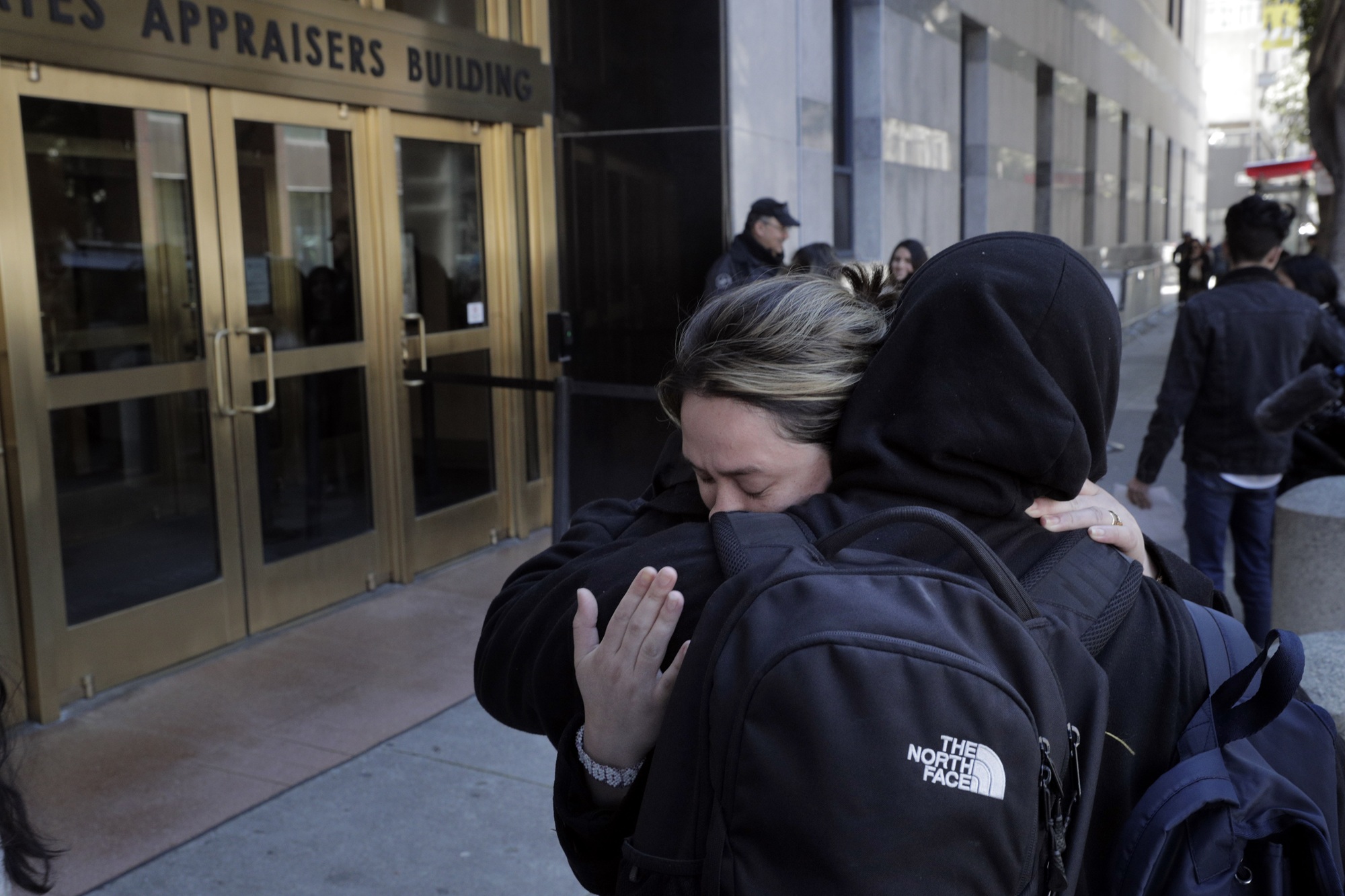
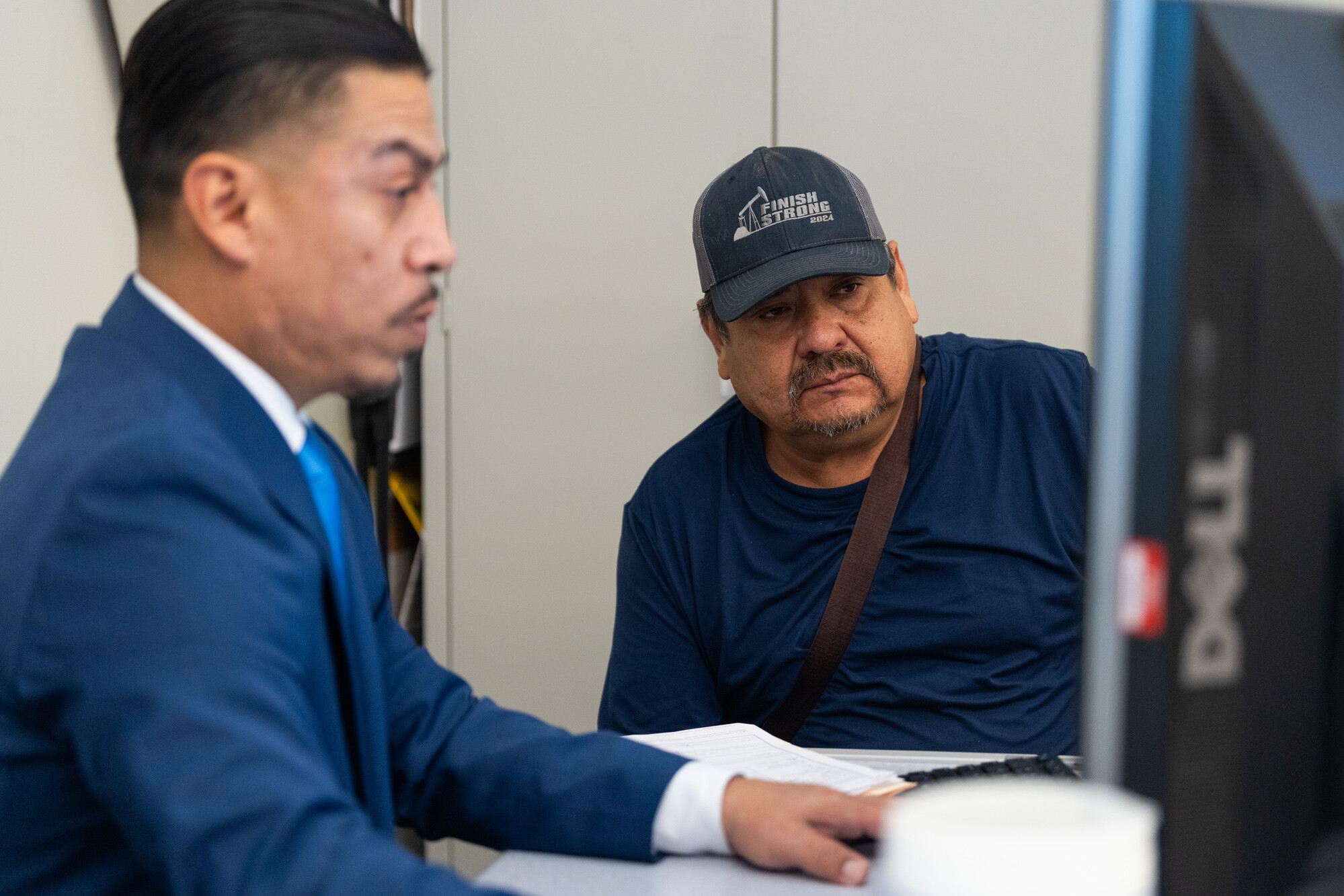
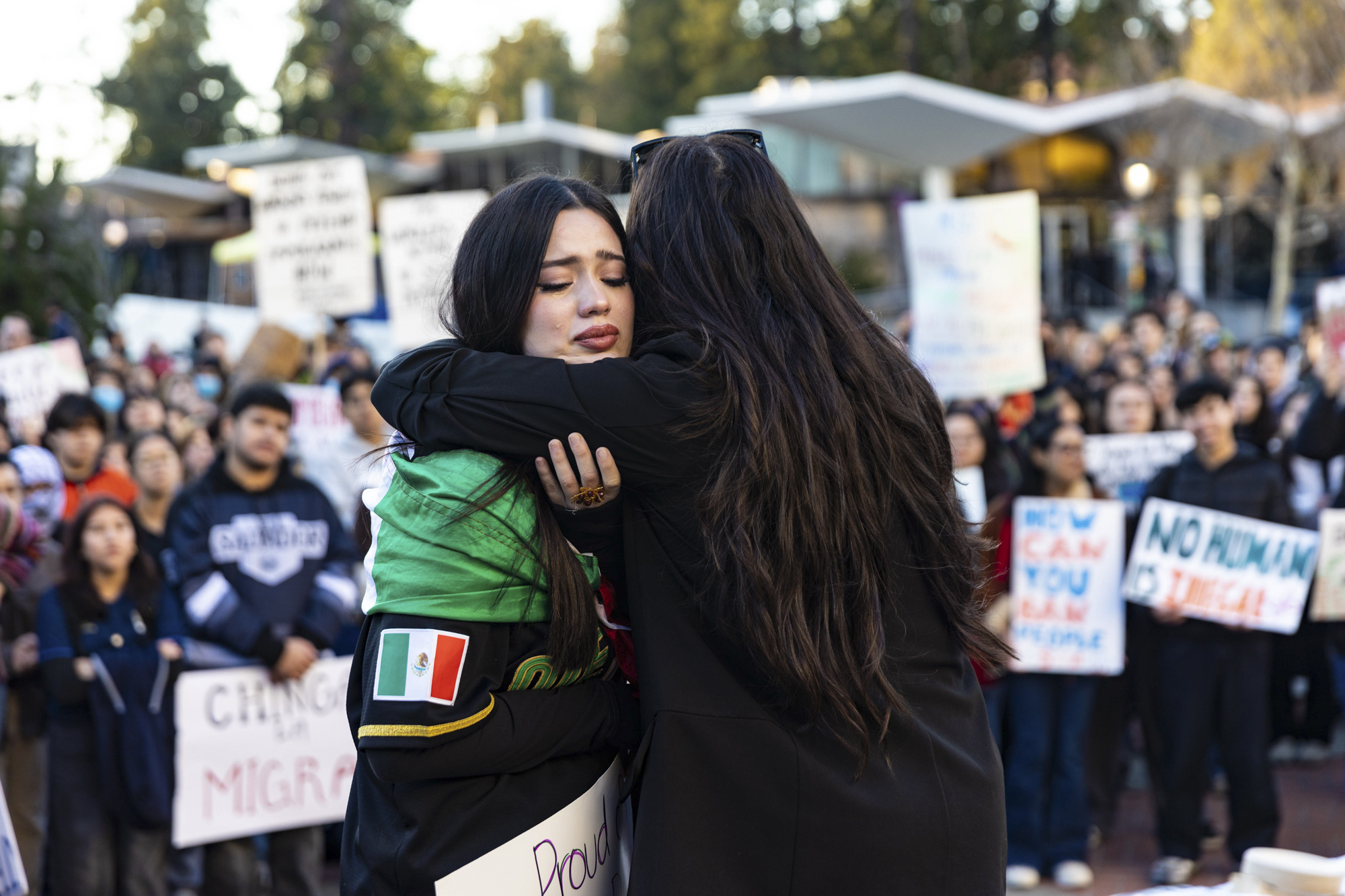
A Teenager, a Journalist and a Construction Worker Caught Up in Trump Immigration Crackdown
Here’s Why Avelo Airlines Is Ending California and West Coast Flights Amid Controversy
Nowhere to Go: Bay Area Afghans, Allies Condemn Trump’s End of Protections
SF Sues Trump Over Funding Freeze for Local Counterterrorism Efforts
Judge Rules Border Patrol Must Care for Migrant Children Waiting in Camps
Biden Task Force Reunifies Handful of Families Separated at US Border
Almost 19,000 Migrant Children Were Stopped at US Border in March, Most Ever in a Month
NPR Exclusive: Video Shows Controversial Use of Force Inside Adelanto ICE Detention Center
New Tally Totals Almost 5,500 Kids Taken From Parents at the Border
Sponsored
Player sponsored by
window.__IS_SSR__=true
window.__INITIAL_STATE__={
"attachmentsReducer": {
"audio_0": {
"type": "attachments",
"id": "audio_0",
"imgSizes": {
"kqedFullSize": {
"file": "https://ww2.kqed.org/news/wp-content/themes/KQED-unified/img/audio_bgs/background0.jpg"
}
}
},
"audio_1": {
"type": "attachments",
"id": "audio_1",
"imgSizes": {
"kqedFullSize": {
"file": "https://ww2.kqed.org/news/wp-content/themes/KQED-unified/img/audio_bgs/background1.jpg"
}
}
},
"audio_2": {
"type": "attachments",
"id": "audio_2",
"imgSizes": {
"kqedFullSize": {
"file": "https://ww2.kqed.org/news/wp-content/themes/KQED-unified/img/audio_bgs/background2.jpg"
}
}
},
"audio_3": {
"type": "attachments",
"id": "audio_3",
"imgSizes": {
"kqedFullSize": {
"file": "https://ww2.kqed.org/news/wp-content/themes/KQED-unified/img/audio_bgs/background3.jpg"
}
}
},
"audio_4": {
"type": "attachments",
"id": "audio_4",
"imgSizes": {
"kqedFullSize": {
"file": "https://ww2.kqed.org/news/wp-content/themes/KQED-unified/img/audio_bgs/background4.jpg"
}
}
},
"placeholder": {
"type": "attachments",
"id": "placeholder",
"imgSizes": {
"thumbnail": {
"file": "https://cdn.kqed.org/wp-content/uploads/2024/12/KQED-Default-Image-816638274-2000x1333-1-160x107.jpg",
"width": 160,
"height": 107,
"mimeType": "image/jpeg"
},
"medium": {
"file": "https://cdn.kqed.org/wp-content/uploads/2024/12/KQED-Default-Image-816638274-2000x1333-1-800x533.jpg",
"width": 800,
"height": 533,
"mimeType": "image/jpeg"
},
"medium_large": {
"file": "https://cdn.kqed.org/wp-content/uploads/2024/12/KQED-Default-Image-816638274-2000x1333-1-768x512.jpg",
"width": 768,
"height": 512,
"mimeType": "image/jpeg"
},
"large": {
"file": "https://cdn.kqed.org/wp-content/uploads/2024/12/KQED-Default-Image-816638274-2000x1333-1-1020x680.jpg",
"width": 1020,
"height": 680,
"mimeType": "image/jpeg"
},
"1536x1536": {
"file": "https://cdn.kqed.org/wp-content/uploads/2024/12/KQED-Default-Image-816638274-2000x1333-1-1536x1024.jpg",
"width": 1536,
"height": 1024,
"mimeType": "image/jpeg"
},
"fd-lrg": {
"file": "https://cdn.kqed.org/wp-content/uploads/2024/12/KQED-Default-Image-816638274-2000x1333-1-1536x1024.jpg",
"width": 1536,
"height": 1024,
"mimeType": "image/jpeg"
},
"fd-med": {
"file": "https://cdn.kqed.org/wp-content/uploads/2024/12/KQED-Default-Image-816638274-2000x1333-1-1020x680.jpg",
"width": 1020,
"height": 680,
"mimeType": "image/jpeg"
},
"fd-sm": {
"file": "https://cdn.kqed.org/wp-content/uploads/2024/12/KQED-Default-Image-816638274-2000x1333-1-800x533.jpg",
"width": 800,
"height": 533,
"mimeType": "image/jpeg"
},
"post-thumbnail": {
"file": "https://cdn.kqed.org/wp-content/uploads/2024/12/KQED-Default-Image-816638274-2000x1333-1-672x372.jpg",
"width": 672,
"height": 372,
"mimeType": "image/jpeg"
},
"twentyfourteen-full-width": {
"file": "https://cdn.kqed.org/wp-content/uploads/2024/12/KQED-Default-Image-816638274-2000x1333-1-1038x576.jpg",
"width": 1038,
"height": 576,
"mimeType": "image/jpeg"
},
"xxsmall": {
"file": "https://cdn.kqed.org/wp-content/uploads/2024/12/KQED-Default-Image-816638274-2000x1333-1-160x107.jpg",
"width": 160,
"height": 107,
"mimeType": "image/jpeg"
},
"xsmall": {
"file": "https://cdn.kqed.org/wp-content/uploads/2024/12/KQED-Default-Image-816638274-2000x1333-1-672x372.jpg",
"width": 672,
"height": 372,
"mimeType": "image/jpeg"
},
"small": {
"file": "https://cdn.kqed.org/wp-content/uploads/2024/12/KQED-Default-Image-816638274-2000x1333-1-672x372.jpg",
"width": 672,
"height": 372,
"mimeType": "image/jpeg"
},
"xlarge": {
"file": "https://cdn.kqed.org/wp-content/uploads/2024/12/KQED-Default-Image-816638274-2000x1333-1-1020x680.jpg",
"width": 1020,
"height": 680,
"mimeType": "image/jpeg"
},
"full-width": {
"file": "https://cdn.kqed.org/wp-content/uploads/2024/12/KQED-Default-Image-816638274-2000x1333-1-1920x1280.jpg",
"width": 1920,
"height": 1280,
"mimeType": "image/jpeg"
},
"guest-author-32": {
"file": "https://cdn.kqed.org/wp-content/uploads/2025/01/KQED-Default-Image-816638274-1333x1333-1-160x160.jpg",
"width": 32,
"height": 32,
"mimeType": "image/jpeg"
},
"guest-author-50": {
"file": "https://cdn.kqed.org/wp-content/uploads/2025/01/KQED-Default-Image-816638274-1333x1333-1-160x160.jpg",
"width": 50,
"height": 50,
"mimeType": "image/jpeg"
},
"guest-author-64": {
"file": "https://cdn.kqed.org/wp-content/uploads/2025/01/KQED-Default-Image-816638274-1333x1333-1-160x160.jpg",
"width": 64,
"height": 64,
"mimeType": "image/jpeg"
},
"guest-author-96": {
"file": "https://cdn.kqed.org/wp-content/uploads/2025/01/KQED-Default-Image-816638274-1333x1333-1-160x160.jpg",
"width": 96,
"height": 96,
"mimeType": "image/jpeg"
},
"guest-author-128": {
"file": "https://cdn.kqed.org/wp-content/uploads/2025/01/KQED-Default-Image-816638274-1333x1333-1-160x160.jpg",
"width": 128,
"height": 128,
"mimeType": "image/jpeg"
},
"detail": {
"file": "https://cdn.kqed.org/wp-content/uploads/2025/01/KQED-Default-Image-816638274-1333x1333-1-160x160.jpg",
"width": 160,
"height": 160,
"mimeType": "image/jpeg"
},
"kqedFullSize": {
"file": "https://cdn.kqed.org/wp-content/uploads/2024/12/KQED-Default-Image-816638274-2000x1333-1.jpg",
"width": 2000,
"height": 1333
}
}
},
"news_12044053": {
"type": "attachments",
"id": "news_12044053",
"meta": {
"index": "attachments_1716263798",
"site": "news",
"id": "12044053",
"found": true
},
"title": "E. in her home in Concord on June 12, 2025.",
"publishDate": 1749762989,
"status": "inherit",
"parent": 12046431,
"modified": 1751070658,
"caption": "E. in her home in Concord on June 12, 2025. The journalist is seeking asylum from persecution in Nicaragua and did not want to expose her name or face.",
"credit": "Martin do Nascimento/KQED",
"altTag": null,
"description": null,
"imgSizes": {
"thumbnail": {
"file": "https://cdn.kqed.org/wp-content/uploads/sites/10/2025/06/250612-NICARAGUAN-JOURNALIST-MD-03-KQED-160x107.jpg",
"width": 160,
"height": 107,
"mimeType": "image/jpeg"
},
"1536x1536": {
"file": "https://cdn.kqed.org/wp-content/uploads/sites/10/2025/06/250612-NICARAGUAN-JOURNALIST-MD-03-KQED-1536x1025.jpg",
"width": 1536,
"height": 1025,
"mimeType": "image/jpeg"
},
"post-thumbnail": {
"file": "https://cdn.kqed.org/wp-content/uploads/sites/10/2025/06/250612-NICARAGUAN-JOURNALIST-MD-03-KQED-672x372.jpg",
"width": 672,
"height": 372,
"mimeType": "image/jpeg"
},
"twentyfourteen-full-width": {
"file": "https://cdn.kqed.org/wp-content/uploads/sites/10/2025/06/250612-NICARAGUAN-JOURNALIST-MD-03-KQED-1038x576.jpg",
"width": 1038,
"height": 576,
"mimeType": "image/jpeg"
},
"kqedFullSize": {
"file": "https://cdn.kqed.org/wp-content/uploads/sites/10/2025/06/250612-NICARAGUAN-JOURNALIST-MD-03-KQED.jpg",
"width": 2000,
"height": 1334
}
},
"fetchFailed": false,
"isLoading": false
},
"news_12048392": {
"type": "attachments",
"id": "news_12048392",
"meta": {
"index": "attachments_1716263798",
"site": "news",
"id": "12048392",
"found": true
},
"title": "Wheels Up: Avelo Airlines Takes Flight",
"publishDate": 1752703394,
"status": "inherit",
"parent": 12048388,
"modified": 1752704632,
"caption": "Avelo Airlines takes off with its first flight between Burbank and Santa Rosa at Hollywood Burbank Airport on April 28, 2021, in Burbank, California. ",
"credit": "Joe Scarnici/Getty Images for Avelo Air",
"altTag": null,
"description": null,
"imgSizes": {
"thumbnail": {
"file": "https://cdn.kqed.org/wp-content/uploads/sites/10/2025/07/AveloAirlinesGetty-160x107.jpg",
"width": 160,
"height": 107,
"mimeType": "image/jpeg"
},
"1536x1536": {
"file": "https://cdn.kqed.org/wp-content/uploads/sites/10/2025/07/AveloAirlinesGetty-1536x1025.jpg",
"width": 1536,
"height": 1025,
"mimeType": "image/jpeg"
},
"post-thumbnail": {
"file": "https://cdn.kqed.org/wp-content/uploads/sites/10/2025/07/AveloAirlinesGetty-672x372.jpg",
"width": 672,
"height": 372,
"mimeType": "image/jpeg"
},
"twentyfourteen-full-width": {
"file": "https://cdn.kqed.org/wp-content/uploads/sites/10/2025/07/AveloAirlinesGetty-1038x576.jpg",
"width": 1038,
"height": 576,
"mimeType": "image/jpeg"
},
"kqedFullSize": {
"file": "https://cdn.kqed.org/wp-content/uploads/sites/10/2025/07/AveloAirlinesGetty.jpg",
"width": 2000,
"height": 1334
}
},
"fetchFailed": false,
"isLoading": false
},
"news_12040222": {
"type": "attachments",
"id": "news_12040222",
"meta": {
"index": "attachments_1716263798",
"site": "news",
"id": "12040222",
"found": true
},
"title": "20250514_AFGHANREFUGEESTPS_GC-1-KQED",
"publishDate": 1747265525,
"status": "inherit",
"parent": 0,
"modified": 1747265525,
"caption": "Fouzia Palyal Azizi, Director of Refugee Services at JFCS East Bay, poses for a portrait outside of her home, in Pleasant Hill, on May 14, 2025.",
"credit": null,
"altTag": null,
"description": null,
"imgSizes": {
"medium": {
"file": "https://cdn.kqed.org/wp-content/uploads/sites/10/2025/05/20250514_AFGHANREFUGEESTPS_GC-1-KQED-800x533.jpg",
"width": 800,
"height": 533,
"mimeType": "image/jpeg"
},
"large": {
"file": "https://cdn.kqed.org/wp-content/uploads/sites/10/2025/05/20250514_AFGHANREFUGEESTPS_GC-1-KQED-1020x680.jpg",
"width": 1020,
"height": 680,
"mimeType": "image/jpeg"
},
"thumbnail": {
"file": "https://cdn.kqed.org/wp-content/uploads/sites/10/2025/05/20250514_AFGHANREFUGEESTPS_GC-1-KQED-160x107.jpg",
"width": 160,
"height": 107,
"mimeType": "image/jpeg"
},
"1536x1536": {
"file": "https://cdn.kqed.org/wp-content/uploads/sites/10/2025/05/20250514_AFGHANREFUGEESTPS_GC-1-KQED-1536x1024.jpg",
"width": 1536,
"height": 1024,
"mimeType": "image/jpeg"
},
"post-thumbnail": {
"file": "https://cdn.kqed.org/wp-content/uploads/sites/10/2025/05/20250514_AFGHANREFUGEESTPS_GC-1-KQED-672x372.jpg",
"width": 672,
"height": 372,
"mimeType": "image/jpeg"
},
"twentyfourteen-full-width": {
"file": "https://cdn.kqed.org/wp-content/uploads/sites/10/2025/05/20250514_AFGHANREFUGEESTPS_GC-1-KQED-1038x576.jpg",
"width": 1038,
"height": 576,
"mimeType": "image/jpeg"
},
"full-width": {
"file": "https://cdn.kqed.org/wp-content/uploads/sites/10/2025/05/20250514_AFGHANREFUGEESTPS_GC-1-KQED-1920x1280.jpg",
"width": 1920,
"height": 1280,
"mimeType": "image/jpeg"
},
"kqedFullSize": {
"file": "https://cdn.kqed.org/wp-content/uploads/sites/10/2025/05/20250514_AFGHANREFUGEESTPS_GC-1-KQED.jpg",
"width": 2000,
"height": 1333
}
},
"fetchFailed": false,
"isLoading": false
},
"news_12000413": {
"type": "attachments",
"id": "news_12000413",
"meta": {
"index": "attachments_1716263798",
"site": "news",
"id": "12000413",
"found": true
},
"title": "240815-CITYATTORNEYDEEPFAKES-06-BL-KQED",
"publishDate": 1723748842,
"status": "inherit",
"parent": 12046379,
"modified": 1751062554,
"caption": "City Attorney David Chiu speaks during a press conference at City Hall in San Francisco on Aug. 15, 2024.",
"credit": "Beth LaBerge/KQED",
"altTag": null,
"description": null,
"imgSizes": {
"medium": {
"file": "https://cdn.kqed.org/wp-content/uploads/sites/10/2024/08/240815-CITYATTORNEYDEEPFAKES-06-BL-KQED-800x533.jpg",
"width": 800,
"height": 533,
"mimeType": "image/jpeg"
},
"large": {
"file": "https://cdn.kqed.org/wp-content/uploads/sites/10/2024/08/240815-CITYATTORNEYDEEPFAKES-06-BL-KQED-1020x680.jpg",
"width": 1020,
"height": 680,
"mimeType": "image/jpeg"
},
"thumbnail": {
"file": "https://cdn.kqed.org/wp-content/uploads/sites/10/2024/08/240815-CITYATTORNEYDEEPFAKES-06-BL-KQED-160x107.jpg",
"width": 160,
"height": 107,
"mimeType": "image/jpeg"
},
"1536x1536": {
"file": "https://cdn.kqed.org/wp-content/uploads/sites/10/2024/08/240815-CITYATTORNEYDEEPFAKES-06-BL-KQED-1536x1024.jpg",
"width": 1536,
"height": 1024,
"mimeType": "image/jpeg"
},
"post-thumbnail": {
"file": "https://cdn.kqed.org/wp-content/uploads/sites/10/2024/08/240815-CITYATTORNEYDEEPFAKES-06-BL-KQED-672x372.jpg",
"width": 672,
"height": 372,
"mimeType": "image/jpeg"
},
"twentyfourteen-full-width": {
"file": "https://cdn.kqed.org/wp-content/uploads/sites/10/2024/08/240815-CITYATTORNEYDEEPFAKES-06-BL-KQED-1038x576.jpg",
"width": 1038,
"height": 576,
"mimeType": "image/jpeg"
},
"full-width": {
"file": "https://cdn.kqed.org/wp-content/uploads/sites/10/2024/08/240815-CITYATTORNEYDEEPFAKES-06-BL-KQED-1920x1280.jpg",
"width": 1920,
"height": 1280,
"mimeType": "image/jpeg"
},
"kqedFullSize": {
"file": "https://cdn.kqed.org/wp-content/uploads/sites/10/2024/08/240815-CITYATTORNEYDEEPFAKES-06-BL-KQED.jpg",
"width": 2000,
"height": 1333
}
},
"fetchFailed": false,
"isLoading": false
},
"news_11982042": {
"type": "attachments",
"id": "news_11982042",
"meta": {
"index": "attachments_1716263798",
"site": "news",
"id": "11982042",
"found": true
},
"parent": 11982020,
"imgSizes": {
"twentyfourteen-full-width": {
"file": "https://cdn.kqed.org/wp-content/uploads/sites/10/2024/04/GettyImages-1858797323-1038x576.jpg",
"width": 1038,
"mimeType": "image/jpeg",
"height": 576
},
"thumbnail": {
"file": "https://cdn.kqed.org/wp-content/uploads/sites/10/2024/04/GettyImages-1858797323-160x107.jpg",
"width": 160,
"mimeType": "image/jpeg",
"height": 107
},
"post-thumbnail": {
"file": "https://cdn.kqed.org/wp-content/uploads/sites/10/2024/04/GettyImages-1858797323-672x372.jpg",
"width": 672,
"mimeType": "image/jpeg",
"height": 372
},
"kqedFullSize": {
"file": "https://cdn.kqed.org/wp-content/uploads/sites/10/2024/04/GettyImages-1858797323-scaled.jpg",
"width": 2560,
"height": 1708
},
"2048x2048": {
"file": "https://cdn.kqed.org/wp-content/uploads/sites/10/2024/04/GettyImages-1858797323-2048x1367.jpg",
"width": 2048,
"mimeType": "image/jpeg",
"height": 1367
},
"large": {
"file": "https://cdn.kqed.org/wp-content/uploads/sites/10/2024/04/GettyImages-1858797323-1020x681.jpg",
"width": 1020,
"mimeType": "image/jpeg",
"height": 681
},
"1536x1536": {
"file": "https://cdn.kqed.org/wp-content/uploads/sites/10/2024/04/GettyImages-1858797323-1536x1025.jpg",
"width": 1536,
"mimeType": "image/jpeg",
"height": 1025
},
"full-width": {
"file": "https://cdn.kqed.org/wp-content/uploads/sites/10/2024/04/GettyImages-1858797323-1920x1281.jpg",
"width": 1920,
"mimeType": "image/jpeg",
"height": 1281
},
"medium": {
"file": "https://cdn.kqed.org/wp-content/uploads/sites/10/2024/04/GettyImages-1858797323-800x534.jpg",
"width": 800,
"mimeType": "image/jpeg",
"height": 534
}
},
"publishDate": 1712348564,
"modified": 1712351566,
"caption": "Migrants wait at a makeshift camp in Jacumba Hot Springs, San Diego County, to be processed by the US Border Patrol after crossing from Mexico. ",
"description": null,
"title": "Migrants At The US-Mexico Border",
"credit": "Qian Weizhong/VCG via Getty Images",
"status": "inherit",
"altTag": "a little girl runs past trash in front of dilapidated tent in the desert, with more tents and trash in the background",
"fetchFailed": false,
"isLoading": false
},
"news_11872004": {
"type": "attachments",
"id": "news_11872004",
"meta": {
"index": "attachments_1716263798",
"site": "news",
"id": "11872004",
"found": true
},
"parent": 11872003,
"imgSizes": {
"twentyfourteen-full-width": {
"file": "https://ww2.kqed.org/app/uploads/sites/10/2021/05/ap21123159092833_wide-61079d044d9312bc2af3df1891be03a6fed3afa6-1038x576.jpg",
"width": 1038,
"mimeType": "image/jpeg",
"height": 576
},
"thumbnail": {
"file": "https://ww2.kqed.org/app/uploads/sites/10/2021/05/ap21123159092833_wide-61079d044d9312bc2af3df1891be03a6fed3afa6-160x90.jpg",
"width": 160,
"mimeType": "image/jpeg",
"height": 90
},
"post-thumbnail": {
"file": "https://ww2.kqed.org/app/uploads/sites/10/2021/05/ap21123159092833_wide-61079d044d9312bc2af3df1891be03a6fed3afa6-672x372.jpg",
"width": 672,
"mimeType": "image/jpeg",
"height": 372
},
"kqedFullSize": {
"file": "https://ww2.kqed.org/app/uploads/sites/10/2021/05/ap21123159092833_wide-61079d044d9312bc2af3df1891be03a6fed3afa6-scaled-e1620064719334.jpg",
"width": 1920,
"height": 1080
},
"2048x2048": {
"file": "https://ww2.kqed.org/app/uploads/sites/10/2021/05/ap21123159092833_wide-61079d044d9312bc2af3df1891be03a6fed3afa6-2048x1152.jpg",
"width": 2048,
"mimeType": "image/jpeg",
"height": 1152
},
"large": {
"file": "https://ww2.kqed.org/app/uploads/sites/10/2021/05/ap21123159092833_wide-61079d044d9312bc2af3df1891be03a6fed3afa6-1020x574.jpg",
"width": 1020,
"mimeType": "image/jpeg",
"height": 574
},
"1536x1536": {
"file": "https://ww2.kqed.org/app/uploads/sites/10/2021/05/ap21123159092833_wide-61079d044d9312bc2af3df1891be03a6fed3afa6-1536x864.jpg",
"width": 1536,
"mimeType": "image/jpeg",
"height": 864
},
"full-width": {
"file": "https://ww2.kqed.org/app/uploads/sites/10/2021/05/ap21123159092833_wide-61079d044d9312bc2af3df1891be03a6fed3afa6-1920x1080.jpg",
"width": 1920,
"mimeType": "image/jpeg",
"height": 1080
},
"medium": {
"file": "https://ww2.kqed.org/app/uploads/sites/10/2021/05/ap21123159092833_wide-61079d044d9312bc2af3df1891be03a6fed3afa6-800x450.jpg",
"width": 800,
"mimeType": "image/jpeg",
"height": 450
}
},
"publishDate": 1620062739,
"modified": 1620071552,
"caption": "Homeland Security Secretary Alejandro Mayorkas speaks during a news conference at the White House in Washington, D.C. The Biden administration says four families who were separated at the Mexico border during Donald Trump’s presidency would be reunited in the U.S during the first week of May, the first of what Mayorkas calls 'just the beginning' of a broader effort.",
"description": "FILE - In this March 1, 2021, file photo, Homeland Security Secretary Alejandro Mayorkas speaks during a news conference at the White House in Washington. The Biden administration says four families who were separated at the Mexico border during Donald Trump’s presidency would be reunited in the United States during the first week of May, the first of what Mayorkas calls “just the beginning” of a broader effort. (AP Photo/Andrew Harnik, File)",
"title": "Homeland Security Secretary Alejandro Mayorkas speaks during a March 1 news conference at the White House. The Biden administration says four families that were separated at the Mexico border during the Trump administration would be reunited in the U.S. during the first week of May. It's the first of what Mayorkas calls \"just the beginning\" of a broader effort.",
"credit": "AP Photo/Andrew Harnik, File",
"status": "inherit",
"altTag": null,
"fetchFailed": false,
"isLoading": false
},
"news_11868594": {
"type": "attachments",
"id": "news_11868594",
"meta": {
"index": "attachments_1716263798",
"site": "news",
"id": "11868594",
"found": true
},
"title": "The administration has struggled to house young migrants at Customs and Border Protection facilities like this one in Donna, Texas.",
"publishDate": 1617900415,
"status": "inherit",
"parent": 11868593,
"modified": 1617900981,
"caption": "Young migrants lie down inside a pod at a Department of Homeland Security holding facility in Donna, Texas, the main detention center for unaccompanied children in the Rio Grande Valley, on March 30, 2021. The minors are housed by the hundreds in eight pods that are about 3,200 square feet in size. Many of the pods have more than 500 children in them.",
"credit": "Dario Lopez-Mills/AP/Pool",
"altTag": null,
"description": null,
"imgSizes": {
"medium": {
"file": "https://cdn.kqed.org/wp-content/uploads/sites/10/2021/04/ap21089772775412-a8735e2cecb75d66dc4f6b59c06f7845a07e1342-800x600.jpg",
"width": 800,
"height": 600,
"mimeType": "image/jpeg"
},
"large": {
"file": "https://cdn.kqed.org/wp-content/uploads/sites/10/2021/04/ap21089772775412-a8735e2cecb75d66dc4f6b59c06f7845a07e1342-1020x765.jpg",
"width": 1020,
"height": 765,
"mimeType": "image/jpeg"
},
"thumbnail": {
"file": "https://cdn.kqed.org/wp-content/uploads/sites/10/2021/04/ap21089772775412-a8735e2cecb75d66dc4f6b59c06f7845a07e1342-160x120.jpg",
"width": 160,
"height": 120,
"mimeType": "image/jpeg"
},
"1536x1536": {
"file": "https://cdn.kqed.org/wp-content/uploads/sites/10/2021/04/ap21089772775412-a8735e2cecb75d66dc4f6b59c06f7845a07e1342-1536x1152.jpg",
"width": 1536,
"height": 1152,
"mimeType": "image/jpeg"
},
"2048x2048": {
"file": "https://cdn.kqed.org/wp-content/uploads/sites/10/2021/04/ap21089772775412-a8735e2cecb75d66dc4f6b59c06f7845a07e1342-2048x1536.jpg",
"width": 2048,
"height": 1536,
"mimeType": "image/jpeg"
},
"post-thumbnail": {
"file": "https://cdn.kqed.org/wp-content/uploads/sites/10/2021/04/ap21089772775412-a8735e2cecb75d66dc4f6b59c06f7845a07e1342-672x372.jpg",
"width": 672,
"height": 372,
"mimeType": "image/jpeg"
},
"twentyfourteen-full-width": {
"file": "https://cdn.kqed.org/wp-content/uploads/sites/10/2021/04/ap21089772775412-a8735e2cecb75d66dc4f6b59c06f7845a07e1342-1038x576.jpg",
"width": 1038,
"height": 576,
"mimeType": "image/jpeg"
},
"full-width": {
"file": "https://cdn.kqed.org/wp-content/uploads/sites/10/2021/04/ap21089772775412-a8735e2cecb75d66dc4f6b59c06f7845a07e1342-1920x1440.jpg",
"width": 1920,
"height": 1440,
"mimeType": "image/jpeg"
},
"kqedFullSize": {
"file": "https://cdn.kqed.org/wp-content/uploads/sites/10/2021/04/ap21089772775412-a8735e2cecb75d66dc4f6b59c06f7845a07e1342-scaled-e1760642201475.jpg",
"width": 2000,
"height": 1500
}
},
"fetchFailed": false,
"isLoading": false
},
"news_11800395": {
"type": "attachments",
"id": "news_11800395",
"meta": {
"index": "attachments_1716263798",
"site": "news",
"id": "11800395",
"found": true
},
"parent": 11800394,
"imgSizes": {
"apple_news_ca_landscape_5_5": {
"file": "https://ww2.kqed.org/app/uploads/sites/10/2020/02/alex-burgos-mejia_007_custom-de2dd91d2e7f30909b357cbecb33d6df780d81e5-1044x783.jpg",
"width": 1044,
"mimeType": "image/jpeg",
"height": 783
},
"apple_news_ca_square_4_0": {
"file": "https://ww2.kqed.org/app/uploads/sites/10/2020/02/alex-burgos-mejia_007_custom-de2dd91d2e7f30909b357cbecb33d6df780d81e5-470x470.jpg",
"width": 470,
"mimeType": "image/jpeg",
"height": 470
},
"twentyfourteen-full-width": {
"file": "https://ww2.kqed.org/app/uploads/sites/10/2020/02/alex-burgos-mejia_007_custom-de2dd91d2e7f30909b357cbecb33d6df780d81e5-1038x576.jpg",
"width": 1038,
"mimeType": "image/jpeg",
"height": 576
},
"thumbnail": {
"file": "https://ww2.kqed.org/app/uploads/sites/10/2020/02/alex-burgos-mejia_007_custom-de2dd91d2e7f30909b357cbecb33d6df780d81e5-160x110.jpg",
"width": 160,
"mimeType": "image/jpeg",
"height": 110
},
"post-thumbnail": {
"file": "https://ww2.kqed.org/app/uploads/sites/10/2020/02/alex-burgos-mejia_007_custom-de2dd91d2e7f30909b357cbecb33d6df780d81e5-672x372.jpg",
"width": 672,
"mimeType": "image/jpeg",
"height": 372
},
"kqedFullSize": {
"file": "https://ww2.kqed.org/app/uploads/sites/10/2020/02/alex-burgos-mejia_007_custom-de2dd91d2e7f30909b357cbecb33d6df780d81e5-e1581015882231.jpg",
"width": 1920,
"height": 1317
},
"apple_news_ca_landscape_4_7": {
"file": "https://ww2.kqed.org/app/uploads/sites/10/2020/02/alex-burgos-mejia_007_custom-de2dd91d2e7f30909b357cbecb33d6df780d81e5-632x474.jpg",
"width": 632,
"mimeType": "image/jpeg",
"height": 474
},
"large": {
"file": "https://ww2.kqed.org/app/uploads/sites/10/2020/02/alex-burgos-mejia_007_custom-de2dd91d2e7f30909b357cbecb33d6df780d81e5-1020x699.jpg",
"width": 1020,
"mimeType": "image/jpeg",
"height": 699
},
"apple_news_ca_landscape_4_0": {
"file": "https://ww2.kqed.org/app/uploads/sites/10/2020/02/alex-burgos-mejia_007_custom-de2dd91d2e7f30909b357cbecb33d6df780d81e5-536x402.jpg",
"width": 536,
"mimeType": "image/jpeg",
"height": 402
},
"apple_news_ca_portrait_12_9": {
"file": "https://ww2.kqed.org/app/uploads/sites/10/2020/02/alex-burgos-mejia_007_custom-de2dd91d2e7f30909b357cbecb33d6df780d81e5-1122x1496.jpg",
"width": 1122,
"mimeType": "image/jpeg",
"height": 1496
},
"medium": {
"file": "https://ww2.kqed.org/app/uploads/sites/10/2020/02/alex-burgos-mejia_007_custom-de2dd91d2e7f30909b357cbecb33d6df780d81e5-800x549.jpg",
"width": 800,
"mimeType": "image/jpeg",
"height": 549
},
"apple_news_ca_portrait_4_0": {
"file": "https://ww2.kqed.org/app/uploads/sites/10/2020/02/alex-burgos-mejia_007_custom-de2dd91d2e7f30909b357cbecb33d6df780d81e5-354x472.jpg",
"width": 354,
"mimeType": "image/jpeg",
"height": 472
},
"apple_news_ca_portrait_9_7": {
"file": "https://ww2.kqed.org/app/uploads/sites/10/2020/02/alex-burgos-mejia_007_custom-de2dd91d2e7f30909b357cbecb33d6df780d81e5-840x1120.jpg",
"width": 840,
"mimeType": "image/jpeg",
"height": 1120
},
"apple_news_ca_landscape_12_9": {
"file": "https://ww2.kqed.org/app/uploads/sites/10/2020/02/alex-burgos-mejia_007_custom-de2dd91d2e7f30909b357cbecb33d6df780d81e5-1832x1374.jpg",
"width": 1832,
"mimeType": "image/jpeg",
"height": 1374
},
"apple_news_ca_square_9_7": {
"file": "https://ww2.kqed.org/app/uploads/sites/10/2020/02/alex-burgos-mejia_007_custom-de2dd91d2e7f30909b357cbecb33d6df780d81e5-1104x1104.jpg",
"width": 1104,
"mimeType": "image/jpeg",
"height": 1104
},
"apple_news_ca_portrait_4_7": {
"file": "https://ww2.kqed.org/app/uploads/sites/10/2020/02/alex-burgos-mejia_007_custom-de2dd91d2e7f30909b357cbecb33d6df780d81e5-414x552.jpg",
"width": 414,
"mimeType": "image/jpeg",
"height": 552
},
"apple_news_ca_square_12_9": {
"file": "https://ww2.kqed.org/app/uploads/sites/10/2020/02/alex-burgos-mejia_007_custom-de2dd91d2e7f30909b357cbecb33d6df780d81e5-1472x1472.jpg",
"width": 1472,
"mimeType": "image/jpeg",
"height": 1472
},
"apple_news_ca_portrait_5_5": {
"file": "https://ww2.kqed.org/app/uploads/sites/10/2020/02/alex-burgos-mejia_007_custom-de2dd91d2e7f30909b357cbecb33d6df780d81e5-687x916.jpg",
"width": 687,
"mimeType": "image/jpeg",
"height": 916
},
"full-width": {
"file": "https://ww2.kqed.org/app/uploads/sites/10/2020/02/alex-burgos-mejia_007_custom-de2dd91d2e7f30909b357cbecb33d6df780d81e5-1920x1317.jpg",
"width": 1920,
"mimeType": "image/jpeg",
"height": 1317
},
"apple_news_ca_square_4_7": {
"file": "https://ww2.kqed.org/app/uploads/sites/10/2020/02/alex-burgos-mejia_007_custom-de2dd91d2e7f30909b357cbecb33d6df780d81e5-550x550.jpg",
"width": 550,
"mimeType": "image/jpeg",
"height": 550
},
"apple_news_ca_landscape_9_7": {
"file": "https://ww2.kqed.org/app/uploads/sites/10/2020/02/alex-burgos-mejia_007_custom-de2dd91d2e7f30909b357cbecb33d6df780d81e5-1376x1032.jpg",
"width": 1376,
"mimeType": "image/jpeg",
"height": 1032
},
"apple_news_ca_square_5_5": {
"file": "https://ww2.kqed.org/app/uploads/sites/10/2020/02/alex-burgos-mejia_007_custom-de2dd91d2e7f30909b357cbecb33d6df780d81e5-912x912.jpg",
"width": 912,
"mimeType": "image/jpeg",
"height": 912
}
},
"publishDate": 1581012129,
"modified": 1581016156,
"caption": "Alexander Antonio Burgos Mejia was detained at the Adelanto ICE Processing Center in 2017, when he went on a hunger strike to protest conditions at the facility. He said he and the other detainees suffered burns and other injuries, after GEO Group staff used pepper spray. \"I will never forget seeing the faces of my friends, seeing them crying,\" he said.",
"description": "Alexander Antonio Burgos Mejia was detained at the Adelanto ICE Processing Center in 2017, when he went on a hunger strike to protest conditions at the facility. He said he and the other detainees suffered burns and other injuries, after GEO Group staff used pepper spray. \"I will never forget seeing the faces of my friends, seeing them crying,\" he said.",
"title": "Alexander Antonio Burgos Mejia was detained at the Adelanto ICE Processing Center in 2017, when he went on a hunger strike to protest conditions at the facility. He said he and the other detainees suffered burns and other injuries, after GEO Group staff used pepper spray. \"I will never forget seeing the faces of my friends, seeing them crying,\" he said.",
"credit": "Jessica Pons/NPR",
"status": "inherit",
"fetchFailed": false,
"isLoading": false
},
"news_11782817": {
"type": "attachments",
"id": "news_11782817",
"meta": {
"index": "attachments_1716263798",
"site": "news",
"id": "11782817",
"found": true
},
"parent": 11782685,
"imgSizes": {
"apple_news_ca_landscape_5_5": {
"file": "https://ww2.kqed.org/app/uploads/sites/10/2019/10/RS35002_Sindy_Ortiz_Flores_reunion_013019-qut-1044x783.jpg",
"width": 1044,
"mimeType": "image/jpeg",
"height": 783
},
"apple_news_ca_square_4_0": {
"file": "https://ww2.kqed.org/app/uploads/sites/10/2019/10/RS35002_Sindy_Ortiz_Flores_reunion_013019-qut-470x470.jpg",
"width": 470,
"mimeType": "image/jpeg",
"height": 470
},
"twentyfourteen-full-width": {
"file": "https://ww2.kqed.org/app/uploads/sites/10/2019/10/RS35002_Sindy_Ortiz_Flores_reunion_013019-qut-1038x576.jpg",
"width": 1038,
"mimeType": "image/jpeg",
"height": 576
},
"thumbnail": {
"file": "https://ww2.kqed.org/app/uploads/sites/10/2019/10/RS35002_Sindy_Ortiz_Flores_reunion_013019-qut-160x120.jpg",
"width": 160,
"mimeType": "image/jpeg",
"height": 120
},
"post-thumbnail": {
"file": "https://ww2.kqed.org/app/uploads/sites/10/2019/10/RS35002_Sindy_Ortiz_Flores_reunion_013019-qut-672x372.jpg",
"width": 672,
"mimeType": "image/jpeg",
"height": 372
},
"kqedFullSize": {
"file": "https://ww2.kqed.org/app/uploads/sites/10/2019/10/RS35002_Sindy_Ortiz_Flores_reunion_013019-qut.jpg",
"width": 1290,
"height": 968
},
"apple_news_ca_landscape_4_7": {
"file": "https://ww2.kqed.org/app/uploads/sites/10/2019/10/RS35002_Sindy_Ortiz_Flores_reunion_013019-qut-632x474.jpg",
"width": 632,
"mimeType": "image/jpeg",
"height": 474
},
"large": {
"file": "https://ww2.kqed.org/app/uploads/sites/10/2019/10/RS35002_Sindy_Ortiz_Flores_reunion_013019-qut-1020x765.jpg",
"width": 1020,
"mimeType": "image/jpeg",
"height": 765
},
"complete_open_graph": {
"file": "https://ww2.kqed.org/app/uploads/sites/10/2019/10/RS35002_Sindy_Ortiz_Flores_reunion_013019-qut-1200x900.jpg",
"width": 1200,
"mimeType": "image/jpeg",
"height": 900
},
"apple_news_ca_landscape_4_0": {
"file": "https://ww2.kqed.org/app/uploads/sites/10/2019/10/RS35002_Sindy_Ortiz_Flores_reunion_013019-qut-536x402.jpg",
"width": 536,
"mimeType": "image/jpeg",
"height": 402
},
"apple_news_ca_portrait_12_9": {
"file": "https://ww2.kqed.org/app/uploads/sites/10/2019/10/RS35002_Sindy_Ortiz_Flores_reunion_013019-qut-1122x968.jpg",
"width": 1122,
"mimeType": "image/jpeg",
"height": 968
},
"medium": {
"file": "https://ww2.kqed.org/app/uploads/sites/10/2019/10/RS35002_Sindy_Ortiz_Flores_reunion_013019-qut-800x600.jpg",
"width": 800,
"mimeType": "image/jpeg",
"height": 600
},
"apple_news_ca_portrait_4_0": {
"file": "https://ww2.kqed.org/app/uploads/sites/10/2019/10/RS35002_Sindy_Ortiz_Flores_reunion_013019-qut-354x472.jpg",
"width": 354,
"mimeType": "image/jpeg",
"height": 472
},
"apple_news_ca_portrait_9_7": {
"file": "https://ww2.kqed.org/app/uploads/sites/10/2019/10/RS35002_Sindy_Ortiz_Flores_reunion_013019-qut-840x968.jpg",
"width": 840,
"mimeType": "image/jpeg",
"height": 968
},
"apple_news_ca_square_9_7": {
"file": "https://ww2.kqed.org/app/uploads/sites/10/2019/10/RS35002_Sindy_Ortiz_Flores_reunion_013019-qut-1104x968.jpg",
"width": 1104,
"mimeType": "image/jpeg",
"height": 968
},
"apple_news_ca_portrait_4_7": {
"file": "https://ww2.kqed.org/app/uploads/sites/10/2019/10/RS35002_Sindy_Ortiz_Flores_reunion_013019-qut-414x552.jpg",
"width": 414,
"mimeType": "image/jpeg",
"height": 552
},
"apple_news_ca_portrait_5_5": {
"file": "https://ww2.kqed.org/app/uploads/sites/10/2019/10/RS35002_Sindy_Ortiz_Flores_reunion_013019-qut-687x916.jpg",
"width": 687,
"mimeType": "image/jpeg",
"height": 916
},
"apple_news_ca_square_4_7": {
"file": "https://ww2.kqed.org/app/uploads/sites/10/2019/10/RS35002_Sindy_Ortiz_Flores_reunion_013019-qut-550x550.jpg",
"width": 550,
"mimeType": "image/jpeg",
"height": 550
},
"apple_news_ca_square_5_5": {
"file": "https://ww2.kqed.org/app/uploads/sites/10/2019/10/RS35002_Sindy_Ortiz_Flores_reunion_013019-qut-912x912.jpg",
"width": 912,
"mimeType": "image/jpeg",
"height": 912
}
},
"publishDate": 1572030901,
"modified": 1572039870,
"caption": "Sindy Ortiz Flores hugs her toddler for the first time in more than a month at San Francisco International Airport on Jan. 29, 2019, as cameras surround them. The baby, Grethshell Juliet, spent a month under government custody, after immigration authorities separated her from her father at the border.",
"description": null,
"title": "RS35002_Sindy_Ortiz_Flores_reunion_013019-qut",
"credit": "Farida Jhabvala Romero/KQED",
"status": "inherit",
"fetchFailed": false,
"isLoading": false
}
},
"audioPlayerReducer": {
"postId": "stream_live",
"isPaused": true,
"isPlaying": false,
"pfsActive": false,
"pledgeModalIsOpen": true,
"playerDrawerIsOpen": false
},
"authorsReducer": {
"byline_news_11872003": {
"type": "authors",
"id": "byline_news_11872003",
"meta": {
"override": true
},
"slug": "byline_news_11872003",
"name": "Joel Rose",
"isLoading": false
},
"byline_news_11868593": {
"type": "authors",
"id": "byline_news_11868593",
"meta": {
"override": true
},
"slug": "byline_news_11868593",
"name": "Franco Ordoñez",
"isLoading": false
},
"byline_news_11800394": {
"type": "authors",
"id": "byline_news_11800394",
"meta": {
"override": true
},
"slug": "byline_news_11800394",
"name": "\u003ca href=\"https://www.npr.org/people/349305392/tom-dreisbach\"> Tom Dreisbach \u003ca />",
"isLoading": false
},
"kqed": {
"type": "authors",
"id": "236",
"meta": {
"index": "authors_1716337520",
"id": "236",
"found": true
},
"name": "KQED News Staff",
"firstName": "KQED News Staff",
"lastName": null,
"slug": "kqed",
"email": "faq@kqed.org",
"display_author_email": false,
"staff_mastheads": [],
"title": null,
"bio": null,
"avatar": "https://secure.gravatar.com/avatar/ef0e801a68c4c54afa9180db14084167?s=600&d=blank&r=g",
"twitter": null,
"facebook": null,
"instagram": null,
"linkedin": null,
"sites": [
{
"site": "arts",
"roles": [
"contributor"
]
},
{
"site": "news",
"roles": [
"editor"
]
},
{
"site": "futureofyou",
"roles": [
"author"
]
}
],
"headData": {
"title": "KQED News Staff | KQED",
"description": null,
"ogImgSrc": "https://secure.gravatar.com/avatar/ef0e801a68c4c54afa9180db14084167?s=600&d=blank&r=g",
"twImgSrc": "https://secure.gravatar.com/avatar/ef0e801a68c4c54afa9180db14084167?s=600&d=blank&r=g"
},
"isLoading": false,
"link": "/author/kqed"
},
"rachael-myrow": {
"type": "authors",
"id": "251",
"meta": {
"index": "authors_1716337520",
"id": "251",
"found": true
},
"name": "Rachael Myrow",
"firstName": "Rachael",
"lastName": "Myrow",
"slug": "rachael-myrow",
"email": "rmyrow@kqed.org",
"display_author_email": false,
"staff_mastheads": [
"news"
],
"title": "Senior Editor of KQED's Silicon Valley News Desk",
"bio": "Rachael Myrow is Senior Editor of KQED's Silicon Valley News Desk, reporting on topics like \u003ca href=\"https://www.kqed.org/news/12023367/what-big-tech-sees-in-donald-trump\">what Big Tech sees in President Trump\u003c/a>, \u003ca href=\"https://www.kqed.org/news/12020857/california-lawmaker-ready-revive-fight-regulating-ai\">California's many, many AI bills\u003c/a>, and the \u003ca href=\"https://www.kqed.org/news/12017713/lost-sounds-of-san-francisco\">lost sounds of San Francisco\u003c/a>. You can hear her work on \u003ca href=\"https://www.npr.org/search?query=Rachael%20Myrow&page=1\">NPR\u003c/a>, \u003ca href=\"https://theworld.org/people/rachael-myrow\">The World\u003c/a>, WBUR's \u003ca href=\"https://www.wbur.org/search?q=Rachael%20Myrow\">\u003ci>Here & Now\u003c/i>\u003c/a> and the BBC. \u003c/i>She also guest hosts for KQED's \u003ci>\u003ca href=\"https://www.kqed.org/forum/tag/rachael-myrow\">Forum\u003c/a>\u003c/i>. Over the years, she's talked with Kamau Bell, David Byrne, Kamala Harris, Tony Kushner, Armistead Maupin, Van Dyke Parks, Arnold Schwarzenegger and Tommie Smith, among others.\r\n\r\nBefore all this, she hosted \u003cem>The California Report\u003c/em> for 7+ years.\r\n\r\nAwards? Sure: Peabody, Edward R. Murrow, Regional Edward R. Murrow, RTNDA, Northern California RTNDA, SPJ Northern California Chapter, LA Press Club, Golden Mic. Prior to joining KQED, Rachael worked in Los Angeles at KPCC and Marketplace. She holds degrees in English and journalism from UC Berkeley (where she got her start in public radio on KALX-FM).\r\n\r\nOutside of the studio, you'll find Rachael hiking Bay Area trails and whipping up Instagram-ready meals in her kitchen. More recently, she's taken up native-forward gardening.",
"avatar": "https://secure.gravatar.com/avatar/87bf8cb5874e045cdff430523a6d48b1?s=600&d=blank&r=g",
"twitter": "rachaelmyrow",
"facebook": null,
"instagram": null,
"linkedin": "https://www.linkedin.com/in/rachaelmyrow/",
"sites": [
{
"site": "arts",
"roles": [
"administrator"
]
},
{
"site": "news",
"roles": [
"edit_others_posts",
"editor"
]
},
{
"site": "futureofyou",
"roles": [
"editor"
]
},
{
"site": "bayareabites",
"roles": [
"editor"
]
},
{
"site": "stateofhealth",
"roles": [
"editor"
]
},
{
"site": "science",
"roles": [
"editor"
]
},
{
"site": "food",
"roles": [
"editor"
]
},
{
"site": "forum",
"roles": [
"editor"
]
},
{
"site": "liveblog",
"roles": [
"author"
]
}
],
"headData": {
"title": "Rachael Myrow | KQED",
"description": "Senior Editor of KQED's Silicon Valley News Desk",
"ogImgSrc": "https://secure.gravatar.com/avatar/87bf8cb5874e045cdff430523a6d48b1?s=600&d=blank&r=g",
"twImgSrc": "https://secure.gravatar.com/avatar/87bf8cb5874e045cdff430523a6d48b1?s=600&d=blank&r=g"
},
"isLoading": false,
"link": "/author/rachael-myrow"
},
"tychehendricks": {
"type": "authors",
"id": "259",
"meta": {
"index": "authors_1716337520",
"id": "259",
"found": true
},
"name": "Tyche Hendricks",
"firstName": "Tyche",
"lastName": "Hendricks",
"slug": "tychehendricks",
"email": "thendricks@kqed.org",
"display_author_email": true,
"staff_mastheads": [
"news"
],
"title": "KQED Senior Editor, Immigration",
"bio": "\u003cspan style=\"font-weight: 400;\">Tyche Hendricks is KQED’s senior editor for immigration, leading coverage of the policy and politics that affect California’s immigrant communities. Her work for KQED’s radio and online audiences is also carried on NPR and other national outlets. She has been recognized with awards from the Radio and Television News Directors Association, the Society for Professional Journalists; the Education Writers Association; the Best of the West and the National Federation of Community Broadcasters. Before joining KQED in 2010, Tyche spent more than a dozen years as a newspaper reporter, notably at the \u003c/span>\u003ci>\u003cspan style=\"font-weight: 400;\">San Francisco Chronicle\u003c/span>\u003c/i>\u003cspan style=\"font-weight: 400;\">. At different times she has covered criminal justice, government and politics and urban planning. Tyche has taught in the MFA Creative Writing program at the University of San Francisco and at UC Berkeley’s Graduate School of Journalism, where she was co-director of a national immigration symposium for professional journalists. She is the author of \u003c/span>\u003ci>\u003cspan style=\"font-weight: 400;\">The Wind Doesn't Need a Passport: Stories from the U.S.-Mexico Borderlands\u003c/span>\u003c/i>\u003cspan style=\"font-weight: 400;\"> (University of California Press). \u003c/span>",
"avatar": "https://secure.gravatar.com/avatar/b8ee458e2731c2d43df86882ce17267e?s=600&d=blank&r=g",
"twitter": "tychehendricks",
"facebook": null,
"instagram": null,
"linkedin": null,
"sites": [
{
"site": "news",
"roles": [
"editor"
]
},
{
"site": "stateofhealth",
"roles": [
"editor"
]
}
],
"headData": {
"title": "Tyche Hendricks | KQED",
"description": "KQED Senior Editor, Immigration",
"ogImgSrc": "https://secure.gravatar.com/avatar/b8ee458e2731c2d43df86882ce17267e?s=600&d=blank&r=g",
"twImgSrc": "https://secure.gravatar.com/avatar/b8ee458e2731c2d43df86882ce17267e?s=600&d=blank&r=g"
},
"isLoading": false,
"link": "/author/tychehendricks"
},
"kdebenedetti": {
"type": "authors",
"id": "11913",
"meta": {
"index": "authors_1716337520",
"id": "11913",
"found": true
},
"name": "Katie DeBenedetti",
"firstName": "Katie",
"lastName": "DeBenedetti",
"slug": "kdebenedetti",
"email": "kdebenedetti@kqed.org",
"display_author_email": false,
"staff_mastheads": [
"news",
"science"
],
"title": "KQED Contributor",
"bio": "Katie DeBenedetti is a digital reporter covering daily news for the Express Desk. Prior to joining KQED as a culture reporting intern in January 2024, she covered education and city government for the Napa Valley Register.",
"avatar": "https://secure.gravatar.com/avatar/6e31073cb8f7e4214ab03f42771d0f45?s=600&d=blank&r=g",
"twitter": null,
"facebook": null,
"instagram": null,
"linkedin": null,
"sites": [
{
"site": "news",
"roles": [
"author"
]
},
{
"site": "science",
"roles": [
"author"
]
},
{
"site": "liveblog",
"roles": [
"author"
]
}
],
"headData": {
"title": "Katie DeBenedetti | KQED",
"description": "KQED Contributor",
"ogImgSrc": "https://secure.gravatar.com/avatar/6e31073cb8f7e4214ab03f42771d0f45?s=600&d=blank&r=g",
"twImgSrc": "https://secure.gravatar.com/avatar/6e31073cb8f7e4214ab03f42771d0f45?s=600&d=blank&r=g"
},
"isLoading": false,
"link": "/author/kdebenedetti"
},
"slim": {
"type": "authors",
"id": "11920",
"meta": {
"index": "authors_1716337520",
"id": "11920",
"found": true
},
"name": "Samantha Lim",
"firstName": "Samantha",
"lastName": "Lim",
"slug": "slim",
"email": "slim@KQED.org",
"display_author_email": false,
"staff_mastheads": [],
"title": "KQED Contributor",
"bio": null,
"avatar": "https://secure.gravatar.com/avatar/82e592e6c15fe1a04d385e8ad0fb0b4e?s=600&d=blank&r=g",
"twitter": null,
"facebook": null,
"instagram": null,
"linkedin": null,
"sites": [
{
"site": "news",
"roles": []
}
],
"headData": {
"title": "Samantha Lim | KQED",
"description": "KQED Contributor",
"ogImgSrc": "https://secure.gravatar.com/avatar/82e592e6c15fe1a04d385e8ad0fb0b4e?s=600&d=blank&r=g",
"twImgSrc": "https://secure.gravatar.com/avatar/82e592e6c15fe1a04d385e8ad0fb0b4e?s=600&d=blank&r=g"
},
"isLoading": false,
"link": "/author/slim"
}
},
"breakingNewsReducer": {},
"pagesReducer": {},
"postsReducer": {
"stream_live": {
"type": "live",
"id": "stream_live",
"audioUrl": "https://streams.kqed.org/kqedradio",
"title": "Live Stream",
"excerpt": "Live Stream information currently unavailable.",
"link": "/radio",
"featImg": "",
"label": {
"name": "KQED Live",
"link": "/"
}
},
"stream_kqedNewscast": {
"type": "posts",
"id": "stream_kqedNewscast",
"audioUrl": "https://www.kqed.org/.stream/anon/radio/RDnews/newscast.mp3?_=1",
"title": "KQED Newscast",
"featImg": "",
"label": {
"name": "88.5 FM",
"link": "/"
}
},
"news_12052854": {
"type": "posts",
"id": "news_12052854",
"meta": {
"index": "posts_1716263798",
"site": "news",
"id": "12052854",
"score": null,
"sort": [
1755889253000
]
},
"guestAuthors": [],
"slug": "a-teenager-a-journalist-and-a-construction-worker-caught-up-in-trump-immigration-crackdown",
"title": "A Teenager, a Journalist and a Construction Worker Caught Up in Trump Immigration Crackdown",
"publishDate": 1755889253,
"format": "standard",
"headTitle": "A Teenager, a Journalist and a Construction Worker Caught Up in Trump Immigration Crackdown | KQED",
"labelTerm": {},
"content": "\u003cp>\u003cem>\u003ca href=\"http://itunes.apple.com/us/podcast/the-california-report-magazine/id1314750545?mt=2\" target=\"_blank\" rel=\"noopener noreferrer\">Listen to this and more in-depth storytelling by subscribing to The California Report Magazine podcast.\u003c/a>\u003c/em>\u003c/p>\n\u003cdiv class=\"routes-Site-routes-Post-SinglePost-__SinglePost__mpost_Title\">\n\u003ch2>\u003cb>\u003ca href=\"https://www.kqed.org/news/12053380/as-ice-arrests-surge-a-journalist-in-southern-california-covers-raids-in-her-own-backyard\">Meet an Independent Journalist Covering Immigration Raids In Her Own Community\u003c/a> \u003c/b>\u003c/h2>\n\u003cp>Earlier this summer, 17-year-old Kevin Robles was in his friend’s car driving through their neighborhood in Oceanside when he noticed vehicles with tinted windows and masked men taking someone out of a car. He started live streaming on Instagram and it went viral. But then a little over a week later, agents with Homeland Security Investigations showed up at his family’s home, smashing windows and tossing flash grenades, taking both of his parents into custody. Aisha Wallace Palomares was one of the first journalists to talk to Kevin Robles about what happened. She is an independent reporter who’s covering ICE raids in her hometown of Escondido, and other places around San Diego. She spoke with host Sasha Khokha about covering these raids in her community as an independent journalist. \u003c/p>\n\u003ch2>\u003ca href=\"https://www.kqed.org/news/12046431/journalists-fleeing-authoritarian-regimes-now-at-risk-as-trump-ends-parole-program\">\u003cb>Journalists Fleeing Authoritarian Regimes Now at Risk, as Trump Ends Parole Program\u003c/b>\u003cspan style=\"font-weight: 400\">\u003cbr>\n\u003c/span>\u003c/a>\u003c/h2>\n\u003cp>\u003cspan style=\"font-weight: 400\">President Trump is ending a Biden-era humanitarian program that let people from some unstable or authoritarian countries come to the United States legally. Half a million people who’ve had legal protections through that program could now be deported. One of them is a journalist who fled Nicaragua and ended up in the Bay Area. KQED’s Immigration Editor Tyche Hendricks brings us her story.\u003c/span>\u003c/p>\n\u003ch2>\u003cb>\u003c/b>\u003ca href=\"https://www.kcrw.com/news/shows/kcrw-features/tps-ice\">\u003cb>Legal Immigrants Face Deportation After Decades in the US\u003c/b>\u003c/a>\u003c/h2>\n\u003cp>\u003cspan style=\"font-weight: 400\">A federal program called Temporary Protected Status allows immigrants whose home countries have been devastated by natural disasters or war to live and work in the US without the threat of deportation. But for tens of thousands of immigrants, “temporary” has lasted for decades. Now, the Trump administration is moving to end much of the program, which could uproot as many as one million people. Reporter Benjamin Gottlieb spoke to several people in Los Angeles who now find themselves in this immigration limbo. \u003c/span>\u003c/p>\n\u003cp>[ad fullwidth]\u003c/p>\n\u003c/div>\n\u003cp>\u003c/p>\n",
"blocks": [],
"excerpt": null,
"status": "publish",
"parent": 0,
"modified": 1757003637,
"stats": {
"hasAudio": false,
"hasVideo": false,
"hasChartOrMap": false,
"iframeSrcs": [],
"hasGoogleForm": false,
"hasGallery": false,
"hasHearkenModule": false,
"hasPolis": false,
"paragraphCount": 6,
"wordCount": 344
},
"headData": {
"title": "A Teenager, a Journalist and a Construction Worker Caught Up in Trump Immigration Crackdown | KQED",
"description": "Listen to this and more in-depth storytelling by subscribing to The California Report Magazine podcast. Meet an Independent Journalist Covering Immigration Raids In Her Own Community Earlier this summer, 17-year-old Kevin Robles was in his friend's car driving through their neighborhood in Oceanside when he noticed vehicles with tinted windows and masked men taking someone out of a car. He started live streaming on Instagram and it went viral. But then a little over a week later, agents with Homeland Security Investigations showed up at his family’s home, smashing windows and tossing flash grenades, taking both of his parents into",
"ogTitle": "",
"ogDescription": "",
"ogImgId": "",
"twTitle": "",
"twDescription": "",
"twImgId": "",
"schema": {
"@context": "https://schema.org",
"@type": "NewsArticle",
"headline": "A Teenager, a Journalist and a Construction Worker Caught Up in Trump Immigration Crackdown",
"datePublished": "2025-08-22T12:00:53-07:00",
"dateModified": "2025-09-04T09:33:57-07:00",
"image": "https://cdn.kqed.org/wp-content/uploads/2020/02/KQED-OG-Image@1x.png",
"isAccessibleForFree": "True",
"publisher": {
"@type": "NewsMediaOrganization",
"@id": "https://www.kqed.org/#organization",
"name": "KQED",
"logo": "https://cdn.kqed.org/wp-content/uploads/2020/02/KQED-OG-Image@1x.png",
"url": "https://www.kqed.org",
"sameAs": [
"https://www.facebook.com/KQED",
"https://twitter.com/KQED",
"https://www.instagram.com/kqed/",
"https://www.tiktok.com/@kqedofficial",
"https://www.linkedin.com/company/kqed",
"https://www.youtube.com/channel/UCeC0IOo7i1P_61zVUWbJ4nw"
]
}
}
},
"primaryCategory": {
"termId": 31795,
"slug": "california",
"name": "California"
},
"source": "The California Report Magazine",
"sourceUrl": "https://www.kqed.org/news/tag/tcrmag/ ",
"audioUrl": "https://www.podtrac.com/pts/redirect.mp3/chrt.fm/track/G6C7C3/traffic.megaphone.fm/KQINC9710502622.mp3?updated=1755818881",
"sticky": false,
"templateType": "standard",
"featuredImageType": "standard",
"excludeFromSiteSearch": "Include",
"articleAge": "0",
"path": "/news/12052854/a-teenager-a-journalist-and-a-construction-worker-caught-up-in-trump-immigration-crackdown",
"audioTrackLength": null,
"parsedContent": [
{
"type": "contentString",
"content": "\u003cdiv class=\"post-body\">\u003cp>\u003cp>\u003cem>\u003ca href=\"http://itunes.apple.com/us/podcast/the-california-report-magazine/id1314750545?mt=2\" target=\"_blank\" rel=\"noopener noreferrer\">Listen to this and more in-depth storytelling by subscribing to The California Report Magazine podcast.\u003c/a>\u003c/em>\u003c/p>\n\u003cdiv class=\"routes-Site-routes-Post-SinglePost-__SinglePost__mpost_Title\">\n\u003ch2>\u003cb>\u003ca href=\"https://www.kqed.org/news/12053380/as-ice-arrests-surge-a-journalist-in-southern-california-covers-raids-in-her-own-backyard\">Meet an Independent Journalist Covering Immigration Raids In Her Own Community\u003c/a> \u003c/b>\u003c/h2>\n\u003cp>Earlier this summer, 17-year-old Kevin Robles was in his friend’s car driving through their neighborhood in Oceanside when he noticed vehicles with tinted windows and masked men taking someone out of a car. He started live streaming on Instagram and it went viral. But then a little over a week later, agents with Homeland Security Investigations showed up at his family’s home, smashing windows and tossing flash grenades, taking both of his parents into custody. Aisha Wallace Palomares was one of the first journalists to talk to Kevin Robles about what happened. She is an independent reporter who’s covering ICE raids in her hometown of Escondido, and other places around San Diego. She spoke with host Sasha Khokha about covering these raids in her community as an independent journalist. \u003c/p>\n\u003ch2>\u003ca href=\"https://www.kqed.org/news/12046431/journalists-fleeing-authoritarian-regimes-now-at-risk-as-trump-ends-parole-program\">\u003cb>Journalists Fleeing Authoritarian Regimes Now at Risk, as Trump Ends Parole Program\u003c/b>\u003cspan style=\"font-weight: 400\">\u003cbr>\n\u003c/span>\u003c/a>\u003c/h2>\n\u003cp>\u003cspan style=\"font-weight: 400\">President Trump is ending a Biden-era humanitarian program that let people from some unstable or authoritarian countries come to the United States legally. Half a million people who’ve had legal protections through that program could now be deported. One of them is a journalist who fled Nicaragua and ended up in the Bay Area. KQED’s Immigration Editor Tyche Hendricks brings us her story.\u003c/span>\u003c/p>\n\u003ch2>\u003cb>\u003c/b>\u003ca href=\"https://www.kcrw.com/news/shows/kcrw-features/tps-ice\">\u003cb>Legal Immigrants Face Deportation After Decades in the US\u003c/b>\u003c/a>\u003c/h2>\n\u003cp>\u003cspan style=\"font-weight: 400\">A federal program called Temporary Protected Status allows immigrants whose home countries have been devastated by natural disasters or war to live and work in the US without the threat of deportation. But for tens of thousands of immigrants, “temporary” has lasted for decades. Now, the Trump administration is moving to end much of the program, which could uproot as many as one million people. Reporter Benjamin Gottlieb spoke to several people in Los Angeles who now find themselves in this immigration limbo. \u003c/span>\u003c/p>\n\u003cp>\u003c/p>\u003c/div>",
"attributes": {
"named": {},
"numeric": []
}
},
{
"type": "component",
"content": "",
"name": "ad",
"attributes": {
"named": {
"label": "fullwidth"
},
"numeric": [
"fullwidth"
]
}
},
{
"type": "contentString",
"content": "\u003cdiv class=\"post-body\">\u003cp>\u003c/p>\n\u003c/div>\n\u003cp>\u003c/p>\n\u003c/div>\u003c/p>",
"attributes": {
"named": {},
"numeric": []
}
}
],
"link": "/news/12052854/a-teenager-a-journalist-and-a-construction-worker-caught-up-in-trump-immigration-crackdown",
"authors": [
"236"
],
"programs": [
"news_72",
"news_26731"
],
"categories": [
"news_31795",
"news_33520"
],
"tags": [
"news_18538",
"news_3716",
"news_20202"
],
"featImg": "news_12044053",
"label": "source_news_12052854"
},
"news_12048388": {
"type": "posts",
"id": "news_12048388",
"meta": {
"index": "posts_1716263798",
"site": "news",
"id": "12048388",
"score": null,
"sort": [
1752703628000
]
},
"guestAuthors": [],
"slug": "heres-why-avelo-airlines-is-ending-california-and-west-coast-flights-amid-controversy",
"title": "Here’s Why Avelo Airlines Is Ending California and West Coast Flights Amid Controversy",
"publishDate": 1752703628,
"format": "standard",
"headTitle": "Here’s Why Avelo Airlines Is Ending California and West Coast Flights Amid Controversy | KQED",
"labelTerm": {
"site": "news"
},
"content": "\u003cp>A low-budget airline that made headlines earlier this year for conducting \u003ca href=\"https://www.kqed.org/news/12035318/border-patrol-arrest-claims-from-bakersfield-raid-dont-match-records\">deportation flights\u003c/a> in partnership with the Trump administration has announced it will end flights to and from California starting next month.\u003c/p>\n\u003cp>\u003ca href=\"https://www.npr.org/2025/04/30/g-s1-63572/avelo-airlines-deportation-flights-backlash\">Avelo Airlines\u003c/a> will begin reducing operations at its West Coast base at Hollywood Burbank Airport next month. The company previously shuttered its Bay Area hub at Sonoma County’s Charles M. Schulz Airport in May, citing issues with profitability.\u003c/p>\n\u003cp>“We believe the continuation service from [Hollywood Burbank Airport] in the current operating environment will not deliver adequate financial returns in a highly competitive backdrop,” said Courtney Goff, an Avelo Airlines spokesperson, in a statement. “Despite the investment of significant time, resources and efforts, our West Coast operations have not produced the results necessary to continue our presence there.”\u003c/p>\n\u003cp>[ad fullwidth]\u003c/p>\n\u003cp>\u003cstrong>Catch up fast: \u003c/strong>In April, Avelo Airlines announced that it had signed a long-term contract with the U.S. Immigration and Customs Enforcement to conduct deportation flights nationwide. The first of those flights was carried out of Mesa Gateway Airport in Arizona, sparking mass protests and calls for a boycott.\u003c/p>\n\u003cp>Grassroots organizations such as the \u003ca href=\"https://www.stopavelo.org/\">Coalition to Stop Avelo\u003c/a> arranged demonstrations at airports across the United States. Avelo Airlines is one of several air travel companies selected by the Trump administration to carry out its deportation strategy. Others include CSI Aviation and Global Crossing Airlines.\u003c/p>\n\u003cp>\u003cstrong>By the numbers: \u003c/strong>The airline plans to reduce its Burbank operations to a single aircraft starting Aug. 1. The base will fully close Dec. 2, and all aircraft will be transferred to its East Coast locations. The closures will mark the end of Avelo Airlines’ West Coast operations, with the last of its Santa Rosa flights landing in Las Vegas and Burbank.[aside postID=news_12037889 hero='https://cdn.kqed.org/wp-content/uploads/sites/10/2025/04/TravisAirForceBaseGetty-1020x602.jpg']“The aircraft in BUR are expected to support growth in our East coast bases, where we have significantly more opportunity to continue our path to sustainable cash flow generation,” Goff said.\u003c/p>\n\u003cp>Avelo Airlines has previously denied that the decision to reduce operations is connected to its Department of Homeland Security contract.\u003c/p>\n\u003cp>\u003cstrong>The context: \u003c/strong>Since January, President Donald Trump has followed through on his campaign pledge to crack down on immigrant communities and expand immigration enforcement. ICE raids have been carried out across California, and \u003ca href=\"https://www.kqed.org/news/12047018/how-legal-experts-advocates-are-responding-to-the-detention-of-asylum-seekers\">immigration agents\u003c/a> have been spotted detaining people at their immigration court hearings. Trump’s tax and spending package — the so-called “One Big Beautiful Bill” — allocates $170 billion for immigration detention and border security.\u003c/p>\n\u003cp>Immigrant advocacy groups, as well as California Attorney General Rob Bonta, have filed \u003ca href=\"https://www.kqed.org/news/12039912/california-sues-trump-over-efforts-link-federal-grants-immigration-enforcement\">lawsuits\u003c/a> against the Trump administration for its aggressive immigration raids and attempts to withhold federal dollars from states that refuse to cooperate with ICE.\u003c/p>\n\u003cp>\u003cstrong>The bottom line: \u003c/strong>Avelo Airlines is ending its operations in California and across the West Coast due to what it described as inadequate financial returns. Meanwhile, the airline continues to conduct domestic and international deportation flights as part of its contract with the Department of Homeland Security.\u003c/p>\n\u003cp>\u003c/p>\n",
"blocks": [],
"excerpt": "Avelo Airlines is ending its California and West Coast flights following backlash over its deportation flight contracts with the Department of Homeland Security, citing financial challenges and operational changes.",
"status": "publish",
"parent": 0,
"modified": 1752705538,
"stats": {
"hasAudio": false,
"hasVideo": false,
"hasChartOrMap": false,
"iframeSrcs": [],
"hasGoogleForm": false,
"hasGallery": false,
"hasHearkenModule": false,
"hasPolis": false,
"paragraphCount": 12,
"wordCount": 524
},
"headData": {
"title": "Here’s Why Avelo Airlines Is Ending California and West Coast Flights Amid Controversy | KQED",
"description": "Avelo Airlines is ending its California and West Coast flights following backlash over its deportation flight contracts with the Department of Homeland Security, citing financial challenges and operational changes.",
"ogTitle": "",
"ogDescription": "",
"ogImgId": "",
"twTitle": "",
"twDescription": "",
"twImgId": "",
"schema": {
"@context": "https://schema.org",
"@type": "NewsArticle",
"headline": "Here’s Why Avelo Airlines Is Ending California and West Coast Flights Amid Controversy",
"datePublished": "2025-07-16T15:07:08-07:00",
"dateModified": "2025-07-16T15:38:58-07:00",
"image": "https://cdn.kqed.org/wp-content/uploads/2020/02/KQED-OG-Image@1x.png",
"isAccessibleForFree": "True",
"publisher": {
"@type": "NewsMediaOrganization",
"@id": "https://www.kqed.org/#organization",
"name": "KQED",
"logo": "https://cdn.kqed.org/wp-content/uploads/2020/02/KQED-OG-Image@1x.png",
"url": "https://www.kqed.org",
"sameAs": [
"https://www.facebook.com/KQED",
"https://twitter.com/KQED",
"https://www.instagram.com/kqed/",
"https://www.tiktok.com/@kqedofficial",
"https://www.linkedin.com/company/kqed",
"https://www.youtube.com/channel/UCeC0IOo7i1P_61zVUWbJ4nw"
]
}
}
},
"primaryCategory": {
"termId": 8,
"slug": "news",
"name": "News"
},
"sticky": false,
"nprStoryId": "kqed-12048388",
"templateType": "standard",
"featuredImageType": "standard",
"excludeFromSiteSearch": "Include",
"articleAge": "0",
"path": "/news/12048388/heres-why-avelo-airlines-is-ending-california-and-west-coast-flights-amid-controversy",
"audioTrackLength": null,
"parsedContent": [
{
"type": "contentString",
"content": "\u003cdiv class=\"post-body\">\u003cp>\u003cp>A low-budget airline that made headlines earlier this year for conducting \u003ca href=\"https://www.kqed.org/news/12035318/border-patrol-arrest-claims-from-bakersfield-raid-dont-match-records\">deportation flights\u003c/a> in partnership with the Trump administration has announced it will end flights to and from California starting next month.\u003c/p>\n\u003cp>\u003ca href=\"https://www.npr.org/2025/04/30/g-s1-63572/avelo-airlines-deportation-flights-backlash\">Avelo Airlines\u003c/a> will begin reducing operations at its West Coast base at Hollywood Burbank Airport next month. The company previously shuttered its Bay Area hub at Sonoma County’s Charles M. Schulz Airport in May, citing issues with profitability.\u003c/p>\n\u003cp>“We believe the continuation service from [Hollywood Burbank Airport] in the current operating environment will not deliver adequate financial returns in a highly competitive backdrop,” said Courtney Goff, an Avelo Airlines spokesperson, in a statement. “Despite the investment of significant time, resources and efforts, our West Coast operations have not produced the results necessary to continue our presence there.”\u003c/p>\n\u003cp>\u003c/p>\u003c/div>",
"attributes": {
"named": {},
"numeric": []
}
},
{
"type": "component",
"content": "",
"name": "ad",
"attributes": {
"named": {
"label": "fullwidth"
},
"numeric": [
"fullwidth"
]
}
},
{
"type": "contentString",
"content": "\u003cdiv class=\"post-body\">\u003cp>\u003c/p>\n\u003cp>\u003cstrong>Catch up fast: \u003c/strong>In April, Avelo Airlines announced that it had signed a long-term contract with the U.S. Immigration and Customs Enforcement to conduct deportation flights nationwide. The first of those flights was carried out of Mesa Gateway Airport in Arizona, sparking mass protests and calls for a boycott.\u003c/p>\n\u003cp>Grassroots organizations such as the \u003ca href=\"https://www.stopavelo.org/\">Coalition to Stop Avelo\u003c/a> arranged demonstrations at airports across the United States. Avelo Airlines is one of several air travel companies selected by the Trump administration to carry out its deportation strategy. Others include CSI Aviation and Global Crossing Airlines.\u003c/p>\n\u003cp>\u003cstrong>By the numbers: \u003c/strong>The airline plans to reduce its Burbank operations to a single aircraft starting Aug. 1. The base will fully close Dec. 2, and all aircraft will be transferred to its East Coast locations. The closures will mark the end of Avelo Airlines’ West Coast operations, with the last of its Santa Rosa flights landing in Las Vegas and Burbank.\u003c/p>\u003c/div>",
"attributes": {
"named": {},
"numeric": []
}
},
{
"type": "component",
"content": "",
"name": "aside",
"attributes": {
"named": {
"postid": "news_12037889",
"hero": "https://cdn.kqed.org/wp-content/uploads/sites/10/2025/04/TravisAirForceBaseGetty-1020x602.jpg",
"label": ""
},
"numeric": []
}
},
{
"type": "contentString",
"content": "\u003cdiv class=\"post-body\">\u003cp>“The aircraft in BUR are expected to support growth in our East coast bases, where we have significantly more opportunity to continue our path to sustainable cash flow generation,” Goff said.\u003c/p>\n\u003cp>Avelo Airlines has previously denied that the decision to reduce operations is connected to its Department of Homeland Security contract.\u003c/p>\n\u003cp>\u003cstrong>The context: \u003c/strong>Since January, President Donald Trump has followed through on his campaign pledge to crack down on immigrant communities and expand immigration enforcement. ICE raids have been carried out across California, and \u003ca href=\"https://www.kqed.org/news/12047018/how-legal-experts-advocates-are-responding-to-the-detention-of-asylum-seekers\">immigration agents\u003c/a> have been spotted detaining people at their immigration court hearings. Trump’s tax and spending package — the so-called “One Big Beautiful Bill” — allocates $170 billion for immigration detention and border security.\u003c/p>\n\u003cp>Immigrant advocacy groups, as well as California Attorney General Rob Bonta, have filed \u003ca href=\"https://www.kqed.org/news/12039912/california-sues-trump-over-efforts-link-federal-grants-immigration-enforcement\">lawsuits\u003c/a> against the Trump administration for its aggressive immigration raids and attempts to withhold federal dollars from states that refuse to cooperate with ICE.\u003c/p>\n\u003cp>\u003cstrong>The bottom line: \u003c/strong>Avelo Airlines is ending its operations in California and across the West Coast due to what it described as inadequate financial returns. Meanwhile, the airline continues to conduct domestic and international deportation flights as part of its contract with the Department of Homeland Security.\u003c/p>\n\u003cp>\u003c/p>\n\u003c/div>\u003c/p>",
"attributes": {
"named": {},
"numeric": []
}
}
],
"link": "/news/12048388/heres-why-avelo-airlines-is-ending-california-and-west-coast-flights-amid-controversy",
"authors": [
"11920"
],
"categories": [
"news_31795",
"news_1169",
"news_8",
"news_13",
"news_1397"
],
"tags": [
"news_3716",
"news_1323",
"news_34377",
"news_17708",
"news_20202",
"news_17968",
"news_20517",
"news_22226",
"news_20529",
"news_244"
],
"featImg": "news_12048392",
"label": "news"
},
"news_12040425": {
"type": "posts",
"id": "news_12040425",
"meta": {
"index": "posts_1716263798",
"site": "news",
"id": "12040425",
"score": null,
"sort": [
1752521455000
]
},
"guestAuthors": [],
"slug": "bay-area-afghans-allies-decry-trumps-end-of-tps-theyre-terrified",
"title": "Nowhere to Go: Bay Area Afghans, Allies Condemn Trump’s End of Protections",
"publishDate": 1752521455,
"format": "audio",
"headTitle": "Nowhere to Go: Bay Area Afghans, Allies Condemn Trump’s End of Protections | KQED",
"labelTerm": {
"site": "news"
},
"content": "\u003cp>\u003cem>Updated 12:30 p.m. Monday\u003c/em>\u003c/p>\n\u003cp>More than four years after the Taliban took control of Kabul, \u003ca href=\"https://www.kqed.org/news/11898843/theres-a-lot-thats-not-working-within-the-system-afghan-evacuees-struggle-with-housing-and-immigration-bureaucracy\">thousands of fragmented Afghan families\u003c/a> are still waiting for the U.S. to fulfill promises it made to take them in for helping the American war effort. But now, the Trump administration appears set to kick thousands of recently arrived refugees out of the country.\u003c/p>\n\u003cp>Ever since the Soviet Union’s 1979 invasion of Afghanistan turned the South Asian country into a war zone, waves of Afghan refugees have landed in California looking to build new lives and reunite with family members.\u003c/p>\n\u003cp>“Every Afghan has their own journey,” said Fouzia Azizi, who left Afghanistan in 1994. She now directs refugee services at Jewish Family and Community Services East Bay, a local office of one of the nation’s largest resettlement agencies. “But one thing they all have in common is, in one way or another, they have all faced some level of persecution. There is no hope to go back.”\u003c/p>\n\u003cp>[ad fullwidth]\u003c/p>\n\u003cp>That’s especially true, she added, for \u003ca href=\"https://www.kqed.org/news/11894472/walking-from-san-francisco-to-mountain-view-as-an-ode-to-lgbtq-afghans-and-refugees\">children, women, religious and ethnic minorities, LGBTQ+ people\u003c/a> and any Afghan who helped the U.S. military in the 20 years after Americans invaded in 2001 in response to the Sept. 11 attacks.\u003c/p>\n\u003cp>“You’re living in a limbo,” Azizi said. “There is a sense of trauma. There is a sense of anxiety. Mental health is to the next level.”\u003c/p>\n\u003cfigure id=\"attachment_11888019\" class=\"wp-caption aligncenter\" style=\"max-width: 1920px\">\u003ca href=\"https://cdn.kqed.org/wp-content/uploads/sites/10/2021/09/RS51392_006_Fremont_MaiwandMarket_08272021-qut.jpg\">\u003cimg loading=\"lazy\" decoding=\"async\" class=\"size-full wp-image-11888019\" src=\"https://cdn.kqed.org/wp-content/uploads/sites/10/2021/09/RS51392_006_Fremont_MaiwandMarket_08272021-qut.jpg\" alt=\"\" width=\"1920\" height=\"1280\" srcset=\"https://cdn.kqed.org/wp-content/uploads/sites/10/2021/09/RS51392_006_Fremont_MaiwandMarket_08272021-qut.jpg 1920w, https://cdn.kqed.org/wp-content/uploads/sites/10/2021/09/RS51392_006_Fremont_MaiwandMarket_08272021-qut-800x533.jpg 800w, https://cdn.kqed.org/wp-content/uploads/sites/10/2021/09/RS51392_006_Fremont_MaiwandMarket_08272021-qut-1020x680.jpg 1020w, https://cdn.kqed.org/wp-content/uploads/sites/10/2021/09/RS51392_006_Fremont_MaiwandMarket_08272021-qut-160x107.jpg 160w, https://cdn.kqed.org/wp-content/uploads/sites/10/2021/09/RS51392_006_Fremont_MaiwandMarket_08272021-qut-1536x1024.jpg 1536w\" sizes=\"auto, (max-width: 1920px) 100vw, 1920px\">\u003c/a>\u003cfigcaption class=\"wp-caption-text\">Esmatullah Asadullah’s father buys Afghan bread made at Maiwand Market in Fremont on Aug. 27, 2021. The business became a staple for the Afghan community in the East Bay, who have come together over the past three and a half years to create networks of support for incoming Afghan families, who fled their country after the Taliban takeover in 2021. \u003ccite>(Beth LaBerge/KQED)\u003c/cite>\u003c/figcaption>\u003c/figure>\n\u003cp>Since the \u003ca href=\"https://www.kqed.org/news/11886733/san-francisco-turns-out-in-solidarity-with-worldwide-protest-for-afghan-lives\">chaotic withdrawal of American troops\u003c/a> in 2021, roughly 198,000 Afghans have come to the U.S., according to internal government documents reviewed by KQED.\u003c/p>\n\u003cp>More than half of them came with official refugee status or were granted special visas for working for the U.S. mission as lawyers, interpreters and drivers. They have a path to permanent residence and eventual citizenship. But tens of thousands more are in limbo, with only temporary humanitarian protection.\u003c/p>\n\u003cp>Now, Homeland Security Secretary Kristi Noem \u003ca href=\"https://www.federalregister.gov/documents/2025/05/13/2025-08201/termination-of-the-designation-of-afghanistan-for-temporary-protected-status#citation-26-p20311\">has terminated\u003c/a> one of those protections, known as Temporary Protected Status, for an estimated 11,700 Afghans. While some of them have obtained green cards, as the program ends on July 14, roughly 8,000 Afghans with TPS are now vulnerable to deportation. Some refugees have also sought temporary protection through humanitarian parole and are applying for asylum, but the Trump administration has deported people with pending asylum applications and could also revoke parole.\u003c/p>\n\u003cp>TPS has\u003ca href=\"https://www.kqed.org/news/12020620/thebay-tps-trump\"> historically allowed people already in the U.S.\u003c/a> to stay and work legally if their countries are deemed unsafe. This includes countries experiencing armed conflict, natural disasters or other extraordinary conditions. The U.S. State Department still lists Afghanistan as “\u003ca href=\"https://2021-2025.state.gov/afghanistan-inquiries/\">Level 4: Do Not Travel\u003c/a>” because of the risk of terrorism, unlawful detention, civil unrest and kidnapping.\u003c/p>\n\u003cp>The filing of the notice in the \u003ca href=\"https://public-inspection.federalregister.gov/2025-08201.pdf\">Federal Register\u003c/a> rescinding TPS for Afghan refugees asserted conditions in Afghanistan are improving, noting that Chinese tourism there has increased, as the rates of kidnappings have dropped. In that same notice, Noem noted the number of those in need of humanitarian assistance in Afghanistan has dropped to 23.7 million this year, compared to 29 million last year.\u003c/p>\n\u003cp>[aside postID=news_11890467 hero='https://ww2.kqed.org/app/uploads/sites/10/2021/09/019_EastBay_JFCSAfghanResettlement_09102021-1020x680.jpg']\u003c/p>\n\u003cp>As former governor of South Dakota, Noem\u003ca href=\"https://www.youtube.com/watch?v=l1JG492yg8s\"> criticized\u003c/a> the Biden administration programs taking in Afghan refugees during and after the fall of Kabul, doubting the adequacy of the vetting process. In recent days, Matthew Tragesser, chief of public affairs at U.S. Citizenship and Immigration Services, echoed that partisan language in a \u003ca href=\"https://x.com/USCIS/status/1921928708216045702\">post\u003c/a> on social media platform X announcing the end of TPS: “Bad actors are taking advantage of this humanitarian program.”\u003c/p>\n\u003cp>Many who fled Afghanistan under the auspices of \u003ca href=\"https://www.uscis.gov/humanitarian/information-for-afghan-nationals\">Operation Allies Welcome\u003c/a> and \u003ca href=\"https://www.militaryonesource.mil/benefits/enduring-welcome-program/\">Operation Enduring Welcome\u003c/a> waited for years in third countries like Pakistan, Turkey and Qatar, often at U.S. military bases, as U.S. immigration authorities adjudicated their claims. Hundreds of thousands of people who have qualified to be in the pipeline for some kind of U.S. visa, including roughly 211,000 still in Afghanistan, now presumably have no hope of reuniting with family members in the U.S.\u003c/p>\n\u003cp>On Jan. 20, 2025, the Trump administration’s attack on immigration to the U.S. began with a \u003ca href=\"https://refugees.org/u-s-department-of-state-abandons-u-s-responsibility-for-safely-resettling-refugees/\">“no work”\u003c/a> order for resettlement services like JFCS East Bay. Since then, an unknown number of Afghans in the U.S. \u003ca href=\"https://abc11.com/post/department-homeland-security-deportation-afghan-refugees-triangle-receive-dhs-email-urging-deport/16188536/\">received emails\u003c/a> telling them to self-deport.\u003c/p>\n\u003cp>Afghan refugees in the U.S. have been trying to lay low since President Donald Trump’s inauguration. “They’re so afraid. They’re terrified,” said Harris Mojadedi, a child of refugees born and raised in the Bay Area.\u003c/p>\n\u003cfigure id=\"attachment_12040223\" class=\"wp-caption aligncenter\" style=\"max-width: 2000px\">\u003ca href=\"https://cdn.kqed.org/wp-content/uploads/sites/10/2025/05/20250514_AFGHANREFUGEESTPS_GC-11-KQED.jpg\">\u003cimg loading=\"lazy\" decoding=\"async\" class=\"size-full wp-image-12040223\" src=\"https://cdn.kqed.org/wp-content/uploads/sites/10/2025/05/20250514_AFGHANREFUGEESTPS_GC-11-KQED.jpg\" alt=\"\" width=\"2000\" height=\"1333\" srcset=\"https://cdn.kqed.org/wp-content/uploads/sites/10/2025/05/20250514_AFGHANREFUGEESTPS_GC-11-KQED.jpg 2000w, https://cdn.kqed.org/wp-content/uploads/sites/10/2025/05/20250514_AFGHANREFUGEESTPS_GC-11-KQED-800x533.jpg 800w, https://cdn.kqed.org/wp-content/uploads/sites/10/2025/05/20250514_AFGHANREFUGEESTPS_GC-11-KQED-1020x680.jpg 1020w, https://cdn.kqed.org/wp-content/uploads/sites/10/2025/05/20250514_AFGHANREFUGEESTPS_GC-11-KQED-160x107.jpg 160w, https://cdn.kqed.org/wp-content/uploads/sites/10/2025/05/20250514_AFGHANREFUGEESTPS_GC-11-KQED-1536x1024.jpg 1536w, https://cdn.kqed.org/wp-content/uploads/sites/10/2025/05/20250514_AFGHANREFUGEESTPS_GC-11-KQED-1920x1280.jpg 1920w\" sizes=\"auto, (max-width: 2000px) 100vw, 2000px\">\u003c/a>\u003cfigcaption class=\"wp-caption-text\">Harris Mojadedi, Assistant Dean of Strategic Initiatives, poses for a portrait at UC Berkeley on May 14, 2025.\u003c/figcaption>\u003c/figure>\n\u003cp>“These are people who are really ‘enemy number one’ for the Taliban, and so to send them back, to deport them, would really be a death sentence,” Mojadedi said.\u003c/p>\n\u003cp>“Our federal representatives, I know, are advocating and supporting us, but the actions this government is taking are just so out of the realm of how, you know, the government typically operates,” Mojadedi said.\u003c/p>\n\u003cp>Congressman Eric Swalwell represents most of eastern Alameda County and its Afghan community. In a statement, he condemned the decision to end TPS and called upon the administration to reverse course. He also called attention to the administration’s recent choice to extend refugee status to white South Africans.\u003c/p>\n\u003cp>“I know many of my Republican colleagues feel the same, but it is time for them to grow a spine and stand up to Trump,” he wrote. “Trump is apparently more concerned with \u003ca href=\"https://www.usatoday.com/story/news/politics/2025/05/10/afrikaner-refugees-trump-welcoming-white-south-africans/83557827007/\">protecting white South Africans\u003c/a> who have done nothing to protect American troops than he is with our Afghan Allies. It is unconscionable.”\u003c/p>\n\u003cp>Mojadedi said he understands there’s a limit to what California’s predominantly Democratic representatives can do in a G.O.P.-dominated Washington D.C., but the cause of the Afghans is not politically partisan, any more than it was for Vietnamese refugees following the Vietnam War. Vietnamese refugees were offered permanent status under three congressional acts, but Congress has yet to offer something similar for Afghans.\u003c/p>\n\u003cp>“We thought that President Trump was going to be a champion for the Afghans,” said Shawn VanDiver, a Navy veteran and president of the San Diego-based non-profit #\u003ca href=\"https://afghanevac.org/about\">AfghanEvac\u003c/a>.[aside postID=news_11887630 hero='https://ww2.kqed.org/app/uploads/sites/10/2021/09/RS51406_021_Fremont_MaiwandMarket_08272021-qut-1020x680.jpg']“If we hearken back, he is the one who negotiated the \u003ca href=\"https://apnews.com/article/joe-biden-middle-east-taliban-doha-e6f48507848aef2ee849154604aa11be\">Doha agreement\u003c/a>. He brought the Taliban to \u003ca href=\"https://www.pbs.org/newshour/politics/watch-harris-slams-trump-for-taliban-negotiations\">Camp David\u003c/a>. He brought Afghans to the White House in the first administration and lauded them during Medal of Honor ceremonies. We thought that, for sure, they would be supportive. And then on day one, they shut down the ongoing relocation program,” VanDiver said.\u003c/p>\n\u003cp>VanDiver said he’s been unable to meet with anybody in the second Trump Administration. It’s possible that other groups that are more politically conservative and not specifically nonpartisan, like #AfghanEvac, might have a better chance of getting an audience with the president. VanDiver said he hopes someone can convince President Trump he has an opportunity to “be a hero” and reverse the policies targeting Afghan immigrants.\u003c/p>\n\u003cp>“I think veterans and frontline civilians and everybody who’s involved in this are shocked at how it seems like these folks are just being thrown away,” VanDiver said.\u003c/p>\n\u003cp>If appeals to the president’s ego — or moral decency — don’t work, a lawsuit might force the current administration to at least hit the pause button on the decision to end TPS for Afghans.\u003c/p>\n\u003cp>After \u003ca href=\"https://www.npr.org/2025/04/11/g-s1-59939/trump-afghanistan-tps-kristi-noem-dhs\">Noem signaled\u003c/a> last month that she would terminate the TPS designation for Afghans, a Maryland-based immigrant rights organization filed a \u003ca href=\"https://www.law.georgetown.edu/icap/wp-content/uploads/sites/32/2025/05/TPS-Complaint.pdf\">federal lawsuit\u003c/a>. The suit argues for a stay and alleges the Trump administration’s decision was influenced by racial animus, violating the equal protection guarantees of the Fifth Amendment.\u003c/p>\n\u003cp>The presiding judge denied CASA’s request to keep the protections in place during the litigation.\u003c/p>\n\u003cp>\u003cem>This story was originally published on May 15, 2025.\u003c/em>\u003c/p>\n\u003cp>[ad floatright]\u003c/p>\n",
"blocks": [],
"excerpt": "Today’s cutoff of temporary protected status thrusts thousands of Afghans into legal limbo and revives accusations that the U.S. is abandoning its wartime allies. ",
"status": "publish",
"parent": 0,
"modified": 1752521489,
"stats": {
"hasAudio": false,
"hasVideo": false,
"hasChartOrMap": false,
"iframeSrcs": [],
"hasGoogleForm": false,
"hasGallery": false,
"hasHearkenModule": false,
"hasPolis": false,
"paragraphCount": 30,
"wordCount": 1464
},
"headData": {
"title": "Nowhere to Go: Bay Area Afghans, Allies Condemn Trump’s End of Protections | KQED",
"description": "Today’s cutoff of temporary protected status thrusts thousands of Afghans into legal limbo and revives accusations that the U.S. is abandoning its wartime allies. ",
"ogTitle": "",
"ogDescription": "",
"ogImgId": "",
"twTitle": "",
"twDescription": "",
"twImgId": "",
"schema": {
"@context": "https://schema.org",
"@type": "NewsArticle",
"headline": "Nowhere to Go: Bay Area Afghans, Allies Condemn Trump’s End of Protections",
"datePublished": "2025-07-14T12:30:55-07:00",
"dateModified": "2025-07-14T12:31:29-07:00",
"image": "https://cdn.kqed.org/wp-content/uploads/2020/02/KQED-OG-Image@1x.png",
"isAccessibleForFree": "True",
"publisher": {
"@type": "NewsMediaOrganization",
"@id": "https://www.kqed.org/#organization",
"name": "KQED",
"logo": "https://cdn.kqed.org/wp-content/uploads/2020/02/KQED-OG-Image@1x.png",
"url": "https://www.kqed.org",
"sameAs": [
"https://www.facebook.com/KQED",
"https://twitter.com/KQED",
"https://www.instagram.com/kqed/",
"https://www.tiktok.com/@kqedofficial",
"https://www.linkedin.com/company/kqed",
"https://www.youtube.com/channel/UCeC0IOo7i1P_61zVUWbJ4nw"
]
}
}
},
"primaryCategory": {
"termId": 8,
"slug": "news",
"name": "News"
},
"audioUrl": "https://traffic.omny.fm/d/clips/0af137ef-751e-4b19-a055-aaef00d2d578/ffca7e9f-6831-4[…]f-aaef00f5a073/a30c63bf-5ff7-4324-8209-b2e40104a3d6/audio.mp3",
"sticky": false,
"nprStoryId": "kqed-12040425",
"templateType": "standard",
"featuredImageType": "standard",
"excludeFromSiteSearch": "Include",
"articleAge": "0",
"path": "/news/12040425/bay-area-afghans-allies-decry-trumps-end-of-tps-theyre-terrified",
"audioTrackLength": null,
"parsedContent": [
{
"type": "contentString",
"content": "\u003cdiv class=\"post-body\">\u003cp>\u003cp>\u003cem>Updated 12:30 p.m. Monday\u003c/em>\u003c/p>\n\u003cp>More than four years after the Taliban took control of Kabul, \u003ca href=\"https://www.kqed.org/news/11898843/theres-a-lot-thats-not-working-within-the-system-afghan-evacuees-struggle-with-housing-and-immigration-bureaucracy\">thousands of fragmented Afghan families\u003c/a> are still waiting for the U.S. to fulfill promises it made to take them in for helping the American war effort. But now, the Trump administration appears set to kick thousands of recently arrived refugees out of the country.\u003c/p>\n\u003cp>Ever since the Soviet Union’s 1979 invasion of Afghanistan turned the South Asian country into a war zone, waves of Afghan refugees have landed in California looking to build new lives and reunite with family members.\u003c/p>\n\u003cp>“Every Afghan has their own journey,” said Fouzia Azizi, who left Afghanistan in 1994. She now directs refugee services at Jewish Family and Community Services East Bay, a local office of one of the nation’s largest resettlement agencies. “But one thing they all have in common is, in one way or another, they have all faced some level of persecution. There is no hope to go back.”\u003c/p>\n\u003cp>\u003c/p>\u003c/div>",
"attributes": {
"named": {},
"numeric": []
}
},
{
"type": "component",
"content": "",
"name": "ad",
"attributes": {
"named": {
"label": "fullwidth"
},
"numeric": [
"fullwidth"
]
}
},
{
"type": "contentString",
"content": "\u003cdiv class=\"post-body\">\u003cp>\u003c/p>\n\u003cp>That’s especially true, she added, for \u003ca href=\"https://www.kqed.org/news/11894472/walking-from-san-francisco-to-mountain-view-as-an-ode-to-lgbtq-afghans-and-refugees\">children, women, religious and ethnic minorities, LGBTQ+ people\u003c/a> and any Afghan who helped the U.S. military in the 20 years after Americans invaded in 2001 in response to the Sept. 11 attacks.\u003c/p>\n\u003cp>“You’re living in a limbo,” Azizi said. “There is a sense of trauma. There is a sense of anxiety. Mental health is to the next level.”\u003c/p>\n\u003cfigure id=\"attachment_11888019\" class=\"wp-caption aligncenter\" style=\"max-width: 1920px\">\u003ca href=\"https://cdn.kqed.org/wp-content/uploads/sites/10/2021/09/RS51392_006_Fremont_MaiwandMarket_08272021-qut.jpg\">\u003cimg loading=\"lazy\" decoding=\"async\" class=\"size-full wp-image-11888019\" src=\"https://cdn.kqed.org/wp-content/uploads/sites/10/2021/09/RS51392_006_Fremont_MaiwandMarket_08272021-qut.jpg\" alt=\"\" width=\"1920\" height=\"1280\" srcset=\"https://cdn.kqed.org/wp-content/uploads/sites/10/2021/09/RS51392_006_Fremont_MaiwandMarket_08272021-qut.jpg 1920w, https://cdn.kqed.org/wp-content/uploads/sites/10/2021/09/RS51392_006_Fremont_MaiwandMarket_08272021-qut-800x533.jpg 800w, https://cdn.kqed.org/wp-content/uploads/sites/10/2021/09/RS51392_006_Fremont_MaiwandMarket_08272021-qut-1020x680.jpg 1020w, https://cdn.kqed.org/wp-content/uploads/sites/10/2021/09/RS51392_006_Fremont_MaiwandMarket_08272021-qut-160x107.jpg 160w, https://cdn.kqed.org/wp-content/uploads/sites/10/2021/09/RS51392_006_Fremont_MaiwandMarket_08272021-qut-1536x1024.jpg 1536w\" sizes=\"auto, (max-width: 1920px) 100vw, 1920px\">\u003c/a>\u003cfigcaption class=\"wp-caption-text\">Esmatullah Asadullah’s father buys Afghan bread made at Maiwand Market in Fremont on Aug. 27, 2021. The business became a staple for the Afghan community in the East Bay, who have come together over the past three and a half years to create networks of support for incoming Afghan families, who fled their country after the Taliban takeover in 2021. \u003ccite>(Beth LaBerge/KQED)\u003c/cite>\u003c/figcaption>\u003c/figure>\n\u003cp>Since the \u003ca href=\"https://www.kqed.org/news/11886733/san-francisco-turns-out-in-solidarity-with-worldwide-protest-for-afghan-lives\">chaotic withdrawal of American troops\u003c/a> in 2021, roughly 198,000 Afghans have come to the U.S., according to internal government documents reviewed by KQED.\u003c/p>\n\u003cp>More than half of them came with official refugee status or were granted special visas for working for the U.S. mission as lawyers, interpreters and drivers. They have a path to permanent residence and eventual citizenship. But tens of thousands more are in limbo, with only temporary humanitarian protection.\u003c/p>\n\u003cp>Now, Homeland Security Secretary Kristi Noem \u003ca href=\"https://www.federalregister.gov/documents/2025/05/13/2025-08201/termination-of-the-designation-of-afghanistan-for-temporary-protected-status#citation-26-p20311\">has terminated\u003c/a> one of those protections, known as Temporary Protected Status, for an estimated 11,700 Afghans. While some of them have obtained green cards, as the program ends on July 14, roughly 8,000 Afghans with TPS are now vulnerable to deportation. Some refugees have also sought temporary protection through humanitarian parole and are applying for asylum, but the Trump administration has deported people with pending asylum applications and could also revoke parole.\u003c/p>\n\u003cp>TPS has\u003ca href=\"https://www.kqed.org/news/12020620/thebay-tps-trump\"> historically allowed people already in the U.S.\u003c/a> to stay and work legally if their countries are deemed unsafe. This includes countries experiencing armed conflict, natural disasters or other extraordinary conditions. The U.S. State Department still lists Afghanistan as “\u003ca href=\"https://2021-2025.state.gov/afghanistan-inquiries/\">Level 4: Do Not Travel\u003c/a>” because of the risk of terrorism, unlawful detention, civil unrest and kidnapping.\u003c/p>\n\u003cp>The filing of the notice in the \u003ca href=\"https://public-inspection.federalregister.gov/2025-08201.pdf\">Federal Register\u003c/a> rescinding TPS for Afghan refugees asserted conditions in Afghanistan are improving, noting that Chinese tourism there has increased, as the rates of kidnappings have dropped. In that same notice, Noem noted the number of those in need of humanitarian assistance in Afghanistan has dropped to 23.7 million this year, compared to 29 million last year.\u003c/p>\n\u003cp>\u003c/p>\u003c/div>",
"attributes": {
"named": {},
"numeric": []
}
},
{
"type": "component",
"content": "",
"name": "aside",
"attributes": {
"named": {
"postid": "news_11890467",
"hero": "https://ww2.kqed.org/app/uploads/sites/10/2021/09/019_EastBay_JFCSAfghanResettlement_09102021-1020x680.jpg",
"label": ""
},
"numeric": []
}
},
{
"type": "contentString",
"content": "\u003cdiv class=\"post-body\">\u003cp>\u003c/p>\n\u003cp>As former governor of South Dakota, Noem\u003ca href=\"https://www.youtube.com/watch?v=l1JG492yg8s\"> criticized\u003c/a> the Biden administration programs taking in Afghan refugees during and after the fall of Kabul, doubting the adequacy of the vetting process. In recent days, Matthew Tragesser, chief of public affairs at U.S. Citizenship and Immigration Services, echoed that partisan language in a \u003ca href=\"https://x.com/USCIS/status/1921928708216045702\">post\u003c/a> on social media platform X announcing the end of TPS: “Bad actors are taking advantage of this humanitarian program.”\u003c/p>\n\u003cp>Many who fled Afghanistan under the auspices of \u003ca href=\"https://www.uscis.gov/humanitarian/information-for-afghan-nationals\">Operation Allies Welcome\u003c/a> and \u003ca href=\"https://www.militaryonesource.mil/benefits/enduring-welcome-program/\">Operation Enduring Welcome\u003c/a> waited for years in third countries like Pakistan, Turkey and Qatar, often at U.S. military bases, as U.S. immigration authorities adjudicated their claims. Hundreds of thousands of people who have qualified to be in the pipeline for some kind of U.S. visa, including roughly 211,000 still in Afghanistan, now presumably have no hope of reuniting with family members in the U.S.\u003c/p>\n\u003cp>On Jan. 20, 2025, the Trump administration’s attack on immigration to the U.S. began with a \u003ca href=\"https://refugees.org/u-s-department-of-state-abandons-u-s-responsibility-for-safely-resettling-refugees/\">“no work”\u003c/a> order for resettlement services like JFCS East Bay. Since then, an unknown number of Afghans in the U.S. \u003ca href=\"https://abc11.com/post/department-homeland-security-deportation-afghan-refugees-triangle-receive-dhs-email-urging-deport/16188536/\">received emails\u003c/a> telling them to self-deport.\u003c/p>\n\u003cp>Afghan refugees in the U.S. have been trying to lay low since President Donald Trump’s inauguration. “They’re so afraid. They’re terrified,” said Harris Mojadedi, a child of refugees born and raised in the Bay Area.\u003c/p>\n\u003cfigure id=\"attachment_12040223\" class=\"wp-caption aligncenter\" style=\"max-width: 2000px\">\u003ca href=\"https://cdn.kqed.org/wp-content/uploads/sites/10/2025/05/20250514_AFGHANREFUGEESTPS_GC-11-KQED.jpg\">\u003cimg loading=\"lazy\" decoding=\"async\" class=\"size-full wp-image-12040223\" src=\"https://cdn.kqed.org/wp-content/uploads/sites/10/2025/05/20250514_AFGHANREFUGEESTPS_GC-11-KQED.jpg\" alt=\"\" width=\"2000\" height=\"1333\" srcset=\"https://cdn.kqed.org/wp-content/uploads/sites/10/2025/05/20250514_AFGHANREFUGEESTPS_GC-11-KQED.jpg 2000w, https://cdn.kqed.org/wp-content/uploads/sites/10/2025/05/20250514_AFGHANREFUGEESTPS_GC-11-KQED-800x533.jpg 800w, https://cdn.kqed.org/wp-content/uploads/sites/10/2025/05/20250514_AFGHANREFUGEESTPS_GC-11-KQED-1020x680.jpg 1020w, https://cdn.kqed.org/wp-content/uploads/sites/10/2025/05/20250514_AFGHANREFUGEESTPS_GC-11-KQED-160x107.jpg 160w, https://cdn.kqed.org/wp-content/uploads/sites/10/2025/05/20250514_AFGHANREFUGEESTPS_GC-11-KQED-1536x1024.jpg 1536w, https://cdn.kqed.org/wp-content/uploads/sites/10/2025/05/20250514_AFGHANREFUGEESTPS_GC-11-KQED-1920x1280.jpg 1920w\" sizes=\"auto, (max-width: 2000px) 100vw, 2000px\">\u003c/a>\u003cfigcaption class=\"wp-caption-text\">Harris Mojadedi, Assistant Dean of Strategic Initiatives, poses for a portrait at UC Berkeley on May 14, 2025.\u003c/figcaption>\u003c/figure>\n\u003cp>“These are people who are really ‘enemy number one’ for the Taliban, and so to send them back, to deport them, would really be a death sentence,” Mojadedi said.\u003c/p>\n\u003cp>“Our federal representatives, I know, are advocating and supporting us, but the actions this government is taking are just so out of the realm of how, you know, the government typically operates,” Mojadedi said.\u003c/p>\n\u003cp>Congressman Eric Swalwell represents most of eastern Alameda County and its Afghan community. In a statement, he condemned the decision to end TPS and called upon the administration to reverse course. He also called attention to the administration’s recent choice to extend refugee status to white South Africans.\u003c/p>\n\u003cp>“I know many of my Republican colleagues feel the same, but it is time for them to grow a spine and stand up to Trump,” he wrote. “Trump is apparently more concerned with \u003ca href=\"https://www.usatoday.com/story/news/politics/2025/05/10/afrikaner-refugees-trump-welcoming-white-south-africans/83557827007/\">protecting white South Africans\u003c/a> who have done nothing to protect American troops than he is with our Afghan Allies. It is unconscionable.”\u003c/p>\n\u003cp>Mojadedi said he understands there’s a limit to what California’s predominantly Democratic representatives can do in a G.O.P.-dominated Washington D.C., but the cause of the Afghans is not politically partisan, any more than it was for Vietnamese refugees following the Vietnam War. Vietnamese refugees were offered permanent status under three congressional acts, but Congress has yet to offer something similar for Afghans.\u003c/p>\n\u003cp>“We thought that President Trump was going to be a champion for the Afghans,” said Shawn VanDiver, a Navy veteran and president of the San Diego-based non-profit #\u003ca href=\"https://afghanevac.org/about\">AfghanEvac\u003c/a>.\u003c/p>\u003c/div>",
"attributes": {
"named": {},
"numeric": []
}
},
{
"type": "component",
"content": "",
"name": "aside",
"attributes": {
"named": {
"postid": "news_11887630",
"hero": "https://ww2.kqed.org/app/uploads/sites/10/2021/09/RS51406_021_Fremont_MaiwandMarket_08272021-qut-1020x680.jpg",
"label": ""
},
"numeric": []
}
},
{
"type": "contentString",
"content": "\u003cdiv class=\"post-body\">\u003cp>“If we hearken back, he is the one who negotiated the \u003ca href=\"https://apnews.com/article/joe-biden-middle-east-taliban-doha-e6f48507848aef2ee849154604aa11be\">Doha agreement\u003c/a>. He brought the Taliban to \u003ca href=\"https://www.pbs.org/newshour/politics/watch-harris-slams-trump-for-taliban-negotiations\">Camp David\u003c/a>. He brought Afghans to the White House in the first administration and lauded them during Medal of Honor ceremonies. We thought that, for sure, they would be supportive. And then on day one, they shut down the ongoing relocation program,” VanDiver said.\u003c/p>\n\u003cp>VanDiver said he’s been unable to meet with anybody in the second Trump Administration. It’s possible that other groups that are more politically conservative and not specifically nonpartisan, like #AfghanEvac, might have a better chance of getting an audience with the president. VanDiver said he hopes someone can convince President Trump he has an opportunity to “be a hero” and reverse the policies targeting Afghan immigrants.\u003c/p>\n\u003cp>“I think veterans and frontline civilians and everybody who’s involved in this are shocked at how it seems like these folks are just being thrown away,” VanDiver said.\u003c/p>\n\u003cp>If appeals to the president’s ego — or moral decency — don’t work, a lawsuit might force the current administration to at least hit the pause button on the decision to end TPS for Afghans.\u003c/p>\n\u003cp>After \u003ca href=\"https://www.npr.org/2025/04/11/g-s1-59939/trump-afghanistan-tps-kristi-noem-dhs\">Noem signaled\u003c/a> last month that she would terminate the TPS designation for Afghans, a Maryland-based immigrant rights organization filed a \u003ca href=\"https://www.law.georgetown.edu/icap/wp-content/uploads/sites/32/2025/05/TPS-Complaint.pdf\">federal lawsuit\u003c/a>. The suit argues for a stay and alleges the Trump administration’s decision was influenced by racial animus, violating the equal protection guarantees of the Fifth Amendment.\u003c/p>\n\u003cp>The presiding judge denied CASA’s request to keep the protections in place during the litigation.\u003c/p>\n\u003cp>\u003cem>This story was originally published on May 15, 2025.\u003c/em>\u003c/p>\n\u003cp>\u003c/p>\u003c/div>",
"attributes": {
"named": {},
"numeric": []
}
},
{
"type": "component",
"content": "",
"name": "ad",
"attributes": {
"named": {
"label": "floatright"
},
"numeric": [
"floatright"
]
}
},
{
"type": "contentString",
"content": "\u003cdiv class=\"post-body\">\u003cp>\u003c/p>\n\u003c/div>\u003c/p>",
"attributes": {
"named": {},
"numeric": []
}
}
],
"link": "/news/12040425/bay-area-afghans-allies-decry-trumps-end-of-tps-theyre-terrified",
"authors": [
"251"
],
"categories": [
"news_31795",
"news_1169",
"news_8"
],
"tags": [
"news_29800",
"news_29803",
"news_19537",
"news_1386",
"news_18538",
"news_3716",
"news_1323",
"news_18352",
"news_66",
"news_32406",
"news_20202",
"news_717",
"news_19006",
"news_24242",
"news_237"
],
"featImg": "news_12040222",
"label": "news"
},
"news_12044696": {
"type": "posts",
"id": "news_12044696",
"meta": {
"index": "posts_1716263798",
"site": "news",
"id": "12044696",
"score": null,
"sort": [
1750189566000
]
},
"guestAuthors": [],
"slug": "sf-sues-trump-over-funding-freeze-for-local-counterterrorism-efforts",
"title": "SF Sues Trump Over Funding Freeze for Local Counterterrorism Efforts",
"publishDate": 1750189566,
"format": "standard",
"headTitle": "SF Sues Trump Over Funding Freeze for Local Counterterrorism Efforts | KQED",
"labelTerm": {
"site": "news"
},
"content": "\u003cp>San Francisco on Monday joined a lawsuit over the \u003ca href=\"https://www.kqed.org/news/tag/donald-trump\">Trump administration\u003c/a>’s move to freeze local counterterrorism funding, marking the latest in the city’s series of legal challenges against the federal government.\u003c/p>\n\u003cp>The Department of Homeland Security informed city officials in May that it was pausing funding for its Securing the Cities program, which pays for counterterrorism detection equipment, specialized training and technical support in 13 major U.S. cities to safeguard people across the country. The agency cited “federal funding constraints.”\u003c/p>\n\u003cp>City Attorney David Chiu signed onto a lawsuit led by Chicago officials challenging the freeze, saying it puts at risk cities like San Francisco and the Bay Area, which is set to host major events, including next year’s Super Bowl and FIFA World Cup games. The lawsuit alleges that the funding pause violates the Administrative Procedure Act and undermines Congress’ power to appropriate spending.\u003c/p>\n\u003cp>[ad fullwidth]\u003c/p>\n\u003cp>“This funding is essential to protecting the Bay Area from the radiological and nuclear events we all hope never occur,” said Mary Ellen Carroll, the executive director of the Department of Emergency Management, which manages and oversees the Bay Area’s regional Securing the Cities program. “When cities can no longer count on consistent administration of homeland security funding, our public safety suffers.”\u003c/p>\n\u003cp>San Francisco is considered the fourth-highest urban area of risk, vulnerability and consequence, just after New York, Los Angeles and Chicago, according to the DHS.\u003c/p>\n\u003cfigure id=\"attachment_11785064\" class=\"wp-caption aligncenter\" style=\"max-width: 1920px\">\u003cimg loading=\"lazy\" decoding=\"async\" class=\"size-full wp-image-11785064\" src=\"https://cdn.kqed.org/wp-content/uploads/sites/10/2019/11/san-francisco-skyline-1920.jpg\" alt=\"A victorian home stands next to the San Francisco skyline on Feb. 18, 2014 in San Francisco.\" width=\"1920\" height=\"1354\" srcset=\"https://cdn.kqed.org/wp-content/uploads/sites/10/2019/11/san-francisco-skyline-1920.jpg 1920w, https://cdn.kqed.org/wp-content/uploads/sites/10/2019/11/san-francisco-skyline-1920-160x113.jpg 160w, https://cdn.kqed.org/wp-content/uploads/sites/10/2019/11/san-francisco-skyline-1920-800x564.jpg 800w, https://cdn.kqed.org/wp-content/uploads/sites/10/2019/11/san-francisco-skyline-1920-1020x719.jpg 1020w, https://cdn.kqed.org/wp-content/uploads/sites/10/2019/11/san-francisco-skyline-1920-1200x846.jpg 1200w\" sizes=\"auto, (max-width: 1920px) 100vw, 1920px\">\u003cfigcaption class=\"wp-caption-text\">A Victorian home stands next to the San Francisco skyline on Feb. 18, 2014, in San Francisco. \u003ccite>(Justin Sullivan/Getty Images)\u003c/cite>\u003c/figcaption>\u003c/figure>\n\u003cp>Since 2020, the Bay Area program, which represents 17 jurisdictions across Northern California and western Nevada, has been in a nine-year DHS contract to provide around $1 million a year in support of counterterrorism efforts. But according to the city attorney’s office, more than $400,000 in reimbursement requests submitted by San Francisco in April of this year have gone unpaid.\u003c/p>\n\u003cp>Reimbursements from DHS have traditionally come within a matter of business days, according to Chiu’s office.\u003c/p>\n\u003cp>The Bay Area Urban Areas Security Initiative, which oversees the program from San Francisco’s Department of Emergency Management, was informed on April 29 that all DHS grants were “paused” as part of a freeze on the federal government’s payment management service. Weeks later, in mid-May, DHS said that its Securing the Cities’ funding for radiological nuclear detection equipment and supplies purchases was on pause, and it did not indicate if or when it would be restored.[aside postID=news_12044621 hero='https://cdn.kqed.org/wp-content/uploads/sites/10/2025/06/GettyImages-2218796587-2000x1333.jpg']The suit suggests that the funding could be frozen because of plans in the Department of Homeland Security’s proposed 2026 budget to eliminate its Countering Weapons of Mass Destruction Office, according to draft documents \u003ca href=\"https://www.wired.com/story/pentagon-cuts-nukes-chemical-weapons-wmd/\">reported by \u003cem>Wired\u003c/em>\u003c/a> earlier this spring.\u003c/p>\n\u003cp>The department also has not sent “Please Apply” letters to the Securing the Cities jurisdictions for 2025, which have gone out each April or May since 2020 as a precursor to allocating new funding, and may be required to retain unspent money, according to the complaint.\u003c/p>\n\u003cp>Mary Ellen Callahan, who served as the assistant secretary of the DHS Countering Weapons of Mass Destruction Office until January, wrote in \u003ca href=\"https://thehill.com/opinion/national-security/5242861-threats-homeland-security-weapons-mass-destruction/\">\u003cem>The Hill\u003c/em>\u003c/a> in March that eliminating the office would make the U.S. more vulnerable to a successful terrorist attack. Cities preparing to host major world events in the coming years, including the 2028 Summer Olympics in Los Angeles, would be left “scrambling to find the tools, expertise and personnel needed to guard against weapons of mass destruction threats in less than 18 months,” she wrote.\u003c/p>\n\u003cp>The cities are asking the court to order the DHS to unfreeze the Securing the Cities funding and to process pending and future reimbursement requests for expenditures already approved by Congress. No court dates have been set since Chicago filed an amended complaint Monday, which San Francisco, Boston, Denver and Seattle joined.\u003c/p>\n\u003cp>“The Securing the Cities grant allows jurisdictions across the country to prevent terrorist and nuclear attacks, yet the Trump Administration illegally yanked this funding with no explanation,” Chiu said in a statement. “Keeping our communities safe is our City’s top priority, and it should be the top priority of the Trump Administration as well.”\u003c/p>\n\u003cp>\u003c/p>\n",
"blocks": [],
"excerpt": "San Francisco joined a lawsuit over funding for a Department of Homeland Security program that’s meant to help safeguard cities across the US against terrorist and nuclear attacks.",
"status": "publish",
"parent": 0,
"modified": 1750192182,
"stats": {
"hasAudio": false,
"hasVideo": false,
"hasChartOrMap": false,
"iframeSrcs": [],
"hasGoogleForm": false,
"hasGallery": false,
"hasHearkenModule": false,
"hasPolis": false,
"paragraphCount": 14,
"wordCount": 748
},
"headData": {
"title": "SF Sues Trump Over Funding Freeze for Local Counterterrorism Efforts | KQED",
"description": "San Francisco joined a lawsuit over funding for a Department of Homeland Security program that’s meant to help safeguard cities across the US against terrorist and nuclear attacks.",
"ogTitle": "",
"ogDescription": "",
"ogImgId": "",
"twTitle": "",
"twDescription": "",
"twImgId": "",
"schema": {
"@context": "https://schema.org",
"@type": "NewsArticle",
"headline": "SF Sues Trump Over Funding Freeze for Local Counterterrorism Efforts",
"datePublished": "2025-06-17T12:46:06-07:00",
"dateModified": "2025-06-17T13:29:42-07:00",
"image": "https://cdn.kqed.org/wp-content/uploads/2020/02/KQED-OG-Image@1x.png",
"isAccessibleForFree": "True",
"publisher": {
"@type": "NewsMediaOrganization",
"@id": "https://www.kqed.org/#organization",
"name": "KQED",
"logo": "https://cdn.kqed.org/wp-content/uploads/2020/02/KQED-OG-Image@1x.png",
"url": "https://www.kqed.org",
"sameAs": [
"https://www.facebook.com/KQED",
"https://twitter.com/KQED",
"https://www.instagram.com/kqed/",
"https://www.tiktok.com/@kqedofficial",
"https://www.linkedin.com/company/kqed",
"https://www.youtube.com/channel/UCeC0IOo7i1P_61zVUWbJ4nw"
]
}
}
},
"sticky": false,
"nprStoryId": "kqed-12044696",
"templateType": "standard",
"featuredImageType": "standard",
"excludeFromSiteSearch": "Include",
"articleAge": "0",
"path": "/news/12044696/sf-sues-trump-over-funding-freeze-for-local-counterterrorism-efforts",
"audioTrackLength": null,
"parsedContent": [
{
"type": "contentString",
"content": "\u003cdiv class=\"post-body\">\u003cp>\u003cp>San Francisco on Monday joined a lawsuit over the \u003ca href=\"https://www.kqed.org/news/tag/donald-trump\">Trump administration\u003c/a>’s move to freeze local counterterrorism funding, marking the latest in the city’s series of legal challenges against the federal government.\u003c/p>\n\u003cp>The Department of Homeland Security informed city officials in May that it was pausing funding for its Securing the Cities program, which pays for counterterrorism detection equipment, specialized training and technical support in 13 major U.S. cities to safeguard people across the country. The agency cited “federal funding constraints.”\u003c/p>\n\u003cp>City Attorney David Chiu signed onto a lawsuit led by Chicago officials challenging the freeze, saying it puts at risk cities like San Francisco and the Bay Area, which is set to host major events, including next year’s Super Bowl and FIFA World Cup games. The lawsuit alleges that the funding pause violates the Administrative Procedure Act and undermines Congress’ power to appropriate spending.\u003c/p>\n\u003cp>\u003c/p>\u003c/div>",
"attributes": {
"named": {},
"numeric": []
}
},
{
"type": "component",
"content": "",
"name": "ad",
"attributes": {
"named": {
"label": "fullwidth"
},
"numeric": [
"fullwidth"
]
}
},
{
"type": "contentString",
"content": "\u003cdiv class=\"post-body\">\u003cp>\u003c/p>\n\u003cp>“This funding is essential to protecting the Bay Area from the radiological and nuclear events we all hope never occur,” said Mary Ellen Carroll, the executive director of the Department of Emergency Management, which manages and oversees the Bay Area’s regional Securing the Cities program. “When cities can no longer count on consistent administration of homeland security funding, our public safety suffers.”\u003c/p>\n\u003cp>San Francisco is considered the fourth-highest urban area of risk, vulnerability and consequence, just after New York, Los Angeles and Chicago, according to the DHS.\u003c/p>\n\u003cfigure id=\"attachment_11785064\" class=\"wp-caption aligncenter\" style=\"max-width: 1920px\">\u003cimg loading=\"lazy\" decoding=\"async\" class=\"size-full wp-image-11785064\" src=\"https://cdn.kqed.org/wp-content/uploads/sites/10/2019/11/san-francisco-skyline-1920.jpg\" alt=\"A victorian home stands next to the San Francisco skyline on Feb. 18, 2014 in San Francisco.\" width=\"1920\" height=\"1354\" srcset=\"https://cdn.kqed.org/wp-content/uploads/sites/10/2019/11/san-francisco-skyline-1920.jpg 1920w, https://cdn.kqed.org/wp-content/uploads/sites/10/2019/11/san-francisco-skyline-1920-160x113.jpg 160w, https://cdn.kqed.org/wp-content/uploads/sites/10/2019/11/san-francisco-skyline-1920-800x564.jpg 800w, https://cdn.kqed.org/wp-content/uploads/sites/10/2019/11/san-francisco-skyline-1920-1020x719.jpg 1020w, https://cdn.kqed.org/wp-content/uploads/sites/10/2019/11/san-francisco-skyline-1920-1200x846.jpg 1200w\" sizes=\"auto, (max-width: 1920px) 100vw, 1920px\">\u003cfigcaption class=\"wp-caption-text\">A Victorian home stands next to the San Francisco skyline on Feb. 18, 2014, in San Francisco. \u003ccite>(Justin Sullivan/Getty Images)\u003c/cite>\u003c/figcaption>\u003c/figure>\n\u003cp>Since 2020, the Bay Area program, which represents 17 jurisdictions across Northern California and western Nevada, has been in a nine-year DHS contract to provide around $1 million a year in support of counterterrorism efforts. But according to the city attorney’s office, more than $400,000 in reimbursement requests submitted by San Francisco in April of this year have gone unpaid.\u003c/p>\n\u003cp>Reimbursements from DHS have traditionally come within a matter of business days, according to Chiu’s office.\u003c/p>\n\u003cp>The Bay Area Urban Areas Security Initiative, which oversees the program from San Francisco’s Department of Emergency Management, was informed on April 29 that all DHS grants were “paused” as part of a freeze on the federal government’s payment management service. Weeks later, in mid-May, DHS said that its Securing the Cities’ funding for radiological nuclear detection equipment and supplies purchases was on pause, and it did not indicate if or when it would be restored.\u003c/p>\u003c/div>",
"attributes": {
"named": {},
"numeric": []
}
},
{
"type": "component",
"content": "",
"name": "aside",
"attributes": {
"named": {
"postid": "news_12044621",
"hero": "https://cdn.kqed.org/wp-content/uploads/sites/10/2025/06/GettyImages-2218796587-2000x1333.jpg",
"label": ""
},
"numeric": []
}
},
{
"type": "contentString",
"content": "\u003cdiv class=\"post-body\">\u003cp>The suit suggests that the funding could be frozen because of plans in the Department of Homeland Security’s proposed 2026 budget to eliminate its Countering Weapons of Mass Destruction Office, according to draft documents \u003ca href=\"https://www.wired.com/story/pentagon-cuts-nukes-chemical-weapons-wmd/\">reported by \u003cem>Wired\u003c/em>\u003c/a> earlier this spring.\u003c/p>\n\u003cp>The department also has not sent “Please Apply” letters to the Securing the Cities jurisdictions for 2025, which have gone out each April or May since 2020 as a precursor to allocating new funding, and may be required to retain unspent money, according to the complaint.\u003c/p>\n\u003cp>Mary Ellen Callahan, who served as the assistant secretary of the DHS Countering Weapons of Mass Destruction Office until January, wrote in \u003ca href=\"https://thehill.com/opinion/national-security/5242861-threats-homeland-security-weapons-mass-destruction/\">\u003cem>The Hill\u003c/em>\u003c/a> in March that eliminating the office would make the U.S. more vulnerable to a successful terrorist attack. Cities preparing to host major world events in the coming years, including the 2028 Summer Olympics in Los Angeles, would be left “scrambling to find the tools, expertise and personnel needed to guard against weapons of mass destruction threats in less than 18 months,” she wrote.\u003c/p>\n\u003cp>The cities are asking the court to order the DHS to unfreeze the Securing the Cities funding and to process pending and future reimbursement requests for expenditures already approved by Congress. No court dates have been set since Chicago filed an amended complaint Monday, which San Francisco, Boston, Denver and Seattle joined.\u003c/p>\n\u003cp>“The Securing the Cities grant allows jurisdictions across the country to prevent terrorist and nuclear attacks, yet the Trump Administration illegally yanked this funding with no explanation,” Chiu said in a statement. “Keeping our communities safe is our City’s top priority, and it should be the top priority of the Trump Administration as well.”\u003c/p>\n\u003cp>\u003c/p>\n\u003c/div>\u003c/p>",
"attributes": {
"named": {},
"numeric": []
}
}
],
"link": "/news/12044696/sf-sues-trump-over-funding-freeze-for-local-counterterrorism-efforts",
"authors": [
"11913"
],
"categories": [
"news_8"
],
"tags": [
"news_167",
"news_3716",
"news_29027",
"news_1323",
"news_24504",
"news_27017",
"news_34377",
"news_35063",
"news_34927",
"news_21891",
"news_17968",
"news_22456",
"news_38",
"news_18878"
],
"featImg": "news_12000413",
"label": "news"
},
"news_11982020": {
"type": "posts",
"id": "news_11982020",
"meta": {
"index": "posts_1716263798",
"site": "news",
"id": "11982020",
"score": null,
"sort": [
1712350826000
]
},
"parent": 0,
"labelTerm": {
"site": "news"
},
"blocks": [],
"publishDate": 1712350826,
"format": "audio",
"title": "Judge Rules Border Patrol Must Care for Migrant Children Waiting in Camps",
"headTitle": "Judge Rules Border Patrol Must Care for Migrant Children Waiting in Camps | KQED",
"content": "\u003cp>A federal judge in California has ruled that the government is responsible for the well-being of migrant children who are waiting in makeshift encampments on the California side of the U.S.-Mexico border.\u003c/p>\n\u003cp>U.S. District Judge Dolly Gee issued an order Wednesday evening directing federal agents to stop holding minors at the open-air sites while they wait for their turn to make their case to the U.S. Border Patrol, and to move the children “expeditiously” to facilities better suited for their care.\u003c/p>\n\u003cp>The ruling came after advocates called on Gee to intervene. They said that the way Border Patrol agents monitor the sites and limit migrants’ movement means children there are effectively in government custody, so the government is legally obligated to protect their welfare. Gee agreed.\u003c/p>\n\u003cp>Leecia Welch, deputy legal director at \u003ca href=\"https://www.childrensrights.org/\">Children’s Rights\u003c/a> and one of the lawyers representing children in the case, said she was gratified with the court’s ruling.\u003c/p>\n\u003cp>[aside label=\"Related Stories\" postID=news_11957568,news_11981399,news_11977405]“Children were being left to fend for themselves outside in dangerous conditions, without adequate food, without water, without shelter, without medical care,” she said. “By arguing that these children were not in government custody, it basically meant that the government could just kind of wipe their hands of these children and their needs while they were at these sites.”\u003c/p>\n\u003cp>Lawyers for the government had argued people in the camps were not in custody. They said the Border Patrol did not have a policy of restricting people to the sites and did not maintain constant supervision.\u003c/p>\n\u003cp>A spokesperson for U.S. Customs and Border Protection, the agency that includes the Border Patrol, said the agency is reviewing the court’s order.\u003c/p>\n\u003cp>“CBP will continue to transport vulnerable individuals and children encountered on the border to its facilities as quickly as possible,” said CBP spokesperson Jason Givens in an emailed statement.\u003c/p>\n\u003ch2>Not ‘safe and sanitary’: Where did these border camps come from?\u003c/h2>\n\u003cp>The encampments along the border developed over the past year, as thousands of migrants from different countries — who had entered the United States unlawfully — congregated at several locations near the border and waited to be heard by immigration authorities. Most people in the encampments are adults, but some are children traveling alone or with family members. And they’re not trying to run away from the Border Patrol or hide; they’re waiting to ask for asylum.\u003c/p>\n\u003cp>U.S. Customs and Border Protection says, with the high numbers of migrants, agents don’t have the staff or detention space to process everyone immediately. So migrants have spent hours, or in some cases days, waiting in these outdoor areas.\u003c/p>\n\u003cp>Some encampments are in the high desert outside of small towns in eastern San Diego County. Others are closer to San Diego, sandwiched between two 30-foot-high fences. Border Patrol agents have provided portable toilets and snacks, while volunteers have delivered food and water and administered first aid.\u003c/p>\n\u003cp>While the government didn’t create the camps, advocates for the migrant children \u003ca href=\"https://youthlaw.org/sites/default/files/2024-02/Motion%20to%20Enforce%20Settlement%20re%20Open-Air%20Detention%20Sites.pdf\">presented evidence to the court (PDF)\u003c/a> that Border Patrol agents often directed, or even drove, migrants to the locations, then monitored them and told them not to leave unless they wanted to be deported.\u003c/p>\n\u003cp>[ad fullwidth]\u003c/p>\n\u003cp>Judge Gee ruled that children in the camps “are in the legal custody of CBP because CBP exerts control over their health, welfare and physical movement.”\u003c/p>\n\u003cp>Gee then \u003ca href=\"https://youthlaw.org/sites/default/files/2024-04/ORDER%20-%20Motion%20to%20Enforce%20%28OADS%29.pdf\">ordered the government (PDF)\u003c/a> to place children “in facilities that are safe and sanitary and that are consistent with [the agency]’s concern for the particular vulnerability of minors.” And she said the combined amount of time that kids spend in the open-air sites and in Border Patrol stations must not exceed 72 hours.\u003c/p>\n\u003cp>The order came as part of Gee’s ongoing enforcement of a class action legal settlement, known as the Flores Agreement, that dates back to 1997. The Flores case covers “all minors who are detained in the legal custody of the INS,” referring to the Immigration and Naturalization Service, the nation’s immigration enforcement agency at the time.\u003c/p>\n\u003cp>\u003ca href=\"https://www.aclu.org/sites/default/files/assets/flores_settlement_final_plus_extension_of_settlement011797.pdf\">The Flores Agreement (PDF)\u003c/a> declares that the government shall treat children with “dignity, respect and special concern for their particular vulnerability as minors.” And when kids are arrested, they are to be held in facilities that are “safe and sanitary.”\u003c/p>\n\u003cp>At a hearing last week, lawyers for the Biden administration argued that the children at the open-air encampments are not under arrest or in Border Patrol custody. They said agents were simply giving directions to better manage people and transport them to Border Patrol stations efficiently. And they said agents are now transporting people out of the camps faster: within 12 hours, on average.\u003c/p>\n\u003cp>But no one disputed that conditions at the sites are not safe or sanitary. Advocates gave testimony saying they saw children taking shelter from the wind and rain inside porta potties. And they said children suffered medical emergencies without adequate care.\u003c/p>\n\u003cfigure id=\"attachment_11982043\" class=\"wp-caption aligncenter\" style=\"max-width: 2560px\">\u003ca href=\"https://ww2.kqed.org/news/2024/04/05/judge-rules-border-patrol-must-care-for-migrant-children-waiting-in-open-air-camps/migrants-at-the-us-mexico-border-3/\" rel=\"attachment wp-att-11982043\">\u003cimg loading=\"lazy\" decoding=\"async\" class=\"size-full wp-image-11982043\" src=\"https://cdn.kqed.org/wp-content/uploads/sites/10/2024/04/GettyImages-1858797305-scaled.jpg\" alt=\"a line of people on a dusty road, with tents in the background and trucks and officials on the side of the road\" width=\"2560\" height=\"1707\" srcset=\"https://cdn.kqed.org/wp-content/uploads/sites/10/2024/04/GettyImages-1858797305-scaled.jpg 2560w, https://cdn.kqed.org/wp-content/uploads/sites/10/2024/04/GettyImages-1858797305-800x533.jpg 800w, https://cdn.kqed.org/wp-content/uploads/sites/10/2024/04/GettyImages-1858797305-1020x680.jpg 1020w, https://cdn.kqed.org/wp-content/uploads/sites/10/2024/04/GettyImages-1858797305-160x107.jpg 160w, https://cdn.kqed.org/wp-content/uploads/sites/10/2024/04/GettyImages-1858797305-1536x1024.jpg 1536w, https://cdn.kqed.org/wp-content/uploads/sites/10/2024/04/GettyImages-1858797305-2048x1365.jpg 2048w, https://cdn.kqed.org/wp-content/uploads/sites/10/2024/04/GettyImages-1858797305-1920x1280.jpg 1920w\" sizes=\"(max-width: 2560px) 100vw, 2560px\">\u003c/a>\u003cfigcaption class=\"wp-caption-text\">Migrants waiting to be processed by US Border Patrol near the border in California. \u003ccite>(Qian Weizhong/VCG via Getty Images)\u003c/cite>\u003c/figcaption>\u003c/figure>\n\u003ch2>Border unequipped for 21st Century migration\u003c/h2>\n\u003cp>The number of migrants arriving at the U.S.-Mexico border has been at historic highs in recent years, though it has declined some since the beginning of this year. \u003ca href=\"https://www.cbp.gov/newsroom/stats/southwest-land-border-encounters\">During the five months from October through February\u003c/a>, more than 57,000 children were encountered by border authorities, slightly fewer than the past three years.\u003c/p>\n\u003cp>Kathleen Bush-Joseph, a policy analyst at the nonpartisan Migration Policy Institute in Washington, D.C., said the staffing and infrastructure of border enforcement was designed for an earlier era, in the 1980s and ’90s, when mostly single men from Mexico were trying to enter the U.S. to find work.\u003c/p>\n\u003cp>Today, beefed up enforcement makes it harder to cross undetected. There are few legal pathways for people to come and work or to reunite with family. The U.S. asylum system is backlogged. And migration is on the rise globally, as people flee corruption, repression and economic collapse in their home countries.\u003c/p>\n\u003cp>“The system does not match our 21st Century immigration needs,” said Bush-Joseph. “And this decision is a reflection of how that fails children and puts them in really dangerous conditions.”\u003c/p>\n\u003cp>[pullquote size=\"medium\" align=\"right\" citation=\"Kathleen Bush-Joseph, policy analyst, Migration Policy Institute\"]‘The system does not match our 21st Century immigration needs.’[/pullquote]To reduce pressure at the border, she said Congress needs to overhaul the legal immigration system and the asylum process. For starters, she pointed to a bipartisan Senate bill supported by the Biden administration — but abandoned by Republicans after Trump criticized it — that would have created a more streamlined asylum system.\u003c/p>\n\u003cp>“Under the Senate bill, the process would have been sped up to be done in six months, which would have been a huge difference,” she said.\u003c/p>\n\u003cp>Meanwhile, Bush-Joseph said, the Border Patrol is struggling to meet the demands of the current situation, especially in the wake of a federal court ruling in Florida last year that ordered officials to spend more time on background checks and issue notices for migrants to appear in court, which has slowed the process at the border. The Biden administration \u003ca href=\"https://www.courthousenews.com/biden-administration-defends-migrant-parole-release-policy-at-eleventh-circuit/\">appealed that ruling earlier Friday\u003c/a>.\u003c/p>\n\u003cp>She said the Department of Homeland Security, the parent agency for both CBP and the Border Patrol, will have to scramble to comply now with Judge Gee’s order.\u003c/p>\n\u003cp>“DHS does try to process kids and family units as quickly as they can. But this could require them to dedicate more officers and move resources around, maybe from other border posts,” she said. “It’s difficult to imagine how they’re really going to be able to dramatically change conditions. And my fear is, numbers increase over the summer. … And it might get worse.”\u003c/p>\n\u003cp>But Welch, the plaintiffs’ lawyer, said Gee’s ruling was needed to light a fire under border agents and force them to address the children’s welfare with more urgency. And she said the heated political rhetoric about uncontrolled migration at the border is beside the point.\u003c/p>\n\u003cp>“When children show up in your backyard — whether you’re Democrat or Republican or what[ever] your politics are — most people’s first inclination is to want to make sure they’re cared for,” she said. “So for me, this isn’t really about politics. This is about how we, as a country, want to take care of children.”\u003c/p>\n\u003cp>Judge Gee also ordered the CBP Juvenile Coordinator to file a report by May 10 on the number of kids still in open-air sites and how the government is making conditions better for children.\u003c/p>\n\u003cp>[ad floatright]\u003c/p>\n",
"stats": {
"hasVideo": false,
"hasChartOrMap": false,
"hasAudio": false,
"hasPolis": false,
"wordCount": 1515,
"hasGoogleForm": false,
"hasGallery": false,
"hasHearkenModule": false,
"iframeSrcs": [],
"paragraphCount": 32
},
"modified": 1712681946,
"excerpt": "As migrants, including children, cross into the US and wait to ask for asylum, they’ve been stuck in makeshift encampments along the California border.",
"headData": {
"twImgId": "",
"twTitle": "",
"ogTitle": "",
"ogImgId": "",
"twDescription": "",
"description": "As migrants, including children, cross into the US and wait to ask for asylum, they’ve been stuck in makeshift encampments along the California border.",
"title": "Judge Rules Border Patrol Must Care for Migrant Children Waiting in Camps | KQED",
"ogDescription": "",
"schema": {
"@context": "https://schema.org",
"@type": "NewsArticle",
"headline": "Judge Rules Border Patrol Must Care for Migrant Children Waiting in Camps",
"datePublished": "2024-04-05T14:00:26-07:00",
"dateModified": "2024-04-09T09:59:06-07:00",
"image": "https://cdn.kqed.org/wp-content/uploads/2020/02/KQED-OG-Image@1x.png",
"isAccessibleForFree": "True",
"publisher": {
"@type": "NewsMediaOrganization",
"@id": "https://www.kqed.org/#organization",
"name": "KQED",
"logo": "https://cdn.kqed.org/wp-content/uploads/2020/02/KQED-OG-Image@1x.png",
"url": "https://www.kqed.org",
"sameAs": [
"https://www.facebook.com/KQED",
"https://twitter.com/KQED",
"https://www.instagram.com/kqed/",
"https://www.tiktok.com/@kqedofficial",
"https://www.linkedin.com/company/kqed",
"https://www.youtube.com/channel/UCeC0IOo7i1P_61zVUWbJ4nw"
]
}
}
},
"guestAuthors": [],
"slug": "judge-rules-border-patrol-must-care-for-migrant-children-waiting-in-open-air-camps",
"status": "publish",
"audioUrl": "https://traffic.omny.fm/d/clips/0af137ef-751e-4b19-a055-aaef00d2d578/ffca7e9f-6831-4[…]f-aaef00f5a073/b468c320-eeba-4c2f-ba1f-b1490103dd03/audio.mp3",
"excludeFromSiteSearch": "Include",
"sticky": false,
"articleAge": "0",
"path": "/news/11982020/judge-rules-border-patrol-must-care-for-migrant-children-waiting-in-open-air-camps",
"audioTrackLength": null,
"parsedContent": [
{
"type": "contentString",
"content": "\u003cdiv class=\"post-body\">\u003cp>\u003cp>A federal judge in California has ruled that the government is responsible for the well-being of migrant children who are waiting in makeshift encampments on the California side of the U.S.-Mexico border.\u003c/p>\n\u003cp>U.S. District Judge Dolly Gee issued an order Wednesday evening directing federal agents to stop holding minors at the open-air sites while they wait for their turn to make their case to the U.S. Border Patrol, and to move the children “expeditiously” to facilities better suited for their care.\u003c/p>\n\u003cp>The ruling came after advocates called on Gee to intervene. They said that the way Border Patrol agents monitor the sites and limit migrants’ movement means children there are effectively in government custody, so the government is legally obligated to protect their welfare. Gee agreed.\u003c/p>\n\u003cp>Leecia Welch, deputy legal director at \u003ca href=\"https://www.childrensrights.org/\">Children’s Rights\u003c/a> and one of the lawyers representing children in the case, said she was gratified with the court’s ruling.\u003c/p>\n\u003cp>\u003c/p>\u003c/div>",
"attributes": {
"named": {},
"numeric": []
}
},
{
"type": "component",
"content": "",
"name": "aside",
"attributes": {
"named": {
"label": "Related Stories ",
"postid": "news_11957568,news_11981399,news_11977405"
},
"numeric": []
}
},
{
"type": "contentString",
"content": "\u003cdiv class=\"post-body\">\u003cp>“Children were being left to fend for themselves outside in dangerous conditions, without adequate food, without water, without shelter, without medical care,” she said. “By arguing that these children were not in government custody, it basically meant that the government could just kind of wipe their hands of these children and their needs while they were at these sites.”\u003c/p>\n\u003cp>Lawyers for the government had argued people in the camps were not in custody. They said the Border Patrol did not have a policy of restricting people to the sites and did not maintain constant supervision.\u003c/p>\n\u003cp>A spokesperson for U.S. Customs and Border Protection, the agency that includes the Border Patrol, said the agency is reviewing the court’s order.\u003c/p>\n\u003cp>“CBP will continue to transport vulnerable individuals and children encountered on the border to its facilities as quickly as possible,” said CBP spokesperson Jason Givens in an emailed statement.\u003c/p>\n\u003ch2>Not ‘safe and sanitary’: Where did these border camps come from?\u003c/h2>\n\u003cp>The encampments along the border developed over the past year, as thousands of migrants from different countries — who had entered the United States unlawfully — congregated at several locations near the border and waited to be heard by immigration authorities. Most people in the encampments are adults, but some are children traveling alone or with family members. And they’re not trying to run away from the Border Patrol or hide; they’re waiting to ask for asylum.\u003c/p>\n\u003cp>U.S. Customs and Border Protection says, with the high numbers of migrants, agents don’t have the staff or detention space to process everyone immediately. So migrants have spent hours, or in some cases days, waiting in these outdoor areas.\u003c/p>\n\u003cp>Some encampments are in the high desert outside of small towns in eastern San Diego County. Others are closer to San Diego, sandwiched between two 30-foot-high fences. Border Patrol agents have provided portable toilets and snacks, while volunteers have delivered food and water and administered first aid.\u003c/p>\n\u003cp>While the government didn’t create the camps, advocates for the migrant children \u003ca href=\"https://youthlaw.org/sites/default/files/2024-02/Motion%20to%20Enforce%20Settlement%20re%20Open-Air%20Detention%20Sites.pdf\">presented evidence to the court (PDF)\u003c/a> that Border Patrol agents often directed, or even drove, migrants to the locations, then monitored them and told them not to leave unless they wanted to be deported.\u003c/p>\n\u003cp>\u003c/p>\u003c/div>",
"attributes": {
"named": {},
"numeric": []
}
},
{
"type": "component",
"content": "",
"name": "ad",
"attributes": {
"named": {
"label": "fullwidth"
},
"numeric": [
"fullwidth"
]
}
},
{
"type": "contentString",
"content": "\u003cdiv class=\"post-body\">\u003cp>\u003c/p>\n\u003cp>Judge Gee ruled that children in the camps “are in the legal custody of CBP because CBP exerts control over their health, welfare and physical movement.”\u003c/p>\n\u003cp>Gee then \u003ca href=\"https://youthlaw.org/sites/default/files/2024-04/ORDER%20-%20Motion%20to%20Enforce%20%28OADS%29.pdf\">ordered the government (PDF)\u003c/a> to place children “in facilities that are safe and sanitary and that are consistent with [the agency]’s concern for the particular vulnerability of minors.” And she said the combined amount of time that kids spend in the open-air sites and in Border Patrol stations must not exceed 72 hours.\u003c/p>\n\u003cp>The order came as part of Gee’s ongoing enforcement of a class action legal settlement, known as the Flores Agreement, that dates back to 1997. The Flores case covers “all minors who are detained in the legal custody of the INS,” referring to the Immigration and Naturalization Service, the nation’s immigration enforcement agency at the time.\u003c/p>\n\u003cp>\u003ca href=\"https://www.aclu.org/sites/default/files/assets/flores_settlement_final_plus_extension_of_settlement011797.pdf\">The Flores Agreement (PDF)\u003c/a> declares that the government shall treat children with “dignity, respect and special concern for their particular vulnerability as minors.” And when kids are arrested, they are to be held in facilities that are “safe and sanitary.”\u003c/p>\n\u003cp>At a hearing last week, lawyers for the Biden administration argued that the children at the open-air encampments are not under arrest or in Border Patrol custody. They said agents were simply giving directions to better manage people and transport them to Border Patrol stations efficiently. And they said agents are now transporting people out of the camps faster: within 12 hours, on average.\u003c/p>\n\u003cp>But no one disputed that conditions at the sites are not safe or sanitary. Advocates gave testimony saying they saw children taking shelter from the wind and rain inside porta potties. And they said children suffered medical emergencies without adequate care.\u003c/p>\n\u003cfigure id=\"attachment_11982043\" class=\"wp-caption aligncenter\" style=\"max-width: 2560px\">\u003ca href=\"https://ww2.kqed.org/news/2024/04/05/judge-rules-border-patrol-must-care-for-migrant-children-waiting-in-open-air-camps/migrants-at-the-us-mexico-border-3/\" rel=\"attachment wp-att-11982043\">\u003cimg loading=\"lazy\" decoding=\"async\" class=\"size-full wp-image-11982043\" src=\"https://cdn.kqed.org/wp-content/uploads/sites/10/2024/04/GettyImages-1858797305-scaled.jpg\" alt=\"a line of people on a dusty road, with tents in the background and trucks and officials on the side of the road\" width=\"2560\" height=\"1707\" srcset=\"https://cdn.kqed.org/wp-content/uploads/sites/10/2024/04/GettyImages-1858797305-scaled.jpg 2560w, https://cdn.kqed.org/wp-content/uploads/sites/10/2024/04/GettyImages-1858797305-800x533.jpg 800w, https://cdn.kqed.org/wp-content/uploads/sites/10/2024/04/GettyImages-1858797305-1020x680.jpg 1020w, https://cdn.kqed.org/wp-content/uploads/sites/10/2024/04/GettyImages-1858797305-160x107.jpg 160w, https://cdn.kqed.org/wp-content/uploads/sites/10/2024/04/GettyImages-1858797305-1536x1024.jpg 1536w, https://cdn.kqed.org/wp-content/uploads/sites/10/2024/04/GettyImages-1858797305-2048x1365.jpg 2048w, https://cdn.kqed.org/wp-content/uploads/sites/10/2024/04/GettyImages-1858797305-1920x1280.jpg 1920w\" sizes=\"(max-width: 2560px) 100vw, 2560px\">\u003c/a>\u003cfigcaption class=\"wp-caption-text\">Migrants waiting to be processed by US Border Patrol near the border in California. \u003ccite>(Qian Weizhong/VCG via Getty Images)\u003c/cite>\u003c/figcaption>\u003c/figure>\n\u003ch2>Border unequipped for 21st Century migration\u003c/h2>\n\u003cp>The number of migrants arriving at the U.S.-Mexico border has been at historic highs in recent years, though it has declined some since the beginning of this year. \u003ca href=\"https://www.cbp.gov/newsroom/stats/southwest-land-border-encounters\">During the five months from October through February\u003c/a>, more than 57,000 children were encountered by border authorities, slightly fewer than the past three years.\u003c/p>\n\u003cp>Kathleen Bush-Joseph, a policy analyst at the nonpartisan Migration Policy Institute in Washington, D.C., said the staffing and infrastructure of border enforcement was designed for an earlier era, in the 1980s and ’90s, when mostly single men from Mexico were trying to enter the U.S. to find work.\u003c/p>\n\u003cp>Today, beefed up enforcement makes it harder to cross undetected. There are few legal pathways for people to come and work or to reunite with family. The U.S. asylum system is backlogged. And migration is on the rise globally, as people flee corruption, repression and economic collapse in their home countries.\u003c/p>\n\u003cp>“The system does not match our 21st Century immigration needs,” said Bush-Joseph. “And this decision is a reflection of how that fails children and puts them in really dangerous conditions.”\u003c/p>\n\u003cp>\u003c/p>\u003c/div>",
"attributes": {
"named": {},
"numeric": []
}
},
{
"type": "component",
"content": "‘The system does not match our 21st Century immigration needs.’",
"name": "pullquote",
"attributes": {
"named": {
"size": "medium",
"align": "right",
"citation": "Kathleen Bush-Joseph, policy analyst, Migration Policy Institute",
"label": ""
},
"numeric": []
}
},
{
"type": "contentString",
"content": "\u003cdiv class=\"post-body\">\u003cp>To reduce pressure at the border, she said Congress needs to overhaul the legal immigration system and the asylum process. For starters, she pointed to a bipartisan Senate bill supported by the Biden administration — but abandoned by Republicans after Trump criticized it — that would have created a more streamlined asylum system.\u003c/p>\n\u003cp>“Under the Senate bill, the process would have been sped up to be done in six months, which would have been a huge difference,” she said.\u003c/p>\n\u003cp>Meanwhile, Bush-Joseph said, the Border Patrol is struggling to meet the demands of the current situation, especially in the wake of a federal court ruling in Florida last year that ordered officials to spend more time on background checks and issue notices for migrants to appear in court, which has slowed the process at the border. The Biden administration \u003ca href=\"https://www.courthousenews.com/biden-administration-defends-migrant-parole-release-policy-at-eleventh-circuit/\">appealed that ruling earlier Friday\u003c/a>.\u003c/p>\n\u003cp>She said the Department of Homeland Security, the parent agency for both CBP and the Border Patrol, will have to scramble to comply now with Judge Gee’s order.\u003c/p>\n\u003cp>“DHS does try to process kids and family units as quickly as they can. But this could require them to dedicate more officers and move resources around, maybe from other border posts,” she said. “It’s difficult to imagine how they’re really going to be able to dramatically change conditions. And my fear is, numbers increase over the summer. … And it might get worse.”\u003c/p>\n\u003cp>But Welch, the plaintiffs’ lawyer, said Gee’s ruling was needed to light a fire under border agents and force them to address the children’s welfare with more urgency. And she said the heated political rhetoric about uncontrolled migration at the border is beside the point.\u003c/p>\n\u003cp>“When children show up in your backyard — whether you’re Democrat or Republican or what[ever] your politics are — most people’s first inclination is to want to make sure they’re cared for,” she said. “So for me, this isn’t really about politics. This is about how we, as a country, want to take care of children.”\u003c/p>\n\u003cp>Judge Gee also ordered the CBP Juvenile Coordinator to file a report by May 10 on the number of kids still in open-air sites and how the government is making conditions better for children.\u003c/p>\n\u003cp>\u003c/p>\u003c/div>",
"attributes": {
"named": {},
"numeric": []
}
},
{
"type": "component",
"content": "",
"name": "ad",
"attributes": {
"named": {
"label": "floatright"
},
"numeric": [
"floatright"
]
}
},
{
"type": "contentString",
"content": "\u003cdiv class=\"post-body\">\u003cp>\u003c/p>\n\u003c/div>\u003c/p>",
"attributes": {
"named": {},
"numeric": []
}
}
],
"link": "/news/11982020/judge-rules-border-patrol-must-care-for-migrant-children-waiting-in-open-air-camps",
"authors": [
"259"
],
"categories": [
"news_1169",
"news_8"
],
"tags": [
"news_24736",
"news_3716",
"news_27626",
"news_23687",
"news_20202",
"news_23796",
"news_244"
],
"featImg": "news_11982042",
"label": "news"
},
"news_11872003": {
"type": "posts",
"id": "news_11872003",
"meta": {
"index": "posts_1716263798",
"site": "news",
"id": "11872003",
"score": null,
"sort": [
1620064041000
]
},
"guestAuthors": [],
"slug": "biden-task-force-reunifies-handful-of-families-separated-at-u-s-border",
"title": "Biden Task Force Reunifies Handful of Families Separated at US Border",
"publishDate": 1620064041,
"format": "standard",
"headTitle": "Biden Task Force Reunifies Handful of Families Separated at US Border | KQED",
"labelTerm": {},
"content": "\u003cp>A handful of migrant families that were separated at the border by the Trump administration will be allowed to reunify in the United States this week, Homeland Security Secretary Alejandro Mayorkas announced Monday.\u003c/p>\n\u003cp>The four families will be the first to be reunified through a task force that was created by President Biden shortly after taking office in January.\u003c/p>\n\u003cp>The decision to allow migrant parents into the U.S. to reunify with their children here marks a sharp break with the Trump administration, which resisted allowing parents who were previously deported to return.\u003c/p>\n\u003cp>“Our team is dedicated to finding every family and giving them an opportunity to reunite and heal,” Mayorkas told reporters Sunday. He did not explain how DHS selected the first four families.[pullquote align=\"right\" size=\"medium\" citation=\"Homeland Security Secretary Alejandro Mayorkas\"]‘Our team is dedicated to finding every family and giving them an opportunity to reunite and heal.’[/pullquote]The families came from Honduras and Mexico, and some had been separated as far back as 2017 — months before the Trump administration formally announced its “zero tolerance” policy that led to the separation of thousands of families.\u003c/p>\n\u003cp>“They are children who were 3 years old at the time of separation. They are teenagers who have had to live without their parents during their most formative years,” Mayorkas said. “They are mothers who fled extremely dangerous situations in their home countries, who remained in dangerous environments in Mexico, holding out hope to reunite with their children.”\u003c/p>\n\u003cp>[ad fullwidth]\u003c/p>\n\u003cp>Immigrant advocates welcomed the announcement but expressed frustration at the slow pace of reunification.\u003c/p>\n\u003cp>“We are thrilled for the four families that are going to be reunited this week, but we are not feeling like this is a time for celebration,” said Lee Gelernt, deputy director of the ACLU’s Immigrants’ Rights Project, who fought the Trump administration over family separation in court. “Having been doing this for four years, we know how much work is left to be done. We assume and I hope the Biden administration recognizes that as well.”\u003c/p>\n\u003cp>[aside label=\"related coverage\" tag=\"immigration\"]The announcement on family reunification comes as the Biden administration faces mounting criticism about its handling of the southern border — from both sides of the political spectrum. Hardliners blame the administration for encouraging a surge of unauthorized migration at the border by relaxing some of former President Donald Trump’s immigration policies. Immigrant advocates say the Biden administration continues to send asylum-seekers back to danger in Mexico under an order put in place by his predecessor more than a year ago.\u003c/p>\n\u003cp>Michelle Brané, executive director of the family reunification task force and a longtime human rights advocate, said the parents would be given temporary permission to enter the U.S. through a process known as humanitarian parole. Brané said more than 1,000 families have yet to be reunited, although incomplete record-keeping by the Trump administration has made it difficult to give a precise number.\u003c/p>\n\u003cp>Immigrant advocates believe the Trump administration originally separated more than 5,500 families. A federal judge forced the Trump administration to reunite thousands of families in 2018, but that ruling did not help many parents who were deported before the case was filed. The ACLU is in settlement talks with the administration that would cover all of the separated families, Gelernt, of the ACLU, said in an interview. Immigrant rights groups have also urged the Biden administration to provide permanent legal status, as well as support services and potential financial compensation for families that were separated.\u003c/p>\n\u003cp>Brané said she could not detail any settlement negotiations.\u003c/p>\n\u003cp>\u003c/p>\n\u003cp>“The one thing we did agree on is that we will continue to reunify those where we can as we move forward in those negotiations,” she said. “So we hope that in the coming weeks and months, reunifications will continue until a larger formal process is announced.”\u003c/p>\n\u003cdiv class=\"fullattribution\">Copyright 2021 NPR. To see more, visit https://www.npr.org.\u003cimg decoding=\"async\" src=\"https://www.google-analytics.com/__utm.gif?utmac=UA-5828686-4&utmdt=Separated+Families+To+Reunite+In+The+U.S.+As+Immigrant+Advocates+Push+For+More&utme=8(APIKey)9(MDAxOTAwOTE4MDEyMTkxMDAzNjczZDljZA004)\">\u003c/div>\n\n",
"blocks": [],
"excerpt": "Four migrant families that were separated at the border by the Trump administration will be allowed to reunify in the U.S. this week, the secretary of Homeland Security announced. Immigrant rights advocates are pushing for many more reunifications.",
"status": "publish",
"parent": 0,
"modified": 1739475047,
"stats": {
"hasAudio": false,
"hasVideo": false,
"hasChartOrMap": false,
"iframeSrcs": [],
"hasGoogleForm": false,
"hasGallery": false,
"hasHearkenModule": false,
"hasPolis": false,
"paragraphCount": 14,
"wordCount": 685
},
"headData": {
"title": "Biden Task Force Reunifies Handful of Families Separated at US Border | KQED",
"description": "Four migrant families that were separated at the border by the Trump administration will be allowed to reunify in the U.S. this week, the secretary of Homeland Security announced. Immigrant rights advocates are pushing for many more reunifications.",
"ogTitle": "",
"ogDescription": "",
"ogImgId": "",
"twTitle": "",
"twDescription": "",
"twImgId": "",
"schema": {
"@context": "https://schema.org",
"@type": "NewsArticle",
"headline": "Biden Task Force Reunifies Handful of Families Separated at US Border",
"datePublished": "2021-05-03T10:47:21-07:00",
"dateModified": "2025-02-13T11:30:47-08:00",
"image": "https://cdn.kqed.org/wp-content/uploads/2020/02/KQED-OG-Image@1x.png",
"isAccessibleForFree": "True",
"publisher": {
"@type": "NewsMediaOrganization",
"@id": "https://www.kqed.org/#organization",
"name": "KQED",
"logo": "https://cdn.kqed.org/wp-content/uploads/2020/02/KQED-OG-Image@1x.png",
"url": "https://www.kqed.org",
"sameAs": [
"https://www.facebook.com/KQED",
"https://twitter.com/KQED",
"https://www.instagram.com/kqed/",
"https://www.tiktok.com/@kqedofficial",
"https://www.linkedin.com/company/kqed",
"https://www.youtube.com/channel/UCeC0IOo7i1P_61zVUWbJ4nw"
]
}
}
},
"source": "NPR",
"sourceUrl": "https://www.npr.org",
"sticky": false,
"nprImageCredit": "Andrew Harnik",
"nprByline": "Joel Rose",
"nprImageAgency": "AP",
"nprStoryId": "992961005",
"nprApiLink": "http://api.npr.org/query?id=992961005&apiKey=MDAxOTAwOTE4MDEyMTkxMDAzNjczZDljZA004",
"nprHtmlLink": "https://www.npr.org/2021/05/03/992961005/separated-families-to-reunite-in-the-u-s-as-immigrant-advocates-push-for-more?ft=nprml&f=992961005",
"nprRetrievedStory": "1",
"nprPubDate": "Mon, 03 May 2021 12:50:00 -0400",
"nprStoryDate": "Mon, 03 May 2021 05:10:00 -0400",
"nprLastModifiedDate": "Mon, 03 May 2021 12:50:13 -0400",
"nprAudio": "https://ondemand.npr.org/anon.npr-mp3/npr/me/2021/05/20210503_me_separated_families_to_reunite_in_the_us_as_immigrant_advocates_push_for_more.mp3?orgId=1&topicId=1003&d=226&p=3&story=992961005&ft=nprml&f=992961005",
"nprAudioM3u": "http://api.npr.org/m3u/1993001516-3a272f.m3u?orgId=1&topicId=1003&d=226&p=3&story=992961005&ft=nprml&f=992961005",
"path": "/news/11872003/biden-task-force-reunifies-handful-of-families-separated-at-u-s-border",
"audioUrl": "https://ondemand.npr.org/anon.npr-mp3/npr/me/2021/05/20210503_me_separated_families_to_reunite_in_the_us_as_immigrant_advocates_push_for_more.mp3?orgId=1&topicId=1003&d=226&p=3&story=992961005&ft=nprml&f=992961005",
"audioTrackLength": null,
"parsedContent": [
{
"type": "contentString",
"content": "\u003cdiv class=\"post-body\">\u003cp>\u003cp>A handful of migrant families that were separated at the border by the Trump administration will be allowed to reunify in the United States this week, Homeland Security Secretary Alejandro Mayorkas announced Monday.\u003c/p>\n\u003cp>The four families will be the first to be reunified through a task force that was created by President Biden shortly after taking office in January.\u003c/p>\n\u003cp>The decision to allow migrant parents into the U.S. to reunify with their children here marks a sharp break with the Trump administration, which resisted allowing parents who were previously deported to return.\u003c/p>\n\u003cp>“Our team is dedicated to finding every family and giving them an opportunity to reunite and heal,” Mayorkas told reporters Sunday. He did not explain how DHS selected the first four families.\u003c/p>\u003c/div>",
"attributes": {
"named": {},
"numeric": []
}
},
{
"type": "component",
"content": "‘Our team is dedicated to finding every family and giving them an opportunity to reunite and heal.’",
"name": "pullquote",
"attributes": {
"named": {
"align": "right",
"size": "medium",
"citation": "Homeland Security Secretary Alejandro Mayorkas",
"label": ""
},
"numeric": []
}
},
{
"type": "contentString",
"content": "\u003cdiv class=\"post-body\">\u003cp>The families came from Honduras and Mexico, and some had been separated as far back as 2017 — months before the Trump administration formally announced its “zero tolerance” policy that led to the separation of thousands of families.\u003c/p>\n\u003cp>“They are children who were 3 years old at the time of separation. They are teenagers who have had to live without their parents during their most formative years,” Mayorkas said. “They are mothers who fled extremely dangerous situations in their home countries, who remained in dangerous environments in Mexico, holding out hope to reunite with their children.”\u003c/p>\n\u003cp>\u003c/p>\u003c/div>",
"attributes": {
"named": {},
"numeric": []
}
},
{
"type": "component",
"content": "",
"name": "ad",
"attributes": {
"named": {
"label": "fullwidth"
},
"numeric": [
"fullwidth"
]
}
},
{
"type": "contentString",
"content": "\u003cdiv class=\"post-body\">\u003cp>\u003c/p>\n\u003cp>Immigrant advocates welcomed the announcement but expressed frustration at the slow pace of reunification.\u003c/p>\n\u003cp>“We are thrilled for the four families that are going to be reunited this week, but we are not feeling like this is a time for celebration,” said Lee Gelernt, deputy director of the ACLU’s Immigrants’ Rights Project, who fought the Trump administration over family separation in court. “Having been doing this for four years, we know how much work is left to be done. We assume and I hope the Biden administration recognizes that as well.”\u003c/p>\n\u003cp>\u003c/p>\u003c/div>",
"attributes": {
"named": {},
"numeric": []
}
},
{
"type": "component",
"content": "",
"name": "aside",
"attributes": {
"named": {
"label": "related coverage ",
"tag": "immigration"
},
"numeric": []
}
},
{
"type": "contentString",
"content": "\u003cdiv class=\"post-body\">\u003cp>The announcement on family reunification comes as the Biden administration faces mounting criticism about its handling of the southern border — from both sides of the political spectrum. Hardliners blame the administration for encouraging a surge of unauthorized migration at the border by relaxing some of former President Donald Trump’s immigration policies. Immigrant advocates say the Biden administration continues to send asylum-seekers back to danger in Mexico under an order put in place by his predecessor more than a year ago.\u003c/p>\n\u003cp>Michelle Brané, executive director of the family reunification task force and a longtime human rights advocate, said the parents would be given temporary permission to enter the U.S. through a process known as humanitarian parole. Brané said more than 1,000 families have yet to be reunited, although incomplete record-keeping by the Trump administration has made it difficult to give a precise number.\u003c/p>\n\u003cp>Immigrant advocates believe the Trump administration originally separated more than 5,500 families. A federal judge forced the Trump administration to reunite thousands of families in 2018, but that ruling did not help many parents who were deported before the case was filed. The ACLU is in settlement talks with the administration that would cover all of the separated families, Gelernt, of the ACLU, said in an interview. Immigrant rights groups have also urged the Biden administration to provide permanent legal status, as well as support services and potential financial compensation for families that were separated.\u003c/p>\n\u003cp>Brané said she could not detail any settlement negotiations.\u003c/p>\n\u003cp>\u003c/p>\n\u003cp>“The one thing we did agree on is that we will continue to reunify those where we can as we move forward in those negotiations,” she said. “So we hope that in the coming weeks and months, reunifications will continue until a larger formal process is announced.”\u003c/p>\n\u003cdiv class=\"fullattribution\">Copyright 2021 NPR. To see more, visit https://www.npr.org.\u003cimg decoding=\"async\" src=\"https://www.google-analytics.com/__utm.gif?utmac=UA-5828686-4&utmdt=Separated+Families+To+Reunite+In+The+U.S.+As+Immigrant+Advocates+Push+For+More&utme=8(APIKey)9(MDAxOTAwOTE4MDEyMTkxMDAzNjczZDljZA004)\">\u003c/div>\n\n\u003c/div>\u003c/p>",
"attributes": {
"named": {},
"numeric": []
}
}
],
"link": "/news/11872003/biden-task-force-reunifies-handful-of-families-separated-at-u-s-border",
"authors": [
"byline_news_11872003"
],
"categories": [
"news_1169",
"news_8"
],
"tags": [
"news_3716",
"news_23720",
"news_23456",
"news_20202"
],
"featImg": "news_11872004",
"label": "source_news_11872003"
},
"news_11868593": {
"type": "posts",
"id": "news_11868593",
"meta": {
"index": "posts_1716263798",
"site": "news",
"id": "11868593",
"score": null,
"sort": [
1617901753000
]
},
"parent": 0,
"labelTerm": {},
"blocks": [],
"publishDate": 1617901753,
"format": "standard",
"disqusTitle": "Almost 19,000 Migrant Children Were Stopped at US Border in March, Most Ever in a Month",
"title": "Almost 19,000 Migrant Children Were Stopped at US Border in March, Most Ever in a Month",
"headTitle": "KQED News",
"content": "\u003cp>The number of migrants encountered at the U.S.-Mexico border in March was the most in at least 15 years.\u003c/p>\n\u003cp>[aside label=\"related coverage\" tag=\"us-mexico-border\"]Agents for U.S. Customs and Border Protection apprehended nearly 172,000 people, according to Biden administration officials. This included nearly 19,000 children and teenagers traveling without a parent — double the number from February, and the most ever in a single month.\u003c/p>\n\u003cp>The overall surge in March — a 71% spike over February's figures — illustrates the scope of the ongoing challenge President Biden faces as he seeks to protect the border while overhauling the nation's asylum rules.\u003c/p>\n\u003cp>Administration officials said CBP turns adult migrants back 60% of the time because of Title 42, the health order \u003ca href=\"https://www.npr.org/sections/coronavirus-live-updates/2020/03/20/818969256/trump-administration-says-u-s-border-with-mexico-to-close-to-nonessential-travel\">implemented \u003c/a>by the Trump administration aimed at limiting the spread of the coronavirus.\u003c/p>\n\u003cp>\"The levels of flows pose a challenge to Border Patrol, but the high level of recidivism means that we can't look at those flows as individual people. It's often the same people coming back through,\" an official told reporters.\u003c/p>\n\u003cp>The administration has been struggling to handle the influx of children, who are not being turned away at the border. Facilities run by CBP are not designed to house children and teens. By the end of March, an average of 507 children a day were being transferred out of CBP facilities, up from 276 per day a month earlier.\u003c/p>\n\u003cp>\"We are moving in the right direction, but we know we know we have a lot of work ahead,\" the official said, noting the administration has increased the number of emergency shelter beds.\u003cbr>\n[ad fullwidth]\u003c/p>\n\u003cdiv class=\"fullattribution\">\u003cem>Copyright 2021 NPR. To see more, visit https://www.npr.org.\u003cimg src=\"https://www.google-analytics.com/__utm.gif?utmac=UA-5828686-4&utmdt=Almost+19%2C000+Migrant+Children+Stopped+At+U.S.+Border+in+March%2C+Most+Ever+In+A+Month+&utme=8(APIKey)9(MDAxOTAwOTE4MDEyMTkxMDAzNjczZDljZA004)\">\u003c/em>\u003c/div>\n\u003cp>\u003c/p>\n",
"disqusIdentifier": "11868593 https://ww2.kqed.org/news/?p=11868593",
"disqusUrl": "https://ww2.kqed.org/news/2021/04/08/almost-19000-migrant-children-stopped-at-u-s-border-in-march-most-ever-in-a-month/",
"stats": {
"hasVideo": false,
"hasChartOrMap": false,
"hasAudio": false,
"hasPolis": false,
"wordCount": 289,
"hasGoogleForm": false,
"hasGallery": false,
"hasHearkenModule": false,
"iframeSrcs": [],
"paragraphCount": 8
},
"modified": 1617911279,
"excerpt": "U.S. Customs and Border Protection agents encountered nearly 172,000 migrants at the border in March, up 71% from February. The increase included a record number of unaccompanied minors.",
"headData": {
"twImgId": "",
"twTitle": "",
"ogTitle": "",
"ogImgId": "",
"twDescription": "",
"description": "U.S. Customs and Border Protection agents encountered nearly 172,000 migrants at the border in March, up 71% from February. The increase included a record number of unaccompanied minors.",
"title": "Almost 19,000 Migrant Children Were Stopped at US Border in March, Most Ever in a Month | KQED",
"ogDescription": "",
"schema": {
"@context": "https://schema.org",
"@type": "NewsArticle",
"headline": "Almost 19,000 Migrant Children Were Stopped at US Border in March, Most Ever in a Month",
"datePublished": "2021-04-08T10:09:13-07:00",
"dateModified": "2021-04-08T12:47:59-07:00",
"image": "https://cdn.kqed.org/wp-content/uploads/2020/02/KQED-OG-Image@1x.png",
"isAccessibleForFree": "True",
"publisher": {
"@type": "NewsMediaOrganization",
"@id": "https://www.kqed.org/#organization",
"name": "KQED",
"logo": "https://cdn.kqed.org/wp-content/uploads/2020/02/KQED-OG-Image@1x.png",
"url": "https://www.kqed.org",
"sameAs": [
"https://www.facebook.com/KQED",
"https://twitter.com/KQED",
"https://www.instagram.com/kqed/",
"https://www.tiktok.com/@kqedofficial",
"https://www.linkedin.com/company/kqed",
"https://www.youtube.com/channel/UCeC0IOo7i1P_61zVUWbJ4nw"
]
}
}
},
"guestAuthors": [],
"slug": "almost-19000-migrant-children-stopped-at-u-s-border-in-march-most-ever-in-a-month",
"status": "publish",
"sourceUrl": "https://www.npr.org/",
"nprApiLink": "http://api.npr.org/query?id=985296354&apiKey=MDAxOTAwOTE4MDEyMTkxMDAzNjczZDljZA004",
"nprByline": "Franco Ordoñez",
"nprStoryDate": "Thu, 08 Apr 2021 10:00:54 -0400",
"nprLastModifiedDate": "Thu, 08 Apr 2021 11:58:50 -0400",
"nprHtmlLink": "https://www.npr.org/2021/04/08/985296354/almost-19-000-migrant-children-stopped-at-u-s-border-in-march-most-ever-in-a-mon?ft=nprml&f=985296354",
"nprImageAgency": "AP",
"nprImageCredit": "Dario Lopez-Mills",
"source": "NPR",
"nprStoryId": "985296354",
"nprRetrievedStory": "1",
"nprPubDate": "Thu, 08 Apr 2021 11:58:00 -0400",
"path": "/news/11868593/almost-19000-migrant-children-stopped-at-u-s-border-in-march-most-ever-in-a-month",
"audioTrackLength": null,
"parsedContent": [
{
"type": "contentString",
"content": "\u003cdiv class=\"post-body\">\u003cp>\u003cp>The number of migrants encountered at the U.S.-Mexico border in March was the most in at least 15 years.\u003c/p>\n\u003cp>\u003c/p>\u003c/div>",
"attributes": {
"named": {},
"numeric": []
}
},
{
"type": "component",
"content": "",
"name": "aside",
"attributes": {
"named": {
"label": "related coverage ",
"tag": "us-mexico-border"
},
"numeric": []
}
},
{
"type": "contentString",
"content": "\u003cdiv class=\"post-body\">\u003cp>Agents for U.S. Customs and Border Protection apprehended nearly 172,000 people, according to Biden administration officials. This included nearly 19,000 children and teenagers traveling without a parent — double the number from February, and the most ever in a single month.\u003c/p>\n\u003cp>The overall surge in March — a 71% spike over February's figures — illustrates the scope of the ongoing challenge President Biden faces as he seeks to protect the border while overhauling the nation's asylum rules.\u003c/p>\n\u003cp>Administration officials said CBP turns adult migrants back 60% of the time because of Title 42, the health order \u003ca href=\"https://www.npr.org/sections/coronavirus-live-updates/2020/03/20/818969256/trump-administration-says-u-s-border-with-mexico-to-close-to-nonessential-travel\">implemented \u003c/a>by the Trump administration aimed at limiting the spread of the coronavirus.\u003c/p>\n\u003cp>\"The levels of flows pose a challenge to Border Patrol, but the high level of recidivism means that we can't look at those flows as individual people. It's often the same people coming back through,\" an official told reporters.\u003c/p>\n\u003cp>The administration has been struggling to handle the influx of children, who are not being turned away at the border. Facilities run by CBP are not designed to house children and teens. By the end of March, an average of 507 children a day were being transferred out of CBP facilities, up from 276 per day a month earlier.\u003c/p>\n\u003cp>\"We are moving in the right direction, but we know we know we have a lot of work ahead,\" the official said, noting the administration has increased the number of emergency shelter beds.\u003cbr>\n\u003c/p>\u003c/div>",
"attributes": {
"named": {},
"numeric": []
}
},
{
"type": "component",
"content": "",
"name": "ad",
"attributes": {
"named": {
"label": "fullwidth"
},
"numeric": [
"fullwidth"
]
}
},
{
"type": "contentString",
"content": "\u003cdiv class=\"post-body\">\u003cp>\u003c/p>\n\u003cdiv class=\"fullattribution\">\u003cem>Copyright 2021 NPR. To see more, visit https://www.npr.org.\u003cimg src=\"https://www.google-analytics.com/__utm.gif?utmac=UA-5828686-4&utmdt=Almost+19%2C000+Migrant+Children+Stopped+At+U.S.+Border+in+March%2C+Most+Ever+In+A+Month+&utme=8(APIKey)9(MDAxOTAwOTE4MDEyMTkxMDAzNjczZDljZA004)\">\u003c/em>\u003c/div>\n\u003cp>\u003c/p>\n\u003c/div>\u003c/p>",
"attributes": {
"named": {},
"numeric": []
}
}
],
"link": "/news/11868593/almost-19000-migrant-children-stopped-at-u-s-border-in-march-most-ever-in-a-month",
"authors": [
"byline_news_11868593"
],
"categories": [
"news_1169",
"news_8"
],
"tags": [
"news_29052",
"news_24082",
"news_21200",
"news_3716",
"news_20202",
"news_21038"
],
"featImg": "news_11868594",
"label": "source_news_11868593"
},
"news_11800394": {
"type": "posts",
"id": "news_11800394",
"meta": {
"index": "posts_1716263798",
"site": "news",
"id": "11800394",
"score": null,
"sort": [
1581022066000
]
},
"guestAuthors": [],
"slug": "npr-exclusive-video-shows-controversial-use-of-force-inside-adelanto-ice-detention-center",
"title": "NPR Exclusive: Video Shows Controversial Use of Force Inside Adelanto ICE Detention Center",
"publishDate": 1581022066,
"format": "standard",
"headTitle": "NPR Exclusive: Video Shows Controversial Use of Force Inside Adelanto ICE Detention Center | KQED",
"labelTerm": {},
"content": "\u003cp>In the early morning of June 12, 2017, a group of eight Central American migrants decided to go on a hunger strike to protest conditions at the immigration detention center where they were being held in Adelanto, California.\u003c/p>\n\u003cp>When detainees arrive at the facility, they’re given a handbook that states \u003ca href=\"https://www.documentcloud.org/documents/6609612-Adelanto-Detainee-Handbook.html#document/p36/a543360\" target=\"_blank\" rel=\"noopener noreferrer\">explicitly\u003c/a>, “Detention is NOT prison.” Immigration detention is where the government holds people while deciding whether to deport them, and most detainees have \u003ca href=\"https://trac.syr.edu/immigration/reports/583/\" target=\"_blank\" rel=\"noopener noreferrer\">no criminal record\u003c/a>. But this group said the conditions felt like those of a penitentiary.\u003c/p>\n\u003cp>\u003c!-- iframe plugin v.4.3 wordpress.org/plugins/iframe/ -->\u003cbr>\n\u003ciframe loading=\"lazy\" width=\"600\" height=\"338\" src=\"https://www.npr.org/templates/event/embeddedVideo.php?storyId=802939294&mediaId=803118930\" frameborder=\"0\" scrolling=\"yes\" class=\"iframe-class\">\u003c/iframe>\u003c/p>\n\u003cp>\u003ca href=\"https://jwp.io/s/nOiY1Pd6\">\u003cem>Don’t see this video? Click here.\u003c/em>\u003c/a>\u003c/p>\n\u003cp>Among their \u003ca href=\"https://www.documentcloud.org/documents/6584013-Rivera-Martinez-v-GEO-Group-125-1.html#document/p128/a545987\" target=\"_blank\" rel=\"noopener noreferrer\">complaints\u003c/a>:\u003c/p>\n\u003cp>The guards were discriminating against them, they lacked access to clean water, the bonds for their immigration cases were too expensive and they were receiving information only in English.\u003c/p>\n\u003cp>When detention officers ordered them to return to their beds for a routine population “count,” the eight men refused to move from tables in the facility’s day room until they could speak to a supervisor or an official with U.S. Immigration and Customs Enforcement (ICE).\u003c/p>\n\u003cp>Surveillance footage obtained by NPR shows what happened next.\u003c/p>\n\u003cp>Detention officers spent several minutes speaking to the detainees, telling them to return to their bunks. They waived a canister of pepper spray in front of them, then attempted to physically move the detainees.\u003c/p>\n\u003cp>[pullquote size=\"medium\" align=\"right\" citation=\"Isaac Antonio Lopez Castillo, one of the detainees who sued two detention officers at the Adelanto facility\"]‘I couldn’t take it. I was even throwing up from the pepper gas.’[/pullquote]\u003c/p>\n\u003cp>The video shows the detainees trying to remain seated with their arms linked. But detention officers would later claim they were inciting a “rebellion” and “assaulting” staff.\u003c/p>\n\u003cp>Detention officers then sprayed pepper spray at the men at least three times and forcibly removed them from the tables.\u003c/p>\n\u003cp>As they visibly recoiled from the spray, some of the detainees were pushed into walls, pulled to the ground or dragged on the floor by guards.\u003c/p>\n\u003cp>Afterward, though not seen on camera, five of the detainees were placed in hot showers. Hot water, however, can worsen the painful burning effect from pepper spray, something an internal oversight office at the Department of Homeland Security \u003ca href=\"https://www.documentcloud.org/documents/6278922-HQ-Part2-Copy.html#document/p15/a541908\" target=\"_blank\" rel=\"noopener noreferrer\">noted\u003c/a> in a review of the incident.\u003c/p>\n\u003cp>“I couldn’t take it,” Isaac Antonio Lopez Castillo, one of the detainees, \u003ca href=\"https://www.documentcloud.org/documents/6584113-Rivera-Martinez-v-GEO-Group-111-3.html#document/p208/a547304\" target=\"_blank\" rel=\"noopener noreferrer\">later testified\u003c/a> in a deposition. “I was even throwing up from the pepper gas.”\u003c/p>\n\u003cp>All eight detainees were then sent to “segregation” — ICE’s term for solitary confinement — for 10 days for “engaging in or inciting a group demonstration.”\u003c/p>\n\u003cp>NPR obtained footage of the incident from a federal courthouse in Riverside where the men sued the two detention officers who used pepper spray, as well as the for-profit company that runs the facility, Florida-based GEO Group. Their lawsuit contended that the guards used excessive force and violated their civil rights and that GEO was negligent in its training. In late January, the two sides \u003ca href=\"https://www.courtlistener.com/recap/gov.uscourts.cacd.712028/gov.uscourts.cacd.712028.205.0.pdf\" target=\"_blank\" rel=\"noopener noreferrer\">notified\u003c/a> the court that they had agreed to settle the case “for a confidential amount.”\u003c/p>\n\u003cp>The announcement of the settlement ends 20 months of legal proceedings that — through the release of documents, depositions and video from ICE’s processing center in Adelanto — have opened a window into a facility that has come under intense scrutiny from federal inspectors and immigration advocates alike.\u003c/p>\n\u003cp>As \u003ca href=\"https://www.npr.org/2020/01/15/794660949/despite-findings-of-negligent-care-ice-to-expand-troubled-calif-detention-center\" target=\"_blank\" rel=\"noopener noreferrer\">NPR reported\u003c/a> in January, a previously confidential government inspection found that the facility was failing to meet many of the government’s own standards for solitary confinement, mental health treatment and medical care. The report also found that staff at Adelanto had \u003ca href=\"https://www.documentcloud.org/documents/6278922-HQ-Part2-Copy.html#document/p10/a541902\" target=\"_blank\" rel=\"noopener noreferrer\">retaliated\u003c/a> against detainees.\u003c/p>\n\u003cp>Immigration attorneys and advocates say the conditions at Adelanto are emblematic of problems throughout an immigration detention system that has come to increasingly rely on firms like GEO to help enforce the Trump administration’s hard-line immigration policy.\u003c/p>\n\u003cp>The acting director of ICE, Matthew Albence, \u003ca href=\"https://archive.org/details/FOXNEWSW_20190726_100000_FOX__Friends/start/3960/end/4020\" target=\"_blank\" rel=\"noopener noreferrer\">said\u003c/a> in 2019 that the Adelanto facility is “representative of all our detention centers.” But he disagreed with the criticisms of immigration detention facilities, saying, “They’re safe. They’re humane. They’re secure.”\u003c/p>\n\u003cp>Overall, more than\u003ca href=\"https://www.ice.gov/detention-management\" target=\"_blank\" rel=\"noopener noreferrer\"> 40,000 people\u003c/a> are in immigration detention nationwide. Adelanto can house roughly 2,000 detainees and is set to expand under a new contract.\u003c/p>\n\u003cp>[ad fullwidth]\u003c/p>\n\u003ch3>\u003cstrong>‘Rebellion’ or Protest? \u003c/strong>\u003c/h3>\n\u003cp>In their depositions, guards at Adelanto described a hostile situation that threatened to spin out of control because of the detainees’ refusal to return to their bunks.\u003c/p>\n\u003cp>“It looked like — like a rebellion,” \u003ca href=\"https://www.documentcloud.org/documents/6584014-Rivera-Martinez-v-GEO-Group-125-2.html#document/p124/a3\" target=\"_blank\" rel=\"noopener noreferrer\">said\u003c/a> Sgt. Giovanni Campos, one of the defendants. Commotion from the hunger strikers, he said, was leading other detainees to yell and cause a bigger disturbance.\u003c/p>\n\u003cp>[pullquote size=\"medium\" align=\"right\" citation=\"a spokesperson for GEO Group, which runs the for-profit detention center in Adelanto\"]‘Independent reviews of the incident conducted and commissioned by the federal government found that our employees acted in accordance with established protocols and procedures.’[/pullquote]\u003c/p>\n\u003cp>Lt. Jane Diaz, another defendant, also referred to the incident as a “rebellion” and said her fellow officers were elbowed by the detainees as the guards tried to move them.\u003c/p>\n\u003cp>“They were assaulting our staff,” she \u003ca href=\"https://www.documentcloud.org/documents/6584015-Rivera-Martinez-v-GEO-Group-125-3.html#document/p54/a546142\" target=\"_blank\" rel=\"noopener noreferrer\">said\u003c/a>.\u003c/p>\n\u003cp>In that environment, the guards said, their use of pepper spray was appropriate.\u003c/p>\n\u003cp>“If they refuse to go to count, if they refuse verbal commands, and they’re disrupting our dorm. … This is why they got sprayed,” Diaz \u003ca href=\"https://www.documentcloud.org/documents/6584015-Rivera-Martinez-v-GEO-Group-125-3.html#document/p38/a546084\">said\u003c/a> during a May 2019 deposition.\u003c/p>\n\u003cp>In a statement to NPR, a GEO spokesperson wrote, “GEO strongly rejects the allegations outlined in the lawsuit, which is part of a coordinated effort to undermine immigration policies that our company plays no role in setting.”\u003c/p>\n\u003cp>Lawyers for GEO have also argued that the use of hot water to remove the pepper spray was appropriate.\u003c/p>\n\u003cp>“Water, which is the method used at the Facility for decontamination purposes, does reactivate the tingling sensation caused by the OC spray,” they argued in one \u003ca href=\"https://www.documentcloud.org/documents/6584121-Rivera-Martinez-v-GEO-Group-111.html#document/p17/a549014\" target=\"_blank\" rel=\"noopener noreferrer\">legal filing\u003c/a>, “however, it is necessary to remove the spray.”\u003c/p>\n\u003cp>The GEO spokesperson also stated, “Independent reviews of the incident conducted and commissioned by the federal government found that our employees acted in accordance with established protocols and procedures.”\u003c/p>\n\u003cp>A spokesperson for ICE declined to comment, but an inspector from the Department of Homeland Security who reviewed the incident \u003ca href=\"https://www.documentcloud.org/documents/6278922-HQ-Part2-Copy.html#document/p15/a545922\" target=\"_blank\" rel=\"noopener noreferrer\">concluded \u003c/a>that the use of pepper spray “was appropriate given the circumstances.” However, the inspector faulted Adelanto for failing to provide cold water when it came time to clean the spray off the detainees, writing that “warm water will exacerbate the burning effect of the OC pepper spray.”\u003c/p>\n\u003ch3>\u003cstrong>‘We Wanted to be Heard’\u003c/strong>\u003c/h3>\n\u003cp>Attorneys for the detainees say that facility staff caused the disturbance by escalating the situation and using more force than necessary.\u003c/p>\n\u003cp>“Our clients fled violence and persecution in their home countries, believing they would find safety and security in the United States,” said attorney Rachel Steinback in a statement. “Instead, they were subjected to inhumane treatment at Adelanto — and were violently punished for daring to complain.”\u003c/p>\n\u003cp>The detainees’ attorneys cited GEO’s own \u003ca href=\"https://www.documentcloud.org/documents/6584013-Rivera-Martinez-v-GEO-Group-125-1.html#document/p11/a546074\" target=\"_blank\" rel=\"noopener noreferrer\">use-of-force policy\u003c/a>, which considers pepper spray a “major use of force.” According to the \u003ca href=\"https://www.documentcloud.org/documents/6584013-Rivera-Martinez-v-GEO-Group-125-1.html#document/p20/a546076\">policy\u003c/a>, officers can only use “major” force when, “Imminent and immediate danger to employees, inmates, or other persons exist.”\u003c/p>\n\u003cp>The detainees said they were clear with GEO staff that they were starting a “peaceful” hunger strike to get facility supervisors to discuss their complaints.\u003c/p>\n\u003cp>“We just wanted to speak and we wanted to be heard,” \u003ca href=\"https://www.documentcloud.org/documents/6584015-Rivera-Martinez-v-GEO-Group-125-3.html#document/p287/a546159\" target=\"_blank\" rel=\"noopener noreferrer\">said\u003c/a> one of the strikers, Julio Cesar Barahona Cornejo. “At no time did I raise my hands to try to hit them or anything.”\u003c/p>\n\u003cp>Their actions, they said, were met with hostility, then physical force, then pepper spray.\u003c/p>\n\u003cp>According to the \u003ca href=\"https://www.documentcloud.org/documents/6679945-Rivera-Martinez-v-GEO-Group-95-Second-Amended.html#document/p6/a546697\" target=\"_blank\" rel=\"noopener noreferrer\">lawsuit\u003c/a>, one of the detainees broke his nose and had his tooth knocked out after he was pushed into a wall. GEO’s attorneys say it is “\u003ca href=\"https://www.documentcloud.org/documents/6745532-Rivera-Martinez-v-GEO-Group-132-3.html#document/p39/a547774\" target=\"_blank\" rel=\"noopener noreferrer\">uncertain\u003c/a>” whether the detainee’s nose was broken during the incident, because he didn’t report it to a doctor that day.\u003c/p>\n\u003cp>“What they did to us, you don’t even do that to an animal,” \u003ca href=\"https://www.documentcloud.org/documents/6584016-Rivera-Martinez-v-GEO-Group-125-4.html#document/p9/a546169\" target=\"_blank\" rel=\"noopener noreferrer\">said\u003c/a> another detainee, Josue Vladimir Cortez Diaz.\u003c/p>\n\u003cp>The records in the case also raise questions about Lt. Jane Diaz’s record at the facility, including an investigation into a separate pepper spray incident from 2019.\u003c/p>\n\u003cp>A \u003ca href=\"https://www.documentcloud.org/documents/6671213-Rivera-Martinez-v-GEO-Group-151-1.html#document/p2/a546331\" target=\"_blank\" rel=\"noopener noreferrer\">declaration\u003c/a> filed by Diaz’s own legal defense mentions “an April 2019 complaint/investigation related to Diaz’s attempt to use chemical agents on a detainee in violation of GEO policy.” According to the legal filing, “GEO personnel found that Diaz obstructed the investigation by not providing complete information to the investigator.” The incident “ultimately led to her termination from GEO,” according to the filing.\u003c/p>\n\u003cp>Susan Coleman, an attorney representing Diaz, Campos and GEO, stated in an email to NPR, “We can’t comment on personnel actions.”\u003c/p>\n\u003ch3>\u003cstrong>Treatment at Adelanto \u003c/strong>\u003c/h3>\n\u003cp>Advocates for immigrants say the allegations from the 2017 incident fit a broader pattern of detainee mistreatment at Adelanto.\u003c/p>\n\u003cp>Under the Freedom of Information Act, NPR has obtained and examined hundreds of grievances filed by detainees at the facility. Several of those complaints allege threats, mistreatment and verbal abuse by Adelanto staff.\u003c/p>\n\u003cp>[aside tag=\"adelanto\" label=\"More on Adelanto\"]\u003c/p>\n\u003cp>In February 2018, a female detention officer said, “I won’t hesitate to drop all this [sic] dumb bitches off their bunks,” according to a \u003ca href=\"https://www.documentcloud.org/documents/6745408-Adelanto-Grievance-18-0061E.html\" target=\"_blank\" rel=\"noopener noreferrer\">detainee’s complaint\u003c/a>.\u003c/p>\n\u003cp>“How am I safe if she comes angry again?” the detainee wrote.\u003c/p>\n\u003cp>Another detainee \u003ca href=\"https://www.documentcloud.org/documents/6745406-Adelanto-Grievance-18-0030W.html\" target=\"_blank\" rel=\"noopener noreferrer\">complained\u003c/a> that when his family was visiting, a detention officer “mocked me and my family’s English.” When the detainee’s wife spoke to the officer about the comment, the detention officer responded, “Welcome to jail.”\u003c/p>\n\u003cp>And a series of \u003ca href=\"https://www.documentcloud.org/documents/6745407-Adelanto-Grievance-18-0049W-18-0053W.html\" target=\"_blank\" rel=\"noopener noreferrer\">complaints\u003c/a> refer to a guard “harassing” people and saying, “I don’t like Mexicans.”\u003c/p>\n\u003cp>In each of these three cases, according to \u003ca href=\"https://www.documentcloud.org/documents/6745459-Pages-From-Adelanto-Grievance-Log.html\" target=\"_blank\" rel=\"noopener noreferrer\">the records\u003c/a>, GEO found that the complaints were substantiated. But there is no additional information about how the company or ICE addressed these issues.\u003c/p>\n\u003cp>In a statement, GEO said, “Our company took corrective action, including disciplinary action against employees, where appropriate,” but it did not provide specifics on these cases.\u003c/p>\n\u003cp>ICE declined to comment.\u003c/p>\n\u003ch3>\u003cstrong>“They Treated Me Worse Than Trash”\u003c/strong>\u003c/h3>\n\u003cp>Steinback, from the detainees’ legal team, said she hopes the settlement in this case “emboldens others who are being abused and mistreated to come forward and to expose the horrors that are happening in these private immigration detention centers.”\u003c/p>\n\u003cp>[pullquote size=\"medium\" align=\"right\" citation=\"Isaac Antonio Lopez Castillo\"]‘Not even in my country was I treated as bad as they treated me in the United States.’[/pullquote]\u003c/p>\n\u003cp>Regardless of the outcome, the immigration status for several of the detainees remains in flux. One of them has obtained asylum in the U.S., two had their asylum requests rejected and the five others are still awaiting final decisions.\u003c/p>\n\u003cp>Isaac Antonio Lopez Castillo did not receive asylum. He ended up in Tijuana, Mexico, after the incident, where he found work at a hotel.\u003c/p>\n\u003cp>In his deposition, Lopez Castillo said he had sought asylum in the U.S. to escape violence from gangs and police in El Salvador. But after his experience in immigration detention, he said he changed his mind about America.\u003c/p>\n\u003cp>“Not even in my country was I treated as bad as they treated me in the United States,” \u003ca href=\"https://www.documentcloud.org/documents/6584015-Rivera-Martinez-v-GEO-Group-125-3.html#document/p277/a546158\" target=\"_blank\" rel=\"noopener noreferrer\">said\u003c/a> Lopez Castillo.\u003c/p>\n\u003cp>“They treated me worse than trash when all I was trying to do was start a life.”\u003c/p>\n\u003cp>\u003ca href=\"https://youtu.be/Pe-rFNoF74s\" target=\"_blank\" rel=\"noopener noreferrer\">\u003cem>You can see the full video of the incident here.\u003c/em>\u003c/a>\u003c/p>\n\u003cdiv class=\"fullattribution\">\u003cem>Copyright 2020 NPR. To see more, visit \u003ca href=\"https://www.npr.org\" target=\"_blank\" rel=\"noopener noreferrer\">NPR.org\u003c/a>.\u003cimg decoding=\"async\" src=\"https://www.google-analytics.com/__utm.gif?utmac=UA-5828686-4&utmdt=Exclusive%3A+Video+Shows+Controversial+Use+Of+Force+Inside+An+ICE+Detention+Center+&utme=8(APIKey)9(MDAxOTAwOTE4MDEyMTkxMDAzNjczZDljZA004)\">\u003c/em>\u003c/div>\n\u003cp>[ad floatright]\u003c/p>\n",
"blocks": [],
"excerpt": "Footage from the privately run immigration detention center shows eight men linking arms in a hunger strike. Officers responded with pepper spray, saying the men were inciting \"rebellion.\"",
"status": "publish",
"parent": 0,
"modified": 1738715843,
"stats": {
"hasAudio": false,
"hasVideo": false,
"hasChartOrMap": true,
"iframeSrcs": [
"https://www.npr.org/templates/event/embeddedVideo.php"
],
"hasGoogleForm": false,
"hasGallery": false,
"hasHearkenModule": false,
"hasPolis": false,
"paragraphCount": 65,
"wordCount": 2059
},
"headData": {
"title": "NPR Exclusive: Video Shows Controversial Use of Force Inside Adelanto ICE Detention Center | KQED",
"description": "Footage from the privately run immigration detention center shows eight men linking arms in a hunger strike. Officers responded with pepper spray, saying the men were inciting "rebellion."",
"ogTitle": "",
"ogDescription": "",
"ogImgId": "",
"twTitle": "",
"twDescription": "",
"twImgId": "",
"schema": {
"@context": "https://schema.org",
"@type": "NewsArticle",
"headline": "NPR Exclusive: Video Shows Controversial Use of Force Inside Adelanto ICE Detention Center",
"datePublished": "2020-02-06T12:47:46-08:00",
"dateModified": "2025-02-04T16:37:23-08:00",
"image": "https://cdn.kqed.org/wp-content/uploads/2020/02/KQED-OG-Image@1x.png",
"isAccessibleForFree": "True",
"publisher": {
"@type": "NewsMediaOrganization",
"@id": "https://www.kqed.org/#organization",
"name": "KQED",
"logo": "https://cdn.kqed.org/wp-content/uploads/2020/02/KQED-OG-Image@1x.png",
"url": "https://www.kqed.org",
"sameAs": [
"https://www.facebook.com/KQED",
"https://twitter.com/KQED",
"https://www.instagram.com/kqed/",
"https://www.tiktok.com/@kqedofficial",
"https://www.linkedin.com/company/kqed",
"https://www.youtube.com/channel/UCeC0IOo7i1P_61zVUWbJ4nw"
]
}
}
},
"videoEmbed": "https://jwp.io/s/nOiY1Pd6",
"source": "NPR",
"sourceUrl": "npr.org",
"sticky": false,
"nprByline": "\u003ca href=\"https://www.npr.org/people/349305392/tom-dreisbach\"> Tom Dreisbach \u003ca />",
"nprImageAgency": "Jessica Pons for NPR",
"nprStoryId": "802939294",
"nprApiLink": "http://api.npr.org/query?id=802939294&apiKey=MDAxOTAwOTE4MDEyMTkxMDAzNjczZDljZA004",
"nprHtmlLink": "https://www.npr.org/2020/02/06/802939294/exclusive-video-shows-controversial-use-of-force-inside-an-ice-detention-center?ft=nprml&f=802939294",
"nprRetrievedStory": "1",
"nprPubDate": "Thu, 06 Feb 2020 08:59:00 -0500",
"nprStoryDate": "Thu, 06 Feb 2020 07:45:11 -0500",
"nprLastModifiedDate": "Thu, 06 Feb 2020 08:59:43 -0500",
"path": "/news/11800394/npr-exclusive-video-shows-controversial-use-of-force-inside-adelanto-ice-detention-center",
"audioTrackLength": null,
"parsedContent": [
{
"type": "contentString",
"content": "\u003cdiv class=\"post-body\">\u003cp>\u003cp>In the early morning of June 12, 2017, a group of eight Central American migrants decided to go on a hunger strike to protest conditions at the immigration detention center where they were being held in Adelanto, California.\u003c/p>\n\u003cp>When detainees arrive at the facility, they’re given a handbook that states \u003ca href=\"https://www.documentcloud.org/documents/6609612-Adelanto-Detainee-Handbook.html#document/p36/a543360\" target=\"_blank\" rel=\"noopener noreferrer\">explicitly\u003c/a>, “Detention is NOT prison.” Immigration detention is where the government holds people while deciding whether to deport them, and most detainees have \u003ca href=\"https://trac.syr.edu/immigration/reports/583/\" target=\"_blank\" rel=\"noopener noreferrer\">no criminal record\u003c/a>. But this group said the conditions felt like those of a penitentiary.\u003c/p>\n\u003cp>\u003c!-- iframe plugin v.4.3 wordpress.org/plugins/iframe/ -->\u003cbr>\n\u003ciframe loading=\"lazy\" width=\"600\" height=\"338\" src=\"https://www.npr.org/templates/event/embeddedVideo.php?storyId=802939294&mediaId=803118930\" frameborder=\"0\" scrolling=\"yes\" class=\"iframe-class\">\u003c/iframe>\u003c/p>\n\u003cp>\u003ca href=\"https://jwp.io/s/nOiY1Pd6\">\u003cem>Don’t see this video? Click here.\u003c/em>\u003c/a>\u003c/p>\n\u003cp>Among their \u003ca href=\"https://www.documentcloud.org/documents/6584013-Rivera-Martinez-v-GEO-Group-125-1.html#document/p128/a545987\" target=\"_blank\" rel=\"noopener noreferrer\">complaints\u003c/a>:\u003c/p>\n\u003cp>The guards were discriminating against them, they lacked access to clean water, the bonds for their immigration cases were too expensive and they were receiving information only in English.\u003c/p>\n\u003cp>When detention officers ordered them to return to their beds for a routine population “count,” the eight men refused to move from tables in the facility’s day room until they could speak to a supervisor or an official with U.S. Immigration and Customs Enforcement (ICE).\u003c/p>\n\u003cp>Surveillance footage obtained by NPR shows what happened next.\u003c/p>\n\u003cp>Detention officers spent several minutes speaking to the detainees, telling them to return to their bunks. They waived a canister of pepper spray in front of them, then attempted to physically move the detainees.\u003c/p>\n\u003cp>\u003c/p>\u003c/div>",
"attributes": {
"named": {},
"numeric": []
}
},
{
"type": "component",
"content": "‘I couldn’t take it. I was even throwing up from the pepper gas.’",
"name": "pullquote",
"attributes": {
"named": {
"size": "medium",
"align": "right",
"citation": "Isaac Antonio Lopez Castillo, one of the detainees who sued two detention officers at the Adelanto facility",
"label": ""
},
"numeric": []
}
},
{
"type": "contentString",
"content": "\u003cdiv class=\"post-body\">\u003cp>\u003c/p>\n\u003cp>The video shows the detainees trying to remain seated with their arms linked. But detention officers would later claim they were inciting a “rebellion” and “assaulting” staff.\u003c/p>\n\u003cp>Detention officers then sprayed pepper spray at the men at least three times and forcibly removed them from the tables.\u003c/p>\n\u003cp>As they visibly recoiled from the spray, some of the detainees were pushed into walls, pulled to the ground or dragged on the floor by guards.\u003c/p>\n\u003cp>Afterward, though not seen on camera, five of the detainees were placed in hot showers. Hot water, however, can worsen the painful burning effect from pepper spray, something an internal oversight office at the Department of Homeland Security \u003ca href=\"https://www.documentcloud.org/documents/6278922-HQ-Part2-Copy.html#document/p15/a541908\" target=\"_blank\" rel=\"noopener noreferrer\">noted\u003c/a> in a review of the incident.\u003c/p>\n\u003cp>“I couldn’t take it,” Isaac Antonio Lopez Castillo, one of the detainees, \u003ca href=\"https://www.documentcloud.org/documents/6584113-Rivera-Martinez-v-GEO-Group-111-3.html#document/p208/a547304\" target=\"_blank\" rel=\"noopener noreferrer\">later testified\u003c/a> in a deposition. “I was even throwing up from the pepper gas.”\u003c/p>\n\u003cp>All eight detainees were then sent to “segregation” — ICE’s term for solitary confinement — for 10 days for “engaging in or inciting a group demonstration.”\u003c/p>\n\u003cp>NPR obtained footage of the incident from a federal courthouse in Riverside where the men sued the two detention officers who used pepper spray, as well as the for-profit company that runs the facility, Florida-based GEO Group. Their lawsuit contended that the guards used excessive force and violated their civil rights and that GEO was negligent in its training. In late January, the two sides \u003ca href=\"https://www.courtlistener.com/recap/gov.uscourts.cacd.712028/gov.uscourts.cacd.712028.205.0.pdf\" target=\"_blank\" rel=\"noopener noreferrer\">notified\u003c/a> the court that they had agreed to settle the case “for a confidential amount.”\u003c/p>\n\u003cp>The announcement of the settlement ends 20 months of legal proceedings that — through the release of documents, depositions and video from ICE’s processing center in Adelanto — have opened a window into a facility that has come under intense scrutiny from federal inspectors and immigration advocates alike.\u003c/p>\n\u003cp>As \u003ca href=\"https://www.npr.org/2020/01/15/794660949/despite-findings-of-negligent-care-ice-to-expand-troubled-calif-detention-center\" target=\"_blank\" rel=\"noopener noreferrer\">NPR reported\u003c/a> in January, a previously confidential government inspection found that the facility was failing to meet many of the government’s own standards for solitary confinement, mental health treatment and medical care. The report also found that staff at Adelanto had \u003ca href=\"https://www.documentcloud.org/documents/6278922-HQ-Part2-Copy.html#document/p10/a541902\" target=\"_blank\" rel=\"noopener noreferrer\">retaliated\u003c/a> against detainees.\u003c/p>\n\u003cp>Immigration attorneys and advocates say the conditions at Adelanto are emblematic of problems throughout an immigration detention system that has come to increasingly rely on firms like GEO to help enforce the Trump administration’s hard-line immigration policy.\u003c/p>\n\u003cp>The acting director of ICE, Matthew Albence, \u003ca href=\"https://archive.org/details/FOXNEWSW_20190726_100000_FOX__Friends/start/3960/end/4020\" target=\"_blank\" rel=\"noopener noreferrer\">said\u003c/a> in 2019 that the Adelanto facility is “representative of all our detention centers.” But he disagreed with the criticisms of immigration detention facilities, saying, “They’re safe. They’re humane. They’re secure.”\u003c/p>\n\u003cp>Overall, more than\u003ca href=\"https://www.ice.gov/detention-management\" target=\"_blank\" rel=\"noopener noreferrer\"> 40,000 people\u003c/a> are in immigration detention nationwide. Adelanto can house roughly 2,000 detainees and is set to expand under a new contract.\u003c/p>\n\u003cp>\u003c/p>\u003c/div>",
"attributes": {
"named": {},
"numeric": []
}
},
{
"type": "component",
"content": "",
"name": "ad",
"attributes": {
"named": {
"label": "fullwidth"
},
"numeric": [
"fullwidth"
]
}
},
{
"type": "contentString",
"content": "\u003cdiv class=\"post-body\">\u003cp>\u003c/p>\n\u003ch3>\u003cstrong>‘Rebellion’ or Protest? \u003c/strong>\u003c/h3>\n\u003cp>In their depositions, guards at Adelanto described a hostile situation that threatened to spin out of control because of the detainees’ refusal to return to their bunks.\u003c/p>\n\u003cp>“It looked like — like a rebellion,” \u003ca href=\"https://www.documentcloud.org/documents/6584014-Rivera-Martinez-v-GEO-Group-125-2.html#document/p124/a3\" target=\"_blank\" rel=\"noopener noreferrer\">said\u003c/a> Sgt. Giovanni Campos, one of the defendants. Commotion from the hunger strikers, he said, was leading other detainees to yell and cause a bigger disturbance.\u003c/p>\n\u003cp>\u003c/p>\u003c/div>",
"attributes": {
"named": {},
"numeric": []
}
},
{
"type": "component",
"content": "‘Independent reviews of the incident conducted and commissioned by the federal government found that our employees acted in accordance with established protocols and procedures.’",
"name": "pullquote",
"attributes": {
"named": {
"size": "medium",
"align": "right",
"citation": "a spokesperson for GEO Group, which runs the for-profit detention center in Adelanto",
"label": ""
},
"numeric": []
}
},
{
"type": "contentString",
"content": "\u003cdiv class=\"post-body\">\u003cp>\u003c/p>\n\u003cp>Lt. Jane Diaz, another defendant, also referred to the incident as a “rebellion” and said her fellow officers were elbowed by the detainees as the guards tried to move them.\u003c/p>\n\u003cp>“They were assaulting our staff,” she \u003ca href=\"https://www.documentcloud.org/documents/6584015-Rivera-Martinez-v-GEO-Group-125-3.html#document/p54/a546142\" target=\"_blank\" rel=\"noopener noreferrer\">said\u003c/a>.\u003c/p>\n\u003cp>In that environment, the guards said, their use of pepper spray was appropriate.\u003c/p>\n\u003cp>“If they refuse to go to count, if they refuse verbal commands, and they’re disrupting our dorm. … This is why they got sprayed,” Diaz \u003ca href=\"https://www.documentcloud.org/documents/6584015-Rivera-Martinez-v-GEO-Group-125-3.html#document/p38/a546084\">said\u003c/a> during a May 2019 deposition.\u003c/p>\n\u003cp>In a statement to NPR, a GEO spokesperson wrote, “GEO strongly rejects the allegations outlined in the lawsuit, which is part of a coordinated effort to undermine immigration policies that our company plays no role in setting.”\u003c/p>\n\u003cp>Lawyers for GEO have also argued that the use of hot water to remove the pepper spray was appropriate.\u003c/p>\n\u003cp>“Water, which is the method used at the Facility for decontamination purposes, does reactivate the tingling sensation caused by the OC spray,” they argued in one \u003ca href=\"https://www.documentcloud.org/documents/6584121-Rivera-Martinez-v-GEO-Group-111.html#document/p17/a549014\" target=\"_blank\" rel=\"noopener noreferrer\">legal filing\u003c/a>, “however, it is necessary to remove the spray.”\u003c/p>\n\u003cp>The GEO spokesperson also stated, “Independent reviews of the incident conducted and commissioned by the federal government found that our employees acted in accordance with established protocols and procedures.”\u003c/p>\n\u003cp>A spokesperson for ICE declined to comment, but an inspector from the Department of Homeland Security who reviewed the incident \u003ca href=\"https://www.documentcloud.org/documents/6278922-HQ-Part2-Copy.html#document/p15/a545922\" target=\"_blank\" rel=\"noopener noreferrer\">concluded \u003c/a>that the use of pepper spray “was appropriate given the circumstances.” However, the inspector faulted Adelanto for failing to provide cold water when it came time to clean the spray off the detainees, writing that “warm water will exacerbate the burning effect of the OC pepper spray.”\u003c/p>\n\u003ch3>\u003cstrong>‘We Wanted to be Heard’\u003c/strong>\u003c/h3>\n\u003cp>Attorneys for the detainees say that facility staff caused the disturbance by escalating the situation and using more force than necessary.\u003c/p>\n\u003cp>“Our clients fled violence and persecution in their home countries, believing they would find safety and security in the United States,” said attorney Rachel Steinback in a statement. “Instead, they were subjected to inhumane treatment at Adelanto — and were violently punished for daring to complain.”\u003c/p>\n\u003cp>The detainees’ attorneys cited GEO’s own \u003ca href=\"https://www.documentcloud.org/documents/6584013-Rivera-Martinez-v-GEO-Group-125-1.html#document/p11/a546074\" target=\"_blank\" rel=\"noopener noreferrer\">use-of-force policy\u003c/a>, which considers pepper spray a “major use of force.” According to the \u003ca href=\"https://www.documentcloud.org/documents/6584013-Rivera-Martinez-v-GEO-Group-125-1.html#document/p20/a546076\">policy\u003c/a>, officers can only use “major” force when, “Imminent and immediate danger to employees, inmates, or other persons exist.”\u003c/p>\n\u003cp>The detainees said they were clear with GEO staff that they were starting a “peaceful” hunger strike to get facility supervisors to discuss their complaints.\u003c/p>\n\u003cp>“We just wanted to speak and we wanted to be heard,” \u003ca href=\"https://www.documentcloud.org/documents/6584015-Rivera-Martinez-v-GEO-Group-125-3.html#document/p287/a546159\" target=\"_blank\" rel=\"noopener noreferrer\">said\u003c/a> one of the strikers, Julio Cesar Barahona Cornejo. “At no time did I raise my hands to try to hit them or anything.”\u003c/p>\n\u003cp>Their actions, they said, were met with hostility, then physical force, then pepper spray.\u003c/p>\n\u003cp>According to the \u003ca href=\"https://www.documentcloud.org/documents/6679945-Rivera-Martinez-v-GEO-Group-95-Second-Amended.html#document/p6/a546697\" target=\"_blank\" rel=\"noopener noreferrer\">lawsuit\u003c/a>, one of the detainees broke his nose and had his tooth knocked out after he was pushed into a wall. GEO’s attorneys say it is “\u003ca href=\"https://www.documentcloud.org/documents/6745532-Rivera-Martinez-v-GEO-Group-132-3.html#document/p39/a547774\" target=\"_blank\" rel=\"noopener noreferrer\">uncertain\u003c/a>” whether the detainee’s nose was broken during the incident, because he didn’t report it to a doctor that day.\u003c/p>\n\u003cp>“What they did to us, you don’t even do that to an animal,” \u003ca href=\"https://www.documentcloud.org/documents/6584016-Rivera-Martinez-v-GEO-Group-125-4.html#document/p9/a546169\" target=\"_blank\" rel=\"noopener noreferrer\">said\u003c/a> another detainee, Josue Vladimir Cortez Diaz.\u003c/p>\n\u003cp>The records in the case also raise questions about Lt. Jane Diaz’s record at the facility, including an investigation into a separate pepper spray incident from 2019.\u003c/p>\n\u003cp>A \u003ca href=\"https://www.documentcloud.org/documents/6671213-Rivera-Martinez-v-GEO-Group-151-1.html#document/p2/a546331\" target=\"_blank\" rel=\"noopener noreferrer\">declaration\u003c/a> filed by Diaz’s own legal defense mentions “an April 2019 complaint/investigation related to Diaz’s attempt to use chemical agents on a detainee in violation of GEO policy.” According to the legal filing, “GEO personnel found that Diaz obstructed the investigation by not providing complete information to the investigator.” The incident “ultimately led to her termination from GEO,” according to the filing.\u003c/p>\n\u003cp>Susan Coleman, an attorney representing Diaz, Campos and GEO, stated in an email to NPR, “We can’t comment on personnel actions.”\u003c/p>\n\u003ch3>\u003cstrong>Treatment at Adelanto \u003c/strong>\u003c/h3>\n\u003cp>Advocates for immigrants say the allegations from the 2017 incident fit a broader pattern of detainee mistreatment at Adelanto.\u003c/p>\n\u003cp>Under the Freedom of Information Act, NPR has obtained and examined hundreds of grievances filed by detainees at the facility. Several of those complaints allege threats, mistreatment and verbal abuse by Adelanto staff.\u003c/p>\n\u003cp>\u003c/p>\u003c/div>",
"attributes": {
"named": {},
"numeric": []
}
},
{
"type": "component",
"content": "",
"name": "aside",
"attributes": {
"named": {
"tag": "adelanto",
"label": "More on Adelanto "
},
"numeric": []
}
},
{
"type": "contentString",
"content": "\u003cdiv class=\"post-body\">\u003cp>\u003c/p>\n\u003cp>In February 2018, a female detention officer said, “I won’t hesitate to drop all this [sic] dumb bitches off their bunks,” according to a \u003ca href=\"https://www.documentcloud.org/documents/6745408-Adelanto-Grievance-18-0061E.html\" target=\"_blank\" rel=\"noopener noreferrer\">detainee’s complaint\u003c/a>.\u003c/p>\n\u003cp>“How am I safe if she comes angry again?” the detainee wrote.\u003c/p>\n\u003cp>Another detainee \u003ca href=\"https://www.documentcloud.org/documents/6745406-Adelanto-Grievance-18-0030W.html\" target=\"_blank\" rel=\"noopener noreferrer\">complained\u003c/a> that when his family was visiting, a detention officer “mocked me and my family’s English.” When the detainee’s wife spoke to the officer about the comment, the detention officer responded, “Welcome to jail.”\u003c/p>\n\u003cp>And a series of \u003ca href=\"https://www.documentcloud.org/documents/6745407-Adelanto-Grievance-18-0049W-18-0053W.html\" target=\"_blank\" rel=\"noopener noreferrer\">complaints\u003c/a> refer to a guard “harassing” people and saying, “I don’t like Mexicans.”\u003c/p>\n\u003cp>In each of these three cases, according to \u003ca href=\"https://www.documentcloud.org/documents/6745459-Pages-From-Adelanto-Grievance-Log.html\" target=\"_blank\" rel=\"noopener noreferrer\">the records\u003c/a>, GEO found that the complaints were substantiated. But there is no additional information about how the company or ICE addressed these issues.\u003c/p>\n\u003cp>In a statement, GEO said, “Our company took corrective action, including disciplinary action against employees, where appropriate,” but it did not provide specifics on these cases.\u003c/p>\n\u003cp>ICE declined to comment.\u003c/p>\n\u003ch3>\u003cstrong>“They Treated Me Worse Than Trash”\u003c/strong>\u003c/h3>\n\u003cp>Steinback, from the detainees’ legal team, said she hopes the settlement in this case “emboldens others who are being abused and mistreated to come forward and to expose the horrors that are happening in these private immigration detention centers.”\u003c/p>\n\u003cp>\u003c/p>\u003c/div>",
"attributes": {
"named": {},
"numeric": []
}
},
{
"type": "component",
"content": "‘Not even in my country was I treated as bad as they treated me in the United States.’",
"name": "pullquote",
"attributes": {
"named": {
"size": "medium",
"align": "right",
"citation": "Isaac Antonio Lopez Castillo",
"label": ""
},
"numeric": []
}
},
{
"type": "contentString",
"content": "\u003cdiv class=\"post-body\">\u003cp>\u003c/p>\n\u003cp>Regardless of the outcome, the immigration status for several of the detainees remains in flux. One of them has obtained asylum in the U.S., two had their asylum requests rejected and the five others are still awaiting final decisions.\u003c/p>\n\u003cp>Isaac Antonio Lopez Castillo did not receive asylum. He ended up in Tijuana, Mexico, after the incident, where he found work at a hotel.\u003c/p>\n\u003cp>In his deposition, Lopez Castillo said he had sought asylum in the U.S. to escape violence from gangs and police in El Salvador. But after his experience in immigration detention, he said he changed his mind about America.\u003c/p>\n\u003cp>“Not even in my country was I treated as bad as they treated me in the United States,” \u003ca href=\"https://www.documentcloud.org/documents/6584015-Rivera-Martinez-v-GEO-Group-125-3.html#document/p277/a546158\" target=\"_blank\" rel=\"noopener noreferrer\">said\u003c/a> Lopez Castillo.\u003c/p>\n\u003cp>“They treated me worse than trash when all I was trying to do was start a life.”\u003c/p>\n\u003cp>\u003ca href=\"https://youtu.be/Pe-rFNoF74s\" target=\"_blank\" rel=\"noopener noreferrer\">\u003cem>You can see the full video of the incident here.\u003c/em>\u003c/a>\u003c/p>\n\u003cdiv class=\"fullattribution\">\u003cem>Copyright 2020 NPR. To see more, visit \u003ca href=\"https://www.npr.org\" target=\"_blank\" rel=\"noopener noreferrer\">NPR.org\u003c/a>.\u003cimg decoding=\"async\" src=\"https://www.google-analytics.com/__utm.gif?utmac=UA-5828686-4&utmdt=Exclusive%3A+Video+Shows+Controversial+Use+Of+Force+Inside+An+ICE+Detention+Center+&utme=8(APIKey)9(MDAxOTAwOTE4MDEyMTkxMDAzNjczZDljZA004)\">\u003c/em>\u003c/div>\n\u003cp>\u003c/p>\u003c/div>",
"attributes": {
"named": {},
"numeric": []
}
},
{
"type": "component",
"content": "",
"name": "ad",
"attributes": {
"named": {
"label": "floatright"
},
"numeric": [
"floatright"
]
}
},
{
"type": "contentString",
"content": "\u003cdiv class=\"post-body\">\u003cp>\u003c/p>\n\u003c/div>\u003c/p>",
"attributes": {
"named": {},
"numeric": []
}
}
],
"link": "/news/11800394/npr-exclusive-video-shows-controversial-use-of-force-inside-adelanto-ice-detention-center",
"authors": [
"byline_news_11800394"
],
"programs": [
"news_72"
],
"categories": [
"news_1169",
"news_6188",
"news_8",
"news_33520"
],
"tags": [
"news_20901",
"news_26287",
"news_3716",
"news_27240",
"news_24238",
"news_21027",
"news_23978",
"news_25418"
],
"affiliates": [
"news_253"
],
"featImg": "news_11800395",
"label": "source_news_11800394"
},
"news_11782685": {
"type": "posts",
"id": "news_11782685",
"meta": {
"index": "posts_1716263798",
"site": "news",
"id": "11782685",
"score": null,
"sort": [
1572037515000
]
},
"guestAuthors": [],
"slug": "new-tally-totals-over-5500-kids-taken-from-parents-at-the-border",
"title": "New Tally Totals Almost 5,500 Kids Taken From Parents at the Border",
"publishDate": 1572037515,
"format": "standard",
"headTitle": "New Tally Totals Almost 5,500 Kids Taken From Parents at the Border | KQED",
"labelTerm": {
"term": 72,
"site": "news"
},
"content": "\u003cp>More than 1,500 migrant families were forcibly separated at the U.S.-Mexico border in the year before a federal judge ordered a halt to the practice, according to a government tally released Thursday by the American Civil Liberties Union, which sued to end family separations. \u003c/p>\n\u003cp>The new numbers brings the total to almost 5,500 immigrant children who were taken from their parents since July 2017, when the Trump administration began ramping up prosecutions of parents who entered the United States unlawfully. \u003c/p>\n\u003cp>The prosecutions and family separations were part of the administration’s push to deter families — most of them Central American — from seeking refuge in this country.\u003c/p>\n\u003cp>[pullquote size='medium' align='right' citation=\"Lee Gelernt, ACLU attorney\"]‘[The hundreds of kids] we’ve just learned about … are not only very young children, but they’ve been separated for possibly two or more years. We are desperate to find these children and parents.’[/pullquote]\u003c/p>\n\u003cp>“When we launched the lawsuit we thought there were maybe a few hundred families that were separated and we were shocked,” said Lee Gelernt, the lead ACLU attorney on the case.\u003c/p>\n\u003cp>“We had no idea that there would be thousands, that there would be babies and toddlers separated, or that we’d be looking all over the world for these families. This has been far worse than I think anybody could have anticipated,” Lee said.\u003c/p>\n\u003cp>Under court order, the federal government released a final list Thursday to the ACLU, naming 1,556 additional migrant parents whose children were \u003ca href=\"https://www.kqed.org/news/11731845/judge-immigration-must-identify-thousands-more-migrant-kids-separated-from-parents\">taken away starting July 1, 2017\u003c/a>, but were no longer in government custody on June 26, 2018, when U.S. District Judge Dana Sabraw issued an \u003ca href=\"https://www.aclu.org/legal-document/ms-l-v-ice-order-granting-plaintiffs-motion-classwide-preliminary-injunction\">injunction\u003c/a> ending most separations, and ordering families to be reunited.\u003c/p>\n\u003cp>Gelernt said this included more than 200 children under the age of 5 — including 71 babies and toddlers, ages 2 or younger — when border agents took them from their mothers or fathers.\u003c/p>\n\u003cp>“These we’ve just learned about … are not only very young children but they’ve been separated for possibly two or more years,” he said. “We are desperate to find these children and parents.”\u003c/p>\n\u003cp>[ad fullwidth]\u003c/p>\n\u003cp>A committee of immigrant and child welfare advocates is working to find the parents, and has already made more than 4,000 phone calls to track down them down. Some committee members are in Central America attempting to locate parents in person. That effort is likely to ramp up now that the ACLU has a full list of names.\u003c/p>\n\u003cp>[aside tag=\"immigration,migration\" label=\"Related Stories\"]“We think many if not most [of the children] are still without their parents,” said Gelernt. “We suspect, from what we’ve learned so far, that the majority of parents were deported without their children.”\u003c/p>\n\u003cp>This group of 1,556 is in addition to 2,814 separated children who were in federal custody at the time of Sabraw’s June 2018 injunction and were previously identified in the ACLU’s class action lawsuit, \u003ca href=\"https://www.aclu.org/cases/ms-l-v-ice\" target=\"_blank\" rel=\"noopener noreferrer\">Ms. L. v. U.S. Immigration and Customs Enforcement\u003c/a>.\u003c/p>\n\u003cp>As a result of the judge’s order, the majority of those children were reunited with their parents. However, more than 600 were released to other relatives or sponsors. Two dozen children still remain in government-run shelters.\u003c/p>\n\u003cp>A \u003ca href=\"https://www.kqed.org/news/11775527/more-than-1000-families-have-been-separated-at-the-border-despite-court-order\">third group of children,\u003c/a> identified earlier this year, had been taken from their parents after Judge Sabraw blocked family separations. His injunction included a provision that allows Homeland Security officials to separate parents from their children if the parents are considered “unfit” or “a danger to child.”\u003c/p>\n\u003cp>Officials say they do that only rarely. As of this week, Gelernt said they had removed 1,090 children from their parents for such reasons, and every month the government reports additional separations from “unfit” parents.\u003c/p>\n\u003cp>ACLU attorneys say the government has taken children from their parents based on minor criminal convictions and unsubstantiated allegations of wrongdoing. They have asked the judge to reassess the original injunction and provide tighter guidelines for when children can be taken away from parents with a criminal history. Sabraw is considering that motion, and has ordered both parties to return to court on Nov. 8.\u003c/p>\n\u003cp>\u003c/p>\n",
"blocks": [],
"excerpt": "The Trump administration has separated almost 5,500 children from their parents since July 2017. '[The hundreds of very young kids] we’ve just learned about ... have been separated for possibly two or more years,' said an ACLU attorney.",
"status": "publish",
"parent": 0,
"modified": 1721123291,
"stats": {
"hasAudio": false,
"hasVideo": false,
"hasChartOrMap": false,
"iframeSrcs": [],
"hasGoogleForm": false,
"hasGallery": false,
"hasHearkenModule": false,
"hasPolis": false,
"paragraphCount": 18,
"wordCount": 732
},
"headData": {
"title": "New Tally Totals Almost 5,500 Kids Taken From Parents at the Border | KQED",
"description": "The Trump administration has separated almost 5,500 children from their parents since July 2017. ' we’ve just learned about ... have been separated for possibly two or more years,' said an ACLU attorney.",
"ogTitle": "",
"ogDescription": "",
"ogImgId": "",
"twTitle": "",
"twDescription": "",
"twImgId": "",
"schema": {
"@context": "https://schema.org",
"@type": "NewsArticle",
"headline": "New Tally Totals Almost 5,500 Kids Taken From Parents at the Border",
"datePublished": "2019-10-25T14:05:15-07:00",
"dateModified": "2024-07-16T02:48:11-07:00",
"image": "https://cdn.kqed.org/wp-content/uploads/2020/02/KQED-OG-Image@1x.png",
"isAccessibleForFree": "True",
"publisher": {
"@type": "NewsMediaOrganization",
"@id": "https://www.kqed.org/#organization",
"name": "KQED",
"logo": "https://cdn.kqed.org/wp-content/uploads/2020/02/KQED-OG-Image@1x.png",
"url": "https://www.kqed.org",
"sameAs": [
"https://www.facebook.com/KQED",
"https://twitter.com/KQED",
"https://www.instagram.com/kqed/",
"https://www.tiktok.com/@kqedofficial",
"https://www.linkedin.com/company/kqed",
"https://www.youtube.com/channel/UCeC0IOo7i1P_61zVUWbJ4nw"
]
}
}
},
"sticky": false,
"path": "/news/11782685/new-tally-totals-over-5500-kids-taken-from-parents-at-the-border",
"audioTrackLength": null,
"parsedContent": [
{
"type": "contentString",
"content": "\u003cdiv class=\"post-body\">\u003cp>\u003cp>More than 1,500 migrant families were forcibly separated at the U.S.-Mexico border in the year before a federal judge ordered a halt to the practice, according to a government tally released Thursday by the American Civil Liberties Union, which sued to end family separations. \u003c/p>\n\u003cp>The new numbers brings the total to almost 5,500 immigrant children who were taken from their parents since July 2017, when the Trump administration began ramping up prosecutions of parents who entered the United States unlawfully. \u003c/p>\n\u003cp>The prosecutions and family separations were part of the administration’s push to deter families — most of them Central American — from seeking refuge in this country.\u003c/p>\n\u003cp>\u003c/p>\u003c/div>",
"attributes": {
"named": {},
"numeric": []
}
},
{
"type": "component",
"content": "‘[The hundreds of kids] we’ve just learned about … are not only very young children, but they’ve been separated for possibly two or more years. We are desperate to find these children and parents.’",
"name": "pullquote",
"attributes": {
"named": {
"size": "medium",
"align": "right",
"citation": "Lee Gelernt, ACLU attorney",
"label": ""
},
"numeric": []
}
},
{
"type": "contentString",
"content": "\u003cdiv class=\"post-body\">\u003cp>\u003c/p>\n\u003cp>“When we launched the lawsuit we thought there were maybe a few hundred families that were separated and we were shocked,” said Lee Gelernt, the lead ACLU attorney on the case.\u003c/p>\n\u003cp>“We had no idea that there would be thousands, that there would be babies and toddlers separated, or that we’d be looking all over the world for these families. This has been far worse than I think anybody could have anticipated,” Lee said.\u003c/p>\n\u003cp>Under court order, the federal government released a final list Thursday to the ACLU, naming 1,556 additional migrant parents whose children were \u003ca href=\"https://www.kqed.org/news/11731845/judge-immigration-must-identify-thousands-more-migrant-kids-separated-from-parents\">taken away starting July 1, 2017\u003c/a>, but were no longer in government custody on June 26, 2018, when U.S. District Judge Dana Sabraw issued an \u003ca href=\"https://www.aclu.org/legal-document/ms-l-v-ice-order-granting-plaintiffs-motion-classwide-preliminary-injunction\">injunction\u003c/a> ending most separations, and ordering families to be reunited.\u003c/p>\n\u003cp>Gelernt said this included more than 200 children under the age of 5 — including 71 babies and toddlers, ages 2 or younger — when border agents took them from their mothers or fathers.\u003c/p>\n\u003cp>“These we’ve just learned about … are not only very young children but they’ve been separated for possibly two or more years,” he said. “We are desperate to find these children and parents.”\u003c/p>\n\u003cp>\u003c/p>\u003c/div>",
"attributes": {
"named": {},
"numeric": []
}
},
{
"type": "component",
"content": "",
"name": "ad",
"attributes": {
"named": {
"label": "fullwidth"
},
"numeric": [
"fullwidth"
]
}
},
{
"type": "contentString",
"content": "\u003cdiv class=\"post-body\">\u003cp>\u003c/p>\n\u003cp>A committee of immigrant and child welfare advocates is working to find the parents, and has already made more than 4,000 phone calls to track down them down. Some committee members are in Central America attempting to locate parents in person. That effort is likely to ramp up now that the ACLU has a full list of names.\u003c/p>\n\u003cp>\u003c/p>\u003c/div>",
"attributes": {
"named": {},
"numeric": []
}
},
{
"type": "component",
"content": "",
"name": "aside",
"attributes": {
"named": {
"tag": "immigration,migration",
"label": "Related Stories "
},
"numeric": []
}
},
{
"type": "contentString",
"content": "\u003cdiv class=\"post-body\">\u003cp>“We think many if not most [of the children] are still without their parents,” said Gelernt. “We suspect, from what we’ve learned so far, that the majority of parents were deported without their children.”\u003c/p>\n\u003cp>This group of 1,556 is in addition to 2,814 separated children who were in federal custody at the time of Sabraw’s June 2018 injunction and were previously identified in the ACLU’s class action lawsuit, \u003ca href=\"https://www.aclu.org/cases/ms-l-v-ice\" target=\"_blank\" rel=\"noopener noreferrer\">Ms. L. v. U.S. Immigration and Customs Enforcement\u003c/a>.\u003c/p>\n\u003cp>As a result of the judge’s order, the majority of those children were reunited with their parents. However, more than 600 were released to other relatives or sponsors. Two dozen children still remain in government-run shelters.\u003c/p>\n\u003cp>A \u003ca href=\"https://www.kqed.org/news/11775527/more-than-1000-families-have-been-separated-at-the-border-despite-court-order\">third group of children,\u003c/a> identified earlier this year, had been taken from their parents after Judge Sabraw blocked family separations. His injunction included a provision that allows Homeland Security officials to separate parents from their children if the parents are considered “unfit” or “a danger to child.”\u003c/p>\n\u003cp>Officials say they do that only rarely. As of this week, Gelernt said they had removed 1,090 children from their parents for such reasons, and every month the government reports additional separations from “unfit” parents.\u003c/p>\n\u003cp>ACLU attorneys say the government has taken children from their parents based on minor criminal convictions and unsubstantiated allegations of wrongdoing. They have asked the judge to reassess the original injunction and provide tighter guidelines for when children can be taken away from parents with a criminal history. Sabraw is considering that motion, and has ordered both parties to return to court on Nov. 8.\u003c/p>\n\u003cp>\u003c/p>\n\u003c/div>\u003c/p>",
"attributes": {
"named": {},
"numeric": []
}
}
],
"link": "/news/11782685/new-tally-totals-over-5500-kids-taken-from-parents-at-the-border",
"authors": [
"259"
],
"programs": [
"news_72"
],
"categories": [
"news_1169",
"news_6188",
"news_8",
"news_13"
],
"tags": [
"news_350",
"news_3716",
"news_1323",
"news_23456",
"news_20202",
"news_23867",
"news_23524",
"news_21038"
],
"featImg": "news_11782817",
"label": "news_72"
}
},
"programsReducer": {
"all-things-considered": {
"id": "all-things-considered",
"title": "All Things Considered",
"info": "Every weekday, \u003cem>All Things Considered\u003c/em> hosts Robert Siegel, Audie Cornish, Ari Shapiro, and Kelly McEvers present the program's trademark mix of news, interviews, commentaries, reviews, and offbeat features. Michel Martin hosts on the weekends.",
"airtime": "MON-FRI 1pm-2pm, 4:30pm-6:30pm\u003cbr />SAT-SUN 5pm-6pm",
"imageSrc": "https://cdn.kqed.org/wp-content/uploads/2024/04/All-Things-Considered-Podcast-Tile-360x360-1.jpg",
"officialWebsiteLink": "https://www.npr.org/programs/all-things-considered/",
"meta": {
"site": "news",
"source": "npr"
},
"link": "/radio/program/all-things-considered"
},
"american-suburb-podcast": {
"id": "american-suburb-podcast",
"title": "American Suburb: The Podcast",
"tagline": "The flip side of gentrification, told through one town",
"info": "Gentrification is changing cities across America, forcing people from neighborhoods they have long called home. Call them the displaced. Now those priced out of the Bay Area are looking for a better life in an unlikely place. American Suburb follows this migration to one California town along the Delta, 45 miles from San Francisco. But is this once sleepy suburb ready for them?",
"imageSrc": "https://cdn.kqed.org/wp-content/uploads/2024/04/American-Suburb-Podcast-Tile-703x703-1.jpg",
"officialWebsiteLink": "/news/series/american-suburb-podcast",
"meta": {
"site": "news",
"source": "kqed",
"order": 19
},
"link": "/news/series/american-suburb-podcast/",
"subscribe": {
"npr": "https://rpb3r.app.goo.gl/RBrW",
"apple": "https://itunes.apple.com/WebObjects/MZStore.woa/wa/viewPodcast?mt=2&id=1287748328",
"tuneIn": "https://tunein.com/radio/American-Suburb-p1086805/",
"rss": "https://ww2.kqed.org/news/series/american-suburb-podcast/feed/podcast",
"google": "https://podcasts.google.com/feed/aHR0cHM6Ly9mZWVkcy5tZWdhcGhvbmUuZm0vS1FJTkMzMDExODgxNjA5"
}
},
"baycurious": {
"id": "baycurious",
"title": "Bay Curious",
"tagline": "Exploring the Bay Area, one question at a time",
"info": "KQED’s new podcast, Bay Curious, gets to the bottom of the mysteries — both profound and peculiar — that give the Bay Area its unique identity. And we’ll do it with your help! You ask the questions. You decide what Bay Curious investigates. And you join us on the journey to find the answers.",
"imageSrc": "https://cdn.kqed.org/wp-content/uploads/2024/04/Bay-Curious-Podcast-Tile-703x703-1.jpg",
"imageAlt": "\"KQED Bay Curious",
"officialWebsiteLink": "/news/series/baycurious",
"meta": {
"site": "news",
"source": "kqed",
"order": 3
},
"link": "/podcasts/baycurious",
"subscribe": {
"apple": "https://podcasts.apple.com/us/podcast/bay-curious/id1172473406",
"npr": "https://www.npr.org/podcasts/500557090/bay-curious",
"rss": "https://ww2.kqed.org/news/category/bay-curious-podcast/feed/podcast",
"google": "https://podcasts.google.com/feed/aHR0cHM6Ly93dzIua3FlZC5vcmcvbmV3cy9jYXRlZ29yeS9iYXktY3VyaW91cy1wb2RjYXN0L2ZlZWQvcG9kY2FzdA",
"stitcher": "https://www.stitcher.com/podcast/kqed/bay-curious",
"spotify": "https://open.spotify.com/show/6O76IdmhixfijmhTZLIJ8k"
}
},
"bbc-world-service": {
"id": "bbc-world-service",
"title": "BBC World Service",
"info": "The day's top stories from BBC News compiled twice daily in the week, once at weekends.",
"airtime": "MON-FRI 9pm-10pm, TUE-FRI 1am-2am",
"imageSrc": "https://cdn.kqed.org/wp-content/uploads/2024/04/BBC-World-Service-Podcast-Tile-360x360-1.jpg",
"officialWebsiteLink": "https://www.bbc.co.uk/sounds/play/live:bbc_world_service",
"meta": {
"site": "news",
"source": "BBC World Service"
},
"link": "/radio/program/bbc-world-service",
"subscribe": {
"apple": "https://itunes.apple.com/us/podcast/global-news-podcast/id135067274?mt=2",
"tuneIn": "https://tunein.com/radio/BBC-World-Service-p455581/",
"rss": "https://podcasts.files.bbci.co.uk/p02nq0gn.rss"
}
},
"californiareport": {
"id": "californiareport",
"title": "The California Report",
"tagline": "California, day by day",
"info": "KQED’s statewide radio news program providing daily coverage of issues, trends and public policy decisions.",
"imageSrc": "https://cdn.kqed.org/wp-content/uploads/2024/04/The-California-Report-Podcast-Tile-703x703-1.jpg",
"imageAlt": "KQED The California Report",
"officialWebsiteLink": "/californiareport",
"meta": {
"site": "news",
"source": "kqed",
"order": 8
},
"link": "/californiareport",
"subscribe": {
"apple": "https://podcasts.apple.com/us/podcast/kqeds-the-california-report/id79681292",
"google": "https://podcasts.google.com/feed/aHR0cHM6Ly9mZWVkcy5tZWdhcGhvbmUuZm0vS1FJTkM1MDAyODE4NTgz",
"npr": "https://www.npr.org/podcasts/432285393/the-california-report",
"stitcher": "https://www.stitcher.com/podcast/kqedfm-kqeds-the-california-report-podcast-8838",
"rss": "https://ww2.kqed.org/news/tag/tcram/feed/podcast"
}
},
"californiareportmagazine": {
"id": "californiareportmagazine",
"title": "The California Report Magazine",
"tagline": "Your state, your stories",
"info": "Every week, The California Report Magazine takes you on a road trip for the ears: to visit the places and meet the people who make California unique. The in-depth storytelling podcast from the California Report.",
"airtime": "FRI 4:30pm-5pm, 6:30pm-7pm, 11pm-11:30pm",
"imageSrc": "https://cdn.kqed.org/wp-content/uploads/2024/04/The-California-Report-Magazine-Podcast-Tile-703x703-1.jpg",
"imageAlt": "KQED The California Report Magazine",
"officialWebsiteLink": "/californiareportmagazine",
"meta": {
"site": "news",
"source": "kqed",
"order": 10
},
"link": "/californiareportmagazine",
"subscribe": {
"apple": "https://podcasts.apple.com/us/podcast/the-california-report-magazine/id1314750545",
"google": "https://podcasts.google.com/feed/aHR0cHM6Ly9mZWVkcy5tZWdhcGhvbmUuZm0vS1FJTkM3NjkwNjk1OTAz",
"npr": "https://www.npr.org/podcasts/564733126/the-california-report-magazine",
"stitcher": "https://www.stitcher.com/podcast/kqed/the-california-report-magazine",
"rss": "https://ww2.kqed.org/news/tag/tcrmag/feed/podcast"
}
},
"city-arts": {
"id": "city-arts",
"title": "City Arts & Lectures",
"info": "A one-hour radio program to hear celebrated writers, artists and thinkers address contemporary ideas and values, often discussing the creative process. Please note: tapes or transcripts are not available",
"imageSrc": "https://ww2.kqed.org/radio/wp-content/uploads/sites/50/2018/05/cityartsandlecture-300x300.jpg",
"officialWebsiteLink": "https://www.cityarts.net/",
"airtime": "SUN 1pm-2pm, TUE 10pm, WED 1am",
"meta": {
"site": "news",
"source": "City Arts & Lectures"
},
"link": "https://www.cityarts.net",
"subscribe": {
"tuneIn": "https://tunein.com/radio/City-Arts-and-Lectures-p692/",
"rss": "https://www.cityarts.net/feed/"
}
},
"closealltabs": {
"id": "closealltabs",
"title": "Close All Tabs",
"tagline": "Your irreverent guide to the trends redefining our world",
"info": "Close All Tabs breaks down how digital culture shapes our world through thoughtful insights and irreverent humor.",
"imageSrc": "https://cdn.kqed.org/wp-content/uploads/2025/02/CAT_2_Tile-scaled.jpg",
"imageAlt": "\"KQED Close All Tabs",
"officialWebsiteLink": "/podcasts/closealltabs",
"meta": {
"site": "news",
"source": "kqed",
"order": 1
},
"link": "/podcasts/closealltabs",
"subscribe": {
"apple": "https://podcasts.apple.com/us/podcast/close-all-tabs/id214663465",
"rss": "https://feeds.megaphone.fm/KQINC6993880386",
"amazon": "https://music.amazon.com/podcasts/92d9d4ac-67a3-4eed-b10a-fb45d45b1ef2/close-all-tabs",
"spotify": "https://open.spotify.com/show/6LAJFHnGK1pYXYzv6SIol6?si=deb0cae19813417c"
}
},
"code-switch-life-kit": {
"id": "code-switch-life-kit",
"title": "Code Switch / Life Kit",
"info": "\u003cem>Code Switch\u003c/em>, which listeners will hear in the first part of the hour, has fearless and much-needed conversations about race. Hosted by journalists of color, the show tackles the subject of race head-on, exploring how it impacts every part of society — from politics and pop culture to history, sports and more.\u003cbr />\u003cbr />\u003cem>Life Kit\u003c/em>, which will be in the second part of the hour, guides you through spaces and feelings no one prepares you for — from finances to mental health, from workplace microaggressions to imposter syndrome, from relationships to parenting. The show features experts with real world experience and shares their knowledge. Because everyone needs a little help being human.\u003cbr />\u003cbr />\u003ca href=\"https://www.npr.org/podcasts/510312/codeswitch\">\u003cem>Code Switch\u003c/em> offical site and podcast\u003c/a>\u003cbr />\u003ca href=\"https://www.npr.org/lifekit\">\u003cem>Life Kit\u003c/em> offical site and podcast\u003c/a>\u003cbr />",
"airtime": "SUN 9pm-10pm",
"imageSrc": "https://cdn.kqed.org/wp-content/uploads/2024/04/Code-Switch-Life-Kit-Podcast-Tile-360x360-1.jpg",
"meta": {
"site": "radio",
"source": "npr"
},
"link": "/radio/program/code-switch-life-kit",
"subscribe": {
"apple": "https://podcasts.apple.com/podcast/1112190608?mt=2&at=11l79Y&ct=nprdirectory",
"google": "https://podcasts.google.com/feed/aHR0cHM6Ly93d3cubnByLm9yZy9yc3MvcG9kY2FzdC5waHA_aWQ9NTEwMzEy",
"spotify": "https://open.spotify.com/show/3bExJ9JQpkwNhoHvaIIuyV",
"rss": "https://feeds.npr.org/510312/podcast.xml"
}
},
"commonwealth-club": {
"id": "commonwealth-club",
"title": "Commonwealth Club of California Podcast",
"info": "The Commonwealth Club of California is the nation's oldest and largest public affairs forum. As a non-partisan forum, The Club brings to the public airwaves diverse viewpoints on important topics. The Club's weekly radio broadcast - the oldest in the U.S., dating back to 1924 - is carried across the nation on public radio stations and is now podcasting. Our website archive features audio of our recent programs, as well as selected speeches from our long and distinguished history. This podcast feed is usually updated twice a week and is always un-edited.",
"airtime": "THU 10pm, FRI 1am",
"imageSrc": "https://cdn.kqed.org/wp-content/uploads/2024/04/Commonwealth-Club-Podcast-Tile-360x360-1.jpg",
"officialWebsiteLink": "https://www.commonwealthclub.org/podcasts",
"meta": {
"site": "news",
"source": "Commonwealth Club of California"
},
"link": "/radio/program/commonwealth-club",
"subscribe": {
"apple": "https://itunes.apple.com/us/podcast/commonwealth-club-of-california-podcast/id976334034?mt=2",
"google": "https://podcasts.google.com/feed/aHR0cDovL3d3dy5jb21tb253ZWFsdGhjbHViLm9yZy9hdWRpby9wb2RjYXN0L3dlZWtseS54bWw",
"tuneIn": "https://tunein.com/radio/Commonwealth-Club-of-California-p1060/"
}
},
"forum": {
"id": "forum",
"title": "Forum",
"tagline": "The conversation starts here",
"info": "KQED’s live call-in program discussing local, state, national and international issues, as well as in-depth interviews.",
"airtime": "MON-FRI 9am-11am, 10pm-11pm",
"imageSrc": "https://cdn.kqed.org/wp-content/uploads/2024/04/Forum-Podcast-Tile-703x703-1.jpg",
"imageAlt": "KQED Forum with Mina Kim and Alexis Madrigal",
"officialWebsiteLink": "/forum",
"meta": {
"site": "news",
"source": "kqed",
"order": 9
},
"link": "/forum",
"subscribe": {
"apple": "https://podcasts.apple.com/us/podcast/kqeds-forum/id73329719",
"google": "https://podcasts.google.com/feed/aHR0cHM6Ly9mZWVkcy5tZWdhcGhvbmUuZm0vS1FJTkM5NTU3MzgxNjMz",
"npr": "https://www.npr.org/podcasts/432307980/forum",
"stitcher": "https://www.stitcher.com/podcast/kqedfm-kqeds-forum-podcast",
"rss": "https://feeds.megaphone.fm/KQINC9557381633"
}
},
"freakonomics-radio": {
"id": "freakonomics-radio",
"title": "Freakonomics Radio",
"info": "Freakonomics Radio is a one-hour award-winning podcast and public-radio project hosted by Stephen Dubner, with co-author Steve Levitt as a regular guest. It is produced in partnership with WNYC.",
"imageSrc": "https://ww2.kqed.org/news/wp-content/uploads/sites/10/2018/05/freakonomicsRadio.png",
"officialWebsiteLink": "http://freakonomics.com/",
"airtime": "SUN 1am-2am, SAT 3pm-4pm",
"meta": {
"site": "radio",
"source": "WNYC"
},
"link": "/radio/program/freakonomics-radio",
"subscribe": {
"npr": "https://rpb3r.app.goo.gl/4s8b",
"apple": "https://itunes.apple.com/us/podcast/freakonomics-radio/id354668519",
"tuneIn": "https://tunein.com/podcasts/WNYC-Podcasts/Freakonomics-Radio-p272293/",
"rss": "https://feeds.feedburner.com/freakonomicsradio"
}
},
"fresh-air": {
"id": "fresh-air",
"title": "Fresh Air",
"info": "Hosted by Terry Gross, \u003cem>Fresh Air from WHYY\u003c/em> is the Peabody Award-winning weekday magazine of contemporary arts and issues. One of public radio's most popular programs, Fresh Air features intimate conversations with today's biggest luminaries.",
"airtime": "MON-FRI 7pm-8pm",
"imageSrc": "https://cdn.kqed.org/wp-content/uploads/2024/04/Fresh-Air-Podcast-Tile-360x360-1.jpg",
"officialWebsiteLink": "https://www.npr.org/programs/fresh-air/",
"meta": {
"site": "radio",
"source": "npr"
},
"link": "/radio/program/fresh-air",
"subscribe": {
"npr": "https://rpb3r.app.goo.gl/4s8b",
"apple": "https://itunes.apple.com/WebObjects/MZStore.woa/wa/viewPodcast?s=143441&mt=2&id=214089682&at=11l79Y&ct=nprdirectory",
"tuneIn": "https://tunein.com/radio/Fresh-Air-p17/",
"rss": "https://feeds.npr.org/381444908/podcast.xml"
}
},
"here-and-now": {
"id": "here-and-now",
"title": "Here & Now",
"info": "A live production of NPR and WBUR Boston, in collaboration with stations across the country, Here & Now reflects the fluid world of news as it's happening in the middle of the day, with timely, in-depth news, interviews and conversation. Hosted by Robin Young, Jeremy Hobson and Tonya Mosley.",
"airtime": "MON-THU 11am-12pm",
"imageSrc": "https://cdn.kqed.org/wp-content/uploads/2024/04/Here-And-Now-Podcast-Tile-360x360-1.jpg",
"officialWebsiteLink": "http://www.wbur.org/hereandnow",
"meta": {
"site": "news",
"source": "npr"
},
"link": "/radio/program/here-and-now",
"subsdcribe": {
"apple": "https://itunes.apple.com/WebObjects/MZStore.woa/wa/viewPodcast?mt=2&id=426698661",
"tuneIn": "https://tunein.com/radio/Here--Now-p211/",
"rss": "https://feeds.npr.org/510051/podcast.xml"
}
},
"hidden-brain": {
"id": "hidden-brain",
"title": "Hidden Brain",
"info": "Shankar Vedantam uses science and storytelling to reveal the unconscious patterns that drive human behavior, shape our choices and direct our relationships.",
"imageSrc": "https://ww2.kqed.org/radio/wp-content/uploads/sites/50/2018/05/hiddenbrain.jpg",
"officialWebsiteLink": "https://www.npr.org/series/423302056/hidden-brain",
"airtime": "SUN 7pm-8pm",
"meta": {
"site": "news",
"source": "NPR"
},
"link": "/radio/program/hidden-brain",
"subscribe": {
"apple": "https://itunes.apple.com/us/podcast/hidden-brain/id1028908750?mt=2",
"tuneIn": "https://tunein.com/podcasts/Science-Podcasts/Hidden-Brain-p787503/",
"rss": "https://feeds.npr.org/510308/podcast.xml"
}
},
"how-i-built-this": {
"id": "how-i-built-this",
"title": "How I Built This with Guy Raz",
"info": "Guy Raz dives into the stories behind some of the world's best known companies. How I Built This weaves a narrative journey about innovators, entrepreneurs and idealists—and the movements they built.",
"imageSrc": "https://ww2.kqed.org/news/wp-content/uploads/sites/10/2018/05/howIBuiltThis.png",
"officialWebsiteLink": "https://www.npr.org/podcasts/510313/how-i-built-this",
"airtime": "SUN 7:30pm-8pm",
"meta": {
"site": "news",
"source": "npr"
},
"link": "/radio/program/how-i-built-this",
"subscribe": {
"npr": "https://rpb3r.app.goo.gl/3zxy",
"apple": "https://itunes.apple.com/us/podcast/how-i-built-this-with-guy-raz/id1150510297?mt=2",
"tuneIn": "https://tunein.com/podcasts/Arts--Culture-Podcasts/How-I-Built-This-p910896/",
"rss": "https://feeds.npr.org/510313/podcast.xml"
}
},
"hyphenacion": {
"id": "hyphenacion",
"title": "Hyphenación",
"tagline": "Where conversation and cultura meet",
"info": "What kind of no sabo word is Hyphenación? For us, it’s about living within a hyphenation. Like being a third-gen Mexican-American from the Texas border now living that Bay Area Chicano life. Like Xorje! Each week we bring together a couple of hyphenated Latinos to talk all about personal life choices: family, careers, relationships, belonging … everything is on the table. ",
"imageSrc": "https://cdn.kqed.org/wp-content/uploads/2025/03/Hyphenacion_FinalAssets_PodcastTile.png",
"imageAlt": "KQED Hyphenación",
"officialWebsiteLink": "/podcasts/hyphenacion",
"meta": {
"site": "news",
"source": "kqed",
"order": 15
},
"link": "/podcasts/hyphenacion",
"subscribe": {
"apple": "https://podcasts.apple.com/us/podcast/hyphenaci%C3%B3n/id1191591838",
"spotify": "https://open.spotify.com/show/2p3Fifq96nw9BPcmFdIq0o?si=39209f7b25774f38",
"youtube": "https://www.youtube.com/c/kqedarts",
"amazon": "https://music.amazon.com/podcasts/6c3dd23c-93fb-4aab-97ba-1725fa6315f1/hyphenaci%C3%B3n",
"rss": "https://feeds.megaphone.fm/KQINC2275451163"
}
},
"jerrybrown": {
"id": "jerrybrown",
"title": "The Political Mind of Jerry Brown",
"tagline": "Lessons from a lifetime in politics",
"info": "The Political Mind of Jerry Brown brings listeners the wisdom of the former Governor, Mayor, and presidential candidate. Scott Shafer interviewed Brown for more than 40 hours, covering the former governor's life and half-century in the political game and Brown has some lessons he'd like to share. ",
"imageSrc": "https://cdn.kqed.org/wp-content/uploads/2024/04/The-Political-Mind-of-Jerry-Brown-Podcast-Tile-703x703-1.jpg",
"imageAlt": "KQED The Political Mind of Jerry Brown",
"officialWebsiteLink": "/podcasts/jerrybrown",
"meta": {
"site": "news",
"source": "kqed",
"order": 18
},
"link": "/podcasts/jerrybrown",
"subscribe": {
"npr": "https://www.npr.org/podcasts/790253322/the-political-mind-of-jerry-brown",
"apple": "https://itunes.apple.com/us/podcast/id1492194549",
"rss": "https://ww2.kqed.org/news/series/jerrybrown/feed/podcast/",
"tuneIn": "http://tun.in/pjGcK",
"stitcher": "https://www.stitcher.com/podcast/kqed/the-political-mind-of-jerry-brown",
"spotify": "https://open.spotify.com/show/54C1dmuyFyKMFttY6X2j6r?si=K8SgRCoISNK6ZbjpXrX5-w",
"google": "https://podcasts.google.com/feed/aHR0cHM6Ly93dzIua3FlZC5vcmcvbmV3cy9zZXJpZXMvamVycnlicm93bi9mZWVkL3BvZGNhc3Qv"
}
},
"latino-usa": {
"id": "latino-usa",
"title": "Latino USA",
"airtime": "MON 1am-2am, SUN 6pm-7pm",
"info": "Latino USA, the radio journal of news and culture, is the only national, English-language radio program produced from a Latino perspective.",
"imageSrc": "https://ww2.kqed.org/radio/wp-content/uploads/sites/50/2018/04/latinoUsa.jpg",
"officialWebsiteLink": "http://latinousa.org/",
"meta": {
"site": "news",
"source": "npr"
},
"link": "/radio/program/latino-usa",
"subscribe": {
"npr": "https://rpb3r.app.goo.gl/xtTd",
"apple": "https://itunes.apple.com/WebObjects/MZStore.woa/wa/viewPodcast?s=143441&mt=2&id=79681317&at=11l79Y&ct=nprdirectory",
"tuneIn": "https://tunein.com/radio/Latino-USA-p621/",
"rss": "https://feeds.npr.org/510016/podcast.xml"
}
},
"marketplace": {
"id": "marketplace",
"title": "Marketplace",
"info": "Our flagship program, helmed by Kai Ryssdal, examines what the day in money delivered, through stories, conversations, newsworthy numbers and more. Updated Monday through Friday at about 3:30 p.m. PT.",
"airtime": "MON-FRI 4pm-4:30pm, MON-WED 6:30pm-7pm",
"imageSrc": "https://cdn.kqed.org/wp-content/uploads/2024/04/Marketplace-Podcast-Tile-360x360-1.jpg",
"officialWebsiteLink": "https://www.marketplace.org/",
"meta": {
"site": "news",
"source": "American Public Media"
},
"link": "/radio/program/marketplace",
"subscribe": {
"apple": "https://itunes.apple.com/WebObjects/MZStore.woa/wa/viewPodcast?s=143441&mt=2&id=201853034&at=11l79Y&ct=nprdirectory",
"tuneIn": "https://tunein.com/radio/APM-Marketplace-p88/",
"rss": "https://feeds.publicradio.org/public_feeds/marketplace-pm/rss/rss"
}
},
"masters-of-scale": {
"id": "masters-of-scale",
"title": "Masters of Scale",
"info": "Masters of Scale is an original podcast in which LinkedIn co-founder and Greylock Partner Reid Hoffman sets out to describe and prove theories that explain how great entrepreneurs take their companies from zero to a gazillion in ingenious fashion.",
"airtime": "Every other Wednesday June 12 through October 16 at 8pm (repeats Thursdays at 2am)",
"imageSrc": "https://cdn.kqed.org/wp-content/uploads/2024/04/Masters-of-Scale-Podcast-Tile-360x360-1.jpg",
"officialWebsiteLink": "https://mastersofscale.com/",
"meta": {
"site": "radio",
"source": "WaitWhat"
},
"link": "/radio/program/masters-of-scale",
"subscribe": {
"apple": "http://mastersofscale.app.link/",
"rss": "https://rss.art19.com/masters-of-scale"
}
},
"mindshift": {
"id": "mindshift",
"title": "MindShift",
"tagline": "A podcast about the future of learning and how we raise our kids",
"info": "The MindShift podcast explores the innovations in education that are shaping how kids learn. Hosts Ki Sung and Katrina Schwartz introduce listeners to educators, researchers, parents and students who are developing effective ways to improve how kids learn. We cover topics like how fed-up administrators are developing surprising tactics to deal with classroom disruptions; how listening to podcasts are helping kids develop reading skills; the consequences of overparenting; and why interdisciplinary learning can engage students on all ends of the traditional achievement spectrum. This podcast is part of the MindShift education site, a division of KQED News. KQED is an NPR/PBS member station based in San Francisco. You can also visit the MindShift website for episodes and supplemental blog posts or tweet us \u003ca href=\"https://twitter.com/MindShiftKQED\">@MindShiftKQED\u003c/a> or visit us at \u003ca href=\"/mindshift\">MindShift.KQED.org\u003c/a>",
"imageSrc": "https://cdn.kqed.org/wp-content/uploads/2024/04/Mindshift-Podcast-Tile-703x703-1.jpg",
"imageAlt": "KQED MindShift: How We Will Learn",
"officialWebsiteLink": "/mindshift/",
"meta": {
"site": "news",
"source": "kqed",
"order": 12
},
"link": "/podcasts/mindshift",
"subscribe": {
"apple": "https://podcasts.apple.com/us/podcast/mindshift-podcast/id1078765985",
"google": "https://podcasts.google.com/feed/aHR0cHM6Ly9mZWVkcy5tZWdhcGhvbmUuZm0vS1FJTkM1NzY0NjAwNDI5",
"npr": "https://www.npr.org/podcasts/464615685/mind-shift-podcast",
"stitcher": "https://www.stitcher.com/podcast/kqed/stories-teachers-share",
"spotify": "https://open.spotify.com/show/0MxSpNYZKNprFLCl7eEtyx"
}
},
"morning-edition": {
"id": "morning-edition",
"title": "Morning Edition",
"info": "\u003cem>Morning Edition\u003c/em> takes listeners around the country and the world with multi-faceted stories and commentaries every weekday. Hosts Steve Inskeep, David Greene and Rachel Martin bring you the latest breaking news and features to prepare you for the day.",
"airtime": "MON-FRI 3am-9am",
"imageSrc": "https://cdn.kqed.org/wp-content/uploads/2024/04/Morning-Edition-Podcast-Tile-360x360-1.jpg",
"officialWebsiteLink": "https://www.npr.org/programs/morning-edition/",
"meta": {
"site": "news",
"source": "npr"
},
"link": "/radio/program/morning-edition"
},
"onourwatch": {
"id": "onourwatch",
"title": "On Our Watch",
"tagline": "Deeply-reported investigative journalism",
"info": "For decades, the process for how police police themselves has been inconsistent – if not opaque. In some states, like California, these proceedings were completely hidden. After a new police transparency law unsealed scores of internal affairs files, our reporters set out to examine these cases and the shadow world of police discipline. On Our Watch brings listeners into the rooms where officers are questioned and witnesses are interrogated to find out who this system is really protecting. Is it the officers, or the public they've sworn to serve?",
"imageSrc": "https://cdn.kqed.org/wp-content/uploads/2024/04/On-Our-Watch-Podcast-Tile-703x703-1.jpg",
"imageAlt": "On Our Watch from NPR and KQED",
"officialWebsiteLink": "/podcasts/onourwatch",
"meta": {
"site": "news",
"source": "kqed",
"order": 11
},
"link": "/podcasts/onourwatch",
"subscribe": {
"apple": "https://podcasts.apple.com/podcast/id1567098962",
"google": "https://podcasts.google.com/feed/aHR0cHM6Ly9mZWVkcy5ucHIub3JnLzUxMDM2MC9wb2RjYXN0LnhtbD9zYz1nb29nbGVwb2RjYXN0cw",
"npr": "https://rpb3r.app.goo.gl/onourwatch",
"spotify": "https://open.spotify.com/show/0OLWoyizopu6tY1XiuX70x",
"tuneIn": "https://tunein.com/radio/On-Our-Watch-p1436229/",
"stitcher": "https://www.stitcher.com/show/on-our-watch",
"rss": "https://feeds.npr.org/510360/podcast.xml"
}
},
"on-the-media": {
"id": "on-the-media",
"title": "On The Media",
"info": "Our weekly podcast explores how the media 'sausage' is made, casts an incisive eye on fluctuations in the marketplace of ideas, and examines threats to the freedom of information and expression in America and abroad. For one hour a week, the show tries to lift the veil from the process of \"making media,\" especially news media, because it's through that lens that we see the world and the world sees us",
"airtime": "SUN 2pm-3pm, MON 12am-1am",
"imageSrc": "https://ww2.kqed.org/radio/wp-content/uploads/sites/50/2018/04/onTheMedia.png",
"officialWebsiteLink": "https://www.wnycstudios.org/shows/otm",
"meta": {
"site": "news",
"source": "wnyc"
},
"link": "/radio/program/on-the-media",
"subscribe": {
"apple": "https://itunes.apple.com/us/podcast/on-the-media/id73330715?mt=2",
"tuneIn": "https://tunein.com/radio/On-the-Media-p69/",
"rss": "http://feeds.wnyc.org/onthemedia"
}
},
"pbs-newshour": {
"id": "pbs-newshour",
"title": "PBS NewsHour",
"info": "Analysis, background reports and updates from the PBS NewsHour putting today's news in context.",
"airtime": "MON-FRI 3pm-4pm",
"imageSrc": "https://cdn.kqed.org/wp-content/uploads/2024/04/PBS-News-Hour-Podcast-Tile-360x360-1.jpg",
"officialWebsiteLink": "https://www.pbs.org/newshour/",
"meta": {
"site": "news",
"source": "pbs"
},
"link": "/radio/program/pbs-newshour",
"subscribe": {
"apple": "https://itunes.apple.com/us/podcast/pbs-newshour-full-show/id394432287?mt=2",
"tuneIn": "https://tunein.com/radio/PBS-NewsHour---Full-Show-p425698/",
"rss": "https://www.pbs.org/newshour/feeds/rss/podcasts/show"
}
},
"perspectives": {
"id": "perspectives",
"title": "Perspectives",
"tagline": "KQED's series of daily listener commentaries since 1991",
"info": "KQED's series of daily listener commentaries since 1991.",
"imageSrc": "https://cdn.kqed.org/wp-content/uploads/2025/01/Perspectives_Tile_Final.jpg",
"officialWebsiteLink": "/perspectives/",
"meta": {
"site": "radio",
"source": "kqed",
"order": 14
},
"link": "/perspectives",
"subscribe": {
"apple": "https://podcasts.apple.com/us/podcast/id73801135",
"npr": "https://www.npr.org/podcasts/432309616/perspectives",
"rss": "https://ww2.kqed.org/perspectives/category/perspectives/feed/",
"google": "https://podcasts.google.com/feed/aHR0cHM6Ly93dzIua3FlZC5vcmcvcGVyc3BlY3RpdmVzL2NhdGVnb3J5L3BlcnNwZWN0aXZlcy9mZWVkLw"
}
},
"planet-money": {
"id": "planet-money",
"title": "Planet Money",
"info": "The economy explained. Imagine you could call up a friend and say, Meet me at the bar and tell me what's going on with the economy. Now imagine that's actually a fun evening.",
"airtime": "SUN 3pm-4pm",
"imageSrc": "https://ww2.kqed.org/radio/wp-content/uploads/sites/50/2018/04/planetmoney.jpg",
"officialWebsiteLink": "https://www.npr.org/sections/money/",
"meta": {
"site": "news",
"source": "npr"
},
"link": "/radio/program/planet-money",
"subscribe": {
"npr": "https://rpb3r.app.goo.gl/M4f5",
"apple": "https://itunes.apple.com/us/podcast/planet-money/id290783428?mt=2",
"tuneIn": "https://tunein.com/podcasts/Business--Economics-Podcasts/Planet-Money-p164680/",
"rss": "https://feeds.npr.org/510289/podcast.xml"
}
},
"politicalbreakdown": {
"id": "politicalbreakdown",
"title": "Political Breakdown",
"tagline": "Politics from a personal perspective",
"info": "Political Breakdown is a new series that explores the political intersection of California and the nation. Each week hosts Scott Shafer and Marisa Lagos are joined with a new special guest to unpack politics -- with personality — and offer an insider’s glimpse at how politics happens.",
"airtime": "THU 6:30pm-7pm",
"imageSrc": "https://cdn.kqed.org/wp-content/uploads/2024/04/Political-Breakdown-2024-Podcast-Tile-703x703-1.jpg",
"imageAlt": "KQED Political Breakdown",
"officialWebsiteLink": "/podcasts/politicalbreakdown",
"meta": {
"site": "radio",
"source": "kqed",
"order": 5
},
"link": "/podcasts/politicalbreakdown",
"subscribe": {
"apple": "https://podcasts.apple.com/us/podcast/political-breakdown/id1327641087",
"google": "https://podcasts.google.com/feed/aHR0cHM6Ly9mZWVkcy5tZWdhcGhvbmUuZm0vS1FJTkM5Nzk2MzI2MTEx",
"npr": "https://www.npr.org/podcasts/572155894/political-breakdown",
"stitcher": "https://www.stitcher.com/podcast/kqed/political-breakdown",
"spotify": "https://open.spotify.com/show/07RVyIjIdk2WDuVehvBMoN",
"rss": "https://ww2.kqed.org/news/tag/political-breakdown/feed/podcast"
}
},
"possible": {
"id": "possible",
"title": "Possible",
"info": "Possible is hosted by entrepreneur Reid Hoffman and writer Aria Finger. Together in Possible, Hoffman and Finger lead enlightening discussions about building a brighter collective future. The show features interviews with visionary guests like Trevor Noah, Sam Altman and Janette Sadik-Khan. Possible paints an optimistic portrait of the world we can create through science, policy, business, art and our shared humanity. It asks: What if everything goes right for once? How can we get there? Each episode also includes a short fiction story generated by advanced AI GPT-4, serving as a thought-provoking springboard to speculate how humanity could leverage technology for good.",
"airtime": "SUN 2pm",
"imageSrc": "https://cdn.kqed.org/wp-content/uploads/2024/04/Possible-Podcast-Tile-360x360-1.jpg",
"officialWebsiteLink": "https://www.possible.fm/",
"meta": {
"site": "news",
"source": "Possible"
},
"link": "/radio/program/possible",
"subscribe": {
"apple": "https://podcasts.apple.com/us/podcast/possible/id1677184070",
"spotify": "https://open.spotify.com/show/730YpdUSNlMyPQwNnyjp4k"
}
},
"pri-the-world": {
"id": "pri-the-world",
"title": "PRI's The World: Latest Edition",
"info": "Each weekday, host Marco Werman and his team of producers bring you the world's most interesting stories in an hour of radio that reminds us just how small our planet really is.",
"airtime": "MON-FRI 2pm-3pm",
"imageSrc": "https://cdn.kqed.org/wp-content/uploads/2024/04/The-World-Podcast-Tile-360x360-1.jpg",
"officialWebsiteLink": "https://www.pri.org/programs/the-world",
"meta": {
"site": "news",
"source": "PRI"
},
"link": "/radio/program/pri-the-world",
"subscribe": {
"apple": "https://itunes.apple.com/us/podcast/pris-the-world-latest-edition/id278196007?mt=2",
"tuneIn": "https://tunein.com/podcasts/News--Politics-Podcasts/PRIs-The-World-p24/",
"rss": "http://feeds.feedburner.com/pri/theworld"
}
},
"radiolab": {
"id": "radiolab",
"title": "Radiolab",
"info": "A two-time Peabody Award-winner, Radiolab is an investigation told through sounds and stories, and centered around one big idea. In the Radiolab world, information sounds like music and science and culture collide. Hosted by Jad Abumrad and Robert Krulwich, the show is designed for listeners who demand skepticism, but appreciate wonder. WNYC Studios is the producer of other leading podcasts including Freakonomics Radio, Death, Sex & Money, On the Media and many more.",
"airtime": "SUN 12am-1am, SAT 2pm-3pm",
"imageSrc": "https://ww2.kqed.org/radio/wp-content/uploads/sites/50/2018/04/radiolab1400.png",
"officialWebsiteLink": "https://www.wnycstudios.org/shows/radiolab/",
"meta": {
"site": "science",
"source": "WNYC"
},
"link": "/radio/program/radiolab",
"subscribe": {
"apple": "https://itunes.apple.com/us/podcast/radiolab/id152249110?mt=2",
"tuneIn": "https://tunein.com/radio/RadioLab-p68032/",
"rss": "https://feeds.wnyc.org/radiolab"
}
},
"reveal": {
"id": "reveal",
"title": "Reveal",
"info": "Created by The Center for Investigative Reporting and PRX, Reveal is public radios first one-hour weekly radio show and podcast dedicated to investigative reporting. Credible, fact based and without a partisan agenda, Reveal combines the power and artistry of driveway moment storytelling with data-rich reporting on critically important issues. The result is stories that inform and inspire, arming our listeners with information to right injustices, hold the powerful accountable and improve lives.Reveal is hosted by Al Letson and showcases the award-winning work of CIR and newsrooms large and small across the nation. In a radio and podcast market crowded with choices, Reveal focuses on important and often surprising stories that illuminate the world for our listeners.",
"airtime": "SAT 4pm-5pm",
"imageSrc": "https://ww2.kqed.org/radio/wp-content/uploads/sites/50/2018/04/reveal300px.png",
"officialWebsiteLink": "https://www.revealnews.org/episodes/",
"meta": {
"site": "news",
"source": "npr"
},
"link": "/radio/program/reveal",
"subscribe": {
"apple": "https://itunes.apple.com/us/podcast/reveal/id886009669",
"tuneIn": "https://tunein.com/radio/Reveal-p679597/",
"rss": "http://feeds.revealradio.org/revealpodcast"
}
},
"rightnowish": {
"id": "rightnowish",
"title": "Rightnowish",
"tagline": "Art is where you find it",
"info": "Rightnowish digs into life in the Bay Area right now… ish. Journalist Pendarvis Harshaw takes us to galleries painted on the sides of liquor stores in West Oakland. We'll dance in warehouses in the Bayview, make smoothies with kids in South Berkeley, and listen to classical music in a 1984 Cutlass Supreme in Richmond. Every week, Pen talks to movers and shakers about how the Bay Area shapes what they create, and how they shape the place we call home.",
"imageSrc": "https://cdn.kqed.org/wp-content/uploads/2024/04/Rightnowish-Podcast-Tile-500x500-1.jpg",
"imageAlt": "KQED Rightnowish with Pendarvis Harshaw",
"officialWebsiteLink": "/podcasts/rightnowish",
"meta": {
"site": "arts",
"source": "kqed",
"order": 16
},
"link": "/podcasts/rightnowish",
"subscribe": {
"npr": "https://www.npr.org/podcasts/721590300/rightnowish",
"rss": "https://ww2.kqed.org/arts/programs/rightnowish/feed/podcast",
"apple": "https://podcasts.apple.com/us/podcast/rightnowish/id1482187648",
"stitcher": "https://www.stitcher.com/podcast/kqed/rightnowish",
"google": "https://podcasts.google.com/feed/aHR0cHM6Ly9mZWVkcy5tZWdhcGhvbmUuZm0vS1FJTkMxMjU5MTY3NDc4",
"spotify": "https://open.spotify.com/show/7kEJuafTzTVan7B78ttz1I"
}
},
"science-friday": {
"id": "science-friday",
"title": "Science Friday",
"info": "Science Friday is a weekly science talk show, broadcast live over public radio stations nationwide. Each week, the show focuses on science topics that are in the news and tries to bring an educated, balanced discussion to bear on the scientific issues at hand. Panels of expert guests join host Ira Flatow, a veteran science journalist, to discuss science and to take questions from listeners during the call-in portion of the program.",
"airtime": "FRI 11am-1pm",
"imageSrc": "https://cdn.kqed.org/wp-content/uploads/2024/04/Science-Friday-Podcast-Tile-360x360-1.jpg",
"officialWebsiteLink": "https://www.wnycstudios.org/shows/science-friday",
"meta": {
"site": "news",
"source": "npr"
},
"link": "/radio/program/science-friday",
"subscribe": {
"apple": "https://itunes.apple.com/WebObjects/MZStore.woa/wa/viewPodcast?s=143441&mt=2&id=73329284&at=11l79Y&ct=nprdirectory",
"tuneIn": "https://tunein.com/radio/Science-Friday-p394/",
"rss": "http://feeds.wnyc.org/science-friday"
}
},
"snap-judgment": {
"id": "snap-judgment",
"title": "Snap Judgment",
"tagline": "Real stories with killer beats",
"info": "The Snap Judgment radio show and podcast mixes real stories with killer beats to produce cinematic, dramatic radio. Snap's musical brand of storytelling dares listeners to see the world through the eyes of another. This is storytelling... with a BEAT!! Snap first aired on public radio stations nationwide in July 2010. Today, Snap Judgment airs on over 450 public radio stations and is brought to the airwaves by KQED & PRX.",
"airtime": "SAT 1pm-2pm, 9pm-10pm",
"imageSrc": "https://cdn.kqed.org/wp-content/uploads/2024/05/Snap-Judgment-Podcast-Tile-703x703-1.jpg",
"officialWebsiteLink": "https://snapjudgment.org",
"meta": {
"site": "arts",
"source": "kqed",
"order": 4
},
"link": "https://snapjudgment.org",
"subscribe": {
"apple": "https://podcasts.apple.com/us/podcast/snap-judgment/id283657561",
"npr": "https://www.npr.org/podcasts/449018144/snap-judgment",
"stitcher": "https://www.pandora.com/podcast/snap-judgment/PC:241?source=stitcher-sunset",
"spotify": "https://open.spotify.com/show/3Cct7ZWmxHNAtLgBTqjC5v",
"rss": "https://snap.feed.snapjudgment.org/"
}
},
"soldout": {
"id": "soldout",
"title": "SOLD OUT: Rethinking Housing in America",
"tagline": "A new future for housing",
"info": "Sold Out: Rethinking Housing in America",
"imageSrc": "https://cdn.kqed.org/wp-content/uploads/2024/04/Sold-Out-Podcast-Tile-703x703-1.jpg",
"imageAlt": "KQED Sold Out: Rethinking Housing in America",
"officialWebsiteLink": "/podcasts/soldout",
"meta": {
"site": "news",
"source": "kqed",
"order": 13
},
"link": "/podcasts/soldout",
"subscribe": {
"npr": "https://www.npr.org/podcasts/911586047/s-o-l-d-o-u-t-a-new-future-for-housing",
"apple": "https://podcasts.apple.com/us/podcast/introducing-sold-out-rethinking-housing-in-america/id1531354937",
"rss": "https://feeds.megaphone.fm/soldout",
"spotify": "https://open.spotify.com/show/38dTBSk2ISFoPiyYNoKn1X",
"stitcher": "https://www.stitcher.com/podcast/kqed/sold-out-rethinking-housing-in-america",
"tunein": "https://tunein.com/radio/SOLD-OUT-Rethinking-Housing-in-America-p1365871/",
"google": "https://podcasts.google.com/feed/aHR0cHM6Ly9mZWVkcy5tZWdhcGhvbmUuZm0vc29sZG91dA"
}
},
"spooked": {
"id": "spooked",
"title": "Spooked",
"tagline": "True-life supernatural stories",
"info": "",
"imageSrc": "https://cdn.kqed.org/wp-content/uploads/2024/10/Spooked-Podcast-Tile-703x703-1.jpg",
"imageAlt": "",
"officialWebsiteLink": "https://spookedpodcast.org/",
"meta": {
"site": "news",
"source": "kqed",
"order": 7
},
"link": "https://spookedpodcast.org/",
"subscribe": {
"apple": "https://podcasts.apple.com/us/podcast/spooked/id1279361017",
"npr": "https://www.npr.org/podcasts/549547848/snap-judgment-presents-spooked",
"spotify": "https://open.spotify.com/show/76571Rfl3m7PLJQZKQIGCT",
"rss": "https://feeds.simplecast.com/TBotaapn"
}
},
"tech-nation": {
"id": "tech-nation",
"title": "Tech Nation Radio Podcast",
"info": "Tech Nation is a weekly public radio program, hosted by Dr. Moira Gunn. Founded in 1993, it has grown from a simple interview show to a multi-faceted production, featuring conversations with noted technology and science leaders, and a weekly science and technology-related commentary.",
"airtime": "FRI 10pm",
"imageSrc": "https://cdn.kqed.org/wp-content/uploads/2024/04/Tech-Nation-Radio-Podcast-Tile-360x360-1.jpg",
"officialWebsiteLink": "http://technation.podomatic.com/",
"meta": {
"site": "science",
"source": "Tech Nation Media"
},
"link": "/radio/program/tech-nation",
"subscribe": {
"rss": "https://technation.podomatic.com/rss2.xml"
}
},
"ted-radio-hour": {
"id": "ted-radio-hour",
"title": "TED Radio Hour",
"info": "The TED Radio Hour is a journey through fascinating ideas, astonishing inventions, fresh approaches to old problems, and new ways to think and create.",
"airtime": "SUN 3pm-4pm, SAT 10pm-11pm",
"imageSrc": "https://ww2.kqed.org/radio/wp-content/uploads/sites/50/2018/04/tedRadioHour.jpg",
"officialWebsiteLink": "https://www.npr.org/programs/ted-radio-hour/?showDate=2018-06-22",
"meta": {
"site": "news",
"source": "npr"
},
"link": "/radio/program/ted-radio-hour",
"subscribe": {
"npr": "https://rpb3r.app.goo.gl/8vsS",
"apple": "https://itunes.apple.com/WebObjects/MZStore.woa/wa/viewPodcast?s=143441&mt=2&id=523121474&at=11l79Y&ct=nprdirectory",
"tuneIn": "https://tunein.com/radio/TED-Radio-Hour-p418021/",
"rss": "https://feeds.npr.org/510298/podcast.xml"
}
},
"thebay": {
"id": "thebay",
"title": "The Bay",
"tagline": "Local news to keep you rooted",
"info": "Host Devin Katayama walks you through the biggest story of the day with reporters and newsmakers.",
"imageSrc": "https://cdn.kqed.org/wp-content/uploads/2024/04/The-Bay-Podcast-Tile-703x703-1.jpg",
"imageAlt": "KQED The Bay",
"officialWebsiteLink": "/podcasts/thebay",
"meta": {
"site": "radio",
"source": "kqed",
"order": 2
},
"link": "/podcasts/thebay",
"subscribe": {
"apple": "https://podcasts.apple.com/us/podcast/the-bay/id1350043452",
"google": "https://podcasts.google.com/feed/aHR0cHM6Ly9mZWVkcy5tZWdhcGhvbmUuZm0vS1FJTkM4MjU5Nzg2MzI3",
"npr": "https://www.npr.org/podcasts/586725995/the-bay",
"stitcher": "https://www.stitcher.com/podcast/kqed/the-bay",
"spotify": "https://open.spotify.com/show/4BIKBKIujizLHlIlBNaAqQ",
"rss": "https://feeds.megaphone.fm/KQINC8259786327"
}
},
"thelatest": {
"id": "thelatest",
"title": "The Latest",
"tagline": "Trusted local news in real time",
"info": "",
"imageSrc": "https://cdn.kqed.org/wp-content/uploads/2025/05/The-Latest-2025-Podcast-Tile-703x703-1.jpg",
"imageAlt": "KQED The Latest",
"officialWebsiteLink": "/thelatest",
"meta": {
"site": "news",
"source": "kqed",
"order": 6
},
"link": "/thelatest",
"subscribe": {
"apple": "https://podcasts.apple.com/us/podcast/the-latest-from-kqed/id1197721799",
"npr": "https://www.npr.org/podcasts/1257949365/the-latest-from-k-q-e-d",
"spotify": "https://open.spotify.com/show/5KIIXMgM9GTi5AepwOYvIZ?si=bd3053fec7244dba",
"rss": "https://feeds.megaphone.fm/KQINC9137121918"
}
},
"theleap": {
"id": "theleap",
"title": "The Leap",
"tagline": "What if you closed your eyes, and jumped?",
"info": "Stories about people making dramatic, risky changes, told by award-winning public radio reporter Judy Campbell.",
"imageSrc": "https://cdn.kqed.org/wp-content/uploads/2024/04/The-Leap-Podcast-Tile-703x703-1.jpg",
"imageAlt": "KQED The Leap",
"officialWebsiteLink": "/podcasts/theleap",
"meta": {
"site": "news",
"source": "kqed",
"order": 17
},
"link": "/podcasts/theleap",
"subscribe": {
"apple": "https://podcasts.apple.com/us/podcast/the-leap/id1046668171",
"google": "https://podcasts.google.com/feed/aHR0cHM6Ly9mZWVkcy5tZWdhcGhvbmUuZm0vS1FJTkM0NTcwODQ2MjY2",
"npr": "https://www.npr.org/podcasts/447248267/the-leap",
"stitcher": "https://www.stitcher.com/podcast/kqed/the-leap",
"spotify": "https://open.spotify.com/show/3sSlVHHzU0ytLwuGs1SD1U",
"rss": "https://ww2.kqed.org/news/programs/the-leap/feed/podcast"
}
},
"the-moth-radio-hour": {
"id": "the-moth-radio-hour",
"title": "The Moth Radio Hour",
"info": "Since its launch in 1997, The Moth has presented thousands of true stories, told live and without notes, to standing-room-only crowds worldwide. Moth storytellers stand alone, under a spotlight, with only a microphone and a roomful of strangers. The storyteller and the audience embark on a high-wire act of shared experience which is both terrifying and exhilarating. Since 2008, The Moth podcast has featured many of our favorite stories told live on Moth stages around the country. For information on all of our programs and live events, visit themoth.org.",
"airtime": "SAT 8pm-9pm and SUN 11am-12pm",
"imageSrc": "https://ww2.kqed.org/radio/wp-content/uploads/sites/50/2018/04/theMoth.jpg",
"officialWebsiteLink": "https://themoth.org/",
"meta": {
"site": "arts",
"source": "prx"
},
"link": "/radio/program/the-moth-radio-hour",
"subscribe": {
"apple": "https://itunes.apple.com/us/podcast/the-moth-podcast/id275699983?mt=2",
"tuneIn": "https://tunein.com/radio/The-Moth-p273888/",
"rss": "http://feeds.themoth.org/themothpodcast"
}
},
"the-new-yorker-radio-hour": {
"id": "the-new-yorker-radio-hour",
"title": "The New Yorker Radio Hour",
"info": "The New Yorker Radio Hour is a weekly program presented by the magazine's editor, David Remnick, and produced by WNYC Studios and The New Yorker. Each episode features a diverse mix of interviews, profiles, storytelling, and an occasional burst of humor inspired by the magazine, and shaped by its writers, artists, and editors. This isn't a radio version of a magazine, but something all its own, reflecting the rich possibilities of audio storytelling and conversation. Theme music for the show was composed and performed by Merrill Garbus of tUnE-YArDs.",
"airtime": "SAT 10am-11am",
"imageSrc": "https://cdn.kqed.org/wp-content/uploads/2024/04/The-New-Yorker-Podcast-Tile-360x360-1.jpg",
"officialWebsiteLink": "https://www.wnycstudios.org/shows/tnyradiohour",
"meta": {
"site": "arts",
"source": "WNYC"
},
"link": "/radio/program/the-new-yorker-radio-hour",
"subscribe": {
"apple": "https://itunes.apple.com/us/podcast/id1050430296",
"tuneIn": "https://tunein.com/podcasts/WNYC-Podcasts/New-Yorker-Radio-Hour-p803804/",
"rss": "https://feeds.feedburner.com/newyorkerradiohour"
}
},
"the-sam-sanders-show": {
"id": "the-sam-sanders-show",
"title": "The Sam Sanders Show",
"info": "One of public radio's most dynamic voices, Sam Sanders helped launch The NPR Politics Podcast and hosted NPR's hit show It's Been A Minute. Now, the award-winning host returns with something brand new, The Sam Sanders Show. Every week, Sam Sanders and friends dig into the culture that shapes our lives: what's driving the biggest trends, how artists really think, and even the memes you can't stop scrolling past. Sam is beloved for his way of unpacking the world and bringing you up close to fresh currents and engaging conversations. The Sam Sanders Show is smart, funny and always a good time.",
"airtime": "FRI 12-1pm AND SAT 11am-12pm",
"imageSrc": "https://cdn.kqed.org/wp-content/uploads/2025/11/The-Sam-Sanders-Show-Podcast-Tile-400x400-1.jpg",
"officialWebsiteLink": "https://www.kcrw.com/shows/the-sam-sanders-show/latest",
"meta": {
"site": "arts",
"source": "KCRW"
},
"link": "https://www.kcrw.com/shows/the-sam-sanders-show/latest",
"subscribe": {
"rss": "https://feed.cdnstream1.com/zjb/feed/download/ac/28/59/ac28594c-e1d0-4231-8728-61865cdc80e8.xml"
}
},
"the-splendid-table": {
"id": "the-splendid-table",
"title": "The Splendid Table",
"info": "\u003cem>The Splendid Table\u003c/em> hosts our nation's conversations about cooking, sustainability and food culture.",
"imageSrc": "https://cdn.kqed.org/wp-content/uploads/2024/04/The-Splendid-Table-Podcast-Tile-360x360-1.jpg",
"officialWebsiteLink": "https://www.splendidtable.org/",
"airtime": "SUN 10-11 pm",
"meta": {
"site": "radio",
"source": "npr"
},
"link": "/radio/program/the-splendid-table"
},
"this-american-life": {
"id": "this-american-life",
"title": "This American Life",
"info": "This American Life is a weekly public radio show, heard by 2.2 million people on more than 500 stations. Another 2.5 million people download the weekly podcast. It is hosted by Ira Glass, produced in collaboration with Chicago Public Media, delivered to stations by PRX The Public Radio Exchange, and has won all of the major broadcasting awards.",
"airtime": "SAT 12pm-1pm, 7pm-8pm",
"imageSrc": "https://ww2.kqed.org/radio/wp-content/uploads/sites/50/2018/04/thisAmericanLife.png",
"officialWebsiteLink": "https://www.thisamericanlife.org/",
"meta": {
"site": "news",
"source": "wbez"
},
"link": "/radio/program/this-american-life",
"subscribe": {
"apple": "https://itunes.apple.com/WebObjects/MZStore.woa/wa/viewPodcast?s=143441&mt=2&id=201671138&at=11l79Y&ct=nprdirectory",
"rss": "https://www.thisamericanlife.org/podcast/rss.xml"
}
},
"tinydeskradio": {
"id": "tinydeskradio",
"title": "Tiny Desk Radio",
"info": "We're bringing the best of Tiny Desk to the airwaves, only on public radio.",
"airtime": "SUN 8pm and SAT 9pm",
"imageSrc": "https://cdn.kqed.org/wp-content/uploads/2025/04/300x300-For-Member-Station-Logo-Tiny-Desk-Radio-@2x.png",
"officialWebsiteLink": "https://www.npr.org/series/g-s1-52030/tiny-desk-radio",
"meta": {
"site": "news",
"source": "npr"
},
"link": "/radio/program/tinydeskradio",
"subscribe": {
"rss": "https://feeds.npr.org/g-s1-52030/rss.xml"
}
},
"wait-wait-dont-tell-me": {
"id": "wait-wait-dont-tell-me",
"title": "Wait Wait... Don't Tell Me!",
"info": "Peter Sagal and Bill Kurtis host the weekly NPR News quiz show alongside some of the best and brightest news and entertainment personalities.",
"airtime": "SUN 10am-11am, SAT 11am-12pm, SAT 6pm-7pm",
"imageSrc": "https://cdn.kqed.org/wp-content/uploads/2024/04/Wait-Wait-Podcast-Tile-300x300-1.jpg",
"officialWebsiteLink": "https://www.npr.org/programs/wait-wait-dont-tell-me/",
"meta": {
"site": "news",
"source": "npr"
},
"link": "/radio/program/wait-wait-dont-tell-me",
"subscribe": {
"npr": "https://rpb3r.app.goo.gl/Xogv",
"apple": "https://itunes.apple.com/WebObjects/MZStore.woa/wa/viewPodcast?s=143441&mt=2&id=121493804&at=11l79Y&ct=nprdirectory",
"tuneIn": "https://tunein.com/radio/Wait-Wait-Dont-Tell-Me-p46/",
"rss": "https://feeds.npr.org/344098539/podcast.xml"
}
},
"weekend-edition-saturday": {
"id": "weekend-edition-saturday",
"title": "Weekend Edition Saturday",
"info": "Weekend Edition Saturday wraps up the week's news and offers a mix of analysis and features on a wide range of topics, including arts, sports, entertainment, and human interest stories. The two-hour program is hosted by NPR's Peabody Award-winning Scott Simon.",
"airtime": "SAT 5am-10am",
"imageSrc": "https://cdn.kqed.org/wp-content/uploads/2024/04/Weekend-Edition-Podcast-Tile-360x360-1.jpg",
"officialWebsiteLink": "https://www.npr.org/programs/weekend-edition-saturday/",
"meta": {
"site": "news",
"source": "npr"
},
"link": "/radio/program/weekend-edition-saturday"
},
"weekend-edition-sunday": {
"id": "weekend-edition-sunday",
"title": "Weekend Edition Sunday",
"info": "Weekend Edition Sunday features interviews with newsmakers, artists, scientists, politicians, musicians, writers, theologians and historians. The program has covered news events from Nelson Mandela's 1990 release from a South African prison to the capture of Saddam Hussein.",
"airtime": "SUN 5am-10am",
"imageSrc": "https://cdn.kqed.org/wp-content/uploads/2024/04/Weekend-Edition-Podcast-Tile-360x360-1.jpg",
"officialWebsiteLink": "https://www.npr.org/programs/weekend-edition-sunday/",
"meta": {
"site": "news",
"source": "npr"
},
"link": "/radio/program/weekend-edition-sunday"
}
},
"racesReducer": {},
"racesGenElectionReducer": {},
"radioSchedulesReducer": {},
"listsReducer": {
"posts/news?tag=department-of-homeland-security": {
"isFetching": false,
"latestQuery": {
"from": 0,
"postsToRender": 9
},
"tag": null,
"vitalsOnly": true,
"totalRequested": 9,
"isLoading": false,
"isLoadingMore": true,
"total": {
"value": 49,
"relation": "eq"
},
"items": [
"news_12052854",
"news_12048388",
"news_12040425",
"news_12044696",
"news_11982020",
"news_11872003",
"news_11868593",
"news_11800394",
"news_11782685"
]
}
},
"recallGuideReducer": {
"intros": {},
"policy": {},
"candidates": {}
},
"savedArticleReducer": {
"articles": [],
"status": {}
},
"pfsSessionReducer": {},
"subscriptionsReducer": {},
"termsReducer": {
"about": {
"name": "About",
"type": "terms",
"id": "about",
"slug": "about",
"link": "/about",
"taxonomy": "site"
},
"arts": {
"name": "Arts & Culture",
"grouping": [
"arts",
"pop",
"trulyca"
],
"description": "KQED Arts provides daily in-depth coverage of the Bay Area's music, art, film, performing arts, literature and arts news, as well as cultural commentary and criticism.",
"type": "terms",
"id": "arts",
"slug": "arts",
"link": "/arts",
"taxonomy": "site"
},
"artschool": {
"name": "Art School",
"parent": "arts",
"type": "terms",
"id": "artschool",
"slug": "artschool",
"link": "/artschool",
"taxonomy": "site"
},
"bayareabites": {
"name": "KQED food",
"grouping": [
"food",
"bayareabites",
"checkplease"
],
"parent": "food",
"type": "terms",
"id": "bayareabites",
"slug": "bayareabites",
"link": "/food",
"taxonomy": "site"
},
"bayareahiphop": {
"name": "Bay Area Hiphop",
"type": "terms",
"id": "bayareahiphop",
"slug": "bayareahiphop",
"link": "/bayareahiphop",
"taxonomy": "site"
},
"campaign21": {
"name": "Campaign 21",
"type": "terms",
"id": "campaign21",
"slug": "campaign21",
"link": "/campaign21",
"taxonomy": "site"
},
"checkplease": {
"name": "KQED food",
"grouping": [
"food",
"bayareabites",
"checkplease"
],
"parent": "food",
"type": "terms",
"id": "checkplease",
"slug": "checkplease",
"link": "/food",
"taxonomy": "site"
},
"education": {
"name": "Education",
"grouping": [
"education"
],
"type": "terms",
"id": "education",
"slug": "education",
"link": "/education",
"taxonomy": "site"
},
"elections": {
"name": "Elections",
"type": "terms",
"id": "elections",
"slug": "elections",
"link": "/elections",
"taxonomy": "site"
},
"events": {
"name": "Events",
"type": "terms",
"id": "events",
"slug": "events",
"link": "/events",
"taxonomy": "site"
},
"event": {
"name": "Event",
"alias": "events",
"type": "terms",
"id": "event",
"slug": "event",
"link": "/event",
"taxonomy": "site"
},
"filmschoolshorts": {
"name": "Film School Shorts",
"type": "terms",
"id": "filmschoolshorts",
"slug": "filmschoolshorts",
"link": "/filmschoolshorts",
"taxonomy": "site"
},
"food": {
"name": "KQED food",
"grouping": [
"food",
"bayareabites",
"checkplease"
],
"type": "terms",
"id": "food",
"slug": "food",
"link": "/food",
"taxonomy": "site"
},
"forum": {
"name": "Forum",
"relatedContentQuery": "posts/forum?",
"parent": "news",
"type": "terms",
"id": "forum",
"slug": "forum",
"link": "/forum",
"taxonomy": "site"
},
"futureofyou": {
"name": "Future of You",
"grouping": [
"science",
"futureofyou"
],
"parent": "science",
"type": "terms",
"id": "futureofyou",
"slug": "futureofyou",
"link": "/futureofyou",
"taxonomy": "site"
},
"jpepinheart": {
"name": "KQED food",
"relatedContentQuery": "posts/food,bayareabites,checkplease",
"parent": "food",
"type": "terms",
"id": "jpepinheart",
"slug": "jpepinheart",
"link": "/food",
"taxonomy": "site"
},
"liveblog": {
"name": "Live Blog",
"type": "terms",
"id": "liveblog",
"slug": "liveblog",
"link": "/liveblog",
"taxonomy": "site"
},
"livetv": {
"name": "Live TV",
"parent": "tv",
"type": "terms",
"id": "livetv",
"slug": "livetv",
"link": "/livetv",
"taxonomy": "site"
},
"lowdown": {
"name": "The Lowdown",
"relatedContentQuery": "posts/lowdown?",
"parent": "news",
"type": "terms",
"id": "lowdown",
"slug": "lowdown",
"link": "/lowdown",
"taxonomy": "site"
},
"mindshift": {
"name": "Mindshift",
"parent": "news",
"description": "MindShift explores the future of education by highlighting the innovative – and sometimes counterintuitive – ways educators and parents are helping all children succeed.",
"type": "terms",
"id": "mindshift",
"slug": "mindshift",
"link": "/mindshift",
"taxonomy": "site"
},
"news": {
"name": "News",
"grouping": [
"news",
"forum"
],
"type": "terms",
"id": "news",
"slug": "news",
"link": "/news",
"taxonomy": "site"
},
"perspectives": {
"name": "Perspectives",
"parent": "radio",
"type": "terms",
"id": "perspectives",
"slug": "perspectives",
"link": "/perspectives",
"taxonomy": "site"
},
"podcasts": {
"name": "Podcasts",
"type": "terms",
"id": "podcasts",
"slug": "podcasts",
"link": "/podcasts",
"taxonomy": "site"
},
"pop": {
"name": "Pop",
"parent": "arts",
"type": "terms",
"id": "pop",
"slug": "pop",
"link": "/pop",
"taxonomy": "site"
},
"pressroom": {
"name": "Pressroom",
"type": "terms",
"id": "pressroom",
"slug": "pressroom",
"link": "/pressroom",
"taxonomy": "site"
},
"quest": {
"name": "Quest",
"parent": "science",
"type": "terms",
"id": "quest",
"slug": "quest",
"link": "/quest",
"taxonomy": "site"
},
"radio": {
"name": "Radio",
"grouping": [
"forum",
"perspectives"
],
"description": "Listen to KQED Public Radio – home of Forum and The California Report – on 88.5 FM in San Francisco, 89.3 FM in Sacramento, 88.3 FM in Santa Rosa and 88.1 FM in Martinez.",
"type": "terms",
"id": "radio",
"slug": "radio",
"link": "/radio",
"taxonomy": "site"
},
"root": {
"name": "KQED",
"image": "https://ww2.kqed.org/app/uploads/2020/02/KQED-OG-Image@1x.png",
"imageWidth": 1200,
"imageHeight": 630,
"headData": {
"title": "KQED | News, Radio, Podcasts, TV | Public Media for Northern California",
"description": "KQED provides public radio, television, and independent reporting on issues that matter to the Bay Area. We’re the NPR and PBS member station for Northern California."
},
"type": "terms",
"id": "root",
"slug": "root",
"link": "/root",
"taxonomy": "site"
},
"science": {
"name": "Science",
"grouping": [
"science",
"futureofyou"
],
"description": "KQED Science brings you award-winning science and environment coverage from the Bay Area and beyond.",
"type": "terms",
"id": "science",
"slug": "science",
"link": "/science",
"taxonomy": "site"
},
"stateofhealth": {
"name": "State of Health",
"parent": "science",
"type": "terms",
"id": "stateofhealth",
"slug": "stateofhealth",
"link": "/stateofhealth",
"taxonomy": "site"
},
"support": {
"name": "Support",
"type": "terms",
"id": "support",
"slug": "support",
"link": "/support",
"taxonomy": "site"
},
"thedolist": {
"name": "The Do List",
"parent": "arts",
"type": "terms",
"id": "thedolist",
"slug": "thedolist",
"link": "/thedolist",
"taxonomy": "site"
},
"trulyca": {
"name": "Truly CA",
"grouping": [
"arts",
"pop",
"trulyca"
],
"parent": "arts",
"type": "terms",
"id": "trulyca",
"slug": "trulyca",
"link": "/trulyca",
"taxonomy": "site"
},
"tv": {
"name": "TV",
"type": "terms",
"id": "tv",
"slug": "tv",
"link": "/tv",
"taxonomy": "site"
},
"voterguide": {
"name": "Voter Guide",
"parent": "elections",
"alias": "elections",
"type": "terms",
"id": "voterguide",
"slug": "voterguide",
"link": "/voterguide",
"taxonomy": "site"
},
"guiaelectoral": {
"name": "Guia Electoral",
"parent": "elections",
"alias": "elections",
"type": "terms",
"id": "guiaelectoral",
"slug": "guiaelectoral",
"link": "/guiaelectoral",
"taxonomy": "site"
},
"news_3716": {
"type": "terms",
"id": "news_3716",
"meta": {
"index": "terms_1716263798",
"site": "news",
"id": "3716",
"found": true
},
"relationships": {},
"featImg": null,
"name": "Department of Homeland Security",
"description": null,
"taxonomy": "tag",
"headData": {
"twImgId": null,
"twTitle": null,
"ogTitle": null,
"ogImgId": null,
"twDescription": null,
"description": null,
"title": "Department of Homeland Security Archives | KQED News",
"ogDescription": null,
"imageData": {
"ogImageSize": {
"file": "https://cdn.kqed.org/wp-content/uploads/2020/02/KQED-OG-Image@1x.png",
"width": 1200,
"height": 630
},
"twImageSize": {
"file": "https://cdn.kqed.org/wp-content/uploads/2020/02/KQED-OG-Image@1x.png"
},
"twitterCard": "summary_large_image"
}
},
"ttid": 3734,
"slug": "department-of-homeland-security",
"isLoading": false,
"link": "/news/tag/department-of-homeland-security"
},
"source_news_12052854": {
"type": "terms",
"id": "source_news_12052854",
"meta": {
"override": true
},
"name": "The California Report Magazine",
"link": "https://www.kqed.org/news/tag/tcrmag/ ",
"isLoading": false
},
"source_news_11872003": {
"type": "terms",
"id": "source_news_11872003",
"meta": {
"override": true
},
"name": "NPR",
"link": "https://www.npr.org",
"isLoading": false
},
"source_news_11868593": {
"type": "terms",
"id": "source_news_11868593",
"meta": {
"override": true
},
"name": "NPR",
"link": "https://www.npr.org/",
"isLoading": false
},
"source_news_11800394": {
"type": "terms",
"id": "source_news_11800394",
"meta": {
"override": true
},
"name": "NPR",
"link": "npr.org",
"isLoading": false
},
"news_72": {
"type": "terms",
"id": "news_72",
"meta": {
"index": "terms_1716263798",
"site": "news",
"id": "72",
"found": true
},
"relationships": {},
"featImg": "https://ww2.kqed.org/app/uploads/sites/10/2014/10/TCR-2-Logo-Web-Banners-03.png",
"name": "The California Report",
"description": null,
"taxonomy": "program",
"headData": {
"twImgId": null,
"twTitle": null,
"ogTitle": null,
"ogImgId": null,
"twDescription": null,
"description": null,
"title": "The California Report Archives | KQED News",
"ogDescription": null
},
"ttid": 6969,
"slug": "the-california-report",
"isLoading": false,
"link": "/news/program/the-california-report"
},
"news_26731": {
"type": "terms",
"id": "news_26731",
"meta": {
"index": "terms_1716263798",
"site": "news",
"id": "26731",
"found": true
},
"relationships": {},
"featImg": null,
"name": "The California Report Magazine",
"description": null,
"taxonomy": "program",
"headData": {
"twImgId": null,
"twTitle": null,
"ogTitle": null,
"ogImgId": null,
"twDescription": null,
"description": null,
"title": "The California Report Magazine Archives | KQED News",
"ogDescription": null
},
"ttid": 26748,
"slug": "the-california-report-magazine",
"isLoading": false,
"link": "/news/program/the-california-report-magazine"
},
"news_31795": {
"type": "terms",
"id": "news_31795",
"meta": {
"index": "terms_1716263798",
"site": "news",
"id": "31795",
"found": true
},
"relationships": {},
"featImg": null,
"name": "California",
"description": null,
"taxonomy": "category",
"headData": {
"twImgId": null,
"twTitle": null,
"ogTitle": null,
"ogImgId": null,
"twDescription": null,
"description": null,
"title": "California Archives | KQED News",
"ogDescription": null
},
"ttid": 31812,
"slug": "california",
"isLoading": false,
"link": "/news/category/california"
},
"news_33520": {
"type": "terms",
"id": "news_33520",
"meta": {
"index": "terms_1716263798",
"site": "news",
"id": "33520",
"found": true
},
"relationships": {},
"featImg": null,
"name": "Podcast",
"description": null,
"taxonomy": "category",
"headData": {
"twImgId": null,
"twTitle": null,
"ogTitle": null,
"ogImgId": null,
"twDescription": null,
"description": null,
"title": "Podcast Archives | KQED News",
"ogDescription": null
},
"ttid": 33537,
"slug": "podcast",
"isLoading": false,
"link": "/news/category/podcast"
},
"news_18538": {
"type": "terms",
"id": "news_18538",
"meta": {
"index": "terms_1716263798",
"site": "news",
"id": "18538",
"found": true
},
"relationships": {},
"featImg": null,
"name": "California",
"description": null,
"taxonomy": "tag",
"headData": {
"twImgId": null,
"twTitle": null,
"ogTitle": null,
"ogImgId": null,
"twDescription": null,
"description": null,
"title": "California Archives | KQED News",
"ogDescription": null
},
"ttid": 31,
"slug": "california",
"isLoading": false,
"link": "/news/tag/california"
},
"news_20202": {
"type": "terms",
"id": "news_20202",
"meta": {
"index": "terms_1716263798",
"site": "news",
"id": "20202",
"found": true
},
"relationships": {},
"featImg": null,
"name": "immigration",
"description": null,
"taxonomy": "tag",
"headData": {
"twImgId": null,
"twTitle": null,
"ogTitle": null,
"ogImgId": null,
"twDescription": null,
"description": null,
"title": "immigration Archives | KQED News",
"ogDescription": null
},
"ttid": 20219,
"slug": "immigration",
"isLoading": false,
"link": "/news/tag/immigration"
},
"news_1169": {
"type": "terms",
"id": "news_1169",
"meta": {
"index": "terms_1716263798",
"site": "news",
"id": "1169",
"found": true
},
"relationships": {},
"featImg": null,
"name": "Immigration",
"description": null,
"taxonomy": "category",
"headData": {
"twImgId": null,
"twTitle": null,
"ogTitle": null,
"ogImgId": null,
"twDescription": null,
"description": null,
"title": "Immigration Archives | KQED News",
"ogDescription": null
},
"ttid": 1180,
"slug": "immigration",
"isLoading": false,
"link": "/news/category/immigration"
},
"news_8": {
"type": "terms",
"id": "news_8",
"meta": {
"index": "terms_1716263798",
"site": "news",
"id": "8",
"found": true
},
"relationships": {},
"featImg": null,
"name": "News",
"description": null,
"taxonomy": "category",
"headData": {
"twImgId": null,
"twTitle": null,
"ogTitle": null,
"ogImgId": null,
"twDescription": null,
"description": null,
"title": "News Archives | KQED News",
"ogDescription": null
},
"ttid": 8,
"slug": "news",
"isLoading": false,
"link": "/news/category/news"
},
"news_13": {
"type": "terms",
"id": "news_13",
"meta": {
"index": "terms_1716263798",
"site": "news",
"id": "13",
"found": true
},
"relationships": {},
"name": "Politics",
"slug": "politics",
"taxonomy": "category",
"description": null,
"featImg": null,
"headData": {
"title": "Politics | KQED News",
"description": null,
"ogTitle": null,
"ogDescription": null,
"ogImgId": null,
"twTitle": null,
"twDescription": null,
"twImgId": null
},
"ttid": 13,
"isLoading": false,
"link": "/news/category/politics"
},
"news_1397": {
"type": "terms",
"id": "news_1397",
"meta": {
"index": "terms_1716263798",
"site": "news",
"id": "1397",
"found": true
},
"relationships": {},
"featImg": null,
"name": "Transportation",
"description": null,
"taxonomy": "category",
"headData": {
"twImgId": null,
"twTitle": null,
"ogTitle": null,
"ogImgId": null,
"twDescription": null,
"description": null,
"title": "Transportation Archives | KQED News",
"ogDescription": null
},
"ttid": 1409,
"slug": "transportation",
"isLoading": false,
"link": "/news/category/transportation"
},
"news_1323": {
"type": "terms",
"id": "news_1323",
"meta": {
"index": "terms_1716263798",
"site": "news",
"id": "1323",
"found": true
},
"relationships": {},
"featImg": null,
"name": "Donald Trump",
"description": null,
"taxonomy": "tag",
"headData": {
"twImgId": null,
"twTitle": null,
"ogTitle": null,
"ogImgId": null,
"twDescription": null,
"description": null,
"title": "Donald Trump Archives | KQED News",
"ogDescription": null
},
"ttid": 1335,
"slug": "donald-trump",
"isLoading": false,
"link": "/news/tag/donald-trump"
},
"news_34377": {
"type": "terms",
"id": "news_34377",
"meta": {
"index": "terms_1716263798",
"site": "news",
"id": "34377",
"found": true
},
"relationships": {},
"name": "featured-politics",
"slug": "featured-politics",
"taxonomy": "tag",
"description": null,
"featImg": null,
"headData": {
"title": "featured-politics Archives | KQED News",
"description": null,
"ogTitle": null,
"ogDescription": null,
"ogImgId": null,
"twTitle": null,
"twDescription": null,
"twImgId": null
},
"ttid": 34394,
"isLoading": false,
"link": "/news/tag/featured-politics"
},
"news_17708": {
"type": "terms",
"id": "news_17708",
"meta": {
"index": "terms_1716263798",
"site": "news",
"id": "17708",
"found": true
},
"relationships": {},
"featImg": null,
"name": "immigrants",
"description": null,
"taxonomy": "tag",
"headData": {
"twImgId": null,
"twTitle": null,
"ogTitle": null,
"ogImgId": null,
"twDescription": null,
"description": null,
"title": "immigrants Archives | KQED News",
"ogDescription": null
},
"ttid": 17742,
"slug": "immigrants",
"isLoading": false,
"link": "/news/tag/immigrants"
},
"news_17968": {
"type": "terms",
"id": "news_17968",
"meta": {
"index": "terms_1716263798",
"site": "news",
"id": "17968",
"found": true
},
"relationships": {},
"name": "Politics",
"slug": "politics",
"taxonomy": "tag",
"description": null,
"featImg": null,
"headData": {
"title": "Politics | KQED News",
"description": null,
"ogTitle": null,
"ogDescription": null,
"ogImgId": null,
"twTitle": null,
"twDescription": null,
"twImgId": null
},
"ttid": 18002,
"isLoading": false,
"link": "/news/tag/politics"
},
"news_20517": {
"type": "terms",
"id": "news_20517",
"meta": {
"index": "terms_1716263798",
"site": "news",
"id": "20517",
"found": true
},
"relationships": {},
"featImg": null,
"name": "transportation",
"description": null,
"taxonomy": "tag",
"headData": {
"twImgId": null,
"twTitle": null,
"ogTitle": null,
"ogImgId": null,
"twDescription": null,
"description": null,
"title": "transportation Archives | KQED News",
"ogDescription": null
},
"ttid": 20534,
"slug": "transportation",
"isLoading": false,
"link": "/news/tag/transportation"
},
"news_22226": {
"type": "terms",
"id": "news_22226",
"meta": {
"index": "terms_1716263798",
"site": "news",
"id": "22226",
"found": true
},
"relationships": {},
"featImg": null,
"name": "U.S. Department of Homeland Security",
"description": null,
"taxonomy": "tag",
"headData": {
"twImgId": null,
"twTitle": null,
"ogTitle": null,
"ogImgId": null,
"twDescription": null,
"description": null,
"title": "U.S. Department of Homeland Security Archives | KQED News",
"ogDescription": null
},
"ttid": 22243,
"slug": "u-s-department-of-homeland-security",
"isLoading": false,
"link": "/news/tag/u-s-department-of-homeland-security"
},
"news_20529": {
"type": "terms",
"id": "news_20529",
"meta": {
"index": "terms_1716263798",
"site": "news",
"id": "20529",
"found": true
},
"relationships": {},
"featImg": null,
"name": "U.S. Immigration and Customs Enforcement",
"description": null,
"taxonomy": "tag",
"headData": {
"twImgId": null,
"twTitle": null,
"ogTitle": null,
"ogImgId": null,
"twDescription": null,
"description": null,
"title": "U.S. Immigration and Customs Enforcement Archives | KQED News",
"ogDescription": null
},
"ttid": 20546,
"slug": "u-s-immigration-and-customs-enforcement",
"isLoading": false,
"link": "/news/tag/u-s-immigration-and-customs-enforcement"
},
"news_244": {
"type": "terms",
"id": "news_244",
"meta": {
"index": "terms_1716263798",
"site": "news",
"id": "244",
"found": true
},
"relationships": {},
"featImg": null,
"name": "undocumented immigrants",
"description": null,
"taxonomy": "tag",
"headData": {
"twImgId": null,
"twTitle": null,
"ogTitle": null,
"ogImgId": null,
"twDescription": null,
"description": null,
"title": "undocumented immigrants Archives | KQED News",
"ogDescription": null
},
"ttid": 252,
"slug": "undocumented-immigrants",
"isLoading": false,
"link": "/news/tag/undocumented-immigrants"
},
"news_33748": {
"type": "terms",
"id": "news_33748",
"meta": {
"index": "terms_1716263798",
"site": "news",
"id": "33748",
"found": true
},
"relationships": {},
"featImg": null,
"name": "Immigration",
"description": null,
"taxonomy": "interest",
"headData": {
"twImgId": null,
"twTitle": null,
"ogTitle": null,
"ogImgId": null,
"twDescription": null,
"description": null,
"title": "Immigration Archives | KQED News",
"ogDescription": null
},
"ttid": 33765,
"slug": "immigration",
"isLoading": false,
"link": "/news/interest/immigration"
},
"news_33734": {
"type": "terms",
"id": "news_33734",
"meta": {
"index": "terms_1716263798",
"site": "news",
"id": "33734",
"found": true
},
"relationships": {},
"featImg": null,
"name": "Local Politics",
"description": null,
"taxonomy": "interest",
"headData": {
"twImgId": null,
"twTitle": null,
"ogTitle": null,
"ogImgId": null,
"twDescription": null,
"description": null,
"title": "Local Politics Archives | KQED News",
"ogDescription": null
},
"ttid": 33751,
"slug": "local-politics",
"isLoading": false,
"link": "/news/interest/local-politics"
},
"news_33733": {
"type": "terms",
"id": "news_33733",
"meta": {
"index": "terms_1716263798",
"site": "news",
"id": "33733",
"found": true
},
"relationships": {},
"featImg": null,
"name": "News",
"description": null,
"taxonomy": "interest",
"headData": {
"twImgId": null,
"twTitle": null,
"ogTitle": null,
"ogImgId": null,
"twDescription": null,
"description": null,
"title": "News Archives | KQED News",
"ogDescription": null
},
"ttid": 33750,
"slug": "news",
"isLoading": false,
"link": "/news/interest/news"
},
"news_29800": {
"type": "terms",
"id": "news_29800",
"meta": {
"index": "terms_1716263798",
"site": "news",
"id": "29800",
"found": true
},
"relationships": {},
"name": "afghan american",
"slug": "afghan-american",
"taxonomy": "tag",
"description": null,
"featImg": null,
"headData": {
"title": "afghan american | KQED News",
"description": null,
"ogTitle": null,
"ogDescription": null,
"ogImgId": null,
"twTitle": null,
"twDescription": null,
"twImgId": null,
"metaRobotsNoIndex": "noindex"
},
"ttid": 29817,
"isLoading": false,
"link": "/news/tag/afghan-american"
},
"news_29803": {
"type": "terms",
"id": "news_29803",
"meta": {
"index": "terms_1716263798",
"site": "news",
"id": "29803",
"found": true
},
"relationships": {},
"featImg": null,
"name": "Afghan refugees",
"description": null,
"taxonomy": "tag",
"headData": {
"twImgId": null,
"twTitle": null,
"ogTitle": null,
"ogImgId": null,
"twDescription": null,
"description": null,
"title": "Afghan refugees Archives | KQED News",
"ogDescription": null
},
"ttid": 29820,
"slug": "afghan-refugees",
"isLoading": false,
"link": "/news/tag/afghan-refugees"
},
"news_19537": {
"type": "terms",
"id": "news_19537",
"meta": {
"index": "terms_1716263798",
"site": "news",
"id": "19537",
"found": true
},
"relationships": {},
"featImg": null,
"name": "Afghanistan",
"description": null,
"taxonomy": "tag",
"headData": {
"twImgId": null,
"twTitle": null,
"ogTitle": null,
"ogImgId": null,
"twDescription": null,
"description": null,
"title": "Afghanistan Archives | KQED News",
"ogDescription": null
},
"ttid": 19554,
"slug": "afghanistan",
"isLoading": false,
"link": "/news/tag/afghanistan"
},
"news_1386": {
"type": "terms",
"id": "news_1386",
"meta": {
"index": "terms_1716263798",
"site": "news",
"id": "1386",
"found": true
},
"relationships": {},
"featImg": null,
"name": "Bay Area",
"description": null,
"taxonomy": "tag",
"headData": {
"twImgId": null,
"twTitle": null,
"ogTitle": null,
"ogImgId": null,
"twDescription": null,
"description": null,
"title": "Bay Area Archives | KQED News",
"ogDescription": null
},
"ttid": 1398,
"slug": "bay-area",
"isLoading": false,
"link": "/news/tag/bay-area"
},
"news_18352": {
"type": "terms",
"id": "news_18352",
"meta": {
"index": "terms_1716263798",
"site": "news",
"id": "18352",
"found": true
},
"relationships": {},
"featImg": null,
"name": "East Bay",
"description": null,
"taxonomy": "tag",
"headData": {
"twImgId": null,
"twTitle": null,
"ogTitle": null,
"ogImgId": null,
"twDescription": null,
"description": null,
"title": "East Bay Archives | KQED News",
"ogDescription": null
},
"ttid": 18386,
"slug": "east-bay",
"isLoading": false,
"link": "/news/tag/east-bay"
},
"news_66": {
"type": "terms",
"id": "news_66",
"meta": {
"index": "terms_1716263798",
"site": "news",
"id": "66",
"found": true
},
"relationships": {},
"featImg": null,
"name": "Fremont",
"description": null,
"taxonomy": "tag",
"headData": {
"twImgId": null,
"twTitle": null,
"ogTitle": null,
"ogImgId": null,
"twDescription": null,
"description": null,
"title": "Fremont Archives | KQED News",
"ogDescription": null
},
"ttid": 67,
"slug": "fremont",
"isLoading": false,
"link": "/news/tag/fremont"
},
"news_32406": {
"type": "terms",
"id": "news_32406",
"meta": {
"index": "terms_1716263798",
"site": "news",
"id": "32406",
"found": true
},
"relationships": {},
"featImg": null,
"name": "humanitarian aid",
"description": null,
"taxonomy": "tag",
"headData": {
"twImgId": null,
"twTitle": null,
"ogTitle": null,
"ogImgId": null,
"twDescription": null,
"description": null,
"title": "humanitarian aid Archives | KQED News",
"ogDescription": null
},
"ttid": 32423,
"slug": "humanitarian-aid",
"isLoading": false,
"link": "/news/tag/humanitarian-aid"
},
"news_717": {
"type": "terms",
"id": "news_717",
"meta": {
"index": "terms_1716263798",
"site": "news",
"id": "717",
"found": true
},
"relationships": {},
"featImg": null,
"name": "Joe Biden",
"description": null,
"taxonomy": "tag",
"headData": {
"twImgId": null,
"twTitle": null,
"ogTitle": null,
"ogImgId": null,
"twDescription": null,
"description": null,
"title": "Joe Biden Archives | KQED News",
"ogDescription": null
},
"ttid": 726,
"slug": "joe-biden",
"isLoading": false,
"link": "/news/tag/joe-biden"
},
"news_19006": {
"type": "terms",
"id": "news_19006",
"meta": {
"index": "terms_1716263798",
"site": "news",
"id": "19006",
"found": true
},
"relationships": {},
"featImg": null,
"name": "refugees",
"description": null,
"taxonomy": "tag",
"headData": {
"twImgId": null,
"twTitle": null,
"ogTitle": null,
"ogImgId": null,
"twDescription": null,
"description": null,
"title": "refugees Archives | KQED News",
"ogDescription": null
},
"ttid": 19023,
"slug": "refugees",
"isLoading": false,
"link": "/news/tag/refugees"
},
"news_24242": {
"type": "terms",
"id": "news_24242",
"meta": {
"index": "terms_1716263798",
"site": "news",
"id": "24242",
"found": true
},
"relationships": {},
"featImg": null,
"name": "tps",
"description": null,
"taxonomy": "tag",
"headData": {
"twImgId": null,
"twTitle": null,
"ogTitle": null,
"ogImgId": null,
"twDescription": null,
"description": null,
"title": "tps Archives | KQED News",
"ogDescription": null
},
"ttid": 24259,
"slug": "tps",
"isLoading": false,
"link": "/news/tag/tps"
},
"news_237": {
"type": "terms",
"id": "news_237",
"meta": {
"index": "terms_1716263798",
"site": "news",
"id": "237",
"found": true
},
"relationships": {},
"featImg": null,
"name": "veterans",
"description": null,
"taxonomy": "tag",
"headData": {
"twImgId": null,
"twTitle": null,
"ogTitle": null,
"ogImgId": null,
"twDescription": null,
"description": null,
"title": "veterans Archives | KQED News",
"ogDescription": null
},
"ttid": 245,
"slug": "veterans",
"isLoading": false,
"link": "/news/tag/veterans"
},
"news_33738": {
"type": "terms",
"id": "news_33738",
"meta": {
"index": "terms_1716263798",
"site": "news",
"id": "33738",
"found": true
},
"relationships": {},
"featImg": null,
"name": "California",
"description": null,
"taxonomy": "interest",
"headData": {
"twImgId": null,
"twTitle": null,
"ogTitle": null,
"ogImgId": null,
"twDescription": null,
"description": null,
"title": "California Archives | KQED News",
"ogDescription": null
},
"ttid": 33755,
"slug": "california",
"isLoading": false,
"link": "/news/interest/california"
},
"news_33741": {
"type": "terms",
"id": "news_33741",
"meta": {
"index": "terms_1716263798",
"site": "news",
"id": "33741",
"found": true
},
"relationships": {},
"featImg": null,
"name": "East Bay",
"description": null,
"taxonomy": "interest",
"headData": {
"twImgId": null,
"twTitle": null,
"ogTitle": null,
"ogImgId": null,
"twDescription": null,
"description": null,
"title": "East Bay Archives | KQED News",
"ogDescription": null
},
"ttid": 33758,
"slug": "east-bay",
"isLoading": false,
"link": "/news/interest/east-bay"
},
"news_167": {
"type": "terms",
"id": "news_167",
"meta": {
"index": "terms_1716263798",
"site": "news",
"id": "167",
"found": true
},
"relationships": {},
"featImg": null,
"name": "David Chiu",
"description": null,
"taxonomy": "tag",
"headData": {
"twImgId": null,
"twTitle": null,
"ogTitle": null,
"ogImgId": null,
"twDescription": null,
"description": null,
"title": "David Chiu Archives | KQED News",
"ogDescription": null
},
"ttid": 174,
"slug": "david-chiu",
"isLoading": false,
"link": "/news/tag/david-chiu"
},
"news_29027": {
"type": "terms",
"id": "news_29027",
"meta": {
"index": "terms_1716263798",
"site": "news",
"id": "29027",
"found": true
},
"relationships": {},
"featImg": null,
"name": "domestic terrorism",
"description": null,
"taxonomy": "tag",
"headData": {
"twImgId": null,
"twTitle": null,
"ogTitle": null,
"ogImgId": null,
"twDescription": null,
"description": null,
"title": "domestic terrorism Archives | KQED News",
"ogDescription": null
},
"ttid": 29044,
"slug": "domestic-terrorism",
"isLoading": false,
"link": "/news/tag/domestic-terrorism"
},
"news_24504": {
"type": "terms",
"id": "news_24504",
"meta": {
"index": "terms_1716263798",
"site": "news",
"id": "24504",
"found": true
},
"relationships": {},
"featImg": null,
"name": "emergency alerts",
"description": null,
"taxonomy": "tag",
"headData": {
"twImgId": null,
"twTitle": null,
"ogTitle": null,
"ogImgId": null,
"twDescription": null,
"description": null,
"title": "emergency alerts Archives | KQED News",
"ogDescription": null
},
"ttid": 24521,
"slug": "emergency-alerts",
"isLoading": false,
"link": "/news/tag/emergency-alerts"
},
"news_27017": {
"type": "terms",
"id": "news_27017",
"meta": {
"index": "terms_1716263798",
"site": "news",
"id": "27017",
"found": true
},
"relationships": {},
"featImg": null,
"name": "emergency preparedness",
"description": null,
"taxonomy": "tag",
"headData": {
"twImgId": null,
"twTitle": null,
"ogTitle": null,
"ogImgId": null,
"twDescription": null,
"description": null,
"title": "emergency preparedness Archives | KQED News",
"ogDescription": null
},
"ttid": 27034,
"slug": "emergency-preparedness",
"isLoading": false,
"link": "/news/tag/emergency-preparedness"
},
"news_35063": {
"type": "terms",
"id": "news_35063",
"meta": {
"index": "terms_1716263798",
"site": "news",
"id": "35063",
"found": true
},
"relationships": {},
"name": "federal funding",
"slug": "federal-funding",
"taxonomy": "tag",
"description": null,
"featImg": null,
"headData": {
"title": "federal funding | KQED News",
"description": null,
"ogTitle": null,
"ogDescription": null,
"ogImgId": null,
"twTitle": null,
"twDescription": null,
"twImgId": null
},
"ttid": 35080,
"isLoading": false,
"link": "/news/tag/federal-funding"
},
"news_34927": {
"type": "terms",
"id": "news_34927",
"meta": {
"index": "terms_1716263798",
"site": "news",
"id": "34927",
"found": true
},
"relationships": {},
"name": "federal funds",
"slug": "federal-funds",
"taxonomy": "tag",
"description": null,
"featImg": null,
"headData": {
"title": "federal funds | KQED News",
"description": null,
"ogTitle": null,
"ogDescription": null,
"ogImgId": null,
"twTitle": null,
"twDescription": null,
"twImgId": null
},
"ttid": 34944,
"isLoading": false,
"link": "/news/tag/federal-funds"
},
"news_21891": {
"type": "terms",
"id": "news_21891",
"meta": {
"index": "terms_1716263798",
"site": "news",
"id": "21891",
"found": true
},
"relationships": {},
"featImg": null,
"name": "lawsuits",
"description": null,
"taxonomy": "tag",
"headData": {
"twImgId": null,
"twTitle": null,
"ogTitle": null,
"ogImgId": null,
"twDescription": null,
"description": null,
"title": "lawsuits Archives | KQED News",
"ogDescription": null
},
"ttid": 21908,
"slug": "lawsuits",
"isLoading": false,
"link": "/news/tag/lawsuits"
},
"news_22456": {
"type": "terms",
"id": "news_22456",
"meta": {
"index": "terms_1716263798",
"site": "news",
"id": "22456",
"found": true
},
"relationships": {},
"featImg": null,
"name": "public safety",
"description": null,
"taxonomy": "tag",
"headData": {
"twImgId": null,
"twTitle": null,
"ogTitle": null,
"ogImgId": null,
"twDescription": null,
"description": null,
"title": "public safety Archives | KQED News",
"ogDescription": null
},
"ttid": 22473,
"slug": "public-safety",
"isLoading": false,
"link": "/news/tag/public-safety"
},
"news_38": {
"type": "terms",
"id": "news_38",
"meta": {
"index": "terms_1716263798",
"site": "news",
"id": "38",
"found": true
},
"relationships": {},
"featImg": null,
"name": "San Francisco",
"description": null,
"taxonomy": "tag",
"headData": {
"twImgId": null,
"twTitle": null,
"ogTitle": null,
"ogImgId": null,
"twDescription": null,
"description": null,
"title": "San Francisco Archives | KQED News",
"ogDescription": null
},
"ttid": 58,
"slug": "san-francisco",
"isLoading": false,
"link": "/news/tag/san-francisco"
},
"news_18878": {
"type": "terms",
"id": "news_18878",
"meta": {
"index": "terms_1716263798",
"site": "news",
"id": "18878",
"found": true
},
"relationships": {},
"featImg": null,
"name": "terrorism",
"description": null,
"taxonomy": "tag",
"headData": {
"twImgId": null,
"twTitle": null,
"ogTitle": null,
"ogImgId": null,
"twDescription": null,
"description": null,
"title": "terrorism Archives | KQED News",
"ogDescription": null
},
"ttid": 18895,
"slug": "terrorism",
"isLoading": false,
"link": "/news/tag/terrorism"
},
"news_24736": {
"type": "terms",
"id": "news_24736",
"meta": {
"index": "terms_1716263798",
"site": "news",
"id": "24736",
"found": true
},
"relationships": {},
"featImg": null,
"name": "CBP",
"description": null,
"taxonomy": "tag",
"headData": {
"twImgId": null,
"twTitle": null,
"ogTitle": null,
"ogImgId": null,
"twDescription": null,
"description": null,
"title": "CBP Archives | KQED News",
"ogDescription": null
},
"ttid": 24753,
"slug": "cbp",
"isLoading": false,
"link": "/news/tag/cbp"
},
"news_27626": {
"type": "terms",
"id": "news_27626",
"meta": {
"index": "terms_1716263798",
"site": "news",
"id": "27626",
"found": true
},
"relationships": {},
"featImg": null,
"name": "featured-news",
"description": null,
"taxonomy": "tag",
"headData": {
"twImgId": null,
"twTitle": null,
"ogTitle": null,
"ogImgId": null,
"twDescription": null,
"description": null,
"title": "featured-news Archives | KQED News",
"ogDescription": null
},
"ttid": 27643,
"slug": "featured-news",
"isLoading": false,
"link": "/news/tag/featured-news"
},
"news_23687": {
"type": "terms",
"id": "news_23687",
"meta": {
"index": "terms_1716263798",
"site": "news",
"id": "23687",
"found": true
},
"relationships": {},
"featImg": null,
"name": "immigrant detention",
"description": null,
"taxonomy": "tag",
"headData": {
"twImgId": null,
"twTitle": null,
"ogTitle": null,
"ogImgId": null,
"twDescription": null,
"description": null,
"title": "immigrant detention Archives | KQED News",
"ogDescription": null
},
"ttid": 23704,
"slug": "immigrant-detention",
"isLoading": false,
"link": "/news/tag/immigrant-detention"
},
"news_23796": {
"type": "terms",
"id": "news_23796",
"meta": {
"index": "terms_1716263798",
"site": "news",
"id": "23796",
"found": true
},
"relationships": {},
"featImg": null,
"name": "U.S. Border Patrol",
"description": null,
"taxonomy": "tag",
"headData": {
"twImgId": null,
"twTitle": null,
"ogTitle": null,
"ogImgId": null,
"twDescription": null,
"description": null,
"title": "U.S. Border Patrol Archives | KQED News",
"ogDescription": null
},
"ttid": 23813,
"slug": "u-s-border-patrol",
"isLoading": false,
"link": "/news/tag/u-s-border-patrol"
},
"news_23720": {
"type": "terms",
"id": "news_23720",
"meta": {
"index": "terms_1716263798",
"site": "news",
"id": "23720",
"found": true
},
"relationships": {},
"featImg": null,
"name": "family reunification",
"description": null,
"taxonomy": "tag",
"headData": {
"twImgId": null,
"twTitle": null,
"ogTitle": null,
"ogImgId": null,
"twDescription": null,
"description": null,
"title": "family reunification Archives | KQED News",
"ogDescription": null
},
"ttid": 23737,
"slug": "family-reunification",
"isLoading": false,
"link": "/news/tag/family-reunification"
},
"news_23456": {
"type": "terms",
"id": "news_23456",
"meta": {
"index": "terms_1716263798",
"site": "news",
"id": "23456",
"found": true
},
"relationships": {},
"featImg": null,
"name": "family separation",
"description": null,
"taxonomy": "tag",
"headData": {
"twImgId": null,
"twTitle": null,
"ogTitle": null,
"ogImgId": null,
"twDescription": null,
"description": null,
"title": "family separation Archives | KQED News",
"ogDescription": null
},
"ttid": 23473,
"slug": "family-separation",
"isLoading": false,
"link": "/news/tag/family-separation"
},
"news_29052": {
"type": "terms",
"id": "news_29052",
"meta": {
"index": "terms_1716263798",
"site": "news",
"id": "29052",
"found": true
},
"relationships": {},
"featImg": null,
"name": "biden administration",
"description": null,
"taxonomy": "tag",
"headData": {
"twImgId": null,
"twTitle": null,
"ogTitle": null,
"ogImgId": null,
"twDescription": null,
"description": null,
"title": "biden administration Archives | KQED News",
"ogDescription": null
},
"ttid": 29069,
"slug": "biden-administration",
"isLoading": false,
"link": "/news/tag/biden-administration"
},
"news_24082": {
"type": "terms",
"id": "news_24082",
"meta": {
"index": "terms_1716263798",
"site": "news",
"id": "24082",
"found": true
},
"relationships": {},
"featImg": null,
"name": "child migrants",
"description": null,
"taxonomy": "tag",
"headData": {
"twImgId": null,
"twTitle": null,
"ogTitle": null,
"ogImgId": null,
"twDescription": null,
"description": null,
"title": "child migrants Archives | KQED News",
"ogDescription": null
},
"ttid": 24099,
"slug": "child-migrants",
"isLoading": false,
"link": "/news/tag/child-migrants"
},
"news_21200": {
"type": "terms",
"id": "news_21200",
"meta": {
"index": "terms_1716263798",
"site": "news",
"id": "21200",
"found": true
},
"relationships": {},
"featImg": null,
"name": "Customs and Border Protection",
"description": null,
"taxonomy": "tag",
"headData": {
"twImgId": null,
"twTitle": null,
"ogTitle": null,
"ogImgId": null,
"twDescription": null,
"description": null,
"title": "Customs and Border Protection Archives | KQED News",
"ogDescription": null
},
"ttid": 21217,
"slug": "customs-and-border-protection",
"isLoading": false,
"link": "/news/tag/customs-and-border-protection"
},
"news_21038": {
"type": "terms",
"id": "news_21038",
"meta": {
"index": "terms_1716263798",
"site": "news",
"id": "21038",
"found": true
},
"relationships": {},
"featImg": null,
"name": "U.S. Mexico border",
"description": null,
"taxonomy": "tag",
"headData": {
"twImgId": null,
"twTitle": null,
"ogTitle": null,
"ogImgId": null,
"twDescription": null,
"description": null,
"title": "U.S. Mexico border Archives | KQED News",
"ogDescription": null
},
"ttid": 21055,
"slug": "u-s-mexico-border",
"isLoading": false,
"link": "/news/tag/u-s-mexico-border"
},
"news_6188": {
"type": "terms",
"id": "news_6188",
"meta": {
"index": "terms_1716263798",
"site": "news",
"id": "6188",
"found": true
},
"relationships": {},
"featImg": null,
"name": "Law and Justice",
"description": null,
"taxonomy": "category",
"headData": {
"twImgId": null,
"twTitle": null,
"ogTitle": null,
"ogImgId": null,
"twDescription": null,
"description": null,
"title": "Law and Justice Archives | KQED News",
"ogDescription": null
},
"ttid": 6212,
"slug": "law-and-justice",
"isLoading": false,
"link": "/news/category/law-and-justice"
},
"news_20901": {
"type": "terms",
"id": "news_20901",
"meta": {
"index": "terms_1716263798",
"site": "news",
"id": "20901",
"found": true
},
"relationships": {},
"name": "Adelanto",
"slug": "adelanto",
"taxonomy": "tag",
"description": null,
"featImg": null,
"headData": {
"title": "Adelanto | KQED News",
"description": null,
"ogTitle": null,
"ogDescription": null,
"ogImgId": null,
"twTitle": null,
"twDescription": null,
"twImgId": null,
"metaRobotsNoIndex": "noindex"
},
"ttid": 20918,
"isLoading": false,
"link": "/news/tag/adelanto"
},
"news_26287": {
"type": "terms",
"id": "news_26287",
"meta": {
"index": "terms_1716263798",
"site": "news",
"id": "26287",
"found": true
},
"relationships": {},
"featImg": null,
"name": "Central American migrants",
"description": null,
"taxonomy": "tag",
"headData": {
"twImgId": null,
"twTitle": null,
"ogTitle": null,
"ogImgId": null,
"twDescription": null,
"description": null,
"title": "Central American migrants Archives | KQED News",
"ogDescription": null
},
"ttid": 26304,
"slug": "central-american-migrants",
"isLoading": false,
"link": "/news/tag/central-american-migrants"
},
"news_27240": {
"type": "terms",
"id": "news_27240",
"meta": {
"index": "terms_1716263798",
"site": "news",
"id": "27240",
"found": true
},
"relationships": {},
"featImg": null,
"name": "detention centers",
"description": null,
"taxonomy": "tag",
"headData": {
"twImgId": null,
"twTitle": null,
"ogTitle": null,
"ogImgId": null,
"twDescription": null,
"description": null,
"title": "detention centers Archives | KQED News",
"ogDescription": null
},
"ttid": 27257,
"slug": "detention-centers",
"isLoading": false,
"link": "/news/tag/detention-centers"
},
"news_24238": {
"type": "terms",
"id": "news_24238",
"meta": {
"index": "terms_1716263798",
"site": "news",
"id": "24238",
"found": true
},
"relationships": {},
"featImg": null,
"name": "GEO Group",
"description": null,
"taxonomy": "tag",
"headData": {
"twImgId": null,
"twTitle": null,
"ogTitle": null,
"ogImgId": null,
"twDescription": null,
"description": null,
"title": "GEO Group Archives | KQED News",
"ogDescription": null
},
"ttid": 24255,
"slug": "geo-group",
"isLoading": false,
"link": "/news/tag/geo-group"
},
"news_21027": {
"type": "terms",
"id": "news_21027",
"meta": {
"index": "terms_1716263798",
"site": "news",
"id": "21027",
"found": true
},
"relationships": {},
"featImg": null,
"name": "ICE",
"description": null,
"taxonomy": "tag",
"headData": {
"twImgId": null,
"twTitle": null,
"ogTitle": null,
"ogImgId": null,
"twDescription": null,
"description": null,
"title": "ICE Archives | KQED News",
"ogDescription": null
},
"ttid": 21044,
"slug": "ice",
"isLoading": false,
"link": "/news/tag/ice"
},
"news_23978": {
"type": "terms",
"id": "news_23978",
"meta": {
"index": "terms_1716263798",
"site": "news",
"id": "23978",
"found": true
},
"relationships": {},
"featImg": null,
"name": "migrants",
"description": null,
"taxonomy": "tag",
"headData": {
"twImgId": null,
"twTitle": null,
"ogTitle": null,
"ogImgId": null,
"twDescription": null,
"description": null,
"title": "migrants Archives | KQED News",
"ogDescription": null
},
"ttid": 23995,
"slug": "migrants",
"isLoading": false,
"link": "/news/tag/migrants"
},
"news_25418": {
"type": "terms",
"id": "news_25418",
"meta": {
"index": "terms_1716263798",
"site": "news",
"id": "25418",
"found": true
},
"relationships": {},
"featImg": null,
"name": "Use of Force",
"description": null,
"taxonomy": "tag",
"headData": {
"twImgId": null,
"twTitle": null,
"ogTitle": null,
"ogImgId": null,
"twDescription": null,
"description": null,
"title": "Use of Force Archives | KQED News",
"ogDescription": null
},
"ttid": 25435,
"slug": "use-of-force",
"isLoading": false,
"link": "/news/tag/use-of-force"
},
"news_253": {
"type": "terms",
"id": "news_253",
"meta": {
"index": "terms_1716263798",
"site": "news",
"id": "253",
"found": true
},
"relationships": {},
"featImg": null,
"name": "NPR",
"description": null,
"taxonomy": "affiliate",
"headData": {
"twImgId": null,
"twTitle": null,
"ogTitle": null,
"ogImgId": null,
"twDescription": null,
"description": "KQED is the NPR station for the Bay Area, providing award-winning news, programming, and community engagement.",
"title": "NPR Archives - Get the Latest News and Reports from California | KQED",
"ogDescription": null
},
"ttid": 7083,
"slug": "npr",
"isLoading": false,
"link": "/news/affiliate/npr"
},
"news_350": {
"type": "terms",
"id": "news_350",
"meta": {
"index": "terms_1716263798",
"site": "news",
"id": "350",
"found": true
},
"relationships": {},
"featImg": null,
"name": "ACLU",
"description": null,
"taxonomy": "tag",
"headData": {
"twImgId": null,
"twTitle": null,
"ogTitle": null,
"ogImgId": null,
"twDescription": null,
"description": null,
"title": "ACLU Archives | KQED News",
"ogDescription": null
},
"ttid": 358,
"slug": "aclu",
"isLoading": false,
"link": "/news/tag/aclu"
},
"news_23867": {
"type": "terms",
"id": "news_23867",
"meta": {
"index": "terms_1716263798",
"site": "news",
"id": "23867",
"found": true
},
"relationships": {},
"featImg": null,
"name": "Judge Dana M. Sabraw",
"description": null,
"taxonomy": "tag",
"headData": {
"twImgId": null,
"twTitle": null,
"ogTitle": null,
"ogImgId": null,
"twDescription": null,
"description": null,
"title": "Judge Dana M. Sabraw Archives | KQED News",
"ogDescription": null
},
"ttid": 23884,
"slug": "judge-dana-m-sabraw",
"isLoading": false,
"link": "/news/tag/judge-dana-m-sabraw"
},
"news_23524": {
"type": "terms",
"id": "news_23524",
"meta": {
"index": "terms_1716263798",
"site": "news",
"id": "23524",
"found": true
},
"relationships": {},
"featImg": null,
"name": "migrant children",
"description": null,
"taxonomy": "tag",
"headData": {
"twImgId": null,
"twTitle": null,
"ogTitle": null,
"ogImgId": null,
"twDescription": null,
"description": null,
"title": "migrant children Archives | KQED News",
"ogDescription": null
},
"ttid": 23541,
"slug": "migrant-children",
"isLoading": false,
"link": "/news/tag/migrant-children"
}
},
"userAgentReducer": {
"userAgent": "Mozilla/5.0 AppleWebKit/537.36 (KHTML, like Gecko; compatible; ClaudeBot/1.0; +claudebot@anthropic.com)",
"isBot": true
},
"userPermissionsReducer": {
"wpLoggedIn": false
},
"localStorageReducer": {},
"browserHistoryReducer": [],
"eventsReducer": {},
"fssReducer": {},
"tvDailyScheduleReducer": {},
"tvWeeklyScheduleReducer": {},
"tvPrimetimeScheduleReducer": {},
"tvMonthlyScheduleReducer": {},
"userAccountReducer": {
"user": {
"email": null,
"emailStatus": "EMAIL_UNVALIDATED",
"loggedStatus": "LOGGED_OUT",
"loggingChecked": false,
"articles": [],
"firstName": null,
"lastName": null,
"phoneNumber": null,
"fetchingMembership": false,
"membershipError": false,
"memberships": [
{
"id": null,
"startDate": null,
"firstName": null,
"lastName": null,
"familyNumber": null,
"memberNumber": null,
"memberSince": null,
"expirationDate": null,
"pfsEligible": false,
"isSustaining": false,
"membershipLevel": "Prospect",
"membershipStatus": "Non Member",
"lastGiftDate": null,
"renewalDate": null,
"lastDonationAmount": null
}
]
},
"authModal": {
"isOpen": false,
"view": "LANDING_VIEW"
},
"error": null
},
"youthMediaReducer": {},
"checkPleaseReducer": {
"filterData": {},
"restaurantData": []
},
"location": {
"pathname": "/news/tag/department-of-homeland-security",
"previousPathname": "/"
}
}