California’s Clean-Air Program for Polluted Communities Faces Crossroads
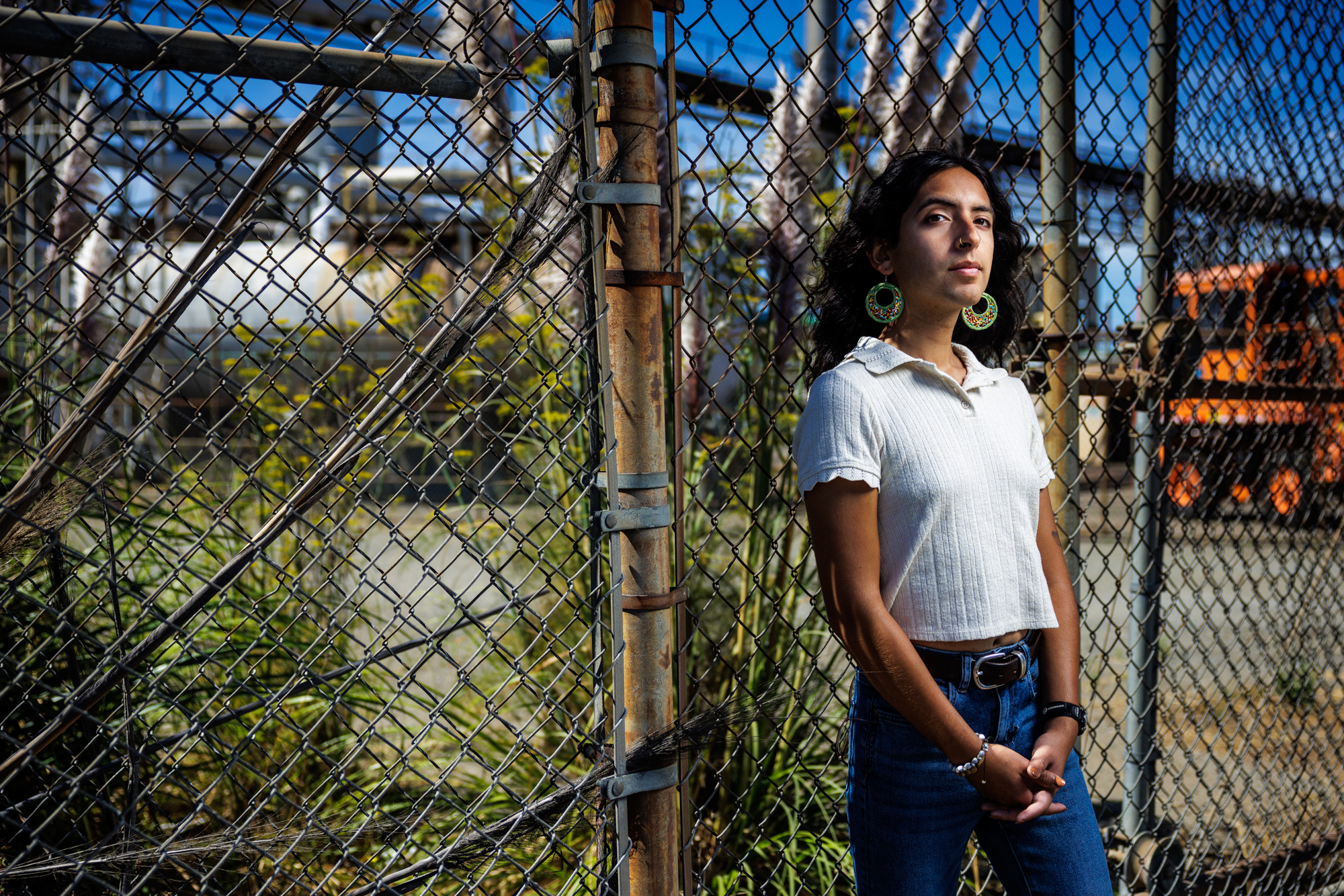
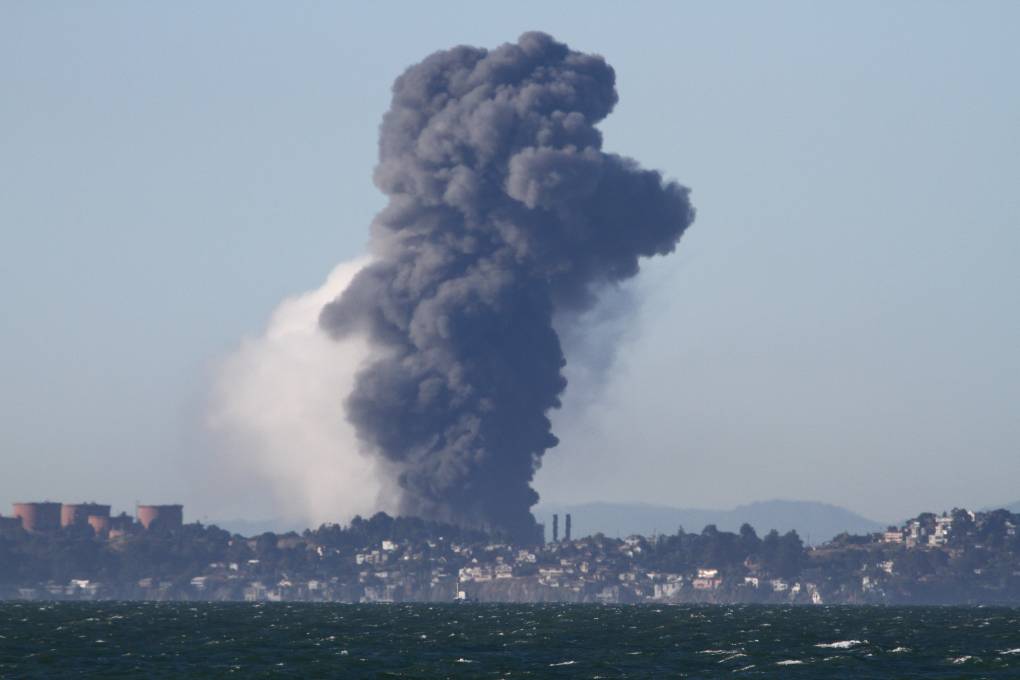
‘Secret Deal’ in California Would Weaken Regulations for Oil Refineries
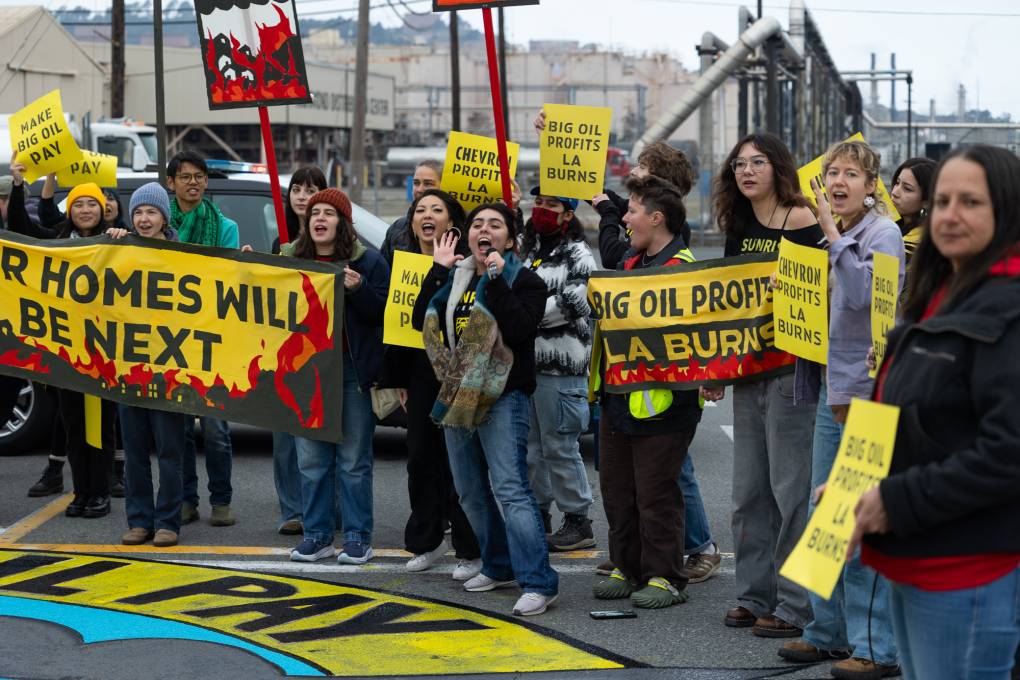
‘These Are Fossil Fuel Disasters’: Climate Protest Targets Chevron After LA Fires
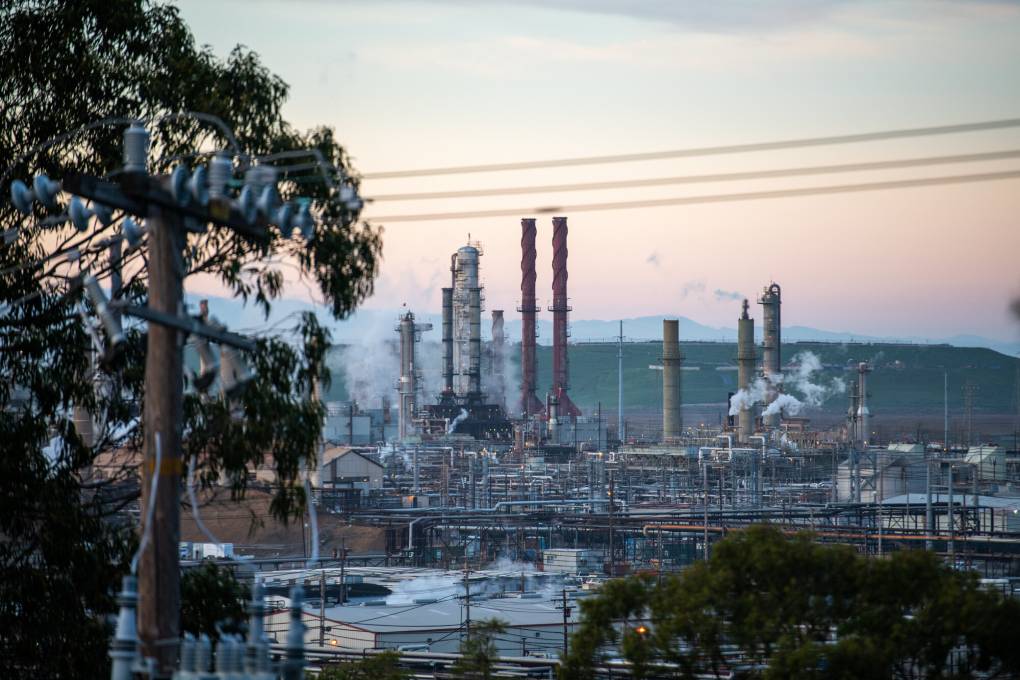
Richmond’s Plan to Spend $550 Million from Chevron Considers a Future Without the Oil Giant
Richmond Drops Bid for Chevron Refinery Tax in $550 Million Deal With Company
Chevron to Move Headquarters From Bay Area to Texas After Years of Climate Conflict
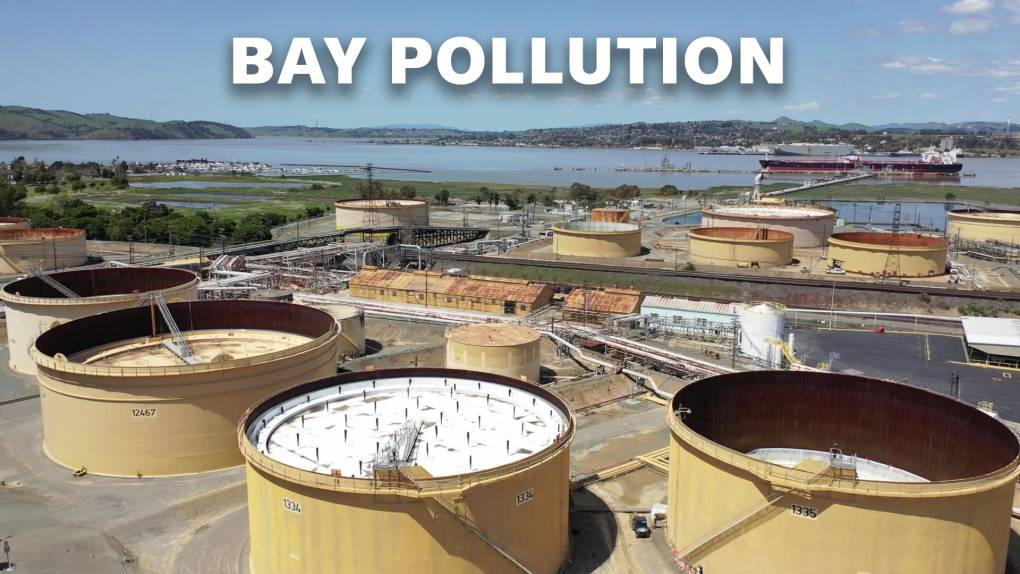
Earth Day Special: Bay Oil Pollution | CA-Mexico 2030 Summit
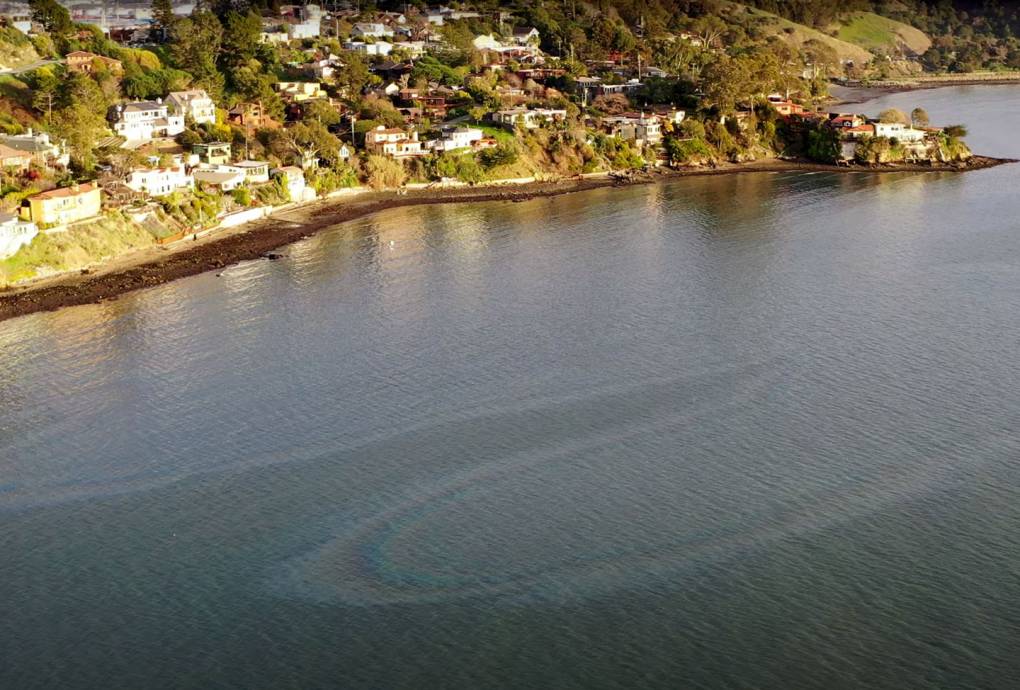
Chevron Agrees to Pay $200,000 for 2021 Bay Fuel Spill at Richmond Refinery
Watered-Down State Bill to Punish Refinery Pollution Gets Scrapped After Oil Industry Pushback
Sponsored
Player sponsored by
window.__IS_SSR__=true
window.__INITIAL_STATE__={
"attachmentsReducer": {
"audio_0": {
"type": "attachments",
"id": "audio_0",
"imgSizes": {
"kqedFullSize": {
"file": "https://ww2.kqed.org/news/wp-content/themes/KQED-unified/img/audio_bgs/background0.jpg"
}
}
},
"audio_1": {
"type": "attachments",
"id": "audio_1",
"imgSizes": {
"kqedFullSize": {
"file": "https://ww2.kqed.org/news/wp-content/themes/KQED-unified/img/audio_bgs/background1.jpg"
}
}
},
"audio_2": {
"type": "attachments",
"id": "audio_2",
"imgSizes": {
"kqedFullSize": {
"file": "https://ww2.kqed.org/news/wp-content/themes/KQED-unified/img/audio_bgs/background2.jpg"
}
}
},
"audio_3": {
"type": "attachments",
"id": "audio_3",
"imgSizes": {
"kqedFullSize": {
"file": "https://ww2.kqed.org/news/wp-content/themes/KQED-unified/img/audio_bgs/background3.jpg"
}
}
},
"audio_4": {
"type": "attachments",
"id": "audio_4",
"imgSizes": {
"kqedFullSize": {
"file": "https://ww2.kqed.org/news/wp-content/themes/KQED-unified/img/audio_bgs/background4.jpg"
}
}
},
"placeholder": {
"type": "attachments",
"id": "placeholder",
"imgSizes": {
"thumbnail": {
"file": "https://cdn.kqed.org/wp-content/uploads/2024/12/KQED-Default-Image-816638274-2000x1333-1-160x107.jpg",
"width": 160,
"height": 107,
"mimeType": "image/jpeg"
},
"medium": {
"file": "https://cdn.kqed.org/wp-content/uploads/2024/12/KQED-Default-Image-816638274-2000x1333-1-800x533.jpg",
"width": 800,
"height": 533,
"mimeType": "image/jpeg"
},
"medium_large": {
"file": "https://cdn.kqed.org/wp-content/uploads/2024/12/KQED-Default-Image-816638274-2000x1333-1-768x512.jpg",
"width": 768,
"height": 512,
"mimeType": "image/jpeg"
},
"large": {
"file": "https://cdn.kqed.org/wp-content/uploads/2024/12/KQED-Default-Image-816638274-2000x1333-1-1020x680.jpg",
"width": 1020,
"height": 680,
"mimeType": "image/jpeg"
},
"1536x1536": {
"file": "https://cdn.kqed.org/wp-content/uploads/2024/12/KQED-Default-Image-816638274-2000x1333-1-1536x1024.jpg",
"width": 1536,
"height": 1024,
"mimeType": "image/jpeg"
},
"fd-lrg": {
"file": "https://cdn.kqed.org/wp-content/uploads/2024/12/KQED-Default-Image-816638274-2000x1333-1-1536x1024.jpg",
"width": 1536,
"height": 1024,
"mimeType": "image/jpeg"
},
"fd-med": {
"file": "https://cdn.kqed.org/wp-content/uploads/2024/12/KQED-Default-Image-816638274-2000x1333-1-1020x680.jpg",
"width": 1020,
"height": 680,
"mimeType": "image/jpeg"
},
"fd-sm": {
"file": "https://cdn.kqed.org/wp-content/uploads/2024/12/KQED-Default-Image-816638274-2000x1333-1-800x533.jpg",
"width": 800,
"height": 533,
"mimeType": "image/jpeg"
},
"post-thumbnail": {
"file": "https://cdn.kqed.org/wp-content/uploads/2024/12/KQED-Default-Image-816638274-2000x1333-1-672x372.jpg",
"width": 672,
"height": 372,
"mimeType": "image/jpeg"
},
"twentyfourteen-full-width": {
"file": "https://cdn.kqed.org/wp-content/uploads/2024/12/KQED-Default-Image-816638274-2000x1333-1-1038x576.jpg",
"width": 1038,
"height": 576,
"mimeType": "image/jpeg"
},
"xxsmall": {
"file": "https://cdn.kqed.org/wp-content/uploads/2024/12/KQED-Default-Image-816638274-2000x1333-1-160x107.jpg",
"width": 160,
"height": 107,
"mimeType": "image/jpeg"
},
"xsmall": {
"file": "https://cdn.kqed.org/wp-content/uploads/2024/12/KQED-Default-Image-816638274-2000x1333-1-672x372.jpg",
"width": 672,
"height": 372,
"mimeType": "image/jpeg"
},
"small": {
"file": "https://cdn.kqed.org/wp-content/uploads/2024/12/KQED-Default-Image-816638274-2000x1333-1-672x372.jpg",
"width": 672,
"height": 372,
"mimeType": "image/jpeg"
},
"xlarge": {
"file": "https://cdn.kqed.org/wp-content/uploads/2024/12/KQED-Default-Image-816638274-2000x1333-1-1020x680.jpg",
"width": 1020,
"height": 680,
"mimeType": "image/jpeg"
},
"full-width": {
"file": "https://cdn.kqed.org/wp-content/uploads/2024/12/KQED-Default-Image-816638274-2000x1333-1-1920x1280.jpg",
"width": 1920,
"height": 1280,
"mimeType": "image/jpeg"
},
"guest-author-32": {
"file": "https://cdn.kqed.org/wp-content/uploads/2025/01/KQED-Default-Image-816638274-1333x1333-1-160x160.jpg",
"width": 32,
"height": 32,
"mimeType": "image/jpeg"
},
"guest-author-50": {
"file": "https://cdn.kqed.org/wp-content/uploads/2025/01/KQED-Default-Image-816638274-1333x1333-1-160x160.jpg",
"width": 50,
"height": 50,
"mimeType": "image/jpeg"
},
"guest-author-64": {
"file": "https://cdn.kqed.org/wp-content/uploads/2025/01/KQED-Default-Image-816638274-1333x1333-1-160x160.jpg",
"width": 64,
"height": 64,
"mimeType": "image/jpeg"
},
"guest-author-96": {
"file": "https://cdn.kqed.org/wp-content/uploads/2025/01/KQED-Default-Image-816638274-1333x1333-1-160x160.jpg",
"width": 96,
"height": 96,
"mimeType": "image/jpeg"
},
"guest-author-128": {
"file": "https://cdn.kqed.org/wp-content/uploads/2025/01/KQED-Default-Image-816638274-1333x1333-1-160x160.jpg",
"width": 128,
"height": 128,
"mimeType": "image/jpeg"
},
"detail": {
"file": "https://cdn.kqed.org/wp-content/uploads/2025/01/KQED-Default-Image-816638274-1333x1333-1-160x160.jpg",
"width": 160,
"height": 160,
"mimeType": "image/jpeg"
},
"kqedFullSize": {
"file": "https://cdn.kqed.org/wp-content/uploads/2024/12/KQED-Default-Image-816638274-2000x1333-1.jpg",
"width": 2000,
"height": 1333
}
}
},
"news_12051505": {
"type": "attachments",
"id": "news_12051505",
"meta": {
"index": "attachments_1716263798",
"site": "news",
"id": "12051505",
"found": true
},
"title": "Luna Angulo in Richmond on Aug. 8, 2025.",
"publishDate": 1754681165,
"status": "inherit",
"parent": 0,
"modified": 1754681277,
"caption": "Luna Angulo in Richmond on Aug. 8, 2025. Touted as an environmental justice companion to California’s cap-and-trade system, AB 617 promised cleaner air for frontline communities like Richmond — but has it actually delivered?",
"credit": "Martin do Nascimento/KQED",
"altTag": null,
"description": null,
"imgSizes": {
"thumbnail": {
"file": "https://cdn.kqed.org/wp-content/uploads/sites/10/2025/08/250808-CAP-AND-TRADE-ENVIRO-JUSTICE-MD-04-KQED-160x107.jpg",
"width": 160,
"height": 107,
"mimeType": "image/jpeg"
},
"1536x1536": {
"file": "https://cdn.kqed.org/wp-content/uploads/sites/10/2025/08/250808-CAP-AND-TRADE-ENVIRO-JUSTICE-MD-04-KQED-1536x1025.jpg",
"width": 1536,
"height": 1025,
"mimeType": "image/jpeg"
},
"post-thumbnail": {
"file": "https://cdn.kqed.org/wp-content/uploads/sites/10/2025/08/250808-CAP-AND-TRADE-ENVIRO-JUSTICE-MD-04-KQED-672x372.jpg",
"width": 672,
"height": 372,
"mimeType": "image/jpeg"
},
"twentyfourteen-full-width": {
"file": "https://cdn.kqed.org/wp-content/uploads/sites/10/2025/08/250808-CAP-AND-TRADE-ENVIRO-JUSTICE-MD-04-KQED-1038x576.jpg",
"width": 1038,
"height": 576,
"mimeType": "image/jpeg"
},
"kqedFullSize": {
"file": "https://cdn.kqed.org/wp-content/uploads/sites/10/2025/08/250808-CAP-AND-TRADE-ENVIRO-JUSTICE-MD-04-KQED.jpg",
"width": 2000,
"height": 1334
}
},
"fetchFailed": false,
"isLoading": false
},
"news_11861743": {
"type": "attachments",
"id": "news_11861743",
"meta": {
"index": "attachments_1716263798",
"site": "news",
"id": "11861743",
"found": true
},
"title": "RS1901_Chevron_Vapor_Cloud_010",
"publishDate": 1614118776,
"status": "inherit",
"parent": 11861741,
"modified": 1745279510,
"caption": "A cracked pipe at Chevron’s oil refinery in Richmond, California, released a flammable white vapor that quickly ignited, sending a large cloud of black smoke across surrounding communities on August 6, 2012. The eruption led to stricter state safety rules for refineries, but now state officials are considering rolling back some of those provisions.",
"credit": "Courtesy of U.S. Chemical Safety Board",
"altTag": null,
"description": null,
"imgSizes": {
"medium": {
"file": "https://cdn.kqed.org/wp-content/uploads/sites/10/2021/02/RS1901_Chevron_Vapor_Cloud_010-800x533.jpeg",
"width": 800,
"height": 533,
"mimeType": "image/jpeg"
},
"large": {
"file": "https://cdn.kqed.org/wp-content/uploads/sites/10/2021/02/RS1901_Chevron_Vapor_Cloud_010-1020x680.jpeg",
"width": 1020,
"height": 680,
"mimeType": "image/jpeg"
},
"thumbnail": {
"file": "https://cdn.kqed.org/wp-content/uploads/sites/10/2021/02/RS1901_Chevron_Vapor_Cloud_010-160x107.jpeg",
"width": 160,
"height": 107,
"mimeType": "image/jpeg"
},
"1536x1536": {
"file": "https://cdn.kqed.org/wp-content/uploads/sites/10/2021/02/RS1901_Chevron_Vapor_Cloud_010-1536x1024.jpeg",
"width": 1536,
"height": 1024,
"mimeType": "image/jpeg"
},
"2048x2048": {
"file": "https://cdn.kqed.org/wp-content/uploads/sites/10/2021/02/RS1901_Chevron_Vapor_Cloud_010-2048x1365.jpeg",
"width": 2048,
"height": 1365,
"mimeType": "image/jpeg"
},
"post-thumbnail": {
"file": "https://cdn.kqed.org/wp-content/uploads/sites/10/2021/02/RS1901_Chevron_Vapor_Cloud_010-672x372.jpeg",
"width": 672,
"height": 372,
"mimeType": "image/jpeg"
},
"twentyfourteen-full-width": {
"file": "https://cdn.kqed.org/wp-content/uploads/sites/10/2021/02/RS1901_Chevron_Vapor_Cloud_010-1038x576.jpeg",
"width": 1038,
"height": 576,
"mimeType": "image/jpeg"
},
"full-width": {
"file": "https://cdn.kqed.org/wp-content/uploads/sites/10/2021/02/RS1901_Chevron_Vapor_Cloud_010-1920x1280.jpeg",
"width": 1920,
"height": 1280,
"mimeType": "image/jpeg"
},
"apple_news_ca_landscape_12_9": {
"file": "https://cdn.kqed.org/wp-content/uploads/sites/10/2021/02/RS1901_Chevron_Vapor_Cloud_010-1832x1374.jpeg",
"width": 1832,
"height": 1374,
"mimeType": "image/jpeg"
},
"apple_news_ca_landscape_9_7": {
"file": "https://cdn.kqed.org/wp-content/uploads/sites/10/2021/02/RS1901_Chevron_Vapor_Cloud_010-1376x1032.jpeg",
"width": 1376,
"height": 1032,
"mimeType": "image/jpeg"
},
"apple_news_ca_landscape_5_5": {
"file": "https://cdn.kqed.org/wp-content/uploads/sites/10/2021/02/RS1901_Chevron_Vapor_Cloud_010-1044x783.jpeg",
"width": 1044,
"height": 783,
"mimeType": "image/jpeg"
},
"apple_news_ca_landscape_4_7": {
"file": "https://cdn.kqed.org/wp-content/uploads/sites/10/2021/02/RS1901_Chevron_Vapor_Cloud_010-632x474.jpeg",
"width": 632,
"height": 474,
"mimeType": "image/jpeg"
},
"apple_news_ca_landscape_4_0": {
"file": "https://cdn.kqed.org/wp-content/uploads/sites/10/2021/02/RS1901_Chevron_Vapor_Cloud_010-536x402.jpeg",
"width": 536,
"height": 402,
"mimeType": "image/jpeg"
},
"apple_news_ca_portrait_12_9": {
"file": "https://cdn.kqed.org/wp-content/uploads/sites/10/2021/02/RS1901_Chevron_Vapor_Cloud_010-1122x1496.jpeg",
"width": 1122,
"height": 1496,
"mimeType": "image/jpeg"
},
"apple_news_ca_portrait_9_7": {
"file": "https://cdn.kqed.org/wp-content/uploads/sites/10/2021/02/RS1901_Chevron_Vapor_Cloud_010-840x1120.jpeg",
"width": 840,
"height": 1120,
"mimeType": "image/jpeg"
},
"apple_news_ca_portrait_5_5": {
"file": "https://cdn.kqed.org/wp-content/uploads/sites/10/2021/02/RS1901_Chevron_Vapor_Cloud_010-687x916.jpeg",
"width": 687,
"height": 916,
"mimeType": "image/jpeg"
},
"apple_news_ca_portrait_4_7": {
"file": "https://cdn.kqed.org/wp-content/uploads/sites/10/2021/02/RS1901_Chevron_Vapor_Cloud_010-414x552.jpeg",
"width": 414,
"height": 552,
"mimeType": "image/jpeg"
},
"apple_news_ca_portrait_4_0": {
"file": "https://cdn.kqed.org/wp-content/uploads/sites/10/2021/02/RS1901_Chevron_Vapor_Cloud_010-354x472.jpeg",
"width": 354,
"height": 472,
"mimeType": "image/jpeg"
},
"apple_news_ca_square_12_9": {
"file": "https://cdn.kqed.org/wp-content/uploads/sites/10/2021/02/RS1901_Chevron_Vapor_Cloud_010-1472x1472.jpeg",
"width": 1472,
"height": 1472,
"mimeType": "image/jpeg"
},
"apple_news_ca_square_9_7": {
"file": "https://cdn.kqed.org/wp-content/uploads/sites/10/2021/02/RS1901_Chevron_Vapor_Cloud_010-1104x1104.jpeg",
"width": 1104,
"height": 1104,
"mimeType": "image/jpeg"
},
"apple_news_ca_square_5_5": {
"file": "https://cdn.kqed.org/wp-content/uploads/sites/10/2021/02/RS1901_Chevron_Vapor_Cloud_010-912x912.jpeg",
"width": 912,
"height": 912,
"mimeType": "image/jpeg"
},
"apple_news_ca_square_4_7": {
"file": "https://cdn.kqed.org/wp-content/uploads/sites/10/2021/02/RS1901_Chevron_Vapor_Cloud_010-550x550.jpeg",
"width": 550,
"height": 550,
"mimeType": "image/jpeg"
},
"apple_news_ca_square_4_0": {
"file": "https://cdn.kqed.org/wp-content/uploads/sites/10/2021/02/RS1901_Chevron_Vapor_Cloud_010-470x470.jpeg",
"width": 470,
"height": 470,
"mimeType": "image/jpeg"
},
"kqedFullSize": {
"file": "https://cdn.kqed.org/wp-content/uploads/sites/10/2021/02/RS1901_Chevron_Vapor_Cloud_010-scaled-e1745279433555.jpeg",
"width": 2000,
"height": 1334
}
},
"fetchFailed": false,
"isLoading": false
},
"news_12022835": {
"type": "attachments",
"id": "news_12022835",
"meta": {
"index": "attachments_1716263798",
"site": "news",
"id": "12022835",
"found": true
},
"title": "20250117_Protest-Chevron_DB_00545",
"publishDate": 1737148342,
"status": "inherit",
"parent": 0,
"modified": 1737159692,
"caption": "Youth organizers from the Bay Area hub of Sunrise Movement protest in front of the Chevron Refinery for the Make Big Oil Pay rally at the Old Castro Street gate in Richmond on Friday, Jan. 17, 2025. The focus of the rally was to issue a call to hold fossil fuel companies accountable for devastating wildfires and environmental destruction.",
"credit": "David M. Barreda/KQED",
"altTag": null,
"description": null,
"imgSizes": {
"medium": {
"file": "https://cdn.kqed.org/wp-content/uploads/sites/10/2025/01/20250117_Protest-Chevron_DB_00545-800x533.jpg",
"width": 800,
"height": 533,
"mimeType": "image/jpeg"
},
"large": {
"file": "https://cdn.kqed.org/wp-content/uploads/sites/10/2025/01/20250117_Protest-Chevron_DB_00545-1020x680.jpg",
"width": 1020,
"height": 680,
"mimeType": "image/jpeg"
},
"thumbnail": {
"file": "https://cdn.kqed.org/wp-content/uploads/sites/10/2025/01/20250117_Protest-Chevron_DB_00545-160x107.jpg",
"width": 160,
"height": 107,
"mimeType": "image/jpeg"
},
"1536x1536": {
"file": "https://cdn.kqed.org/wp-content/uploads/sites/10/2025/01/20250117_Protest-Chevron_DB_00545-1536x1024.jpg",
"width": 1536,
"height": 1024,
"mimeType": "image/jpeg"
},
"post-thumbnail": {
"file": "https://cdn.kqed.org/wp-content/uploads/sites/10/2025/01/20250117_Protest-Chevron_DB_00545-672x372.jpg",
"width": 672,
"height": 372,
"mimeType": "image/jpeg"
},
"twentyfourteen-full-width": {
"file": "https://cdn.kqed.org/wp-content/uploads/sites/10/2025/01/20250117_Protest-Chevron_DB_00545-1038x576.jpg",
"width": 1038,
"height": 576,
"mimeType": "image/jpeg"
},
"full-width": {
"file": "https://cdn.kqed.org/wp-content/uploads/sites/10/2025/01/20250117_Protest-Chevron_DB_00545-1920x1280.jpg",
"width": 1920,
"height": 1280,
"mimeType": "image/jpeg"
},
"kqedFullSize": {
"file": "https://cdn.kqed.org/wp-content/uploads/sites/10/2025/01/20250117_Protest-Chevron_DB_00545.jpg",
"width": 2000,
"height": 1333
}
},
"fetchFailed": false,
"isLoading": false
},
"news_12000181": {
"type": "attachments",
"id": "news_12000181",
"meta": {
"index": "attachments_1716263798",
"site": "news",
"id": "12000181",
"found": true
},
"title": "017_Richmond_ChevronRefinery_01132022_qed",
"publishDate": 1723663991,
"status": "inherit",
"parent": 12000170,
"modified": 1723664016,
"caption": "The Chevron Refinery, a petroleum refinery, can be seen from Point Richmond on Jan. 13, 2022.",
"credit": "Beth LaBerge/KQED",
"altTag": null,
"description": null,
"imgSizes": {
"medium": {
"file": "https://cdn.kqed.org/wp-content/uploads/sites/10/2024/08/017_Richmond_ChevronRefinery_01132022_qed-800x533.jpg",
"width": 800,
"height": 533,
"mimeType": "image/jpeg"
},
"large": {
"file": "https://cdn.kqed.org/wp-content/uploads/sites/10/2024/08/017_Richmond_ChevronRefinery_01132022_qed-1020x680.jpg",
"width": 1020,
"height": 680,
"mimeType": "image/jpeg"
},
"thumbnail": {
"file": "https://cdn.kqed.org/wp-content/uploads/sites/10/2024/08/017_Richmond_ChevronRefinery_01132022_qed-160x107.jpg",
"width": 160,
"height": 107,
"mimeType": "image/jpeg"
},
"1536x1536": {
"file": "https://cdn.kqed.org/wp-content/uploads/sites/10/2024/08/017_Richmond_ChevronRefinery_01132022_qed-1536x1024.jpg",
"width": 1536,
"height": 1024,
"mimeType": "image/jpeg"
},
"post-thumbnail": {
"file": "https://cdn.kqed.org/wp-content/uploads/sites/10/2024/08/017_Richmond_ChevronRefinery_01132022_qed-672x372.jpg",
"width": 672,
"height": 372,
"mimeType": "image/jpeg"
},
"twentyfourteen-full-width": {
"file": "https://cdn.kqed.org/wp-content/uploads/sites/10/2024/08/017_Richmond_ChevronRefinery_01132022_qed-1038x576.jpg",
"width": 1038,
"height": 576,
"mimeType": "image/jpeg"
},
"full-width": {
"file": "https://cdn.kqed.org/wp-content/uploads/sites/10/2024/08/017_Richmond_ChevronRefinery_01132022_qed-1920x1280.jpg",
"width": 1920,
"height": 1280,
"mimeType": "image/jpeg"
},
"kqedFullSize": {
"file": "https://cdn.kqed.org/wp-content/uploads/sites/10/2024/08/017_Richmond_ChevronRefinery_01132022_qed.jpg",
"width": 2000,
"height": 1333
}
},
"fetchFailed": false,
"isLoading": false
},
"news_10343263": {
"type": "attachments",
"id": "news_10343263",
"meta": {
"index": "attachments_1716263798",
"site": "news",
"id": "10343263",
"found": true
},
"title": "RS5929_008-lpr",
"publishDate": 1412969141,
"status": "inherit",
"parent": 0,
"modified": 1722618429,
"caption": "The Chevron Oil Refinery in Richmond. ",
"credit": "Deborah Svoboda/KQED",
"altTag": null,
"description": null,
"imgSizes": {
"thumbnail": {
"file": "https://cdn.kqed.org/wp-content/uploads/sites/10/2014/10/RS5929_008-lpr-400x266.jpg",
"width": 400,
"height": 266,
"mimeType": "image/jpeg"
},
"medium": {
"file": "https://cdn.kqed.org/wp-content/uploads/sites/10/2014/10/RS5929_008-lpr-800x533.jpg",
"width": 800,
"height": 533,
"mimeType": "image/jpeg"
},
"large": {
"file": "https://cdn.kqed.org/wp-content/uploads/sites/10/2014/10/RS5929_008-lpr-1440x960.jpg",
"width": 1440,
"height": 960,
"mimeType": "image/jpeg"
},
"post-thumbnail": {
"file": "https://cdn.kqed.org/wp-content/uploads/sites/10/2014/10/RS5929_008-lpr-672x372.jpg",
"width": 672,
"height": 372,
"mimeType": "image/jpeg"
},
"twentyfourteen-full-width": {
"file": "https://cdn.kqed.org/wp-content/uploads/sites/10/2014/10/RS5929_008-lpr-1038x576.jpg",
"width": 1038,
"height": 576,
"mimeType": "image/jpeg"
},
"guest-author-32": {
"file": "https://cdn.kqed.org/wp-content/uploads/sites/10/2014/10/RS5929_008-lpr-32x32.jpg",
"width": 32,
"height": 32,
"mimeType": "image/jpeg"
},
"guest-author-64": {
"file": "https://cdn.kqed.org/wp-content/uploads/sites/10/2014/10/RS5929_008-lpr-64x64.jpg",
"width": 64,
"height": 64,
"mimeType": "image/jpeg"
},
"guest-author-96": {
"file": "https://cdn.kqed.org/wp-content/uploads/sites/10/2014/10/RS5929_008-lpr-96x96.jpg",
"width": 96,
"height": 96,
"mimeType": "image/jpeg"
},
"guest-author-128": {
"file": "https://cdn.kqed.org/wp-content/uploads/sites/10/2014/10/RS5929_008-lpr-128x128.jpg",
"width": 128,
"height": 128,
"mimeType": "image/jpeg"
},
"detail": {
"file": "https://cdn.kqed.org/wp-content/uploads/sites/10/2014/10/RS5929_008-lpr-75x75.jpg",
"width": 75,
"height": 75,
"mimeType": "image/jpeg"
},
"kqedFullSize": {
"file": "https://cdn.kqed.org/wp-content/uploads/sites/10/2014/10/RS5929_008-lpr.jpg",
"width": 2000,
"height": 1334
}
},
"fetchFailed": false,
"isLoading": false
},
"news_11947344": {
"type": "attachments",
"id": "news_11947344",
"meta": {
"index": "attachments_1716263798",
"site": "news",
"id": "11947344",
"found": true
},
"parent": 11947341,
"imgSizes": {
"twentyfourteen-full-width": {
"file": "https://ww2.kqed.org/app/uploads/sites/10/2023/04/BayPollution-1038x576.jpeg",
"width": 1038,
"mimeType": "image/jpeg",
"height": 576
},
"thumbnail": {
"file": "https://ww2.kqed.org/app/uploads/sites/10/2023/04/BayPollution-160x90.jpeg",
"width": 160,
"mimeType": "image/jpeg",
"height": 90
},
"post-thumbnail": {
"file": "https://ww2.kqed.org/app/uploads/sites/10/2023/04/BayPollution-672x372.jpeg",
"width": 672,
"mimeType": "image/jpeg",
"height": 372
},
"kqedFullSize": {
"file": "https://ww2.kqed.org/app/uploads/sites/10/2023/04/BayPollution.jpeg",
"width": 1920,
"height": 1080
},
"large": {
"file": "https://ww2.kqed.org/app/uploads/sites/10/2023/04/BayPollution-1020x574.jpeg",
"width": 1020,
"mimeType": "image/jpeg",
"height": 574
},
"1536x1536": {
"file": "https://ww2.kqed.org/app/uploads/sites/10/2023/04/BayPollution-1536x864.jpeg",
"width": 1536,
"mimeType": "image/jpeg",
"height": 864
},
"medium": {
"file": "https://ww2.kqed.org/app/uploads/sites/10/2023/04/BayPollution-800x450.jpeg",
"width": 800,
"mimeType": "image/jpeg",
"height": 450
}
},
"publishDate": 1682122775,
"modified": 1682122775,
"caption": null,
"description": null,
"title": "BayPollution",
"credit": null,
"status": "inherit",
"altTag": null,
"fetchFailed": false,
"isLoading": false
},
"news_11859737": {
"type": "attachments",
"id": "news_11859737",
"meta": {
"index": "attachments_1716263798",
"site": "news",
"id": "11859737",
"found": true
},
"parent": 11859660,
"imgSizes": {
"apple_news_ca_landscape_5_5": {
"file": "https://ww2.kqed.org/app/uploads/sites/10/2021/02/Chevron-Spill-e1614135246604-1044x783.jpg",
"width": 1044,
"mimeType": "image/jpeg",
"height": 783
},
"apple_news_ca_square_4_0": {
"file": "https://ww2.kqed.org/app/uploads/sites/10/2021/02/Chevron-Spill-e1614135246604-470x470.jpg",
"width": 470,
"mimeType": "image/jpeg",
"height": 470
},
"twentyfourteen-full-width": {
"file": "https://ww2.kqed.org/app/uploads/sites/10/2021/02/Chevron-Spill-e1614135246604-1038x576.jpg",
"width": 1038,
"mimeType": "image/jpeg",
"height": 576
},
"thumbnail": {
"file": "https://ww2.kqed.org/app/uploads/sites/10/2021/02/Chevron-Spill-e1614135246604-160x108.jpg",
"width": 160,
"mimeType": "image/jpeg",
"height": 108
},
"post-thumbnail": {
"file": "https://ww2.kqed.org/app/uploads/sites/10/2021/02/Chevron-Spill-e1614135246604-672x372.jpg",
"width": 672,
"mimeType": "image/jpeg",
"height": 372
},
"kqedFullSize": {
"file": "https://ww2.kqed.org/app/uploads/sites/10/2021/02/Chevron-Spill-e1614135246604.jpg",
"width": 1440,
"height": 974
},
"apple_news_ca_landscape_4_7": {
"file": "https://ww2.kqed.org/app/uploads/sites/10/2021/02/Chevron-Spill-e1614135246604-632x474.jpg",
"width": 632,
"mimeType": "image/jpeg",
"height": 474
},
"large": {
"file": "https://ww2.kqed.org/app/uploads/sites/10/2021/02/Chevron-Spill-e1614135246604-1020x690.jpg",
"width": 1020,
"mimeType": "image/jpeg",
"height": 690
},
"apple_news_ca_landscape_4_0": {
"file": "https://ww2.kqed.org/app/uploads/sites/10/2021/02/Chevron-Spill-e1614135246604-536x402.jpg",
"width": 536,
"mimeType": "image/jpeg",
"height": 402
},
"apple_news_ca_portrait_12_9": {
"file": "https://ww2.kqed.org/app/uploads/sites/10/2021/02/Chevron-Spill-e1614135246604-1122x974.jpg",
"width": 1122,
"mimeType": "image/jpeg",
"height": 974
},
"medium": {
"file": "https://ww2.kqed.org/app/uploads/sites/10/2021/02/Chevron-Spill-e1614135246604-800x541.jpg",
"width": 800,
"mimeType": "image/jpeg",
"height": 541
},
"apple_news_ca_portrait_4_0": {
"file": "https://ww2.kqed.org/app/uploads/sites/10/2021/02/Chevron-Spill-e1614135246604-354x472.jpg",
"width": 354,
"mimeType": "image/jpeg",
"height": 472
},
"apple_news_ca_portrait_9_7": {
"file": "https://ww2.kqed.org/app/uploads/sites/10/2021/02/Chevron-Spill-e1614135246604-840x974.jpg",
"width": 840,
"mimeType": "image/jpeg",
"height": 974
},
"apple_news_ca_landscape_12_9": {
"file": "https://ww2.kqed.org/app/uploads/sites/10/2021/02/Chevron-Spill-1832x1099.jpg",
"width": 1832,
"mimeType": "image/jpeg",
"height": 1099
},
"apple_news_ca_square_9_7": {
"file": "https://ww2.kqed.org/app/uploads/sites/10/2021/02/Chevron-Spill-e1614135246604-1104x974.jpg",
"width": 1104,
"mimeType": "image/jpeg",
"height": 974
},
"1536x1536": {
"file": "https://ww2.kqed.org/app/uploads/sites/10/2021/02/Chevron-Spill-1536x879.jpg",
"width": 1536,
"mimeType": "image/jpeg",
"height": 879
},
"apple_news_ca_portrait_4_7": {
"file": "https://ww2.kqed.org/app/uploads/sites/10/2021/02/Chevron-Spill-e1614135246604-414x552.jpg",
"width": 414,
"mimeType": "image/jpeg",
"height": 552
},
"apple_news_ca_square_12_9": {
"file": "https://ww2.kqed.org/app/uploads/sites/10/2021/02/Chevron-Spill-1472x1099.jpg",
"width": 1472,
"mimeType": "image/jpeg",
"height": 1099
},
"apple_news_ca_portrait_5_5": {
"file": "https://ww2.kqed.org/app/uploads/sites/10/2021/02/Chevron-Spill-e1614135246604-687x916.jpg",
"width": 687,
"mimeType": "image/jpeg",
"height": 916
},
"apple_news_ca_square_4_7": {
"file": "https://ww2.kqed.org/app/uploads/sites/10/2021/02/Chevron-Spill-e1614135246604-550x550.jpg",
"width": 550,
"mimeType": "image/jpeg",
"height": 550
},
"apple_news_ca_landscape_9_7": {
"file": "https://ww2.kqed.org/app/uploads/sites/10/2021/02/Chevron-Spill-e1614135246604-1376x974.jpg",
"width": 1376,
"mimeType": "image/jpeg",
"height": 974
},
"apple_news_ca_square_5_5": {
"file": "https://ww2.kqed.org/app/uploads/sites/10/2021/02/Chevron-Spill-e1614135246604-912x912.jpg",
"width": 912,
"mimeType": "image/jpeg",
"height": 912
}
},
"publishDate": 1612994604,
"modified": 1667598387,
"caption": "An oily sheen spreads across bay waters to Point Richmond after a pipeline leaked at Chevron's Richmond refinery on Feb. 9, 2021.",
"description": "Frame grab from drone video shows oily sheen that spread across bay waters to Point Richmond after a pipeline began leaking at Chevron's Richmond refinery on Tuesday. ",
"title": "Chevron-Spill",
"credit": "Courtesy of San Francisco Baykeeper",
"status": "inherit",
"altTag": "A large oil slick on water off a shore lit by lights at the refinery there.",
"fetchFailed": false,
"isLoading": false
},
"news_11923250": {
"type": "attachments",
"id": "news_11923250",
"meta": {
"index": "attachments_1716263798",
"site": "news",
"id": "11923250",
"found": true
},
"parent": 11923242,
"imgSizes": {
"twentyfourteen-full-width": {
"file": "https://ww2.kqed.org/app/uploads/sites/10/2022/08/GettyImages-1353880398-1024x576.jpg",
"width": 1024,
"mimeType": "image/jpeg",
"height": 576
},
"thumbnail": {
"file": "https://ww2.kqed.org/app/uploads/sites/10/2022/08/GettyImages-1353880398-160x102.jpg",
"width": 160,
"mimeType": "image/jpeg",
"height": 102
},
"post-thumbnail": {
"file": "https://ww2.kqed.org/app/uploads/sites/10/2022/08/GettyImages-1353880398-672x372.jpg",
"width": 672,
"mimeType": "image/jpeg",
"height": 372
},
"kqedFullSize": {
"file": "https://ww2.kqed.org/app/uploads/sites/10/2022/08/GettyImages-1353880398.jpg",
"width": 1024,
"height": 654
},
"large": {
"file": "https://ww2.kqed.org/app/uploads/sites/10/2022/08/GettyImages-1353880398-1020x651.jpg",
"width": 1020,
"mimeType": "image/jpeg",
"height": 651
},
"medium": {
"file": "https://ww2.kqed.org/app/uploads/sites/10/2022/08/GettyImages-1353880398-800x511.jpg",
"width": 800,
"mimeType": "image/jpeg",
"height": 511
}
},
"publishDate": 1661276417,
"modified": 1661369501,
"caption": "A view of the Chevron refinery on Nov. 17, 2021, in Richmond.",
"description": "A view of the Chevron refinery on Nov. 17, 2021, in Richmond. President Joe Biden is calling on the Federal Trade Commission to investigate the surge in gas prices in United States. California has the highest average price for a gallon of regular gasoline at $4.682, breaking the record high of $4.671 from October 2012.",
"title": "President Biden Calls For FTC Investigation In Gas Pricing",
"credit": "Justin Sullivan/Getty Images",
"status": "inherit",
"altTag": "A look at an oil refinery.",
"fetchFailed": false,
"isLoading": false
}
},
"audioPlayerReducer": {
"postId": "stream_live",
"isPaused": true,
"isPlaying": false,
"pfsActive": false,
"pledgeModalIsOpen": true,
"playerDrawerIsOpen": false
},
"authorsReducer": {
"byline_news_12036965": {
"type": "authors",
"id": "byline_news_12036965",
"meta": {
"override": true
},
"slug": "byline_news_12036965",
"name": "\u003ca href=\"https://publichealthwatch.org/author/jimmorris/\" target=\"_blank\" rel=\"noopener noreferrer\"> Jim Morris \u003c/a> and \u003ca href=\"https://publichealthwatch.org/author/mollypeterson/\" target=\"_blank\" rel=\"noopener noreferrer\"> Molly Peterson\u003c/a>, Public Health Watch ",
"isLoading": false
},
"danbrekke": {
"type": "authors",
"id": "222",
"meta": {
"index": "authors_1716337520",
"id": "222",
"found": true
},
"name": "Dan Brekke",
"firstName": "Dan",
"lastName": "Brekke",
"slug": "danbrekke",
"email": "dbrekke@kqed.org",
"display_author_email": true,
"staff_mastheads": [
"news",
"science"
],
"title": "KQED Editor and Reporter",
"bio": "Dan Brekke is a reporter and editor for KQED News, responsible for coverage of topics ranging from California water issues to the Bay Area's transportation challenges. In a newsroom career that began in Chicago in 1972, Dan has worked for \u003cem>The San Francisco Examiner,\u003c/em> Wired and TechTV and has been published in The New York Times, The New York Times Magazine, Business 2.0, Salon and elsewhere.\r\n\r\nSince joining KQED in 2007, Dan has reported, edited and produced both radio and online features and breaking news pieces. He has shared as both editor and reporter in four Society of Professional Journalists Norcal Excellence in Journalism awards and one Edward R. Murrow regional award. He was chosen for a spring 2017 residency at the Mesa Refuge to advance his research on California salmon.\r\n\r\nEmail Dan at: \u003ca href=\"mailto:dbrekke@kqed.org\">dbrekke@kqed.org\u003c/a>\r\n\r\n\u003cstrong>Twitter:\u003c/strong> \u003ca href=\"https://twitter.com/danbrekke\" rel=\"noopener noreferrer\">twitter.com/danbrekke\u003c/a>\r\n\u003cstrong>Facebook:\u003c/strong> \u003ca href=\"https://www.facebook.com/danbrekke\" rel=\"noopener noreferrer\">www.facebook.com/danbrekke\u003c/a>\r\n\u003cstrong>LinkedIn:\u003c/strong> \u003ca href=\"https://www.linkedin.com/in/danbrekke\" rel=\"noopener noreferrer\">www.linkedin.com/in/danbrekke\u003c/a>",
"avatar": "https://secure.gravatar.com/avatar/c8126230345efca3f7aa89b1a402be45?s=600&d=mm&r=g",
"twitter": "danbrekke",
"facebook": null,
"instagram": "https://www.instagram.com/dan.brekke/",
"linkedin": "https://www.linkedin.com/in/danbrekke/",
"sites": [
{
"site": "news",
"roles": [
"administrator",
"create_posts"
]
},
{
"site": "stateofhealth",
"roles": [
"editor"
]
},
{
"site": "science",
"roles": [
"editor"
]
},
{
"site": "quest",
"roles": [
"contributor"
]
},
{
"site": "food",
"roles": [
"contributor"
]
},
{
"site": "forum",
"roles": [
"contributor"
]
},
{
"site": "liveblog",
"roles": [
"editor"
]
}
],
"headData": {
"title": "Dan Brekke | KQED",
"description": "KQED Editor and Reporter",
"ogImgSrc": "https://secure.gravatar.com/avatar/c8126230345efca3f7aa89b1a402be45?s=600&d=mm&r=g",
"twImgSrc": "https://secure.gravatar.com/avatar/c8126230345efca3f7aa89b1a402be45?s=600&d=mm&r=g"
},
"isLoading": false,
"link": "/author/danbrekke"
},
"gmarzorati": {
"type": "authors",
"id": "227",
"meta": {
"index": "authors_1716337520",
"id": "227",
"found": true
},
"name": "Guy Marzorati",
"firstName": "Guy",
"lastName": "Marzorati",
"slug": "gmarzorati",
"email": "gmarzorati@KQED.org",
"display_author_email": true,
"staff_mastheads": [
"news"
],
"title": "Correspondent",
"bio": "Guy Marzorati is a correspondent on KQED's California Politics and Government Desk, based in San Jose. A graduate of Santa Clara University, Guy joined KQED in 2013. He reports on state and local politics and produces KQED's digital voter guide.",
"avatar": "https://secure.gravatar.com/avatar/e7038b8dbfd55b104369b76b1cd0b9de?s=600&d=blank&r=g",
"twitter": "guymarzorati",
"facebook": null,
"instagram": null,
"linkedin": null,
"sites": [
{
"site": "",
"roles": [
"editor"
]
},
{
"site": "news",
"roles": [
"editor"
]
},
{
"site": "science",
"roles": [
"editor"
]
},
{
"site": "forum",
"roles": [
"editor"
]
},
{
"site": "elections",
"roles": [
"editor"
]
},
{
"site": "liveblog",
"roles": [
"editor"
]
}
],
"headData": {
"title": "Guy Marzorati | KQED",
"description": "Correspondent",
"ogImgSrc": "https://secure.gravatar.com/avatar/e7038b8dbfd55b104369b76b1cd0b9de?s=600&d=blank&r=g",
"twImgSrc": "https://secure.gravatar.com/avatar/e7038b8dbfd55b104369b76b1cd0b9de?s=600&d=blank&r=g"
},
"isLoading": false,
"link": "/author/gmarzorati"
},
"kqednewsstaffandwires": {
"type": "authors",
"id": "237",
"meta": {
"index": "authors_1716337520",
"id": "237",
"found": true
},
"name": "KQED News Staff and Wires",
"firstName": "KQED News Staff and Wires",
"lastName": null,
"slug": "kqednewsstaffandwires",
"email": "onlinenewsstaff@kqed.org",
"display_author_email": false,
"staff_mastheads": [],
"title": null,
"bio": null,
"avatar": "https://secure.gravatar.com/avatar/72295af8ebbfbd19a4948f5271285664?s=600&d=blank&r=g",
"twitter": null,
"facebook": null,
"instagram": null,
"linkedin": null,
"sites": [
{
"site": "arts",
"roles": [
"contributor"
]
},
{
"site": "news",
"roles": [
"contributor"
]
},
{
"site": "lowdown",
"roles": [
"author"
]
},
{
"site": "stateofhealth",
"roles": [
"contributor"
]
},
{
"site": "food",
"roles": [
"author"
]
}
],
"headData": {
"title": "KQED News Staff and Wires | KQED",
"description": null,
"ogImgSrc": "https://secure.gravatar.com/avatar/72295af8ebbfbd19a4948f5271285664?s=600&d=blank&r=g",
"twImgSrc": "https://secure.gravatar.com/avatar/72295af8ebbfbd19a4948f5271285664?s=600&d=blank&r=g"
},
"isLoading": false,
"link": "/author/kqednewsstaffandwires"
},
"tgoldberg": {
"type": "authors",
"id": "258",
"meta": {
"index": "authors_1716337520",
"id": "258",
"found": true
},
"name": "Ted Goldberg",
"firstName": "Ted",
"lastName": "Goldberg",
"slug": "tgoldberg",
"email": "tgoldberg@kqed.org",
"display_author_email": true,
"staff_mastheads": [
"news"
],
"title": "KQED Managing Editor, News and Newscasts",
"bio": "Ted Goldberg is Managing Editor of News and Newscasts at KQED. His main reporting beat is the Bay Area's oil refining industry.\r\n\r\nPrior to joining KQED in 2014, Ted worked at CBS News and WCBS AM in New York and Bay City News and KCBS Radio in San Francisco. He graduated from Oberlin College in Ohio in 1998.",
"avatar": "https://secure.gravatar.com/avatar/16d702c9ec5f696d78dbfb76b592cf0a?s=600&d=blank&r=g",
"twitter": "TedrickG",
"facebook": null,
"instagram": null,
"linkedin": null,
"sites": [
{
"site": "news",
"roles": [
"editor"
]
},
{
"site": "science",
"roles": [
"editor"
]
}
],
"headData": {
"title": "Ted Goldberg | KQED",
"description": "KQED Managing Editor, News and Newscasts",
"ogImgSrc": "https://secure.gravatar.com/avatar/16d702c9ec5f696d78dbfb76b592cf0a?s=600&d=blank&r=g",
"twImgSrc": "https://secure.gravatar.com/avatar/16d702c9ec5f696d78dbfb76b592cf0a?s=600&d=blank&r=g"
},
"isLoading": false,
"link": "/author/tgoldberg"
},
"lklivans": {
"type": "authors",
"id": "8648",
"meta": {
"index": "authors_1716337520",
"id": "8648",
"found": true
},
"name": "Laura Klivans",
"firstName": "Laura",
"lastName": "Klivans",
"slug": "lklivans",
"email": "lklivans@kqed.org",
"display_author_email": true,
"staff_mastheads": [
"news",
"science"
],
"title": "Reporter",
"bio": "Laura Klivans is an award-winning science reporter for KQED News, where she covers climate change with an eye on both groundbreaking progress and gaps in action. She is the former host of KQED's blockbuster video series about tiny, amazing animals, \u003cem>Deep Look\u003c/em>. Her work reaches national audiences through NPR, \u003cem>Here & Now, \u003c/em>PRI, and other major outlets. \r\n\r\nLaura’s won five Northern California Area Emmy Awards for Deep Look and First Place in the Greater Bay Area Journalism Awards for a podcast exploring how one Oakland neighborhood teamed up to reduce planet-heating pollution.\r\n\r\nBeyond her reporting, she hosts and moderates events. In the past, she taught audio storytelling at the UC Berkeley Graduate School of Journalism, led international education programs, worked with immigrants and refugees along the Thai-Burmese border, taught high schoolers sex ed, and was an actress. \r\n\r\nShe's a former UC Berkeley Human Rights Fellow, USC Center for Health Journalism's California Fellow and Coro Fellow in Public Affairs. Laura has a master’s in journalism from UC Berkeley, a master’s in education from Harvard, and an undergraduate degree from Northwestern University.\r\n\r\nShe loves trying to riddle the meaning out of vanity license plates.",
"avatar": "https://secure.gravatar.com/avatar/af8e757bb8ce7b7fee6160ba66e37327?s=600&d=blank&r=g",
"twitter": "lauraklivans",
"facebook": null,
"instagram": null,
"linkedin": null,
"sites": [
{
"site": "news",
"roles": [
"editor"
]
},
{
"site": "stateofhealth",
"roles": [
"contributor",
"editor"
]
},
{
"site": "science",
"roles": [
"editor"
]
},
{
"site": "forum",
"roles": [
"editor"
]
}
],
"headData": {
"title": "Laura Klivans | KQED",
"description": "Reporter",
"ogImgSrc": "https://secure.gravatar.com/avatar/af8e757bb8ce7b7fee6160ba66e37327?s=600&d=blank&r=g",
"twImgSrc": "https://secure.gravatar.com/avatar/af8e757bb8ce7b7fee6160ba66e37327?s=600&d=blank&r=g"
},
"isLoading": false,
"link": "/author/lklivans"
},
"kdebenedetti": {
"type": "authors",
"id": "11913",
"meta": {
"index": "authors_1716337520",
"id": "11913",
"found": true
},
"name": "Katie DeBenedetti",
"firstName": "Katie",
"lastName": "DeBenedetti",
"slug": "kdebenedetti",
"email": "kdebenedetti@kqed.org",
"display_author_email": false,
"staff_mastheads": [
"news",
"science"
],
"title": "KQED Contributor",
"bio": "Katie DeBenedetti is a digital reporter covering daily news for the Express Desk. Prior to joining KQED as a culture reporting intern in January 2024, she covered education and city government for the Napa Valley Register.",
"avatar": "https://secure.gravatar.com/avatar/6e31073cb8f7e4214ab03f42771d0f45?s=600&d=blank&r=g",
"twitter": null,
"facebook": null,
"instagram": null,
"linkedin": null,
"sites": [
{
"site": "news",
"roles": [
"author"
]
},
{
"site": "science",
"roles": [
"author"
]
},
{
"site": "liveblog",
"roles": [
"author"
]
}
],
"headData": {
"title": "Katie DeBenedetti | KQED",
"description": "KQED Contributor",
"ogImgSrc": "https://secure.gravatar.com/avatar/6e31073cb8f7e4214ab03f42771d0f45?s=600&d=blank&r=g",
"twImgSrc": "https://secure.gravatar.com/avatar/6e31073cb8f7e4214ab03f42771d0f45?s=600&d=blank&r=g"
},
"isLoading": false,
"link": "/author/kdebenedetti"
},
"rcooke": {
"type": "authors",
"id": "11921",
"meta": {
"index": "authors_1716337520",
"id": "11921",
"found": true
},
"name": "Riley Cooke",
"firstName": "Riley",
"lastName": "Cooke",
"slug": "rcooke",
"email": "rcooke@kqed.org",
"display_author_email": true,
"staff_mastheads": [
"news"
],
"title": "KQED Contributor",
"bio": "Riley is a senior at UC Berkeley, where she studies political science and journalism. Her work has appeared in SFGate, NBC Bay Area, Local News Matters and more. She enjoys reporting on politics, housing and homelessness — and using as many em dashes as her editors will allow.",
"avatar": "https://secure.gravatar.com/avatar/792f98c126cc5e270a8a96f77f7224ea?s=600&d=blank&r=g",
"twitter": "rrileycooke",
"facebook": null,
"instagram": null,
"linkedin": null,
"sites": [
{
"site": "arts",
"roles": [
"author"
]
},
{
"site": "news",
"roles": [
"author"
]
}
],
"headData": {
"title": "Riley Cooke | KQED",
"description": "KQED Contributor",
"ogImgSrc": "https://secure.gravatar.com/avatar/792f98c126cc5e270a8a96f77f7224ea?s=600&d=blank&r=g",
"twImgSrc": "https://secure.gravatar.com/avatar/792f98c126cc5e270a8a96f77f7224ea?s=600&d=blank&r=g"
},
"isLoading": false,
"link": "/author/rcooke"
}
},
"breakingNewsReducer": {},
"pagesReducer": {},
"postsReducer": {
"stream_live": {
"type": "live",
"id": "stream_live",
"audioUrl": "https://streams.kqed.org/kqedradio",
"title": "Live Stream",
"excerpt": "Live Stream information currently unavailable.",
"link": "/radio",
"featImg": "",
"label": {
"name": "KQED Live",
"link": "/"
}
},
"stream_kqedNewscast": {
"type": "posts",
"id": "stream_kqedNewscast",
"audioUrl": "https://www.kqed.org/.stream/anon/radio/RDnews/newscast.mp3?_=1",
"title": "KQED Newscast",
"featImg": "",
"label": {
"name": "88.5 FM",
"link": "/"
}
},
"news_12050096": {
"type": "posts",
"id": "news_12050096",
"meta": {
"index": "posts_1716263798",
"site": "news",
"id": "12050096",
"score": null,
"sort": [
1754917202000
]
},
"guestAuthors": [],
"slug": "californias-clean-air-program-for-polluted-communities-faces-crossroads",
"title": "California’s Clean-Air Program for Polluted Communities Faces Crossroads",
"publishDate": 1754917202,
"format": "standard",
"headTitle": "California’s Clean-Air Program for Polluted Communities Faces Crossroads | KQED",
"labelTerm": {
"site": "news"
},
"content": "\u003cp>On Aug. 6, 2012, a fire \u003ca href=\"https://www.kqed.org/news/73746/new-photos-chevron-refinery-fire-and-its-aftermath\">broke out\u003c/a> at the Chevron refinery in Richmond. Liquid hydrocarbon spewed from a leaky pipe in the crude unit and ignited, sending smoke plumes into the air that could be seen across the Bay.\u003c/p>\n\u003cp>Nearby residents struggled to breathe and reported headaches, chest pains and itchy eyes. More than 15,000 people sought medical help. For Luna Angulo, then in middle school, it was an awakening.\u003c/p>\n\u003cp>“As someone who is 12 and you see the sky suddenly turn black, you’re like — the city is on fire,” Angulo, now 25, said. “What is this about? What is going on?”\u003c/p>\n\u003cp>[ad fullwidth]\u003c/p>\n\u003cp>Chevron later \u003ca href=\"https://www.dir.ca.gov/DIRNews/2017/2017-62.pdf\">agreed\u003c/a> to upgrade the refinery, which was first established in 1902, and pay more than $1 million in fines. The company also \u003ca href=\"https://www.kqed.org/news/11665999/chevron-richmond-move-to-settle-lawsuit-over-2012-refinery-fire-that-sickened-thousands\">settled a lawsuit\u003c/a> with the city of Richmond for $5 million.\u003c/p>\n\u003cp>For Angulo, the flames revealed the human cost of living in the shadow of California’s third-largest refinery.\u003c/p>\n\u003cp>“The 2012 fire in particular was a big catalyzing moment for me in terms of how I saw the role of Chevron in Richmond,” Angulo said. “But I think also for a lot of the youth from Richmond that I organized with, it was a big ‘Oh s—’ moment.”\u003c/p>\n\u003cfigure id=\"attachment_12051503\" class=\"wp-caption aligncenter\" style=\"max-width: 2000px\">\u003cimg loading=\"lazy\" decoding=\"async\" class=\"size-full wp-image-12051503\" src=\"https://cdn.kqed.org/wp-content/uploads/sites/10/2025/08/250808-CAP-AND-TRADE-ENVIRO-JUSTICE-MD-01-KQED.jpg\" alt=\"\" width=\"2000\" height=\"1333\" srcset=\"https://cdn.kqed.org/wp-content/uploads/sites/10/2025/08/250808-CAP-AND-TRADE-ENVIRO-JUSTICE-MD-01-KQED.jpg 2000w, https://cdn.kqed.org/wp-content/uploads/sites/10/2025/08/250808-CAP-AND-TRADE-ENVIRO-JUSTICE-MD-01-KQED-160x107.jpg 160w, https://cdn.kqed.org/wp-content/uploads/sites/10/2025/08/250808-CAP-AND-TRADE-ENVIRO-JUSTICE-MD-01-KQED-1536x1024.jpg 1536w\" sizes=\"auto, (max-width: 2000px) 100vw, 2000px\">\u003cfigcaption class=\"wp-caption-text\">Luna Angulo looks at the Chevron Refinery from the Wildcat Marsh Staging Area in Richmond on Aug. 8, 2025. \u003ccite>(Martin do Nascimento/KQED)\u003c/cite>\u003c/figcaption>\u003c/figure>\n\u003cp>The 2012 Chevron fire was a key flashpoint in the yearslong effort to empower frontline communities like Richmond to fight for cleaner air. That work culminated in the Path to Clean Air — a hyperlocal pollution-reduction roadmap that places decision-making in the hands of residents, not regulators. With such lofty goals, the Path to Clean Air could be a community-powered blueprint that dramatically reshapes Richmond’s local economy and the health of its residents. Or it could collect dust.\u003c/p>\n\u003cp>Over the next decade, Angulo became deeply involved in local activism, often pressing state and regional agencies to adopt tougher regulations on Chevron. Then, in 2021, she heard about an opportunity to claim a seat at the table.\u003c/p>\n\u003cp>Four years earlier, Gov. Jerry Brown had signed Assembly Bill 617, aimed at improving air quality in California’s most polluted communities. Crucially, the law created local steering committees — made up of residents, not experts — with the power to craft plans to measure and reduce air pollution.[aside postID=news_12040941 hero='https://cdn.kqed.org/wp-content/uploads/sites/10/2025/05/250509-BeniciaRefinery-30-BL_qed-1020x680.jpg']“It’s a sick concept — you’re putting decision-making power in the hands of community members in this very direct way,” Angulo, 25, said. “And I was like, ‘This is incredible.’”\u003c/p>\n\u003cp>Many local activists saw AB 617 as a breakthrough for community power-building. But statewide environmental justice organizations viewed it as a half-measure, meant to win support from progressive Democrats for Brown’s true priority: extending California’s landmark environmental program known as cap-and-trade.\u003c/p>\n\u003cp>Cap-and-trade sets a declining limit on greenhouse gas emissions from industries such as refineries, power plants and factories. But it does not require reductions at specific sites, such as Chevron’s Richmond refinery, and it only regulates climate-warming greenhouse gases, not local air pollutants like particulate matter.\u003c/p>\n\u003cp>“Cap-and-trade is really looking at the broader scale, looking at overall greenhouse gas emissions at the statewide scale,” said Jonathan London, a UC Davis professor who has spent years studying the AB 617 program. “So local communities that are facing these significant air quality burdens can sometimes not be on the map and not actually show up as a key topic of concern when things are at that really broad level.”\u003c/p>\n\u003cp>Assemblymember Cristina Garcia hoped to spotlight local air pollution when she brought Brown \u003ca href=\"https://x.com/AsmGarcia/status/867123969140285441\">on a 2017 tour\u003c/a> of her hometown of Bell Gardens. She walked with the governor along freeway overpasses above backlogged trucks spewing exhaust and invited him to speak with local environmental activists. After \u003ca href=\"https://www.kqed.org/news/11473247/state-democrats-have-new-leverage-in-effort-to-curb-greenhouse-gases\">months of negotiations\u003c/a>, Brown and legislative leaders included AB 617, written by Garcia, in the \u003ca href=\"https://www.kqed.org/news/11573588/california-lawmakers-approve-plan-to-extend-cap-and-trade-system\">deal to renew\u003c/a> cap-and-trade.\u003c/p>\n\u003cfigure id=\"attachment_12051504\" class=\"wp-caption aligncenter\" style=\"max-width: 2000px\">\u003cimg loading=\"lazy\" decoding=\"async\" class=\"size-full wp-image-12051504\" src=\"https://cdn.kqed.org/wp-content/uploads/sites/10/2025/08/250808-CAP-AND-TRADE-ENVIRO-JUSTICE-MD-03-KQED.jpg\" alt=\"\" width=\"2000\" height=\"1334\" srcset=\"https://cdn.kqed.org/wp-content/uploads/sites/10/2025/08/250808-CAP-AND-TRADE-ENVIRO-JUSTICE-MD-03-KQED.jpg 2000w, https://cdn.kqed.org/wp-content/uploads/sites/10/2025/08/250808-CAP-AND-TRADE-ENVIRO-JUSTICE-MD-03-KQED-160x107.jpg 160w, https://cdn.kqed.org/wp-content/uploads/sites/10/2025/08/250808-CAP-AND-TRADE-ENVIRO-JUSTICE-MD-03-KQED-1536x1025.jpg 1536w\" sizes=\"auto, (max-width: 2000px) 100vw, 2000px\">\u003cfigcaption class=\"wp-caption-text\">A sign for a petroleum pipeline in Richmond on Aug. 8, 2025. \u003ccite>(Martin do Nascimento/KQED)\u003c/cite>\u003c/figcaption>\u003c/figure>\n\u003cp>Eight years later, leaders like Angulo have used AB 617 to create local plans for reducing pollution. But those plans lack real enforcement power, making it difficult to gauge how much AB 617 has actually reduced pollution in the frontline communities it was designed to help.\u003c/p>\n\u003cp>Now, Gov. Gavin Newsom and state legislators are weighing another renewal of cap-and-trade, which could change the way AB 617 is funded. Environmental justice advocates view the negotiations as a chance to strengthen the program and deliver on the promise of clean air in California’s most polluted neighborhoods.\u003c/p>\n\u003cp>Ten communities were selected in 2018 for the program’s rollout by the California Air Resources Board. These were predominantly Black and Latino neighborhoods — such as West Oakland, Carson and East Los Angeles — where decades of discriminatory planning had placed backyards near industrial facilities.\u003c/p>\n\u003cp>The goal was for local steering committees to work with regional air districts to monitor pollution and draft community emission reduction plans, or CERPs.[aside postID=news_12000170 hero='https://cdn.kqed.org/wp-content/uploads/sites/10/2024/08/017_Richmond_ChevronRefinery_01132022_qed-1020x680.jpg']The rollout was rocky.\u003c/p>\n\u003cp>In West Oakland, established environmental justice advocates were ready to use new state funding and authority to push for emissions cuts from trucks at the Port of Oakland.\u003c/p>\n\u003cp>But in Richmond, North Richmond and San Pablo, London found the Bay Area Air District still largely controlled the steering committee process. Local environmental justice groups did not participate because of their opposition to AB 617, and residents who did join struggled with procedural hurdles.\u003c/p>\n\u003cp>“We had to make ‘motions,’ get ‘seconds,’ make a ‘friendly amendment,’” Angulo remembered. “We operate under consensus very much in these community spaces — no one knows how to make a motion.”\u003c/p>\n\u003cp>In a 2020 survey, London asked members of the 10 steering committees if they believed the process benefited their communities. Richmond’s steering committee members gave themselves the lowest score.\u003c/p>\n\u003cp>Gradually, through turnover and years of monthly meetings, the steering committee found its footing. Data from AB 617’s expanded air monitoring helped identify local pollution hotspots — from highways to rail yards to auto body shops. Angulo pushed through a change to the committee rules to give community members more control over meetings and agendas.\u003c/p>\n\u003cfigure id=\"attachment_12037033\" class=\"wp-caption aligncenter\" style=\"max-width: 1586px\">\u003cimg loading=\"lazy\" decoding=\"async\" class=\"size-full wp-image-12037033\" src=\"https://cdn.kqed.org/wp-content/uploads/sites/10/2025/04/PHOTO-2-Chevron-RUPTURED-PIPELINE-CSB.png\" alt=\"\" width=\"1586\" height=\"1084\" srcset=\"https://cdn.kqed.org/wp-content/uploads/sites/10/2025/04/PHOTO-2-Chevron-RUPTURED-PIPELINE-CSB.png 1586w, https://cdn.kqed.org/wp-content/uploads/sites/10/2025/04/PHOTO-2-Chevron-RUPTURED-PIPELINE-CSB-800x547.png 800w, https://cdn.kqed.org/wp-content/uploads/sites/10/2025/04/PHOTO-2-Chevron-RUPTURED-PIPELINE-CSB-1020x697.png 1020w, https://cdn.kqed.org/wp-content/uploads/sites/10/2025/04/PHOTO-2-Chevron-RUPTURED-PIPELINE-CSB-160x109.png 160w, https://cdn.kqed.org/wp-content/uploads/sites/10/2025/04/PHOTO-2-Chevron-RUPTURED-PIPELINE-CSB-1536x1050.png 1536w\" sizes=\"auto, (max-width: 1586px) 100vw, 1586px\">\u003cfigcaption class=\"wp-caption-text\">The Aug. 6, 2012, fire at the Chevron Oil Refinery in Richmond, California, began near the rupture of this 8-inch pipe, shown in this photo included in the U.S. Chemical Safety Board’s final investigative report. \u003ccite>(Courtesy of U.S. Chemical Safety Board)\u003c/cite>\u003c/figcaption>\u003c/figure>\n\u003cp>“Issues that we found early on … many of those really have been addressed,” London said. “Fixes have been put in to improve community engagement, to ensure that community priorities are well reflected in the eventual emission reduction plans.”\u003c/p>\n\u003cp>Richmond’s CERP, called The Path to Clean Air, was finalized in November, years behind schedule. It calls for the Bay Area Air District to adopt new rules limiting refinery emissions, invest fines collected from polluters back into Richmond and neighboring San Pablo, and move toward a “just transition” away from fossil fuels.\u003c/p>\n\u003cp>A large focus, to no surprise, is Chevron, which the roadmap cited as “by far the largest single generator of emissions in the Path to Clean Air community for many air pollutants,” including PM 2.5 — microscopic particles linked to asthma and emphysema.[aside postID=news_12040286 hero='https://cdn.kqed.org/wp-content/uploads/sites/10/2025/05/20250203_MartinezRefineryFolo_GC-26_qed-1020x680.jpg']“The [Path to Clean Air] community is a frontline community that has long been subject to historical and systematic racist policies and impacted by the largest refinery in Northern California, the Chevron Richmond Refinery,” the report reads. “In order to reach our climate and equity goals, we must end the refining and combustion of fossil fuels as soon as possible.”\u003c/p>\n\u003cp>That’s an audacious goal for a city whose local economy and tax base have long been tied to Chevron.\u003c/p>\n\u003cp>The company participated in the process as a non-voting member of the steering committee. It declined an interview request but said in a statement that it “values the program described in AB 617 as an important initiative to address local air quality.”\u003c/p>\n\u003cp>“We believe the AB 617 framework is important to the program’s success, including inclusive engagement, data-driven assessments, and clear objectives to cost-effectively reduce local emissions,” Chevron spokesperson Caitlin Powell said. “For the past few decades, California’s energy policies have discouraged investment, reduced fuel reliability, and ultimately hurt consumers through higher prices and broader economic strain.\u003c/p>\n\u003cp>“It is crucial that policies aimed at reducing emissions do not unduly burden California families.”\u003c/p>\n\u003cp>But in a 2024 email to the Bay Area Air District, Chevron manager Kris Battleson criticized the CERP’s call for a just transition.\u003c/p>\n\u003cfigure id=\"attachment_12051541\" class=\"wp-caption aligncenter\" style=\"max-width: 2000px\">\u003cimg loading=\"lazy\" decoding=\"async\" class=\"size-full wp-image-12051541\" src=\"https://cdn.kqed.org/wp-content/uploads/sites/10/2025/08/250603-PollutersPay-21-BL_qed.jpg\" alt=\"\" width=\"2000\" height=\"1333\" srcset=\"https://cdn.kqed.org/wp-content/uploads/sites/10/2025/08/250603-PollutersPay-21-BL_qed.jpg 2000w, https://cdn.kqed.org/wp-content/uploads/sites/10/2025/08/250603-PollutersPay-21-BL_qed-160x107.jpg 160w, https://cdn.kqed.org/wp-content/uploads/sites/10/2025/08/250603-PollutersPay-21-BL_qed-1536x1024.jpg 1536w\" sizes=\"auto, (max-width: 2000px) 100vw, 2000px\">\u003cfigcaption class=\"wp-caption-text\">The Chevron Richmond Refinery, seen from the Point Richmond neighborhood in Richmond on June 3, 2025. \u003ccite>(Beth LaBerge/KQED)\u003c/cite>\u003c/figcaption>\u003c/figure>\n\u003cp>“The concept of a ‘just transition’ does not relate to emission reductions and is more akin to providing a safety net for workers and residents impacted by the State’s goals of eliminating an entire industry,” he wrote.\u003c/p>\n\u003cp>BK White, a former Chevron refinery operator and current policy director for Richmond’s mayor, said the plan is not a “shot” at Chevron, but responsible planning for a future in which demand for gasoline refined in California is projected to decline.\u003c/p>\n\u003cp>“Any city that is too dependent on one industry — we’ve seen it with coal, with the automobile industry in the Midwest — you have to transition your tax base to where you’re more diversified,” White said.\u003c/p>\n\u003cp>Bay Area air regulators have said the local CERPS have driven the rules they make to limit pollution. But a core flaw of AB 617 is that the community plans carry no legal weight, said Dan Ress, attorney at the Center on Race, Poverty and the Environment.\u003c/p>\n\u003cp>“They put together these really thoughtful and nuanced plans,” Ress said. “And then they’re told, ‘Well, that’s really a nice document you put together, gold star.’”\u003c/p>\n\u003cfigure id=\"attachment_12051551\" class=\"wp-caption aligncenter\" style=\"max-width: 2000px\">\u003cimg loading=\"lazy\" decoding=\"async\" class=\"size-full wp-image-12051551\" src=\"https://cdn.kqed.org/wp-content/uploads/sites/10/2025/08/20140709_184808_qed.jpg\" alt=\"\" width=\"2000\" height=\"1125\" srcset=\"https://cdn.kqed.org/wp-content/uploads/sites/10/2025/08/20140709_184808_qed.jpg 2000w, https://cdn.kqed.org/wp-content/uploads/sites/10/2025/08/20140709_184808_qed-160x90.jpg 160w, https://cdn.kqed.org/wp-content/uploads/sites/10/2025/08/20140709_184808_qed-1536x864.jpg 1536w\" sizes=\"auto, (max-width: 2000px) 100vw, 2000px\">\u003cfigcaption class=\"wp-caption-text\">More than 300 people attended the Richmond Planning Commission’s meeting on July 9, 2014, to weigh in on the environmental impact of a proposed upgrade to the Chevron refinery in the city. \u003ccite>(Alex Emslie/KQED)\u003c/cite>\u003c/figcaption>\u003c/figure>\n\u003cp>While Ress praised the work of residents on the 617 steering committees, he warned that the lack of enforcement could erode trust.\u003c/p>\n\u003cp>“I think that causes some real problems where you’re saying, ‘Community members, tell us what you want. OK, cool, we’re going to ignore that now,’” he said.\u003c/p>\n\u003cp>In Shafter, a Central Valley AB 617 community, members demanded earlier notice before pesticides were sprayed on local fields. With an advanced heads-up, parents could keep their children inside on a day when chemicals were being sprayed in the area.\u003c/p>\n\u003cp>The Kern County agricultural commissioner refused, even though the data was already available. The steering committee turned to state regulators, and after a five-year campaign, California launched a statewide pesticide notification program earlier this year.\u003c/p>\n\u003cp>“So we see both the main benefit of 617 in that organizing and power building,” Ress said. “And the main drawback in its lack of weight.”\u003c/p>\n\u003cfigure id=\"attachment_12051554\" class=\"wp-caption aligncenter\" style=\"max-width: 1999px\">\u003cimg loading=\"lazy\" decoding=\"async\" class=\"size-full wp-image-12051554\" src=\"https://cdn.kqed.org/wp-content/uploads/sites/10/2025/08/250603-PollutersPay-07-BL_qed-1.jpg\" alt=\"\" width=\"1999\" height=\"1333\" srcset=\"https://cdn.kqed.org/wp-content/uploads/sites/10/2025/08/250603-PollutersPay-07-BL_qed-1.jpg 1999w, https://cdn.kqed.org/wp-content/uploads/sites/10/2025/08/250603-PollutersPay-07-BL_qed-1-160x107.jpg 160w, https://cdn.kqed.org/wp-content/uploads/sites/10/2025/08/250603-PollutersPay-07-BL_qed-1-1536x1024.jpg 1536w\" sizes=\"auto, (max-width: 1999px) 100vw, 1999px\">\u003cfigcaption class=\"wp-caption-text\">Part of the Chevron Richmond Refinery, seen from the Point Richmond neighborhood in Richmond on June 3, 2025. \u003ccite>(Beth LaBerge/KQED)\u003c/cite>\u003c/figcaption>\u003c/figure>\n\u003cp>Advocates want lawmakers to expand the program beyond the current 19 communities, add environmental justice-aligned regulators to local air boards and give the local plans real enforcement power.\u003c/p>\n\u003cp>“The core concern is that [AB 617] pits disadvantaged communities against each other in competing to get into the program,” Ress said. “Then once they’re in the program, it takes a ton of resources and focused effort with relatively small payback for that effort.”\u003c/p>\n\u003cp>The program’s future may hinge on the upcoming cap-and-trade negotiations, which are expected to intensify when the Legislature returns from recess on Aug. 18.\u003c/p>\n\u003cp>A key point of debate is how to allocate the revenue generated from the sale of emissions credits purchased. Since 2017, the Legislature has dedicated $1.4 billion in support of AB 617. The funds have paid for EV charging stations, bike paths, urban greening programs and staff support for the local steering committees.\u003c/p>\n\u003cp>Newsom has touted the AB 617 projects as a reason to renew cap-and-trade, which he is proposing to rename Cap-and-Invest.\u003c/p>\n\u003cfigure id=\"attachment_12008449\" class=\"wp-caption aligncenter\" style=\"max-width: 2000px\">\u003cimg loading=\"lazy\" decoding=\"async\" class=\"size-full wp-image-12008449\" src=\"https://cdn.kqed.org/wp-content/uploads/sites/10/2024/10/GavinNewsomAP3.jpg\" alt=\"\" width=\"2000\" height=\"1333\" srcset=\"https://cdn.kqed.org/wp-content/uploads/sites/10/2024/10/GavinNewsomAP3.jpg 2000w, https://cdn.kqed.org/wp-content/uploads/sites/10/2024/10/GavinNewsomAP3-800x533.jpg 800w, https://cdn.kqed.org/wp-content/uploads/sites/10/2024/10/GavinNewsomAP3-1020x680.jpg 1020w, https://cdn.kqed.org/wp-content/uploads/sites/10/2024/10/GavinNewsomAP3-160x107.jpg 160w, https://cdn.kqed.org/wp-content/uploads/sites/10/2024/10/GavinNewsomAP3-1536x1024.jpg 1536w, https://cdn.kqed.org/wp-content/uploads/sites/10/2024/10/GavinNewsomAP3-1920x1280.jpg 1920w\" sizes=\"auto, (max-width: 2000px) 100vw, 2000px\">\u003cfigcaption class=\"wp-caption-text\">Gov. Gavin Newsom speaks during a press conference in Los Angeles on Wednesday, Sept. 25, 2024. \u003ccite>(Eric Thayer/AP Photo)\u003c/cite>\u003c/figcaption>\u003c/figure>\n\u003cp>“We’re cutting harmful pollution across California with a special focus on communities that have some of the dirtiest air in our state,” Newsom said in a statement. “Thanks to Cap-and-Invest, we’ve invested hundreds of millions of dollars in projects that are proven to clean the air.”\u003c/p>\n\u003cp>But Newsom and legislative leaders also want to use cap-and-trade funds for other \u003ca href=\"https://www.kqed.org/news/12040286/how-california-cap-and-trade-works-and-how-newsom-wants-to-change-it\">priorities\u003c/a>, such as funding high-speed rail, firefighting and lowering electricity bills. A Chevron executive \u003ca href=\"https://www.politico.com/newsletters/california-climate/2025/08/01/chevrons-andy-walz-isnt-satisfied-00490144\">told \u003cem>Politico\u003c/em>\u003c/a> that cap-and-trade should be paused for up to 20 years to avoid harming refineries.\u003c/p>\n\u003cp>Supporters of AB 617 argue that cutting the funding would break the promise that communities breathing the dirtiest air would not be left behind on the state’s path to global climate leadership.\u003c/p>\n\u003cp>“This program was made with the intention of using this polluter money to help reduce the impact of these industrial facilities,” said Angulo. “If we’re not using that money to fund programs like these — that are putting decision-making power directly into the hands of community members —what are we doing?”\u003c/p>\n\u003cp>[ad floatright]\u003c/p>\n",
"blocks": [],
"excerpt": "Touted as an environmental justice companion to California’s cap-and-trade system, AB 617 promised cleaner air for frontline communities like Richmond — but has it actually delivered?",
"status": "publish",
"parent": 0,
"modified": 1755113130,
"stats": {
"hasAudio": false,
"hasVideo": false,
"hasChartOrMap": false,
"iframeSrcs": [],
"hasGoogleForm": false,
"hasGallery": false,
"hasHearkenModule": false,
"hasPolis": false,
"paragraphCount": 51,
"wordCount": 2439
},
"headData": {
"title": "California’s Clean-Air Program for Polluted Communities Faces Crossroads | KQED",
"description": "Touted as an environmental justice companion to California’s cap-and-trade system, AB 617 promised cleaner air for frontline communities like Richmond — but has it actually delivered?",
"ogTitle": "",
"ogDescription": "",
"ogImgId": "",
"twTitle": "",
"twDescription": "",
"twImgId": "",
"schema": {
"@context": "https://schema.org",
"@type": "NewsArticle",
"headline": "California’s Clean-Air Program for Polluted Communities Faces Crossroads",
"datePublished": "2025-08-11T06:00:02-07:00",
"dateModified": "2025-08-13T12:25:30-07:00",
"image": "https://cdn.kqed.org/wp-content/uploads/2020/02/KQED-OG-Image@1x.png",
"isAccessibleForFree": "True",
"publisher": {
"@type": "NewsMediaOrganization",
"@id": "https://www.kqed.org/#organization",
"name": "KQED",
"logo": "https://cdn.kqed.org/wp-content/uploads/2020/02/KQED-OG-Image@1x.png",
"url": "https://www.kqed.org",
"sameAs": [
"https://www.facebook.com/KQED",
"https://twitter.com/KQED",
"https://www.instagram.com/kqed/",
"https://www.tiktok.com/@kqedofficial",
"https://www.linkedin.com/company/kqed",
"https://www.youtube.com/channel/UCeC0IOo7i1P_61zVUWbJ4nw"
]
}
}
},
"primaryCategory": {
"termId": 8,
"slug": "news",
"name": "News"
},
"audioUrl": "https://traffic.omny.fm/d/clips/0af137ef-751e-4b19-a055-aaef00d2d578/ffca7e9f-6831-41c5-bcaf-aaef00f5a073/0a53db9f-f9a1-4f16-8b1f-b33801114319/audio.mp3",
"sticky": false,
"nprStoryId": "kqed-12050096",
"templateType": "standard",
"featuredImageType": "standard",
"excludeFromSiteSearch": "Include",
"articleAge": "0",
"path": "/news/12050096/californias-clean-air-program-for-polluted-communities-faces-crossroads",
"audioTrackLength": null,
"parsedContent": [
{
"type": "contentString",
"content": "\u003cdiv class=\"post-body\">\u003cp>\u003cp>On Aug. 6, 2012, a fire \u003ca href=\"https://www.kqed.org/news/73746/new-photos-chevron-refinery-fire-and-its-aftermath\">broke out\u003c/a> at the Chevron refinery in Richmond. Liquid hydrocarbon spewed from a leaky pipe in the crude unit and ignited, sending smoke plumes into the air that could be seen across the Bay.\u003c/p>\n\u003cp>Nearby residents struggled to breathe and reported headaches, chest pains and itchy eyes. More than 15,000 people sought medical help. For Luna Angulo, then in middle school, it was an awakening.\u003c/p>\n\u003cp>“As someone who is 12 and you see the sky suddenly turn black, you’re like — the city is on fire,” Angulo, now 25, said. “What is this about? What is going on?”\u003c/p>\n\u003cp>\u003c/p>\u003c/div>",
"attributes": {
"named": {},
"numeric": []
}
},
{
"type": "component",
"content": "",
"name": "ad",
"attributes": {
"named": {
"label": "fullwidth"
},
"numeric": [
"fullwidth"
]
}
},
{
"type": "contentString",
"content": "\u003cdiv class=\"post-body\">\u003cp>\u003c/p>\n\u003cp>Chevron later \u003ca href=\"https://www.dir.ca.gov/DIRNews/2017/2017-62.pdf\">agreed\u003c/a> to upgrade the refinery, which was first established in 1902, and pay more than $1 million in fines. The company also \u003ca href=\"https://www.kqed.org/news/11665999/chevron-richmond-move-to-settle-lawsuit-over-2012-refinery-fire-that-sickened-thousands\">settled a lawsuit\u003c/a> with the city of Richmond for $5 million.\u003c/p>\n\u003cp>For Angulo, the flames revealed the human cost of living in the shadow of California’s third-largest refinery.\u003c/p>\n\u003cp>“The 2012 fire in particular was a big catalyzing moment for me in terms of how I saw the role of Chevron in Richmond,” Angulo said. “But I think also for a lot of the youth from Richmond that I organized with, it was a big ‘Oh s—’ moment.”\u003c/p>\n\u003cfigure id=\"attachment_12051503\" class=\"wp-caption aligncenter\" style=\"max-width: 2000px\">\u003cimg loading=\"lazy\" decoding=\"async\" class=\"size-full wp-image-12051503\" src=\"https://cdn.kqed.org/wp-content/uploads/sites/10/2025/08/250808-CAP-AND-TRADE-ENVIRO-JUSTICE-MD-01-KQED.jpg\" alt=\"\" width=\"2000\" height=\"1333\" srcset=\"https://cdn.kqed.org/wp-content/uploads/sites/10/2025/08/250808-CAP-AND-TRADE-ENVIRO-JUSTICE-MD-01-KQED.jpg 2000w, https://cdn.kqed.org/wp-content/uploads/sites/10/2025/08/250808-CAP-AND-TRADE-ENVIRO-JUSTICE-MD-01-KQED-160x107.jpg 160w, https://cdn.kqed.org/wp-content/uploads/sites/10/2025/08/250808-CAP-AND-TRADE-ENVIRO-JUSTICE-MD-01-KQED-1536x1024.jpg 1536w\" sizes=\"auto, (max-width: 2000px) 100vw, 2000px\">\u003cfigcaption class=\"wp-caption-text\">Luna Angulo looks at the Chevron Refinery from the Wildcat Marsh Staging Area in Richmond on Aug. 8, 2025. \u003ccite>(Martin do Nascimento/KQED)\u003c/cite>\u003c/figcaption>\u003c/figure>\n\u003cp>The 2012 Chevron fire was a key flashpoint in the yearslong effort to empower frontline communities like Richmond to fight for cleaner air. That work culminated in the Path to Clean Air — a hyperlocal pollution-reduction roadmap that places decision-making in the hands of residents, not regulators. With such lofty goals, the Path to Clean Air could be a community-powered blueprint that dramatically reshapes Richmond’s local economy and the health of its residents. Or it could collect dust.\u003c/p>\n\u003cp>Over the next decade, Angulo became deeply involved in local activism, often pressing state and regional agencies to adopt tougher regulations on Chevron. Then, in 2021, she heard about an opportunity to claim a seat at the table.\u003c/p>\n\u003cp>Four years earlier, Gov. Jerry Brown had signed Assembly Bill 617, aimed at improving air quality in California’s most polluted communities. Crucially, the law created local steering committees — made up of residents, not experts — with the power to craft plans to measure and reduce air pollution.\u003c/p>\u003c/div>",
"attributes": {
"named": {},
"numeric": []
}
},
{
"type": "component",
"content": "",
"name": "aside",
"attributes": {
"named": {
"postid": "news_12040941",
"hero": "https://cdn.kqed.org/wp-content/uploads/sites/10/2025/05/250509-BeniciaRefinery-30-BL_qed-1020x680.jpg",
"label": ""
},
"numeric": []
}
},
{
"type": "contentString",
"content": "\u003cdiv class=\"post-body\">\u003cp>“It’s a sick concept — you’re putting decision-making power in the hands of community members in this very direct way,” Angulo, 25, said. “And I was like, ‘This is incredible.’”\u003c/p>\n\u003cp>Many local activists saw AB 617 as a breakthrough for community power-building. But statewide environmental justice organizations viewed it as a half-measure, meant to win support from progressive Democrats for Brown’s true priority: extending California’s landmark environmental program known as cap-and-trade.\u003c/p>\n\u003cp>Cap-and-trade sets a declining limit on greenhouse gas emissions from industries such as refineries, power plants and factories. But it does not require reductions at specific sites, such as Chevron’s Richmond refinery, and it only regulates climate-warming greenhouse gases, not local air pollutants like particulate matter.\u003c/p>\n\u003cp>“Cap-and-trade is really looking at the broader scale, looking at overall greenhouse gas emissions at the statewide scale,” said Jonathan London, a UC Davis professor who has spent years studying the AB 617 program. “So local communities that are facing these significant air quality burdens can sometimes not be on the map and not actually show up as a key topic of concern when things are at that really broad level.”\u003c/p>\n\u003cp>Assemblymember Cristina Garcia hoped to spotlight local air pollution when she brought Brown \u003ca href=\"https://x.com/AsmGarcia/status/867123969140285441\">on a 2017 tour\u003c/a> of her hometown of Bell Gardens. She walked with the governor along freeway overpasses above backlogged trucks spewing exhaust and invited him to speak with local environmental activists. After \u003ca href=\"https://www.kqed.org/news/11473247/state-democrats-have-new-leverage-in-effort-to-curb-greenhouse-gases\">months of negotiations\u003c/a>, Brown and legislative leaders included AB 617, written by Garcia, in the \u003ca href=\"https://www.kqed.org/news/11573588/california-lawmakers-approve-plan-to-extend-cap-and-trade-system\">deal to renew\u003c/a> cap-and-trade.\u003c/p>\n\u003cfigure id=\"attachment_12051504\" class=\"wp-caption aligncenter\" style=\"max-width: 2000px\">\u003cimg loading=\"lazy\" decoding=\"async\" class=\"size-full wp-image-12051504\" src=\"https://cdn.kqed.org/wp-content/uploads/sites/10/2025/08/250808-CAP-AND-TRADE-ENVIRO-JUSTICE-MD-03-KQED.jpg\" alt=\"\" width=\"2000\" height=\"1334\" srcset=\"https://cdn.kqed.org/wp-content/uploads/sites/10/2025/08/250808-CAP-AND-TRADE-ENVIRO-JUSTICE-MD-03-KQED.jpg 2000w, https://cdn.kqed.org/wp-content/uploads/sites/10/2025/08/250808-CAP-AND-TRADE-ENVIRO-JUSTICE-MD-03-KQED-160x107.jpg 160w, https://cdn.kqed.org/wp-content/uploads/sites/10/2025/08/250808-CAP-AND-TRADE-ENVIRO-JUSTICE-MD-03-KQED-1536x1025.jpg 1536w\" sizes=\"auto, (max-width: 2000px) 100vw, 2000px\">\u003cfigcaption class=\"wp-caption-text\">A sign for a petroleum pipeline in Richmond on Aug. 8, 2025. \u003ccite>(Martin do Nascimento/KQED)\u003c/cite>\u003c/figcaption>\u003c/figure>\n\u003cp>Eight years later, leaders like Angulo have used AB 617 to create local plans for reducing pollution. But those plans lack real enforcement power, making it difficult to gauge how much AB 617 has actually reduced pollution in the frontline communities it was designed to help.\u003c/p>\n\u003cp>Now, Gov. Gavin Newsom and state legislators are weighing another renewal of cap-and-trade, which could change the way AB 617 is funded. Environmental justice advocates view the negotiations as a chance to strengthen the program and deliver on the promise of clean air in California’s most polluted neighborhoods.\u003c/p>\n\u003cp>Ten communities were selected in 2018 for the program’s rollout by the California Air Resources Board. These were predominantly Black and Latino neighborhoods — such as West Oakland, Carson and East Los Angeles — where decades of discriminatory planning had placed backyards near industrial facilities.\u003c/p>\n\u003cp>The goal was for local steering committees to work with regional air districts to monitor pollution and draft community emission reduction plans, or CERPs.\u003c/p>\u003c/div>",
"attributes": {
"named": {},
"numeric": []
}
},
{
"type": "component",
"content": "",
"name": "aside",
"attributes": {
"named": {
"postid": "news_12000170",
"hero": "https://cdn.kqed.org/wp-content/uploads/sites/10/2024/08/017_Richmond_ChevronRefinery_01132022_qed-1020x680.jpg",
"label": ""
},
"numeric": []
}
},
{
"type": "contentString",
"content": "\u003cdiv class=\"post-body\">\u003cp>The rollout was rocky.\u003c/p>\n\u003cp>In West Oakland, established environmental justice advocates were ready to use new state funding and authority to push for emissions cuts from trucks at the Port of Oakland.\u003c/p>\n\u003cp>But in Richmond, North Richmond and San Pablo, London found the Bay Area Air District still largely controlled the steering committee process. Local environmental justice groups did not participate because of their opposition to AB 617, and residents who did join struggled with procedural hurdles.\u003c/p>\n\u003cp>“We had to make ‘motions,’ get ‘seconds,’ make a ‘friendly amendment,’” Angulo remembered. “We operate under consensus very much in these community spaces — no one knows how to make a motion.”\u003c/p>\n\u003cp>In a 2020 survey, London asked members of the 10 steering committees if they believed the process benefited their communities. Richmond’s steering committee members gave themselves the lowest score.\u003c/p>\n\u003cp>Gradually, through turnover and years of monthly meetings, the steering committee found its footing. Data from AB 617’s expanded air monitoring helped identify local pollution hotspots — from highways to rail yards to auto body shops. Angulo pushed through a change to the committee rules to give community members more control over meetings and agendas.\u003c/p>\n\u003cfigure id=\"attachment_12037033\" class=\"wp-caption aligncenter\" style=\"max-width: 1586px\">\u003cimg loading=\"lazy\" decoding=\"async\" class=\"size-full wp-image-12037033\" src=\"https://cdn.kqed.org/wp-content/uploads/sites/10/2025/04/PHOTO-2-Chevron-RUPTURED-PIPELINE-CSB.png\" alt=\"\" width=\"1586\" height=\"1084\" srcset=\"https://cdn.kqed.org/wp-content/uploads/sites/10/2025/04/PHOTO-2-Chevron-RUPTURED-PIPELINE-CSB.png 1586w, https://cdn.kqed.org/wp-content/uploads/sites/10/2025/04/PHOTO-2-Chevron-RUPTURED-PIPELINE-CSB-800x547.png 800w, https://cdn.kqed.org/wp-content/uploads/sites/10/2025/04/PHOTO-2-Chevron-RUPTURED-PIPELINE-CSB-1020x697.png 1020w, https://cdn.kqed.org/wp-content/uploads/sites/10/2025/04/PHOTO-2-Chevron-RUPTURED-PIPELINE-CSB-160x109.png 160w, https://cdn.kqed.org/wp-content/uploads/sites/10/2025/04/PHOTO-2-Chevron-RUPTURED-PIPELINE-CSB-1536x1050.png 1536w\" sizes=\"auto, (max-width: 1586px) 100vw, 1586px\">\u003cfigcaption class=\"wp-caption-text\">The Aug. 6, 2012, fire at the Chevron Oil Refinery in Richmond, California, began near the rupture of this 8-inch pipe, shown in this photo included in the U.S. Chemical Safety Board’s final investigative report. \u003ccite>(Courtesy of U.S. Chemical Safety Board)\u003c/cite>\u003c/figcaption>\u003c/figure>\n\u003cp>“Issues that we found early on … many of those really have been addressed,” London said. “Fixes have been put in to improve community engagement, to ensure that community priorities are well reflected in the eventual emission reduction plans.”\u003c/p>\n\u003cp>Richmond’s CERP, called The Path to Clean Air, was finalized in November, years behind schedule. It calls for the Bay Area Air District to adopt new rules limiting refinery emissions, invest fines collected from polluters back into Richmond and neighboring San Pablo, and move toward a “just transition” away from fossil fuels.\u003c/p>\n\u003cp>A large focus, to no surprise, is Chevron, which the roadmap cited as “by far the largest single generator of emissions in the Path to Clean Air community for many air pollutants,” including PM 2.5 — microscopic particles linked to asthma and emphysema.\u003c/p>\u003c/div>",
"attributes": {
"named": {},
"numeric": []
}
},
{
"type": "component",
"content": "",
"name": "aside",
"attributes": {
"named": {
"postid": "news_12040286",
"hero": "https://cdn.kqed.org/wp-content/uploads/sites/10/2025/05/20250203_MartinezRefineryFolo_GC-26_qed-1020x680.jpg",
"label": ""
},
"numeric": []
}
},
{
"type": "contentString",
"content": "\u003cdiv class=\"post-body\">\u003cp>“The [Path to Clean Air] community is a frontline community that has long been subject to historical and systematic racist policies and impacted by the largest refinery in Northern California, the Chevron Richmond Refinery,” the report reads. “In order to reach our climate and equity goals, we must end the refining and combustion of fossil fuels as soon as possible.”\u003c/p>\n\u003cp>That’s an audacious goal for a city whose local economy and tax base have long been tied to Chevron.\u003c/p>\n\u003cp>The company participated in the process as a non-voting member of the steering committee. It declined an interview request but said in a statement that it “values the program described in AB 617 as an important initiative to address local air quality.”\u003c/p>\n\u003cp>“We believe the AB 617 framework is important to the program’s success, including inclusive engagement, data-driven assessments, and clear objectives to cost-effectively reduce local emissions,” Chevron spokesperson Caitlin Powell said. “For the past few decades, California’s energy policies have discouraged investment, reduced fuel reliability, and ultimately hurt consumers through higher prices and broader economic strain.\u003c/p>\n\u003cp>“It is crucial that policies aimed at reducing emissions do not unduly burden California families.”\u003c/p>\n\u003cp>But in a 2024 email to the Bay Area Air District, Chevron manager Kris Battleson criticized the CERP’s call for a just transition.\u003c/p>\n\u003cfigure id=\"attachment_12051541\" class=\"wp-caption aligncenter\" style=\"max-width: 2000px\">\u003cimg loading=\"lazy\" decoding=\"async\" class=\"size-full wp-image-12051541\" src=\"https://cdn.kqed.org/wp-content/uploads/sites/10/2025/08/250603-PollutersPay-21-BL_qed.jpg\" alt=\"\" width=\"2000\" height=\"1333\" srcset=\"https://cdn.kqed.org/wp-content/uploads/sites/10/2025/08/250603-PollutersPay-21-BL_qed.jpg 2000w, https://cdn.kqed.org/wp-content/uploads/sites/10/2025/08/250603-PollutersPay-21-BL_qed-160x107.jpg 160w, https://cdn.kqed.org/wp-content/uploads/sites/10/2025/08/250603-PollutersPay-21-BL_qed-1536x1024.jpg 1536w\" sizes=\"auto, (max-width: 2000px) 100vw, 2000px\">\u003cfigcaption class=\"wp-caption-text\">The Chevron Richmond Refinery, seen from the Point Richmond neighborhood in Richmond on June 3, 2025. \u003ccite>(Beth LaBerge/KQED)\u003c/cite>\u003c/figcaption>\u003c/figure>\n\u003cp>“The concept of a ‘just transition’ does not relate to emission reductions and is more akin to providing a safety net for workers and residents impacted by the State’s goals of eliminating an entire industry,” he wrote.\u003c/p>\n\u003cp>BK White, a former Chevron refinery operator and current policy director for Richmond’s mayor, said the plan is not a “shot” at Chevron, but responsible planning for a future in which demand for gasoline refined in California is projected to decline.\u003c/p>\n\u003cp>“Any city that is too dependent on one industry — we’ve seen it with coal, with the automobile industry in the Midwest — you have to transition your tax base to where you’re more diversified,” White said.\u003c/p>\n\u003cp>Bay Area air regulators have said the local CERPS have driven the rules they make to limit pollution. But a core flaw of AB 617 is that the community plans carry no legal weight, said Dan Ress, attorney at the Center on Race, Poverty and the Environment.\u003c/p>\n\u003cp>“They put together these really thoughtful and nuanced plans,” Ress said. “And then they’re told, ‘Well, that’s really a nice document you put together, gold star.’”\u003c/p>\n\u003cfigure id=\"attachment_12051551\" class=\"wp-caption aligncenter\" style=\"max-width: 2000px\">\u003cimg loading=\"lazy\" decoding=\"async\" class=\"size-full wp-image-12051551\" src=\"https://cdn.kqed.org/wp-content/uploads/sites/10/2025/08/20140709_184808_qed.jpg\" alt=\"\" width=\"2000\" height=\"1125\" srcset=\"https://cdn.kqed.org/wp-content/uploads/sites/10/2025/08/20140709_184808_qed.jpg 2000w, https://cdn.kqed.org/wp-content/uploads/sites/10/2025/08/20140709_184808_qed-160x90.jpg 160w, https://cdn.kqed.org/wp-content/uploads/sites/10/2025/08/20140709_184808_qed-1536x864.jpg 1536w\" sizes=\"auto, (max-width: 2000px) 100vw, 2000px\">\u003cfigcaption class=\"wp-caption-text\">More than 300 people attended the Richmond Planning Commission’s meeting on July 9, 2014, to weigh in on the environmental impact of a proposed upgrade to the Chevron refinery in the city. \u003ccite>(Alex Emslie/KQED)\u003c/cite>\u003c/figcaption>\u003c/figure>\n\u003cp>While Ress praised the work of residents on the 617 steering committees, he warned that the lack of enforcement could erode trust.\u003c/p>\n\u003cp>“I think that causes some real problems where you’re saying, ‘Community members, tell us what you want. OK, cool, we’re going to ignore that now,’” he said.\u003c/p>\n\u003cp>In Shafter, a Central Valley AB 617 community, members demanded earlier notice before pesticides were sprayed on local fields. With an advanced heads-up, parents could keep their children inside on a day when chemicals were being sprayed in the area.\u003c/p>\n\u003cp>The Kern County agricultural commissioner refused, even though the data was already available. The steering committee turned to state regulators, and after a five-year campaign, California launched a statewide pesticide notification program earlier this year.\u003c/p>\n\u003cp>“So we see both the main benefit of 617 in that organizing and power building,” Ress said. “And the main drawback in its lack of weight.”\u003c/p>\n\u003cfigure id=\"attachment_12051554\" class=\"wp-caption aligncenter\" style=\"max-width: 1999px\">\u003cimg loading=\"lazy\" decoding=\"async\" class=\"size-full wp-image-12051554\" src=\"https://cdn.kqed.org/wp-content/uploads/sites/10/2025/08/250603-PollutersPay-07-BL_qed-1.jpg\" alt=\"\" width=\"1999\" height=\"1333\" srcset=\"https://cdn.kqed.org/wp-content/uploads/sites/10/2025/08/250603-PollutersPay-07-BL_qed-1.jpg 1999w, https://cdn.kqed.org/wp-content/uploads/sites/10/2025/08/250603-PollutersPay-07-BL_qed-1-160x107.jpg 160w, https://cdn.kqed.org/wp-content/uploads/sites/10/2025/08/250603-PollutersPay-07-BL_qed-1-1536x1024.jpg 1536w\" sizes=\"auto, (max-width: 1999px) 100vw, 1999px\">\u003cfigcaption class=\"wp-caption-text\">Part of the Chevron Richmond Refinery, seen from the Point Richmond neighborhood in Richmond on June 3, 2025. \u003ccite>(Beth LaBerge/KQED)\u003c/cite>\u003c/figcaption>\u003c/figure>\n\u003cp>Advocates want lawmakers to expand the program beyond the current 19 communities, add environmental justice-aligned regulators to local air boards and give the local plans real enforcement power.\u003c/p>\n\u003cp>“The core concern is that [AB 617] pits disadvantaged communities against each other in competing to get into the program,” Ress said. “Then once they’re in the program, it takes a ton of resources and focused effort with relatively small payback for that effort.”\u003c/p>\n\u003cp>The program’s future may hinge on the upcoming cap-and-trade negotiations, which are expected to intensify when the Legislature returns from recess on Aug. 18.\u003c/p>\n\u003cp>A key point of debate is how to allocate the revenue generated from the sale of emissions credits purchased. Since 2017, the Legislature has dedicated $1.4 billion in support of AB 617. The funds have paid for EV charging stations, bike paths, urban greening programs and staff support for the local steering committees.\u003c/p>\n\u003cp>Newsom has touted the AB 617 projects as a reason to renew cap-and-trade, which he is proposing to rename Cap-and-Invest.\u003c/p>\n\u003cfigure id=\"attachment_12008449\" class=\"wp-caption aligncenter\" style=\"max-width: 2000px\">\u003cimg loading=\"lazy\" decoding=\"async\" class=\"size-full wp-image-12008449\" src=\"https://cdn.kqed.org/wp-content/uploads/sites/10/2024/10/GavinNewsomAP3.jpg\" alt=\"\" width=\"2000\" height=\"1333\" srcset=\"https://cdn.kqed.org/wp-content/uploads/sites/10/2024/10/GavinNewsomAP3.jpg 2000w, https://cdn.kqed.org/wp-content/uploads/sites/10/2024/10/GavinNewsomAP3-800x533.jpg 800w, https://cdn.kqed.org/wp-content/uploads/sites/10/2024/10/GavinNewsomAP3-1020x680.jpg 1020w, https://cdn.kqed.org/wp-content/uploads/sites/10/2024/10/GavinNewsomAP3-160x107.jpg 160w, https://cdn.kqed.org/wp-content/uploads/sites/10/2024/10/GavinNewsomAP3-1536x1024.jpg 1536w, https://cdn.kqed.org/wp-content/uploads/sites/10/2024/10/GavinNewsomAP3-1920x1280.jpg 1920w\" sizes=\"auto, (max-width: 2000px) 100vw, 2000px\">\u003cfigcaption class=\"wp-caption-text\">Gov. Gavin Newsom speaks during a press conference in Los Angeles on Wednesday, Sept. 25, 2024. \u003ccite>(Eric Thayer/AP Photo)\u003c/cite>\u003c/figcaption>\u003c/figure>\n\u003cp>“We’re cutting harmful pollution across California with a special focus on communities that have some of the dirtiest air in our state,” Newsom said in a statement. “Thanks to Cap-and-Invest, we’ve invested hundreds of millions of dollars in projects that are proven to clean the air.”\u003c/p>\n\u003cp>But Newsom and legislative leaders also want to use cap-and-trade funds for other \u003ca href=\"https://www.kqed.org/news/12040286/how-california-cap-and-trade-works-and-how-newsom-wants-to-change-it\">priorities\u003c/a>, such as funding high-speed rail, firefighting and lowering electricity bills. A Chevron executive \u003ca href=\"https://www.politico.com/newsletters/california-climate/2025/08/01/chevrons-andy-walz-isnt-satisfied-00490144\">told \u003cem>Politico\u003c/em>\u003c/a> that cap-and-trade should be paused for up to 20 years to avoid harming refineries.\u003c/p>\n\u003cp>Supporters of AB 617 argue that cutting the funding would break the promise that communities breathing the dirtiest air would not be left behind on the state’s path to global climate leadership.\u003c/p>\n\u003cp>“This program was made with the intention of using this polluter money to help reduce the impact of these industrial facilities,” said Angulo. “If we’re not using that money to fund programs like these — that are putting decision-making power directly into the hands of community members —what are we doing?”\u003c/p>\n\u003cp>\u003c/p>\u003c/div>",
"attributes": {
"named": {},
"numeric": []
}
},
{
"type": "component",
"content": "",
"name": "ad",
"attributes": {
"named": {
"label": "floatright"
},
"numeric": [
"floatright"
]
}
},
{
"type": "contentString",
"content": "\u003cdiv class=\"post-body\">\u003cp>\u003c/p>\n\u003c/div>\u003c/p>",
"attributes": {
"named": {},
"numeric": []
}
}
],
"link": "/news/12050096/californias-clean-air-program-for-polluted-communities-faces-crossroads",
"authors": [
"227"
],
"categories": [
"news_31795",
"news_8",
"news_13"
],
"tags": [
"news_2036",
"news_18538",
"news_782",
"news_29152",
"news_255",
"news_1323",
"news_18299",
"news_31830",
"news_27626",
"news_34377",
"news_21107",
"news_17968",
"news_26179",
"news_579",
"news_4276",
"news_23011",
"news_2318"
],
"featImg": "news_12051505",
"label": "news"
},
"news_12036965": {
"type": "posts",
"id": "news_12036965",
"meta": {
"index": "posts_1716263798",
"site": "news",
"id": "12036965",
"score": null,
"sort": [
1745323252000
]
},
"guestAuthors": [],
"slug": "secret-deal-california-would-weaken-regulations-oil-refineries",
"title": "‘Secret Deal’ in California Would Weaken Regulations for Oil Refineries",
"publishDate": 1745323252,
"format": "standard",
"headTitle": "‘Secret Deal’ in California Would Weaken Regulations for Oil Refineries | KQED",
"labelTerm": {
"site": "news"
},
"content": "\u003cp>\u003cem>This \u003ca href=\"https://publichealthwatch.org/2025/04/22/secret-deal-in-california-would-weaken-regulations-for-oil-refineries/\">article\u003c/a> was originally published by \u003c/em>\u003ca href=\"https://publichealthwatch.org/\">\u003cem>Public Health Watch\u003c/em>\u003c/a>\u003cem>, a nonprofit investigative news organization.\u003c/em>\u003c/p>\n\u003cp>On Aug. 6, 2012, a corroded, eight-inch pipe at Chevron’s oil refinery in \u003ca href=\"https://www.kqed.org/news/tag/richmond\">Richmond\u003c/a> cracked open, sending a white cloud hundreds of feet into the air. The cloud quickly engulfed the 19 refinery firefighters, managers and other workers who had been trying to fix what had been a small leak in the pipe.\u003c/p>\n\u003cp>Some of them went to ground, unable to see past their hands; most ran or crawled out of the way. Then the vapor ignited, trapping a firefighter in a truck. He, too, ran out, through what eyewitnesses called a wall of flame.\u003c/p>\n\u003cp>That was just the beginning. \u003ca href=\"https://www.kqed.org/news/73746/new-photos-chevron-refinery-fire-and-its-aftermath\">The fire burned for hours\u003c/a>; the smoke choked the Bay Area for days. Fifteen thousand people sought medical care for breathing problems and exposure to the toxic plume; hospitals admitted 20, including one refinery worker.\u003c/p>\n\u003cp>[ad fullwidth]\u003c/p>\n\u003cp>U.S. Chemical Safety Board investigators \u003ca href=\"https://www.csb.gov/assets/1/17/chevron_final_investigation_report_2015-01-28.pdf?15397\">concluded\u003c/a> that the fire could have been prevented if Chevron had heeded its own inspectors’ pleas to replace the decaying pipe, and if federal and California regulations had mandated better safety practices. Then-Gov. Jerry Brown convened a working group of 13 state agencies and departments to appraise the safety of California’s refineries, clustered in the Bay Area and Los Angeles.\u003c/p>\n\u003cp>The safety measures rolled out over the next five years were among the strongest in the nation, giving workers unprecedented power to halt operations they felt were unsafe. Other rules were designed to protect communities near refineries from accidental chemical releases.\u003c/p>\n\u003cfigure id=\"attachment_12037033\" class=\"wp-caption aligncenter\" style=\"max-width: 1586px\">\u003cimg loading=\"lazy\" decoding=\"async\" class=\"wp-image-12037033 size-full\" src=\"https://cdn.kqed.org/wp-content/uploads/sites/10/2025/04/PHOTO-2-Chevron-RUPTURED-PIPELINE-CSB.png\" alt=\"\" width=\"1586\" height=\"1084\" srcset=\"https://cdn.kqed.org/wp-content/uploads/sites/10/2025/04/PHOTO-2-Chevron-RUPTURED-PIPELINE-CSB.png 1586w, https://cdn.kqed.org/wp-content/uploads/sites/10/2025/04/PHOTO-2-Chevron-RUPTURED-PIPELINE-CSB-800x547.png 800w, https://cdn.kqed.org/wp-content/uploads/sites/10/2025/04/PHOTO-2-Chevron-RUPTURED-PIPELINE-CSB-1020x697.png 1020w, https://cdn.kqed.org/wp-content/uploads/sites/10/2025/04/PHOTO-2-Chevron-RUPTURED-PIPELINE-CSB-160x109.png 160w, https://cdn.kqed.org/wp-content/uploads/sites/10/2025/04/PHOTO-2-Chevron-RUPTURED-PIPELINE-CSB-1536x1050.png 1536w\" sizes=\"auto, (max-width: 1586px) 100vw, 1586px\">\u003cfigcaption class=\"wp-caption-text\">The Aug. 6, 2012, fire at the Chevron oil refinery in Richmond, California, began near the rupture of this 8-inch pipe, shown in this photo included in the U.S. Chemical Safety Board’s final investigative report. \u003ccite>(Courtesy of U.S. Chemical Safety Board)\u003c/cite>\u003c/figcaption>\u003c/figure>\n\u003cp>Now, more than 12 years after the Chevron fire, regulators are poised to weaken two key regulations that had been challenged in court by the Western States Petroleum Association, or WSPA, a trade association that lobbies heavily in California. A settlement of two lawsuits reached behind closed doors in September calls for easing some of those rules.\u003c/p>\n\u003cp>Union leaders and community advocates — who were excluded from the settlement negotiations — say the proposed changes would put workers and the public at greater risk.\u003c/p>\n\u003cp>“To be looking at the possibility of rolling back these regulations is dangerous and alarming for our communities,” said Marie Choi, communications director for the Asian Pacific Environmental Network, or APEN, a watchdog group. “We can’t let industry write the rules.”\u003c/p>\n\u003cp>\u003c!-- iframe plugin v.4.3 wordpress.org/plugins/iframe/ -->\u003cbr>\n\u003ciframe loading=\"lazy\" src=\"https://www.google.com/maps/d/u/1/embed?mid=1IWp_ArXOUH-HGhBlVqnqw8n3IFJPXAs&ehbc=2E312F&noprof=1\" width=\"675\" height=\"500\" scrolling=\"yes\" class=\"iframe-class\" frameborder=\"0\">\u003c/iframe>\u003c/p>\n\u003cp>The California Environmental Protection Agency, known as CalEPA, set a Tuesday deadline to \u003ca href=\"https://calepa.ca.gov/wp-content/uploads/2025/03/Final-CalARP-Notice-of-Proposed-Rulemaking.pdf\">accept public comment\u003c/a> on proposed changes to its accidental release program. The agency will make an internal decision afterward on whether to accept the changes.\u003c/p>\n\u003cp>At the same time, the state’s Occupational Safety and Health Standards Board, part of the Department of Industrial Relations, or DIR, is independently considering changes to safety rules affecting workers. A decision by the board may not come until 2026.\u003c/p>\n\u003cp>CalEPA said that the revisions are needed to provide clarity and consistency in applying the rules.[aside postID=news_12036242 hero='https://cdn.kqed.org/wp-content/uploads/sites/10/2025/03/ValeroBenicia-1020x765.jpg']“Petroleum refineries have stated that certain terms and provisions of the [accidental release program] regulations are vague and confusing, making it difficult for them to comply,” the agency wrote in a statement accompanying the proposed amendments.\u003c/p>\n\u003cp>In a statement to \u003cem>Public Health Watch\u003c/em>, a spokeswoman for DIR wrote that the agency and CalEPA “remain committed to protecting refinery workers and ensuring refinery operations meet all safety and environmental standards.”\u003c/p>\n\u003cp>California Attorney General Rob Bonta, whose office represented the state in the two lawsuits, responded to requests for comment from \u003cem>Public Health Watch\u003c/em> by referring the questions to the affected agencies. WSPA did not respond to requests for comment.\u003c/p>\n\u003cp>The moves have left environmental and labor advocates questioning the transparency of the negotiations. Lawyers for the Steelworkers were asked to sign off on the settlement of the lawsuit last September. They refused.\u003c/p>\n\u003cp>“At the end of the day, our biggest thing was that we were left out of a process in which we had the right to participate,” said Mike Smith, who heads the Steelworkers’ National Oil Bargaining Program in Pittsburgh and was a union staff representative for six years at Local 5 in Martinez.\u003c/p>\n\u003cp>“We don’t understand how this happened,” said Julia May, a senior scientist with Communities for a Better Environment, an advocacy group that helped craft the original process safety management rule. “We’ve had a bad history of [refinery] accidents in California due to cutting corners on maintenance, due to not listening to the workers.”\u003c/p>\n\u003cp>\u003cem>Read the full story at \u003c/em>\u003ca href=\"https://publichealthwatch.org/\">\u003cem>Public Health Watch\u003c/em>\u003c/a>\u003cem>.\u003c/em>\u003c/p>\n\u003cp>\u003c/p>\n",
"blocks": [],
"excerpt": "More than 12 years after the Chevron fire in Richmond, regulators are poised to weaken two key regulations that had been challenged in court by the Western States Petroleum Association.",
"status": "publish",
"parent": 0,
"modified": 1745341579,
"stats": {
"hasAudio": false,
"hasVideo": false,
"hasChartOrMap": true,
"iframeSrcs": [
"https://www.google.com/maps/d/u/1/embed"
],
"hasGoogleForm": false,
"hasGallery": false,
"hasHearkenModule": false,
"hasPolis": false,
"paragraphCount": 21,
"wordCount": 826
},
"headData": {
"title": "‘Secret Deal’ in California Would Weaken Regulations for Oil Refineries | KQED",
"description": "More than 12 years after the Chevron fire in Richmond, regulators are poised to weaken two key regulations that had been challenged in court by the Western States Petroleum Association.",
"ogTitle": "",
"ogDescription": "",
"ogImgId": "",
"twTitle": "",
"twDescription": "",
"twImgId": "",
"schema": {
"@context": "https://schema.org",
"@type": "NewsArticle",
"headline": "‘Secret Deal’ in California Would Weaken Regulations for Oil Refineries",
"datePublished": "2025-04-22T05:00:52-07:00",
"dateModified": "2025-04-22T10:06:19-07:00",
"image": "https://cdn.kqed.org/wp-content/uploads/2020/02/KQED-OG-Image@1x.png",
"isAccessibleForFree": "True",
"publisher": {
"@type": "NewsMediaOrganization",
"@id": "https://www.kqed.org/#organization",
"name": "KQED",
"logo": "https://cdn.kqed.org/wp-content/uploads/2020/02/KQED-OG-Image@1x.png",
"url": "https://www.kqed.org",
"sameAs": [
"https://www.facebook.com/KQED",
"https://twitter.com/KQED",
"https://www.instagram.com/kqed/",
"https://www.tiktok.com/@kqedofficial",
"https://www.linkedin.com/company/kqed",
"https://www.youtube.com/channel/UCeC0IOo7i1P_61zVUWbJ4nw"
]
}
}
},
"sticky": false,
"nprByline": "\u003ca href=\"https://publichealthwatch.org/author/jimmorris/\" target=\"_blank\" rel=\"noopener noreferrer\"> Jim Morris \u003c/a> and \u003ca href=\"https://publichealthwatch.org/author/mollypeterson/\" target=\"_blank\" rel=\"noopener noreferrer\"> Molly Peterson\u003c/a>, Public Health Watch ",
"nprStoryId": "kqed-12036965",
"templateType": "standard",
"featuredImageType": "standard",
"excludeFromSiteSearch": "Include",
"showOnAuthorArchivePages": "No",
"articleAge": "0",
"path": "/news/12036965/secret-deal-california-would-weaken-regulations-oil-refineries",
"audioTrackLength": null,
"parsedContent": [
{
"type": "contentString",
"content": "\u003cdiv class=\"post-body\">\u003cp>\u003cp>\u003cem>This \u003ca href=\"https://publichealthwatch.org/2025/04/22/secret-deal-in-california-would-weaken-regulations-for-oil-refineries/\">article\u003c/a> was originally published by \u003c/em>\u003ca href=\"https://publichealthwatch.org/\">\u003cem>Public Health Watch\u003c/em>\u003c/a>\u003cem>, a nonprofit investigative news organization.\u003c/em>\u003c/p>\n\u003cp>On Aug. 6, 2012, a corroded, eight-inch pipe at Chevron’s oil refinery in \u003ca href=\"https://www.kqed.org/news/tag/richmond\">Richmond\u003c/a> cracked open, sending a white cloud hundreds of feet into the air. The cloud quickly engulfed the 19 refinery firefighters, managers and other workers who had been trying to fix what had been a small leak in the pipe.\u003c/p>\n\u003cp>Some of them went to ground, unable to see past their hands; most ran or crawled out of the way. Then the vapor ignited, trapping a firefighter in a truck. He, too, ran out, through what eyewitnesses called a wall of flame.\u003c/p>\n\u003cp>That was just the beginning. \u003ca href=\"https://www.kqed.org/news/73746/new-photos-chevron-refinery-fire-and-its-aftermath\">The fire burned for hours\u003c/a>; the smoke choked the Bay Area for days. Fifteen thousand people sought medical care for breathing problems and exposure to the toxic plume; hospitals admitted 20, including one refinery worker.\u003c/p>\n\u003cp>\u003c/p>\u003c/div>",
"attributes": {
"named": {},
"numeric": []
}
},
{
"type": "component",
"content": "",
"name": "ad",
"attributes": {
"named": {
"label": "fullwidth"
},
"numeric": [
"fullwidth"
]
}
},
{
"type": "contentString",
"content": "\u003cdiv class=\"post-body\">\u003cp>\u003c/p>\n\u003cp>U.S. Chemical Safety Board investigators \u003ca href=\"https://www.csb.gov/assets/1/17/chevron_final_investigation_report_2015-01-28.pdf?15397\">concluded\u003c/a> that the fire could have been prevented if Chevron had heeded its own inspectors’ pleas to replace the decaying pipe, and if federal and California regulations had mandated better safety practices. Then-Gov. Jerry Brown convened a working group of 13 state agencies and departments to appraise the safety of California’s refineries, clustered in the Bay Area and Los Angeles.\u003c/p>\n\u003cp>The safety measures rolled out over the next five years were among the strongest in the nation, giving workers unprecedented power to halt operations they felt were unsafe. Other rules were designed to protect communities near refineries from accidental chemical releases.\u003c/p>\n\u003cfigure id=\"attachment_12037033\" class=\"wp-caption aligncenter\" style=\"max-width: 1586px\">\u003cimg loading=\"lazy\" decoding=\"async\" class=\"wp-image-12037033 size-full\" src=\"https://cdn.kqed.org/wp-content/uploads/sites/10/2025/04/PHOTO-2-Chevron-RUPTURED-PIPELINE-CSB.png\" alt=\"\" width=\"1586\" height=\"1084\" srcset=\"https://cdn.kqed.org/wp-content/uploads/sites/10/2025/04/PHOTO-2-Chevron-RUPTURED-PIPELINE-CSB.png 1586w, https://cdn.kqed.org/wp-content/uploads/sites/10/2025/04/PHOTO-2-Chevron-RUPTURED-PIPELINE-CSB-800x547.png 800w, https://cdn.kqed.org/wp-content/uploads/sites/10/2025/04/PHOTO-2-Chevron-RUPTURED-PIPELINE-CSB-1020x697.png 1020w, https://cdn.kqed.org/wp-content/uploads/sites/10/2025/04/PHOTO-2-Chevron-RUPTURED-PIPELINE-CSB-160x109.png 160w, https://cdn.kqed.org/wp-content/uploads/sites/10/2025/04/PHOTO-2-Chevron-RUPTURED-PIPELINE-CSB-1536x1050.png 1536w\" sizes=\"auto, (max-width: 1586px) 100vw, 1586px\">\u003cfigcaption class=\"wp-caption-text\">The Aug. 6, 2012, fire at the Chevron oil refinery in Richmond, California, began near the rupture of this 8-inch pipe, shown in this photo included in the U.S. Chemical Safety Board’s final investigative report. \u003ccite>(Courtesy of U.S. Chemical Safety Board)\u003c/cite>\u003c/figcaption>\u003c/figure>\n\u003cp>Now, more than 12 years after the Chevron fire, regulators are poised to weaken two key regulations that had been challenged in court by the Western States Petroleum Association, or WSPA, a trade association that lobbies heavily in California. A settlement of two lawsuits reached behind closed doors in September calls for easing some of those rules.\u003c/p>\n\u003cp>Union leaders and community advocates — who were excluded from the settlement negotiations — say the proposed changes would put workers and the public at greater risk.\u003c/p>\n\u003cp>“To be looking at the possibility of rolling back these regulations is dangerous and alarming for our communities,” said Marie Choi, communications director for the Asian Pacific Environmental Network, or APEN, a watchdog group. “We can’t let industry write the rules.”\u003c/p>\n\u003cp>\u003c!-- iframe plugin v.4.3 wordpress.org/plugins/iframe/ -->\u003cbr>\n\u003ciframe loading=\"lazy\" src=\"https://www.google.com/maps/d/u/1/embed?mid=1IWp_ArXOUH-HGhBlVqnqw8n3IFJPXAs&ehbc=2E312F&noprof=1\" width=\"675\" height=\"500\" scrolling=\"yes\" class=\"iframe-class\" frameborder=\"0\">\u003c/iframe>\u003c/p>\n\u003cp>The California Environmental Protection Agency, known as CalEPA, set a Tuesday deadline to \u003ca href=\"https://calepa.ca.gov/wp-content/uploads/2025/03/Final-CalARP-Notice-of-Proposed-Rulemaking.pdf\">accept public comment\u003c/a> on proposed changes to its accidental release program. The agency will make an internal decision afterward on whether to accept the changes.\u003c/p>\n\u003cp>At the same time, the state’s Occupational Safety and Health Standards Board, part of the Department of Industrial Relations, or DIR, is independently considering changes to safety rules affecting workers. A decision by the board may not come until 2026.\u003c/p>\n\u003cp>CalEPA said that the revisions are needed to provide clarity and consistency in applying the rules.\u003c/p>\u003c/div>",
"attributes": {
"named": {},
"numeric": []
}
},
{
"type": "component",
"content": "",
"name": "aside",
"attributes": {
"named": {
"postid": "news_12036242",
"hero": "https://cdn.kqed.org/wp-content/uploads/sites/10/2025/03/ValeroBenicia-1020x765.jpg",
"label": ""
},
"numeric": []
}
},
{
"type": "contentString",
"content": "\u003cdiv class=\"post-body\">\u003cp>“Petroleum refineries have stated that certain terms and provisions of the [accidental release program] regulations are vague and confusing, making it difficult for them to comply,” the agency wrote in a statement accompanying the proposed amendments.\u003c/p>\n\u003cp>In a statement to \u003cem>Public Health Watch\u003c/em>, a spokeswoman for DIR wrote that the agency and CalEPA “remain committed to protecting refinery workers and ensuring refinery operations meet all safety and environmental standards.”\u003c/p>\n\u003cp>California Attorney General Rob Bonta, whose office represented the state in the two lawsuits, responded to requests for comment from \u003cem>Public Health Watch\u003c/em> by referring the questions to the affected agencies. WSPA did not respond to requests for comment.\u003c/p>\n\u003cp>The moves have left environmental and labor advocates questioning the transparency of the negotiations. Lawyers for the Steelworkers were asked to sign off on the settlement of the lawsuit last September. They refused.\u003c/p>\n\u003cp>“At the end of the day, our biggest thing was that we were left out of a process in which we had the right to participate,” said Mike Smith, who heads the Steelworkers’ National Oil Bargaining Program in Pittsburgh and was a union staff representative for six years at Local 5 in Martinez.\u003c/p>\n\u003cp>“We don’t understand how this happened,” said Julia May, a senior scientist with Communities for a Better Environment, an advocacy group that helped craft the original process safety management rule. “We’ve had a bad history of [refinery] accidents in California due to cutting corners on maintenance, due to not listening to the workers.”\u003c/p>\n\u003cp>\u003cem>Read the full story at \u003c/em>\u003ca href=\"https://publichealthwatch.org/\">\u003cem>Public Health Watch\u003c/em>\u003c/a>\u003cem>.\u003c/em>\u003c/p>\n\u003cp>\u003c/p>\n\u003c/div>\u003c/p>",
"attributes": {
"named": {},
"numeric": []
}
}
],
"link": "/news/12036965/secret-deal-california-would-weaken-regulations-oil-refineries",
"authors": [
"byline_news_12036965"
],
"categories": [
"news_31795",
"news_457",
"news_8"
],
"tags": [
"news_20389",
"news_18538",
"news_424",
"news_2918",
"news_4223",
"news_29152",
"news_255",
"news_20023",
"news_31830",
"news_27626",
"news_18543",
"news_20455",
"news_21107",
"news_19960",
"news_26179",
"news_3674"
],
"featImg": "news_11861743",
"label": "news"
},
"news_12022730": {
"type": "posts",
"id": "news_12022730",
"meta": {
"index": "posts_1716263798",
"site": "news",
"id": "12022730",
"score": null,
"sort": [
1737157561000
]
},
"guestAuthors": [],
"slug": "climate-protest-targets-chevron-after-la-fires",
"title": "‘These Are Fossil Fuel Disasters’: Climate Protest Targets Chevron After LA Fires",
"publishDate": 1737157561,
"format": "standard",
"headTitle": "‘These Are Fossil Fuel Disasters’: Climate Protest Targets Chevron After LA Fires | KQED",
"labelTerm": {
"site": "news"
},
"content": "\u003cp>\u003cem>Updated 4:15 p.m. Friday\u003c/em>\u003c/p>\n\u003cp>In the wake of horrific wildfires in Los Angeles, more than 50 climate justice protesters rallied outside the \u003ca href=\"https://www.kqed.org/news/tag/chevron\">Chevron\u003c/a> refinery in Richmond on Friday to demand the oil company take accountability for its role in the climate crisis.\u003c/p>\n\u003cp>“The news typically calls wildfires natural disasters. But at this point, these are fossil fuel disasters,” said Finn Does, an organizer with the youth-led Sunrise Movement. “The reason why 100,000 people have had to evacuate, the reason why over 12,000 homes and buildings have burned is because of the burning of fossil fuels.”\u003c/p>\n\u003cp>The action followed another Sunrise Movement protest in Los Angeles on Thursday outside the Phillips 66 oil facility, where more than a dozen activists stormed an office building on the premises. Police eventually escorted protesters off the site without making any arrests,\u003ca href=\"https://www.latimes.com/environment/story/2025-01-16/climate-protesters-storm-phillips-66-facility-amid-recent-wildfires\"> the \u003cem>Los Angeles Times\u003c/em> reported\u003c/a>.\u003c/p>\n\u003cp>[ad fullwidth]\u003c/p>\n\u003cp>By contrast, the Bay Area demonstration remained just outside the gates to the Chevron refinery. Demonstrators initially planned to enter and occupy the site, organizer Ariela Lara said, but ultimately, they decided against that escalation.\u003c/p>\n\u003cp>“We’re very proud to see all of our organizers and friends that did put their bodies on the line back in Los Angeles. It’s something that we would have not been afraid to do today,” Lara said.\u003c/p>\n\u003cfigure id=\"attachment_12022834\" class=\"wp-caption aligncenter\" style=\"max-width: 2000px\">\u003cimg loading=\"lazy\" decoding=\"async\" class=\"wp-image-12022834 size-full\" src=\"https://cdn.kqed.org/wp-content/uploads/sites/10/2025/01/20250117_Protest-Chevron_DB_00093.jpg\" alt=\"\" width=\"2000\" height=\"1333\" srcset=\"https://cdn.kqed.org/wp-content/uploads/sites/10/2025/01/20250117_Protest-Chevron_DB_00093.jpg 2000w, https://cdn.kqed.org/wp-content/uploads/sites/10/2025/01/20250117_Protest-Chevron_DB_00093-800x533.jpg 800w, https://cdn.kqed.org/wp-content/uploads/sites/10/2025/01/20250117_Protest-Chevron_DB_00093-1020x680.jpg 1020w, https://cdn.kqed.org/wp-content/uploads/sites/10/2025/01/20250117_Protest-Chevron_DB_00093-160x107.jpg 160w, https://cdn.kqed.org/wp-content/uploads/sites/10/2025/01/20250117_Protest-Chevron_DB_00093-1536x1024.jpg 1536w, https://cdn.kqed.org/wp-content/uploads/sites/10/2025/01/20250117_Protest-Chevron_DB_00093-1920x1280.jpg 1920w\" sizes=\"auto, (max-width: 2000px) 100vw, 2000px\">\u003cfigcaption class=\"wp-caption-text\">Youth organizers from the Bay Area hub of Sunrise Movement protest in front of the Chevron Refinery for the Make Big Oil Pay rally at the Old Castro Street gate in Richmond on Friday, Jan. 17, 2025. \u003ccite>(David M. Barreda/KQED)\u003c/cite>\u003c/figcaption>\u003c/figure>\n\u003cp>Protesters marched from Washington Park in Point Richmond under Interstate 580 to the refinery gates, where Richmond police and Chevron security were waiting. However, there were no arrests or altercations — police instead spent their time observing and corralling traffic around the demonstration.\u003c/p>\n\u003cp>Signs and banners included phrases like “The Climate Crisis Is Here,” “End the Fossil Fuel Era” and “Make Big Oil Pay.”\u003c/p>\n\u003cp>Chants were occasionally interrupted by honks of approval from passing traffic — including from drivers of gas and fuel tank trucks.\u003c/p>\n\u003cp>“One thing that we really need to understand is that climate justice is labor justice,” Does said. “And to see folks who work in this industry support us shows to me that obviously [fossil fuel companies] don’t care about their own workers’ lives.”\u003c/p>\n\u003cp>[aside postID=news_12022725 hero='https://cdn.kqed.org/wp-content/uploads/sites/10/2025/01/MossLandingFire1-1020x680.jpg']\u003c/p>\n\u003cp>The main demand from protesters is for Chevron to pay $20 billion toward wildfire recovery in Los Angeles.\u003c/p>\n\u003cp>“Chevron had done a lot of research on what was bound to happen when they were going to continue burning fossil fuels, and what would happen is that climate disasters would get more and more severe. They knew the consequences of this, and they continued on,” Lara said. “They need to pay up for the disasters that we have seen in L.A.”\u003c/p>\n\u003cp>In their wake, demonstrators left a mural at the Gate 31 entrance to the refinery that read “Make Big Oil Pay” and “Chevron Profits; LA Burns” with a scene of flames engulfing hills and homes surrounded by palm trees.\u003c/p>\n\u003cp>Speakers at the rally also drew comparisons between the climate crisis and the war in Gaza, denouncing Chevron’s business activity in Israel.\u003c/p>\n\u003cp>Residents of Richmond are familiar with the harmful environmental impacts of the refinery in their backyard. The facility frequently flares and releases toxic gas over neighborhoods. In April, Chevron \u003ca href=\"https://www.kqed.org/news/11981762/major-richmond-refinery-accidents-settled-as-part-of-chevron-deal\">reached a settlement\u003c/a> with the Bay Area Air Quality Management District and paid out $20 million to settle 678 separate air quality violations between 2019 and 2023.\u003c/p>\n\u003cp>Chevron’s Richmond refinery said in a statement that it “respects the right of individuals to express their viewpoints peacefully and lawfully.”\u003c/p>\n\u003cp>“Today, Los Angeles is on fire. Tomorrow, it could be the Bay Area,” Does said. “What we’re trying to do is draw the connection between our cities across the West Coast to say that when one is on fire, it could be the Bay Area the next day.”\u003c/p>\n\u003cp>\u003c/p>\n",
"blocks": [],
"excerpt": "Climate justice protesters with the youth-led Sunrise Movement rallied at Chevron’s Richmond refinery to demand the oil company take accountability for its role in the climate crisis.",
"status": "publish",
"parent": 0,
"modified": 1737160744,
"stats": {
"hasAudio": false,
"hasVideo": false,
"hasChartOrMap": false,
"iframeSrcs": [],
"hasGoogleForm": false,
"hasGallery": false,
"hasHearkenModule": false,
"hasPolis": false,
"paragraphCount": 20,
"wordCount": 718
},
"headData": {
"title": "‘These Are Fossil Fuel Disasters’: Climate Protest Targets Chevron After LA Fires | KQED",
"description": "Climate justice protesters with the youth-led Sunrise Movement rallied at Chevron’s Richmond refinery to demand the oil company take accountability for its role in the climate crisis.",
"ogTitle": "",
"ogDescription": "",
"ogImgId": "",
"twTitle": "",
"twDescription": "",
"twImgId": "",
"schema": {
"@context": "https://schema.org",
"@type": "NewsArticle",
"headline": "‘These Are Fossil Fuel Disasters’: Climate Protest Targets Chevron After LA Fires",
"datePublished": "2025-01-17T15:46:01-08:00",
"dateModified": "2025-01-17T16:39:04-08:00",
"image": "https://cdn.kqed.org/wp-content/uploads/2020/02/KQED-OG-Image@1x.png",
"isAccessibleForFree": "True",
"publisher": {
"@type": "NewsMediaOrganization",
"@id": "https://www.kqed.org/#organization",
"name": "KQED",
"logo": "https://cdn.kqed.org/wp-content/uploads/2020/02/KQED-OG-Image@1x.png",
"url": "https://www.kqed.org",
"sameAs": [
"https://www.facebook.com/KQED",
"https://twitter.com/KQED",
"https://www.instagram.com/kqed/",
"https://www.tiktok.com/@kqedofficial",
"https://www.linkedin.com/company/kqed",
"https://www.youtube.com/channel/UCeC0IOo7i1P_61zVUWbJ4nw"
]
}
}
},
"sticky": false,
"nprStoryId": "kqed-12022730",
"excludeFromSiteSearch": "Include",
"articleAge": "0",
"path": "/news/12022730/climate-protest-targets-chevron-after-la-fires",
"audioTrackLength": null,
"parsedContent": [
{
"type": "contentString",
"content": "\u003cdiv class=\"post-body\">\u003cp>\u003cp>\u003cem>Updated 4:15 p.m. Friday\u003c/em>\u003c/p>\n\u003cp>In the wake of horrific wildfires in Los Angeles, more than 50 climate justice protesters rallied outside the \u003ca href=\"https://www.kqed.org/news/tag/chevron\">Chevron\u003c/a> refinery in Richmond on Friday to demand the oil company take accountability for its role in the climate crisis.\u003c/p>\n\u003cp>“The news typically calls wildfires natural disasters. But at this point, these are fossil fuel disasters,” said Finn Does, an organizer with the youth-led Sunrise Movement. “The reason why 100,000 people have had to evacuate, the reason why over 12,000 homes and buildings have burned is because of the burning of fossil fuels.”\u003c/p>\n\u003cp>The action followed another Sunrise Movement protest in Los Angeles on Thursday outside the Phillips 66 oil facility, where more than a dozen activists stormed an office building on the premises. Police eventually escorted protesters off the site without making any arrests,\u003ca href=\"https://www.latimes.com/environment/story/2025-01-16/climate-protesters-storm-phillips-66-facility-amid-recent-wildfires\"> the \u003cem>Los Angeles Times\u003c/em> reported\u003c/a>.\u003c/p>\n\u003cp>\u003c/p>\u003c/div>",
"attributes": {
"named": {},
"numeric": []
}
},
{
"type": "component",
"content": "",
"name": "ad",
"attributes": {
"named": {
"label": "fullwidth"
},
"numeric": [
"fullwidth"
]
}
},
{
"type": "contentString",
"content": "\u003cdiv class=\"post-body\">\u003cp>\u003c/p>\n\u003cp>By contrast, the Bay Area demonstration remained just outside the gates to the Chevron refinery. Demonstrators initially planned to enter and occupy the site, organizer Ariela Lara said, but ultimately, they decided against that escalation.\u003c/p>\n\u003cp>“We’re very proud to see all of our organizers and friends that did put their bodies on the line back in Los Angeles. It’s something that we would have not been afraid to do today,” Lara said.\u003c/p>\n\u003cfigure id=\"attachment_12022834\" class=\"wp-caption aligncenter\" style=\"max-width: 2000px\">\u003cimg loading=\"lazy\" decoding=\"async\" class=\"wp-image-12022834 size-full\" src=\"https://cdn.kqed.org/wp-content/uploads/sites/10/2025/01/20250117_Protest-Chevron_DB_00093.jpg\" alt=\"\" width=\"2000\" height=\"1333\" srcset=\"https://cdn.kqed.org/wp-content/uploads/sites/10/2025/01/20250117_Protest-Chevron_DB_00093.jpg 2000w, https://cdn.kqed.org/wp-content/uploads/sites/10/2025/01/20250117_Protest-Chevron_DB_00093-800x533.jpg 800w, https://cdn.kqed.org/wp-content/uploads/sites/10/2025/01/20250117_Protest-Chevron_DB_00093-1020x680.jpg 1020w, https://cdn.kqed.org/wp-content/uploads/sites/10/2025/01/20250117_Protest-Chevron_DB_00093-160x107.jpg 160w, https://cdn.kqed.org/wp-content/uploads/sites/10/2025/01/20250117_Protest-Chevron_DB_00093-1536x1024.jpg 1536w, https://cdn.kqed.org/wp-content/uploads/sites/10/2025/01/20250117_Protest-Chevron_DB_00093-1920x1280.jpg 1920w\" sizes=\"auto, (max-width: 2000px) 100vw, 2000px\">\u003cfigcaption class=\"wp-caption-text\">Youth organizers from the Bay Area hub of Sunrise Movement protest in front of the Chevron Refinery for the Make Big Oil Pay rally at the Old Castro Street gate in Richmond on Friday, Jan. 17, 2025. \u003ccite>(David M. Barreda/KQED)\u003c/cite>\u003c/figcaption>\u003c/figure>\n\u003cp>Protesters marched from Washington Park in Point Richmond under Interstate 580 to the refinery gates, where Richmond police and Chevron security were waiting. However, there were no arrests or altercations — police instead spent their time observing and corralling traffic around the demonstration.\u003c/p>\n\u003cp>Signs and banners included phrases like “The Climate Crisis Is Here,” “End the Fossil Fuel Era” and “Make Big Oil Pay.”\u003c/p>\n\u003cp>Chants were occasionally interrupted by honks of approval from passing traffic — including from drivers of gas and fuel tank trucks.\u003c/p>\n\u003cp>“One thing that we really need to understand is that climate justice is labor justice,” Does said. “And to see folks who work in this industry support us shows to me that obviously [fossil fuel companies] don’t care about their own workers’ lives.”\u003c/p>\n\u003cp>\u003c/p>\u003c/div>",
"attributes": {
"named": {},
"numeric": []
}
},
{
"type": "component",
"content": "",
"name": "aside",
"attributes": {
"named": {
"postid": "news_12022725",
"hero": "https://cdn.kqed.org/wp-content/uploads/sites/10/2025/01/MossLandingFire1-1020x680.jpg",
"label": ""
},
"numeric": []
}
},
{
"type": "contentString",
"content": "\u003cdiv class=\"post-body\">\u003cp>\u003c/p>\n\u003cp>The main demand from protesters is for Chevron to pay $20 billion toward wildfire recovery in Los Angeles.\u003c/p>\n\u003cp>“Chevron had done a lot of research on what was bound to happen when they were going to continue burning fossil fuels, and what would happen is that climate disasters would get more and more severe. They knew the consequences of this, and they continued on,” Lara said. “They need to pay up for the disasters that we have seen in L.A.”\u003c/p>\n\u003cp>In their wake, demonstrators left a mural at the Gate 31 entrance to the refinery that read “Make Big Oil Pay” and “Chevron Profits; LA Burns” with a scene of flames engulfing hills and homes surrounded by palm trees.\u003c/p>\n\u003cp>Speakers at the rally also drew comparisons between the climate crisis and the war in Gaza, denouncing Chevron’s business activity in Israel.\u003c/p>\n\u003cp>Residents of Richmond are familiar with the harmful environmental impacts of the refinery in their backyard. The facility frequently flares and releases toxic gas over neighborhoods. In April, Chevron \u003ca href=\"https://www.kqed.org/news/11981762/major-richmond-refinery-accidents-settled-as-part-of-chevron-deal\">reached a settlement\u003c/a> with the Bay Area Air Quality Management District and paid out $20 million to settle 678 separate air quality violations between 2019 and 2023.\u003c/p>\n\u003cp>Chevron’s Richmond refinery said in a statement that it “respects the right of individuals to express their viewpoints peacefully and lawfully.”\u003c/p>\n\u003cp>“Today, Los Angeles is on fire. Tomorrow, it could be the Bay Area,” Does said. “What we’re trying to do is draw the connection between our cities across the West Coast to say that when one is on fire, it could be the Bay Area the next day.”\u003c/p>\n\u003cp>\u003c/p>\n\u003c/div>\u003c/p>",
"attributes": {
"named": {},
"numeric": []
}
}
],
"link": "/news/12022730/climate-protest-targets-chevron-after-la-fires",
"authors": [
"11921"
],
"categories": [
"news_31795",
"news_34165",
"news_8"
],
"tags": [
"news_18538",
"news_424",
"news_4223",
"news_29152",
"news_19204",
"news_255",
"news_20023",
"news_31830",
"news_28199",
"news_4463"
],
"featImg": "news_12022835",
"label": "news"
},
"news_12006203": {
"type": "posts",
"id": "news_12006203",
"meta": {
"index": "posts_1716263798",
"site": "news",
"id": "12006203",
"score": null,
"sort": [
1727301063000
]
},
"guestAuthors": [],
"slug": "richmonds-plan-to-spend-550-million-from-chevron-considers-a-future-without-the-oil-giant",
"title": "Richmond’s Plan to Spend $550 Million from Chevron Considers a Future Without the Oil Giant",
"publishDate": 1727301063,
"format": "standard",
"headTitle": "Richmond’s Plan to Spend $550 Million from Chevron Considers a Future Without the Oil Giant | KQED",
"labelTerm": {
"site": "news"
},
"content": "\u003cp>Richmond leaders are marching ahead with a plan to spend $550 million that the city is slated to receive over the next decade from an \u003ca href=\"https://www.kqed.org/news/12000170/richmond-drops-bid-for-chevron-refinery-tax-in-550-million-deal-with-company\">August settlement with Chevron\u003c/a>, eyeing upgrades to essential city services and preparations for a future less dependent on fossil fuels.\u003c/p>\n\u003cp>The City Council voted 6–1 Tuesday night to approve a \u003ca href=\"https://pub-richmond.escribemeetings.com/FileStream.ashx?DocumentId=55168\">resolution\u003c/a> roughly outlining how funds would be distributed. In addition to prioritizing services like maintaining roads, improving parks and building affordable housing, the resolution aims to prepare the city to weather the potential loss of its largest taxpayer in Chevron’s Richmond refinery.\u003c/p>\n\u003cp>“Let us not be Detroit when the auto industry crashed,” said Councilmember Doria Robinson, who helped craft the resolution. “We know the state of California has a mandate to stop selling combustion-fueled cars. That is going to impact the fossil fuel industry.”\u003c/p>\n\u003cp>[ad fullwidth]\u003c/p>\n\u003cp>Councilmember Gayle McLaughlin and Vice Mayor Claudia Jimenez worked with Robinson on the plan, which garnered significant support among those who publicly commented.\u003c/p>\n\u003cp>The resolution emphasizes “community-led” decision-making in how the funds will be used and lays out a plan to spend the money to develop Richmond’s local economy and workforce.\u003c/p>\n\u003cp>In its settlement last month, Chevron agreed to pay $550 million if Richmond dropped a November ballot measure that would have \u003ca href=\"https://www.kqed.org/science/1992910/richmond-oil-refining-tax-on-chevron-a-major-polluter-moves-closer-to-ballot\">imposed a new oil-refining tax on the company\u003c/a>. The measure appeared to be overwhelmingly popular among the public.\u003c/p>\n\u003cp>[aside postID=news_11998605 hero='https://cdn.kqed.org/wp-content/uploads/sites/10/2014/10/RS5929_008-lpr-1440x960.jpg']\u003c/p>\n\u003cp>“Families living with the pollution of the Chevron refinery needed confirmation that hard-fought settlement funds would be invested in our health and well-being,” Richmond resident Sandy Saeteurn said in a statement. “With tonight’s vote, the city is committing to fund the services and infrastructure we need today while planning for a future beyond oil for Richmond when the refinery closes.” Saeteurn is Contra Costa’s political director for the environmental justice group Asian Pacific Environmental Network Action, which helped propose the initial oil-refining tax.\u003c/p>\n\u003cp>Councilmember Soheila Bana introduced a competing resolution on Tuesday to hire outside consultants to help plan fund distributions. The resolution did not draw much support from the public or other council members.\u003c/p>\n\u003cp>Under the settlement, Chevron will pay the city $50 million annually for the next five years and $60 million annually for the next five years.\u003c/p>\n\u003cp>“As the City’s largest employer and taxpayer, we have been enabling human progress in Richmond for over 100 years and remain invested in the continued progress and prosperity of the Richmond community we share,” a Chevron spokesperson said in a statement to KQED. “Our recent agreement with the City builds on this partnership, and we hope the associated funding will be used responsibly and transparently to help our Richmond community flourish.”\u003c/p>\n\u003cp>Payments to the city of Richmond will start July 30, 2025.\u003c/p>\n\u003cp>\u003c/p>\n",
"blocks": [],
"excerpt": "After a settlement with Chevron, Richmond officials outlined a plan that includes funding for essential city services and economic development.",
"status": "publish",
"parent": 0,
"modified": 1727302666,
"stats": {
"hasAudio": false,
"hasVideo": false,
"hasChartOrMap": false,
"iframeSrcs": [],
"hasGoogleForm": false,
"hasGallery": false,
"hasHearkenModule": false,
"hasPolis": false,
"paragraphCount": 14,
"wordCount": 505
},
"headData": {
"title": "Richmond’s Plan to Spend $550 Million from Chevron Considers a Future Without the Oil Giant | KQED",
"description": "After a settlement with Chevron, Richmond officials outlined a plan that includes funding for essential city services and economic development.",
"ogTitle": "",
"ogDescription": "",
"ogImgId": "",
"twTitle": "",
"twDescription": "",
"twImgId": "",
"schema": {
"@context": "https://schema.org",
"@type": "NewsArticle",
"headline": "Richmond’s Plan to Spend $550 Million from Chevron Considers a Future Without the Oil Giant",
"datePublished": "2024-09-25T14:51:03-07:00",
"dateModified": "2024-09-25T15:17:46-07:00",
"image": "https://cdn.kqed.org/wp-content/uploads/2020/02/KQED-OG-Image@1x.png",
"isAccessibleForFree": "True",
"publisher": {
"@type": "NewsMediaOrganization",
"@id": "https://www.kqed.org/#organization",
"name": "KQED",
"logo": "https://cdn.kqed.org/wp-content/uploads/2020/02/KQED-OG-Image@1x.png",
"url": "https://www.kqed.org",
"sameAs": [
"https://www.facebook.com/KQED",
"https://twitter.com/KQED",
"https://www.instagram.com/kqed/",
"https://www.tiktok.com/@kqedofficial",
"https://www.linkedin.com/company/kqed",
"https://www.youtube.com/channel/UCeC0IOo7i1P_61zVUWbJ4nw"
]
}
}
},
"sticky": false,
"nprStoryId": "kqed-12006203",
"excludeFromSiteSearch": "Include",
"articleAge": "0",
"path": "/news/12006203/richmonds-plan-to-spend-550-million-from-chevron-considers-a-future-without-the-oil-giant",
"audioTrackLength": null,
"parsedContent": [
{
"type": "contentString",
"content": "\u003cdiv class=\"post-body\">\u003cp>\u003cp>Richmond leaders are marching ahead with a plan to spend $550 million that the city is slated to receive over the next decade from an \u003ca href=\"https://www.kqed.org/news/12000170/richmond-drops-bid-for-chevron-refinery-tax-in-550-million-deal-with-company\">August settlement with Chevron\u003c/a>, eyeing upgrades to essential city services and preparations for a future less dependent on fossil fuels.\u003c/p>\n\u003cp>The City Council voted 6–1 Tuesday night to approve a \u003ca href=\"https://pub-richmond.escribemeetings.com/FileStream.ashx?DocumentId=55168\">resolution\u003c/a> roughly outlining how funds would be distributed. In addition to prioritizing services like maintaining roads, improving parks and building affordable housing, the resolution aims to prepare the city to weather the potential loss of its largest taxpayer in Chevron’s Richmond refinery.\u003c/p>\n\u003cp>“Let us not be Detroit when the auto industry crashed,” said Councilmember Doria Robinson, who helped craft the resolution. “We know the state of California has a mandate to stop selling combustion-fueled cars. That is going to impact the fossil fuel industry.”\u003c/p>\n\u003cp>\u003c/p>\u003c/div>",
"attributes": {
"named": {},
"numeric": []
}
},
{
"type": "component",
"content": "",
"name": "ad",
"attributes": {
"named": {
"label": "fullwidth"
},
"numeric": [
"fullwidth"
]
}
},
{
"type": "contentString",
"content": "\u003cdiv class=\"post-body\">\u003cp>\u003c/p>\n\u003cp>Councilmember Gayle McLaughlin and Vice Mayor Claudia Jimenez worked with Robinson on the plan, which garnered significant support among those who publicly commented.\u003c/p>\n\u003cp>The resolution emphasizes “community-led” decision-making in how the funds will be used and lays out a plan to spend the money to develop Richmond’s local economy and workforce.\u003c/p>\n\u003cp>In its settlement last month, Chevron agreed to pay $550 million if Richmond dropped a November ballot measure that would have \u003ca href=\"https://www.kqed.org/science/1992910/richmond-oil-refining-tax-on-chevron-a-major-polluter-moves-closer-to-ballot\">imposed a new oil-refining tax on the company\u003c/a>. The measure appeared to be overwhelmingly popular among the public.\u003c/p>\n\u003cp>\u003c/p>\u003c/div>",
"attributes": {
"named": {},
"numeric": []
}
},
{
"type": "component",
"content": "",
"name": "aside",
"attributes": {
"named": {
"postid": "news_11998605",
"hero": "https://cdn.kqed.org/wp-content/uploads/sites/10/2014/10/RS5929_008-lpr-1440x960.jpg",
"label": ""
},
"numeric": []
}
},
{
"type": "contentString",
"content": "\u003cdiv class=\"post-body\">\u003cp>\u003c/p>\n\u003cp>“Families living with the pollution of the Chevron refinery needed confirmation that hard-fought settlement funds would be invested in our health and well-being,” Richmond resident Sandy Saeteurn said in a statement. “With tonight’s vote, the city is committing to fund the services and infrastructure we need today while planning for a future beyond oil for Richmond when the refinery closes.” Saeteurn is Contra Costa’s political director for the environmental justice group Asian Pacific Environmental Network Action, which helped propose the initial oil-refining tax.\u003c/p>\n\u003cp>Councilmember Soheila Bana introduced a competing resolution on Tuesday to hire outside consultants to help plan fund distributions. The resolution did not draw much support from the public or other council members.\u003c/p>\n\u003cp>Under the settlement, Chevron will pay the city $50 million annually for the next five years and $60 million annually for the next five years.\u003c/p>\n\u003cp>“As the City’s largest employer and taxpayer, we have been enabling human progress in Richmond for over 100 years and remain invested in the continued progress and prosperity of the Richmond community we share,” a Chevron spokesperson said in a statement to KQED. “Our recent agreement with the City builds on this partnership, and we hope the associated funding will be used responsibly and transparently to help our Richmond community flourish.”\u003c/p>\n\u003cp>Payments to the city of Richmond will start July 30, 2025.\u003c/p>\n\u003cp>\u003c/p>\n\u003c/div>\u003c/p>",
"attributes": {
"named": {},
"numeric": []
}
}
],
"link": "/news/12006203/richmonds-plan-to-spend-550-million-from-chevron-considers-a-future-without-the-oil-giant",
"authors": [
"8648"
],
"categories": [
"news_31795",
"news_34165",
"news_8"
],
"tags": [
"news_18538",
"news_424",
"news_4223",
"news_29152",
"news_18352",
"news_20023",
"news_28199",
"news_19960",
"news_579"
],
"featImg": "news_12000181",
"label": "news"
},
"news_12000170": {
"type": "posts",
"id": "news_12000170",
"meta": {
"index": "posts_1716263798",
"site": "news",
"id": "12000170",
"score": null,
"sort": [
1723672299000
]
},
"guestAuthors": [],
"slug": "richmond-drops-bid-for-chevron-refinery-tax-in-550-million-deal-with-company",
"title": "Richmond Drops Bid for Chevron Refinery Tax in $550 Million Deal With Company",
"publishDate": 1723672299,
"format": "standard",
"headTitle": "Richmond Drops Bid for Chevron Refinery Tax in $550 Million Deal With Company | KQED",
"labelTerm": {
"site": "news"
},
"content": "\u003cp>\u003cem>\u003ca href=\"#anchor\">This story contains a correction.\u003c/a>\u003c/em>\u003c/p>\n\u003cp>The Richmond City Council has killed a November ballot measure that would have \u003ca href=\"https://www.kqed.org/science/1992910/richmond-oil-refining-tax-on-chevron-a-major-polluter-moves-closer-to-ballot\">imposed a new oil-refining tax on Chevron\u003c/a>, voting unanimously Wednesday to approve a $550 million settlement with the company instead.\u003c/p>\n\u003cp>Under \u003ca href=\"https://pub-richmond.escribemeetings.com/FileStream.ashx?DocumentId=54987\">the settlement\u003c/a>, which was the product of a week of intensive negotiations, Chevron has agreed to pay the city $50 million a year for the next five years and $60 million a year for the five years after that.\u003c/p>\n\u003cp>Richmond officials said the agreement, confirmed in a 7–0 council vote, represents a victory in a long battle to get Chevron to compensate the community for the effects of pollution on the city’s 114,000 residents.\u003c/p>\n\u003cp>“This is a historic moment,” Mayor Eduardo Martinez said. “… I say it’s a historic moment because we, the people of Richmond, have created a movement that will echo across the nation.”\u003c/p>\n\u003cp>[ad fullwidth]\u003c/p>\n\u003cp>The company, whose Richmond refinery has operated for more than 120 years and is \u003ca href=\"https://www.kqed.org/news/11975650/bay-air-district-hails-decisive-victory-in-battle-to-cut-refinery-pollution\">a major source of air pollution\u003c/a>, will continue to pay other city taxes. Despite the settlement, the City Council and Richmond residents retain the right to impose new taxes on the company.\u003c/p>\n\u003cp>Councilmember Claudia Jimenez, one of the sponsors of the tax measure, said the agreement will not change the city’s determination to hold Chevron accountable for its environmental impact.\u003c/p>\n\u003cp>“Let me be clear: We are not settling with Chevron over the issue of pollution,” Jimenez said. “The fight goes on.”\u003c/p>\n\u003cp>A representative for Chevron, which had criticized the tax as “a hasty proposal, brought forward by one-sided interests,” praised the settlement.\u003c/p>\n\u003cfigure id=\"attachment_12000227\" class=\"wp-caption aligncenter\" style=\"max-width: 2000px\">\u003cimg loading=\"lazy\" decoding=\"async\" class=\"size-full wp-image-12000227\" src=\"https://cdn.kqed.org/wp-content/uploads/sites/10/2024/08/002_Richmond_ChevronRefinery_01132022.jpg\" alt=\"\" width=\"2000\" height=\"1333\" srcset=\"https://cdn.kqed.org/wp-content/uploads/sites/10/2024/08/002_Richmond_ChevronRefinery_01132022.jpg 2000w, https://cdn.kqed.org/wp-content/uploads/sites/10/2024/08/002_Richmond_ChevronRefinery_01132022-800x533.jpg 800w, https://cdn.kqed.org/wp-content/uploads/sites/10/2024/08/002_Richmond_ChevronRefinery_01132022-1020x680.jpg 1020w, https://cdn.kqed.org/wp-content/uploads/sites/10/2024/08/002_Richmond_ChevronRefinery_01132022-160x107.jpg 160w, https://cdn.kqed.org/wp-content/uploads/sites/10/2024/08/002_Richmond_ChevronRefinery_01132022-1536x1024.jpg 1536w, https://cdn.kqed.org/wp-content/uploads/sites/10/2024/08/002_Richmond_ChevronRefinery_01132022-1920x1280.jpg 1920w\" sizes=\"(max-width: 2000px) 100vw, 2000px\">\u003cfigcaption class=\"wp-caption-text\">A sign directs visitors to the Chevron Refinery, a petroleum refinery, in Richmond on Jan. 13, 2022. \u003ccite>(Beth LaBerge/KQED)\u003c/cite>\u003c/figcaption>\u003c/figure>\n\u003cp>“This is what finding common ground is all about,” said Brian Hubinger, Chevron Richmond’s public and government affairs manager. “This agreement will allow Chevron Richmond to continue to employ thousands of Bay Area residents and remain focused on providing the affordable, reliable and ever-cleaner energy that this region demands every day while also supplying the city with much-needed additional funding to support our communities’ needs.”\u003c/p>\n\u003cp>Councilmember Doria Robinson said decades of campaigning by community and environmental groups led to Wednesday’s settlement.\u003c/p>\n\u003cp>“With all due respect to Chevron — I am actually happy we’re able to figure something out together — but you would not have offered your fair share without their work,” she said. “You just wouldn’t have. You haven’t in a hundred years, and you wouldn’t have without that push.”\u003c/p>\n\u003cp>Chevron, Richmond’s largest employer and taxpayer, recorded $21.3 billion in profits last year and paid $45.9 million in taxes to Richmond in the 2022–23 fiscal year, representing more than 15% of the city’s total revenue.\u003c/p>\n\u003cp>The city estimated that the tax measure, proposed this year by a coalition called Make Polluters Pay and placed on the ballot by the City Council in June, would have resulted in annual revenue of $60 million to $90 million. The tax would have been in effect for 50 years, netting as much as $4.5 billion depending on future activity at the refinery.\u003c/p>\n\u003cp>\u003cspan style=\"font-weight: 400\">[aside postID=news_11998605 hero='https://cdn.kqed.org/wp-content/uploads/sites/10/2014/10/RS5929_008-lpr-1440x960.jpg']\u003c/span>\u003c/p>\n\u003cp>The coalition issued a statement that took credit for compelling Chevron to negotiate the deal and celebrated it as a community victory, though its members appeared split on whether to accept it.\u003c/p>\n\u003cp>“Together, Richmond community groups, families, and workers have forced the city’s largest polluter to offer over half a billion dollars to fund the essential services Richmond communities need today, and plan ahead so that when big polluters close down, our families aren’t left to pay for their mess,” the statement said.\u003c/p>\n\u003cp>However, Kerry Guerin, an attorney with the Richmond office of coalition member Communities for a Better Environment, urged the council to reject the settlement.\u003c/p>\n\u003cp>“Our campaign did not approach the city with this concept just so that Chevron would cut a deal that is pennies to them,” Guerin said.\u003c/p>\n\u003cp>Before voting, the council heard from more than two dozen members of the public, many of whom expressed disappointment the measure would not be on the ballot.\u003c/p>\n\u003cp>“Richmond voters deserve the opportunity to vote on their own future this November and hold Chevron accountable,” said Martine Johannesen, a city planning graduate student at UC Berkeley. “But if the City Council approves the tax deal, we ask that the council establish a community oversight board to allocate these settlement funds and reserve the use of the funds to advance a just transition for Richmond.”\u003c/p>\n\u003cp>The deal comes after a Contra Costa County Superior Court judge ruled last week that the city’s proposed wording for the tax measure was misleading and “impermissibly partisan.”\u003c/p>\n\u003cp>The hastily organized Coalition for Richmond’s Future and a Chevron employee sued the city on June 28, arguing that the ballot description for the measure was both misleading and biased toward support of the tax.\u003c/p>\n\u003cp>Friday’s tentative ruling from Superior Court Judge John P. Devine agreed on both counts.\u003c/p>\n\u003cp>The language was misleading, he said, because it contains a laundry list of specific uses — to fund “clean air and water treatment, roads, parks, fire and emergency response, toxic land cleanup, and improving community health and youth services” — despite the fact the revenue will go into the city’s general fund, used primarily to pay employee wages and benefits.\u003c/p>\n\u003cp>Devine also noted that Communities for a Better Environment, one of the measure’s chief proponents, drafted the language, not the City Council.\u003c/p>\n\u003cp>“We have a ballot label that was not only drafted by proponents of the measure but whose ballot label also echoes the same messages as advertisement campaigns in support of the measure,” Devine wrote. “…The use of such partisan language impermissibly falls outside the limits of substantial compliance” with the state elections code.\u003c/p>\n\u003cp>City Attorney Dave Aleshire said in a memo prepared for Wednesday’s council meeting that further legal challenges to the tax measure were likely. He noted that Chevron had already expressed its intention to sue and that a similar tax adopted by the Los Angeles County city of Carson in 2017 is still tied up in court.\u003c/p>\n\u003cp>“The city disagrees with Chevron’s legal critique but cannot deny that litigation is likely and may be long-lasting and expensive,” Aleshire said.\u003c/p>\n\u003cp>Several City Council members said they were moved to support the settlement because of the recent conservative turn of the federal courts, which might ultimately rule on the tax measure if Chevron sued.\u003c/p>\n\u003cp>“I’m not heartened by what’s been happening in the courts, especially on the upper levels, in terms of judgments going, in my opinion, in blasphemous ways when it comes to protecting our environment,” Robinson said.\u003c/p>\n\u003cp>\u003ca id=\"anchor\">\u003c/a>\u003cbr>\n\t\u003cem>Correction: This story incorrectly identified a Chevron official who responded to the company’s agreement with the city of Richmond. His name is Brian Hubinger.\u003c/em>\u003c/p>\n\u003cp>[ad floatright]\u003c/p>\n",
"blocks": [],
"excerpt": "The Richmond City Council approved the settlement in exchange for pulling the proposal to tax oil refining, a major source of pollution, from November’s ballot.",
"status": "publish",
"parent": 0,
"modified": 1723676628,
"stats": {
"hasAudio": false,
"hasVideo": false,
"hasChartOrMap": false,
"iframeSrcs": [],
"hasGoogleForm": false,
"hasGallery": false,
"hasHearkenModule": false,
"hasPolis": false,
"paragraphCount": 34,
"wordCount": 1240
},
"headData": {
"title": "Richmond Drops Bid for Chevron Refinery Tax in $550 Million Deal With Company | KQED",
"description": "The Richmond City Council approved the settlement in exchange for pulling the proposal to tax oil refining, a major source of pollution, from November’s ballot.",
"ogTitle": "",
"ogDescription": "",
"ogImgId": "",
"twTitle": "",
"twDescription": "",
"twImgId": "",
"schema": {
"@context": "https://schema.org",
"@type": "NewsArticle",
"headline": "Richmond Drops Bid for Chevron Refinery Tax in $550 Million Deal With Company",
"datePublished": "2024-08-14T14:51:39-07:00",
"dateModified": "2024-08-14T16:03:48-07:00",
"image": "https://cdn.kqed.org/wp-content/uploads/2020/02/KQED-OG-Image@1x.png",
"isAccessibleForFree": "True",
"publisher": {
"@type": "NewsMediaOrganization",
"@id": "https://www.kqed.org/#organization",
"name": "KQED",
"logo": "https://cdn.kqed.org/wp-content/uploads/2020/02/KQED-OG-Image@1x.png",
"url": "https://www.kqed.org",
"sameAs": [
"https://www.facebook.com/KQED",
"https://twitter.com/KQED",
"https://www.instagram.com/kqed/",
"https://www.tiktok.com/@kqedofficial",
"https://www.linkedin.com/company/kqed",
"https://www.youtube.com/channel/UCeC0IOo7i1P_61zVUWbJ4nw"
]
}
}
},
"sticky": false,
"WpOldSlug": "richmond-drops-bid-for-refinery-tax-in-550-million-deal-with-chevron",
"nprStoryId": "kqed-12000170",
"excludeFromSiteSearch": "Include",
"articleAge": "0",
"path": "/news/12000170/richmond-drops-bid-for-chevron-refinery-tax-in-550-million-deal-with-company",
"audioTrackLength": null,
"parsedContent": [
{
"type": "contentString",
"content": "\u003cdiv class=\"post-body\">\u003cp>\u003cp>\u003cem>\u003ca href=\"#anchor\">This story contains a correction.\u003c/a>\u003c/em>\u003c/p>\n\u003cp>The Richmond City Council has killed a November ballot measure that would have \u003ca href=\"https://www.kqed.org/science/1992910/richmond-oil-refining-tax-on-chevron-a-major-polluter-moves-closer-to-ballot\">imposed a new oil-refining tax on Chevron\u003c/a>, voting unanimously Wednesday to approve a $550 million settlement with the company instead.\u003c/p>\n\u003cp>Under \u003ca href=\"https://pub-richmond.escribemeetings.com/FileStream.ashx?DocumentId=54987\">the settlement\u003c/a>, which was the product of a week of intensive negotiations, Chevron has agreed to pay the city $50 million a year for the next five years and $60 million a year for the five years after that.\u003c/p>\n\u003cp>Richmond officials said the agreement, confirmed in a 7–0 council vote, represents a victory in a long battle to get Chevron to compensate the community for the effects of pollution on the city’s 114,000 residents.\u003c/p>\n\u003cp>“This is a historic moment,” Mayor Eduardo Martinez said. “… I say it’s a historic moment because we, the people of Richmond, have created a movement that will echo across the nation.”\u003c/p>\n\u003cp>\u003c/p>\u003c/div>",
"attributes": {
"named": {},
"numeric": []
}
},
{
"type": "component",
"content": "",
"name": "ad",
"attributes": {
"named": {
"label": "fullwidth"
},
"numeric": [
"fullwidth"
]
}
},
{
"type": "contentString",
"content": "\u003cdiv class=\"post-body\">\u003cp>\u003c/p>\n\u003cp>The company, whose Richmond refinery has operated for more than 120 years and is \u003ca href=\"https://www.kqed.org/news/11975650/bay-air-district-hails-decisive-victory-in-battle-to-cut-refinery-pollution\">a major source of air pollution\u003c/a>, will continue to pay other city taxes. Despite the settlement, the City Council and Richmond residents retain the right to impose new taxes on the company.\u003c/p>\n\u003cp>Councilmember Claudia Jimenez, one of the sponsors of the tax measure, said the agreement will not change the city’s determination to hold Chevron accountable for its environmental impact.\u003c/p>\n\u003cp>“Let me be clear: We are not settling with Chevron over the issue of pollution,” Jimenez said. “The fight goes on.”\u003c/p>\n\u003cp>A representative for Chevron, which had criticized the tax as “a hasty proposal, brought forward by one-sided interests,” praised the settlement.\u003c/p>\n\u003cfigure id=\"attachment_12000227\" class=\"wp-caption aligncenter\" style=\"max-width: 2000px\">\u003cimg loading=\"lazy\" decoding=\"async\" class=\"size-full wp-image-12000227\" src=\"https://cdn.kqed.org/wp-content/uploads/sites/10/2024/08/002_Richmond_ChevronRefinery_01132022.jpg\" alt=\"\" width=\"2000\" height=\"1333\" srcset=\"https://cdn.kqed.org/wp-content/uploads/sites/10/2024/08/002_Richmond_ChevronRefinery_01132022.jpg 2000w, https://cdn.kqed.org/wp-content/uploads/sites/10/2024/08/002_Richmond_ChevronRefinery_01132022-800x533.jpg 800w, https://cdn.kqed.org/wp-content/uploads/sites/10/2024/08/002_Richmond_ChevronRefinery_01132022-1020x680.jpg 1020w, https://cdn.kqed.org/wp-content/uploads/sites/10/2024/08/002_Richmond_ChevronRefinery_01132022-160x107.jpg 160w, https://cdn.kqed.org/wp-content/uploads/sites/10/2024/08/002_Richmond_ChevronRefinery_01132022-1536x1024.jpg 1536w, https://cdn.kqed.org/wp-content/uploads/sites/10/2024/08/002_Richmond_ChevronRefinery_01132022-1920x1280.jpg 1920w\" sizes=\"(max-width: 2000px) 100vw, 2000px\">\u003cfigcaption class=\"wp-caption-text\">A sign directs visitors to the Chevron Refinery, a petroleum refinery, in Richmond on Jan. 13, 2022. \u003ccite>(Beth LaBerge/KQED)\u003c/cite>\u003c/figcaption>\u003c/figure>\n\u003cp>“This is what finding common ground is all about,” said Brian Hubinger, Chevron Richmond’s public and government affairs manager. “This agreement will allow Chevron Richmond to continue to employ thousands of Bay Area residents and remain focused on providing the affordable, reliable and ever-cleaner energy that this region demands every day while also supplying the city with much-needed additional funding to support our communities’ needs.”\u003c/p>\n\u003cp>Councilmember Doria Robinson said decades of campaigning by community and environmental groups led to Wednesday’s settlement.\u003c/p>\n\u003cp>“With all due respect to Chevron — I am actually happy we’re able to figure something out together — but you would not have offered your fair share without their work,” she said. “You just wouldn’t have. You haven’t in a hundred years, and you wouldn’t have without that push.”\u003c/p>\n\u003cp>Chevron, Richmond’s largest employer and taxpayer, recorded $21.3 billion in profits last year and paid $45.9 million in taxes to Richmond in the 2022–23 fiscal year, representing more than 15% of the city’s total revenue.\u003c/p>\n\u003cp>The city estimated that the tax measure, proposed this year by a coalition called Make Polluters Pay and placed on the ballot by the City Council in June, would have resulted in annual revenue of $60 million to $90 million. The tax would have been in effect for 50 years, netting as much as $4.5 billion depending on future activity at the refinery.\u003c/p>\n\u003cp>\u003cspan style=\"font-weight: 400\">\u003c/p>\u003c/div>",
"attributes": {
"named": {},
"numeric": []
}
},
{
"type": "component",
"content": "",
"name": "aside",
"attributes": {
"named": {
"postid": "news_11998605",
"hero": "https://cdn.kqed.org/wp-content/uploads/sites/10/2014/10/RS5929_008-lpr-1440x960.jpg",
"label": ""
},
"numeric": []
}
},
{
"type": "contentString",
"content": "\u003cdiv class=\"post-body\">\u003cp>\u003c/span>\u003c/p>\n\u003cp>The coalition issued a statement that took credit for compelling Chevron to negotiate the deal and celebrated it as a community victory, though its members appeared split on whether to accept it.\u003c/p>\n\u003cp>“Together, Richmond community groups, families, and workers have forced the city’s largest polluter to offer over half a billion dollars to fund the essential services Richmond communities need today, and plan ahead so that when big polluters close down, our families aren’t left to pay for their mess,” the statement said.\u003c/p>\n\u003cp>However, Kerry Guerin, an attorney with the Richmond office of coalition member Communities for a Better Environment, urged the council to reject the settlement.\u003c/p>\n\u003cp>“Our campaign did not approach the city with this concept just so that Chevron would cut a deal that is pennies to them,” Guerin said.\u003c/p>\n\u003cp>Before voting, the council heard from more than two dozen members of the public, many of whom expressed disappointment the measure would not be on the ballot.\u003c/p>\n\u003cp>“Richmond voters deserve the opportunity to vote on their own future this November and hold Chevron accountable,” said Martine Johannesen, a city planning graduate student at UC Berkeley. “But if the City Council approves the tax deal, we ask that the council establish a community oversight board to allocate these settlement funds and reserve the use of the funds to advance a just transition for Richmond.”\u003c/p>\n\u003cp>The deal comes after a Contra Costa County Superior Court judge ruled last week that the city’s proposed wording for the tax measure was misleading and “impermissibly partisan.”\u003c/p>\n\u003cp>The hastily organized Coalition for Richmond’s Future and a Chevron employee sued the city on June 28, arguing that the ballot description for the measure was both misleading and biased toward support of the tax.\u003c/p>\n\u003cp>Friday’s tentative ruling from Superior Court Judge John P. Devine agreed on both counts.\u003c/p>\n\u003cp>The language was misleading, he said, because it contains a laundry list of specific uses — to fund “clean air and water treatment, roads, parks, fire and emergency response, toxic land cleanup, and improving community health and youth services” — despite the fact the revenue will go into the city’s general fund, used primarily to pay employee wages and benefits.\u003c/p>\n\u003cp>Devine also noted that Communities for a Better Environment, one of the measure’s chief proponents, drafted the language, not the City Council.\u003c/p>\n\u003cp>“We have a ballot label that was not only drafted by proponents of the measure but whose ballot label also echoes the same messages as advertisement campaigns in support of the measure,” Devine wrote. “…The use of such partisan language impermissibly falls outside the limits of substantial compliance” with the state elections code.\u003c/p>\n\u003cp>City Attorney Dave Aleshire said in a memo prepared for Wednesday’s council meeting that further legal challenges to the tax measure were likely. He noted that Chevron had already expressed its intention to sue and that a similar tax adopted by the Los Angeles County city of Carson in 2017 is still tied up in court.\u003c/p>\n\u003cp>“The city disagrees with Chevron’s legal critique but cannot deny that litigation is likely and may be long-lasting and expensive,” Aleshire said.\u003c/p>\n\u003cp>Several City Council members said they were moved to support the settlement because of the recent conservative turn of the federal courts, which might ultimately rule on the tax measure if Chevron sued.\u003c/p>\n\u003cp>“I’m not heartened by what’s been happening in the courts, especially on the upper levels, in terms of judgments going, in my opinion, in blasphemous ways when it comes to protecting our environment,” Robinson said.\u003c/p>\n\u003cp>\u003ca id=\"anchor\">\u003c/a>\u003cbr>\n\t\u003cem>Correction: This story incorrectly identified a Chevron official who responded to the company’s agreement with the city of Richmond. His name is Brian Hubinger.\u003c/em>\u003c/p>\n\u003cp>\u003c/p>\u003c/div>",
"attributes": {
"named": {},
"numeric": []
}
},
{
"type": "component",
"content": "",
"name": "ad",
"attributes": {
"named": {
"label": "floatright"
},
"numeric": [
"floatright"
]
}
},
{
"type": "contentString",
"content": "\u003cdiv class=\"post-body\">\u003cp>\u003c/p>\n\u003c/div>\u003c/p>",
"attributes": {
"named": {},
"numeric": []
}
}
],
"link": "/news/12000170/richmond-drops-bid-for-chevron-refinery-tax-in-550-million-deal-with-company",
"authors": [
"222"
],
"categories": [
"news_8"
],
"tags": [
"news_1386",
"news_28708",
"news_424",
"news_29152",
"news_18352",
"news_21107",
"news_579",
"news_3064",
"news_2679"
],
"featImg": "news_12000181",
"label": "news"
},
"news_11998605": {
"type": "posts",
"id": "news_11998605",
"meta": {
"index": "posts_1716263798",
"site": "news",
"id": "11998605",
"score": null,
"sort": [
1722618635000
]
},
"guestAuthors": [],
"slug": "chevron-to-move-headquarters-from-bay-area-to-texas-after-years-of-climate-conflict",
"title": "Chevron to Move Headquarters From Bay Area to Texas After Years of Climate Conflict",
"publishDate": 1722618635,
"format": "standard",
"headTitle": "Chevron to Move Headquarters From Bay Area to Texas After Years of Climate Conflict | KQED",
"labelTerm": {
"site": "news"
},
"content": "\u003cp>Chevron will move its headquarters from the Bay Area to Texas, the company announced Friday, finalizing a move that many expected for years as California has sought to crack down on the burning of fossil fuels.\u003c/p>\n\u003cp>The energy giant, which traces its roots to 1870s San Francisco, sold its headquarters complex in San Ramon’s Bishop Ranch two years ago. Now, it reports that more than 7,000 of its workers are in the Houston area, while 2,000 remain in San Ramon.\u003c/p>\n\u003cp>Chevron’s top two executives will be the first to relocate to Texas by the end of the year, and all corporate functions are slated to move there over the next five years, the company said in a press release. It plans to keep employees supporting its California operations — including refineries, oil fields and gas stations — in the East Bay.\u003c/p>\n\u003cp>Environmentalists and other elected leaders have long blamed Chevron as a major contributor to climate change. It is one of several oil companies \u003ca href=\"https://www.kqed.org/news/11961542/it-is-time-they-pay-california-sues-big-oil-over-decades-of-damage-and-deception\">the state sued\u003c/a> last year over climate-related issues, and its \u003ca href=\"https://www.kqed.org/news/11981762/major-richmond-refinery-accidents-settled-as-part-of-chevron-deal\">Richmond refinery\u003c/a> is a continuing target of both official and unofficial air pollution complaints.\u003c/p>\n\u003cp>[ad fullwidth]\u003c/p>\n\u003cp>State Republicans blamed the company’s move on Gov. Gavin Newsom’s fight against the oil industry.\u003c/p>\n\u003cp>“This is an entirely predictable consequence of Gavin Newsom’s constant demonization of the companies California depends on for energy, jobs and tax revenue,” Republican Assembly Leader James Gallagher said in a statement. “As Californians continue to struggle with the highest gas prices and unemployment of any state in the nation, they know they are paying the price for Newsom’s political stunts.”\u003c/p>\n\u003cp>The Bay Area Council, a regional group of business leaders, issued a statement accusing California elected leaders of driving industry away.\u003c/p>\n\u003cp>“Chasing jobs and employers out of California is no way to run the economy,” said Jim Wunderman, the council’s president and CEO. “It’s an embarrassment for California that we’ve lost so many global companies because of misguided policies that make it incredibly difficult to do business here.”\u003c/p>\n\u003cp>\u003c/p>\n",
"blocks": [],
"excerpt": "All of Chevron’s corporate functions are slated to move to the Houston area over the next five years, though workers supporting California refineries and oil fields will stay in the East Bay.",
"status": "publish",
"parent": 0,
"modified": 1722620706,
"stats": {
"hasAudio": false,
"hasVideo": false,
"hasChartOrMap": false,
"iframeSrcs": [],
"hasGoogleForm": false,
"hasGallery": false,
"hasHearkenModule": false,
"hasPolis": false,
"paragraphCount": 10,
"wordCount": 363
},
"headData": {
"title": "Chevron to Move Headquarters From Bay Area to Texas After Years of Climate Conflict | KQED",
"description": "All of Chevron’s corporate functions are slated to move to the Houston area over the next five years, though workers supporting California refineries and oil fields will stay in the East Bay.",
"ogTitle": "",
"ogDescription": "",
"ogImgId": "",
"twTitle": "",
"twDescription": "",
"twImgId": "",
"schema": {
"@context": "https://schema.org",
"@type": "NewsArticle",
"headline": "Chevron to Move Headquarters From Bay Area to Texas After Years of Climate Conflict",
"datePublished": "2024-08-02T10:10:35-07:00",
"dateModified": "2024-08-02T10:45:06-07:00",
"image": "https://cdn.kqed.org/wp-content/uploads/2020/02/KQED-OG-Image@1x.png",
"isAccessibleForFree": "True",
"publisher": {
"@type": "NewsMediaOrganization",
"@id": "https://www.kqed.org/#organization",
"name": "KQED",
"logo": "https://cdn.kqed.org/wp-content/uploads/2020/02/KQED-OG-Image@1x.png",
"url": "https://www.kqed.org",
"sameAs": [
"https://www.facebook.com/KQED",
"https://twitter.com/KQED",
"https://www.instagram.com/kqed/",
"https://www.tiktok.com/@kqedofficial",
"https://www.linkedin.com/company/kqed",
"https://www.youtube.com/channel/UCeC0IOo7i1P_61zVUWbJ4nw"
]
}
}
},
"sticky": false,
"nprStoryId": "kqed-11998605",
"excludeFromSiteSearch": "Include",
"articleAge": "0",
"path": "/news/11998605/chevron-to-move-headquarters-from-bay-area-to-texas-after-years-of-climate-conflict",
"audioTrackLength": null,
"parsedContent": [
{
"type": "contentString",
"content": "\u003cdiv class=\"post-body\">\u003cp>\u003cp>Chevron will move its headquarters from the Bay Area to Texas, the company announced Friday, finalizing a move that many expected for years as California has sought to crack down on the burning of fossil fuels.\u003c/p>\n\u003cp>The energy giant, which traces its roots to 1870s San Francisco, sold its headquarters complex in San Ramon’s Bishop Ranch two years ago. Now, it reports that more than 7,000 of its workers are in the Houston area, while 2,000 remain in San Ramon.\u003c/p>\n\u003cp>Chevron’s top two executives will be the first to relocate to Texas by the end of the year, and all corporate functions are slated to move there over the next five years, the company said in a press release. It plans to keep employees supporting its California operations — including refineries, oil fields and gas stations — in the East Bay.\u003c/p>\n\u003cp>Environmentalists and other elected leaders have long blamed Chevron as a major contributor to climate change. It is one of several oil companies \u003ca href=\"https://www.kqed.org/news/11961542/it-is-time-they-pay-california-sues-big-oil-over-decades-of-damage-and-deception\">the state sued\u003c/a> last year over climate-related issues, and its \u003ca href=\"https://www.kqed.org/news/11981762/major-richmond-refinery-accidents-settled-as-part-of-chevron-deal\">Richmond refinery\u003c/a> is a continuing target of both official and unofficial air pollution complaints.\u003c/p>\n\u003cp>\u003c/p>\u003c/div>",
"attributes": {
"named": {},
"numeric": []
}
},
{
"type": "component",
"content": "",
"name": "ad",
"attributes": {
"named": {
"label": "fullwidth"
},
"numeric": [
"fullwidth"
]
}
},
{
"type": "contentString",
"content": "\u003cdiv class=\"post-body\">\u003cp>\u003c/p>\n\u003cp>State Republicans blamed the company’s move on Gov. Gavin Newsom’s fight against the oil industry.\u003c/p>\n\u003cp>“This is an entirely predictable consequence of Gavin Newsom’s constant demonization of the companies California depends on for energy, jobs and tax revenue,” Republican Assembly Leader James Gallagher said in a statement. “As Californians continue to struggle with the highest gas prices and unemployment of any state in the nation, they know they are paying the price for Newsom’s political stunts.”\u003c/p>\n\u003cp>The Bay Area Council, a regional group of business leaders, issued a statement accusing California elected leaders of driving industry away.\u003c/p>\n\u003cp>“Chasing jobs and employers out of California is no way to run the economy,” said Jim Wunderman, the council’s president and CEO. “It’s an embarrassment for California that we’ve lost so many global companies because of misguided policies that make it incredibly difficult to do business here.”\u003c/p>\n\u003cp>\u003c/p>\n\u003c/div>\u003c/p>",
"attributes": {
"named": {},
"numeric": []
}
}
],
"link": "/news/11998605/chevron-to-move-headquarters-from-bay-area-to-texas-after-years-of-climate-conflict",
"authors": [
"11913"
],
"categories": [
"news_1758",
"news_19906",
"news_8"
],
"tags": [
"news_17611",
"news_3651",
"news_424",
"news_29152",
"news_18545",
"news_579"
],
"featImg": "news_10343263",
"label": "news"
},
"news_11947341": {
"type": "posts",
"id": "news_11947341",
"meta": {
"index": "posts_1716263798",
"site": "news",
"id": "11947341",
"score": null,
"sort": [
1682122801000
]
},
"guestAuthors": [],
"slug": "earth-day-special-bay-oil-pollution-ca-mexico-2030-summit",
"title": "Earth Day Special: Bay Oil Pollution | CA-Mexico 2030 Summit",
"publishDate": 1682122801,
"format": "video",
"headTitle": "Earth Day Special: Bay Oil Pollution | CA-Mexico 2030 Summit | KQED",
"labelTerm": {
"term": 7052,
"site": "news"
},
"content": "\u003cp>\u003cb>Report on Bay Oil Pollution\u003cbr>\n\u003c/b>\u003cspan style=\"font-weight: 400\">A recent report from the Environmental Integrity Project found that 81 refineries \u003c/span>\u003cspan style=\"font-weight: 400\">in the U.S. discharged concerning amounts of pollutants into our waterways, including some right here in the Bay Area. Advocates say the pollution is deforming fish and harming the ecosystem. We consider the implications.\u003c/span>\u003c/p>\n\u003cp>\u003cspan style=\"font-weight: 400\">Guests:\u003c/span>\u003c/p>\n\u003cul>\n\u003cli style=\"font-weight: 400\">\u003cspan style=\"font-weight: 400\">Jessica Wolfrom, San Francisco Examiner climate and environment reporter \u003c/span>\u003c/li>\n\u003cli style=\"font-weight: 400\">\u003cspan style=\"font-weight: 400\">Marisol Cant\u003c/span>\u003cspan style=\"font-weight: 400\">ú, Richmond Listening Project activist\u003c/span>\u003c/li>\n\u003cli style=\"font-weight: 400\">\u003cspan style=\"font-weight: 400\">Sejal Choksi-Chugh, San Francisco Baykeeper executive director\u003c/span>\u003c/li>\n\u003c/ul>\n\u003cp>\u003cb>California-Mexico 2030 Summit\u003cbr>\n\u003c/b>\u003cspan style=\"font-weight: 400\">California and Mexico City are signing a historic sustainability agreement. We talk to CalEPA’s Yana Garcia, a top state official in attendance,\u003c/span> \u003cspan style=\"font-weight: 400\">about what this means for our future.\u003c/span>\u003c/p>\n\u003cp>\u003cb>Something Beautiful: Urban Tilth\u003cbr>\n\u003c/b>\u003cspan style=\"font-weight: 400\">Urban Tilth was founded in Richmond in 2005 with the goal of making healthy, farm-fresh food accessible to all. They aim to build a more sustainable and equitable food system by working with local residents to grow and harvest their own food at one of seven community and school gardens. Join us as we visit Urban Tilth for tonight’s look at Something Beautiful.\u003c/span>\u003c/p>\n\u003cp>[ad fullwidth]\u003c/p>\u003cp>\u003c/p>\n",
"blocks": [],
"excerpt": null,
"status": "publish",
"parent": 0,
"modified": 1726000677,
"stats": {
"hasAudio": false,
"hasVideo": false,
"hasChartOrMap": false,
"iframeSrcs": [],
"hasGoogleForm": false,
"hasGallery": false,
"hasHearkenModule": false,
"hasPolis": false,
"paragraphCount": 6,
"wordCount": 185
},
"headData": {
"title": "Earth Day Special: Bay Oil Pollution | CA-Mexico 2030 Summit | KQED",
"description": "Report on Bay Oil Pollution A recent report from the Environmental Integrity Project found that 81 refineries in the U.S. discharged concerning amounts of pollutants into our waterways, including some right here in the Bay Area. Advocates say the pollution is deforming fish and harming the ecosystem. We consider the implications. Guests: Jessica Wolfrom, San Francisco Examiner climate and environment reporter Marisol Cantú, Richmond Listening Project activist Sejal Choksi-Chugh, San Francisco Baykeeper executive director California-Mexico 2030 Summit California and Mexico City are signing a historic sustainability agreement. We talk to CalEPA's Yana Garcia, a top state official in attendance, about",
"ogTitle": "",
"ogDescription": "",
"ogImgId": "",
"twTitle": "",
"twDescription": "",
"twImgId": "",
"schema": {
"@context": "https://schema.org",
"@type": "NewsArticle",
"headline": "Earth Day Special: Bay Oil Pollution | CA-Mexico 2030 Summit",
"datePublished": "2023-04-21T17:20:01-07:00",
"dateModified": "2024-09-10T13:37:57-07:00",
"image": "https://cdn.kqed.org/wp-content/uploads/2020/02/KQED-OG-Image@1x.png",
"isAccessibleForFree": "True",
"publisher": {
"@type": "NewsMediaOrganization",
"@id": "https://www.kqed.org/#organization",
"name": "KQED",
"logo": "https://cdn.kqed.org/wp-content/uploads/2020/02/KQED-OG-Image@1x.png",
"url": "https://www.kqed.org",
"sameAs": [
"https://www.facebook.com/KQED",
"https://twitter.com/KQED",
"https://www.instagram.com/kqed/",
"https://www.tiktok.com/@kqedofficial",
"https://www.linkedin.com/company/kqed",
"https://www.youtube.com/channel/UCeC0IOo7i1P_61zVUWbJ4nw"
]
}
}
},
"videoEmbed": "https://youtu.be/N2IArCE8sJg",
"sticky": false,
"excludeFromSiteSearch": "Include",
"articleAge": "0",
"path": "/news/11947341/earth-day-special-bay-oil-pollution-ca-mexico-2030-summit",
"audioTrackLength": null,
"parsedContent": [
{
"type": "contentString",
"content": "\u003cdiv class=\"post-body\">\u003cp>\u003cp>\u003cb>Report on Bay Oil Pollution\u003cbr>\n\u003c/b>\u003cspan style=\"font-weight: 400\">A recent report from the Environmental Integrity Project found that 81 refineries \u003c/span>\u003cspan style=\"font-weight: 400\">in the U.S. discharged concerning amounts of pollutants into our waterways, including some right here in the Bay Area. Advocates say the pollution is deforming fish and harming the ecosystem. We consider the implications.\u003c/span>\u003c/p>\n\u003cp>\u003cspan style=\"font-weight: 400\">Guests:\u003c/span>\u003c/p>\n\u003cul>\n\u003cli style=\"font-weight: 400\">\u003cspan style=\"font-weight: 400\">Jessica Wolfrom, San Francisco Examiner climate and environment reporter \u003c/span>\u003c/li>\n\u003cli style=\"font-weight: 400\">\u003cspan style=\"font-weight: 400\">Marisol Cant\u003c/span>\u003cspan style=\"font-weight: 400\">ú, Richmond Listening Project activist\u003c/span>\u003c/li>\n\u003cli style=\"font-weight: 400\">\u003cspan style=\"font-weight: 400\">Sejal Choksi-Chugh, San Francisco Baykeeper executive director\u003c/span>\u003c/li>\n\u003c/ul>\n\u003cp>\u003cb>California-Mexico 2030 Summit\u003cbr>\n\u003c/b>\u003cspan style=\"font-weight: 400\">California and Mexico City are signing a historic sustainability agreement. We talk to CalEPA’s Yana Garcia, a top state official in attendance,\u003c/span> \u003cspan style=\"font-weight: 400\">about what this means for our future.\u003c/span>\u003c/p>\n\u003cp>\u003cb>Something Beautiful: Urban Tilth\u003cbr>\n\u003c/b>\u003cspan style=\"font-weight: 400\">Urban Tilth was founded in Richmond in 2005 with the goal of making healthy, farm-fresh food accessible to all. They aim to build a more sustainable and equitable food system by working with local residents to grow and harvest their own food at one of seven community and school gardens. Join us as we visit Urban Tilth for tonight’s look at Something Beautiful.\u003c/span>\u003c/p>\n\u003cp>\u003c/p>\u003c/div>",
"attributes": {
"named": {},
"numeric": []
}
},
{
"type": "component",
"content": "",
"name": "ad",
"attributes": {
"named": {
"label": "fullwidth"
},
"numeric": [
"fullwidth"
]
}
},
{
"type": "contentString",
"content": "\u003cdiv class=\"post-body\">\u003cp>\u003c/p>\u003cp>\u003c/p>\n\u003c/div>\u003c/p>",
"attributes": {
"named": {},
"numeric": []
}
}
],
"link": "/news/11947341/earth-day-special-bay-oil-pollution-ca-mexico-2030-summit",
"authors": [
"237"
],
"programs": [
"news_7052"
],
"categories": [
"news_34165",
"news_19906"
],
"tags": [
"news_424",
"news_29152",
"news_255",
"news_20023",
"news_3111",
"news_2920"
],
"featImg": "news_11947344",
"label": "news_7052"
},
"news_11931168": {
"type": "posts",
"id": "news_11931168",
"meta": {
"index": "posts_1716263798",
"site": "news",
"id": "11931168",
"score": null,
"sort": [
1667598658000
]
},
"parent": 0,
"labelTerm": {
"site": "news"
},
"blocks": [],
"publishDate": 1667598658,
"format": "standard",
"disqusTitle": "Chevron Agrees to Pay $200,000 for 2021 Bay Fuel Spill at Richmond Refinery",
"title": "Chevron Agrees to Pay $200,000 for 2021 Bay Fuel Spill at Richmond Refinery",
"headTitle": "KQED News",
"content": "\u003cp>Chevron has agreed to pay $200,000 in a settlement over a pipeline rupture at its Richmond refinery that led to \u003ca href=\"https://www.kqed.org/news/11859660/chevron-richmond-refinery-spill-as-crews-mop-up-investigators-move-in\">the release of hundreds of gallons of diesel fuel\u003c/a> into the San Francisco Bay in February 2021.\u003c/p>\n\u003cp>The decision comes months after California Department of Fish and Wildlife (CDFW) investigators forwarded their findings on the spill to the Contra Costa County District Attorney’s Office.\u003c/p>\n\u003cp>“Corporations must be held strictly liable for any discharges of diesel into San Francisco Bay,” Contra Costa County District Attorney Diana Becton said in a statement released Friday.\u003c/p>\n\u003cp>Chevron will pay $70,000 in civil penalties that will go toward wildlife funds, and $130,000 to reimburse CDFW’s Office of Spill Prevention and Response, according to court documents.\u003c/p>\n\u003cp>In October 2021, the Contra Costa Hazardous Materials Programs department posted a \u003ca href=\"https://cchealth.org/hazmat/pdf/chevron-incident-2021-0209-30day-followup-2021-1027.pdf\">three-page report (PDF)\u003c/a> by the oil company, which said its inspections failed to detect the corrosion on the pipeline that led to the release.\u003c/p>\n\u003cp>[aside label=\"related coverage\" tag=\"chevron\"]According to that report, a small hole in the pipeline on the refinery’s Richmond Long Wharf allowed close to 800 gallons of diesel fuel mixed with water to spill and spread for several miles along the Richmond shoreline. The release led to the closure of Keller Beach at the Miller/Knox Regional Shoreline.\u003c/p>\n\u003cp>In the report, Chevron also said it learned of the spill after a member of the public told a company employee about the fuel in the water.\u003c/p>\n\u003cp>The cement-lined steel pipe that ruptured was used to carry ballast water or refined fuel between tankers docked at the wharf and the refinery complex. The company said the pipe failed due to internal corrosion.\u003c/p>\n\u003cp>The company has agreed to a series of measures aimed at preventing a similar release. They include a “more comprehensive pipeline inspection program, the piloting of a leak detection system, a detailed review of existing systems, and improved training of staff,” according to the county District Attorney's Office.\u003c/p>\n\u003cp>“We are committed to applying what has been learned so that a similar event does not happen again,” Chevron said as part of a statement issued by company spokesperson Brian Hubinger.\u003c/p>\n\u003cp>Some city officials, environmentalists and community members have said the spill is an example of Chevron failing to safely and responsibly run its refinery and have complained about the slow pace in which information has been revealed to the public about an incident that caused ecological damage to the bay.\u003c/p>\n\u003cp>Contra Costa County has also hired AcuTech, a global consulting firm, to review Chevron’s root-cause analysis of the spill.\u003c/p>\n\u003cp>The District Attorney’s Office last filed charges against Chevron in August 2013 in connection with a major fire at the refinery the previous year — to which Chevron pleaded no contest and paid $2 million in fines and restitution.\u003c/p>\n\u003cp>News of Friday's settlement comes a week after \u003ca href=\"https://chevroncorp.gcs-web.com/static-files/397bd430-54bc-435e-b926-c53b61886c19\">Chevron posted its second-highest quarterly profit in its history: $11.2 billion\u003c/a> in the three months ending September 30. The company's highest-ever quarterly profit, $11.6 billion, was recorded the previous quarter.\u003cbr>\n[ad fullwidth]\u003c/p>\n\u003cp>\u003c/p>\n",
"disqusIdentifier": "11931168 https://ww2.kqed.org/news/?p=11931168",
"disqusUrl": "https://ww2.kqed.org/news/2022/11/04/chevron-agrees-to-pay-200000-for-2021-bay-fuel-spill-at-richmond-refinery/",
"stats": {
"hasVideo": false,
"hasChartOrMap": false,
"hasAudio": false,
"hasPolis": false,
"wordCount": 533,
"hasGoogleForm": false,
"hasGallery": false,
"hasHearkenModule": false,
"iframeSrcs": [],
"paragraphCount": 15
},
"modified": 1667598685,
"excerpt": "The company said it failed to detect corrosion that led a pipe to fail and release fuel into the bay. The settlement with Contra Costa County prosecutors includes measures to prevent similar spills. ",
"headData": {
"twImgId": "",
"twTitle": "",
"ogTitle": "",
"ogImgId": "",
"twDescription": "",
"description": "The company said it failed to detect corrosion that led a pipe to fail and release fuel into the bay. The settlement with Contra Costa County prosecutors includes measures to prevent similar spills. ",
"title": "Chevron Agrees to Pay $200,000 for 2021 Bay Fuel Spill at Richmond Refinery | KQED",
"ogDescription": "",
"schema": {
"@context": "https://schema.org",
"@type": "NewsArticle",
"headline": "Chevron Agrees to Pay $200,000 for 2021 Bay Fuel Spill at Richmond Refinery",
"datePublished": "2022-11-04T14:50:58-07:00",
"dateModified": "2022-11-04T14:51:25-07:00",
"image": "https://cdn.kqed.org/wp-content/uploads/2020/02/KQED-OG-Image@1x.png",
"isAccessibleForFree": "True",
"publisher": {
"@type": "NewsMediaOrganization",
"@id": "https://www.kqed.org/#organization",
"name": "KQED",
"logo": "https://cdn.kqed.org/wp-content/uploads/2020/02/KQED-OG-Image@1x.png",
"url": "https://www.kqed.org",
"sameAs": [
"https://www.facebook.com/KQED",
"https://twitter.com/KQED",
"https://www.instagram.com/kqed/",
"https://www.tiktok.com/@kqedofficial",
"https://www.linkedin.com/company/kqed",
"https://www.youtube.com/channel/UCeC0IOo7i1P_61zVUWbJ4nw"
]
}
}
},
"guestAuthors": [],
"slug": "chevron-agrees-to-pay-200000-for-2021-bay-fuel-spill-at-richmond-refinery",
"status": "publish",
"excludeFromSiteSearch": "Include",
"path": "/news/11931168/chevron-agrees-to-pay-200000-for-2021-bay-fuel-spill-at-richmond-refinery",
"audioTrackLength": null,
"parsedContent": [
{
"type": "contentString",
"content": "\u003cdiv class=\"post-body\">\u003cp>\u003cp>Chevron has agreed to pay $200,000 in a settlement over a pipeline rupture at its Richmond refinery that led to \u003ca href=\"https://www.kqed.org/news/11859660/chevron-richmond-refinery-spill-as-crews-mop-up-investigators-move-in\">the release of hundreds of gallons of diesel fuel\u003c/a> into the San Francisco Bay in February 2021.\u003c/p>\n\u003cp>The decision comes months after California Department of Fish and Wildlife (CDFW) investigators forwarded their findings on the spill to the Contra Costa County District Attorney’s Office.\u003c/p>\n\u003cp>“Corporations must be held strictly liable for any discharges of diesel into San Francisco Bay,” Contra Costa County District Attorney Diana Becton said in a statement released Friday.\u003c/p>\n\u003cp>Chevron will pay $70,000 in civil penalties that will go toward wildlife funds, and $130,000 to reimburse CDFW’s Office of Spill Prevention and Response, according to court documents.\u003c/p>\n\u003cp>In October 2021, the Contra Costa Hazardous Materials Programs department posted a \u003ca href=\"https://cchealth.org/hazmat/pdf/chevron-incident-2021-0209-30day-followup-2021-1027.pdf\">three-page report (PDF)\u003c/a> by the oil company, which said its inspections failed to detect the corrosion on the pipeline that led to the release.\u003c/p>\n\u003cp>\u003c/p>\u003c/div>",
"attributes": {
"named": {},
"numeric": []
}
},
{
"type": "component",
"content": "",
"name": "aside",
"attributes": {
"named": {
"label": "related coverage ",
"tag": "chevron"
},
"numeric": []
}
},
{
"type": "contentString",
"content": "\u003cdiv class=\"post-body\">\u003cp>According to that report, a small hole in the pipeline on the refinery’s Richmond Long Wharf allowed close to 800 gallons of diesel fuel mixed with water to spill and spread for several miles along the Richmond shoreline. The release led to the closure of Keller Beach at the Miller/Knox Regional Shoreline.\u003c/p>\n\u003cp>In the report, Chevron also said it learned of the spill after a member of the public told a company employee about the fuel in the water.\u003c/p>\n\u003cp>The cement-lined steel pipe that ruptured was used to carry ballast water or refined fuel between tankers docked at the wharf and the refinery complex. The company said the pipe failed due to internal corrosion.\u003c/p>\n\u003cp>The company has agreed to a series of measures aimed at preventing a similar release. They include a “more comprehensive pipeline inspection program, the piloting of a leak detection system, a detailed review of existing systems, and improved training of staff,” according to the county District Attorney's Office.\u003c/p>\n\u003cp>“We are committed to applying what has been learned so that a similar event does not happen again,” Chevron said as part of a statement issued by company spokesperson Brian Hubinger.\u003c/p>\n\u003cp>Some city officials, environmentalists and community members have said the spill is an example of Chevron failing to safely and responsibly run its refinery and have complained about the slow pace in which information has been revealed to the public about an incident that caused ecological damage to the bay.\u003c/p>\n\u003cp>Contra Costa County has also hired AcuTech, a global consulting firm, to review Chevron’s root-cause analysis of the spill.\u003c/p>\n\u003cp>The District Attorney’s Office last filed charges against Chevron in August 2013 in connection with a major fire at the refinery the previous year — to which Chevron pleaded no contest and paid $2 million in fines and restitution.\u003c/p>\n\u003cp>News of Friday's settlement comes a week after \u003ca href=\"https://chevroncorp.gcs-web.com/static-files/397bd430-54bc-435e-b926-c53b61886c19\">Chevron posted its second-highest quarterly profit in its history: $11.2 billion\u003c/a> in the three months ending September 30. The company's highest-ever quarterly profit, $11.6 billion, was recorded the previous quarter.\u003cbr>\n\u003c/p>\u003c/div>",
"attributes": {
"named": {},
"numeric": []
}
},
{
"type": "component",
"content": "",
"name": "ad",
"attributes": {
"named": {
"label": "fullwidth"
},
"numeric": [
"fullwidth"
]
}
},
{
"type": "contentString",
"content": "\u003cdiv class=\"post-body\">\u003cp>\u003c/p>\n\u003cp>\u003c/p>\n\u003c/div>\u003c/p>",
"attributes": {
"named": {},
"numeric": []
}
}
],
"link": "/news/11931168/chevron-agrees-to-pay-200000-for-2021-bay-fuel-spill-at-richmond-refinery",
"authors": [
"258"
],
"categories": [
"news_19906",
"news_8"
],
"tags": [
"news_424",
"news_29152",
"news_21390",
"news_1861",
"news_5891"
],
"featImg": "news_11859737",
"label": "news"
},
"news_11923242": {
"type": "posts",
"id": "news_11923242",
"meta": {
"index": "posts_1716263798",
"site": "news",
"id": "11923242",
"score": null,
"sort": [
1661369966000
]
},
"parent": 0,
"labelTerm": {
"site": "news"
},
"blocks": [],
"publishDate": 1661369966,
"format": "standard",
"title": "Watered-Down State Bill to Punish Refinery Pollution Gets Scrapped After Oil Industry Pushback",
"headTitle": "Watered-Down State Bill to Punish Refinery Pollution Gets Scrapped After Oil Industry Pushback | KQED",
"content": "\u003cp>\u003cspan style=\"font-weight: 400\">A proposal that would have punished oil refineries that illegally pollute the air with toxic chemicals is dead, after opposition from the industry led to such a weakening of the bill that its own author pulled her support.\u003c/span>\u003c/p>\n\u003cp>\u003cspan style=\"font-weight: 400\">The state Senate was poised to vote later this month on a proposal to increase the maximum penalties for California oil refineries that violate air quality laws. If passed by the Legislature and signed by the governor, it would have marked the first major change to the penalty structure specific to the oil refining industry in the state in more than two decades. \u003c/span>[pullquote size=\"medium\" align=\"right\" citation=\"Assemblymember Buffy Wicks (D-Oakland)\"]‘I’m disappointed that changes made to the bill by the Appropriations Committee weakened the maximum penalties for polluters.’[/pullquote]\u003c/p>\n\u003cp>\u003cspan style=\"font-weight: 400\">But two weeks ago, legislators weakened the bill so much that California’s leading oil industry group dropped its months-long opposition to it. Now, the East Bay Assemblymember behind the push, whose district includes one of California’s largest refineries, has decided to kill the bill and push for another piece of legislation that has similar goals but does not go as far as her original proposal. \u003c/span>\u003c/p>\n\u003cp>\u003cspan style=\"font-weight: 400\">The legislation’s changes did not take place during multiple public hearings where lawmakers debated AB 1897 and then overwhelmingly backed the bill four separate times. \u003c/span>\u003c/p>\n\u003cp>\u003cspan style=\"font-weight: 400\">Instead, in a hearing behind closed doors earlier this month, state senators apparently bowed to oil industry demands, reducing some of the bill’s proposed fine increases and making the standard for the hikes more stringent. \u003c/span>\u003c/p>\n\u003cp>\u003cspan style=\"font-weight: 400\">The changes were made in the Senate Appropriations Committee, a panel charged with weighing the costs of proposed legislation. During their annual suspense file hearing, legislators decide the fate of hundreds of bills away from the public eye — and legislative leaders often use the opaque process to kill or change bills that aren’t just expensive but politically unpalatable. \u003c/span>\u003c/p>\n\u003cp>\u003cspan style=\"font-weight: 400\">“I’m disappointed that changes made to the bill by the Appropriations Committee weakened the maximum penalties for polluters,” said Assemblymember Buffy Wicks (D-Oakland), the proposal’s author. \u003c/span>\u003c/p>\n\u003cp>\u003cspan style=\"font-weight: 400\">Wicks represents the area of Chevron’s Richmond refinery, which has committed scores of violations against local air regulations over the last decade. On Tuesday she decided to drop AB 1897, prompted by its recent changes.\u003c/span>\u003c/p>\n\u003cp>\u003cspan style=\"font-weight: 400\">Environmentalists have long criticized fine structures for California’s refineries, complaining that companies that own the state’s petroleum plants end up paying small penalties when they often make significant profits. For example, Chevron says it made $11.6 billion in the second quarter of this year. \u003c/span>\u003c/p>\n\u003cp>\u003cspan style=\"font-weight: 400\">When Wicks proposed the bill in February, the legislation would have increased the civil penalty maximum for violations of air quality regulations from $10,000 to $30,000 if that violation resulted in “severe disruption to the community.”\u003c/span>\u003c/p>\n\u003cp>\u003cspan style=\"font-weight: 400\">The Senate Appropriations Committee cut out that phrase and replaced it with a much higher standard: “a significant increase in hospitalizations, residential displacement, shelter in place, evacuation, or destruction of property.”\u003c/span>\u003c/p>\n\u003cp>\u003cspan style=\"font-weight: 400\">The initial proposal called for maximum $100,000 fines against refineries with a “subsequent violation” within a one-year period. The appropriations panel cut that down to $50,000.\u003c/span>\u003c/p>\n\u003cp>\u003cspan style=\"font-weight: 400\">“I was watching, like, everyone else to see what would happen with the bill,” said Alan Abbs, the legislative director for the Bay Area Air Quality Management District, which sponsored Wicks’ proposal. “I didn’t know what the amendments would be until I saw them in print later in the day.”\u003c/span>\u003c/p>\n\u003cp>\u003cspan style=\"font-weight: 400\">In March, the \u003ca href=\"https://ww2.kqed.org/app/uploads/sites/10/2022/08/WSPA-AB-1897-Wicks-Oppose-Letter-3.14.22.pdf\">Western States Petroleum Association sent a letter to Wicks\u003c/a>, expressing opposition to the bill. The industry group said then that AB 1897 unfairly singled out refineries.\u003c/span>\u003c/p>\n\u003cp>\u003cspan style=\"font-weight: 400\">That opposition was not enough to deter majorities of the Assembly Natural Resources Committee, the Assembly Judiciary Committee, the Assembly Appropriations Committee, the full Assembly, the Senate Environmental Quality Committee and the Senate Judiciary Committee — all panels that advanced the bill.\u003c/span>\u003c/p>\n\u003cp>\u003cspan style=\"font-weight: 400\">But after the changes were made in the Senate Appropriations Committee, the petroleum association changed their position last week. \u003c/span>\u003c/p>\n\u003cp>\u003cspan style=\"font-weight: 400\">“The change in our position is due to amendments that make the proposed legislation more consistent with the way air quality violations have been assessed in the past,” stated Kevin Slagle, a representative for the industry group, in an email.\u003c/span>\u003c/p>\n\u003cp>\u003cspan style=\"font-weight: 400\">A representative for Wicks says her office had no control over the amendments and was left in the dark about what prompted them. \u003c/span>\u003c/p>\n\u003cp>\u003cspan style=\"font-weight: 400\">“We don’t know who ultimately pushed these changes — the appropriations process is very opaque, and we don’t have visibility into the decisions or control over what gets adopted,” said Erin Ivie, the lawmaker’s communications director.\u003c/span>\u003c/p>\n\u003cp>\u003cspan style=\"font-weight: 400\">“Some of these changes seem to respond to criticism of the bill made by the oil industry … While we don’t know who exactly, the why seems to be to make the bill less objectionable to the oil industry.”\u003c/span>\u003c/p>\n\u003cp>\u003cspan style=\"font-weight: 400\">Earlier in the summer, the Newsom administration also quietly expressed opposition to the original version of AB 1897. In June, months before it was changed, state finance officials raised concerns about a part of the proposal that directed penalty revenue to communities affected by violations that led to the fines — instead of to local air districts charged with monitoring emissions. \u003c/span>\u003c/p>\n\u003cp>\u003cspan style=\"font-weight: 400\">“(The California Air Resources Board) maintains that the bill would effectively defund the districts due to the districts’ historical reliance on the civil penalties collected, in part, to fund their operations,” the Department of Finance wrote in its fiscal analysis of the bill. \u003c/span>\u003c/p>\n\u003cp>\u003cspan style=\"font-weight: 400\">The administration argued that if local air districts couldn’t collect enough penalty money, the state’s air resources board would need to provide more support to such agencies, something finance officials said would create “cost pressures” on state funds. \u003c/span>\u003c/p>\n\u003cp>\u003cspan style=\"font-weight: 400\">A staff analysis by the Senate Appropriations Committee made a similar argument in the days before the committee amended the bill and sent it to the Senate floor. \u003c/span>\u003c/p>\n\u003cp>\u003cspan style=\"font-weight: 400\">The death of Wicks’ bill marks the third time in the last 10 years that a proposal specifically to increase fines for refineries died in the state Legislature. \u003c/span>\u003c/p>\n\u003cp>\u003cspan style=\"font-weight: 400\">In 2013, on the heels of a major fire at Richmond’s Chevron refinery, then-state Sen. Loni Hancock, D-Berkeley, introduced legislation to raise such penalties. The state Senate approved the bill, but it died on the Assembly floor amid opposition from energy companies. \u003c/span>\u003c/p>\n\u003cp>\u003cspan style=\"font-weight: 400\">Five years later state Sen. Bill Dodd, D-Napa, proposed tripling some of the most serious penalties for refineries. He said then that he authored that bill, in part, because of a major refinery accident at Valero’s Benicia plant in 2017. That proposal never received its first committee hearing after opposition not only from the oil industry but also from environmentalists and the mayors of Richmond and Benicia, who said it wasn’t strong enough. \u003c/span>\u003c/p>\n\u003cp>\u003cspan style=\"font-weight: 400\">On Tuesday, Wicks decided to abandon her bill and join as a co-author on AB 2910, which would increase maximum fines for large industrial facilities that violate air pollution regulations, including refineries, from $10,000 to $30,000. \u003c/span>\u003c/p>\n\u003cp>\u003cspan style=\"font-weight: 400\">But, unlike the other bill, it would not increase penalties associated with multiple violations. And while AB 2910 calls for some revenue from those fines to go to local communities affected by authorized industry facility releases, it’s unclear how much. \u003c/span>\u003c/p>\n\u003cp>\u003cspan style=\"font-weight: 400\">The Western States Petroleum Association did not add its name to the list of groups opposed to that bill. The state Senate is expected to vote on AB 2910 next week. \u003c/span>\u003c/p>\n\u003cp>[ad fullwidth]\u003c/p>\n\u003cp>[ad floatright]\u003c/p>\n",
"stats": {
"hasVideo": false,
"hasChartOrMap": false,
"hasAudio": false,
"hasPolis": false,
"wordCount": 1318,
"hasGoogleForm": false,
"hasGallery": false,
"hasHearkenModule": false,
"iframeSrcs": [],
"paragraphCount": 32
},
"modified": 1694478129,
"excerpt": "A proposal that would have punished oil refineries that illegally pollute the air with toxic chemicals is dead, after opposition from the industry led to such a weakening of the proposal that its own author pulled her support.",
"headData": {
"twImgId": "",
"twTitle": "",
"ogTitle": "",
"ogImgId": "",
"twDescription": "",
"description": "A proposal that would have punished oil refineries that illegally pollute the air with toxic chemicals is dead, after opposition from the industry led to such a weakening of the proposal that its own author pulled her support.",
"title": "Watered-Down State Bill to Punish Refinery Pollution Gets Scrapped After Oil Industry Pushback | KQED",
"ogDescription": "",
"schema": {
"@context": "https://schema.org",
"@type": "NewsArticle",
"headline": "Watered-Down State Bill to Punish Refinery Pollution Gets Scrapped After Oil Industry Pushback",
"datePublished": "2022-08-24T12:39:26-07:00",
"dateModified": "2023-09-11T17:22:09-07:00",
"image": "https://cdn.kqed.org/wp-content/uploads/2020/02/KQED-OG-Image@1x.png",
"isAccessibleForFree": "True",
"publisher": {
"@type": "NewsMediaOrganization",
"@id": "https://www.kqed.org/#organization",
"name": "KQED",
"logo": "https://cdn.kqed.org/wp-content/uploads/2020/02/KQED-OG-Image@1x.png",
"url": "https://www.kqed.org",
"sameAs": [
"https://www.facebook.com/KQED",
"https://twitter.com/KQED",
"https://www.instagram.com/kqed/",
"https://www.tiktok.com/@kqedofficial",
"https://www.linkedin.com/company/kqed",
"https://www.youtube.com/channel/UCeC0IOo7i1P_61zVUWbJ4nw"
]
}
}
},
"guestAuthors": [],
"slug": "watered-down-state-bill-to-punish-refinery-pollution-gets-scrapped-after-oil-industry-pushback",
"status": "publish",
"excludeFromSiteSearch": "Include",
"articleAge": "0",
"path": "/news/11923242/watered-down-state-bill-to-punish-refinery-pollution-gets-scrapped-after-oil-industry-pushback",
"audioTrackLength": null,
"parsedContent": [
{
"type": "contentString",
"content": "\u003cdiv class=\"post-body\">\u003cp>\u003cp>\u003cspan style=\"font-weight: 400\">A proposal that would have punished oil refineries that illegally pollute the air with toxic chemicals is dead, after opposition from the industry led to such a weakening of the bill that its own author pulled her support.\u003c/span>\u003c/p>\n\u003cp>\u003cspan style=\"font-weight: 400\">The state Senate was poised to vote later this month on a proposal to increase the maximum penalties for California oil refineries that violate air quality laws. If passed by the Legislature and signed by the governor, it would have marked the first major change to the penalty structure specific to the oil refining industry in the state in more than two decades. \u003c/span>\u003c/p>\u003c/div>",
"attributes": {
"named": {},
"numeric": []
}
},
{
"type": "component",
"content": "‘I’m disappointed that changes made to the bill by the Appropriations Committee weakened the maximum penalties for polluters.’",
"name": "pullquote",
"attributes": {
"named": {
"size": "medium",
"align": "right",
"citation": "Assemblymember Buffy Wicks (D-Oakland)",
"label": ""
},
"numeric": []
}
},
{
"type": "contentString",
"content": "\u003cdiv class=\"post-body\">\u003cp>\u003c/p>\n\u003cp>\u003cspan style=\"font-weight: 400\">But two weeks ago, legislators weakened the bill so much that California’s leading oil industry group dropped its months-long opposition to it. Now, the East Bay Assemblymember behind the push, whose district includes one of California’s largest refineries, has decided to kill the bill and push for another piece of legislation that has similar goals but does not go as far as her original proposal. \u003c/span>\u003c/p>\n\u003cp>\u003cspan style=\"font-weight: 400\">The legislation’s changes did not take place during multiple public hearings where lawmakers debated AB 1897 and then overwhelmingly backed the bill four separate times. \u003c/span>\u003c/p>\n\u003cp>\u003cspan style=\"font-weight: 400\">Instead, in a hearing behind closed doors earlier this month, state senators apparently bowed to oil industry demands, reducing some of the bill’s proposed fine increases and making the standard for the hikes more stringent. \u003c/span>\u003c/p>\n\u003cp>\u003cspan style=\"font-weight: 400\">The changes were made in the Senate Appropriations Committee, a panel charged with weighing the costs of proposed legislation. During their annual suspense file hearing, legislators decide the fate of hundreds of bills away from the public eye — and legislative leaders often use the opaque process to kill or change bills that aren’t just expensive but politically unpalatable. \u003c/span>\u003c/p>\n\u003cp>\u003cspan style=\"font-weight: 400\">“I’m disappointed that changes made to the bill by the Appropriations Committee weakened the maximum penalties for polluters,” said Assemblymember Buffy Wicks (D-Oakland), the proposal’s author. \u003c/span>\u003c/p>\n\u003cp>\u003cspan style=\"font-weight: 400\">Wicks represents the area of Chevron’s Richmond refinery, which has committed scores of violations against local air regulations over the last decade. On Tuesday she decided to drop AB 1897, prompted by its recent changes.\u003c/span>\u003c/p>\n\u003cp>\u003cspan style=\"font-weight: 400\">Environmentalists have long criticized fine structures for California’s refineries, complaining that companies that own the state’s petroleum plants end up paying small penalties when they often make significant profits. For example, Chevron says it made $11.6 billion in the second quarter of this year. \u003c/span>\u003c/p>\n\u003cp>\u003cspan style=\"font-weight: 400\">When Wicks proposed the bill in February, the legislation would have increased the civil penalty maximum for violations of air quality regulations from $10,000 to $30,000 if that violation resulted in “severe disruption to the community.”\u003c/span>\u003c/p>\n\u003cp>\u003cspan style=\"font-weight: 400\">The Senate Appropriations Committee cut out that phrase and replaced it with a much higher standard: “a significant increase in hospitalizations, residential displacement, shelter in place, evacuation, or destruction of property.”\u003c/span>\u003c/p>\n\u003cp>\u003cspan style=\"font-weight: 400\">The initial proposal called for maximum $100,000 fines against refineries with a “subsequent violation” within a one-year period. The appropriations panel cut that down to $50,000.\u003c/span>\u003c/p>\n\u003cp>\u003cspan style=\"font-weight: 400\">“I was watching, like, everyone else to see what would happen with the bill,” said Alan Abbs, the legislative director for the Bay Area Air Quality Management District, which sponsored Wicks’ proposal. “I didn’t know what the amendments would be until I saw them in print later in the day.”\u003c/span>\u003c/p>\n\u003cp>\u003cspan style=\"font-weight: 400\">In March, the \u003ca href=\"https://ww2.kqed.org/app/uploads/sites/10/2022/08/WSPA-AB-1897-Wicks-Oppose-Letter-3.14.22.pdf\">Western States Petroleum Association sent a letter to Wicks\u003c/a>, expressing opposition to the bill. The industry group said then that AB 1897 unfairly singled out refineries.\u003c/span>\u003c/p>\n\u003cp>\u003cspan style=\"font-weight: 400\">That opposition was not enough to deter majorities of the Assembly Natural Resources Committee, the Assembly Judiciary Committee, the Assembly Appropriations Committee, the full Assembly, the Senate Environmental Quality Committee and the Senate Judiciary Committee — all panels that advanced the bill.\u003c/span>\u003c/p>\n\u003cp>\u003cspan style=\"font-weight: 400\">But after the changes were made in the Senate Appropriations Committee, the petroleum association changed their position last week. \u003c/span>\u003c/p>\n\u003cp>\u003cspan style=\"font-weight: 400\">“The change in our position is due to amendments that make the proposed legislation more consistent with the way air quality violations have been assessed in the past,” stated Kevin Slagle, a representative for the industry group, in an email.\u003c/span>\u003c/p>\n\u003cp>\u003cspan style=\"font-weight: 400\">A representative for Wicks says her office had no control over the amendments and was left in the dark about what prompted them. \u003c/span>\u003c/p>\n\u003cp>\u003cspan style=\"font-weight: 400\">“We don’t know who ultimately pushed these changes — the appropriations process is very opaque, and we don’t have visibility into the decisions or control over what gets adopted,” said Erin Ivie, the lawmaker’s communications director.\u003c/span>\u003c/p>\n\u003cp>\u003cspan style=\"font-weight: 400\">“Some of these changes seem to respond to criticism of the bill made by the oil industry … While we don’t know who exactly, the why seems to be to make the bill less objectionable to the oil industry.”\u003c/span>\u003c/p>\n\u003cp>\u003cspan style=\"font-weight: 400\">Earlier in the summer, the Newsom administration also quietly expressed opposition to the original version of AB 1897. In June, months before it was changed, state finance officials raised concerns about a part of the proposal that directed penalty revenue to communities affected by violations that led to the fines — instead of to local air districts charged with monitoring emissions. \u003c/span>\u003c/p>\n\u003cp>\u003cspan style=\"font-weight: 400\">“(The California Air Resources Board) maintains that the bill would effectively defund the districts due to the districts’ historical reliance on the civil penalties collected, in part, to fund their operations,” the Department of Finance wrote in its fiscal analysis of the bill. \u003c/span>\u003c/p>\n\u003cp>\u003cspan style=\"font-weight: 400\">The administration argued that if local air districts couldn’t collect enough penalty money, the state’s air resources board would need to provide more support to such agencies, something finance officials said would create “cost pressures” on state funds. \u003c/span>\u003c/p>\n\u003cp>\u003cspan style=\"font-weight: 400\">A staff analysis by the Senate Appropriations Committee made a similar argument in the days before the committee amended the bill and sent it to the Senate floor. \u003c/span>\u003c/p>\n\u003cp>\u003cspan style=\"font-weight: 400\">The death of Wicks’ bill marks the third time in the last 10 years that a proposal specifically to increase fines for refineries died in the state Legislature. \u003c/span>\u003c/p>\n\u003cp>\u003cspan style=\"font-weight: 400\">In 2013, on the heels of a major fire at Richmond’s Chevron refinery, then-state Sen. Loni Hancock, D-Berkeley, introduced legislation to raise such penalties. The state Senate approved the bill, but it died on the Assembly floor amid opposition from energy companies. \u003c/span>\u003c/p>\n\u003cp>\u003cspan style=\"font-weight: 400\">Five years later state Sen. Bill Dodd, D-Napa, proposed tripling some of the most serious penalties for refineries. He said then that he authored that bill, in part, because of a major refinery accident at Valero’s Benicia plant in 2017. That proposal never received its first committee hearing after opposition not only from the oil industry but also from environmentalists and the mayors of Richmond and Benicia, who said it wasn’t strong enough. \u003c/span>\u003c/p>\n\u003cp>\u003cspan style=\"font-weight: 400\">On Tuesday, Wicks decided to abandon her bill and join as a co-author on AB 2910, which would increase maximum fines for large industrial facilities that violate air pollution regulations, including refineries, from $10,000 to $30,000. \u003c/span>\u003c/p>\n\u003cp>\u003cspan style=\"font-weight: 400\">But, unlike the other bill, it would not increase penalties associated with multiple violations. And while AB 2910 calls for some revenue from those fines to go to local communities affected by authorized industry facility releases, it’s unclear how much. \u003c/span>\u003c/p>\n\u003cp>\u003cspan style=\"font-weight: 400\">The Western States Petroleum Association did not add its name to the list of groups opposed to that bill. The state Senate is expected to vote on AB 2910 next week. \u003c/span>\u003c/p>\n\u003cp>\u003c/p>\u003c/div>",
"attributes": {
"named": {},
"numeric": []
}
},
{
"type": "component",
"content": "",
"name": "ad",
"attributes": {
"named": {
"label": "fullwidth"
},
"numeric": [
"fullwidth"
]
}
},
{
"type": "contentString",
"content": "\u003cdiv class=\"post-body\">\u003cp>\u003c/p>\n\u003cp>\u003c/p>\u003c/div>",
"attributes": {
"named": {},
"numeric": []
}
},
{
"type": "component",
"content": "",
"name": "ad",
"attributes": {
"named": {
"label": "floatright"
},
"numeric": [
"floatright"
]
}
},
{
"type": "contentString",
"content": "\u003cdiv class=\"post-body\">\u003cp>\u003c/p>\n\u003c/div>\u003c/p>",
"attributes": {
"named": {},
"numeric": []
}
}
],
"link": "/news/11923242/watered-down-state-bill-to-punish-refinery-pollution-gets-scrapped-after-oil-industry-pushback",
"authors": [
"258"
],
"categories": [
"news_19906",
"news_8"
],
"tags": [
"news_31493",
"news_20179",
"news_29152",
"news_21107",
"news_26179",
"news_31492"
],
"featImg": "news_11923250",
"label": "news"
}
},
"programsReducer": {
"all-things-considered": {
"id": "all-things-considered",
"title": "All Things Considered",
"info": "Every weekday, \u003cem>All Things Considered\u003c/em> hosts Robert Siegel, Audie Cornish, Ari Shapiro, and Kelly McEvers present the program's trademark mix of news, interviews, commentaries, reviews, and offbeat features. Michel Martin hosts on the weekends.",
"airtime": "MON-FRI 1pm-2pm, 4:30pm-6:30pm\u003cbr />SAT-SUN 5pm-6pm",
"imageSrc": "https://cdn.kqed.org/wp-content/uploads/2024/04/All-Things-Considered-Podcast-Tile-360x360-1.jpg",
"officialWebsiteLink": "https://www.npr.org/programs/all-things-considered/",
"meta": {
"site": "news",
"source": "npr"
},
"link": "/radio/program/all-things-considered"
},
"american-suburb-podcast": {
"id": "american-suburb-podcast",
"title": "American Suburb: The Podcast",
"tagline": "The flip side of gentrification, told through one town",
"info": "Gentrification is changing cities across America, forcing people from neighborhoods they have long called home. Call them the displaced. Now those priced out of the Bay Area are looking for a better life in an unlikely place. American Suburb follows this migration to one California town along the Delta, 45 miles from San Francisco. But is this once sleepy suburb ready for them?",
"imageSrc": "https://cdn.kqed.org/wp-content/uploads/2024/04/American-Suburb-Podcast-Tile-703x703-1.jpg",
"officialWebsiteLink": "/news/series/american-suburb-podcast",
"meta": {
"site": "news",
"source": "kqed",
"order": 19
},
"link": "/news/series/american-suburb-podcast/",
"subscribe": {
"npr": "https://rpb3r.app.goo.gl/RBrW",
"apple": "https://itunes.apple.com/WebObjects/MZStore.woa/wa/viewPodcast?mt=2&id=1287748328",
"tuneIn": "https://tunein.com/radio/American-Suburb-p1086805/",
"rss": "https://ww2.kqed.org/news/series/american-suburb-podcast/feed/podcast",
"google": "https://podcasts.google.com/feed/aHR0cHM6Ly9mZWVkcy5tZWdhcGhvbmUuZm0vS1FJTkMzMDExODgxNjA5"
}
},
"baycurious": {
"id": "baycurious",
"title": "Bay Curious",
"tagline": "Exploring the Bay Area, one question at a time",
"info": "KQED’s new podcast, Bay Curious, gets to the bottom of the mysteries — both profound and peculiar — that give the Bay Area its unique identity. And we’ll do it with your help! You ask the questions. You decide what Bay Curious investigates. And you join us on the journey to find the answers.",
"imageSrc": "https://cdn.kqed.org/wp-content/uploads/2024/04/Bay-Curious-Podcast-Tile-703x703-1.jpg",
"imageAlt": "\"KQED Bay Curious",
"officialWebsiteLink": "/news/series/baycurious",
"meta": {
"site": "news",
"source": "kqed",
"order": 3
},
"link": "/podcasts/baycurious",
"subscribe": {
"apple": "https://podcasts.apple.com/us/podcast/bay-curious/id1172473406",
"npr": "https://www.npr.org/podcasts/500557090/bay-curious",
"rss": "https://ww2.kqed.org/news/category/bay-curious-podcast/feed/podcast",
"google": "https://podcasts.google.com/feed/aHR0cHM6Ly93dzIua3FlZC5vcmcvbmV3cy9jYXRlZ29yeS9iYXktY3VyaW91cy1wb2RjYXN0L2ZlZWQvcG9kY2FzdA",
"stitcher": "https://www.stitcher.com/podcast/kqed/bay-curious",
"spotify": "https://open.spotify.com/show/6O76IdmhixfijmhTZLIJ8k"
}
},
"bbc-world-service": {
"id": "bbc-world-service",
"title": "BBC World Service",
"info": "The day's top stories from BBC News compiled twice daily in the week, once at weekends.",
"airtime": "MON-FRI 9pm-10pm, TUE-FRI 1am-2am",
"imageSrc": "https://cdn.kqed.org/wp-content/uploads/2024/04/BBC-World-Service-Podcast-Tile-360x360-1.jpg",
"officialWebsiteLink": "https://www.bbc.co.uk/sounds/play/live:bbc_world_service",
"meta": {
"site": "news",
"source": "BBC World Service"
},
"link": "/radio/program/bbc-world-service",
"subscribe": {
"apple": "https://itunes.apple.com/us/podcast/global-news-podcast/id135067274?mt=2",
"tuneIn": "https://tunein.com/radio/BBC-World-Service-p455581/",
"rss": "https://podcasts.files.bbci.co.uk/p02nq0gn.rss"
}
},
"californiareport": {
"id": "californiareport",
"title": "The California Report",
"tagline": "California, day by day",
"info": "KQED’s statewide radio news program providing daily coverage of issues, trends and public policy decisions.",
"imageSrc": "https://cdn.kqed.org/wp-content/uploads/2024/04/The-California-Report-Podcast-Tile-703x703-1.jpg",
"imageAlt": "KQED The California Report",
"officialWebsiteLink": "/californiareport",
"meta": {
"site": "news",
"source": "kqed",
"order": 8
},
"link": "/californiareport",
"subscribe": {
"apple": "https://podcasts.apple.com/us/podcast/kqeds-the-california-report/id79681292",
"google": "https://podcasts.google.com/feed/aHR0cHM6Ly9mZWVkcy5tZWdhcGhvbmUuZm0vS1FJTkM1MDAyODE4NTgz",
"npr": "https://www.npr.org/podcasts/432285393/the-california-report",
"stitcher": "https://www.stitcher.com/podcast/kqedfm-kqeds-the-california-report-podcast-8838",
"rss": "https://ww2.kqed.org/news/tag/tcram/feed/podcast"
}
},
"californiareportmagazine": {
"id": "californiareportmagazine",
"title": "The California Report Magazine",
"tagline": "Your state, your stories",
"info": "Every week, The California Report Magazine takes you on a road trip for the ears: to visit the places and meet the people who make California unique. The in-depth storytelling podcast from the California Report.",
"airtime": "FRI 4:30pm-5pm, 6:30pm-7pm, 11pm-11:30pm",
"imageSrc": "https://cdn.kqed.org/wp-content/uploads/2024/04/The-California-Report-Magazine-Podcast-Tile-703x703-1.jpg",
"imageAlt": "KQED The California Report Magazine",
"officialWebsiteLink": "/californiareportmagazine",
"meta": {
"site": "news",
"source": "kqed",
"order": 10
},
"link": "/californiareportmagazine",
"subscribe": {
"apple": "https://podcasts.apple.com/us/podcast/the-california-report-magazine/id1314750545",
"google": "https://podcasts.google.com/feed/aHR0cHM6Ly9mZWVkcy5tZWdhcGhvbmUuZm0vS1FJTkM3NjkwNjk1OTAz",
"npr": "https://www.npr.org/podcasts/564733126/the-california-report-magazine",
"stitcher": "https://www.stitcher.com/podcast/kqed/the-california-report-magazine",
"rss": "https://ww2.kqed.org/news/tag/tcrmag/feed/podcast"
}
},
"city-arts": {
"id": "city-arts",
"title": "City Arts & Lectures",
"info": "A one-hour radio program to hear celebrated writers, artists and thinkers address contemporary ideas and values, often discussing the creative process. Please note: tapes or transcripts are not available",
"imageSrc": "https://ww2.kqed.org/radio/wp-content/uploads/sites/50/2018/05/cityartsandlecture-300x300.jpg",
"officialWebsiteLink": "https://www.cityarts.net/",
"airtime": "SUN 1pm-2pm, TUE 10pm, WED 1am",
"meta": {
"site": "news",
"source": "City Arts & Lectures"
},
"link": "https://www.cityarts.net",
"subscribe": {
"tuneIn": "https://tunein.com/radio/City-Arts-and-Lectures-p692/",
"rss": "https://www.cityarts.net/feed/"
}
},
"closealltabs": {
"id": "closealltabs",
"title": "Close All Tabs",
"tagline": "Your irreverent guide to the trends redefining our world",
"info": "Close All Tabs breaks down how digital culture shapes our world through thoughtful insights and irreverent humor.",
"imageSrc": "https://cdn.kqed.org/wp-content/uploads/2025/02/CAT_2_Tile-scaled.jpg",
"imageAlt": "\"KQED Close All Tabs",
"officialWebsiteLink": "/podcasts/closealltabs",
"meta": {
"site": "news",
"source": "kqed",
"order": 1
},
"link": "/podcasts/closealltabs",
"subscribe": {
"apple": "https://podcasts.apple.com/us/podcast/close-all-tabs/id214663465",
"rss": "https://feeds.megaphone.fm/KQINC6993880386",
"amazon": "https://music.amazon.com/podcasts/92d9d4ac-67a3-4eed-b10a-fb45d45b1ef2/close-all-tabs",
"spotify": "https://open.spotify.com/show/6LAJFHnGK1pYXYzv6SIol6?si=deb0cae19813417c"
}
},
"code-switch-life-kit": {
"id": "code-switch-life-kit",
"title": "Code Switch / Life Kit",
"info": "\u003cem>Code Switch\u003c/em>, which listeners will hear in the first part of the hour, has fearless and much-needed conversations about race. Hosted by journalists of color, the show tackles the subject of race head-on, exploring how it impacts every part of society — from politics and pop culture to history, sports and more.\u003cbr />\u003cbr />\u003cem>Life Kit\u003c/em>, which will be in the second part of the hour, guides you through spaces and feelings no one prepares you for — from finances to mental health, from workplace microaggressions to imposter syndrome, from relationships to parenting. The show features experts with real world experience and shares their knowledge. Because everyone needs a little help being human.\u003cbr />\u003cbr />\u003ca href=\"https://www.npr.org/podcasts/510312/codeswitch\">\u003cem>Code Switch\u003c/em> offical site and podcast\u003c/a>\u003cbr />\u003ca href=\"https://www.npr.org/lifekit\">\u003cem>Life Kit\u003c/em> offical site and podcast\u003c/a>\u003cbr />",
"airtime": "SUN 9pm-10pm",
"imageSrc": "https://cdn.kqed.org/wp-content/uploads/2024/04/Code-Switch-Life-Kit-Podcast-Tile-360x360-1.jpg",
"meta": {
"site": "radio",
"source": "npr"
},
"link": "/radio/program/code-switch-life-kit",
"subscribe": {
"apple": "https://podcasts.apple.com/podcast/1112190608?mt=2&at=11l79Y&ct=nprdirectory",
"google": "https://podcasts.google.com/feed/aHR0cHM6Ly93d3cubnByLm9yZy9yc3MvcG9kY2FzdC5waHA_aWQ9NTEwMzEy",
"spotify": "https://open.spotify.com/show/3bExJ9JQpkwNhoHvaIIuyV",
"rss": "https://feeds.npr.org/510312/podcast.xml"
}
},
"commonwealth-club": {
"id": "commonwealth-club",
"title": "Commonwealth Club of California Podcast",
"info": "The Commonwealth Club of California is the nation's oldest and largest public affairs forum. As a non-partisan forum, The Club brings to the public airwaves diverse viewpoints on important topics. The Club's weekly radio broadcast - the oldest in the U.S., dating back to 1924 - is carried across the nation on public radio stations and is now podcasting. Our website archive features audio of our recent programs, as well as selected speeches from our long and distinguished history. This podcast feed is usually updated twice a week and is always un-edited.",
"airtime": "THU 10pm, FRI 1am",
"imageSrc": "https://cdn.kqed.org/wp-content/uploads/2024/04/Commonwealth-Club-Podcast-Tile-360x360-1.jpg",
"officialWebsiteLink": "https://www.commonwealthclub.org/podcasts",
"meta": {
"site": "news",
"source": "Commonwealth Club of California"
},
"link": "/radio/program/commonwealth-club",
"subscribe": {
"apple": "https://itunes.apple.com/us/podcast/commonwealth-club-of-california-podcast/id976334034?mt=2",
"google": "https://podcasts.google.com/feed/aHR0cDovL3d3dy5jb21tb253ZWFsdGhjbHViLm9yZy9hdWRpby9wb2RjYXN0L3dlZWtseS54bWw",
"tuneIn": "https://tunein.com/radio/Commonwealth-Club-of-California-p1060/"
}
},
"forum": {
"id": "forum",
"title": "Forum",
"tagline": "The conversation starts here",
"info": "KQED’s live call-in program discussing local, state, national and international issues, as well as in-depth interviews.",
"airtime": "MON-FRI 9am-11am, 10pm-11pm",
"imageSrc": "https://cdn.kqed.org/wp-content/uploads/2024/04/Forum-Podcast-Tile-703x703-1.jpg",
"imageAlt": "KQED Forum with Mina Kim and Alexis Madrigal",
"officialWebsiteLink": "/forum",
"meta": {
"site": "news",
"source": "kqed",
"order": 9
},
"link": "/forum",
"subscribe": {
"apple": "https://podcasts.apple.com/us/podcast/kqeds-forum/id73329719",
"google": "https://podcasts.google.com/feed/aHR0cHM6Ly9mZWVkcy5tZWdhcGhvbmUuZm0vS1FJTkM5NTU3MzgxNjMz",
"npr": "https://www.npr.org/podcasts/432307980/forum",
"stitcher": "https://www.stitcher.com/podcast/kqedfm-kqeds-forum-podcast",
"rss": "https://feeds.megaphone.fm/KQINC9557381633"
}
},
"freakonomics-radio": {
"id": "freakonomics-radio",
"title": "Freakonomics Radio",
"info": "Freakonomics Radio is a one-hour award-winning podcast and public-radio project hosted by Stephen Dubner, with co-author Steve Levitt as a regular guest. It is produced in partnership with WNYC.",
"imageSrc": "https://ww2.kqed.org/news/wp-content/uploads/sites/10/2018/05/freakonomicsRadio.png",
"officialWebsiteLink": "http://freakonomics.com/",
"airtime": "SUN 1am-2am, SAT 3pm-4pm",
"meta": {
"site": "radio",
"source": "WNYC"
},
"link": "/radio/program/freakonomics-radio",
"subscribe": {
"npr": "https://rpb3r.app.goo.gl/4s8b",
"apple": "https://itunes.apple.com/us/podcast/freakonomics-radio/id354668519",
"tuneIn": "https://tunein.com/podcasts/WNYC-Podcasts/Freakonomics-Radio-p272293/",
"rss": "https://feeds.feedburner.com/freakonomicsradio"
}
},
"fresh-air": {
"id": "fresh-air",
"title": "Fresh Air",
"info": "Hosted by Terry Gross, \u003cem>Fresh Air from WHYY\u003c/em> is the Peabody Award-winning weekday magazine of contemporary arts and issues. One of public radio's most popular programs, Fresh Air features intimate conversations with today's biggest luminaries.",
"airtime": "MON-FRI 7pm-8pm",
"imageSrc": "https://cdn.kqed.org/wp-content/uploads/2024/04/Fresh-Air-Podcast-Tile-360x360-1.jpg",
"officialWebsiteLink": "https://www.npr.org/programs/fresh-air/",
"meta": {
"site": "radio",
"source": "npr"
},
"link": "/radio/program/fresh-air",
"subscribe": {
"npr": "https://rpb3r.app.goo.gl/4s8b",
"apple": "https://itunes.apple.com/WebObjects/MZStore.woa/wa/viewPodcast?s=143441&mt=2&id=214089682&at=11l79Y&ct=nprdirectory",
"tuneIn": "https://tunein.com/radio/Fresh-Air-p17/",
"rss": "https://feeds.npr.org/381444908/podcast.xml"
}
},
"here-and-now": {
"id": "here-and-now",
"title": "Here & Now",
"info": "A live production of NPR and WBUR Boston, in collaboration with stations across the country, Here & Now reflects the fluid world of news as it's happening in the middle of the day, with timely, in-depth news, interviews and conversation. Hosted by Robin Young, Jeremy Hobson and Tonya Mosley.",
"airtime": "MON-THU 11am-12pm",
"imageSrc": "https://cdn.kqed.org/wp-content/uploads/2024/04/Here-And-Now-Podcast-Tile-360x360-1.jpg",
"officialWebsiteLink": "http://www.wbur.org/hereandnow",
"meta": {
"site": "news",
"source": "npr"
},
"link": "/radio/program/here-and-now",
"subsdcribe": {
"apple": "https://itunes.apple.com/WebObjects/MZStore.woa/wa/viewPodcast?mt=2&id=426698661",
"tuneIn": "https://tunein.com/radio/Here--Now-p211/",
"rss": "https://feeds.npr.org/510051/podcast.xml"
}
},
"hidden-brain": {
"id": "hidden-brain",
"title": "Hidden Brain",
"info": "Shankar Vedantam uses science and storytelling to reveal the unconscious patterns that drive human behavior, shape our choices and direct our relationships.",
"imageSrc": "https://ww2.kqed.org/radio/wp-content/uploads/sites/50/2018/05/hiddenbrain.jpg",
"officialWebsiteLink": "https://www.npr.org/series/423302056/hidden-brain",
"airtime": "SUN 7pm-8pm",
"meta": {
"site": "news",
"source": "NPR"
},
"link": "/radio/program/hidden-brain",
"subscribe": {
"apple": "https://itunes.apple.com/us/podcast/hidden-brain/id1028908750?mt=2",
"tuneIn": "https://tunein.com/podcasts/Science-Podcasts/Hidden-Brain-p787503/",
"rss": "https://feeds.npr.org/510308/podcast.xml"
}
},
"how-i-built-this": {
"id": "how-i-built-this",
"title": "How I Built This with Guy Raz",
"info": "Guy Raz dives into the stories behind some of the world's best known companies. How I Built This weaves a narrative journey about innovators, entrepreneurs and idealists—and the movements they built.",
"imageSrc": "https://ww2.kqed.org/news/wp-content/uploads/sites/10/2018/05/howIBuiltThis.png",
"officialWebsiteLink": "https://www.npr.org/podcasts/510313/how-i-built-this",
"airtime": "SUN 7:30pm-8pm",
"meta": {
"site": "news",
"source": "npr"
},
"link": "/radio/program/how-i-built-this",
"subscribe": {
"npr": "https://rpb3r.app.goo.gl/3zxy",
"apple": "https://itunes.apple.com/us/podcast/how-i-built-this-with-guy-raz/id1150510297?mt=2",
"tuneIn": "https://tunein.com/podcasts/Arts--Culture-Podcasts/How-I-Built-This-p910896/",
"rss": "https://feeds.npr.org/510313/podcast.xml"
}
},
"hyphenacion": {
"id": "hyphenacion",
"title": "Hyphenación",
"tagline": "Where conversation and cultura meet",
"info": "What kind of no sabo word is Hyphenación? For us, it’s about living within a hyphenation. Like being a third-gen Mexican-American from the Texas border now living that Bay Area Chicano life. Like Xorje! Each week we bring together a couple of hyphenated Latinos to talk all about personal life choices: family, careers, relationships, belonging … everything is on the table. ",
"imageSrc": "https://cdn.kqed.org/wp-content/uploads/2025/03/Hyphenacion_FinalAssets_PodcastTile.png",
"imageAlt": "KQED Hyphenación",
"officialWebsiteLink": "/podcasts/hyphenacion",
"meta": {
"site": "news",
"source": "kqed",
"order": 15
},
"link": "/podcasts/hyphenacion",
"subscribe": {
"apple": "https://podcasts.apple.com/us/podcast/hyphenaci%C3%B3n/id1191591838",
"spotify": "https://open.spotify.com/show/2p3Fifq96nw9BPcmFdIq0o?si=39209f7b25774f38",
"youtube": "https://www.youtube.com/c/kqedarts",
"amazon": "https://music.amazon.com/podcasts/6c3dd23c-93fb-4aab-97ba-1725fa6315f1/hyphenaci%C3%B3n",
"rss": "https://feeds.megaphone.fm/KQINC2275451163"
}
},
"jerrybrown": {
"id": "jerrybrown",
"title": "The Political Mind of Jerry Brown",
"tagline": "Lessons from a lifetime in politics",
"info": "The Political Mind of Jerry Brown brings listeners the wisdom of the former Governor, Mayor, and presidential candidate. Scott Shafer interviewed Brown for more than 40 hours, covering the former governor's life and half-century in the political game – and Brown has some lessons he'd like to share. ",
"imageSrc": "https://cdn.kqed.org/wp-content/uploads/2024/04/The-Political-Mind-of-Jerry-Brown-Podcast-Tile-703x703-1.jpg",
"imageAlt": "KQED The Political Mind of Jerry Brown",
"officialWebsiteLink": "/podcasts/jerrybrown",
"meta": {
"site": "news",
"source": "kqed",
"order": 18
},
"link": "/podcasts/jerrybrown",
"subscribe": {
"npr": "https://www.npr.org/podcasts/790253322/the-political-mind-of-jerry-brown",
"apple": "https://itunes.apple.com/us/podcast/id1492194549",
"rss": "https://ww2.kqed.org/news/series/jerrybrown/feed/podcast/",
"tuneIn": "http://tun.in/pjGcK",
"stitcher": "https://www.stitcher.com/podcast/kqed/the-political-mind-of-jerry-brown",
"spotify": "https://open.spotify.com/show/54C1dmuyFyKMFttY6X2j6r?si=K8SgRCoISNK6ZbjpXrX5-w",
"google": "https://podcasts.google.com/feed/aHR0cHM6Ly93dzIua3FlZC5vcmcvbmV3cy9zZXJpZXMvamVycnlicm93bi9mZWVkL3BvZGNhc3Qv"
}
},
"latino-usa": {
"id": "latino-usa",
"title": "Latino USA",
"airtime": "MON 1am-2am, SUN 6pm-7pm",
"info": "Latino USA, the radio journal of news and culture, is the only national, English-language radio program produced from a Latino perspective.",
"imageSrc": "https://ww2.kqed.org/radio/wp-content/uploads/sites/50/2018/04/latinoUsa.jpg",
"officialWebsiteLink": "http://latinousa.org/",
"meta": {
"site": "news",
"source": "npr"
},
"link": "/radio/program/latino-usa",
"subscribe": {
"npr": "https://rpb3r.app.goo.gl/xtTd",
"apple": "https://itunes.apple.com/WebObjects/MZStore.woa/wa/viewPodcast?s=143441&mt=2&id=79681317&at=11l79Y&ct=nprdirectory",
"tuneIn": "https://tunein.com/radio/Latino-USA-p621/",
"rss": "https://feeds.npr.org/510016/podcast.xml"
}
},
"marketplace": {
"id": "marketplace",
"title": "Marketplace",
"info": "Our flagship program, helmed by Kai Ryssdal, examines what the day in money delivered, through stories, conversations, newsworthy numbers and more. Updated Monday through Friday at about 3:30 p.m. PT.",
"airtime": "MON-FRI 4pm-4:30pm, MON-WED 6:30pm-7pm",
"imageSrc": "https://cdn.kqed.org/wp-content/uploads/2024/04/Marketplace-Podcast-Tile-360x360-1.jpg",
"officialWebsiteLink": "https://www.marketplace.org/",
"meta": {
"site": "news",
"source": "American Public Media"
},
"link": "/radio/program/marketplace",
"subscribe": {
"apple": "https://itunes.apple.com/WebObjects/MZStore.woa/wa/viewPodcast?s=143441&mt=2&id=201853034&at=11l79Y&ct=nprdirectory",
"tuneIn": "https://tunein.com/radio/APM-Marketplace-p88/",
"rss": "https://feeds.publicradio.org/public_feeds/marketplace-pm/rss/rss"
}
},
"masters-of-scale": {
"id": "masters-of-scale",
"title": "Masters of Scale",
"info": "Masters of Scale is an original podcast in which LinkedIn co-founder and Greylock Partner Reid Hoffman sets out to describe and prove theories that explain how great entrepreneurs take their companies from zero to a gazillion in ingenious fashion.",
"airtime": "Every other Wednesday June 12 through October 16 at 8pm (repeats Thursdays at 2am)",
"imageSrc": "https://cdn.kqed.org/wp-content/uploads/2024/04/Masters-of-Scale-Podcast-Tile-360x360-1.jpg",
"officialWebsiteLink": "https://mastersofscale.com/",
"meta": {
"site": "radio",
"source": "WaitWhat"
},
"link": "/radio/program/masters-of-scale",
"subscribe": {
"apple": "http://mastersofscale.app.link/",
"rss": "https://rss.art19.com/masters-of-scale"
}
},
"mindshift": {
"id": "mindshift",
"title": "MindShift",
"tagline": "A podcast about the future of learning and how we raise our kids",
"info": "The MindShift podcast explores the innovations in education that are shaping how kids learn. Hosts Ki Sung and Katrina Schwartz introduce listeners to educators, researchers, parents and students who are developing effective ways to improve how kids learn. We cover topics like how fed-up administrators are developing surprising tactics to deal with classroom disruptions; how listening to podcasts are helping kids develop reading skills; the consequences of overparenting; and why interdisciplinary learning can engage students on all ends of the traditional achievement spectrum. This podcast is part of the MindShift education site, a division of KQED News. KQED is an NPR/PBS member station based in San Francisco. You can also visit the MindShift website for episodes and supplemental blog posts or tweet us \u003ca href=\"https://twitter.com/MindShiftKQED\">@MindShiftKQED\u003c/a> or visit us at \u003ca href=\"/mindshift\">MindShift.KQED.org\u003c/a>",
"imageSrc": "https://cdn.kqed.org/wp-content/uploads/2024/04/Mindshift-Podcast-Tile-703x703-1.jpg",
"imageAlt": "KQED MindShift: How We Will Learn",
"officialWebsiteLink": "/mindshift/",
"meta": {
"site": "news",
"source": "kqed",
"order": 12
},
"link": "/podcasts/mindshift",
"subscribe": {
"apple": "https://podcasts.apple.com/us/podcast/mindshift-podcast/id1078765985",
"google": "https://podcasts.google.com/feed/aHR0cHM6Ly9mZWVkcy5tZWdhcGhvbmUuZm0vS1FJTkM1NzY0NjAwNDI5",
"npr": "https://www.npr.org/podcasts/464615685/mind-shift-podcast",
"stitcher": "https://www.stitcher.com/podcast/kqed/stories-teachers-share",
"spotify": "https://open.spotify.com/show/0MxSpNYZKNprFLCl7eEtyx"
}
},
"morning-edition": {
"id": "morning-edition",
"title": "Morning Edition",
"info": "\u003cem>Morning Edition\u003c/em> takes listeners around the country and the world with multi-faceted stories and commentaries every weekday. Hosts Steve Inskeep, David Greene and Rachel Martin bring you the latest breaking news and features to prepare you for the day.",
"airtime": "MON-FRI 3am-9am",
"imageSrc": "https://cdn.kqed.org/wp-content/uploads/2024/04/Morning-Edition-Podcast-Tile-360x360-1.jpg",
"officialWebsiteLink": "https://www.npr.org/programs/morning-edition/",
"meta": {
"site": "news",
"source": "npr"
},
"link": "/radio/program/morning-edition"
},
"onourwatch": {
"id": "onourwatch",
"title": "On Our Watch",
"tagline": "Deeply-reported investigative journalism",
"info": "For decades, the process for how police police themselves has been inconsistent – if not opaque. In some states, like California, these proceedings were completely hidden. After a new police transparency law unsealed scores of internal affairs files, our reporters set out to examine these cases and the shadow world of police discipline. On Our Watch brings listeners into the rooms where officers are questioned and witnesses are interrogated to find out who this system is really protecting. Is it the officers, or the public they've sworn to serve?",
"imageSrc": "https://cdn.kqed.org/wp-content/uploads/2024/04/On-Our-Watch-Podcast-Tile-703x703-1.jpg",
"imageAlt": "On Our Watch from NPR and KQED",
"officialWebsiteLink": "/podcasts/onourwatch",
"meta": {
"site": "news",
"source": "kqed",
"order": 11
},
"link": "/podcasts/onourwatch",
"subscribe": {
"apple": "https://podcasts.apple.com/podcast/id1567098962",
"google": "https://podcasts.google.com/feed/aHR0cHM6Ly9mZWVkcy5ucHIub3JnLzUxMDM2MC9wb2RjYXN0LnhtbD9zYz1nb29nbGVwb2RjYXN0cw",
"npr": "https://rpb3r.app.goo.gl/onourwatch",
"spotify": "https://open.spotify.com/show/0OLWoyizopu6tY1XiuX70x",
"tuneIn": "https://tunein.com/radio/On-Our-Watch-p1436229/",
"stitcher": "https://www.stitcher.com/show/on-our-watch",
"rss": "https://feeds.npr.org/510360/podcast.xml"
}
},
"on-the-media": {
"id": "on-the-media",
"title": "On The Media",
"info": "Our weekly podcast explores how the media 'sausage' is made, casts an incisive eye on fluctuations in the marketplace of ideas, and examines threats to the freedom of information and expression in America and abroad. For one hour a week, the show tries to lift the veil from the process of \"making media,\" especially news media, because it's through that lens that we see the world and the world sees us",
"airtime": "SUN 2pm-3pm, MON 12am-1am",
"imageSrc": "https://ww2.kqed.org/radio/wp-content/uploads/sites/50/2018/04/onTheMedia.png",
"officialWebsiteLink": "https://www.wnycstudios.org/shows/otm",
"meta": {
"site": "news",
"source": "wnyc"
},
"link": "/radio/program/on-the-media",
"subscribe": {
"apple": "https://itunes.apple.com/us/podcast/on-the-media/id73330715?mt=2",
"tuneIn": "https://tunein.com/radio/On-the-Media-p69/",
"rss": "http://feeds.wnyc.org/onthemedia"
}
},
"pbs-newshour": {
"id": "pbs-newshour",
"title": "PBS NewsHour",
"info": "Analysis, background reports and updates from the PBS NewsHour putting today's news in context.",
"airtime": "MON-FRI 3pm-4pm",
"imageSrc": "https://cdn.kqed.org/wp-content/uploads/2024/04/PBS-News-Hour-Podcast-Tile-360x360-1.jpg",
"officialWebsiteLink": "https://www.pbs.org/newshour/",
"meta": {
"site": "news",
"source": "pbs"
},
"link": "/radio/program/pbs-newshour",
"subscribe": {
"apple": "https://itunes.apple.com/us/podcast/pbs-newshour-full-show/id394432287?mt=2",
"tuneIn": "https://tunein.com/radio/PBS-NewsHour---Full-Show-p425698/",
"rss": "https://www.pbs.org/newshour/feeds/rss/podcasts/show"
}
},
"perspectives": {
"id": "perspectives",
"title": "Perspectives",
"tagline": "KQED's series of daily listener commentaries since 1991",
"info": "KQED's series of daily listener commentaries since 1991.",
"imageSrc": "https://cdn.kqed.org/wp-content/uploads/2025/01/Perspectives_Tile_Final.jpg",
"officialWebsiteLink": "/perspectives/",
"meta": {
"site": "radio",
"source": "kqed",
"order": 14
},
"link": "/perspectives",
"subscribe": {
"apple": "https://podcasts.apple.com/us/podcast/id73801135",
"npr": "https://www.npr.org/podcasts/432309616/perspectives",
"rss": "https://ww2.kqed.org/perspectives/category/perspectives/feed/",
"google": "https://podcasts.google.com/feed/aHR0cHM6Ly93dzIua3FlZC5vcmcvcGVyc3BlY3RpdmVzL2NhdGVnb3J5L3BlcnNwZWN0aXZlcy9mZWVkLw"
}
},
"planet-money": {
"id": "planet-money",
"title": "Planet Money",
"info": "The economy explained. Imagine you could call up a friend and say, Meet me at the bar and tell me what's going on with the economy. Now imagine that's actually a fun evening.",
"airtime": "SUN 3pm-4pm",
"imageSrc": "https://ww2.kqed.org/radio/wp-content/uploads/sites/50/2018/04/planetmoney.jpg",
"officialWebsiteLink": "https://www.npr.org/sections/money/",
"meta": {
"site": "news",
"source": "npr"
},
"link": "/radio/program/planet-money",
"subscribe": {
"npr": "https://rpb3r.app.goo.gl/M4f5",
"apple": "https://itunes.apple.com/us/podcast/planet-money/id290783428?mt=2",
"tuneIn": "https://tunein.com/podcasts/Business--Economics-Podcasts/Planet-Money-p164680/",
"rss": "https://feeds.npr.org/510289/podcast.xml"
}
},
"politicalbreakdown": {
"id": "politicalbreakdown",
"title": "Political Breakdown",
"tagline": "Politics from a personal perspective",
"info": "Political Breakdown is a new series that explores the political intersection of California and the nation. Each week hosts Scott Shafer and Marisa Lagos are joined with a new special guest to unpack politics -- with personality — and offer an insider’s glimpse at how politics happens.",
"airtime": "THU 6:30pm-7pm",
"imageSrc": "https://cdn.kqed.org/wp-content/uploads/2024/04/Political-Breakdown-2024-Podcast-Tile-703x703-1.jpg",
"imageAlt": "KQED Political Breakdown",
"officialWebsiteLink": "/podcasts/politicalbreakdown",
"meta": {
"site": "radio",
"source": "kqed",
"order": 5
},
"link": "/podcasts/politicalbreakdown",
"subscribe": {
"apple": "https://podcasts.apple.com/us/podcast/political-breakdown/id1327641087",
"google": "https://podcasts.google.com/feed/aHR0cHM6Ly9mZWVkcy5tZWdhcGhvbmUuZm0vS1FJTkM5Nzk2MzI2MTEx",
"npr": "https://www.npr.org/podcasts/572155894/political-breakdown",
"stitcher": "https://www.stitcher.com/podcast/kqed/political-breakdown",
"spotify": "https://open.spotify.com/show/07RVyIjIdk2WDuVehvBMoN",
"rss": "https://ww2.kqed.org/news/tag/political-breakdown/feed/podcast"
}
},
"possible": {
"id": "possible",
"title": "Possible",
"info": "Possible is hosted by entrepreneur Reid Hoffman and writer Aria Finger. Together in Possible, Hoffman and Finger lead enlightening discussions about building a brighter collective future. The show features interviews with visionary guests like Trevor Noah, Sam Altman and Janette Sadik-Khan. Possible paints an optimistic portrait of the world we can create through science, policy, business, art and our shared humanity. It asks: What if everything goes right for once? How can we get there? Each episode also includes a short fiction story generated by advanced AI GPT-4, serving as a thought-provoking springboard to speculate how humanity could leverage technology for good.",
"airtime": "SUN 2pm",
"imageSrc": "https://cdn.kqed.org/wp-content/uploads/2024/04/Possible-Podcast-Tile-360x360-1.jpg",
"officialWebsiteLink": "https://www.possible.fm/",
"meta": {
"site": "news",
"source": "Possible"
},
"link": "/radio/program/possible",
"subscribe": {
"apple": "https://podcasts.apple.com/us/podcast/possible/id1677184070",
"spotify": "https://open.spotify.com/show/730YpdUSNlMyPQwNnyjp4k"
}
},
"pri-the-world": {
"id": "pri-the-world",
"title": "PRI's The World: Latest Edition",
"info": "Each weekday, host Marco Werman and his team of producers bring you the world's most interesting stories in an hour of radio that reminds us just how small our planet really is.",
"airtime": "MON-FRI 2pm-3pm",
"imageSrc": "https://cdn.kqed.org/wp-content/uploads/2024/04/The-World-Podcast-Tile-360x360-1.jpg",
"officialWebsiteLink": "https://www.pri.org/programs/the-world",
"meta": {
"site": "news",
"source": "PRI"
},
"link": "/radio/program/pri-the-world",
"subscribe": {
"apple": "https://itunes.apple.com/us/podcast/pris-the-world-latest-edition/id278196007?mt=2",
"tuneIn": "https://tunein.com/podcasts/News--Politics-Podcasts/PRIs-The-World-p24/",
"rss": "http://feeds.feedburner.com/pri/theworld"
}
},
"radiolab": {
"id": "radiolab",
"title": "Radiolab",
"info": "A two-time Peabody Award-winner, Radiolab is an investigation told through sounds and stories, and centered around one big idea. In the Radiolab world, information sounds like music and science and culture collide. Hosted by Jad Abumrad and Robert Krulwich, the show is designed for listeners who demand skepticism, but appreciate wonder. WNYC Studios is the producer of other leading podcasts including Freakonomics Radio, Death, Sex & Money, On the Media and many more.",
"airtime": "SUN 12am-1am, SAT 2pm-3pm",
"imageSrc": "https://ww2.kqed.org/radio/wp-content/uploads/sites/50/2018/04/radiolab1400.png",
"officialWebsiteLink": "https://www.wnycstudios.org/shows/radiolab/",
"meta": {
"site": "science",
"source": "WNYC"
},
"link": "/radio/program/radiolab",
"subscribe": {
"apple": "https://itunes.apple.com/us/podcast/radiolab/id152249110?mt=2",
"tuneIn": "https://tunein.com/radio/RadioLab-p68032/",
"rss": "https://feeds.wnyc.org/radiolab"
}
},
"reveal": {
"id": "reveal",
"title": "Reveal",
"info": "Created by The Center for Investigative Reporting and PRX, Reveal is public radios first one-hour weekly radio show and podcast dedicated to investigative reporting. Credible, fact based and without a partisan agenda, Reveal combines the power and artistry of driveway moment storytelling with data-rich reporting on critically important issues. The result is stories that inform and inspire, arming our listeners with information to right injustices, hold the powerful accountable and improve lives.Reveal is hosted by Al Letson and showcases the award-winning work of CIR and newsrooms large and small across the nation. In a radio and podcast market crowded with choices, Reveal focuses on important and often surprising stories that illuminate the world for our listeners.",
"airtime": "SAT 4pm-5pm",
"imageSrc": "https://ww2.kqed.org/radio/wp-content/uploads/sites/50/2018/04/reveal300px.png",
"officialWebsiteLink": "https://www.revealnews.org/episodes/",
"meta": {
"site": "news",
"source": "npr"
},
"link": "/radio/program/reveal",
"subscribe": {
"apple": "https://itunes.apple.com/us/podcast/reveal/id886009669",
"tuneIn": "https://tunein.com/radio/Reveal-p679597/",
"rss": "http://feeds.revealradio.org/revealpodcast"
}
},
"rightnowish": {
"id": "rightnowish",
"title": "Rightnowish",
"tagline": "Art is where you find it",
"info": "Rightnowish digs into life in the Bay Area right now… ish. Journalist Pendarvis Harshaw takes us to galleries painted on the sides of liquor stores in West Oakland. We'll dance in warehouses in the Bayview, make smoothies with kids in South Berkeley, and listen to classical music in a 1984 Cutlass Supreme in Richmond. Every week, Pen talks to movers and shakers about how the Bay Area shapes what they create, and how they shape the place we call home.",
"imageSrc": "https://cdn.kqed.org/wp-content/uploads/2024/04/Rightnowish-Podcast-Tile-500x500-1.jpg",
"imageAlt": "KQED Rightnowish with Pendarvis Harshaw",
"officialWebsiteLink": "/podcasts/rightnowish",
"meta": {
"site": "arts",
"source": "kqed",
"order": 16
},
"link": "/podcasts/rightnowish",
"subscribe": {
"npr": "https://www.npr.org/podcasts/721590300/rightnowish",
"rss": "https://ww2.kqed.org/arts/programs/rightnowish/feed/podcast",
"apple": "https://podcasts.apple.com/us/podcast/rightnowish/id1482187648",
"stitcher": "https://www.stitcher.com/podcast/kqed/rightnowish",
"google": "https://podcasts.google.com/feed/aHR0cHM6Ly9mZWVkcy5tZWdhcGhvbmUuZm0vS1FJTkMxMjU5MTY3NDc4",
"spotify": "https://open.spotify.com/show/7kEJuafTzTVan7B78ttz1I"
}
},
"science-friday": {
"id": "science-friday",
"title": "Science Friday",
"info": "Science Friday is a weekly science talk show, broadcast live over public radio stations nationwide. Each week, the show focuses on science topics that are in the news and tries to bring an educated, balanced discussion to bear on the scientific issues at hand. Panels of expert guests join host Ira Flatow, a veteran science journalist, to discuss science and to take questions from listeners during the call-in portion of the program.",
"airtime": "FRI 11am-1pm",
"imageSrc": "https://cdn.kqed.org/wp-content/uploads/2024/04/Science-Friday-Podcast-Tile-360x360-1.jpg",
"officialWebsiteLink": "https://www.wnycstudios.org/shows/science-friday",
"meta": {
"site": "news",
"source": "npr"
},
"link": "/radio/program/science-friday",
"subscribe": {
"apple": "https://itunes.apple.com/WebObjects/MZStore.woa/wa/viewPodcast?s=143441&mt=2&id=73329284&at=11l79Y&ct=nprdirectory",
"tuneIn": "https://tunein.com/radio/Science-Friday-p394/",
"rss": "http://feeds.wnyc.org/science-friday"
}
},
"snap-judgment": {
"id": "snap-judgment",
"title": "Snap Judgment",
"tagline": "Real stories with killer beats",
"info": "The Snap Judgment radio show and podcast mixes real stories with killer beats to produce cinematic, dramatic radio. Snap's musical brand of storytelling dares listeners to see the world through the eyes of another. This is storytelling... with a BEAT!! Snap first aired on public radio stations nationwide in July 2010. Today, Snap Judgment airs on over 450 public radio stations and is brought to the airwaves by KQED & PRX.",
"airtime": "SAT 1pm-2pm, 9pm-10pm",
"imageSrc": "https://cdn.kqed.org/wp-content/uploads/2024/05/Snap-Judgment-Podcast-Tile-703x703-1.jpg",
"officialWebsiteLink": "https://snapjudgment.org",
"meta": {
"site": "arts",
"source": "kqed",
"order": 4
},
"link": "https://snapjudgment.org",
"subscribe": {
"apple": "https://podcasts.apple.com/us/podcast/snap-judgment/id283657561",
"npr": "https://www.npr.org/podcasts/449018144/snap-judgment",
"stitcher": "https://www.pandora.com/podcast/snap-judgment/PC:241?source=stitcher-sunset",
"spotify": "https://open.spotify.com/show/3Cct7ZWmxHNAtLgBTqjC5v",
"rss": "https://snap.feed.snapjudgment.org/"
}
},
"soldout": {
"id": "soldout",
"title": "SOLD OUT: Rethinking Housing in America",
"tagline": "A new future for housing",
"info": "Sold Out: Rethinking Housing in America",
"imageSrc": "https://cdn.kqed.org/wp-content/uploads/2024/04/Sold-Out-Podcast-Tile-703x703-1.jpg",
"imageAlt": "KQED Sold Out: Rethinking Housing in America",
"officialWebsiteLink": "/podcasts/soldout",
"meta": {
"site": "news",
"source": "kqed",
"order": 13
},
"link": "/podcasts/soldout",
"subscribe": {
"npr": "https://www.npr.org/podcasts/911586047/s-o-l-d-o-u-t-a-new-future-for-housing",
"apple": "https://podcasts.apple.com/us/podcast/introducing-sold-out-rethinking-housing-in-america/id1531354937",
"rss": "https://feeds.megaphone.fm/soldout",
"spotify": "https://open.spotify.com/show/38dTBSk2ISFoPiyYNoKn1X",
"stitcher": "https://www.stitcher.com/podcast/kqed/sold-out-rethinking-housing-in-america",
"tunein": "https://tunein.com/radio/SOLD-OUT-Rethinking-Housing-in-America-p1365871/",
"google": "https://podcasts.google.com/feed/aHR0cHM6Ly9mZWVkcy5tZWdhcGhvbmUuZm0vc29sZG91dA"
}
},
"spooked": {
"id": "spooked",
"title": "Spooked",
"tagline": "True-life supernatural stories",
"info": "",
"imageSrc": "https://cdn.kqed.org/wp-content/uploads/2024/10/Spooked-Podcast-Tile-703x703-1.jpg",
"imageAlt": "",
"officialWebsiteLink": "https://spookedpodcast.org/",
"meta": {
"site": "news",
"source": "kqed",
"order": 7
},
"link": "https://spookedpodcast.org/",
"subscribe": {
"apple": "https://podcasts.apple.com/us/podcast/spooked/id1279361017",
"npr": "https://www.npr.org/podcasts/549547848/snap-judgment-presents-spooked",
"spotify": "https://open.spotify.com/show/76571Rfl3m7PLJQZKQIGCT",
"rss": "https://feeds.simplecast.com/TBotaapn"
}
},
"tech-nation": {
"id": "tech-nation",
"title": "Tech Nation Radio Podcast",
"info": "Tech Nation is a weekly public radio program, hosted by Dr. Moira Gunn. Founded in 1993, it has grown from a simple interview show to a multi-faceted production, featuring conversations with noted technology and science leaders, and a weekly science and technology-related commentary.",
"airtime": "FRI 10pm",
"imageSrc": "https://cdn.kqed.org/wp-content/uploads/2024/04/Tech-Nation-Radio-Podcast-Tile-360x360-1.jpg",
"officialWebsiteLink": "http://technation.podomatic.com/",
"meta": {
"site": "science",
"source": "Tech Nation Media"
},
"link": "/radio/program/tech-nation",
"subscribe": {
"rss": "https://technation.podomatic.com/rss2.xml"
}
},
"ted-radio-hour": {
"id": "ted-radio-hour",
"title": "TED Radio Hour",
"info": "The TED Radio Hour is a journey through fascinating ideas, astonishing inventions, fresh approaches to old problems, and new ways to think and create.",
"airtime": "SUN 3pm-4pm, SAT 10pm-11pm",
"imageSrc": "https://ww2.kqed.org/radio/wp-content/uploads/sites/50/2018/04/tedRadioHour.jpg",
"officialWebsiteLink": "https://www.npr.org/programs/ted-radio-hour/?showDate=2018-06-22",
"meta": {
"site": "news",
"source": "npr"
},
"link": "/radio/program/ted-radio-hour",
"subscribe": {
"npr": "https://rpb3r.app.goo.gl/8vsS",
"apple": "https://itunes.apple.com/WebObjects/MZStore.woa/wa/viewPodcast?s=143441&mt=2&id=523121474&at=11l79Y&ct=nprdirectory",
"tuneIn": "https://tunein.com/radio/TED-Radio-Hour-p418021/",
"rss": "https://feeds.npr.org/510298/podcast.xml"
}
},
"thebay": {
"id": "thebay",
"title": "The Bay",
"tagline": "Local news to keep you rooted",
"info": "Host Devin Katayama walks you through the biggest story of the day with reporters and newsmakers.",
"imageSrc": "https://cdn.kqed.org/wp-content/uploads/2024/04/The-Bay-Podcast-Tile-703x703-1.jpg",
"imageAlt": "KQED The Bay",
"officialWebsiteLink": "/podcasts/thebay",
"meta": {
"site": "radio",
"source": "kqed",
"order": 2
},
"link": "/podcasts/thebay",
"subscribe": {
"apple": "https://podcasts.apple.com/us/podcast/the-bay/id1350043452",
"google": "https://podcasts.google.com/feed/aHR0cHM6Ly9mZWVkcy5tZWdhcGhvbmUuZm0vS1FJTkM4MjU5Nzg2MzI3",
"npr": "https://www.npr.org/podcasts/586725995/the-bay",
"stitcher": "https://www.stitcher.com/podcast/kqed/the-bay",
"spotify": "https://open.spotify.com/show/4BIKBKIujizLHlIlBNaAqQ",
"rss": "https://feeds.megaphone.fm/KQINC8259786327"
}
},
"thelatest": {
"id": "thelatest",
"title": "The Latest",
"tagline": "Trusted local news in real time",
"info": "",
"imageSrc": "https://cdn.kqed.org/wp-content/uploads/2025/05/The-Latest-2025-Podcast-Tile-703x703-1.jpg",
"imageAlt": "KQED The Latest",
"officialWebsiteLink": "/thelatest",
"meta": {
"site": "news",
"source": "kqed",
"order": 6
},
"link": "/thelatest",
"subscribe": {
"apple": "https://podcasts.apple.com/us/podcast/the-latest-from-kqed/id1197721799",
"npr": "https://www.npr.org/podcasts/1257949365/the-latest-from-k-q-e-d",
"spotify": "https://open.spotify.com/show/5KIIXMgM9GTi5AepwOYvIZ?si=bd3053fec7244dba",
"rss": "https://feeds.megaphone.fm/KQINC9137121918"
}
},
"theleap": {
"id": "theleap",
"title": "The Leap",
"tagline": "What if you closed your eyes, and jumped?",
"info": "Stories about people making dramatic, risky changes, told by award-winning public radio reporter Judy Campbell.",
"imageSrc": "https://cdn.kqed.org/wp-content/uploads/2024/04/The-Leap-Podcast-Tile-703x703-1.jpg",
"imageAlt": "KQED The Leap",
"officialWebsiteLink": "/podcasts/theleap",
"meta": {
"site": "news",
"source": "kqed",
"order": 17
},
"link": "/podcasts/theleap",
"subscribe": {
"apple": "https://podcasts.apple.com/us/podcast/the-leap/id1046668171",
"google": "https://podcasts.google.com/feed/aHR0cHM6Ly9mZWVkcy5tZWdhcGhvbmUuZm0vS1FJTkM0NTcwODQ2MjY2",
"npr": "https://www.npr.org/podcasts/447248267/the-leap",
"stitcher": "https://www.stitcher.com/podcast/kqed/the-leap",
"spotify": "https://open.spotify.com/show/3sSlVHHzU0ytLwuGs1SD1U",
"rss": "https://ww2.kqed.org/news/programs/the-leap/feed/podcast"
}
},
"the-moth-radio-hour": {
"id": "the-moth-radio-hour",
"title": "The Moth Radio Hour",
"info": "Since its launch in 1997, The Moth has presented thousands of true stories, told live and without notes, to standing-room-only crowds worldwide. Moth storytellers stand alone, under a spotlight, with only a microphone and a roomful of strangers. The storyteller and the audience embark on a high-wire act of shared experience which is both terrifying and exhilarating. Since 2008, The Moth podcast has featured many of our favorite stories told live on Moth stages around the country. For information on all of our programs and live events, visit themoth.org.",
"airtime": "SAT 8pm-9pm and SUN 11am-12pm",
"imageSrc": "https://ww2.kqed.org/radio/wp-content/uploads/sites/50/2018/04/theMoth.jpg",
"officialWebsiteLink": "https://themoth.org/",
"meta": {
"site": "arts",
"source": "prx"
},
"link": "/radio/program/the-moth-radio-hour",
"subscribe": {
"apple": "https://itunes.apple.com/us/podcast/the-moth-podcast/id275699983?mt=2",
"tuneIn": "https://tunein.com/radio/The-Moth-p273888/",
"rss": "http://feeds.themoth.org/themothpodcast"
}
},
"the-new-yorker-radio-hour": {
"id": "the-new-yorker-radio-hour",
"title": "The New Yorker Radio Hour",
"info": "The New Yorker Radio Hour is a weekly program presented by the magazine's editor, David Remnick, and produced by WNYC Studios and The New Yorker. Each episode features a diverse mix of interviews, profiles, storytelling, and an occasional burst of humor inspired by the magazine, and shaped by its writers, artists, and editors. This isn't a radio version of a magazine, but something all its own, reflecting the rich possibilities of audio storytelling and conversation. Theme music for the show was composed and performed by Merrill Garbus of tUnE-YArDs.",
"airtime": "SAT 10am-11am",
"imageSrc": "https://cdn.kqed.org/wp-content/uploads/2024/04/The-New-Yorker-Podcast-Tile-360x360-1.jpg",
"officialWebsiteLink": "https://www.wnycstudios.org/shows/tnyradiohour",
"meta": {
"site": "arts",
"source": "WNYC"
},
"link": "/radio/program/the-new-yorker-radio-hour",
"subscribe": {
"apple": "https://itunes.apple.com/us/podcast/id1050430296",
"tuneIn": "https://tunein.com/podcasts/WNYC-Podcasts/New-Yorker-Radio-Hour-p803804/",
"rss": "https://feeds.feedburner.com/newyorkerradiohour"
}
},
"the-sam-sanders-show": {
"id": "the-sam-sanders-show",
"title": "The Sam Sanders Show",
"info": "One of public radio's most dynamic voices, Sam Sanders helped launch The NPR Politics Podcast and hosted NPR's hit show It's Been A Minute. Now, the award-winning host returns with something brand new, The Sam Sanders Show. Every week, Sam Sanders and friends dig into the culture that shapes our lives: what's driving the biggest trends, how artists really think, and even the memes you can't stop scrolling past. Sam is beloved for his way of unpacking the world and bringing you up close to fresh currents and engaging conversations. The Sam Sanders Show is smart, funny and always a good time.",
"airtime": "FRI 12-1pm AND SAT 11am-12pm",
"imageSrc": "https://cdn.kqed.org/wp-content/uploads/2025/11/The-Sam-Sanders-Show-Podcast-Tile-400x400-1.jpg",
"officialWebsiteLink": "https://www.kcrw.com/shows/the-sam-sanders-show/latest",
"meta": {
"site": "arts",
"source": "KCRW"
},
"link": "https://www.kcrw.com/shows/the-sam-sanders-show/latest",
"subscribe": {
"rss": "https://feed.cdnstream1.com/zjb/feed/download/ac/28/59/ac28594c-e1d0-4231-8728-61865cdc80e8.xml"
}
},
"the-splendid-table": {
"id": "the-splendid-table",
"title": "The Splendid Table",
"info": "\u003cem>The Splendid Table\u003c/em> hosts our nation's conversations about cooking, sustainability and food culture.",
"imageSrc": "https://cdn.kqed.org/wp-content/uploads/2024/04/The-Splendid-Table-Podcast-Tile-360x360-1.jpg",
"officialWebsiteLink": "https://www.splendidtable.org/",
"airtime": "SUN 10-11 pm",
"meta": {
"site": "radio",
"source": "npr"
},
"link": "/radio/program/the-splendid-table"
},
"this-american-life": {
"id": "this-american-life",
"title": "This American Life",
"info": "This American Life is a weekly public radio show, heard by 2.2 million people on more than 500 stations. Another 2.5 million people download the weekly podcast. It is hosted by Ira Glass, produced in collaboration with Chicago Public Media, delivered to stations by PRX The Public Radio Exchange, and has won all of the major broadcasting awards.",
"airtime": "SAT 12pm-1pm, 7pm-8pm",
"imageSrc": "https://ww2.kqed.org/radio/wp-content/uploads/sites/50/2018/04/thisAmericanLife.png",
"officialWebsiteLink": "https://www.thisamericanlife.org/",
"meta": {
"site": "news",
"source": "wbez"
},
"link": "/radio/program/this-american-life",
"subscribe": {
"apple": "https://itunes.apple.com/WebObjects/MZStore.woa/wa/viewPodcast?s=143441&mt=2&id=201671138&at=11l79Y&ct=nprdirectory",
"rss": "https://www.thisamericanlife.org/podcast/rss.xml"
}
},
"tinydeskradio": {
"id": "tinydeskradio",
"title": "Tiny Desk Radio",
"info": "We're bringing the best of Tiny Desk to the airwaves, only on public radio.",
"airtime": "SUN 8pm and SAT 9pm",
"imageSrc": "https://cdn.kqed.org/wp-content/uploads/2025/04/300x300-For-Member-Station-Logo-Tiny-Desk-Radio-@2x.png",
"officialWebsiteLink": "https://www.npr.org/series/g-s1-52030/tiny-desk-radio",
"meta": {
"site": "news",
"source": "npr"
},
"link": "/radio/program/tinydeskradio",
"subscribe": {
"rss": "https://feeds.npr.org/g-s1-52030/rss.xml"
}
},
"wait-wait-dont-tell-me": {
"id": "wait-wait-dont-tell-me",
"title": "Wait Wait... Don't Tell Me!",
"info": "Peter Sagal and Bill Kurtis host the weekly NPR News quiz show alongside some of the best and brightest news and entertainment personalities.",
"airtime": "SUN 10am-11am, SAT 11am-12pm, SAT 6pm-7pm",
"imageSrc": "https://cdn.kqed.org/wp-content/uploads/2024/04/Wait-Wait-Podcast-Tile-300x300-1.jpg",
"officialWebsiteLink": "https://www.npr.org/programs/wait-wait-dont-tell-me/",
"meta": {
"site": "news",
"source": "npr"
},
"link": "/radio/program/wait-wait-dont-tell-me",
"subscribe": {
"npr": "https://rpb3r.app.goo.gl/Xogv",
"apple": "https://itunes.apple.com/WebObjects/MZStore.woa/wa/viewPodcast?s=143441&mt=2&id=121493804&at=11l79Y&ct=nprdirectory",
"tuneIn": "https://tunein.com/radio/Wait-Wait-Dont-Tell-Me-p46/",
"rss": "https://feeds.npr.org/344098539/podcast.xml"
}
},
"weekend-edition-saturday": {
"id": "weekend-edition-saturday",
"title": "Weekend Edition Saturday",
"info": "Weekend Edition Saturday wraps up the week's news and offers a mix of analysis and features on a wide range of topics, including arts, sports, entertainment, and human interest stories. The two-hour program is hosted by NPR's Peabody Award-winning Scott Simon.",
"airtime": "SAT 5am-10am",
"imageSrc": "https://cdn.kqed.org/wp-content/uploads/2024/04/Weekend-Edition-Podcast-Tile-360x360-1.jpg",
"officialWebsiteLink": "https://www.npr.org/programs/weekend-edition-saturday/",
"meta": {
"site": "news",
"source": "npr"
},
"link": "/radio/program/weekend-edition-saturday"
},
"weekend-edition-sunday": {
"id": "weekend-edition-sunday",
"title": "Weekend Edition Sunday",
"info": "Weekend Edition Sunday features interviews with newsmakers, artists, scientists, politicians, musicians, writers, theologians and historians. The program has covered news events from Nelson Mandela's 1990 release from a South African prison to the capture of Saddam Hussein.",
"airtime": "SUN 5am-10am",
"imageSrc": "https://cdn.kqed.org/wp-content/uploads/2024/04/Weekend-Edition-Podcast-Tile-360x360-1.jpg",
"officialWebsiteLink": "https://www.npr.org/programs/weekend-edition-sunday/",
"meta": {
"site": "news",
"source": "npr"
},
"link": "/radio/program/weekend-edition-sunday"
}
},
"racesReducer": {},
"racesGenElectionReducer": {},
"radioSchedulesReducer": {},
"listsReducer": {
"posts/news?tag=chevron-richmond-refinery": {
"isFetching": false,
"latestQuery": {
"from": 0,
"postsToRender": 9
},
"tag": null,
"vitalsOnly": true,
"totalRequested": 9,
"isLoading": false,
"isLoadingMore": true,
"total": {
"value": 21,
"relation": "eq"
},
"items": [
"news_12050096",
"news_12036965",
"news_12022730",
"news_12006203",
"news_12000170",
"news_11998605",
"news_11947341",
"news_11931168",
"news_11923242"
]
}
},
"recallGuideReducer": {
"intros": {},
"policy": {},
"candidates": {}
},
"savedArticleReducer": {
"articles": [],
"status": {}
},
"pfsSessionReducer": {},
"subscriptionsReducer": {},
"termsReducer": {
"about": {
"name": "About",
"type": "terms",
"id": "about",
"slug": "about",
"link": "/about",
"taxonomy": "site"
},
"arts": {
"name": "Arts & Culture",
"grouping": [
"arts",
"pop",
"trulyca"
],
"description": "KQED Arts provides daily in-depth coverage of the Bay Area's music, art, film, performing arts, literature and arts news, as well as cultural commentary and criticism.",
"type": "terms",
"id": "arts",
"slug": "arts",
"link": "/arts",
"taxonomy": "site"
},
"artschool": {
"name": "Art School",
"parent": "arts",
"type": "terms",
"id": "artschool",
"slug": "artschool",
"link": "/artschool",
"taxonomy": "site"
},
"bayareabites": {
"name": "KQED food",
"grouping": [
"food",
"bayareabites",
"checkplease"
],
"parent": "food",
"type": "terms",
"id": "bayareabites",
"slug": "bayareabites",
"link": "/food",
"taxonomy": "site"
},
"bayareahiphop": {
"name": "Bay Area Hiphop",
"type": "terms",
"id": "bayareahiphop",
"slug": "bayareahiphop",
"link": "/bayareahiphop",
"taxonomy": "site"
},
"campaign21": {
"name": "Campaign 21",
"type": "terms",
"id": "campaign21",
"slug": "campaign21",
"link": "/campaign21",
"taxonomy": "site"
},
"checkplease": {
"name": "KQED food",
"grouping": [
"food",
"bayareabites",
"checkplease"
],
"parent": "food",
"type": "terms",
"id": "checkplease",
"slug": "checkplease",
"link": "/food",
"taxonomy": "site"
},
"education": {
"name": "Education",
"grouping": [
"education"
],
"type": "terms",
"id": "education",
"slug": "education",
"link": "/education",
"taxonomy": "site"
},
"elections": {
"name": "Elections",
"type": "terms",
"id": "elections",
"slug": "elections",
"link": "/elections",
"taxonomy": "site"
},
"events": {
"name": "Events",
"type": "terms",
"id": "events",
"slug": "events",
"link": "/events",
"taxonomy": "site"
},
"event": {
"name": "Event",
"alias": "events",
"type": "terms",
"id": "event",
"slug": "event",
"link": "/event",
"taxonomy": "site"
},
"filmschoolshorts": {
"name": "Film School Shorts",
"type": "terms",
"id": "filmschoolshorts",
"slug": "filmschoolshorts",
"link": "/filmschoolshorts",
"taxonomy": "site"
},
"food": {
"name": "KQED food",
"grouping": [
"food",
"bayareabites",
"checkplease"
],
"type": "terms",
"id": "food",
"slug": "food",
"link": "/food",
"taxonomy": "site"
},
"forum": {
"name": "Forum",
"relatedContentQuery": "posts/forum?",
"parent": "news",
"type": "terms",
"id": "forum",
"slug": "forum",
"link": "/forum",
"taxonomy": "site"
},
"futureofyou": {
"name": "Future of You",
"grouping": [
"science",
"futureofyou"
],
"parent": "science",
"type": "terms",
"id": "futureofyou",
"slug": "futureofyou",
"link": "/futureofyou",
"taxonomy": "site"
},
"jpepinheart": {
"name": "KQED food",
"relatedContentQuery": "posts/food,bayareabites,checkplease",
"parent": "food",
"type": "terms",
"id": "jpepinheart",
"slug": "jpepinheart",
"link": "/food",
"taxonomy": "site"
},
"liveblog": {
"name": "Live Blog",
"type": "terms",
"id": "liveblog",
"slug": "liveblog",
"link": "/liveblog",
"taxonomy": "site"
},
"livetv": {
"name": "Live TV",
"parent": "tv",
"type": "terms",
"id": "livetv",
"slug": "livetv",
"link": "/livetv",
"taxonomy": "site"
},
"lowdown": {
"name": "The Lowdown",
"relatedContentQuery": "posts/lowdown?",
"parent": "news",
"type": "terms",
"id": "lowdown",
"slug": "lowdown",
"link": "/lowdown",
"taxonomy": "site"
},
"mindshift": {
"name": "Mindshift",
"parent": "news",
"description": "MindShift explores the future of education by highlighting the innovative – and sometimes counterintuitive – ways educators and parents are helping all children succeed.",
"type": "terms",
"id": "mindshift",
"slug": "mindshift",
"link": "/mindshift",
"taxonomy": "site"
},
"news": {
"name": "News",
"grouping": [
"news",
"forum"
],
"type": "terms",
"id": "news",
"slug": "news",
"link": "/news",
"taxonomy": "site"
},
"perspectives": {
"name": "Perspectives",
"parent": "radio",
"type": "terms",
"id": "perspectives",
"slug": "perspectives",
"link": "/perspectives",
"taxonomy": "site"
},
"podcasts": {
"name": "Podcasts",
"type": "terms",
"id": "podcasts",
"slug": "podcasts",
"link": "/podcasts",
"taxonomy": "site"
},
"pop": {
"name": "Pop",
"parent": "arts",
"type": "terms",
"id": "pop",
"slug": "pop",
"link": "/pop",
"taxonomy": "site"
},
"pressroom": {
"name": "Pressroom",
"type": "terms",
"id": "pressroom",
"slug": "pressroom",
"link": "/pressroom",
"taxonomy": "site"
},
"quest": {
"name": "Quest",
"parent": "science",
"type": "terms",
"id": "quest",
"slug": "quest",
"link": "/quest",
"taxonomy": "site"
},
"radio": {
"name": "Radio",
"grouping": [
"forum",
"perspectives"
],
"description": "Listen to KQED Public Radio – home of Forum and The California Report – on 88.5 FM in San Francisco, 89.3 FM in Sacramento, 88.3 FM in Santa Rosa and 88.1 FM in Martinez.",
"type": "terms",
"id": "radio",
"slug": "radio",
"link": "/radio",
"taxonomy": "site"
},
"root": {
"name": "KQED",
"image": "https://ww2.kqed.org/app/uploads/2020/02/KQED-OG-Image@1x.png",
"imageWidth": 1200,
"imageHeight": 630,
"headData": {
"title": "KQED | News, Radio, Podcasts, TV | Public Media for Northern California",
"description": "KQED provides public radio, television, and independent reporting on issues that matter to the Bay Area. We’re the NPR and PBS member station for Northern California."
},
"type": "terms",
"id": "root",
"slug": "root",
"link": "/root",
"taxonomy": "site"
},
"science": {
"name": "Science",
"grouping": [
"science",
"futureofyou"
],
"description": "KQED Science brings you award-winning science and environment coverage from the Bay Area and beyond.",
"type": "terms",
"id": "science",
"slug": "science",
"link": "/science",
"taxonomy": "site"
},
"stateofhealth": {
"name": "State of Health",
"parent": "science",
"type": "terms",
"id": "stateofhealth",
"slug": "stateofhealth",
"link": "/stateofhealth",
"taxonomy": "site"
},
"support": {
"name": "Support",
"type": "terms",
"id": "support",
"slug": "support",
"link": "/support",
"taxonomy": "site"
},
"thedolist": {
"name": "The Do List",
"parent": "arts",
"type": "terms",
"id": "thedolist",
"slug": "thedolist",
"link": "/thedolist",
"taxonomy": "site"
},
"trulyca": {
"name": "Truly CA",
"grouping": [
"arts",
"pop",
"trulyca"
],
"parent": "arts",
"type": "terms",
"id": "trulyca",
"slug": "trulyca",
"link": "/trulyca",
"taxonomy": "site"
},
"tv": {
"name": "TV",
"type": "terms",
"id": "tv",
"slug": "tv",
"link": "/tv",
"taxonomy": "site"
},
"voterguide": {
"name": "Voter Guide",
"parent": "elections",
"alias": "elections",
"type": "terms",
"id": "voterguide",
"slug": "voterguide",
"link": "/voterguide",
"taxonomy": "site"
},
"guiaelectoral": {
"name": "Guia Electoral",
"parent": "elections",
"alias": "elections",
"type": "terms",
"id": "guiaelectoral",
"slug": "guiaelectoral",
"link": "/guiaelectoral",
"taxonomy": "site"
},
"news_29152": {
"type": "terms",
"id": "news_29152",
"meta": {
"index": "terms_1716263798",
"site": "news",
"id": "29152",
"found": true
},
"relationships": {},
"featImg": null,
"name": "Chevron Richmond refinery",
"description": null,
"taxonomy": "tag",
"headData": {
"twImgId": null,
"twTitle": null,
"ogTitle": null,
"ogImgId": null,
"twDescription": null,
"description": null,
"title": "Chevron Richmond refinery Archives | KQED News",
"ogDescription": null,
"imageData": {
"ogImageSize": {
"file": "https://cdn.kqed.org/wp-content/uploads/2020/02/KQED-OG-Image@1x.png",
"width": 1200,
"height": 630
},
"twImageSize": {
"file": "https://cdn.kqed.org/wp-content/uploads/2020/02/KQED-OG-Image@1x.png"
},
"twitterCard": "summary_large_image"
}
},
"ttid": 29169,
"slug": "chevron-richmond-refinery",
"isLoading": false,
"link": "/news/tag/chevron-richmond-refinery"
},
"news_31795": {
"type": "terms",
"id": "news_31795",
"meta": {
"index": "terms_1716263798",
"site": "news",
"id": "31795",
"found": true
},
"relationships": {},
"featImg": null,
"name": "California",
"description": null,
"taxonomy": "category",
"headData": {
"twImgId": null,
"twTitle": null,
"ogTitle": null,
"ogImgId": null,
"twDescription": null,
"description": null,
"title": "California Archives | KQED News",
"ogDescription": null
},
"ttid": 31812,
"slug": "california",
"isLoading": false,
"link": "/news/category/california"
},
"news_8": {
"type": "terms",
"id": "news_8",
"meta": {
"index": "terms_1716263798",
"site": "news",
"id": "8",
"found": true
},
"relationships": {},
"featImg": null,
"name": "News",
"description": null,
"taxonomy": "category",
"headData": {
"twImgId": null,
"twTitle": null,
"ogTitle": null,
"ogImgId": null,
"twDescription": null,
"description": null,
"title": "News Archives | KQED News",
"ogDescription": null
},
"ttid": 8,
"slug": "news",
"isLoading": false,
"link": "/news/category/news"
},
"news_13": {
"type": "terms",
"id": "news_13",
"meta": {
"index": "terms_1716263798",
"site": "news",
"id": "13",
"found": true
},
"relationships": {},
"name": "Politics",
"slug": "politics",
"taxonomy": "category",
"description": null,
"featImg": null,
"headData": {
"title": "Politics | KQED News",
"description": null,
"ogTitle": null,
"ogDescription": null,
"ogImgId": null,
"twTitle": null,
"twDescription": null,
"twImgId": null
},
"ttid": 13,
"isLoading": false,
"link": "/news/category/politics"
},
"news_2036": {
"type": "terms",
"id": "news_2036",
"meta": {
"index": "terms_1716263798",
"site": "news",
"id": "2036",
"found": true
},
"relationships": {},
"featImg": null,
"name": "air pollution",
"description": null,
"taxonomy": "tag",
"headData": {
"twImgId": null,
"twTitle": null,
"ogTitle": null,
"ogImgId": null,
"twDescription": null,
"description": null,
"title": "air pollution Archives | KQED News",
"ogDescription": null
},
"ttid": 2051,
"slug": "air-pollution",
"isLoading": false,
"link": "/news/tag/air-pollution"
},
"news_18538": {
"type": "terms",
"id": "news_18538",
"meta": {
"index": "terms_1716263798",
"site": "news",
"id": "18538",
"found": true
},
"relationships": {},
"featImg": null,
"name": "California",
"description": null,
"taxonomy": "tag",
"headData": {
"twImgId": null,
"twTitle": null,
"ogTitle": null,
"ogImgId": null,
"twDescription": null,
"description": null,
"title": "California Archives | KQED News",
"ogDescription": null
},
"ttid": 31,
"slug": "california",
"isLoading": false,
"link": "/news/tag/california"
},
"news_782": {
"type": "terms",
"id": "news_782",
"meta": {
"index": "terms_1716263798",
"site": "news",
"id": "782",
"found": true
},
"relationships": {},
"featImg": null,
"name": "cap and trade",
"description": null,
"taxonomy": "tag",
"headData": {
"twImgId": null,
"twTitle": null,
"ogTitle": null,
"ogImgId": null,
"twDescription": null,
"description": null,
"title": "cap and trade Archives | KQED News",
"ogDescription": null
},
"ttid": 791,
"slug": "cap-and-trade",
"isLoading": false,
"link": "/news/tag/cap-and-trade"
},
"news_255": {
"type": "terms",
"id": "news_255",
"meta": {
"index": "terms_1716263798",
"site": "news",
"id": "255",
"found": true
},
"relationships": {},
"featImg": null,
"name": "climate change",
"description": null,
"taxonomy": "tag",
"headData": {
"twImgId": null,
"twTitle": null,
"ogTitle": null,
"ogImgId": null,
"twDescription": null,
"description": null,
"title": "climate change Archives | KQED News",
"ogDescription": null
},
"ttid": 263,
"slug": "climate-change",
"isLoading": false,
"link": "/news/tag/climate-change"
},
"news_1323": {
"type": "terms",
"id": "news_1323",
"meta": {
"index": "terms_1716263798",
"site": "news",
"id": "1323",
"found": true
},
"relationships": {},
"featImg": null,
"name": "Donald Trump",
"description": null,
"taxonomy": "tag",
"headData": {
"twImgId": null,
"twTitle": null,
"ogTitle": null,
"ogImgId": null,
"twDescription": null,
"description": null,
"title": "Donald Trump Archives | KQED News",
"ogDescription": null
},
"ttid": 1335,
"slug": "donald-trump",
"isLoading": false,
"link": "/news/tag/donald-trump"
},
"news_18299": {
"type": "terms",
"id": "news_18299",
"meta": {
"index": "terms_1716263798",
"site": "news",
"id": "18299",
"found": true
},
"relationships": {},
"featImg": null,
"name": "environmental justice",
"description": null,
"taxonomy": "tag",
"headData": {
"twImgId": null,
"twTitle": null,
"ogTitle": null,
"ogImgId": null,
"twDescription": null,
"description": null,
"title": "environmental justice Archives | KQED News",
"ogDescription": null
},
"ttid": 18333,
"slug": "environmental-justice",
"isLoading": false,
"link": "/news/tag/environmental-justice"
},
"news_31830": {
"type": "terms",
"id": "news_31830",
"meta": {
"index": "terms_1716263798",
"site": "news",
"id": "31830",
"found": true
},
"relationships": {},
"featImg": null,
"name": "environmental pollution",
"description": null,
"taxonomy": "tag",
"headData": {
"twImgId": null,
"twTitle": null,
"ogTitle": null,
"ogImgId": null,
"twDescription": null,
"description": null,
"title": "environmental pollution Archives | KQED News",
"ogDescription": null
},
"ttid": 31847,
"slug": "environmental-pollution",
"isLoading": false,
"link": "/news/tag/environmental-pollution"
},
"news_27626": {
"type": "terms",
"id": "news_27626",
"meta": {
"index": "terms_1716263798",
"site": "news",
"id": "27626",
"found": true
},
"relationships": {},
"featImg": null,
"name": "featured-news",
"description": null,
"taxonomy": "tag",
"headData": {
"twImgId": null,
"twTitle": null,
"ogTitle": null,
"ogImgId": null,
"twDescription": null,
"description": null,
"title": "featured-news Archives | KQED News",
"ogDescription": null
},
"ttid": 27643,
"slug": "featured-news",
"isLoading": false,
"link": "/news/tag/featured-news"
},
"news_34377": {
"type": "terms",
"id": "news_34377",
"meta": {
"index": "terms_1716263798",
"site": "news",
"id": "34377",
"found": true
},
"relationships": {},
"name": "featured-politics",
"slug": "featured-politics",
"taxonomy": "tag",
"description": null,
"featImg": null,
"headData": {
"title": "featured-politics Archives | KQED News",
"description": null,
"ogTitle": null,
"ogDescription": null,
"ogImgId": null,
"twTitle": null,
"twDescription": null,
"twImgId": null
},
"ttid": 34394,
"isLoading": false,
"link": "/news/tag/featured-politics"
},
"news_21107": {
"type": "terms",
"id": "news_21107",
"meta": {
"index": "terms_1716263798",
"site": "news",
"id": "21107",
"found": true
},
"relationships": {},
"featImg": null,
"name": "oil refineries",
"description": null,
"taxonomy": "tag",
"headData": {
"twImgId": null,
"twTitle": null,
"ogTitle": null,
"ogImgId": null,
"twDescription": null,
"description": null,
"title": "oil refineries Archives | KQED News",
"ogDescription": null
},
"ttid": 21124,
"slug": "oil-refineries",
"isLoading": false,
"link": "/news/tag/oil-refineries"
},
"news_17968": {
"type": "terms",
"id": "news_17968",
"meta": {
"index": "terms_1716263798",
"site": "news",
"id": "17968",
"found": true
},
"relationships": {},
"name": "Politics",
"slug": "politics",
"taxonomy": "tag",
"description": null,
"featImg": null,
"headData": {
"title": "Politics | KQED News",
"description": null,
"ogTitle": null,
"ogDescription": null,
"ogImgId": null,
"twTitle": null,
"twDescription": null,
"twImgId": null
},
"ttid": 18002,
"isLoading": false,
"link": "/news/tag/politics"
},
"news_26179": {
"type": "terms",
"id": "news_26179",
"meta": {
"index": "terms_1716263798",
"site": "news",
"id": "26179",
"found": true
},
"relationships": {},
"featImg": null,
"name": "refineries",
"description": null,
"taxonomy": "tag",
"headData": {
"twImgId": null,
"twTitle": null,
"ogTitle": null,
"ogImgId": null,
"twDescription": null,
"description": null,
"title": "refineries Archives | KQED News",
"ogDescription": null
},
"ttid": 26196,
"slug": "refineries",
"isLoading": false,
"link": "/news/tag/refineries"
},
"news_579": {
"type": "terms",
"id": "news_579",
"meta": {
"index": "terms_1716263798",
"site": "news",
"id": "579",
"found": true
},
"relationships": {},
"featImg": null,
"name": "Richmond",
"description": null,
"taxonomy": "tag",
"headData": {
"twImgId": null,
"twTitle": null,
"ogTitle": null,
"ogImgId": null,
"twDescription": null,
"description": null,
"title": "Richmond Archives | KQED News",
"ogDescription": null
},
"ttid": 2717,
"slug": "richmond",
"isLoading": false,
"link": "/news/tag/richmond"
},
"news_4276": {
"type": "terms",
"id": "news_4276",
"meta": {
"index": "terms_1716263798",
"site": "news",
"id": "4276",
"found": true
},
"relationships": {},
"featImg": null,
"name": "richmond refinery",
"description": null,
"taxonomy": "tag",
"headData": {
"twImgId": null,
"twTitle": null,
"ogTitle": null,
"ogImgId": null,
"twDescription": null,
"description": null,
"title": "richmond refinery Archives | KQED News",
"ogDescription": null
},
"ttid": 4295,
"slug": "richmond-refinery",
"isLoading": false,
"link": "/news/tag/richmond-refinery"
},
"news_23011": {
"type": "terms",
"id": "news_23011",
"meta": {
"index": "terms_1716263798",
"site": "news",
"id": "23011",
"found": true
},
"relationships": {},
"featImg": null,
"name": "San Pablo",
"description": null,
"taxonomy": "tag",
"headData": {
"twImgId": null,
"twTitle": null,
"ogTitle": null,
"ogImgId": null,
"twDescription": null,
"description": null,
"title": "San Pablo Archives | KQED News",
"ogDescription": null
},
"ttid": 23028,
"slug": "san-pablo",
"isLoading": false,
"link": "/news/tag/san-pablo"
},
"news_2318": {
"type": "terms",
"id": "news_2318",
"meta": {
"index": "terms_1716263798",
"site": "news",
"id": "2318",
"found": true
},
"relationships": {},
"featImg": null,
"name": "West Oakland",
"description": null,
"taxonomy": "tag",
"headData": {
"twImgId": null,
"twTitle": null,
"ogTitle": null,
"ogImgId": null,
"twDescription": null,
"description": null,
"title": "West Oakland Archives | KQED News",
"ogDescription": null
},
"ttid": 2333,
"slug": "west-oakland",
"isLoading": false,
"link": "/news/tag/west-oakland"
},
"news_33738": {
"type": "terms",
"id": "news_33738",
"meta": {
"index": "terms_1716263798",
"site": "news",
"id": "33738",
"found": true
},
"relationships": {},
"featImg": null,
"name": "California",
"description": null,
"taxonomy": "interest",
"headData": {
"twImgId": null,
"twTitle": null,
"ogTitle": null,
"ogImgId": null,
"twDescription": null,
"description": null,
"title": "California Archives | KQED News",
"ogDescription": null
},
"ttid": 33755,
"slug": "california",
"isLoading": false,
"link": "/news/interest/california"
},
"news_33734": {
"type": "terms",
"id": "news_33734",
"meta": {
"index": "terms_1716263798",
"site": "news",
"id": "33734",
"found": true
},
"relationships": {},
"featImg": null,
"name": "Local Politics",
"description": null,
"taxonomy": "interest",
"headData": {
"twImgId": null,
"twTitle": null,
"ogTitle": null,
"ogImgId": null,
"twDescription": null,
"description": null,
"title": "Local Politics Archives | KQED News",
"ogDescription": null
},
"ttid": 33751,
"slug": "local-politics",
"isLoading": false,
"link": "/news/interest/local-politics"
},
"news_33733": {
"type": "terms",
"id": "news_33733",
"meta": {
"index": "terms_1716263798",
"site": "news",
"id": "33733",
"found": true
},
"relationships": {},
"featImg": null,
"name": "News",
"description": null,
"taxonomy": "interest",
"headData": {
"twImgId": null,
"twTitle": null,
"ogTitle": null,
"ogImgId": null,
"twDescription": null,
"description": null,
"title": "News Archives | KQED News",
"ogDescription": null
},
"ttid": 33750,
"slug": "news",
"isLoading": false,
"link": "/news/interest/news"
},
"news_457": {
"type": "terms",
"id": "news_457",
"meta": {
"index": "terms_1716263798",
"site": "news",
"id": "457",
"found": true
},
"relationships": {},
"featImg": null,
"name": "Health",
"description": null,
"taxonomy": "category",
"headData": {
"twImgId": null,
"twTitle": null,
"ogTitle": null,
"ogImgId": null,
"twDescription": null,
"description": null,
"title": "Health Archives | KQED News",
"ogDescription": null
},
"ttid": 16998,
"slug": "health",
"isLoading": false,
"link": "/news/category/health"
},
"news_20389": {
"type": "terms",
"id": "news_20389",
"meta": {
"index": "terms_1716263798",
"site": "news",
"id": "20389",
"found": true
},
"relationships": {},
"featImg": null,
"name": "Bay Area refineries",
"description": null,
"taxonomy": "tag",
"headData": {
"twImgId": null,
"twTitle": null,
"ogTitle": null,
"ogImgId": null,
"twDescription": null,
"description": null,
"title": "Bay Area refineries Archives | KQED News",
"ogDescription": null
},
"ttid": 20406,
"slug": "bay-area-refineries",
"isLoading": false,
"link": "/news/tag/bay-area-refineries"
},
"news_424": {
"type": "terms",
"id": "news_424",
"meta": {
"index": "terms_1716263798",
"site": "news",
"id": "424",
"found": true
},
"relationships": {},
"featImg": null,
"name": "Chevron",
"description": null,
"taxonomy": "tag",
"headData": {
"twImgId": null,
"twTitle": null,
"ogTitle": null,
"ogImgId": null,
"twDescription": null,
"description": null,
"title": "Chevron Archives | KQED News",
"ogDescription": null
},
"ttid": 433,
"slug": "chevron",
"isLoading": false,
"link": "/news/tag/chevron"
},
"news_2918": {
"type": "terms",
"id": "news_2918",
"meta": {
"index": "terms_1716263798",
"site": "news",
"id": "2918",
"found": true
},
"relationships": {},
"featImg": null,
"name": "Chevron fire",
"description": null,
"taxonomy": "tag",
"headData": {
"twImgId": null,
"twTitle": null,
"ogTitle": null,
"ogImgId": null,
"twDescription": null,
"description": null,
"title": "Chevron fire Archives | KQED News",
"ogDescription": null
},
"ttid": 2936,
"slug": "chevron-fire",
"isLoading": false,
"link": "/news/tag/chevron-fire"
},
"news_4223": {
"type": "terms",
"id": "news_4223",
"meta": {
"index": "terms_1716263798",
"site": "news",
"id": "4223",
"found": true
},
"relationships": {},
"featImg": null,
"name": "Chevron refinery",
"description": null,
"taxonomy": "tag",
"headData": {
"twImgId": null,
"twTitle": null,
"ogTitle": null,
"ogImgId": null,
"twDescription": null,
"description": null,
"title": "Chevron refinery Archives | KQED News",
"ogDescription": null
},
"ttid": 4242,
"slug": "chevron-refinery",
"isLoading": false,
"link": "/news/tag/chevron-refinery"
},
"news_20023": {
"type": "terms",
"id": "news_20023",
"meta": {
"index": "terms_1716263798",
"site": "news",
"id": "20023",
"found": true
},
"relationships": {},
"featImg": null,
"name": "environment",
"description": null,
"taxonomy": "tag",
"headData": {
"twImgId": null,
"twTitle": null,
"ogTitle": null,
"ogImgId": null,
"twDescription": null,
"description": null,
"title": "environment Archives | KQED News",
"ogDescription": null
},
"ttid": 20040,
"slug": "environment",
"isLoading": false,
"link": "/news/tag/environment"
},
"news_18543": {
"type": "terms",
"id": "news_18543",
"meta": {
"index": "terms_1716263798",
"site": "news",
"id": "18543",
"found": true
},
"relationships": {},
"featImg": null,
"name": "Health",
"description": null,
"taxonomy": "tag",
"headData": {
"twImgId": null,
"twTitle": null,
"ogTitle": null,
"ogImgId": null,
"twDescription": null,
"description": null,
"title": "Health Archives | KQED News",
"ogDescription": null
},
"ttid": 466,
"slug": "health",
"isLoading": false,
"link": "/news/tag/health"
},
"news_20455": {
"type": "terms",
"id": "news_20455",
"meta": {
"index": "terms_1716263798",
"site": "news",
"id": "20455",
"found": true
},
"relationships": {},
"featImg": null,
"name": "Martinez Refinery",
"description": null,
"taxonomy": "tag",
"headData": {
"twImgId": null,
"twTitle": null,
"ogTitle": null,
"ogImgId": null,
"twDescription": null,
"description": null,
"title": "Martinez Refinery Archives | KQED News",
"ogDescription": null
},
"ttid": 20472,
"slug": "martinez-refinery",
"isLoading": false,
"link": "/news/tag/martinez-refinery"
},
"news_19960": {
"type": "terms",
"id": "news_19960",
"meta": {
"index": "terms_1716263798",
"site": "news",
"id": "19960",
"found": true
},
"relationships": {},
"featImg": null,
"name": "public health",
"description": null,
"taxonomy": "tag",
"headData": {
"twImgId": null,
"twTitle": null,
"ogTitle": null,
"ogImgId": null,
"twDescription": null,
"description": null,
"title": "public health Archives | KQED News",
"ogDescription": null
},
"ttid": 19977,
"slug": "public-health",
"isLoading": false,
"link": "/news/tag/public-health"
},
"news_3674": {
"type": "terms",
"id": "news_3674",
"meta": {
"index": "terms_1716263798",
"site": "news",
"id": "3674",
"found": true
},
"relationships": {},
"featImg": null,
"name": "Rob Bonta",
"description": null,
"taxonomy": "tag",
"headData": {
"twImgId": null,
"twTitle": null,
"ogTitle": null,
"ogImgId": null,
"twDescription": null,
"description": null,
"title": "Rob Bonta Archives | KQED News",
"ogDescription": null
},
"ttid": 3692,
"slug": "rob-bonta",
"isLoading": false,
"link": "/news/tag/rob-bonta"
},
"news_33747": {
"type": "terms",
"id": "news_33747",
"meta": {
"index": "terms_1716263798",
"site": "news",
"id": "33747",
"found": true
},
"relationships": {},
"featImg": null,
"name": "Health",
"description": null,
"taxonomy": "interest",
"headData": {
"twImgId": null,
"twTitle": null,
"ogTitle": null,
"ogImgId": null,
"twDescription": null,
"description": null,
"title": "Health Archives | KQED News",
"ogDescription": null
},
"ttid": 33764,
"slug": "health",
"isLoading": false,
"link": "/news/interest/health"
},
"news_34165": {
"type": "terms",
"id": "news_34165",
"meta": {
"index": "terms_1716263798",
"site": "news",
"id": "34165",
"found": true
},
"relationships": {},
"name": "Climate",
"slug": "climate",
"taxonomy": "category",
"description": null,
"featImg": null,
"headData": {
"title": "Climate Archives | KQED News",
"description": null,
"ogTitle": null,
"ogDescription": null,
"ogImgId": null,
"twTitle": null,
"twDescription": null,
"twImgId": null
},
"ttid": 34182,
"isLoading": false,
"link": "/news/category/climate"
},
"news_19204": {
"type": "terms",
"id": "news_19204",
"meta": {
"index": "terms_1716263798",
"site": "news",
"id": "19204",
"found": true
},
"relationships": {},
"featImg": null,
"name": "climate",
"description": null,
"taxonomy": "tag",
"headData": {
"twImgId": null,
"twTitle": null,
"ogTitle": null,
"ogImgId": null,
"twDescription": null,
"description": null,
"title": "climate Archives | KQED News",
"ogDescription": null
},
"ttid": 19221,
"slug": "climate",
"isLoading": false,
"link": "/news/tag/climate"
},
"news_28199": {
"type": "terms",
"id": "news_28199",
"meta": {
"index": "terms_1716263798",
"site": "news",
"id": "28199",
"found": true
},
"relationships": {},
"featImg": null,
"name": "featured-science",
"description": null,
"taxonomy": "tag",
"headData": {
"twImgId": null,
"twTitle": null,
"ogTitle": null,
"ogImgId": null,
"twDescription": null,
"description": null,
"title": "featured-science Archives | KQED News",
"ogDescription": null
},
"ttid": 28216,
"slug": "featured-science",
"isLoading": false,
"link": "/news/tag/featured-science"
},
"news_4463": {
"type": "terms",
"id": "news_4463",
"meta": {
"index": "terms_1716263798",
"site": "news",
"id": "4463",
"found": true
},
"relationships": {},
"featImg": null,
"name": "wildfires",
"description": null,
"taxonomy": "tag",
"headData": {
"twImgId": null,
"twTitle": null,
"ogTitle": null,
"ogImgId": null,
"twDescription": null,
"description": null,
"title": "wildfires Archives | KQED News",
"ogDescription": null
},
"ttid": 4482,
"slug": "wildfires",
"isLoading": false,
"link": "/news/tag/wildfires"
},
"news_33750": {
"type": "terms",
"id": "news_33750",
"meta": {
"index": "terms_1716263798",
"site": "news",
"id": "33750",
"found": true
},
"relationships": {},
"featImg": null,
"name": "Climate",
"description": null,
"taxonomy": "interest",
"headData": {
"twImgId": null,
"twTitle": null,
"ogTitle": null,
"ogImgId": null,
"twDescription": null,
"description": null,
"title": "Climate Archives | KQED News",
"ogDescription": null
},
"ttid": 33767,
"slug": "climate",
"isLoading": false,
"link": "/news/interest/climate"
},
"news_18352": {
"type": "terms",
"id": "news_18352",
"meta": {
"index": "terms_1716263798",
"site": "news",
"id": "18352",
"found": true
},
"relationships": {},
"featImg": null,
"name": "East Bay",
"description": null,
"taxonomy": "tag",
"headData": {
"twImgId": null,
"twTitle": null,
"ogTitle": null,
"ogImgId": null,
"twDescription": null,
"description": null,
"title": "East Bay Archives | KQED News",
"ogDescription": null
},
"ttid": 18386,
"slug": "east-bay",
"isLoading": false,
"link": "/news/tag/east-bay"
},
"news_33741": {
"type": "terms",
"id": "news_33741",
"meta": {
"index": "terms_1716263798",
"site": "news",
"id": "33741",
"found": true
},
"relationships": {},
"featImg": null,
"name": "East Bay",
"description": null,
"taxonomy": "interest",
"headData": {
"twImgId": null,
"twTitle": null,
"ogTitle": null,
"ogImgId": null,
"twDescription": null,
"description": null,
"title": "East Bay Archives | KQED News",
"ogDescription": null
},
"ttid": 33758,
"slug": "east-bay",
"isLoading": false,
"link": "/news/interest/east-bay"
},
"news_1386": {
"type": "terms",
"id": "news_1386",
"meta": {
"index": "terms_1716263798",
"site": "news",
"id": "1386",
"found": true
},
"relationships": {},
"featImg": null,
"name": "Bay Area",
"description": null,
"taxonomy": "tag",
"headData": {
"twImgId": null,
"twTitle": null,
"ogTitle": null,
"ogImgId": null,
"twDescription": null,
"description": null,
"title": "Bay Area Archives | KQED News",
"ogDescription": null
},
"ttid": 1398,
"slug": "bay-area",
"isLoading": false,
"link": "/news/tag/bay-area"
},
"news_28708": {
"type": "terms",
"id": "news_28708",
"meta": {
"index": "terms_1716263798",
"site": "news",
"id": "28708",
"found": true
},
"relationships": {},
"featImg": null,
"name": "california oil",
"description": null,
"taxonomy": "tag",
"headData": {
"twImgId": null,
"twTitle": null,
"ogTitle": null,
"ogImgId": null,
"twDescription": null,
"description": null,
"title": "california oil Archives | KQED News",
"ogDescription": null
},
"ttid": 28725,
"slug": "california-oil",
"isLoading": false,
"link": "/news/tag/california-oil"
},
"news_3064": {
"type": "terms",
"id": "news_3064",
"meta": {
"index": "terms_1716263798",
"site": "news",
"id": "3064",
"found": true
},
"relationships": {},
"featImg": null,
"name": "settlement",
"description": null,
"taxonomy": "tag",
"headData": {
"twImgId": null,
"twTitle": null,
"ogTitle": null,
"ogImgId": null,
"twDescription": null,
"description": null,
"title": "settlement Archives | KQED News",
"ogDescription": null
},
"ttid": 3082,
"slug": "settlement",
"isLoading": false,
"link": "/news/tag/settlement"
},
"news_2679": {
"type": "terms",
"id": "news_2679",
"meta": {
"index": "terms_1716263798",
"site": "news",
"id": "2679",
"found": true
},
"relationships": {},
"featImg": null,
"name": "tax",
"description": null,
"taxonomy": "tag",
"headData": {
"twImgId": null,
"twTitle": null,
"ogTitle": null,
"ogImgId": null,
"twDescription": null,
"description": null,
"title": "tax Archives | KQED News",
"ogDescription": null
},
"ttid": 2696,
"slug": "tax",
"isLoading": false,
"link": "/news/tag/tax"
},
"news_1758": {
"type": "terms",
"id": "news_1758",
"meta": {
"index": "terms_1716263798",
"site": "news",
"id": "1758",
"found": true
},
"relationships": {},
"featImg": null,
"name": "Economy",
"description": null,
"taxonomy": "category",
"headData": {
"twImgId": null,
"twTitle": null,
"ogTitle": null,
"ogImgId": null,
"twDescription": null,
"description": "Full coverage of the economy",
"title": "Economy Archives | KQED News",
"ogDescription": null
},
"ttid": 2648,
"slug": "economy",
"isLoading": false,
"link": "/news/category/economy"
},
"news_19906": {
"type": "terms",
"id": "news_19906",
"meta": {
"index": "terms_1716263798",
"site": "news",
"id": "19906",
"found": true
},
"relationships": {},
"featImg": null,
"name": "Environment",
"description": null,
"taxonomy": "category",
"headData": {
"twImgId": null,
"twTitle": null,
"ogTitle": null,
"ogImgId": null,
"twDescription": null,
"description": null,
"title": "Environment Archives | KQED News",
"ogDescription": null
},
"ttid": 19923,
"slug": "environment",
"isLoading": false,
"link": "/news/category/environment"
},
"news_17611": {
"type": "terms",
"id": "news_17611",
"meta": {
"index": "terms_1716263798",
"site": "news",
"id": "17611",
"found": true
},
"relationships": {},
"featImg": null,
"name": "business",
"description": null,
"taxonomy": "tag",
"headData": {
"twImgId": null,
"twTitle": null,
"ogTitle": null,
"ogImgId": null,
"twDescription": null,
"description": null,
"title": "business Archives | KQED News",
"ogDescription": null
},
"ttid": 17645,
"slug": "business",
"isLoading": false,
"link": "/news/tag/business"
},
"news_3651": {
"type": "terms",
"id": "news_3651",
"meta": {
"index": "terms_1716263798",
"site": "news",
"id": "3651",
"found": true
},
"relationships": {},
"featImg": null,
"name": "California economy",
"description": null,
"taxonomy": "tag",
"headData": {
"twImgId": null,
"twTitle": null,
"ogTitle": null,
"ogImgId": null,
"twDescription": null,
"description": null,
"title": "California economy Archives | KQED News",
"ogDescription": null
},
"ttid": 3669,
"slug": "california-economy",
"isLoading": false,
"link": "/news/tag/california-economy"
},
"news_18545": {
"type": "terms",
"id": "news_18545",
"meta": {
"index": "terms_1716263798",
"site": "news",
"id": "18545",
"found": true
},
"relationships": {},
"featImg": null,
"name": "Economy",
"description": null,
"taxonomy": "tag",
"headData": {
"twImgId": null,
"twTitle": null,
"ogTitle": null,
"ogImgId": null,
"twDescription": null,
"description": null,
"title": "Economy Archives | KQED News",
"ogDescription": null
},
"ttid": 1771,
"slug": "economy",
"isLoading": false,
"link": "/news/tag/economy"
},
"news_7052": {
"type": "terms",
"id": "news_7052",
"meta": {
"index": "terms_1716263798",
"site": "news",
"id": "7052",
"found": true
},
"relationships": {
"ogImgId": {
"data": {
"type": "attachments",
"id": "news_117396"
}
}
},
"featImg": "https://ww2.kqed.org/app/uploads/sites/10/2014/10/KQED-Newsroom-Logo-Web-Banners-051.png",
"name": "KQED Newsroom",
"description": null,
"taxonomy": "program",
"headData": {
"twImgId": null,
"twTitle": null,
"ogTitle": "KQED Newsroom",
"ogImgId": "news_117396",
"twDescription": null,
"description": "KQED Newsroom airs every Friday on KQED-9",
"title": "KQED Newsroom | KQED Arts",
"ogDescription": "KQED Newsroom is our weekly show highlighting the issues that matter most to the people of Northern California."
},
"ttid": 7078,
"slug": "kqed-newsroom",
"isLoading": false,
"link": "/news/program/kqed-newsroom"
},
"news_3111": {
"type": "terms",
"id": "news_3111",
"meta": {
"index": "terms_1716263798",
"site": "news",
"id": "3111",
"found": true
},
"relationships": {},
"featImg": null,
"name": "oil",
"description": null,
"taxonomy": "tag",
"headData": {
"twImgId": null,
"twTitle": null,
"ogTitle": null,
"ogImgId": null,
"twDescription": null,
"description": null,
"title": "oil Archives | KQED News",
"ogDescription": null
},
"ttid": 3129,
"slug": "oil",
"isLoading": false,
"link": "/news/tag/oil"
},
"news_2920": {
"type": "terms",
"id": "news_2920",
"meta": {
"index": "terms_1716263798",
"site": "news",
"id": "2920",
"found": true
},
"relationships": {},
"featImg": null,
"name": "pollution",
"description": null,
"taxonomy": "tag",
"headData": {
"twImgId": null,
"twTitle": null,
"ogTitle": null,
"ogImgId": null,
"twDescription": null,
"description": null,
"title": "pollution Archives | KQED News",
"ogDescription": null
},
"ttid": 2938,
"slug": "pollution",
"isLoading": false,
"link": "/news/tag/pollution"
},
"news_21390": {
"type": "terms",
"id": "news_21390",
"meta": {
"index": "terms_1716263798",
"site": "news",
"id": "21390",
"found": true
},
"relationships": {},
"featImg": null,
"name": "oil industry",
"description": null,
"taxonomy": "tag",
"headData": {
"twImgId": null,
"twTitle": null,
"ogTitle": null,
"ogImgId": null,
"twDescription": null,
"description": null,
"title": "oil industry Archives | KQED News",
"ogDescription": null
},
"ttid": 21407,
"slug": "oil-industry",
"isLoading": false,
"link": "/news/tag/oil-industry"
},
"news_1861": {
"type": "terms",
"id": "news_1861",
"meta": {
"index": "terms_1716263798",
"site": "news",
"id": "1861",
"found": true
},
"relationships": {},
"featImg": null,
"name": "San Francisco Bay",
"description": null,
"taxonomy": "tag",
"headData": {
"twImgId": null,
"twTitle": null,
"ogTitle": null,
"ogImgId": null,
"twDescription": null,
"description": null,
"title": "San Francisco Bay Archives | KQED News",
"ogDescription": null
},
"ttid": 1876,
"slug": "san-francisco-bay",
"isLoading": false,
"link": "/news/tag/san-francisco-bay"
},
"news_5891": {
"type": "terms",
"id": "news_5891",
"meta": {
"index": "terms_1716263798",
"site": "news",
"id": "5891",
"found": true
},
"relationships": {},
"featImg": null,
"name": "water pollution",
"description": null,
"taxonomy": "tag",
"headData": {
"twImgId": null,
"twTitle": null,
"ogTitle": null,
"ogImgId": null,
"twDescription": null,
"description": null,
"title": "water pollution Archives | KQED News",
"ogDescription": null
},
"ttid": 5915,
"slug": "water-pollution",
"isLoading": false,
"link": "/news/tag/water-pollution"
},
"news_20179": {
"type": "terms",
"id": "news_20179",
"meta": {
"index": "terms_1716263798",
"site": "news",
"id": "20179",
"found": true
},
"relationships": {},
"featImg": null,
"name": "Buffy Wicks",
"description": null,
"taxonomy": "tag",
"headData": {
"twImgId": null,
"twTitle": null,
"ogTitle": null,
"ogImgId": null,
"twDescription": null,
"description": null,
"title": "Buffy Wicks Archives | KQED News",
"ogDescription": null
},
"ttid": 20196,
"slug": "buffy-wicks",
"isLoading": false,
"link": "/news/tag/buffy-wicks"
}
},
"userAgentReducer": {
"userAgent": "Mozilla/5.0 AppleWebKit/537.36 (KHTML, like Gecko; compatible; ClaudeBot/1.0; +claudebot@anthropic.com)",
"isBot": true
},
"userPermissionsReducer": {
"wpLoggedIn": false
},
"localStorageReducer": {},
"browserHistoryReducer": [],
"eventsReducer": {},
"fssReducer": {},
"tvDailyScheduleReducer": {},
"tvWeeklyScheduleReducer": {},
"tvPrimetimeScheduleReducer": {},
"tvMonthlyScheduleReducer": {},
"userAccountReducer": {
"user": {
"email": null,
"emailStatus": "EMAIL_UNVALIDATED",
"loggedStatus": "LOGGED_OUT",
"loggingChecked": false,
"articles": [],
"firstName": null,
"lastName": null,
"phoneNumber": null,
"fetchingMembership": false,
"membershipError": false,
"memberships": [
{
"id": null,
"startDate": null,
"firstName": null,
"lastName": null,
"familyNumber": null,
"memberNumber": null,
"memberSince": null,
"expirationDate": null,
"pfsEligible": false,
"isSustaining": false,
"membershipLevel": "Prospect",
"membershipStatus": "Non Member",
"lastGiftDate": null,
"renewalDate": null,
"lastDonationAmount": null
}
]
},
"authModal": {
"isOpen": false,
"view": "LANDING_VIEW"
},
"error": null
},
"youthMediaReducer": {},
"checkPleaseReducer": {
"filterData": {},
"restaurantData": []
},
"location": {
"pathname": "/news/tag/chevron-richmond-refinery",
"previousPathname": "/"
}
}