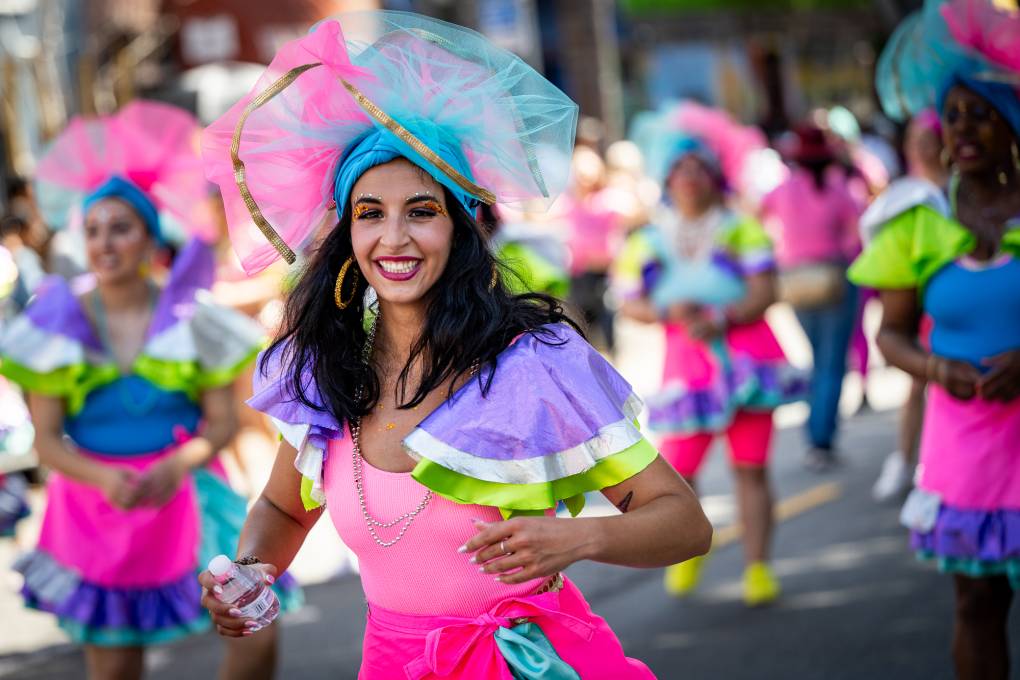
Carnaval Brings Colorful Costumes and Latin Dancing to San Francisco’s Mission District
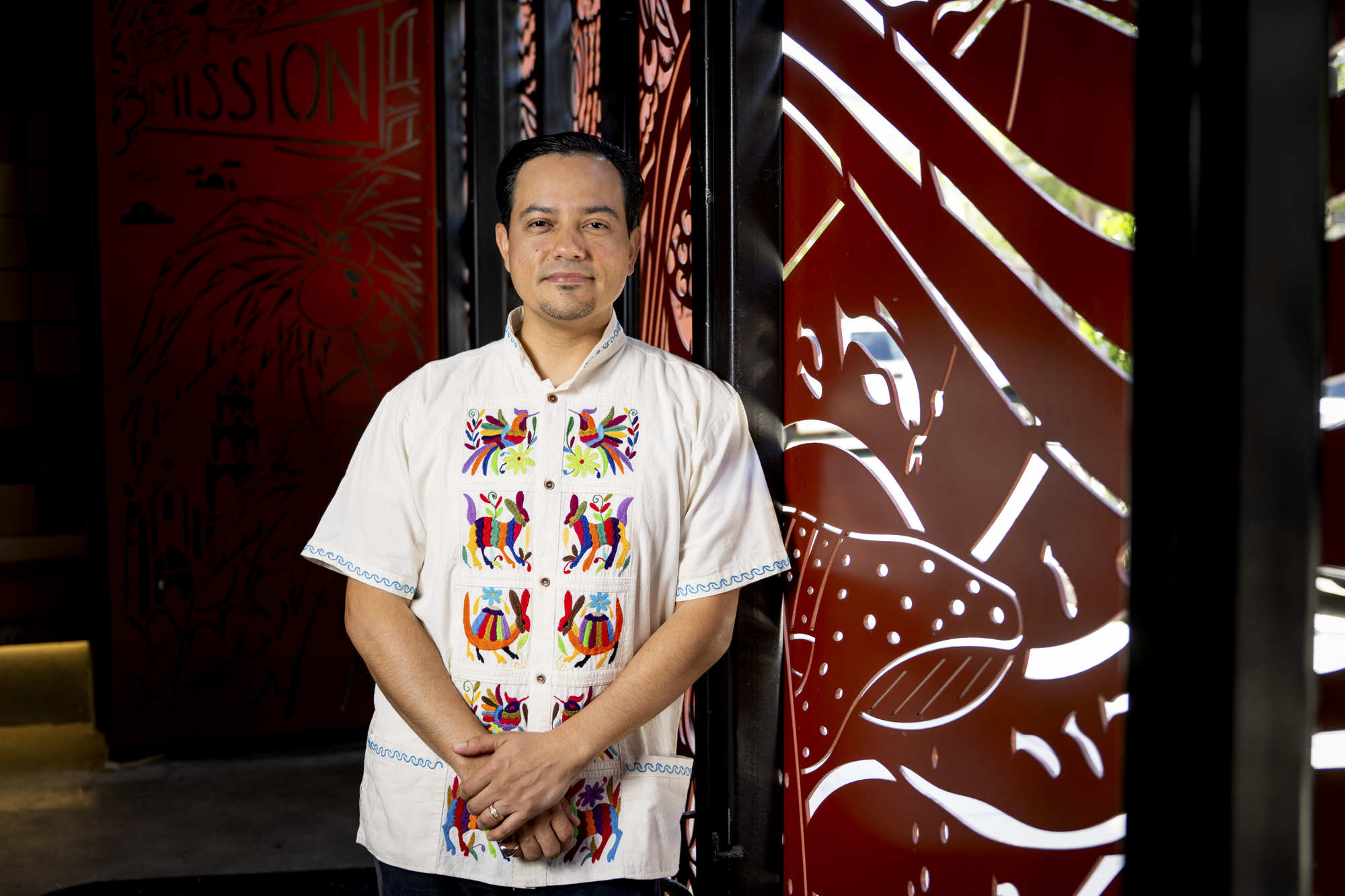
At SF Carnaval This Weekend, Freedom and Resistance Take Center Stage
Carnaval San Francisco 2026: From Parade Route to Parking, What to Know This Weekend
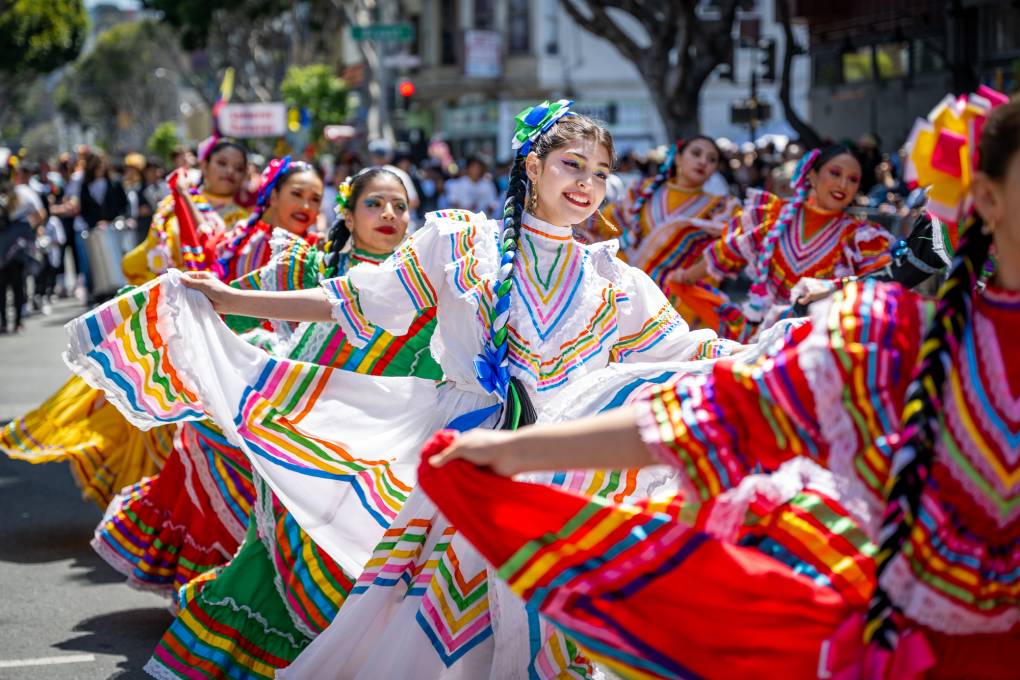
Carnaval San Francisco Turns Music, Memory and Resistance Into Celebration
Carnaval San Francisco 2025: From the Parade Route to Parking and Street Closures, What to Know
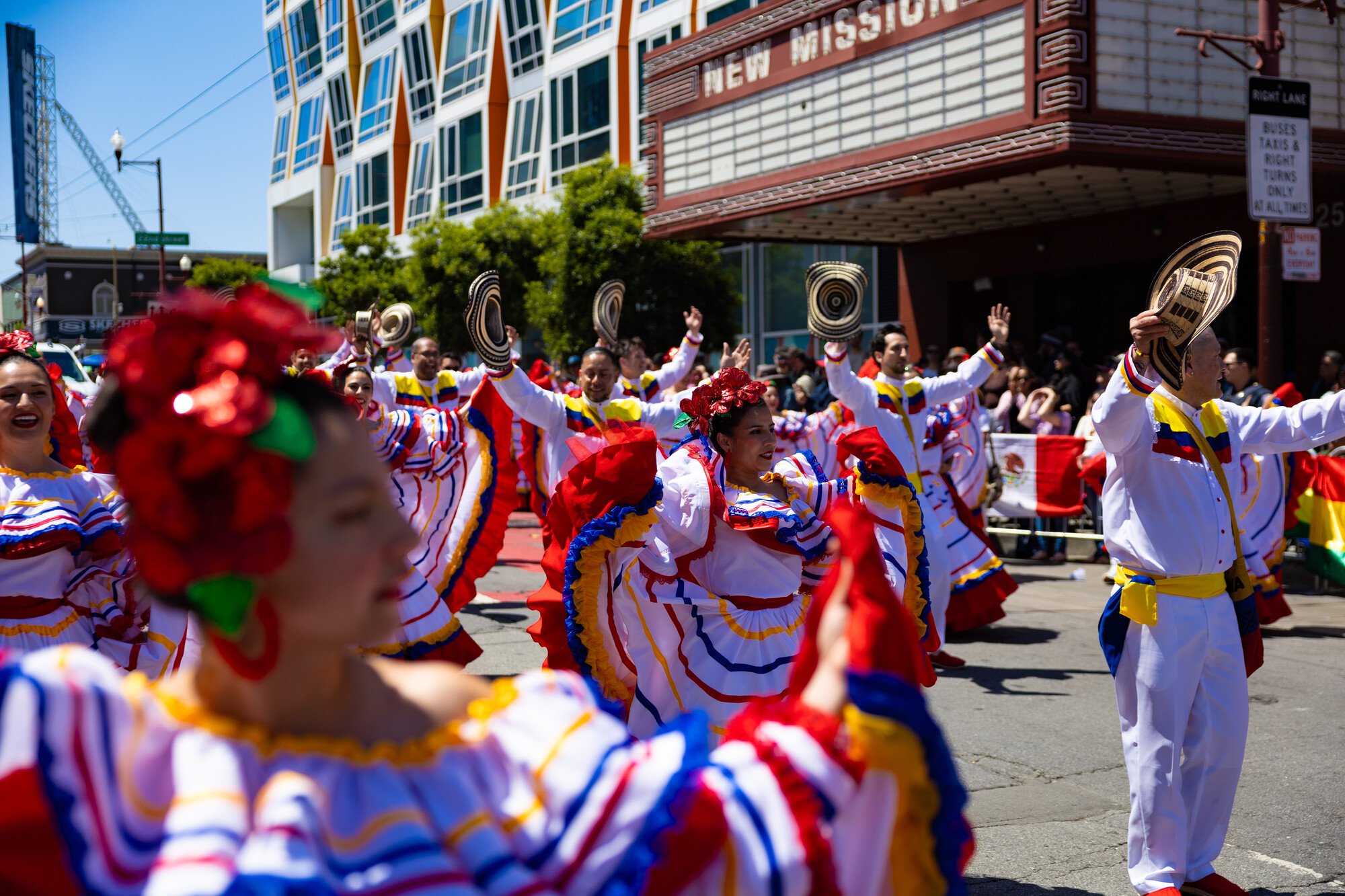
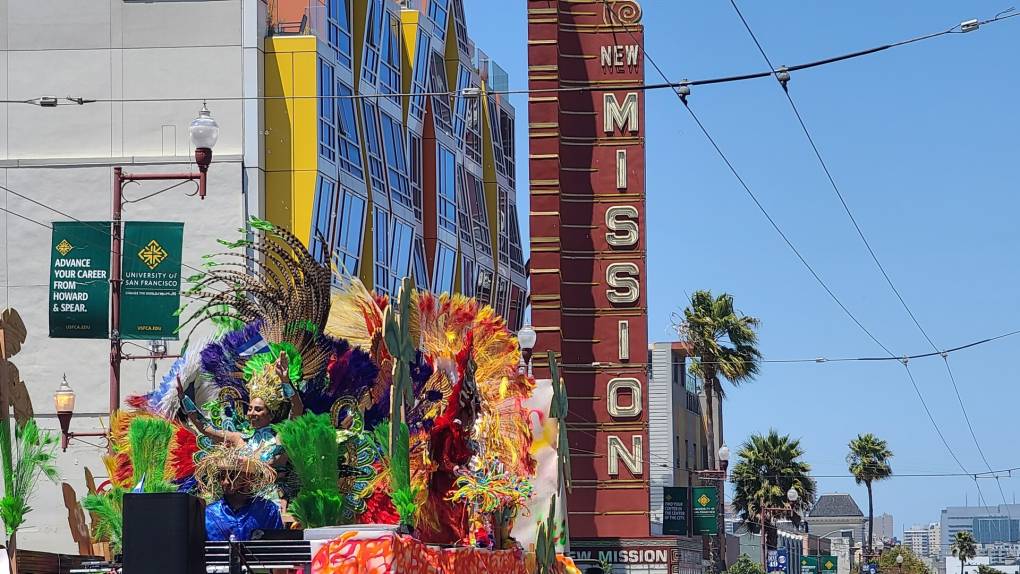
Carnaval San Francisco Celebrates 46 Years With Spectacular Mission Street Parade
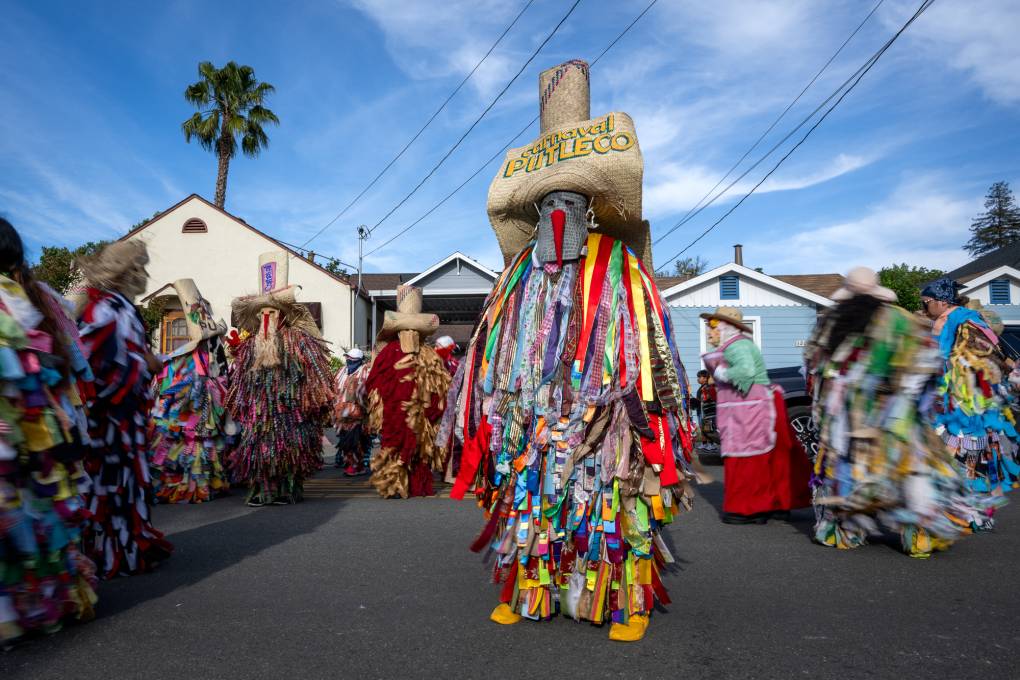
Carnaval Putleco Brings a Oaxacan Festival of Colors to the Bay Area
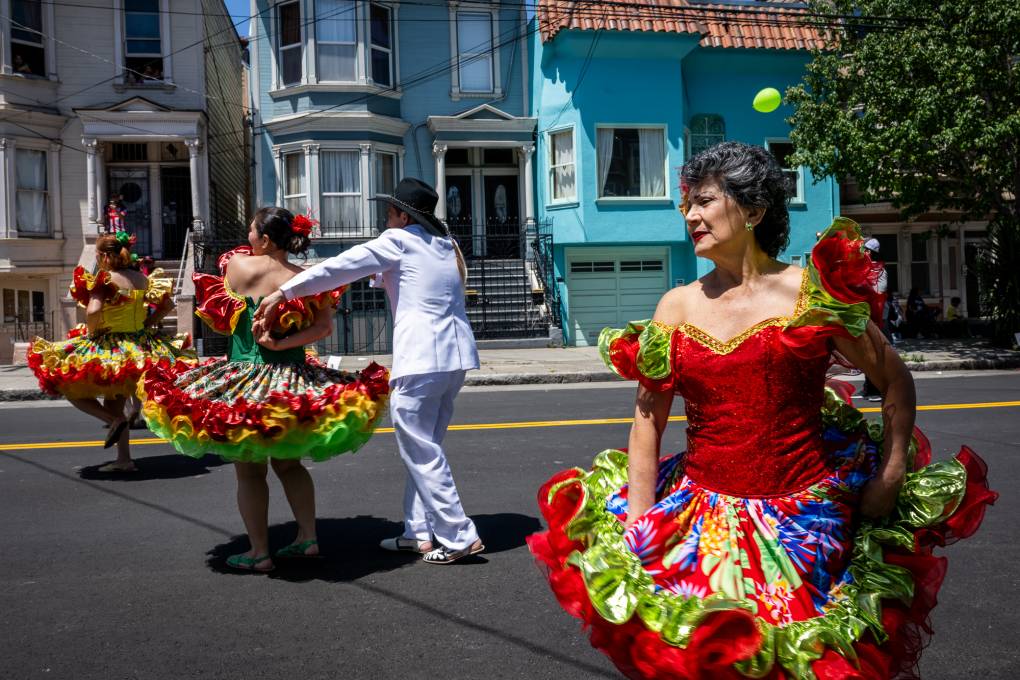
Carnaval San Francisco 2024: From the Parade Route to Parking, Here's What to Know
¿Usted Fue Afectado por Covid-19 y Necesita Alimentos? Empiece Aquí
PHOTOS: Mission District's 41st Carnaval Explores Healing Through Culture
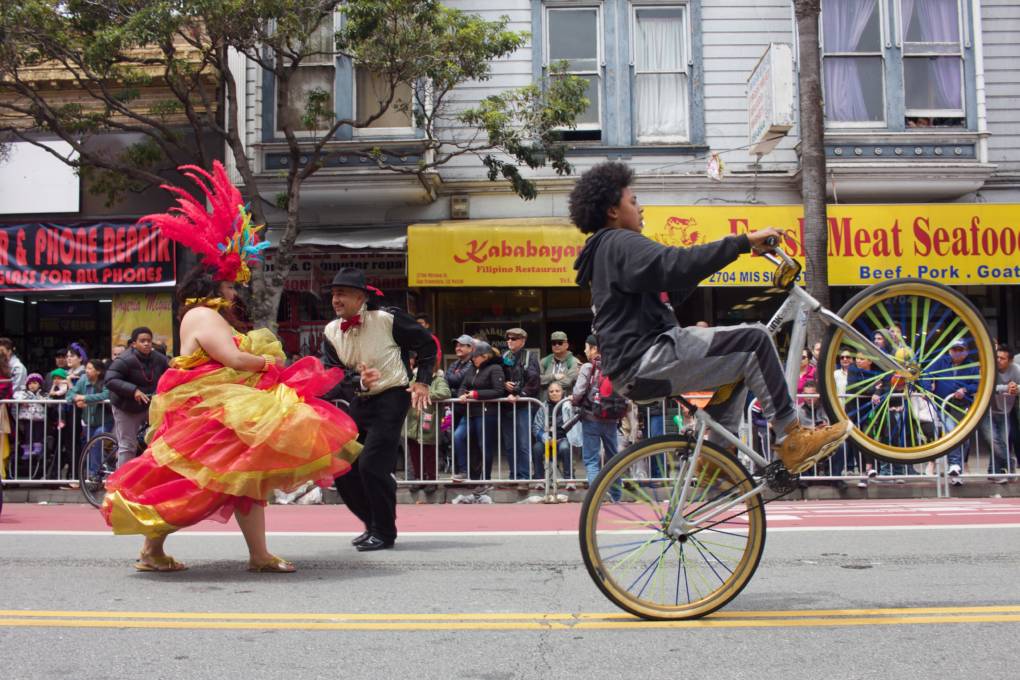
PHOTOS: Carnaval Takes Over the Mission with Music, Dance
San Francisco Carnaval Video and Photos
Player sponsored by
window.__IS_SSR__=true
window.__INITIAL_STATE__={
"attachmentsReducer": {
"audio_0": {
"type": "attachments",
"id": "audio_0",
"imgSizes": {
"kqedFullSize": {
"file": "https://ww2.kqed.org/news/wp-content/themes/KQED-unified/img/audio_bgs/background0.jpg"
}
}
},
"audio_1": {
"type": "attachments",
"id": "audio_1",
"imgSizes": {
"kqedFullSize": {
"file": "https://ww2.kqed.org/news/wp-content/themes/KQED-unified/img/audio_bgs/background1.jpg"
}
}
},
"audio_2": {
"type": "attachments",
"id": "audio_2",
"imgSizes": {
"kqedFullSize": {
"file": "https://ww2.kqed.org/news/wp-content/themes/KQED-unified/img/audio_bgs/background2.jpg"
}
}
},
"audio_3": {
"type": "attachments",
"id": "audio_3",
"imgSizes": {
"kqedFullSize": {
"file": "https://ww2.kqed.org/news/wp-content/themes/KQED-unified/img/audio_bgs/background3.jpg"
}
}
},
"audio_4": {
"type": "attachments",
"id": "audio_4",
"imgSizes": {
"kqedFullSize": {
"file": "https://ww2.kqed.org/news/wp-content/themes/KQED-unified/img/audio_bgs/background4.jpg"
}
}
},
"placeholder": {
"type": "attachments",
"id": "placeholder",
"imgSizes": {
"thumbnail": {
"file": "https://cdn.kqed.org/wp-content/uploads/2024/12/KQED-Default-Image-816638274-2000x1333-1-160x107.jpg",
"width": 160,
"height": 107,
"mimeType": "image/jpeg"
},
"medium": {
"file": "https://cdn.kqed.org/wp-content/uploads/2024/12/KQED-Default-Image-816638274-2000x1333-1-800x533.jpg",
"width": 800,
"height": 533,
"mimeType": "image/jpeg"
},
"medium_large": {
"file": "https://cdn.kqed.org/wp-content/uploads/2024/12/KQED-Default-Image-816638274-2000x1333-1-768x512.jpg",
"width": 768,
"height": 512,
"mimeType": "image/jpeg"
},
"large": {
"file": "https://cdn.kqed.org/wp-content/uploads/2024/12/KQED-Default-Image-816638274-2000x1333-1-1020x680.jpg",
"width": 1020,
"height": 680,
"mimeType": "image/jpeg"
},
"1536x1536": {
"file": "https://cdn.kqed.org/wp-content/uploads/2024/12/KQED-Default-Image-816638274-2000x1333-1-1536x1024.jpg",
"width": 1536,
"height": 1024,
"mimeType": "image/jpeg"
},
"fd-lrg": {
"file": "https://cdn.kqed.org/wp-content/uploads/2024/12/KQED-Default-Image-816638274-2000x1333-1-1536x1024.jpg",
"width": 1536,
"height": 1024,
"mimeType": "image/jpeg"
},
"fd-med": {
"file": "https://cdn.kqed.org/wp-content/uploads/2024/12/KQED-Default-Image-816638274-2000x1333-1-1020x680.jpg",
"width": 1020,
"height": 680,
"mimeType": "image/jpeg"
},
"fd-sm": {
"file": "https://cdn.kqed.org/wp-content/uploads/2024/12/KQED-Default-Image-816638274-2000x1333-1-800x533.jpg",
"width": 800,
"height": 533,
"mimeType": "image/jpeg"
},
"post-thumbnail": {
"file": "https://cdn.kqed.org/wp-content/uploads/2024/12/KQED-Default-Image-816638274-2000x1333-1-672x372.jpg",
"width": 672,
"height": 372,
"mimeType": "image/jpeg"
},
"twentyfourteen-full-width": {
"file": "https://cdn.kqed.org/wp-content/uploads/2024/12/KQED-Default-Image-816638274-2000x1333-1-1038x576.jpg",
"width": 1038,
"height": 576,
"mimeType": "image/jpeg"
},
"xxsmall": {
"file": "https://cdn.kqed.org/wp-content/uploads/2024/12/KQED-Default-Image-816638274-2000x1333-1-160x107.jpg",
"width": 160,
"height": 107,
"mimeType": "image/jpeg"
},
"xsmall": {
"file": "https://cdn.kqed.org/wp-content/uploads/2024/12/KQED-Default-Image-816638274-2000x1333-1-672x372.jpg",
"width": 672,
"height": 372,
"mimeType": "image/jpeg"
},
"small": {
"file": "https://cdn.kqed.org/wp-content/uploads/2024/12/KQED-Default-Image-816638274-2000x1333-1-672x372.jpg",
"width": 672,
"height": 372,
"mimeType": "image/jpeg"
},
"xlarge": {
"file": "https://cdn.kqed.org/wp-content/uploads/2024/12/KQED-Default-Image-816638274-2000x1333-1-1020x680.jpg",
"width": 1020,
"height": 680,
"mimeType": "image/jpeg"
},
"full-width": {
"file": "https://cdn.kqed.org/wp-content/uploads/2024/12/KQED-Default-Image-816638274-2000x1333-1-1920x1280.jpg",
"width": 1920,
"height": 1280,
"mimeType": "image/jpeg"
},
"guest-author-32": {
"file": "https://cdn.kqed.org/wp-content/uploads/2025/01/KQED-Default-Image-816638274-1333x1333-1-160x160.jpg",
"width": 32,
"height": 32,
"mimeType": "image/jpeg"
},
"guest-author-50": {
"file": "https://cdn.kqed.org/wp-content/uploads/2025/01/KQED-Default-Image-816638274-1333x1333-1-160x160.jpg",
"width": 50,
"height": 50,
"mimeType": "image/jpeg"
},
"guest-author-64": {
"file": "https://cdn.kqed.org/wp-content/uploads/2025/01/KQED-Default-Image-816638274-1333x1333-1-160x160.jpg",
"width": 64,
"height": 64,
"mimeType": "image/jpeg"
},
"guest-author-96": {
"file": "https://cdn.kqed.org/wp-content/uploads/2025/01/KQED-Default-Image-816638274-1333x1333-1-160x160.jpg",
"width": 96,
"height": 96,
"mimeType": "image/jpeg"
},
"guest-author-128": {
"file": "https://cdn.kqed.org/wp-content/uploads/2025/01/KQED-Default-Image-816638274-1333x1333-1-160x160.jpg",
"width": 128,
"height": 128,
"mimeType": "image/jpeg"
},
"detail": {
"file": "https://cdn.kqed.org/wp-content/uploads/2025/01/KQED-Default-Image-816638274-1333x1333-1-160x160.jpg",
"width": 160,
"height": 160,
"mimeType": "image/jpeg"
},
"kqedFullSize": {
"file": "https://cdn.kqed.org/wp-content/uploads/2024/12/KQED-Default-Image-816638274-2000x1333-1.jpg",
"width": 2000,
"height": 1333
}
}
},
"news_12085111": {
"type": "attachments",
"id": "news_12085111",
"meta": {
"index": "attachments_1716263798",
"site": "news",
"id": "12085111",
"found": true
},
"title": "20260524_Carnaval2026-GC-19_qed",
"publishDate": 1779662402,
"status": "inherit",
"parent": 12085109,
"modified": 1779662424,
"caption": "Dancers with Cumbiamba Colombiana dance during the 2026 Carnaval parade on May 24, 2026. San Francisco’s annual Carnaval festival and parade took place Memorial Day Weekend and celebrated Latino culture and diversity.",
"credit": "Gina Castro/KQED",
"altTag": null,
"description": null,
"imgSizes": {
"thumbnail": {
"file": "https://cdn.kqed.org/wp-content/uploads/sites/10/2026/05/20260524_Carnaval2026-GC-19_qed-160x107.jpg",
"width": 160,
"height": 107,
"mimeType": "image/jpeg"
},
"1536x1536": {
"file": "https://cdn.kqed.org/wp-content/uploads/sites/10/2026/05/20260524_Carnaval2026-GC-19_qed-1536x1024.jpg",
"width": 1536,
"height": 1024,
"mimeType": "image/jpeg"
},
"post-thumbnail": {
"file": "https://cdn.kqed.org/wp-content/uploads/sites/10/2026/05/20260524_Carnaval2026-GC-19_qed-672x372.jpg",
"width": 672,
"height": 372,
"mimeType": "image/jpeg"
},
"twentyfourteen-full-width": {
"file": "https://cdn.kqed.org/wp-content/uploads/sites/10/2026/05/20260524_Carnaval2026-GC-19_qed-1038x576.jpg",
"width": 1038,
"height": 576,
"mimeType": "image/jpeg"
},
"npr-cds-wide": {
"file": "https://cdn.kqed.org/wp-content/uploads/sites/10/2026/05/20260524_Carnaval2026-GC-19_qed-1200x675.jpg",
"width": 1200,
"height": 675,
"mimeType": "image/jpeg"
},
"npr-cds-square": {
"file": "https://cdn.kqed.org/wp-content/uploads/sites/10/2026/05/20260524_Carnaval2026-GC-19_qed-600x600.jpg",
"width": 600,
"height": 600,
"mimeType": "image/jpeg"
},
"kqedFullSize": {
"file": "https://cdn.kqed.org/wp-content/uploads/sites/10/2026/05/20260524_Carnaval2026-GC-19_qed.jpg",
"width": 2000,
"height": 1333
}
},
"isLoading": false,
"fetchFailed": false
},
"news_11987825": {
"type": "attachments",
"id": "news_11987825",
"meta": {
"index": "attachments_1716263798",
"site": "news",
"id": "11987825",
"found": true
},
"title": "240526-CarnavalParade-18-BL",
"publishDate": 1716764306,
"status": "inherit",
"parent": 11987764,
"modified": 1716767039,
"caption": "Members of the group Mi Tierra Colombiana practice before the Carnaval Grand Parade in San Francisco's Mission District on May 26, 2024.",
"credit": "Beth LaBerge/KQED",
"altTag": "A man and woman dance in white clothing and colorful dresses in the street.",
"description": null,
"imgSizes": {
"medium": {
"file": "https://cdn.kqed.org/wp-content/uploads/sites/10/2024/05/240526-CarnavalParade-18-BL-800x533.jpg",
"width": 800,
"height": 533,
"mimeType": "image/jpeg"
},
"large": {
"file": "https://cdn.kqed.org/wp-content/uploads/sites/10/2024/05/240526-CarnavalParade-18-BL-1020x680.jpg",
"width": 1020,
"height": 680,
"mimeType": "image/jpeg"
},
"thumbnail": {
"file": "https://cdn.kqed.org/wp-content/uploads/sites/10/2024/05/240526-CarnavalParade-18-BL-160x107.jpg",
"width": 160,
"height": 107,
"mimeType": "image/jpeg"
},
"1536x1536": {
"file": "https://cdn.kqed.org/wp-content/uploads/sites/10/2024/05/240526-CarnavalParade-18-BL-1536x1024.jpg",
"width": 1536,
"height": 1024,
"mimeType": "image/jpeg"
},
"post-thumbnail": {
"file": "https://cdn.kqed.org/wp-content/uploads/sites/10/2024/05/240526-CarnavalParade-18-BL-672x372.jpg",
"width": 672,
"height": 372,
"mimeType": "image/jpeg"
},
"twentyfourteen-full-width": {
"file": "https://cdn.kqed.org/wp-content/uploads/sites/10/2024/05/240526-CarnavalParade-18-BL-1038x576.jpg",
"width": 1038,
"height": 576,
"mimeType": "image/jpeg"
},
"full-width": {
"file": "https://cdn.kqed.org/wp-content/uploads/sites/10/2024/05/240526-CarnavalParade-18-BL-1920x1280.jpg",
"width": 1920,
"height": 1280,
"mimeType": "image/jpeg"
},
"kqedFullSize": {
"file": "https://cdn.kqed.org/wp-content/uploads/sites/10/2024/05/240526-CarnavalParade-18-BL.jpg",
"width": 2000,
"height": 1333
}
},
"isLoading": false,
"fetchFailed": false
},
"news_11987839": {
"type": "attachments",
"id": "news_11987839",
"meta": {
"index": "attachments_1716263798",
"site": "news",
"id": "11987839",
"found": true
},
"title": "240526-CarnavalParade-33-BL",
"publishDate": 1716767600,
"status": "inherit",
"parent": 12083056,
"modified": 1778611986,
"caption": "Cathedral City High School Ballet Folklórico performs during the Carnaval Grand Parade in San Francisco's Mission District on May 26, 2024.",
"credit": "Beth LaBerge/KQED",
"altTag": "Several women dressed in colorful clothing dance and walk down the street during a parade.",
"description": null,
"imgSizes": {
"medium": {
"file": "https://cdn.kqed.org/wp-content/uploads/sites/10/2024/05/240526-CarnavalParade-33-BL-800x533.jpg",
"width": 800,
"height": 533,
"mimeType": "image/jpeg"
},
"large": {
"file": "https://cdn.kqed.org/wp-content/uploads/sites/10/2024/05/240526-CarnavalParade-33-BL-1020x680.jpg",
"width": 1020,
"height": 680,
"mimeType": "image/jpeg"
},
"thumbnail": {
"file": "https://cdn.kqed.org/wp-content/uploads/sites/10/2024/05/240526-CarnavalParade-33-BL-160x107.jpg",
"width": 160,
"height": 107,
"mimeType": "image/jpeg"
},
"1536x1536": {
"file": "https://cdn.kqed.org/wp-content/uploads/sites/10/2024/05/240526-CarnavalParade-33-BL-1536x1024.jpg",
"width": 1536,
"height": 1024,
"mimeType": "image/jpeg"
},
"post-thumbnail": {
"file": "https://cdn.kqed.org/wp-content/uploads/sites/10/2024/05/240526-CarnavalParade-33-BL-672x372.jpg",
"width": 672,
"height": 372,
"mimeType": "image/jpeg"
},
"twentyfourteen-full-width": {
"file": "https://cdn.kqed.org/wp-content/uploads/sites/10/2024/05/240526-CarnavalParade-33-BL-1038x576.jpg",
"width": 1038,
"height": 576,
"mimeType": "image/jpeg"
},
"full-width": {
"file": "https://cdn.kqed.org/wp-content/uploads/sites/10/2024/05/240526-CarnavalParade-33-BL-1920x1280.jpg",
"width": 1920,
"height": 1280,
"mimeType": "image/jpeg"
},
"kqedFullSize": {
"file": "https://cdn.kqed.org/wp-content/uploads/sites/10/2024/05/240526-CarnavalParade-33-BL.jpg",
"width": 2000,
"height": 1333
}
},
"isLoading": false,
"fetchFailed": false
},
"news_12083186": {
"type": "attachments",
"id": "news_12083186",
"meta": {
"index": "attachments_1716263798",
"site": "news",
"id": "12083186",
"found": true
},
"title": "260511-KONDAMAY-03-BL-KQED",
"publishDate": 1778535389,
"status": "inherit",
"parent": 0,
"modified": 1778535423,
"caption": "Rodrigo Duran, executive director of Carnaval San Francisco, at the organization’s offices in San Francisco’s Mission District on May 11, 2026.",
"credit": "Beth LaBerge/KQED",
"altTag": null,
"description": null,
"imgSizes": {
"thumbnail": {
"file": "https://cdn.kqed.org/wp-content/uploads/sites/10/2026/05/260511-KONDAMAY-03-BL-KQED-160x107.jpg",
"width": 160,
"height": 107,
"mimeType": "image/jpeg"
},
"1536x1536": {
"file": "https://cdn.kqed.org/wp-content/uploads/sites/10/2026/05/260511-KONDAMAY-03-BL-KQED-1536x1024.jpg",
"width": 1536,
"height": 1024,
"mimeType": "image/jpeg"
},
"post-thumbnail": {
"file": "https://cdn.kqed.org/wp-content/uploads/sites/10/2026/05/260511-KONDAMAY-03-BL-KQED-672x372.jpg",
"width": 672,
"height": 372,
"mimeType": "image/jpeg"
},
"twentyfourteen-full-width": {
"file": "https://cdn.kqed.org/wp-content/uploads/sites/10/2026/05/260511-KONDAMAY-03-BL-KQED-1038x576.jpg",
"width": 1038,
"height": 576,
"mimeType": "image/jpeg"
},
"npr-cds-wide": {
"file": "https://cdn.kqed.org/wp-content/uploads/sites/10/2026/05/260511-KONDAMAY-03-BL-KQED-1200x675.jpg",
"width": 1200,
"height": 675,
"mimeType": "image/jpeg"
},
"npr-cds-square": {
"file": "https://cdn.kqed.org/wp-content/uploads/sites/10/2026/05/260511-KONDAMAY-03-BL-KQED-600x600.jpg",
"width": 600,
"height": 600,
"mimeType": "image/jpeg"
},
"kqedFullSize": {
"file": "https://cdn.kqed.org/wp-content/uploads/sites/10/2026/05/260511-KONDAMAY-03-BL-KQED.jpg",
"width": 2000,
"height": 1333
}
},
"isLoading": false,
"fetchFailed": false
},
"news_11987833": {
"type": "attachments",
"id": "news_11987833",
"meta": {
"index": "attachments_1716263798",
"site": "news",
"id": "11987833",
"found": true
},
"title": "240526-CarnavalParade-08-BL",
"publishDate": 1716765430,
"status": "inherit",
"parent": 12083297,
"modified": 1778612809,
"caption": "A performer in the Carnaval Grand Parade in San Francisco's Mission District on May 26, 2024.",
"credit": "Beth LaBerge/KQED",
"altTag": "A woman dressed in a colorful costume walks during a parade.",
"description": null,
"imgSizes": {
"medium": {
"file": "https://cdn.kqed.org/wp-content/uploads/sites/10/2024/05/240526-CarnavalParade-08-BL-800x533.jpg",
"width": 800,
"height": 533,
"mimeType": "image/jpeg"
},
"large": {
"file": "https://cdn.kqed.org/wp-content/uploads/sites/10/2024/05/240526-CarnavalParade-08-BL-1020x680.jpg",
"width": 1020,
"height": 680,
"mimeType": "image/jpeg"
},
"thumbnail": {
"file": "https://cdn.kqed.org/wp-content/uploads/sites/10/2024/05/240526-CarnavalParade-08-BL-160x107.jpg",
"width": 160,
"height": 107,
"mimeType": "image/jpeg"
},
"1536x1536": {
"file": "https://cdn.kqed.org/wp-content/uploads/sites/10/2024/05/240526-CarnavalParade-08-BL-1536x1024.jpg",
"width": 1536,
"height": 1024,
"mimeType": "image/jpeg"
},
"post-thumbnail": {
"file": "https://cdn.kqed.org/wp-content/uploads/sites/10/2024/05/240526-CarnavalParade-08-BL-672x372.jpg",
"width": 672,
"height": 372,
"mimeType": "image/jpeg"
},
"twentyfourteen-full-width": {
"file": "https://cdn.kqed.org/wp-content/uploads/sites/10/2024/05/240526-CarnavalParade-08-BL-1038x576.jpg",
"width": 1038,
"height": 576,
"mimeType": "image/jpeg"
},
"full-width": {
"file": "https://cdn.kqed.org/wp-content/uploads/sites/10/2024/05/240526-CarnavalParade-08-BL-1920x1280.jpg",
"width": 1920,
"height": 1280,
"mimeType": "image/jpeg"
},
"kqedFullSize": {
"file": "https://cdn.kqed.org/wp-content/uploads/sites/10/2024/05/240526-CarnavalParade-08-BL.jpg",
"width": 2000,
"height": 1333
}
},
"isLoading": false,
"fetchFailed": false
},
"news_11987635": {
"type": "attachments",
"id": "news_11987635",
"meta": {
"index": "attachments_1716263798",
"site": "news",
"id": "11987635",
"found": true
},
"title": "240523-CarnavalPutleco-BethLaBerge-01",
"publishDate": 1716539933,
"status": "inherit",
"parent": 0,
"modified": 1716588747,
"caption": "Iván Olivera wears a tiliche alongside the group Carnaval Putleco during the Twilight Parade in Healdsburg on May 23, 2024.",
"credit": "Beth LaBerge/KQED",
"altTag": null,
"description": null,
"imgSizes": {
"medium": {
"file": "https://cdn.kqed.org/wp-content/uploads/sites/10/2024/05/240523-CarnavalPutleco-01-BL-800x533.jpg",
"width": 800,
"height": 533,
"mimeType": "image/jpeg"
},
"large": {
"file": "https://cdn.kqed.org/wp-content/uploads/sites/10/2024/05/240523-CarnavalPutleco-01-BL-1020x680.jpg",
"width": 1020,
"height": 680,
"mimeType": "image/jpeg"
},
"thumbnail": {
"file": "https://cdn.kqed.org/wp-content/uploads/sites/10/2024/05/240523-CarnavalPutleco-01-BL-160x107.jpg",
"width": 160,
"height": 107,
"mimeType": "image/jpeg"
},
"1536x1536": {
"file": "https://cdn.kqed.org/wp-content/uploads/sites/10/2024/05/240523-CarnavalPutleco-01-BL-1536x1024.jpg",
"width": 1536,
"height": 1024,
"mimeType": "image/jpeg"
},
"post-thumbnail": {
"file": "https://cdn.kqed.org/wp-content/uploads/sites/10/2024/05/240523-CarnavalPutleco-01-BL-672x372.jpg",
"width": 672,
"height": 372,
"mimeType": "image/jpeg"
},
"twentyfourteen-full-width": {
"file": "https://cdn.kqed.org/wp-content/uploads/sites/10/2024/05/240523-CarnavalPutleco-01-BL-1038x576.jpg",
"width": 1038,
"height": 576,
"mimeType": "image/jpeg"
},
"full-width": {
"file": "https://cdn.kqed.org/wp-content/uploads/sites/10/2024/05/240523-CarnavalPutleco-01-BL-1920x1280.jpg",
"width": 1920,
"height": 1280,
"mimeType": "image/jpeg"
},
"kqedFullSize": {
"file": "https://cdn.kqed.org/wp-content/uploads/sites/10/2024/05/240523-CarnavalPutleco-01-BL.jpg",
"width": 2000,
"height": 1333
}
},
"isLoading": false,
"fetchFailed": false
},
"news_11987244": {
"type": "attachments",
"id": "news_11987244",
"meta": {
"index": "attachments_1716263798",
"site": "news",
"id": "11987244",
"found": true
},
"title": "sf-carnaval-parade-mission-st",
"publishDate": 1716336854,
"status": "inherit",
"parent": 0,
"modified": 1718736858,
"caption": "Carnaval San Francisco's Grand Parade moves through Mission Street on Sunday, May 29, 2022. Thousands of dancers, musicians and artisans work together year-long to create dozens of incredibly elaborate floats.\n",
"credit": "Carlos Cabrera-Lomelí",
"altTag": null,
"description": null,
"imgSizes": {
"medium": {
"file": "https://cdn.kqed.org/wp-content/uploads/sites/10/2024/05/20220529_135016_qut-800x450.jpg",
"width": 800,
"height": 450,
"mimeType": "image/jpeg"
},
"large": {
"file": "https://cdn.kqed.org/wp-content/uploads/sites/10/2024/05/20220529_135016_qut-1020x574.jpg",
"width": 1020,
"height": 574,
"mimeType": "image/jpeg"
},
"thumbnail": {
"file": "https://cdn.kqed.org/wp-content/uploads/sites/10/2024/05/20220529_135016_qut-160x90.jpg",
"width": 160,
"height": 90,
"mimeType": "image/jpeg"
},
"1536x1536": {
"file": "https://cdn.kqed.org/wp-content/uploads/sites/10/2024/05/20220529_135016_qut-1536x865.jpg",
"width": 1536,
"height": 865,
"mimeType": "image/jpeg"
},
"post-thumbnail": {
"file": "https://cdn.kqed.org/wp-content/uploads/sites/10/2024/05/20220529_135016_qut-672x372.jpg",
"width": 672,
"height": 372,
"mimeType": "image/jpeg"
},
"twentyfourteen-full-width": {
"file": "https://cdn.kqed.org/wp-content/uploads/sites/10/2024/05/20220529_135016_qut-1038x576.jpg",
"width": 1038,
"height": 576,
"mimeType": "image/jpeg"
},
"kqedFullSize": {
"file": "https://cdn.kqed.org/wp-content/uploads/sites/10/2024/05/20220529_135016_qut.jpg",
"width": 1920,
"height": 1081
}
},
"isLoading": false,
"fetchFailed": false
},
"news_11826962": {
"type": "attachments",
"id": "news_11826962",
"meta": {
"index": "attachments_1716263798",
"site": "news",
"id": "11826962",
"found": true
},
"parent": 11826959,
"imgSizes": {
"apple_news_ca_square_4_0": {
"file": "https://ww2.kqed.org/app/uploads/sites/10/2020/07/Mission-Latino-Food-Hub_5156_WEB-470x470.jpg",
"width": 470,
"mimeType": "image/jpeg",
"height": 470
},
"thumbnail": {
"file": "https://ww2.kqed.org/app/uploads/sites/10/2020/07/Mission-Latino-Food-Hub_5156_WEB-160x107.jpg",
"width": 160,
"mimeType": "image/jpeg",
"height": 107
},
"post-thumbnail": {
"file": "https://ww2.kqed.org/app/uploads/sites/10/2020/07/Mission-Latino-Food-Hub_5156_WEB-672x372.jpg",
"width": 672,
"mimeType": "image/jpeg",
"height": 372
},
"kqedFullSize": {
"file": "https://ww2.kqed.org/app/uploads/sites/10/2020/07/Mission-Latino-Food-Hub_5156_WEB.jpg",
"width": 800,
"height": 534
},
"apple_news_ca_landscape_4_7": {
"file": "https://ww2.kqed.org/app/uploads/sites/10/2020/07/Mission-Latino-Food-Hub_5156_WEB-632x474.jpg",
"width": 632,
"mimeType": "image/jpeg",
"height": 474
},
"apple_news_ca_portrait_4_7": {
"file": "https://ww2.kqed.org/app/uploads/sites/10/2020/07/Mission-Latino-Food-Hub_5156_WEB-414x534.jpg",
"width": 414,
"mimeType": "image/jpeg",
"height": 534
},
"apple_news_ca_portrait_5_5": {
"file": "https://ww2.kqed.org/app/uploads/sites/10/2020/07/Mission-Latino-Food-Hub_5156_WEB-687x534.jpg",
"width": 687,
"mimeType": "image/jpeg",
"height": 534
},
"apple_news_ca_square_4_7": {
"file": "https://ww2.kqed.org/app/uploads/sites/10/2020/07/Mission-Latino-Food-Hub_5156_WEB-550x534.jpg",
"width": 550,
"mimeType": "image/jpeg",
"height": 534
},
"apple_news_ca_landscape_4_0": {
"file": "https://ww2.kqed.org/app/uploads/sites/10/2020/07/Mission-Latino-Food-Hub_5156_WEB-536x402.jpg",
"width": 536,
"mimeType": "image/jpeg",
"height": 402
},
"apple_news_ca_portrait_4_0": {
"file": "https://ww2.kqed.org/app/uploads/sites/10/2020/07/Mission-Latino-Food-Hub_5156_WEB-354x472.jpg",
"width": 354,
"mimeType": "image/jpeg",
"height": 472
}
},
"publishDate": 1593616402,
"modified": 1593622942,
"caption": "Con una organización impecable y un gran sentimiento de unión en la comunidad, el Food Hub ha logrado ayudar a cientos de personas en la ciudad y éstas no dudan en expresar su gratitud.",
"description": "Con una organización impecable y un gran sentimiento de unión en la comunidad, el Food Hub ha logrado ayudar a cientos de personas en la ciudad y éstas no dudan en expresar su gratitud.",
"title": "Mission Latino Food Hub_5156_WEB",
"credit": "Mabel Jiménez/El Tecolote",
"status": "inherit",
"isLoading": false,
"fetchFailed": false
},
"news_11750072": {
"type": "attachments",
"id": "news_11750072",
"meta": {
"index": "attachments_1716263798",
"site": "news",
"id": "11750072",
"found": true
},
"parent": 11750060,
"imgSizes": {
"apple_news_ca_landscape_5_5": {
"file": "https://ww2.kqed.org/app/uploads/sites/10/2019/05/IMG_1471-1044x783.jpg",
"width": 1044,
"mimeType": "image/jpeg",
"height": 783
},
"apple_news_ca_square_4_0": {
"file": "https://ww2.kqed.org/app/uploads/sites/10/2019/05/IMG_1471-470x470.jpg",
"width": 470,
"mimeType": "image/jpeg",
"height": 470
},
"twentyfourteen-full-width": {
"file": "https://ww2.kqed.org/app/uploads/sites/10/2019/05/IMG_1471-1038x576.jpg",
"width": 1038,
"mimeType": "image/jpeg",
"height": 576
},
"thumbnail": {
"file": "https://ww2.kqed.org/app/uploads/sites/10/2019/05/IMG_1471-160x107.jpg",
"width": 160,
"mimeType": "image/jpeg",
"height": 107
},
"post-thumbnail": {
"file": "https://ww2.kqed.org/app/uploads/sites/10/2019/05/IMG_1471-672x372.jpg",
"width": 672,
"mimeType": "image/jpeg",
"height": 372
},
"kqedFullSize": {
"file": "https://ww2.kqed.org/app/uploads/sites/10/2019/05/IMG_1471-e1558915984209.jpg",
"width": 1920,
"height": 1280
},
"apple_news_ca_landscape_4_7": {
"file": "https://ww2.kqed.org/app/uploads/sites/10/2019/05/IMG_1471-632x474.jpg",
"width": 632,
"mimeType": "image/jpeg",
"height": 474
},
"large": {
"file": "https://ww2.kqed.org/app/uploads/sites/10/2019/05/IMG_1471-1020x680.jpg",
"width": 1020,
"mimeType": "image/jpeg",
"height": 680
},
"complete_open_graph": {
"file": "https://ww2.kqed.org/app/uploads/sites/10/2019/05/IMG_1471-1200x800.jpg",
"width": 1200,
"mimeType": "image/jpeg",
"height": 800
},
"apple_news_ca_landscape_4_0": {
"file": "https://ww2.kqed.org/app/uploads/sites/10/2019/05/IMG_1471-536x402.jpg",
"width": 536,
"mimeType": "image/jpeg",
"height": 402
},
"apple_news_ca_portrait_12_9": {
"file": "https://ww2.kqed.org/app/uploads/sites/10/2019/05/IMG_1471-1122x1496.jpg",
"width": 1122,
"mimeType": "image/jpeg",
"height": 1496
},
"medium": {
"file": "https://ww2.kqed.org/app/uploads/sites/10/2019/05/IMG_1471-800x533.jpg",
"width": 800,
"mimeType": "image/jpeg",
"height": 533
},
"apple_news_ca_portrait_4_0": {
"file": "https://ww2.kqed.org/app/uploads/sites/10/2019/05/IMG_1471-354x472.jpg",
"width": 354,
"mimeType": "image/jpeg",
"height": 472
},
"apple_news_ca_portrait_9_7": {
"file": "https://ww2.kqed.org/app/uploads/sites/10/2019/05/IMG_1471-840x1120.jpg",
"width": 840,
"mimeType": "image/jpeg",
"height": 1120
},
"apple_news_ca_landscape_12_9": {
"file": "https://ww2.kqed.org/app/uploads/sites/10/2019/05/IMG_1471-1832x1374.jpg",
"width": 1832,
"mimeType": "image/jpeg",
"height": 1374
},
"apple_news_ca_square_9_7": {
"file": "https://ww2.kqed.org/app/uploads/sites/10/2019/05/IMG_1471-1104x1104.jpg",
"width": 1104,
"mimeType": "image/jpeg",
"height": 1104
},
"apple_news_ca_portrait_4_7": {
"file": "https://ww2.kqed.org/app/uploads/sites/10/2019/05/IMG_1471-414x552.jpg",
"width": 414,
"mimeType": "image/jpeg",
"height": 552
},
"apple_news_ca_square_12_9": {
"file": "https://ww2.kqed.org/app/uploads/sites/10/2019/05/IMG_1471-1472x1472.jpg",
"width": 1472,
"mimeType": "image/jpeg",
"height": 1472
},
"apple_news_ca_portrait_5_5": {
"file": "https://ww2.kqed.org/app/uploads/sites/10/2019/05/IMG_1471-687x916.jpg",
"width": 687,
"mimeType": "image/jpeg",
"height": 916
},
"full-width": {
"file": "https://ww2.kqed.org/app/uploads/sites/10/2019/05/IMG_1471-1920x1280.jpg",
"width": 1920,
"mimeType": "image/jpeg",
"height": 1280
},
"apple_news_ca_square_4_7": {
"file": "https://ww2.kqed.org/app/uploads/sites/10/2019/05/IMG_1471-550x550.jpg",
"width": 550,
"mimeType": "image/jpeg",
"height": 550
},
"apple_news_ca_landscape_9_7": {
"file": "https://ww2.kqed.org/app/uploads/sites/10/2019/05/IMG_1471-1376x1032.jpg",
"width": 1376,
"mimeType": "image/jpeg",
"height": 1032
},
"apple_news_ca_square_5_5": {
"file": "https://ww2.kqed.org/app/uploads/sites/10/2019/05/IMG_1471-912x912.jpg",
"width": 912,
"mimeType": "image/jpeg",
"height": 912
}
},
"publishDate": 1558915590,
"modified": 1558920349,
"caption": "A crowd gathers as dancers twirl down Mission Street at the 41st Annual Carnaval Parade on May 26, 2019. ",
"description": null,
"title": "IMG_1471",
"credit": "Audrey Garces/KQED",
"status": "inherit",
"isLoading": false,
"fetchFailed": false
},
"news_11671055": {
"type": "attachments",
"id": "news_11671055",
"meta": {
"index": "attachments_1716263798",
"site": "news",
"id": "11671055",
"found": true
},
"parent": 11671039,
"imgSizes": {
"small": {
"file": "https://ww2.kqed.org/app/uploads/sites/10/2018/05/IMG_7854-520x390.jpg",
"width": 520,
"mimeType": "image/jpeg",
"height": 390
},
"twentyfourteen-full-width": {
"file": "https://ww2.kqed.org/app/uploads/sites/10/2018/05/IMG_7854-1038x576.jpg",
"width": 1038,
"mimeType": "image/jpeg",
"height": 576
},
"thumbnail": {
"file": "https://ww2.kqed.org/app/uploads/sites/10/2018/05/IMG_7854-160x120.jpg",
"width": 160,
"mimeType": "image/jpeg",
"height": 120
},
"fd-sm": {
"file": "https://ww2.kqed.org/app/uploads/sites/10/2018/05/IMG_7854-960x720.jpg",
"width": 960,
"mimeType": "image/jpeg",
"height": 720
},
"post-thumbnail": {
"file": "https://ww2.kqed.org/app/uploads/sites/10/2018/05/IMG_7854-672x372.jpg",
"width": 672,
"mimeType": "image/jpeg",
"height": 372
},
"xsmall": {
"file": "https://ww2.kqed.org/app/uploads/sites/10/2018/05/IMG_7854-375x281.jpg",
"width": 375,
"mimeType": "image/jpeg",
"height": 281
},
"kqedFullSize": {
"file": "https://ww2.kqed.org/app/uploads/sites/10/2018/05/IMG_7854-e1527450281651.jpg",
"width": 1920,
"height": 1440
},
"large": {
"file": "https://ww2.kqed.org/app/uploads/sites/10/2018/05/IMG_7854-1020x765.jpg",
"width": 1020,
"mimeType": "image/jpeg",
"height": 765
},
"xlarge": {
"file": "https://ww2.kqed.org/app/uploads/sites/10/2018/05/IMG_7854-1180x885.jpg",
"width": 1180,
"mimeType": "image/jpeg",
"height": 885
},
"complete_open_graph": {
"file": "https://ww2.kqed.org/app/uploads/sites/10/2018/05/IMG_7854-1200x900.jpg",
"width": 1200,
"mimeType": "image/jpeg",
"height": 900
},
"guest-author-50": {
"file": "https://ww2.kqed.org/app/uploads/sites/10/2018/05/IMG_7854-50x50.jpg",
"width": 50,
"mimeType": "image/jpeg",
"height": 50
},
"guest-author-96": {
"file": "https://ww2.kqed.org/app/uploads/sites/10/2018/05/IMG_7854-96x96.jpg",
"width": 96,
"mimeType": "image/jpeg",
"height": 96
},
"medium": {
"file": "https://ww2.kqed.org/app/uploads/sites/10/2018/05/IMG_7854-800x600.jpg",
"width": 800,
"mimeType": "image/jpeg",
"height": 600
},
"guest-author-64": {
"file": "https://ww2.kqed.org/app/uploads/sites/10/2018/05/IMG_7854-64x64.jpg",
"width": 64,
"mimeType": "image/jpeg",
"height": 64
},
"guest-author-32": {
"file": "https://ww2.kqed.org/app/uploads/sites/10/2018/05/IMG_7854-32x32.jpg",
"width": 32,
"mimeType": "image/jpeg",
"height": 32
},
"fd-lrg": {
"file": "https://ww2.kqed.org/app/uploads/sites/10/2018/05/IMG_7854-1920x1440.jpg",
"width": 1920,
"mimeType": "image/jpeg",
"height": 1440
},
"fd-med": {
"file": "https://ww2.kqed.org/app/uploads/sites/10/2018/05/IMG_7854-1180x885.jpg",
"width": 1180,
"mimeType": "image/jpeg",
"height": 885
},
"full-width": {
"file": "https://ww2.kqed.org/app/uploads/sites/10/2018/05/IMG_7854-1920x1440.jpg",
"width": 1920,
"mimeType": "image/jpeg",
"height": 1440
},
"detail": {
"file": "https://ww2.kqed.org/app/uploads/sites/10/2018/05/IMG_7854-150x150.jpg",
"width": 150,
"mimeType": "image/jpeg",
"height": 150
},
"guest-author-128": {
"file": "https://ww2.kqed.org/app/uploads/sites/10/2018/05/IMG_7854-128x128.jpg",
"width": 128,
"mimeType": "image/jpeg",
"height": 128
},
"xxsmall": {
"file": "https://ww2.kqed.org/app/uploads/sites/10/2018/05/IMG_7854-240x180.jpg",
"width": 240,
"mimeType": "image/jpeg",
"height": 180
}
},
"publishDate": 1527450248,
"modified": 1527450432,
"caption": "Tania Olmos woke up at 5:40 a.m. to get up and ready for today's Carnaval. She's part of the group Morenada para el Mundo 100% es Boliviana, a group made up entirely of Bolivians wearing elaborate outfits. ",
"description": "Tania Olmos woke up at 5:40 a.m. to get up and ready for today's Carnaval. She's part of the group Morenada para el Mundo 100% es Boliviana, a group made up entirely of Bolivians wearing elaborate outfits. ",
"title": "IMG_7854",
"credit": "Bianca Hernandez/KQED",
"status": "inherit",
"isLoading": false,
"fetchFailed": false
}
},
"audioPlayerReducer": {
"postId": "stream_live",
"isPaused": true,
"isPlaying": false,
"pfsActive": false,
"pledgeModalIsOpen": true,
"playerDrawerIsOpen": false,
"liveAudioPlayStartedAt": 0,
"liveAudioPlayContext": ""
},
"authorsReducer": {
"jbrooks": {
"type": "authors",
"id": "80",
"meta": {
"index": "authors_1716337520",
"id": "80",
"found": true
},
"name": "Jon Brooks",
"firstName": "Jon",
"lastName": "Brooks",
"slug": "jbrooks",
"email": "jbrooks@kqed.org",
"display_author_email": true,
"staff_mastheads": [
"science"
],
"title": "Digital Editor",
"bio": "Jon Brooks is a former Digital Editor for KQED Science. He is the former editor of KQED’s daily news blog, News Fix. In 2014, he won a California Journalism Award for his coverage of ride services like Uber and Lyft and the taxi industry. A veteran blogger, he previously worked for Yahoo! in various news writing and editing roles. Jon is also a playwright whose work has been produced in San Francisco, New York, Italy, and around the U.S. He has written about film for his own blog and studied film at Boston University.",
"avatar": "https://secure.gravatar.com/avatar/98887f7ed1c876ed414d4c915e969584?s=600&d=blank&r=g",
"twitter": "jbrooksfoy",
"facebook": null,
"instagram": null,
"linkedin": null,
"sites": [
{
"site": "arts",
"roles": [
"Contributor",
"editor"
]
},
{
"site": "news",
"roles": [
"author"
]
},
{
"site": "futureofyou",
"roles": [
"administrator"
]
},
{
"site": "mindshift",
"roles": [
"editor"
]
},
{
"site": "stateofhealth",
"roles": [
"editor"
]
},
{
"site": "science",
"roles": [
"administrator"
]
},
{
"site": "quest",
"roles": [
"editor"
]
}
],
"headData": {
"title": "Jon Brooks | KQED",
"description": "Digital Editor",
"ogImgSrc": "https://secure.gravatar.com/avatar/98887f7ed1c876ed414d4c915e969584?s=600&d=blank&r=g",
"twImgSrc": "https://secure.gravatar.com/avatar/98887f7ed1c876ed414d4c915e969584?s=600&d=blank&r=g"
},
"isLoading": false,
"link": "/author/jbrooks"
},
"ecruzguevarra": {
"type": "authors",
"id": "8654",
"meta": {
"index": "authors_1716337520",
"id": "8654",
"found": true
},
"name": "Ericka Cruz Guevarra",
"firstName": "Ericka",
"lastName": "Cruz Guevarra",
"slug": "ecruzguevarra",
"email": "ecruzguevarra@kqed.org",
"display_author_email": true,
"staff_mastheads": [
"news"
],
"title": "Producer, The Bay Podcast",
"bio": "Ericka Cruz Guevarra is host of \u003ca href=\"https://www.kqed.org/podcasts/thebay\">\u003cem>The Bay\u003c/em>\u003c/a> podcast at KQED. Before host, she was the show’s producer. Her work in that capacity includes a three-part reported series on policing in Vallejo, which won a 2020 excellence in journalism award from the Society of Professional Journalists. Ericka has worked as a breaking news reporter at Oregon Public Broadcasting, helped produce the Code Switch podcast, and was KQED’s inaugural Raul Ramirez Diversity Fund intern. She’s also an alumna of NPR’s Next Generation Radio program. Send her an email if you have strong feelings about whether Fairfield and Suisun City are the Bay. Ericka is represented by SAG-AFTRA.",
"avatar": "https://secure.gravatar.com/avatar/accefc1de4bafc7e234b69bcb9b6f6536c130fd84709bc3069ef11a78787e1bb?s=600&d=blank&r=g",
"twitter": "NotoriousECG",
"bluesky": null,
"facebook": null,
"instagram": null,
"linkedin": null,
"sites": [
{
"site": "arts",
"roles": [
"subscriber"
]
},
{
"site": "news",
"roles": [
"editor",
"manage_categories"
]
},
{
"site": "futureofyou",
"roles": [
"subscriber"
]
},
{
"site": "stateofhealth",
"roles": [
"subscriber"
]
},
{
"site": "science",
"roles": [
"editor"
]
},
{
"site": "forum",
"roles": [
"subscriber"
]
}
],
"headData": {
"title": "Ericka Cruz Guevarra | KQED",
"description": "Producer, The Bay Podcast",
"ogImgSrc": "https://secure.gravatar.com/avatar/accefc1de4bafc7e234b69bcb9b6f6536c130fd84709bc3069ef11a78787e1bb?s=600&d=blank&r=g",
"twImgSrc": "https://secure.gravatar.com/avatar/accefc1de4bafc7e234b69bcb9b6f6536c130fd84709bc3069ef11a78787e1bb?s=600&d=blank&r=g"
},
"isLoading": false,
"link": "/author/ecruzguevarra"
},
"bhernandez": {
"type": "authors",
"id": "11359",
"meta": {
"index": "authors_1716337520",
"id": "11359",
"found": true
},
"name": "Bianca Hernandez",
"firstName": "Bianca",
"lastName": "Hernandez",
"slug": "bhernandez",
"email": "bhernandez@kqed.org",
"display_author_email": false,
"staff_mastheads": [],
"title": "KQED Contributor",
"bio": "Bianca Hernandez is a former Interactive Producer for KQED. She has produced at KGPE, KSEE24 and Sierra Magazine. In 2011 she received an undergraduate degree in Journalism and Anthropology from CSU, Chico . She earned a Master's from the University of Southern California in 2013, where she completed a documentary on teenage farmworkers. She is an avid Jane Austen fan and takes lightsaber combat class for fun.",
"avatar": "https://secure.gravatar.com/avatar/75b3424851e2f9fa131f2cb6a051aeac?s=600&d=blank&r=g",
"twitter": "bookhoarding",
"facebook": null,
"instagram": null,
"linkedin": null,
"sites": [
{
"site": "arts",
"roles": []
},
{
"site": "news",
"roles": []
},
{
"site": "science",
"roles": []
},
{
"site": "forum",
"roles": []
}
],
"headData": {
"title": "Bianca Hernandez | KQED",
"description": "KQED Contributor",
"ogImgSrc": "https://secure.gravatar.com/avatar/75b3424851e2f9fa131f2cb6a051aeac?s=600&d=blank&r=g",
"twImgSrc": "https://secure.gravatar.com/avatar/75b3424851e2f9fa131f2cb6a051aeac?s=600&d=blank&r=g"
},
"isLoading": false,
"link": "/author/bhernandez"
},
"agarces": {
"type": "authors",
"id": "11367",
"meta": {
"index": "authors_1716337520",
"id": "11367",
"found": true
},
"name": "Audrey Garces",
"firstName": "Audrey",
"lastName": "Garces",
"slug": "agarces",
"email": "agarces@kqed.org",
"display_author_email": false,
"staff_mastheads": [
"news"
],
"title": "Digital Producer",
"bio": "Audrey is a former digital producer at KQED News. Previously, she was a KQED Raul Ramirez Diversity Fund intern where she developed stories that focused on highlighting diverse voices in journalism. Prior to her work at KQED, she worked as a news intern at the San Francisco Examiner. Audrey graduated from San Francisco State University with a B.A. in journalism and a minor in political science.",
"avatar": "https://secure.gravatar.com/avatar/5211bc2e6a809b9956da169e35ce63d5?s=600&d=blank&r=g",
"twitter": "audgar",
"facebook": null,
"instagram": null,
"linkedin": null,
"sites": [
{
"site": "arts",
"roles": []
},
{
"site": "news",
"roles": [
"subscriber"
]
},
{
"site": "science",
"roles": [
"editor"
]
},
{
"site": "forum",
"roles": [
"editor"
]
},
{
"site": "perspectives",
"roles": [
"administrator"
]
}
],
"headData": {
"title": "Audrey Garces | KQED",
"description": "Digital Producer",
"ogImgSrc": "https://secure.gravatar.com/avatar/5211bc2e6a809b9956da169e35ce63d5?s=600&d=blank&r=g",
"twImgSrc": "https://secure.gravatar.com/avatar/5211bc2e6a809b9956da169e35ce63d5?s=600&d=blank&r=g"
},
"isLoading": false,
"link": "/author/agarces"
},
"amorga": {
"type": "authors",
"id": "11629",
"meta": {
"index": "authors_1716337520",
"id": "11629",
"found": true
},
"name": "Adriana Morga",
"firstName": "Adriana",
"lastName": "Morga",
"slug": "amorga",
"email": "amorga@kqed.org",
"display_author_email": false,
"staff_mastheads": [],
"title": "KQED Contributor",
"bio": "Adriana Morga is an on-call Digital Producer for KQED en Español. She is also completing her journalism degree at San Francisco State University. She has experience working in print and radio. Morga, who was born in Tijuana, Mexico, has spent her developing career covering the Latino community for English and Spanish-language publications including KALW and El Tecolote.",
"avatar": "https://secure.gravatar.com/avatar/9ef1c5a7ff2f2ae1ab05809325f43d03?s=600&d=blank&r=g",
"twitter": null,
"facebook": null,
"instagram": null,
"linkedin": null,
"sites": [
{
"site": "arts",
"roles": []
},
{
"site": "news",
"roles": [
"author"
]
},
{
"site": "science",
"roles": [
"editor"
]
}
],
"headData": {
"title": "Adriana Morga | KQED",
"description": "KQED Contributor",
"ogImgSrc": "https://secure.gravatar.com/avatar/9ef1c5a7ff2f2ae1ab05809325f43d03?s=600&d=blank&r=g",
"twImgSrc": "https://secure.gravatar.com/avatar/9ef1c5a7ff2f2ae1ab05809325f43d03?s=600&d=blank&r=g"
},
"isLoading": false,
"link": "/author/amorga"
},
"amontecillo": {
"type": "authors",
"id": "11649",
"meta": {
"index": "authors_1716337520",
"id": "11649",
"found": true
},
"name": "Alan Montecillo",
"firstName": "Alan",
"lastName": "Montecillo",
"slug": "amontecillo",
"email": "amontecillo@kqed.org",
"display_author_email": false,
"staff_mastheads": [
"news"
],
"title": "KQED Contributor",
"bio": "Alan Montecillo is the senior editor of \u003cem>\u003ca href=\"http://kqed.org/thebay\">The Bay\u003c/a>, \u003c/em> KQED's local news podcast. Before moving to the Bay Area, he worked as a senior talk show producer for WILL in Champaign-Urbana, Illinois and at Oregon Public Broadcasting in Portland, Oregon. He has won journalism awards from the Society of Professional Journalists Northern California, the Public Media Journalists Association, The Signal Awards, and has also received a regional Edward R. Murrow award. Alan is a Filipino American from Hong Kong and a graduate of Reed College.",
"avatar": "https://secure.gravatar.com/avatar/268f53a2066899ea9efdd8a5900218b17c822d9862cbc9326cccec53ef41d349?s=600&d=blank&r=g",
"twitter": "alanmontecillo",
"bluesky": null,
"facebook": null,
"instagram": null,
"linkedin": null,
"sites": [
{
"site": "",
"roles": [
"editor"
]
},
{
"site": "news",
"roles": [
"editor",
"manage_categories"
]
}
],
"headData": {
"title": "Alan Montecillo | KQED",
"description": "KQED Contributor",
"ogImgSrc": "https://secure.gravatar.com/avatar/268f53a2066899ea9efdd8a5900218b17c822d9862cbc9326cccec53ef41d349?s=600&d=blank&r=g",
"twImgSrc": "https://secure.gravatar.com/avatar/268f53a2066899ea9efdd8a5900218b17c822d9862cbc9326cccec53ef41d349?s=600&d=blank&r=g"
},
"isLoading": false,
"link": "/author/amontecillo"
},
"btorres": {
"type": "authors",
"id": "11666",
"meta": {
"index": "authors_1716337520",
"id": "11666",
"found": true
},
"name": "Blanca Torres",
"firstName": "Blanca",
"lastName": "Torres",
"slug": "btorres",
"email": "btorres@kqed.org",
"display_author_email": true,
"staff_mastheads": [
"news"
],
"title": "Producer, Forum",
"bio": "Blanca Torres brings sharp news judgement and keen sense of lively conversation to her work as producer for Forum. She loves producing shows that leave listeners feeling like they heard distinctive voices, learned something new and gained a fresh perspective.\r\n\r\nShe joined KQED in January of 2020 after 16 years of working as a newspaper reporter most recently at the \u003cem>San Francisco Business Times,\u003c/em> where she wrote about real estate and economic development. Before that, she covered a variety of beats including crime, education, retail, workplace, the economy, consumer issues, and small business for the \u003cem>Contra Costa Times, Baltimore Sun\u003c/em> and\u003cem> The Seattle Times\u003c/em>. In addition to reporting, she worked as an editorial writer and columnist for the \u003cem>Seattle Times\u003c/em>. From 2017 to 2020, Blanca won a total of ten awards from the National Association of Real Estate Editors and won first place for land use reporting from the California News Publishers Association two years in a row. She is also a member and former board member for the National Association of Hispanic Journalists.\r\n\r\nA native of the Pacific Northwest, Blanca earned her bachelor's degree from Vanderbilt University in Nashville and a master's in fine arts in creative writing at Mills College. She lives in the East Bay with her family.",
"avatar": "https://secure.gravatar.com/avatar/50b49d19b14a1eed34f26ebf4681152cdd81574ed21851100871ccd29e578cdc?s=600&d=blank&r=g",
"twitter": "@blancawrites",
"bluesky": null,
"facebook": null,
"instagram": null,
"linkedin": null,
"sites": [
{
"site": "arts",
"roles": [
"editor"
]
},
{
"site": "news",
"roles": [
"editor"
]
},
{
"site": "forum",
"roles": [
"editor"
]
}
],
"headData": {
"title": "Blanca Torres | KQED",
"description": "Producer, Forum",
"ogImgSrc": "https://secure.gravatar.com/avatar/50b49d19b14a1eed34f26ebf4681152cdd81574ed21851100871ccd29e578cdc?s=600&d=blank&r=g",
"twImgSrc": "https://secure.gravatar.com/avatar/50b49d19b14a1eed34f26ebf4681152cdd81574ed21851100871ccd29e578cdc?s=600&d=blank&r=g"
},
"isLoading": false,
"link": "/author/btorres"
},
"blaberge": {
"type": "authors",
"id": "11667",
"meta": {
"index": "authors_1716337520",
"id": "11667",
"found": true
},
"name": "Beth LaBerge",
"firstName": "Beth",
"lastName": "LaBerge",
"slug": "blaberge",
"email": "blaberge@KQED.org",
"display_author_email": true,
"staff_mastheads": [
"news"
],
"title": "Photographer, News",
"bio": "Beth LaBerge is a visual journalist for \u003ca href=\"https://www.kqed.org/news\">KQED News\u003c/a>.",
"avatar": "https://secure.gravatar.com/avatar/ce49ecd7a1306685637b45a1f6f5dedfc4ae9481966eb596fea5160466dd6319?s=600&d=blank&r=g",
"twitter": null,
"bluesky": null,
"facebook": null,
"instagram": "https://www.instagram.com/bethlaberge/",
"linkedin": null,
"sites": [
{
"site": "arts",
"roles": [
"editor",
"manage_categories"
]
},
{
"site": "news",
"roles": [
"editor",
"edit_plugins",
"manage_categories"
]
},
{
"site": "science",
"roles": [
"editor",
"contributor",
"author",
"manage_categories"
]
},
{
"site": "perspectives",
"roles": [
"editor"
]
},
{
"site": "liveblog",
"roles": [
"editor"
]
}
],
"headData": {
"title": "Beth LaBerge | KQED",
"description": "Photographer, News",
"ogImgSrc": "https://secure.gravatar.com/avatar/ce49ecd7a1306685637b45a1f6f5dedfc4ae9481966eb596fea5160466dd6319?s=600&d=blank&r=g",
"twImgSrc": "https://secure.gravatar.com/avatar/ce49ecd7a1306685637b45a1f6f5dedfc4ae9481966eb596fea5160466dd6319?s=600&d=blank&r=g"
},
"isLoading": false,
"link": "/author/blaberge"
},
"ccabreralomeli": {
"type": "authors",
"id": "11708",
"meta": {
"index": "authors_1716337520",
"id": "11708",
"found": true
},
"name": "Carlos Cabrera-Lomelí",
"firstName": "Carlos",
"lastName": "Cabrera-Lomelí",
"slug": "ccabreralomeli",
"email": "ccabreralomeli@KQED.org",
"display_author_email": true,
"staff_mastheads": [
"news"
],
"title": "Community Reporter",
"bio": "Carlos Cabrera-Lomelí is a community reporter with KQED's digital engagement team. He also reports and co-produces for KQED's bilingual news hub KQED en Español. He grew up in San Francisco's Mission District and has previously worked with Univision, 48 Hills and REFORMA in Mexico City.",
"avatar": "https://secure.gravatar.com/avatar/c309be9665e484f887b818c89e273ecc673004f426f36b24d00a4d813a2e0518?s=600&d=blank&r=g",
"twitter": "@LomeliCabrera",
"bluesky": null,
"facebook": null,
"instagram": null,
"linkedin": null,
"sites": [
{
"site": "arts",
"roles": [
"editor"
]
},
{
"site": "news",
"roles": [
"editor"
]
},
{
"site": "about",
"roles": [
"editor"
]
},
{
"site": "science",
"roles": [
"editor"
]
},
{
"site": "perspectives",
"roles": [
"editor"
]
},
{
"site": "elections",
"roles": [
"editor"
]
},
{
"site": "liveblog",
"roles": [
"contributor"
]
}
],
"headData": {
"title": "Carlos Cabrera-Lomelí | KQED",
"description": "Community Reporter",
"ogImgSrc": "https://secure.gravatar.com/avatar/c309be9665e484f887b818c89e273ecc673004f426f36b24d00a4d813a2e0518?s=600&d=blank&r=g",
"twImgSrc": "https://secure.gravatar.com/avatar/c309be9665e484f887b818c89e273ecc673004f426f36b24d00a4d813a2e0518?s=600&d=blank&r=g"
},
"isLoading": false,
"link": "/author/ccabreralomeli"
},
"skennedy": {
"type": "authors",
"id": "11935",
"meta": {
"index": "authors_1716337520",
"id": "11935",
"found": true
},
"name": "Samantha Kennedy",
"firstName": "Samantha",
"lastName": "Kennedy",
"slug": "skennedy",
"email": "SKennedy@kqed.org",
"display_author_email": false,
"staff_mastheads": [],
"title": "KQED Contributor",
"bio": null,
"avatar": "https://secure.gravatar.com/avatar/adc7b14bf1e801793202a156ecc864d4ad505b0fd63162a2f3da0e5ba57222d0?s=600&d=blank&r=g",
"twitter": null,
"bluesky": null,
"facebook": null,
"instagram": null,
"linkedin": null,
"sites": [
{
"site": "arts",
"roles": [
"author"
]
},
{
"site": "news",
"roles": [
"editor"
]
},
{
"site": "science",
"roles": [
"editor"
]
}
],
"headData": {
"title": "Samantha Kennedy | KQED",
"description": "KQED Contributor",
"ogImgSrc": "https://secure.gravatar.com/avatar/adc7b14bf1e801793202a156ecc864d4ad505b0fd63162a2f3da0e5ba57222d0?s=600&d=blank&r=g",
"twImgSrc": "https://secure.gravatar.com/avatar/adc7b14bf1e801793202a156ecc864d4ad505b0fd63162a2f3da0e5ba57222d0?s=600&d=blank&r=g"
},
"isLoading": false,
"link": "/author/skennedy"
}
},
"pagesReducer": {
"news_tag_carnaval": {
"type": "terms",
"id": "news_1500",
"meta": {
"index": "terms_1716263798",
"site": "news",
"id": "1500",
"score": 10.404627
},
"featImg": null,
"name": "Carnaval",
"description": null,
"taxonomy": "tag",
"headData": {
"twImgId": null,
"twTitle": null,
"ogTitle": null,
"ogImgId": null,
"twDescription": null,
"description": null,
"title": "Carnaval Archives | KQED News",
"ogDescription": null
},
"ttid": 1512,
"slug": "carnaval",
"isLoading": false,
"title": "Carnaval",
"pageMeta": {
"site": "news",
"WpPageTemplate": "page-topic-editorial",
"currentPage": 1
},
"blocks": [
{
"blockName": "kqed/post-list",
"attrs": {
"layout": "cardArticle2",
"query": "posts/news?tag=carnaval",
"seeMore": false,
"paginated": true,
"page": 1
}
},
{
"blockName": "kqed/ad"
}
]
}
},
"pfsSessionReducer": {},
"postsReducer": {
"stream_live": {
"type": "live",
"id": "stream_live",
"audioUrl": "https://streams.kqed.org/kqedradio",
"title": "Live Stream",
"excerpt": "Live Stream information currently unavailable.",
"link": "/radio",
"featImg": "",
"label": {
"name": "KQED Live",
"link": "/"
}
},
"stream_kqedNewscast": {
"type": "posts",
"id": "stream_kqedNewscast",
"audioUrl": "https://www.kqed.org/.stream/anon/radio/RDnews/newscast.mp3?_=1",
"title": "KQED Newscast",
"featImg": "",
"label": {
"name": "88.5 FM",
"link": "/"
}
},
"news_12085109": {
"type": "posts",
"id": "news_12085109",
"meta": {
"index": "posts_1716263798",
"site": "news",
"id": "12085109",
"score": null,
"sort": [
1779663429000
]
},
"guestAuthors": [],
"slug": "carnaval-brings-colorful-costumes-and-latin-dancing-to-san-franciscos-mission-district",
"title": "Carnaval Brings Colorful Costumes and Latin Dancing to San Francisco’s Mission District",
"publishDate": 1779663429,
"format": "standard",
"headTitle": "Carnaval Brings Colorful Costumes and Latin Dancing to San Francisco’s Mission District | KQED",
"labelTerm": {
"site": "news"
},
"content": "\u003cp>Huge crowds flocked to \u003ca href=\"https://www.kqed.org/news/tag/san-francisco\">San Francisco\u003c/a>’s Mission District to celebrate the culture and diversity of the Latin American diaspora at the city’s annual Carnaval festival and parade.\u003c/p>\n\u003cp>The \u003ca href=\"https://www.kqed.org/news/12083056/carnaval-san-francisco-turns-music-memory-and-resistance-into-celebration\">celebration\u003c/a>, hosted this year on May 23 and 24, capped off with a Grand Parade that saw dozens of performers dancing and singing from 24th and Bryant streets to 15th and Harrison. The parade was lined on both sides by families, couples and others walking by to get a look.\u003c/p>\n\u003cp>Carnaval’s theme this year, La Copa Del Pueblo, or the People’s Cup, celebrates soccer in anticipation of the upcoming World Cup. That theme resonated with many in attendance, several of whom wore soccer jerseys and pointed out soccer-related parade participants to their kids.\u003c/p>\n\u003cp>[ad fullwidth]\u003c/p>\n\u003cp>Teresa Almaguer, who joined in the parade, said that she comes out every year because “we want to set intentions for peace, for love, for security for our families and for our culture to stay in this neighborhood.”\u003c/p>\n\u003cfigure id=\"attachment_12085112\" class=\"wp-caption aligncenter\" style=\"max-width: 2000px\">\u003cimg loading=\"lazy\" decoding=\"async\" class=\"wp-image-12085112 size-full\" src=\"https://cdn.kqed.org/wp-content/uploads/sites/10/2026/05/20260524_Carnaval2026-GC-23_qed.jpg\" alt=\"\" width=\"2000\" height=\"1333\" srcset=\"https://cdn.kqed.org/wp-content/uploads/sites/10/2026/05/20260524_Carnaval2026-GC-23_qed.jpg 2000w, https://cdn.kqed.org/wp-content/uploads/sites/10/2026/05/20260524_Carnaval2026-GC-23_qed-160x107.jpg 160w, https://cdn.kqed.org/wp-content/uploads/sites/10/2026/05/20260524_Carnaval2026-GC-23_qed-1536x1024.jpg 1536w\" sizes=\"auto, (max-width: 2000px) 100vw, 2000px\">\u003cfigcaption class=\"wp-caption-text\">Dancers with Samba de Terra, right, engage with the crowd during the 2026 Carnaval parade on May 24, 2026. \u003ccite>(Gina Castro/KQED)\u003c/cite>\u003c/figcaption>\u003c/figure>\n\u003cfigure id=\"attachment_12085113\" class=\"wp-caption aligncenter\" style=\"max-width: 1838px\">\u003cimg loading=\"lazy\" decoding=\"async\" class=\"size-full wp-image-12085113\" src=\"https://cdn.kqed.org/wp-content/uploads/sites/10/2026/05/20260524_Carnaval2026-GC-12_qed.jpg\" alt=\"\" width=\"1838\" height=\"1333\" srcset=\"https://cdn.kqed.org/wp-content/uploads/sites/10/2026/05/20260524_Carnaval2026-GC-12_qed.jpg 1838w, https://cdn.kqed.org/wp-content/uploads/sites/10/2026/05/20260524_Carnaval2026-GC-12_qed-160x116.jpg 160w, https://cdn.kqed.org/wp-content/uploads/sites/10/2026/05/20260524_Carnaval2026-GC-12_qed-1536x1114.jpg 1536w\" sizes=\"auto, (max-width: 1838px) 100vw, 1838px\">\u003cfigcaption class=\"wp-caption-text\">Daniel Flores, 2, second to right, bangs a drum during the 2026 Carnaval parade on May 24, 2026. \u003ccite>(Gina Castro/KQED)\u003c/cite>\u003c/figcaption>\u003c/figure>\n\u003cp>“It’s really important to love and honor all the places that the immigrant communities in this community come from because we built this neighborhood,” she said. “We need to honor and celebrate all that diversity, all that culture, all that richness, all that joy.”\u003c/p>\n\u003cfigure id=\"attachment_12085115\" class=\"wp-caption aligncenter\" style=\"max-width: 2000px\">\u003cimg loading=\"lazy\" decoding=\"async\" class=\"size-full wp-image-12085115\" src=\"https://cdn.kqed.org/wp-content/uploads/sites/10/2026/05/20260524_Carnaval2026-GC-24_qed.jpg\" alt=\"\" width=\"2000\" height=\"1333\" srcset=\"https://cdn.kqed.org/wp-content/uploads/sites/10/2026/05/20260524_Carnaval2026-GC-24_qed.jpg 2000w, https://cdn.kqed.org/wp-content/uploads/sites/10/2026/05/20260524_Carnaval2026-GC-24_qed-160x107.jpg 160w, https://cdn.kqed.org/wp-content/uploads/sites/10/2026/05/20260524_Carnaval2026-GC-24_qed-1536x1024.jpg 1536w\" sizes=\"auto, (max-width: 2000px) 100vw, 2000px\">\u003cfigcaption class=\"wp-caption-text\">Spectators cheer during the 2026 Carnaval parade on May 24, 2026. \u003ccite>(Gina Castro/KQED)\u003c/cite>\u003c/figcaption>\u003c/figure>\n\u003cfigure id=\"attachment_12085116\" class=\"wp-caption aligncenter\" style=\"max-width: 2000px\">\u003cimg loading=\"lazy\" decoding=\"async\" class=\"size-full wp-image-12085116\" src=\"https://cdn.kqed.org/wp-content/uploads/sites/10/2026/05/20260524_Carnaval2026-GC-18_qed.jpg\" alt=\"\" width=\"2000\" height=\"1333\" srcset=\"https://cdn.kqed.org/wp-content/uploads/sites/10/2026/05/20260524_Carnaval2026-GC-18_qed.jpg 2000w, https://cdn.kqed.org/wp-content/uploads/sites/10/2026/05/20260524_Carnaval2026-GC-18_qed-160x107.jpg 160w, https://cdn.kqed.org/wp-content/uploads/sites/10/2026/05/20260524_Carnaval2026-GC-18_qed-1536x1024.jpg 1536w\" sizes=\"auto, (max-width: 2000px) 100vw, 2000px\">\u003cfigcaption class=\"wp-caption-text\">Dancers with Cumbiamba Colombiana dance during the 2026 Carnaval parade on May 24, 2026. \u003ccite>(Gina Castro/KQED)\u003c/cite>\u003c/figcaption>\u003c/figure>\n\u003cp>Almaguer added that it was important to also “continue to be strong in this neighborhood.”\u003c/p>\n\u003cfigure id=\"attachment_12085117\" class=\"wp-caption aligncenter\" style=\"max-width: 2000px\">\u003cimg loading=\"lazy\" decoding=\"async\" class=\"size-full wp-image-12085117\" src=\"https://cdn.kqed.org/wp-content/uploads/sites/10/2026/05/20260524_Carnaval2026-GC-1_qed.jpg\" alt=\"\" width=\"2000\" height=\"1333\" srcset=\"https://cdn.kqed.org/wp-content/uploads/sites/10/2026/05/20260524_Carnaval2026-GC-1_qed.jpg 2000w, https://cdn.kqed.org/wp-content/uploads/sites/10/2026/05/20260524_Carnaval2026-GC-1_qed-160x107.jpg 160w, https://cdn.kqed.org/wp-content/uploads/sites/10/2026/05/20260524_Carnaval2026-GC-1_qed-1536x1024.jpg 1536w\" sizes=\"auto, (max-width: 2000px) 100vw, 2000px\">\u003cfigcaption class=\"wp-caption-text\">An individual in a lowrider holds a “Mission” sign during the 2026 Carnaval parade on May 24, 2026. \u003ccite>(Gina Castro/KQED)\u003c/cite>\u003c/figcaption>\u003c/figure>\n\u003cfigure id=\"attachment_12085118\" class=\"wp-caption aligncenter\" style=\"max-width: 2000px\">\u003cimg loading=\"lazy\" decoding=\"async\" class=\"size-full wp-image-12085118\" src=\"https://cdn.kqed.org/wp-content/uploads/sites/10/2026/05/20260524_Carnaval2026-GC-15_qed.jpg\" alt=\"\" width=\"2000\" height=\"1333\" srcset=\"https://cdn.kqed.org/wp-content/uploads/sites/10/2026/05/20260524_Carnaval2026-GC-15_qed.jpg 2000w, https://cdn.kqed.org/wp-content/uploads/sites/10/2026/05/20260524_Carnaval2026-GC-15_qed-160x107.jpg 160w, https://cdn.kqed.org/wp-content/uploads/sites/10/2026/05/20260524_Carnaval2026-GC-15_qed-1536x1024.jpg 1536w\" sizes=\"auto, (max-width: 2000px) 100vw, 2000px\">\u003cfigcaption class=\"wp-caption-text\">Dancers with Cumbiamba Colombiana dance during the 2026 Carnaval parade on May 24, 2026. \u003ccite>(Gina Castro/KQED)\u003c/cite>\u003c/figcaption>\u003c/figure>\n\u003cp>“We all know there’s been a lot of displacement, a lot of gentrification,” Almaguer said. “We have to continue working to make sure the people who built this neighborhood can stay here.”\u003c/p>\n\u003cfigure id=\"attachment_12085120\" class=\"wp-caption aligncenter\" style=\"max-width: 2000px\">\u003cimg loading=\"lazy\" decoding=\"async\" class=\"size-full wp-image-12085120\" src=\"https://cdn.kqed.org/wp-content/uploads/sites/10/2026/05/20260524_Carnaval2026-GC-5_qed.jpg\" alt=\"\" width=\"2000\" height=\"1326\" srcset=\"https://cdn.kqed.org/wp-content/uploads/sites/10/2026/05/20260524_Carnaval2026-GC-5_qed.jpg 2000w, https://cdn.kqed.org/wp-content/uploads/sites/10/2026/05/20260524_Carnaval2026-GC-5_qed-160x106.jpg 160w, https://cdn.kqed.org/wp-content/uploads/sites/10/2026/05/20260524_Carnaval2026-GC-5_qed-1536x1018.jpg 1536w\" sizes=\"auto, (max-width: 2000px) 100vw, 2000px\">\u003cfigcaption class=\"wp-caption-text\">A dancer with Tambores & Samba smiles during the 2026 Carnaval parade on May 24, 2026. \u003ccite>(Gina Castro/KQED)\u003c/cite>\u003c/figcaption>\u003c/figure>\n\u003cfigure id=\"attachment_12085121\" class=\"wp-caption aligncenter\" style=\"max-width: 2000px\">\u003cimg loading=\"lazy\" decoding=\"async\" class=\"size-full wp-image-12085121\" src=\"https://cdn.kqed.org/wp-content/uploads/sites/10/2026/05/20260524_Carnaval2026-GC-27_qed.jpg\" alt=\"\" width=\"2000\" height=\"1333\" srcset=\"https://cdn.kqed.org/wp-content/uploads/sites/10/2026/05/20260524_Carnaval2026-GC-27_qed.jpg 2000w, https://cdn.kqed.org/wp-content/uploads/sites/10/2026/05/20260524_Carnaval2026-GC-27_qed-160x107.jpg 160w, https://cdn.kqed.org/wp-content/uploads/sites/10/2026/05/20260524_Carnaval2026-GC-27_qed-1536x1024.jpg 1536w\" sizes=\"auto, (max-width: 2000px) 100vw, 2000px\">\u003cfigcaption class=\"wp-caption-text\">The Grand Marshall Girls Got Goals & Soccer 4 All float goes down 24th St. during the 2026 Carnaval parade on May 24, 2026. \u003ccite>(Gina Castro/KQED)\u003c/cite>\u003c/figcaption>\u003c/figure>\n\u003cp>The festival, now in its 48th year, is the third-largest annual event in San Francisco, after Pride and Lunar New Year.\u003c/p>\n\u003cp>\u003c/p>\n",
"blocks": [],
"excerpt": "San Francisco’s annual Carnaval festival and parade took place Memorial Day Weekend and celebrated Latino culture and diversity.",
"status": "publish",
"parent": 0,
"modified": 1779834116,
"stats": {
"hasAudio": false,
"hasVideo": false,
"hasChartOrMap": false,
"iframeSrcs": [],
"hasGoogleForm": false,
"hasGallery": false,
"hasHearkenModule": false,
"hasPolis": false,
"paragraphCount": 10,
"wordCount": 459
},
"headData": {
"title": "Carnaval Brings Colorful Costumes and Latin Dancing to San Francisco’s Mission District | KQED",
"description": "San Francisco’s annual Carnaval festival and parade took place Memorial Day Weekend and celebrated Latino culture and diversity.",
"ogTitle": "",
"ogDescription": "",
"ogImgId": "",
"twTitle": "",
"twDescription": "",
"twImgId": "",
"schema": {
"@context": "https://schema.org",
"@type": "NewsArticle",
"headline": "Carnaval Brings Colorful Costumes and Latin Dancing to San Francisco’s Mission District",
"datePublished": "2026-05-24T15:57:09-07:00",
"dateModified": "2026-05-26T15:21:56-07:00",
"image": "https://cdn.kqed.org/wp-content/uploads/2020/02/KQED-OG-Image@1x.png",
"isAccessibleForFree": "True",
"publisher": {
"@type": "NewsMediaOrganization",
"@id": "https://www.kqed.org/#organization",
"name": "KQED",
"logo": "https://cdn.kqed.org/wp-content/uploads/2020/02/KQED-OG-Image@1x.png",
"url": "https://www.kqed.org",
"sameAs": [
"https://www.facebook.com/KQED",
"https://twitter.com/KQED",
"https://www.instagram.com/kqed/",
"https://www.tiktok.com/@kqedofficial",
"https://www.linkedin.com/company/kqed",
"https://www.youtube.com/channel/UCeC0IOo7i1P_61zVUWbJ4nw"
]
}
}
},
"primaryCategory": {
"termId": 8,
"slug": "news",
"name": "News"
},
"sticky": false,
"nprStoryId": "kqed-12085109",
"templateType": "standard",
"featuredImageType": "standard",
"excludeFromSiteSearch": "Include",
"articleAge": "0",
"path": "/news/12085109/carnaval-brings-colorful-costumes-and-latin-dancing-to-san-franciscos-mission-district",
"audioTrackLength": null,
"parsedContent": [
{
"type": "contentString",
"content": "\u003cdiv class=\"post-body\">\u003cp>\u003cp>Huge crowds flocked to \u003ca href=\"https://www.kqed.org/news/tag/san-francisco\">San Francisco\u003c/a>’s Mission District to celebrate the culture and diversity of the Latin American diaspora at the city’s annual Carnaval festival and parade.\u003c/p>\n\u003cp>The \u003ca href=\"https://www.kqed.org/news/12083056/carnaval-san-francisco-turns-music-memory-and-resistance-into-celebration\">celebration\u003c/a>, hosted this year on May 23 and 24, capped off with a Grand Parade that saw dozens of performers dancing and singing from 24th and Bryant streets to 15th and Harrison. The parade was lined on both sides by families, couples and others walking by to get a look.\u003c/p>\n\u003cp>Carnaval’s theme this year, La Copa Del Pueblo, or the People’s Cup, celebrates soccer in anticipation of the upcoming World Cup. That theme resonated with many in attendance, several of whom wore soccer jerseys and pointed out soccer-related parade participants to their kids.\u003c/p>\n\u003cp>\u003c/p>\u003c/div>",
"attributes": {
"named": {},
"numeric": []
}
},
{
"type": "component",
"content": "",
"name": "ad",
"attributes": {
"named": {
"label": "fullwidth"
},
"numeric": [
"fullwidth"
]
}
},
{
"type": "contentString",
"content": "\u003cdiv class=\"post-body\">\u003cp>\u003c/p>\n\u003cp>Teresa Almaguer, who joined in the parade, said that she comes out every year because “we want to set intentions for peace, for love, for security for our families and for our culture to stay in this neighborhood.”\u003c/p>\n\u003cfigure id=\"attachment_12085112\" class=\"wp-caption aligncenter\" style=\"max-width: 2000px\">\u003cimg loading=\"lazy\" decoding=\"async\" class=\"wp-image-12085112 size-full\" src=\"https://cdn.kqed.org/wp-content/uploads/sites/10/2026/05/20260524_Carnaval2026-GC-23_qed.jpg\" alt=\"\" width=\"2000\" height=\"1333\" srcset=\"https://cdn.kqed.org/wp-content/uploads/sites/10/2026/05/20260524_Carnaval2026-GC-23_qed.jpg 2000w, https://cdn.kqed.org/wp-content/uploads/sites/10/2026/05/20260524_Carnaval2026-GC-23_qed-160x107.jpg 160w, https://cdn.kqed.org/wp-content/uploads/sites/10/2026/05/20260524_Carnaval2026-GC-23_qed-1536x1024.jpg 1536w\" sizes=\"auto, (max-width: 2000px) 100vw, 2000px\">\u003cfigcaption class=\"wp-caption-text\">Dancers with Samba de Terra, right, engage with the crowd during the 2026 Carnaval parade on May 24, 2026. \u003ccite>(Gina Castro/KQED)\u003c/cite>\u003c/figcaption>\u003c/figure>\n\u003cfigure id=\"attachment_12085113\" class=\"wp-caption aligncenter\" style=\"max-width: 1838px\">\u003cimg loading=\"lazy\" decoding=\"async\" class=\"size-full wp-image-12085113\" src=\"https://cdn.kqed.org/wp-content/uploads/sites/10/2026/05/20260524_Carnaval2026-GC-12_qed.jpg\" alt=\"\" width=\"1838\" height=\"1333\" srcset=\"https://cdn.kqed.org/wp-content/uploads/sites/10/2026/05/20260524_Carnaval2026-GC-12_qed.jpg 1838w, https://cdn.kqed.org/wp-content/uploads/sites/10/2026/05/20260524_Carnaval2026-GC-12_qed-160x116.jpg 160w, https://cdn.kqed.org/wp-content/uploads/sites/10/2026/05/20260524_Carnaval2026-GC-12_qed-1536x1114.jpg 1536w\" sizes=\"auto, (max-width: 1838px) 100vw, 1838px\">\u003cfigcaption class=\"wp-caption-text\">Daniel Flores, 2, second to right, bangs a drum during the 2026 Carnaval parade on May 24, 2026. \u003ccite>(Gina Castro/KQED)\u003c/cite>\u003c/figcaption>\u003c/figure>\n\u003cp>“It’s really important to love and honor all the places that the immigrant communities in this community come from because we built this neighborhood,” she said. “We need to honor and celebrate all that diversity, all that culture, all that richness, all that joy.”\u003c/p>\n\u003cfigure id=\"attachment_12085115\" class=\"wp-caption aligncenter\" style=\"max-width: 2000px\">\u003cimg loading=\"lazy\" decoding=\"async\" class=\"size-full wp-image-12085115\" src=\"https://cdn.kqed.org/wp-content/uploads/sites/10/2026/05/20260524_Carnaval2026-GC-24_qed.jpg\" alt=\"\" width=\"2000\" height=\"1333\" srcset=\"https://cdn.kqed.org/wp-content/uploads/sites/10/2026/05/20260524_Carnaval2026-GC-24_qed.jpg 2000w, https://cdn.kqed.org/wp-content/uploads/sites/10/2026/05/20260524_Carnaval2026-GC-24_qed-160x107.jpg 160w, https://cdn.kqed.org/wp-content/uploads/sites/10/2026/05/20260524_Carnaval2026-GC-24_qed-1536x1024.jpg 1536w\" sizes=\"auto, (max-width: 2000px) 100vw, 2000px\">\u003cfigcaption class=\"wp-caption-text\">Spectators cheer during the 2026 Carnaval parade on May 24, 2026. \u003ccite>(Gina Castro/KQED)\u003c/cite>\u003c/figcaption>\u003c/figure>\n\u003cfigure id=\"attachment_12085116\" class=\"wp-caption aligncenter\" style=\"max-width: 2000px\">\u003cimg loading=\"lazy\" decoding=\"async\" class=\"size-full wp-image-12085116\" src=\"https://cdn.kqed.org/wp-content/uploads/sites/10/2026/05/20260524_Carnaval2026-GC-18_qed.jpg\" alt=\"\" width=\"2000\" height=\"1333\" srcset=\"https://cdn.kqed.org/wp-content/uploads/sites/10/2026/05/20260524_Carnaval2026-GC-18_qed.jpg 2000w, https://cdn.kqed.org/wp-content/uploads/sites/10/2026/05/20260524_Carnaval2026-GC-18_qed-160x107.jpg 160w, https://cdn.kqed.org/wp-content/uploads/sites/10/2026/05/20260524_Carnaval2026-GC-18_qed-1536x1024.jpg 1536w\" sizes=\"auto, (max-width: 2000px) 100vw, 2000px\">\u003cfigcaption class=\"wp-caption-text\">Dancers with Cumbiamba Colombiana dance during the 2026 Carnaval parade on May 24, 2026. \u003ccite>(Gina Castro/KQED)\u003c/cite>\u003c/figcaption>\u003c/figure>\n\u003cp>Almaguer added that it was important to also “continue to be strong in this neighborhood.”\u003c/p>\n\u003cfigure id=\"attachment_12085117\" class=\"wp-caption aligncenter\" style=\"max-width: 2000px\">\u003cimg loading=\"lazy\" decoding=\"async\" class=\"size-full wp-image-12085117\" src=\"https://cdn.kqed.org/wp-content/uploads/sites/10/2026/05/20260524_Carnaval2026-GC-1_qed.jpg\" alt=\"\" width=\"2000\" height=\"1333\" srcset=\"https://cdn.kqed.org/wp-content/uploads/sites/10/2026/05/20260524_Carnaval2026-GC-1_qed.jpg 2000w, https://cdn.kqed.org/wp-content/uploads/sites/10/2026/05/20260524_Carnaval2026-GC-1_qed-160x107.jpg 160w, https://cdn.kqed.org/wp-content/uploads/sites/10/2026/05/20260524_Carnaval2026-GC-1_qed-1536x1024.jpg 1536w\" sizes=\"auto, (max-width: 2000px) 100vw, 2000px\">\u003cfigcaption class=\"wp-caption-text\">An individual in a lowrider holds a “Mission” sign during the 2026 Carnaval parade on May 24, 2026. \u003ccite>(Gina Castro/KQED)\u003c/cite>\u003c/figcaption>\u003c/figure>\n\u003cfigure id=\"attachment_12085118\" class=\"wp-caption aligncenter\" style=\"max-width: 2000px\">\u003cimg loading=\"lazy\" decoding=\"async\" class=\"size-full wp-image-12085118\" src=\"https://cdn.kqed.org/wp-content/uploads/sites/10/2026/05/20260524_Carnaval2026-GC-15_qed.jpg\" alt=\"\" width=\"2000\" height=\"1333\" srcset=\"https://cdn.kqed.org/wp-content/uploads/sites/10/2026/05/20260524_Carnaval2026-GC-15_qed.jpg 2000w, https://cdn.kqed.org/wp-content/uploads/sites/10/2026/05/20260524_Carnaval2026-GC-15_qed-160x107.jpg 160w, https://cdn.kqed.org/wp-content/uploads/sites/10/2026/05/20260524_Carnaval2026-GC-15_qed-1536x1024.jpg 1536w\" sizes=\"auto, (max-width: 2000px) 100vw, 2000px\">\u003cfigcaption class=\"wp-caption-text\">Dancers with Cumbiamba Colombiana dance during the 2026 Carnaval parade on May 24, 2026. \u003ccite>(Gina Castro/KQED)\u003c/cite>\u003c/figcaption>\u003c/figure>\n\u003cp>“We all know there’s been a lot of displacement, a lot of gentrification,” Almaguer said. “We have to continue working to make sure the people who built this neighborhood can stay here.”\u003c/p>\n\u003cfigure id=\"attachment_12085120\" class=\"wp-caption aligncenter\" style=\"max-width: 2000px\">\u003cimg loading=\"lazy\" decoding=\"async\" class=\"size-full wp-image-12085120\" src=\"https://cdn.kqed.org/wp-content/uploads/sites/10/2026/05/20260524_Carnaval2026-GC-5_qed.jpg\" alt=\"\" width=\"2000\" height=\"1326\" srcset=\"https://cdn.kqed.org/wp-content/uploads/sites/10/2026/05/20260524_Carnaval2026-GC-5_qed.jpg 2000w, https://cdn.kqed.org/wp-content/uploads/sites/10/2026/05/20260524_Carnaval2026-GC-5_qed-160x106.jpg 160w, https://cdn.kqed.org/wp-content/uploads/sites/10/2026/05/20260524_Carnaval2026-GC-5_qed-1536x1018.jpg 1536w\" sizes=\"auto, (max-width: 2000px) 100vw, 2000px\">\u003cfigcaption class=\"wp-caption-text\">A dancer with Tambores & Samba smiles during the 2026 Carnaval parade on May 24, 2026. \u003ccite>(Gina Castro/KQED)\u003c/cite>\u003c/figcaption>\u003c/figure>\n\u003cfigure id=\"attachment_12085121\" class=\"wp-caption aligncenter\" style=\"max-width: 2000px\">\u003cimg loading=\"lazy\" decoding=\"async\" class=\"size-full wp-image-12085121\" src=\"https://cdn.kqed.org/wp-content/uploads/sites/10/2026/05/20260524_Carnaval2026-GC-27_qed.jpg\" alt=\"\" width=\"2000\" height=\"1333\" srcset=\"https://cdn.kqed.org/wp-content/uploads/sites/10/2026/05/20260524_Carnaval2026-GC-27_qed.jpg 2000w, https://cdn.kqed.org/wp-content/uploads/sites/10/2026/05/20260524_Carnaval2026-GC-27_qed-160x107.jpg 160w, https://cdn.kqed.org/wp-content/uploads/sites/10/2026/05/20260524_Carnaval2026-GC-27_qed-1536x1024.jpg 1536w\" sizes=\"auto, (max-width: 2000px) 100vw, 2000px\">\u003cfigcaption class=\"wp-caption-text\">The Grand Marshall Girls Got Goals & Soccer 4 All float goes down 24th St. during the 2026 Carnaval parade on May 24, 2026. \u003ccite>(Gina Castro/KQED)\u003c/cite>\u003c/figcaption>\u003c/figure>\n\u003cp>The festival, now in its 48th year, is the third-largest annual event in San Francisco, after Pride and Lunar New Year.\u003c/p>\n\u003cp>\u003c/p>\n\u003c/div>\u003c/p>",
"attributes": {
"named": {},
"numeric": []
}
}
],
"link": "/news/12085109/carnaval-brings-colorful-costumes-and-latin-dancing-to-san-franciscos-mission-district",
"authors": [
"11935"
],
"categories": [
"news_223",
"news_28250",
"news_8"
],
"tags": [
"news_1500",
"news_22973",
"news_27626",
"news_31420",
"news_2672",
"news_38"
],
"featImg": "news_12085111",
"label": "news"
},
"news_12084793": {
"type": "posts",
"id": "news_12084793",
"meta": {
"index": "posts_1716263798",
"site": "news",
"id": "12084793",
"score": null,
"sort": [
1779444018000
]
},
"guestAuthors": [],
"slug": "at-sf-carnaval-this-weekend-freedom-and-resistance-take-center-stage",
"title": "At SF Carnaval This Weekend, Freedom and Resistance Take Center Stage",
"publishDate": 1779444018,
"format": "audio",
"headTitle": "At SF Carnaval This Weekend, Freedom and Resistance Take Center Stage | KQED",
"labelTerm": {},
"content": "\u003cp>\u003cspan style=\"font-weight: 400\">This weekend, SF Carnaval is expected to draw an estimated 500,000 people to San Francisco’s Mission District. The celebration, which takes place May 23-24, celebrates the music, dance, and culture of the Latin American diaspora.\u003c/span>\u003c/p>\n\u003cp>\u003c!-- iframe plugin v.4.3 wordpress.org/plugins/iframe/ -->\u003cbr>\n\u003ciframe loading=\"lazy\" frameborder=\"0\" height=\"200\" scrolling=\"no\" src=\"https://playlist.megaphone.fm?e=KQINC3671081505&light=true\" width=\"100%\" class=\"iframe-class\">\u003c/iframe>\u003c/p>\n\u003cp>\u003cstrong>Links:\u003c/strong>\u003c/p>\n\u003cul>\n\u003cli style=\"font-weight: 400\">\u003ca href=\"https://www.kqed.org/news/12083297/carnaval-san-francisco-2026-parade-route-map-parking-headliners-mi-banda-el-mexicano-world-cup-muni-street-closures\">\u003cspan style=\"font-weight: 400\">Carnaval San Francisco 2026: From Parade Route to Parking, What to Know This Weekend\u003c/span>\u003c/a>\u003c/li>\n\u003cli style=\"font-weight: 400\">\u003ca href=\"https://www.kqed.org/news/12083056/carnaval-san-francisco-turns-music-memory-and-resistance-into-celebration\">\u003cspan style=\"font-weight: 400\">Carnaval San Francisco Turns Music, Memory and Resistance Into Celebration\u003c/span>\u003c/a>\u003c/li>\n\u003c/ul>\n\u003cp>\u003ci>\u003cspan style=\"font-weight: 400\">Some members of the KQED podcast team are represented by The Screen Actors Guild, American Federation of Television and Radio Artists, San Francisco-Northern California Local.\u003c/span>\u003c/i>\u003c/p>\n\u003ch3>Episode transcript\u003c/h3>\n\u003cp>\u003cem>This transcript is computer-generated. While our team has reviewed it, there may be errors.\u003c/em>\u003c/p>\n\u003cp>[ad fullwidth]\u003c/p>\n\u003cp>\u003cstrong>Ericka Cruz Guevarra \u003c/strong>[00:00:00] I’m Ericka Cruz Guevarra and welcome to The Bay, local news to keep you rooted. As a kid growing up in San Francisco’s Mission District, Fabian Ramirez remembers his parents taking him to Carnival, a multi-day festival showcasing the different music, dance, and culture of the Latin American diaspora. And as a young musician, Fabian dreamed of one day performing at the festival.\u003c/p>\n\u003cp>\u003cstrong>Fabian Ramirez \u003c/strong>[00:00:32] I remember looking at the artists performing at Carnaval. I’ve always had that vision, you know, of just me performing in stage.\u003c/p>\n\u003cp>\u003cstrong>Ericka Cruz Guevarra \u003c/strong>[00:00:44] This weekend, San Francisco’s Mission District will host Carnaval again. Half a million people are expected to attend, and Fabian, who’s the lead singer of the band Grupo 415, will be one of dozens of performers.\u003c/p>\n\u003cp>\u003cstrong>Fabian Ramirez \u003c/strong>[00:01:03] This is a big festival that happens in the mission, you know, then just being raised and born here in San Francisco just means a lot, you know.\u003c/p>\n\u003cp>\u003cstrong>Ericka Cruz Guevarra \u003c/strong>[00:01:14] Today, what to expect at San Francisco’s Carnaval this weekend, and why it means more now than ever.\u003c/p>\n\u003cp>\u003cstrong>Blanca Torres \u003c/strong>[00:01:30] So Carnaval is a two-day festival in the Mission District, May 23rd and 24th this year.\u003c/p>\n\u003cp>\u003cstrong>Ericka Cruz Guevarra \u003c/strong>[00:01:38] Blanca Torres is a producer for KQED. She also writes K Onda, a monthly newsletter elevating the Bay’s Latinx community.\u003c/p>\n\u003cp>\u003cstrong>Blanca Torres \u003c/strong>[00:01:48] And it’s really tied in Latin America and like New Orleans, it’s tied to the season of Lent, which is like the 40 days before Easter. And the Carnaval in San Francisco is, happens later in the year and is not tied to like the Easter season. It will cover about 17 city blocks and there will be a parade, five stages for music, a kids zone, 300 exhibitors and vendors. And a soccer pavilion to celebrate this year’s theme, which is La Copa del Pueblo, the People’s Cup. So there will just be a ton of activities and ways to participate over those two days.\u003c/p>\n\u003cp>\u003cstrong>Ericka Cruz Guevarra \u003c/strong>[00:02:35] And have you actually been to Carnaval before? Do you have any, like, personal memories?\u003c/p>\n\u003cp>\u003cstrong>Blanca Torres \u003c/strong>[00:02:39] Yeah, I mean, I just remember being, you know, kind of new to the Bay Area and then going to this festival and there being just so many, not just Latino people, but just all kinds of people hanging out, having a good time, enjoying, like, a salsa band. You know, it’s a big street party. It’s a block party where you can just walk around and there’s all these different stages and vendors everywhere. So literally walk in and there is a party waiting for you. One thing I find very impressive about San Francisco’s Carnaval is that it really does celebrate the various Latin American countries that are represented in the Bay Area. Even really small, diasporic communities will participate in the parade or have a booth. Puerto Ricans, you’ll see Bolivians, you will see Venezuelans, and you will see Brazilians. I have a good friend who is from Nicaragua and Guatemala. She always participates in carnaval and… You know, for her, people don’t always get to see cultural representation from Nicaragua. And so it’s all on display. So yeah, I think it’s really great that Carnaval can sort of bring so many different experiences, cultures, traditions, into one huge event.\u003c/p>\n\u003cp>\u003cstrong>Ericka Cruz Guevarra \u003c/strong>[00:04:01] Yeah, and a reminder, too, that, like, when we talk about, like the Latino community in the Bay Area, it’s absolutely not a monolith. As I understand it, this has actually been going on for quite a while in San Francisco, right?\u003c/p>\n\u003cp>\u003cstrong>Blanca Torres \u003c/strong>[00:04:14] Carnaval SF, which is, you know, the organization that puts on the event, they started sort of counting the first Carnaval as when it was held in the mission, but they know that there was Carnaval celebrations in San Francisco even before that. They just were smaller. And then once they came to the mission, that’s when it kind of started becoming an annual thing and sort of more consistent. And, you, know, if you have a celebration that’s getting to like almost 50 years. You know, it’s just really evolved and grown over time.\u003c/p>\n\u003cp>\u003cstrong>Ericka Cruz Guevarra \u003c/strong>[00:04:50] You talked earlier about how, I mean, it’s been around for so long, it has been a part of so many people’s memories of growing up in the Bay Area. But how has the role of Carnaval changed for the Bay area’s Latine community over the years?\u003c/p>\n\u003cp>\u003cstrong>Blanca Torres \u003c/strong>[00:05:08] I don’t know so much how the role has changed, but I think it’s the people I talk to for my column are all like, you know, we look forward to Karnava like every year.\u003c/p>\n\u003cp>\u003cstrong>Rodrigo Duran \u003c/strong>[00:05:23] We’ve been around for more than four decades, so it’s built over time. It didn’t happen overnight.\u003c/p>\n\u003cp>\u003cstrong>Blanca Torres \u003c/strong>[00:05:29] Rodrigo Duran is executive director of Carnaval San Francisco, which is the organization that puts on Carnavals every year. So when I talked to the Rodrigo, what he mentioned was that Carnaval has always been like a space and event that has celebrated and uplifted immigrant communities, and that is no different this year.\u003c/p>\n\u003cp>\u003cstrong>Rodrigo Duran \u003c/strong>[00:05:51] And so our parade is constantly evolving. I mean, we have 200 low riders opening up a grand parade. They grow with each other. They blend cultures together. And so it does creating this new identity, which is very San Francisco, which is a very Bay area.\u003c/p>\n\u003cp>\u003cstrong>Blanca Torres \u003c/strong>[00:06:10] You know, I think also for the mission district, like this is the time to shine. You know? This is a time when they know tons of people are going to be coming in, getting to see the businesses, getting to see different cultural amenities there. So it is kind of like this event that has become not just a San Francisco event, but really an event rooted in the mission and in Latine culture.\u003c/p>\n\u003cp>\u003cstrong>Ericka Cruz Guevarra \u003c/strong>[00:06:35] So what are the range of things that are planned for Carnaval this year?\u003c/p>\n\u003cp>\u003cstrong>Blanca Torres \u003c/strong>[00:06:40] And Sunday, the big marquee thing is the parade. Multiple stages where there’s like local bands, there’s bands coming in from other parts of the world. The headliner this year is Banda Mexicano, and they’re a famous band from Mexico, and they got famous in the 90s. So that was a band that I grew up hearing. Their sound is sometimes called, like, electronic banda. You know, like their songs were really about like dancing very close with your partner and not feeling shame about that. Like just have fun.\u003c/p>\n\u003cp>\u003cstrong>Mi Banda el Mexicano \u003c/strong>[00:07:24] No bailes de caballito, que te voy a regañar. No bailas de cabellito,\u003c/p>\n\u003cp>\u003cstrong>Blanca Torres \u003c/strong>[00:07:30] And one of their big songs is called like No Bailes de Caballito and Caballitos was like a style of dance. And like the song is kind of like, you know, saying your mom is going to tell you not to go have fun and dance like this, but do it anyway. Oh, yeah. So I think it’s really interesting that they are the headliner this year because they’re so about like joy and fun, but also just, you know, resisting what people tell you this is how you should act.\u003c/p>\n\u003cp>\u003cstrong>Ericka Cruz Guevarra \u003c/strong>[00:08:12] I read your newsletter, Blanca, K Onda, and in it you wrote that Carnaval San Francisco is more than a party, it’s Bay Area defiance. What do you mean by that?\u003c/p>\n\u003cp>\u003cstrong>Blanca Torres \u003c/strong>[00:08:26] You know, for a lot of immigrants, once they move to America, there’s so much pressure to assimilate, to sort of blend in. And carnaval is like the opposite message. It’s like, no, hold on to who you are. Bring your culture, bring your food, bring your traditions and let’s celebrate it.\u003c/p>\n\u003cp>\u003cstrong>Rodrigo Duran \u003c/strong>[00:08:44] And this will give us a sense of liberty, a sense freedom to breathe, to reflect, to enjoy, to have joy in a moment when we’re feeling so distressed, so antagonized.\u003c/p>\n\u003cp>\u003cstrong>Blanca Torres \u003c/strong>[00:08:58] And as I was talking to Rodrigo Duran, the executive director of Carnaval, I was asking him about this is a year when there’s been a lot of anti-immigrant sentiment, the federal government has cracked down on immigrants, tried to paint immigrants as criminals. Carnavale is a type of event that can say we’re a rich, beautiful community and we deserve to celebrate and to appreciate each other. So the festival being, again, this consistent. Sort of event and outlet for people is just as important this year as other times.\u003c/p>\n\u003cp>\u003cstrong>Rodrigo Duran \u003c/strong>[00:09:38] Because we’ve been here before, economic upturns and downturns, gentrification, anti-immigration policies. I know in the 90s in California, we were going through and Carnaval was always there and we’ll still be there to support, to provide a space where people feel protected. And so we’re ready.\u003c/p>\n\u003cp>[ad floatright]\u003c/p>\n\u003cp>\u003cstrong>Blanca Torres \u003c/strong>[00:10:04] We’re all bringing different traditions and contributing to this society. And so again, you can’t separate the immigrants, the immigrant experience from the amazing cultural heritage and traditions that are brought to San Francisco, that are fusing here, that become local traditions.\u003c/p>\n\n",
"blocks": [],
"excerpt": "SF Carnaval is expected to draw an estimated 500,000 people to San Francisco's Mission District.",
"status": "publish",
"parent": 0,
"modified": 1779926337,
"stats": {
"hasAudio": true,
"hasVideo": false,
"hasChartOrMap": false,
"iframeSrcs": [],
"hasGoogleForm": false,
"hasGallery": false,
"hasHearkenModule": false,
"hasPolis": false,
"paragraphCount": 35,
"wordCount": 1806
},
"headData": {
"title": "At SF Carnaval This Weekend, Freedom and Resistance Take Center Stage | KQED",
"description": "SF Carnaval is expected to draw an estimated 500,000 people to San Francisco's Mission District.",
"ogTitle": "",
"ogDescription": "",
"ogImgId": "",
"twTitle": "",
"twDescription": "",
"twImgId": "",
"schema": {
"@context": "https://schema.org",
"@type": "NewsArticle",
"headline": "At SF Carnaval This Weekend, Freedom and Resistance Take Center Stage",
"datePublished": "2026-05-22T03:00:18-07:00",
"dateModified": "2026-05-27T16:58:57-07:00",
"image": "https://cdn.kqed.org/wp-content/uploads/2020/02/KQED-OG-Image@1x.png",
"isAccessibleForFree": "True",
"publisher": {
"@type": "NewsMediaOrganization",
"@id": "https://www.kqed.org/#organization",
"name": "KQED",
"logo": "https://cdn.kqed.org/wp-content/uploads/2020/02/KQED-OG-Image@1x.png",
"url": "https://www.kqed.org",
"sameAs": [
"https://www.facebook.com/KQED",
"https://twitter.com/KQED",
"https://www.instagram.com/kqed/",
"https://www.tiktok.com/@kqedofficial",
"https://www.linkedin.com/company/kqed",
"https://www.youtube.com/channel/UCeC0IOo7i1P_61zVUWbJ4nw"
]
}
}
},
"primaryCategory": {
"termId": 8,
"slug": "news",
"name": "News"
},
"source": "The Bay",
"sourceUrl": "https://www.kqed.org/podcasts/thebay",
"audioUrl": "https://www.podtrac.com/pts/redirect.mp3/traffic.megaphone.fm/KQINC3671081505.mp3",
"sticky": false,
"nprStoryId": "kqed-12084793",
"templateType": "standard",
"featuredImageType": "standard",
"excludeFromSiteSearch": "Include",
"articleAge": "0",
"path": "/news/12084793/at-sf-carnaval-this-weekend-freedom-and-resistance-take-center-stage",
"audioTrackLength": null,
"parsedContent": [
{
"type": "contentString",
"content": "\u003cdiv class=\"post-body\">\u003cp>\u003cp>\u003cspan style=\"font-weight: 400\">This weekend, SF Carnaval is expected to draw an estimated 500,000 people to San Francisco’s Mission District. The celebration, which takes place May 23-24, celebrates the music, dance, and culture of the Latin American diaspora.\u003c/span>\u003c/p>\n\u003cp>\u003c!-- iframe plugin v.4.3 wordpress.org/plugins/iframe/ -->\u003cbr>\n\u003ciframe loading=\"lazy\" frameborder=\"0\" height=\"200\" scrolling=\"no\" src=\"https://playlist.megaphone.fm?e=KQINC3671081505&light=true\" width=\"100%\" class=\"iframe-class\">\u003c/iframe>\u003c/p>\n\u003cp>\u003cstrong>Links:\u003c/strong>\u003c/p>\n\u003cul>\n\u003cli style=\"font-weight: 400\">\u003ca href=\"https://www.kqed.org/news/12083297/carnaval-san-francisco-2026-parade-route-map-parking-headliners-mi-banda-el-mexicano-world-cup-muni-street-closures\">\u003cspan style=\"font-weight: 400\">Carnaval San Francisco 2026: From Parade Route to Parking, What to Know This Weekend\u003c/span>\u003c/a>\u003c/li>\n\u003cli style=\"font-weight: 400\">\u003ca href=\"https://www.kqed.org/news/12083056/carnaval-san-francisco-turns-music-memory-and-resistance-into-celebration\">\u003cspan style=\"font-weight: 400\">Carnaval San Francisco Turns Music, Memory and Resistance Into Celebration\u003c/span>\u003c/a>\u003c/li>\n\u003c/ul>\n\u003cp>\u003ci>\u003cspan style=\"font-weight: 400\">Some members of the KQED podcast team are represented by The Screen Actors Guild, American Federation of Television and Radio Artists, San Francisco-Northern California Local.\u003c/span>\u003c/i>\u003c/p>\n\u003ch3>Episode transcript\u003c/h3>\n\u003cp>\u003cem>This transcript is computer-generated. While our team has reviewed it, there may be errors.\u003c/em>\u003c/p>\n\u003cp>\u003c/p>\u003c/div>",
"attributes": {
"named": {},
"numeric": []
}
},
{
"type": "component",
"content": "",
"name": "ad",
"attributes": {
"named": {
"label": "fullwidth"
},
"numeric": [
"fullwidth"
]
}
},
{
"type": "contentString",
"content": "\u003cdiv class=\"post-body\">\u003cp>\u003c/p>\n\u003cp>\u003cstrong>Ericka Cruz Guevarra \u003c/strong>[00:00:00] I’m Ericka Cruz Guevarra and welcome to The Bay, local news to keep you rooted. As a kid growing up in San Francisco’s Mission District, Fabian Ramirez remembers his parents taking him to Carnival, a multi-day festival showcasing the different music, dance, and culture of the Latin American diaspora. And as a young musician, Fabian dreamed of one day performing at the festival.\u003c/p>\n\u003cp>\u003cstrong>Fabian Ramirez \u003c/strong>[00:00:32] I remember looking at the artists performing at Carnaval. I’ve always had that vision, you know, of just me performing in stage.\u003c/p>\n\u003cp>\u003cstrong>Ericka Cruz Guevarra \u003c/strong>[00:00:44] This weekend, San Francisco’s Mission District will host Carnaval again. Half a million people are expected to attend, and Fabian, who’s the lead singer of the band Grupo 415, will be one of dozens of performers.\u003c/p>\n\u003cp>\u003cstrong>Fabian Ramirez \u003c/strong>[00:01:03] This is a big festival that happens in the mission, you know, then just being raised and born here in San Francisco just means a lot, you know.\u003c/p>\n\u003cp>\u003cstrong>Ericka Cruz Guevarra \u003c/strong>[00:01:14] Today, what to expect at San Francisco’s Carnaval this weekend, and why it means more now than ever.\u003c/p>\n\u003cp>\u003cstrong>Blanca Torres \u003c/strong>[00:01:30] So Carnaval is a two-day festival in the Mission District, May 23rd and 24th this year.\u003c/p>\n\u003cp>\u003cstrong>Ericka Cruz Guevarra \u003c/strong>[00:01:38] Blanca Torres is a producer for KQED. She also writes K Onda, a monthly newsletter elevating the Bay’s Latinx community.\u003c/p>\n\u003cp>\u003cstrong>Blanca Torres \u003c/strong>[00:01:48] And it’s really tied in Latin America and like New Orleans, it’s tied to the season of Lent, which is like the 40 days before Easter. And the Carnaval in San Francisco is, happens later in the year and is not tied to like the Easter season. It will cover about 17 city blocks and there will be a parade, five stages for music, a kids zone, 300 exhibitors and vendors. And a soccer pavilion to celebrate this year’s theme, which is La Copa del Pueblo, the People’s Cup. So there will just be a ton of activities and ways to participate over those two days.\u003c/p>\n\u003cp>\u003cstrong>Ericka Cruz Guevarra \u003c/strong>[00:02:35] And have you actually been to Carnaval before? Do you have any, like, personal memories?\u003c/p>\n\u003cp>\u003cstrong>Blanca Torres \u003c/strong>[00:02:39] Yeah, I mean, I just remember being, you know, kind of new to the Bay Area and then going to this festival and there being just so many, not just Latino people, but just all kinds of people hanging out, having a good time, enjoying, like, a salsa band. You know, it’s a big street party. It’s a block party where you can just walk around and there’s all these different stages and vendors everywhere. So literally walk in and there is a party waiting for you. One thing I find very impressive about San Francisco’s Carnaval is that it really does celebrate the various Latin American countries that are represented in the Bay Area. Even really small, diasporic communities will participate in the parade or have a booth. Puerto Ricans, you’ll see Bolivians, you will see Venezuelans, and you will see Brazilians. I have a good friend who is from Nicaragua and Guatemala. She always participates in carnaval and… You know, for her, people don’t always get to see cultural representation from Nicaragua. And so it’s all on display. So yeah, I think it’s really great that Carnaval can sort of bring so many different experiences, cultures, traditions, into one huge event.\u003c/p>\n\u003cp>\u003cstrong>Ericka Cruz Guevarra \u003c/strong>[00:04:01] Yeah, and a reminder, too, that, like, when we talk about, like the Latino community in the Bay Area, it’s absolutely not a monolith. As I understand it, this has actually been going on for quite a while in San Francisco, right?\u003c/p>\n\u003cp>\u003cstrong>Blanca Torres \u003c/strong>[00:04:14] Carnaval SF, which is, you know, the organization that puts on the event, they started sort of counting the first Carnaval as when it was held in the mission, but they know that there was Carnaval celebrations in San Francisco even before that. They just were smaller. And then once they came to the mission, that’s when it kind of started becoming an annual thing and sort of more consistent. And, you, know, if you have a celebration that’s getting to like almost 50 years. You know, it’s just really evolved and grown over time.\u003c/p>\n\u003cp>\u003cstrong>Ericka Cruz Guevarra \u003c/strong>[00:04:50] You talked earlier about how, I mean, it’s been around for so long, it has been a part of so many people’s memories of growing up in the Bay Area. But how has the role of Carnaval changed for the Bay area’s Latine community over the years?\u003c/p>\n\u003cp>\u003cstrong>Blanca Torres \u003c/strong>[00:05:08] I don’t know so much how the role has changed, but I think it’s the people I talk to for my column are all like, you know, we look forward to Karnava like every year.\u003c/p>\n\u003cp>\u003cstrong>Rodrigo Duran \u003c/strong>[00:05:23] We’ve been around for more than four decades, so it’s built over time. It didn’t happen overnight.\u003c/p>\n\u003cp>\u003cstrong>Blanca Torres \u003c/strong>[00:05:29] Rodrigo Duran is executive director of Carnaval San Francisco, which is the organization that puts on Carnavals every year. So when I talked to the Rodrigo, what he mentioned was that Carnaval has always been like a space and event that has celebrated and uplifted immigrant communities, and that is no different this year.\u003c/p>\n\u003cp>\u003cstrong>Rodrigo Duran \u003c/strong>[00:05:51] And so our parade is constantly evolving. I mean, we have 200 low riders opening up a grand parade. They grow with each other. They blend cultures together. And so it does creating this new identity, which is very San Francisco, which is a very Bay area.\u003c/p>\n\u003cp>\u003cstrong>Blanca Torres \u003c/strong>[00:06:10] You know, I think also for the mission district, like this is the time to shine. You know? This is a time when they know tons of people are going to be coming in, getting to see the businesses, getting to see different cultural amenities there. So it is kind of like this event that has become not just a San Francisco event, but really an event rooted in the mission and in Latine culture.\u003c/p>\n\u003cp>\u003cstrong>Ericka Cruz Guevarra \u003c/strong>[00:06:35] So what are the range of things that are planned for Carnaval this year?\u003c/p>\n\u003cp>\u003cstrong>Blanca Torres \u003c/strong>[00:06:40] And Sunday, the big marquee thing is the parade. Multiple stages where there’s like local bands, there’s bands coming in from other parts of the world. The headliner this year is Banda Mexicano, and they’re a famous band from Mexico, and they got famous in the 90s. So that was a band that I grew up hearing. Their sound is sometimes called, like, electronic banda. You know, like their songs were really about like dancing very close with your partner and not feeling shame about that. Like just have fun.\u003c/p>\n\u003cp>\u003cstrong>Mi Banda el Mexicano \u003c/strong>[00:07:24] No bailes de caballito, que te voy a regañar. No bailas de cabellito,\u003c/p>\n\u003cp>\u003cstrong>Blanca Torres \u003c/strong>[00:07:30] And one of their big songs is called like No Bailes de Caballito and Caballitos was like a style of dance. And like the song is kind of like, you know, saying your mom is going to tell you not to go have fun and dance like this, but do it anyway. Oh, yeah. So I think it’s really interesting that they are the headliner this year because they’re so about like joy and fun, but also just, you know, resisting what people tell you this is how you should act.\u003c/p>\n\u003cp>\u003cstrong>Ericka Cruz Guevarra \u003c/strong>[00:08:12] I read your newsletter, Blanca, K Onda, and in it you wrote that Carnaval San Francisco is more than a party, it’s Bay Area defiance. What do you mean by that?\u003c/p>\n\u003cp>\u003cstrong>Blanca Torres \u003c/strong>[00:08:26] You know, for a lot of immigrants, once they move to America, there’s so much pressure to assimilate, to sort of blend in. And carnaval is like the opposite message. It’s like, no, hold on to who you are. Bring your culture, bring your food, bring your traditions and let’s celebrate it.\u003c/p>\n\u003cp>\u003cstrong>Rodrigo Duran \u003c/strong>[00:08:44] And this will give us a sense of liberty, a sense freedom to breathe, to reflect, to enjoy, to have joy in a moment when we’re feeling so distressed, so antagonized.\u003c/p>\n\u003cp>\u003cstrong>Blanca Torres \u003c/strong>[00:08:58] And as I was talking to Rodrigo Duran, the executive director of Carnaval, I was asking him about this is a year when there’s been a lot of anti-immigrant sentiment, the federal government has cracked down on immigrants, tried to paint immigrants as criminals. Carnavale is a type of event that can say we’re a rich, beautiful community and we deserve to celebrate and to appreciate each other. So the festival being, again, this consistent. Sort of event and outlet for people is just as important this year as other times.\u003c/p>\n\u003cp>\u003cstrong>Rodrigo Duran \u003c/strong>[00:09:38] Because we’ve been here before, economic upturns and downturns, gentrification, anti-immigration policies. I know in the 90s in California, we were going through and Carnaval was always there and we’ll still be there to support, to provide a space where people feel protected. And so we’re ready.\u003c/p>\n\u003cp>\u003c/p>\u003c/div>",
"attributes": {
"named": {},
"numeric": []
}
},
{
"type": "component",
"content": "",
"name": "ad",
"attributes": {
"named": {
"label": "floatright"
},
"numeric": [
"floatright"
]
}
},
{
"type": "contentString",
"content": "\u003cdiv class=\"post-body\">\u003cp>\u003c/p>\n\u003cp>\u003cstrong>Blanca Torres \u003c/strong>[00:10:04] We’re all bringing different traditions and contributing to this society. And so again, you can’t separate the immigrants, the immigrant experience from the amazing cultural heritage and traditions that are brought to San Francisco, that are fusing here, that become local traditions.\u003c/p>\n\n\u003c/div>\u003c/p>",
"attributes": {
"named": {},
"numeric": []
}
}
],
"link": "/news/12084793/at-sf-carnaval-this-weekend-freedom-and-resistance-take-center-stage",
"authors": [
"8654",
"11666",
"11649"
],
"categories": [
"news_8"
],
"tags": [
"news_32662",
"news_1500",
"news_33812",
"news_31420",
"news_5270",
"news_22598"
],
"featImg": "news_11987825",
"label": "source_news_12084793"
},
"news_12083297": {
"type": "posts",
"id": "news_12083297",
"meta": {
"index": "posts_1716263798",
"site": "news",
"id": "12083297",
"score": null,
"sort": [
1779382109000
]
},
"guestAuthors": [],
"slug": "carnaval-san-francisco-2026-parade-route-map-parking-headliners-mi-banda-el-mexicano-world-cup-muni-street-closures",
"title": "Carnaval San Francisco 2026: From Parade Route to Parking, What to Know This Weekend",
"publishDate": 1779382109,
"format": "standard",
"headTitle": "Carnaval San Francisco 2026: From Parade Route to Parking, What to Know This Weekend | KQED",
"labelTerm": {
"site": "news"
},
"content": "\u003cp>This weekend, \u003ca href=\"https://www.kqed.org/news/tag/carnaval\">Carnaval San Francisco\u003c/a> will take over the streets of San Francisco’s Mission District, bringing a flurry of colors, feathers and sequins — moving to the beats of samba, regional mexicano and reggaeton.\u003c/p>\n\u003cp>This community celebration, now in its 48th year, will fall on Memorial Day weekend: Saturday, May 23 and Sunday, May 24.\u003c/p>\n\u003cp>With \u003ca href=\"https://carnavalsanfrancisco.org/festival/\">a two-day festival\u003c/a> featuring headliner Mi Banda el Mexicano de Casimiro on Saturday and the \u003ca href=\"https://carnavalsanfrancisco.org/parade/\">Grand Parade\u003c/a> on Sunday, made up of over 70 different contingents, Carnaval is one of San Francisco’s most emblematic celebrations – and it’s all completely free.\u003c/p>\n\u003cp>[ad fullwidth]\u003c/p>\n\u003cp>\u003cstrong>Jump straight to:\u003c/strong>\u003c/p>\n\u003cul>\n\u003cli>\u003cstrong>\u003ca href=\"#WhattimedoesCarnavalSanFranciscostartonMemorialDayweekend\">What time does Carnaval San Francisco start on Memorial Day weekend?\u003c/a>\u003c/strong>\u003c/li>\n\u003cli>\u003cstrong>\u003ca href=\"#MAPWherecanIwatchtheCarnavalSanFranciscoparade\">MAP: Where can I watch the Carnaval San Francisco parade?\u003c/a>\u003c/strong>\u003c/li>\n\u003cli>\u003cstrong>\u003ca href=\"#WherecanIfindparkingatCarnavalSanFrancisco\">Where can I find parking at Carnaval San Francisco?\u003c/a>\u003c/strong>\u003c/li>\n\u003c/ul>\n\u003cp>Never seen the Grand Parade before? Picture Mission Street not full of the usual commuter traffic and Muni buses — but instead brimming with beautifully decorated floats accompanied by thousands of dancers and musicians representing the many cultures of Latin America and the Caribbean.\u003c/p>\n\u003cfigure id=\"attachment_11987833\" class=\"wp-caption aligncenter\" style=\"max-width: 2000px\">\u003cimg loading=\"lazy\" decoding=\"async\" class=\"size-full wp-image-11987833\" src=\"https://cdn.kqed.org/wp-content/uploads/sites/10/2024/05/240526-CarnavalParade-08-BL.jpg\" alt=\"A woman dressed in a colorful costume walks during a parade.\" width=\"2000\" height=\"1333\" srcset=\"https://cdn.kqed.org/wp-content/uploads/sites/10/2024/05/240526-CarnavalParade-08-BL.jpg 2000w, https://cdn.kqed.org/wp-content/uploads/sites/10/2024/05/240526-CarnavalParade-08-BL-800x533.jpg 800w, https://cdn.kqed.org/wp-content/uploads/sites/10/2024/05/240526-CarnavalParade-08-BL-1020x680.jpg 1020w, https://cdn.kqed.org/wp-content/uploads/sites/10/2024/05/240526-CarnavalParade-08-BL-160x107.jpg 160w, https://cdn.kqed.org/wp-content/uploads/sites/10/2024/05/240526-CarnavalParade-08-BL-1536x1024.jpg 1536w, https://cdn.kqed.org/wp-content/uploads/sites/10/2024/05/240526-CarnavalParade-08-BL-1920x1280.jpg 1920w\" sizes=\"auto, (max-width: 2000px) 100vw, 2000px\">\u003cfigcaption class=\"wp-caption-text\">A performer in the Carnaval Grand Parade in San Francisco’s Mission District on May 26, 2024. \u003ccite>(Beth LaBerge/KQED)\u003c/cite>\u003c/figcaption>\u003c/figure>\n\u003cp>And that’s just Sunday. With over 3,000 dancers, musicians and artists sharing their work throughout the entire weekend, it’s hard to run out of things to do at Carnaval.\u003c/p>\n\u003cp>Keep reading for all the information you need to make the most of Carnaval 2026 this weekend.\u003c/p>\n\u003ch2>Carnaval 2026: Bringing soccer back to the people\u003c/h2>\n\u003cp>Back in 1979, Carnaval was first held in SF’s Precita Park as part of an effort by artists and organizers to pay homage to the historic Carnaval celebrations across Latin America and the Caribbean — while giving a platform for local musicians and dancers to come together and pass on their traditions.\u003c/p>\n\u003cp>Decades later, this community celebration has now grown to include over twenty blocks of the Mission District, making it one of the biggest celebrations of its kind on the West Coast.\u003c/p>\n\u003cfigure id=\"attachment_12044957\" class=\"wp-caption aligncenter\" style=\"max-width: 2000px\">\u003cimg loading=\"lazy\" decoding=\"async\" class=\"size-full wp-image-12044957\" src=\"https://cdn.kqed.org/wp-content/uploads/sites/10/2025/06/SJEarthquakesGetty.jpg\" alt=\"\" width=\"2000\" height=\"1333\" srcset=\"https://cdn.kqed.org/wp-content/uploads/sites/10/2025/06/SJEarthquakesGetty.jpg 2000w, https://cdn.kqed.org/wp-content/uploads/sites/10/2025/06/SJEarthquakesGetty-160x107.jpg 160w, https://cdn.kqed.org/wp-content/uploads/sites/10/2025/06/SJEarthquakesGetty-1536x1024.jpg 1536w\" sizes=\"auto, (max-width: 2000px) 100vw, 2000px\">\u003cfigcaption class=\"wp-caption-text\">Nick Lima #24 of San José Earthquakes with the ball tackled by Jayden Reid #99 of St. Louis City SC during the second half of an MLS game between St. Louis City SC and San José Earthquakes at Energizer Park on May 31, 2025, in St Louis, Missouri. \u003ccite>(Bill Barrett/ISI Photos/Getty Images)\u003c/cite>\u003c/figcaption>\u003c/figure>\n\u003cp>This year, Carnaval is embracing soccer as its theme, Executive Director Rodrigo Durán said. “Soccer is deeply ingrained in Latin American culture,” he said. “This is the people we serve. These are the people that we dance with. The World Cup coming to the Bay really meant a lot for the many people involved in Carnaval.”\u003c/p>\n\u003cp>As the Bay Area prepares to host \u003ca href=\"https://www.kqed.org/news/12083101/world-cup-2026-bay-area-games-where-is-fifa-world-cup-santa-clara-levis-stadium-tickets-fan-zone-watch-parties\">six World Cup games this summer\u003c/a>, Durán said that community events like Carnaval help keep soccer accessible to all. “You don’t need an expensive ticket to come to Carnaval, because it’s 100% free,” he said, adding that event organizers have partnered up with \u003ca href=\"https://www.kqed.org/news/12076503/mens-world-cup-soccer-san-francisco-bay-area-tickets-matches-santa-clara-levis-stadium\">local teams\u003c/a> like Bay FC, the Oakland Roots and San Francisco City FC to host scrimmages, giveaways and soccer workshops all weekend long.\u003c/p>\n\u003cp>“Come play soccer, come see wonderful players, or reconnect yourself with that wonderful game of soccer,” he said. “We want this to be the cup of the people — la copa del pueblo.”\u003c/p>\n\u003ch2>\u003ca id=\"WhattimedoesCarnavalSanFranciscostartonMemorialDayweekend\">\u003c/a>Where is Carnaval San Francisco, and what’s the schedule?\u003c/h2>\n\u003cp>Carnaval has two main components: the festival and Sunday’s Grand Parade.\u003c/p>\n\u003cp>The festival happens on Saturday and Sunday: on both days, gates open at 11 a.m. and festivities wrap up by 6 p.m.\u003c/p>\n\u003cp>The festival will take place on Harrison Street, from 16th to 24th streets. Hundreds of artisans and food vendors fill up this space, with DJs playing at block parties on 18th, 20th and 21st streets.\u003c/p>\n\u003cfigure id=\"attachment_11987825\" class=\"wp-caption aligncenter\" style=\"max-width: 2000px\">\u003cimg loading=\"lazy\" decoding=\"async\" class=\"size-full wp-image-11987825\" src=\"https://cdn.kqed.org/wp-content/uploads/sites/10/2024/05/240526-CarnavalParade-18-BL.jpg\" alt=\"A man and woman dance in white clothing and colorful dresses in the street.\" width=\"2000\" height=\"1333\" srcset=\"https://cdn.kqed.org/wp-content/uploads/sites/10/2024/05/240526-CarnavalParade-18-BL.jpg 2000w, https://cdn.kqed.org/wp-content/uploads/sites/10/2024/05/240526-CarnavalParade-18-BL-800x533.jpg 800w, https://cdn.kqed.org/wp-content/uploads/sites/10/2024/05/240526-CarnavalParade-18-BL-1020x680.jpg 1020w, https://cdn.kqed.org/wp-content/uploads/sites/10/2024/05/240526-CarnavalParade-18-BL-160x107.jpg 160w, https://cdn.kqed.org/wp-content/uploads/sites/10/2024/05/240526-CarnavalParade-18-BL-1536x1024.jpg 1536w, https://cdn.kqed.org/wp-content/uploads/sites/10/2024/05/240526-CarnavalParade-18-BL-1920x1280.jpg 1920w\" sizes=\"auto, (max-width: 2000px) 100vw, 2000px\">\u003cfigcaption class=\"wp-caption-text\">Members of the group Mi Tierra Colombiana practice before the Carnaval Grand Parade in San Francisco’s Mission District on May 26, 2024. \u003ccite>(Beth LaBerge/KQED)\u003c/cite>\u003c/figcaption>\u003c/figure>\n\u003cp>Four stages will be set up throughout Harrison Street, featuring performances from headliner Mi Banda el Mexicano de Casimiro.\u003c/p>\n\u003cp>Led by Casimiro Zamudio, the band — whose signature sound blends traditional banda percussion with elements of electronic music — became a household name for many families in the 90s with hits like “Feliz Feliz,” “La Bota” and “No Bailes de Caballito.” If you’ve been to a quinceañera and this band comes on, that means you \u003cem>got \u003c/em>to go dance.\u003c/p>\n\u003cp>Dozens of other live performances are scheduled throughout the neighborhood on both days, including a tribute to the \u003ca href=\"https://www.kqed.org/arts/13986089/dr-loco-dies-jose-cuellar-chicano-scholar-bandleader-san-francisco\">late Bay Area rock icon and academic\u003c/a> José Cuéllar, also known as Dr. Loco: saxophonist, accordionist and vocalist of Dr. Loco’s Rockin’ Jalapeño Band. [aside postID=news_12083056 hero='https://cdn.kqed.org/wp-content/uploads/sites/10/2026/05/260511-KONDAMAY-03-BL-KQED.jpg']\u003ca href=\"https://carnavalsanfrancisco.org/festival/\">Check out the full Carnaval 2026 festival lineup.\u003c/a>\u003c/p>\n\u003cp>Perhaps the biggest addition to this year’s festival is the area entirely dedicated to soccer on Harrison between 19th and 20th streets, where \u003ca href=\"https://www.kqed.org/news/12076503/mens-world-cup-soccer-san-francisco-bay-area-tickets-matches-santa-clara-levis-stadium\">local soccer teams\u003c/a> will host scrimmages and giveaways throughout the weekend.\u003c/p>\n\u003cp>You can even \u003ca href=\"https://carnavalsanfrancisco.org/festival/#soccer-arena\">sign up ahead of time\u003c/a> to request a specific time for you and your team to play (3 vs. 3 and 5 vs. 5 options available). La Plaza del Fútbol — as organizers have named the space — is open to all genders and skill levels.\u003c/p>\n\u003cp>Throughout the weekend, \u003ca href=\"https://carnavalsanfrancisco.org/festival/\">there will also be four different block parties\u003c/a>, each with live DJs hitting different musical styles.\u003c/p>\n\u003cp>One of those block parties — Colores de Amor on 19th and Harrison streets — will feature drag performances on Sunday by \u003ca href=\"https://www.instagram.com/per_sia/\">Per Sia\u003c/a> and \u003ca href=\"https://www.instagram.com/sweetestmilksf/\">Dulce De Leche\u003c/a>, along with DJ sets from \u003ca href=\"https://www.instagram.com/djbrownangel/\">Brown Angel\u003c/a>.\u003c/p>\n\u003ch2>Where are the entrances to the Carnaval 2026 festival?\u003c/h2>\n\u003cp>You’ll find free entrances (and exits) on every street from 16th to 24th streets, located at:\u003c/p>\n\u003cul>\n\u003cli>16th and Harrison\u003c/li>\n\u003cli>17th and Alabama\u003c/li>\n\u003cli>18th and Folsom\u003c/li>\n\u003cli>19th and Alabama\u003c/li>\n\u003cli>20th and Folsom\u003c/li>\n\u003cli>20th and Alabama\u003c/li>\n\u003cli>21st and Folsom\u003c/li>\n\u003cli>23rd and Folsom\u003c/li>\n\u003cli>23rd and Alabama\u003c/li>\n\u003cli>24th and Harrison.\u003c/li>\n\u003c/ul>\n\u003cp>Visitors cannot bring \u003ca href=\"https://carnavalsanfrancisco.org/faq/#festival\">outside alcoholic beverages\u003c/a> into the festival space. Alcohol is available for purchase inside the festival, but only in specific enclosed areas requiring visitors to provide identification for access. Pets are also not permitted in the festival space — except if they’re service animals.\u003c/p>\n\u003cp>Remember: Security staff will be present at each entrance to check bags.\u003c/p>\n\u003ch2>\u003ca id=\"MAPWherecanIwatchtheCarnavalSanFranciscoparade\">\u003c/a>When does the Carnaval Grand Parade start, and what’s the parade route?\u003c/h2>\n\u003cp>The Carnaval Grand Parade takes place on Sunday. Starting at 10 a.m., the parade features dozens of floats and hundreds of dancers moving through the entire neighborhood.\u003c/p>\n\u003cp>The Carnaval parade route begins at Bryant and 24th streets, then moves through 24th Street, takes a right on Mission Street, stays on that street all the way to 15th Street, and wraps up at Harrison and 15th streets.\u003c/p>\n\u003cp>The dancers and musicians in the parade perform nonstop the whole way, which is a particularly impressive feat when you consider that some of the most elaborate outfits can weigh up to 40 pounds.\u003c/p>\n\u003cp>On top of that, there’s a contest element — as contingents, or comparsas, compete against each other in multiple categories. Judges will rank each comparsa on originality, choreography and production design.\u003c/p>\n\u003cfigure id=\"attachment_12083325\" class=\"wp-caption alignleft\" style=\"max-width: 547px\">\u003cimg loading=\"lazy\" decoding=\"async\" class=\"size-full wp-image-12083325\" src=\"https://cdn.kqed.org/wp-content/uploads/sites/10/2026/05/ParadeMap_2026-1.jpg\" alt=\"\" width=\"547\" height=\"708\" srcset=\"https://cdn.kqed.org/wp-content/uploads/sites/10/2026/05/ParadeMap_2026-1.jpg 547w, https://cdn.kqed.org/wp-content/uploads/sites/10/2026/05/ParadeMap_2026-1-160x207.jpg 160w\" sizes=\"auto, (max-width: 547px) 100vw, 547px\">\u003cfigcaption class=\"wp-caption-text\">The Grand Parade and festival map for the 2026 Carnaval San Francisco \u003ccite>(Carnaval San Francisco)\u003c/cite>\u003c/figcaption>\u003c/figure>\n\u003cp>If you can’t make it exactly at the 10 a.m. parade start time, don’t worry: The parade goes on for hours before finally wrapping up at 2 p.m.\u003c/p>\n\u003cp>Can’t make it in person at all? \u003ca href=\"https://www.cbsnews.com/sanfrancisco/live/\">KPIX will be streaming the parade online.\u003c/a>\u003c/p>\n\u003ch2>A few things to look for at the Carnaval San Francisco Grand Parade\u003c/h2>\n\u003cp>What makes San Francisco’s Carnaval distinct from other Carnaval celebrations you may see in Rio de Janeiro or Barranquilla is that it embraces the multiple traditions and histories of California’s Latin American and Caribbean diasporas.\u003c/p>\n\u003cp>One tradition that San Francisco has carried on for decades: a few weeks before Carnaval weekend, community members choose a new King and Queen of Carnaval. This year, Chris Cornelious and Mizzy Ng will wear the crowns during the parade.\u003c/p>\n\u003cp>The 70 different comparsas that make up this year’s parade include long-standing groups like Flavaz of D’ Caribbean, who’ve won multiple Carnaval categories year after year with high-energy choreography representing the music of Trinidad and Tobago.\u003c/p>\n\u003cp>You can also spot the contingent from Tradición Peruana Cultural Center — one of the oldest community-led groups nationwide dedicated to Peruvian culture, which, despite losing its San Francisco home \u003ca href=\"https://missionlocal.org/2026/01/sf-peruvian-cultural-center-closes/\">earlier this year\u003c/a>, has continued to work with public schools to promote Peruvian dance and drumming.\u003c/p>\n\u003cp>And while you dance to the music, make sure to pay close attention to what the performers are wearing. Many comparsas start preparing their parade outfits months in advance.\u003c/p>\n\u003cp>For example, dancers with Carnaval Putleco, a comparsa which \u003ca href=\"https://www.kqed.org/news/11987673/carnaval-putleco-brings-a-oaxacan-festival-of-colors-to-the-bay-area\">honors the culture of Putla, Oaxaca,\u003c/a> by dancing with tiliches: incredibly colorful and elaborate full-body suits made by hand with hundreds of ribbons, shells and beads.\u003c/p>\n\u003cp>\u003ca href=\"https://carnavalsanfrancisco.org/parade/\">See the full list of participating comparsas at Carnaval San Francisco.\u003c/a>\u003c/p>\n\u003ch2>If the Carnaval San Francisco Grand Parade is free, can I just show up?\u003c/h2>\n\u003cp>Yes: no tickets or registration are required for the Carnaval parade — or the festival itself. Just show up anywhere along the parade route and enjoy the show.\u003c/p>\n\u003cp>However, if you want a unique vantage point, \u003ca href=\"https://givebutter.com/2026GrandstandSeating\">you can purchase special Grand Stand seats for the Carnaval parade\u003c/a>.\u003c/p>\n\u003cfigure id=\"attachment_11987820\" class=\"wp-caption aligncenter\" style=\"max-width: 2000px\">\u003cimg loading=\"lazy\" decoding=\"async\" class=\"size-full wp-image-11987820\" src=\"https://cdn.kqed.org/wp-content/uploads/sites/10/2024/05/240526-CarnavalParade-22-BL.jpg\" alt=\"Several people dressed in decorative attire walk down the street during a parade.\" width=\"2000\" height=\"1333\" srcset=\"https://cdn.kqed.org/wp-content/uploads/sites/10/2024/05/240526-CarnavalParade-22-BL.jpg 2000w, https://cdn.kqed.org/wp-content/uploads/sites/10/2024/05/240526-CarnavalParade-22-BL-800x533.jpg 800w, https://cdn.kqed.org/wp-content/uploads/sites/10/2024/05/240526-CarnavalParade-22-BL-1020x680.jpg 1020w, https://cdn.kqed.org/wp-content/uploads/sites/10/2024/05/240526-CarnavalParade-22-BL-160x107.jpg 160w, https://cdn.kqed.org/wp-content/uploads/sites/10/2024/05/240526-CarnavalParade-22-BL-1536x1024.jpg 1536w, https://cdn.kqed.org/wp-content/uploads/sites/10/2024/05/240526-CarnavalParade-22-BL-1920x1280.jpg 1920w\" sizes=\"auto, (max-width: 2000px) 100vw, 2000px\">\u003cfigcaption class=\"wp-caption-text\">Amando Herrera Villa wears a tiliche handmade by his wife, Martha Cortés Rojas, with beads and ayoyote shells, during the Carnaval Grand Parade in San Francisco’s Mission District. Herrera Villa is part of the Oaxacan group Carnaval Putleco. \u003ccite>(Beth LaBerge/KQED)\u003c/cite>\u003c/figcaption>\u003c/figure>\n\u003cp>These elevated bleachers, located along Mission Street between 22nd and 23rd streets, are next to the judges’ tables, where each contingent will pause and perform for an extra amount of time. Keep in mind that Grand Stand tickets will only be available before the parade and will not be sold day of.\u003c/p>\n\u003cp>There are no truly bad spots from which to watch the parade, but if you post up at 24th Street, you’ll be much closer to the performers — albeit a bit more cramped with foot traffic. If you’re on Mission Street, you’ll definitely have a lot more room to move around.\u003c/p>\n\u003ch2>Who’s headlining this year at Carnaval San Francisco?\u003c/h2>\n\u003cp>Over 50 musicians, DJs and dance groups will perform throughout the weekend across the four stages and five block parties located throughout Harrison Street.\u003c/p>\n\u003cp>This year’s headliner is Mi Banda el Mexicano de Casimiro — and getting the band to Carnaval is a dream come true, Durán said. When organizers made the announcement last month on social media, hundreds of fans quickly posted how excited they were about the group coming to the festival.\u003c/p>\n\u003cp>Even if you don’t know the group’s music just yet, stick around and watch how fans dance. Many of Banda El Mexicano’s greatest hits helped the \u003ca href=\"https://www.dazeddigital.com/art-photography/article/61840/1/quebradita-los-angeles-subculture-vaquero-cowboy-dance-james-pearson-howes-photo\">quebradita genre\u003c/a> of Mexican regional music reach wider audiences on both sides of the border throughout the 90s. And since dancing quebradita is an acrobatic feat, expect high kicks, flips in the air and backbends from within the crowd — all in one song.\u003c/p>\n\u003cp>\u003ca href=\"https://carnavalsanfrancisco.org/festival/\">See the full list of performers at Carnaval San Francisco.\u003c/a>\u003c/p>\n\u003ch2>Is Carnaval San Francisco family-friendly?\u003c/h2>\n\u003cp>Yes: For many Bay Area families, going to Carnaval with the kids, teens and grandparents is a decades-long tradition.\u003c/p>\n\u003cp>In the festival space, organizers have set up a Kids Zone at Harrison and 18th Street where families can paint, dance and play drums. Families are also welcome to join the different activities scheduled at La Plaza del Fútbol.\u003c/p>\n\u003cfigure id=\"attachment_11987821\" class=\"wp-caption aligncenter\" style=\"max-width: 2000px\">\u003cimg loading=\"lazy\" decoding=\"async\" class=\"size-full wp-image-11987821\" src=\"https://cdn.kqed.org/wp-content/uploads/sites/10/2024/05/240526-CarnavalParade-23-BL.jpg\" alt=\"Several people dressed in decorative attire walk down the street during a parade.\" width=\"2000\" height=\"1333\" srcset=\"https://cdn.kqed.org/wp-content/uploads/sites/10/2024/05/240526-CarnavalParade-23-BL.jpg 2000w, https://cdn.kqed.org/wp-content/uploads/sites/10/2024/05/240526-CarnavalParade-23-BL-800x533.jpg 800w, https://cdn.kqed.org/wp-content/uploads/sites/10/2024/05/240526-CarnavalParade-23-BL-1020x680.jpg 1020w, https://cdn.kqed.org/wp-content/uploads/sites/10/2024/05/240526-CarnavalParade-23-BL-160x107.jpg 160w, https://cdn.kqed.org/wp-content/uploads/sites/10/2024/05/240526-CarnavalParade-23-BL-1536x1024.jpg 1536w, https://cdn.kqed.org/wp-content/uploads/sites/10/2024/05/240526-CarnavalParade-23-BL-1920x1280.jpg 1920w\" sizes=\"auto, (max-width: 2000px) 100vw, 2000px\">\u003cfigcaption class=\"wp-caption-text\">Groups from Oaxaca dance on Mission Street during the Carnaval Grand Parade in San Francisco’s Mission District on May 26, 2024. \u003ccite>(Beth LaBerge/KQED)\u003c/cite>\u003c/figcaption>\u003c/figure>\n\u003cp>You’ll also find an area set up for skateboarding on 23rd and Harrison, next to a health and wellness pavilion offering testing for both COVID-19 and blood pressure.\u003c/p>\n\u003cp>Event staff will be present at several points throughout the festival, including an information booth on 19th and Harrison.\u003c/p>\n\u003ch2>\u003ca id=\"WherecanIfindparkingatCarnavalSanFrancisco\">\u003c/a>How do I get to Carnaval San Francisco? What about parking?\u003c/h2>\n\u003cp>If you’re planning to drive into the Mission during Carnaval weekend, it’s not going to be easy.\u003c/p>\n\u003cp>The areas surrounding Harrison Street, from 16th to 24th streets, will be closed off to cars the whole weekend, which means a huge amount of the neighborhood’s parking spots will be off-limits. Even residents will have to move their cars to make way for the festival, so there’ll be a lot of competition for the few remaining spots left.\u003c/p>\n\u003cp>“Driving in is not the best idea,” said Durán, who recommends that attendees instead use public transit to get to the celebrations.\u003c/p>\n\u003cfigure id=\"attachment_11987822\" class=\"wp-caption aligncenter\" style=\"max-width: 2000px\">\u003cimg loading=\"lazy\" decoding=\"async\" class=\"size-full wp-image-11987822\" src=\"https://cdn.kqed.org/wp-content/uploads/sites/10/2024/05/240526-CarnavalParade-26-BL.jpg\" alt=\"Several people dance on the sidewalk during a parade.\" width=\"2000\" height=\"1333\" srcset=\"https://cdn.kqed.org/wp-content/uploads/sites/10/2024/05/240526-CarnavalParade-26-BL.jpg 2000w, https://cdn.kqed.org/wp-content/uploads/sites/10/2024/05/240526-CarnavalParade-26-BL-800x533.jpg 800w, https://cdn.kqed.org/wp-content/uploads/sites/10/2024/05/240526-CarnavalParade-26-BL-1020x680.jpg 1020w, https://cdn.kqed.org/wp-content/uploads/sites/10/2024/05/240526-CarnavalParade-26-BL-160x107.jpg 160w, https://cdn.kqed.org/wp-content/uploads/sites/10/2024/05/240526-CarnavalParade-26-BL-1536x1024.jpg 1536w, https://cdn.kqed.org/wp-content/uploads/sites/10/2024/05/240526-CarnavalParade-26-BL-1920x1280.jpg 1920w\" sizes=\"auto, (max-width: 2000px) 100vw, 2000px\">\u003cfigcaption class=\"wp-caption-text\">Spectators dance during the Carnaval Grand Parade in San Francisco’s Mission District on May 26, 2024. \u003ccite>(Beth LaBerge/KQED)\u003c/cite>\u003c/figcaption>\u003c/figure>\n\u003cp>But if you do need to drive, he suggested looking for a spot to the west of Harrison Street (past Valencia Street) as the streets on the eastern half of the Mission District will see the most competition for parking.\u003c/p>\n\u003cp>On Sunday, all cars parked along the Grand Parade route will have to move, including Mission Street from 24th Street to 15th Street, chunks of 24th and 15th streets as well, and sections of Bryant Street.\u003c/p>\n\u003cp>If you live on any of the streets that’ll be taken over by Carnaval this weekend and need to move your car in or out of your garage, look for a Carnaval staff member so they can escort your vehicle through the emergency access lanes.\u003c/p>\n\u003ch2>Taking public transit to Carnaval San Francisco\u003c/h2>\n\u003cp>BART will continue operating with a weekday schedule at both 16th and 24th Mission stations.\u003c/p>\n\u003cp>On Saturday, you can ride the 22, 33, 55 and 48 Muni bus routes, which will pass near the festival entrances, and the 9, 12, 14, 14R and 49 bus lines can drop you off a few blocks away. Prepare for your trip on Muni \u003ca href=\"https://www.sfmta.com/trip-planner\">using SFMTA’s online planning tool\u003c/a>.\u003c/p>\n\u003cfigure id=\"attachment_11911716\" class=\"wp-caption aligncenter\" style=\"max-width: 1920px\">\u003cimg loading=\"lazy\" decoding=\"async\" class=\"size-full wp-image-11911716\" src=\"https://cdn.kqed.org/wp-content/uploads/sites/10/2022/04/RS42256_030_KQED_SanFrancisco_Mission_03202020_9678-qut.jpg\" alt=\"\" width=\"1920\" height=\"1280\" srcset=\"https://cdn.kqed.org/wp-content/uploads/sites/10/2022/04/RS42256_030_KQED_SanFrancisco_Mission_03202020_9678-qut.jpg 1920w, https://cdn.kqed.org/wp-content/uploads/sites/10/2022/04/RS42256_030_KQED_SanFrancisco_Mission_03202020_9678-qut-800x533.jpg 800w, https://cdn.kqed.org/wp-content/uploads/sites/10/2022/04/RS42256_030_KQED_SanFrancisco_Mission_03202020_9678-qut-1020x680.jpg 1020w, https://cdn.kqed.org/wp-content/uploads/sites/10/2022/04/RS42256_030_KQED_SanFrancisco_Mission_03202020_9678-qut-160x107.jpg 160w, https://cdn.kqed.org/wp-content/uploads/sites/10/2022/04/RS42256_030_KQED_SanFrancisco_Mission_03202020_9678-qut-1536x1024.jpg 1536w\" sizes=\"auto, (max-width: 1920px) 100vw, 1920px\">\u003cfigcaption class=\"wp-caption-text\">A bank of BART turnstiles at 24th Street Station. \u003ccite>(Beth LaBerge/KQED)\u003c/cite>\u003c/figcaption>\u003c/figure>\n\u003cp>SFMTA officials confirmed with KQED that the complete list of Muni service affected by the festival and parade will be available a few days ahead of Carnaval.\u003c/p>\n\u003cp>If you want to avoid congestion caused by all the changes to Muni service, your best bet would be to take BART to either 16th or 24th Mission BART stations.\u003c/p>\n\u003cp>Prepare for your trip on BART \u003ca href=\"https://www.bart.gov/planner\">using the agency’s online planning tool\u003c/a>.\u003c/p>\n\u003cp>[ad floatright]\u003c/p>\n",
"blocks": [],
"excerpt": "The Mission District’s biggest party is almost here. Where to park, how to watch the parade, who’s headlining and what family activities are available.\r\n",
"status": "publish",
"parent": 0,
"modified": 1779382062,
"stats": {
"hasAudio": false,
"hasVideo": false,
"hasChartOrMap": false,
"iframeSrcs": [],
"hasGoogleForm": false,
"hasGallery": false,
"hasHearkenModule": false,
"hasPolis": false,
"paragraphCount": 63,
"wordCount": 2551
},
"headData": {
"title": "Carnaval San Francisco 2026: From Parade Route to Parking, What to Know This Weekend | KQED",
"description": "The Mission District’s biggest party is almost here. Where to park, how to watch the parade, who’s headlining and what family activities are available.\r\n",
"ogTitle": "",
"ogDescription": "",
"ogImgId": "",
"twTitle": "",
"twDescription": "",
"twImgId": "",
"schema": {
"@context": "https://schema.org",
"@type": "NewsArticle",
"headline": "Carnaval San Francisco 2026: From Parade Route to Parking, What to Know This Weekend",
"datePublished": "2026-05-21T09:48:29-07:00",
"dateModified": "2026-05-21T09:47:42-07:00",
"image": "https://cdn.kqed.org/wp-content/uploads/2020/02/KQED-OG-Image@1x.png",
"isAccessibleForFree": "True",
"publisher": {
"@type": "NewsMediaOrganization",
"@id": "https://www.kqed.org/#organization",
"name": "KQED",
"logo": "https://cdn.kqed.org/wp-content/uploads/2020/02/KQED-OG-Image@1x.png",
"url": "https://www.kqed.org",
"sameAs": [
"https://www.facebook.com/KQED",
"https://twitter.com/KQED",
"https://www.instagram.com/kqed/",
"https://www.tiktok.com/@kqedofficial",
"https://www.linkedin.com/company/kqed",
"https://www.youtube.com/channel/UCeC0IOo7i1P_61zVUWbJ4nw"
]
}
}
},
"primaryCategory": {
"termId": 34168,
"slug": "guides-and-explainers",
"name": "Guides and Explainers"
},
"sticky": false,
"nprStoryId": "kqed-12083297",
"templateType": "standard",
"featuredImageType": "standard",
"excludeFromSiteSearch": "Include",
"articleAge": "0",
"path": "/news/12083297/carnaval-san-francisco-2026-parade-route-map-parking-headliners-mi-banda-el-mexicano-world-cup-muni-street-closures",
"audioTrackLength": null,
"parsedContent": [
{
"type": "contentString",
"content": "\u003cdiv class=\"post-body\">\u003cp>\u003cp>This weekend, \u003ca href=\"https://www.kqed.org/news/tag/carnaval\">Carnaval San Francisco\u003c/a> will take over the streets of San Francisco’s Mission District, bringing a flurry of colors, feathers and sequins — moving to the beats of samba, regional mexicano and reggaeton.\u003c/p>\n\u003cp>This community celebration, now in its 48th year, will fall on Memorial Day weekend: Saturday, May 23 and Sunday, May 24.\u003c/p>\n\u003cp>With \u003ca href=\"https://carnavalsanfrancisco.org/festival/\">a two-day festival\u003c/a> featuring headliner Mi Banda el Mexicano de Casimiro on Saturday and the \u003ca href=\"https://carnavalsanfrancisco.org/parade/\">Grand Parade\u003c/a> on Sunday, made up of over 70 different contingents, Carnaval is one of San Francisco’s most emblematic celebrations – and it’s all completely free.\u003c/p>\n\u003cp>\u003c/p>\u003c/div>",
"attributes": {
"named": {},
"numeric": []
}
},
{
"type": "component",
"content": "",
"name": "ad",
"attributes": {
"named": {
"label": "fullwidth"
},
"numeric": [
"fullwidth"
]
}
},
{
"type": "contentString",
"content": "\u003cdiv class=\"post-body\">\u003cp>\u003c/p>\n\u003cp>\u003cstrong>Jump straight to:\u003c/strong>\u003c/p>\n\u003cul>\n\u003cli>\u003cstrong>\u003ca href=\"#WhattimedoesCarnavalSanFranciscostartonMemorialDayweekend\">What time does Carnaval San Francisco start on Memorial Day weekend?\u003c/a>\u003c/strong>\u003c/li>\n\u003cli>\u003cstrong>\u003ca href=\"#MAPWherecanIwatchtheCarnavalSanFranciscoparade\">MAP: Where can I watch the Carnaval San Francisco parade?\u003c/a>\u003c/strong>\u003c/li>\n\u003cli>\u003cstrong>\u003ca href=\"#WherecanIfindparkingatCarnavalSanFrancisco\">Where can I find parking at Carnaval San Francisco?\u003c/a>\u003c/strong>\u003c/li>\n\u003c/ul>\n\u003cp>Never seen the Grand Parade before? Picture Mission Street not full of the usual commuter traffic and Muni buses — but instead brimming with beautifully decorated floats accompanied by thousands of dancers and musicians representing the many cultures of Latin America and the Caribbean.\u003c/p>\n\u003cfigure id=\"attachment_11987833\" class=\"wp-caption aligncenter\" style=\"max-width: 2000px\">\u003cimg loading=\"lazy\" decoding=\"async\" class=\"size-full wp-image-11987833\" src=\"https://cdn.kqed.org/wp-content/uploads/sites/10/2024/05/240526-CarnavalParade-08-BL.jpg\" alt=\"A woman dressed in a colorful costume walks during a parade.\" width=\"2000\" height=\"1333\" srcset=\"https://cdn.kqed.org/wp-content/uploads/sites/10/2024/05/240526-CarnavalParade-08-BL.jpg 2000w, https://cdn.kqed.org/wp-content/uploads/sites/10/2024/05/240526-CarnavalParade-08-BL-800x533.jpg 800w, https://cdn.kqed.org/wp-content/uploads/sites/10/2024/05/240526-CarnavalParade-08-BL-1020x680.jpg 1020w, https://cdn.kqed.org/wp-content/uploads/sites/10/2024/05/240526-CarnavalParade-08-BL-160x107.jpg 160w, https://cdn.kqed.org/wp-content/uploads/sites/10/2024/05/240526-CarnavalParade-08-BL-1536x1024.jpg 1536w, https://cdn.kqed.org/wp-content/uploads/sites/10/2024/05/240526-CarnavalParade-08-BL-1920x1280.jpg 1920w\" sizes=\"auto, (max-width: 2000px) 100vw, 2000px\">\u003cfigcaption class=\"wp-caption-text\">A performer in the Carnaval Grand Parade in San Francisco’s Mission District on May 26, 2024. \u003ccite>(Beth LaBerge/KQED)\u003c/cite>\u003c/figcaption>\u003c/figure>\n\u003cp>And that’s just Sunday. With over 3,000 dancers, musicians and artists sharing their work throughout the entire weekend, it’s hard to run out of things to do at Carnaval.\u003c/p>\n\u003cp>Keep reading for all the information you need to make the most of Carnaval 2026 this weekend.\u003c/p>\n\u003ch2>Carnaval 2026: Bringing soccer back to the people\u003c/h2>\n\u003cp>Back in 1979, Carnaval was first held in SF’s Precita Park as part of an effort by artists and organizers to pay homage to the historic Carnaval celebrations across Latin America and the Caribbean — while giving a platform for local musicians and dancers to come together and pass on their traditions.\u003c/p>\n\u003cp>Decades later, this community celebration has now grown to include over twenty blocks of the Mission District, making it one of the biggest celebrations of its kind on the West Coast.\u003c/p>\n\u003cfigure id=\"attachment_12044957\" class=\"wp-caption aligncenter\" style=\"max-width: 2000px\">\u003cimg loading=\"lazy\" decoding=\"async\" class=\"size-full wp-image-12044957\" src=\"https://cdn.kqed.org/wp-content/uploads/sites/10/2025/06/SJEarthquakesGetty.jpg\" alt=\"\" width=\"2000\" height=\"1333\" srcset=\"https://cdn.kqed.org/wp-content/uploads/sites/10/2025/06/SJEarthquakesGetty.jpg 2000w, https://cdn.kqed.org/wp-content/uploads/sites/10/2025/06/SJEarthquakesGetty-160x107.jpg 160w, https://cdn.kqed.org/wp-content/uploads/sites/10/2025/06/SJEarthquakesGetty-1536x1024.jpg 1536w\" sizes=\"auto, (max-width: 2000px) 100vw, 2000px\">\u003cfigcaption class=\"wp-caption-text\">Nick Lima #24 of San José Earthquakes with the ball tackled by Jayden Reid #99 of St. Louis City SC during the second half of an MLS game between St. Louis City SC and San José Earthquakes at Energizer Park on May 31, 2025, in St Louis, Missouri. \u003ccite>(Bill Barrett/ISI Photos/Getty Images)\u003c/cite>\u003c/figcaption>\u003c/figure>\n\u003cp>This year, Carnaval is embracing soccer as its theme, Executive Director Rodrigo Durán said. “Soccer is deeply ingrained in Latin American culture,” he said. “This is the people we serve. These are the people that we dance with. The World Cup coming to the Bay really meant a lot for the many people involved in Carnaval.”\u003c/p>\n\u003cp>As the Bay Area prepares to host \u003ca href=\"https://www.kqed.org/news/12083101/world-cup-2026-bay-area-games-where-is-fifa-world-cup-santa-clara-levis-stadium-tickets-fan-zone-watch-parties\">six World Cup games this summer\u003c/a>, Durán said that community events like Carnaval help keep soccer accessible to all. “You don’t need an expensive ticket to come to Carnaval, because it’s 100% free,” he said, adding that event organizers have partnered up with \u003ca href=\"https://www.kqed.org/news/12076503/mens-world-cup-soccer-san-francisco-bay-area-tickets-matches-santa-clara-levis-stadium\">local teams\u003c/a> like Bay FC, the Oakland Roots and San Francisco City FC to host scrimmages, giveaways and soccer workshops all weekend long.\u003c/p>\n\u003cp>“Come play soccer, come see wonderful players, or reconnect yourself with that wonderful game of soccer,” he said. “We want this to be the cup of the people — la copa del pueblo.”\u003c/p>\n\u003ch2>\u003ca id=\"WhattimedoesCarnavalSanFranciscostartonMemorialDayweekend\">\u003c/a>Where is Carnaval San Francisco, and what’s the schedule?\u003c/h2>\n\u003cp>Carnaval has two main components: the festival and Sunday’s Grand Parade.\u003c/p>\n\u003cp>The festival happens on Saturday and Sunday: on both days, gates open at 11 a.m. and festivities wrap up by 6 p.m.\u003c/p>\n\u003cp>The festival will take place on Harrison Street, from 16th to 24th streets. Hundreds of artisans and food vendors fill up this space, with DJs playing at block parties on 18th, 20th and 21st streets.\u003c/p>\n\u003cfigure id=\"attachment_11987825\" class=\"wp-caption aligncenter\" style=\"max-width: 2000px\">\u003cimg loading=\"lazy\" decoding=\"async\" class=\"size-full wp-image-11987825\" src=\"https://cdn.kqed.org/wp-content/uploads/sites/10/2024/05/240526-CarnavalParade-18-BL.jpg\" alt=\"A man and woman dance in white clothing and colorful dresses in the street.\" width=\"2000\" height=\"1333\" srcset=\"https://cdn.kqed.org/wp-content/uploads/sites/10/2024/05/240526-CarnavalParade-18-BL.jpg 2000w, https://cdn.kqed.org/wp-content/uploads/sites/10/2024/05/240526-CarnavalParade-18-BL-800x533.jpg 800w, https://cdn.kqed.org/wp-content/uploads/sites/10/2024/05/240526-CarnavalParade-18-BL-1020x680.jpg 1020w, https://cdn.kqed.org/wp-content/uploads/sites/10/2024/05/240526-CarnavalParade-18-BL-160x107.jpg 160w, https://cdn.kqed.org/wp-content/uploads/sites/10/2024/05/240526-CarnavalParade-18-BL-1536x1024.jpg 1536w, https://cdn.kqed.org/wp-content/uploads/sites/10/2024/05/240526-CarnavalParade-18-BL-1920x1280.jpg 1920w\" sizes=\"auto, (max-width: 2000px) 100vw, 2000px\">\u003cfigcaption class=\"wp-caption-text\">Members of the group Mi Tierra Colombiana practice before the Carnaval Grand Parade in San Francisco’s Mission District on May 26, 2024. \u003ccite>(Beth LaBerge/KQED)\u003c/cite>\u003c/figcaption>\u003c/figure>\n\u003cp>Four stages will be set up throughout Harrison Street, featuring performances from headliner Mi Banda el Mexicano de Casimiro.\u003c/p>\n\u003cp>Led by Casimiro Zamudio, the band — whose signature sound blends traditional banda percussion with elements of electronic music — became a household name for many families in the 90s with hits like “Feliz Feliz,” “La Bota” and “No Bailes de Caballito.” If you’ve been to a quinceañera and this band comes on, that means you \u003cem>got \u003c/em>to go dance.\u003c/p>\n\u003cp>Dozens of other live performances are scheduled throughout the neighborhood on both days, including a tribute to the \u003ca href=\"https://www.kqed.org/arts/13986089/dr-loco-dies-jose-cuellar-chicano-scholar-bandleader-san-francisco\">late Bay Area rock icon and academic\u003c/a> José Cuéllar, also known as Dr. Loco: saxophonist, accordionist and vocalist of Dr. Loco’s Rockin’ Jalapeño Band. \u003c/p>\u003c/div>",
"attributes": {
"named": {},
"numeric": []
}
},
{
"type": "component",
"content": "",
"name": "aside",
"attributes": {
"named": {
"postid": "news_12083056",
"hero": "https://cdn.kqed.org/wp-content/uploads/sites/10/2026/05/260511-KONDAMAY-03-BL-KQED.jpg",
"label": ""
},
"numeric": []
}
},
{
"type": "contentString",
"content": "\u003cdiv class=\"post-body\">\u003cp>\u003ca href=\"https://carnavalsanfrancisco.org/festival/\">Check out the full Carnaval 2026 festival lineup.\u003c/a>\u003c/p>\n\u003cp>Perhaps the biggest addition to this year’s festival is the area entirely dedicated to soccer on Harrison between 19th and 20th streets, where \u003ca href=\"https://www.kqed.org/news/12076503/mens-world-cup-soccer-san-francisco-bay-area-tickets-matches-santa-clara-levis-stadium\">local soccer teams\u003c/a> will host scrimmages and giveaways throughout the weekend.\u003c/p>\n\u003cp>You can even \u003ca href=\"https://carnavalsanfrancisco.org/festival/#soccer-arena\">sign up ahead of time\u003c/a> to request a specific time for you and your team to play (3 vs. 3 and 5 vs. 5 options available). La Plaza del Fútbol — as organizers have named the space — is open to all genders and skill levels.\u003c/p>\n\u003cp>Throughout the weekend, \u003ca href=\"https://carnavalsanfrancisco.org/festival/\">there will also be four different block parties\u003c/a>, each with live DJs hitting different musical styles.\u003c/p>\n\u003cp>One of those block parties — Colores de Amor on 19th and Harrison streets — will feature drag performances on Sunday by \u003ca href=\"https://www.instagram.com/per_sia/\">Per Sia\u003c/a> and \u003ca href=\"https://www.instagram.com/sweetestmilksf/\">Dulce De Leche\u003c/a>, along with DJ sets from \u003ca href=\"https://www.instagram.com/djbrownangel/\">Brown Angel\u003c/a>.\u003c/p>\n\u003ch2>Where are the entrances to the Carnaval 2026 festival?\u003c/h2>\n\u003cp>You’ll find free entrances (and exits) on every street from 16th to 24th streets, located at:\u003c/p>\n\u003cul>\n\u003cli>16th and Harrison\u003c/li>\n\u003cli>17th and Alabama\u003c/li>\n\u003cli>18th and Folsom\u003c/li>\n\u003cli>19th and Alabama\u003c/li>\n\u003cli>20th and Folsom\u003c/li>\n\u003cli>20th and Alabama\u003c/li>\n\u003cli>21st and Folsom\u003c/li>\n\u003cli>23rd and Folsom\u003c/li>\n\u003cli>23rd and Alabama\u003c/li>\n\u003cli>24th and Harrison.\u003c/li>\n\u003c/ul>\n\u003cp>Visitors cannot bring \u003ca href=\"https://carnavalsanfrancisco.org/faq/#festival\">outside alcoholic beverages\u003c/a> into the festival space. Alcohol is available for purchase inside the festival, but only in specific enclosed areas requiring visitors to provide identification for access. Pets are also not permitted in the festival space — except if they’re service animals.\u003c/p>\n\u003cp>Remember: Security staff will be present at each entrance to check bags.\u003c/p>\n\u003ch2>\u003ca id=\"MAPWherecanIwatchtheCarnavalSanFranciscoparade\">\u003c/a>When does the Carnaval Grand Parade start, and what’s the parade route?\u003c/h2>\n\u003cp>The Carnaval Grand Parade takes place on Sunday. Starting at 10 a.m., the parade features dozens of floats and hundreds of dancers moving through the entire neighborhood.\u003c/p>\n\u003cp>The Carnaval parade route begins at Bryant and 24th streets, then moves through 24th Street, takes a right on Mission Street, stays on that street all the way to 15th Street, and wraps up at Harrison and 15th streets.\u003c/p>\n\u003cp>The dancers and musicians in the parade perform nonstop the whole way, which is a particularly impressive feat when you consider that some of the most elaborate outfits can weigh up to 40 pounds.\u003c/p>\n\u003cp>On top of that, there’s a contest element — as contingents, or comparsas, compete against each other in multiple categories. Judges will rank each comparsa on originality, choreography and production design.\u003c/p>\n\u003cfigure id=\"attachment_12083325\" class=\"wp-caption alignleft\" style=\"max-width: 547px\">\u003cimg loading=\"lazy\" decoding=\"async\" class=\"size-full wp-image-12083325\" src=\"https://cdn.kqed.org/wp-content/uploads/sites/10/2026/05/ParadeMap_2026-1.jpg\" alt=\"\" width=\"547\" height=\"708\" srcset=\"https://cdn.kqed.org/wp-content/uploads/sites/10/2026/05/ParadeMap_2026-1.jpg 547w, https://cdn.kqed.org/wp-content/uploads/sites/10/2026/05/ParadeMap_2026-1-160x207.jpg 160w\" sizes=\"auto, (max-width: 547px) 100vw, 547px\">\u003cfigcaption class=\"wp-caption-text\">The Grand Parade and festival map for the 2026 Carnaval San Francisco \u003ccite>(Carnaval San Francisco)\u003c/cite>\u003c/figcaption>\u003c/figure>\n\u003cp>If you can’t make it exactly at the 10 a.m. parade start time, don’t worry: The parade goes on for hours before finally wrapping up at 2 p.m.\u003c/p>\n\u003cp>Can’t make it in person at all? \u003ca href=\"https://www.cbsnews.com/sanfrancisco/live/\">KPIX will be streaming the parade online.\u003c/a>\u003c/p>\n\u003ch2>A few things to look for at the Carnaval San Francisco Grand Parade\u003c/h2>\n\u003cp>What makes San Francisco’s Carnaval distinct from other Carnaval celebrations you may see in Rio de Janeiro or Barranquilla is that it embraces the multiple traditions and histories of California’s Latin American and Caribbean diasporas.\u003c/p>\n\u003cp>One tradition that San Francisco has carried on for decades: a few weeks before Carnaval weekend, community members choose a new King and Queen of Carnaval. This year, Chris Cornelious and Mizzy Ng will wear the crowns during the parade.\u003c/p>\n\u003cp>The 70 different comparsas that make up this year’s parade include long-standing groups like Flavaz of D’ Caribbean, who’ve won multiple Carnaval categories year after year with high-energy choreography representing the music of Trinidad and Tobago.\u003c/p>\n\u003cp>You can also spot the contingent from Tradición Peruana Cultural Center — one of the oldest community-led groups nationwide dedicated to Peruvian culture, which, despite losing its San Francisco home \u003ca href=\"https://missionlocal.org/2026/01/sf-peruvian-cultural-center-closes/\">earlier this year\u003c/a>, has continued to work with public schools to promote Peruvian dance and drumming.\u003c/p>\n\u003cp>And while you dance to the music, make sure to pay close attention to what the performers are wearing. Many comparsas start preparing their parade outfits months in advance.\u003c/p>\n\u003cp>For example, dancers with Carnaval Putleco, a comparsa which \u003ca href=\"https://www.kqed.org/news/11987673/carnaval-putleco-brings-a-oaxacan-festival-of-colors-to-the-bay-area\">honors the culture of Putla, Oaxaca,\u003c/a> by dancing with tiliches: incredibly colorful and elaborate full-body suits made by hand with hundreds of ribbons, shells and beads.\u003c/p>\n\u003cp>\u003ca href=\"https://carnavalsanfrancisco.org/parade/\">See the full list of participating comparsas at Carnaval San Francisco.\u003c/a>\u003c/p>\n\u003ch2>If the Carnaval San Francisco Grand Parade is free, can I just show up?\u003c/h2>\n\u003cp>Yes: no tickets or registration are required for the Carnaval parade — or the festival itself. Just show up anywhere along the parade route and enjoy the show.\u003c/p>\n\u003cp>However, if you want a unique vantage point, \u003ca href=\"https://givebutter.com/2026GrandstandSeating\">you can purchase special Grand Stand seats for the Carnaval parade\u003c/a>.\u003c/p>\n\u003cfigure id=\"attachment_11987820\" class=\"wp-caption aligncenter\" style=\"max-width: 2000px\">\u003cimg loading=\"lazy\" decoding=\"async\" class=\"size-full wp-image-11987820\" src=\"https://cdn.kqed.org/wp-content/uploads/sites/10/2024/05/240526-CarnavalParade-22-BL.jpg\" alt=\"Several people dressed in decorative attire walk down the street during a parade.\" width=\"2000\" height=\"1333\" srcset=\"https://cdn.kqed.org/wp-content/uploads/sites/10/2024/05/240526-CarnavalParade-22-BL.jpg 2000w, https://cdn.kqed.org/wp-content/uploads/sites/10/2024/05/240526-CarnavalParade-22-BL-800x533.jpg 800w, https://cdn.kqed.org/wp-content/uploads/sites/10/2024/05/240526-CarnavalParade-22-BL-1020x680.jpg 1020w, https://cdn.kqed.org/wp-content/uploads/sites/10/2024/05/240526-CarnavalParade-22-BL-160x107.jpg 160w, https://cdn.kqed.org/wp-content/uploads/sites/10/2024/05/240526-CarnavalParade-22-BL-1536x1024.jpg 1536w, https://cdn.kqed.org/wp-content/uploads/sites/10/2024/05/240526-CarnavalParade-22-BL-1920x1280.jpg 1920w\" sizes=\"auto, (max-width: 2000px) 100vw, 2000px\">\u003cfigcaption class=\"wp-caption-text\">Amando Herrera Villa wears a tiliche handmade by his wife, Martha Cortés Rojas, with beads and ayoyote shells, during the Carnaval Grand Parade in San Francisco’s Mission District. Herrera Villa is part of the Oaxacan group Carnaval Putleco. \u003ccite>(Beth LaBerge/KQED)\u003c/cite>\u003c/figcaption>\u003c/figure>\n\u003cp>These elevated bleachers, located along Mission Street between 22nd and 23rd streets, are next to the judges’ tables, where each contingent will pause and perform for an extra amount of time. Keep in mind that Grand Stand tickets will only be available before the parade and will not be sold day of.\u003c/p>\n\u003cp>There are no truly bad spots from which to watch the parade, but if you post up at 24th Street, you’ll be much closer to the performers — albeit a bit more cramped with foot traffic. If you’re on Mission Street, you’ll definitely have a lot more room to move around.\u003c/p>\n\u003ch2>Who’s headlining this year at Carnaval San Francisco?\u003c/h2>\n\u003cp>Over 50 musicians, DJs and dance groups will perform throughout the weekend across the four stages and five block parties located throughout Harrison Street.\u003c/p>\n\u003cp>This year’s headliner is Mi Banda el Mexicano de Casimiro — and getting the band to Carnaval is a dream come true, Durán said. When organizers made the announcement last month on social media, hundreds of fans quickly posted how excited they were about the group coming to the festival.\u003c/p>\n\u003cp>Even if you don’t know the group’s music just yet, stick around and watch how fans dance. Many of Banda El Mexicano’s greatest hits helped the \u003ca href=\"https://www.dazeddigital.com/art-photography/article/61840/1/quebradita-los-angeles-subculture-vaquero-cowboy-dance-james-pearson-howes-photo\">quebradita genre\u003c/a> of Mexican regional music reach wider audiences on both sides of the border throughout the 90s. And since dancing quebradita is an acrobatic feat, expect high kicks, flips in the air and backbends from within the crowd — all in one song.\u003c/p>\n\u003cp>\u003ca href=\"https://carnavalsanfrancisco.org/festival/\">See the full list of performers at Carnaval San Francisco.\u003c/a>\u003c/p>\n\u003ch2>Is Carnaval San Francisco family-friendly?\u003c/h2>\n\u003cp>Yes: For many Bay Area families, going to Carnaval with the kids, teens and grandparents is a decades-long tradition.\u003c/p>\n\u003cp>In the festival space, organizers have set up a Kids Zone at Harrison and 18th Street where families can paint, dance and play drums. Families are also welcome to join the different activities scheduled at La Plaza del Fútbol.\u003c/p>\n\u003cfigure id=\"attachment_11987821\" class=\"wp-caption aligncenter\" style=\"max-width: 2000px\">\u003cimg loading=\"lazy\" decoding=\"async\" class=\"size-full wp-image-11987821\" src=\"https://cdn.kqed.org/wp-content/uploads/sites/10/2024/05/240526-CarnavalParade-23-BL.jpg\" alt=\"Several people dressed in decorative attire walk down the street during a parade.\" width=\"2000\" height=\"1333\" srcset=\"https://cdn.kqed.org/wp-content/uploads/sites/10/2024/05/240526-CarnavalParade-23-BL.jpg 2000w, https://cdn.kqed.org/wp-content/uploads/sites/10/2024/05/240526-CarnavalParade-23-BL-800x533.jpg 800w, https://cdn.kqed.org/wp-content/uploads/sites/10/2024/05/240526-CarnavalParade-23-BL-1020x680.jpg 1020w, https://cdn.kqed.org/wp-content/uploads/sites/10/2024/05/240526-CarnavalParade-23-BL-160x107.jpg 160w, https://cdn.kqed.org/wp-content/uploads/sites/10/2024/05/240526-CarnavalParade-23-BL-1536x1024.jpg 1536w, https://cdn.kqed.org/wp-content/uploads/sites/10/2024/05/240526-CarnavalParade-23-BL-1920x1280.jpg 1920w\" sizes=\"auto, (max-width: 2000px) 100vw, 2000px\">\u003cfigcaption class=\"wp-caption-text\">Groups from Oaxaca dance on Mission Street during the Carnaval Grand Parade in San Francisco’s Mission District on May 26, 2024. \u003ccite>(Beth LaBerge/KQED)\u003c/cite>\u003c/figcaption>\u003c/figure>\n\u003cp>You’ll also find an area set up for skateboarding on 23rd and Harrison, next to a health and wellness pavilion offering testing for both COVID-19 and blood pressure.\u003c/p>\n\u003cp>Event staff will be present at several points throughout the festival, including an information booth on 19th and Harrison.\u003c/p>\n\u003ch2>\u003ca id=\"WherecanIfindparkingatCarnavalSanFrancisco\">\u003c/a>How do I get to Carnaval San Francisco? What about parking?\u003c/h2>\n\u003cp>If you’re planning to drive into the Mission during Carnaval weekend, it’s not going to be easy.\u003c/p>\n\u003cp>The areas surrounding Harrison Street, from 16th to 24th streets, will be closed off to cars the whole weekend, which means a huge amount of the neighborhood’s parking spots will be off-limits. Even residents will have to move their cars to make way for the festival, so there’ll be a lot of competition for the few remaining spots left.\u003c/p>\n\u003cp>“Driving in is not the best idea,” said Durán, who recommends that attendees instead use public transit to get to the celebrations.\u003c/p>\n\u003cfigure id=\"attachment_11987822\" class=\"wp-caption aligncenter\" style=\"max-width: 2000px\">\u003cimg loading=\"lazy\" decoding=\"async\" class=\"size-full wp-image-11987822\" src=\"https://cdn.kqed.org/wp-content/uploads/sites/10/2024/05/240526-CarnavalParade-26-BL.jpg\" alt=\"Several people dance on the sidewalk during a parade.\" width=\"2000\" height=\"1333\" srcset=\"https://cdn.kqed.org/wp-content/uploads/sites/10/2024/05/240526-CarnavalParade-26-BL.jpg 2000w, https://cdn.kqed.org/wp-content/uploads/sites/10/2024/05/240526-CarnavalParade-26-BL-800x533.jpg 800w, https://cdn.kqed.org/wp-content/uploads/sites/10/2024/05/240526-CarnavalParade-26-BL-1020x680.jpg 1020w, https://cdn.kqed.org/wp-content/uploads/sites/10/2024/05/240526-CarnavalParade-26-BL-160x107.jpg 160w, https://cdn.kqed.org/wp-content/uploads/sites/10/2024/05/240526-CarnavalParade-26-BL-1536x1024.jpg 1536w, https://cdn.kqed.org/wp-content/uploads/sites/10/2024/05/240526-CarnavalParade-26-BL-1920x1280.jpg 1920w\" sizes=\"auto, (max-width: 2000px) 100vw, 2000px\">\u003cfigcaption class=\"wp-caption-text\">Spectators dance during the Carnaval Grand Parade in San Francisco’s Mission District on May 26, 2024. \u003ccite>(Beth LaBerge/KQED)\u003c/cite>\u003c/figcaption>\u003c/figure>\n\u003cp>But if you do need to drive, he suggested looking for a spot to the west of Harrison Street (past Valencia Street) as the streets on the eastern half of the Mission District will see the most competition for parking.\u003c/p>\n\u003cp>On Sunday, all cars parked along the Grand Parade route will have to move, including Mission Street from 24th Street to 15th Street, chunks of 24th and 15th streets as well, and sections of Bryant Street.\u003c/p>\n\u003cp>If you live on any of the streets that’ll be taken over by Carnaval this weekend and need to move your car in or out of your garage, look for a Carnaval staff member so they can escort your vehicle through the emergency access lanes.\u003c/p>\n\u003ch2>Taking public transit to Carnaval San Francisco\u003c/h2>\n\u003cp>BART will continue operating with a weekday schedule at both 16th and 24th Mission stations.\u003c/p>\n\u003cp>On Saturday, you can ride the 22, 33, 55 and 48 Muni bus routes, which will pass near the festival entrances, and the 9, 12, 14, 14R and 49 bus lines can drop you off a few blocks away. Prepare for your trip on Muni \u003ca href=\"https://www.sfmta.com/trip-planner\">using SFMTA’s online planning tool\u003c/a>.\u003c/p>\n\u003cfigure id=\"attachment_11911716\" class=\"wp-caption aligncenter\" style=\"max-width: 1920px\">\u003cimg loading=\"lazy\" decoding=\"async\" class=\"size-full wp-image-11911716\" src=\"https://cdn.kqed.org/wp-content/uploads/sites/10/2022/04/RS42256_030_KQED_SanFrancisco_Mission_03202020_9678-qut.jpg\" alt=\"\" width=\"1920\" height=\"1280\" srcset=\"https://cdn.kqed.org/wp-content/uploads/sites/10/2022/04/RS42256_030_KQED_SanFrancisco_Mission_03202020_9678-qut.jpg 1920w, https://cdn.kqed.org/wp-content/uploads/sites/10/2022/04/RS42256_030_KQED_SanFrancisco_Mission_03202020_9678-qut-800x533.jpg 800w, https://cdn.kqed.org/wp-content/uploads/sites/10/2022/04/RS42256_030_KQED_SanFrancisco_Mission_03202020_9678-qut-1020x680.jpg 1020w, https://cdn.kqed.org/wp-content/uploads/sites/10/2022/04/RS42256_030_KQED_SanFrancisco_Mission_03202020_9678-qut-160x107.jpg 160w, https://cdn.kqed.org/wp-content/uploads/sites/10/2022/04/RS42256_030_KQED_SanFrancisco_Mission_03202020_9678-qut-1536x1024.jpg 1536w\" sizes=\"auto, (max-width: 1920px) 100vw, 1920px\">\u003cfigcaption class=\"wp-caption-text\">A bank of BART turnstiles at 24th Street Station. \u003ccite>(Beth LaBerge/KQED)\u003c/cite>\u003c/figcaption>\u003c/figure>\n\u003cp>SFMTA officials confirmed with KQED that the complete list of Muni service affected by the festival and parade will be available a few days ahead of Carnaval.\u003c/p>\n\u003cp>If you want to avoid congestion caused by all the changes to Muni service, your best bet would be to take BART to either 16th or 24th Mission BART stations.\u003c/p>\n\u003cp>Prepare for your trip on BART \u003ca href=\"https://www.bart.gov/planner\">using the agency’s online planning tool\u003c/a>.\u003c/p>\n\u003cp>\u003c/p>\u003c/div>",
"attributes": {
"named": {},
"numeric": []
}
},
{
"type": "component",
"content": "",
"name": "ad",
"attributes": {
"named": {
"label": "floatright"
},
"numeric": [
"floatright"
]
}
},
{
"type": "contentString",
"content": "\u003cdiv class=\"post-body\">\u003cp>\u003c/p>\n\u003c/div>\u003c/p>",
"attributes": {
"named": {},
"numeric": []
}
}
],
"link": "/news/12083297/carnaval-san-francisco-2026-parade-route-map-parking-headliners-mi-banda-el-mexicano-world-cup-muni-street-closures",
"authors": [
"11708"
],
"categories": [
"news_223",
"news_34168",
"news_28250",
"news_8"
],
"tags": [
"news_32707",
"news_1500",
"news_33972",
"news_34081",
"news_35888",
"news_25409",
"news_5270"
],
"featImg": "news_11987839",
"label": "news"
},
"news_12083056": {
"type": "posts",
"id": "news_12083056",
"meta": {
"index": "posts_1716263798",
"site": "news",
"id": "12083056",
"score": null,
"sort": [
1778590834000
]
},
"guestAuthors": [],
"slug": "carnaval-san-francisco-turns-music-memory-and-resistance-into-celebration",
"title": "Carnaval San Francisco Turns Music, Memory and Resistance Into Celebration",
"publishDate": 1778590834,
"format": "standard",
"headTitle": "Carnaval San Francisco Turns Music, Memory and Resistance Into Celebration | KQED",
"labelTerm": {},
"content": "\u003cp>\u003cem>This story was reported for K Onda KQED, a monthly newsletter focused on the Bay Area’s Latinx community. \u003ca href=\"https://www.kqed.org/newsletters/k-onda\">Click here to subscribe\u003c/a>.\u003c/em>\u003c/p>\n\u003cp>Fabian Ramirez remembers going to \u003ca href=\"https://www.kqed.org/news/tag/carnaval\">Carnaval San Francisco\u003c/a> while growing up in the Mission District. He watched musicians perform throughout the festival and wanted to be just like them.\u003c/p>\n\u003cp>Ramirez is now the lead singer of Grupo 415, a regional Mexican music quartet that is among the 60 musical artists performing this year at Carnaval.\u003c/p>\n\u003cp>“Being from San Francisco, being from the Mission, performing at Carnaval means a lot,” the 19-year-old told me. “It’s an honor.”\u003c/p>\n\u003cp>[ad fullwidth]\u003c/p>\n\u003cp>Personal connections like Ramirez’s illustrate why Carnaval embodies the Bay Area. The concept originated in Latin America, but it has taken on distinctly San Franciscan attributes by showcasing local talent and highlighting the many countries of origin that make up the region’s Latine community, all while building on a global tradition.\u003c/p>\n\u003cp>That ethos is even more relevant this year as the federal government has targeted and terrorized immigrant communities.\u003c/p>\n\u003cp>“We’ve been through economic upturns and downturns, gentrification, the pandemic. We’ve gone through these types of anti-immigration policies in the ‘90s in California,” said Rodrigo Durán, executive director of Carnaval San Francisco. “Carnaval was always there, and we’ll still be there to support, to provide a space where people feel protected. And so we’re ready.”\u003c/p>\n\u003cfigure id=\"attachment_12083187\" class=\"wp-caption aligncenter\" style=\"max-width: 1999px\">\u003cimg loading=\"lazy\" decoding=\"async\" class=\"size-full wp-image-12083187\" src=\"https://cdn.kqed.org/wp-content/uploads/sites/10/2026/05/240526-Carnaval-090-BL_qed.jpg\" alt=\"\" width=\"1999\" height=\"1333\" srcset=\"https://cdn.kqed.org/wp-content/uploads/sites/10/2026/05/240526-Carnaval-090-BL_qed.jpg 1999w, https://cdn.kqed.org/wp-content/uploads/sites/10/2026/05/240526-Carnaval-090-BL_qed-160x107.jpg 160w, https://cdn.kqed.org/wp-content/uploads/sites/10/2026/05/240526-Carnaval-090-BL_qed-1536x1024.jpg 1536w\" sizes=\"auto, (max-width: 1999px) 100vw, 1999px\">\u003cfigcaption class=\"wp-caption-text\">Loco Bloco dancers perform during the Carnaval Grand Parade in San Francisco’s Mission District on May 26, 2024. \u003ccite>(Beth LaBerge/KQED)\u003c/cite>\u003c/figcaption>\u003c/figure>\n\u003cp>Carnaval draws about 500,000 people to the Mission each Memorial Day weekend for two days of music, food and arts. The festival, slated for 11 a.m.-6 p.m. May 23-24, will take over 17 city blocks and include a parade, five stages, a kid zone, 300 exhibitors and vendors, and a soccer pavilion to celebrate this year’s theme, “La Copa del Pueblo — The People’s Cup” in alignment with the upcoming World Cup.[aside postID=news_12072776 hero='https://cdn.kqed.org/wp-content/uploads/sites/10/2026/01/DULCETRICOLOR-10-JL-012526-KQED.jpg']The festival, now in its 48th year, is a celebration of Latino culture and immigrants who have infused the Bay Area with rich traditions, food and music. It’s the third-largest annual festival in San Francisco, following Pride and Lunar New Year.\u003c/p>\n\u003cp>This year’s headliner is Su Majestad Mi Banda El Mexicano de Casimiro, a group that popularized the “electrobanda” style of music in the 1990s.\u003c/p>\n\u003cp>“Selfishly, I’m reliving my childhood memories,” Durán said. “And then there’s this new generation that’s tapping into this vintage music and enjoying that rhythm that’s so energetic and that’s nostalgic at the same time.”\u003c/p>\n\u003cp>Mi Banda El Mexicano’s music blended various genres into danceable party bangers that I grew up listening to and still hit hard today. Songs include \u003cem>La Bota\u003c/em> (\u003cem>The Boot\u003c/em>), \u003cem>Feliz, Feliz\u003c/em> (\u003cem>Happy, Happy\u003c/em>) and \u003cem>Mambo Lupita\u003c/em>.\u003c/p>\n\u003cp>They were avant-garde for challenging social norms of the time and unapologetically pushing risqué dance styles such as “quebradita” and “caballito.” Their biggest hit is \u003cem>No Bailes de Caballito\u003c/em> (\u003cem>Don’t Dance to Caballito\u003c/em>), which includes the lyrics: “The king commands and orders you to dance the caballito — even if your mom gets mad!”\u003c/p>\n\u003cp>Banda El Mexicano “will give us a sense of liberty, a sense of freedom to breathe, to reflect, to enjoy, to have joy in a moment when we’re feeling so distressed and so antagonized,” Durán said.\u003c/p>\n\u003cfigure id=\"attachment_11987826\" class=\"wp-caption aligncenter\" style=\"max-width: 2000px\">\u003cimg loading=\"lazy\" decoding=\"async\" class=\"size-full wp-image-11987826\" src=\"https://cdn.kqed.org/wp-content/uploads/sites/10/2024/05/240526-CarnavalParade-02-BL.jpg\" alt=\"Two women dressed in decorative attire for a parade look at each other outside.\" width=\"2000\" height=\"1333\" srcset=\"https://cdn.kqed.org/wp-content/uploads/sites/10/2024/05/240526-CarnavalParade-02-BL.jpg 2000w, https://cdn.kqed.org/wp-content/uploads/sites/10/2024/05/240526-CarnavalParade-02-BL-800x533.jpg 800w, https://cdn.kqed.org/wp-content/uploads/sites/10/2024/05/240526-CarnavalParade-02-BL-1020x680.jpg 1020w, https://cdn.kqed.org/wp-content/uploads/sites/10/2024/05/240526-CarnavalParade-02-BL-160x107.jpg 160w, https://cdn.kqed.org/wp-content/uploads/sites/10/2024/05/240526-CarnavalParade-02-BL-1536x1024.jpg 1536w, https://cdn.kqed.org/wp-content/uploads/sites/10/2024/05/240526-CarnavalParade-02-BL-1920x1280.jpg 1920w\" sizes=\"auto, (max-width: 2000px) 100vw, 2000px\">\u003cfigcaption class=\"wp-caption-text\">Alma Mejia (left) and Sandra Sandoval, from the group Xiuhcoatl Danza Azteca, talk before the 2024 Carnaval Grand Parade in San Francisco’s Mission District. \u003ccite>(Beth LaBerge/KQED)\u003c/cite>\u003c/figcaption>\u003c/figure>\n\u003cp>Carnaval’s roots stretch deep into Latin America and Europe. The idea was to throw a big party and use up excess food and energy before Lent, a religious season promoting fasting and spiritual growth preceding Easter.\u003c/p>\n\u003cp>“In the 1970s, people found themselves realizing that there is this wealth of cultures that share similarities, but that have these distinct ways of expressing their traditions and their cultures,” Durán said.\u003c/p>\n\u003cp>Lent usually starts in February or March, which can be rainy in San Francisco, so early festival organizers decided Memorial Day weekend would be a better time of year, Durán said.[aside postID=news_12062734 hero='https://cdn.kqed.org/wp-content/uploads/sites/10/2025/11/231029_OAKDiadelosMuertosFestival_EG-38.jpg']Jose Carrasco, founder of San Francisco dance and arts organization Loco Bloco, started attending Carnaval as a spectator in the 1980s and organized his first parade performance in 1994. The festival brings back memories from his childhood growing up in Louisiana.\u003c/p>\n\u003cp>“My parents would take me and my siblings to the Mardi Gras parades in New Orleans,” he said. “Those were really astounding, especially as a child, to see these giant floats and the music that was playing and all the beads being thrown and the colors and the costumes. It left a lasting impression.”\u003c/p>\n\u003cp>For this year’s Carnaval, Loco Bloco has assembled about 150 dancers and performers, including a 12-piece band, 50 drummers and an elaborate float that will snake through 20 blocks in San Francisco’s Mission District.\u003c/p>\n\u003cp>Planning for the parade starts almost as soon as the previous parade ends. It takes several months to craft a theme, choreography and music followed by rehearsals.\u003c/p>\n\u003cp>Carnaval is about “expressing art and expressing joy and bringing community together and bringing together a lot of people, who aren’t necessarily professional artists or musicians or dancers,” Carrasco said. “It’s a community ritual in which everyone can participate or watch.”\u003c/p>\n\u003cfigure id=\"attachment_11987839\" class=\"wp-caption aligncenter\" style=\"max-width: 2000px\">\u003cimg loading=\"lazy\" decoding=\"async\" class=\"size-full wp-image-11987839\" src=\"https://cdn.kqed.org/wp-content/uploads/sites/10/2024/05/240526-CarnavalParade-33-BL.jpg\" alt=\"Several women dressed in colorful clothing dance and walk down the street during a parade.\" width=\"2000\" height=\"1333\" srcset=\"https://cdn.kqed.org/wp-content/uploads/sites/10/2024/05/240526-CarnavalParade-33-BL.jpg 2000w, https://cdn.kqed.org/wp-content/uploads/sites/10/2024/05/240526-CarnavalParade-33-BL-800x533.jpg 800w, https://cdn.kqed.org/wp-content/uploads/sites/10/2024/05/240526-CarnavalParade-33-BL-1020x680.jpg 1020w, https://cdn.kqed.org/wp-content/uploads/sites/10/2024/05/240526-CarnavalParade-33-BL-160x107.jpg 160w, https://cdn.kqed.org/wp-content/uploads/sites/10/2024/05/240526-CarnavalParade-33-BL-1536x1024.jpg 1536w, https://cdn.kqed.org/wp-content/uploads/sites/10/2024/05/240526-CarnavalParade-33-BL-1920x1280.jpg 1920w\" sizes=\"auto, (max-width: 2000px) 100vw, 2000px\">\u003cfigcaption class=\"wp-caption-text\">Cathedral City High School Ballet Folklórico performs during the Carnaval Grand Parade in San Francisco’s Mission District on May 26, 2024. \u003ccite>(Beth LaBerge/KQED)\u003c/cite>\u003c/figcaption>\u003c/figure>\n\u003cp>Loco Bloco’s parade theme this year is “Uprising,” drawing inspiration from the native people of Hawaii and volcanoes, Carrasco said.\u003c/p>\n\u003cp>“Uprising also represents what volcanoes do, and the magma exploding and the magma flowing underground is the lifeblood of the planet,” he said. “We’re trying to provide a vehicle to let the steam off as if it’s magma, the heat, the boiling blood. We’re going to channel it and feel joy and move in the street and feel our power, and say something super important while we’re moving our bodies and our hips, legs, hands and our butts.”\u003c/p>\n\u003cp>For Carrasco, the broader purpose of Carnaval is to preserve cultural identity, fight erasure and empower the community, especially young people.\u003c/p>\n\u003cp>That is certainly the case for Ramirez of Grupo 415, who started playing music at age 7. He connected with his bandmates via social media after the pandemic, when posting about music served as an outlet.\u003c/p>\n\u003cp>The group, which plans to release its first album this summer, is performing at Carnaval for the second time this year.\u003c/p>\n\u003cp>“That was a dream for me: to perform at Carnaval, and then I thought, how am I going to get there?” Ramirez said. “I was like, ‘You know what? Let me reach out to Carnaval and see who I could get in touch with to make this happen,’ because that was always a goal for me and the band to get to perform on a big stage, especially for Carnaval.”\u003c/p>\n\u003cp>[ad floatright]\u003c/p>\n",
"blocks": [],
"excerpt": "Carnaval San Francisco returns to the Mission District this Memorial Day weekend with live music, dance, food, a massive parade and celebrations of Latino culture, immigrant communities and Bay Area tradition.",
"status": "publish",
"parent": 0,
"modified": 1778783894,
"stats": {
"hasAudio": false,
"hasVideo": false,
"hasChartOrMap": false,
"iframeSrcs": [],
"hasGoogleForm": false,
"hasGallery": false,
"hasHearkenModule": false,
"hasPolis": false,
"paragraphCount": 28,
"wordCount": 1313
},
"headData": {
"title": "Carnaval San Francisco Turns Music, Memory and Resistance Into Celebration | KQED",
"description": "Carnaval San Francisco returns to the Mission District this Memorial Day weekend with live music, dance, food, a massive parade and celebrations of Latino culture, immigrant communities and Bay Area tradition.",
"ogTitle": "",
"ogDescription": "",
"ogImgId": "",
"twTitle": "",
"twDescription": "",
"twImgId": "",
"schema": {
"@context": "https://schema.org",
"@type": "NewsArticle",
"headline": "Carnaval San Francisco Turns Music, Memory and Resistance Into Celebration",
"datePublished": "2026-05-12T06:00:34-07:00",
"dateModified": "2026-05-14T11:38:14-07:00",
"image": "https://cdn.kqed.org/wp-content/uploads/2020/02/KQED-OG-Image@1x.png",
"isAccessibleForFree": "True",
"publisher": {
"@type": "NewsMediaOrganization",
"@id": "https://www.kqed.org/#organization",
"name": "KQED",
"logo": "https://cdn.kqed.org/wp-content/uploads/2020/02/KQED-OG-Image@1x.png",
"url": "https://www.kqed.org",
"sameAs": [
"https://www.facebook.com/KQED",
"https://twitter.com/KQED",
"https://www.instagram.com/kqed/",
"https://www.tiktok.com/@kqedofficial",
"https://www.linkedin.com/company/kqed",
"https://www.youtube.com/channel/UCeC0IOo7i1P_61zVUWbJ4nw"
]
}
}
},
"primaryCategory": {
"termId": 34169,
"slug": "cultural-commentary",
"name": "Cultural Commentary"
},
"source": "K Onda KQED",
"sourceUrl": "https://www.kqed.org/newsletters/k-onda",
"sticky": false,
"nprStoryId": "kqed-12083056",
"templateType": "standard",
"featuredImageType": "standard",
"excludeFromSiteSearch": "Include",
"articleAge": "0",
"path": "/news/12083056/carnaval-san-francisco-turns-music-memory-and-resistance-into-celebration",
"audioTrackLength": null,
"parsedContent": [
{
"type": "contentString",
"content": "\u003cdiv class=\"post-body\">\u003cp>\u003cp>\u003cem>This story was reported for K Onda KQED, a monthly newsletter focused on the Bay Area’s Latinx community. \u003ca href=\"https://www.kqed.org/newsletters/k-onda\">Click here to subscribe\u003c/a>.\u003c/em>\u003c/p>\n\u003cp>Fabian Ramirez remembers going to \u003ca href=\"https://www.kqed.org/news/tag/carnaval\">Carnaval San Francisco\u003c/a> while growing up in the Mission District. He watched musicians perform throughout the festival and wanted to be just like them.\u003c/p>\n\u003cp>Ramirez is now the lead singer of Grupo 415, a regional Mexican music quartet that is among the 60 musical artists performing this year at Carnaval.\u003c/p>\n\u003cp>“Being from San Francisco, being from the Mission, performing at Carnaval means a lot,” the 19-year-old told me. “It’s an honor.”\u003c/p>\n\u003cp>\u003c/p>\u003c/div>",
"attributes": {
"named": {},
"numeric": []
}
},
{
"type": "component",
"content": "",
"name": "ad",
"attributes": {
"named": {
"label": "fullwidth"
},
"numeric": [
"fullwidth"
]
}
},
{
"type": "contentString",
"content": "\u003cdiv class=\"post-body\">\u003cp>\u003c/p>\n\u003cp>Personal connections like Ramirez’s illustrate why Carnaval embodies the Bay Area. The concept originated in Latin America, but it has taken on distinctly San Franciscan attributes by showcasing local talent and highlighting the many countries of origin that make up the region’s Latine community, all while building on a global tradition.\u003c/p>\n\u003cp>That ethos is even more relevant this year as the federal government has targeted and terrorized immigrant communities.\u003c/p>\n\u003cp>“We’ve been through economic upturns and downturns, gentrification, the pandemic. We’ve gone through these types of anti-immigration policies in the ‘90s in California,” said Rodrigo Durán, executive director of Carnaval San Francisco. “Carnaval was always there, and we’ll still be there to support, to provide a space where people feel protected. And so we’re ready.”\u003c/p>\n\u003cfigure id=\"attachment_12083187\" class=\"wp-caption aligncenter\" style=\"max-width: 1999px\">\u003cimg loading=\"lazy\" decoding=\"async\" class=\"size-full wp-image-12083187\" src=\"https://cdn.kqed.org/wp-content/uploads/sites/10/2026/05/240526-Carnaval-090-BL_qed.jpg\" alt=\"\" width=\"1999\" height=\"1333\" srcset=\"https://cdn.kqed.org/wp-content/uploads/sites/10/2026/05/240526-Carnaval-090-BL_qed.jpg 1999w, https://cdn.kqed.org/wp-content/uploads/sites/10/2026/05/240526-Carnaval-090-BL_qed-160x107.jpg 160w, https://cdn.kqed.org/wp-content/uploads/sites/10/2026/05/240526-Carnaval-090-BL_qed-1536x1024.jpg 1536w\" sizes=\"auto, (max-width: 1999px) 100vw, 1999px\">\u003cfigcaption class=\"wp-caption-text\">Loco Bloco dancers perform during the Carnaval Grand Parade in San Francisco’s Mission District on May 26, 2024. \u003ccite>(Beth LaBerge/KQED)\u003c/cite>\u003c/figcaption>\u003c/figure>\n\u003cp>Carnaval draws about 500,000 people to the Mission each Memorial Day weekend for two days of music, food and arts. The festival, slated for 11 a.m.-6 p.m. May 23-24, will take over 17 city blocks and include a parade, five stages, a kid zone, 300 exhibitors and vendors, and a soccer pavilion to celebrate this year’s theme, “La Copa del Pueblo — The People’s Cup” in alignment with the upcoming World Cup.\u003c/p>\u003c/div>",
"attributes": {
"named": {},
"numeric": []
}
},
{
"type": "component",
"content": "",
"name": "aside",
"attributes": {
"named": {
"postid": "news_12072776",
"hero": "https://cdn.kqed.org/wp-content/uploads/sites/10/2026/01/DULCETRICOLOR-10-JL-012526-KQED.jpg",
"label": ""
},
"numeric": []
}
},
{
"type": "contentString",
"content": "\u003cdiv class=\"post-body\">\u003cp>The festival, now in its 48th year, is a celebration of Latino culture and immigrants who have infused the Bay Area with rich traditions, food and music. It’s the third-largest annual festival in San Francisco, following Pride and Lunar New Year.\u003c/p>\n\u003cp>This year’s headliner is Su Majestad Mi Banda El Mexicano de Casimiro, a group that popularized the “electrobanda” style of music in the 1990s.\u003c/p>\n\u003cp>“Selfishly, I’m reliving my childhood memories,” Durán said. “And then there’s this new generation that’s tapping into this vintage music and enjoying that rhythm that’s so energetic and that’s nostalgic at the same time.”\u003c/p>\n\u003cp>Mi Banda El Mexicano’s music blended various genres into danceable party bangers that I grew up listening to and still hit hard today. Songs include \u003cem>La Bota\u003c/em> (\u003cem>The Boot\u003c/em>), \u003cem>Feliz, Feliz\u003c/em> (\u003cem>Happy, Happy\u003c/em>) and \u003cem>Mambo Lupita\u003c/em>.\u003c/p>\n\u003cp>They were avant-garde for challenging social norms of the time and unapologetically pushing risqué dance styles such as “quebradita” and “caballito.” Their biggest hit is \u003cem>No Bailes de Caballito\u003c/em> (\u003cem>Don’t Dance to Caballito\u003c/em>), which includes the lyrics: “The king commands and orders you to dance the caballito — even if your mom gets mad!”\u003c/p>\n\u003cp>Banda El Mexicano “will give us a sense of liberty, a sense of freedom to breathe, to reflect, to enjoy, to have joy in a moment when we’re feeling so distressed and so antagonized,” Durán said.\u003c/p>\n\u003cfigure id=\"attachment_11987826\" class=\"wp-caption aligncenter\" style=\"max-width: 2000px\">\u003cimg loading=\"lazy\" decoding=\"async\" class=\"size-full wp-image-11987826\" src=\"https://cdn.kqed.org/wp-content/uploads/sites/10/2024/05/240526-CarnavalParade-02-BL.jpg\" alt=\"Two women dressed in decorative attire for a parade look at each other outside.\" width=\"2000\" height=\"1333\" srcset=\"https://cdn.kqed.org/wp-content/uploads/sites/10/2024/05/240526-CarnavalParade-02-BL.jpg 2000w, https://cdn.kqed.org/wp-content/uploads/sites/10/2024/05/240526-CarnavalParade-02-BL-800x533.jpg 800w, https://cdn.kqed.org/wp-content/uploads/sites/10/2024/05/240526-CarnavalParade-02-BL-1020x680.jpg 1020w, https://cdn.kqed.org/wp-content/uploads/sites/10/2024/05/240526-CarnavalParade-02-BL-160x107.jpg 160w, https://cdn.kqed.org/wp-content/uploads/sites/10/2024/05/240526-CarnavalParade-02-BL-1536x1024.jpg 1536w, https://cdn.kqed.org/wp-content/uploads/sites/10/2024/05/240526-CarnavalParade-02-BL-1920x1280.jpg 1920w\" sizes=\"auto, (max-width: 2000px) 100vw, 2000px\">\u003cfigcaption class=\"wp-caption-text\">Alma Mejia (left) and Sandra Sandoval, from the group Xiuhcoatl Danza Azteca, talk before the 2024 Carnaval Grand Parade in San Francisco’s Mission District. \u003ccite>(Beth LaBerge/KQED)\u003c/cite>\u003c/figcaption>\u003c/figure>\n\u003cp>Carnaval’s roots stretch deep into Latin America and Europe. The idea was to throw a big party and use up excess food and energy before Lent, a religious season promoting fasting and spiritual growth preceding Easter.\u003c/p>\n\u003cp>“In the 1970s, people found themselves realizing that there is this wealth of cultures that share similarities, but that have these distinct ways of expressing their traditions and their cultures,” Durán said.\u003c/p>\n\u003cp>Lent usually starts in February or March, which can be rainy in San Francisco, so early festival organizers decided Memorial Day weekend would be a better time of year, Durán said.\u003c/p>\u003c/div>",
"attributes": {
"named": {},
"numeric": []
}
},
{
"type": "component",
"content": "",
"name": "aside",
"attributes": {
"named": {
"postid": "news_12062734",
"hero": "https://cdn.kqed.org/wp-content/uploads/sites/10/2025/11/231029_OAKDiadelosMuertosFestival_EG-38.jpg",
"label": ""
},
"numeric": []
}
},
{
"type": "contentString",
"content": "\u003cdiv class=\"post-body\">\u003cp>Jose Carrasco, founder of San Francisco dance and arts organization Loco Bloco, started attending Carnaval as a spectator in the 1980s and organized his first parade performance in 1994. The festival brings back memories from his childhood growing up in Louisiana.\u003c/p>\n\u003cp>“My parents would take me and my siblings to the Mardi Gras parades in New Orleans,” he said. “Those were really astounding, especially as a child, to see these giant floats and the music that was playing and all the beads being thrown and the colors and the costumes. It left a lasting impression.”\u003c/p>\n\u003cp>For this year’s Carnaval, Loco Bloco has assembled about 150 dancers and performers, including a 12-piece band, 50 drummers and an elaborate float that will snake through 20 blocks in San Francisco’s Mission District.\u003c/p>\n\u003cp>Planning for the parade starts almost as soon as the previous parade ends. It takes several months to craft a theme, choreography and music followed by rehearsals.\u003c/p>\n\u003cp>Carnaval is about “expressing art and expressing joy and bringing community together and bringing together a lot of people, who aren’t necessarily professional artists or musicians or dancers,” Carrasco said. “It’s a community ritual in which everyone can participate or watch.”\u003c/p>\n\u003cfigure id=\"attachment_11987839\" class=\"wp-caption aligncenter\" style=\"max-width: 2000px\">\u003cimg loading=\"lazy\" decoding=\"async\" class=\"size-full wp-image-11987839\" src=\"https://cdn.kqed.org/wp-content/uploads/sites/10/2024/05/240526-CarnavalParade-33-BL.jpg\" alt=\"Several women dressed in colorful clothing dance and walk down the street during a parade.\" width=\"2000\" height=\"1333\" srcset=\"https://cdn.kqed.org/wp-content/uploads/sites/10/2024/05/240526-CarnavalParade-33-BL.jpg 2000w, https://cdn.kqed.org/wp-content/uploads/sites/10/2024/05/240526-CarnavalParade-33-BL-800x533.jpg 800w, https://cdn.kqed.org/wp-content/uploads/sites/10/2024/05/240526-CarnavalParade-33-BL-1020x680.jpg 1020w, https://cdn.kqed.org/wp-content/uploads/sites/10/2024/05/240526-CarnavalParade-33-BL-160x107.jpg 160w, https://cdn.kqed.org/wp-content/uploads/sites/10/2024/05/240526-CarnavalParade-33-BL-1536x1024.jpg 1536w, https://cdn.kqed.org/wp-content/uploads/sites/10/2024/05/240526-CarnavalParade-33-BL-1920x1280.jpg 1920w\" sizes=\"auto, (max-width: 2000px) 100vw, 2000px\">\u003cfigcaption class=\"wp-caption-text\">Cathedral City High School Ballet Folklórico performs during the Carnaval Grand Parade in San Francisco’s Mission District on May 26, 2024. \u003ccite>(Beth LaBerge/KQED)\u003c/cite>\u003c/figcaption>\u003c/figure>\n\u003cp>Loco Bloco’s parade theme this year is “Uprising,” drawing inspiration from the native people of Hawaii and volcanoes, Carrasco said.\u003c/p>\n\u003cp>“Uprising also represents what volcanoes do, and the magma exploding and the magma flowing underground is the lifeblood of the planet,” he said. “We’re trying to provide a vehicle to let the steam off as if it’s magma, the heat, the boiling blood. We’re going to channel it and feel joy and move in the street and feel our power, and say something super important while we’re moving our bodies and our hips, legs, hands and our butts.”\u003c/p>\n\u003cp>For Carrasco, the broader purpose of Carnaval is to preserve cultural identity, fight erasure and empower the community, especially young people.\u003c/p>\n\u003cp>That is certainly the case for Ramirez of Grupo 415, who started playing music at age 7. He connected with his bandmates via social media after the pandemic, when posting about music served as an outlet.\u003c/p>\n\u003cp>The group, which plans to release its first album this summer, is performing at Carnaval for the second time this year.\u003c/p>\n\u003cp>“That was a dream for me: to perform at Carnaval, and then I thought, how am I going to get there?” Ramirez said. “I was like, ‘You know what? Let me reach out to Carnaval and see who I could get in touch with to make this happen,’ because that was always a goal for me and the band to get to perform on a big stage, especially for Carnaval.”\u003c/p>\n\u003cp>\u003c/p>\u003c/div>",
"attributes": {
"named": {},
"numeric": []
}
},
{
"type": "component",
"content": "",
"name": "ad",
"attributes": {
"named": {
"label": "floatright"
},
"numeric": [
"floatright"
]
}
},
{
"type": "contentString",
"content": "\u003cdiv class=\"post-body\">\u003cp>\u003c/p>\n\u003c/div>\u003c/p>",
"attributes": {
"named": {},
"numeric": []
}
}
],
"link": "/news/12083056/carnaval-san-francisco-turns-music-memory-and-resistance-into-celebration",
"authors": [
"11666"
],
"categories": [
"news_223",
"news_31795",
"news_34169",
"news_1169",
"news_8"
],
"tags": [
"news_18538",
"news_1500",
"news_20202",
"news_25409",
"news_38"
],
"featImg": "news_12083186",
"label": "source_news_12083056"
},
"news_12040516": {
"type": "posts",
"id": "news_12040516",
"meta": {
"index": "posts_1716263798",
"site": "news",
"id": "12040516",
"score": null,
"sort": [
1747940712000
]
},
"guestAuthors": [],
"slug": "carnaval-san-francisco-2025-parade-route-map-parking-headliners-mexican-institute-of-sound-wampi-muni-street-closures",
"title": "Carnaval San Francisco 2025: From the Parade Route to Parking and Street Closures, What to Know",
"publishDate": 1747940712,
"format": "standard",
"headTitle": "Carnaval San Francisco 2025: From the Parade Route to Parking and Street Closures, What to Know | KQED",
"labelTerm": {
"site": "news"
},
"content": "\u003cp>In just a few days, Carnaval San Francisco will take over \u003ca href=\"https://www.kqed.org/news/tag/mission-district\">the streets of San Francisco’s Mission District\u003c/a>, bringing a flurry of colors, feathers and sequins moving to the beats of samba, cumbia and reggaeton.\u003c/p>\n\u003cp>This community celebration, now in its 47th year, will fall on Memorial\u003c/p>\n\u003chr>\n\u003cp>Day weekend: Saturday, May 24 and Sunday, May 25. With \u003ca href=\"https://carnavalsanfrancisco.org/festival/\">a two-day festival\u003c/a> featuring headliners \u003ca href=\"https://english.elpais.com/international/2023-07-09/mexican-institute-of-sound-mexico-flourishes-when-everything-seems-darkest.html\">Mexican Institute of Sound\u003c/a> and Cuban rising star \u003ca href=\"https://www.grammy.com/news/cuban-reparto-artists-to-know-el-taiger-wampi\">Wampi\u003c/a>, and a \u003ca href=\"https://carnavalsanfrancisco.org/parade/\">Grand Parade on Sunday\u003c/a> featuring over 70 different contingents, Carnaval is one of San Francisco’s most emblematic celebrations — and it’s all completely free.\u003c/p>\n\u003cp>\u003cstrong>Jump straight to:\u003c/strong>\u003c/p>\n\u003cul>\n\u003cli>\u003cstrong>\u003ca href=\"#when-is-carnaval-2025-sf\">What time does Carnaval San Francisco start on Memorial Day weekend?\u003c/a>\u003c/strong>\u003c/li>\n\u003cli>\u003cstrong>\u003ca href=\"#map-carnaval-parade-sf\">MAP: Where can I watch the Carnaval San Francisco Grand Parade?\u003c/a>\u003c/strong>\u003c/li>\n\u003cli>\u003cstrong>\u003ca href=\"#street-closures-carnaval\">What streets will be closed for Carnaval?\u003c/a>\u003c/strong>\u003c/li>\n\u003cli>\u003cstrong>\u003ca href=\"#what-bands-headliner-carnaval-mexican-institute-sound-wampi\">Who’s playing at Carnaval San Francisco this year?\u003c/a>\u003c/strong>\u003c/li>\n\u003cli>\u003cstrong>\u003ca href=\"#parking-muni-sf-carnaval\">What’s the parking situation at Carnaval San Francisco?\u003c/a>\u003c/strong>\u003c/li>\n\u003c/ul>\n\u003cp>Never seen the Grand Parade before? Picture Mission Street not full of the usual commuter traffic and Muni buses — but instead brimming with beautifully decorated floats accompanied by thousands of dancers and musicians representing the many cultures of Latin America and the Caribbean.\u003c/p>\n\u003cp>And that’s only Sunday. With over 3,000 dancers, musicians and artists sharing their work throughout the weekend, you’ll never run out of things to do. Keep reading for all the information you need to make the most of Carnaval 2025.\u003c/p>\n\u003cp>[ad fullwidth]\u003c/p>\n\u003ch2>\u003cstrong>Carnaval 2025: An ode to the African diaspora of the Americas\u003c/strong>\u003c/h2>\n\u003cp>Back in 1979, Carnaval was first held in SF’s Precita Park as part of an effort by artists and organizers to pay homage to the historic Carnaval celebrations across Latin America and the Caribbean — while giving a platform for local musicians and dancers to come together and pass on traditions. This community celebration has now grown to include over twenty blocks of the Mission District, making it one of the biggest celebrations of its kind on the West Coast.\u003c/p>\n\u003cp>The culture and history of the African diaspora have always been integral to Carnaval, Carnaval Executive Director Rodrigo Durán said. “This year, we are highlighting the contributions and the gifts that the folks from the African diaspora have given us in the Americas — from Alaska all the way down to Patagonia,” he said.\u003c/p>\n\u003cp>So much of the music you usually hear at Carnaval — \u003ca href=\"https://hearingtheamericas.org/s/the-americas/page/samba\">samba\u003c/a>, \u003ca href=\"https://www.nps.gov/articles/000/oiste-listening-to-the-salsa-stories-of-afro-latin-music.htm\">salsa\u003c/a>, \u003ca href=\"https://latv.com/bachatas-african-roots/\">bachata\u003c/a>, \u003ca href=\"https://www.latinousa.org/loudthehistoryofreggaeton/\">reggaeton\u003c/a> and \u003ca href=\"https://www.npr.org/2020/10/16/924409951/cumbia-the-musical-backbone-of-latin-america\">cumbia\u003c/a> — was created by enslaved African people brought to the Americas and their descendants. While there will be plenty of opportunities to hear these genres at Carnaval 2025, you’ll also get to explore even more music from the African diaspora that’s not as widely heard in the United States. (Jump to: \u003ca href=\"#what-bands-headliner-carnaval-mexican-institute-sound-wampi\">Who’s playing at Carnaval San Francisco this year?\u003c/a>)\u003c/p>\n\u003cfigure id=\"attachment_12019080\" class=\"wp-caption aligncenter\" style=\"max-width: 2560px\">\u003cimg loading=\"lazy\" decoding=\"async\" class=\"size-full wp-image-12019080\" src=\"https://cdn.kqed.org/wp-content/uploads/sites/10/2024/12/23_240526-CarnavalParade-14-BL-scaled.jpg\" alt=\"\" width=\"2560\" height=\"1707\" srcset=\"https://cdn.kqed.org/wp-content/uploads/sites/10/2024/12/23_240526-CarnavalParade-14-BL-scaled.jpg 2560w, https://cdn.kqed.org/wp-content/uploads/sites/10/2024/12/23_240526-CarnavalParade-14-BL-800x533.jpg 800w, https://cdn.kqed.org/wp-content/uploads/sites/10/2024/12/23_240526-CarnavalParade-14-BL-1020x680.jpg 1020w, https://cdn.kqed.org/wp-content/uploads/sites/10/2024/12/23_240526-CarnavalParade-14-BL-160x107.jpg 160w, https://cdn.kqed.org/wp-content/uploads/sites/10/2024/12/23_240526-CarnavalParade-14-BL-1536x1024.jpg 1536w, https://cdn.kqed.org/wp-content/uploads/sites/10/2024/12/23_240526-CarnavalParade-14-BL-2048x1365.jpg 2048w, https://cdn.kqed.org/wp-content/uploads/sites/10/2024/12/23_240526-CarnavalParade-14-BL-1920x1280.jpg 1920w\" sizes=\"auto, (max-width: 2560px) 100vw, 2560px\">\u003cfigcaption class=\"wp-caption-text\">Cathedral City High School Ballet Folklórico performs during the Carnaval Grand Parade in San Francisco’s Mission District on May 26, 2024. \u003ccite>(Beth LaBerge/KQED)\u003c/cite>\u003c/figcaption>\u003c/figure>\n\u003ch2>\u003cstrong>\u003ca id=\"when-is-carnaval-2025-sf\">\u003c/a>Where is Carnaval San Francisco, and what’s the schedule?\u003c/strong>\u003c/h2>\n\u003cp>Carnaval has two main components: the festival and Sunday’s Grand Parade.\u003c/p>\n\u003cp>The festival happens on Saturday and Sunday: on both days, gates open at 11 a.m. and festivities wrap up by 6 p.m. (Jump to: \u003ca href=\"#map-carnaval-parade-sf\">Informational about Carnaval San Francisco Grand Parade.\u003c/a>)\u003c/p>\n\u003cfigure id=\"attachment_12040527\" class=\"wp-caption aligncenter\" style=\"max-width: 791px\">\u003ca href=\"https://cdn.kqed.org/wp-content/uploads/sites/10/2025/05/CSF25-Festival-Map-v2-copy.jpg\">\u003cimg loading=\"lazy\" decoding=\"async\" class=\"size-full wp-image-12040527\" src=\"https://cdn.kqed.org/wp-content/uploads/sites/10/2025/05/CSF25-Festival-Map-v2-copy.jpg\" alt=\"\" width=\"791\" height=\"1024\" srcset=\"https://cdn.kqed.org/wp-content/uploads/sites/10/2025/05/CSF25-Festival-Map-v2-copy.jpg 791w, https://cdn.kqed.org/wp-content/uploads/sites/10/2025/05/CSF25-Festival-Map-v2-copy-160x207.jpg 160w\" sizes=\"auto, (max-width: 791px) 100vw, 791px\">\u003c/a>\u003cfigcaption class=\"wp-caption-text\">The 2025 SF Carnaval map.\u003c/figcaption>\u003c/figure>\n\u003cp>The festival will take place on Harrison Street, from 16th to 24th streets. Hundreds of artisans and food vendors fill up this space, with DJs jamming out at block parties on 18th, 19th, 20th and 22nd streets.\u003c/p>\n\u003cp>Four stages will be set up throughout Harrison Street, featuring performances from headliners \u003ca href=\"https://www.grammy.com/news/cuban-reparto-artists-to-know-el-taiger-wampi\">Wampi\u003c/a> and the \u003ca href=\"https://english.elpais.com/international/2023-07-09/mexican-institute-of-sound-mexico-flourishes-when-everything-seems-darkest.html\">Mexican Institute of Sound\u003c/a>, along with dozens of other artists like \u003ca href=\"https://www.bululusf.com/\">Bululú\u003c/a>, \u003ca href=\"https://www.bayarealatinjazzfestival.com/index.php/edgardo-cambon\">Edgardo Cambón & his Salsa Orchestra\u003c/a> and \u003ca href=\"https://ensambles-sf.com/\">Ballet Folklorico de San Francisco\u003c/a>. There’ll also be freestyle rap battles in Spanish offered by \u003ca href=\"https://www.redbull.com/int-en/event-series/red-bull-batalla\">Red Bull Batalla\u003c/a>: the largest freestyle competition in the world. \u003ca href=\"https://carnavalsanfrancisco.org/festival/\">Check out the full Carnaval 2025 festival lineup.\u003c/a>\u003c/p>\n\u003cp>Throughout the weekend, \u003ca href=\"https://carnavalsanfrancisco.org/festival/\">there will also be five different block parties\u003c/a>, each with live DJs hitting different musical styles. One of those block parties — Colores de Amor on Harrison and 20th — will feature drag performances on Sunday by \u003ca href=\"https://www.instagram.com/per_sia/\">Per Sia\u003c/a> and \u003ca href=\"https://www.instagram.com/sweetestmilksf/\">Dulce De Leche\u003c/a>, along with DJ sets from \u003ca href=\"https://www.instagram.com/djbrownangel/\">Brown Angel\u003c/a>.\u003c/p>\n\u003cfigure id=\"attachment_11987826\" class=\"wp-caption aligncenter\" style=\"max-width: 2000px\">\u003cimg loading=\"lazy\" decoding=\"async\" class=\"size-full wp-image-11987826\" src=\"https://cdn.kqed.org/wp-content/uploads/sites/10/2024/05/240526-CarnavalParade-02-BL.jpg\" alt=\"Two women dressed in decorative attire for a parade look at each other outside.\" width=\"2000\" height=\"1333\" srcset=\"https://cdn.kqed.org/wp-content/uploads/sites/10/2024/05/240526-CarnavalParade-02-BL.jpg 2000w, https://cdn.kqed.org/wp-content/uploads/sites/10/2024/05/240526-CarnavalParade-02-BL-800x533.jpg 800w, https://cdn.kqed.org/wp-content/uploads/sites/10/2024/05/240526-CarnavalParade-02-BL-1020x680.jpg 1020w, https://cdn.kqed.org/wp-content/uploads/sites/10/2024/05/240526-CarnavalParade-02-BL-160x107.jpg 160w, https://cdn.kqed.org/wp-content/uploads/sites/10/2024/05/240526-CarnavalParade-02-BL-1536x1024.jpg 1536w, https://cdn.kqed.org/wp-content/uploads/sites/10/2024/05/240526-CarnavalParade-02-BL-1920x1280.jpg 1920w\" sizes=\"auto, (max-width: 2000px) 100vw, 2000px\">\u003cfigcaption class=\"wp-caption-text\">Alma Mejia (left) and Sandra Sandoval, from the group Xiuhcoatl Danza Azteca, talk before the Carnaval Grand Parade in San Francisco’s Mission District. \u003ccite>(Beth LaBerge/KQED)\u003c/cite>\u003c/figcaption>\u003c/figure>\n\u003ch2>\u003cstrong>Where are the entrances to the Carnaval 2025 festival?\u003c/strong>\u003c/h2>\n\u003cp>You’ll find free entrances (and exits) on every street from 16th to 24th streets, located at:\u003c/p>\n\u003cul>\n\u003cli>16th and Harrison\u003c/li>\n\u003cli>17th and Alabama\u003c/li>\n\u003cli>18th and Folsom\u003c/li>\n\u003cli>19th and Alabama\u003c/li>\n\u003cli>20th and Folsom\u003c/li>\n\u003cli>21st and Folsom\u003c/li>\n\u003cli>21st and Alabama\u003c/li>\n\u003cli>23rd and Folsom\u003c/li>\n\u003cli>24th and Harrison.\u003c/li>\n\u003c/ul>\n\u003cp>Security staff will be present at each entrance to check bags.\u003c/p>\n\u003cp>Consuming alcohol is allowed in the festival, but only in specific enclosed areas, requiring visitors to provide identification for access.\u003c/p>\n\u003cfigure id=\"attachment_11987817\" class=\"wp-caption aligncenter\" style=\"max-width: 2000px\">\u003cimg loading=\"lazy\" decoding=\"async\" class=\"size-full wp-image-11987817\" src=\"https://cdn.kqed.org/wp-content/uploads/sites/10/2024/05/240526-CarnavalParade-04-BL.jpg\" alt=\"A woman wearing colorful clothing adjusts the hat of another woman.\" width=\"2000\" height=\"1333\" srcset=\"https://cdn.kqed.org/wp-content/uploads/sites/10/2024/05/240526-CarnavalParade-04-BL.jpg 2000w, https://cdn.kqed.org/wp-content/uploads/sites/10/2024/05/240526-CarnavalParade-04-BL-800x533.jpg 800w, https://cdn.kqed.org/wp-content/uploads/sites/10/2024/05/240526-CarnavalParade-04-BL-1020x680.jpg 1020w, https://cdn.kqed.org/wp-content/uploads/sites/10/2024/05/240526-CarnavalParade-04-BL-160x107.jpg 160w, https://cdn.kqed.org/wp-content/uploads/sites/10/2024/05/240526-CarnavalParade-04-BL-1536x1024.jpg 1536w, https://cdn.kqed.org/wp-content/uploads/sites/10/2024/05/240526-CarnavalParade-04-BL-1920x1280.jpg 1920w\" sizes=\"auto, (max-width: 2000px) 100vw, 2000px\">\u003cfigcaption class=\"wp-caption-text\">San Simón Cochabamba Filial California members Stephanie Nonalaya help Kasandra Barrientos with her hat before dancing in the Carnaval Grand Parade in San Francisco’s Mission District on May 26, 2024. \u003ccite>(Beth LaBerge/KQED)\u003c/cite>\u003c/figcaption>\u003c/figure>\n\u003ch2>\u003cstrong>\u003ca id=\"map-carnaval-parade-sf\">\u003c/a>When does the Carnaval Grand Parade start, and what’s the parade route?\u003c/strong>\u003c/h2>\n\u003cp>The Carnaval Grand Parade takes place on Sunday, May 25, starting at 10 a.m., and features dozens of floats and hundreds of dancers moving through the entire neighborhood.\u003c/p>\n\u003cp>The Carnaval parade route begins at Bryant and 24th streets, then moves through 24th Street, takes a right on Mission Street, stays on that street all the way to 15th Street, and wraps up at Harrison and 15th Street. The dancers and musicians in the parade perform nonstop the whole way, which is a particularly impressive feat when you consider that some of the most elaborate outfits can weigh up to 40 pounds.\u003c/p>\n\u003cfigure id=\"attachment_12040531\" class=\"wp-caption aligncenter\" style=\"max-width: 792px\">\u003ca href=\"https://cdn.kqed.org/wp-content/uploads/sites/10/2025/05/CSF25-ParadeMap_kpix-r5prmqeqref9h1lflzuoo3lzamh5efqb3qllrmyjq2-copy.jpg\">\u003cimg loading=\"lazy\" decoding=\"async\" class=\"size-full wp-image-12040531\" src=\"https://cdn.kqed.org/wp-content/uploads/sites/10/2025/05/CSF25-ParadeMap_kpix-r5prmqeqref9h1lflzuoo3lzamh5efqb3qllrmyjq2-copy.jpg\" alt=\"\" width=\"792\" height=\"1024\" srcset=\"https://cdn.kqed.org/wp-content/uploads/sites/10/2025/05/CSF25-ParadeMap_kpix-r5prmqeqref9h1lflzuoo3lzamh5efqb3qllrmyjq2-copy.jpg 792w, https://cdn.kqed.org/wp-content/uploads/sites/10/2025/05/CSF25-ParadeMap_kpix-r5prmqeqref9h1lflzuoo3lzamh5efqb3qllrmyjq2-copy-160x207.jpg 160w\" sizes=\"auto, (max-width: 792px) 100vw, 792px\">\u003c/a>\u003cfigcaption class=\"wp-caption-text\">Carnaval SF parade route.\u003c/figcaption>\u003c/figure>\n\u003cp>On top of that, there’s a contest element — as contingents, or comparsas, compete against each other in multiple categories. Judges will rank each comparsa on originality, choreography and production design.\u003c/p>\n\u003cp>If you can’t make it exactly at the 10 a.m. parade start time, don’t worry: The parade goes on for hours before finally wrapping up at 2 p.m.\u003c/p>\n\u003cp>Can’t make it in person at all? \u003ca href=\"https://www.cbsnews.com/sanfrancisco/live/\">KPIX will be streaming the parade online.\u003c/a>\u003c/p>\n\u003ch2>\u003ca id=\"street-closures-carnaval\">\u003c/a>What streets will be closed for Carnaval 2025?\u003c/h2>\n\u003cp>Street closures in the Mission District will begin as early as Friday afternoon, when crews begin setting up the festival space along Harrison Street.\u003c/p>\n\u003cp>From 4 p.m. to Monday 2 a.m., cars will not be able to circulate in the areas between 16th and 24th streets and between Folsom and Alabama streets.\u003c/p>\n\u003cp>On Sunday, a bigger part of the neighborhood will be blocked off from 9 a.m. to 4 p.m. due to the Grand Parade:\u003c/p>\n\u003cul>\n\u003cli>Mission Street between 15th and 24th streets\u003c/li>\n\u003cli>15th Street between Mission and Alabama streets\u003c/li>\n\u003cli>24th Street between York and Mission streets\u003c/li>\n\u003cli>Bryant Street between 17th and Cesar Chavez streets\u003c/li>\n\u003cli>Harrison Street between 15th and 16th streets\u003c/li>\n\u003cli>Treat Avenue between Harrison and Alameda streets.\u003c/li>\n\u003c/ul>\n\u003cp>Many parking spots usually available for residents in this area will also be off-limits. If you live on any of the streets that’ll be taken over by Carnaval this weekend and need to move your car in or out of your garage, look for a Carnaval staff member so they can escort your vehicle through the emergency access lanes.\u003c/p>\n\u003ch2>\u003cstrong>A few things to look for at the Carnaval San Francisco Grand Parade\u003c/strong>\u003c/h2>\n\u003cp>What makes San Francisco’s Carnaval distinct from other Carnaval celebrations you may see in Rio de Janeiro or Barranquilla: the way it reflects not just one national culture, but instead brings together the diversity and histories of California’s Latin American and Caribbean diasporas.\u003c/p>\n\u003cp>This is exemplified by this year’s grand marshals, who’ll be leading the parade: Brazilian-born musician, dancer and teacher \u003ca href=\"https://www.instagram.com/dandhadahora/\">Dandha Da Hora\u003c/a>, and seven-time Grammy-nominated percussionist and bandleader \u003ca href=\"https://johnsantosofficial.com/bio\">John Santos\u003c/a>, born in San Francisco to a Puerto Rican and Cape Verdean family.\u003c/p>\n\u003cp>Who are the King and Queen of Carnaval? This year, German Tike, originally from Colombia, and Zoel Esperanza, an Afro-Mexican dancer and musician now settled in New York, will wear the crowns during the parade.\u003c/p>\n\u003cp>The 70 different comparsas that make up this year’s parade include long-standing groups like Flavaz of D’ Caribbean, who’ve won multiple Carnaval categories year after year with high-energy choreography representing the music of Trinidad and Tobago. You’ll also find first-time groups like Karimba Afrikans, which will feature uniquely Afro-Colombian musical traditions like \u003ca href=\"https://colombiaone.com/2025/03/02/barranquilla-carnival-dances/#:~:text=Son%20de%20Negros,powerful%20cultural%20expression%20of%20resistance.\">mapalé and son de negro\u003c/a>, with many dancers flying in from Barranquilla, Colombia just to perform at Carnaval.\u003c/p>\n\u003cp>And while you dance to the music, make sure to pay close attention to what the performers are wearing — as many comparsas start preparing their parade outfits months in advance. Dancers with \u003ca href=\"https://www.kqed.org/news/11987673/carnaval-putleco-brings-a-oaxacan-festival-of-colors-to-the-bay-area\">Carnaval Putleco, a comparsa which honors the culture of Putla, Oaxaca\u003c/a>, will be wearing tiliches: incredibly colorful and elaborate full-body suits made out of hundreds of ribbons, shells and beads.\u003c/p>\n\u003cp>\u003ca href=\"https://carnavalsanfrancisco.org/parade/\">See the full list of participating comparsas at Carnaval San Francisco.\u003c/a>\u003c/p>\n\u003cfigure id=\"attachment_11987821\" class=\"wp-caption aligncenter\" style=\"max-width: 2000px\">\u003cimg loading=\"lazy\" decoding=\"async\" class=\"size-full wp-image-11987821\" src=\"https://cdn.kqed.org/wp-content/uploads/sites/10/2024/05/240526-CarnavalParade-23-BL.jpg\" alt=\"Several people dressed in decorative attire walk down the street during a parade.\" width=\"2000\" height=\"1333\" srcset=\"https://cdn.kqed.org/wp-content/uploads/sites/10/2024/05/240526-CarnavalParade-23-BL.jpg 2000w, https://cdn.kqed.org/wp-content/uploads/sites/10/2024/05/240526-CarnavalParade-23-BL-800x533.jpg 800w, https://cdn.kqed.org/wp-content/uploads/sites/10/2024/05/240526-CarnavalParade-23-BL-1020x680.jpg 1020w, https://cdn.kqed.org/wp-content/uploads/sites/10/2024/05/240526-CarnavalParade-23-BL-160x107.jpg 160w, https://cdn.kqed.org/wp-content/uploads/sites/10/2024/05/240526-CarnavalParade-23-BL-1536x1024.jpg 1536w, https://cdn.kqed.org/wp-content/uploads/sites/10/2024/05/240526-CarnavalParade-23-BL-1920x1280.jpg 1920w\" sizes=\"auto, (max-width: 2000px) 100vw, 2000px\">\u003cfigcaption class=\"wp-caption-text\">Groups from Oaxaca dance on Mission Street during the Carnaval Grand Parade in San Francisco’s Mission District on May 26, 2024.\u003c/figcaption>\u003c/figure>\n\u003ch2>\u003cstrong>If the Carnaval San Francisco Grand Parade is free, can I just show up?\u003c/strong>\u003c/h2>\n\u003cp>Yes: no tickets or registration required. Just show up anywhere along the parade route and enjoy the show.\u003c/p>\n\u003cp>However, if you want a unique vantage point, \u003ca href=\"https://givebutter.com/2025GrandParade\">you can purchase special Grand Stand seats for the Carnaval parade\u003c/a>. These elevated bleachers, located along Mission Street between 22nd and 23rd streets, are next to the judges’ tables, where each contingent will pause and perform for an extra amount of time. Keep in mind that Grand Stand tickets will only be available before the parade and will not be sold day of.\u003c/p>\n\u003cp>There are no truly bad spots from which to watch the parade, but if you post up at 24th Street, you’ll be much closer to the performers — albeit a bit more cramped with foot traffic. If you’re on Mission Street, you’ll definitely have a lot more room to move around.\u003c/p>\n\u003cfigure id=\"attachment_11987831\" class=\"wp-caption aligncenter\" style=\"max-width: 2000px\">\u003cimg loading=\"lazy\" decoding=\"async\" class=\"size-full wp-image-11987831\" src=\"https://cdn.kqed.org/wp-content/uploads/sites/10/2024/05/CarnavalDiptych2.jpg\" alt=\"Side-by-side images of women dressed in elaborate attire for a parade.\" width=\"2000\" height=\"1334\" srcset=\"https://cdn.kqed.org/wp-content/uploads/sites/10/2024/05/CarnavalDiptych2.jpg 2000w, https://cdn.kqed.org/wp-content/uploads/sites/10/2024/05/CarnavalDiptych2-800x534.jpg 800w, https://cdn.kqed.org/wp-content/uploads/sites/10/2024/05/CarnavalDiptych2-1020x680.jpg 1020w, https://cdn.kqed.org/wp-content/uploads/sites/10/2024/05/CarnavalDiptych2-160x107.jpg 160w, https://cdn.kqed.org/wp-content/uploads/sites/10/2024/05/CarnavalDiptych2-1536x1025.jpg 1536w, https://cdn.kqed.org/wp-content/uploads/sites/10/2024/05/CarnavalDiptych2-1920x1281.jpg 1920w\" sizes=\"auto, (max-width: 2000px) 100vw, 2000px\">\u003cfigcaption class=\"wp-caption-text\">Left: Jediah Pratt, 15, dances with Loco Bloco in the Carnaval Grand Parade. Right: Loco Bloco dancers perform. \u003ccite>(Beth LaBerge/KQED)\u003c/cite>\u003c/figcaption>\u003c/figure>\n\u003ch2>\u003cstrong>\u003ca id=\"what-bands-headliner-carnaval-mexican-institute-sound-wampi\">\u003c/a>Who’s headlining this year at Carnaval San Francisco?\u003c/strong>\u003c/h2>\n\u003cp>Over 50 musicians, DJs and dance groups will perform throughout the weekend across the four stages and five block parties located throughout Harrison Street. This year’s headliners are:\u003c/p>\n\u003cp>\u003cstrong>Mexican Institute of Sound:\u003c/strong> Led by Grammy-nominated Camilo Lara, Mexican Institute of Sound \u003ca href=\"https://www.npr.org/2021/02/17/968638797/the-man-running-an-entire-nations-institute-of-sound\">has transformed Mexico City’s electronic music scene\u003c/a>, deftly combining cumbia, electronica, rock and mambo. The group’s work is even featured on the Grand Theft Auto V soundtrack. \u003cem>Performing on Saturday at 5 p.m. on the 17th and Harrison Street stage.\u003c/em>\u003c/p>\n\u003cp>\u003cstrong>Wampi:\u003c/strong> Currently residing in Cuba, Wampi specializes in a distinctly Cuban genre: \u003ca href=\"https://www.grammy.com/news/cuban-reparto-artists-to-know-el-taiger-wampi\">reparto\u003c/a>, which evolved in the late 2000s and mixes reggaeton, hip hop and the more traditional \u003ca href=\"https://www.kennedy-center.org/artists/t/ta-tn/-timba-street/#:~:text=Timba%20is%20the%20fusion%20of,Soul%2C%20and%20Go%2DGo.\">timba\u003c/a>. “He really is a trailblazer with what he’s doing,” Carnaval Executive Director Durán said, adding reparto’s popularity has grown all over the Caribbean — and that it’s time for it to flourish in California. \u003cem>Performing on Saturday at 5 p.m. on the 22nd and Harrison Street stage.\u003c/em>\u003c/p>\n\u003cp>\u003ca href=\"https://carnavalsanfrancisco.org/festival/\">See the full list of performers at Carnaval San Francisco.\u003c/a>\u003c/p>\n\u003cfigure id=\"attachment_11987823\" class=\"wp-caption aligncenter\" style=\"max-width: 2000px\">\u003cimg loading=\"lazy\" decoding=\"async\" class=\"size-full wp-image-11987823\" src=\"https://cdn.kqed.org/wp-content/uploads/sites/10/2024/05/240526-CarnavalParade-11-BL-1.jpg\" alt=\"Several people dressed in red walk down the street during a parade.\" width=\"2000\" height=\"1333\" srcset=\"https://cdn.kqed.org/wp-content/uploads/sites/10/2024/05/240526-CarnavalParade-11-BL-1.jpg 2000w, https://cdn.kqed.org/wp-content/uploads/sites/10/2024/05/240526-CarnavalParade-11-BL-1-800x533.jpg 800w, https://cdn.kqed.org/wp-content/uploads/sites/10/2024/05/240526-CarnavalParade-11-BL-1-1020x680.jpg 1020w, https://cdn.kqed.org/wp-content/uploads/sites/10/2024/05/240526-CarnavalParade-11-BL-1-160x107.jpg 160w, https://cdn.kqed.org/wp-content/uploads/sites/10/2024/05/240526-CarnavalParade-11-BL-1-1536x1024.jpg 1536w, https://cdn.kqed.org/wp-content/uploads/sites/10/2024/05/240526-CarnavalParade-11-BL-1-1920x1280.jpg 1920w\" sizes=\"auto, (max-width: 2000px) 100vw, 2000px\">\u003cfigcaption class=\"wp-caption-text\">Danza Mestiza celebrates Selena during the Carnaval Grand Parade in San Francisco’s Mission District on May 26, 2024. \u003ccite>(Beth LaBerge/KQED)\u003c/cite>\u003c/figcaption>\u003c/figure>\n\u003ch2>\u003cstrong>Is Carnaval San Francisco family-friendly?\u003c/strong>\u003c/h2>\n\u003cp>Yes: For many Bay Area families, going to Carnaval with the kids, teens and grandparents is a decades-long tradition. In the festival space, organizers have set up a Kids Zone at Harrison and 18th Street where families can paint, dance and play drums.\u003c/p>\n\u003cp>And this year, Durán said, “the Smurfs are coming to Carnaval.”\u003c/p>\n\u003cp>The upcoming release of Paramount Pictures’ \u003cem>Smurfs\u003c/em> movie means there’ll be Smurfs characters with giveaways and photo opportunities at the Kids Zone on Harrison Street, and at the nearby Casa de Carnaval at 683 Florida St. throughout the weekend.\u003c/p>\n\u003cp>You’ll also find an area set up for skateboarding on 23rd and Treat, next to a health and wellness pavilion offering testing for both COVID-19 and blood pressure.\u003c/p>\n\u003cp>Event staff will be present at several points throughout the festival, including an information booth on 19th and Harrison.\u003c/p>\n\u003ch2>\u003cstrong>\u003ca id=\"parking-muni-sf-carnaval\">\u003c/a>How do I get to Carnaval San Francisco? What about parking?\u003c/strong>\u003c/h2>\n\u003cp>If you’re planning to drive into the Mission during Carnaval weekend, it’s not going to be easy.\u003c/p>\n\u003cp>The areas surrounding Harrison Street, from 16th to 24th streets, will be closed off to cars the whole weekend, which means a lot of the neighborhood’s parking spots will be off-limits. Even residents will have to move their cars to make way for the festival, so there’ll be a lot of competition for the few remaining spots left.\u003c/p>\n\u003cp>“Driving in is not the best idea,” said Carnaval’s Durán, who recommends that folks instead use public transit or a ridesharing app to get to the celebrations. But if you do need to drive, he suggested looking for a spot to the west of Harrison Street (past Valencia Street) as the streets on the eastern half of the Mission District will see the most competition for parking.\u003c/p>\n\u003cp>On Sunday, all cars parked along the Grand Parade route will have to move, including Mission Street from 24th Street to 15th Street, chunks of 24th and 15th streets as well, and sections of Bryant Street.\u003c/p>\n\u003cp>Remember, if you live on any of the streets that’ll be taken over by Carnaval this weekend and need to move your car in or out of your garage, look for a Carnaval staff member so they can escort your vehicle through the emergency access lanes.\u003c/p>\n\u003cfigure id=\"attachment_11750066\" class=\"wp-caption aligncenter\" style=\"max-width: 1920px\">\u003cimg loading=\"lazy\" decoding=\"async\" class=\"size-full wp-image-11750066\" src=\"https://cdn.kqed.org/wp-content/uploads/sites/10/2019/05/IMG_1603-e1558922311567.jpg\" alt=\"\" width=\"1920\" height=\"1280\">\u003cfigcaption class=\"wp-caption-text\">More than 400 members of Karibbean Vibrationz celebrate the group’s 10-year anniversary at Carnaval with a performance titled, ‘Evolution to Epicness.’ \u003ccite>(Audrey Garces/KQED)\u003c/cite>\u003c/figcaption>\u003c/figure>\n\u003ch2>\u003cstrong>Taking public transit to Carnaval San Francisco\u003c/strong>\u003c/h2>\n\u003cp>BART will continue operating with a weekday schedule at both 16th and 24th Mission stations. On Saturday, you can ride the 22, 33, 55 and 48 Muni bus routes, which will pass near the festival entrances, and the 9, 12, 14, 14R and 49 bus lines can drop you off a few blocks away. Prepare for your trip on Muni \u003ca href=\"https://www.sfmta.com/trip-planner\">using SFMTA’s online planning tool\u003c/a>.\u003c/p>\n\u003cp>SFMTA officials confirmed with KQED that the complete list of Muni services affected by the festival and parade will be available a few days ahead of Carnaval.\u003c/p>\n\u003cp>If you want to avoid congestion caused by all the changes to Muni service, your best bet would be to take BART to either the 16th or 24th Mission BART stations. Prepare for your trip on BART \u003ca href=\"https://www.bart.gov/planner\">using the agency’s online planning tool\u003c/a>.\u003c/p>\n\u003cp>[ad floatright]\u003c/p>\n",
"blocks": [],
"excerpt": "The Mission District’s biggest party is almost here. Where to park, how to watch the parade, who’s headlining and what family activities are available.",
"status": "publish",
"parent": 0,
"modified": 1747940545,
"stats": {
"hasAudio": false,
"hasVideo": false,
"hasChartOrMap": false,
"iframeSrcs": [],
"hasGoogleForm": false,
"hasGallery": false,
"hasHearkenModule": false,
"hasPolis": false,
"paragraphCount": 54,
"wordCount": 2589
},
"headData": {
"title": "Carnaval San Francisco 2025: From the Parade Route to Parking and Street Closures, What to Know | KQED",
"description": "The Mission District’s biggest party is almost here. Where to park, how to watch the parade, who’s headlining and what family activities are available.",
"ogTitle": "",
"ogDescription": "",
"ogImgId": "",
"twTitle": "",
"twDescription": "",
"twImgId": "",
"schema": {
"@context": "https://schema.org",
"@type": "NewsArticle",
"headline": "Carnaval San Francisco 2025: From the Parade Route to Parking and Street Closures, What to Know",
"datePublished": "2025-05-22T12:05:12-07:00",
"dateModified": "2025-05-22T12:02:25-07:00",
"image": "https://cdn.kqed.org/wp-content/uploads/2020/02/KQED-OG-Image@1x.png",
"isAccessibleForFree": "True",
"publisher": {
"@type": "NewsMediaOrganization",
"@id": "https://www.kqed.org/#organization",
"name": "KQED",
"logo": "https://cdn.kqed.org/wp-content/uploads/2020/02/KQED-OG-Image@1x.png",
"url": "https://www.kqed.org",
"sameAs": [
"https://www.facebook.com/KQED",
"https://twitter.com/KQED",
"https://www.instagram.com/kqed/",
"https://www.tiktok.com/@kqedofficial",
"https://www.linkedin.com/company/kqed",
"https://www.youtube.com/channel/UCeC0IOo7i1P_61zVUWbJ4nw"
]
}
}
},
"sticky": false,
"nprStoryId": "kqed-12040516",
"templateType": "standard",
"featuredImageType": "standard",
"excludeFromSiteSearch": "Include",
"articleAge": "0",
"path": "/news/12040516/carnaval-san-francisco-2025-parade-route-map-parking-headliners-mexican-institute-of-sound-wampi-muni-street-closures",
"audioTrackLength": null,
"parsedContent": [
{
"type": "contentString",
"content": "\u003cdiv class=\"post-body\">\u003cp>\u003cp>In just a few days, Carnaval San Francisco will take over \u003ca href=\"https://www.kqed.org/news/tag/mission-district\">the streets of San Francisco’s Mission District\u003c/a>, bringing a flurry of colors, feathers and sequins moving to the beats of samba, cumbia and reggaeton.\u003c/p>\n\u003cp>This community celebration, now in its 47th year, will fall on Memorial\u003c/p>\n\u003chr>\n\u003cp>Day weekend: Saturday, May 24 and Sunday, May 25. With \u003ca href=\"https://carnavalsanfrancisco.org/festival/\">a two-day festival\u003c/a> featuring headliners \u003ca href=\"https://english.elpais.com/international/2023-07-09/mexican-institute-of-sound-mexico-flourishes-when-everything-seems-darkest.html\">Mexican Institute of Sound\u003c/a> and Cuban rising star \u003ca href=\"https://www.grammy.com/news/cuban-reparto-artists-to-know-el-taiger-wampi\">Wampi\u003c/a>, and a \u003ca href=\"https://carnavalsanfrancisco.org/parade/\">Grand Parade on Sunday\u003c/a> featuring over 70 different contingents, Carnaval is one of San Francisco’s most emblematic celebrations — and it’s all completely free.\u003c/p>\n\u003cp>\u003cstrong>Jump straight to:\u003c/strong>\u003c/p>\n\u003cul>\n\u003cli>\u003cstrong>\u003ca href=\"#when-is-carnaval-2025-sf\">What time does Carnaval San Francisco start on Memorial Day weekend?\u003c/a>\u003c/strong>\u003c/li>\n\u003cli>\u003cstrong>\u003ca href=\"#map-carnaval-parade-sf\">MAP: Where can I watch the Carnaval San Francisco Grand Parade?\u003c/a>\u003c/strong>\u003c/li>\n\u003cli>\u003cstrong>\u003ca href=\"#street-closures-carnaval\">What streets will be closed for Carnaval?\u003c/a>\u003c/strong>\u003c/li>\n\u003cli>\u003cstrong>\u003ca href=\"#what-bands-headliner-carnaval-mexican-institute-sound-wampi\">Who’s playing at Carnaval San Francisco this year?\u003c/a>\u003c/strong>\u003c/li>\n\u003cli>\u003cstrong>\u003ca href=\"#parking-muni-sf-carnaval\">What’s the parking situation at Carnaval San Francisco?\u003c/a>\u003c/strong>\u003c/li>\n\u003c/ul>\n\u003cp>Never seen the Grand Parade before? Picture Mission Street not full of the usual commuter traffic and Muni buses — but instead brimming with beautifully decorated floats accompanied by thousands of dancers and musicians representing the many cultures of Latin America and the Caribbean.\u003c/p>\n\u003cp>And that’s only Sunday. With over 3,000 dancers, musicians and artists sharing their work throughout the weekend, you’ll never run out of things to do. Keep reading for all the information you need to make the most of Carnaval 2025.\u003c/p>\n\u003cp>\u003c/p>\u003c/div>",
"attributes": {
"named": {},
"numeric": []
}
},
{
"type": "component",
"content": "",
"name": "ad",
"attributes": {
"named": {
"label": "fullwidth"
},
"numeric": [
"fullwidth"
]
}
},
{
"type": "contentString",
"content": "\u003cdiv class=\"post-body\">\u003cp>\u003c/p>\n\u003ch2>\u003cstrong>Carnaval 2025: An ode to the African diaspora of the Americas\u003c/strong>\u003c/h2>\n\u003cp>Back in 1979, Carnaval was first held in SF’s Precita Park as part of an effort by artists and organizers to pay homage to the historic Carnaval celebrations across Latin America and the Caribbean — while giving a platform for local musicians and dancers to come together and pass on traditions. This community celebration has now grown to include over twenty blocks of the Mission District, making it one of the biggest celebrations of its kind on the West Coast.\u003c/p>\n\u003cp>The culture and history of the African diaspora have always been integral to Carnaval, Carnaval Executive Director Rodrigo Durán said. “This year, we are highlighting the contributions and the gifts that the folks from the African diaspora have given us in the Americas — from Alaska all the way down to Patagonia,” he said.\u003c/p>\n\u003cp>So much of the music you usually hear at Carnaval — \u003ca href=\"https://hearingtheamericas.org/s/the-americas/page/samba\">samba\u003c/a>, \u003ca href=\"https://www.nps.gov/articles/000/oiste-listening-to-the-salsa-stories-of-afro-latin-music.htm\">salsa\u003c/a>, \u003ca href=\"https://latv.com/bachatas-african-roots/\">bachata\u003c/a>, \u003ca href=\"https://www.latinousa.org/loudthehistoryofreggaeton/\">reggaeton\u003c/a> and \u003ca href=\"https://www.npr.org/2020/10/16/924409951/cumbia-the-musical-backbone-of-latin-america\">cumbia\u003c/a> — was created by enslaved African people brought to the Americas and their descendants. While there will be plenty of opportunities to hear these genres at Carnaval 2025, you’ll also get to explore even more music from the African diaspora that’s not as widely heard in the United States. (Jump to: \u003ca href=\"#what-bands-headliner-carnaval-mexican-institute-sound-wampi\">Who’s playing at Carnaval San Francisco this year?\u003c/a>)\u003c/p>\n\u003cfigure id=\"attachment_12019080\" class=\"wp-caption aligncenter\" style=\"max-width: 2560px\">\u003cimg loading=\"lazy\" decoding=\"async\" class=\"size-full wp-image-12019080\" src=\"https://cdn.kqed.org/wp-content/uploads/sites/10/2024/12/23_240526-CarnavalParade-14-BL-scaled.jpg\" alt=\"\" width=\"2560\" height=\"1707\" srcset=\"https://cdn.kqed.org/wp-content/uploads/sites/10/2024/12/23_240526-CarnavalParade-14-BL-scaled.jpg 2560w, https://cdn.kqed.org/wp-content/uploads/sites/10/2024/12/23_240526-CarnavalParade-14-BL-800x533.jpg 800w, https://cdn.kqed.org/wp-content/uploads/sites/10/2024/12/23_240526-CarnavalParade-14-BL-1020x680.jpg 1020w, https://cdn.kqed.org/wp-content/uploads/sites/10/2024/12/23_240526-CarnavalParade-14-BL-160x107.jpg 160w, https://cdn.kqed.org/wp-content/uploads/sites/10/2024/12/23_240526-CarnavalParade-14-BL-1536x1024.jpg 1536w, https://cdn.kqed.org/wp-content/uploads/sites/10/2024/12/23_240526-CarnavalParade-14-BL-2048x1365.jpg 2048w, https://cdn.kqed.org/wp-content/uploads/sites/10/2024/12/23_240526-CarnavalParade-14-BL-1920x1280.jpg 1920w\" sizes=\"auto, (max-width: 2560px) 100vw, 2560px\">\u003cfigcaption class=\"wp-caption-text\">Cathedral City High School Ballet Folklórico performs during the Carnaval Grand Parade in San Francisco’s Mission District on May 26, 2024. \u003ccite>(Beth LaBerge/KQED)\u003c/cite>\u003c/figcaption>\u003c/figure>\n\u003ch2>\u003cstrong>\u003ca id=\"when-is-carnaval-2025-sf\">\u003c/a>Where is Carnaval San Francisco, and what’s the schedule?\u003c/strong>\u003c/h2>\n\u003cp>Carnaval has two main components: the festival and Sunday’s Grand Parade.\u003c/p>\n\u003cp>The festival happens on Saturday and Sunday: on both days, gates open at 11 a.m. and festivities wrap up by 6 p.m. (Jump to: \u003ca href=\"#map-carnaval-parade-sf\">Informational about Carnaval San Francisco Grand Parade.\u003c/a>)\u003c/p>\n\u003cfigure id=\"attachment_12040527\" class=\"wp-caption aligncenter\" style=\"max-width: 791px\">\u003ca href=\"https://cdn.kqed.org/wp-content/uploads/sites/10/2025/05/CSF25-Festival-Map-v2-copy.jpg\">\u003cimg loading=\"lazy\" decoding=\"async\" class=\"size-full wp-image-12040527\" src=\"https://cdn.kqed.org/wp-content/uploads/sites/10/2025/05/CSF25-Festival-Map-v2-copy.jpg\" alt=\"\" width=\"791\" height=\"1024\" srcset=\"https://cdn.kqed.org/wp-content/uploads/sites/10/2025/05/CSF25-Festival-Map-v2-copy.jpg 791w, https://cdn.kqed.org/wp-content/uploads/sites/10/2025/05/CSF25-Festival-Map-v2-copy-160x207.jpg 160w\" sizes=\"auto, (max-width: 791px) 100vw, 791px\">\u003c/a>\u003cfigcaption class=\"wp-caption-text\">The 2025 SF Carnaval map.\u003c/figcaption>\u003c/figure>\n\u003cp>The festival will take place on Harrison Street, from 16th to 24th streets. Hundreds of artisans and food vendors fill up this space, with DJs jamming out at block parties on 18th, 19th, 20th and 22nd streets.\u003c/p>\n\u003cp>Four stages will be set up throughout Harrison Street, featuring performances from headliners \u003ca href=\"https://www.grammy.com/news/cuban-reparto-artists-to-know-el-taiger-wampi\">Wampi\u003c/a> and the \u003ca href=\"https://english.elpais.com/international/2023-07-09/mexican-institute-of-sound-mexico-flourishes-when-everything-seems-darkest.html\">Mexican Institute of Sound\u003c/a>, along with dozens of other artists like \u003ca href=\"https://www.bululusf.com/\">Bululú\u003c/a>, \u003ca href=\"https://www.bayarealatinjazzfestival.com/index.php/edgardo-cambon\">Edgardo Cambón & his Salsa Orchestra\u003c/a> and \u003ca href=\"https://ensambles-sf.com/\">Ballet Folklorico de San Francisco\u003c/a>. There’ll also be freestyle rap battles in Spanish offered by \u003ca href=\"https://www.redbull.com/int-en/event-series/red-bull-batalla\">Red Bull Batalla\u003c/a>: the largest freestyle competition in the world. \u003ca href=\"https://carnavalsanfrancisco.org/festival/\">Check out the full Carnaval 2025 festival lineup.\u003c/a>\u003c/p>\n\u003cp>Throughout the weekend, \u003ca href=\"https://carnavalsanfrancisco.org/festival/\">there will also be five different block parties\u003c/a>, each with live DJs hitting different musical styles. One of those block parties — Colores de Amor on Harrison and 20th — will feature drag performances on Sunday by \u003ca href=\"https://www.instagram.com/per_sia/\">Per Sia\u003c/a> and \u003ca href=\"https://www.instagram.com/sweetestmilksf/\">Dulce De Leche\u003c/a>, along with DJ sets from \u003ca href=\"https://www.instagram.com/djbrownangel/\">Brown Angel\u003c/a>.\u003c/p>\n\u003cfigure id=\"attachment_11987826\" class=\"wp-caption aligncenter\" style=\"max-width: 2000px\">\u003cimg loading=\"lazy\" decoding=\"async\" class=\"size-full wp-image-11987826\" src=\"https://cdn.kqed.org/wp-content/uploads/sites/10/2024/05/240526-CarnavalParade-02-BL.jpg\" alt=\"Two women dressed in decorative attire for a parade look at each other outside.\" width=\"2000\" height=\"1333\" srcset=\"https://cdn.kqed.org/wp-content/uploads/sites/10/2024/05/240526-CarnavalParade-02-BL.jpg 2000w, https://cdn.kqed.org/wp-content/uploads/sites/10/2024/05/240526-CarnavalParade-02-BL-800x533.jpg 800w, https://cdn.kqed.org/wp-content/uploads/sites/10/2024/05/240526-CarnavalParade-02-BL-1020x680.jpg 1020w, https://cdn.kqed.org/wp-content/uploads/sites/10/2024/05/240526-CarnavalParade-02-BL-160x107.jpg 160w, https://cdn.kqed.org/wp-content/uploads/sites/10/2024/05/240526-CarnavalParade-02-BL-1536x1024.jpg 1536w, https://cdn.kqed.org/wp-content/uploads/sites/10/2024/05/240526-CarnavalParade-02-BL-1920x1280.jpg 1920w\" sizes=\"auto, (max-width: 2000px) 100vw, 2000px\">\u003cfigcaption class=\"wp-caption-text\">Alma Mejia (left) and Sandra Sandoval, from the group Xiuhcoatl Danza Azteca, talk before the Carnaval Grand Parade in San Francisco’s Mission District. \u003ccite>(Beth LaBerge/KQED)\u003c/cite>\u003c/figcaption>\u003c/figure>\n\u003ch2>\u003cstrong>Where are the entrances to the Carnaval 2025 festival?\u003c/strong>\u003c/h2>\n\u003cp>You’ll find free entrances (and exits) on every street from 16th to 24th streets, located at:\u003c/p>\n\u003cul>\n\u003cli>16th and Harrison\u003c/li>\n\u003cli>17th and Alabama\u003c/li>\n\u003cli>18th and Folsom\u003c/li>\n\u003cli>19th and Alabama\u003c/li>\n\u003cli>20th and Folsom\u003c/li>\n\u003cli>21st and Folsom\u003c/li>\n\u003cli>21st and Alabama\u003c/li>\n\u003cli>23rd and Folsom\u003c/li>\n\u003cli>24th and Harrison.\u003c/li>\n\u003c/ul>\n\u003cp>Security staff will be present at each entrance to check bags.\u003c/p>\n\u003cp>Consuming alcohol is allowed in the festival, but only in specific enclosed areas, requiring visitors to provide identification for access.\u003c/p>\n\u003cfigure id=\"attachment_11987817\" class=\"wp-caption aligncenter\" style=\"max-width: 2000px\">\u003cimg loading=\"lazy\" decoding=\"async\" class=\"size-full wp-image-11987817\" src=\"https://cdn.kqed.org/wp-content/uploads/sites/10/2024/05/240526-CarnavalParade-04-BL.jpg\" alt=\"A woman wearing colorful clothing adjusts the hat of another woman.\" width=\"2000\" height=\"1333\" srcset=\"https://cdn.kqed.org/wp-content/uploads/sites/10/2024/05/240526-CarnavalParade-04-BL.jpg 2000w, https://cdn.kqed.org/wp-content/uploads/sites/10/2024/05/240526-CarnavalParade-04-BL-800x533.jpg 800w, https://cdn.kqed.org/wp-content/uploads/sites/10/2024/05/240526-CarnavalParade-04-BL-1020x680.jpg 1020w, https://cdn.kqed.org/wp-content/uploads/sites/10/2024/05/240526-CarnavalParade-04-BL-160x107.jpg 160w, https://cdn.kqed.org/wp-content/uploads/sites/10/2024/05/240526-CarnavalParade-04-BL-1536x1024.jpg 1536w, https://cdn.kqed.org/wp-content/uploads/sites/10/2024/05/240526-CarnavalParade-04-BL-1920x1280.jpg 1920w\" sizes=\"auto, (max-width: 2000px) 100vw, 2000px\">\u003cfigcaption class=\"wp-caption-text\">San Simón Cochabamba Filial California members Stephanie Nonalaya help Kasandra Barrientos with her hat before dancing in the Carnaval Grand Parade in San Francisco’s Mission District on May 26, 2024. \u003ccite>(Beth LaBerge/KQED)\u003c/cite>\u003c/figcaption>\u003c/figure>\n\u003ch2>\u003cstrong>\u003ca id=\"map-carnaval-parade-sf\">\u003c/a>When does the Carnaval Grand Parade start, and what’s the parade route?\u003c/strong>\u003c/h2>\n\u003cp>The Carnaval Grand Parade takes place on Sunday, May 25, starting at 10 a.m., and features dozens of floats and hundreds of dancers moving through the entire neighborhood.\u003c/p>\n\u003cp>The Carnaval parade route begins at Bryant and 24th streets, then moves through 24th Street, takes a right on Mission Street, stays on that street all the way to 15th Street, and wraps up at Harrison and 15th Street. The dancers and musicians in the parade perform nonstop the whole way, which is a particularly impressive feat when you consider that some of the most elaborate outfits can weigh up to 40 pounds.\u003c/p>\n\u003cfigure id=\"attachment_12040531\" class=\"wp-caption aligncenter\" style=\"max-width: 792px\">\u003ca href=\"https://cdn.kqed.org/wp-content/uploads/sites/10/2025/05/CSF25-ParadeMap_kpix-r5prmqeqref9h1lflzuoo3lzamh5efqb3qllrmyjq2-copy.jpg\">\u003cimg loading=\"lazy\" decoding=\"async\" class=\"size-full wp-image-12040531\" src=\"https://cdn.kqed.org/wp-content/uploads/sites/10/2025/05/CSF25-ParadeMap_kpix-r5prmqeqref9h1lflzuoo3lzamh5efqb3qllrmyjq2-copy.jpg\" alt=\"\" width=\"792\" height=\"1024\" srcset=\"https://cdn.kqed.org/wp-content/uploads/sites/10/2025/05/CSF25-ParadeMap_kpix-r5prmqeqref9h1lflzuoo3lzamh5efqb3qllrmyjq2-copy.jpg 792w, https://cdn.kqed.org/wp-content/uploads/sites/10/2025/05/CSF25-ParadeMap_kpix-r5prmqeqref9h1lflzuoo3lzamh5efqb3qllrmyjq2-copy-160x207.jpg 160w\" sizes=\"auto, (max-width: 792px) 100vw, 792px\">\u003c/a>\u003cfigcaption class=\"wp-caption-text\">Carnaval SF parade route.\u003c/figcaption>\u003c/figure>\n\u003cp>On top of that, there’s a contest element — as contingents, or comparsas, compete against each other in multiple categories. Judges will rank each comparsa on originality, choreography and production design.\u003c/p>\n\u003cp>If you can’t make it exactly at the 10 a.m. parade start time, don’t worry: The parade goes on for hours before finally wrapping up at 2 p.m.\u003c/p>\n\u003cp>Can’t make it in person at all? \u003ca href=\"https://www.cbsnews.com/sanfrancisco/live/\">KPIX will be streaming the parade online.\u003c/a>\u003c/p>\n\u003ch2>\u003ca id=\"street-closures-carnaval\">\u003c/a>What streets will be closed for Carnaval 2025?\u003c/h2>\n\u003cp>Street closures in the Mission District will begin as early as Friday afternoon, when crews begin setting up the festival space along Harrison Street.\u003c/p>\n\u003cp>From 4 p.m. to Monday 2 a.m., cars will not be able to circulate in the areas between 16th and 24th streets and between Folsom and Alabama streets.\u003c/p>\n\u003cp>On Sunday, a bigger part of the neighborhood will be blocked off from 9 a.m. to 4 p.m. due to the Grand Parade:\u003c/p>\n\u003cul>\n\u003cli>Mission Street between 15th and 24th streets\u003c/li>\n\u003cli>15th Street between Mission and Alabama streets\u003c/li>\n\u003cli>24th Street between York and Mission streets\u003c/li>\n\u003cli>Bryant Street between 17th and Cesar Chavez streets\u003c/li>\n\u003cli>Harrison Street between 15th and 16th streets\u003c/li>\n\u003cli>Treat Avenue between Harrison and Alameda streets.\u003c/li>\n\u003c/ul>\n\u003cp>Many parking spots usually available for residents in this area will also be off-limits. If you live on any of the streets that’ll be taken over by Carnaval this weekend and need to move your car in or out of your garage, look for a Carnaval staff member so they can escort your vehicle through the emergency access lanes.\u003c/p>\n\u003ch2>\u003cstrong>A few things to look for at the Carnaval San Francisco Grand Parade\u003c/strong>\u003c/h2>\n\u003cp>What makes San Francisco’s Carnaval distinct from other Carnaval celebrations you may see in Rio de Janeiro or Barranquilla: the way it reflects not just one national culture, but instead brings together the diversity and histories of California’s Latin American and Caribbean diasporas.\u003c/p>\n\u003cp>This is exemplified by this year’s grand marshals, who’ll be leading the parade: Brazilian-born musician, dancer and teacher \u003ca href=\"https://www.instagram.com/dandhadahora/\">Dandha Da Hora\u003c/a>, and seven-time Grammy-nominated percussionist and bandleader \u003ca href=\"https://johnsantosofficial.com/bio\">John Santos\u003c/a>, born in San Francisco to a Puerto Rican and Cape Verdean family.\u003c/p>\n\u003cp>Who are the King and Queen of Carnaval? This year, German Tike, originally from Colombia, and Zoel Esperanza, an Afro-Mexican dancer and musician now settled in New York, will wear the crowns during the parade.\u003c/p>\n\u003cp>The 70 different comparsas that make up this year’s parade include long-standing groups like Flavaz of D’ Caribbean, who’ve won multiple Carnaval categories year after year with high-energy choreography representing the music of Trinidad and Tobago. You’ll also find first-time groups like Karimba Afrikans, which will feature uniquely Afro-Colombian musical traditions like \u003ca href=\"https://colombiaone.com/2025/03/02/barranquilla-carnival-dances/#:~:text=Son%20de%20Negros,powerful%20cultural%20expression%20of%20resistance.\">mapalé and son de negro\u003c/a>, with many dancers flying in from Barranquilla, Colombia just to perform at Carnaval.\u003c/p>\n\u003cp>And while you dance to the music, make sure to pay close attention to what the performers are wearing — as many comparsas start preparing their parade outfits months in advance. Dancers with \u003ca href=\"https://www.kqed.org/news/11987673/carnaval-putleco-brings-a-oaxacan-festival-of-colors-to-the-bay-area\">Carnaval Putleco, a comparsa which honors the culture of Putla, Oaxaca\u003c/a>, will be wearing tiliches: incredibly colorful and elaborate full-body suits made out of hundreds of ribbons, shells and beads.\u003c/p>\n\u003cp>\u003ca href=\"https://carnavalsanfrancisco.org/parade/\">See the full list of participating comparsas at Carnaval San Francisco.\u003c/a>\u003c/p>\n\u003cfigure id=\"attachment_11987821\" class=\"wp-caption aligncenter\" style=\"max-width: 2000px\">\u003cimg loading=\"lazy\" decoding=\"async\" class=\"size-full wp-image-11987821\" src=\"https://cdn.kqed.org/wp-content/uploads/sites/10/2024/05/240526-CarnavalParade-23-BL.jpg\" alt=\"Several people dressed in decorative attire walk down the street during a parade.\" width=\"2000\" height=\"1333\" srcset=\"https://cdn.kqed.org/wp-content/uploads/sites/10/2024/05/240526-CarnavalParade-23-BL.jpg 2000w, https://cdn.kqed.org/wp-content/uploads/sites/10/2024/05/240526-CarnavalParade-23-BL-800x533.jpg 800w, https://cdn.kqed.org/wp-content/uploads/sites/10/2024/05/240526-CarnavalParade-23-BL-1020x680.jpg 1020w, https://cdn.kqed.org/wp-content/uploads/sites/10/2024/05/240526-CarnavalParade-23-BL-160x107.jpg 160w, https://cdn.kqed.org/wp-content/uploads/sites/10/2024/05/240526-CarnavalParade-23-BL-1536x1024.jpg 1536w, https://cdn.kqed.org/wp-content/uploads/sites/10/2024/05/240526-CarnavalParade-23-BL-1920x1280.jpg 1920w\" sizes=\"auto, (max-width: 2000px) 100vw, 2000px\">\u003cfigcaption class=\"wp-caption-text\">Groups from Oaxaca dance on Mission Street during the Carnaval Grand Parade in San Francisco’s Mission District on May 26, 2024.\u003c/figcaption>\u003c/figure>\n\u003ch2>\u003cstrong>If the Carnaval San Francisco Grand Parade is free, can I just show up?\u003c/strong>\u003c/h2>\n\u003cp>Yes: no tickets or registration required. Just show up anywhere along the parade route and enjoy the show.\u003c/p>\n\u003cp>However, if you want a unique vantage point, \u003ca href=\"https://givebutter.com/2025GrandParade\">you can purchase special Grand Stand seats for the Carnaval parade\u003c/a>. These elevated bleachers, located along Mission Street between 22nd and 23rd streets, are next to the judges’ tables, where each contingent will pause and perform for an extra amount of time. Keep in mind that Grand Stand tickets will only be available before the parade and will not be sold day of.\u003c/p>\n\u003cp>There are no truly bad spots from which to watch the parade, but if you post up at 24th Street, you’ll be much closer to the performers — albeit a bit more cramped with foot traffic. If you’re on Mission Street, you’ll definitely have a lot more room to move around.\u003c/p>\n\u003cfigure id=\"attachment_11987831\" class=\"wp-caption aligncenter\" style=\"max-width: 2000px\">\u003cimg loading=\"lazy\" decoding=\"async\" class=\"size-full wp-image-11987831\" src=\"https://cdn.kqed.org/wp-content/uploads/sites/10/2024/05/CarnavalDiptych2.jpg\" alt=\"Side-by-side images of women dressed in elaborate attire for a parade.\" width=\"2000\" height=\"1334\" srcset=\"https://cdn.kqed.org/wp-content/uploads/sites/10/2024/05/CarnavalDiptych2.jpg 2000w, https://cdn.kqed.org/wp-content/uploads/sites/10/2024/05/CarnavalDiptych2-800x534.jpg 800w, https://cdn.kqed.org/wp-content/uploads/sites/10/2024/05/CarnavalDiptych2-1020x680.jpg 1020w, https://cdn.kqed.org/wp-content/uploads/sites/10/2024/05/CarnavalDiptych2-160x107.jpg 160w, https://cdn.kqed.org/wp-content/uploads/sites/10/2024/05/CarnavalDiptych2-1536x1025.jpg 1536w, https://cdn.kqed.org/wp-content/uploads/sites/10/2024/05/CarnavalDiptych2-1920x1281.jpg 1920w\" sizes=\"auto, (max-width: 2000px) 100vw, 2000px\">\u003cfigcaption class=\"wp-caption-text\">Left: Jediah Pratt, 15, dances with Loco Bloco in the Carnaval Grand Parade. Right: Loco Bloco dancers perform. \u003ccite>(Beth LaBerge/KQED)\u003c/cite>\u003c/figcaption>\u003c/figure>\n\u003ch2>\u003cstrong>\u003ca id=\"what-bands-headliner-carnaval-mexican-institute-sound-wampi\">\u003c/a>Who’s headlining this year at Carnaval San Francisco?\u003c/strong>\u003c/h2>\n\u003cp>Over 50 musicians, DJs and dance groups will perform throughout the weekend across the four stages and five block parties located throughout Harrison Street. This year’s headliners are:\u003c/p>\n\u003cp>\u003cstrong>Mexican Institute of Sound:\u003c/strong> Led by Grammy-nominated Camilo Lara, Mexican Institute of Sound \u003ca href=\"https://www.npr.org/2021/02/17/968638797/the-man-running-an-entire-nations-institute-of-sound\">has transformed Mexico City’s electronic music scene\u003c/a>, deftly combining cumbia, electronica, rock and mambo. The group’s work is even featured on the Grand Theft Auto V soundtrack. \u003cem>Performing on Saturday at 5 p.m. on the 17th and Harrison Street stage.\u003c/em>\u003c/p>\n\u003cp>\u003cstrong>Wampi:\u003c/strong> Currently residing in Cuba, Wampi specializes in a distinctly Cuban genre: \u003ca href=\"https://www.grammy.com/news/cuban-reparto-artists-to-know-el-taiger-wampi\">reparto\u003c/a>, which evolved in the late 2000s and mixes reggaeton, hip hop and the more traditional \u003ca href=\"https://www.kennedy-center.org/artists/t/ta-tn/-timba-street/#:~:text=Timba%20is%20the%20fusion%20of,Soul%2C%20and%20Go%2DGo.\">timba\u003c/a>. “He really is a trailblazer with what he’s doing,” Carnaval Executive Director Durán said, adding reparto’s popularity has grown all over the Caribbean — and that it’s time for it to flourish in California. \u003cem>Performing on Saturday at 5 p.m. on the 22nd and Harrison Street stage.\u003c/em>\u003c/p>\n\u003cp>\u003ca href=\"https://carnavalsanfrancisco.org/festival/\">See the full list of performers at Carnaval San Francisco.\u003c/a>\u003c/p>\n\u003cfigure id=\"attachment_11987823\" class=\"wp-caption aligncenter\" style=\"max-width: 2000px\">\u003cimg loading=\"lazy\" decoding=\"async\" class=\"size-full wp-image-11987823\" src=\"https://cdn.kqed.org/wp-content/uploads/sites/10/2024/05/240526-CarnavalParade-11-BL-1.jpg\" alt=\"Several people dressed in red walk down the street during a parade.\" width=\"2000\" height=\"1333\" srcset=\"https://cdn.kqed.org/wp-content/uploads/sites/10/2024/05/240526-CarnavalParade-11-BL-1.jpg 2000w, https://cdn.kqed.org/wp-content/uploads/sites/10/2024/05/240526-CarnavalParade-11-BL-1-800x533.jpg 800w, https://cdn.kqed.org/wp-content/uploads/sites/10/2024/05/240526-CarnavalParade-11-BL-1-1020x680.jpg 1020w, https://cdn.kqed.org/wp-content/uploads/sites/10/2024/05/240526-CarnavalParade-11-BL-1-160x107.jpg 160w, https://cdn.kqed.org/wp-content/uploads/sites/10/2024/05/240526-CarnavalParade-11-BL-1-1536x1024.jpg 1536w, https://cdn.kqed.org/wp-content/uploads/sites/10/2024/05/240526-CarnavalParade-11-BL-1-1920x1280.jpg 1920w\" sizes=\"auto, (max-width: 2000px) 100vw, 2000px\">\u003cfigcaption class=\"wp-caption-text\">Danza Mestiza celebrates Selena during the Carnaval Grand Parade in San Francisco’s Mission District on May 26, 2024. \u003ccite>(Beth LaBerge/KQED)\u003c/cite>\u003c/figcaption>\u003c/figure>\n\u003ch2>\u003cstrong>Is Carnaval San Francisco family-friendly?\u003c/strong>\u003c/h2>\n\u003cp>Yes: For many Bay Area families, going to Carnaval with the kids, teens and grandparents is a decades-long tradition. In the festival space, organizers have set up a Kids Zone at Harrison and 18th Street where families can paint, dance and play drums.\u003c/p>\n\u003cp>And this year, Durán said, “the Smurfs are coming to Carnaval.”\u003c/p>\n\u003cp>The upcoming release of Paramount Pictures’ \u003cem>Smurfs\u003c/em> movie means there’ll be Smurfs characters with giveaways and photo opportunities at the Kids Zone on Harrison Street, and at the nearby Casa de Carnaval at 683 Florida St. throughout the weekend.\u003c/p>\n\u003cp>You’ll also find an area set up for skateboarding on 23rd and Treat, next to a health and wellness pavilion offering testing for both COVID-19 and blood pressure.\u003c/p>\n\u003cp>Event staff will be present at several points throughout the festival, including an information booth on 19th and Harrison.\u003c/p>\n\u003ch2>\u003cstrong>\u003ca id=\"parking-muni-sf-carnaval\">\u003c/a>How do I get to Carnaval San Francisco? What about parking?\u003c/strong>\u003c/h2>\n\u003cp>If you’re planning to drive into the Mission during Carnaval weekend, it’s not going to be easy.\u003c/p>\n\u003cp>The areas surrounding Harrison Street, from 16th to 24th streets, will be closed off to cars the whole weekend, which means a lot of the neighborhood’s parking spots will be off-limits. Even residents will have to move their cars to make way for the festival, so there’ll be a lot of competition for the few remaining spots left.\u003c/p>\n\u003cp>“Driving in is not the best idea,” said Carnaval’s Durán, who recommends that folks instead use public transit or a ridesharing app to get to the celebrations. But if you do need to drive, he suggested looking for a spot to the west of Harrison Street (past Valencia Street) as the streets on the eastern half of the Mission District will see the most competition for parking.\u003c/p>\n\u003cp>On Sunday, all cars parked along the Grand Parade route will have to move, including Mission Street from 24th Street to 15th Street, chunks of 24th and 15th streets as well, and sections of Bryant Street.\u003c/p>\n\u003cp>Remember, if you live on any of the streets that’ll be taken over by Carnaval this weekend and need to move your car in or out of your garage, look for a Carnaval staff member so they can escort your vehicle through the emergency access lanes.\u003c/p>\n\u003cfigure id=\"attachment_11750066\" class=\"wp-caption aligncenter\" style=\"max-width: 1920px\">\u003cimg loading=\"lazy\" decoding=\"async\" class=\"size-full wp-image-11750066\" src=\"https://cdn.kqed.org/wp-content/uploads/sites/10/2019/05/IMG_1603-e1558922311567.jpg\" alt=\"\" width=\"1920\" height=\"1280\">\u003cfigcaption class=\"wp-caption-text\">More than 400 members of Karibbean Vibrationz celebrate the group’s 10-year anniversary at Carnaval with a performance titled, ‘Evolution to Epicness.’ \u003ccite>(Audrey Garces/KQED)\u003c/cite>\u003c/figcaption>\u003c/figure>\n\u003ch2>\u003cstrong>Taking public transit to Carnaval San Francisco\u003c/strong>\u003c/h2>\n\u003cp>BART will continue operating with a weekday schedule at both 16th and 24th Mission stations. On Saturday, you can ride the 22, 33, 55 and 48 Muni bus routes, which will pass near the festival entrances, and the 9, 12, 14, 14R and 49 bus lines can drop you off a few blocks away. Prepare for your trip on Muni \u003ca href=\"https://www.sfmta.com/trip-planner\">using SFMTA’s online planning tool\u003c/a>.\u003c/p>\n\u003cp>SFMTA officials confirmed with KQED that the complete list of Muni services affected by the festival and parade will be available a few days ahead of Carnaval.\u003c/p>\n\u003cp>If you want to avoid congestion caused by all the changes to Muni service, your best bet would be to take BART to either the 16th or 24th Mission BART stations. Prepare for your trip on BART \u003ca href=\"https://www.bart.gov/planner\">using the agency’s online planning tool\u003c/a>.\u003c/p>\n\u003cp>\u003c/p>\u003c/div>",
"attributes": {
"named": {},
"numeric": []
}
},
{
"type": "component",
"content": "",
"name": "ad",
"attributes": {
"named": {
"label": "floatright"
},
"numeric": [
"floatright"
]
}
},
{
"type": "contentString",
"content": "\u003cdiv class=\"post-body\">\u003cp>\u003c/p>\n\u003c/div>\u003c/p>",
"attributes": {
"named": {},
"numeric": []
}
}
],
"link": "/news/12040516/carnaval-san-francisco-2025-parade-route-map-parking-headliners-mexican-institute-of-sound-wampi-muni-street-closures",
"authors": [
"11708"
],
"categories": [
"news_223",
"news_34168",
"news_28250",
"news_8"
],
"tags": [
"news_32707",
"news_1500",
"news_27626",
"news_26702",
"news_38"
],
"featImg": "news_11987833",
"label": "news"
},
"news_11987764": {
"type": "posts",
"id": "news_11987764",
"meta": {
"index": "posts_1716263798",
"site": "news",
"id": "11987764",
"score": null,
"sort": [
1716769852000
]
},
"guestAuthors": [],
"slug": "carnaval-san-francisco-celebrates-46-years-with-spectacular-mission-street-parade",
"title": "Carnaval San Francisco Celebrates 46 Years With Spectacular Mission Street Parade",
"publishDate": 1716769852,
"format": "standard",
"headTitle": "Carnaval San Francisco Celebrates 46 Years With Spectacular Mission Street Parade | KQED",
"labelTerm": {
"site": "news"
},
"content": "\u003cp>On Sunday, San Francisco’s Mission Street resonated with a very specific sound: a blend of samba, cumbia, dancehall and reggaetón — a deep pulsing rhythm only heard when it’s Carnaval San Francisco.\u003c/p>\n\u003cp>The community celebration — now in its 46th year — brought together thousands of musicians and dancers from all over California as part of its Grand Parade, which moved through 20 blocks in the Mission District. Over 60 contingents participated this year, each representing a different culture from Latin America and the Caribbean.\u003c/p>\n\u003cp>KQED’s Beth LaBerge was there to capture the festivities. See some of the most colorful and lively moments from the parade.\u003c/p>\n\u003cfigure id=\"attachment_11987817\" class=\"wp-caption aligncenter\" style=\"max-width: 2000px\">\u003ca href=\"https://cdn.kqed.org/wp-content/uploads/sites/10/2024/05/240526-CarnavalParade-04-BL.jpg\">\u003cimg loading=\"lazy\" decoding=\"async\" class=\"size-full wp-image-11987817\" src=\"https://cdn.kqed.org/wp-content/uploads/sites/10/2024/05/240526-CarnavalParade-04-BL.jpg\" alt=\"A woman wearing colorful clothing adjusts the hat of another woman.\" width=\"2000\" height=\"1333\" srcset=\"https://cdn.kqed.org/wp-content/uploads/sites/10/2024/05/240526-CarnavalParade-04-BL.jpg 2000w, https://cdn.kqed.org/wp-content/uploads/sites/10/2024/05/240526-CarnavalParade-04-BL-800x533.jpg 800w, https://cdn.kqed.org/wp-content/uploads/sites/10/2024/05/240526-CarnavalParade-04-BL-1020x680.jpg 1020w, https://cdn.kqed.org/wp-content/uploads/sites/10/2024/05/240526-CarnavalParade-04-BL-160x107.jpg 160w, https://cdn.kqed.org/wp-content/uploads/sites/10/2024/05/240526-CarnavalParade-04-BL-1536x1024.jpg 1536w, https://cdn.kqed.org/wp-content/uploads/sites/10/2024/05/240526-CarnavalParade-04-BL-1920x1280.jpg 1920w\" sizes=\"(max-width: 2000px) 100vw, 2000px\">\u003c/a>\u003cfigcaption class=\"wp-caption-text\">San Simón Cochabamba Filial California member Stephanie Nonalaya (right) helps Kasandra Barrientos with her hat before dancing in the Carnaval Grand Parade in San Francisco’s Mission District on May 26, 2024. \u003ccite>(Beth LaBerge/KQED)\u003c/cite>\u003c/figcaption>\u003c/figure>\n\u003cp>The crowds filled the sidewalks of the Mission by the thousands, cheering for every performance. After all, each contingent made it to Carnaval this year after thousands of hours of dance practice, costume preparation and float design. The result of all that effort is apparent: the perfect coordination \u003ca href=\"https://www.kqed.org/arts/13956554/loco-bloco-mission-district-carnaval-jediah-pratt\">between percussion and choreography of Loco Bloco\u003c/a>, the elaborate details \u003ca href=\"https://www.kqed.org/news/11987673/carnaval-putleco-brings-a-oaxacan-festival-of-colors-to-the-bay-area\">on each tiliche suit of Carnaval Putleco\u003c/a>, the sea of colorful feathers in the costumes of Flavaz of D’ Caribbean.\u003c/p>\n\u003cfigure id=\"attachment_11987831\" class=\"wp-caption aligncenter\" style=\"max-width: 2000px\">\u003cimg loading=\"lazy\" decoding=\"async\" class=\"wp-image-11987831 size-full\" src=\"https://cdn.kqed.org/wp-content/uploads/sites/10/2024/05/CarnavalDiptych2.jpg\" alt=\"Side-by-side images of women dressed in elaborate attire for a parade.\" width=\"2000\" height=\"1334\" srcset=\"https://cdn.kqed.org/wp-content/uploads/sites/10/2024/05/CarnavalDiptych2.jpg 2000w, https://cdn.kqed.org/wp-content/uploads/sites/10/2024/05/CarnavalDiptych2-800x534.jpg 800w, https://cdn.kqed.org/wp-content/uploads/sites/10/2024/05/CarnavalDiptych2-1020x680.jpg 1020w, https://cdn.kqed.org/wp-content/uploads/sites/10/2024/05/CarnavalDiptych2-160x107.jpg 160w, https://cdn.kqed.org/wp-content/uploads/sites/10/2024/05/CarnavalDiptych2-1536x1025.jpg 1536w, https://cdn.kqed.org/wp-content/uploads/sites/10/2024/05/CarnavalDiptych2-1920x1281.jpg 1920w\" sizes=\"(max-width: 2000px) 100vw, 2000px\">\u003cfigcaption class=\"wp-caption-text\">Left: Jediah Pratt, 15, dances with Loco Bloco in the Carnaval Grand Parade. Right: Loco Bloco dancers perform. \u003ccite>(Beth LaBerge/KQED)\u003c/cite>\u003c/figcaption>\u003c/figure>\n\u003cp>And, of course, the warmth exuded from \u003ca href=\"https://www.kqed.org/event/3963\">this year’s Carnaval King and Queen\u003c/a>: Yeison Andrés Jiménez and Mónica Mendoza, who did not stop dancing for any of the 20 blocks that made up the parade route.\u003c/p>\n\u003cp>[ad fullwidth]\u003c/p>\n\u003cp>This year’s theme was “Honor Indigenous Roots,” chosen by the event’s organizers, who point out that Carnaval — both in San Francisco and in all its different iterations throughout Latin America — has continued to thrive thanks to the contributions of Indigenous communities throughout the continent. Rigoberta Menchú, a 1992 Nobel Peace Prize laureate, led the parade as Grand Marshall.\u003c/p>\n\u003cfigure id=\"attachment_11987826\" class=\"wp-caption aligncenter\" style=\"max-width: 2000px\">\u003cimg loading=\"lazy\" decoding=\"async\" class=\"wp-image-11987826 size-full\" src=\"https://cdn.kqed.org/wp-content/uploads/sites/10/2024/05/240526-CarnavalParade-02-BL.jpg\" alt=\"Two women dressed in decorative attire for a parade look at each other outside.\" width=\"2000\" height=\"1333\" srcset=\"https://cdn.kqed.org/wp-content/uploads/sites/10/2024/05/240526-CarnavalParade-02-BL.jpg 2000w, https://cdn.kqed.org/wp-content/uploads/sites/10/2024/05/240526-CarnavalParade-02-BL-800x533.jpg 800w, https://cdn.kqed.org/wp-content/uploads/sites/10/2024/05/240526-CarnavalParade-02-BL-1020x680.jpg 1020w, https://cdn.kqed.org/wp-content/uploads/sites/10/2024/05/240526-CarnavalParade-02-BL-160x107.jpg 160w, https://cdn.kqed.org/wp-content/uploads/sites/10/2024/05/240526-CarnavalParade-02-BL-1536x1024.jpg 1536w, https://cdn.kqed.org/wp-content/uploads/sites/10/2024/05/240526-CarnavalParade-02-BL-1920x1280.jpg 1920w\" sizes=\"(max-width: 2000px) 100vw, 2000px\">\u003cfigcaption class=\"wp-caption-text\">Alma Mejia (left) and Sandra Sandoval, from the group Xiuhcoatl Danza Azteca, talk before the Carnaval Grand Parade in San Francisco’s Mission District. \u003ccite>(Beth LaBerge/KQED)\u003c/cite>\u003c/figcaption>\u003c/figure>\n\u003cfigure id=\"attachment_11987819\" class=\"wp-caption aligncenter\" style=\"max-width: 2000px\">\u003cimg loading=\"lazy\" decoding=\"async\" class=\"wp-image-11987819 size-full\" src=\"https://cdn.kqed.org/wp-content/uploads/sites/10/2024/05/240526-CarnavalParade-19-BL.jpg\" alt=\"A woman looks at herself in a gold mirror.\" width=\"2000\" height=\"1333\" srcset=\"https://cdn.kqed.org/wp-content/uploads/sites/10/2024/05/240526-CarnavalParade-19-BL.jpg 2000w, https://cdn.kqed.org/wp-content/uploads/sites/10/2024/05/240526-CarnavalParade-19-BL-800x533.jpg 800w, https://cdn.kqed.org/wp-content/uploads/sites/10/2024/05/240526-CarnavalParade-19-BL-1020x680.jpg 1020w, https://cdn.kqed.org/wp-content/uploads/sites/10/2024/05/240526-CarnavalParade-19-BL-160x107.jpg 160w, https://cdn.kqed.org/wp-content/uploads/sites/10/2024/05/240526-CarnavalParade-19-BL-1536x1024.jpg 1536w, https://cdn.kqed.org/wp-content/uploads/sites/10/2024/05/240526-CarnavalParade-19-BL-1920x1280.jpg 1920w\" sizes=\"(max-width: 2000px) 100vw, 2000px\">\u003cfigcaption class=\"wp-caption-text\">A member of the Brazilian group Sambaxé looks at herself in a mirror during the Carnaval Grand Parade in San Francisco’s Mission District on May 26, 2024. \u003ccite>(Beth LaBerge/KQED)\u003c/cite>\u003c/figcaption>\u003c/figure>\n\u003cp>Menchú has worked for decades to protect the rights of Indigenous people in her home country of Guatemala and the rest of Latin America. She was easily recognizable by many in the crowd, who proudly flew Guatemalan flags in the air.\u003c/p>\n\u003cfigure id=\"attachment_11987835\" class=\"wp-caption aligncenter\" style=\"max-width: 2000px\">\u003ca href=\"https://cdn.kqed.org/wp-content/uploads/sites/10/2024/05/240526-CarnavalParade-10-BL.jpg\">\u003cimg loading=\"lazy\" decoding=\"async\" class=\"size-full wp-image-11987835\" src=\"https://cdn.kqed.org/wp-content/uploads/sites/10/2024/05/240526-CarnavalParade-10-BL.jpg\" alt=\"Several people dressed in green hold up decorations and costumes as they walk down the street during a parade.\" width=\"2000\" height=\"1333\" srcset=\"https://cdn.kqed.org/wp-content/uploads/sites/10/2024/05/240526-CarnavalParade-10-BL.jpg 2000w, https://cdn.kqed.org/wp-content/uploads/sites/10/2024/05/240526-CarnavalParade-10-BL-800x533.jpg 800w, https://cdn.kqed.org/wp-content/uploads/sites/10/2024/05/240526-CarnavalParade-10-BL-1020x680.jpg 1020w, https://cdn.kqed.org/wp-content/uploads/sites/10/2024/05/240526-CarnavalParade-10-BL-160x107.jpg 160w, https://cdn.kqed.org/wp-content/uploads/sites/10/2024/05/240526-CarnavalParade-10-BL-1536x1024.jpg 1536w, https://cdn.kqed.org/wp-content/uploads/sites/10/2024/05/240526-CarnavalParade-10-BL-1920x1280.jpg 1920w\" sizes=\"(max-width: 2000px) 100vw, 2000px\">\u003c/a>\u003cfigcaption class=\"wp-caption-text\">Beautiful Beginnings Arts Collective march in the parade. \u003ccite>(Beth LaBerge/KQED)\u003c/cite>\u003c/figcaption>\u003c/figure>\n\u003cfigure id=\"attachment_11987820\" class=\"wp-caption aligncenter\" style=\"max-width: 2000px\">\u003ca href=\"https://cdn.kqed.org/wp-content/uploads/sites/10/2024/05/240526-CarnavalParade-22-BL.jpg\">\u003cimg loading=\"lazy\" decoding=\"async\" class=\"size-full wp-image-11987820\" src=\"https://cdn.kqed.org/wp-content/uploads/sites/10/2024/05/240526-CarnavalParade-22-BL.jpg\" alt=\"Several people dressed in decorative attire walk down the street during a parade.\" width=\"2000\" height=\"1333\" srcset=\"https://cdn.kqed.org/wp-content/uploads/sites/10/2024/05/240526-CarnavalParade-22-BL.jpg 2000w, https://cdn.kqed.org/wp-content/uploads/sites/10/2024/05/240526-CarnavalParade-22-BL-800x533.jpg 800w, https://cdn.kqed.org/wp-content/uploads/sites/10/2024/05/240526-CarnavalParade-22-BL-1020x680.jpg 1020w, https://cdn.kqed.org/wp-content/uploads/sites/10/2024/05/240526-CarnavalParade-22-BL-160x107.jpg 160w, https://cdn.kqed.org/wp-content/uploads/sites/10/2024/05/240526-CarnavalParade-22-BL-1536x1024.jpg 1536w, https://cdn.kqed.org/wp-content/uploads/sites/10/2024/05/240526-CarnavalParade-22-BL-1920x1280.jpg 1920w\" sizes=\"(max-width: 2000px) 100vw, 2000px\">\u003c/a>\u003cfigcaption class=\"wp-caption-text\">Amando Herrera Villa (center) wears a tiliche handmade by his wife, Martha Cortés Rojas, with beads and ayoyote shells, during the Carnaval Grand Parade. Herrera Villa is part of the Oaxacan group Carnaval Putleco. \u003ccite>(Beth LaBerge/KQED)\u003c/cite>\u003c/figcaption>\u003c/figure>\n\u003cfigure id=\"attachment_11987825\" class=\"wp-caption aligncenter\" style=\"max-width: 2000px\">\u003ca href=\"https://cdn.kqed.org/wp-content/uploads/sites/10/2024/05/240526-CarnavalParade-18-BL.jpg\">\u003cimg loading=\"lazy\" decoding=\"async\" class=\"size-full wp-image-11987825\" src=\"https://cdn.kqed.org/wp-content/uploads/sites/10/2024/05/240526-CarnavalParade-18-BL.jpg\" alt=\"A man and woman dance in white clothing and colorful dresses in the street.\" width=\"2000\" height=\"1333\" srcset=\"https://cdn.kqed.org/wp-content/uploads/sites/10/2024/05/240526-CarnavalParade-18-BL.jpg 2000w, https://cdn.kqed.org/wp-content/uploads/sites/10/2024/05/240526-CarnavalParade-18-BL-800x533.jpg 800w, https://cdn.kqed.org/wp-content/uploads/sites/10/2024/05/240526-CarnavalParade-18-BL-1020x680.jpg 1020w, https://cdn.kqed.org/wp-content/uploads/sites/10/2024/05/240526-CarnavalParade-18-BL-160x107.jpg 160w, https://cdn.kqed.org/wp-content/uploads/sites/10/2024/05/240526-CarnavalParade-18-BL-1536x1024.jpg 1536w, https://cdn.kqed.org/wp-content/uploads/sites/10/2024/05/240526-CarnavalParade-18-BL-1920x1280.jpg 1920w\" sizes=\"(max-width: 2000px) 100vw, 2000px\">\u003c/a>\u003cfigcaption class=\"wp-caption-text\">Members of the group Mi Tierra Colombiana practice before the parade. \u003ccite>(Beth LaBerge/KQED)\u003c/cite>\u003c/figcaption>\u003c/figure>\n\u003cfigure id=\"attachment_11987836\" class=\"wp-caption aligncenter\" style=\"max-width: 2560px\">\u003ca href=\"https://cdn.kqed.org/wp-content/uploads/sites/10/2024/05/CarnavalDiptych3-scaled.jpg\">\u003cimg loading=\"lazy\" decoding=\"async\" class=\"size-full wp-image-11987836\" src=\"https://cdn.kqed.org/wp-content/uploads/sites/10/2024/05/CarnavalDiptych3-scaled.jpg\" alt=\"A side-by-side image of a person dressed in a colorful costume next to a man looking to the right on scaffolding behind a mural.\" width=\"2560\" height=\"1707\" srcset=\"https://cdn.kqed.org/wp-content/uploads/sites/10/2024/05/CarnavalDiptych3-scaled.jpg 2560w, https://cdn.kqed.org/wp-content/uploads/sites/10/2024/05/CarnavalDiptych3-800x533.jpg 800w, https://cdn.kqed.org/wp-content/uploads/sites/10/2024/05/CarnavalDiptych3-1020x680.jpg 1020w, https://cdn.kqed.org/wp-content/uploads/sites/10/2024/05/CarnavalDiptych3-160x107.jpg 160w, https://cdn.kqed.org/wp-content/uploads/sites/10/2024/05/CarnavalDiptych3-1536x1024.jpg 1536w, https://cdn.kqed.org/wp-content/uploads/sites/10/2024/05/CarnavalDiptych3-2048x1365.jpg 2048w, https://cdn.kqed.org/wp-content/uploads/sites/10/2024/05/CarnavalDiptych3-1920x1280.jpg 1920w\" sizes=\"(max-width: 2560px) 100vw, 2560px\">\u003c/a>\u003cfigcaption class=\"wp-caption-text\">Left: A member of Grupo Folklórico Guatemalteco Xelaju dances during the Carnaval parade. Right: A spectator watches the parade with ‘Carnaval Mural’ in the background. The mural was originally painted In 1983 by Daniel Galvez and is based on photographs by Lou Dematteis from the 1979 Carnaval. \u003ccite>(Beth LaBerge/KQED)\u003c/cite>\u003c/figcaption>\u003c/figure>\n\u003cp>Carnaval is in San Francisco, but it takes all of the Bay Area to make it happen. Our region has folks from every corner of Latin America and the Caribbean. It makes sense for Carnaval to reflect that diversity. Carnaval is also a testament to the resilience of our communities in the face of recent challenges like COVID-19, the high cost of living and deportations.\u003c/p>\n\u003cfigure id=\"attachment_11987823\" class=\"wp-caption aligncenter\" style=\"max-width: 2000px\">\u003ca href=\"https://cdn.kqed.org/wp-content/uploads/sites/10/2024/05/240526-CarnavalParade-11-BL-1.jpg\">\u003cimg loading=\"lazy\" decoding=\"async\" class=\"size-full wp-image-11987823\" src=\"https://cdn.kqed.org/wp-content/uploads/sites/10/2024/05/240526-CarnavalParade-11-BL-1.jpg\" alt=\"Several people dressed in red walk down the street during a parade.\" width=\"2000\" height=\"1333\" srcset=\"https://cdn.kqed.org/wp-content/uploads/sites/10/2024/05/240526-CarnavalParade-11-BL-1.jpg 2000w, https://cdn.kqed.org/wp-content/uploads/sites/10/2024/05/240526-CarnavalParade-11-BL-1-800x533.jpg 800w, https://cdn.kqed.org/wp-content/uploads/sites/10/2024/05/240526-CarnavalParade-11-BL-1-1020x680.jpg 1020w, https://cdn.kqed.org/wp-content/uploads/sites/10/2024/05/240526-CarnavalParade-11-BL-1-160x107.jpg 160w, https://cdn.kqed.org/wp-content/uploads/sites/10/2024/05/240526-CarnavalParade-11-BL-1-1536x1024.jpg 1536w, https://cdn.kqed.org/wp-content/uploads/sites/10/2024/05/240526-CarnavalParade-11-BL-1-1920x1280.jpg 1920w\" sizes=\"(max-width: 2000px) 100vw, 2000px\">\u003c/a>\u003cfigcaption class=\"wp-caption-text\">Danza Mestiza celebrates Selena during the parade. \u003ccite>(Beth LaBerge/KQED)\u003c/cite>\u003c/figcaption>\u003c/figure>\n\u003cp>\u003c/p>\n\u003cp>“Carnaval is a space where you come to feel good. To feel accepted. To feel at home,” Carnaval Executive Director Rodrigo Durán told KQED before the celebrations.\u003c/p>\n\u003cfigure id=\"attachment_11987822\" class=\"wp-caption aligncenter\" style=\"max-width: 2000px\">\u003ca href=\"https://cdn.kqed.org/wp-content/uploads/sites/10/2024/05/240526-CarnavalParade-26-BL.jpg\">\u003cimg loading=\"lazy\" decoding=\"async\" class=\"size-full wp-image-11987822\" src=\"https://cdn.kqed.org/wp-content/uploads/sites/10/2024/05/240526-CarnavalParade-26-BL.jpg\" alt=\"Several people dance on the sidewalk during a parade.\" width=\"2000\" height=\"1333\" srcset=\"https://cdn.kqed.org/wp-content/uploads/sites/10/2024/05/240526-CarnavalParade-26-BL.jpg 2000w, https://cdn.kqed.org/wp-content/uploads/sites/10/2024/05/240526-CarnavalParade-26-BL-800x533.jpg 800w, https://cdn.kqed.org/wp-content/uploads/sites/10/2024/05/240526-CarnavalParade-26-BL-1020x680.jpg 1020w, https://cdn.kqed.org/wp-content/uploads/sites/10/2024/05/240526-CarnavalParade-26-BL-160x107.jpg 160w, https://cdn.kqed.org/wp-content/uploads/sites/10/2024/05/240526-CarnavalParade-26-BL-1536x1024.jpg 1536w, https://cdn.kqed.org/wp-content/uploads/sites/10/2024/05/240526-CarnavalParade-26-BL-1920x1280.jpg 1920w\" sizes=\"(max-width: 2000px) 100vw, 2000px\">\u003c/a>\u003cfigcaption class=\"wp-caption-text\">Spectators dance during the Carnaval Grand Parade in San Francisco’s Mission District. \u003ccite>(Beth LaBerge/KQED)\u003c/cite>\u003c/figcaption>\u003c/figure>\n\u003cfigure id=\"attachment_11987821\" class=\"wp-caption aligncenter\" style=\"max-width: 2000px\">\u003ca href=\"https://cdn.kqed.org/wp-content/uploads/sites/10/2024/05/240526-CarnavalParade-23-BL.jpg\">\u003cimg loading=\"lazy\" decoding=\"async\" class=\"size-full wp-image-11987821\" src=\"https://cdn.kqed.org/wp-content/uploads/sites/10/2024/05/240526-CarnavalParade-23-BL.jpg\" alt=\"Several people dressed in decorative attire walk down the street during a parade.\" width=\"2000\" height=\"1333\" srcset=\"https://cdn.kqed.org/wp-content/uploads/sites/10/2024/05/240526-CarnavalParade-23-BL.jpg 2000w, https://cdn.kqed.org/wp-content/uploads/sites/10/2024/05/240526-CarnavalParade-23-BL-800x533.jpg 800w, https://cdn.kqed.org/wp-content/uploads/sites/10/2024/05/240526-CarnavalParade-23-BL-1020x680.jpg 1020w, https://cdn.kqed.org/wp-content/uploads/sites/10/2024/05/240526-CarnavalParade-23-BL-160x107.jpg 160w, https://cdn.kqed.org/wp-content/uploads/sites/10/2024/05/240526-CarnavalParade-23-BL-1536x1024.jpg 1536w, https://cdn.kqed.org/wp-content/uploads/sites/10/2024/05/240526-CarnavalParade-23-BL-1920x1280.jpg 1920w\" sizes=\"(max-width: 2000px) 100vw, 2000px\">\u003c/a>\u003cfigcaption class=\"wp-caption-text\">Groups from Oaxaca dance on Mission Street during the parade.\u003c/figcaption>\u003c/figure>\n\n",
"blocks": [],
"excerpt": "The Latino community from around the Bay Area came together for another unforgettable Carnaval with floats, parties, parades and pride as thousands descended on Mission Street for a day of celebration. ",
"status": "publish",
"parent": 0,
"modified": 1721158919,
"stats": {
"hasAudio": false,
"hasVideo": false,
"hasChartOrMap": false,
"iframeSrcs": [],
"hasGoogleForm": false,
"hasGallery": false,
"hasHearkenModule": false,
"hasPolis": false,
"paragraphCount": 11,
"wordCount": 720
},
"headData": {
"title": "Carnaval San Francisco Celebrates 46 Years With Spectacular Mission Street Parade | KQED",
"description": "The Latino community from around the Bay Area came together for another unforgettable Carnaval with floats, parties, parades and pride as thousands descended on Mission Street for a day of celebration. ",
"ogTitle": "",
"ogDescription": "",
"ogImgId": "",
"twTitle": "",
"twDescription": "",
"twImgId": "",
"schema": {
"@context": "https://schema.org",
"@type": "NewsArticle",
"headline": "Carnaval San Francisco Celebrates 46 Years With Spectacular Mission Street Parade",
"datePublished": "2024-05-26T17:30:52-07:00",
"dateModified": "2024-07-16T12:41:59-07:00",
"image": "https://cdn.kqed.org/wp-content/uploads/2020/02/KQED-OG-Image@1x.png",
"isAccessibleForFree": "True",
"publisher": {
"@type": "NewsMediaOrganization",
"@id": "https://www.kqed.org/#organization",
"name": "KQED",
"logo": "https://cdn.kqed.org/wp-content/uploads/2020/02/KQED-OG-Image@1x.png",
"url": "https://www.kqed.org",
"sameAs": [
"https://www.facebook.com/KQED",
"https://twitter.com/KQED",
"https://www.instagram.com/kqed/",
"https://www.tiktok.com/@kqedofficial",
"https://www.linkedin.com/company/kqed",
"https://www.youtube.com/channel/UCeC0IOo7i1P_61zVUWbJ4nw"
]
}
}
},
"sticky": false,
"nprStoryId": "kqed-11987764",
"excludeFromSiteSearch": "Include",
"articleAge": "0",
"path": "/news/11987764/carnaval-san-francisco-celebrates-46-years-with-spectacular-mission-street-parade",
"audioTrackLength": null,
"parsedContent": [
{
"type": "contentString",
"content": "\u003cdiv class=\"post-body\">\u003cp>\u003cp>On Sunday, San Francisco’s Mission Street resonated with a very specific sound: a blend of samba, cumbia, dancehall and reggaetón — a deep pulsing rhythm only heard when it’s Carnaval San Francisco.\u003c/p>\n\u003cp>The community celebration — now in its 46th year — brought together thousands of musicians and dancers from all over California as part of its Grand Parade, which moved through 20 blocks in the Mission District. Over 60 contingents participated this year, each representing a different culture from Latin America and the Caribbean.\u003c/p>\n\u003cp>KQED’s Beth LaBerge was there to capture the festivities. See some of the most colorful and lively moments from the parade.\u003c/p>\n\u003cfigure id=\"attachment_11987817\" class=\"wp-caption aligncenter\" style=\"max-width: 2000px\">\u003ca href=\"https://cdn.kqed.org/wp-content/uploads/sites/10/2024/05/240526-CarnavalParade-04-BL.jpg\">\u003cimg loading=\"lazy\" decoding=\"async\" class=\"size-full wp-image-11987817\" src=\"https://cdn.kqed.org/wp-content/uploads/sites/10/2024/05/240526-CarnavalParade-04-BL.jpg\" alt=\"A woman wearing colorful clothing adjusts the hat of another woman.\" width=\"2000\" height=\"1333\" srcset=\"https://cdn.kqed.org/wp-content/uploads/sites/10/2024/05/240526-CarnavalParade-04-BL.jpg 2000w, https://cdn.kqed.org/wp-content/uploads/sites/10/2024/05/240526-CarnavalParade-04-BL-800x533.jpg 800w, https://cdn.kqed.org/wp-content/uploads/sites/10/2024/05/240526-CarnavalParade-04-BL-1020x680.jpg 1020w, https://cdn.kqed.org/wp-content/uploads/sites/10/2024/05/240526-CarnavalParade-04-BL-160x107.jpg 160w, https://cdn.kqed.org/wp-content/uploads/sites/10/2024/05/240526-CarnavalParade-04-BL-1536x1024.jpg 1536w, https://cdn.kqed.org/wp-content/uploads/sites/10/2024/05/240526-CarnavalParade-04-BL-1920x1280.jpg 1920w\" sizes=\"(max-width: 2000px) 100vw, 2000px\">\u003c/a>\u003cfigcaption class=\"wp-caption-text\">San Simón Cochabamba Filial California member Stephanie Nonalaya (right) helps Kasandra Barrientos with her hat before dancing in the Carnaval Grand Parade in San Francisco’s Mission District on May 26, 2024. \u003ccite>(Beth LaBerge/KQED)\u003c/cite>\u003c/figcaption>\u003c/figure>\n\u003cp>The crowds filled the sidewalks of the Mission by the thousands, cheering for every performance. After all, each contingent made it to Carnaval this year after thousands of hours of dance practice, costume preparation and float design. The result of all that effort is apparent: the perfect coordination \u003ca href=\"https://www.kqed.org/arts/13956554/loco-bloco-mission-district-carnaval-jediah-pratt\">between percussion and choreography of Loco Bloco\u003c/a>, the elaborate details \u003ca href=\"https://www.kqed.org/news/11987673/carnaval-putleco-brings-a-oaxacan-festival-of-colors-to-the-bay-area\">on each tiliche suit of Carnaval Putleco\u003c/a>, the sea of colorful feathers in the costumes of Flavaz of D’ Caribbean.\u003c/p>\n\u003cfigure id=\"attachment_11987831\" class=\"wp-caption aligncenter\" style=\"max-width: 2000px\">\u003cimg loading=\"lazy\" decoding=\"async\" class=\"wp-image-11987831 size-full\" src=\"https://cdn.kqed.org/wp-content/uploads/sites/10/2024/05/CarnavalDiptych2.jpg\" alt=\"Side-by-side images of women dressed in elaborate attire for a parade.\" width=\"2000\" height=\"1334\" srcset=\"https://cdn.kqed.org/wp-content/uploads/sites/10/2024/05/CarnavalDiptych2.jpg 2000w, https://cdn.kqed.org/wp-content/uploads/sites/10/2024/05/CarnavalDiptych2-800x534.jpg 800w, https://cdn.kqed.org/wp-content/uploads/sites/10/2024/05/CarnavalDiptych2-1020x680.jpg 1020w, https://cdn.kqed.org/wp-content/uploads/sites/10/2024/05/CarnavalDiptych2-160x107.jpg 160w, https://cdn.kqed.org/wp-content/uploads/sites/10/2024/05/CarnavalDiptych2-1536x1025.jpg 1536w, https://cdn.kqed.org/wp-content/uploads/sites/10/2024/05/CarnavalDiptych2-1920x1281.jpg 1920w\" sizes=\"(max-width: 2000px) 100vw, 2000px\">\u003cfigcaption class=\"wp-caption-text\">Left: Jediah Pratt, 15, dances with Loco Bloco in the Carnaval Grand Parade. Right: Loco Bloco dancers perform. \u003ccite>(Beth LaBerge/KQED)\u003c/cite>\u003c/figcaption>\u003c/figure>\n\u003cp>And, of course, the warmth exuded from \u003ca href=\"https://www.kqed.org/event/3963\">this year’s Carnaval King and Queen\u003c/a>: Yeison Andrés Jiménez and Mónica Mendoza, who did not stop dancing for any of the 20 blocks that made up the parade route.\u003c/p>\n\u003cp>\u003c/p>\u003c/div>",
"attributes": {
"named": {},
"numeric": []
}
},
{
"type": "component",
"content": "",
"name": "ad",
"attributes": {
"named": {
"label": "fullwidth"
},
"numeric": [
"fullwidth"
]
}
},
{
"type": "contentString",
"content": "\u003cdiv class=\"post-body\">\u003cp>\u003c/p>\n\u003cp>This year’s theme was “Honor Indigenous Roots,” chosen by the event’s organizers, who point out that Carnaval — both in San Francisco and in all its different iterations throughout Latin America — has continued to thrive thanks to the contributions of Indigenous communities throughout the continent. Rigoberta Menchú, a 1992 Nobel Peace Prize laureate, led the parade as Grand Marshall.\u003c/p>\n\u003cfigure id=\"attachment_11987826\" class=\"wp-caption aligncenter\" style=\"max-width: 2000px\">\u003cimg loading=\"lazy\" decoding=\"async\" class=\"wp-image-11987826 size-full\" src=\"https://cdn.kqed.org/wp-content/uploads/sites/10/2024/05/240526-CarnavalParade-02-BL.jpg\" alt=\"Two women dressed in decorative attire for a parade look at each other outside.\" width=\"2000\" height=\"1333\" srcset=\"https://cdn.kqed.org/wp-content/uploads/sites/10/2024/05/240526-CarnavalParade-02-BL.jpg 2000w, https://cdn.kqed.org/wp-content/uploads/sites/10/2024/05/240526-CarnavalParade-02-BL-800x533.jpg 800w, https://cdn.kqed.org/wp-content/uploads/sites/10/2024/05/240526-CarnavalParade-02-BL-1020x680.jpg 1020w, https://cdn.kqed.org/wp-content/uploads/sites/10/2024/05/240526-CarnavalParade-02-BL-160x107.jpg 160w, https://cdn.kqed.org/wp-content/uploads/sites/10/2024/05/240526-CarnavalParade-02-BL-1536x1024.jpg 1536w, https://cdn.kqed.org/wp-content/uploads/sites/10/2024/05/240526-CarnavalParade-02-BL-1920x1280.jpg 1920w\" sizes=\"(max-width: 2000px) 100vw, 2000px\">\u003cfigcaption class=\"wp-caption-text\">Alma Mejia (left) and Sandra Sandoval, from the group Xiuhcoatl Danza Azteca, talk before the Carnaval Grand Parade in San Francisco’s Mission District. \u003ccite>(Beth LaBerge/KQED)\u003c/cite>\u003c/figcaption>\u003c/figure>\n\u003cfigure id=\"attachment_11987819\" class=\"wp-caption aligncenter\" style=\"max-width: 2000px\">\u003cimg loading=\"lazy\" decoding=\"async\" class=\"wp-image-11987819 size-full\" src=\"https://cdn.kqed.org/wp-content/uploads/sites/10/2024/05/240526-CarnavalParade-19-BL.jpg\" alt=\"A woman looks at herself in a gold mirror.\" width=\"2000\" height=\"1333\" srcset=\"https://cdn.kqed.org/wp-content/uploads/sites/10/2024/05/240526-CarnavalParade-19-BL.jpg 2000w, https://cdn.kqed.org/wp-content/uploads/sites/10/2024/05/240526-CarnavalParade-19-BL-800x533.jpg 800w, https://cdn.kqed.org/wp-content/uploads/sites/10/2024/05/240526-CarnavalParade-19-BL-1020x680.jpg 1020w, https://cdn.kqed.org/wp-content/uploads/sites/10/2024/05/240526-CarnavalParade-19-BL-160x107.jpg 160w, https://cdn.kqed.org/wp-content/uploads/sites/10/2024/05/240526-CarnavalParade-19-BL-1536x1024.jpg 1536w, https://cdn.kqed.org/wp-content/uploads/sites/10/2024/05/240526-CarnavalParade-19-BL-1920x1280.jpg 1920w\" sizes=\"(max-width: 2000px) 100vw, 2000px\">\u003cfigcaption class=\"wp-caption-text\">A member of the Brazilian group Sambaxé looks at herself in a mirror during the Carnaval Grand Parade in San Francisco’s Mission District on May 26, 2024. \u003ccite>(Beth LaBerge/KQED)\u003c/cite>\u003c/figcaption>\u003c/figure>\n\u003cp>Menchú has worked for decades to protect the rights of Indigenous people in her home country of Guatemala and the rest of Latin America. She was easily recognizable by many in the crowd, who proudly flew Guatemalan flags in the air.\u003c/p>\n\u003cfigure id=\"attachment_11987835\" class=\"wp-caption aligncenter\" style=\"max-width: 2000px\">\u003ca href=\"https://cdn.kqed.org/wp-content/uploads/sites/10/2024/05/240526-CarnavalParade-10-BL.jpg\">\u003cimg loading=\"lazy\" decoding=\"async\" class=\"size-full wp-image-11987835\" src=\"https://cdn.kqed.org/wp-content/uploads/sites/10/2024/05/240526-CarnavalParade-10-BL.jpg\" alt=\"Several people dressed in green hold up decorations and costumes as they walk down the street during a parade.\" width=\"2000\" height=\"1333\" srcset=\"https://cdn.kqed.org/wp-content/uploads/sites/10/2024/05/240526-CarnavalParade-10-BL.jpg 2000w, https://cdn.kqed.org/wp-content/uploads/sites/10/2024/05/240526-CarnavalParade-10-BL-800x533.jpg 800w, https://cdn.kqed.org/wp-content/uploads/sites/10/2024/05/240526-CarnavalParade-10-BL-1020x680.jpg 1020w, https://cdn.kqed.org/wp-content/uploads/sites/10/2024/05/240526-CarnavalParade-10-BL-160x107.jpg 160w, https://cdn.kqed.org/wp-content/uploads/sites/10/2024/05/240526-CarnavalParade-10-BL-1536x1024.jpg 1536w, https://cdn.kqed.org/wp-content/uploads/sites/10/2024/05/240526-CarnavalParade-10-BL-1920x1280.jpg 1920w\" sizes=\"(max-width: 2000px) 100vw, 2000px\">\u003c/a>\u003cfigcaption class=\"wp-caption-text\">Beautiful Beginnings Arts Collective march in the parade. \u003ccite>(Beth LaBerge/KQED)\u003c/cite>\u003c/figcaption>\u003c/figure>\n\u003cfigure id=\"attachment_11987820\" class=\"wp-caption aligncenter\" style=\"max-width: 2000px\">\u003ca href=\"https://cdn.kqed.org/wp-content/uploads/sites/10/2024/05/240526-CarnavalParade-22-BL.jpg\">\u003cimg loading=\"lazy\" decoding=\"async\" class=\"size-full wp-image-11987820\" src=\"https://cdn.kqed.org/wp-content/uploads/sites/10/2024/05/240526-CarnavalParade-22-BL.jpg\" alt=\"Several people dressed in decorative attire walk down the street during a parade.\" width=\"2000\" height=\"1333\" srcset=\"https://cdn.kqed.org/wp-content/uploads/sites/10/2024/05/240526-CarnavalParade-22-BL.jpg 2000w, https://cdn.kqed.org/wp-content/uploads/sites/10/2024/05/240526-CarnavalParade-22-BL-800x533.jpg 800w, https://cdn.kqed.org/wp-content/uploads/sites/10/2024/05/240526-CarnavalParade-22-BL-1020x680.jpg 1020w, https://cdn.kqed.org/wp-content/uploads/sites/10/2024/05/240526-CarnavalParade-22-BL-160x107.jpg 160w, https://cdn.kqed.org/wp-content/uploads/sites/10/2024/05/240526-CarnavalParade-22-BL-1536x1024.jpg 1536w, https://cdn.kqed.org/wp-content/uploads/sites/10/2024/05/240526-CarnavalParade-22-BL-1920x1280.jpg 1920w\" sizes=\"(max-width: 2000px) 100vw, 2000px\">\u003c/a>\u003cfigcaption class=\"wp-caption-text\">Amando Herrera Villa (center) wears a tiliche handmade by his wife, Martha Cortés Rojas, with beads and ayoyote shells, during the Carnaval Grand Parade. Herrera Villa is part of the Oaxacan group Carnaval Putleco. \u003ccite>(Beth LaBerge/KQED)\u003c/cite>\u003c/figcaption>\u003c/figure>\n\u003cfigure id=\"attachment_11987825\" class=\"wp-caption aligncenter\" style=\"max-width: 2000px\">\u003ca href=\"https://cdn.kqed.org/wp-content/uploads/sites/10/2024/05/240526-CarnavalParade-18-BL.jpg\">\u003cimg loading=\"lazy\" decoding=\"async\" class=\"size-full wp-image-11987825\" src=\"https://cdn.kqed.org/wp-content/uploads/sites/10/2024/05/240526-CarnavalParade-18-BL.jpg\" alt=\"A man and woman dance in white clothing and colorful dresses in the street.\" width=\"2000\" height=\"1333\" srcset=\"https://cdn.kqed.org/wp-content/uploads/sites/10/2024/05/240526-CarnavalParade-18-BL.jpg 2000w, https://cdn.kqed.org/wp-content/uploads/sites/10/2024/05/240526-CarnavalParade-18-BL-800x533.jpg 800w, https://cdn.kqed.org/wp-content/uploads/sites/10/2024/05/240526-CarnavalParade-18-BL-1020x680.jpg 1020w, https://cdn.kqed.org/wp-content/uploads/sites/10/2024/05/240526-CarnavalParade-18-BL-160x107.jpg 160w, https://cdn.kqed.org/wp-content/uploads/sites/10/2024/05/240526-CarnavalParade-18-BL-1536x1024.jpg 1536w, https://cdn.kqed.org/wp-content/uploads/sites/10/2024/05/240526-CarnavalParade-18-BL-1920x1280.jpg 1920w\" sizes=\"(max-width: 2000px) 100vw, 2000px\">\u003c/a>\u003cfigcaption class=\"wp-caption-text\">Members of the group Mi Tierra Colombiana practice before the parade. \u003ccite>(Beth LaBerge/KQED)\u003c/cite>\u003c/figcaption>\u003c/figure>\n\u003cfigure id=\"attachment_11987836\" class=\"wp-caption aligncenter\" style=\"max-width: 2560px\">\u003ca href=\"https://cdn.kqed.org/wp-content/uploads/sites/10/2024/05/CarnavalDiptych3-scaled.jpg\">\u003cimg loading=\"lazy\" decoding=\"async\" class=\"size-full wp-image-11987836\" src=\"https://cdn.kqed.org/wp-content/uploads/sites/10/2024/05/CarnavalDiptych3-scaled.jpg\" alt=\"A side-by-side image of a person dressed in a colorful costume next to a man looking to the right on scaffolding behind a mural.\" width=\"2560\" height=\"1707\" srcset=\"https://cdn.kqed.org/wp-content/uploads/sites/10/2024/05/CarnavalDiptych3-scaled.jpg 2560w, https://cdn.kqed.org/wp-content/uploads/sites/10/2024/05/CarnavalDiptych3-800x533.jpg 800w, https://cdn.kqed.org/wp-content/uploads/sites/10/2024/05/CarnavalDiptych3-1020x680.jpg 1020w, https://cdn.kqed.org/wp-content/uploads/sites/10/2024/05/CarnavalDiptych3-160x107.jpg 160w, https://cdn.kqed.org/wp-content/uploads/sites/10/2024/05/CarnavalDiptych3-1536x1024.jpg 1536w, https://cdn.kqed.org/wp-content/uploads/sites/10/2024/05/CarnavalDiptych3-2048x1365.jpg 2048w, https://cdn.kqed.org/wp-content/uploads/sites/10/2024/05/CarnavalDiptych3-1920x1280.jpg 1920w\" sizes=\"(max-width: 2560px) 100vw, 2560px\">\u003c/a>\u003cfigcaption class=\"wp-caption-text\">Left: A member of Grupo Folklórico Guatemalteco Xelaju dances during the Carnaval parade. Right: A spectator watches the parade with ‘Carnaval Mural’ in the background. The mural was originally painted In 1983 by Daniel Galvez and is based on photographs by Lou Dematteis from the 1979 Carnaval. \u003ccite>(Beth LaBerge/KQED)\u003c/cite>\u003c/figcaption>\u003c/figure>\n\u003cp>Carnaval is in San Francisco, but it takes all of the Bay Area to make it happen. Our region has folks from every corner of Latin America and the Caribbean. It makes sense for Carnaval to reflect that diversity. Carnaval is also a testament to the resilience of our communities in the face of recent challenges like COVID-19, the high cost of living and deportations.\u003c/p>\n\u003cfigure id=\"attachment_11987823\" class=\"wp-caption aligncenter\" style=\"max-width: 2000px\">\u003ca href=\"https://cdn.kqed.org/wp-content/uploads/sites/10/2024/05/240526-CarnavalParade-11-BL-1.jpg\">\u003cimg loading=\"lazy\" decoding=\"async\" class=\"size-full wp-image-11987823\" src=\"https://cdn.kqed.org/wp-content/uploads/sites/10/2024/05/240526-CarnavalParade-11-BL-1.jpg\" alt=\"Several people dressed in red walk down the street during a parade.\" width=\"2000\" height=\"1333\" srcset=\"https://cdn.kqed.org/wp-content/uploads/sites/10/2024/05/240526-CarnavalParade-11-BL-1.jpg 2000w, https://cdn.kqed.org/wp-content/uploads/sites/10/2024/05/240526-CarnavalParade-11-BL-1-800x533.jpg 800w, https://cdn.kqed.org/wp-content/uploads/sites/10/2024/05/240526-CarnavalParade-11-BL-1-1020x680.jpg 1020w, https://cdn.kqed.org/wp-content/uploads/sites/10/2024/05/240526-CarnavalParade-11-BL-1-160x107.jpg 160w, https://cdn.kqed.org/wp-content/uploads/sites/10/2024/05/240526-CarnavalParade-11-BL-1-1536x1024.jpg 1536w, https://cdn.kqed.org/wp-content/uploads/sites/10/2024/05/240526-CarnavalParade-11-BL-1-1920x1280.jpg 1920w\" sizes=\"(max-width: 2000px) 100vw, 2000px\">\u003c/a>\u003cfigcaption class=\"wp-caption-text\">Danza Mestiza celebrates Selena during the parade. \u003ccite>(Beth LaBerge/KQED)\u003c/cite>\u003c/figcaption>\u003c/figure>\n\u003cp>\u003c/p>\n\u003cp>“Carnaval is a space where you come to feel good. To feel accepted. To feel at home,” Carnaval Executive Director Rodrigo Durán told KQED before the celebrations.\u003c/p>\n\u003cfigure id=\"attachment_11987822\" class=\"wp-caption aligncenter\" style=\"max-width: 2000px\">\u003ca href=\"https://cdn.kqed.org/wp-content/uploads/sites/10/2024/05/240526-CarnavalParade-26-BL.jpg\">\u003cimg loading=\"lazy\" decoding=\"async\" class=\"size-full wp-image-11987822\" src=\"https://cdn.kqed.org/wp-content/uploads/sites/10/2024/05/240526-CarnavalParade-26-BL.jpg\" alt=\"Several people dance on the sidewalk during a parade.\" width=\"2000\" height=\"1333\" srcset=\"https://cdn.kqed.org/wp-content/uploads/sites/10/2024/05/240526-CarnavalParade-26-BL.jpg 2000w, https://cdn.kqed.org/wp-content/uploads/sites/10/2024/05/240526-CarnavalParade-26-BL-800x533.jpg 800w, https://cdn.kqed.org/wp-content/uploads/sites/10/2024/05/240526-CarnavalParade-26-BL-1020x680.jpg 1020w, https://cdn.kqed.org/wp-content/uploads/sites/10/2024/05/240526-CarnavalParade-26-BL-160x107.jpg 160w, https://cdn.kqed.org/wp-content/uploads/sites/10/2024/05/240526-CarnavalParade-26-BL-1536x1024.jpg 1536w, https://cdn.kqed.org/wp-content/uploads/sites/10/2024/05/240526-CarnavalParade-26-BL-1920x1280.jpg 1920w\" sizes=\"(max-width: 2000px) 100vw, 2000px\">\u003c/a>\u003cfigcaption class=\"wp-caption-text\">Spectators dance during the Carnaval Grand Parade in San Francisco’s Mission District. \u003ccite>(Beth LaBerge/KQED)\u003c/cite>\u003c/figcaption>\u003c/figure>\n\u003cfigure id=\"attachment_11987821\" class=\"wp-caption aligncenter\" style=\"max-width: 2000px\">\u003ca href=\"https://cdn.kqed.org/wp-content/uploads/sites/10/2024/05/240526-CarnavalParade-23-BL.jpg\">\u003cimg loading=\"lazy\" decoding=\"async\" class=\"size-full wp-image-11987821\" src=\"https://cdn.kqed.org/wp-content/uploads/sites/10/2024/05/240526-CarnavalParade-23-BL.jpg\" alt=\"Several people dressed in decorative attire walk down the street during a parade.\" width=\"2000\" height=\"1333\" srcset=\"https://cdn.kqed.org/wp-content/uploads/sites/10/2024/05/240526-CarnavalParade-23-BL.jpg 2000w, https://cdn.kqed.org/wp-content/uploads/sites/10/2024/05/240526-CarnavalParade-23-BL-800x533.jpg 800w, https://cdn.kqed.org/wp-content/uploads/sites/10/2024/05/240526-CarnavalParade-23-BL-1020x680.jpg 1020w, https://cdn.kqed.org/wp-content/uploads/sites/10/2024/05/240526-CarnavalParade-23-BL-160x107.jpg 160w, https://cdn.kqed.org/wp-content/uploads/sites/10/2024/05/240526-CarnavalParade-23-BL-1536x1024.jpg 1536w, https://cdn.kqed.org/wp-content/uploads/sites/10/2024/05/240526-CarnavalParade-23-BL-1920x1280.jpg 1920w\" sizes=\"(max-width: 2000px) 100vw, 2000px\">\u003c/a>\u003cfigcaption class=\"wp-caption-text\">Groups from Oaxaca dance on Mission Street during the parade.\u003c/figcaption>\u003c/figure>\n\n\u003c/div>\u003c/p>",
"attributes": {
"named": {},
"numeric": []
}
}
],
"link": "/news/11987764/carnaval-san-francisco-celebrates-46-years-with-spectacular-mission-street-parade",
"authors": [
"11708",
"11667"
],
"categories": [
"news_223",
"news_8"
],
"tags": [
"news_1500",
"news_27626",
"news_31420",
"news_2672",
"news_38"
],
"featImg": "news_11987839",
"label": "news"
},
"news_11987673": {
"type": "posts",
"id": "news_11987673",
"meta": {
"index": "posts_1716263798",
"site": "news",
"id": "11987673",
"score": null,
"sort": [
1716584423000
]
},
"guestAuthors": [],
"slug": "carnaval-putleco-brings-a-oaxacan-festival-of-colors-to-the-bay-area",
"title": "Carnaval Putleco Brings a Oaxacan Festival of Colors to the Bay Area",
"publishDate": 1716584423,
"format": "standard",
"headTitle": "Carnaval Putleco Brings a Oaxacan Festival of Colors to the Bay Area | KQED",
"labelTerm": {
"site": "news"
},
"content": "\u003cp>Iris Alejandra Arcos Cisneros, 18, was nervous. And excited, too.\u003c/p>\n\u003cp>The teen from Daly City was about to climb on top of a white pickup truck that would take her through the streets of Healdsburg. On Thursday, the small town in the heart of Sonoma County held its Twilight Parade, \u003ca href=\"https://www.pressdemocrat.com/article/news/healdsburg-twilight-parade-ffa-fair/\">marking the start of summer festivities that have existed in Wine Country for 75 years\u003c/a>.\u003c/p>\n\u003cp>But Arcos Cisneros was also there to represent her own tradition, bestowed upon her by her family and community.\u003c/p>\n\u003cp>In her right hand, she had a golden staff. On her head, she wore a sparkling crown. She is this year’s Queen of Carnaval Putleco, a title that pays homage to a celebration that has existed for almost two centuries in Putla, a town in the western mountains of Oaxaca, Mexico.\u003c/p>\n\u003cp>“It’s been my dream to be queen since I was a little girl,” she says. “I love to see the reactions of people who have never seen something like Carnaval Putleco before.”\u003c/p>\n\u003cfigure id=\"attachment_11987641\" class=\"wp-caption alignnone\" style=\"max-width: 2000px\">\u003cimg loading=\"lazy\" decoding=\"async\" class=\"size-full wp-image-11987641\" src=\"https://cdn.kqed.org/wp-content/uploads/sites/10/2024/05/240523-CarnavalPutleco-10-BL.jpg\" alt=\"\" width=\"2000\" height=\"1333\" srcset=\"https://cdn.kqed.org/wp-content/uploads/sites/10/2024/05/240523-CarnavalPutleco-10-BL.jpg 2000w, https://cdn.kqed.org/wp-content/uploads/sites/10/2024/05/240523-CarnavalPutleco-10-BL-800x533.jpg 800w, https://cdn.kqed.org/wp-content/uploads/sites/10/2024/05/240523-CarnavalPutleco-10-BL-1020x680.jpg 1020w, https://cdn.kqed.org/wp-content/uploads/sites/10/2024/05/240523-CarnavalPutleco-10-BL-160x107.jpg 160w, https://cdn.kqed.org/wp-content/uploads/sites/10/2024/05/240523-CarnavalPutleco-10-BL-1536x1024.jpg 1536w, https://cdn.kqed.org/wp-content/uploads/sites/10/2024/05/240523-CarnavalPutleco-10-BL-1920x1280.jpg 1920w\" sizes=\"(max-width: 2000px) 100vw, 2000px\">\u003cfigcaption class=\"wp-caption-text\">Iris Alejandra Arcos Cisneros, 18, this year’s Carnaval Putleco queen, poses for a photo alongside the group. \u003ccite>(Beth LaBerge/KQED)\u003c/cite>\u003c/figcaption>\u003c/figure>\n\u003cfigure id=\"attachment_11987637\" class=\"wp-caption alignnone\" style=\"max-width: 2000px\">\u003cimg loading=\"lazy\" decoding=\"async\" class=\"size-full wp-image-11987637\" src=\"https://cdn.kqed.org/wp-content/uploads/sites/10/2024/05/240523-CarnavalPutleco-03-BL.jpg\" alt=\"\" width=\"2000\" height=\"1333\" srcset=\"https://cdn.kqed.org/wp-content/uploads/sites/10/2024/05/240523-CarnavalPutleco-03-BL.jpg 2000w, https://cdn.kqed.org/wp-content/uploads/sites/10/2024/05/240523-CarnavalPutleco-03-BL-800x533.jpg 800w, https://cdn.kqed.org/wp-content/uploads/sites/10/2024/05/240523-CarnavalPutleco-03-BL-1020x680.jpg 1020w, https://cdn.kqed.org/wp-content/uploads/sites/10/2024/05/240523-CarnavalPutleco-03-BL-160x107.jpg 160w, https://cdn.kqed.org/wp-content/uploads/sites/10/2024/05/240523-CarnavalPutleco-03-BL-1536x1024.jpg 1536w, https://cdn.kqed.org/wp-content/uploads/sites/10/2024/05/240523-CarnavalPutleco-03-BL-1920x1280.jpg 1920w\" sizes=\"(max-width: 2000px) 100vw, 2000px\">\u003cfigcaption class=\"wp-caption-text\">Arcos Cisneros debuts as Carnaval Putleco queen atop a float that Amanda Herrera drives during the Twilight Parade. \u003ccite>(Beth LaBerge/KQED)\u003c/cite>\u003c/figcaption>\u003c/figure>\n\u003cp>Someone from Putla is called “putleco” or “putleca,” and in the past two decades, more and more putleco families have migrated to Bay Area cities. Despite Oaxaca and California being thousands of miles apart, putlecos have found each other in the Bay and pooled resources to continue the traditions of Carnaval Putleco — or the Carnaval of Putla — in their new home.\u003c/p>\n\u003cp>One of those traditions is to crown a queen each year who will lead Carnaval Putleco at different events throughout the region, like Healdsburg’s Twilight Festival and \u003ca href=\"https://www.kqed.org/news/11987214/11987214-revision-v1#wheretoseecarnavalsfparade\">the upcoming Grand Parade of San Francisco Carnaval, scheduled for Sunday, May 26\u003c/a>.\u003c/p>\n\u003cp>[ad fullwidth]\u003c/p>\n\u003cp>As the truck carrying Arcos Cisneros moves through the streets of Healdsburg, dozens of dancers follow closely behind. Each dancer is wearing a tiliche — an incredibly colorful and elaborate full-body suit made out of hundreds of ribbons that move in all directions as the dancer deftly skips and jumps to the rhythm of the music. When one person dances with a tiliche on, you start noticing more details: a mask made of animal fur and an oversized hat made of palm straw.\u003c/p>\n\u003cp>But seeing many tiliches together at once becomes an experience. Color seamlessly combines with rhythm. The space around them fills with energy as dynamic and graceful as their movements.\u003c/p>\n\u003cfigure id=\"attachment_11987640\" class=\"wp-caption alignnone\" style=\"max-width: 2000px\">\u003cimg loading=\"lazy\" decoding=\"async\" class=\"size-full wp-image-11987640\" src=\"https://cdn.kqed.org/wp-content/uploads/sites/10/2024/05/240523-CarnavalPutleco-07-BL.jpg\" alt=\"\" width=\"2000\" height=\"1333\" srcset=\"https://cdn.kqed.org/wp-content/uploads/sites/10/2024/05/240523-CarnavalPutleco-07-BL.jpg 2000w, https://cdn.kqed.org/wp-content/uploads/sites/10/2024/05/240523-CarnavalPutleco-07-BL-800x533.jpg 800w, https://cdn.kqed.org/wp-content/uploads/sites/10/2024/05/240523-CarnavalPutleco-07-BL-1020x680.jpg 1020w, https://cdn.kqed.org/wp-content/uploads/sites/10/2024/05/240523-CarnavalPutleco-07-BL-160x107.jpg 160w, https://cdn.kqed.org/wp-content/uploads/sites/10/2024/05/240523-CarnavalPutleco-07-BL-1536x1024.jpg 1536w, https://cdn.kqed.org/wp-content/uploads/sites/10/2024/05/240523-CarnavalPutleco-07-BL-1920x1280.jpg 1920w\" sizes=\"(max-width: 2000px) 100vw, 2000px\">\u003cfigcaption class=\"wp-caption-text\">Crowds line the streets as Carnaval Putleco dances in the Twilight Parade. \u003ccite>(Beth LaBerge/KQED)\u003c/cite>\u003c/figcaption>\u003c/figure>\n\u003cp>And at every block, they’re greeted by loud cheers.\u003c/p>\n\u003cp>“They’re definitely the highlight of the parade,” says Kate Howell, who lives in Sonoma County and has come to the Twilight Festival her whole life. Her young daughter, Maizey, jumped up as soon as she saw the tiliches and danced along with them. Carnaval Putleco adds something that Healdsburg needs now, Howell says, “the music, the color, the enthusiasm, the costumes, the joy of it all.”\u003c/p>\n\u003cp>Dozens of blocks of nonstop dancing later, Carnaval Putleco finally made it to the end of the parade. They gathered at the house of one of the member families in Healdsburg. As the dancers streamed into the backyard to relax, they removed their masks.\u003c/p>\n\u003cp>Everyone is soaked in sweat. Each tiliche weighs at least 20 pounds, and the more elaborate ones can weigh up to 40 pounds. It’s a serious workout under the hot Sonoma sun.\u003c/p>\n\u003cp>Thankfully, a giant pot of delicious pozole is ready — perfect to replenish body and soul.\u003c/p>\n\u003cfigure id=\"attachment_11987636\" class=\"wp-caption alignnone\" style=\"max-width: 2000px\">\u003cimg loading=\"lazy\" decoding=\"async\" class=\"size-full wp-image-11987636\" src=\"https://cdn.kqed.org/wp-content/uploads/sites/10/2024/05/CarnavalPutleco-Diptych2.jpg\" alt=\"\" width=\"2000\" height=\"1333\" srcset=\"https://cdn.kqed.org/wp-content/uploads/sites/10/2024/05/CarnavalPutleco-Diptych2.jpg 2000w, https://cdn.kqed.org/wp-content/uploads/sites/10/2024/05/CarnavalPutleco-Diptych2-800x533.jpg 800w, https://cdn.kqed.org/wp-content/uploads/sites/10/2024/05/CarnavalPutleco-Diptych2-1020x680.jpg 1020w, https://cdn.kqed.org/wp-content/uploads/sites/10/2024/05/CarnavalPutleco-Diptych2-160x107.jpg 160w, https://cdn.kqed.org/wp-content/uploads/sites/10/2024/05/CarnavalPutleco-Diptych2-1536x1024.jpg 1536w, https://cdn.kqed.org/wp-content/uploads/sites/10/2024/05/CarnavalPutleco-Diptych2-1920x1280.jpg 1920w\" sizes=\"(max-width: 2000px) 100vw, 2000px\">\u003cfigcaption class=\"wp-caption-text\">Left: Grismel Alonso Soto holds ‘el torito’ or little bull as she dances in the Twilight Parade. Right: The group Carnaval Putleco dances through Healdsburg. \u003ccite>(Beth LaBerge/KQED)\u003c/cite>\u003c/figcaption>\u003c/figure>\n\u003cfigure id=\"attachment_11987638\" class=\"wp-caption alignnone\" style=\"max-width: 2000px\">\u003cimg loading=\"lazy\" decoding=\"async\" class=\"size-full wp-image-11987638\" src=\"https://cdn.kqed.org/wp-content/uploads/sites/10/2024/05/240523-CarnavalPutleco-05-BL.jpg\" alt=\"\" width=\"2000\" height=\"1333\" srcset=\"https://cdn.kqed.org/wp-content/uploads/sites/10/2024/05/240523-CarnavalPutleco-05-BL.jpg 2000w, https://cdn.kqed.org/wp-content/uploads/sites/10/2024/05/240523-CarnavalPutleco-05-BL-800x533.jpg 800w, https://cdn.kqed.org/wp-content/uploads/sites/10/2024/05/240523-CarnavalPutleco-05-BL-1020x680.jpg 1020w, https://cdn.kqed.org/wp-content/uploads/sites/10/2024/05/240523-CarnavalPutleco-05-BL-160x107.jpg 160w, https://cdn.kqed.org/wp-content/uploads/sites/10/2024/05/240523-CarnavalPutleco-05-BL-1536x1024.jpg 1536w, https://cdn.kqed.org/wp-content/uploads/sites/10/2024/05/240523-CarnavalPutleco-05-BL-1920x1280.jpg 1920w\" sizes=\"(max-width: 2000px) 100vw, 2000px\">\u003cfigcaption class=\"wp-caption-text\">Iván Olivera wears a tiliche made with multicolor ribbons created by Martha Cortés Rojas as he dances with Carnaval Putleco. \u003ccite>(Beth LaBerge/KQED)\u003c/cite>\u003c/figcaption>\u003c/figure>\n\u003cp>\u003cspan style=\"font-weight: 400\">“Today wasn’t just any parade,” says Grismel Alonso Soto, who came all the way from Cloverdale with her 3-year-old son, Francisco, to dance. “All of this has such a deeper meaning.”\u003c/span>\u003c/p>\n\u003cp>\u003cspan style=\"font-weight: 400\">She shares that her grandmother, who taught her so much about Putla’s traditions, couldn’t make it to the celebrations because her health had been worsening. “I danced for her today,” she says. “When you dance, you connect with all those things you don’t want to forget.”\u003c/span>\u003c/p>\n\u003ch2>\u003cb data-stringify-type=\"bold\">Tiliches: An art, a tradition, a vision\u003c/b>\u003c/h2>\n\u003cfigure id=\"attachment_11987642\" class=\"wp-caption alignnone\" style=\"max-width: 2000px\">\u003cimg loading=\"lazy\" decoding=\"async\" class=\"size-full wp-image-11987642\" src=\"https://cdn.kqed.org/wp-content/uploads/sites/10/2024/05/240515-CarnavalPutleco-05-BL.jpg\" alt=\"\" width=\"2000\" height=\"1333\" srcset=\"https://cdn.kqed.org/wp-content/uploads/sites/10/2024/05/240515-CarnavalPutleco-05-BL.jpg 2000w, https://cdn.kqed.org/wp-content/uploads/sites/10/2024/05/240515-CarnavalPutleco-05-BL-800x533.jpg 800w, https://cdn.kqed.org/wp-content/uploads/sites/10/2024/05/240515-CarnavalPutleco-05-BL-1020x680.jpg 1020w, https://cdn.kqed.org/wp-content/uploads/sites/10/2024/05/240515-CarnavalPutleco-05-BL-160x107.jpg 160w, https://cdn.kqed.org/wp-content/uploads/sites/10/2024/05/240515-CarnavalPutleco-05-BL-1536x1024.jpg 1536w, https://cdn.kqed.org/wp-content/uploads/sites/10/2024/05/240515-CarnavalPutleco-05-BL-1920x1280.jpg 1920w\" sizes=\"(max-width: 2000px) 100vw, 2000px\">\u003cfigcaption class=\"wp-caption-text\">Martha Cortés Rojas works alongside her daughter Heather, 15, at their home in Healdsburg on May 15, 2024, to create garments for this year’s Carnaval Putleco parades in Healdsburg and San Francisco. \u003ccite>(Beth LaBerge/KQED)\u003c/cite>\u003c/figcaption>\u003c/figure>\n\u003cp>\u003cspan style=\"font-weight: 400\">Carnaval Putleco started 17 years ago when a group of families from Putla and the communities surrounding it formed Comité Pochtlán, a collective with the goal of promoting putleco culture in the Bay Area. \u003c/span>\u003c/p>\n\u003cp>\u003cspan style=\"font-weight: 400\">One of the members of Comité Pochtlán, Martha Cortés Rojas, who lives in Healdsburg, remembers how she and her husband, Amando Herrera Villa, went to that city’s Twilight Parade in 2007. As they both watched different floats pass by, Herrera Villa turned to her and told her they should join the following year wearing the tiliches they missed seeing so much in Putla.\u003c/span>\u003c/p>\n\u003cp>\u003cspan style=\"font-weight: 400\">“I agreed,” she says in Spanish, “but I told him we would need to find a way to make our own tiliches.”\u003c/span>\u003c/p>\n\u003cfigure id=\"attachment_11987643\" class=\"wp-caption alignnone\" style=\"max-width: 2000px\">\u003cimg loading=\"lazy\" decoding=\"async\" class=\"size-full wp-image-11987643\" src=\"https://cdn.kqed.org/wp-content/uploads/sites/10/2024/05/240515-CarnavalPutleco-Diptych.jpg\" alt=\"\" width=\"2000\" height=\"1333\" srcset=\"https://cdn.kqed.org/wp-content/uploads/sites/10/2024/05/240515-CarnavalPutleco-Diptych.jpg 2000w, https://cdn.kqed.org/wp-content/uploads/sites/10/2024/05/240515-CarnavalPutleco-Diptych-800x533.jpg 800w, https://cdn.kqed.org/wp-content/uploads/sites/10/2024/05/240515-CarnavalPutleco-Diptych-1020x680.jpg 1020w, https://cdn.kqed.org/wp-content/uploads/sites/10/2024/05/240515-CarnavalPutleco-Diptych-160x107.jpg 160w, https://cdn.kqed.org/wp-content/uploads/sites/10/2024/05/240515-CarnavalPutleco-Diptych-1536x1024.jpg 1536w, https://cdn.kqed.org/wp-content/uploads/sites/10/2024/05/240515-CarnavalPutleco-Diptych-1920x1280.jpg 1920w\" sizes=\"(max-width: 2000px) 100vw, 2000px\">\u003cfigcaption class=\"wp-caption-text\">Left: Martha Cortés Rojas strings beads and ayoyote shells onto a wire to create a tiliche. Right: Rojas shows a stitch she created for a tiliche made of woven palm leaves. \u003ccite>(Beth LaBerge/KQED)\u003c/cite>\u003c/figcaption>\u003c/figure>\n\u003cp>They started calling friends and family members they knew were now living in California. While many were in Sonoma County, others had settled in Daly City, Sunnyvale, San José and as far as Los Angeles.\u003c/p>\n\u003cp>Folks quickly got on board. Despite time and distance, Carnaval is something deeply entrenched in the memories of so many putlecos. In Putla, like other Carnaval celebrations held across Latin America, Carnaval happens right before the start of Lent, when Catholics must focus on prayer and self-control for 40 days.\u003c/p>\n\u003cp>But before Lent, one big party usually takes place — Carnaval, \u003ca href=\"https://www.mexicodesconocido.com.mx/carnaval-putleco.html\">the biggest celebration in Oaxaca after the Guelaguetza\u003c/a>. For three straight days, the streets of Putla fill up with parties, where you’ll see three different types of dances: la danza de los machos, la comparsa de copalas and la danza de los viejos. The last one, danza de los viejos, is where you see the tiliches appear.\u003c/p>\n\u003cp>The name, danza de los viejos, translates to “the dance of the old men,” and traditionally, the tiliches were meant to represent older men and women. The suits would be made up completely of old fabric and ribbons, but in contemporary celebrations, most tiliches are now made up of newer material and represent various characters, including animals, demons and mythical characters.\u003c/p>\n\u003cfigure id=\"attachment_11987645\" class=\"wp-caption alignnone\" style=\"max-width: 2000px\">\u003cimg loading=\"lazy\" decoding=\"async\" class=\"size-full wp-image-11987645\" src=\"https://cdn.kqed.org/wp-content/uploads/sites/10/2024/05/240515-CarnavalPutleco-07-BL.jpg\" alt=\"\" width=\"2000\" height=\"1333\" srcset=\"https://cdn.kqed.org/wp-content/uploads/sites/10/2024/05/240515-CarnavalPutleco-07-BL.jpg 2000w, https://cdn.kqed.org/wp-content/uploads/sites/10/2024/05/240515-CarnavalPutleco-07-BL-800x533.jpg 800w, https://cdn.kqed.org/wp-content/uploads/sites/10/2024/05/240515-CarnavalPutleco-07-BL-1020x680.jpg 1020w, https://cdn.kqed.org/wp-content/uploads/sites/10/2024/05/240515-CarnavalPutleco-07-BL-160x107.jpg 160w, https://cdn.kqed.org/wp-content/uploads/sites/10/2024/05/240515-CarnavalPutleco-07-BL-1536x1024.jpg 1536w, https://cdn.kqed.org/wp-content/uploads/sites/10/2024/05/240515-CarnavalPutleco-07-BL-1920x1280.jpg 1920w\" sizes=\"(max-width: 2000px) 100vw, 2000px\">\u003cfigcaption class=\"wp-caption-text\">Heather Herrera Cortés, 15, works with her mother, Martha, to paint a mask for this year’s Carnaval Putleco celebrations. \u003ccite>(Beth LaBerge/KQED)\u003c/cite>\u003c/figcaption>\u003c/figure>\n\u003cp>But when Cortés Rojas went about creating a tiliche back in 2007, she stuck close to tradition and designed her suit to look like an old man. It was the first tiliche she had ever made in her life, after all. As a young girl in Putla, she would watch the Carnaval each year but never got involved in the production. Now, as an adult living in Sonoma, she had to figure out the process by herself, using completely different materials. But that challenge proved to be an opportunity for her creativity to take over.\u003c/p>\n\u003cp>“I’m making tiliches in my own way now,” she says. In her backyard, she’s set up several of the tiliches she’s made over the years. She points at a tiliche made completely out of white chiffon ribbons. “This one varies from the traditional style,” she says, “back in Putla, each piece of cloth in the suit has to be of a completely different color from different pieces of clothing.”\u003c/p>\n\u003cp>But a tiliche made of only white ribbons will stand out wherever she says, adding, “White represents purity, and when someone dances with this, it almost looks like they are floating.”\u003c/p>\n\u003cp>With every tiliche she makes, her vision as an artist becomes bolder, and her skill as an artisan has only grown stronger.\u003c/p>\n\u003cp>Instead of pieces of cloth, she covered one tiliche with thousands of braided palm leaves. She didn’t braid the palm leaves herself — she bought them from Mexico readymade — but she sowed each of them one by one on the suit. The final result is a tiliche as vibrant as a traditional one but that responds to the dancer’s movement in a completely distinct way: The braids spring against each other as the dancer moves, giving a lighter and more ecstatic sensation.\u003c/p>\n\u003cp>“All of this represents a lot of time and money we have invested,” she says, adding that it takes her about a year to make one tiliche, “but this makes us happy. … my mind is always full of ideas for new tiliches, new ways to make each one more elaborate, more beautiful, more original.”\u003c/p>\n\u003cp>With only a few days left before Carnaval San Francisco, she’s rushing to finish the tiliche her husband will wear in that parade. This suit could be her most ambitious design yet: a tiliche covered entirely in colorful beads and ayoyotes.\u003c/p>\n\u003cfigure id=\"attachment_11987644\" class=\"wp-caption alignnone\" style=\"max-width: 2000px\">\u003cimg loading=\"lazy\" decoding=\"async\" class=\"size-full wp-image-11987644\" src=\"https://cdn.kqed.org/wp-content/uploads/sites/10/2024/05/240515-CarnavalPutleco-06-BL.jpg\" alt=\"\" width=\"2000\" height=\"1333\" srcset=\"https://cdn.kqed.org/wp-content/uploads/sites/10/2024/05/240515-CarnavalPutleco-06-BL.jpg 2000w, https://cdn.kqed.org/wp-content/uploads/sites/10/2024/05/240515-CarnavalPutleco-06-BL-800x533.jpg 800w, https://cdn.kqed.org/wp-content/uploads/sites/10/2024/05/240515-CarnavalPutleco-06-BL-1020x680.jpg 1020w, https://cdn.kqed.org/wp-content/uploads/sites/10/2024/05/240515-CarnavalPutleco-06-BL-160x107.jpg 160w, https://cdn.kqed.org/wp-content/uploads/sites/10/2024/05/240515-CarnavalPutleco-06-BL-1536x1024.jpg 1536w, https://cdn.kqed.org/wp-content/uploads/sites/10/2024/05/240515-CarnavalPutleco-06-BL-1920x1280.jpg 1920w\" sizes=\"(max-width: 2000px) 100vw, 2000px\">\u003cfigcaption class=\"wp-caption-text\">Martha Cortés Rojas hollows out an ayoyote shell to adorn a tiliche. Rojas makes all of her Carnaval Putleco attire by hand. \u003ccite>(Beth LaBerge/KQED)\u003c/cite>\u003c/figcaption>\u003c/figure>\n\u003cp>Ayoyotes are the shells of a nut that come from an ayoyote tree. Many dancers throughout Mexico and Central America use ayoyotes to make rattles that they can wear or carry during their performances (Aztec dancers, for example, cover their ankles with them so they make that familiar rattle as they move). Cortés Rojas has to crack open each ayoyote nut, carefully remove the toxic seeds, and drill a hole where she can run the string that will attach it to the suit.\u003c/p>\n\u003cp>“Each suit takes up a couple drops of blood, too,” she jokes but points to her fingertips, where she has poked herself countless times, drilling through ayoyotes. It’s taken almost two years to finish this tiliche. But the wait is absolutely worth it, she says. Nothing like this has ever been attempted before — not even in Oaxaca.\u003c/p>\n\u003cp>“The greatest reward is that someone sees one of my suits and is left in awe by its beauty and the effort that it requires. Everything is handmade,” she says. “When someone sees a tiliche, they know us putlecos are here.”\u003c/p>\n\u003ch2>\u003cstrong>‘¡Que viva Putla!’\u003c/strong>\u003c/h2>\n\u003cp>Perhaps those who have the deepest love for the traditions of Carnaval Putleco are young putlecos who grew up here in California, far away from Putla.\u003c/p>\n\u003cp>Iván Olivera, 33, came to the U.S. when he was 1, brought to Sonoma by his parents. He’s never had the chance to visit Putla, but he grew up hearing family always talk about its traditions. When he turned 17, he joined Carnaval Putleco and donned a tiliche. He hasn’t stopped since.\u003c/p>\n\u003cfigure id=\"attachment_11987652\" class=\"wp-caption alignnone\" style=\"max-width: 1999px\">\u003cimg loading=\"lazy\" decoding=\"async\" class=\"size-full wp-image-11987652\" src=\"https://cdn.kqed.org/wp-content/uploads/sites/10/2024/05/240420-CarnavalPutleco-19-BL-Recovered.jpg\" alt=\"\" width=\"1999\" height=\"1333\" srcset=\"https://cdn.kqed.org/wp-content/uploads/sites/10/2024/05/240420-CarnavalPutleco-19-BL-Recovered.jpg 1999w, https://cdn.kqed.org/wp-content/uploads/sites/10/2024/05/240420-CarnavalPutleco-19-BL-Recovered-800x533.jpg 800w, https://cdn.kqed.org/wp-content/uploads/sites/10/2024/05/240420-CarnavalPutleco-19-BL-Recovered-1020x680.jpg 1020w, https://cdn.kqed.org/wp-content/uploads/sites/10/2024/05/240420-CarnavalPutleco-19-BL-Recovered-160x107.jpg 160w, https://cdn.kqed.org/wp-content/uploads/sites/10/2024/05/240420-CarnavalPutleco-19-BL-Recovered-1536x1024.jpg 1536w, https://cdn.kqed.org/wp-content/uploads/sites/10/2024/05/240420-CarnavalPutleco-19-BL-Recovered-1920x1280.jpg 1920w\" sizes=\"(max-width: 1999px) 100vw, 1999px\">\u003cfigcaption class=\"wp-caption-text\">Left: Iván Olivera shows the stitches inside his tiliche, which Martha Cortés Rojas created. Right: Olivera puts on a tiliche over a backpack to create the traditional shape. \u003ccite>(Beth LaBerge/KQED)\u003c/cite>\u003c/figcaption>\u003c/figure>\n\u003cfigure id=\"attachment_11987653\" class=\"wp-caption alignnone\" style=\"max-width: 2000px\">\u003cimg loading=\"lazy\" decoding=\"async\" class=\"size-full wp-image-11987653\" src=\"https://cdn.kqed.org/wp-content/uploads/sites/10/2024/05/240420-CarnavalPutleco-26-BL-1.jpg\" alt=\"\" width=\"2000\" height=\"1333\" srcset=\"https://cdn.kqed.org/wp-content/uploads/sites/10/2024/05/240420-CarnavalPutleco-26-BL-1.jpg 2000w, https://cdn.kqed.org/wp-content/uploads/sites/10/2024/05/240420-CarnavalPutleco-26-BL-1-800x533.jpg 800w, https://cdn.kqed.org/wp-content/uploads/sites/10/2024/05/240420-CarnavalPutleco-26-BL-1-1020x680.jpg 1020w, https://cdn.kqed.org/wp-content/uploads/sites/10/2024/05/240420-CarnavalPutleco-26-BL-1-160x107.jpg 160w, https://cdn.kqed.org/wp-content/uploads/sites/10/2024/05/240420-CarnavalPutleco-26-BL-1-1536x1024.jpg 1536w, https://cdn.kqed.org/wp-content/uploads/sites/10/2024/05/240420-CarnavalPutleco-26-BL-1-1920x1280.jpg 1920w\" sizes=\"(max-width: 2000px) 100vw, 2000px\">\u003cfigcaption class=\"wp-caption-text\">Misael Olivera (left) and his brother Iván put on their tiliches at a coronation event for this year’s Carnaval Putleco queen hosted by Comité Pochtlán, a group promoting Oaxacan culture, at the Healdsburg Community Center. \u003ccite>(Beth LaBerge/KQED)\u003c/cite>\u003c/figcaption>\u003c/figure>\n\u003cp>“It’s something from our roots; we love doing it,” he says. His tiliche is perhaps one of the biggest — and heaviest — ones. He’s joined a crossfit class and regularly runs to stay in tiliche-ready shape throughout the year. After dancing for a couple of hours, it can get extremely hot inside the suit, but he says he doesn’t mind the heat.\u003c/p>\n\u003cp>“It’s the crowd — the rhythm of the music, that gets me going,” he says. Dancing with a tiliche, surrounded by other putlecos, with traditional Oaxacan music playing, it gives him a feeling of home and family that he can’t get anywhere else.\u003c/p>\n\u003cp>As he’s gotten older, he’s invited friends who grew up with him in Sonoma to dance with him. His brother, Misael, also dances with the group. The two brothers got to catch up and perform together on April 20 at the Healdsburg Community Center when Carnaval Putleco crowned Arcos Cisneros as the new queen.\u003c/p>\n\u003cfigure id=\"attachment_11987649\" class=\"wp-caption alignnone\" style=\"max-width: 1959px\">\u003cimg loading=\"lazy\" decoding=\"async\" class=\"size-full wp-image-11987649\" src=\"https://cdn.kqed.org/wp-content/uploads/sites/10/2024/05/CarnavalPutleco-Diptych4.jpg\" alt=\"\" width=\"1959\" height=\"1306\" srcset=\"https://cdn.kqed.org/wp-content/uploads/sites/10/2024/05/CarnavalPutleco-Diptych4.jpg 1959w, https://cdn.kqed.org/wp-content/uploads/sites/10/2024/05/CarnavalPutleco-Diptych4-800x533.jpg 800w, https://cdn.kqed.org/wp-content/uploads/sites/10/2024/05/CarnavalPutleco-Diptych4-1020x680.jpg 1020w, https://cdn.kqed.org/wp-content/uploads/sites/10/2024/05/CarnavalPutleco-Diptych4-160x107.jpg 160w, https://cdn.kqed.org/wp-content/uploads/sites/10/2024/05/CarnavalPutleco-Diptych4-1536x1024.jpg 1536w, https://cdn.kqed.org/wp-content/uploads/sites/10/2024/05/CarnavalPutleco-Diptych4-1920x1280.jpg 1920w\" sizes=\"(max-width: 1959px) 100vw, 1959px\">\u003cfigcaption class=\"wp-caption-text\">Left: Cecilia Carlos Montesinos, the 2023 queen, poses for a photo before she passes the crown to Iris Alejandra Arcos Cisneros. Right: Cecilia Carlos Montesinos (left) pins a crown on Arcos Cisneros, this year’s Carnaval Putleco queen, during a coronation ceremony. \u003ccite>(Beth LaBerge/KQED)\u003c/cite>\u003c/figcaption>\u003c/figure>\n\u003cp>Arcos Cisneros also grew up in the Bay, but she’s been lucky enough to visit Putla many times. “Growing up, this felt like a big party until I realized the cultural significance of it all,” she says.\u003c/p>\n\u003cp>“Over there, it’s a different \u003cem>ambiente —\u003c/em> everyone knows each other and the traditions,” she says. “Over here, it feels like we’re sharing something new with people.”\u003c/p>\n\u003cp>On Sunday, she will lead Carnaval Putleco through the streets of San Francisco’s Mission District as tens of thousands of people from all over California cheer them on. But this time around, she won’t be on top of the group’s float — instead, she’ll be dancing right along with all the other tiliches.\u003c/p>\n\u003cp>After all, she takes her role as queen seriously. At the end of her coronation ceremony, she told her fellow putlecos, “\u003cem>Es un orgullo para mi representar la comunidad putleca en estas tierras californianas.\u003c/em>” — “It is a great pride for me to represent the putleco community here in California.”\u003c/p>\n\u003cp>“\u003cem>¡Que viva Oaxaca! ¡Que viva Putla y sus comunidades! ¡Y que viva el Carnaval!\u003c/em>” — “Long live Oaxaca! Long live Putla and its surrounding communities! And long live Carnaval!”\u003c/p>\n\u003cfigure id=\"attachment_11987650\" class=\"wp-caption alignnone\" style=\"max-width: 2000px\">\u003cimg loading=\"lazy\" decoding=\"async\" class=\"size-full wp-image-11987650\" src=\"https://cdn.kqed.org/wp-content/uploads/sites/10/2024/05/240420-CarnavalPutleco-01-BL.jpg\" alt=\"\" width=\"2000\" height=\"1333\" srcset=\"https://cdn.kqed.org/wp-content/uploads/sites/10/2024/05/240420-CarnavalPutleco-01-BL.jpg 2000w, https://cdn.kqed.org/wp-content/uploads/sites/10/2024/05/240420-CarnavalPutleco-01-BL-800x533.jpg 800w, https://cdn.kqed.org/wp-content/uploads/sites/10/2024/05/240420-CarnavalPutleco-01-BL-1020x680.jpg 1020w, https://cdn.kqed.org/wp-content/uploads/sites/10/2024/05/240420-CarnavalPutleco-01-BL-160x107.jpg 160w, https://cdn.kqed.org/wp-content/uploads/sites/10/2024/05/240420-CarnavalPutleco-01-BL-1536x1024.jpg 1536w, https://cdn.kqed.org/wp-content/uploads/sites/10/2024/05/240420-CarnavalPutleco-01-BL-1920x1280.jpg 1920w\" sizes=\"(max-width: 2000px) 100vw, 2000px\">\u003cfigcaption class=\"wp-caption-text\">Iris Alejandra Arcos Cisneros, 18, this year’s Carnaval Putleco queen, holds ‘el torito’ as she dances during her coronation ceremony at an event hosted by Comité Pochtlán, a group promoting Oaxacan culture at the Healdsburg Community Center. \u003ccite>(Beth LaBerge/KQED)\u003c/cite>\u003c/figcaption>\u003c/figure>\n\u003cp>[ad floatright]\u003c/p>\n",
"blocks": [],
"excerpt": "Families from all over the Bay Area celebrated the tradition of the Putla Carnaval from their hometown of Putla Villa de Guerrero in Oaxaca, Mexico, with music, dance and elaborate costumes.",
"status": "publish",
"parent": 0,
"modified": 1717449583,
"stats": {
"hasAudio": false,
"hasVideo": false,
"hasChartOrMap": false,
"iframeSrcs": [],
"hasGoogleForm": false,
"hasGallery": false,
"hasHearkenModule": false,
"hasPolis": false,
"paragraphCount": 45,
"wordCount": 2561
},
"headData": {
"title": "Carnaval Putleco Brings a Oaxacan Festival of Colors to the Bay Area | KQED",
"description": "Families from all over the Bay Area celebrated the tradition of the Putla Carnaval from their hometown of Putla Villa de Guerrero in Oaxaca, Mexico, with music, dance and elaborate costumes.",
"ogTitle": "",
"ogDescription": "",
"ogImgId": "",
"twTitle": "",
"twDescription": "",
"twImgId": "",
"schema": {
"@context": "https://schema.org",
"@type": "NewsArticle",
"headline": "Carnaval Putleco Brings a Oaxacan Festival of Colors to the Bay Area",
"datePublished": "2024-05-24T14:00:23-07:00",
"dateModified": "2024-06-03T14:19:43-07:00",
"image": "https://cdn.kqed.org/wp-content/uploads/2020/02/KQED-OG-Image@1x.png",
"isAccessibleForFree": "True",
"publisher": {
"@type": "NewsMediaOrganization",
"@id": "https://www.kqed.org/#organization",
"name": "KQED",
"logo": "https://cdn.kqed.org/wp-content/uploads/2020/02/KQED-OG-Image@1x.png",
"url": "https://www.kqed.org",
"sameAs": [
"https://www.facebook.com/KQED",
"https://twitter.com/KQED",
"https://www.instagram.com/kqed/",
"https://www.tiktok.com/@kqedofficial",
"https://www.linkedin.com/company/kqed",
"https://www.youtube.com/channel/UCeC0IOo7i1P_61zVUWbJ4nw"
]
}
}
},
"sticky": false,
"nprStoryId": "kqed-11987673",
"excludeFromSiteSearch": "Include",
"articleAge": "0",
"path": "/news/11987673/carnaval-putleco-brings-a-oaxacan-festival-of-colors-to-the-bay-area",
"audioTrackLength": null,
"parsedContent": [
{
"type": "contentString",
"content": "\u003cdiv class=\"post-body\">\u003cp>\u003cp>Iris Alejandra Arcos Cisneros, 18, was nervous. And excited, too.\u003c/p>\n\u003cp>The teen from Daly City was about to climb on top of a white pickup truck that would take her through the streets of Healdsburg. On Thursday, the small town in the heart of Sonoma County held its Twilight Parade, \u003ca href=\"https://www.pressdemocrat.com/article/news/healdsburg-twilight-parade-ffa-fair/\">marking the start of summer festivities that have existed in Wine Country for 75 years\u003c/a>.\u003c/p>\n\u003cp>But Arcos Cisneros was also there to represent her own tradition, bestowed upon her by her family and community.\u003c/p>\n\u003cp>In her right hand, she had a golden staff. On her head, she wore a sparkling crown. She is this year’s Queen of Carnaval Putleco, a title that pays homage to a celebration that has existed for almost two centuries in Putla, a town in the western mountains of Oaxaca, Mexico.\u003c/p>\n\u003cp>“It’s been my dream to be queen since I was a little girl,” she says. “I love to see the reactions of people who have never seen something like Carnaval Putleco before.”\u003c/p>\n\u003cfigure id=\"attachment_11987641\" class=\"wp-caption alignnone\" style=\"max-width: 2000px\">\u003cimg loading=\"lazy\" decoding=\"async\" class=\"size-full wp-image-11987641\" src=\"https://cdn.kqed.org/wp-content/uploads/sites/10/2024/05/240523-CarnavalPutleco-10-BL.jpg\" alt=\"\" width=\"2000\" height=\"1333\" srcset=\"https://cdn.kqed.org/wp-content/uploads/sites/10/2024/05/240523-CarnavalPutleco-10-BL.jpg 2000w, https://cdn.kqed.org/wp-content/uploads/sites/10/2024/05/240523-CarnavalPutleco-10-BL-800x533.jpg 800w, https://cdn.kqed.org/wp-content/uploads/sites/10/2024/05/240523-CarnavalPutleco-10-BL-1020x680.jpg 1020w, https://cdn.kqed.org/wp-content/uploads/sites/10/2024/05/240523-CarnavalPutleco-10-BL-160x107.jpg 160w, https://cdn.kqed.org/wp-content/uploads/sites/10/2024/05/240523-CarnavalPutleco-10-BL-1536x1024.jpg 1536w, https://cdn.kqed.org/wp-content/uploads/sites/10/2024/05/240523-CarnavalPutleco-10-BL-1920x1280.jpg 1920w\" sizes=\"(max-width: 2000px) 100vw, 2000px\">\u003cfigcaption class=\"wp-caption-text\">Iris Alejandra Arcos Cisneros, 18, this year’s Carnaval Putleco queen, poses for a photo alongside the group. \u003ccite>(Beth LaBerge/KQED)\u003c/cite>\u003c/figcaption>\u003c/figure>\n\u003cfigure id=\"attachment_11987637\" class=\"wp-caption alignnone\" style=\"max-width: 2000px\">\u003cimg loading=\"lazy\" decoding=\"async\" class=\"size-full wp-image-11987637\" src=\"https://cdn.kqed.org/wp-content/uploads/sites/10/2024/05/240523-CarnavalPutleco-03-BL.jpg\" alt=\"\" width=\"2000\" height=\"1333\" srcset=\"https://cdn.kqed.org/wp-content/uploads/sites/10/2024/05/240523-CarnavalPutleco-03-BL.jpg 2000w, https://cdn.kqed.org/wp-content/uploads/sites/10/2024/05/240523-CarnavalPutleco-03-BL-800x533.jpg 800w, https://cdn.kqed.org/wp-content/uploads/sites/10/2024/05/240523-CarnavalPutleco-03-BL-1020x680.jpg 1020w, https://cdn.kqed.org/wp-content/uploads/sites/10/2024/05/240523-CarnavalPutleco-03-BL-160x107.jpg 160w, https://cdn.kqed.org/wp-content/uploads/sites/10/2024/05/240523-CarnavalPutleco-03-BL-1536x1024.jpg 1536w, https://cdn.kqed.org/wp-content/uploads/sites/10/2024/05/240523-CarnavalPutleco-03-BL-1920x1280.jpg 1920w\" sizes=\"(max-width: 2000px) 100vw, 2000px\">\u003cfigcaption class=\"wp-caption-text\">Arcos Cisneros debuts as Carnaval Putleco queen atop a float that Amanda Herrera drives during the Twilight Parade. \u003ccite>(Beth LaBerge/KQED)\u003c/cite>\u003c/figcaption>\u003c/figure>\n\u003cp>Someone from Putla is called “putleco” or “putleca,” and in the past two decades, more and more putleco families have migrated to Bay Area cities. Despite Oaxaca and California being thousands of miles apart, putlecos have found each other in the Bay and pooled resources to continue the traditions of Carnaval Putleco — or the Carnaval of Putla — in their new home.\u003c/p>\n\u003cp>One of those traditions is to crown a queen each year who will lead Carnaval Putleco at different events throughout the region, like Healdsburg’s Twilight Festival and \u003ca href=\"https://www.kqed.org/news/11987214/11987214-revision-v1#wheretoseecarnavalsfparade\">the upcoming Grand Parade of San Francisco Carnaval, scheduled for Sunday, May 26\u003c/a>.\u003c/p>\n\u003cp>\u003c/p>\u003c/div>",
"attributes": {
"named": {},
"numeric": []
}
},
{
"type": "component",
"content": "",
"name": "ad",
"attributes": {
"named": {
"label": "fullwidth"
},
"numeric": [
"fullwidth"
]
}
},
{
"type": "contentString",
"content": "\u003cdiv class=\"post-body\">\u003cp>\u003c/p>\n\u003cp>As the truck carrying Arcos Cisneros moves through the streets of Healdsburg, dozens of dancers follow closely behind. Each dancer is wearing a tiliche — an incredibly colorful and elaborate full-body suit made out of hundreds of ribbons that move in all directions as the dancer deftly skips and jumps to the rhythm of the music. When one person dances with a tiliche on, you start noticing more details: a mask made of animal fur and an oversized hat made of palm straw.\u003c/p>\n\u003cp>But seeing many tiliches together at once becomes an experience. Color seamlessly combines with rhythm. The space around them fills with energy as dynamic and graceful as their movements.\u003c/p>\n\u003cfigure id=\"attachment_11987640\" class=\"wp-caption alignnone\" style=\"max-width: 2000px\">\u003cimg loading=\"lazy\" decoding=\"async\" class=\"size-full wp-image-11987640\" src=\"https://cdn.kqed.org/wp-content/uploads/sites/10/2024/05/240523-CarnavalPutleco-07-BL.jpg\" alt=\"\" width=\"2000\" height=\"1333\" srcset=\"https://cdn.kqed.org/wp-content/uploads/sites/10/2024/05/240523-CarnavalPutleco-07-BL.jpg 2000w, https://cdn.kqed.org/wp-content/uploads/sites/10/2024/05/240523-CarnavalPutleco-07-BL-800x533.jpg 800w, https://cdn.kqed.org/wp-content/uploads/sites/10/2024/05/240523-CarnavalPutleco-07-BL-1020x680.jpg 1020w, https://cdn.kqed.org/wp-content/uploads/sites/10/2024/05/240523-CarnavalPutleco-07-BL-160x107.jpg 160w, https://cdn.kqed.org/wp-content/uploads/sites/10/2024/05/240523-CarnavalPutleco-07-BL-1536x1024.jpg 1536w, https://cdn.kqed.org/wp-content/uploads/sites/10/2024/05/240523-CarnavalPutleco-07-BL-1920x1280.jpg 1920w\" sizes=\"(max-width: 2000px) 100vw, 2000px\">\u003cfigcaption class=\"wp-caption-text\">Crowds line the streets as Carnaval Putleco dances in the Twilight Parade. \u003ccite>(Beth LaBerge/KQED)\u003c/cite>\u003c/figcaption>\u003c/figure>\n\u003cp>And at every block, they’re greeted by loud cheers.\u003c/p>\n\u003cp>“They’re definitely the highlight of the parade,” says Kate Howell, who lives in Sonoma County and has come to the Twilight Festival her whole life. Her young daughter, Maizey, jumped up as soon as she saw the tiliches and danced along with them. Carnaval Putleco adds something that Healdsburg needs now, Howell says, “the music, the color, the enthusiasm, the costumes, the joy of it all.”\u003c/p>\n\u003cp>Dozens of blocks of nonstop dancing later, Carnaval Putleco finally made it to the end of the parade. They gathered at the house of one of the member families in Healdsburg. As the dancers streamed into the backyard to relax, they removed their masks.\u003c/p>\n\u003cp>Everyone is soaked in sweat. Each tiliche weighs at least 20 pounds, and the more elaborate ones can weigh up to 40 pounds. It’s a serious workout under the hot Sonoma sun.\u003c/p>\n\u003cp>Thankfully, a giant pot of delicious pozole is ready — perfect to replenish body and soul.\u003c/p>\n\u003cfigure id=\"attachment_11987636\" class=\"wp-caption alignnone\" style=\"max-width: 2000px\">\u003cimg loading=\"lazy\" decoding=\"async\" class=\"size-full wp-image-11987636\" src=\"https://cdn.kqed.org/wp-content/uploads/sites/10/2024/05/CarnavalPutleco-Diptych2.jpg\" alt=\"\" width=\"2000\" height=\"1333\" srcset=\"https://cdn.kqed.org/wp-content/uploads/sites/10/2024/05/CarnavalPutleco-Diptych2.jpg 2000w, https://cdn.kqed.org/wp-content/uploads/sites/10/2024/05/CarnavalPutleco-Diptych2-800x533.jpg 800w, https://cdn.kqed.org/wp-content/uploads/sites/10/2024/05/CarnavalPutleco-Diptych2-1020x680.jpg 1020w, https://cdn.kqed.org/wp-content/uploads/sites/10/2024/05/CarnavalPutleco-Diptych2-160x107.jpg 160w, https://cdn.kqed.org/wp-content/uploads/sites/10/2024/05/CarnavalPutleco-Diptych2-1536x1024.jpg 1536w, https://cdn.kqed.org/wp-content/uploads/sites/10/2024/05/CarnavalPutleco-Diptych2-1920x1280.jpg 1920w\" sizes=\"(max-width: 2000px) 100vw, 2000px\">\u003cfigcaption class=\"wp-caption-text\">Left: Grismel Alonso Soto holds ‘el torito’ or little bull as she dances in the Twilight Parade. Right: The group Carnaval Putleco dances through Healdsburg. \u003ccite>(Beth LaBerge/KQED)\u003c/cite>\u003c/figcaption>\u003c/figure>\n\u003cfigure id=\"attachment_11987638\" class=\"wp-caption alignnone\" style=\"max-width: 2000px\">\u003cimg loading=\"lazy\" decoding=\"async\" class=\"size-full wp-image-11987638\" src=\"https://cdn.kqed.org/wp-content/uploads/sites/10/2024/05/240523-CarnavalPutleco-05-BL.jpg\" alt=\"\" width=\"2000\" height=\"1333\" srcset=\"https://cdn.kqed.org/wp-content/uploads/sites/10/2024/05/240523-CarnavalPutleco-05-BL.jpg 2000w, https://cdn.kqed.org/wp-content/uploads/sites/10/2024/05/240523-CarnavalPutleco-05-BL-800x533.jpg 800w, https://cdn.kqed.org/wp-content/uploads/sites/10/2024/05/240523-CarnavalPutleco-05-BL-1020x680.jpg 1020w, https://cdn.kqed.org/wp-content/uploads/sites/10/2024/05/240523-CarnavalPutleco-05-BL-160x107.jpg 160w, https://cdn.kqed.org/wp-content/uploads/sites/10/2024/05/240523-CarnavalPutleco-05-BL-1536x1024.jpg 1536w, https://cdn.kqed.org/wp-content/uploads/sites/10/2024/05/240523-CarnavalPutleco-05-BL-1920x1280.jpg 1920w\" sizes=\"(max-width: 2000px) 100vw, 2000px\">\u003cfigcaption class=\"wp-caption-text\">Iván Olivera wears a tiliche made with multicolor ribbons created by Martha Cortés Rojas as he dances with Carnaval Putleco. \u003ccite>(Beth LaBerge/KQED)\u003c/cite>\u003c/figcaption>\u003c/figure>\n\u003cp>\u003cspan style=\"font-weight: 400\">“Today wasn’t just any parade,” says Grismel Alonso Soto, who came all the way from Cloverdale with her 3-year-old son, Francisco, to dance. “All of this has such a deeper meaning.”\u003c/span>\u003c/p>\n\u003cp>\u003cspan style=\"font-weight: 400\">She shares that her grandmother, who taught her so much about Putla’s traditions, couldn’t make it to the celebrations because her health had been worsening. “I danced for her today,” she says. “When you dance, you connect with all those things you don’t want to forget.”\u003c/span>\u003c/p>\n\u003ch2>\u003cb data-stringify-type=\"bold\">Tiliches: An art, a tradition, a vision\u003c/b>\u003c/h2>\n\u003cfigure id=\"attachment_11987642\" class=\"wp-caption alignnone\" style=\"max-width: 2000px\">\u003cimg loading=\"lazy\" decoding=\"async\" class=\"size-full wp-image-11987642\" src=\"https://cdn.kqed.org/wp-content/uploads/sites/10/2024/05/240515-CarnavalPutleco-05-BL.jpg\" alt=\"\" width=\"2000\" height=\"1333\" srcset=\"https://cdn.kqed.org/wp-content/uploads/sites/10/2024/05/240515-CarnavalPutleco-05-BL.jpg 2000w, https://cdn.kqed.org/wp-content/uploads/sites/10/2024/05/240515-CarnavalPutleco-05-BL-800x533.jpg 800w, https://cdn.kqed.org/wp-content/uploads/sites/10/2024/05/240515-CarnavalPutleco-05-BL-1020x680.jpg 1020w, https://cdn.kqed.org/wp-content/uploads/sites/10/2024/05/240515-CarnavalPutleco-05-BL-160x107.jpg 160w, https://cdn.kqed.org/wp-content/uploads/sites/10/2024/05/240515-CarnavalPutleco-05-BL-1536x1024.jpg 1536w, https://cdn.kqed.org/wp-content/uploads/sites/10/2024/05/240515-CarnavalPutleco-05-BL-1920x1280.jpg 1920w\" sizes=\"(max-width: 2000px) 100vw, 2000px\">\u003cfigcaption class=\"wp-caption-text\">Martha Cortés Rojas works alongside her daughter Heather, 15, at their home in Healdsburg on May 15, 2024, to create garments for this year’s Carnaval Putleco parades in Healdsburg and San Francisco. \u003ccite>(Beth LaBerge/KQED)\u003c/cite>\u003c/figcaption>\u003c/figure>\n\u003cp>\u003cspan style=\"font-weight: 400\">Carnaval Putleco started 17 years ago when a group of families from Putla and the communities surrounding it formed Comité Pochtlán, a collective with the goal of promoting putleco culture in the Bay Area. \u003c/span>\u003c/p>\n\u003cp>\u003cspan style=\"font-weight: 400\">One of the members of Comité Pochtlán, Martha Cortés Rojas, who lives in Healdsburg, remembers how she and her husband, Amando Herrera Villa, went to that city’s Twilight Parade in 2007. As they both watched different floats pass by, Herrera Villa turned to her and told her they should join the following year wearing the tiliches they missed seeing so much in Putla.\u003c/span>\u003c/p>\n\u003cp>\u003cspan style=\"font-weight: 400\">“I agreed,” she says in Spanish, “but I told him we would need to find a way to make our own tiliches.”\u003c/span>\u003c/p>\n\u003cfigure id=\"attachment_11987643\" class=\"wp-caption alignnone\" style=\"max-width: 2000px\">\u003cimg loading=\"lazy\" decoding=\"async\" class=\"size-full wp-image-11987643\" src=\"https://cdn.kqed.org/wp-content/uploads/sites/10/2024/05/240515-CarnavalPutleco-Diptych.jpg\" alt=\"\" width=\"2000\" height=\"1333\" srcset=\"https://cdn.kqed.org/wp-content/uploads/sites/10/2024/05/240515-CarnavalPutleco-Diptych.jpg 2000w, https://cdn.kqed.org/wp-content/uploads/sites/10/2024/05/240515-CarnavalPutleco-Diptych-800x533.jpg 800w, https://cdn.kqed.org/wp-content/uploads/sites/10/2024/05/240515-CarnavalPutleco-Diptych-1020x680.jpg 1020w, https://cdn.kqed.org/wp-content/uploads/sites/10/2024/05/240515-CarnavalPutleco-Diptych-160x107.jpg 160w, https://cdn.kqed.org/wp-content/uploads/sites/10/2024/05/240515-CarnavalPutleco-Diptych-1536x1024.jpg 1536w, https://cdn.kqed.org/wp-content/uploads/sites/10/2024/05/240515-CarnavalPutleco-Diptych-1920x1280.jpg 1920w\" sizes=\"(max-width: 2000px) 100vw, 2000px\">\u003cfigcaption class=\"wp-caption-text\">Left: Martha Cortés Rojas strings beads and ayoyote shells onto a wire to create a tiliche. Right: Rojas shows a stitch she created for a tiliche made of woven palm leaves. \u003ccite>(Beth LaBerge/KQED)\u003c/cite>\u003c/figcaption>\u003c/figure>\n\u003cp>They started calling friends and family members they knew were now living in California. While many were in Sonoma County, others had settled in Daly City, Sunnyvale, San José and as far as Los Angeles.\u003c/p>\n\u003cp>Folks quickly got on board. Despite time and distance, Carnaval is something deeply entrenched in the memories of so many putlecos. In Putla, like other Carnaval celebrations held across Latin America, Carnaval happens right before the start of Lent, when Catholics must focus on prayer and self-control for 40 days.\u003c/p>\n\u003cp>But before Lent, one big party usually takes place — Carnaval, \u003ca href=\"https://www.mexicodesconocido.com.mx/carnaval-putleco.html\">the biggest celebration in Oaxaca after the Guelaguetza\u003c/a>. For three straight days, the streets of Putla fill up with parties, where you’ll see three different types of dances: la danza de los machos, la comparsa de copalas and la danza de los viejos. The last one, danza de los viejos, is where you see the tiliches appear.\u003c/p>\n\u003cp>The name, danza de los viejos, translates to “the dance of the old men,” and traditionally, the tiliches were meant to represent older men and women. The suits would be made up completely of old fabric and ribbons, but in contemporary celebrations, most tiliches are now made up of newer material and represent various characters, including animals, demons and mythical characters.\u003c/p>\n\u003cfigure id=\"attachment_11987645\" class=\"wp-caption alignnone\" style=\"max-width: 2000px\">\u003cimg loading=\"lazy\" decoding=\"async\" class=\"size-full wp-image-11987645\" src=\"https://cdn.kqed.org/wp-content/uploads/sites/10/2024/05/240515-CarnavalPutleco-07-BL.jpg\" alt=\"\" width=\"2000\" height=\"1333\" srcset=\"https://cdn.kqed.org/wp-content/uploads/sites/10/2024/05/240515-CarnavalPutleco-07-BL.jpg 2000w, https://cdn.kqed.org/wp-content/uploads/sites/10/2024/05/240515-CarnavalPutleco-07-BL-800x533.jpg 800w, https://cdn.kqed.org/wp-content/uploads/sites/10/2024/05/240515-CarnavalPutleco-07-BL-1020x680.jpg 1020w, https://cdn.kqed.org/wp-content/uploads/sites/10/2024/05/240515-CarnavalPutleco-07-BL-160x107.jpg 160w, https://cdn.kqed.org/wp-content/uploads/sites/10/2024/05/240515-CarnavalPutleco-07-BL-1536x1024.jpg 1536w, https://cdn.kqed.org/wp-content/uploads/sites/10/2024/05/240515-CarnavalPutleco-07-BL-1920x1280.jpg 1920w\" sizes=\"(max-width: 2000px) 100vw, 2000px\">\u003cfigcaption class=\"wp-caption-text\">Heather Herrera Cortés, 15, works with her mother, Martha, to paint a mask for this year’s Carnaval Putleco celebrations. \u003ccite>(Beth LaBerge/KQED)\u003c/cite>\u003c/figcaption>\u003c/figure>\n\u003cp>But when Cortés Rojas went about creating a tiliche back in 2007, she stuck close to tradition and designed her suit to look like an old man. It was the first tiliche she had ever made in her life, after all. As a young girl in Putla, she would watch the Carnaval each year but never got involved in the production. Now, as an adult living in Sonoma, she had to figure out the process by herself, using completely different materials. But that challenge proved to be an opportunity for her creativity to take over.\u003c/p>\n\u003cp>“I’m making tiliches in my own way now,” she says. In her backyard, she’s set up several of the tiliches she’s made over the years. She points at a tiliche made completely out of white chiffon ribbons. “This one varies from the traditional style,” she says, “back in Putla, each piece of cloth in the suit has to be of a completely different color from different pieces of clothing.”\u003c/p>\n\u003cp>But a tiliche made of only white ribbons will stand out wherever she says, adding, “White represents purity, and when someone dances with this, it almost looks like they are floating.”\u003c/p>\n\u003cp>With every tiliche she makes, her vision as an artist becomes bolder, and her skill as an artisan has only grown stronger.\u003c/p>\n\u003cp>Instead of pieces of cloth, she covered one tiliche with thousands of braided palm leaves. She didn’t braid the palm leaves herself — she bought them from Mexico readymade — but she sowed each of them one by one on the suit. The final result is a tiliche as vibrant as a traditional one but that responds to the dancer’s movement in a completely distinct way: The braids spring against each other as the dancer moves, giving a lighter and more ecstatic sensation.\u003c/p>\n\u003cp>“All of this represents a lot of time and money we have invested,” she says, adding that it takes her about a year to make one tiliche, “but this makes us happy. … my mind is always full of ideas for new tiliches, new ways to make each one more elaborate, more beautiful, more original.”\u003c/p>\n\u003cp>With only a few days left before Carnaval San Francisco, she’s rushing to finish the tiliche her husband will wear in that parade. This suit could be her most ambitious design yet: a tiliche covered entirely in colorful beads and ayoyotes.\u003c/p>\n\u003cfigure id=\"attachment_11987644\" class=\"wp-caption alignnone\" style=\"max-width: 2000px\">\u003cimg loading=\"lazy\" decoding=\"async\" class=\"size-full wp-image-11987644\" src=\"https://cdn.kqed.org/wp-content/uploads/sites/10/2024/05/240515-CarnavalPutleco-06-BL.jpg\" alt=\"\" width=\"2000\" height=\"1333\" srcset=\"https://cdn.kqed.org/wp-content/uploads/sites/10/2024/05/240515-CarnavalPutleco-06-BL.jpg 2000w, https://cdn.kqed.org/wp-content/uploads/sites/10/2024/05/240515-CarnavalPutleco-06-BL-800x533.jpg 800w, https://cdn.kqed.org/wp-content/uploads/sites/10/2024/05/240515-CarnavalPutleco-06-BL-1020x680.jpg 1020w, https://cdn.kqed.org/wp-content/uploads/sites/10/2024/05/240515-CarnavalPutleco-06-BL-160x107.jpg 160w, https://cdn.kqed.org/wp-content/uploads/sites/10/2024/05/240515-CarnavalPutleco-06-BL-1536x1024.jpg 1536w, https://cdn.kqed.org/wp-content/uploads/sites/10/2024/05/240515-CarnavalPutleco-06-BL-1920x1280.jpg 1920w\" sizes=\"(max-width: 2000px) 100vw, 2000px\">\u003cfigcaption class=\"wp-caption-text\">Martha Cortés Rojas hollows out an ayoyote shell to adorn a tiliche. Rojas makes all of her Carnaval Putleco attire by hand. \u003ccite>(Beth LaBerge/KQED)\u003c/cite>\u003c/figcaption>\u003c/figure>\n\u003cp>Ayoyotes are the shells of a nut that come from an ayoyote tree. Many dancers throughout Mexico and Central America use ayoyotes to make rattles that they can wear or carry during their performances (Aztec dancers, for example, cover their ankles with them so they make that familiar rattle as they move). Cortés Rojas has to crack open each ayoyote nut, carefully remove the toxic seeds, and drill a hole where she can run the string that will attach it to the suit.\u003c/p>\n\u003cp>“Each suit takes up a couple drops of blood, too,” she jokes but points to her fingertips, where she has poked herself countless times, drilling through ayoyotes. It’s taken almost two years to finish this tiliche. But the wait is absolutely worth it, she says. Nothing like this has ever been attempted before — not even in Oaxaca.\u003c/p>\n\u003cp>“The greatest reward is that someone sees one of my suits and is left in awe by its beauty and the effort that it requires. Everything is handmade,” she says. “When someone sees a tiliche, they know us putlecos are here.”\u003c/p>\n\u003ch2>\u003cstrong>‘¡Que viva Putla!’\u003c/strong>\u003c/h2>\n\u003cp>Perhaps those who have the deepest love for the traditions of Carnaval Putleco are young putlecos who grew up here in California, far away from Putla.\u003c/p>\n\u003cp>Iván Olivera, 33, came to the U.S. when he was 1, brought to Sonoma by his parents. He’s never had the chance to visit Putla, but he grew up hearing family always talk about its traditions. When he turned 17, he joined Carnaval Putleco and donned a tiliche. He hasn’t stopped since.\u003c/p>\n\u003cfigure id=\"attachment_11987652\" class=\"wp-caption alignnone\" style=\"max-width: 1999px\">\u003cimg loading=\"lazy\" decoding=\"async\" class=\"size-full wp-image-11987652\" src=\"https://cdn.kqed.org/wp-content/uploads/sites/10/2024/05/240420-CarnavalPutleco-19-BL-Recovered.jpg\" alt=\"\" width=\"1999\" height=\"1333\" srcset=\"https://cdn.kqed.org/wp-content/uploads/sites/10/2024/05/240420-CarnavalPutleco-19-BL-Recovered.jpg 1999w, https://cdn.kqed.org/wp-content/uploads/sites/10/2024/05/240420-CarnavalPutleco-19-BL-Recovered-800x533.jpg 800w, https://cdn.kqed.org/wp-content/uploads/sites/10/2024/05/240420-CarnavalPutleco-19-BL-Recovered-1020x680.jpg 1020w, https://cdn.kqed.org/wp-content/uploads/sites/10/2024/05/240420-CarnavalPutleco-19-BL-Recovered-160x107.jpg 160w, https://cdn.kqed.org/wp-content/uploads/sites/10/2024/05/240420-CarnavalPutleco-19-BL-Recovered-1536x1024.jpg 1536w, https://cdn.kqed.org/wp-content/uploads/sites/10/2024/05/240420-CarnavalPutleco-19-BL-Recovered-1920x1280.jpg 1920w\" sizes=\"(max-width: 1999px) 100vw, 1999px\">\u003cfigcaption class=\"wp-caption-text\">Left: Iván Olivera shows the stitches inside his tiliche, which Martha Cortés Rojas created. Right: Olivera puts on a tiliche over a backpack to create the traditional shape. \u003ccite>(Beth LaBerge/KQED)\u003c/cite>\u003c/figcaption>\u003c/figure>\n\u003cfigure id=\"attachment_11987653\" class=\"wp-caption alignnone\" style=\"max-width: 2000px\">\u003cimg loading=\"lazy\" decoding=\"async\" class=\"size-full wp-image-11987653\" src=\"https://cdn.kqed.org/wp-content/uploads/sites/10/2024/05/240420-CarnavalPutleco-26-BL-1.jpg\" alt=\"\" width=\"2000\" height=\"1333\" srcset=\"https://cdn.kqed.org/wp-content/uploads/sites/10/2024/05/240420-CarnavalPutleco-26-BL-1.jpg 2000w, https://cdn.kqed.org/wp-content/uploads/sites/10/2024/05/240420-CarnavalPutleco-26-BL-1-800x533.jpg 800w, https://cdn.kqed.org/wp-content/uploads/sites/10/2024/05/240420-CarnavalPutleco-26-BL-1-1020x680.jpg 1020w, https://cdn.kqed.org/wp-content/uploads/sites/10/2024/05/240420-CarnavalPutleco-26-BL-1-160x107.jpg 160w, https://cdn.kqed.org/wp-content/uploads/sites/10/2024/05/240420-CarnavalPutleco-26-BL-1-1536x1024.jpg 1536w, https://cdn.kqed.org/wp-content/uploads/sites/10/2024/05/240420-CarnavalPutleco-26-BL-1-1920x1280.jpg 1920w\" sizes=\"(max-width: 2000px) 100vw, 2000px\">\u003cfigcaption class=\"wp-caption-text\">Misael Olivera (left) and his brother Iván put on their tiliches at a coronation event for this year’s Carnaval Putleco queen hosted by Comité Pochtlán, a group promoting Oaxacan culture, at the Healdsburg Community Center. \u003ccite>(Beth LaBerge/KQED)\u003c/cite>\u003c/figcaption>\u003c/figure>\n\u003cp>“It’s something from our roots; we love doing it,” he says. His tiliche is perhaps one of the biggest — and heaviest — ones. He’s joined a crossfit class and regularly runs to stay in tiliche-ready shape throughout the year. After dancing for a couple of hours, it can get extremely hot inside the suit, but he says he doesn’t mind the heat.\u003c/p>\n\u003cp>“It’s the crowd — the rhythm of the music, that gets me going,” he says. Dancing with a tiliche, surrounded by other putlecos, with traditional Oaxacan music playing, it gives him a feeling of home and family that he can’t get anywhere else.\u003c/p>\n\u003cp>As he’s gotten older, he’s invited friends who grew up with him in Sonoma to dance with him. His brother, Misael, also dances with the group. The two brothers got to catch up and perform together on April 20 at the Healdsburg Community Center when Carnaval Putleco crowned Arcos Cisneros as the new queen.\u003c/p>\n\u003cfigure id=\"attachment_11987649\" class=\"wp-caption alignnone\" style=\"max-width: 1959px\">\u003cimg loading=\"lazy\" decoding=\"async\" class=\"size-full wp-image-11987649\" src=\"https://cdn.kqed.org/wp-content/uploads/sites/10/2024/05/CarnavalPutleco-Diptych4.jpg\" alt=\"\" width=\"1959\" height=\"1306\" srcset=\"https://cdn.kqed.org/wp-content/uploads/sites/10/2024/05/CarnavalPutleco-Diptych4.jpg 1959w, https://cdn.kqed.org/wp-content/uploads/sites/10/2024/05/CarnavalPutleco-Diptych4-800x533.jpg 800w, https://cdn.kqed.org/wp-content/uploads/sites/10/2024/05/CarnavalPutleco-Diptych4-1020x680.jpg 1020w, https://cdn.kqed.org/wp-content/uploads/sites/10/2024/05/CarnavalPutleco-Diptych4-160x107.jpg 160w, https://cdn.kqed.org/wp-content/uploads/sites/10/2024/05/CarnavalPutleco-Diptych4-1536x1024.jpg 1536w, https://cdn.kqed.org/wp-content/uploads/sites/10/2024/05/CarnavalPutleco-Diptych4-1920x1280.jpg 1920w\" sizes=\"(max-width: 1959px) 100vw, 1959px\">\u003cfigcaption class=\"wp-caption-text\">Left: Cecilia Carlos Montesinos, the 2023 queen, poses for a photo before she passes the crown to Iris Alejandra Arcos Cisneros. Right: Cecilia Carlos Montesinos (left) pins a crown on Arcos Cisneros, this year’s Carnaval Putleco queen, during a coronation ceremony. \u003ccite>(Beth LaBerge/KQED)\u003c/cite>\u003c/figcaption>\u003c/figure>\n\u003cp>Arcos Cisneros also grew up in the Bay, but she’s been lucky enough to visit Putla many times. “Growing up, this felt like a big party until I realized the cultural significance of it all,” she says.\u003c/p>\n\u003cp>“Over there, it’s a different \u003cem>ambiente —\u003c/em> everyone knows each other and the traditions,” she says. “Over here, it feels like we’re sharing something new with people.”\u003c/p>\n\u003cp>On Sunday, she will lead Carnaval Putleco through the streets of San Francisco’s Mission District as tens of thousands of people from all over California cheer them on. But this time around, she won’t be on top of the group’s float — instead, she’ll be dancing right along with all the other tiliches.\u003c/p>\n\u003cp>After all, she takes her role as queen seriously. At the end of her coronation ceremony, she told her fellow putlecos, “\u003cem>Es un orgullo para mi representar la comunidad putleca en estas tierras californianas.\u003c/em>” — “It is a great pride for me to represent the putleco community here in California.”\u003c/p>\n\u003cp>“\u003cem>¡Que viva Oaxaca! ¡Que viva Putla y sus comunidades! ¡Y que viva el Carnaval!\u003c/em>” — “Long live Oaxaca! Long live Putla and its surrounding communities! And long live Carnaval!”\u003c/p>\n\u003cfigure id=\"attachment_11987650\" class=\"wp-caption alignnone\" style=\"max-width: 2000px\">\u003cimg loading=\"lazy\" decoding=\"async\" class=\"size-full wp-image-11987650\" src=\"https://cdn.kqed.org/wp-content/uploads/sites/10/2024/05/240420-CarnavalPutleco-01-BL.jpg\" alt=\"\" width=\"2000\" height=\"1333\" srcset=\"https://cdn.kqed.org/wp-content/uploads/sites/10/2024/05/240420-CarnavalPutleco-01-BL.jpg 2000w, https://cdn.kqed.org/wp-content/uploads/sites/10/2024/05/240420-CarnavalPutleco-01-BL-800x533.jpg 800w, https://cdn.kqed.org/wp-content/uploads/sites/10/2024/05/240420-CarnavalPutleco-01-BL-1020x680.jpg 1020w, https://cdn.kqed.org/wp-content/uploads/sites/10/2024/05/240420-CarnavalPutleco-01-BL-160x107.jpg 160w, https://cdn.kqed.org/wp-content/uploads/sites/10/2024/05/240420-CarnavalPutleco-01-BL-1536x1024.jpg 1536w, https://cdn.kqed.org/wp-content/uploads/sites/10/2024/05/240420-CarnavalPutleco-01-BL-1920x1280.jpg 1920w\" sizes=\"(max-width: 2000px) 100vw, 2000px\">\u003cfigcaption class=\"wp-caption-text\">Iris Alejandra Arcos Cisneros, 18, this year’s Carnaval Putleco queen, holds ‘el torito’ as she dances during her coronation ceremony at an event hosted by Comité Pochtlán, a group promoting Oaxacan culture at the Healdsburg Community Center. \u003ccite>(Beth LaBerge/KQED)\u003c/cite>\u003c/figcaption>\u003c/figure>\n\u003cp>\u003c/p>\u003c/div>",
"attributes": {
"named": {},
"numeric": []
}
},
{
"type": "component",
"content": "",
"name": "ad",
"attributes": {
"named": {
"label": "floatright"
},
"numeric": [
"floatright"
]
}
},
{
"type": "contentString",
"content": "\u003cdiv class=\"post-body\">\u003cp>\u003c/p>\n\u003c/div>\u003c/p>",
"attributes": {
"named": {},
"numeric": []
}
}
],
"link": "/news/11987673/carnaval-putleco-brings-a-oaxacan-festival-of-colors-to-the-bay-area",
"authors": [
"11708",
"11667"
],
"categories": [
"news_223",
"news_8"
],
"tags": [
"news_1500",
"news_27626",
"news_4338",
"news_25409",
"news_23121",
"news_23478",
"news_2672",
"news_4981"
],
"featImg": "news_11987635",
"label": "news"
},
"news_11987214": {
"type": "posts",
"id": "news_11987214",
"meta": {
"index": "posts_1716263798",
"site": "news",
"id": "11987214",
"score": null,
"sort": [
1716577204000
]
},
"guestAuthors": [],
"slug": "carnaval-san-francisco-2024-parade-route-bands-parking",
"title": "Carnaval San Francisco 2024: From the Parade Route to Parking, Here's What to Know",
"publishDate": 1716577204,
"format": "standard",
"headTitle": "Carnaval San Francisco 2024: From the Parade Route to Parking, Here’s What to Know | KQED",
"labelTerm": {
"site": "news"
},
"content": "\u003cp>\u003ca href=\"https://carnavalsanfrancisco.org/\">Carnaval San Francisco\u003c/a> is when the city’s Mission District fills up with the colors and sounds of hundreds of artists — and tens of thousands of families celebrating the region’s Latin American and Caribbean culture. And this year, Carnaval will take place this Memorial Day holiday weekend across Saturday, May 25 and Sunday, May 26.\u003c/p>\n\u003cp>Consisting of a two-day day festival, musical performances all over the neighborhood, and the Grand Parade on Sunday that features over 60 different contingents, Carnaval is one of San Francisco’s most emblematic celebrations. And on top of that, it’s all completely free to attend and enjoy.\u003c/p>\n\u003cp>\u003cb>Jump straight to:\u003c/b>\u003c/p>\n\u003cul>\n\u003cli>\u003cstrong>\u003ca href=\"#whattimecarnavalsf\">What time does the Carnaval San Francisco schedule start this weekend?\u003c/a>\u003c/strong>\u003c/li>\n\u003cli>\u003cstrong>\u003ca href=\"#wheretoseecarnavalsfparade\">MAP: Where can I watch the Carnaval San Francisco parade?\u003c/a>\u003c/strong>\u003c/li>\n\u003cli>\u003cstrong>\u003ca href=\"#bandscarnavalsf\">Who’s playing at Carnaval San Francisco this year?\u003c/a>\u003c/strong>\u003c/li>\n\u003c/ul>\n\u003cp>If you’ve never been to Carnaval San Francisco before, picture Mission Street not with its usual traffic of Muni buses and commuters — but instead brimming with beautifully decorated floats accompanied by thousands of dancers and live musicians.\u003c/p>\n\u003cp>And that’s just a glimpse of what’s happening on Sunday alone. As someone who’s been to Carnaval every year since the age of 10, I can tell you that you never run out of things to do during this special weekend. And with all that fun in mind, keep reading for all the information you need to make the most of Carnaval this weekend.\u003c/p>\n\u003ch2>What’s so special about Carnaval San Francisco 2024?\u003c/h2>\n\u003cp>First held at Precita Park in 1979, Carnaval was organized by artists and organizers who wanted to pay homage to the historic Carnaval celebrations that take place all over Latin America and the Caribbean — and, at the same time, provide a platform for local musicians and dancers to come together and pass on traditions. This community celebration has now grown to include twenty blocks of the Mission District, making it one of the biggest celebrations of its kind on the West Coast.\u003c/p>\n\u003cp>And what makes this city’s Carnaval distinct from other Carnaval celebrations you may see in Rio de Janeiro or Barranquilla is that it reflects not just one national culture but also celebrates the incredible diversity of California’s Latin American and Caribbean diasporas.\u003c/p>\n\u003cfigure id=\"attachment_11987250\" class=\"wp-caption alignnone\" style=\"max-width: 1024px\">\u003cimg loading=\"lazy\" decoding=\"async\" class=\"wp-image-11987250 size-full\" src=\"https://cdn.kqed.org/wp-content/uploads/sites/10/2024/05/Carnaval_2023_Day_02_Photos_Daniel_Beck_LowRes_374_qut.jpg\" alt=\"\" width=\"1024\" height=\"683\" srcset=\"https://cdn.kqed.org/wp-content/uploads/sites/10/2024/05/Carnaval_2023_Day_02_Photos_Daniel_Beck_LowRes_374_qut.jpg 1024w, https://cdn.kqed.org/wp-content/uploads/sites/10/2024/05/Carnaval_2023_Day_02_Photos_Daniel_Beck_LowRes_374_qut-800x534.jpg 800w, https://cdn.kqed.org/wp-content/uploads/sites/10/2024/05/Carnaval_2023_Day_02_Photos_Daniel_Beck_LowRes_374_qut-1020x680.jpg 1020w, https://cdn.kqed.org/wp-content/uploads/sites/10/2024/05/Carnaval_2023_Day_02_Photos_Daniel_Beck_LowRes_374_qut-160x107.jpg 160w\" sizes=\"(max-width: 1024px) 100vw, 1024px\">\u003cfigcaption class=\"wp-caption-text\">Members of the Batalá San Francisco comparsa sound their drums through Mission Street during the Grand Parade of Carnaval San Francisco on May 28, 2023. \u003ccite>(Courtesy of Daniel Beck)\u003c/cite>\u003c/figcaption>\u003c/figure>\n\u003cp>“That’s what we do at Carnaval — we bring different worlds together under one roof,” Carnaval Executive Director Rodrigo Durán said. For pretty much his whole life, Durán has been involved in Carnaval one way or another (even as a toddler, he was already one of the dancers in the Grand Parade). But this year, he said, there’s something special.\u003c/p>\n\u003cp>“There’s a movement among Carnaval members and the community to put our Indigenous heritage in the forefront, to highlight and celebrate it,” he said. That’s why organizers chose ‘Honor Indigenous Roots’ as this year’s theme.\u003c/p>\n\u003cp>Rigoberta Menchú, a 1992 Nobel Peace Prize laureate, will lead Sunday’s Grand Parade. She has dedicated her life to advocating for the rights of Indigenous people in her home country of Guatemala and the rest of Latin America.\u003c/p>\n\u003ch2>\u003ca id=\"whattimecarnavalsf\">\u003c/a>When and where in the Mission District is Carnaval San Francisco? What’s the schedule?\u003c/h2>\n\u003cp>Carnaval has two main components: the festival and the Grand Parade.\u003c/p>\n\u003cp>The festival happens on Saturday and Sunday, with gates opening at 11 a.m. and the performance schedule starting at that same time on both days. (\u003ca href=\"#wheretoseecarnavalsfparade\">Jump to information about the Grand Parade.\u003c/a>)\u003c/p>\n\u003cfigure id=\"attachment_11987245\" class=\"wp-caption alignnone\" style=\"max-width: 1920px\">\u003cimg loading=\"lazy\" decoding=\"async\" class=\"size-full wp-image-11987245\" src=\"https://cdn.kqed.org/wp-content/uploads/sites/10/2024/05/2024_Festival_Map_v2-2048x1583-1.png\" alt=\"\" width=\"1920\" height=\"1484\" srcset=\"https://cdn.kqed.org/wp-content/uploads/sites/10/2024/05/2024_Festival_Map_v2-2048x1583-1.png 1920w, https://cdn.kqed.org/wp-content/uploads/sites/10/2024/05/2024_Festival_Map_v2-2048x1583-1-800x618.png 800w, https://cdn.kqed.org/wp-content/uploads/sites/10/2024/05/2024_Festival_Map_v2-2048x1583-1-1020x788.png 1020w, https://cdn.kqed.org/wp-content/uploads/sites/10/2024/05/2024_Festival_Map_v2-2048x1583-1-160x124.png 160w, https://cdn.kqed.org/wp-content/uploads/sites/10/2024/05/2024_Festival_Map_v2-2048x1583-1-1536x1187.png 1536w\" sizes=\"(max-width: 1920px) 100vw, 1920px\">\u003cfigcaption class=\"wp-caption-text\">A map of the Carnaval San Francisco festival on Saturday, May 25 and Sunday, May 26 \u003ccite>(Carnaval San Francisco)\u003c/cite>\u003c/figcaption>\u003c/figure>\n\u003cp>The festival will take place on Harrison Street, from 16th to 24th street. Hundreds of artisans and food vendors fill up this space, with DJs jamming out at block parties on 18th, 19th, 20th and 22nd streets.\u003c/p>\n\u003cp>Five stages will be set up throughout the festival, featuring performances from headliners Noel Torres, Pirulo y la Tribu, Franco and Banda Blanca, along with dozens of local musicians and dance groups.\u003c/p>\n\u003ch2>\u003ca id=\"wheretoseecarnavalsfparade\">\u003c/a>When does the Carnaval Grand Parade start, and what’s the route?\u003c/h2>\n\u003cp>The Grand Parade, which features dozens of floats and hundreds of dancers moving through the entire neighborhood, takes place on Sunday and starts at 9:30 a.m.\u003c/p>\n\u003cp>As for the Carnaval parade route, the parade starts at Bryant and 24th, then moves through 24th Street, takes a right on Mission Street, stays on that street all the way to 15th Street, and wraps up at Harrison and 15th Street.\u003c/p>\n\u003cp>And yes — the dancers and musicians in the parade perform nonstop the whole way, which is a particularly impressive feat when you consider that some of the most elaborate outfits can weigh up to 40 pounds.\u003c/p>\n\u003cp>On top of that, there’s a contest element – as contingents, or comparsas, compete against each other in multiple categories. Judges will rank each comparsa on originality, choreography and production design.\u003c/p>\n\u003cfigure id=\"attachment_11987246\" class=\"wp-caption alignnone\" style=\"max-width: 1920px\">\u003cimg loading=\"lazy\" decoding=\"async\" class=\"wp-image-11987246 size-full\" src=\"https://cdn.kqed.org/wp-content/uploads/sites/10/2024/05/CSF24_Parade_Map.png\" alt=\"\" width=\"1920\" height=\"2677\" srcset=\"https://cdn.kqed.org/wp-content/uploads/sites/10/2024/05/CSF24_Parade_Map.png 1920w, https://cdn.kqed.org/wp-content/uploads/sites/10/2024/05/CSF24_Parade_Map-800x1115.png 800w, https://cdn.kqed.org/wp-content/uploads/sites/10/2024/05/CSF24_Parade_Map-1020x1422.png 1020w, https://cdn.kqed.org/wp-content/uploads/sites/10/2024/05/CSF24_Parade_Map-160x223.png 160w, https://cdn.kqed.org/wp-content/uploads/sites/10/2024/05/CSF24_Parade_Map-1102x1536.png 1102w, https://cdn.kqed.org/wp-content/uploads/sites/10/2024/05/CSF24_Parade_Map-1469x2048.png 1469w\" sizes=\"(max-width: 1920px) 100vw, 1920px\">\u003cfigcaption class=\"wp-caption-text\">A map of the Carnaval San Francisco Grand Parade route on Sunday, May 26. \u003ccite>(Carlos Cabrera-Lomelí )\u003c/cite>\u003c/figcaption>\u003c/figure>\n\u003cp>Iif you can’t make it exactly at the 9:30 a.m. parade start time, don’t worry. The parade goes on for multiple hours and ends at 2:30 p.m.\u003c/p>\n\u003cp>And if you can’t make it in person at all, \u003ca href=\"https://www.youtube.com/@cbssf\">KPIX will be streaming the parade online\u003c/a>.\u003c/p>\n\u003ch2>A few things to look for at the Carnaval San Francisco Grand Parade\u003c/h2>\n\u003cp>Several award-winning comparsas are back again this year:\u003c/p>\n\u003cul>\n\u003cli>Fogo Na Roupa, a Brazilian dance and percussion ensemble that practices in San Francisco but whose members hail from all over the Bay Area;\u003c/li>\n\u003cli>Karibbean Vibrationz, a group that travels all over California celebrating Afro-Caribbean culture;\u003c/li>\n\u003cli>Flavaz of D’ Caribbean, known for having some of the most colorful costumes, accompanied by a hot pink bus, and loudly repping the music of Trinidad and Tobago.\u003c/li>\n\u003c/ul>\n\u003cp>This year’s Carnaval King and Queen are Yeison Andrés Jiménez and Mónica Mendoza, two Bay Area dancers who have participated in multiple international contests and won their crowns earlier this year \u003ca href=\"https://www.kqed.org/event/3963\">in a competition held at KQED’s headquarters\u003c/a>.\u003c/p>\n\u003cfigure id=\"attachment_11987247\" class=\"wp-caption aligncenter\" style=\"max-width: 1920px\">\u003cimg loading=\"lazy\" decoding=\"async\" class=\"wp-image-11987247 size-full\" src=\"https://cdn.kqed.org/wp-content/uploads/sites/10/2024/05/20220529_110814_qut.jpg\" alt=\"\" width=\"1920\" height=\"1442\" srcset=\"https://cdn.kqed.org/wp-content/uploads/sites/10/2024/05/20220529_110814_qut.jpg 1920w, https://cdn.kqed.org/wp-content/uploads/sites/10/2024/05/20220529_110814_qut-800x601.jpg 800w, https://cdn.kqed.org/wp-content/uploads/sites/10/2024/05/20220529_110814_qut-1020x766.jpg 1020w, https://cdn.kqed.org/wp-content/uploads/sites/10/2024/05/20220529_110814_qut-160x120.jpg 160w, https://cdn.kqed.org/wp-content/uploads/sites/10/2024/05/20220529_110814_qut-1536x1154.jpg 1536w\" sizes=\"(max-width: 1920px) 100vw, 1920px\">\u003cfigcaption class=\"wp-caption-text\">This year’s theme for Carnaval San Francisco is ‘Honor Indigenous Roots.’ Dance groups from all over California representing different Indigenous cultures of the Americas dance in the Grand Parade. Traditional Oaxacan dancers move through Mission Street on Sunday, May 29, 2022. \u003ccite>(Carlos Cabrera-Lomelí)\u003c/cite>\u003c/figcaption>\u003c/figure>\n\u003cp>Several contingents are making their Carnaval debut this year as well, including Negritud Yanga USA, a collective that celebrates the Afro-Mexican culture of the city of Yanga in the coastal state of Veracruz. In the early 17th century, formerly enslaved Africans founded Yanga — one of the first settlements of its kind in the Americas.\u003c/p>\n\u003cp>“The Carnaval parade is the gem, the heartbeat of our celebration,” Durán said. “Art is what pushes our culture forward, what gives us strength and happiness.”\u003c/p>\n\u003cp>\u003ca href=\"https://carnavalsanfrancisco.org/parade/\">See the full list of participating comparsas at Carnaval San Francisco.\u003c/a>\u003c/p>\n\u003cp>[ad fullwidth]\u003c/p>\n\u003ch2>Is the Carnaval San Francisco Grand Parade free?\u003c/h2>\n\u003cp>Yes! And you don’t need to register beforehand. Just show up anywhere along the parade route and enjoy the show.\u003c/p>\n\u003cp>However, if you want to have a unique vantage point, \u003ca href=\"https://givebutter.com/2024CSFGrandstandsTix\">you can purchase special Grand Stand seats\u003c/a> for the Carnaval parade. These are elevated bleachers along Mission Street between 22nd and 23rd streets. What makes these spots unique is that they’re next to the judges’ tables, where each contingent will pause and perform for an extra amount of time.\u003c/p>\n\u003cp>If you plan to show up and find a spot, that works too. If you watch the parade from 24th Street, you’ll be much closer to the performers, but you’ll perhaps be a bit more cramped with foot traffic. If you’re on Mission Street, you’ll definitely have a lot more room to move around (speaking from experience.)\u003c/p>\n\u003cfigure id=\"attachment_11987242\" class=\"wp-caption aligncenter\" style=\"max-width: 1920px\">\u003cimg loading=\"lazy\" decoding=\"async\" class=\"wp-image-11987242 size-full\" src=\"https://cdn.kqed.org/wp-content/uploads/sites/10/2024/05/20230527_162416_qut.jpg\" alt=\"\" width=\"1920\" height=\"1281\" srcset=\"https://cdn.kqed.org/wp-content/uploads/sites/10/2024/05/20230527_162416_qut.jpg 1920w, https://cdn.kqed.org/wp-content/uploads/sites/10/2024/05/20230527_162416_qut-800x534.jpg 800w, https://cdn.kqed.org/wp-content/uploads/sites/10/2024/05/20230527_162416_qut-1020x681.jpg 1020w, https://cdn.kqed.org/wp-content/uploads/sites/10/2024/05/20230527_162416_qut-160x107.jpg 160w, https://cdn.kqed.org/wp-content/uploads/sites/10/2024/05/20230527_162416_qut-1536x1025.jpg 1536w\" sizes=\"(max-width: 1920px) 100vw, 1920px\">\u003cfigcaption class=\"wp-caption-text\">For more than four decades, many Bay Area families have set aside Memorial Day weekend to spend it in San Francisco’s Mission District to make the most of Carnaval celebrations. A family waits for a performance to begin on Harrison and 17th Street on May 27, 2023. \u003ccite>(Carlos Cabrera-Lomelí)\u003c/cite>\u003c/figcaption>\u003c/figure>\n\u003ch2>\u003ca id=\"bandscarnavalsf\">\u003c/a>Who’s playing this year at Carnaval San Francisco?\u003c/h2>\n\u003cp>Over 50 musicians, DJs and dance groups will perform on the Carnaval San Francisco schedule throughout the weekend across the five stages located on Harrison Street. \u003ca href=\"https://carnavalsanfrancisco.org/festival/\">See the full list of performers at Carnaval San Francisco.\u003c/a>\u003c/p>\n\u003cp>This year’s headliners are:\u003c/p>\n\u003cul>\n\u003cli>Noel Torres: Known for songs like “El Comando del Diablo” and “Me Interesas,” this regional mexicano artist has performed all over Mexico and the United States. If you’re into corridos, Noel is the right guy for you.\u003c/li>\n\u003cli>Pirulo y la Tribu: Coming all the way from Puerto Rico to play at Carnaval San Francisco, Pirulo will keep you dancing all day to a fusion of tropical and old-school reggaetón.\u003c/li>\n\u003cli>Franco: If you’re with your tías and want to have them singing along to some baladas románticas, take them to Franco — and soon you’ll too be singing along to “Toda la Vida.”\u003c/li>\n\u003cli>Banda Blanca: Perhaps best known for “Sopa de Caracol,” Banda Blanca has helped bring punta, a genre of dance and music originally created by the Garífuna people, to a global audience.\u003c/li>\n\u003c/ul>\n\u003cp>And for the first time, the festival will have a “Colores de Amor” stage, celebrating the role of LGBTQ+ artists in the Latino community with performances by drag performers like Dulce De Leche and Per Sia.\u003c/p>\n\u003cfigure id=\"attachment_11987249\" class=\"wp-caption alignnone\" style=\"max-width: 1024px\">\u003cimg loading=\"lazy\" decoding=\"async\" class=\"size-full wp-image-11987249\" src=\"https://cdn.kqed.org/wp-content/uploads/sites/10/2024/05/Carnaval_2023_Day_02_Photos_Daniel_Beck_LowRes_401_qut.jpg\" alt=\"\" width=\"1024\" height=\"683\" srcset=\"https://cdn.kqed.org/wp-content/uploads/sites/10/2024/05/Carnaval_2023_Day_02_Photos_Daniel_Beck_LowRes_401_qut.jpg 1024w, https://cdn.kqed.org/wp-content/uploads/sites/10/2024/05/Carnaval_2023_Day_02_Photos_Daniel_Beck_LowRes_401_qut-800x534.jpg 800w, https://cdn.kqed.org/wp-content/uploads/sites/10/2024/05/Carnaval_2023_Day_02_Photos_Daniel_Beck_LowRes_401_qut-1020x680.jpg 1020w, https://cdn.kqed.org/wp-content/uploads/sites/10/2024/05/Carnaval_2023_Day_02_Photos_Daniel_Beck_LowRes_401_qut-160x107.jpg 160w\" sizes=\"(max-width: 1024px) 100vw, 1024px\">\u003cfigcaption class=\"wp-caption-text\">A skater performs a trick at the festival’s skate jam on May 27, 2023. For the second year in a row, Carnaval San Francisco will have a designated space where people of all ages can skateboard. \u003ccite>(Courtesy of Daniel Beck)\u003c/cite>\u003c/figcaption>\u003c/figure>\n\u003ch2>Is Carnaval San Francisco family-friendly?\u003c/h2>\n\u003cp>Yes! For many Bay Area residents, going to Carnaval with the kids, teens and grandparents is a tradition.\u003c/p>\n\u003cp>In the festival space, organizers have set up a kid-friendly zone at Harrison and 18th Street where families can paint, dance and play drums. There’s also an area set up for skateboarding on 23rd and Treat, next to a health and wellness pavilion that offers testing both for COVID-19 and blood pressure.\u003c/p>\n\u003cp>Consuming alcohol is allowed in the festival, but only in specific enclosed areas requiring visitors to provide identification for access. Entrance to the festival is free, and security staff will be present at each entrance to check bags.\u003c/p>\n\u003ch2>How do I get to Carnaval San Francisco? What about parking?\u003c/h2>\n\u003cp>If you’re planning to drive into the Mission during Carnaval weekend, it’s not going to be easy.\u003c/p>\n\u003cfigure id=\"attachment_11987243\" class=\"wp-caption aligncenter\" style=\"max-width: 1920px\">\u003cimg loading=\"lazy\" decoding=\"async\" class=\"wp-image-11987243 size-full\" src=\"https://cdn.kqed.org/wp-content/uploads/sites/10/2024/05/20220528_140210_qut.jpg\" alt=\"\" width=\"1920\" height=\"1442\" srcset=\"https://cdn.kqed.org/wp-content/uploads/sites/10/2024/05/20220528_140210_qut.jpg 1920w, https://cdn.kqed.org/wp-content/uploads/sites/10/2024/05/20220528_140210_qut-800x601.jpg 800w, https://cdn.kqed.org/wp-content/uploads/sites/10/2024/05/20220528_140210_qut-1020x766.jpg 1020w, https://cdn.kqed.org/wp-content/uploads/sites/10/2024/05/20220528_140210_qut-160x120.jpg 160w, https://cdn.kqed.org/wp-content/uploads/sites/10/2024/05/20220528_140210_qut-1536x1154.jpg 1536w\" sizes=\"(max-width: 1920px) 100vw, 1920px\">\u003cfigcaption class=\"wp-caption-text\">As part of the celebrations, Harrison Street fills up for a two-day festival where vendors, artisans and performers fill up the space between 16th and 24th Street. Thousands of residents pass through the festival space on Saturday, May 28, 2022. \u003ccite>(Carlos Cabrera-Lomelí)\u003c/cite>\u003c/figcaption>\u003c/figure>\n\u003cp>The areas surrounding Harrison Street, from 16th to 24th street, will be closed off to cars the whole weekend, which means a lot of the neighborhood’s parking spots will be off-limits. Even residents will have to move their cars to make way for the festival, so there’ll be a lot of competition for the few remaining spots left.\u003c/p>\n\u003cp>On Sunday, all cars parked along the Grand Parade route will have to move, including Mission Street from 24th Street to 15th Street, chunks of 24th and 15th Street as well, and sections of Bryant Street.\u003c/p>\n\u003cp>If you live on any of the streets in area that Carnaval will take up this weekend and need to move your car in/out of the garage, look for a Carnaval staff member so they can escort your vehicle through the emergency access lanes.\u003c/p>\n\u003cp>\u003cstrong>Taking public transit to Carnaval San Francisco\u003c/strong>\u003c/p>\n\u003cp>If at all possible, consider taking public transport: BART will continue operating with a weekday schedule at both 16th and 24th Mission stations. On Saturday, you can ride the 22, 33, 55 and 48 bus routes, which will pass by the festival entrances, and the 9, 12, 14, 14R and 49 bus lines can drop you off a few blocks away.\u003c/p>\n\u003cp>However, keep in mind that on Sunday, the following bus lines will reroute for most of the day: 12, 14, 14R, 22, 27, 33, 48, 49, 55, 67. If you need to take a bus that normally drive through Mission Street (the 14, 14R, 33, 49 lines, for example) during the parade, there will be temporary bus stops along Guerrero Street from 14th to 25th streets.\u003c/p>\n\u003cp>If you want to avoid congestion caused by all the changes to Muni service, your best bet would be to take BART to either 16th or 24th Mission BART stations.\u003c/p>\n\u003cp>\u003ci>Note: KQED is one of the sponsors of the Carnaval San Francisco Grand Parade. A version of this story originally published on May 22.\u003c/i>\u003c/p>\n\u003cp>[ad floatright]\u003c/p>\n",
"blocks": [],
"excerpt": "San Francisco Carnaval 2024 is happening this Memorial Day weekend. Here's everything to know, from the Grand Parade route to how to get there (and why parking in the Mission District will be tricky).",
"status": "publish",
"parent": 0,
"modified": 1726011898,
"stats": {
"hasAudio": false,
"hasVideo": false,
"hasChartOrMap": false,
"iframeSrcs": [],
"hasGoogleForm": false,
"hasGallery": false,
"hasHearkenModule": false,
"hasPolis": false,
"paragraphCount": 45,
"wordCount": 2265
},
"headData": {
"title": "Carnaval San Francisco 2024: From the Parade Route to Parking, Here's What to Know | KQED",
"description": "San Francisco Carnaval 2024 is happening this Memorial Day weekend. Here's everything to know, from the Grand Parade route to how to get there (and why parking in the Mission District will be tricky).",
"ogTitle": "",
"ogDescription": "",
"ogImgId": "",
"twTitle": "",
"twDescription": "",
"twImgId": "",
"schema": {
"@context": "https://schema.org",
"@type": "NewsArticle",
"headline": "Carnaval San Francisco 2024: From the Parade Route to Parking, Here's What to Know",
"datePublished": "2024-05-24T12:00:04-07:00",
"dateModified": "2024-09-10T16:44:58-07:00",
"image": "https://cdn.kqed.org/wp-content/uploads/2020/02/KQED-OG-Image@1x.png",
"isAccessibleForFree": "True",
"publisher": {
"@type": "NewsMediaOrganization",
"@id": "https://www.kqed.org/#organization",
"name": "KQED",
"logo": "https://cdn.kqed.org/wp-content/uploads/2020/02/KQED-OG-Image@1x.png",
"url": "https://www.kqed.org",
"sameAs": [
"https://www.facebook.com/KQED",
"https://twitter.com/KQED",
"https://www.instagram.com/kqed/",
"https://www.tiktok.com/@kqedofficial",
"https://www.linkedin.com/company/kqed",
"https://www.youtube.com/channel/UCeC0IOo7i1P_61zVUWbJ4nw"
]
}
}
},
"sticky": false,
"nprStoryId": "kqed-11987214",
"templateType": "standard",
"featuredImageType": "standard",
"excludeFromSiteSearch": "Include",
"articleAge": "0",
"path": "/news/11987214/carnaval-san-francisco-2024-parade-route-bands-parking",
"audioTrackLength": null,
"parsedContent": [
{
"type": "contentString",
"content": "\u003cdiv class=\"post-body\">\u003cp>\u003cp>\u003ca href=\"https://carnavalsanfrancisco.org/\">Carnaval San Francisco\u003c/a> is when the city’s Mission District fills up with the colors and sounds of hundreds of artists — and tens of thousands of families celebrating the region’s Latin American and Caribbean culture. And this year, Carnaval will take place this Memorial Day holiday weekend across Saturday, May 25 and Sunday, May 26.\u003c/p>\n\u003cp>Consisting of a two-day day festival, musical performances all over the neighborhood, and the Grand Parade on Sunday that features over 60 different contingents, Carnaval is one of San Francisco’s most emblematic celebrations. And on top of that, it’s all completely free to attend and enjoy.\u003c/p>\n\u003cp>\u003cb>Jump straight to:\u003c/b>\u003c/p>\n\u003cul>\n\u003cli>\u003cstrong>\u003ca href=\"#whattimecarnavalsf\">What time does the Carnaval San Francisco schedule start this weekend?\u003c/a>\u003c/strong>\u003c/li>\n\u003cli>\u003cstrong>\u003ca href=\"#wheretoseecarnavalsfparade\">MAP: Where can I watch the Carnaval San Francisco parade?\u003c/a>\u003c/strong>\u003c/li>\n\u003cli>\u003cstrong>\u003ca href=\"#bandscarnavalsf\">Who’s playing at Carnaval San Francisco this year?\u003c/a>\u003c/strong>\u003c/li>\n\u003c/ul>\n\u003cp>If you’ve never been to Carnaval San Francisco before, picture Mission Street not with its usual traffic of Muni buses and commuters — but instead brimming with beautifully decorated floats accompanied by thousands of dancers and live musicians.\u003c/p>\n\u003cp>And that’s just a glimpse of what’s happening on Sunday alone. As someone who’s been to Carnaval every year since the age of 10, I can tell you that you never run out of things to do during this special weekend. And with all that fun in mind, keep reading for all the information you need to make the most of Carnaval this weekend.\u003c/p>\n\u003ch2>What’s so special about Carnaval San Francisco 2024?\u003c/h2>\n\u003cp>First held at Precita Park in 1979, Carnaval was organized by artists and organizers who wanted to pay homage to the historic Carnaval celebrations that take place all over Latin America and the Caribbean — and, at the same time, provide a platform for local musicians and dancers to come together and pass on traditions. This community celebration has now grown to include twenty blocks of the Mission District, making it one of the biggest celebrations of its kind on the West Coast.\u003c/p>\n\u003cp>And what makes this city’s Carnaval distinct from other Carnaval celebrations you may see in Rio de Janeiro or Barranquilla is that it reflects not just one national culture but also celebrates the incredible diversity of California’s Latin American and Caribbean diasporas.\u003c/p>\n\u003cfigure id=\"attachment_11987250\" class=\"wp-caption alignnone\" style=\"max-width: 1024px\">\u003cimg loading=\"lazy\" decoding=\"async\" class=\"wp-image-11987250 size-full\" src=\"https://cdn.kqed.org/wp-content/uploads/sites/10/2024/05/Carnaval_2023_Day_02_Photos_Daniel_Beck_LowRes_374_qut.jpg\" alt=\"\" width=\"1024\" height=\"683\" srcset=\"https://cdn.kqed.org/wp-content/uploads/sites/10/2024/05/Carnaval_2023_Day_02_Photos_Daniel_Beck_LowRes_374_qut.jpg 1024w, https://cdn.kqed.org/wp-content/uploads/sites/10/2024/05/Carnaval_2023_Day_02_Photos_Daniel_Beck_LowRes_374_qut-800x534.jpg 800w, https://cdn.kqed.org/wp-content/uploads/sites/10/2024/05/Carnaval_2023_Day_02_Photos_Daniel_Beck_LowRes_374_qut-1020x680.jpg 1020w, https://cdn.kqed.org/wp-content/uploads/sites/10/2024/05/Carnaval_2023_Day_02_Photos_Daniel_Beck_LowRes_374_qut-160x107.jpg 160w\" sizes=\"(max-width: 1024px) 100vw, 1024px\">\u003cfigcaption class=\"wp-caption-text\">Members of the Batalá San Francisco comparsa sound their drums through Mission Street during the Grand Parade of Carnaval San Francisco on May 28, 2023. \u003ccite>(Courtesy of Daniel Beck)\u003c/cite>\u003c/figcaption>\u003c/figure>\n\u003cp>“That’s what we do at Carnaval — we bring different worlds together under one roof,” Carnaval Executive Director Rodrigo Durán said. For pretty much his whole life, Durán has been involved in Carnaval one way or another (even as a toddler, he was already one of the dancers in the Grand Parade). But this year, he said, there’s something special.\u003c/p>\n\u003cp>“There’s a movement among Carnaval members and the community to put our Indigenous heritage in the forefront, to highlight and celebrate it,” he said. That’s why organizers chose ‘Honor Indigenous Roots’ as this year’s theme.\u003c/p>\n\u003cp>Rigoberta Menchú, a 1992 Nobel Peace Prize laureate, will lead Sunday’s Grand Parade. She has dedicated her life to advocating for the rights of Indigenous people in her home country of Guatemala and the rest of Latin America.\u003c/p>\n\u003ch2>\u003ca id=\"whattimecarnavalsf\">\u003c/a>When and where in the Mission District is Carnaval San Francisco? What’s the schedule?\u003c/h2>\n\u003cp>Carnaval has two main components: the festival and the Grand Parade.\u003c/p>\n\u003cp>The festival happens on Saturday and Sunday, with gates opening at 11 a.m. and the performance schedule starting at that same time on both days. (\u003ca href=\"#wheretoseecarnavalsfparade\">Jump to information about the Grand Parade.\u003c/a>)\u003c/p>\n\u003cfigure id=\"attachment_11987245\" class=\"wp-caption alignnone\" style=\"max-width: 1920px\">\u003cimg loading=\"lazy\" decoding=\"async\" class=\"size-full wp-image-11987245\" src=\"https://cdn.kqed.org/wp-content/uploads/sites/10/2024/05/2024_Festival_Map_v2-2048x1583-1.png\" alt=\"\" width=\"1920\" height=\"1484\" srcset=\"https://cdn.kqed.org/wp-content/uploads/sites/10/2024/05/2024_Festival_Map_v2-2048x1583-1.png 1920w, https://cdn.kqed.org/wp-content/uploads/sites/10/2024/05/2024_Festival_Map_v2-2048x1583-1-800x618.png 800w, https://cdn.kqed.org/wp-content/uploads/sites/10/2024/05/2024_Festival_Map_v2-2048x1583-1-1020x788.png 1020w, https://cdn.kqed.org/wp-content/uploads/sites/10/2024/05/2024_Festival_Map_v2-2048x1583-1-160x124.png 160w, https://cdn.kqed.org/wp-content/uploads/sites/10/2024/05/2024_Festival_Map_v2-2048x1583-1-1536x1187.png 1536w\" sizes=\"(max-width: 1920px) 100vw, 1920px\">\u003cfigcaption class=\"wp-caption-text\">A map of the Carnaval San Francisco festival on Saturday, May 25 and Sunday, May 26 \u003ccite>(Carnaval San Francisco)\u003c/cite>\u003c/figcaption>\u003c/figure>\n\u003cp>The festival will take place on Harrison Street, from 16th to 24th street. Hundreds of artisans and food vendors fill up this space, with DJs jamming out at block parties on 18th, 19th, 20th and 22nd streets.\u003c/p>\n\u003cp>Five stages will be set up throughout the festival, featuring performances from headliners Noel Torres, Pirulo y la Tribu, Franco and Banda Blanca, along with dozens of local musicians and dance groups.\u003c/p>\n\u003ch2>\u003ca id=\"wheretoseecarnavalsfparade\">\u003c/a>When does the Carnaval Grand Parade start, and what’s the route?\u003c/h2>\n\u003cp>The Grand Parade, which features dozens of floats and hundreds of dancers moving through the entire neighborhood, takes place on Sunday and starts at 9:30 a.m.\u003c/p>\n\u003cp>As for the Carnaval parade route, the parade starts at Bryant and 24th, then moves through 24th Street, takes a right on Mission Street, stays on that street all the way to 15th Street, and wraps up at Harrison and 15th Street.\u003c/p>\n\u003cp>And yes — the dancers and musicians in the parade perform nonstop the whole way, which is a particularly impressive feat when you consider that some of the most elaborate outfits can weigh up to 40 pounds.\u003c/p>\n\u003cp>On top of that, there’s a contest element – as contingents, or comparsas, compete against each other in multiple categories. Judges will rank each comparsa on originality, choreography and production design.\u003c/p>\n\u003cfigure id=\"attachment_11987246\" class=\"wp-caption alignnone\" style=\"max-width: 1920px\">\u003cimg loading=\"lazy\" decoding=\"async\" class=\"wp-image-11987246 size-full\" src=\"https://cdn.kqed.org/wp-content/uploads/sites/10/2024/05/CSF24_Parade_Map.png\" alt=\"\" width=\"1920\" height=\"2677\" srcset=\"https://cdn.kqed.org/wp-content/uploads/sites/10/2024/05/CSF24_Parade_Map.png 1920w, https://cdn.kqed.org/wp-content/uploads/sites/10/2024/05/CSF24_Parade_Map-800x1115.png 800w, https://cdn.kqed.org/wp-content/uploads/sites/10/2024/05/CSF24_Parade_Map-1020x1422.png 1020w, https://cdn.kqed.org/wp-content/uploads/sites/10/2024/05/CSF24_Parade_Map-160x223.png 160w, https://cdn.kqed.org/wp-content/uploads/sites/10/2024/05/CSF24_Parade_Map-1102x1536.png 1102w, https://cdn.kqed.org/wp-content/uploads/sites/10/2024/05/CSF24_Parade_Map-1469x2048.png 1469w\" sizes=\"(max-width: 1920px) 100vw, 1920px\">\u003cfigcaption class=\"wp-caption-text\">A map of the Carnaval San Francisco Grand Parade route on Sunday, May 26. \u003ccite>(Carlos Cabrera-Lomelí )\u003c/cite>\u003c/figcaption>\u003c/figure>\n\u003cp>Iif you can’t make it exactly at the 9:30 a.m. parade start time, don’t worry. The parade goes on for multiple hours and ends at 2:30 p.m.\u003c/p>\n\u003cp>And if you can’t make it in person at all, \u003ca href=\"https://www.youtube.com/@cbssf\">KPIX will be streaming the parade online\u003c/a>.\u003c/p>\n\u003ch2>A few things to look for at the Carnaval San Francisco Grand Parade\u003c/h2>\n\u003cp>Several award-winning comparsas are back again this year:\u003c/p>\n\u003cul>\n\u003cli>Fogo Na Roupa, a Brazilian dance and percussion ensemble that practices in San Francisco but whose members hail from all over the Bay Area;\u003c/li>\n\u003cli>Karibbean Vibrationz, a group that travels all over California celebrating Afro-Caribbean culture;\u003c/li>\n\u003cli>Flavaz of D’ Caribbean, known for having some of the most colorful costumes, accompanied by a hot pink bus, and loudly repping the music of Trinidad and Tobago.\u003c/li>\n\u003c/ul>\n\u003cp>This year’s Carnaval King and Queen are Yeison Andrés Jiménez and Mónica Mendoza, two Bay Area dancers who have participated in multiple international contests and won their crowns earlier this year \u003ca href=\"https://www.kqed.org/event/3963\">in a competition held at KQED’s headquarters\u003c/a>.\u003c/p>\n\u003cfigure id=\"attachment_11987247\" class=\"wp-caption aligncenter\" style=\"max-width: 1920px\">\u003cimg loading=\"lazy\" decoding=\"async\" class=\"wp-image-11987247 size-full\" src=\"https://cdn.kqed.org/wp-content/uploads/sites/10/2024/05/20220529_110814_qut.jpg\" alt=\"\" width=\"1920\" height=\"1442\" srcset=\"https://cdn.kqed.org/wp-content/uploads/sites/10/2024/05/20220529_110814_qut.jpg 1920w, https://cdn.kqed.org/wp-content/uploads/sites/10/2024/05/20220529_110814_qut-800x601.jpg 800w, https://cdn.kqed.org/wp-content/uploads/sites/10/2024/05/20220529_110814_qut-1020x766.jpg 1020w, https://cdn.kqed.org/wp-content/uploads/sites/10/2024/05/20220529_110814_qut-160x120.jpg 160w, https://cdn.kqed.org/wp-content/uploads/sites/10/2024/05/20220529_110814_qut-1536x1154.jpg 1536w\" sizes=\"(max-width: 1920px) 100vw, 1920px\">\u003cfigcaption class=\"wp-caption-text\">This year’s theme for Carnaval San Francisco is ‘Honor Indigenous Roots.’ Dance groups from all over California representing different Indigenous cultures of the Americas dance in the Grand Parade. Traditional Oaxacan dancers move through Mission Street on Sunday, May 29, 2022. \u003ccite>(Carlos Cabrera-Lomelí)\u003c/cite>\u003c/figcaption>\u003c/figure>\n\u003cp>Several contingents are making their Carnaval debut this year as well, including Negritud Yanga USA, a collective that celebrates the Afro-Mexican culture of the city of Yanga in the coastal state of Veracruz. In the early 17th century, formerly enslaved Africans founded Yanga — one of the first settlements of its kind in the Americas.\u003c/p>\n\u003cp>“The Carnaval parade is the gem, the heartbeat of our celebration,” Durán said. “Art is what pushes our culture forward, what gives us strength and happiness.”\u003c/p>\n\u003cp>\u003ca href=\"https://carnavalsanfrancisco.org/parade/\">See the full list of participating comparsas at Carnaval San Francisco.\u003c/a>\u003c/p>\n\u003cp>\u003c/p>\u003c/div>",
"attributes": {
"named": {},
"numeric": []
}
},
{
"type": "component",
"content": "",
"name": "ad",
"attributes": {
"named": {
"label": "fullwidth"
},
"numeric": [
"fullwidth"
]
}
},
{
"type": "contentString",
"content": "\u003cdiv class=\"post-body\">\u003cp>\u003c/p>\n\u003ch2>Is the Carnaval San Francisco Grand Parade free?\u003c/h2>\n\u003cp>Yes! And you don’t need to register beforehand. Just show up anywhere along the parade route and enjoy the show.\u003c/p>\n\u003cp>However, if you want to have a unique vantage point, \u003ca href=\"https://givebutter.com/2024CSFGrandstandsTix\">you can purchase special Grand Stand seats\u003c/a> for the Carnaval parade. These are elevated bleachers along Mission Street between 22nd and 23rd streets. What makes these spots unique is that they’re next to the judges’ tables, where each contingent will pause and perform for an extra amount of time.\u003c/p>\n\u003cp>If you plan to show up and find a spot, that works too. If you watch the parade from 24th Street, you’ll be much closer to the performers, but you’ll perhaps be a bit more cramped with foot traffic. If you’re on Mission Street, you’ll definitely have a lot more room to move around (speaking from experience.)\u003c/p>\n\u003cfigure id=\"attachment_11987242\" class=\"wp-caption aligncenter\" style=\"max-width: 1920px\">\u003cimg loading=\"lazy\" decoding=\"async\" class=\"wp-image-11987242 size-full\" src=\"https://cdn.kqed.org/wp-content/uploads/sites/10/2024/05/20230527_162416_qut.jpg\" alt=\"\" width=\"1920\" height=\"1281\" srcset=\"https://cdn.kqed.org/wp-content/uploads/sites/10/2024/05/20230527_162416_qut.jpg 1920w, https://cdn.kqed.org/wp-content/uploads/sites/10/2024/05/20230527_162416_qut-800x534.jpg 800w, https://cdn.kqed.org/wp-content/uploads/sites/10/2024/05/20230527_162416_qut-1020x681.jpg 1020w, https://cdn.kqed.org/wp-content/uploads/sites/10/2024/05/20230527_162416_qut-160x107.jpg 160w, https://cdn.kqed.org/wp-content/uploads/sites/10/2024/05/20230527_162416_qut-1536x1025.jpg 1536w\" sizes=\"(max-width: 1920px) 100vw, 1920px\">\u003cfigcaption class=\"wp-caption-text\">For more than four decades, many Bay Area families have set aside Memorial Day weekend to spend it in San Francisco’s Mission District to make the most of Carnaval celebrations. A family waits for a performance to begin on Harrison and 17th Street on May 27, 2023. \u003ccite>(Carlos Cabrera-Lomelí)\u003c/cite>\u003c/figcaption>\u003c/figure>\n\u003ch2>\u003ca id=\"bandscarnavalsf\">\u003c/a>Who’s playing this year at Carnaval San Francisco?\u003c/h2>\n\u003cp>Over 50 musicians, DJs and dance groups will perform on the Carnaval San Francisco schedule throughout the weekend across the five stages located on Harrison Street. \u003ca href=\"https://carnavalsanfrancisco.org/festival/\">See the full list of performers at Carnaval San Francisco.\u003c/a>\u003c/p>\n\u003cp>This year’s headliners are:\u003c/p>\n\u003cul>\n\u003cli>Noel Torres: Known for songs like “El Comando del Diablo” and “Me Interesas,” this regional mexicano artist has performed all over Mexico and the United States. If you’re into corridos, Noel is the right guy for you.\u003c/li>\n\u003cli>Pirulo y la Tribu: Coming all the way from Puerto Rico to play at Carnaval San Francisco, Pirulo will keep you dancing all day to a fusion of tropical and old-school reggaetón.\u003c/li>\n\u003cli>Franco: If you’re with your tías and want to have them singing along to some baladas románticas, take them to Franco — and soon you’ll too be singing along to “Toda la Vida.”\u003c/li>\n\u003cli>Banda Blanca: Perhaps best known for “Sopa de Caracol,” Banda Blanca has helped bring punta, a genre of dance and music originally created by the Garífuna people, to a global audience.\u003c/li>\n\u003c/ul>\n\u003cp>And for the first time, the festival will have a “Colores de Amor” stage, celebrating the role of LGBTQ+ artists in the Latino community with performances by drag performers like Dulce De Leche and Per Sia.\u003c/p>\n\u003cfigure id=\"attachment_11987249\" class=\"wp-caption alignnone\" style=\"max-width: 1024px\">\u003cimg loading=\"lazy\" decoding=\"async\" class=\"size-full wp-image-11987249\" src=\"https://cdn.kqed.org/wp-content/uploads/sites/10/2024/05/Carnaval_2023_Day_02_Photos_Daniel_Beck_LowRes_401_qut.jpg\" alt=\"\" width=\"1024\" height=\"683\" srcset=\"https://cdn.kqed.org/wp-content/uploads/sites/10/2024/05/Carnaval_2023_Day_02_Photos_Daniel_Beck_LowRes_401_qut.jpg 1024w, https://cdn.kqed.org/wp-content/uploads/sites/10/2024/05/Carnaval_2023_Day_02_Photos_Daniel_Beck_LowRes_401_qut-800x534.jpg 800w, https://cdn.kqed.org/wp-content/uploads/sites/10/2024/05/Carnaval_2023_Day_02_Photos_Daniel_Beck_LowRes_401_qut-1020x680.jpg 1020w, https://cdn.kqed.org/wp-content/uploads/sites/10/2024/05/Carnaval_2023_Day_02_Photos_Daniel_Beck_LowRes_401_qut-160x107.jpg 160w\" sizes=\"(max-width: 1024px) 100vw, 1024px\">\u003cfigcaption class=\"wp-caption-text\">A skater performs a trick at the festival’s skate jam on May 27, 2023. For the second year in a row, Carnaval San Francisco will have a designated space where people of all ages can skateboard. \u003ccite>(Courtesy of Daniel Beck)\u003c/cite>\u003c/figcaption>\u003c/figure>\n\u003ch2>Is Carnaval San Francisco family-friendly?\u003c/h2>\n\u003cp>Yes! For many Bay Area residents, going to Carnaval with the kids, teens and grandparents is a tradition.\u003c/p>\n\u003cp>In the festival space, organizers have set up a kid-friendly zone at Harrison and 18th Street where families can paint, dance and play drums. There’s also an area set up for skateboarding on 23rd and Treat, next to a health and wellness pavilion that offers testing both for COVID-19 and blood pressure.\u003c/p>\n\u003cp>Consuming alcohol is allowed in the festival, but only in specific enclosed areas requiring visitors to provide identification for access. Entrance to the festival is free, and security staff will be present at each entrance to check bags.\u003c/p>\n\u003ch2>How do I get to Carnaval San Francisco? What about parking?\u003c/h2>\n\u003cp>If you’re planning to drive into the Mission during Carnaval weekend, it’s not going to be easy.\u003c/p>\n\u003cfigure id=\"attachment_11987243\" class=\"wp-caption aligncenter\" style=\"max-width: 1920px\">\u003cimg loading=\"lazy\" decoding=\"async\" class=\"wp-image-11987243 size-full\" src=\"https://cdn.kqed.org/wp-content/uploads/sites/10/2024/05/20220528_140210_qut.jpg\" alt=\"\" width=\"1920\" height=\"1442\" srcset=\"https://cdn.kqed.org/wp-content/uploads/sites/10/2024/05/20220528_140210_qut.jpg 1920w, https://cdn.kqed.org/wp-content/uploads/sites/10/2024/05/20220528_140210_qut-800x601.jpg 800w, https://cdn.kqed.org/wp-content/uploads/sites/10/2024/05/20220528_140210_qut-1020x766.jpg 1020w, https://cdn.kqed.org/wp-content/uploads/sites/10/2024/05/20220528_140210_qut-160x120.jpg 160w, https://cdn.kqed.org/wp-content/uploads/sites/10/2024/05/20220528_140210_qut-1536x1154.jpg 1536w\" sizes=\"(max-width: 1920px) 100vw, 1920px\">\u003cfigcaption class=\"wp-caption-text\">As part of the celebrations, Harrison Street fills up for a two-day festival where vendors, artisans and performers fill up the space between 16th and 24th Street. Thousands of residents pass through the festival space on Saturday, May 28, 2022. \u003ccite>(Carlos Cabrera-Lomelí)\u003c/cite>\u003c/figcaption>\u003c/figure>\n\u003cp>The areas surrounding Harrison Street, from 16th to 24th street, will be closed off to cars the whole weekend, which means a lot of the neighborhood’s parking spots will be off-limits. Even residents will have to move their cars to make way for the festival, so there’ll be a lot of competition for the few remaining spots left.\u003c/p>\n\u003cp>On Sunday, all cars parked along the Grand Parade route will have to move, including Mission Street from 24th Street to 15th Street, chunks of 24th and 15th Street as well, and sections of Bryant Street.\u003c/p>\n\u003cp>If you live on any of the streets in area that Carnaval will take up this weekend and need to move your car in/out of the garage, look for a Carnaval staff member so they can escort your vehicle through the emergency access lanes.\u003c/p>\n\u003cp>\u003cstrong>Taking public transit to Carnaval San Francisco\u003c/strong>\u003c/p>\n\u003cp>If at all possible, consider taking public transport: BART will continue operating with a weekday schedule at both 16th and 24th Mission stations. On Saturday, you can ride the 22, 33, 55 and 48 bus routes, which will pass by the festival entrances, and the 9, 12, 14, 14R and 49 bus lines can drop you off a few blocks away.\u003c/p>\n\u003cp>However, keep in mind that on Sunday, the following bus lines will reroute for most of the day: 12, 14, 14R, 22, 27, 33, 48, 49, 55, 67. If you need to take a bus that normally drive through Mission Street (the 14, 14R, 33, 49 lines, for example) during the parade, there will be temporary bus stops along Guerrero Street from 14th to 25th streets.\u003c/p>\n\u003cp>If you want to avoid congestion caused by all the changes to Muni service, your best bet would be to take BART to either 16th or 24th Mission BART stations.\u003c/p>\n\u003cp>\u003ci>Note: KQED is one of the sponsors of the Carnaval San Francisco Grand Parade. A version of this story originally published on May 22.\u003c/i>\u003c/p>\n\u003cp>\u003c/p>\u003c/div>",
"attributes": {
"named": {},
"numeric": []
}
},
{
"type": "component",
"content": "",
"name": "ad",
"attributes": {
"named": {
"label": "floatright"
},
"numeric": [
"floatright"
]
}
},
{
"type": "contentString",
"content": "\u003cdiv class=\"post-body\">\u003cp>\u003c/p>\n\u003c/div>\u003c/p>",
"attributes": {
"named": {},
"numeric": []
}
}
],
"link": "/news/11987214/carnaval-san-francisco-2024-parade-route-bands-parking",
"authors": [
"11708"
],
"categories": [
"news_34168",
"news_8"
],
"tags": [
"news_32707",
"news_1500",
"news_5270",
"news_38"
],
"featImg": "news_11987244",
"label": "news"
},
"news_11826959": {
"type": "posts",
"id": "news_11826959",
"meta": {
"index": "posts_1716263798",
"site": "news",
"id": "11826959",
"score": null,
"sort": [
1593637340000
]
},
"parent": 0,
"labelTerm": {},
"blocks": [],
"publishDate": 1593637340,
"format": "standard",
"disqusTitle": "¿Usted Fue Afectado por Covid-19 y Necesita Alimentos? Empiece Aquí",
"title": "¿Usted Fue Afectado por Covid-19 y Necesita Alimentos? Empiece Aquí",
"headTitle": "El Tecolote | KQED News",
"content": "\u003cp>\u003ca href=\"#servicios\">Encontrar servicios\u003c/a>\u003cbr>\n\u003cem>\u003ca href=\"https://www.kqed.org/news/11826950/affected-by-covid-19-and-cant-afford-food-start-here\">Read in English\u003c/a>\u003c/em>\u003c/p>\n\u003cp>La pandemia por covid-19 ha afectado la estabilidad económica de miles de personas, mientras que el desempleo crece, los casos de infección continúan a la alza. Muchas personas, ahora más que nunca, necesitan recursos para sus familias y lo más esencial es la comida.\u003c/p>\n\u003cp>Pese a que no todos los centros de comida han abierto durante la pandemia, muchos han continuado la labor de ayudar a su comunidad, como es el caso del Mission Food Hub y la San Francisco Neighbors Solidarity Network.\u003c/p>\n\u003cp>Cada lunes, miércoles y viernes, al inicio de la calle Alabama, una fila de personas que acuden a recibir las despensas del Mission Food Hub, da la vuelta por cuadras mientras mantienen el distanciamiento social. Con una organización impecable y un gran sentimiento de unión en la comunidad, el Food Hub ha logrado ayudar a cientos de personas en la ciudad y éstas no dudan en expresar su gratitud.\u003c/p>\n\u003cp>“Ellos están ayudando a la comunidad de San Francisco”, reconoció Marisela Veliz, quien perdió su trabajo de cuidar niños hace dos meses. “No van a tener recompensa de nosotros, pero tal vez algún día nosotros podríamos ayudarles también”.\u003c/p>\n\u003cp>[ad fullwidth]\u003c/p>\n\u003cp>El \u003ca href=\"https://www.facebook.com/groups/1169152970117653/permalink/1181819422184341/\">Mission Food Hub\u003c/a> comenzó en la cochera de su fundador Roberto Hernández y continuó creciendo hasta llegar a ocupar tres cuartos de un almacén en el distrito Misión. Hernández empezó llamando a sus amigos cercanos pidiéndoles si podían comprar mandado para familias necesitadas. Pero al ver la gran necesidad, el proyecto se expandió. “Ha sido como magia. De verdad creo que es un milagro en la Misión. ¡Puro milagro!” reconoció Hernández. Según información proporcionada por él mismo, este proyecto que comenzó asistiendo con comida a quinientas familias, ahora ayuda a alrededor de siete mil.\u003c/p>\n\u003cfigure id=\"attachment_11826987\" class=\"wp-caption aligncenter\" style=\"max-width: 800px\">\u003cimg class=\"size-full wp-image-11826987\" src=\"https://ww2.kqed.org/app/uploads/sites/10/2020/07/Mission-Latino-Food-Hub_5301_WEB.jpg\" alt=\"“La comida de Mission Food es culturalmente apropiada para nuestra comunidad. Creo que deberíamos poder comer lo que nos gusta”, diice Roberto Hernández.\" width=\"800\" height=\"534\" srcset=\"https://ww2.kqed.org/app/uploads/sites/10/2020/07/Mission-Latino-Food-Hub_5301_WEB.jpg 800w, https://ww2.kqed.org/app/uploads/sites/10/2020/07/Mission-Latino-Food-Hub_5301_WEB-160x107.jpg 160w\" sizes=\"(max-width: 800px) 100vw, 800px\">\u003cfigcaption class=\"wp-caption-text\">“La comida de Mission Food es culturalmente apropiada para nuestra comunidad. Creo que deberíamos poder comer lo que nos gusta”, diice Roberto Hernández. \u003ccite>(Mabel Jiménez/El Tecolote)\u003c/cite>\u003c/figcaption>\u003c/figure>\n\u003cp>El también director artístico del Carnaval San Francisco (que fue cancelado por la pandemia), usó sus contactos del festival para brindar apoyo a las familias de la comunidad. Las donaciones más grandes han sido por parte de Goya y el Departamento de Agricultura de los EEUU (USDA, por sus siglas en Inglés). El Mission Food Hub logró que el USDA donará 1,400 cajas de frutas y verduras cada semana. Sin embargo, el esfuerzo consiste no solamente en proporcionar alimento a las familias, sino en dedicar el tiempo requerido para saber qué productos necesitan o prefieren.\u003c/p>\n\u003cp>“La comida de Mission Food es culturalmente apropiada para nuestra comunidad. Creo que deberíamos poder comer lo que nos gusta”, declaró Hernández, quien se dio cuenta que la masa es un producto buscado por las familias, en su mayoría latinas.\u003c/p>\n\u003cp>“Nos dan lo que más usamos en la cocina”, aseguró Veliz. “A veces nos dan para hacer nuestras tortillas”. Veliz comenzó a asistir al Mission Food Hub hace un mes, ella se enteró por su hermana y desde entonces viene con su vecina a recibir despensas.\u003c/p>\n\u003cp>Aura Cabrera, otra visitante del Food Hub expresó su agrado por la repartición de productos lácteos dado a que tiene una hija pequeña. “Por la falta de empleo, los artículos que dan aquí son una gran ayuda”, dijo Cabrera quien perdió su trabajo de cocinera en un restaurante mexicano ubicado en la Misión. Ella se enteró del Mission Food Hub por parte de la escuela de su hija y ha estado asistiendo a otros centros de repartición para poder alimentar a su familia de siete integrantes.\u003c/p>\n\u003cfigure id=\"attachment_11827007\" class=\"wp-caption alignnone\" style=\"max-width: 800px\">\u003cimg class=\"size-full wp-image-11827007\" src=\"https://ww2.kqed.org/app/uploads/sites/10/2020/07/Mission-Latino-Food-Hub_5297_WEB-1.jpg\" alt=\"El Mission Food Hub logró que el USDA donara 1,400 cajas de frutas y verduras cada semana. Sin embargo, el esfuerzo consiste no solamente en proporcionar alimento a las familias, sino en dedicar el tiempo requerido para saber qué productos se necesitan o prefieren. \" width=\"800\" height=\"534\" srcset=\"https://ww2.kqed.org/app/uploads/sites/10/2020/07/Mission-Latino-Food-Hub_5297_WEB-1.jpg 800w, https://ww2.kqed.org/app/uploads/sites/10/2020/07/Mission-Latino-Food-Hub_5297_WEB-1-160x107.jpg 160w\" sizes=\"(max-width: 800px) 100vw, 800px\">\u003cfigcaption class=\"wp-caption-text\">El Mission Food Hub logró que el USDA donara 1,400 cajas de frutas y verduras cada semana. Sin embargo, el esfuerzo consiste no solamente en proporcionar alimento a las familias, sino en dedicar el tiempo requerido para saber qué productos se necesitan o prefieren. \u003ccite>(Mabel Jiménez/El Tecolote)\u003c/cite>\u003c/figcaption>\u003c/figure>\n\u003cp>Por su parte, la SF Neighbors Solidarity Network hace el esfuerzo de entregar comida saludable y orgánica, en conjunto con otros recursos como cubrebocas y gel antibacterial a adultos mayores y personas sin hogar en San Francisco. “Hacemos las compras personalmente para asegurarnos que la calidad de las despensas sea buena y que las personas reciban alimentos saludables”, dijo Natalia Kresich, organizadora en esa red.\u003c/p>\n\u003cp>Todo empezó cuando Kresich y su amigo Shafagh Farnoud, ayudaron a sus vecinos mayores, para quienes no era seguro salir a hacer compras. El proceso de ayudar y hacer visitas a sus vecinos pronto creció y actualmente ayudan a más de ochenta hogares alrededor de la ciudad.\u003c/p>\n\u003cp>https://twitter.com/Solidarity_SF/status/1275979091867365376\u003c/p>\n\u003cp>El programa ha estado en acción por más de doce semanas, y además de hacer entregas a domicilio a quienes lo soliciten, también ayudan a las personas sin hogar en San Francisco con llevar sus artículos a albergues y hoteles. “Hacemos lo posible por tratar a todos en nuestra lista como si fueran nuestros vecinos”, declaró Kresich. Hasta la fecha, esta organización ha dependido de donaciones que recolecta a través de sus redes sociales. Kresich estima haber recibido alrededor de $10 mil en donaciones para comida.\u003c/p>\n\u003cp>Pero ambos programas han sido posibles gracias a la ayuda de los voluntarios. “Llegas a conocer a las personas mientras ayudas a la comunidad”, dijo Ernesto Torres,voluntario de Mission Food Hub. Él y su familia también fueron afectados por la pandemia, todos quedaron desempleados a excepción de su papá, quien trabaja en construcción.\u003c/p>\n\u003cfigure id=\"attachment_11826989\" class=\"wp-caption aligncenter\" style=\"max-width: 800px\">\u003cimg class=\"size-full wp-image-11826989\" src=\"https://ww2.kqed.org/app/uploads/sites/10/2020/07/SFNSN.jpg\" alt=\"SF Neighbors Solidarity Network hace el esfuerzo de entregar comida saludable y orgánica, en conjunto con otros recursos como cubrebocas y gel antibacterial a adultos mayores y personas sin hogar en San Francisco.\" width=\"800\" height=\"572\" srcset=\"https://ww2.kqed.org/app/uploads/sites/10/2020/07/SFNSN.jpg 800w, https://ww2.kqed.org/app/uploads/sites/10/2020/07/SFNSN-160x114.jpg 160w\" sizes=\"(max-width: 800px) 100vw, 800px\">\u003cfigcaption class=\"wp-caption-text\">SF Neighbors Solidarity Network hace el esfuerzo de entregar comida saludable y orgánica, en conjunto con otros recursos como cubrebocas y gel antibacterial a adultos mayores y personas sin hogar en San Francisco. \u003ccite>(San Francisco Neighbors Solidarity Network )\u003c/cite>\u003c/figcaption>\u003c/figure>\n\u003cp>La SF Neighbors Solidarity Network cuenta con diez voluntarios encargados de empacar y distribuir los alimentos. Mientras que Mission Food Hub cuenta con alrededor de 115 voluntarios. “Es simplemente hermoso ver cuántas personas han salido a ayudar a su comunidad”, dijo Hernández.\u003c/p>\n\u003cp>El esfuerzo de ambas organizaciones, en conjunto con la gran cantidad de otros programas disponibles en San Francisco, ha ayudado a las comunidades de color afectadas desproporcionadamente por la pandemia de covid-19.\u003c/p>\n\u003ch3>\u003ca id=\"servicios\">\u003c/a>Dónde puede encontrar comida gratuita:\u003c/h3>\n\u003cul>\n\u003cli>\u003ca href=\"#sf\">San Francisco\u003c/a>\u003c/li>\n\u003cli>\u003ca href=\"#alameda\">Alameda\u003c/a>\u003c/li>\n\u003cli>\u003ca href=\"#sanmateo\">San Mateo\u003c/a>\u003c/li>\n\u003cli>\u003ca href=\"#santaclara\">Santa Clara\u003c/a>\u003c/li>\n\u003cli>\u003ca href=\"#sanbruno\">San Bruno\u003c/a>\u003c/li>\n\u003cli>\u003ca href=\"#marin\">Marin\u003c/a>\u003c/li>\n\u003cli>\u003ca href=\"#sonoma\">Sonoma\u003c/a>\u003c/li>\n\u003cli>\u003ca href=\"#la\">Los Ángeles\u003c/a>\u003c/li>\n\u003cli>\u003ca href=\"#orange\">Orange\u003c/a>\u003c/li>\n\u003cli>\u003ca href=\"#ninos\">Comida gratuita para niños\u003c/a>\u003c/li>\n\u003c/ul>\n\u003cp>\u003c!-- iframe plugin v.4.3 wordpress.org/plugins/iframe/ -->\u003cbr>\n\u003ciframe src=\"https://www.google.com/maps/d/embed?mid=1K0eAjw9vWHjQ4kVAK31ZKvf3S95faLch\" width=\"100%\" height=\"500\" scrolling=\"yes\" class=\"iframe-class\" frameborder=\"0\">\u003c/iframe>\u003c/p>\n\u003ch3>\u003cstrong>\u003ca id=\"sf\">\u003c/a>San Francisco\u003c/strong>\u003c/h3>\n\u003cul>\n\u003cli>\u003ca href=\"https://www.facebook.com/groups/1169152970117653//\">\u003cstrong>Mission Food Hub\u003c/strong>\u003c/a>\u003cbr>\nLunes, miércoles y viernes a partir de las 10 a.m.\u003cbr>\n(415) 206-0577\u003cbr>\n701 Alabama, San Francisco, CA 94121\u003c/li>\n\u003cli>\u003ca href=\"https://twitter.com/Solidarity_SF\">\u003cstrong>San Francisco Neighbors Solidarity Network\u003c/strong>\u003c/a>\u003cbr>\nEntregas los miércoles\u003cbr>\nsfneighborssolidaritynetwork@gmail.com\u003cbr>\n\u003cem>\u003cem>\u003ci>\u003cspan style=\"font-weight: 400\">Solamente se da servicio a adultos mayores, personas discapacitadas y personas sin hogar.\u003c/span>\u003c/i>\u003c/em>\u003c/em>\u003c/li>\n\u003cli>\u003ca href=\"https://richmondsf.org/feeding-the-richmond-district-covid-19/\">\u003cstrong>Richmond Neighborhood Center\u003c/strong>\u003c/a>\u003cbr>\nLunes: 4 p.m. a 5 p.m., martes de 3:30 p.m. a 4:30 p.m. y jueves de 2:30 p.m. a 4 p.m.\u003cbr>\n(415) 751-6600\u003cbr>\n741 30th Avenue, San Francisco, CA 94121\u003c/li>\n\u003cli>\u003ca href=\"https://www.sfmfoodbank.org/find-food/\">\u003cstrong>SF Marin Food Bank\u003c/strong>\u003c/a>\u003cbr>\n\u003cem>Las ubicaciones y horarios cambian cada semana, favor de revisar su página web para obtener la información más actualizada.\u003c/em>\u003c/li>\n\u003cli>\u003ca href=\"https://www.openhand.org/get-meals\">\u003cstrong>Project Open Hand\u003c/strong>\u003c/a>\u003cbr>\nHorario depende de cada programa\u003cbr>\n(415) 447-2300\u003cbr>\n730 Polk Street San Francisco, CA 94109\u003cbr>\n\u003cem>Servicios para personas de mayor edad\u003c/em>\u003c/li>\n\u003c/ul>\n\u003ch3>\u003ca id=\"alameda\">\u003c/a>Alameda\u003c/h3>\n\u003cul>\n\u003cli>\u003ca href=\"http://www.telegraphcenter.com/food-pantry/\">\u003cstrong>Telegraph Center\u003c/strong>\u003c/a>\u003cbr>\nMiércoles y viernes de 10 a.m. a 2 p.m. y miércoles 6 p.m. a 7:30 p.m.\u003cbr>\n(510) 961-4385\u003cbr>\n5316 Telegraph Avenue, Oakland, CA 94609\u003c/li>\n\u003cli>\u003ca href=\"https://berkeleyfoodnetwork.org/covid/\">\u003cstrong>Berkeley Food Network\u003c/strong>\u003c/a>\u003cbr>\nLunes a jueves de 10 a.m. a 2 p.m., lunes y miércoles de 5 p.m. a 7 p.m., primer y tercer sábado del mes de 10 a.m. a 12 p.m.\u003cbr>\n(510) 616-5383\u003cbr>\n1569 Solano Avenue #243 Berkeley, CA 94707\u003c/li>\n\u003cli>\u003ca href=\"https://oaklandresourceproject.org\">\u003cstrong>Oakland Resource Project\u003c/strong>\u003c/a>\u003cbr>\nMartes y Jueves de 10 a.m. a 2 p.m.\u003cbr>\n(510) 534-0165\u003cbr>\n1811 11th Avenue, Oakland, CA 94618 (other locations available)\u003c/li>\n\u003cli>\u003ca href=\"http://www.alamedafoodbank.org\">\u003cstrong>Alameda Food Bank\u003c/strong>\u003c/a>\u003cbr>\nLunes, miércoles y viernes de 12 p.m. a 5 p.m.(510) 523-5850\u003cbr>\n1900 Thau Way, Alameda, CA 94501\u003c/li>\n\u003cli>\u003ca href=\"https://www.tri-cityvolunteers.org/services/\">\u003cstrong>Tri-city Volunteers\u003c/strong>\u003c/a>\u003cbr>\nLunes a jueves de 10 a.m. a 12:30 p.m.\u003cbr>\n(510) 793-4583\u003cbr>\n37350 Joseph St. Fremont, CA 94536\u003c/li>\n\u003c/ul>\n\u003ch3>\u003ca id=\"sanmateo\">\u003c/a>San Mateo\u003c/h3>\n\u003cul>\n\u003cli>\u003ca href=\"https://samaritanhousesanmateo.org/service/food/\">\u003cstrong>Samaritan House Pantry\u003c/strong>\u003c/a>\u003cbr>\nLunes a viernes de 9 a.m. a 12 p.m. y de 1 p.m. a 4 p.m.\u003cbr>\n(650) 341-4081\u003cbr>\n4031 Pacific Blvd, San Mateo, CA 94403\u003cbr>\n\u003cem>Para registrarse en los servicios de despensa, contacte directamente con esta organización.\u003c/em>\u003c/li>\n\u003cli>\u003ca href=\"https://www.penvol.org/mealsonwheels/how-to-qualify/\">\u003cstrong>Meals of Wheels\u003c/strong>\u003c/a>\u003cbr>\nHorario y ubicación depende del programa\u003cbr>\n(650) 323-2022\u003cbr>\n\u003cem>\u003cem>Programa disponible para adultos mayores de 60 años que viven en el condado de San Mateo\u003c/em>\u003c/em>\u003c/li>\n\u003cli>\u003ca href=\"https://www.facebook.com/pg/StAnthonysDiningRoom/posts/?ref=page_internal\">\u003cstrong>St. Anthony’s Padua Dining Room\u003c/strong>\u003c/a>\u003cbr>\nLunes y sábado de 11 a.m. a 1 p.m.\u003cbr>\n(650) 365-9664\u003cbr>\n3500 Middlefield Road Menlo Park, CA 94025\u003c/li>\n\u003cli>\u003ca href=\"https://www.bgcp.org/communitymeals\">\u003cstrong>Boys & Girls Clubs (Redwood City)\u003c/strong>\u003c/a>\u003cbr>\nServicio de cena para llevar: Lunes a viernes de 5:30 p.m. a 6:30 p.m., cajas de productos frescos todos los miércoles de 5:30p.m. a 6:30 p.m.(650) 646-6140\u003cbr>\n1109 Hilton Avenue, Redwood City\u003c/li>\n\u003cli>\u003ca href=\"https://www.bgcp.org/comidascomunitarias\">\u003cstrong>Boys & Girls Clubs (Este de Palo Alto)\u003c/strong>\u003c/a>\u003cbr>\nServicio para llevar: 6-7pm, lunes a jueves de 5 p.m. a 8 p.m., cajas de comida: 5p.m. a 8p. m. los viernes\u003cbr>\n(650) 646-6140\u003cbr>\n2031 Pulgas Avenue, East Palo Alto, CA 94303\u003c/li>\n\u003cli>\u003ca href=\"https://www.wehope.org/programs/family-harvest\">\u003cstrong>WeHOPE\u003c/strong>\u003c/a>\u003cbr>\nMartes de 12 p.m. a 2 p.m.\u003cbr>\n(650) 779-4635\u003cbr>\n1852 Bay Road, East Palo Alto, CA 94303\u003c/li>\n\u003c/ul>\n\u003ch3>\u003ca id=\"santaclara\">\u003c/a>Santa Clara\u003c/h3>\n\u003cul>\n\u003cli>\u003ca href=\"https://www.marthas-kitchen.org\">\u003cstrong>Martha’s Kitchen\u003c/strong>\u003c/a>\u003cbr>\nMartes y miércoles de 4 p.m. a 5 p.m.\u003cbr>\n(408) 293-6111\u003cbr>\n311 Willow Street, San Jose, CA 95110\u003c/li>\n\u003c/ul>\n\u003ch3>\u003ca id=\"sanbruno\">\u003c/a>San Bruno\u003c/h3>\n\u003cul>\n\u003cli>\u003ca href=\"http://catholicworkerhospitalityhouse.org/food-shelter/\">\u003cstrong>St. Bruno’s Catholic Church\u003c/strong>\u003c/a>\u003cbr>\nTodos los días de 6:30 a.m. a 8:30 a.m.\u003cbr>\n(650) 827-0706\u003cbr>\n555 W. San Bruno Avenue, San Bruno, CA 94066\u003cbr>\n\u003cem>También ofrece albergue para personas sin hogar.\u003c/em>\u003c/li>\n\u003c/ul>\n\u003ch3>\u003ca id=\"marin\">\u003c/a>Marin\u003c/h3>\n\u003cul>\n\u003cli>\u003ca href=\"https://www.vinnies.org/need-help/hungry/\">\u003cstrong>St. Vincent de Paul\u003c/strong>\u003c/a>\u003cbr>\nTodos los días de 6:30 a.m. a 1 p.m.\u003cbr>\n(415) 454-3303\u003cbr>\n820 B Street, San Rafael, CA 94901\u003c/li>\n\u003c/ul>\n\u003ch3>\u003ca id=\"sonoma\">\u003c/a>Sonoma\u003c/h3>\n\u003cul>\n\u003cli>\u003ca href=\"https://www.facebook.com/CorazonHealdsburg/\">\u003cstrong>Corazón Healdsburg\u003c/strong>\u003c/a>\u003cbr>\nMartes, horario cambia cada semana\u003cbr>\n(707) 996-0111\u003cbr>\n18330 Sonoma Hwy, Sonoma, CA 95476\u003c/li>\n\u003cli>\u003ca href=\"https://www.friendsinsonomahelping.org/help-from-fish.html\">\u003cstrong>Friends in Sonoma Helping\u003c/strong>\u003c/a>\u003cbr>\nLunes a viernes de 9 a.m. a 12 p.m.\u003cbr>\n(707) 996-0111\u003cbr>\n18330 Sonoma Hwy, Sonoma Ca 95476\u003c/li>\n\u003c/ul>\n\u003ch3>\u003ca id=\"la\">\u003c/a>Los Ángeles\u003c/h3>\n\u003cul>\n\u003cli>\u003ca href=\"https://www.lafoodbank.org/find-food/pantry-locator/\">\u003cstrong>Los Angeles Regional Food Bank\u003c/strong>\u003c/a>\u003cbr>\nUbicación y horario varían, visite su página web para información actualizada.\u003cbr>\n(323) 234-3030\u003c/li>\n\u003c/ul>\n\u003ch3>\u003ca id=\"orange\">\u003c/a>Orange\u003c/h3>\n\u003cul>\n\u003cli>\u003ca href=\"http://ocfoodhelp.org/orange-county-free-food-map/\">\u003cstrong>Second Harvest Food Bank\u003c/strong>\u003c/a>\u003cbr>\nUbicación y horario varían, visite su página web para información actualizada.\u003cbr>\n(949) 653-2900\u003c/li>\n\u003c/ul>\n\u003ch3>\u003ca id=\"ninos\">\u003c/a>Comida gratuita para los niños\u003c/h3>\n\u003cp>[ad floatright]\u003c/p>\n\u003cp>\u003ca href=\"https://www.sfusd.edu/services/health-wellness/nutrition-school-meals\">\u003cstrong>San Francisco\u003c/strong>\u003c/a>\u003cbr>\n\u003ca href=\"https://www.berkeleyschools.net/2020/03/revised-breakfast-and-lunch-distribution-schedule-horario-modificado-acerca-de-la-distribucion-de-desayuno-y-almuerzo/#espanol\">\u003cstrong>Berkeley\u003c/strong>\u003c/a>\u003cbr>\n\u003ca href=\"https://www.ousd.org/Page/19078\">\u003cstrong>Oakland\u003c/strong>\u003c/a>\u003cbr>\n\u003ca href=\"https://www.smcoe.org/other/for-administrators/meals-and-nutritional-services.html\">\u003cstrong>San Mateo\u003c/strong>\u003c/a>\u003cbr>\n\u003ca href=\"https://www.cde.ca.gov/ds/sh/sn/ap/summersites.asp?year=2020&countyname=Marin\">\u003cstrong>Marin\u003c/strong>\u003c/a>\u003cbr>\n\u003ca href=\"https://achieve.lausd.net/resources\">\u003cstrong>Los Angeles\u003c/strong>\u003c/a>\u003cbr>\n\u003ca href=\"https://www.ocps.net/cms/One.aspx?portalId=54703&pageId=1404484\">\u003cstrong>Orange County\u003c/strong>\u003c/a>\u003c/p>\n\u003cdiv class=\"c-message_kit__gutter\">\n\u003cdiv class=\"c-message_kit__gutter__right\" data-qa=\"message_content\">\n\u003cdiv class=\"c-message_kit__blocks c-message_kit__blocks--rich_text\">\n\u003cdiv class=\"c-message__message_blocks c-message__message_blocks--rich_text\">\n\u003cdiv class=\"p-block_kit_renderer\" data-qa=\"block-kit-renderer\">\n\u003cdiv class=\"p-block_kit_renderer__block_wrapper p-block_kit_renderer__block_wrapper--first\">\n\u003cdiv class=\"p-rich_text_block\" dir=\"auto\">\n\u003cdiv class=\"p-rich_text_section\">\u003cb data-stringify-type=\"bold\">\u003ci data-stringify-type=\"italic\">Este reporte fue producido en colaboración con El Tecolote, el periódico bilingüe de San Francisco. Siga su cobertura \u003ca href=\"http://eltecolote.org/content/es/\">aquí\u003c/a>.\u003c/i>\u003c/b>\u003c/div>\n\u003cdiv>\u003c/div>\n\u003c/div>\n\u003cdiv> \u003ca href=\"http://eltecolote.org/content/es/\" target=\"_blank\" rel=\"noopener noreferrer\">\u003cimg class=\"alignnone size-medium wp-image-11826973\" src=\"https://ww2.kqed.org/app/uploads/sites/10/2020/07/El-Tecolote-logo_transparent-2-800x166.png\" alt=\"\" width=\"50%\" height=\"50%\" srcset=\"https://ww2.kqed.org/app/uploads/sites/10/2020/07/El-Tecolote-logo_transparent-2-800x166.png 800w, https://ww2.kqed.org/app/uploads/sites/10/2020/07/El-Tecolote-logo_transparent-2-1020x212.png 1020w, https://ww2.kqed.org/app/uploads/sites/10/2020/07/El-Tecolote-logo_transparent-2-160x33.png 160w, https://ww2.kqed.org/app/uploads/sites/10/2020/07/El-Tecolote-logo_transparent-2-1536x320.png 1536w, https://ww2.kqed.org/app/uploads/sites/10/2020/07/El-Tecolote-logo_transparent-2-2048x426.png 2048w, https://ww2.kqed.org/app/uploads/sites/10/2020/07/El-Tecolote-logo_transparent-2-1920x400.png 1920w\" sizes=\"(max-width: 800px) 100vw, 800px\">\u003c/a>\u003c/div>\n\u003c/div>\n\u003c/div>\n\u003c/div>\n\u003c/div>\n\u003c/div>\n\u003c/div>\n\n",
"disqusIdentifier": "11826959 https://ww2.kqed.org/news/?p=11826959",
"disqusUrl": "https://ww2.kqed.org/news/2020/07/01/usted-fue-afectado-por-covid-19-y-necesita-alimentos-empiece-aqui/",
"stats": {
"hasVideo": false,
"hasChartOrMap": false,
"hasAudio": false,
"hasPolis": false,
"wordCount": 1998,
"hasGoogleForm": false,
"hasGallery": false,
"hasHearkenModule": false,
"iframeSrcs": [],
"paragraphCount": 20
},
"modified": 1593704009,
"excerpt": "Muchas personas afectadas por covid-19 necesitan recursos para sus familias, y lo más esencial es la comida. Aquí se encuentra una guía de alimentos gratuitos en el Área de la Bahía y otros condados de California. ",
"headData": {
"twImgId": "",
"twTitle": "",
"ogTitle": "",
"ogImgId": "",
"twDescription": "",
"description": "Muchas personas afectadas por covid-19 necesitan recursos para sus familias, y lo más esencial es la comida. Aquí se encuentra una guía de alimentos gratuitos en el Área de la Bahía y otros condados de California. ",
"title": "¿Usted Fue Afectado por Covid-19 y Necesita Alimentos? Empiece Aquí | KQED",
"ogDescription": "",
"schema": {
"@context": "https://schema.org",
"@type": "NewsArticle",
"headline": "¿Usted Fue Afectado por Covid-19 y Necesita Alimentos? Empiece Aquí",
"datePublished": "2020-07-01T14:02:20-07:00",
"dateModified": "2020-07-02T08:33:29-07:00",
"image": "https://cdn.kqed.org/wp-content/uploads/2020/02/KQED-OG-Image@1x.png",
"isAccessibleForFree": "True",
"publisher": {
"@type": "NewsMediaOrganization",
"@id": "https://www.kqed.org/#organization",
"name": "KQED",
"logo": "https://cdn.kqed.org/wp-content/uploads/2020/02/KQED-OG-Image@1x.png",
"url": "https://www.kqed.org",
"sameAs": [
"https://www.facebook.com/KQED",
"https://twitter.com/KQED",
"https://www.instagram.com/kqed/",
"https://www.tiktok.com/@kqedofficial",
"https://www.linkedin.com/company/kqed",
"https://www.youtube.com/channel/UCeC0IOo7i1P_61zVUWbJ4nw"
]
}
}
},
"guestAuthors": [],
"slug": "usted-fue-afectado-por-covid-19-y-necesita-alimentos-empiece-aqui",
"status": "publish",
"sourceUrl": "http://eltecolote.org/content/es/",
"source": "El Tecolote",
"path": "/news/11826959/usted-fue-afectado-por-covid-19-y-necesita-alimentos-empiece-aqui",
"audioTrackLength": null,
"parsedContent": [
{
"type": "contentString",
"content": "\u003cdiv class=\"post-body\">\u003cp>\u003cp>\u003ca href=\"#servicios\">Encontrar servicios\u003c/a>\u003cbr>\n\u003cem>\u003ca href=\"https://www.kqed.org/news/11826950/affected-by-covid-19-and-cant-afford-food-start-here\">Read in English\u003c/a>\u003c/em>\u003c/p>\n\u003cp>La pandemia por covid-19 ha afectado la estabilidad económica de miles de personas, mientras que el desempleo crece, los casos de infección continúan a la alza. Muchas personas, ahora más que nunca, necesitan recursos para sus familias y lo más esencial es la comida.\u003c/p>\n\u003cp>Pese a que no todos los centros de comida han abierto durante la pandemia, muchos han continuado la labor de ayudar a su comunidad, como es el caso del Mission Food Hub y la San Francisco Neighbors Solidarity Network.\u003c/p>\n\u003cp>Cada lunes, miércoles y viernes, al inicio de la calle Alabama, una fila de personas que acuden a recibir las despensas del Mission Food Hub, da la vuelta por cuadras mientras mantienen el distanciamiento social. Con una organización impecable y un gran sentimiento de unión en la comunidad, el Food Hub ha logrado ayudar a cientos de personas en la ciudad y éstas no dudan en expresar su gratitud.\u003c/p>\n\u003cp>“Ellos están ayudando a la comunidad de San Francisco”, reconoció Marisela Veliz, quien perdió su trabajo de cuidar niños hace dos meses. “No van a tener recompensa de nosotros, pero tal vez algún día nosotros podríamos ayudarles también”.\u003c/p>\n\u003cp>\u003c/p>\u003c/div>",
"attributes": {
"named": {},
"numeric": []
}
},
{
"type": "component",
"content": "",
"name": "ad",
"attributes": {
"named": {
"label": "fullwidth"
},
"numeric": [
"fullwidth"
]
}
},
{
"type": "contentString",
"content": "\u003cdiv class=\"post-body\">\u003cp>\u003c/p>\n\u003cp>El \u003ca href=\"https://www.facebook.com/groups/1169152970117653/permalink/1181819422184341/\">Mission Food Hub\u003c/a> comenzó en la cochera de su fundador Roberto Hernández y continuó creciendo hasta llegar a ocupar tres cuartos de un almacén en el distrito Misión. Hernández empezó llamando a sus amigos cercanos pidiéndoles si podían comprar mandado para familias necesitadas. Pero al ver la gran necesidad, el proyecto se expandió. “Ha sido como magia. De verdad creo que es un milagro en la Misión. ¡Puro milagro!” reconoció Hernández. Según información proporcionada por él mismo, este proyecto que comenzó asistiendo con comida a quinientas familias, ahora ayuda a alrededor de siete mil.\u003c/p>\n\u003cfigure id=\"attachment_11826987\" class=\"wp-caption aligncenter\" style=\"max-width: 800px\">\u003cimg class=\"size-full wp-image-11826987\" src=\"https://ww2.kqed.org/app/uploads/sites/10/2020/07/Mission-Latino-Food-Hub_5301_WEB.jpg\" alt=\"“La comida de Mission Food es culturalmente apropiada para nuestra comunidad. Creo que deberíamos poder comer lo que nos gusta”, diice Roberto Hernández.\" width=\"800\" height=\"534\" srcset=\"https://ww2.kqed.org/app/uploads/sites/10/2020/07/Mission-Latino-Food-Hub_5301_WEB.jpg 800w, https://ww2.kqed.org/app/uploads/sites/10/2020/07/Mission-Latino-Food-Hub_5301_WEB-160x107.jpg 160w\" sizes=\"(max-width: 800px) 100vw, 800px\">\u003cfigcaption class=\"wp-caption-text\">“La comida de Mission Food es culturalmente apropiada para nuestra comunidad. Creo que deberíamos poder comer lo que nos gusta”, diice Roberto Hernández. \u003ccite>(Mabel Jiménez/El Tecolote)\u003c/cite>\u003c/figcaption>\u003c/figure>\n\u003cp>El también director artístico del Carnaval San Francisco (que fue cancelado por la pandemia), usó sus contactos del festival para brindar apoyo a las familias de la comunidad. Las donaciones más grandes han sido por parte de Goya y el Departamento de Agricultura de los EEUU (USDA, por sus siglas en Inglés). El Mission Food Hub logró que el USDA donará 1,400 cajas de frutas y verduras cada semana. Sin embargo, el esfuerzo consiste no solamente en proporcionar alimento a las familias, sino en dedicar el tiempo requerido para saber qué productos necesitan o prefieren.\u003c/p>\n\u003cp>“La comida de Mission Food es culturalmente apropiada para nuestra comunidad. Creo que deberíamos poder comer lo que nos gusta”, declaró Hernández, quien se dio cuenta que la masa es un producto buscado por las familias, en su mayoría latinas.\u003c/p>\n\u003cp>“Nos dan lo que más usamos en la cocina”, aseguró Veliz. “A veces nos dan para hacer nuestras tortillas”. Veliz comenzó a asistir al Mission Food Hub hace un mes, ella se enteró por su hermana y desde entonces viene con su vecina a recibir despensas.\u003c/p>\n\u003cp>Aura Cabrera, otra visitante del Food Hub expresó su agrado por la repartición de productos lácteos dado a que tiene una hija pequeña. “Por la falta de empleo, los artículos que dan aquí son una gran ayuda”, dijo Cabrera quien perdió su trabajo de cocinera en un restaurante mexicano ubicado en la Misión. Ella se enteró del Mission Food Hub por parte de la escuela de su hija y ha estado asistiendo a otros centros de repartición para poder alimentar a su familia de siete integrantes.\u003c/p>\n\u003cfigure id=\"attachment_11827007\" class=\"wp-caption alignnone\" style=\"max-width: 800px\">\u003cimg class=\"size-full wp-image-11827007\" src=\"https://ww2.kqed.org/app/uploads/sites/10/2020/07/Mission-Latino-Food-Hub_5297_WEB-1.jpg\" alt=\"El Mission Food Hub logró que el USDA donara 1,400 cajas de frutas y verduras cada semana. Sin embargo, el esfuerzo consiste no solamente en proporcionar alimento a las familias, sino en dedicar el tiempo requerido para saber qué productos se necesitan o prefieren. \" width=\"800\" height=\"534\" srcset=\"https://ww2.kqed.org/app/uploads/sites/10/2020/07/Mission-Latino-Food-Hub_5297_WEB-1.jpg 800w, https://ww2.kqed.org/app/uploads/sites/10/2020/07/Mission-Latino-Food-Hub_5297_WEB-1-160x107.jpg 160w\" sizes=\"(max-width: 800px) 100vw, 800px\">\u003cfigcaption class=\"wp-caption-text\">El Mission Food Hub logró que el USDA donara 1,400 cajas de frutas y verduras cada semana. Sin embargo, el esfuerzo consiste no solamente en proporcionar alimento a las familias, sino en dedicar el tiempo requerido para saber qué productos se necesitan o prefieren. \u003ccite>(Mabel Jiménez/El Tecolote)\u003c/cite>\u003c/figcaption>\u003c/figure>\n\u003cp>Por su parte, la SF Neighbors Solidarity Network hace el esfuerzo de entregar comida saludable y orgánica, en conjunto con otros recursos como cubrebocas y gel antibacterial a adultos mayores y personas sin hogar en San Francisco. “Hacemos las compras personalmente para asegurarnos que la calidad de las despensas sea buena y que las personas reciban alimentos saludables”, dijo Natalia Kresich, organizadora en esa red.\u003c/p>\n\u003cp>Todo empezó cuando Kresich y su amigo Shafagh Farnoud, ayudaron a sus vecinos mayores, para quienes no era seguro salir a hacer compras. El proceso de ayudar y hacer visitas a sus vecinos pronto creció y actualmente ayudan a más de ochenta hogares alrededor de la ciudad.\u003c/p>\u003c/p>\u003c/div>",
"attributes": {
"named": {},
"numeric": []
}
},
{
"type": "component",
"content": "",
"name": "singleTwitterStatus",
"attributes": {
"named": {
"id": "1275979091867365376"
},
"numeric": []
}
},
{
"type": "contentString",
"content": "\u003cdiv class=\"post-body\">\u003cp>\n\u003cp>El programa ha estado en acción por más de doce semanas, y además de hacer entregas a domicilio a quienes lo soliciten, también ayudan a las personas sin hogar en San Francisco con llevar sus artículos a albergues y hoteles. “Hacemos lo posible por tratar a todos en nuestra lista como si fueran nuestros vecinos”, declaró Kresich. Hasta la fecha, esta organización ha dependido de donaciones que recolecta a través de sus redes sociales. Kresich estima haber recibido alrededor de $10 mil en donaciones para comida.\u003c/p>\n\u003cp>Pero ambos programas han sido posibles gracias a la ayuda de los voluntarios. “Llegas a conocer a las personas mientras ayudas a la comunidad”, dijo Ernesto Torres,voluntario de Mission Food Hub. Él y su familia también fueron afectados por la pandemia, todos quedaron desempleados a excepción de su papá, quien trabaja en construcción.\u003c/p>\n\u003cfigure id=\"attachment_11826989\" class=\"wp-caption aligncenter\" style=\"max-width: 800px\">\u003cimg class=\"size-full wp-image-11826989\" src=\"https://ww2.kqed.org/app/uploads/sites/10/2020/07/SFNSN.jpg\" alt=\"SF Neighbors Solidarity Network hace el esfuerzo de entregar comida saludable y orgánica, en conjunto con otros recursos como cubrebocas y gel antibacterial a adultos mayores y personas sin hogar en San Francisco.\" width=\"800\" height=\"572\" srcset=\"https://ww2.kqed.org/app/uploads/sites/10/2020/07/SFNSN.jpg 800w, https://ww2.kqed.org/app/uploads/sites/10/2020/07/SFNSN-160x114.jpg 160w\" sizes=\"(max-width: 800px) 100vw, 800px\">\u003cfigcaption class=\"wp-caption-text\">SF Neighbors Solidarity Network hace el esfuerzo de entregar comida saludable y orgánica, en conjunto con otros recursos como cubrebocas y gel antibacterial a adultos mayores y personas sin hogar en San Francisco. \u003ccite>(San Francisco Neighbors Solidarity Network )\u003c/cite>\u003c/figcaption>\u003c/figure>\n\u003cp>La SF Neighbors Solidarity Network cuenta con diez voluntarios encargados de empacar y distribuir los alimentos. Mientras que Mission Food Hub cuenta con alrededor de 115 voluntarios. “Es simplemente hermoso ver cuántas personas han salido a ayudar a su comunidad”, dijo Hernández.\u003c/p>\n\u003cp>El esfuerzo de ambas organizaciones, en conjunto con la gran cantidad de otros programas disponibles en San Francisco, ha ayudado a las comunidades de color afectadas desproporcionadamente por la pandemia de covid-19.\u003c/p>\n\u003ch3>\u003ca id=\"servicios\">\u003c/a>Dónde puede encontrar comida gratuita:\u003c/h3>\n\u003cul>\n\u003cli>\u003ca href=\"#sf\">San Francisco\u003c/a>\u003c/li>\n\u003cli>\u003ca href=\"#alameda\">Alameda\u003c/a>\u003c/li>\n\u003cli>\u003ca href=\"#sanmateo\">San Mateo\u003c/a>\u003c/li>\n\u003cli>\u003ca href=\"#santaclara\">Santa Clara\u003c/a>\u003c/li>\n\u003cli>\u003ca href=\"#sanbruno\">San Bruno\u003c/a>\u003c/li>\n\u003cli>\u003ca href=\"#marin\">Marin\u003c/a>\u003c/li>\n\u003cli>\u003ca href=\"#sonoma\">Sonoma\u003c/a>\u003c/li>\n\u003cli>\u003ca href=\"#la\">Los Ángeles\u003c/a>\u003c/li>\n\u003cli>\u003ca href=\"#orange\">Orange\u003c/a>\u003c/li>\n\u003cli>\u003ca href=\"#ninos\">Comida gratuita para niños\u003c/a>\u003c/li>\n\u003c/ul>\n\u003cp>\u003c!-- iframe plugin v.4.3 wordpress.org/plugins/iframe/ -->\u003cbr>\n\u003ciframe src=\"https://www.google.com/maps/d/embed?mid=1K0eAjw9vWHjQ4kVAK31ZKvf3S95faLch\" width=\"100%\" height=\"500\" scrolling=\"yes\" class=\"iframe-class\" frameborder=\"0\">\u003c/iframe>\u003c/p>\n\u003ch3>\u003cstrong>\u003ca id=\"sf\">\u003c/a>San Francisco\u003c/strong>\u003c/h3>\n\u003cul>\n\u003cli>\u003ca href=\"https://www.facebook.com/groups/1169152970117653//\">\u003cstrong>Mission Food Hub\u003c/strong>\u003c/a>\u003cbr>\nLunes, miércoles y viernes a partir de las 10 a.m.\u003cbr>\n(415) 206-0577\u003cbr>\n701 Alabama, San Francisco, CA 94121\u003c/li>\n\u003cli>\u003ca href=\"https://twitter.com/Solidarity_SF\">\u003cstrong>San Francisco Neighbors Solidarity Network\u003c/strong>\u003c/a>\u003cbr>\nEntregas los miércoles\u003cbr>\nsfneighborssolidaritynetwork@gmail.com\u003cbr>\n\u003cem>\u003cem>\u003ci>\u003cspan style=\"font-weight: 400\">Solamente se da servicio a adultos mayores, personas discapacitadas y personas sin hogar.\u003c/span>\u003c/i>\u003c/em>\u003c/em>\u003c/li>\n\u003cli>\u003ca href=\"https://richmondsf.org/feeding-the-richmond-district-covid-19/\">\u003cstrong>Richmond Neighborhood Center\u003c/strong>\u003c/a>\u003cbr>\nLunes: 4 p.m. a 5 p.m., martes de 3:30 p.m. a 4:30 p.m. y jueves de 2:30 p.m. a 4 p.m.\u003cbr>\n(415) 751-6600\u003cbr>\n741 30th Avenue, San Francisco, CA 94121\u003c/li>\n\u003cli>\u003ca href=\"https://www.sfmfoodbank.org/find-food/\">\u003cstrong>SF Marin Food Bank\u003c/strong>\u003c/a>\u003cbr>\n\u003cem>Las ubicaciones y horarios cambian cada semana, favor de revisar su página web para obtener la información más actualizada.\u003c/em>\u003c/li>\n\u003cli>\u003ca href=\"https://www.openhand.org/get-meals\">\u003cstrong>Project Open Hand\u003c/strong>\u003c/a>\u003cbr>\nHorario depende de cada programa\u003cbr>\n(415) 447-2300\u003cbr>\n730 Polk Street San Francisco, CA 94109\u003cbr>\n\u003cem>Servicios para personas de mayor edad\u003c/em>\u003c/li>\n\u003c/ul>\n\u003ch3>\u003ca id=\"alameda\">\u003c/a>Alameda\u003c/h3>\n\u003cul>\n\u003cli>\u003ca href=\"http://www.telegraphcenter.com/food-pantry/\">\u003cstrong>Telegraph Center\u003c/strong>\u003c/a>\u003cbr>\nMiércoles y viernes de 10 a.m. a 2 p.m. y miércoles 6 p.m. a 7:30 p.m.\u003cbr>\n(510) 961-4385\u003cbr>\n5316 Telegraph Avenue, Oakland, CA 94609\u003c/li>\n\u003cli>\u003ca href=\"https://berkeleyfoodnetwork.org/covid/\">\u003cstrong>Berkeley Food Network\u003c/strong>\u003c/a>\u003cbr>\nLunes a jueves de 10 a.m. a 2 p.m., lunes y miércoles de 5 p.m. a 7 p.m., primer y tercer sábado del mes de 10 a.m. a 12 p.m.\u003cbr>\n(510) 616-5383\u003cbr>\n1569 Solano Avenue #243 Berkeley, CA 94707\u003c/li>\n\u003cli>\u003ca href=\"https://oaklandresourceproject.org\">\u003cstrong>Oakland Resource Project\u003c/strong>\u003c/a>\u003cbr>\nMartes y Jueves de 10 a.m. a 2 p.m.\u003cbr>\n(510) 534-0165\u003cbr>\n1811 11th Avenue, Oakland, CA 94618 (other locations available)\u003c/li>\n\u003cli>\u003ca href=\"http://www.alamedafoodbank.org\">\u003cstrong>Alameda Food Bank\u003c/strong>\u003c/a>\u003cbr>\nLunes, miércoles y viernes de 12 p.m. a 5 p.m.(510) 523-5850\u003cbr>\n1900 Thau Way, Alameda, CA 94501\u003c/li>\n\u003cli>\u003ca href=\"https://www.tri-cityvolunteers.org/services/\">\u003cstrong>Tri-city Volunteers\u003c/strong>\u003c/a>\u003cbr>\nLunes a jueves de 10 a.m. a 12:30 p.m.\u003cbr>\n(510) 793-4583\u003cbr>\n37350 Joseph St. Fremont, CA 94536\u003c/li>\n\u003c/ul>\n\u003ch3>\u003ca id=\"sanmateo\">\u003c/a>San Mateo\u003c/h3>\n\u003cul>\n\u003cli>\u003ca href=\"https://samaritanhousesanmateo.org/service/food/\">\u003cstrong>Samaritan House Pantry\u003c/strong>\u003c/a>\u003cbr>\nLunes a viernes de 9 a.m. a 12 p.m. y de 1 p.m. a 4 p.m.\u003cbr>\n(650) 341-4081\u003cbr>\n4031 Pacific Blvd, San Mateo, CA 94403\u003cbr>\n\u003cem>Para registrarse en los servicios de despensa, contacte directamente con esta organización.\u003c/em>\u003c/li>\n\u003cli>\u003ca href=\"https://www.penvol.org/mealsonwheels/how-to-qualify/\">\u003cstrong>Meals of Wheels\u003c/strong>\u003c/a>\u003cbr>\nHorario y ubicación depende del programa\u003cbr>\n(650) 323-2022\u003cbr>\n\u003cem>\u003cem>Programa disponible para adultos mayores de 60 años que viven en el condado de San Mateo\u003c/em>\u003c/em>\u003c/li>\n\u003cli>\u003ca href=\"https://www.facebook.com/pg/StAnthonysDiningRoom/posts/?ref=page_internal\">\u003cstrong>St. Anthony’s Padua Dining Room\u003c/strong>\u003c/a>\u003cbr>\nLunes y sábado de 11 a.m. a 1 p.m.\u003cbr>\n(650) 365-9664\u003cbr>\n3500 Middlefield Road Menlo Park, CA 94025\u003c/li>\n\u003cli>\u003ca href=\"https://www.bgcp.org/communitymeals\">\u003cstrong>Boys & Girls Clubs (Redwood City)\u003c/strong>\u003c/a>\u003cbr>\nServicio de cena para llevar: Lunes a viernes de 5:30 p.m. a 6:30 p.m., cajas de productos frescos todos los miércoles de 5:30p.m. a 6:30 p.m.(650) 646-6140\u003cbr>\n1109 Hilton Avenue, Redwood City\u003c/li>\n\u003cli>\u003ca href=\"https://www.bgcp.org/comidascomunitarias\">\u003cstrong>Boys & Girls Clubs (Este de Palo Alto)\u003c/strong>\u003c/a>\u003cbr>\nServicio para llevar: 6-7pm, lunes a jueves de 5 p.m. a 8 p.m., cajas de comida: 5p.m. a 8p. m. los viernes\u003cbr>\n(650) 646-6140\u003cbr>\n2031 Pulgas Avenue, East Palo Alto, CA 94303\u003c/li>\n\u003cli>\u003ca href=\"https://www.wehope.org/programs/family-harvest\">\u003cstrong>WeHOPE\u003c/strong>\u003c/a>\u003cbr>\nMartes de 12 p.m. a 2 p.m.\u003cbr>\n(650) 779-4635\u003cbr>\n1852 Bay Road, East Palo Alto, CA 94303\u003c/li>\n\u003c/ul>\n\u003ch3>\u003ca id=\"santaclara\">\u003c/a>Santa Clara\u003c/h3>\n\u003cul>\n\u003cli>\u003ca href=\"https://www.marthas-kitchen.org\">\u003cstrong>Martha’s Kitchen\u003c/strong>\u003c/a>\u003cbr>\nMartes y miércoles de 4 p.m. a 5 p.m.\u003cbr>\n(408) 293-6111\u003cbr>\n311 Willow Street, San Jose, CA 95110\u003c/li>\n\u003c/ul>\n\u003ch3>\u003ca id=\"sanbruno\">\u003c/a>San Bruno\u003c/h3>\n\u003cul>\n\u003cli>\u003ca href=\"http://catholicworkerhospitalityhouse.org/food-shelter/\">\u003cstrong>St. Bruno’s Catholic Church\u003c/strong>\u003c/a>\u003cbr>\nTodos los días de 6:30 a.m. a 8:30 a.m.\u003cbr>\n(650) 827-0706\u003cbr>\n555 W. San Bruno Avenue, San Bruno, CA 94066\u003cbr>\n\u003cem>También ofrece albergue para personas sin hogar.\u003c/em>\u003c/li>\n\u003c/ul>\n\u003ch3>\u003ca id=\"marin\">\u003c/a>Marin\u003c/h3>\n\u003cul>\n\u003cli>\u003ca href=\"https://www.vinnies.org/need-help/hungry/\">\u003cstrong>St. Vincent de Paul\u003c/strong>\u003c/a>\u003cbr>\nTodos los días de 6:30 a.m. a 1 p.m.\u003cbr>\n(415) 454-3303\u003cbr>\n820 B Street, San Rafael, CA 94901\u003c/li>\n\u003c/ul>\n\u003ch3>\u003ca id=\"sonoma\">\u003c/a>Sonoma\u003c/h3>\n\u003cul>\n\u003cli>\u003ca href=\"https://www.facebook.com/CorazonHealdsburg/\">\u003cstrong>Corazón Healdsburg\u003c/strong>\u003c/a>\u003cbr>\nMartes, horario cambia cada semana\u003cbr>\n(707) 996-0111\u003cbr>\n18330 Sonoma Hwy, Sonoma, CA 95476\u003c/li>\n\u003cli>\u003ca href=\"https://www.friendsinsonomahelping.org/help-from-fish.html\">\u003cstrong>Friends in Sonoma Helping\u003c/strong>\u003c/a>\u003cbr>\nLunes a viernes de 9 a.m. a 12 p.m.\u003cbr>\n(707) 996-0111\u003cbr>\n18330 Sonoma Hwy, Sonoma Ca 95476\u003c/li>\n\u003c/ul>\n\u003ch3>\u003ca id=\"la\">\u003c/a>Los Ángeles\u003c/h3>\n\u003cul>\n\u003cli>\u003ca href=\"https://www.lafoodbank.org/find-food/pantry-locator/\">\u003cstrong>Los Angeles Regional Food Bank\u003c/strong>\u003c/a>\u003cbr>\nUbicación y horario varían, visite su página web para información actualizada.\u003cbr>\n(323) 234-3030\u003c/li>\n\u003c/ul>\n\u003ch3>\u003ca id=\"orange\">\u003c/a>Orange\u003c/h3>\n\u003cul>\n\u003cli>\u003ca href=\"http://ocfoodhelp.org/orange-county-free-food-map/\">\u003cstrong>Second Harvest Food Bank\u003c/strong>\u003c/a>\u003cbr>\nUbicación y horario varían, visite su página web para información actualizada.\u003cbr>\n(949) 653-2900\u003c/li>\n\u003c/ul>\n\u003ch3>\u003ca id=\"ninos\">\u003c/a>Comida gratuita para los niños\u003c/h3>\n\u003cp>\u003c/p>\u003c/div>",
"attributes": {
"named": {},
"numeric": []
}
},
{
"type": "component",
"content": "",
"name": "ad",
"attributes": {
"named": {
"label": "floatright"
},
"numeric": [
"floatright"
]
}
},
{
"type": "contentString",
"content": "\u003cdiv class=\"post-body\">\u003cp>\u003c/p>\n\u003cp>\u003ca href=\"https://www.sfusd.edu/services/health-wellness/nutrition-school-meals\">\u003cstrong>San Francisco\u003c/strong>\u003c/a>\u003cbr>\n\u003ca href=\"https://www.berkeleyschools.net/2020/03/revised-breakfast-and-lunch-distribution-schedule-horario-modificado-acerca-de-la-distribucion-de-desayuno-y-almuerzo/#espanol\">\u003cstrong>Berkeley\u003c/strong>\u003c/a>\u003cbr>\n\u003ca href=\"https://www.ousd.org/Page/19078\">\u003cstrong>Oakland\u003c/strong>\u003c/a>\u003cbr>\n\u003ca href=\"https://www.smcoe.org/other/for-administrators/meals-and-nutritional-services.html\">\u003cstrong>San Mateo\u003c/strong>\u003c/a>\u003cbr>\n\u003ca href=\"https://www.cde.ca.gov/ds/sh/sn/ap/summersites.asp?year=2020&countyname=Marin\">\u003cstrong>Marin\u003c/strong>\u003c/a>\u003cbr>\n\u003ca href=\"https://achieve.lausd.net/resources\">\u003cstrong>Los Angeles\u003c/strong>\u003c/a>\u003cbr>\n\u003ca href=\"https://www.ocps.net/cms/One.aspx?portalId=54703&pageId=1404484\">\u003cstrong>Orange County\u003c/strong>\u003c/a>\u003c/p>\n\u003cdiv class=\"c-message_kit__gutter\">\n\u003cdiv class=\"c-message_kit__gutter__right\" data-qa=\"message_content\">\n\u003cdiv class=\"c-message_kit__blocks c-message_kit__blocks--rich_text\">\n\u003cdiv class=\"c-message__message_blocks c-message__message_blocks--rich_text\">\n\u003cdiv class=\"p-block_kit_renderer\" data-qa=\"block-kit-renderer\">\n\u003cdiv class=\"p-block_kit_renderer__block_wrapper p-block_kit_renderer__block_wrapper--first\">\n\u003cdiv class=\"p-rich_text_block\" dir=\"auto\">\n\u003cdiv class=\"p-rich_text_section\">\u003cb data-stringify-type=\"bold\">\u003ci data-stringify-type=\"italic\">Este reporte fue producido en colaboración con El Tecolote, el periódico bilingüe de San Francisco. Siga su cobertura \u003ca href=\"http://eltecolote.org/content/es/\">aquí\u003c/a>.\u003c/i>\u003c/b>\u003c/div>\n\u003cdiv>\u003c/div>\n\u003c/div>\n\u003cdiv> \u003ca href=\"http://eltecolote.org/content/es/\" target=\"_blank\" rel=\"noopener noreferrer\">\u003cimg class=\"alignnone size-medium wp-image-11826973\" src=\"https://ww2.kqed.org/app/uploads/sites/10/2020/07/El-Tecolote-logo_transparent-2-800x166.png\" alt=\"\" width=\"50%\" height=\"50%\" srcset=\"https://ww2.kqed.org/app/uploads/sites/10/2020/07/El-Tecolote-logo_transparent-2-800x166.png 800w, https://ww2.kqed.org/app/uploads/sites/10/2020/07/El-Tecolote-logo_transparent-2-1020x212.png 1020w, https://ww2.kqed.org/app/uploads/sites/10/2020/07/El-Tecolote-logo_transparent-2-160x33.png 160w, https://ww2.kqed.org/app/uploads/sites/10/2020/07/El-Tecolote-logo_transparent-2-1536x320.png 1536w, https://ww2.kqed.org/app/uploads/sites/10/2020/07/El-Tecolote-logo_transparent-2-2048x426.png 2048w, https://ww2.kqed.org/app/uploads/sites/10/2020/07/El-Tecolote-logo_transparent-2-1920x400.png 1920w\" sizes=\"(max-width: 800px) 100vw, 800px\">\u003c/a>\u003c/div>\n\u003c/div>\n\u003c/div>\n\u003c/div>\n\u003c/div>\n\u003c/div>\n\u003c/div>\n\n\u003c/div>\u003c/p>",
"attributes": {
"named": {},
"numeric": []
}
}
],
"link": "/news/11826959/usted-fue-afectado-por-covid-19-y-necesita-alimentos-empiece-aqui",
"authors": [
"11629"
],
"categories": [
"news_223",
"news_24114",
"news_8"
],
"tags": [
"news_1500",
"news_28183",
"news_28186",
"news_27737",
"news_27735",
"news_3986",
"news_28188",
"news_28187"
],
"affiliates": [
"news_28184"
],
"featImg": "news_11826962",
"label": "source_news_11826959"
},
"news_11750060": {
"type": "posts",
"id": "news_11750060",
"meta": {
"index": "posts_1716263798",
"site": "news",
"id": "11750060",
"score": null,
"sort": [
1558925868000
]
},
"guestAuthors": [],
"slug": "photos-mission-districts-41st-carnaval-explores-healing-through-culture",
"title": "PHOTOS: Mission District's 41st Carnaval Explores Healing Through Culture",
"publishDate": 1558925868,
"format": "standard",
"headTitle": "PHOTOS: Mission District’s 41st Carnaval Explores Healing Through Culture | KQED",
"labelTerm": {
"site": "news"
},
"content": "\u003cp>Carnaval San Francisco celebrated the diverse Latin American and Caribbean roots of the city’s Mission District over the weekend with dance performances, music and food. This year’s theme focused on healing through culture in reaction to the hostility the Latino community feels under the Trump administration, according to Carnaval Executive Producer Roberto Hernandez.\u003c/p>\n\u003cp>The two-day cultural celebration began Saturday with vendors and performers, and continued Sunday with a parade that travelled along 24th and Mission Streets.\u003c/p>\n\u003cfigure id=\"attachment_11750066\" class=\"wp-caption alignnone\" style=\"max-width: 1920px\">\u003ca href=\"https://ww2.kqed.org/news/wp-content/uploads/sites/10/2019/05/IMG_1603-e1558922311567.jpg\">\u003cimg loading=\"lazy\" decoding=\"async\" class=\"size-full wp-image-11750066\" src=\"https://ww2.kqed.org/news/wp-content/uploads/sites/10/2019/05/IMG_1603-e1558922311567.jpg\" alt=\"\" width=\"1920\" height=\"1280\">\u003c/a>\u003cfigcaption class=\"wp-caption-text\">More than 400 members of Karibbean Vibrationz celebrate the group’s ten-year anniversary at Carnaval with a performance titled, “Evolution to Epicness.” \u003ccite>(Audrey Garces/KQED)\u003c/cite>\u003c/figcaption>\u003c/figure>\n\u003cfigure id=\"attachment_11750067\" class=\"wp-caption alignnone\" style=\"max-width: 1920px\">\u003ca href=\"https://ww2.kqed.org/news/wp-content/uploads/sites/10/2019/05/IMG_1433-e1558919006980.jpg\">\u003cimg loading=\"lazy\" decoding=\"async\" class=\"size-full wp-image-11750067\" src=\"https://ww2.kqed.org/news/wp-content/uploads/sites/10/2019/05/IMG_1433-e1558919006980.jpg\" alt=\"\" width=\"1920\" height=\"1280\">\u003c/a>\u003cfigcaption class=\"wp-caption-text\">A dancer with Flavaz of D’Carribean stops to pet a furry friend. \u003ccite>(Audrey Garces/KQED)\u003c/cite>\u003c/figcaption>\u003c/figure>\n\u003cfigure id=\"attachment_11750080\" class=\"wp-caption alignnone\" style=\"max-width: 1920px\">\u003ca href=\"https://ww2.kqed.org/news/wp-content/uploads/sites/10/2019/05/IMG_1561-e1558917661640.jpg\">\u003cimg loading=\"lazy\" decoding=\"async\" class=\"size-full wp-image-11750080\" src=\"https://ww2.kqed.org/news/wp-content/uploads/sites/10/2019/05/IMG_1561-e1558917661640.jpg\" alt=\"\" width=\"1920\" height=\"1280\">\u003c/a>\u003cfigcaption class=\"wp-caption-text\">Smoke wallows down 24th Street as a woman carries burning incense with Esplendor Azteca Xipe Totec — a group that teaches indigenous cultural dances throughout the Bay Area. \u003ccite>(Audrey Garces/KQED)\u003c/cite>\u003c/figcaption>\u003c/figure>\n\u003cp>The annual festivities began back in 1979 as a spin-off of the traditional Brazilian pre-Lent festival, but the celebration has evolved to expand its diversity over the decades.\u003c/p>\n\u003cp>The first Carnaval parade marched around Precita Park on a drizzly February day, as expat communities in the city yearned for a taste of home more than 40 years ago.\u003c/p>\n\u003cfigure id=\"attachment_11750077\" class=\"wp-caption alignnone\" style=\"max-width: 1920px\">\u003ca href=\"https://ww2.kqed.org/news/wp-content/uploads/sites/10/2019/05/IMG_1393-1-e1558922900539.jpg\">\u003cimg loading=\"lazy\" decoding=\"async\" class=\"size-full wp-image-11750077\" src=\"https://ww2.kqed.org/news/wp-content/uploads/sites/10/2019/05/IMG_1393-1-e1558922900539.jpg\" alt=\"\" width=\"1920\" height=\"1280\">\u003c/a>\u003cfigcaption class=\"wp-caption-text\">A mother and daughter hold hands at the 41st annual Carnaval Festival on Bryant Street. \u003ccite>(Audrey Garces/KQED)\u003c/cite>\u003c/figcaption>\u003c/figure>\n\u003cfigure id=\"attachment_11750071\" class=\"wp-caption alignnone\" style=\"max-width: 1920px\">\u003ca href=\"https://ww2.kqed.org/news/wp-content/uploads/sites/10/2019/05/IMG_1508-e1558922945660.jpg\">\u003cimg loading=\"lazy\" decoding=\"async\" class=\"size-full wp-image-11750071\" src=\"https://ww2.kqed.org/news/wp-content/uploads/sites/10/2019/05/IMG_1508-e1558922945660.jpg\" alt=\"\" width=\"1920\" height=\"1280\">\u003c/a>\u003cfigcaption class=\"wp-caption-text\">A woman sells five dollar tostadas to festival-goers. \u003ccite>(Audrey Garces/KQED)\u003c/cite>\u003c/figcaption>\u003c/figure>\n\u003cfigure id=\"attachment_11750070\" class=\"wp-caption alignnone\" style=\"max-width: 1920px\">\u003ca href=\"https://ww2.kqed.org/news/wp-content/uploads/sites/10/2019/05/IMG_1550-e1558923137625.jpg\">\u003cimg loading=\"lazy\" decoding=\"async\" class=\"size-full wp-image-11750070\" src=\"https://ww2.kqed.org/news/wp-content/uploads/sites/10/2019/05/IMG_1550-e1558923137625.jpg\" alt=\"\" width=\"1920\" height=\"1280\">\u003c/a>\u003cfigcaption class=\"wp-caption-text\">A crowd gathers to watch as the parade travels down 24th Street. Floats in the parade range from simple to extravagant. \u003ccite>(Audrey Garces/KQED)\u003c/cite>\u003c/figcaption>\u003c/figure>\n\u003cp>Since its inception, the festival moved to May seeking better weather. In addition to celebrating Caribbean, Central and South American heritages, Carnaval eventually became even more diverse by inviting Asian Pacific and Hawaiian communities into the festivities.\u003c/p>\n\u003cp>“The best thing about Carnaval is just seeing everybody that doesn’t live here anymore but they come back to celebrate,” said Jackie Ruiz, an attendee on Saturday. “That’s really awesome, I love that.”\u003c/p>\n\u003cfigure id=\"attachment_11750069\" class=\"wp-caption alignnone\" style=\"max-width: 1920px\">\u003ca href=\"https://ww2.kqed.org/news/wp-content/uploads/sites/10/2019/05/IMG_1465-e1558923578776.jpg\">\u003cimg loading=\"lazy\" decoding=\"async\" class=\"size-full wp-image-11750069\" src=\"https://ww2.kqed.org/news/wp-content/uploads/sites/10/2019/05/IMG_1465-e1558923578776.jpg\" alt=\"\" width=\"1920\" height=\"1280\">\u003c/a>\u003cfigcaption class=\"wp-caption-text\">A dancer with Flavaz of D’Carribean flaunts her moves for the crowd. \u003ccite>(Audrey Garces/KQED)\u003c/cite>\u003c/figcaption>\u003c/figure>\n\u003cfigure id=\"attachment_11750075\" class=\"wp-caption alignnone\" style=\"max-width: 1920px\">\u003ca href=\"https://ww2.kqed.org/news/wp-content/uploads/sites/10/2019/05/IMG_1532-e1558923626849.jpg\">\u003cimg loading=\"lazy\" decoding=\"async\" class=\"size-full wp-image-11750075\" src=\"https://ww2.kqed.org/news/wp-content/uploads/sites/10/2019/05/IMG_1532-e1558923626849.jpg\" alt=\"\" width=\"1920\" height=\"1280\">\u003c/a>\u003cfigcaption class=\"wp-caption-text\">A woman in traditional Bolivian dress dances to a live band with Bolivia Para El Mundo. \u003ccite>(Audrey Garces/KQED)\u003c/cite>\u003c/figcaption>\u003c/figure>\n\u003cfigure id=\"attachment_11750087\" class=\"wp-caption alignnone\" style=\"max-width: 1920px\">\u003ca href=\"https://ww2.kqed.org/news/wp-content/uploads/sites/10/2019/05/IMG_1496-1-e1558924267856.jpg\">\u003cimg loading=\"lazy\" decoding=\"async\" class=\"size-full wp-image-11750087\" src=\"https://ww2.kqed.org/news/wp-content/uploads/sites/10/2019/05/IMG_1496-1-e1558924267856.jpg\" alt=\"\" width=\"1920\" height=\"1280\">\u003c/a>\u003cfigcaption class=\"wp-caption-text\">Two attendees cheer as they watch the parade pass by. \u003ccite>(Audrey Garces/KQED)\u003c/cite>\u003c/figcaption>\u003c/figure>\n\u003cp>Hernandez, the event’s executive producer, said the visible celebration is all too rare for certain communities.\u003c/p>\n\u003cp>“It’s sad because I know currently there are millions of Latinos in this country that go from work and go to home,” he said. “They don’t go to movies, they don’t go to clubs, they don’t go to outings, they don’t go to picnics.”\u003c/p>\n\u003cp>But for many, the festivities provide a home away from home.\u003c/p>\n\u003cfigure id=\"attachment_11750078\" class=\"wp-caption alignnone\" style=\"max-width: 1920px\">\u003ca href=\"https://ww2.kqed.org/news/wp-content/uploads/sites/10/2019/05/IMG_1410-1-e1558918778464.jpg\">\u003cimg loading=\"lazy\" decoding=\"async\" class=\"size-full wp-image-11750078\" src=\"https://ww2.kqed.org/news/wp-content/uploads/sites/10/2019/05/IMG_1410-1-e1558918778464.jpg\" alt=\"\" width=\"1920\" height=\"1280\">\u003c/a>\u003cfigcaption class=\"wp-caption-text\">La Cumbiamba Colombiana, a Bay Area dance company that passes Columbian traditions to younger generations, performs cumbia dance. \u003ccite>(Audrey Garces/KQED)\u003c/cite>\u003c/figcaption>\u003c/figure>\n\u003cfigure id=\"attachment_11750073\" class=\"wp-caption alignnone\" style=\"max-width: 1920px\">\u003ca href=\"https://ww2.kqed.org/news/wp-content/uploads/sites/10/2019/05/IMG_1593-e1558919315158.jpg\">\u003cimg loading=\"lazy\" decoding=\"async\" class=\"size-full wp-image-11750073\" src=\"https://ww2.kqed.org/news/wp-content/uploads/sites/10/2019/05/IMG_1593-e1558919315158.jpg\" alt=\"\" width=\"1920\" height=\"1280\">\u003c/a>\u003cfigcaption class=\"wp-caption-text\">Samba Conmigo merges cultural dances through a combination of samba, salsa and ballet on Bryant Street. \u003ccite>(Audrey Garces/KQED)\u003c/cite>\u003c/figcaption>\u003c/figure>\n\u003cp>\u003cem>KQED’s Sara Hossaini contributed to the report.\u003c/em>\u003c/p>\n\u003cp>[ad fullwidth]\u003c/p>\n\u003cp>\u003c/p>\n",
"blocks": [],
"excerpt": "Carnaval's executive producer said this year's theme was a reaction to the hostility the Latino community feels under the Trump administration.",
"status": "publish",
"parent": 0,
"modified": 1721154725,
"stats": {
"hasAudio": false,
"hasVideo": false,
"hasChartOrMap": false,
"iframeSrcs": [],
"hasGoogleForm": false,
"hasGallery": false,
"hasHearkenModule": false,
"hasPolis": false,
"paragraphCount": 12,
"wordCount": 542
},
"headData": {
"title": "PHOTOS: Mission District's 41st Carnaval Explores Healing Through Culture | KQED",
"description": "Carnaval's executive producer said this year's theme was a reaction to the hostility the Latino community feels under the Trump administration.",
"ogTitle": "",
"ogDescription": "",
"ogImgId": "",
"twTitle": "",
"twDescription": "",
"twImgId": "",
"schema": {
"@context": "https://schema.org",
"@type": "NewsArticle",
"headline": "PHOTOS: Mission District's 41st Carnaval Explores Healing Through Culture",
"datePublished": "2019-05-26T19:57:48-07:00",
"dateModified": "2024-07-16T11:32:05-07:00",
"image": "https://cdn.kqed.org/wp-content/uploads/2020/02/KQED-OG-Image@1x.png",
"isAccessibleForFree": "True",
"publisher": {
"@type": "NewsMediaOrganization",
"@id": "https://www.kqed.org/#organization",
"name": "KQED",
"logo": "https://cdn.kqed.org/wp-content/uploads/2020/02/KQED-OG-Image@1x.png",
"url": "https://www.kqed.org",
"sameAs": [
"https://www.facebook.com/KQED",
"https://twitter.com/KQED",
"https://www.instagram.com/kqed/",
"https://www.tiktok.com/@kqedofficial",
"https://www.linkedin.com/company/kqed",
"https://www.youtube.com/channel/UCeC0IOo7i1P_61zVUWbJ4nw"
]
}
}
},
"sticky": false,
"path": "/news/11750060/photos-mission-districts-41st-carnaval-explores-healing-through-culture",
"audioTrackLength": null,
"parsedContent": [
{
"type": "contentString",
"content": "\u003cdiv class=\"post-body\">\u003cp>\u003cp>Carnaval San Francisco celebrated the diverse Latin American and Caribbean roots of the city’s Mission District over the weekend with dance performances, music and food. This year’s theme focused on healing through culture in reaction to the hostility the Latino community feels under the Trump administration, according to Carnaval Executive Producer Roberto Hernandez.\u003c/p>\n\u003cp>The two-day cultural celebration began Saturday with vendors and performers, and continued Sunday with a parade that travelled along 24th and Mission Streets.\u003c/p>\n\u003cfigure id=\"attachment_11750066\" class=\"wp-caption alignnone\" style=\"max-width: 1920px\">\u003ca href=\"https://ww2.kqed.org/news/wp-content/uploads/sites/10/2019/05/IMG_1603-e1558922311567.jpg\">\u003cimg loading=\"lazy\" decoding=\"async\" class=\"size-full wp-image-11750066\" src=\"https://ww2.kqed.org/news/wp-content/uploads/sites/10/2019/05/IMG_1603-e1558922311567.jpg\" alt=\"\" width=\"1920\" height=\"1280\">\u003c/a>\u003cfigcaption class=\"wp-caption-text\">More than 400 members of Karibbean Vibrationz celebrate the group’s ten-year anniversary at Carnaval with a performance titled, “Evolution to Epicness.” \u003ccite>(Audrey Garces/KQED)\u003c/cite>\u003c/figcaption>\u003c/figure>\n\u003cfigure id=\"attachment_11750067\" class=\"wp-caption alignnone\" style=\"max-width: 1920px\">\u003ca href=\"https://ww2.kqed.org/news/wp-content/uploads/sites/10/2019/05/IMG_1433-e1558919006980.jpg\">\u003cimg loading=\"lazy\" decoding=\"async\" class=\"size-full wp-image-11750067\" src=\"https://ww2.kqed.org/news/wp-content/uploads/sites/10/2019/05/IMG_1433-e1558919006980.jpg\" alt=\"\" width=\"1920\" height=\"1280\">\u003c/a>\u003cfigcaption class=\"wp-caption-text\">A dancer with Flavaz of D’Carribean stops to pet a furry friend. \u003ccite>(Audrey Garces/KQED)\u003c/cite>\u003c/figcaption>\u003c/figure>\n\u003cfigure id=\"attachment_11750080\" class=\"wp-caption alignnone\" style=\"max-width: 1920px\">\u003ca href=\"https://ww2.kqed.org/news/wp-content/uploads/sites/10/2019/05/IMG_1561-e1558917661640.jpg\">\u003cimg loading=\"lazy\" decoding=\"async\" class=\"size-full wp-image-11750080\" src=\"https://ww2.kqed.org/news/wp-content/uploads/sites/10/2019/05/IMG_1561-e1558917661640.jpg\" alt=\"\" width=\"1920\" height=\"1280\">\u003c/a>\u003cfigcaption class=\"wp-caption-text\">Smoke wallows down 24th Street as a woman carries burning incense with Esplendor Azteca Xipe Totec — a group that teaches indigenous cultural dances throughout the Bay Area. \u003ccite>(Audrey Garces/KQED)\u003c/cite>\u003c/figcaption>\u003c/figure>\n\u003cp>The annual festivities began back in 1979 as a spin-off of the traditional Brazilian pre-Lent festival, but the celebration has evolved to expand its diversity over the decades.\u003c/p>\n\u003cp>The first Carnaval parade marched around Precita Park on a drizzly February day, as expat communities in the city yearned for a taste of home more than 40 years ago.\u003c/p>\n\u003cfigure id=\"attachment_11750077\" class=\"wp-caption alignnone\" style=\"max-width: 1920px\">\u003ca href=\"https://ww2.kqed.org/news/wp-content/uploads/sites/10/2019/05/IMG_1393-1-e1558922900539.jpg\">\u003cimg loading=\"lazy\" decoding=\"async\" class=\"size-full wp-image-11750077\" src=\"https://ww2.kqed.org/news/wp-content/uploads/sites/10/2019/05/IMG_1393-1-e1558922900539.jpg\" alt=\"\" width=\"1920\" height=\"1280\">\u003c/a>\u003cfigcaption class=\"wp-caption-text\">A mother and daughter hold hands at the 41st annual Carnaval Festival on Bryant Street. \u003ccite>(Audrey Garces/KQED)\u003c/cite>\u003c/figcaption>\u003c/figure>\n\u003cfigure id=\"attachment_11750071\" class=\"wp-caption alignnone\" style=\"max-width: 1920px\">\u003ca href=\"https://ww2.kqed.org/news/wp-content/uploads/sites/10/2019/05/IMG_1508-e1558922945660.jpg\">\u003cimg loading=\"lazy\" decoding=\"async\" class=\"size-full wp-image-11750071\" src=\"https://ww2.kqed.org/news/wp-content/uploads/sites/10/2019/05/IMG_1508-e1558922945660.jpg\" alt=\"\" width=\"1920\" height=\"1280\">\u003c/a>\u003cfigcaption class=\"wp-caption-text\">A woman sells five dollar tostadas to festival-goers. \u003ccite>(Audrey Garces/KQED)\u003c/cite>\u003c/figcaption>\u003c/figure>\n\u003cfigure id=\"attachment_11750070\" class=\"wp-caption alignnone\" style=\"max-width: 1920px\">\u003ca href=\"https://ww2.kqed.org/news/wp-content/uploads/sites/10/2019/05/IMG_1550-e1558923137625.jpg\">\u003cimg loading=\"lazy\" decoding=\"async\" class=\"size-full wp-image-11750070\" src=\"https://ww2.kqed.org/news/wp-content/uploads/sites/10/2019/05/IMG_1550-e1558923137625.jpg\" alt=\"\" width=\"1920\" height=\"1280\">\u003c/a>\u003cfigcaption class=\"wp-caption-text\">A crowd gathers to watch as the parade travels down 24th Street. Floats in the parade range from simple to extravagant. \u003ccite>(Audrey Garces/KQED)\u003c/cite>\u003c/figcaption>\u003c/figure>\n\u003cp>Since its inception, the festival moved to May seeking better weather. In addition to celebrating Caribbean, Central and South American heritages, Carnaval eventually became even more diverse by inviting Asian Pacific and Hawaiian communities into the festivities.\u003c/p>\n\u003cp>“The best thing about Carnaval is just seeing everybody that doesn’t live here anymore but they come back to celebrate,” said Jackie Ruiz, an attendee on Saturday. “That’s really awesome, I love that.”\u003c/p>\n\u003cfigure id=\"attachment_11750069\" class=\"wp-caption alignnone\" style=\"max-width: 1920px\">\u003ca href=\"https://ww2.kqed.org/news/wp-content/uploads/sites/10/2019/05/IMG_1465-e1558923578776.jpg\">\u003cimg loading=\"lazy\" decoding=\"async\" class=\"size-full wp-image-11750069\" src=\"https://ww2.kqed.org/news/wp-content/uploads/sites/10/2019/05/IMG_1465-e1558923578776.jpg\" alt=\"\" width=\"1920\" height=\"1280\">\u003c/a>\u003cfigcaption class=\"wp-caption-text\">A dancer with Flavaz of D’Carribean flaunts her moves for the crowd. \u003ccite>(Audrey Garces/KQED)\u003c/cite>\u003c/figcaption>\u003c/figure>\n\u003cfigure id=\"attachment_11750075\" class=\"wp-caption alignnone\" style=\"max-width: 1920px\">\u003ca href=\"https://ww2.kqed.org/news/wp-content/uploads/sites/10/2019/05/IMG_1532-e1558923626849.jpg\">\u003cimg loading=\"lazy\" decoding=\"async\" class=\"size-full wp-image-11750075\" src=\"https://ww2.kqed.org/news/wp-content/uploads/sites/10/2019/05/IMG_1532-e1558923626849.jpg\" alt=\"\" width=\"1920\" height=\"1280\">\u003c/a>\u003cfigcaption class=\"wp-caption-text\">A woman in traditional Bolivian dress dances to a live band with Bolivia Para El Mundo. \u003ccite>(Audrey Garces/KQED)\u003c/cite>\u003c/figcaption>\u003c/figure>\n\u003cfigure id=\"attachment_11750087\" class=\"wp-caption alignnone\" style=\"max-width: 1920px\">\u003ca href=\"https://ww2.kqed.org/news/wp-content/uploads/sites/10/2019/05/IMG_1496-1-e1558924267856.jpg\">\u003cimg loading=\"lazy\" decoding=\"async\" class=\"size-full wp-image-11750087\" src=\"https://ww2.kqed.org/news/wp-content/uploads/sites/10/2019/05/IMG_1496-1-e1558924267856.jpg\" alt=\"\" width=\"1920\" height=\"1280\">\u003c/a>\u003cfigcaption class=\"wp-caption-text\">Two attendees cheer as they watch the parade pass by. \u003ccite>(Audrey Garces/KQED)\u003c/cite>\u003c/figcaption>\u003c/figure>\n\u003cp>Hernandez, the event’s executive producer, said the visible celebration is all too rare for certain communities.\u003c/p>\n\u003cp>“It’s sad because I know currently there are millions of Latinos in this country that go from work and go to home,” he said. “They don’t go to movies, they don’t go to clubs, they don’t go to outings, they don’t go to picnics.”\u003c/p>\n\u003cp>But for many, the festivities provide a home away from home.\u003c/p>\n\u003cfigure id=\"attachment_11750078\" class=\"wp-caption alignnone\" style=\"max-width: 1920px\">\u003ca href=\"https://ww2.kqed.org/news/wp-content/uploads/sites/10/2019/05/IMG_1410-1-e1558918778464.jpg\">\u003cimg loading=\"lazy\" decoding=\"async\" class=\"size-full wp-image-11750078\" src=\"https://ww2.kqed.org/news/wp-content/uploads/sites/10/2019/05/IMG_1410-1-e1558918778464.jpg\" alt=\"\" width=\"1920\" height=\"1280\">\u003c/a>\u003cfigcaption class=\"wp-caption-text\">La Cumbiamba Colombiana, a Bay Area dance company that passes Columbian traditions to younger generations, performs cumbia dance. \u003ccite>(Audrey Garces/KQED)\u003c/cite>\u003c/figcaption>\u003c/figure>\n\u003cfigure id=\"attachment_11750073\" class=\"wp-caption alignnone\" style=\"max-width: 1920px\">\u003ca href=\"https://ww2.kqed.org/news/wp-content/uploads/sites/10/2019/05/IMG_1593-e1558919315158.jpg\">\u003cimg loading=\"lazy\" decoding=\"async\" class=\"size-full wp-image-11750073\" src=\"https://ww2.kqed.org/news/wp-content/uploads/sites/10/2019/05/IMG_1593-e1558919315158.jpg\" alt=\"\" width=\"1920\" height=\"1280\">\u003c/a>\u003cfigcaption class=\"wp-caption-text\">Samba Conmigo merges cultural dances through a combination of samba, salsa and ballet on Bryant Street. \u003ccite>(Audrey Garces/KQED)\u003c/cite>\u003c/figcaption>\u003c/figure>\n\u003cp>\u003cem>KQED’s Sara Hossaini contributed to the report.\u003c/em>\u003c/p>\n\u003cp>\u003c/p>\u003c/div>",
"attributes": {
"named": {},
"numeric": []
}
},
{
"type": "component",
"content": "",
"name": "ad",
"attributes": {
"named": {
"label": "fullwidth"
},
"numeric": [
"fullwidth"
]
}
},
{
"type": "contentString",
"content": "\u003cdiv class=\"post-body\">\u003cp>\u003c/p>\n\u003cp>\u003c/p>\n\u003c/div>\u003c/p>",
"attributes": {
"named": {},
"numeric": []
}
}
],
"link": "/news/11750060/photos-mission-districts-41st-carnaval-explores-healing-through-culture",
"authors": [
"11367"
],
"categories": [
"news_223",
"news_8"
],
"tags": [
"news_1500",
"news_18192",
"news_20605",
"news_5270",
"news_1425"
],
"featImg": "news_11750072",
"label": "news"
},
"news_11671039": {
"type": "posts",
"id": "news_11671039",
"meta": {
"index": "posts_1716263798",
"site": "news",
"id": "11671039",
"score": null,
"sort": [
1527453920000
]
},
"guestAuthors": [],
"slug": "photos-carnaval-takes-over-the-mission-with-music-dance",
"title": "PHOTOS: Carnaval Takes Over the Mission with Music, Dance",
"publishDate": 1527453920,
"format": "image",
"headTitle": "PHOTOS: Carnaval Takes Over the Mission with Music, Dance | KQED",
"labelTerm": {
"site": "news"
},
"content": "\u003cp>Music meshed with voices and percussion instruments during \u003ca href=\"http://www.carnavalsanfrancisco.org/\" target=\"_blank\" rel=\"noopener\">Carnaval San Francisco’s\u003c/a> 40th anniversary celebrations in the Mission District.\u003c/p>\n\u003cp>Tied to the Caribbean, Central and South America, the event is a place for people to celebrate their heritage through dance, music and food.\u003c/p>\n\u003cp>The festival started Saturday, with vendors and performers taking over Harrison Street, from 16th to 24th Streets. The parade itself took place Sunday morning, with groups arriving at staging areas along Bryant Street before marching down 24th Street to Mission.\u003c/p>\n\u003cfigure id=\"attachment_11671041\" class=\"wp-caption aligncenter\" style=\"max-width: 800px\">\u003cimg loading=\"lazy\" decoding=\"async\" class=\"wp-image-11671041 size-medium\" src=\"https://ww2.kqed.org/news/wp-content/uploads/sites/10/2018/05/IMG_7806-800x600.jpg\" alt=\"Stacie Ibuki, with dance group Samba Funk, says the group theme was 'roots.' Costumes were made with natural materials in mind to reflect the theme. \" width=\"800\" height=\"600\">\u003cfigcaption class=\"wp-caption-text\">Stacie Ibuki, with dance group Samba Funk, says the group theme was ‘roots.’ Costumes were made with natural materials in mind to reflect the theme. \u003ccite>(Bianca Hernandez/KQED)\u003c/cite>\u003c/figcaption>\u003c/figure>\n\u003cfigure id=\"attachment_11671058\" class=\"wp-caption aligncenter\" style=\"max-width: 800px\">\u003cimg loading=\"lazy\" decoding=\"async\" class=\"wp-image-11671058 size-medium\" src=\"https://ww2.kqed.org/news/wp-content/uploads/sites/10/2018/05/IMG_7845-800x600.jpg\" alt=\"All of the costumes for Samba Funk were based on the theme of 'roots' but everyone's outfits were slightly different. \" width=\"800\" height=\"600\">\u003cfigcaption class=\"wp-caption-text\">All of the costumes for Samba Funk were based on the theme of ‘roots’ but everyone’s outfits were slightly different. \u003ccite>(Bianca Hernandez/KQED)\u003c/cite>\u003c/figcaption>\u003c/figure>\n\u003cfigure id=\"attachment_11671050\" class=\"wp-caption aligncenter\" style=\"max-width: 800px\">\u003cimg loading=\"lazy\" decoding=\"async\" class=\"wp-image-11671050 size-medium\" src=\"https://ww2.kqed.org/news/wp-content/uploads/sites/10/2018/05/IMG_7835-800x600.jpg\" alt=\"Dancers with Samba Funk incorporated natural materials into their costumes to go with their 'roots' theme. \" width=\"800\" height=\"600\">\u003cfigcaption class=\"wp-caption-text\">Dancers with Samba Funk incorporated natural materials into their costumes to go with their ‘roots’ theme. \u003ccite>(Bianca Hernandez/KQED)\u003c/cite>\u003c/figcaption>\u003c/figure>\n\u003cfigure id=\"attachment_11671042\" class=\"wp-caption aligncenter\" style=\"max-width: 800px\">\u003cimg loading=\"lazy\" decoding=\"async\" class=\"wp-image-11671042 size-medium\" src=\"https://ww2.kqed.org/news/wp-content/uploads/sites/10/2018/05/IMG_7810-800x600.jpg\" alt=\"'I feel pretty pumped,' said Symone Watson (L), preparing for her first Carnaval parade with the dance group Caribbean Vibrationz.\" width=\"800\" height=\"600\">\u003cfigcaption class=\"wp-caption-text\">‘I feel pretty pumped,’ said Symone Watson (L), preparing for her first Carnaval parade with the dance group Caribbean Vibrationz. \u003ccite>(Bianca Hernandez/KQED)\u003c/cite>\u003c/figcaption>\u003c/figure>\n\u003cp>https://twitter.com/KQEDnews/status/1000877290463551488\u003c/p>\n\u003cfigure id=\"attachment_11671044\" class=\"wp-caption aligncenter\" style=\"max-width: 800px\">\u003cimg loading=\"lazy\" decoding=\"async\" class=\"wp-image-11671044 size-medium\" src=\"https://ww2.kqed.org/news/wp-content/uploads/sites/10/2018/05/IMG_7817-800x600.jpg\" alt=\"Batalá San Francisco performers get their faces painted outside the Starbucks while waiting for the Carnaval parade to begin. The international samba reggae group was made up of drummers and dancers. \" width=\"800\" height=\"600\">\u003cfigcaption class=\"wp-caption-text\">Batalá San Francisco performers get their faces painted outside the Starbucks while waiting for the Carnaval parade to begin. The international samba reggae group was made up of drummers and dancers. \u003ccite>(Bianca Hernandez/KQED)\u003c/cite>\u003c/figcaption>\u003c/figure>\n\u003cfigure id=\"attachment_11671051\" class=\"wp-caption aligncenter\" style=\"max-width: 800px\">\u003cimg loading=\"lazy\" decoding=\"async\" class=\"wp-image-11671051 size-medium\" src=\"https://ww2.kqed.org/news/wp-content/uploads/sites/10/2018/05/IMG_7829-800x600.jpg\" alt=\"'I've been with these cats on and off,' David McKissich said of his group MJ's Brass Boppers Brass Band, while getting warmed up. 'When I heard about it I was like "I'll be there." '\" width=\"800\" height=\"600\">\u003cfigcaption class=\"wp-caption-text\">‘I’ve been with these cats on and off,’ David McKissich said of his group MJ’s Brass Boppers Brass Band, while getting warmed up. ‘When I heard about it I was like “I’ll be there.” ‘ \u003ccite>(Bianca Hernandez/KQED)\u003c/cite>\u003c/figcaption>\u003c/figure>\n\u003cfigure id=\"attachment_11671056\" class=\"wp-caption aligncenter\" style=\"max-width: 800px\">\u003cimg loading=\"lazy\" decoding=\"async\" class=\"wp-image-11671056 size-medium\" src=\"https://ww2.kqed.org/news/wp-content/uploads/sites/10/2018/05/IMG_7850-800x600.jpg\" alt=\"Jaime Velasco Zeballos, president of Merenada para el Mundo 100% es Boliviana, said he wanted to bring the food, dance and culture of Bolivia to the world. Members of the group came from far and wide to be here for Sunday's parade. \" width=\"800\" height=\"600\">\u003cfigcaption class=\"wp-caption-text\">Jaime Velasco Zeballos, president of Merenada para el Mundo 100% es Boliviana, said he wanted to bring the food, dance and culture of Bolivia to the world. Members of the group came from far and wide to be here for Sunday’s parade. \u003ccite>(Bianca Hernandez/KQED)\u003c/cite>\u003c/figcaption>\u003c/figure>\n\u003cfigure id=\"attachment_11671057\" class=\"wp-caption aligncenter\" style=\"max-width: 800px\">\u003cimg loading=\"lazy\" decoding=\"async\" class=\"wp-image-11671057 size-medium\" src=\"https://ww2.kqed.org/news/wp-content/uploads/sites/10/2018/05/IMG_7867-800x600.jpg\" alt=\"The Hip Hop for Change float was one of many in Sunday's Carnaval parade. According to the official event website, there were at least 80 groups participating in Sunday's parade. \" width=\"800\" height=\"600\">\u003cfigcaption class=\"wp-caption-text\">The Hip Hop for Change float was one of many in Sunday’s Carnaval parade. According to the official event website, there were at least 80 groups participating in Sunday’s parade. \u003ccite>(Bianca Hernandez/KQED)\u003c/cite>\u003c/figcaption>\u003c/figure>\n\u003cfigure id=\"attachment_11671060\" class=\"wp-caption aligncenter\" style=\"max-width: 800px\">\u003cimg loading=\"lazy\" decoding=\"async\" class=\"wp-image-11671060 size-medium\" src=\"https://ww2.kqed.org/news/wp-content/uploads/sites/10/2018/05/IMG_7863-800x600.jpg\" alt=\"Floats ranged from simple to elaborate, with participants adding decorations the morning of the parade. \" width=\"800\" height=\"600\">\u003cfigcaption class=\"wp-caption-text\">Floats ranged from simple to elaborate, with participants adding decorations the morning of the parade. \u003ccite>(Bianca Hernandez/KQED)\u003c/cite>\u003c/figcaption>\u003c/figure>\n\u003cp>https://twitter.com/KQEDnews/status/1000878753508028416\u003c/p>\n\u003cp>[ad fullwidth]\u003c/p>\u003cp>\u003c/p>\n",
"blocks": [],
"excerpt": "The event celebrates Caribbean, Central and South America culture through music, dance and food.",
"status": "publish",
"parent": 0,
"modified": 1721108704,
"stats": {
"hasAudio": false,
"hasVideo": false,
"hasChartOrMap": false,
"iframeSrcs": [],
"hasGoogleForm": false,
"hasGallery": false,
"hasHearkenModule": false,
"hasPolis": false,
"paragraphCount": 5,
"wordCount": 387
},
"headData": {
"title": "PHOTOS: Carnaval Takes Over the Mission with Music, Dance | KQED",
"description": "The event celebrates Caribbean, Central and South America culture through music, dance and food.",
"ogTitle": "",
"ogDescription": "",
"ogImgId": "",
"twTitle": "",
"twDescription": "",
"twImgId": "",
"schema": {
"@context": "https://schema.org",
"@type": "NewsArticle",
"headline": "PHOTOS: Carnaval Takes Over the Mission with Music, Dance",
"datePublished": "2018-05-27T13:45:20-07:00",
"dateModified": "2024-07-15T22:45:04-07:00",
"image": "https://cdn.kqed.org/wp-content/uploads/2020/02/KQED-OG-Image@1x.png",
"isAccessibleForFree": "True",
"publisher": {
"@type": "NewsMediaOrganization",
"@id": "https://www.kqed.org/#organization",
"name": "KQED",
"logo": "https://cdn.kqed.org/wp-content/uploads/2020/02/KQED-OG-Image@1x.png",
"url": "https://www.kqed.org",
"sameAs": [
"https://www.facebook.com/KQED",
"https://twitter.com/KQED",
"https://www.instagram.com/kqed/",
"https://www.tiktok.com/@kqedofficial",
"https://www.linkedin.com/company/kqed",
"https://www.youtube.com/channel/UCeC0IOo7i1P_61zVUWbJ4nw"
]
}
}
},
"sticky": false,
"path": "/news/11671039/photos-carnaval-takes-over-the-mission-with-music-dance",
"audioTrackLength": null,
"parsedContent": [
{
"type": "contentString",
"content": "\u003cdiv class=\"post-body\">\u003cp>\u003cp>Music meshed with voices and percussion instruments during \u003ca href=\"http://www.carnavalsanfrancisco.org/\" target=\"_blank\" rel=\"noopener\">Carnaval San Francisco’s\u003c/a> 40th anniversary celebrations in the Mission District.\u003c/p>\n\u003cp>Tied to the Caribbean, Central and South America, the event is a place for people to celebrate their heritage through dance, music and food.\u003c/p>\n\u003cp>The festival started Saturday, with vendors and performers taking over Harrison Street, from 16th to 24th Streets. The parade itself took place Sunday morning, with groups arriving at staging areas along Bryant Street before marching down 24th Street to Mission.\u003c/p>\n\u003cfigure id=\"attachment_11671041\" class=\"wp-caption aligncenter\" style=\"max-width: 800px\">\u003cimg loading=\"lazy\" decoding=\"async\" class=\"wp-image-11671041 size-medium\" src=\"https://ww2.kqed.org/news/wp-content/uploads/sites/10/2018/05/IMG_7806-800x600.jpg\" alt=\"Stacie Ibuki, with dance group Samba Funk, says the group theme was 'roots.' Costumes were made with natural materials in mind to reflect the theme. \" width=\"800\" height=\"600\">\u003cfigcaption class=\"wp-caption-text\">Stacie Ibuki, with dance group Samba Funk, says the group theme was ‘roots.’ Costumes were made with natural materials in mind to reflect the theme. \u003ccite>(Bianca Hernandez/KQED)\u003c/cite>\u003c/figcaption>\u003c/figure>\n\u003cfigure id=\"attachment_11671058\" class=\"wp-caption aligncenter\" style=\"max-width: 800px\">\u003cimg loading=\"lazy\" decoding=\"async\" class=\"wp-image-11671058 size-medium\" src=\"https://ww2.kqed.org/news/wp-content/uploads/sites/10/2018/05/IMG_7845-800x600.jpg\" alt=\"All of the costumes for Samba Funk were based on the theme of 'roots' but everyone's outfits were slightly different. \" width=\"800\" height=\"600\">\u003cfigcaption class=\"wp-caption-text\">All of the costumes for Samba Funk were based on the theme of ‘roots’ but everyone’s outfits were slightly different. \u003ccite>(Bianca Hernandez/KQED)\u003c/cite>\u003c/figcaption>\u003c/figure>\n\u003cfigure id=\"attachment_11671050\" class=\"wp-caption aligncenter\" style=\"max-width: 800px\">\u003cimg loading=\"lazy\" decoding=\"async\" class=\"wp-image-11671050 size-medium\" src=\"https://ww2.kqed.org/news/wp-content/uploads/sites/10/2018/05/IMG_7835-800x600.jpg\" alt=\"Dancers with Samba Funk incorporated natural materials into their costumes to go with their 'roots' theme. \" width=\"800\" height=\"600\">\u003cfigcaption class=\"wp-caption-text\">Dancers with Samba Funk incorporated natural materials into their costumes to go with their ‘roots’ theme. \u003ccite>(Bianca Hernandez/KQED)\u003c/cite>\u003c/figcaption>\u003c/figure>\n\u003cfigure id=\"attachment_11671042\" class=\"wp-caption aligncenter\" style=\"max-width: 800px\">\u003cimg loading=\"lazy\" decoding=\"async\" class=\"wp-image-11671042 size-medium\" src=\"https://ww2.kqed.org/news/wp-content/uploads/sites/10/2018/05/IMG_7810-800x600.jpg\" alt=\"'I feel pretty pumped,' said Symone Watson (L), preparing for her first Carnaval parade with the dance group Caribbean Vibrationz.\" width=\"800\" height=\"600\">\u003cfigcaption class=\"wp-caption-text\">‘I feel pretty pumped,’ said Symone Watson (L), preparing for her first Carnaval parade with the dance group Caribbean Vibrationz. \u003ccite>(Bianca Hernandez/KQED)\u003c/cite>\u003c/figcaption>\u003c/figure>\u003c/p>\u003c/div>",
"attributes": {
"named": {},
"numeric": []
}
},
{
"type": "component",
"content": "",
"name": "singleTwitterStatus",
"attributes": {
"named": {
"id": "1000877290463551488"
},
"numeric": []
}
},
{
"type": "contentString",
"content": "\u003cdiv class=\"post-body\">\u003cp>\n\u003cfigure id=\"attachment_11671044\" class=\"wp-caption aligncenter\" style=\"max-width: 800px\">\u003cimg loading=\"lazy\" decoding=\"async\" class=\"wp-image-11671044 size-medium\" src=\"https://ww2.kqed.org/news/wp-content/uploads/sites/10/2018/05/IMG_7817-800x600.jpg\" alt=\"Batalá San Francisco performers get their faces painted outside the Starbucks while waiting for the Carnaval parade to begin. The international samba reggae group was made up of drummers and dancers. \" width=\"800\" height=\"600\">\u003cfigcaption class=\"wp-caption-text\">Batalá San Francisco performers get their faces painted outside the Starbucks while waiting for the Carnaval parade to begin. The international samba reggae group was made up of drummers and dancers. \u003ccite>(Bianca Hernandez/KQED)\u003c/cite>\u003c/figcaption>\u003c/figure>\n\u003cfigure id=\"attachment_11671051\" class=\"wp-caption aligncenter\" style=\"max-width: 800px\">\u003cimg loading=\"lazy\" decoding=\"async\" class=\"wp-image-11671051 size-medium\" src=\"https://ww2.kqed.org/news/wp-content/uploads/sites/10/2018/05/IMG_7829-800x600.jpg\" alt=\"'I've been with these cats on and off,' David McKissich said of his group MJ's Brass Boppers Brass Band, while getting warmed up. 'When I heard about it I was like "I'll be there." '\" width=\"800\" height=\"600\">\u003cfigcaption class=\"wp-caption-text\">‘I’ve been with these cats on and off,’ David McKissich said of his group MJ’s Brass Boppers Brass Band, while getting warmed up. ‘When I heard about it I was like “I’ll be there.” ‘ \u003ccite>(Bianca Hernandez/KQED)\u003c/cite>\u003c/figcaption>\u003c/figure>\n\u003cfigure id=\"attachment_11671056\" class=\"wp-caption aligncenter\" style=\"max-width: 800px\">\u003cimg loading=\"lazy\" decoding=\"async\" class=\"wp-image-11671056 size-medium\" src=\"https://ww2.kqed.org/news/wp-content/uploads/sites/10/2018/05/IMG_7850-800x600.jpg\" alt=\"Jaime Velasco Zeballos, president of Merenada para el Mundo 100% es Boliviana, said he wanted to bring the food, dance and culture of Bolivia to the world. Members of the group came from far and wide to be here for Sunday's parade. \" width=\"800\" height=\"600\">\u003cfigcaption class=\"wp-caption-text\">Jaime Velasco Zeballos, president of Merenada para el Mundo 100% es Boliviana, said he wanted to bring the food, dance and culture of Bolivia to the world. Members of the group came from far and wide to be here for Sunday’s parade. \u003ccite>(Bianca Hernandez/KQED)\u003c/cite>\u003c/figcaption>\u003c/figure>\n\u003cfigure id=\"attachment_11671057\" class=\"wp-caption aligncenter\" style=\"max-width: 800px\">\u003cimg loading=\"lazy\" decoding=\"async\" class=\"wp-image-11671057 size-medium\" src=\"https://ww2.kqed.org/news/wp-content/uploads/sites/10/2018/05/IMG_7867-800x600.jpg\" alt=\"The Hip Hop for Change float was one of many in Sunday's Carnaval parade. According to the official event website, there were at least 80 groups participating in Sunday's parade. \" width=\"800\" height=\"600\">\u003cfigcaption class=\"wp-caption-text\">The Hip Hop for Change float was one of many in Sunday’s Carnaval parade. According to the official event website, there were at least 80 groups participating in Sunday’s parade. \u003ccite>(Bianca Hernandez/KQED)\u003c/cite>\u003c/figcaption>\u003c/figure>\n\u003cfigure id=\"attachment_11671060\" class=\"wp-caption aligncenter\" style=\"max-width: 800px\">\u003cimg loading=\"lazy\" decoding=\"async\" class=\"wp-image-11671060 size-medium\" src=\"https://ww2.kqed.org/news/wp-content/uploads/sites/10/2018/05/IMG_7863-800x600.jpg\" alt=\"Floats ranged from simple to elaborate, with participants adding decorations the morning of the parade. \" width=\"800\" height=\"600\">\u003cfigcaption class=\"wp-caption-text\">Floats ranged from simple to elaborate, with participants adding decorations the morning of the parade. \u003ccite>(Bianca Hernandez/KQED)\u003c/cite>\u003c/figcaption>\u003c/figure>\u003c/p>\u003c/div>",
"attributes": {
"named": {},
"numeric": []
}
},
{
"type": "component",
"content": "",
"name": "singleTwitterStatus",
"attributes": {
"named": {
"id": "1000878753508028416"
},
"numeric": []
}
},
{
"type": "contentString",
"content": "\u003cdiv class=\"post-body\">\u003cp>\n\u003cp>\u003c/p>\u003c/div>",
"attributes": {
"named": {},
"numeric": []
}
},
{
"type": "component",
"content": "",
"name": "ad",
"attributes": {
"named": {
"label": "fullwidth"
},
"numeric": [
"fullwidth"
]
}
},
{
"type": "contentString",
"content": "\u003cdiv class=\"post-body\">\u003cp>\u003c/p>\u003cp>\u003c/p>\n\u003c/div>\u003c/p>",
"attributes": {
"named": {},
"numeric": []
}
}
],
"link": "/news/11671039/photos-carnaval-takes-over-the-mission-with-music-dance",
"authors": [
"11359"
],
"categories": [
"news_223",
"news_8"
],
"tags": [
"news_1500",
"news_19542",
"news_3986",
"news_38"
],
"featImg": "news_11671055",
"label": "news"
},
"news_29242": {
"type": "posts",
"id": "news_29242",
"meta": {
"index": "posts_1716263798",
"site": "news",
"id": "29242",
"score": null,
"sort": [
1306880631000
]
},
"parent": 0,
"labelTerm": {
"site": "news",
"term": 6944
},
"blocks": [],
"publishDate": 1306880631,
"format": "aside",
"disqusTitle": "San Francisco Carnaval Video and Photos",
"title": "San Francisco Carnaval Video and Photos",
"headTitle": "News Fix | KQED News",
"content": "\u003cp>Thousands of onlookers and participants headed to the Mission Sunday for San Francisco's \u003ca href=\"http://sfappeal.com/news/2011/05/crowds-pouring-into-mission-for-carnaval-parade.php\">Carnaval\u003c/a> parade. Photos from \u003ca href=\"http://sfcitizen.com/blog/2011/05/30/the-best-photos-from-carnaval-2011-via-ravi-kalaga-bhautik-joshi-mark-david-yu-and-david-gallagher/\">\u003cstrong>San Francisco Citizen\u003c/strong>\u003c/a> and \u003ca href=\"http://www.flickr.com/search/?q=san+francisco+carnaval&s=rec\">\u003cstrong>Flickr\u003c/strong>\u003c/a>.\u003c/p>\n\u003cp>Video of the singing/dancing/costumizing festivities \u003ca href=\"http://www.youtube.com/watch?v=KybBtWHHSCo&feature=player_embedded#at=25\">here\u003c/a> and \u003ca href=\"http://www.youtube.com/watch?v=C8s8N17VTfc\">here\u003c/a>.\u003c/p>\n\u003cdiv style=\"text-align: center\">\u003ciframe width=\"480\" height=\"303\" src=\"http://www.youtube.com/embed/KybBtWHHSCo\" frameborder=\"0\">\u003c/iframe>\u003c/div>\n\u003cdiv style=\"text-align: center\">\n\u003ciframe width=\"480\" height=\"303\" src=\"http://www.youtube.com/embed/C8s8N17VTfc\" frameborder=\"0\">\u003c/iframe>\u003c/div>\n\u003cp>[ad fullwidth]\u003c/p>\u003cp>\u003c/p>\n",
"disqusIdentifier": "29242 http://ww2.kqed.org/news/?p=29242",
"disqusUrl": "https://ww2.kqed.org/news/2011/05/31/san-francisco-carnaival-video-photos/",
"stats": {
"hasVideo": true,
"hasChartOrMap": false,
"hasAudio": false,
"hasPolis": false,
"wordCount": 35,
"hasGoogleForm": false,
"hasGallery": false,
"hasHearkenModule": false,
"iframeSrcs": [],
"paragraphCount": 4
},
"modified": 1306880762,
"excerpt": null,
"headData": {
"twImgId": "",
"twTitle": "",
"ogTitle": "",
"ogImgId": "",
"twDescription": "",
"description": "Thousands of onlookers and participants headed to the Mission Sunday for San Francisco's Carnaval parade. Photos from San Francisco Citizen and Flickr. Video of the singing/dancing/costumizing festivities here and here.",
"title": "San Francisco Carnaval Video and Photos | KQED",
"ogDescription": "",
"schema": {
"@context": "https://schema.org",
"@type": "NewsArticle",
"headline": "San Francisco Carnaval Video and Photos",
"datePublished": "2011-05-31T15:23:51-07:00",
"dateModified": "2011-05-31T15:26:02-07:00",
"image": "https://cdn.kqed.org/wp-content/uploads/2020/02/KQED-OG-Image@1x.png",
"isAccessibleForFree": "True",
"publisher": {
"@type": "NewsMediaOrganization",
"@id": "https://www.kqed.org/#organization",
"name": "KQED",
"logo": "https://cdn.kqed.org/wp-content/uploads/2020/02/KQED-OG-Image@1x.png",
"url": "https://www.kqed.org",
"sameAs": [
"https://www.facebook.com/KQED",
"https://twitter.com/KQED",
"https://www.instagram.com/kqed/",
"https://www.tiktok.com/@kqedofficial",
"https://www.linkedin.com/company/kqed",
"https://www.youtube.com/channel/UCeC0IOo7i1P_61zVUWbJ4nw"
]
}
}
},
"guestAuthors": [],
"slug": "san-francisco-carnaival-video-photos",
"status": "publish",
"path": "/news/29242/san-francisco-carnaival-video-photos",
"audioTrackLength": null,
"parsedContent": [
{
"type": "contentString",
"content": "\u003cdiv class=\"post-body\">\u003cp>\u003cp>Thousands of onlookers and participants headed to the Mission Sunday for San Francisco's \u003ca href=\"http://sfappeal.com/news/2011/05/crowds-pouring-into-mission-for-carnaval-parade.php\">Carnaval\u003c/a> parade. Photos from \u003ca href=\"http://sfcitizen.com/blog/2011/05/30/the-best-photos-from-carnaval-2011-via-ravi-kalaga-bhautik-joshi-mark-david-yu-and-david-gallagher/\">\u003cstrong>San Francisco Citizen\u003c/strong>\u003c/a> and \u003ca href=\"http://www.flickr.com/search/?q=san+francisco+carnaval&s=rec\">\u003cstrong>Flickr\u003c/strong>\u003c/a>.\u003c/p>\n\u003cp>Video of the singing/dancing/costumizing festivities \u003ca href=\"http://www.youtube.com/watch?v=KybBtWHHSCo&feature=player_embedded#at=25\">here\u003c/a> and \u003ca href=\"http://www.youtube.com/watch?v=C8s8N17VTfc\">here\u003c/a>.\u003c/p>\n\u003cdiv style=\"text-align: center\">\u003ciframe width=\"480\" height=\"303\" src=\"http://www.youtube.com/embed/KybBtWHHSCo\" frameborder=\"0\">\u003c/iframe>\u003c/div>\n\u003cdiv style=\"text-align: center\">\n\u003ciframe width=\"480\" height=\"303\" src=\"http://www.youtube.com/embed/C8s8N17VTfc\" frameborder=\"0\">\u003c/iframe>\u003c/div>\n\u003cp>\u003c/p>\u003c/div>",
"attributes": {
"named": {},
"numeric": []
}
},
{
"type": "component",
"content": "",
"name": "ad",
"attributes": {
"named": {
"label": "fullwidth"
},
"numeric": [
"fullwidth"
]
}
},
{
"type": "contentString",
"content": "\u003cdiv class=\"post-body\">\u003cp>\u003c/p>\u003cp>\u003c/p>\n\u003c/div>\u003c/p>",
"attributes": {
"named": {},
"numeric": []
}
}
],
"link": "/news/29242/san-francisco-carnaival-video-photos",
"authors": [
"80"
],
"programs": [
"news_6944"
],
"tags": [
"news_1500",
"news_383",
"news_38"
],
"label": "news_6944"
}
},
"podcastsReducer": {
"isFetching": false,
"fetchFailed": false,
"hasFetched": false,
"podcasts": {}
},
"radioProgramsReducer": {
"isFetching": false,
"fetchFailed": false,
"hasFetched": false,
"radioPrograms": {}
},
"radioSearchSegmentsReducer": {},
"programsReducer": {
"all-things-considered": {
"id": "all-things-considered",
"title": "All Things Considered",
"info": "Every weekday, \u003cem>All Things Considered\u003c/em> hosts Robert Siegel, Audie Cornish, Ari Shapiro, and Kelly McEvers present the program's trademark mix of news, interviews, commentaries, reviews, and offbeat features. Michel Martin hosts on the weekends.",
"airtime": "MON-FRI 1pm-2pm, 4:30pm-6:30pm\u003cbr />SAT-SUN 5pm-6pm",
"imageSrc": "https://cdn.kqed.org/wp-content/uploads/2024/04/All-Things-Considered-Podcast-Tile-360x360-1.jpg",
"officialWebsiteLink": "https://www.npr.org/programs/all-things-considered/",
"meta": {
"site": "news",
"source": "npr"
},
"link": "/radio/program/all-things-considered"
},
"american-suburb-podcast": {
"id": "american-suburb-podcast",
"title": "American Suburb: The Podcast",
"tagline": "The flip side of gentrification, told through one town",
"info": "Gentrification is changing cities across America, forcing people from neighborhoods they have long called home. Call them the displaced. Now those priced out of the Bay Area are looking for a better life in an unlikely place. American Suburb follows this migration to one California town along the Delta, 45 miles from San Francisco. But is this once sleepy suburb ready for them?",
"imageSrc": "https://cdn.kqed.org/wp-content/uploads/2024/04/American-Suburb-Podcast-Tile-703x703-1.jpg",
"officialWebsiteLink": "/news/series/american-suburb-podcast",
"meta": {
"site": "news",
"source": "kqed",
"order": 19
},
"link": "/news/series/american-suburb-podcast/",
"subscribe": {
"npr": "https://rpb3r.app.goo.gl/RBrW",
"apple": "https://itunes.apple.com/WebObjects/MZStore.woa/wa/viewPodcast?mt=2&id=1287748328",
"tuneIn": "https://tunein.com/radio/American-Suburb-p1086805/",
"rss": "https://ww2.kqed.org/news/series/american-suburb-podcast/feed/podcast",
"google": "https://podcasts.google.com/feed/aHR0cHM6Ly9mZWVkcy5tZWdhcGhvbmUuZm0vS1FJTkMzMDExODgxNjA5"
}
},
"baycurious": {
"id": "baycurious",
"title": "Bay Curious",
"tagline": "Exploring the Bay Area, one question at a time",
"info": "KQED’s new podcast, Bay Curious, gets to the bottom of the mysteries — both profound and peculiar — that give the Bay Area its unique identity. And we’ll do it with your help! You ask the questions. You decide what Bay Curious investigates. And you join us on the journey to find the answers.",
"imageSrc": "https://cdn.kqed.org/wp-content/uploads/2024/04/Bay-Curious-Podcast-Tile-703x703-1.jpg",
"imageAlt": "KQED Bay Curious",
"officialWebsiteLink": "/news/series/baycurious",
"meta": {
"site": "news",
"source": "kqed",
"order": 3
},
"link": "/podcasts/baycurious",
"subscribe": {
"apple": "https://podcasts.apple.com/us/podcast/bay-curious/id1172473406",
"npr": "https://www.npr.org/podcasts/500557090/bay-curious",
"rss": "https://ww2.kqed.org/news/category/bay-curious-podcast/feed/podcast",
"amazon": "https://music.amazon.com/podcasts/9a90d476-aa04-455d-9a4c-0871ed6216d4/bay-curious",
"stitcher": "https://www.stitcher.com/podcast/kqed/bay-curious",
"spotify": "https://open.spotify.com/show/6O76IdmhixfijmhTZLIJ8k"
}
},
"bbc-world-service": {
"id": "bbc-world-service",
"title": "BBC World Service",
"info": "The day's top stories from BBC News compiled twice daily in the week, once at weekends.",
"airtime": "MON-FRI 9pm-10pm, TUE-FRI 1am-2am",
"imageSrc": "https://cdn.kqed.org/wp-content/uploads/2024/04/BBC-World-Service-Podcast-Tile-360x360-1.jpg",
"officialWebsiteLink": "https://www.bbc.co.uk/sounds/play/live:bbc_world_service",
"meta": {
"site": "news",
"source": "BBC World Service"
},
"link": "/radio/program/bbc-world-service",
"subscribe": {
"apple": "https://itunes.apple.com/us/podcast/global-news-podcast/id135067274?mt=2",
"tuneIn": "https://tunein.com/radio/BBC-World-Service-p455581/",
"rss": "https://podcasts.files.bbci.co.uk/p02nq0gn.rss"
}
},
"californiareport": {
"id": "californiareport",
"title": "The California Report",
"tagline": "California, day by day",
"info": "KQED’s statewide radio news program providing daily coverage of issues, trends and public policy decisions.",
"imageSrc": "https://cdn.kqed.org/wp-content/uploads/2024/04/The-California-Report-Podcast-Tile-703x703-1.jpg",
"imageAlt": "KQED The California Report",
"officialWebsiteLink": "/californiareport",
"meta": {
"site": "news",
"source": "kqed",
"order": 8
},
"link": "/californiareport",
"subscribe": {
"apple": "https://podcasts.apple.com/us/podcast/kqeds-the-california-report/id79681292",
"amazon": "https://music.amazon.com/podcasts/26099305-72af-4542-9dde-ac1807fe36d5/kqed-s-the-california-report",
"npr": "https://www.npr.org/podcasts/432285393/the-california-report",
"stitcher": "https://www.stitcher.com/podcast/kqedfm-kqeds-the-california-report-podcast-8838",
"rss": "https://ww2.kqed.org/news/tag/tcram/feed/podcast"
}
},
"californiareportmagazine": {
"id": "californiareportmagazine",
"title": "The California Report Magazine",
"tagline": "Your state, your stories",
"info": "Every week, The California Report Magazine takes you on a road trip for the ears: to visit the places and meet the people who make California unique. The in-depth storytelling podcast from the California Report.",
"airtime": "FRI 4:30pm-5pm, 6:30pm-7pm, 11pm-11:30pm",
"imageSrc": "https://cdn.kqed.org/wp-content/uploads/2024/04/The-California-Report-Magazine-Podcast-Tile-703x703-1.jpg",
"imageAlt": "KQED The California Report Magazine",
"officialWebsiteLink": "/californiareportmagazine",
"meta": {
"site": "news",
"source": "kqed",
"order": 10
},
"link": "/californiareportmagazine",
"subscribe": {
"apple": "https://podcasts.apple.com/us/podcast/the-california-report-magazine/id1314750545",
"google": "https://podcasts.google.com/feed/aHR0cHM6Ly9mZWVkcy5tZWdhcGhvbmUuZm0vS1FJTkM3NjkwNjk1OTAz",
"npr": "https://www.npr.org/podcasts/564733126/the-california-report-magazine",
"stitcher": "https://www.stitcher.com/podcast/kqed/the-california-report-magazine",
"rss": "https://ww2.kqed.org/news/tag/tcrmag/feed/podcast"
}
},
"city-arts": {
"id": "city-arts",
"title": "City Arts & Lectures",
"info": "A one-hour radio program to hear celebrated writers, artists and thinkers address contemporary ideas and values, often discussing the creative process. Please note: tapes or transcripts are not available",
"imageSrc": "https://ww2.kqed.org/radio/wp-content/uploads/sites/50/2018/05/cityartsandlecture-300x300.jpg",
"officialWebsiteLink": "https://www.cityarts.net/",
"airtime": "SUN 1pm-2pm, TUE 10pm, WED 1am",
"meta": {
"site": "news",
"source": "City Arts & Lectures"
},
"link": "https://www.cityarts.net",
"subscribe": {
"tuneIn": "https://tunein.com/radio/City-Arts-and-Lectures-p692/",
"rss": "https://www.cityarts.net/feed/"
}
},
"closealltabs": {
"id": "closealltabs",
"title": "Close All Tabs",
"tagline": "Your irreverent guide to the trends redefining our world",
"info": "Close All Tabs breaks down how digital culture shapes our world through thoughtful insights and irreverent humor.",
"imageSrc": "https://cdn.kqed.org/wp-content/uploads/2025/02/CAT_2_Tile-scaled.jpg",
"imageAlt": "KQED Close All Tabs",
"officialWebsiteLink": "/podcasts/closealltabs",
"meta": {
"site": "news",
"source": "kqed",
"order": 1
},
"link": "/podcasts/closealltabs",
"subscribe": {
"apple": "https://podcasts.apple.com/us/podcast/close-all-tabs/id214663465",
"rss": "https://feeds.megaphone.fm/KQINC6993880386",
"amazon": "https://music.amazon.com/podcasts/92d9d4ac-67a3-4eed-b10a-fb45d45b1ef2/close-all-tabs",
"spotify": "https://open.spotify.com/show/6LAJFHnGK1pYXYzv6SIol6?si=deb0cae19813417c"
}
},
"code-switch-life-kit": {
"id": "code-switch-life-kit",
"title": "Code Switch / Life Kit",
"info": "\u003cem>Code Switch\u003c/em>, which listeners will hear in the first part of the hour, has fearless and much-needed conversations about race. Hosted by journalists of color, the show tackles the subject of race head-on, exploring how it impacts every part of society — from politics and pop culture to history, sports and more.\u003cbr />\u003cbr />\u003cem>Life Kit\u003c/em>, which will be in the second part of the hour, guides you through spaces and feelings no one prepares you for — from finances to mental health, from workplace microaggressions to imposter syndrome, from relationships to parenting. The show features experts with real world experience and shares their knowledge. Because everyone needs a little help being human.\u003cbr />\u003cbr />\u003ca href=\"https://www.npr.org/podcasts/510312/codeswitch\">\u003cem>Code Switch\u003c/em> offical site and podcast\u003c/a>\u003cbr />\u003ca href=\"https://www.npr.org/lifekit\">\u003cem>Life Kit\u003c/em> offical site and podcast\u003c/a>\u003cbr />",
"airtime": "SUN 9pm-10pm",
"imageSrc": "https://cdn.kqed.org/wp-content/uploads/2024/04/Code-Switch-Life-Kit-Podcast-Tile-360x360-1.jpg",
"meta": {
"site": "radio",
"source": "npr"
},
"link": "/radio/program/code-switch-life-kit",
"subscribe": {
"apple": "https://podcasts.apple.com/podcast/1112190608?mt=2&at=11l79Y&ct=nprdirectory",
"google": "https://podcasts.google.com/feed/aHR0cHM6Ly93d3cubnByLm9yZy9yc3MvcG9kY2FzdC5waHA_aWQ9NTEwMzEy",
"spotify": "https://open.spotify.com/show/3bExJ9JQpkwNhoHvaIIuyV",
"rss": "https://feeds.npr.org/510312/podcast.xml"
}
},
"commonwealth-club": {
"id": "commonwealth-club",
"title": "Commonwealth Club of California Podcast",
"info": "The Commonwealth Club of California is the nation's oldest and largest public affairs forum. As a non-partisan forum, The Club brings to the public airwaves diverse viewpoints on important topics. The Club's weekly radio broadcast - the oldest in the U.S., dating back to 1924 - is carried across the nation on public radio stations and is now podcasting. Our website archive features audio of our recent programs, as well as selected speeches from our long and distinguished history. This podcast feed is usually updated twice a week and is always un-edited.",
"airtime": "THU 10pm, FRI 1am",
"imageSrc": "https://cdn.kqed.org/wp-content/uploads/2024/04/Commonwealth-Club-Podcast-Tile-360x360-1.jpg",
"officialWebsiteLink": "https://www.commonwealthclub.org/podcasts",
"meta": {
"site": "news",
"source": "Commonwealth Club of California"
},
"link": "/radio/program/commonwealth-club",
"subscribe": {
"apple": "https://itunes.apple.com/us/podcast/commonwealth-club-of-california-podcast/id976334034?mt=2",
"google": "https://podcasts.google.com/feed/aHR0cDovL3d3dy5jb21tb253ZWFsdGhjbHViLm9yZy9hdWRpby9wb2RjYXN0L3dlZWtseS54bWw",
"tuneIn": "https://tunein.com/radio/Commonwealth-Club-of-California-p1060/"
}
},
"forum": {
"id": "forum",
"title": "Forum",
"tagline": "The conversation starts here",
"info": "KQED’s live call-in program discussing local, state, national and international issues, as well as in-depth interviews.",
"airtime": "MON-FRI 9am-11am, 10pm-11pm",
"imageSrc": "https://cdn.kqed.org/wp-content/uploads/2024/04/Forum-Podcast-Tile-703x703-1.jpg",
"imageAlt": "KQED Forum with Mina Kim and Alexis Madrigal",
"officialWebsiteLink": "/forum",
"meta": {
"site": "news",
"source": "kqed",
"order": 9
},
"link": "/forum",
"subscribe": {
"apple": "https://podcasts.apple.com/us/podcast/kqeds-forum/id73329719",
"google": "https://podcasts.google.com/feed/aHR0cHM6Ly9mZWVkcy5tZWdhcGhvbmUuZm0vS1FJTkM5NTU3MzgxNjMz",
"npr": "https://www.npr.org/podcasts/432307980/forum",
"stitcher": "https://www.stitcher.com/podcast/kqedfm-kqeds-forum-podcast",
"rss": "https://feeds.megaphone.fm/KQINC9557381633"
}
},
"freakonomics-radio": {
"id": "freakonomics-radio",
"title": "Freakonomics Radio",
"info": "Freakonomics Radio is a one-hour award-winning podcast and public-radio project hosted by Stephen Dubner, with co-author Steve Levitt as a regular guest. It is produced in partnership with WNYC.",
"imageSrc": "https://ww2.kqed.org/news/wp-content/uploads/sites/10/2018/05/freakonomicsRadio.png",
"officialWebsiteLink": "http://freakonomics.com/",
"airtime": "SUN 1am-2am, SAT 3pm-4pm",
"meta": {
"site": "radio",
"source": "WNYC"
},
"link": "/radio/program/freakonomics-radio",
"subscribe": {
"npr": "https://rpb3r.app.goo.gl/4s8b",
"apple": "https://itunes.apple.com/us/podcast/freakonomics-radio/id354668519",
"tuneIn": "https://tunein.com/podcasts/WNYC-Podcasts/Freakonomics-Radio-p272293/",
"rss": "https://feeds.feedburner.com/freakonomicsradio"
}
},
"fresh-air": {
"id": "fresh-air",
"title": "Fresh Air",
"info": "Hosted by Terry Gross, \u003cem>Fresh Air from WHYY\u003c/em> is the Peabody Award-winning weekday magazine of contemporary arts and issues. One of public radio's most popular programs, Fresh Air features intimate conversations with today's biggest luminaries.",
"airtime": "MON-FRI 7pm-8pm",
"imageSrc": "https://cdn.kqed.org/wp-content/uploads/2024/04/Fresh-Air-Podcast-Tile-360x360-1.jpg",
"officialWebsiteLink": "https://www.npr.org/programs/fresh-air/",
"meta": {
"site": "radio",
"source": "npr"
},
"link": "/radio/program/fresh-air",
"subscribe": {
"npr": "https://rpb3r.app.goo.gl/4s8b",
"apple": "https://itunes.apple.com/WebObjects/MZStore.woa/wa/viewPodcast?s=143441&mt=2&id=214089682&at=11l79Y&ct=nprdirectory",
"tuneIn": "https://tunein.com/radio/Fresh-Air-p17/",
"rss": "https://feeds.npr.org/381444908/podcast.xml"
}
},
"here-and-now": {
"id": "here-and-now",
"title": "Here & Now",
"info": "A live production of NPR and WBUR Boston, in collaboration with stations across the country, Here & Now reflects the fluid world of news as it's happening in the middle of the day, with timely, in-depth news, interviews and conversation. Hosted by Robin Young, Jeremy Hobson and Tonya Mosley.",
"airtime": "MON-THU 11am-12pm",
"imageSrc": "https://cdn.kqed.org/wp-content/uploads/2024/04/Here-And-Now-Podcast-Tile-360x360-1.jpg",
"officialWebsiteLink": "http://www.wbur.org/hereandnow",
"meta": {
"site": "news",
"source": "npr"
},
"link": "/radio/program/here-and-now",
"subsdcribe": {
"apple": "https://itunes.apple.com/WebObjects/MZStore.woa/wa/viewPodcast?mt=2&id=426698661",
"tuneIn": "https://tunein.com/radio/Here--Now-p211/",
"rss": "https://feeds.npr.org/510051/podcast.xml"
}
},
"hidden-brain": {
"id": "hidden-brain",
"title": "Hidden Brain",
"info": "Shankar Vedantam uses science and storytelling to reveal the unconscious patterns that drive human behavior, shape our choices and direct our relationships.",
"imageSrc": "https://ww2.kqed.org/radio/wp-content/uploads/sites/50/2018/05/hiddenbrain.jpg",
"officialWebsiteLink": "https://www.npr.org/series/423302056/hidden-brain",
"airtime": "SUN 7pm-8pm",
"meta": {
"site": "news",
"source": "NPR"
},
"link": "/radio/program/hidden-brain",
"subscribe": {
"apple": "https://itunes.apple.com/us/podcast/hidden-brain/id1028908750?mt=2",
"tuneIn": "https://tunein.com/podcasts/Science-Podcasts/Hidden-Brain-p787503/",
"rss": "https://feeds.npr.org/510308/podcast.xml"
}
},
"how-i-built-this": {
"id": "how-i-built-this",
"title": "How I Built This with Guy Raz",
"info": "Guy Raz dives into the stories behind some of the world's best known companies. How I Built This weaves a narrative journey about innovators, entrepreneurs and idealists—and the movements they built.",
"imageSrc": "https://ww2.kqed.org/news/wp-content/uploads/sites/10/2018/05/howIBuiltThis.png",
"officialWebsiteLink": "https://www.npr.org/podcasts/510313/how-i-built-this",
"airtime": "SUN 7:30pm-8pm",
"meta": {
"site": "news",
"source": "npr"
},
"link": "/radio/program/how-i-built-this",
"subscribe": {
"npr": "https://rpb3r.app.goo.gl/3zxy",
"apple": "https://itunes.apple.com/us/podcast/how-i-built-this-with-guy-raz/id1150510297?mt=2",
"tuneIn": "https://tunein.com/podcasts/Arts--Culture-Podcasts/How-I-Built-This-p910896/",
"rss": "https://feeds.npr.org/510313/podcast.xml"
}
},
"hyphenacion": {
"id": "hyphenacion",
"title": "Hyphenación",
"tagline": "Where conversation and cultura meet",
"info": "What kind of no sabo word is Hyphenación? For us, it’s about living within a hyphenation. Like being a third-gen Mexican-American from the Texas border now living that Bay Area Chicano life. Like Xorje! Each week we bring together a couple of hyphenated Latinos to talk all about personal life choices: family, careers, relationships, belonging … everything is on the table. ",
"imageSrc": "https://cdn.kqed.org/wp-content/uploads/2025/03/Hyphenacion_FinalAssets_PodcastTile.png",
"imageAlt": "KQED Hyphenación",
"officialWebsiteLink": "/podcasts/hyphenacion",
"meta": {
"site": "news",
"source": "kqed",
"order": 15
},
"link": "/podcasts/hyphenacion",
"subscribe": {
"apple": "https://podcasts.apple.com/us/podcast/hyphenaci%C3%B3n/id1191591838",
"spotify": "https://open.spotify.com/show/2p3Fifq96nw9BPcmFdIq0o?si=39209f7b25774f38",
"youtube": "https://www.youtube.com/c/kqedarts",
"amazon": "https://music.amazon.com/podcasts/6c3dd23c-93fb-4aab-97ba-1725fa6315f1/hyphenaci%C3%B3n",
"rss": "https://feeds.megaphone.fm/KQINC2275451163"
}
},
"jerrybrown": {
"id": "jerrybrown",
"title": "The Political Mind of Jerry Brown",
"tagline": "Lessons from a lifetime in politics",
"info": "The Political Mind of Jerry Brown brings listeners the wisdom of the former Governor, Mayor, and presidential candidate. Scott Shafer interviewed Brown for more than 40 hours, covering the former governor's life and half-century in the political game – and Brown has some lessons he'd like to share. ",
"imageSrc": "https://cdn.kqed.org/wp-content/uploads/2024/04/The-Political-Mind-of-Jerry-Brown-Podcast-Tile-703x703-1.jpg",
"imageAlt": "KQED The Political Mind of Jerry Brown",
"officialWebsiteLink": "/podcasts/jerrybrown",
"meta": {
"site": "news",
"source": "kqed",
"order": 18
},
"link": "/podcasts/jerrybrown",
"subscribe": {
"npr": "https://www.npr.org/podcasts/790253322/the-political-mind-of-jerry-brown",
"apple": "https://itunes.apple.com/us/podcast/id1492194549",
"rss": "https://ww2.kqed.org/news/series/jerrybrown/feed/podcast/",
"tuneIn": "http://tun.in/pjGcK",
"stitcher": "https://www.stitcher.com/podcast/kqed/the-political-mind-of-jerry-brown",
"spotify": "https://open.spotify.com/show/54C1dmuyFyKMFttY6X2j6r?si=K8SgRCoISNK6ZbjpXrX5-w",
"amazon": "https://music.amazon.com/podcasts/44420f75-3b0e-4301-ab3b-16da6b09e543/the-political-mind-of-jerry-brown"
}
},
"latino-usa": {
"id": "latino-usa",
"title": "Latino USA",
"airtime": "MON 1am-2am, SUN 6pm-7pm",
"info": "Latino USA, the radio journal of news and culture, is the only national, English-language radio program produced from a Latino perspective.",
"imageSrc": "https://ww2.kqed.org/radio/wp-content/uploads/sites/50/2018/04/latinoUsa.jpg",
"officialWebsiteLink": "http://latinousa.org/",
"meta": {
"site": "news",
"source": "npr"
},
"link": "/radio/program/latino-usa",
"subscribe": {
"npr": "https://rpb3r.app.goo.gl/xtTd",
"apple": "https://itunes.apple.com/WebObjects/MZStore.woa/wa/viewPodcast?s=143441&mt=2&id=79681317&at=11l79Y&ct=nprdirectory",
"tuneIn": "https://tunein.com/radio/Latino-USA-p621/",
"rss": "https://feeds.npr.org/510016/podcast.xml"
}
},
"marketplace": {
"id": "marketplace",
"title": "Marketplace",
"info": "Our flagship program, helmed by Kai Ryssdal, examines what the day in money delivered, through stories, conversations, newsworthy numbers and more. Updated Monday through Friday at about 3:30 p.m. PT.",
"airtime": "MON-FRI 4pm-4:30pm, MON-WED 6:30pm-7pm",
"imageSrc": "https://cdn.kqed.org/wp-content/uploads/2024/04/Marketplace-Podcast-Tile-360x360-1.jpg",
"officialWebsiteLink": "https://www.marketplace.org/",
"meta": {
"site": "news",
"source": "American Public Media"
},
"link": "/radio/program/marketplace",
"subscribe": {
"apple": "https://itunes.apple.com/WebObjects/MZStore.woa/wa/viewPodcast?s=143441&mt=2&id=201853034&at=11l79Y&ct=nprdirectory",
"tuneIn": "https://tunein.com/radio/APM-Marketplace-p88/",
"rss": "https://feeds.publicradio.org/public_feeds/marketplace-pm/rss/rss"
}
},
"masters-of-scale": {
"id": "masters-of-scale",
"title": "Masters of Scale",
"info": "Masters of Scale is an original podcast in which LinkedIn co-founder and Greylock Partner Reid Hoffman sets out to describe and prove theories that explain how great entrepreneurs take their companies from zero to a gazillion in ingenious fashion.",
"airtime": "Every other Wednesday June 12 through October 16 at 8pm (repeats Thursdays at 2am)",
"imageSrc": "https://cdn.kqed.org/wp-content/uploads/2024/04/Masters-of-Scale-Podcast-Tile-360x360-1.jpg",
"officialWebsiteLink": "https://mastersofscale.com/",
"meta": {
"site": "radio",
"source": "WaitWhat"
},
"link": "/radio/program/masters-of-scale",
"subscribe": {
"apple": "http://mastersofscale.app.link/",
"rss": "https://rss.art19.com/masters-of-scale"
}
},
"mindshift": {
"id": "mindshift",
"title": "MindShift",
"tagline": "A podcast about the future of learning and how we raise our kids",
"info": "The MindShift podcast explores the innovations in education that are shaping how kids learn. Hosts Ki Sung and Katrina Schwartz introduce listeners to educators, researchers, parents and students who are developing effective ways to improve how kids learn. We cover topics like how fed-up administrators are developing surprising tactics to deal with classroom disruptions; how listening to podcasts are helping kids develop reading skills; the consequences of overparenting; and why interdisciplinary learning can engage students on all ends of the traditional achievement spectrum. This podcast is part of the MindShift education site, a division of KQED News. KQED is an NPR/PBS member station based in San Francisco. You can also visit the MindShift website for episodes and supplemental blog posts or tweet us \u003ca href=\"https://twitter.com/MindShiftKQED\">@MindShiftKQED\u003c/a> or visit us at \u003ca href=\"/mindshift\">MindShift.KQED.org\u003c/a>",
"imageSrc": "https://cdn.kqed.org/wp-content/uploads/2024/04/Mindshift-Podcast-Tile-703x703-1.jpg",
"imageAlt": "KQED MindShift: How We Will Learn",
"officialWebsiteLink": "/mindshift/",
"meta": {
"site": "news",
"source": "kqed",
"order": 12
},
"link": "/podcasts/mindshift",
"subscribe": {
"apple": "https://podcasts.apple.com/us/podcast/mindshift-podcast/id1078765985",
"google": "https://podcasts.google.com/feed/aHR0cHM6Ly9mZWVkcy5tZWdhcGhvbmUuZm0vS1FJTkM1NzY0NjAwNDI5",
"npr": "https://www.npr.org/podcasts/464615685/mind-shift-podcast",
"stitcher": "https://www.stitcher.com/podcast/kqed/stories-teachers-share",
"spotify": "https://open.spotify.com/show/0MxSpNYZKNprFLCl7eEtyx"
}
},
"morning-edition": {
"id": "morning-edition",
"title": "Morning Edition",
"info": "\u003cem>Morning Edition\u003c/em> takes listeners around the country and the world with multi-faceted stories and commentaries every weekday. Hosts Steve Inskeep, David Greene and Rachel Martin bring you the latest breaking news and features to prepare you for the day.",
"airtime": "MON-FRI 3am-9am",
"imageSrc": "https://cdn.kqed.org/wp-content/uploads/2024/04/Morning-Edition-Podcast-Tile-360x360-1.jpg",
"officialWebsiteLink": "https://www.npr.org/programs/morning-edition/",
"meta": {
"site": "news",
"source": "npr"
},
"link": "/radio/program/morning-edition"
},
"onourwatch": {
"id": "onourwatch",
"title": "On Our Watch",
"tagline": "Deeply-reported investigative journalism",
"info": "For decades, the process for how police police themselves has been inconsistent – if not opaque. In some states, like California, these proceedings were completely hidden. After a new police transparency law unsealed scores of internal affairs files, our reporters set out to examine these cases and the shadow world of police discipline. On Our Watch brings listeners into the rooms where officers are questioned and witnesses are interrogated to find out who this system is really protecting. Is it the officers, or the public they've sworn to serve?",
"imageSrc": "https://cdn.kqed.org/wp-content/uploads/2024/04/On-Our-Watch-Podcast-Tile-703x703-1.jpg",
"imageAlt": "On Our Watch from NPR and KQED",
"officialWebsiteLink": "/podcasts/onourwatch",
"meta": {
"site": "news",
"source": "kqed",
"order": 11
},
"link": "/podcasts/onourwatch",
"subscribe": {
"apple": "https://podcasts.apple.com/podcast/id1567098962",
"google": "https://podcasts.google.com/feed/aHR0cHM6Ly9mZWVkcy5ucHIub3JnLzUxMDM2MC9wb2RjYXN0LnhtbD9zYz1nb29nbGVwb2RjYXN0cw",
"npr": "https://rpb3r.app.goo.gl/onourwatch",
"spotify": "https://open.spotify.com/show/0OLWoyizopu6tY1XiuX70x",
"tuneIn": "https://tunein.com/radio/On-Our-Watch-p1436229/",
"stitcher": "https://www.stitcher.com/show/on-our-watch",
"rss": "https://feeds.npr.org/510360/podcast.xml"
}
},
"on-the-media": {
"id": "on-the-media",
"title": "On The Media",
"info": "Our weekly podcast explores how the media 'sausage' is made, casts an incisive eye on fluctuations in the marketplace of ideas, and examines threats to the freedom of information and expression in America and abroad. For one hour a week, the show tries to lift the veil from the process of \"making media,\" especially news media, because it's through that lens that we see the world and the world sees us",
"airtime": "SUN 2pm-3pm, MON 12am-1am",
"imageSrc": "https://ww2.kqed.org/radio/wp-content/uploads/sites/50/2018/04/onTheMedia.png",
"officialWebsiteLink": "https://www.wnycstudios.org/shows/otm",
"meta": {
"site": "news",
"source": "wnyc"
},
"link": "/radio/program/on-the-media",
"subscribe": {
"apple": "https://itunes.apple.com/us/podcast/on-the-media/id73330715?mt=2",
"tuneIn": "https://tunein.com/radio/On-the-Media-p69/",
"rss": "http://feeds.wnyc.org/onthemedia"
}
},
"pbs-newshour": {
"id": "pbs-newshour",
"title": "PBS NewsHour",
"info": "Analysis, background reports and updates from the PBS NewsHour putting today's news in context.",
"airtime": "MON-FRI 3pm-4pm",
"imageSrc": "https://cdn.kqed.org/wp-content/uploads/2024/04/PBS-News-Hour-Podcast-Tile-360x360-1.jpg",
"officialWebsiteLink": "https://www.pbs.org/newshour/",
"meta": {
"site": "news",
"source": "pbs"
},
"link": "/radio/program/pbs-newshour",
"subscribe": {
"apple": "https://itunes.apple.com/us/podcast/pbs-newshour-full-show/id394432287?mt=2",
"tuneIn": "https://tunein.com/radio/PBS-NewsHour---Full-Show-p425698/",
"rss": "https://www.pbs.org/newshour/feeds/rss/podcasts/show"
}
},
"perspectives": {
"id": "perspectives",
"title": "Perspectives",
"tagline": "KQED's series of daily listener commentaries since 1991",
"info": "KQED's series of daily listener commentaries since 1991.",
"imageSrc": "https://cdn.kqed.org/wp-content/uploads/2025/01/Perspectives_Tile_Final.jpg",
"imageAlt": "KQED Perspectives",
"officialWebsiteLink": "/perspectives/",
"meta": {
"site": "radio",
"source": "kqed",
"order": 14
},
"link": "/perspectives",
"subscribe": {
"apple": "https://podcasts.apple.com/us/podcast/id73801135",
"npr": "https://www.npr.org/podcasts/432309616/perspectives",
"rss": "https://ww2.kqed.org/perspectives/category/perspectives/feed/",
"google": "https://podcasts.google.com/feed/aHR0cHM6Ly93dzIua3FlZC5vcmcvcGVyc3BlY3RpdmVzL2NhdGVnb3J5L3BlcnNwZWN0aXZlcy9mZWVkLw"
}
},
"planet-money": {
"id": "planet-money",
"title": "Planet Money",
"info": "The economy explained. Imagine you could call up a friend and say, Meet me at the bar and tell me what's going on with the economy. Now imagine that's actually a fun evening.",
"airtime": "SUN 3pm-4pm",
"imageSrc": "https://ww2.kqed.org/radio/wp-content/uploads/sites/50/2018/04/planetmoney.jpg",
"officialWebsiteLink": "https://www.npr.org/sections/money/",
"meta": {
"site": "news",
"source": "npr"
},
"link": "/radio/program/planet-money",
"subscribe": {
"npr": "https://rpb3r.app.goo.gl/M4f5",
"apple": "https://itunes.apple.com/us/podcast/planet-money/id290783428?mt=2",
"tuneIn": "https://tunein.com/podcasts/Business--Economics-Podcasts/Planet-Money-p164680/",
"rss": "https://feeds.npr.org/510289/podcast.xml"
}
},
"politicalbreakdown": {
"id": "politicalbreakdown",
"title": "Political Breakdown",
"tagline": "Politics from a personal perspective",
"info": "Political Breakdown is a new series that explores the political intersection of California and the nation. Each week hosts Scott Shafer and Marisa Lagos are joined with a new special guest to unpack politics -- with personality — and offer an insider’s glimpse at how politics happens.",
"airtime": "THU 6:30pm-7pm",
"imageSrc": "https://cdn.kqed.org/wp-content/uploads/2024/04/Political-Breakdown-2024-Podcast-Tile-703x703-1.jpg",
"imageAlt": "KQED Political Breakdown",
"officialWebsiteLink": "/podcasts/politicalbreakdown",
"meta": {
"site": "radio",
"source": "kqed",
"order": 5
},
"link": "/podcasts/politicalbreakdown",
"subscribe": {
"apple": "https://podcasts.apple.com/us/podcast/political-breakdown/id1327641087",
"amazon": "https://music.amazon.com/podcasts/e0c2d153-ad36-4c8d-901d-f1da6a724824/political-breakdown",
"npr": "https://www.npr.org/podcasts/572155894/political-breakdown",
"stitcher": "https://www.stitcher.com/podcast/kqed/political-breakdown",
"spotify": "https://open.spotify.com/show/07RVyIjIdk2WDuVehvBMoN",
"rss": "https://ww2.kqed.org/news/tag/political-breakdown/feed/podcast"
}
},
"possible": {
"id": "possible",
"title": "Possible",
"info": "Possible is hosted by entrepreneur Reid Hoffman and writer Aria Finger. Together in Possible, Hoffman and Finger lead enlightening discussions about building a brighter collective future. The show features interviews with visionary guests like Trevor Noah, Sam Altman and Janette Sadik-Khan. Possible paints an optimistic portrait of the world we can create through science, policy, business, art and our shared humanity. It asks: What if everything goes right for once? How can we get there? Each episode also includes a short fiction story generated by advanced AI GPT-4, serving as a thought-provoking springboard to speculate how humanity could leverage technology for good.",
"airtime": "SUN 2pm",
"imageSrc": "https://cdn.kqed.org/wp-content/uploads/2024/04/Possible-Podcast-Tile-360x360-1.jpg",
"officialWebsiteLink": "https://www.possible.fm/",
"meta": {
"site": "news",
"source": "Possible"
},
"link": "/radio/program/possible",
"subscribe": {
"apple": "https://podcasts.apple.com/us/podcast/possible/id1677184070",
"spotify": "https://open.spotify.com/show/730YpdUSNlMyPQwNnyjp4k"
}
},
"pri-the-world": {
"id": "pri-the-world",
"title": "PRI's The World: Latest Edition",
"info": "Each weekday, host Marco Werman and his team of producers bring you the world's most interesting stories in an hour of radio that reminds us just how small our planet really is.",
"airtime": "MON-FRI 2pm-3pm",
"imageSrc": "https://cdn.kqed.org/wp-content/uploads/2024/04/The-World-Podcast-Tile-360x360-1.jpg",
"officialWebsiteLink": "https://www.pri.org/programs/the-world",
"meta": {
"site": "news",
"source": "PRI"
},
"link": "/radio/program/pri-the-world",
"subscribe": {
"apple": "https://itunes.apple.com/us/podcast/pris-the-world-latest-edition/id278196007?mt=2",
"tuneIn": "https://tunein.com/podcasts/News--Politics-Podcasts/PRIs-The-World-p24/",
"rss": "http://feeds.feedburner.com/pri/theworld"
}
},
"radiolab": {
"id": "radiolab",
"title": "Radiolab",
"info": "A two-time Peabody Award-winner, Radiolab is an investigation told through sounds and stories, and centered around one big idea. In the Radiolab world, information sounds like music and science and culture collide. Hosted by Jad Abumrad and Robert Krulwich, the show is designed for listeners who demand skepticism, but appreciate wonder. WNYC Studios is the producer of other leading podcasts including Freakonomics Radio, Death, Sex & Money, On the Media and many more.",
"airtime": "SUN 12am-1am, SAT 2pm-3pm",
"imageSrc": "https://ww2.kqed.org/radio/wp-content/uploads/sites/50/2018/04/radiolab1400.png",
"officialWebsiteLink": "https://www.wnycstudios.org/shows/radiolab/",
"meta": {
"site": "science",
"source": "WNYC"
},
"link": "/radio/program/radiolab",
"subscribe": {
"apple": "https://itunes.apple.com/us/podcast/radiolab/id152249110?mt=2",
"tuneIn": "https://tunein.com/radio/RadioLab-p68032/",
"rss": "https://feeds.wnyc.org/radiolab"
}
},
"reveal": {
"id": "reveal",
"title": "Reveal",
"info": "Created by The Center for Investigative Reporting and PRX, Reveal is public radios first one-hour weekly radio show and podcast dedicated to investigative reporting. Credible, fact based and without a partisan agenda, Reveal combines the power and artistry of driveway moment storytelling with data-rich reporting on critically important issues. The result is stories that inform and inspire, arming our listeners with information to right injustices, hold the powerful accountable and improve lives.Reveal is hosted by Al Letson and showcases the award-winning work of CIR and newsrooms large and small across the nation. In a radio and podcast market crowded with choices, Reveal focuses on important and often surprising stories that illuminate the world for our listeners.",
"airtime": "SAT 4pm-5pm",
"imageSrc": "https://ww2.kqed.org/radio/wp-content/uploads/sites/50/2018/04/reveal300px.png",
"officialWebsiteLink": "https://www.revealnews.org/episodes/",
"meta": {
"site": "news",
"source": "npr"
},
"link": "/radio/program/reveal",
"subscribe": {
"apple": "https://itunes.apple.com/us/podcast/reveal/id886009669",
"tuneIn": "https://tunein.com/radio/Reveal-p679597/",
"rss": "http://feeds.revealradio.org/revealpodcast"
}
},
"rightnowish": {
"id": "rightnowish",
"title": "Rightnowish",
"tagline": "Art is where you find it",
"info": "Rightnowish digs into life in the Bay Area right now… ish. Journalist Pendarvis Harshaw takes us to galleries painted on the sides of liquor stores in West Oakland. We'll dance in warehouses in the Bayview, make smoothies with kids in South Berkeley, and listen to classical music in a 1984 Cutlass Supreme in Richmond. Every week, Pen talks to movers and shakers about how the Bay Area shapes what they create, and how they shape the place we call home.",
"imageSrc": "https://cdn.kqed.org/wp-content/uploads/2024/04/Rightnowish-Podcast-Tile-500x500-1.jpg",
"imageAlt": "KQED Rightnowish with Pendarvis Harshaw",
"officialWebsiteLink": "/podcasts/rightnowish",
"meta": {
"site": "arts",
"source": "kqed",
"order": 16
},
"link": "/podcasts/rightnowish",
"subscribe": {
"npr": "https://www.npr.org/podcasts/721590300/rightnowish",
"rss": "https://ww2.kqed.org/arts/programs/rightnowish/feed/podcast",
"apple": "https://podcasts.apple.com/us/podcast/rightnowish/id1482187648",
"stitcher": "https://www.stitcher.com/podcast/kqed/rightnowish",
"google": "https://podcasts.google.com/feed/aHR0cHM6Ly9mZWVkcy5tZWdhcGhvbmUuZm0vS1FJTkMxMjU5MTY3NDc4",
"spotify": "https://open.spotify.com/show/7kEJuafTzTVan7B78ttz1I"
}
},
"science-friday": {
"id": "science-friday",
"title": "Science Friday",
"info": "Science Friday is a weekly science talk show, broadcast live over public radio stations nationwide. Each week, the show focuses on science topics that are in the news and tries to bring an educated, balanced discussion to bear on the scientific issues at hand. Panels of expert guests join host Ira Flatow, a veteran science journalist, to discuss science and to take questions from listeners during the call-in portion of the program.",
"airtime": "FRI 11am-1pm",
"imageSrc": "https://cdn.kqed.org/wp-content/uploads/2024/04/Science-Friday-Podcast-Tile-360x360-1.jpg",
"officialWebsiteLink": "https://www.wnycstudios.org/shows/science-friday",
"meta": {
"site": "news",
"source": "npr"
},
"link": "/radio/program/science-friday",
"subscribe": {
"apple": "https://itunes.apple.com/WebObjects/MZStore.woa/wa/viewPodcast?s=143441&mt=2&id=73329284&at=11l79Y&ct=nprdirectory",
"tuneIn": "https://tunein.com/radio/Science-Friday-p394/",
"rss": "http://feeds.wnyc.org/science-friday"
}
},
"snap-judgment": {
"id": "snap-judgment",
"title": "Snap Judgment",
"tagline": "Real stories with killer beats",
"info": "The Snap Judgment radio show and podcast mixes real stories with killer beats to produce cinematic, dramatic radio. Snap's musical brand of storytelling dares listeners to see the world through the eyes of another. This is storytelling... with a BEAT!! Snap first aired on public radio stations nationwide in July 2010. Today, Snap Judgment airs on over 450 public radio stations and is brought to the airwaves by KQED & PRX.",
"airtime": "SAT 1pm-2pm, 9pm-10pm",
"imageSrc": "https://cdn.kqed.org/wp-content/uploads/2024/05/Snap-Judgment-Podcast-Tile-703x703-1.jpg",
"imageAlt": "KQED Snap Judgment",
"officialWebsiteLink": "https://snapjudgment.org",
"meta": {
"site": "arts",
"source": "kqed",
"order": 4
},
"link": "https://snapjudgment.org",
"subscribe": {
"apple": "https://podcasts.apple.com/us/podcast/snap-judgment/id283657561",
"npr": "https://www.npr.org/podcasts/449018144/snap-judgment",
"stitcher": "https://www.pandora.com/podcast/snap-judgment/PC:241?source=stitcher-sunset",
"spotify": "https://open.spotify.com/show/3Cct7ZWmxHNAtLgBTqjC5v",
"rss": "https://snap.feed.snapjudgment.org/"
}
},
"soldout": {
"id": "soldout",
"title": "SOLD OUT: Rethinking Housing in America",
"tagline": "A new future for housing",
"info": "Sold Out: Rethinking Housing in America",
"imageSrc": "https://cdn.kqed.org/wp-content/uploads/2024/04/Sold-Out-Podcast-Tile-703x703-1.jpg",
"imageAlt": "KQED Sold Out: Rethinking Housing in America",
"officialWebsiteLink": "/podcasts/soldout",
"meta": {
"site": "news",
"source": "kqed",
"order": 13
},
"link": "/podcasts/soldout",
"subscribe": {
"npr": "https://www.npr.org/podcasts/911586047/s-o-l-d-o-u-t-a-new-future-for-housing",
"apple": "https://podcasts.apple.com/us/podcast/introducing-sold-out-rethinking-housing-in-america/id1531354937",
"rss": "https://feeds.megaphone.fm/soldout",
"spotify": "https://open.spotify.com/show/38dTBSk2ISFoPiyYNoKn1X",
"stitcher": "https://www.stitcher.com/podcast/kqed/sold-out-rethinking-housing-in-america",
"tunein": "https://tunein.com/radio/SOLD-OUT-Rethinking-Housing-in-America-p1365871/"
}
},
"spooked": {
"id": "spooked",
"title": "Spooked",
"tagline": "True-life supernatural stories",
"info": "",
"imageSrc": "https://cdn.kqed.org/wp-content/uploads/2024/10/Spooked-Podcast-Tile-703x703-1.jpg",
"imageAlt": "KQED Spooked",
"officialWebsiteLink": "https://spookedpodcast.org/",
"meta": {
"site": "news",
"source": "kqed",
"order": 7
},
"link": "https://spookedpodcast.org/",
"subscribe": {
"apple": "https://podcasts.apple.com/us/podcast/spooked/id1279361017",
"npr": "https://www.npr.org/podcasts/549547848/snap-judgment-presents-spooked",
"spotify": "https://open.spotify.com/show/76571Rfl3m7PLJQZKQIGCT",
"rss": "https://feeds.simplecast.com/TBotaapn"
}
},
"tech-nation": {
"id": "tech-nation",
"title": "Tech Nation Radio Podcast",
"info": "Tech Nation is a weekly public radio program, hosted by Dr. Moira Gunn. Founded in 1993, it has grown from a simple interview show to a multi-faceted production, featuring conversations with noted technology and science leaders, and a weekly science and technology-related commentary.",
"airtime": "FRI 10pm",
"imageSrc": "https://cdn.kqed.org/wp-content/uploads/2024/04/Tech-Nation-Radio-Podcast-Tile-360x360-1.jpg",
"officialWebsiteLink": "http://technation.podomatic.com/",
"meta": {
"site": "science",
"source": "Tech Nation Media"
},
"link": "/radio/program/tech-nation",
"subscribe": {
"rss": "https://technation.podomatic.com/rss2.xml"
}
},
"ted-radio-hour": {
"id": "ted-radio-hour",
"title": "TED Radio Hour",
"info": "The TED Radio Hour is a journey through fascinating ideas, astonishing inventions, fresh approaches to old problems, and new ways to think and create.",
"airtime": "SUN 3pm-4pm, SAT 10pm-11pm",
"imageSrc": "https://ww2.kqed.org/radio/wp-content/uploads/sites/50/2018/04/tedRadioHour.jpg",
"officialWebsiteLink": "https://www.npr.org/programs/ted-radio-hour/?showDate=2018-06-22",
"meta": {
"site": "news",
"source": "npr"
},
"link": "/radio/program/ted-radio-hour",
"subscribe": {
"npr": "https://rpb3r.app.goo.gl/8vsS",
"apple": "https://itunes.apple.com/WebObjects/MZStore.woa/wa/viewPodcast?s=143441&mt=2&id=523121474&at=11l79Y&ct=nprdirectory",
"tuneIn": "https://tunein.com/radio/TED-Radio-Hour-p418021/",
"rss": "https://feeds.npr.org/510298/podcast.xml"
}
},
"thebay": {
"id": "thebay",
"title": "The Bay",
"tagline": "Local news to keep you rooted",
"info": "Host Devin Katayama walks you through the biggest story of the day with reporters and newsmakers.",
"imageSrc": "https://cdn.kqed.org/wp-content/uploads/2024/04/The-Bay-Podcast-Tile-703x703-1.jpg",
"imageAlt": "KQED The Bay",
"officialWebsiteLink": "/podcasts/thebay",
"meta": {
"site": "radio",
"source": "kqed",
"order": 2
},
"link": "/podcasts/thebay",
"subscribe": {
"apple": "https://podcasts.apple.com/us/podcast/the-bay/id1350043452",
"amazon": "https://music.amazon.com/podcasts/d800ea4c-7a2c-42f2-b861-edaf78a5db0b/the-bay",
"npr": "https://www.npr.org/podcasts/586725995/the-bay",
"stitcher": "https://www.stitcher.com/podcast/kqed/the-bay",
"spotify": "https://open.spotify.com/show/4BIKBKIujizLHlIlBNaAqQ",
"rss": "https://feeds.megaphone.fm/KQINC8259786327"
}
},
"thelatest": {
"id": "thelatest",
"title": "The Latest",
"tagline": "Trusted local news in real time",
"info": "",
"imageSrc": "https://cdn.kqed.org/wp-content/uploads/2025/05/The-Latest-2025-Podcast-Tile-703x703-1.jpg",
"imageAlt": "KQED The Latest",
"officialWebsiteLink": "/thelatest",
"meta": {
"site": "news",
"source": "kqed",
"order": 6
},
"link": "/thelatest",
"subscribe": {
"apple": "https://podcasts.apple.com/us/podcast/the-latest-from-kqed/id1197721799",
"npr": "https://www.npr.org/podcasts/1257949365/the-latest-from-k-q-e-d",
"spotify": "https://open.spotify.com/show/5KIIXMgM9GTi5AepwOYvIZ?si=bd3053fec7244dba",
"rss": "https://feeds.megaphone.fm/KQINC9137121918"
}
},
"theleap": {
"id": "theleap",
"title": "The Leap",
"tagline": "What if you closed your eyes, and jumped?",
"info": "Stories about people making dramatic, risky changes, told by award-winning public radio reporter Judy Campbell.",
"imageSrc": "https://cdn.kqed.org/wp-content/uploads/2024/04/The-Leap-Podcast-Tile-703x703-1.jpg",
"imageAlt": "KQED The Leap",
"officialWebsiteLink": "/podcasts/theleap",
"meta": {
"site": "news",
"source": "kqed",
"order": 17
},
"link": "/podcasts/theleap",
"subscribe": {
"apple": "https://podcasts.apple.com/us/podcast/the-leap/id1046668171",
"npr": "https://www.npr.org/podcasts/447248267/the-leap",
"stitcher": "https://www.stitcher.com/podcast/kqed/the-leap",
"spotify": "https://open.spotify.com/show/3sSlVHHzU0ytLwuGs1SD1U",
"rss": "https://ww2.kqed.org/news/programs/the-leap/feed/podcast"
}
},
"the-moth-radio-hour": {
"id": "the-moth-radio-hour",
"title": "The Moth Radio Hour",
"info": "Since its launch in 1997, The Moth has presented thousands of true stories, told live and without notes, to standing-room-only crowds worldwide. Moth storytellers stand alone, under a spotlight, with only a microphone and a roomful of strangers. The storyteller and the audience embark on a high-wire act of shared experience which is both terrifying and exhilarating. Since 2008, The Moth podcast has featured many of our favorite stories told live on Moth stages around the country. For information on all of our programs and live events, visit themoth.org.",
"airtime": "SAT 8pm-9pm and SUN 11am-12pm",
"imageSrc": "https://ww2.kqed.org/radio/wp-content/uploads/sites/50/2018/04/theMoth.jpg",
"officialWebsiteLink": "https://themoth.org/",
"meta": {
"site": "arts",
"source": "prx"
},
"link": "/radio/program/the-moth-radio-hour",
"subscribe": {
"apple": "https://itunes.apple.com/us/podcast/the-moth-podcast/id275699983?mt=2",
"tuneIn": "https://tunein.com/radio/The-Moth-p273888/",
"rss": "http://feeds.themoth.org/themothpodcast"
}
},
"the-new-yorker-radio-hour": {
"id": "the-new-yorker-radio-hour",
"title": "The New Yorker Radio Hour",
"info": "The New Yorker Radio Hour is a weekly program presented by the magazine's editor, David Remnick, and produced by WNYC Studios and The New Yorker. Each episode features a diverse mix of interviews, profiles, storytelling, and an occasional burst of humor inspired by the magazine, and shaped by its writers, artists, and editors. This isn't a radio version of a magazine, but something all its own, reflecting the rich possibilities of audio storytelling and conversation. Theme music for the show was composed and performed by Merrill Garbus of tUnE-YArDs.",
"airtime": "SAT 10am-11am",
"imageSrc": "https://cdn.kqed.org/wp-content/uploads/2024/04/The-New-Yorker-Podcast-Tile-360x360-1.jpg",
"officialWebsiteLink": "https://www.wnycstudios.org/shows/tnyradiohour",
"meta": {
"site": "arts",
"source": "WNYC"
},
"link": "/radio/program/the-new-yorker-radio-hour",
"subscribe": {
"apple": "https://itunes.apple.com/us/podcast/id1050430296",
"tuneIn": "https://tunein.com/podcasts/WNYC-Podcasts/New-Yorker-Radio-Hour-p803804/",
"rss": "https://feeds.feedburner.com/newyorkerradiohour"
}
},
"the-sam-sanders-show": {
"id": "the-sam-sanders-show",
"title": "The Sam Sanders Show",
"info": "One of public radio's most dynamic voices, Sam Sanders helped launch The NPR Politics Podcast and hosted NPR's hit show It's Been A Minute. Now, the award-winning host returns with something brand new, The Sam Sanders Show. Every week, Sam Sanders and friends dig into the culture that shapes our lives: what's driving the biggest trends, how artists really think, and even the memes you can't stop scrolling past. Sam is beloved for his way of unpacking the world and bringing you up close to fresh currents and engaging conversations. The Sam Sanders Show is smart, funny and always a good time.",
"airtime": "FRI 12-1pm AND SAT 11am-12pm",
"imageSrc": "https://cdn.kqed.org/wp-content/uploads/2025/11/The-Sam-Sanders-Show-Podcast-Tile-400x400-1.jpg",
"officialWebsiteLink": "https://www.kcrw.com/shows/the-sam-sanders-show/latest",
"meta": {
"site": "arts",
"source": "KCRW"
},
"link": "https://www.kcrw.com/shows/the-sam-sanders-show/latest",
"subscribe": {
"rss": "https://feed.cdnstream1.com/zjb/feed/download/ac/28/59/ac28594c-e1d0-4231-8728-61865cdc80e8.xml"
}
},
"the-splendid-table": {
"id": "the-splendid-table",
"title": "The Splendid Table",
"info": "\u003cem>The Splendid Table\u003c/em> hosts our nation's conversations about cooking, sustainability and food culture.",
"imageSrc": "https://cdn.kqed.org/wp-content/uploads/2024/04/The-Splendid-Table-Podcast-Tile-360x360-1.jpg",
"officialWebsiteLink": "https://www.splendidtable.org/",
"airtime": "SUN 10-11 pm",
"meta": {
"site": "radio",
"source": "npr"
},
"link": "/radio/program/the-splendid-table"
},
"this-american-life": {
"id": "this-american-life",
"title": "This American Life",
"info": "This American Life is a weekly public radio show, heard by 2.2 million people on more than 500 stations. Another 2.5 million people download the weekly podcast. It is hosted by Ira Glass, produced in collaboration with Chicago Public Media, delivered to stations by PRX The Public Radio Exchange, and has won all of the major broadcasting awards.",
"airtime": "SAT 12pm-1pm, 7pm-8pm",
"imageSrc": "https://ww2.kqed.org/radio/wp-content/uploads/sites/50/2018/04/thisAmericanLife.png",
"officialWebsiteLink": "https://www.thisamericanlife.org/",
"meta": {
"site": "news",
"source": "wbez"
},
"link": "/radio/program/this-american-life",
"subscribe": {
"apple": "https://itunes.apple.com/WebObjects/MZStore.woa/wa/viewPodcast?s=143441&mt=2&id=201671138&at=11l79Y&ct=nprdirectory",
"rss": "https://www.thisamericanlife.org/podcast/rss.xml"
}
},
"tinydeskradio": {
"id": "tinydeskradio",
"title": "Tiny Desk Radio",
"info": "We're bringing the best of Tiny Desk to the airwaves, only on public radio.",
"airtime": "SUN 8pm and SAT 9pm",
"imageSrc": "https://cdn.kqed.org/wp-content/uploads/2025/04/300x300-For-Member-Station-Logo-Tiny-Desk-Radio-@2x.png",
"officialWebsiteLink": "https://www.npr.org/series/g-s1-52030/tiny-desk-radio",
"meta": {
"site": "news",
"source": "npr"
},
"link": "/radio/program/tinydeskradio",
"subscribe": {
"rss": "https://feeds.npr.org/g-s1-52030/rss.xml"
}
},
"wait-wait-dont-tell-me": {
"id": "wait-wait-dont-tell-me",
"title": "Wait Wait... Don't Tell Me!",
"info": "Peter Sagal and Bill Kurtis host the weekly NPR News quiz show alongside some of the best and brightest news and entertainment personalities.",
"airtime": "SUN 10am-11am, SAT 11am-12pm, SAT 6pm-7pm",
"imageSrc": "https://cdn.kqed.org/wp-content/uploads/2024/04/Wait-Wait-Podcast-Tile-300x300-1.jpg",
"officialWebsiteLink": "https://www.npr.org/programs/wait-wait-dont-tell-me/",
"meta": {
"site": "news",
"source": "npr"
},
"link": "/radio/program/wait-wait-dont-tell-me",
"subscribe": {
"npr": "https://rpb3r.app.goo.gl/Xogv",
"apple": "https://itunes.apple.com/WebObjects/MZStore.woa/wa/viewPodcast?s=143441&mt=2&id=121493804&at=11l79Y&ct=nprdirectory",
"tuneIn": "https://tunein.com/radio/Wait-Wait-Dont-Tell-Me-p46/",
"rss": "https://feeds.npr.org/344098539/podcast.xml"
}
},
"weekend-edition-saturday": {
"id": "weekend-edition-saturday",
"title": "Weekend Edition Saturday",
"info": "Weekend Edition Saturday wraps up the week's news and offers a mix of analysis and features on a wide range of topics, including arts, sports, entertainment, and human interest stories. The two-hour program is hosted by NPR's Peabody Award-winning Scott Simon.",
"airtime": "SAT 5am-10am",
"imageSrc": "https://cdn.kqed.org/wp-content/uploads/2024/04/Weekend-Edition-Podcast-Tile-360x360-1.jpg",
"officialWebsiteLink": "https://www.npr.org/programs/weekend-edition-saturday/",
"meta": {
"site": "news",
"source": "npr"
},
"link": "/radio/program/weekend-edition-saturday"
},
"weekend-edition-sunday": {
"id": "weekend-edition-sunday",
"title": "Weekend Edition Sunday",
"info": "Weekend Edition Sunday features interviews with newsmakers, artists, scientists, politicians, musicians, writers, theologians and historians. The program has covered news events from Nelson Mandela's 1990 release from a South African prison to the capture of Saddam Hussein.",
"airtime": "SUN 5am-10am",
"imageSrc": "https://cdn.kqed.org/wp-content/uploads/2024/04/Weekend-Edition-Podcast-Tile-360x360-1.jpg",
"officialWebsiteLink": "https://www.npr.org/programs/weekend-edition-sunday/",
"meta": {
"site": "news",
"source": "npr"
},
"link": "/radio/program/weekend-edition-sunday"
}
},
"racesReducer": {},
"racesGenElectionReducer": {},
"racesGenElection2026Reducer": {},
"racesGenElection2026PresidentialReducer": {},
"radioSchedulesReducer": {},
"listsReducer": {
"posts/news?tag=carnaval": {
"isFetching": false,
"latestQuery": {
"from": 0,
"size": 12
},
"vitalsOnly": false,
"totalRequested": 12,
"isLoading": false,
"isLoadingMore": true,
"total": {
"value": 12,
"relation": "eq"
},
"items": [
"news_12085109",
"news_12084793",
"news_12083297",
"news_12083056",
"news_12040516",
"news_11987764",
"news_11987673",
"news_11987214",
"news_11826959",
"news_11750060",
"news_11671039",
"news_29242"
],
"complete": true
}
},
"recallGuideReducer": {
"intros": {},
"policy": {},
"candidates": {}
},
"savedArticleReducer": {
"articles": [],
"status": {}
},
"newslettersReducer": {
"isFetching": false,
"fetchFailed": false,
"hasFetched": false,
"newsletters": {},
"isSubscribing": false,
"isUnsubscribing": false,
"subscribedNewsletters": {}
},
"termsReducer": {
"about": {
"name": "About",
"type": "terms",
"id": "about",
"slug": "about",
"link": "/about",
"taxonomy": "site"
},
"arts": {
"name": "Arts & Culture",
"grouping": [
"arts",
"pop",
"trulyca"
],
"description": "KQED Arts provides daily in-depth coverage of the Bay Area's music, art, film, performing arts, literature and arts news, as well as cultural commentary and criticism.",
"type": "terms",
"id": "arts",
"slug": "arts",
"link": "/arts",
"taxonomy": "site"
},
"artschool": {
"name": "Art School",
"parent": "arts",
"type": "terms",
"id": "artschool",
"slug": "artschool",
"link": "/artschool",
"taxonomy": "site"
},
"bayareabites": {
"name": "KQED food",
"grouping": [
"food",
"bayareabites",
"checkplease"
],
"parent": "food",
"type": "terms",
"id": "bayareabites",
"slug": "bayareabites",
"link": "/food",
"taxonomy": "site"
},
"bayareahiphop": {
"name": "Bay Area Hiphop",
"type": "terms",
"id": "bayareahiphop",
"slug": "bayareahiphop",
"link": "/bayareahiphop",
"taxonomy": "site"
},
"campaign21": {
"name": "Campaign 21",
"type": "terms",
"id": "campaign21",
"slug": "campaign21",
"link": "/campaign21",
"taxonomy": "site"
},
"careers": {
"name": "Careers",
"type": "terms",
"id": "careers",
"slug": "careers",
"link": "/careers",
"taxonomy": "site"
},
"checkplease": {
"name": "KQED food",
"grouping": [
"food",
"bayareabites",
"checkplease"
],
"parent": "food",
"type": "terms",
"id": "checkplease",
"slug": "checkplease",
"link": "/food",
"taxonomy": "site"
},
"education": {
"name": "Education",
"grouping": [
"education"
],
"type": "terms",
"id": "education",
"slug": "education",
"link": "/education",
"taxonomy": "site"
},
"elections": {
"name": "Elections",
"type": "terms",
"id": "elections",
"slug": "elections",
"link": "/elections",
"taxonomy": "site"
},
"events": {
"name": "Events",
"type": "terms",
"id": "events",
"slug": "events",
"link": "/events",
"taxonomy": "site"
},
"event": {
"name": "Event",
"alias": "events",
"type": "terms",
"id": "event",
"slug": "event",
"link": "/event",
"taxonomy": "site"
},
"filmschoolshorts": {
"name": "Film School Shorts",
"type": "terms",
"id": "filmschoolshorts",
"slug": "filmschoolshorts",
"link": "/filmschoolshorts",
"taxonomy": "site"
},
"food": {
"name": "KQED food",
"grouping": [
"food",
"bayareabites",
"checkplease"
],
"type": "terms",
"id": "food",
"slug": "food",
"link": "/food",
"taxonomy": "site"
},
"forum": {
"name": "Forum",
"relatedContentQuery": "posts/forum?",
"parent": "news",
"type": "terms",
"id": "forum",
"slug": "forum",
"link": "/forum",
"taxonomy": "site"
},
"futureofyou": {
"name": "Future of You",
"grouping": [
"science",
"futureofyou"
],
"parent": "science",
"type": "terms",
"id": "futureofyou",
"slug": "futureofyou",
"link": "/futureofyou",
"taxonomy": "site"
},
"jpepinheart": {
"name": "KQED food",
"relatedContentQuery": "posts/food,bayareabites,checkplease",
"parent": "food",
"type": "terms",
"id": "jpepinheart",
"slug": "jpepinheart",
"link": "/food",
"taxonomy": "site"
},
"liveblog": {
"name": "Live Blog",
"type": "terms",
"id": "liveblog",
"slug": "liveblog",
"link": "/liveblog",
"taxonomy": "site"
},
"livetv": {
"name": "Live TV",
"parent": "tv",
"type": "terms",
"id": "livetv",
"slug": "livetv",
"link": "/livetv",
"taxonomy": "site"
},
"lowdown": {
"name": "The Lowdown",
"relatedContentQuery": "posts/lowdown?",
"parent": "news",
"type": "terms",
"id": "lowdown",
"slug": "lowdown",
"link": "/lowdown",
"taxonomy": "site"
},
"mindshift": {
"name": "Mindshift",
"parent": "news",
"description": "MindShift explores the future of education by highlighting the innovative – and sometimes counterintuitive – ways educators and parents are helping all children succeed.",
"type": "terms",
"id": "mindshift",
"slug": "mindshift",
"link": "/mindshift",
"taxonomy": "site"
},
"news": {
"name": "News",
"grouping": [
"news",
"forum"
],
"type": "terms",
"id": "news",
"slug": "news",
"link": "/news",
"taxonomy": "site"
},
"newsletters": {
"name": "newsletters",
"type": "terms",
"id": "newsletters",
"slug": "newsletters",
"link": "/newsletters",
"taxonomy": "site"
},
"perspectives": {
"name": "Perspectives",
"parent": "radio",
"type": "terms",
"id": "perspectives",
"slug": "perspectives",
"link": "/perspectives",
"taxonomy": "site"
},
"podcasts": {
"name": "Podcasts",
"type": "terms",
"id": "podcasts",
"slug": "podcasts",
"link": "/podcasts",
"taxonomy": "site"
},
"pop": {
"name": "Pop",
"parent": "arts",
"type": "terms",
"id": "pop",
"slug": "pop",
"link": "/pop",
"taxonomy": "site"
},
"pressroom": {
"name": "Pressroom",
"type": "terms",
"id": "pressroom",
"slug": "pressroom",
"link": "/pressroom",
"taxonomy": "site"
},
"quest": {
"name": "Quest",
"parent": "science",
"type": "terms",
"id": "quest",
"slug": "quest",
"link": "/quest",
"taxonomy": "site"
},
"radio": {
"name": "Radio",
"grouping": [
"forum",
"perspectives"
],
"description": "Listen to KQED Public Radio – home of Forum and The California Report – on 88.5 FM in San Francisco, 89.3 FM in Sacramento, 88.3 FM in Santa Rosa and 88.1 FM in Martinez.",
"type": "terms",
"id": "radio",
"slug": "radio",
"link": "/radio",
"taxonomy": "site"
},
"root": {
"name": "KQED",
"image": "https://ww2.kqed.org/app/uploads/2020/02/KQED-OG-Image@1x.png",
"imageWidth": 1200,
"imageHeight": 630,
"headData": {
"title": "KQED | News, Radio, Podcasts, TV | Public Media for Northern California",
"description": "KQED provides public radio, television, and independent reporting on issues that matter to the Bay Area. We’re the NPR and PBS member station for Northern California."
},
"type": "terms",
"id": "root",
"slug": "root",
"link": "/root",
"taxonomy": "site"
},
"science": {
"name": "Science",
"grouping": [
"science",
"futureofyou"
],
"description": "KQED Science brings you award-winning science and environment coverage from the Bay Area and beyond.",
"type": "terms",
"id": "science",
"slug": "science",
"link": "/science",
"taxonomy": "site"
},
"stateofhealth": {
"name": "State of Health",
"parent": "science",
"type": "terms",
"id": "stateofhealth",
"slug": "stateofhealth",
"link": "/stateofhealth",
"taxonomy": "site"
},
"support": {
"name": "Support",
"type": "terms",
"id": "support",
"slug": "support",
"link": "/support",
"taxonomy": "site"
},
"thedolist": {
"name": "The Do List",
"parent": "arts",
"type": "terms",
"id": "thedolist",
"slug": "thedolist",
"link": "/thedolist",
"taxonomy": "site"
},
"trulyca": {
"name": "Truly CA",
"grouping": [
"arts",
"pop",
"trulyca"
],
"parent": "arts",
"type": "terms",
"id": "trulyca",
"slug": "trulyca",
"link": "/trulyca",
"taxonomy": "site"
},
"tv": {
"name": "TV",
"type": "terms",
"id": "tv",
"slug": "tv",
"link": "/tv",
"taxonomy": "site"
},
"voterguide": {
"name": "Voter Guide",
"parent": "elections",
"alias": "elections",
"type": "terms",
"id": "voterguide",
"slug": "voterguide",
"link": "/voterguide",
"taxonomy": "site"
},
"guiaelectoral": {
"name": "Guia Electoral",
"parent": "elections",
"alias": "elections",
"type": "terms",
"id": "guiaelectoral",
"slug": "guiaelectoral",
"link": "/guiaelectoral",
"taxonomy": "site"
},
"news_tag_carnaval": {
"isLoading": true
},
"news_1500": {
"type": "terms",
"id": "news_1500",
"meta": {
"index": "terms_1716263798",
"site": "news",
"id": "1500",
"found": true
},
"relationships": {},
"featImg": null,
"name": "Carnaval",
"description": null,
"taxonomy": "tag",
"headData": {
"twImgId": null,
"twTitle": null,
"ogTitle": null,
"ogImgId": null,
"twDescription": null,
"description": null,
"title": "Carnaval Archives | KQED News",
"ogDescription": null
},
"ttid": 1512,
"slug": "carnaval",
"isLoading": false,
"link": "/news/tag/carnaval"
},
"source_news_12084793": {
"type": "terms",
"id": "source_news_12084793",
"meta": {
"override": true
},
"name": "The Bay",
"link": "https://www.kqed.org/podcasts/thebay",
"isLoading": false
},
"source_news_12083056": {
"type": "terms",
"id": "source_news_12083056",
"meta": {
"override": true
},
"name": "K Onda KQED",
"link": "https://www.kqed.org/newsletters/k-onda",
"isLoading": false
},
"source_news_11826959": {
"type": "terms",
"id": "source_news_11826959",
"meta": {
"override": true
},
"name": "El Tecolote",
"link": "http://eltecolote.org/content/es/",
"isLoading": false
},
"news_223": {
"type": "terms",
"id": "news_223",
"meta": {
"index": "terms_1716263798",
"site": "news",
"id": "223",
"found": true
},
"relationships": {},
"featImg": null,
"name": "Arts and Culture",
"description": null,
"taxonomy": "category",
"headData": {
"twImgId": null,
"twTitle": null,
"ogTitle": null,
"ogImgId": null,
"twDescription": null,
"description": null,
"title": "Arts and Culture Archives | KQED News",
"ogDescription": null
},
"ttid": 231,
"slug": "arts-and-culture",
"isLoading": false,
"link": "/news/category/arts-and-culture"
},
"news_28250": {
"type": "terms",
"id": "news_28250",
"meta": {
"index": "terms_1716263798",
"site": "news",
"id": "28250",
"found": true
},
"relationships": {},
"featImg": null,
"name": "Local",
"description": null,
"taxonomy": "category",
"headData": {
"twImgId": null,
"twTitle": null,
"ogTitle": null,
"ogImgId": null,
"twDescription": null,
"description": null,
"title": "Local Archives | KQED News",
"ogDescription": null
},
"ttid": 28267,
"slug": "local",
"isLoading": false,
"link": "/news/category/local"
},
"news_8": {
"type": "terms",
"id": "news_8",
"meta": {
"index": "terms_1716263798",
"site": "news",
"id": "8",
"found": true
},
"relationships": {},
"featImg": null,
"name": "News",
"description": null,
"taxonomy": "category",
"headData": {
"twImgId": null,
"twTitle": null,
"ogTitle": null,
"ogImgId": null,
"twDescription": null,
"description": null,
"title": "News Archives | KQED News",
"ogDescription": null
},
"ttid": 8,
"slug": "news",
"isLoading": false,
"link": "/news/category/news"
},
"news_22973": {
"type": "terms",
"id": "news_22973",
"meta": {
"index": "terms_1716263798",
"site": "news",
"id": "22973",
"found": true
},
"relationships": {},
"featImg": null,
"name": "culture",
"description": null,
"taxonomy": "tag",
"headData": {
"twImgId": null,
"twTitle": null,
"ogTitle": null,
"ogImgId": null,
"twDescription": null,
"description": null,
"title": "culture Archives | KQED News",
"ogDescription": null
},
"ttid": 22990,
"slug": "culture",
"isLoading": false,
"link": "/news/tag/culture"
},
"news_27626": {
"type": "terms",
"id": "news_27626",
"meta": {
"index": "terms_1716263798",
"site": "news",
"id": "27626",
"found": true
},
"relationships": {},
"featImg": null,
"name": "featured-news",
"description": null,
"taxonomy": "tag",
"headData": {
"twImgId": null,
"twTitle": null,
"ogTitle": null,
"ogImgId": null,
"twDescription": null,
"description": null,
"title": "featured-news Archives | KQED News",
"ogDescription": null
},
"ttid": 27643,
"slug": "featured-news",
"isLoading": false,
"link": "/news/tag/featured-news"
},
"news_31420": {
"type": "terms",
"id": "news_31420",
"meta": {
"index": "terms_1716263798",
"site": "news",
"id": "31420",
"found": true
},
"relationships": {},
"featImg": null,
"name": "latino community",
"description": null,
"taxonomy": "tag",
"headData": {
"twImgId": null,
"twTitle": null,
"ogTitle": null,
"ogImgId": null,
"twDescription": null,
"description": null,
"title": "latino community Archives | KQED News",
"ogDescription": null
},
"ttid": 31437,
"slug": "latino-community",
"isLoading": false,
"link": "/news/tag/latino-community"
},
"news_2672": {
"type": "terms",
"id": "news_2672",
"meta": {
"index": "terms_1716263798",
"site": "news",
"id": "2672",
"found": true
},
"relationships": {},
"featImg": null,
"name": "Photography",
"description": "Witness the Bay Area through captivating images and compelling narratives. Explore the latest visually-driven storytelling by KQED and immerse yourself in the heart of our community.",
"taxonomy": "tag",
"headData": {
"twImgId": null,
"twTitle": null,
"ogTitle": null,
"ogImgId": null,
"twDescription": null,
"description": "Witness the Bay Area through captivating images and compelling narratives. Explore the latest visually-driven storytelling by KQED and immerse yourself in the heart of our community.",
"title": "Photography Archives | KQED News",
"ogDescription": null
},
"ttid": 2689,
"slug": "photography",
"isLoading": false,
"link": "/news/tag/photography"
},
"news_38": {
"type": "terms",
"id": "news_38",
"meta": {
"index": "terms_1716263798",
"site": "news",
"id": "38",
"found": true
},
"relationships": {},
"featImg": null,
"name": "San Francisco",
"description": null,
"taxonomy": "tag",
"headData": {
"twImgId": null,
"twTitle": null,
"ogTitle": null,
"ogImgId": null,
"twDescription": null,
"description": null,
"title": "San Francisco Archives | KQED News",
"ogDescription": null
},
"ttid": 58,
"slug": "san-francisco",
"isLoading": false,
"link": "/news/tag/san-francisco"
},
"news_33736": {
"type": "terms",
"id": "news_33736",
"meta": {
"index": "terms_1716263798",
"site": "news",
"id": "33736",
"found": true
},
"relationships": {},
"featImg": null,
"name": "Arts and Culture",
"description": null,
"taxonomy": "interest",
"headData": {
"twImgId": null,
"twTitle": null,
"ogTitle": null,
"ogImgId": null,
"twDescription": null,
"description": null,
"title": "Arts and Culture Archives | KQED News",
"ogDescription": null
},
"ttid": 33753,
"slug": "arts-and-culture",
"isLoading": false,
"link": "/news/interest/arts-and-culture"
},
"news_33729": {
"type": "terms",
"id": "news_33729",
"meta": {
"index": "terms_1716263798",
"site": "news",
"id": "33729",
"found": true
},
"relationships": {},
"featImg": null,
"name": "San Francisco",
"description": null,
"taxonomy": "interest",
"headData": {
"twImgId": null,
"twTitle": null,
"ogTitle": null,
"ogImgId": null,
"twDescription": null,
"description": null,
"title": "San Francisco Archives | KQED News",
"ogDescription": null
},
"ttid": 33746,
"slug": "san-francisco",
"isLoading": false,
"link": "/news/interest/san-francisco"
},
"news_32662": {
"type": "terms",
"id": "news_32662",
"meta": {
"index": "terms_1716263798",
"site": "news",
"id": "32662",
"found": true
},
"relationships": {},
"featImg": null,
"name": "arts and culture",
"description": null,
"taxonomy": "tag",
"headData": {
"twImgId": null,
"twTitle": null,
"ogTitle": null,
"ogImgId": null,
"twDescription": null,
"description": null,
"title": "arts and culture Archives | KQED News",
"ogDescription": null
},
"ttid": 32679,
"slug": "arts-and-culture",
"isLoading": false,
"link": "/news/tag/arts-and-culture"
},
"news_33812": {
"type": "terms",
"id": "news_33812",
"meta": {
"index": "terms_1716263798",
"site": "news",
"id": "33812",
"found": true
},
"relationships": {},
"featImg": null,
"name": "Interests",
"description": null,
"taxonomy": "tag",
"headData": {
"twImgId": null,
"twTitle": null,
"ogTitle": null,
"ogImgId": null,
"twDescription": null,
"description": null,
"title": "Interests Archives | KQED News",
"ogDescription": null
},
"ttid": 33829,
"slug": "interests",
"isLoading": false,
"link": "/news/tag/interests"
},
"news_5270": {
"type": "terms",
"id": "news_5270",
"meta": {
"index": "terms_1716263798",
"site": "news",
"id": "5270",
"found": true
},
"relationships": {},
"featImg": null,
"name": "Mission District",
"description": null,
"taxonomy": "tag",
"headData": {
"twImgId": null,
"twTitle": null,
"ogTitle": null,
"ogImgId": null,
"twDescription": null,
"description": null,
"title": "Mission District Archives | KQED News",
"ogDescription": null
},
"ttid": 5292,
"slug": "mission-district",
"isLoading": false,
"link": "/news/tag/mission-district"
},
"news_22598": {
"type": "terms",
"id": "news_22598",
"meta": {
"index": "terms_1716263798",
"site": "news",
"id": "22598",
"found": true
},
"relationships": {},
"featImg": null,
"name": "The Bay",
"description": "\u003cimg class=\"alignnone size-medium wp-image-11638190\" src=\"https://ww2.kqed.org/news/wp-content/uploads/sites/10/2018/02/TheBay_1200x6301.png\" alt=\"\" />\r\n\u003cbr/>\r\n\r\nEvery good story starts local. So that’s where we start. \u003ci>The Bay\u003c/i> is storytelling for daily news. KQED host Devin Katayama talks with reporters to help us make sense of what’s happening in the Bay Area. One story. One conversation. One idea.\r\n\r\n\u003cstrong>Subscribe to The Bay:\u003c/strong>\r\n\r\n\u003ca href=\"https://itunes.apple.com/us/podcast/the-bay/id1350043452?mt=2\">\u003cimg src=\"https://ww2.kqed.org/news/wp-content/uploads/sites/10/2018/01/Listen_on_Apple_Podcasts_sRGB_US-e1515635079510.png\" />\u003c/a>",
"taxonomy": "tag",
"headData": {
"twImgId": null,
"twTitle": null,
"ogTitle": null,
"ogImgId": null,
"twDescription": null,
"description": "Every good story starts local. So that’s where we start. The Bay is storytelling for daily news. KQED host Devin Katayama talks with reporters to help us make sense of what’s happening in the Bay Area. One story. One conversation. One idea. Subscribe to The Bay:",
"title": "The Bay Archives | KQED News",
"ogDescription": null
},
"ttid": 22615,
"slug": "the-bay",
"isLoading": false,
"link": "/news/tag/the-bay"
},
"news_34168": {
"type": "terms",
"id": "news_34168",
"meta": {
"index": "terms_1716263798",
"site": "news",
"id": "34168",
"found": true
},
"relationships": {},
"name": "Guides and Explainers",
"slug": "guides-and-explainers",
"taxonomy": "category",
"description": null,
"featImg": null,
"headData": {
"title": "Guides and Explainers Archives | KQED News",
"description": null,
"ogTitle": null,
"ogDescription": null,
"ogImgId": null,
"twTitle": null,
"twDescription": null,
"twImgId": null
},
"ttid": 34185,
"isLoading": false,
"link": "/news/category/guides-and-explainers"
},
"news_32707": {
"type": "terms",
"id": "news_32707",
"meta": {
"index": "terms_1716263798",
"site": "news",
"id": "32707",
"found": true
},
"relationships": {},
"featImg": null,
"name": "audience-news",
"description": null,
"taxonomy": "tag",
"headData": {
"twImgId": null,
"twTitle": null,
"ogTitle": null,
"ogImgId": null,
"twDescription": null,
"description": null,
"title": "audience-news Archives | KQED News",
"ogDescription": null
},
"ttid": 32724,
"slug": "audience-news",
"isLoading": false,
"link": "/news/tag/audience-news"
},
"news_33972": {
"type": "terms",
"id": "news_33972",
"meta": {
"index": "terms_1716263798",
"site": "news",
"id": "33972",
"found": true
},
"relationships": {},
"name": "dancing",
"slug": "dancing",
"taxonomy": "tag",
"description": null,
"featImg": null,
"headData": {
"title": "dancing | KQED News",
"description": null,
"ogTitle": null,
"ogDescription": null,
"ogImgId": null,
"twTitle": null,
"twDescription": null,
"twImgId": null,
"metaRobotsNoIndex": "noindex"
},
"ttid": 33989,
"isLoading": false,
"link": "/news/tag/dancing"
},
"news_34081": {
"type": "terms",
"id": "news_34081",
"meta": {
"index": "terms_1716263798",
"site": "news",
"id": "34081",
"found": true
},
"relationships": {},
"featImg": null,
"name": "events",
"description": null,
"taxonomy": "tag",
"headData": {
"twImgId": null,
"twTitle": null,
"ogTitle": null,
"ogImgId": null,
"twDescription": null,
"description": null,
"title": "events Archives | KQED News",
"ogDescription": null
},
"ttid": 34098,
"slug": "events",
"isLoading": false,
"link": "/news/tag/events"
},
"news_35888": {
"type": "terms",
"id": "news_35888",
"meta": {
"index": "terms_1716263798",
"site": "news",
"id": "35888",
"found": true
},
"relationships": {},
"name": "featured-audience-news",
"slug": "featured-audience-news",
"taxonomy": "tag",
"description": null,
"featImg": null,
"headData": {
"title": "featured-audience-news | KQED News",
"description": null,
"ogTitle": null,
"ogDescription": null,
"ogImgId": null,
"twTitle": null,
"twDescription": null,
"twImgId": null
},
"ttid": 35905,
"isLoading": false,
"link": "/news/tag/featured-audience-news"
},
"news_25409": {
"type": "terms",
"id": "news_25409",
"meta": {
"index": "terms_1716263798",
"site": "news",
"id": "25409",
"found": true
},
"relationships": {},
"featImg": null,
"name": "Latinx",
"description": null,
"taxonomy": "tag",
"headData": {
"twImgId": null,
"twTitle": null,
"ogTitle": null,
"ogImgId": null,
"twDescription": null,
"description": null,
"title": "Latinx Archives | KQED News",
"ogDescription": null
},
"ttid": 25426,
"slug": "latinx",
"isLoading": false,
"link": "/news/tag/latinx"
},
"news_33740": {
"type": "terms",
"id": "news_33740",
"meta": {
"index": "terms_1716263798",
"site": "news",
"id": "33740",
"found": true
},
"relationships": {},
"featImg": null,
"name": "Events",
"description": null,
"taxonomy": "interest",
"headData": {
"twImgId": null,
"twTitle": null,
"ogTitle": null,
"ogImgId": null,
"twDescription": null,
"description": null,
"title": "Events Archives | KQED News",
"ogDescription": null
},
"ttid": 33757,
"slug": "events",
"isLoading": false,
"link": "/news/interest/events"
},
"news_31795": {
"type": "terms",
"id": "news_31795",
"meta": {
"index": "terms_1716263798",
"site": "news",
"id": "31795",
"found": true
},
"relationships": {},
"featImg": null,
"name": "California",
"description": null,
"taxonomy": "category",
"headData": {
"twImgId": null,
"twTitle": null,
"ogTitle": null,
"ogImgId": null,
"twDescription": null,
"description": null,
"title": "California Archives | KQED News",
"ogDescription": null
},
"ttid": 31812,
"slug": "california",
"isLoading": false,
"link": "/news/category/california"
},
"news_34169": {
"type": "terms",
"id": "news_34169",
"meta": {
"index": "terms_1716263798",
"site": "news",
"id": "34169",
"found": true
},
"relationships": {},
"name": "Cultural Commentary",
"slug": "cultural-commentary",
"taxonomy": "category",
"description": null,
"featImg": null,
"headData": {
"title": "Cultural Commentary Archives | KQED News",
"description": null,
"ogTitle": null,
"ogDescription": null,
"ogImgId": null,
"twTitle": null,
"twDescription": null,
"twImgId": null
},
"ttid": 34186,
"isLoading": false,
"link": "/news/category/cultural-commentary"
},
"news_1169": {
"type": "terms",
"id": "news_1169",
"meta": {
"index": "terms_1716263798",
"site": "news",
"id": "1169",
"found": true
},
"relationships": {},
"featImg": null,
"name": "Immigration",
"description": null,
"taxonomy": "category",
"headData": {
"twImgId": null,
"twTitle": null,
"ogTitle": null,
"ogImgId": null,
"twDescription": null,
"description": null,
"title": "Immigration Archives | KQED News",
"ogDescription": null
},
"ttid": 1180,
"slug": "immigration",
"isLoading": false,
"link": "/news/category/immigration"
},
"news_18538": {
"type": "terms",
"id": "news_18538",
"meta": {
"index": "terms_1716263798",
"site": "news",
"id": "18538",
"found": true
},
"relationships": {},
"featImg": null,
"name": "California",
"description": null,
"taxonomy": "tag",
"headData": {
"twImgId": null,
"twTitle": null,
"ogTitle": null,
"ogImgId": null,
"twDescription": null,
"description": null,
"title": "California Archives | KQED News",
"ogDescription": null
},
"ttid": 31,
"slug": "california",
"isLoading": false,
"link": "/news/tag/california"
},
"news_20202": {
"type": "terms",
"id": "news_20202",
"meta": {
"index": "terms_1716263798",
"site": "news",
"id": "20202",
"found": true
},
"relationships": {},
"featImg": null,
"name": "immigration",
"description": null,
"taxonomy": "tag",
"headData": {
"twImgId": null,
"twTitle": null,
"ogTitle": null,
"ogImgId": null,
"twDescription": null,
"description": null,
"title": "immigration Archives | KQED News",
"ogDescription": null
},
"ttid": 20219,
"slug": "immigration",
"isLoading": false,
"link": "/news/tag/immigration"
},
"news_33738": {
"type": "terms",
"id": "news_33738",
"meta": {
"index": "terms_1716263798",
"site": "news",
"id": "33738",
"found": true
},
"relationships": {},
"featImg": null,
"name": "California",
"description": null,
"taxonomy": "interest",
"headData": {
"twImgId": null,
"twTitle": null,
"ogTitle": null,
"ogImgId": null,
"twDescription": null,
"description": null,
"title": "California Archives | KQED News",
"ogDescription": null
},
"ttid": 33755,
"slug": "california",
"isLoading": false,
"link": "/news/interest/california"
},
"news_33749": {
"type": "terms",
"id": "news_33749",
"meta": {
"index": "terms_1716263798",
"site": "news",
"id": "33749",
"found": true
},
"relationships": {},
"featImg": null,
"name": "Entertainment",
"description": null,
"taxonomy": "interest",
"headData": {
"twImgId": null,
"twTitle": null,
"ogTitle": null,
"ogImgId": null,
"twDescription": null,
"description": null,
"title": "Entertainment Archives | KQED News",
"ogDescription": null
},
"ttid": 33766,
"slug": "entertainment",
"isLoading": false,
"link": "/news/interest/entertainment"
},
"news_33748": {
"type": "terms",
"id": "news_33748",
"meta": {
"index": "terms_1716263798",
"site": "news",
"id": "33748",
"found": true
},
"relationships": {},
"featImg": null,
"name": "Immigration",
"description": null,
"taxonomy": "interest",
"headData": {
"twImgId": null,
"twTitle": null,
"ogTitle": null,
"ogImgId": null,
"twDescription": null,
"description": null,
"title": "Immigration Archives | KQED News",
"ogDescription": null
},
"ttid": 33765,
"slug": "immigration",
"isLoading": false,
"link": "/news/interest/immigration"
},
"news_26702": {
"type": "terms",
"id": "news_26702",
"meta": {
"index": "terms_1716263798",
"site": "news",
"id": "26702",
"found": true
},
"relationships": {},
"featImg": null,
"name": "KQED guides",
"description": null,
"taxonomy": "tag",
"headData": {
"twImgId": null,
"twTitle": null,
"ogTitle": null,
"ogImgId": null,
"twDescription": null,
"description": null,
"title": "KQED guides Archives | KQED News",
"ogDescription": null
},
"ttid": 26719,
"slug": "kqed-guides",
"isLoading": false,
"link": "/news/tag/kqed-guides"
},
"news_33733": {
"type": "terms",
"id": "news_33733",
"meta": {
"index": "terms_1716263798",
"site": "news",
"id": "33733",
"found": true
},
"relationships": {},
"featImg": null,
"name": "News",
"description": null,
"taxonomy": "interest",
"headData": {
"twImgId": null,
"twTitle": null,
"ogTitle": null,
"ogImgId": null,
"twDescription": null,
"description": null,
"title": "News Archives | KQED News",
"ogDescription": null
},
"ttid": 33750,
"slug": "news",
"isLoading": false,
"link": "/news/interest/news"
},
"news_4338": {
"type": "terms",
"id": "news_4338",
"meta": {
"index": "terms_1716263798",
"site": "news",
"id": "4338",
"found": true
},
"relationships": {},
"featImg": null,
"name": "Healdsburg",
"description": null,
"taxonomy": "tag",
"headData": {
"twImgId": null,
"twTitle": null,
"ogTitle": null,
"ogImgId": null,
"twDescription": null,
"description": null,
"title": "Healdsburg Archives | KQED News",
"ogDescription": null
},
"ttid": 4357,
"slug": "healdsburg",
"isLoading": false,
"link": "/news/tag/healdsburg"
},
"news_23121": {
"type": "terms",
"id": "news_23121",
"meta": {
"index": "terms_1716263798",
"site": "news",
"id": "23121",
"found": true
},
"relationships": {},
"featImg": null,
"name": "Mexican Americans",
"description": null,
"taxonomy": "tag",
"headData": {
"twImgId": null,
"twTitle": null,
"ogTitle": null,
"ogImgId": null,
"twDescription": null,
"description": null,
"title": "Mexican Americans Archives | KQED News",
"ogDescription": null
},
"ttid": 23138,
"slug": "mexican-americans",
"isLoading": false,
"link": "/news/tag/mexican-americans"
},
"news_23478": {
"type": "terms",
"id": "news_23478",
"meta": {
"index": "terms_1716263798",
"site": "news",
"id": "23478",
"found": true
},
"relationships": {},
"name": "Oaxaca",
"slug": "oaxaca",
"taxonomy": "tag",
"description": null,
"featImg": null,
"headData": {
"title": "Oaxaca | KQED News",
"description": null,
"ogTitle": null,
"ogDescription": null,
"ogImgId": null,
"twTitle": null,
"twDescription": null,
"twImgId": null,
"metaRobotsNoIndex": "noindex"
},
"ttid": 23495,
"isLoading": false,
"link": "/news/tag/oaxaca"
},
"news_4981": {
"type": "terms",
"id": "news_4981",
"meta": {
"index": "terms_1716263798",
"site": "news",
"id": "4981",
"found": true
},
"relationships": {},
"featImg": null,
"name": "Sonoma County",
"description": null,
"taxonomy": "tag",
"headData": {
"twImgId": null,
"twTitle": null,
"ogTitle": null,
"ogImgId": null,
"twDescription": null,
"description": null,
"title": "Sonoma County Archives | KQED News",
"ogDescription": null
},
"ttid": 5000,
"slug": "sonoma-county",
"isLoading": false,
"link": "/news/tag/sonoma-county"
},
"news_24114": {
"type": "terms",
"id": "news_24114",
"meta": {
"index": "terms_1716263798",
"site": "news",
"id": "24114",
"found": true
},
"relationships": {},
"featImg": null,
"name": "Food",
"description": null,
"taxonomy": "category",
"headData": {
"twImgId": null,
"twTitle": null,
"ogTitle": null,
"ogImgId": null,
"twDescription": null,
"description": null,
"title": "Food Archives | KQED News",
"ogDescription": null
},
"ttid": 24131,
"slug": "food",
"isLoading": false,
"link": "/news/category/food"
},
"news_27737": {
"type": "terms",
"id": "news_27737",
"meta": {
"index": "terms_1716263798",
"site": "news",
"id": "27737",
"found": true
},
"relationships": {},
"featImg": null,
"name": "elcorona",
"description": null,
"taxonomy": "tag",
"headData": {
"twImgId": null,
"twTitle": null,
"ogTitle": null,
"ogImgId": null,
"twDescription": null,
"description": null,
"title": "elcorona Archives | KQED News",
"ogDescription": null
},
"ttid": 27754,
"slug": "elcorona",
"isLoading": false,
"link": "/news/tag/elcorona"
},
"news_27735": {
"type": "terms",
"id": "news_27735",
"meta": {
"index": "terms_1716263798",
"site": "news",
"id": "27735",
"found": true
},
"relationships": {},
"featImg": null,
"name": "elcoronavirus",
"description": null,
"taxonomy": "tag",
"headData": {
"twImgId": null,
"twTitle": null,
"ogTitle": null,
"ogImgId": null,
"twDescription": null,
"description": null,
"title": "elcoronavirus Archives | KQED News",
"ogDescription": null
},
"ttid": 27752,
"slug": "elcoronavirus",
"isLoading": false,
"link": "/news/tag/elcoronavirus"
},
"news_3986": {
"type": "terms",
"id": "news_3986",
"meta": {
"index": "terms_1716263798",
"site": "news",
"id": "3986",
"found": true
},
"relationships": {},
"featImg": null,
"name": "Mission",
"description": null,
"taxonomy": "tag",
"headData": {
"twImgId": null,
"twTitle": null,
"ogTitle": null,
"ogImgId": null,
"twDescription": null,
"description": null,
"title": "Mission Archives | KQED News",
"ogDescription": null
},
"ttid": 4005,
"slug": "mission",
"isLoading": false,
"link": "/news/tag/mission"
},
"news_28184": {
"type": "terms",
"id": "news_28184",
"meta": {
"index": "terms_1716263798",
"site": "news",
"id": "28184",
"found": true
},
"relationships": {},
"featImg": null,
"name": "El Tecolote",
"description": null,
"taxonomy": "affiliate",
"headData": {
"twImgId": null,
"twTitle": null,
"ogTitle": null,
"ogImgId": null,
"twDescription": null,
"description": null,
"title": "El Tecolote Archives | KQED Arts",
"ogDescription": null
},
"ttid": 28201,
"slug": "el-tecolote",
"isLoading": false,
"link": "/news/affiliate/el-tecolote"
},
"news_18192": {
"type": "terms",
"id": "news_18192",
"meta": {
"index": "terms_1716263798",
"site": "news",
"id": "18192",
"found": true
},
"relationships": {},
"featImg": null,
"name": "dance",
"description": null,
"taxonomy": "tag",
"headData": {
"twImgId": null,
"twTitle": null,
"ogTitle": null,
"ogImgId": null,
"twDescription": null,
"description": null,
"title": "dance Archives | KQED News",
"ogDescription": null
},
"ttid": 18226,
"slug": "dance",
"isLoading": false,
"link": "/news/tag/dance"
},
"news_20605": {
"type": "terms",
"id": "news_20605",
"meta": {
"index": "terms_1716263798",
"site": "news",
"id": "20605",
"found": true
},
"relationships": {},
"featImg": null,
"name": "Latino",
"description": null,
"taxonomy": "tag",
"headData": {
"twImgId": null,
"twTitle": null,
"ogTitle": null,
"ogImgId": null,
"twDescription": null,
"description": null,
"title": "Latino Archives | KQED News",
"ogDescription": null
},
"ttid": 20622,
"slug": "latino",
"isLoading": false,
"link": "/news/tag/latino"
},
"news_1425": {
"type": "terms",
"id": "news_1425",
"meta": {
"index": "terms_1716263798",
"site": "news",
"id": "1425",
"found": true
},
"relationships": {},
"featImg": null,
"name": "music",
"description": null,
"taxonomy": "tag",
"headData": {
"twImgId": null,
"twTitle": null,
"ogTitle": null,
"ogImgId": null,
"twDescription": null,
"description": null,
"title": "music Archives | KQED News",
"ogDescription": null
},
"ttid": 1437,
"slug": "music",
"isLoading": false,
"link": "/news/tag/music"
},
"news_19542": {
"type": "terms",
"id": "news_19542",
"meta": {
"index": "terms_1716263798",
"site": "news",
"id": "19542",
"found": true
},
"relationships": {},
"featImg": null,
"name": "featured",
"description": null,
"taxonomy": "tag",
"headData": {
"twImgId": null,
"twTitle": null,
"ogTitle": null,
"ogImgId": null,
"twDescription": null,
"description": null,
"title": "featured Archives | KQED News",
"ogDescription": null
},
"ttid": 19559,
"slug": "featured",
"isLoading": false,
"link": "/news/tag/featured"
},
"news_6944": {
"type": "terms",
"id": "news_6944",
"meta": {
"index": "terms_1716263798",
"site": "news",
"id": "6944",
"found": true
},
"relationships": {},
"featImg": "https://ww2.kqed.org/app/uploads/sites/10/2014/10/News-Fix-Logo-Web-Banners-04.png",
"name": "News Fix",
"description": null,
"taxonomy": "program",
"headData": {
"twImgId": null,
"twTitle": null,
"ogTitle": null,
"ogImgId": null,
"twDescription": null,
"description": "The News Fix is a daily news podcast from KQED that breaks down the latest headlines and provides in-depth analysis of the stories that matter to the Bay Area.",
"title": "News Fix - Daily Dose of Bay Area News | KQED",
"ogDescription": null
},
"ttid": 6968,
"slug": "news-fix",
"isLoading": false,
"link": "/news/program/news-fix"
},
"news_383": {
"type": "terms",
"id": "news_383",
"meta": {
"index": "terms_1716263798",
"site": "news",
"id": "383",
"found": true
},
"relationships": {},
"featImg": null,
"name": "Recreation",
"description": null,
"taxonomy": "tag",
"headData": {
"twImgId": null,
"twTitle": null,
"ogTitle": null,
"ogImgId": null,
"twDescription": null,
"description": null,
"title": "Recreation Archives | KQED News",
"ogDescription": null
},
"ttid": 391,
"slug": "recreation",
"isLoading": false,
"link": "/news/tag/recreation"
}
},
"userPermissionsReducer": {
"wpLoggedIn": false
},
"eventsReducer": {},
"fssReducer": {},
"tvDailyScheduleReducer": {},
"tvWeeklyScheduleReducer": {},
"tvPrimetimeScheduleReducer": {},
"tvMonthlyScheduleReducer": {},
"userAccountReducer": {
"user": {
"email": null,
"emailStatus": "EMAIL_UNVALIDATED",
"loggedStatus": "LOGGED_OUT",
"loggingChecked": false,
"articles": [],
"firstName": null,
"lastName": null,
"phoneNumber": null,
"fetchingMembership": false,
"membershipError": false,
"memberships": [
{
"id": null,
"startDate": null,
"firstName": null,
"lastName": null,
"familyNumber": null,
"memberNumber": null,
"memberSince": null,
"expirationDate": null,
"pfsEligible": false,
"isSustaining": false,
"membershipLevel": "Prospect",
"membershipStatus": "Non Member",
"lastGiftDate": null,
"renewalDate": null,
"lastDonationAmount": null
}
]
},
"authModal": {
"isOpen": false,
"view": "LANDING_VIEW"
},
"error": null
},
"youthMediaReducer": {},
"checkPleaseReducer": {
"filterData": {
"region": {
"key": "Restaurant Region",
"filters": [
"Any Region"
]
},
"cuisine": {
"key": "Restaurant Cuisine",
"filters": [
"Any Cuisine"
]
}
},
"restaurantDataById": {},
"restaurantIdsSorted": [],
"error": null
},
"userAgentReducer": {
"userAgent": "Mozilla/5.0 AppleWebKit/537.36 (KHTML, like Gecko; compatible; ClaudeBot/1.0; +claudebot@anthropic.com)",
"isBot": true
},
"requestOutcomesReducer": {
"notFound": []
}
}