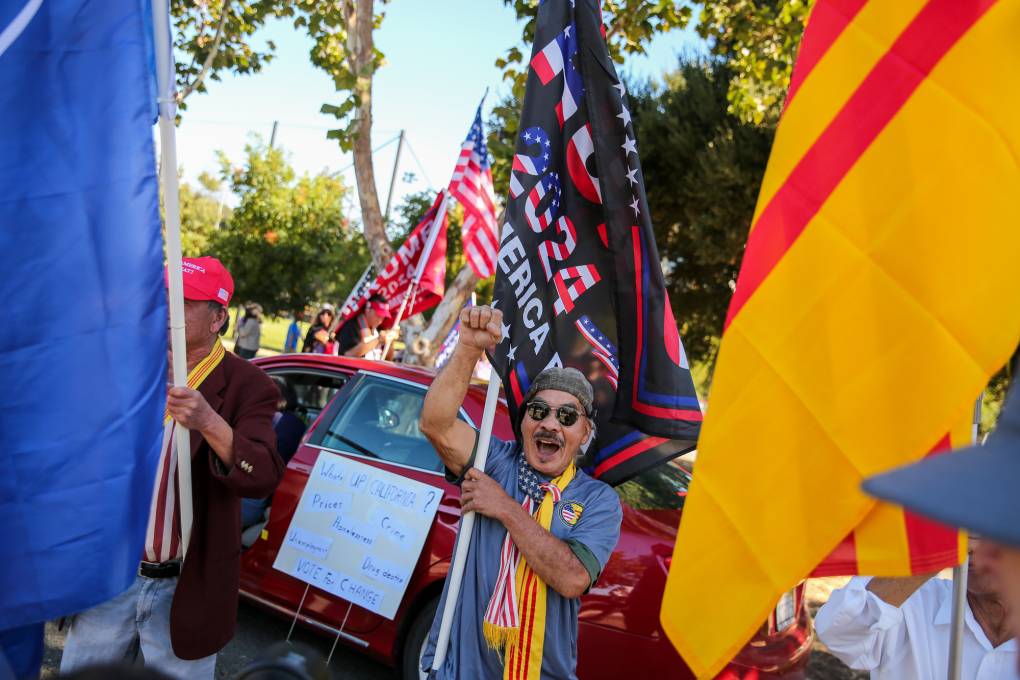
Bay Area Trump Supporters Rally Ahead of His Arrival in the Democratic Stronghold
Trump Is Coming Back to the Bay Area for a Big-Ticket Fundraiser on Friday
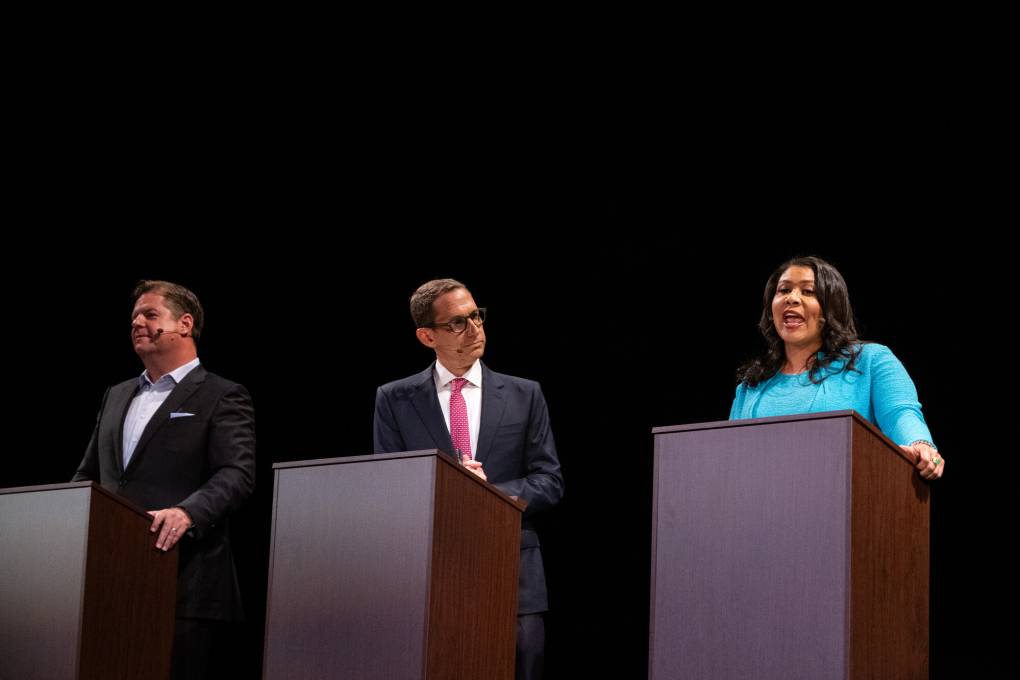
Here’s How Much Money San Francisco Mayoral Candidates Have Raised This Year
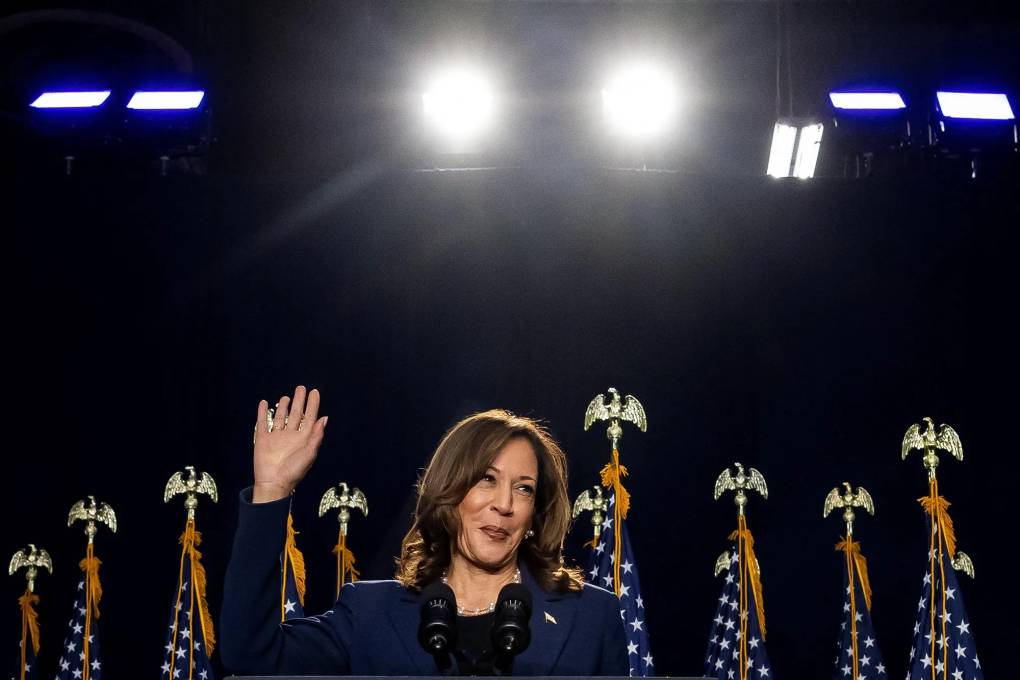
California Is a Piggy Bank for Kamala Harris — and Donald Trump. Here's How They're Trying to Cash In
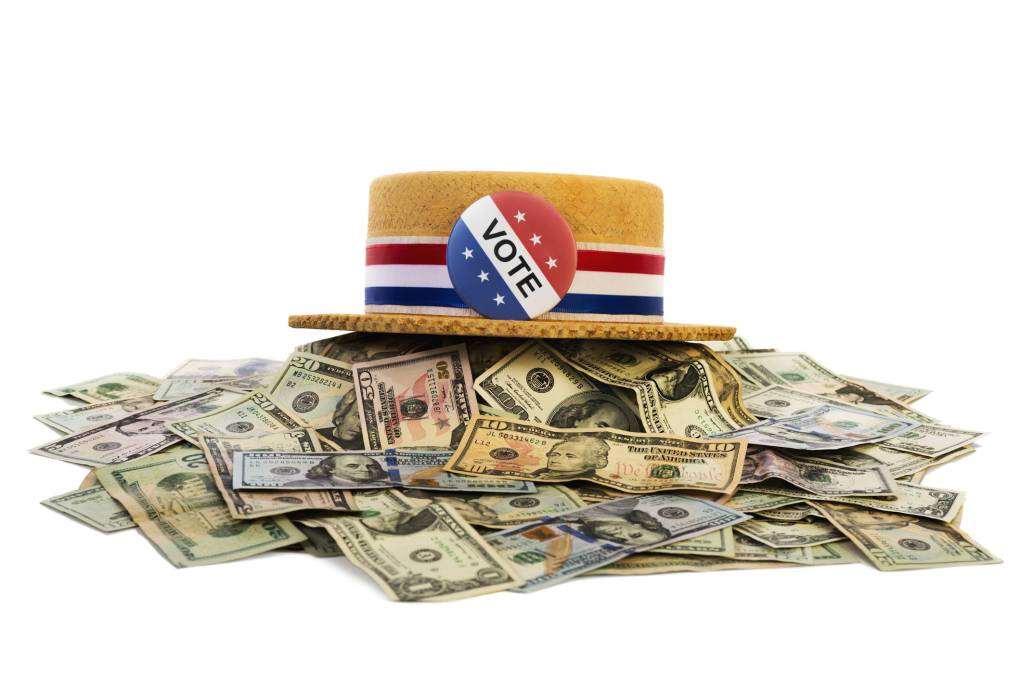
California Politicians Stash $35 Million in Unused Campaign Funds, Some of Them Years After Leaving Office
Newsom Staved Off the Recall — Now His Campaign Donors Are Looking for Results
How One Woman's Journey to Help Elect Democrats Was Upended by the Pandemic
California's Democratic Freshman Reps Flush With Cash Heading Into 2020 Race
Which Presidential Candidates Californians Are Funding — in 7 Visualizations
Sponsored
Player sponsored by
window.__IS_SSR__=true
window.__INITIAL_STATE__={
"attachmentsReducer": {
"audio_0": {
"type": "attachments",
"id": "audio_0",
"imgSizes": {
"kqedFullSize": {
"file": "https://ww2.kqed.org/news/wp-content/themes/KQED-unified/img/audio_bgs/background0.jpg"
}
}
},
"audio_1": {
"type": "attachments",
"id": "audio_1",
"imgSizes": {
"kqedFullSize": {
"file": "https://ww2.kqed.org/news/wp-content/themes/KQED-unified/img/audio_bgs/background1.jpg"
}
}
},
"audio_2": {
"type": "attachments",
"id": "audio_2",
"imgSizes": {
"kqedFullSize": {
"file": "https://ww2.kqed.org/news/wp-content/themes/KQED-unified/img/audio_bgs/background2.jpg"
}
}
},
"audio_3": {
"type": "attachments",
"id": "audio_3",
"imgSizes": {
"kqedFullSize": {
"file": "https://ww2.kqed.org/news/wp-content/themes/KQED-unified/img/audio_bgs/background3.jpg"
}
}
},
"audio_4": {
"type": "attachments",
"id": "audio_4",
"imgSizes": {
"kqedFullSize": {
"file": "https://ww2.kqed.org/news/wp-content/themes/KQED-unified/img/audio_bgs/background4.jpg"
}
}
},
"placeholder": {
"type": "attachments",
"id": "placeholder",
"imgSizes": {
"thumbnail": {
"file": "https://cdn.kqed.org/wp-content/uploads/2024/12/KQED-Default-Image-816638274-2000x1333-1-160x107.jpg",
"width": 160,
"height": 107,
"mimeType": "image/jpeg"
},
"medium": {
"file": "https://cdn.kqed.org/wp-content/uploads/2024/12/KQED-Default-Image-816638274-2000x1333-1-800x533.jpg",
"width": 800,
"height": 533,
"mimeType": "image/jpeg"
},
"medium_large": {
"file": "https://cdn.kqed.org/wp-content/uploads/2024/12/KQED-Default-Image-816638274-2000x1333-1-768x512.jpg",
"width": 768,
"height": 512,
"mimeType": "image/jpeg"
},
"large": {
"file": "https://cdn.kqed.org/wp-content/uploads/2024/12/KQED-Default-Image-816638274-2000x1333-1-1020x680.jpg",
"width": 1020,
"height": 680,
"mimeType": "image/jpeg"
},
"1536x1536": {
"file": "https://cdn.kqed.org/wp-content/uploads/2024/12/KQED-Default-Image-816638274-2000x1333-1-1536x1024.jpg",
"width": 1536,
"height": 1024,
"mimeType": "image/jpeg"
},
"fd-lrg": {
"file": "https://cdn.kqed.org/wp-content/uploads/2024/12/KQED-Default-Image-816638274-2000x1333-1-1536x1024.jpg",
"width": 1536,
"height": 1024,
"mimeType": "image/jpeg"
},
"fd-med": {
"file": "https://cdn.kqed.org/wp-content/uploads/2024/12/KQED-Default-Image-816638274-2000x1333-1-1020x680.jpg",
"width": 1020,
"height": 680,
"mimeType": "image/jpeg"
},
"fd-sm": {
"file": "https://cdn.kqed.org/wp-content/uploads/2024/12/KQED-Default-Image-816638274-2000x1333-1-800x533.jpg",
"width": 800,
"height": 533,
"mimeType": "image/jpeg"
},
"post-thumbnail": {
"file": "https://cdn.kqed.org/wp-content/uploads/2024/12/KQED-Default-Image-816638274-2000x1333-1-672x372.jpg",
"width": 672,
"height": 372,
"mimeType": "image/jpeg"
},
"twentyfourteen-full-width": {
"file": "https://cdn.kqed.org/wp-content/uploads/2024/12/KQED-Default-Image-816638274-2000x1333-1-1038x576.jpg",
"width": 1038,
"height": 576,
"mimeType": "image/jpeg"
},
"xxsmall": {
"file": "https://cdn.kqed.org/wp-content/uploads/2024/12/KQED-Default-Image-816638274-2000x1333-1-160x107.jpg",
"width": 160,
"height": 107,
"mimeType": "image/jpeg"
},
"xsmall": {
"file": "https://cdn.kqed.org/wp-content/uploads/2024/12/KQED-Default-Image-816638274-2000x1333-1-672x372.jpg",
"width": 672,
"height": 372,
"mimeType": "image/jpeg"
},
"small": {
"file": "https://cdn.kqed.org/wp-content/uploads/2024/12/KQED-Default-Image-816638274-2000x1333-1-672x372.jpg",
"width": 672,
"height": 372,
"mimeType": "image/jpeg"
},
"xlarge": {
"file": "https://cdn.kqed.org/wp-content/uploads/2024/12/KQED-Default-Image-816638274-2000x1333-1-1020x680.jpg",
"width": 1020,
"height": 680,
"mimeType": "image/jpeg"
},
"full-width": {
"file": "https://cdn.kqed.org/wp-content/uploads/2024/12/KQED-Default-Image-816638274-2000x1333-1-1920x1280.jpg",
"width": 1920,
"height": 1280,
"mimeType": "image/jpeg"
},
"guest-author-32": {
"file": "https://cdn.kqed.org/wp-content/uploads/2025/01/KQED-Default-Image-816638274-1333x1333-1-160x160.jpg",
"width": 32,
"height": 32,
"mimeType": "image/jpeg"
},
"guest-author-50": {
"file": "https://cdn.kqed.org/wp-content/uploads/2025/01/KQED-Default-Image-816638274-1333x1333-1-160x160.jpg",
"width": 50,
"height": 50,
"mimeType": "image/jpeg"
},
"guest-author-64": {
"file": "https://cdn.kqed.org/wp-content/uploads/2025/01/KQED-Default-Image-816638274-1333x1333-1-160x160.jpg",
"width": 64,
"height": 64,
"mimeType": "image/jpeg"
},
"guest-author-96": {
"file": "https://cdn.kqed.org/wp-content/uploads/2025/01/KQED-Default-Image-816638274-1333x1333-1-160x160.jpg",
"width": 96,
"height": 96,
"mimeType": "image/jpeg"
},
"guest-author-128": {
"file": "https://cdn.kqed.org/wp-content/uploads/2025/01/KQED-Default-Image-816638274-1333x1333-1-160x160.jpg",
"width": 128,
"height": 128,
"mimeType": "image/jpeg"
},
"detail": {
"file": "https://cdn.kqed.org/wp-content/uploads/2025/01/KQED-Default-Image-816638274-1333x1333-1-160x160.jpg",
"width": 160,
"height": 160,
"mimeType": "image/jpeg"
},
"kqedFullSize": {
"file": "https://cdn.kqed.org/wp-content/uploads/2024/12/KQED-Default-Image-816638274-2000x1333-1.jpg",
"width": 2000,
"height": 1333
}
}
},
"news_12004715": {
"type": "attachments",
"id": "news_12004715",
"meta": {
"index": "attachments_1716263798",
"site": "news",
"id": "12004715",
"found": true
},
"title": "240913-TRUMPRALLY-JG-1",
"publishDate": 1726256185,
"status": "inherit",
"parent": 12004699,
"modified": 1726256342,
"caption": "Paul Nguyen of San José chants on the side of El Camino Real in Palo Alto during a rally supporting Donald Trump for President on Friday, Sept. 13, 2024. ",
"credit": "Joseph Geha/KQED",
"altTag": null,
"description": null,
"imgSizes": {
"medium": {
"file": "https://cdn.kqed.org/wp-content/uploads/sites/10/2024/09/240913-TRUMPRALLY-JG-1-800x533.jpg",
"width": 800,
"height": 533,
"mimeType": "image/jpeg"
},
"large": {
"file": "https://cdn.kqed.org/wp-content/uploads/sites/10/2024/09/240913-TRUMPRALLY-JG-1-1020x680.jpg",
"width": 1020,
"height": 680,
"mimeType": "image/jpeg"
},
"thumbnail": {
"file": "https://cdn.kqed.org/wp-content/uploads/sites/10/2024/09/240913-TRUMPRALLY-JG-1-160x107.jpg",
"width": 160,
"height": 107,
"mimeType": "image/jpeg"
},
"1536x1536": {
"file": "https://cdn.kqed.org/wp-content/uploads/sites/10/2024/09/240913-TRUMPRALLY-JG-1-1536x1024.jpg",
"width": 1536,
"height": 1024,
"mimeType": "image/jpeg"
},
"post-thumbnail": {
"file": "https://cdn.kqed.org/wp-content/uploads/sites/10/2024/09/240913-TRUMPRALLY-JG-1-672x372.jpg",
"width": 672,
"height": 372,
"mimeType": "image/jpeg"
},
"twentyfourteen-full-width": {
"file": "https://cdn.kqed.org/wp-content/uploads/sites/10/2024/09/240913-TRUMPRALLY-JG-1-1038x576.jpg",
"width": 1038,
"height": 576,
"mimeType": "image/jpeg"
},
"full-width": {
"file": "https://cdn.kqed.org/wp-content/uploads/sites/10/2024/09/240913-TRUMPRALLY-JG-1-1920x1280.jpg",
"width": 1920,
"height": 1280,
"mimeType": "image/jpeg"
},
"kqedFullSize": {
"file": "https://cdn.kqed.org/wp-content/uploads/sites/10/2024/09/240913-TRUMPRALLY-JG-1.jpg",
"width": 2000,
"height": 1333
}
},
"fetchFailed": false,
"isLoading": false
},
"news_12004548": {
"type": "attachments",
"id": "news_12004548",
"meta": {
"index": "attachments_1716263798",
"site": "news",
"id": "12004548",
"found": true
},
"title": "Election 2024 Trump",
"publishDate": 1726173722,
"status": "inherit",
"parent": 12004546,
"modified": 1726173891,
"caption": "Republican presidential nominee former President Donald Trump departs after speaking at a campaign event at a Central Wisconsin Airport on Sept. 7, 2024, in Mosinee, Wisconsin. Trump is swinging back through California with a fundraiser Thursday evening in Los Angeles and one Friday morning in the San Mateo County town of Woodside — hosted by Tom Siebel, a billionaire relative of Jennifer Siebel Newsom. ",
"credit": "Morry Gash/AP Photo",
"altTag": null,
"description": null,
"imgSizes": {
"medium": {
"file": "https://cdn.kqed.org/wp-content/uploads/sites/10/2024/09/DonaldTrumpCampaignTrailAP1-800x533.jpg",
"width": 800,
"height": 533,
"mimeType": "image/jpeg"
},
"large": {
"file": "https://cdn.kqed.org/wp-content/uploads/sites/10/2024/09/DonaldTrumpCampaignTrailAP1-1020x680.jpg",
"width": 1020,
"height": 680,
"mimeType": "image/jpeg"
},
"thumbnail": {
"file": "https://cdn.kqed.org/wp-content/uploads/sites/10/2024/09/DonaldTrumpCampaignTrailAP1-160x107.jpg",
"width": 160,
"height": 107,
"mimeType": "image/jpeg"
},
"1536x1536": {
"file": "https://cdn.kqed.org/wp-content/uploads/sites/10/2024/09/DonaldTrumpCampaignTrailAP1-1536x1024.jpg",
"width": 1536,
"height": 1024,
"mimeType": "image/jpeg"
},
"post-thumbnail": {
"file": "https://cdn.kqed.org/wp-content/uploads/sites/10/2024/09/DonaldTrumpCampaignTrailAP1-672x372.jpg",
"width": 672,
"height": 372,
"mimeType": "image/jpeg"
},
"twentyfourteen-full-width": {
"file": "https://cdn.kqed.org/wp-content/uploads/sites/10/2024/09/DonaldTrumpCampaignTrailAP1-1038x576.jpg",
"width": 1038,
"height": 576,
"mimeType": "image/jpeg"
},
"full-width": {
"file": "https://cdn.kqed.org/wp-content/uploads/sites/10/2024/09/DonaldTrumpCampaignTrailAP1-1920x1280.jpg",
"width": 1920,
"height": 1280,
"mimeType": "image/jpeg"
},
"kqedFullSize": {
"file": "https://cdn.kqed.org/wp-content/uploads/sites/10/2024/09/DonaldTrumpCampaignTrailAP1.jpg",
"width": 2000,
"height": 1333
}
},
"fetchFailed": false,
"isLoading": false
},
"news_11998469": {
"type": "attachments",
"id": "news_11998469",
"meta": {
"index": "attachments_1716263798",
"site": "news",
"id": "11998469",
"found": true
},
"title": "240612-SFMayoralDebate-22-BL_qed",
"publishDate": 1722548845,
"status": "inherit",
"parent": 11998411,
"modified": 1722552532,
"caption": "Mayor London Breed speaks during a San Francisco mayoral debate with candidates Ahsha Safaí, former Mayor Mark Farrell, Daniel Lurie and Aaron Peskin at the Sydney Goldstein Theater on June 12, 2024.",
"credit": "Beth LaBerge/KQED",
"altTag": null,
"description": null,
"imgSizes": {
"medium": {
"file": "https://cdn.kqed.org/wp-content/uploads/sites/10/2024/08/240612-SFMayoralDebate-22-BL_qed-800x533.jpg",
"width": 800,
"height": 533,
"mimeType": "image/jpeg"
},
"large": {
"file": "https://cdn.kqed.org/wp-content/uploads/sites/10/2024/08/240612-SFMayoralDebate-22-BL_qed-1020x680.jpg",
"width": 1020,
"height": 680,
"mimeType": "image/jpeg"
},
"thumbnail": {
"file": "https://cdn.kqed.org/wp-content/uploads/sites/10/2024/08/240612-SFMayoralDebate-22-BL_qed-160x107.jpg",
"width": 160,
"height": 107,
"mimeType": "image/jpeg"
},
"1536x1536": {
"file": "https://cdn.kqed.org/wp-content/uploads/sites/10/2024/08/240612-SFMayoralDebate-22-BL_qed-1536x1024.jpg",
"width": 1536,
"height": 1024,
"mimeType": "image/jpeg"
},
"post-thumbnail": {
"file": "https://cdn.kqed.org/wp-content/uploads/sites/10/2024/08/240612-SFMayoralDebate-22-BL_qed-672x372.jpg",
"width": 672,
"height": 372,
"mimeType": "image/jpeg"
},
"twentyfourteen-full-width": {
"file": "https://cdn.kqed.org/wp-content/uploads/sites/10/2024/08/240612-SFMayoralDebate-22-BL_qed-1038x576.jpg",
"width": 1038,
"height": 576,
"mimeType": "image/jpeg"
},
"full-width": {
"file": "https://cdn.kqed.org/wp-content/uploads/sites/10/2024/08/240612-SFMayoralDebate-22-BL_qed-1920x1280.jpg",
"width": 1920,
"height": 1280,
"mimeType": "image/jpeg"
},
"kqedFullSize": {
"file": "https://cdn.kqed.org/wp-content/uploads/sites/10/2024/08/240612-SFMayoralDebate-22-BL_qed.jpg",
"width": 1999,
"height": 1333
}
},
"fetchFailed": false,
"isLoading": false
},
"news_11997713": {
"type": "attachments",
"id": "news_11997713",
"meta": {
"index": "attachments_1716263798",
"site": "news",
"id": "11997713",
"found": true
},
"title": "072324-Kamala-Harris-REUTERS-CM copy",
"publishDate": 1722106328,
"status": "inherit",
"parent": 11997712,
"modified": 1722106351,
"caption": "Vice President Kamala Harris speaks to supporters at her first campaign event as the presumptive Democratic nominee at West Allis High School in West Allis, Wisconsin, on July 23, 2024. ",
"credit": "Kevin Mohatt/Reuters via CalMatters",
"altTag": null,
"description": null,
"imgSizes": {
"medium": {
"file": "https://cdn.kqed.org/wp-content/uploads/sites/10/2024/07/072324-Kamala-Harris-REUTERS-CM-copy-800x534.jpg",
"width": 800,
"height": 534,
"mimeType": "image/jpeg"
},
"large": {
"file": "https://cdn.kqed.org/wp-content/uploads/sites/10/2024/07/072324-Kamala-Harris-REUTERS-CM-copy-1020x680.jpg",
"width": 1020,
"height": 680,
"mimeType": "image/jpeg"
},
"thumbnail": {
"file": "https://cdn.kqed.org/wp-content/uploads/sites/10/2024/07/072324-Kamala-Harris-REUTERS-CM-copy-160x107.jpg",
"width": 160,
"height": 107,
"mimeType": "image/jpeg"
},
"1536x1536": {
"file": "https://cdn.kqed.org/wp-content/uploads/sites/10/2024/07/072324-Kamala-Harris-REUTERS-CM-copy-1536x1025.jpg",
"width": 1536,
"height": 1025,
"mimeType": "image/jpeg"
},
"post-thumbnail": {
"file": "https://cdn.kqed.org/wp-content/uploads/sites/10/2024/07/072324-Kamala-Harris-REUTERS-CM-copy-672x372.jpg",
"width": 672,
"height": 372,
"mimeType": "image/jpeg"
},
"twentyfourteen-full-width": {
"file": "https://cdn.kqed.org/wp-content/uploads/sites/10/2024/07/072324-Kamala-Harris-REUTERS-CM-copy-1038x576.jpg",
"width": 1038,
"height": 576,
"mimeType": "image/jpeg"
},
"full-width": {
"file": "https://cdn.kqed.org/wp-content/uploads/sites/10/2024/07/072324-Kamala-Harris-REUTERS-CM-copy-1920x1281.jpg",
"width": 1920,
"height": 1281,
"mimeType": "image/jpeg"
},
"kqedFullSize": {
"file": "https://cdn.kqed.org/wp-content/uploads/sites/10/2024/07/072324-Kamala-Harris-REUTERS-CM-copy.jpg",
"width": 2000,
"height": 1334
}
},
"fetchFailed": false,
"isLoading": false
},
"news_11936362": {
"type": "attachments",
"id": "news_11936362",
"meta": {
"index": "attachments_1716263798",
"site": "news",
"id": "11936362",
"found": true
},
"parent": 11936335,
"imgSizes": {
"twentyfourteen-full-width": {
"file": "https://ww2.kqed.org/app/uploads/sites/10/2022/12/GettyImages-498668895-1038x576.jpg",
"width": 1038,
"mimeType": "image/jpeg",
"height": 576
},
"thumbnail": {
"file": "https://ww2.kqed.org/app/uploads/sites/10/2022/12/GettyImages-498668895-160x107.jpg",
"width": 160,
"mimeType": "image/jpeg",
"height": 107
},
"post-thumbnail": {
"file": "https://ww2.kqed.org/app/uploads/sites/10/2022/12/GettyImages-498668895-672x372.jpg",
"width": 672,
"mimeType": "image/jpeg",
"height": 372
},
"kqedFullSize": {
"file": "https://ww2.kqed.org/app/uploads/sites/10/2022/12/GettyImages-498668895.jpg",
"width": 2119,
"height": 1414
},
"2048x2048": {
"file": "https://ww2.kqed.org/app/uploads/sites/10/2022/12/GettyImages-498668895-2048x1367.jpg",
"width": 2048,
"mimeType": "image/jpeg",
"height": 1367
},
"large": {
"file": "https://ww2.kqed.org/app/uploads/sites/10/2022/12/GettyImages-498668895-1020x681.jpg",
"width": 1020,
"mimeType": "image/jpeg",
"height": 681
},
"1536x1536": {
"file": "https://ww2.kqed.org/app/uploads/sites/10/2022/12/GettyImages-498668895-1536x1025.jpg",
"width": 1536,
"mimeType": "image/jpeg",
"height": 1025
},
"full-width": {
"file": "https://ww2.kqed.org/app/uploads/sites/10/2022/12/GettyImages-498668895-1920x1281.jpg",
"width": 1920,
"mimeType": "image/jpeg",
"height": 1281
},
"medium": {
"file": "https://ww2.kqed.org/app/uploads/sites/10/2022/12/GettyImages-498668895-800x534.jpg",
"width": 800,
"mimeType": "image/jpeg",
"height": 534
}
},
"publishDate": 1672177218,
"modified": 1672177314,
"caption": null,
"description": null,
"title": "Political Fund raising",
"credit": "cmannphoto/iStock via Getty Images Plus",
"status": "inherit",
"altTag": "A hat with \"Vote\" written on it in red white and blue sits on top of a pile of bank notes.",
"fetchFailed": false,
"isLoading": false
},
"news_11891035": {
"type": "attachments",
"id": "news_11891035",
"meta": {
"index": "attachments_1716263798",
"site": "news",
"id": "11891035",
"found": true
},
"parent": 11891010,
"imgSizes": {
"twentyfourteen-full-width": {
"file": "https://ww2.kqed.org/app/uploads/sites/10/2021/10/illustration_NewsomMoney_v1-1038x576.jpg",
"width": 1038,
"mimeType": "image/jpeg",
"height": 576
},
"thumbnail": {
"file": "https://ww2.kqed.org/app/uploads/sites/10/2021/10/illustration_NewsomMoney_v1-160x106.jpg",
"width": 160,
"mimeType": "image/jpeg",
"height": 106
},
"post-thumbnail": {
"file": "https://ww2.kqed.org/app/uploads/sites/10/2021/10/illustration_NewsomMoney_v1-672x372.jpg",
"width": 672,
"mimeType": "image/jpeg",
"height": 372
},
"kqedFullSize": {
"file": "https://ww2.kqed.org/app/uploads/sites/10/2021/10/illustration_NewsomMoney_v1.jpg",
"width": 2000,
"height": 1330
},
"large": {
"file": "https://ww2.kqed.org/app/uploads/sites/10/2021/10/illustration_NewsomMoney_v1-1020x678.jpg",
"width": 1020,
"mimeType": "image/jpeg",
"height": 678
},
"1536x1536": {
"file": "https://ww2.kqed.org/app/uploads/sites/10/2021/10/illustration_NewsomMoney_v1-1536x1021.jpg",
"width": 1536,
"mimeType": "image/jpeg",
"height": 1021
},
"full-width": {
"file": "https://ww2.kqed.org/app/uploads/sites/10/2021/10/illustration_NewsomMoney_v1-1920x1277.jpg",
"width": 1920,
"mimeType": "image/jpeg",
"height": 1277
},
"medium": {
"file": "https://ww2.kqed.org/app/uploads/sites/10/2021/10/illustration_NewsomMoney_v1-800x532.jpg",
"width": 800,
"mimeType": "image/jpeg",
"height": 532
}
},
"publishDate": 1633430139,
"modified": 1633469670,
"caption": "Anne Wernikoff, CalMatters/iStock",
"description": null,
"title": "illustration_NewsomMoney_v1",
"credit": null,
"status": "inherit",
"altTag": "An illustration shows a pair of hands opening up a wallet with many 'Vote No on the Recall' signs.",
"fetchFailed": false,
"isLoading": false
},
"news_11812593": {
"type": "attachments",
"id": "news_11812593",
"meta": {
"index": "attachments_1716263798",
"site": "news",
"id": "11812593",
"found": true
},
"parent": 11812445,
"imgSizes": {
"apple_news_ca_landscape_5_5": {
"file": "https://ww2.kqed.org/app/uploads/sites/10/2020/04/PatriciaWilson-1044x783.jpg",
"width": 1044,
"mimeType": "image/jpeg",
"height": 783
},
"apple_news_ca_square_4_0": {
"file": "https://ww2.kqed.org/app/uploads/sites/10/2020/04/PatriciaWilson-470x470.jpg",
"width": 470,
"mimeType": "image/jpeg",
"height": 470
},
"twentyfourteen-full-width": {
"file": "https://ww2.kqed.org/app/uploads/sites/10/2020/04/PatriciaWilson-1038x576.jpg",
"width": 1038,
"mimeType": "image/jpeg",
"height": 576
},
"thumbnail": {
"file": "https://ww2.kqed.org/app/uploads/sites/10/2020/04/PatriciaWilson-160x120.jpg",
"width": 160,
"mimeType": "image/jpeg",
"height": 120
},
"post-thumbnail": {
"file": "https://ww2.kqed.org/app/uploads/sites/10/2020/04/PatriciaWilson-672x372.jpg",
"width": 672,
"mimeType": "image/jpeg",
"height": 372
},
"kqedFullSize": {
"file": "https://ww2.kqed.org/app/uploads/sites/10/2020/04/PatriciaWilson.jpg",
"width": 1920,
"height": 1440
},
"apple_news_ca_landscape_4_7": {
"file": "https://ww2.kqed.org/app/uploads/sites/10/2020/04/PatriciaWilson-632x474.jpg",
"width": 632,
"mimeType": "image/jpeg",
"height": 474
},
"large": {
"file": "https://ww2.kqed.org/app/uploads/sites/10/2020/04/PatriciaWilson-1020x765.jpg",
"width": 1020,
"mimeType": "image/jpeg",
"height": 765
},
"apple_news_ca_landscape_4_0": {
"file": "https://ww2.kqed.org/app/uploads/sites/10/2020/04/PatriciaWilson-536x402.jpg",
"width": 536,
"mimeType": "image/jpeg",
"height": 402
},
"apple_news_ca_portrait_12_9": {
"file": "https://ww2.kqed.org/app/uploads/sites/10/2020/04/PatriciaWilson-1122x1440.jpg",
"width": 1122,
"mimeType": "image/jpeg",
"height": 1440
},
"medium": {
"file": "https://ww2.kqed.org/app/uploads/sites/10/2020/04/PatriciaWilson-800x600.jpg",
"width": 800,
"mimeType": "image/jpeg",
"height": 600
},
"apple_news_ca_portrait_4_0": {
"file": "https://ww2.kqed.org/app/uploads/sites/10/2020/04/PatriciaWilson-354x472.jpg",
"width": 354,
"mimeType": "image/jpeg",
"height": 472
},
"apple_news_ca_portrait_9_7": {
"file": "https://ww2.kqed.org/app/uploads/sites/10/2020/04/PatriciaWilson-840x1120.jpg",
"width": 840,
"mimeType": "image/jpeg",
"height": 1120
},
"apple_news_ca_landscape_12_9": {
"file": "https://ww2.kqed.org/app/uploads/sites/10/2020/04/PatriciaWilson-1832x1374.jpg",
"width": 1832,
"mimeType": "image/jpeg",
"height": 1374
},
"apple_news_ca_square_9_7": {
"file": "https://ww2.kqed.org/app/uploads/sites/10/2020/04/PatriciaWilson-1104x1104.jpg",
"width": 1104,
"mimeType": "image/jpeg",
"height": 1104
},
"apple_news_ca_portrait_4_7": {
"file": "https://ww2.kqed.org/app/uploads/sites/10/2020/04/PatriciaWilson-414x552.jpg",
"width": 414,
"mimeType": "image/jpeg",
"height": 552
},
"apple_news_ca_square_12_9": {
"file": "https://ww2.kqed.org/app/uploads/sites/10/2020/04/PatriciaWilson-1472x1440.jpg",
"width": 1472,
"mimeType": "image/jpeg",
"height": 1440
},
"apple_news_ca_portrait_5_5": {
"file": "https://ww2.kqed.org/app/uploads/sites/10/2020/04/PatriciaWilson-687x916.jpg",
"width": 687,
"mimeType": "image/jpeg",
"height": 916
},
"full-width": {
"file": "https://ww2.kqed.org/app/uploads/sites/10/2020/04/PatriciaWilson-1920x1440.jpg",
"width": 1920,
"mimeType": "image/jpeg",
"height": 1440
},
"apple_news_ca_square_4_7": {
"file": "https://ww2.kqed.org/app/uploads/sites/10/2020/04/PatriciaWilson-550x550.jpg",
"width": 550,
"mimeType": "image/jpeg",
"height": 550
},
"apple_news_ca_landscape_9_7": {
"file": "https://ww2.kqed.org/app/uploads/sites/10/2020/04/PatriciaWilson-1376x1032.jpg",
"width": 1376,
"mimeType": "image/jpeg",
"height": 1032
},
"apple_news_ca_square_5_5": {
"file": "https://ww2.kqed.org/app/uploads/sites/10/2020/04/PatriciaWilson-912x912.jpg",
"width": 912,
"mimeType": "image/jpeg",
"height": 912
}
},
"publishDate": 1587009301,
"modified": 1587009433,
"caption": "Patricia Suflita Wilson planned to move from San Francisco to Arizona to be a volunteer for the Democratic election campaigns for the November election. But the shelter-in-place orders both in California and Arizona has upended some of her plans. ",
"description": null,
"title": "PatriciaWilson",
"credit": "Marisa Lagos/KQED",
"status": "inherit",
"fetchFailed": false,
"isLoading": false
},
"news_11781652": {
"type": "attachments",
"id": "news_11781652",
"meta": {
"index": "attachments_1716263798",
"site": "news",
"id": "11781652",
"found": true
},
"parent": 11781440,
"imgSizes": {
"apple_news_ca_square_4_0": {
"file": "https://ww2.kqed.org/app/uploads/sites/10/2019/10/GettyImages-1057716992-470x470.jpg",
"width": 470,
"mimeType": "image/jpeg",
"height": 470
},
"twentyfourteen-full-width": {
"file": "https://ww2.kqed.org/app/uploads/sites/10/2019/10/GettyImages-1057716992-1024x576.jpg",
"width": 1024,
"mimeType": "image/jpeg",
"height": 576
},
"thumbnail": {
"file": "https://ww2.kqed.org/app/uploads/sites/10/2019/10/GettyImages-1057716992-160x107.jpg",
"width": 160,
"mimeType": "image/jpeg",
"height": 107
},
"post-thumbnail": {
"file": "https://ww2.kqed.org/app/uploads/sites/10/2019/10/GettyImages-1057716992-672x372.jpg",
"width": 672,
"mimeType": "image/jpeg",
"height": 372
},
"kqedFullSize": {
"file": "https://ww2.kqed.org/app/uploads/sites/10/2019/10/GettyImages-1057716992.jpg",
"width": 1024,
"height": 683
},
"apple_news_ca_landscape_4_7": {
"file": "https://ww2.kqed.org/app/uploads/sites/10/2019/10/GettyImages-1057716992-632x474.jpg",
"width": 632,
"mimeType": "image/jpeg",
"height": 474
},
"large": {
"file": "https://ww2.kqed.org/app/uploads/sites/10/2019/10/GettyImages-1057716992-1020x680.jpg",
"width": 1020,
"mimeType": "image/jpeg",
"height": 680
},
"apple_news_ca_landscape_4_0": {
"file": "https://ww2.kqed.org/app/uploads/sites/10/2019/10/GettyImages-1057716992-536x402.jpg",
"width": 536,
"mimeType": "image/jpeg",
"height": 402
},
"medium": {
"file": "https://ww2.kqed.org/app/uploads/sites/10/2019/10/GettyImages-1057716992-800x534.jpg",
"width": 800,
"mimeType": "image/jpeg",
"height": 534
},
"apple_news_ca_portrait_4_0": {
"file": "https://ww2.kqed.org/app/uploads/sites/10/2019/10/GettyImages-1057716992-354x472.jpg",
"width": 354,
"mimeType": "image/jpeg",
"height": 472
},
"apple_news_ca_portrait_9_7": {
"file": "https://ww2.kqed.org/app/uploads/sites/10/2019/10/GettyImages-1057716992-840x683.jpg",
"width": 840,
"mimeType": "image/jpeg",
"height": 683
},
"apple_news_ca_portrait_4_7": {
"file": "https://ww2.kqed.org/app/uploads/sites/10/2019/10/GettyImages-1057716992-414x552.jpg",
"width": 414,
"mimeType": "image/jpeg",
"height": 552
},
"apple_news_ca_portrait_5_5": {
"file": "https://ww2.kqed.org/app/uploads/sites/10/2019/10/GettyImages-1057716992-687x683.jpg",
"width": 687,
"mimeType": "image/jpeg",
"height": 683
},
"apple_news_ca_square_4_7": {
"file": "https://ww2.kqed.org/app/uploads/sites/10/2019/10/GettyImages-1057716992-550x550.jpg",
"width": 550,
"mimeType": "image/jpeg",
"height": 550
},
"apple_news_ca_square_5_5": {
"file": "https://ww2.kqed.org/app/uploads/sites/10/2019/10/GettyImages-1057716992-912x683.jpg",
"width": 912,
"mimeType": "image/jpeg",
"height": 683
}
},
"publishDate": 1571715561,
"modified": 1571780846,
"caption": "Democratic Rep. Josh Harder, then a candidate for California's 10th Congressional District, speaks with supporters at a campaign event on November 5, 2018, in Manteca. Harder defeated incumbent Republican Jeff Denham, and will face a new Republican challenger next year.",
"description": null,
"title": "CA Congressional Candidate Josh Harder Campaigns One Day Before Midterm Elections",
"credit": "Alex Edelman/Getty Images",
"status": "inherit",
"fetchFailed": false,
"isLoading": false
},
"news_11781461": {
"type": "attachments",
"id": "news_11781461",
"meta": {
"index": "attachments_1716263798",
"site": "news",
"id": "11781461",
"found": true
},
"parent": 11781412,
"imgSizes": {
"apple_news_ca_square_4_0": {
"file": "https://ww2.kqed.org/app/uploads/sites/10/2019/10/GettyImages-1181340134-470x470.jpg",
"width": 470,
"mimeType": "image/jpeg",
"height": 470
},
"twentyfourteen-full-width": {
"file": "https://ww2.kqed.org/app/uploads/sites/10/2019/10/GettyImages-1181340134-1024x576.jpg",
"width": 1024,
"mimeType": "image/jpeg",
"height": 576
},
"thumbnail": {
"file": "https://ww2.kqed.org/app/uploads/sites/10/2019/10/GettyImages-1181340134-160x107.jpg",
"width": 160,
"mimeType": "image/jpeg",
"height": 107
},
"post-thumbnail": {
"file": "https://ww2.kqed.org/app/uploads/sites/10/2019/10/GettyImages-1181340134-672x372.jpg",
"width": 672,
"mimeType": "image/jpeg",
"height": 372
},
"kqedFullSize": {
"file": "https://ww2.kqed.org/app/uploads/sites/10/2019/10/GettyImages-1181340134.jpg",
"width": 1024,
"height": 683
},
"apple_news_ca_landscape_4_7": {
"file": "https://ww2.kqed.org/app/uploads/sites/10/2019/10/GettyImages-1181340134-632x474.jpg",
"width": 632,
"mimeType": "image/jpeg",
"height": 474
},
"large": {
"file": "https://ww2.kqed.org/app/uploads/sites/10/2019/10/GettyImages-1181340134-1020x680.jpg",
"width": 1020,
"mimeType": "image/jpeg",
"height": 680
},
"apple_news_ca_landscape_4_0": {
"file": "https://ww2.kqed.org/app/uploads/sites/10/2019/10/GettyImages-1181340134-536x402.jpg",
"width": 536,
"mimeType": "image/jpeg",
"height": 402
},
"medium": {
"file": "https://ww2.kqed.org/app/uploads/sites/10/2019/10/GettyImages-1181340134-800x534.jpg",
"width": 800,
"mimeType": "image/jpeg",
"height": 534
},
"apple_news_ca_portrait_4_0": {
"file": "https://ww2.kqed.org/app/uploads/sites/10/2019/10/GettyImages-1181340134-354x472.jpg",
"width": 354,
"mimeType": "image/jpeg",
"height": 472
},
"apple_news_ca_portrait_9_7": {
"file": "https://ww2.kqed.org/app/uploads/sites/10/2019/10/GettyImages-1181340134-840x683.jpg",
"width": 840,
"mimeType": "image/jpeg",
"height": 683
},
"apple_news_ca_portrait_4_7": {
"file": "https://ww2.kqed.org/app/uploads/sites/10/2019/10/GettyImages-1181340134-414x552.jpg",
"width": 414,
"mimeType": "image/jpeg",
"height": 552
},
"apple_news_ca_portrait_5_5": {
"file": "https://ww2.kqed.org/app/uploads/sites/10/2019/10/GettyImages-1181340134-687x683.jpg",
"width": 687,
"mimeType": "image/jpeg",
"height": 683
},
"apple_news_ca_square_4_7": {
"file": "https://ww2.kqed.org/app/uploads/sites/10/2019/10/GettyImages-1181340134-550x550.jpg",
"width": 550,
"mimeType": "image/jpeg",
"height": 550
},
"apple_news_ca_square_5_5": {
"file": "https://ww2.kqed.org/app/uploads/sites/10/2019/10/GettyImages-1181340134-912x683.jpg",
"width": 912,
"mimeType": "image/jpeg",
"height": 683
}
},
"publishDate": 1571682078,
"modified": 1571682308,
"caption": "Democratic presidential candidates (L-R) Hawaii Rep. Tulsi Gabbard, billionaire Tom Steyer, New Jersey Sen. Cory Booker, California Sen. Kamala Harris, Vermont Sen. Bernie Sanders, former Vice President Joe Biden, Massachusetts Sen. Elizabeth Warren, South Bend, Indiana Mayor Pete Buttigieg, former tech executive Andrew Yang, former Texas congressman Beto O'Rourke, Minnesota Sen. Amy Klobuchar and former housing secretary Julian Castro at the start of the fourth Democratic presidential debate at Otterbein University in Westerville, Ohio on October 15, 2019.",
"description": null,
"title": "Democratic Presidential Candidates Participate In Fourth Debate In Ohio",
"credit": "Chip Somodevilla/Getty Images",
"status": "inherit",
"fetchFailed": false,
"isLoading": false
}
},
"audioPlayerReducer": {
"postId": "stream_live",
"isPaused": true,
"isPlaying": false,
"pfsActive": false,
"pledgeModalIsOpen": true,
"playerDrawerIsOpen": false
},
"authorsReducer": {
"byline_news_11997712": {
"type": "authors",
"id": "byline_news_11997712",
"meta": {
"override": true
},
"slug": "byline_news_11997712",
"name": "\u003ca href=\"https://calmatters.org/author/yue-yu/\">Yue Stella Yu\u003c/a>, CalMatters",
"isLoading": false
},
"byline_news_11936335": {
"type": "authors",
"id": "byline_news_11936335",
"meta": {
"override": true
},
"slug": "byline_news_11936335",
"name": "\u003ca href=\"https://calmatters.org/author/alexei-koseff/\">Alexei Koseff\u003c/a> and \u003ca href=\"https://calmatters.org/author/ben-christopher/\">Ben Christopher\u003c/a>",
"isLoading": false
},
"byline_news_11891010": {
"type": "authors",
"id": "byline_news_11891010",
"meta": {
"override": true
},
"slug": "byline_news_11891010",
"name": "\u003ca href=\"https://calmatters.org/author/laurel-rosenhall/\">Laurel Rosenhall\u003c/a>",
"isLoading": false
},
"byline_news_11781412": {
"type": "authors",
"id": "byline_news_11781412",
"meta": {
"override": true
},
"slug": "byline_news_11781412",
"name": "\u003ca href=\"https://calmatters.org/author/ben-christopher/\">Ben Christopher\u003c/a>\u003cbr>CalMatters",
"isLoading": false
},
"scottshafer": {
"type": "authors",
"id": "255",
"meta": {
"index": "authors_1716337520",
"id": "255",
"found": true
},
"name": "Scott Shafer",
"firstName": "Scott",
"lastName": "Shafer",
"slug": "scottshafer",
"email": "sshafer@kqed.org",
"display_author_email": false,
"staff_mastheads": [
"news"
],
"title": "KQED Contributor",
"bio": "Scott Shafer is a senior editor with the KQED Politics and Government desk. He is co-host of Political Breakdown, the award-winning radio show and podcast with a personal take on the world of politics. Scott came to KQED in 1998 to host the statewide\u003cem> California Report\u003c/em>. Prior to that he had extended stints in politics and government\u003cem>.\u003c/em> He uses that inside experience at KQED in his, reporting, hosting and analysis for the politics desk. Scott collaborated \u003cem>Political Breakdown a\u003c/em>nd on \u003cem>The Political Mind of Jerry Brown, \u003c/em>an eight-part series about the life and extraordinary political career of the former governor. For fun, he plays water polo with the San Francisco Tsunami.",
"avatar": "https://secure.gravatar.com/avatar/a62ebae45b79d7aed1a39a0e3bf68104?s=600&d=blank&r=g",
"twitter": "scottshafer",
"facebook": null,
"instagram": null,
"linkedin": null,
"sites": [
{
"site": "news",
"roles": [
"editor"
]
},
{
"site": "stateofhealth",
"roles": [
"author"
]
},
{
"site": "science",
"roles": [
"author"
]
},
{
"site": "forum",
"roles": [
"subscriber"
]
}
],
"headData": {
"title": "Scott Shafer | KQED",
"description": "KQED Contributor",
"ogImgSrc": "https://secure.gravatar.com/avatar/a62ebae45b79d7aed1a39a0e3bf68104?s=600&d=blank&r=g",
"twImgSrc": "https://secure.gravatar.com/avatar/a62ebae45b79d7aed1a39a0e3bf68104?s=600&d=blank&r=g"
},
"isLoading": false,
"link": "/author/scottshafer"
},
"mlagos": {
"type": "authors",
"id": "3239",
"meta": {
"index": "authors_1716337520",
"id": "3239",
"found": true
},
"name": "Marisa Lagos",
"firstName": "Marisa",
"lastName": "Lagos",
"slug": "mlagos",
"email": "mlagos@kqed.org",
"display_author_email": false,
"staff_mastheads": [
"news"
],
"title": "KQED Contributor",
"bio": "Marisa Lagos is a correspondent for KQED’s California Politics and Government Desk and co-hosts the award-winning show and podcast, Political Breakdown. At KQED, Lagos also conducts reporting, analysis and investigations into state, local and national politics for radio, TV, online and onstage. In 2022, she and co-host, Scott Shafer, moderated the only gubernatorial debate in California. In 2020, the \u003ci>Washington Post\u003c/i> named her one of the top political journalists in California; she was nominated for a Peabody and won several other awards for her work investigating the 2017 California wildfires. She has worked at the \u003ci>San Francisco Chronicle\u003c/i>, \u003ci>San Francisco Examiner\u003c/i> and \u003ci>Los Angeles Times\u003c/i>. A UC Santa Barbara graduate, she lives in San Francisco with her two sons and husband.",
"avatar": "https://secure.gravatar.com/avatar/a261a0d3696fc066871ef96b85b5e7d2?s=600&d=blank&r=g",
"twitter": "@mlagos",
"facebook": null,
"instagram": null,
"linkedin": null,
"sites": [
{
"site": "arts",
"roles": [
"author"
]
},
{
"site": "news",
"roles": [
"editor"
]
},
{
"site": "science",
"roles": [
"editor"
]
},
{
"site": "forum",
"roles": [
"author"
]
},
{
"site": "liveblog",
"roles": [
"author"
]
}
],
"headData": {
"title": "Marisa Lagos | KQED",
"description": "KQED Contributor",
"ogImgSrc": "https://secure.gravatar.com/avatar/a261a0d3696fc066871ef96b85b5e7d2?s=600&d=blank&r=g",
"twImgSrc": "https://secure.gravatar.com/avatar/a261a0d3696fc066871ef96b85b5e7d2?s=600&d=blank&r=g"
},
"isLoading": false,
"link": "/author/mlagos"
},
"sjohnson": {
"type": "authors",
"id": "11840",
"meta": {
"index": "authors_1716337520",
"id": "11840",
"found": true
},
"name": "Sydney Johnson",
"firstName": "Sydney",
"lastName": "Johnson",
"slug": "sjohnson",
"email": "sjohnson@kqed.org",
"display_author_email": false,
"staff_mastheads": [
"news"
],
"title": "KQED Reporter",
"bio": "Sydney Johnson is a general assignment reporter at KQED. She previously reported on public health and city government at the San Francisco Examiner, and before that, she covered statewide education policy for EdSource. Her reporting has won multiple local, state and national awards. Sydney is a graduate of the University of California, Berkeley and lives in San Francisco.",
"avatar": "https://secure.gravatar.com/avatar/97855f2719b72ad6190b7c535fe642c8?s=600&d=blank&r=g",
"twitter": "sydneyfjohnson",
"facebook": null,
"instagram": null,
"linkedin": null,
"sites": [
{
"site": "news",
"roles": [
"editor"
]
}
],
"headData": {
"title": "Sydney Johnson | KQED",
"description": "KQED Reporter",
"ogImgSrc": "https://secure.gravatar.com/avatar/97855f2719b72ad6190b7c535fe642c8?s=600&d=blank&r=g",
"twImgSrc": "https://secure.gravatar.com/avatar/97855f2719b72ad6190b7c535fe642c8?s=600&d=blank&r=g"
},
"isLoading": false,
"link": "/author/sjohnson"
},
"jgeha": {
"type": "authors",
"id": "11906",
"meta": {
"index": "authors_1716337520",
"id": "11906",
"found": true
},
"name": "Joseph Geha",
"firstName": "Joseph",
"lastName": "Geha",
"slug": "jgeha",
"email": "jgeha@kqed.org",
"display_author_email": false,
"staff_mastheads": [
"news",
"science"
],
"title": "KQED Contributor",
"bio": null,
"avatar": "https://secure.gravatar.com/avatar/06334764312afacae9c3d6cd48fd9fd7?s=600&d=blank&r=g",
"twitter": null,
"facebook": null,
"instagram": null,
"linkedin": null,
"sites": [
{
"site": "news",
"roles": [
"editor"
]
},
{
"site": "liveblog",
"roles": [
"author"
]
}
],
"headData": {
"title": "Joseph Geha | KQED",
"description": "KQED Contributor",
"ogImgSrc": "https://secure.gravatar.com/avatar/06334764312afacae9c3d6cd48fd9fd7?s=600&d=blank&r=g",
"twImgSrc": "https://secure.gravatar.com/avatar/06334764312afacae9c3d6cd48fd9fd7?s=600&d=blank&r=g"
},
"isLoading": false,
"link": "/author/jgeha"
},
"kdebenedetti": {
"type": "authors",
"id": "11913",
"meta": {
"index": "authors_1716337520",
"id": "11913",
"found": true
},
"name": "Katie DeBenedetti",
"firstName": "Katie",
"lastName": "DeBenedetti",
"slug": "kdebenedetti",
"email": "kdebenedetti@kqed.org",
"display_author_email": false,
"staff_mastheads": [
"news",
"science"
],
"title": "KQED Contributor",
"bio": "Katie DeBenedetti is a digital reporter covering daily news for the Express Desk. Prior to joining KQED as a culture reporting intern in January 2024, she covered education and city government for the Napa Valley Register.",
"avatar": "https://secure.gravatar.com/avatar/6e31073cb8f7e4214ab03f42771d0f45?s=600&d=blank&r=g",
"twitter": null,
"facebook": null,
"instagram": null,
"linkedin": null,
"sites": [
{
"site": "news",
"roles": [
"author"
]
},
{
"site": "science",
"roles": [
"author"
]
},
{
"site": "liveblog",
"roles": [
"author"
]
}
],
"headData": {
"title": "Katie DeBenedetti | KQED",
"description": "KQED Contributor",
"ogImgSrc": "https://secure.gravatar.com/avatar/6e31073cb8f7e4214ab03f42771d0f45?s=600&d=blank&r=g",
"twImgSrc": "https://secure.gravatar.com/avatar/6e31073cb8f7e4214ab03f42771d0f45?s=600&d=blank&r=g"
},
"isLoading": false,
"link": "/author/kdebenedetti"
}
},
"breakingNewsReducer": {},
"pagesReducer": {},
"postsReducer": {
"stream_live": {
"type": "live",
"id": "stream_live",
"audioUrl": "https://streams.kqed.org/kqedradio",
"title": "Live Stream",
"excerpt": "Live Stream information currently unavailable.",
"link": "/radio",
"featImg": "",
"label": {
"name": "KQED Live",
"link": "/"
}
},
"stream_kqedNewscast": {
"type": "posts",
"id": "stream_kqedNewscast",
"audioUrl": "https://www.kqed.org/.stream/anon/radio/RDnews/newscast.mp3?_=1",
"title": "KQED Newscast",
"featImg": "",
"label": {
"name": "88.5 FM",
"link": "/"
}
},
"news_12004699": {
"type": "posts",
"id": "news_12004699",
"meta": {
"index": "posts_1716263798",
"site": "news",
"id": "12004699",
"score": null,
"sort": [
1726260037000
]
},
"guestAuthors": [],
"slug": "bay-area-trump-supporters-rally-ahead-of-his-arrival-in-the-democratic-stronghold",
"title": "Bay Area Trump Supporters Rally Ahead of His Arrival in the Democratic Stronghold",
"publishDate": 1726260037,
"format": "standard",
"headTitle": "Bay Area Trump Supporters Rally Ahead of His Arrival in the Democratic Stronghold | KQED",
"labelTerm": {
"site": "news"
},
"content": "\u003cp>Local supporters of former President Donald Trump gathered Friday to celebrate his arrival for \u003ca href=\"https://www.kqed.org/news/12004546/trump-is-coming-back-to-the-bay-area-for-a-big-ticket-fundraiser-on-friday\">a big-ticket fundraiser in the Bay Area\u003c/a>, where he can expect little backing from voters but is targeting a pool of wealthy Republican donors.\u003c/p>\n\u003cp>About 100 people lined the edge of El Camino Park in Palo Alto, waving dozens of Trump flags and bumping patriotic music from speakers. As cars passed by, some let out long honks in support of the rally about 15 minutes from where Trump will attend a private afternoon reception in Woodside.\u003c/p>\n\u003cp>One driver sped by, flipping off the Trump supporters and yelling expletives at the group, and across the street, about a dozen supporters of Vice President Kamala Harris held signs for their candidate.\u003c/p>\n\u003cp>[ad fullwidth]\u003c/p>\n\u003cp>Opposition is no surprise to Trump supporters in the heavily Democratic region. In 2020, President Joe Biden received 72.6% of the vote in Santa Clara County and 77.9% in San Mateo County. However, while some rally attendees declined to give their names or be recorded for interviews for fear of being chastised or assaulted for showing support for Trump, Robert Scher of Los Altos said he’s very confident in showing his feelings.\u003c/p>\n\u003cp>“I wear my Trump hat, and what I found out [is] people come up to me and give me fist bumps, and they go, ‘Right on!’” he told KQED.\u003c/p>\n\u003cfigure id=\"attachment_12004720\" class=\"wp-caption aligncenter\" style=\"max-width: 2000px\">\u003cimg loading=\"lazy\" decoding=\"async\" class=\"size-full wp-image-12004720\" src=\"https://cdn.kqed.org/wp-content/uploads/sites/10/2024/09/TrumpRally4.jpg\" alt=\"\" width=\"2000\" height=\"1333\" srcset=\"https://cdn.kqed.org/wp-content/uploads/sites/10/2024/09/TrumpRally4.jpg 2000w, https://cdn.kqed.org/wp-content/uploads/sites/10/2024/09/TrumpRally4-800x533.jpg 800w, https://cdn.kqed.org/wp-content/uploads/sites/10/2024/09/TrumpRally4-1020x680.jpg 1020w, https://cdn.kqed.org/wp-content/uploads/sites/10/2024/09/TrumpRally4-160x107.jpg 160w, https://cdn.kqed.org/wp-content/uploads/sites/10/2024/09/TrumpRally4-1536x1024.jpg 1536w, https://cdn.kqed.org/wp-content/uploads/sites/10/2024/09/TrumpRally4-1920x1280.jpg 1920w\" sizes=\"(max-width: 2000px) 100vw, 2000px\">\u003cfigcaption class=\"wp-caption-text\">Andrea Hyde of Menlo Park waves an American flag on the edge of El Camino Real during a rally for Donald Trump in Palo Alto on Friday, Sept. 13, 2024. \u003ccite>(Joseph Geha/KQED)\u003c/cite>\u003c/figcaption>\u003c/figure>\n\u003cp>People who don’t share his political beliefs ask him why he supports Trump and often spark up a conversation, he said.\u003c/p>\n\u003cp>Andrea Hyde of Menlo Park said she’s proud to be a Trump supporter but doesn’t think all of his potential voters are announcing it publicly.\u003c/p>\n\u003cp>“The quiet Americans that aren’t going to say, ‘Yes, I am voting for Trump,’ in the polls [they] are going to vote for Trump,” she said. She echoed Trump’s rhetoric of a supposed wave of “fascist communism,” which he has used to try to cast Harris and the Democratic Party as far-left radicals.\u003c/p>\n\u003cfigure id=\"attachment_12004718\" class=\"wp-caption aligncenter\" style=\"max-width: 2000px\">\u003cimg loading=\"lazy\" decoding=\"async\" class=\"size-full wp-image-12004718\" src=\"https://cdn.kqed.org/wp-content/uploads/sites/10/2024/09/TrumpRally2.jpg\" alt=\"\" width=\"2000\" height=\"1333\" srcset=\"https://cdn.kqed.org/wp-content/uploads/sites/10/2024/09/TrumpRally2.jpg 2000w, https://cdn.kqed.org/wp-content/uploads/sites/10/2024/09/TrumpRally2-800x533.jpg 800w, https://cdn.kqed.org/wp-content/uploads/sites/10/2024/09/TrumpRally2-1020x680.jpg 1020w, https://cdn.kqed.org/wp-content/uploads/sites/10/2024/09/TrumpRally2-160x107.jpg 160w, https://cdn.kqed.org/wp-content/uploads/sites/10/2024/09/TrumpRally2-1536x1024.jpg 1536w, https://cdn.kqed.org/wp-content/uploads/sites/10/2024/09/TrumpRally2-1920x1280.jpg 1920w\" sizes=\"(max-width: 2000px) 100vw, 2000px\">\u003cfigcaption class=\"wp-caption-text\">Dozens of attendees of a rally supporting Donald Trump for President lined the edge of El Camino Real in Palo Alto on Friday, Sept. 13, 2024. \u003ccite>(Joseph Geha/KQED)\u003c/cite>\u003c/figcaption>\u003c/figure>\n\u003cp>On the opposite side of the road, David Page of Palo Alto stood with a small group of Harris supporters. He said that while he’s happy to see people rallying to express their opinions, he’s concerned about Trump being the Republican candidate.\u003c/p>\n\u003cp>“I don’t understand why they would still be supporting Trump after watching him in the debate. It’s like, come on, folks, there’s something wrong with that guy,” Page said.\u003c/p>\n\u003cp>Among the pro-Harris supporters was one holding a sign that read “Trump Ate My Cat,” referencing a false claim repeated by the former president during Tuesday night’s debate that immigrants in Springfield, Ohio, are “eating the pets of the people that live there.”\u003c/p>\n\u003cp>[aside postID=news_12002311 hero='https://cdn.kqed.org/wp-content/uploads/sites/10/2024/08/towtrucktowingcargetty1-1020x660.jpg']\u003c/p>\n\u003cp>Trump’s debate performance was widely criticized, and even his supporters seemed to express misgivings. Scher said he didn’t think talking about “cat eaters” was important to the American people.\u003c/p>\n\u003cp>“He should have talked more about what was important to the American people — the economy, inflation, immigration, crime — and I was disappointed he got sidetracked onto that topic,” Scher said.\u003c/p>\n\u003cp>After the rally, some supporters said they were headed to try to get a look at Trump’s motorcade, expected to arrive in the Bay Area about midday after a morning press conference at his golf course south of Los Angeles.\u003c/p>\n\u003cp>Hundreds, along with some opponents of the former president, lined a small, hillside intersection in Woodside for much of the afternoon. He seemed to take a different route to the fundraiser and never passed the intersection.\u003c/p>\n\u003cp>According to an invitation obtained by KQED, tickets for the afternoon fundraiser in Woodside ranged from $3,300 to a pair for half a million dollars. Billionaire technology entrepreneur Tom Siebel and his wife, Stacey, will host the reception. Siebel is the second cousin once removed of Jennifer Siebel Newsom, Gov. Gavin Newsom’s wife.\u003c/p>\n\u003cp>In a post on the social media website X, the San Mateo County Republican Party told supporters to “join the Trump Train to Woodside” and “find your spot to Welcome Trump’s Motorcade.” Supporters also planned to meet at the Pioneer Saloon in Woodside for music and speakers, according to the post.\u003c/p>\n\u003cp>\u003c/p>\n",
"blocks": [],
"excerpt": "Former President Donald Trump can expect little backing from voters in the Bay Area but is targeting a pool of wealthy donors at a fundraiser in San Mateo County.",
"status": "publish",
"parent": 0,
"modified": 1728425311,
"stats": {
"hasAudio": false,
"hasVideo": false,
"hasChartOrMap": false,
"iframeSrcs": [],
"hasGoogleForm": false,
"hasGallery": false,
"hasHearkenModule": false,
"hasPolis": false,
"paragraphCount": 20,
"wordCount": 824
},
"headData": {
"title": "Bay Area Trump Supporters Rally Ahead of His Arrival in the Democratic Stronghold | KQED",
"description": "Former President Donald Trump can expect little backing from voters in the Bay Area but is targeting a pool of wealthy donors at a fundraiser in San Mateo County.",
"ogTitle": "",
"ogDescription": "",
"ogImgId": "",
"twTitle": "",
"twDescription": "",
"twImgId": "",
"schema": {
"@context": "https://schema.org",
"@type": "NewsArticle",
"headline": "Bay Area Trump Supporters Rally Ahead of His Arrival in the Democratic Stronghold",
"datePublished": "2024-09-13T13:40:37-07:00",
"dateModified": "2024-10-08T15:08:31-07:00",
"image": "https://cdn.kqed.org/wp-content/uploads/2020/02/KQED-OG-Image@1x.png",
"isAccessibleForFree": "True",
"publisher": {
"@type": "NewsMediaOrganization",
"@id": "https://www.kqed.org/#organization",
"name": "KQED",
"logo": "https://cdn.kqed.org/wp-content/uploads/2020/02/KQED-OG-Image@1x.png",
"url": "https://www.kqed.org",
"sameAs": [
"https://www.facebook.com/KQED",
"https://twitter.com/KQED",
"https://www.instagram.com/kqed/",
"https://www.tiktok.com/@kqedofficial",
"https://www.linkedin.com/company/kqed",
"https://www.youtube.com/channel/UCeC0IOo7i1P_61zVUWbJ4nw"
]
}
}
},
"sticky": false,
"nprStoryId": "kqed-12004699",
"excludeFromSiteSearch": "Include",
"articleAge": "0",
"path": "/news/12004699/bay-area-trump-supporters-rally-ahead-of-his-arrival-in-the-democratic-stronghold",
"audioTrackLength": null,
"parsedContent": [
{
"type": "contentString",
"content": "\u003cdiv class=\"post-body\">\u003cp>\u003cp>Local supporters of former President Donald Trump gathered Friday to celebrate his arrival for \u003ca href=\"https://www.kqed.org/news/12004546/trump-is-coming-back-to-the-bay-area-for-a-big-ticket-fundraiser-on-friday\">a big-ticket fundraiser in the Bay Area\u003c/a>, where he can expect little backing from voters but is targeting a pool of wealthy Republican donors.\u003c/p>\n\u003cp>About 100 people lined the edge of El Camino Park in Palo Alto, waving dozens of Trump flags and bumping patriotic music from speakers. As cars passed by, some let out long honks in support of the rally about 15 minutes from where Trump will attend a private afternoon reception in Woodside.\u003c/p>\n\u003cp>One driver sped by, flipping off the Trump supporters and yelling expletives at the group, and across the street, about a dozen supporters of Vice President Kamala Harris held signs for their candidate.\u003c/p>\n\u003cp>\u003c/p>\u003c/div>",
"attributes": {
"named": {},
"numeric": []
}
},
{
"type": "component",
"content": "",
"name": "ad",
"attributes": {
"named": {
"label": "fullwidth"
},
"numeric": [
"fullwidth"
]
}
},
{
"type": "contentString",
"content": "\u003cdiv class=\"post-body\">\u003cp>\u003c/p>\n\u003cp>Opposition is no surprise to Trump supporters in the heavily Democratic region. In 2020, President Joe Biden received 72.6% of the vote in Santa Clara County and 77.9% in San Mateo County. However, while some rally attendees declined to give their names or be recorded for interviews for fear of being chastised or assaulted for showing support for Trump, Robert Scher of Los Altos said he’s very confident in showing his feelings.\u003c/p>\n\u003cp>“I wear my Trump hat, and what I found out [is] people come up to me and give me fist bumps, and they go, ‘Right on!’” he told KQED.\u003c/p>\n\u003cfigure id=\"attachment_12004720\" class=\"wp-caption aligncenter\" style=\"max-width: 2000px\">\u003cimg loading=\"lazy\" decoding=\"async\" class=\"size-full wp-image-12004720\" src=\"https://cdn.kqed.org/wp-content/uploads/sites/10/2024/09/TrumpRally4.jpg\" alt=\"\" width=\"2000\" height=\"1333\" srcset=\"https://cdn.kqed.org/wp-content/uploads/sites/10/2024/09/TrumpRally4.jpg 2000w, https://cdn.kqed.org/wp-content/uploads/sites/10/2024/09/TrumpRally4-800x533.jpg 800w, https://cdn.kqed.org/wp-content/uploads/sites/10/2024/09/TrumpRally4-1020x680.jpg 1020w, https://cdn.kqed.org/wp-content/uploads/sites/10/2024/09/TrumpRally4-160x107.jpg 160w, https://cdn.kqed.org/wp-content/uploads/sites/10/2024/09/TrumpRally4-1536x1024.jpg 1536w, https://cdn.kqed.org/wp-content/uploads/sites/10/2024/09/TrumpRally4-1920x1280.jpg 1920w\" sizes=\"(max-width: 2000px) 100vw, 2000px\">\u003cfigcaption class=\"wp-caption-text\">Andrea Hyde of Menlo Park waves an American flag on the edge of El Camino Real during a rally for Donald Trump in Palo Alto on Friday, Sept. 13, 2024. \u003ccite>(Joseph Geha/KQED)\u003c/cite>\u003c/figcaption>\u003c/figure>\n\u003cp>People who don’t share his political beliefs ask him why he supports Trump and often spark up a conversation, he said.\u003c/p>\n\u003cp>Andrea Hyde of Menlo Park said she’s proud to be a Trump supporter but doesn’t think all of his potential voters are announcing it publicly.\u003c/p>\n\u003cp>“The quiet Americans that aren’t going to say, ‘Yes, I am voting for Trump,’ in the polls [they] are going to vote for Trump,” she said. She echoed Trump’s rhetoric of a supposed wave of “fascist communism,” which he has used to try to cast Harris and the Democratic Party as far-left radicals.\u003c/p>\n\u003cfigure id=\"attachment_12004718\" class=\"wp-caption aligncenter\" style=\"max-width: 2000px\">\u003cimg loading=\"lazy\" decoding=\"async\" class=\"size-full wp-image-12004718\" src=\"https://cdn.kqed.org/wp-content/uploads/sites/10/2024/09/TrumpRally2.jpg\" alt=\"\" width=\"2000\" height=\"1333\" srcset=\"https://cdn.kqed.org/wp-content/uploads/sites/10/2024/09/TrumpRally2.jpg 2000w, https://cdn.kqed.org/wp-content/uploads/sites/10/2024/09/TrumpRally2-800x533.jpg 800w, https://cdn.kqed.org/wp-content/uploads/sites/10/2024/09/TrumpRally2-1020x680.jpg 1020w, https://cdn.kqed.org/wp-content/uploads/sites/10/2024/09/TrumpRally2-160x107.jpg 160w, https://cdn.kqed.org/wp-content/uploads/sites/10/2024/09/TrumpRally2-1536x1024.jpg 1536w, https://cdn.kqed.org/wp-content/uploads/sites/10/2024/09/TrumpRally2-1920x1280.jpg 1920w\" sizes=\"(max-width: 2000px) 100vw, 2000px\">\u003cfigcaption class=\"wp-caption-text\">Dozens of attendees of a rally supporting Donald Trump for President lined the edge of El Camino Real in Palo Alto on Friday, Sept. 13, 2024. \u003ccite>(Joseph Geha/KQED)\u003c/cite>\u003c/figcaption>\u003c/figure>\n\u003cp>On the opposite side of the road, David Page of Palo Alto stood with a small group of Harris supporters. He said that while he’s happy to see people rallying to express their opinions, he’s concerned about Trump being the Republican candidate.\u003c/p>\n\u003cp>“I don’t understand why they would still be supporting Trump after watching him in the debate. It’s like, come on, folks, there’s something wrong with that guy,” Page said.\u003c/p>\n\u003cp>Among the pro-Harris supporters was one holding a sign that read “Trump Ate My Cat,” referencing a false claim repeated by the former president during Tuesday night’s debate that immigrants in Springfield, Ohio, are “eating the pets of the people that live there.”\u003c/p>\n\u003cp>\u003c/p>\u003c/div>",
"attributes": {
"named": {},
"numeric": []
}
},
{
"type": "component",
"content": "",
"name": "aside",
"attributes": {
"named": {
"postid": "news_12002311",
"hero": "https://cdn.kqed.org/wp-content/uploads/sites/10/2024/08/towtrucktowingcargetty1-1020x660.jpg",
"label": ""
},
"numeric": []
}
},
{
"type": "contentString",
"content": "\u003cdiv class=\"post-body\">\u003cp>\u003c/p>\n\u003cp>Trump’s debate performance was widely criticized, and even his supporters seemed to express misgivings. Scher said he didn’t think talking about “cat eaters” was important to the American people.\u003c/p>\n\u003cp>“He should have talked more about what was important to the American people — the economy, inflation, immigration, crime — and I was disappointed he got sidetracked onto that topic,” Scher said.\u003c/p>\n\u003cp>After the rally, some supporters said they were headed to try to get a look at Trump’s motorcade, expected to arrive in the Bay Area about midday after a morning press conference at his golf course south of Los Angeles.\u003c/p>\n\u003cp>Hundreds, along with some opponents of the former president, lined a small, hillside intersection in Woodside for much of the afternoon. He seemed to take a different route to the fundraiser and never passed the intersection.\u003c/p>\n\u003cp>According to an invitation obtained by KQED, tickets for the afternoon fundraiser in Woodside ranged from $3,300 to a pair for half a million dollars. Billionaire technology entrepreneur Tom Siebel and his wife, Stacey, will host the reception. Siebel is the second cousin once removed of Jennifer Siebel Newsom, Gov. Gavin Newsom’s wife.\u003c/p>\n\u003cp>In a post on the social media website X, the San Mateo County Republican Party told supporters to “join the Trump Train to Woodside” and “find your spot to Welcome Trump’s Motorcade.” Supporters also planned to meet at the Pioneer Saloon in Woodside for music and speakers, according to the post.\u003c/p>\n\u003cp>\u003c/p>\n\u003c/div>\u003c/p>",
"attributes": {
"named": {},
"numeric": []
}
}
],
"link": "/news/12004699/bay-area-trump-supporters-rally-ahead-of-his-arrival-in-the-democratic-stronghold",
"authors": [
"11906",
"11913"
],
"categories": [
"news_31795",
"news_8",
"news_13"
],
"tags": [
"news_1386",
"news_18538",
"news_19905",
"news_26256",
"news_1323",
"news_34377",
"news_17968",
"news_29111",
"news_551",
"news_17782"
],
"featImg": "news_12004715",
"label": "news"
},
"news_12004546": {
"type": "posts",
"id": "news_12004546",
"meta": {
"index": "posts_1716263798",
"site": "news",
"id": "12004546",
"score": null,
"sort": [
1726183514000
]
},
"guestAuthors": [],
"slug": "trump-is-coming-back-to-the-bay-area-for-a-big-ticket-fundraiser-on-friday",
"title": "Trump Is Coming Back to the Bay Area for a Big-Ticket Fundraiser on Friday",
"publishDate": 1726183514,
"format": "standard",
"headTitle": "Trump Is Coming Back to the Bay Area for a Big-Ticket Fundraiser on Friday | KQED",
"labelTerm": {
"site": "news"
},
"content": "\u003cp>Former President Donald Trump is set to make another fundraising swing through the Bay Area for a high-spending event on Friday, hosted by relatives of California Gov. Gavin Newsom’s wife.\u003c/p>\n\u003cp>After holding a news conference from his Rancho Palos Verdes golf course south of Los Angeles on Friday morning, Trump will travel to Woodside for an afternoon reception hosted by billionaire and technology entrepreneur Tom Siebel and his wife, Stacey, according to an invitation obtained by KQED. Siebel, who founded C3.ai, is the second cousin once removed of Jennifer Siebel Newsom, the first partner of California.\u003c/p>\n\u003cp>Tickets for the fundraiser started at $3,300 and are going for as much as $500,000 per couple for a roundtable, photo opportunity and the reception with the former president.\u003c/p>\n\u003cp>[ad fullwidth]\u003c/p>\n\u003cp>“We’re expecting a wonderful get-together,” said Harmeet Dhillon, one of Trump’s attorneys and a California representative on the Republican National Committee. “President Trump is very funny in person and entertaining. People always come away very excited.”\u003c/p>\n\u003cp>Trump was set to begin his California fundraising efforts on Thursday evening with another big-ticket reception in Los Angeles. The location and hosts of that event have not been disclosed.\u003c/p>\n\u003cp>Despite California being a Democratic stronghold, Dhillon said the state has 5 million Republican voters — including some of the party’s wealthy donors.\u003c/p>\n\u003cp>[aside postID=news_12004374 hero='https://cdn.kqed.org/wp-content/uploads/sites/10/2024/09/TaylorSwiftAP1-1020x680.jpg']\u003c/p>\n\u003cp>“California has always been a disproportionately target-rich environment for our party’s fundraising, regardless of the disproportionate registration in favor of the other party,” she told KQED. “A lot of big donors here.”\u003c/p>\n\u003cp>This is Trump’s second fundraising trip to the Bay Area in recent months. Technology entrepreneur David Sacks reportedly raised $12 million for the former president at a San Francisco event hosted at Sacks’ Pacific Heights home in June.\u003c/p>\n\u003cp>Siebel has donated hundreds of thousands of dollars to support Trump’s campaign and comes from a family of known conservative donors.\u003c/p>\n\u003cp>In 2022, Fox News revealed that a trust run by Siebel Newsom’s father, Kenneth Siebel, donated to a political action committee supporting Florida Gov. Ron DeSantis’ reelection campaign. This came after Newsom shared that he had donated $100,000 to DeSantis’ challenger.\u003c/p>\n\u003cp>“Time to make Ron DeSantis a one-term governor,” he wrote in a \u003ca href=\"https://x.com/GavinNewsom/status/1562825702675603456\">post on X\u003c/a>, formerly Twitter, in August 2022.\u003c/p>\n\u003cp>Kenneth Siebel has donated to numerous Republican candidates over the years, including Sens. Josh Hawley (R–Missouri) and Ron Johnson (R–Wisconsin), and to Montana’s Republican Central Committee. He also made multiple donations to Newsom’s 2022 reelection campaign in California.\u003c/p>\n\u003cp>After Trump’s trip to the Golden State, he’ll head to Las Vegas for a rally on Friday night.\u003c/p>\n\u003cp>“It’s basically all hands on deck for less than 60 days until the election,” Dhillon said.\u003c/p>\n\u003cp>\u003cem>Sept. 13: A previous version of this story said Trump’s Las Vegas rally is on Saturday. It will be Friday night.\u003c/em>\u003c/p>\n\u003cp>\u003c/p>\n",
"blocks": [],
"excerpt": "The Woodside event is hosted by billionaire C3.ai founder Tom Siebel, a relative of California First Partner Jennifer Siebel Newsom.",
"status": "publish",
"parent": 0,
"modified": 1726241999,
"stats": {
"hasAudio": false,
"hasVideo": false,
"hasChartOrMap": false,
"iframeSrcs": [],
"hasGoogleForm": false,
"hasGallery": false,
"hasHearkenModule": false,
"hasPolis": false,
"paragraphCount": 18,
"wordCount": 535
},
"headData": {
"title": "Trump Is Coming Back to the Bay Area for a Big-Ticket Fundraiser on Friday | KQED",
"description": "The Woodside event is hosted by billionaire C3.ai founder Tom Siebel, a relative of California First Partner Jennifer Siebel Newsom.",
"ogTitle": "",
"ogDescription": "",
"ogImgId": "",
"twTitle": "",
"twDescription": "",
"twImgId": "",
"schema": {
"@context": "https://schema.org",
"@type": "NewsArticle",
"headline": "Trump Is Coming Back to the Bay Area for a Big-Ticket Fundraiser on Friday",
"datePublished": "2024-09-12T16:25:14-07:00",
"dateModified": "2024-09-13T08:39:59-07:00",
"image": "https://cdn.kqed.org/wp-content/uploads/2020/02/KQED-OG-Image@1x.png",
"isAccessibleForFree": "True",
"publisher": {
"@type": "NewsMediaOrganization",
"@id": "https://www.kqed.org/#organization",
"name": "KQED",
"logo": "https://cdn.kqed.org/wp-content/uploads/2020/02/KQED-OG-Image@1x.png",
"url": "https://www.kqed.org",
"sameAs": [
"https://www.facebook.com/KQED",
"https://twitter.com/KQED",
"https://www.instagram.com/kqed/",
"https://www.tiktok.com/@kqedofficial",
"https://www.linkedin.com/company/kqed",
"https://www.youtube.com/channel/UCeC0IOo7i1P_61zVUWbJ4nw"
]
}
}
},
"sticky": false,
"nprStoryId": "kqed-12004546",
"excludeFromSiteSearch": "Include",
"articleAge": "0",
"path": "/news/12004546/trump-is-coming-back-to-the-bay-area-for-a-big-ticket-fundraiser-on-friday",
"audioTrackLength": null,
"parsedContent": [
{
"type": "contentString",
"content": "\u003cdiv class=\"post-body\">\u003cp>\u003cp>Former President Donald Trump is set to make another fundraising swing through the Bay Area for a high-spending event on Friday, hosted by relatives of California Gov. Gavin Newsom’s wife.\u003c/p>\n\u003cp>After holding a news conference from his Rancho Palos Verdes golf course south of Los Angeles on Friday morning, Trump will travel to Woodside for an afternoon reception hosted by billionaire and technology entrepreneur Tom Siebel and his wife, Stacey, according to an invitation obtained by KQED. Siebel, who founded C3.ai, is the second cousin once removed of Jennifer Siebel Newsom, the first partner of California.\u003c/p>\n\u003cp>Tickets for the fundraiser started at $3,300 and are going for as much as $500,000 per couple for a roundtable, photo opportunity and the reception with the former president.\u003c/p>\n\u003cp>\u003c/p>\u003c/div>",
"attributes": {
"named": {},
"numeric": []
}
},
{
"type": "component",
"content": "",
"name": "ad",
"attributes": {
"named": {
"label": "fullwidth"
},
"numeric": [
"fullwidth"
]
}
},
{
"type": "contentString",
"content": "\u003cdiv class=\"post-body\">\u003cp>\u003c/p>\n\u003cp>“We’re expecting a wonderful get-together,” said Harmeet Dhillon, one of Trump’s attorneys and a California representative on the Republican National Committee. “President Trump is very funny in person and entertaining. People always come away very excited.”\u003c/p>\n\u003cp>Trump was set to begin his California fundraising efforts on Thursday evening with another big-ticket reception in Los Angeles. The location and hosts of that event have not been disclosed.\u003c/p>\n\u003cp>Despite California being a Democratic stronghold, Dhillon said the state has 5 million Republican voters — including some of the party’s wealthy donors.\u003c/p>\n\u003cp>\u003c/p>\u003c/div>",
"attributes": {
"named": {},
"numeric": []
}
},
{
"type": "component",
"content": "",
"name": "aside",
"attributes": {
"named": {
"postid": "news_12004374",
"hero": "https://cdn.kqed.org/wp-content/uploads/sites/10/2024/09/TaylorSwiftAP1-1020x680.jpg",
"label": ""
},
"numeric": []
}
},
{
"type": "contentString",
"content": "\u003cdiv class=\"post-body\">\u003cp>\u003c/p>\n\u003cp>“California has always been a disproportionately target-rich environment for our party’s fundraising, regardless of the disproportionate registration in favor of the other party,” she told KQED. “A lot of big donors here.”\u003c/p>\n\u003cp>This is Trump’s second fundraising trip to the Bay Area in recent months. Technology entrepreneur David Sacks reportedly raised $12 million for the former president at a San Francisco event hosted at Sacks’ Pacific Heights home in June.\u003c/p>\n\u003cp>Siebel has donated hundreds of thousands of dollars to support Trump’s campaign and comes from a family of known conservative donors.\u003c/p>\n\u003cp>In 2022, Fox News revealed that a trust run by Siebel Newsom’s father, Kenneth Siebel, donated to a political action committee supporting Florida Gov. Ron DeSantis’ reelection campaign. This came after Newsom shared that he had donated $100,000 to DeSantis’ challenger.\u003c/p>\n\u003cp>“Time to make Ron DeSantis a one-term governor,” he wrote in a \u003ca href=\"https://x.com/GavinNewsom/status/1562825702675603456\">post on X\u003c/a>, formerly Twitter, in August 2022.\u003c/p>\n\u003cp>Kenneth Siebel has donated to numerous Republican candidates over the years, including Sens. Josh Hawley (R–Missouri) and Ron Johnson (R–Wisconsin), and to Montana’s Republican Central Committee. He also made multiple donations to Newsom’s 2022 reelection campaign in California.\u003c/p>\n\u003cp>After Trump’s trip to the Golden State, he’ll head to Las Vegas for a rally on Friday night.\u003c/p>\n\u003cp>“It’s basically all hands on deck for less than 60 days until the election,” Dhillon said.\u003c/p>\n\u003cp>\u003cem>Sept. 13: A previous version of this story said Trump’s Las Vegas rally is on Saturday. It will be Friday night.\u003c/em>\u003c/p>\n\u003cp>\u003c/p>\n\u003c/div>\u003c/p>",
"attributes": {
"named": {},
"numeric": []
}
}
],
"link": "/news/12004546/trump-is-coming-back-to-the-bay-area-for-a-big-ticket-fundraiser-on-friday",
"authors": [
"11913"
],
"categories": [
"news_31795",
"news_8",
"news_13"
],
"tags": [
"news_1386",
"news_18538",
"news_26256",
"news_1323",
"news_34377",
"news_6034",
"news_17968",
"news_29111",
"news_551"
],
"featImg": "news_12004548",
"label": "news"
},
"news_11998411": {
"type": "posts",
"id": "news_11998411",
"meta": {
"index": "posts_1716263798",
"site": "news",
"id": "11998411",
"score": null,
"sort": [
1722551734000
]
},
"guestAuthors": [],
"slug": "heres-how-much-money-san-francisco-mayoral-candidates-have-raised-this-year",
"title": "Here’s How Much Money San Francisco Mayoral Candidates Have Raised This Year",
"publishDate": 1722551734,
"format": "standard",
"headTitle": "Here’s How Much Money San Francisco Mayoral Candidates Have Raised This Year | KQED",
"labelTerm": {
"site": "news"
},
"content": "\u003cp>Candidates vying to be San Francisco’s next mayor are collectively raking in millions from everyday voters to Silicon Valley billionaires, according to campaign finance disclosures released Thursday.\u003c/p>\n\u003cp>This year’s mayoral race is already shaping up to be one of the city’s most expensive in terms of total dollars raised and spent. As the candidates’ financing profiles come into focus leading up to November, some focus on big-money donors while others are banking on a wider base of small donations.\u003c/p>\n\u003cp>Take nonprofit founder Daniel Lurie, whose campaign raised more than $894,000 from January to June, records show. Lurie, also an heir to the Levi Strauss fortune, also invested $590,000 of his own money into the campaign, bringing the total from the reporting period to more than $1.4 million.\u003c/p>\n\u003cp>[ad fullwidth]\u003c/p>\n\u003cp>The financial disclosures reported this week only represent direct contributions, which are limited to $500 per individual. Other sources of funding include public financing for candidates who qualify and political action committee contributions.\u003c/p>\n\u003cp>“This campaign is fueled by the support of thousands of donors who believe in our message of accountable leadership and share my vision for a safer, more affordable and inclusive San Francisco,” Lurie said in a statement. “We are building a citywide movement to bring a culture of accountability to City Hall and tackle our biggest challenges.”\u003c/p>\n\u003cp>So far, Lurie is the only candidate to not accept matching public financing, a move he said would save taxpayers $1.2 million.\u003c/p>\n\u003cp>\u003ciframe title=\"Total Funds Received by Top Candidates in SF Mayor's Race (as of July 31)\" aria-label=\"Stacked Bars\" id=\"datawrapper-chart-ejLZv\" src=\"https://datawrapper.dwcdn.net/ejLZv/10/\" scrolling=\"no\" frameborder=\"0\" style=\"width: 0; min-width: 100% !important; border: none;\" height=\"331\" data-external=\"1\">\u003c/iframe>\u003cscript type=\"text/javascript\">!function(){\"use strict\";window.addEventListener(\"message\",(function(a){if(void 0!==a.data[\"datawrapper-height\"]){var e=document.querySelectorAll(\"iframe\");for(var t in a.data[\"datawrapper-height\"])for(var r=0;r\u003ce.length;r++)if(e[r].contentWindow===a.source){var i=a.data[\"datawrapper-height\"][t]+\"px\";e[r].style.height=i}}}))}();\n\u003c/script>\u003c/p>\n\u003cp>Meanwhile, Mark Farrell, a former supervisor and interim mayor, raked in $654,000 over the same six-month period. Farrell has not yet received public matching funds, but his campaign said he will accept the money and is anticipating about $1.2 million through the program.\u003c/p>\n\u003cp>“We are taking nothing for granted,” Jade Tu, Farrell’s campaign manager, said in a statement. “We are laser-focused on talking directly to as many voters as possible between now and Election Day about our plans and vision to deliver real change and a better life for all of San Francisco’s families.”\u003c/p>\n\u003cp>Farrell, a moderate Democrat, has \u003ca href=\"https://www.sfchronicle.com/sf/article/s-f-mayoral-candidate-farrell-s-fundraising-19526243.php\">taken heat for accepting donations\u003c/a> from major Republican donors like Tom Coates and William Oberndorf. He has also come under increasing scrutiny for allegations of skirting campaign finance limits, like recently using a ballot measure committee backed by the moderate political group TogetherSF Action to bring in donations over the $500 limit on individual contributions.\u003c/p>\n\u003cp>Lurie and Farrell \u003ca href=\"https://x.com/DanielLurie/status/1819051324144779343\">traded barbs over fundraising on X\u003c/a>, formerly known as Twitter.\u003c/p>\n\u003cp>[aside postID=news_11992943 hero='https://cdn.kqed.org/wp-content/uploads/sites/10/2024/07/240620-AffordableHousingPresser-05-BL_qed-1020x680.jpg']\u003c/p>\n\u003cp>The campaign behind Board of Supervisors President Aaron Peskin, who entered the race in April, raised nearly $469,000 by June 30. His campaign has already received $300,000 in matching public financing and anticipates that it will grow to $937,000 after approvals by the San Francisco Ethics Commission, bringing his total to about $1.5 million.\u003c/p>\n\u003cp>Peskin decried his opponents’ wealthy backers.\u003c/p>\n\u003cp>“We raised more money per day than any of the other candidates and qualified for public financing faster than any of the other candidates,” Peskin said. “We aren’t going to outspend the billionaire and their hand-picked candidates, but we have enough money to be competitive and win.”\u003c/p>\n\u003cp>Mayor London Breed raised nearly $304,000 during the first six months of 2024 from more individual donors than any of her opponents. Donors include Donna Brazile, the former Democratic National Committee chairwoman, and fashion designer Tory Burch. The incumbent mayor also received $743,100 in public financing in the period.\u003c/p>\n\u003cp>Breed took a swing at her competitors when celebrating her fundraising achievements on Thursday.\u003c/p>\n\u003cp>“While my opponents embrace and endorse the GOP’s narrative of our city, I continue to be San Francisco’s biggest champion and defender. I will not stand for attacks on our city and our rights, whether they’re from Mark Farrell, Donald Trump or Project 2025,” Breed said in a statement. “I will earn my right to a second term instead of trying to buy the office like Daniel Lurie. My mom donated $150 to my campaign, while Lurie’s mother donated $1 million to his.”\u003c/p>\n\u003cp>Finally, Supervisor Ahsha Safaí raised around $158,000 in the first half of the year and has qualified for more than $466,000 in public financing since entering the race last year.\u003c/p>\n\u003cp>\u003c/p>\n",
"blocks": [],
"excerpt": "Candidates are duking it out over who is outspending who, and who is bringing in more donations from everyday voters versus uber wealthy donors.",
"status": "publish",
"parent": 0,
"modified": 1729027081,
"stats": {
"hasAudio": false,
"hasVideo": false,
"hasChartOrMap": true,
"iframeSrcs": [
"https://datawrapper.dwcdn.net/ejLZv/10/"
],
"hasGoogleForm": false,
"hasGallery": false,
"hasHearkenModule": false,
"hasPolis": false,
"paragraphCount": 8,
"wordCount": 288
},
"headData": {
"title": "Here’s How Much Money San Francisco Mayoral Candidates Have Raised This Year | KQED",
"description": "Candidates are duking it out over who is outspending who, and who is bringing in more donations from everyday voters versus uber wealthy donors.",
"ogTitle": "",
"ogDescription": "",
"ogImgId": "",
"twTitle": "",
"twDescription": "",
"twImgId": "",
"schema": {
"@context": "https://schema.org",
"@type": "NewsArticle",
"headline": "Here’s How Much Money San Francisco Mayoral Candidates Have Raised This Year",
"datePublished": "2024-08-01T15:35:34-07:00",
"dateModified": "2024-10-15T14:18:01-07:00",
"image": "https://cdn.kqed.org/wp-content/uploads/2020/02/KQED-OG-Image@1x.png",
"isAccessibleForFree": "True",
"publisher": {
"@type": "NewsMediaOrganization",
"@id": "https://www.kqed.org/#organization",
"name": "KQED",
"logo": "https://cdn.kqed.org/wp-content/uploads/2020/02/KQED-OG-Image@1x.png",
"url": "https://www.kqed.org",
"sameAs": [
"https://www.facebook.com/KQED",
"https://twitter.com/KQED",
"https://www.instagram.com/kqed/",
"https://www.tiktok.com/@kqedofficial",
"https://www.linkedin.com/company/kqed",
"https://www.youtube.com/channel/UCeC0IOo7i1P_61zVUWbJ4nw"
]
}
}
},
"sticky": false,
"nprStoryId": "kqed-11998411",
"excludeFromSiteSearch": "Include",
"articleAge": "0",
"path": "/news/11998411/heres-how-much-money-san-francisco-mayoral-candidates-have-raised-this-year",
"audioTrackLength": null,
"parsedContent": [
{
"type": "contentString",
"content": "\u003cdiv class=\"post-body\">\u003cp>\u003cp>Candidates vying to be San Francisco’s next mayor are collectively raking in millions from everyday voters to Silicon Valley billionaires, according to campaign finance disclosures released Thursday.\u003c/p>\n\u003cp>This year’s mayoral race is already shaping up to be one of the city’s most expensive in terms of total dollars raised and spent. As the candidates’ financing profiles come into focus leading up to November, some focus on big-money donors while others are banking on a wider base of small donations.\u003c/p>\n\u003cp>Take nonprofit founder Daniel Lurie, whose campaign raised more than $894,000 from January to June, records show. Lurie, also an heir to the Levi Strauss fortune, also invested $590,000 of his own money into the campaign, bringing the total from the reporting period to more than $1.4 million.\u003c/p>\n\u003cp>\u003c/p>\u003c/div>",
"attributes": {
"named": {},
"numeric": []
}
},
{
"type": "component",
"content": "",
"name": "ad",
"attributes": {
"named": {
"label": "fullwidth"
},
"numeric": [
"fullwidth"
]
}
},
{
"type": "contentString",
"content": "\u003cdiv class=\"post-body\">\u003cp>\u003c/p>\n\u003cp>The financial disclosures reported this week only represent direct contributions, which are limited to $500 per individual. Other sources of funding include public financing for candidates who qualify and political action committee contributions.\u003c/p>\n\u003cp>“This campaign is fueled by the support of thousands of donors who believe in our message of accountable leadership and share my vision for a safer, more affordable and inclusive San Francisco,” Lurie said in a statement. “We are building a citywide movement to bring a culture of accountability to City Hall and tackle our biggest challenges.”\u003c/p>\n\u003cp>So far, Lurie is the only candidate to not accept matching public financing, a move he said would save taxpayers $1.2 million.\u003c/p>\n\u003cp>\u003ciframe title=\"Total Funds Received by Top Candidates in SF Mayor's Race (as of July 31)\" aria-label=\"Stacked Bars\" id=\"datawrapper-chart-ejLZv\" src=\"https://datawrapper.dwcdn.net/ejLZv/10/\" scrolling=\"no\" frameborder=\"0\" style=\"width: 0; min-width: 100% !important; border: none;\" height=\"331\" data-external=\"1\">\u003c/iframe>\u003cscript type=\"text/javascript\">!function(){\"use strict\";window.addEventListener(\"message\",(function(a){if(void 0!==a.data[\"datawrapper-height\"]){var e=document.querySelectorAll(\"iframe\");for(var t in a.data[\"datawrapper-height\"])for(var r=0;r\u003ce.length;r++)if(e[r].contentWindow===a.source){var i=a.data[\"datawrapper-height\"][t]+\"px\";e[r].style.height=i}}}))}();\n\u003c/script>\u003c/p>\n\u003cp>Meanwhile, Mark Farrell, a former supervisor and interim mayor, raked in $654,000 over the same six-month period. Farrell has not yet received public matching funds, but his campaign said he will accept the money and is anticipating about $1.2 million through the program.\u003c/p>\n\u003cp>“We are taking nothing for granted,” Jade Tu, Farrell’s campaign manager, said in a statement. “We are laser-focused on talking directly to as many voters as possible between now and Election Day about our plans and vision to deliver real change and a better life for all of San Francisco’s families.”\u003c/p>\n\u003cp>Farrell, a moderate Democrat, has \u003ca href=\"https://www.sfchronicle.com/sf/article/s-f-mayoral-candidate-farrell-s-fundraising-19526243.php\">taken heat for accepting donations\u003c/a> from major Republican donors like Tom Coates and William Oberndorf. He has also come under increasing scrutiny for allegations of skirting campaign finance limits, like recently using a ballot measure committee backed by the moderate political group TogetherSF Action to bring in donations over the $500 limit on individual contributions.\u003c/p>\n\u003cp>Lurie and Farrell \u003ca href=\"https://x.com/DanielLurie/status/1819051324144779343\">traded barbs over fundraising on X\u003c/a>, formerly known as Twitter.\u003c/p>\n\u003cp>\u003c/p>\u003c/div>",
"attributes": {
"named": {},
"numeric": []
}
},
{
"type": "component",
"content": "",
"name": "aside",
"attributes": {
"named": {
"postid": "news_11992943",
"hero": "https://cdn.kqed.org/wp-content/uploads/sites/10/2024/07/240620-AffordableHousingPresser-05-BL_qed-1020x680.jpg",
"label": ""
},
"numeric": []
}
},
{
"type": "contentString",
"content": "\u003cdiv class=\"post-body\">\u003cp>\u003c/p>\n\u003cp>The campaign behind Board of Supervisors President Aaron Peskin, who entered the race in April, raised nearly $469,000 by June 30. His campaign has already received $300,000 in matching public financing and anticipates that it will grow to $937,000 after approvals by the San Francisco Ethics Commission, bringing his total to about $1.5 million.\u003c/p>\n\u003cp>Peskin decried his opponents’ wealthy backers.\u003c/p>\n\u003cp>“We raised more money per day than any of the other candidates and qualified for public financing faster than any of the other candidates,” Peskin said. “We aren’t going to outspend the billionaire and their hand-picked candidates, but we have enough money to be competitive and win.”\u003c/p>\n\u003cp>Mayor London Breed raised nearly $304,000 during the first six months of 2024 from more individual donors than any of her opponents. Donors include Donna Brazile, the former Democratic National Committee chairwoman, and fashion designer Tory Burch. The incumbent mayor also received $743,100 in public financing in the period.\u003c/p>\n\u003cp>Breed took a swing at her competitors when celebrating her fundraising achievements on Thursday.\u003c/p>\n\u003cp>“While my opponents embrace and endorse the GOP’s narrative of our city, I continue to be San Francisco’s biggest champion and defender. I will not stand for attacks on our city and our rights, whether they’re from Mark Farrell, Donald Trump or Project 2025,” Breed said in a statement. “I will earn my right to a second term instead of trying to buy the office like Daniel Lurie. My mom donated $150 to my campaign, while Lurie’s mother donated $1 million to his.”\u003c/p>\n\u003cp>Finally, Supervisor Ahsha Safaí raised around $158,000 in the first half of the year and has qualified for more than $466,000 in public financing since entering the race last year.\u003c/p>\n\u003cp>\u003c/p>\n\u003c/div>\u003c/p>",
"attributes": {
"named": {},
"numeric": []
}
}
],
"link": "/news/11998411/heres-how-much-money-san-francisco-mayoral-candidates-have-raised-this-year",
"authors": [
"11840"
],
"categories": [
"news_8",
"news_248"
],
"tags": [
"news_20118",
"news_19905",
"news_26256",
"news_27626",
"news_17968",
"news_38",
"news_34371",
"news_1631"
],
"featImg": "news_11998469",
"label": "news"
},
"news_11997712": {
"type": "posts",
"id": "news_11997712",
"meta": {
"index": "posts_1716263798",
"site": "news",
"id": "11997712",
"score": null,
"sort": [
1722164418000
]
},
"guestAuthors": [],
"slug": "california-is-a-piggy-bank-for-kamala-harris-and-donald-trump-heres-how-theyre-trying-to-cash-in",
"title": "California Is a Piggy Bank for Kamala Harris — and Donald Trump. Here's How They're Trying to Cash In",
"publishDate": 1722164418,
"format": "standard",
"headTitle": "California Is a Piggy Bank for Kamala Harris — and Donald Trump. Here’s How They’re Trying to Cash In | KQED",
"labelTerm": {
"term": 18481,
"site": "news"
},
"content": "\u003cp>Within a minute or two, a free Sunday turned into a fundraising frenzy for Dale Schroedel.\u003c/p>\n\u003cp>Shortly after President Joe Biden withdrew from the race and endorsed Vice President \u003ca href=\"https://calmatters.org/tag/kamala-harris/\">Kamala Harris\u003c/a>, Schroedel — a San Francisco Democratic fundraiser for female candidates — was flooded with texts, calls and emails. From her living room, she began contacting donors for Harris for the first time.\u003c/p>\n\u003cp>“It just was non-stop … and I barely remember what happened the rest of the day,” said Schroedel, who raised money for Hillary Clinton’s two presidential bids and Rep. Barbara Lee’s U.S. Senate campaign this year. “The day was suddenly gone.”\u003c/p>\n\u003cp>[ad fullwidth]\u003c/p>\n\u003cp>The feverish fundraising highlights the historical significance of California money in presidential races. For decades, Democrats and Republicans alike have looked to the Golden State’s wealthiest donors. California — boasting ultra-affluent Silicon Valley and star-studded Hollywood — is often the \u003ca href=\"https://www.fec.gov/data/raising-bythenumbers/\">top-giving state\u003c/a>.\u003c/p>\n\u003cp>“When you see candidates making appearances in California, that’s just them making an appearance since they are here raising money,” said Republican consultant Jon Fleischman.\u003c/p>\n\u003cp>“The term that I prefer to use is performing a ‘cash-ectomy,’ which is really what it is,” he said. “It’s the surgical removal of cash from everybody’s pocket.”\u003c/p>\n\u003cp>The wealth is already helping Harris, an \u003ca href=\"https://calmatters.org/politics/2024/07/kamala-harris-california-background/\">Oakland native and California’s favorite daughter\u003c/a> who has decades-long personal relationships with some of the most prolific fundraisers. \u003ca href=\"https://www.politico.com/live-updates/2024/07/22/kamala-harris-campaign-biden-drop-out/big-donors-00170367\">Some California Democratic mega donors\u003c/a> — many of whom had paused their donations to Biden — pledged hundreds of millions to support Harris. Within 24 hours of Biden’s announcement, \u003ca href=\"https://www.latimes.com/politics/story/2024-07-22/kamala-harris-record-breaking-81-million-presidential-bid#:~:text=Vice%20President%20Kamala%20Harris%20raised,such%20a%20period%20in%20history.\">Harris raised a historic $81 million\u003c/a> nationwide — the most anyone has ever raised in such a period in American history — including \u003ca href=\"https://apnews.com/article/kamala-harris-fundraising-democrat-president-biden-trump-434a55ea1eb29e5da92cc9b1f9cb401f\">more than 500,000\u003c/a> first-time donors.\u003c/p>\n\u003cp>But Harris isn’t the only one with California ties.\u003c/p>\n\u003cp>U.S. Sen. J.D. Vance of Ohio — former President Donald Trump’s running mate — brings a network of tech executives and crypto investors he built in the nearly five years he spent \u003ca href=\"https://www.nytimes.com/2024/07/17/technology/jd-vance-tech-silicon-valley.html\">working in Silicon Valley\u003c/a>. The experience is paying off: Vance frequently attends \u003ca href=\"https://www.nytimes.com/2024/07/17/technology/jd-vance-tech-silicon-valley.html\">private dinners\u003c/a> with tech moguls, many of whom have publicly endorsed the Republican ticket. A Vance fundraiser is set for Monday in Silicon Valley: \u003ca href=\"https://x.com/teddyschleifer/status/1815751711601868970\">$15,000 for dinner and a photo\u003c/a>, $3,300 just for the meal. On Wednesday, he’s scheduled to collect checks at \u003ca href=\"https://abc30.com/post/republican-vice-presidential-nominee-jd-vance-coming-coalinga/15069748/\">Harris Ranch in Coalinga\u003c/a>.\u003c/p>\n\u003ch2>‘It’s our money’\u003c/h2>\n\u003cp>For decades, California has been a cash cow for Democrats nationwide. In 2020, money from the state helped Democrats book “every ad time slot” on TV in Atlanta and Philadelphia, said Christian Grose, professor of political science and public policy at the University of Southern California. Those are the biggest TV markets in those two key swing states, which helped put Biden in the White House.\u003c/p>\n\u003cp>But that same fundraising power served as leverage to force Biden to bow out of the 2024 race, Grose said.\u003c/p>\n\u003cp>\u003ca href=\"https://www.latimes.com/politics/story/2024-06-15/biden-obama-celebrities-raise-millions-in-l-a-for-presidents-reelection-bid\">At a Hollywood fundraiser earlier this year\u003c/a> featuring Julia Roberts and George Clooney, Biden and former President Barack Obama raised $30 million. But the event left Clooney so concerned about Biden’s mental and physical decline that he penned an opinion piece urging the president to withdraw. “It’s devastating to say it, but the Joe Biden I was with three weeks ago at the fund-raiser was not the Joe ‘big F— deal’ Biden of 2010,” \u003ca href=\"https://www.nytimes.com/2024/07/10/opinion/joe-biden-democratic-nominee.html\">Clooney wrote\u003c/a>.\u003c/p>\n\u003cp>The significance of Hollywood donors — and the potential of losing them — “is what was so frightening to the Democrats,” Grose said, because that money could fund campaign staffers and get-out-to-vote efforts in key swing states.\u003c/p>\n\u003cp>Now, it appears Hollywood is \u003ca href=\"https://www.latimes.com/entertainment-arts/business/story/2024-07-24/hollywood-power-brokers-pushed-for-biden-to-step-down-now-theyre-stepping-up-for-harris?sfmc_id=6532aaaf25b3640666e1785c&skey_id=7e620d2a1f1d2285f074ab51185984300f0a193a148c3979bc4d5e30d90578da&utm_id=36166407&utm_source=Sailthru&utm_medium=email&utm_campaign=NLTR-Email-List-Essential%20California&utm_term=Newsletter%20-%20Essential%20California\">embracing Harris\u003c/a>.\u003c/p>\n\u003cp>That money will add onto Biden’s warchest that Harris inherited. Between Jan. 1, 2023 and June 30, the Democratic presidential campaign account and allied groups had raised almost $54 million from Californians who each contributed more than $200, according to a CalMatters analysis of campaign finance reports filed with the Federal Election Commission.\u003c/p>\n\u003cp>The Biden-Harris campaign committee alone raised almost $30 million from California. That is more than the $29.4 million raised by Trump’s campaign and 15 other pro-Trump groups combined from California donors who gave more than $200 each.\u003c/p>\n\u003cp>While California is solidly Democratic in presidential races, it is still a fundraising powerhouse for Republicans since it has more GOP voters than any other state, said Fleischman, who noted that Trump collected more money from California than any other state in 2020.\u003c/p>\n\u003cp>But the money Trump and Vance raise in California will likely be spent in battleground states, he said.\u003c/p>\n\u003cp>“Our votes are no longer the commodity that makes California relevant in the presidential elections. It’s our money.”\u003c/p>\n\u003ch2>‘Shot of adrenaline’\u003c/h2>\n\u003cp>For Harris, California donors will likely be critical, and she may have a better shot at their money than during her 2020 presidential bid.\u003c/p>\n\u003cp>\u003ca href=\"https://www.nbcnews.com/politics/2024-election/harris-2020-campaign-was-mess-ended-ticket-time-lot-different-rcna162737\">Harris — then a first-term U.S. senator from California — was struggling to raise\u003c/a> the necessary cash to stand out in the crowded Democratic primary field. \u003ca href=\"https://www.opensecrets.org/news/2019/11/kamala-harris-bundlers-are-funding-other/\">Half of her bundlers\u003c/a> — fundraisers collecting checks on her behalf — were also bundling for her rivals and donating to them as early as a month after Harris launched her campaign.\u003c/p>\n\u003cp>Within a day after Harris became Biden’s chosen successor, she raised $81 million, \u003ca href=\"https://www.fec.gov/data/candidate/P00009423/?cycle=2020&election_full=true\">almost double\u003c/a> the $44 million she raised over the entire 11 months of her earlier campaign.\u003c/p>\n\u003cp>A Sunday Zoom fundraising call organized by a group called “Win With Black Women” drew more than 44,000 participants and another 50,000 “couldn’t get on” the call, said Schroedel, the Democratic fundraiser. The event raised \u003ca href=\"https://www.bloomberg.com/news/articles/2024-07-22/how-44-000-black-women-galvanized-support-for-kamala-harris-on-sunday-night?srnd=homepage-asia&embedded-checkout=true\">$1.5 million\u003c/a> in three hours, Bloomberg reported.\u003c/p>\n\u003cp>The momentum behind Harris “defies every stereotype imaginable,” Schroedel said. Historically, Black women running for office have had a hard time \u003ca href=\"https://www.washingtonpost.com/gender-identity/black-women-are-running-for-office-in-historic-numbers-but-they-arent-getting-the-financial-support-they-need-records-show/\">mustering enough financial support\u003c/a>, she noted.\u003c/p>\n\u003cp>The timing of Biden’s withdrawal and endorsement has helped Harris, Schroedel said. Harris \u003ca href=\"https://calmatters.org/politics/elections/2024/07/biden-drops-out-california-delegates/\">quickly consolidated support among party delegates\u003c/a> and key Democratic leaders, leaving little room for others to challenge her. “It’s the opportunity of the moment,” Schroedel said.\u003c/p>\n\u003cp>Democrats are now looking to Harris to prevent a second term for Trump, Schroedel added. Harris also holds a bolder stance \u003ca href=\"https://www.nbcnews.com/health/health-news/harris-bold-abortion-stance-impact-2024-election-biden-exit-rcna163016\">on abortion rights\u003c/a> than Biden, who \u003ca href=\"https://apnews.com/article/harris-abortion-biden-election-congress-0df7d4956b4323b77139f55f7fe22a75\">rarely uttered the term “abortion,”\u003c/a> Schroedel said: “She’s willing and able to speak about it in a much deeper and personal, profound way.”\u003c/p>\n\u003cp>On a \u003ca href=\"https://x.com/AngeliqueAshby/status/1815900315625087349\">Thursday call for Democratic women\u003c/a> featuring state Sen. \u003ca href=\"https://digitaldemocracy.calmatters.org/legislators/angelique-ashby-165434\">Angelique Ashby\u003c/a>, a Sacramento Democrat, participants hailed from Pennsylvania, Michigan and Arizona. Speakers deemed the November election a fight about advancing reproductive freedom or going backward.\u003c/p>\n\u003cp>“I think the scariest thing in this moment is that the men in this race, the men on the opposing side, would like to define us,” Ashby said.\u003c/p>\n\u003cp>Kimberly Ellis, a San Francisco activist, urged participants — especially Black women — to volunteer and contribute to races up and down the ballot. “This moment isn’t just about electing the first woman president to the United States of America. This moment is also about retaking Congress, keeping the Senate, flipping those swing districts that we need to and making sure we elect women, women of color and Black women at the local level,” she said.\u003c/p>\n\u003cp>The fundraising momentum demonstrates excitement for Harris, and Harris-related memes have gone viral on social media platforms, which could resonate with young voters, said Kevin Liao, a Democratic consultant who worked on Massachusetts U.S. Sen. Elizabeth Warren’s presidential bid and then on Biden’s campaign in Nevada in 2020.\u003c/p>\n\u003cp>“The party was in a doldrums after that first debate,” Liao said. “(Harris) was just like a shot of adrenaline and energy into the party.”\u003c/p>\n\u003cp>Harris’ personal relationships could help open doors. Her husband, Doug Emhoff, was an \u003ca href=\"https://www.washingtonpost.com/politics/2024/07/23/doug-emhoff-kamala-harris-husband/\">entertainment industry attorney\u003c/a> in Los Angeles for 30 years, and Harris is also friends with some Democratic mega donors and fundraisers such as \u003ca href=\"https://www.latimes.com/politics/la-na-pol-buell-harris-20190201-story.html\">Susie Tompkins Buell\u003c/a> and \u003ca href=\"https://www.essence.com/news/california-attorney-general-kamala-harris-americas-next-black-female-senator/\">Chrisette Hudlin\u003c/a>.\u003c/p>\n\u003cp>“Her existing relationships, combined with the sort of donors being less excited about Biden, has made her really situated to benefit quite a bit,” Grose said.\u003c/p>\n\u003ch2>Silicon Valley elegy\u003c/h2>\n\u003cp>Personal relationships Vance has cultivated in Silicon Valley have also helped solidify support for Trump among some of California’s wealthiest, even though the area \u003ca href=\"https://results.enr.clarityelections.com/CA/Santa_Clara/106043/web.264614/#/summary\">overwhelmingly backed Biden\u003c/a> in 2020.\u003c/p>\n\u003cp>Last month, Vance held a fundraiser for Trump in San Francisco and introduced prominent entrepreneurs — including David Sacks — to the former president, \u003cem>The New York Times\u003c/em> reported. A few days later, \u003ca href=\"https://www.nytimes.com/2024/06/06/us/politics/trump-sacks-silicon-valley-donors.html\">Sacks hosted Trump\u003c/a> at his own $20 million mansion in the Pacific Heights neighborhood, raising more than $12 million.\u003c/p>\n\u003cp>“If you’ve got a fellow tech-savvy, venture capitalist who’s now in the race to be the second most powerful person in America and a potential frontrunner for president in four years, that sounds kind of cool,” Fleischman said.\u003c/p>\n\u003cfigure id=\"attachment_11997714\" class=\"wp-caption alignnone\" style=\"max-width: 1568px\">\u003cimg loading=\"lazy\" decoding=\"async\" class=\"size-full wp-image-11997714\" src=\"https://cdn.kqed.org/wp-content/uploads/sites/10/2024/07/072024_Vance-Trump_REUTERS_CM_01-copy.jpg\" alt=\"\" width=\"1568\" height=\"1045\" srcset=\"https://cdn.kqed.org/wp-content/uploads/sites/10/2024/07/072024_Vance-Trump_REUTERS_CM_01-copy.jpg 1568w, https://cdn.kqed.org/wp-content/uploads/sites/10/2024/07/072024_Vance-Trump_REUTERS_CM_01-copy-800x533.jpg 800w, https://cdn.kqed.org/wp-content/uploads/sites/10/2024/07/072024_Vance-Trump_REUTERS_CM_01-copy-1020x680.jpg 1020w, https://cdn.kqed.org/wp-content/uploads/sites/10/2024/07/072024_Vance-Trump_REUTERS_CM_01-copy-160x107.jpg 160w, https://cdn.kqed.org/wp-content/uploads/sites/10/2024/07/072024_Vance-Trump_REUTERS_CM_01-copy-1536x1024.jpg 1536w\" sizes=\"(max-width: 1568px) 100vw, 1568px\">\u003cfigcaption class=\"wp-caption-text\">Former President Donald Trump (right) stands with Sen. J.D. Vance, his Republican running mate, at a rally in Grand Rapids, Mich., on July 20, 2024. \u003ccite>(Tom Brenner/Reuters via CalMatters)\u003c/cite>\u003c/figcaption>\u003c/figure>\n\u003cp>Despite his time in California, Vance is better known for “Hillbilly Elegy,” his best-selling memoir about growing up poor in Ohio. It is that dual background that could help Trump make inroads among Silicon Valley’s economically conservative donors, while also winning working-class votes in midwestern states, said Cathy Abernathy, longtime GOP strategist and an ally to former House Speaker Kevin McCarthy.\u003c/p>\n\u003cp>“The tech world and the rust belt are somehow in the same wavelength with someone like Vance,” she said.\u003c/p>\n\u003cp>Even before Trump picked Vance, some Silicon Valley tycoons were already warming up to the former president.\u003c/p>\n\u003cp>Tesla CEO Elon Musk, for example, endorsed Trump shortly after the assassination attempt two weeks ago, and his allies helped start a \u003ca href=\"https://www.nytimes.com/2024/07/15/us/politics/elon-musk-trump-super-pac.html\">super PAC\u003c/a> to support Trump. Hedge fund executive \u003ca href=\"https://www.washingtonpost.com/technology/2024/07/18/trump-jd-vance-silicon-valley-musk-gop/\">Bill Ackman\u003c/a>, who has largely supported Democrats, also endorsed Trump following the shooting. Ben Horowitz and Marc Andreessen, who founded venture capital firm A16Z, \u003ca href=\"https://www.theguardian.com/us-news/article/2024/jul/17/co-founders-of-silicon-valley-venture-capital-firm-back-trump-presidential-bid\">are also backing Trump\u003c/a>.\u003c/p>\n\u003cp>In the past two decades, it was hard raising money for Republicans in the Bay area, where only Democrats got elected, Abernathy said. But the growing public support from some Silicon Valley executives signals the increasing dissatisfaction with Democratic policies on tech, tax and crime, she said.\u003c/p>\n\u003cp>\u003ca href=\"https://www.latimes.com/entertainment-arts/business/story/2024-07-18/why-some-silicon-valley-investors-are-backing-the-trump-vance-campaign\">Some executives\u003c/a> have pointed to the Biden administration’s antitrust lawsuits against Apple and Google, \u003ca href=\"https://www.wsj.com/articles/sec-ends-probe-into-paxos-over-binance-usd-token-73aeb78a\">federal investigations\u003c/a> into crypto businesses and Biden’s proposal to increase capital gains taxes, the \u003cem>Los Angeles Times\u003c/em> reported.\u003c/p>\n\u003cp>“How much rhetoric do you need to hear that the rich don’t pay enough and we want to raise more taxes?” Fleischman said. “Well, at some point, rich people don’t really like to hear that.”\u003c/p>\n\u003cp>[ad floatright]\u003c/p>\n",
"blocks": [],
"excerpt": "Kamala Harris is bringing back Democratic donors who soured on President Biden. Donald Trump is counting on VP pick J.D. Vance to raise money in Silicon Valley.",
"status": "publish",
"parent": 0,
"modified": 1722107093,
"stats": {
"hasAudio": false,
"hasVideo": false,
"hasChartOrMap": false,
"iframeSrcs": [],
"hasGoogleForm": false,
"hasGallery": false,
"hasHearkenModule": false,
"hasPolis": false,
"paragraphCount": 45,
"wordCount": 1944
},
"headData": {
"title": "California Is a Piggy Bank for Kamala Harris — and Donald Trump. Here's How They're Trying to Cash In | KQED",
"description": "Kamala Harris is bringing back Democratic donors who soured on President Biden. Donald Trump is counting on VP pick J.D. Vance to raise money in Silicon Valley.",
"ogTitle": "",
"ogDescription": "",
"ogImgId": "",
"twTitle": "",
"twDescription": "",
"twImgId": "",
"schema": {
"@context": "https://schema.org",
"@type": "NewsArticle",
"headline": "California Is a Piggy Bank for Kamala Harris — and Donald Trump. Here's How They're Trying to Cash In",
"datePublished": "2024-07-28T04:00:18-07:00",
"dateModified": "2024-07-27T12:04:53-07:00",
"image": "https://cdn.kqed.org/wp-content/uploads/2020/02/KQED-OG-Image@1x.png",
"isAccessibleForFree": "True",
"publisher": {
"@type": "NewsMediaOrganization",
"@id": "https://www.kqed.org/#organization",
"name": "KQED",
"logo": "https://cdn.kqed.org/wp-content/uploads/2020/02/KQED-OG-Image@1x.png",
"url": "https://www.kqed.org",
"sameAs": [
"https://www.facebook.com/KQED",
"https://twitter.com/KQED",
"https://www.instagram.com/kqed/",
"https://www.tiktok.com/@kqedofficial",
"https://www.linkedin.com/company/kqed",
"https://www.youtube.com/channel/UCeC0IOo7i1P_61zVUWbJ4nw"
]
}
}
},
"sticky": false,
"nprByline": "\u003ca href=\"https://calmatters.org/author/yue-yu/\">Yue Stella Yu\u003c/a>, CalMatters",
"excludeFromSiteSearch": "Include",
"showOnAuthorArchivePages": "No",
"articleAge": "0",
"path": "/news/11997712/california-is-a-piggy-bank-for-kamala-harris-and-donald-trump-heres-how-theyre-trying-to-cash-in",
"audioTrackLength": null,
"parsedContent": [
{
"type": "contentString",
"content": "\u003cdiv class=\"post-body\">\u003cp>\u003cp>Within a minute or two, a free Sunday turned into a fundraising frenzy for Dale Schroedel.\u003c/p>\n\u003cp>Shortly after President Joe Biden withdrew from the race and endorsed Vice President \u003ca href=\"https://calmatters.org/tag/kamala-harris/\">Kamala Harris\u003c/a>, Schroedel — a San Francisco Democratic fundraiser for female candidates — was flooded with texts, calls and emails. From her living room, she began contacting donors for Harris for the first time.\u003c/p>\n\u003cp>“It just was non-stop … and I barely remember what happened the rest of the day,” said Schroedel, who raised money for Hillary Clinton’s two presidential bids and Rep. Barbara Lee’s U.S. Senate campaign this year. “The day was suddenly gone.”\u003c/p>\n\u003cp>\u003c/p>\u003c/div>",
"attributes": {
"named": {},
"numeric": []
}
},
{
"type": "component",
"content": "",
"name": "ad",
"attributes": {
"named": {
"label": "fullwidth"
},
"numeric": [
"fullwidth"
]
}
},
{
"type": "contentString",
"content": "\u003cdiv class=\"post-body\">\u003cp>\u003c/p>\n\u003cp>The feverish fundraising highlights the historical significance of California money in presidential races. For decades, Democrats and Republicans alike have looked to the Golden State’s wealthiest donors. California — boasting ultra-affluent Silicon Valley and star-studded Hollywood — is often the \u003ca href=\"https://www.fec.gov/data/raising-bythenumbers/\">top-giving state\u003c/a>.\u003c/p>\n\u003cp>“When you see candidates making appearances in California, that’s just them making an appearance since they are here raising money,” said Republican consultant Jon Fleischman.\u003c/p>\n\u003cp>“The term that I prefer to use is performing a ‘cash-ectomy,’ which is really what it is,” he said. “It’s the surgical removal of cash from everybody’s pocket.”\u003c/p>\n\u003cp>The wealth is already helping Harris, an \u003ca href=\"https://calmatters.org/politics/2024/07/kamala-harris-california-background/\">Oakland native and California’s favorite daughter\u003c/a> who has decades-long personal relationships with some of the most prolific fundraisers. \u003ca href=\"https://www.politico.com/live-updates/2024/07/22/kamala-harris-campaign-biden-drop-out/big-donors-00170367\">Some California Democratic mega donors\u003c/a> — many of whom had paused their donations to Biden — pledged hundreds of millions to support Harris. Within 24 hours of Biden’s announcement, \u003ca href=\"https://www.latimes.com/politics/story/2024-07-22/kamala-harris-record-breaking-81-million-presidential-bid#:~:text=Vice%20President%20Kamala%20Harris%20raised,such%20a%20period%20in%20history.\">Harris raised a historic $81 million\u003c/a> nationwide — the most anyone has ever raised in such a period in American history — including \u003ca href=\"https://apnews.com/article/kamala-harris-fundraising-democrat-president-biden-trump-434a55ea1eb29e5da92cc9b1f9cb401f\">more than 500,000\u003c/a> first-time donors.\u003c/p>\n\u003cp>But Harris isn’t the only one with California ties.\u003c/p>\n\u003cp>U.S. Sen. J.D. Vance of Ohio — former President Donald Trump’s running mate — brings a network of tech executives and crypto investors he built in the nearly five years he spent \u003ca href=\"https://www.nytimes.com/2024/07/17/technology/jd-vance-tech-silicon-valley.html\">working in Silicon Valley\u003c/a>. The experience is paying off: Vance frequently attends \u003ca href=\"https://www.nytimes.com/2024/07/17/technology/jd-vance-tech-silicon-valley.html\">private dinners\u003c/a> with tech moguls, many of whom have publicly endorsed the Republican ticket. A Vance fundraiser is set for Monday in Silicon Valley: \u003ca href=\"https://x.com/teddyschleifer/status/1815751711601868970\">$15,000 for dinner and a photo\u003c/a>, $3,300 just for the meal. On Wednesday, he’s scheduled to collect checks at \u003ca href=\"https://abc30.com/post/republican-vice-presidential-nominee-jd-vance-coming-coalinga/15069748/\">Harris Ranch in Coalinga\u003c/a>.\u003c/p>\n\u003ch2>‘It’s our money’\u003c/h2>\n\u003cp>For decades, California has been a cash cow for Democrats nationwide. In 2020, money from the state helped Democrats book “every ad time slot” on TV in Atlanta and Philadelphia, said Christian Grose, professor of political science and public policy at the University of Southern California. Those are the biggest TV markets in those two key swing states, which helped put Biden in the White House.\u003c/p>\n\u003cp>But that same fundraising power served as leverage to force Biden to bow out of the 2024 race, Grose said.\u003c/p>\n\u003cp>\u003ca href=\"https://www.latimes.com/politics/story/2024-06-15/biden-obama-celebrities-raise-millions-in-l-a-for-presidents-reelection-bid\">At a Hollywood fundraiser earlier this year\u003c/a> featuring Julia Roberts and George Clooney, Biden and former President Barack Obama raised $30 million. But the event left Clooney so concerned about Biden’s mental and physical decline that he penned an opinion piece urging the president to withdraw. “It’s devastating to say it, but the Joe Biden I was with three weeks ago at the fund-raiser was not the Joe ‘big F— deal’ Biden of 2010,” \u003ca href=\"https://www.nytimes.com/2024/07/10/opinion/joe-biden-democratic-nominee.html\">Clooney wrote\u003c/a>.\u003c/p>\n\u003cp>The significance of Hollywood donors — and the potential of losing them — “is what was so frightening to the Democrats,” Grose said, because that money could fund campaign staffers and get-out-to-vote efforts in key swing states.\u003c/p>\n\u003cp>Now, it appears Hollywood is \u003ca href=\"https://www.latimes.com/entertainment-arts/business/story/2024-07-24/hollywood-power-brokers-pushed-for-biden-to-step-down-now-theyre-stepping-up-for-harris?sfmc_id=6532aaaf25b3640666e1785c&skey_id=7e620d2a1f1d2285f074ab51185984300f0a193a148c3979bc4d5e30d90578da&utm_id=36166407&utm_source=Sailthru&utm_medium=email&utm_campaign=NLTR-Email-List-Essential%20California&utm_term=Newsletter%20-%20Essential%20California\">embracing Harris\u003c/a>.\u003c/p>\n\u003cp>That money will add onto Biden’s warchest that Harris inherited. Between Jan. 1, 2023 and June 30, the Democratic presidential campaign account and allied groups had raised almost $54 million from Californians who each contributed more than $200, according to a CalMatters analysis of campaign finance reports filed with the Federal Election Commission.\u003c/p>\n\u003cp>The Biden-Harris campaign committee alone raised almost $30 million from California. That is more than the $29.4 million raised by Trump’s campaign and 15 other pro-Trump groups combined from California donors who gave more than $200 each.\u003c/p>\n\u003cp>While California is solidly Democratic in presidential races, it is still a fundraising powerhouse for Republicans since it has more GOP voters than any other state, said Fleischman, who noted that Trump collected more money from California than any other state in 2020.\u003c/p>\n\u003cp>But the money Trump and Vance raise in California will likely be spent in battleground states, he said.\u003c/p>\n\u003cp>“Our votes are no longer the commodity that makes California relevant in the presidential elections. It’s our money.”\u003c/p>\n\u003ch2>‘Shot of adrenaline’\u003c/h2>\n\u003cp>For Harris, California donors will likely be critical, and she may have a better shot at their money than during her 2020 presidential bid.\u003c/p>\n\u003cp>\u003ca href=\"https://www.nbcnews.com/politics/2024-election/harris-2020-campaign-was-mess-ended-ticket-time-lot-different-rcna162737\">Harris — then a first-term U.S. senator from California — was struggling to raise\u003c/a> the necessary cash to stand out in the crowded Democratic primary field. \u003ca href=\"https://www.opensecrets.org/news/2019/11/kamala-harris-bundlers-are-funding-other/\">Half of her bundlers\u003c/a> — fundraisers collecting checks on her behalf — were also bundling for her rivals and donating to them as early as a month after Harris launched her campaign.\u003c/p>\n\u003cp>Within a day after Harris became Biden’s chosen successor, she raised $81 million, \u003ca href=\"https://www.fec.gov/data/candidate/P00009423/?cycle=2020&election_full=true\">almost double\u003c/a> the $44 million she raised over the entire 11 months of her earlier campaign.\u003c/p>\n\u003cp>A Sunday Zoom fundraising call organized by a group called “Win With Black Women” drew more than 44,000 participants and another 50,000 “couldn’t get on” the call, said Schroedel, the Democratic fundraiser. The event raised \u003ca href=\"https://www.bloomberg.com/news/articles/2024-07-22/how-44-000-black-women-galvanized-support-for-kamala-harris-on-sunday-night?srnd=homepage-asia&embedded-checkout=true\">$1.5 million\u003c/a> in three hours, Bloomberg reported.\u003c/p>\n\u003cp>The momentum behind Harris “defies every stereotype imaginable,” Schroedel said. Historically, Black women running for office have had a hard time \u003ca href=\"https://www.washingtonpost.com/gender-identity/black-women-are-running-for-office-in-historic-numbers-but-they-arent-getting-the-financial-support-they-need-records-show/\">mustering enough financial support\u003c/a>, she noted.\u003c/p>\n\u003cp>The timing of Biden’s withdrawal and endorsement has helped Harris, Schroedel said. Harris \u003ca href=\"https://calmatters.org/politics/elections/2024/07/biden-drops-out-california-delegates/\">quickly consolidated support among party delegates\u003c/a> and key Democratic leaders, leaving little room for others to challenge her. “It’s the opportunity of the moment,” Schroedel said.\u003c/p>\n\u003cp>Democrats are now looking to Harris to prevent a second term for Trump, Schroedel added. Harris also holds a bolder stance \u003ca href=\"https://www.nbcnews.com/health/health-news/harris-bold-abortion-stance-impact-2024-election-biden-exit-rcna163016\">on abortion rights\u003c/a> than Biden, who \u003ca href=\"https://apnews.com/article/harris-abortion-biden-election-congress-0df7d4956b4323b77139f55f7fe22a75\">rarely uttered the term “abortion,”\u003c/a> Schroedel said: “She’s willing and able to speak about it in a much deeper and personal, profound way.”\u003c/p>\n\u003cp>On a \u003ca href=\"https://x.com/AngeliqueAshby/status/1815900315625087349\">Thursday call for Democratic women\u003c/a> featuring state Sen. \u003ca href=\"https://digitaldemocracy.calmatters.org/legislators/angelique-ashby-165434\">Angelique Ashby\u003c/a>, a Sacramento Democrat, participants hailed from Pennsylvania, Michigan and Arizona. Speakers deemed the November election a fight about advancing reproductive freedom or going backward.\u003c/p>\n\u003cp>“I think the scariest thing in this moment is that the men in this race, the men on the opposing side, would like to define us,” Ashby said.\u003c/p>\n\u003cp>Kimberly Ellis, a San Francisco activist, urged participants — especially Black women — to volunteer and contribute to races up and down the ballot. “This moment isn’t just about electing the first woman president to the United States of America. This moment is also about retaking Congress, keeping the Senate, flipping those swing districts that we need to and making sure we elect women, women of color and Black women at the local level,” she said.\u003c/p>\n\u003cp>The fundraising momentum demonstrates excitement for Harris, and Harris-related memes have gone viral on social media platforms, which could resonate with young voters, said Kevin Liao, a Democratic consultant who worked on Massachusetts U.S. Sen. Elizabeth Warren’s presidential bid and then on Biden’s campaign in Nevada in 2020.\u003c/p>\n\u003cp>“The party was in a doldrums after that first debate,” Liao said. “(Harris) was just like a shot of adrenaline and energy into the party.”\u003c/p>\n\u003cp>Harris’ personal relationships could help open doors. Her husband, Doug Emhoff, was an \u003ca href=\"https://www.washingtonpost.com/politics/2024/07/23/doug-emhoff-kamala-harris-husband/\">entertainment industry attorney\u003c/a> in Los Angeles for 30 years, and Harris is also friends with some Democratic mega donors and fundraisers such as \u003ca href=\"https://www.latimes.com/politics/la-na-pol-buell-harris-20190201-story.html\">Susie Tompkins Buell\u003c/a> and \u003ca href=\"https://www.essence.com/news/california-attorney-general-kamala-harris-americas-next-black-female-senator/\">Chrisette Hudlin\u003c/a>.\u003c/p>\n\u003cp>“Her existing relationships, combined with the sort of donors being less excited about Biden, has made her really situated to benefit quite a bit,” Grose said.\u003c/p>\n\u003ch2>Silicon Valley elegy\u003c/h2>\n\u003cp>Personal relationships Vance has cultivated in Silicon Valley have also helped solidify support for Trump among some of California’s wealthiest, even though the area \u003ca href=\"https://results.enr.clarityelections.com/CA/Santa_Clara/106043/web.264614/#/summary\">overwhelmingly backed Biden\u003c/a> in 2020.\u003c/p>\n\u003cp>Last month, Vance held a fundraiser for Trump in San Francisco and introduced prominent entrepreneurs — including David Sacks — to the former president, \u003cem>The New York Times\u003c/em> reported. A few days later, \u003ca href=\"https://www.nytimes.com/2024/06/06/us/politics/trump-sacks-silicon-valley-donors.html\">Sacks hosted Trump\u003c/a> at his own $20 million mansion in the Pacific Heights neighborhood, raising more than $12 million.\u003c/p>\n\u003cp>“If you’ve got a fellow tech-savvy, venture capitalist who’s now in the race to be the second most powerful person in America and a potential frontrunner for president in four years, that sounds kind of cool,” Fleischman said.\u003c/p>\n\u003cfigure id=\"attachment_11997714\" class=\"wp-caption alignnone\" style=\"max-width: 1568px\">\u003cimg loading=\"lazy\" decoding=\"async\" class=\"size-full wp-image-11997714\" src=\"https://cdn.kqed.org/wp-content/uploads/sites/10/2024/07/072024_Vance-Trump_REUTERS_CM_01-copy.jpg\" alt=\"\" width=\"1568\" height=\"1045\" srcset=\"https://cdn.kqed.org/wp-content/uploads/sites/10/2024/07/072024_Vance-Trump_REUTERS_CM_01-copy.jpg 1568w, https://cdn.kqed.org/wp-content/uploads/sites/10/2024/07/072024_Vance-Trump_REUTERS_CM_01-copy-800x533.jpg 800w, https://cdn.kqed.org/wp-content/uploads/sites/10/2024/07/072024_Vance-Trump_REUTERS_CM_01-copy-1020x680.jpg 1020w, https://cdn.kqed.org/wp-content/uploads/sites/10/2024/07/072024_Vance-Trump_REUTERS_CM_01-copy-160x107.jpg 160w, https://cdn.kqed.org/wp-content/uploads/sites/10/2024/07/072024_Vance-Trump_REUTERS_CM_01-copy-1536x1024.jpg 1536w\" sizes=\"(max-width: 1568px) 100vw, 1568px\">\u003cfigcaption class=\"wp-caption-text\">Former President Donald Trump (right) stands with Sen. J.D. Vance, his Republican running mate, at a rally in Grand Rapids, Mich., on July 20, 2024. \u003ccite>(Tom Brenner/Reuters via CalMatters)\u003c/cite>\u003c/figcaption>\u003c/figure>\n\u003cp>Despite his time in California, Vance is better known for “Hillbilly Elegy,” his best-selling memoir about growing up poor in Ohio. It is that dual background that could help Trump make inroads among Silicon Valley’s economically conservative donors, while also winning working-class votes in midwestern states, said Cathy Abernathy, longtime GOP strategist and an ally to former House Speaker Kevin McCarthy.\u003c/p>\n\u003cp>“The tech world and the rust belt are somehow in the same wavelength with someone like Vance,” she said.\u003c/p>\n\u003cp>Even before Trump picked Vance, some Silicon Valley tycoons were already warming up to the former president.\u003c/p>\n\u003cp>Tesla CEO Elon Musk, for example, endorsed Trump shortly after the assassination attempt two weeks ago, and his allies helped start a \u003ca href=\"https://www.nytimes.com/2024/07/15/us/politics/elon-musk-trump-super-pac.html\">super PAC\u003c/a> to support Trump. Hedge fund executive \u003ca href=\"https://www.washingtonpost.com/technology/2024/07/18/trump-jd-vance-silicon-valley-musk-gop/\">Bill Ackman\u003c/a>, who has largely supported Democrats, also endorsed Trump following the shooting. Ben Horowitz and Marc Andreessen, who founded venture capital firm A16Z, \u003ca href=\"https://www.theguardian.com/us-news/article/2024/jul/17/co-founders-of-silicon-valley-venture-capital-firm-back-trump-presidential-bid\">are also backing Trump\u003c/a>.\u003c/p>\n\u003cp>In the past two decades, it was hard raising money for Republicans in the Bay area, where only Democrats got elected, Abernathy said. But the growing public support from some Silicon Valley executives signals the increasing dissatisfaction with Democratic policies on tech, tax and crime, she said.\u003c/p>\n\u003cp>\u003ca href=\"https://www.latimes.com/entertainment-arts/business/story/2024-07-18/why-some-silicon-valley-investors-are-backing-the-trump-vance-campaign\">Some executives\u003c/a> have pointed to the Biden administration’s antitrust lawsuits against Apple and Google, \u003ca href=\"https://www.wsj.com/articles/sec-ends-probe-into-paxos-over-binance-usd-token-73aeb78a\">federal investigations\u003c/a> into crypto businesses and Biden’s proposal to increase capital gains taxes, the \u003cem>Los Angeles Times\u003c/em> reported.\u003c/p>\n\u003cp>“How much rhetoric do you need to hear that the rich don’t pay enough and we want to raise more taxes?” Fleischman said. “Well, at some point, rich people don’t really like to hear that.”\u003c/p>\n\u003cp>\u003c/p>\u003c/div>",
"attributes": {
"named": {},
"numeric": []
}
},
{
"type": "component",
"content": "",
"name": "ad",
"attributes": {
"named": {
"label": "floatright"
},
"numeric": [
"floatright"
]
}
},
{
"type": "contentString",
"content": "\u003cdiv class=\"post-body\">\u003cp>\u003c/p>\n\u003c/div>\u003c/p>",
"attributes": {
"named": {},
"numeric": []
}
}
],
"link": "/news/11997712/california-is-a-piggy-bank-for-kamala-harris-and-donald-trump-heres-how-theyre-trying-to-cash-in",
"authors": [
"byline_news_11997712"
],
"categories": [
"news_8",
"news_13"
],
"tags": [
"news_19905",
"news_26256",
"news_21983",
"news_1323",
"news_3037",
"news_61"
],
"affiliates": [
"news_18481"
],
"featImg": "news_11997713",
"label": "news_18481"
},
"news_11936335": {
"type": "posts",
"id": "news_11936335",
"meta": {
"index": "posts_1716263798",
"site": "news",
"id": "11936335",
"score": null,
"sort": [
1672182259000
]
},
"guestAuthors": [],
"slug": "california-politicians-stash-35-million-in-unused-campaign-funds-some-of-them-years-after-leaving-office",
"title": "California Politicians Stash $35 Million in Unused Campaign Funds, Some of Them Years After Leaving Office",
"publishDate": 1672182259,
"format": "standard",
"headTitle": "California Politicians Stash $35 Million in Unused Campaign Funds, Some of Them Years After Leaving Office | KQED",
"labelTerm": {},
"content": "\u003cp>It has been nearly eight years since Bill Lockyer held elected office in California.\u003c/p>\n\u003cp>For more than four decades, he climbed the ranks of state politics — Assembly member, Senate leader, attorney general, treasurer — before ending a campaign for controller amid turmoil in his marriage and \u003ca href=\"https://www.kqed.org/news/98491/california-treasurer-bill-lockyer-retiring-from-politics\">retiring at the start of 2015\u003c/a>.\u003c/p>\n\u003cp>Nevertheless, \u003ca href=\"https://billlockyer.org/\">Lockyer\u003c/a> still has more than $1 million in a \u003ca href=\"https://cal-access.sos.ca.gov/Campaign/Committees/Detail.aspx?id=1445566\">campaign account\u003c/a> for the 2026 lieutenant governor race. Every month, he pays $2,500 to consultant Michelle Maravich, who said she helps maintain his donor list, manage meetings and appearances, and provide advice on occasional contributions to other candidates as the 81-year-old Democrat contemplates a comeback.\u003c/p>\n\u003cp>“He misses the public arena and obviously still wants to be of service,” Maravich said. “I haven’t seen him lose a step.”\u003c/p>\n\u003cp>Lockyer’s seven-figure war chest is among the largest of nearly 100 accounts belonging to state political candidates with leftover campaign cash, according to a \u003ca href=\"https://public.flourish.studio/visualisation/12221572/?utm_source=showcase&utm_campaign=visualisation/12221572\">CalMatters analysis of California campaign finance records\u003c/a>. Collectively, they hold about $35 million — funds that never got spent on the campaigns for which they were raised — ranging from \u003ca href=\"https://cal-access.sos.ca.gov/Campaign/Committees/Detail.aspx?id=1417455\">$13.1 million that former Gov. Jerry Brown didn’t need\u003c/a> to win reelection in 2014, to $9.62 in the \u003ca href=\"https://cal-access.sos.ca.gov/Campaign/Committees/Detail.aspx?id=1367107\">account for a failed Assembly run\u003c/a> that same year run by investment manager Thomas Krouse.\u003c/p>\n\u003cp>CalMatters counted campaign funds for the Legislature and state constitutional offices that politicians are sitting on years after leaving their positions; that are in committees for past races; or for which the candidate did not end up running. These 96 accounts rarely raise new money, and in some cases, politicians have carried the same leftover contributions through election cycle after election cycle, transferring the money to new committees for positions they never actually sought.\u003c/p>\n\u003cp>The total does not include committees for candidates who ran in 2022. Those who lost in the June 7 primary have not yet had to file paperwork declaring what they did with any leftover campaign cash, while the deadline is still three months away for candidates who made it to the Nov. 8 general election to decide their next move.\u003c/p>\n\u003cp>Some of the politicians holding onto past campaign contributions are simply waiting to figure out their next race, at which point they may tap into those eligible funds. Others are using the money to keep a foothold in the public arena, slowly spending down what’s left on political donations, charitable contributions and administrative expenses. Many of the accounts hold massive debts and must remain open if the candidates ever plan to raise cash to pay off outstanding loans and bills. And some of the money is merely sitting idle, in accounts where nothing much goes in or out, save interest and annual state filing fees.\u003c/p>\n\u003cfigure id=\"attachment_97358\" class=\"wp-caption alignright\" style=\"max-width: 328px\">\u003cimg loading=\"lazy\" decoding=\"async\" class=\"size-full wp-image-97358\" src=\"https://ww2.kqed.org/app/uploads/sites/10/2013/05/Assemblyman-Henry-Perea-and-Assemblyman-Mike-Gatto.jpg\" alt=\"Two men in dark suits with ties shake hands in the California Assembly.\" width=\"328\" height=\"213\">\u003cfigcaption class=\"wp-caption-text\">Former state Assemblymember Mike Gatto, May 16, 2013. \u003ccite>(Max Whittaker/Prime)\u003c/cite>\u003c/figcaption>\u003c/figure>\n\u003cp>“Perhaps the lack of activity reflects my innate frugality,” said \u003ca href=\"https://mikegatto.com/\">Mike Gatto\u003c/a>, a Democrat who served in the Assembly from 2010 through 2016 and has almost $2.1 million in a \u003ca href=\"https://cal-access.sos.ca.gov/Campaign/Committees/Detail.aspx?id=1445004\">lieutenant governor 2026 account\u003c/a>, some of it from an abandoned campaign for state treasurer in 2018.\u003c/p>\n\u003cp>In the first half of 2022, the most recent period for which Gatto has filed a \u003ca href=\"https://cal-access.sos.ca.gov/PDFGen/pdfgen.prg?filingid=2702092&amendid=0\">campaign finance report (PDF)\u003c/a>, he contributed about $2,500 to other candidates and earned nearly the same amount in interest.\u003c/p>\n\u003cp>Gatto said he typically raises money for candidates by turning to his donor list, rather than giving away his own leftover campaign cash, and \u003ca href=\"https://www.prweb.com/releases/former_california_assembly_member_mike_gatto_joins_the_a_mark_foundation_board_of_directors/prweb18458682.htm\">he sits on the board of a family foundation that provides funding to charitable organizations\u003c/a>. He is keeping his residual campaign funds for what he anticipates will be a return to politics in his retirement, after he finishes raising his three children.\u003c/p>\n\u003cp>“I hope there’s more in my future. I believe I can contribute to this beautiful state that we all call home,” said Gatto, who founded a \u003ca href=\"http://www.actiumllp.com/mike-gatto/\">law firm\u003c/a> after leaving the Assembly. “I believe there’s a lot more freedom for people to run for office in their golden years.”\u003c/p>\n\u003ch2>Avoiding surplus funds\u003c/h2>\n\u003cp>Once a politician leaves office or loses an election, a regulatory countdown begins.\u003c/p>\n\u003cp>If a candidate wants to use any of the spare cash from a prior campaign to fund a future political venture, state law allows 90 days to set up a new account and transfer the money. Miss that window and the funds are designated “\u003ca href=\"https://www.fppc.ca.gov/content/dam/fppc/NS-Documents/LegalDiv/Regulations/Index/Chapter9-5/18951.Surplus-Funds%2CDefined.pdf\">surplus (PDF)\u003c/a>.”\u003c/p>\n\u003cp>Surplus cash can be used to pay down debts, refund donors, expense administrative costs, support political parties or contribute to a “bona fide” charity. But it cannot fund a campaign for state office in California, whether the candidate’s own or someone else’s.\u003c/p>\n\u003cp>Avoiding that dreaded surplus designation is why so many former politicians always seem to be running for something — at least on paper.\u003c/p>\n\u003cp>The \u003ca href=\"https://www.sfgate.com/politics/article/Gavin-Newsom-called-job-dull-but-lieutenant-13272318.php\">“dull” job of lieutenant governor\u003c/a>, as Gov. Gavin Newsom once put it, is an especially popular choice. There are currently \u003ca href=\"https://cal-access.sos.ca.gov/Campaign/Candidates/list.aspx?view=intention&electNav=120\">21 open lieutenant governor committees for the 2026 primary\u003c/a>, including for both Senate President Pro Tem Toni Atkins and Assembly Speaker Anthony Rendon. Fewer than half are actively fundraising.\u003cstrong> \u003c/strong>\u003c/p>\n\u003cp>By passing cash from one account to another each election cycle, some former politicians can hang onto campaign contributions for years — even decades — after they hold state office.\u003c/p>\n\u003cp>The \u003ca href=\"https://cal-access.sos.ca.gov/Campaign/Committees/Detail.aspx?id=1452790\">2026 treasurer campaign\u003c/a> controlled by former Assembly Speaker \u003ca href=\"https://twitter.com/FbianNunez\">Fabian Núñez\u003c/a>, for example, is sitting on nearly $2 million. That’s what remains of the $2.1 million the account received from Núñez’s \u003ca href=\"https://cal-access.sos.ca.gov/Campaign/Committees/Detail.aspx?id=1408606\">treasurer 2022 committee\u003c/a> in late August. That account, in turn, got its cash from a \u003ca href=\"https://cal-access.sos.ca.gov/Campaign/Committees/Detail.aspx?id=1366750\">Fabian Núñez for Treasurer 2018\u003c/a> committee, which was funded by a \u003ca href=\"https://cal-access.sos.ca.gov/Campaign/Committees/Detail.aspx?id=1324832\">treasurer 2014 account\u003c/a>, which was funded by a committee for a \u003ca href=\"https://cal-access.sos.ca.gov/Campaign/Committees/Detail.aspx?id=1313595&session=2021\">2010 state Senate campaign\u003c/a>.\u003c/p>\n\u003cp>This daisy chain of electoral accounts, connected by transfers made within those crucial 90 days after the end of each election cycle, reaches back to its ultimate source: the former speaker’s \u003ca href=\"https://cal-access.sos.ca.gov/Campaign/Committees/Detail.aspx?id=1271581&session=2021\">2006 Assembly committee\u003c/a>, which was shored up with a \u003ca href=\"https://www.latimes.com/archives/la-xpm-2008-apr-09-me-nunez9-story.html\">then-controversial influx of cash\u003c/a> from the state Democratic Party.\u003c/p>\n\u003cp>Núñez has not campaigned for office since he was termed out of the Assembly in 2008. Through a colleague at the \u003ca href=\"https://actumllc.com/people/fabian-nunez/\">consulting and lobbying firm Actum\u003c/a>, where he is a managing partner, Núñez agreed to an interview for this story, but never followed up.\u003c/p>\n\u003cp>He isn’t the only former elected official to play this game of financial hot potato. Besides Lockyer and Gatto, \u003ca href=\"https://cal-access.sos.ca.gov/Campaign/Committees/Detail.aspx?id=1448870&session=2021\">Jerome Horton\u003c/a>, who served in the Assembly and on the Board of Equalization; former state Sen. \u003ca href=\"https://cal-access.sos.ca.gov/Campaign/Committees/Detail.aspx?id=1447836\">Jean Fuller\u003c/a>; \u003ca href=\"https://cal-access.sos.ca.gov/Campaign/Committees/Detail.aspx?id=1407076&session=2021\">Jeff Denham\u003c/a>, who spent two terms in the Senate before he was elected to Congress; and others all have kept their electoral funds active by transferring the money from one account to the next.\u003c/p>\n\u003cp>Former Assemblymember Dario Frommer, who did not respond to multiple interview requests, still has $593,000 sitting in a committee for a \u003ca href=\"https://cal-access.sos.ca.gov/Campaign/Committees/Detail.aspx?id=1455363\">2026 controller campaign\u003c/a>, all of it raised before he termed out of the Assembly in 2006.\u003c/p>\n\u003ch2>Maintaining political influence\u003c/h2>\n\u003cp>Former legislators hoarding leftover political funds may be an odd artifact of California law, but the rules are a significant improvement over the old days when politicians “were buying cars with the money, they were taking the money with them” upon retirement and they were using the money to expense “vacations that had nothing to do with legislation,” said Bob Stern, who served as the first general counsel to the California Fair Political Practices Commission, the state campaign finance regulator.\u003c/p>\n\u003cp>Throughout the 1980s, \u003ca href=\"https://scholarlycommons.pacific.edu/cgi/viewcontent.cgi?article=3100&context=mlr\">state lawmakers passed\u003c/a> a series of\u003ca href=\"https://www.latimes.com/archives/la-xpm-1989-08-25-mn-1045-story.html\"> gradual restrictions\u003c/a> on what candidates could do with spare campaign cash. For the last two decades, spending has had to be plausibly tied to a “political or governmental purpose.”\u003c/p>\n\u003cfigure id=\"attachment_11936350\" class=\"wp-caption alignright\" style=\"max-width: 1024px\">\u003cimg loading=\"lazy\" decoding=\"async\" class=\"size-full wp-image-11936350\" src=\"https://ww2.kqed.org/app/uploads/sites/10/2022/12/GettyImages-1409532843.jpg\" alt=\"A Latino man with dark hair looks past the camera with a concerned facial expression..\" width=\"1024\" height=\"683\" srcset=\"https://cdn.kqed.org/wp-content/uploads/sites/10/2022/12/GettyImages-1409532843.jpg 1024w, https://cdn.kqed.org/wp-content/uploads/sites/10/2022/12/GettyImages-1409532843-800x534.jpg 800w, https://cdn.kqed.org/wp-content/uploads/sites/10/2022/12/GettyImages-1409532843-1020x680.jpg 1020w, https://cdn.kqed.org/wp-content/uploads/sites/10/2022/12/GettyImages-1409532843-160x107.jpg 160w\" sizes=\"(max-width: 1024px) 100vw, 1024px\">\u003cfigcaption class=\"wp-caption-text\">Former Assembly Speaker Fabian Núñez, Dec. 3, 2007. \u003ccite>(Carlos Avila Gonzalez/The San Francisco Chronicle via Getty Images)\u003c/cite>\u003c/figcaption>\u003c/figure>\n\u003cp>So what counts as a legitimate purpose? Charities and political allies, for example.\u003c/p>\n\u003cp>In recent years, Núñez has used campaign funds to support the Anti-Recidivism Coalition, \u003ca href=\"https://calmatters.org/projects/california-parolees-voting-rights-nunez-aca6/\">a nonprofit for which his son, Esteban, is a lobbyist\u003c/a>, and After-School All-Stars, a charity founded by former Gov. Arnold Schwarzenegger, a personal friend who before leaving office \u003ca href=\"https://www.latimes.com/archives/la-xpm-2011-jan-03-la-me-arnold-pardons-20110103-story.html\">commuted Esteban Núñez’s prison sentence\u003c/a> for his role in a stabbing death.\u003c/p>\n\u003cp>Núñez campaign accounts also have poured six-figure sums into \u003ca href=\"https://calmatters.org/california-voter-guide-2022/propositions/prop-1-abortion-rights/\">Proposition 1\u003c/a>, the successful \u003ca href=\"https://calmatters.org/politics/election-2022/2022/10/california-ballot-measure-abortion-churches/\">measure to add abortion rights\u003c/a> to the California constitution, and a committee backing the unsuccessful mayoral campaign of Kevin de León, the former state senator and now \u003ca href=\"https://www.politico.com/news/2022/12/13/los-angeles-city-council-kevin-de-leon-00073544\">scandal-laden Los Angeles City Council member\u003c/a>.\u003c/p>\n\u003cp>With $3.1 million in a \u003ca href=\"https://cal-access.sos.ca.gov/Campaign/Committees/Detail.aspx?id=1412227\">lieutenant governor 2026 account\u003c/a>, De León sits on the largest post-incumbency nest egg of any former state legislator.\u003c/p>\n\u003cp>He has doled out nearly $100,000 of that money over the last two years, mostly supporting political allies and causes. Top beneficiaries include an unsuccessful 2020 ballot measure to \u003ca href=\"https://calmatters.org/election-2020-guide/proposition-16-affirmative-action/\">restore affirmative action in California\u003c/a>, this year’s successful reelection campaign of Insurance Commissioner \u003ca href=\"https://calmatters.org/california-voter-guide-2022/insurance-commissioner/ricardo-lara/\">Ricardo Lara\u003c/a> and the Los Angeles County Democratic Party.\u003c/p>\n\u003cp>De León’s most recent publicly reported contribution was a $25,000 payment filed on Election Day to the Santa Clara County Board of Education campaign of Magdalena Carrasco, his former romantic partner and the mother of his daughter. Carrasco lost her race.\u003c/p>\n\u003cp>De León initially responded to an interview request by text message, expressing incredulity about the amount of money reported in his account: “That’s all I have?” he said. “I must have some money missing.” He later said he was being facetious, though neither he nor his spokesperson replied to follow-up requests for an interview.\u003c/p>\n\u003cp>Electoral expenses are another legal way to distribute old campaign dollars.\u003c/p>\n\u003cp>Former Assemblymember Ian Calderon, who \u003ca href=\"https://www.whittierdailynews.com/2019/11/27/ian-calderon-wont-run-again-for-state-assembly/\">stepped down in 2020\u003c/a> to focus on his family, maintains a \u003ca href=\"https://cal-access.sos.ca.gov/Campaign/Committees/Detail.aspx?id=1424007\">lieutenant governor 2026 committee\u003c/a> from which he makes monthly $1,500 payments to a campaign consultant: his former chief of staff.\u003c/p>\n\u003cp>But the line that separates legitimate political purpose and personal expenditure can be blurry, especially for former politicians who have yet to show that they are actually running for the office listed on their campaign account.\u003c/p>\n\u003cp>“The harder part is when they go on a trip to Hawaii and attend an event,” Stern said. “If they’re not in office anymore, it’s kind of hard to justify.”\u003c/p>\n\u003cp>Not that some former lawmakers haven’t tried.\u003c/p>\n\u003cp>Shortly after Election Day this year, an account set up to fund a \u003ca href=\"https://cal-access.sos.ca.gov/Campaign/Committees/Detail.aspx?id=1436709\">2026 lieutenant governor campaign\u003c/a> for former Assemblymember \u003ca href=\"https://calmatters.org/legislator-tracker/autumn-burke-1973/\">Autumn Burke\u003c/a> reported spending $10,000 on a five-day trip to attend the \u003ca href=\"https://www.sacbee.com/news/politics-government/capitol-alert/article45406533.html\">Independent Voter Project conference in Maui\u003c/a> with a guest. Burke \u003ca href=\"https://twitter.com/AsmAutumnBurke/status/1488319173495177219?s=20&t=7YNl1fsGuxjiQ3xxhL4KDQ\">left office last February\u003c/a> to join a lobbying firm.\u003c/p>\n\u003cp>Neither Calderon nor Burke replied to emails and calls requesting comment.\u003c/p>\n\u003ch2>Giving up on future campaigns\u003c/h2>\n\u003cp>Politicians with no further plans to run for office — at least, not anytime soon — can still avoid the surplus designation and retain more control over their leftover campaign funds by transferring them to a general purpose committee. Direct contributions to candidates are permitted from these accounts.\u003c/p>\n\u003cp>After \u003ca href=\"https://calmatters.org/politics/2018/12/colusa-county-welcomes-jerry-brown/\">finishing his second eight-year stint as governor in early 2019\u003c/a>, Brown moved more than $14.7 million from his 2014 reelection campaign to the newly formed \u003ca href=\"https://cal-access.sos.ca.gov/Campaign/Committees/Detail.aspx?id=1417455\">Committee for California\u003c/a>. It has since spent $855,000 to defeat \u003ca href=\"https://www.latimes.com/politics/la-pol-ca-prop-57-jerry-brown-prison-parole-20161027-story.html\">a 2020 initiative that would have rolled back a parole expansion\u003c/a> pushed by the governor; donated $250,000 to the Oakland Military Institute, a charter school founded by Brown when he was the city’s mayor; and directed $141,000 into the most recent Oakland school board election.\u003c/p>\n\u003cfigure id=\"attachment_11936352\" class=\"wp-caption alignright\" style=\"max-width: 1024px\">\u003cimg loading=\"lazy\" decoding=\"async\" class=\"size-full wp-image-11936352\" src=\"https://ww2.kqed.org/app/uploads/sites/10/2022/12/GettyImages-1193389282.jpg\" alt=\"An elderly white man with balding hair speaks into a microphone with a blue background.\" width=\"1024\" height=\"703\" srcset=\"https://cdn.kqed.org/wp-content/uploads/sites/10/2022/12/GettyImages-1193389282.jpg 1024w, https://cdn.kqed.org/wp-content/uploads/sites/10/2022/12/GettyImages-1193389282-800x549.jpg 800w, https://cdn.kqed.org/wp-content/uploads/sites/10/2022/12/GettyImages-1193389282-1020x700.jpg 1020w, https://cdn.kqed.org/wp-content/uploads/sites/10/2022/12/GettyImages-1193389282-160x110.jpg 160w\" sizes=\"(max-width: 1024px) 100vw, 1024px\">\u003cfigcaption class=\"wp-caption-text\">Former California Gov. Jerry Brown, Dec. 11, 2019. \u003ccite>(Justin Sullivan/Getty Images)\u003c/cite>\u003c/figcaption>\u003c/figure>\n\u003cp>“The primary focus is advancing the issues central to Gov. Brown’s gubernatorial terms, including but not limited to climate action, criminal justice reform and public safety, and education,” spokesperson Evan Westrup said in an email.\u003c/p>\n\u003cp>Westrup’s consulting firm, Sempervirent Strategies, is paid $10,000 per month by the Committee for California, its largest expenditure during the most recent two-year election cycle.\u003c/p>\n\u003cp>Lorena Gonzalez, who \u003ca href=\"https://calmatters.org/newsletters/whatmatters/2022/01/california-legislature-labor-gonzalez/\">resigned from the Assembly\u003c/a> in January to become the head of the California Labor Federation, used $1.1 million remaining in accounts for Assembly and secretary of state campaigns to form a new committee in May: \u003ca href=\"https://cal-access.sos.ca.gov/Campaign/Committees/Detail.aspx?id=1448227\">The Future of Workers Action Fund\u003c/a>.\u003c/p>\n\u003cp>Spokesperson Evan McLaughlin, in a text message, declined to provide further information on the goal of the account “beyond the obvious motivation reflected in the committee’s name and the reputation of its sponsor.”\u003c/p>\n\u003cp>A final, if rarely used, option for campaigns: Give back the unused cash to donors.\u003c/p>\n\u003cp>Across the accounts scrutinized by CalMatters, only a few reported significant refunds to contributors once a race was over, including that of former treasurer John Chiang, who returned more than $100,000 to supporters of his failed \u003ca href=\"https://cal-access.sos.ca.gov/Campaign/Committees/Detail.aspx?id=1385799\">2018 bid for governor\u003c/a> — in December 2021, three-and-a-half years after he lost. A representative for Chiang did not respond to emailed questions.\u003c/p>\n\u003cp>Former Long Beach Mayor \u003ca href=\"https://twitter.com/robertgarcia\">Robert Garcia\u003c/a>, with his eye on higher office, had amassed hundreds of thousands of dollars in a \u003ca href=\"https://cal-access.sos.ca.gov/Campaign/Committees/Detail.aspx?id=1420194&session=2021\">lieutenant governor 2026 account\u003c/a> by December 2021, when he launched a campaign for Congress. Over the next four months, he returned more than $170,000 in contributions to his supporters, alongside payments to his political consultants and donations to other candidates.\u003c/p>\n\u003cp>A spokesperson for Garcia, who will be \u003ca href=\"https://www.latimes.com/california/story/2022-11-10/long-beach-sending-first-openly-gay-immigrant-to-congress\">sworn into Congress\u003c/a> next month, did not respond to multiple interview requests. By November, after another $350 payment to the committee treasurer, his lieutenant governor account had just $73.76 left.\u003c/p>\n\u003cp>\u003cem>CalMatters data reporter Jeremia Kimelman contributed to this story.\u003c/em>\u003c/p>\n\u003cp>[ad fullwidth]\u003c/p>\n\u003cp>[ad floatright]\u003c/p>\n",
"blocks": [],
"excerpt": "Nearly 100 committees are sitting on $35 million in leftover campaign funds, which could go to charity or be returned to donors, but many hold on to the money to retain political influence or to possibly run again.",
"status": "publish",
"parent": 0,
"modified": 1728425526,
"stats": {
"hasAudio": false,
"hasVideo": false,
"hasChartOrMap": false,
"iframeSrcs": [],
"hasGoogleForm": false,
"hasGallery": false,
"hasHearkenModule": false,
"hasPolis": false,
"paragraphCount": 52,
"wordCount": 2436
},
"headData": {
"title": "California Politicians Stash $35 Million in Unused Campaign Funds, Some of Them Years After Leaving Office | KQED",
"description": "Nearly 100 committees are sitting on $35 million in leftover campaign funds, which could go to charity or be returned to donors, but many hold on to the money to retain political influence or to possibly run again.",
"ogTitle": "",
"ogDescription": "",
"ogImgId": "",
"twTitle": "",
"twDescription": "",
"twImgId": "",
"schema": {
"@context": "https://schema.org",
"@type": "NewsArticle",
"headline": "California Politicians Stash $35 Million in Unused Campaign Funds, Some of Them Years After Leaving Office",
"datePublished": "2022-12-27T15:04:19-08:00",
"dateModified": "2024-10-08T15:12:06-07:00",
"image": "https://cdn.kqed.org/wp-content/uploads/2020/02/KQED-OG-Image@1x.png",
"isAccessibleForFree": "True",
"publisher": {
"@type": "NewsMediaOrganization",
"@id": "https://www.kqed.org/#organization",
"name": "KQED",
"logo": "https://cdn.kqed.org/wp-content/uploads/2020/02/KQED-OG-Image@1x.png",
"url": "https://www.kqed.org",
"sameAs": [
"https://www.facebook.com/KQED",
"https://twitter.com/KQED",
"https://www.instagram.com/kqed/",
"https://www.tiktok.com/@kqedofficial",
"https://www.linkedin.com/company/kqed",
"https://www.youtube.com/channel/UCeC0IOo7i1P_61zVUWbJ4nw"
]
}
}
},
"source": "CalMatters",
"sticky": false,
"nprByline": "\u003ca href=\"https://calmatters.org/author/alexei-koseff/\">Alexei Koseff\u003c/a> and \u003ca href=\"https://calmatters.org/author/ben-christopher/\">Ben Christopher\u003c/a>",
"excludeFromSiteSearch": "Include",
"showOnAuthorArchivePages": "No",
"articleAge": "0",
"path": "/news/11936335/california-politicians-stash-35-million-in-unused-campaign-funds-some-of-them-years-after-leaving-office",
"audioTrackLength": null,
"parsedContent": [
{
"type": "contentString",
"content": "\u003cdiv class=\"post-body\">\u003cp>\u003cp>It has been nearly eight years since Bill Lockyer held elected office in California.\u003c/p>\n\u003cp>For more than four decades, he climbed the ranks of state politics — Assembly member, Senate leader, attorney general, treasurer — before ending a campaign for controller amid turmoil in his marriage and \u003ca href=\"https://www.kqed.org/news/98491/california-treasurer-bill-lockyer-retiring-from-politics\">retiring at the start of 2015\u003c/a>.\u003c/p>\n\u003cp>Nevertheless, \u003ca href=\"https://billlockyer.org/\">Lockyer\u003c/a> still has more than $1 million in a \u003ca href=\"https://cal-access.sos.ca.gov/Campaign/Committees/Detail.aspx?id=1445566\">campaign account\u003c/a> for the 2026 lieutenant governor race. Every month, he pays $2,500 to consultant Michelle Maravich, who said she helps maintain his donor list, manage meetings and appearances, and provide advice on occasional contributions to other candidates as the 81-year-old Democrat contemplates a comeback.\u003c/p>\n\u003cp>“He misses the public arena and obviously still wants to be of service,” Maravich said. “I haven’t seen him lose a step.”\u003c/p>\n\u003cp>Lockyer’s seven-figure war chest is among the largest of nearly 100 accounts belonging to state political candidates with leftover campaign cash, according to a \u003ca href=\"https://public.flourish.studio/visualisation/12221572/?utm_source=showcase&utm_campaign=visualisation/12221572\">CalMatters analysis of California campaign finance records\u003c/a>. Collectively, they hold about $35 million — funds that never got spent on the campaigns for which they were raised — ranging from \u003ca href=\"https://cal-access.sos.ca.gov/Campaign/Committees/Detail.aspx?id=1417455\">$13.1 million that former Gov. Jerry Brown didn’t need\u003c/a> to win reelection in 2014, to $9.62 in the \u003ca href=\"https://cal-access.sos.ca.gov/Campaign/Committees/Detail.aspx?id=1367107\">account for a failed Assembly run\u003c/a> that same year run by investment manager Thomas Krouse.\u003c/p>\n\u003cp>CalMatters counted campaign funds for the Legislature and state constitutional offices that politicians are sitting on years after leaving their positions; that are in committees for past races; or for which the candidate did not end up running. These 96 accounts rarely raise new money, and in some cases, politicians have carried the same leftover contributions through election cycle after election cycle, transferring the money to new committees for positions they never actually sought.\u003c/p>\n\u003cp>The total does not include committees for candidates who ran in 2022. Those who lost in the June 7 primary have not yet had to file paperwork declaring what they did with any leftover campaign cash, while the deadline is still three months away for candidates who made it to the Nov. 8 general election to decide their next move.\u003c/p>\n\u003cp>Some of the politicians holding onto past campaign contributions are simply waiting to figure out their next race, at which point they may tap into those eligible funds. Others are using the money to keep a foothold in the public arena, slowly spending down what’s left on political donations, charitable contributions and administrative expenses. Many of the accounts hold massive debts and must remain open if the candidates ever plan to raise cash to pay off outstanding loans and bills. And some of the money is merely sitting idle, in accounts where nothing much goes in or out, save interest and annual state filing fees.\u003c/p>\n\u003cfigure id=\"attachment_97358\" class=\"wp-caption alignright\" style=\"max-width: 328px\">\u003cimg loading=\"lazy\" decoding=\"async\" class=\"size-full wp-image-97358\" src=\"https://ww2.kqed.org/app/uploads/sites/10/2013/05/Assemblyman-Henry-Perea-and-Assemblyman-Mike-Gatto.jpg\" alt=\"Two men in dark suits with ties shake hands in the California Assembly.\" width=\"328\" height=\"213\">\u003cfigcaption class=\"wp-caption-text\">Former state Assemblymember Mike Gatto, May 16, 2013. \u003ccite>(Max Whittaker/Prime)\u003c/cite>\u003c/figcaption>\u003c/figure>\n\u003cp>“Perhaps the lack of activity reflects my innate frugality,” said \u003ca href=\"https://mikegatto.com/\">Mike Gatto\u003c/a>, a Democrat who served in the Assembly from 2010 through 2016 and has almost $2.1 million in a \u003ca href=\"https://cal-access.sos.ca.gov/Campaign/Committees/Detail.aspx?id=1445004\">lieutenant governor 2026 account\u003c/a>, some of it from an abandoned campaign for state treasurer in 2018.\u003c/p>\n\u003cp>In the first half of 2022, the most recent period for which Gatto has filed a \u003ca href=\"https://cal-access.sos.ca.gov/PDFGen/pdfgen.prg?filingid=2702092&amendid=0\">campaign finance report (PDF)\u003c/a>, he contributed about $2,500 to other candidates and earned nearly the same amount in interest.\u003c/p>\n\u003cp>Gatto said he typically raises money for candidates by turning to his donor list, rather than giving away his own leftover campaign cash, and \u003ca href=\"https://www.prweb.com/releases/former_california_assembly_member_mike_gatto_joins_the_a_mark_foundation_board_of_directors/prweb18458682.htm\">he sits on the board of a family foundation that provides funding to charitable organizations\u003c/a>. He is keeping his residual campaign funds for what he anticipates will be a return to politics in his retirement, after he finishes raising his three children.\u003c/p>\n\u003cp>“I hope there’s more in my future. I believe I can contribute to this beautiful state that we all call home,” said Gatto, who founded a \u003ca href=\"http://www.actiumllp.com/mike-gatto/\">law firm\u003c/a> after leaving the Assembly. “I believe there’s a lot more freedom for people to run for office in their golden years.”\u003c/p>\n\u003ch2>Avoiding surplus funds\u003c/h2>\n\u003cp>Once a politician leaves office or loses an election, a regulatory countdown begins.\u003c/p>\n\u003cp>If a candidate wants to use any of the spare cash from a prior campaign to fund a future political venture, state law allows 90 days to set up a new account and transfer the money. Miss that window and the funds are designated “\u003ca href=\"https://www.fppc.ca.gov/content/dam/fppc/NS-Documents/LegalDiv/Regulations/Index/Chapter9-5/18951.Surplus-Funds%2CDefined.pdf\">surplus (PDF)\u003c/a>.”\u003c/p>\n\u003cp>Surplus cash can be used to pay down debts, refund donors, expense administrative costs, support political parties or contribute to a “bona fide” charity. But it cannot fund a campaign for state office in California, whether the candidate’s own or someone else’s.\u003c/p>\n\u003cp>Avoiding that dreaded surplus designation is why so many former politicians always seem to be running for something — at least on paper.\u003c/p>\n\u003cp>The \u003ca href=\"https://www.sfgate.com/politics/article/Gavin-Newsom-called-job-dull-but-lieutenant-13272318.php\">“dull” job of lieutenant governor\u003c/a>, as Gov. Gavin Newsom once put it, is an especially popular choice. There are currently \u003ca href=\"https://cal-access.sos.ca.gov/Campaign/Candidates/list.aspx?view=intention&electNav=120\">21 open lieutenant governor committees for the 2026 primary\u003c/a>, including for both Senate President Pro Tem Toni Atkins and Assembly Speaker Anthony Rendon. Fewer than half are actively fundraising.\u003cstrong> \u003c/strong>\u003c/p>\n\u003cp>By passing cash from one account to another each election cycle, some former politicians can hang onto campaign contributions for years — even decades — after they hold state office.\u003c/p>\n\u003cp>The \u003ca href=\"https://cal-access.sos.ca.gov/Campaign/Committees/Detail.aspx?id=1452790\">2026 treasurer campaign\u003c/a> controlled by former Assembly Speaker \u003ca href=\"https://twitter.com/FbianNunez\">Fabian Núñez\u003c/a>, for example, is sitting on nearly $2 million. That’s what remains of the $2.1 million the account received from Núñez’s \u003ca href=\"https://cal-access.sos.ca.gov/Campaign/Committees/Detail.aspx?id=1408606\">treasurer 2022 committee\u003c/a> in late August. That account, in turn, got its cash from a \u003ca href=\"https://cal-access.sos.ca.gov/Campaign/Committees/Detail.aspx?id=1366750\">Fabian Núñez for Treasurer 2018\u003c/a> committee, which was funded by a \u003ca href=\"https://cal-access.sos.ca.gov/Campaign/Committees/Detail.aspx?id=1324832\">treasurer 2014 account\u003c/a>, which was funded by a committee for a \u003ca href=\"https://cal-access.sos.ca.gov/Campaign/Committees/Detail.aspx?id=1313595&session=2021\">2010 state Senate campaign\u003c/a>.\u003c/p>\n\u003cp>This daisy chain of electoral accounts, connected by transfers made within those crucial 90 days after the end of each election cycle, reaches back to its ultimate source: the former speaker’s \u003ca href=\"https://cal-access.sos.ca.gov/Campaign/Committees/Detail.aspx?id=1271581&session=2021\">2006 Assembly committee\u003c/a>, which was shored up with a \u003ca href=\"https://www.latimes.com/archives/la-xpm-2008-apr-09-me-nunez9-story.html\">then-controversial influx of cash\u003c/a> from the state Democratic Party.\u003c/p>\n\u003cp>Núñez has not campaigned for office since he was termed out of the Assembly in 2008. Through a colleague at the \u003ca href=\"https://actumllc.com/people/fabian-nunez/\">consulting and lobbying firm Actum\u003c/a>, where he is a managing partner, Núñez agreed to an interview for this story, but never followed up.\u003c/p>\n\u003cp>He isn’t the only former elected official to play this game of financial hot potato. Besides Lockyer and Gatto, \u003ca href=\"https://cal-access.sos.ca.gov/Campaign/Committees/Detail.aspx?id=1448870&session=2021\">Jerome Horton\u003c/a>, who served in the Assembly and on the Board of Equalization; former state Sen. \u003ca href=\"https://cal-access.sos.ca.gov/Campaign/Committees/Detail.aspx?id=1447836\">Jean Fuller\u003c/a>; \u003ca href=\"https://cal-access.sos.ca.gov/Campaign/Committees/Detail.aspx?id=1407076&session=2021\">Jeff Denham\u003c/a>, who spent two terms in the Senate before he was elected to Congress; and others all have kept their electoral funds active by transferring the money from one account to the next.\u003c/p>\n\u003cp>Former Assemblymember Dario Frommer, who did not respond to multiple interview requests, still has $593,000 sitting in a committee for a \u003ca href=\"https://cal-access.sos.ca.gov/Campaign/Committees/Detail.aspx?id=1455363\">2026 controller campaign\u003c/a>, all of it raised before he termed out of the Assembly in 2006.\u003c/p>\n\u003ch2>Maintaining political influence\u003c/h2>\n\u003cp>Former legislators hoarding leftover political funds may be an odd artifact of California law, but the rules are a significant improvement over the old days when politicians “were buying cars with the money, they were taking the money with them” upon retirement and they were using the money to expense “vacations that had nothing to do with legislation,” said Bob Stern, who served as the first general counsel to the California Fair Political Practices Commission, the state campaign finance regulator.\u003c/p>\n\u003cp>Throughout the 1980s, \u003ca href=\"https://scholarlycommons.pacific.edu/cgi/viewcontent.cgi?article=3100&context=mlr\">state lawmakers passed\u003c/a> a series of\u003ca href=\"https://www.latimes.com/archives/la-xpm-1989-08-25-mn-1045-story.html\"> gradual restrictions\u003c/a> on what candidates could do with spare campaign cash. For the last two decades, spending has had to be plausibly tied to a “political or governmental purpose.”\u003c/p>\n\u003cfigure id=\"attachment_11936350\" class=\"wp-caption alignright\" style=\"max-width: 1024px\">\u003cimg loading=\"lazy\" decoding=\"async\" class=\"size-full wp-image-11936350\" src=\"https://ww2.kqed.org/app/uploads/sites/10/2022/12/GettyImages-1409532843.jpg\" alt=\"A Latino man with dark hair looks past the camera with a concerned facial expression..\" width=\"1024\" height=\"683\" srcset=\"https://cdn.kqed.org/wp-content/uploads/sites/10/2022/12/GettyImages-1409532843.jpg 1024w, https://cdn.kqed.org/wp-content/uploads/sites/10/2022/12/GettyImages-1409532843-800x534.jpg 800w, https://cdn.kqed.org/wp-content/uploads/sites/10/2022/12/GettyImages-1409532843-1020x680.jpg 1020w, https://cdn.kqed.org/wp-content/uploads/sites/10/2022/12/GettyImages-1409532843-160x107.jpg 160w\" sizes=\"(max-width: 1024px) 100vw, 1024px\">\u003cfigcaption class=\"wp-caption-text\">Former Assembly Speaker Fabian Núñez, Dec. 3, 2007. \u003ccite>(Carlos Avila Gonzalez/The San Francisco Chronicle via Getty Images)\u003c/cite>\u003c/figcaption>\u003c/figure>\n\u003cp>So what counts as a legitimate purpose? Charities and political allies, for example.\u003c/p>\n\u003cp>In recent years, Núñez has used campaign funds to support the Anti-Recidivism Coalition, \u003ca href=\"https://calmatters.org/projects/california-parolees-voting-rights-nunez-aca6/\">a nonprofit for which his son, Esteban, is a lobbyist\u003c/a>, and After-School All-Stars, a charity founded by former Gov. Arnold Schwarzenegger, a personal friend who before leaving office \u003ca href=\"https://www.latimes.com/archives/la-xpm-2011-jan-03-la-me-arnold-pardons-20110103-story.html\">commuted Esteban Núñez’s prison sentence\u003c/a> for his role in a stabbing death.\u003c/p>\n\u003cp>Núñez campaign accounts also have poured six-figure sums into \u003ca href=\"https://calmatters.org/california-voter-guide-2022/propositions/prop-1-abortion-rights/\">Proposition 1\u003c/a>, the successful \u003ca href=\"https://calmatters.org/politics/election-2022/2022/10/california-ballot-measure-abortion-churches/\">measure to add abortion rights\u003c/a> to the California constitution, and a committee backing the unsuccessful mayoral campaign of Kevin de León, the former state senator and now \u003ca href=\"https://www.politico.com/news/2022/12/13/los-angeles-city-council-kevin-de-leon-00073544\">scandal-laden Los Angeles City Council member\u003c/a>.\u003c/p>\n\u003cp>With $3.1 million in a \u003ca href=\"https://cal-access.sos.ca.gov/Campaign/Committees/Detail.aspx?id=1412227\">lieutenant governor 2026 account\u003c/a>, De León sits on the largest post-incumbency nest egg of any former state legislator.\u003c/p>\n\u003cp>He has doled out nearly $100,000 of that money over the last two years, mostly supporting political allies and causes. Top beneficiaries include an unsuccessful 2020 ballot measure to \u003ca href=\"https://calmatters.org/election-2020-guide/proposition-16-affirmative-action/\">restore affirmative action in California\u003c/a>, this year’s successful reelection campaign of Insurance Commissioner \u003ca href=\"https://calmatters.org/california-voter-guide-2022/insurance-commissioner/ricardo-lara/\">Ricardo Lara\u003c/a> and the Los Angeles County Democratic Party.\u003c/p>\n\u003cp>De León’s most recent publicly reported contribution was a $25,000 payment filed on Election Day to the Santa Clara County Board of Education campaign of Magdalena Carrasco, his former romantic partner and the mother of his daughter. Carrasco lost her race.\u003c/p>\n\u003cp>De León initially responded to an interview request by text message, expressing incredulity about the amount of money reported in his account: “That’s all I have?” he said. “I must have some money missing.” He later said he was being facetious, though neither he nor his spokesperson replied to follow-up requests for an interview.\u003c/p>\n\u003cp>Electoral expenses are another legal way to distribute old campaign dollars.\u003c/p>\n\u003cp>Former Assemblymember Ian Calderon, who \u003ca href=\"https://www.whittierdailynews.com/2019/11/27/ian-calderon-wont-run-again-for-state-assembly/\">stepped down in 2020\u003c/a> to focus on his family, maintains a \u003ca href=\"https://cal-access.sos.ca.gov/Campaign/Committees/Detail.aspx?id=1424007\">lieutenant governor 2026 committee\u003c/a> from which he makes monthly $1,500 payments to a campaign consultant: his former chief of staff.\u003c/p>\n\u003cp>But the line that separates legitimate political purpose and personal expenditure can be blurry, especially for former politicians who have yet to show that they are actually running for the office listed on their campaign account.\u003c/p>\n\u003cp>“The harder part is when they go on a trip to Hawaii and attend an event,” Stern said. “If they’re not in office anymore, it’s kind of hard to justify.”\u003c/p>\n\u003cp>Not that some former lawmakers haven’t tried.\u003c/p>\n\u003cp>Shortly after Election Day this year, an account set up to fund a \u003ca href=\"https://cal-access.sos.ca.gov/Campaign/Committees/Detail.aspx?id=1436709\">2026 lieutenant governor campaign\u003c/a> for former Assemblymember \u003ca href=\"https://calmatters.org/legislator-tracker/autumn-burke-1973/\">Autumn Burke\u003c/a> reported spending $10,000 on a five-day trip to attend the \u003ca href=\"https://www.sacbee.com/news/politics-government/capitol-alert/article45406533.html\">Independent Voter Project conference in Maui\u003c/a> with a guest. Burke \u003ca href=\"https://twitter.com/AsmAutumnBurke/status/1488319173495177219?s=20&t=7YNl1fsGuxjiQ3xxhL4KDQ\">left office last February\u003c/a> to join a lobbying firm.\u003c/p>\n\u003cp>Neither Calderon nor Burke replied to emails and calls requesting comment.\u003c/p>\n\u003ch2>Giving up on future campaigns\u003c/h2>\n\u003cp>Politicians with no further plans to run for office — at least, not anytime soon — can still avoid the surplus designation and retain more control over their leftover campaign funds by transferring them to a general purpose committee. Direct contributions to candidates are permitted from these accounts.\u003c/p>\n\u003cp>After \u003ca href=\"https://calmatters.org/politics/2018/12/colusa-county-welcomes-jerry-brown/\">finishing his second eight-year stint as governor in early 2019\u003c/a>, Brown moved more than $14.7 million from his 2014 reelection campaign to the newly formed \u003ca href=\"https://cal-access.sos.ca.gov/Campaign/Committees/Detail.aspx?id=1417455\">Committee for California\u003c/a>. It has since spent $855,000 to defeat \u003ca href=\"https://www.latimes.com/politics/la-pol-ca-prop-57-jerry-brown-prison-parole-20161027-story.html\">a 2020 initiative that would have rolled back a parole expansion\u003c/a> pushed by the governor; donated $250,000 to the Oakland Military Institute, a charter school founded by Brown when he was the city’s mayor; and directed $141,000 into the most recent Oakland school board election.\u003c/p>\n\u003cfigure id=\"attachment_11936352\" class=\"wp-caption alignright\" style=\"max-width: 1024px\">\u003cimg loading=\"lazy\" decoding=\"async\" class=\"size-full wp-image-11936352\" src=\"https://ww2.kqed.org/app/uploads/sites/10/2022/12/GettyImages-1193389282.jpg\" alt=\"An elderly white man with balding hair speaks into a microphone with a blue background.\" width=\"1024\" height=\"703\" srcset=\"https://cdn.kqed.org/wp-content/uploads/sites/10/2022/12/GettyImages-1193389282.jpg 1024w, https://cdn.kqed.org/wp-content/uploads/sites/10/2022/12/GettyImages-1193389282-800x549.jpg 800w, https://cdn.kqed.org/wp-content/uploads/sites/10/2022/12/GettyImages-1193389282-1020x700.jpg 1020w, https://cdn.kqed.org/wp-content/uploads/sites/10/2022/12/GettyImages-1193389282-160x110.jpg 160w\" sizes=\"(max-width: 1024px) 100vw, 1024px\">\u003cfigcaption class=\"wp-caption-text\">Former California Gov. Jerry Brown, Dec. 11, 2019. \u003ccite>(Justin Sullivan/Getty Images)\u003c/cite>\u003c/figcaption>\u003c/figure>\n\u003cp>“The primary focus is advancing the issues central to Gov. Brown’s gubernatorial terms, including but not limited to climate action, criminal justice reform and public safety, and education,” spokesperson Evan Westrup said in an email.\u003c/p>\n\u003cp>Westrup’s consulting firm, Sempervirent Strategies, is paid $10,000 per month by the Committee for California, its largest expenditure during the most recent two-year election cycle.\u003c/p>\n\u003cp>Lorena Gonzalez, who \u003ca href=\"https://calmatters.org/newsletters/whatmatters/2022/01/california-legislature-labor-gonzalez/\">resigned from the Assembly\u003c/a> in January to become the head of the California Labor Federation, used $1.1 million remaining in accounts for Assembly and secretary of state campaigns to form a new committee in May: \u003ca href=\"https://cal-access.sos.ca.gov/Campaign/Committees/Detail.aspx?id=1448227\">The Future of Workers Action Fund\u003c/a>.\u003c/p>\n\u003cp>Spokesperson Evan McLaughlin, in a text message, declined to provide further information on the goal of the account “beyond the obvious motivation reflected in the committee’s name and the reputation of its sponsor.”\u003c/p>\n\u003cp>A final, if rarely used, option for campaigns: Give back the unused cash to donors.\u003c/p>\n\u003cp>Across the accounts scrutinized by CalMatters, only a few reported significant refunds to contributors once a race was over, including that of former treasurer John Chiang, who returned more than $100,000 to supporters of his failed \u003ca href=\"https://cal-access.sos.ca.gov/Campaign/Committees/Detail.aspx?id=1385799\">2018 bid for governor\u003c/a> — in December 2021, three-and-a-half years after he lost. A representative for Chiang did not respond to emailed questions.\u003c/p>\n\u003cp>Former Long Beach Mayor \u003ca href=\"https://twitter.com/robertgarcia\">Robert Garcia\u003c/a>, with his eye on higher office, had amassed hundreds of thousands of dollars in a \u003ca href=\"https://cal-access.sos.ca.gov/Campaign/Committees/Detail.aspx?id=1420194&session=2021\">lieutenant governor 2026 account\u003c/a> by December 2021, when he launched a campaign for Congress. Over the next four months, he returned more than $170,000 in contributions to his supporters, alongside payments to his political consultants and donations to other candidates.\u003c/p>\n\u003cp>A spokesperson for Garcia, who will be \u003ca href=\"https://www.latimes.com/california/story/2022-11-10/long-beach-sending-first-openly-gay-immigrant-to-congress\">sworn into Congress\u003c/a> next month, did not respond to multiple interview requests. By November, after another $350 payment to the committee treasurer, his lieutenant governor account had just $73.76 left.\u003c/p>\n\u003cp>\u003cem>CalMatters data reporter Jeremia Kimelman contributed to this story.\u003c/em>\u003c/p>\n\u003cp>\u003c/p>\u003c/div>",
"attributes": {
"named": {},
"numeric": []
}
},
{
"type": "component",
"content": "",
"name": "ad",
"attributes": {
"named": {
"label": "fullwidth"
},
"numeric": [
"fullwidth"
]
}
},
{
"type": "contentString",
"content": "\u003cdiv class=\"post-body\">\u003cp>\u003c/p>\n\u003cp>\u003c/p>\u003c/div>",
"attributes": {
"named": {},
"numeric": []
}
},
{
"type": "component",
"content": "",
"name": "ad",
"attributes": {
"named": {
"label": "floatright"
},
"numeric": [
"floatright"
]
}
},
{
"type": "contentString",
"content": "\u003cdiv class=\"post-body\">\u003cp>\u003c/p>\n\u003c/div>\u003c/p>",
"attributes": {
"named": {},
"numeric": []
}
}
],
"link": "/news/11936335/california-politicians-stash-35-million-in-unused-campaign-funds-some-of-them-years-after-leaving-office",
"authors": [
"byline_news_11936335"
],
"categories": [
"news_8",
"news_13"
],
"tags": [
"news_20118",
"news_19905",
"news_26256",
"news_17968"
],
"affiliates": [
"news_18481"
],
"featImg": "news_11936362",
"label": "source_news_11936335"
},
"news_11891010": {
"type": "posts",
"id": "news_11891010",
"meta": {
"index": "posts_1716263798",
"site": "news",
"id": "11891010",
"score": null,
"sort": [
1633442408000
]
},
"guestAuthors": [],
"slug": "newsom-staved-off-the-recall-now-his-campaign-donors-are-looking-for-results",
"title": "Newsom Staved Off the Recall — Now His Campaign Donors Are Looking for Results",
"publishDate": 1633442408,
"format": "standard",
"headTitle": "Newsom Staved Off the Recall — Now His Campaign Donors Are Looking for Results | KQED",
"labelTerm": {},
"content": "\u003cp>As Gov. Gavin Newsom wraps up a month of high-stakes decisions about what should become law in California, he’s also making calls that affect many of the donors who just spent millions of dollars to help him defeat the historic Sept. 14 recall.\u003c/p>\n\u003cp>[pullquote align=\"right\" size=\"medium\" citation=\"Prof. Jessica Levinson, Loyola Law School\"]‘It is this perfect storm highlighting for us how money works in politics.’[/pullquote]Labor unions, real estate moguls, tech titans — interest groups that lobby at the state Capitol often try to sway elections. That’s nothing new. But the attempt to remove Newsom presented them with an unusually stark opportunity to try to wield influence: \u003ca href=\"https://calmatters.org/politics/2021/05/gavin-newsom-recall-money/\">Donors could give the governor unlimited sums of campaign money\u003c/a> for an election held \u003ca href=\"https://calmatters.org/explainers/california-legislature-bills-passed-2021/\">the same week Newsom began signing and vetoing bills\u003c/a>.\u003c/p>\n\u003cp>“It turbo-charged something that was already supercharged,” said Jessica Levinson, a professor at Loyola Law School and former president of the Los Angeles City Ethics Commission. “It is this perfect storm highlighting for us how money works in politics.”\u003c/p>\n\u003cp>Normally, the job of the most powerful decision-maker in California only comes before voters every four years. Regular elections in November take place after the governor has concluded signing bills for the year — and the law limits how much money donors can give. But those conventions didn’t apply to the recall.\u003c/p>\n\u003cp>“If you start from donation-land and you drive to decision-land, that road used to be a lot longer. But thanks to the recall it’s half a block away,” Levinson said.\u003c/p>\n\u003cp>[aside postID=\"news_11888736\" hero=\"https://ww2.kqed.org/app/uploads/sites/10/2021/09/GettyImages-1340327585-1020x678.jpg\"]For some donors, the unusual election was just another way to give to someone they already supported: About 260 donors who contributed to the anti-recall committee also gave Newsom a total of $1 million this year for his 2022 reelection campaign.\u003c/p>\n\u003cp>Newsom has until October 10 to finish signing the roughly 800 bills lawmakers sent him this year. His spokesperson Erin Mellon said, “The governor’s decisions, always grounded in sound policy and good governance, are made in the best interest of the state of California.”\u003c/p>\n\u003cp>Here are some key donors who contributed to the $71 million campaign war chest that helped Newsom keep his job. Click on any of the options listed below to learn how much each group donated and what bills they’re invested in the outcome of.\u003c/p>\n\u003cul>\n\u003cli>\u003ca href=\"#entertainment\">\u003cstrong>Entertainment industry\u003c/strong>\u003c/a>\u003c/li>\n\u003cli>\u003ca href=\"#tech\">\u003cstrong>Big Tech\u003c/strong>\u003c/a>\u003c/li>\n\u003cli>\u003ca href=\"#tribes\">\u003cstrong>Native American tribes\u003c/strong>\u003c/a>\u003c/li>\n\u003cli>\u003ca href=\"#realtors\">\u003cstrong>Real estate industry\u003c/strong>\u003c/a>\u003c/li>\n\u003cli>\u003ca href=\"#labor\">\u003cstrong>Labor unions\u003c/strong>\u003c/a>\u003c/li>\n\u003c/ul>\n\u003cfigure id=\"attachment_11891028\" class=\"wp-caption alignnone\" style=\"max-width: 2560px\">\u003cimg loading=\"lazy\" decoding=\"async\" class=\"wp-image-11891028 size-full\" src=\"https://ww2.kqed.org/app/uploads/sites/10/2021/10/GettyImages-157554504-scaled.jpg\" alt=\"The stories-high, bright-white letters of the Hollywood sign are seen from the ground directly below, filling the entire frame.\" width=\"2560\" height=\"1703\" srcset=\"https://cdn.kqed.org/wp-content/uploads/sites/10/2021/10/GettyImages-157554504-scaled.jpg 2560w, https://cdn.kqed.org/wp-content/uploads/sites/10/2021/10/GettyImages-157554504-800x532.jpg 800w, https://cdn.kqed.org/wp-content/uploads/sites/10/2021/10/GettyImages-157554504-1020x679.jpg 1020w, https://cdn.kqed.org/wp-content/uploads/sites/10/2021/10/GettyImages-157554504-160x106.jpg 160w, https://cdn.kqed.org/wp-content/uploads/sites/10/2021/10/GettyImages-157554504-1536x1022.jpg 1536w, https://cdn.kqed.org/wp-content/uploads/sites/10/2021/10/GettyImages-157554504-2048x1363.jpg 2048w, https://cdn.kqed.org/wp-content/uploads/sites/10/2021/10/GettyImages-157554504-1920x1278.jpg 1920w\" sizes=\"(max-width: 2560px) 100vw, 2560px\">\u003cfigcaption class=\"wp-caption-text\">The Hollywood sign seen on Dec. 4, 2012, in Southern California. \u003ccite>(Robyn Beck/AFP via Getty Images)\u003c/cite>\u003c/figcaption>\u003c/figure>\n\u003ch3>\u003ca id=\"entertainment\">\u003c/a>Hollywood: $3.9 million\u003c/h3>\n\u003cp>The \u003ca href=\"https://news.bloombergtax.com/daily-tax-report-state/union-backed-california-bill-offers-new-film-and-tv-tax-break\">entertainment industry lobbied for expanded tax credits\u003c/a> last year, but legislation never reached the governor’s desk. This year, show biz executives donated at least $3.9 million to help Newsom fight the recall as their lobbyists scored new industry tax breaks.\u003c/p>\n\u003cp>That generosity included a $3 million check in May from Netflix founder Reed Hastings, making him Newsom’s biggest individual donor.\u003c/p>\n\u003cp>In July, Newsom signed legislation as part of the state budget that gives \u003ca href=\"https://leginfo.legislature.ca.gov/faces/billTextClient.xhtml?bill_id=202120220SB144\">an additional $330 million in tax credits to film and television productions\u003c/a>. The credits have not yet been awarded, but \u003ca href=\"https://variety.com/2021/biz/news/california-netflix-film-tax-credit-1235046051/\">Netflix was the biggest winner\u003c/a> in an earlier round, scoring $43 million for three productions.\u003c/p>\n\u003cp>These tax breaks, \u003ca href=\"https://www.gov.ca.gov/2021/07/21/governor-newsom-signs-legislation-to-bolster-states-film-and-television-industry-creating-good-jobs-and-promoting-a-diverse-workforce/\">Newsom said when he signed them into law\u003c/a>, will “fuel the California Comeback through thousands of good jobs right here in the Golden State.”\u003c/p>\n\u003cp>The next month, Deadline reported, \u003ca href=\"https://deadline.com/2021/08/gavin-newsom-recall-jeffrey-katzenberg-hollywood-1234810924/\">Hollywood bigwigs hosted a virtual fundraiser \u003c/a>to help Newsom fight the recall. Campaign finance records show that in August director Steven Spielberg gave the anti-recall campaign $25,000, Disney Studios executive Alan Horn and his wife gave $50,000, and Jeffrey Katzenberg, the veteran film producer who recently founded a tech company, gave $500,000.\u003c/p>\n\u003cp>Katzenberg, in a recent New York Times podcast, \u003ca href=\"https://www.nytimes.com/2021/09/16/opinion/sway-kara-swisher-jeffrey-katzenberg.html\">called the effort to oust Newsom a “nonsensical, idiotic recall” \u003c/a>and said governors across the country have faced extraordinary challenges in managing the pandemic. Newsom, he said, has “actually done a decent job, given the circumstances.’ ”\u003c/p>\n\u003cfigure id=\"attachment_11789507\" class=\"wp-caption alignnone\" style=\"max-width: 1920px\">\u003cimg loading=\"lazy\" decoding=\"async\" class=\"wp-image-11789507 size-full\" src=\"https://ww2.kqed.org/app/uploads/sites/10/2019/12/cellphone-1920.jpg\" alt=\"A close-up of a mobile phone screen, with app icons for Facebook, Instagram, WhatsApp, Snapchat, Facebook Messenger, and Twitter.\" width=\"1920\" height=\"1281\" srcset=\"https://cdn.kqed.org/wp-content/uploads/sites/10/2019/12/cellphone-1920.jpg 1920w, https://cdn.kqed.org/wp-content/uploads/sites/10/2019/12/cellphone-1920-160x107.jpg 160w, https://cdn.kqed.org/wp-content/uploads/sites/10/2019/12/cellphone-1920-800x534.jpg 800w, https://cdn.kqed.org/wp-content/uploads/sites/10/2019/12/cellphone-1920-1020x681.jpg 1020w, https://cdn.kqed.org/wp-content/uploads/sites/10/2019/12/cellphone-1920-1200x801.jpg 1200w\" sizes=\"(max-width: 1920px) 100vw, 1920px\">\u003cfigcaption class=\"wp-caption-text\">Chandan Khanna/AFP via Getty Images\u003c/figcaption>\u003c/figure>\n\u003ch3>\u003ca id=\"tech\">\u003c/a>Tech: $3.8 million\u003c/h3>\n\u003cp>Relationship status between Newsom and the tech industry? It’s complicated.\u003c/p>\n\u003cp>Tech executives who had a history of supporting Democrats, including Newsom, turned heads when they \u003ca href=\"https://www.vox.com/recode/22245414/gavin-newsom-recall-silicon-valley-money\">started donating to the campaign to throw the governor out of office\u003c/a>, saying they were fed up with his pandemic management. Their money helped gather enough signatures to \u003ca href=\"https://calmatters.org/voting-california-recall-election/\">put the recall on the ballot\u003c/a> and their Silicon Valley fame gave the GOP-led campaign a bipartisan patina.\u003c/p>\n\u003cp>Tech investor David Sacks — who gave Newsom nearly $60,000 in 2018 only to spend more than $100,000 trying to oust him this year — said the recall was worth it even though Newsom won in a landslide.\u003c/p>\n\u003cp>“If you look at when Newsom relaxed the lockdowns, it was at every step of the recall process,” Sacks said recently on \u003ca href=\"https://youtu.be/R76THi_c90o?t=1185\">his “All In” podcast\u003c/a>. “And he got the education unions to stand down on the issue of school reopenings, I think because he was facing this recall. So … the recall was worth it, just for that.”\u003c/p>\n\u003cp>Other tech titans helped defend Newsom — to the tune of at least $3.8 million. That includes $750,000 from Priscilla Chan, wife of Facebook founder Mark Zuckerberg; $400,000 from Laurene Powell Jobs, the widow of Apple founder Steve Jobs; $500,000 from DoorDash executives and their spouses; $100,000 from former Google CEO Eric Schmidt; $100,000 from Airbnb; and $75,000 from Uber and its CEO.\u003c/p>\n\u003cp>Newsom doesn’t have a lot of tech-related legislation to evaluate this year. Most of \u003ca href=\"https://calmatters.org/politics/2021/05/california-social-media-regulations-2021/\">the bills internet companies lobbied against\u003c/a> stalled early in the year and never reached his desk.\u003c/p>\n\u003cp>But lawmakers did \u003ca href=\"https://leginfo.legislature.ca.gov/faces/billAnalysisClient.xhtml?bill_id=202120220AB286\">send him a bill meant to crack down on food delivery apps\u003c/a> such as DoorDash and Uber Eats by prohibiting them from marking up the price of food they deliver and requiring them to reveal any service fees to customers. Tech trade associations oppose it, arguing that fee arrangements between restaurants and delivery services should remain confidential. Newsom has yet to weigh in.\u003c/p>\n\u003cp>He already signed \u003ca href=\"https://calmatters.org/explainers/california-legislature-bills-passed-2021/\">legislation targeting warehouses like Amazon’s\u003c/a>, where workers had complained of skipping bathroom breaks and safety precautions under pressure to meet quick delivery times.\u003c/p>\n\u003cp>And two years ago, Newsom signed sweeping legislation meant to curb the gig economy by limiting the use of independent contractors — a move that put him at odds with donors such as Uber and DoorDash.\u003cbr>\n[ad fullwidth]\u003c/p>\n\u003ch3>\u003ca id=\"tribes\">\u003c/a>Native American tribes: $3.8 million\u003c/h3>\n\u003cp>Several Native American tribes that run casinos donated a combined $3.8 million to help Newsom fight the recall as they pushed to expand gambling in California. Tribes are behind a proposed ballot initiative that \u003ca href=\"https://oag.ca.gov/system/files/initiatives/pdfs/fiscal-impact-estimate-report%2819-0029A1%29.pdf\">would allow sports betting at their casinos\u003c/a> — if voters approve and if the governor sanctions it through compacts with individual tribes. The tribes’ proposal is \u003ca href=\"https://www.politico.com/states/california/story/2021/08/31/sports-gambling-giants-back-new-online-betting-initiative-in-california-1390581\">one of a few different sports betting measures\u003c/a> that could be on the ballot next year.\u003c/p>\n\u003cp>In the Legislature this year, tribes lobbied for bills to expand recognition of Native Americans and change how the state and tribal governments work together on issues related to child welfare, foster children and firefighting.\u003c/p>\n\u003cp>Newsom \u003ca class=\"c-link\" href=\"https://www.gov.ca.gov/2021/09/24/on-native-american-day-governor-newsom-signs-package-of-legislation-to-advance-equity-and-inclusion-support-california-native-communities/\" target=\"_blank\" rel=\"noopener noreferrer\" data-stringify-link=\"https://www.gov.ca.gov/2021/09/24/on-native-american-day-governor-newsom-signs-package-of-legislation-to-advance-equity-and-inclusion-support-california-native-communities/\" data-sk=\"tooltip_parent\" data-remove-tab-index=\"true\">signed the bills on Native American Day\u003c/a> this past September, including legislation to replace the Columbus Day holiday in state courts with Native American Day on Sept. 24; \u003ca class=\"c-link\" href=\"https://apnews.com/article/religion-california-san-francisco-sacramento-gavin-newsom-d6dd0f163797de25cb38ab8419504afb?utm_source=CalMatters+Newsletters&utm_campaign=0cf142936b-WHATMATTERS&utm_medium=email&utm_term=0_faa7be558d-0cf142936b-148328085&mc_cid=0cf142936b&mc_eid=304e5f7b04\" target=\"_blank\" rel=\"noopener noreferrer\" data-stringify-link=\"https://apnews.com/article/religion-california-san-francisco-sacramento-gavin-newsom-d6dd0f163797de25cb38ab8419504afb?utm_source=CalMatters+Newsletters&utm_campaign=0cf142936b-WHATMATTERS&utm_medium=email&utm_term=0_faa7be558d-0cf142936b-148328085&mc_cid=0cf142936b&mc_eid=304e5f7b04\" data-sk=\"tooltip_parent\" data-remove-tab-index=\"true\">to build a memorial to Native Americans at the state Capitol\u003c/a> where a statue of a missionary was toppled amid protests against racism; and to establish recommendations permitting Native American students to wear cultural or spiritual items at high school graduation.\u003c/p>\n\u003cp>Newsom’s relationship with Native American tribes predates the recall. During his first year as governor, \u003ca href=\"https://www.sacbee.com/news/politics-government/capitol-alert/article231693103.html\">Newsom apologized on behalf of the state\u003c/a> for “the many instances of violence, maltreatment and neglect California inflicted on tribes.” And he established a Truth and Healing Council to clarify historical records about the relationship between tribes and the state — \u003ca href=\"https://www.gov.ca.gov/2019/06/18/governor-newsom-issues-apology-to-native-americans-for-states-historical-wrongdoings-establishes-truth-and-healing-council/\">efforts his office described as first in the nation\u003c/a>.\u003c/p>\n\u003cfigure id=\"attachment_11891029\" class=\"wp-caption alignnone\" style=\"max-width: 2560px\">\u003cimg loading=\"lazy\" decoding=\"async\" class=\"wp-image-11891029 size-full\" src=\"https://ww2.kqed.org/app/uploads/sites/10/2021/10/GettyImages-1235482342-scaled.jpg\" alt=\"A wooden facade with scaffolding towers over the older, more residential buildings.\" width=\"2560\" height=\"1703\" srcset=\"https://cdn.kqed.org/wp-content/uploads/sites/10/2021/10/GettyImages-1235482342-scaled.jpg 2560w, https://cdn.kqed.org/wp-content/uploads/sites/10/2021/10/GettyImages-1235482342-800x532.jpg 800w, https://cdn.kqed.org/wp-content/uploads/sites/10/2021/10/GettyImages-1235482342-1020x679.jpg 1020w, https://cdn.kqed.org/wp-content/uploads/sites/10/2021/10/GettyImages-1235482342-160x106.jpg 160w, https://cdn.kqed.org/wp-content/uploads/sites/10/2021/10/GettyImages-1235482342-1536x1022.jpg 1536w, https://cdn.kqed.org/wp-content/uploads/sites/10/2021/10/GettyImages-1235482342-2048x1362.jpg 2048w, https://cdn.kqed.org/wp-content/uploads/sites/10/2021/10/GettyImages-1235482342-1920x1277.jpg 1920w\" sizes=\"(max-width: 2560px) 100vw, 2560px\">\u003cfigcaption class=\"wp-caption-text\">New building construction is seen in the Hollywood neighborhood of Los Angeles Sept. 24, 2021. \u003ccite>(Robyn Beck/AFP via Getty Images)\u003c/cite>\u003c/figcaption>\u003c/figure>\n\u003ch3>\u003ca id=\"realtors\">\u003c/a>Real estate: $5.3 million\u003c/h3>\n\u003cp>Developers, real estate investors and realtors gave at least $5.3 million to help Newsom fight the recall as their industry pushed legislation to make it easier to build more homes in California.\u003c/p>\n\u003cp>“We’re not building enough housing at all income levels in the state of California,” Newsom said last week as he signed more than two dozen bills aimed at boosting development. “We recognize that we’ve got to make up for decades and decades of … that neglect.”\u003c/p>\n\u003cp>It was the second batch of housing bills Newsom has signed since the recall. The first included two controversial measures that will allow duplexes in neighborhoods zoned for single-family houses and let cities approve buildings with up to 10 apartments in areas near public transportation.\u003c/p>\n\u003cp>Critics suing the state over the new law allowing 10-unit apartment buildings dubbed it a “birthday present to developers.” Supporters argue that building more homes will help Californians who struggle to afford rent in the state’s tight housing markets.\u003c/p>\n\u003cp>California’s shortage of affordable homes has been a focus of Newsom’s since he ran for governor in 2018. He campaigned on a goal to build 3.5 million homes by 2025, but so far has not come close. Newsom said the new laws he signed this year should help spur construction of 40,000 new housing units, plus 44,000 units and treatment beds for people experiencing homelessness.\u003c/p>\n\u003cp>Of course, not all developers are on Newsom’s side. Geoff Palmer, who owns a company that has built many Southern California apartment buildings, was one of the biggest donors to the effort to recall Newsom. He gave $200,000 to help qualify the recall for the ballot and more than $1 million to support the candidacy of Republican radio host Larry Elder.\u003c/p>\n\u003cfigure id=\"attachment_11888489\" class=\"wp-caption alignnone\" style=\"max-width: 1350px\">\u003cimg loading=\"lazy\" decoding=\"async\" class=\"size-full wp-image-11888489\" src=\"https://ww2.kqed.org/app/uploads/sites/10/2021/09/depori9ofucejcwer.jpg\" alt='Protesters hold up a sign that reads, \"Medicare for All! Defeat the Recall! Healthy California Now.\"' width=\"1350\" height=\"900\" srcset=\"https://cdn.kqed.org/wp-content/uploads/sites/10/2021/09/depori9ofucejcwer.jpg 1350w, https://cdn.kqed.org/wp-content/uploads/sites/10/2021/09/depori9ofucejcwer-800x533.jpg 800w, https://cdn.kqed.org/wp-content/uploads/sites/10/2021/09/depori9ofucejcwer-1020x680.jpg 1020w, https://cdn.kqed.org/wp-content/uploads/sites/10/2021/09/depori9ofucejcwer-160x107.jpg 160w\" sizes=\"(max-width: 1350px) 100vw, 1350px\">\u003cfigcaption class=\"wp-caption-text\">Activists, including those from the National Union of Healthcare Workers (NUHW), demonstrate in Sacramento on June 15, 2021, to push Gov. Gavin Newsom to enact single-payer health care and defend him from the Republican-driven recall campaign. “I expect him to lead on California accomplishing single-payer and being an example for the rest of the country,” said Sal Rosselli, president of NUHW. \u003ccite>(Angela Hart/California Healthline)\u003c/cite>\u003c/figcaption>\u003c/figure>\n\u003ch3>\u003ca id=\"labor\">\u003c/a>Labor unions: $25.7 million\u003c/h3>\n\u003cp>Labor unions are the elephant in the room when it comes to money Newsom raised to fight the recall. Organized labor donated at least $25.7 million — or more than one-third of the total the governor raised to keep his job. Unions, of course, have deep ties to the Democratic Party and a stake in nearly every aspect of state government.\u003c/p>\n\u003cp>One labor leader cited Newsom’s actions to let child care workers unionize, provide extra sick leave during the pandemic and reverse cuts to in-home caregivers as reasons they put so much money and effort into helping him win.\u003c/p>\n\u003cp>“SEIU members will fight to protect the significant gains for workers and communities that we secured in partnership with our pro-worker Governor,” April Verrett, president of SEIU California, said in a statement after the election.\u003c/p>\n\u003cp>SEIU donated $6.6 million to the anti-recall campaign and deployed thousands of its members to knock on doors and call voters.\u003c/p>\n\u003cp>Now the union, which represents nursing home workers, is waiting to see whether Newsom will sign a package of bills it pushed to strengthen nursing home regulations.\u003c/p>\n\u003cp>Earlier this year, Newsom signed a pay hike for prison guards, whose union donated $1.8 million to fight the recall. And, amid soaring tax revenues, he signed a state budget that gives public schools more money than ever. Teachers gave about $2.4 million to defeat the recall.\u003c/p>\n\u003cp>Construction workers gave nearly $7 million to the anti-recall campaign. Newsom pushed this year for more spending on high-speed rail, which would have been a boon to construction jobs, but was unable to convince lawmakers to agree.\u003c/p>\n\u003cp>[aside label ='More on the 2021 Recall Election' tag='recall']The governor did not do everything labor unions wanted. He vetoed legislation that would have allowed farmworkers more ways to vote in union elections, triggering a protest in which they marched to the French Laundry — the posh wine country restaurant where Newsom infamously dined with lobbyists during last year’s pandemic restrictions.\u003c/p>\n\u003cp>Newsom did not extend extra pandemic sick leave, despite lobbying by unions to do so, nor provide “hero pay” for frontline workers. He vetoed labor-backed legislation to raise the rate of pay that workers get while out on family leave. And despite expanding Medi-Cal health insurance to cover more undocumented immigrants with lower incomes, \u003ca href=\"https://www.kqed.org/news/11888480/if-newsom-survives-the-recall-the-health-care-unions-who-backed-him-expect-a-push-for-single-payer-health-care\">he has not established a “single payer” health care system\u003c/a> — something pushed by nurses unions that backed his 2018 election and gave him $1 million to defeat the recall.\u003c/p>\n\u003cp>\u003cem>CalMatters data reporter Jeremia Kimelman contributed to this story.\u003c/em>\u003cbr>\n[ad fullwidth]\u003c/p>\n\u003cp>[ad floatright]\u003c/p>\n",
"blocks": [],
"excerpt": "The recall election gave interest groups an opportunity to try to wield influence. They donated millions to help Gavin Newsom keep his job. Now he's deciding the fate of their bills.",
"status": "publish",
"parent": 0,
"modified": 1723498229,
"stats": {
"hasAudio": false,
"hasVideo": false,
"hasChartOrMap": false,
"iframeSrcs": [],
"hasGoogleForm": false,
"hasGallery": false,
"hasHearkenModule": false,
"hasPolis": false,
"paragraphCount": 44,
"wordCount": 2260
},
"headData": {
"title": "Newsom Staved Off the Recall — Now His Campaign Donors Are Looking for Results | KQED",
"description": "The recall election gave interest groups an opportunity to try to wield influence. They donated millions to help Gavin Newsom keep his job. Now he's deciding the fate of their bills.",
"ogTitle": "",
"ogDescription": "",
"ogImgId": "",
"twTitle": "",
"twDescription": "",
"twImgId": "",
"schema": {
"@context": "https://schema.org",
"@type": "NewsArticle",
"headline": "Newsom Staved Off the Recall — Now His Campaign Donors Are Looking for Results",
"datePublished": "2021-10-05T07:00:08-07:00",
"dateModified": "2024-08-12T14:30:29-07:00",
"image": "https://cdn.kqed.org/wp-content/uploads/2020/02/KQED-OG-Image@1x.png",
"isAccessibleForFree": "True",
"publisher": {
"@type": "NewsMediaOrganization",
"@id": "https://www.kqed.org/#organization",
"name": "KQED",
"logo": "https://cdn.kqed.org/wp-content/uploads/2020/02/KQED-OG-Image@1x.png",
"url": "https://www.kqed.org",
"sameAs": [
"https://www.facebook.com/KQED",
"https://twitter.com/KQED",
"https://www.instagram.com/kqed/",
"https://www.tiktok.com/@kqedofficial",
"https://www.linkedin.com/company/kqed",
"https://www.youtube.com/channel/UCeC0IOo7i1P_61zVUWbJ4nw"
]
}
}
},
"source": "CalMatters",
"sourceUrl": "https://calmatters.org/",
"sticky": false,
"nprByline": "\u003ca href=\"https://calmatters.org/author/laurel-rosenhall/\">Laurel Rosenhall\u003c/a>",
"path": "/news/11891010/newsom-staved-off-the-recall-now-his-campaign-donors-are-looking-for-results",
"audioTrackLength": null,
"parsedContent": [
{
"type": "contentString",
"content": "\u003cdiv class=\"post-body\">\u003cp>\u003cp>As Gov. Gavin Newsom wraps up a month of high-stakes decisions about what should become law in California, he’s also making calls that affect many of the donors who just spent millions of dollars to help him defeat the historic Sept. 14 recall.\u003c/p>\n\u003cp>\u003c/p>\u003c/div>",
"attributes": {
"named": {},
"numeric": []
}
},
{
"type": "component",
"content": "‘It is this perfect storm highlighting for us how money works in politics.’",
"name": "pullquote",
"attributes": {
"named": {
"align": "right",
"size": "medium",
"citation": "Prof. Jessica Levinson, Loyola Law School",
"label": ""
},
"numeric": []
}
},
{
"type": "contentString",
"content": "\u003cdiv class=\"post-body\">\u003cp>Labor unions, real estate moguls, tech titans — interest groups that lobby at the state Capitol often try to sway elections. That’s nothing new. But the attempt to remove Newsom presented them with an unusually stark opportunity to try to wield influence: \u003ca href=\"https://calmatters.org/politics/2021/05/gavin-newsom-recall-money/\">Donors could give the governor unlimited sums of campaign money\u003c/a> for an election held \u003ca href=\"https://calmatters.org/explainers/california-legislature-bills-passed-2021/\">the same week Newsom began signing and vetoing bills\u003c/a>.\u003c/p>\n\u003cp>“It turbo-charged something that was already supercharged,” said Jessica Levinson, a professor at Loyola Law School and former president of the Los Angeles City Ethics Commission. “It is this perfect storm highlighting for us how money works in politics.”\u003c/p>\n\u003cp>Normally, the job of the most powerful decision-maker in California only comes before voters every four years. Regular elections in November take place after the governor has concluded signing bills for the year — and the law limits how much money donors can give. But those conventions didn’t apply to the recall.\u003c/p>\n\u003cp>“If you start from donation-land and you drive to decision-land, that road used to be a lot longer. But thanks to the recall it’s half a block away,” Levinson said.\u003c/p>\n\u003cp>\u003c/p>\u003c/div>",
"attributes": {
"named": {},
"numeric": []
}
},
{
"type": "component",
"content": "",
"name": "aside",
"attributes": {
"named": {
"postid": "news_11888736",
"hero": "https://ww2.kqed.org/app/uploads/sites/10/2021/09/GettyImages-1340327585-1020x678.jpg",
"label": ""
},
"numeric": []
}
},
{
"type": "contentString",
"content": "\u003cdiv class=\"post-body\">\u003cp>For some donors, the unusual election was just another way to give to someone they already supported: About 260 donors who contributed to the anti-recall committee also gave Newsom a total of $1 million this year for his 2022 reelection campaign.\u003c/p>\n\u003cp>Newsom has until October 10 to finish signing the roughly 800 bills lawmakers sent him this year. His spokesperson Erin Mellon said, “The governor’s decisions, always grounded in sound policy and good governance, are made in the best interest of the state of California.”\u003c/p>\n\u003cp>Here are some key donors who contributed to the $71 million campaign war chest that helped Newsom keep his job. Click on any of the options listed below to learn how much each group donated and what bills they’re invested in the outcome of.\u003c/p>\n\u003cul>\n\u003cli>\u003ca href=\"#entertainment\">\u003cstrong>Entertainment industry\u003c/strong>\u003c/a>\u003c/li>\n\u003cli>\u003ca href=\"#tech\">\u003cstrong>Big Tech\u003c/strong>\u003c/a>\u003c/li>\n\u003cli>\u003ca href=\"#tribes\">\u003cstrong>Native American tribes\u003c/strong>\u003c/a>\u003c/li>\n\u003cli>\u003ca href=\"#realtors\">\u003cstrong>Real estate industry\u003c/strong>\u003c/a>\u003c/li>\n\u003cli>\u003ca href=\"#labor\">\u003cstrong>Labor unions\u003c/strong>\u003c/a>\u003c/li>\n\u003c/ul>\n\u003cfigure id=\"attachment_11891028\" class=\"wp-caption alignnone\" style=\"max-width: 2560px\">\u003cimg loading=\"lazy\" decoding=\"async\" class=\"wp-image-11891028 size-full\" src=\"https://ww2.kqed.org/app/uploads/sites/10/2021/10/GettyImages-157554504-scaled.jpg\" alt=\"The stories-high, bright-white letters of the Hollywood sign are seen from the ground directly below, filling the entire frame.\" width=\"2560\" height=\"1703\" srcset=\"https://cdn.kqed.org/wp-content/uploads/sites/10/2021/10/GettyImages-157554504-scaled.jpg 2560w, https://cdn.kqed.org/wp-content/uploads/sites/10/2021/10/GettyImages-157554504-800x532.jpg 800w, https://cdn.kqed.org/wp-content/uploads/sites/10/2021/10/GettyImages-157554504-1020x679.jpg 1020w, https://cdn.kqed.org/wp-content/uploads/sites/10/2021/10/GettyImages-157554504-160x106.jpg 160w, https://cdn.kqed.org/wp-content/uploads/sites/10/2021/10/GettyImages-157554504-1536x1022.jpg 1536w, https://cdn.kqed.org/wp-content/uploads/sites/10/2021/10/GettyImages-157554504-2048x1363.jpg 2048w, https://cdn.kqed.org/wp-content/uploads/sites/10/2021/10/GettyImages-157554504-1920x1278.jpg 1920w\" sizes=\"(max-width: 2560px) 100vw, 2560px\">\u003cfigcaption class=\"wp-caption-text\">The Hollywood sign seen on Dec. 4, 2012, in Southern California. \u003ccite>(Robyn Beck/AFP via Getty Images)\u003c/cite>\u003c/figcaption>\u003c/figure>\n\u003ch3>\u003ca id=\"entertainment\">\u003c/a>Hollywood: $3.9 million\u003c/h3>\n\u003cp>The \u003ca href=\"https://news.bloombergtax.com/daily-tax-report-state/union-backed-california-bill-offers-new-film-and-tv-tax-break\">entertainment industry lobbied for expanded tax credits\u003c/a> last year, but legislation never reached the governor’s desk. This year, show biz executives donated at least $3.9 million to help Newsom fight the recall as their lobbyists scored new industry tax breaks.\u003c/p>\n\u003cp>That generosity included a $3 million check in May from Netflix founder Reed Hastings, making him Newsom’s biggest individual donor.\u003c/p>\n\u003cp>In July, Newsom signed legislation as part of the state budget that gives \u003ca href=\"https://leginfo.legislature.ca.gov/faces/billTextClient.xhtml?bill_id=202120220SB144\">an additional $330 million in tax credits to film and television productions\u003c/a>. The credits have not yet been awarded, but \u003ca href=\"https://variety.com/2021/biz/news/california-netflix-film-tax-credit-1235046051/\">Netflix was the biggest winner\u003c/a> in an earlier round, scoring $43 million for three productions.\u003c/p>\n\u003cp>These tax breaks, \u003ca href=\"https://www.gov.ca.gov/2021/07/21/governor-newsom-signs-legislation-to-bolster-states-film-and-television-industry-creating-good-jobs-and-promoting-a-diverse-workforce/\">Newsom said when he signed them into law\u003c/a>, will “fuel the California Comeback through thousands of good jobs right here in the Golden State.”\u003c/p>\n\u003cp>The next month, Deadline reported, \u003ca href=\"https://deadline.com/2021/08/gavin-newsom-recall-jeffrey-katzenberg-hollywood-1234810924/\">Hollywood bigwigs hosted a virtual fundraiser \u003c/a>to help Newsom fight the recall. Campaign finance records show that in August director Steven Spielberg gave the anti-recall campaign $25,000, Disney Studios executive Alan Horn and his wife gave $50,000, and Jeffrey Katzenberg, the veteran film producer who recently founded a tech company, gave $500,000.\u003c/p>\n\u003cp>Katzenberg, in a recent New York Times podcast, \u003ca href=\"https://www.nytimes.com/2021/09/16/opinion/sway-kara-swisher-jeffrey-katzenberg.html\">called the effort to oust Newsom a “nonsensical, idiotic recall” \u003c/a>and said governors across the country have faced extraordinary challenges in managing the pandemic. Newsom, he said, has “actually done a decent job, given the circumstances.’ ”\u003c/p>\n\u003cfigure id=\"attachment_11789507\" class=\"wp-caption alignnone\" style=\"max-width: 1920px\">\u003cimg loading=\"lazy\" decoding=\"async\" class=\"wp-image-11789507 size-full\" src=\"https://ww2.kqed.org/app/uploads/sites/10/2019/12/cellphone-1920.jpg\" alt=\"A close-up of a mobile phone screen, with app icons for Facebook, Instagram, WhatsApp, Snapchat, Facebook Messenger, and Twitter.\" width=\"1920\" height=\"1281\" srcset=\"https://cdn.kqed.org/wp-content/uploads/sites/10/2019/12/cellphone-1920.jpg 1920w, https://cdn.kqed.org/wp-content/uploads/sites/10/2019/12/cellphone-1920-160x107.jpg 160w, https://cdn.kqed.org/wp-content/uploads/sites/10/2019/12/cellphone-1920-800x534.jpg 800w, https://cdn.kqed.org/wp-content/uploads/sites/10/2019/12/cellphone-1920-1020x681.jpg 1020w, https://cdn.kqed.org/wp-content/uploads/sites/10/2019/12/cellphone-1920-1200x801.jpg 1200w\" sizes=\"(max-width: 1920px) 100vw, 1920px\">\u003cfigcaption class=\"wp-caption-text\">Chandan Khanna/AFP via Getty Images\u003c/figcaption>\u003c/figure>\n\u003ch3>\u003ca id=\"tech\">\u003c/a>Tech: $3.8 million\u003c/h3>\n\u003cp>Relationship status between Newsom and the tech industry? It’s complicated.\u003c/p>\n\u003cp>Tech executives who had a history of supporting Democrats, including Newsom, turned heads when they \u003ca href=\"https://www.vox.com/recode/22245414/gavin-newsom-recall-silicon-valley-money\">started donating to the campaign to throw the governor out of office\u003c/a>, saying they were fed up with his pandemic management. Their money helped gather enough signatures to \u003ca href=\"https://calmatters.org/voting-california-recall-election/\">put the recall on the ballot\u003c/a> and their Silicon Valley fame gave the GOP-led campaign a bipartisan patina.\u003c/p>\n\u003cp>Tech investor David Sacks — who gave Newsom nearly $60,000 in 2018 only to spend more than $100,000 trying to oust him this year — said the recall was worth it even though Newsom won in a landslide.\u003c/p>\n\u003cp>“If you look at when Newsom relaxed the lockdowns, it was at every step of the recall process,” Sacks said recently on \u003ca href=\"https://youtu.be/R76THi_c90o?t=1185\">his “All In” podcast\u003c/a>. “And he got the education unions to stand down on the issue of school reopenings, I think because he was facing this recall. So … the recall was worth it, just for that.”\u003c/p>\n\u003cp>Other tech titans helped defend Newsom — to the tune of at least $3.8 million. That includes $750,000 from Priscilla Chan, wife of Facebook founder Mark Zuckerberg; $400,000 from Laurene Powell Jobs, the widow of Apple founder Steve Jobs; $500,000 from DoorDash executives and their spouses; $100,000 from former Google CEO Eric Schmidt; $100,000 from Airbnb; and $75,000 from Uber and its CEO.\u003c/p>\n\u003cp>Newsom doesn’t have a lot of tech-related legislation to evaluate this year. Most of \u003ca href=\"https://calmatters.org/politics/2021/05/california-social-media-regulations-2021/\">the bills internet companies lobbied against\u003c/a> stalled early in the year and never reached his desk.\u003c/p>\n\u003cp>But lawmakers did \u003ca href=\"https://leginfo.legislature.ca.gov/faces/billAnalysisClient.xhtml?bill_id=202120220AB286\">send him a bill meant to crack down on food delivery apps\u003c/a> such as DoorDash and Uber Eats by prohibiting them from marking up the price of food they deliver and requiring them to reveal any service fees to customers. Tech trade associations oppose it, arguing that fee arrangements between restaurants and delivery services should remain confidential. Newsom has yet to weigh in.\u003c/p>\n\u003cp>He already signed \u003ca href=\"https://calmatters.org/explainers/california-legislature-bills-passed-2021/\">legislation targeting warehouses like Amazon’s\u003c/a>, where workers had complained of skipping bathroom breaks and safety precautions under pressure to meet quick delivery times.\u003c/p>\n\u003cp>And two years ago, Newsom signed sweeping legislation meant to curb the gig economy by limiting the use of independent contractors — a move that put him at odds with donors such as Uber and DoorDash.\u003cbr>\n\u003c/p>\u003c/div>",
"attributes": {
"named": {},
"numeric": []
}
},
{
"type": "component",
"content": "",
"name": "ad",
"attributes": {
"named": {
"label": "fullwidth"
},
"numeric": [
"fullwidth"
]
}
},
{
"type": "contentString",
"content": "\u003cdiv class=\"post-body\">\u003cp>\u003c/p>\n\u003ch3>\u003ca id=\"tribes\">\u003c/a>Native American tribes: $3.8 million\u003c/h3>\n\u003cp>Several Native American tribes that run casinos donated a combined $3.8 million to help Newsom fight the recall as they pushed to expand gambling in California. Tribes are behind a proposed ballot initiative that \u003ca href=\"https://oag.ca.gov/system/files/initiatives/pdfs/fiscal-impact-estimate-report%2819-0029A1%29.pdf\">would allow sports betting at their casinos\u003c/a> — if voters approve and if the governor sanctions it through compacts with individual tribes. The tribes’ proposal is \u003ca href=\"https://www.politico.com/states/california/story/2021/08/31/sports-gambling-giants-back-new-online-betting-initiative-in-california-1390581\">one of a few different sports betting measures\u003c/a> that could be on the ballot next year.\u003c/p>\n\u003cp>In the Legislature this year, tribes lobbied for bills to expand recognition of Native Americans and change how the state and tribal governments work together on issues related to child welfare, foster children and firefighting.\u003c/p>\n\u003cp>Newsom \u003ca class=\"c-link\" href=\"https://www.gov.ca.gov/2021/09/24/on-native-american-day-governor-newsom-signs-package-of-legislation-to-advance-equity-and-inclusion-support-california-native-communities/\" target=\"_blank\" rel=\"noopener noreferrer\" data-stringify-link=\"https://www.gov.ca.gov/2021/09/24/on-native-american-day-governor-newsom-signs-package-of-legislation-to-advance-equity-and-inclusion-support-california-native-communities/\" data-sk=\"tooltip_parent\" data-remove-tab-index=\"true\">signed the bills on Native American Day\u003c/a> this past September, including legislation to replace the Columbus Day holiday in state courts with Native American Day on Sept. 24; \u003ca class=\"c-link\" href=\"https://apnews.com/article/religion-california-san-francisco-sacramento-gavin-newsom-d6dd0f163797de25cb38ab8419504afb?utm_source=CalMatters+Newsletters&utm_campaign=0cf142936b-WHATMATTERS&utm_medium=email&utm_term=0_faa7be558d-0cf142936b-148328085&mc_cid=0cf142936b&mc_eid=304e5f7b04\" target=\"_blank\" rel=\"noopener noreferrer\" data-stringify-link=\"https://apnews.com/article/religion-california-san-francisco-sacramento-gavin-newsom-d6dd0f163797de25cb38ab8419504afb?utm_source=CalMatters+Newsletters&utm_campaign=0cf142936b-WHATMATTERS&utm_medium=email&utm_term=0_faa7be558d-0cf142936b-148328085&mc_cid=0cf142936b&mc_eid=304e5f7b04\" data-sk=\"tooltip_parent\" data-remove-tab-index=\"true\">to build a memorial to Native Americans at the state Capitol\u003c/a> where a statue of a missionary was toppled amid protests against racism; and to establish recommendations permitting Native American students to wear cultural or spiritual items at high school graduation.\u003c/p>\n\u003cp>Newsom’s relationship with Native American tribes predates the recall. During his first year as governor, \u003ca href=\"https://www.sacbee.com/news/politics-government/capitol-alert/article231693103.html\">Newsom apologized on behalf of the state\u003c/a> for “the many instances of violence, maltreatment and neglect California inflicted on tribes.” And he established a Truth and Healing Council to clarify historical records about the relationship between tribes and the state — \u003ca href=\"https://www.gov.ca.gov/2019/06/18/governor-newsom-issues-apology-to-native-americans-for-states-historical-wrongdoings-establishes-truth-and-healing-council/\">efforts his office described as first in the nation\u003c/a>.\u003c/p>\n\u003cfigure id=\"attachment_11891029\" class=\"wp-caption alignnone\" style=\"max-width: 2560px\">\u003cimg loading=\"lazy\" decoding=\"async\" class=\"wp-image-11891029 size-full\" src=\"https://ww2.kqed.org/app/uploads/sites/10/2021/10/GettyImages-1235482342-scaled.jpg\" alt=\"A wooden facade with scaffolding towers over the older, more residential buildings.\" width=\"2560\" height=\"1703\" srcset=\"https://cdn.kqed.org/wp-content/uploads/sites/10/2021/10/GettyImages-1235482342-scaled.jpg 2560w, https://cdn.kqed.org/wp-content/uploads/sites/10/2021/10/GettyImages-1235482342-800x532.jpg 800w, https://cdn.kqed.org/wp-content/uploads/sites/10/2021/10/GettyImages-1235482342-1020x679.jpg 1020w, https://cdn.kqed.org/wp-content/uploads/sites/10/2021/10/GettyImages-1235482342-160x106.jpg 160w, https://cdn.kqed.org/wp-content/uploads/sites/10/2021/10/GettyImages-1235482342-1536x1022.jpg 1536w, https://cdn.kqed.org/wp-content/uploads/sites/10/2021/10/GettyImages-1235482342-2048x1362.jpg 2048w, https://cdn.kqed.org/wp-content/uploads/sites/10/2021/10/GettyImages-1235482342-1920x1277.jpg 1920w\" sizes=\"(max-width: 2560px) 100vw, 2560px\">\u003cfigcaption class=\"wp-caption-text\">New building construction is seen in the Hollywood neighborhood of Los Angeles Sept. 24, 2021. \u003ccite>(Robyn Beck/AFP via Getty Images)\u003c/cite>\u003c/figcaption>\u003c/figure>\n\u003ch3>\u003ca id=\"realtors\">\u003c/a>Real estate: $5.3 million\u003c/h3>\n\u003cp>Developers, real estate investors and realtors gave at least $5.3 million to help Newsom fight the recall as their industry pushed legislation to make it easier to build more homes in California.\u003c/p>\n\u003cp>“We’re not building enough housing at all income levels in the state of California,” Newsom said last week as he signed more than two dozen bills aimed at boosting development. “We recognize that we’ve got to make up for decades and decades of … that neglect.”\u003c/p>\n\u003cp>It was the second batch of housing bills Newsom has signed since the recall. The first included two controversial measures that will allow duplexes in neighborhoods zoned for single-family houses and let cities approve buildings with up to 10 apartments in areas near public transportation.\u003c/p>\n\u003cp>Critics suing the state over the new law allowing 10-unit apartment buildings dubbed it a “birthday present to developers.” Supporters argue that building more homes will help Californians who struggle to afford rent in the state’s tight housing markets.\u003c/p>\n\u003cp>California’s shortage of affordable homes has been a focus of Newsom’s since he ran for governor in 2018. He campaigned on a goal to build 3.5 million homes by 2025, but so far has not come close. Newsom said the new laws he signed this year should help spur construction of 40,000 new housing units, plus 44,000 units and treatment beds for people experiencing homelessness.\u003c/p>\n\u003cp>Of course, not all developers are on Newsom’s side. Geoff Palmer, who owns a company that has built many Southern California apartment buildings, was one of the biggest donors to the effort to recall Newsom. He gave $200,000 to help qualify the recall for the ballot and more than $1 million to support the candidacy of Republican radio host Larry Elder.\u003c/p>\n\u003cfigure id=\"attachment_11888489\" class=\"wp-caption alignnone\" style=\"max-width: 1350px\">\u003cimg loading=\"lazy\" decoding=\"async\" class=\"size-full wp-image-11888489\" src=\"https://ww2.kqed.org/app/uploads/sites/10/2021/09/depori9ofucejcwer.jpg\" alt='Protesters hold up a sign that reads, \"Medicare for All! Defeat the Recall! Healthy California Now.\"' width=\"1350\" height=\"900\" srcset=\"https://cdn.kqed.org/wp-content/uploads/sites/10/2021/09/depori9ofucejcwer.jpg 1350w, https://cdn.kqed.org/wp-content/uploads/sites/10/2021/09/depori9ofucejcwer-800x533.jpg 800w, https://cdn.kqed.org/wp-content/uploads/sites/10/2021/09/depori9ofucejcwer-1020x680.jpg 1020w, https://cdn.kqed.org/wp-content/uploads/sites/10/2021/09/depori9ofucejcwer-160x107.jpg 160w\" sizes=\"(max-width: 1350px) 100vw, 1350px\">\u003cfigcaption class=\"wp-caption-text\">Activists, including those from the National Union of Healthcare Workers (NUHW), demonstrate in Sacramento on June 15, 2021, to push Gov. Gavin Newsom to enact single-payer health care and defend him from the Republican-driven recall campaign. “I expect him to lead on California accomplishing single-payer and being an example for the rest of the country,” said Sal Rosselli, president of NUHW. \u003ccite>(Angela Hart/California Healthline)\u003c/cite>\u003c/figcaption>\u003c/figure>\n\u003ch3>\u003ca id=\"labor\">\u003c/a>Labor unions: $25.7 million\u003c/h3>\n\u003cp>Labor unions are the elephant in the room when it comes to money Newsom raised to fight the recall. Organized labor donated at least $25.7 million — or more than one-third of the total the governor raised to keep his job. Unions, of course, have deep ties to the Democratic Party and a stake in nearly every aspect of state government.\u003c/p>\n\u003cp>One labor leader cited Newsom’s actions to let child care workers unionize, provide extra sick leave during the pandemic and reverse cuts to in-home caregivers as reasons they put so much money and effort into helping him win.\u003c/p>\n\u003cp>“SEIU members will fight to protect the significant gains for workers and communities that we secured in partnership with our pro-worker Governor,” April Verrett, president of SEIU California, said in a statement after the election.\u003c/p>\n\u003cp>SEIU donated $6.6 million to the anti-recall campaign and deployed thousands of its members to knock on doors and call voters.\u003c/p>\n\u003cp>Now the union, which represents nursing home workers, is waiting to see whether Newsom will sign a package of bills it pushed to strengthen nursing home regulations.\u003c/p>\n\u003cp>Earlier this year, Newsom signed a pay hike for prison guards, whose union donated $1.8 million to fight the recall. And, amid soaring tax revenues, he signed a state budget that gives public schools more money than ever. Teachers gave about $2.4 million to defeat the recall.\u003c/p>\n\u003cp>Construction workers gave nearly $7 million to the anti-recall campaign. Newsom pushed this year for more spending on high-speed rail, which would have been a boon to construction jobs, but was unable to convince lawmakers to agree.\u003c/p>\n\u003cp>\u003c/p>\u003c/div>",
"attributes": {
"named": {},
"numeric": []
}
},
{
"type": "component",
"content": "",
"name": "aside",
"attributes": {
"named": {
"label": "More on the 2021 Recall Election ",
"tag": "recall"
},
"numeric": []
}
},
{
"type": "contentString",
"content": "\u003cdiv class=\"post-body\">\u003cp>The governor did not do everything labor unions wanted. He vetoed legislation that would have allowed farmworkers more ways to vote in union elections, triggering a protest in which they marched to the French Laundry — the posh wine country restaurant where Newsom infamously dined with lobbyists during last year’s pandemic restrictions.\u003c/p>\n\u003cp>Newsom did not extend extra pandemic sick leave, despite lobbying by unions to do so, nor provide “hero pay” for frontline workers. He vetoed labor-backed legislation to raise the rate of pay that workers get while out on family leave. And despite expanding Medi-Cal health insurance to cover more undocumented immigrants with lower incomes, \u003ca href=\"https://www.kqed.org/news/11888480/if-newsom-survives-the-recall-the-health-care-unions-who-backed-him-expect-a-push-for-single-payer-health-care\">he has not established a “single payer” health care system\u003c/a> — something pushed by nurses unions that backed his 2018 election and gave him $1 million to defeat the recall.\u003c/p>\n\u003cp>\u003cem>CalMatters data reporter Jeremia Kimelman contributed to this story.\u003c/em>\u003cbr>\n\u003c/p>\u003c/div>",
"attributes": {
"named": {},
"numeric": []
}
},
{
"type": "component",
"content": "",
"name": "ad",
"attributes": {
"named": {
"label": "fullwidth"
},
"numeric": [
"fullwidth"
]
}
},
{
"type": "contentString",
"content": "\u003cdiv class=\"post-body\">\u003cp>\u003c/p>\n\u003cp>\u003c/p>\u003c/div>",
"attributes": {
"named": {},
"numeric": []
}
},
{
"type": "component",
"content": "",
"name": "ad",
"attributes": {
"named": {
"label": "floatright"
},
"numeric": [
"floatright"
]
}
},
{
"type": "contentString",
"content": "\u003cdiv class=\"post-body\">\u003cp>\u003c/p>\n\u003c/div>\u003c/p>",
"attributes": {
"named": {},
"numeric": []
}
}
],
"link": "/news/11891010/newsom-staved-off-the-recall-now-his-campaign-donors-are-looking-for-results",
"authors": [
"byline_news_11891010"
],
"categories": [
"news_8",
"news_13"
],
"tags": [
"news_29465",
"news_20118",
"news_19905",
"news_26256",
"news_16",
"news_28988",
"news_17968",
"news_21509",
"news_29647"
],
"affiliates": [
"news_18481"
],
"featImg": "news_11891035",
"label": "source_news_11891010"
},
"news_11812445": {
"type": "posts",
"id": "news_11812445",
"meta": {
"index": "posts_1716263798",
"site": "news",
"id": "11812445",
"score": null,
"sort": [
1587020465000
]
},
"guestAuthors": [],
"slug": "how-one-womans-journey-to-help-elect-democrats-was-upended-by-the-pandemic",
"title": "How One Woman's Journey to Help Elect Democrats Was Upended by the Pandemic",
"publishDate": 1587020465,
"format": "standard",
"headTitle": "How One Woman’s Journey to Help Elect Democrats Was Upended by the Pandemic | KQED",
"labelTerm": {
"term": 72,
"site": "news"
},
"content": "\u003cp>In early March, Patricia Suflita Wilson was preparing to put her house on the market in San Francisco and move to Arizona.\u003c/p>\n\u003cp>Wilson, the former CEO of the Northern California chapter of Make-a-Wish Foundation, never considered herself political. Then, Donald Trump was elected. She felt like she needed to do something.\u003c/p>\n\u003cp>“And I don’t know what’s in my power to do. But I read, I think on Twitter, and somebody commented, ‘I wish a bunch of Californians would just move to some of the swing states.’ And I read that and thought — I began to think about that. OK. I could actually do that,” she said.\u003c/p>\n\u003cp>So, Wilson, who is divorced and whose kids are grown, decided to sell her Balboa Park neighborhood home and move to a state where she felt like she could make a difference, politically speaking.\u003c/p>\n\u003cp>“I’m moving to Arizona to help change the course of the election,” she said in March, after California’s primary election.\u003c/p>\n\u003cp>[ad fullwidth]\u003c/p>\n\u003cp>Wilson’s goals are twofold: Register voters and help elect Democrat Mark Kelly to the U.S. Senate. But she says she will help wherever she’s needed.\u003c/p>\n\u003cp>“My view is I would rather go door to door, engage people, get them to register to vote and to vote even if it’s not for the candidate I want. I want people to become engaged. And I think everything would be different if more people felt that they were that they had a voice and it mattered,” she said. “So that’s where I am. I’m doing things that are out of my comfort zone, moving out of the state I’ve known for 26 years. I was born in California. So, yeah, I’ll do whatever I’m asked to do.”\u003c/p>\n\u003cp>She’s just one person, but Wilson illustrates the motivation some Democrats feel this year. Arizona has traditionally been a Republican state that in recent years has become more blue, and Wilson is hoping to help Kelly beat Republican Sen. Martha McSally in a race for the U.S. Senate.\u003c/p>\n\u003cp>Back in March, Wilson thought it would be a smooth transition — sell her house in the red hot Bay Area market and be on her way to the Grand Canyon State by the end of the month. Then, the pandemic started shutting down both Arizona and California.\u003c/p>\n\u003cp>Since then, the coronavirus has upended nearly all aspects of life in America, including political campaigns.\u003c/p>\n\u003cp>So now, Wilson is still listing the house (it goes on the market April 15), but she won’t be able to move to Arizona until the shelter-in-place restrictions are lifted.\u003c/p>\n\u003cp>Still, her commitment hasn’t waned she told KQED recently.\u003c/p>\n\u003cp>[aside label=\"More Coronavirus Coverage\" tag=\"coronavirus\"]\u003c/p>\n\u003cp>“If anything, my resolve to do this, to move to a swing state and to help bring about a change, ideally in the Senate and the executive branch — I’m even more resolved to do so,” she said. “If this crisis hasn’t demonstrated how important it is to have the right leadership at the state level, at the federal level … if this wasn’t the wake-up call, we all needed to say, ‘This is why leadership is important.’ This is it.”\u003c/p>\n\u003cp>But how Wilson will be able to help once she moves to Arizona is an open question. Like California, the coronavirus pandemic has upended how political campaigns — normally reliant on face-to-face contact — are doing business, says Phoenix-based political consultant Catherine Alonzo.\u003c/p>\n\u003cp>Alonzo, whose firm Javelina represents political campaigns as well as businesses and nonprofits, says that normally politics is considered recession-proof. But the current downturn is proving a bit different than the last bust in 2009, she says.\u003c/p>\n\u003cp>“With social distancing and the expected economic, really sort of devastating, impact on people, that it is hitting politics in two of its very fundamental areas, which is in-person outreach to start with, and then also, of course, fundraising,” she said.\u003c/p>\n\u003cp>Alonzo says she’s giving all of her clients a few key pieces of advice. One is to stay flexible because things are changing quickly. The other advice is “to stay true to the guiding purpose of values of why you were running for office in the first place and to serve the people that you are seeking to serve.”\u003c/p>\n\u003cp>For some campaigns, she says, that’s meant switching from asking people for money, or their vote, to asking how they can be of help in this moment of crisis.\u003c/p>\n\u003cp>Bay Area Republican consultant Matt Shupe, whose firm Praetorian Public Relations is working on several legislative and congressional races, agrees that it’s a tough time. Normally, he says, this time of year is critical to ramping up fall campaigns — and making use of volunteers like Wilson.\u003c/p>\n\u003cp>“This is when you do aggressive fundraising infrastructure building, you start recruiting volunteers and … you raise funds,” he said.\u003c/p>\n\u003cp>Shupe said that money, and those volunteers, are how campaigns lay the groundwork in the spring for turning out their supporters in the fall.\u003c/p>\n\u003cp>“We aggressively go door to door and make phone calls and text message and email. And we try to identify supporters and opponents and people that are on the fence,” he said.\u003c/p>\n\u003cp>Gathering that information now, Shupe says, will allow campaigns to focus their efforts on supporters and swing voters once crunch time hits in the fall.\u003c/p>\n\u003cp>“But you really can’t effectively do that at the end of the election if you don’t have that data,” he said.\u003c/p>\n\u003cp>\u003c/p>\n\u003cp>So when Wilson arrives in Arizona, whenever that is, she’ll still have work to do, but it just may look a little different than it would have before the pandemic.\u003c/p>\n\n",
"blocks": [],
"excerpt": "The coronavirus has upended nearly all aspects of life in America, including political campaigns. ",
"status": "publish",
"parent": 0,
"modified": 1722892277,
"stats": {
"hasAudio": false,
"hasVideo": false,
"hasChartOrMap": false,
"iframeSrcs": [],
"hasGoogleForm": false,
"hasGallery": false,
"hasHearkenModule": false,
"hasPolis": false,
"paragraphCount": 28,
"wordCount": 1021
},
"headData": {
"title": "How One Woman's Journey to Help Elect Democrats Was Upended by the Pandemic | KQED",
"description": "The coronavirus has upended nearly all aspects of life in America, including political campaigns. ",
"ogTitle": "",
"ogDescription": "",
"ogImgId": "",
"twTitle": "",
"twDescription": "",
"twImgId": "",
"schema": {
"@context": "https://schema.org",
"@type": "NewsArticle",
"headline": "How One Woman's Journey to Help Elect Democrats Was Upended by the Pandemic",
"datePublished": "2020-04-16T00:01:05-07:00",
"dateModified": "2024-08-05T14:11:17-07:00",
"image": "https://cdn.kqed.org/wp-content/uploads/2020/02/KQED-OG-Image@1x.png",
"isAccessibleForFree": "True",
"publisher": {
"@type": "NewsMediaOrganization",
"@id": "https://www.kqed.org/#organization",
"name": "KQED",
"logo": "https://cdn.kqed.org/wp-content/uploads/2020/02/KQED-OG-Image@1x.png",
"url": "https://www.kqed.org",
"sameAs": [
"https://www.facebook.com/KQED",
"https://twitter.com/KQED",
"https://www.instagram.com/kqed/",
"https://www.tiktok.com/@kqedofficial",
"https://www.linkedin.com/company/kqed",
"https://www.youtube.com/channel/UCeC0IOo7i1P_61zVUWbJ4nw"
]
}
}
},
"audioUrl": "https://traffic.omny.fm/d/clips/0af137ef-751e-4b19-a055-aaef00d2d578/ffca7e9f-6831-41c5-bcaf-aaef00f5a073/c22fb995-c1e7-4cf1-b9be-ab9f0128724c/audio.mp3",
"sticky": false,
"path": "/news/11812445/how-one-womans-journey-to-help-elect-democrats-was-upended-by-the-pandemic",
"audioTrackLength": null,
"parsedContent": [
{
"type": "contentString",
"content": "\u003cdiv class=\"post-body\">\u003cp>\u003cp>In early March, Patricia Suflita Wilson was preparing to put her house on the market in San Francisco and move to Arizona.\u003c/p>\n\u003cp>Wilson, the former CEO of the Northern California chapter of Make-a-Wish Foundation, never considered herself political. Then, Donald Trump was elected. She felt like she needed to do something.\u003c/p>\n\u003cp>“And I don’t know what’s in my power to do. But I read, I think on Twitter, and somebody commented, ‘I wish a bunch of Californians would just move to some of the swing states.’ And I read that and thought — I began to think about that. OK. I could actually do that,” she said.\u003c/p>\n\u003cp>So, Wilson, who is divorced and whose kids are grown, decided to sell her Balboa Park neighborhood home and move to a state where she felt like she could make a difference, politically speaking.\u003c/p>\n\u003cp>“I’m moving to Arizona to help change the course of the election,” she said in March, after California’s primary election.\u003c/p>\n\u003cp>\u003c/p>\u003c/div>",
"attributes": {
"named": {},
"numeric": []
}
},
{
"type": "component",
"content": "",
"name": "ad",
"attributes": {
"named": {
"label": "fullwidth"
},
"numeric": [
"fullwidth"
]
}
},
{
"type": "contentString",
"content": "\u003cdiv class=\"post-body\">\u003cp>\u003c/p>\n\u003cp>Wilson’s goals are twofold: Register voters and help elect Democrat Mark Kelly to the U.S. Senate. But she says she will help wherever she’s needed.\u003c/p>\n\u003cp>“My view is I would rather go door to door, engage people, get them to register to vote and to vote even if it’s not for the candidate I want. I want people to become engaged. And I think everything would be different if more people felt that they were that they had a voice and it mattered,” she said. “So that’s where I am. I’m doing things that are out of my comfort zone, moving out of the state I’ve known for 26 years. I was born in California. So, yeah, I’ll do whatever I’m asked to do.”\u003c/p>\n\u003cp>She’s just one person, but Wilson illustrates the motivation some Democrats feel this year. Arizona has traditionally been a Republican state that in recent years has become more blue, and Wilson is hoping to help Kelly beat Republican Sen. Martha McSally in a race for the U.S. Senate.\u003c/p>\n\u003cp>Back in March, Wilson thought it would be a smooth transition — sell her house in the red hot Bay Area market and be on her way to the Grand Canyon State by the end of the month. Then, the pandemic started shutting down both Arizona and California.\u003c/p>\n\u003cp>Since then, the coronavirus has upended nearly all aspects of life in America, including political campaigns.\u003c/p>\n\u003cp>So now, Wilson is still listing the house (it goes on the market April 15), but she won’t be able to move to Arizona until the shelter-in-place restrictions are lifted.\u003c/p>\n\u003cp>Still, her commitment hasn’t waned she told KQED recently.\u003c/p>\n\u003cp>\u003c/p>\u003c/div>",
"attributes": {
"named": {},
"numeric": []
}
},
{
"type": "component",
"content": "",
"name": "aside",
"attributes": {
"named": {
"label": "More Coronavirus Coverage ",
"tag": "coronavirus"
},
"numeric": []
}
},
{
"type": "contentString",
"content": "\u003cdiv class=\"post-body\">\u003cp>\u003c/p>\n\u003cp>“If anything, my resolve to do this, to move to a swing state and to help bring about a change, ideally in the Senate and the executive branch — I’m even more resolved to do so,” she said. “If this crisis hasn’t demonstrated how important it is to have the right leadership at the state level, at the federal level … if this wasn’t the wake-up call, we all needed to say, ‘This is why leadership is important.’ This is it.”\u003c/p>\n\u003cp>But how Wilson will be able to help once she moves to Arizona is an open question. Like California, the coronavirus pandemic has upended how political campaigns — normally reliant on face-to-face contact — are doing business, says Phoenix-based political consultant Catherine Alonzo.\u003c/p>\n\u003cp>Alonzo, whose firm Javelina represents political campaigns as well as businesses and nonprofits, says that normally politics is considered recession-proof. But the current downturn is proving a bit different than the last bust in 2009, she says.\u003c/p>\n\u003cp>“With social distancing and the expected economic, really sort of devastating, impact on people, that it is hitting politics in two of its very fundamental areas, which is in-person outreach to start with, and then also, of course, fundraising,” she said.\u003c/p>\n\u003cp>Alonzo says she’s giving all of her clients a few key pieces of advice. One is to stay flexible because things are changing quickly. The other advice is “to stay true to the guiding purpose of values of why you were running for office in the first place and to serve the people that you are seeking to serve.”\u003c/p>\n\u003cp>For some campaigns, she says, that’s meant switching from asking people for money, or their vote, to asking how they can be of help in this moment of crisis.\u003c/p>\n\u003cp>Bay Area Republican consultant Matt Shupe, whose firm Praetorian Public Relations is working on several legislative and congressional races, agrees that it’s a tough time. Normally, he says, this time of year is critical to ramping up fall campaigns — and making use of volunteers like Wilson.\u003c/p>\n\u003cp>“This is when you do aggressive fundraising infrastructure building, you start recruiting volunteers and … you raise funds,” he said.\u003c/p>\n\u003cp>Shupe said that money, and those volunteers, are how campaigns lay the groundwork in the spring for turning out their supporters in the fall.\u003c/p>\n\u003cp>“We aggressively go door to door and make phone calls and text message and email. And we try to identify supporters and opponents and people that are on the fence,” he said.\u003c/p>\n\u003cp>Gathering that information now, Shupe says, will allow campaigns to focus their efforts on supporters and swing voters once crunch time hits in the fall.\u003c/p>\n\u003cp>“But you really can’t effectively do that at the end of the election if you don’t have that data,” he said.\u003c/p>\n\u003cp>\u003c/p>\n\u003cp>So when Wilson arrives in Arizona, whenever that is, she’ll still have work to do, but it just may look a little different than it would have before the pandemic.\u003c/p>\n\n\u003c/div>\u003c/p>",
"attributes": {
"named": {},
"numeric": []
}
}
],
"link": "/news/11812445/how-one-womans-journey-to-help-elect-democrats-was-upended-by-the-pandemic",
"authors": [
"3239"
],
"programs": [
"news_72"
],
"categories": [
"news_8",
"news_13"
],
"tags": [
"news_26256",
"news_27350",
"news_27504",
"news_28756",
"news_27660",
"news_17968",
"news_17628"
],
"featImg": "news_11812593",
"label": "news_72"
},
"news_11781440": {
"type": "posts",
"id": "news_11781440",
"meta": {
"index": "posts_1716263798",
"site": "news",
"id": "11781440",
"score": null,
"sort": [
1571727673000
]
},
"guestAuthors": [],
"slug": "californias-democratic-freshman-reps-flush-with-cash-heading-into-2020-race",
"title": "California's Democratic Freshman Reps Flush With Cash Heading Into 2020 Race",
"publishDate": 1571727673,
"format": "standard",
"headTitle": "California’s Democratic Freshman Reps Flush With Cash Heading Into 2020 Race | KQED",
"labelTerm": {
"term": 72,
"site": "news"
},
"content": "\u003cp>If the Republican road to winning back control of the House of Representatives goes through California, the GOP may want to use Google Maps to find an alternate route.\u003c/p>\n\u003cp>According to third-quarter fundraising totals filed with the \u003ca href=\"https://www.fec.gov/data/elections/?cycle=2020&state=CA\" target=\"_blank\" rel=\"noopener\">Federal Election Commission\u003c/a>, the seven Democratic incumbents who flipped Republican districts in 2018 have more than twice as much cash on hand as their top Republican challengers.\u003c/p>\n\u003cp>[pullquote size='medium' align='right' citation=\"Andy Orellana, DCCC spokesman\"]‘We’re staying focused on California. We’re not taking anything for granted whatsoever. We feel confident, but we’re also not sleeping.’[/pullquote]\u003c/p>\n\u003cp>Orange County Democrat Katie Porter has emerged as a fundraising star in the freshmen class, raising $2.5 million for her reelection, the most of any freshman in a competitive district. Porter, who defeated Republican Mimi Walters in 2018, has become a social media celebrity following her intense grilling of JP Morgan Chase CEO \u003ca href=\"https://www.youtube.com/watch?v=2WLuuCM6Ej0\" target=\"_blank\" rel=\"noopener\">Jamie Dimon\u003c/a> and HUD Secretary \u003ca href=\"https://www.c-span.org/video/?c4798832/katie-porter-grills-ben-carson\" target=\"_blank\" rel=\"noopener\">Ben Carson\u003c/a> during congressional hearings earlier this year.\u003c/p>\n\u003cp>According to \u003ca href=\"https://www.opensecrets.org/races/summary?cycle=2020&id=CA45\" target=\"_blank\" rel=\"noopener\">OpenSecrets.org\u003c/a>, which tracks campaign contributions, about 55% of Porter’s contributions came from large donors, while 26% were $200 or less. More than a third of her contributions came from out of state.\u003c/p>\n\u003cp>Also showing especially strong fundraising prowess is Modesto Democrat Josh Harder, who defeated Republican Jeff Denham last year. Harder has so far banked $2 million for his 2020 campaign, with more than twice as much cash on hand (COH) as his top two Republican challengers combined.\u003c/p>\n\u003cp>\u003c!-- iframe plugin v.4.3 wordpress.org/plugins/iframe/ -->\u003cbr>\n\u003ciframe loading=\"lazy\" src=\"https://e.infogram.com/3fb54414-cf5e-40f2-8c14-828f1a891bb6?src=embed\" title=\"Fundraising Data Test 1\" width=\"900\" height=\"615\" scrolling=\"no\" frameborder=\"0\" style=\"border:none;\" allowfullscreen=\"allowfullscreen\" class=\"iframe-class\">\u003c/iframe>\u003c/p>\n\u003cp>When it comes to fundraising, “it’s good to be an incumbent,” said Claremont McKenna College government professor Jack Pitney. “And it’s especially good to be an incumbent of a majority party. Interest groups want to give to incumbents of the majority party, so advantage Democrat.”\u003c/p>\n\u003cp>But there are some warning signs for Democrats.\u003c/p>\n\u003cp>In California’s very competitive 21st Congressional District, incumbent Democrat T.J. Cox is facing a rematch against David Valadao, who he narrowly defeated in 2018. Valadao currently has a $200,000 fundraising advantage, even as Cox still has slightly more cash in the bank. The Central Valley district includes parts of Fresno, Kern, Kings and Tulare counties.\u003c/p>\n\u003cp>As a recent congressman, Valadao still has ties to the district, including major donors who may prefer him over Cox. It remains to be seen whether Valadao’s strong fundraising continues, or if it represents a financial high watermark for him.\u003c/p>\n\u003cp>“Cox has had some personal problems,” notes Pitney, referring to revelations that Cox failed to disclose several business interests, including his \u003ca href=\"https://www.fresnobee.com/news/politics-government/article228487214.html\" target=\"_blank\" rel=\"noopener\">involvement with a Canadian mining company\u003c/a>.\u003c/p>\n\u003cp>“Valadao was very strong up to his defeat, and as a former incumbent he has almost universal name ID,” Pitney said. “If you had to take one of the seats that could be retaken by the Republicans, that would be high on the list.”\u003c/p>\n\u003cp>Valadao has had his own financial entanglements, however, after he reportedly walked away from an agreement to pay $325,000 in back wages and overtime owed to workers at his family dairy, which declared bankruptcy.\u003c/p>\n\u003cp>Further south, in Orange County, Republican Young Kim is off to a fast fundraising start, outraising Democratic incumbent Gil Cisneros by more than $100,000 in the race for the 39th District.\u003c/p>\n\u003cp>Cisneros, who last month joined six other freshmen Democratic representatives in \u003ca href=\"https://www.washingtonpost.com/opinions/2019/09/24/seven-freshman-democrats-these-allegations-are-threat-all-we-have-sworn-protect/\" target=\"_blank\" rel=\"noopener\">writing an op-ed\u003c/a> in the Washington Post calling for an impeachment inquiry into President Trump, is independently wealthy and can write his campaign a large check at any time. In 2018 he chipped in \u003ca href=\"https://www.fec.gov/data/candidate/H8CA39174/?cycle=2018\" target=\"_blank\" rel=\"noopener\">$9.2 million\u003c/a> to underwrite his campaign.\u003c/p>\n\u003cp>\u003c!-- iframe plugin v.4.3 wordpress.org/plugins/iframe/ -->\u003cbr>\n\u003ciframe loading=\"lazy\" src=\"https://e.infogram.com/846c7f9c-79e2-4dbb-b66c-84728028f350?src=embed\" title=\"California races\" width=\"800\" height=\"540\" scrolling=\"no\" frameborder=\"0\" style=\"border:none;\" allowfullscreen=\"allowfullscreen\" class=\"iframe-class\">\u003c/iframe>\u003c/p>\n\u003cp>Meanwhile, in the nearby 48th District, freshman Democrat Harley Rouda holds a slight cash on hand advantage over Orange County Supervisor Michelle Steel: $1.5 to $1.1 million. However $300,000 of that is cash Steel plowed into her own campaign. In a statement, the Democratic Congressional Campaign Committee (DCCC) called Steel “a paper tiger” whose fundraising numbers are inflated by her own money. Nonetheless, that money can be used to buy ads in the expensive Los Angeles TV market.\u003c/p>\n\u003cp>Republicans are hoping that Democrats’ embrace of the impeachment inquiry will be punished by voters in these districts. But there’s little evidence any backlash is underway at this time.\u003c/p>\n\u003cp>[ad fullwidth]\u003c/p>\n\u003cp>“We understand that this majority we have is pretty fragile,” said DCCC Western Press Secretary Andy Orellana. Most of the 40 seats Democrats picked up in 2018 to take back the House, he added, are all from “traditional Republican or very swing seats, and California is very much the firewall of that. We’re staying focused on California. We’re not taking anything for granted whatsoever. We feel confident, but we’re also not sleeping.”[aside label=\"related coverage\" tag=\"congressional-races\"]\u003c/p>\n\u003cp>On the Republican side, there is a fierce intraparty challenge to oust embattled incumbent Duncan Hunter, who was hit with a \u003ca href=\"https://www.nytimes.com/2018/08/22/us/politics/duncan-hunter-indictment.html\" target=\"_blank\" rel=\"noopener\">60-count indictment\u003c/a> on charges of illegally using campaign donations for personal benefit. Hunter is facing a trial in January, setting up a potential battle between two well-known Republicans. Former San Diego City Councilman Carl DeMaio has raised $1.6 million, including a $250,000 loan. Hunter has just $289,487 in the bank.\u003c/p>\n\u003cp>And Democrat Ammar Campa-Najjar, who ran a surprisingly close race against Hunter last time, is running again, with more than $850,000 in the bank.\u003c/p>\n\u003cp>“The 2020 election is going to favor Democrats in California,” said Pitney. “Most of these seats are very likely holds for Democrats. Republicans might have a shot at picking up one or two. But one of the safest bets you can make is that Democrats are going to have a very strong majority of seats from California.”\u003c/p>\n\u003cp>\u003cem>Graphics by KQED’s Matthew Green\u003c/em>\u003c/p>\n\u003cp>\u003c/p>\n",
"blocks": [],
"excerpt": "Most of the freshmen Democrats in competitive districts have far outraised their Republican challengers.",
"status": "publish",
"parent": 0,
"modified": 1721118267,
"stats": {
"hasAudio": false,
"hasVideo": false,
"hasChartOrMap": true,
"iframeSrcs": [
"https://e.infogram.com/3fb54414-cf5e-40f2-8c14-828f1a891bb6",
"https://e.infogram.com/846c7f9c-79e2-4dbb-b66c-84728028f350"
],
"hasGoogleForm": false,
"hasGallery": false,
"hasHearkenModule": false,
"hasPolis": false,
"paragraphCount": 26,
"wordCount": 989
},
"headData": {
"title": "California's Democratic Freshman Reps Flush With Cash Heading Into 2020 Race | KQED",
"description": "Most of the freshmen Democrats in competitive districts have far outraised their Republican challengers.",
"ogTitle": "",
"ogDescription": "",
"ogImgId": "",
"twTitle": "",
"twDescription": "",
"twImgId": "",
"schema": {
"@context": "https://schema.org",
"@type": "NewsArticle",
"headline": "California's Democratic Freshman Reps Flush With Cash Heading Into 2020 Race",
"datePublished": "2019-10-22T00:01:13-07:00",
"dateModified": "2024-07-16T01:24:27-07:00",
"image": "https://cdn.kqed.org/wp-content/uploads/2020/02/KQED-OG-Image@1x.png",
"isAccessibleForFree": "True",
"publisher": {
"@type": "NewsMediaOrganization",
"@id": "https://www.kqed.org/#organization",
"name": "KQED",
"logo": "https://cdn.kqed.org/wp-content/uploads/2020/02/KQED-OG-Image@1x.png",
"url": "https://www.kqed.org",
"sameAs": [
"https://www.facebook.com/KQED",
"https://twitter.com/KQED",
"https://www.instagram.com/kqed/",
"https://www.tiktok.com/@kqedofficial",
"https://www.linkedin.com/company/kqed",
"https://www.youtube.com/channel/UCeC0IOo7i1P_61zVUWbJ4nw"
]
}
}
},
"sticky": false,
"path": "/news/11781440/californias-democratic-freshman-reps-flush-with-cash-heading-into-2020-race",
"audioTrackLength": null,
"parsedContent": [
{
"type": "contentString",
"content": "\u003cdiv class=\"post-body\">\u003cp>\u003cp>If the Republican road to winning back control of the House of Representatives goes through California, the GOP may want to use Google Maps to find an alternate route.\u003c/p>\n\u003cp>According to third-quarter fundraising totals filed with the \u003ca href=\"https://www.fec.gov/data/elections/?cycle=2020&state=CA\" target=\"_blank\" rel=\"noopener\">Federal Election Commission\u003c/a>, the seven Democratic incumbents who flipped Republican districts in 2018 have more than twice as much cash on hand as their top Republican challengers.\u003c/p>\n\u003cp>\u003c/p>\u003c/div>",
"attributes": {
"named": {},
"numeric": []
}
},
{
"type": "component",
"content": "‘We’re staying focused on California. We’re not taking anything for granted whatsoever. We feel confident, but we’re also not sleeping.’",
"name": "pullquote",
"attributes": {
"named": {
"size": "medium",
"align": "right",
"citation": "Andy Orellana, DCCC spokesman",
"label": ""
},
"numeric": []
}
},
{
"type": "contentString",
"content": "\u003cdiv class=\"post-body\">\u003cp>\u003c/p>\n\u003cp>Orange County Democrat Katie Porter has emerged as a fundraising star in the freshmen class, raising $2.5 million for her reelection, the most of any freshman in a competitive district. Porter, who defeated Republican Mimi Walters in 2018, has become a social media celebrity following her intense grilling of JP Morgan Chase CEO \u003ca href=\"https://www.youtube.com/watch?v=2WLuuCM6Ej0\" target=\"_blank\" rel=\"noopener\">Jamie Dimon\u003c/a> and HUD Secretary \u003ca href=\"https://www.c-span.org/video/?c4798832/katie-porter-grills-ben-carson\" target=\"_blank\" rel=\"noopener\">Ben Carson\u003c/a> during congressional hearings earlier this year.\u003c/p>\n\u003cp>According to \u003ca href=\"https://www.opensecrets.org/races/summary?cycle=2020&id=CA45\" target=\"_blank\" rel=\"noopener\">OpenSecrets.org\u003c/a>, which tracks campaign contributions, about 55% of Porter’s contributions came from large donors, while 26% were $200 or less. More than a third of her contributions came from out of state.\u003c/p>\n\u003cp>Also showing especially strong fundraising prowess is Modesto Democrat Josh Harder, who defeated Republican Jeff Denham last year. Harder has so far banked $2 million for his 2020 campaign, with more than twice as much cash on hand (COH) as his top two Republican challengers combined.\u003c/p>\n\u003cp>\u003c!-- iframe plugin v.4.3 wordpress.org/plugins/iframe/ -->\u003cbr>\n\u003ciframe loading=\"lazy\" src=\"https://e.infogram.com/3fb54414-cf5e-40f2-8c14-828f1a891bb6?src=embed\" title=\"Fundraising Data Test 1\" width=\"900\" height=\"615\" scrolling=\"no\" frameborder=\"0\" style=\"border:none;\" allowfullscreen=\"allowfullscreen\" class=\"iframe-class\">\u003c/iframe>\u003c/p>\n\u003cp>When it comes to fundraising, “it’s good to be an incumbent,” said Claremont McKenna College government professor Jack Pitney. “And it’s especially good to be an incumbent of a majority party. Interest groups want to give to incumbents of the majority party, so advantage Democrat.”\u003c/p>\n\u003cp>But there are some warning signs for Democrats.\u003c/p>\n\u003cp>In California’s very competitive 21st Congressional District, incumbent Democrat T.J. Cox is facing a rematch against David Valadao, who he narrowly defeated in 2018. Valadao currently has a $200,000 fundraising advantage, even as Cox still has slightly more cash in the bank. The Central Valley district includes parts of Fresno, Kern, Kings and Tulare counties.\u003c/p>\n\u003cp>As a recent congressman, Valadao still has ties to the district, including major donors who may prefer him over Cox. It remains to be seen whether Valadao’s strong fundraising continues, or if it represents a financial high watermark for him.\u003c/p>\n\u003cp>“Cox has had some personal problems,” notes Pitney, referring to revelations that Cox failed to disclose several business interests, including his \u003ca href=\"https://www.fresnobee.com/news/politics-government/article228487214.html\" target=\"_blank\" rel=\"noopener\">involvement with a Canadian mining company\u003c/a>.\u003c/p>\n\u003cp>“Valadao was very strong up to his defeat, and as a former incumbent he has almost universal name ID,” Pitney said. “If you had to take one of the seats that could be retaken by the Republicans, that would be high on the list.”\u003c/p>\n\u003cp>Valadao has had his own financial entanglements, however, after he reportedly walked away from an agreement to pay $325,000 in back wages and overtime owed to workers at his family dairy, which declared bankruptcy.\u003c/p>\n\u003cp>Further south, in Orange County, Republican Young Kim is off to a fast fundraising start, outraising Democratic incumbent Gil Cisneros by more than $100,000 in the race for the 39th District.\u003c/p>\n\u003cp>Cisneros, who last month joined six other freshmen Democratic representatives in \u003ca href=\"https://www.washingtonpost.com/opinions/2019/09/24/seven-freshman-democrats-these-allegations-are-threat-all-we-have-sworn-protect/\" target=\"_blank\" rel=\"noopener\">writing an op-ed\u003c/a> in the Washington Post calling for an impeachment inquiry into President Trump, is independently wealthy and can write his campaign a large check at any time. In 2018 he chipped in \u003ca href=\"https://www.fec.gov/data/candidate/H8CA39174/?cycle=2018\" target=\"_blank\" rel=\"noopener\">$9.2 million\u003c/a> to underwrite his campaign.\u003c/p>\n\u003cp>\u003c!-- iframe plugin v.4.3 wordpress.org/plugins/iframe/ -->\u003cbr>\n\u003ciframe loading=\"lazy\" src=\"https://e.infogram.com/846c7f9c-79e2-4dbb-b66c-84728028f350?src=embed\" title=\"California races\" width=\"800\" height=\"540\" scrolling=\"no\" frameborder=\"0\" style=\"border:none;\" allowfullscreen=\"allowfullscreen\" class=\"iframe-class\">\u003c/iframe>\u003c/p>\n\u003cp>Meanwhile, in the nearby 48th District, freshman Democrat Harley Rouda holds a slight cash on hand advantage over Orange County Supervisor Michelle Steel: $1.5 to $1.1 million. However $300,000 of that is cash Steel plowed into her own campaign. In a statement, the Democratic Congressional Campaign Committee (DCCC) called Steel “a paper tiger” whose fundraising numbers are inflated by her own money. Nonetheless, that money can be used to buy ads in the expensive Los Angeles TV market.\u003c/p>\n\u003cp>Republicans are hoping that Democrats’ embrace of the impeachment inquiry will be punished by voters in these districts. But there’s little evidence any backlash is underway at this time.\u003c/p>\n\u003cp>\u003c/p>\u003c/div>",
"attributes": {
"named": {},
"numeric": []
}
},
{
"type": "component",
"content": "",
"name": "ad",
"attributes": {
"named": {
"label": "fullwidth"
},
"numeric": [
"fullwidth"
]
}
},
{
"type": "contentString",
"content": "\u003cdiv class=\"post-body\">\u003cp>\u003c/p>\n\u003cp>“We understand that this majority we have is pretty fragile,” said DCCC Western Press Secretary Andy Orellana. Most of the 40 seats Democrats picked up in 2018 to take back the House, he added, are all from “traditional Republican or very swing seats, and California is very much the firewall of that. We’re staying focused on California. We’re not taking anything for granted whatsoever. We feel confident, but we’re also not sleeping.”\u003c/p>\u003c/div>",
"attributes": {
"named": {},
"numeric": []
}
},
{
"type": "component",
"content": "",
"name": "aside",
"attributes": {
"named": {
"label": "related coverage ",
"tag": "congressional-races"
},
"numeric": []
}
},
{
"type": "contentString",
"content": "\u003cdiv class=\"post-body\">\u003cp>\u003c/p>\n\u003cp>On the Republican side, there is a fierce intraparty challenge to oust embattled incumbent Duncan Hunter, who was hit with a \u003ca href=\"https://www.nytimes.com/2018/08/22/us/politics/duncan-hunter-indictment.html\" target=\"_blank\" rel=\"noopener\">60-count indictment\u003c/a> on charges of illegally using campaign donations for personal benefit. Hunter is facing a trial in January, setting up a potential battle between two well-known Republicans. Former San Diego City Councilman Carl DeMaio has raised $1.6 million, including a $250,000 loan. Hunter has just $289,487 in the bank.\u003c/p>\n\u003cp>And Democrat Ammar Campa-Najjar, who ran a surprisingly close race against Hunter last time, is running again, with more than $850,000 in the bank.\u003c/p>\n\u003cp>“The 2020 election is going to favor Democrats in California,” said Pitney. “Most of these seats are very likely holds for Democrats. Republicans might have a shot at picking up one or two. But one of the safest bets you can make is that Democrats are going to have a very strong majority of seats from California.”\u003c/p>\n\u003cp>\u003cem>Graphics by KQED’s Matthew Green\u003c/em>\u003c/p>\n\u003cp>\u003c/p>\n\u003c/div>\u003c/p>",
"attributes": {
"named": {},
"numeric": []
}
}
],
"link": "/news/11781440/californias-democratic-freshman-reps-flush-with-cash-heading-into-2020-race",
"authors": [
"255"
],
"programs": [
"news_72"
],
"categories": [
"news_8",
"news_13"
],
"tags": [
"news_26256",
"news_23728",
"news_20717",
"news_23394",
"news_24188",
"news_24206",
"news_17968",
"news_17041",
"news_24198"
],
"featImg": "news_11781652",
"label": "news_72"
},
"news_11781412": {
"type": "posts",
"id": "news_11781412",
"meta": {
"index": "posts_1716263798",
"site": "news",
"id": "11781412",
"score": null,
"sort": [
1571683984000
]
},
"guestAuthors": [],
"slug": "which-presidential-candidates-californians-are-funding-in-7-visualizations",
"title": "Which Presidential Candidates Californians Are Funding — in 7 Visualizations",
"publishDate": 1571683984,
"format": "standard",
"headTitle": "Which Presidential Candidates Californians Are Funding — in 7 Visualizations | KQED",
"labelTerm": {},
"content": "\u003cp>Polls suggest Democratic Sen. Kamala Harris is no longer \u003ca href=\"https://calmatters.org/blogs/california-election-2020/2019/08/california-knows-about-kamala-harris-presidential-campaign/\" target=\"_blank\" rel=\"noopener noreferrer\">the front-runner\u003c/a> in her home state. But year-to-date, she remains the preferred candidate by that other major metric of campaign success: money.\u003c/p>\n\u003cp>Yet even in the race for cash, her share of itemized California contributions has plummeted from a high of 60% in January to a low of 8% in September.[aside label=\"related coverage\" tag=\"2020-presidential-election\"]\u003c/p>\n\u003cp>The candidate taking the largest portion of those California contributions in September was President Donald Trump, with 30%. But that doesn’t mean the “Resistance State” has suddenly gone all Trump — keep in mind, 70% of contributions went to the array of contenders with the shared goal of trying to oust him.\u003c/p>\n\u003cp>Another caveat: This data doesn’t capture small donors. Most people don’t give money to presidential campaigns, and even fewer give enough to show up on federal campaign finance databases. Contributions only have to be “itemized,” with the name and zip code of the donor made public, if they amount to at least $200 a year.\u003c/p>\n\u003cp>It’s worth noting that some presidential candidates report receiving more than half of their political money nationwide from small donors. A \u003ca href=\"https://projects.fivethirtyeight.com/2020-fundraising-q3/\">FiveThirtyEight analysis\u003c/a> indicates those candidates include business Andrew Yang, Texas Rep. Julian Castro, Williamson, Sanders and Warren.\u003c/p>\n\u003cp>The latest round of campaign finance totals just published by the Federal Election Commission show Harris raised $11.5 million in itemized contributions from California donors in the first nine months of 2019. That’s more than any other candidate.\u003c/p>\n\u003cp>\u003c!-- iframe plugin v.4.3 wordpress.org/plugins/iframe/ -->\u003cbr>\n\u003ciframe loading=\"lazy\" src=\"https://public.flourish.studio/visualisation/748894/embed?auto=1\" width=\"100%\" height=\"500\" scrolling=\"yes\" class=\"iframe-class\" frameborder=\"0\">\u003c/iframe>\u003c/p>\n\u003cp>Propelled by a telegenic late January campaign rally in Oakland and soaring national expectations, Harris took in over $2 million in both February and March of this year. Since then, former Vice President Joe Biden has entered the race and both Massachusetts Sen. Elizabeth Warren and South Bend, Indiana. Mayor Pete Buttigieg have frequently elbowed Harris out of the limelight. Her polling numbers have slumped accordingly.\u003c/p>\n\u003cp>Not uncoincidentally, Harris’ financial take came in below $1 million in both August and September, making up around 10% of total itemized contributions from California.\u003c/p>\n\u003cp>\u003c!-- iframe plugin v.4.3 wordpress.org/plugins/iframe/ -->\u003cbr>\n\u003ciframe loading=\"lazy\" src=\"https://public.flourish.studio/visualisation/787622/embed?auto=1\" width=\"850\" height=\"600\" scrolling=\"yes\" class=\"iframe-class\" frameborder=\"0\">\u003c/iframe>\u003c/p>\n\u003cp>That drop-off in financial support is particularly damaging to Harris’ campaign which, more than any other, save that of \u003ca href=\"https://calmatters.org/blogs/california-election-2020/2019/10/california-tom-steyer-democratic-five-things-to-know/\">Tom Steyer\u003c/a>, is dependent on California cash. Through 2019, just over half of Harris’ itemized donations came from the state.\u003c/p>\n\u003cp>Steyer, a billionaire former hedge fund manager whose campaign is largely self-funded, is the other prominent Californian in the race. A third Californian, author/spiritual guru Marianne Williamson, ranked just after Steyer and Harris among candidates who collected the biggest portion of their campaign cash from the Golden State.\u003c/p>\n\u003cp>\u003c!-- iframe plugin v.4.3 wordpress.org/plugins/iframe/ -->\u003cbr>\n\u003ciframe loading=\"lazy\" src=\"https://public.flourish.studio/visualisation/779580/embed?auto=1\" width=\"850\" height=\"600\" scrolling=\"yes\" class=\"iframe-class\" frameborder=\"0\">\u003c/iframe>\u003c/p>\n\u003cp>Keeping tabs on how every candidate is doing in California is yet another way to measure the health of their campaign in the nation’s most populous state. And that’s particularly important in 2020, when voters here will be among the first in the country to cast ballots because of the state’s new March 3 primary.\u003c/p>\n\u003cp>The itemized contribution numbers also offer some insight into the surprisingly varied political geography of the state. Despite its reputation as a deep blue anti-Trump bastion, breaking down itemized contributions at the zip code level tells a more complicated story.\u003c/p>\n\u003cp>In 785 zip codes, President Trump received more itemized contributions than any other candidate — Democrat or Republican.\u003c/p>\n\u003cp>In the map below, hold down the Control or Command key and scroll to zoom in and out. Use the magnifying glass to search for your own zip code.\u003c/p>\n\u003cp>\u003c!-- iframe plugin v.4.3 wordpress.org/plugins/iframe/ -->\u003cbr>\n\u003ciframe loading=\"lazy\" src=\"https://public.flourish.studio/visualisation/748727/embed?auto=1\" width=\"850\" height=\"800\" scrolling=\"yes\" class=\"iframe-class\" frameborder=\"0\">\u003c/iframe>\u003c/p>\n\u003cp>The top Trump-backing zip code: 92067. For non-wealthy southern Californians, that’s the tony enclave of Rancho Santa Fe, just north of San Diego. Residents there have given the president $131,414 this year so far.\u003c/p>\n\u003cp>The top zip code for Harris was in downtown Los Angeles. Buttigieg topped out in West Hollywood. And Biden’s top neighborhood was Tiburon in Marin County.\u003c/p>\n\u003cp>Color-coding each zip code by the Democratic candidate who received the most itemized contributions there makes the state look like a rainbow of political diversity.\u003c/p>\n\u003cp>\u003c!-- iframe plugin v.4.3 wordpress.org/plugins/iframe/ -->\u003cbr>\n\u003ciframe loading=\"lazy\" src=\"https://public.flourish.studio/visualisation/787408/embed?auto=1\" width=\"850\" height=\"800\" scrolling=\"yes\" class=\"iframe-class\" frameborder=\"0\">\u003c/iframe>\u003c/p>\n\u003cp>All that purple indicates Vermont Sen. Bernie Sanders was the top recipient of itemized contributions from more California zip codes than any other Democratic candidate. That’s 231, compared to 220 for Harris and 88 for Warren.\u003c/p>\n\u003cp>But the geographic diversity of Sanders’ approach can be misleading since many of the zip codes where he dominated gave relatively little.\u003c/p>\n\u003cp>The 3-D map below corrects for that. By showing the financial totals for the top funder in each zip code, this much becomes clear: Most of the political money here is coming from San Francisco and Los Angeles. Using the Command and Control keys, the map allows you to zoom, tilt, spin and explore the towers and valleys of California campaign cash. (And if your browser has trouble displaying the interactive version, you can \u003ca href=\"https://calmatters.org/wp-content/uploads/sites/2/2019/10/sharpened_map.jpg\" target=\"_blank\" rel=\"noopener noreferrer\">see a 2-D version here\u003c/a>.)\u003c/p>\n\u003cp>\u003c!-- iframe plugin v.4.3 wordpress.org/plugins/iframe/ -->\u003cbr>\n\u003ciframe loading=\"lazy\" src=\"https://public.flourish.studio/visualisation/779160/embed?auto=1\" width=\"850\" height=\"650\" scrolling=\"yes\" class=\"iframe-class\" frameborder=\"0\">\u003c/iframe>\u003c/p>\n\u003cp>Or to show this another way, while Trump and Sanders have “won” more zip codes than any other candidate, they haven’t struck gold in the wealthier sections of the state where candidates like Harris, Biden and Buttigieg have cleaned up.\u003c/p>\n\u003cp>\u003c!-- iframe plugin v.4.3 wordpress.org/plugins/iframe/ -->\u003cbr>\n\u003ciframe loading=\"lazy\" src=\"https://public.flourish.studio/visualisation/788416/embed?auto=1\" width=\"850\" height=\"1000\" scrolling=\"yes\" class=\"iframe-class\" frameborder=\"0\">\u003c/iframe>\u003c/p>\n\u003cp>Also, while Harris out-raised the president in 2019, Trump, who has been soliciting money for his reelection since inauguration day, garnered more than $3 million from Californians in 2017 and 2018.\u003c/p>\n\u003cp>\u003cem>\u003ca href=\"http://calmatters.org/\">CalMatters.org\u003c/a> is a nonprofit, nonpartisan media venture explaining California policies and politics.\u003c/em>\u003c/p>\n\u003cp>[ad fullwidth]\u003c/p>\n\u003cp>\u003c/p>\n",
"blocks": [],
"excerpt": "These interactive maps and charts reveal surprising clues to how Kamala Harris, Donald Trump and the rest of the 2020 presidential candidates are faring in the race for California's campaign cash.\r\n",
"status": "publish",
"parent": 0,
"modified": 1727474964,
"stats": {
"hasAudio": false,
"hasVideo": false,
"hasChartOrMap": true,
"iframeSrcs": [
"https://public.flourish.studio/visualisation/748894/embed",
"https://public.flourish.studio/visualisation/787622/embed",
"https://public.flourish.studio/visualisation/779580/embed",
"https://public.flourish.studio/visualisation/748727/embed",
"https://public.flourish.studio/visualisation/787408/embed",
"https://public.flourish.studio/visualisation/779160/embed",
"https://public.flourish.studio/visualisation/788416/embed"
],
"hasGoogleForm": false,
"hasGallery": false,
"hasHearkenModule": false,
"hasPolis": false,
"paragraphCount": 32,
"wordCount": 935
},
"headData": {
"title": "Which Presidential Candidates Californians Are Funding — in 7 Visualizations | KQED",
"description": "These interactive maps and charts reveal surprising clues to how Kamala Harris, Donald Trump and the rest of the 2020 presidential candidates are faring in the race for California's campaign cash.\r\n",
"ogTitle": "",
"ogDescription": "",
"ogImgId": "",
"twTitle": "",
"twDescription": "",
"twImgId": "",
"schema": {
"@context": "https://schema.org",
"@type": "NewsArticle",
"headline": "Which Presidential Candidates Californians Are Funding — in 7 Visualizations",
"datePublished": "2019-10-21T11:53:04-07:00",
"dateModified": "2024-09-27T15:09:24-07:00",
"image": "https://cdn.kqed.org/wp-content/uploads/2020/02/KQED-OG-Image@1x.png",
"isAccessibleForFree": "True",
"publisher": {
"@type": "NewsMediaOrganization",
"@id": "https://www.kqed.org/#organization",
"name": "KQED",
"logo": "https://cdn.kqed.org/wp-content/uploads/2020/02/KQED-OG-Image@1x.png",
"url": "https://www.kqed.org",
"sameAs": [
"https://www.facebook.com/KQED",
"https://twitter.com/KQED",
"https://www.instagram.com/kqed/",
"https://www.tiktok.com/@kqedofficial",
"https://www.linkedin.com/company/kqed",
"https://www.youtube.com/channel/UCeC0IOo7i1P_61zVUWbJ4nw"
]
}
}
},
"source": "CalMatters",
"sourceUrl": "https://calmatters.org/",
"sticky": false,
"nprByline": "\u003ca href=\"https://calmatters.org/author/ben-christopher/\">Ben Christopher\u003c/a>\u003cbr>CalMatters",
"templateType": "standard",
"featuredImageType": "standard",
"path": "/news/11781412/which-presidential-candidates-californians-are-funding-in-7-visualizations",
"audioTrackLength": null,
"parsedContent": [
{
"type": "contentString",
"content": "\u003cdiv class=\"post-body\">\u003cp>\u003cp>Polls suggest Democratic Sen. Kamala Harris is no longer \u003ca href=\"https://calmatters.org/blogs/california-election-2020/2019/08/california-knows-about-kamala-harris-presidential-campaign/\" target=\"_blank\" rel=\"noopener noreferrer\">the front-runner\u003c/a> in her home state. But year-to-date, she remains the preferred candidate by that other major metric of campaign success: money.\u003c/p>\n\u003cp>Yet even in the race for cash, her share of itemized California contributions has plummeted from a high of 60% in January to a low of 8% in September.\u003c/p>\u003c/div>",
"attributes": {
"named": {},
"numeric": []
}
},
{
"type": "component",
"content": "",
"name": "aside",
"attributes": {
"named": {
"label": "related coverage ",
"tag": "2020-presidential-election"
},
"numeric": []
}
},
{
"type": "contentString",
"content": "\u003cdiv class=\"post-body\">\u003cp>\u003c/p>\n\u003cp>The candidate taking the largest portion of those California contributions in September was President Donald Trump, with 30%. But that doesn’t mean the “Resistance State” has suddenly gone all Trump — keep in mind, 70% of contributions went to the array of contenders with the shared goal of trying to oust him.\u003c/p>\n\u003cp>Another caveat: This data doesn’t capture small donors. Most people don’t give money to presidential campaigns, and even fewer give enough to show up on federal campaign finance databases. Contributions only have to be “itemized,” with the name and zip code of the donor made public, if they amount to at least $200 a year.\u003c/p>\n\u003cp>It’s worth noting that some presidential candidates report receiving more than half of their political money nationwide from small donors. A \u003ca href=\"https://projects.fivethirtyeight.com/2020-fundraising-q3/\">FiveThirtyEight analysis\u003c/a> indicates those candidates include business Andrew Yang, Texas Rep. Julian Castro, Williamson, Sanders and Warren.\u003c/p>\n\u003cp>The latest round of campaign finance totals just published by the Federal Election Commission show Harris raised $11.5 million in itemized contributions from California donors in the first nine months of 2019. That’s more than any other candidate.\u003c/p>\n\u003cp>\u003c!-- iframe plugin v.4.3 wordpress.org/plugins/iframe/ -->\u003cbr>\n\u003ciframe loading=\"lazy\" src=\"https://public.flourish.studio/visualisation/748894/embed?auto=1\" width=\"100%\" height=\"500\" scrolling=\"yes\" class=\"iframe-class\" frameborder=\"0\">\u003c/iframe>\u003c/p>\n\u003cp>Propelled by a telegenic late January campaign rally in Oakland and soaring national expectations, Harris took in over $2 million in both February and March of this year. Since then, former Vice President Joe Biden has entered the race and both Massachusetts Sen. Elizabeth Warren and South Bend, Indiana. Mayor Pete Buttigieg have frequently elbowed Harris out of the limelight. Her polling numbers have slumped accordingly.\u003c/p>\n\u003cp>Not uncoincidentally, Harris’ financial take came in below $1 million in both August and September, making up around 10% of total itemized contributions from California.\u003c/p>\n\u003cp>\u003c!-- iframe plugin v.4.3 wordpress.org/plugins/iframe/ -->\u003cbr>\n\u003ciframe loading=\"lazy\" src=\"https://public.flourish.studio/visualisation/787622/embed?auto=1\" width=\"850\" height=\"600\" scrolling=\"yes\" class=\"iframe-class\" frameborder=\"0\">\u003c/iframe>\u003c/p>\n\u003cp>That drop-off in financial support is particularly damaging to Harris’ campaign which, more than any other, save that of \u003ca href=\"https://calmatters.org/blogs/california-election-2020/2019/10/california-tom-steyer-democratic-five-things-to-know/\">Tom Steyer\u003c/a>, is dependent on California cash. Through 2019, just over half of Harris’ itemized donations came from the state.\u003c/p>\n\u003cp>Steyer, a billionaire former hedge fund manager whose campaign is largely self-funded, is the other prominent Californian in the race. A third Californian, author/spiritual guru Marianne Williamson, ranked just after Steyer and Harris among candidates who collected the biggest portion of their campaign cash from the Golden State.\u003c/p>\n\u003cp>\u003c!-- iframe plugin v.4.3 wordpress.org/plugins/iframe/ -->\u003cbr>\n\u003ciframe loading=\"lazy\" src=\"https://public.flourish.studio/visualisation/779580/embed?auto=1\" width=\"850\" height=\"600\" scrolling=\"yes\" class=\"iframe-class\" frameborder=\"0\">\u003c/iframe>\u003c/p>\n\u003cp>Keeping tabs on how every candidate is doing in California is yet another way to measure the health of their campaign in the nation’s most populous state. And that’s particularly important in 2020, when voters here will be among the first in the country to cast ballots because of the state’s new March 3 primary.\u003c/p>\n\u003cp>The itemized contribution numbers also offer some insight into the surprisingly varied political geography of the state. Despite its reputation as a deep blue anti-Trump bastion, breaking down itemized contributions at the zip code level tells a more complicated story.\u003c/p>\n\u003cp>In 785 zip codes, President Trump received more itemized contributions than any other candidate — Democrat or Republican.\u003c/p>\n\u003cp>In the map below, hold down the Control or Command key and scroll to zoom in and out. Use the magnifying glass to search for your own zip code.\u003c/p>\n\u003cp>\u003c!-- iframe plugin v.4.3 wordpress.org/plugins/iframe/ -->\u003cbr>\n\u003ciframe loading=\"lazy\" src=\"https://public.flourish.studio/visualisation/748727/embed?auto=1\" width=\"850\" height=\"800\" scrolling=\"yes\" class=\"iframe-class\" frameborder=\"0\">\u003c/iframe>\u003c/p>\n\u003cp>The top Trump-backing zip code: 92067. For non-wealthy southern Californians, that’s the tony enclave of Rancho Santa Fe, just north of San Diego. Residents there have given the president $131,414 this year so far.\u003c/p>\n\u003cp>The top zip code for Harris was in downtown Los Angeles. Buttigieg topped out in West Hollywood. And Biden’s top neighborhood was Tiburon in Marin County.\u003c/p>\n\u003cp>Color-coding each zip code by the Democratic candidate who received the most itemized contributions there makes the state look like a rainbow of political diversity.\u003c/p>\n\u003cp>\u003c!-- iframe plugin v.4.3 wordpress.org/plugins/iframe/ -->\u003cbr>\n\u003ciframe loading=\"lazy\" src=\"https://public.flourish.studio/visualisation/787408/embed?auto=1\" width=\"850\" height=\"800\" scrolling=\"yes\" class=\"iframe-class\" frameborder=\"0\">\u003c/iframe>\u003c/p>\n\u003cp>All that purple indicates Vermont Sen. Bernie Sanders was the top recipient of itemized contributions from more California zip codes than any other Democratic candidate. That’s 231, compared to 220 for Harris and 88 for Warren.\u003c/p>\n\u003cp>But the geographic diversity of Sanders’ approach can be misleading since many of the zip codes where he dominated gave relatively little.\u003c/p>\n\u003cp>The 3-D map below corrects for that. By showing the financial totals for the top funder in each zip code, this much becomes clear: Most of the political money here is coming from San Francisco and Los Angeles. Using the Command and Control keys, the map allows you to zoom, tilt, spin and explore the towers and valleys of California campaign cash. (And if your browser has trouble displaying the interactive version, you can \u003ca href=\"https://calmatters.org/wp-content/uploads/sites/2/2019/10/sharpened_map.jpg\" target=\"_blank\" rel=\"noopener noreferrer\">see a 2-D version here\u003c/a>.)\u003c/p>\n\u003cp>\u003c!-- iframe plugin v.4.3 wordpress.org/plugins/iframe/ -->\u003cbr>\n\u003ciframe loading=\"lazy\" src=\"https://public.flourish.studio/visualisation/779160/embed?auto=1\" width=\"850\" height=\"650\" scrolling=\"yes\" class=\"iframe-class\" frameborder=\"0\">\u003c/iframe>\u003c/p>\n\u003cp>Or to show this another way, while Trump and Sanders have “won” more zip codes than any other candidate, they haven’t struck gold in the wealthier sections of the state where candidates like Harris, Biden and Buttigieg have cleaned up.\u003c/p>\n\u003cp>\u003c!-- iframe plugin v.4.3 wordpress.org/plugins/iframe/ -->\u003cbr>\n\u003ciframe loading=\"lazy\" src=\"https://public.flourish.studio/visualisation/788416/embed?auto=1\" width=\"850\" height=\"1000\" scrolling=\"yes\" class=\"iframe-class\" frameborder=\"0\">\u003c/iframe>\u003c/p>\n\u003cp>Also, while Harris out-raised the president in 2019, Trump, who has been soliciting money for his reelection since inauguration day, garnered more than $3 million from Californians in 2017 and 2018.\u003c/p>\n\u003cp>\u003cem>\u003ca href=\"http://calmatters.org/\">CalMatters.org\u003c/a> is a nonprofit, nonpartisan media venture explaining California policies and politics.\u003c/em>\u003c/p>\n\u003cp>\u003c/p>\u003c/div>",
"attributes": {
"named": {},
"numeric": []
}
},
{
"type": "component",
"content": "",
"name": "ad",
"attributes": {
"named": {
"label": "fullwidth"
},
"numeric": [
"fullwidth"
]
}
},
{
"type": "contentString",
"content": "\u003cdiv class=\"post-body\">\u003cp>\u003c/p>\n\u003cp>\u003c/p>\n\u003c/div>\u003c/p>",
"attributes": {
"named": {},
"numeric": []
}
}
],
"link": "/news/11781412/which-presidential-candidates-californians-are-funding-in-7-visualizations",
"authors": [
"byline_news_11781412"
],
"programs": [
"news_72"
],
"categories": [
"news_8",
"news_33520",
"news_13"
],
"tags": [
"news_26256",
"news_28756",
"news_19542",
"news_29111"
],
"featImg": "news_11781461",
"label": "source_news_11781412"
}
},
"programsReducer": {
"all-things-considered": {
"id": "all-things-considered",
"title": "All Things Considered",
"info": "Every weekday, \u003cem>All Things Considered\u003c/em> hosts Robert Siegel, Audie Cornish, Ari Shapiro, and Kelly McEvers present the program's trademark mix of news, interviews, commentaries, reviews, and offbeat features. Michel Martin hosts on the weekends.",
"airtime": "MON-FRI 1pm-2pm, 4:30pm-6:30pm\u003cbr />SAT-SUN 5pm-6pm",
"imageSrc": "https://cdn.kqed.org/wp-content/uploads/2024/04/All-Things-Considered-Podcast-Tile-360x360-1.jpg",
"officialWebsiteLink": "https://www.npr.org/programs/all-things-considered/",
"meta": {
"site": "news",
"source": "npr"
},
"link": "/radio/program/all-things-considered"
},
"american-suburb-podcast": {
"id": "american-suburb-podcast",
"title": "American Suburb: The Podcast",
"tagline": "The flip side of gentrification, told through one town",
"info": "Gentrification is changing cities across America, forcing people from neighborhoods they have long called home. Call them the displaced. Now those priced out of the Bay Area are looking for a better life in an unlikely place. American Suburb follows this migration to one California town along the Delta, 45 miles from San Francisco. But is this once sleepy suburb ready for them?",
"imageSrc": "https://cdn.kqed.org/wp-content/uploads/2024/04/American-Suburb-Podcast-Tile-703x703-1.jpg",
"officialWebsiteLink": "/news/series/american-suburb-podcast",
"meta": {
"site": "news",
"source": "kqed",
"order": 19
},
"link": "/news/series/american-suburb-podcast/",
"subscribe": {
"npr": "https://rpb3r.app.goo.gl/RBrW",
"apple": "https://itunes.apple.com/WebObjects/MZStore.woa/wa/viewPodcast?mt=2&id=1287748328",
"tuneIn": "https://tunein.com/radio/American-Suburb-p1086805/",
"rss": "https://ww2.kqed.org/news/series/american-suburb-podcast/feed/podcast",
"google": "https://podcasts.google.com/feed/aHR0cHM6Ly9mZWVkcy5tZWdhcGhvbmUuZm0vS1FJTkMzMDExODgxNjA5"
}
},
"baycurious": {
"id": "baycurious",
"title": "Bay Curious",
"tagline": "Exploring the Bay Area, one question at a time",
"info": "KQED’s new podcast, Bay Curious, gets to the bottom of the mysteries — both profound and peculiar — that give the Bay Area its unique identity. And we’ll do it with your help! You ask the questions. You decide what Bay Curious investigates. And you join us on the journey to find the answers.",
"imageSrc": "https://cdn.kqed.org/wp-content/uploads/2024/04/Bay-Curious-Podcast-Tile-703x703-1.jpg",
"imageAlt": "\"KQED Bay Curious",
"officialWebsiteLink": "/news/series/baycurious",
"meta": {
"site": "news",
"source": "kqed",
"order": 3
},
"link": "/podcasts/baycurious",
"subscribe": {
"apple": "https://podcasts.apple.com/us/podcast/bay-curious/id1172473406",
"npr": "https://www.npr.org/podcasts/500557090/bay-curious",
"rss": "https://ww2.kqed.org/news/category/bay-curious-podcast/feed/podcast",
"google": "https://podcasts.google.com/feed/aHR0cHM6Ly93dzIua3FlZC5vcmcvbmV3cy9jYXRlZ29yeS9iYXktY3VyaW91cy1wb2RjYXN0L2ZlZWQvcG9kY2FzdA",
"stitcher": "https://www.stitcher.com/podcast/kqed/bay-curious",
"spotify": "https://open.spotify.com/show/6O76IdmhixfijmhTZLIJ8k"
}
},
"bbc-world-service": {
"id": "bbc-world-service",
"title": "BBC World Service",
"info": "The day's top stories from BBC News compiled twice daily in the week, once at weekends.",
"airtime": "MON-FRI 9pm-10pm, TUE-FRI 1am-2am",
"imageSrc": "https://cdn.kqed.org/wp-content/uploads/2024/04/BBC-World-Service-Podcast-Tile-360x360-1.jpg",
"officialWebsiteLink": "https://www.bbc.co.uk/sounds/play/live:bbc_world_service",
"meta": {
"site": "news",
"source": "BBC World Service"
},
"link": "/radio/program/bbc-world-service",
"subscribe": {
"apple": "https://itunes.apple.com/us/podcast/global-news-podcast/id135067274?mt=2",
"tuneIn": "https://tunein.com/radio/BBC-World-Service-p455581/",
"rss": "https://podcasts.files.bbci.co.uk/p02nq0gn.rss"
}
},
"californiareport": {
"id": "californiareport",
"title": "The California Report",
"tagline": "California, day by day",
"info": "KQED’s statewide radio news program providing daily coverage of issues, trends and public policy decisions.",
"imageSrc": "https://cdn.kqed.org/wp-content/uploads/2024/04/The-California-Report-Podcast-Tile-703x703-1.jpg",
"imageAlt": "KQED The California Report",
"officialWebsiteLink": "/californiareport",
"meta": {
"site": "news",
"source": "kqed",
"order": 8
},
"link": "/californiareport",
"subscribe": {
"apple": "https://podcasts.apple.com/us/podcast/kqeds-the-california-report/id79681292",
"google": "https://podcasts.google.com/feed/aHR0cHM6Ly9mZWVkcy5tZWdhcGhvbmUuZm0vS1FJTkM1MDAyODE4NTgz",
"npr": "https://www.npr.org/podcasts/432285393/the-california-report",
"stitcher": "https://www.stitcher.com/podcast/kqedfm-kqeds-the-california-report-podcast-8838",
"rss": "https://ww2.kqed.org/news/tag/tcram/feed/podcast"
}
},
"californiareportmagazine": {
"id": "californiareportmagazine",
"title": "The California Report Magazine",
"tagline": "Your state, your stories",
"info": "Every week, The California Report Magazine takes you on a road trip for the ears: to visit the places and meet the people who make California unique. The in-depth storytelling podcast from the California Report.",
"airtime": "FRI 4:30pm-5pm, 6:30pm-7pm, 11pm-11:30pm",
"imageSrc": "https://cdn.kqed.org/wp-content/uploads/2024/04/The-California-Report-Magazine-Podcast-Tile-703x703-1.jpg",
"imageAlt": "KQED The California Report Magazine",
"officialWebsiteLink": "/californiareportmagazine",
"meta": {
"site": "news",
"source": "kqed",
"order": 10
},
"link": "/californiareportmagazine",
"subscribe": {
"apple": "https://podcasts.apple.com/us/podcast/the-california-report-magazine/id1314750545",
"google": "https://podcasts.google.com/feed/aHR0cHM6Ly9mZWVkcy5tZWdhcGhvbmUuZm0vS1FJTkM3NjkwNjk1OTAz",
"npr": "https://www.npr.org/podcasts/564733126/the-california-report-magazine",
"stitcher": "https://www.stitcher.com/podcast/kqed/the-california-report-magazine",
"rss": "https://ww2.kqed.org/news/tag/tcrmag/feed/podcast"
}
},
"city-arts": {
"id": "city-arts",
"title": "City Arts & Lectures",
"info": "A one-hour radio program to hear celebrated writers, artists and thinkers address contemporary ideas and values, often discussing the creative process. Please note: tapes or transcripts are not available",
"imageSrc": "https://ww2.kqed.org/radio/wp-content/uploads/sites/50/2018/05/cityartsandlecture-300x300.jpg",
"officialWebsiteLink": "https://www.cityarts.net/",
"airtime": "SUN 1pm-2pm, TUE 10pm, WED 1am",
"meta": {
"site": "news",
"source": "City Arts & Lectures"
},
"link": "https://www.cityarts.net",
"subscribe": {
"tuneIn": "https://tunein.com/radio/City-Arts-and-Lectures-p692/",
"rss": "https://www.cityarts.net/feed/"
}
},
"closealltabs": {
"id": "closealltabs",
"title": "Close All Tabs",
"tagline": "Your irreverent guide to the trends redefining our world",
"info": "Close All Tabs breaks down how digital culture shapes our world through thoughtful insights and irreverent humor.",
"imageSrc": "https://cdn.kqed.org/wp-content/uploads/2025/02/CAT_2_Tile-scaled.jpg",
"imageAlt": "\"KQED Close All Tabs",
"officialWebsiteLink": "/podcasts/closealltabs",
"meta": {
"site": "news",
"source": "kqed",
"order": 1
},
"link": "/podcasts/closealltabs",
"subscribe": {
"apple": "https://podcasts.apple.com/us/podcast/close-all-tabs/id214663465",
"rss": "https://feeds.megaphone.fm/KQINC6993880386",
"amazon": "https://music.amazon.com/podcasts/92d9d4ac-67a3-4eed-b10a-fb45d45b1ef2/close-all-tabs",
"spotify": "https://open.spotify.com/show/6LAJFHnGK1pYXYzv6SIol6?si=deb0cae19813417c"
}
},
"code-switch-life-kit": {
"id": "code-switch-life-kit",
"title": "Code Switch / Life Kit",
"info": "\u003cem>Code Switch\u003c/em>, which listeners will hear in the first part of the hour, has fearless and much-needed conversations about race. Hosted by journalists of color, the show tackles the subject of race head-on, exploring how it impacts every part of society — from politics and pop culture to history, sports and more.\u003cbr />\u003cbr />\u003cem>Life Kit\u003c/em>, which will be in the second part of the hour, guides you through spaces and feelings no one prepares you for — from finances to mental health, from workplace microaggressions to imposter syndrome, from relationships to parenting. The show features experts with real world experience and shares their knowledge. Because everyone needs a little help being human.\u003cbr />\u003cbr />\u003ca href=\"https://www.npr.org/podcasts/510312/codeswitch\">\u003cem>Code Switch\u003c/em> offical site and podcast\u003c/a>\u003cbr />\u003ca href=\"https://www.npr.org/lifekit\">\u003cem>Life Kit\u003c/em> offical site and podcast\u003c/a>\u003cbr />",
"airtime": "SUN 9pm-10pm",
"imageSrc": "https://cdn.kqed.org/wp-content/uploads/2024/04/Code-Switch-Life-Kit-Podcast-Tile-360x360-1.jpg",
"meta": {
"site": "radio",
"source": "npr"
},
"link": "/radio/program/code-switch-life-kit",
"subscribe": {
"apple": "https://podcasts.apple.com/podcast/1112190608?mt=2&at=11l79Y&ct=nprdirectory",
"google": "https://podcasts.google.com/feed/aHR0cHM6Ly93d3cubnByLm9yZy9yc3MvcG9kY2FzdC5waHA_aWQ9NTEwMzEy",
"spotify": "https://open.spotify.com/show/3bExJ9JQpkwNhoHvaIIuyV",
"rss": "https://feeds.npr.org/510312/podcast.xml"
}
},
"commonwealth-club": {
"id": "commonwealth-club",
"title": "Commonwealth Club of California Podcast",
"info": "The Commonwealth Club of California is the nation's oldest and largest public affairs forum. As a non-partisan forum, The Club brings to the public airwaves diverse viewpoints on important topics. The Club's weekly radio broadcast - the oldest in the U.S., dating back to 1924 - is carried across the nation on public radio stations and is now podcasting. Our website archive features audio of our recent programs, as well as selected speeches from our long and distinguished history. This podcast feed is usually updated twice a week and is always un-edited.",
"airtime": "THU 10pm, FRI 1am",
"imageSrc": "https://cdn.kqed.org/wp-content/uploads/2024/04/Commonwealth-Club-Podcast-Tile-360x360-1.jpg",
"officialWebsiteLink": "https://www.commonwealthclub.org/podcasts",
"meta": {
"site": "news",
"source": "Commonwealth Club of California"
},
"link": "/radio/program/commonwealth-club",
"subscribe": {
"apple": "https://itunes.apple.com/us/podcast/commonwealth-club-of-california-podcast/id976334034?mt=2",
"google": "https://podcasts.google.com/feed/aHR0cDovL3d3dy5jb21tb253ZWFsdGhjbHViLm9yZy9hdWRpby9wb2RjYXN0L3dlZWtseS54bWw",
"tuneIn": "https://tunein.com/radio/Commonwealth-Club-of-California-p1060/"
}
},
"forum": {
"id": "forum",
"title": "Forum",
"tagline": "The conversation starts here",
"info": "KQED’s live call-in program discussing local, state, national and international issues, as well as in-depth interviews.",
"airtime": "MON-FRI 9am-11am, 10pm-11pm",
"imageSrc": "https://cdn.kqed.org/wp-content/uploads/2024/04/Forum-Podcast-Tile-703x703-1.jpg",
"imageAlt": "KQED Forum with Mina Kim and Alexis Madrigal",
"officialWebsiteLink": "/forum",
"meta": {
"site": "news",
"source": "kqed",
"order": 9
},
"link": "/forum",
"subscribe": {
"apple": "https://podcasts.apple.com/us/podcast/kqeds-forum/id73329719",
"google": "https://podcasts.google.com/feed/aHR0cHM6Ly9mZWVkcy5tZWdhcGhvbmUuZm0vS1FJTkM5NTU3MzgxNjMz",
"npr": "https://www.npr.org/podcasts/432307980/forum",
"stitcher": "https://www.stitcher.com/podcast/kqedfm-kqeds-forum-podcast",
"rss": "https://feeds.megaphone.fm/KQINC9557381633"
}
},
"freakonomics-radio": {
"id": "freakonomics-radio",
"title": "Freakonomics Radio",
"info": "Freakonomics Radio is a one-hour award-winning podcast and public-radio project hosted by Stephen Dubner, with co-author Steve Levitt as a regular guest. It is produced in partnership with WNYC.",
"imageSrc": "https://ww2.kqed.org/news/wp-content/uploads/sites/10/2018/05/freakonomicsRadio.png",
"officialWebsiteLink": "http://freakonomics.com/",
"airtime": "SUN 1am-2am, SAT 3pm-4pm",
"meta": {
"site": "radio",
"source": "WNYC"
},
"link": "/radio/program/freakonomics-radio",
"subscribe": {
"npr": "https://rpb3r.app.goo.gl/4s8b",
"apple": "https://itunes.apple.com/us/podcast/freakonomics-radio/id354668519",
"tuneIn": "https://tunein.com/podcasts/WNYC-Podcasts/Freakonomics-Radio-p272293/",
"rss": "https://feeds.feedburner.com/freakonomicsradio"
}
},
"fresh-air": {
"id": "fresh-air",
"title": "Fresh Air",
"info": "Hosted by Terry Gross, \u003cem>Fresh Air from WHYY\u003c/em> is the Peabody Award-winning weekday magazine of contemporary arts and issues. One of public radio's most popular programs, Fresh Air features intimate conversations with today's biggest luminaries.",
"airtime": "MON-FRI 7pm-8pm",
"imageSrc": "https://cdn.kqed.org/wp-content/uploads/2024/04/Fresh-Air-Podcast-Tile-360x360-1.jpg",
"officialWebsiteLink": "https://www.npr.org/programs/fresh-air/",
"meta": {
"site": "radio",
"source": "npr"
},
"link": "/radio/program/fresh-air",
"subscribe": {
"npr": "https://rpb3r.app.goo.gl/4s8b",
"apple": "https://itunes.apple.com/WebObjects/MZStore.woa/wa/viewPodcast?s=143441&mt=2&id=214089682&at=11l79Y&ct=nprdirectory",
"tuneIn": "https://tunein.com/radio/Fresh-Air-p17/",
"rss": "https://feeds.npr.org/381444908/podcast.xml"
}
},
"here-and-now": {
"id": "here-and-now",
"title": "Here & Now",
"info": "A live production of NPR and WBUR Boston, in collaboration with stations across the country, Here & Now reflects the fluid world of news as it's happening in the middle of the day, with timely, in-depth news, interviews and conversation. Hosted by Robin Young, Jeremy Hobson and Tonya Mosley.",
"airtime": "MON-THU 11am-12pm",
"imageSrc": "https://cdn.kqed.org/wp-content/uploads/2024/04/Here-And-Now-Podcast-Tile-360x360-1.jpg",
"officialWebsiteLink": "http://www.wbur.org/hereandnow",
"meta": {
"site": "news",
"source": "npr"
},
"link": "/radio/program/here-and-now",
"subsdcribe": {
"apple": "https://itunes.apple.com/WebObjects/MZStore.woa/wa/viewPodcast?mt=2&id=426698661",
"tuneIn": "https://tunein.com/radio/Here--Now-p211/",
"rss": "https://feeds.npr.org/510051/podcast.xml"
}
},
"hidden-brain": {
"id": "hidden-brain",
"title": "Hidden Brain",
"info": "Shankar Vedantam uses science and storytelling to reveal the unconscious patterns that drive human behavior, shape our choices and direct our relationships.",
"imageSrc": "https://ww2.kqed.org/radio/wp-content/uploads/sites/50/2018/05/hiddenbrain.jpg",
"officialWebsiteLink": "https://www.npr.org/series/423302056/hidden-brain",
"airtime": "SUN 7pm-8pm",
"meta": {
"site": "news",
"source": "NPR"
},
"link": "/radio/program/hidden-brain",
"subscribe": {
"apple": "https://itunes.apple.com/us/podcast/hidden-brain/id1028908750?mt=2",
"tuneIn": "https://tunein.com/podcasts/Science-Podcasts/Hidden-Brain-p787503/",
"rss": "https://feeds.npr.org/510308/podcast.xml"
}
},
"how-i-built-this": {
"id": "how-i-built-this",
"title": "How I Built This with Guy Raz",
"info": "Guy Raz dives into the stories behind some of the world's best known companies. How I Built This weaves a narrative journey about innovators, entrepreneurs and idealists—and the movements they built.",
"imageSrc": "https://ww2.kqed.org/news/wp-content/uploads/sites/10/2018/05/howIBuiltThis.png",
"officialWebsiteLink": "https://www.npr.org/podcasts/510313/how-i-built-this",
"airtime": "SUN 7:30pm-8pm",
"meta": {
"site": "news",
"source": "npr"
},
"link": "/radio/program/how-i-built-this",
"subscribe": {
"npr": "https://rpb3r.app.goo.gl/3zxy",
"apple": "https://itunes.apple.com/us/podcast/how-i-built-this-with-guy-raz/id1150510297?mt=2",
"tuneIn": "https://tunein.com/podcasts/Arts--Culture-Podcasts/How-I-Built-This-p910896/",
"rss": "https://feeds.npr.org/510313/podcast.xml"
}
},
"hyphenacion": {
"id": "hyphenacion",
"title": "Hyphenación",
"tagline": "Where conversation and cultura meet",
"info": "What kind of no sabo word is Hyphenación? For us, it’s about living within a hyphenation. Like being a third-gen Mexican-American from the Texas border now living that Bay Area Chicano life. Like Xorje! Each week we bring together a couple of hyphenated Latinos to talk all about personal life choices: family, careers, relationships, belonging … everything is on the table. ",
"imageSrc": "https://cdn.kqed.org/wp-content/uploads/2025/03/Hyphenacion_FinalAssets_PodcastTile.png",
"imageAlt": "KQED Hyphenación",
"officialWebsiteLink": "/podcasts/hyphenacion",
"meta": {
"site": "news",
"source": "kqed",
"order": 15
},
"link": "/podcasts/hyphenacion",
"subscribe": {
"apple": "https://podcasts.apple.com/us/podcast/hyphenaci%C3%B3n/id1191591838",
"spotify": "https://open.spotify.com/show/2p3Fifq96nw9BPcmFdIq0o?si=39209f7b25774f38",
"youtube": "https://www.youtube.com/c/kqedarts",
"amazon": "https://music.amazon.com/podcasts/6c3dd23c-93fb-4aab-97ba-1725fa6315f1/hyphenaci%C3%B3n",
"rss": "https://feeds.megaphone.fm/KQINC2275451163"
}
},
"jerrybrown": {
"id": "jerrybrown",
"title": "The Political Mind of Jerry Brown",
"tagline": "Lessons from a lifetime in politics",
"info": "The Political Mind of Jerry Brown brings listeners the wisdom of the former Governor, Mayor, and presidential candidate. Scott Shafer interviewed Brown for more than 40 hours, covering the former governor's life and half-century in the political game – and Brown has some lessons he'd like to share. ",
"imageSrc": "https://cdn.kqed.org/wp-content/uploads/2024/04/The-Political-Mind-of-Jerry-Brown-Podcast-Tile-703x703-1.jpg",
"imageAlt": "KQED The Political Mind of Jerry Brown",
"officialWebsiteLink": "/podcasts/jerrybrown",
"meta": {
"site": "news",
"source": "kqed",
"order": 18
},
"link": "/podcasts/jerrybrown",
"subscribe": {
"npr": "https://www.npr.org/podcasts/790253322/the-political-mind-of-jerry-brown",
"apple": "https://itunes.apple.com/us/podcast/id1492194549",
"rss": "https://ww2.kqed.org/news/series/jerrybrown/feed/podcast/",
"tuneIn": "http://tun.in/pjGcK",
"stitcher": "https://www.stitcher.com/podcast/kqed/the-political-mind-of-jerry-brown",
"spotify": "https://open.spotify.com/show/54C1dmuyFyKMFttY6X2j6r?si=K8SgRCoISNK6ZbjpXrX5-w",
"google": "https://podcasts.google.com/feed/aHR0cHM6Ly93dzIua3FlZC5vcmcvbmV3cy9zZXJpZXMvamVycnlicm93bi9mZWVkL3BvZGNhc3Qv"
}
},
"latino-usa": {
"id": "latino-usa",
"title": "Latino USA",
"airtime": "MON 1am-2am, SUN 6pm-7pm",
"info": "Latino USA, the radio journal of news and culture, is the only national, English-language radio program produced from a Latino perspective.",
"imageSrc": "https://ww2.kqed.org/radio/wp-content/uploads/sites/50/2018/04/latinoUsa.jpg",
"officialWebsiteLink": "http://latinousa.org/",
"meta": {
"site": "news",
"source": "npr"
},
"link": "/radio/program/latino-usa",
"subscribe": {
"npr": "https://rpb3r.app.goo.gl/xtTd",
"apple": "https://itunes.apple.com/WebObjects/MZStore.woa/wa/viewPodcast?s=143441&mt=2&id=79681317&at=11l79Y&ct=nprdirectory",
"tuneIn": "https://tunein.com/radio/Latino-USA-p621/",
"rss": "https://feeds.npr.org/510016/podcast.xml"
}
},
"marketplace": {
"id": "marketplace",
"title": "Marketplace",
"info": "Our flagship program, helmed by Kai Ryssdal, examines what the day in money delivered, through stories, conversations, newsworthy numbers and more. Updated Monday through Friday at about 3:30 p.m. PT.",
"airtime": "MON-FRI 4pm-4:30pm, MON-WED 6:30pm-7pm",
"imageSrc": "https://cdn.kqed.org/wp-content/uploads/2024/04/Marketplace-Podcast-Tile-360x360-1.jpg",
"officialWebsiteLink": "https://www.marketplace.org/",
"meta": {
"site": "news",
"source": "American Public Media"
},
"link": "/radio/program/marketplace",
"subscribe": {
"apple": "https://itunes.apple.com/WebObjects/MZStore.woa/wa/viewPodcast?s=143441&mt=2&id=201853034&at=11l79Y&ct=nprdirectory",
"tuneIn": "https://tunein.com/radio/APM-Marketplace-p88/",
"rss": "https://feeds.publicradio.org/public_feeds/marketplace-pm/rss/rss"
}
},
"masters-of-scale": {
"id": "masters-of-scale",
"title": "Masters of Scale",
"info": "Masters of Scale is an original podcast in which LinkedIn co-founder and Greylock Partner Reid Hoffman sets out to describe and prove theories that explain how great entrepreneurs take their companies from zero to a gazillion in ingenious fashion.",
"airtime": "Every other Wednesday June 12 through October 16 at 8pm (repeats Thursdays at 2am)",
"imageSrc": "https://cdn.kqed.org/wp-content/uploads/2024/04/Masters-of-Scale-Podcast-Tile-360x360-1.jpg",
"officialWebsiteLink": "https://mastersofscale.com/",
"meta": {
"site": "radio",
"source": "WaitWhat"
},
"link": "/radio/program/masters-of-scale",
"subscribe": {
"apple": "http://mastersofscale.app.link/",
"rss": "https://rss.art19.com/masters-of-scale"
}
},
"mindshift": {
"id": "mindshift",
"title": "MindShift",
"tagline": "A podcast about the future of learning and how we raise our kids",
"info": "The MindShift podcast explores the innovations in education that are shaping how kids learn. Hosts Ki Sung and Katrina Schwartz introduce listeners to educators, researchers, parents and students who are developing effective ways to improve how kids learn. We cover topics like how fed-up administrators are developing surprising tactics to deal with classroom disruptions; how listening to podcasts are helping kids develop reading skills; the consequences of overparenting; and why interdisciplinary learning can engage students on all ends of the traditional achievement spectrum. This podcast is part of the MindShift education site, a division of KQED News. KQED is an NPR/PBS member station based in San Francisco. You can also visit the MindShift website for episodes and supplemental blog posts or tweet us \u003ca href=\"https://twitter.com/MindShiftKQED\">@MindShiftKQED\u003c/a> or visit us at \u003ca href=\"/mindshift\">MindShift.KQED.org\u003c/a>",
"imageSrc": "https://cdn.kqed.org/wp-content/uploads/2024/04/Mindshift-Podcast-Tile-703x703-1.jpg",
"imageAlt": "KQED MindShift: How We Will Learn",
"officialWebsiteLink": "/mindshift/",
"meta": {
"site": "news",
"source": "kqed",
"order": 12
},
"link": "/podcasts/mindshift",
"subscribe": {
"apple": "https://podcasts.apple.com/us/podcast/mindshift-podcast/id1078765985",
"google": "https://podcasts.google.com/feed/aHR0cHM6Ly9mZWVkcy5tZWdhcGhvbmUuZm0vS1FJTkM1NzY0NjAwNDI5",
"npr": "https://www.npr.org/podcasts/464615685/mind-shift-podcast",
"stitcher": "https://www.stitcher.com/podcast/kqed/stories-teachers-share",
"spotify": "https://open.spotify.com/show/0MxSpNYZKNprFLCl7eEtyx"
}
},
"morning-edition": {
"id": "morning-edition",
"title": "Morning Edition",
"info": "\u003cem>Morning Edition\u003c/em> takes listeners around the country and the world with multi-faceted stories and commentaries every weekday. Hosts Steve Inskeep, David Greene and Rachel Martin bring you the latest breaking news and features to prepare you for the day.",
"airtime": "MON-FRI 3am-9am",
"imageSrc": "https://cdn.kqed.org/wp-content/uploads/2024/04/Morning-Edition-Podcast-Tile-360x360-1.jpg",
"officialWebsiteLink": "https://www.npr.org/programs/morning-edition/",
"meta": {
"site": "news",
"source": "npr"
},
"link": "/radio/program/morning-edition"
},
"onourwatch": {
"id": "onourwatch",
"title": "On Our Watch",
"tagline": "Deeply-reported investigative journalism",
"info": "For decades, the process for how police police themselves has been inconsistent – if not opaque. In some states, like California, these proceedings were completely hidden. After a new police transparency law unsealed scores of internal affairs files, our reporters set out to examine these cases and the shadow world of police discipline. On Our Watch brings listeners into the rooms where officers are questioned and witnesses are interrogated to find out who this system is really protecting. Is it the officers, or the public they've sworn to serve?",
"imageSrc": "https://cdn.kqed.org/wp-content/uploads/2024/04/On-Our-Watch-Podcast-Tile-703x703-1.jpg",
"imageAlt": "On Our Watch from NPR and KQED",
"officialWebsiteLink": "/podcasts/onourwatch",
"meta": {
"site": "news",
"source": "kqed",
"order": 11
},
"link": "/podcasts/onourwatch",
"subscribe": {
"apple": "https://podcasts.apple.com/podcast/id1567098962",
"google": "https://podcasts.google.com/feed/aHR0cHM6Ly9mZWVkcy5ucHIub3JnLzUxMDM2MC9wb2RjYXN0LnhtbD9zYz1nb29nbGVwb2RjYXN0cw",
"npr": "https://rpb3r.app.goo.gl/onourwatch",
"spotify": "https://open.spotify.com/show/0OLWoyizopu6tY1XiuX70x",
"tuneIn": "https://tunein.com/radio/On-Our-Watch-p1436229/",
"stitcher": "https://www.stitcher.com/show/on-our-watch",
"rss": "https://feeds.npr.org/510360/podcast.xml"
}
},
"on-the-media": {
"id": "on-the-media",
"title": "On The Media",
"info": "Our weekly podcast explores how the media 'sausage' is made, casts an incisive eye on fluctuations in the marketplace of ideas, and examines threats to the freedom of information and expression in America and abroad. For one hour a week, the show tries to lift the veil from the process of \"making media,\" especially news media, because it's through that lens that we see the world and the world sees us",
"airtime": "SUN 2pm-3pm, MON 12am-1am",
"imageSrc": "https://ww2.kqed.org/radio/wp-content/uploads/sites/50/2018/04/onTheMedia.png",
"officialWebsiteLink": "https://www.wnycstudios.org/shows/otm",
"meta": {
"site": "news",
"source": "wnyc"
},
"link": "/radio/program/on-the-media",
"subscribe": {
"apple": "https://itunes.apple.com/us/podcast/on-the-media/id73330715?mt=2",
"tuneIn": "https://tunein.com/radio/On-the-Media-p69/",
"rss": "http://feeds.wnyc.org/onthemedia"
}
},
"pbs-newshour": {
"id": "pbs-newshour",
"title": "PBS NewsHour",
"info": "Analysis, background reports and updates from the PBS NewsHour putting today's news in context.",
"airtime": "MON-FRI 3pm-4pm",
"imageSrc": "https://cdn.kqed.org/wp-content/uploads/2024/04/PBS-News-Hour-Podcast-Tile-360x360-1.jpg",
"officialWebsiteLink": "https://www.pbs.org/newshour/",
"meta": {
"site": "news",
"source": "pbs"
},
"link": "/radio/program/pbs-newshour",
"subscribe": {
"apple": "https://itunes.apple.com/us/podcast/pbs-newshour-full-show/id394432287?mt=2",
"tuneIn": "https://tunein.com/radio/PBS-NewsHour---Full-Show-p425698/",
"rss": "https://www.pbs.org/newshour/feeds/rss/podcasts/show"
}
},
"perspectives": {
"id": "perspectives",
"title": "Perspectives",
"tagline": "KQED's series of daily listener commentaries since 1991",
"info": "KQED's series of daily listener commentaries since 1991.",
"imageSrc": "https://cdn.kqed.org/wp-content/uploads/2025/01/Perspectives_Tile_Final.jpg",
"officialWebsiteLink": "/perspectives/",
"meta": {
"site": "radio",
"source": "kqed",
"order": 14
},
"link": "/perspectives",
"subscribe": {
"apple": "https://podcasts.apple.com/us/podcast/id73801135",
"npr": "https://www.npr.org/podcasts/432309616/perspectives",
"rss": "https://ww2.kqed.org/perspectives/category/perspectives/feed/",
"google": "https://podcasts.google.com/feed/aHR0cHM6Ly93dzIua3FlZC5vcmcvcGVyc3BlY3RpdmVzL2NhdGVnb3J5L3BlcnNwZWN0aXZlcy9mZWVkLw"
}
},
"planet-money": {
"id": "planet-money",
"title": "Planet Money",
"info": "The economy explained. Imagine you could call up a friend and say, Meet me at the bar and tell me what's going on with the economy. Now imagine that's actually a fun evening.",
"airtime": "SUN 3pm-4pm",
"imageSrc": "https://ww2.kqed.org/radio/wp-content/uploads/sites/50/2018/04/planetmoney.jpg",
"officialWebsiteLink": "https://www.npr.org/sections/money/",
"meta": {
"site": "news",
"source": "npr"
},
"link": "/radio/program/planet-money",
"subscribe": {
"npr": "https://rpb3r.app.goo.gl/M4f5",
"apple": "https://itunes.apple.com/us/podcast/planet-money/id290783428?mt=2",
"tuneIn": "https://tunein.com/podcasts/Business--Economics-Podcasts/Planet-Money-p164680/",
"rss": "https://feeds.npr.org/510289/podcast.xml"
}
},
"politicalbreakdown": {
"id": "politicalbreakdown",
"title": "Political Breakdown",
"tagline": "Politics from a personal perspective",
"info": "Political Breakdown is a new series that explores the political intersection of California and the nation. Each week hosts Scott Shafer and Marisa Lagos are joined with a new special guest to unpack politics -- with personality — and offer an insider’s glimpse at how politics happens.",
"airtime": "THU 6:30pm-7pm",
"imageSrc": "https://cdn.kqed.org/wp-content/uploads/2024/04/Political-Breakdown-2024-Podcast-Tile-703x703-1.jpg",
"imageAlt": "KQED Political Breakdown",
"officialWebsiteLink": "/podcasts/politicalbreakdown",
"meta": {
"site": "radio",
"source": "kqed",
"order": 5
},
"link": "/podcasts/politicalbreakdown",
"subscribe": {
"apple": "https://podcasts.apple.com/us/podcast/political-breakdown/id1327641087",
"google": "https://podcasts.google.com/feed/aHR0cHM6Ly9mZWVkcy5tZWdhcGhvbmUuZm0vS1FJTkM5Nzk2MzI2MTEx",
"npr": "https://www.npr.org/podcasts/572155894/political-breakdown",
"stitcher": "https://www.stitcher.com/podcast/kqed/political-breakdown",
"spotify": "https://open.spotify.com/show/07RVyIjIdk2WDuVehvBMoN",
"rss": "https://ww2.kqed.org/news/tag/political-breakdown/feed/podcast"
}
},
"possible": {
"id": "possible",
"title": "Possible",
"info": "Possible is hosted by entrepreneur Reid Hoffman and writer Aria Finger. Together in Possible, Hoffman and Finger lead enlightening discussions about building a brighter collective future. The show features interviews with visionary guests like Trevor Noah, Sam Altman and Janette Sadik-Khan. Possible paints an optimistic portrait of the world we can create through science, policy, business, art and our shared humanity. It asks: What if everything goes right for once? How can we get there? Each episode also includes a short fiction story generated by advanced AI GPT-4, serving as a thought-provoking springboard to speculate how humanity could leverage technology for good.",
"airtime": "SUN 2pm",
"imageSrc": "https://cdn.kqed.org/wp-content/uploads/2024/04/Possible-Podcast-Tile-360x360-1.jpg",
"officialWebsiteLink": "https://www.possible.fm/",
"meta": {
"site": "news",
"source": "Possible"
},
"link": "/radio/program/possible",
"subscribe": {
"apple": "https://podcasts.apple.com/us/podcast/possible/id1677184070",
"spotify": "https://open.spotify.com/show/730YpdUSNlMyPQwNnyjp4k"
}
},
"pri-the-world": {
"id": "pri-the-world",
"title": "PRI's The World: Latest Edition",
"info": "Each weekday, host Marco Werman and his team of producers bring you the world's most interesting stories in an hour of radio that reminds us just how small our planet really is.",
"airtime": "MON-FRI 2pm-3pm",
"imageSrc": "https://cdn.kqed.org/wp-content/uploads/2024/04/The-World-Podcast-Tile-360x360-1.jpg",
"officialWebsiteLink": "https://www.pri.org/programs/the-world",
"meta": {
"site": "news",
"source": "PRI"
},
"link": "/radio/program/pri-the-world",
"subscribe": {
"apple": "https://itunes.apple.com/us/podcast/pris-the-world-latest-edition/id278196007?mt=2",
"tuneIn": "https://tunein.com/podcasts/News--Politics-Podcasts/PRIs-The-World-p24/",
"rss": "http://feeds.feedburner.com/pri/theworld"
}
},
"radiolab": {
"id": "radiolab",
"title": "Radiolab",
"info": "A two-time Peabody Award-winner, Radiolab is an investigation told through sounds and stories, and centered around one big idea. In the Radiolab world, information sounds like music and science and culture collide. Hosted by Jad Abumrad and Robert Krulwich, the show is designed for listeners who demand skepticism, but appreciate wonder. WNYC Studios is the producer of other leading podcasts including Freakonomics Radio, Death, Sex & Money, On the Media and many more.",
"airtime": "SUN 12am-1am, SAT 2pm-3pm",
"imageSrc": "https://ww2.kqed.org/radio/wp-content/uploads/sites/50/2018/04/radiolab1400.png",
"officialWebsiteLink": "https://www.wnycstudios.org/shows/radiolab/",
"meta": {
"site": "science",
"source": "WNYC"
},
"link": "/radio/program/radiolab",
"subscribe": {
"apple": "https://itunes.apple.com/us/podcast/radiolab/id152249110?mt=2",
"tuneIn": "https://tunein.com/radio/RadioLab-p68032/",
"rss": "https://feeds.wnyc.org/radiolab"
}
},
"reveal": {
"id": "reveal",
"title": "Reveal",
"info": "Created by The Center for Investigative Reporting and PRX, Reveal is public radios first one-hour weekly radio show and podcast dedicated to investigative reporting. Credible, fact based and without a partisan agenda, Reveal combines the power and artistry of driveway moment storytelling with data-rich reporting on critically important issues. The result is stories that inform and inspire, arming our listeners with information to right injustices, hold the powerful accountable and improve lives.Reveal is hosted by Al Letson and showcases the award-winning work of CIR and newsrooms large and small across the nation. In a radio and podcast market crowded with choices, Reveal focuses on important and often surprising stories that illuminate the world for our listeners.",
"airtime": "SAT 4pm-5pm",
"imageSrc": "https://ww2.kqed.org/radio/wp-content/uploads/sites/50/2018/04/reveal300px.png",
"officialWebsiteLink": "https://www.revealnews.org/episodes/",
"meta": {
"site": "news",
"source": "npr"
},
"link": "/radio/program/reveal",
"subscribe": {
"apple": "https://itunes.apple.com/us/podcast/reveal/id886009669",
"tuneIn": "https://tunein.com/radio/Reveal-p679597/",
"rss": "http://feeds.revealradio.org/revealpodcast"
}
},
"rightnowish": {
"id": "rightnowish",
"title": "Rightnowish",
"tagline": "Art is where you find it",
"info": "Rightnowish digs into life in the Bay Area right now… ish. Journalist Pendarvis Harshaw takes us to galleries painted on the sides of liquor stores in West Oakland. We'll dance in warehouses in the Bayview, make smoothies with kids in South Berkeley, and listen to classical music in a 1984 Cutlass Supreme in Richmond. Every week, Pen talks to movers and shakers about how the Bay Area shapes what they create, and how they shape the place we call home.",
"imageSrc": "https://cdn.kqed.org/wp-content/uploads/2024/04/Rightnowish-Podcast-Tile-500x500-1.jpg",
"imageAlt": "KQED Rightnowish with Pendarvis Harshaw",
"officialWebsiteLink": "/podcasts/rightnowish",
"meta": {
"site": "arts",
"source": "kqed",
"order": 16
},
"link": "/podcasts/rightnowish",
"subscribe": {
"npr": "https://www.npr.org/podcasts/721590300/rightnowish",
"rss": "https://ww2.kqed.org/arts/programs/rightnowish/feed/podcast",
"apple": "https://podcasts.apple.com/us/podcast/rightnowish/id1482187648",
"stitcher": "https://www.stitcher.com/podcast/kqed/rightnowish",
"google": "https://podcasts.google.com/feed/aHR0cHM6Ly9mZWVkcy5tZWdhcGhvbmUuZm0vS1FJTkMxMjU5MTY3NDc4",
"spotify": "https://open.spotify.com/show/7kEJuafTzTVan7B78ttz1I"
}
},
"science-friday": {
"id": "science-friday",
"title": "Science Friday",
"info": "Science Friday is a weekly science talk show, broadcast live over public radio stations nationwide. Each week, the show focuses on science topics that are in the news and tries to bring an educated, balanced discussion to bear on the scientific issues at hand. Panels of expert guests join host Ira Flatow, a veteran science journalist, to discuss science and to take questions from listeners during the call-in portion of the program.",
"airtime": "FRI 11am-1pm",
"imageSrc": "https://cdn.kqed.org/wp-content/uploads/2024/04/Science-Friday-Podcast-Tile-360x360-1.jpg",
"officialWebsiteLink": "https://www.wnycstudios.org/shows/science-friday",
"meta": {
"site": "news",
"source": "npr"
},
"link": "/radio/program/science-friday",
"subscribe": {
"apple": "https://itunes.apple.com/WebObjects/MZStore.woa/wa/viewPodcast?s=143441&mt=2&id=73329284&at=11l79Y&ct=nprdirectory",
"tuneIn": "https://tunein.com/radio/Science-Friday-p394/",
"rss": "http://feeds.wnyc.org/science-friday"
}
},
"snap-judgment": {
"id": "snap-judgment",
"title": "Snap Judgment",
"tagline": "Real stories with killer beats",
"info": "The Snap Judgment radio show and podcast mixes real stories with killer beats to produce cinematic, dramatic radio. Snap's musical brand of storytelling dares listeners to see the world through the eyes of another. This is storytelling... with a BEAT!! Snap first aired on public radio stations nationwide in July 2010. Today, Snap Judgment airs on over 450 public radio stations and is brought to the airwaves by KQED & PRX.",
"airtime": "SAT 1pm-2pm, 9pm-10pm",
"imageSrc": "https://cdn.kqed.org/wp-content/uploads/2024/05/Snap-Judgment-Podcast-Tile-703x703-1.jpg",
"officialWebsiteLink": "https://snapjudgment.org",
"meta": {
"site": "arts",
"source": "kqed",
"order": 4
},
"link": "https://snapjudgment.org",
"subscribe": {
"apple": "https://podcasts.apple.com/us/podcast/snap-judgment/id283657561",
"npr": "https://www.npr.org/podcasts/449018144/snap-judgment",
"stitcher": "https://www.pandora.com/podcast/snap-judgment/PC:241?source=stitcher-sunset",
"spotify": "https://open.spotify.com/show/3Cct7ZWmxHNAtLgBTqjC5v",
"rss": "https://snap.feed.snapjudgment.org/"
}
},
"soldout": {
"id": "soldout",
"title": "SOLD OUT: Rethinking Housing in America",
"tagline": "A new future for housing",
"info": "Sold Out: Rethinking Housing in America",
"imageSrc": "https://cdn.kqed.org/wp-content/uploads/2024/04/Sold-Out-Podcast-Tile-703x703-1.jpg",
"imageAlt": "KQED Sold Out: Rethinking Housing in America",
"officialWebsiteLink": "/podcasts/soldout",
"meta": {
"site": "news",
"source": "kqed",
"order": 13
},
"link": "/podcasts/soldout",
"subscribe": {
"npr": "https://www.npr.org/podcasts/911586047/s-o-l-d-o-u-t-a-new-future-for-housing",
"apple": "https://podcasts.apple.com/us/podcast/introducing-sold-out-rethinking-housing-in-america/id1531354937",
"rss": "https://feeds.megaphone.fm/soldout",
"spotify": "https://open.spotify.com/show/38dTBSk2ISFoPiyYNoKn1X",
"stitcher": "https://www.stitcher.com/podcast/kqed/sold-out-rethinking-housing-in-america",
"tunein": "https://tunein.com/radio/SOLD-OUT-Rethinking-Housing-in-America-p1365871/",
"google": "https://podcasts.google.com/feed/aHR0cHM6Ly9mZWVkcy5tZWdhcGhvbmUuZm0vc29sZG91dA"
}
},
"spooked": {
"id": "spooked",
"title": "Spooked",
"tagline": "True-life supernatural stories",
"info": "",
"imageSrc": "https://cdn.kqed.org/wp-content/uploads/2024/10/Spooked-Podcast-Tile-703x703-1.jpg",
"imageAlt": "",
"officialWebsiteLink": "https://spookedpodcast.org/",
"meta": {
"site": "news",
"source": "kqed",
"order": 7
},
"link": "https://spookedpodcast.org/",
"subscribe": {
"apple": "https://podcasts.apple.com/us/podcast/spooked/id1279361017",
"npr": "https://www.npr.org/podcasts/549547848/snap-judgment-presents-spooked",
"spotify": "https://open.spotify.com/show/76571Rfl3m7PLJQZKQIGCT",
"rss": "https://feeds.simplecast.com/TBotaapn"
}
},
"tech-nation": {
"id": "tech-nation",
"title": "Tech Nation Radio Podcast",
"info": "Tech Nation is a weekly public radio program, hosted by Dr. Moira Gunn. Founded in 1993, it has grown from a simple interview show to a multi-faceted production, featuring conversations with noted technology and science leaders, and a weekly science and technology-related commentary.",
"airtime": "FRI 10pm",
"imageSrc": "https://cdn.kqed.org/wp-content/uploads/2024/04/Tech-Nation-Radio-Podcast-Tile-360x360-1.jpg",
"officialWebsiteLink": "http://technation.podomatic.com/",
"meta": {
"site": "science",
"source": "Tech Nation Media"
},
"link": "/radio/program/tech-nation",
"subscribe": {
"rss": "https://technation.podomatic.com/rss2.xml"
}
},
"ted-radio-hour": {
"id": "ted-radio-hour",
"title": "TED Radio Hour",
"info": "The TED Radio Hour is a journey through fascinating ideas, astonishing inventions, fresh approaches to old problems, and new ways to think and create.",
"airtime": "SUN 3pm-4pm, SAT 10pm-11pm",
"imageSrc": "https://ww2.kqed.org/radio/wp-content/uploads/sites/50/2018/04/tedRadioHour.jpg",
"officialWebsiteLink": "https://www.npr.org/programs/ted-radio-hour/?showDate=2018-06-22",
"meta": {
"site": "news",
"source": "npr"
},
"link": "/radio/program/ted-radio-hour",
"subscribe": {
"npr": "https://rpb3r.app.goo.gl/8vsS",
"apple": "https://itunes.apple.com/WebObjects/MZStore.woa/wa/viewPodcast?s=143441&mt=2&id=523121474&at=11l79Y&ct=nprdirectory",
"tuneIn": "https://tunein.com/radio/TED-Radio-Hour-p418021/",
"rss": "https://feeds.npr.org/510298/podcast.xml"
}
},
"thebay": {
"id": "thebay",
"title": "The Bay",
"tagline": "Local news to keep you rooted",
"info": "Host Devin Katayama walks you through the biggest story of the day with reporters and newsmakers.",
"imageSrc": "https://cdn.kqed.org/wp-content/uploads/2024/04/The-Bay-Podcast-Tile-703x703-1.jpg",
"imageAlt": "KQED The Bay",
"officialWebsiteLink": "/podcasts/thebay",
"meta": {
"site": "radio",
"source": "kqed",
"order": 2
},
"link": "/podcasts/thebay",
"subscribe": {
"apple": "https://podcasts.apple.com/us/podcast/the-bay/id1350043452",
"google": "https://podcasts.google.com/feed/aHR0cHM6Ly9mZWVkcy5tZWdhcGhvbmUuZm0vS1FJTkM4MjU5Nzg2MzI3",
"npr": "https://www.npr.org/podcasts/586725995/the-bay",
"stitcher": "https://www.stitcher.com/podcast/kqed/the-bay",
"spotify": "https://open.spotify.com/show/4BIKBKIujizLHlIlBNaAqQ",
"rss": "https://feeds.megaphone.fm/KQINC8259786327"
}
},
"thelatest": {
"id": "thelatest",
"title": "The Latest",
"tagline": "Trusted local news in real time",
"info": "",
"imageSrc": "https://cdn.kqed.org/wp-content/uploads/2025/05/The-Latest-2025-Podcast-Tile-703x703-1.jpg",
"imageAlt": "KQED The Latest",
"officialWebsiteLink": "/thelatest",
"meta": {
"site": "news",
"source": "kqed",
"order": 6
},
"link": "/thelatest",
"subscribe": {
"apple": "https://podcasts.apple.com/us/podcast/the-latest-from-kqed/id1197721799",
"npr": "https://www.npr.org/podcasts/1257949365/the-latest-from-k-q-e-d",
"spotify": "https://open.spotify.com/show/5KIIXMgM9GTi5AepwOYvIZ?si=bd3053fec7244dba",
"rss": "https://feeds.megaphone.fm/KQINC9137121918"
}
},
"theleap": {
"id": "theleap",
"title": "The Leap",
"tagline": "What if you closed your eyes, and jumped?",
"info": "Stories about people making dramatic, risky changes, told by award-winning public radio reporter Judy Campbell.",
"imageSrc": "https://cdn.kqed.org/wp-content/uploads/2024/04/The-Leap-Podcast-Tile-703x703-1.jpg",
"imageAlt": "KQED The Leap",
"officialWebsiteLink": "/podcasts/theleap",
"meta": {
"site": "news",
"source": "kqed",
"order": 17
},
"link": "/podcasts/theleap",
"subscribe": {
"apple": "https://podcasts.apple.com/us/podcast/the-leap/id1046668171",
"google": "https://podcasts.google.com/feed/aHR0cHM6Ly9mZWVkcy5tZWdhcGhvbmUuZm0vS1FJTkM0NTcwODQ2MjY2",
"npr": "https://www.npr.org/podcasts/447248267/the-leap",
"stitcher": "https://www.stitcher.com/podcast/kqed/the-leap",
"spotify": "https://open.spotify.com/show/3sSlVHHzU0ytLwuGs1SD1U",
"rss": "https://ww2.kqed.org/news/programs/the-leap/feed/podcast"
}
},
"the-moth-radio-hour": {
"id": "the-moth-radio-hour",
"title": "The Moth Radio Hour",
"info": "Since its launch in 1997, The Moth has presented thousands of true stories, told live and without notes, to standing-room-only crowds worldwide. Moth storytellers stand alone, under a spotlight, with only a microphone and a roomful of strangers. The storyteller and the audience embark on a high-wire act of shared experience which is both terrifying and exhilarating. Since 2008, The Moth podcast has featured many of our favorite stories told live on Moth stages around the country. For information on all of our programs and live events, visit themoth.org.",
"airtime": "SAT 8pm-9pm and SUN 11am-12pm",
"imageSrc": "https://ww2.kqed.org/radio/wp-content/uploads/sites/50/2018/04/theMoth.jpg",
"officialWebsiteLink": "https://themoth.org/",
"meta": {
"site": "arts",
"source": "prx"
},
"link": "/radio/program/the-moth-radio-hour",
"subscribe": {
"apple": "https://itunes.apple.com/us/podcast/the-moth-podcast/id275699983?mt=2",
"tuneIn": "https://tunein.com/radio/The-Moth-p273888/",
"rss": "http://feeds.themoth.org/themothpodcast"
}
},
"the-new-yorker-radio-hour": {
"id": "the-new-yorker-radio-hour",
"title": "The New Yorker Radio Hour",
"info": "The New Yorker Radio Hour is a weekly program presented by the magazine's editor, David Remnick, and produced by WNYC Studios and The New Yorker. Each episode features a diverse mix of interviews, profiles, storytelling, and an occasional burst of humor inspired by the magazine, and shaped by its writers, artists, and editors. This isn't a radio version of a magazine, but something all its own, reflecting the rich possibilities of audio storytelling and conversation. Theme music for the show was composed and performed by Merrill Garbus of tUnE-YArDs.",
"airtime": "SAT 10am-11am",
"imageSrc": "https://cdn.kqed.org/wp-content/uploads/2024/04/The-New-Yorker-Podcast-Tile-360x360-1.jpg",
"officialWebsiteLink": "https://www.wnycstudios.org/shows/tnyradiohour",
"meta": {
"site": "arts",
"source": "WNYC"
},
"link": "/radio/program/the-new-yorker-radio-hour",
"subscribe": {
"apple": "https://itunes.apple.com/us/podcast/id1050430296",
"tuneIn": "https://tunein.com/podcasts/WNYC-Podcasts/New-Yorker-Radio-Hour-p803804/",
"rss": "https://feeds.feedburner.com/newyorkerradiohour"
}
},
"the-sam-sanders-show": {
"id": "the-sam-sanders-show",
"title": "The Sam Sanders Show",
"info": "One of public radio's most dynamic voices, Sam Sanders helped launch The NPR Politics Podcast and hosted NPR's hit show It's Been A Minute. Now, the award-winning host returns with something brand new, The Sam Sanders Show. Every week, Sam Sanders and friends dig into the culture that shapes our lives: what's driving the biggest trends, how artists really think, and even the memes you can't stop scrolling past. Sam is beloved for his way of unpacking the world and bringing you up close to fresh currents and engaging conversations. The Sam Sanders Show is smart, funny and always a good time.",
"airtime": "FRI 12-1pm AND SAT 11am-12pm",
"imageSrc": "https://cdn.kqed.org/wp-content/uploads/2025/11/The-Sam-Sanders-Show-Podcast-Tile-400x400-1.jpg",
"officialWebsiteLink": "https://www.kcrw.com/shows/the-sam-sanders-show/latest",
"meta": {
"site": "arts",
"source": "KCRW"
},
"link": "https://www.kcrw.com/shows/the-sam-sanders-show/latest",
"subscribe": {
"rss": "https://feed.cdnstream1.com/zjb/feed/download/ac/28/59/ac28594c-e1d0-4231-8728-61865cdc80e8.xml"
}
},
"the-splendid-table": {
"id": "the-splendid-table",
"title": "The Splendid Table",
"info": "\u003cem>The Splendid Table\u003c/em> hosts our nation's conversations about cooking, sustainability and food culture.",
"imageSrc": "https://cdn.kqed.org/wp-content/uploads/2024/04/The-Splendid-Table-Podcast-Tile-360x360-1.jpg",
"officialWebsiteLink": "https://www.splendidtable.org/",
"airtime": "SUN 10-11 pm",
"meta": {
"site": "radio",
"source": "npr"
},
"link": "/radio/program/the-splendid-table"
},
"this-american-life": {
"id": "this-american-life",
"title": "This American Life",
"info": "This American Life is a weekly public radio show, heard by 2.2 million people on more than 500 stations. Another 2.5 million people download the weekly podcast. It is hosted by Ira Glass, produced in collaboration with Chicago Public Media, delivered to stations by PRX The Public Radio Exchange, and has won all of the major broadcasting awards.",
"airtime": "SAT 12pm-1pm, 7pm-8pm",
"imageSrc": "https://ww2.kqed.org/radio/wp-content/uploads/sites/50/2018/04/thisAmericanLife.png",
"officialWebsiteLink": "https://www.thisamericanlife.org/",
"meta": {
"site": "news",
"source": "wbez"
},
"link": "/radio/program/this-american-life",
"subscribe": {
"apple": "https://itunes.apple.com/WebObjects/MZStore.woa/wa/viewPodcast?s=143441&mt=2&id=201671138&at=11l79Y&ct=nprdirectory",
"rss": "https://www.thisamericanlife.org/podcast/rss.xml"
}
},
"tinydeskradio": {
"id": "tinydeskradio",
"title": "Tiny Desk Radio",
"info": "We're bringing the best of Tiny Desk to the airwaves, only on public radio.",
"airtime": "SUN 8pm and SAT 9pm",
"imageSrc": "https://cdn.kqed.org/wp-content/uploads/2025/04/300x300-For-Member-Station-Logo-Tiny-Desk-Radio-@2x.png",
"officialWebsiteLink": "https://www.npr.org/series/g-s1-52030/tiny-desk-radio",
"meta": {
"site": "news",
"source": "npr"
},
"link": "/radio/program/tinydeskradio",
"subscribe": {
"rss": "https://feeds.npr.org/g-s1-52030/rss.xml"
}
},
"wait-wait-dont-tell-me": {
"id": "wait-wait-dont-tell-me",
"title": "Wait Wait... Don't Tell Me!",
"info": "Peter Sagal and Bill Kurtis host the weekly NPR News quiz show alongside some of the best and brightest news and entertainment personalities.",
"airtime": "SUN 10am-11am, SAT 11am-12pm, SAT 6pm-7pm",
"imageSrc": "https://cdn.kqed.org/wp-content/uploads/2024/04/Wait-Wait-Podcast-Tile-300x300-1.jpg",
"officialWebsiteLink": "https://www.npr.org/programs/wait-wait-dont-tell-me/",
"meta": {
"site": "news",
"source": "npr"
},
"link": "/radio/program/wait-wait-dont-tell-me",
"subscribe": {
"npr": "https://rpb3r.app.goo.gl/Xogv",
"apple": "https://itunes.apple.com/WebObjects/MZStore.woa/wa/viewPodcast?s=143441&mt=2&id=121493804&at=11l79Y&ct=nprdirectory",
"tuneIn": "https://tunein.com/radio/Wait-Wait-Dont-Tell-Me-p46/",
"rss": "https://feeds.npr.org/344098539/podcast.xml"
}
},
"weekend-edition-saturday": {
"id": "weekend-edition-saturday",
"title": "Weekend Edition Saturday",
"info": "Weekend Edition Saturday wraps up the week's news and offers a mix of analysis and features on a wide range of topics, including arts, sports, entertainment, and human interest stories. The two-hour program is hosted by NPR's Peabody Award-winning Scott Simon.",
"airtime": "SAT 5am-10am",
"imageSrc": "https://cdn.kqed.org/wp-content/uploads/2024/04/Weekend-Edition-Podcast-Tile-360x360-1.jpg",
"officialWebsiteLink": "https://www.npr.org/programs/weekend-edition-saturday/",
"meta": {
"site": "news",
"source": "npr"
},
"link": "/radio/program/weekend-edition-saturday"
},
"weekend-edition-sunday": {
"id": "weekend-edition-sunday",
"title": "Weekend Edition Sunday",
"info": "Weekend Edition Sunday features interviews with newsmakers, artists, scientists, politicians, musicians, writers, theologians and historians. The program has covered news events from Nelson Mandela's 1990 release from a South African prison to the capture of Saddam Hussein.",
"airtime": "SUN 5am-10am",
"imageSrc": "https://cdn.kqed.org/wp-content/uploads/2024/04/Weekend-Edition-Podcast-Tile-360x360-1.jpg",
"officialWebsiteLink": "https://www.npr.org/programs/weekend-edition-sunday/",
"meta": {
"site": "news",
"source": "npr"
},
"link": "/radio/program/weekend-edition-sunday"
}
},
"racesReducer": {},
"racesGenElectionReducer": {},
"radioSchedulesReducer": {},
"listsReducer": {
"posts/news?tag=campaign-fundraising": {
"isFetching": false,
"latestQuery": {
"from": 0,
"postsToRender": 9
},
"tag": null,
"vitalsOnly": true,
"totalRequested": 9,
"isLoading": false,
"isLoadingMore": true,
"total": {
"value": 10,
"relation": "eq"
},
"items": [
"news_12004699",
"news_12004546",
"news_11998411",
"news_11997712",
"news_11936335",
"news_11891010",
"news_11812445",
"news_11781440",
"news_11781412"
]
}
},
"recallGuideReducer": {
"intros": {},
"policy": {},
"candidates": {}
},
"savedArticleReducer": {
"articles": [],
"status": {}
},
"pfsSessionReducer": {},
"subscriptionsReducer": {},
"termsReducer": {
"about": {
"name": "About",
"type": "terms",
"id": "about",
"slug": "about",
"link": "/about",
"taxonomy": "site"
},
"arts": {
"name": "Arts & Culture",
"grouping": [
"arts",
"pop",
"trulyca"
],
"description": "KQED Arts provides daily in-depth coverage of the Bay Area's music, art, film, performing arts, literature and arts news, as well as cultural commentary and criticism.",
"type": "terms",
"id": "arts",
"slug": "arts",
"link": "/arts",
"taxonomy": "site"
},
"artschool": {
"name": "Art School",
"parent": "arts",
"type": "terms",
"id": "artschool",
"slug": "artschool",
"link": "/artschool",
"taxonomy": "site"
},
"bayareabites": {
"name": "KQED food",
"grouping": [
"food",
"bayareabites",
"checkplease"
],
"parent": "food",
"type": "terms",
"id": "bayareabites",
"slug": "bayareabites",
"link": "/food",
"taxonomy": "site"
},
"bayareahiphop": {
"name": "Bay Area Hiphop",
"type": "terms",
"id": "bayareahiphop",
"slug": "bayareahiphop",
"link": "/bayareahiphop",
"taxonomy": "site"
},
"campaign21": {
"name": "Campaign 21",
"type": "terms",
"id": "campaign21",
"slug": "campaign21",
"link": "/campaign21",
"taxonomy": "site"
},
"checkplease": {
"name": "KQED food",
"grouping": [
"food",
"bayareabites",
"checkplease"
],
"parent": "food",
"type": "terms",
"id": "checkplease",
"slug": "checkplease",
"link": "/food",
"taxonomy": "site"
},
"education": {
"name": "Education",
"grouping": [
"education"
],
"type": "terms",
"id": "education",
"slug": "education",
"link": "/education",
"taxonomy": "site"
},
"elections": {
"name": "Elections",
"type": "terms",
"id": "elections",
"slug": "elections",
"link": "/elections",
"taxonomy": "site"
},
"events": {
"name": "Events",
"type": "terms",
"id": "events",
"slug": "events",
"link": "/events",
"taxonomy": "site"
},
"event": {
"name": "Event",
"alias": "events",
"type": "terms",
"id": "event",
"slug": "event",
"link": "/event",
"taxonomy": "site"
},
"filmschoolshorts": {
"name": "Film School Shorts",
"type": "terms",
"id": "filmschoolshorts",
"slug": "filmschoolshorts",
"link": "/filmschoolshorts",
"taxonomy": "site"
},
"food": {
"name": "KQED food",
"grouping": [
"food",
"bayareabites",
"checkplease"
],
"type": "terms",
"id": "food",
"slug": "food",
"link": "/food",
"taxonomy": "site"
},
"forum": {
"name": "Forum",
"relatedContentQuery": "posts/forum?",
"parent": "news",
"type": "terms",
"id": "forum",
"slug": "forum",
"link": "/forum",
"taxonomy": "site"
},
"futureofyou": {
"name": "Future of You",
"grouping": [
"science",
"futureofyou"
],
"parent": "science",
"type": "terms",
"id": "futureofyou",
"slug": "futureofyou",
"link": "/futureofyou",
"taxonomy": "site"
},
"jpepinheart": {
"name": "KQED food",
"relatedContentQuery": "posts/food,bayareabites,checkplease",
"parent": "food",
"type": "terms",
"id": "jpepinheart",
"slug": "jpepinheart",
"link": "/food",
"taxonomy": "site"
},
"liveblog": {
"name": "Live Blog",
"type": "terms",
"id": "liveblog",
"slug": "liveblog",
"link": "/liveblog",
"taxonomy": "site"
},
"livetv": {
"name": "Live TV",
"parent": "tv",
"type": "terms",
"id": "livetv",
"slug": "livetv",
"link": "/livetv",
"taxonomy": "site"
},
"lowdown": {
"name": "The Lowdown",
"relatedContentQuery": "posts/lowdown?",
"parent": "news",
"type": "terms",
"id": "lowdown",
"slug": "lowdown",
"link": "/lowdown",
"taxonomy": "site"
},
"mindshift": {
"name": "Mindshift",
"parent": "news",
"description": "MindShift explores the future of education by highlighting the innovative – and sometimes counterintuitive – ways educators and parents are helping all children succeed.",
"type": "terms",
"id": "mindshift",
"slug": "mindshift",
"link": "/mindshift",
"taxonomy": "site"
},
"news": {
"name": "News",
"grouping": [
"news",
"forum"
],
"type": "terms",
"id": "news",
"slug": "news",
"link": "/news",
"taxonomy": "site"
},
"perspectives": {
"name": "Perspectives",
"parent": "radio",
"type": "terms",
"id": "perspectives",
"slug": "perspectives",
"link": "/perspectives",
"taxonomy": "site"
},
"podcasts": {
"name": "Podcasts",
"type": "terms",
"id": "podcasts",
"slug": "podcasts",
"link": "/podcasts",
"taxonomy": "site"
},
"pop": {
"name": "Pop",
"parent": "arts",
"type": "terms",
"id": "pop",
"slug": "pop",
"link": "/pop",
"taxonomy": "site"
},
"pressroom": {
"name": "Pressroom",
"type": "terms",
"id": "pressroom",
"slug": "pressroom",
"link": "/pressroom",
"taxonomy": "site"
},
"quest": {
"name": "Quest",
"parent": "science",
"type": "terms",
"id": "quest",
"slug": "quest",
"link": "/quest",
"taxonomy": "site"
},
"radio": {
"name": "Radio",
"grouping": [
"forum",
"perspectives"
],
"description": "Listen to KQED Public Radio – home of Forum and The California Report – on 88.5 FM in San Francisco, 89.3 FM in Sacramento, 88.3 FM in Santa Rosa and 88.1 FM in Martinez.",
"type": "terms",
"id": "radio",
"slug": "radio",
"link": "/radio",
"taxonomy": "site"
},
"root": {
"name": "KQED",
"image": "https://ww2.kqed.org/app/uploads/2020/02/KQED-OG-Image@1x.png",
"imageWidth": 1200,
"imageHeight": 630,
"headData": {
"title": "KQED | News, Radio, Podcasts, TV | Public Media for Northern California",
"description": "KQED provides public radio, television, and independent reporting on issues that matter to the Bay Area. We’re the NPR and PBS member station for Northern California."
},
"type": "terms",
"id": "root",
"slug": "root",
"link": "/root",
"taxonomy": "site"
},
"science": {
"name": "Science",
"grouping": [
"science",
"futureofyou"
],
"description": "KQED Science brings you award-winning science and environment coverage from the Bay Area and beyond.",
"type": "terms",
"id": "science",
"slug": "science",
"link": "/science",
"taxonomy": "site"
},
"stateofhealth": {
"name": "State of Health",
"parent": "science",
"type": "terms",
"id": "stateofhealth",
"slug": "stateofhealth",
"link": "/stateofhealth",
"taxonomy": "site"
},
"support": {
"name": "Support",
"type": "terms",
"id": "support",
"slug": "support",
"link": "/support",
"taxonomy": "site"
},
"thedolist": {
"name": "The Do List",
"parent": "arts",
"type": "terms",
"id": "thedolist",
"slug": "thedolist",
"link": "/thedolist",
"taxonomy": "site"
},
"trulyca": {
"name": "Truly CA",
"grouping": [
"arts",
"pop",
"trulyca"
],
"parent": "arts",
"type": "terms",
"id": "trulyca",
"slug": "trulyca",
"link": "/trulyca",
"taxonomy": "site"
},
"tv": {
"name": "TV",
"type": "terms",
"id": "tv",
"slug": "tv",
"link": "/tv",
"taxonomy": "site"
},
"voterguide": {
"name": "Voter Guide",
"parent": "elections",
"alias": "elections",
"type": "terms",
"id": "voterguide",
"slug": "voterguide",
"link": "/voterguide",
"taxonomy": "site"
},
"guiaelectoral": {
"name": "Guia Electoral",
"parent": "elections",
"alias": "elections",
"type": "terms",
"id": "guiaelectoral",
"slug": "guiaelectoral",
"link": "/guiaelectoral",
"taxonomy": "site"
},
"news_26256": {
"type": "terms",
"id": "news_26256",
"meta": {
"index": "terms_1716263798",
"site": "news",
"id": "26256",
"found": true
},
"relationships": {},
"featImg": null,
"name": "campaign fundraising",
"description": null,
"taxonomy": "tag",
"headData": {
"twImgId": null,
"twTitle": null,
"ogTitle": null,
"ogImgId": null,
"twDescription": null,
"description": null,
"title": "campaign fundraising Archives | KQED News",
"ogDescription": null,
"imageData": {
"ogImageSize": {
"file": "https://cdn.kqed.org/wp-content/uploads/2020/02/KQED-OG-Image@1x.png",
"width": 1200,
"height": 630
},
"twImageSize": {
"file": "https://cdn.kqed.org/wp-content/uploads/2020/02/KQED-OG-Image@1x.png"
},
"twitterCard": "summary_large_image"
}
},
"ttid": 26273,
"slug": "campaign-fundraising",
"isLoading": false,
"link": "/news/tag/campaign-fundraising"
},
"source_news_11936335": {
"type": "terms",
"id": "source_news_11936335",
"meta": {
"override": true
},
"name": "CalMatters",
"isLoading": false
},
"source_news_11891010": {
"type": "terms",
"id": "source_news_11891010",
"meta": {
"override": true
},
"name": "CalMatters",
"link": "https://calmatters.org/",
"isLoading": false
},
"source_news_11781412": {
"type": "terms",
"id": "source_news_11781412",
"meta": {
"override": true
},
"name": "CalMatters",
"link": "https://calmatters.org/",
"isLoading": false
},
"news_31795": {
"type": "terms",
"id": "news_31795",
"meta": {
"index": "terms_1716263798",
"site": "news",
"id": "31795",
"found": true
},
"relationships": {},
"featImg": null,
"name": "California",
"description": null,
"taxonomy": "category",
"headData": {
"twImgId": null,
"twTitle": null,
"ogTitle": null,
"ogImgId": null,
"twDescription": null,
"description": null,
"title": "California Archives | KQED News",
"ogDescription": null
},
"ttid": 31812,
"slug": "california",
"isLoading": false,
"link": "/news/category/california"
},
"news_8": {
"type": "terms",
"id": "news_8",
"meta": {
"index": "terms_1716263798",
"site": "news",
"id": "8",
"found": true
},
"relationships": {},
"featImg": null,
"name": "News",
"description": null,
"taxonomy": "category",
"headData": {
"twImgId": null,
"twTitle": null,
"ogTitle": null,
"ogImgId": null,
"twDescription": null,
"description": null,
"title": "News Archives | KQED News",
"ogDescription": null
},
"ttid": 8,
"slug": "news",
"isLoading": false,
"link": "/news/category/news"
},
"news_13": {
"type": "terms",
"id": "news_13",
"meta": {
"index": "terms_1716263798",
"site": "news",
"id": "13",
"found": true
},
"relationships": {},
"name": "Politics",
"slug": "politics",
"taxonomy": "category",
"description": null,
"featImg": null,
"headData": {
"title": "Politics | KQED News",
"description": null,
"ogTitle": null,
"ogDescription": null,
"ogImgId": null,
"twTitle": null,
"twDescription": null,
"twImgId": null
},
"ttid": 13,
"isLoading": false,
"link": "/news/category/politics"
},
"news_1386": {
"type": "terms",
"id": "news_1386",
"meta": {
"index": "terms_1716263798",
"site": "news",
"id": "1386",
"found": true
},
"relationships": {},
"featImg": null,
"name": "Bay Area",
"description": null,
"taxonomy": "tag",
"headData": {
"twImgId": null,
"twTitle": null,
"ogTitle": null,
"ogImgId": null,
"twDescription": null,
"description": null,
"title": "Bay Area Archives | KQED News",
"ogDescription": null
},
"ttid": 1398,
"slug": "bay-area",
"isLoading": false,
"link": "/news/tag/bay-area"
},
"news_18538": {
"type": "terms",
"id": "news_18538",
"meta": {
"index": "terms_1716263798",
"site": "news",
"id": "18538",
"found": true
},
"relationships": {},
"featImg": null,
"name": "California",
"description": null,
"taxonomy": "tag",
"headData": {
"twImgId": null,
"twTitle": null,
"ogTitle": null,
"ogImgId": null,
"twDescription": null,
"description": null,
"title": "California Archives | KQED News",
"ogDescription": null
},
"ttid": 31,
"slug": "california",
"isLoading": false,
"link": "/news/tag/california"
},
"news_19905": {
"type": "terms",
"id": "news_19905",
"meta": {
"index": "terms_1716263798",
"site": "news",
"id": "19905",
"found": true
},
"relationships": {},
"featImg": null,
"name": "campaign finance",
"description": null,
"taxonomy": "tag",
"headData": {
"twImgId": null,
"twTitle": null,
"ogTitle": null,
"ogImgId": null,
"twDescription": null,
"description": null,
"title": "campaign finance Archives | KQED News",
"ogDescription": null
},
"ttid": 19922,
"slug": "campaign-finance",
"isLoading": false,
"link": "/news/tag/campaign-finance"
},
"news_1323": {
"type": "terms",
"id": "news_1323",
"meta": {
"index": "terms_1716263798",
"site": "news",
"id": "1323",
"found": true
},
"relationships": {},
"featImg": null,
"name": "Donald Trump",
"description": null,
"taxonomy": "tag",
"headData": {
"twImgId": null,
"twTitle": null,
"ogTitle": null,
"ogImgId": null,
"twDescription": null,
"description": null,
"title": "Donald Trump Archives | KQED News",
"ogDescription": null
},
"ttid": 1335,
"slug": "donald-trump",
"isLoading": false,
"link": "/news/tag/donald-trump"
},
"news_34377": {
"type": "terms",
"id": "news_34377",
"meta": {
"index": "terms_1716263798",
"site": "news",
"id": "34377",
"found": true
},
"relationships": {},
"name": "featured-politics",
"slug": "featured-politics",
"taxonomy": "tag",
"description": null,
"featImg": null,
"headData": {
"title": "featured-politics Archives | KQED News",
"description": null,
"ogTitle": null,
"ogDescription": null,
"ogImgId": null,
"twTitle": null,
"twDescription": null,
"twImgId": null
},
"ttid": 34394,
"isLoading": false,
"link": "/news/tag/featured-politics"
},
"news_17968": {
"type": "terms",
"id": "news_17968",
"meta": {
"index": "terms_1716263798",
"site": "news",
"id": "17968",
"found": true
},
"relationships": {},
"name": "Politics",
"slug": "politics",
"taxonomy": "tag",
"description": null,
"featImg": null,
"headData": {
"title": "Politics | KQED News",
"description": null,
"ogTitle": null,
"ogDescription": null,
"ogImgId": null,
"twTitle": null,
"twDescription": null,
"twImgId": null
},
"ttid": 18002,
"isLoading": false,
"link": "/news/tag/politics"
},
"news_29111": {
"type": "terms",
"id": "news_29111",
"meta": {
"index": "terms_1716263798",
"site": "news",
"id": "29111",
"found": true
},
"relationships": {},
"name": "Presidential Election",
"slug": "presidential-election",
"taxonomy": "tag",
"description": null,
"featImg": null,
"headData": {
"title": "Presidential Election Archives | KQED News",
"description": null,
"ogTitle": null,
"ogDescription": null,
"ogImgId": null,
"twTitle": null,
"twDescription": null,
"twImgId": null
},
"ttid": 29128,
"isLoading": false,
"link": "/news/tag/presidential-election"
},
"news_551": {
"type": "terms",
"id": "news_551",
"meta": {
"index": "terms_1716263798",
"site": "news",
"id": "551",
"found": true
},
"relationships": {},
"featImg": null,
"name": "San Mateo County",
"description": null,
"taxonomy": "tag",
"headData": {
"twImgId": null,
"twTitle": null,
"ogTitle": null,
"ogImgId": null,
"twDescription": null,
"description": null,
"title": "San Mateo County Archives | KQED News",
"ogDescription": null
},
"ttid": 560,
"slug": "san-mateo-county",
"isLoading": false,
"link": "/news/tag/san-mateo-county"
},
"news_17782": {
"type": "terms",
"id": "news_17782",
"meta": {
"index": "terms_1716263798",
"site": "news",
"id": "17782",
"found": true
},
"relationships": {},
"featImg": null,
"name": "Woodside",
"description": null,
"taxonomy": "tag",
"headData": {
"twImgId": null,
"twTitle": null,
"ogTitle": null,
"ogImgId": null,
"twDescription": null,
"description": null,
"title": "Woodside Archives | KQED News",
"ogDescription": null
},
"ttid": 17816,
"slug": "woodside",
"isLoading": false,
"link": "/news/tag/woodside"
},
"news_33738": {
"type": "terms",
"id": "news_33738",
"meta": {
"index": "terms_1716263798",
"site": "news",
"id": "33738",
"found": true
},
"relationships": {},
"featImg": null,
"name": "California",
"description": null,
"taxonomy": "interest",
"headData": {
"twImgId": null,
"twTitle": null,
"ogTitle": null,
"ogImgId": null,
"twDescription": null,
"description": null,
"title": "California Archives | KQED News",
"ogDescription": null
},
"ttid": 33755,
"slug": "california",
"isLoading": false,
"link": "/news/interest/california"
},
"news_33734": {
"type": "terms",
"id": "news_33734",
"meta": {
"index": "terms_1716263798",
"site": "news",
"id": "33734",
"found": true
},
"relationships": {},
"featImg": null,
"name": "Local Politics",
"description": null,
"taxonomy": "interest",
"headData": {
"twImgId": null,
"twTitle": null,
"ogTitle": null,
"ogImgId": null,
"twDescription": null,
"description": null,
"title": "Local Politics Archives | KQED News",
"ogDescription": null
},
"ttid": 33751,
"slug": "local-politics",
"isLoading": false,
"link": "/news/interest/local-politics"
},
"news_33733": {
"type": "terms",
"id": "news_33733",
"meta": {
"index": "terms_1716263798",
"site": "news",
"id": "33733",
"found": true
},
"relationships": {},
"featImg": null,
"name": "News",
"description": null,
"taxonomy": "interest",
"headData": {
"twImgId": null,
"twTitle": null,
"ogTitle": null,
"ogImgId": null,
"twDescription": null,
"description": null,
"title": "News Archives | KQED News",
"ogDescription": null
},
"ttid": 33750,
"slug": "news",
"isLoading": false,
"link": "/news/interest/news"
},
"news_6034": {
"type": "terms",
"id": "news_6034",
"meta": {
"index": "terms_1716263798",
"site": "news",
"id": "6034",
"found": true
},
"relationships": {},
"featImg": null,
"name": "fundraising",
"description": null,
"taxonomy": "tag",
"headData": {
"twImgId": null,
"twTitle": null,
"ogTitle": null,
"ogImgId": null,
"twDescription": null,
"description": null,
"title": "fundraising Archives | KQED News",
"ogDescription": null
},
"ttid": 6058,
"slug": "fundraising",
"isLoading": false,
"link": "/news/tag/fundraising"
},
"news_248": {
"type": "terms",
"id": "news_248",
"meta": {
"index": "terms_1716263798",
"site": "news",
"id": "248",
"found": true
},
"relationships": {},
"featImg": null,
"name": "Technology",
"description": null,
"taxonomy": "category",
"headData": {
"twImgId": null,
"twTitle": null,
"ogTitle": null,
"ogImgId": null,
"twDescription": null,
"description": null,
"title": "Technology Archives | KQED News",
"ogDescription": null
},
"ttid": 256,
"slug": "technology",
"isLoading": false,
"link": "/news/category/technology"
},
"news_20118": {
"type": "terms",
"id": "news_20118",
"meta": {
"index": "terms_1716263798",
"site": "news",
"id": "20118",
"found": true
},
"relationships": {},
"featImg": null,
"name": "campaign contributions",
"description": null,
"taxonomy": "tag",
"headData": {
"twImgId": null,
"twTitle": null,
"ogTitle": null,
"ogImgId": null,
"twDescription": null,
"description": null,
"title": "campaign contributions Archives | KQED News",
"ogDescription": null
},
"ttid": 20135,
"slug": "campaign-contributions",
"isLoading": false,
"link": "/news/tag/campaign-contributions"
},
"news_27626": {
"type": "terms",
"id": "news_27626",
"meta": {
"index": "terms_1716263798",
"site": "news",
"id": "27626",
"found": true
},
"relationships": {},
"featImg": null,
"name": "featured-news",
"description": null,
"taxonomy": "tag",
"headData": {
"twImgId": null,
"twTitle": null,
"ogTitle": null,
"ogImgId": null,
"twDescription": null,
"description": null,
"title": "featured-news Archives | KQED News",
"ogDescription": null
},
"ttid": 27643,
"slug": "featured-news",
"isLoading": false,
"link": "/news/tag/featured-news"
},
"news_38": {
"type": "terms",
"id": "news_38",
"meta": {
"index": "terms_1716263798",
"site": "news",
"id": "38",
"found": true
},
"relationships": {},
"featImg": null,
"name": "San Francisco",
"description": null,
"taxonomy": "tag",
"headData": {
"twImgId": null,
"twTitle": null,
"ogTitle": null,
"ogImgId": null,
"twDescription": null,
"description": null,
"title": "San Francisco Archives | KQED News",
"ogDescription": null
},
"ttid": 58,
"slug": "san-francisco",
"isLoading": false,
"link": "/news/tag/san-francisco"
},
"news_34371": {
"type": "terms",
"id": "news_34371",
"meta": {
"index": "terms_1716263798",
"site": "news",
"id": "34371",
"found": true
},
"relationships": {},
"name": "San Francisco Mayor Election",
"slug": "san-francisco-mayor-election",
"taxonomy": "tag",
"description": null,
"featImg": null,
"headData": {
"title": "San Francisco Mayor Election Archives | KQED News",
"description": null,
"ogTitle": null,
"ogDescription": null,
"ogImgId": null,
"twTitle": null,
"twDescription": null,
"twImgId": null
},
"ttid": 34388,
"isLoading": false,
"link": "/news/tag/san-francisco-mayor-election"
},
"news_1631": {
"type": "terms",
"id": "news_1631",
"meta": {
"index": "terms_1716263798",
"site": "news",
"id": "1631",
"found": true
},
"relationships": {},
"name": "Technology",
"slug": "technology",
"taxonomy": "tag",
"description": null,
"featImg": null,
"headData": {
"title": "Technology | KQED News",
"description": null,
"ogTitle": null,
"ogDescription": null,
"ogImgId": null,
"twTitle": null,
"twDescription": null,
"twImgId": null
},
"ttid": 1643,
"isLoading": false,
"link": "/news/tag/technology"
},
"news_33729": {
"type": "terms",
"id": "news_33729",
"meta": {
"index": "terms_1716263798",
"site": "news",
"id": "33729",
"found": true
},
"relationships": {},
"featImg": null,
"name": "San Francisco",
"description": null,
"taxonomy": "interest",
"headData": {
"twImgId": null,
"twTitle": null,
"ogTitle": null,
"ogImgId": null,
"twDescription": null,
"description": null,
"title": "San Francisco Archives | KQED News",
"ogDescription": null
},
"ttid": 33746,
"slug": "san-francisco",
"isLoading": false,
"link": "/news/interest/san-francisco"
},
"news_21983": {
"type": "terms",
"id": "news_21983",
"meta": {
"index": "terms_1716263798",
"site": "news",
"id": "21983",
"found": true
},
"relationships": {},
"featImg": null,
"name": "democratic party",
"description": null,
"taxonomy": "tag",
"headData": {
"twImgId": null,
"twTitle": null,
"ogTitle": null,
"ogImgId": null,
"twDescription": null,
"description": null,
"title": "democratic party Archives | KQED News",
"ogDescription": null
},
"ttid": 22000,
"slug": "democratic-party",
"isLoading": false,
"link": "/news/tag/democratic-party"
},
"news_3037": {
"type": "terms",
"id": "news_3037",
"meta": {
"index": "terms_1716263798",
"site": "news",
"id": "3037",
"found": true
},
"relationships": {},
"featImg": null,
"name": "GOP",
"description": null,
"taxonomy": "tag",
"headData": {
"twImgId": null,
"twTitle": null,
"ogTitle": null,
"ogImgId": null,
"twDescription": null,
"description": null,
"title": "GOP Archives | KQED News",
"ogDescription": null
},
"ttid": 3055,
"slug": "gop",
"isLoading": false,
"link": "/news/tag/gop"
},
"news_61": {
"type": "terms",
"id": "news_61",
"meta": {
"index": "terms_1716263798",
"site": "news",
"id": "61",
"found": true
},
"relationships": {},
"name": "Kamala Harris",
"slug": "kamala-harris",
"taxonomy": "tag",
"description": "Browse all our stories on Vice President Kamala Harris, including archive coverage of her accomplishments — and controversies — during her time in Bay Area and California politics before 2020.\r\n\r\nThe Oakland-born, Berkeley-raised Harris was San Francisco district attorney from 2004–10, California attorney general from 2011–17 and United States senator for California from 2017–21. In 2020, she became the first woman, the first Black woman and the first South Asian woman to be elected to vice president.",
"featImg": null,
"headData": {
"title": "Kamala Harris Archives | KQED News",
"description": "Browse all our stories on Vice President Kamala Harris, including archive coverage of her accomplishments — and controversies — during her time in Bay Area and California politics before 2020. The Oakland-born, Berkeley-raised Harris was San Francisco district attorney from 2004–10, California attorney general from 2011–17 and United States senator for California from 2017–21. In 2020, she became the first woman, the first Black woman and the first South Asian woman to be elected to vice president.",
"ogTitle": null,
"ogDescription": null,
"ogImgId": null,
"twTitle": null,
"twDescription": null,
"twImgId": null
},
"ttid": 62,
"isLoading": false,
"link": "/news/tag/kamala-harris"
},
"news_18481": {
"type": "terms",
"id": "news_18481",
"meta": {
"index": "terms_1716263798",
"site": "news",
"id": "18481",
"found": true
},
"relationships": {},
"featImg": null,
"name": "CALmatters",
"description": null,
"taxonomy": "affiliate",
"headData": {
"twImgId": null,
"twTitle": null,
"ogTitle": null,
"ogImgId": null,
"twDescription": null,
"description": null,
"title": "CALmatters Archives | KQED Arts",
"ogDescription": null
},
"ttid": 18515,
"slug": "calmatters",
"isLoading": false,
"link": "/news/affiliate/calmatters"
},
"news_29465": {
"type": "terms",
"id": "news_29465",
"meta": {
"index": "terms_1716263798",
"site": "news",
"id": "29465",
"found": true
},
"relationships": {},
"featImg": null,
"name": "california recall",
"description": null,
"taxonomy": "tag",
"headData": {
"twImgId": null,
"twTitle": null,
"ogTitle": null,
"ogImgId": null,
"twDescription": null,
"description": null,
"title": "california recall Archives | KQED News",
"ogDescription": null
},
"ttid": 29482,
"slug": "california-recall",
"isLoading": false,
"link": "/news/tag/california-recall"
},
"news_16": {
"type": "terms",
"id": "news_16",
"meta": {
"index": "terms_1716263798",
"site": "news",
"id": "16",
"found": true
},
"relationships": {},
"featImg": null,
"name": "Gavin Newsom",
"description": null,
"taxonomy": "tag",
"headData": {
"twImgId": null,
"twTitle": null,
"ogTitle": null,
"ogImgId": null,
"twDescription": null,
"description": null,
"title": "Gavin Newsom Archives | KQED News",
"ogDescription": null
},
"ttid": 16,
"slug": "gavin-newsom",
"isLoading": false,
"link": "/news/tag/gavin-newsom"
},
"news_28988": {
"type": "terms",
"id": "news_28988",
"meta": {
"index": "terms_1716263798",
"site": "news",
"id": "28988",
"found": true
},
"relationships": {},
"featImg": null,
"name": "Newsom Recall",
"description": "KQED's coverage of the 2021 recall election.",
"taxonomy": "tag",
"headData": {
"twImgId": null,
"twTitle": null,
"ogTitle": null,
"ogImgId": null,
"twDescription": null,
"description": "KQED's coverage of the 2021 recall election.",
"title": "Newsom Recall Archives | KQED News",
"ogDescription": null
},
"ttid": 29005,
"slug": "newsom-recall",
"isLoading": false,
"link": "/news/tag/newsom-recall"
},
"news_21509": {
"type": "terms",
"id": "news_21509",
"meta": {
"index": "terms_1716263798",
"site": "news",
"id": "21509",
"found": true
},
"relationships": {},
"featImg": null,
"name": "recall",
"description": null,
"taxonomy": "tag",
"headData": {
"twImgId": null,
"twTitle": null,
"ogTitle": null,
"ogImgId": null,
"twDescription": null,
"description": null,
"title": "recall Archives | KQED News",
"ogDescription": null
},
"ttid": 21526,
"slug": "recall",
"isLoading": false,
"link": "/news/tag/recall"
},
"news_29647": {
"type": "terms",
"id": "news_29647",
"meta": {
"index": "terms_1716263798",
"site": "news",
"id": "29647",
"found": true
},
"relationships": {},
"featImg": null,
"name": "Recall election",
"description": null,
"taxonomy": "tag",
"headData": {
"twImgId": null,
"twTitle": null,
"ogTitle": null,
"ogImgId": null,
"twDescription": null,
"description": null,
"title": "Recall election Archives | KQED News",
"ogDescription": null
},
"ttid": 29664,
"slug": "recall-election",
"isLoading": false,
"link": "/news/tag/recall-election"
},
"news_72": {
"type": "terms",
"id": "news_72",
"meta": {
"index": "terms_1716263798",
"site": "news",
"id": "72",
"found": true
},
"relationships": {},
"featImg": "https://ww2.kqed.org/app/uploads/sites/10/2014/10/TCR-2-Logo-Web-Banners-03.png",
"name": "The California Report",
"description": null,
"taxonomy": "program",
"headData": {
"twImgId": null,
"twTitle": null,
"ogTitle": null,
"ogImgId": null,
"twDescription": null,
"description": null,
"title": "The California Report Archives | KQED News",
"ogDescription": null
},
"ttid": 6969,
"slug": "the-california-report",
"isLoading": false,
"link": "/news/program/the-california-report"
},
"news_27350": {
"type": "terms",
"id": "news_27350",
"meta": {
"index": "terms_1716263798",
"site": "news",
"id": "27350",
"found": true
},
"relationships": {},
"featImg": null,
"name": "coronavirus",
"description": null,
"taxonomy": "tag",
"headData": {
"twImgId": null,
"twTitle": null,
"ogTitle": null,
"ogImgId": null,
"twDescription": null,
"description": null,
"title": "coronavirus Archives | KQED News",
"ogDescription": null
},
"ttid": 27367,
"slug": "coronavirus",
"isLoading": false,
"link": "/news/tag/coronavirus"
},
"news_27504": {
"type": "terms",
"id": "news_27504",
"meta": {
"index": "terms_1716263798",
"site": "news",
"id": "27504",
"found": true
},
"relationships": {},
"featImg": null,
"name": "covid-19",
"description": null,
"taxonomy": "tag",
"headData": {
"twImgId": null,
"twTitle": null,
"ogTitle": null,
"ogImgId": null,
"twDescription": null,
"description": null,
"title": "covid-19 Archives | KQED News",
"ogDescription": null
},
"ttid": 27521,
"slug": "covid-19",
"isLoading": false,
"link": "/news/tag/covid-19"
},
"news_28756": {
"type": "terms",
"id": "news_28756",
"meta": {
"index": "terms_1716263798",
"site": "news",
"id": "28756",
"found": true
},
"relationships": {},
"name": "Election 2020",
"slug": "election-2020",
"taxonomy": "tag",
"description": null,
"featImg": null,
"headData": {
"title": "Election 2020 | KQED News",
"description": null,
"ogTitle": null,
"ogDescription": null,
"ogImgId": null,
"twTitle": null,
"twDescription": null,
"twImgId": null
},
"ttid": 28773,
"isLoading": false,
"link": "/news/tag/election-2020"
},
"news_27660": {
"type": "terms",
"id": "news_27660",
"meta": {
"index": "terms_1716263798",
"site": "news",
"id": "27660",
"found": true
},
"relationships": {},
"featImg": null,
"name": "pandemic",
"description": null,
"taxonomy": "tag",
"headData": {
"twImgId": null,
"twTitle": null,
"ogTitle": null,
"ogImgId": null,
"twDescription": null,
"description": null,
"title": "pandemic Archives | KQED News",
"ogDescription": null
},
"ttid": 27677,
"slug": "pandemic",
"isLoading": false,
"link": "/news/tag/pandemic"
},
"news_17628": {
"type": "terms",
"id": "news_17628",
"meta": {
"index": "terms_1716263798",
"site": "news",
"id": "17628",
"found": true
},
"relationships": {},
"featImg": null,
"name": "U.S. Senate",
"description": null,
"taxonomy": "tag",
"headData": {
"twImgId": null,
"twTitle": null,
"ogTitle": null,
"ogImgId": null,
"twDescription": null,
"description": null,
"title": "U.S. Senate Archives | KQED News",
"ogDescription": null
},
"ttid": 17662,
"slug": "u-s-senate",
"isLoading": false,
"link": "/news/tag/u-s-senate"
},
"news_23728": {
"type": "terms",
"id": "news_23728",
"meta": {
"index": "terms_1716263798",
"site": "news",
"id": "23728",
"found": true
},
"relationships": {},
"featImg": null,
"name": "Congressional races",
"description": null,
"taxonomy": "tag",
"headData": {
"twImgId": null,
"twTitle": null,
"ogTitle": null,
"ogImgId": null,
"twDescription": null,
"description": null,
"title": "Congressional races Archives | KQED News",
"ogDescription": null
},
"ttid": 23745,
"slug": "congressional-races",
"isLoading": false,
"link": "/news/tag/congressional-races"
},
"news_20717": {
"type": "terms",
"id": "news_20717",
"meta": {
"index": "terms_1716263798",
"site": "news",
"id": "20717",
"found": true
},
"relationships": {},
"featImg": null,
"name": "David Valadao",
"description": null,
"taxonomy": "tag",
"headData": {
"twImgId": null,
"twTitle": null,
"ogTitle": null,
"ogImgId": null,
"twDescription": null,
"description": null,
"title": "David Valadao Archives | KQED News",
"ogDescription": null
},
"ttid": 20734,
"slug": "david-valadao",
"isLoading": false,
"link": "/news/tag/david-valadao"
},
"news_23394": {
"type": "terms",
"id": "news_23394",
"meta": {
"index": "terms_1716263798",
"site": "news",
"id": "23394",
"found": true
},
"relationships": {},
"featImg": null,
"name": "elections",
"description": null,
"taxonomy": "tag",
"headData": {
"twImgId": null,
"twTitle": null,
"ogTitle": null,
"ogImgId": null,
"twDescription": null,
"description": null,
"title": "elections Archives | KQED News",
"ogDescription": null
},
"ttid": 23411,
"slug": "elections",
"isLoading": false,
"link": "/news/tag/elections"
},
"news_24188": {
"type": "terms",
"id": "news_24188",
"meta": {
"index": "terms_1716263798",
"site": "news",
"id": "24188",
"found": true
},
"relationships": {},
"featImg": null,
"name": "Josh Harder",
"description": null,
"taxonomy": "tag",
"headData": {
"twImgId": null,
"twTitle": null,
"ogTitle": null,
"ogImgId": null,
"twDescription": null,
"description": null,
"title": "Josh Harder Archives | KQED News",
"ogDescription": null
},
"ttid": 24205,
"slug": "josh-harder",
"isLoading": false,
"link": "/news/tag/josh-harder"
},
"news_24206": {
"type": "terms",
"id": "news_24206",
"meta": {
"index": "terms_1716263798",
"site": "news",
"id": "24206",
"found": true
},
"relationships": {},
"featImg": null,
"name": "Katie Porter",
"description": null,
"taxonomy": "tag",
"headData": {
"twImgId": null,
"twTitle": null,
"ogTitle": null,
"ogImgId": null,
"twDescription": null,
"description": null,
"title": "Katie Porter Archives | KQED News",
"ogDescription": null
},
"ttid": 24223,
"slug": "katie-porter",
"isLoading": false,
"link": "/news/tag/katie-porter"
},
"news_17041": {
"type": "terms",
"id": "news_17041",
"meta": {
"index": "terms_1716263798",
"site": "news",
"id": "17041",
"found": true
},
"relationships": {},
"featImg": null,
"name": "the-california-report-featured",
"description": null,
"taxonomy": "tag",
"headData": {
"twImgId": null,
"twTitle": null,
"ogTitle": null,
"ogImgId": null,
"twDescription": null,
"description": null,
"title": "the-california-report-featured Archives | KQED News",
"ogDescription": null
},
"ttid": 17067,
"slug": "the-california-report-featured",
"isLoading": false,
"link": "/news/tag/the-california-report-featured"
},
"news_24198": {
"type": "terms",
"id": "news_24198",
"meta": {
"index": "terms_1716263798",
"site": "news",
"id": "24198",
"found": true
},
"relationships": {},
"featImg": null,
"name": "Young Kim",
"description": null,
"taxonomy": "tag",
"headData": {
"twImgId": null,
"twTitle": null,
"ogTitle": null,
"ogImgId": null,
"twDescription": null,
"description": null,
"title": "Young Kim Archives | KQED News",
"ogDescription": null
},
"ttid": 24215,
"slug": "young-kim",
"isLoading": false,
"link": "/news/tag/young-kim"
},
"news_33520": {
"type": "terms",
"id": "news_33520",
"meta": {
"index": "terms_1716263798",
"site": "news",
"id": "33520",
"found": true
},
"relationships": {},
"featImg": null,
"name": "Podcast",
"description": null,
"taxonomy": "category",
"headData": {
"twImgId": null,
"twTitle": null,
"ogTitle": null,
"ogImgId": null,
"twDescription": null,
"description": null,
"title": "Podcast Archives | KQED News",
"ogDescription": null
},
"ttid": 33537,
"slug": "podcast",
"isLoading": false,
"link": "/news/category/podcast"
},
"news_19542": {
"type": "terms",
"id": "news_19542",
"meta": {
"index": "terms_1716263798",
"site": "news",
"id": "19542",
"found": true
},
"relationships": {},
"featImg": null,
"name": "featured",
"description": null,
"taxonomy": "tag",
"headData": {
"twImgId": null,
"twTitle": null,
"ogTitle": null,
"ogImgId": null,
"twDescription": null,
"description": null,
"title": "featured Archives | KQED News",
"ogDescription": null
},
"ttid": 19559,
"slug": "featured",
"isLoading": false,
"link": "/news/tag/featured"
}
},
"userAgentReducer": {
"userAgent": "Mozilla/5.0 AppleWebKit/537.36 (KHTML, like Gecko; compatible; ClaudeBot/1.0; +claudebot@anthropic.com)",
"isBot": true
},
"userPermissionsReducer": {
"wpLoggedIn": false
},
"localStorageReducer": {},
"browserHistoryReducer": [],
"eventsReducer": {},
"fssReducer": {},
"tvDailyScheduleReducer": {},
"tvWeeklyScheduleReducer": {},
"tvPrimetimeScheduleReducer": {},
"tvMonthlyScheduleReducer": {},
"userAccountReducer": {
"user": {
"email": null,
"emailStatus": "EMAIL_UNVALIDATED",
"loggedStatus": "LOGGED_OUT",
"loggingChecked": false,
"articles": [],
"firstName": null,
"lastName": null,
"phoneNumber": null,
"fetchingMembership": false,
"membershipError": false,
"memberships": [
{
"id": null,
"startDate": null,
"firstName": null,
"lastName": null,
"familyNumber": null,
"memberNumber": null,
"memberSince": null,
"expirationDate": null,
"pfsEligible": false,
"isSustaining": false,
"membershipLevel": "Prospect",
"membershipStatus": "Non Member",
"lastGiftDate": null,
"renewalDate": null,
"lastDonationAmount": null
}
]
},
"authModal": {
"isOpen": false,
"view": "LANDING_VIEW"
},
"error": null
},
"youthMediaReducer": {},
"checkPleaseReducer": {
"filterData": {},
"restaurantData": []
},
"location": {
"pathname": "/news/tag/campaign-fundraising",
"previousPathname": "/"
}
}