window.__IS_SSR__=true
window.__INITIAL_STATE__={
"attachmentsReducer": {
"audio_0": {
"type": "attachments",
"id": "audio_0",
"imgSizes": {
"kqedFullSize": {
"file": "https://ww2.kqed.org/news/wp-content/themes/KQED-unified/img/audio_bgs/background0.jpg"
}
}
},
"audio_1": {
"type": "attachments",
"id": "audio_1",
"imgSizes": {
"kqedFullSize": {
"file": "https://ww2.kqed.org/news/wp-content/themes/KQED-unified/img/audio_bgs/background1.jpg"
}
}
},
"audio_2": {
"type": "attachments",
"id": "audio_2",
"imgSizes": {
"kqedFullSize": {
"file": "https://ww2.kqed.org/news/wp-content/themes/KQED-unified/img/audio_bgs/background2.jpg"
}
}
},
"audio_3": {
"type": "attachments",
"id": "audio_3",
"imgSizes": {
"kqedFullSize": {
"file": "https://ww2.kqed.org/news/wp-content/themes/KQED-unified/img/audio_bgs/background3.jpg"
}
}
},
"audio_4": {
"type": "attachments",
"id": "audio_4",
"imgSizes": {
"kqedFullSize": {
"file": "https://ww2.kqed.org/news/wp-content/themes/KQED-unified/img/audio_bgs/background4.jpg"
}
}
},
"placeholder": {
"type": "attachments",
"id": "placeholder",
"imgSizes": {
"thumbnail": {
"file": "https://cdn.kqed.org/wp-content/uploads/2024/12/KQED-Default-Image-816638274-2000x1333-1-160x107.jpg",
"width": 160,
"height": 107,
"mimeType": "image/jpeg"
},
"medium": {
"file": "https://cdn.kqed.org/wp-content/uploads/2024/12/KQED-Default-Image-816638274-2000x1333-1-800x533.jpg",
"width": 800,
"height": 533,
"mimeType": "image/jpeg"
},
"medium_large": {
"file": "https://cdn.kqed.org/wp-content/uploads/2024/12/KQED-Default-Image-816638274-2000x1333-1-768x512.jpg",
"width": 768,
"height": 512,
"mimeType": "image/jpeg"
},
"large": {
"file": "https://cdn.kqed.org/wp-content/uploads/2024/12/KQED-Default-Image-816638274-2000x1333-1-1020x680.jpg",
"width": 1020,
"height": 680,
"mimeType": "image/jpeg"
},
"1536x1536": {
"file": "https://cdn.kqed.org/wp-content/uploads/2024/12/KQED-Default-Image-816638274-2000x1333-1-1536x1024.jpg",
"width": 1536,
"height": 1024,
"mimeType": "image/jpeg"
},
"fd-lrg": {
"file": "https://cdn.kqed.org/wp-content/uploads/2024/12/KQED-Default-Image-816638274-2000x1333-1-1536x1024.jpg",
"width": 1536,
"height": 1024,
"mimeType": "image/jpeg"
},
"fd-med": {
"file": "https://cdn.kqed.org/wp-content/uploads/2024/12/KQED-Default-Image-816638274-2000x1333-1-1020x680.jpg",
"width": 1020,
"height": 680,
"mimeType": "image/jpeg"
},
"fd-sm": {
"file": "https://cdn.kqed.org/wp-content/uploads/2024/12/KQED-Default-Image-816638274-2000x1333-1-800x533.jpg",
"width": 800,
"height": 533,
"mimeType": "image/jpeg"
},
"post-thumbnail": {
"file": "https://cdn.kqed.org/wp-content/uploads/2024/12/KQED-Default-Image-816638274-2000x1333-1-672x372.jpg",
"width": 672,
"height": 372,
"mimeType": "image/jpeg"
},
"twentyfourteen-full-width": {
"file": "https://cdn.kqed.org/wp-content/uploads/2024/12/KQED-Default-Image-816638274-2000x1333-1-1038x576.jpg",
"width": 1038,
"height": 576,
"mimeType": "image/jpeg"
},
"xxsmall": {
"file": "https://cdn.kqed.org/wp-content/uploads/2024/12/KQED-Default-Image-816638274-2000x1333-1-160x107.jpg",
"width": 160,
"height": 107,
"mimeType": "image/jpeg"
},
"xsmall": {
"file": "https://cdn.kqed.org/wp-content/uploads/2024/12/KQED-Default-Image-816638274-2000x1333-1-672x372.jpg",
"width": 672,
"height": 372,
"mimeType": "image/jpeg"
},
"small": {
"file": "https://cdn.kqed.org/wp-content/uploads/2024/12/KQED-Default-Image-816638274-2000x1333-1-672x372.jpg",
"width": 672,
"height": 372,
"mimeType": "image/jpeg"
},
"xlarge": {
"file": "https://cdn.kqed.org/wp-content/uploads/2024/12/KQED-Default-Image-816638274-2000x1333-1-1020x680.jpg",
"width": 1020,
"height": 680,
"mimeType": "image/jpeg"
},
"full-width": {
"file": "https://cdn.kqed.org/wp-content/uploads/2024/12/KQED-Default-Image-816638274-2000x1333-1-1920x1280.jpg",
"width": 1920,
"height": 1280,
"mimeType": "image/jpeg"
},
"guest-author-32": {
"file": "https://cdn.kqed.org/wp-content/uploads/2025/01/KQED-Default-Image-816638274-1333x1333-1-160x160.jpg",
"width": 32,
"height": 32,
"mimeType": "image/jpeg"
},
"guest-author-50": {
"file": "https://cdn.kqed.org/wp-content/uploads/2025/01/KQED-Default-Image-816638274-1333x1333-1-160x160.jpg",
"width": 50,
"height": 50,
"mimeType": "image/jpeg"
},
"guest-author-64": {
"file": "https://cdn.kqed.org/wp-content/uploads/2025/01/KQED-Default-Image-816638274-1333x1333-1-160x160.jpg",
"width": 64,
"height": 64,
"mimeType": "image/jpeg"
},
"guest-author-96": {
"file": "https://cdn.kqed.org/wp-content/uploads/2025/01/KQED-Default-Image-816638274-1333x1333-1-160x160.jpg",
"width": 96,
"height": 96,
"mimeType": "image/jpeg"
},
"guest-author-128": {
"file": "https://cdn.kqed.org/wp-content/uploads/2025/01/KQED-Default-Image-816638274-1333x1333-1-160x160.jpg",
"width": 128,
"height": 128,
"mimeType": "image/jpeg"
},
"detail": {
"file": "https://cdn.kqed.org/wp-content/uploads/2025/01/KQED-Default-Image-816638274-1333x1333-1-160x160.jpg",
"width": 160,
"height": 160,
"mimeType": "image/jpeg"
},
"kqedFullSize": {
"file": "https://cdn.kqed.org/wp-content/uploads/2024/12/KQED-Default-Image-816638274-2000x1333-1.jpg",
"width": 2000,
"height": 1333
}
}
},
"news_12048626": {
"type": "attachments",
"id": "news_12048626",
"meta": {
"index": "attachments_1716263798",
"site": "news",
"id": "12048626",
"found": true
},
"title": "Interior Secretary Doug Burgum",
"publishDate": 1752791832,
"status": "inherit",
"parent": 0,
"modified": 1752794284,
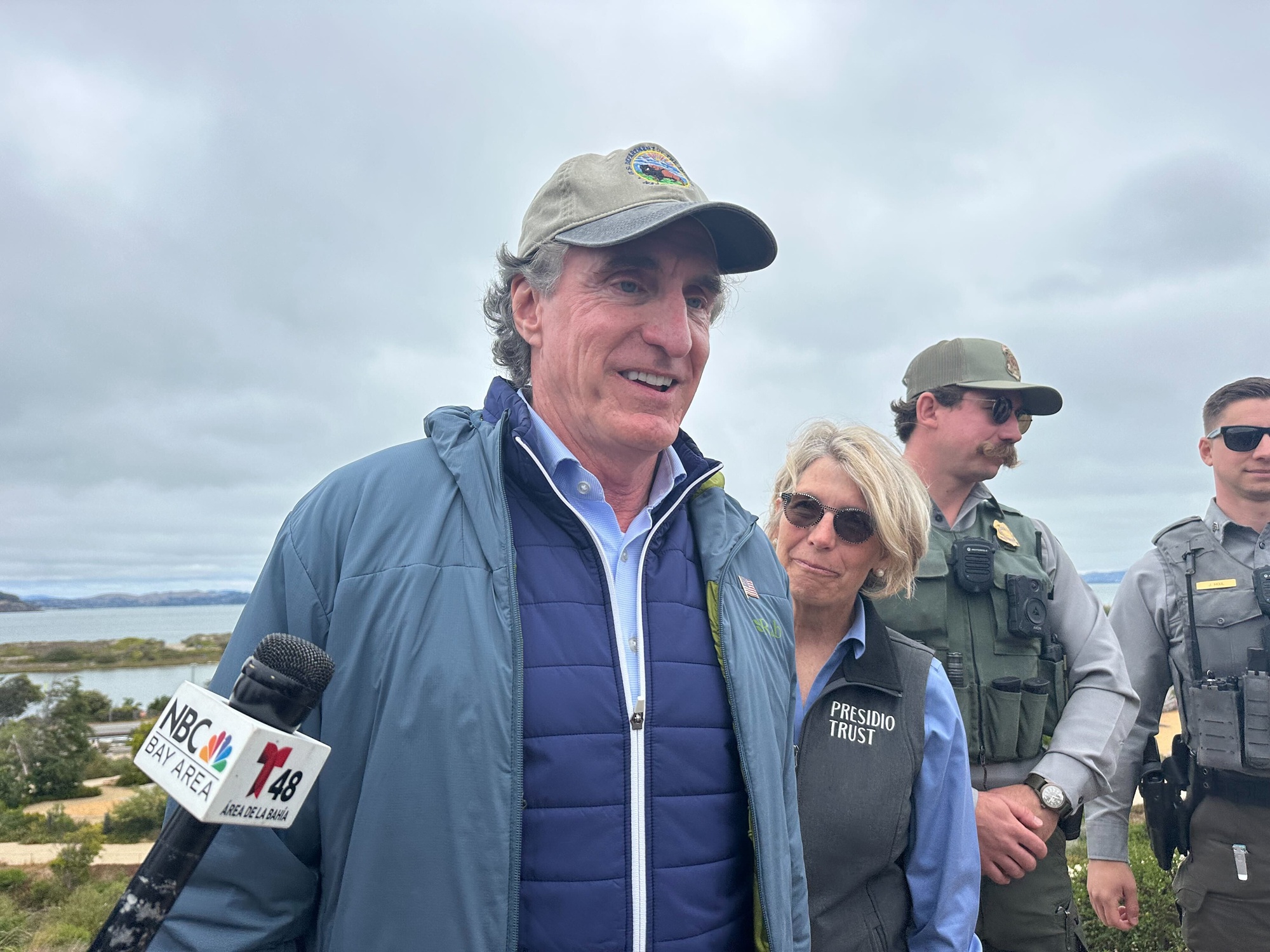
"caption": "During a San Francisco visit on Thursday, Interior Secretary Doug Burgum said the Presidio’s financial independence should be a model for public lands — a far cry from how Trump described it earlier.\r\n",
"credit": "Katie DeBenedetti/KQED",
"altTag": null,
"description": null,
"imgSizes": {
"thumbnail": {
"file": "https://cdn.kqed.org/wp-content/uploads/sites/10/2025/07/Interior-Secretary-Doug-Burgum-160x120.jpg",
"width": 160,
"height": 120,
"mimeType": "image/jpeg"
},
"1536x1536": {
"file": "https://cdn.kqed.org/wp-content/uploads/sites/10/2025/07/Interior-Secretary-Doug-Burgum-1536x1152.jpg",
"width": 1536,
"height": 1152,
"mimeType": "image/jpeg"
},
"post-thumbnail": {
"file": "https://cdn.kqed.org/wp-content/uploads/sites/10/2025/07/Interior-Secretary-Doug-Burgum-672x372.jpg",
"width": 672,
"height": 372,
"mimeType": "image/jpeg"
},
"twentyfourteen-full-width": {
"file": "https://cdn.kqed.org/wp-content/uploads/sites/10/2025/07/Interior-Secretary-Doug-Burgum-1038x576.jpg",
"width": 1038,
"height": 576,
"mimeType": "image/jpeg"
},
"kqedFullSize": {
"file": "https://cdn.kqed.org/wp-content/uploads/sites/10/2025/07/Interior-Secretary-Doug-Burgum.jpg",
"width": 2000,
"height": 1500
}
},
"isLoading": false,
"fetchFailed": false
},
"news_12048609": {
"type": "attachments",
"id": "news_12048609",
"meta": {
"index": "attachments_1716263798",
"site": "news",
"id": "12048609",
"found": true
},
"title": "Good Trouble Protest",
"publishDate": 1752790280,
"status": "inherit",
"parent": 0,
"modified": 1752796758,
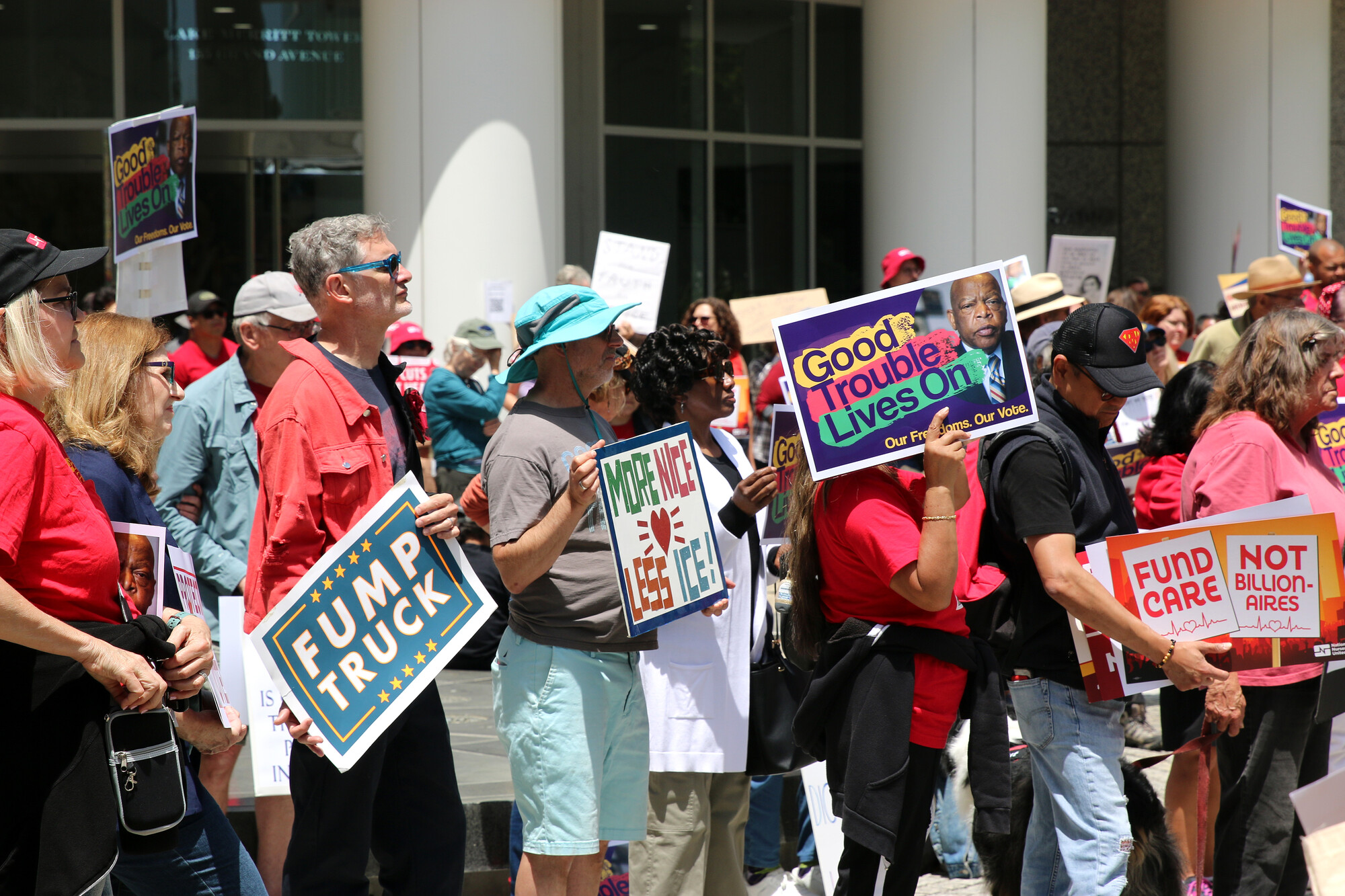
"caption": "Protesters hold signs condemning President Donald Trump and remembering the late Georgia Congressman John Lewis at a rally on Thursday in Oakland coordinated by the California Nurses Association. The \"Good Trouble\" rally was one of many in the Bay Area and hundreds across the nation to commemorate Lewis' death five years ago.",
"credit": "Brian Krans/KQED",
"altTag": null,
"description": null,
"imgSizes": {
"thumbnail": {
"file": "https://cdn.kqed.org/wp-content/uploads/sites/10/2025/07/250717GoodTrouble4_qed-160x107.jpg",
"width": 160,
"height": 107,
"mimeType": "image/jpeg"
},
"1536x1536": {
"file": "https://cdn.kqed.org/wp-content/uploads/sites/10/2025/07/250717GoodTrouble4_qed-1536x1024.jpg",
"width": 1536,
"height": 1024,
"mimeType": "image/jpeg"
},
"post-thumbnail": {
"file": "https://cdn.kqed.org/wp-content/uploads/sites/10/2025/07/250717GoodTrouble4_qed-672x372.jpg",
"width": 672,
"height": 372,
"mimeType": "image/jpeg"
},
"twentyfourteen-full-width": {
"file": "https://cdn.kqed.org/wp-content/uploads/sites/10/2025/07/250717GoodTrouble4_qed-1038x576.jpg",
"width": 1038,
"height": 576,
"mimeType": "image/jpeg"
},
"kqedFullSize": {
"file": "https://cdn.kqed.org/wp-content/uploads/sites/10/2025/07/250717GoodTrouble4_qed.jpg",
"width": 2000,
"height": 1333
}
},
"isLoading": false,
"fetchFailed": false
},
"news_12048517": {
"type": "attachments",
"id": "news_12048517",
"meta": {
"index": "attachments_1716263798",
"site": "news",
"id": "12048517",
"found": true
},
"title": "250717-BontaForum-04-BL_qed",
"publishDate": 1752773433,
"status": "inherit",
"parent": 0,
"modified": 1752773451,
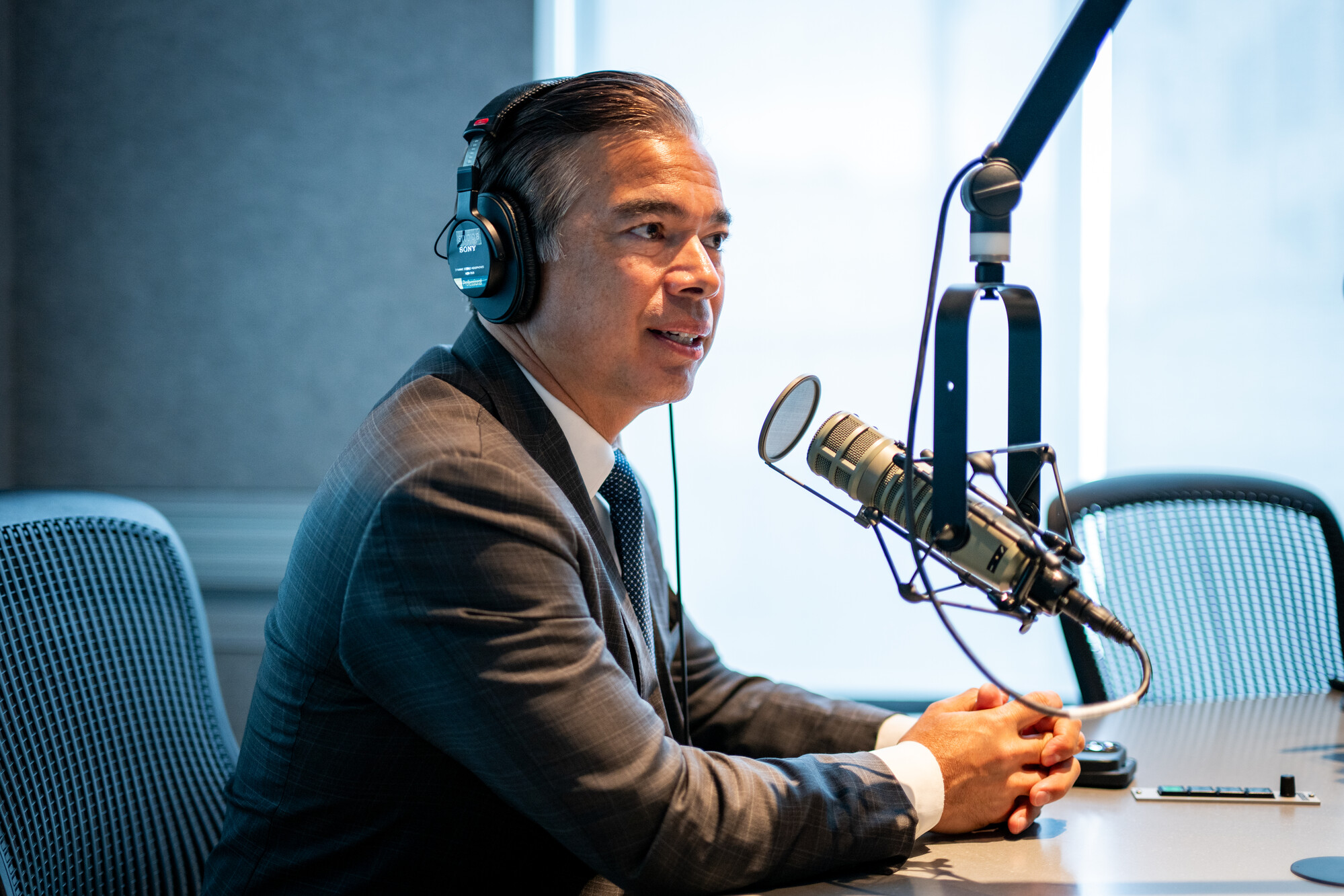
"caption": "Attorney General Rob Bonta speaks with Mina Kim before Forum at the KQED offices in San Francisco on July 17, 2025.",
"credit": "Beth LaBerge/KQED",
"altTag": null,
"description": null,
"imgSizes": {
"thumbnail": {
"file": "https://cdn.kqed.org/wp-content/uploads/sites/10/2025/07/250717-BontaForum-04-BL_qed-160x107.jpg",
"width": 160,
"height": 107,
"mimeType": "image/jpeg"
},
"1536x1536": {
"file": "https://cdn.kqed.org/wp-content/uploads/sites/10/2025/07/250717-BontaForum-04-BL_qed-1536x1024.jpg",
"width": 1536,
"height": 1024,
"mimeType": "image/jpeg"
},
"post-thumbnail": {
"file": "https://cdn.kqed.org/wp-content/uploads/sites/10/2025/07/250717-BontaForum-04-BL_qed-672x372.jpg",
"width": 672,
"height": 372,
"mimeType": "image/jpeg"
},
"twentyfourteen-full-width": {
"file": "https://cdn.kqed.org/wp-content/uploads/sites/10/2025/07/250717-BontaForum-04-BL_qed-1038x576.jpg",
"width": 1038,
"height": 576,
"mimeType": "image/jpeg"
},
"kqedFullSize": {
"file": "https://cdn.kqed.org/wp-content/uploads/sites/10/2025/07/250717-BontaForum-04-BL_qed.jpg",
"width": 1999,
"height": 1333
}
},
"isLoading": false,
"fetchFailed": false
},
"news_12048444": {
"type": "attachments",
"id": "news_12048444",
"meta": {
"index": "attachments_1716263798",
"site": "news",
"id": "12048444",
"found": true
},
"title": "EducationChatGPT",
"publishDate": 1752708873,
"status": "inherit",
"parent": 12048432,
"modified": 1752708901,
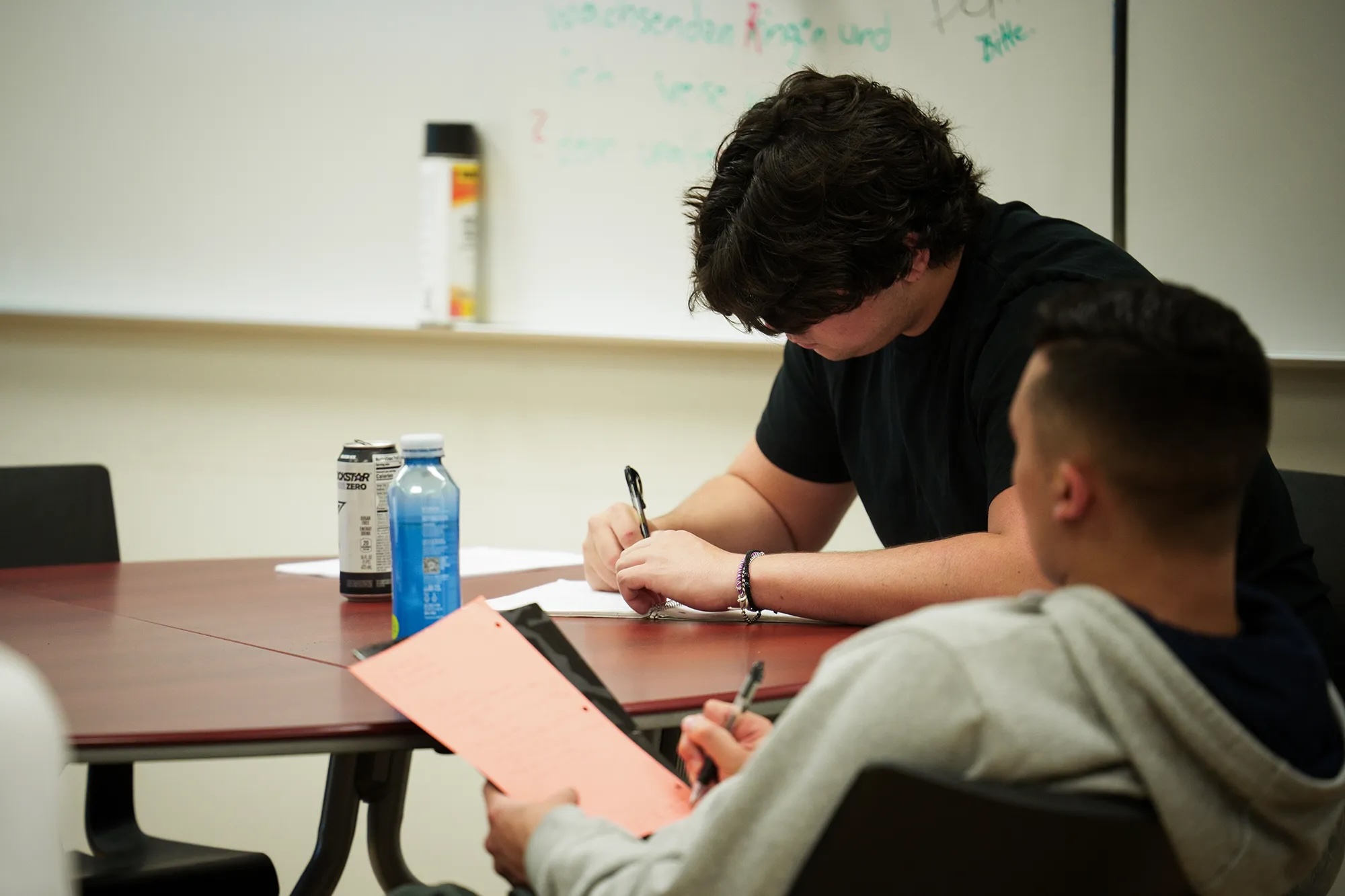
"caption": "Students take notes during Dr. Adam Kaiserman's English class at College of the Canyons in Santa Clarita on May 6, 2025.",
"credit": "Jules Hotz for CalMatters",
"altTag": null,
"description": null,
"imgSizes": {
"thumbnail": {
"file": "https://cdn.kqed.org/wp-content/uploads/sites/10/2025/07/EducationChatGPT-160x107.jpg",
"width": 160,
"height": 107,
"mimeType": "image/jpeg"
},
"1536x1536": {
"file": "https://cdn.kqed.org/wp-content/uploads/sites/10/2025/07/EducationChatGPT-1536x1024.jpg",
"width": 1536,
"height": 1024,
"mimeType": "image/jpeg"
},
"post-thumbnail": {
"file": "https://cdn.kqed.org/wp-content/uploads/sites/10/2025/07/EducationChatGPT-672x372.jpg",
"width": 672,
"height": 372,
"mimeType": "image/jpeg"
},
"twentyfourteen-full-width": {
"file": "https://cdn.kqed.org/wp-content/uploads/sites/10/2025/07/EducationChatGPT-1038x576.jpg",
"width": 1038,
"height": 576,
"mimeType": "image/jpeg"
},
"kqedFullSize": {
"file": "https://cdn.kqed.org/wp-content/uploads/sites/10/2025/07/EducationChatGPT.jpg",
"width": 2000,
"height": 1333
}
},
"isLoading": false,
"fetchFailed": false
},
"news_12048549": {
"type": "attachments",
"id": "news_12048549",
"meta": {
"index": "attachments_1716263798",
"site": "news",
"id": "12048549",
"found": true
},
"title": "Attorney General Alcatraz",
"publishDate": 1752779246,
"status": "inherit",
"parent": 12048367,
"modified": 1752779348,
"caption": "Attorney General Pam Bondi (center left) and Interior Secretary Doug Burgum (behind) arrive at Fort Baker after visiting Alcatraz Island, on Thursday, July 17, 2025, in Sausalito, California. ",
"credit": "Godofredo A. Vásquez/AP Photo",
"altTag": null,
"description": null,
"imgSizes": {
"thumbnail": {
"file": "https://cdn.kqed.org/wp-content/uploads/sites/10/2025/07/BondiBurgumSFVisitAP1-160x107.jpg",
"width": 160,
"height": 107,
"mimeType": "image/jpeg"
},
"1536x1536": {
"file": "https://cdn.kqed.org/wp-content/uploads/sites/10/2025/07/BondiBurgumSFVisitAP1-1536x1024.jpg",
"width": 1536,
"height": 1024,
"mimeType": "image/jpeg"
},
"post-thumbnail": {
"file": "https://cdn.kqed.org/wp-content/uploads/sites/10/2025/07/BondiBurgumSFVisitAP1-672x372.jpg",
"width": 672,
"height": 372,
"mimeType": "image/jpeg"
},
"twentyfourteen-full-width": {
"file": "https://cdn.kqed.org/wp-content/uploads/sites/10/2025/07/BondiBurgumSFVisitAP1-1038x576.jpg",
"width": 1038,
"height": 576,
"mimeType": "image/jpeg"
},
"kqedFullSize": {
"file": "https://cdn.kqed.org/wp-content/uploads/sites/10/2025/07/BondiBurgumSFVisitAP1.jpg",
"width": 2000,
"height": 1333
}
},
"isLoading": false,
"fetchFailed": false
},
"news_12048239": {
"type": "attachments",
"id": "news_12048239",
"meta": {
"index": "attachments_1716263798",
"site": "news",
"id": "12048239",
"found": true
},
"title": "Climate Dam Removal Kayaking Journey",
"publishDate": 1752621147,
"status": "inherit",
"parent": 12048228,
"modified": 1752624065,
"caption": "Young native paddlers hold hands and cheer as they walk across a sandy stretch that separates the Klamath River from the Pacific Ocean on Friday July 11, 2025, in Klamath, California.",
"credit": "Brittany Peterson/AP Photo",
"altTag": null,
"description": null,
"imgSizes": {
"thumbnail": {
"file": "https://cdn.kqed.org/wp-content/uploads/sites/10/2025/07/AP25196086091137-160x107.jpeg",
"width": 160,
"height": 107,
"mimeType": "image/jpeg"
},
"1536x1536": {
"file": "https://cdn.kqed.org/wp-content/uploads/sites/10/2025/07/AP25196086091137-1536x1026.jpeg",
"width": 1536,
"height": 1026,
"mimeType": "image/jpeg"
},
"post-thumbnail": {
"file": "https://cdn.kqed.org/wp-content/uploads/sites/10/2025/07/AP25196086091137-672x372.jpeg",
"width": 672,
"height": 372,
"mimeType": "image/jpeg"
},
"twentyfourteen-full-width": {
"file": "https://cdn.kqed.org/wp-content/uploads/sites/10/2025/07/AP25196086091137-1038x576.jpeg",
"width": 1038,
"height": 576,
"mimeType": "image/jpeg"
},
"kqedFullSize": {
"file": "https://cdn.kqed.org/wp-content/uploads/sites/10/2025/07/AP25196086091137.jpeg",
"width": 2000,
"height": 1336
}
},
"isLoading": false,
"fetchFailed": false
},
"news_12046548": {
"type": "attachments",
"id": "news_12046548",
"meta": {
"index": "attachments_1716263798",
"site": "news",
"id": "12046548",
"found": true
},
"title": "25_06_25_TRIBE_FOOD_CUTS_MM_26.DSC_7866-KQED",
"publishDate": 1751302202,
"status": "inherit",
"parent": 0,
"modified": 1752611221,
"caption": "The Trinity River flows through the Hoopa Valley in Northern California.",
"credit": "Mark McKenna for KQED",
"altTag": null,
"description": null,
"imgSizes": {
"thumbnail": {
"file": "https://cdn.kqed.org/wp-content/uploads/sites/10/2025/06/25_06_25_TRIBE_FOOD_CUTS_MM_26.DSC_7866-KQED-160x107.jpg",
"width": 160,
"height": 107,
"mimeType": "image/jpeg"
},
"1536x1536": {
"file": "https://cdn.kqed.org/wp-content/uploads/sites/10/2025/06/25_06_25_TRIBE_FOOD_CUTS_MM_26.DSC_7866-KQED-1536x1024.jpg",
"width": 1536,
"height": 1024,
"mimeType": "image/jpeg"
},
"post-thumbnail": {
"file": "https://cdn.kqed.org/wp-content/uploads/sites/10/2025/06/25_06_25_TRIBE_FOOD_CUTS_MM_26.DSC_7866-KQED-672x372.jpg",
"width": 672,
"height": 372,
"mimeType": "image/jpeg"
},
"twentyfourteen-full-width": {
"file": "https://cdn.kqed.org/wp-content/uploads/sites/10/2025/06/25_06_25_TRIBE_FOOD_CUTS_MM_26.DSC_7866-KQED-1038x576.jpg",
"width": 1038,
"height": 576,
"mimeType": "image/jpeg"
},
"kqedFullSize": {
"file": "https://cdn.kqed.org/wp-content/uploads/sites/10/2025/06/25_06_25_TRIBE_FOOD_CUTS_MM_26.DSC_7866-KQED.jpg",
"width": 2000,
"height": 1333
}
},
"isLoading": false,
"fetchFailed": false
},
"news_12046875": {
"type": "attachments",
"id": "news_12046875",
"meta": {
"index": "attachments_1716263798",
"site": "news",
"id": "12046875",
"found": true
},
"title": "Rolla Alaydi sits on the beach in Pacific Grove on June 30, 2025.",
"publishDate": 1751484821,
"status": "inherit",
"parent": 0,
"modified": 1751484831,
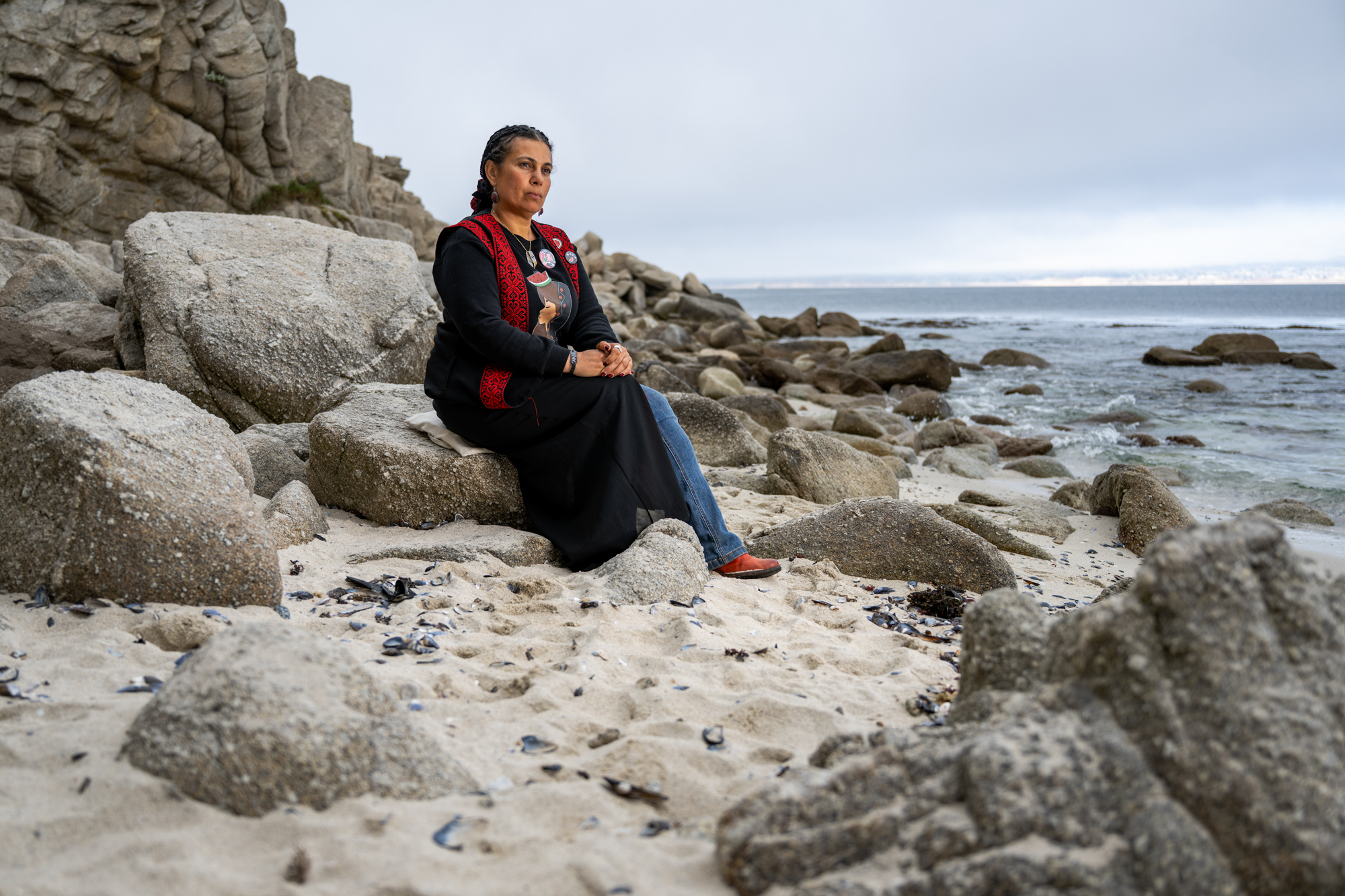
"caption": "Rolla Alaydi sits on the beach in Pacific Grove on June 30, 2025.",
"credit": "Beth LaBerge/KQED",
"altTag": null,
"description": null,
"imgSizes": {
"thumbnail": {
"file": "https://cdn.kqed.org/wp-content/uploads/sites/10/2025/07/250630-HUMANITARIANPAROLEDEEPDIVE-13-BL-KQED-160x107.jpg",
"width": 160,
"height": 107,
"mimeType": "image/jpeg"
},
"1536x1536": {
"file": "https://cdn.kqed.org/wp-content/uploads/sites/10/2025/07/250630-HUMANITARIANPAROLEDEEPDIVE-13-BL-KQED-1536x1024.jpg",
"width": 1536,
"height": 1024,
"mimeType": "image/jpeg"
},
"post-thumbnail": {
"file": "https://cdn.kqed.org/wp-content/uploads/sites/10/2025/07/250630-HUMANITARIANPAROLEDEEPDIVE-13-BL-KQED-672x372.jpg",
"width": 672,
"height": 372,
"mimeType": "image/jpeg"
},
"twentyfourteen-full-width": {
"file": "https://cdn.kqed.org/wp-content/uploads/sites/10/2025/07/250630-HUMANITARIANPAROLEDEEPDIVE-13-BL-KQED-1038x576.jpg",
"width": 1038,
"height": 576,
"mimeType": "image/jpeg"
},
"kqedFullSize": {
"file": "https://cdn.kqed.org/wp-content/uploads/sites/10/2025/07/250630-HUMANITARIANPAROLEDEEPDIVE-13-BL-KQED.jpg",
"width": 2000,
"height": 1333
}
},
"isLoading": false,
"fetchFailed": false
},
"news_12048133": {
"type": "attachments",
"id": "news_12048133",
"meta": {
"index": "attachments_1716263798",
"site": "news",
"id": "12048133",
"found": true
},
"title": "240522-KQEDheadquarters-12-BL_qed",
"publishDate": 1752605240,
"status": "inherit",
"parent": 12048122,
"modified": 1752605252,
"caption": "A KQED sign in the entrance way to the organization's headquarters in San Francisco on May 22, 2024.",
"credit": "Beth LaBerge/KQED",
"altTag": null,
"description": null,
"imgSizes": {
"thumbnail": {
"file": "https://cdn.kqed.org/wp-content/uploads/sites/10/2025/07/240522-KQEDheadquarters-12-BL_qed-160x107.jpg",
"width": 160,
"height": 107,
"mimeType": "image/jpeg"
},
"1536x1536": {
"file": "https://cdn.kqed.org/wp-content/uploads/sites/10/2025/07/240522-KQEDheadquarters-12-BL_qed-1536x1024.jpg",
"width": 1536,
"height": 1024,
"mimeType": "image/jpeg"
},
"post-thumbnail": {
"file": "https://cdn.kqed.org/wp-content/uploads/sites/10/2025/07/240522-KQEDheadquarters-12-BL_qed-672x372.jpg",
"width": 672,
"height": 372,
"mimeType": "image/jpeg"
},
"twentyfourteen-full-width": {
"file": "https://cdn.kqed.org/wp-content/uploads/sites/10/2025/07/240522-KQEDheadquarters-12-BL_qed-1038x576.jpg",
"width": 1038,
"height": 576,
"mimeType": "image/jpeg"
},
"kqedFullSize": {
"file": "https://cdn.kqed.org/wp-content/uploads/sites/10/2025/07/240522-KQEDheadquarters-12-BL_qed.jpg",
"width": 1999,
"height": 1333
}
},
"isLoading": false,
"fetchFailed": false
},
"news_12048214": {
"type": "attachments",
"id": "news_12048214",
"meta": {
"index": "attachments_1716263798",
"site": "news",
"id": "12048214",
"found": true
},
"title": "ImmigrationCalMatters",
"publishDate": 1752616689,
"status": "inherit",
"parent": 12048205,
"modified": 1752616749,
"caption": "Federal agents descend on MacArthur Park in Los Angeles on July 7, 2025.",
"credit": "J.W. Hendricks for CalMatters",
"altTag": null,
"description": null,
"imgSizes": {
"thumbnail": {
"file": "https://cdn.kqed.org/wp-content/uploads/sites/10/2025/07/ImmigrationCalMatters-160x107.jpg",
"width": 160,
"height": 107,
"mimeType": "image/jpeg"
},
"1536x1536": {
"file": "https://cdn.kqed.org/wp-content/uploads/sites/10/2025/07/ImmigrationCalMatters-1536x1024.jpg",
"width": 1536,
"height": 1024,
"mimeType": "image/jpeg"
},
"post-thumbnail": {
"file": "https://cdn.kqed.org/wp-content/uploads/sites/10/2025/07/ImmigrationCalMatters-672x372.jpg",
"width": 672,
"height": 372,
"mimeType": "image/jpeg"
},
"twentyfourteen-full-width": {
"file": "https://cdn.kqed.org/wp-content/uploads/sites/10/2025/07/ImmigrationCalMatters-1038x576.jpg",
"width": 1038,
"height": 576,
"mimeType": "image/jpeg"
},
"kqedFullSize": {
"file": "https://cdn.kqed.org/wp-content/uploads/sites/10/2025/07/ImmigrationCalMatters.jpg",
"width": 2000,
"height": 1333
}
},
"isLoading": false,
"fetchFailed": false
},
"news_12047986": {
"type": "attachments",
"id": "news_12047986",
"meta": {
"index": "attachments_1716263798",
"site": "news",
"id": "12047986",
"found": true
},
"title": "Care Court",
"publishDate": 1752526143,
"status": "inherit",
"parent": 0,
"modified": 1752610868,
"caption": "Giovanni Figueroa, a mental health specialist with the Orange County Health Care Agency, has worked in assisted outpatient treatment since 2015. Photographed at the Central Men’s & Women’s Jails in Orange County on July 7, 2025.",
"credit": "David Rodriguez for KQED",
"altTag": null,
"description": null,
"imgSizes": {
"thumbnail": {
"file": "https://cdn.kqed.org/wp-content/uploads/sites/10/2025/07/Rodriguez_CARE_07_07_2025-1-160x107.jpg",
"width": 160,
"height": 107,
"mimeType": "image/jpeg"
},
"1536x1536": {
"file": "https://cdn.kqed.org/wp-content/uploads/sites/10/2025/07/Rodriguez_CARE_07_07_2025-1-1536x1026.jpg",
"width": 1536,
"height": 1026,
"mimeType": "image/jpeg"
},
"post-thumbnail": {
"file": "https://cdn.kqed.org/wp-content/uploads/sites/10/2025/07/Rodriguez_CARE_07_07_2025-1-672x372.jpg",
"width": 672,
"height": 372,
"mimeType": "image/jpeg"
},
"twentyfourteen-full-width": {
"file": "https://cdn.kqed.org/wp-content/uploads/sites/10/2025/07/Rodriguez_CARE_07_07_2025-1-1038x576.jpg",
"width": 1038,
"height": 576,
"mimeType": "image/jpeg"
},
"kqedFullSize": {
"file": "https://cdn.kqed.org/wp-content/uploads/sites/10/2025/07/Rodriguez_CARE_07_07_2025-1.jpg",
"width": 1800,
"height": 1202
}
},
"isLoading": false,
"fetchFailed": false
},
"news_12000971": {
"type": "attachments",
"id": "news_12000971",
"meta": {
"index": "attachments_1716263798",
"site": "news",
"id": "12000971",
"found": true
},
"title": "UC Berkeley Chancellor Rich Lyons in his office on campus on Aug. 20, 2024.",
"publishDate": 1724185101,
"status": "inherit",
"parent": 0,
"modified": 1724192309,
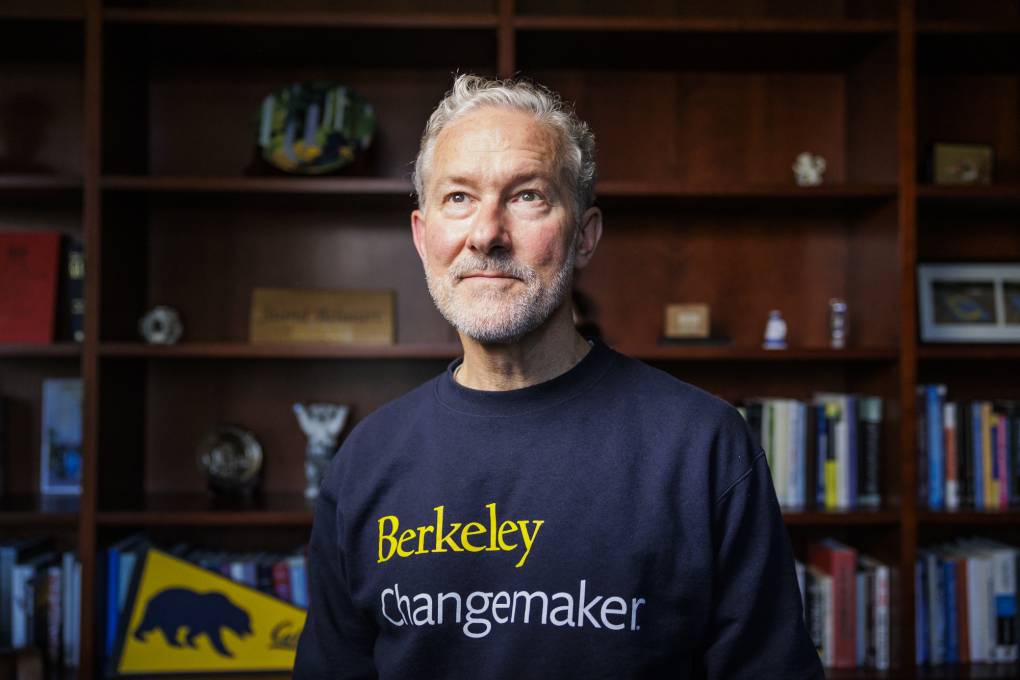
"caption": "UC Berkeley Chancellor Rich Lyons in his office on campus in Berkeley on Aug. 20, 2024.",
"credit": "Martin do Nascimento/KQED",
"altTag": null,
"description": null,
"imgSizes": {
"medium": {
"file": "https://cdn.kqed.org/wp-content/uploads/sites/10/2024/08/240820-UCB-CHANCELLOR-LYONS-MD-03-KQED-800x533.jpg",
"width": 800,
"height": 533,
"mimeType": "image/jpeg"
},
"large": {
"file": "https://cdn.kqed.org/wp-content/uploads/sites/10/2024/08/240820-UCB-CHANCELLOR-LYONS-MD-03-KQED-1020x680.jpg",
"width": 1020,
"height": 680,
"mimeType": "image/jpeg"
},
"thumbnail": {
"file": "https://cdn.kqed.org/wp-content/uploads/sites/10/2024/08/240820-UCB-CHANCELLOR-LYONS-MD-03-KQED-160x107.jpg",
"width": 160,
"height": 107,
"mimeType": "image/jpeg"
},
"1536x1536": {
"file": "https://cdn.kqed.org/wp-content/uploads/sites/10/2024/08/240820-UCB-CHANCELLOR-LYONS-MD-03-KQED-1536x1024.jpg",
"width": 1536,
"height": 1024,
"mimeType": "image/jpeg"
},
"post-thumbnail": {
"file": "https://cdn.kqed.org/wp-content/uploads/sites/10/2024/08/240820-UCB-CHANCELLOR-LYONS-MD-03-KQED-672x372.jpg",
"width": 672,
"height": 372,
"mimeType": "image/jpeg"
},
"twentyfourteen-full-width": {
"file": "https://cdn.kqed.org/wp-content/uploads/sites/10/2024/08/240820-UCB-CHANCELLOR-LYONS-MD-03-KQED-1038x576.jpg",
"width": 1038,
"height": 576,
"mimeType": "image/jpeg"
},
"full-width": {
"file": "https://cdn.kqed.org/wp-content/uploads/sites/10/2024/08/240820-UCB-CHANCELLOR-LYONS-MD-03-KQED-1920x1280.jpg",
"width": 1920,
"height": 1280,
"mimeType": "image/jpeg"
},
"kqedFullSize": {
"file": "https://cdn.kqed.org/wp-content/uploads/sites/10/2024/08/240820-UCB-CHANCELLOR-LYONS-MD-03-KQED.jpg",
"width": 2000,
"height": 1333
}
},
"isLoading": false,
"fetchFailed": false
}
},
"audioPlayerReducer": {
"postId": "stream_live",
"isPaused": true,
"isPlaying": false,
"pfsActive": false,
"pledgeModalIsOpen": true,
"playerDrawerIsOpen": false,
"liveAudioPlayStartedAt": 0,
"liveAudioPlayContext": ""
},
"authorsReducer": {
"byline_news_12048432": {
"type": "authors",
"id": "byline_news_12048432",
"meta": {
"override": true
},
"slug": "byline_news_12048432",
"name": "Tara García Mathewson, CalMatters",
"isLoading": false
},
"byline_news_12048228": {
"type": "authors",
"id": "byline_news_12048228",
"meta": {
"override": true
},
"slug": "byline_news_12048228",
"name": "Brittany Peterson, The Associated Press",
"isLoading": false
},
"byline_news_12048205": {
"type": "authors",
"id": "byline_news_12048205",
"meta": {
"override": true
},
"slug": "byline_news_12048205",
"name": "Wendy Fry and Sergio Olmos, CalMatters",
"isLoading": false
},
"vrancano": {
"type": "authors",
"id": "11276",
"meta": {
"index": "authors_1716337520",
"id": "11276",
"found": true
},
"name": "Vanessa Rancaño",
"firstName": "Vanessa",
"lastName": "Rancaño",
"slug": "vrancano",
"email": "vrancano@kqed.org",
"display_author_email": false,
"staff_mastheads": [
"news"
],
"title": "Reporter",
"bio": "Vanessa Rancaño is a features reporter for KQED. She’s also covered homelessness and education for the station and reported from the Central Valley. Her work has aired across public radio, from flagship national news shows to longform narrative podcasts. Before taking up a mic, she worked as a freelance print journalist. She’s been recognized with a number of national and regional awards. Vanessa grew up in California's Central Valley. She's a former NPR Kroc Fellow, and a graduate of the UC Berkeley Graduate School of Journalism.",
"avatar": "https://secure.gravatar.com/avatar/b3a383dfb0e7ee1c17568f2cf067904ab654d6e3de9743fc661f3c788ade1bed?s=600&d=blank&r=g",
"twitter": "vanessarancano",
"bluesky": null,
"facebook": null,
"instagram": null,
"linkedin": null,
"sites": [
{
"site": "arts",
"roles": [
"editor"
]
},
{
"site": "news",
"roles": [
"editor"
]
},
{
"site": "liveblog",
"roles": [
"contributor"
]
}
],
"headData": {
"title": "Vanessa Rancaño | KQED",
"description": "Reporter",
"ogImgSrc": "https://secure.gravatar.com/avatar/b3a383dfb0e7ee1c17568f2cf067904ab654d6e3de9743fc661f3c788ade1bed?s=600&d=blank&r=g",
"twImgSrc": "https://secure.gravatar.com/avatar/b3a383dfb0e7ee1c17568f2cf067904ab654d6e3de9743fc661f3c788ade1bed?s=600&d=blank&r=g"
},
"isLoading": false,
"link": "/author/vrancano"
},
"adahlstromeckman": {
"type": "authors",
"id": "11785",
"meta": {
"index": "authors_1716337520",
"id": "11785",
"found": true
},
"name": "Azul Dahlstrom-Eckman",
"firstName": "Azul",
"lastName": "Dahlstrom-Eckman",
"slug": "adahlstromeckman",
"email": "adahlstrom-eckman@kqed.org",
"display_author_email": true,
"staff_mastheads": [],
"title": "Reporter",
"bio": "Azul is a reporter for KQED focusing on transportation and features. He joined KQED in 2021 as an alumna of KALW's Audio Academy radio journalism training program.",
"avatar": "https://secure.gravatar.com/avatar/9cb750298435add7815a777f55bf1f46845c1386bb8452555c60a7b820b5aba3?s=600&d=blank&r=g",
"twitter": "@zuliemann",
"bluesky": "@azul415.bsky.social",
"facebook": null,
"instagram": null,
"linkedin": null,
"sites": [
{
"site": "arts",
"roles": [
"editor"
]
},
{
"site": "news",
"roles": [
"editor"
]
},
{
"site": "science",
"roles": [
"editor"
]
},
{
"site": "liveblog",
"roles": [
"author"
]
}
],
"headData": {
"title": "Azul Dahlstrom-Eckman | KQED",
"description": "Reporter",
"ogImgSrc": "https://secure.gravatar.com/avatar/9cb750298435add7815a777f55bf1f46845c1386bb8452555c60a7b820b5aba3?s=600&d=blank&r=g",
"twImgSrc": "https://secure.gravatar.com/avatar/9cb750298435add7815a777f55bf1f46845c1386bb8452555c60a7b820b5aba3?s=600&d=blank&r=g"
},
"isLoading": false,
"link": "/author/adahlstromeckman"
},
"ibloom": {
"type": "authors",
"id": "11805",
"meta": {
"index": "authors_1716337520",
"id": "11805",
"found": true
},
"name": "Izzy Bloom",
"firstName": "Izzy",
"lastName": "Bloom",
"slug": "ibloom",
"email": "ibloom@kqed.org",
"display_author_email": false,
"staff_mastheads": [],
"title": "KQED Reporter & Producer",
"bio": "Izzy is a reporter and producer on KQED's California Politics & Government Desk. She joined the desk in 2024 to produce Political Breakdown, covering local and national elections and attending the RNC and DNC in Milwaukee and Chicago. \r\n\r\nBefore that, Izzy was a producer on The California Report and reported long-form stories for The California Report Magazine. She was a finalist for the Third Coast/Richard H. Driehaus Foundation Competition and was awarded for her reporting on indigenous land back by the Society of Professional Journalists. Izzy received her master's in journalism from the University of California, Berkeley.",
"avatar": "https://secure.gravatar.com/avatar/cc4d272ca430783ee1a8efac470a6b1e0fdd082c3beb61da019801d0ff751c8c?s=600&d=blank&r=g",
"twitter": null,
"bluesky": null,
"facebook": null,
"instagram": null,
"linkedin": null,
"sites": [
{
"site": "news",
"roles": [
"editor"
]
},
{
"site": "perspectives",
"roles": [
"editor"
]
}
],
"headData": {
"title": "Izzy Bloom | KQED",
"description": "KQED Reporter & Producer",
"ogImgSrc": "https://secure.gravatar.com/avatar/cc4d272ca430783ee1a8efac470a6b1e0fdd082c3beb61da019801d0ff751c8c?s=600&d=blank&r=g",
"twImgSrc": "https://secure.gravatar.com/avatar/cc4d272ca430783ee1a8efac470a6b1e0fdd082c3beb61da019801d0ff751c8c?s=600&d=blank&r=g"
},
"isLoading": false,
"link": "/author/ibloom"
},
"nkhan": {
"type": "authors",
"id": "11867",
"meta": {
"index": "authors_1716337520",
"id": "11867",
"found": true
},
"name": "Nisa Khan",
"firstName": "Nisa",
"lastName": "Khan",
"slug": "nkhan",
"email": "nkhan@kqed.org",
"display_author_email": false,
"staff_mastheads": [],
"title": "KQED Contributor",
"bio": "Nisa Khan is a reporter for KQED's Audience News Desk. She was formerly a data reporter at Michigan Radio. She earned a Bachelor of Science in Information from the University of Michigan and a Master of Arts in Communication from Stanford University.",
"avatar": "https://secure.gravatar.com/avatar/a3bf1efcfbe7658d13a434cc54d0b2e3?s=600&d=blank&r=g",
"twitter": "mnisakhan",
"bluesky": null,
"facebook": null,
"instagram": null,
"linkedin": null,
"sites": [
{
"site": "arts",
"roles": [
"editor"
]
},
{
"site": "news",
"roles": [
"editor"
]
},
{
"site": "science",
"roles": [
"editor",
"author"
]
},
{
"site": "forum",
"roles": [
"editor"
]
},
{
"site": "liveblog",
"roles": [
"contributor"
]
}
],
"headData": {
"title": "Nisa Khan | KQED",
"description": "KQED Contributor",
"ogImgSrc": "https://secure.gravatar.com/avatar/a3bf1efcfbe7658d13a434cc54d0b2e3?s=600&d=blank&r=g",
"twImgSrc": "https://secure.gravatar.com/avatar/a3bf1efcfbe7658d13a434cc54d0b2e3?s=600&d=blank&r=g"
},
"isLoading": false,
"link": "/author/nkhan"
},
"bsiavoshy": {
"type": "authors",
"id": "11890",
"meta": {
"index": "authors_1716337520",
"id": "11890",
"found": true
},
"name": "Bejan Siavoshy",
"firstName": "Bejan",
"lastName": "Siavoshy",
"slug": "bsiavoshy",
"email": "bsiavoshy@kqed.org",
"display_author_email": false,
"staff_mastheads": [],
"title": "KQED Contributor",
"bio": null,
"avatar": "https://secure.gravatar.com/avatar/ead3e7c509634b37a73b1f57677e49f9?s=600&d=blank&r=g",
"twitter": null,
"facebook": null,
"instagram": null,
"linkedin": null,
"sites": [
{
"site": "news",
"roles": [
"editor"
]
}
],
"headData": {
"title": "Bejan Siavoshy | KQED",
"description": "KQED Contributor",
"ogImgSrc": "https://secure.gravatar.com/avatar/ead3e7c509634b37a73b1f57677e49f9?s=600&d=blank&r=g",
"twImgSrc": "https://secure.gravatar.com/avatar/ead3e7c509634b37a73b1f57677e49f9?s=600&d=blank&r=g"
},
"isLoading": false,
"link": "/author/bsiavoshy"
},
"kdebenedetti": {
"type": "authors",
"id": "11913",
"meta": {
"index": "authors_1716337520",
"id": "11913",
"found": true
},
"name": "Katie DeBenedetti",
"firstName": "Katie",
"lastName": "DeBenedetti",
"slug": "kdebenedetti",
"email": "kdebenedetti@kqed.org",
"display_author_email": false,
"staff_mastheads": [
"news",
"science"
],
"title": "KQED Contributor",
"bio": "Katie DeBenedetti is a digital reporter covering daily news for the Express Desk. Prior to joining KQED as a culture reporting intern in January 2024, she covered education and city government for the Napa Valley Register.",
"avatar": "https://secure.gravatar.com/avatar/6e31073cb8f7e4214ab03f42771d0f45?s=600&d=blank&r=g",
"twitter": null,
"facebook": null,
"instagram": null,
"linkedin": null,
"sites": [
{
"site": "news",
"roles": [
"author"
]
},
{
"site": "science",
"roles": [
"author"
]
},
{
"site": "liveblog",
"roles": [
"author"
]
}
],
"headData": {
"title": "Katie DeBenedetti | KQED",
"description": "KQED Contributor",
"ogImgSrc": "https://secure.gravatar.com/avatar/6e31073cb8f7e4214ab03f42771d0f45?s=600&d=blank&r=g",
"twImgSrc": "https://secure.gravatar.com/avatar/6e31073cb8f7e4214ab03f42771d0f45?s=600&d=blank&r=g"
},
"isLoading": false,
"link": "/author/kdebenedetti"
},
"slim": {
"type": "authors",
"id": "11920",
"meta": {
"index": "authors_1716337520",
"id": "11920",
"found": true
},
"name": "Samantha Lim",
"firstName": "Samantha",
"lastName": "Lim",
"slug": "slim",
"email": "slim@KQED.org",
"display_author_email": false,
"staff_mastheads": [],
"title": "KQED Contributor",
"bio": null,
"avatar": "https://secure.gravatar.com/avatar/82e592e6c15fe1a04d385e8ad0fb0b4e?s=600&d=blank&r=g",
"twitter": null,
"facebook": null,
"instagram": null,
"linkedin": null,
"sites": [
{
"site": "news",
"roles": []
}
],
"headData": {
"title": "Samantha Lim | KQED",
"description": "KQED Contributor",
"ogImgSrc": "https://secure.gravatar.com/avatar/82e592e6c15fe1a04d385e8ad0fb0b4e?s=600&d=blank&r=g",
"twImgSrc": "https://secure.gravatar.com/avatar/82e592e6c15fe1a04d385e8ad0fb0b4e?s=600&d=blank&r=g"
},
"isLoading": false,
"link": "/author/slim"
},
"bkrans": {
"type": "authors",
"id": "11923",
"meta": {
"index": "authors_1716337520",
"id": "11923",
"found": true
},
"name": "Brian Krans",
"firstName": "Brian",
"lastName": "Krans",
"slug": "bkrans",
"email": "bkrans@kqed.org",
"display_author_email": false,
"staff_mastheads": [
"news"
],
"title": "KQED Contributing Reporter",
"bio": "Brian Krans is an award-winning local news and investigative reporter who has been proudly working as a general assignment reporter for KQED since August 2023. He lives in Richmond, where he also reports on air pollution for Richmondside. He is also a founding member of the Vallejo Sun.",
"avatar": "https://secure.gravatar.com/avatar/d1014d604089314a94807d2c4f2d3e06?s=600&d=blank&r=g",
"twitter": "citizenkrans",
"facebook": null,
"instagram": null,
"linkedin": null,
"sites": [
{
"site": "news",
"roles": [
"editor"
]
}
],
"headData": {
"title": "Brian Krans | KQED",
"description": "KQED Contributing Reporter",
"ogImgSrc": "https://secure.gravatar.com/avatar/d1014d604089314a94807d2c4f2d3e06?s=600&d=blank&r=g",
"twImgSrc": "https://secure.gravatar.com/avatar/d1014d604089314a94807d2c4f2d3e06?s=600&d=blank&r=g"
},
"isLoading": false,
"link": "/author/bkrans"
},
"gzada": {
"type": "authors",
"id": "11929",
"meta": {
"index": "authors_1716337520",
"id": "11929",
"found": true
},
"name": "Gilare Zada",
"firstName": "Gilare",
"lastName": "Zada",
"slug": "gzada",
"email": "gzada@kqed.org",
"display_author_email": true,
"staff_mastheads": [
"news"
],
"title": null,
"bio": "Gilare Zada is a Kurdish-American from San Diego, CA. Storytelling, fitness, and binge reading are some of her passions outside of news reporting. Her work has appeared in Mission Local, the Peninsula Press, the San Francisco Press Club, and more. She also writes as a class correspondent for the Stanford Magazine - go Card!",
"avatar": "https://secure.gravatar.com/avatar/33a75f2b947669a488a805edec3fbf3838c1cedaedda710e983770633b4d6a75?s=600&d=blank&r=g",
"twitter": null,
"bluesky": null,
"facebook": null,
"instagram": null,
"linkedin": null,
"sites": [
{
"site": "arts",
"roles": [
"editor"
]
},
{
"site": "news",
"roles": [
"editor",
"contributor"
]
},
{
"site": "science",
"roles": [
"editor"
]
}
],
"headData": {
"title": "Gilare Zada | KQED",
"description": null,
"ogImgSrc": "https://secure.gravatar.com/avatar/33a75f2b947669a488a805edec3fbf3838c1cedaedda710e983770633b4d6a75?s=600&d=blank&r=g",
"twImgSrc": "https://secure.gravatar.com/avatar/33a75f2b947669a488a805edec3fbf3838c1cedaedda710e983770633b4d6a75?s=600&d=blank&r=g"
},
"isLoading": false,
"link": "/author/gzada"
}
},
"pagesReducer": {
"news_tag_california": {
"type": "terms",
"id": "news_18538",
"meta": {
"index": "terms_1716263798",
"site": "news",
"id": "18538",
"score": 6.8457103
},
"featImg": null,
"name": "California",
"description": null,
"taxonomy": "tag",
"headData": {
"twImgId": null,
"twTitle": null,
"ogTitle": null,
"ogImgId": null,
"twDescription": null,
"description": null,
"title": "California Archives | KQED News",
"ogDescription": null
},
"ttid": 31,
"slug": "california",
"isLoading": false,
"title": "California",
"pageMeta": {
"site": "news",
"WpPageTemplate": "page-topic-editorial",
"currentPage": 73
},
"blocks": [
{
"blockName": "kqed/post-list",
"attrs": {
"layout": "cardArticle2",
"query": "posts/news?tag=california",
"seeMore": false,
"paginated": true,
"page": 73
}
},
{
"blockName": "kqed/ad"
}
]
}
},
"pfsSessionReducer": {},
"postsReducer": {
"stream_live": {
"type": "live",
"id": "stream_live",
"audioUrl": "https://streams.kqed.org/kqedradio",
"title": "Live Stream",
"excerpt": "Live Stream information currently unavailable.",
"link": "/radio",
"featImg": "",
"label": {
"name": "KQED Live",
"link": "/"
}
},
"stream_kqedNewscast": {
"type": "posts",
"id": "stream_kqedNewscast",
"audioUrl": "https://www.kqed.org/.stream/anon/radio/RDnews/newscast.mp3?_=1",
"title": "KQED Newscast",
"featImg": "",
"label": {
"name": "88.5 FM",
"link": "/"
}
},
"news_12048509": {
"type": "posts",
"id": "news_12048509",
"meta": {
"index": "posts_1716263798",
"site": "news",
"id": "12048509",
"score": null,
"sort": [
1752836423000
]
},
"guestAuthors": [],
"slug": "trump-officials-want-big-changes-at-alcatraz-the-presidio-is-a-different-story",
"title": "Trump Officials Want Big Changes at Alcatraz. The Presidio Is a Different Story",
"publishDate": 1752836423,
"format": "standard",
"headTitle": "Trump Officials Want Big Changes at Alcatraz. The Presidio Is a Different Story | KQED",
"labelTerm": {
"site": "news"
},
"content": "\u003cp>After wrapping up an early morning \u003ca href=\"https://www.kqed.org/news/12048367/can-trump-really-reopen-alcatraz-delegation-heads-to-island-to-make-case\">boat ride to Alcatraz, where he touted \u003c/a>President Trump’s plan to once again put people behind bars there, Interior Secretary Doug Burgum took a stroll on Thursday around another famed San Francisco national park site that Trump has had his eye on: \u003ca href=\"https://www.kqed.org/news/tag/the-presidio\">the Presidio\u003c/a>.\u003c/p>\n\u003cp>His take? The former Army base-turned-park should be an inspiration for the National Park Service as a whole.\u003c/p>\n\u003cp>“This is a model where they’re using private sector tools and market tools with no subsidy and they’ve achieved profitability,” he told reporters outside the Presidio’s visitor center. The Presidio Trust, the federal agency that manages the space, is financially self-sufficient and relies on revenue from leasing historic buildings.\u003c/p>\n\u003cp>[ad fullwidth]\u003c/p>\n\u003cp>“I think they’re a great example of how we can do a great of job of collaborating with the tools to help manage federal resources,” he continued.\u003c/p>\n\u003cp>Though earlier Thursday he advocated for turning Alcatraz back into a federal prison — a move that would require transferring it out of the park system — Burgum had praise for the Presidio’s 1,500 acres of hiking trails, green space and restaurants on the northwest edge of San Francisco.\u003c/p>\n\u003cfigure id=\"attachment_12048572\" class=\"wp-caption aligncenter\" style=\"max-width: 2000px\">\u003cimg loading=\"lazy\" decoding=\"async\" class=\"size-full wp-image-12048572\" src=\"https://cdn.kqed.org/wp-content/uploads/sites/10/2025/07/250717-OutpostMeadows-18-BL_qed.jpg\" alt=\"\" width=\"2000\" height=\"1333\" srcset=\"https://cdn.kqed.org/wp-content/uploads/sites/10/2025/07/250717-OutpostMeadows-18-BL_qed.jpg 2000w, https://cdn.kqed.org/wp-content/uploads/sites/10/2025/07/250717-OutpostMeadows-18-BL_qed-160x107.jpg 160w, https://cdn.kqed.org/wp-content/uploads/sites/10/2025/07/250717-OutpostMeadows-18-BL_qed-1536x1024.jpg 1536w\" sizes=\"auto, (max-width: 2000px) 100vw, 2000px\">\u003cfigcaption class=\"wp-caption-text\">Visitors gather at Outpost Meadow in the Presidio of San Francisco on July 17, 2025, as the new park officially opens to the public. The expansion offers picnic areas, BBQ grills and views of the Golden Gate Bridge as part of the Tunnel Tops project. \u003ccite>(Beth LaBerge/KQED)\u003c/cite>\u003c/figcaption>\u003c/figure>\n\u003cp>It was a far cry from how Trump described the park’s operation in an executive order he \u003ca href=\"https://www.kqed.org/news/12027864/trump-moves-slash-presidio-trust-agency-runs-historic-sf-park\">penned in February\u003c/a>, which could have made the midday tour with the CEO of the Presidio Trust pretty awkward.\u003c/p>\n\u003cp>“This order commences a reduction in the elements of the Federal bureaucracy that the President has determined are unnecessary,” the order reads. It applied to the Presidio Trust and three other agencies that Trump’s order suggested were causing government “waste and abuse.”\u003c/p>\n\u003cp>But as Jean Fraser, the Trust’s CEO, guided Burgum around the fire pit, picnic area and low-back lounge chairs that look out on the Presidio’s premier view of Crissy Field, the secretary seemed to disagree with Trump.[aside postID=news_12048367 hero='https://cdn.kqed.org/wp-content/uploads/sites/10/2025/07/BondiBurgumSFVisitAP1.jpg']When asked if he would be reporting his positive experience back to the president, Burgum didn’t give a direct answer but said that within the Department of the Interior, the model the Presidio uses to fundraise and function “is something we have to look at.”\u003c/p>\n\u003cp>When Congress created the Presidio Trust in 1996, it provided federal money to aid the property’s transition from an Army base but required it to become financially independent by 2013. That public-private partnership lessened the financial burden on the Department of the Interior, helping it garner bipartisan support.\u003c/p>\n\u003cp>Burgum said the National Park Service has a lot of deferred maintenance that needs to be addressed and could benefit from private sector support to do so. The park service manages 85 million acres of land across the U.S.\u003c/p>\n\u003cp>On the 15 or so minute walk through the Presidio, he complimented the red, movable chairs that tourists and locals sat in drinking coffee, gave the park’s landscape designers kudos for the trees and native plants lining its gravel walkways and applauded the recently debuted expansion of the Tunnel Tops picnic area.\u003c/p>\n\u003cp>“National parks have been called America’s best idea, and we need to invest in that,” he said as the tour wrapped up.\u003c/p>\n\u003cp>The current administration, however, has overseen a shrinking National Park Service as it takes a hatchet to federal agencies. Since Trump took office, the NPS has lost \u003ca href=\"https://www.npca.org/articles/9551-staffing-crisis-at-national-parks-reaches-breaking-point-new-data-shows-24\">24% of its permanent staff\u003c/a>.\u003c/p>\n\u003cp>\u003c/p>\n",
"blocks": [],
"excerpt": "In a San Francisco visit, Interior Secretary Doug Burgum said the Presidio’s financial independence should be a model for public lands — a far cry from how Trump described it earlier.",
"status": "publish",
"parent": 0,
"modified": 1752867811,
"stats": {
"hasAudio": false,
"hasVideo": false,
"hasChartOrMap": false,
"iframeSrcs": [],
"hasGoogleForm": false,
"hasGallery": false,
"hasHearkenModule": false,
"hasPolis": false,
"paragraphCount": 15,
"wordCount": 660
},
"headData": {
"title": "Trump Officials Want Big Changes at Alcatraz. The Presidio Is a Different Story | KQED",
"description": "In a San Francisco visit, Interior Secretary Doug Burgum said the Presidio’s financial independence should be a model for public lands — a far cry from how Trump described it earlier.",
"ogTitle": "",
"ogDescription": "",
"ogImgId": "",
"twTitle": "",
"twDescription": "",
"twImgId": "",
"schema": {
"@context": "https://schema.org",
"@type": "NewsArticle",
"headline": "Trump Officials Want Big Changes at Alcatraz. The Presidio Is a Different Story",
"datePublished": "2025-07-18T04:00:23-07:00",
"dateModified": "2025-07-18T12:43:31-07:00",
"image": "https://cdn.kqed.org/wp-content/uploads/2020/02/KQED-OG-Image@1x.png",
"isAccessibleForFree": "True",
"publisher": {
"@type": "NewsMediaOrganization",
"@id": "https://www.kqed.org/#organization",
"name": "KQED",
"logo": "https://cdn.kqed.org/wp-content/uploads/2020/02/KQED-OG-Image@1x.png",
"url": "https://www.kqed.org",
"sameAs": [
"https://www.facebook.com/KQED",
"https://twitter.com/KQED",
"https://www.instagram.com/kqed/",
"https://www.tiktok.com/@kqedofficial",
"https://www.linkedin.com/company/kqed",
"https://www.youtube.com/channel/UCeC0IOo7i1P_61zVUWbJ4nw"
]
}
}
},
"primaryCategory": {
"termId": 8,
"slug": "news",
"name": "News"
},
"audioUrl": "https://traffic.omny.fm/d/clips/0af137ef-751e-4b19-a055-aaef00d2d578/ffca7e9f-6831-41c5-bcaf-aaef00f5a073/bce5d6fb-ca52-41de-8b7e-b31e0142ef38/audio.mp3",
"sticky": false,
"nprStoryId": "kqed-12048509",
"templateType": "standard",
"featuredImageType": "standard",
"excludeFromSiteSearch": "Include",
"articleAge": "0",
"path": "/news/12048509/trump-officials-want-big-changes-at-alcatraz-the-presidio-is-a-different-story",
"audioTrackLength": null,
"parsedContent": [
{
"type": "contentString",
"content": "\u003cdiv class=\"post-body\">\u003cp>\u003cp>After wrapping up an early morning \u003ca href=\"https://www.kqed.org/news/12048367/can-trump-really-reopen-alcatraz-delegation-heads-to-island-to-make-case\">boat ride to Alcatraz, where he touted \u003c/a>President Trump’s plan to once again put people behind bars there, Interior Secretary Doug Burgum took a stroll on Thursday around another famed San Francisco national park site that Trump has had his eye on: \u003ca href=\"https://www.kqed.org/news/tag/the-presidio\">the Presidio\u003c/a>.\u003c/p>\n\u003cp>His take? The former Army base-turned-park should be an inspiration for the National Park Service as a whole.\u003c/p>\n\u003cp>“This is a model where they’re using private sector tools and market tools with no subsidy and they’ve achieved profitability,” he told reporters outside the Presidio’s visitor center. The Presidio Trust, the federal agency that manages the space, is financially self-sufficient and relies on revenue from leasing historic buildings.\u003c/p>\n\u003cp>\u003c/p>\u003c/div>",
"attributes": {
"named": {},
"numeric": []
}
},
{
"type": "component",
"content": "",
"name": "ad",
"attributes": {
"named": {
"label": "fullwidth"
},
"numeric": [
"fullwidth"
]
}
},
{
"type": "contentString",
"content": "\u003cdiv class=\"post-body\">\u003cp>\u003c/p>\n\u003cp>“I think they’re a great example of how we can do a great of job of collaborating with the tools to help manage federal resources,” he continued.\u003c/p>\n\u003cp>Though earlier Thursday he advocated for turning Alcatraz back into a federal prison — a move that would require transferring it out of the park system — Burgum had praise for the Presidio’s 1,500 acres of hiking trails, green space and restaurants on the northwest edge of San Francisco.\u003c/p>\n\u003cfigure id=\"attachment_12048572\" class=\"wp-caption aligncenter\" style=\"max-width: 2000px\">\u003cimg loading=\"lazy\" decoding=\"async\" class=\"size-full wp-image-12048572\" src=\"https://cdn.kqed.org/wp-content/uploads/sites/10/2025/07/250717-OutpostMeadows-18-BL_qed.jpg\" alt=\"\" width=\"2000\" height=\"1333\" srcset=\"https://cdn.kqed.org/wp-content/uploads/sites/10/2025/07/250717-OutpostMeadows-18-BL_qed.jpg 2000w, https://cdn.kqed.org/wp-content/uploads/sites/10/2025/07/250717-OutpostMeadows-18-BL_qed-160x107.jpg 160w, https://cdn.kqed.org/wp-content/uploads/sites/10/2025/07/250717-OutpostMeadows-18-BL_qed-1536x1024.jpg 1536w\" sizes=\"auto, (max-width: 2000px) 100vw, 2000px\">\u003cfigcaption class=\"wp-caption-text\">Visitors gather at Outpost Meadow in the Presidio of San Francisco on July 17, 2025, as the new park officially opens to the public. The expansion offers picnic areas, BBQ grills and views of the Golden Gate Bridge as part of the Tunnel Tops project. \u003ccite>(Beth LaBerge/KQED)\u003c/cite>\u003c/figcaption>\u003c/figure>\n\u003cp>It was a far cry from how Trump described the park’s operation in an executive order he \u003ca href=\"https://www.kqed.org/news/12027864/trump-moves-slash-presidio-trust-agency-runs-historic-sf-park\">penned in February\u003c/a>, which could have made the midday tour with the CEO of the Presidio Trust pretty awkward.\u003c/p>\n\u003cp>“This order commences a reduction in the elements of the Federal bureaucracy that the President has determined are unnecessary,” the order reads. It applied to the Presidio Trust and three other agencies that Trump’s order suggested were causing government “waste and abuse.”\u003c/p>\n\u003cp>But as Jean Fraser, the Trust’s CEO, guided Burgum around the fire pit, picnic area and low-back lounge chairs that look out on the Presidio’s premier view of Crissy Field, the secretary seemed to disagree with Trump.\u003c/p>\u003c/div>",
"attributes": {
"named": {},
"numeric": []
}
},
{
"type": "component",
"content": "",
"name": "aside",
"attributes": {
"named": {
"postid": "news_12048367",
"hero": "https://cdn.kqed.org/wp-content/uploads/sites/10/2025/07/BondiBurgumSFVisitAP1.jpg",
"label": ""
},
"numeric": []
}
},
{
"type": "contentString",
"content": "\u003cdiv class=\"post-body\">\u003cp>When asked if he would be reporting his positive experience back to the president, Burgum didn’t give a direct answer but said that within the Department of the Interior, the model the Presidio uses to fundraise and function “is something we have to look at.”\u003c/p>\n\u003cp>When Congress created the Presidio Trust in 1996, it provided federal money to aid the property’s transition from an Army base but required it to become financially independent by 2013. That public-private partnership lessened the financial burden on the Department of the Interior, helping it garner bipartisan support.\u003c/p>\n\u003cp>Burgum said the National Park Service has a lot of deferred maintenance that needs to be addressed and could benefit from private sector support to do so. The park service manages 85 million acres of land across the U.S.\u003c/p>\n\u003cp>On the 15 or so minute walk through the Presidio, he complimented the red, movable chairs that tourists and locals sat in drinking coffee, gave the park’s landscape designers kudos for the trees and native plants lining its gravel walkways and applauded the recently debuted expansion of the Tunnel Tops picnic area.\u003c/p>\n\u003cp>“National parks have been called America’s best idea, and we need to invest in that,” he said as the tour wrapped up.\u003c/p>\n\u003cp>The current administration, however, has overseen a shrinking National Park Service as it takes a hatchet to federal agencies. Since Trump took office, the NPS has lost \u003ca href=\"https://www.npca.org/articles/9551-staffing-crisis-at-national-parks-reaches-breaking-point-new-data-shows-24\">24% of its permanent staff\u003c/a>.\u003c/p>\n\u003cp>\u003c/p>\n\u003c/div>\u003c/p>",
"attributes": {
"named": {},
"numeric": []
}
}
],
"link": "/news/12048509/trump-officials-want-big-changes-at-alcatraz-the-presidio-is-a-different-story",
"authors": [
"11913"
],
"categories": [
"news_31795",
"news_1169",
"news_8",
"news_13"
],
"tags": [
"news_165",
"news_25738",
"news_34882",
"news_18538",
"news_1323",
"news_27626",
"news_34377",
"news_20202",
"news_17968",
"news_5663",
"news_4170",
"news_20529"
],
"featImg": "news_12048626",
"label": "news"
},
"news_12048562": {
"type": "posts",
"id": "news_12048562",
"meta": {
"index": "posts_1716263798",
"site": "news",
"id": "12048562",
"score": null,
"sort": [
1752795604000
]
},
"guestAuthors": [],
"slug": "good-trouble-protest-organizers-condemn-trumps-cuts-to-public-health-immigration-policies",
"title": "‘Good Trouble’ Protest Organizers Condemn Trump’s Cuts to Public Health, Immigration Policies",
"publishDate": 1752795604,
"format": "standard",
"headTitle": "‘Good Trouble’ Protest Organizers Condemn Trump’s Cuts to Public Health, Immigration Policies | KQED",
"labelTerm": {
"site": "news"
},
"content": "\u003cp>Nearly three dozen coordinated protests were held in the Bay Area on Thursday, commemorating the fifth anniversary of the death of Congressman John Lewis, a civil rights legend with a legacy of creating “good trouble.”\u003c/p>\n\u003cp>Organized under the motto “\u003ca href=\"https://goodtroubleliveson.org/\">Good Trouble Lives On\u003c/a>,” the protests are in response to what organizers say are the Trump administration’s “extreme crackdown” on civil rights, from voting to free speech and protesting itself.\u003c/p>\n\u003cp>Lewis coined the term “good trouble,” which protest organizers have translated to mean the act of coming together to take peaceful, nonviolent action to challenge injustice and create meaningful change. Lewis, of Georgia, served in Congress for three decades before his death in 2020.\u003c/p>\n\u003cp>[ad fullwidth]\u003c/p>\n\u003cp>Outside the California Nurses Association headquarters in Oakland, about 200 people — mostly CNA members — gathered to hear speakers condemn the slashing of federal programs like Medicaid, SNAP and Social Security that have been shown to improve the health of marginalized people.\u003c/p>\n\u003cp>Cathy Kennedy, president of CNA, said Lewis stands as a model for people to speak up when they see injustice. She cited the passage of the so-called “One Big Beautiful Bill” — which is expected to result in 3.4 million Californians losing their medical coverage — as an example.\u003c/p>\n\u003cfigure id=\"attachment_12048608\" class=\"wp-caption aligncenter\" style=\"max-width: 2000px\">\u003cimg loading=\"lazy\" decoding=\"async\" class=\"size-full wp-image-12048608\" src=\"https://cdn.kqed.org/wp-content/uploads/sites/10/2025/07/250717GoodTrouble3_qed.jpg\" alt=\"\" width=\"2000\" height=\"1333\" srcset=\"https://cdn.kqed.org/wp-content/uploads/sites/10/2025/07/250717GoodTrouble3_qed.jpg 2000w, https://cdn.kqed.org/wp-content/uploads/sites/10/2025/07/250717GoodTrouble3_qed-160x107.jpg 160w, https://cdn.kqed.org/wp-content/uploads/sites/10/2025/07/250717GoodTrouble3_qed-1536x1024.jpg 1536w\" sizes=\"auto, (max-width: 2000px) 100vw, 2000px\">\u003cfigcaption class=\"wp-caption-text\">Members of the California Nurses Association gather for a rally on Thursday outside their headquarters in Oakland. \u003ccite>(Brian Krans/KQED)\u003c/cite>\u003c/figcaption>\u003c/figure>\n\u003cp>“You’re going to see rural hospitals close down. They already started cutting some services, basic needs like maternal health services in rural areas and in some hospitals,” Kennedy said. “It’s going to have a trickle-down effect on everybody. They’re coming after the working people, and it’s benefiting only less than the 1%. It’s happening.”\u003c/p>\n\u003cp>As caretakers of the community, Kennedy said it was important that the public see nurses taking a stand alongside them. “We’re very trusted in the communities. And so what better person to also voice their concerns and to say that we are resisting, along with everybody else,” she said.\u003c/p>\n\u003cfigure id=\"attachment_12048607\" class=\"wp-caption aligncenter\" style=\"max-width: 2000px\">\u003cimg loading=\"lazy\" decoding=\"async\" class=\"size-full wp-image-12048607\" src=\"https://cdn.kqed.org/wp-content/uploads/sites/10/2025/07/250717GoodTrouble2_qed.jpg\" alt=\"\" width=\"2000\" height=\"1333\" srcset=\"https://cdn.kqed.org/wp-content/uploads/sites/10/2025/07/250717GoodTrouble2_qed.jpg 2000w, https://cdn.kqed.org/wp-content/uploads/sites/10/2025/07/250717GoodTrouble2_qed-160x107.jpg 160w, https://cdn.kqed.org/wp-content/uploads/sites/10/2025/07/250717GoodTrouble2_qed-1536x1024.jpg 1536w\" sizes=\"auto, (max-width: 2000px) 100vw, 2000px\">\u003cfigcaption class=\"wp-caption-text\">Cathy Kennedy, president of the California Nurses Association, speaks to members and others gathered at a rally on Thursday outside CNA’s headquarters in Oakland. \u003ccite>(Brian Krans/KQED)\u003c/cite>\u003c/figcaption>\u003c/figure>\n\u003cp>Josh Anijar, executive director of the Contra Costa Labor Council, said the one thing that can hurt those in power — and the only way to make sure everyone understands how “these draconian cuts” are going to affect members of the community — is an organized base.[aside postID=news_12048504 hero='https://cdn.kqed.org/wp-content/uploads/sites/10/2025/07/250717-BontaForum-04-BL_qed.jpg']“What they’re afraid of right now is workers coming together in moments like this, in break rooms, on your neighborhood stoop, just hanging out, talking. Every conversation for all of us should be an organizing conversation,” Anijar said. “Every single one of us are going to be impacted by these cuts to Medicaid. Every single one of us are going to feel these hurts.”\u003c/p>\n\u003cp>Alongside nurses, labor leaders and community organizers condemned Trump’s immigration policies, namely using masked federal agents to intimidate and detain immigrants and federalizing the California National Guard in Los Angeles.\u003c/p>\n\u003cp>Kim Tavaglione, executive director of the San Francisco Labor Council, said those tactics are harming communities.\u003c/p>\n\u003cfigure id=\"attachment_12048606\" class=\"wp-caption aligncenter\" style=\"max-width: 2000px\">\u003cimg loading=\"lazy\" decoding=\"async\" class=\"size-full wp-image-12048606\" src=\"https://cdn.kqed.org/wp-content/uploads/sites/10/2025/07/250717GoodTrouble1_qed.jpg\" alt=\"\" width=\"2000\" height=\"1333\" srcset=\"https://cdn.kqed.org/wp-content/uploads/sites/10/2025/07/250717GoodTrouble1_qed.jpg 2000w, https://cdn.kqed.org/wp-content/uploads/sites/10/2025/07/250717GoodTrouble1_qed-160x107.jpg 160w, https://cdn.kqed.org/wp-content/uploads/sites/10/2025/07/250717GoodTrouble1_qed-1536x1024.jpg 1536w\" sizes=\"auto, (max-width: 2000px) 100vw, 2000px\">\u003cfigcaption class=\"wp-caption-text\">Members of the California Nurses Association gather for a rally on Thursday outside their headquarters in Oakland. \u003ccite>(Brian Krans/KQED)\u003c/cite>\u003c/figcaption>\u003c/figure>\n\u003cp>“He’s declared war on our communities. He’s declared war on our neighbors. Nobody really gave a shit whether or not their neighbors were legal or not legal. They are our neighbors, and they’re being kidnapped just to meet some stupid quota that makes no sense,” Tavaglione said. “He promised to take away criminals, but he’s taken away hard-working people that make our country work.”\u003c/p>\n\u003cfigure id=\"attachment_12048610\" class=\"wp-caption aligncenter\" style=\"max-width: 2000px\">\u003cimg loading=\"lazy\" decoding=\"async\" class=\"size-full wp-image-12048610\" src=\"https://cdn.kqed.org/wp-content/uploads/sites/10/2025/07/250717GoodTrouble5_qed.jpg\" alt=\"\" width=\"2000\" height=\"1333\" srcset=\"https://cdn.kqed.org/wp-content/uploads/sites/10/2025/07/250717GoodTrouble5_qed.jpg 2000w, https://cdn.kqed.org/wp-content/uploads/sites/10/2025/07/250717GoodTrouble5_qed-160x107.jpg 160w, https://cdn.kqed.org/wp-content/uploads/sites/10/2025/07/250717GoodTrouble5_qed-1536x1024.jpg 1536w\" sizes=\"auto, (max-width: 2000px) 100vw, 2000px\">\u003cfigcaption class=\"wp-caption-text\">Members of the California Nurses Association gather to pose for a photo following a rally on Thursday outside their headquarters in Oakland. \u003ccite>(Brian Krans/KQED)\u003c/cite>\u003c/figcaption>\u003c/figure>\n\u003cp>Tavaglione said labor councils are pushing union members to attend \u003ca href=\"https://aflcio.org/sites/default/files/2025-03/2025%20Labor%20In%20the%20Pulpit%20Explainer.pdf\">Labor in the Pulpit\u003c/a> this Labor Day weekend, where they speak before a local congregation about issues impacting the community in preparation for the midterm elections next year.\u003c/p>\n\u003cp>“You are more trusted than any politician on this earth. When you speak your truth, people listen,” Tavaglione said, referring to union members. “If you get your five minutes in front of them, your leaders, they will follow you. They will follow you to the polls. They will follow your judgment on who to vote for. And I’m here asking you to please participate.”\u003c/p>\n\u003cp>\u003c/p>\n",
"blocks": [],
"excerpt": "Nearly three dozen coordinated protests in the Bay Area, among hundreds across the country, honor the late Congressman John Lewis’ legacy of creating \"good trouble.\"",
"status": "publish",
"parent": 0,
"modified": 1752797983,
"stats": {
"hasAudio": false,
"hasVideo": false,
"hasChartOrMap": false,
"iframeSrcs": [],
"hasGoogleForm": false,
"hasGallery": false,
"hasHearkenModule": false,
"hasPolis": false,
"paragraphCount": 15,
"wordCount": 809
},
"headData": {
"title": "‘Good Trouble’ Protest Organizers Condemn Trump’s Cuts to Public Health, Immigration Policies | KQED",
"description": "Nearly three dozen coordinated protests in the Bay Area, among hundreds across the country, honor the late Congressman John Lewis’ legacy of creating "good trouble."",
"ogTitle": "",
"ogDescription": "",
"ogImgId": "",
"twTitle": "",
"twDescription": "",
"twImgId": "",
"schema": {
"@context": "https://schema.org",
"@type": "NewsArticle",
"headline": "‘Good Trouble’ Protest Organizers Condemn Trump’s Cuts to Public Health, Immigration Policies",
"datePublished": "2025-07-17T16:40:04-07:00",
"dateModified": "2025-07-17T17:19:43-07:00",
"image": "https://cdn.kqed.org/wp-content/uploads/2020/02/KQED-OG-Image@1x.png",
"isAccessibleForFree": "True",
"publisher": {
"@type": "NewsMediaOrganization",
"@id": "https://www.kqed.org/#organization",
"name": "KQED",
"logo": "https://cdn.kqed.org/wp-content/uploads/2020/02/KQED-OG-Image@1x.png",
"url": "https://www.kqed.org",
"sameAs": [
"https://www.facebook.com/KQED",
"https://twitter.com/KQED",
"https://www.instagram.com/kqed/",
"https://www.tiktok.com/@kqedofficial",
"https://www.linkedin.com/company/kqed",
"https://www.youtube.com/channel/UCeC0IOo7i1P_61zVUWbJ4nw"
]
}
}
},
"primaryCategory": {
"termId": 8,
"slug": "news",
"name": "News"
},
"sticky": false,
"nprStoryId": "kqed-12048562",
"templateType": "standard",
"featuredImageType": "standard",
"excludeFromSiteSearch": "Include",
"articleAge": "0",
"path": "/news/12048562/good-trouble-protest-organizers-condemn-trumps-cuts-to-public-health-immigration-policies",
"audioTrackLength": null,
"parsedContent": [
{
"type": "contentString",
"content": "\u003cdiv class=\"post-body\">\u003cp>\u003cp>Nearly three dozen coordinated protests were held in the Bay Area on Thursday, commemorating the fifth anniversary of the death of Congressman John Lewis, a civil rights legend with a legacy of creating “good trouble.”\u003c/p>\n\u003cp>Organized under the motto “\u003ca href=\"https://goodtroubleliveson.org/\">Good Trouble Lives On\u003c/a>,” the protests are in response to what organizers say are the Trump administration’s “extreme crackdown” on civil rights, from voting to free speech and protesting itself.\u003c/p>\n\u003cp>Lewis coined the term “good trouble,” which protest organizers have translated to mean the act of coming together to take peaceful, nonviolent action to challenge injustice and create meaningful change. Lewis, of Georgia, served in Congress for three decades before his death in 2020.\u003c/p>\n\u003cp>\u003c/p>\u003c/div>",
"attributes": {
"named": {},
"numeric": []
}
},
{
"type": "component",
"content": "",
"name": "ad",
"attributes": {
"named": {
"label": "fullwidth"
},
"numeric": [
"fullwidth"
]
}
},
{
"type": "contentString",
"content": "\u003cdiv class=\"post-body\">\u003cp>\u003c/p>\n\u003cp>Outside the California Nurses Association headquarters in Oakland, about 200 people — mostly CNA members — gathered to hear speakers condemn the slashing of federal programs like Medicaid, SNAP and Social Security that have been shown to improve the health of marginalized people.\u003c/p>\n\u003cp>Cathy Kennedy, president of CNA, said Lewis stands as a model for people to speak up when they see injustice. She cited the passage of the so-called “One Big Beautiful Bill” — which is expected to result in 3.4 million Californians losing their medical coverage — as an example.\u003c/p>\n\u003cfigure id=\"attachment_12048608\" class=\"wp-caption aligncenter\" style=\"max-width: 2000px\">\u003cimg loading=\"lazy\" decoding=\"async\" class=\"size-full wp-image-12048608\" src=\"https://cdn.kqed.org/wp-content/uploads/sites/10/2025/07/250717GoodTrouble3_qed.jpg\" alt=\"\" width=\"2000\" height=\"1333\" srcset=\"https://cdn.kqed.org/wp-content/uploads/sites/10/2025/07/250717GoodTrouble3_qed.jpg 2000w, https://cdn.kqed.org/wp-content/uploads/sites/10/2025/07/250717GoodTrouble3_qed-160x107.jpg 160w, https://cdn.kqed.org/wp-content/uploads/sites/10/2025/07/250717GoodTrouble3_qed-1536x1024.jpg 1536w\" sizes=\"auto, (max-width: 2000px) 100vw, 2000px\">\u003cfigcaption class=\"wp-caption-text\">Members of the California Nurses Association gather for a rally on Thursday outside their headquarters in Oakland. \u003ccite>(Brian Krans/KQED)\u003c/cite>\u003c/figcaption>\u003c/figure>\n\u003cp>“You’re going to see rural hospitals close down. They already started cutting some services, basic needs like maternal health services in rural areas and in some hospitals,” Kennedy said. “It’s going to have a trickle-down effect on everybody. They’re coming after the working people, and it’s benefiting only less than the 1%. It’s happening.”\u003c/p>\n\u003cp>As caretakers of the community, Kennedy said it was important that the public see nurses taking a stand alongside them. “We’re very trusted in the communities. And so what better person to also voice their concerns and to say that we are resisting, along with everybody else,” she said.\u003c/p>\n\u003cfigure id=\"attachment_12048607\" class=\"wp-caption aligncenter\" style=\"max-width: 2000px\">\u003cimg loading=\"lazy\" decoding=\"async\" class=\"size-full wp-image-12048607\" src=\"https://cdn.kqed.org/wp-content/uploads/sites/10/2025/07/250717GoodTrouble2_qed.jpg\" alt=\"\" width=\"2000\" height=\"1333\" srcset=\"https://cdn.kqed.org/wp-content/uploads/sites/10/2025/07/250717GoodTrouble2_qed.jpg 2000w, https://cdn.kqed.org/wp-content/uploads/sites/10/2025/07/250717GoodTrouble2_qed-160x107.jpg 160w, https://cdn.kqed.org/wp-content/uploads/sites/10/2025/07/250717GoodTrouble2_qed-1536x1024.jpg 1536w\" sizes=\"auto, (max-width: 2000px) 100vw, 2000px\">\u003cfigcaption class=\"wp-caption-text\">Cathy Kennedy, president of the California Nurses Association, speaks to members and others gathered at a rally on Thursday outside CNA’s headquarters in Oakland. \u003ccite>(Brian Krans/KQED)\u003c/cite>\u003c/figcaption>\u003c/figure>\n\u003cp>Josh Anijar, executive director of the Contra Costa Labor Council, said the one thing that can hurt those in power — and the only way to make sure everyone understands how “these draconian cuts” are going to affect members of the community — is an organized base.\u003c/p>\u003c/div>",
"attributes": {
"named": {},
"numeric": []
}
},
{
"type": "component",
"content": "",
"name": "aside",
"attributes": {
"named": {
"postid": "news_12048504",
"hero": "https://cdn.kqed.org/wp-content/uploads/sites/10/2025/07/250717-BontaForum-04-BL_qed.jpg",
"label": ""
},
"numeric": []
}
},
{
"type": "contentString",
"content": "\u003cdiv class=\"post-body\">\u003cp>“What they’re afraid of right now is workers coming together in moments like this, in break rooms, on your neighborhood stoop, just hanging out, talking. Every conversation for all of us should be an organizing conversation,” Anijar said. “Every single one of us are going to be impacted by these cuts to Medicaid. Every single one of us are going to feel these hurts.”\u003c/p>\n\u003cp>Alongside nurses, labor leaders and community organizers condemned Trump’s immigration policies, namely using masked federal agents to intimidate and detain immigrants and federalizing the California National Guard in Los Angeles.\u003c/p>\n\u003cp>Kim Tavaglione, executive director of the San Francisco Labor Council, said those tactics are harming communities.\u003c/p>\n\u003cfigure id=\"attachment_12048606\" class=\"wp-caption aligncenter\" style=\"max-width: 2000px\">\u003cimg loading=\"lazy\" decoding=\"async\" class=\"size-full wp-image-12048606\" src=\"https://cdn.kqed.org/wp-content/uploads/sites/10/2025/07/250717GoodTrouble1_qed.jpg\" alt=\"\" width=\"2000\" height=\"1333\" srcset=\"https://cdn.kqed.org/wp-content/uploads/sites/10/2025/07/250717GoodTrouble1_qed.jpg 2000w, https://cdn.kqed.org/wp-content/uploads/sites/10/2025/07/250717GoodTrouble1_qed-160x107.jpg 160w, https://cdn.kqed.org/wp-content/uploads/sites/10/2025/07/250717GoodTrouble1_qed-1536x1024.jpg 1536w\" sizes=\"auto, (max-width: 2000px) 100vw, 2000px\">\u003cfigcaption class=\"wp-caption-text\">Members of the California Nurses Association gather for a rally on Thursday outside their headquarters in Oakland. \u003ccite>(Brian Krans/KQED)\u003c/cite>\u003c/figcaption>\u003c/figure>\n\u003cp>“He’s declared war on our communities. He’s declared war on our neighbors. Nobody really gave a shit whether or not their neighbors were legal or not legal. They are our neighbors, and they’re being kidnapped just to meet some stupid quota that makes no sense,” Tavaglione said. “He promised to take away criminals, but he’s taken away hard-working people that make our country work.”\u003c/p>\n\u003cfigure id=\"attachment_12048610\" class=\"wp-caption aligncenter\" style=\"max-width: 2000px\">\u003cimg loading=\"lazy\" decoding=\"async\" class=\"size-full wp-image-12048610\" src=\"https://cdn.kqed.org/wp-content/uploads/sites/10/2025/07/250717GoodTrouble5_qed.jpg\" alt=\"\" width=\"2000\" height=\"1333\" srcset=\"https://cdn.kqed.org/wp-content/uploads/sites/10/2025/07/250717GoodTrouble5_qed.jpg 2000w, https://cdn.kqed.org/wp-content/uploads/sites/10/2025/07/250717GoodTrouble5_qed-160x107.jpg 160w, https://cdn.kqed.org/wp-content/uploads/sites/10/2025/07/250717GoodTrouble5_qed-1536x1024.jpg 1536w\" sizes=\"auto, (max-width: 2000px) 100vw, 2000px\">\u003cfigcaption class=\"wp-caption-text\">Members of the California Nurses Association gather to pose for a photo following a rally on Thursday outside their headquarters in Oakland. \u003ccite>(Brian Krans/KQED)\u003c/cite>\u003c/figcaption>\u003c/figure>\n\u003cp>Tavaglione said labor councils are pushing union members to attend \u003ca href=\"https://aflcio.org/sites/default/files/2025-03/2025%20Labor%20In%20the%20Pulpit%20Explainer.pdf\">Labor in the Pulpit\u003c/a> this Labor Day weekend, where they speak before a local congregation about issues impacting the community in preparation for the midterm elections next year.\u003c/p>\n\u003cp>“You are more trusted than any politician on this earth. When you speak your truth, people listen,” Tavaglione said, referring to union members. “If you get your five minutes in front of them, your leaders, they will follow you. They will follow you to the polls. They will follow your judgment on who to vote for. And I’m here asking you to please participate.”\u003c/p>\n\u003cp>\u003c/p>\n\u003c/div>\u003c/p>",
"attributes": {
"named": {},
"numeric": []
}
}
],
"link": "/news/12048562/good-trouble-protest-organizers-condemn-trumps-cuts-to-public-health-immigration-policies",
"authors": [
"11923"
],
"categories": [
"news_31795",
"news_457",
"news_34551",
"news_28250",
"news_8"
],
"tags": [
"news_18538",
"news_18543",
"news_19904",
"news_20482",
"news_21789",
"news_1901",
"news_34054"
],
"featImg": "news_12048609",
"label": "news"
},
"news_12048504": {
"type": "posts",
"id": "news_12048504",
"meta": {
"index": "posts_1716263798",
"site": "news",
"id": "12048504",
"score": null,
"sort": [
1752783248000
]
},
"guestAuthors": [],
"slug": "bonta-announces-33rd-trump-lawsuit-on-kqed-this-one-targets-health-care-cuts",
"title": "Bonta Announces 33rd Trump Lawsuit on KQED, This One Targets Health Care Cuts",
"publishDate": 1752783248,
"format": "standard",
"headTitle": "Bonta Announces 33rd Trump Lawsuit on KQED, This One Targets Health Care Cuts | KQED",
"labelTerm": {
"site": "news"
},
"content": "\u003cp>\u003cstrong>\u003cem>Updated at 3 p.m. July 18\u003c/em>\u003c/strong>\u003c/p>\n\u003cp>California Attorney General Rob Bonta \u003ca href=\"https://www.kqed.org/forum/2010101910625/california-attorney-general-rob-bonta-on-standing-up-to-the-trump-administration\">announced Thursday on KQED’s Forum\u003c/a> that the state is filing a third lawsuit this week against President Donald Trump.\u003c/p>\n\u003cp>On Monday, Bonta \u003ca href=\"https://www.kqed.org/news/12047925/california-sues-trump-administration-again-this-time-over-withheld-school-funds\">joined \u003c/a>23 other states in suing the administration over its withholding of nearly $6 billion of federal education funding. On Wednesday, he joined 18 other states in filing suit over Trump’s \u003ca href=\"https://www.npr.org/2025/04/02/nx-s1-5345777/trump-states-fema-funds\">cancellation \u003c/a>of FEMA disaster mitigation funds.\u003c/p>\n\u003cp>This time, Bonta will join New Jersey and Massachusetts to co-lead a \u003ca href=\"https://oag.ca.gov/news/press-releases/attorney-general-bonta-co-leads-lawsuit-challenging-trump-administration-rule#:~:text=OAKLAND%2520%E2%80%94%2520California%2520Attorney%2520General%2520Rob,Medicare%2520%2526%2520Medicaid%2520Services%2520(CMS)\">lawsuit\u003c/a> challenging a Trump administration rule designed to make it more difficult for Americans to access health coverage through the Affordable Care Act.\u003c/p>\n\u003cp>It marks the 33rd lawsuit that Bonta has filed against Trump since the start of the year.\u003c/p>\n\u003cp>[ad fullwidth]\u003c/p>\n\u003cp>\u003cstrong>The big picture: \u003c/strong>Since his January inauguration, Trump has signed 170 executive \u003ca href=\"https://www.federalregister.gov/presidential-documents/executive-orders/donald-trump/2025\">orders \u003c/a>— many of them targeted by Bonta’s legal challenges. Bonta’s first lawsuit contested Trump’s executive order \u003ca href=\"https://www.kqed.org/news/12015449/a-129-year-old-san-francisco-lawsuit-could-stop-trump-from-ending-birthright-citizenship\">ending birthright citizenship\u003c/a>. He has since sued over mass firings of federal workers, \u003ca href=\"https://www.kqed.org/news/tag/california-national-guard\">deployment of the National Guard to California\u003c/a>, and other legislative policies. Bonta estimates that his office has filed lawsuits at a pace of more than one per week.\u003c/p>\n\u003cp>\u003cstrong>The latest: \u003c/strong>Bonta appeared on \u003ca href=\"https://www.kqed.org/forum/2010101910625/california-attorney-general-rob-bonta-on-standing-up-to-the-trump-administration\">Forum\u003c/a>, where he announced the latest lawsuit.\u003c/p>\n\u003cp>“We are following our North Star, which is the law,” Bonta said.[aside postID=forum_2010101910625 hero='https://cdn.kqed.org/wp-content/uploads/sites/43/2025/07/241107-AttorneyGeneralBonta-01-BL_qed.jpg']The final rule by the U.S. Department of Health and Human Services would add new bureaucratic barriers, shorten the ACA enrollment window, impose automatic charges on some $0-premium plans, and make coverage less affordable for millions while also excluding gender-affirming care as an essential benefit in federal exchange plans. (California’s coverage would not be affected.)\u003c/p>\n\u003cp>Bonta said it would strip millions of Americans of coverage and restrict others from receiving gender affirming care.\u003c/p>\n\u003cp>\u003cstrong>By the numbers: \u003c/strong>Bonta said California has spent $5 million on lawsuits against Trump this year — legal action he said has saved roughly $170 billion for the state. He estimates that at stake in this most recent lawsuit is around 2 million Americans who could lose access to healthcare under Trump’s new legislation.\u003c/p>\n\u003cp>\u003cstrong>What we’re watching: \u003c/strong>“We’ve got a full tank of gas,” Bonta said. He said his office isn’t slowing down and will sue again anytime Trump “tramples over the Constitution.” As for the rescission vote this week that would strip $9 billion in funding for NPR and PBS, Bonta said he plans to look at the lawfulness of the rescission package and “If it’s lawful, it’s lawful. If it’s not, we’ll sue.”\u003c/p>\n\u003cp>\u003cem>\u003cstrong>Editor’s Note:\u003c/strong> This story was updated to clarify that the lawsuit filed by California Attorney General Rob Bonta challenges a rule designed to make it more difficult for Americans to access health coverage through the Affordable Care Act.\u003c/em>\u003c/p>\n\u003cp>\u003c/p>\n",
"blocks": [],
"excerpt": "California Attorney General Rob Bonta announced on KQED that he’s suing the Trump administration over new legislation slashing Medicaid and Affordable Care Act funding.",
"status": "publish",
"parent": 0,
"modified": 1752876882,
"stats": {
"hasAudio": false,
"hasVideo": false,
"hasChartOrMap": false,
"iframeSrcs": [],
"hasGoogleForm": false,
"hasGallery": false,
"hasHearkenModule": false,
"hasPolis": false,
"paragraphCount": 14,
"wordCount": 516
},
"headData": {
"title": "Bonta Announces 33rd Trump Lawsuit on KQED, This One Targets Health Care Cuts | KQED",
"description": "California Attorney General Rob Bonta announced on KQED that he’s suing the Trump administration over new legislation slashing Medicaid and Affordable Care Act funding.",
"ogTitle": "",
"ogDescription": "",
"ogImgId": "",
"twTitle": "",
"twDescription": "",
"twImgId": "",
"schema": {
"@context": "https://schema.org",
"@type": "NewsArticle",
"headline": "Bonta Announces 33rd Trump Lawsuit on KQED, This One Targets Health Care Cuts",
"datePublished": "2025-07-17T13:14:08-07:00",
"dateModified": "2025-07-18T15:14:42-07:00",
"image": "https://cdn.kqed.org/wp-content/uploads/2020/02/KQED-OG-Image@1x.png",
"isAccessibleForFree": "True",
"publisher": {
"@type": "NewsMediaOrganization",
"@id": "https://www.kqed.org/#organization",
"name": "KQED",
"logo": "https://cdn.kqed.org/wp-content/uploads/2020/02/KQED-OG-Image@1x.png",
"url": "https://www.kqed.org",
"sameAs": [
"https://www.facebook.com/KQED",
"https://twitter.com/KQED",
"https://www.instagram.com/kqed/",
"https://www.tiktok.com/@kqedofficial",
"https://www.linkedin.com/company/kqed",
"https://www.youtube.com/channel/UCeC0IOo7i1P_61zVUWbJ4nw"
]
}
}
},
"primaryCategory": {
"termId": 8,
"slug": "news",
"name": "News"
},
"sticky": false,
"nprStoryId": "kqed-12048504",
"templateType": "standard",
"featuredImageType": "standard",
"excludeFromSiteSearch": "Include",
"articleAge": "0",
"path": "/news/12048504/bonta-announces-33rd-trump-lawsuit-on-kqed-this-one-targets-health-care-cuts",
"audioTrackLength": null,
"parsedContent": [
{
"type": "contentString",
"content": "\u003cdiv class=\"post-body\">\u003cp>\u003cp>\u003cstrong>\u003cem>Updated at 3 p.m. July 18\u003c/em>\u003c/strong>\u003c/p>\n\u003cp>California Attorney General Rob Bonta \u003ca href=\"https://www.kqed.org/forum/2010101910625/california-attorney-general-rob-bonta-on-standing-up-to-the-trump-administration\">announced Thursday on KQED’s Forum\u003c/a> that the state is filing a third lawsuit this week against President Donald Trump.\u003c/p>\n\u003cp>On Monday, Bonta \u003ca href=\"https://www.kqed.org/news/12047925/california-sues-trump-administration-again-this-time-over-withheld-school-funds\">joined \u003c/a>23 other states in suing the administration over its withholding of nearly $6 billion of federal education funding. On Wednesday, he joined 18 other states in filing suit over Trump’s \u003ca href=\"https://www.npr.org/2025/04/02/nx-s1-5345777/trump-states-fema-funds\">cancellation \u003c/a>of FEMA disaster mitigation funds.\u003c/p>\n\u003cp>This time, Bonta will join New Jersey and Massachusetts to co-lead a \u003ca href=\"https://oag.ca.gov/news/press-releases/attorney-general-bonta-co-leads-lawsuit-challenging-trump-administration-rule#:~:text=OAKLAND%2520%E2%80%94%2520California%2520Attorney%2520General%2520Rob,Medicare%2520%2526%2520Medicaid%2520Services%2520(CMS)\">lawsuit\u003c/a> challenging a Trump administration rule designed to make it more difficult for Americans to access health coverage through the Affordable Care Act.\u003c/p>\n\u003cp>It marks the 33rd lawsuit that Bonta has filed against Trump since the start of the year.\u003c/p>\n\u003cp>\u003c/p>\u003c/div>",
"attributes": {
"named": {},
"numeric": []
}
},
{
"type": "component",
"content": "",
"name": "ad",
"attributes": {
"named": {
"label": "fullwidth"
},
"numeric": [
"fullwidth"
]
}
},
{
"type": "contentString",
"content": "\u003cdiv class=\"post-body\">\u003cp>\u003c/p>\n\u003cp>\u003cstrong>The big picture: \u003c/strong>Since his January inauguration, Trump has signed 170 executive \u003ca href=\"https://www.federalregister.gov/presidential-documents/executive-orders/donald-trump/2025\">orders \u003c/a>— many of them targeted by Bonta’s legal challenges. Bonta’s first lawsuit contested Trump’s executive order \u003ca href=\"https://www.kqed.org/news/12015449/a-129-year-old-san-francisco-lawsuit-could-stop-trump-from-ending-birthright-citizenship\">ending birthright citizenship\u003c/a>. He has since sued over mass firings of federal workers, \u003ca href=\"https://www.kqed.org/news/tag/california-national-guard\">deployment of the National Guard to California\u003c/a>, and other legislative policies. Bonta estimates that his office has filed lawsuits at a pace of more than one per week.\u003c/p>\n\u003cp>\u003cstrong>The latest: \u003c/strong>Bonta appeared on \u003ca href=\"https://www.kqed.org/forum/2010101910625/california-attorney-general-rob-bonta-on-standing-up-to-the-trump-administration\">Forum\u003c/a>, where he announced the latest lawsuit.\u003c/p>\n\u003cp>“We are following our North Star, which is the law,” Bonta said.\u003c/p>\u003c/div>",
"attributes": {
"named": {},
"numeric": []
}
},
{
"type": "component",
"content": "",
"name": "aside",
"attributes": {
"named": {
"postid": "forum_2010101910625",
"hero": "https://cdn.kqed.org/wp-content/uploads/sites/43/2025/07/241107-AttorneyGeneralBonta-01-BL_qed.jpg",
"label": ""
},
"numeric": []
}
},
{
"type": "contentString",
"content": "\u003cdiv class=\"post-body\">\u003cp>The final rule by the U.S. Department of Health and Human Services would add new bureaucratic barriers, shorten the ACA enrollment window, impose automatic charges on some $0-premium plans, and make coverage less affordable for millions while also excluding gender-affirming care as an essential benefit in federal exchange plans. (California’s coverage would not be affected.)\u003c/p>\n\u003cp>Bonta said it would strip millions of Americans of coverage and restrict others from receiving gender affirming care.\u003c/p>\n\u003cp>\u003cstrong>By the numbers: \u003c/strong>Bonta said California has spent $5 million on lawsuits against Trump this year — legal action he said has saved roughly $170 billion for the state. He estimates that at stake in this most recent lawsuit is around 2 million Americans who could lose access to healthcare under Trump’s new legislation.\u003c/p>\n\u003cp>\u003cstrong>What we’re watching: \u003c/strong>“We’ve got a full tank of gas,” Bonta said. He said his office isn’t slowing down and will sue again anytime Trump “tramples over the Constitution.” As for the rescission vote this week that would strip $9 billion in funding for NPR and PBS, Bonta said he plans to look at the lawfulness of the rescission package and “If it’s lawful, it’s lawful. If it’s not, we’ll sue.”\u003c/p>\n\u003cp>\u003cem>\u003cstrong>Editor’s Note:\u003c/strong> This story was updated to clarify that the lawsuit filed by California Attorney General Rob Bonta challenges a rule designed to make it more difficult for Americans to access health coverage through the Affordable Care Act.\u003c/em>\u003c/p>\n\u003cp>\u003c/p>\n\u003c/div>\u003c/p>",
"attributes": {
"named": {},
"numeric": []
}
}
],
"link": "/news/12048504/bonta-announces-33rd-trump-lawsuit-on-kqed-this-one-targets-health-care-cuts",
"authors": [
"11929"
],
"categories": [
"news_31795",
"news_1169",
"news_8",
"news_13"
],
"tags": [
"news_18538",
"news_1323",
"news_34377",
"news_35118",
"news_21891",
"news_2605",
"news_20666",
"news_17968",
"news_19960",
"news_3674",
"news_38"
],
"featImg": "news_12048517",
"label": "news"
},
"news_12048432": {
"type": "posts",
"id": "news_12048432",
"meta": {
"index": "posts_1716263798",
"site": "news",
"id": "12048432",
"score": null,
"sort": [
1752778831000
]
},
"guestAuthors": [],
"slug": "ai-is-helping-students-be-more-independent-but-the-isolation-could-be-career-poison",
"title": "AI Is Helping Students Be More Independent, but the Isolation Could Be Career Poison",
"publishDate": 1752778831,
"format": "standard",
"headTitle": "AI Is Helping Students Be More Independent, but the Isolation Could Be Career Poison | KQED",
"labelTerm": {},
"content": "\u003cp>\u003cem>This story was originally published by \u003ca href=\"https://calmatters.org/\">CalMatters.\u003c/a> \u003ca href=\"https://calmatters.org/subscribe-to-calmatters/\">Sign up\u003c/a> for their newsletters.\u003c/em>\u003c/p>\n\u003cp>Students don’t have the same incentives to talk to their professors — or even their classmates — anymore. Chatbots like \u003ca href=\"https://www.kqed.org/news/tag/chatgpt\">ChatGPT\u003c/a>, Gemini and Claude have given them a new path to self-sufficiency. Instead of asking a professor for help on a paper topic, students can go to a chatbot. Instead of forming a study group, students can ask AI for help. These chatbots give them quick responses, on their own timeline.\u003c/p>\n\u003cp>For students juggling school, work and family responsibilities, that ease can seem like a lifesaver. And maybe turning to a chatbot for homework help here and there isn’t such a big deal in isolation. But every time a student decides to ask a question of a chatbot instead of a professor or peer or tutor, that’s one fewer opportunity to build or strengthen a relationship, and the human connections students make on campus are among the most important benefits of college.\u003c/p>\n\u003cp>Julia Freeland-Fisher studies how technology can help or hinder student success at the \u003ca href=\"https://www.christenseninstitute.org\">Clayton Christensen Institute\u003c/a>. She said the consequences of turning to chatbots for help can compound.\u003c/p>\n\u003cp>\u003cspan style=\"font-weight: 400\">[ad fullwidth]\u003c/span>\u003c/p>\n\u003cp>“Over time, that means students have fewer and fewer people in their corner who can help them in other moments of struggle, who can help them in ways a bot might not be capable of,” she said.\u003c/p>\n\u003cp>As colleges further embed ChatGPT and other chatbots into campus life, Freeland-Fisher warns that lost relationships may become a devastating unintended consequence.\u003c/p>\n\u003ch2>Asking for help\u003c/h2>\n\u003cp>Christian Alba said he has never turned in an AI-written assignment. Alba, 20, attends College of the Canyons, a large community college north of Los Angeles, where he is studying business and history. And while he hasn’t asked ChatGPT to write any papers for him, he has turned to the technology when a blank page and a blinking cursor seemed overwhelming. He has asked for an outline. He has asked for ideas to get him started on an introduction. He has asked for advice about what to prioritize first.\u003c/p>\n\u003cp>“It’s kind of hard to just start something fresh off your mind,” Alba said. “I won’t lie. It’s a helpful tool.” Alba has wondered, though, whether turning to ChatGPT with these sorts of questions represents an overreliance on AI. But Alba, like many others in higher education, worries primarily about AI use as it relates to academic integrity, not social capital. And that’s a problem.\u003c/p>\n\u003cfigure id=\"attachment_11988686\" class=\"wp-caption alignnone\" style=\"max-width: 2000px\">\u003cimg loading=\"lazy\" decoding=\"async\" class=\"size-full wp-image-11988686\" src=\"https://cdn.kqed.org/wp-content/uploads/sites/10/2024/06/050324_School-AI-San-Diego_AH_CM_17.jpg\" alt='A sign that reads \"Can I Use ChatGPT?\" is posted on the wall behind a white woman with glasses.' width=\"2000\" height=\"1333\" srcset=\"https://cdn.kqed.org/wp-content/uploads/sites/10/2024/06/050324_School-AI-San-Diego_AH_CM_17.jpg 2000w, https://cdn.kqed.org/wp-content/uploads/sites/10/2024/06/050324_School-AI-San-Diego_AH_CM_17-800x533.jpg 800w, https://cdn.kqed.org/wp-content/uploads/sites/10/2024/06/050324_School-AI-San-Diego_AH_CM_17-1020x680.jpg 1020w, https://cdn.kqed.org/wp-content/uploads/sites/10/2024/06/050324_School-AI-San-Diego_AH_CM_17-160x107.jpg 160w, https://cdn.kqed.org/wp-content/uploads/sites/10/2024/06/050324_School-AI-San-Diego_AH_CM_17-1536x1024.jpg 1536w, https://cdn.kqed.org/wp-content/uploads/sites/10/2024/06/050324_School-AI-San-Diego_AH_CM_17-1920x1280.jpg 1920w\" sizes=\"auto, (max-width: 2000px) 100vw, 2000px\">\u003cfigcaption class=\"wp-caption-text\">A poster with information for students on using ChatGPT, an AI platform, in English teacher Jen Roberts’ class at Point Loma High School in San Diego on May 3, 2024. \u003ccite>(Adriana Heldiz/CalMatters)\u003c/cite>\u003c/figcaption>\u003c/figure>\n\u003cp>Jean Rhodes, a psychology professor at the University of Massachusetts Boston, has spent decades studying the way college students seek help on campus and how the relationships formed during those interactions end up benefitting the students long-term. Rhodes doesn’t begrudge students integrating chatbots into their workflows, as many of their professors have, but she worries that students will get inferior answers to even simple-sounding questions, like, “How do I change my major?”\u003c/p>\n\u003cp>A chatbot might point a student to the registrar’s office, Rhodes said, but had a student asked the question of an advisor, that person may have asked important follow-up questions — why the student wants the change, for example, which could lead to a deeper conversation about a student’s goals and roadblocks.\u003c/p>\n\u003cp>“We understand the broader context of students’ lives,” Rhodes said. “They’re smart but they’re not wise, these tools.”[aside postID=news_12048270 hero='https://cdn.kqed.org/wp-content/uploads/sites/10/2025/07/Teens-and-AI-Chatbots_web-img.png']\u003c/p>\n\u003cp>Rhodes and one of her former doctoral students, Sarah Schwartz, created a program called Connected Scholars to help students understand why it’s valuable to talk to professors and have mentors. The program helped them hone their networking skills and understand what people get out of their networks over the course of their lives — namely, social capital.\u003c/p>\n\u003cp>Connected Scholars is offered as a semester-long course at U Mass Boston, and a forthcoming paper examines outcomes over the last decade, finding that students who take the course are three times more likely to graduate. Over time, Rhodes and her colleagues discovered that the key to the program’s success is getting students past an aversion to asking others for help.\u003c/p>\n\u003cp>Students will make a plethora of excuses to avoid asking for help, Rhodes said, ticking off a list of them: “‘I don’t want to stand out,’ ‘I don’t want people to realize I don’t fit in here,’ ‘My culture values independence,’ ‘I shouldn’t reach out,’ ‘I’ll get anxious,’ ‘This person won’t respond.’ If you can get past that and get them to recognize the value of reaching out, it’s pretty amazing what happens.”\u003c/p>\n\u003ch2>Connections are key\u003c/h2>\n\u003cp>Seeking human help not only leaves students with a resolution to a single problem, but it also gives them a connection to another person. And that person, down the line, could become a friend, a mentor or a business partner — a “strong tie,” as social scientists describe their centrality to a person’s network. They could also become a “weak tie” that a student may not see often, but could, importantly, still offer \u003ca href=\"https://news.mit.edu/2022/weak-ties-linkedin-employment-0915\">a job lead\u003c/a> or crucial \u003ca href=\"https://www.mariosmall.com/_files/ugd/4a8452_e96d220a75184b14aee623b41c7e7f30.pdf\">social support\u003c/a> one day.\u003c/p>\n\u003cp>Daniel Chambliss, a retired sociologist from Hamilton College, emphasized the value of relationships in his 2014 book, “How College Works,” co-authored with Christopher Takacs. Throughout their research, the pair found that the key to a successful college experience boiled down to relationships, specifically two or three close friends and one or two trusted adults. Hamilton College goes out of its way to make sure students can form those relationships, structuring work-study to get students into campus offices and around faculty and staff, making room for students of varying athletic abilities on sports teams, and more.\u003c/p>\n\u003cfigure id=\"attachment_11989313\" class=\"wp-caption alignnone\" style=\"max-width: 2560px\">\u003cimg loading=\"lazy\" decoding=\"async\" class=\"size-full wp-image-11989313\" src=\"https://cdn.kqed.org/wp-content/uploads/sites/10/2024/06/GettyImages-2155035557-scaled.jpg\" alt=\"\" width=\"2560\" height=\"1707\" srcset=\"https://cdn.kqed.org/wp-content/uploads/sites/10/2024/06/GettyImages-2155035557-scaled.jpg 2560w, https://cdn.kqed.org/wp-content/uploads/sites/10/2024/06/GettyImages-2155035557-800x533.jpg 800w, https://cdn.kqed.org/wp-content/uploads/sites/10/2024/06/GettyImages-2155035557-1020x680.jpg 1020w, https://cdn.kqed.org/wp-content/uploads/sites/10/2024/06/GettyImages-2155035557-160x107.jpg 160w, https://cdn.kqed.org/wp-content/uploads/sites/10/2024/06/GettyImages-2155035557-1536x1024.jpg 1536w, https://cdn.kqed.org/wp-content/uploads/sites/10/2024/06/GettyImages-2155035557-2048x1365.jpg 2048w, https://cdn.kqed.org/wp-content/uploads/sites/10/2024/06/GettyImages-2155035557-1920x1280.jpg 1920w\" sizes=\"auto, (max-width: 2560px) 100vw, 2560px\">\u003cfigcaption class=\"wp-caption-text\">The OpenAI ChatGPT logo. \u003ccite>(Jaap Arriens/NurPhoto via Getty Images)\u003c/cite>\u003c/figcaption>\u003c/figure>\n\u003cp>In fact, \u003ca href=\"https://www.media.mit.edu/publications/how-ai-and-human-behaviors-shape-psychosocial-effects-of-chatbot-use-a-longitudinal-controlled-study/\">a recent study\u003c/a> by researchers at the MIT Media Lab and OpenAI found that the most frequent users of ChatGPT — power users — were more likely to be lonely and isolated from human interaction.\u003c/p>\n\u003cp>“What scares me about that is that Big Tech would like all of us to be power users,” said Freeland-Fisher. “That’s in the fabric of the business model of a technology company.”\u003c/p>\n\u003cp>Yesenia Pacheco is preparing to re-enroll in Long Beach City College for her final semester after more than a year off. Last time she was on campus, ChatGPT existed, but it wasn’t widely used. Now she knows she’s returning to a college where ChatGPT is deeply embedded in students’ as well as faculty and staff’s lives, but Pacheco expects she’ll go back to her old habits — going to her professors’ office hours and sticking around after class to ask them questions. She sees the value.\u003c/p>\n\u003cp>She understands why others might not. Today’s high schoolers, she has noticed, are not used to talking to adults or building mentor-style relationships. At 24, she knows why they matter.\u003c/p>\n\u003cp>“A chatbot,” she said, “isn’t going to give you a letter of recommendation.”\u003c/p>\n\u003cp>\u003cem>This article was \u003ca href=\"https://calmatters.org/education/higher-education/2025/07/chatbots/\">originally published on CalMatters\u003c/a> and was republished under the \u003ca href=\"https://creativecommons.org/licenses/by-nc-nd/4.0/\">Creative Commons Attribution-NonCommercial-NoDerivatives\u003c/a> license.\u003c/em>\u003c/p>\n\u003cp>[ad floatright]\u003c/p>\n",
"blocks": [],
"excerpt": "Chatbots may give students quick answers when they have questions, but they won’t help students form relationships that matter for college and life success.",
"status": "publish",
"parent": 0,
"modified": 1752711056,
"stats": {
"hasAudio": false,
"hasVideo": false,
"hasChartOrMap": false,
"iframeSrcs": [],
"hasGoogleForm": false,
"hasGallery": false,
"hasHearkenModule": false,
"hasPolis": false,
"paragraphCount": 24,
"wordCount": 1322
},
"headData": {
"title": "AI Is Helping Students Be More Independent, but the Isolation Could Be Career Poison | KQED",
"description": "Chatbots may give students quick answers when they have questions, but they won’t help students form relationships that matter for college and life success.",
"ogTitle": "",
"ogDescription": "",
"ogImgId": "",
"twTitle": "",
"twDescription": "",
"twImgId": "",
"schema": {
"@context": "https://schema.org",
"@type": "NewsArticle",
"headline": "AI Is Helping Students Be More Independent, but the Isolation Could Be Career Poison",
"datePublished": "2025-07-17T12:00:31-07:00",
"dateModified": "2025-07-16T17:10:56-07:00",
"image": "https://cdn.kqed.org/wp-content/uploads/2020/02/KQED-OG-Image@1x.png",
"isAccessibleForFree": "True",
"publisher": {
"@type": "NewsMediaOrganization",
"@id": "https://www.kqed.org/#organization",
"name": "KQED",
"logo": "https://cdn.kqed.org/wp-content/uploads/2020/02/KQED-OG-Image@1x.png",
"url": "https://www.kqed.org",
"sameAs": [
"https://www.facebook.com/KQED",
"https://twitter.com/KQED",
"https://www.instagram.com/kqed/",
"https://www.tiktok.com/@kqedofficial",
"https://www.linkedin.com/company/kqed",
"https://www.youtube.com/channel/UCeC0IOo7i1P_61zVUWbJ4nw"
]
}
}
},
"primaryCategory": {
"termId": 8,
"slug": "news",
"name": "News"
},
"source": "CalMatters",
"sourceUrl": "https://calmatters.org/",
"sticky": false,
"nprByline": "Tara García Mathewson, CalMatters",
"templateType": "standard",
"featuredImageType": "standard",
"excludeFromSiteSearch": "Include",
"showOnAuthorArchivePages": "No",
"articleAge": "0",
"path": "/news/12048432/ai-is-helping-students-be-more-independent-but-the-isolation-could-be-career-poison",
"audioTrackLength": null,
"parsedContent": [
{
"type": "contentString",
"content": "\u003cdiv class=\"post-body\">\u003cp>\u003cp>\u003cem>This story was originally published by \u003ca href=\"https://calmatters.org/\">CalMatters.\u003c/a> \u003ca href=\"https://calmatters.org/subscribe-to-calmatters/\">Sign up\u003c/a> for their newsletters.\u003c/em>\u003c/p>\n\u003cp>Students don’t have the same incentives to talk to their professors — or even their classmates — anymore. Chatbots like \u003ca href=\"https://www.kqed.org/news/tag/chatgpt\">ChatGPT\u003c/a>, Gemini and Claude have given them a new path to self-sufficiency. Instead of asking a professor for help on a paper topic, students can go to a chatbot. Instead of forming a study group, students can ask AI for help. These chatbots give them quick responses, on their own timeline.\u003c/p>\n\u003cp>For students juggling school, work and family responsibilities, that ease can seem like a lifesaver. And maybe turning to a chatbot for homework help here and there isn’t such a big deal in isolation. But every time a student decides to ask a question of a chatbot instead of a professor or peer or tutor, that’s one fewer opportunity to build or strengthen a relationship, and the human connections students make on campus are among the most important benefits of college.\u003c/p>\n\u003cp>Julia Freeland-Fisher studies how technology can help or hinder student success at the \u003ca href=\"https://www.christenseninstitute.org\">Clayton Christensen Institute\u003c/a>. She said the consequences of turning to chatbots for help can compound.\u003c/p>\n\u003cp>\u003cspan style=\"font-weight: 400\">\u003c/p>\u003c/div>",
"attributes": {
"named": {},
"numeric": []
}
},
{
"type": "component",
"content": "",
"name": "ad",
"attributes": {
"named": {
"label": "fullwidth"
},
"numeric": [
"fullwidth"
]
}
},
{
"type": "contentString",
"content": "\u003cdiv class=\"post-body\">\u003cp>\u003c/span>\u003c/p>\n\u003cp>“Over time, that means students have fewer and fewer people in their corner who can help them in other moments of struggle, who can help them in ways a bot might not be capable of,” she said.\u003c/p>\n\u003cp>As colleges further embed ChatGPT and other chatbots into campus life, Freeland-Fisher warns that lost relationships may become a devastating unintended consequence.\u003c/p>\n\u003ch2>Asking for help\u003c/h2>\n\u003cp>Christian Alba said he has never turned in an AI-written assignment. Alba, 20, attends College of the Canyons, a large community college north of Los Angeles, where he is studying business and history. And while he hasn’t asked ChatGPT to write any papers for him, he has turned to the technology when a blank page and a blinking cursor seemed overwhelming. He has asked for an outline. He has asked for ideas to get him started on an introduction. He has asked for advice about what to prioritize first.\u003c/p>\n\u003cp>“It’s kind of hard to just start something fresh off your mind,” Alba said. “I won’t lie. It’s a helpful tool.” Alba has wondered, though, whether turning to ChatGPT with these sorts of questions represents an overreliance on AI. But Alba, like many others in higher education, worries primarily about AI use as it relates to academic integrity, not social capital. And that’s a problem.\u003c/p>\n\u003cfigure id=\"attachment_11988686\" class=\"wp-caption alignnone\" style=\"max-width: 2000px\">\u003cimg loading=\"lazy\" decoding=\"async\" class=\"size-full wp-image-11988686\" src=\"https://cdn.kqed.org/wp-content/uploads/sites/10/2024/06/050324_School-AI-San-Diego_AH_CM_17.jpg\" alt='A sign that reads \"Can I Use ChatGPT?\" is posted on the wall behind a white woman with glasses.' width=\"2000\" height=\"1333\" srcset=\"https://cdn.kqed.org/wp-content/uploads/sites/10/2024/06/050324_School-AI-San-Diego_AH_CM_17.jpg 2000w, https://cdn.kqed.org/wp-content/uploads/sites/10/2024/06/050324_School-AI-San-Diego_AH_CM_17-800x533.jpg 800w, https://cdn.kqed.org/wp-content/uploads/sites/10/2024/06/050324_School-AI-San-Diego_AH_CM_17-1020x680.jpg 1020w, https://cdn.kqed.org/wp-content/uploads/sites/10/2024/06/050324_School-AI-San-Diego_AH_CM_17-160x107.jpg 160w, https://cdn.kqed.org/wp-content/uploads/sites/10/2024/06/050324_School-AI-San-Diego_AH_CM_17-1536x1024.jpg 1536w, https://cdn.kqed.org/wp-content/uploads/sites/10/2024/06/050324_School-AI-San-Diego_AH_CM_17-1920x1280.jpg 1920w\" sizes=\"auto, (max-width: 2000px) 100vw, 2000px\">\u003cfigcaption class=\"wp-caption-text\">A poster with information for students on using ChatGPT, an AI platform, in English teacher Jen Roberts’ class at Point Loma High School in San Diego on May 3, 2024. \u003ccite>(Adriana Heldiz/CalMatters)\u003c/cite>\u003c/figcaption>\u003c/figure>\n\u003cp>Jean Rhodes, a psychology professor at the University of Massachusetts Boston, has spent decades studying the way college students seek help on campus and how the relationships formed during those interactions end up benefitting the students long-term. Rhodes doesn’t begrudge students integrating chatbots into their workflows, as many of their professors have, but she worries that students will get inferior answers to even simple-sounding questions, like, “How do I change my major?”\u003c/p>\n\u003cp>A chatbot might point a student to the registrar’s office, Rhodes said, but had a student asked the question of an advisor, that person may have asked important follow-up questions — why the student wants the change, for example, which could lead to a deeper conversation about a student’s goals and roadblocks.\u003c/p>\n\u003cp>“We understand the broader context of students’ lives,” Rhodes said. “They’re smart but they’re not wise, these tools.”\u003c/p>\u003c/div>",
"attributes": {
"named": {},
"numeric": []
}
},
{
"type": "component",
"content": "",
"name": "aside",
"attributes": {
"named": {
"postid": "news_12048270",
"hero": "https://cdn.kqed.org/wp-content/uploads/sites/10/2025/07/Teens-and-AI-Chatbots_web-img.png",
"label": ""
},
"numeric": []
}
},
{
"type": "contentString",
"content": "\u003cdiv class=\"post-body\">\u003cp>\u003c/p>\n\u003cp>Rhodes and one of her former doctoral students, Sarah Schwartz, created a program called Connected Scholars to help students understand why it’s valuable to talk to professors and have mentors. The program helped them hone their networking skills and understand what people get out of their networks over the course of their lives — namely, social capital.\u003c/p>\n\u003cp>Connected Scholars is offered as a semester-long course at U Mass Boston, and a forthcoming paper examines outcomes over the last decade, finding that students who take the course are three times more likely to graduate. Over time, Rhodes and her colleagues discovered that the key to the program’s success is getting students past an aversion to asking others for help.\u003c/p>\n\u003cp>Students will make a plethora of excuses to avoid asking for help, Rhodes said, ticking off a list of them: “‘I don’t want to stand out,’ ‘I don’t want people to realize I don’t fit in here,’ ‘My culture values independence,’ ‘I shouldn’t reach out,’ ‘I’ll get anxious,’ ‘This person won’t respond.’ If you can get past that and get them to recognize the value of reaching out, it’s pretty amazing what happens.”\u003c/p>\n\u003ch2>Connections are key\u003c/h2>\n\u003cp>Seeking human help not only leaves students with a resolution to a single problem, but it also gives them a connection to another person. And that person, down the line, could become a friend, a mentor or a business partner — a “strong tie,” as social scientists describe their centrality to a person’s network. They could also become a “weak tie” that a student may not see often, but could, importantly, still offer \u003ca href=\"https://news.mit.edu/2022/weak-ties-linkedin-employment-0915\">a job lead\u003c/a> or crucial \u003ca href=\"https://www.mariosmall.com/_files/ugd/4a8452_e96d220a75184b14aee623b41c7e7f30.pdf\">social support\u003c/a> one day.\u003c/p>\n\u003cp>Daniel Chambliss, a retired sociologist from Hamilton College, emphasized the value of relationships in his 2014 book, “How College Works,” co-authored with Christopher Takacs. Throughout their research, the pair found that the key to a successful college experience boiled down to relationships, specifically two or three close friends and one or two trusted adults. Hamilton College goes out of its way to make sure students can form those relationships, structuring work-study to get students into campus offices and around faculty and staff, making room for students of varying athletic abilities on sports teams, and more.\u003c/p>\n\u003cfigure id=\"attachment_11989313\" class=\"wp-caption alignnone\" style=\"max-width: 2560px\">\u003cimg loading=\"lazy\" decoding=\"async\" class=\"size-full wp-image-11989313\" src=\"https://cdn.kqed.org/wp-content/uploads/sites/10/2024/06/GettyImages-2155035557-scaled.jpg\" alt=\"\" width=\"2560\" height=\"1707\" srcset=\"https://cdn.kqed.org/wp-content/uploads/sites/10/2024/06/GettyImages-2155035557-scaled.jpg 2560w, https://cdn.kqed.org/wp-content/uploads/sites/10/2024/06/GettyImages-2155035557-800x533.jpg 800w, https://cdn.kqed.org/wp-content/uploads/sites/10/2024/06/GettyImages-2155035557-1020x680.jpg 1020w, https://cdn.kqed.org/wp-content/uploads/sites/10/2024/06/GettyImages-2155035557-160x107.jpg 160w, https://cdn.kqed.org/wp-content/uploads/sites/10/2024/06/GettyImages-2155035557-1536x1024.jpg 1536w, https://cdn.kqed.org/wp-content/uploads/sites/10/2024/06/GettyImages-2155035557-2048x1365.jpg 2048w, https://cdn.kqed.org/wp-content/uploads/sites/10/2024/06/GettyImages-2155035557-1920x1280.jpg 1920w\" sizes=\"auto, (max-width: 2560px) 100vw, 2560px\">\u003cfigcaption class=\"wp-caption-text\">The OpenAI ChatGPT logo. \u003ccite>(Jaap Arriens/NurPhoto via Getty Images)\u003c/cite>\u003c/figcaption>\u003c/figure>\n\u003cp>In fact, \u003ca href=\"https://www.media.mit.edu/publications/how-ai-and-human-behaviors-shape-psychosocial-effects-of-chatbot-use-a-longitudinal-controlled-study/\">a recent study\u003c/a> by researchers at the MIT Media Lab and OpenAI found that the most frequent users of ChatGPT — power users — were more likely to be lonely and isolated from human interaction.\u003c/p>\n\u003cp>“What scares me about that is that Big Tech would like all of us to be power users,” said Freeland-Fisher. “That’s in the fabric of the business model of a technology company.”\u003c/p>\n\u003cp>Yesenia Pacheco is preparing to re-enroll in Long Beach City College for her final semester after more than a year off. Last time she was on campus, ChatGPT existed, but it wasn’t widely used. Now she knows she’s returning to a college where ChatGPT is deeply embedded in students’ as well as faculty and staff’s lives, but Pacheco expects she’ll go back to her old habits — going to her professors’ office hours and sticking around after class to ask them questions. She sees the value.\u003c/p>\n\u003cp>She understands why others might not. Today’s high schoolers, she has noticed, are not used to talking to adults or building mentor-style relationships. At 24, she knows why they matter.\u003c/p>\n\u003cp>“A chatbot,” she said, “isn’t going to give you a letter of recommendation.”\u003c/p>\n\u003cp>\u003cem>This article was \u003ca href=\"https://calmatters.org/education/higher-education/2025/07/chatbots/\">originally published on CalMatters\u003c/a> and was republished under the \u003ca href=\"https://creativecommons.org/licenses/by-nc-nd/4.0/\">Creative Commons Attribution-NonCommercial-NoDerivatives\u003c/a> license.\u003c/em>\u003c/p>\n\u003cp>\u003c/p>\u003c/div>",
"attributes": {
"named": {},
"numeric": []
}
},
{
"type": "component",
"content": "",
"name": "ad",
"attributes": {
"named": {
"label": "floatright"
},
"numeric": [
"floatright"
]
}
},
{
"type": "contentString",
"content": "\u003cdiv class=\"post-body\">\u003cp>\u003c/p>\n\u003c/div>\u003c/p>",
"attributes": {
"named": {},
"numeric": []
}
}
],
"link": "/news/12048432/ai-is-helping-students-be-more-independent-but-the-isolation-could-be-career-poison",
"authors": [
"byline_news_12048432"
],
"categories": [
"news_31795",
"news_18540",
"news_8"
],
"tags": [
"news_25184",
"news_34755",
"news_18538",
"news_32668",
"news_18085",
"news_20013",
"news_4922",
"news_4843",
"news_3457"
],
"affiliates": [
"news_18481"
],
"featImg": "news_12048444",
"label": "source_news_12048432"
},
"news_12048367": {
"type": "posts",
"id": "news_12048367",
"meta": {
"index": "posts_1716263798",
"site": "news",
"id": "12048367",
"score": null,
"sort": [
1752775777000
]
},
"guestAuthors": [],
"slug": "can-trump-really-reopen-alcatraz-delegation-heads-to-island-to-make-case",
"title": "Burgum, Bondi Tour Alcatraz to Launch Trump Plan to Reopen Site as Federal Prison",
"publishDate": 1752775777,
"format": "standard",
"headTitle": "Burgum, Bondi Tour Alcatraz to Launch Trump Plan to Reopen Site as Federal Prison | KQED",
"labelTerm": {
"site": "news"
},
"content": "\u003cp>\u003cem>Updated 4:38 p.m. Thursday\u003c/em>\u003c/p>\n\u003cp>Interior Secretary Doug Burgum and Attorney General Pam Bondi visited \u003ca href=\"https://www.kqed.org/news/tag/alcatraz-island\">Alcatraz Island\u003c/a> in San Francisco on Thursday morning to announce plans to reopen the former federal prison.\u003c/p>\n\u003cp>A Department of Justice spokesperson told KQED that Bondi and Burgum toured the prison — which once housed well-known criminals like Al Capone and George “Machine Gun” Kelly — and the surrounding island with park police and directed staff to collaborate on the planning needed to rehabilitate and reopen it.\u003c/p>\n\u003cp>[ad fullwidth]\u003c/p>\n\u003cp>“Spent the day on Alcatraz Island, a [National Park Service] site, to start the work to renovate and reopen the site to house the most dangerous criminals and illegals,” Burgum \u003ca href=\"https://x.com/SecretaryBurgum/status/1945893688338493541\">said on X\u003c/a> Thursday, adding that he was following a directive from President Donald Trump. “This administration is restoring safety, justice, and order to our streets.”\u003c/p>\n\u003cp>The trip comes two months after Trump floated the idea of \u003ca href=\"https://www.kqed.org/news/12038676/trump-says-he-will-reopen-alcatraz-prison\">reopening Alcatraz\u003c/a> on social media. House Republicans are expected to introduce legislation that would make the feat possible, Speaker Emerita Nancy Pelosi’s office confirmed.\u003c/p>\n\u003cp>“The planned announcement to reopen Alcatraz as a federal penitentiary is the Trump Administration’s stupidest initiative yet,” Pelosi said in a statement. “Make no mistake: this stupidity is a diversionary tactic to draw attention away from this Administration’s cruelest actions yet in their Big, Ugly Law.”\u003c/p>\n\u003cfigure id=\"attachment_12047046\" class=\"wp-caption aligncenter\" style=\"max-width: 2000px\">\u003cimg loading=\"lazy\" decoding=\"async\" class=\"size-full wp-image-12047046\" src=\"https://cdn.kqed.org/wp-content/uploads/sites/10/2025/07/NancyPelosiGetty2.jpg\" alt=\"\" width=\"2000\" height=\"1333\" srcset=\"https://cdn.kqed.org/wp-content/uploads/sites/10/2025/07/NancyPelosiGetty2.jpg 2000w, https://cdn.kqed.org/wp-content/uploads/sites/10/2025/07/NancyPelosiGetty2-160x107.jpg 160w, https://cdn.kqed.org/wp-content/uploads/sites/10/2025/07/NancyPelosiGetty2-1536x1024.jpg 1536w\" sizes=\"auto, (max-width: 2000px) 100vw, 2000px\">\u003cfigcaption class=\"wp-caption-text\">Rep. Nancy Pelosi, D-Calif., speaks during a rally opposing House Republicans’ tax proposal prior to the final House Vote on Capitol Hill on May 21, 2025, in Washington, D.C. \u003ccite>(Jemal Countess/Getty Images for Families Over Billionaires)\u003c/cite>\u003c/figcaption>\u003c/figure>\n\u003cp>In May, Trump announced his desire to re-open the federal prison in a \u003ca href=\"https://truthsocial.com/@realDonaldTrump/posts/114452025916969327\">post on Truth Social\u003c/a>, saying he would direct the Bureau of Prisons and federal safety agencies to reopen “a substantially enlarged and rebuilt ALCATRAZ, to house America’s most ruthless and violent Offenders.\u003c/p>\n\u003cp>“The reopening of ALCATRAZ will serve as a symbol of Law, Order, and JUSTICE. We will, MAKE AMERICA GREAT AGAIN,” the post reads.\u003c/p>\n\u003cp>San Francisco Mayor Daniel Lurie told reporters Thursday morning that the Trump administration had no “feasible plan” to reopen the prison.[aside postID=news_12048509 hero='https://cdn.kqed.org/wp-content/uploads/sites/10/2025/07/Interior-Secretary-Doug-Burgum.jpg']“If they want to spend billions and billions and billions of dollars, we have many opportunities,” he said. “Tourists come from all over the world to visit Alcatraz. Over 1.5 million visitors, tens of millions of dollars of economic activity to our city and to our region.”\u003c/p>\n\u003cp>State Sen. Scott Wiener expressed concern on social media that Trump might aim to use the island to hold people detained by ICE on social media.\u003c/p>\n\u003cp>“While this idea is absurd on so many levels — and destructive in seeking to destroy one of the most popular tourist sites in the country — Trump has shown that he executes on many of the insane and destructive things that come out of his warped brain,” he \u003ca href=\"https://x.com/scott_wiener/status/1945842201654874359?s=46\">wrote on X\u003c/a>.\u003c/p>\n\u003cp>In his post on X, Burgum suggested the facility could “house the most dangerous criminals and illegals.”\u003c/p>\n\u003cp>Reopening the prison would be difficult under current legislation that places the island under the Department of the Interior’s control and designates it as part of a national park.\u003c/p>\n\u003cfigure id=\"attachment_12048382\" class=\"wp-caption aligncenter\" style=\"max-width: 2000px\">\u003cimg loading=\"lazy\" decoding=\"async\" class=\"size-full wp-image-12048382\" src=\"https://cdn.kqed.org/wp-content/uploads/sites/10/2025/07/127967603_qed.jpg\" alt=\"\" width=\"2000\" height=\"1333\" srcset=\"https://cdn.kqed.org/wp-content/uploads/sites/10/2025/07/127967603_qed.jpg 2000w, https://cdn.kqed.org/wp-content/uploads/sites/10/2025/07/127967603_qed-160x107.jpg 160w, https://cdn.kqed.org/wp-content/uploads/sites/10/2025/07/127967603_qed-1536x1024.jpg 1536w\" sizes=\"auto, (max-width: 2000px) 100vw, 2000px\">\u003cfigcaption class=\"wp-caption-text\">A National Park Service ranger walks down “Broadway” in the main cell block on Alcatraz Island on June 14, 2007, in San Francisco Bay, California. \u003ccite>(Robyn Beck/AFP via Getty Images)\u003c/cite>\u003c/figcaption>\u003c/figure>\n\u003cp>Nearly a decade after Alcatraz shuttered in 1963, Congress created the Golden Gate Recreation Area, which includes Alcatraz, Muir Woods in Marin County and the Presidio in San Francisco. All three became part of the newly formed national park, which was transferred to National Park Service control.\u003c/p>\n\u003cp>As a part of the Golden Gate Recreation Area, Alcatraz is subject to the Historic Preservation Act and the National Environmental Protection Act — federal protections that would make operating a prison on the site virtually impossible.\u003c/p>\n\u003cp>The 1972 act creating the park requires that the National Park Service and Department of the Interior “shall preserve the recreation area, as far as possible, in its natural setting, and protect it from development and uses which would destroy the scenic beauty and natural character of the area.”\u003c/p>\n\u003cp>As part of the national park system, the land also has to adhere to the\u003ca href=\"https://www.nps.gov/grba/learn/management/organic-act-of-1916.htm\"> Park Service Organic Act,\u003c/a> which says it must “conserve the scenery and the natural and historic objects and the wild life therein and to provide for the enjoyment of the same in such manner and by such means as will leave them unimpaired for the enjoyment of future generations.”\u003c/p>\n\u003cfigure id=\"attachment_12048542\" class=\"wp-caption aligncenter\" style=\"max-width: 2000px\">\u003cimg loading=\"lazy\" decoding=\"async\" class=\"size-full wp-image-12048542\" src=\"https://cdn.kqed.org/wp-content/uploads/sites/10/2025/07/BurgumSFVisit1.jpg\" alt=\"\" width=\"2000\" height=\"1500\" srcset=\"https://cdn.kqed.org/wp-content/uploads/sites/10/2025/07/BurgumSFVisit1.jpg 2000w, https://cdn.kqed.org/wp-content/uploads/sites/10/2025/07/BurgumSFVisit1-160x120.jpg 160w, https://cdn.kqed.org/wp-content/uploads/sites/10/2025/07/BurgumSFVisit1-1536x1152.jpg 1536w\" sizes=\"auto, (max-width: 2000px) 100vw, 2000px\">\u003cfigcaption class=\"wp-caption-text\">Interior Secretary Doug Burgum (center) visited the Tunnel Tops in San Francisco on Thursday morning after he and Attorney General Pam Bondi toured Alcatraz, ahead of their announcement to reopen the former federal prison. \u003ccite>(Katie DeBenedetti/KQED)\u003c/cite>\u003c/figcaption>\u003c/figure>\n\u003cp>But forthcoming legislation would aim to repeal those requirements. Pelosi’s office confirmed that a House representative is expected to propose a bill that would remove key environmental protections governing the island, allowing it to be transferred out of the National Park Service’s control.\u003c/p>\n\u003cp>“Should reason not prevail and Republicans bring this absurdity before the Congress, Democrats will use every parliamentary and budgetary tactic available to stop the lunacy,” Pelosi said.\u003c/p>\n\u003cp>A Department of Justice spokesperson told KQED the Bureau of Prisons would operate the facility if it reopens.\u003c/p>\n\u003cp>The move builds on an earlier attack on the park, when, in February, Trump signed a \u003ca href=\"https://www.kqed.org/news/12027864/trump-moves-slash-presidio-trust-agency-runs-historic-sf-park\">DOGE-inspired executive order\u003c/a> requiring the federal agency that runs the Presidio to submit a review of its operations and shut down any non-required functions, aiming to all but eliminate it.\u003c/p>\n\u003cfigure id=\"attachment_12029842\" class=\"wp-caption aligncenter\" style=\"max-width: 2000px\">\u003cimg loading=\"lazy\" decoding=\"async\" class=\"size-full wp-image-12029842\" src=\"https://cdn.kqed.org/wp-content/uploads/sites/10/2025/03/250224-Presidio-20-BL_qed.jpg\" alt=\"\" width=\"2000\" height=\"1333\" srcset=\"https://cdn.kqed.org/wp-content/uploads/sites/10/2025/03/250224-Presidio-20-BL_qed.jpg 2000w, https://cdn.kqed.org/wp-content/uploads/sites/10/2025/03/250224-Presidio-20-BL_qed-800x533.jpg 800w, https://cdn.kqed.org/wp-content/uploads/sites/10/2025/03/250224-Presidio-20-BL_qed-1020x680.jpg 1020w, https://cdn.kqed.org/wp-content/uploads/sites/10/2025/03/250224-Presidio-20-BL_qed-160x107.jpg 160w, https://cdn.kqed.org/wp-content/uploads/sites/10/2025/03/250224-Presidio-20-BL_qed-1536x1024.jpg 1536w, https://cdn.kqed.org/wp-content/uploads/sites/10/2025/03/250224-Presidio-20-BL_qed-1920x1280.jpg 1920w\" sizes=\"auto, (max-width: 2000px) 100vw, 2000px\">\u003cfigcaption class=\"wp-caption-text\">A view of Crissy Field in the Presidio, a park and former military outpost, in San Francisco on Feb. 25, 2025. \u003ccite>(Beth LaBerge/KQED)\u003c/cite>\u003c/figcaption>\u003c/figure>\n\u003cp>On a tour of the Presidio after the Alcatraz trip, Burgum praised the agency that manages the park, calling its revenue-generating operation a “model” for national parks. The Presidio Trust is financially self-sufficient, relying on money from leasing its historic buildings.\u003c/p>\n\u003cp>Reviving a prison on Alcatraz, on the other hand, would be costly — and inefficient, according to critics.\u003c/p>\n\u003cp>Alcatraz was shut down due to high operating costs, which \u003ca href=\"https://www.bop.gov/about/history/alcatraz.jsp\">the BOP estimated\u003c/a> in 1959 were about three times as high as any other federal facility. At the time, the site also required an estimated $3 million to $5 million in restoration and maintenance work.\u003c/p>\n\u003cp>At its highest occupancy, the site that now serves as a tourist destination housed less than 1% of federal prisoners in the country, with a usual occupancy between 260 and 275, according to the BOP.\u003c/p>\n\u003cp>[ad floatright]\u003c/p>\n",
"blocks": [],
"excerpt": "The Trump administration is pushing to reopen Alcatraz as a federal prison, a move that would require repealing national park protections and transferring control from the Department of the Interior to the Bureau of Prisons.",
"status": "publish",
"parent": 0,
"modified": 1752864911,
"stats": {
"hasAudio": false,
"hasVideo": false,
"hasChartOrMap": false,
"iframeSrcs": [],
"hasGoogleForm": false,
"hasGallery": false,
"hasHearkenModule": false,
"hasPolis": false,
"paragraphCount": 27,
"wordCount": 1160
},
"headData": {
"title": "Burgum, Bondi Tour Alcatraz to Launch Trump Plan to Reopen Site as Federal Prison | KQED",
"description": "The Trump administration is pushing to reopen Alcatraz as a federal prison, a move that would require repealing national park protections and transferring control from the Department of the Interior to the Bureau of Prisons.",
"ogTitle": "",
"ogDescription": "",
"ogImgId": "",
"twTitle": "",
"twDescription": "",
"twImgId": "",
"schema": {
"@context": "https://schema.org",
"@type": "NewsArticle",
"headline": "Burgum, Bondi Tour Alcatraz to Launch Trump Plan to Reopen Site as Federal Prison",
"datePublished": "2025-07-17T11:09:37-07:00",
"dateModified": "2025-07-18T11:55:11-07:00",
"image": "https://cdn.kqed.org/wp-content/uploads/2020/02/KQED-OG-Image@1x.png",
"isAccessibleForFree": "True",
"publisher": {
"@type": "NewsMediaOrganization",
"@id": "https://www.kqed.org/#organization",
"name": "KQED",
"logo": "https://cdn.kqed.org/wp-content/uploads/2020/02/KQED-OG-Image@1x.png",
"url": "https://www.kqed.org",
"sameAs": [
"https://www.facebook.com/KQED",
"https://twitter.com/KQED",
"https://www.instagram.com/kqed/",
"https://www.tiktok.com/@kqedofficial",
"https://www.linkedin.com/company/kqed",
"https://www.youtube.com/channel/UCeC0IOo7i1P_61zVUWbJ4nw"
]
}
}
},
"primaryCategory": {
"termId": 8,
"slug": "news",
"name": "News"
},
"audioUrl": "https://traffic.omny.fm/d/clips/0af137ef-751e-4b19-a055-aaef00d2d578/ffca7e9f-6831-41c5-bcaf-aaef00f5a073/cc48a254-f3c3-4cce-8e72-b31e01012be1/audio.mp3",
"sticky": false,
"nprStoryId": "kqed-12048367",
"templateType": "standard",
"featuredImageType": "standard",
"excludeFromSiteSearch": "Include",
"articleAge": "0",
"path": "/news/12048367/can-trump-really-reopen-alcatraz-delegation-heads-to-island-to-make-case",
"audioTrackLength": null,
"parsedContent": [
{
"type": "contentString",
"content": "\u003cdiv class=\"post-body\">\u003cp>\u003cp>\u003cem>Updated 4:38 p.m. Thursday\u003c/em>\u003c/p>\n\u003cp>Interior Secretary Doug Burgum and Attorney General Pam Bondi visited \u003ca href=\"https://www.kqed.org/news/tag/alcatraz-island\">Alcatraz Island\u003c/a> in San Francisco on Thursday morning to announce plans to reopen the former federal prison.\u003c/p>\n\u003cp>A Department of Justice spokesperson told KQED that Bondi and Burgum toured the prison — which once housed well-known criminals like Al Capone and George “Machine Gun” Kelly — and the surrounding island with park police and directed staff to collaborate on the planning needed to rehabilitate and reopen it.\u003c/p>\n\u003cp>\u003c/p>\u003c/div>",
"attributes": {
"named": {},
"numeric": []
}
},
{
"type": "component",
"content": "",
"name": "ad",
"attributes": {
"named": {
"label": "fullwidth"
},
"numeric": [
"fullwidth"
]
}
},
{
"type": "contentString",
"content": "\u003cdiv class=\"post-body\">\u003cp>\u003c/p>\n\u003cp>“Spent the day on Alcatraz Island, a [National Park Service] site, to start the work to renovate and reopen the site to house the most dangerous criminals and illegals,” Burgum \u003ca href=\"https://x.com/SecretaryBurgum/status/1945893688338493541\">said on X\u003c/a> Thursday, adding that he was following a directive from President Donald Trump. “This administration is restoring safety, justice, and order to our streets.”\u003c/p>\n\u003cp>The trip comes two months after Trump floated the idea of \u003ca href=\"https://www.kqed.org/news/12038676/trump-says-he-will-reopen-alcatraz-prison\">reopening Alcatraz\u003c/a> on social media. House Republicans are expected to introduce legislation that would make the feat possible, Speaker Emerita Nancy Pelosi’s office confirmed.\u003c/p>\n\u003cp>“The planned announcement to reopen Alcatraz as a federal penitentiary is the Trump Administration’s stupidest initiative yet,” Pelosi said in a statement. “Make no mistake: this stupidity is a diversionary tactic to draw attention away from this Administration’s cruelest actions yet in their Big, Ugly Law.”\u003c/p>\n\u003cfigure id=\"attachment_12047046\" class=\"wp-caption aligncenter\" style=\"max-width: 2000px\">\u003cimg loading=\"lazy\" decoding=\"async\" class=\"size-full wp-image-12047046\" src=\"https://cdn.kqed.org/wp-content/uploads/sites/10/2025/07/NancyPelosiGetty2.jpg\" alt=\"\" width=\"2000\" height=\"1333\" srcset=\"https://cdn.kqed.org/wp-content/uploads/sites/10/2025/07/NancyPelosiGetty2.jpg 2000w, https://cdn.kqed.org/wp-content/uploads/sites/10/2025/07/NancyPelosiGetty2-160x107.jpg 160w, https://cdn.kqed.org/wp-content/uploads/sites/10/2025/07/NancyPelosiGetty2-1536x1024.jpg 1536w\" sizes=\"auto, (max-width: 2000px) 100vw, 2000px\">\u003cfigcaption class=\"wp-caption-text\">Rep. Nancy Pelosi, D-Calif., speaks during a rally opposing House Republicans’ tax proposal prior to the final House Vote on Capitol Hill on May 21, 2025, in Washington, D.C. \u003ccite>(Jemal Countess/Getty Images for Families Over Billionaires)\u003c/cite>\u003c/figcaption>\u003c/figure>\n\u003cp>In May, Trump announced his desire to re-open the federal prison in a \u003ca href=\"https://truthsocial.com/@realDonaldTrump/posts/114452025916969327\">post on Truth Social\u003c/a>, saying he would direct the Bureau of Prisons and federal safety agencies to reopen “a substantially enlarged and rebuilt ALCATRAZ, to house America’s most ruthless and violent Offenders.\u003c/p>\n\u003cp>“The reopening of ALCATRAZ will serve as a symbol of Law, Order, and JUSTICE. We will, MAKE AMERICA GREAT AGAIN,” the post reads.\u003c/p>\n\u003cp>San Francisco Mayor Daniel Lurie told reporters Thursday morning that the Trump administration had no “feasible plan” to reopen the prison.\u003c/p>\u003c/div>",
"attributes": {
"named": {},
"numeric": []
}
},
{
"type": "component",
"content": "",
"name": "aside",
"attributes": {
"named": {
"postid": "news_12048509",
"hero": "https://cdn.kqed.org/wp-content/uploads/sites/10/2025/07/Interior-Secretary-Doug-Burgum.jpg",
"label": ""
},
"numeric": []
}
},
{
"type": "contentString",
"content": "\u003cdiv class=\"post-body\">\u003cp>“If they want to spend billions and billions and billions of dollars, we have many opportunities,” he said. “Tourists come from all over the world to visit Alcatraz. Over 1.5 million visitors, tens of millions of dollars of economic activity to our city and to our region.”\u003c/p>\n\u003cp>State Sen. Scott Wiener expressed concern on social media that Trump might aim to use the island to hold people detained by ICE on social media.\u003c/p>\n\u003cp>“While this idea is absurd on so many levels — and destructive in seeking to destroy one of the most popular tourist sites in the country — Trump has shown that he executes on many of the insane and destructive things that come out of his warped brain,” he \u003ca href=\"https://x.com/scott_wiener/status/1945842201654874359?s=46\">wrote on X\u003c/a>.\u003c/p>\n\u003cp>In his post on X, Burgum suggested the facility could “house the most dangerous criminals and illegals.”\u003c/p>\n\u003cp>Reopening the prison would be difficult under current legislation that places the island under the Department of the Interior’s control and designates it as part of a national park.\u003c/p>\n\u003cfigure id=\"attachment_12048382\" class=\"wp-caption aligncenter\" style=\"max-width: 2000px\">\u003cimg loading=\"lazy\" decoding=\"async\" class=\"size-full wp-image-12048382\" src=\"https://cdn.kqed.org/wp-content/uploads/sites/10/2025/07/127967603_qed.jpg\" alt=\"\" width=\"2000\" height=\"1333\" srcset=\"https://cdn.kqed.org/wp-content/uploads/sites/10/2025/07/127967603_qed.jpg 2000w, https://cdn.kqed.org/wp-content/uploads/sites/10/2025/07/127967603_qed-160x107.jpg 160w, https://cdn.kqed.org/wp-content/uploads/sites/10/2025/07/127967603_qed-1536x1024.jpg 1536w\" sizes=\"auto, (max-width: 2000px) 100vw, 2000px\">\u003cfigcaption class=\"wp-caption-text\">A National Park Service ranger walks down “Broadway” in the main cell block on Alcatraz Island on June 14, 2007, in San Francisco Bay, California. \u003ccite>(Robyn Beck/AFP via Getty Images)\u003c/cite>\u003c/figcaption>\u003c/figure>\n\u003cp>Nearly a decade after Alcatraz shuttered in 1963, Congress created the Golden Gate Recreation Area, which includes Alcatraz, Muir Woods in Marin County and the Presidio in San Francisco. All three became part of the newly formed national park, which was transferred to National Park Service control.\u003c/p>\n\u003cp>As a part of the Golden Gate Recreation Area, Alcatraz is subject to the Historic Preservation Act and the National Environmental Protection Act — federal protections that would make operating a prison on the site virtually impossible.\u003c/p>\n\u003cp>The 1972 act creating the park requires that the National Park Service and Department of the Interior “shall preserve the recreation area, as far as possible, in its natural setting, and protect it from development and uses which would destroy the scenic beauty and natural character of the area.”\u003c/p>\n\u003cp>As part of the national park system, the land also has to adhere to the\u003ca href=\"https://www.nps.gov/grba/learn/management/organic-act-of-1916.htm\"> Park Service Organic Act,\u003c/a> which says it must “conserve the scenery and the natural and historic objects and the wild life therein and to provide for the enjoyment of the same in such manner and by such means as will leave them unimpaired for the enjoyment of future generations.”\u003c/p>\n\u003cfigure id=\"attachment_12048542\" class=\"wp-caption aligncenter\" style=\"max-width: 2000px\">\u003cimg loading=\"lazy\" decoding=\"async\" class=\"size-full wp-image-12048542\" src=\"https://cdn.kqed.org/wp-content/uploads/sites/10/2025/07/BurgumSFVisit1.jpg\" alt=\"\" width=\"2000\" height=\"1500\" srcset=\"https://cdn.kqed.org/wp-content/uploads/sites/10/2025/07/BurgumSFVisit1.jpg 2000w, https://cdn.kqed.org/wp-content/uploads/sites/10/2025/07/BurgumSFVisit1-160x120.jpg 160w, https://cdn.kqed.org/wp-content/uploads/sites/10/2025/07/BurgumSFVisit1-1536x1152.jpg 1536w\" sizes=\"auto, (max-width: 2000px) 100vw, 2000px\">\u003cfigcaption class=\"wp-caption-text\">Interior Secretary Doug Burgum (center) visited the Tunnel Tops in San Francisco on Thursday morning after he and Attorney General Pam Bondi toured Alcatraz, ahead of their announcement to reopen the former federal prison. \u003ccite>(Katie DeBenedetti/KQED)\u003c/cite>\u003c/figcaption>\u003c/figure>\n\u003cp>But forthcoming legislation would aim to repeal those requirements. Pelosi’s office confirmed that a House representative is expected to propose a bill that would remove key environmental protections governing the island, allowing it to be transferred out of the National Park Service’s control.\u003c/p>\n\u003cp>“Should reason not prevail and Republicans bring this absurdity before the Congress, Democrats will use every parliamentary and budgetary tactic available to stop the lunacy,” Pelosi said.\u003c/p>\n\u003cp>A Department of Justice spokesperson told KQED the Bureau of Prisons would operate the facility if it reopens.\u003c/p>\n\u003cp>The move builds on an earlier attack on the park, when, in February, Trump signed a \u003ca href=\"https://www.kqed.org/news/12027864/trump-moves-slash-presidio-trust-agency-runs-historic-sf-park\">DOGE-inspired executive order\u003c/a> requiring the federal agency that runs the Presidio to submit a review of its operations and shut down any non-required functions, aiming to all but eliminate it.\u003c/p>\n\u003cfigure id=\"attachment_12029842\" class=\"wp-caption aligncenter\" style=\"max-width: 2000px\">\u003cimg loading=\"lazy\" decoding=\"async\" class=\"size-full wp-image-12029842\" src=\"https://cdn.kqed.org/wp-content/uploads/sites/10/2025/03/250224-Presidio-20-BL_qed.jpg\" alt=\"\" width=\"2000\" height=\"1333\" srcset=\"https://cdn.kqed.org/wp-content/uploads/sites/10/2025/03/250224-Presidio-20-BL_qed.jpg 2000w, https://cdn.kqed.org/wp-content/uploads/sites/10/2025/03/250224-Presidio-20-BL_qed-800x533.jpg 800w, https://cdn.kqed.org/wp-content/uploads/sites/10/2025/03/250224-Presidio-20-BL_qed-1020x680.jpg 1020w, https://cdn.kqed.org/wp-content/uploads/sites/10/2025/03/250224-Presidio-20-BL_qed-160x107.jpg 160w, https://cdn.kqed.org/wp-content/uploads/sites/10/2025/03/250224-Presidio-20-BL_qed-1536x1024.jpg 1536w, https://cdn.kqed.org/wp-content/uploads/sites/10/2025/03/250224-Presidio-20-BL_qed-1920x1280.jpg 1920w\" sizes=\"auto, (max-width: 2000px) 100vw, 2000px\">\u003cfigcaption class=\"wp-caption-text\">A view of Crissy Field in the Presidio, a park and former military outpost, in San Francisco on Feb. 25, 2025. \u003ccite>(Beth LaBerge/KQED)\u003c/cite>\u003c/figcaption>\u003c/figure>\n\u003cp>On a tour of the Presidio after the Alcatraz trip, Burgum praised the agency that manages the park, calling its revenue-generating operation a “model” for national parks. The Presidio Trust is financially self-sufficient, relying on money from leasing its historic buildings.\u003c/p>\n\u003cp>Reviving a prison on Alcatraz, on the other hand, would be costly — and inefficient, according to critics.\u003c/p>\n\u003cp>Alcatraz was shut down due to high operating costs, which \u003ca href=\"https://www.bop.gov/about/history/alcatraz.jsp\">the BOP estimated\u003c/a> in 1959 were about three times as high as any other federal facility. At the time, the site also required an estimated $3 million to $5 million in restoration and maintenance work.\u003c/p>\n\u003cp>At its highest occupancy, the site that now serves as a tourist destination housed less than 1% of federal prisoners in the country, with a usual occupancy between 260 and 275, according to the BOP.\u003c/p>\n\u003cp>\u003c/p>\u003c/div>",
"attributes": {
"named": {},
"numeric": []
}
},
{
"type": "component",
"content": "",
"name": "ad",
"attributes": {
"named": {
"label": "floatright"
},
"numeric": [
"floatright"
]
}
},
{
"type": "contentString",
"content": "\u003cdiv class=\"post-body\">\u003cp>\u003c/p>\n\u003c/div>\u003c/p>",
"attributes": {
"named": {},
"numeric": []
}
}
],
"link": "/news/12048367/can-trump-really-reopen-alcatraz-delegation-heads-to-island-to-make-case",
"authors": [
"11913"
],
"categories": [
"news_31795",
"news_1169",
"news_28250",
"news_8",
"news_13"
],
"tags": [
"news_165",
"news_25738",
"news_1386",
"news_18538",
"news_1323",
"news_27626",
"news_34377",
"news_35606",
"news_20202",
"news_35278",
"news_17968",
"news_5663",
"news_38",
"news_4170",
"news_20529",
"news_244"
],
"featImg": "news_12048549",
"label": "news"
},
"news_12048228": {
"type": "posts",
"id": "news_12048228",
"meta": {
"index": "posts_1716263798",
"site": "news",
"id": "12048228",
"score": null,
"sort": [
1752688843000
]
},
"guestAuthors": [],
"slug": "native-american-teens-kayak-major-us-river-to-celebrate-removal-of-dams-and-return-of-salmon",
"title": "Native American Teens Kayak Major US River to Celebrate Removal of Dams and Return of Salmon",
"publishDate": 1752688843,
"format": "standard",
"headTitle": "Native American Teens Kayak Major US River to Celebrate Removal of Dams and Return of Salmon | KQED",
"labelTerm": {
"site": "news"
},
"content": "\u003cp id=\"p_summary\">As bright-colored kayaks push through a thick wall of fog, voices and the beats of drums build as kayakers approach a crowd that has formed on the beach. Applause erupts as the boats land on the sandy spit that partially separates the \u003ca href=\"https://www.kqed.org/news/12046844/klamath-river-bounces-back-following-dam-removal\">Klamath River\u003c/a> from the Pacific Ocean in northern California.\u003c/p>\n\u003cdiv id=\"P_body\" class=\"story-block\">\n\u003cp>Native American teenagers from tribes across the river basin push themselves up and out of the kayaks and begin to cross the sand, some breaking into a sprint. They kick playfully at the cold waves of the ocean they’ve been paddling toward over the last month — the ocean that’s seen fewer and fewer salmon return to it over the last century as four hydropower dams blocked their ideal spawning grounds upstream.\u003c/p>\n\u003cp>“I think our ancestors would be proud because this is what they’ve been fighting for,” said Tasia Linwood, a 15-year-old member of the Karuk Tribe, on Thursday night, ahead of the group’s final push to the end on Friday.\u003c/p>\n\u003cp>[ad fullwidth]\u003c/p>\n\u003cp>The Klamath River is newly navigable after a decades-long effort to remove its four hydropower dams to help restore the salmon run — an \u003ca href=\"https://www.kqed.org/news/11622280/fish-blood-in-their-veins-but-few-salmon-in-their-river\">ancient source of life, food and culture\u003c/a> for these paddlers’ tribes who have lived alongside the river for millennia. Youth primarily from the Yurok, Klamath, Hoopa Valley, Karuk, Quartz Valley and Warm Springs tribes paddled 310 miles (499 kilometers) over a month from the headwaters of the Wood River, a tributary to the Klamath that some tribes consider sacred, to the Pacific Ocean.\u003c/p>\n\u003cp>The teens spent several years learning to navigate white water through Paddle Tribal Waters, a program set up by the nonprofit Rios to Rivers, to prepare local Native youth for the day this would be possible.\u003c/p>\n\u003cp>During their last days on the water, the group of several dozen swelled to more than 100, joined by some family members and Indigenous people from Bolivia, Chile and New Zealand who face similar challenges on their home rivers.\u003c/p>\n\u003ch2>Dams built decades ago for electricity\u003c/h2>\n\u003cp>Starting in the early 1900s, power company PacifiCorp built \u003ca href=\"https://apnews.com/article/klamath-dam-california-removal-restoration-473a570024584c2e02837434e05693da\">the dams\u003c/a> over several decades to generate electricity. But the structures, which provided 2% of the utility’s power, halted the natural flow of a waterway that was once known as the third-largest salmon-producing river on the West Coast.\u003c/p>\n\u003cp>With the dams in place, tribes lost access to a reliable source of food. The dams blocked the path to hundreds of miles of cool freshwater streams, ideal for salmon returning from the ocean to lay their eggs. Salmon numbers declined dramatically along with the water quality.\u003c/p>\n\u003cfigure id=\"attachment_12048241\" class=\"wp-caption aligncenter\" style=\"max-width: 2000px\">\u003cimg loading=\"lazy\" decoding=\"async\" class=\"size-full wp-image-12048241\" src=\"https://cdn.kqed.org/wp-content/uploads/sites/10/2025/07/AP25196086091044.jpeg\" alt=\"\" width=\"2000\" height=\"1336\" srcset=\"https://cdn.kqed.org/wp-content/uploads/sites/10/2025/07/AP25196086091044.jpeg 2000w, https://cdn.kqed.org/wp-content/uploads/sites/10/2025/07/AP25196086091044-160x107.jpeg 160w, https://cdn.kqed.org/wp-content/uploads/sites/10/2025/07/AP25196086091044-1536x1026.jpeg 1536w\" sizes=\"auto, (max-width: 2000px) 100vw, 2000px\">\u003cfigcaption class=\"wp-caption-text\">Kayakers pause before paddling the last couple of miles of the Klamath River to reach the Pacific Ocean on Friday, July 11, 2025, in Klamath, California. \u003ccite>(Brittany Peterson/AP Photo)\u003c/cite>\u003c/figcaption>\u003c/figure>\n\u003cp>In 2002, a bacterial outbreak caused by low water and warm temperatures killed more than 34,000 fish, mostly Chinook salmon. That galvanized decades of advocacy by tribes and environmental groups, culminating in 2022 when federal regulators \u003ca href=\"https://apnews.com/article/business-california-native-americans-dams-salmon-311ea96fda0fe1b0052ab8cef9ae36a9\">approved a plan\u003c/a> to remove the dams.\u003c/p>\n\u003cp>Through protests, testimony and lawsuits, the tribes showcased the environmental devastation caused by the dams, especially to salmon. From 2023 to 2024, the four dams were dynamited and removed, freeing hundreds of miles of the Klamath.\u003c/p>\n\u003cp>The renewable electricity lost by removing the hydropower dams was enough to power the equivalent of 70,000 homes, although PacifiCorp has since expanded its renewable sources through wind and solar projects.\u003c/p>\n\u003cp>Two dams used for irrigation and flood control remain on the upper stretch of the river. They have “ladders” that allow some fish to pass through, although their efficacy for adult salmon is questionable. On the journey, the paddlers got out of the river and carried their kayaks around the dams.\u003c/p>\n\u003ch2>For teens, a month of paddling and making memories\u003c/h2>\n\u003cp>The journey began June 12 with ceremonial blessings and kayaks gathered in a circle above a natural pool of springs where fresh water bubbles to the surface at the headwater of the Wood River, just upstream of the Klamath River.\u003c/p>\n\u003cp>The youth camped in tents as they made their way across Upper Klamath Lake and down the Klamath River, jumping in the water or doing flips in their kayaks to cool down in the summer heat. A few kayakers came down with swimmers’ ear, but overall, everybody on the trip remained healthy.\u003c/p>\n\u003cfigure id=\"attachment_12048242\" class=\"wp-caption aligncenter\" style=\"max-width: 2000px\">\u003cimg loading=\"lazy\" decoding=\"async\" class=\"size-full wp-image-12048242\" src=\"https://cdn.kqed.org/wp-content/uploads/sites/10/2025/07/AP25196086147030.jpeg\" alt=\"\" width=\"2000\" height=\"1333\" srcset=\"https://cdn.kqed.org/wp-content/uploads/sites/10/2025/07/AP25196086147030.jpeg 2000w, https://cdn.kqed.org/wp-content/uploads/sites/10/2025/07/AP25196086147030-160x107.jpeg 160w, https://cdn.kqed.org/wp-content/uploads/sites/10/2025/07/AP25196086147030-1536x1024.jpeg 1536w\" sizes=\"auto, (max-width: 2000px) 100vw, 2000px\">\u003cfigcaption class=\"wp-caption-text\">A kayaker begins the final day of paddling the Klamath River to reach the Pacific Ocean on Friday, July 11, 2025, in Klamath, California. \u003ccite>(Brittany Peterson/AP Photo)\u003c/cite>\u003c/figcaption>\u003c/figure>\n\u003cp>Nearly everyone had a story to share of a family’s fishing cabin or a favorite swimming hole while passing through ancestral territory of the Klamath, Modoc, Shasta, Karuk and Yurok.\u003c/p>\n\u003cp>More than 2,200 dams were removed from rivers in the United States from 1912 through 2024, most in the last couple of decades as momentum grows to restore the natural flow of rivers and the wildlife they support, according to the conservation group American Rivers.\u003c/p>\n\u003cp>“I believe that it was kind of symbolic of a bigger issue,” said John Acuna, member of the Hoopa Valley Tribe and a leader on the trip.\u003c/p>\n\u003ch2 class=\"mceTemp\">\u003cspan style=\"font-size: 24px;\">Removal of dams represents end of long fight with federal government\u003c/span>\u003c/h2>\n\u003cp>The federal government signed treaties with these tribes outlining their right to govern themselves, which is violated when they can’t rely on their traditional food from the river.\u003c/p>\n\u003cp>Acuna said these violations are familiar to many tribal communities, and included when his great-grandmother was sent to boarding school as part of a national strategy to strip culture and language from Native Americans.\u003c/p>\n\u003cfigure id=\"attachment_12048245\" class=\"wp-caption aligncenter\" style=\"max-width: 2000px\">\u003cimg loading=\"lazy\" decoding=\"async\" class=\"size-full wp-image-12048245\" src=\"https://cdn.kqed.org/wp-content/uploads/sites/10/2025/07/AP25196086067646.jpeg\" alt=\"\" width=\"2000\" height=\"1334\" srcset=\"https://cdn.kqed.org/wp-content/uploads/sites/10/2025/07/AP25196086067646.jpeg 2000w, https://cdn.kqed.org/wp-content/uploads/sites/10/2025/07/AP25196086067646-160x107.jpeg 160w, https://cdn.kqed.org/wp-content/uploads/sites/10/2025/07/AP25196086067646-1536x1025.jpeg 1536w\" sizes=\"auto, (max-width: 2000px) 100vw, 2000px\">\u003cfigcaption class=\"wp-caption-text\">Native youth with ties to the Klamath River arrive at its mouth where it empties into the Pacific Ocean on Friday, July 11, 2025, in Klamath, California. \u003ccite>(Brittany Peterson/AP Photo)\u003c/cite>\u003c/figcaption>\u003c/figure>\n\u003cp>That history “comes with generational trauma,” he said.\u003c/p>\n\u003cp>Their treaty-enshrined right to fish was also blatantly disregarded by regional authorities in the 1970s but later upheld by \u003ca href=\"https://www.waterboards.ca.gov/waterrights/water_issues/programs/bay_delta/california_waterfix/exhibits/docs/PCFFA&IGFR/part2/pcffa_94.pdf\">various court decisions\u003c/a>, said Yurok council member Phillip Williams.[aside postID=news_12046844 hero='https://cdn.kqed.org/wp-content/uploads/sites/10/2025/07/GettyImages-2168371101-2000x1332.jpg']Standing on a fog-shrouded boat ramp in the town of Requa awaiting the arrival of the youth, Williams recounted the time when it was illegal to fish here using the tribes’ traditional nets. As a child, his elders were arrested and even killed for daring to defy authorities and fish in broad daylight.\u003c/p>\n\u003cp>Fifty years later, with the hydropower dams now gone, large numbers of salmon are beginning to return and youth are paddling the length of the Klamath.\u003c/p>\n\u003cp>“If there’s a heaviness that I feel it’s because there’s a lot of people that lived all in these places, all these little houses here that are no longer here no more,” said Williams. “They don’t get to see what’s happening today. And that’s a heavy, heavy, feeling.”\u003c/p>\n\u003cp>Even as a teen, Linwood says she feels both the pleasure of a month-long river trip with her friends and the weight of the past.\u003c/p>\n\u003cp>“I kind of feel guilty, like I haven’t done enough to be fighting,” she said. “I gotta remember that’s what our ancestors fought for. They fought for that — so that we could feel this joy with the river.”\u003c/p>\n\u003c/div>\n\u003cp>[ad floatright]\u003c/p>\n",
"blocks": [],
"excerpt": "Indigenous youth recently emerged victorious after a month-long journey paddling the Klamath River, which is newly navigable after a decades-long fight to restore the salmon run. ",
"status": "publish",
"parent": 0,
"modified": 1752624421,
"stats": {
"hasAudio": false,
"hasVideo": false,
"hasChartOrMap": false,
"iframeSrcs": [],
"hasGoogleForm": false,
"hasGallery": false,
"hasHearkenModule": false,
"hasPolis": false,
"paragraphCount": 26,
"wordCount": 1267
},
"headData": {
"title": "Native American Teens Kayak Major US River to Celebrate Removal of Dams and Return of Salmon | KQED",
"description": "Indigenous youth recently emerged victorious after a month-long journey paddling the Klamath River, which is newly navigable after a decades-long fight to restore the salmon run. ",
"ogTitle": "",
"ogDescription": "",
"ogImgId": "",
"twTitle": "",
"twDescription": "",
"twImgId": "",
"schema": {
"@context": "https://schema.org",
"@type": "NewsArticle",
"headline": "Native American Teens Kayak Major US River to Celebrate Removal of Dams and Return of Salmon",
"datePublished": "2025-07-16T11:00:43-07:00",
"dateModified": "2025-07-15T17:07:01-07:00",
"image": "https://cdn.kqed.org/wp-content/uploads/2020/02/KQED-OG-Image@1x.png",
"isAccessibleForFree": "True",
"publisher": {
"@type": "NewsMediaOrganization",
"@id": "https://www.kqed.org/#organization",
"name": "KQED",
"logo": "https://cdn.kqed.org/wp-content/uploads/2020/02/KQED-OG-Image@1x.png",
"url": "https://www.kqed.org",
"sameAs": [
"https://www.facebook.com/KQED",
"https://twitter.com/KQED",
"https://www.instagram.com/kqed/",
"https://www.tiktok.com/@kqedofficial",
"https://www.linkedin.com/company/kqed",
"https://www.youtube.com/channel/UCeC0IOo7i1P_61zVUWbJ4nw"
]
}
}
},
"sticky": false,
"nprByline": "Brittany Peterson, The Associated Press",
"templateType": "standard",
"featuredImageType": "standard",
"excludeFromSiteSearch": "Include",
"showOnAuthorArchivePages": "No",
"articleAge": "0",
"path": "/news/12048228/native-american-teens-kayak-major-us-river-to-celebrate-removal-of-dams-and-return-of-salmon",
"audioTrackLength": null,
"parsedContent": [
{
"type": "contentString",
"content": "\u003cdiv class=\"post-body\">\u003cp>\u003cp id=\"p_summary\">As bright-colored kayaks push through a thick wall of fog, voices and the beats of drums build as kayakers approach a crowd that has formed on the beach. Applause erupts as the boats land on the sandy spit that partially separates the \u003ca href=\"https://www.kqed.org/news/12046844/klamath-river-bounces-back-following-dam-removal\">Klamath River\u003c/a> from the Pacific Ocean in northern California.\u003c/p>\n\u003cdiv id=\"P_body\" class=\"story-block\">\n\u003cp>Native American teenagers from tribes across the river basin push themselves up and out of the kayaks and begin to cross the sand, some breaking into a sprint. They kick playfully at the cold waves of the ocean they’ve been paddling toward over the last month — the ocean that’s seen fewer and fewer salmon return to it over the last century as four hydropower dams blocked their ideal spawning grounds upstream.\u003c/p>\n\u003cp>“I think our ancestors would be proud because this is what they’ve been fighting for,” said Tasia Linwood, a 15-year-old member of the Karuk Tribe, on Thursday night, ahead of the group’s final push to the end on Friday.\u003c/p>\n\u003cp>\u003c/p>\u003c/div>",
"attributes": {
"named": {},
"numeric": []
}
},
{
"type": "component",
"content": "",
"name": "ad",
"attributes": {
"named": {
"label": "fullwidth"
},
"numeric": [
"fullwidth"
]
}
},
{
"type": "contentString",
"content": "\u003cdiv class=\"post-body\">\u003cp>\u003c/p>\n\u003cp>The Klamath River is newly navigable after a decades-long effort to remove its four hydropower dams to help restore the salmon run — an \u003ca href=\"https://www.kqed.org/news/11622280/fish-blood-in-their-veins-but-few-salmon-in-their-river\">ancient source of life, food and culture\u003c/a> for these paddlers’ tribes who have lived alongside the river for millennia. Youth primarily from the Yurok, Klamath, Hoopa Valley, Karuk, Quartz Valley and Warm Springs tribes paddled 310 miles (499 kilometers) over a month from the headwaters of the Wood River, a tributary to the Klamath that some tribes consider sacred, to the Pacific Ocean.\u003c/p>\n\u003cp>The teens spent several years learning to navigate white water through Paddle Tribal Waters, a program set up by the nonprofit Rios to Rivers, to prepare local Native youth for the day this would be possible.\u003c/p>\n\u003cp>During their last days on the water, the group of several dozen swelled to more than 100, joined by some family members and Indigenous people from Bolivia, Chile and New Zealand who face similar challenges on their home rivers.\u003c/p>\n\u003ch2>Dams built decades ago for electricity\u003c/h2>\n\u003cp>Starting in the early 1900s, power company PacifiCorp built \u003ca href=\"https://apnews.com/article/klamath-dam-california-removal-restoration-473a570024584c2e02837434e05693da\">the dams\u003c/a> over several decades to generate electricity. But the structures, which provided 2% of the utility’s power, halted the natural flow of a waterway that was once known as the third-largest salmon-producing river on the West Coast.\u003c/p>\n\u003cp>With the dams in place, tribes lost access to a reliable source of food. The dams blocked the path to hundreds of miles of cool freshwater streams, ideal for salmon returning from the ocean to lay their eggs. Salmon numbers declined dramatically along with the water quality.\u003c/p>\n\u003cfigure id=\"attachment_12048241\" class=\"wp-caption aligncenter\" style=\"max-width: 2000px\">\u003cimg loading=\"lazy\" decoding=\"async\" class=\"size-full wp-image-12048241\" src=\"https://cdn.kqed.org/wp-content/uploads/sites/10/2025/07/AP25196086091044.jpeg\" alt=\"\" width=\"2000\" height=\"1336\" srcset=\"https://cdn.kqed.org/wp-content/uploads/sites/10/2025/07/AP25196086091044.jpeg 2000w, https://cdn.kqed.org/wp-content/uploads/sites/10/2025/07/AP25196086091044-160x107.jpeg 160w, https://cdn.kqed.org/wp-content/uploads/sites/10/2025/07/AP25196086091044-1536x1026.jpeg 1536w\" sizes=\"auto, (max-width: 2000px) 100vw, 2000px\">\u003cfigcaption class=\"wp-caption-text\">Kayakers pause before paddling the last couple of miles of the Klamath River to reach the Pacific Ocean on Friday, July 11, 2025, in Klamath, California. \u003ccite>(Brittany Peterson/AP Photo)\u003c/cite>\u003c/figcaption>\u003c/figure>\n\u003cp>In 2002, a bacterial outbreak caused by low water and warm temperatures killed more than 34,000 fish, mostly Chinook salmon. That galvanized decades of advocacy by tribes and environmental groups, culminating in 2022 when federal regulators \u003ca href=\"https://apnews.com/article/business-california-native-americans-dams-salmon-311ea96fda0fe1b0052ab8cef9ae36a9\">approved a plan\u003c/a> to remove the dams.\u003c/p>\n\u003cp>Through protests, testimony and lawsuits, the tribes showcased the environmental devastation caused by the dams, especially to salmon. From 2023 to 2024, the four dams were dynamited and removed, freeing hundreds of miles of the Klamath.\u003c/p>\n\u003cp>The renewable electricity lost by removing the hydropower dams was enough to power the equivalent of 70,000 homes, although PacifiCorp has since expanded its renewable sources through wind and solar projects.\u003c/p>\n\u003cp>Two dams used for irrigation and flood control remain on the upper stretch of the river. They have “ladders” that allow some fish to pass through, although their efficacy for adult salmon is questionable. On the journey, the paddlers got out of the river and carried their kayaks around the dams.\u003c/p>\n\u003ch2>For teens, a month of paddling and making memories\u003c/h2>\n\u003cp>The journey began June 12 with ceremonial blessings and kayaks gathered in a circle above a natural pool of springs where fresh water bubbles to the surface at the headwater of the Wood River, just upstream of the Klamath River.\u003c/p>\n\u003cp>The youth camped in tents as they made their way across Upper Klamath Lake and down the Klamath River, jumping in the water or doing flips in their kayaks to cool down in the summer heat. A few kayakers came down with swimmers’ ear, but overall, everybody on the trip remained healthy.\u003c/p>\n\u003cfigure id=\"attachment_12048242\" class=\"wp-caption aligncenter\" style=\"max-width: 2000px\">\u003cimg loading=\"lazy\" decoding=\"async\" class=\"size-full wp-image-12048242\" src=\"https://cdn.kqed.org/wp-content/uploads/sites/10/2025/07/AP25196086147030.jpeg\" alt=\"\" width=\"2000\" height=\"1333\" srcset=\"https://cdn.kqed.org/wp-content/uploads/sites/10/2025/07/AP25196086147030.jpeg 2000w, https://cdn.kqed.org/wp-content/uploads/sites/10/2025/07/AP25196086147030-160x107.jpeg 160w, https://cdn.kqed.org/wp-content/uploads/sites/10/2025/07/AP25196086147030-1536x1024.jpeg 1536w\" sizes=\"auto, (max-width: 2000px) 100vw, 2000px\">\u003cfigcaption class=\"wp-caption-text\">A kayaker begins the final day of paddling the Klamath River to reach the Pacific Ocean on Friday, July 11, 2025, in Klamath, California. \u003ccite>(Brittany Peterson/AP Photo)\u003c/cite>\u003c/figcaption>\u003c/figure>\n\u003cp>Nearly everyone had a story to share of a family’s fishing cabin or a favorite swimming hole while passing through ancestral territory of the Klamath, Modoc, Shasta, Karuk and Yurok.\u003c/p>\n\u003cp>More than 2,200 dams were removed from rivers in the United States from 1912 through 2024, most in the last couple of decades as momentum grows to restore the natural flow of rivers and the wildlife they support, according to the conservation group American Rivers.\u003c/p>\n\u003cp>“I believe that it was kind of symbolic of a bigger issue,” said John Acuna, member of the Hoopa Valley Tribe and a leader on the trip.\u003c/p>\n\u003ch2 class=\"mceTemp\">\u003cspan style=\"font-size: 24px;\">Removal of dams represents end of long fight with federal government\u003c/span>\u003c/h2>\n\u003cp>The federal government signed treaties with these tribes outlining their right to govern themselves, which is violated when they can’t rely on their traditional food from the river.\u003c/p>\n\u003cp>Acuna said these violations are familiar to many tribal communities, and included when his great-grandmother was sent to boarding school as part of a national strategy to strip culture and language from Native Americans.\u003c/p>\n\u003cfigure id=\"attachment_12048245\" class=\"wp-caption aligncenter\" style=\"max-width: 2000px\">\u003cimg loading=\"lazy\" decoding=\"async\" class=\"size-full wp-image-12048245\" src=\"https://cdn.kqed.org/wp-content/uploads/sites/10/2025/07/AP25196086067646.jpeg\" alt=\"\" width=\"2000\" height=\"1334\" srcset=\"https://cdn.kqed.org/wp-content/uploads/sites/10/2025/07/AP25196086067646.jpeg 2000w, https://cdn.kqed.org/wp-content/uploads/sites/10/2025/07/AP25196086067646-160x107.jpeg 160w, https://cdn.kqed.org/wp-content/uploads/sites/10/2025/07/AP25196086067646-1536x1025.jpeg 1536w\" sizes=\"auto, (max-width: 2000px) 100vw, 2000px\">\u003cfigcaption class=\"wp-caption-text\">Native youth with ties to the Klamath River arrive at its mouth where it empties into the Pacific Ocean on Friday, July 11, 2025, in Klamath, California. \u003ccite>(Brittany Peterson/AP Photo)\u003c/cite>\u003c/figcaption>\u003c/figure>\n\u003cp>That history “comes with generational trauma,” he said.\u003c/p>\n\u003cp>Their treaty-enshrined right to fish was also blatantly disregarded by regional authorities in the 1970s but later upheld by \u003ca href=\"https://www.waterboards.ca.gov/waterrights/water_issues/programs/bay_delta/california_waterfix/exhibits/docs/PCFFA&IGFR/part2/pcffa_94.pdf\">various court decisions\u003c/a>, said Yurok council member Phillip Williams.\u003c/p>\u003c/div>",
"attributes": {
"named": {},
"numeric": []
}
},
{
"type": "component",
"content": "",
"name": "aside",
"attributes": {
"named": {
"postid": "news_12046844",
"hero": "https://cdn.kqed.org/wp-content/uploads/sites/10/2025/07/GettyImages-2168371101-2000x1332.jpg",
"label": ""
},
"numeric": []
}
},
{
"type": "contentString",
"content": "\u003cdiv class=\"post-body\">\u003cp>Standing on a fog-shrouded boat ramp in the town of Requa awaiting the arrival of the youth, Williams recounted the time when it was illegal to fish here using the tribes’ traditional nets. As a child, his elders were arrested and even killed for daring to defy authorities and fish in broad daylight.\u003c/p>\n\u003cp>Fifty years later, with the hydropower dams now gone, large numbers of salmon are beginning to return and youth are paddling the length of the Klamath.\u003c/p>\n\u003cp>“If there’s a heaviness that I feel it’s because there’s a lot of people that lived all in these places, all these little houses here that are no longer here no more,” said Williams. “They don’t get to see what’s happening today. And that’s a heavy, heavy, feeling.”\u003c/p>\n\u003cp>Even as a teen, Linwood says she feels both the pleasure of a month-long river trip with her friends and the weight of the past.\u003c/p>\n\u003cp>“I kind of feel guilty, like I haven’t done enough to be fighting,” she said. “I gotta remember that’s what our ancestors fought for. They fought for that — so that we could feel this joy with the river.”\u003c/p>\n\u003c/div>\n\u003cp>\u003c/p>\u003c/div>",
"attributes": {
"named": {},
"numeric": []
}
},
{
"type": "component",
"content": "",
"name": "ad",
"attributes": {
"named": {
"label": "floatright"
},
"numeric": [
"floatright"
]
}
},
{
"type": "contentString",
"content": "\u003cdiv class=\"post-body\">\u003cp>\u003c/p>\n\u003c/div>\u003c/p>",
"attributes": {
"named": {},
"numeric": []
}
}
],
"link": "/news/12048228/native-american-teens-kayak-major-us-river-to-celebrate-removal-of-dams-and-return-of-salmon",
"authors": [
"byline_news_12048228"
],
"categories": [
"news_8"
],
"tags": [
"news_18538",
"news_19204",
"news_255",
"news_27966",
"news_6801",
"news_21512",
"news_1262",
"news_3531",
"news_98"
],
"featImg": "news_12048239",
"label": "news"
},
"news_12048098": {
"type": "posts",
"id": "news_12048098",
"meta": {
"index": "posts_1716263798",
"site": "news",
"id": "12048098",
"score": null,
"sort": [
1752676221000
]
},
"guestAuthors": [],
"slug": "california-tribes-face-uncertain-future-as-usda-food-assistance-program-ends",
"title": "California Tribes Face Uncertain Future as USDA Food Assistance Program Ends",
"publishDate": 1752676221,
"format": "standard",
"headTitle": "California Tribes Face Uncertain Future as USDA Food Assistance Program Ends | KQED",
"labelTerm": {
"site": "news"
},
"content": "\u003cp>Every Monday, Norma McAdams comes to the K’ima:w Medical Center on the Hoopa Valley Reservation in northeastern \u003ca href=\"https://www.kqed.org/news/tag/humboldt-county\">Humboldt County\u003c/a> and leaves with a box of fresh produce. Lately, she’s been experimenting with new recipes.\u003c/p>\n\u003cp>“I love yellow squash and zucchini with a little onion and make pasta out of the zucchini to cut back on the carbs,” said McAdams, a Hoopa Valley tribal member.\u003c/p>\n\u003cp>McAdams, 74, used to grow her own fruit and vegetables in a small backyard garden, but an osteoporosis diagnosis and a back injury have made gardening difficult in recent years. As she gets older, she said, eating healthy, locally grown food is more important than ever.\u003c/p>\n\u003cp>[ad fullwidth]\u003c/p>\n\u003cp>“Your immune system is susceptible to whatever you’re eating — is what you’re becoming — so it’s really important,” she said.\u003c/p>\n\u003cp>McAdams is one of 180 Hoopa Valley seniors who receives local produce, eggs and beef purchased through the U.S. Department of Agriculture’s Local Food Purchase Assistance program, known as LFPA.\u003c/p>\n\u003cfigure id=\"attachment_12046534\" class=\"wp-caption aligncenter\" style=\"max-width: 2000px\">\u003cimg loading=\"lazy\" decoding=\"async\" class=\"size-full wp-image-12046534\" src=\"https://cdn.kqed.org/wp-content/uploads/sites/10/2025/06/25_06_25_TRIBE_FOOD_CUTS_MM_00.DSC_7504-KQED.jpg\" alt=\"\" width=\"2000\" height=\"1333\" srcset=\"https://cdn.kqed.org/wp-content/uploads/sites/10/2025/06/25_06_25_TRIBE_FOOD_CUTS_MM_00.DSC_7504-KQED.jpg 2000w, https://cdn.kqed.org/wp-content/uploads/sites/10/2025/06/25_06_25_TRIBE_FOOD_CUTS_MM_00.DSC_7504-KQED-160x107.jpg 160w, https://cdn.kqed.org/wp-content/uploads/sites/10/2025/06/25_06_25_TRIBE_FOOD_CUTS_MM_00.DSC_7504-KQED-1536x1024.jpg 1536w\" sizes=\"auto, (max-width: 2000px) 100vw, 2000px\">\u003cfigcaption class=\"wp-caption-text\">Ken and Norma McAdams eat free lunch at the Senior Nutrition Center in Hoopa, California. Norma is on the board of the Klamath Trinity Resource Conservation District and benefits from the LFDA Program. \u003ccite>(Mark McKenna for KQED)\u003c/cite>\u003c/figcaption>\u003c/figure>\n\u003cp>The program launched in late 2021 under former President Joe Biden. It has since provided $88.5 million to California food banks and tribal governments — more than any other state — to purchase food from “local and socially disadvantaged” farmers. The program aims to strengthen local food systems weakened by the pandemic, especially in rural areas like the Hoopa Valley, where \u003ca href=\"https://data.census.gov/profile/Hoopa_Valley_Reservation,_CA?g=2500000US1490#income-and-poverty\">nearly 30% of residents\u003c/a> live in poverty, according to U.S. Census data.\u003c/p>\n\u003cp>In 2015, the Hoopa Valley was classified as a food desert after its only grocery store closed.\u003c/p>\n\u003cp>“It just helps augment our costs for food,” McAdams said. “So it’s very nutritious and helpful.”\u003c/p>\n\u003cp>In March, the Trump administration abruptly terminated the program, leaving tribes and food banks in California scrambling. Even money that had already been promised for reimbursements through 2025 was included in the cuts.[aside postID=news_11956856 hero='https://ww2.kqed.org/app/uploads/sites/10/2023/07/RS67156_230721-CoastMiwokLandMarin-04-BL-KQED-1020x680.jpg']“There were more than 500 farms that we had to notify: ‘Hey, we’re really sorry, we think this program could be frozen or ending,’” said Stacia Levenfeld, the chief executive officer of the California Association of Food Banks. “That’s a hard thing to talk to a farmer about who has food in the ground.”\u003c/p>\n\u003cp>A week later, the USDA backtracked, restoring already allocated funds but still canceling future program funding. Agriculture Secretary Brooke Rollins \u003ca href=\"https://www.foxnews.com/video/6371438880112\">justified the cuts\u003c/a> as “COVID-era funds” that had not been spent yet. The agency did not immediately respond to a request for comment.\u003c/p>\n\u003cp>Allie Hostler, a tribal member and the Klamath Trinity Resource Conservation District coordinator, runs LFPA for the tribe. She said the tribe has so far spent $105,000 of the $727,000 they were approved for reimbursement. Any funds not claimed by the end of the year will expire.\u003c/p>\n\u003cp>Hostler said the tribe sends food purchased through LFPA to the senior center first, reflecting a cultural priority of caring for their elders. The remaining food is then made available to the broader community, both tribal and nontribal.\u003c/p>\n\u003cp>“I think seniors are prone to living thrifty and pinching pennies. Many are on fixed incomes,” Hostler said. “Having access to food through this program sort of guarantees they’ll have locally produced healthy foods in their refrigerators and on their kitchen tables. Without that, I’m not sure how many will continue to buy healthy.”\u003c/p>\n\u003cfigure id=\"attachment_12046535\" class=\"wp-caption aligncenter\" style=\"max-width: 2000px\">\u003cimg loading=\"lazy\" decoding=\"async\" class=\"size-full wp-image-12046535\" src=\"https://cdn.kqed.org/wp-content/uploads/sites/10/2025/06/25_06_25_TRIBE_FOOD_CUTS_MM_03.DSC_7563-KQED.jpg\" alt=\"\" width=\"2000\" height=\"1333\" srcset=\"https://cdn.kqed.org/wp-content/uploads/sites/10/2025/06/25_06_25_TRIBE_FOOD_CUTS_MM_03.DSC_7563-KQED.jpg 2000w, https://cdn.kqed.org/wp-content/uploads/sites/10/2025/06/25_06_25_TRIBE_FOOD_CUTS_MM_03.DSC_7563-KQED-160x107.jpg 160w, https://cdn.kqed.org/wp-content/uploads/sites/10/2025/06/25_06_25_TRIBE_FOOD_CUTS_MM_03.DSC_7563-KQED-1536x1024.jpg 1536w\" sizes=\"auto, (max-width: 2000px) 100vw, 2000px\">\u003cfigcaption class=\"wp-caption-text\">Klamath Trinity Resource Conservation District Coordinator Allie Hostler, left, explains to Patty Clary that the can of salmon Clary is holding is packed in Tacoma, Washington, in partnership with a local Hoopa business. The canned salmon was purchased with money from the LFPA program. \u003ccite>(Mark McKenna for KQED)\u003c/cite>\u003c/figcaption>\u003c/figure>\n\u003cp>The cancellation doesn’t just hurt Hoopa Valley’s seniors. Hostler said the grant also meant reliable markets for local farmers and ranchers, as well as an opportunity to expand their operations.\u003c/p>\n\u003cp>“For our local farmers, it meant market stability,” she said. “It meant being able to sell every tomato that you grow.”\u003c/p>\n\u003cp>Even before the pandemic, the Hoopa Valley tribe was acutely aware of the dangers of being too reliant on outside food sources. The reservation spans nearly 90,000 acres of dense forests and mountains, bisected by the Trinity River in Northern California’s Humboldt County.\u003c/p>\n\u003cp>“We’re geographically isolated from larger highway systems where food comes and goes,” Hostler said, adding that the only place to buy food on the reservation for three years after the grocery store closed was the tribe’s gas station.[aside postID=news_11966087 hero='https://cdn.kqed.org/wp-content/uploads/sites/10/2023/10/231002-TULUWAT-ISLAND-01-KQED-1020x680.jpg']“One of the more healthier items you could get there is like a Lunchable, for example, or an orange juice,” she said. “But as far as food you can use to prepare a scratch-cooked meal was largely unavailable.”\u003c/p>\n\u003cp>Alternatively, McAdams said many people would drive to the Costco in Eureka, an hour and a half away on winding roads.\u003c/p>\n\u003cp>“It’s over a really rough road where you have to stop like five or six times,” McAdams said. “It’s not easy, especially if you’re disabled.”\u003c/p>\n\u003cp>The limited access to high-quality foods contributes to poor health conditions among Native Americans. Data from the Indian Health Service shows that American Indians and Alaska Natives \u003ca href=\"https://www.ihs.gov/newsroom/factsheets/disparities/\">face higher rates of chronic diseases\u003c/a> like diabetes and die much younger than other populations.\u003c/p>\n\u003cp>Today, the reservation has one tribally owned grocery store, but much of the food is still trucked in from Central Valley farms. Hostler said about half of the Trinity River’s water is diverted to those farms, mostly for agricultural purposes.\u003c/p>\n\u003cp>“When our water leaves this water system and fish die and the ecosystem suffers, it ships south to make cheap food, and then the food comes back up here in a truck,” Hostler said. “We’re paying for that food twice. We’re paying with our water, with our salmon and with our resources. And then we turn around and we pay money for it.”\u003c/p>\n\u003cfigure id=\"attachment_12046546\" class=\"wp-caption aligncenter\" style=\"max-width: 2000px\">\u003cimg loading=\"lazy\" decoding=\"async\" class=\"wp-image-12046546 size-full\" src=\"https://cdn.kqed.org/wp-content/uploads/sites/10/2025/06/25_06_25_TRIBE_FOOD_CUTS_MM_22.DSC_7827-KQED.jpg\" alt=\"\" width=\"2000\" height=\"1333\" srcset=\"https://cdn.kqed.org/wp-content/uploads/sites/10/2025/06/25_06_25_TRIBE_FOOD_CUTS_MM_22.DSC_7827-KQED.jpg 2000w, https://cdn.kqed.org/wp-content/uploads/sites/10/2025/06/25_06_25_TRIBE_FOOD_CUTS_MM_22.DSC_7827-KQED-160x107.jpg 160w, https://cdn.kqed.org/wp-content/uploads/sites/10/2025/06/25_06_25_TRIBE_FOOD_CUTS_MM_22.DSC_7827-KQED-1536x1024.jpg 1536w\" sizes=\"auto, (max-width: 2000px) 100vw, 2000px\">\u003cfigcaption class=\"wp-caption-text\">Tomatoes grown on land in Hoopa, California, owned by Marcellene Norton and leased to Danny Gaytan, will be purchased for the LFDA program. \u003ccite>(Mark McKenna for KQED)\u003c/cite>\u003c/figcaption>\u003c/figure>\n\u003cp>The food assistance program encouraged local farmers and ranchers to scale up, knowing they’d have a guaranteed buyer. Hostler said she had hoped the program would bolster the local supply chain enough to eventually supply the grocery store itself.\u003c/p>\n\u003cp>“I loved this program because it strengthens our local food system here, where we can grow our food with our resources, with our own people, on our own land and feed our community,” Hostler said. “To me, that is a functioning food system.”\u003c/p>\n\u003cp>Stephanie McKindley is one of those local farmers. Her four-acre farm is lined with rows of peach trees. For more than a decade, she has sold the peaches with her father and daughter at a stand in front of the town’s burger joint.\u003c/p>\n\u003cp>“People don’t have a lot of money here, so we just kind of work with what people have, and we basically just give them away,” she said.\u003c/p>\n\u003cfigure id=\"attachment_12046539\" class=\"wp-caption aligncenter\" style=\"max-width: 2000px\">\u003cimg loading=\"lazy\" decoding=\"async\" class=\"wp-image-12046539 size-full\" src=\"https://cdn.kqed.org/wp-content/uploads/sites/10/2025/06/25_06_25_TRIBE_FOOD_CUTS_MM_11.DSC_7648-KQED.jpg\" alt=\"\" width=\"2000\" height=\"1334\" srcset=\"https://cdn.kqed.org/wp-content/uploads/sites/10/2025/06/25_06_25_TRIBE_FOOD_CUTS_MM_11.DSC_7648-KQED.jpg 2000w, https://cdn.kqed.org/wp-content/uploads/sites/10/2025/06/25_06_25_TRIBE_FOOD_CUTS_MM_11.DSC_7648-KQED-160x107.jpg 160w, https://cdn.kqed.org/wp-content/uploads/sites/10/2025/06/25_06_25_TRIBE_FOOD_CUTS_MM_11.DSC_7648-KQED-1536x1025.jpg 1536w\" sizes=\"auto, (max-width: 2000px) 100vw, 2000px\">\u003cfigcaption class=\"wp-caption-text\">Stephanie McKindley checks on an Asian pear tree in her small orchard in Hoopa, California. \u003ccite>(Mark McKenna for KQED)\u003c/cite>\u003c/figcaption>\u003c/figure>\n\u003cp>But starting last year, she was able to sell the peaches to the senior center through the LFPA program instead.\u003c/p>\n\u003cp>“This was the first year that we actually got market value,” McKindley said.\u003c/p>\n\u003cp>As a result, McKindley and her sister decided to scale up their garden, growing corn, squash, tomatoes, pumpkins, herbs and cherries. She even hopes to dry seaweed for the senior program. Without the LFPA program next year, McKindley worries about the investments they’ve already put into their farm.\u003c/p>\n\u003cp>“There is a cost. There’s a lot of labor, seeds,” she said.\u003c/p>\n\u003cp>When the program ends in November, Hostler hopes to secure alternative markets, like the local school district, for farmers like McKindley. But seniors like McAdams might lose access to high-quality, healthy foods.\u003c/p>\n\u003cp>In a letter to Rollins in March, a dozen tribal associations \u003ca href=\"https://coalitionfortribalsovereignty.org/wp-content/uploads/2025/04/Tribal-Coalition-Letter-to-USDA_032425-FINAL.pdf\">urged the USDA\u003c/a> to reconsider the cuts, reminding Rollins about the United States’ federal treaty obligations to tribes in exchange for taking their land.\u003c/p>\n\u003cfigure id=\"attachment_12046536\" class=\"wp-caption aligncenter\" style=\"max-width: 2000px\">\u003cimg loading=\"lazy\" decoding=\"async\" class=\"wp-image-12046536 size-full\" src=\"https://cdn.kqed.org/wp-content/uploads/sites/10/2025/06/25_06_25_TRIBE_FOOD_CUTS_MM_04.DSC_7579-KQED.jpg\" alt=\"\" width=\"2000\" height=\"1333\" srcset=\"https://cdn.kqed.org/wp-content/uploads/sites/10/2025/06/25_06_25_TRIBE_FOOD_CUTS_MM_04.DSC_7579-KQED.jpg 2000w, https://cdn.kqed.org/wp-content/uploads/sites/10/2025/06/25_06_25_TRIBE_FOOD_CUTS_MM_04.DSC_7579-KQED-160x107.jpg 160w, https://cdn.kqed.org/wp-content/uploads/sites/10/2025/06/25_06_25_TRIBE_FOOD_CUTS_MM_04.DSC_7579-KQED-1536x1024.jpg 1536w\" sizes=\"auto, (max-width: 2000px) 100vw, 2000px\">\u003cfigcaption class=\"wp-caption-text\">The Senior Nutrition Center in Hoopa, California, serves free lunches and distributes food to seniors in the area. \u003ccite>(Mark McKenna for KQED)\u003c/cite>\u003c/figcaption>\u003c/figure>\n\u003cp>“Tribal programs and funding are provided on the basis of our unique political status and are legally required by trust and treaty obligations and the many statutes that implement those obligations,” the letter said.\u003c/p>\n\u003cp>Hostler doesn’t see the termination of LFPA specifically as a violation of the federal government’s legal obligation. But she worries the U.S. won’t honor its promise to provide certain basic services in return for taking their land. Today, the Hoopa Valley tribe occupies an area that is a third of their aboriginal territory.\u003c/p>\n\u003cp>“We don’t wanna stand at the federal government’s door with our hand out,” Hostler said. “I want to rely on ourselves. I want to rely on our land. I want to see restoration of our lands, of our river, of our fishery. That’s what federal obligations to the Hoopa people looks like to me.”\u003c/p>\n\u003cp>Seniors like McAdams could feel the cuts as early as next year. Without the program, McAdams said she and other elders will have to lean more on the younger generation. She hopes the tribe will be able to encourage their youth to care about food sustainability and teach them to garden, make jams and can fish like their ancestors have done for generations.\u003c/p>\n\u003cp>“It’s a little bit scary, but we’re hopeful,” McAdams said. “We’re really a community that helps take care of each other.”\u003c/p>\n\u003cp>[ad floatright]\u003c/p>\n",
"blocks": [],
"excerpt": "California tribes warn of rising food insecurity after the USDA cut a program supplying fresh, local food. In Humboldt County, the Hoopa Valley Tribe is scrambling to support its seniors and farmers.",
"status": "publish",
"parent": 0,
"modified": 1752767432,
"stats": {
"hasAudio": false,
"hasVideo": false,
"hasChartOrMap": false,
"iframeSrcs": [],
"hasGoogleForm": false,
"hasGallery": false,
"hasHearkenModule": false,
"hasPolis": false,
"paragraphCount": 39,
"wordCount": 1780
},
"headData": {
"title": "California Tribes Face Uncertain Future as USDA Food Assistance Program Ends | KQED",
"description": "California tribes warn of rising food insecurity after the USDA cut a program supplying fresh, local food. In Humboldt County, the Hoopa Valley Tribe is scrambling to support its seniors and farmers.",
"ogTitle": "",
"ogDescription": "",
"ogImgId": "",
"twTitle": "",
"twDescription": "",
"twImgId": "",
"schema": {
"@context": "https://schema.org",
"@type": "NewsArticle",
"headline": "California Tribes Face Uncertain Future as USDA Food Assistance Program Ends",
"datePublished": "2025-07-16T07:30:21-07:00",
"dateModified": "2025-07-17T08:50:32-07:00",
"image": "https://cdn.kqed.org/wp-content/uploads/2020/02/KQED-OG-Image@1x.png",
"isAccessibleForFree": "True",
"publisher": {
"@type": "NewsMediaOrganization",
"@id": "https://www.kqed.org/#organization",
"name": "KQED",
"logo": "https://cdn.kqed.org/wp-content/uploads/2020/02/KQED-OG-Image@1x.png",
"url": "https://www.kqed.org",
"sameAs": [
"https://www.facebook.com/KQED",
"https://twitter.com/KQED",
"https://www.instagram.com/kqed/",
"https://www.tiktok.com/@kqedofficial",
"https://www.linkedin.com/company/kqed",
"https://www.youtube.com/channel/UCeC0IOo7i1P_61zVUWbJ4nw"
]
}
}
},
"primaryCategory": {
"termId": 8,
"slug": "news",
"name": "News"
},
"audioUrl": "https://traffic.omny.fm/d/clips/0af137ef-751e-4b19-a055-aaef00d2d578/ffca7e9f-6831-41c5-bcaf-aaef00f5a073/a4c16ab0-2e58-470a-805f-b31a0114167b/audio.mp3",
"sticky": false,
"nprStoryId": "kqed-12048098",
"templateType": "standard",
"featuredImageType": "standard",
"excludeFromSiteSearch": "Include",
"articleAge": "0",
"path": "/news/12048098/california-tribes-face-uncertain-future-as-usda-food-assistance-program-ends",
"audioTrackLength": null,
"parsedContent": [
{
"type": "contentString",
"content": "\u003cdiv class=\"post-body\">\u003cp>\u003cp>Every Monday, Norma McAdams comes to the K’ima:w Medical Center on the Hoopa Valley Reservation in northeastern \u003ca href=\"https://www.kqed.org/news/tag/humboldt-county\">Humboldt County\u003c/a> and leaves with a box of fresh produce. Lately, she’s been experimenting with new recipes.\u003c/p>\n\u003cp>“I love yellow squash and zucchini with a little onion and make pasta out of the zucchini to cut back on the carbs,” said McAdams, a Hoopa Valley tribal member.\u003c/p>\n\u003cp>McAdams, 74, used to grow her own fruit and vegetables in a small backyard garden, but an osteoporosis diagnosis and a back injury have made gardening difficult in recent years. As she gets older, she said, eating healthy, locally grown food is more important than ever.\u003c/p>\n\u003cp>\u003c/p>\u003c/div>",
"attributes": {
"named": {},
"numeric": []
}
},
{
"type": "component",
"content": "",
"name": "ad",
"attributes": {
"named": {
"label": "fullwidth"
},
"numeric": [
"fullwidth"
]
}
},
{
"type": "contentString",
"content": "\u003cdiv class=\"post-body\">\u003cp>\u003c/p>\n\u003cp>“Your immune system is susceptible to whatever you’re eating — is what you’re becoming — so it’s really important,” she said.\u003c/p>\n\u003cp>McAdams is one of 180 Hoopa Valley seniors who receives local produce, eggs and beef purchased through the U.S. Department of Agriculture’s Local Food Purchase Assistance program, known as LFPA.\u003c/p>\n\u003cfigure id=\"attachment_12046534\" class=\"wp-caption aligncenter\" style=\"max-width: 2000px\">\u003cimg loading=\"lazy\" decoding=\"async\" class=\"size-full wp-image-12046534\" src=\"https://cdn.kqed.org/wp-content/uploads/sites/10/2025/06/25_06_25_TRIBE_FOOD_CUTS_MM_00.DSC_7504-KQED.jpg\" alt=\"\" width=\"2000\" height=\"1333\" srcset=\"https://cdn.kqed.org/wp-content/uploads/sites/10/2025/06/25_06_25_TRIBE_FOOD_CUTS_MM_00.DSC_7504-KQED.jpg 2000w, https://cdn.kqed.org/wp-content/uploads/sites/10/2025/06/25_06_25_TRIBE_FOOD_CUTS_MM_00.DSC_7504-KQED-160x107.jpg 160w, https://cdn.kqed.org/wp-content/uploads/sites/10/2025/06/25_06_25_TRIBE_FOOD_CUTS_MM_00.DSC_7504-KQED-1536x1024.jpg 1536w\" sizes=\"auto, (max-width: 2000px) 100vw, 2000px\">\u003cfigcaption class=\"wp-caption-text\">Ken and Norma McAdams eat free lunch at the Senior Nutrition Center in Hoopa, California. Norma is on the board of the Klamath Trinity Resource Conservation District and benefits from the LFDA Program. \u003ccite>(Mark McKenna for KQED)\u003c/cite>\u003c/figcaption>\u003c/figure>\n\u003cp>The program launched in late 2021 under former President Joe Biden. It has since provided $88.5 million to California food banks and tribal governments — more than any other state — to purchase food from “local and socially disadvantaged” farmers. The program aims to strengthen local food systems weakened by the pandemic, especially in rural areas like the Hoopa Valley, where \u003ca href=\"https://data.census.gov/profile/Hoopa_Valley_Reservation,_CA?g=2500000US1490#income-and-poverty\">nearly 30% of residents\u003c/a> live in poverty, according to U.S. Census data.\u003c/p>\n\u003cp>In 2015, the Hoopa Valley was classified as a food desert after its only grocery store closed.\u003c/p>\n\u003cp>“It just helps augment our costs for food,” McAdams said. “So it’s very nutritious and helpful.”\u003c/p>\n\u003cp>In March, the Trump administration abruptly terminated the program, leaving tribes and food banks in California scrambling. Even money that had already been promised for reimbursements through 2025 was included in the cuts.\u003c/p>\u003c/div>",
"attributes": {
"named": {},
"numeric": []
}
},
{
"type": "component",
"content": "",
"name": "aside",
"attributes": {
"named": {
"postid": "news_11956856",
"hero": "https://ww2.kqed.org/app/uploads/sites/10/2023/07/RS67156_230721-CoastMiwokLandMarin-04-BL-KQED-1020x680.jpg",
"label": ""
},
"numeric": []
}
},
{
"type": "contentString",
"content": "\u003cdiv class=\"post-body\">\u003cp>“There were more than 500 farms that we had to notify: ‘Hey, we’re really sorry, we think this program could be frozen or ending,’” said Stacia Levenfeld, the chief executive officer of the California Association of Food Banks. “That’s a hard thing to talk to a farmer about who has food in the ground.”\u003c/p>\n\u003cp>A week later, the USDA backtracked, restoring already allocated funds but still canceling future program funding. Agriculture Secretary Brooke Rollins \u003ca href=\"https://www.foxnews.com/video/6371438880112\">justified the cuts\u003c/a> as “COVID-era funds” that had not been spent yet. The agency did not immediately respond to a request for comment.\u003c/p>\n\u003cp>Allie Hostler, a tribal member and the Klamath Trinity Resource Conservation District coordinator, runs LFPA for the tribe. She said the tribe has so far spent $105,000 of the $727,000 they were approved for reimbursement. Any funds not claimed by the end of the year will expire.\u003c/p>\n\u003cp>Hostler said the tribe sends food purchased through LFPA to the senior center first, reflecting a cultural priority of caring for their elders. The remaining food is then made available to the broader community, both tribal and nontribal.\u003c/p>\n\u003cp>“I think seniors are prone to living thrifty and pinching pennies. Many are on fixed incomes,” Hostler said. “Having access to food through this program sort of guarantees they’ll have locally produced healthy foods in their refrigerators and on their kitchen tables. Without that, I’m not sure how many will continue to buy healthy.”\u003c/p>\n\u003cfigure id=\"attachment_12046535\" class=\"wp-caption aligncenter\" style=\"max-width: 2000px\">\u003cimg loading=\"lazy\" decoding=\"async\" class=\"size-full wp-image-12046535\" src=\"https://cdn.kqed.org/wp-content/uploads/sites/10/2025/06/25_06_25_TRIBE_FOOD_CUTS_MM_03.DSC_7563-KQED.jpg\" alt=\"\" width=\"2000\" height=\"1333\" srcset=\"https://cdn.kqed.org/wp-content/uploads/sites/10/2025/06/25_06_25_TRIBE_FOOD_CUTS_MM_03.DSC_7563-KQED.jpg 2000w, https://cdn.kqed.org/wp-content/uploads/sites/10/2025/06/25_06_25_TRIBE_FOOD_CUTS_MM_03.DSC_7563-KQED-160x107.jpg 160w, https://cdn.kqed.org/wp-content/uploads/sites/10/2025/06/25_06_25_TRIBE_FOOD_CUTS_MM_03.DSC_7563-KQED-1536x1024.jpg 1536w\" sizes=\"auto, (max-width: 2000px) 100vw, 2000px\">\u003cfigcaption class=\"wp-caption-text\">Klamath Trinity Resource Conservation District Coordinator Allie Hostler, left, explains to Patty Clary that the can of salmon Clary is holding is packed in Tacoma, Washington, in partnership with a local Hoopa business. The canned salmon was purchased with money from the LFPA program. \u003ccite>(Mark McKenna for KQED)\u003c/cite>\u003c/figcaption>\u003c/figure>\n\u003cp>The cancellation doesn’t just hurt Hoopa Valley’s seniors. Hostler said the grant also meant reliable markets for local farmers and ranchers, as well as an opportunity to expand their operations.\u003c/p>\n\u003cp>“For our local farmers, it meant market stability,” she said. “It meant being able to sell every tomato that you grow.”\u003c/p>\n\u003cp>Even before the pandemic, the Hoopa Valley tribe was acutely aware of the dangers of being too reliant on outside food sources. The reservation spans nearly 90,000 acres of dense forests and mountains, bisected by the Trinity River in Northern California’s Humboldt County.\u003c/p>\n\u003cp>“We’re geographically isolated from larger highway systems where food comes and goes,” Hostler said, adding that the only place to buy food on the reservation for three years after the grocery store closed was the tribe’s gas station.\u003c/p>\u003c/div>",
"attributes": {
"named": {},
"numeric": []
}
},
{
"type": "component",
"content": "",
"name": "aside",
"attributes": {
"named": {
"postid": "news_11966087",
"hero": "https://cdn.kqed.org/wp-content/uploads/sites/10/2023/10/231002-TULUWAT-ISLAND-01-KQED-1020x680.jpg",
"label": ""
},
"numeric": []
}
},
{
"type": "contentString",
"content": "\u003cdiv class=\"post-body\">\u003cp>“One of the more healthier items you could get there is like a Lunchable, for example, or an orange juice,” she said. “But as far as food you can use to prepare a scratch-cooked meal was largely unavailable.”\u003c/p>\n\u003cp>Alternatively, McAdams said many people would drive to the Costco in Eureka, an hour and a half away on winding roads.\u003c/p>\n\u003cp>“It’s over a really rough road where you have to stop like five or six times,” McAdams said. “It’s not easy, especially if you’re disabled.”\u003c/p>\n\u003cp>The limited access to high-quality foods contributes to poor health conditions among Native Americans. Data from the Indian Health Service shows that American Indians and Alaska Natives \u003ca href=\"https://www.ihs.gov/newsroom/factsheets/disparities/\">face higher rates of chronic diseases\u003c/a> like diabetes and die much younger than other populations.\u003c/p>\n\u003cp>Today, the reservation has one tribally owned grocery store, but much of the food is still trucked in from Central Valley farms. Hostler said about half of the Trinity River’s water is diverted to those farms, mostly for agricultural purposes.\u003c/p>\n\u003cp>“When our water leaves this water system and fish die and the ecosystem suffers, it ships south to make cheap food, and then the food comes back up here in a truck,” Hostler said. “We’re paying for that food twice. We’re paying with our water, with our salmon and with our resources. And then we turn around and we pay money for it.”\u003c/p>\n\u003cfigure id=\"attachment_12046546\" class=\"wp-caption aligncenter\" style=\"max-width: 2000px\">\u003cimg loading=\"lazy\" decoding=\"async\" class=\"wp-image-12046546 size-full\" src=\"https://cdn.kqed.org/wp-content/uploads/sites/10/2025/06/25_06_25_TRIBE_FOOD_CUTS_MM_22.DSC_7827-KQED.jpg\" alt=\"\" width=\"2000\" height=\"1333\" srcset=\"https://cdn.kqed.org/wp-content/uploads/sites/10/2025/06/25_06_25_TRIBE_FOOD_CUTS_MM_22.DSC_7827-KQED.jpg 2000w, https://cdn.kqed.org/wp-content/uploads/sites/10/2025/06/25_06_25_TRIBE_FOOD_CUTS_MM_22.DSC_7827-KQED-160x107.jpg 160w, https://cdn.kqed.org/wp-content/uploads/sites/10/2025/06/25_06_25_TRIBE_FOOD_CUTS_MM_22.DSC_7827-KQED-1536x1024.jpg 1536w\" sizes=\"auto, (max-width: 2000px) 100vw, 2000px\">\u003cfigcaption class=\"wp-caption-text\">Tomatoes grown on land in Hoopa, California, owned by Marcellene Norton and leased to Danny Gaytan, will be purchased for the LFDA program. \u003ccite>(Mark McKenna for KQED)\u003c/cite>\u003c/figcaption>\u003c/figure>\n\u003cp>The food assistance program encouraged local farmers and ranchers to scale up, knowing they’d have a guaranteed buyer. Hostler said she had hoped the program would bolster the local supply chain enough to eventually supply the grocery store itself.\u003c/p>\n\u003cp>“I loved this program because it strengthens our local food system here, where we can grow our food with our resources, with our own people, on our own land and feed our community,” Hostler said. “To me, that is a functioning food system.”\u003c/p>\n\u003cp>Stephanie McKindley is one of those local farmers. Her four-acre farm is lined with rows of peach trees. For more than a decade, she has sold the peaches with her father and daughter at a stand in front of the town’s burger joint.\u003c/p>\n\u003cp>“People don’t have a lot of money here, so we just kind of work with what people have, and we basically just give them away,” she said.\u003c/p>\n\u003cfigure id=\"attachment_12046539\" class=\"wp-caption aligncenter\" style=\"max-width: 2000px\">\u003cimg loading=\"lazy\" decoding=\"async\" class=\"wp-image-12046539 size-full\" src=\"https://cdn.kqed.org/wp-content/uploads/sites/10/2025/06/25_06_25_TRIBE_FOOD_CUTS_MM_11.DSC_7648-KQED.jpg\" alt=\"\" width=\"2000\" height=\"1334\" srcset=\"https://cdn.kqed.org/wp-content/uploads/sites/10/2025/06/25_06_25_TRIBE_FOOD_CUTS_MM_11.DSC_7648-KQED.jpg 2000w, https://cdn.kqed.org/wp-content/uploads/sites/10/2025/06/25_06_25_TRIBE_FOOD_CUTS_MM_11.DSC_7648-KQED-160x107.jpg 160w, https://cdn.kqed.org/wp-content/uploads/sites/10/2025/06/25_06_25_TRIBE_FOOD_CUTS_MM_11.DSC_7648-KQED-1536x1025.jpg 1536w\" sizes=\"auto, (max-width: 2000px) 100vw, 2000px\">\u003cfigcaption class=\"wp-caption-text\">Stephanie McKindley checks on an Asian pear tree in her small orchard in Hoopa, California. \u003ccite>(Mark McKenna for KQED)\u003c/cite>\u003c/figcaption>\u003c/figure>\n\u003cp>But starting last year, she was able to sell the peaches to the senior center through the LFPA program instead.\u003c/p>\n\u003cp>“This was the first year that we actually got market value,” McKindley said.\u003c/p>\n\u003cp>As a result, McKindley and her sister decided to scale up their garden, growing corn, squash, tomatoes, pumpkins, herbs and cherries. She even hopes to dry seaweed for the senior program. Without the LFPA program next year, McKindley worries about the investments they’ve already put into their farm.\u003c/p>\n\u003cp>“There is a cost. There’s a lot of labor, seeds,” she said.\u003c/p>\n\u003cp>When the program ends in November, Hostler hopes to secure alternative markets, like the local school district, for farmers like McKindley. But seniors like McAdams might lose access to high-quality, healthy foods.\u003c/p>\n\u003cp>In a letter to Rollins in March, a dozen tribal associations \u003ca href=\"https://coalitionfortribalsovereignty.org/wp-content/uploads/2025/04/Tribal-Coalition-Letter-to-USDA_032425-FINAL.pdf\">urged the USDA\u003c/a> to reconsider the cuts, reminding Rollins about the United States’ federal treaty obligations to tribes in exchange for taking their land.\u003c/p>\n\u003cfigure id=\"attachment_12046536\" class=\"wp-caption aligncenter\" style=\"max-width: 2000px\">\u003cimg loading=\"lazy\" decoding=\"async\" class=\"wp-image-12046536 size-full\" src=\"https://cdn.kqed.org/wp-content/uploads/sites/10/2025/06/25_06_25_TRIBE_FOOD_CUTS_MM_04.DSC_7579-KQED.jpg\" alt=\"\" width=\"2000\" height=\"1333\" srcset=\"https://cdn.kqed.org/wp-content/uploads/sites/10/2025/06/25_06_25_TRIBE_FOOD_CUTS_MM_04.DSC_7579-KQED.jpg 2000w, https://cdn.kqed.org/wp-content/uploads/sites/10/2025/06/25_06_25_TRIBE_FOOD_CUTS_MM_04.DSC_7579-KQED-160x107.jpg 160w, https://cdn.kqed.org/wp-content/uploads/sites/10/2025/06/25_06_25_TRIBE_FOOD_CUTS_MM_04.DSC_7579-KQED-1536x1024.jpg 1536w\" sizes=\"auto, (max-width: 2000px) 100vw, 2000px\">\u003cfigcaption class=\"wp-caption-text\">The Senior Nutrition Center in Hoopa, California, serves free lunches and distributes food to seniors in the area. \u003ccite>(Mark McKenna for KQED)\u003c/cite>\u003c/figcaption>\u003c/figure>\n\u003cp>“Tribal programs and funding are provided on the basis of our unique political status and are legally required by trust and treaty obligations and the many statutes that implement those obligations,” the letter said.\u003c/p>\n\u003cp>Hostler doesn’t see the termination of LFPA specifically as a violation of the federal government’s legal obligation. But she worries the U.S. won’t honor its promise to provide certain basic services in return for taking their land. Today, the Hoopa Valley tribe occupies an area that is a third of their aboriginal territory.\u003c/p>\n\u003cp>“We don’t wanna stand at the federal government’s door with our hand out,” Hostler said. “I want to rely on ourselves. I want to rely on our land. I want to see restoration of our lands, of our river, of our fishery. That’s what federal obligations to the Hoopa people looks like to me.”\u003c/p>\n\u003cp>Seniors like McAdams could feel the cuts as early as next year. Without the program, McAdams said she and other elders will have to lean more on the younger generation. She hopes the tribe will be able to encourage their youth to care about food sustainability and teach them to garden, make jams and can fish like their ancestors have done for generations.\u003c/p>\n\u003cp>“It’s a little bit scary, but we’re hopeful,” McAdams said. “We’re really a community that helps take care of each other.”\u003c/p>\n\u003cp>\u003c/p>\u003c/div>",
"attributes": {
"named": {},
"numeric": []
}
},
{
"type": "component",
"content": "",
"name": "ad",
"attributes": {
"named": {
"label": "floatright"
},
"numeric": [
"floatright"
]
}
},
{
"type": "contentString",
"content": "\u003cdiv class=\"post-body\">\u003cp>\u003c/p>\n\u003c/div>\u003c/p>",
"attributes": {
"named": {},
"numeric": []
}
}
],
"link": "/news/12048098/california-tribes-face-uncertain-future-as-usda-food-assistance-program-ends",
"authors": [
"11805"
],
"categories": [
"news_31795",
"news_8",
"news_13"
],
"tags": [
"news_18538",
"news_31791",
"news_1323",
"news_18163",
"news_27626",
"news_34377",
"news_23122",
"news_35634",
"news_5923",
"news_21512",
"news_1261",
"news_1262",
"news_17968",
"news_31753"
],
"featImg": "news_12046548",
"label": "news"
},
"news_12047968": {
"type": "posts",
"id": "news_12047968",
"meta": {
"index": "posts_1716263798",
"site": "news",
"id": "12047968",
"score": null,
"sort": [
1752667244000
]
},
"guestAuthors": [],
"slug": "a-death-sentence-us-denies-parole-for-gaza-family-of-california-resident",
"title": "‘A Death Sentence’: US Denies Parole for Gaza Family of California Resident",
"publishDate": 1752667244,
"format": "standard",
"headTitle": "‘A Death Sentence’: US Denies Parole for Gaza Family of California Resident | KQED",
"labelTerm": {
"site": "news"
},
"content": "\u003cp>With shaking hands, Rolla Alaydi flipped through the stack of papers she received in the mail in early June.\u003c/p>\n\u003cp>The names of her nieces — Haya, 6; Alma, 6; and Ola, 4 — topped each letter. What followed were nearly identical denials of humanitarian parole from the U.S. \u003ca href=\"https://www.kqed.org/news/tag/government\">government\u003c/a>.\u003c/p>\n\u003cp>“We carefully reviewed your application in accordance with the law, regulation, and USCIS policy and determined that parole is not warranted for the following reasons.”\u003c/p>\n\u003cp>[ad fullwidth]\u003c/p>\n\u003cp>“You have failed to establish, by a preponderance of the evidence, that there are urgent humanitarian reasons or significant public benefit reasons that would justify a favorable exercise of discretion to parole the beneficiary into the United States.”\u003c/p>\n\u003cp>“Based on the reason or reasons indicated above, your request for parole is denied.”\u003c/p>\n\u003cp>It has been more than a year of praying, waiting and watching her family starve through a phone screen. The sliver of hope Alaydi held — a chance of bringing her relatives to safety as war devastates Gaza — was erased by boilerplate rejection letters from U.S. immigration officials.\u003c/p>\n\u003cfigure id=\"attachment_12046870\" class=\"wp-caption aligncenter\" style=\"max-width: 2000px\">\u003cimg loading=\"lazy\" decoding=\"async\" class=\"size-full wp-image-12046870\" src=\"https://cdn.kqed.org/wp-content/uploads/sites/10/2025/07/250630-HUMANITARIANPAROLEDEEPDIVE-06-BL-KQED.jpg\" alt=\"\" width=\"2000\" height=\"1334\" srcset=\"https://cdn.kqed.org/wp-content/uploads/sites/10/2025/07/250630-HUMANITARIANPAROLEDEEPDIVE-06-BL-KQED.jpg 2000w, https://cdn.kqed.org/wp-content/uploads/sites/10/2025/07/250630-HUMANITARIANPAROLEDEEPDIVE-06-BL-KQED-160x107.jpg 160w, https://cdn.kqed.org/wp-content/uploads/sites/10/2025/07/250630-HUMANITARIANPAROLEDEEPDIVE-06-BL-KQED-1536x1025.jpg 1536w\" sizes=\"auto, (max-width: 2000px) 100vw, 2000px\">\u003cfigcaption class=\"wp-caption-text\">Rolla Alaydi looks over humanitarian parole paperwork for her family at a cafe in Pacific Grove on June 30, 2025. She is seeking a pathway for her relatives to join her in the United States amid ongoing conflict in Gaza. \u003ccite>(Beth LaBerge/KQED)\u003c/cite>\u003c/figcaption>\u003c/figure>\n\u003cp>“Failed to establish, by a preponderance of the evidence” was the response to applications that cost thousands of dollars in processing fees and included photos and medical records meant to document the Alaydi family’s life under what outlets such as \u003cem>New York Magazine \u003c/em>have described as “\u003ca href=\"https://nymag.com/intelligencer/article/israel-palestine-gaza-war-crimes-genocide.html\">Israel’s undeniable war crimes\u003c/a>.”\u003c/p>\n\u003cp>Now Alyadi, a Pacific Grove resident, said she is just waiting for her family’s death sentence.\u003c/p>\n\u003cp>“My family has become just names [on] paper,” she said. “They are denying their right to live.”\u003c/p>\n\u003ch2>The heart of a humanitarian crisis\u003c/h2>\n\u003cp>Alaydi, an American citizen who was born in a refugee camp in central Gaza and has lived in Northern California for nearly seven years, has been spent the past two years fighting for the survival of her 21 family members amid a siege that the United Nations, in late 2024, described as \u003ca href=\"https://www.ohchr.org/en/press-releases/2024/11/un-special-committee-finds-israels-warfare-methods-gaza-consistent-genocide\">“consistent with the characteristics of genocide.”\u003c/a>\u003c/p>\n\u003cp>The current 21-month-long military assault began after the Oct. 7, 2023, attack in southern Israel by Hamas-led militants, who killed \u003ca href=\"https://www.npr.org/2025/06/22/nx-s1-5441735/as-israel-recovers-the-bodies-of-three-more-hostages-how-many-are-still-in-gaza\">roughly 1,200 people and took about 251 hostages\u003c/a>, according to Israeli authorities. More than 100 hostages have since been released or rescued.\u003c/p>\n\u003cfigure id=\"attachment_12046871\" class=\"wp-caption aligncenter\" style=\"max-width: 2000px\">\u003cimg loading=\"lazy\" decoding=\"async\" class=\"size-full wp-image-12046871\" src=\"https://cdn.kqed.org/wp-content/uploads/sites/10/2025/07/250630-HUMANITARIANPAROLEDEEPDIVE-09-BL-KQED.jpg\" alt=\"\" width=\"2000\" height=\"1333\" srcset=\"https://cdn.kqed.org/wp-content/uploads/sites/10/2025/07/250630-HUMANITARIANPAROLEDEEPDIVE-09-BL-KQED.jpg 2000w, https://cdn.kqed.org/wp-content/uploads/sites/10/2025/07/250630-HUMANITARIANPAROLEDEEPDIVE-09-BL-KQED-160x107.jpg 160w, https://cdn.kqed.org/wp-content/uploads/sites/10/2025/07/250630-HUMANITARIANPAROLEDEEPDIVE-09-BL-KQED-1536x1024.jpg 1536w\" sizes=\"auto, (max-width: 2000px) 100vw, 2000px\">\u003cfigcaption class=\"wp-caption-text\">Rolla Alaydi looks at a photo of her family in Gaza sent to her through WhatsApp at a cafe in Pacific Grove on June 30, 2025. \u003ccite>(Beth LaBerge/KQED)\u003c/cite>\u003c/figcaption>\u003c/figure>\n\u003cp>The Israel Defense Forces have subsequently killed over \u003ca href=\"https://www.npr.org/2025/07/10/g-s1-76915/u-s-sanctions-united-nations-investigator-abuses-gaza\">57,000 Palestinians\u003c/a>, according to Gaza’s Health Ministry. A vast majority of Gaza’s 2.3 million residents have been displaced. The \u003ca href=\"https://www.kqed.org/news/11999445/south-bay-doctor-returns-to-gaza\">hospital system has collapsed\u003c/a>, offering little care for the wounded and sick, intensifying a humanitarian crisis. Food is \u003ca href=\"https://www.npr.org/2025/07/02/1255100730/a-dangerous-quest-for-food-in-gaza\">scarce\u003c/a>, and according to \u003ca href=\"https://www.youtube.com/watch?v=QheOoKFNpL8\">eyewitnesses\u003c/a> and the \u003ca href=\"https://www.haaretz.com/israel-news/2025-06-27/ty-article-magazine/.premium/idf-soldiers-ordered-to-shoot-deliberately-at-unarmed-gazans-waiting-for-humanitarian-aid/00000197-ad8e-de01-a39f-ffbe33780000\">Israeli newspaper \u003cem>Haaretz\u003c/em>\u003c/a>\u003cem>, \u003c/em>soldiers have fired on Palestinians gathering at aid distribution sites.\u003c/p>\n\u003cp>Around the world, members of the Palestinian diaspora have scrambled to help their loved ones in Gaza. For Palestinian Americans like Alaydi, humanitarian parole was a major route to temporarily bring family members out of crisis.\u003c/p>\n\u003ch2>The way out\u003c/h2>\n\u003cp>Humanitarian parole, registered through Form I-131, allows someone outside the U.S. to \u003ca href=\"https://www.kqed.org/news/11976509/california-palestinian-americans-seek-safety-for-loved-ones-in-gaza\">seek entry on urgent humanitarian grounds\u003c/a>, such as a medical emergency.\u003c/p>\n\u003cp>Filing a humanitarian parole application costs around \u003ca href=\"https://www.uscis.gov/feecalculator?topic_id=99067\">$630\u003c/a>. But it is not an immigration visa, said Alaydi’s lawyer, Maria Kari. People on humanitarian parole may stay in the United States for varying periods, but the U.S. Citizenship and Immigration Services said it is typically granted for \u003ca href=\"https://www.uscis.gov/humanitarian/humanitarian_parole#:~:text=The%20Immigration%20and%20Nationality%20Act,immigration%20status%2C%20whichever%20occurs%20first.\">no more than one year\u003c/a>.\u003c/p>\n\u003cfigure id=\"attachment_12046869\" class=\"wp-caption aligncenter\" style=\"max-width: 2000px\">\u003cimg loading=\"lazy\" decoding=\"async\" class=\"wp-image-12046869 size-full\" src=\"https://cdn.kqed.org/wp-content/uploads/sites/10/2025/07/250630-HUMANITARIANPAROLEDEEPDIVE-03-BL-KQED.jpg\" alt=\"\" width=\"2000\" height=\"1333\" srcset=\"https://cdn.kqed.org/wp-content/uploads/sites/10/2025/07/250630-HUMANITARIANPAROLEDEEPDIVE-03-BL-KQED.jpg 2000w, https://cdn.kqed.org/wp-content/uploads/sites/10/2025/07/250630-HUMANITARIANPAROLEDEEPDIVE-03-BL-KQED-160x107.jpg 160w, https://cdn.kqed.org/wp-content/uploads/sites/10/2025/07/250630-HUMANITARIANPAROLEDEEPDIVE-03-BL-KQED-1536x1024.jpg 1536w\" sizes=\"auto, (max-width: 2000px) 100vw, 2000px\">\u003cfigcaption class=\"wp-caption-text\">Rolla Alaydi looks over humanitarian parole paperwork for her family at a cafe in Pacific Grove on June 30, 2025. \u003ccite>(Beth LaBerge/KQED)\u003c/cite>\u003c/figcaption>\u003c/figure>\n\u003cp>It “allows you to escape a humanitarian emergency … and safely come to be in the U.S. for a brief period of time,” she said. “It exists to address the type of emergencies that we’re seeing in Gaza right now.”\u003c/p>\n\u003cp>For example, in 1975, \u003ca href=\"https://www.law.georgetown.edu/immigration-law-journal/wp-content/uploads/sites/19/2024/03/GT-GILJ230015.pdf\">around 130,000 people\u003c/a> were given humanitarian parole after the United States withdrew from Vietnam.\u003c/p>\n\u003cp>Processing times are lengthy. According to the \u003ca href=\"https://www.uscis.gov/humanitarian/humanitarian_parole#:~:text=The%20Immigration%20and%20Nationality%20Act,immigration%20status%2C%20whichever%20occurs%20first.\">USCIS website\u003c/a>, “petitioners should expect processing delays. It will take time for us to work through the unprecedented number of parole requests we have received since Fall 2021 and return to normal processing times.” In the fall of 2021, the U.S. \u003ca href=\"https://www.kqed.org/news/12040425/bay-area-afghans-allies-decry-trumps-end-of-tps-theyre-terrified\">withdrew from Afghanistan\u003c/a> and the Taliban took over its capital, Kabul.\u003c/p>\n\u003cp>USCIS data shows that 80% of I-131 applications in California’s service center take \u003ca href=\"https://egov.uscis.gov/processing-times/\">12 months to process\u003c/a>.[aside postID=news_12028230 hero='https://cdn.kqed.org/wp-content/uploads/sites/10/2025/02/Panetta1-1020x765.jpeg']That’s time that many Gazans don’t have. “These are emergency applications. You’re taking well over a year to even get us a decision on them,” Kari said.\u003c/p>\n\u003cp>Filing \u003ca href=\"https://www.kqed.org/news/11976509/california-palestinian-americans-seek-safety-for-loved-ones-in-gaza\">humanitarian parole applications has been the primary tactic\u003c/a> for lawyers supporting Palestinians in America — citizens and green card or visa holders — trying to assist families in Gaza, said Ban Al-Wardi. She is one of the lead attorneys on Project Immigration Justice for Palestinians, which is supported by the Bay Area’s Arab Resource and Organizing Center.\u003c/p>\n\u003cp>Al-Wardi said Project Immigration Justice for Palestinians is a coalition of over 400 legal volunteers that have filed around 2,000 cases over nearly two years. Volunteer attorneys have reported three approvals and about 17 denials, but the organization hopes to learn more about how USCIS has been processing the applications through a Freedom of Information Act request.\u003c/p>\n\u003cp>“We have only seen a very, very small amount of cases result in decisions,” she said. “And the majority of the decisions that we’re receiving are denials, but on a very blanket level basis.”\u003c/p>\n\u003cp>Al-Wardi’s clients got the same kind of letters Alaydi received: “This kind of language is really kind of indicative of how hollow the review of these cases has been … did not include USCIS even asking for additional evidence, or even citing specific reasons for the denial.”\u003c/p>\n\u003cp>Kari, who is part of the \u003ca href=\"https://acrlmich.org/gaza-family-project/\">Gaza Family Project\u003c/a> run by the Arab American Civil Rights League in Michigan, said she has seen almost 10 clients receive denials and anticipates “we will see blanket denials for all of these people.”\u003c/p>\n\u003cfigure id=\"attachment_12046872\" class=\"wp-caption aligncenter\" style=\"max-width: 2000px\">\u003cimg loading=\"lazy\" decoding=\"async\" class=\"size-full wp-image-12046872\" src=\"https://cdn.kqed.org/wp-content/uploads/sites/10/2025/07/250630-HUMANITARIANPAROLEDEEPDIVE-10-BL-KQED.jpg\" alt=\"\" width=\"2000\" height=\"1333\" srcset=\"https://cdn.kqed.org/wp-content/uploads/sites/10/2025/07/250630-HUMANITARIANPAROLEDEEPDIVE-10-BL-KQED.jpg 2000w, https://cdn.kqed.org/wp-content/uploads/sites/10/2025/07/250630-HUMANITARIANPAROLEDEEPDIVE-10-BL-KQED-160x107.jpg 160w, https://cdn.kqed.org/wp-content/uploads/sites/10/2025/07/250630-HUMANITARIANPAROLEDEEPDIVE-10-BL-KQED-1536x1024.jpg 1536w\" sizes=\"auto, (max-width: 2000px) 100vw, 2000px\">\u003cfigcaption class=\"wp-caption-text\">Rolla Alaydi wears a bracelet that says, “Free Alaydi” in Pacific Grove on June 30, 2025. \u003ccite>(Beth LaBerge/KQED)\u003c/cite>\u003c/figcaption>\u003c/figure>\n\u003cp>“There’s just no due process, no consideration of the dozens and dozens of pages that we have submitted to show why humanitarian parole in this institution was warranted,” Kari said. “I very rarely nowadays get to give good news to any of my clients.\u003c/p>\n\u003cp>“It’s an insult. It’s going to be a deadly consequence for Rolla’s family.”\u003c/p>\n\u003cp>The denials have left people like Alaydi devastated. She recalled talking with her niece, 6-year-old Alma, weeks earlier, promising her she would soon be safe — that she would be in school, have new friends and eat three meals a day.\u003c/p>\n\u003cp>“She said, ‘Oh, I already started learning some English — I love you and good morning in English,’” Alaydi said. “I’m just now afraid even to hear her voice. Before, I was comforting her that she will be in a good place. I don’t know what to tell them now.”\u003c/p>\n\u003cfigure id=\"attachment_12048222\" class=\"wp-caption aligncenter\" style=\"max-width: 2087px\">\u003cimg loading=\"lazy\" decoding=\"async\" class=\"size-full wp-image-12048222\" src=\"https://cdn.kqed.org/wp-content/uploads/sites/10/2025/07/HumanitarianParole.jpg\" alt=\"\" width=\"2087\" height=\"863\" srcset=\"https://cdn.kqed.org/wp-content/uploads/sites/10/2025/07/HumanitarianParole.jpg 2087w, https://cdn.kqed.org/wp-content/uploads/sites/10/2025/07/HumanitarianParole-2000x827.jpg 2000w, https://cdn.kqed.org/wp-content/uploads/sites/10/2025/07/HumanitarianParole-160x66.jpg 160w, https://cdn.kqed.org/wp-content/uploads/sites/10/2025/07/HumanitarianParole-1536x635.jpg 1536w, https://cdn.kqed.org/wp-content/uploads/sites/10/2025/07/HumanitarianParole-2048x847.jpg 2048w\" sizes=\"auto, (max-width: 2087px) 100vw, 2087px\">\u003cfigcaption class=\"wp-caption-text\">Rolla Alaydi’s 6-year-old niece, Alma, in May 2025. Alma has been in the midst of the siege on Gaza. \u003ccite>(Courtesy of Rolla Alaydi)\u003c/cite>\u003c/figcaption>\u003c/figure>\n\u003cp>Both Kari and Al-Wardi say the system has been historically difficult for Palestinians and Palestinian Americans to navigate — often due to a lack of “political will,” Al-Wardi said. Even before October 2023, Palestinians faced numerous barriers to leaving the region.\u003c/p>\n\u003cp>Lawyers working with clients at the start of the Gaza siege said assisting them was difficult, as it required coordination with multiple governments, including Israel and Egypt.\u003c/p>\n\u003cp>Some politicians have called for \u003ca href=\"https://www.booker.senate.gov/news/press/booker-colleagues-call-for-swift-action-to-assist-family-members-of-american-citizens-trapped-in-gaza\">the expansion of humanitarian parole\u003c/a> for Gazan relatives of U.S. citizens. However, when the siege of Gaza began during the Biden administration, many lawyers pointed out that a \u003ca href=\"https://www.kqed.org/news/11976509/california-palestinian-americans-seek-safety-for-loved-ones-in-gaza\">program was created for Ukrainians\u003c/a> amid Russia’s invasion, but no comparable support was offered for Palestinians. Under the Trump administration, Ukrainian refugees now face an \u003ca href=\"https://www.kqed.org/news/12030273/if-trump-revokes-ukrainian-refugees-legal-status-many-in-california-fear-deportation\">uncertain future in America\u003c/a>.\u003c/p>\n\u003cp>“It’s not a paperwork issue,” Al-Wardi said. “It’s not because we’re missing evidence, or we’re missing paperwork, or not all of the T’s were crossed and the I’s were dotted. It’s a very systemic, multi-president, multi-administration form of exclusion that we’ve seen historically against Palestinians and just immigrants from communities that are not white or European.”\u003c/p>\n\u003cfigure id=\"attachment_12048035\" class=\"wp-caption aligncenter\" style=\"max-width: 2000px\">\u003cimg loading=\"lazy\" decoding=\"async\" class=\"size-full wp-image-12048035\" src=\"https://cdn.kqed.org/wp-content/uploads/sites/10/2025/07/20231017-Gaza-Vigil-030-JY_qed.jpg\" alt=\"\" width=\"2000\" height=\"1333\" srcset=\"https://cdn.kqed.org/wp-content/uploads/sites/10/2025/07/20231017-Gaza-Vigil-030-JY_qed.jpg 2000w, https://cdn.kqed.org/wp-content/uploads/sites/10/2025/07/20231017-Gaza-Vigil-030-JY_qed-160x107.jpg 160w, https://cdn.kqed.org/wp-content/uploads/sites/10/2025/07/20231017-Gaza-Vigil-030-JY_qed-1536x1024.jpg 1536w\" sizes=\"auto, (max-width: 2000px) 100vw, 2000px\">\u003cfigcaption class=\"wp-caption-text\">An altar covered by a kufiyah, a Palestinian scarf, is seen at a candlelight vigil to honor lives lost in Gaza in the past week at Dolores Park in San Francisco on Oct. 17, 2023. Hundreds of members of the Palestinian community and pro-Palestine supporters gathered quickly to mourn after a hospital in Gaza was destroyed in an air strike, killing hundreds more Palestinians. \u003ccite>(Juliana Yamada/KQED)\u003c/cite>\u003c/figcaption>\u003c/figure>\n\u003cp>Another route was stopped in its tracks: the U.S. Refugee Admissions Program. Around the end of 2023, Kari said she and her colleagues found that some of their clients were getting referred to the refugee program, which gave “us a lot of hope.”\u003c/p>\n\u003cp>“When [President Donald] Trump won, we were hearing from the U.S. refugee offices in Egypt, ‘Hey, let’s get your clients’ interviews done before December.’ We were quickly prepping everybody,” she said.\u003c/p>\n\u003cp>In January, the Trump administration moved quickly to \u003ca href=\"https://www.whitehouse.gov/presidential-actions/2025/01/realigning-the-united-states-refugee-admissions-program/\">suspend USRAP\u003c/a>, which has existed since \u003ca href=\"https://www.rescue.org/article/trump-administration-suspends-refugee-resettlement\">the 1980 Refugee Act\u003c/a>.\u003c/p>\n\u003cp>“The program’s dead, everything has stopped,” Kari said. “The immigration system has been completely dismantled from the pipeline that begins overseas.\u003c/p>\n\u003cp>“We’re aware of the way ICE is operating in our cities … this administration’s taken a hammer and destroyed refugee admissions processing.”\u003c/p>\n\u003ch2>What’s next?\u003c/h2>\n\u003cp>Telling someone who received a denial that they’ve reached the end of the road — and shouldn’t spend hundreds more dollars to appeal — has been “just heartbreaking,” Kari said.\u003c/p>\n\u003cp>“Some of these families are starting to look at other countries and other ways to get their families to safety,” Kari said.\u003c/p>\n\u003cp>Al-Wardi said that she has told some families, “If we’re not gonna get an approval, we’re filing all of these and documenting these abuses and violations for accountability.”\u003c/p>\n\u003cfigure id=\"attachment_12048039\" class=\"wp-caption aligncenter\" style=\"max-width: 1999px\">\u003cimg loading=\"lazy\" decoding=\"async\" class=\"size-full wp-image-12048039\" src=\"https://cdn.kqed.org/wp-content/uploads/sites/10/2025/07/250630-HumanitarianParoleDeepDive-16-BL_qed.jpg\" alt=\"\" width=\"1999\" height=\"1333\" srcset=\"https://cdn.kqed.org/wp-content/uploads/sites/10/2025/07/250630-HumanitarianParoleDeepDive-16-BL_qed.jpg 1999w, https://cdn.kqed.org/wp-content/uploads/sites/10/2025/07/250630-HumanitarianParoleDeepDive-16-BL_qed-160x107.jpg 160w, https://cdn.kqed.org/wp-content/uploads/sites/10/2025/07/250630-HumanitarianParoleDeepDive-16-BL_qed-1536x1024.jpg 1536w\" sizes=\"auto, (max-width: 1999px) 100vw, 1999px\">\u003cfigcaption class=\"wp-caption-text\">Rolla Alaydi stands on the beach in Pacific Grove on June 30, 2025. \u003ccite>(Beth LaBerge/KQED)\u003c/cite>\u003c/figcaption>\u003c/figure>\n\u003cp>It’s “a huge project that’s going to just document and hold institutions accountable for their failures,” she said. “That’s valuable … I know that our clients [are] willing to be a part of that, but at the same time, devastated, because it doesn’t protect anybody that they love.”\u003c/p>\n\u003cp>During these times, communities have stepped up for their Palestinian neighbors and put pressure on their representatives. A \u003ca href=\"https://www.change.org/p/urge-jimmy-panetta-to-save-palestinian-constituents-families\">petition with over 1,000 signatures\u003c/a> urges \u003ca href=\"https://www.kqed.org/news/12028230/this-santa-cruz-congressman-received-more-than-250000-from-a-powerful-pro-israel-lobby\">Rep. Jimmy Panetta, \u003c/a>D-Santa Cruz, “to act with utmost swiftness and leverage his influence to advocate for a humanitarian evacuation from Gaza of the family of one of his constituents.” Al-Wardi explained that “congressional advocacy actually can really, really help” speed up case reviews or improve tracking.\u003c/p>\n\u003cp>Since October 2023, pro-Palestinian activism has swept \u003ca href=\"https://www.kqed.org/news/12007970/1-year-later-the-impact-of-oct-7-siege-of-gaza-on-life-in-the-bay-area\">the Bay Area and Northern California\u003c/a>. From college campuses to bridges to highways, residents and advocates have expressed their outrage at the United States’ financial and military support of Israel. Much of the heat has targeted congressional representatives who voted to fund Israel and accepted \u003ca href=\"https://www.kqed.org/news/12016915/aipac-spent-big-in-the-2024-election-how-did-the-money-show-up-in-californias-congressional-races\">donations from pro-Israel lobbyists\u003c/a>.[aside postID=news_11997602 hero='https://cdn.kqed.org/wp-content/uploads/sites/10/2024/07/20240623_GazaEvacuation_GC-39_qed-1020x680.jpg']Christine Hong of Santa Cruz organized the petition in support of Alaydi, a resident of Panetta’s district. Hong said she and fellow activist Sean Molloy will be accompanying Alaydi in a meeting with Panetta’s staff later this month.\u003c/p>\n\u003cp>“There’s such a desperation about everything that Rolla is going through,” Hong said. “She’s constantly having to appeal to figures, entities and the government of a perpetrator country,” that allies itself with Israel.\u003c/p>\n\u003cp>“Nobody should have to petition the government to prove that they’re human and deserving of life,” Molloy added.\u003c/p>\n\u003cp>In a statement to KQED, Panetta said he remains committed to advocating for constituents on federal issues and will continue pressing agencies for answers. “My heart continues to go out to Dr. Alyadi, and it is my hope that she appeals the Administration’s decision so that we can continue to fight on her behalf,” he said.\u003c/p>\n\u003cp>Panetta called humanitarian parole requests “some of the most complicated and restrictive immigration petitions under current U.S. policy,” especially in conflict zones like Gaza. He noted that USCIS is administratively backlogged and under-resourced — challenges worsened by the pandemic, the 2021 influx of Afghan allies seeking refuge, recent executive orders and USCIS workforce reductions. In May, Panetta joined more than 100 lawmakers to secure $700 million in funding to help USCIS address its case backlog.\u003c/p>\n\u003cp>In emails shared with KQED, Alaydi has been in contact with a caseworker from Panetta’s office. In a message sent on June 16, the caseworker wrote, “Per your request, below you will find USCIS’s response to our inquiry dated June 13, 2025. As we discussed, I encourage you to seek legal counsel to review the recent denial of I-131’s … filed in March 2024.”\u003c/p>\n\u003cp>Alaydi said she wants the chance to meet face-to-face with elected officials like Panetta and California’s senators to talk about her family. After a denial, an applicant has 33 days to consider an appeal.\u003c/p>\n\u003cp>“I’m not ready to give up,” she said. “I’m gonna try all the possible solutions.\u003c/p>\n\u003cp>“I’m overwhelmed. I am drained physically, emotionally, in all levels, and even financially. But I’m not ready to give up. I’m not gonna just sit and just watch them get bombed and starve.”\u003c/p>\n\u003cp>[ad floatright]\u003c/p>\n",
"blocks": [],
"excerpt": "A Palestinian American says U.S. immigration denials of humanitarian parole for her family trapped in Gaza could seal their fate, as Israel’s siege fuels a worsening humanitarian crisis.",
"status": "publish",
"parent": 0,
"modified": 1752667653,
"stats": {
"hasAudio": false,
"hasVideo": false,
"hasChartOrMap": false,
"iframeSrcs": [],
"hasGoogleForm": false,
"hasGallery": false,
"hasHearkenModule": false,
"hasPolis": false,
"paragraphCount": 53,
"wordCount": 2546
},
"headData": {
"title": "‘A Death Sentence’: US Denies Parole for Gaza Family of California Resident | KQED",
"description": "A Palestinian American says U.S. immigration denials of humanitarian parole for her family trapped in Gaza could seal their fate, as Israel’s siege fuels a worsening humanitarian crisis.",
"ogTitle": "",
"ogDescription": "",
"ogImgId": "",
"twTitle": "",
"twDescription": "",
"twImgId": "",
"schema": {
"@context": "https://schema.org",
"@type": "NewsArticle",
"headline": "‘A Death Sentence’: US Denies Parole for Gaza Family of California Resident",
"datePublished": "2025-07-16T05:00:44-07:00",
"dateModified": "2025-07-16T05:07:33-07:00",
"image": "https://cdn.kqed.org/wp-content/uploads/2020/02/KQED-OG-Image@1x.png",
"isAccessibleForFree": "True",
"publisher": {
"@type": "NewsMediaOrganization",
"@id": "https://www.kqed.org/#organization",
"name": "KQED",
"logo": "https://cdn.kqed.org/wp-content/uploads/2020/02/KQED-OG-Image@1x.png",
"url": "https://www.kqed.org",
"sameAs": [
"https://www.facebook.com/KQED",
"https://twitter.com/KQED",
"https://www.instagram.com/kqed/",
"https://www.tiktok.com/@kqedofficial",
"https://www.linkedin.com/company/kqed",
"https://www.youtube.com/channel/UCeC0IOo7i1P_61zVUWbJ4nw"
]
}
}
},
"primaryCategory": {
"termId": 8,
"slug": "news",
"name": "News"
},
"sticky": false,
"nprStoryId": "kqed-12047968",
"templateType": "standard",
"featuredImageType": "standard",
"excludeFromSiteSearch": "Include",
"articleAge": "0",
"path": "/news/12047968/a-death-sentence-us-denies-parole-for-gaza-family-of-california-resident",
"audioTrackLength": null,
"parsedContent": [
{
"type": "contentString",
"content": "\u003cdiv class=\"post-body\">\u003cp>\u003cp>With shaking hands, Rolla Alaydi flipped through the stack of papers she received in the mail in early June.\u003c/p>\n\u003cp>The names of her nieces — Haya, 6; Alma, 6; and Ola, 4 — topped each letter. What followed were nearly identical denials of humanitarian parole from the U.S. \u003ca href=\"https://www.kqed.org/news/tag/government\">government\u003c/a>.\u003c/p>\n\u003cp>“We carefully reviewed your application in accordance with the law, regulation, and USCIS policy and determined that parole is not warranted for the following reasons.”\u003c/p>\n\u003cp>\u003c/p>\u003c/div>",
"attributes": {
"named": {},
"numeric": []
}
},
{
"type": "component",
"content": "",
"name": "ad",
"attributes": {
"named": {
"label": "fullwidth"
},
"numeric": [
"fullwidth"
]
}
},
{
"type": "contentString",
"content": "\u003cdiv class=\"post-body\">\u003cp>\u003c/p>\n\u003cp>“You have failed to establish, by a preponderance of the evidence, that there are urgent humanitarian reasons or significant public benefit reasons that would justify a favorable exercise of discretion to parole the beneficiary into the United States.”\u003c/p>\n\u003cp>“Based on the reason or reasons indicated above, your request for parole is denied.”\u003c/p>\n\u003cp>It has been more than a year of praying, waiting and watching her family starve through a phone screen. The sliver of hope Alaydi held — a chance of bringing her relatives to safety as war devastates Gaza — was erased by boilerplate rejection letters from U.S. immigration officials.\u003c/p>\n\u003cfigure id=\"attachment_12046870\" class=\"wp-caption aligncenter\" style=\"max-width: 2000px\">\u003cimg loading=\"lazy\" decoding=\"async\" class=\"size-full wp-image-12046870\" src=\"https://cdn.kqed.org/wp-content/uploads/sites/10/2025/07/250630-HUMANITARIANPAROLEDEEPDIVE-06-BL-KQED.jpg\" alt=\"\" width=\"2000\" height=\"1334\" srcset=\"https://cdn.kqed.org/wp-content/uploads/sites/10/2025/07/250630-HUMANITARIANPAROLEDEEPDIVE-06-BL-KQED.jpg 2000w, https://cdn.kqed.org/wp-content/uploads/sites/10/2025/07/250630-HUMANITARIANPAROLEDEEPDIVE-06-BL-KQED-160x107.jpg 160w, https://cdn.kqed.org/wp-content/uploads/sites/10/2025/07/250630-HUMANITARIANPAROLEDEEPDIVE-06-BL-KQED-1536x1025.jpg 1536w\" sizes=\"auto, (max-width: 2000px) 100vw, 2000px\">\u003cfigcaption class=\"wp-caption-text\">Rolla Alaydi looks over humanitarian parole paperwork for her family at a cafe in Pacific Grove on June 30, 2025. She is seeking a pathway for her relatives to join her in the United States amid ongoing conflict in Gaza. \u003ccite>(Beth LaBerge/KQED)\u003c/cite>\u003c/figcaption>\u003c/figure>\n\u003cp>“Failed to establish, by a preponderance of the evidence” was the response to applications that cost thousands of dollars in processing fees and included photos and medical records meant to document the Alaydi family’s life under what outlets such as \u003cem>New York Magazine \u003c/em>have described as “\u003ca href=\"https://nymag.com/intelligencer/article/israel-palestine-gaza-war-crimes-genocide.html\">Israel’s undeniable war crimes\u003c/a>.”\u003c/p>\n\u003cp>Now Alyadi, a Pacific Grove resident, said she is just waiting for her family’s death sentence.\u003c/p>\n\u003cp>“My family has become just names [on] paper,” she said. “They are denying their right to live.”\u003c/p>\n\u003ch2>The heart of a humanitarian crisis\u003c/h2>\n\u003cp>Alaydi, an American citizen who was born in a refugee camp in central Gaza and has lived in Northern California for nearly seven years, has been spent the past two years fighting for the survival of her 21 family members amid a siege that the United Nations, in late 2024, described as \u003ca href=\"https://www.ohchr.org/en/press-releases/2024/11/un-special-committee-finds-israels-warfare-methods-gaza-consistent-genocide\">“consistent with the characteristics of genocide.”\u003c/a>\u003c/p>\n\u003cp>The current 21-month-long military assault began after the Oct. 7, 2023, attack in southern Israel by Hamas-led militants, who killed \u003ca href=\"https://www.npr.org/2025/06/22/nx-s1-5441735/as-israel-recovers-the-bodies-of-three-more-hostages-how-many-are-still-in-gaza\">roughly 1,200 people and took about 251 hostages\u003c/a>, according to Israeli authorities. More than 100 hostages have since been released or rescued.\u003c/p>\n\u003cfigure id=\"attachment_12046871\" class=\"wp-caption aligncenter\" style=\"max-width: 2000px\">\u003cimg loading=\"lazy\" decoding=\"async\" class=\"size-full wp-image-12046871\" src=\"https://cdn.kqed.org/wp-content/uploads/sites/10/2025/07/250630-HUMANITARIANPAROLEDEEPDIVE-09-BL-KQED.jpg\" alt=\"\" width=\"2000\" height=\"1333\" srcset=\"https://cdn.kqed.org/wp-content/uploads/sites/10/2025/07/250630-HUMANITARIANPAROLEDEEPDIVE-09-BL-KQED.jpg 2000w, https://cdn.kqed.org/wp-content/uploads/sites/10/2025/07/250630-HUMANITARIANPAROLEDEEPDIVE-09-BL-KQED-160x107.jpg 160w, https://cdn.kqed.org/wp-content/uploads/sites/10/2025/07/250630-HUMANITARIANPAROLEDEEPDIVE-09-BL-KQED-1536x1024.jpg 1536w\" sizes=\"auto, (max-width: 2000px) 100vw, 2000px\">\u003cfigcaption class=\"wp-caption-text\">Rolla Alaydi looks at a photo of her family in Gaza sent to her through WhatsApp at a cafe in Pacific Grove on June 30, 2025. \u003ccite>(Beth LaBerge/KQED)\u003c/cite>\u003c/figcaption>\u003c/figure>\n\u003cp>The Israel Defense Forces have subsequently killed over \u003ca href=\"https://www.npr.org/2025/07/10/g-s1-76915/u-s-sanctions-united-nations-investigator-abuses-gaza\">57,000 Palestinians\u003c/a>, according to Gaza’s Health Ministry. A vast majority of Gaza’s 2.3 million residents have been displaced. The \u003ca href=\"https://www.kqed.org/news/11999445/south-bay-doctor-returns-to-gaza\">hospital system has collapsed\u003c/a>, offering little care for the wounded and sick, intensifying a humanitarian crisis. Food is \u003ca href=\"https://www.npr.org/2025/07/02/1255100730/a-dangerous-quest-for-food-in-gaza\">scarce\u003c/a>, and according to \u003ca href=\"https://www.youtube.com/watch?v=QheOoKFNpL8\">eyewitnesses\u003c/a> and the \u003ca href=\"https://www.haaretz.com/israel-news/2025-06-27/ty-article-magazine/.premium/idf-soldiers-ordered-to-shoot-deliberately-at-unarmed-gazans-waiting-for-humanitarian-aid/00000197-ad8e-de01-a39f-ffbe33780000\">Israeli newspaper \u003cem>Haaretz\u003c/em>\u003c/a>\u003cem>, \u003c/em>soldiers have fired on Palestinians gathering at aid distribution sites.\u003c/p>\n\u003cp>Around the world, members of the Palestinian diaspora have scrambled to help their loved ones in Gaza. For Palestinian Americans like Alaydi, humanitarian parole was a major route to temporarily bring family members out of crisis.\u003c/p>\n\u003ch2>The way out\u003c/h2>\n\u003cp>Humanitarian parole, registered through Form I-131, allows someone outside the U.S. to \u003ca href=\"https://www.kqed.org/news/11976509/california-palestinian-americans-seek-safety-for-loved-ones-in-gaza\">seek entry on urgent humanitarian grounds\u003c/a>, such as a medical emergency.\u003c/p>\n\u003cp>Filing a humanitarian parole application costs around \u003ca href=\"https://www.uscis.gov/feecalculator?topic_id=99067\">$630\u003c/a>. But it is not an immigration visa, said Alaydi’s lawyer, Maria Kari. People on humanitarian parole may stay in the United States for varying periods, but the U.S. Citizenship and Immigration Services said it is typically granted for \u003ca href=\"https://www.uscis.gov/humanitarian/humanitarian_parole#:~:text=The%20Immigration%20and%20Nationality%20Act,immigration%20status%2C%20whichever%20occurs%20first.\">no more than one year\u003c/a>.\u003c/p>\n\u003cfigure id=\"attachment_12046869\" class=\"wp-caption aligncenter\" style=\"max-width: 2000px\">\u003cimg loading=\"lazy\" decoding=\"async\" class=\"wp-image-12046869 size-full\" src=\"https://cdn.kqed.org/wp-content/uploads/sites/10/2025/07/250630-HUMANITARIANPAROLEDEEPDIVE-03-BL-KQED.jpg\" alt=\"\" width=\"2000\" height=\"1333\" srcset=\"https://cdn.kqed.org/wp-content/uploads/sites/10/2025/07/250630-HUMANITARIANPAROLEDEEPDIVE-03-BL-KQED.jpg 2000w, https://cdn.kqed.org/wp-content/uploads/sites/10/2025/07/250630-HUMANITARIANPAROLEDEEPDIVE-03-BL-KQED-160x107.jpg 160w, https://cdn.kqed.org/wp-content/uploads/sites/10/2025/07/250630-HUMANITARIANPAROLEDEEPDIVE-03-BL-KQED-1536x1024.jpg 1536w\" sizes=\"auto, (max-width: 2000px) 100vw, 2000px\">\u003cfigcaption class=\"wp-caption-text\">Rolla Alaydi looks over humanitarian parole paperwork for her family at a cafe in Pacific Grove on June 30, 2025. \u003ccite>(Beth LaBerge/KQED)\u003c/cite>\u003c/figcaption>\u003c/figure>\n\u003cp>It “allows you to escape a humanitarian emergency … and safely come to be in the U.S. for a brief period of time,” she said. “It exists to address the type of emergencies that we’re seeing in Gaza right now.”\u003c/p>\n\u003cp>For example, in 1975, \u003ca href=\"https://www.law.georgetown.edu/immigration-law-journal/wp-content/uploads/sites/19/2024/03/GT-GILJ230015.pdf\">around 130,000 people\u003c/a> were given humanitarian parole after the United States withdrew from Vietnam.\u003c/p>\n\u003cp>Processing times are lengthy. According to the \u003ca href=\"https://www.uscis.gov/humanitarian/humanitarian_parole#:~:text=The%20Immigration%20and%20Nationality%20Act,immigration%20status%2C%20whichever%20occurs%20first.\">USCIS website\u003c/a>, “petitioners should expect processing delays. It will take time for us to work through the unprecedented number of parole requests we have received since Fall 2021 and return to normal processing times.” In the fall of 2021, the U.S. \u003ca href=\"https://www.kqed.org/news/12040425/bay-area-afghans-allies-decry-trumps-end-of-tps-theyre-terrified\">withdrew from Afghanistan\u003c/a> and the Taliban took over its capital, Kabul.\u003c/p>\n\u003cp>USCIS data shows that 80% of I-131 applications in California’s service center take \u003ca href=\"https://egov.uscis.gov/processing-times/\">12 months to process\u003c/a>.\u003c/p>\u003c/div>",
"attributes": {
"named": {},
"numeric": []
}
},
{
"type": "component",
"content": "",
"name": "aside",
"attributes": {
"named": {
"postid": "news_12028230",
"hero": "https://cdn.kqed.org/wp-content/uploads/sites/10/2025/02/Panetta1-1020x765.jpeg",
"label": ""
},
"numeric": []
}
},
{
"type": "contentString",
"content": "\u003cdiv class=\"post-body\">\u003cp>That’s time that many Gazans don’t have. “These are emergency applications. You’re taking well over a year to even get us a decision on them,” Kari said.\u003c/p>\n\u003cp>Filing \u003ca href=\"https://www.kqed.org/news/11976509/california-palestinian-americans-seek-safety-for-loved-ones-in-gaza\">humanitarian parole applications has been the primary tactic\u003c/a> for lawyers supporting Palestinians in America — citizens and green card or visa holders — trying to assist families in Gaza, said Ban Al-Wardi. She is one of the lead attorneys on Project Immigration Justice for Palestinians, which is supported by the Bay Area’s Arab Resource and Organizing Center.\u003c/p>\n\u003cp>Al-Wardi said Project Immigration Justice for Palestinians is a coalition of over 400 legal volunteers that have filed around 2,000 cases over nearly two years. Volunteer attorneys have reported three approvals and about 17 denials, but the organization hopes to learn more about how USCIS has been processing the applications through a Freedom of Information Act request.\u003c/p>\n\u003cp>“We have only seen a very, very small amount of cases result in decisions,” she said. “And the majority of the decisions that we’re receiving are denials, but on a very blanket level basis.”\u003c/p>\n\u003cp>Al-Wardi’s clients got the same kind of letters Alaydi received: “This kind of language is really kind of indicative of how hollow the review of these cases has been … did not include USCIS even asking for additional evidence, or even citing specific reasons for the denial.”\u003c/p>\n\u003cp>Kari, who is part of the \u003ca href=\"https://acrlmich.org/gaza-family-project/\">Gaza Family Project\u003c/a> run by the Arab American Civil Rights League in Michigan, said she has seen almost 10 clients receive denials and anticipates “we will see blanket denials for all of these people.”\u003c/p>\n\u003cfigure id=\"attachment_12046872\" class=\"wp-caption aligncenter\" style=\"max-width: 2000px\">\u003cimg loading=\"lazy\" decoding=\"async\" class=\"size-full wp-image-12046872\" src=\"https://cdn.kqed.org/wp-content/uploads/sites/10/2025/07/250630-HUMANITARIANPAROLEDEEPDIVE-10-BL-KQED.jpg\" alt=\"\" width=\"2000\" height=\"1333\" srcset=\"https://cdn.kqed.org/wp-content/uploads/sites/10/2025/07/250630-HUMANITARIANPAROLEDEEPDIVE-10-BL-KQED.jpg 2000w, https://cdn.kqed.org/wp-content/uploads/sites/10/2025/07/250630-HUMANITARIANPAROLEDEEPDIVE-10-BL-KQED-160x107.jpg 160w, https://cdn.kqed.org/wp-content/uploads/sites/10/2025/07/250630-HUMANITARIANPAROLEDEEPDIVE-10-BL-KQED-1536x1024.jpg 1536w\" sizes=\"auto, (max-width: 2000px) 100vw, 2000px\">\u003cfigcaption class=\"wp-caption-text\">Rolla Alaydi wears a bracelet that says, “Free Alaydi” in Pacific Grove on June 30, 2025. \u003ccite>(Beth LaBerge/KQED)\u003c/cite>\u003c/figcaption>\u003c/figure>\n\u003cp>“There’s just no due process, no consideration of the dozens and dozens of pages that we have submitted to show why humanitarian parole in this institution was warranted,” Kari said. “I very rarely nowadays get to give good news to any of my clients.\u003c/p>\n\u003cp>“It’s an insult. It’s going to be a deadly consequence for Rolla’s family.”\u003c/p>\n\u003cp>The denials have left people like Alaydi devastated. She recalled talking with her niece, 6-year-old Alma, weeks earlier, promising her she would soon be safe — that she would be in school, have new friends and eat three meals a day.\u003c/p>\n\u003cp>“She said, ‘Oh, I already started learning some English — I love you and good morning in English,’” Alaydi said. “I’m just now afraid even to hear her voice. Before, I was comforting her that she will be in a good place. I don’t know what to tell them now.”\u003c/p>\n\u003cfigure id=\"attachment_12048222\" class=\"wp-caption aligncenter\" style=\"max-width: 2087px\">\u003cimg loading=\"lazy\" decoding=\"async\" class=\"size-full wp-image-12048222\" src=\"https://cdn.kqed.org/wp-content/uploads/sites/10/2025/07/HumanitarianParole.jpg\" alt=\"\" width=\"2087\" height=\"863\" srcset=\"https://cdn.kqed.org/wp-content/uploads/sites/10/2025/07/HumanitarianParole.jpg 2087w, https://cdn.kqed.org/wp-content/uploads/sites/10/2025/07/HumanitarianParole-2000x827.jpg 2000w, https://cdn.kqed.org/wp-content/uploads/sites/10/2025/07/HumanitarianParole-160x66.jpg 160w, https://cdn.kqed.org/wp-content/uploads/sites/10/2025/07/HumanitarianParole-1536x635.jpg 1536w, https://cdn.kqed.org/wp-content/uploads/sites/10/2025/07/HumanitarianParole-2048x847.jpg 2048w\" sizes=\"auto, (max-width: 2087px) 100vw, 2087px\">\u003cfigcaption class=\"wp-caption-text\">Rolla Alaydi’s 6-year-old niece, Alma, in May 2025. Alma has been in the midst of the siege on Gaza. \u003ccite>(Courtesy of Rolla Alaydi)\u003c/cite>\u003c/figcaption>\u003c/figure>\n\u003cp>Both Kari and Al-Wardi say the system has been historically difficult for Palestinians and Palestinian Americans to navigate — often due to a lack of “political will,” Al-Wardi said. Even before October 2023, Palestinians faced numerous barriers to leaving the region.\u003c/p>\n\u003cp>Lawyers working with clients at the start of the Gaza siege said assisting them was difficult, as it required coordination with multiple governments, including Israel and Egypt.\u003c/p>\n\u003cp>Some politicians have called for \u003ca href=\"https://www.booker.senate.gov/news/press/booker-colleagues-call-for-swift-action-to-assist-family-members-of-american-citizens-trapped-in-gaza\">the expansion of humanitarian parole\u003c/a> for Gazan relatives of U.S. citizens. However, when the siege of Gaza began during the Biden administration, many lawyers pointed out that a \u003ca href=\"https://www.kqed.org/news/11976509/california-palestinian-americans-seek-safety-for-loved-ones-in-gaza\">program was created for Ukrainians\u003c/a> amid Russia’s invasion, but no comparable support was offered for Palestinians. Under the Trump administration, Ukrainian refugees now face an \u003ca href=\"https://www.kqed.org/news/12030273/if-trump-revokes-ukrainian-refugees-legal-status-many-in-california-fear-deportation\">uncertain future in America\u003c/a>.\u003c/p>\n\u003cp>“It’s not a paperwork issue,” Al-Wardi said. “It’s not because we’re missing evidence, or we’re missing paperwork, or not all of the T’s were crossed and the I’s were dotted. It’s a very systemic, multi-president, multi-administration form of exclusion that we’ve seen historically against Palestinians and just immigrants from communities that are not white or European.”\u003c/p>\n\u003cfigure id=\"attachment_12048035\" class=\"wp-caption aligncenter\" style=\"max-width: 2000px\">\u003cimg loading=\"lazy\" decoding=\"async\" class=\"size-full wp-image-12048035\" src=\"https://cdn.kqed.org/wp-content/uploads/sites/10/2025/07/20231017-Gaza-Vigil-030-JY_qed.jpg\" alt=\"\" width=\"2000\" height=\"1333\" srcset=\"https://cdn.kqed.org/wp-content/uploads/sites/10/2025/07/20231017-Gaza-Vigil-030-JY_qed.jpg 2000w, https://cdn.kqed.org/wp-content/uploads/sites/10/2025/07/20231017-Gaza-Vigil-030-JY_qed-160x107.jpg 160w, https://cdn.kqed.org/wp-content/uploads/sites/10/2025/07/20231017-Gaza-Vigil-030-JY_qed-1536x1024.jpg 1536w\" sizes=\"auto, (max-width: 2000px) 100vw, 2000px\">\u003cfigcaption class=\"wp-caption-text\">An altar covered by a kufiyah, a Palestinian scarf, is seen at a candlelight vigil to honor lives lost in Gaza in the past week at Dolores Park in San Francisco on Oct. 17, 2023. Hundreds of members of the Palestinian community and pro-Palestine supporters gathered quickly to mourn after a hospital in Gaza was destroyed in an air strike, killing hundreds more Palestinians. \u003ccite>(Juliana Yamada/KQED)\u003c/cite>\u003c/figcaption>\u003c/figure>\n\u003cp>Another route was stopped in its tracks: the U.S. Refugee Admissions Program. Around the end of 2023, Kari said she and her colleagues found that some of their clients were getting referred to the refugee program, which gave “us a lot of hope.”\u003c/p>\n\u003cp>“When [President Donald] Trump won, we were hearing from the U.S. refugee offices in Egypt, ‘Hey, let’s get your clients’ interviews done before December.’ We were quickly prepping everybody,” she said.\u003c/p>\n\u003cp>In January, the Trump administration moved quickly to \u003ca href=\"https://www.whitehouse.gov/presidential-actions/2025/01/realigning-the-united-states-refugee-admissions-program/\">suspend USRAP\u003c/a>, which has existed since \u003ca href=\"https://www.rescue.org/article/trump-administration-suspends-refugee-resettlement\">the 1980 Refugee Act\u003c/a>.\u003c/p>\n\u003cp>“The program’s dead, everything has stopped,” Kari said. “The immigration system has been completely dismantled from the pipeline that begins overseas.\u003c/p>\n\u003cp>“We’re aware of the way ICE is operating in our cities … this administration’s taken a hammer and destroyed refugee admissions processing.”\u003c/p>\n\u003ch2>What’s next?\u003c/h2>\n\u003cp>Telling someone who received a denial that they’ve reached the end of the road — and shouldn’t spend hundreds more dollars to appeal — has been “just heartbreaking,” Kari said.\u003c/p>\n\u003cp>“Some of these families are starting to look at other countries and other ways to get their families to safety,” Kari said.\u003c/p>\n\u003cp>Al-Wardi said that she has told some families, “If we’re not gonna get an approval, we’re filing all of these and documenting these abuses and violations for accountability.”\u003c/p>\n\u003cfigure id=\"attachment_12048039\" class=\"wp-caption aligncenter\" style=\"max-width: 1999px\">\u003cimg loading=\"lazy\" decoding=\"async\" class=\"size-full wp-image-12048039\" src=\"https://cdn.kqed.org/wp-content/uploads/sites/10/2025/07/250630-HumanitarianParoleDeepDive-16-BL_qed.jpg\" alt=\"\" width=\"1999\" height=\"1333\" srcset=\"https://cdn.kqed.org/wp-content/uploads/sites/10/2025/07/250630-HumanitarianParoleDeepDive-16-BL_qed.jpg 1999w, https://cdn.kqed.org/wp-content/uploads/sites/10/2025/07/250630-HumanitarianParoleDeepDive-16-BL_qed-160x107.jpg 160w, https://cdn.kqed.org/wp-content/uploads/sites/10/2025/07/250630-HumanitarianParoleDeepDive-16-BL_qed-1536x1024.jpg 1536w\" sizes=\"auto, (max-width: 1999px) 100vw, 1999px\">\u003cfigcaption class=\"wp-caption-text\">Rolla Alaydi stands on the beach in Pacific Grove on June 30, 2025. \u003ccite>(Beth LaBerge/KQED)\u003c/cite>\u003c/figcaption>\u003c/figure>\n\u003cp>It’s “a huge project that’s going to just document and hold institutions accountable for their failures,” she said. “That’s valuable … I know that our clients [are] willing to be a part of that, but at the same time, devastated, because it doesn’t protect anybody that they love.”\u003c/p>\n\u003cp>During these times, communities have stepped up for their Palestinian neighbors and put pressure on their representatives. A \u003ca href=\"https://www.change.org/p/urge-jimmy-panetta-to-save-palestinian-constituents-families\">petition with over 1,000 signatures\u003c/a> urges \u003ca href=\"https://www.kqed.org/news/12028230/this-santa-cruz-congressman-received-more-than-250000-from-a-powerful-pro-israel-lobby\">Rep. Jimmy Panetta, \u003c/a>D-Santa Cruz, “to act with utmost swiftness and leverage his influence to advocate for a humanitarian evacuation from Gaza of the family of one of his constituents.” Al-Wardi explained that “congressional advocacy actually can really, really help” speed up case reviews or improve tracking.\u003c/p>\n\u003cp>Since October 2023, pro-Palestinian activism has swept \u003ca href=\"https://www.kqed.org/news/12007970/1-year-later-the-impact-of-oct-7-siege-of-gaza-on-life-in-the-bay-area\">the Bay Area and Northern California\u003c/a>. From college campuses to bridges to highways, residents and advocates have expressed their outrage at the United States’ financial and military support of Israel. Much of the heat has targeted congressional representatives who voted to fund Israel and accepted \u003ca href=\"https://www.kqed.org/news/12016915/aipac-spent-big-in-the-2024-election-how-did-the-money-show-up-in-californias-congressional-races\">donations from pro-Israel lobbyists\u003c/a>.\u003c/p>\u003c/div>",
"attributes": {
"named": {},
"numeric": []
}
},
{
"type": "component",
"content": "",
"name": "aside",
"attributes": {
"named": {
"postid": "news_11997602",
"hero": "https://cdn.kqed.org/wp-content/uploads/sites/10/2024/07/20240623_GazaEvacuation_GC-39_qed-1020x680.jpg",
"label": ""
},
"numeric": []
}
},
{
"type": "contentString",
"content": "\u003cdiv class=\"post-body\">\u003cp>Christine Hong of Santa Cruz organized the petition in support of Alaydi, a resident of Panetta’s district. Hong said she and fellow activist Sean Molloy will be accompanying Alaydi in a meeting with Panetta’s staff later this month.\u003c/p>\n\u003cp>“There’s such a desperation about everything that Rolla is going through,” Hong said. “She’s constantly having to appeal to figures, entities and the government of a perpetrator country,” that allies itself with Israel.\u003c/p>\n\u003cp>“Nobody should have to petition the government to prove that they’re human and deserving of life,” Molloy added.\u003c/p>\n\u003cp>In a statement to KQED, Panetta said he remains committed to advocating for constituents on federal issues and will continue pressing agencies for answers. “My heart continues to go out to Dr. Alyadi, and it is my hope that she appeals the Administration’s decision so that we can continue to fight on her behalf,” he said.\u003c/p>\n\u003cp>Panetta called humanitarian parole requests “some of the most complicated and restrictive immigration petitions under current U.S. policy,” especially in conflict zones like Gaza. He noted that USCIS is administratively backlogged and under-resourced — challenges worsened by the pandemic, the 2021 influx of Afghan allies seeking refuge, recent executive orders and USCIS workforce reductions. In May, Panetta joined more than 100 lawmakers to secure $700 million in funding to help USCIS address its case backlog.\u003c/p>\n\u003cp>In emails shared with KQED, Alaydi has been in contact with a caseworker from Panetta’s office. In a message sent on June 16, the caseworker wrote, “Per your request, below you will find USCIS’s response to our inquiry dated June 13, 2025. As we discussed, I encourage you to seek legal counsel to review the recent denial of I-131’s … filed in March 2024.”\u003c/p>\n\u003cp>Alaydi said she wants the chance to meet face-to-face with elected officials like Panetta and California’s senators to talk about her family. After a denial, an applicant has 33 days to consider an appeal.\u003c/p>\n\u003cp>“I’m not ready to give up,” she said. “I’m gonna try all the possible solutions.\u003c/p>\n\u003cp>“I’m overwhelmed. I am drained physically, emotionally, in all levels, and even financially. But I’m not ready to give up. I’m not gonna just sit and just watch them get bombed and starve.”\u003c/p>\n\u003cp>\u003c/p>\u003c/div>",
"attributes": {
"named": {},
"numeric": []
}
},
{
"type": "component",
"content": "",
"name": "ad",
"attributes": {
"named": {
"label": "floatright"
},
"numeric": [
"floatright"
]
}
},
{
"type": "contentString",
"content": "\u003cdiv class=\"post-body\">\u003cp>\u003c/p>\n\u003c/div>\u003c/p>",
"attributes": {
"named": {},
"numeric": []
}
}
],
"link": "/news/12047968/a-death-sentence-us-denies-parole-for-gaza-family-of-california-resident",
"authors": [
"11867"
],
"categories": [
"news_31795",
"news_8",
"news_13"
],
"tags": [
"news_18538",
"news_1323",
"news_27626",
"news_34377",
"news_6631",
"news_32406",
"news_1741",
"news_33333",
"news_4084",
"news_33338",
"news_33439",
"news_33440",
"news_17968",
"news_19006"
],
"featImg": "news_12046875",
"label": "news"
},
"news_12048122": {
"type": "posts",
"id": "news_12048122",
"meta": {
"index": "posts_1716263798",
"site": "news",
"id": "12048122",
"score": null,
"sort": [
1752621279000
]
},
"guestAuthors": [],
"slug": "kqed-to-slash-workforce-by-15-cutting-dozens-of-jobs-in-latest-round-of-layoffs",
"title": "KQED to Slash Workforce by 15%, Cutting Dozens of Jobs in Latest Round of Layoffs",
"publishDate": 1752621279,
"format": "standard",
"headTitle": "KQED to Slash Workforce by 15%, Cutting Dozens of Jobs in Latest Round of Layoffs | KQED",
"labelTerm": {
"site": "news"
},
"content": "\u003cp>\u003cem>Updated at 6:15 p.m.\u003c/em>\u003c/p>\n\u003cp>KQED announced Tuesday it’s laying off 45 people and losing 12 more who took voluntary departure offers, marking a 15% reduction in staff as the organization faces a significant budget shortfall and \u003ca href=\"https://www.kqed.org/news/12048108/will-congress-cut-funds-to-npr-pbs-and-foreign-aid-this-week\">mounting financial uncertainty\u003c/a>.\u003c/p>\n\u003cp>It’s the third round of layoffs in five years for one of the most-listened-to public radio stations in the country and comes as federal funding for public media is under threat.\u003c/p>\n\u003cp>The cuts impact every level of the organization, from top executives to custodial staff, but content-producing departments account for nearly three-quarters of them. KQED is disbanding its digital video team and slashing its education department, which produces media literacy curriculum, as part of a plan to sharpen its focus on local news and community events.\u003c/p>\n\u003cp>“In these uncertain times, the prudent, responsible thing to do is address what we have control over and to stabilize the organization so we can better navigate whatever challenges and uncertainty comes our way,” President and CEO Michael Isip said.\u003c/p>\n\u003cp>[ad fullwidth]\u003c/p>\n\u003cp>KQED is operating at a $12 million deficit in the current fiscal year. The reductions are expected to bring down the shortfall by about 90% going into next year, Isip said.\u003c/p>\n\u003cp>In addition to paring back its staff, the nonprofit said it will stop contributing to employees’ retirement accounts and freeze salary increases beginning this fall. The current plan is to restart both next year.\u003c/p>\n\u003cp>Leaders with the unions representing many of KQED’s workers said the company will have to negotiate before freezing pay for union members.\u003c/p>\n\u003cp>A spokesperson for the Screen Actors Guild-American Federation of Television and Radio Artists (SAG-AFTRA), which represents radio, digital news and podcast employees, said in a statement that the union is “committed to protecting the rights of our members in accordance with our collective bargaining agreements and ensuring that those impacted are treated fairly and equitably.”\u003c/p>\n\u003cfigure id=\"attachment_11987511\" class=\"wp-caption aligncenter\" style=\"max-width: 1920px\">\u003cimg loading=\"lazy\" decoding=\"async\" class=\"size-full wp-image-11987511\" src=\"https://cdn.kqed.org/wp-content/uploads/sites/10/2024/05/240522-KQEDheadquarters-10-BL_qut.jpg\" alt=\"\" width=\"1920\" height=\"1280\" srcset=\"https://cdn.kqed.org/wp-content/uploads/sites/10/2024/05/240522-KQEDheadquarters-10-BL_qut.jpg 1920w, https://cdn.kqed.org/wp-content/uploads/sites/10/2024/05/240522-KQEDheadquarters-10-BL_qut-800x533.jpg 800w, https://cdn.kqed.org/wp-content/uploads/sites/10/2024/05/240522-KQEDheadquarters-10-BL_qut-1020x680.jpg 1020w, https://cdn.kqed.org/wp-content/uploads/sites/10/2024/05/240522-KQEDheadquarters-10-BL_qut-160x107.jpg 160w, https://cdn.kqed.org/wp-content/uploads/sites/10/2024/05/240522-KQEDheadquarters-10-BL_qut-1536x1024.jpg 1536w\" sizes=\"auto, (max-width: 1920px) 100vw, 1920px\">\u003cfigcaption class=\"wp-caption-text\">A KQED sign in the lobby of the organization’s headquarters in San Francisco. \u003ccite>(Beth LaBerge/KQED)\u003c/cite>\u003c/figcaption>\u003c/figure>\n\u003cp>The cuts whittle KQED’s workforce to 312, down from 369 full-time employees. An additional 10 vacant positions will go unfilled.\u003c/p>\n\u003cp>Four senior leaders are among those leaving the company, including Chief Operations and Administrative Officer Maria Miller and Chief Diversity, Equity & Inclusion Officer Eric Abrams. Isip said they were “mutual agreements that this was a good time for them to transition,” and he added that Abrams’ departure was not a response to pressure from the Trump administration to roll back DEI initiatives.\u003c/p>\n\u003cp>Petrice Gaskin, KQED’s director of mid-level giving who worked with Abrams as co-chair of the organization’s DEI council, lamented the optics of losing him in this climate. “At the same time, we acknowledge that this is a tough time period for everyone,” she said, “we’re really fighting for survival here.”\u003c/p>\n\u003cp>She credited Abrams with building a healthier culture at KQED, in part by making space to navigate difficult conversations. “KQED as a whole, people want to be nice and kind, but sometimes being nice gets in the way of addressing difficult topics that have to be unpacked that aren’t nice,” she said.\u003c/p>\n\u003ch2>‘Devastating’ cuts to some teams\u003c/h2>\n\u003cp>KQED’s education department is among those hardest hit; it’s losing eight of its 13 regular members. “It’s pretty devastating. The folks who we are losing … every single one of them has contributed to the success of our work in pretty significant ways,” said Michelle Parker, executive director of education.\u003c/p>\n\u003cp>The cuts mean listeners won’t hear as many young voices on the airwaves, and staff won’t see clusters of teens around the studio each year during \u003ca href=\"https://www.kqed.org/youthtakeover\">Youth Takeover\u003c/a> week, as the station is ending the eight-year-old tradition of giving swaths of airtime over to local youth once a year. The department will still help young people produce and publish media through the Youth Media Challenge showcase.\u003c/p>\n\u003cp>“We are still committed to youth voice, and we will still continue to do it in the best ways we can with the resources we have for as long as we are allowed to do that,” Parker said.[aside postID=news_11987176 hero='https://cdn.kqed.org/wp-content/uploads/sites/10/2024/05/KQED_Expansion_web_3_1000x600.jpg.png']The small remaining team will provide fewer educator workshops and less curriculum development than in the past, but it will keep professional development courses for K–12 teachers available through the \u003ca href=\"https://teach.kqed.org/\">KQED Teach platform\u003c/a>.\u003c/p>\n\u003cp>In dissolving its digital video team, the organization is focusing its online video offerings on expanding the audiences of existing shows and podcasts.\u003c/p>\n\u003cp>“We are really rethinking digital video,” Editor in Chief Ethan Toven-Lindsey said. “In terms of our local and news growth, it made sense for [the team] to be disbanded and to not have this separate, standalone unit, but to be integrated into different units.”\u003c/p>\n\u003cp>The station’s call-in radio show, Forum, already \u003ca href=\"https://video.kqed.org/show/kqedforum/\">produces videos\u003c/a> that stream on KQED’s website and YouTube, while its Political Breakdown podcast team is considering making its own video content. “That’s the map,” Toven-Lindsey said.\u003c/p>\n\u003cp>The digital video team’s work had centered on the often \u003ca href=\"https://www.kqed.org/pressroom/11550/kqed-receives-seven-northern-california-emmy-awards\">Emmy-lauded\u003c/a> Deep Look and other resource-intensive programs. Now, just two members of the 13-person team will remain at KQED, with one of them reporting to newsroom leadership. A scaled-back version of Deep Look will live on.\u003c/p>\n\u003cp>Separate from the reductions, Chief Content Officer \u003ca href=\"https://wpln.org/post/nashville-public-radio-names-holly-kernan-of-kqed-as-president-and-ceo/\">Holly Kernan left last month to become CEO of Nashville Public Radio\u003c/a>. Rather than replace her, Isip named Toven-Lindsey editor in chief, a new position.\u003c/p>\n\u003cp>“It’s an indication that KQED’s future sustainability, our future strategy, our future growth — the backbone is local news,” Toven-Lindsey said.\u003c/p>\n\u003cp>Six of the staff cuts will come from the newsroom, including four layoffs and two people who took voluntary departure offers.\u003c/p>\n\u003cp>Sarah Augusta, who took the buyout offer after six years with KQED’s fundraising team, said she “decided to make a total right angle career switch” and open an independent bookstore in Martinez this fall.\u003c/p>\n\u003cp>While she said her team, which works with some of the organization’s largest donors, at times felt under-resourced, she added that “this place also attracts some of the most fascinating, interesting, creative people I’ve ever worked with.”\u003c/p>\n\u003ch2>A volatile financial picture\u003c/h2>\n\u003cp>The station has been running a board-approved deficit since 2022. Based on revenue projections at the time, leadership expected to get back in the black by fiscal year 2027, according to a KQED spokesperson. The timeline banked on revenue growth of 2.4% a year, but it’s only grown 1.3%.\u003c/p>\n\u003cp>Board chair Jennifer Cabalquinto said the broader economic situation has thrown those projections out the window. “The volatility is very real, and that’s really impacted the revenue sources,” she said, noting that the threat of losing federal funding compounds the picture. “It’s a double whammy.”\u003c/p>\n\u003cp>The Trump administration is working on multiple fronts to gut federal support for public media. \u003ca href=\"https://www.npr.org/2025/07/15/g-s1-77572/npr-pbs-funding-rescission-congress\">The Senate faces a Friday deadline\u003c/a> to decide whether to claw back $1.1 billion appropriated for the Corporation for Public Broadcasting, a move already approved by the House of Representatives.\u003c/p>\n\u003cp>Last year, \u003ca href=\"https://www.kqed.org/community-report#financials\">KQED received $7.6 million from CPB\u003c/a>. If that’s pulled, Cabalquinto said the organization would likely rely on cash reserves in the short term.\u003c/p>\n\u003cp>Meanwhile, NPR and PBS are suing Trump to block \u003ca href=\"https://www.whitehouse.gov/presidential-actions/2025/05/ending-taxpayer-subsidization-of-biased-media/\">an executive order\u003c/a> that aims to cut off their federal funding, and the Federal Communications Commission is investigating the underwriting practices of local member stations — a move that Isip said has had “a chilling effect” among some corporate sponsors.\u003c/p>\n\u003cp>KQED’s financial troubles stem from the organization’s growth in recent years, driven by multimillion-dollar investments, and sluggish revenue growth can no longer support its size. But they are also indicative of the existential challenges bearing down on the nation’s public media system and news industry writ large.\u003c/p>\n\u003cp>New economic headwinds are contributing to a longstanding struggle to find financial footing in a digital environment.\u003c/p>\n\u003cp>“It wasn’t just one thing that’s causing this deficit, it’s multiple investments in growing our service,” Isip said.\u003c/p>\n\u003cp>Between 2013 and 2018, the nonprofit added 60 employees, mostly focused on digital services, according to Isip. During that period, the education department nearly tripled in size, he said, and the station added journalists, building among the largest nonprofit newsrooms in the country.\u003c/p>\n\u003cp>“We had to do that,” Isip said. “Broadcast audiences are declining. If we didn’t expand into new areas, that would threaten our future and our relevancy to our audiences moving forward.”\u003c/p>\n\u003cp>The growth was made possible in part by $45 million in one-time money from \u003ca href=\"https://www.kqed.org/campaign21\">a fundraising campaign\u003c/a> that also bankrolled a \u003ca href=\"https://www.kqed.org/pressroom/11576/kqed-plan-for-opening\">$94 million building renovation\u003c/a>, and station leaders were betting that expanding services would boost the station’s audience, bringing an uptick in ongoing revenue to follow.\u003c/p>\n\u003cp>“That has been the case,” Isip said. “But our financial support has not grown at the same rate as our expense growth.”\u003c/p>\n\u003cp>Carrie Biggs-Adams, president of NABET Local 51, which represents the company’s radio and television engineers, among many other employees, voiced concerns about leaders’ management of KQED’s assets.\u003c/p>\n\u003cp>“It’s just stunning to have this happen in a place that had so much money a few years ago,” she said. Four NABET members are being laid off, according to Biggs-Adams.\u003c/p>\n\u003cp>Over the past eight years, KQED’s revenue has grown by 3.2%, while expenses have risen 4.7%, Isip said.\u003c/p>\n\u003cp>He blamed a number of factors, including the effects of the COVID-19 pandemic. While individual donations from community members are strong — the May pledge drive brought in an annualized total of about $1.9 million, and the February drive brought in $2.3 million, the biggest since 2018 — corporate sponsorship and underwriting have “softened,” Isip said. Funding from foundations and grants is about flat, he added.\u003c/p>\n\u003cp>Last year, \u003ca href=\"https://www.kqed.org/news/11987509/kqed-cuts-34-positions-amid-budget-shortfall\">the company eliminated 34 positions\u003c/a> amid other cuts, with leadership again citing rising costs and flagging expenses. In 2020, it \u003ca href=\"https://www.kqed.org/news/11832855/kqed-announces-layoffs-blames-coronavirus-pandemic-for-budget-shortfall\">laid off 20 employees\u003c/a>.\u003c/p>\n\u003cp>\u003cem>This story was reported and written by KQED reporter Vanessa Rancaño and edited by KQED’s Jared Servantez. Under KQED’s standard practices for reporting on itself, no member of KQED management or its news executives reviewed this story before it was posted publicly.\u003c/em>\u003c/p>\n\u003cp>[ad floatright]\u003c/p>\n",
"blocks": [],
"excerpt": "The Bay Area media nonprofit is laying off staff for the third time in five years. It comes as the Trump administration aims to cut off federal funding for public media. ",
"status": "publish",
"parent": 0,
"modified": 1752628852,
"stats": {
"hasAudio": false,
"hasVideo": false,
"hasChartOrMap": false,
"iframeSrcs": [],
"hasGoogleForm": false,
"hasGallery": false,
"hasHearkenModule": false,
"hasPolis": false,
"paragraphCount": 45,
"wordCount": 1841
},
"headData": {
"title": "KQED to Slash Workforce by 15%, Cutting Dozens of Jobs in Latest Round of Layoffs | KQED",
"description": "The Bay Area media nonprofit is laying off staff for the third time in five years. It comes as the Trump administration aims to cut off federal funding for public media. ",
"ogTitle": "",
"ogDescription": "",
"ogImgId": "",
"twTitle": "",
"twDescription": "",
"twImgId": "",
"schema": {
"@context": "https://schema.org",
"@type": "NewsArticle",
"headline": "KQED to Slash Workforce by 15%, Cutting Dozens of Jobs in Latest Round of Layoffs",
"datePublished": "2025-07-15T16:14:39-07:00",
"dateModified": "2025-07-15T18:20:52-07:00",
"image": "https://cdn.kqed.org/wp-content/uploads/2020/02/KQED-OG-Image@1x.png",
"isAccessibleForFree": "True",
"publisher": {
"@type": "NewsMediaOrganization",
"@id": "https://www.kqed.org/#organization",
"name": "KQED",
"logo": "https://cdn.kqed.org/wp-content/uploads/2020/02/KQED-OG-Image@1x.png",
"url": "https://www.kqed.org",
"sameAs": [
"https://www.facebook.com/KQED",
"https://twitter.com/KQED",
"https://www.instagram.com/kqed/",
"https://www.tiktok.com/@kqedofficial",
"https://www.linkedin.com/company/kqed",
"https://www.youtube.com/channel/UCeC0IOo7i1P_61zVUWbJ4nw"
]
}
}
},
"primaryCategory": {
"termId": 8,
"slug": "news",
"name": "News"
},
"sticky": false,
"nprStoryId": "kqed-12048122",
"templateType": "standard",
"featuredImageType": "standard",
"excludeFromSiteSearch": "Include",
"articleAge": "0",
"path": "/news/12048122/kqed-to-slash-workforce-by-15-cutting-dozens-of-jobs-in-latest-round-of-layoffs",
"audioTrackLength": null,
"parsedContent": [
{
"type": "contentString",
"content": "\u003cdiv class=\"post-body\">\u003cp>\u003cp>\u003cem>Updated at 6:15 p.m.\u003c/em>\u003c/p>\n\u003cp>KQED announced Tuesday it’s laying off 45 people and losing 12 more who took voluntary departure offers, marking a 15% reduction in staff as the organization faces a significant budget shortfall and \u003ca href=\"https://www.kqed.org/news/12048108/will-congress-cut-funds-to-npr-pbs-and-foreign-aid-this-week\">mounting financial uncertainty\u003c/a>.\u003c/p>\n\u003cp>It’s the third round of layoffs in five years for one of the most-listened-to public radio stations in the country and comes as federal funding for public media is under threat.\u003c/p>\n\u003cp>The cuts impact every level of the organization, from top executives to custodial staff, but content-producing departments account for nearly three-quarters of them. KQED is disbanding its digital video team and slashing its education department, which produces media literacy curriculum, as part of a plan to sharpen its focus on local news and community events.\u003c/p>\n\u003cp>“In these uncertain times, the prudent, responsible thing to do is address what we have control over and to stabilize the organization so we can better navigate whatever challenges and uncertainty comes our way,” President and CEO Michael Isip said.\u003c/p>\n\u003cp>\u003c/p>\u003c/div>",
"attributes": {
"named": {},
"numeric": []
}
},
{
"type": "component",
"content": "",
"name": "ad",
"attributes": {
"named": {
"label": "fullwidth"
},
"numeric": [
"fullwidth"
]
}
},
{
"type": "contentString",
"content": "\u003cdiv class=\"post-body\">\u003cp>\u003c/p>\n\u003cp>KQED is operating at a $12 million deficit in the current fiscal year. The reductions are expected to bring down the shortfall by about 90% going into next year, Isip said.\u003c/p>\n\u003cp>In addition to paring back its staff, the nonprofit said it will stop contributing to employees’ retirement accounts and freeze salary increases beginning this fall. The current plan is to restart both next year.\u003c/p>\n\u003cp>Leaders with the unions representing many of KQED’s workers said the company will have to negotiate before freezing pay for union members.\u003c/p>\n\u003cp>A spokesperson for the Screen Actors Guild-American Federation of Television and Radio Artists (SAG-AFTRA), which represents radio, digital news and podcast employees, said in a statement that the union is “committed to protecting the rights of our members in accordance with our collective bargaining agreements and ensuring that those impacted are treated fairly and equitably.”\u003c/p>\n\u003cfigure id=\"attachment_11987511\" class=\"wp-caption aligncenter\" style=\"max-width: 1920px\">\u003cimg loading=\"lazy\" decoding=\"async\" class=\"size-full wp-image-11987511\" src=\"https://cdn.kqed.org/wp-content/uploads/sites/10/2024/05/240522-KQEDheadquarters-10-BL_qut.jpg\" alt=\"\" width=\"1920\" height=\"1280\" srcset=\"https://cdn.kqed.org/wp-content/uploads/sites/10/2024/05/240522-KQEDheadquarters-10-BL_qut.jpg 1920w, https://cdn.kqed.org/wp-content/uploads/sites/10/2024/05/240522-KQEDheadquarters-10-BL_qut-800x533.jpg 800w, https://cdn.kqed.org/wp-content/uploads/sites/10/2024/05/240522-KQEDheadquarters-10-BL_qut-1020x680.jpg 1020w, https://cdn.kqed.org/wp-content/uploads/sites/10/2024/05/240522-KQEDheadquarters-10-BL_qut-160x107.jpg 160w, https://cdn.kqed.org/wp-content/uploads/sites/10/2024/05/240522-KQEDheadquarters-10-BL_qut-1536x1024.jpg 1536w\" sizes=\"auto, (max-width: 1920px) 100vw, 1920px\">\u003cfigcaption class=\"wp-caption-text\">A KQED sign in the lobby of the organization’s headquarters in San Francisco. \u003ccite>(Beth LaBerge/KQED)\u003c/cite>\u003c/figcaption>\u003c/figure>\n\u003cp>The cuts whittle KQED’s workforce to 312, down from 369 full-time employees. An additional 10 vacant positions will go unfilled.\u003c/p>\n\u003cp>Four senior leaders are among those leaving the company, including Chief Operations and Administrative Officer Maria Miller and Chief Diversity, Equity & Inclusion Officer Eric Abrams. Isip said they were “mutual agreements that this was a good time for them to transition,” and he added that Abrams’ departure was not a response to pressure from the Trump administration to roll back DEI initiatives.\u003c/p>\n\u003cp>Petrice Gaskin, KQED’s director of mid-level giving who worked with Abrams as co-chair of the organization’s DEI council, lamented the optics of losing him in this climate. “At the same time, we acknowledge that this is a tough time period for everyone,” she said, “we’re really fighting for survival here.”\u003c/p>\n\u003cp>She credited Abrams with building a healthier culture at KQED, in part by making space to navigate difficult conversations. “KQED as a whole, people want to be nice and kind, but sometimes being nice gets in the way of addressing difficult topics that have to be unpacked that aren’t nice,” she said.\u003c/p>\n\u003ch2>‘Devastating’ cuts to some teams\u003c/h2>\n\u003cp>KQED’s education department is among those hardest hit; it’s losing eight of its 13 regular members. “It’s pretty devastating. The folks who we are losing … every single one of them has contributed to the success of our work in pretty significant ways,” said Michelle Parker, executive director of education.\u003c/p>\n\u003cp>The cuts mean listeners won’t hear as many young voices on the airwaves, and staff won’t see clusters of teens around the studio each year during \u003ca href=\"https://www.kqed.org/youthtakeover\">Youth Takeover\u003c/a> week, as the station is ending the eight-year-old tradition of giving swaths of airtime over to local youth once a year. The department will still help young people produce and publish media through the Youth Media Challenge showcase.\u003c/p>\n\u003cp>“We are still committed to youth voice, and we will still continue to do it in the best ways we can with the resources we have for as long as we are allowed to do that,” Parker said.\u003c/p>\u003c/div>",
"attributes": {
"named": {},
"numeric": []
}
},
{
"type": "component",
"content": "",
"name": "aside",
"attributes": {
"named": {
"postid": "news_11987176",
"hero": "https://cdn.kqed.org/wp-content/uploads/sites/10/2024/05/KQED_Expansion_web_3_1000x600.jpg.png",
"label": ""
},
"numeric": []
}
},
{
"type": "contentString",
"content": "\u003cdiv class=\"post-body\">\u003cp>The small remaining team will provide fewer educator workshops and less curriculum development than in the past, but it will keep professional development courses for K–12 teachers available through the \u003ca href=\"https://teach.kqed.org/\">KQED Teach platform\u003c/a>.\u003c/p>\n\u003cp>In dissolving its digital video team, the organization is focusing its online video offerings on expanding the audiences of existing shows and podcasts.\u003c/p>\n\u003cp>“We are really rethinking digital video,” Editor in Chief Ethan Toven-Lindsey said. “In terms of our local and news growth, it made sense for [the team] to be disbanded and to not have this separate, standalone unit, but to be integrated into different units.”\u003c/p>\n\u003cp>The station’s call-in radio show, Forum, already \u003ca href=\"https://video.kqed.org/show/kqedforum/\">produces videos\u003c/a> that stream on KQED’s website and YouTube, while its Political Breakdown podcast team is considering making its own video content. “That’s the map,” Toven-Lindsey said.\u003c/p>\n\u003cp>The digital video team’s work had centered on the often \u003ca href=\"https://www.kqed.org/pressroom/11550/kqed-receives-seven-northern-california-emmy-awards\">Emmy-lauded\u003c/a> Deep Look and other resource-intensive programs. Now, just two members of the 13-person team will remain at KQED, with one of them reporting to newsroom leadership. A scaled-back version of Deep Look will live on.\u003c/p>\n\u003cp>Separate from the reductions, Chief Content Officer \u003ca href=\"https://wpln.org/post/nashville-public-radio-names-holly-kernan-of-kqed-as-president-and-ceo/\">Holly Kernan left last month to become CEO of Nashville Public Radio\u003c/a>. Rather than replace her, Isip named Toven-Lindsey editor in chief, a new position.\u003c/p>\n\u003cp>“It’s an indication that KQED’s future sustainability, our future strategy, our future growth — the backbone is local news,” Toven-Lindsey said.\u003c/p>\n\u003cp>Six of the staff cuts will come from the newsroom, including four layoffs and two people who took voluntary departure offers.\u003c/p>\n\u003cp>Sarah Augusta, who took the buyout offer after six years with KQED’s fundraising team, said she “decided to make a total right angle career switch” and open an independent bookstore in Martinez this fall.\u003c/p>\n\u003cp>While she said her team, which works with some of the organization’s largest donors, at times felt under-resourced, she added that “this place also attracts some of the most fascinating, interesting, creative people I’ve ever worked with.”\u003c/p>\n\u003ch2>A volatile financial picture\u003c/h2>\n\u003cp>The station has been running a board-approved deficit since 2022. Based on revenue projections at the time, leadership expected to get back in the black by fiscal year 2027, according to a KQED spokesperson. The timeline banked on revenue growth of 2.4% a year, but it’s only grown 1.3%.\u003c/p>\n\u003cp>Board chair Jennifer Cabalquinto said the broader economic situation has thrown those projections out the window. “The volatility is very real, and that’s really impacted the revenue sources,” she said, noting that the threat of losing federal funding compounds the picture. “It’s a double whammy.”\u003c/p>\n\u003cp>The Trump administration is working on multiple fronts to gut federal support for public media. \u003ca href=\"https://www.npr.org/2025/07/15/g-s1-77572/npr-pbs-funding-rescission-congress\">The Senate faces a Friday deadline\u003c/a> to decide whether to claw back $1.1 billion appropriated for the Corporation for Public Broadcasting, a move already approved by the House of Representatives.\u003c/p>\n\u003cp>Last year, \u003ca href=\"https://www.kqed.org/community-report#financials\">KQED received $7.6 million from CPB\u003c/a>. If that’s pulled, Cabalquinto said the organization would likely rely on cash reserves in the short term.\u003c/p>\n\u003cp>Meanwhile, NPR and PBS are suing Trump to block \u003ca href=\"https://www.whitehouse.gov/presidential-actions/2025/05/ending-taxpayer-subsidization-of-biased-media/\">an executive order\u003c/a> that aims to cut off their federal funding, and the Federal Communications Commission is investigating the underwriting practices of local member stations — a move that Isip said has had “a chilling effect” among some corporate sponsors.\u003c/p>\n\u003cp>KQED’s financial troubles stem from the organization’s growth in recent years, driven by multimillion-dollar investments, and sluggish revenue growth can no longer support its size. But they are also indicative of the existential challenges bearing down on the nation’s public media system and news industry writ large.\u003c/p>\n\u003cp>New economic headwinds are contributing to a longstanding struggle to find financial footing in a digital environment.\u003c/p>\n\u003cp>“It wasn’t just one thing that’s causing this deficit, it’s multiple investments in growing our service,” Isip said.\u003c/p>\n\u003cp>Between 2013 and 2018, the nonprofit added 60 employees, mostly focused on digital services, according to Isip. During that period, the education department nearly tripled in size, he said, and the station added journalists, building among the largest nonprofit newsrooms in the country.\u003c/p>\n\u003cp>“We had to do that,” Isip said. “Broadcast audiences are declining. If we didn’t expand into new areas, that would threaten our future and our relevancy to our audiences moving forward.”\u003c/p>\n\u003cp>The growth was made possible in part by $45 million in one-time money from \u003ca href=\"https://www.kqed.org/campaign21\">a fundraising campaign\u003c/a> that also bankrolled a \u003ca href=\"https://www.kqed.org/pressroom/11576/kqed-plan-for-opening\">$94 million building renovation\u003c/a>, and station leaders were betting that expanding services would boost the station’s audience, bringing an uptick in ongoing revenue to follow.\u003c/p>\n\u003cp>“That has been the case,” Isip said. “But our financial support has not grown at the same rate as our expense growth.”\u003c/p>\n\u003cp>Carrie Biggs-Adams, president of NABET Local 51, which represents the company’s radio and television engineers, among many other employees, voiced concerns about leaders’ management of KQED’s assets.\u003c/p>\n\u003cp>“It’s just stunning to have this happen in a place that had so much money a few years ago,” she said. Four NABET members are being laid off, according to Biggs-Adams.\u003c/p>\n\u003cp>Over the past eight years, KQED’s revenue has grown by 3.2%, while expenses have risen 4.7%, Isip said.\u003c/p>\n\u003cp>He blamed a number of factors, including the effects of the COVID-19 pandemic. While individual donations from community members are strong — the May pledge drive brought in an annualized total of about $1.9 million, and the February drive brought in $2.3 million, the biggest since 2018 — corporate sponsorship and underwriting have “softened,” Isip said. Funding from foundations and grants is about flat, he added.\u003c/p>\n\u003cp>Last year, \u003ca href=\"https://www.kqed.org/news/11987509/kqed-cuts-34-positions-amid-budget-shortfall\">the company eliminated 34 positions\u003c/a> amid other cuts, with leadership again citing rising costs and flagging expenses. In 2020, it \u003ca href=\"https://www.kqed.org/news/11832855/kqed-announces-layoffs-blames-coronavirus-pandemic-for-budget-shortfall\">laid off 20 employees\u003c/a>.\u003c/p>\n\u003cp>\u003cem>This story was reported and written by KQED reporter Vanessa Rancaño and edited by KQED’s Jared Servantez. Under KQED’s standard practices for reporting on itself, no member of KQED management or its news executives reviewed this story before it was posted publicly.\u003c/em>\u003c/p>\n\u003cp>\u003c/p>\u003c/div>",
"attributes": {
"named": {},
"numeric": []
}
},
{
"type": "component",
"content": "",
"name": "ad",
"attributes": {
"named": {
"label": "floatright"
},
"numeric": [
"floatright"
]
}
},
{
"type": "contentString",
"content": "\u003cdiv class=\"post-body\">\u003cp>\u003c/p>\n\u003c/div>\u003c/p>",
"attributes": {
"named": {},
"numeric": []
}
}
],
"link": "/news/12048122/kqed-to-slash-workforce-by-15-cutting-dozens-of-jobs-in-latest-round-of-layoffs",
"authors": [
"11276"
],
"categories": [
"news_31795",
"news_34551",
"news_28250",
"news_8"
],
"tags": [
"news_1386",
"news_3854",
"news_34186",
"news_18538",
"news_1323",
"news_27626",
"news_2670",
"news_9",
"news_19904",
"news_352",
"news_205",
"news_3424",
"news_18542",
"news_1400",
"news_1401",
"news_38"
],
"featImg": "news_12048133",
"label": "news"
},
"news_12048205": {
"type": "posts",
"id": "news_12048205",
"meta": {
"index": "posts_1716263798",
"site": "news",
"id": "12048205",
"score": null,
"sort": [
1752618638000
]
},
"guestAuthors": [],
"slug": "judge-says-immigration-agents-must-stop-roving-patrols-that-have-upended-southern-california",
"title": "Judge Says Immigration Agents Must Stop ‘Roving Patrols’ That Have Upended Southern California",
"publishDate": 1752618638,
"format": "standard",
"headTitle": "Judge Says Immigration Agents Must Stop ‘Roving Patrols’ That Have Upended Southern California | KQED",
"labelTerm": {},
"content": "\u003cp>\u003cem>This story was originally published by \u003ca href=\"https://calmatters.org\">CalMatters.\u003c/a> \u003ca href=\"https://calmatters.org/subscribe-to-calmatters\">Sign up\u003c/a> for their newsletters.\u003c/em>\u003c/p>\n\u003cp>A federal judge in \u003ca href=\"https://www.kqed.org/news/tag/los-angeles\">Los Angeles\u003c/a> on Friday granted a temporary restraining order against the federal government’s aggressive, month-long immigration sweep across Southern California.\u003c/p>\n\u003cp>A coalition of civil rights, immigrant rights and local government agencies \u003ca href=\"https://calmatters.org/justice/2025/07/la-immigration-raids-lawsuit/\">sought the order\u003c/a>, arguing the raids have violated constitutional protections against unreasonable searches and seizures by conducting warrantless stops on people who simply appear to be Latino, and due process rights to access to counsel in immigration detention, where they say detainees are facing “dungeon-like conditions.”\u003c/p>\n\u003cp>In a 52-page order issued late Friday evening, U.S. District Judge Maame Ewusi-Mensah Frimpong wrote that the two questions before the court were if the plaintiffs were likely to succeed in proving that the government “is conducting roving patrols without reasonable suspicion and denying access to lawyers?” and “what should be done about that?”\u003c/p>\n\u003cp>[ad fullwidth]\u003c/p>\n\u003cp>The ruling could have far-reaching implications for the Trump administration’s mass deportation plans. Over the last month, \u003ca href=\"https://calmatters.org/investigation/2025/07/patterns-in-california-immigration-raids/\">heavily armed immigration agents\u003c/a>, often in masks and battle fatigues, have been \u003ca href=\"https://calmatters.org/investigation/2025/06/taken-la-immigration-raids/\">aggressively detaining immigrants\u003c/a> and U.S. citizens at Home Depots, car washes, and Latino markets across Los Angeles. Trump and other leaders have promised to bring similar raids to other major U.S. cities.\u003c/p>\n\u003cp>Frimpong wrote, “the individuals and organizations who have brought this lawsuit have made a fairly modest request: that this court order the federal government to stop.” Frimpong wrote: “The court grants their request.”\u003c/p>\n\u003cp>The order bars federal agents from conducting detention stops in the district unless the agent has “reasonable suspicion” the person stopped is in “violation of U.S. immigration law.” The order prohibits agents from relying solely on four factors, either alone or in combination, that include “apparent race or ethnicity, speaking Spanish or English with an accent, presence at a particular location (e.g. bus stop, car wash, tow yard, day laborer pick up site, agricultural site, ect), the type of work one does.”\u003c/p>\n\u003cfigure id=\"attachment_12044278\" class=\"wp-caption alignnone\" style=\"max-width: 2000px\">\u003cimg loading=\"lazy\" decoding=\"async\" class=\"size-full wp-image-12044278\" src=\"https://cdn.kqed.org/wp-content/uploads/sites/10/2025/06/031523-ICE-Arrest-AP-CM-01-copy.jpg\" alt=\"\" width=\"2000\" height=\"1333\" srcset=\"https://cdn.kqed.org/wp-content/uploads/sites/10/2025/06/031523-ICE-Arrest-AP-CM-01-copy.jpg 2000w, https://cdn.kqed.org/wp-content/uploads/sites/10/2025/06/031523-ICE-Arrest-AP-CM-01-copy-160x107.jpg 160w, https://cdn.kqed.org/wp-content/uploads/sites/10/2025/06/031523-ICE-Arrest-AP-CM-01-copy-1536x1024.jpg 1536w\" sizes=\"auto, (max-width: 2000px) 100vw, 2000px\">\u003cfigcaption class=\"wp-caption-text\">Immigration and Customs Enforcement officers escort a man detained at an immigration and customs processing facility in San Diego on March 15, 2023. \u003ccite>(Gregory Bull/AP Photo)\u003c/cite>\u003c/figcaption>\u003c/figure>\n\u003cp>“No matter the color of their skin, what language they speak, or where they work, everyone is guaranteed constitutional rights to protect them from unlawful stops,” Mohammad Tajsar, senior staff attorney with the ACLU Foundation of Southern California said in a statement. “While it does not take a federal judge to recognize that marauding bands of masked, rifle-toting goons have been violating ordinary people’s rights throughout Southern California, we are hopeful that today’s ruling will be a step toward accountability for the federal government’s flagrant lawlessness that we have all been witnessing.”\u003c/p>\n\u003cp>A second ruling orders the federal government to allow immigrants who have been detained to have access to counsel, and repeats concerns about the conditions in which they’ve been detained.\u003c/p>\n\u003cp>“Individuals … are being kept in small, windowless rooms with dozens or more other detainees in cramped quarters. Detainees are also routinely deprived of food, and some have not even been given water other than what comes out of the combined sink and toilet in the group detention room,” the order states.\u003c/p>\n\u003cp>“Is it unlawful to prevent people from having access to lawyers who can help them in immigration court? Yes it is,” the judge wrote, describing an incident in which federal officers deployed chemical agents against family members, attorneys and representatives seeking access to people being detained.\u003c/p>\n\u003cp>In a basement holding area meant to only temporarily process immigrants, people have been held for extended periods of time and denied access to necessary medical care and medications. “The facility cannot provide detainees with basic hygiene; individuals who are menstruating have had to wait long periods before receiving menstrual pads, if they receive them at all,” Frimpong wrote.[aside postID=news_12047875 hero='https://cdn.kqed.org/wp-content/uploads/sites/10/2025/07/250715-ImmigrationCourtProtests-13-BL_qed.jpg']\u003c/p>\n\u003cp>In a Thursday court hearing on the order, attorneys for the Department of Homeland Security argued that the plaintiffs should provide a $30 million bond to pay for training for agents to comply with the court’s order. Frimpong denied that request, writing that her restraining order “does not require any deviation from the training and the policies that appear to be in place, but rather compliance with the existing law.”\u003c/p>\n\u003cp>The complaint, brought by the ACLU and a host of other rights groups, labeled the raids an unconstitutional “immigration dragnet,” driven by arrest quotas rather than probable cause or credible evidence.\u003c/p>\n\u003cp>The Border Patrol carried out a similar, though smaller scale, operation in Kern County in January. Patrol agents arrested farmworkers and daylaborers after slashing tires, breaking windows, pulling people out of their cars, and throwing a grandmother to the ground. That too was \u003ca href=\"https://calmatters.org/justice/2025/04/border-patrol-injunction/\">halted by a federal judge\u003c/a> along similar grounds.\u003c/p>\n\u003cp>In response to that lawsuit, the Department of Homeland Security said it would be retraining some 900 Border Patrol agents on the constitution and following the Fourth Amendment.\u003c/p>\n\u003cp>The Los Angeles area sweeps began more than a month ago with Homeland Security Investigations agents serving warrants at the Ambiance Apparel factory and storefront on June 6; dozens of people were detained. Since then, DHS says it has arrested 2,792 unauthorized immigrants in the Los Angeles area.\u003c/p>\n\u003cp>Those raids turned deadly on Friday when a farmworker fell several stories off a greenhouse during Thursday’s large-scale operation at a marijuana farm in Camarillo, according to the United Farm Workers.\u003c/p>\n\u003cp>“Farm workers rise before dawn to feed this country — there is no labor more dignified,” said Teresa Romero, president of United Farm Workers. “No one should be targeted, profiled, or terrorized for being brown and working hard. We are pleased the court recognized what’s at stake: the basic right to live and work without fear. We will keep fighting until that right is fully protected for all farm workers.”\u003c/p>\n\u003cp>The ACLU and Public Counsel filed the lawsuit on behalf of several immigrants arrested at Los Angeles area bus stops and two U.S. citizens who were also caught up in what the plaintiffs argue were “indiscriminate sweeps.”\u003c/p>\n\u003cfigure id=\"attachment_12044791\" class=\"wp-caption alignnone\" style=\"max-width: 2000px\">\u003cimg loading=\"lazy\" decoding=\"async\" class=\"size-full wp-image-12044791\" src=\"https://cdn.kqed.org/wp-content/uploads/sites/10/2025/06/CaliforniaFarmworkersGetty.jpg\" alt=\"\" width=\"2000\" height=\"1333\" srcset=\"https://cdn.kqed.org/wp-content/uploads/sites/10/2025/06/CaliforniaFarmworkersGetty.jpg 2000w, https://cdn.kqed.org/wp-content/uploads/sites/10/2025/06/CaliforniaFarmworkersGetty-160x107.jpg 160w, https://cdn.kqed.org/wp-content/uploads/sites/10/2025/06/CaliforniaFarmworkersGetty-1536x1024.jpg 1536w\" sizes=\"auto, (max-width: 2000px) 100vw, 2000px\">\u003cfigcaption class=\"wp-caption-text\">A farmworker works in a strawberry field on June 12, 2025 in Oxnard, California. Anti-immigration crackdowns ordered by President Donald Trump has seen federal authorities target factories and work sites since June 6, sparking days of angry protests in Los Angeles. \u003ccite>(Apu Gomes/AFP via Getty Images)\u003c/cite>\u003c/figcaption>\u003c/figure>\n\u003cp>The federal government argues agents are conducting highly targeted operations, indicating they are arresting specific people. The leader of the LA operation, Border Patrol Sector Chief Gregory Bovino, \u003ca href=\"https://calmatters.org/investigation/2025/06/los-angeles-border-patrol-chief/\">made the same claim\u003c/a> about the Kern County operation, which he led. But Border Patrol \u003ca href=\"https://calmatters.org/economy/2025/04/border-patrol-records-kern-county/\">documents later showed\u003c/a> it had no previous record of 77 of the 78 people it arrested.\u003c/p>\n\u003cp>DHS spokesperson Tricia McLaughlin continued to make the same argument in response to the judge’s decision.\u003c/p>\n\u003cp>“A district judge is undermining the will of the American people,” she said. “America’s brave men and women are removing murderers, MS-13 gang members, pedophiles, rapists—truly the worst of the worst from Golden State communities.”\u003c/p>\n\u003cp>The ruling does not stop the federal government from obtaining search warrants and continuing workplace raids. A hearing on whether the temporary restraining order should be extended into a preliminary injunction is expected in the coming weeks.\u003c/p>\n\u003cp>\u003cem>This article was \u003ca href=\"https://calmatters.org/justice/2025/07/la-immigration-restraining-order/\">originally published on CalMatters\u003c/a> and was republished under the \u003ca href=\"https://creativecommons.org/licenses/by-nc-nd/4.0/\">Creative Commons Attribution-NonCommercial-NoDerivatives\u003c/a> license.\u003c/em>\u003c/p>\n\u003cp>[ad floatright]\u003c/p>\n",
"blocks": [],
"excerpt": "A court ruling Friday orders a halt to a chaotic and relentless 36-day immigration crackdown that’s upended life across Southern California.",
"status": "publish",
"parent": 0,
"modified": 1752618810,
"stats": {
"hasAudio": false,
"hasVideo": false,
"hasChartOrMap": false,
"iframeSrcs": [],
"hasGoogleForm": false,
"hasGallery": false,
"hasHearkenModule": false,
"hasPolis": false,
"paragraphCount": 27,
"wordCount": 1311
},
"headData": {
"title": "Judge Says Immigration Agents Must Stop ‘Roving Patrols’ That Have Upended Southern California | KQED",
"description": "A court ruling Friday orders a halt to a chaotic and relentless 36-day immigration crackdown that’s upended life across Southern California.",
"ogTitle": "",
"ogDescription": "",
"ogImgId": "",
"twTitle": "",
"twDescription": "",
"twImgId": "",
"schema": {
"@context": "https://schema.org",
"@type": "NewsArticle",
"headline": "Judge Says Immigration Agents Must Stop ‘Roving Patrols’ That Have Upended Southern California",
"datePublished": "2025-07-15T15:30:38-07:00",
"dateModified": "2025-07-15T15:33:30-07:00",
"image": "https://cdn.kqed.org/wp-content/uploads/2020/02/KQED-OG-Image@1x.png",
"isAccessibleForFree": "True",
"publisher": {
"@type": "NewsMediaOrganization",
"@id": "https://www.kqed.org/#organization",
"name": "KQED",
"logo": "https://cdn.kqed.org/wp-content/uploads/2020/02/KQED-OG-Image@1x.png",
"url": "https://www.kqed.org",
"sameAs": [
"https://www.facebook.com/KQED",
"https://twitter.com/KQED",
"https://www.instagram.com/kqed/",
"https://www.tiktok.com/@kqedofficial",
"https://www.linkedin.com/company/kqed",
"https://www.youtube.com/channel/UCeC0IOo7i1P_61zVUWbJ4nw"
]
}
}
},
"primaryCategory": {
"termId": 8,
"slug": "news",
"name": "News"
},
"source": "CalMatters",
"sourceUrl": "https://calmatters.org/",
"sticky": false,
"nprByline": "Wendy Fry and Sergio Olmos, CalMatters",
"nprStoryId": "kqed-12048205",
"templateType": "standard",
"featuredImageType": "standard",
"excludeFromSiteSearch": "Include",
"showOnAuthorArchivePages": "No",
"articleAge": "0",
"path": "/news/12048205/judge-says-immigration-agents-must-stop-roving-patrols-that-have-upended-southern-california",
"audioTrackLength": null,
"parsedContent": [
{
"type": "contentString",
"content": "\u003cdiv class=\"post-body\">\u003cp>\u003cp>\u003cem>This story was originally published by \u003ca href=\"https://calmatters.org\">CalMatters.\u003c/a> \u003ca href=\"https://calmatters.org/subscribe-to-calmatters\">Sign up\u003c/a> for their newsletters.\u003c/em>\u003c/p>\n\u003cp>A federal judge in \u003ca href=\"https://www.kqed.org/news/tag/los-angeles\">Los Angeles\u003c/a> on Friday granted a temporary restraining order against the federal government’s aggressive, month-long immigration sweep across Southern California.\u003c/p>\n\u003cp>A coalition of civil rights, immigrant rights and local government agencies \u003ca href=\"https://calmatters.org/justice/2025/07/la-immigration-raids-lawsuit/\">sought the order\u003c/a>, arguing the raids have violated constitutional protections against unreasonable searches and seizures by conducting warrantless stops on people who simply appear to be Latino, and due process rights to access to counsel in immigration detention, where they say detainees are facing “dungeon-like conditions.”\u003c/p>\n\u003cp>In a 52-page order issued late Friday evening, U.S. District Judge Maame Ewusi-Mensah Frimpong wrote that the two questions before the court were if the plaintiffs were likely to succeed in proving that the government “is conducting roving patrols without reasonable suspicion and denying access to lawyers?” and “what should be done about that?”\u003c/p>\n\u003cp>\u003c/p>\u003c/div>",
"attributes": {
"named": {},
"numeric": []
}
},
{
"type": "component",
"content": "",
"name": "ad",
"attributes": {
"named": {
"label": "fullwidth"
},
"numeric": [
"fullwidth"
]
}
},
{
"type": "contentString",
"content": "\u003cdiv class=\"post-body\">\u003cp>\u003c/p>\n\u003cp>The ruling could have far-reaching implications for the Trump administration’s mass deportation plans. Over the last month, \u003ca href=\"https://calmatters.org/investigation/2025/07/patterns-in-california-immigration-raids/\">heavily armed immigration agents\u003c/a>, often in masks and battle fatigues, have been \u003ca href=\"https://calmatters.org/investigation/2025/06/taken-la-immigration-raids/\">aggressively detaining immigrants\u003c/a> and U.S. citizens at Home Depots, car washes, and Latino markets across Los Angeles. Trump and other leaders have promised to bring similar raids to other major U.S. cities.\u003c/p>\n\u003cp>Frimpong wrote, “the individuals and organizations who have brought this lawsuit have made a fairly modest request: that this court order the federal government to stop.” Frimpong wrote: “The court grants their request.”\u003c/p>\n\u003cp>The order bars federal agents from conducting detention stops in the district unless the agent has “reasonable suspicion” the person stopped is in “violation of U.S. immigration law.” The order prohibits agents from relying solely on four factors, either alone or in combination, that include “apparent race or ethnicity, speaking Spanish or English with an accent, presence at a particular location (e.g. bus stop, car wash, tow yard, day laborer pick up site, agricultural site, ect), the type of work one does.”\u003c/p>\n\u003cfigure id=\"attachment_12044278\" class=\"wp-caption alignnone\" style=\"max-width: 2000px\">\u003cimg loading=\"lazy\" decoding=\"async\" class=\"size-full wp-image-12044278\" src=\"https://cdn.kqed.org/wp-content/uploads/sites/10/2025/06/031523-ICE-Arrest-AP-CM-01-copy.jpg\" alt=\"\" width=\"2000\" height=\"1333\" srcset=\"https://cdn.kqed.org/wp-content/uploads/sites/10/2025/06/031523-ICE-Arrest-AP-CM-01-copy.jpg 2000w, https://cdn.kqed.org/wp-content/uploads/sites/10/2025/06/031523-ICE-Arrest-AP-CM-01-copy-160x107.jpg 160w, https://cdn.kqed.org/wp-content/uploads/sites/10/2025/06/031523-ICE-Arrest-AP-CM-01-copy-1536x1024.jpg 1536w\" sizes=\"auto, (max-width: 2000px) 100vw, 2000px\">\u003cfigcaption class=\"wp-caption-text\">Immigration and Customs Enforcement officers escort a man detained at an immigration and customs processing facility in San Diego on March 15, 2023. \u003ccite>(Gregory Bull/AP Photo)\u003c/cite>\u003c/figcaption>\u003c/figure>\n\u003cp>“No matter the color of their skin, what language they speak, or where they work, everyone is guaranteed constitutional rights to protect them from unlawful stops,” Mohammad Tajsar, senior staff attorney with the ACLU Foundation of Southern California said in a statement. “While it does not take a federal judge to recognize that marauding bands of masked, rifle-toting goons have been violating ordinary people’s rights throughout Southern California, we are hopeful that today’s ruling will be a step toward accountability for the federal government’s flagrant lawlessness that we have all been witnessing.”\u003c/p>\n\u003cp>A second ruling orders the federal government to allow immigrants who have been detained to have access to counsel, and repeats concerns about the conditions in which they’ve been detained.\u003c/p>\n\u003cp>“Individuals … are being kept in small, windowless rooms with dozens or more other detainees in cramped quarters. Detainees are also routinely deprived of food, and some have not even been given water other than what comes out of the combined sink and toilet in the group detention room,” the order states.\u003c/p>\n\u003cp>“Is it unlawful to prevent people from having access to lawyers who can help them in immigration court? Yes it is,” the judge wrote, describing an incident in which federal officers deployed chemical agents against family members, attorneys and representatives seeking access to people being detained.\u003c/p>\n\u003cp>In a basement holding area meant to only temporarily process immigrants, people have been held for extended periods of time and denied access to necessary medical care and medications. “The facility cannot provide detainees with basic hygiene; individuals who are menstruating have had to wait long periods before receiving menstrual pads, if they receive them at all,” Frimpong wrote.\u003c/p>\u003c/div>",
"attributes": {
"named": {},
"numeric": []
}
},
{
"type": "component",
"content": "",
"name": "aside",
"attributes": {
"named": {
"postid": "news_12047875",
"hero": "https://cdn.kqed.org/wp-content/uploads/sites/10/2025/07/250715-ImmigrationCourtProtests-13-BL_qed.jpg",
"label": ""
},
"numeric": []
}
},
{
"type": "contentString",
"content": "\u003cdiv class=\"post-body\">\u003cp>\u003c/p>\n\u003cp>In a Thursday court hearing on the order, attorneys for the Department of Homeland Security argued that the plaintiffs should provide a $30 million bond to pay for training for agents to comply with the court’s order. Frimpong denied that request, writing that her restraining order “does not require any deviation from the training and the policies that appear to be in place, but rather compliance with the existing law.”\u003c/p>\n\u003cp>The complaint, brought by the ACLU and a host of other rights groups, labeled the raids an unconstitutional “immigration dragnet,” driven by arrest quotas rather than probable cause or credible evidence.\u003c/p>\n\u003cp>The Border Patrol carried out a similar, though smaller scale, operation in Kern County in January. Patrol agents arrested farmworkers and daylaborers after slashing tires, breaking windows, pulling people out of their cars, and throwing a grandmother to the ground. That too was \u003ca href=\"https://calmatters.org/justice/2025/04/border-patrol-injunction/\">halted by a federal judge\u003c/a> along similar grounds.\u003c/p>\n\u003cp>In response to that lawsuit, the Department of Homeland Security said it would be retraining some 900 Border Patrol agents on the constitution and following the Fourth Amendment.\u003c/p>\n\u003cp>The Los Angeles area sweeps began more than a month ago with Homeland Security Investigations agents serving warrants at the Ambiance Apparel factory and storefront on June 6; dozens of people were detained. Since then, DHS says it has arrested 2,792 unauthorized immigrants in the Los Angeles area.\u003c/p>\n\u003cp>Those raids turned deadly on Friday when a farmworker fell several stories off a greenhouse during Thursday’s large-scale operation at a marijuana farm in Camarillo, according to the United Farm Workers.\u003c/p>\n\u003cp>“Farm workers rise before dawn to feed this country — there is no labor more dignified,” said Teresa Romero, president of United Farm Workers. “No one should be targeted, profiled, or terrorized for being brown and working hard. We are pleased the court recognized what’s at stake: the basic right to live and work without fear. We will keep fighting until that right is fully protected for all farm workers.”\u003c/p>\n\u003cp>The ACLU and Public Counsel filed the lawsuit on behalf of several immigrants arrested at Los Angeles area bus stops and two U.S. citizens who were also caught up in what the plaintiffs argue were “indiscriminate sweeps.”\u003c/p>\n\u003cfigure id=\"attachment_12044791\" class=\"wp-caption alignnone\" style=\"max-width: 2000px\">\u003cimg loading=\"lazy\" decoding=\"async\" class=\"size-full wp-image-12044791\" src=\"https://cdn.kqed.org/wp-content/uploads/sites/10/2025/06/CaliforniaFarmworkersGetty.jpg\" alt=\"\" width=\"2000\" height=\"1333\" srcset=\"https://cdn.kqed.org/wp-content/uploads/sites/10/2025/06/CaliforniaFarmworkersGetty.jpg 2000w, https://cdn.kqed.org/wp-content/uploads/sites/10/2025/06/CaliforniaFarmworkersGetty-160x107.jpg 160w, https://cdn.kqed.org/wp-content/uploads/sites/10/2025/06/CaliforniaFarmworkersGetty-1536x1024.jpg 1536w\" sizes=\"auto, (max-width: 2000px) 100vw, 2000px\">\u003cfigcaption class=\"wp-caption-text\">A farmworker works in a strawberry field on June 12, 2025 in Oxnard, California. Anti-immigration crackdowns ordered by President Donald Trump has seen federal authorities target factories and work sites since June 6, sparking days of angry protests in Los Angeles. \u003ccite>(Apu Gomes/AFP via Getty Images)\u003c/cite>\u003c/figcaption>\u003c/figure>\n\u003cp>The federal government argues agents are conducting highly targeted operations, indicating they are arresting specific people. The leader of the LA operation, Border Patrol Sector Chief Gregory Bovino, \u003ca href=\"https://calmatters.org/investigation/2025/06/los-angeles-border-patrol-chief/\">made the same claim\u003c/a> about the Kern County operation, which he led. But Border Patrol \u003ca href=\"https://calmatters.org/economy/2025/04/border-patrol-records-kern-county/\">documents later showed\u003c/a> it had no previous record of 77 of the 78 people it arrested.\u003c/p>\n\u003cp>DHS spokesperson Tricia McLaughlin continued to make the same argument in response to the judge’s decision.\u003c/p>\n\u003cp>“A district judge is undermining the will of the American people,” she said. “America’s brave men and women are removing murderers, MS-13 gang members, pedophiles, rapists—truly the worst of the worst from Golden State communities.”\u003c/p>\n\u003cp>The ruling does not stop the federal government from obtaining search warrants and continuing workplace raids. A hearing on whether the temporary restraining order should be extended into a preliminary injunction is expected in the coming weeks.\u003c/p>\n\u003cp>\u003cem>This article was \u003ca href=\"https://calmatters.org/justice/2025/07/la-immigration-restraining-order/\">originally published on CalMatters\u003c/a> and was republished under the \u003ca href=\"https://creativecommons.org/licenses/by-nc-nd/4.0/\">Creative Commons Attribution-NonCommercial-NoDerivatives\u003c/a> license.\u003c/em>\u003c/p>\n\u003cp>\u003c/p>\u003c/div>",
"attributes": {
"named": {},
"numeric": []
}
},
{
"type": "component",
"content": "",
"name": "ad",
"attributes": {
"named": {
"label": "floatright"
},
"numeric": [
"floatright"
]
}
},
{
"type": "contentString",
"content": "\u003cdiv class=\"post-body\">\u003cp>\u003c/p>\n\u003c/div>\u003c/p>",
"attributes": {
"named": {},
"numeric": []
}
}
],
"link": "/news/12048205/judge-says-immigration-agents-must-stop-roving-patrols-that-have-upended-southern-california",
"authors": [
"byline_news_12048205"
],
"categories": [
"news_31795",
"news_1169",
"news_8"
],
"tags": [
"news_18538",
"news_1323",
"news_20202"
],
"affiliates": [
"news_18481"
],
"featImg": "news_12048214",
"label": "source_news_12048205"
},
"news_12048062": {
"type": "posts",
"id": "news_12048062",
"meta": {
"index": "posts_1716263798",
"site": "news",
"id": "12048062",
"score": null,
"sort": [
1752597067000
]
},
"guestAuthors": [],
"slug": "orange-county-takes-different-approach-to-treat-mental-illness-through-care-courts",
"title": "Orange County Takes Different Approach to Treat Mental Illness Through CARE Courts",
"publishDate": 1752597067,
"format": "audio",
"headTitle": "Orange County Takes Different Approach to Treat Mental Illness Through CARE Courts | KQED",
"labelTerm": {},
"content": "\u003cp style=\"text-align: left\">\u003cstrong>Here are today’s headlines:\u003c/strong>\u003c/p>\n\u003cul style=\"text-align: left\">\n\u003cli>California has taken on a grand experiment when it comes to its CARE Courts–a judicial approach to getting people struggling with severe mental health issues into treatment programs. The law, \u003ca href=\"https://newsroom.courts.ca.gov/news/california-courts-implement-care-act-statewide\">which went into effect statewide last December\u003c/a>, empowers judges to mandate that a person with mounting mental health problems undergo treatment, whether the person consents or not. Orange County is taking a different approach, however–with something called “relentless outreach” in getting mental health treatment to those that need it the most.\u003c/li>\n\u003cli>Lawmakers in Sacramento have proposed \u003ca href=\"https://calmatters.digitaldemocracy.org/bills/ca_202520260sb576\">a bill\u003c/a> that would prohibit online video streaming services, like Netflix and Amazon, from making their advertisements louder than the programs their viewers have subscribed to watch–and it has bipartisan support.\u003c/li>\n\u003c/ul>\n\u003cp>\u003ca href=\"https://www.kqed.org/science/1997759/he-relentlessly-drove-30000-miles-asking-one-question-do-you-want-help\">\u003cstrong>“Relentless Outreach” is Key to Orange County’s CARE Court Strategy\u003c/strong>\u003c/a>\u003c/p>\n\u003cp>Giovanni Figueroa put 30,000 miles on his car last year, roaming the streets of \u003ca href=\"https://www.kqed.org/news/tag/orange-county\">Orange County,\u003c/a> trying to determine who might be one of his missing clients with schizophrenia.\u003c/p>\n\u003cp>Figueroa is among the first to work for California’s \u003ca href=\"https://www.kqed.org/news/12007175/care-court-was-supposed-to-help-those-hardest-to-treat-heres-how-its-going\">brand new CARE Courts\u003c/a>. While the 2022 law gives judges authority to force people into treatment, \u003ca href=\"https://www.kqed.org/news/11955211/californias-new-care-courts-prompt-orange-county-to-weigh-best-practices\">Orange County decided early on\u003c/a> that its program would be utterly voluntary, leaning on the tenets of relentless outreach to coax, rather than coerce, people into care.\u003c/p>\n\u003cp style=\"text-align: left\">\u003cstrong>\u003ca href=\"https://calmatters.org/politics/2025/07/california-streaming-service-ad-volume/\">New Bill Targets Streaming Ads That Ring Out Louder Than Shows\u003c/a>\u003c/strong>\u003c/p>\n\u003cp>[ad fullwidth]\u003c/p>\n\u003cp style=\"text-align: left\">Ever been streaming a show or a movie and been jolted out of your entertainment reverie by an ad so loud it felt like it rattled the windows?\u003c/p>\n\u003cp style=\"text-align: left\">If California’s lawmakers have their way, those blaring commercials on streaming platforms might soon have the volume turned down.\u003c/p>\n\u003cp style=\"text-align: left\">A\u003ca href=\"https://calmatters.digitaldemocracy.org/bills/ca_202520260sb576\"> bill sailing through the Legislature with bipartisan support\u003c/a> would prohibit online streaming services like Netflix and Hulu from cranking up the volume during commercials. The proposal would make the platforms comply with the same standards as a 15-year-old federal law that limits how loud traditional television and cable broadcasters can make their advertisements.\u003c/p>\n\u003cp style=\"text-align: left\">Every senator who was present that day voted for the bill when Umberg brought it to the Senate floor in late May.\u003c/p>\n\u003cp>\u003c/p>\n\u003cp> \u003c/p>\n\n",
"blocks": [],
"excerpt": null,
"status": "publish",
"parent": 0,
"modified": 1752597246,
"stats": {
"hasAudio": false,
"hasVideo": false,
"hasChartOrMap": false,
"iframeSrcs": [],
"hasGoogleForm": false,
"hasGallery": false,
"hasHearkenModule": false,
"hasPolis": false,
"paragraphCount": 5,
"wordCount": 371
},
"headData": {
"title": "Orange County Takes Different Approach to Treat Mental Illness Through CARE Courts | KQED",
"description": "Here are today's headlines: California has taken on a grand experiment when it comes to its CARE Courts--a judicial approach to getting people struggling with severe mental health issues into treatment programs. The law, which went into effect statewide last December, empowers judges to mandate that a person with mounting mental health problems undergo treatment, whether the person consents or not. Orange County is taking a different approach, however--with something called "relentless outreach" in getting mental health treatment to those that need it the most. Lawmakers in Sacramento have proposed a bill that would prohibit online video streaming services, like",
"ogTitle": "",
"ogDescription": "",
"ogImgId": "",
"twTitle": "",
"twDescription": "",
"twImgId": "",
"schema": {
"@context": "https://schema.org",
"@type": "NewsArticle",
"headline": "Orange County Takes Different Approach to Treat Mental Illness Through CARE Courts",
"datePublished": "2025-07-15T09:31:07-07:00",
"dateModified": "2025-07-15T09:34:06-07:00",
"image": "https://cdn.kqed.org/wp-content/uploads/2020/02/KQED-OG-Image@1x.png",
"isAccessibleForFree": "True",
"publisher": {
"@type": "NewsMediaOrganization",
"@id": "https://www.kqed.org/#organization",
"name": "KQED",
"logo": "https://cdn.kqed.org/wp-content/uploads/2020/02/KQED-OG-Image@1x.png",
"url": "https://www.kqed.org",
"sameAs": [
"https://www.facebook.com/KQED",
"https://twitter.com/KQED",
"https://www.instagram.com/kqed/",
"https://www.tiktok.com/@kqedofficial",
"https://www.linkedin.com/company/kqed",
"https://www.youtube.com/channel/UCeC0IOo7i1P_61zVUWbJ4nw"
]
}
}
},
"primaryCategory": {
"termId": 34018,
"slug": "tcr",
"name": "tcr"
},
"source": "The California Report",
"sourceUrl": "https://www.kqed.org/news/tag/tcrarchive/",
"audioUrl": "https://www.podtrac.com/pts/redirect.mp3/chrt.fm/track/G6C7C3/traffic.megaphone.fm/KQINC2592385987.mp3?updated=1752597093",
"sticky": false,
"nprStoryId": "kqed-12048062",
"templateType": "standard",
"featuredImageType": "standard",
"excludeFromSiteSearch": "Include",
"articleAge": "0",
"path": "/news/12048062/orange-county-takes-different-approach-to-treat-mental-illness-through-care-courts",
"audioTrackLength": null,
"parsedContent": [
{
"type": "contentString",
"content": "\u003cdiv class=\"post-body\">\u003cp>\u003cp style=\"text-align: left\">\u003cstrong>Here are today’s headlines:\u003c/strong>\u003c/p>\n\u003cul style=\"text-align: left\">\n\u003cli>California has taken on a grand experiment when it comes to its CARE Courts–a judicial approach to getting people struggling with severe mental health issues into treatment programs. The law, \u003ca href=\"https://newsroom.courts.ca.gov/news/california-courts-implement-care-act-statewide\">which went into effect statewide last December\u003c/a>, empowers judges to mandate that a person with mounting mental health problems undergo treatment, whether the person consents or not. Orange County is taking a different approach, however–with something called “relentless outreach” in getting mental health treatment to those that need it the most.\u003c/li>\n\u003cli>Lawmakers in Sacramento have proposed \u003ca href=\"https://calmatters.digitaldemocracy.org/bills/ca_202520260sb576\">a bill\u003c/a> that would prohibit online video streaming services, like Netflix and Amazon, from making their advertisements louder than the programs their viewers have subscribed to watch–and it has bipartisan support.\u003c/li>\n\u003c/ul>\n\u003cp>\u003ca href=\"https://www.kqed.org/science/1997759/he-relentlessly-drove-30000-miles-asking-one-question-do-you-want-help\">\u003cstrong>“Relentless Outreach” is Key to Orange County’s CARE Court Strategy\u003c/strong>\u003c/a>\u003c/p>\n\u003cp>Giovanni Figueroa put 30,000 miles on his car last year, roaming the streets of \u003ca href=\"https://www.kqed.org/news/tag/orange-county\">Orange County,\u003c/a> trying to determine who might be one of his missing clients with schizophrenia.\u003c/p>\n\u003cp>Figueroa is among the first to work for California’s \u003ca href=\"https://www.kqed.org/news/12007175/care-court-was-supposed-to-help-those-hardest-to-treat-heres-how-its-going\">brand new CARE Courts\u003c/a>. While the 2022 law gives judges authority to force people into treatment, \u003ca href=\"https://www.kqed.org/news/11955211/californias-new-care-courts-prompt-orange-county-to-weigh-best-practices\">Orange County decided early on\u003c/a> that its program would be utterly voluntary, leaning on the tenets of relentless outreach to coax, rather than coerce, people into care.\u003c/p>\n\u003cp style=\"text-align: left\">\u003cstrong>\u003ca href=\"https://calmatters.org/politics/2025/07/california-streaming-service-ad-volume/\">New Bill Targets Streaming Ads That Ring Out Louder Than Shows\u003c/a>\u003c/strong>\u003c/p>\n\u003cp>\u003c/p>\u003c/div>",
"attributes": {
"named": {},
"numeric": []
}
},
{
"type": "component",
"content": "",
"name": "ad",
"attributes": {
"named": {
"label": "fullwidth"
},
"numeric": [
"fullwidth"
]
}
},
{
"type": "contentString",
"content": "\u003cdiv class=\"post-body\">\u003cp>\u003c/p>\n\u003cp style=\"text-align: left\">Ever been streaming a show or a movie and been jolted out of your entertainment reverie by an ad so loud it felt like it rattled the windows?\u003c/p>\n\u003cp style=\"text-align: left\">If California’s lawmakers have their way, those blaring commercials on streaming platforms might soon have the volume turned down.\u003c/p>\n\u003cp style=\"text-align: left\">A\u003ca href=\"https://calmatters.digitaldemocracy.org/bills/ca_202520260sb576\"> bill sailing through the Legislature with bipartisan support\u003c/a> would prohibit online streaming services like Netflix and Hulu from cranking up the volume during commercials. The proposal would make the platforms comply with the same standards as a 15-year-old federal law that limits how loud traditional television and cable broadcasters can make their advertisements.\u003c/p>\n\u003cp style=\"text-align: left\">Every senator who was present that day voted for the bill when Umberg brought it to the Senate floor in late May.\u003c/p>\n\u003cp>\u003c/p>\n\u003cp> \u003c/p>\n\n\u003c/div>\u003c/p>",
"attributes": {
"named": {},
"numeric": []
}
}
],
"link": "/news/12048062/orange-county-takes-different-approach-to-treat-mental-illness-through-care-courts",
"authors": [
"11890"
],
"programs": [
"news_72"
],
"categories": [
"news_33520",
"news_34018"
],
"tags": [
"news_18538",
"news_35637",
"news_31336",
"news_4020",
"news_35641",
"news_2109",
"news_35638",
"news_17983",
"news_35643",
"news_18371",
"news_35640",
"news_35639",
"news_21998",
"news_21268",
"news_20851",
"news_35642",
"news_29607"
],
"featImg": "news_12047986",
"label": "source_news_12048062"
},
"news_12047251": {
"type": "posts",
"id": "news_12047251",
"meta": {
"index": "posts_1716263798",
"site": "news",
"id": "12047251",
"score": null,
"sort": [
1752592817000
]
},
"guestAuthors": [],
"slug": "chancellor-lyons-to-testify-in-house-hearing-on-uc-berkeley-antisemitism-policies",
"title": "Chancellor Lyons Testified in House Hearing on UC Berkeley Antisemitism Policies",
"publishDate": 1752592817,
"format": "standard",
"headTitle": "Chancellor Lyons Testified in House Hearing on UC Berkeley Antisemitism Policies | KQED",
"labelTerm": {
"site": "news"
},
"content": "\u003cp>\u003cem>Updated 12:30 p.m. Tuesday\u003c/em>\u003c/p>\n\u003cp>It was \u003ca href=\"https://www.kqed.org/news/tag/uc-berkeley\">UC Berkeley\u003c/a> Chancellor Rich Lyons’ turn in the hot seat on Capitol Hill Tuesday, as he testified on the school’s efforts to prevent \u003ca href=\"https://www.kqed.org/news/12034707/federal-antisemitism-investigations-california-higher-education-explained\">antisemitic discrimination and harassment\u003c/a> on campus.\u003c/p>\n\u003cp>Lyons appeared before the Committee on Education and Workforce, in a hearing titled: “Antisemitism in Higher Education: Examining the Role of Faculty, Funding, and Ideology.” The committee has held a number of hearings with university leaders since the Oct. 7, 2023, Hamas attack on Israel and the war in Gaza that followed. The interim president of Georgetown University and the Chancellor of the City University of New York also testified.\u003c/p>\n\u003cp>“This hearing will focus on the underlying factors instigating antisemitic upheaval and hatred on campus,” committee chair Rep. Tim Walberg, R-Michigan, said in a press release, “Until these factors — such as foreign funding and antisemitic student and faculty groups — are addressed, antisemitism will persist on college campuses.”\u003c/p>\n\u003cp>[ad fullwidth]\u003c/p>\n\u003cp>At the start of the meeting, Walberg identified a number of groups that he said “incite antisemitism on college campuses,” including faculty and student groups such as Students for Justice in Palestine, Faculty and Staff for Justice in Palestine, faculty unions and Middle East Studies centers, as well as DEI policies and funding sources from outside the United States.\u003c/p>\n\u003cp>Walberg said the hearing marked the “next phase” of the committee’s work.\u003c/p>\n\u003cp>Lyons was questioned by the committee on several issues, including collective bargaining with pro-Palestinian labor groups, foreign investments in the university, progressive leanings in higher education, doxxing and student safety. He was also repeatedly asked about Ussama Makdisi, a UC Berkeley history professor who was made the \u003ca href=\"https://www.kqed.org/news/12003861/uc-berkeley-launches-new-palestinian-studies-program-this-fall\">inaugural chair of Palestinian and Arab Studies\u003c/a>.\u003c/p>\n\u003cfigure id=\"attachment_12004344\" class=\"wp-caption aligncenter\" style=\"max-width: 2000px\">\u003cimg loading=\"lazy\" decoding=\"async\" class=\"size-full wp-image-12004344\" src=\"https://cdn.kqed.org/wp-content/uploads/sites/10/2024/09/UCBerkeleyMakdisi.jpg\" alt=\"\" width=\"2000\" height=\"1368\" srcset=\"https://cdn.kqed.org/wp-content/uploads/sites/10/2024/09/UCBerkeleyMakdisi.jpg 2000w, https://cdn.kqed.org/wp-content/uploads/sites/10/2024/09/UCBerkeleyMakdisi-800x547.jpg 800w, https://cdn.kqed.org/wp-content/uploads/sites/10/2024/09/UCBerkeleyMakdisi-1020x698.jpg 1020w, https://cdn.kqed.org/wp-content/uploads/sites/10/2024/09/UCBerkeleyMakdisi-160x109.jpg 160w, https://cdn.kqed.org/wp-content/uploads/sites/10/2024/09/UCBerkeleyMakdisi-1536x1051.jpg 1536w, https://cdn.kqed.org/wp-content/uploads/sites/10/2024/09/UCBerkeleyMakdisi-1920x1313.jpg 1920w\" sizes=\"auto, (max-width: 2000px) 100vw, 2000px\">\u003cfigcaption class=\"wp-caption-text\">UC Berkeley history professor Ussama Makdisi. \u003ccite>(Courtesy of Sofia Liashcheva via UC Berkeley)\u003c/cite>\u003c/figcaption>\u003c/figure>\n\u003cp>The hearing is part of a crusade by the Trump administration to root out what it describes as pervasive antisemitism at some of the top universities in the country. UC Berkeley now joins a list of schools that have appeared before the committee, which includes Columbia University and the University of Pennsylvania, both of whose presidents resigned after their hearings in December 2023.\u003c/p>\n\u003cp>During these and other hearings, the Republican House majority has also threatened to revoke federal funding if some schools don’t comply with requested reforms.\u003c/p>\n\u003cp>But it also comes at a time when institutions of higher education are under a flurry of investigations by the administration — not just for antisemitism, but also for race and sex based hiring practices, and other programs related to diversity, equity and inclusion. Critics of the administration see it as a thinly veiled attempt to exert influence on higher education and an attack on academic freedoms.[aside postID=news_12034707 hero='https://cdn.kqed.org/wp-content/uploads/sites/10/2024/10/241008-UCB-CAMPUS-WALKOUT-MD-04-KQED-1020x680.jpg']During the hearing, Rep. Andy Harris (R-Maryland) characterized diversity, equity and inclusion practices as fundamentally divisive. He questioned the chancellors about whether a practice that categorizes people on the basis of “oppressor or oppressed” makes college campuses safer for Jewish students. Similar language appeared in President Donald Trump’s executive order on so-called “radical indoctrination” in K-12 schools.\u003c/p>\n\u003cp>“ This whole crusade against antisemitism is a Trojan horse,” said Amanda Goldstein, a Jewish associate professor of English at UC Berkeley and a member of the group \u003ca href=\"https://speaklearnteach.org/2025/04/16/about-bff2l/\">Berkeley Faculty for the Freedom to Learn\u003c/a>. “ They feel threatened by our form of free inquiry and free thought, and they’re using antisemitism as a pretext to crack down on very many aspects of our legitimate and rigorous research and teaching.”\u003c/p>\n\u003cp>Goldstein said BFF2L formed in the spring in response to what she calls an escalation of the Trump administration’s attacks on higher education, including revoking student visas based on their perceived political views and making federal funding contingent on things like the “severe curtailment of faculty input and governance.”\u003c/p>\n\u003cp>A group of Jewish faculty members from UC Berkeley has penned an \u003ca href=\"https://docs.google.com/forms/d/e/1FAIpQLSfVjAp1A88aXlahHxCtKEqHvy2UQFH_zW7CUlP96dLvvkpTpQ/viewform\">open letter\u003c/a> to Lyons ahead of his testimony.\u003c/p>\n\u003cfigure id=\"attachment_12034299\" class=\"wp-caption aligncenter\" style=\"max-width: 2000px\">\u003cimg loading=\"lazy\" decoding=\"async\" class=\"size-full wp-image-12034299\" src=\"https://cdn.kqed.org/wp-content/uploads/sites/10/2025/04/DSC8380_qed.jpg\" alt=\"\" width=\"2000\" height=\"1333\" srcset=\"https://cdn.kqed.org/wp-content/uploads/sites/10/2025/04/DSC8380_qed.jpg 2000w, https://cdn.kqed.org/wp-content/uploads/sites/10/2025/04/DSC8380_qed-800x533.jpg 800w, https://cdn.kqed.org/wp-content/uploads/sites/10/2025/04/DSC8380_qed-1020x680.jpg 1020w, https://cdn.kqed.org/wp-content/uploads/sites/10/2025/04/DSC8380_qed-160x107.jpg 160w, https://cdn.kqed.org/wp-content/uploads/sites/10/2025/04/DSC8380_qed-1536x1024.jpg 1536w, https://cdn.kqed.org/wp-content/uploads/sites/10/2025/04/DSC8380_qed-1920x1280.jpg 1920w\" sizes=\"auto, (max-width: 2000px) 100vw, 2000px\">\u003cfigcaption class=\"wp-caption-text\">Students hold up homemade signs and shirts to protest against UC Berkeley during the 2024 commencement ceremony at the California Memorial Stadium in Berkeley, California, on May 11, 2024. \u003ccite>(Aryk Copley/KQED)\u003c/cite>\u003c/figcaption>\u003c/figure>\n\u003cp>“This letter does not dismiss the real challenges Jewish students, staff, and faculty have faced, including moments of unease and, at times, physical threats. Isolated incidents of hostile speech and even acts of violence have occurred,” the letter said. “However, as Jewish faculty who frequently engage with campus leadership and remain vigilant about the well-being of the Jewish campus community, we reject the claim that Berkeley is an antisemitic campus or that widespread antisemitism exists here.”\u003c/p>\n\u003cp>Goldstein called the previous hearings by the Committee on Education and Workforce a “bad-faith show trial.”\u003c/p>\n\u003cp>“We feel that that capitulation has not worked to protect the important work of education and research that we do in our universities, and we hope that our chancellor will continue to clearly and forcefully defend the research, teaching and scholarship that we do at UC Berkeley.”[aside postID=news_11985335 hero='https://cdn.kqed.org/wp-content/uploads/sites/10/2024/05/GettyImages-2152066925-1020x680.jpg']In a reflection of the tensions that have existed on college campuses since Oct. 7, 2023, the hearing was punctuated by multiple interruptions from pro-Palestinian protestors.\u003c/p>\n\u003cp>“Chancellor Lyon, you are complicit in the genocide of Palestinians. Free Palestine, free Palestine,” shouted one protester, who was quickly removed from the room. Another shouted, “You’re burning children alive.”\u003c/p>\n\u003cp>Some former Justice Department employees are alarmed at how the Trump administration is using its authority to extract concessions out of universities.\u003c/p>\n\u003cp>“Everything that the Trump administration is doing right now is subverting institutional norms,” said Jen Swedish, a former lawyer with the employment litigation section of the Civil Rights Division at the DOJ. “It’s weaponizing the department and in this situation, it’s using civil rights laws as a way to bully employers and other entities into doing what it wants them to do.”\u003c/p>\n\u003cp>Swedish pointed to a recent example: the Trump administration successfully \u003ca href=\"https://www.nytimes.com/2025/06/27/us/politics/uva-president-resigns-jim-ryan-trump.html\">demanded the resignation\u003c/a> of the president of the University of Virginia as a condition to settle a civil rights investigation into the school’s diversity practices.\u003c/p>\n\u003cp>“The idea of threatening a university president to resign as a way to settle a Title VII case is completely out of the norm,” Swedish said.\u003c/p>\n\u003cfigure id=\"attachment_12008656\" class=\"wp-caption aligncenter\" style=\"max-width: 2000px\">\u003cimg loading=\"lazy\" decoding=\"async\" class=\"size-full wp-image-12008656\" src=\"https://cdn.kqed.org/wp-content/uploads/sites/10/2024/10/241008-UCB-CAMPUS-WALKOUT-MD-02-KQED.jpg\" alt=\"\" width=\"2000\" height=\"1333\" srcset=\"https://cdn.kqed.org/wp-content/uploads/sites/10/2024/10/241008-UCB-CAMPUS-WALKOUT-MD-02-KQED.jpg 2000w, https://cdn.kqed.org/wp-content/uploads/sites/10/2024/10/241008-UCB-CAMPUS-WALKOUT-MD-02-KQED-800x533.jpg 800w, https://cdn.kqed.org/wp-content/uploads/sites/10/2024/10/241008-UCB-CAMPUS-WALKOUT-MD-02-KQED-1020x680.jpg 1020w, https://cdn.kqed.org/wp-content/uploads/sites/10/2024/10/241008-UCB-CAMPUS-WALKOUT-MD-02-KQED-160x107.jpg 160w, https://cdn.kqed.org/wp-content/uploads/sites/10/2024/10/241008-UCB-CAMPUS-WALKOUT-MD-02-KQED-1536x1024.jpg 1536w, https://cdn.kqed.org/wp-content/uploads/sites/10/2024/10/241008-UCB-CAMPUS-WALKOUT-MD-02-KQED-1920x1280.jpg 1920w\" sizes=\"auto, (max-width: 2000px) 100vw, 2000px\">\u003cfigcaption class=\"wp-caption-text\">Harry Singh (center), a pro-Israel student at Berkeley, counter-protests a walkout and rally for Gaza and Lebanon at the University of California, Berkeley on Oct. 8, 2024. \u003ccite>(Martin do Nascimento/KQED)\u003c/cite>\u003c/figcaption>\u003c/figure>\n\u003cp>The DOJ is currently investigating whether the UC system allowed an “\u003ca href=\"https://www.kqed.org/news/12029887/trump-doj-investigate-university-california-over-antisemitism-allegations\">antisemitic hostile work environment\u003c/a>” to exist for professors, staff and other employees, while UC Berkeley itself is one of 60 schools being \u003ca href=\"https://www.ed.gov/about/news/press-release/us-department-of-educations-office-civil-rights-sends-letters-60-universities-under-investigation-antisemitic-discrimination-and-harassment\">investigated\u003c/a> by the U.S. Department of Education for allegedly failing to “fulfill their obligations under Title VI of the Civil Rights Act to protect Jewish students on campus, including uninterrupted access to campus facilities and educational opportunities.”\u003c/p>\n\u003cp>Lyons is the second Berkeley education official to be called before the committee to testify about antisemitism in schools. In May 2024, Enikia Ford Morthel, the superintendent of the Berkeley Unified School District, \u003ca href=\"https://www.kqed.org/news/11985335/berkeley-schools-chief-rejects-allegations-of-pervasive-antisemitism-in-capitol-hill-testimony\">firmly denied accusations\u003c/a> that antisemitism had become “pervasive” in the district.\u003c/p>\n\u003cp>Lyons took the helm as chancellor of Berkeley just over a year ago in July 2024. He inherited a UC system that has beefed up rules \u003ca href=\"https://www.kqed.org/news/12000770/uc-president-orders-new-rules-on-encampments-masks-as-students-return-to-school\">preventing student encampments\u003c/a> and restricted how students can \u003ca href=\"https://www.kqed.org/news/12000859/uc-system-implements-new-rules-on-protests-encampments\">protest on campuses\u003c/a>.[aside postID=news_12047925 hero='https://cdn.kqed.org/wp-content/uploads/sites/10/2024/12/RobBontaSFAP-1020x680.jpg']“In universities, there is a freedom to express one’s views — even if there’s some learning that needs to happen through that process,” Lyons said during his testimony. “If somebody is expressing pro-Palestine views, that’s not necessarily antisemitism.”\u003c/p>\n\u003cp>Rep. Lisa McClain (R-Michigan) and several other representatives questioned Lyons on statements Makdisi had made regarding the Hamas attack on Israel. McClain said the professor previously described the attack as an act of “resistance” and said he could have been one of the people “who broke through on the siege.”\u003c/p>\n\u003cp>“It was a celebration of the terrorist attack on Oct. 7,” Lyons said after being questioned by McClain on the subject for several minutes. He also referred to Makdisi several times throughout the hearing as a “fine scholar,” and acknowledged the professor’s academic contributions to the university.\u003c/p>\n\u003cp>Since Oct. 7, 2023, university campuses across the Bay Area have become hotbeds for \u003ca href=\"https://www.kqed.org/news/11984203/pro-palestinian-protests-sweep-california-college-campuses-amid-israel-hamas-war\">student-led demonstrations\u003c/a> decrying Israel’s ongoing offensive in Gaza. During the 2023–24 school year, students led monthslong encampments calling for divestment from companies that supported Israel’s military, among other demands.\u003c/p>\n\u003cp>Jewish students and allies on those same campuses responded with \u003ca href=\"https://www.kqed.org/news/11978998/uc-berkeley-jewish-community-members-march-on-campus-amid-rising-tensions\">marches and demonstrations\u003c/a> of their own, claiming they felt unsafe at school due to outspoken activism against Israel and Israeli soldiers.\u003c/p>\n\u003cp>In his first month in office, Trump signed an executive order aimed at fighting antisemitism, particularly on college campuses. The administration’s DOJ formed a multi-agency task force to combat antisemitism shortly after.\u003c/p>\n\u003cfigure id=\"attachment_12008657\" class=\"wp-caption aligncenter\" style=\"max-width: 2000px\">\u003cimg loading=\"lazy\" decoding=\"async\" class=\"size-full wp-image-12008657\" src=\"https://cdn.kqed.org/wp-content/uploads/sites/10/2024/10/241008-UCB-CAMPUS-WALKOUT-MD-03-KQED.jpg\" alt=\"\" width=\"2000\" height=\"1333\" srcset=\"https://cdn.kqed.org/wp-content/uploads/sites/10/2024/10/241008-UCB-CAMPUS-WALKOUT-MD-03-KQED.jpg 2000w, https://cdn.kqed.org/wp-content/uploads/sites/10/2024/10/241008-UCB-CAMPUS-WALKOUT-MD-03-KQED-800x533.jpg 800w, https://cdn.kqed.org/wp-content/uploads/sites/10/2024/10/241008-UCB-CAMPUS-WALKOUT-MD-03-KQED-1020x680.jpg 1020w, https://cdn.kqed.org/wp-content/uploads/sites/10/2024/10/241008-UCB-CAMPUS-WALKOUT-MD-03-KQED-160x107.jpg 160w, https://cdn.kqed.org/wp-content/uploads/sites/10/2024/10/241008-UCB-CAMPUS-WALKOUT-MD-03-KQED-1536x1024.jpg 1536w, https://cdn.kqed.org/wp-content/uploads/sites/10/2024/10/241008-UCB-CAMPUS-WALKOUT-MD-03-KQED-1920x1280.jpg 1920w\" sizes=\"auto, (max-width: 2000px) 100vw, 2000px\">\u003cfigcaption class=\"wp-caption-text\">Students hold signs that read “No Votes for Genocide” at a walkout and rally for Gaza and Lebanon at the University of California, Berkeley on Oct. 8, 2024. \u003ccite>(Martin do Nascimento/KQED)\u003c/cite>\u003c/figcaption>\u003c/figure>\n\u003cp>While Lyon’s testimony isn’t explicitly linked to the multitude of investigations into the UC System and UC Berkeley itself, it certainly is related, according to Swedish.\u003c/p>\n\u003cp>Swedish said if the UC system is found to have engaged in a pattern or practice of workplace discrimination against Jewish employees, the DOJ would enter into a settlement agreement with the UC System “ to take certain measurable steps that we believe would prevent it from happening again.”\u003c/p>\n\u003cp>The crackdown on Harvard University may foreshadow other potential impacts upon the UC system or UC Berkeley itself.\u003c/p>\n\u003cp>On June 30, the DOJ’s joint antisemitism task force notified Harvard that its investigation found that the university was in “violent violation” of the Civil Rights Act for failing to adequately protect Jewish students from antisemitism on campus.” The task force said in a press release that “failure to institute adequate changes immediately will result in the loss of all federal financial resources.”\u003c/p>\n\u003cp>The Department of Justice does not currently have an open investigation into whether the UC system or UC Berkeley has violated Title VI of the Civil Rights Act by failing to prevent antisemitism on campus. But if it were to open one, “revocation of federal funds is a potential remedy,” according to Swedish.\u003c/p>\n\u003cp>UC Berkeley received $419 million in research funding from the federal government for the fiscal year that ended June 30, 2024, according to Assistant Vice Chancellor Dan Mogulof, a university spokesperson.\u003c/p>\n\u003cp>[ad floatright]\u003c/p>\n",
"blocks": [],
"excerpt": "UC Berkeley Chancellor Rich Lyons testified before Congress today as the university faces federal scrutiny over its handling of campus antisemitism and statements by a professor regarding the Hamas attack on Israel.",
"status": "publish",
"parent": 0,
"modified": 1754091559,
"stats": {
"hasAudio": false,
"hasVideo": false,
"hasChartOrMap": false,
"iframeSrcs": [],
"hasGoogleForm": false,
"hasGallery": false,
"hasHearkenModule": false,
"hasPolis": false,
"paragraphCount": 37,
"wordCount": 1901
},
"headData": {
"title": "Chancellor Lyons Testified in House Hearing on UC Berkeley Antisemitism Policies | KQED",
"description": "UC Berkeley Chancellor Rich Lyons testified before Congress today as the university faces federal scrutiny over its handling of campus antisemitism and statements by a professor regarding the Hamas attack on Israel.",
"ogTitle": "",
"ogDescription": "",
"ogImgId": "",
"twTitle": "",
"twDescription": "",
"twImgId": "",
"schema": {
"@context": "https://schema.org",
"@type": "NewsArticle",
"headline": "Chancellor Lyons Testified in House Hearing on UC Berkeley Antisemitism Policies",
"datePublished": "2025-07-15T08:20:17-07:00",
"dateModified": "2025-08-01T16:39:19-07:00",
"image": "https://cdn.kqed.org/wp-content/uploads/2020/02/KQED-OG-Image@1x.png",
"isAccessibleForFree": "True",
"publisher": {
"@type": "NewsMediaOrganization",
"@id": "https://www.kqed.org/#organization",
"name": "KQED",
"logo": "https://cdn.kqed.org/wp-content/uploads/2020/02/KQED-OG-Image@1x.png",
"url": "https://www.kqed.org",
"sameAs": [
"https://www.facebook.com/KQED",
"https://twitter.com/KQED",
"https://www.instagram.com/kqed/",
"https://www.tiktok.com/@kqedofficial",
"https://www.linkedin.com/company/kqed",
"https://www.youtube.com/channel/UCeC0IOo7i1P_61zVUWbJ4nw"
]
}
}
},
"primaryCategory": {
"termId": 8,
"slug": "news",
"name": "News"
},
"sticky": false,
"nprStoryId": "kqed-12047251",
"templateType": "standard",
"featuredImageType": "standard",
"excludeFromSiteSearch": "Include",
"articleAge": "0",
"path": "/news/12047251/chancellor-lyons-to-testify-in-house-hearing-on-uc-berkeley-antisemitism-policies",
"audioTrackLength": null,
"parsedContent": [
{
"type": "contentString",
"content": "\u003cdiv class=\"post-body\">\u003cp>\u003cp>\u003cem>Updated 12:30 p.m. Tuesday\u003c/em>\u003c/p>\n\u003cp>It was \u003ca href=\"https://www.kqed.org/news/tag/uc-berkeley\">UC Berkeley\u003c/a> Chancellor Rich Lyons’ turn in the hot seat on Capitol Hill Tuesday, as he testified on the school’s efforts to prevent \u003ca href=\"https://www.kqed.org/news/12034707/federal-antisemitism-investigations-california-higher-education-explained\">antisemitic discrimination and harassment\u003c/a> on campus.\u003c/p>\n\u003cp>Lyons appeared before the Committee on Education and Workforce, in a hearing titled: “Antisemitism in Higher Education: Examining the Role of Faculty, Funding, and Ideology.” The committee has held a number of hearings with university leaders since the Oct. 7, 2023, Hamas attack on Israel and the war in Gaza that followed. The interim president of Georgetown University and the Chancellor of the City University of New York also testified.\u003c/p>\n\u003cp>“This hearing will focus on the underlying factors instigating antisemitic upheaval and hatred on campus,” committee chair Rep. Tim Walberg, R-Michigan, said in a press release, “Until these factors — such as foreign funding and antisemitic student and faculty groups — are addressed, antisemitism will persist on college campuses.”\u003c/p>\n\u003cp>\u003c/p>\u003c/div>",
"attributes": {
"named": {},
"numeric": []
}
},
{
"type": "component",
"content": "",
"name": "ad",
"attributes": {
"named": {
"label": "fullwidth"
},
"numeric": [
"fullwidth"
]
}
},
{
"type": "contentString",
"content": "\u003cdiv class=\"post-body\">\u003cp>\u003c/p>\n\u003cp>At the start of the meeting, Walberg identified a number of groups that he said “incite antisemitism on college campuses,” including faculty and student groups such as Students for Justice in Palestine, Faculty and Staff for Justice in Palestine, faculty unions and Middle East Studies centers, as well as DEI policies and funding sources from outside the United States.\u003c/p>\n\u003cp>Walberg said the hearing marked the “next phase” of the committee’s work.\u003c/p>\n\u003cp>Lyons was questioned by the committee on several issues, including collective bargaining with pro-Palestinian labor groups, foreign investments in the university, progressive leanings in higher education, doxxing and student safety. He was also repeatedly asked about Ussama Makdisi, a UC Berkeley history professor who was made the \u003ca href=\"https://www.kqed.org/news/12003861/uc-berkeley-launches-new-palestinian-studies-program-this-fall\">inaugural chair of Palestinian and Arab Studies\u003c/a>.\u003c/p>\n\u003cfigure id=\"attachment_12004344\" class=\"wp-caption aligncenter\" style=\"max-width: 2000px\">\u003cimg loading=\"lazy\" decoding=\"async\" class=\"size-full wp-image-12004344\" src=\"https://cdn.kqed.org/wp-content/uploads/sites/10/2024/09/UCBerkeleyMakdisi.jpg\" alt=\"\" width=\"2000\" height=\"1368\" srcset=\"https://cdn.kqed.org/wp-content/uploads/sites/10/2024/09/UCBerkeleyMakdisi.jpg 2000w, https://cdn.kqed.org/wp-content/uploads/sites/10/2024/09/UCBerkeleyMakdisi-800x547.jpg 800w, https://cdn.kqed.org/wp-content/uploads/sites/10/2024/09/UCBerkeleyMakdisi-1020x698.jpg 1020w, https://cdn.kqed.org/wp-content/uploads/sites/10/2024/09/UCBerkeleyMakdisi-160x109.jpg 160w, https://cdn.kqed.org/wp-content/uploads/sites/10/2024/09/UCBerkeleyMakdisi-1536x1051.jpg 1536w, https://cdn.kqed.org/wp-content/uploads/sites/10/2024/09/UCBerkeleyMakdisi-1920x1313.jpg 1920w\" sizes=\"auto, (max-width: 2000px) 100vw, 2000px\">\u003cfigcaption class=\"wp-caption-text\">UC Berkeley history professor Ussama Makdisi. \u003ccite>(Courtesy of Sofia Liashcheva via UC Berkeley)\u003c/cite>\u003c/figcaption>\u003c/figure>\n\u003cp>The hearing is part of a crusade by the Trump administration to root out what it describes as pervasive antisemitism at some of the top universities in the country. UC Berkeley now joins a list of schools that have appeared before the committee, which includes Columbia University and the University of Pennsylvania, both of whose presidents resigned after their hearings in December 2023.\u003c/p>\n\u003cp>During these and other hearings, the Republican House majority has also threatened to revoke federal funding if some schools don’t comply with requested reforms.\u003c/p>\n\u003cp>But it also comes at a time when institutions of higher education are under a flurry of investigations by the administration — not just for antisemitism, but also for race and sex based hiring practices, and other programs related to diversity, equity and inclusion. Critics of the administration see it as a thinly veiled attempt to exert influence on higher education and an attack on academic freedoms.\u003c/p>\u003c/div>",
"attributes": {
"named": {},
"numeric": []
}
},
{
"type": "component",
"content": "",
"name": "aside",
"attributes": {
"named": {
"postid": "news_12034707",
"hero": "https://cdn.kqed.org/wp-content/uploads/sites/10/2024/10/241008-UCB-CAMPUS-WALKOUT-MD-04-KQED-1020x680.jpg",
"label": ""
},
"numeric": []
}
},
{
"type": "contentString",
"content": "\u003cdiv class=\"post-body\">\u003cp>During the hearing, Rep. Andy Harris (R-Maryland) characterized diversity, equity and inclusion practices as fundamentally divisive. He questioned the chancellors about whether a practice that categorizes people on the basis of “oppressor or oppressed” makes college campuses safer for Jewish students. Similar language appeared in President Donald Trump’s executive order on so-called “radical indoctrination” in K-12 schools.\u003c/p>\n\u003cp>“ This whole crusade against antisemitism is a Trojan horse,” said Amanda Goldstein, a Jewish associate professor of English at UC Berkeley and a member of the group \u003ca href=\"https://speaklearnteach.org/2025/04/16/about-bff2l/\">Berkeley Faculty for the Freedom to Learn\u003c/a>. “ They feel threatened by our form of free inquiry and free thought, and they’re using antisemitism as a pretext to crack down on very many aspects of our legitimate and rigorous research and teaching.”\u003c/p>\n\u003cp>Goldstein said BFF2L formed in the spring in response to what she calls an escalation of the Trump administration’s attacks on higher education, including revoking student visas based on their perceived political views and making federal funding contingent on things like the “severe curtailment of faculty input and governance.”\u003c/p>\n\u003cp>A group of Jewish faculty members from UC Berkeley has penned an \u003ca href=\"https://docs.google.com/forms/d/e/1FAIpQLSfVjAp1A88aXlahHxCtKEqHvy2UQFH_zW7CUlP96dLvvkpTpQ/viewform\">open letter\u003c/a> to Lyons ahead of his testimony.\u003c/p>\n\u003cfigure id=\"attachment_12034299\" class=\"wp-caption aligncenter\" style=\"max-width: 2000px\">\u003cimg loading=\"lazy\" decoding=\"async\" class=\"size-full wp-image-12034299\" src=\"https://cdn.kqed.org/wp-content/uploads/sites/10/2025/04/DSC8380_qed.jpg\" alt=\"\" width=\"2000\" height=\"1333\" srcset=\"https://cdn.kqed.org/wp-content/uploads/sites/10/2025/04/DSC8380_qed.jpg 2000w, https://cdn.kqed.org/wp-content/uploads/sites/10/2025/04/DSC8380_qed-800x533.jpg 800w, https://cdn.kqed.org/wp-content/uploads/sites/10/2025/04/DSC8380_qed-1020x680.jpg 1020w, https://cdn.kqed.org/wp-content/uploads/sites/10/2025/04/DSC8380_qed-160x107.jpg 160w, https://cdn.kqed.org/wp-content/uploads/sites/10/2025/04/DSC8380_qed-1536x1024.jpg 1536w, https://cdn.kqed.org/wp-content/uploads/sites/10/2025/04/DSC8380_qed-1920x1280.jpg 1920w\" sizes=\"auto, (max-width: 2000px) 100vw, 2000px\">\u003cfigcaption class=\"wp-caption-text\">Students hold up homemade signs and shirts to protest against UC Berkeley during the 2024 commencement ceremony at the California Memorial Stadium in Berkeley, California, on May 11, 2024. \u003ccite>(Aryk Copley/KQED)\u003c/cite>\u003c/figcaption>\u003c/figure>\n\u003cp>“This letter does not dismiss the real challenges Jewish students, staff, and faculty have faced, including moments of unease and, at times, physical threats. Isolated incidents of hostile speech and even acts of violence have occurred,” the letter said. “However, as Jewish faculty who frequently engage with campus leadership and remain vigilant about the well-being of the Jewish campus community, we reject the claim that Berkeley is an antisemitic campus or that widespread antisemitism exists here.”\u003c/p>\n\u003cp>Goldstein called the previous hearings by the Committee on Education and Workforce a “bad-faith show trial.”\u003c/p>\n\u003cp>“We feel that that capitulation has not worked to protect the important work of education and research that we do in our universities, and we hope that our chancellor will continue to clearly and forcefully defend the research, teaching and scholarship that we do at UC Berkeley.”\u003c/p>\u003c/div>",
"attributes": {
"named": {},
"numeric": []
}
},
{
"type": "component",
"content": "",
"name": "aside",
"attributes": {
"named": {
"postid": "news_11985335",
"hero": "https://cdn.kqed.org/wp-content/uploads/sites/10/2024/05/GettyImages-2152066925-1020x680.jpg",
"label": ""
},
"numeric": []
}
},
{
"type": "contentString",
"content": "\u003cdiv class=\"post-body\">\u003cp>In a reflection of the tensions that have existed on college campuses since Oct. 7, 2023, the hearing was punctuated by multiple interruptions from pro-Palestinian protestors.\u003c/p>\n\u003cp>“Chancellor Lyon, you are complicit in the genocide of Palestinians. Free Palestine, free Palestine,” shouted one protester, who was quickly removed from the room. Another shouted, “You’re burning children alive.”\u003c/p>\n\u003cp>Some former Justice Department employees are alarmed at how the Trump administration is using its authority to extract concessions out of universities.\u003c/p>\n\u003cp>“Everything that the Trump administration is doing right now is subverting institutional norms,” said Jen Swedish, a former lawyer with the employment litigation section of the Civil Rights Division at the DOJ. “It’s weaponizing the department and in this situation, it’s using civil rights laws as a way to bully employers and other entities into doing what it wants them to do.”\u003c/p>\n\u003cp>Swedish pointed to a recent example: the Trump administration successfully \u003ca href=\"https://www.nytimes.com/2025/06/27/us/politics/uva-president-resigns-jim-ryan-trump.html\">demanded the resignation\u003c/a> of the president of the University of Virginia as a condition to settle a civil rights investigation into the school’s diversity practices.\u003c/p>\n\u003cp>“The idea of threatening a university president to resign as a way to settle a Title VII case is completely out of the norm,” Swedish said.\u003c/p>\n\u003cfigure id=\"attachment_12008656\" class=\"wp-caption aligncenter\" style=\"max-width: 2000px\">\u003cimg loading=\"lazy\" decoding=\"async\" class=\"size-full wp-image-12008656\" src=\"https://cdn.kqed.org/wp-content/uploads/sites/10/2024/10/241008-UCB-CAMPUS-WALKOUT-MD-02-KQED.jpg\" alt=\"\" width=\"2000\" height=\"1333\" srcset=\"https://cdn.kqed.org/wp-content/uploads/sites/10/2024/10/241008-UCB-CAMPUS-WALKOUT-MD-02-KQED.jpg 2000w, https://cdn.kqed.org/wp-content/uploads/sites/10/2024/10/241008-UCB-CAMPUS-WALKOUT-MD-02-KQED-800x533.jpg 800w, https://cdn.kqed.org/wp-content/uploads/sites/10/2024/10/241008-UCB-CAMPUS-WALKOUT-MD-02-KQED-1020x680.jpg 1020w, https://cdn.kqed.org/wp-content/uploads/sites/10/2024/10/241008-UCB-CAMPUS-WALKOUT-MD-02-KQED-160x107.jpg 160w, https://cdn.kqed.org/wp-content/uploads/sites/10/2024/10/241008-UCB-CAMPUS-WALKOUT-MD-02-KQED-1536x1024.jpg 1536w, https://cdn.kqed.org/wp-content/uploads/sites/10/2024/10/241008-UCB-CAMPUS-WALKOUT-MD-02-KQED-1920x1280.jpg 1920w\" sizes=\"auto, (max-width: 2000px) 100vw, 2000px\">\u003cfigcaption class=\"wp-caption-text\">Harry Singh (center), a pro-Israel student at Berkeley, counter-protests a walkout and rally for Gaza and Lebanon at the University of California, Berkeley on Oct. 8, 2024. \u003ccite>(Martin do Nascimento/KQED)\u003c/cite>\u003c/figcaption>\u003c/figure>\n\u003cp>The DOJ is currently investigating whether the UC system allowed an “\u003ca href=\"https://www.kqed.org/news/12029887/trump-doj-investigate-university-california-over-antisemitism-allegations\">antisemitic hostile work environment\u003c/a>” to exist for professors, staff and other employees, while UC Berkeley itself is one of 60 schools being \u003ca href=\"https://www.ed.gov/about/news/press-release/us-department-of-educations-office-civil-rights-sends-letters-60-universities-under-investigation-antisemitic-discrimination-and-harassment\">investigated\u003c/a> by the U.S. Department of Education for allegedly failing to “fulfill their obligations under Title VI of the Civil Rights Act to protect Jewish students on campus, including uninterrupted access to campus facilities and educational opportunities.”\u003c/p>\n\u003cp>Lyons is the second Berkeley education official to be called before the committee to testify about antisemitism in schools. In May 2024, Enikia Ford Morthel, the superintendent of the Berkeley Unified School District, \u003ca href=\"https://www.kqed.org/news/11985335/berkeley-schools-chief-rejects-allegations-of-pervasive-antisemitism-in-capitol-hill-testimony\">firmly denied accusations\u003c/a> that antisemitism had become “pervasive” in the district.\u003c/p>\n\u003cp>Lyons took the helm as chancellor of Berkeley just over a year ago in July 2024. He inherited a UC system that has beefed up rules \u003ca href=\"https://www.kqed.org/news/12000770/uc-president-orders-new-rules-on-encampments-masks-as-students-return-to-school\">preventing student encampments\u003c/a> and restricted how students can \u003ca href=\"https://www.kqed.org/news/12000859/uc-system-implements-new-rules-on-protests-encampments\">protest on campuses\u003c/a>.\u003c/p>\u003c/div>",
"attributes": {
"named": {},
"numeric": []
}
},
{
"type": "component",
"content": "",
"name": "aside",
"attributes": {
"named": {
"postid": "news_12047925",
"hero": "https://cdn.kqed.org/wp-content/uploads/sites/10/2024/12/RobBontaSFAP-1020x680.jpg",
"label": ""
},
"numeric": []
}
},
{
"type": "contentString",
"content": "\u003cdiv class=\"post-body\">\u003cp>“In universities, there is a freedom to express one’s views — even if there’s some learning that needs to happen through that process,” Lyons said during his testimony. “If somebody is expressing pro-Palestine views, that’s not necessarily antisemitism.”\u003c/p>\n\u003cp>Rep. Lisa McClain (R-Michigan) and several other representatives questioned Lyons on statements Makdisi had made regarding the Hamas attack on Israel. McClain said the professor previously described the attack as an act of “resistance” and said he could have been one of the people “who broke through on the siege.”\u003c/p>\n\u003cp>“It was a celebration of the terrorist attack on Oct. 7,” Lyons said after being questioned by McClain on the subject for several minutes. He also referred to Makdisi several times throughout the hearing as a “fine scholar,” and acknowledged the professor’s academic contributions to the university.\u003c/p>\n\u003cp>Since Oct. 7, 2023, university campuses across the Bay Area have become hotbeds for \u003ca href=\"https://www.kqed.org/news/11984203/pro-palestinian-protests-sweep-california-college-campuses-amid-israel-hamas-war\">student-led demonstrations\u003c/a> decrying Israel’s ongoing offensive in Gaza. During the 2023–24 school year, students led monthslong encampments calling for divestment from companies that supported Israel’s military, among other demands.\u003c/p>\n\u003cp>Jewish students and allies on those same campuses responded with \u003ca href=\"https://www.kqed.org/news/11978998/uc-berkeley-jewish-community-members-march-on-campus-amid-rising-tensions\">marches and demonstrations\u003c/a> of their own, claiming they felt unsafe at school due to outspoken activism against Israel and Israeli soldiers.\u003c/p>\n\u003cp>In his first month in office, Trump signed an executive order aimed at fighting antisemitism, particularly on college campuses. The administration’s DOJ formed a multi-agency task force to combat antisemitism shortly after.\u003c/p>\n\u003cfigure id=\"attachment_12008657\" class=\"wp-caption aligncenter\" style=\"max-width: 2000px\">\u003cimg loading=\"lazy\" decoding=\"async\" class=\"size-full wp-image-12008657\" src=\"https://cdn.kqed.org/wp-content/uploads/sites/10/2024/10/241008-UCB-CAMPUS-WALKOUT-MD-03-KQED.jpg\" alt=\"\" width=\"2000\" height=\"1333\" srcset=\"https://cdn.kqed.org/wp-content/uploads/sites/10/2024/10/241008-UCB-CAMPUS-WALKOUT-MD-03-KQED.jpg 2000w, https://cdn.kqed.org/wp-content/uploads/sites/10/2024/10/241008-UCB-CAMPUS-WALKOUT-MD-03-KQED-800x533.jpg 800w, https://cdn.kqed.org/wp-content/uploads/sites/10/2024/10/241008-UCB-CAMPUS-WALKOUT-MD-03-KQED-1020x680.jpg 1020w, https://cdn.kqed.org/wp-content/uploads/sites/10/2024/10/241008-UCB-CAMPUS-WALKOUT-MD-03-KQED-160x107.jpg 160w, https://cdn.kqed.org/wp-content/uploads/sites/10/2024/10/241008-UCB-CAMPUS-WALKOUT-MD-03-KQED-1536x1024.jpg 1536w, https://cdn.kqed.org/wp-content/uploads/sites/10/2024/10/241008-UCB-CAMPUS-WALKOUT-MD-03-KQED-1920x1280.jpg 1920w\" sizes=\"auto, (max-width: 2000px) 100vw, 2000px\">\u003cfigcaption class=\"wp-caption-text\">Students hold signs that read “No Votes for Genocide” at a walkout and rally for Gaza and Lebanon at the University of California, Berkeley on Oct. 8, 2024. \u003ccite>(Martin do Nascimento/KQED)\u003c/cite>\u003c/figcaption>\u003c/figure>\n\u003cp>While Lyon’s testimony isn’t explicitly linked to the multitude of investigations into the UC System and UC Berkeley itself, it certainly is related, according to Swedish.\u003c/p>\n\u003cp>Swedish said if the UC system is found to have engaged in a pattern or practice of workplace discrimination against Jewish employees, the DOJ would enter into a settlement agreement with the UC System “ to take certain measurable steps that we believe would prevent it from happening again.”\u003c/p>\n\u003cp>The crackdown on Harvard University may foreshadow other potential impacts upon the UC system or UC Berkeley itself.\u003c/p>\n\u003cp>On June 30, the DOJ’s joint antisemitism task force notified Harvard that its investigation found that the university was in “violent violation” of the Civil Rights Act for failing to adequately protect Jewish students from antisemitism on campus.” The task force said in a press release that “failure to institute adequate changes immediately will result in the loss of all federal financial resources.”\u003c/p>\n\u003cp>The Department of Justice does not currently have an open investigation into whether the UC system or UC Berkeley has violated Title VI of the Civil Rights Act by failing to prevent antisemitism on campus. But if it were to open one, “revocation of federal funds is a potential remedy,” according to Swedish.\u003c/p>\n\u003cp>UC Berkeley received $419 million in research funding from the federal government for the fiscal year that ended June 30, 2024, according to Assistant Vice Chancellor Dan Mogulof, a university spokesperson.\u003c/p>\n\u003cp>\u003c/p>\u003c/div>",
"attributes": {
"named": {},
"numeric": []
}
},
{
"type": "component",
"content": "",
"name": "ad",
"attributes": {
"named": {
"label": "floatright"
},
"numeric": [
"floatright"
]
}
},
{
"type": "contentString",
"content": "\u003cdiv class=\"post-body\">\u003cp>\u003c/p>\n\u003c/div>\u003c/p>",
"attributes": {
"named": {},
"numeric": []
}
}
],
"link": "/news/12047251/chancellor-lyons-to-testify-in-house-hearing-on-uc-berkeley-antisemitism-policies",
"authors": [
"11785",
"11920"
],
"categories": [
"news_31795",
"news_18540",
"news_28250",
"news_8",
"news_13"
],
"tags": [
"news_24276",
"news_18538",
"news_4750",
"news_1323",
"news_20013",
"news_27626",
"news_34377",
"news_23960",
"news_18797",
"news_6631",
"news_1741",
"news_33333",
"news_17968",
"news_17597"
],
"featImg": "news_12000971",
"label": "news"
}
},
"podcastsReducer": {
"isFetching": false,
"fetchFailed": false,
"hasFetched": false,
"podcasts": {}
},
"radioProgramsReducer": {
"isFetching": false,
"fetchFailed": false,
"hasFetched": false,
"radioPrograms": {}
},
"programsReducer": {
"all-things-considered": {
"id": "all-things-considered",
"title": "All Things Considered",
"info": "Every weekday, \u003cem>All Things Considered\u003c/em> hosts Robert Siegel, Audie Cornish, Ari Shapiro, and Kelly McEvers present the program's trademark mix of news, interviews, commentaries, reviews, and offbeat features. Michel Martin hosts on the weekends.",
"airtime": "MON-FRI 1pm-2pm, 4:30pm-6:30pm\u003cbr />SAT-SUN 5pm-6pm",
"imageSrc": "https://cdn.kqed.org/wp-content/uploads/2024/04/All-Things-Considered-Podcast-Tile-360x360-1.jpg",
"officialWebsiteLink": "https://www.npr.org/programs/all-things-considered/",
"meta": {
"site": "news",
"source": "npr"
},
"link": "/radio/program/all-things-considered"
},
"american-suburb-podcast": {
"id": "american-suburb-podcast",
"title": "American Suburb: The Podcast",
"tagline": "The flip side of gentrification, told through one town",
"info": "Gentrification is changing cities across America, forcing people from neighborhoods they have long called home. Call them the displaced. Now those priced out of the Bay Area are looking for a better life in an unlikely place. American Suburb follows this migration to one California town along the Delta, 45 miles from San Francisco. But is this once sleepy suburb ready for them?",
"imageSrc": "https://cdn.kqed.org/wp-content/uploads/2024/04/American-Suburb-Podcast-Tile-703x703-1.jpg",
"officialWebsiteLink": "/news/series/american-suburb-podcast",
"meta": {
"site": "news",
"source": "kqed",
"order": 19
},
"link": "/news/series/american-suburb-podcast/",
"subscribe": {
"npr": "https://rpb3r.app.goo.gl/RBrW",
"apple": "https://itunes.apple.com/WebObjects/MZStore.woa/wa/viewPodcast?mt=2&id=1287748328",
"tuneIn": "https://tunein.com/radio/American-Suburb-p1086805/",
"rss": "https://ww2.kqed.org/news/series/american-suburb-podcast/feed/podcast",
"google": "https://podcasts.google.com/feed/aHR0cHM6Ly9mZWVkcy5tZWdhcGhvbmUuZm0vS1FJTkMzMDExODgxNjA5"
}
},
"baycurious": {
"id": "baycurious",
"title": "Bay Curious",
"tagline": "Exploring the Bay Area, one question at a time",
"info": "KQED’s new podcast, Bay Curious, gets to the bottom of the mysteries — both profound and peculiar — that give the Bay Area its unique identity. And we’ll do it with your help! You ask the questions. You decide what Bay Curious investigates. And you join us on the journey to find the answers.",
"imageSrc": "https://cdn.kqed.org/wp-content/uploads/2024/04/Bay-Curious-Podcast-Tile-703x703-1.jpg",
"imageAlt": "KQED Bay Curious",
"officialWebsiteLink": "/news/series/baycurious",
"meta": {
"site": "news",
"source": "kqed",
"order": 3
},
"link": "/podcasts/baycurious",
"subscribe": {
"apple": "https://podcasts.apple.com/us/podcast/bay-curious/id1172473406",
"npr": "https://www.npr.org/podcasts/500557090/bay-curious",
"rss": "https://ww2.kqed.org/news/category/bay-curious-podcast/feed/podcast",
"amazon": "https://music.amazon.com/podcasts/9a90d476-aa04-455d-9a4c-0871ed6216d4/bay-curious",
"stitcher": "https://www.stitcher.com/podcast/kqed/bay-curious",
"spotify": "https://open.spotify.com/show/6O76IdmhixfijmhTZLIJ8k"
}
},
"bbc-world-service": {
"id": "bbc-world-service",
"title": "BBC World Service",
"info": "The day's top stories from BBC News compiled twice daily in the week, once at weekends.",
"airtime": "MON-FRI 9pm-10pm, TUE-FRI 1am-2am",
"imageSrc": "https://cdn.kqed.org/wp-content/uploads/2024/04/BBC-World-Service-Podcast-Tile-360x360-1.jpg",
"officialWebsiteLink": "https://www.bbc.co.uk/sounds/play/live:bbc_world_service",
"meta": {
"site": "news",
"source": "BBC World Service"
},
"link": "/radio/program/bbc-world-service",
"subscribe": {
"apple": "https://itunes.apple.com/us/podcast/global-news-podcast/id135067274?mt=2",
"tuneIn": "https://tunein.com/radio/BBC-World-Service-p455581/",
"rss": "https://podcasts.files.bbci.co.uk/p02nq0gn.rss"
}
},
"californiareport": {
"id": "californiareport",
"title": "The California Report",
"tagline": "California, day by day",
"info": "KQED’s statewide radio news program providing daily coverage of issues, trends and public policy decisions.",
"imageSrc": "https://cdn.kqed.org/wp-content/uploads/2024/04/The-California-Report-Podcast-Tile-703x703-1.jpg",
"imageAlt": "KQED The California Report",
"officialWebsiteLink": "/californiareport",
"meta": {
"site": "news",
"source": "kqed",
"order": 8
},
"link": "/californiareport",
"subscribe": {
"apple": "https://podcasts.apple.com/us/podcast/kqeds-the-california-report/id79681292",
"amazon": "https://music.amazon.com/podcasts/26099305-72af-4542-9dde-ac1807fe36d5/kqed-s-the-california-report",
"npr": "https://www.npr.org/podcasts/432285393/the-california-report",
"stitcher": "https://www.stitcher.com/podcast/kqedfm-kqeds-the-california-report-podcast-8838",
"rss": "https://ww2.kqed.org/news/tag/tcram/feed/podcast"
}
},
"californiareportmagazine": {
"id": "californiareportmagazine",
"title": "The California Report Magazine",
"tagline": "Your state, your stories",
"info": "Every week, The California Report Magazine takes you on a road trip for the ears: to visit the places and meet the people who make California unique. The in-depth storytelling podcast from the California Report.",
"airtime": "FRI 4:30pm-5pm, 6:30pm-7pm, 11pm-11:30pm",
"imageSrc": "https://cdn.kqed.org/wp-content/uploads/2024/04/The-California-Report-Magazine-Podcast-Tile-703x703-1.jpg",
"imageAlt": "KQED The California Report Magazine",
"officialWebsiteLink": "/californiareportmagazine",
"meta": {
"site": "news",
"source": "kqed",
"order": 10
},
"link": "/californiareportmagazine",
"subscribe": {
"apple": "https://podcasts.apple.com/us/podcast/the-california-report-magazine/id1314750545",
"google": "https://podcasts.google.com/feed/aHR0cHM6Ly9mZWVkcy5tZWdhcGhvbmUuZm0vS1FJTkM3NjkwNjk1OTAz",
"npr": "https://www.npr.org/podcasts/564733126/the-california-report-magazine",
"stitcher": "https://www.stitcher.com/podcast/kqed/the-california-report-magazine",
"rss": "https://ww2.kqed.org/news/tag/tcrmag/feed/podcast"
}
},
"city-arts": {
"id": "city-arts",
"title": "City Arts & Lectures",
"info": "A one-hour radio program to hear celebrated writers, artists and thinkers address contemporary ideas and values, often discussing the creative process. Please note: tapes or transcripts are not available",
"imageSrc": "https://ww2.kqed.org/radio/wp-content/uploads/sites/50/2018/05/cityartsandlecture-300x300.jpg",
"officialWebsiteLink": "https://www.cityarts.net/",
"airtime": "SUN 1pm-2pm, TUE 10pm, WED 1am",
"meta": {
"site": "news",
"source": "City Arts & Lectures"
},
"link": "https://www.cityarts.net",
"subscribe": {
"tuneIn": "https://tunein.com/radio/City-Arts-and-Lectures-p692/",
"rss": "https://www.cityarts.net/feed/"
}
},
"closealltabs": {
"id": "closealltabs",
"title": "Close All Tabs",
"tagline": "Your irreverent guide to the trends redefining our world",
"info": "Close All Tabs breaks down how digital culture shapes our world through thoughtful insights and irreverent humor.",
"imageSrc": "https://cdn.kqed.org/wp-content/uploads/2025/02/CAT_2_Tile-scaled.jpg",
"imageAlt": "KQED Close All Tabs",
"officialWebsiteLink": "/podcasts/closealltabs",
"meta": {
"site": "news",
"source": "kqed",
"order": 1
},
"link": "/podcasts/closealltabs",
"subscribe": {
"apple": "https://podcasts.apple.com/us/podcast/close-all-tabs/id214663465",
"rss": "https://feeds.megaphone.fm/KQINC6993880386",
"amazon": "https://music.amazon.com/podcasts/92d9d4ac-67a3-4eed-b10a-fb45d45b1ef2/close-all-tabs",
"spotify": "https://open.spotify.com/show/6LAJFHnGK1pYXYzv6SIol6?si=deb0cae19813417c"
}
},
"code-switch-life-kit": {
"id": "code-switch-life-kit",
"title": "Code Switch / Life Kit",
"info": "\u003cem>Code Switch\u003c/em>, which listeners will hear in the first part of the hour, has fearless and much-needed conversations about race. Hosted by journalists of color, the show tackles the subject of race head-on, exploring how it impacts every part of society — from politics and pop culture to history, sports and more.\u003cbr />\u003cbr />\u003cem>Life Kit\u003c/em>, which will be in the second part of the hour, guides you through spaces and feelings no one prepares you for — from finances to mental health, from workplace microaggressions to imposter syndrome, from relationships to parenting. The show features experts with real world experience and shares their knowledge. Because everyone needs a little help being human.\u003cbr />\u003cbr />\u003ca href=\"https://www.npr.org/podcasts/510312/codeswitch\">\u003cem>Code Switch\u003c/em> offical site and podcast\u003c/a>\u003cbr />\u003ca href=\"https://www.npr.org/lifekit\">\u003cem>Life Kit\u003c/em> offical site and podcast\u003c/a>\u003cbr />",
"airtime": "SUN 9pm-10pm",
"imageSrc": "https://cdn.kqed.org/wp-content/uploads/2024/04/Code-Switch-Life-Kit-Podcast-Tile-360x360-1.jpg",
"meta": {
"site": "radio",
"source": "npr"
},
"link": "/radio/program/code-switch-life-kit",
"subscribe": {
"apple": "https://podcasts.apple.com/podcast/1112190608?mt=2&at=11l79Y&ct=nprdirectory",
"google": "https://podcasts.google.com/feed/aHR0cHM6Ly93d3cubnByLm9yZy9yc3MvcG9kY2FzdC5waHA_aWQ9NTEwMzEy",
"spotify": "https://open.spotify.com/show/3bExJ9JQpkwNhoHvaIIuyV",
"rss": "https://feeds.npr.org/510312/podcast.xml"
}
},
"commonwealth-club": {
"id": "commonwealth-club",
"title": "Commonwealth Club of California Podcast",
"info": "The Commonwealth Club of California is the nation's oldest and largest public affairs forum. As a non-partisan forum, The Club brings to the public airwaves diverse viewpoints on important topics. The Club's weekly radio broadcast - the oldest in the U.S., dating back to 1924 - is carried across the nation on public radio stations and is now podcasting. Our website archive features audio of our recent programs, as well as selected speeches from our long and distinguished history. This podcast feed is usually updated twice a week and is always un-edited.",
"airtime": "THU 10pm, FRI 1am",
"imageSrc": "https://cdn.kqed.org/wp-content/uploads/2024/04/Commonwealth-Club-Podcast-Tile-360x360-1.jpg",
"officialWebsiteLink": "https://www.commonwealthclub.org/podcasts",
"meta": {
"site": "news",
"source": "Commonwealth Club of California"
},
"link": "/radio/program/commonwealth-club",
"subscribe": {
"apple": "https://itunes.apple.com/us/podcast/commonwealth-club-of-california-podcast/id976334034?mt=2",
"google": "https://podcasts.google.com/feed/aHR0cDovL3d3dy5jb21tb253ZWFsdGhjbHViLm9yZy9hdWRpby9wb2RjYXN0L3dlZWtseS54bWw",
"tuneIn": "https://tunein.com/radio/Commonwealth-Club-of-California-p1060/"
}
},
"forum": {
"id": "forum",
"title": "Forum",
"tagline": "The conversation starts here",
"info": "KQED’s live call-in program discussing local, state, national and international issues, as well as in-depth interviews.",
"airtime": "MON-FRI 9am-11am, 10pm-11pm",
"imageSrc": "https://cdn.kqed.org/wp-content/uploads/2024/04/Forum-Podcast-Tile-703x703-1.jpg",
"imageAlt": "KQED Forum with Mina Kim and Alexis Madrigal",
"officialWebsiteLink": "/forum",
"meta": {
"site": "news",
"source": "kqed",
"order": 9
},
"link": "/forum",
"subscribe": {
"apple": "https://podcasts.apple.com/us/podcast/kqeds-forum/id73329719",
"google": "https://podcasts.google.com/feed/aHR0cHM6Ly9mZWVkcy5tZWdhcGhvbmUuZm0vS1FJTkM5NTU3MzgxNjMz",
"npr": "https://www.npr.org/podcasts/432307980/forum",
"stitcher": "https://www.stitcher.com/podcast/kqedfm-kqeds-forum-podcast",
"rss": "https://feeds.megaphone.fm/KQINC9557381633"
}
},
"freakonomics-radio": {
"id": "freakonomics-radio",
"title": "Freakonomics Radio",
"info": "Freakonomics Radio is a one-hour award-winning podcast and public-radio project hosted by Stephen Dubner, with co-author Steve Levitt as a regular guest. It is produced in partnership with WNYC.",
"imageSrc": "https://ww2.kqed.org/news/wp-content/uploads/sites/10/2018/05/freakonomicsRadio.png",
"officialWebsiteLink": "http://freakonomics.com/",
"airtime": "SUN 1am-2am, SAT 3pm-4pm",
"meta": {
"site": "radio",
"source": "WNYC"
},
"link": "/radio/program/freakonomics-radio",
"subscribe": {
"npr": "https://rpb3r.app.goo.gl/4s8b",
"apple": "https://itunes.apple.com/us/podcast/freakonomics-radio/id354668519",
"tuneIn": "https://tunein.com/podcasts/WNYC-Podcasts/Freakonomics-Radio-p272293/",
"rss": "https://feeds.feedburner.com/freakonomicsradio"
}
},
"fresh-air": {
"id": "fresh-air",
"title": "Fresh Air",
"info": "Hosted by Terry Gross, \u003cem>Fresh Air from WHYY\u003c/em> is the Peabody Award-winning weekday magazine of contemporary arts and issues. One of public radio's most popular programs, Fresh Air features intimate conversations with today's biggest luminaries.",
"airtime": "MON-FRI 7pm-8pm",
"imageSrc": "https://cdn.kqed.org/wp-content/uploads/2024/04/Fresh-Air-Podcast-Tile-360x360-1.jpg",
"officialWebsiteLink": "https://www.npr.org/programs/fresh-air/",
"meta": {
"site": "radio",
"source": "npr"
},
"link": "/radio/program/fresh-air",
"subscribe": {
"npr": "https://rpb3r.app.goo.gl/4s8b",
"apple": "https://itunes.apple.com/WebObjects/MZStore.woa/wa/viewPodcast?s=143441&mt=2&id=214089682&at=11l79Y&ct=nprdirectory",
"tuneIn": "https://tunein.com/radio/Fresh-Air-p17/",
"rss": "https://feeds.npr.org/381444908/podcast.xml"
}
},
"here-and-now": {
"id": "here-and-now",
"title": "Here & Now",
"info": "A live production of NPR and WBUR Boston, in collaboration with stations across the country, Here & Now reflects the fluid world of news as it's happening in the middle of the day, with timely, in-depth news, interviews and conversation. Hosted by Robin Young, Jeremy Hobson and Tonya Mosley.",
"airtime": "MON-THU 11am-12pm",
"imageSrc": "https://cdn.kqed.org/wp-content/uploads/2024/04/Here-And-Now-Podcast-Tile-360x360-1.jpg",
"officialWebsiteLink": "http://www.wbur.org/hereandnow",
"meta": {
"site": "news",
"source": "npr"
},
"link": "/radio/program/here-and-now",
"subsdcribe": {
"apple": "https://itunes.apple.com/WebObjects/MZStore.woa/wa/viewPodcast?mt=2&id=426698661",
"tuneIn": "https://tunein.com/radio/Here--Now-p211/",
"rss": "https://feeds.npr.org/510051/podcast.xml"
}
},
"hidden-brain": {
"id": "hidden-brain",
"title": "Hidden Brain",
"info": "Shankar Vedantam uses science and storytelling to reveal the unconscious patterns that drive human behavior, shape our choices and direct our relationships.",
"imageSrc": "https://ww2.kqed.org/radio/wp-content/uploads/sites/50/2018/05/hiddenbrain.jpg",
"officialWebsiteLink": "https://www.npr.org/series/423302056/hidden-brain",
"airtime": "SUN 7pm-8pm",
"meta": {
"site": "news",
"source": "NPR"
},
"link": "/radio/program/hidden-brain",
"subscribe": {
"apple": "https://itunes.apple.com/us/podcast/hidden-brain/id1028908750?mt=2",
"tuneIn": "https://tunein.com/podcasts/Science-Podcasts/Hidden-Brain-p787503/",
"rss": "https://feeds.npr.org/510308/podcast.xml"
}
},
"how-i-built-this": {
"id": "how-i-built-this",
"title": "How I Built This with Guy Raz",
"info": "Guy Raz dives into the stories behind some of the world's best known companies. How I Built This weaves a narrative journey about innovators, entrepreneurs and idealists—and the movements they built.",
"imageSrc": "https://ww2.kqed.org/news/wp-content/uploads/sites/10/2018/05/howIBuiltThis.png",
"officialWebsiteLink": "https://www.npr.org/podcasts/510313/how-i-built-this",
"airtime": "SUN 7:30pm-8pm",
"meta": {
"site": "news",
"source": "npr"
},
"link": "/radio/program/how-i-built-this",
"subscribe": {
"npr": "https://rpb3r.app.goo.gl/3zxy",
"apple": "https://itunes.apple.com/us/podcast/how-i-built-this-with-guy-raz/id1150510297?mt=2",
"tuneIn": "https://tunein.com/podcasts/Arts--Culture-Podcasts/How-I-Built-This-p910896/",
"rss": "https://feeds.npr.org/510313/podcast.xml"
}
},
"hyphenacion": {
"id": "hyphenacion",
"title": "Hyphenación",
"tagline": "Where conversation and cultura meet",
"info": "What kind of no sabo word is Hyphenación? For us, it’s about living within a hyphenation. Like being a third-gen Mexican-American from the Texas border now living that Bay Area Chicano life. Like Xorje! Each week we bring together a couple of hyphenated Latinos to talk all about personal life choices: family, careers, relationships, belonging … everything is on the table. ",
"imageSrc": "https://cdn.kqed.org/wp-content/uploads/2025/03/Hyphenacion_FinalAssets_PodcastTile.png",
"imageAlt": "KQED Hyphenación",
"officialWebsiteLink": "/podcasts/hyphenacion",
"meta": {
"site": "news",
"source": "kqed",
"order": 15
},
"link": "/podcasts/hyphenacion",
"subscribe": {
"apple": "https://podcasts.apple.com/us/podcast/hyphenaci%C3%B3n/id1191591838",
"spotify": "https://open.spotify.com/show/2p3Fifq96nw9BPcmFdIq0o?si=39209f7b25774f38",
"youtube": "https://www.youtube.com/c/kqedarts",
"amazon": "https://music.amazon.com/podcasts/6c3dd23c-93fb-4aab-97ba-1725fa6315f1/hyphenaci%C3%B3n",
"rss": "https://feeds.megaphone.fm/KQINC2275451163"
}
},
"jerrybrown": {
"id": "jerrybrown",
"title": "The Political Mind of Jerry Brown",
"tagline": "Lessons from a lifetime in politics",
"info": "The Political Mind of Jerry Brown brings listeners the wisdom of the former Governor, Mayor, and presidential candidate. Scott Shafer interviewed Brown for more than 40 hours, covering the former governor's life and half-century in the political game – and Brown has some lessons he'd like to share. ",
"imageSrc": "https://cdn.kqed.org/wp-content/uploads/2024/04/The-Political-Mind-of-Jerry-Brown-Podcast-Tile-703x703-1.jpg",
"imageAlt": "KQED The Political Mind of Jerry Brown",
"officialWebsiteLink": "/podcasts/jerrybrown",
"meta": {
"site": "news",
"source": "kqed",
"order": 18
},
"link": "/podcasts/jerrybrown",
"subscribe": {
"npr": "https://www.npr.org/podcasts/790253322/the-political-mind-of-jerry-brown",
"apple": "https://itunes.apple.com/us/podcast/id1492194549",
"rss": "https://ww2.kqed.org/news/series/jerrybrown/feed/podcast/",
"tuneIn": "http://tun.in/pjGcK",
"stitcher": "https://www.stitcher.com/podcast/kqed/the-political-mind-of-jerry-brown",
"spotify": "https://open.spotify.com/show/54C1dmuyFyKMFttY6X2j6r?si=K8SgRCoISNK6ZbjpXrX5-w",
"amazon": "https://music.amazon.com/podcasts/44420f75-3b0e-4301-ab3b-16da6b09e543/the-political-mind-of-jerry-brown"
}
},
"latino-usa": {
"id": "latino-usa",
"title": "Latino USA",
"airtime": "MON 1am-2am, SUN 6pm-7pm",
"info": "Latino USA, the radio journal of news and culture, is the only national, English-language radio program produced from a Latino perspective.",
"imageSrc": "https://ww2.kqed.org/radio/wp-content/uploads/sites/50/2018/04/latinoUsa.jpg",
"officialWebsiteLink": "http://latinousa.org/",
"meta": {
"site": "news",
"source": "npr"
},
"link": "/radio/program/latino-usa",
"subscribe": {
"npr": "https://rpb3r.app.goo.gl/xtTd",
"apple": "https://itunes.apple.com/WebObjects/MZStore.woa/wa/viewPodcast?s=143441&mt=2&id=79681317&at=11l79Y&ct=nprdirectory",
"tuneIn": "https://tunein.com/radio/Latino-USA-p621/",
"rss": "https://feeds.npr.org/510016/podcast.xml"
}
},
"marketplace": {
"id": "marketplace",
"title": "Marketplace",
"info": "Our flagship program, helmed by Kai Ryssdal, examines what the day in money delivered, through stories, conversations, newsworthy numbers and more. Updated Monday through Friday at about 3:30 p.m. PT.",
"airtime": "MON-FRI 4pm-4:30pm, MON-WED 6:30pm-7pm",
"imageSrc": "https://cdn.kqed.org/wp-content/uploads/2024/04/Marketplace-Podcast-Tile-360x360-1.jpg",
"officialWebsiteLink": "https://www.marketplace.org/",
"meta": {
"site": "news",
"source": "American Public Media"
},
"link": "/radio/program/marketplace",
"subscribe": {
"apple": "https://itunes.apple.com/WebObjects/MZStore.woa/wa/viewPodcast?s=143441&mt=2&id=201853034&at=11l79Y&ct=nprdirectory",
"tuneIn": "https://tunein.com/radio/APM-Marketplace-p88/",
"rss": "https://feeds.publicradio.org/public_feeds/marketplace-pm/rss/rss"
}
},
"masters-of-scale": {
"id": "masters-of-scale",
"title": "Masters of Scale",
"info": "Masters of Scale is an original podcast in which LinkedIn co-founder and Greylock Partner Reid Hoffman sets out to describe and prove theories that explain how great entrepreneurs take their companies from zero to a gazillion in ingenious fashion.",
"airtime": "Every other Wednesday June 12 through October 16 at 8pm (repeats Thursdays at 2am)",
"imageSrc": "https://cdn.kqed.org/wp-content/uploads/2024/04/Masters-of-Scale-Podcast-Tile-360x360-1.jpg",
"officialWebsiteLink": "https://mastersofscale.com/",
"meta": {
"site": "radio",
"source": "WaitWhat"
},
"link": "/radio/program/masters-of-scale",
"subscribe": {
"apple": "http://mastersofscale.app.link/",
"rss": "https://rss.art19.com/masters-of-scale"
}
},
"mindshift": {
"id": "mindshift",
"title": "MindShift",
"tagline": "A podcast about the future of learning and how we raise our kids",
"info": "The MindShift podcast explores the innovations in education that are shaping how kids learn. Hosts Ki Sung and Katrina Schwartz introduce listeners to educators, researchers, parents and students who are developing effective ways to improve how kids learn. We cover topics like how fed-up administrators are developing surprising tactics to deal with classroom disruptions; how listening to podcasts are helping kids develop reading skills; the consequences of overparenting; and why interdisciplinary learning can engage students on all ends of the traditional achievement spectrum. This podcast is part of the MindShift education site, a division of KQED News. KQED is an NPR/PBS member station based in San Francisco. You can also visit the MindShift website for episodes and supplemental blog posts or tweet us \u003ca href=\"https://twitter.com/MindShiftKQED\">@MindShiftKQED\u003c/a> or visit us at \u003ca href=\"/mindshift\">MindShift.KQED.org\u003c/a>",
"imageSrc": "https://cdn.kqed.org/wp-content/uploads/2024/04/Mindshift-Podcast-Tile-703x703-1.jpg",
"imageAlt": "KQED MindShift: How We Will Learn",
"officialWebsiteLink": "/mindshift/",
"meta": {
"site": "news",
"source": "kqed",
"order": 12
},
"link": "/podcasts/mindshift",
"subscribe": {
"apple": "https://podcasts.apple.com/us/podcast/mindshift-podcast/id1078765985",
"google": "https://podcasts.google.com/feed/aHR0cHM6Ly9mZWVkcy5tZWdhcGhvbmUuZm0vS1FJTkM1NzY0NjAwNDI5",
"npr": "https://www.npr.org/podcasts/464615685/mind-shift-podcast",
"stitcher": "https://www.stitcher.com/podcast/kqed/stories-teachers-share",
"spotify": "https://open.spotify.com/show/0MxSpNYZKNprFLCl7eEtyx"
}
},
"morning-edition": {
"id": "morning-edition",
"title": "Morning Edition",
"info": "\u003cem>Morning Edition\u003c/em> takes listeners around the country and the world with multi-faceted stories and commentaries every weekday. Hosts Steve Inskeep, David Greene and Rachel Martin bring you the latest breaking news and features to prepare you for the day.",
"airtime": "MON-FRI 3am-9am",
"imageSrc": "https://cdn.kqed.org/wp-content/uploads/2024/04/Morning-Edition-Podcast-Tile-360x360-1.jpg",
"officialWebsiteLink": "https://www.npr.org/programs/morning-edition/",
"meta": {
"site": "news",
"source": "npr"
},
"link": "/radio/program/morning-edition"
},
"onourwatch": {
"id": "onourwatch",
"title": "On Our Watch",
"tagline": "Deeply-reported investigative journalism",
"info": "For decades, the process for how police police themselves has been inconsistent – if not opaque. In some states, like California, these proceedings were completely hidden. After a new police transparency law unsealed scores of internal affairs files, our reporters set out to examine these cases and the shadow world of police discipline. On Our Watch brings listeners into the rooms where officers are questioned and witnesses are interrogated to find out who this system is really protecting. Is it the officers, or the public they've sworn to serve?",
"imageSrc": "https://cdn.kqed.org/wp-content/uploads/2024/04/On-Our-Watch-Podcast-Tile-703x703-1.jpg",
"imageAlt": "On Our Watch from NPR and KQED",
"officialWebsiteLink": "/podcasts/onourwatch",
"meta": {
"site": "news",
"source": "kqed",
"order": 11
},
"link": "/podcasts/onourwatch",
"subscribe": {
"apple": "https://podcasts.apple.com/podcast/id1567098962",
"google": "https://podcasts.google.com/feed/aHR0cHM6Ly9mZWVkcy5ucHIub3JnLzUxMDM2MC9wb2RjYXN0LnhtbD9zYz1nb29nbGVwb2RjYXN0cw",
"npr": "https://rpb3r.app.goo.gl/onourwatch",
"spotify": "https://open.spotify.com/show/0OLWoyizopu6tY1XiuX70x",
"tuneIn": "https://tunein.com/radio/On-Our-Watch-p1436229/",
"stitcher": "https://www.stitcher.com/show/on-our-watch",
"rss": "https://feeds.npr.org/510360/podcast.xml"
}
},
"on-the-media": {
"id": "on-the-media",
"title": "On The Media",
"info": "Our weekly podcast explores how the media 'sausage' is made, casts an incisive eye on fluctuations in the marketplace of ideas, and examines threats to the freedom of information and expression in America and abroad. For one hour a week, the show tries to lift the veil from the process of \"making media,\" especially news media, because it's through that lens that we see the world and the world sees us",
"airtime": "SUN 2pm-3pm, MON 12am-1am",
"imageSrc": "https://ww2.kqed.org/radio/wp-content/uploads/sites/50/2018/04/onTheMedia.png",
"officialWebsiteLink": "https://www.wnycstudios.org/shows/otm",
"meta": {
"site": "news",
"source": "wnyc"
},
"link": "/radio/program/on-the-media",
"subscribe": {
"apple": "https://itunes.apple.com/us/podcast/on-the-media/id73330715?mt=2",
"tuneIn": "https://tunein.com/radio/On-the-Media-p69/",
"rss": "http://feeds.wnyc.org/onthemedia"
}
},
"pbs-newshour": {
"id": "pbs-newshour",
"title": "PBS NewsHour",
"info": "Analysis, background reports and updates from the PBS NewsHour putting today's news in context.",
"airtime": "MON-FRI 3pm-4pm",
"imageSrc": "https://cdn.kqed.org/wp-content/uploads/2024/04/PBS-News-Hour-Podcast-Tile-360x360-1.jpg",
"officialWebsiteLink": "https://www.pbs.org/newshour/",
"meta": {
"site": "news",
"source": "pbs"
},
"link": "/radio/program/pbs-newshour",
"subscribe": {
"apple": "https://itunes.apple.com/us/podcast/pbs-newshour-full-show/id394432287?mt=2",
"tuneIn": "https://tunein.com/radio/PBS-NewsHour---Full-Show-p425698/",
"rss": "https://www.pbs.org/newshour/feeds/rss/podcasts/show"
}
},
"perspectives": {
"id": "perspectives",
"title": "Perspectives",
"tagline": "KQED's series of daily listener commentaries since 1991",
"info": "KQED's series of daily listener commentaries since 1991.",
"imageSrc": "https://cdn.kqed.org/wp-content/uploads/2025/01/Perspectives_Tile_Final.jpg",
"imageAlt": "KQED Perspectives",
"officialWebsiteLink": "/perspectives/",
"meta": {
"site": "radio",
"source": "kqed",
"order": 14
},
"link": "/perspectives",
"subscribe": {
"apple": "https://podcasts.apple.com/us/podcast/id73801135",
"npr": "https://www.npr.org/podcasts/432309616/perspectives",
"rss": "https://ww2.kqed.org/perspectives/category/perspectives/feed/",
"google": "https://podcasts.google.com/feed/aHR0cHM6Ly93dzIua3FlZC5vcmcvcGVyc3BlY3RpdmVzL2NhdGVnb3J5L3BlcnNwZWN0aXZlcy9mZWVkLw"
}
},
"planet-money": {
"id": "planet-money",
"title": "Planet Money",
"info": "The economy explained. Imagine you could call up a friend and say, Meet me at the bar and tell me what's going on with the economy. Now imagine that's actually a fun evening.",
"airtime": "SUN 3pm-4pm",
"imageSrc": "https://ww2.kqed.org/radio/wp-content/uploads/sites/50/2018/04/planetmoney.jpg",
"officialWebsiteLink": "https://www.npr.org/sections/money/",
"meta": {
"site": "news",
"source": "npr"
},
"link": "/radio/program/planet-money",
"subscribe": {
"npr": "https://rpb3r.app.goo.gl/M4f5",
"apple": "https://itunes.apple.com/us/podcast/planet-money/id290783428?mt=2",
"tuneIn": "https://tunein.com/podcasts/Business--Economics-Podcasts/Planet-Money-p164680/",
"rss": "https://feeds.npr.org/510289/podcast.xml"
}
},
"politicalbreakdown": {
"id": "politicalbreakdown",
"title": "Political Breakdown",
"tagline": "Politics from a personal perspective",
"info": "Political Breakdown is a new series that explores the political intersection of California and the nation. Each week hosts Scott Shafer and Marisa Lagos are joined with a new special guest to unpack politics -- with personality — and offer an insider’s glimpse at how politics happens.",
"airtime": "THU 6:30pm-7pm",
"imageSrc": "https://cdn.kqed.org/wp-content/uploads/2024/04/Political-Breakdown-2024-Podcast-Tile-703x703-1.jpg",
"imageAlt": "KQED Political Breakdown",
"officialWebsiteLink": "/podcasts/politicalbreakdown",
"meta": {
"site": "radio",
"source": "kqed",
"order": 5
},
"link": "/podcasts/politicalbreakdown",
"subscribe": {
"apple": "https://podcasts.apple.com/us/podcast/political-breakdown/id1327641087",
"amazon": "https://music.amazon.com/podcasts/e0c2d153-ad36-4c8d-901d-f1da6a724824/political-breakdown",
"npr": "https://www.npr.org/podcasts/572155894/political-breakdown",
"stitcher": "https://www.stitcher.com/podcast/kqed/political-breakdown",
"spotify": "https://open.spotify.com/show/07RVyIjIdk2WDuVehvBMoN",
"rss": "https://ww2.kqed.org/news/tag/political-breakdown/feed/podcast"
}
},
"possible": {
"id": "possible",
"title": "Possible",
"info": "Possible is hosted by entrepreneur Reid Hoffman and writer Aria Finger. Together in Possible, Hoffman and Finger lead enlightening discussions about building a brighter collective future. The show features interviews with visionary guests like Trevor Noah, Sam Altman and Janette Sadik-Khan. Possible paints an optimistic portrait of the world we can create through science, policy, business, art and our shared humanity. It asks: What if everything goes right for once? How can we get there? Each episode also includes a short fiction story generated by advanced AI GPT-4, serving as a thought-provoking springboard to speculate how humanity could leverage technology for good.",
"airtime": "SUN 2pm",
"imageSrc": "https://cdn.kqed.org/wp-content/uploads/2024/04/Possible-Podcast-Tile-360x360-1.jpg",
"officialWebsiteLink": "https://www.possible.fm/",
"meta": {
"site": "news",
"source": "Possible"
},
"link": "/radio/program/possible",
"subscribe": {
"apple": "https://podcasts.apple.com/us/podcast/possible/id1677184070",
"spotify": "https://open.spotify.com/show/730YpdUSNlMyPQwNnyjp4k"
}
},
"pri-the-world": {
"id": "pri-the-world",
"title": "PRI's The World: Latest Edition",
"info": "Each weekday, host Marco Werman and his team of producers bring you the world's most interesting stories in an hour of radio that reminds us just how small our planet really is.",
"airtime": "MON-FRI 2pm-3pm",
"imageSrc": "https://cdn.kqed.org/wp-content/uploads/2024/04/The-World-Podcast-Tile-360x360-1.jpg",
"officialWebsiteLink": "https://www.pri.org/programs/the-world",
"meta": {
"site": "news",
"source": "PRI"
},
"link": "/radio/program/pri-the-world",
"subscribe": {
"apple": "https://itunes.apple.com/us/podcast/pris-the-world-latest-edition/id278196007?mt=2",
"tuneIn": "https://tunein.com/podcasts/News--Politics-Podcasts/PRIs-The-World-p24/",
"rss": "http://feeds.feedburner.com/pri/theworld"
}
},
"radiolab": {
"id": "radiolab",
"title": "Radiolab",
"info": "A two-time Peabody Award-winner, Radiolab is an investigation told through sounds and stories, and centered around one big idea. In the Radiolab world, information sounds like music and science and culture collide. Hosted by Jad Abumrad and Robert Krulwich, the show is designed for listeners who demand skepticism, but appreciate wonder. WNYC Studios is the producer of other leading podcasts including Freakonomics Radio, Death, Sex & Money, On the Media and many more.",
"airtime": "SUN 12am-1am, SAT 2pm-3pm",
"imageSrc": "https://ww2.kqed.org/radio/wp-content/uploads/sites/50/2018/04/radiolab1400.png",
"officialWebsiteLink": "https://www.wnycstudios.org/shows/radiolab/",
"meta": {
"site": "science",
"source": "WNYC"
},
"link": "/radio/program/radiolab",
"subscribe": {
"apple": "https://itunes.apple.com/us/podcast/radiolab/id152249110?mt=2",
"tuneIn": "https://tunein.com/radio/RadioLab-p68032/",
"rss": "https://feeds.wnyc.org/radiolab"
}
},
"reveal": {
"id": "reveal",
"title": "Reveal",
"info": "Created by The Center for Investigative Reporting and PRX, Reveal is public radios first one-hour weekly radio show and podcast dedicated to investigative reporting. Credible, fact based and without a partisan agenda, Reveal combines the power and artistry of driveway moment storytelling with data-rich reporting on critically important issues. The result is stories that inform and inspire, arming our listeners with information to right injustices, hold the powerful accountable and improve lives.Reveal is hosted by Al Letson and showcases the award-winning work of CIR and newsrooms large and small across the nation. In a radio and podcast market crowded with choices, Reveal focuses on important and often surprising stories that illuminate the world for our listeners.",
"airtime": "SAT 4pm-5pm",
"imageSrc": "https://ww2.kqed.org/radio/wp-content/uploads/sites/50/2018/04/reveal300px.png",
"officialWebsiteLink": "https://www.revealnews.org/episodes/",
"meta": {
"site": "news",
"source": "npr"
},
"link": "/radio/program/reveal",
"subscribe": {
"apple": "https://itunes.apple.com/us/podcast/reveal/id886009669",
"tuneIn": "https://tunein.com/radio/Reveal-p679597/",
"rss": "http://feeds.revealradio.org/revealpodcast"
}
},
"rightnowish": {
"id": "rightnowish",
"title": "Rightnowish",
"tagline": "Art is where you find it",
"info": "Rightnowish digs into life in the Bay Area right now… ish. Journalist Pendarvis Harshaw takes us to galleries painted on the sides of liquor stores in West Oakland. We'll dance in warehouses in the Bayview, make smoothies with kids in South Berkeley, and listen to classical music in a 1984 Cutlass Supreme in Richmond. Every week, Pen talks to movers and shakers about how the Bay Area shapes what they create, and how they shape the place we call home.",
"imageSrc": "https://cdn.kqed.org/wp-content/uploads/2024/04/Rightnowish-Podcast-Tile-500x500-1.jpg",
"imageAlt": "KQED Rightnowish with Pendarvis Harshaw",
"officialWebsiteLink": "/podcasts/rightnowish",
"meta": {
"site": "arts",
"source": "kqed",
"order": 16
},
"link": "/podcasts/rightnowish",
"subscribe": {
"npr": "https://www.npr.org/podcasts/721590300/rightnowish",
"rss": "https://ww2.kqed.org/arts/programs/rightnowish/feed/podcast",
"apple": "https://podcasts.apple.com/us/podcast/rightnowish/id1482187648",
"stitcher": "https://www.stitcher.com/podcast/kqed/rightnowish",
"google": "https://podcasts.google.com/feed/aHR0cHM6Ly9mZWVkcy5tZWdhcGhvbmUuZm0vS1FJTkMxMjU5MTY3NDc4",
"spotify": "https://open.spotify.com/show/7kEJuafTzTVan7B78ttz1I"
}
},
"science-friday": {
"id": "science-friday",
"title": "Science Friday",
"info": "Science Friday is a weekly science talk show, broadcast live over public radio stations nationwide. Each week, the show focuses on science topics that are in the news and tries to bring an educated, balanced discussion to bear on the scientific issues at hand. Panels of expert guests join host Ira Flatow, a veteran science journalist, to discuss science and to take questions from listeners during the call-in portion of the program.",
"airtime": "FRI 11am-1pm",
"imageSrc": "https://cdn.kqed.org/wp-content/uploads/2024/04/Science-Friday-Podcast-Tile-360x360-1.jpg",
"officialWebsiteLink": "https://www.wnycstudios.org/shows/science-friday",
"meta": {
"site": "news",
"source": "npr"
},
"link": "/radio/program/science-friday",
"subscribe": {
"apple": "https://itunes.apple.com/WebObjects/MZStore.woa/wa/viewPodcast?s=143441&mt=2&id=73329284&at=11l79Y&ct=nprdirectory",
"tuneIn": "https://tunein.com/radio/Science-Friday-p394/",
"rss": "http://feeds.wnyc.org/science-friday"
}
},
"snap-judgment": {
"id": "snap-judgment",
"title": "Snap Judgment",
"tagline": "Real stories with killer beats",
"info": "The Snap Judgment radio show and podcast mixes real stories with killer beats to produce cinematic, dramatic radio. Snap's musical brand of storytelling dares listeners to see the world through the eyes of another. This is storytelling... with a BEAT!! Snap first aired on public radio stations nationwide in July 2010. Today, Snap Judgment airs on over 450 public radio stations and is brought to the airwaves by KQED & PRX.",
"airtime": "SAT 1pm-2pm, 9pm-10pm",
"imageSrc": "https://cdn.kqed.org/wp-content/uploads/2024/05/Snap-Judgment-Podcast-Tile-703x703-1.jpg",
"imageAlt": "KQED Snap Judgment",
"officialWebsiteLink": "https://snapjudgment.org",
"meta": {
"site": "arts",
"source": "kqed",
"order": 4
},
"link": "https://snapjudgment.org",
"subscribe": {
"apple": "https://podcasts.apple.com/us/podcast/snap-judgment/id283657561",
"npr": "https://www.npr.org/podcasts/449018144/snap-judgment",
"stitcher": "https://www.pandora.com/podcast/snap-judgment/PC:241?source=stitcher-sunset",
"spotify": "https://open.spotify.com/show/3Cct7ZWmxHNAtLgBTqjC5v",
"rss": "https://snap.feed.snapjudgment.org/"
}
},
"soldout": {
"id": "soldout",
"title": "SOLD OUT: Rethinking Housing in America",
"tagline": "A new future for housing",
"info": "Sold Out: Rethinking Housing in America",
"imageSrc": "https://cdn.kqed.org/wp-content/uploads/2024/04/Sold-Out-Podcast-Tile-703x703-1.jpg",
"imageAlt": "KQED Sold Out: Rethinking Housing in America",
"officialWebsiteLink": "/podcasts/soldout",
"meta": {
"site": "news",
"source": "kqed",
"order": 13
},
"link": "/podcasts/soldout",
"subscribe": {
"npr": "https://www.npr.org/podcasts/911586047/s-o-l-d-o-u-t-a-new-future-for-housing",
"apple": "https://podcasts.apple.com/us/podcast/introducing-sold-out-rethinking-housing-in-america/id1531354937",
"rss": "https://feeds.megaphone.fm/soldout",
"spotify": "https://open.spotify.com/show/38dTBSk2ISFoPiyYNoKn1X",
"stitcher": "https://www.stitcher.com/podcast/kqed/sold-out-rethinking-housing-in-america",
"tunein": "https://tunein.com/radio/SOLD-OUT-Rethinking-Housing-in-America-p1365871/"
}
},
"spooked": {
"id": "spooked",
"title": "Spooked",
"tagline": "True-life supernatural stories",
"info": "",
"imageSrc": "https://cdn.kqed.org/wp-content/uploads/2024/10/Spooked-Podcast-Tile-703x703-1.jpg",
"imageAlt": "KQED Spooked",
"officialWebsiteLink": "https://spookedpodcast.org/",
"meta": {
"site": "news",
"source": "kqed",
"order": 7
},
"link": "https://spookedpodcast.org/",
"subscribe": {
"apple": "https://podcasts.apple.com/us/podcast/spooked/id1279361017",
"npr": "https://www.npr.org/podcasts/549547848/snap-judgment-presents-spooked",
"spotify": "https://open.spotify.com/show/76571Rfl3m7PLJQZKQIGCT",
"rss": "https://feeds.simplecast.com/TBotaapn"
}
},
"tech-nation": {
"id": "tech-nation",
"title": "Tech Nation Radio Podcast",
"info": "Tech Nation is a weekly public radio program, hosted by Dr. Moira Gunn. Founded in 1993, it has grown from a simple interview show to a multi-faceted production, featuring conversations with noted technology and science leaders, and a weekly science and technology-related commentary.",
"airtime": "FRI 10pm",
"imageSrc": "https://cdn.kqed.org/wp-content/uploads/2024/04/Tech-Nation-Radio-Podcast-Tile-360x360-1.jpg",
"officialWebsiteLink": "http://technation.podomatic.com/",
"meta": {
"site": "science",
"source": "Tech Nation Media"
},
"link": "/radio/program/tech-nation",
"subscribe": {
"rss": "https://technation.podomatic.com/rss2.xml"
}
},
"ted-radio-hour": {
"id": "ted-radio-hour",
"title": "TED Radio Hour",
"info": "The TED Radio Hour is a journey through fascinating ideas, astonishing inventions, fresh approaches to old problems, and new ways to think and create.",
"airtime": "SUN 3pm-4pm, SAT 10pm-11pm",
"imageSrc": "https://ww2.kqed.org/radio/wp-content/uploads/sites/50/2018/04/tedRadioHour.jpg",
"officialWebsiteLink": "https://www.npr.org/programs/ted-radio-hour/?showDate=2018-06-22",
"meta": {
"site": "news",
"source": "npr"
},
"link": "/radio/program/ted-radio-hour",
"subscribe": {
"npr": "https://rpb3r.app.goo.gl/8vsS",
"apple": "https://itunes.apple.com/WebObjects/MZStore.woa/wa/viewPodcast?s=143441&mt=2&id=523121474&at=11l79Y&ct=nprdirectory",
"tuneIn": "https://tunein.com/radio/TED-Radio-Hour-p418021/",
"rss": "https://feeds.npr.org/510298/podcast.xml"
}
},
"thebay": {
"id": "thebay",
"title": "The Bay",
"tagline": "Local news to keep you rooted",
"info": "Host Devin Katayama walks you through the biggest story of the day with reporters and newsmakers.",
"imageSrc": "https://cdn.kqed.org/wp-content/uploads/2024/04/The-Bay-Podcast-Tile-703x703-1.jpg",
"imageAlt": "KQED The Bay",
"officialWebsiteLink": "/podcasts/thebay",
"meta": {
"site": "radio",
"source": "kqed",
"order": 2
},
"link": "/podcasts/thebay",
"subscribe": {
"apple": "https://podcasts.apple.com/us/podcast/the-bay/id1350043452",
"amazon": "https://music.amazon.com/podcasts/d800ea4c-7a2c-42f2-b861-edaf78a5db0b/the-bay",
"npr": "https://www.npr.org/podcasts/586725995/the-bay",
"stitcher": "https://www.stitcher.com/podcast/kqed/the-bay",
"spotify": "https://open.spotify.com/show/4BIKBKIujizLHlIlBNaAqQ",
"rss": "https://feeds.megaphone.fm/KQINC8259786327"
}
},
"thelatest": {
"id": "thelatest",
"title": "The Latest",
"tagline": "Trusted local news in real time",
"info": "",
"imageSrc": "https://cdn.kqed.org/wp-content/uploads/2025/05/The-Latest-2025-Podcast-Tile-703x703-1.jpg",
"imageAlt": "KQED The Latest",
"officialWebsiteLink": "/thelatest",
"meta": {
"site": "news",
"source": "kqed",
"order": 6
},
"link": "/thelatest",
"subscribe": {
"apple": "https://podcasts.apple.com/us/podcast/the-latest-from-kqed/id1197721799",
"npr": "https://www.npr.org/podcasts/1257949365/the-latest-from-k-q-e-d",
"spotify": "https://open.spotify.com/show/5KIIXMgM9GTi5AepwOYvIZ?si=bd3053fec7244dba",
"rss": "https://feeds.megaphone.fm/KQINC9137121918"
}
},
"theleap": {
"id": "theleap",
"title": "The Leap",
"tagline": "What if you closed your eyes, and jumped?",
"info": "Stories about people making dramatic, risky changes, told by award-winning public radio reporter Judy Campbell.",
"imageSrc": "https://cdn.kqed.org/wp-content/uploads/2024/04/The-Leap-Podcast-Tile-703x703-1.jpg",
"imageAlt": "KQED The Leap",
"officialWebsiteLink": "/podcasts/theleap",
"meta": {
"site": "news",
"source": "kqed",
"order": 17
},
"link": "/podcasts/theleap",
"subscribe": {
"apple": "https://podcasts.apple.com/us/podcast/the-leap/id1046668171",
"npr": "https://www.npr.org/podcasts/447248267/the-leap",
"stitcher": "https://www.stitcher.com/podcast/kqed/the-leap",
"spotify": "https://open.spotify.com/show/3sSlVHHzU0ytLwuGs1SD1U",
"rss": "https://ww2.kqed.org/news/programs/the-leap/feed/podcast"
}
},
"the-moth-radio-hour": {
"id": "the-moth-radio-hour",
"title": "The Moth Radio Hour",
"info": "Since its launch in 1997, The Moth has presented thousands of true stories, told live and without notes, to standing-room-only crowds worldwide. Moth storytellers stand alone, under a spotlight, with only a microphone and a roomful of strangers. The storyteller and the audience embark on a high-wire act of shared experience which is both terrifying and exhilarating. Since 2008, The Moth podcast has featured many of our favorite stories told live on Moth stages around the country. For information on all of our programs and live events, visit themoth.org.",
"airtime": "SAT 8pm-9pm and SUN 11am-12pm",
"imageSrc": "https://ww2.kqed.org/radio/wp-content/uploads/sites/50/2018/04/theMoth.jpg",
"officialWebsiteLink": "https://themoth.org/",
"meta": {
"site": "arts",
"source": "prx"
},
"link": "/radio/program/the-moth-radio-hour",
"subscribe": {
"apple": "https://itunes.apple.com/us/podcast/the-moth-podcast/id275699983?mt=2",
"tuneIn": "https://tunein.com/radio/The-Moth-p273888/",
"rss": "http://feeds.themoth.org/themothpodcast"
}
},
"the-new-yorker-radio-hour": {
"id": "the-new-yorker-radio-hour",
"title": "The New Yorker Radio Hour",
"info": "The New Yorker Radio Hour is a weekly program presented by the magazine's editor, David Remnick, and produced by WNYC Studios and The New Yorker. Each episode features a diverse mix of interviews, profiles, storytelling, and an occasional burst of humor inspired by the magazine, and shaped by its writers, artists, and editors. This isn't a radio version of a magazine, but something all its own, reflecting the rich possibilities of audio storytelling and conversation. Theme music for the show was composed and performed by Merrill Garbus of tUnE-YArDs.",
"airtime": "SAT 10am-11am",
"imageSrc": "https://cdn.kqed.org/wp-content/uploads/2024/04/The-New-Yorker-Podcast-Tile-360x360-1.jpg",
"officialWebsiteLink": "https://www.wnycstudios.org/shows/tnyradiohour",
"meta": {
"site": "arts",
"source": "WNYC"
},
"link": "/radio/program/the-new-yorker-radio-hour",
"subscribe": {
"apple": "https://itunes.apple.com/us/podcast/id1050430296",
"tuneIn": "https://tunein.com/podcasts/WNYC-Podcasts/New-Yorker-Radio-Hour-p803804/",
"rss": "https://feeds.feedburner.com/newyorkerradiohour"
}
},
"the-sam-sanders-show": {
"id": "the-sam-sanders-show",
"title": "The Sam Sanders Show",
"info": "One of public radio's most dynamic voices, Sam Sanders helped launch The NPR Politics Podcast and hosted NPR's hit show It's Been A Minute. Now, the award-winning host returns with something brand new, The Sam Sanders Show. Every week, Sam Sanders and friends dig into the culture that shapes our lives: what's driving the biggest trends, how artists really think, and even the memes you can't stop scrolling past. Sam is beloved for his way of unpacking the world and bringing you up close to fresh currents and engaging conversations. The Sam Sanders Show is smart, funny and always a good time.",
"airtime": "FRI 12-1pm AND SAT 11am-12pm",
"imageSrc": "https://cdn.kqed.org/wp-content/uploads/2025/11/The-Sam-Sanders-Show-Podcast-Tile-400x400-1.jpg",
"officialWebsiteLink": "https://www.kcrw.com/shows/the-sam-sanders-show/latest",
"meta": {
"site": "arts",
"source": "KCRW"
},
"link": "https://www.kcrw.com/shows/the-sam-sanders-show/latest",
"subscribe": {
"rss": "https://feed.cdnstream1.com/zjb/feed/download/ac/28/59/ac28594c-e1d0-4231-8728-61865cdc80e8.xml"
}
},
"the-splendid-table": {
"id": "the-splendid-table",
"title": "The Splendid Table",
"info": "\u003cem>The Splendid Table\u003c/em> hosts our nation's conversations about cooking, sustainability and food culture.",
"imageSrc": "https://cdn.kqed.org/wp-content/uploads/2024/04/The-Splendid-Table-Podcast-Tile-360x360-1.jpg",
"officialWebsiteLink": "https://www.splendidtable.org/",
"airtime": "SUN 10-11 pm",
"meta": {
"site": "radio",
"source": "npr"
},
"link": "/radio/program/the-splendid-table"
},
"this-american-life": {
"id": "this-american-life",
"title": "This American Life",
"info": "This American Life is a weekly public radio show, heard by 2.2 million people on more than 500 stations. Another 2.5 million people download the weekly podcast. It is hosted by Ira Glass, produced in collaboration with Chicago Public Media, delivered to stations by PRX The Public Radio Exchange, and has won all of the major broadcasting awards.",
"airtime": "SAT 12pm-1pm, 7pm-8pm",
"imageSrc": "https://ww2.kqed.org/radio/wp-content/uploads/sites/50/2018/04/thisAmericanLife.png",
"officialWebsiteLink": "https://www.thisamericanlife.org/",
"meta": {
"site": "news",
"source": "wbez"
},
"link": "/radio/program/this-american-life",
"subscribe": {
"apple": "https://itunes.apple.com/WebObjects/MZStore.woa/wa/viewPodcast?s=143441&mt=2&id=201671138&at=11l79Y&ct=nprdirectory",
"rss": "https://www.thisamericanlife.org/podcast/rss.xml"
}
},
"tinydeskradio": {
"id": "tinydeskradio",
"title": "Tiny Desk Radio",
"info": "We're bringing the best of Tiny Desk to the airwaves, only on public radio.",
"airtime": "SUN 8pm and SAT 9pm",
"imageSrc": "https://cdn.kqed.org/wp-content/uploads/2025/04/300x300-For-Member-Station-Logo-Tiny-Desk-Radio-@2x.png",
"officialWebsiteLink": "https://www.npr.org/series/g-s1-52030/tiny-desk-radio",
"meta": {
"site": "news",
"source": "npr"
},
"link": "/radio/program/tinydeskradio",
"subscribe": {
"rss": "https://feeds.npr.org/g-s1-52030/rss.xml"
}
},
"wait-wait-dont-tell-me": {
"id": "wait-wait-dont-tell-me",
"title": "Wait Wait... Don't Tell Me!",
"info": "Peter Sagal and Bill Kurtis host the weekly NPR News quiz show alongside some of the best and brightest news and entertainment personalities.",
"airtime": "SUN 10am-11am, SAT 11am-12pm, SAT 6pm-7pm",
"imageSrc": "https://cdn.kqed.org/wp-content/uploads/2024/04/Wait-Wait-Podcast-Tile-300x300-1.jpg",
"officialWebsiteLink": "https://www.npr.org/programs/wait-wait-dont-tell-me/",
"meta": {
"site": "news",
"source": "npr"
},
"link": "/radio/program/wait-wait-dont-tell-me",
"subscribe": {
"npr": "https://rpb3r.app.goo.gl/Xogv",
"apple": "https://itunes.apple.com/WebObjects/MZStore.woa/wa/viewPodcast?s=143441&mt=2&id=121493804&at=11l79Y&ct=nprdirectory",
"tuneIn": "https://tunein.com/radio/Wait-Wait-Dont-Tell-Me-p46/",
"rss": "https://feeds.npr.org/344098539/podcast.xml"
}
},
"weekend-edition-saturday": {
"id": "weekend-edition-saturday",
"title": "Weekend Edition Saturday",
"info": "Weekend Edition Saturday wraps up the week's news and offers a mix of analysis and features on a wide range of topics, including arts, sports, entertainment, and human interest stories. The two-hour program is hosted by NPR's Peabody Award-winning Scott Simon.",
"airtime": "SAT 5am-10am",
"imageSrc": "https://cdn.kqed.org/wp-content/uploads/2024/04/Weekend-Edition-Podcast-Tile-360x360-1.jpg",
"officialWebsiteLink": "https://www.npr.org/programs/weekend-edition-saturday/",
"meta": {
"site": "news",
"source": "npr"
},
"link": "/radio/program/weekend-edition-saturday"
},
"weekend-edition-sunday": {
"id": "weekend-edition-sunday",
"title": "Weekend Edition Sunday",
"info": "Weekend Edition Sunday features interviews with newsmakers, artists, scientists, politicians, musicians, writers, theologians and historians. The program has covered news events from Nelson Mandela's 1990 release from a South African prison to the capture of Saddam Hussein.",
"airtime": "SUN 5am-10am",
"imageSrc": "https://cdn.kqed.org/wp-content/uploads/2024/04/Weekend-Edition-Podcast-Tile-360x360-1.jpg",
"officialWebsiteLink": "https://www.npr.org/programs/weekend-edition-sunday/",
"meta": {
"site": "news",
"source": "npr"
},
"link": "/radio/program/weekend-edition-sunday"
}
},
"racesReducer": {},
"racesGenElectionReducer": {},
"racesGenElection2026Reducer": {},
"radioSchedulesReducer": {},
"listsReducer": {
"posts/news?tag=california": {
"isFetching": false,
"latestQuery": {
"from": 864,
"size": 12
},
"vitalsOnly": false,
"totalRequested": 12,
"isLoading": false,
"isLoadingMore": true,
"total": {
"value": 2772,
"relation": "eq"
},
"items": [
"news_12048509",
"news_12048562",
"news_12048504",
"news_12048432",
"news_12048367",
"news_12048228",
"news_12048098",
"news_12047968",
"news_12048122",
"news_12048205",
"news_12048062",
"news_12047251"
],
"complete": true
}
},
"recallGuideReducer": {
"intros": {},
"policy": {},
"candidates": {}
},
"savedArticleReducer": {
"articles": [],
"status": {}
},
"newslettersReducer": {
"isFetching": false,
"fetchFailed": false,
"hasFetched": false,
"newsletters": {},
"isSubscribing": false,
"isUnsubscribing": false,
"subscribedNewsletters": {}
},
"termsReducer": {
"about": {
"name": "About",
"type": "terms",
"id": "about",
"slug": "about",
"link": "/about",
"taxonomy": "site"
},
"arts": {
"name": "Arts & Culture",
"grouping": [
"arts",
"pop",
"trulyca"
],
"description": "KQED Arts provides daily in-depth coverage of the Bay Area's music, art, film, performing arts, literature and arts news, as well as cultural commentary and criticism.",
"type": "terms",
"id": "arts",
"slug": "arts",
"link": "/arts",
"taxonomy": "site"
},
"artschool": {
"name": "Art School",
"parent": "arts",
"type": "terms",
"id": "artschool",
"slug": "artschool",
"link": "/artschool",
"taxonomy": "site"
},
"bayareabites": {
"name": "KQED food",
"grouping": [
"food",
"bayareabites",
"checkplease"
],
"parent": "food",
"type": "terms",
"id": "bayareabites",
"slug": "bayareabites",
"link": "/food",
"taxonomy": "site"
},
"bayareahiphop": {
"name": "Bay Area Hiphop",
"type": "terms",
"id": "bayareahiphop",
"slug": "bayareahiphop",
"link": "/bayareahiphop",
"taxonomy": "site"
},
"campaign21": {
"name": "Campaign 21",
"type": "terms",
"id": "campaign21",
"slug": "campaign21",
"link": "/campaign21",
"taxonomy": "site"
},
"careers": {
"name": "Careers",
"type": "terms",
"id": "careers",
"slug": "careers",
"link": "/careers",
"taxonomy": "site"
},
"checkplease": {
"name": "KQED food",
"grouping": [
"food",
"bayareabites",
"checkplease"
],
"parent": "food",
"type": "terms",
"id": "checkplease",
"slug": "checkplease",
"link": "/food",
"taxonomy": "site"
},
"education": {
"name": "Education",
"grouping": [
"education"
],
"type": "terms",
"id": "education",
"slug": "education",
"link": "/education",
"taxonomy": "site"
},
"elections": {
"name": "Elections",
"type": "terms",
"id": "elections",
"slug": "elections",
"link": "/elections",
"taxonomy": "site"
},
"events": {
"name": "Events",
"type": "terms",
"id": "events",
"slug": "events",
"link": "/events",
"taxonomy": "site"
},
"event": {
"name": "Event",
"alias": "events",
"type": "terms",
"id": "event",
"slug": "event",
"link": "/event",
"taxonomy": "site"
},
"filmschoolshorts": {
"name": "Film School Shorts",
"type": "terms",
"id": "filmschoolshorts",
"slug": "filmschoolshorts",
"link": "/filmschoolshorts",
"taxonomy": "site"
},
"food": {
"name": "KQED food",
"grouping": [
"food",
"bayareabites",
"checkplease"
],
"type": "terms",
"id": "food",
"slug": "food",
"link": "/food",
"taxonomy": "site"
},
"forum": {
"name": "Forum",
"relatedContentQuery": "posts/forum?",
"parent": "news",
"type": "terms",
"id": "forum",
"slug": "forum",
"link": "/forum",
"taxonomy": "site"
},
"futureofyou": {
"name": "Future of You",
"grouping": [
"science",
"futureofyou"
],
"parent": "science",
"type": "terms",
"id": "futureofyou",
"slug": "futureofyou",
"link": "/futureofyou",
"taxonomy": "site"
},
"jpepinheart": {
"name": "KQED food",
"relatedContentQuery": "posts/food,bayareabites,checkplease",
"parent": "food",
"type": "terms",
"id": "jpepinheart",
"slug": "jpepinheart",
"link": "/food",
"taxonomy": "site"
},
"liveblog": {
"name": "Live Blog",
"type": "terms",
"id": "liveblog",
"slug": "liveblog",
"link": "/liveblog",
"taxonomy": "site"
},
"livetv": {
"name": "Live TV",
"parent": "tv",
"type": "terms",
"id": "livetv",
"slug": "livetv",
"link": "/livetv",
"taxonomy": "site"
},
"lowdown": {
"name": "The Lowdown",
"relatedContentQuery": "posts/lowdown?",
"parent": "news",
"type": "terms",
"id": "lowdown",
"slug": "lowdown",
"link": "/lowdown",
"taxonomy": "site"
},
"mindshift": {
"name": "Mindshift",
"parent": "news",
"description": "MindShift explores the future of education by highlighting the innovative – and sometimes counterintuitive – ways educators and parents are helping all children succeed.",
"type": "terms",
"id": "mindshift",
"slug": "mindshift",
"link": "/mindshift",
"taxonomy": "site"
},
"news": {
"name": "News",
"grouping": [
"news",
"forum"
],
"type": "terms",
"id": "news",
"slug": "news",
"link": "/news",
"taxonomy": "site"
},
"newsletters": {
"name": "newsletters",
"type": "terms",
"id": "newsletters",
"slug": "newsletters",
"link": "/newsletters",
"taxonomy": "site"
},
"perspectives": {
"name": "Perspectives",
"parent": "radio",
"type": "terms",
"id": "perspectives",
"slug": "perspectives",
"link": "/perspectives",
"taxonomy": "site"
},
"podcasts": {
"name": "Podcasts",
"type": "terms",
"id": "podcasts",
"slug": "podcasts",
"link": "/podcasts",
"taxonomy": "site"
},
"pop": {
"name": "Pop",
"parent": "arts",
"type": "terms",
"id": "pop",
"slug": "pop",
"link": "/pop",
"taxonomy": "site"
},
"pressroom": {
"name": "Pressroom",
"type": "terms",
"id": "pressroom",
"slug": "pressroom",
"link": "/pressroom",
"taxonomy": "site"
},
"quest": {
"name": "Quest",
"parent": "science",
"type": "terms",
"id": "quest",
"slug": "quest",
"link": "/quest",
"taxonomy": "site"
},
"radio": {
"name": "Radio",
"grouping": [
"forum",
"perspectives"
],
"description": "Listen to KQED Public Radio – home of Forum and The California Report – on 88.5 FM in San Francisco, 89.3 FM in Sacramento, 88.3 FM in Santa Rosa and 88.1 FM in Martinez.",
"type": "terms",
"id": "radio",
"slug": "radio",
"link": "/radio",
"taxonomy": "site"
},
"root": {
"name": "KQED",
"image": "https://ww2.kqed.org/app/uploads/2020/02/KQED-OG-Image@1x.png",
"imageWidth": 1200,
"imageHeight": 630,
"headData": {
"title": "KQED | News, Radio, Podcasts, TV | Public Media for Northern California",
"description": "KQED provides public radio, television, and independent reporting on issues that matter to the Bay Area. We’re the NPR and PBS member station for Northern California."
},
"type": "terms",
"id": "root",
"slug": "root",
"link": "/root",
"taxonomy": "site"
},
"science": {
"name": "Science",
"grouping": [
"science",
"futureofyou"
],
"description": "KQED Science brings you award-winning science and environment coverage from the Bay Area and beyond.",
"type": "terms",
"id": "science",
"slug": "science",
"link": "/science",
"taxonomy": "site"
},
"stateofhealth": {
"name": "State of Health",
"parent": "science",
"type": "terms",
"id": "stateofhealth",
"slug": "stateofhealth",
"link": "/stateofhealth",
"taxonomy": "site"
},
"support": {
"name": "Support",
"type": "terms",
"id": "support",
"slug": "support",
"link": "/support",
"taxonomy": "site"
},
"thedolist": {
"name": "The Do List",
"parent": "arts",
"type": "terms",
"id": "thedolist",
"slug": "thedolist",
"link": "/thedolist",
"taxonomy": "site"
},
"trulyca": {
"name": "Truly CA",
"grouping": [
"arts",
"pop",
"trulyca"
],
"parent": "arts",
"type": "terms",
"id": "trulyca",
"slug": "trulyca",
"link": "/trulyca",
"taxonomy": "site"
},
"tv": {
"name": "TV",
"type": "terms",
"id": "tv",
"slug": "tv",
"link": "/tv",
"taxonomy": "site"
},
"voterguide": {
"name": "Voter Guide",
"parent": "elections",
"alias": "elections",
"type": "terms",
"id": "voterguide",
"slug": "voterguide",
"link": "/voterguide",
"taxonomy": "site"
},
"guiaelectoral": {
"name": "Guia Electoral",
"parent": "elections",
"alias": "elections",
"type": "terms",
"id": "guiaelectoral",
"slug": "guiaelectoral",
"link": "/guiaelectoral",
"taxonomy": "site"
},
"news_tag_california": {
"isLoading": true
},
"news_18538": {
"type": "terms",
"id": "news_18538",
"meta": {
"index": "terms_1716263798",
"site": "news",
"id": "18538",
"found": true
},
"relationships": {},
"featImg": null,
"name": "California",
"description": null,
"taxonomy": "tag",
"headData": {
"twImgId": null,
"twTitle": null,
"ogTitle": null,
"ogImgId": null,
"twDescription": null,
"description": null,
"title": "California Archives | KQED News",
"ogDescription": null
},
"ttid": 31,
"slug": "california",
"isLoading": false,
"link": "/news/tag/california"
},
"source_news_12048432": {
"type": "terms",
"id": "source_news_12048432",
"meta": {
"override": true
},
"name": "CalMatters",
"link": "https://calmatters.org/",
"isLoading": false
},
"source_news_12048205": {
"type": "terms",
"id": "source_news_12048205",
"meta": {
"override": true
},
"name": "CalMatters",
"link": "https://calmatters.org/",
"isLoading": false
},
"source_news_12048062": {
"type": "terms",
"id": "source_news_12048062",
"meta": {
"override": true
},
"name": "The California Report",
"link": "https://www.kqed.org/news/tag/tcrarchive/",
"isLoading": false
},
"news_31795": {
"type": "terms",
"id": "news_31795",
"meta": {
"index": "terms_1716263798",
"site": "news",
"id": "31795",
"found": true
},
"relationships": {},
"featImg": null,
"name": "California",
"description": null,
"taxonomy": "category",
"headData": {
"twImgId": null,
"twTitle": null,
"ogTitle": null,
"ogImgId": null,
"twDescription": null,
"description": null,
"title": "California Archives | KQED News",
"ogDescription": null
},
"ttid": 31812,
"slug": "california",
"isLoading": false,
"link": "/news/category/california"
},
"news_1169": {
"type": "terms",
"id": "news_1169",
"meta": {
"index": "terms_1716263798",
"site": "news",
"id": "1169",
"found": true
},
"relationships": {},
"featImg": null,
"name": "Immigration",
"description": null,
"taxonomy": "category",
"headData": {
"twImgId": null,
"twTitle": null,
"ogTitle": null,
"ogImgId": null,
"twDescription": null,
"description": null,
"title": "Immigration Archives | KQED News",
"ogDescription": null
},
"ttid": 1180,
"slug": "immigration",
"isLoading": false,
"link": "/news/category/immigration"
},
"news_8": {
"type": "terms",
"id": "news_8",
"meta": {
"index": "terms_1716263798",
"site": "news",
"id": "8",
"found": true
},
"relationships": {},
"featImg": null,
"name": "News",
"description": null,
"taxonomy": "category",
"headData": {
"twImgId": null,
"twTitle": null,
"ogTitle": null,
"ogImgId": null,
"twDescription": null,
"description": null,
"title": "News Archives | KQED News",
"ogDescription": null
},
"ttid": 8,
"slug": "news",
"isLoading": false,
"link": "/news/category/news"
},
"news_13": {
"type": "terms",
"id": "news_13",
"meta": {
"index": "terms_1716263798",
"site": "news",
"id": "13",
"found": true
},
"relationships": {},
"name": "Politics",
"slug": "politics",
"taxonomy": "category",
"description": null,
"featImg": null,
"headData": {
"title": "Politics | KQED News",
"description": null,
"ogTitle": null,
"ogDescription": null,
"ogImgId": null,
"twTitle": null,
"twDescription": null,
"twImgId": null
},
"ttid": 13,
"isLoading": false,
"link": "/news/category/politics"
},
"news_165": {
"type": "terms",
"id": "news_165",
"meta": {
"index": "terms_1716263798",
"site": "news",
"id": "165",
"found": true
},
"relationships": {},
"name": "Alcatraz",
"slug": "alcatraz",
"taxonomy": "tag",
"description": null,
"featImg": null,
"headData": {
"title": "Alcatraz | KQED News",
"description": null,
"ogTitle": null,
"ogDescription": null,
"ogImgId": null,
"twTitle": null,
"twDescription": null,
"twImgId": null,
"metaRobotsNoIndex": "noindex"
},
"ttid": 172,
"isLoading": false,
"link": "/news/tag/alcatraz"
},
"news_25738": {
"type": "terms",
"id": "news_25738",
"meta": {
"index": "terms_1716263798",
"site": "news",
"id": "25738",
"found": true
},
"relationships": {},
"featImg": null,
"name": "Alcatraz Island",
"description": null,
"taxonomy": "tag",
"headData": {
"twImgId": null,
"twTitle": null,
"ogTitle": null,
"ogImgId": null,
"twDescription": null,
"description": null,
"title": "Alcatraz Island Archives | KQED News",
"ogDescription": null
},
"ttid": 25755,
"slug": "alcatraz-island",
"isLoading": false,
"link": "/news/tag/alcatraz-island"
},
"news_34882": {
"type": "terms",
"id": "news_34882",
"meta": {
"index": "terms_1716263798",
"site": "news",
"id": "34882",
"found": true
},
"relationships": {},
"name": "Bondi",
"slug": "bondi",
"taxonomy": "tag",
"description": null,
"featImg": null,
"headData": {
"title": "Bondi | KQED News",
"description": null,
"ogTitle": null,
"ogDescription": null,
"ogImgId": null,
"twTitle": null,
"twDescription": null,
"twImgId": null
},
"ttid": 34899,
"isLoading": false,
"link": "/news/tag/bondi"
},
"news_1323": {
"type": "terms",
"id": "news_1323",
"meta": {
"index": "terms_1716263798",
"site": "news",
"id": "1323",
"found": true
},
"relationships": {},
"featImg": null,
"name": "Donald Trump",
"description": null,
"taxonomy": "tag",
"headData": {
"twImgId": null,
"twTitle": null,
"ogTitle": null,
"ogImgId": null,
"twDescription": null,
"description": null,
"title": "Donald Trump Archives | KQED News",
"ogDescription": null
},
"ttid": 1335,
"slug": "donald-trump",
"isLoading": false,
"link": "/news/tag/donald-trump"
},
"news_27626": {
"type": "terms",
"id": "news_27626",
"meta": {
"index": "terms_1716263798",
"site": "news",
"id": "27626",
"found": true
},
"relationships": {},
"featImg": null,
"name": "featured-news",
"description": null,
"taxonomy": "tag",
"headData": {
"twImgId": null,
"twTitle": null,
"ogTitle": null,
"ogImgId": null,
"twDescription": null,
"description": null,
"title": "featured-news Archives | KQED News",
"ogDescription": null
},
"ttid": 27643,
"slug": "featured-news",
"isLoading": false,
"link": "/news/tag/featured-news"
},
"news_34377": {
"type": "terms",
"id": "news_34377",
"meta": {
"index": "terms_1716263798",
"site": "news",
"id": "34377",
"found": true
},
"relationships": {},
"name": "featured-politics",
"slug": "featured-politics",
"taxonomy": "tag",
"description": null,
"featImg": null,
"headData": {
"title": "featured-politics Archives | KQED News",
"description": null,
"ogTitle": null,
"ogDescription": null,
"ogImgId": null,
"twTitle": null,
"twDescription": null,
"twImgId": null
},
"ttid": 34394,
"isLoading": false,
"link": "/news/tag/featured-politics"
},
"news_20202": {
"type": "terms",
"id": "news_20202",
"meta": {
"index": "terms_1716263798",
"site": "news",
"id": "20202",
"found": true
},
"relationships": {},
"featImg": null,
"name": "immigration",
"description": null,
"taxonomy": "tag",
"headData": {
"twImgId": null,
"twTitle": null,
"ogTitle": null,
"ogImgId": null,
"twDescription": null,
"description": null,
"title": "immigration Archives | KQED News",
"ogDescription": null
},
"ttid": 20219,
"slug": "immigration",
"isLoading": false,
"link": "/news/tag/immigration"
},
"news_17968": {
"type": "terms",
"id": "news_17968",
"meta": {
"index": "terms_1716263798",
"site": "news",
"id": "17968",
"found": true
},
"relationships": {},
"name": "Politics",
"slug": "politics",
"taxonomy": "tag",
"description": null,
"featImg": null,
"headData": {
"title": "Politics | KQED News",
"description": null,
"ogTitle": null,
"ogDescription": null,
"ogImgId": null,
"twTitle": null,
"twDescription": null,
"twImgId": null
},
"ttid": 18002,
"isLoading": false,
"link": "/news/tag/politics"
},
"news_5663": {
"type": "terms",
"id": "news_5663",
"meta": {
"index": "terms_1716263798",
"site": "news",
"id": "5663",
"found": true
},
"relationships": {},
"featImg": null,
"name": "Presidio",
"description": null,
"taxonomy": "tag",
"headData": {
"twImgId": null,
"twTitle": null,
"ogTitle": null,
"ogImgId": null,
"twDescription": null,
"description": null,
"title": "Presidio Archives | KQED News",
"ogDescription": null
},
"ttid": 5687,
"slug": "presidio",
"isLoading": false,
"link": "/news/tag/presidio"
},
"news_4170": {
"type": "terms",
"id": "news_4170",
"meta": {
"index": "terms_1716263798",
"site": "news",
"id": "4170",
"found": true
},
"relationships": {},
"featImg": null,
"name": "the Presidio",
"description": null,
"taxonomy": "tag",
"headData": {
"twImgId": null,
"twTitle": null,
"ogTitle": null,
"ogImgId": null,
"twDescription": null,
"description": null,
"title": "the Presidio Archives | KQED News",
"ogDescription": null
},
"ttid": 4189,
"slug": "the-presidio",
"isLoading": false,
"link": "/news/tag/the-presidio"
},
"news_20529": {
"type": "terms",
"id": "news_20529",
"meta": {
"index": "terms_1716263798",
"site": "news",
"id": "20529",
"found": true
},
"relationships": {},
"featImg": null,
"name": "U.S. Immigration and Customs Enforcement",
"description": null,
"taxonomy": "tag",
"headData": {
"twImgId": null,
"twTitle": null,
"ogTitle": null,
"ogImgId": null,
"twDescription": null,
"description": null,
"title": "U.S. Immigration and Customs Enforcement Archives | KQED News",
"ogDescription": null
},
"ttid": 20546,
"slug": "u-s-immigration-and-customs-enforcement",
"isLoading": false,
"link": "/news/tag/u-s-immigration-and-customs-enforcement"
},
"news_33734": {
"type": "terms",
"id": "news_33734",
"meta": {
"index": "terms_1716263798",
"site": "news",
"id": "33734",
"found": true
},
"relationships": {},
"featImg": null,
"name": "Local Politics",
"description": null,
"taxonomy": "interest",
"headData": {
"twImgId": null,
"twTitle": null,
"ogTitle": null,
"ogImgId": null,
"twDescription": null,
"description": null,
"title": "Local Politics Archives | KQED News",
"ogDescription": null
},
"ttid": 33751,
"slug": "local-politics",
"isLoading": false,
"link": "/news/interest/local-politics"
},
"news_33733": {
"type": "terms",
"id": "news_33733",
"meta": {
"index": "terms_1716263798",
"site": "news",
"id": "33733",
"found": true
},
"relationships": {},
"featImg": null,
"name": "News",
"description": null,
"taxonomy": "interest",
"headData": {
"twImgId": null,
"twTitle": null,
"ogTitle": null,
"ogImgId": null,
"twDescription": null,
"description": null,
"title": "News Archives | KQED News",
"ogDescription": null
},
"ttid": 33750,
"slug": "news",
"isLoading": false,
"link": "/news/interest/news"
},
"news_33729": {
"type": "terms",
"id": "news_33729",
"meta": {
"index": "terms_1716263798",
"site": "news",
"id": "33729",
"found": true
},
"relationships": {},
"featImg": null,
"name": "San Francisco",
"description": null,
"taxonomy": "interest",
"headData": {
"twImgId": null,
"twTitle": null,
"ogTitle": null,
"ogImgId": null,
"twDescription": null,
"description": null,
"title": "San Francisco Archives | KQED News",
"ogDescription": null
},
"ttid": 33746,
"slug": "san-francisco",
"isLoading": false,
"link": "/news/interest/san-francisco"
},
"news_457": {
"type": "terms",
"id": "news_457",
"meta": {
"index": "terms_1716263798",
"site": "news",
"id": "457",
"found": true
},
"relationships": {},
"featImg": null,
"name": "Health",
"description": null,
"taxonomy": "category",
"headData": {
"twImgId": null,
"twTitle": null,
"ogTitle": null,
"ogImgId": null,
"twDescription": null,
"description": null,
"title": "Health Archives | KQED News",
"ogDescription": null
},
"ttid": 16998,
"slug": "health",
"isLoading": false,
"link": "/news/category/health"
},
"news_34551": {
"type": "terms",
"id": "news_34551",
"meta": {
"index": "terms_1716263798",
"site": "news",
"id": "34551",
"found": true
},
"relationships": {},
"name": "Labor",
"slug": "labor",
"taxonomy": "category",
"description": "We examine worker safety, workplace regulation, employment trends and union organizing.",
"featImg": null,
"headData": {
"title": "Labor | KQED News",
"description": "We examine worker safety, workplace regulation, employment trends and union organizing.",
"ogTitle": null,
"ogDescription": null,
"ogImgId": null,
"twTitle": null,
"twDescription": null,
"twImgId": null
},
"ttid": 34568,
"isLoading": false,
"link": "/news/category/labor"
},
"news_28250": {
"type": "terms",
"id": "news_28250",
"meta": {
"index": "terms_1716263798",
"site": "news",
"id": "28250",
"found": true
},
"relationships": {},
"featImg": null,
"name": "Local",
"description": null,
"taxonomy": "category",
"headData": {
"twImgId": null,
"twTitle": null,
"ogTitle": null,
"ogImgId": null,
"twDescription": null,
"description": null,
"title": "Local Archives | KQED News",
"ogDescription": null
},
"ttid": 28267,
"slug": "local",
"isLoading": false,
"link": "/news/category/local"
},
"news_18543": {
"type": "terms",
"id": "news_18543",
"meta": {
"index": "terms_1716263798",
"site": "news",
"id": "18543",
"found": true
},
"relationships": {},
"featImg": null,
"name": "Health",
"description": null,
"taxonomy": "tag",
"headData": {
"twImgId": null,
"twTitle": null,
"ogTitle": null,
"ogImgId": null,
"twDescription": null,
"description": null,
"title": "Health Archives | KQED News",
"ogDescription": null
},
"ttid": 466,
"slug": "health",
"isLoading": false,
"link": "/news/tag/health"
},
"news_19904": {
"type": "terms",
"id": "news_19904",
"meta": {
"index": "terms_1716263798",
"site": "news",
"id": "19904",
"found": true
},
"relationships": {},
"name": "Labor",
"slug": "labor",
"taxonomy": "tag",
"description": null,
"featImg": null,
"headData": {
"title": "Labor | KQED News",
"description": null,
"ogTitle": null,
"ogDescription": null,
"ogImgId": null,
"twTitle": null,
"twDescription": null,
"twImgId": null
},
"ttid": 19921,
"isLoading": false,
"link": "/news/tag/labor"
},
"news_20482": {
"type": "terms",
"id": "news_20482",
"meta": {
"index": "terms_1716263798",
"site": "news",
"id": "20482",
"found": true
},
"relationships": {},
"featImg": null,
"name": "labor unions",
"description": null,
"taxonomy": "tag",
"headData": {
"twImgId": null,
"twTitle": null,
"ogTitle": null,
"ogImgId": null,
"twDescription": null,
"description": null,
"title": "labor unions Archives | KQED News",
"ogDescription": null
},
"ttid": 20499,
"slug": "labor-unions",
"isLoading": false,
"link": "/news/tag/labor-unions"
},
"news_21789": {
"type": "terms",
"id": "news_21789",
"meta": {
"index": "terms_1716263798",
"site": "news",
"id": "21789",
"found": true
},
"relationships": {},
"featImg": null,
"name": "nurses",
"description": null,
"taxonomy": "tag",
"headData": {
"twImgId": null,
"twTitle": null,
"ogTitle": null,
"ogImgId": null,
"twDescription": null,
"description": null,
"title": "nurses Archives | KQED News",
"ogDescription": null
},
"ttid": 21806,
"slug": "nurses",
"isLoading": false,
"link": "/news/tag/nurses"
},
"news_1901": {
"type": "terms",
"id": "news_1901",
"meta": {
"index": "terms_1716263798",
"site": "news",
"id": "1901",
"found": true
},
"relationships": {},
"featImg": null,
"name": "nurses strike",
"description": null,
"taxonomy": "tag",
"headData": {
"twImgId": null,
"twTitle": null,
"ogTitle": null,
"ogImgId": null,
"twDescription": null,
"description": null,
"title": "nurses strike Archives | KQED News",
"ogDescription": null
},
"ttid": 1916,
"slug": "nurses-strike",
"isLoading": false,
"link": "/news/tag/nurses-strike"
},
"news_34054": {
"type": "terms",
"id": "news_34054",
"meta": {
"index": "terms_1716263798",
"site": "news",
"id": "34054",
"found": true
},
"relationships": {},
"featImg": null,
"name": "oakland",
"description": null,
"taxonomy": "tag",
"headData": {
"twImgId": null,
"twTitle": null,
"ogTitle": null,
"ogImgId": null,
"twDescription": null,
"description": null,
"title": "oakland Archives | KQED News",
"ogDescription": null
},
"ttid": 34071,
"slug": "oakland",
"isLoading": false,
"link": "/news/tag/oakland"
},
"news_33747": {
"type": "terms",
"id": "news_33747",
"meta": {
"index": "terms_1716263798",
"site": "news",
"id": "33747",
"found": true
},
"relationships": {},
"featImg": null,
"name": "Health",
"description": null,
"taxonomy": "interest",
"headData": {
"twImgId": null,
"twTitle": null,
"ogTitle": null,
"ogImgId": null,
"twDescription": null,
"description": null,
"title": "Health Archives | KQED News",
"ogDescription": null
},
"ttid": 33764,
"slug": "health",
"isLoading": false,
"link": "/news/interest/health"
},
"news_33730": {
"type": "terms",
"id": "news_33730",
"meta": {
"index": "terms_1716263798",
"site": "news",
"id": "33730",
"found": true
},
"relationships": {},
"featImg": null,
"name": "Oakland",
"description": null,
"taxonomy": "interest",
"headData": {
"twImgId": null,
"twTitle": null,
"ogTitle": null,
"ogImgId": null,
"twDescription": null,
"description": null,
"title": "Oakland Archives | KQED News",
"ogDescription": null
},
"ttid": 33747,
"slug": "oakland",
"isLoading": false,
"link": "/news/interest/oakland"
},
"news_35118": {
"type": "terms",
"id": "news_35118",
"meta": {
"index": "terms_1716263798",
"site": "news",
"id": "35118",
"found": true
},
"relationships": {},
"name": "health care",
"slug": "health-care",
"taxonomy": "tag",
"description": null,
"featImg": null,
"headData": {
"title": "health care | KQED News",
"description": null,
"ogTitle": null,
"ogDescription": null,
"ogImgId": null,
"twTitle": null,
"twDescription": null,
"twImgId": null
},
"ttid": 35135,
"isLoading": false,
"link": "/news/tag/health-care"
},
"news_21891": {
"type": "terms",
"id": "news_21891",
"meta": {
"index": "terms_1716263798",
"site": "news",
"id": "21891",
"found": true
},
"relationships": {},
"featImg": null,
"name": "lawsuits",
"description": null,
"taxonomy": "tag",
"headData": {
"twImgId": null,
"twTitle": null,
"ogTitle": null,
"ogImgId": null,
"twDescription": null,
"description": null,
"title": "lawsuits Archives | KQED News",
"ogDescription": null
},
"ttid": 21908,
"slug": "lawsuits",
"isLoading": false,
"link": "/news/tag/lawsuits"
},
"news_2605": {
"type": "terms",
"id": "news_2605",
"meta": {
"index": "terms_1716263798",
"site": "news",
"id": "2605",
"found": true
},
"relationships": {},
"featImg": null,
"name": "Medi-Cal",
"description": null,
"taxonomy": "tag",
"headData": {
"twImgId": null,
"twTitle": null,
"ogTitle": null,
"ogImgId": null,
"twDescription": null,
"description": null,
"title": "Medi-Cal Archives | KQED News",
"ogDescription": null
},
"ttid": 2621,
"slug": "medi-cal",
"isLoading": false,
"link": "/news/tag/medi-cal"
},
"news_20666": {
"type": "terms",
"id": "news_20666",
"meta": {
"index": "terms_1716263798",
"site": "news",
"id": "20666",
"found": true
},
"relationships": {},
"featImg": null,
"name": "Medicaid",
"description": null,
"taxonomy": "tag",
"headData": {
"twImgId": null,
"twTitle": null,
"ogTitle": null,
"ogImgId": null,
"twDescription": null,
"description": null,
"title": "Medicaid Archives | KQED News",
"ogDescription": null
},
"ttid": 20683,
"slug": "medicaid",
"isLoading": false,
"link": "/news/tag/medicaid"
},
"news_19960": {
"type": "terms",
"id": "news_19960",
"meta": {
"index": "terms_1716263798",
"site": "news",
"id": "19960",
"found": true
},
"relationships": {},
"featImg": null,
"name": "public health",
"description": null,
"taxonomy": "tag",
"headData": {
"twImgId": null,
"twTitle": null,
"ogTitle": null,
"ogImgId": null,
"twDescription": null,
"description": null,
"title": "public health Archives | KQED News",
"ogDescription": null
},
"ttid": 19977,
"slug": "public-health",
"isLoading": false,
"link": "/news/tag/public-health"
},
"news_3674": {
"type": "terms",
"id": "news_3674",
"meta": {
"index": "terms_1716263798",
"site": "news",
"id": "3674",
"found": true
},
"relationships": {},
"featImg": null,
"name": "Rob Bonta",
"description": null,
"taxonomy": "tag",
"headData": {
"twImgId": null,
"twTitle": null,
"ogTitle": null,
"ogImgId": null,
"twDescription": null,
"description": null,
"title": "Rob Bonta Archives | KQED News",
"ogDescription": null
},
"ttid": 3692,
"slug": "rob-bonta",
"isLoading": false,
"link": "/news/tag/rob-bonta"
},
"news_38": {
"type": "terms",
"id": "news_38",
"meta": {
"index": "terms_1716263798",
"site": "news",
"id": "38",
"found": true
},
"relationships": {},
"featImg": null,
"name": "San Francisco",
"description": null,
"taxonomy": "tag",
"headData": {
"twImgId": null,
"twTitle": null,
"ogTitle": null,
"ogImgId": null,
"twDescription": null,
"description": null,
"title": "San Francisco Archives | KQED News",
"ogDescription": null
},
"ttid": 58,
"slug": "san-francisco",
"isLoading": false,
"link": "/news/tag/san-francisco"
},
"news_33738": {
"type": "terms",
"id": "news_33738",
"meta": {
"index": "terms_1716263798",
"site": "news",
"id": "33738",
"found": true
},
"relationships": {},
"featImg": null,
"name": "California",
"description": null,
"taxonomy": "interest",
"headData": {
"twImgId": null,
"twTitle": null,
"ogTitle": null,
"ogImgId": null,
"twDescription": null,
"description": null,
"title": "California Archives | KQED News",
"ogDescription": null
},
"ttid": 33755,
"slug": "california",
"isLoading": false,
"link": "/news/interest/california"
},
"news_18540": {
"type": "terms",
"id": "news_18540",
"meta": {
"index": "terms_1716263798",
"site": "news",
"id": "18540",
"found": true
},
"relationships": {},
"featImg": null,
"name": "Education",
"description": null,
"taxonomy": "category",
"headData": {
"twImgId": null,
"twTitle": null,
"ogTitle": null,
"ogImgId": null,
"twDescription": null,
"description": null,
"title": "Education Archives | KQED News",
"ogDescription": null
},
"ttid": 2595,
"slug": "education",
"isLoading": false,
"link": "/news/category/education"
},
"news_25184": {
"type": "terms",
"id": "news_25184",
"meta": {
"index": "terms_1716263798",
"site": "news",
"id": "25184",
"found": true
},
"relationships": {},
"featImg": null,
"name": "AI",
"description": null,
"taxonomy": "tag",
"headData": {
"twImgId": null,
"twTitle": null,
"ogTitle": null,
"ogImgId": null,
"twDescription": null,
"description": null,
"title": "AI Archives | KQED News",
"ogDescription": null
},
"ttid": 25201,
"slug": "ai",
"isLoading": false,
"link": "/news/tag/ai"
},
"news_34755": {
"type": "terms",
"id": "news_34755",
"meta": {
"index": "terms_1716263798",
"site": "news",
"id": "34755",
"found": true
},
"relationships": {},
"name": "artificial intelligence",
"slug": "artificial-intelligence",
"taxonomy": "tag",
"description": null,
"featImg": null,
"headData": {
"title": "artificial intelligence | KQED News",
"description": null,
"ogTitle": null,
"ogDescription": null,
"ogImgId": null,
"twTitle": null,
"twDescription": null,
"twImgId": null
},
"ttid": 34772,
"isLoading": false,
"link": "/news/tag/artificial-intelligence"
},
"news_32668": {
"type": "terms",
"id": "news_32668",
"meta": {
"index": "terms_1716263798",
"site": "news",
"id": "32668",
"found": true
},
"relationships": {},
"featImg": null,
"name": "ChatGPT",
"description": null,
"taxonomy": "tag",
"headData": {
"twImgId": null,
"twTitle": null,
"ogTitle": null,
"ogImgId": null,
"twDescription": null,
"description": null,
"title": "ChatGPT Archives | KQED News",
"ogDescription": null
},
"ttid": 32685,
"slug": "chatgpt",
"isLoading": false,
"link": "/news/tag/chatgpt"
},
"news_18085": {
"type": "terms",
"id": "news_18085",
"meta": {
"index": "terms_1716263798",
"site": "news",
"id": "18085",
"found": true
},
"relationships": {},
"name": "College",
"slug": "college",
"taxonomy": "tag",
"description": null,
"featImg": null,
"headData": {
"title": "College | KQED News",
"description": null,
"ogTitle": null,
"ogDescription": null,
"ogImgId": null,
"twTitle": null,
"twDescription": null,
"twImgId": null
},
"ttid": 18119,
"isLoading": false,
"link": "/news/tag/college"
},
"news_20013": {
"type": "terms",
"id": "news_20013",
"meta": {
"index": "terms_1716263798",
"site": "news",
"id": "20013",
"found": true
},
"relationships": {},
"featImg": null,
"name": "education",
"description": null,
"taxonomy": "tag",
"headData": {
"twImgId": null,
"twTitle": null,
"ogTitle": null,
"ogImgId": null,
"twDescription": null,
"description": null,
"title": "education Archives | KQED News",
"ogDescription": null
},
"ttid": 20030,
"slug": "education",
"isLoading": false,
"link": "/news/tag/education"
},
"news_4922": {
"type": "terms",
"id": "news_4922",
"meta": {
"index": "terms_1716263798",
"site": "news",
"id": "4922",
"found": true
},
"relationships": {},
"featImg": null,
"name": "high school",
"description": null,
"taxonomy": "tag",
"headData": {
"twImgId": null,
"twTitle": null,
"ogTitle": null,
"ogImgId": null,
"twDescription": null,
"description": null,
"title": "high school Archives | KQED News",
"ogDescription": null
},
"ttid": 4941,
"slug": "high-school",
"isLoading": false,
"link": "/news/tag/high-school"
},
"news_4843": {
"type": "terms",
"id": "news_4843",
"meta": {
"index": "terms_1716263798",
"site": "news",
"id": "4843",
"found": true
},
"relationships": {},
"featImg": null,
"name": "higher education",
"description": null,
"taxonomy": "tag",
"headData": {
"twImgId": null,
"twTitle": null,
"ogTitle": null,
"ogImgId": null,
"twDescription": null,
"description": null,
"title": "higher education Archives | KQED News",
"ogDescription": null
},
"ttid": 4862,
"slug": "higher-education",
"isLoading": false,
"link": "/news/tag/higher-education"
},
"news_3457": {
"type": "terms",
"id": "news_3457",
"meta": {
"index": "terms_1716263798",
"site": "news",
"id": "3457",
"found": true
},
"relationships": {},
"name": "Students",
"slug": "students",
"taxonomy": "tag",
"description": null,
"featImg": null,
"headData": {
"title": "Students | KQED News",
"description": null,
"ogTitle": null,
"ogDescription": null,
"ogImgId": null,
"twTitle": null,
"twDescription": null,
"twImgId": null
},
"ttid": 3475,
"isLoading": false,
"link": "/news/tag/students"
},
"news_18481": {
"type": "terms",
"id": "news_18481",
"meta": {
"index": "terms_1716263798",
"site": "news",
"id": "18481",
"found": true
},
"relationships": {},
"featImg": null,
"name": "CALmatters",
"description": null,
"taxonomy": "affiliate",
"headData": {
"twImgId": null,
"twTitle": null,
"ogTitle": null,
"ogImgId": null,
"twDescription": null,
"description": null,
"title": "CALmatters Archives | KQED Arts",
"ogDescription": null
},
"ttid": 18515,
"slug": "calmatters",
"isLoading": false,
"link": "/news/affiliate/calmatters"
},
"news_33746": {
"type": "terms",
"id": "news_33746",
"meta": {
"index": "terms_1716263798",
"site": "news",
"id": "33746",
"found": true
},
"relationships": {},
"featImg": null,
"name": "Education",
"description": null,
"taxonomy": "interest",
"headData": {
"twImgId": null,
"twTitle": null,
"ogTitle": null,
"ogImgId": null,
"twDescription": null,
"description": null,
"title": "Education Archives | KQED News",
"ogDescription": null
},
"ttid": 33763,
"slug": "education",
"isLoading": false,
"link": "/news/interest/education"
},
"news_1386": {
"type": "terms",
"id": "news_1386",
"meta": {
"index": "terms_1716263798",
"site": "news",
"id": "1386",
"found": true
},
"relationships": {},
"featImg": null,
"name": "Bay Area",
"description": null,
"taxonomy": "tag",
"headData": {
"twImgId": null,
"twTitle": null,
"ogTitle": null,
"ogImgId": null,
"twDescription": null,
"description": null,
"title": "Bay Area Archives | KQED News",
"ogDescription": null
},
"ttid": 1398,
"slug": "bay-area",
"isLoading": false,
"link": "/news/tag/bay-area"
},
"news_35606": {
"type": "terms",
"id": "news_35606",
"meta": {
"index": "terms_1716263798",
"site": "news",
"id": "35606",
"found": true
},
"relationships": {},
"name": "ICE raids",
"slug": "ice-raids",
"taxonomy": "tag",
"description": null,
"featImg": null,
"headData": {
"title": "ICE raids | KQED News",
"description": null,
"ogTitle": null,
"ogDescription": null,
"ogImgId": null,
"twTitle": null,
"twDescription": null,
"twImgId": null
},
"ttid": 35623,
"isLoading": false,
"link": "/news/tag/ice-raids"
},
"news_35278": {
"type": "terms",
"id": "news_35278",
"meta": {
"index": "terms_1716263798",
"site": "news",
"id": "35278",
"found": true
},
"relationships": {},
"name": "Immigration Raids",
"slug": "immigration-raids",
"taxonomy": "tag",
"description": null,
"featImg": null,
"headData": {
"title": "Immigration Raids | KQED News",
"description": null,
"ogTitle": null,
"ogDescription": null,
"ogImgId": null,
"twTitle": null,
"twDescription": null,
"twImgId": null
},
"ttid": 35295,
"isLoading": false,
"link": "/news/tag/immigration-raids"
},
"news_244": {
"type": "terms",
"id": "news_244",
"meta": {
"index": "terms_1716263798",
"site": "news",
"id": "244",
"found": true
},
"relationships": {},
"featImg": null,
"name": "undocumented immigrants",
"description": null,
"taxonomy": "tag",
"headData": {
"twImgId": null,
"twTitle": null,
"ogTitle": null,
"ogImgId": null,
"twDescription": null,
"description": null,
"title": "undocumented immigrants Archives | KQED News",
"ogDescription": null
},
"ttid": 252,
"slug": "undocumented-immigrants",
"isLoading": false,
"link": "/news/tag/undocumented-immigrants"
},
"news_19204": {
"type": "terms",
"id": "news_19204",
"meta": {
"index": "terms_1716263798",
"site": "news",
"id": "19204",
"found": true
},
"relationships": {},
"featImg": null,
"name": "climate",
"description": null,
"taxonomy": "tag",
"headData": {
"twImgId": null,
"twTitle": null,
"ogTitle": null,
"ogImgId": null,
"twDescription": null,
"description": null,
"title": "climate Archives | KQED News",
"ogDescription": null
},
"ttid": 19221,
"slug": "climate",
"isLoading": false,
"link": "/news/tag/climate"
},
"news_255": {
"type": "terms",
"id": "news_255",
"meta": {
"index": "terms_1716263798",
"site": "news",
"id": "255",
"found": true
},
"relationships": {},
"featImg": null,
"name": "climate change",
"description": null,
"taxonomy": "tag",
"headData": {
"twImgId": null,
"twTitle": null,
"ogTitle": null,
"ogImgId": null,
"twDescription": null,
"description": null,
"title": "climate change Archives | KQED News",
"ogDescription": null
},
"ttid": 263,
"slug": "climate-change",
"isLoading": false,
"link": "/news/tag/climate-change"
},
"news_27966": {
"type": "terms",
"id": "news_27966",
"meta": {
"index": "terms_1716263798",
"site": "news",
"id": "27966",
"found": true
},
"relationships": {},
"featImg": null,
"name": "indigenous",
"description": null,
"taxonomy": "tag",
"headData": {
"twImgId": null,
"twTitle": null,
"ogTitle": null,
"ogImgId": null,
"twDescription": null,
"description": null,
"title": "indigenous Archives | KQED News",
"ogDescription": null
},
"ttid": 27983,
"slug": "indigenous",
"isLoading": false,
"link": "/news/tag/indigenous"
},
"news_6801": {
"type": "terms",
"id": "news_6801",
"meta": {
"index": "terms_1716263798",
"site": "news",
"id": "6801",
"found": true
},
"relationships": {},
"featImg": null,
"name": "Klamath River",
"description": null,
"taxonomy": "tag",
"headData": {
"twImgId": null,
"twTitle": null,
"ogTitle": null,
"ogImgId": null,
"twDescription": null,
"description": null,
"title": "Klamath River Archives | KQED News",
"ogDescription": null
},
"ttid": 6825,
"slug": "klamath-river",
"isLoading": false,
"link": "/news/tag/klamath-river"
},
"news_21512": {
"type": "terms",
"id": "news_21512",
"meta": {
"index": "terms_1716263798",
"site": "news",
"id": "21512",
"found": true
},
"relationships": {},
"featImg": null,
"name": "Native American",
"description": null,
"taxonomy": "tag",
"headData": {
"twImgId": null,
"twTitle": null,
"ogTitle": null,
"ogImgId": null,
"twDescription": null,
"description": null,
"title": "Native American Archives | KQED News",
"ogDescription": null
},
"ttid": 21529,
"slug": "native-american",
"isLoading": false,
"link": "/news/tag/native-american"
},
"news_1262": {
"type": "terms",
"id": "news_1262",
"meta": {
"index": "terms_1716263798",
"site": "news",
"id": "1262",
"found": true
},
"relationships": {},
"featImg": null,
"name": "native americans",
"description": null,
"taxonomy": "tag",
"headData": {
"twImgId": null,
"twTitle": null,
"ogTitle": null,
"ogImgId": null,
"twDescription": null,
"description": null,
"title": "native americans Archives | KQED News",
"ogDescription": null
},
"ttid": 1274,
"slug": "native-americans",
"isLoading": false,
"link": "/news/tag/native-americans"
},
"news_3531": {
"type": "terms",
"id": "news_3531",
"meta": {
"index": "terms_1716263798",
"site": "news",
"id": "3531",
"found": true
},
"relationships": {},
"featImg": null,
"name": "salmon",
"description": null,
"taxonomy": "tag",
"headData": {
"twImgId": null,
"twTitle": null,
"ogTitle": null,
"ogImgId": null,
"twDescription": null,
"description": null,
"title": "salmon Archives | KQED News",
"ogDescription": null
},
"ttid": 3549,
"slug": "salmon",
"isLoading": false,
"link": "/news/tag/salmon"
},
"news_98": {
"type": "terms",
"id": "news_98",
"meta": {
"index": "terms_1716263798",
"site": "news",
"id": "98",
"found": true
},
"relationships": {},
"featImg": null,
"name": "Youth",
"description": null,
"taxonomy": "tag",
"headData": {
"twImgId": null,
"twTitle": null,
"ogTitle": null,
"ogImgId": null,
"twDescription": null,
"description": null,
"title": "Youth Archives | KQED News",
"ogDescription": null
},
"ttid": 101,
"slug": "youth",
"isLoading": false,
"link": "/news/tag/youth"
},
"news_33750": {
"type": "terms",
"id": "news_33750",
"meta": {
"index": "terms_1716263798",
"site": "news",
"id": "33750",
"found": true
},
"relationships": {},
"featImg": null,
"name": "Climate",
"description": null,
"taxonomy": "interest",
"headData": {
"twImgId": null,
"twTitle": null,
"ogTitle": null,
"ogImgId": null,
"twDescription": null,
"description": null,
"title": "Climate Archives | KQED News",
"ogDescription": null
},
"ttid": 33767,
"slug": "climate",
"isLoading": false,
"link": "/news/interest/climate"
},
"news_31791": {
"type": "terms",
"id": "news_31791",
"meta": {
"index": "terms_1716263798",
"site": "news",
"id": "31791",
"found": true
},
"relationships": {},
"featImg": null,
"name": "California tribes",
"description": null,
"taxonomy": "tag",
"headData": {
"twImgId": null,
"twTitle": null,
"ogTitle": null,
"ogImgId": null,
"twDescription": null,
"description": null,
"title": "California tribes Archives | KQED News",
"ogDescription": null
},
"ttid": 31808,
"slug": "california-tribes",
"isLoading": false,
"link": "/news/tag/california-tribes"
},
"news_18163": {
"type": "terms",
"id": "news_18163",
"meta": {
"index": "terms_1716263798",
"site": "news",
"id": "18163",
"found": true
},
"relationships": {},
"featImg": null,
"name": "Farmers",
"description": null,
"taxonomy": "tag",
"headData": {
"twImgId": null,
"twTitle": null,
"ogTitle": null,
"ogImgId": null,
"twDescription": null,
"description": null,
"title": "Farmers Archives | KQED News",
"ogDescription": null
},
"ttid": 18197,
"slug": "farmers",
"isLoading": false,
"link": "/news/tag/farmers"
},
"news_23122": {
"type": "terms",
"id": "news_23122",
"meta": {
"index": "terms_1716263798",
"site": "news",
"id": "23122",
"found": true
},
"relationships": {},
"featImg": null,
"name": "food assistance",
"description": null,
"taxonomy": "tag",
"headData": {
"twImgId": null,
"twTitle": null,
"ogTitle": null,
"ogImgId": null,
"twDescription": null,
"description": null,
"title": "food assistance Archives | KQED News",
"ogDescription": null
},
"ttid": 23139,
"slug": "food-assistance",
"isLoading": false,
"link": "/news/tag/food-assistance"
},
"news_35634": {
"type": "terms",
"id": "news_35634",
"meta": {
"index": "terms_1716263798",
"site": "news",
"id": "35634",
"found": true
},
"relationships": {},
"name": "Hoopa Valley tribe",
"slug": "hoopa-valley-tribe",
"taxonomy": "tag",
"description": null,
"featImg": null,
"headData": {
"title": "Hoopa Valley tribe | KQED News",
"description": null,
"ogTitle": null,
"ogDescription": null,
"ogImgId": null,
"twTitle": null,
"twDescription": null,
"twImgId": null
},
"ttid": 35651,
"isLoading": false,
"link": "/news/tag/hoopa-valley-tribe"
},
"news_5923": {
"type": "terms",
"id": "news_5923",
"meta": {
"index": "terms_1716263798",
"site": "news",
"id": "5923",
"found": true
},
"relationships": {},
"featImg": null,
"name": "Humboldt County",
"description": null,
"taxonomy": "tag",
"headData": {
"twImgId": null,
"twTitle": null,
"ogTitle": null,
"ogImgId": null,
"twDescription": null,
"description": null,
"title": "Humboldt County Archives | KQED News",
"ogDescription": null
},
"ttid": 5947,
"slug": "humboldt-county",
"isLoading": false,
"link": "/news/tag/humboldt-county"
},
"news_1261": {
"type": "terms",
"id": "news_1261",
"meta": {
"index": "terms_1716263798",
"site": "news",
"id": "1261",
"found": true
},
"relationships": {},
"featImg": null,
"name": "Native American Issues",
"description": null,
"taxonomy": "tag",
"headData": {
"twImgId": null,
"twTitle": null,
"ogTitle": null,
"ogImgId": null,
"twDescription": null,
"description": null,
"title": "Native American Issues Archives | KQED News",
"ogDescription": null
},
"ttid": 1273,
"slug": "native-american-issues",
"isLoading": false,
"link": "/news/tag/native-american-issues"
},
"news_31753": {
"type": "terms",
"id": "news_31753",
"meta": {
"index": "terms_1716263798",
"site": "news",
"id": "31753",
"found": true
},
"relationships": {},
"featImg": null,
"name": "tribes",
"description": null,
"taxonomy": "tag",
"headData": {
"twImgId": null,
"twTitle": null,
"ogTitle": null,
"ogImgId": null,
"twDescription": null,
"description": null,
"title": "tribes Archives | KQED News",
"ogDescription": null
},
"ttid": 31770,
"slug": "tribes",
"isLoading": false,
"link": "/news/tag/tribes"
},
"news_6631": {
"type": "terms",
"id": "news_6631",
"meta": {
"index": "terms_1716263798",
"site": "news",
"id": "6631",
"found": true
},
"relationships": {},
"featImg": null,
"name": "Gaza",
"description": null,
"taxonomy": "tag",
"headData": {
"twImgId": null,
"twTitle": null,
"ogTitle": null,
"ogImgId": null,
"twDescription": null,
"description": null,
"title": "Gaza Archives | KQED News",
"ogDescription": null
},
"ttid": 6655,
"slug": "gaza",
"isLoading": false,
"link": "/news/tag/gaza"
},
"news_32406": {
"type": "terms",
"id": "news_32406",
"meta": {
"index": "terms_1716263798",
"site": "news",
"id": "32406",
"found": true
},
"relationships": {},
"featImg": null,
"name": "humanitarian aid",
"description": null,
"taxonomy": "tag",
"headData": {
"twImgId": null,
"twTitle": null,
"ogTitle": null,
"ogImgId": null,
"twDescription": null,
"description": null,
"title": "humanitarian aid Archives | KQED News",
"ogDescription": null
},
"ttid": 32423,
"slug": "humanitarian-aid",
"isLoading": false,
"link": "/news/tag/humanitarian-aid"
},
"news_1741": {
"type": "terms",
"id": "news_1741",
"meta": {
"index": "terms_1716263798",
"site": "news",
"id": "1741",
"found": true
},
"relationships": {},
"featImg": null,
"name": "Israel",
"description": null,
"taxonomy": "tag",
"headData": {
"twImgId": null,
"twTitle": null,
"ogTitle": null,
"ogImgId": null,
"twDescription": null,
"description": null,
"title": "Israel Archives | KQED News",
"ogDescription": null
},
"ttid": 1753,
"slug": "israel",
"isLoading": false,
"link": "/news/tag/israel"
},
"news_33333": {
"type": "terms",
"id": "news_33333",
"meta": {
"index": "terms_1716263798",
"site": "news",
"id": "33333",
"found": true
},
"relationships": {},
"featImg": null,
"name": "Israel-Hamas War",
"description": null,
"taxonomy": "tag",
"headData": {
"twImgId": null,
"twTitle": null,
"ogTitle": null,
"ogImgId": null,
"twDescription": null,
"description": null,
"title": "Israel-Hamas War Archives | KQED News",
"ogDescription": null
},
"ttid": 33350,
"slug": "israel-hamas-war",
"isLoading": false,
"link": "/news/tag/israel-hamas-war"
},
"news_4084": {
"type": "terms",
"id": "news_4084",
"meta": {
"index": "terms_1716263798",
"site": "news",
"id": "4084",
"found": true
},
"relationships": {},
"featImg": null,
"name": "Monterey County",
"description": null,
"taxonomy": "tag",
"headData": {
"twImgId": null,
"twTitle": null,
"ogTitle": null,
"ogImgId": null,
"twDescription": null,
"description": null,
"title": "Monterey County Archives | KQED News",
"ogDescription": null
},
"ttid": 4103,
"slug": "monterey-county",
"isLoading": false,
"link": "/news/tag/monterey-county"
},
"news_33338": {
"type": "terms",
"id": "news_33338",
"meta": {
"index": "terms_1716263798",
"site": "news",
"id": "33338",
"found": true
},
"relationships": {},
"featImg": null,
"name": "Palestinian",
"description": null,
"taxonomy": "tag",
"headData": {
"twImgId": null,
"twTitle": null,
"ogTitle": null,
"ogImgId": null,
"twDescription": null,
"description": null,
"title": "Palestinian Archives | KQED News",
"ogDescription": null
},
"ttid": 33355,
"slug": "palestinian",
"isLoading": false,
"link": "/news/tag/palestinian"
},
"news_33439": {
"type": "terms",
"id": "news_33439",
"meta": {
"index": "terms_1716263798",
"site": "news",
"id": "33439",
"found": true
},
"relationships": {},
"featImg": null,
"name": "Palestinian-Americans",
"description": null,
"taxonomy": "tag",
"headData": {
"twImgId": null,
"twTitle": null,
"ogTitle": null,
"ogImgId": null,
"twDescription": null,
"description": null,
"title": "Palestinian-Americans Archives | KQED News",
"ogDescription": null
},
"ttid": 33456,
"slug": "palestinian-americans",
"isLoading": false,
"link": "/news/tag/palestinian-americans"
},
"news_33440": {
"type": "terms",
"id": "news_33440",
"meta": {
"index": "terms_1716263798",
"site": "news",
"id": "33440",
"found": true
},
"relationships": {},
"featImg": null,
"name": "Palestinians",
"description": null,
"taxonomy": "tag",
"headData": {
"twImgId": null,
"twTitle": null,
"ogTitle": null,
"ogImgId": null,
"twDescription": null,
"description": null,
"title": "Palestinians Archives | KQED News",
"ogDescription": null
},
"ttid": 33457,
"slug": "palestinians",
"isLoading": false,
"link": "/news/tag/palestinians"
},
"news_19006": {
"type": "terms",
"id": "news_19006",
"meta": {
"index": "terms_1716263798",
"site": "news",
"id": "19006",
"found": true
},
"relationships": {},
"featImg": null,
"name": "refugees",
"description": null,
"taxonomy": "tag",
"headData": {
"twImgId": null,
"twTitle": null,
"ogTitle": null,
"ogImgId": null,
"twDescription": null,
"description": null,
"title": "refugees Archives | KQED News",
"ogDescription": null
},
"ttid": 19023,
"slug": "refugees",
"isLoading": false,
"link": "/news/tag/refugees"
},
"news_3854": {
"type": "terms",
"id": "news_3854",
"meta": {
"index": "terms_1716263798",
"site": "news",
"id": "3854",
"found": true
},
"relationships": {},
"featImg": null,
"name": "budget cuts",
"description": null,
"taxonomy": "tag",
"headData": {
"twImgId": null,
"twTitle": null,
"ogTitle": null,
"ogImgId": null,
"twDescription": null,
"description": null,
"title": "budget cuts Archives | KQED News",
"ogDescription": null
},
"ttid": 3873,
"slug": "budget-cuts",
"isLoading": false,
"link": "/news/tag/budget-cuts"
},
"news_34186": {
"type": "terms",
"id": "news_34186",
"meta": {
"index": "terms_1716263798",
"site": "news",
"id": "34186",
"found": true
},
"relationships": {},
"name": "budget deficit",
"slug": "budget-deficit",
"taxonomy": "tag",
"description": null,
"featImg": null,
"headData": {
"title": "budget deficit Archives | KQED News",
"description": null,
"ogTitle": null,
"ogDescription": null,
"ogImgId": null,
"twTitle": null,
"twDescription": null,
"twImgId": null
},
"ttid": 34203,
"isLoading": false,
"link": "/news/tag/budget-deficit"
},
"news_2670": {
"type": "terms",
"id": "news_2670",
"meta": {
"index": "terms_1716263798",
"site": "news",
"id": "2670",
"found": true
},
"relationships": {},
"featImg": null,
"name": "journalism",
"description": null,
"taxonomy": "tag",
"headData": {
"twImgId": null,
"twTitle": null,
"ogTitle": null,
"ogImgId": null,
"twDescription": null,
"description": null,
"title": "journalism Archives | KQED News",
"ogDescription": null
},
"ttid": 2687,
"slug": "journalism",
"isLoading": false,
"link": "/news/tag/journalism"
},
"news_9": {
"type": "terms",
"id": "news_9",
"meta": {
"index": "terms_1716263798",
"site": "news",
"id": "9",
"found": true
},
"relationships": {},
"featImg": null,
"name": "KQED",
"description": null,
"taxonomy": "tag",
"headData": {
"twImgId": null,
"twTitle": null,
"ogTitle": null,
"ogImgId": null,
"twDescription": null,
"description": null,
"title": "KQED Archives | KQED News",
"ogDescription": null
},
"ttid": 150,
"slug": "kqed",
"isLoading": false,
"link": "/news/tag/kqed"
},
"news_352": {
"type": "terms",
"id": "news_352",
"meta": {
"index": "terms_1716263798",
"site": "news",
"id": "352",
"found": true
},
"relationships": {},
"featImg": null,
"name": "layoffs",
"description": null,
"taxonomy": "tag",
"headData": {
"twImgId": null,
"twTitle": null,
"ogTitle": null,
"ogImgId": null,
"twDescription": null,
"description": null,
"title": "layoffs Archives | KQED News",
"ogDescription": null
},
"ttid": 360,
"slug": "layoffs",
"isLoading": false,
"link": "/news/tag/layoffs"
},
"news_205": {
"type": "terms",
"id": "news_205",
"meta": {
"index": "terms_1716263798",
"site": "news",
"id": "205",
"found": true
},
"relationships": {},
"featImg": null,
"name": "Media",
"description": null,
"taxonomy": "tag",
"headData": {
"twImgId": null,
"twTitle": null,
"ogTitle": null,
"ogImgId": null,
"twDescription": null,
"description": null,
"title": "Media Archives | KQED News",
"ogDescription": null
},
"ttid": 213,
"slug": "media",
"isLoading": false,
"link": "/news/tag/media"
},
"news_3424": {
"type": "terms",
"id": "news_3424",
"meta": {
"index": "terms_1716263798",
"site": "news",
"id": "3424",
"found": true
},
"relationships": {},
"featImg": null,
"name": "nonprofits",
"description": null,
"taxonomy": "tag",
"headData": {
"twImgId": null,
"twTitle": null,
"ogTitle": null,
"ogImgId": null,
"twDescription": null,
"description": null,
"title": "nonprofits Archives | KQED News",
"ogDescription": null
},
"ttid": 3442,
"slug": "nonprofits",
"isLoading": false,
"link": "/news/tag/nonprofits"
},
"news_18542": {
"type": "terms",
"id": "news_18542",
"meta": {
"index": "terms_1716263798",
"site": "news",
"id": "18542",
"found": true
},
"relationships": {},
"featImg": null,
"name": "NPR",
"description": null,
"taxonomy": "tag",
"headData": {
"twImgId": null,
"twTitle": null,
"ogTitle": null,
"ogImgId": null,
"twDescription": null,
"description": null,
"title": "NPR Archives | KQED News",
"ogDescription": null
},
"ttid": 261,
"slug": "npr",
"isLoading": false,
"link": "/news/tag/npr"
},
"news_1400": {
"type": "terms",
"id": "news_1400",
"meta": {
"index": "terms_1716263798",
"site": "news",
"id": "1400",
"found": true
},
"relationships": {},
"featImg": null,
"name": "pbs",
"description": null,
"taxonomy": "tag",
"headData": {
"twImgId": null,
"twTitle": null,
"ogTitle": null,
"ogImgId": null,
"twDescription": null,
"description": null,
"title": "pbs Archives | KQED News",
"ogDescription": null
},
"ttid": 1412,
"slug": "pbs",
"isLoading": false,
"link": "/news/tag/pbs"
},
"news_1401": {
"type": "terms",
"id": "news_1401",
"meta": {
"index": "terms_1716263798",
"site": "news",
"id": "1401",
"found": true
},
"relationships": {},
"featImg": null,
"name": "public media",
"description": null,
"taxonomy": "tag",
"headData": {
"twImgId": null,
"twTitle": null,
"ogTitle": null,
"ogImgId": null,
"twDescription": null,
"description": null,
"title": "public media Archives | KQED News",
"ogDescription": null
},
"ttid": 1413,
"slug": "public-media",
"isLoading": false,
"link": "/news/tag/public-media"
},
"news_33748": {
"type": "terms",
"id": "news_33748",
"meta": {
"index": "terms_1716263798",
"site": "news",
"id": "33748",
"found": true
},
"relationships": {},
"featImg": null,
"name": "Immigration",
"description": null,
"taxonomy": "interest",
"headData": {
"twImgId": null,
"twTitle": null,
"ogTitle": null,
"ogImgId": null,
"twDescription": null,
"description": null,
"title": "Immigration Archives | KQED News",
"ogDescription": null
},
"ttid": 33765,
"slug": "immigration",
"isLoading": false,
"link": "/news/interest/immigration"
},
"news_72": {
"type": "terms",
"id": "news_72",
"meta": {
"index": "terms_1716263798",
"site": "news",
"id": "72",
"found": true
},
"relationships": {},
"featImg": "https://ww2.kqed.org/app/uploads/sites/10/2014/10/TCR-2-Logo-Web-Banners-03.png",
"name": "The California Report",
"description": null,
"taxonomy": "program",
"headData": {
"twImgId": null,
"twTitle": null,
"ogTitle": null,
"ogImgId": null,
"twDescription": null,
"description": null,
"title": "The California Report Archives | KQED News",
"ogDescription": null
},
"ttid": 6969,
"slug": "the-california-report",
"isLoading": false,
"link": "/news/program/the-california-report"
},
"news_33520": {
"type": "terms",
"id": "news_33520",
"meta": {
"index": "terms_1716263798",
"site": "news",
"id": "33520",
"found": true
},
"relationships": {},
"featImg": null,
"name": "Podcast",
"description": null,
"taxonomy": "category",
"headData": {
"twImgId": null,
"twTitle": null,
"ogTitle": null,
"ogImgId": null,
"twDescription": null,
"description": null,
"title": "Podcast Archives | KQED News",
"ogDescription": null
},
"ttid": 33537,
"slug": "podcast",
"isLoading": false,
"link": "/news/category/podcast"
},
"news_34018": {
"type": "terms",
"id": "news_34018",
"meta": {
"index": "terms_1716263798",
"site": "news",
"id": "34018",
"found": true
},
"relationships": {},
"featImg": null,
"name": "tcr",
"description": null,
"taxonomy": "category",
"headData": {
"twImgId": null,
"twTitle": null,
"ogTitle": null,
"ogImgId": null,
"twDescription": null,
"description": null,
"title": "tcr Archives | KQED News",
"ogDescription": null
},
"ttid": 34035,
"slug": "tcr",
"isLoading": false,
"link": "/news/category/tcr"
},
"news_35637": {
"type": "terms",
"id": "news_35637",
"meta": {
"index": "terms_1716263798",
"site": "news",
"id": "35637",
"found": true
},
"relationships": {},
"name": "CARE Act",
"slug": "care-act",
"taxonomy": "tag",
"description": null,
"featImg": null,
"headData": {
"title": "CARE Act | KQED News",
"description": null,
"ogTitle": null,
"ogDescription": null,
"ogImgId": null,
"twTitle": null,
"twDescription": null,
"twImgId": null
},
"ttid": 35654,
"isLoading": false,
"link": "/news/tag/care-act"
},
"news_31336": {
"type": "terms",
"id": "news_31336",
"meta": {
"index": "terms_1716263798",
"site": "news",
"id": "31336",
"found": true
},
"relationships": {},
"featImg": null,
"name": "CARE court",
"description": null,
"taxonomy": "tag",
"headData": {
"twImgId": null,
"twTitle": null,
"ogTitle": null,
"ogImgId": null,
"twDescription": null,
"description": null,
"title": "CARE court Archives | KQED News",
"ogDescription": null
},
"ttid": 31353,
"slug": "care-court",
"isLoading": false,
"link": "/news/tag/care-court"
},
"news_4020": {
"type": "terms",
"id": "news_4020",
"meta": {
"index": "terms_1716263798",
"site": "news",
"id": "4020",
"found": true
},
"relationships": {},
"name": "Homelessness",
"slug": "homelessness",
"taxonomy": "tag",
"description": null,
"featImg": null,
"headData": {
"title": "Homelessness | KQED News",
"description": null,
"ogTitle": null,
"ogDescription": null,
"ogImgId": null,
"twTitle": null,
"twDescription": null,
"twImgId": null,
"metaRobotsNoIndex": "index"
},
"ttid": 4039,
"isLoading": false,
"link": "/news/tag/homelessness"
},
"news_35641": {
"type": "terms",
"id": "news_35641",
"meta": {
"index": "terms_1716263798",
"site": "news",
"id": "35641",
"found": true
},
"relationships": {},
"name": "illness",
"slug": "illness",
"taxonomy": "tag",
"description": null,
"featImg": null,
"headData": {
"title": "illness | KQED News",
"description": null,
"ogTitle": null,
"ogDescription": null,
"ogImgId": null,
"twTitle": null,
"twDescription": null,
"twImgId": null
},
"ttid": 35658,
"isLoading": false,
"link": "/news/tag/illness"
},
"news_2109": {
"type": "terms",
"id": "news_2109",
"meta": {
"index": "terms_1716263798",
"site": "news",
"id": "2109",
"found": true
},
"relationships": {},
"featImg": null,
"name": "mental health",
"description": null,
"taxonomy": "tag",
"headData": {
"twImgId": null,
"twTitle": null,
"ogTitle": null,
"ogImgId": null,
"twDescription": null,
"description": null,
"title": "mental health Archives | KQED News",
"ogDescription": null
},
"ttid": 2124,
"slug": "mental-health",
"isLoading": false,
"link": "/news/tag/mental-health"
},
"news_35638": {
"type": "terms",
"id": "news_35638",
"meta": {
"index": "terms_1716263798",
"site": "news",
"id": "35638",
"found": true
},
"relationships": {},
"name": "mental health issues",
"slug": "mental-health-issues",
"taxonomy": "tag",
"description": null,
"featImg": null,
"headData": {
"title": "mental health issues | KQED News",
"description": null,
"ogTitle": null,
"ogDescription": null,
"ogImgId": null,
"twTitle": null,
"twDescription": null,
"twImgId": null
},
"ttid": 35655,
"isLoading": false,
"link": "/news/tag/mental-health-issues"
},
"news_17983": {
"type": "terms",
"id": "news_17983",
"meta": {
"index": "terms_1716263798",
"site": "news",
"id": "17983",
"found": true
},
"relationships": {},
"featImg": null,
"name": "mental illness",
"description": null,
"taxonomy": "tag",
"headData": {
"twImgId": null,
"twTitle": null,
"ogTitle": null,
"ogImgId": null,
"twDescription": null,
"description": null,
"title": "mental illness Archives | KQED News",
"ogDescription": null
},
"ttid": 18017,
"slug": "mental-illness",
"isLoading": false,
"link": "/news/tag/mental-illness"
},
"news_35643": {
"type": "terms",
"id": "news_35643",
"meta": {
"index": "terms_1716263798",
"site": "news",
"id": "35643",
"found": true
},
"relationships": {},
"name": "mental illness treatment",
"slug": "mental-illness-treatment",
"taxonomy": "tag",
"description": null,
"featImg": null,
"headData": {
"title": "mental illness treatment | KQED News",
"description": null,
"ogTitle": null,
"ogDescription": null,
"ogImgId": null,
"twTitle": null,
"twDescription": null,
"twImgId": null
},
"ttid": 35660,
"isLoading": false,
"link": "/news/tag/mental-illness-treatment"
},
"news_18371": {
"type": "terms",
"id": "news_18371",
"meta": {
"index": "terms_1716263798",
"site": "news",
"id": "18371",
"found": true
},
"relationships": {},
"featImg": null,
"name": "orange county",
"description": null,
"taxonomy": "tag",
"headData": {
"twImgId": null,
"twTitle": null,
"ogTitle": null,
"ogImgId": null,
"twDescription": null,
"description": null,
"title": "orange county Archives | KQED News",
"ogDescription": null
},
"ttid": 18405,
"slug": "orange-county",
"isLoading": false,
"link": "/news/tag/orange-county"
},
"news_35640": {
"type": "terms",
"id": "news_35640",
"meta": {
"index": "terms_1716263798",
"site": "news",
"id": "35640",
"found": true
},
"relationships": {},
"name": "severe mental health",
"slug": "severe-mental-health",
"taxonomy": "tag",
"description": null,
"featImg": null,
"headData": {
"title": "severe mental health | KQED News",
"description": null,
"ogTitle": null,
"ogDescription": null,
"ogImgId": null,
"twTitle": null,
"twDescription": null,
"twImgId": null
},
"ttid": 35657,
"isLoading": false,
"link": "/news/tag/severe-mental-health"
},
"news_35639": {
"type": "terms",
"id": "news_35639",
"meta": {
"index": "terms_1716263798",
"site": "news",
"id": "35639",
"found": true
},
"relationships": {},
"name": "severe mental illness",
"slug": "severe-mental-illness",
"taxonomy": "tag",
"description": null,
"featImg": null,
"headData": {
"title": "severe mental illness | KQED News",
"description": null,
"ogTitle": null,
"ogDescription": null,
"ogImgId": null,
"twTitle": null,
"twDescription": null,
"twImgId": null
},
"ttid": 35656,
"isLoading": false,
"link": "/news/tag/severe-mental-illness"
},
"news_21998": {
"type": "terms",
"id": "news_21998",
"meta": {
"index": "terms_1716263798",
"site": "news",
"id": "21998",
"found": true
},
"relationships": {},
"featImg": null,
"name": "TCRAM",
"description": null,
"taxonomy": "tag",
"headData": {
"twImgId": null,
"twTitle": null,
"ogTitle": null,
"ogImgId": null,
"twDescription": null,
"description": null,
"title": "TCRAM Archives | KQED News",
"ogDescription": null
},
"ttid": 22015,
"slug": "tcram",
"isLoading": false,
"link": "/news/tag/tcram"
},
"news_21268": {
"type": "terms",
"id": "news_21268",
"meta": {
"index": "terms_1716263798",
"site": "news",
"id": "21268",
"found": true
},
"relationships": {},
"featImg": null,
"name": "tcrarchive",
"description": null,
"taxonomy": "tag",
"headData": {
"twImgId": null,
"twTitle": null,
"ogTitle": null,
"ogImgId": null,
"twDescription": null,
"description": null,
"title": "tcrarchive Archives | KQED News",
"ogDescription": null
},
"ttid": 21285,
"slug": "tcrarchive",
"isLoading": false,
"link": "/news/tag/tcrarchive"
},
"news_20851": {
"type": "terms",
"id": "news_20851",
"meta": {
"index": "terms_1716263798",
"site": "news",
"id": "20851",
"found": true
},
"relationships": {},
"featImg": null,
"name": "The California Report",
"description": null,
"taxonomy": "tag",
"headData": {
"twImgId": null,
"twTitle": null,
"ogTitle": null,
"ogImgId": null,
"twDescription": null,
"description": null,
"title": "The California Report Archives | KQED News",
"ogDescription": null
},
"ttid": 20868,
"slug": "the-california-report",
"isLoading": false,
"link": "/news/tag/the-california-report"
},
"news_35642": {
"type": "terms",
"id": "news_35642",
"meta": {
"index": "terms_1716263798",
"site": "news",
"id": "35642",
"found": true
},
"relationships": {},
"name": "treatment",
"slug": "treatment",
"taxonomy": "tag",
"description": null,
"featImg": null,
"headData": {
"title": "treatment | KQED News",
"description": null,
"ogTitle": null,
"ogDescription": null,
"ogImgId": null,
"twTitle": null,
"twDescription": null,
"twImgId": null
},
"ttid": 35659,
"isLoading": false,
"link": "/news/tag/treatment"
},
"news_29607": {
"type": "terms",
"id": "news_29607",
"meta": {
"index": "terms_1716263798",
"site": "news",
"id": "29607",
"found": true
},
"relationships": {},
"featImg": null,
"name": "unhoused",
"description": null,
"taxonomy": "tag",
"headData": {
"twImgId": null,
"twTitle": null,
"ogTitle": null,
"ogImgId": null,
"twDescription": null,
"description": null,
"title": "unhoused Archives | KQED News",
"ogDescription": null
},
"ttid": 29624,
"slug": "unhoused",
"isLoading": false,
"link": "/news/tag/unhoused"
},
"news_24276": {
"type": "terms",
"id": "news_24276",
"meta": {
"index": "terms_1716263798",
"site": "news",
"id": "24276",
"found": true
},
"relationships": {},
"featImg": null,
"name": "Anti-Semitism",
"description": null,
"taxonomy": "tag",
"headData": {
"twImgId": null,
"twTitle": null,
"ogTitle": null,
"ogImgId": null,
"twDescription": null,
"description": null,
"title": "Anti-Semitism Archives | KQED News",
"ogDescription": null
},
"ttid": 24293,
"slug": "anti-semitism",
"isLoading": false,
"link": "/news/tag/anti-semitism"
},
"news_4750": {
"type": "terms",
"id": "news_4750",
"meta": {
"index": "terms_1716263798",
"site": "news",
"id": "4750",
"found": true
},
"relationships": {},
"featImg": null,
"name": "civil rights",
"description": null,
"taxonomy": "tag",
"headData": {
"twImgId": null,
"twTitle": null,
"ogTitle": null,
"ogImgId": null,
"twDescription": null,
"description": null,
"title": "civil rights Archives | KQED News",
"ogDescription": null
},
"ttid": 4769,
"slug": "civil-rights",
"isLoading": false,
"link": "/news/tag/civil-rights"
},
"news_23960": {
"type": "terms",
"id": "news_23960",
"meta": {
"index": "terms_1716263798",
"site": "news",
"id": "23960",
"found": true
},
"relationships": {},
"featImg": null,
"name": "First Amendment",
"description": null,
"taxonomy": "tag",
"headData": {
"twImgId": null,
"twTitle": null,
"ogTitle": null,
"ogImgId": null,
"twDescription": null,
"description": null,
"title": "First Amendment Archives | KQED News",
"ogDescription": null
},
"ttid": 23977,
"slug": "first-amendment",
"isLoading": false,
"link": "/news/tag/first-amendment"
},
"news_18797": {
"type": "terms",
"id": "news_18797",
"meta": {
"index": "terms_1716263798",
"site": "news",
"id": "18797",
"found": true
},
"relationships": {},
"featImg": null,
"name": "free speech",
"description": null,
"taxonomy": "tag",
"headData": {
"twImgId": null,
"twTitle": null,
"ogTitle": null,
"ogImgId": null,
"twDescription": null,
"description": null,
"title": "free speech Archives | KQED News",
"ogDescription": null
},
"ttid": 18814,
"slug": "free-speech",
"isLoading": false,
"link": "/news/tag/free-speech"
},
"news_17597": {
"type": "terms",
"id": "news_17597",
"meta": {
"index": "terms_1716263798",
"site": "news",
"id": "17597",
"found": true
},
"relationships": {},
"featImg": null,
"name": "UC Berkeley",
"description": null,
"taxonomy": "tag",
"headData": {
"twImgId": null,
"twTitle": null,
"ogTitle": null,
"ogImgId": null,
"twDescription": null,
"description": null,
"title": "UC Berkeley Archives | KQED News",
"ogDescription": null
},
"ttid": 17631,
"slug": "uc-berkeley",
"isLoading": false,
"link": "/news/tag/uc-berkeley"
}
},
"userPermissionsReducer": {
"wpLoggedIn": false
},
"eventsReducer": {},
"fssReducer": {},
"tvDailyScheduleReducer": {},
"tvWeeklyScheduleReducer": {},
"tvPrimetimeScheduleReducer": {},
"tvMonthlyScheduleReducer": {},
"userAccountReducer": {
"user": {
"email": null,
"emailStatus": "EMAIL_UNVALIDATED",
"loggedStatus": "LOGGED_OUT",
"loggingChecked": false,
"articles": [],
"firstName": null,
"lastName": null,
"phoneNumber": null,
"fetchingMembership": false,
"membershipError": false,
"memberships": [
{
"id": null,
"startDate": null,
"firstName": null,
"lastName": null,
"familyNumber": null,
"memberNumber": null,
"memberSince": null,
"expirationDate": null,
"pfsEligible": false,
"isSustaining": false,
"membershipLevel": "Prospect",
"membershipStatus": "Non Member",
"lastGiftDate": null,
"renewalDate": null,
"lastDonationAmount": null
}
]
},
"authModal": {
"isOpen": false,
"view": "LANDING_VIEW"
},
"error": null
},
"youthMediaReducer": {},
"checkPleaseReducer": {
"filterData": {
"region": {
"key": "Restaurant Region",
"filters": [
"Any Region"
]
},
"cuisine": {
"key": "Restaurant Cuisine",
"filters": [
"Any Cuisine"
]
}
},
"restaurantDataById": {},
"restaurantIdsSorted": [],
"error": null
},
"userAgentReducer": {
"userAgent": "Mozilla/5.0 AppleWebKit/537.36 (KHTML, like Gecko; compatible; ClaudeBot/1.0; +claudebot@anthropic.com)",
"isBot": true
}
}