window.__IS_SSR__=true
window.__INITIAL_STATE__={
"attachmentsReducer": {
"audio_0": {
"type": "attachments",
"id": "audio_0",
"imgSizes": {
"kqedFullSize": {
"file": "https://ww2.kqed.org/news/wp-content/themes/KQED-unified/img/audio_bgs/background0.jpg"
}
}
},
"audio_1": {
"type": "attachments",
"id": "audio_1",
"imgSizes": {
"kqedFullSize": {
"file": "https://ww2.kqed.org/news/wp-content/themes/KQED-unified/img/audio_bgs/background1.jpg"
}
}
},
"audio_2": {
"type": "attachments",
"id": "audio_2",
"imgSizes": {
"kqedFullSize": {
"file": "https://ww2.kqed.org/news/wp-content/themes/KQED-unified/img/audio_bgs/background2.jpg"
}
}
},
"audio_3": {
"type": "attachments",
"id": "audio_3",
"imgSizes": {
"kqedFullSize": {
"file": "https://ww2.kqed.org/news/wp-content/themes/KQED-unified/img/audio_bgs/background3.jpg"
}
}
},
"audio_4": {
"type": "attachments",
"id": "audio_4",
"imgSizes": {
"kqedFullSize": {
"file": "https://ww2.kqed.org/news/wp-content/themes/KQED-unified/img/audio_bgs/background4.jpg"
}
}
},
"placeholder": {
"type": "attachments",
"id": "placeholder",
"imgSizes": {
"thumbnail": {
"file": "https://cdn.kqed.org/wp-content/uploads/2024/12/KQED-Default-Image-816638274-2000x1333-1-160x107.jpg",
"width": 160,
"height": 107,
"mimeType": "image/jpeg"
},
"medium": {
"file": "https://cdn.kqed.org/wp-content/uploads/2024/12/KQED-Default-Image-816638274-2000x1333-1-800x533.jpg",
"width": 800,
"height": 533,
"mimeType": "image/jpeg"
},
"medium_large": {
"file": "https://cdn.kqed.org/wp-content/uploads/2024/12/KQED-Default-Image-816638274-2000x1333-1-768x512.jpg",
"width": 768,
"height": 512,
"mimeType": "image/jpeg"
},
"large": {
"file": "https://cdn.kqed.org/wp-content/uploads/2024/12/KQED-Default-Image-816638274-2000x1333-1-1020x680.jpg",
"width": 1020,
"height": 680,
"mimeType": "image/jpeg"
},
"1536x1536": {
"file": "https://cdn.kqed.org/wp-content/uploads/2024/12/KQED-Default-Image-816638274-2000x1333-1-1536x1024.jpg",
"width": 1536,
"height": 1024,
"mimeType": "image/jpeg"
},
"fd-lrg": {
"file": "https://cdn.kqed.org/wp-content/uploads/2024/12/KQED-Default-Image-816638274-2000x1333-1-1536x1024.jpg",
"width": 1536,
"height": 1024,
"mimeType": "image/jpeg"
},
"fd-med": {
"file": "https://cdn.kqed.org/wp-content/uploads/2024/12/KQED-Default-Image-816638274-2000x1333-1-1020x680.jpg",
"width": 1020,
"height": 680,
"mimeType": "image/jpeg"
},
"fd-sm": {
"file": "https://cdn.kqed.org/wp-content/uploads/2024/12/KQED-Default-Image-816638274-2000x1333-1-800x533.jpg",
"width": 800,
"height": 533,
"mimeType": "image/jpeg"
},
"post-thumbnail": {
"file": "https://cdn.kqed.org/wp-content/uploads/2024/12/KQED-Default-Image-816638274-2000x1333-1-672x372.jpg",
"width": 672,
"height": 372,
"mimeType": "image/jpeg"
},
"twentyfourteen-full-width": {
"file": "https://cdn.kqed.org/wp-content/uploads/2024/12/KQED-Default-Image-816638274-2000x1333-1-1038x576.jpg",
"width": 1038,
"height": 576,
"mimeType": "image/jpeg"
},
"xxsmall": {
"file": "https://cdn.kqed.org/wp-content/uploads/2024/12/KQED-Default-Image-816638274-2000x1333-1-160x107.jpg",
"width": 160,
"height": 107,
"mimeType": "image/jpeg"
},
"xsmall": {
"file": "https://cdn.kqed.org/wp-content/uploads/2024/12/KQED-Default-Image-816638274-2000x1333-1-672x372.jpg",
"width": 672,
"height": 372,
"mimeType": "image/jpeg"
},
"small": {
"file": "https://cdn.kqed.org/wp-content/uploads/2024/12/KQED-Default-Image-816638274-2000x1333-1-672x372.jpg",
"width": 672,
"height": 372,
"mimeType": "image/jpeg"
},
"xlarge": {
"file": "https://cdn.kqed.org/wp-content/uploads/2024/12/KQED-Default-Image-816638274-2000x1333-1-1020x680.jpg",
"width": 1020,
"height": 680,
"mimeType": "image/jpeg"
},
"full-width": {
"file": "https://cdn.kqed.org/wp-content/uploads/2024/12/KQED-Default-Image-816638274-2000x1333-1-1920x1280.jpg",
"width": 1920,
"height": 1280,
"mimeType": "image/jpeg"
},
"guest-author-32": {
"file": "https://cdn.kqed.org/wp-content/uploads/2025/01/KQED-Default-Image-816638274-1333x1333-1-160x160.jpg",
"width": 32,
"height": 32,
"mimeType": "image/jpeg"
},
"guest-author-50": {
"file": "https://cdn.kqed.org/wp-content/uploads/2025/01/KQED-Default-Image-816638274-1333x1333-1-160x160.jpg",
"width": 50,
"height": 50,
"mimeType": "image/jpeg"
},
"guest-author-64": {
"file": "https://cdn.kqed.org/wp-content/uploads/2025/01/KQED-Default-Image-816638274-1333x1333-1-160x160.jpg",
"width": 64,
"height": 64,
"mimeType": "image/jpeg"
},
"guest-author-96": {
"file": "https://cdn.kqed.org/wp-content/uploads/2025/01/KQED-Default-Image-816638274-1333x1333-1-160x160.jpg",
"width": 96,
"height": 96,
"mimeType": "image/jpeg"
},
"guest-author-128": {
"file": "https://cdn.kqed.org/wp-content/uploads/2025/01/KQED-Default-Image-816638274-1333x1333-1-160x160.jpg",
"width": 128,
"height": 128,
"mimeType": "image/jpeg"
},
"detail": {
"file": "https://cdn.kqed.org/wp-content/uploads/2025/01/KQED-Default-Image-816638274-1333x1333-1-160x160.jpg",
"width": 160,
"height": 160,
"mimeType": "image/jpeg"
},
"kqedFullSize": {
"file": "https://cdn.kqed.org/wp-content/uploads/2024/12/KQED-Default-Image-816638274-2000x1333-1.jpg",
"width": 2000,
"height": 1333
}
}
},
"news_11631683": {
"type": "attachments",
"id": "news_11631683",
"meta": {
"index": "attachments_1716263798",
"site": "news",
"id": "11631683",
"found": true
},
"parent": 11631493,
"imgSizes": {
"small": {
"file": "https://ww2.kqed.org/app/uploads/sites/10/2017/11/tax-reform-520x278.jpg",
"width": 520,
"mimeType": "image/jpeg",
"height": 278
},
"twentyfourteen-full-width": {
"file": "https://ww2.kqed.org/app/uploads/sites/10/2017/11/tax-reform-1038x576.jpg",
"width": 1038,
"mimeType": "image/jpeg",
"height": 576
},
"thumbnail": {
"file": "https://ww2.kqed.org/app/uploads/sites/10/2017/11/tax-reform-160x86.jpg",
"width": 160,
"mimeType": "image/jpeg",
"height": 86
},
"fd-sm": {
"file": "https://ww2.kqed.org/app/uploads/sites/10/2017/11/tax-reform-960x514.jpg",
"width": 960,
"mimeType": "image/jpeg",
"height": 514
},
"post-thumbnail": {
"file": "https://ww2.kqed.org/app/uploads/sites/10/2017/11/tax-reform-672x372.jpg",
"width": 672,
"mimeType": "image/jpeg",
"height": 372
},
"xsmall": {
"file": "https://ww2.kqed.org/app/uploads/sites/10/2017/11/tax-reform-375x201.jpg",
"width": 375,
"mimeType": "image/jpeg",
"height": 201
},
"kqedFullSize": {
"file": "https://ww2.kqed.org/app/uploads/sites/10/2017/11/tax-reform.jpg",
"width": 1920,
"height": 1028
},
"large": {
"file": "https://ww2.kqed.org/app/uploads/sites/10/2017/11/tax-reform-1020x546.jpg",
"width": 1020,
"mimeType": "image/jpeg",
"height": 546
},
"xlarge": {
"file": "https://ww2.kqed.org/app/uploads/sites/10/2017/11/tax-reform-1180x632.jpg",
"width": 1180,
"mimeType": "image/jpeg",
"height": 632
},
"guest-author-50": {
"file": "https://ww2.kqed.org/app/uploads/sites/10/2017/11/tax-reform-50x50.jpg",
"width": 50,
"mimeType": "image/jpeg",
"height": 50
},
"guest-author-96": {
"file": "https://ww2.kqed.org/app/uploads/sites/10/2017/11/tax-reform-96x96.jpg",
"width": 96,
"mimeType": "image/jpeg",
"height": 96
},
"medium": {
"file": "https://ww2.kqed.org/app/uploads/sites/10/2017/11/tax-reform-800x428.jpg",
"width": 800,
"mimeType": "image/jpeg",
"height": 428
},
"guest-author-64": {
"file": "https://ww2.kqed.org/app/uploads/sites/10/2017/11/tax-reform-64x64.jpg",
"width": 64,
"mimeType": "image/jpeg",
"height": 64
},
"guest-author-32": {
"file": "https://ww2.kqed.org/app/uploads/sites/10/2017/11/tax-reform-32x32.jpg",
"width": 32,
"mimeType": "image/jpeg",
"height": 32
},
"fd-lrg": {
"file": "https://ww2.kqed.org/app/uploads/sites/10/2017/11/tax-reform-1920x1028.jpg",
"width": 1920,
"mimeType": "image/jpeg",
"height": 1028
},
"fd-med": {
"file": "https://ww2.kqed.org/app/uploads/sites/10/2017/11/tax-reform-1180x632.jpg",
"width": 1180,
"mimeType": "image/jpeg",
"height": 632
},
"full-width": {
"file": "https://ww2.kqed.org/app/uploads/sites/10/2017/11/tax-reform-1920x1028.jpg",
"width": 1920,
"mimeType": "image/jpeg",
"height": 1028
},
"detail": {
"file": "https://ww2.kqed.org/app/uploads/sites/10/2017/11/tax-reform-150x150.jpg",
"width": 150,
"mimeType": "image/jpeg",
"height": 150
},
"guest-author-128": {
"file": "https://ww2.kqed.org/app/uploads/sites/10/2017/11/tax-reform-128x128.jpg",
"width": 128,
"mimeType": "image/jpeg",
"height": 128
},
"xxsmall": {
"file": "https://ww2.kqed.org/app/uploads/sites/10/2017/11/tax-reform-240x129.jpg",
"width": 240,
"mimeType": "image/jpeg",
"height": 129
}
},
"publishDate": 1510881134,
"modified": 1510964971,
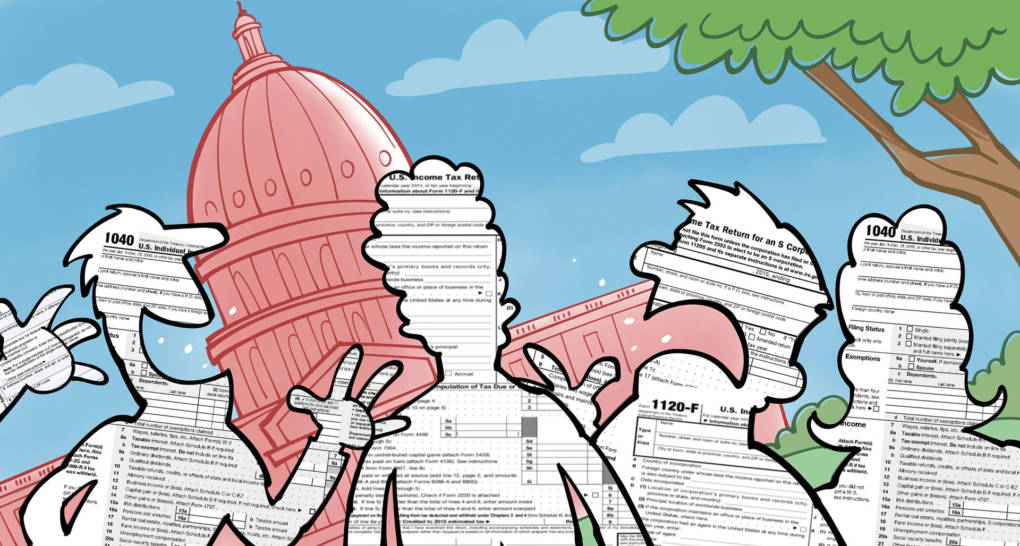
"caption": "42 California Congress members, including three Republicans, voted against the GOP tax reform plan. ",
"description": null,
"title": "tax reform",
"credit": "Mark Fiore/KQED",
"status": "inherit",
"isLoading": false,
"fetchFailed": false
},
"news_11637285": {
"type": "attachments",
"id": "news_11637285",
"meta": {
"index": "attachments_1716263798",
"site": "news",
"id": "11637285",
"found": true
},
"parent": 11637284,
"imgSizes": {
"small": {
"file": "https://ww2.kqed.org/app/uploads/sites/10/2017/12/herrera_toro-creek-edit_custom-f50eb70aa13b820cde629fb09ad47ba15ecd1341-520x331.jpg",
"width": 520,
"mimeType": "image/jpeg",
"height": 331
},
"thumbnail": {
"file": "https://ww2.kqed.org/app/uploads/sites/10/2017/12/herrera_toro-creek-edit_custom-f50eb70aa13b820cde629fb09ad47ba15ecd1341-160x102.jpg",
"width": 160,
"mimeType": "image/jpeg",
"height": 102
},
"post-thumbnail": {
"file": "https://ww2.kqed.org/app/uploads/sites/10/2017/12/herrera_toro-creek-edit_custom-f50eb70aa13b820cde629fb09ad47ba15ecd1341-672x372.jpg",
"width": 672,
"mimeType": "image/jpeg",
"height": 372
},
"xsmall": {
"file": "https://ww2.kqed.org/app/uploads/sites/10/2017/12/herrera_toro-creek-edit_custom-f50eb70aa13b820cde629fb09ad47ba15ecd1341-375x239.jpg",
"width": 375,
"mimeType": "image/jpeg",
"height": 239
},
"kqedFullSize": {
"file": "https://ww2.kqed.org/app/uploads/sites/10/2017/12/herrera_toro-creek-edit_custom-f50eb70aa13b820cde629fb09ad47ba15ecd1341.jpg",
"width": 863,
"height": 549
},
"guest-author-50": {
"file": "https://ww2.kqed.org/app/uploads/sites/10/2017/12/herrera_toro-creek-edit_custom-f50eb70aa13b820cde629fb09ad47ba15ecd1341-50x50.jpg",
"width": 50,
"mimeType": "image/jpeg",
"height": 50
},
"guest-author-96": {
"file": "https://ww2.kqed.org/app/uploads/sites/10/2017/12/herrera_toro-creek-edit_custom-f50eb70aa13b820cde629fb09ad47ba15ecd1341-96x96.jpg",
"width": 96,
"mimeType": "image/jpeg",
"height": 96
},
"medium": {
"file": "https://ww2.kqed.org/app/uploads/sites/10/2017/12/herrera_toro-creek-edit_custom-f50eb70aa13b820cde629fb09ad47ba15ecd1341-800x509.jpg",
"width": 800,
"mimeType": "image/jpeg",
"height": 509
},
"guest-author-64": {
"file": "https://ww2.kqed.org/app/uploads/sites/10/2017/12/herrera_toro-creek-edit_custom-f50eb70aa13b820cde629fb09ad47ba15ecd1341-64x64.jpg",
"width": 64,
"mimeType": "image/jpeg",
"height": 64
},
"guest-author-32": {
"file": "https://ww2.kqed.org/app/uploads/sites/10/2017/12/herrera_toro-creek-edit_custom-f50eb70aa13b820cde629fb09ad47ba15ecd1341-32x32.jpg",
"width": 32,
"mimeType": "image/jpeg",
"height": 32
},
"detail": {
"file": "https://ww2.kqed.org/app/uploads/sites/10/2017/12/herrera_toro-creek-edit_custom-f50eb70aa13b820cde629fb09ad47ba15ecd1341-150x150.jpg",
"width": 150,
"mimeType": "image/jpeg",
"height": 150
},
"guest-author-128": {
"file": "https://ww2.kqed.org/app/uploads/sites/10/2017/12/herrera_toro-creek-edit_custom-f50eb70aa13b820cde629fb09ad47ba15ecd1341-128x128.jpg",
"width": 128,
"mimeType": "image/jpeg",
"height": 128
},
"xxsmall": {
"file": "https://ww2.kqed.org/app/uploads/sites/10/2017/12/herrera_toro-creek-edit_custom-f50eb70aa13b820cde629fb09ad47ba15ecd1341-240x153.jpg",
"width": 240,
"mimeType": "image/jpeg",
"height": 153
}
},
"publishDate": 1513359410,
"modified": 1513359462,
"caption": "An archival photo from the early to mid-1930s of Allison Herrera's family near Toro Creek, an ancestral village of their Salinan Tribe. From left: Felista Rosas, her great-grandmother; Anna Herrera, her grandmother; Andy Rosas, Anna's brother; and Ramon Rosas, Andy and Anna's uncle.",
"description": "An archival photo from the early to mid-1930s of Allison Herrera's family near Toro Creek, an ancestral village of their Salinan Tribe. From left: Felista Rosas, her great-grandmother; Anna Herrera, her grandmother; Andy Rosas, Anna's brother; and Ramon Rosas, Andy and Anna's uncle",
"title": "An archival photo from the early to mid-1930s of Allison Herrera's family near Toro Creek, an ancestral village of their Salinan Tribe. From left: Felista Rosas, her great-grandmother; Anna Herrera, her grandmother; Andy Rosas, Anna's brother; and Ramon Rosas, Andy and Anna's uncle.",
"credit": "Courtesy of Allison Herrera",
"status": "inherit",
"isLoading": false,
"fetchFailed": false
},
"news_11636116": {
"type": "attachments",
"id": "news_11636116",
"meta": {
"index": "attachments_1716263798",
"site": "news",
"id": "11636116",
"found": true
},
"parent": 11636110,
"imgSizes": {
"small": {
"file": "https://ww2.kqed.org/app/uploads/sites/10/2017/12/GettyImages-888376316-520x347.jpg",
"width": 520,
"mimeType": "image/jpeg",
"height": 347
},
"twentyfourteen-full-width": {
"file": "https://ww2.kqed.org/app/uploads/sites/10/2017/12/GettyImages-888376316-1038x576.jpg",
"width": 1038,
"mimeType": "image/jpeg",
"height": 576
},
"thumbnail": {
"file": "https://ww2.kqed.org/app/uploads/sites/10/2017/12/GettyImages-888376316-160x107.jpg",
"width": 160,
"mimeType": "image/jpeg",
"height": 107
},
"fd-sm": {
"file": "https://ww2.kqed.org/app/uploads/sites/10/2017/12/GettyImages-888376316-960x640.jpg",
"width": 960,
"mimeType": "image/jpeg",
"height": 640
},
"post-thumbnail": {
"file": "https://ww2.kqed.org/app/uploads/sites/10/2017/12/GettyImages-888376316-672x372.jpg",
"width": 672,
"mimeType": "image/jpeg",
"height": 372
},
"xsmall": {
"file": "https://ww2.kqed.org/app/uploads/sites/10/2017/12/GettyImages-888376316-375x250.jpg",
"width": 375,
"mimeType": "image/jpeg",
"height": 250
},
"kqedFullSize": {
"file": "https://ww2.kqed.org/app/uploads/sites/10/2017/12/GettyImages-888376316.jpg",
"width": 2048,
"height": 1365
},
"large": {
"file": "https://ww2.kqed.org/app/uploads/sites/10/2017/12/GettyImages-888376316-1020x680.jpg",
"width": 1020,
"mimeType": "image/jpeg",
"height": 680
},
"xlarge": {
"file": "https://ww2.kqed.org/app/uploads/sites/10/2017/12/GettyImages-888376316-1180x787.jpg",
"width": 1180,
"mimeType": "image/jpeg",
"height": 787
},
"guest-author-50": {
"file": "https://ww2.kqed.org/app/uploads/sites/10/2017/12/GettyImages-888376316-50x50.jpg",
"width": 50,
"mimeType": "image/jpeg",
"height": 50
},
"guest-author-96": {
"file": "https://ww2.kqed.org/app/uploads/sites/10/2017/12/GettyImages-888376316-96x96.jpg",
"width": 96,
"mimeType": "image/jpeg",
"height": 96
},
"medium": {
"file": "https://ww2.kqed.org/app/uploads/sites/10/2017/12/GettyImages-888376316-800x533.jpg",
"width": 800,
"mimeType": "image/jpeg",
"height": 533
},
"guest-author-64": {
"file": "https://ww2.kqed.org/app/uploads/sites/10/2017/12/GettyImages-888376316-64x64.jpg",
"width": 64,
"mimeType": "image/jpeg",
"height": 64
},
"guest-author-32": {
"file": "https://ww2.kqed.org/app/uploads/sites/10/2017/12/GettyImages-888376316-32x32.jpg",
"width": 32,
"mimeType": "image/jpeg",
"height": 32
},
"fd-lrg": {
"file": "https://ww2.kqed.org/app/uploads/sites/10/2017/12/GettyImages-888376316-1920x1280.jpg",
"width": 1920,
"mimeType": "image/jpeg",
"height": 1280
},
"fd-med": {
"file": "https://ww2.kqed.org/app/uploads/sites/10/2017/12/GettyImages-888376316-1180x787.jpg",
"width": 1180,
"mimeType": "image/jpeg",
"height": 787
},
"full-width": {
"file": "https://ww2.kqed.org/app/uploads/sites/10/2017/12/GettyImages-888376316-1920x1280.jpg",
"width": 1920,
"mimeType": "image/jpeg",
"height": 1280
},
"detail": {
"file": "https://ww2.kqed.org/app/uploads/sites/10/2017/12/GettyImages-888376316-150x150.jpg",
"width": 150,
"mimeType": "image/jpeg",
"height": 150
},
"guest-author-128": {
"file": "https://ww2.kqed.org/app/uploads/sites/10/2017/12/GettyImages-888376316-128x128.jpg",
"width": 128,
"mimeType": "image/jpeg",
"height": 128
},
"xxsmall": {
"file": "https://ww2.kqed.org/app/uploads/sites/10/2017/12/GettyImages-888376316-240x160.jpg",
"width": 240,
"mimeType": "image/jpeg",
"height": 160
}
},
"publishDate": 1512868731,
"modified": 1513033078,
"caption": "Houses burn in the Lilac Fire in the early morning hours of Dec. 8, 2017, near Bonsall, California.",
"description": null,
"title": "Southern California Wildfires Forces Thousands to Evacuate",
"credit": "David McNew/Getty Images",
"status": "inherit",
"isLoading": false,
"fetchFailed": false
},
"news_11635993": {
"type": "attachments",
"id": "news_11635993",
"meta": {
"index": "attachments_1716263798",
"site": "news",
"id": "11635993",
"found": true
},
"parent": 11635991,
"imgSizes": {
"small": {
"file": "https://ww2.kqed.org/app/uploads/sites/10/2017/12/MARQUEE_FB-RATHER-520x293.jpg",
"width": 520,
"mimeType": "image/jpeg",
"height": 293
},
"twentyfourteen-full-width": {
"file": "https://ww2.kqed.org/app/uploads/sites/10/2017/12/MARQUEE_FB-RATHER-1038x576.jpg",
"width": 1038,
"mimeType": "image/jpeg",
"height": 576
},
"thumbnail": {
"file": "https://ww2.kqed.org/app/uploads/sites/10/2017/12/MARQUEE_FB-RATHER-160x90.jpg",
"width": 160,
"mimeType": "image/jpeg",
"height": 90
},
"fd-sm": {
"file": "https://ww2.kqed.org/app/uploads/sites/10/2017/12/MARQUEE_FB-RATHER-960x540.jpg",
"width": 960,
"mimeType": "image/jpeg",
"height": 540
},
"post-thumbnail": {
"file": "https://ww2.kqed.org/app/uploads/sites/10/2017/12/MARQUEE_FB-RATHER-672x372.jpg",
"width": 672,
"mimeType": "image/jpeg",
"height": 372
},
"xsmall": {
"file": "https://ww2.kqed.org/app/uploads/sites/10/2017/12/MARQUEE_FB-RATHER-375x211.jpg",
"width": 375,
"mimeType": "image/jpeg",
"height": 211
},
"kqedFullSize": {
"file": "https://ww2.kqed.org/app/uploads/sites/10/2017/12/MARQUEE_FB-RATHER.jpg",
"width": 1920,
"height": 1080
},
"large": {
"file": "https://ww2.kqed.org/app/uploads/sites/10/2017/12/MARQUEE_FB-RATHER-1020x574.jpg",
"width": 1020,
"mimeType": "image/jpeg",
"height": 574
},
"xlarge": {
"file": "https://ww2.kqed.org/app/uploads/sites/10/2017/12/MARQUEE_FB-RATHER-1180x664.jpg",
"width": 1180,
"mimeType": "image/jpeg",
"height": 664
},
"guest-author-50": {
"file": "https://ww2.kqed.org/app/uploads/sites/10/2017/12/MARQUEE_FB-RATHER-50x50.jpg",
"width": 50,
"mimeType": "image/jpeg",
"height": 50
},
"guest-author-96": {
"file": "https://ww2.kqed.org/app/uploads/sites/10/2017/12/MARQUEE_FB-RATHER-96x96.jpg",
"width": 96,
"mimeType": "image/jpeg",
"height": 96
},
"medium": {
"file": "https://ww2.kqed.org/app/uploads/sites/10/2017/12/MARQUEE_FB-RATHER-800x450.jpg",
"width": 800,
"mimeType": "image/jpeg",
"height": 450
},
"guest-author-64": {
"file": "https://ww2.kqed.org/app/uploads/sites/10/2017/12/MARQUEE_FB-RATHER-64x64.jpg",
"width": 64,
"mimeType": "image/jpeg",
"height": 64
},
"guest-author-32": {
"file": "https://ww2.kqed.org/app/uploads/sites/10/2017/12/MARQUEE_FB-RATHER-32x32.jpg",
"width": 32,
"mimeType": "image/jpeg",
"height": 32
},
"fd-lrg": {
"file": "https://ww2.kqed.org/app/uploads/sites/10/2017/12/MARQUEE_FB-RATHER-1920x1080.jpg",
"width": 1920,
"mimeType": "image/jpeg",
"height": 1080
},
"fd-med": {
"file": "https://ww2.kqed.org/app/uploads/sites/10/2017/12/MARQUEE_FB-RATHER-1180x664.jpg",
"width": 1180,
"mimeType": "image/jpeg",
"height": 664
},
"full-width": {
"file": "https://ww2.kqed.org/app/uploads/sites/10/2017/12/MARQUEE_FB-RATHER-1920x1080.jpg",
"width": 1920,
"mimeType": "image/jpeg",
"height": 1080
},
"detail": {
"file": "https://ww2.kqed.org/app/uploads/sites/10/2017/12/MARQUEE_FB-RATHER-150x150.jpg",
"width": 150,
"mimeType": "image/jpeg",
"height": 150
},
"guest-author-128": {
"file": "https://ww2.kqed.org/app/uploads/sites/10/2017/12/MARQUEE_FB-RATHER-128x128.jpg",
"width": 128,
"mimeType": "image/jpeg",
"height": 128
},
"xxsmall": {
"file": "https://ww2.kqed.org/app/uploads/sites/10/2017/12/MARQUEE_FB-RATHER-240x135.jpg",
"width": 240,
"mimeType": "image/jpeg",
"height": 135
}
},
"publishDate": 1512782110,
"modified": 1518654038,
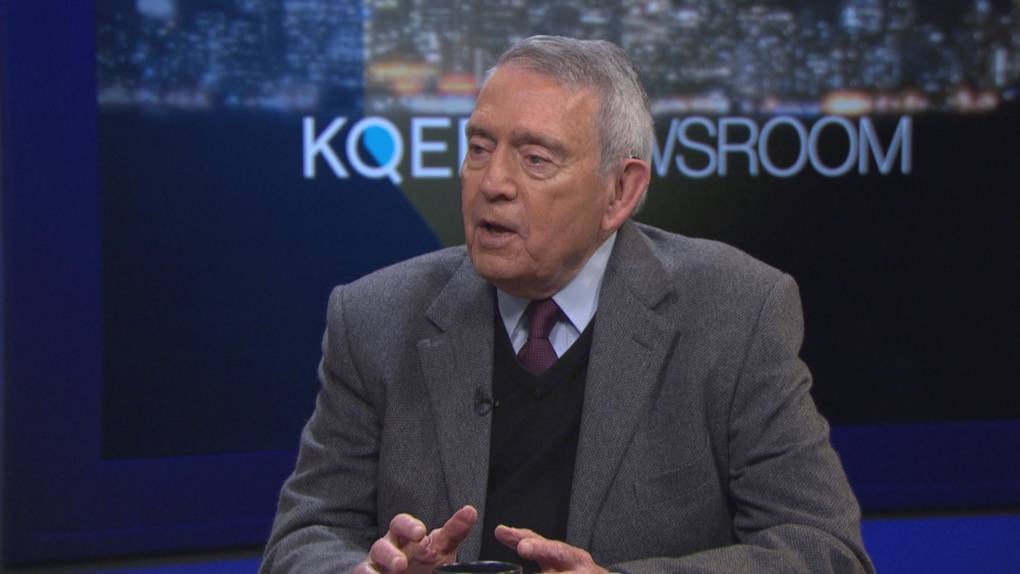
"caption": "Dan Rather",
"description": null,
"title": "Dan Rather",
"credit": null,
"status": "inherit",
"isLoading": false,
"fetchFailed": false
},
"news_11632253": {
"type": "attachments",
"id": "news_11632253",
"meta": {
"index": "attachments_1716263798",
"site": "news",
"id": "11632253",
"found": true
},
"parent": 11632216,
"imgSizes": {
"small": {
"file": "https://ww2.kqed.org/app/uploads/sites/10/2017/11/dem-party-e1511139602527-520x228.jpg",
"width": 520,
"mimeType": "image/jpeg",
"height": 228
},
"twentyfourteen-full-width": {
"file": "https://ww2.kqed.org/app/uploads/sites/10/2017/11/dem-party-e1511139602527-1038x576.jpg",
"width": 1038,
"mimeType": "image/jpeg",
"height": 576
},
"thumbnail": {
"file": "https://ww2.kqed.org/app/uploads/sites/10/2017/11/dem-party-e1511139602527-160x70.jpg",
"width": 160,
"mimeType": "image/jpeg",
"height": 70
},
"fd-sm": {
"file": "https://ww2.kqed.org/app/uploads/sites/10/2017/11/dem-party-e1511139602527-960x420.jpg",
"width": 960,
"mimeType": "image/jpeg",
"height": 420
},
"post-thumbnail": {
"file": "https://ww2.kqed.org/app/uploads/sites/10/2017/11/dem-party-e1511139602527-672x372.jpg",
"width": 672,
"mimeType": "image/jpeg",
"height": 372
},
"xsmall": {
"file": "https://ww2.kqed.org/app/uploads/sites/10/2017/11/dem-party-e1511139602527-375x164.jpg",
"width": 375,
"mimeType": "image/jpeg",
"height": 164
},
"kqedFullSize": {
"file": "https://ww2.kqed.org/app/uploads/sites/10/2017/11/dem-party-e1511139602527.jpg",
"width": 2048,
"height": 896
},
"large": {
"file": "https://ww2.kqed.org/app/uploads/sites/10/2017/11/dem-party-e1511139602527-1020x446.jpg",
"width": 1020,
"mimeType": "image/jpeg",
"height": 446
},
"xlarge": {
"file": "https://ww2.kqed.org/app/uploads/sites/10/2017/11/dem-party-e1511139602527-1180x516.jpg",
"width": 1180,
"mimeType": "image/jpeg",
"height": 516
},
"guest-author-50": {
"file": "https://ww2.kqed.org/app/uploads/sites/10/2017/11/dem-party-e1511139602527-50x50.jpg",
"width": 50,
"mimeType": "image/jpeg",
"height": 50
},
"guest-author-96": {
"file": "https://ww2.kqed.org/app/uploads/sites/10/2017/11/dem-party-e1511139602527-96x96.jpg",
"width": 96,
"mimeType": "image/jpeg",
"height": 96
},
"medium": {
"file": "https://ww2.kqed.org/app/uploads/sites/10/2017/11/dem-party-e1511139602527-800x350.jpg",
"width": 800,
"mimeType": "image/jpeg",
"height": 350
},
"guest-author-64": {
"file": "https://ww2.kqed.org/app/uploads/sites/10/2017/11/dem-party-e1511139602527-64x64.jpg",
"width": 64,
"mimeType": "image/jpeg",
"height": 64
},
"guest-author-32": {
"file": "https://ww2.kqed.org/app/uploads/sites/10/2017/11/dem-party-e1511139602527-32x32.jpg",
"width": 32,
"mimeType": "image/jpeg",
"height": 32
},
"fd-lrg": {
"file": "https://ww2.kqed.org/app/uploads/sites/10/2017/11/dem-party-e1511139602527-1920x840.jpg",
"width": 1920,
"mimeType": "image/jpeg",
"height": 840
},
"fd-med": {
"file": "https://ww2.kqed.org/app/uploads/sites/10/2017/11/dem-party-e1511139602527-1180x516.jpg",
"width": 1180,
"mimeType": "image/jpeg",
"height": 516
},
"full-width": {
"file": "https://ww2.kqed.org/app/uploads/sites/10/2017/11/dem-party-e1511139602527-1920x840.jpg",
"width": 1920,
"mimeType": "image/jpeg",
"height": 840
},
"detail": {
"file": "https://ww2.kqed.org/app/uploads/sites/10/2017/11/dem-party-e1511139602527-150x150.jpg",
"width": 150,
"mimeType": "image/jpeg",
"height": 150
},
"guest-author-128": {
"file": "https://ww2.kqed.org/app/uploads/sites/10/2017/11/dem-party-e1511139602527-128x128.jpg",
"width": 128,
"mimeType": "image/jpeg",
"height": 128
},
"xxsmall": {
"file": "https://ww2.kqed.org/app/uploads/sites/10/2017/11/dem-party-e1511139602527-240x105.jpg",
"width": 240,
"mimeType": "image/jpeg",
"height": 105
}
},
"publishDate": 1511137120,
"modified": 1511307495,
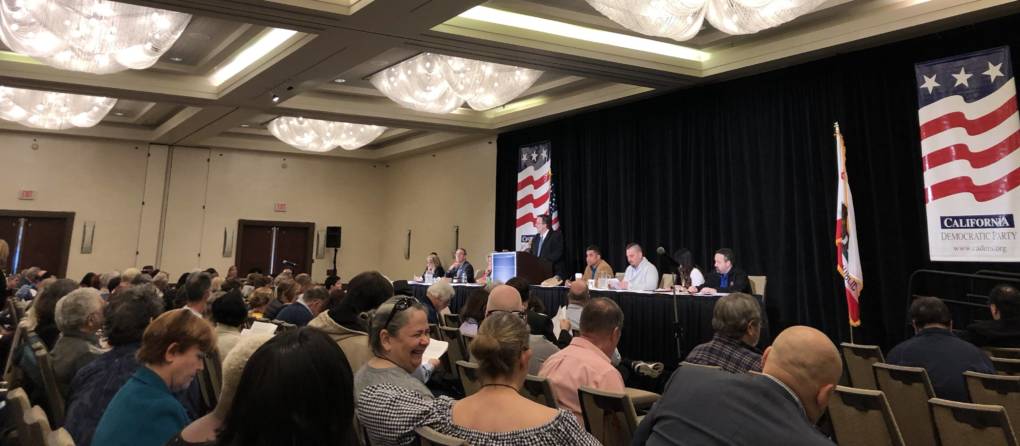
"caption": "California Democratic Party leaders vote on changes to the party rules at a meeting in Millbrae on Nov. 19, 2017.",
"description": null,
"title": null,
"credit": "Guy Marzorati/KQED",
"status": "inherit",
"isLoading": false,
"fetchFailed": false
},
"news_11633403": {
"type": "attachments",
"id": "news_11633403",
"meta": {
"index": "attachments_1716263798",
"site": "news",
"id": "11633403",
"found": true
},
"parent": 11633371,
"imgSizes": {
"small": {
"file": "https://ww2.kqed.org/app/uploads/sites/10/2017/11/RO-KHANNA_WEB-520x293.jpg",
"width": 520,
"mimeType": "image/jpeg",
"height": 293
},
"twentyfourteen-full-width": {
"file": "https://ww2.kqed.org/app/uploads/sites/10/2017/11/RO-KHANNA_WEB-1038x576.jpg",
"width": 1038,
"mimeType": "image/jpeg",
"height": 576
},
"thumbnail": {
"file": "https://ww2.kqed.org/app/uploads/sites/10/2017/11/RO-KHANNA_WEB-160x90.jpg",
"width": 160,
"mimeType": "image/jpeg",
"height": 90
},
"fd-sm": {
"file": "https://ww2.kqed.org/app/uploads/sites/10/2017/11/RO-KHANNA_WEB-960x540.jpg",
"width": 960,
"mimeType": "image/jpeg",
"height": 540
},
"post-thumbnail": {
"file": "https://ww2.kqed.org/app/uploads/sites/10/2017/11/RO-KHANNA_WEB-672x372.jpg",
"width": 672,
"mimeType": "image/jpeg",
"height": 372
},
"xsmall": {
"file": "https://ww2.kqed.org/app/uploads/sites/10/2017/11/RO-KHANNA_WEB-375x211.jpg",
"width": 375,
"mimeType": "image/jpeg",
"height": 211
},
"kqedFullSize": {
"file": "https://ww2.kqed.org/app/uploads/sites/10/2017/11/RO-KHANNA_WEB.jpg",
"width": 1280,
"height": 720
},
"large": {
"file": "https://ww2.kqed.org/app/uploads/sites/10/2017/11/RO-KHANNA_WEB-1020x574.jpg",
"width": 1020,
"mimeType": "image/jpeg",
"height": 574
},
"xlarge": {
"file": "https://ww2.kqed.org/app/uploads/sites/10/2017/11/RO-KHANNA_WEB-1180x664.jpg",
"width": 1180,
"mimeType": "image/jpeg",
"height": 664
},
"guest-author-50": {
"file": "https://ww2.kqed.org/app/uploads/sites/10/2017/11/RO-KHANNA_WEB-50x50.jpg",
"width": 50,
"mimeType": "image/jpeg",
"height": 50
},
"guest-author-96": {
"file": "https://ww2.kqed.org/app/uploads/sites/10/2017/11/RO-KHANNA_WEB-96x96.jpg",
"width": 96,
"mimeType": "image/jpeg",
"height": 96
},
"medium": {
"file": "https://ww2.kqed.org/app/uploads/sites/10/2017/11/RO-KHANNA_WEB-800x450.jpg",
"width": 800,
"mimeType": "image/jpeg",
"height": 450
},
"guest-author-64": {
"file": "https://ww2.kqed.org/app/uploads/sites/10/2017/11/RO-KHANNA_WEB-64x64.jpg",
"width": 64,
"mimeType": "image/jpeg",
"height": 64
},
"guest-author-32": {
"file": "https://ww2.kqed.org/app/uploads/sites/10/2017/11/RO-KHANNA_WEB-32x32.jpg",
"width": 32,
"mimeType": "image/jpeg",
"height": 32
},
"fd-med": {
"file": "https://ww2.kqed.org/app/uploads/sites/10/2017/11/RO-KHANNA_WEB-1180x664.jpg",
"width": 1180,
"mimeType": "image/jpeg",
"height": 664
},
"detail": {
"file": "https://ww2.kqed.org/app/uploads/sites/10/2017/11/RO-KHANNA_WEB-150x150.jpg",
"width": 150,
"mimeType": "image/jpeg",
"height": 150
},
"guest-author-128": {
"file": "https://ww2.kqed.org/app/uploads/sites/10/2017/11/RO-KHANNA_WEB-128x128.jpg",
"width": 128,
"mimeType": "image/jpeg",
"height": 128
},
"xxsmall": {
"file": "https://ww2.kqed.org/app/uploads/sites/10/2017/11/RO-KHANNA_WEB-240x135.jpg",
"width": 240,
"mimeType": "image/jpeg",
"height": 135
}
},
"publishDate": 1511820718,
"modified": 1539277015,
"caption": null,
"description": null,
"title": "RO KHANNA_WEB",
"credit": "KQED Newsroom",
"status": "inherit",
"isLoading": false,
"fetchFailed": false
},
"news_11630208": {
"type": "attachments",
"id": "news_11630208",
"meta": {
"index": "attachments_1716263798",
"site": "news",
"id": "11630208",
"found": true
},
"parent": 11630193,
"imgSizes": {
"small": {
"file": "https://ww2.kqed.org/app/uploads/sites/10/2017/11/Award-photo-e1510537540925-520x346.jpg",
"width": 520,
"mimeType": "image/jpeg",
"height": 346
},
"twentyfourteen-full-width": {
"file": "https://ww2.kqed.org/app/uploads/sites/10/2017/11/Award-photo-e1510537540925-1038x576.jpg",
"width": 1038,
"mimeType": "image/jpeg",
"height": 576
},
"thumbnail": {
"file": "https://ww2.kqed.org/app/uploads/sites/10/2017/11/Award-photo-e1510537540925-160x106.jpg",
"width": 160,
"mimeType": "image/jpeg",
"height": 106
},
"fd-sm": {
"file": "https://ww2.kqed.org/app/uploads/sites/10/2017/11/Award-photo-e1510537540925-960x638.jpg",
"width": 960,
"mimeType": "image/jpeg",
"height": 638
},
"post-thumbnail": {
"file": "https://ww2.kqed.org/app/uploads/sites/10/2017/11/Award-photo-e1510537540925-672x372.jpg",
"width": 672,
"mimeType": "image/jpeg",
"height": 372
},
"xsmall": {
"file": "https://ww2.kqed.org/app/uploads/sites/10/2017/11/Award-photo-e1510537540925-375x249.jpg",
"width": 375,
"mimeType": "image/jpeg",
"height": 249
},
"kqedFullSize": {
"file": "https://ww2.kqed.org/app/uploads/sites/10/2017/11/Award-photo-e1510537540925.jpg",
"width": 2048,
"height": 1361
},
"large": {
"file": "https://ww2.kqed.org/app/uploads/sites/10/2017/11/Award-photo-e1510537540925-1020x678.jpg",
"width": 1020,
"mimeType": "image/jpeg",
"height": 678
},
"xlarge": {
"file": "https://ww2.kqed.org/app/uploads/sites/10/2017/11/Award-photo-e1510537540925-1180x784.jpg",
"width": 1180,
"mimeType": "image/jpeg",
"height": 784
},
"guest-author-50": {
"file": "https://ww2.kqed.org/app/uploads/sites/10/2017/11/Award-photo-e1510537540925-50x50.jpg",
"width": 50,
"mimeType": "image/jpeg",
"height": 50
},
"guest-author-96": {
"file": "https://ww2.kqed.org/app/uploads/sites/10/2017/11/Award-photo-e1510537540925-96x96.jpg",
"width": 96,
"mimeType": "image/jpeg",
"height": 96
},
"medium": {
"file": "https://ww2.kqed.org/app/uploads/sites/10/2017/11/Award-photo-e1510537540925-800x532.jpg",
"width": 800,
"mimeType": "image/jpeg",
"height": 532
},
"guest-author-64": {
"file": "https://ww2.kqed.org/app/uploads/sites/10/2017/11/Award-photo-e1510537540925-64x64.jpg",
"width": 64,
"mimeType": "image/jpeg",
"height": 64
},
"guest-author-32": {
"file": "https://ww2.kqed.org/app/uploads/sites/10/2017/11/Award-photo-e1510537540925-32x32.jpg",
"width": 32,
"mimeType": "image/jpeg",
"height": 32
},
"fd-lrg": {
"file": "https://ww2.kqed.org/app/uploads/sites/10/2017/11/Award-photo-e1510537540925-1920x1276.jpg",
"width": 1920,
"mimeType": "image/jpeg",
"height": 1276
},
"fd-med": {
"file": "https://ww2.kqed.org/app/uploads/sites/10/2017/11/Award-photo-e1510537540925-1180x784.jpg",
"width": 1180,
"mimeType": "image/jpeg",
"height": 784
},
"full-width": {
"file": "https://ww2.kqed.org/app/uploads/sites/10/2017/11/Award-photo-e1510537540925-1920x1276.jpg",
"width": 1920,
"mimeType": "image/jpeg",
"height": 1276
},
"detail": {
"file": "https://ww2.kqed.org/app/uploads/sites/10/2017/11/Award-photo-e1510537540925-150x150.jpg",
"width": 150,
"mimeType": "image/jpeg",
"height": 150
},
"guest-author-128": {
"file": "https://ww2.kqed.org/app/uploads/sites/10/2017/11/Award-photo-e1510537540925-128x128.jpg",
"width": 128,
"mimeType": "image/jpeg",
"height": 128
},
"xxsmall": {
"file": "https://ww2.kqed.org/app/uploads/sites/10/2017/11/Award-photo-e1510537540925-240x159.jpg",
"width": 240,
"mimeType": "image/jpeg",
"height": 159
}
},
"publishDate": 1510533477,
"modified": 1510624630,
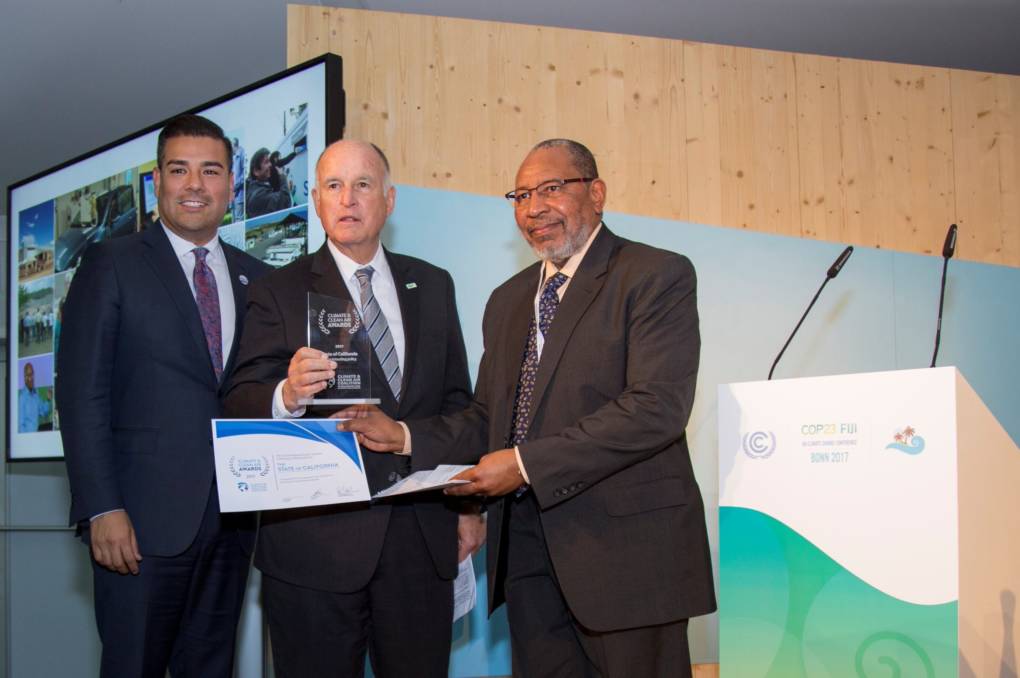
"caption": "Sen. Ricardo Lara and Gov. Jerry Brown accept U.N. Climate and Clean Air Coalition award on Nov. 12, 2017 in Bonn, Germany. ",
"description": null,
"title": "Award-photo",
"credit": "Rosa Castañeda",
"status": "inherit",
"isLoading": false,
"fetchFailed": false
},
"news_11629956": {
"type": "attachments",
"id": "news_11629956",
"meta": {
"index": "attachments_1716263798",
"site": "news",
"id": "11629956",
"found": true
},
"parent": 11629949,
"imgSizes": {
"small": {
"file": "https://ww2.kqed.org/app/uploads/sites/10/2017/11/Kressa-self-portrait-520x650.jpg",
"width": 520,
"mimeType": "image/jpeg",
"height": 650
},
"twentyfourteen-full-width": {
"file": "https://ww2.kqed.org/app/uploads/sites/10/2017/11/Kressa-self-portrait-1038x576.jpg",
"width": 1038,
"mimeType": "image/jpeg",
"height": 576
},
"thumbnail": {
"file": "https://ww2.kqed.org/app/uploads/sites/10/2017/11/Kressa-self-portrait-160x200.jpg",
"width": 160,
"mimeType": "image/jpeg",
"height": 200
},
"fd-sm": {
"file": "https://ww2.kqed.org/app/uploads/sites/10/2017/11/Kressa-self-portrait-960x1200.jpg",
"width": 960,
"mimeType": "image/jpeg",
"height": 1200
},
"post-thumbnail": {
"file": "https://ww2.kqed.org/app/uploads/sites/10/2017/11/Kressa-self-portrait-672x372.jpg",
"width": 672,
"mimeType": "image/jpeg",
"height": 372
},
"xsmall": {
"file": "https://ww2.kqed.org/app/uploads/sites/10/2017/11/Kressa-self-portrait-375x469.jpg",
"width": 375,
"mimeType": "image/jpeg",
"height": 469
},
"kqedFullSize": {
"file": "https://ww2.kqed.org/app/uploads/sites/10/2017/11/Kressa-self-portrait-e1510283178339.jpg",
"width": 1920,
"height": 2400
},
"large": {
"file": "https://ww2.kqed.org/app/uploads/sites/10/2017/11/Kressa-self-portrait-1020x1275.jpg",
"width": 1020,
"mimeType": "image/jpeg",
"height": 1275
},
"xlarge": {
"file": "https://ww2.kqed.org/app/uploads/sites/10/2017/11/Kressa-self-portrait-1180x1475.jpg",
"width": 1180,
"mimeType": "image/jpeg",
"height": 1475
},
"guest-author-50": {
"file": "https://ww2.kqed.org/app/uploads/sites/10/2017/11/Kressa-self-portrait-50x50.jpg",
"width": 50,
"mimeType": "image/jpeg",
"height": 50
},
"guest-author-96": {
"file": "https://ww2.kqed.org/app/uploads/sites/10/2017/11/Kressa-self-portrait-96x96.jpg",
"width": 96,
"mimeType": "image/jpeg",
"height": 96
},
"medium": {
"file": "https://ww2.kqed.org/app/uploads/sites/10/2017/11/Kressa-self-portrait-800x1000.jpg",
"width": 800,
"mimeType": "image/jpeg",
"height": 1000
},
"guest-author-64": {
"file": "https://ww2.kqed.org/app/uploads/sites/10/2017/11/Kressa-self-portrait-64x64.jpg",
"width": 64,
"mimeType": "image/jpeg",
"height": 64
},
"guest-author-32": {
"file": "https://ww2.kqed.org/app/uploads/sites/10/2017/11/Kressa-self-portrait-32x32.jpg",
"width": 32,
"mimeType": "image/jpeg",
"height": 32
},
"fd-lrg": {
"file": "https://ww2.kqed.org/app/uploads/sites/10/2017/11/Kressa-self-portrait-1920x2400.jpg",
"width": 1920,
"mimeType": "image/jpeg",
"height": 2400
},
"fd-med": {
"file": "https://ww2.kqed.org/app/uploads/sites/10/2017/11/Kressa-self-portrait-1180x1475.jpg",
"width": 1180,
"mimeType": "image/jpeg",
"height": 1475
},
"full-width": {
"file": "https://ww2.kqed.org/app/uploads/sites/10/2017/11/Kressa-self-portrait-1920x2400.jpg",
"width": 1920,
"mimeType": "image/jpeg",
"height": 2400
},
"detail": {
"file": "https://ww2.kqed.org/app/uploads/sites/10/2017/11/Kressa-self-portrait-150x150.jpg",
"width": 150,
"mimeType": "image/jpeg",
"height": 150
},
"guest-author-128": {
"file": "https://ww2.kqed.org/app/uploads/sites/10/2017/11/Kressa-self-portrait-128x128.jpg",
"width": 128,
"mimeType": "image/jpeg",
"height": 128
},
"xxsmall": {
"file": "https://ww2.kqed.org/app/uploads/sites/10/2017/11/Kressa-self-portrait-240x300.jpg",
"width": 240,
"mimeType": "image/jpeg",
"height": 300
}
},
"publishDate": 1510283130,
"modified": 1510283221,
"caption": "Kressa Shepherd took this self portrait in a photography class at Ukiah High School.",
"description": null,
"title": "Kressa self portrait",
"credit": "Kressa Shepherd",
"status": "inherit",
"isLoading": false,
"fetchFailed": false
},
"news_11629618": {
"type": "attachments",
"id": "news_11629618",
"meta": {
"index": "attachments_1716263798",
"site": "news",
"id": "11629618",
"found": true
},
"parent": 11629198,
"imgSizes": {
"small": {
"file": "https://ww2.kqed.org/app/uploads/sites/10/2017/11/KaiMain-520x421.jpg",
"width": 520,
"mimeType": "image/jpeg",
"height": 421
},
"twentyfourteen-full-width": {
"file": "https://ww2.kqed.org/app/uploads/sites/10/2017/11/KaiMain-1038x576.jpg",
"width": 1038,
"mimeType": "image/jpeg",
"height": 576
},
"thumbnail": {
"file": "https://ww2.kqed.org/app/uploads/sites/10/2017/11/KaiMain-160x129.jpg",
"width": 160,
"mimeType": "image/jpeg",
"height": 129
},
"fd-sm": {
"file": "https://ww2.kqed.org/app/uploads/sites/10/2017/11/KaiMain-960x777.jpg",
"width": 960,
"mimeType": "image/jpeg",
"height": 777
},
"post-thumbnail": {
"file": "https://ww2.kqed.org/app/uploads/sites/10/2017/11/KaiMain-672x372.jpg",
"width": 672,
"mimeType": "image/jpeg",
"height": 372
},
"xsmall": {
"file": "https://ww2.kqed.org/app/uploads/sites/10/2017/11/KaiMain-375x303.jpg",
"width": 375,
"mimeType": "image/jpeg",
"height": 303
},
"kqedFullSize": {
"file": "https://ww2.kqed.org/app/uploads/sites/10/2017/11/KaiMain.jpg",
"width": 1920,
"height": 1553
},
"large": {
"file": "https://ww2.kqed.org/app/uploads/sites/10/2017/11/KaiMain-1020x825.jpg",
"width": 1020,
"mimeType": "image/jpeg",
"height": 825
},
"xlarge": {
"file": "https://ww2.kqed.org/app/uploads/sites/10/2017/11/KaiMain-1180x954.jpg",
"width": 1180,
"mimeType": "image/jpeg",
"height": 954
},
"guest-author-50": {
"file": "https://ww2.kqed.org/app/uploads/sites/10/2017/11/KaiMain-50x50.jpg",
"width": 50,
"mimeType": "image/jpeg",
"height": 50
},
"guest-author-96": {
"file": "https://ww2.kqed.org/app/uploads/sites/10/2017/11/KaiMain-96x96.jpg",
"width": 96,
"mimeType": "image/jpeg",
"height": 96
},
"medium": {
"file": "https://ww2.kqed.org/app/uploads/sites/10/2017/11/KaiMain-800x647.jpg",
"width": 800,
"mimeType": "image/jpeg",
"height": 647
},
"guest-author-64": {
"file": "https://ww2.kqed.org/app/uploads/sites/10/2017/11/KaiMain-64x64.jpg",
"width": 64,
"mimeType": "image/jpeg",
"height": 64
},
"guest-author-32": {
"file": "https://ww2.kqed.org/app/uploads/sites/10/2017/11/KaiMain-32x32.jpg",
"width": 32,
"mimeType": "image/jpeg",
"height": 32
},
"fd-lrg": {
"file": "https://ww2.kqed.org/app/uploads/sites/10/2017/11/KaiMain-1920x1553.jpg",
"width": 1920,
"mimeType": "image/jpeg",
"height": 1553
},
"fd-med": {
"file": "https://ww2.kqed.org/app/uploads/sites/10/2017/11/KaiMain-1180x954.jpg",
"width": 1180,
"mimeType": "image/jpeg",
"height": 954
},
"full-width": {
"file": "https://ww2.kqed.org/app/uploads/sites/10/2017/11/KaiMain-1920x1553.jpg",
"width": 1920,
"mimeType": "image/jpeg",
"height": 1553
},
"detail": {
"file": "https://ww2.kqed.org/app/uploads/sites/10/2017/11/KaiMain-150x150.jpg",
"width": 150,
"mimeType": "image/jpeg",
"height": 150
},
"guest-author-128": {
"file": "https://ww2.kqed.org/app/uploads/sites/10/2017/11/KaiMain-128x128.jpg",
"width": 128,
"mimeType": "image/jpeg",
"height": 128
},
"xxsmall": {
"file": "https://ww2.kqed.org/app/uploads/sites/10/2017/11/KaiMain-240x194.jpg",
"width": 240,
"mimeType": "image/jpeg",
"height": 194
}
},
"publishDate": 1510262043,
"modified": 1510273845,
"caption": "Kai Logan Shepherd, 14, was the youngest person to die in the Northern California wildfires in October. ",
"description": "Kai Logan Shepherd, 14, was the youngest person to die in the Northern California Wildfires in October. ",
"title": "KaiMain",
"credit": "Courtesy Mindi Ramos",
"status": "inherit",
"isLoading": false,
"fetchFailed": false
},
"news_11622415": {
"type": "attachments",
"id": "news_11622415",
"meta": {
"index": "attachments_1716263798",
"site": "news",
"id": "11622415",
"found": true
},
"title": "15359812401_c1ee1788cd_o",
"publishDate": 1507740280,
"status": "inherit",
"parent": 11622403,
"modified": 1741632903,
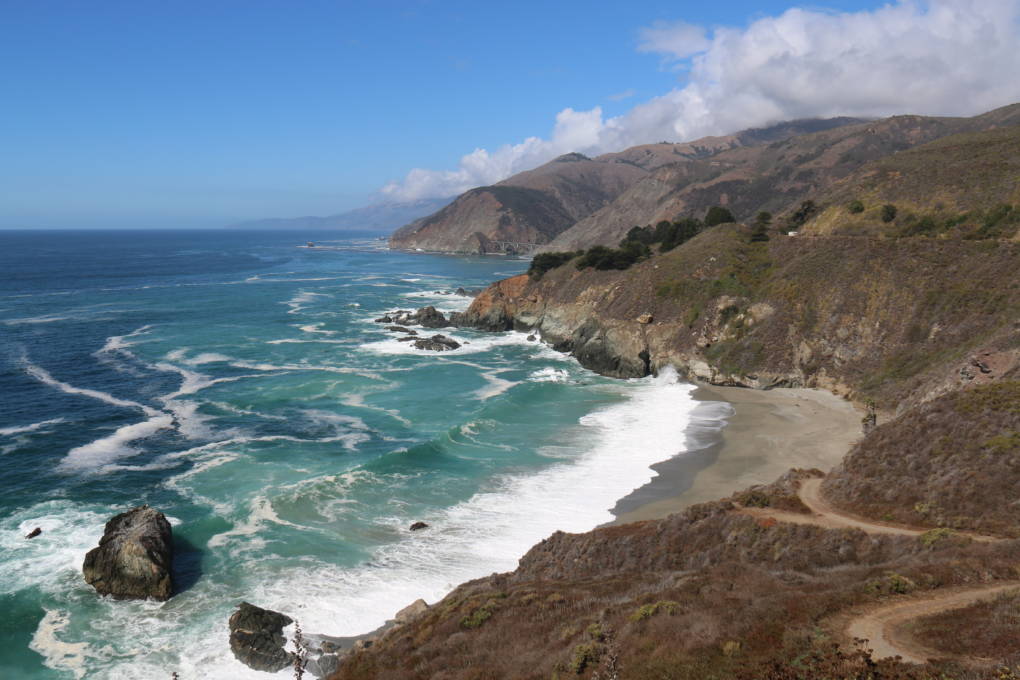
"caption": "The Big Sur coastline.",
"credit": "Ashley Spratt, \u003ca href=\"https://flic.kr/p/ppi46K\">USFWS\u003c/a>, \u003ca href=\"http://creativecommons.org/licenses/by/4.0/\">CC BY\u003c/a>",
"altTag": null,
"description": "The Big Sur coastline",
"imgSizes": {
"thumbnail": {
"file": "https://cdn.kqed.org/wp-content/uploads/sites/10/2017/10/15359812401_c1ee1788cd_o-1-160x107.jpg",
"width": 160,
"height": 107,
"mimeType": "image/jpeg"
},
"medium": {
"file": "https://cdn.kqed.org/wp-content/uploads/sites/10/2017/10/15359812401_c1ee1788cd_o-1-800x533.jpg",
"width": 800,
"height": 533,
"mimeType": "image/jpeg"
},
"large": {
"file": "https://cdn.kqed.org/wp-content/uploads/sites/10/2017/10/15359812401_c1ee1788cd_o-1-1020x680.jpg",
"width": 1020,
"height": 680,
"mimeType": "image/jpeg"
},
"fd-lrg": {
"file": "https://cdn.kqed.org/wp-content/uploads/sites/10/2017/10/15359812401_c1ee1788cd_o-1-1920x1280.jpg",
"width": 1920,
"height": 1280,
"mimeType": "image/jpeg"
},
"fd-med": {
"file": "https://cdn.kqed.org/wp-content/uploads/sites/10/2017/10/15359812401_c1ee1788cd_o-1-1180x787.jpg",
"width": 1180,
"height": 787,
"mimeType": "image/jpeg"
},
"fd-sm": {
"file": "https://cdn.kqed.org/wp-content/uploads/sites/10/2017/10/15359812401_c1ee1788cd_o-1-960x640.jpg",
"width": 960,
"height": 640,
"mimeType": "image/jpeg"
},
"post-thumbnail": {
"file": "https://cdn.kqed.org/wp-content/uploads/sites/10/2017/10/15359812401_c1ee1788cd_o-1-672x372.jpg",
"width": 672,
"height": 372,
"mimeType": "image/jpeg"
},
"twentyfourteen-full-width": {
"file": "https://cdn.kqed.org/wp-content/uploads/sites/10/2017/10/15359812401_c1ee1788cd_o-1-1038x576.jpg",
"width": 1038,
"height": 576,
"mimeType": "image/jpeg"
},
"xxsmall": {
"file": "https://cdn.kqed.org/wp-content/uploads/sites/10/2017/10/15359812401_c1ee1788cd_o-1-240x160.jpg",
"width": 240,
"height": 160,
"mimeType": "image/jpeg"
},
"xsmall": {
"file": "https://cdn.kqed.org/wp-content/uploads/sites/10/2017/10/15359812401_c1ee1788cd_o-1-375x250.jpg",
"width": 375,
"height": 250,
"mimeType": "image/jpeg"
},
"small": {
"file": "https://cdn.kqed.org/wp-content/uploads/sites/10/2017/10/15359812401_c1ee1788cd_o-1-520x347.jpg",
"width": 520,
"height": 347,
"mimeType": "image/jpeg"
},
"xlarge": {
"file": "https://cdn.kqed.org/wp-content/uploads/sites/10/2017/10/15359812401_c1ee1788cd_o-1-1180x787.jpg",
"width": 1180,
"height": 787,
"mimeType": "image/jpeg"
},
"full-width": {
"file": "https://cdn.kqed.org/wp-content/uploads/sites/10/2017/10/15359812401_c1ee1788cd_o-1-1920x1280.jpg",
"width": 1920,
"height": 1280,
"mimeType": "image/jpeg"
},
"guest-author-32": {
"file": "https://cdn.kqed.org/wp-content/uploads/sites/10/2017/10/15359812401_c1ee1788cd_o-1-32x32.jpg",
"width": 32,
"height": 32,
"mimeType": "image/jpeg"
},
"guest-author-50": {
"file": "https://cdn.kqed.org/wp-content/uploads/sites/10/2017/10/15359812401_c1ee1788cd_o-1-50x50.jpg",
"width": 50,
"height": 50,
"mimeType": "image/jpeg"
},
"guest-author-64": {
"file": "https://cdn.kqed.org/wp-content/uploads/sites/10/2017/10/15359812401_c1ee1788cd_o-1-64x64.jpg",
"width": 64,
"height": 64,
"mimeType": "image/jpeg"
},
"guest-author-96": {
"file": "https://cdn.kqed.org/wp-content/uploads/sites/10/2017/10/15359812401_c1ee1788cd_o-1-96x96.jpg",
"width": 96,
"height": 96,
"mimeType": "image/jpeg"
},
"guest-author-128": {
"file": "https://cdn.kqed.org/wp-content/uploads/sites/10/2017/10/15359812401_c1ee1788cd_o-1-128x128.jpg",
"width": 128,
"height": 128,
"mimeType": "image/jpeg"
},
"detail": {
"file": "https://cdn.kqed.org/wp-content/uploads/sites/10/2017/10/15359812401_c1ee1788cd_o-1-150x150.jpg",
"width": 150,
"height": 150,
"mimeType": "image/jpeg"
},
"kqedFullSize": {
"file": "https://cdn.kqed.org/wp-content/uploads/sites/10/2017/10/15359812401_c1ee1788cd_o-1-e1532569326843.jpg",
"width": 1920,
"height": 1280
}
},
"isLoading": false,
"fetchFailed": false
},
"news_11620273": {
"type": "attachments",
"id": "news_11620273",
"meta": {
"index": "attachments_1716263798",
"site": "news",
"id": "11620273",
"found": true
},
"parent": 11619842,
"imgSizes": {
"small": {
"file": "https://ww2.kqed.org/app/uploads/sites/10/2017/10/RS27116_Hollywood-TC-qut-520x347.jpg",
"width": 520,
"mimeType": "image/jpeg",
"height": 347
},
"twentyfourteen-full-width": {
"file": "https://ww2.kqed.org/app/uploads/sites/10/2017/10/RS27116_Hollywood-TC-qut-1038x576.jpg",
"width": 1038,
"mimeType": "image/jpeg",
"height": 576
},
"thumbnail": {
"file": "https://ww2.kqed.org/app/uploads/sites/10/2017/10/RS27116_Hollywood-TC-qut-160x107.jpg",
"width": 160,
"mimeType": "image/jpeg",
"height": 107
},
"fd-sm": {
"file": "https://ww2.kqed.org/app/uploads/sites/10/2017/10/RS27116_Hollywood-TC-qut-960x640.jpg",
"width": 960,
"mimeType": "image/jpeg",
"height": 640
},
"post-thumbnail": {
"file": "https://ww2.kqed.org/app/uploads/sites/10/2017/10/RS27116_Hollywood-TC-qut-672x372.jpg",
"width": 672,
"mimeType": "image/jpeg",
"height": 372
},
"xsmall": {
"file": "https://ww2.kqed.org/app/uploads/sites/10/2017/10/RS27116_Hollywood-TC-qut-375x250.jpg",
"width": 375,
"mimeType": "image/jpeg",
"height": 250
},
"kqedFullSize": {
"file": "https://ww2.kqed.org/app/uploads/sites/10/2017/10/RS27116_Hollywood-TC-qut.jpg",
"width": 1920,
"height": 1280
},
"large": {
"file": "https://ww2.kqed.org/app/uploads/sites/10/2017/10/RS27116_Hollywood-TC-qut-1020x680.jpg",
"width": 1020,
"mimeType": "image/jpeg",
"height": 680
},
"xlarge": {
"file": "https://ww2.kqed.org/app/uploads/sites/10/2017/10/RS27116_Hollywood-TC-qut-1180x787.jpg",
"width": 1180,
"mimeType": "image/jpeg",
"height": 787
},
"guest-author-50": {
"file": "https://ww2.kqed.org/app/uploads/sites/10/2017/10/RS27116_Hollywood-TC-qut-50x50.jpg",
"width": 50,
"mimeType": "image/jpeg",
"height": 50
},
"guest-author-96": {
"file": "https://ww2.kqed.org/app/uploads/sites/10/2017/10/RS27116_Hollywood-TC-qut-96x96.jpg",
"width": 96,
"mimeType": "image/jpeg",
"height": 96
},
"medium": {
"file": "https://ww2.kqed.org/app/uploads/sites/10/2017/10/RS27116_Hollywood-TC-qut-800x533.jpg",
"width": 800,
"mimeType": "image/jpeg",
"height": 533
},
"guest-author-64": {
"file": "https://ww2.kqed.org/app/uploads/sites/10/2017/10/RS27116_Hollywood-TC-qut-64x64.jpg",
"width": 64,
"mimeType": "image/jpeg",
"height": 64
},
"guest-author-32": {
"file": "https://ww2.kqed.org/app/uploads/sites/10/2017/10/RS27116_Hollywood-TC-qut-32x32.jpg",
"width": 32,
"mimeType": "image/jpeg",
"height": 32
},
"fd-lrg": {
"file": "https://ww2.kqed.org/app/uploads/sites/10/2017/10/RS27116_Hollywood-TC-qut-1920x1280.jpg",
"width": 1920,
"mimeType": "image/jpeg",
"height": 1280
},
"fd-med": {
"file": "https://ww2.kqed.org/app/uploads/sites/10/2017/10/RS27116_Hollywood-TC-qut-1180x787.jpg",
"width": 1180,
"mimeType": "image/jpeg",
"height": 787
},
"full-width": {
"file": "https://ww2.kqed.org/app/uploads/sites/10/2017/10/RS27116_Hollywood-TC-qut-1920x1280.jpg",
"width": 1920,
"mimeType": "image/jpeg",
"height": 1280
},
"detail": {
"file": "https://ww2.kqed.org/app/uploads/sites/10/2017/10/RS27116_Hollywood-TC-qut-150x150.jpg",
"width": 150,
"mimeType": "image/jpeg",
"height": 150
},
"guest-author-128": {
"file": "https://ww2.kqed.org/app/uploads/sites/10/2017/10/RS27116_Hollywood-TC-qut-128x128.jpg",
"width": 128,
"mimeType": "image/jpeg",
"height": 128
},
"xxsmall": {
"file": "https://ww2.kqed.org/app/uploads/sites/10/2017/10/RS27116_Hollywood-TC-qut-240x160.jpg",
"width": 240,
"mimeType": "image/jpeg",
"height": 160
}
},
"publishDate": 1506912024,
"modified": 1509408575,
"caption": "The refurbished Hollywood Sign is seen atop of Mount Lee.",
"description": null,
"title": "Hollywood Sign Repainting Project Completed With LA Mayor Antonio Villaraigosa",
"credit": "David Livingston/Getty Images",
"status": "inherit",
"isLoading": false,
"fetchFailed": false
},
"news_11625372": {
"type": "attachments",
"id": "news_11625372",
"meta": {
"index": "attachments_1716263798",
"site": "news",
"id": "11625372",
"found": true
},
"parent": 11625338,
"imgSizes": {
"small": {
"file": "https://ww2.kqed.org/app/uploads/sites/10/2017/10/RS27686_Gov-Forum-qut-520x530.jpg",
"width": 520,
"mimeType": "image/jpeg",
"height": 530
},
"twentyfourteen-full-width": {
"file": "https://ww2.kqed.org/app/uploads/sites/10/2017/10/RS27686_Gov-Forum-qut-1038x576.jpg",
"width": 1038,
"mimeType": "image/jpeg",
"height": 576
},
"thumbnail": {
"file": "https://ww2.kqed.org/app/uploads/sites/10/2017/10/RS27686_Gov-Forum-qut-160x163.jpg",
"width": 160,
"mimeType": "image/jpeg",
"height": 163
},
"fd-sm": {
"file": "https://ww2.kqed.org/app/uploads/sites/10/2017/10/RS27686_Gov-Forum-qut-960x978.jpg",
"width": 960,
"mimeType": "image/jpeg",
"height": 978
},
"post-thumbnail": {
"file": "https://ww2.kqed.org/app/uploads/sites/10/2017/10/RS27686_Gov-Forum-qut-672x372.jpg",
"width": 672,
"mimeType": "image/jpeg",
"height": 372
},
"xsmall": {
"file": "https://ww2.kqed.org/app/uploads/sites/10/2017/10/RS27686_Gov-Forum-qut-375x382.jpg",
"width": 375,
"mimeType": "image/jpeg",
"height": 382
},
"kqedFullSize": {
"file": "https://ww2.kqed.org/app/uploads/sites/10/2017/10/RS27686_Gov-Forum-qut.jpg",
"width": 1256,
"height": 1280
},
"large": {
"file": "https://ww2.kqed.org/app/uploads/sites/10/2017/10/RS27686_Gov-Forum-qut-1020x1039.jpg",
"width": 1020,
"mimeType": "image/jpeg",
"height": 1039
},
"xlarge": {
"file": "https://ww2.kqed.org/app/uploads/sites/10/2017/10/RS27686_Gov-Forum-qut-1180x1203.jpg",
"width": 1180,
"mimeType": "image/jpeg",
"height": 1203
},
"guest-author-50": {
"file": "https://ww2.kqed.org/app/uploads/sites/10/2017/10/RS27686_Gov-Forum-qut-50x50.jpg",
"width": 50,
"mimeType": "image/jpeg",
"height": 50
},
"guest-author-96": {
"file": "https://ww2.kqed.org/app/uploads/sites/10/2017/10/RS27686_Gov-Forum-qut-96x96.jpg",
"width": 96,
"mimeType": "image/jpeg",
"height": 96
},
"medium": {
"file": "https://ww2.kqed.org/app/uploads/sites/10/2017/10/RS27686_Gov-Forum-qut-800x815.jpg",
"width": 800,
"mimeType": "image/jpeg",
"height": 815
},
"guest-author-64": {
"file": "https://ww2.kqed.org/app/uploads/sites/10/2017/10/RS27686_Gov-Forum-qut-64x64.jpg",
"width": 64,
"mimeType": "image/jpeg",
"height": 64
},
"guest-author-32": {
"file": "https://ww2.kqed.org/app/uploads/sites/10/2017/10/RS27686_Gov-Forum-qut-32x32.jpg",
"width": 32,
"mimeType": "image/jpeg",
"height": 32
},
"fd-med": {
"file": "https://ww2.kqed.org/app/uploads/sites/10/2017/10/RS27686_Gov-Forum-qut-1180x1203.jpg",
"width": 1180,
"mimeType": "image/jpeg",
"height": 1203
},
"detail": {
"file": "https://ww2.kqed.org/app/uploads/sites/10/2017/10/RS27686_Gov-Forum-qut-150x150.jpg",
"width": 150,
"mimeType": "image/jpeg",
"height": 150
},
"guest-author-128": {
"file": "https://ww2.kqed.org/app/uploads/sites/10/2017/10/RS27686_Gov-Forum-qut-128x128.jpg",
"width": 128,
"mimeType": "image/jpeg",
"height": 128
},
"xxsmall": {
"file": "https://ww2.kqed.org/app/uploads/sites/10/2017/10/RS27686_Gov-Forum-qut-240x245.jpg",
"width": 240,
"mimeType": "image/jpeg",
"height": 245
}
},
"publishDate": 1508707860,
"modified": 1519264229,
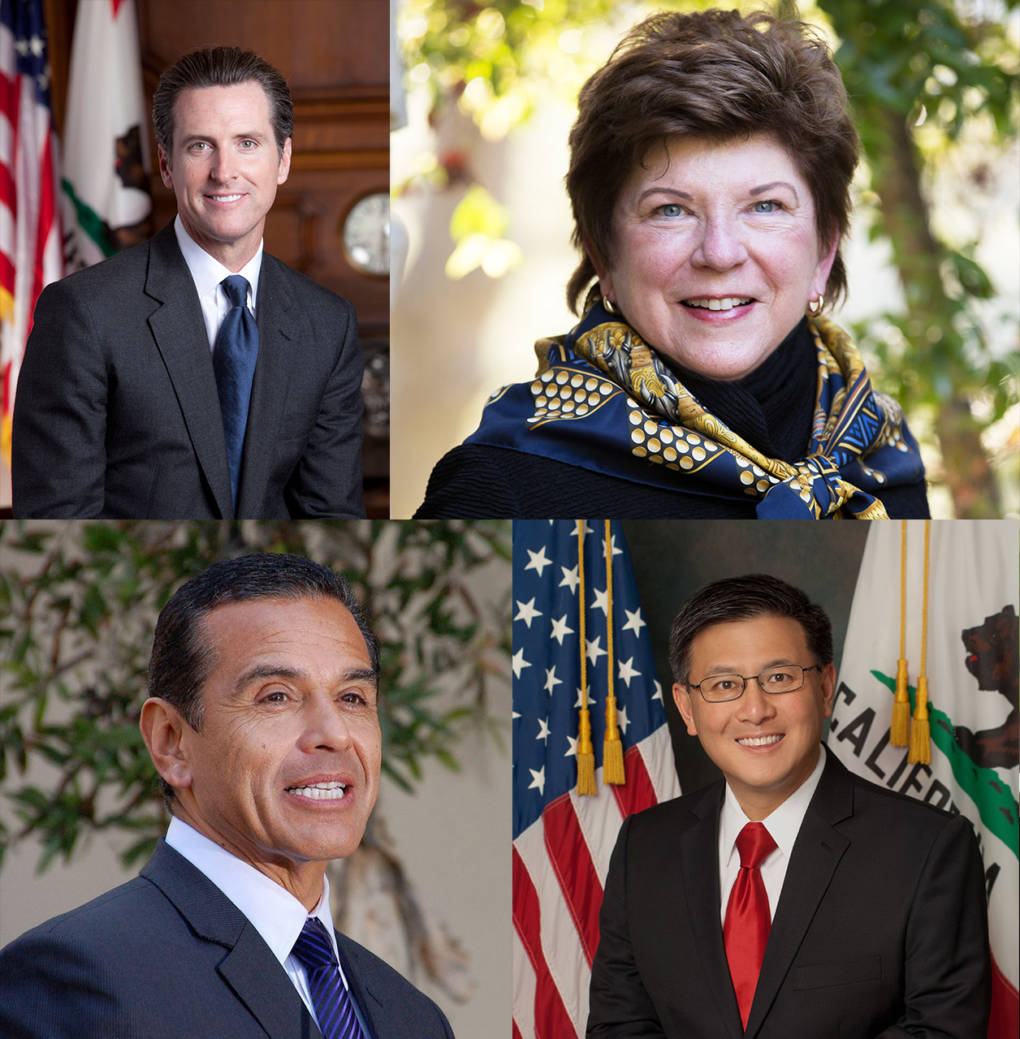
"caption": "(L-R) Lt. Gov. Gavin Newsom, former state Superintendent of Public Instruction Delaine Eastin, state Treasurer John Chiang, and former Los Angeles Mayor Antonio Villaraigosa participated in a governor candidate forum on Sunday, Oct. 22, 2017.",
"description": "(L-R) Lt. Gov. Gavin Newsom, former State Superintendent of Public Instruction Delanie Eastin, state treasurer John Chiang, and former Los Angeles Mayor Antonio Villaraigosa participated in a governor candidate forum on Sunday, October 22, 2017.",
"title": "RS27686_Gov Forum-qut",
"credit": "Photos courtesy of Wikicommons",
"status": "inherit",
"isLoading": false,
"fetchFailed": false
}
},
"audioPlayerReducer": {
"postId": "stream_live",
"isPaused": true,
"isPlaying": false,
"pfsActive": false,
"pledgeModalIsOpen": true,
"playerDrawerIsOpen": false,
"liveAudioPlayStartedAt": 0,
"liveAudioPlayContext": ""
},
"authorsReducer": {
"byline_news_11637284": {
"type": "authors",
"id": "byline_news_11637284",
"meta": {
"override": true
},
"slug": "byline_news_11637284",
"name": "Allison Herrera",
"isLoading": false
},
"byline_news_11622403": {
"type": "authors",
"id": "byline_news_11622403",
"meta": {
"override": true
},
"slug": "byline_news_11622403",
"name": "Gary Griggs and Charles Lester, University of California, Santa Cruz for The Conversation",
"isLoading": false
},
"gmarzorati": {
"type": "authors",
"id": "227",
"meta": {
"index": "authors_1716337520",
"id": "227",
"found": true
},
"name": "Guy Marzorati",
"firstName": "Guy",
"lastName": "Marzorati",
"slug": "gmarzorati",
"email": "gmarzorati@KQED.org",
"display_author_email": true,
"staff_mastheads": [
"news"
],
"title": "Correspondent",
"bio": "Guy Marzorati is a correspondent on KQED's California Politics and Government Desk, based in San Jose. A graduate of Santa Clara University, Guy joined KQED in 2013. He reports on state and local politics and produces KQED's digital voter guide.",
"avatar": "https://secure.gravatar.com/avatar/e7038b8dbfd55b104369b76b1cd0b9de?s=600&d=blank&r=g",
"twitter": "guymarzorati",
"facebook": null,
"instagram": null,
"linkedin": null,
"sites": [
{
"site": "",
"roles": [
"editor"
]
},
{
"site": "news",
"roles": [
"editor"
]
},
{
"site": "science",
"roles": [
"editor"
]
},
{
"site": "forum",
"roles": [
"editor"
]
},
{
"site": "elections",
"roles": [
"editor"
]
},
{
"site": "liveblog",
"roles": [
"editor"
]
}
],
"headData": {
"title": "Guy Marzorati | KQED",
"description": "Correspondent",
"ogImgSrc": "https://secure.gravatar.com/avatar/e7038b8dbfd55b104369b76b1cd0b9de?s=600&d=blank&r=g",
"twImgSrc": "https://secure.gravatar.com/avatar/e7038b8dbfd55b104369b76b1cd0b9de?s=600&d=blank&r=g"
},
"isLoading": false,
"link": "/author/gmarzorati"
},
"kqed": {
"type": "authors",
"id": "236",
"meta": {
"index": "authors_1716337520",
"id": "236",
"found": true
},
"name": "KQED News Staff",
"firstName": "KQED News Staff",
"lastName": null,
"slug": "kqed",
"email": "faq@kqed.org",
"display_author_email": false,
"staff_mastheads": [],
"title": null,
"bio": null,
"avatar": "https://secure.gravatar.com/avatar/ef0e801a68c4c54afa9180db14084167?s=600&d=blank&r=g",
"twitter": null,
"facebook": null,
"instagram": null,
"linkedin": null,
"sites": [
{
"site": "arts",
"roles": [
"contributor"
]
},
{
"site": "news",
"roles": [
"editor"
]
},
{
"site": "futureofyou",
"roles": [
"author"
]
}
],
"headData": {
"title": "KQED News Staff | KQED",
"description": null,
"ogImgSrc": "https://secure.gravatar.com/avatar/ef0e801a68c4c54afa9180db14084167?s=600&d=blank&r=g",
"twImgSrc": "https://secure.gravatar.com/avatar/ef0e801a68c4c54afa9180db14084167?s=600&d=blank&r=g"
},
"isLoading": false,
"link": "/author/kqed"
},
"adembosky": {
"type": "authors",
"id": "3205",
"meta": {
"index": "authors_1716337520",
"id": "3205",
"found": true
},
"name": "April Dembosky",
"firstName": "April",
"lastName": "Dembosky",
"slug": "adembosky",
"email": "adembosky@kqed.org",
"display_author_email": false,
"staff_mastheads": [
"news",
"science"
],
"title": "KQED Health Correspondent",
"bio": "April Dembosky is the health correspondent for KQED News and a regular contributor to NPR. She specializes in covering altered states of mind, from postpartum depression to methamphetamine-induced psychosis to the insanity defense. Her investigative series on insurance companies sidestepping mental health laws won multiple awards, including first place in beat reporting from the national Association of Health Care Journalists. She is the recipient of numerous other prizes and fellowships, including a national Edward R. Murrow award for investigative reporting, a Society of Professional Journalists award for long-form storytelling, and a Carter Center Fellowship for Mental Health Journalism.\r\n\r\nDembosky reported and produced \u003cem>Soundtrack of Silence\u003c/em>, an audio documentary about music and memory that is currently being made into a feature film by Paramount Pictures.\r\n\r\nBefore joining KQED in 2013, Dembosky covered technology and Silicon Valley for \u003cem>The Financial Times of London,\u003c/em> and contributed business and arts stories to \u003cem>Marketplace \u003c/em>and \u003cem>The New York Times.\u003c/em> She got her undergraduate degree in philosophy from Smith College and her master's in journalism from the University of California, Berkeley. She is a classically trained violinist and proud alum of the first symphony orchestra at Burning Man.",
"avatar": "https://secure.gravatar.com/avatar/ef92999be4ceb9ea60701e7dc276f813?s=600&d=blank&r=g",
"twitter": "adembosky",
"facebook": null,
"instagram": null,
"linkedin": null,
"sites": [
{
"site": "arts",
"roles": [
"author"
]
},
{
"site": "news",
"roles": [
"editor"
]
},
{
"site": "futureofyou",
"roles": [
"author"
]
},
{
"site": "stateofhealth",
"roles": [
"editor"
]
},
{
"site": "science",
"roles": [
"editor"
]
},
{
"site": "forum",
"roles": [
"editor"
]
}
],
"headData": {
"title": "April Dembosky | KQED",
"description": "KQED Health Correspondent",
"ogImgSrc": "https://secure.gravatar.com/avatar/ef92999be4ceb9ea60701e7dc276f813?s=600&d=blank&r=g",
"twImgSrc": "https://secure.gravatar.com/avatar/ef92999be4ceb9ea60701e7dc276f813?s=600&d=blank&r=g"
},
"isLoading": false,
"link": "/author/adembosky"
}
},
"pagesReducer": {
"news_tag_california": {
"type": "terms",
"id": "news_18538",
"meta": {
"index": "terms_1716263798",
"site": "news",
"id": "18538",
"score": 6.8450828
},
"featImg": null,
"name": "California",
"description": null,
"taxonomy": "tag",
"headData": {
"twImgId": null,
"twTitle": null,
"ogTitle": null,
"ogImgId": null,
"twDescription": null,
"description": null,
"title": "California Archives | KQED News",
"ogDescription": null
},
"ttid": 31,
"slug": "california",
"isLoading": false,
"title": "California",
"pageMeta": {
"site": "news",
"WpPageTemplate": "page-topic-editorial",
"currentPage": 218
},
"blocks": [
{
"blockName": "kqed/post-list",
"attrs": {
"layout": "cardArticle2",
"query": "posts/news?tag=california",
"seeMore": false,
"paginated": true,
"page": 218
}
},
{
"blockName": "kqed/ad"
}
]
}
},
"pfsSessionReducer": {},
"postsReducer": {
"stream_live": {
"type": "live",
"id": "stream_live",
"audioUrl": "https://streams.kqed.org/kqedradio",
"title": "Live Stream",
"excerpt": "Live Stream information currently unavailable.",
"link": "/radio",
"featImg": "",
"label": {
"name": "KQED Live",
"link": "/"
}
},
"stream_kqedNewscast": {
"type": "posts",
"id": "stream_kqedNewscast",
"audioUrl": "https://www.kqed.org/.stream/anon/radio/RDnews/newscast.mp3?_=1",
"title": "KQED Newscast",
"featImg": "",
"label": {
"name": "88.5 FM",
"link": "/"
}
},
"news_11631493": {
"type": "posts",
"id": "news_11631493",
"meta": {
"index": "posts_1716263798",
"site": "news",
"id": "11631493",
"score": null,
"sort": [
1513717920000
]
},
"guestAuthors": [],
"slug": "how-your-member-of-congress-voted-on-the-house-gop-tax-bill",
"title": "How Your Member of Congress Voted on the House GOP Tax Bill",
"publishDate": 1513717920,
"format": "standard",
"headTitle": "How Your Member of Congress Voted on the House GOP Tax Bill | KQED",
"labelTerm": {
"term": 72,
"site": "news"
},
"content": "\u003cp>\u003cem>This post has been updated.\u003c/em>\u003c/p>\n\u003cp>Republicans in the House of Representatives approved a $1.5 trillion tax reform plan on Tuesday, on a 227-203 vote.\u003c/p>\n\u003cp>All 39 California Democrats voted against the plan, and they were joined in their opposition by two Republicans: Dana Rohrabacher and Darrell Issa. In a vote on an earlier version of the bill, California GOP Rep. Tom McClintock also voted against the legislation — but this time he voted yes.\u003c/p>\n\u003cp>The break by the two GOP representatives was a departure from the vote on repealing the Affordable Care Act earlier this year. Then, all 14 California Republicans supported the repeal effort.\u003c/p>\n\u003cp>Here is how each California member of the House voted. The comments here were made in reference to the earlier version of the tax bill.\u003c/p>\n\u003ch3>\u003cstrong>\u003ca href=\"https://lamalfa.house.gov/media-center/press-releases/lamalfa-supports-tax-cuts-and-jobs-act\" target=\"_blank\" rel=\"noopener\">Doug LaMalfa\u003c/a> (R-Richvale, District 1) – YES\u003c/strong>\u003c/h3>\n\u003cp>“Under the Tax Cuts and Jobs Act, the vast majority of North State residents will save money, period. The more than 70% of 1\u003csup>st\u003c/sup> District residents who do not currently itemize their tax returns will receive an immediate – and significant – tax cut.”\u003c/p>\n\u003ch3>\u003cstrong>\u003ca href=\"https://huffman.house.gov/media-center/press-releases/rep-huffman-slams-passage-of-hr-1-house-republican-tax-scam\" target=\"_blank\" rel=\"noopener\">Jared Huffman\u003c/a> (D-San Rafael, District 2) – NO\u003c/strong>\u003c/h3>\n\u003cp>“The Republican tax plan that passed the House today places a target on California families, in order to hand deficit-exploding giveaways to an elite few that are already fabulously wealthy.”\u003c/p>\n\u003ch3>\u003cstrong>\u003ca href=\"https://garamendi.house.gov/press-release/congressman-john-garamendi-statement-passage-republican-tax-scam-bill\" target=\"_blank\" rel=\"noopener\">John Garamendi\u003c/a> (D-Walnut Grove, District 3) – NO\u003c/strong>\u003c/h3>\n\u003cp>“Under this bill, fat cats win and you lose. Half of the money from this $1.5 trillion tax scam go to America’s richest one percent. Meanwhile, taxes on the middle class will go up. Over 18,000 people in my district will no longer be able to deduct their medical costs. 128,000 of my constituents will be barred from deducting their state and local taxes.”\u003c/p>\n\u003ch3>\u003cstrong>\u003ca href=\"https://mcclintock.house.gov/newsroom/vote-notes/hr-1-house-tax-reform-bill-no\" target=\"_blank\" rel=\"noopener\">Tom McClintock\u003c/a> (R-Elk Grove, District 4) – YES\u003c/strong>\u003c/h3>\n\u003cp>“I am convinced that the business side of this bill will produce dramatic growth for the national economy. However, I believe the personal income tax side does significant harm, particularly to many families in high-cost, high-tax states like California.”\u003c/p>\n\u003ch3>\u003cstrong>\u003ca href=\"https://mikethompson.house.gov/newsroom/press-releases/rep-thompson-slams-house-passage-of-republicans-irresponsible-tax-bill\" target=\"_blank\" rel=\"noopener\">Mike Thompson\u003c/a> (D-Napa, District 5) – NO\u003c/strong>\u003c/h3>\n\u003cp>”Today, I voted against the tax legislation that House Republicans have jammed through the House and that would affect each and every American taxpayer for years to come.”\u003c/p>\n\u003ch3>\u003ca href=\"https://matsui.house.gov/news/documentsingle.aspx?DocumentID=1714\" target=\"_blank\" rel=\"noopener\">Doris Matsui\u003c/a> (D-Sacramento, District 6) – NO\u003c/h3>\n\u003cp>“House Republicans just voted for a tax bill that pulls the rug out from under families in California and across the country. As young people are struggling to afford college, Republicans have voted to eliminate their student loan interest deduction.”\u003c/p>\n\u003ch3>\u003cstrong>\u003ca href=\"https://bera.house.gov/media-center/press-releases/rep-ami-beras-statement-on-the-republican-tax-bill\" target=\"_blank\" rel=\"noopener\">Ami Bera \u003c/a>(D-Elk Grove, District 7) – NO\u003c/strong>\u003c/h3>\n\u003cp>Middle class families deserve tax reform that helps them get ahead. This bill would eliminate critical deductions that help Americans save for the future, saddle the next generation with mountains of debt, and make it harder for families to recover when unexpected tragedy hits.\u003c/p>\n\u003ch3>\u003cstrong>\u003ca href=\"https://cook.house.gov/media-center/press-releases/rep-cook-votes-to-cut-taxes-and-create-jobs\">Paul Cook\u003c/a> (R-Yucca Valley, District 8) – YES\u003c/strong>\u003c/h3>\n\u003cp>“Despite the misinformation being spread about this bill, the Tax Cuts and Jobs Act will protect property tax and mortgage interest deductions for the vast majority of my constituents. Twenty-five thousand additional families in my district will also become eligible for the child tax credit. Through these provisions, and most importantly, by doubling the standard deduction, Americans will be able to keep more of their money.”\u003c/p>\n\u003ch3>\u003cstrong>\u003ca href=\"https://twitter.com/RepMcNerney/status/931280891002880000\" target=\"_blank\" rel=\"noopener\">Jerry McNerney\u003c/a> (D-Stockton, District 9) – NO\u003c/strong>\u003c/h3>\n\u003cp>“Today, Republicans passed a plan purely on a partisan basis for political purposes. It will benefit corporations and the wealthiest Americans, largely at the expense of the middle class.”\u003c/p>\n\u003ch3>\u003cstrong>\u003ca href=\"https://denham.house.gov/news/documentsingle.aspx?DocumentID=2134\" target=\"_blank\" rel=\"noopener\">Jeff Denham\u003c/a> (R-Modesto, District 10) – YES\u003c/strong>\u003c/h3>\n\u003cp>“Passage of the House bill is the first step toward significantly lowering the tax burden in the Central Valley. I look forward to working with the Senate to send a final bill to the President’s desk that will benefit Valley families, create jobs and put more money in people’s pockets.”\u003c/p>\n\u003ch3>\u003cstrong>\u003ca href=\"https://desaulnier.house.gov/media-center/press-releases/congressman-desaulnier-s-statement-house-passage-gop-tax-scam\" target=\"_blank\" rel=\"noopener\">Mark DeSaulnier\u003c/a> (D-Concord, District 11) – NO\u003c/strong>\u003c/h3>\n\u003cp>“In California, 3.7 million taxpayers will see their taxes increase by 2027 and in Contra Costa County the virtual elimination of the state and local tax deduction and total removal of the student loan and medical expense deductions will result in an annual loss of over $20,000 in deductions for typical households.”\u003c/p>\n\u003ch3>\u003cstrong>\u003ca href=\"https://twitter.com/NancyPelosi/status/931217595440812032\" target=\"_blank\" rel=\"noopener\">Nancy Pelosi\u003c/a> (D-San Francisco, District 12) – NO\u003c/strong>\u003c/h3>\n\u003cp>“The \u003ca class=\"twitter-hashtag pretty-link js-nav\" href=\"https://twitter.com/hashtag/GOPTaxScam?src=hash\">\u003cs>#\u003c/s>\u003cb>GOPTaxScam\u003c/b>\u003c/a> is a perfect example of the GOP’s priorities. 36 million middle class families would see a tax hike.”\u003c/p>\n\u003ch3>\u003cstrong>\u003ca href=\"https://lee.house.gov/news/press-releases/congresswoman-barbara-lee-gop-tax-scam-kills-american-jobs-and-hurts-american-families\" target=\"_blank\" rel=\"noopener\">Barbara Lee\u003c/a> (D-Oakland, District 13) – NO\u003c/strong>\u003c/h3>\n\u003cp>“House Republicans are trying to pull a fast one on the American people. The Tax Cuts and Jobs Act is not tax reform, it is nothing more than a deceitful scam that raises taxes on the majority of Americans to give millionaires, billionaires and corporations a trillion-dollar tax break.”\u003c/p>\n\u003ch3>\u003cstrong>\u003ca href=\"https://twitter.com/RepSpeier/status/931640570639978496\" target=\"_blank\" rel=\"noopener\">Jackie Speier\u003c/a> (D-San Mateo, District 14) – NO\u003c/strong>\u003c/h3>\n\u003cp>“The #GOPTaxScam benefits the wealthiest 1% at the expense of middle class Americans & ALL Californians thanks to elimination of state & local income tax deduction, & cap on property tax deduction. That’s why I voted NO & I urge my Senate colleagues to reject their scam as well!”\u003c/p>\n\u003ch3>\u003cstrong>\u003ca href=\"https://twitter.com/RepSwalwell/status/931152068668096512\" target=\"_blank\" rel=\"noopener\">Eric Swalwell\u003c/a> (D-Dublin, District 15) – NO\u003c/strong>\u003c/h3>\n\u003cp>“There’s nothing more important I can do today for my constituents than to vote NO on the \u003ca class=\"twitter-atreply pretty-link js-nav\" href=\"https://twitter.com/HouseGOP\">\u003cs>@\u003c/s>\u003cb>HouseGOP\u003c/b>\u003c/a> \u003ca class=\"twitter-hashtag pretty-link js-nav\" href=\"https://twitter.com/hashtag/TaxScam?src=hash\">\u003cs>#\u003c/s>\u003cb>TaxScam\u003c/b>\u003c/a>. For most it raises taxes/takes away deductions for local taxes & home-ownership. Only the 1% do better.”\u003c/p>\n\u003ch3>\u003cstrong>\u003ca href=\"https://costa.house.gov/media-center/press-releases/costa-statement-passage-house-tax-bill\" target=\"_blank\" rel=\"noopener\">Jim Costa \u003c/a>(D-Fresno, District 16) – NO\u003c/strong>\u003c/h3>\n\u003cp>“If enacted, I believe the bill will have unintended negative consequences that will be felt across the country and in our San Joaquin Valley. Under this legislation, well over half of the people in my district will pay more in taxes when certain provisions for individuals expire in 2027, and important tax benefits critical for agriculture and education in our Valley will be eliminated immediately.”\u003c/p>\n\u003ch3>\u003cstrong>\u003ca href=\"https://twitter.com/RepRoKhanna/status/931236438280232961\" target=\"_blank\" rel=\"noopener\">Ro Khanna\u003c/a> (D-Fremont, District 17) – NO\u003c/strong>\u003c/h3>\n\u003cp>“The House just passed a tax plan that favors special interests and large corporations. I voted NO.”\u003c/p>\n\u003ch3>\u003cstrong>\u003ca href=\"https://eshoo.house.gov/issues/economy/eshoo-statement-on-passage-of-house-gop-tax-plan/\" target=\"_blank\" rel=\"noopener\">Anna Eshoo\u003c/a> (D-Silicon Valley, District 18) – NO\u003c/strong>\u003c/h3>\n\u003cp>“The Republican tax bill that passed the House today is an assault on the middle class and it will do lasting damage to our country. The bill is a dishonest ‘bait and switch’ for the 36 million middle class families who will see their taxes increase under this plan to pay for tax cuts for the wealthiest 1% of Americans and multinational companies.”\u003c/p>\n\u003ch3>\u003cstrong>\u003ca href=\"https://www.facebook.com/zoelofgren/\" target=\"_blank\" rel=\"noopener\">Zoe Lofgren\u003c/a> (D-San Jose, District 19) – NO\u003c/strong>\u003c/h3>\n\u003cp>“It’s going to increase taxes for a lot of middle-class people in California. It’s as if it was designed specifically to hurt California by eliminating the deductions of state and local, by limiting the mortgage deduction.”\u003c/p>\n\u003ch3>\u003cstrong>\u003ca href=\"https://panetta.house.gov/media/press-releases/congressman-panetta-statement-passage-house-tax-bill\" target=\"_blank\" rel=\"noopener\">Jimmy Panetta\u003c/a> (D-Carmel Valley, District 20) – NO\u003c/strong>\u003c/h3>\n\u003cp>“Should this bill be signed into law, families of all income levels on the central coast of California will be among the hardest hit in the nation. This bill eliminates many of the deductions that are critical to my constituents, including the medical expense deduction, student loan interest and lifetime learning credits deduction, and deductions for teachers who pay for classroom supplies out of pocket.”\u003c/p>\n\u003ch3>\u003cstrong>\u003ca href=\"https://valadao.house.gov/news/documentsingle.aspx?DocumentID=398473\" target=\"_blank\" rel=\"noopener\">David Valadao\u003c/a> (R-Hanford, District 21) – YES \u003c/strong>\u003c/h3>\n\u003cp>“Our tax code hasn’t been reformed in over thirty years and, as a result, middle class Americans throughout the nation are struggling. By creating a simpler and fairer tax code, we will create jobs, grow our economy, and increase the amount of money Central Valley workers take home.”\u003c/p>\n\u003ch3>\u003cstrong>Devin Nunes (R-Tulare, District 22) – YES\u003c/strong>\u003c/h3>\n\u003cp> \u003c/p>\n\u003ch3>\u003cstrong>\u003ca href=\"https://www.majorityleader.gov/2017/11/16/americas-comeback-starts-now/\" target=\"_blank\" rel=\"noopener\">Kevin McCarthy\u003c/a> (R-Bakersfield, District 23) – YES\u003c/strong>\u003c/h3>\n\u003cp>“This bill increases the child tax credit, increases the standard deduction, increases wage, and brings back jobs. The fact is, the first $55,000 an average family of four earns won’t face a single penny of income tax. Not a single penny!”\u003c/p>\n\u003ch3>\u003cstrong>\u003ca href=\"https://carbajal.house.gov/news/documentsingle.aspx?DocumentID=193\" target=\"_blank\" rel=\"noopener\">Salud Carbajal \u003c/a>(D-Santa Barbara, District 24) – NO\u003c/strong>\u003c/h3>\n\u003cp>“The tax bill put forth today by congressional Republicans is a gift to the wealthiest one percent and multinational corporations, at the expense of our students, homeowners, and seniors. It eliminates critical deductions that help Central Coast families, including deductions for state and local taxes, mortgage interest, student loans, and medical expenses.”\u003c/p>\n\u003ch3>\u003cstrong>\u003ca href=\"https://twitter.com/SteveKnight25/status/931239684612743169\" target=\"_blank\" rel=\"noopener\">Steve Knight\u003c/a> (R-Santa Clarita, District 25) – YES\u003c/strong>\u003c/h3>\n\u003cp>“For many years now, Americans have been promised relief from our over-burdensome and complicated maze of a tax code. This is why I voted in support of H.R. 1, the Tax Cuts and Jobs Act. This bill significantly removes many of the special interest loopholes, lowers the federal income tax rates of low and middle-income families, and puts businesses on a level playing field to invest in American workers and create more opportunity.”\u003c/p>\n\u003ch3>\u003cstrong>\u003ca href=\"https://juliabrownley.house.gov/media-center/press-releases/america-needs-real-tax-reform-not-the-gop-tax-scam-says-brownley\" target=\"_blank\" rel=\"noopener\">Julia Brownley\u003c/a> (D-Westlake Village, District 26) – NO\u003c/strong>\u003c/h3>\n\u003cp>“We need to reform the federal tax code to reduce the tax burden on working families and small businesses, incentivize innovation, and spur real job growth. Unfortunately, the tax bill that House Republicans passed today doesn’t do that.\u003c/p>\n\u003ch3>\u003ca href=\"https://www.facebook.com/RepJudyChu/\" target=\"_blank\" rel=\"noopener\">\u003cstrong>Judy Chu\u003c/strong>\u003c/a>\u003cstrong> (D-Monterey Park, District 27) – NO\u003c/strong>\u003c/h3>\n\u003cp>“The GOP tax scam is a huge giveaway to corporate interests, paid for by the middle class. This bill pinches students by taxing college loans and making it harder for teachers to buy school supplies.”\u003c/p>\n\u003ch3>\u003cstrong>\u003ca href=\"https://twitter.com/RepAdamSchiff?ref_src=twsrc%5Egoogle%7Ctwcamp%5Eserp%7Ctwgr%5Eauthor\" target=\"_blank\" rel=\"noopener\">Adam Schiff\u003c/a> (D-Burbank, District 28) – NO\u003c/strong>\u003c/h3>\n\u003cp>“I support a tax reform that would simplify the tax code and ease the burden on the middle class and small businesses, and one that would be revenue neutral and not increase the deficit. But that was not the bill before us. Republicans and President Trump have billed this as a “tax reform” bill. It’s not. It won’t simplify the tax code or ensure everyone pays their fair share.”\u003c/p>\n\u003ch3>\u003cstrong>\u003ca href=\"https://twitter.com/RepCardenas/status/927611550608715776\" target=\"_blank\" rel=\"noopener\">Tony Cardenas\u003c/a> (D-San Fernando Valley, District 29) – NO\u003c/strong>\u003c/h3>\n\u003cp>“I completely oppose the #GOPtaxbill — it cuts taxes for the wealthiest Americans while leaving working families with less.”\u003c/p>\n\u003ch3>\u003ca href=\"https://twitter.com/BradSherman/status/931213656796356608\" target=\"_blank\" rel=\"noopener\">\u003cstrong>Brad Sherman\u003c/strong>\u003c/a>\u003cstrong> (D-Sherman Oaks, District 30)- NO\u003c/strong>\u003c/h3>\n\u003cp>“The fact is that all it will do is kill jobs, explode the deficit, give tax breaks to billionaires, and hurt California families.”\u003c/p>\n\u003ch3>\u003ca href=\"https://www.facebook.com/reppeteaguilar/\" target=\"_blank\" rel=\"noopener\">Pete Aguilar\u003c/a> (D-San Bernadino, District 31) – NO\u003c/h3>\n\u003cp>“[The bill] prioritizes tax breaks for wealthy corporations and leaves the middle class behind. Speaker Ryan needs to stop choosing billionaires over Inland Empire families.”\u003c/p>\n\u003ch3>\u003cstrong>\u003ca href=\"https://napolitano.house.gov/media/press-releases/napolitano-rejects-gop-tax-scam-bill\" target=\"_blank\" rel=\"noopener\">Grace Napolitano\u003c/a> (D-El Monte, District 32) – NO\u003c/strong>\u003c/h3>\n\u003cp>“This shameful Republican tax bill is a giveaway to corporations and the richest 1% and a tax hike on working middle class Americans and their children. 30% of my residents will lose State and Local Tax deductions, averaging $17,500 per family according to the IRS, which will devastate housing affordability in my district and disadvantage California taxpayers compared to other states.”\u003c/p>\n\u003ch3>\u003cstrong>\u003ca href=\"https://lieu.house.gov/media-center/press-releases/rep-lieu-slams-house-passage-gop-tax-scam\" target=\"_blank\" rel=\"noopener\">Ted Lieu\u003c/a> (D-Torrance, District 33) – NO\u003c/strong>\u003c/h3>\n\u003cp>“The GOP tax plan is terrible. Hard-working families are going to foot the bill for tax breaks for the wealthy and Californians will be among the hardest hit by this tax scam. It’s despicable. California is already a donor state to the federal government, meaning we give more in tax dollars to the Treasury than we receive in services and programs.”\u003c/p>\n\u003ch3>\u003ca href=\"https://gomez.house.gov/news/documentsingle.aspx?DocumentID=137\" target=\"_blank\" rel=\"noopener\">Jimmy Gomez\u003c/a> (D-Los Angeles, District 34) – NO\u003c/h3>\n\u003cp>“Today, Republicans passed a tax plan that cuts taxes for America’s wealthiest individuals and corporations at the expense of the working class. The so-called ‘Tax Cuts and Jobs Act’ simply doubles down on trickledown economics that have failed our country for 31 years. The disastrous bill sets the stage for Republicans to gut programs that working families rely on, including Medicare, Medicaid, Social Security, and education.”\u003c/p>\n\u003ch3>\u003cstrong>\u003ca href=\"https://twitter.com/NormaJTorres/status/931205755750973440\" target=\"_blank\" rel=\"noopener\">Norma Torres\u003c/a> (D-Pomona, District 35) – NO\u003c/strong>\u003c/h3>\n\u003cp>“This is a bill by the 1% for the 1%. The wealthiest 1% will receive nearly 50% of the total tax cuts, while nearly 75% of benefits will go to the wealthiest fifth of the population.”\u003c/p>\n\u003ch3>\u003cstrong>\u003ca href=\"https://twitter.com/CongressmanRuiz/status/931210649866244096\" target=\"_blank\" rel=\"noopener\">Raul Ruiz\u003c/a> (D-Palm Desert, District 36) – NO\u003c/strong>\u003c/h3>\n\u003cp>“The current tax proposal will trigger a $25 billion cut to Medicare next year alone and over $100 billion in the next 4 years, all to give massive tax cuts to the wealthy.”\u003c/p>\n\u003ch3>\u003cstrong>\u003ca href=\"https://twitter.com/RepKarenBass/status/931219886621241344\" target=\"_blank\" rel=\"noopener\">Karen Bass\u003c/a> (D-Los Angeles, District 37) – NO\u003c/strong>\u003c/h3>\n\u003cp>“I’m not using the word reform because this has nothing to do with reform. This is going to be one of the biggest giveaways to corporations.”\u003c/p>\n\u003ch3>\u003cstrong>\u003ca href=\"https://lindasanchez.house.gov/media-center/press-releases/linda-s-nchez-floor-statement-republican-tax-scam\" target=\"_blank\" rel=\"noopener\">Linda Sanchez\u003c/a> (D-Orange, District 38) – NO\u003c/strong>\u003c/h3>\n\u003cp>“This bill provides tax cuts for corporations and multi-millionaires at the expense of hard-working middle class families. Massive corporate tax cuts do not guarantee job growth or higher wages. The only thing guaranteed is the $2.3 trillion this scam adds to the deficit.”\u003c/p>\n\u003ch3>\u003cstrong>\u003ca href=\"https://royce.house.gov/news/documentsingle.aspx?DocumentID=398575\" target=\"_blank\" rel=\"noopener\">Ed Royce\u003c/a> (R-Fullerton, District 39) – YES\u003c/strong>\u003c/h3>\n\u003cp>“It’s been 31 years since we last reformed our tax code. The current tax system is broken, burdensome, and continues to hurt job creation. In order to compete in a 21st century economy, California families and small businesses need tax relief — not more of the status quo. The Tax Cuts and Jobs Act focuses on boosting growth and helping people across the board keep more of what they earn.”\u003c/p>\n\u003ch3>\u003cstrong>\u003ca href=\"https://roybal-allard.house.gov/news/documentsingle.aspx?DocumentID=398376\" target=\"_blank\" rel=\"noopener\">Lucille Roybal-Allard\u003c/a> (D-Los Angel\u003c/strong>\u003cstrong>es, District 40) – NO\u003c/strong>\u003c/h3>\n\u003cp>“On behalf of America’s future generations who will be saddled with an insurmountable debt created by H.R. 1, the Republican tax plan, I strongly opposed this bill. This rushed piece of legislation will not only add more than $1.7 trillion to the national debt over the next 10 years, but it will also shift the burden of paying for that debt to our hardworking families.”\u003c/p>\n\u003ch3>\u003cstrong>\u003ca href=\"https://takano.house.gov/newsroom/press-releases/rep-takano-house-republicans-just-chose-donors-over-working-families-\" target=\"_blank\" rel=\"noopener\">Mark Takano\u003c/a> (D-Riverside, District 41) – NO\u003c/strong>\u003c/h3>\n\u003cp>“Californians already give more to the federal government than they receive, this bill means they’ll pay even more. Corporations are already earning record profits while not paying their fair share in taxes, this bill means they’ll pay even less. Students, teachers, workers, and middle-class families are already struggling to achieve financial security, this bill makes that problem far worse.”\u003c/p>\n\u003ch3>\u003cstrong>\u003ca href=\"https://calvert.house.gov/news/documentsingle.aspx?DocumentID=397614\" target=\"_blank\" rel=\"noopener\">Ken Calvert\u003c/a> (R-Corona, District 42) – YES\u003c/strong>\u003c/h3>\n\u003cp>“I voted for the Tax Cuts and Jobs Act because it allows my constituents in the 42\u003csup>nd\u003c/sup> District to keep more of the money they earn and will produce tremendous economic benefits that help working families. Despite the misinformed and misleading claims from tax-loving liberals, the Tax Cuts and Jobs Act produces real tax relief – especially for low-income and middle-income households with children.”\u003c/p>\n\u003ch3>\u003cstrong>Maxine Waters (D-Inglewood, District 43) – NO\u003c/strong>\u003c/h3>\n\u003cp> \u003c/p>\n\u003ch3>\u003cstrong>\u003ca href=\"https://barragan.house.gov/media/press-releases/rep-barrag-n-statement-her-vote-against-gop-tax-scam\" target=\"_blank\" rel=\"noopener\">Nanette Barragan\u003c/a> (D-San Pedro, District 44) – NO\u003c/strong>\u003c/h3>\n\u003cp>“Today, House Republicans put party before America’s working class by voting to raise taxes on 36 million families. The GOP may consider this a legislative victory, but it comes at the expense of students, teachers, seniors, workers, homeowners, and basically anyone who is not in the top one percent of earners. I am especially disappointed in my Republican colleagues from California who voted to hit California families with the largest net tax hike of any state. I expect California voters will hold them accountable.”\u003c/p>\n\u003ch3>\u003cstrong>\u003ca href=\"https://walters.house.gov/media-center/press-releases/tax-cuts-and-jobs-act-great-step-toward-meaningful-tax-reform\" target=\"_blank\" rel=\"noopener\">Mimi Walters\u003c/a> (R-Laguna Niguel, District 45) – YES\u003c/strong>\u003c/h3>\n\u003cp>“The U.S. tax code is outdated, complex, and unfair, especially to hard-working Americans. Middle class Orange County residents deserve much-needed tax relief that will let them keep more of their hard-earned paychecks. Today, I voted in favor of the Tax Cuts and Jobs Act to ensure that we continue to move toward fundamental tax reform. This legislation simplifies our tax code, eliminates loopholes, and promotes economic growth, which will allow businesses to create jobs and increase wages for American workers.”\u003c/p>\n\u003ch3>\u003ca href=\"https://medium.com/congressman-lou-correa/rep-correa-disappointed-tax-bill-fails-main-street-8dd808960aa9\" target=\"_blank\" rel=\"noopener\">Lou Correa \u003c/a>(D-Santa Ana, District 46) – NO\u003c/h3>\n\u003cp id=\"1b56\" class=\"graf graf--p graf-after--p\">“When it comes to tax policy, our goal should be simplifying taxes, creating jobs, and helping Main Street. Unfortunately for Californians, this tax bill will make the dream of homeownership even more expensive. Unfortunately for Californians, ending state and local tax deductions could increase our taxes each year. California already pays more in federal taxes than it gets back. This change would mean Californians will pay even more to the federal government.”\u003c/p>\n\u003ch3>\u003cstrong>\u003ca href=\"https://twitter.com/RepLowenthal/status/931232992160288768\" target=\"_blank\" rel=\"noopener\">Alan Lowenthal\u003c/a> (D-Long Beach, District 47) – NO\u003c/strong>\u003c/h3>\n\u003cp>“Deeply disappointed at the passage of the House GOP’s tax bill. This is not over and there is a long road ahead before it could ever become law. We will continue to push back at every chance we get.”\u003c/p>\n\u003ch3>\u003cstrong>\u003ca href=\"http://www.rohrabacher.com/news/why-i-voted-no-on-the-house-tax-reform-bill\" target=\"_blank\" rel=\"noopener\">Dana Rohrabacher\u003c/a> (R-Costa Mesa, District 48) – NO\u003c/strong>\u003c/h3>\n\u003cp>I deeply admire the House GOP leaders, including Ways and Means Chairman Kevin Brady and Speaker Paul Ryan. Their motives are good and their objective of increased economic growth is sound. But the bills that both the House and Senate are now considering, while reducing business taxes, don’t reduce the tax burden on individuals so much as shift it. That creates winners and losers. Californians will be among the losers.\u003c/p>\n\u003ch3>\u003cstrong>\u003ca href=\"https://issa.house.gov/news-room/press-releases/rep-issa-votes-no-tax-reform-package\" target=\"_blank\" rel=\"noopener\">Darrell Issa\u003c/a> (R-Vista, District 49) – NO\u003c/strong>\u003c/h3>\n\u003cp>“I didn’t come to Washington to raise taxes on my constituents and I do not plan to start today. It’s disappointing that the bill approved today will not provide the same tax relief to Californians as it does to the rest of the nation. ”\u003c/p>\n\u003ch3>\u003cstrong>\u003ca href=\"https://hunter.house.gov/press-release/house-passes-tax-overhaul-measure\" target=\"_blank\" rel=\"noopener\">Duncan D. Hunter\u003c/a> (R-Lakeside, District 50) – YES\u003c/strong>\u003c/h3>\n\u003cp>“This has been long overdue. I cannot think of a more important action we can take to invest in our economy, create jobs and promote business growth than cutting taxes for American workers and reforming a broken code. This bill lowers rates, protects families by creating new credits and deductions, eliminates the death tax, provides new resources for small businesses and installs a simpler process overall.”\u003c/p>\n\u003ch3>\u003cstrong>\u003ca href=\"https://vargas.house.gov/media-center/press-releases/rep-vargas-statement-on-the-passage-of-the-gop-tax-scam\" target=\"_blank\" rel=\"noopener\">Juan Vargas\u003c/a> (D-San Diego, District 51) – NO\u003c/strong>\u003c/h3>\n\u003cp>“House Republicans passed a tax proposal that raises taxes on millions of working Americans to pay for tax cuts for the rich and corporations. The Republican tax scam eliminates key deductions for families, students, veterans, and seniors. Working families in my district will see their taxes increase with the elimination of essential deductions, including the personal exemption deduction, the student loan interest deduction, the medical expense deduction, and even the educator expense deduction.”\u003c/p>\n\u003ch3>\u003cstrong>\u003ca href=\"https://scottpeters.house.gov/media-center/press-releases/rep-peters-condemns-gop-tax-reform-package-that-raises-taxes\" target=\"_blank\" rel=\"noopener\">Scott Peters\u003c/a> (D-San Diego, District 52) – NO\u003c/strong>\u003c/h3>\n\u003cp>“The American people need real, fiscally responsible tax reform that actually spurs growth. This week, the Committee for a Responsible Federal Budget (CRFB) showed that the House tax bill passed today will actually shrink, not grow the economy because of the drag from long-term debt and current economic conditions.”\u003c/p>\n\u003ch3>\u003cstrong>\u003ca href=\"https://susandavis.house.gov/media-center/press-releases/congresswoman-susan-davis-house-gop-tax-bill-shortchanges-the-middle\" target=\"_blank\" rel=\"noopener\">Susan Davis\u003c/a> (D-San Diego, District 53) – NO\u003c/strong>\u003c/h3>\n\u003cp>“The House Republican Tax Bill shortchanges the middle class in favor of corporate special interests, raising taxes on millions of working families and exploding our national debt by $1.5 trillion. Furthermore, the corporate tax cuts never expire while the cuts for people go away after just five years.”\u003c/p>\n\u003cp>[ad fullwidth]\u003c/p>\u003cp>[ad floatright]\u003c/p>\n",
"blocks": [],
"excerpt": "All 39 California Democrats voted against the plan, and they were joined in their opposition by three Republicans: Tom McClintock, Dana Rohrabacher and Darrell Issa.",
"status": "publish",
"parent": 0,
"modified": 1721112426,
"stats": {
"hasAudio": false,
"hasVideo": false,
"hasChartOrMap": false,
"iframeSrcs": [],
"hasGoogleForm": false,
"hasGallery": false,
"hasHearkenModule": false,
"hasPolis": false,
"paragraphCount": 57,
"wordCount": 3321
},
"headData": {
"title": "How Your Member of Congress Voted on the House GOP Tax Bill | KQED",
"description": "All 39 California Democrats voted against the plan, and they were joined in their opposition by three Republicans: Tom McClintock, Dana Rohrabacher and Darrell Issa.",
"ogTitle": "",
"ogDescription": "",
"ogImgId": "",
"twTitle": "",
"twDescription": "",
"twImgId": "",
"schema": {
"@context": "https://schema.org",
"@type": "NewsArticle",
"headline": "How Your Member of Congress Voted on the House GOP Tax Bill",
"datePublished": "2017-12-19T13:12:00-08:00",
"dateModified": "2024-07-15T23:47:06-07:00",
"image": "https://cdn.kqed.org/wp-content/uploads/2020/02/KQED-OG-Image@1x.png",
"isAccessibleForFree": "True",
"publisher": {
"@type": "NewsMediaOrganization",
"@id": "https://www.kqed.org/#organization",
"name": "KQED",
"logo": "https://cdn.kqed.org/wp-content/uploads/2020/02/KQED-OG-Image@1x.png",
"url": "https://www.kqed.org",
"sameAs": [
"https://www.facebook.com/KQED",
"https://twitter.com/KQED",
"https://www.instagram.com/kqed/",
"https://www.tiktok.com/@kqedofficial",
"https://www.linkedin.com/company/kqed",
"https://www.youtube.com/channel/UCeC0IOo7i1P_61zVUWbJ4nw"
]
}
}
},
"sticky": false,
"path": "/news/11631493/how-your-member-of-congress-voted-on-the-house-gop-tax-bill",
"audioTrackLength": null,
"parsedContent": [
{
"type": "contentString",
"content": "\u003cdiv class=\"post-body\">\u003cp>\u003cp>\u003cem>This post has been updated.\u003c/em>\u003c/p>\n\u003cp>Republicans in the House of Representatives approved a $1.5 trillion tax reform plan on Tuesday, on a 227-203 vote.\u003c/p>\n\u003cp>All 39 California Democrats voted against the plan, and they were joined in their opposition by two Republicans: Dana Rohrabacher and Darrell Issa. In a vote on an earlier version of the bill, California GOP Rep. Tom McClintock also voted against the legislation — but this time he voted yes.\u003c/p>\n\u003cp>The break by the two GOP representatives was a departure from the vote on repealing the Affordable Care Act earlier this year. Then, all 14 California Republicans supported the repeal effort.\u003c/p>\n\u003cp>Here is how each California member of the House voted. The comments here were made in reference to the earlier version of the tax bill.\u003c/p>\n\u003ch3>\u003cstrong>\u003ca href=\"https://lamalfa.house.gov/media-center/press-releases/lamalfa-supports-tax-cuts-and-jobs-act\" target=\"_blank\" rel=\"noopener\">Doug LaMalfa\u003c/a> (R-Richvale, District 1) – YES\u003c/strong>\u003c/h3>\n\u003cp>“Under the Tax Cuts and Jobs Act, the vast majority of North State residents will save money, period. The more than 70% of 1\u003csup>st\u003c/sup> District residents who do not currently itemize their tax returns will receive an immediate – and significant – tax cut.”\u003c/p>\n\u003ch3>\u003cstrong>\u003ca href=\"https://huffman.house.gov/media-center/press-releases/rep-huffman-slams-passage-of-hr-1-house-republican-tax-scam\" target=\"_blank\" rel=\"noopener\">Jared Huffman\u003c/a> (D-San Rafael, District 2) – NO\u003c/strong>\u003c/h3>\n\u003cp>“The Republican tax plan that passed the House today places a target on California families, in order to hand deficit-exploding giveaways to an elite few that are already fabulously wealthy.”\u003c/p>\n\u003ch3>\u003cstrong>\u003ca href=\"https://garamendi.house.gov/press-release/congressman-john-garamendi-statement-passage-republican-tax-scam-bill\" target=\"_blank\" rel=\"noopener\">John Garamendi\u003c/a> (D-Walnut Grove, District 3) – NO\u003c/strong>\u003c/h3>\n\u003cp>“Under this bill, fat cats win and you lose. Half of the money from this $1.5 trillion tax scam go to America’s richest one percent. Meanwhile, taxes on the middle class will go up. Over 18,000 people in my district will no longer be able to deduct their medical costs. 128,000 of my constituents will be barred from deducting their state and local taxes.”\u003c/p>\n\u003ch3>\u003cstrong>\u003ca href=\"https://mcclintock.house.gov/newsroom/vote-notes/hr-1-house-tax-reform-bill-no\" target=\"_blank\" rel=\"noopener\">Tom McClintock\u003c/a> (R-Elk Grove, District 4) – YES\u003c/strong>\u003c/h3>\n\u003cp>“I am convinced that the business side of this bill will produce dramatic growth for the national economy. However, I believe the personal income tax side does significant harm, particularly to many families in high-cost, high-tax states like California.”\u003c/p>\n\u003ch3>\u003cstrong>\u003ca href=\"https://mikethompson.house.gov/newsroom/press-releases/rep-thompson-slams-house-passage-of-republicans-irresponsible-tax-bill\" target=\"_blank\" rel=\"noopener\">Mike Thompson\u003c/a> (D-Napa, District 5) – NO\u003c/strong>\u003c/h3>\n\u003cp>”Today, I voted against the tax legislation that House Republicans have jammed through the House and that would affect each and every American taxpayer for years to come.”\u003c/p>\n\u003ch3>\u003ca href=\"https://matsui.house.gov/news/documentsingle.aspx?DocumentID=1714\" target=\"_blank\" rel=\"noopener\">Doris Matsui\u003c/a> (D-Sacramento, District 6) – NO\u003c/h3>\n\u003cp>“House Republicans just voted for a tax bill that pulls the rug out from under families in California and across the country. As young people are struggling to afford college, Republicans have voted to eliminate their student loan interest deduction.”\u003c/p>\n\u003ch3>\u003cstrong>\u003ca href=\"https://bera.house.gov/media-center/press-releases/rep-ami-beras-statement-on-the-republican-tax-bill\" target=\"_blank\" rel=\"noopener\">Ami Bera \u003c/a>(D-Elk Grove, District 7) – NO\u003c/strong>\u003c/h3>\n\u003cp>Middle class families deserve tax reform that helps them get ahead. This bill would eliminate critical deductions that help Americans save for the future, saddle the next generation with mountains of debt, and make it harder for families to recover when unexpected tragedy hits.\u003c/p>\n\u003ch3>\u003cstrong>\u003ca href=\"https://cook.house.gov/media-center/press-releases/rep-cook-votes-to-cut-taxes-and-create-jobs\">Paul Cook\u003c/a> (R-Yucca Valley, District 8) – YES\u003c/strong>\u003c/h3>\n\u003cp>“Despite the misinformation being spread about this bill, the Tax Cuts and Jobs Act will protect property tax and mortgage interest deductions for the vast majority of my constituents. Twenty-five thousand additional families in my district will also become eligible for the child tax credit. Through these provisions, and most importantly, by doubling the standard deduction, Americans will be able to keep more of their money.”\u003c/p>\n\u003ch3>\u003cstrong>\u003ca href=\"https://twitter.com/RepMcNerney/status/931280891002880000\" target=\"_blank\" rel=\"noopener\">Jerry McNerney\u003c/a> (D-Stockton, District 9) – NO\u003c/strong>\u003c/h3>\n\u003cp>“Today, Republicans passed a plan purely on a partisan basis for political purposes. It will benefit corporations and the wealthiest Americans, largely at the expense of the middle class.”\u003c/p>\n\u003ch3>\u003cstrong>\u003ca href=\"https://denham.house.gov/news/documentsingle.aspx?DocumentID=2134\" target=\"_blank\" rel=\"noopener\">Jeff Denham\u003c/a> (R-Modesto, District 10) – YES\u003c/strong>\u003c/h3>\n\u003cp>“Passage of the House bill is the first step toward significantly lowering the tax burden in the Central Valley. I look forward to working with the Senate to send a final bill to the President’s desk that will benefit Valley families, create jobs and put more money in people’s pockets.”\u003c/p>\n\u003ch3>\u003cstrong>\u003ca href=\"https://desaulnier.house.gov/media-center/press-releases/congressman-desaulnier-s-statement-house-passage-gop-tax-scam\" target=\"_blank\" rel=\"noopener\">Mark DeSaulnier\u003c/a> (D-Concord, District 11) – NO\u003c/strong>\u003c/h3>\n\u003cp>“In California, 3.7 million taxpayers will see their taxes increase by 2027 and in Contra Costa County the virtual elimination of the state and local tax deduction and total removal of the student loan and medical expense deductions will result in an annual loss of over $20,000 in deductions for typical households.”\u003c/p>\n\u003ch3>\u003cstrong>\u003ca href=\"https://twitter.com/NancyPelosi/status/931217595440812032\" target=\"_blank\" rel=\"noopener\">Nancy Pelosi\u003c/a> (D-San Francisco, District 12) – NO\u003c/strong>\u003c/h3>\n\u003cp>“The \u003ca class=\"twitter-hashtag pretty-link js-nav\" href=\"https://twitter.com/hashtag/GOPTaxScam?src=hash\">\u003cs>#\u003c/s>\u003cb>GOPTaxScam\u003c/b>\u003c/a> is a perfect example of the GOP’s priorities. 36 million middle class families would see a tax hike.”\u003c/p>\n\u003ch3>\u003cstrong>\u003ca href=\"https://lee.house.gov/news/press-releases/congresswoman-barbara-lee-gop-tax-scam-kills-american-jobs-and-hurts-american-families\" target=\"_blank\" rel=\"noopener\">Barbara Lee\u003c/a> (D-Oakland, District 13) – NO\u003c/strong>\u003c/h3>\n\u003cp>“House Republicans are trying to pull a fast one on the American people. The Tax Cuts and Jobs Act is not tax reform, it is nothing more than a deceitful scam that raises taxes on the majority of Americans to give millionaires, billionaires and corporations a trillion-dollar tax break.”\u003c/p>\n\u003ch3>\u003cstrong>\u003ca href=\"https://twitter.com/RepSpeier/status/931640570639978496\" target=\"_blank\" rel=\"noopener\">Jackie Speier\u003c/a> (D-San Mateo, District 14) – NO\u003c/strong>\u003c/h3>\n\u003cp>“The #GOPTaxScam benefits the wealthiest 1% at the expense of middle class Americans & ALL Californians thanks to elimination of state & local income tax deduction, & cap on property tax deduction. That’s why I voted NO & I urge my Senate colleagues to reject their scam as well!”\u003c/p>\n\u003ch3>\u003cstrong>\u003ca href=\"https://twitter.com/RepSwalwell/status/931152068668096512\" target=\"_blank\" rel=\"noopener\">Eric Swalwell\u003c/a> (D-Dublin, District 15) – NO\u003c/strong>\u003c/h3>\n\u003cp>“There’s nothing more important I can do today for my constituents than to vote NO on the \u003ca class=\"twitter-atreply pretty-link js-nav\" href=\"https://twitter.com/HouseGOP\">\u003cs>@\u003c/s>\u003cb>HouseGOP\u003c/b>\u003c/a> \u003ca class=\"twitter-hashtag pretty-link js-nav\" href=\"https://twitter.com/hashtag/TaxScam?src=hash\">\u003cs>#\u003c/s>\u003cb>TaxScam\u003c/b>\u003c/a>. For most it raises taxes/takes away deductions for local taxes & home-ownership. Only the 1% do better.”\u003c/p>\n\u003ch3>\u003cstrong>\u003ca href=\"https://costa.house.gov/media-center/press-releases/costa-statement-passage-house-tax-bill\" target=\"_blank\" rel=\"noopener\">Jim Costa \u003c/a>(D-Fresno, District 16) – NO\u003c/strong>\u003c/h3>\n\u003cp>“If enacted, I believe the bill will have unintended negative consequences that will be felt across the country and in our San Joaquin Valley. Under this legislation, well over half of the people in my district will pay more in taxes when certain provisions for individuals expire in 2027, and important tax benefits critical for agriculture and education in our Valley will be eliminated immediately.”\u003c/p>\n\u003ch3>\u003cstrong>\u003ca href=\"https://twitter.com/RepRoKhanna/status/931236438280232961\" target=\"_blank\" rel=\"noopener\">Ro Khanna\u003c/a> (D-Fremont, District 17) – NO\u003c/strong>\u003c/h3>\n\u003cp>“The House just passed a tax plan that favors special interests and large corporations. I voted NO.”\u003c/p>\n\u003ch3>\u003cstrong>\u003ca href=\"https://eshoo.house.gov/issues/economy/eshoo-statement-on-passage-of-house-gop-tax-plan/\" target=\"_blank\" rel=\"noopener\">Anna Eshoo\u003c/a> (D-Silicon Valley, District 18) – NO\u003c/strong>\u003c/h3>\n\u003cp>“The Republican tax bill that passed the House today is an assault on the middle class and it will do lasting damage to our country. The bill is a dishonest ‘bait and switch’ for the 36 million middle class families who will see their taxes increase under this plan to pay for tax cuts for the wealthiest 1% of Americans and multinational companies.”\u003c/p>\n\u003ch3>\u003cstrong>\u003ca href=\"https://www.facebook.com/zoelofgren/\" target=\"_blank\" rel=\"noopener\">Zoe Lofgren\u003c/a> (D-San Jose, District 19) – NO\u003c/strong>\u003c/h3>\n\u003cp>“It’s going to increase taxes for a lot of middle-class people in California. It’s as if it was designed specifically to hurt California by eliminating the deductions of state and local, by limiting the mortgage deduction.”\u003c/p>\n\u003ch3>\u003cstrong>\u003ca href=\"https://panetta.house.gov/media/press-releases/congressman-panetta-statement-passage-house-tax-bill\" target=\"_blank\" rel=\"noopener\">Jimmy Panetta\u003c/a> (D-Carmel Valley, District 20) – NO\u003c/strong>\u003c/h3>\n\u003cp>“Should this bill be signed into law, families of all income levels on the central coast of California will be among the hardest hit in the nation. This bill eliminates many of the deductions that are critical to my constituents, including the medical expense deduction, student loan interest and lifetime learning credits deduction, and deductions for teachers who pay for classroom supplies out of pocket.”\u003c/p>\n\u003ch3>\u003cstrong>\u003ca href=\"https://valadao.house.gov/news/documentsingle.aspx?DocumentID=398473\" target=\"_blank\" rel=\"noopener\">David Valadao\u003c/a> (R-Hanford, District 21) – YES \u003c/strong>\u003c/h3>\n\u003cp>“Our tax code hasn’t been reformed in over thirty years and, as a result, middle class Americans throughout the nation are struggling. By creating a simpler and fairer tax code, we will create jobs, grow our economy, and increase the amount of money Central Valley workers take home.”\u003c/p>\n\u003ch3>\u003cstrong>Devin Nunes (R-Tulare, District 22) – YES\u003c/strong>\u003c/h3>\n\u003cp> \u003c/p>\n\u003ch3>\u003cstrong>\u003ca href=\"https://www.majorityleader.gov/2017/11/16/americas-comeback-starts-now/\" target=\"_blank\" rel=\"noopener\">Kevin McCarthy\u003c/a> (R-Bakersfield, District 23) – YES\u003c/strong>\u003c/h3>\n\u003cp>“This bill increases the child tax credit, increases the standard deduction, increases wage, and brings back jobs. The fact is, the first $55,000 an average family of four earns won’t face a single penny of income tax. Not a single penny!”\u003c/p>\n\u003ch3>\u003cstrong>\u003ca href=\"https://carbajal.house.gov/news/documentsingle.aspx?DocumentID=193\" target=\"_blank\" rel=\"noopener\">Salud Carbajal \u003c/a>(D-Santa Barbara, District 24) – NO\u003c/strong>\u003c/h3>\n\u003cp>“The tax bill put forth today by congressional Republicans is a gift to the wealthiest one percent and multinational corporations, at the expense of our students, homeowners, and seniors. It eliminates critical deductions that help Central Coast families, including deductions for state and local taxes, mortgage interest, student loans, and medical expenses.”\u003c/p>\n\u003ch3>\u003cstrong>\u003ca href=\"https://twitter.com/SteveKnight25/status/931239684612743169\" target=\"_blank\" rel=\"noopener\">Steve Knight\u003c/a> (R-Santa Clarita, District 25) – YES\u003c/strong>\u003c/h3>\n\u003cp>“For many years now, Americans have been promised relief from our over-burdensome and complicated maze of a tax code. This is why I voted in support of H.R. 1, the Tax Cuts and Jobs Act. This bill significantly removes many of the special interest loopholes, lowers the federal income tax rates of low and middle-income families, and puts businesses on a level playing field to invest in American workers and create more opportunity.”\u003c/p>\n\u003ch3>\u003cstrong>\u003ca href=\"https://juliabrownley.house.gov/media-center/press-releases/america-needs-real-tax-reform-not-the-gop-tax-scam-says-brownley\" target=\"_blank\" rel=\"noopener\">Julia Brownley\u003c/a> (D-Westlake Village, District 26) – NO\u003c/strong>\u003c/h3>\n\u003cp>“We need to reform the federal tax code to reduce the tax burden on working families and small businesses, incentivize innovation, and spur real job growth. Unfortunately, the tax bill that House Republicans passed today doesn’t do that.\u003c/p>\n\u003ch3>\u003ca href=\"https://www.facebook.com/RepJudyChu/\" target=\"_blank\" rel=\"noopener\">\u003cstrong>Judy Chu\u003c/strong>\u003c/a>\u003cstrong> (D-Monterey Park, District 27) – NO\u003c/strong>\u003c/h3>\n\u003cp>“The GOP tax scam is a huge giveaway to corporate interests, paid for by the middle class. This bill pinches students by taxing college loans and making it harder for teachers to buy school supplies.”\u003c/p>\n\u003ch3>\u003cstrong>\u003ca href=\"https://twitter.com/RepAdamSchiff?ref_src=twsrc%5Egoogle%7Ctwcamp%5Eserp%7Ctwgr%5Eauthor\" target=\"_blank\" rel=\"noopener\">Adam Schiff\u003c/a> (D-Burbank, District 28) – NO\u003c/strong>\u003c/h3>\n\u003cp>“I support a tax reform that would simplify the tax code and ease the burden on the middle class and small businesses, and one that would be revenue neutral and not increase the deficit. But that was not the bill before us. Republicans and President Trump have billed this as a “tax reform” bill. It’s not. It won’t simplify the tax code or ensure everyone pays their fair share.”\u003c/p>\n\u003ch3>\u003cstrong>\u003ca href=\"https://twitter.com/RepCardenas/status/927611550608715776\" target=\"_blank\" rel=\"noopener\">Tony Cardenas\u003c/a> (D-San Fernando Valley, District 29) – NO\u003c/strong>\u003c/h3>\n\u003cp>“I completely oppose the #GOPtaxbill — it cuts taxes for the wealthiest Americans while leaving working families with less.”\u003c/p>\n\u003ch3>\u003ca href=\"https://twitter.com/BradSherman/status/931213656796356608\" target=\"_blank\" rel=\"noopener\">\u003cstrong>Brad Sherman\u003c/strong>\u003c/a>\u003cstrong> (D-Sherman Oaks, District 30)- NO\u003c/strong>\u003c/h3>\n\u003cp>“The fact is that all it will do is kill jobs, explode the deficit, give tax breaks to billionaires, and hurt California families.”\u003c/p>\n\u003ch3>\u003ca href=\"https://www.facebook.com/reppeteaguilar/\" target=\"_blank\" rel=\"noopener\">Pete Aguilar\u003c/a> (D-San Bernadino, District 31) – NO\u003c/h3>\n\u003cp>“[The bill] prioritizes tax breaks for wealthy corporations and leaves the middle class behind. Speaker Ryan needs to stop choosing billionaires over Inland Empire families.”\u003c/p>\n\u003ch3>\u003cstrong>\u003ca href=\"https://napolitano.house.gov/media/press-releases/napolitano-rejects-gop-tax-scam-bill\" target=\"_blank\" rel=\"noopener\">Grace Napolitano\u003c/a> (D-El Monte, District 32) – NO\u003c/strong>\u003c/h3>\n\u003cp>“This shameful Republican tax bill is a giveaway to corporations and the richest 1% and a tax hike on working middle class Americans and their children. 30% of my residents will lose State and Local Tax deductions, averaging $17,500 per family according to the IRS, which will devastate housing affordability in my district and disadvantage California taxpayers compared to other states.”\u003c/p>\n\u003ch3>\u003cstrong>\u003ca href=\"https://lieu.house.gov/media-center/press-releases/rep-lieu-slams-house-passage-gop-tax-scam\" target=\"_blank\" rel=\"noopener\">Ted Lieu\u003c/a> (D-Torrance, District 33) – NO\u003c/strong>\u003c/h3>\n\u003cp>“The GOP tax plan is terrible. Hard-working families are going to foot the bill for tax breaks for the wealthy and Californians will be among the hardest hit by this tax scam. It’s despicable. California is already a donor state to the federal government, meaning we give more in tax dollars to the Treasury than we receive in services and programs.”\u003c/p>\n\u003ch3>\u003ca href=\"https://gomez.house.gov/news/documentsingle.aspx?DocumentID=137\" target=\"_blank\" rel=\"noopener\">Jimmy Gomez\u003c/a> (D-Los Angeles, District 34) – NO\u003c/h3>\n\u003cp>“Today, Republicans passed a tax plan that cuts taxes for America’s wealthiest individuals and corporations at the expense of the working class. The so-called ‘Tax Cuts and Jobs Act’ simply doubles down on trickledown economics that have failed our country for 31 years. The disastrous bill sets the stage for Republicans to gut programs that working families rely on, including Medicare, Medicaid, Social Security, and education.”\u003c/p>\n\u003ch3>\u003cstrong>\u003ca href=\"https://twitter.com/NormaJTorres/status/931205755750973440\" target=\"_blank\" rel=\"noopener\">Norma Torres\u003c/a> (D-Pomona, District 35) – NO\u003c/strong>\u003c/h3>\n\u003cp>“This is a bill by the 1% for the 1%. The wealthiest 1% will receive nearly 50% of the total tax cuts, while nearly 75% of benefits will go to the wealthiest fifth of the population.”\u003c/p>\n\u003ch3>\u003cstrong>\u003ca href=\"https://twitter.com/CongressmanRuiz/status/931210649866244096\" target=\"_blank\" rel=\"noopener\">Raul Ruiz\u003c/a> (D-Palm Desert, District 36) – NO\u003c/strong>\u003c/h3>\n\u003cp>“The current tax proposal will trigger a $25 billion cut to Medicare next year alone and over $100 billion in the next 4 years, all to give massive tax cuts to the wealthy.”\u003c/p>\n\u003ch3>\u003cstrong>\u003ca href=\"https://twitter.com/RepKarenBass/status/931219886621241344\" target=\"_blank\" rel=\"noopener\">Karen Bass\u003c/a> (D-Los Angeles, District 37) – NO\u003c/strong>\u003c/h3>\n\u003cp>“I’m not using the word reform because this has nothing to do with reform. This is going to be one of the biggest giveaways to corporations.”\u003c/p>\n\u003ch3>\u003cstrong>\u003ca href=\"https://lindasanchez.house.gov/media-center/press-releases/linda-s-nchez-floor-statement-republican-tax-scam\" target=\"_blank\" rel=\"noopener\">Linda Sanchez\u003c/a> (D-Orange, District 38) – NO\u003c/strong>\u003c/h3>\n\u003cp>“This bill provides tax cuts for corporations and multi-millionaires at the expense of hard-working middle class families. Massive corporate tax cuts do not guarantee job growth or higher wages. The only thing guaranteed is the $2.3 trillion this scam adds to the deficit.”\u003c/p>\n\u003ch3>\u003cstrong>\u003ca href=\"https://royce.house.gov/news/documentsingle.aspx?DocumentID=398575\" target=\"_blank\" rel=\"noopener\">Ed Royce\u003c/a> (R-Fullerton, District 39) – YES\u003c/strong>\u003c/h3>\n\u003cp>“It’s been 31 years since we last reformed our tax code. The current tax system is broken, burdensome, and continues to hurt job creation. In order to compete in a 21st century economy, California families and small businesses need tax relief — not more of the status quo. The Tax Cuts and Jobs Act focuses on boosting growth and helping people across the board keep more of what they earn.”\u003c/p>\n\u003ch3>\u003cstrong>\u003ca href=\"https://roybal-allard.house.gov/news/documentsingle.aspx?DocumentID=398376\" target=\"_blank\" rel=\"noopener\">Lucille Roybal-Allard\u003c/a> (D-Los Angel\u003c/strong>\u003cstrong>es, District 40) – NO\u003c/strong>\u003c/h3>\n\u003cp>“On behalf of America’s future generations who will be saddled with an insurmountable debt created by H.R. 1, the Republican tax plan, I strongly opposed this bill. This rushed piece of legislation will not only add more than $1.7 trillion to the national debt over the next 10 years, but it will also shift the burden of paying for that debt to our hardworking families.”\u003c/p>\n\u003ch3>\u003cstrong>\u003ca href=\"https://takano.house.gov/newsroom/press-releases/rep-takano-house-republicans-just-chose-donors-over-working-families-\" target=\"_blank\" rel=\"noopener\">Mark Takano\u003c/a> (D-Riverside, District 41) – NO\u003c/strong>\u003c/h3>\n\u003cp>“Californians already give more to the federal government than they receive, this bill means they’ll pay even more. Corporations are already earning record profits while not paying their fair share in taxes, this bill means they’ll pay even less. Students, teachers, workers, and middle-class families are already struggling to achieve financial security, this bill makes that problem far worse.”\u003c/p>\n\u003ch3>\u003cstrong>\u003ca href=\"https://calvert.house.gov/news/documentsingle.aspx?DocumentID=397614\" target=\"_blank\" rel=\"noopener\">Ken Calvert\u003c/a> (R-Corona, District 42) – YES\u003c/strong>\u003c/h3>\n\u003cp>“I voted for the Tax Cuts and Jobs Act because it allows my constituents in the 42\u003csup>nd\u003c/sup> District to keep more of the money they earn and will produce tremendous economic benefits that help working families. Despite the misinformed and misleading claims from tax-loving liberals, the Tax Cuts and Jobs Act produces real tax relief – especially for low-income and middle-income households with children.”\u003c/p>\n\u003ch3>\u003cstrong>Maxine Waters (D-Inglewood, District 43) – NO\u003c/strong>\u003c/h3>\n\u003cp> \u003c/p>\n\u003ch3>\u003cstrong>\u003ca href=\"https://barragan.house.gov/media/press-releases/rep-barrag-n-statement-her-vote-against-gop-tax-scam\" target=\"_blank\" rel=\"noopener\">Nanette Barragan\u003c/a> (D-San Pedro, District 44) – NO\u003c/strong>\u003c/h3>\n\u003cp>“Today, House Republicans put party before America’s working class by voting to raise taxes on 36 million families. The GOP may consider this a legislative victory, but it comes at the expense of students, teachers, seniors, workers, homeowners, and basically anyone who is not in the top one percent of earners. I am especially disappointed in my Republican colleagues from California who voted to hit California families with the largest net tax hike of any state. I expect California voters will hold them accountable.”\u003c/p>\n\u003ch3>\u003cstrong>\u003ca href=\"https://walters.house.gov/media-center/press-releases/tax-cuts-and-jobs-act-great-step-toward-meaningful-tax-reform\" target=\"_blank\" rel=\"noopener\">Mimi Walters\u003c/a> (R-Laguna Niguel, District 45) – YES\u003c/strong>\u003c/h3>\n\u003cp>“The U.S. tax code is outdated, complex, and unfair, especially to hard-working Americans. Middle class Orange County residents deserve much-needed tax relief that will let them keep more of their hard-earned paychecks. Today, I voted in favor of the Tax Cuts and Jobs Act to ensure that we continue to move toward fundamental tax reform. This legislation simplifies our tax code, eliminates loopholes, and promotes economic growth, which will allow businesses to create jobs and increase wages for American workers.”\u003c/p>\n\u003ch3>\u003ca href=\"https://medium.com/congressman-lou-correa/rep-correa-disappointed-tax-bill-fails-main-street-8dd808960aa9\" target=\"_blank\" rel=\"noopener\">Lou Correa \u003c/a>(D-Santa Ana, District 46) – NO\u003c/h3>\n\u003cp id=\"1b56\" class=\"graf graf--p graf-after--p\">“When it comes to tax policy, our goal should be simplifying taxes, creating jobs, and helping Main Street. Unfortunately for Californians, this tax bill will make the dream of homeownership even more expensive. Unfortunately for Californians, ending state and local tax deductions could increase our taxes each year. California already pays more in federal taxes than it gets back. This change would mean Californians will pay even more to the federal government.”\u003c/p>\n\u003ch3>\u003cstrong>\u003ca href=\"https://twitter.com/RepLowenthal/status/931232992160288768\" target=\"_blank\" rel=\"noopener\">Alan Lowenthal\u003c/a> (D-Long Beach, District 47) – NO\u003c/strong>\u003c/h3>\n\u003cp>“Deeply disappointed at the passage of the House GOP’s tax bill. This is not over and there is a long road ahead before it could ever become law. We will continue to push back at every chance we get.”\u003c/p>\n\u003ch3>\u003cstrong>\u003ca href=\"http://www.rohrabacher.com/news/why-i-voted-no-on-the-house-tax-reform-bill\" target=\"_blank\" rel=\"noopener\">Dana Rohrabacher\u003c/a> (R-Costa Mesa, District 48) – NO\u003c/strong>\u003c/h3>\n\u003cp>I deeply admire the House GOP leaders, including Ways and Means Chairman Kevin Brady and Speaker Paul Ryan. Their motives are good and their objective of increased economic growth is sound. But the bills that both the House and Senate are now considering, while reducing business taxes, don’t reduce the tax burden on individuals so much as shift it. That creates winners and losers. Californians will be among the losers.\u003c/p>\n\u003ch3>\u003cstrong>\u003ca href=\"https://issa.house.gov/news-room/press-releases/rep-issa-votes-no-tax-reform-package\" target=\"_blank\" rel=\"noopener\">Darrell Issa\u003c/a> (R-Vista, District 49) – NO\u003c/strong>\u003c/h3>\n\u003cp>“I didn’t come to Washington to raise taxes on my constituents and I do not plan to start today. It’s disappointing that the bill approved today will not provide the same tax relief to Californians as it does to the rest of the nation. ”\u003c/p>\n\u003ch3>\u003cstrong>\u003ca href=\"https://hunter.house.gov/press-release/house-passes-tax-overhaul-measure\" target=\"_blank\" rel=\"noopener\">Duncan D. Hunter\u003c/a> (R-Lakeside, District 50) – YES\u003c/strong>\u003c/h3>\n\u003cp>“This has been long overdue. I cannot think of a more important action we can take to invest in our economy, create jobs and promote business growth than cutting taxes for American workers and reforming a broken code. This bill lowers rates, protects families by creating new credits and deductions, eliminates the death tax, provides new resources for small businesses and installs a simpler process overall.”\u003c/p>\n\u003ch3>\u003cstrong>\u003ca href=\"https://vargas.house.gov/media-center/press-releases/rep-vargas-statement-on-the-passage-of-the-gop-tax-scam\" target=\"_blank\" rel=\"noopener\">Juan Vargas\u003c/a> (D-San Diego, District 51) – NO\u003c/strong>\u003c/h3>\n\u003cp>“House Republicans passed a tax proposal that raises taxes on millions of working Americans to pay for tax cuts for the rich and corporations. The Republican tax scam eliminates key deductions for families, students, veterans, and seniors. Working families in my district will see their taxes increase with the elimination of essential deductions, including the personal exemption deduction, the student loan interest deduction, the medical expense deduction, and even the educator expense deduction.”\u003c/p>\n\u003ch3>\u003cstrong>\u003ca href=\"https://scottpeters.house.gov/media-center/press-releases/rep-peters-condemns-gop-tax-reform-package-that-raises-taxes\" target=\"_blank\" rel=\"noopener\">Scott Peters\u003c/a> (D-San Diego, District 52) – NO\u003c/strong>\u003c/h3>\n\u003cp>“The American people need real, fiscally responsible tax reform that actually spurs growth. This week, the Committee for a Responsible Federal Budget (CRFB) showed that the House tax bill passed today will actually shrink, not grow the economy because of the drag from long-term debt and current economic conditions.”\u003c/p>\n\u003ch3>\u003cstrong>\u003ca href=\"https://susandavis.house.gov/media-center/press-releases/congresswoman-susan-davis-house-gop-tax-bill-shortchanges-the-middle\" target=\"_blank\" rel=\"noopener\">Susan Davis\u003c/a> (D-San Diego, District 53) – NO\u003c/strong>\u003c/h3>\n\u003cp>“The House Republican Tax Bill shortchanges the middle class in favor of corporate special interests, raising taxes on millions of working families and exploding our national debt by $1.5 trillion. Furthermore, the corporate tax cuts never expire while the cuts for people go away after just five years.”\u003c/p>\n\u003cp>\u003c/p>\u003c/div>",
"attributes": {
"named": {},
"numeric": []
}
},
{
"type": "component",
"content": "",
"name": "ad",
"attributes": {
"named": {
"label": "fullwidth"
},
"numeric": [
"fullwidth"
]
}
},
{
"type": "contentString",
"content": "\u003cdiv class=\"post-body\">\u003cp>\u003c/p>\u003cp>\u003c/p>\u003c/div>",
"attributes": {
"named": {},
"numeric": []
}
},
{
"type": "component",
"content": "",
"name": "ad",
"attributes": {
"named": {
"label": "floatright"
},
"numeric": [
"floatright"
]
}
},
{
"type": "contentString",
"content": "\u003cdiv class=\"post-body\">\u003cp>\u003c/p>\n\u003c/div>\u003c/p>",
"attributes": {
"named": {},
"numeric": []
}
}
],
"link": "/news/11631493/how-your-member-of-congress-voted-on-the-house-gop-tax-bill",
"authors": [
"227"
],
"programs": [
"news_6944",
"news_72"
],
"categories": [
"news_8",
"news_13"
],
"tags": [
"news_18538",
"news_386",
"news_423",
"news_17286"
],
"featImg": "news_11631683",
"label": "news_72"
},
"news_11637284": {
"type": "posts",
"id": "news_11637284",
"meta": {
"index": "posts_1716263798",
"site": "news",
"id": "11637284",
"score": null,
"sort": [
1513367909000
]
},
"guestAuthors": [],
"slug": "in-california-salinan-indians-try-to-reclaim-their-land-and-culture",
"title": "On California's Central Coast, Salinan Indians Try to Reclaim Their Land and Culture",
"publishDate": 1513367909,
"format": "standard",
"headTitle": "On California’s Central Coast, Salinan Indians Try to Reclaim Their Land and Culture | KQED",
"labelTerm": {},
"content": "\u003cp>I grew up in San Luis Obispo, a small town about 20 miles inland from the Pacific Ocean in Central California. I was raised primarily by my grandmother, Anna Herrera. She was a very affectionate woman who liked to tell jokes and stories and take walks along the river behind her small house.\u003c/p>\n\u003cp>But there was one thing we hardly ever talked about. I knew we were Salinan Indian, but — scarred by a history of racism and oppression endured by her family — she rarely brought up what happened to us.\u003c/p>\n\u003cp>The Salinan suffered what all California Indian tribes went through: genocide. Spanish missionaries came in the 18th century and forced them into slavery to build 21 missions that still line the state. In 1849, the Gold Rush brought settlers from the east into California and drove many Indians from their traditional hunting and gathering places.\u003c/p>\n\u003cp>The situation turned dire in 1851 when Gov. Peter Burnett declared during his \u003ca href=\"http://governors.library.ca.gov/addresses/s_01-Burnett2.html\">state of the state address\u003c/a> that “a war of extermination will continue to be waged between the races until the Indian race becomes extinct.” Many, including our own Salinan people, hid in plain sight, taking on Spanish names.\u003c/p>\n\u003cp>\u003c!-- iframe plugin v.4.3 wordpress.org/plugins/iframe/ -->\u003cbr>\n\u003ciframe loading=\"lazy\" src=\"https://www.npr.org/player/embed/570208941/570603541\" width=\"100%\" height=\"290\" frameborder=\"0\" scrolling=\"no\" title=\"NPR embedded audio player\" class=\"iframe-class\">\u003c/iframe>\u003c/p>\n\u003ch2>Losing Ancestral Lands\u003c/h2>\n\u003cp>In 1997, I was in my early 20s and working on a short film about my then-76-year-old grandmother. I asked her to take me to where many of our ancestors are laid to rest: a place called Toro Creek, nestled in the Santa Lucia mountain range. With gorgeous views stretching from the mountains to the sea, it’s prime California real estate.\u003c/p>\n\u003cp>[ad fullwidth]\u003c/p>\n\u003cp>My family lived at Toro Creek, an ancestral Salinan village, for generations — my great-great-great grandmother, Clara Encinales, is buried out there.\u003c/p>\n\u003cp>But the Salinan no longer have land. One reason for that: The Salinan are among 40 California tribes that lack what’s known as federal recognition. That’s due to a number of factors, including being forced into labor by Spanish missionaries. Because they’re not formally recognized by the federal government, the Salinan were left without land or sovereignty.\u003c/p>\n\u003cp>My family managed to keep their home at Toro Creek until 1934, when they got a notice from the San Luis Obispo County Court. It said that the Marre Land and Cattle Company were the rightful owners of the land. My family disagreed and took the company to court.\u003c/p>\n\u003cfigure id=\"attachment_11637286\" class=\"wp-caption aligncenter\" style=\"max-width: 800px\">\u003cimg loading=\"lazy\" decoding=\"async\" class=\"size-medium wp-image-11637286\" src=\"https://ww2.kqed.org/news/wp-content/uploads/sites/10/2017/12/img_8101_custom-b02505b16a205a998674992870f0e98bb82134d2-800x533.jpg\" alt=\"The Pacific Ocean crashes against Morro Rock, a sacred place to Salinan Indians.\" width=\"800\" height=\"533\">\u003cfigcaption class=\"wp-caption-text\">The Pacific Ocean crashes against Morro Rock, a sacred place to Salinan Indians. \u003ccite>(Allison Herrera/Inter(Nation)al)\u003c/cite>\u003c/figcaption>\u003c/figure>\n\u003cp>During our walk in 1997 down a dirt path to Toro Creek, my grandmother recounted what her mother told her about the court case.\u003c/p>\n\u003cp>“They come in there and said, ‘Hey, this is mine,’ ” she said. “And there was nobody to contest it, nobody had any money.” The family appealed the decision but ultimately lost.\u003c/p>\n\u003cp>When I eventually got hold of the court documents, I found out my family was ordered to leave their home. They had no legal claim over the land.\u003c/p>\n\u003cp>Before my grandmother died in 2006, we went to Toro Creek a handful of times, often having to explain to the owner of the adjacent property who we were and why we’d come. She came to clean up the gravesites, which were marked by coffee cans sticking out of the ground, past the cabin where her grandmother used to live. More than 60 of my Salinan ancestors are buried there.\u003c/p>\n\u003ch2>Weighing the Fight for Federal Recognition\u003c/h2>\n\u003cp>The tribe is preparing to apply for federal recognition — it’s an expensive and time-consuming process that only a few other tribes have successfully pursued. But Salinan are split on whether it’s worth the effort. Some Salinan people think the tribe’s energy is better spent on educating the next generation on Salinan language and culture.\u003c/p>\n\u003cp>Mary Bishop, a 78-year-old Salinan elder, supports the push to appeal for federal recognition. We met at Mission San Antonio de Padua, an 18th-century Spanish mission near the town of Jolon, also in Central California. The Spanish used the Salinan as free labor to build this adobe church and monastery on what was the tribe’s ancestral territory.\u003c/p>\n\u003cp>Bishop wants to be able to claim this land around the mission as our own.\u003c/p>\n\u003cp>“And if we become recognized, which I’m hoping that we do, we can at least apply for a piece of this ground where all our people walked when they were free,” she says.\u003c/p>\n\u003cp>https://www.youtube.com/watch?v=bexvE4lZRGo\u003c/p>\n\u003cp>Gregg Castro is the former vice chair of the Salinan Tribe. He has worked on applying for federal recognition and thinks it’s not worth the effort. Instead, he says, we should recognize ourselves as Salinan first and foremost — and focus on preserving and passing down the culture.\u003c/p>\n\u003cp>\u003cem>“\u003c/em>When our native communities come together and understand who they really are and where their power really is, it’s not in some paper the government hands you. It’s in the ceremonies and songs you sing,” he says.\u003c/p>\n\u003cp>Castro and I spoke at Morro Rock, a sacred place to us Salinan that is now a state park. When my grandma was alive, we’d come here often. I find it ironic that Salinan have to ask the federal government for permission to be who we already are and to live on land that we lived on for generations. Whether Salinan gain federal recognition, we know ourselves and are actively working to regain what is lost.\u003c/p>\n\u003cp>\u003c/p>\n\u003cp>\u003cem>Debra Utacia Krol co-wrote this story, which is part of the Inter(nation)al project supported by NPR’s Story Lab. Additional funding came from the Pulitzer Center on Crisis Reporting.\u003c/em>\u003c/p>\n\n",
"blocks": [],
"excerpt": "Allison Herrera is Salinan, a California tribe that's not recognized by the federal government and has no land or sovereignty. She explains how that led her family to lose its ancestral home. ",
"status": "publish",
"parent": 0,
"modified": 1721113447,
"stats": {
"hasAudio": false,
"hasVideo": true,
"hasChartOrMap": false,
"iframeSrcs": [],
"hasGoogleForm": false,
"hasGallery": false,
"hasHearkenModule": false,
"hasPolis": false,
"paragraphCount": 23,
"wordCount": 979
},
"headData": {
"title": "On California's Central Coast, Salinan Indians Try to Reclaim Their Land and Culture | KQED",
"description": "Allison Herrera is Salinan, a California tribe that's not recognized by the federal government and has no land or sovereignty. She explains how that led her family to lose its ancestral home. ",
"ogTitle": "",
"ogDescription": "",
"ogImgId": "",
"twTitle": "",
"twDescription": "",
"twImgId": "",
"schema": {
"@context": "https://schema.org",
"@type": "NewsArticle",
"headline": "On California's Central Coast, Salinan Indians Try to Reclaim Their Land and Culture",
"datePublished": "2017-12-15T11:58:29-08:00",
"dateModified": "2024-07-16T00:04:07-07:00",
"image": "https://cdn.kqed.org/wp-content/uploads/2020/02/KQED-OG-Image@1x.png",
"isAccessibleForFree": "True",
"publisher": {
"@type": "NewsMediaOrganization",
"@id": "https://www.kqed.org/#organization",
"name": "KQED",
"logo": "https://cdn.kqed.org/wp-content/uploads/2020/02/KQED-OG-Image@1x.png",
"url": "https://www.kqed.org",
"sameAs": [
"https://www.facebook.com/KQED",
"https://twitter.com/KQED",
"https://www.instagram.com/kqed/",
"https://www.tiktok.com/@kqedofficial",
"https://www.linkedin.com/company/kqed",
"https://www.youtube.com/channel/UCeC0IOo7i1P_61zVUWbJ4nw"
]
}
}
},
"source": "NPR",
"sourceUrl": "http://www.npr.org/",
"sticky": false,
"nprByline": "Allison Herrera",
"nprImageAgency": "Courtesy of Allison Herrera",
"nprStoryId": "570208941",
"nprApiLink": "http://api.npr.org/query?id=570208941&apiKey=MDAxOTAwOTE4MDEyMTkxMDAzNjczZDljZA004",
"nprHtmlLink": "https://www.npr.org/2017/12/13/570208941/in-california-salinan-indians-are-trying-to-reclaim-their-culture-and-land?ft=nprml&f=570208941",
"nprRetrievedStory": "1",
"nprPubDate": "Thu, 14 Dec 2017 16:27:00 -0500",
"nprStoryDate": "Wed, 13 Dec 2017 16:29:00 -0500",
"nprLastModifiedDate": "Thu, 14 Dec 2017 16:27:24 -0500",
"nprAudio": "https://ondemand.npr.org/anon.npr-mp3/npr/atc/2017/12/20171213_atc_international_-_new_ca_treaty.mp3?orgId=1&topicId=1003&d=265&p=2&story=570208941&ft=nprml&f=570208941",
"nprAudioM3u": "http://api.npr.org/m3u/1570603541-3d465a.m3u?orgId=1&topicId=1003&d=265&p=2&story=570208941&ft=nprml&f=570208941",
"path": "/news/11637284/in-california-salinan-indians-try-to-reclaim-their-land-and-culture",
"audioUrl": "https://ondemand.npr.org/anon.npr-mp3/npr/atc/2017/12/20171213_atc_international_-_new_ca_treaty.mp3?orgId=1&topicId=1003&d=265&p=2&story=570208941&ft=nprml&f=570208941",
"audioTrackLength": null,
"parsedContent": [
{
"type": "contentString",
"content": "\u003cdiv class=\"post-body\">\u003cp>\u003cp>I grew up in San Luis Obispo, a small town about 20 miles inland from the Pacific Ocean in Central California. I was raised primarily by my grandmother, Anna Herrera. She was a very affectionate woman who liked to tell jokes and stories and take walks along the river behind her small house.\u003c/p>\n\u003cp>But there was one thing we hardly ever talked about. I knew we were Salinan Indian, but — scarred by a history of racism and oppression endured by her family — she rarely brought up what happened to us.\u003c/p>\n\u003cp>The Salinan suffered what all California Indian tribes went through: genocide. Spanish missionaries came in the 18th century and forced them into slavery to build 21 missions that still line the state. In 1849, the Gold Rush brought settlers from the east into California and drove many Indians from their traditional hunting and gathering places.\u003c/p>\n\u003cp>The situation turned dire in 1851 when Gov. Peter Burnett declared during his \u003ca href=\"http://governors.library.ca.gov/addresses/s_01-Burnett2.html\">state of the state address\u003c/a> that “a war of extermination will continue to be waged between the races until the Indian race becomes extinct.” Many, including our own Salinan people, hid in plain sight, taking on Spanish names.\u003c/p>\n\u003cp>\u003c!-- iframe plugin v.4.3 wordpress.org/plugins/iframe/ -->\u003cbr>\n\u003ciframe loading=\"lazy\" src=\"https://www.npr.org/player/embed/570208941/570603541\" width=\"100%\" height=\"290\" frameborder=\"0\" scrolling=\"no\" title=\"NPR embedded audio player\" class=\"iframe-class\">\u003c/iframe>\u003c/p>\n\u003ch2>Losing Ancestral Lands\u003c/h2>\n\u003cp>In 1997, I was in my early 20s and working on a short film about my then-76-year-old grandmother. I asked her to take me to where many of our ancestors are laid to rest: a place called Toro Creek, nestled in the Santa Lucia mountain range. With gorgeous views stretching from the mountains to the sea, it’s prime California real estate.\u003c/p>\n\u003cp>\u003c/p>\u003c/div>",
"attributes": {
"named": {},
"numeric": []
}
},
{
"type": "component",
"content": "",
"name": "ad",
"attributes": {
"named": {
"label": "fullwidth"
},
"numeric": [
"fullwidth"
]
}
},
{
"type": "contentString",
"content": "\u003cdiv class=\"post-body\">\u003cp>\u003c/p>\n\u003cp>My family lived at Toro Creek, an ancestral Salinan village, for generations — my great-great-great grandmother, Clara Encinales, is buried out there.\u003c/p>\n\u003cp>But the Salinan no longer have land. One reason for that: The Salinan are among 40 California tribes that lack what’s known as federal recognition. That’s due to a number of factors, including being forced into labor by Spanish missionaries. Because they’re not formally recognized by the federal government, the Salinan were left without land or sovereignty.\u003c/p>\n\u003cp>My family managed to keep their home at Toro Creek until 1934, when they got a notice from the San Luis Obispo County Court. It said that the Marre Land and Cattle Company were the rightful owners of the land. My family disagreed and took the company to court.\u003c/p>\n\u003cfigure id=\"attachment_11637286\" class=\"wp-caption aligncenter\" style=\"max-width: 800px\">\u003cimg loading=\"lazy\" decoding=\"async\" class=\"size-medium wp-image-11637286\" src=\"https://ww2.kqed.org/news/wp-content/uploads/sites/10/2017/12/img_8101_custom-b02505b16a205a998674992870f0e98bb82134d2-800x533.jpg\" alt=\"The Pacific Ocean crashes against Morro Rock, a sacred place to Salinan Indians.\" width=\"800\" height=\"533\">\u003cfigcaption class=\"wp-caption-text\">The Pacific Ocean crashes against Morro Rock, a sacred place to Salinan Indians. \u003ccite>(Allison Herrera/Inter(Nation)al)\u003c/cite>\u003c/figcaption>\u003c/figure>\n\u003cp>During our walk in 1997 down a dirt path to Toro Creek, my grandmother recounted what her mother told her about the court case.\u003c/p>\n\u003cp>“They come in there and said, ‘Hey, this is mine,’ ” she said. “And there was nobody to contest it, nobody had any money.” The family appealed the decision but ultimately lost.\u003c/p>\n\u003cp>When I eventually got hold of the court documents, I found out my family was ordered to leave their home. They had no legal claim over the land.\u003c/p>\n\u003cp>Before my grandmother died in 2006, we went to Toro Creek a handful of times, often having to explain to the owner of the adjacent property who we were and why we’d come. She came to clean up the gravesites, which were marked by coffee cans sticking out of the ground, past the cabin where her grandmother used to live. More than 60 of my Salinan ancestors are buried there.\u003c/p>\n\u003ch2>Weighing the Fight for Federal Recognition\u003c/h2>\n\u003cp>The tribe is preparing to apply for federal recognition — it’s an expensive and time-consuming process that only a few other tribes have successfully pursued. But Salinan are split on whether it’s worth the effort. Some Salinan people think the tribe’s energy is better spent on educating the next generation on Salinan language and culture.\u003c/p>\n\u003cp>Mary Bishop, a 78-year-old Salinan elder, supports the push to appeal for federal recognition. We met at Mission San Antonio de Padua, an 18th-century Spanish mission near the town of Jolon, also in Central California. The Spanish used the Salinan as free labor to build this adobe church and monastery on what was the tribe’s ancestral territory.\u003c/p>\n\u003cp>Bishop wants to be able to claim this land around the mission as our own.\u003c/p>\n\u003cp>“And if we become recognized, which I’m hoping that we do, we can at least apply for a piece of this ground where all our people walked when they were free,” she says.\u003c/p>\u003c/p>\u003cp>\u003cspan class='utils-parseShortcode-shortcodes-__youtubeShortcode__embedYoutube'>\n \u003cspan class='utils-parseShortcode-shortcodes-__youtubeShortcode__embedYoutubeInside'>\n \u003ciframe\n loading='lazy'\n class='utils-parseShortcode-shortcodes-__youtubeShortcode__youtubePlayer'\n type='text/html'\n src='//www.youtube.com/embed/bexvE4lZRGo'\n title='//www.youtube.com/embed/bexvE4lZRGo'\n allowfullscreen='true'\n style='border:0;'>\u003c/iframe>\n \u003c/span>\n \u003c/span>\u003c/p>\u003cp>\u003cp>Gregg Castro is the former vice chair of the Salinan Tribe. He has worked on applying for federal recognition and thinks it’s not worth the effort. Instead, he says, we should recognize ourselves as Salinan first and foremost — and focus on preserving and passing down the culture.\u003c/p>\n\u003cp>\u003cem>“\u003c/em>When our native communities come together and understand who they really are and where their power really is, it’s not in some paper the government hands you. It’s in the ceremonies and songs you sing,” he says.\u003c/p>\n\u003cp>Castro and I spoke at Morro Rock, a sacred place to us Salinan that is now a state park. When my grandma was alive, we’d come here often. I find it ironic that Salinan have to ask the federal government for permission to be who we already are and to live on land that we lived on for generations. Whether Salinan gain federal recognition, we know ourselves and are actively working to regain what is lost.\u003c/p>\n\u003cp>\u003c/p>\n\u003cp>\u003cem>Debra Utacia Krol co-wrote this story, which is part of the Inter(nation)al project supported by NPR’s Story Lab. Additional funding came from the Pulitzer Center on Crisis Reporting.\u003c/em>\u003c/p>\n\n\u003c/div>\u003c/p>",
"attributes": {
"named": {},
"numeric": []
}
}
],
"link": "/news/11637284/in-california-salinan-indians-try-to-reclaim-their-land-and-culture",
"authors": [
"byline_news_11637284"
],
"programs": [
"news_6944",
"news_72"
],
"categories": [
"news_8"
],
"tags": [
"news_18538",
"news_20397",
"news_1262",
"news_21147"
],
"affiliates": [
"news_253"
],
"featImg": "news_11637285",
"label": "source_news_11637284"
},
"news_11636110": {
"type": "posts",
"id": "news_11636110",
"meta": {
"index": "posts_1716263798",
"site": "news",
"id": "11636110",
"score": null,
"sort": [
1512870081000
]
},
"guestAuthors": [],
"slug": "insurance-commissioner-says-more-intense-fires-could-lead-to-fewer-fire-insurance-options",
"title": "Insurance Commissioner Says More Intense Fires Could Lead to Fewer Fire Insurance Options",
"publishDate": 1512870081,
"format": "audio",
"headTitle": "Insurance Commissioner Says More Intense Fires Could Lead to Fewer Fire Insurance Options | KQED",
"labelTerm": {
"term": 72,
"site": "news"
},
"content": "\u003cp>The “new normal” of California’s fire season — year-round threats to homes all over the state — could alter the marketplace for fire insurance, according to California Insurance Commissioner Dave Jones.\u003c/p>\n\u003cp>Multiple \u003ca href=\"https://ww2.kqed.org/news/2017/12/09/thomas-fire-grows-slightly-overnight-now-at-15-percent-containment/\" target=\"_blank\" rel=\"noopener\">major wildfires\u003c/a> have destroyed at least 800 structures in Southern California this week, just months after deadly fires in the northern part of the state led to a record \u003ca href=\"https://ww2.kqed.org/news/2017/12/06/insurance-claims-for-northern-california-wildfires-reach-9b/\" target=\"_blank\" rel=\"noopener\">$9 billion\u003c/a> in insurance claims. Jones says insurers could respond by being more selective about where they issue policies.\u003c/p>\n\u003cp>“It’s possible in the wake of these disasters that we’ll see some insurance companies, in some homes, begin to decide that they don’t want to write new policies,” Jones said.\u003c/p>\n\u003cp>Any change in coverage won’t immediately affect victims of this year’s fires as state law gives them the right to renew their policy. But Jones said that insurers are increasingly relying on sophisticated risk models to pinpoint houses that are at risk of wildfire.\u003c/p>\n\u003cp>[contextly_sidebar id=”wu3aPg3jHQMXnYzDQmfpnCvzZwL4i7xb”]\u003c/p>\n\u003cp>“Even if a homeowner has fortified their home with fire prevention methods, cleared brush, the insurer may still decide that because of the location of the home, the topography, the wind direction, its proximity to large forests, that the particular home is one they don’t want to write,” he added.\u003c/p>\n\u003cp>[ad fullwidth]\u003c/p>\n\u003cp>This year’s destructive fires are less likely to cause an increase in insurance rates, according to Jones, because insurance companies have healthy reserves, and the state insurance commissioner can block proposed rate hikes. Additionally, any cost related to a major event like the North Bay fires is folded into a 20-year trend of catastrophes and then averaged out.\u003c/p>\n\u003cp>However, insurance companies are under less state scrutiny when it comes to deciding who gets insurance.\u003c/p>\n\u003cp>“Until the Legislature passes a law requiring them to write insurance for everybody, they have the right under the California statutes to decide where they’re going to write and how much,” Jones said.\u003c/p>\n\u003cp>\u003c/p>\n\u003cp>California does offer a last-resort fire insurance policy, called the \u003ca href=\"https://www.cfpnet.com/\" target=\"_blank\" rel=\"noopener\">California FAIR Plan\u003c/a>, but it is more expensive and covers less than most homeowners insurance.\u003c/p>\n\n",
"blocks": [],
"excerpt": "Insurers could respond to recent destructive wildfires by being more selective about where they issue policies.",
"status": "publish",
"parent": 0,
"modified": 1722634775,
"stats": {
"hasAudio": false,
"hasVideo": false,
"hasChartOrMap": false,
"iframeSrcs": [],
"hasGoogleForm": false,
"hasGallery": false,
"hasHearkenModule": false,
"hasPolis": false,
"paragraphCount": 12,
"wordCount": 372
},
"headData": {
"title": "Insurance Commissioner Says More Intense Fires Could Lead to Fewer Fire Insurance Options | KQED",
"description": "Insurers could respond to recent destructive wildfires by being more selective about where they issue policies.",
"ogTitle": "",
"ogDescription": "",
"ogImgId": "",
"twTitle": "",
"twDescription": "",
"twImgId": "",
"schema": {
"@context": "https://schema.org",
"@type": "NewsArticle",
"headline": "Insurance Commissioner Says More Intense Fires Could Lead to Fewer Fire Insurance Options",
"datePublished": "2017-12-09T17:41:21-08:00",
"dateModified": "2024-08-02T14:39:35-07:00",
"image": "https://cdn.kqed.org/wp-content/uploads/2020/02/KQED-OG-Image@1x.png",
"isAccessibleForFree": "True",
"publisher": {
"@type": "NewsMediaOrganization",
"@id": "https://www.kqed.org/#organization",
"name": "KQED",
"logo": "https://cdn.kqed.org/wp-content/uploads/2020/02/KQED-OG-Image@1x.png",
"url": "https://www.kqed.org",
"sameAs": [
"https://www.facebook.com/KQED",
"https://twitter.com/KQED",
"https://www.instagram.com/kqed/",
"https://www.tiktok.com/@kqedofficial",
"https://www.linkedin.com/company/kqed",
"https://www.youtube.com/channel/UCeC0IOo7i1P_61zVUWbJ4nw"
]
}
}
},
"audioUrl": "https://www.kqed.org/.stream/anon/radio/RDnews/2017/12/FireInsurancesuperspot.mp3",
"sticky": false,
"path": "/news/11636110/insurance-commissioner-says-more-intense-fires-could-lead-to-fewer-fire-insurance-options",
"audioTrackLength": null,
"parsedContent": [
{
"type": "contentString",
"content": "\u003cdiv class=\"post-body\">\u003cp>\u003cp>The “new normal” of California’s fire season — year-round threats to homes all over the state — could alter the marketplace for fire insurance, according to California Insurance Commissioner Dave Jones.\u003c/p>\n\u003cp>Multiple \u003ca href=\"https://ww2.kqed.org/news/2017/12/09/thomas-fire-grows-slightly-overnight-now-at-15-percent-containment/\" target=\"_blank\" rel=\"noopener\">major wildfires\u003c/a> have destroyed at least 800 structures in Southern California this week, just months after deadly fires in the northern part of the state led to a record \u003ca href=\"https://ww2.kqed.org/news/2017/12/06/insurance-claims-for-northern-california-wildfires-reach-9b/\" target=\"_blank\" rel=\"noopener\">$9 billion\u003c/a> in insurance claims. Jones says insurers could respond by being more selective about where they issue policies.\u003c/p>\n\u003cp>“It’s possible in the wake of these disasters that we’ll see some insurance companies, in some homes, begin to decide that they don’t want to write new policies,” Jones said.\u003c/p>\n\u003cp>Any change in coverage won’t immediately affect victims of this year’s fires as state law gives them the right to renew their policy. But Jones said that insurers are increasingly relying on sophisticated risk models to pinpoint houses that are at risk of wildfire.\u003c/p>\n\u003cp>\u003c/p>\u003cp>\u003c/p>\u003cp>\u003c/p>\n\u003cp>“Even if a homeowner has fortified their home with fire prevention methods, cleared brush, the insurer may still decide that because of the location of the home, the topography, the wind direction, its proximity to large forests, that the particular home is one they don’t want to write,” he added.\u003c/p>\n\u003cp>\u003c/p>\u003c/div>",
"attributes": {
"named": {},
"numeric": []
}
},
{
"type": "component",
"content": "",
"name": "ad",
"attributes": {
"named": {
"label": "fullwidth"
},
"numeric": [
"fullwidth"
]
}
},
{
"type": "contentString",
"content": "\u003cdiv class=\"post-body\">\u003cp>\u003c/p>\n\u003cp>This year’s destructive fires are less likely to cause an increase in insurance rates, according to Jones, because insurance companies have healthy reserves, and the state insurance commissioner can block proposed rate hikes. Additionally, any cost related to a major event like the North Bay fires is folded into a 20-year trend of catastrophes and then averaged out.\u003c/p>\n\u003cp>However, insurance companies are under less state scrutiny when it comes to deciding who gets insurance.\u003c/p>\n\u003cp>“Until the Legislature passes a law requiring them to write insurance for everybody, they have the right under the California statutes to decide where they’re going to write and how much,” Jones said.\u003c/p>\n\u003cp>\u003c/p>\n\u003cp>California does offer a last-resort fire insurance policy, called the \u003ca href=\"https://www.cfpnet.com/\" target=\"_blank\" rel=\"noopener\">California FAIR Plan\u003c/a>, but it is more expensive and covers less than most homeowners insurance.\u003c/p>\n\n\u003c/div>\u003c/p>",
"attributes": {
"named": {},
"numeric": []
}
}
],
"link": "/news/11636110/insurance-commissioner-says-more-intense-fires-could-lead-to-fewer-fire-insurance-options",
"authors": [
"227"
],
"programs": [
"news_6944",
"news_72"
],
"categories": [
"news_1758",
"news_6266",
"news_8"
],
"tags": [
"news_18538",
"news_17286",
"news_4463"
],
"featImg": "news_11636116",
"label": "news_72"
},
"news_11635991": {
"type": "posts",
"id": "news_11635991",
"meta": {
"index": "posts_1716263798",
"site": "news",
"id": "11635991",
"score": null,
"sort": [
1512784053000
]
},
"guestAuthors": [],
"slug": "dan-rather-gop-tax-plans-anthony-rendon",
"title": "Dan Rather, GOP Tax Plans, Anthony Rendon",
"publishDate": 1512784053,
"format": "video",
"headTitle": "Dan Rather, GOP Tax Plans, Anthony Rendon | KQED",
"labelTerm": {
"term": 7052,
"site": "news"
},
"content": "\u003cp>\u003cb>Dan Rather on \u003c/b>\u003cb>\u003ci>What Unites Us: Reflections on Patriotism\u003cbr>\n\u003c/i>\u003c/b>\u003cspan style=\"font-weight: 400\">Author and veteran journalist Dan Rather talks about his new book, \u003c/span>\u003ci>\u003cspan style=\"font-weight: 400\">What Unites Us: Reflections on Patriotism\u003c/span>\u003c/i>\u003cspan style=\"font-weight: 400\">. He also weighs in on sexual harassment in the workplace and why he thinks President Trump is a “fake news machine.”\u003c/span>\u003c/p>\n\u003cp>\u003cb>GOP Tax Plans: What They Could Mean for California\u003cbr>\n\u003c/b>\u003cspan style=\"font-weight: 400\">The House and Senate are racing to reconcile the differences between their tax plans. Both include a big tax cut for corporations that Republican leaders say will spur economic growth, but key differences remain to be ironed out on state and local tax deductions. The impact on California is uncertain for now, but economists say tech giants like Apple and Google could stand to gain. \u003c/span>\u003c/p>\n\u003cp>\u003cspan style=\"font-weight: 400\">Guests:\u003c/span>\u003c/p>\n\u003cul>\n\u003cli>\u003cspan style=\"font-weight: 400\"> Chris Thornberg, Beacon Economics founding partner and UC Riverside Center for Economic Forecasting director\u003c/span>\u003c/li>\n\u003cli>\u003cspan style=\"font-weight: 400\"> Marisa Lagos, KQED politics and government reporter\u003c/span>\u003c/li>\n\u003c/ul>\n\u003cp>\u003cb>State Assembly Speaker Anthony Rendon\u003c/b> \u003cspan style=\"font-weight: 400\">\u003cbr>\n\u003c/span>\u003cspan style=\"font-weight: 400\">This week, state Assemblyman Matt Dababneh was named in a formal complaint of sexual harassment by lobbyist Pamela Lopez, who described a harrowing experience of being locked in a bathroom with the lawmaker. We talk to Assembly Speaker Anthony Rendon about what he thinks should be done to fight sexual harassment within the halls of state government. Rendon also weighs in on the governor’s race and his love of philosophy.\u003c/span>\u003c/p>\n\u003cp>[ad fullwidth]\u003c/p>\u003cp>\u003c/p>\n",
"blocks": [],
"excerpt": null,
"status": "publish",
"parent": 0,
"modified": 1727476276,
"stats": {
"hasAudio": false,
"hasVideo": false,
"hasChartOrMap": false,
"iframeSrcs": [],
"hasGoogleForm": false,
"hasGallery": false,
"hasHearkenModule": false,
"hasPolis": false,
"paragraphCount": 6,
"wordCount": 240
},
"headData": {
"title": "Dan Rather, GOP Tax Plans, Anthony Rendon | KQED",
"description": "Dan Rather on What Unites Us: Reflections on Patriotism Author and veteran journalist Dan Rather talks about his new book, What Unites Us: Reflections on Patriotism. He also weighs in on sexual harassment in the workplace and why he thinks President Trump is a “fake news machine.” GOP Tax Plans: What They Could Mean for California The House and Senate are racing to reconcile the differences between their tax plans. Both include a big tax cut for corporations that Republican leaders say will spur economic growth, but key differences remain to be ironed out on state and local tax deductions.",
"ogTitle": "",
"ogDescription": "",
"ogImgId": "",
"twTitle": "",
"twDescription": "",
"twImgId": "",
"schema": {
"@context": "https://schema.org",
"@type": "NewsArticle",
"headline": "Dan Rather, GOP Tax Plans, Anthony Rendon",
"datePublished": "2017-12-08T17:47:33-08:00",
"dateModified": "2024-09-27T15:31:16-07:00",
"image": "https://cdn.kqed.org/wp-content/uploads/2020/02/KQED-OG-Image@1x.png",
"isAccessibleForFree": "True",
"publisher": {
"@type": "NewsMediaOrganization",
"@id": "https://www.kqed.org/#organization",
"name": "KQED",
"logo": "https://cdn.kqed.org/wp-content/uploads/2020/02/KQED-OG-Image@1x.png",
"url": "https://www.kqed.org",
"sameAs": [
"https://www.facebook.com/KQED",
"https://twitter.com/KQED",
"https://www.instagram.com/kqed/",
"https://www.tiktok.com/@kqedofficial",
"https://www.linkedin.com/company/kqed",
"https://www.youtube.com/channel/UCeC0IOo7i1P_61zVUWbJ4nw"
]
}
}
},
"videoEmbed": "https://youtu.be/4SrcB12d218",
"sticky": false,
"path": "/news/11635991/dan-rather-gop-tax-plans-anthony-rendon",
"audioTrackLength": null,
"parsedContent": [
{
"type": "contentString",
"content": "\u003cdiv class=\"post-body\">\u003cp>\u003cp>\u003cb>Dan Rather on \u003c/b>\u003cb>\u003ci>What Unites Us: Reflections on Patriotism\u003cbr>\n\u003c/i>\u003c/b>\u003cspan style=\"font-weight: 400\">Author and veteran journalist Dan Rather talks about his new book, \u003c/span>\u003ci>\u003cspan style=\"font-weight: 400\">What Unites Us: Reflections on Patriotism\u003c/span>\u003c/i>\u003cspan style=\"font-weight: 400\">. He also weighs in on sexual harassment in the workplace and why he thinks President Trump is a “fake news machine.”\u003c/span>\u003c/p>\n\u003cp>\u003cb>GOP Tax Plans: What They Could Mean for California\u003cbr>\n\u003c/b>\u003cspan style=\"font-weight: 400\">The House and Senate are racing to reconcile the differences between their tax plans. Both include a big tax cut for corporations that Republican leaders say will spur economic growth, but key differences remain to be ironed out on state and local tax deductions. The impact on California is uncertain for now, but economists say tech giants like Apple and Google could stand to gain. \u003c/span>\u003c/p>\n\u003cp>\u003cspan style=\"font-weight: 400\">Guests:\u003c/span>\u003c/p>\n\u003cul>\n\u003cli>\u003cspan style=\"font-weight: 400\"> Chris Thornberg, Beacon Economics founding partner and UC Riverside Center for Economic Forecasting director\u003c/span>\u003c/li>\n\u003cli>\u003cspan style=\"font-weight: 400\"> Marisa Lagos, KQED politics and government reporter\u003c/span>\u003c/li>\n\u003c/ul>\n\u003cp>\u003cb>State Assembly Speaker Anthony Rendon\u003c/b> \u003cspan style=\"font-weight: 400\">\u003cbr>\n\u003c/span>\u003cspan style=\"font-weight: 400\">This week, state Assemblyman Matt Dababneh was named in a formal complaint of sexual harassment by lobbyist Pamela Lopez, who described a harrowing experience of being locked in a bathroom with the lawmaker. We talk to Assembly Speaker Anthony Rendon about what he thinks should be done to fight sexual harassment within the halls of state government. Rendon also weighs in on the governor’s race and his love of philosophy.\u003c/span>\u003c/p>\n\u003cp>\u003c/p>\u003c/div>",
"attributes": {
"named": {},
"numeric": []
}
},
{
"type": "component",
"content": "",
"name": "ad",
"attributes": {
"named": {
"label": "fullwidth"
},
"numeric": [
"fullwidth"
]
}
},
{
"type": "contentString",
"content": "\u003cdiv class=\"post-body\">\u003cp>\u003c/p>\u003cp>\u003c/p>\n\u003c/div>\u003c/p>",
"attributes": {
"named": {},
"numeric": []
}
}
],
"link": "/news/11635991/dan-rather-gop-tax-plans-anthony-rendon",
"authors": [
"236"
],
"programs": [
"news_7052"
],
"categories": [
"news_1758",
"news_6266",
"news_6188",
"news_8",
"news_13"
],
"tags": [
"news_19085",
"news_18538",
"news_1323",
"news_20261",
"news_22036",
"news_20297",
"news_20052",
"news_19177",
"news_20562",
"news_22128",
"news_205",
"news_17968",
"news_95",
"news_2838"
],
"featImg": "news_11635993",
"label": "news_7052"
},
"news_11632216": {
"type": "posts",
"id": "news_11632216",
"meta": {
"index": "posts_1716263798",
"site": "news",
"id": "11632216",
"score": null,
"sort": [
1511139691000
]
},
"parent": 0,
"labelTerm": {
"site": "news",
"term": 72
},
"blocks": [],
"publishDate": 1511139691,
"format": "audio",
"disqusTitle": "California Democrats Demand Response to Harassment, Change Endorsement Rules",
"title": "California Democrats Demand Response to Harassment, Change Endorsement Rules",
"headTitle": "The California Report | KQED News",
"content": "\u003cp>Leaders of the California Democratic Party on Sunday approved a list of demands for state and federal lawmakers to respond to against sexual misconduct, at a meeting of the party's executive board in Millbrae.\u003c/p>\n\u003cp>The resolution against sexual harassment comes as \u003ca href=\"https://ww2.kqed.org/news/2017/11/17/women-look-to-the-future-as-sacramento-sexual-harassment-scandal-continues/\" target=\"_blank\" rel=\"noopener\">allegations against lawmakers\u003c/a> continue to come out of the state Capitol and the rest of the political world. Two sitting Democratic lawmakers in the state Legislature, \u003ca href=\"https://ww2.kqed.org/news/2017/10/27/assemblyman-named-in-sexual-harassment-scandal-at-capitol/\" target=\"_blank\" rel=\"noopener\">Assemblyman Raul Bocanegra\u003c/a> and \u003ca href=\"https://ww2.kqed.org/news/2017/11/12/state-senate-announces-new-policy-for-sexual-misconduct-probes/\" target=\"_blank\" rel=\"noopener\">Sen. Tony Mendoza\u003c/a>, have been accused of sexual misconduct.\u003c/p>\n\u003cp>The party is calling for changes that include a confidential hotline to report harassment, mandatory training, an outside investigator to handle harassment claims and anti-retaliation protections.\u003c/p>\n\u003cp>\"It has been over a month and the Legislature still has not given us our hotline,\" said Democratic Party Women's Caucus Chair Christine Pelosi. \"They need to set one up for the California Capitol.\"\u003c/p>\n\u003cp>Last week, the state Senate announced that \u003ca href=\"https://ww2.kqed.org/news/2017/10/23/state-senate-hires-outside-firms-to-investigate-sexual-harassment/\" target=\"_blank\" rel=\"noopener\">it will hire\u003c/a> an independent law firm next month to investigate complaints.\u003c/p>\n\u003cp>[ad fullwidth]\u003c/p>\n\u003cp>Beyond demands, Pelosi said the party could use its own power in granting endorsements to weed out harassers.\u003c/p>\n\u003cp>\"The candidate questionnaires need to change,\" Pelosi said. \"We need to ask people, 'Have you ever had an allegation of sexual harassment against you, and if so, what was the disposition of that claim?' Voters have a right to know.\"\u003c/p>\n\u003cp>\u003cstrong>Changes to Endorsement Process\u003c/strong>\u003c/p>\n\u003cp>The party's executive board also approved a major change to the candidate endorsement process that could boost the fortunes of candidates challenging incumbents.\u003c/p>\n\u003cp>Incumbents and challengers will now need the support of 60 percent of the party's delegates to secure an endorsement. Previously, incumbents just needed a majority.\u003c/p>\n\u003cp>\"It’s going to have a huge impact in the U.S. Senate race,\" said Democratic consultant and party delegate Eric Menjivar.\u003c/p>\n\u003cp>In that race, state Senate President Kevin de León \u003ca href=\"https://ww2.kqed.org/news/2017/11/16/harassment-issue-complicates-de-leon-run-against-feinstein/\" target=\"_blank\" rel=\"noopener\">is challenging\u003c/a> current U.S. Sen. Dianne Feinstein. A party endorsement could boost de León's name recognition and campaign finances.\u003c/p>\n\u003cp>In addition to touting the party support, endorsed candidates can appear on state party election mailers, which take advantage of a lower postage rate than mail from individual campaigns.\u003c/p>\n\u003cp>\"So that’s a big plus and they’re able to save some money on that,\" Menjivar said. \"You also want to get the party endorsement so that the party can spend on your behalf, and you’re able to rely on their money to reach out to those same voters that you’re trying to reach out to.\"\u003c/p>\n\u003cp>The measure passed with a voice vote on Sunday, but some delegates questioned making the change as the U.S. Senate race is already underway.\u003c/p>\n\u003cp>\"Does this affect any particular candidate?\" asked San Fernando Valley delegate Chris Anderson. \"Is that the reason why it's being pushed through?\"\u003c/p>\n\u003cp>De León is not the only Democrat challenging an intraparty candidate. Insurance Commissioner Dave Jones is making a run for attorney general, a position currently held by Democrat Xavier Becerra.\u003c/p>\n\u003cp>\u003c/p>\n\u003cp>The state Democratic Party will vote on endorsements at its February convention in San Diego.\u003c/p>\n\n",
"disqusIdentifier": "11632216 https://ww2.kqed.org/news/?p=11632216",
"disqusUrl": "https://ww2.kqed.org/news/2017/11/19/california-democrats-demand-response-to-harassment-change-endorsement-rules/",
"stats": {
"hasVideo": false,
"hasChartOrMap": false,
"hasAudio": false,
"hasPolis": false,
"wordCount": 526,
"hasGoogleForm": false,
"hasGallery": false,
"hasHearkenModule": false,
"iframeSrcs": [],
"paragraphCount": 20
},
"modified": 1526160862,
"excerpt": "Resolution against sexual harassment comes as allegations against lawmakers continue to come out of the state Capitol and the rest of the political world. ",
"headData": {
"twImgId": "",
"twTitle": "",
"ogTitle": "",
"ogImgId": "",
"twDescription": "",
"description": "Resolution against sexual harassment comes as allegations against lawmakers continue to come out of the state Capitol and the rest of the political world. ",
"title": "California Democrats Demand Response to Harassment, Change Endorsement Rules | KQED",
"ogDescription": "",
"schema": {
"@context": "https://schema.org",
"@type": "NewsArticle",
"headline": "California Democrats Demand Response to Harassment, Change Endorsement Rules",
"datePublished": "2017-11-19T17:01:31-08:00",
"dateModified": "2018-05-12T14:34:22-07:00",
"image": "https://cdn.kqed.org/wp-content/uploads/2020/02/KQED-OG-Image@1x.png",
"isAccessibleForFree": "True",
"publisher": {
"@type": "NewsMediaOrganization",
"@id": "https://www.kqed.org/#organization",
"name": "KQED",
"logo": "https://cdn.kqed.org/wp-content/uploads/2020/02/KQED-OG-Image@1x.png",
"url": "https://www.kqed.org",
"sameAs": [
"https://www.facebook.com/KQED",
"https://twitter.com/KQED",
"https://www.instagram.com/kqed/",
"https://www.tiktok.com/@kqedofficial",
"https://www.linkedin.com/company/kqed",
"https://www.youtube.com/channel/UCeC0IOo7i1P_61zVUWbJ4nw"
]
}
}
},
"guestAuthors": [],
"slug": "california-democrats-demand-response-to-harassment-change-endorsement-rules",
"status": "publish",
"audioUrl": "https://www.kqed.org/.stream/anon/radio/RDnews/2017/11/SexualHarassment2way.mp3",
"path": "/news/11632216/california-democrats-demand-response-to-harassment-change-endorsement-rules",
"audioTrackLength": null,
"parsedContent": [
{
"type": "contentString",
"content": "\u003cdiv class=\"post-body\">\u003cp>\u003cp>Leaders of the California Democratic Party on Sunday approved a list of demands for state and federal lawmakers to respond to against sexual misconduct, at a meeting of the party's executive board in Millbrae.\u003c/p>\n\u003cp>The resolution against sexual harassment comes as \u003ca href=\"https://ww2.kqed.org/news/2017/11/17/women-look-to-the-future-as-sacramento-sexual-harassment-scandal-continues/\" target=\"_blank\" rel=\"noopener\">allegations against lawmakers\u003c/a> continue to come out of the state Capitol and the rest of the political world. Two sitting Democratic lawmakers in the state Legislature, \u003ca href=\"https://ww2.kqed.org/news/2017/10/27/assemblyman-named-in-sexual-harassment-scandal-at-capitol/\" target=\"_blank\" rel=\"noopener\">Assemblyman Raul Bocanegra\u003c/a> and \u003ca href=\"https://ww2.kqed.org/news/2017/11/12/state-senate-announces-new-policy-for-sexual-misconduct-probes/\" target=\"_blank\" rel=\"noopener\">Sen. Tony Mendoza\u003c/a>, have been accused of sexual misconduct.\u003c/p>\n\u003cp>The party is calling for changes that include a confidential hotline to report harassment, mandatory training, an outside investigator to handle harassment claims and anti-retaliation protections.\u003c/p>\n\u003cp>\"It has been over a month and the Legislature still has not given us our hotline,\" said Democratic Party Women's Caucus Chair Christine Pelosi. \"They need to set one up for the California Capitol.\"\u003c/p>\n\u003cp>Last week, the state Senate announced that \u003ca href=\"https://ww2.kqed.org/news/2017/10/23/state-senate-hires-outside-firms-to-investigate-sexual-harassment/\" target=\"_blank\" rel=\"noopener\">it will hire\u003c/a> an independent law firm next month to investigate complaints.\u003c/p>\n\u003cp>\u003c/p>\u003c/div>",
"attributes": {
"named": {},
"numeric": []
}
},
{
"type": "component",
"content": "",
"name": "ad",
"attributes": {
"named": {
"label": "fullwidth"
},
"numeric": [
"fullwidth"
]
}
},
{
"type": "contentString",
"content": "\u003cdiv class=\"post-body\">\u003cp>\u003c/p>\n\u003cp>Beyond demands, Pelosi said the party could use its own power in granting endorsements to weed out harassers.\u003c/p>\n\u003cp>\"The candidate questionnaires need to change,\" Pelosi said. \"We need to ask people, 'Have you ever had an allegation of sexual harassment against you, and if so, what was the disposition of that claim?' Voters have a right to know.\"\u003c/p>\n\u003cp>\u003cstrong>Changes to Endorsement Process\u003c/strong>\u003c/p>\n\u003cp>The party's executive board also approved a major change to the candidate endorsement process that could boost the fortunes of candidates challenging incumbents.\u003c/p>\n\u003cp>Incumbents and challengers will now need the support of 60 percent of the party's delegates to secure an endorsement. Previously, incumbents just needed a majority.\u003c/p>\n\u003cp>\"It’s going to have a huge impact in the U.S. Senate race,\" said Democratic consultant and party delegate Eric Menjivar.\u003c/p>\n\u003cp>In that race, state Senate President Kevin de León \u003ca href=\"https://ww2.kqed.org/news/2017/11/16/harassment-issue-complicates-de-leon-run-against-feinstein/\" target=\"_blank\" rel=\"noopener\">is challenging\u003c/a> current U.S. Sen. Dianne Feinstein. A party endorsement could boost de León's name recognition and campaign finances.\u003c/p>\n\u003cp>In addition to touting the party support, endorsed candidates can appear on state party election mailers, which take advantage of a lower postage rate than mail from individual campaigns.\u003c/p>\n\u003cp>\"So that’s a big plus and they’re able to save some money on that,\" Menjivar said. \"You also want to get the party endorsement so that the party can spend on your behalf, and you’re able to rely on their money to reach out to those same voters that you’re trying to reach out to.\"\u003c/p>\n\u003cp>The measure passed with a voice vote on Sunday, but some delegates questioned making the change as the U.S. Senate race is already underway.\u003c/p>\n\u003cp>\"Does this affect any particular candidate?\" asked San Fernando Valley delegate Chris Anderson. \"Is that the reason why it's being pushed through?\"\u003c/p>\n\u003cp>De León is not the only Democrat challenging an intraparty candidate. Insurance Commissioner Dave Jones is making a run for attorney general, a position currently held by Democrat Xavier Becerra.\u003c/p>\n\u003cp>\u003c/p>\n\u003cp>The state Democratic Party will vote on endorsements at its February convention in San Diego.\u003c/p>\n\n\u003c/div>\u003c/p>",
"attributes": {
"named": {},
"numeric": []
}
}
],
"link": "/news/11632216/california-democrats-demand-response-to-harassment-change-endorsement-rules",
"authors": [
"227"
],
"programs": [
"news_72"
],
"categories": [
"news_8",
"news_13"
],
"tags": [
"news_18538",
"news_176",
"news_20191",
"news_23213",
"news_19379"
],
"featImg": "news_11632253",
"label": "news_72"
},
"news_11633371": {
"type": "posts",
"id": "news_11633371",
"meta": {
"index": "posts_1716263798",
"site": "news",
"id": "11633371",
"score": null,
"sort": [
1510956986000
]
},
"guestAuthors": [],
"slug": "congressman-ro-khanna-interview",
"title": "Congressman Ro Khanna Interview",
"publishDate": 1510956986,
"format": "video",
"headTitle": "Congressman Ro Khanna Interview | KQED",
"labelTerm": {
"term": 7052,
"site": "news"
},
"content": "\u003cp>A conversation with Rep. Ro Khanna of California’s 17th District on GOP tax reform efforts, why he wants to see a challenger enter the ring against longtime incumbent Sen. Dianne Feinstein, and the role of social media in influencing presidential elections.\u003c/p>\n\u003cp>[ad fullwidth]\u003c/p>\u003cp>\u003c/p>\n",
"blocks": [],
"excerpt": "A conversation with Rep. Ro Khanna of California’s 17th District on GOP tax reform efforts",
"status": "publish",
"parent": 0,
"modified": 1729029448,
"stats": {
"hasAudio": false,
"hasVideo": false,
"hasChartOrMap": false,
"iframeSrcs": [],
"hasGoogleForm": false,
"hasGallery": false,
"hasHearkenModule": false,
"hasPolis": false,
"paragraphCount": 3,
"wordCount": 45
},
"headData": {
"title": "Congressman Ro Khanna Interview | KQED",
"description": "A conversation with Rep. Ro Khanna of California’s 17th District on GOP tax reform efforts",
"ogTitle": "",
"ogDescription": "",
"ogImgId": "",
"twTitle": "",
"twDescription": "",
"twImgId": "",
"schema": {
"@context": "https://schema.org",
"@type": "NewsArticle",
"headline": "Congressman Ro Khanna Interview",
"datePublished": "2017-11-17T14:16:26-08:00",
"dateModified": "2024-10-15T14:57:28-07:00",
"image": "https://cdn.kqed.org/wp-content/uploads/2020/02/KQED-OG-Image@1x.png",
"isAccessibleForFree": "True",
"publisher": {
"@type": "NewsMediaOrganization",
"@id": "https://www.kqed.org/#organization",
"name": "KQED",
"logo": "https://cdn.kqed.org/wp-content/uploads/2020/02/KQED-OG-Image@1x.png",
"url": "https://www.kqed.org",
"sameAs": [
"https://www.facebook.com/KQED",
"https://twitter.com/KQED",
"https://www.instagram.com/kqed/",
"https://www.tiktok.com/@kqedofficial",
"https://www.linkedin.com/company/kqed",
"https://www.youtube.com/channel/UCeC0IOo7i1P_61zVUWbJ4nw"
]
}
}
},
"videoEmbed": "https://youtu.be/aXhE23YPP4M",
"sticky": false,
"path": "/news/11633371/congressman-ro-khanna-interview",
"audioTrackLength": null,
"parsedContent": [
{
"type": "contentString",
"content": "\u003cdiv class=\"post-body\">\u003cp>\u003cp>A conversation with Rep. Ro Khanna of California’s 17th District on GOP tax reform efforts, why he wants to see a challenger enter the ring against longtime incumbent Sen. Dianne Feinstein, and the role of social media in influencing presidential elections.\u003c/p>\n\u003cp>\u003c/p>\u003c/div>",
"attributes": {
"named": {},
"numeric": []
}
},
{
"type": "component",
"content": "",
"name": "ad",
"attributes": {
"named": {
"label": "fullwidth"
},
"numeric": [
"fullwidth"
]
}
},
{
"type": "contentString",
"content": "\u003cdiv class=\"post-body\">\u003cp>\u003c/p>\u003cp>\u003c/p>\n\u003c/div>\u003c/p>",
"attributes": {
"named": {},
"numeric": []
}
}
],
"link": "/news/11633371/congressman-ro-khanna-interview",
"authors": [
"236"
],
"programs": [
"news_7052"
],
"categories": [
"news_13",
"news_248"
],
"tags": [
"news_18538",
"news_274",
"news_6238",
"news_20614",
"news_423",
"news_1631"
],
"featImg": "news_11633403",
"label": "news_7052"
},
"news_11630193": {
"type": "posts",
"id": "news_11630193",
"meta": {
"index": "posts_1716263798",
"site": "news",
"id": "11630193",
"score": null,
"sort": [
1510535532000
]
},
"guestAuthors": [],
"slug": "california-honored-for-work-to-reduce-short-term-pollutants",
"title": "California Honored for Work to Reduce Short-Term Pollutants",
"publishDate": 1510535532,
"format": "standard",
"headTitle": "California Honored for Work to Reduce Short-Term Pollutants | KQED",
"labelTerm": {
"term": 72,
"site": "news"
},
"content": "\u003cp>A United Nations committee honored California for working to reduce short-term climate pollutants, like methane and black carbon, at the \u003ca href=\"http://unfccc.int/meetings/bonn_nov_2017/meeting/10084.php\" target=\"_blank\" rel=\"noopener\">United Nations Climate Change Conference\u003c/a> in Bonn, Germany, on Sunday.\u003c/p>\n\u003cp>Gov. Jerry Brown and members of the state Legislature have spent much of the conference touting California’s progressive climate laws, the state’s cap-and-trade system and its commitment to international pacts to cut carbon emissions. But its award on Sunday was for a much more specific achievement.\u003c/p>\n\u003cp>The United Nations Environment Programme’s Climate and Clean Air Coalition presented California with its \u003ca href=\"http://ccacoalition.org/en/content/2017-climate-clean-air-awards-winner-state-california\" target=\"_blank\" rel=\"noopener\">Climate and Clean Air Award\u003c/a> for having the “most comprehensive and strongest set of targets for reducing short-lived climate pollutant emissions into state law.” California was one of \u003ca href=\"http://ccacoalition.org/en/content/meet-2017-climate-clean-air-award-winners\" target=\"_blank\" rel=\"noopener\">two governments\u003c/a> presented with an award for “Outstanding Policy.”\u003c/p>\n\u003cp>Environmentalists have put great emphasis on cutting down these short-lived pollutants because of their \u003ca href=\"https://www.arb.ca.gov/cc/shortlived/shortlived.htm\" target=\"_blank\" rel=\"noopener\">ability to trap heat\u003c/a> at a rate far greater than carbon dioxide.\u003c/p>\n\u003cp>Unlike carbon dioxide, methane and black carbon do not stay in the atmosphere for long periods of time. But methane that leaks from oil and gas fields can often skirt the state’s emissions limits.\u003c/p>\n\u003cp>[ad fullwidth]\u003c/p>\n\u003cp>“Scientists tell us, if we get our handle on these short-term climate pollutants, we can have more time to meet our overall goal of decarbonizing the atmosphere,” Brown said, after accepting the award.\u003c/p>\n\u003cp>The U.N. award recognizes efforts signed into law last year with \u003ca href=\"https://leginfo.legislature.ca.gov/faces/billTextClient.xhtml?bill_id=201520160SB1383\" target=\"_blank\" rel=\"noopener\">Senate Bill 1383\u003c/a>.\u003c/p>\n\u003cp>The bill set goals to cut methane and hydrofluorocarbon gases to 40 percent and black carbon to 50 percent below 2013 levels by 2030. The law faced\u003ca href=\"https://ww2.kqed.org/science/2016/11/29/california-targets-dairy-cows-to-combat-global-warming/\" target=\"_blank\" rel=\"noopener\"> heavy opposition\u003c/a> from the dairy industry, as cattle are major sources of methane emissions.\u003c/p>\n\u003cp>“We all know how detrimental these are to human health,” said SB 1383 author Sen. Ricardo Lara, D-Bell Gardens, on Sunday. “For the first time in our legislative body in California, we were able to link the health of our Californians with environmental policies.”\u003c/p>\n\u003cp>\u003c/p>\n\u003cp>This year, the state Air Resources Board began the process of meeting the targets laid out in Lara’s bill. The board \u003ca href=\"https://ww2.kqed.org/news/2017/03/24/california-air-agency-passes-new-tougher-methane-regulations/\" target=\"_blank\" rel=\"noopener\">approved new regulations\u003c/a> to cut down on methane emissions from oil and gas field operations by more closely monitoring and repairing methane leaks.\u003c/p>\n\n",
"blocks": [],
"excerpt": "A United Nations committee honored the state for its push to cut down on methane, hydrofluorocarbon gases and black carbon.",
"status": "publish",
"parent": 0,
"modified": 1721109854,
"stats": {
"hasAudio": false,
"hasVideo": false,
"hasChartOrMap": false,
"iframeSrcs": [],
"hasGoogleForm": false,
"hasGallery": false,
"hasHearkenModule": false,
"hasPolis": false,
"paragraphCount": 12,
"wordCount": 394
},
"headData": {
"title": "California Honored for Work to Reduce Short-Term Pollutants | KQED",
"description": "A United Nations committee honored the state for its push to cut down on methane, hydrofluorocarbon gases and black carbon.",
"ogTitle": "",
"ogDescription": "",
"ogImgId": "",
"twTitle": "",
"twDescription": "",
"twImgId": "",
"schema": {
"@context": "https://schema.org",
"@type": "NewsArticle",
"headline": "California Honored for Work to Reduce Short-Term Pollutants",
"datePublished": "2017-11-12T17:12:12-08:00",
"dateModified": "2024-07-15T23:04:14-07:00",
"image": "https://cdn.kqed.org/wp-content/uploads/2020/02/KQED-OG-Image@1x.png",
"isAccessibleForFree": "True",
"publisher": {
"@type": "NewsMediaOrganization",
"@id": "https://www.kqed.org/#organization",
"name": "KQED",
"logo": "https://cdn.kqed.org/wp-content/uploads/2020/02/KQED-OG-Image@1x.png",
"url": "https://www.kqed.org",
"sameAs": [
"https://www.facebook.com/KQED",
"https://twitter.com/KQED",
"https://www.instagram.com/kqed/",
"https://www.tiktok.com/@kqedofficial",
"https://www.linkedin.com/company/kqed",
"https://www.youtube.com/channel/UCeC0IOo7i1P_61zVUWbJ4nw"
]
}
}
},
"sticky": false,
"path": "/news/11630193/california-honored-for-work-to-reduce-short-term-pollutants",
"audioTrackLength": null,
"parsedContent": [
{
"type": "contentString",
"content": "\u003cdiv class=\"post-body\">\u003cp>\u003cp>A United Nations committee honored California for working to reduce short-term climate pollutants, like methane and black carbon, at the \u003ca href=\"http://unfccc.int/meetings/bonn_nov_2017/meeting/10084.php\" target=\"_blank\" rel=\"noopener\">United Nations Climate Change Conference\u003c/a> in Bonn, Germany, on Sunday.\u003c/p>\n\u003cp>Gov. Jerry Brown and members of the state Legislature have spent much of the conference touting California’s progressive climate laws, the state’s cap-and-trade system and its commitment to international pacts to cut carbon emissions. But its award on Sunday was for a much more specific achievement.\u003c/p>\n\u003cp>The United Nations Environment Programme’s Climate and Clean Air Coalition presented California with its \u003ca href=\"http://ccacoalition.org/en/content/2017-climate-clean-air-awards-winner-state-california\" target=\"_blank\" rel=\"noopener\">Climate and Clean Air Award\u003c/a> for having the “most comprehensive and strongest set of targets for reducing short-lived climate pollutant emissions into state law.” California was one of \u003ca href=\"http://ccacoalition.org/en/content/meet-2017-climate-clean-air-award-winners\" target=\"_blank\" rel=\"noopener\">two governments\u003c/a> presented with an award for “Outstanding Policy.”\u003c/p>\n\u003cp>Environmentalists have put great emphasis on cutting down these short-lived pollutants because of their \u003ca href=\"https://www.arb.ca.gov/cc/shortlived/shortlived.htm\" target=\"_blank\" rel=\"noopener\">ability to trap heat\u003c/a> at a rate far greater than carbon dioxide.\u003c/p>\n\u003cp>Unlike carbon dioxide, methane and black carbon do not stay in the atmosphere for long periods of time. But methane that leaks from oil and gas fields can often skirt the state’s emissions limits.\u003c/p>\n\u003cp>\u003c/p>\u003c/div>",
"attributes": {
"named": {},
"numeric": []
}
},
{
"type": "component",
"content": "",
"name": "ad",
"attributes": {
"named": {
"label": "fullwidth"
},
"numeric": [
"fullwidth"
]
}
},
{
"type": "contentString",
"content": "\u003cdiv class=\"post-body\">\u003cp>\u003c/p>\n\u003cp>“Scientists tell us, if we get our handle on these short-term climate pollutants, we can have more time to meet our overall goal of decarbonizing the atmosphere,” Brown said, after accepting the award.\u003c/p>\n\u003cp>The U.N. award recognizes efforts signed into law last year with \u003ca href=\"https://leginfo.legislature.ca.gov/faces/billTextClient.xhtml?bill_id=201520160SB1383\" target=\"_blank\" rel=\"noopener\">Senate Bill 1383\u003c/a>.\u003c/p>\n\u003cp>The bill set goals to cut methane and hydrofluorocarbon gases to 40 percent and black carbon to 50 percent below 2013 levels by 2030. The law faced\u003ca href=\"https://ww2.kqed.org/science/2016/11/29/california-targets-dairy-cows-to-combat-global-warming/\" target=\"_blank\" rel=\"noopener\"> heavy opposition\u003c/a> from the dairy industry, as cattle are major sources of methane emissions.\u003c/p>\n\u003cp>“We all know how detrimental these are to human health,” said SB 1383 author Sen. Ricardo Lara, D-Bell Gardens, on Sunday. “For the first time in our legislative body in California, we were able to link the health of our Californians with environmental policies.”\u003c/p>\n\u003cp>\u003c/p>\n\u003cp>This year, the state Air Resources Board began the process of meeting the targets laid out in Lara’s bill. The board \u003ca href=\"https://ww2.kqed.org/news/2017/03/24/california-air-agency-passes-new-tougher-methane-regulations/\" target=\"_blank\" rel=\"noopener\">approved new regulations\u003c/a> to cut down on methane emissions from oil and gas field operations by more closely monitoring and repairing methane leaks.\u003c/p>\n\n\u003c/div>\u003c/p>",
"attributes": {
"named": {},
"numeric": []
}
}
],
"link": "/news/11630193/california-honored-for-work-to-reduce-short-term-pollutants",
"authors": [
"227"
],
"programs": [
"news_72"
],
"categories": [
"news_8",
"news_13",
"news_356"
],
"tags": [
"news_18538",
"news_255",
"news_20023",
"news_30",
"news_17286"
],
"featImg": "news_11630208",
"label": "news_72"
},
"news_11629949": {
"type": "posts",
"id": "news_11629949",
"meta": {
"index": "posts_1716263798",
"site": "news",
"id": "11629949",
"score": null,
"sort": [
1510315230000
]
},
"guestAuthors": [],
"slug": "ukiah-high-school-students-mourn-the-death-of-kressa-shepherd-and-celebrate-homecoming-in-the-same-week",
"title": "Ukiah High School Students Mourn the Death of Kressa Shepherd and Celebrate Homecoming in the Same Week",
"publishDate": 1510315230,
"format": "standard",
"headTitle": "Ukiah High School Students Mourn the Death of Kressa Shepherd and Celebrate Homecoming in the Same Week | KQED",
"labelTerm": {
"term": 72,
"site": "news"
},
"content": "\u003cp>Homecoming is not a day at Ukiah High School; it’s a week-long series of events. After the Northern California wildfires tore through Redwood Valley, the school district postponed the football game and festivities to give the town some time to recover.\u003c/p>\n\u003cp>Three weeks later, the night before the rescheduled events were about to start, high school junior, Kressa Shepherd, died in the hospital. She was 17.\u003c/p>\n\u003cp>“The mood is definitely complicated and complex,” said Gordon Oslund, the school principal, as he watched students milling in the courtyard. “It’s people trying to figure out, how do you deal with a community tragedy and then carry on and have a community celebration all at the same time?”\u003c/p>\n\u003cp>Kressa and her parents were found in the road near their home the night of the fire and flown to hospitals for treatment of severe burns. Kressa’s \u003ca href=\"https://ww2.kqed.org/news/2017/11/09/touch-football-and-a-middle-school-crush-after-the-fire-8th-graders-remember-classmate-kai-shepherd/\" target=\"_blank\" rel=\"noopener\">younger brother, Kai,\u003c/a> 14, died that night, Oct. 9, before help arrived. Both of Kressa’s legs were amputated in the hospital, and she suffered cardiac arrest and multiple infections before she also died.\u003c/p>\n\u003cp>On the morning of the big football game, Nov. 3, students packed the bleachers in the gym for a homecoming rally, one of several held throughout the week. The juniors wore all shades of pink, their class color. Hanging on the wall above them, gold balloons shimmered in the fluorescent light, spelling out K-R-E-S-S-A and K-A-I.\u003c/p>\n\u003cfigure id=\"attachment_11629957\" class=\"wp-caption aligncenter\" style=\"max-width: 800px\">\u003cimg loading=\"lazy\" decoding=\"async\" class=\"size-medium wp-image-11629957\" src=\"https://ww2.kqed.org/news/wp-content/uploads/sites/10/2017/11/Ukiah-Homecoming-Rally-e1510283499991-800x600.jpg\" alt=\"\" width=\"800\" height=\"600\" srcset=\"https://cdn.kqed.org/wp-content/uploads/sites/10/2017/11/Ukiah-Homecoming-Rally-e1510283499991-800x600.jpg 800w, https://cdn.kqed.org/wp-content/uploads/sites/10/2017/11/Ukiah-Homecoming-Rally-e1510283499991-160x120.jpg 160w, https://cdn.kqed.org/wp-content/uploads/sites/10/2017/11/Ukiah-Homecoming-Rally-e1510283499991-1020x765.jpg 1020w, https://cdn.kqed.org/wp-content/uploads/sites/10/2017/11/Ukiah-Homecoming-Rally-e1510283499991.jpg 1920w, https://cdn.kqed.org/wp-content/uploads/sites/10/2017/11/Ukiah-Homecoming-Rally-e1510283499991-1180x885.jpg 1180w, https://cdn.kqed.org/wp-content/uploads/sites/10/2017/11/Ukiah-Homecoming-Rally-e1510283499991-960x720.jpg 960w, https://cdn.kqed.org/wp-content/uploads/sites/10/2017/11/Ukiah-Homecoming-Rally-e1510283499991-240x180.jpg 240w, https://cdn.kqed.org/wp-content/uploads/sites/10/2017/11/Ukiah-Homecoming-Rally-e1510283499991-375x281.jpg 375w, https://cdn.kqed.org/wp-content/uploads/sites/10/2017/11/Ukiah-Homecoming-Rally-e1510283499991-520x390.jpg 520w\" sizes=\"(max-width: 800px) 100vw, 800px\">\u003cfigcaption class=\"wp-caption-text\">Juniors cheer at a homecoming rally at Ukiah High School. \u003ccite>(April Dembosky)\u003c/cite>\u003c/figcaption>\u003c/figure>\n\u003cp>For some of Kressa’s friends, the ones who made it to school that week, the whole scene was just weird.\u003c/p>\n\u003cp>[ad fullwidth]\u003c/p>\n\u003cp>“It was just like, ‘Wow, like how can you be happy right now?’” said Sasha Wilkins, a sophomore.\u003c/p>\n\u003cp>The class period right before, she had been to a grief circle for Kressa’s friends and classmates.\u003c/p>\n\u003cp>“It was weird being in a group of everyone having such strong emotions, of being sad and down. And then going to another group of people who’s so excited and so happy,” Wilkins said. “But then I realized not everyone’s thinking about that all the time, but that’s OK.”\u003c/p>\n\u003cp>Before Ukiah high, Kressa went to a Waldorf school. From fourth grade through eighth, she was in the same class with the same teacher and the same 23 kids. The high school counselors gathered them, and the class of sophomores below hers, to talk and share memories of Kressa.\u003c/p>\n\u003cp>Wilkins remembered feeling intimidated last year about becoming a sophomore. She was confiding in her friends about it when Kressa walked by.\u003c/p>\n\u003cp>“She overheard that and came up to me later and we just sat down and talked about it, and she comforted me,” she said. “She was like, ‘Yeah I was really nervous, as well, but it’s going to be OK and it’s not as hard as you think it is.’ It was a wonderful moment.”\u003c/p>\n\u003cfigure id=\"attachment_11629958\" class=\"wp-caption aligncenter\" style=\"max-width: 800px\">\u003cimg loading=\"lazy\" decoding=\"async\" class=\"size-medium wp-image-11629958\" src=\"https://ww2.kqed.org/news/wp-content/uploads/sites/10/2017/11/Voltaire-person-of-the-year-800x600.jpg\" alt=\"\" width=\"800\" height=\"600\">\u003cfigcaption class=\"wp-caption-text\">Kressa turned in this homework assignment to her history teacher last year. \u003ccite>(April Dembosky)\u003c/cite>\u003c/figcaption>\u003c/figure>\n\u003cp>Kressa’s teachers embodied the mixed emotions of the week. Some cried openly in front of their classrooms, then dressed up days later in purple and gold for homecoming. Across the board, they remember Kressa as a star student who kept a 4.0 GPA.\u003c/p>\n\u003cp>“She’s the rock in the classroom,” said Meagan Davis, her English teacher. “To have at least one student in the class be there for you. You look up and you see them fully enveloped in what you’re teaching – she was that student in my class.”\u003c/p>\n\u003cp>A peacemaker, is how Liz Johnson, Kressa’s U.S. history teacher, described her.\u003c/p>\n\u003cp>“She had a lot of compassion for multiple points of view,” Johnson said. “She had a deeper understanding of the world around her.”\u003c/p>\n\u003cfigure id=\"attachment_11629959\" class=\"wp-caption aligncenter\" style=\"max-width: 800px\">\u003cimg loading=\"lazy\" decoding=\"async\" class=\"size-medium wp-image-11629959\" src=\"https://ww2.kqed.org/news/wp-content/uploads/sites/10/2017/11/Kressa-drawing-e1510283804287-800x1067.jpg\" alt=\"\" width=\"800\" height=\"1067\">\u003cfigcaption class=\"wp-caption-text\">Kressa was working on a series of illustrations when she died. \u003ccite>(Courtesy of Gordon Oslund)\u003c/cite>\u003c/figcaption>\u003c/figure>\n\u003cp>And she was a natural born artist, according to her art teacher, Rose Easterbrook.\u003c/p>\n\u003cp>“She wanted to be an illustrator someday, and she truly could have done that,” she said.\u003c/p>\n\u003cp>Kressa had been working on a series of drawings of a young girl with blond hair frolicking in a meadow. She carried them everywhere with her. For her photography class, she took a similar picture of her cousin picking flowers, and photo shopped fairy wings into it.\u003c/p>\n\u003cfigure id=\"attachment_11629960\" class=\"wp-caption aligncenter\" style=\"max-width: 800px\">\u003cimg loading=\"lazy\" decoding=\"async\" class=\"size-medium wp-image-11629960\" src=\"https://ww2.kqed.org/news/wp-content/uploads/sites/10/2017/11/Kressa-cousin-800x533.jpg\" alt=\"\" width=\"800\" height=\"533\">\u003cfigcaption class=\"wp-caption-text\">Kressa took this picture of her cousin for her photography class in high school. \u003ccite>(Kressa Shepherd)\u003c/cite>\u003c/figcaption>\u003c/figure>\n\u003cp>“That was her: innocent and sincere,” said Lech Slocinski, her photography teacher, as he hung a collection of Kressa’s black and white prints in the school lobby. “There was nothing fake about her. Everything was just real. And kind. And it shows in her pictures.”\u003c/p>\n\u003cp>Her work often portrayed a calm world, he said, removed from madness and conflict.\u003c/p>\n\u003cp>And that was the kind of scene the school tried to recreate in her memory the night of the homecoming game.\u003c/p>\n\u003cp>“This evening, we pay tribute to the lives of Ukiah high school junior, Kressa Shepherd, and her brother, Kai Logan Shepherd,” principal Gordon Oslund said to the crowd, asking them to join him in a moment of silence.\u003c/p>\n\u003cp>\u003c/p>\n\u003cp>Before the marching band came on, before the football players took the field, and before screaming erupted in the stands, more than a thousand people stood up and went completely quiet.\u003c/p>\n\n",
"blocks": [],
"excerpt": "Homecoming is a big deal in this Friday Night Lights town. This year, it was complicated by the wildfires.",
"status": "publish",
"parent": 0,
"modified": 1721112928,
"stats": {
"hasAudio": false,
"hasVideo": false,
"hasChartOrMap": false,
"iframeSrcs": [],
"hasGoogleForm": false,
"hasGallery": false,
"hasHearkenModule": false,
"hasPolis": false,
"paragraphCount": 26,
"wordCount": 945
},
"headData": {
"title": "Ukiah High School Students Mourn the Death of Kressa Shepherd and Celebrate Homecoming in the Same Week | KQED",
"description": "Homecoming is a big deal in this Friday Night Lights town. This year, it was complicated by the wildfires.",
"ogTitle": "",
"ogDescription": "",
"ogImgId": "",
"twTitle": "",
"twDescription": "",
"twImgId": "",
"schema": {
"@context": "https://schema.org",
"@type": "NewsArticle",
"headline": "Ukiah High School Students Mourn the Death of Kressa Shepherd and Celebrate Homecoming in the Same Week",
"datePublished": "2017-11-10T04:00:30-08:00",
"dateModified": "2024-07-15T23:55:28-07:00",
"image": "https://cdn.kqed.org/wp-content/uploads/2020/02/KQED-OG-Image@1x.png",
"isAccessibleForFree": "True",
"publisher": {
"@type": "NewsMediaOrganization",
"@id": "https://www.kqed.org/#organization",
"name": "KQED",
"logo": "https://cdn.kqed.org/wp-content/uploads/2020/02/KQED-OG-Image@1x.png",
"url": "https://www.kqed.org",
"sameAs": [
"https://www.facebook.com/KQED",
"https://twitter.com/KQED",
"https://www.instagram.com/kqed/",
"https://www.tiktok.com/@kqedofficial",
"https://www.linkedin.com/company/kqed",
"https://www.youtube.com/channel/UCeC0IOo7i1P_61zVUWbJ4nw"
]
}
}
},
"sticky": false,
"path": "/news/11629949/ukiah-high-school-students-mourn-the-death-of-kressa-shepherd-and-celebrate-homecoming-in-the-same-week",
"audioTrackLength": null,
"parsedContent": [
{
"type": "contentString",
"content": "\u003cdiv class=\"post-body\">\u003cp>\u003cp>Homecoming is not a day at Ukiah High School; it’s a week-long series of events. After the Northern California wildfires tore through Redwood Valley, the school district postponed the football game and festivities to give the town some time to recover.\u003c/p>\n\u003cp>Three weeks later, the night before the rescheduled events were about to start, high school junior, Kressa Shepherd, died in the hospital. She was 17.\u003c/p>\n\u003cp>“The mood is definitely complicated and complex,” said Gordon Oslund, the school principal, as he watched students milling in the courtyard. “It’s people trying to figure out, how do you deal with a community tragedy and then carry on and have a community celebration all at the same time?”\u003c/p>\n\u003cp>Kressa and her parents were found in the road near their home the night of the fire and flown to hospitals for treatment of severe burns. Kressa’s \u003ca href=\"https://ww2.kqed.org/news/2017/11/09/touch-football-and-a-middle-school-crush-after-the-fire-8th-graders-remember-classmate-kai-shepherd/\" target=\"_blank\" rel=\"noopener\">younger brother, Kai,\u003c/a> 14, died that night, Oct. 9, before help arrived. Both of Kressa’s legs were amputated in the hospital, and she suffered cardiac arrest and multiple infections before she also died.\u003c/p>\n\u003cp>On the morning of the big football game, Nov. 3, students packed the bleachers in the gym for a homecoming rally, one of several held throughout the week. The juniors wore all shades of pink, their class color. Hanging on the wall above them, gold balloons shimmered in the fluorescent light, spelling out K-R-E-S-S-A and K-A-I.\u003c/p>\n\u003cfigure id=\"attachment_11629957\" class=\"wp-caption aligncenter\" style=\"max-width: 800px\">\u003cimg loading=\"lazy\" decoding=\"async\" class=\"size-medium wp-image-11629957\" src=\"https://ww2.kqed.org/news/wp-content/uploads/sites/10/2017/11/Ukiah-Homecoming-Rally-e1510283499991-800x600.jpg\" alt=\"\" width=\"800\" height=\"600\" srcset=\"https://cdn.kqed.org/wp-content/uploads/sites/10/2017/11/Ukiah-Homecoming-Rally-e1510283499991-800x600.jpg 800w, https://cdn.kqed.org/wp-content/uploads/sites/10/2017/11/Ukiah-Homecoming-Rally-e1510283499991-160x120.jpg 160w, https://cdn.kqed.org/wp-content/uploads/sites/10/2017/11/Ukiah-Homecoming-Rally-e1510283499991-1020x765.jpg 1020w, https://cdn.kqed.org/wp-content/uploads/sites/10/2017/11/Ukiah-Homecoming-Rally-e1510283499991.jpg 1920w, https://cdn.kqed.org/wp-content/uploads/sites/10/2017/11/Ukiah-Homecoming-Rally-e1510283499991-1180x885.jpg 1180w, https://cdn.kqed.org/wp-content/uploads/sites/10/2017/11/Ukiah-Homecoming-Rally-e1510283499991-960x720.jpg 960w, https://cdn.kqed.org/wp-content/uploads/sites/10/2017/11/Ukiah-Homecoming-Rally-e1510283499991-240x180.jpg 240w, https://cdn.kqed.org/wp-content/uploads/sites/10/2017/11/Ukiah-Homecoming-Rally-e1510283499991-375x281.jpg 375w, https://cdn.kqed.org/wp-content/uploads/sites/10/2017/11/Ukiah-Homecoming-Rally-e1510283499991-520x390.jpg 520w\" sizes=\"(max-width: 800px) 100vw, 800px\">\u003cfigcaption class=\"wp-caption-text\">Juniors cheer at a homecoming rally at Ukiah High School. \u003ccite>(April Dembosky)\u003c/cite>\u003c/figcaption>\u003c/figure>\n\u003cp>For some of Kressa’s friends, the ones who made it to school that week, the whole scene was just weird.\u003c/p>\n\u003cp>\u003c/p>\u003c/div>",
"attributes": {
"named": {},
"numeric": []
}
},
{
"type": "component",
"content": "",
"name": "ad",
"attributes": {
"named": {
"label": "fullwidth"
},
"numeric": [
"fullwidth"
]
}
},
{
"type": "contentString",
"content": "\u003cdiv class=\"post-body\">\u003cp>\u003c/p>\n\u003cp>“It was just like, ‘Wow, like how can you be happy right now?’” said Sasha Wilkins, a sophomore.\u003c/p>\n\u003cp>The class period right before, she had been to a grief circle for Kressa’s friends and classmates.\u003c/p>\n\u003cp>“It was weird being in a group of everyone having such strong emotions, of being sad and down. And then going to another group of people who’s so excited and so happy,” Wilkins said. “But then I realized not everyone’s thinking about that all the time, but that’s OK.”\u003c/p>\n\u003cp>Before Ukiah high, Kressa went to a Waldorf school. From fourth grade through eighth, she was in the same class with the same teacher and the same 23 kids. The high school counselors gathered them, and the class of sophomores below hers, to talk and share memories of Kressa.\u003c/p>\n\u003cp>Wilkins remembered feeling intimidated last year about becoming a sophomore. She was confiding in her friends about it when Kressa walked by.\u003c/p>\n\u003cp>“She overheard that and came up to me later and we just sat down and talked about it, and she comforted me,” she said. “She was like, ‘Yeah I was really nervous, as well, but it’s going to be OK and it’s not as hard as you think it is.’ It was a wonderful moment.”\u003c/p>\n\u003cfigure id=\"attachment_11629958\" class=\"wp-caption aligncenter\" style=\"max-width: 800px\">\u003cimg loading=\"lazy\" decoding=\"async\" class=\"size-medium wp-image-11629958\" src=\"https://ww2.kqed.org/news/wp-content/uploads/sites/10/2017/11/Voltaire-person-of-the-year-800x600.jpg\" alt=\"\" width=\"800\" height=\"600\">\u003cfigcaption class=\"wp-caption-text\">Kressa turned in this homework assignment to her history teacher last year. \u003ccite>(April Dembosky)\u003c/cite>\u003c/figcaption>\u003c/figure>\n\u003cp>Kressa’s teachers embodied the mixed emotions of the week. Some cried openly in front of their classrooms, then dressed up days later in purple and gold for homecoming. Across the board, they remember Kressa as a star student who kept a 4.0 GPA.\u003c/p>\n\u003cp>“She’s the rock in the classroom,” said Meagan Davis, her English teacher. “To have at least one student in the class be there for you. You look up and you see them fully enveloped in what you’re teaching – she was that student in my class.”\u003c/p>\n\u003cp>A peacemaker, is how Liz Johnson, Kressa’s U.S. history teacher, described her.\u003c/p>\n\u003cp>“She had a lot of compassion for multiple points of view,” Johnson said. “She had a deeper understanding of the world around her.”\u003c/p>\n\u003cfigure id=\"attachment_11629959\" class=\"wp-caption aligncenter\" style=\"max-width: 800px\">\u003cimg loading=\"lazy\" decoding=\"async\" class=\"size-medium wp-image-11629959\" src=\"https://ww2.kqed.org/news/wp-content/uploads/sites/10/2017/11/Kressa-drawing-e1510283804287-800x1067.jpg\" alt=\"\" width=\"800\" height=\"1067\">\u003cfigcaption class=\"wp-caption-text\">Kressa was working on a series of illustrations when she died. \u003ccite>(Courtesy of Gordon Oslund)\u003c/cite>\u003c/figcaption>\u003c/figure>\n\u003cp>And she was a natural born artist, according to her art teacher, Rose Easterbrook.\u003c/p>\n\u003cp>“She wanted to be an illustrator someday, and she truly could have done that,” she said.\u003c/p>\n\u003cp>Kressa had been working on a series of drawings of a young girl with blond hair frolicking in a meadow. She carried them everywhere with her. For her photography class, she took a similar picture of her cousin picking flowers, and photo shopped fairy wings into it.\u003c/p>\n\u003cfigure id=\"attachment_11629960\" class=\"wp-caption aligncenter\" style=\"max-width: 800px\">\u003cimg loading=\"lazy\" decoding=\"async\" class=\"size-medium wp-image-11629960\" src=\"https://ww2.kqed.org/news/wp-content/uploads/sites/10/2017/11/Kressa-cousin-800x533.jpg\" alt=\"\" width=\"800\" height=\"533\">\u003cfigcaption class=\"wp-caption-text\">Kressa took this picture of her cousin for her photography class in high school. \u003ccite>(Kressa Shepherd)\u003c/cite>\u003c/figcaption>\u003c/figure>\n\u003cp>“That was her: innocent and sincere,” said Lech Slocinski, her photography teacher, as he hung a collection of Kressa’s black and white prints in the school lobby. “There was nothing fake about her. Everything was just real. And kind. And it shows in her pictures.”\u003c/p>\n\u003cp>Her work often portrayed a calm world, he said, removed from madness and conflict.\u003c/p>\n\u003cp>And that was the kind of scene the school tried to recreate in her memory the night of the homecoming game.\u003c/p>\n\u003cp>“This evening, we pay tribute to the lives of Ukiah high school junior, Kressa Shepherd, and her brother, Kai Logan Shepherd,” principal Gordon Oslund said to the crowd, asking them to join him in a moment of silence.\u003c/p>\n\u003cp>\u003c/p>\n\u003cp>Before the marching band came on, before the football players took the field, and before screaming erupted in the stands, more than a thousand people stood up and went completely quiet.\u003c/p>\n\n\u003c/div>\u003c/p>",
"attributes": {
"named": {},
"numeric": []
}
}
],
"link": "/news/11629949/ukiah-high-school-students-mourn-the-death-of-kressa-shepherd-and-celebrate-homecoming-in-the-same-week",
"authors": [
"3205"
],
"programs": [
"news_72"
],
"categories": [
"news_8"
],
"tags": [
"news_18538",
"news_2231",
"news_17996",
"news_4463"
],
"featImg": "news_11629956",
"label": "news_72"
},
"news_11629198": {
"type": "posts",
"id": "news_11629198",
"meta": {
"index": "posts_1716263798",
"site": "news",
"id": "11629198",
"score": null,
"sort": [
1510246737000
]
},
"guestAuthors": [],
"slug": "touch-football-and-a-middle-school-crush-after-the-fire-8th-graders-remember-classmate-kai-shepherd",
"title": "Touch Football and a Middle School Crush: After the Fire, 8th-Graders Remember Classmate Kai Shepherd",
"publishDate": 1510246737,
"format": "standard",
"headTitle": "Touch Football and a Middle School Crush: After the Fire, 8th-Graders Remember Classmate Kai Shepherd | KQED",
"labelTerm": {
"term": 72,
"site": "news"
},
"content": "\u003cp>It’s wear-your-pajamas-to-school day at Eagle Peak Middle School in Redwood Valley, as principal Dan Stearns shuffles down the hall in his slippers and plaid bathrobe.\u003c/p>\n\u003cp>Eagle Peak’s Spirit Week, which features a different dress-up theme every day, was delayed by three weeks after wildfires devastated neighborhoods in this Mendocino County community and killed nine people, including 14-year-old Kai Logan Shepherd.\u003c/p>\n\u003cp>“Some people have described him as shy, but that was not my perspective,” Stearns says. “I saw him constantly running from group to group, interacting, laughing, joking around.”\u003c/p>\n\u003cp>[audio src=\"https://www.kqed.org/.stream/anon/radio/tcr/2017/11/KaiSheperdDembosky171109.mp3\" Image=\"https://u.s.kqed.net/2017/11/09/KaiBaseball.jpg\" Title=\"After the Fire, 8th Graders Remember Classmate Kai Shepherd\" program=\"The California Report\"]\u003c/p>\n\u003cp>Stearns stops at a classroom on the second floor where a group of eighth-grade students is hunched over their laptops, scrolling through photos of Kai: Kai at the beach, Kai playing baseball, Kai goofing around with his friends.\u003c/p>\n\u003cp>[ad fullwidth]\u003c/p>\n\u003cp>School was closed for a week after the fire, but the first day back, students asked their digital media teacher if they could make a dedication page for Kai in the yearbook.\u003c/p>\n\u003cp>“They’ve been working nonstop on it since then,” says Elizabeth DeVinny, who taught Kai in her honors English class last year. “They’ve been gathering photos and even asking if they could have extra space, because they have so much that their classmates want to say and their teachers want to say.”\u003c/p>\n\u003cfigure id=\"attachment_11629210\" class=\"wp-caption aligncenter\" style=\"max-width: 800px\">\u003cimg loading=\"lazy\" decoding=\"async\" class=\"size-medium wp-image-11629210\" src=\"https://ww2.kqed.org/news/wp-content/uploads/sites/10/2017/11/IMG_3030-800x600.jpg\" alt=\"\" width=\"800\" height=\"600\">\u003cfigcaption class=\"wp-caption-text\">Janeane Higdon (left) and Joshua Harding work on the yearbook dedication page for Kai. \u003ccite>(April Dembosky)\u003c/cite>\u003c/figcaption>\u003c/figure>\n\u003cp>Kai loved sports. One of his best friends, Brenton Wheeler, took a video of Kai competing in a wrestling match last year.\u003c/p>\n\u003cp>“After he was done wrestling … he kinda … he smiled. Even though he lost, he smiled, and, kept his chin up,” Brenton remembers.\u003c/p>\n\u003cp>Winning or losing, he always walked off the mat with a smile, says Shane Stearns, another of Kai’s friends.\u003c/p>\n\u003cp>The three boys played touch football every morning on the blacktop at school, he says. Kai was the quarterback.\u003c/p>\n\u003cp>“He would get frustrated easily, but …,” Brenton says.\u003c/p>\n\u003cp>“He’d always be laughing when he was arguing, though,” Shane finishes.\u003c/p>\n\u003cfigure id=\"attachment_11629205\" class=\"wp-caption aligncenter\" style=\"max-width: 800px\">\u003cimg loading=\"lazy\" decoding=\"async\" class=\"size-medium wp-image-11629205\" src=\"https://ww2.kqed.org/news/wp-content/uploads/sites/10/2017/11/Brenton-and-Shane-800x600.jpg\" alt=\"\" width=\"800\" height=\"600\">\u003cfigcaption class=\"wp-caption-text\">Shane Stearns, foreground, and Brenton Wheeler, friends of Kai’s, edit photos of Kai they plan to use in the yearbook. \u003ccite>(April Dembosky)\u003c/cite>\u003c/figcaption>\u003c/figure>\n\u003cp>Kai had other dimensions, and Janeane Higdon, 13, wants to show the side of him that she knew in the yearbook.\u003c/p>\n\u003cp>“On the outside, I know he was very athletic. But on Instagram, he’d just act like a totally different person. He would talk about nerd stuff like Magic and video games,” she says. “Deep down inside, I think he was a nerd.”\u003c/p>\n\u003cp>For their celebration of Dia de los Muertos, or Day of the Dead, students put together an altar for Kai. It has a baseball and football on it. And a box of Kai’s favorite cereal: Golden Grahams. Janeane draped a special necklace over the box.\u003c/p>\n\u003cfigure id=\"attachment_11629206\" class=\"wp-caption aligncenter\" style=\"max-width: 800px\">\u003cimg loading=\"lazy\" decoding=\"async\" class=\"size-medium wp-image-11629206\" src=\"https://ww2.kqed.org/news/wp-content/uploads/sites/10/2017/11/IMG_3051-1-800x600.jpg\" alt=\"\" width=\"800\" height=\"600\" srcset=\"https://cdn.kqed.org/wp-content/uploads/sites/10/2017/11/IMG_3051-1-800x600.jpg 800w, https://cdn.kqed.org/wp-content/uploads/sites/10/2017/11/IMG_3051-1-160x120.jpg 160w, https://cdn.kqed.org/wp-content/uploads/sites/10/2017/11/IMG_3051-1-1020x765.jpg 1020w, https://cdn.kqed.org/wp-content/uploads/sites/10/2017/11/IMG_3051-1-1920x1440.jpg 1920w, https://cdn.kqed.org/wp-content/uploads/sites/10/2017/11/IMG_3051-1-1180x885.jpg 1180w, https://cdn.kqed.org/wp-content/uploads/sites/10/2017/11/IMG_3051-1-960x720.jpg 960w, https://cdn.kqed.org/wp-content/uploads/sites/10/2017/11/IMG_3051-1-240x180.jpg 240w, https://cdn.kqed.org/wp-content/uploads/sites/10/2017/11/IMG_3051-1-375x281.jpg 375w, https://cdn.kqed.org/wp-content/uploads/sites/10/2017/11/IMG_3051-1-520x390.jpg 520w\" sizes=\"(max-width: 800px) 100vw, 800px\">\u003cfigcaption class=\"wp-caption-text\">Students at Eagle Peak Middle School built an altar in Kai’s memory for Day of the Dead. \u003ccite>(April Dembosky)\u003c/cite>\u003c/figcaption>\u003c/figure>\n\u003cp>“We had matching shark-tooth necklaces from Six Flags,” she says, the kind that are sold in pairs.\u003c/p>\n\u003cp>Janeane kept one, and gave the other one to Kai.\u003c/p>\n\u003cp>“I had a crush on Kai last year,” she says. “So I brought him back a necklace. And he wore it, I think, twice. And then he put it on his shelf, I’m pretty sure he told me. So I had one of his best friends deliver it to him, ’cause I was kind of scared to.”\u003c/p>\n\u003cp>They started messaging over Instagram. Janeane wrote poems about him in her honors English class, including an ode to Kai’s blue eyes.\u003c/p>\n\u003cblockquote>\u003cp>Because your eyes are as blue as the sky,\u003cbr>\nthey make me get butterflies.\u003cbr>\nBecause your eyes are as blue as the sky,\u003cbr>\naround you they make me feel shy.\u003cbr>\nBecause your eyes are as blue as the sky,\u003cbr>\nthey make me feel high.\u003cbr>\nBecause your eyes are as blue as the sky,\u003cbr>\nthey make me love the plain dull sky\u003cbr>\nBecause your eyes are as blue as the sky,\u003cbr>\nthoughts of you preoccupy my mind\u003cbr>\nBecause your eyes are as blue as the sky,\u003cbr>\nthey’re prettier than a dragon’s eye….\u003c/p>\u003c/blockquote>\n\u003cfigure id=\"attachment_11629207\" class=\"wp-caption aligncenter\" style=\"max-width: 800px\">\u003cimg loading=\"lazy\" decoding=\"async\" class=\"size-medium wp-image-11629207\" src=\"https://ww2.kqed.org/news/wp-content/uploads/sites/10/2017/11/IMG_3041-800x600.jpg\" alt=\"\" width=\"800\" height=\"600\" srcset=\"https://cdn.kqed.org/wp-content/uploads/sites/10/2017/11/IMG_3041-800x600.jpg 800w, https://cdn.kqed.org/wp-content/uploads/sites/10/2017/11/IMG_3041-160x120.jpg 160w, https://cdn.kqed.org/wp-content/uploads/sites/10/2017/11/IMG_3041-1020x765.jpg 1020w, https://cdn.kqed.org/wp-content/uploads/sites/10/2017/11/IMG_3041-1920x1440.jpg 1920w, https://cdn.kqed.org/wp-content/uploads/sites/10/2017/11/IMG_3041-1180x885.jpg 1180w, https://cdn.kqed.org/wp-content/uploads/sites/10/2017/11/IMG_3041-960x720.jpg 960w, https://cdn.kqed.org/wp-content/uploads/sites/10/2017/11/IMG_3041-240x180.jpg 240w, https://cdn.kqed.org/wp-content/uploads/sites/10/2017/11/IMG_3041-375x281.jpg 375w, https://cdn.kqed.org/wp-content/uploads/sites/10/2017/11/IMG_3041-520x390.jpg 520w\" sizes=\"(max-width: 800px) 100vw, 800px\">\u003cfigcaption class=\"wp-caption-text\">Janeane Higdon looks at a selfie she took during Spirit Week last year. She is in the front with red hair. Kai is in the back row on the left. \u003ccite>(April Dembosky)\u003c/cite>\u003c/figcaption>\u003c/figure>\n\u003cp>Janeane gave a couple of her poems to Kai, and he told her he liked them because they reminded him of rap music. She was never really sure, though, what Kai thought about her.\u003c/p>\n\u003cp>But Brenton and Shane did.\u003c/p>\n\u003cp>“I remember Kai kinda liked Janeane, too, at one point,” Shane says. “I remember him talking about that.”\u003c/p>\n\u003cp>“Kai would say, ‘It’s kinda nice knowing that Janeane likes me,’ ” Brenton says. “And how he kinda liked her back.”\u003c/p>\n\u003cp>Janeane didn’t know this.\u003c/p>\n\u003cp>\u003c/p>\n\u003cp>“It kinda makes me sad now. Because we could have gotten closer,” she says. “And now that he’s dead, I know that we won’t be able to replay that.”\u003c/p>\n\n",
"blocks": [],
"excerpt": "Classmates of the 14-year old boy who died in the Redwood Valley fire plan to memorialize him in the school yearbook.",
"status": "publish",
"parent": 0,
"modified": 1722634889,
"stats": {
"hasAudio": true,
"hasVideo": false,
"hasChartOrMap": false,
"iframeSrcs": [],
"hasGoogleForm": false,
"hasGallery": false,
"hasHearkenModule": false,
"hasPolis": false,
"paragraphCount": 28,
"wordCount": 943
},
"headData": {
"title": "Touch Football and a Middle School Crush: After the Fire, 8th-Graders Remember Classmate Kai Shepherd | KQED",
"description": "Classmates of the 14-year old boy who died in the Redwood Valley fire plan to memorialize him in the school yearbook.",
"ogTitle": "",
"ogDescription": "",
"ogImgId": "",
"twTitle": "",
"twDescription": "",
"twImgId": "",
"schema": {
"@context": "https://schema.org",
"@type": "NewsArticle",
"headline": "Touch Football and a Middle School Crush: After the Fire, 8th-Graders Remember Classmate Kai Shepherd",
"datePublished": "2017-11-09T08:58:57-08:00",
"dateModified": "2024-08-02T14:41:29-07:00",
"image": "https://cdn.kqed.org/wp-content/uploads/2020/02/KQED-OG-Image@1x.png",
"isAccessibleForFree": "True",
"publisher": {
"@type": "NewsMediaOrganization",
"@id": "https://www.kqed.org/#organization",
"name": "KQED",
"logo": "https://cdn.kqed.org/wp-content/uploads/2020/02/KQED-OG-Image@1x.png",
"url": "https://www.kqed.org",
"sameAs": [
"https://www.facebook.com/KQED",
"https://twitter.com/KQED",
"https://www.instagram.com/kqed/",
"https://www.tiktok.com/@kqedofficial",
"https://www.linkedin.com/company/kqed",
"https://www.youtube.com/channel/UCeC0IOo7i1P_61zVUWbJ4nw"
]
}
}
},
"audioUrl": "https://www.kqed.org/.stream/anon/radio/tcr/2017/11/KaiSheperdDembosky171109.mp3",
"sticky": false,
"path": "/news/11629198/touch-football-and-a-middle-school-crush-after-the-fire-8th-graders-remember-classmate-kai-shepherd",
"audioDuration": 242000,
"audioTrackLength": null,
"parsedContent": [
{
"type": "contentString",
"content": "\u003cdiv class=\"post-body\">\u003cp>\u003cp>It’s wear-your-pajamas-to-school day at Eagle Peak Middle School in Redwood Valley, as principal Dan Stearns shuffles down the hall in his slippers and plaid bathrobe.\u003c/p>\n\u003cp>Eagle Peak’s Spirit Week, which features a different dress-up theme every day, was delayed by three weeks after wildfires devastated neighborhoods in this Mendocino County community and killed nine people, including 14-year-old Kai Logan Shepherd.\u003c/p>\n\u003cp>“Some people have described him as shy, but that was not my perspective,” Stearns says. “I saw him constantly running from group to group, interacting, laughing, joking around.”\u003c/p>\n\u003cp>\u003c/p>\u003c/div>",
"attributes": {
"named": {},
"numeric": []
}
},
{
"type": "component",
"content": "",
"name": "audio",
"attributes": {
"named": {
"src": "https://www.kqed.org/.stream/anon/radio/tcr/2017/11/KaiSheperdDembosky171109.mp3",
"image": "https://u.s.kqed.net/2017/11/09/KaiBaseball.jpg",
"title": "After the Fire, 8th Graders Remember Classmate Kai Shepherd",
"program": "The California Report",
"label": ""
},
"numeric": []
}
},
{
"type": "contentString",
"content": "\u003cdiv class=\"post-body\">\u003cp>\u003c/p>\n\u003cp>Stearns stops at a classroom on the second floor where a group of eighth-grade students is hunched over their laptops, scrolling through photos of Kai: Kai at the beach, Kai playing baseball, Kai goofing around with his friends.\u003c/p>\n\u003cp>\u003c/p>\u003c/div>",
"attributes": {
"named": {},
"numeric": []
}
},
{
"type": "component",
"content": "",
"name": "ad",
"attributes": {
"named": {
"label": "fullwidth"
},
"numeric": [
"fullwidth"
]
}
},
{
"type": "contentString",
"content": "\u003cdiv class=\"post-body\">\u003cp>\u003c/p>\n\u003cp>School was closed for a week after the fire, but the first day back, students asked their digital media teacher if they could make a dedication page for Kai in the yearbook.\u003c/p>\n\u003cp>“They’ve been working nonstop on it since then,” says Elizabeth DeVinny, who taught Kai in her honors English class last year. “They’ve been gathering photos and even asking if they could have extra space, because they have so much that their classmates want to say and their teachers want to say.”\u003c/p>\n\u003cfigure id=\"attachment_11629210\" class=\"wp-caption aligncenter\" style=\"max-width: 800px\">\u003cimg loading=\"lazy\" decoding=\"async\" class=\"size-medium wp-image-11629210\" src=\"https://ww2.kqed.org/news/wp-content/uploads/sites/10/2017/11/IMG_3030-800x600.jpg\" alt=\"\" width=\"800\" height=\"600\">\u003cfigcaption class=\"wp-caption-text\">Janeane Higdon (left) and Joshua Harding work on the yearbook dedication page for Kai. \u003ccite>(April Dembosky)\u003c/cite>\u003c/figcaption>\u003c/figure>\n\u003cp>Kai loved sports. One of his best friends, Brenton Wheeler, took a video of Kai competing in a wrestling match last year.\u003c/p>\n\u003cp>“After he was done wrestling … he kinda … he smiled. Even though he lost, he smiled, and, kept his chin up,” Brenton remembers.\u003c/p>\n\u003cp>Winning or losing, he always walked off the mat with a smile, says Shane Stearns, another of Kai’s friends.\u003c/p>\n\u003cp>The three boys played touch football every morning on the blacktop at school, he says. Kai was the quarterback.\u003c/p>\n\u003cp>“He would get frustrated easily, but …,” Brenton says.\u003c/p>\n\u003cp>“He’d always be laughing when he was arguing, though,” Shane finishes.\u003c/p>\n\u003cfigure id=\"attachment_11629205\" class=\"wp-caption aligncenter\" style=\"max-width: 800px\">\u003cimg loading=\"lazy\" decoding=\"async\" class=\"size-medium wp-image-11629205\" src=\"https://ww2.kqed.org/news/wp-content/uploads/sites/10/2017/11/Brenton-and-Shane-800x600.jpg\" alt=\"\" width=\"800\" height=\"600\">\u003cfigcaption class=\"wp-caption-text\">Shane Stearns, foreground, and Brenton Wheeler, friends of Kai’s, edit photos of Kai they plan to use in the yearbook. \u003ccite>(April Dembosky)\u003c/cite>\u003c/figcaption>\u003c/figure>\n\u003cp>Kai had other dimensions, and Janeane Higdon, 13, wants to show the side of him that she knew in the yearbook.\u003c/p>\n\u003cp>“On the outside, I know he was very athletic. But on Instagram, he’d just act like a totally different person. He would talk about nerd stuff like Magic and video games,” she says. “Deep down inside, I think he was a nerd.”\u003c/p>\n\u003cp>For their celebration of Dia de los Muertos, or Day of the Dead, students put together an altar for Kai. It has a baseball and football on it. And a box of Kai’s favorite cereal: Golden Grahams. Janeane draped a special necklace over the box.\u003c/p>\n\u003cfigure id=\"attachment_11629206\" class=\"wp-caption aligncenter\" style=\"max-width: 800px\">\u003cimg loading=\"lazy\" decoding=\"async\" class=\"size-medium wp-image-11629206\" src=\"https://ww2.kqed.org/news/wp-content/uploads/sites/10/2017/11/IMG_3051-1-800x600.jpg\" alt=\"\" width=\"800\" height=\"600\" srcset=\"https://cdn.kqed.org/wp-content/uploads/sites/10/2017/11/IMG_3051-1-800x600.jpg 800w, https://cdn.kqed.org/wp-content/uploads/sites/10/2017/11/IMG_3051-1-160x120.jpg 160w, https://cdn.kqed.org/wp-content/uploads/sites/10/2017/11/IMG_3051-1-1020x765.jpg 1020w, https://cdn.kqed.org/wp-content/uploads/sites/10/2017/11/IMG_3051-1-1920x1440.jpg 1920w, https://cdn.kqed.org/wp-content/uploads/sites/10/2017/11/IMG_3051-1-1180x885.jpg 1180w, https://cdn.kqed.org/wp-content/uploads/sites/10/2017/11/IMG_3051-1-960x720.jpg 960w, https://cdn.kqed.org/wp-content/uploads/sites/10/2017/11/IMG_3051-1-240x180.jpg 240w, https://cdn.kqed.org/wp-content/uploads/sites/10/2017/11/IMG_3051-1-375x281.jpg 375w, https://cdn.kqed.org/wp-content/uploads/sites/10/2017/11/IMG_3051-1-520x390.jpg 520w\" sizes=\"(max-width: 800px) 100vw, 800px\">\u003cfigcaption class=\"wp-caption-text\">Students at Eagle Peak Middle School built an altar in Kai’s memory for Day of the Dead. \u003ccite>(April Dembosky)\u003c/cite>\u003c/figcaption>\u003c/figure>\n\u003cp>“We had matching shark-tooth necklaces from Six Flags,” she says, the kind that are sold in pairs.\u003c/p>\n\u003cp>Janeane kept one, and gave the other one to Kai.\u003c/p>\n\u003cp>“I had a crush on Kai last year,” she says. “So I brought him back a necklace. And he wore it, I think, twice. And then he put it on his shelf, I’m pretty sure he told me. So I had one of his best friends deliver it to him, ’cause I was kind of scared to.”\u003c/p>\n\u003cp>They started messaging over Instagram. Janeane wrote poems about him in her honors English class, including an ode to Kai’s blue eyes.\u003c/p>\n\u003cblockquote>\u003cp>Because your eyes are as blue as the sky,\u003cbr>\nthey make me get butterflies.\u003cbr>\nBecause your eyes are as blue as the sky,\u003cbr>\naround you they make me feel shy.\u003cbr>\nBecause your eyes are as blue as the sky,\u003cbr>\nthey make me feel high.\u003cbr>\nBecause your eyes are as blue as the sky,\u003cbr>\nthey make me love the plain dull sky\u003cbr>\nBecause your eyes are as blue as the sky,\u003cbr>\nthoughts of you preoccupy my mind\u003cbr>\nBecause your eyes are as blue as the sky,\u003cbr>\nthey’re prettier than a dragon’s eye….\u003c/p>\u003c/blockquote>\n\u003cfigure id=\"attachment_11629207\" class=\"wp-caption aligncenter\" style=\"max-width: 800px\">\u003cimg loading=\"lazy\" decoding=\"async\" class=\"size-medium wp-image-11629207\" src=\"https://ww2.kqed.org/news/wp-content/uploads/sites/10/2017/11/IMG_3041-800x600.jpg\" alt=\"\" width=\"800\" height=\"600\" srcset=\"https://cdn.kqed.org/wp-content/uploads/sites/10/2017/11/IMG_3041-800x600.jpg 800w, https://cdn.kqed.org/wp-content/uploads/sites/10/2017/11/IMG_3041-160x120.jpg 160w, https://cdn.kqed.org/wp-content/uploads/sites/10/2017/11/IMG_3041-1020x765.jpg 1020w, https://cdn.kqed.org/wp-content/uploads/sites/10/2017/11/IMG_3041-1920x1440.jpg 1920w, https://cdn.kqed.org/wp-content/uploads/sites/10/2017/11/IMG_3041-1180x885.jpg 1180w, https://cdn.kqed.org/wp-content/uploads/sites/10/2017/11/IMG_3041-960x720.jpg 960w, https://cdn.kqed.org/wp-content/uploads/sites/10/2017/11/IMG_3041-240x180.jpg 240w, https://cdn.kqed.org/wp-content/uploads/sites/10/2017/11/IMG_3041-375x281.jpg 375w, https://cdn.kqed.org/wp-content/uploads/sites/10/2017/11/IMG_3041-520x390.jpg 520w\" sizes=\"(max-width: 800px) 100vw, 800px\">\u003cfigcaption class=\"wp-caption-text\">Janeane Higdon looks at a selfie she took during Spirit Week last year. She is in the front with red hair. Kai is in the back row on the left. \u003ccite>(April Dembosky)\u003c/cite>\u003c/figcaption>\u003c/figure>\n\u003cp>Janeane gave a couple of her poems to Kai, and he told her he liked them because they reminded him of rap music. She was never really sure, though, what Kai thought about her.\u003c/p>\n\u003cp>But Brenton and Shane did.\u003c/p>\n\u003cp>“I remember Kai kinda liked Janeane, too, at one point,” Shane says. “I remember him talking about that.”\u003c/p>\n\u003cp>“Kai would say, ‘It’s kinda nice knowing that Janeane likes me,’ ” Brenton says. “And how he kinda liked her back.”\u003c/p>\n\u003cp>Janeane didn’t know this.\u003c/p>\n\u003cp>\u003c/p>\n\u003cp>“It kinda makes me sad now. Because we could have gotten closer,” she says. “And now that he’s dead, I know that we won’t be able to replay that.”\u003c/p>\n\n\u003c/div>\u003c/p>",
"attributes": {
"named": {},
"numeric": []
}
}
],
"link": "/news/11629198/touch-football-and-a-middle-school-crush-after-the-fire-8th-graders-remember-classmate-kai-shepherd",
"authors": [
"3205"
],
"programs": [
"news_6944",
"news_72"
],
"categories": [
"news_8"
],
"tags": [
"news_18538",
"news_17286",
"news_17041",
"news_4463"
],
"featImg": "news_11629618",
"label": "news_72"
},
"news_11622403": {
"type": "posts",
"id": "news_11622403",
"meta": {
"index": "posts_1716263798",
"site": "news",
"id": "11622403",
"score": null,
"sort": [
1509555635000
]
},
"guestAuthors": [],
"slug": "coastal-protection-on-the-edge-the-challenge-of-preserving-californias-legacy",
"title": "Coastal Protection on the Edge: The Challenge of Preserving California's Legacy",
"publishDate": 1509555635,
"format": "image",
"headTitle": "Coastal Protection on the Edge: The Challenge of Preserving California’s Legacy | KQED",
"labelTerm": {
"term": 72,
"site": "news"
},
"content": "\u003cp>The California coast is an edge. It’s the place where 1,100 miles of shoreline meets the largest ocean on the planet. Many different forces collide there, and a lot of exciting things happen. The coast is a geological edge, zippered to North America by 800 miles of the San Andreas Fault and battered by the Pacific Ocean.\u003c/p>\n\u003cp>It’s also a social, political, cultural, spiritual, economic and technological edge. It is where the most populous state and sixth-largest economy in the world is \u003ca href=\"https://www.ucpress.edu/ebook.php?isbn=9780520938670\">exposed to wind, waves, tides, El Niños, earthquakes and tsunamis\u003c/a>. These forces made California’s coastline rugged, beautiful and beckoning.\u003c/p>\n\u003cp>But the natural beauty that has drawn so many to the edge of the Golden State has been seriously impacted by human actions. Forty-four percent of California residents live along the southern California coast, from Ventura to San Diego counties, and you can’t squeeze \u003ca href=\"http://www.dof.ca.gov/Forecasting/Demographics/Estimates/E-1/\">18 million people\u003c/a> into 233 miles of coast without some impacts. If they all went to the beach at the same time, each resident would have less than an inch of shoreline.\u003c/p>\n\u003cp>[contextly_sidebar id=”QrDrbNeVa0tfb9NUBf3B0ULNOHO8w0F3″]\u003c/p>\n\u003cp>In 1972 California launched a great experiment to protect its coast. The resulting California Coastal Act sought to protect public shoreline access, wetlands and threatened coastal habitats. It also limited development to protect the beauty and grandeur of the shore for future generations.\u003c/p>\n\u003cp>[ad fullwidth]\u003c/p>\n\u003cp>Today California’s coastal management program is \u003ca href=\"http://dx.doi.org/10.1080/08920757409361692\">recognized\u003c/a> around the world for its success, even as the state’s coast and ocean economy thrive. But new challenges loom large, including sea level rise, ocean acidification and proposals for offshore wind and wave energy development. California’s population continues to grow, and an internet-driven vacation-rental economy threatens the character of many coastal cities and towns.\u003c/p>\n\u003cfigure id=\"attachment_11622404\" class=\"wp-caption aligncenter\" style=\"max-width: 1000px\">\u003cimg loading=\"lazy\" decoding=\"async\" class=\"wp-image-11622404 size-full\" src=\"https://ww2.kqed.org/news/wp-content/uploads/sites/10/2017/10/coast-file-20171002-3782-fi0bx9-e1507740219838.jpg\" alt=\"\" width=\"1000\" height=\"750\">\u003cfigcaption class=\"wp-caption-text\">Three Arch Bay, Laguna Beach \u003ccite>(\u003ca href=\"https://upload.wikimedia.org/wikipedia/commons/f/f3/Three_Arch_Bay_Photo_Taken_by_pilot_D_Ramey_Logan.jpg\">Don Ramey Logan\u003c/a>, \u003ca href=\"http://creativecommons.org/licenses/by/4.0/\">CC BY\u003c/a>)\u003c/cite>\u003c/figcaption>\u003c/figure>\n\u003ch2>Impacts of the Postwar Boom\u003c/h2>\n\u003cp>The coast of California has attracted humans since the earliest Americans arrived, perhaps 15,000 years ago, and still draws them today. \u003ca href=\"https://www.census.gov/prod/2010pubs/p25-1139.pdf\">About two-thirds\u003c/a> of the Golden State’s 39.6 million people live in coastal counties, and for good reasons. Some 75 percent of the state’s jobs are based in coastal counties. California has the nation’s largest ocean economy, valued at about \u003ca href=\"https://coast.noaa.gov/data/digitalcoast/pdf/california-ocean-economy.pdf\">$44 billion\u003c/a>. Nearly half of that is provided by tourism and recreation.\u003c/p>\n\u003cp>The state’s population more than doubled between 1945 and 1970, and many of these people settled in coastal counties. Cliffs, bluffs and low-lying shoreline areas were developed as more and more new residents arrived to get their piece of the Golden State’s coast. This period of rapid coastal growth coincided with a calm climatic cycle with fewer \u003ca href=\"https://theconversation.com/what-north-america-can-expect-from-el-nino-51959\">El Niño events\u003c/a> than the previous decades. As a result, the coast experienced relatively few damaging storms and generally mild and welcoming weather.\u003c/p>\n\u003cp>Rapid growth reduced public access to the shore, polluted coastal waters and led to habitat loss and development of rural agricultural lands. In 1978 the climate shifted to a 20-year period of \u003ca href=\"http://ggweather.com/enso/oni.htm\">more frequent and severe El Niños\u003c/a>. Homes, businesses, roads, park facilities and other infrastructure – some of it newly built – suffered significant losses in the winters of 1978, 1983 and 1997-98.\u003c/p>\n\u003cp>https://www.youtube.com/watch?v=HU35kCrfEyI\u003c/p>\n\u003ch2>Managing Coastal Development\u003c/h2>\n\u003cp>In 1972, tired of inaction by the Legislature, voters passed \u003ca href=\"https://ballotpedia.org/California_Proposition_20,_Creation_of_the_California_Coastal_Commission_(1972)\">Proposition 20\u003c/a>, building on the model of the \u003ca href=\"http://www.bcdc.ca.gov/\">San Franciso Bay Conservation and Development Commission\u003c/a> — the nation’s first coastal management program. Proposition 20 launched a statewide planning process to create the California Coastal Plan — a citizen-based document that set out a vision to protect the coast for the “benefit of present and future generations” while using the resources of the coast sustainably.\u003c/p>\n\u003cp>At the same time six regional commissions and a statewide commission implemented an interim regulatory process for new development, acting on more than 16,000 permit applications between 1973 and 1976. The scope of this planning and regulatory scheme was unprecedented, addressing issues from marine protection to community design and character.\u003c/p>\n\u003cp>In 1976, the Legislature enacted the \u003ca href=\"https://www.coastal.ca.gov/coastact.pdf\">California Coastal Act\u003c/a>, which created the \u003ca href=\"https://www.coastal.ca.gov/\">Coastal Commission\u003c/a> to oversee coastal development. The law required public access to and along the shoreline, and prioritized visitor services and recreational development. It also required the protection of sensitive resources like wetlands, streams and habitats for endangered and threatened species. To battle urban sprawl, it directed new development to already existing urban areas while protecting agricultural lands and scenic rural landscapes. A state \u003ca href=\"http://scc.ca.gov/\">Coastal Conservancy\u003c/a> was also created to help acquire, protect and restore sensitive lands.\u003c/p>\n\u003cfigure id=\"attachment_11622409\" class=\"wp-caption aligncenter\" style=\"max-width: 1000px\">\u003cimg loading=\"lazy\" decoding=\"async\" class=\"size-full wp-image-11622409\" src=\"https://ww2.kqed.org/news/wp-content/uploads/sites/10/2017/10/coast-cleanup-file-20171002-12107-eypmy4.jpg\" alt=\"\" width=\"1000\" height=\"665\" srcset=\"https://cdn.kqed.org/wp-content/uploads/sites/10/2017/10/coast-cleanup-file-20171002-12107-eypmy4.jpg 1000w, https://cdn.kqed.org/wp-content/uploads/sites/10/2017/10/coast-cleanup-file-20171002-12107-eypmy4-160x106.jpg 160w, https://cdn.kqed.org/wp-content/uploads/sites/10/2017/10/coast-cleanup-file-20171002-12107-eypmy4-800x532.jpg 800w, https://cdn.kqed.org/wp-content/uploads/sites/10/2017/10/coast-cleanup-file-20171002-12107-eypmy4-960x638.jpg 960w, https://cdn.kqed.org/wp-content/uploads/sites/10/2017/10/coast-cleanup-file-20171002-12107-eypmy4-240x160.jpg 240w, https://cdn.kqed.org/wp-content/uploads/sites/10/2017/10/coast-cleanup-file-20171002-12107-eypmy4-375x249.jpg 375w, https://cdn.kqed.org/wp-content/uploads/sites/10/2017/10/coast-cleanup-file-20171002-12107-eypmy4-520x346.jpg 520w\" sizes=\"(max-width: 1000px) 100vw, 1000px\">\u003cfigcaption class=\"wp-caption-text\">Crews clean up oil-soaked straw on the beach in Santa Barbara, Feb. 6, 1969, after an offshore oil well ruptured. California has enacted laws and regulations to prevent new drilling along its coast. \u003ccite>(AP Photo/Wally Fong)\u003c/cite>\u003c/figcaption>\u003c/figure>\n\u003ch2>Guarding the Shore\u003c/h2>\n\u003cp>The Coastal Act has been a clear success. Although California’s population has doubled again since 1970, the urban footprint along the coast is \u003ca href=\"http://dx.doi.org/10.1080/08920753.2013.784891\">largely the same today as it was in 1972\u003c/a>. The Coastal Commission and local governments have acted to reduce losses of wetlands and riparian areas and protect many coastal habitats. Visitors from around the world marvel at protected scenic landscapes like the Big Sur Coast.\u003c/p>\n\u003cp>The commission has fought \u003ca href=\"http://www.ocregister.com/2016/12/20/california-sues-to-block-offshore-oil-fracking/\">risky federal offshore oil development\u003c/a> and \u003ca href=\"http://www.nytimes.com/1993/01/14/us/oil-tanker-plan-is-backed-in-west.html\">oil-tankering proposals\u003c/a>, and rigorously evaluated the marine life and water quality impacts of ocean water intakes and outfalls at electric power plants and industrial desalination facilities. It has set a gold standard for addressing noise in the marine environment through such actions as \u003ca href=\"http://www.mercurynews.com/2013/03/08/california-coastal-commission-rejects-navy-offshore-explosives-sonar-training/\">limiting the use of sonar\u003c/a> in U.S. naval exercises to avoid potential impacts on sensitive marine mammals.\u003c/p>\n\u003cp>California is well-known for protecting public beach access and coastal trails. Since the 1970s the Coastal Commission has required thousands of property owners to provide public access across their property in exchange for developing along the coast. This has enabled residents and visitors to freely use such beautiful and previously exclusive beaches as Stillwater Cove at Pebble Beach and “\u003ca href=\"http://www.businessinsider.com/malibus-exclusive-billionaires-beach-is-now-open-to-the-public-after-a-decade-long-legal-fight-2015-7\">Billionaire’s Beach\u003c/a>” in Malibu — a decades-long legal battle. The commission has even required coastal trails and beach access at the \u003ca href=\"http://variety.com/2016/biz/news/donald-trump-national-golf-club-palos-verdes-golf-course-value-1201791482/\">Trump National Golf Club in Rancho Palos Verdes\u003c/a>.\u003c/p>\n\u003cfigure id=\"attachment_11622406\" class=\"wp-caption aligncenter\" style=\"max-width: 1000px\">\u003cimg loading=\"lazy\" decoding=\"async\" class=\"size-full wp-image-11622406\" src=\"https://ww2.kqed.org/news/wp-content/uploads/sites/10/2017/10/coast-skateboard-file-20171002-4693-cf1odp.jpg\" alt=\"Skateboard park, Venice Beach\" width=\"1000\" height=\"667\" srcset=\"https://cdn.kqed.org/wp-content/uploads/sites/10/2017/10/coast-skateboard-file-20171002-4693-cf1odp.jpg 1000w, https://cdn.kqed.org/wp-content/uploads/sites/10/2017/10/coast-skateboard-file-20171002-4693-cf1odp-160x107.jpg 160w, https://cdn.kqed.org/wp-content/uploads/sites/10/2017/10/coast-skateboard-file-20171002-4693-cf1odp-800x534.jpg 800w, https://cdn.kqed.org/wp-content/uploads/sites/10/2017/10/coast-skateboard-file-20171002-4693-cf1odp-960x640.jpg 960w, https://cdn.kqed.org/wp-content/uploads/sites/10/2017/10/coast-skateboard-file-20171002-4693-cf1odp-240x160.jpg 240w, https://cdn.kqed.org/wp-content/uploads/sites/10/2017/10/coast-skateboard-file-20171002-4693-cf1odp-375x250.jpg 375w, https://cdn.kqed.org/wp-content/uploads/sites/10/2017/10/coast-skateboard-file-20171002-4693-cf1odp-520x347.jpg 520w\" sizes=\"(max-width: 1000px) 100vw, 1000px\">\u003cfigcaption class=\"wp-caption-text\">Skateboard park, Venice Beach \u003ccite>(\u003ca class=\"source\" href=\"https://flic.kr/p/9f42PR\">Alberto Cabello\u003c/a>, \u003ca class=\"license\" href=\"http://creativecommons.org/licenses/by/4.0/\">CC BY\u003c/a>)\u003c/cite>\u003c/figcaption>\u003c/figure>\n\u003ch2>Rising Seas and Rising Prices\u003c/h2>\n\u003cp>California has shown that rigorous coastal protection and a strong economy can go hand in hand. But sea level rise driven by climate change threatens to literally erode away many of the gains of the last four decades. One recent study projects that \u003ca href=\"http://dx.doi.org/10.1002/2017JF004308\">up to two-thirds of Southern California’s beaches may be gone by 2100\u003c/a>. According to current estimates, sea levels could rise \u003ca href=\"http://www.opc.ca.gov/webmaster/ftp/pdf/docs/rising-seas-in-california-an-update-on-sea-level-rise-science.pdf\">12 to 18 inches by 2050 and 3 to 4 feet by 2100\u003c/a>, possibly higher.\u003c/p>\n\u003cp>Huge investments will be needed to help communities adapt to increased flooding and storm impacts. Critical public infrastructure is at risk, including Highway One along the coast and dozens of wastewater and other industrial facilities. Climate change also will alter coastal ecology as sea level rise inundates wetlands and intertidal zones. Temperature changes shift habitats both on- and offshore, making it even more challenging to protect them.\u003c/p>\n\u003cp>Fortunately California is embracing these challenges. The Coastal Commission is leading a sea level rise planning effort, and more than two-thirds of California’s 76 local governments on the outer coast have completed or are undertaking \u003ca href=\"https://www.coastal.ca.gov/climate/slr/\">coastal hazards vulnerability assessments\u003c/a>. In 2018 voters likely will consider a \u003ca href=\"http://leginfo.legislature.ca.gov/faces/billTextClient.xhtml?bill_id=201720180SB5&search_keywords=parks+bond\">new bond measure\u003c/a> that would direct hundreds of millions of dollars to climate adaptation projects on the coast.\u003c/p>\n\u003cp>Another alarming trend is that the shore is \u003ca href=\"http://www.abc10.com/news/local/california/are-californias-beaches-gentrified/413624195\">becoming less accessible\u003c/a> for many Californians. The state has largely failed to protect affordable housing along the coast, and coastal communities are gentrifying at a breakneck pace. New campgrounds are rare, and overnight accommodations are increasingly too expensive for the average visitor.\u003c/p>\n\u003cp>\u003cimg loading=\"lazy\" decoding=\"async\" src=\"https://counter.theconversation.com/content/76927/count.gif?distributor=republish-lightbox-basic\" alt=\"\" width=\"1\" height=\"1\">Continuing to meet the lofty aspirations and legacy of California’s first 50 years of coastal management won’t be easy. It will require renewed commitment to coastal protection and environmental justice, major new investments in coastal adaptation, and increased collaboration among all of California’s coastal stakeholders and citizens.\u003c/p>\n\u003cp>\u003cem>\u003ca href=\"https://theconversation.com/profiles/gary-griggs-168621\">Gary Griggs\u003c/a>, Director, Institute of Marine Sciences and Distinguished Professor of Earth & Planetary Sciences, \u003ca href=\"http://theconversation.com/institutions/university-of-california-santa-cruz-1451\">University of California, Santa Cruz\u003c/a> and \u003ca href=\"https://theconversation.com/profiles/charles-lester-368510\">Charles Lester\u003c/a>, Researcher, Institute of Marine Sciences, \u003ca href=\"http://theconversation.com/institutions/university-of-california-santa-cruz-1451\">University of California, Santa Cruz.\u003c/a>\u003c/em>\u003c/p>\n\u003cp>\u003cem>This article originally appeared in \u003ca href=\"http://theconversation.com\" target=\"_blank\" rel=\"noopener\">The Conversation\u003c/a>, a publication that features academics writing about their research and ideas for the public. KQED and The Conversation are partners in the California Dream project, a collaboration looking at the Golden State’s promise, whether we are achieving it, and the future of California.\u003c/em>\u003c/p>\n\u003cp>\u003cem>\u003ca href=\"https://www.kqed.org/news/series/californiadream/\" target=\"_blank\" rel=\"noopener\">The California Dream series\u003c/a> is a statewide media collaboration of CALmatters, KPBS, KPCC, KQED and Capital Public Radio with support from the Corporation for Public Broadcasting, the James Irvine Foundation and the College Futures Foundation.\u003c/em>\u003c/p>\n\u003cp>\u003cimg loading=\"lazy\" decoding=\"async\" class=\"aligncenter size-medium wp-image-11660142\" src=\"https://ww2.kqed.org/news/wp-content/uploads/sites/10/2018/04/CADreamBanner-800x219.jpg\" alt=\"\" width=\"800\" height=\"219\" srcset=\"https://cdn.kqed.org/wp-content/uploads/sites/10/2018/04/CADreamBanner-800x219.jpg 800w, https://cdn.kqed.org/wp-content/uploads/sites/10/2018/04/CADreamBanner-160x44.jpg 160w, https://cdn.kqed.org/wp-content/uploads/sites/10/2018/04/CADreamBanner-1020x280.jpg 1020w, https://cdn.kqed.org/wp-content/uploads/sites/10/2018/04/CADreamBanner-1180x324.jpg 1180w, https://cdn.kqed.org/wp-content/uploads/sites/10/2018/04/CADreamBanner-960x263.jpg 960w, https://cdn.kqed.org/wp-content/uploads/sites/10/2018/04/CADreamBanner-240x66.jpg 240w, https://cdn.kqed.org/wp-content/uploads/sites/10/2018/04/CADreamBanner-375x103.jpg 375w, https://cdn.kqed.org/wp-content/uploads/sites/10/2018/04/CADreamBanner-520x143.jpg 520w, https://cdn.kqed.org/wp-content/uploads/sites/10/2018/04/CADreamBanner.jpg 1867w\" sizes=\"(max-width: 800px) 100vw, 800px\">\u003c/p>\n\u003cp>[ad floatright]\u003c/p>\n\u003cp>http://bit.ly/kqedcadream\u003c/p>\n\n",
"blocks": [],
"excerpt": "California has done a remarkable job of protecting and preserving its coastline since 1972. But rising sea levels and rising prices present huge challenges in the decades to come.",
"status": "publish",
"parent": 0,
"modified": 1721106081,
"stats": {
"hasAudio": false,
"hasVideo": true,
"hasChartOrMap": false,
"iframeSrcs": [],
"hasGoogleForm": false,
"hasGallery": false,
"hasHearkenModule": false,
"hasPolis": false,
"paragraphCount": 26,
"wordCount": 1523
},
"headData": {
"title": "Coastal Protection on the Edge: The Challenge of Preserving California's Legacy | KQED",
"description": "California has done a remarkable job of protecting and preserving its coastline since 1972. But rising sea levels and rising prices present huge challenges in the decades to come.",
"ogTitle": "",
"ogDescription": "",
"ogImgId": "",
"twTitle": "",
"twDescription": "",
"twImgId": "",
"schema": {
"@context": "https://schema.org",
"@type": "NewsArticle",
"headline": "Coastal Protection on the Edge: The Challenge of Preserving California's Legacy",
"datePublished": "2017-11-01T10:00:35-07:00",
"dateModified": "2024-07-15T22:01:21-07:00",
"image": "https://cdn.kqed.org/wp-content/uploads/2020/02/KQED-OG-Image@1x.png",
"isAccessibleForFree": "True",
"publisher": {
"@type": "NewsMediaOrganization",
"@id": "https://www.kqed.org/#organization",
"name": "KQED",
"logo": "https://cdn.kqed.org/wp-content/uploads/2020/02/KQED-OG-Image@1x.png",
"url": "https://www.kqed.org",
"sameAs": [
"https://www.facebook.com/KQED",
"https://twitter.com/KQED",
"https://www.instagram.com/kqed/",
"https://www.tiktok.com/@kqedofficial",
"https://www.linkedin.com/company/kqed",
"https://www.youtube.com/channel/UCeC0IOo7i1P_61zVUWbJ4nw"
]
}
}
},
"sticky": false,
"nprByline": "Gary Griggs and Charles Lester, University of California, Santa Cruz for The Conversation",
"path": "/news/11622403/coastal-protection-on-the-edge-the-challenge-of-preserving-californias-legacy",
"audioTrackLength": null,
"parsedContent": [
{
"type": "contentString",
"content": "\u003cdiv class=\"post-body\">\u003cp>\u003cp>The California coast is an edge. It’s the place where 1,100 miles of shoreline meets the largest ocean on the planet. Many different forces collide there, and a lot of exciting things happen. The coast is a geological edge, zippered to North America by 800 miles of the San Andreas Fault and battered by the Pacific Ocean.\u003c/p>\n\u003cp>It’s also a social, political, cultural, spiritual, economic and technological edge. It is where the most populous state and sixth-largest economy in the world is \u003ca href=\"https://www.ucpress.edu/ebook.php?isbn=9780520938670\">exposed to wind, waves, tides, El Niños, earthquakes and tsunamis\u003c/a>. These forces made California’s coastline rugged, beautiful and beckoning.\u003c/p>\n\u003cp>But the natural beauty that has drawn so many to the edge of the Golden State has been seriously impacted by human actions. Forty-four percent of California residents live along the southern California coast, from Ventura to San Diego counties, and you can’t squeeze \u003ca href=\"http://www.dof.ca.gov/Forecasting/Demographics/Estimates/E-1/\">18 million people\u003c/a> into 233 miles of coast without some impacts. If they all went to the beach at the same time, each resident would have less than an inch of shoreline.\u003c/p>\n\u003cp>\u003c/p>\u003cp>\u003c/p>\u003cp>\u003c/p>\n\u003cp>In 1972 California launched a great experiment to protect its coast. The resulting California Coastal Act sought to protect public shoreline access, wetlands and threatened coastal habitats. It also limited development to protect the beauty and grandeur of the shore for future generations.\u003c/p>\n\u003cp>\u003c/p>\u003c/div>",
"attributes": {
"named": {},
"numeric": []
}
},
{
"type": "component",
"content": "",
"name": "ad",
"attributes": {
"named": {
"label": "fullwidth"
},
"numeric": [
"fullwidth"
]
}
},
{
"type": "contentString",
"content": "\u003cdiv class=\"post-body\">\u003cp>\u003c/p>\n\u003cp>Today California’s coastal management program is \u003ca href=\"http://dx.doi.org/10.1080/08920757409361692\">recognized\u003c/a> around the world for its success, even as the state’s coast and ocean economy thrive. But new challenges loom large, including sea level rise, ocean acidification and proposals for offshore wind and wave energy development. California’s population continues to grow, and an internet-driven vacation-rental economy threatens the character of many coastal cities and towns.\u003c/p>\n\u003cfigure id=\"attachment_11622404\" class=\"wp-caption aligncenter\" style=\"max-width: 1000px\">\u003cimg loading=\"lazy\" decoding=\"async\" class=\"wp-image-11622404 size-full\" src=\"https://ww2.kqed.org/news/wp-content/uploads/sites/10/2017/10/coast-file-20171002-3782-fi0bx9-e1507740219838.jpg\" alt=\"\" width=\"1000\" height=\"750\">\u003cfigcaption class=\"wp-caption-text\">Three Arch Bay, Laguna Beach \u003ccite>(\u003ca href=\"https://upload.wikimedia.org/wikipedia/commons/f/f3/Three_Arch_Bay_Photo_Taken_by_pilot_D_Ramey_Logan.jpg\">Don Ramey Logan\u003c/a>, \u003ca href=\"http://creativecommons.org/licenses/by/4.0/\">CC BY\u003c/a>)\u003c/cite>\u003c/figcaption>\u003c/figure>\n\u003ch2>Impacts of the Postwar Boom\u003c/h2>\n\u003cp>The coast of California has attracted humans since the earliest Americans arrived, perhaps 15,000 years ago, and still draws them today. \u003ca href=\"https://www.census.gov/prod/2010pubs/p25-1139.pdf\">About two-thirds\u003c/a> of the Golden State’s 39.6 million people live in coastal counties, and for good reasons. Some 75 percent of the state’s jobs are based in coastal counties. California has the nation’s largest ocean economy, valued at about \u003ca href=\"https://coast.noaa.gov/data/digitalcoast/pdf/california-ocean-economy.pdf\">$44 billion\u003c/a>. Nearly half of that is provided by tourism and recreation.\u003c/p>\n\u003cp>The state’s population more than doubled between 1945 and 1970, and many of these people settled in coastal counties. Cliffs, bluffs and low-lying shoreline areas were developed as more and more new residents arrived to get their piece of the Golden State’s coast. This period of rapid coastal growth coincided with a calm climatic cycle with fewer \u003ca href=\"https://theconversation.com/what-north-america-can-expect-from-el-nino-51959\">El Niño events\u003c/a> than the previous decades. As a result, the coast experienced relatively few damaging storms and generally mild and welcoming weather.\u003c/p>\n\u003cp>Rapid growth reduced public access to the shore, polluted coastal waters and led to habitat loss and development of rural agricultural lands. In 1978 the climate shifted to a 20-year period of \u003ca href=\"http://ggweather.com/enso/oni.htm\">more frequent and severe El Niños\u003c/a>. Homes, businesses, roads, park facilities and other infrastructure – some of it newly built – suffered significant losses in the winters of 1978, 1983 and 1997-98.\u003c/p>\u003c/p>\u003cp>\u003cspan class='utils-parseShortcode-shortcodes-__youtubeShortcode__embedYoutube'>\n \u003cspan class='utils-parseShortcode-shortcodes-__youtubeShortcode__embedYoutubeInside'>\n \u003ciframe\n loading='lazy'\n class='utils-parseShortcode-shortcodes-__youtubeShortcode__youtubePlayer'\n type='text/html'\n src='//www.youtube.com/embed/HU35kCrfEyI'\n title='//www.youtube.com/embed/HU35kCrfEyI'\n allowfullscreen='true'\n style='border:0;'>\u003c/iframe>\n \u003c/span>\n \u003c/span>\u003c/p>\u003cp>\u003ch2>Managing Coastal Development\u003c/h2>\n\u003cp>In 1972, tired of inaction by the Legislature, voters passed \u003ca href=\"https://ballotpedia.org/California_Proposition_20,_Creation_of_the_California_Coastal_Commission_(1972)\">Proposition 20\u003c/a>, building on the model of the \u003ca href=\"http://www.bcdc.ca.gov/\">San Franciso Bay Conservation and Development Commission\u003c/a> — the nation’s first coastal management program. Proposition 20 launched a statewide planning process to create the California Coastal Plan — a citizen-based document that set out a vision to protect the coast for the “benefit of present and future generations” while using the resources of the coast sustainably.\u003c/p>\n\u003cp>At the same time six regional commissions and a statewide commission implemented an interim regulatory process for new development, acting on more than 16,000 permit applications between 1973 and 1976. The scope of this planning and regulatory scheme was unprecedented, addressing issues from marine protection to community design and character.\u003c/p>\n\u003cp>In 1976, the Legislature enacted the \u003ca href=\"https://www.coastal.ca.gov/coastact.pdf\">California Coastal Act\u003c/a>, which created the \u003ca href=\"https://www.coastal.ca.gov/\">Coastal Commission\u003c/a> to oversee coastal development. The law required public access to and along the shoreline, and prioritized visitor services and recreational development. It also required the protection of sensitive resources like wetlands, streams and habitats for endangered and threatened species. To battle urban sprawl, it directed new development to already existing urban areas while protecting agricultural lands and scenic rural landscapes. A state \u003ca href=\"http://scc.ca.gov/\">Coastal Conservancy\u003c/a> was also created to help acquire, protect and restore sensitive lands.\u003c/p>\n\u003cfigure id=\"attachment_11622409\" class=\"wp-caption aligncenter\" style=\"max-width: 1000px\">\u003cimg loading=\"lazy\" decoding=\"async\" class=\"size-full wp-image-11622409\" src=\"https://ww2.kqed.org/news/wp-content/uploads/sites/10/2017/10/coast-cleanup-file-20171002-12107-eypmy4.jpg\" alt=\"\" width=\"1000\" height=\"665\" srcset=\"https://cdn.kqed.org/wp-content/uploads/sites/10/2017/10/coast-cleanup-file-20171002-12107-eypmy4.jpg 1000w, https://cdn.kqed.org/wp-content/uploads/sites/10/2017/10/coast-cleanup-file-20171002-12107-eypmy4-160x106.jpg 160w, https://cdn.kqed.org/wp-content/uploads/sites/10/2017/10/coast-cleanup-file-20171002-12107-eypmy4-800x532.jpg 800w, https://cdn.kqed.org/wp-content/uploads/sites/10/2017/10/coast-cleanup-file-20171002-12107-eypmy4-960x638.jpg 960w, https://cdn.kqed.org/wp-content/uploads/sites/10/2017/10/coast-cleanup-file-20171002-12107-eypmy4-240x160.jpg 240w, https://cdn.kqed.org/wp-content/uploads/sites/10/2017/10/coast-cleanup-file-20171002-12107-eypmy4-375x249.jpg 375w, https://cdn.kqed.org/wp-content/uploads/sites/10/2017/10/coast-cleanup-file-20171002-12107-eypmy4-520x346.jpg 520w\" sizes=\"(max-width: 1000px) 100vw, 1000px\">\u003cfigcaption class=\"wp-caption-text\">Crews clean up oil-soaked straw on the beach in Santa Barbara, Feb. 6, 1969, after an offshore oil well ruptured. California has enacted laws and regulations to prevent new drilling along its coast. \u003ccite>(AP Photo/Wally Fong)\u003c/cite>\u003c/figcaption>\u003c/figure>\n\u003ch2>Guarding the Shore\u003c/h2>\n\u003cp>The Coastal Act has been a clear success. Although California’s population has doubled again since 1970, the urban footprint along the coast is \u003ca href=\"http://dx.doi.org/10.1080/08920753.2013.784891\">largely the same today as it was in 1972\u003c/a>. The Coastal Commission and local governments have acted to reduce losses of wetlands and riparian areas and protect many coastal habitats. Visitors from around the world marvel at protected scenic landscapes like the Big Sur Coast.\u003c/p>\n\u003cp>The commission has fought \u003ca href=\"http://www.ocregister.com/2016/12/20/california-sues-to-block-offshore-oil-fracking/\">risky federal offshore oil development\u003c/a> and \u003ca href=\"http://www.nytimes.com/1993/01/14/us/oil-tanker-plan-is-backed-in-west.html\">oil-tankering proposals\u003c/a>, and rigorously evaluated the marine life and water quality impacts of ocean water intakes and outfalls at electric power plants and industrial desalination facilities. It has set a gold standard for addressing noise in the marine environment through such actions as \u003ca href=\"http://www.mercurynews.com/2013/03/08/california-coastal-commission-rejects-navy-offshore-explosives-sonar-training/\">limiting the use of sonar\u003c/a> in U.S. naval exercises to avoid potential impacts on sensitive marine mammals.\u003c/p>\n\u003cp>California is well-known for protecting public beach access and coastal trails. Since the 1970s the Coastal Commission has required thousands of property owners to provide public access across their property in exchange for developing along the coast. This has enabled residents and visitors to freely use such beautiful and previously exclusive beaches as Stillwater Cove at Pebble Beach and “\u003ca href=\"http://www.businessinsider.com/malibus-exclusive-billionaires-beach-is-now-open-to-the-public-after-a-decade-long-legal-fight-2015-7\">Billionaire’s Beach\u003c/a>” in Malibu — a decades-long legal battle. The commission has even required coastal trails and beach access at the \u003ca href=\"http://variety.com/2016/biz/news/donald-trump-national-golf-club-palos-verdes-golf-course-value-1201791482/\">Trump National Golf Club in Rancho Palos Verdes\u003c/a>.\u003c/p>\n\u003cfigure id=\"attachment_11622406\" class=\"wp-caption aligncenter\" style=\"max-width: 1000px\">\u003cimg loading=\"lazy\" decoding=\"async\" class=\"size-full wp-image-11622406\" src=\"https://ww2.kqed.org/news/wp-content/uploads/sites/10/2017/10/coast-skateboard-file-20171002-4693-cf1odp.jpg\" alt=\"Skateboard park, Venice Beach\" width=\"1000\" height=\"667\" srcset=\"https://cdn.kqed.org/wp-content/uploads/sites/10/2017/10/coast-skateboard-file-20171002-4693-cf1odp.jpg 1000w, https://cdn.kqed.org/wp-content/uploads/sites/10/2017/10/coast-skateboard-file-20171002-4693-cf1odp-160x107.jpg 160w, https://cdn.kqed.org/wp-content/uploads/sites/10/2017/10/coast-skateboard-file-20171002-4693-cf1odp-800x534.jpg 800w, https://cdn.kqed.org/wp-content/uploads/sites/10/2017/10/coast-skateboard-file-20171002-4693-cf1odp-960x640.jpg 960w, https://cdn.kqed.org/wp-content/uploads/sites/10/2017/10/coast-skateboard-file-20171002-4693-cf1odp-240x160.jpg 240w, https://cdn.kqed.org/wp-content/uploads/sites/10/2017/10/coast-skateboard-file-20171002-4693-cf1odp-375x250.jpg 375w, https://cdn.kqed.org/wp-content/uploads/sites/10/2017/10/coast-skateboard-file-20171002-4693-cf1odp-520x347.jpg 520w\" sizes=\"(max-width: 1000px) 100vw, 1000px\">\u003cfigcaption class=\"wp-caption-text\">Skateboard park, Venice Beach \u003ccite>(\u003ca class=\"source\" href=\"https://flic.kr/p/9f42PR\">Alberto Cabello\u003c/a>, \u003ca class=\"license\" href=\"http://creativecommons.org/licenses/by/4.0/\">CC BY\u003c/a>)\u003c/cite>\u003c/figcaption>\u003c/figure>\n\u003ch2>Rising Seas and Rising Prices\u003c/h2>\n\u003cp>California has shown that rigorous coastal protection and a strong economy can go hand in hand. But sea level rise driven by climate change threatens to literally erode away many of the gains of the last four decades. One recent study projects that \u003ca href=\"http://dx.doi.org/10.1002/2017JF004308\">up to two-thirds of Southern California’s beaches may be gone by 2100\u003c/a>. According to current estimates, sea levels could rise \u003ca href=\"http://www.opc.ca.gov/webmaster/ftp/pdf/docs/rising-seas-in-california-an-update-on-sea-level-rise-science.pdf\">12 to 18 inches by 2050 and 3 to 4 feet by 2100\u003c/a>, possibly higher.\u003c/p>\n\u003cp>Huge investments will be needed to help communities adapt to increased flooding and storm impacts. Critical public infrastructure is at risk, including Highway One along the coast and dozens of wastewater and other industrial facilities. Climate change also will alter coastal ecology as sea level rise inundates wetlands and intertidal zones. Temperature changes shift habitats both on- and offshore, making it even more challenging to protect them.\u003c/p>\n\u003cp>Fortunately California is embracing these challenges. The Coastal Commission is leading a sea level rise planning effort, and more than two-thirds of California’s 76 local governments on the outer coast have completed or are undertaking \u003ca href=\"https://www.coastal.ca.gov/climate/slr/\">coastal hazards vulnerability assessments\u003c/a>. In 2018 voters likely will consider a \u003ca href=\"http://leginfo.legislature.ca.gov/faces/billTextClient.xhtml?bill_id=201720180SB5&search_keywords=parks+bond\">new bond measure\u003c/a> that would direct hundreds of millions of dollars to climate adaptation projects on the coast.\u003c/p>\n\u003cp>Another alarming trend is that the shore is \u003ca href=\"http://www.abc10.com/news/local/california/are-californias-beaches-gentrified/413624195\">becoming less accessible\u003c/a> for many Californians. The state has largely failed to protect affordable housing along the coast, and coastal communities are gentrifying at a breakneck pace. New campgrounds are rare, and overnight accommodations are increasingly too expensive for the average visitor.\u003c/p>\n\u003cp>\u003cimg loading=\"lazy\" decoding=\"async\" src=\"https://counter.theconversation.com/content/76927/count.gif?distributor=republish-lightbox-basic\" alt=\"\" width=\"1\" height=\"1\">Continuing to meet the lofty aspirations and legacy of California’s first 50 years of coastal management won’t be easy. It will require renewed commitment to coastal protection and environmental justice, major new investments in coastal adaptation, and increased collaboration among all of California’s coastal stakeholders and citizens.\u003c/p>\n\u003cp>\u003cem>\u003ca href=\"https://theconversation.com/profiles/gary-griggs-168621\">Gary Griggs\u003c/a>, Director, Institute of Marine Sciences and Distinguished Professor of Earth & Planetary Sciences, \u003ca href=\"http://theconversation.com/institutions/university-of-california-santa-cruz-1451\">University of California, Santa Cruz\u003c/a> and \u003ca href=\"https://theconversation.com/profiles/charles-lester-368510\">Charles Lester\u003c/a>, Researcher, Institute of Marine Sciences, \u003ca href=\"http://theconversation.com/institutions/university-of-california-santa-cruz-1451\">University of California, Santa Cruz.\u003c/a>\u003c/em>\u003c/p>\n\u003cp>\u003cem>This article originally appeared in \u003ca href=\"http://theconversation.com\" target=\"_blank\" rel=\"noopener\">The Conversation\u003c/a>, a publication that features academics writing about their research and ideas for the public. KQED and The Conversation are partners in the California Dream project, a collaboration looking at the Golden State’s promise, whether we are achieving it, and the future of California.\u003c/em>\u003c/p>\n\u003cp>\u003cem>\u003ca href=\"https://www.kqed.org/news/series/californiadream/\" target=\"_blank\" rel=\"noopener\">The California Dream series\u003c/a> is a statewide media collaboration of CALmatters, KPBS, KPCC, KQED and Capital Public Radio with support from the Corporation for Public Broadcasting, the James Irvine Foundation and the College Futures Foundation.\u003c/em>\u003c/p>\n\u003cp>\u003cimg loading=\"lazy\" decoding=\"async\" class=\"aligncenter size-medium wp-image-11660142\" src=\"https://ww2.kqed.org/news/wp-content/uploads/sites/10/2018/04/CADreamBanner-800x219.jpg\" alt=\"\" width=\"800\" height=\"219\" srcset=\"https://cdn.kqed.org/wp-content/uploads/sites/10/2018/04/CADreamBanner-800x219.jpg 800w, https://cdn.kqed.org/wp-content/uploads/sites/10/2018/04/CADreamBanner-160x44.jpg 160w, https://cdn.kqed.org/wp-content/uploads/sites/10/2018/04/CADreamBanner-1020x280.jpg 1020w, https://cdn.kqed.org/wp-content/uploads/sites/10/2018/04/CADreamBanner-1180x324.jpg 1180w, https://cdn.kqed.org/wp-content/uploads/sites/10/2018/04/CADreamBanner-960x263.jpg 960w, https://cdn.kqed.org/wp-content/uploads/sites/10/2018/04/CADreamBanner-240x66.jpg 240w, https://cdn.kqed.org/wp-content/uploads/sites/10/2018/04/CADreamBanner-375x103.jpg 375w, https://cdn.kqed.org/wp-content/uploads/sites/10/2018/04/CADreamBanner-520x143.jpg 520w, https://cdn.kqed.org/wp-content/uploads/sites/10/2018/04/CADreamBanner.jpg 1867w\" sizes=\"(max-width: 800px) 100vw, 800px\">\u003c/p>\n\u003cp>\u003c/p>\u003c/div>",
"attributes": {
"named": {},
"numeric": []
}
},
{
"type": "component",
"content": "",
"name": "ad",
"attributes": {
"named": {
"label": "floatright"
},
"numeric": [
"floatright"
]
}
},
{
"type": "contentString",
"content": "\u003cdiv class=\"post-body\">\u003cp>\u003c/p>\n\u003cp>http://bit.ly/kqedcadream\u003c/p>\n\n\u003c/div>\u003c/p>",
"attributes": {
"named": {},
"numeric": []
}
}
],
"link": "/news/11622403/coastal-protection-on-the-edge-the-challenge-of-preserving-californias-legacy",
"authors": [
"byline_news_11622403"
],
"programs": [
"news_6944",
"news_72"
],
"series": [
"news_21879"
],
"categories": [
"news_19906",
"news_8",
"news_356"
],
"tags": [
"news_18538",
"news_6301",
"news_21840",
"news_255",
"news_3430",
"news_17286"
],
"featImg": "news_11622415",
"label": "news_72"
},
"news_11619842": {
"type": "posts",
"id": "news_11619842",
"meta": {
"index": "posts_1716263798",
"site": "news",
"id": "11619842",
"score": null,
"sort": [
1509348627000
]
},
"parent": 0,
"labelTerm": {
"site": "news",
"term": 72
},
"blocks": [],
"publishDate": 1509348627,
"format": "audio",
"disqusTitle": "Is a Hollywood Tax Credit Still Needed to Protect Industry Jobs?",
"title": "Is a Hollywood Tax Credit Still Needed to Protect Industry Jobs?",
"headTitle": "The California Report | KQED News",
"content": "\u003cp>Posters in the hallway announce upcoming club meetings and homecoming events. Placards next to lockers note yearly academic achievements. In a nearby basketball gym, banners hang from the ceiling to celebrate the Liberty High Tigers' past championships.\u003c/p>\n\u003cp>But you won't find any students at this meticulously detailed production set, constructed inside a former Navy recreation center on Mare Island in the Bay Area city of Vallejo.\u003c/p>\n\u003cp>Fields and buildings abandoned by the Navy in 1996 have been transformed into Film Mare Island, a production facility that hosted the soon-to-be-released second season of \"13 Reasons Why,\" the controversial Netflix show about a teen's suicide.\u003c/p>\n\u003cp>The facility has been heralded as a successful product of California's expanded film tax credit program, \u003ca href=\"https://www.youtube.com/watch?v=kLwZ3VAValw\" target=\"_blank\" rel=\"noopener\">signed by Gov. Jerry Brown \u003c/a>in 2014. The initiative aims to expand production to all corners of the state and to protect an industry at risk of losing film jobs to other countries and states.\u003c/p>\n\u003cfigure id=\"attachment_11620274\" class=\"wp-caption alignnone\" style=\"max-width: 800px\">\u003cimg class=\"wp-image-11620274 size-medium\" src=\"https://ww2.kqed.org/news/wp-content/uploads/sites/10/2017/10/13RW-e1506912178829-800x600.jpg\" alt=\"\" width=\"800\" height=\"600\" srcset=\"https://ww2.kqed.org/app/uploads/sites/10/2017/10/13RW-e1506912178829-800x600.jpg 800w, https://ww2.kqed.org/app/uploads/sites/10/2017/10/13RW-e1506912178829-160x120.jpg 160w, https://ww2.kqed.org/app/uploads/sites/10/2017/10/13RW-e1506912178829-1020x765.jpg 1020w, https://ww2.kqed.org/app/uploads/sites/10/2017/10/13RW-e1506912178829-1920x1440.jpg 1920w, https://ww2.kqed.org/app/uploads/sites/10/2017/10/13RW-e1506912178829-1180x885.jpg 1180w, https://ww2.kqed.org/app/uploads/sites/10/2017/10/13RW-e1506912178829-960x720.jpg 960w, https://ww2.kqed.org/app/uploads/sites/10/2017/10/13RW-e1506912178829-240x180.jpg 240w, https://ww2.kqed.org/app/uploads/sites/10/2017/10/13RW-e1506912178829-375x281.jpg 375w, https://ww2.kqed.org/app/uploads/sites/10/2017/10/13RW-e1506912178829-520x390.jpg 520w\" sizes=\"(max-width: 800px) 100vw, 800px\">\u003cfigcaption class=\"wp-caption-text\">A former naval building on Mare Island in Vallejo is transformed into the set of the Netflix hit \"13 Reasons Why.\" \u003ccite>(Guy Marzorati/KQED)\u003c/cite>\u003c/figcaption>\u003c/figure>\n\u003cp>But as many competing programs have come up short in their goal of creating sustained film production, it seems that the threat of new Tinseltowns sprouting up across the country has diminished.\u003c/p>\n\u003cp>[ad fullwidth]\u003c/p>\n\u003cp>Speaking in front of the Hollywood Chamber of Commerce \u003ca href=\"https://www.youtube.com/watch?v=gloBpyzENg8&t=2613s\" target=\"_blank\" rel=\"noopener\">in August\u003c/a>, Senate President Pro Tem Kevin de León said the film tax credit investment \"is paying off\" as other states reduce their incentive programs.\u003c/p>\n\u003cp>\"With the sheer scale of our commitment to the industry, we’re out-competing states like Florida and North Carolina,\" he said. \"Both states have dropped their programs after we overhauled ours here in California.\"\u003c/p>\n\u003cp>The extension and expansion of California's film and TV tax credit was chaptered in \u003ca href=\"https://leginfo.legislature.ca.gov/faces/billNavClient.xhtml?bill_id=201320140AB1839\" target=\"_blank\" rel=\"noopener\">Assembly Bill 1839\u003c/a>, which grew the program from $100 million to $330 million annually through 2020.\u003c/p>\n\u003cp>Proponents argued that the legislation, which received bipartisan support, would stem the tide of thousands of film production jobs \u003ca href=\"http://www.milkeninstitute.org/publications/view/620\" target=\"_blank\" rel=\"noopener\">leaving the state\u003c/a> every year.\u003c/p>\n\u003cp>\"The film and TV industry is an indigenous kind of industry, especially in Southern California,\" said Assemblyman Raul Bocanegra, D-Pacoima, who helped write the tax credit bill. \"We were losing our lunch to other places in the country and the world for filming.\"\u003c/p>\n\u003cp>The solution offers greater incentives to production companies than the original film tax credit program did and changed a number of features of the earlier program.\u003c/p>\n\u003cp>A budget cap that excluded blockbuster films from receiving credits was eliminated, and the process of selecting films to receive credits was changed from a random lottery to a formula that aims to choose productions most likely to deliver jobs.\u003c/p>\n\u003cp>Films and TV shows can receive a tax credit covering 20 percent of expenses with added incentives for shows relocating to California. The qualified expenses include wages for cameramen and crew, and money spent on equipment, but not the salaries of actors or directors.\u003c/p>\n\u003cp>[contextly_sidebar id=\"rqjy3ZLpNvtZJlhkJ0BNnG0JDPe5QqUY\"]\u003c/p>\n\u003cp>Without the tax credit, the money given back to film studios would go to the state's general fund to help pay for programs like public education and Medi-Cal.\u003c/p>\n\u003cp>The direct benefits of the program can be challenging to track.\u003c/p>\n\u003cp>Brian Weatherford, a fiscal and policy analyst with the Legislative Analyst's Office, says a \u003ca href=\"http://www.lao.ca.gov/reports/2016/3502/First-Film-Tax-Credit-Prog-092916.pdf\" target=\"_blank\" rel=\"noopener\">study of the first film incentive program \u003c/a>found that many productions that missed out on a tax credit in California ended up relocating to another state or country.\u003c/p>\n\u003cp>But the circumstances for each project are so unique that researchers found it impossible to simulate what would have happened to the industry if no tax breaks were given.\u003c/p>\n\u003cp>\"We found that there was some justification to consider having [the tax credits] because of this very aggressive competition from other states,\" Weatherford said, \"but we have no way of knowing what the alternative is.\"\u003c/p>\n\u003cp>Backers of the program say it has delivered on its goal of providing a shot in the arm to one of California's signature industries.\u003c/p>\n\u003cp>A \u003ca href=\"http://film.ca.gov/wp-content/uploads/CA-Tax-Credit-Progress-Report-09-2017-FINAL.pdf\" target=\"_blank\" rel=\"noopener\">recent report\u003c/a> from the California Film Commission concluded that during the program's first two years, the state \"attracted or retained\" 100 projects, which created an estimated $3.7 billion of spending.\u003c/p>\n\u003cp>\"We’re definitely seeing a resurgence in the level of production all over the state,\" said Amy Lemisch, executive director of the California Film Commission. \"Our soundstage facilities are pretty much operating at capacity.\"\u003c/p>\n\u003cp>Legislators behind the expansion also tout an extra 5 percent credit given to projects filming outside the 30-mile zone around Los Angeles.\u003c/p>\n\u003cp>Among the projects taking advantage of the bonus tax credit is \"13 Reasons Why,\" which this summer filmed its second season in the Bay Area.\u003c/p>\n\u003cp>\"It is the catalyst for why we're here today,\" said Mark Walter, general manager of Film Mare Island, where the Netflix show and an additional feature film are being shot. \"We would not be here if it wasn’t for that added incentive.\"\u003c/p>\n\u003cfigure id=\"attachment_11620275\" class=\"wp-caption alignnone\" style=\"max-width: 800px\">\u003cimg class=\"wp-image-11620275 size-medium\" src=\"https://ww2.kqed.org/news/wp-content/uploads/sites/10/2017/10/Mark-Walter-800x600.jpg\" alt=\"\" width=\"800\" height=\"600\" srcset=\"https://ww2.kqed.org/app/uploads/sites/10/2017/10/Mark-Walter-800x600.jpg 800w, https://ww2.kqed.org/app/uploads/sites/10/2017/10/Mark-Walter-160x120.jpg 160w, https://ww2.kqed.org/app/uploads/sites/10/2017/10/Mark-Walter-1020x765.jpg 1020w, https://ww2.kqed.org/app/uploads/sites/10/2017/10/Mark-Walter-1920x1440.jpg 1920w, https://ww2.kqed.org/app/uploads/sites/10/2017/10/Mark-Walter-1180x885.jpg 1180w, https://ww2.kqed.org/app/uploads/sites/10/2017/10/Mark-Walter-960x720.jpg 960w, https://ww2.kqed.org/app/uploads/sites/10/2017/10/Mark-Walter-240x180.jpg 240w, https://ww2.kqed.org/app/uploads/sites/10/2017/10/Mark-Walter-375x281.jpg 375w, https://ww2.kqed.org/app/uploads/sites/10/2017/10/Mark-Walter-520x390.jpg 520w\" sizes=\"(max-width: 800px) 100vw, 800px\">\u003cfigcaption class=\"wp-caption-text\">Film Mare Island General Manager Mark Walter, outside his office in Vallejo. \u003ccite>(Guy Marzorati/KQED)\u003c/cite>\u003c/figcaption>\u003c/figure>\n\u003cp>As he zips between soundstages and design studios in his golf cart, Walter points to the network of lumber yards, catering companies and hotels that benefit from a production coming to town.\u003c/p>\n\u003cp>The California Film Commission report found that during the production of the first season of \"13 Reasons Why,\" nearly $22 million was spent in Contra Costa, Marin, Solano and Sonoma counties.\u003c/p>\n\u003cp>\"The bill is doing what it was intended to do,\" said Assemblyman Bocanegra. \"Keep as many jobs as we can in California and to spread it around. Not just in Southern California but throughout the state.\"\u003c/p>\n\u003cp>The question that will face lawmakers when the current tax credit program expires in 2020 is whether California's well-established film infrastructure still needs help to stave off competition.\u003c/p>\n\u003cp>\"In an ideal world, we’d be competing on how good our soundstages are,\" said the Legislative Analyst's Office's Weatherford. \"Not because our government is giving away money.\"\u003c/p>\n\u003cp>Increasingly, other states are deciding that the tax credits are a race to the bottom.\u003c/p>\n\u003cp>A \u003ca href=\"https://priceschool.usc.edu/fade-to-black-exploring-policy-enactment-and-termination-through-the-rise-and-fall-of-state-tax-incentives-for-the-motion-picture-industry/\" target=\"_blank\" rel=\"noopener\">study\u003c/a> by University of Southern California Assistant Professor Michael Thom found that 11 of the 45 states that once offered film tax credits have ended their programs.\u003c/p>\n\u003cp>Others, like Louisiana, have \u003ca href=\"https://www.usnews.com/news/best-states/louisiana/articles/2017-06-02/louisianas-film-tax-credit-program-to-continue-with-a-cap\" target=\"_blank\" rel=\"noopener\">scaled back\u003c/a> investments after seeing little growth in jobs and productions.\u003c/p>\n\u003cp>“It did not help states attract larger shares of the industry,\" Thom said. \"In the long term, most of Hollywood stayed in Hollywood.\"\u003c/p>\n\u003cp>California and New York's inherent advantages (scenery; an established pool of actors, directors and writers; proximity to existing studios) were apparently too difficult to overcome, save for picking off an occasional big-name feature.\u003c/p>\n\u003cfigure id=\"attachment_11620276\" class=\"wp-caption alignnone\" style=\"max-width: 800px\">\u003cimg class=\"wp-image-11620276 size-medium\" src=\"https://ww2.kqed.org/news/wp-content/uploads/sites/10/2017/10/RS24761_20170324_SenatorKevindeLeon_Credit_BertJohnson-1-qut-800x533.jpg\" alt=\"\" width=\"800\" height=\"533\" srcset=\"https://ww2.kqed.org/app/uploads/sites/10/2017/10/RS24761_20170324_SenatorKevindeLeon_Credit_BertJohnson-1-qut-800x533.jpg 800w, https://ww2.kqed.org/app/uploads/sites/10/2017/10/RS24761_20170324_SenatorKevindeLeon_Credit_BertJohnson-1-qut-160x107.jpg 160w, https://ww2.kqed.org/app/uploads/sites/10/2017/10/RS24761_20170324_SenatorKevindeLeon_Credit_BertJohnson-1-qut-1020x680.jpg 1020w, https://ww2.kqed.org/app/uploads/sites/10/2017/10/RS24761_20170324_SenatorKevindeLeon_Credit_BertJohnson-1-qut.jpg 1920w, https://ww2.kqed.org/app/uploads/sites/10/2017/10/RS24761_20170324_SenatorKevindeLeon_Credit_BertJohnson-1-qut-1180x787.jpg 1180w, https://ww2.kqed.org/app/uploads/sites/10/2017/10/RS24761_20170324_SenatorKevindeLeon_Credit_BertJohnson-1-qut-960x640.jpg 960w, https://ww2.kqed.org/app/uploads/sites/10/2017/10/RS24761_20170324_SenatorKevindeLeon_Credit_BertJohnson-1-qut-240x160.jpg 240w, https://ww2.kqed.org/app/uploads/sites/10/2017/10/RS24761_20170324_SenatorKevindeLeon_Credit_BertJohnson-1-qut-375x250.jpg 375w, https://ww2.kqed.org/app/uploads/sites/10/2017/10/RS24761_20170324_SenatorKevindeLeon_Credit_BertJohnson-1-qut-520x347.jpg 520w\" sizes=\"(max-width: 800px) 100vw, 800px\">\u003cfigcaption class=\"wp-caption-text\">State Senate President Pro Tem Kevin de León, D-Los Angeles. \u003ccite>(Bert Johnson/KQED)\u003c/cite>\u003c/figcaption>\u003c/figure>\n\u003cp>As California's current film tax credit nears its midway point, lawmakers will consider an expansion amid a field of fewer competitors.\u003c/p>\n\u003cp>\"It’s sort of bizarre to watch California spend more money to retain jobs that there’s no real incentive to leave the state,\" Thom said.\u003c/p>\n\u003cp>Senate President Pro Tem de León said he'll consider possible changes to the program, but he doesn't want to take any chances in letting the incentives expire.\u003c/p>\n\u003cp>\"We have to extend it, and we have to send the signal that we're in this for the long haul,\" de León said. \"We're not out of the woods.\"\u003c/p>\n\u003cp>It may simply prove more politically costly to ditch the tax credits, which de León said many businesses view as \"catnip.\" That metaphor was echoed in Thom's research at USC, which found that the more a state invested in film tax credits, the less likely they were to scale back the incentive.\u003c/p>\n\u003cp>[ad floatright]\u003c/p>\n\u003cp>Once the investment is made and the industry becomes used to the benefit, \"it's very hard to overcome,\" Thom said.\u003c/p>\n\n",
"disqusIdentifier": "11619842 https://ww2.kqed.org/news/?p=11619842",
"disqusUrl": "https://ww2.kqed.org/news/2017/10/30/is-a-hollywood-tax-credit-still-needed-to-protect-industry-jobs/",
"stats": {
"hasVideo": false,
"hasChartOrMap": false,
"hasAudio": false,
"hasPolis": false,
"wordCount": 1349,
"hasGoogleForm": false,
"hasGallery": false,
"hasHearkenModule": false,
"iframeSrcs": [],
"paragraphCount": 43
},
"modified": 1509408692,
"excerpt": "California spends $330 million annually on film tax credits, but dozens of other states have scaled back their programs. ",
"headData": {
"twImgId": "",
"twTitle": "",
"ogTitle": "",
"ogImgId": "",
"twDescription": "",
"description": "California spends $330 million annually on film tax credits, but dozens of other states have scaled back their programs. ",
"title": "Is a Hollywood Tax Credit Still Needed to Protect Industry Jobs? | KQED",
"ogDescription": "",
"schema": {
"@context": "https://schema.org",
"@type": "NewsArticle",
"headline": "Is a Hollywood Tax Credit Still Needed to Protect Industry Jobs?",
"datePublished": "2017-10-30T00:30:27-07:00",
"dateModified": "2017-10-30T17:11:32-07:00",
"image": "https://cdn.kqed.org/wp-content/uploads/2020/02/KQED-OG-Image@1x.png",
"isAccessibleForFree": "True",
"publisher": {
"@type": "NewsMediaOrganization",
"@id": "https://www.kqed.org/#organization",
"name": "KQED",
"logo": "https://cdn.kqed.org/wp-content/uploads/2020/02/KQED-OG-Image@1x.png",
"url": "https://www.kqed.org",
"sameAs": [
"https://www.facebook.com/KQED",
"https://twitter.com/KQED",
"https://www.instagram.com/kqed/",
"https://www.tiktok.com/@kqedofficial",
"https://www.linkedin.com/company/kqed",
"https://www.youtube.com/channel/UCeC0IOo7i1P_61zVUWbJ4nw"
]
}
}
},
"guestAuthors": [],
"slug": "is-a-hollywood-tax-credit-still-needed-to-protect-industry-jobs",
"status": "publish",
"audioUrl": "https://www.kqed.org/.stream/anon/radio/tcr/2017/10/FilmTaxCreditsMarzorati171030.mp3",
"path": "/news/11619842/is-a-hollywood-tax-credit-still-needed-to-protect-industry-jobs",
"audioTrackLength": null,
"parsedContent": [
{
"type": "contentString",
"content": "\u003cdiv class=\"post-body\">\u003cp>\u003cp>Posters in the hallway announce upcoming club meetings and homecoming events. Placards next to lockers note yearly academic achievements. In a nearby basketball gym, banners hang from the ceiling to celebrate the Liberty High Tigers' past championships.\u003c/p>\n\u003cp>But you won't find any students at this meticulously detailed production set, constructed inside a former Navy recreation center on Mare Island in the Bay Area city of Vallejo.\u003c/p>\n\u003cp>Fields and buildings abandoned by the Navy in 1996 have been transformed into Film Mare Island, a production facility that hosted the soon-to-be-released second season of \"13 Reasons Why,\" the controversial Netflix show about a teen's suicide.\u003c/p>\n\u003cp>The facility has been heralded as a successful product of California's expanded film tax credit program, \u003ca href=\"https://www.youtube.com/watch?v=kLwZ3VAValw\" target=\"_blank\" rel=\"noopener\">signed by Gov. Jerry Brown \u003c/a>in 2014. The initiative aims to expand production to all corners of the state and to protect an industry at risk of losing film jobs to other countries and states.\u003c/p>\n\u003cfigure id=\"attachment_11620274\" class=\"wp-caption alignnone\" style=\"max-width: 800px\">\u003cimg class=\"wp-image-11620274 size-medium\" src=\"https://ww2.kqed.org/news/wp-content/uploads/sites/10/2017/10/13RW-e1506912178829-800x600.jpg\" alt=\"\" width=\"800\" height=\"600\" srcset=\"https://ww2.kqed.org/app/uploads/sites/10/2017/10/13RW-e1506912178829-800x600.jpg 800w, https://ww2.kqed.org/app/uploads/sites/10/2017/10/13RW-e1506912178829-160x120.jpg 160w, https://ww2.kqed.org/app/uploads/sites/10/2017/10/13RW-e1506912178829-1020x765.jpg 1020w, https://ww2.kqed.org/app/uploads/sites/10/2017/10/13RW-e1506912178829-1920x1440.jpg 1920w, https://ww2.kqed.org/app/uploads/sites/10/2017/10/13RW-e1506912178829-1180x885.jpg 1180w, https://ww2.kqed.org/app/uploads/sites/10/2017/10/13RW-e1506912178829-960x720.jpg 960w, https://ww2.kqed.org/app/uploads/sites/10/2017/10/13RW-e1506912178829-240x180.jpg 240w, https://ww2.kqed.org/app/uploads/sites/10/2017/10/13RW-e1506912178829-375x281.jpg 375w, https://ww2.kqed.org/app/uploads/sites/10/2017/10/13RW-e1506912178829-520x390.jpg 520w\" sizes=\"(max-width: 800px) 100vw, 800px\">\u003cfigcaption class=\"wp-caption-text\">A former naval building on Mare Island in Vallejo is transformed into the set of the Netflix hit \"13 Reasons Why.\" \u003ccite>(Guy Marzorati/KQED)\u003c/cite>\u003c/figcaption>\u003c/figure>\n\u003cp>But as many competing programs have come up short in their goal of creating sustained film production, it seems that the threat of new Tinseltowns sprouting up across the country has diminished.\u003c/p>\n\u003cp>\u003c/p>\u003c/div>",
"attributes": {
"named": {},
"numeric": []
}
},
{
"type": "component",
"content": "",
"name": "ad",
"attributes": {
"named": {
"label": "fullwidth"
},
"numeric": [
"fullwidth"
]
}
},
{
"type": "contentString",
"content": "\u003cdiv class=\"post-body\">\u003cp>\u003c/p>\n\u003cp>Speaking in front of the Hollywood Chamber of Commerce \u003ca href=\"https://www.youtube.com/watch?v=gloBpyzENg8&t=2613s\" target=\"_blank\" rel=\"noopener\">in August\u003c/a>, Senate President Pro Tem Kevin de León said the film tax credit investment \"is paying off\" as other states reduce their incentive programs.\u003c/p>\n\u003cp>\"With the sheer scale of our commitment to the industry, we’re out-competing states like Florida and North Carolina,\" he said. \"Both states have dropped their programs after we overhauled ours here in California.\"\u003c/p>\n\u003cp>The extension and expansion of California's film and TV tax credit was chaptered in \u003ca href=\"https://leginfo.legislature.ca.gov/faces/billNavClient.xhtml?bill_id=201320140AB1839\" target=\"_blank\" rel=\"noopener\">Assembly Bill 1839\u003c/a>, which grew the program from $100 million to $330 million annually through 2020.\u003c/p>\n\u003cp>Proponents argued that the legislation, which received bipartisan support, would stem the tide of thousands of film production jobs \u003ca href=\"http://www.milkeninstitute.org/publications/view/620\" target=\"_blank\" rel=\"noopener\">leaving the state\u003c/a> every year.\u003c/p>\n\u003cp>\"The film and TV industry is an indigenous kind of industry, especially in Southern California,\" said Assemblyman Raul Bocanegra, D-Pacoima, who helped write the tax credit bill. \"We were losing our lunch to other places in the country and the world for filming.\"\u003c/p>\n\u003cp>The solution offers greater incentives to production companies than the original film tax credit program did and changed a number of features of the earlier program.\u003c/p>\n\u003cp>A budget cap that excluded blockbuster films from receiving credits was eliminated, and the process of selecting films to receive credits was changed from a random lottery to a formula that aims to choose productions most likely to deliver jobs.\u003c/p>\n\u003cp>Films and TV shows can receive a tax credit covering 20 percent of expenses with added incentives for shows relocating to California. The qualified expenses include wages for cameramen and crew, and money spent on equipment, but not the salaries of actors or directors.\u003c/p>\n\u003cp>\u003c/p>\u003cp>\u003c/p>\u003cp>\u003c/p>\n\u003cp>Without the tax credit, the money given back to film studios would go to the state's general fund to help pay for programs like public education and Medi-Cal.\u003c/p>\n\u003cp>The direct benefits of the program can be challenging to track.\u003c/p>\n\u003cp>Brian Weatherford, a fiscal and policy analyst with the Legislative Analyst's Office, says a \u003ca href=\"http://www.lao.ca.gov/reports/2016/3502/First-Film-Tax-Credit-Prog-092916.pdf\" target=\"_blank\" rel=\"noopener\">study of the first film incentive program \u003c/a>found that many productions that missed out on a tax credit in California ended up relocating to another state or country.\u003c/p>\n\u003cp>But the circumstances for each project are so unique that researchers found it impossible to simulate what would have happened to the industry if no tax breaks were given.\u003c/p>\n\u003cp>\"We found that there was some justification to consider having [the tax credits] because of this very aggressive competition from other states,\" Weatherford said, \"but we have no way of knowing what the alternative is.\"\u003c/p>\n\u003cp>Backers of the program say it has delivered on its goal of providing a shot in the arm to one of California's signature industries.\u003c/p>\n\u003cp>A \u003ca href=\"http://film.ca.gov/wp-content/uploads/CA-Tax-Credit-Progress-Report-09-2017-FINAL.pdf\" target=\"_blank\" rel=\"noopener\">recent report\u003c/a> from the California Film Commission concluded that during the program's first two years, the state \"attracted or retained\" 100 projects, which created an estimated $3.7 billion of spending.\u003c/p>\n\u003cp>\"We’re definitely seeing a resurgence in the level of production all over the state,\" said Amy Lemisch, executive director of the California Film Commission. \"Our soundstage facilities are pretty much operating at capacity.\"\u003c/p>\n\u003cp>Legislators behind the expansion also tout an extra 5 percent credit given to projects filming outside the 30-mile zone around Los Angeles.\u003c/p>\n\u003cp>Among the projects taking advantage of the bonus tax credit is \"13 Reasons Why,\" which this summer filmed its second season in the Bay Area.\u003c/p>\n\u003cp>\"It is the catalyst for why we're here today,\" said Mark Walter, general manager of Film Mare Island, where the Netflix show and an additional feature film are being shot. \"We would not be here if it wasn’t for that added incentive.\"\u003c/p>\n\u003cfigure id=\"attachment_11620275\" class=\"wp-caption alignnone\" style=\"max-width: 800px\">\u003cimg class=\"wp-image-11620275 size-medium\" src=\"https://ww2.kqed.org/news/wp-content/uploads/sites/10/2017/10/Mark-Walter-800x600.jpg\" alt=\"\" width=\"800\" height=\"600\" srcset=\"https://ww2.kqed.org/app/uploads/sites/10/2017/10/Mark-Walter-800x600.jpg 800w, https://ww2.kqed.org/app/uploads/sites/10/2017/10/Mark-Walter-160x120.jpg 160w, https://ww2.kqed.org/app/uploads/sites/10/2017/10/Mark-Walter-1020x765.jpg 1020w, https://ww2.kqed.org/app/uploads/sites/10/2017/10/Mark-Walter-1920x1440.jpg 1920w, https://ww2.kqed.org/app/uploads/sites/10/2017/10/Mark-Walter-1180x885.jpg 1180w, https://ww2.kqed.org/app/uploads/sites/10/2017/10/Mark-Walter-960x720.jpg 960w, https://ww2.kqed.org/app/uploads/sites/10/2017/10/Mark-Walter-240x180.jpg 240w, https://ww2.kqed.org/app/uploads/sites/10/2017/10/Mark-Walter-375x281.jpg 375w, https://ww2.kqed.org/app/uploads/sites/10/2017/10/Mark-Walter-520x390.jpg 520w\" sizes=\"(max-width: 800px) 100vw, 800px\">\u003cfigcaption class=\"wp-caption-text\">Film Mare Island General Manager Mark Walter, outside his office in Vallejo. \u003ccite>(Guy Marzorati/KQED)\u003c/cite>\u003c/figcaption>\u003c/figure>\n\u003cp>As he zips between soundstages and design studios in his golf cart, Walter points to the network of lumber yards, catering companies and hotels that benefit from a production coming to town.\u003c/p>\n\u003cp>The California Film Commission report found that during the production of the first season of \"13 Reasons Why,\" nearly $22 million was spent in Contra Costa, Marin, Solano and Sonoma counties.\u003c/p>\n\u003cp>\"The bill is doing what it was intended to do,\" said Assemblyman Bocanegra. \"Keep as many jobs as we can in California and to spread it around. Not just in Southern California but throughout the state.\"\u003c/p>\n\u003cp>The question that will face lawmakers when the current tax credit program expires in 2020 is whether California's well-established film infrastructure still needs help to stave off competition.\u003c/p>\n\u003cp>\"In an ideal world, we’d be competing on how good our soundstages are,\" said the Legislative Analyst's Office's Weatherford. \"Not because our government is giving away money.\"\u003c/p>\n\u003cp>Increasingly, other states are deciding that the tax credits are a race to the bottom.\u003c/p>\n\u003cp>A \u003ca href=\"https://priceschool.usc.edu/fade-to-black-exploring-policy-enactment-and-termination-through-the-rise-and-fall-of-state-tax-incentives-for-the-motion-picture-industry/\" target=\"_blank\" rel=\"noopener\">study\u003c/a> by University of Southern California Assistant Professor Michael Thom found that 11 of the 45 states that once offered film tax credits have ended their programs.\u003c/p>\n\u003cp>Others, like Louisiana, have \u003ca href=\"https://www.usnews.com/news/best-states/louisiana/articles/2017-06-02/louisianas-film-tax-credit-program-to-continue-with-a-cap\" target=\"_blank\" rel=\"noopener\">scaled back\u003c/a> investments after seeing little growth in jobs and productions.\u003c/p>\n\u003cp>“It did not help states attract larger shares of the industry,\" Thom said. \"In the long term, most of Hollywood stayed in Hollywood.\"\u003c/p>\n\u003cp>California and New York's inherent advantages (scenery; an established pool of actors, directors and writers; proximity to existing studios) were apparently too difficult to overcome, save for picking off an occasional big-name feature.\u003c/p>\n\u003cfigure id=\"attachment_11620276\" class=\"wp-caption alignnone\" style=\"max-width: 800px\">\u003cimg class=\"wp-image-11620276 size-medium\" src=\"https://ww2.kqed.org/news/wp-content/uploads/sites/10/2017/10/RS24761_20170324_SenatorKevindeLeon_Credit_BertJohnson-1-qut-800x533.jpg\" alt=\"\" width=\"800\" height=\"533\" srcset=\"https://ww2.kqed.org/app/uploads/sites/10/2017/10/RS24761_20170324_SenatorKevindeLeon_Credit_BertJohnson-1-qut-800x533.jpg 800w, https://ww2.kqed.org/app/uploads/sites/10/2017/10/RS24761_20170324_SenatorKevindeLeon_Credit_BertJohnson-1-qut-160x107.jpg 160w, https://ww2.kqed.org/app/uploads/sites/10/2017/10/RS24761_20170324_SenatorKevindeLeon_Credit_BertJohnson-1-qut-1020x680.jpg 1020w, https://ww2.kqed.org/app/uploads/sites/10/2017/10/RS24761_20170324_SenatorKevindeLeon_Credit_BertJohnson-1-qut.jpg 1920w, https://ww2.kqed.org/app/uploads/sites/10/2017/10/RS24761_20170324_SenatorKevindeLeon_Credit_BertJohnson-1-qut-1180x787.jpg 1180w, https://ww2.kqed.org/app/uploads/sites/10/2017/10/RS24761_20170324_SenatorKevindeLeon_Credit_BertJohnson-1-qut-960x640.jpg 960w, https://ww2.kqed.org/app/uploads/sites/10/2017/10/RS24761_20170324_SenatorKevindeLeon_Credit_BertJohnson-1-qut-240x160.jpg 240w, https://ww2.kqed.org/app/uploads/sites/10/2017/10/RS24761_20170324_SenatorKevindeLeon_Credit_BertJohnson-1-qut-375x250.jpg 375w, https://ww2.kqed.org/app/uploads/sites/10/2017/10/RS24761_20170324_SenatorKevindeLeon_Credit_BertJohnson-1-qut-520x347.jpg 520w\" sizes=\"(max-width: 800px) 100vw, 800px\">\u003cfigcaption class=\"wp-caption-text\">State Senate President Pro Tem Kevin de León, D-Los Angeles. \u003ccite>(Bert Johnson/KQED)\u003c/cite>\u003c/figcaption>\u003c/figure>\n\u003cp>As California's current film tax credit nears its midway point, lawmakers will consider an expansion amid a field of fewer competitors.\u003c/p>\n\u003cp>\"It’s sort of bizarre to watch California spend more money to retain jobs that there’s no real incentive to leave the state,\" Thom said.\u003c/p>\n\u003cp>Senate President Pro Tem de León said he'll consider possible changes to the program, but he doesn't want to take any chances in letting the incentives expire.\u003c/p>\n\u003cp>\"We have to extend it, and we have to send the signal that we're in this for the long haul,\" de León said. \"We're not out of the woods.\"\u003c/p>\n\u003cp>It may simply prove more politically costly to ditch the tax credits, which de León said many businesses view as \"catnip.\" That metaphor was echoed in Thom's research at USC, which found that the more a state invested in film tax credits, the less likely they were to scale back the incentive.\u003c/p>\n\u003cp>\u003c/p>\u003c/div>",
"attributes": {
"named": {},
"numeric": []
}
},
{
"type": "component",
"content": "",
"name": "ad",
"attributes": {
"named": {
"label": "floatright"
},
"numeric": [
"floatright"
]
}
},
{
"type": "contentString",
"content": "\u003cdiv class=\"post-body\">\u003cp>\u003c/p>\n\u003cp>Once the investment is made and the industry becomes used to the benefit, \"it's very hard to overcome,\" Thom said.\u003c/p>\n\n\u003c/div>\u003c/p>",
"attributes": {
"named": {},
"numeric": []
}
}
],
"link": "/news/11619842/is-a-hollywood-tax-credit-still-needed-to-protect-industry-jobs",
"authors": [
"227"
],
"programs": [
"news_72"
],
"categories": [
"news_223",
"news_1758",
"news_8",
"news_13"
],
"tags": [
"news_18538",
"news_5396",
"news_17286",
"news_273"
],
"featImg": "news_11620273",
"label": "news_72"
},
"news_11625338": {
"type": "posts",
"id": "news_11625338",
"meta": {
"index": "posts_1716263798",
"site": "news",
"id": "11625338",
"score": null,
"sort": [
1508708132000
]
},
"parent": 0,
"labelTerm": {
"site": "news",
"term": 72
},
"blocks": [],
"publishDate": 1508708132,
"format": "standard",
"disqusTitle": "Democratic Candidates for Governor Split on Single-Payer Health Care",
"title": "Democratic Candidates for Governor Split on Single-Payer Health Care",
"headTitle": "The California Report | KQED News",
"content": "\u003cp>California's four Democratic candidates for governor all promised to expand health care for Californians, but are split over whether that approach should be a single-payer system.\u003c/p>\n\u003cp>At a forum in Anaheim sponsored by the National Union of Healthcare Workers, Lt. Gov. Gavin Newsom reiterated his support for single-payer in California, while former Los Angeles Mayor Antonio Villaraigosa urged caution over adopting a dramatic overhaul that could cost billions of dollars.\u003c/p>\n\u003cp>\"I support in concept the notion of single payer,\" Villaraigosa said. \"When you’re governor, you gotta make the tough choices. You can’t just say I want pie in the sky.\"\u003c/p>\n\u003cp>The split over whether to pioneer a statewide single-payer health care system will likely become a signature issue in a race between candidates who largely share similar liberal values.\u003c/p>\n\u003cp>Villaraigosa's call for fiscal stewardship was met with Newsom's retort that California needs to be at the national forefront of progressive health care policy.\u003c/p>\n\u003cp>[ad fullwidth]\u003c/p>\n\u003cp>“It's about leadership,\" Newsom said. \"A single-payer system provides the ability to provide more efficiency and more cost controls.\"\u003c/p>\n\u003cp>An analysis of Senate Bill 562, the single-payer bill currently on hold in the California Legislature, \u003ca href=\"https://ww2.kqed.org/stateofhealth/2017/05/22/single-payers-price-tag-in-california-400-billion-a-year/\" target=\"_blank\" rel=\"noopener\">showed that $200 billion\u003c/a> in new revenue would need to be raised for a universal health care system.\u003c/p>\n\u003cp>Only one candidate at Sunday's forum, former state Superintendent of Public Instruction Delaine Eastin, endorsed SB 562 outright. She said the billions needed could come from a gross receipts tax and a partial income tax increase.\u003c/p>\n\u003cp>\"I’m not sure exactly, but it’s doable,\" Eastin said, \"and we could do it if we put our minds to it.”\u003c/p>\n\u003cp>State Treasurer John Chiang said the state should take an incremental approach toward increasing health care coverage.\u003c/p>\n\u003cp>\"We don’t have to go all in to provide all the services all at once,\" he said. \"Let’s make sure what we’re implementing, we can scale up appropriately, and show its effectiveness in the program.”\u003c/p>\n\u003cp>California's top-two primary system magnifies intraparty debates like the one over single payer. The disagreements could dominate the race leading up to the June primary and, if two Democrats advance, continue until the November general election.\u003c/p>\n\u003cp>Despite Newsom's \u003ca href=\"https://ww2.kqed.org/news/2017/09/15/gavin-newsom-leads-governors-field-but-electorate-still-largely-undecided/\" target=\"_blank\" rel=\"noopener\">consistent advantage\u003c/a> in early polls, the three other Democrats laid off on attacks against the former mayor of San Francisco.\u003c/p>\n\u003cp>\u003c/p>\n\u003cp>The forum took place a stone's throw from the \u003ca href=\"https://ww2.kqed.org/news/2017/10/21/5-takeaways-from-the-california-gop-convention/\" target=\"_blank\" rel=\"noopener\">state Republican convention\u003c/a> in Anaheim. NUHW organizers said the Republican candidates for governor, businessman John Cox and state Assemblyman Travis Allen, declined invitations to appear on the forum.\u003c/p>\n\n",
"disqusIdentifier": "11625338 https://ww2.kqed.org/news/?p=11625338",
"disqusUrl": "https://ww2.kqed.org/news/2017/10/22/democratic-candidates-for-governor-split-on-single-payer-health-care/",
"stats": {
"hasVideo": false,
"hasChartOrMap": false,
"hasAudio": false,
"hasPolis": false,
"wordCount": 443,
"hasGoogleForm": false,
"hasGallery": false,
"hasHearkenModule": false,
"iframeSrcs": [],
"paragraphCount": 16
},
"modified": 1526160755,
"excerpt": "At a forum hosted by a health care union, candidates were split over the idea of a single-payer system in California. ",
"headData": {
"twImgId": "",
"twTitle": "",
"ogTitle": "",
"ogImgId": "",
"twDescription": "",
"description": "At a forum hosted by a health care union, candidates were split over the idea of a single-payer system in California. ",
"title": "Democratic Candidates for Governor Split on Single-Payer Health Care | KQED",
"ogDescription": "",
"schema": {
"@context": "https://schema.org",
"@type": "NewsArticle",
"headline": "Democratic Candidates for Governor Split on Single-Payer Health Care",
"datePublished": "2017-10-22T14:35:32-07:00",
"dateModified": "2018-05-12T14:32:35-07:00",
"image": "https://cdn.kqed.org/wp-content/uploads/2020/02/KQED-OG-Image@1x.png",
"isAccessibleForFree": "True",
"publisher": {
"@type": "NewsMediaOrganization",
"@id": "https://www.kqed.org/#organization",
"name": "KQED",
"logo": "https://cdn.kqed.org/wp-content/uploads/2020/02/KQED-OG-Image@1x.png",
"url": "https://www.kqed.org",
"sameAs": [
"https://www.facebook.com/KQED",
"https://twitter.com/KQED",
"https://www.instagram.com/kqed/",
"https://www.tiktok.com/@kqedofficial",
"https://www.linkedin.com/company/kqed",
"https://www.youtube.com/channel/UCeC0IOo7i1P_61zVUWbJ4nw"
]
}
}
},
"guestAuthors": [],
"slug": "democratic-candidates-for-governor-split-on-single-payer-health-care",
"status": "publish",
"path": "/news/11625338/democratic-candidates-for-governor-split-on-single-payer-health-care",
"audioTrackLength": null,
"parsedContent": [
{
"type": "contentString",
"content": "\u003cdiv class=\"post-body\">\u003cp>\u003cp>California's four Democratic candidates for governor all promised to expand health care for Californians, but are split over whether that approach should be a single-payer system.\u003c/p>\n\u003cp>At a forum in Anaheim sponsored by the National Union of Healthcare Workers, Lt. Gov. Gavin Newsom reiterated his support for single-payer in California, while former Los Angeles Mayor Antonio Villaraigosa urged caution over adopting a dramatic overhaul that could cost billions of dollars.\u003c/p>\n\u003cp>\"I support in concept the notion of single payer,\" Villaraigosa said. \"When you’re governor, you gotta make the tough choices. You can’t just say I want pie in the sky.\"\u003c/p>\n\u003cp>The split over whether to pioneer a statewide single-payer health care system will likely become a signature issue in a race between candidates who largely share similar liberal values.\u003c/p>\n\u003cp>Villaraigosa's call for fiscal stewardship was met with Newsom's retort that California needs to be at the national forefront of progressive health care policy.\u003c/p>\n\u003cp>\u003c/p>\u003c/div>",
"attributes": {
"named": {},
"numeric": []
}
},
{
"type": "component",
"content": "",
"name": "ad",
"attributes": {
"named": {
"label": "fullwidth"
},
"numeric": [
"fullwidth"
]
}
},
{
"type": "contentString",
"content": "\u003cdiv class=\"post-body\">\u003cp>\u003c/p>\n\u003cp>“It's about leadership,\" Newsom said. \"A single-payer system provides the ability to provide more efficiency and more cost controls.\"\u003c/p>\n\u003cp>An analysis of Senate Bill 562, the single-payer bill currently on hold in the California Legislature, \u003ca href=\"https://ww2.kqed.org/stateofhealth/2017/05/22/single-payers-price-tag-in-california-400-billion-a-year/\" target=\"_blank\" rel=\"noopener\">showed that $200 billion\u003c/a> in new revenue would need to be raised for a universal health care system.\u003c/p>\n\u003cp>Only one candidate at Sunday's forum, former state Superintendent of Public Instruction Delaine Eastin, endorsed SB 562 outright. She said the billions needed could come from a gross receipts tax and a partial income tax increase.\u003c/p>\n\u003cp>\"I’m not sure exactly, but it’s doable,\" Eastin said, \"and we could do it if we put our minds to it.”\u003c/p>\n\u003cp>State Treasurer John Chiang said the state should take an incremental approach toward increasing health care coverage.\u003c/p>\n\u003cp>\"We don’t have to go all in to provide all the services all at once,\" he said. \"Let’s make sure what we’re implementing, we can scale up appropriately, and show its effectiveness in the program.”\u003c/p>\n\u003cp>California's top-two primary system magnifies intraparty debates like the one over single payer. The disagreements could dominate the race leading up to the June primary and, if two Democrats advance, continue until the November general election.\u003c/p>\n\u003cp>Despite Newsom's \u003ca href=\"https://ww2.kqed.org/news/2017/09/15/gavin-newsom-leads-governors-field-but-electorate-still-largely-undecided/\" target=\"_blank\" rel=\"noopener\">consistent advantage\u003c/a> in early polls, the three other Democrats laid off on attacks against the former mayor of San Francisco.\u003c/p>\n\u003cp>\u003c/p>\n\u003cp>The forum took place a stone's throw from the \u003ca href=\"https://ww2.kqed.org/news/2017/10/21/5-takeaways-from-the-california-gop-convention/\" target=\"_blank\" rel=\"noopener\">state Republican convention\u003c/a> in Anaheim. NUHW organizers said the Republican candidates for governor, businessman John Cox and state Assemblyman Travis Allen, declined invitations to appear on the forum.\u003c/p>\n\n\u003c/div>\u003c/p>",
"attributes": {
"named": {},
"numeric": []
}
}
],
"link": "/news/11625338/democratic-candidates-for-governor-split-on-single-payer-health-care",
"authors": [
"227"
],
"programs": [
"news_6944",
"news_72"
],
"categories": [
"news_457",
"news_8",
"news_13"
],
"tags": [
"news_17627",
"news_18538",
"news_21109",
"news_20191",
"news_16",
"news_23202",
"news_592",
"news_17286"
],
"featImg": "news_11625372",
"label": "news_72"
}
},
"podcastsReducer": {
"isFetching": false,
"fetchFailed": false,
"hasFetched": false,
"podcasts": {}
},
"radioProgramsReducer": {
"isFetching": false,
"fetchFailed": false,
"hasFetched": false,
"radioPrograms": {}
},
"programsReducer": {
"all-things-considered": {
"id": "all-things-considered",
"title": "All Things Considered",
"info": "Every weekday, \u003cem>All Things Considered\u003c/em> hosts Robert Siegel, Audie Cornish, Ari Shapiro, and Kelly McEvers present the program's trademark mix of news, interviews, commentaries, reviews, and offbeat features. Michel Martin hosts on the weekends.",
"airtime": "MON-FRI 1pm-2pm, 4:30pm-6:30pm\u003cbr />SAT-SUN 5pm-6pm",
"imageSrc": "https://cdn.kqed.org/wp-content/uploads/2024/04/All-Things-Considered-Podcast-Tile-360x360-1.jpg",
"officialWebsiteLink": "https://www.npr.org/programs/all-things-considered/",
"meta": {
"site": "news",
"source": "npr"
},
"link": "/radio/program/all-things-considered"
},
"american-suburb-podcast": {
"id": "american-suburb-podcast",
"title": "American Suburb: The Podcast",
"tagline": "The flip side of gentrification, told through one town",
"info": "Gentrification is changing cities across America, forcing people from neighborhoods they have long called home. Call them the displaced. Now those priced out of the Bay Area are looking for a better life in an unlikely place. American Suburb follows this migration to one California town along the Delta, 45 miles from San Francisco. But is this once sleepy suburb ready for them?",
"imageSrc": "https://cdn.kqed.org/wp-content/uploads/2024/04/American-Suburb-Podcast-Tile-703x703-1.jpg",
"officialWebsiteLink": "/news/series/american-suburb-podcast",
"meta": {
"site": "news",
"source": "kqed",
"order": 19
},
"link": "/news/series/american-suburb-podcast/",
"subscribe": {
"npr": "https://rpb3r.app.goo.gl/RBrW",
"apple": "https://itunes.apple.com/WebObjects/MZStore.woa/wa/viewPodcast?mt=2&id=1287748328",
"tuneIn": "https://tunein.com/radio/American-Suburb-p1086805/",
"rss": "https://ww2.kqed.org/news/series/american-suburb-podcast/feed/podcast",
"google": "https://podcasts.google.com/feed/aHR0cHM6Ly9mZWVkcy5tZWdhcGhvbmUuZm0vS1FJTkMzMDExODgxNjA5"
}
},
"baycurious": {
"id": "baycurious",
"title": "Bay Curious",
"tagline": "Exploring the Bay Area, one question at a time",
"info": "KQED’s new podcast, Bay Curious, gets to the bottom of the mysteries — both profound and peculiar — that give the Bay Area its unique identity. And we’ll do it with your help! You ask the questions. You decide what Bay Curious investigates. And you join us on the journey to find the answers.",
"imageSrc": "https://cdn.kqed.org/wp-content/uploads/2024/04/Bay-Curious-Podcast-Tile-703x703-1.jpg",
"imageAlt": "KQED Bay Curious",
"officialWebsiteLink": "/news/series/baycurious",
"meta": {
"site": "news",
"source": "kqed",
"order": 3
},
"link": "/podcasts/baycurious",
"subscribe": {
"apple": "https://podcasts.apple.com/us/podcast/bay-curious/id1172473406",
"npr": "https://www.npr.org/podcasts/500557090/bay-curious",
"rss": "https://ww2.kqed.org/news/category/bay-curious-podcast/feed/podcast",
"amazon": "https://music.amazon.com/podcasts/9a90d476-aa04-455d-9a4c-0871ed6216d4/bay-curious",
"stitcher": "https://www.stitcher.com/podcast/kqed/bay-curious",
"spotify": "https://open.spotify.com/show/6O76IdmhixfijmhTZLIJ8k"
}
},
"bbc-world-service": {
"id": "bbc-world-service",
"title": "BBC World Service",
"info": "The day's top stories from BBC News compiled twice daily in the week, once at weekends.",
"airtime": "MON-FRI 9pm-10pm, TUE-FRI 1am-2am",
"imageSrc": "https://cdn.kqed.org/wp-content/uploads/2024/04/BBC-World-Service-Podcast-Tile-360x360-1.jpg",
"officialWebsiteLink": "https://www.bbc.co.uk/sounds/play/live:bbc_world_service",
"meta": {
"site": "news",
"source": "BBC World Service"
},
"link": "/radio/program/bbc-world-service",
"subscribe": {
"apple": "https://itunes.apple.com/us/podcast/global-news-podcast/id135067274?mt=2",
"tuneIn": "https://tunein.com/radio/BBC-World-Service-p455581/",
"rss": "https://podcasts.files.bbci.co.uk/p02nq0gn.rss"
}
},
"californiareport": {
"id": "californiareport",
"title": "The California Report",
"tagline": "California, day by day",
"info": "KQED’s statewide radio news program providing daily coverage of issues, trends and public policy decisions.",
"imageSrc": "https://cdn.kqed.org/wp-content/uploads/2024/04/The-California-Report-Podcast-Tile-703x703-1.jpg",
"imageAlt": "KQED The California Report",
"officialWebsiteLink": "/californiareport",
"meta": {
"site": "news",
"source": "kqed",
"order": 8
},
"link": "/californiareport",
"subscribe": {
"apple": "https://podcasts.apple.com/us/podcast/kqeds-the-california-report/id79681292",
"amazon": "https://music.amazon.com/podcasts/26099305-72af-4542-9dde-ac1807fe36d5/kqed-s-the-california-report",
"npr": "https://www.npr.org/podcasts/432285393/the-california-report",
"stitcher": "https://www.stitcher.com/podcast/kqedfm-kqeds-the-california-report-podcast-8838",
"rss": "https://ww2.kqed.org/news/tag/tcram/feed/podcast"
}
},
"californiareportmagazine": {
"id": "californiareportmagazine",
"title": "The California Report Magazine",
"tagline": "Your state, your stories",
"info": "Every week, The California Report Magazine takes you on a road trip for the ears: to visit the places and meet the people who make California unique. The in-depth storytelling podcast from the California Report.",
"airtime": "FRI 4:30pm-5pm, 6:30pm-7pm, 11pm-11:30pm",
"imageSrc": "https://cdn.kqed.org/wp-content/uploads/2024/04/The-California-Report-Magazine-Podcast-Tile-703x703-1.jpg",
"imageAlt": "KQED The California Report Magazine",
"officialWebsiteLink": "/californiareportmagazine",
"meta": {
"site": "news",
"source": "kqed",
"order": 10
},
"link": "/californiareportmagazine",
"subscribe": {
"apple": "https://podcasts.apple.com/us/podcast/the-california-report-magazine/id1314750545",
"google": "https://podcasts.google.com/feed/aHR0cHM6Ly9mZWVkcy5tZWdhcGhvbmUuZm0vS1FJTkM3NjkwNjk1OTAz",
"npr": "https://www.npr.org/podcasts/564733126/the-california-report-magazine",
"stitcher": "https://www.stitcher.com/podcast/kqed/the-california-report-magazine",
"rss": "https://ww2.kqed.org/news/tag/tcrmag/feed/podcast"
}
},
"city-arts": {
"id": "city-arts",
"title": "City Arts & Lectures",
"info": "A one-hour radio program to hear celebrated writers, artists and thinkers address contemporary ideas and values, often discussing the creative process. Please note: tapes or transcripts are not available",
"imageSrc": "https://ww2.kqed.org/radio/wp-content/uploads/sites/50/2018/05/cityartsandlecture-300x300.jpg",
"officialWebsiteLink": "https://www.cityarts.net/",
"airtime": "SUN 1pm-2pm, TUE 10pm, WED 1am",
"meta": {
"site": "news",
"source": "City Arts & Lectures"
},
"link": "https://www.cityarts.net",
"subscribe": {
"tuneIn": "https://tunein.com/radio/City-Arts-and-Lectures-p692/",
"rss": "https://www.cityarts.net/feed/"
}
},
"closealltabs": {
"id": "closealltabs",
"title": "Close All Tabs",
"tagline": "Your irreverent guide to the trends redefining our world",
"info": "Close All Tabs breaks down how digital culture shapes our world through thoughtful insights and irreverent humor.",
"imageSrc": "https://cdn.kqed.org/wp-content/uploads/2025/02/CAT_2_Tile-scaled.jpg",
"imageAlt": "KQED Close All Tabs",
"officialWebsiteLink": "/podcasts/closealltabs",
"meta": {
"site": "news",
"source": "kqed",
"order": 1
},
"link": "/podcasts/closealltabs",
"subscribe": {
"apple": "https://podcasts.apple.com/us/podcast/close-all-tabs/id214663465",
"rss": "https://feeds.megaphone.fm/KQINC6993880386",
"amazon": "https://music.amazon.com/podcasts/92d9d4ac-67a3-4eed-b10a-fb45d45b1ef2/close-all-tabs",
"spotify": "https://open.spotify.com/show/6LAJFHnGK1pYXYzv6SIol6?si=deb0cae19813417c"
}
},
"code-switch-life-kit": {
"id": "code-switch-life-kit",
"title": "Code Switch / Life Kit",
"info": "\u003cem>Code Switch\u003c/em>, which listeners will hear in the first part of the hour, has fearless and much-needed conversations about race. Hosted by journalists of color, the show tackles the subject of race head-on, exploring how it impacts every part of society — from politics and pop culture to history, sports and more.\u003cbr />\u003cbr />\u003cem>Life Kit\u003c/em>, which will be in the second part of the hour, guides you through spaces and feelings no one prepares you for — from finances to mental health, from workplace microaggressions to imposter syndrome, from relationships to parenting. The show features experts with real world experience and shares their knowledge. Because everyone needs a little help being human.\u003cbr />\u003cbr />\u003ca href=\"https://www.npr.org/podcasts/510312/codeswitch\">\u003cem>Code Switch\u003c/em> offical site and podcast\u003c/a>\u003cbr />\u003ca href=\"https://www.npr.org/lifekit\">\u003cem>Life Kit\u003c/em> offical site and podcast\u003c/a>\u003cbr />",
"airtime": "SUN 9pm-10pm",
"imageSrc": "https://cdn.kqed.org/wp-content/uploads/2024/04/Code-Switch-Life-Kit-Podcast-Tile-360x360-1.jpg",
"meta": {
"site": "radio",
"source": "npr"
},
"link": "/radio/program/code-switch-life-kit",
"subscribe": {
"apple": "https://podcasts.apple.com/podcast/1112190608?mt=2&at=11l79Y&ct=nprdirectory",
"google": "https://podcasts.google.com/feed/aHR0cHM6Ly93d3cubnByLm9yZy9yc3MvcG9kY2FzdC5waHA_aWQ9NTEwMzEy",
"spotify": "https://open.spotify.com/show/3bExJ9JQpkwNhoHvaIIuyV",
"rss": "https://feeds.npr.org/510312/podcast.xml"
}
},
"commonwealth-club": {
"id": "commonwealth-club",
"title": "Commonwealth Club of California Podcast",
"info": "The Commonwealth Club of California is the nation's oldest and largest public affairs forum. As a non-partisan forum, The Club brings to the public airwaves diverse viewpoints on important topics. The Club's weekly radio broadcast - the oldest in the U.S., dating back to 1924 - is carried across the nation on public radio stations and is now podcasting. Our website archive features audio of our recent programs, as well as selected speeches from our long and distinguished history. This podcast feed is usually updated twice a week and is always un-edited.",
"airtime": "THU 10pm, FRI 1am",
"imageSrc": "https://cdn.kqed.org/wp-content/uploads/2024/04/Commonwealth-Club-Podcast-Tile-360x360-1.jpg",
"officialWebsiteLink": "https://www.commonwealthclub.org/podcasts",
"meta": {
"site": "news",
"source": "Commonwealth Club of California"
},
"link": "/radio/program/commonwealth-club",
"subscribe": {
"apple": "https://itunes.apple.com/us/podcast/commonwealth-club-of-california-podcast/id976334034?mt=2",
"google": "https://podcasts.google.com/feed/aHR0cDovL3d3dy5jb21tb253ZWFsdGhjbHViLm9yZy9hdWRpby9wb2RjYXN0L3dlZWtseS54bWw",
"tuneIn": "https://tunein.com/radio/Commonwealth-Club-of-California-p1060/"
}
},
"forum": {
"id": "forum",
"title": "Forum",
"tagline": "The conversation starts here",
"info": "KQED’s live call-in program discussing local, state, national and international issues, as well as in-depth interviews.",
"airtime": "MON-FRI 9am-11am, 10pm-11pm",
"imageSrc": "https://cdn.kqed.org/wp-content/uploads/2024/04/Forum-Podcast-Tile-703x703-1.jpg",
"imageAlt": "KQED Forum with Mina Kim and Alexis Madrigal",
"officialWebsiteLink": "/forum",
"meta": {
"site": "news",
"source": "kqed",
"order": 9
},
"link": "/forum",
"subscribe": {
"apple": "https://podcasts.apple.com/us/podcast/kqeds-forum/id73329719",
"google": "https://podcasts.google.com/feed/aHR0cHM6Ly9mZWVkcy5tZWdhcGhvbmUuZm0vS1FJTkM5NTU3MzgxNjMz",
"npr": "https://www.npr.org/podcasts/432307980/forum",
"stitcher": "https://www.stitcher.com/podcast/kqedfm-kqeds-forum-podcast",
"rss": "https://feeds.megaphone.fm/KQINC9557381633"
}
},
"freakonomics-radio": {
"id": "freakonomics-radio",
"title": "Freakonomics Radio",
"info": "Freakonomics Radio is a one-hour award-winning podcast and public-radio project hosted by Stephen Dubner, with co-author Steve Levitt as a regular guest. It is produced in partnership with WNYC.",
"imageSrc": "https://ww2.kqed.org/news/wp-content/uploads/sites/10/2018/05/freakonomicsRadio.png",
"officialWebsiteLink": "http://freakonomics.com/",
"airtime": "SUN 1am-2am, SAT 3pm-4pm",
"meta": {
"site": "radio",
"source": "WNYC"
},
"link": "/radio/program/freakonomics-radio",
"subscribe": {
"npr": "https://rpb3r.app.goo.gl/4s8b",
"apple": "https://itunes.apple.com/us/podcast/freakonomics-radio/id354668519",
"tuneIn": "https://tunein.com/podcasts/WNYC-Podcasts/Freakonomics-Radio-p272293/",
"rss": "https://feeds.feedburner.com/freakonomicsradio"
}
},
"fresh-air": {
"id": "fresh-air",
"title": "Fresh Air",
"info": "Hosted by Terry Gross, \u003cem>Fresh Air from WHYY\u003c/em> is the Peabody Award-winning weekday magazine of contemporary arts and issues. One of public radio's most popular programs, Fresh Air features intimate conversations with today's biggest luminaries.",
"airtime": "MON-FRI 7pm-8pm",
"imageSrc": "https://cdn.kqed.org/wp-content/uploads/2024/04/Fresh-Air-Podcast-Tile-360x360-1.jpg",
"officialWebsiteLink": "https://www.npr.org/programs/fresh-air/",
"meta": {
"site": "radio",
"source": "npr"
},
"link": "/radio/program/fresh-air",
"subscribe": {
"npr": "https://rpb3r.app.goo.gl/4s8b",
"apple": "https://itunes.apple.com/WebObjects/MZStore.woa/wa/viewPodcast?s=143441&mt=2&id=214089682&at=11l79Y&ct=nprdirectory",
"tuneIn": "https://tunein.com/radio/Fresh-Air-p17/",
"rss": "https://feeds.npr.org/381444908/podcast.xml"
}
},
"here-and-now": {
"id": "here-and-now",
"title": "Here & Now",
"info": "A live production of NPR and WBUR Boston, in collaboration with stations across the country, Here & Now reflects the fluid world of news as it's happening in the middle of the day, with timely, in-depth news, interviews and conversation. Hosted by Robin Young, Jeremy Hobson and Tonya Mosley.",
"airtime": "MON-THU 11am-12pm",
"imageSrc": "https://cdn.kqed.org/wp-content/uploads/2024/04/Here-And-Now-Podcast-Tile-360x360-1.jpg",
"officialWebsiteLink": "http://www.wbur.org/hereandnow",
"meta": {
"site": "news",
"source": "npr"
},
"link": "/radio/program/here-and-now",
"subsdcribe": {
"apple": "https://itunes.apple.com/WebObjects/MZStore.woa/wa/viewPodcast?mt=2&id=426698661",
"tuneIn": "https://tunein.com/radio/Here--Now-p211/",
"rss": "https://feeds.npr.org/510051/podcast.xml"
}
},
"hidden-brain": {
"id": "hidden-brain",
"title": "Hidden Brain",
"info": "Shankar Vedantam uses science and storytelling to reveal the unconscious patterns that drive human behavior, shape our choices and direct our relationships.",
"imageSrc": "https://ww2.kqed.org/radio/wp-content/uploads/sites/50/2018/05/hiddenbrain.jpg",
"officialWebsiteLink": "https://www.npr.org/series/423302056/hidden-brain",
"airtime": "SUN 7pm-8pm",
"meta": {
"site": "news",
"source": "NPR"
},
"link": "/radio/program/hidden-brain",
"subscribe": {
"apple": "https://itunes.apple.com/us/podcast/hidden-brain/id1028908750?mt=2",
"tuneIn": "https://tunein.com/podcasts/Science-Podcasts/Hidden-Brain-p787503/",
"rss": "https://feeds.npr.org/510308/podcast.xml"
}
},
"how-i-built-this": {
"id": "how-i-built-this",
"title": "How I Built This with Guy Raz",
"info": "Guy Raz dives into the stories behind some of the world's best known companies. How I Built This weaves a narrative journey about innovators, entrepreneurs and idealists—and the movements they built.",
"imageSrc": "https://ww2.kqed.org/news/wp-content/uploads/sites/10/2018/05/howIBuiltThis.png",
"officialWebsiteLink": "https://www.npr.org/podcasts/510313/how-i-built-this",
"airtime": "SUN 7:30pm-8pm",
"meta": {
"site": "news",
"source": "npr"
},
"link": "/radio/program/how-i-built-this",
"subscribe": {
"npr": "https://rpb3r.app.goo.gl/3zxy",
"apple": "https://itunes.apple.com/us/podcast/how-i-built-this-with-guy-raz/id1150510297?mt=2",
"tuneIn": "https://tunein.com/podcasts/Arts--Culture-Podcasts/How-I-Built-This-p910896/",
"rss": "https://feeds.npr.org/510313/podcast.xml"
}
},
"hyphenacion": {
"id": "hyphenacion",
"title": "Hyphenación",
"tagline": "Where conversation and cultura meet",
"info": "What kind of no sabo word is Hyphenación? For us, it’s about living within a hyphenation. Like being a third-gen Mexican-American from the Texas border now living that Bay Area Chicano life. Like Xorje! Each week we bring together a couple of hyphenated Latinos to talk all about personal life choices: family, careers, relationships, belonging … everything is on the table. ",
"imageSrc": "https://cdn.kqed.org/wp-content/uploads/2025/03/Hyphenacion_FinalAssets_PodcastTile.png",
"imageAlt": "KQED Hyphenación",
"officialWebsiteLink": "/podcasts/hyphenacion",
"meta": {
"site": "news",
"source": "kqed",
"order": 15
},
"link": "/podcasts/hyphenacion",
"subscribe": {
"apple": "https://podcasts.apple.com/us/podcast/hyphenaci%C3%B3n/id1191591838",
"spotify": "https://open.spotify.com/show/2p3Fifq96nw9BPcmFdIq0o?si=39209f7b25774f38",
"youtube": "https://www.youtube.com/c/kqedarts",
"amazon": "https://music.amazon.com/podcasts/6c3dd23c-93fb-4aab-97ba-1725fa6315f1/hyphenaci%C3%B3n",
"rss": "https://feeds.megaphone.fm/KQINC2275451163"
}
},
"jerrybrown": {
"id": "jerrybrown",
"title": "The Political Mind of Jerry Brown",
"tagline": "Lessons from a lifetime in politics",
"info": "The Political Mind of Jerry Brown brings listeners the wisdom of the former Governor, Mayor, and presidential candidate. Scott Shafer interviewed Brown for more than 40 hours, covering the former governor's life and half-century in the political game – and Brown has some lessons he'd like to share. ",
"imageSrc": "https://cdn.kqed.org/wp-content/uploads/2024/04/The-Political-Mind-of-Jerry-Brown-Podcast-Tile-703x703-1.jpg",
"imageAlt": "KQED The Political Mind of Jerry Brown",
"officialWebsiteLink": "/podcasts/jerrybrown",
"meta": {
"site": "news",
"source": "kqed",
"order": 18
},
"link": "/podcasts/jerrybrown",
"subscribe": {
"npr": "https://www.npr.org/podcasts/790253322/the-political-mind-of-jerry-brown",
"apple": "https://itunes.apple.com/us/podcast/id1492194549",
"rss": "https://ww2.kqed.org/news/series/jerrybrown/feed/podcast/",
"tuneIn": "http://tun.in/pjGcK",
"stitcher": "https://www.stitcher.com/podcast/kqed/the-political-mind-of-jerry-brown",
"spotify": "https://open.spotify.com/show/54C1dmuyFyKMFttY6X2j6r?si=K8SgRCoISNK6ZbjpXrX5-w",
"amazon": "https://music.amazon.com/podcasts/44420f75-3b0e-4301-ab3b-16da6b09e543/the-political-mind-of-jerry-brown"
}
},
"latino-usa": {
"id": "latino-usa",
"title": "Latino USA",
"airtime": "MON 1am-2am, SUN 6pm-7pm",
"info": "Latino USA, the radio journal of news and culture, is the only national, English-language radio program produced from a Latino perspective.",
"imageSrc": "https://ww2.kqed.org/radio/wp-content/uploads/sites/50/2018/04/latinoUsa.jpg",
"officialWebsiteLink": "http://latinousa.org/",
"meta": {
"site": "news",
"source": "npr"
},
"link": "/radio/program/latino-usa",
"subscribe": {
"npr": "https://rpb3r.app.goo.gl/xtTd",
"apple": "https://itunes.apple.com/WebObjects/MZStore.woa/wa/viewPodcast?s=143441&mt=2&id=79681317&at=11l79Y&ct=nprdirectory",
"tuneIn": "https://tunein.com/radio/Latino-USA-p621/",
"rss": "https://feeds.npr.org/510016/podcast.xml"
}
},
"marketplace": {
"id": "marketplace",
"title": "Marketplace",
"info": "Our flagship program, helmed by Kai Ryssdal, examines what the day in money delivered, through stories, conversations, newsworthy numbers and more. Updated Monday through Friday at about 3:30 p.m. PT.",
"airtime": "MON-FRI 4pm-4:30pm, MON-WED 6:30pm-7pm",
"imageSrc": "https://cdn.kqed.org/wp-content/uploads/2024/04/Marketplace-Podcast-Tile-360x360-1.jpg",
"officialWebsiteLink": "https://www.marketplace.org/",
"meta": {
"site": "news",
"source": "American Public Media"
},
"link": "/radio/program/marketplace",
"subscribe": {
"apple": "https://itunes.apple.com/WebObjects/MZStore.woa/wa/viewPodcast?s=143441&mt=2&id=201853034&at=11l79Y&ct=nprdirectory",
"tuneIn": "https://tunein.com/radio/APM-Marketplace-p88/",
"rss": "https://feeds.publicradio.org/public_feeds/marketplace-pm/rss/rss"
}
},
"masters-of-scale": {
"id": "masters-of-scale",
"title": "Masters of Scale",
"info": "Masters of Scale is an original podcast in which LinkedIn co-founder and Greylock Partner Reid Hoffman sets out to describe and prove theories that explain how great entrepreneurs take their companies from zero to a gazillion in ingenious fashion.",
"airtime": "Every other Wednesday June 12 through October 16 at 8pm (repeats Thursdays at 2am)",
"imageSrc": "https://cdn.kqed.org/wp-content/uploads/2024/04/Masters-of-Scale-Podcast-Tile-360x360-1.jpg",
"officialWebsiteLink": "https://mastersofscale.com/",
"meta": {
"site": "radio",
"source": "WaitWhat"
},
"link": "/radio/program/masters-of-scale",
"subscribe": {
"apple": "http://mastersofscale.app.link/",
"rss": "https://rss.art19.com/masters-of-scale"
}
},
"mindshift": {
"id": "mindshift",
"title": "MindShift",
"tagline": "A podcast about the future of learning and how we raise our kids",
"info": "The MindShift podcast explores the innovations in education that are shaping how kids learn. Hosts Ki Sung and Katrina Schwartz introduce listeners to educators, researchers, parents and students who are developing effective ways to improve how kids learn. We cover topics like how fed-up administrators are developing surprising tactics to deal with classroom disruptions; how listening to podcasts are helping kids develop reading skills; the consequences of overparenting; and why interdisciplinary learning can engage students on all ends of the traditional achievement spectrum. This podcast is part of the MindShift education site, a division of KQED News. KQED is an NPR/PBS member station based in San Francisco. You can also visit the MindShift website for episodes and supplemental blog posts or tweet us \u003ca href=\"https://twitter.com/MindShiftKQED\">@MindShiftKQED\u003c/a> or visit us at \u003ca href=\"/mindshift\">MindShift.KQED.org\u003c/a>",
"imageSrc": "https://cdn.kqed.org/wp-content/uploads/2024/04/Mindshift-Podcast-Tile-703x703-1.jpg",
"imageAlt": "KQED MindShift: How We Will Learn",
"officialWebsiteLink": "/mindshift/",
"meta": {
"site": "news",
"source": "kqed",
"order": 12
},
"link": "/podcasts/mindshift",
"subscribe": {
"apple": "https://podcasts.apple.com/us/podcast/mindshift-podcast/id1078765985",
"google": "https://podcasts.google.com/feed/aHR0cHM6Ly9mZWVkcy5tZWdhcGhvbmUuZm0vS1FJTkM1NzY0NjAwNDI5",
"npr": "https://www.npr.org/podcasts/464615685/mind-shift-podcast",
"stitcher": "https://www.stitcher.com/podcast/kqed/stories-teachers-share",
"spotify": "https://open.spotify.com/show/0MxSpNYZKNprFLCl7eEtyx"
}
},
"morning-edition": {
"id": "morning-edition",
"title": "Morning Edition",
"info": "\u003cem>Morning Edition\u003c/em> takes listeners around the country and the world with multi-faceted stories and commentaries every weekday. Hosts Steve Inskeep, David Greene and Rachel Martin bring you the latest breaking news and features to prepare you for the day.",
"airtime": "MON-FRI 3am-9am",
"imageSrc": "https://cdn.kqed.org/wp-content/uploads/2024/04/Morning-Edition-Podcast-Tile-360x360-1.jpg",
"officialWebsiteLink": "https://www.npr.org/programs/morning-edition/",
"meta": {
"site": "news",
"source": "npr"
},
"link": "/radio/program/morning-edition"
},
"onourwatch": {
"id": "onourwatch",
"title": "On Our Watch",
"tagline": "Deeply-reported investigative journalism",
"info": "For decades, the process for how police police themselves has been inconsistent – if not opaque. In some states, like California, these proceedings were completely hidden. After a new police transparency law unsealed scores of internal affairs files, our reporters set out to examine these cases and the shadow world of police discipline. On Our Watch brings listeners into the rooms where officers are questioned and witnesses are interrogated to find out who this system is really protecting. Is it the officers, or the public they've sworn to serve?",
"imageSrc": "https://cdn.kqed.org/wp-content/uploads/2024/04/On-Our-Watch-Podcast-Tile-703x703-1.jpg",
"imageAlt": "On Our Watch from NPR and KQED",
"officialWebsiteLink": "/podcasts/onourwatch",
"meta": {
"site": "news",
"source": "kqed",
"order": 11
},
"link": "/podcasts/onourwatch",
"subscribe": {
"apple": "https://podcasts.apple.com/podcast/id1567098962",
"google": "https://podcasts.google.com/feed/aHR0cHM6Ly9mZWVkcy5ucHIub3JnLzUxMDM2MC9wb2RjYXN0LnhtbD9zYz1nb29nbGVwb2RjYXN0cw",
"npr": "https://rpb3r.app.goo.gl/onourwatch",
"spotify": "https://open.spotify.com/show/0OLWoyizopu6tY1XiuX70x",
"tuneIn": "https://tunein.com/radio/On-Our-Watch-p1436229/",
"stitcher": "https://www.stitcher.com/show/on-our-watch",
"rss": "https://feeds.npr.org/510360/podcast.xml"
}
},
"on-the-media": {
"id": "on-the-media",
"title": "On The Media",
"info": "Our weekly podcast explores how the media 'sausage' is made, casts an incisive eye on fluctuations in the marketplace of ideas, and examines threats to the freedom of information and expression in America and abroad. For one hour a week, the show tries to lift the veil from the process of \"making media,\" especially news media, because it's through that lens that we see the world and the world sees us",
"airtime": "SUN 2pm-3pm, MON 12am-1am",
"imageSrc": "https://ww2.kqed.org/radio/wp-content/uploads/sites/50/2018/04/onTheMedia.png",
"officialWebsiteLink": "https://www.wnycstudios.org/shows/otm",
"meta": {
"site": "news",
"source": "wnyc"
},
"link": "/radio/program/on-the-media",
"subscribe": {
"apple": "https://itunes.apple.com/us/podcast/on-the-media/id73330715?mt=2",
"tuneIn": "https://tunein.com/radio/On-the-Media-p69/",
"rss": "http://feeds.wnyc.org/onthemedia"
}
},
"pbs-newshour": {
"id": "pbs-newshour",
"title": "PBS NewsHour",
"info": "Analysis, background reports and updates from the PBS NewsHour putting today's news in context.",
"airtime": "MON-FRI 3pm-4pm",
"imageSrc": "https://cdn.kqed.org/wp-content/uploads/2024/04/PBS-News-Hour-Podcast-Tile-360x360-1.jpg",
"officialWebsiteLink": "https://www.pbs.org/newshour/",
"meta": {
"site": "news",
"source": "pbs"
},
"link": "/radio/program/pbs-newshour",
"subscribe": {
"apple": "https://itunes.apple.com/us/podcast/pbs-newshour-full-show/id394432287?mt=2",
"tuneIn": "https://tunein.com/radio/PBS-NewsHour---Full-Show-p425698/",
"rss": "https://www.pbs.org/newshour/feeds/rss/podcasts/show"
}
},
"perspectives": {
"id": "perspectives",
"title": "Perspectives",
"tagline": "KQED's series of daily listener commentaries since 1991",
"info": "KQED's series of daily listener commentaries since 1991.",
"imageSrc": "https://cdn.kqed.org/wp-content/uploads/2025/01/Perspectives_Tile_Final.jpg",
"imageAlt": "KQED Perspectives",
"officialWebsiteLink": "/perspectives/",
"meta": {
"site": "radio",
"source": "kqed",
"order": 14
},
"link": "/perspectives",
"subscribe": {
"apple": "https://podcasts.apple.com/us/podcast/id73801135",
"npr": "https://www.npr.org/podcasts/432309616/perspectives",
"rss": "https://ww2.kqed.org/perspectives/category/perspectives/feed/",
"google": "https://podcasts.google.com/feed/aHR0cHM6Ly93dzIua3FlZC5vcmcvcGVyc3BlY3RpdmVzL2NhdGVnb3J5L3BlcnNwZWN0aXZlcy9mZWVkLw"
}
},
"planet-money": {
"id": "planet-money",
"title": "Planet Money",
"info": "The economy explained. Imagine you could call up a friend and say, Meet me at the bar and tell me what's going on with the economy. Now imagine that's actually a fun evening.",
"airtime": "SUN 3pm-4pm",
"imageSrc": "https://ww2.kqed.org/radio/wp-content/uploads/sites/50/2018/04/planetmoney.jpg",
"officialWebsiteLink": "https://www.npr.org/sections/money/",
"meta": {
"site": "news",
"source": "npr"
},
"link": "/radio/program/planet-money",
"subscribe": {
"npr": "https://rpb3r.app.goo.gl/M4f5",
"apple": "https://itunes.apple.com/us/podcast/planet-money/id290783428?mt=2",
"tuneIn": "https://tunein.com/podcasts/Business--Economics-Podcasts/Planet-Money-p164680/",
"rss": "https://feeds.npr.org/510289/podcast.xml"
}
},
"politicalbreakdown": {
"id": "politicalbreakdown",
"title": "Political Breakdown",
"tagline": "Politics from a personal perspective",
"info": "Political Breakdown is a new series that explores the political intersection of California and the nation. Each week hosts Scott Shafer and Marisa Lagos are joined with a new special guest to unpack politics -- with personality — and offer an insider’s glimpse at how politics happens.",
"airtime": "THU 6:30pm-7pm",
"imageSrc": "https://cdn.kqed.org/wp-content/uploads/2024/04/Political-Breakdown-2024-Podcast-Tile-703x703-1.jpg",
"imageAlt": "KQED Political Breakdown",
"officialWebsiteLink": "/podcasts/politicalbreakdown",
"meta": {
"site": "radio",
"source": "kqed",
"order": 5
},
"link": "/podcasts/politicalbreakdown",
"subscribe": {
"apple": "https://podcasts.apple.com/us/podcast/political-breakdown/id1327641087",
"amazon": "https://music.amazon.com/podcasts/e0c2d153-ad36-4c8d-901d-f1da6a724824/political-breakdown",
"npr": "https://www.npr.org/podcasts/572155894/political-breakdown",
"stitcher": "https://www.stitcher.com/podcast/kqed/political-breakdown",
"spotify": "https://open.spotify.com/show/07RVyIjIdk2WDuVehvBMoN",
"rss": "https://ww2.kqed.org/news/tag/political-breakdown/feed/podcast"
}
},
"possible": {
"id": "possible",
"title": "Possible",
"info": "Possible is hosted by entrepreneur Reid Hoffman and writer Aria Finger. Together in Possible, Hoffman and Finger lead enlightening discussions about building a brighter collective future. The show features interviews with visionary guests like Trevor Noah, Sam Altman and Janette Sadik-Khan. Possible paints an optimistic portrait of the world we can create through science, policy, business, art and our shared humanity. It asks: What if everything goes right for once? How can we get there? Each episode also includes a short fiction story generated by advanced AI GPT-4, serving as a thought-provoking springboard to speculate how humanity could leverage technology for good.",
"airtime": "SUN 2pm",
"imageSrc": "https://cdn.kqed.org/wp-content/uploads/2024/04/Possible-Podcast-Tile-360x360-1.jpg",
"officialWebsiteLink": "https://www.possible.fm/",
"meta": {
"site": "news",
"source": "Possible"
},
"link": "/radio/program/possible",
"subscribe": {
"apple": "https://podcasts.apple.com/us/podcast/possible/id1677184070",
"spotify": "https://open.spotify.com/show/730YpdUSNlMyPQwNnyjp4k"
}
},
"pri-the-world": {
"id": "pri-the-world",
"title": "PRI's The World: Latest Edition",
"info": "Each weekday, host Marco Werman and his team of producers bring you the world's most interesting stories in an hour of radio that reminds us just how small our planet really is.",
"airtime": "MON-FRI 2pm-3pm",
"imageSrc": "https://cdn.kqed.org/wp-content/uploads/2024/04/The-World-Podcast-Tile-360x360-1.jpg",
"officialWebsiteLink": "https://www.pri.org/programs/the-world",
"meta": {
"site": "news",
"source": "PRI"
},
"link": "/radio/program/pri-the-world",
"subscribe": {
"apple": "https://itunes.apple.com/us/podcast/pris-the-world-latest-edition/id278196007?mt=2",
"tuneIn": "https://tunein.com/podcasts/News--Politics-Podcasts/PRIs-The-World-p24/",
"rss": "http://feeds.feedburner.com/pri/theworld"
}
},
"radiolab": {
"id": "radiolab",
"title": "Radiolab",
"info": "A two-time Peabody Award-winner, Radiolab is an investigation told through sounds and stories, and centered around one big idea. In the Radiolab world, information sounds like music and science and culture collide. Hosted by Jad Abumrad and Robert Krulwich, the show is designed for listeners who demand skepticism, but appreciate wonder. WNYC Studios is the producer of other leading podcasts including Freakonomics Radio, Death, Sex & Money, On the Media and many more.",
"airtime": "SUN 12am-1am, SAT 2pm-3pm",
"imageSrc": "https://ww2.kqed.org/radio/wp-content/uploads/sites/50/2018/04/radiolab1400.png",
"officialWebsiteLink": "https://www.wnycstudios.org/shows/radiolab/",
"meta": {
"site": "science",
"source": "WNYC"
},
"link": "/radio/program/radiolab",
"subscribe": {
"apple": "https://itunes.apple.com/us/podcast/radiolab/id152249110?mt=2",
"tuneIn": "https://tunein.com/radio/RadioLab-p68032/",
"rss": "https://feeds.wnyc.org/radiolab"
}
},
"reveal": {
"id": "reveal",
"title": "Reveal",
"info": "Created by The Center for Investigative Reporting and PRX, Reveal is public radios first one-hour weekly radio show and podcast dedicated to investigative reporting. Credible, fact based and without a partisan agenda, Reveal combines the power and artistry of driveway moment storytelling with data-rich reporting on critically important issues. The result is stories that inform and inspire, arming our listeners with information to right injustices, hold the powerful accountable and improve lives.Reveal is hosted by Al Letson and showcases the award-winning work of CIR and newsrooms large and small across the nation. In a radio and podcast market crowded with choices, Reveal focuses on important and often surprising stories that illuminate the world for our listeners.",
"airtime": "SAT 4pm-5pm",
"imageSrc": "https://ww2.kqed.org/radio/wp-content/uploads/sites/50/2018/04/reveal300px.png",
"officialWebsiteLink": "https://www.revealnews.org/episodes/",
"meta": {
"site": "news",
"source": "npr"
},
"link": "/radio/program/reveal",
"subscribe": {
"apple": "https://itunes.apple.com/us/podcast/reveal/id886009669",
"tuneIn": "https://tunein.com/radio/Reveal-p679597/",
"rss": "http://feeds.revealradio.org/revealpodcast"
}
},
"rightnowish": {
"id": "rightnowish",
"title": "Rightnowish",
"tagline": "Art is where you find it",
"info": "Rightnowish digs into life in the Bay Area right now… ish. Journalist Pendarvis Harshaw takes us to galleries painted on the sides of liquor stores in West Oakland. We'll dance in warehouses in the Bayview, make smoothies with kids in South Berkeley, and listen to classical music in a 1984 Cutlass Supreme in Richmond. Every week, Pen talks to movers and shakers about how the Bay Area shapes what they create, and how they shape the place we call home.",
"imageSrc": "https://cdn.kqed.org/wp-content/uploads/2024/04/Rightnowish-Podcast-Tile-500x500-1.jpg",
"imageAlt": "KQED Rightnowish with Pendarvis Harshaw",
"officialWebsiteLink": "/podcasts/rightnowish",
"meta": {
"site": "arts",
"source": "kqed",
"order": 16
},
"link": "/podcasts/rightnowish",
"subscribe": {
"npr": "https://www.npr.org/podcasts/721590300/rightnowish",
"rss": "https://ww2.kqed.org/arts/programs/rightnowish/feed/podcast",
"apple": "https://podcasts.apple.com/us/podcast/rightnowish/id1482187648",
"stitcher": "https://www.stitcher.com/podcast/kqed/rightnowish",
"google": "https://podcasts.google.com/feed/aHR0cHM6Ly9mZWVkcy5tZWdhcGhvbmUuZm0vS1FJTkMxMjU5MTY3NDc4",
"spotify": "https://open.spotify.com/show/7kEJuafTzTVan7B78ttz1I"
}
},
"science-friday": {
"id": "science-friday",
"title": "Science Friday",
"info": "Science Friday is a weekly science talk show, broadcast live over public radio stations nationwide. Each week, the show focuses on science topics that are in the news and tries to bring an educated, balanced discussion to bear on the scientific issues at hand. Panels of expert guests join host Ira Flatow, a veteran science journalist, to discuss science and to take questions from listeners during the call-in portion of the program.",
"airtime": "FRI 11am-1pm",
"imageSrc": "https://cdn.kqed.org/wp-content/uploads/2024/04/Science-Friday-Podcast-Tile-360x360-1.jpg",
"officialWebsiteLink": "https://www.wnycstudios.org/shows/science-friday",
"meta": {
"site": "news",
"source": "npr"
},
"link": "/radio/program/science-friday",
"subscribe": {
"apple": "https://itunes.apple.com/WebObjects/MZStore.woa/wa/viewPodcast?s=143441&mt=2&id=73329284&at=11l79Y&ct=nprdirectory",
"tuneIn": "https://tunein.com/radio/Science-Friday-p394/",
"rss": "http://feeds.wnyc.org/science-friday"
}
},
"snap-judgment": {
"id": "snap-judgment",
"title": "Snap Judgment",
"tagline": "Real stories with killer beats",
"info": "The Snap Judgment radio show and podcast mixes real stories with killer beats to produce cinematic, dramatic radio. Snap's musical brand of storytelling dares listeners to see the world through the eyes of another. This is storytelling... with a BEAT!! Snap first aired on public radio stations nationwide in July 2010. Today, Snap Judgment airs on over 450 public radio stations and is brought to the airwaves by KQED & PRX.",
"airtime": "SAT 1pm-2pm, 9pm-10pm",
"imageSrc": "https://cdn.kqed.org/wp-content/uploads/2024/05/Snap-Judgment-Podcast-Tile-703x703-1.jpg",
"imageAlt": "KQED Snap Judgment",
"officialWebsiteLink": "https://snapjudgment.org",
"meta": {
"site": "arts",
"source": "kqed",
"order": 4
},
"link": "https://snapjudgment.org",
"subscribe": {
"apple": "https://podcasts.apple.com/us/podcast/snap-judgment/id283657561",
"npr": "https://www.npr.org/podcasts/449018144/snap-judgment",
"stitcher": "https://www.pandora.com/podcast/snap-judgment/PC:241?source=stitcher-sunset",
"spotify": "https://open.spotify.com/show/3Cct7ZWmxHNAtLgBTqjC5v",
"rss": "https://snap.feed.snapjudgment.org/"
}
},
"soldout": {
"id": "soldout",
"title": "SOLD OUT: Rethinking Housing in America",
"tagline": "A new future for housing",
"info": "Sold Out: Rethinking Housing in America",
"imageSrc": "https://cdn.kqed.org/wp-content/uploads/2024/04/Sold-Out-Podcast-Tile-703x703-1.jpg",
"imageAlt": "KQED Sold Out: Rethinking Housing in America",
"officialWebsiteLink": "/podcasts/soldout",
"meta": {
"site": "news",
"source": "kqed",
"order": 13
},
"link": "/podcasts/soldout",
"subscribe": {
"npr": "https://www.npr.org/podcasts/911586047/s-o-l-d-o-u-t-a-new-future-for-housing",
"apple": "https://podcasts.apple.com/us/podcast/introducing-sold-out-rethinking-housing-in-america/id1531354937",
"rss": "https://feeds.megaphone.fm/soldout",
"spotify": "https://open.spotify.com/show/38dTBSk2ISFoPiyYNoKn1X",
"stitcher": "https://www.stitcher.com/podcast/kqed/sold-out-rethinking-housing-in-america",
"tunein": "https://tunein.com/radio/SOLD-OUT-Rethinking-Housing-in-America-p1365871/"
}
},
"spooked": {
"id": "spooked",
"title": "Spooked",
"tagline": "True-life supernatural stories",
"info": "",
"imageSrc": "https://cdn.kqed.org/wp-content/uploads/2024/10/Spooked-Podcast-Tile-703x703-1.jpg",
"imageAlt": "KQED Spooked",
"officialWebsiteLink": "https://spookedpodcast.org/",
"meta": {
"site": "news",
"source": "kqed",
"order": 7
},
"link": "https://spookedpodcast.org/",
"subscribe": {
"apple": "https://podcasts.apple.com/us/podcast/spooked/id1279361017",
"npr": "https://www.npr.org/podcasts/549547848/snap-judgment-presents-spooked",
"spotify": "https://open.spotify.com/show/76571Rfl3m7PLJQZKQIGCT",
"rss": "https://feeds.simplecast.com/TBotaapn"
}
},
"tech-nation": {
"id": "tech-nation",
"title": "Tech Nation Radio Podcast",
"info": "Tech Nation is a weekly public radio program, hosted by Dr. Moira Gunn. Founded in 1993, it has grown from a simple interview show to a multi-faceted production, featuring conversations with noted technology and science leaders, and a weekly science and technology-related commentary.",
"airtime": "FRI 10pm",
"imageSrc": "https://cdn.kqed.org/wp-content/uploads/2024/04/Tech-Nation-Radio-Podcast-Tile-360x360-1.jpg",
"officialWebsiteLink": "http://technation.podomatic.com/",
"meta": {
"site": "science",
"source": "Tech Nation Media"
},
"link": "/radio/program/tech-nation",
"subscribe": {
"rss": "https://technation.podomatic.com/rss2.xml"
}
},
"ted-radio-hour": {
"id": "ted-radio-hour",
"title": "TED Radio Hour",
"info": "The TED Radio Hour is a journey through fascinating ideas, astonishing inventions, fresh approaches to old problems, and new ways to think and create.",
"airtime": "SUN 3pm-4pm, SAT 10pm-11pm",
"imageSrc": "https://ww2.kqed.org/radio/wp-content/uploads/sites/50/2018/04/tedRadioHour.jpg",
"officialWebsiteLink": "https://www.npr.org/programs/ted-radio-hour/?showDate=2018-06-22",
"meta": {
"site": "news",
"source": "npr"
},
"link": "/radio/program/ted-radio-hour",
"subscribe": {
"npr": "https://rpb3r.app.goo.gl/8vsS",
"apple": "https://itunes.apple.com/WebObjects/MZStore.woa/wa/viewPodcast?s=143441&mt=2&id=523121474&at=11l79Y&ct=nprdirectory",
"tuneIn": "https://tunein.com/radio/TED-Radio-Hour-p418021/",
"rss": "https://feeds.npr.org/510298/podcast.xml"
}
},
"thebay": {
"id": "thebay",
"title": "The Bay",
"tagline": "Local news to keep you rooted",
"info": "Host Devin Katayama walks you through the biggest story of the day with reporters and newsmakers.",
"imageSrc": "https://cdn.kqed.org/wp-content/uploads/2024/04/The-Bay-Podcast-Tile-703x703-1.jpg",
"imageAlt": "KQED The Bay",
"officialWebsiteLink": "/podcasts/thebay",
"meta": {
"site": "radio",
"source": "kqed",
"order": 2
},
"link": "/podcasts/thebay",
"subscribe": {
"apple": "https://podcasts.apple.com/us/podcast/the-bay/id1350043452",
"amazon": "https://music.amazon.com/podcasts/d800ea4c-7a2c-42f2-b861-edaf78a5db0b/the-bay",
"npr": "https://www.npr.org/podcasts/586725995/the-bay",
"stitcher": "https://www.stitcher.com/podcast/kqed/the-bay",
"spotify": "https://open.spotify.com/show/4BIKBKIujizLHlIlBNaAqQ",
"rss": "https://feeds.megaphone.fm/KQINC8259786327"
}
},
"thelatest": {
"id": "thelatest",
"title": "The Latest",
"tagline": "Trusted local news in real time",
"info": "",
"imageSrc": "https://cdn.kqed.org/wp-content/uploads/2025/05/The-Latest-2025-Podcast-Tile-703x703-1.jpg",
"imageAlt": "KQED The Latest",
"officialWebsiteLink": "/thelatest",
"meta": {
"site": "news",
"source": "kqed",
"order": 6
},
"link": "/thelatest",
"subscribe": {
"apple": "https://podcasts.apple.com/us/podcast/the-latest-from-kqed/id1197721799",
"npr": "https://www.npr.org/podcasts/1257949365/the-latest-from-k-q-e-d",
"spotify": "https://open.spotify.com/show/5KIIXMgM9GTi5AepwOYvIZ?si=bd3053fec7244dba",
"rss": "https://feeds.megaphone.fm/KQINC9137121918"
}
},
"theleap": {
"id": "theleap",
"title": "The Leap",
"tagline": "What if you closed your eyes, and jumped?",
"info": "Stories about people making dramatic, risky changes, told by award-winning public radio reporter Judy Campbell.",
"imageSrc": "https://cdn.kqed.org/wp-content/uploads/2024/04/The-Leap-Podcast-Tile-703x703-1.jpg",
"imageAlt": "KQED The Leap",
"officialWebsiteLink": "/podcasts/theleap",
"meta": {
"site": "news",
"source": "kqed",
"order": 17
},
"link": "/podcasts/theleap",
"subscribe": {
"apple": "https://podcasts.apple.com/us/podcast/the-leap/id1046668171",
"npr": "https://www.npr.org/podcasts/447248267/the-leap",
"stitcher": "https://www.stitcher.com/podcast/kqed/the-leap",
"spotify": "https://open.spotify.com/show/3sSlVHHzU0ytLwuGs1SD1U",
"rss": "https://ww2.kqed.org/news/programs/the-leap/feed/podcast"
}
},
"the-moth-radio-hour": {
"id": "the-moth-radio-hour",
"title": "The Moth Radio Hour",
"info": "Since its launch in 1997, The Moth has presented thousands of true stories, told live and without notes, to standing-room-only crowds worldwide. Moth storytellers stand alone, under a spotlight, with only a microphone and a roomful of strangers. The storyteller and the audience embark on a high-wire act of shared experience which is both terrifying and exhilarating. Since 2008, The Moth podcast has featured many of our favorite stories told live on Moth stages around the country. For information on all of our programs and live events, visit themoth.org.",
"airtime": "SAT 8pm-9pm and SUN 11am-12pm",
"imageSrc": "https://ww2.kqed.org/radio/wp-content/uploads/sites/50/2018/04/theMoth.jpg",
"officialWebsiteLink": "https://themoth.org/",
"meta": {
"site": "arts",
"source": "prx"
},
"link": "/radio/program/the-moth-radio-hour",
"subscribe": {
"apple": "https://itunes.apple.com/us/podcast/the-moth-podcast/id275699983?mt=2",
"tuneIn": "https://tunein.com/radio/The-Moth-p273888/",
"rss": "http://feeds.themoth.org/themothpodcast"
}
},
"the-new-yorker-radio-hour": {
"id": "the-new-yorker-radio-hour",
"title": "The New Yorker Radio Hour",
"info": "The New Yorker Radio Hour is a weekly program presented by the magazine's editor, David Remnick, and produced by WNYC Studios and The New Yorker. Each episode features a diverse mix of interviews, profiles, storytelling, and an occasional burst of humor inspired by the magazine, and shaped by its writers, artists, and editors. This isn't a radio version of a magazine, but something all its own, reflecting the rich possibilities of audio storytelling and conversation. Theme music for the show was composed and performed by Merrill Garbus of tUnE-YArDs.",
"airtime": "SAT 10am-11am",
"imageSrc": "https://cdn.kqed.org/wp-content/uploads/2024/04/The-New-Yorker-Podcast-Tile-360x360-1.jpg",
"officialWebsiteLink": "https://www.wnycstudios.org/shows/tnyradiohour",
"meta": {
"site": "arts",
"source": "WNYC"
},
"link": "/radio/program/the-new-yorker-radio-hour",
"subscribe": {
"apple": "https://itunes.apple.com/us/podcast/id1050430296",
"tuneIn": "https://tunein.com/podcasts/WNYC-Podcasts/New-Yorker-Radio-Hour-p803804/",
"rss": "https://feeds.feedburner.com/newyorkerradiohour"
}
},
"the-sam-sanders-show": {
"id": "the-sam-sanders-show",
"title": "The Sam Sanders Show",
"info": "One of public radio's most dynamic voices, Sam Sanders helped launch The NPR Politics Podcast and hosted NPR's hit show It's Been A Minute. Now, the award-winning host returns with something brand new, The Sam Sanders Show. Every week, Sam Sanders and friends dig into the culture that shapes our lives: what's driving the biggest trends, how artists really think, and even the memes you can't stop scrolling past. Sam is beloved for his way of unpacking the world and bringing you up close to fresh currents and engaging conversations. The Sam Sanders Show is smart, funny and always a good time.",
"airtime": "FRI 12-1pm AND SAT 11am-12pm",
"imageSrc": "https://cdn.kqed.org/wp-content/uploads/2025/11/The-Sam-Sanders-Show-Podcast-Tile-400x400-1.jpg",
"officialWebsiteLink": "https://www.kcrw.com/shows/the-sam-sanders-show/latest",
"meta": {
"site": "arts",
"source": "KCRW"
},
"link": "https://www.kcrw.com/shows/the-sam-sanders-show/latest",
"subscribe": {
"rss": "https://feed.cdnstream1.com/zjb/feed/download/ac/28/59/ac28594c-e1d0-4231-8728-61865cdc80e8.xml"
}
},
"the-splendid-table": {
"id": "the-splendid-table",
"title": "The Splendid Table",
"info": "\u003cem>The Splendid Table\u003c/em> hosts our nation's conversations about cooking, sustainability and food culture.",
"imageSrc": "https://cdn.kqed.org/wp-content/uploads/2024/04/The-Splendid-Table-Podcast-Tile-360x360-1.jpg",
"officialWebsiteLink": "https://www.splendidtable.org/",
"airtime": "SUN 10-11 pm",
"meta": {
"site": "radio",
"source": "npr"
},
"link": "/radio/program/the-splendid-table"
},
"this-american-life": {
"id": "this-american-life",
"title": "This American Life",
"info": "This American Life is a weekly public radio show, heard by 2.2 million people on more than 500 stations. Another 2.5 million people download the weekly podcast. It is hosted by Ira Glass, produced in collaboration with Chicago Public Media, delivered to stations by PRX The Public Radio Exchange, and has won all of the major broadcasting awards.",
"airtime": "SAT 12pm-1pm, 7pm-8pm",
"imageSrc": "https://ww2.kqed.org/radio/wp-content/uploads/sites/50/2018/04/thisAmericanLife.png",
"officialWebsiteLink": "https://www.thisamericanlife.org/",
"meta": {
"site": "news",
"source": "wbez"
},
"link": "/radio/program/this-american-life",
"subscribe": {
"apple": "https://itunes.apple.com/WebObjects/MZStore.woa/wa/viewPodcast?s=143441&mt=2&id=201671138&at=11l79Y&ct=nprdirectory",
"rss": "https://www.thisamericanlife.org/podcast/rss.xml"
}
},
"tinydeskradio": {
"id": "tinydeskradio",
"title": "Tiny Desk Radio",
"info": "We're bringing the best of Tiny Desk to the airwaves, only on public radio.",
"airtime": "SUN 8pm and SAT 9pm",
"imageSrc": "https://cdn.kqed.org/wp-content/uploads/2025/04/300x300-For-Member-Station-Logo-Tiny-Desk-Radio-@2x.png",
"officialWebsiteLink": "https://www.npr.org/series/g-s1-52030/tiny-desk-radio",
"meta": {
"site": "news",
"source": "npr"
},
"link": "/radio/program/tinydeskradio",
"subscribe": {
"rss": "https://feeds.npr.org/g-s1-52030/rss.xml"
}
},
"wait-wait-dont-tell-me": {
"id": "wait-wait-dont-tell-me",
"title": "Wait Wait... Don't Tell Me!",
"info": "Peter Sagal and Bill Kurtis host the weekly NPR News quiz show alongside some of the best and brightest news and entertainment personalities.",
"airtime": "SUN 10am-11am, SAT 11am-12pm, SAT 6pm-7pm",
"imageSrc": "https://cdn.kqed.org/wp-content/uploads/2024/04/Wait-Wait-Podcast-Tile-300x300-1.jpg",
"officialWebsiteLink": "https://www.npr.org/programs/wait-wait-dont-tell-me/",
"meta": {
"site": "news",
"source": "npr"
},
"link": "/radio/program/wait-wait-dont-tell-me",
"subscribe": {
"npr": "https://rpb3r.app.goo.gl/Xogv",
"apple": "https://itunes.apple.com/WebObjects/MZStore.woa/wa/viewPodcast?s=143441&mt=2&id=121493804&at=11l79Y&ct=nprdirectory",
"tuneIn": "https://tunein.com/radio/Wait-Wait-Dont-Tell-Me-p46/",
"rss": "https://feeds.npr.org/344098539/podcast.xml"
}
},
"weekend-edition-saturday": {
"id": "weekend-edition-saturday",
"title": "Weekend Edition Saturday",
"info": "Weekend Edition Saturday wraps up the week's news and offers a mix of analysis and features on a wide range of topics, including arts, sports, entertainment, and human interest stories. The two-hour program is hosted by NPR's Peabody Award-winning Scott Simon.",
"airtime": "SAT 5am-10am",
"imageSrc": "https://cdn.kqed.org/wp-content/uploads/2024/04/Weekend-Edition-Podcast-Tile-360x360-1.jpg",
"officialWebsiteLink": "https://www.npr.org/programs/weekend-edition-saturday/",
"meta": {
"site": "news",
"source": "npr"
},
"link": "/radio/program/weekend-edition-saturday"
},
"weekend-edition-sunday": {
"id": "weekend-edition-sunday",
"title": "Weekend Edition Sunday",
"info": "Weekend Edition Sunday features interviews with newsmakers, artists, scientists, politicians, musicians, writers, theologians and historians. The program has covered news events from Nelson Mandela's 1990 release from a South African prison to the capture of Saddam Hussein.",
"airtime": "SUN 5am-10am",
"imageSrc": "https://cdn.kqed.org/wp-content/uploads/2024/04/Weekend-Edition-Podcast-Tile-360x360-1.jpg",
"officialWebsiteLink": "https://www.npr.org/programs/weekend-edition-sunday/",
"meta": {
"site": "news",
"source": "npr"
},
"link": "/radio/program/weekend-edition-sunday"
}
},
"racesReducer": {},
"racesGenElectionReducer": {},
"racesGenElection2026Reducer": {},
"radioSchedulesReducer": {},
"listsReducer": {
"posts/news?tag=california": {
"isFetching": false,
"latestQuery": {
"from": 2604,
"size": 12
},
"vitalsOnly": false,
"totalRequested": 12,
"isLoading": false,
"isLoadingMore": true,
"total": {
"value": 2768,
"relation": "eq"
},
"items": [
"news_11631493",
"news_11637284",
"news_11636110",
"news_11635991",
"news_11632216",
"news_11633371",
"news_11630193",
"news_11629949",
"news_11629198",
"news_11622403",
"news_11619842",
"news_11625338"
],
"complete": true
}
},
"recallGuideReducer": {
"intros": {},
"policy": {},
"candidates": {}
},
"savedArticleReducer": {
"articles": [],
"status": {}
},
"newslettersReducer": {
"isFetching": false,
"fetchFailed": false,
"hasFetched": false,
"newsletters": {},
"isSubscribing": false,
"isUnsubscribing": false,
"subscribedNewsletters": {}
},
"termsReducer": {
"about": {
"name": "About",
"type": "terms",
"id": "about",
"slug": "about",
"link": "/about",
"taxonomy": "site"
},
"arts": {
"name": "Arts & Culture",
"grouping": [
"arts",
"pop",
"trulyca"
],
"description": "KQED Arts provides daily in-depth coverage of the Bay Area's music, art, film, performing arts, literature and arts news, as well as cultural commentary and criticism.",
"type": "terms",
"id": "arts",
"slug": "arts",
"link": "/arts",
"taxonomy": "site"
},
"artschool": {
"name": "Art School",
"parent": "arts",
"type": "terms",
"id": "artschool",
"slug": "artschool",
"link": "/artschool",
"taxonomy": "site"
},
"bayareabites": {
"name": "KQED food",
"grouping": [
"food",
"bayareabites",
"checkplease"
],
"parent": "food",
"type": "terms",
"id": "bayareabites",
"slug": "bayareabites",
"link": "/food",
"taxonomy": "site"
},
"bayareahiphop": {
"name": "Bay Area Hiphop",
"type": "terms",
"id": "bayareahiphop",
"slug": "bayareahiphop",
"link": "/bayareahiphop",
"taxonomy": "site"
},
"campaign21": {
"name": "Campaign 21",
"type": "terms",
"id": "campaign21",
"slug": "campaign21",
"link": "/campaign21",
"taxonomy": "site"
},
"careers": {
"name": "Careers",
"type": "terms",
"id": "careers",
"slug": "careers",
"link": "/careers",
"taxonomy": "site"
},
"checkplease": {
"name": "KQED food",
"grouping": [
"food",
"bayareabites",
"checkplease"
],
"parent": "food",
"type": "terms",
"id": "checkplease",
"slug": "checkplease",
"link": "/food",
"taxonomy": "site"
},
"education": {
"name": "Education",
"grouping": [
"education"
],
"type": "terms",
"id": "education",
"slug": "education",
"link": "/education",
"taxonomy": "site"
},
"elections": {
"name": "Elections",
"type": "terms",
"id": "elections",
"slug": "elections",
"link": "/elections",
"taxonomy": "site"
},
"events": {
"name": "Events",
"type": "terms",
"id": "events",
"slug": "events",
"link": "/events",
"taxonomy": "site"
},
"event": {
"name": "Event",
"alias": "events",
"type": "terms",
"id": "event",
"slug": "event",
"link": "/event",
"taxonomy": "site"
},
"filmschoolshorts": {
"name": "Film School Shorts",
"type": "terms",
"id": "filmschoolshorts",
"slug": "filmschoolshorts",
"link": "/filmschoolshorts",
"taxonomy": "site"
},
"food": {
"name": "KQED food",
"grouping": [
"food",
"bayareabites",
"checkplease"
],
"type": "terms",
"id": "food",
"slug": "food",
"link": "/food",
"taxonomy": "site"
},
"forum": {
"name": "Forum",
"relatedContentQuery": "posts/forum?",
"parent": "news",
"type": "terms",
"id": "forum",
"slug": "forum",
"link": "/forum",
"taxonomy": "site"
},
"futureofyou": {
"name": "Future of You",
"grouping": [
"science",
"futureofyou"
],
"parent": "science",
"type": "terms",
"id": "futureofyou",
"slug": "futureofyou",
"link": "/futureofyou",
"taxonomy": "site"
},
"jpepinheart": {
"name": "KQED food",
"relatedContentQuery": "posts/food,bayareabites,checkplease",
"parent": "food",
"type": "terms",
"id": "jpepinheart",
"slug": "jpepinheart",
"link": "/food",
"taxonomy": "site"
},
"liveblog": {
"name": "Live Blog",
"type": "terms",
"id": "liveblog",
"slug": "liveblog",
"link": "/liveblog",
"taxonomy": "site"
},
"livetv": {
"name": "Live TV",
"parent": "tv",
"type": "terms",
"id": "livetv",
"slug": "livetv",
"link": "/livetv",
"taxonomy": "site"
},
"lowdown": {
"name": "The Lowdown",
"relatedContentQuery": "posts/lowdown?",
"parent": "news",
"type": "terms",
"id": "lowdown",
"slug": "lowdown",
"link": "/lowdown",
"taxonomy": "site"
},
"mindshift": {
"name": "Mindshift",
"parent": "news",
"description": "MindShift explores the future of education by highlighting the innovative – and sometimes counterintuitive – ways educators and parents are helping all children succeed.",
"type": "terms",
"id": "mindshift",
"slug": "mindshift",
"link": "/mindshift",
"taxonomy": "site"
},
"news": {
"name": "News",
"grouping": [
"news",
"forum"
],
"type": "terms",
"id": "news",
"slug": "news",
"link": "/news",
"taxonomy": "site"
},
"newsletters": {
"name": "newsletters",
"type": "terms",
"id": "newsletters",
"slug": "newsletters",
"link": "/newsletters",
"taxonomy": "site"
},
"perspectives": {
"name": "Perspectives",
"parent": "radio",
"type": "terms",
"id": "perspectives",
"slug": "perspectives",
"link": "/perspectives",
"taxonomy": "site"
},
"podcasts": {
"name": "Podcasts",
"type": "terms",
"id": "podcasts",
"slug": "podcasts",
"link": "/podcasts",
"taxonomy": "site"
},
"pop": {
"name": "Pop",
"parent": "arts",
"type": "terms",
"id": "pop",
"slug": "pop",
"link": "/pop",
"taxonomy": "site"
},
"pressroom": {
"name": "Pressroom",
"type": "terms",
"id": "pressroom",
"slug": "pressroom",
"link": "/pressroom",
"taxonomy": "site"
},
"quest": {
"name": "Quest",
"parent": "science",
"type": "terms",
"id": "quest",
"slug": "quest",
"link": "/quest",
"taxonomy": "site"
},
"radio": {
"name": "Radio",
"grouping": [
"forum",
"perspectives"
],
"description": "Listen to KQED Public Radio – home of Forum and The California Report – on 88.5 FM in San Francisco, 89.3 FM in Sacramento, 88.3 FM in Santa Rosa and 88.1 FM in Martinez.",
"type": "terms",
"id": "radio",
"slug": "radio",
"link": "/radio",
"taxonomy": "site"
},
"root": {
"name": "KQED",
"image": "https://ww2.kqed.org/app/uploads/2020/02/KQED-OG-Image@1x.png",
"imageWidth": 1200,
"imageHeight": 630,
"headData": {
"title": "KQED | News, Radio, Podcasts, TV | Public Media for Northern California",
"description": "KQED provides public radio, television, and independent reporting on issues that matter to the Bay Area. We’re the NPR and PBS member station for Northern California."
},
"type": "terms",
"id": "root",
"slug": "root",
"link": "/root",
"taxonomy": "site"
},
"science": {
"name": "Science",
"grouping": [
"science",
"futureofyou"
],
"description": "KQED Science brings you award-winning science and environment coverage from the Bay Area and beyond.",
"type": "terms",
"id": "science",
"slug": "science",
"link": "/science",
"taxonomy": "site"
},
"stateofhealth": {
"name": "State of Health",
"parent": "science",
"type": "terms",
"id": "stateofhealth",
"slug": "stateofhealth",
"link": "/stateofhealth",
"taxonomy": "site"
},
"support": {
"name": "Support",
"type": "terms",
"id": "support",
"slug": "support",
"link": "/support",
"taxonomy": "site"
},
"thedolist": {
"name": "The Do List",
"parent": "arts",
"type": "terms",
"id": "thedolist",
"slug": "thedolist",
"link": "/thedolist",
"taxonomy": "site"
},
"trulyca": {
"name": "Truly CA",
"grouping": [
"arts",
"pop",
"trulyca"
],
"parent": "arts",
"type": "terms",
"id": "trulyca",
"slug": "trulyca",
"link": "/trulyca",
"taxonomy": "site"
},
"tv": {
"name": "TV",
"type": "terms",
"id": "tv",
"slug": "tv",
"link": "/tv",
"taxonomy": "site"
},
"voterguide": {
"name": "Voter Guide",
"parent": "elections",
"alias": "elections",
"type": "terms",
"id": "voterguide",
"slug": "voterguide",
"link": "/voterguide",
"taxonomy": "site"
},
"guiaelectoral": {
"name": "Guia Electoral",
"parent": "elections",
"alias": "elections",
"type": "terms",
"id": "guiaelectoral",
"slug": "guiaelectoral",
"link": "/guiaelectoral",
"taxonomy": "site"
},
"news_tag_california": {
"isLoading": true
},
"news_18538": {
"type": "terms",
"id": "news_18538",
"meta": {
"index": "terms_1716263798",
"site": "news",
"id": "18538",
"found": true
},
"relationships": {},
"featImg": null,
"name": "California",
"description": null,
"taxonomy": "tag",
"headData": {
"twImgId": null,
"twTitle": null,
"ogTitle": null,
"ogImgId": null,
"twDescription": null,
"description": null,
"title": "California Archives | KQED News",
"ogDescription": null
},
"ttid": 31,
"slug": "california",
"isLoading": false,
"link": "/news/tag/california"
},
"source_news_11637284": {
"type": "terms",
"id": "source_news_11637284",
"meta": {
"override": true
},
"name": "NPR",
"link": "http://www.npr.org/",
"isLoading": false
},
"news_6944": {
"type": "terms",
"id": "news_6944",
"meta": {
"index": "terms_1716263798",
"site": "news",
"id": "6944",
"found": true
},
"relationships": {},
"featImg": "https://ww2.kqed.org/app/uploads/sites/10/2014/10/News-Fix-Logo-Web-Banners-04.png",
"name": "News Fix",
"description": null,
"taxonomy": "program",
"headData": {
"twImgId": null,
"twTitle": null,
"ogTitle": null,
"ogImgId": null,
"twDescription": null,
"description": "The News Fix is a daily news podcast from KQED that breaks down the latest headlines and provides in-depth analysis of the stories that matter to the Bay Area.",
"title": "News Fix - Daily Dose of Bay Area News | KQED",
"ogDescription": null
},
"ttid": 6968,
"slug": "news-fix",
"isLoading": false,
"link": "/news/program/news-fix"
},
"news_72": {
"type": "terms",
"id": "news_72",
"meta": {
"index": "terms_1716263798",
"site": "news",
"id": "72",
"found": true
},
"relationships": {},
"featImg": "https://ww2.kqed.org/app/uploads/sites/10/2014/10/TCR-2-Logo-Web-Banners-03.png",
"name": "The California Report",
"description": null,
"taxonomy": "program",
"headData": {
"twImgId": null,
"twTitle": null,
"ogTitle": null,
"ogImgId": null,
"twDescription": null,
"description": null,
"title": "The California Report Archives | KQED News",
"ogDescription": null
},
"ttid": 6969,
"slug": "the-california-report",
"isLoading": false,
"link": "/news/program/the-california-report"
},
"news_8": {
"type": "terms",
"id": "news_8",
"meta": {
"index": "terms_1716263798",
"site": "news",
"id": "8",
"found": true
},
"relationships": {},
"featImg": null,
"name": "News",
"description": null,
"taxonomy": "category",
"headData": {
"twImgId": null,
"twTitle": null,
"ogTitle": null,
"ogImgId": null,
"twDescription": null,
"description": null,
"title": "News Archives | KQED News",
"ogDescription": null
},
"ttid": 8,
"slug": "news",
"isLoading": false,
"link": "/news/category/news"
},
"news_13": {
"type": "terms",
"id": "news_13",
"meta": {
"index": "terms_1716263798",
"site": "news",
"id": "13",
"found": true
},
"relationships": {},
"name": "Politics",
"slug": "politics",
"taxonomy": "category",
"description": null,
"featImg": null,
"headData": {
"title": "Politics | KQED News",
"description": null,
"ogTitle": null,
"ogDescription": null,
"ogImgId": null,
"twTitle": null,
"twDescription": null,
"twImgId": null
},
"ttid": 13,
"isLoading": false,
"link": "/news/category/politics"
},
"news_386": {
"type": "terms",
"id": "news_386",
"meta": {
"index": "terms_1716263798",
"site": "news",
"id": "386",
"found": true
},
"relationships": {},
"featImg": null,
"name": "Republicans",
"description": null,
"taxonomy": "tag",
"headData": {
"twImgId": null,
"twTitle": null,
"ogTitle": null,
"ogImgId": null,
"twDescription": null,
"description": null,
"title": "Republicans Archives | KQED News",
"ogDescription": null
},
"ttid": 394,
"slug": "republicans",
"isLoading": false,
"link": "/news/tag/republicans"
},
"news_423": {
"type": "terms",
"id": "news_423",
"meta": {
"index": "terms_1716263798",
"site": "news",
"id": "423",
"found": true
},
"relationships": {},
"featImg": null,
"name": "taxes",
"description": null,
"taxonomy": "tag",
"headData": {
"twImgId": null,
"twTitle": null,
"ogTitle": null,
"ogImgId": null,
"twDescription": null,
"description": null,
"title": "taxes Archives | KQED News",
"ogDescription": null
},
"ttid": 432,
"slug": "taxes",
"isLoading": false,
"link": "/news/tag/taxes"
},
"news_17286": {
"type": "terms",
"id": "news_17286",
"meta": {
"index": "terms_1716263798",
"site": "news",
"id": "17286",
"found": true
},
"relationships": {},
"featImg": null,
"name": "tcr",
"description": null,
"taxonomy": "tag",
"headData": {
"twImgId": null,
"twTitle": null,
"ogTitle": null,
"ogImgId": null,
"twDescription": null,
"description": null,
"title": "tcr Archives | KQED News",
"ogDescription": null
},
"ttid": 17318,
"slug": "tcr",
"isLoading": false,
"link": "/news/tag/tcr"
},
"news_20397": {
"type": "terms",
"id": "news_20397",
"meta": {
"index": "terms_1716263798",
"site": "news",
"id": "20397",
"found": true
},
"relationships": {},
"featImg": null,
"name": "California history",
"description": null,
"taxonomy": "tag",
"headData": {
"twImgId": null,
"twTitle": null,
"ogTitle": null,
"ogImgId": null,
"twDescription": null,
"description": null,
"title": "California history Archives | KQED News",
"ogDescription": null
},
"ttid": 20414,
"slug": "california-history",
"isLoading": false,
"link": "/news/tag/california-history"
},
"news_1262": {
"type": "terms",
"id": "news_1262",
"meta": {
"index": "terms_1716263798",
"site": "news",
"id": "1262",
"found": true
},
"relationships": {},
"featImg": null,
"name": "native americans",
"description": null,
"taxonomy": "tag",
"headData": {
"twImgId": null,
"twTitle": null,
"ogTitle": null,
"ogImgId": null,
"twDescription": null,
"description": null,
"title": "native americans Archives | KQED News",
"ogDescription": null
},
"ttid": 1274,
"slug": "native-americans",
"isLoading": false,
"link": "/news/tag/native-americans"
},
"news_21147": {
"type": "terms",
"id": "news_21147",
"meta": {
"index": "terms_1716263798",
"site": "news",
"id": "21147",
"found": true
},
"relationships": {},
"featImg": null,
"name": "San Luis Obispo",
"description": null,
"taxonomy": "tag",
"headData": {
"twImgId": null,
"twTitle": null,
"ogTitle": null,
"ogImgId": null,
"twDescription": null,
"description": null,
"title": "San Luis Obispo Archives | KQED News",
"ogDescription": null
},
"ttid": 21164,
"slug": "san-luis-obispo",
"isLoading": false,
"link": "/news/tag/san-luis-obispo"
},
"news_253": {
"type": "terms",
"id": "news_253",
"meta": {
"index": "terms_1716263798",
"site": "news",
"id": "253",
"found": true
},
"relationships": {},
"featImg": null,
"name": "NPR",
"description": null,
"taxonomy": "affiliate",
"headData": {
"twImgId": null,
"twTitle": null,
"ogTitle": null,
"ogImgId": null,
"twDescription": null,
"description": "KQED is the NPR station for the Bay Area, providing award-winning news, programming, and community engagement.",
"title": "NPR Archives - Get the Latest News and Reports from California | KQED",
"ogDescription": null
},
"ttid": 7083,
"slug": "npr",
"isLoading": false,
"link": "/news/affiliate/npr"
},
"news_1758": {
"type": "terms",
"id": "news_1758",
"meta": {
"index": "terms_1716263798",
"site": "news",
"id": "1758",
"found": true
},
"relationships": {},
"featImg": null,
"name": "Economy",
"description": null,
"taxonomy": "category",
"headData": {
"twImgId": null,
"twTitle": null,
"ogTitle": null,
"ogImgId": null,
"twDescription": null,
"description": "Full coverage of the economy",
"title": "Economy Archives | KQED News",
"ogDescription": null
},
"ttid": 2648,
"slug": "economy",
"isLoading": false,
"link": "/news/category/economy"
},
"news_6266": {
"type": "terms",
"id": "news_6266",
"meta": {
"index": "terms_1716263798",
"site": "news",
"id": "6266",
"found": true
},
"relationships": {},
"featImg": null,
"name": "Housing",
"description": null,
"taxonomy": "category",
"headData": {
"twImgId": null,
"twTitle": null,
"ogTitle": null,
"ogImgId": null,
"twDescription": null,
"description": null,
"title": "Housing Archives | KQED News",
"ogDescription": null
},
"ttid": 6290,
"slug": "housing",
"isLoading": false,
"link": "/news/category/housing"
},
"news_4463": {
"type": "terms",
"id": "news_4463",
"meta": {
"index": "terms_1716263798",
"site": "news",
"id": "4463",
"found": true
},
"relationships": {},
"featImg": null,
"name": "wildfires",
"description": null,
"taxonomy": "tag",
"headData": {
"twImgId": null,
"twTitle": null,
"ogTitle": null,
"ogImgId": null,
"twDescription": null,
"description": null,
"title": "wildfires Archives | KQED News",
"ogDescription": null
},
"ttid": 4482,
"slug": "wildfires",
"isLoading": false,
"link": "/news/tag/wildfires"
},
"news_7052": {
"type": "terms",
"id": "news_7052",
"meta": {
"index": "terms_1716263798",
"site": "news",
"id": "7052",
"found": true
},
"relationships": {
"ogImgId": {
"data": {
"type": "attachments",
"id": "news_117396"
}
}
},
"featImg": "https://ww2.kqed.org/app/uploads/sites/10/2014/10/KQED-Newsroom-Logo-Web-Banners-051.png",
"name": "KQED Newsroom",
"description": null,
"taxonomy": "program",
"headData": {
"twImgId": null,
"twTitle": null,
"ogTitle": "KQED Newsroom",
"ogImgId": "news_117396",
"twDescription": null,
"description": "KQED Newsroom airs every Friday on KQED-9",
"title": "KQED Newsroom | KQED Arts",
"ogDescription": "KQED Newsroom is our weekly show highlighting the issues that matter most to the people of Northern California."
},
"ttid": 7078,
"slug": "kqed-newsroom",
"isLoading": false,
"link": "/news/program/kqed-newsroom"
},
"news_6188": {
"type": "terms",
"id": "news_6188",
"meta": {
"index": "terms_1716263798",
"site": "news",
"id": "6188",
"found": true
},
"relationships": {},
"featImg": null,
"name": "Law and Justice",
"description": null,
"taxonomy": "category",
"headData": {
"twImgId": null,
"twTitle": null,
"ogTitle": null,
"ogImgId": null,
"twDescription": null,
"description": null,
"title": "Law and Justice Archives | KQED News",
"ogDescription": null
},
"ttid": 6212,
"slug": "law-and-justice",
"isLoading": false,
"link": "/news/category/law-and-justice"
},
"news_19085": {
"type": "terms",
"id": "news_19085",
"meta": {
"index": "terms_1716263798",
"site": "news",
"id": "19085",
"found": true
},
"relationships": {},
"featImg": null,
"name": "Anthony Rendon",
"description": null,
"taxonomy": "tag",
"headData": {
"twImgId": null,
"twTitle": null,
"ogTitle": null,
"ogImgId": null,
"twDescription": null,
"description": null,
"title": "Anthony Rendon Archives | KQED News",
"ogDescription": null
},
"ttid": 19102,
"slug": "anthony-rendon",
"isLoading": false,
"link": "/news/tag/anthony-rendon"
},
"news_1323": {
"type": "terms",
"id": "news_1323",
"meta": {
"index": "terms_1716263798",
"site": "news",
"id": "1323",
"found": true
},
"relationships": {},
"featImg": null,
"name": "Donald Trump",
"description": null,
"taxonomy": "tag",
"headData": {
"twImgId": null,
"twTitle": null,
"ogTitle": null,
"ogImgId": null,
"twDescription": null,
"description": null,
"title": "Donald Trump Archives | KQED News",
"ogDescription": null
},
"ttid": 1335,
"slug": "donald-trump",
"isLoading": false,
"link": "/news/tag/donald-trump"
},
"news_20261": {
"type": "terms",
"id": "news_20261",
"meta": {
"index": "terms_1716263798",
"site": "news",
"id": "20261",
"found": true
},
"relationships": {},
"featImg": null,
"name": "fake news",
"description": null,
"taxonomy": "tag",
"headData": {
"twImgId": null,
"twTitle": null,
"ogTitle": null,
"ogImgId": null,
"twDescription": null,
"description": null,
"title": "fake news Archives | KQED News",
"ogDescription": null
},
"ttid": 20278,
"slug": "fake-news",
"isLoading": false,
"link": "/news/tag/fake-news"
},
"news_22036": {
"type": "terms",
"id": "news_22036",
"meta": {
"index": "terms_1716263798",
"site": "news",
"id": "22036",
"found": true
},
"relationships": {},
"featImg": null,
"name": "GOP tax bill",
"description": null,
"taxonomy": "tag",
"headData": {
"twImgId": null,
"twTitle": null,
"ogTitle": null,
"ogImgId": null,
"twDescription": null,
"description": null,
"title": "GOP tax bill Archives | KQED News",
"ogDescription": null
},
"ttid": 22053,
"slug": "gop-tax-bill",
"isLoading": false,
"link": "/news/tag/gop-tax-bill"
},
"news_20297": {
"type": "terms",
"id": "news_20297",
"meta": {
"index": "terms_1716263798",
"site": "news",
"id": "20297",
"found": true
},
"relationships": {},
"featImg": "https://ww2.kqed.org/app/uploads/sites/10/2014/10/KQED-Newsroom-Logo-Web-Banners-051.png",
"name": "KQED Newsroom Full Episodes",
"description": null,
"taxonomy": "tag",
"headData": {
"twImgId": null,
"twTitle": null,
"ogTitle": null,
"ogImgId": null,
"twDescription": null,
"description": null,
"title": "KQED Newsroom Full Episodes Archives | KQED News",
"ogDescription": null
},
"ttid": 20314,
"slug": "kqed-newsroom-episode",
"isLoading": false,
"link": "/news/tag/kqed-newsroom-episode"
},
"news_20052": {
"type": "terms",
"id": "news_20052",
"meta": {
"index": "terms_1716263798",
"site": "news",
"id": "20052",
"found": true
},
"relationships": {},
"featImg": null,
"name": "KQED Newsroom Segments",
"description": null,
"taxonomy": "tag",
"headData": {
"twImgId": null,
"twTitle": null,
"ogTitle": null,
"ogImgId": null,
"twDescription": null,
"description": null,
"title": "KQED Newsroom Segments Archives | KQED News",
"ogDescription": null
},
"ttid": 20069,
"slug": "kqed-newsroom-video",
"isLoading": false,
"link": "/news/tag/kqed-newsroom-video"
},
"news_19177": {
"type": "terms",
"id": "news_19177",
"meta": {
"index": "terms_1716263798",
"site": "news",
"id": "19177",
"found": true
},
"relationships": {},
"featImg": null,
"name": "kqed-newsroom-featured",
"description": null,
"taxonomy": "tag",
"headData": {
"twImgId": null,
"twTitle": null,
"ogTitle": null,
"ogImgId": null,
"twDescription": null,
"description": null,
"title": "kqed-newsroom-featured Archives | KQED News",
"ogDescription": null
},
"ttid": 19194,
"slug": "kqed-newsroom-featured",
"isLoading": false,
"link": "/news/tag/kqed-newsroom-featured"
},
"news_20562": {
"type": "terms",
"id": "news_20562",
"meta": {
"index": "terms_1716263798",
"site": "news",
"id": "20562",
"found": true
},
"relationships": {},
"featImg": null,
"name": "Marisa Lagos",
"description": null,
"taxonomy": "tag",
"headData": {
"twImgId": null,
"twTitle": null,
"ogTitle": null,
"ogImgId": null,
"twDescription": null,
"description": null,
"title": "Marisa Lagos Archives | KQED News",
"ogDescription": null
},
"ttid": 20579,
"slug": "marisa-lagos",
"isLoading": false,
"link": "/news/tag/marisa-lagos"
},
"news_22128": {
"type": "terms",
"id": "news_22128",
"meta": {
"index": "terms_1716263798",
"site": "news",
"id": "22128",
"found": true
},
"relationships": {},
"featImg": null,
"name": "Matt Dababneh",
"description": null,
"taxonomy": "tag",
"headData": {
"twImgId": null,
"twTitle": null,
"ogTitle": null,
"ogImgId": null,
"twDescription": null,
"description": null,
"title": "Matt Dababneh Archives | KQED News",
"ogDescription": null
},
"ttid": 22145,
"slug": "matt-dababneh",
"isLoading": false,
"link": "/news/tag/matt-dababneh"
},
"news_205": {
"type": "terms",
"id": "news_205",
"meta": {
"index": "terms_1716263798",
"site": "news",
"id": "205",
"found": true
},
"relationships": {},
"featImg": null,
"name": "Media",
"description": null,
"taxonomy": "tag",
"headData": {
"twImgId": null,
"twTitle": null,
"ogTitle": null,
"ogImgId": null,
"twDescription": null,
"description": null,
"title": "Media Archives | KQED News",
"ogDescription": null
},
"ttid": 213,
"slug": "media",
"isLoading": false,
"link": "/news/tag/media"
},
"news_17968": {
"type": "terms",
"id": "news_17968",
"meta": {
"index": "terms_1716263798",
"site": "news",
"id": "17968",
"found": true
},
"relationships": {},
"name": "Politics",
"slug": "politics",
"taxonomy": "tag",
"description": null,
"featImg": null,
"headData": {
"title": "Politics | KQED News",
"description": null,
"ogTitle": null,
"ogDescription": null,
"ogImgId": null,
"twTitle": null,
"twDescription": null,
"twImgId": null
},
"ttid": 18002,
"isLoading": false,
"link": "/news/tag/politics"
},
"news_95": {
"type": "terms",
"id": "news_95",
"meta": {
"index": "terms_1716263798",
"site": "news",
"id": "95",
"found": true
},
"relationships": {},
"featImg": null,
"name": "Sacramento",
"description": null,
"taxonomy": "tag",
"headData": {
"twImgId": null,
"twTitle": null,
"ogTitle": null,
"ogImgId": null,
"twDescription": null,
"description": null,
"title": "Sacramento Archives | KQED News",
"ogDescription": null
},
"ttid": 411,
"slug": "sacramento",
"isLoading": false,
"link": "/news/tag/sacramento"
},
"news_2838": {
"type": "terms",
"id": "news_2838",
"meta": {
"index": "terms_1716263798",
"site": "news",
"id": "2838",
"found": true
},
"relationships": {},
"featImg": null,
"name": "sexual harassment",
"description": null,
"taxonomy": "tag",
"headData": {
"twImgId": null,
"twTitle": null,
"ogTitle": null,
"ogImgId": null,
"twDescription": null,
"description": null,
"title": "sexual harassment Archives | KQED News",
"ogDescription": null
},
"ttid": 2856,
"slug": "sexual-harassment",
"isLoading": false,
"link": "/news/tag/sexual-harassment"
},
"news_176": {
"type": "terms",
"id": "news_176",
"meta": {
"index": "terms_1716263798",
"site": "news",
"id": "176",
"found": true
},
"relationships": {},
"featImg": null,
"name": "Democrats",
"description": null,
"taxonomy": "tag",
"headData": {
"twImgId": null,
"twTitle": null,
"ogTitle": null,
"ogImgId": null,
"twDescription": null,
"description": null,
"title": "Democrats Archives | KQED News",
"ogDescription": null
},
"ttid": 183,
"slug": "democrats",
"isLoading": false,
"link": "/news/tag/democrats"
},
"news_20191": {
"type": "terms",
"id": "news_20191",
"meta": {
"index": "terms_1716263798",
"site": "news",
"id": "20191",
"found": true
},
"relationships": {},
"featImg": null,
"name": "election 2018",
"description": null,
"taxonomy": "tag",
"headData": {
"twImgId": null,
"twTitle": null,
"ogTitle": null,
"ogImgId": null,
"twDescription": null,
"description": null,
"title": "election 2018 Archives | KQED News",
"ogDescription": null
},
"ttid": 20208,
"slug": "election-2018",
"isLoading": false,
"link": "/news/tag/election-2018"
},
"news_23213": {
"type": "terms",
"id": "news_23213",
"meta": {
"index": "terms_1716263798",
"site": "news",
"id": "23213",
"found": true
},
"relationships": {},
"featImg": null,
"name": "Senate 2018",
"description": null,
"taxonomy": "tag",
"headData": {
"twImgId": null,
"twTitle": null,
"ogTitle": null,
"ogImgId": null,
"twDescription": null,
"description": null,
"title": "Senate 2018 Archives | KQED News",
"ogDescription": null
},
"ttid": 23230,
"slug": "senate-2018",
"isLoading": false,
"link": "/news/tag/senate-2018"
},
"news_19379": {
"type": "terms",
"id": "news_19379",
"meta": {
"index": "terms_1716263798",
"site": "news",
"id": "19379",
"found": true
},
"relationships": {},
"featImg": null,
"name": "U.S. Senate race",
"description": null,
"taxonomy": "tag",
"headData": {
"twImgId": null,
"twTitle": null,
"ogTitle": null,
"ogImgId": null,
"twDescription": null,
"description": null,
"title": "U.S. Senate race Archives | KQED News",
"ogDescription": null
},
"ttid": 19396,
"slug": "u-s-senate-race",
"isLoading": false,
"link": "/news/tag/u-s-senate-race"
},
"news_248": {
"type": "terms",
"id": "news_248",
"meta": {
"index": "terms_1716263798",
"site": "news",
"id": "248",
"found": true
},
"relationships": {},
"featImg": null,
"name": "Technology",
"description": null,
"taxonomy": "category",
"headData": {
"twImgId": null,
"twTitle": null,
"ogTitle": null,
"ogImgId": null,
"twDescription": null,
"description": null,
"title": "Technology Archives | KQED News",
"ogDescription": null
},
"ttid": 256,
"slug": "technology",
"isLoading": false,
"link": "/news/category/technology"
},
"news_274": {
"type": "terms",
"id": "news_274",
"meta": {
"index": "terms_1716263798",
"site": "news",
"id": "274",
"found": true
},
"relationships": {},
"featImg": null,
"name": "Dianne Feinstein",
"description": null,
"taxonomy": "tag",
"headData": {
"twImgId": null,
"twTitle": null,
"ogTitle": null,
"ogImgId": null,
"twDescription": null,
"description": null,
"title": "Dianne Feinstein Archives | KQED News",
"ogDescription": null
},
"ttid": 282,
"slug": "dianne-feinstein",
"isLoading": false,
"link": "/news/tag/dianne-feinstein"
},
"news_6238": {
"type": "terms",
"id": "news_6238",
"meta": {
"index": "terms_1716263798",
"site": "news",
"id": "6238",
"found": true
},
"relationships": {},
"featImg": null,
"name": "Ro Khanna",
"description": null,
"taxonomy": "tag",
"headData": {
"twImgId": null,
"twTitle": null,
"ogTitle": null,
"ogImgId": null,
"twDescription": null,
"description": null,
"title": "Ro Khanna Archives | KQED News",
"ogDescription": null
},
"ttid": 6262,
"slug": "ro-khanna",
"isLoading": false,
"link": "/news/tag/ro-khanna"
},
"news_20614": {
"type": "terms",
"id": "news_20614",
"meta": {
"index": "terms_1716263798",
"site": "news",
"id": "20614",
"found": true
},
"relationships": {},
"featImg": null,
"name": "sexual harrassment",
"description": null,
"taxonomy": "tag",
"headData": {
"twImgId": null,
"twTitle": null,
"ogTitle": null,
"ogImgId": null,
"twDescription": null,
"description": null,
"title": "sexual harrassment Archives | KQED News",
"ogDescription": null
},
"ttid": 20631,
"slug": "sexual-harrassment",
"isLoading": false,
"link": "/news/tag/sexual-harrassment"
},
"news_1631": {
"type": "terms",
"id": "news_1631",
"meta": {
"index": "terms_1716263798",
"site": "news",
"id": "1631",
"found": true
},
"relationships": {},
"name": "Technology",
"slug": "technology",
"taxonomy": "tag",
"description": null,
"featImg": null,
"headData": {
"title": "Technology | KQED News",
"description": null,
"ogTitle": null,
"ogDescription": null,
"ogImgId": null,
"twTitle": null,
"twDescription": null,
"twImgId": null
},
"ttid": 1643,
"isLoading": false,
"link": "/news/tag/technology"
},
"news_356": {
"type": "terms",
"id": "news_356",
"meta": {
"index": "terms_1716263798",
"site": "news",
"id": "356",
"found": true
},
"relationships": {},
"featImg": null,
"name": "Science",
"description": null,
"taxonomy": "category",
"headData": {
"twImgId": null,
"twTitle": null,
"ogTitle": null,
"ogImgId": null,
"twDescription": null,
"description": null,
"title": "Science Archives | KQED News",
"ogDescription": null
},
"ttid": 364,
"slug": "science",
"isLoading": false,
"link": "/news/category/science"
},
"news_255": {
"type": "terms",
"id": "news_255",
"meta": {
"index": "terms_1716263798",
"site": "news",
"id": "255",
"found": true
},
"relationships": {},
"featImg": null,
"name": "climate change",
"description": null,
"taxonomy": "tag",
"headData": {
"twImgId": null,
"twTitle": null,
"ogTitle": null,
"ogImgId": null,
"twDescription": null,
"description": null,
"title": "climate change Archives | KQED News",
"ogDescription": null
},
"ttid": 263,
"slug": "climate-change",
"isLoading": false,
"link": "/news/tag/climate-change"
},
"news_20023": {
"type": "terms",
"id": "news_20023",
"meta": {
"index": "terms_1716263798",
"site": "news",
"id": "20023",
"found": true
},
"relationships": {},
"featImg": null,
"name": "environment",
"description": null,
"taxonomy": "tag",
"headData": {
"twImgId": null,
"twTitle": null,
"ogTitle": null,
"ogImgId": null,
"twDescription": null,
"description": null,
"title": "environment Archives | KQED News",
"ogDescription": null
},
"ttid": 20040,
"slug": "environment",
"isLoading": false,
"link": "/news/tag/environment"
},
"news_30": {
"type": "terms",
"id": "news_30",
"meta": {
"index": "terms_1716263798",
"site": "news",
"id": "30",
"found": true
},
"relationships": {},
"featImg": null,
"name": "Jerry Brown",
"description": null,
"taxonomy": "tag",
"headData": {
"twImgId": null,
"twTitle": null,
"ogTitle": null,
"ogImgId": null,
"twDescription": null,
"description": null,
"title": "Jerry Brown Archives | KQED News",
"ogDescription": null
},
"ttid": 30,
"slug": "jerry-brown",
"isLoading": false,
"link": "/news/tag/jerry-brown"
},
"news_2231": {
"type": "terms",
"id": "news_2231",
"meta": {
"index": "terms_1716263798",
"site": "news",
"id": "2231",
"found": true
},
"relationships": {},
"featImg": null,
"name": "Football",
"description": null,
"taxonomy": "tag",
"headData": {
"twImgId": null,
"twTitle": null,
"ogTitle": null,
"ogImgId": null,
"twDescription": null,
"description": null,
"title": "Football Archives | KQED News",
"ogDescription": null
},
"ttid": 2246,
"slug": "football",
"isLoading": false,
"link": "/news/tag/football"
},
"news_17996": {
"type": "terms",
"id": "news_17996",
"meta": {
"index": "terms_1716263798",
"site": "news",
"id": "17996",
"found": true
},
"relationships": {},
"featImg": null,
"name": "News",
"description": null,
"taxonomy": "tag",
"headData": {
"twImgId": null,
"twTitle": null,
"ogTitle": null,
"ogImgId": null,
"twDescription": null,
"description": null,
"title": "News Archives | KQED News",
"ogDescription": null
},
"ttid": 18030,
"slug": "news",
"isLoading": false,
"link": "/news/tag/news"
},
"news_17041": {
"type": "terms",
"id": "news_17041",
"meta": {
"index": "terms_1716263798",
"site": "news",
"id": "17041",
"found": true
},
"relationships": {},
"featImg": null,
"name": "the-california-report-featured",
"description": null,
"taxonomy": "tag",
"headData": {
"twImgId": null,
"twTitle": null,
"ogTitle": null,
"ogImgId": null,
"twDescription": null,
"description": null,
"title": "the-california-report-featured Archives | KQED News",
"ogDescription": null
},
"ttid": 17067,
"slug": "the-california-report-featured",
"isLoading": false,
"link": "/news/tag/the-california-report-featured"
},
"news_21879": {
"type": "terms",
"id": "news_21879",
"meta": {
"index": "terms_1716263798",
"site": "news",
"id": "21879",
"found": true
},
"relationships": {},
"featImg": "https://ww2.kqed.org/app/uploads/sites/10/2017/10/interstate-1920x1080-tight-crop.jpg",
"name": "The California Dream",
"description": "\u003ch1>The California Dream\u003c/h1>\r\nYou became a Californian because someone in your family believed in a dream. A strong public education. The promise of a job. The weather. (Ahhh, the weather.) In its long history, the California Dream has meant different things to different people. Today, the state’s identity is in marked contrast to the rest of the country. The dream may still be alive, but it’s challenged at every corner.\r\n\r\nWhat does it mean today?\r\n\r\nKQED and mission-driven media organizations around the state will explore the California Dream starting this year. Reporters and producers will tell the personal stories and discuss the ideas that make up the history, future and current state of the California Dream.\r\n\r\nIs the dream still attainable for most people who live here? \u003ca href=\"https://www.kqed.org/news/11671006/what-was-your-familys-california-dream\">\u003cstrong>Tell us your California Dream story\u003c/strong>\u003c/a>.\r\n\r\n\u003ca href=\"https://www.kqed.org/news/11671006/what-was-your-familys-california-dream\">\u003cimg class=\"aligncenter size-medium wp-image-11660152\" src=\"https://ww2.kqed.org/news/wp-content/uploads/sites/10/2018/04/CADreamBanner-1-800x219.jpg\" alt=\"\" width=\"800\" height=\"219\" />\u003c/a>",
"taxonomy": "series",
"headData": {
"twImgId": null,
"twTitle": null,
"ogTitle": null,
"ogImgId": null,
"twDescription": null,
"description": "The California Dream You became a Californian because someone in your family believed in a dream. A strong public education. The promise of a job. The weather. (Ahhh, the weather.) In its long history, the California Dream has meant different things to different people. Today, the state’s identity is in marked contrast to the rest of the country. The dream may still be alive, but it’s challenged at every corner. What does it mean today? KQED and mission-driven media organizations around the state will explore the California Dream starting this year. Reporters and producers will tell the personal stories and discuss the ideas that make up the history, future and current state of the California Dream. Is the dream still attainable for most people who live here? Tell us your California Dream story.",
"title": "The California Dream Archives | KQED News",
"ogDescription": null
},
"ttid": 21896,
"slug": "californiadream",
"isLoading": false,
"link": "/news/series/californiadream"
},
"news_19906": {
"type": "terms",
"id": "news_19906",
"meta": {
"index": "terms_1716263798",
"site": "news",
"id": "19906",
"found": true
},
"relationships": {},
"featImg": null,
"name": "Environment",
"description": null,
"taxonomy": "category",
"headData": {
"twImgId": null,
"twTitle": null,
"ogTitle": null,
"ogImgId": null,
"twDescription": null,
"description": null,
"title": "Environment Archives | KQED News",
"ogDescription": null
},
"ttid": 19923,
"slug": "environment",
"isLoading": false,
"link": "/news/category/environment"
},
"news_6301": {
"type": "terms",
"id": "news_6301",
"meta": {
"index": "terms_1716263798",
"site": "news",
"id": "6301",
"found": true
},
"relationships": {},
"featImg": null,
"name": "California Coastal Commission",
"description": null,
"taxonomy": "tag",
"headData": {
"twImgId": null,
"twTitle": null,
"ogTitle": null,
"ogImgId": null,
"twDescription": null,
"description": null,
"title": "California Coastal Commission Archives | KQED News",
"ogDescription": null
},
"ttid": 6325,
"slug": "california-coastal-commission",
"isLoading": false,
"link": "/news/tag/california-coastal-commission"
},
"news_21840": {
"type": "terms",
"id": "news_21840",
"meta": {
"index": "terms_1716263798",
"site": "news",
"id": "21840",
"found": true
},
"relationships": {},
"featImg": null,
"name": "California Dream",
"description": null,
"taxonomy": "tag",
"headData": {
"twImgId": null,
"twTitle": null,
"ogTitle": null,
"ogImgId": null,
"twDescription": null,
"description": null,
"title": "California Dream Archives | KQED News",
"ogDescription": null
},
"ttid": 21857,
"slug": "california-dream",
"isLoading": false,
"link": "/news/tag/california-dream"
},
"news_3430": {
"type": "terms",
"id": "news_3430",
"meta": {
"index": "terms_1716263798",
"site": "news",
"id": "3430",
"found": true
},
"relationships": {},
"featImg": null,
"name": "sea levels",
"description": null,
"taxonomy": "tag",
"headData": {
"twImgId": null,
"twTitle": null,
"ogTitle": null,
"ogImgId": null,
"twDescription": null,
"description": null,
"title": "sea levels Archives | KQED News",
"ogDescription": null
},
"ttid": 3448,
"slug": "sea-levels",
"isLoading": false,
"link": "/news/tag/sea-levels"
},
"news_223": {
"type": "terms",
"id": "news_223",
"meta": {
"index": "terms_1716263798",
"site": "news",
"id": "223",
"found": true
},
"relationships": {},
"featImg": null,
"name": "Arts and Culture",
"description": null,
"taxonomy": "category",
"headData": {
"twImgId": null,
"twTitle": null,
"ogTitle": null,
"ogImgId": null,
"twDescription": null,
"description": null,
"title": "Arts and Culture Archives | KQED News",
"ogDescription": null
},
"ttid": 231,
"slug": "arts-and-culture",
"isLoading": false,
"link": "/news/category/arts-and-culture"
},
"news_5396": {
"type": "terms",
"id": "news_5396",
"meta": {
"index": "terms_1716263798",
"site": "news",
"id": "5396",
"found": true
},
"relationships": {},
"featImg": null,
"name": "hollywood",
"description": null,
"taxonomy": "tag",
"headData": {
"twImgId": null,
"twTitle": null,
"ogTitle": null,
"ogImgId": null,
"twDescription": null,
"description": null,
"title": "hollywood Archives | KQED News",
"ogDescription": null
},
"ttid": 5419,
"slug": "hollywood",
"isLoading": false,
"link": "/news/tag/hollywood"
},
"news_273": {
"type": "terms",
"id": "news_273",
"meta": {
"index": "terms_1716263798",
"site": "news",
"id": "273",
"found": true
},
"relationships": {},
"featImg": null,
"name": "Vallejo",
"description": null,
"taxonomy": "tag",
"headData": {
"twImgId": null,
"twTitle": null,
"ogTitle": null,
"ogImgId": null,
"twDescription": null,
"description": null,
"title": "Vallejo Archives | KQED News",
"ogDescription": null
},
"ttid": 281,
"slug": "vallejo",
"isLoading": false,
"link": "/news/tag/vallejo"
},
"news_457": {
"type": "terms",
"id": "news_457",
"meta": {
"index": "terms_1716263798",
"site": "news",
"id": "457",
"found": true
},
"relationships": {},
"featImg": null,
"name": "Health",
"description": null,
"taxonomy": "category",
"headData": {
"twImgId": null,
"twTitle": null,
"ogTitle": null,
"ogImgId": null,
"twDescription": null,
"description": null,
"title": "Health Archives | KQED News",
"ogDescription": null
},
"ttid": 16998,
"slug": "health",
"isLoading": false,
"link": "/news/category/health"
},
"news_17627": {
"type": "terms",
"id": "news_17627",
"meta": {
"index": "terms_1716263798",
"site": "news",
"id": "17627",
"found": true
},
"relationships": {},
"featImg": null,
"name": "Antonio Villaraigosa",
"description": null,
"taxonomy": "tag",
"headData": {
"twImgId": null,
"twTitle": null,
"ogTitle": null,
"ogImgId": null,
"twDescription": null,
"description": null,
"title": "Antonio Villaraigosa Archives | KQED News",
"ogDescription": null
},
"ttid": 17661,
"slug": "antonio-villaraigosa",
"isLoading": false,
"link": "/news/tag/antonio-villaraigosa"
},
"news_21109": {
"type": "terms",
"id": "news_21109",
"meta": {
"index": "terms_1716263798",
"site": "news",
"id": "21109",
"found": true
},
"relationships": {},
"featImg": null,
"name": "delaine eastin",
"description": null,
"taxonomy": "tag",
"headData": {
"twImgId": null,
"twTitle": null,
"ogTitle": null,
"ogImgId": null,
"twDescription": null,
"description": null,
"title": "delaine eastin Archives | KQED News",
"ogDescription": null
},
"ttid": 21126,
"slug": "delaine-eastin",
"isLoading": false,
"link": "/news/tag/delaine-eastin"
},
"news_16": {
"type": "terms",
"id": "news_16",
"meta": {
"index": "terms_1716263798",
"site": "news",
"id": "16",
"found": true
},
"relationships": {},
"featImg": null,
"name": "Gavin Newsom",
"description": null,
"taxonomy": "tag",
"headData": {
"twImgId": null,
"twTitle": null,
"ogTitle": null,
"ogImgId": null,
"twDescription": null,
"description": null,
"title": "Gavin Newsom Archives | KQED News",
"ogDescription": null
},
"ttid": 16,
"slug": "gavin-newsom",
"isLoading": false,
"link": "/news/tag/gavin-newsom"
},
"news_23202": {
"type": "terms",
"id": "news_23202",
"meta": {
"index": "terms_1716263798",
"site": "news",
"id": "23202",
"found": true
},
"relationships": {},
"featImg": null,
"name": "Governor 2018",
"description": null,
"taxonomy": "tag",
"headData": {
"twImgId": null,
"twTitle": null,
"ogTitle": null,
"ogImgId": null,
"twDescription": null,
"description": null,
"title": "Governor 2018 Archives | KQED News",
"ogDescription": null
},
"ttid": 23219,
"slug": "governor-2018",
"isLoading": false,
"link": "/news/tag/governor-2018"
},
"news_592": {
"type": "terms",
"id": "news_592",
"meta": {
"index": "terms_1716263798",
"site": "news",
"id": "592",
"found": true
},
"relationships": {},
"featImg": null,
"name": "John Chiang",
"description": null,
"taxonomy": "tag",
"headData": {
"twImgId": null,
"twTitle": null,
"ogTitle": null,
"ogImgId": null,
"twDescription": null,
"description": null,
"title": "John Chiang Archives | KQED News",
"ogDescription": null
},
"ttid": 601,
"slug": "john-chiang",
"isLoading": false,
"link": "/news/tag/john-chiang"
}
},
"userPermissionsReducer": {
"wpLoggedIn": false
},
"eventsReducer": {},
"fssReducer": {},
"tvDailyScheduleReducer": {},
"tvWeeklyScheduleReducer": {},
"tvPrimetimeScheduleReducer": {},
"tvMonthlyScheduleReducer": {},
"userAccountReducer": {
"user": {
"email": null,
"emailStatus": "EMAIL_UNVALIDATED",
"loggedStatus": "LOGGED_OUT",
"loggingChecked": false,
"articles": [],
"firstName": null,
"lastName": null,
"phoneNumber": null,
"fetchingMembership": false,
"membershipError": false,
"memberships": [
{
"id": null,
"startDate": null,
"firstName": null,
"lastName": null,
"familyNumber": null,
"memberNumber": null,
"memberSince": null,
"expirationDate": null,
"pfsEligible": false,
"isSustaining": false,
"membershipLevel": "Prospect",
"membershipStatus": "Non Member",
"lastGiftDate": null,
"renewalDate": null,
"lastDonationAmount": null
}
]
},
"authModal": {
"isOpen": false,
"view": "LANDING_VIEW"
},
"error": null
},
"youthMediaReducer": {},
"checkPleaseReducer": {
"filterData": {
"region": {
"key": "Restaurant Region",
"filters": [
"Any Region"
]
},
"cuisine": {
"key": "Restaurant Cuisine",
"filters": [
"Any Cuisine"
]
}
},
"restaurantDataById": {},
"restaurantIdsSorted": [],
"error": null
},
"userAgentReducer": {
"userAgent": "Mozilla/5.0 AppleWebKit/537.36 (KHTML, like Gecko; compatible; ClaudeBot/1.0; +claudebot@anthropic.com)",
"isBot": true
}
}