window.__IS_SSR__=true
window.__INITIAL_STATE__={
"attachmentsReducer": {
"audio_0": {
"type": "attachments",
"id": "audio_0",
"imgSizes": {
"kqedFullSize": {
"file": "https://ww2.kqed.org/news/wp-content/themes/KQED-unified/img/audio_bgs/background0.jpg"
}
}
},
"audio_1": {
"type": "attachments",
"id": "audio_1",
"imgSizes": {
"kqedFullSize": {
"file": "https://ww2.kqed.org/news/wp-content/themes/KQED-unified/img/audio_bgs/background1.jpg"
}
}
},
"audio_2": {
"type": "attachments",
"id": "audio_2",
"imgSizes": {
"kqedFullSize": {
"file": "https://ww2.kqed.org/news/wp-content/themes/KQED-unified/img/audio_bgs/background2.jpg"
}
}
},
"audio_3": {
"type": "attachments",
"id": "audio_3",
"imgSizes": {
"kqedFullSize": {
"file": "https://ww2.kqed.org/news/wp-content/themes/KQED-unified/img/audio_bgs/background3.jpg"
}
}
},
"audio_4": {
"type": "attachments",
"id": "audio_4",
"imgSizes": {
"kqedFullSize": {
"file": "https://ww2.kqed.org/news/wp-content/themes/KQED-unified/img/audio_bgs/background4.jpg"
}
}
},
"placeholder": {
"type": "attachments",
"id": "placeholder",
"imgSizes": {
"thumbnail": {
"file": "https://cdn.kqed.org/wp-content/uploads/2024/12/KQED-Default-Image-816638274-2000x1333-1-160x107.jpg",
"width": 160,
"height": 107,
"mimeType": "image/jpeg"
},
"medium": {
"file": "https://cdn.kqed.org/wp-content/uploads/2024/12/KQED-Default-Image-816638274-2000x1333-1-800x533.jpg",
"width": 800,
"height": 533,
"mimeType": "image/jpeg"
},
"medium_large": {
"file": "https://cdn.kqed.org/wp-content/uploads/2024/12/KQED-Default-Image-816638274-2000x1333-1-768x512.jpg",
"width": 768,
"height": 512,
"mimeType": "image/jpeg"
},
"large": {
"file": "https://cdn.kqed.org/wp-content/uploads/2024/12/KQED-Default-Image-816638274-2000x1333-1-1020x680.jpg",
"width": 1020,
"height": 680,
"mimeType": "image/jpeg"
},
"1536x1536": {
"file": "https://cdn.kqed.org/wp-content/uploads/2024/12/KQED-Default-Image-816638274-2000x1333-1-1536x1024.jpg",
"width": 1536,
"height": 1024,
"mimeType": "image/jpeg"
},
"fd-lrg": {
"file": "https://cdn.kqed.org/wp-content/uploads/2024/12/KQED-Default-Image-816638274-2000x1333-1-1536x1024.jpg",
"width": 1536,
"height": 1024,
"mimeType": "image/jpeg"
},
"fd-med": {
"file": "https://cdn.kqed.org/wp-content/uploads/2024/12/KQED-Default-Image-816638274-2000x1333-1-1020x680.jpg",
"width": 1020,
"height": 680,
"mimeType": "image/jpeg"
},
"fd-sm": {
"file": "https://cdn.kqed.org/wp-content/uploads/2024/12/KQED-Default-Image-816638274-2000x1333-1-800x533.jpg",
"width": 800,
"height": 533,
"mimeType": "image/jpeg"
},
"post-thumbnail": {
"file": "https://cdn.kqed.org/wp-content/uploads/2024/12/KQED-Default-Image-816638274-2000x1333-1-672x372.jpg",
"width": 672,
"height": 372,
"mimeType": "image/jpeg"
},
"twentyfourteen-full-width": {
"file": "https://cdn.kqed.org/wp-content/uploads/2024/12/KQED-Default-Image-816638274-2000x1333-1-1038x576.jpg",
"width": 1038,
"height": 576,
"mimeType": "image/jpeg"
},
"xxsmall": {
"file": "https://cdn.kqed.org/wp-content/uploads/2024/12/KQED-Default-Image-816638274-2000x1333-1-160x107.jpg",
"width": 160,
"height": 107,
"mimeType": "image/jpeg"
},
"xsmall": {
"file": "https://cdn.kqed.org/wp-content/uploads/2024/12/KQED-Default-Image-816638274-2000x1333-1-672x372.jpg",
"width": 672,
"height": 372,
"mimeType": "image/jpeg"
},
"small": {
"file": "https://cdn.kqed.org/wp-content/uploads/2024/12/KQED-Default-Image-816638274-2000x1333-1-672x372.jpg",
"width": 672,
"height": 372,
"mimeType": "image/jpeg"
},
"xlarge": {
"file": "https://cdn.kqed.org/wp-content/uploads/2024/12/KQED-Default-Image-816638274-2000x1333-1-1020x680.jpg",
"width": 1020,
"height": 680,
"mimeType": "image/jpeg"
},
"full-width": {
"file": "https://cdn.kqed.org/wp-content/uploads/2024/12/KQED-Default-Image-816638274-2000x1333-1-1920x1280.jpg",
"width": 1920,
"height": 1280,
"mimeType": "image/jpeg"
},
"guest-author-32": {
"file": "https://cdn.kqed.org/wp-content/uploads/2025/01/KQED-Default-Image-816638274-1333x1333-1-160x160.jpg",
"width": 32,
"height": 32,
"mimeType": "image/jpeg"
},
"guest-author-50": {
"file": "https://cdn.kqed.org/wp-content/uploads/2025/01/KQED-Default-Image-816638274-1333x1333-1-160x160.jpg",
"width": 50,
"height": 50,
"mimeType": "image/jpeg"
},
"guest-author-64": {
"file": "https://cdn.kqed.org/wp-content/uploads/2025/01/KQED-Default-Image-816638274-1333x1333-1-160x160.jpg",
"width": 64,
"height": 64,
"mimeType": "image/jpeg"
},
"guest-author-96": {
"file": "https://cdn.kqed.org/wp-content/uploads/2025/01/KQED-Default-Image-816638274-1333x1333-1-160x160.jpg",
"width": 96,
"height": 96,
"mimeType": "image/jpeg"
},
"guest-author-128": {
"file": "https://cdn.kqed.org/wp-content/uploads/2025/01/KQED-Default-Image-816638274-1333x1333-1-160x160.jpg",
"width": 128,
"height": 128,
"mimeType": "image/jpeg"
},
"detail": {
"file": "https://cdn.kqed.org/wp-content/uploads/2025/01/KQED-Default-Image-816638274-1333x1333-1-160x160.jpg",
"width": 160,
"height": 160,
"mimeType": "image/jpeg"
},
"kqedFullSize": {
"file": "https://cdn.kqed.org/wp-content/uploads/2024/12/KQED-Default-Image-816638274-2000x1333-1.jpg",
"width": 2000,
"height": 1333
}
}
},
"news_11993605": {
"type": "attachments",
"id": "news_11993605",
"meta": {
"index": "attachments_1716263798",
"site": "news",
"id": "11993605",
"found": true
},
"title": "013_SanFrancisco_CCAStrike_02082022",
"publishDate": 1720715147,
"status": "inherit",
"parent": 11993603,
"modified": 1777309516,
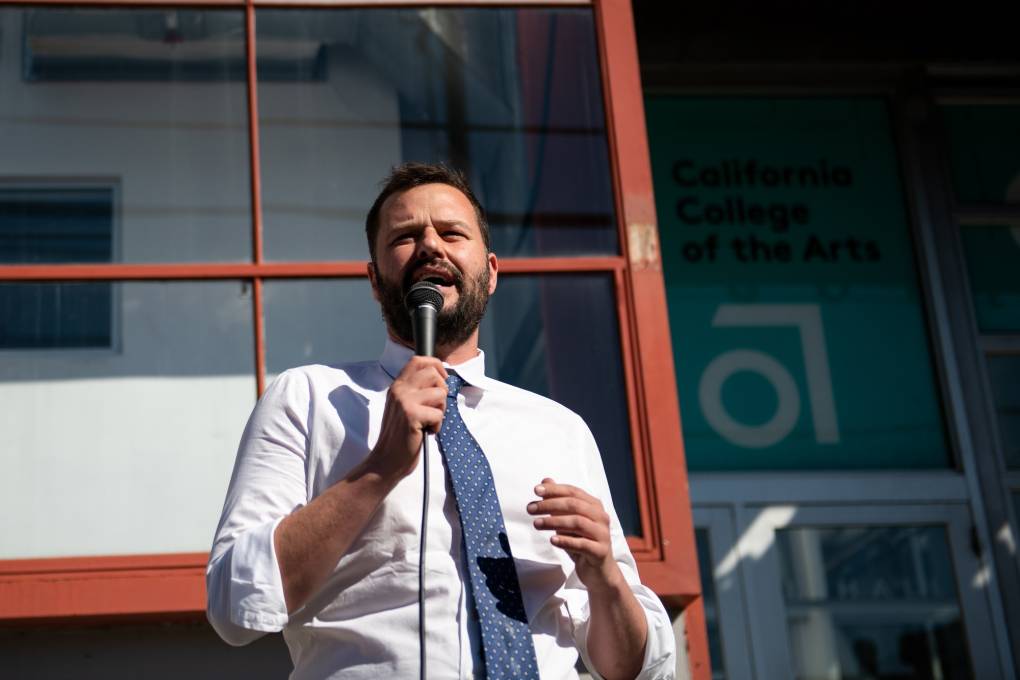
"caption": "State Sen. Scott Wiener and Assemblymember Matt Haney (pictured) introduced legislation Thursday that would protect the no-cost-sharing requirement for existing HIV prevention treatments.",
"credit": "Beth LaBerge/KQED",
"altTag": null,
"description": "Supervisor Matt Haney speaks outside of the California College of the Arts (CCA) San Francisco campus on Feb. 8, 2022, during a staff strike over claims of unfair labor practices.\n\n",
"imgSizes": {
"medium": {
"file": "https://cdn.kqed.org/wp-content/uploads/sites/10/2024/07/013_SanFrancisco_CCAStrike_02082022-800x533.jpg",
"width": 800,
"height": 533,
"mimeType": "image/jpeg"
},
"large": {
"file": "https://cdn.kqed.org/wp-content/uploads/sites/10/2024/07/013_SanFrancisco_CCAStrike_02082022-1020x680.jpg",
"width": 1020,
"height": 680,
"mimeType": "image/jpeg"
},
"thumbnail": {
"file": "https://cdn.kqed.org/wp-content/uploads/sites/10/2024/07/013_SanFrancisco_CCAStrike_02082022-160x107.jpg",
"width": 160,
"height": 107,
"mimeType": "image/jpeg"
},
"1536x1536": {
"file": "https://cdn.kqed.org/wp-content/uploads/sites/10/2024/07/013_SanFrancisco_CCAStrike_02082022-1536x1024.jpg",
"width": 1536,
"height": 1024,
"mimeType": "image/jpeg"
},
"post-thumbnail": {
"file": "https://cdn.kqed.org/wp-content/uploads/sites/10/2024/07/013_SanFrancisco_CCAStrike_02082022-672x372.jpg",
"width": 672,
"height": 372,
"mimeType": "image/jpeg"
},
"twentyfourteen-full-width": {
"file": "https://cdn.kqed.org/wp-content/uploads/sites/10/2024/07/013_SanFrancisco_CCAStrike_02082022-1038x576.jpg",
"width": 1038,
"height": 576,
"mimeType": "image/jpeg"
},
"full-width": {
"file": "https://cdn.kqed.org/wp-content/uploads/sites/10/2024/07/013_SanFrancisco_CCAStrike_02082022-1920x1280.jpg",
"width": 1920,
"height": 1280,
"mimeType": "image/jpeg"
},
"kqedFullSize": {
"file": "https://cdn.kqed.org/wp-content/uploads/sites/10/2024/07/013_SanFrancisco_CCAStrike_02082022.jpg",
"width": 2000,
"height": 1333
}
},
"isLoading": false,
"fetchFailed": false
},
"news_12026903": {
"type": "attachments",
"id": "news_12026903",
"meta": {
"index": "attachments_1716263798",
"site": "news",
"id": "12026903",
"found": true
},
"title": "FIREAID Benefit Concert For California Fire Relief - Intuit Dome",
"publishDate": 1739469461,
"status": "inherit",
"parent": 12026900,
"modified": 1739497016,
"caption": "Former Vice President Kamala Harris and Doug Emhoff attend the FIREAID Benefit Concert for California Fire Relief at Intuit Dome on Jan. 30, 2025 in Inglewood, California. ",
"credit": "Amy Sussman/Getty Images for FIREAID",
"altTag": null,
"description": null,
"imgSizes": {
"medium": {
"file": "https://cdn.kqed.org/wp-content/uploads/sites/10/2025/02/GettyImages-2196870022-800x533.jpg",
"width": 800,
"height": 533,
"mimeType": "image/jpeg"
},
"large": {
"file": "https://cdn.kqed.org/wp-content/uploads/sites/10/2025/02/GettyImages-2196870022-1020x680.jpg",
"width": 1020,
"height": 680,
"mimeType": "image/jpeg"
},
"thumbnail": {
"file": "https://cdn.kqed.org/wp-content/uploads/sites/10/2025/02/GettyImages-2196870022-160x107.jpg",
"width": 160,
"height": 107,
"mimeType": "image/jpeg"
},
"1536x1536": {
"file": "https://cdn.kqed.org/wp-content/uploads/sites/10/2025/02/GettyImages-2196870022-1536x1024.jpg",
"width": 1536,
"height": 1024,
"mimeType": "image/jpeg"
},
"2048x2048": {
"file": "https://cdn.kqed.org/wp-content/uploads/sites/10/2025/02/GettyImages-2196870022-2048x1365.jpg",
"width": 2048,
"height": 1365,
"mimeType": "image/jpeg"
},
"post-thumbnail": {
"file": "https://cdn.kqed.org/wp-content/uploads/sites/10/2025/02/GettyImages-2196870022-672x372.jpg",
"width": 672,
"height": 372,
"mimeType": "image/jpeg"
},
"twentyfourteen-full-width": {
"file": "https://cdn.kqed.org/wp-content/uploads/sites/10/2025/02/GettyImages-2196870022-1038x576.jpg",
"width": 1038,
"height": 576,
"mimeType": "image/jpeg"
},
"full-width": {
"file": "https://cdn.kqed.org/wp-content/uploads/sites/10/2025/02/GettyImages-2196870022-1920x1280.jpg",
"width": 1920,
"height": 1280,
"mimeType": "image/jpeg"
},
"kqedFullSize": {
"file": "https://cdn.kqed.org/wp-content/uploads/sites/10/2025/02/GettyImages-2196870022-scaled.jpg",
"width": 2560,
"height": 1707
}
},
"isLoading": false,
"fetchFailed": false
},
"news_12011589": {
"type": "attachments",
"id": "news_12011589",
"meta": {
"index": "attachments_1716263798",
"site": "news",
"id": "12011589",
"found": true
},
"title": "241029-OAKLANDSCHOLARSHIPSTUDENTS-26-BL-KQED",
"publishDate": 1730242137,
"status": "inherit",
"parent": 0,
"modified": 1730419640,
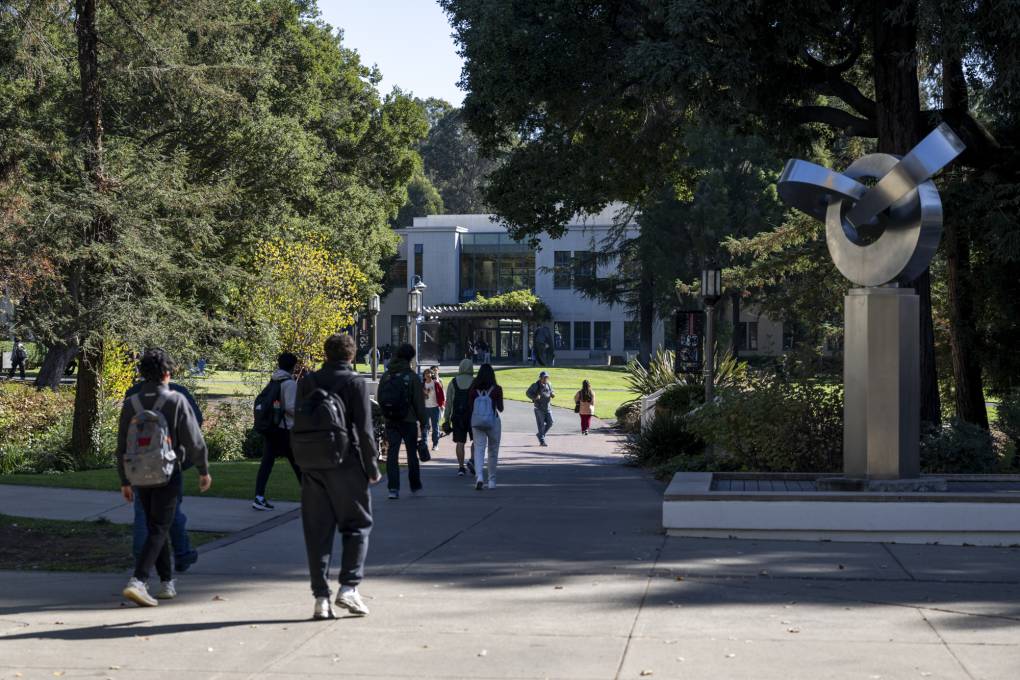
"caption": "The Northeastern University campus in Oakland on Oct. 29, 2024, formerly Mills College.",
"credit": "Beth LaBerge/KQED",
"altTag": null,
"description": null,
"imgSizes": {
"medium": {
"file": "https://cdn.kqed.org/wp-content/uploads/sites/10/2024/10/241029-OAKLANDSCHOLARSHIPSTUDENTS-26-BL-KQED-800x533.jpg",
"width": 800,
"height": 533,
"mimeType": "image/jpeg"
},
"large": {
"file": "https://cdn.kqed.org/wp-content/uploads/sites/10/2024/10/241029-OAKLANDSCHOLARSHIPSTUDENTS-26-BL-KQED-1020x680.jpg",
"width": 1020,
"height": 680,
"mimeType": "image/jpeg"
},
"thumbnail": {
"file": "https://cdn.kqed.org/wp-content/uploads/sites/10/2024/10/241029-OAKLANDSCHOLARSHIPSTUDENTS-26-BL-KQED-160x107.jpg",
"width": 160,
"height": 107,
"mimeType": "image/jpeg"
},
"1536x1536": {
"file": "https://cdn.kqed.org/wp-content/uploads/sites/10/2024/10/241029-OAKLANDSCHOLARSHIPSTUDENTS-26-BL-KQED-1536x1024.jpg",
"width": 1536,
"height": 1024,
"mimeType": "image/jpeg"
},
"post-thumbnail": {
"file": "https://cdn.kqed.org/wp-content/uploads/sites/10/2024/10/241029-OAKLANDSCHOLARSHIPSTUDENTS-26-BL-KQED-672x372.jpg",
"width": 672,
"height": 372,
"mimeType": "image/jpeg"
},
"twentyfourteen-full-width": {
"file": "https://cdn.kqed.org/wp-content/uploads/sites/10/2024/10/241029-OAKLANDSCHOLARSHIPSTUDENTS-26-BL-KQED-1038x576.jpg",
"width": 1038,
"height": 576,
"mimeType": "image/jpeg"
},
"full-width": {
"file": "https://cdn.kqed.org/wp-content/uploads/sites/10/2024/10/241029-OAKLANDSCHOLARSHIPSTUDENTS-26-BL-KQED-1920x1280.jpg",
"width": 1920,
"height": 1280,
"mimeType": "image/jpeg"
},
"kqedFullSize": {
"file": "https://cdn.kqed.org/wp-content/uploads/sites/10/2024/10/241029-OAKLANDSCHOLARSHIPSTUDENTS-26-BL-KQED.jpg",
"width": 2000,
"height": 1333
}
},
"isLoading": false,
"fetchFailed": false
},
"news_12022579": {
"type": "attachments",
"id": "news_12022579",
"meta": {
"index": "attachments_1716263798",
"site": "news",
"id": "12022579",
"found": true
},
"title": "California Wildfires",
"publishDate": 1737054277,
"status": "inherit",
"parent": 12022532,
"modified": 1739492763,
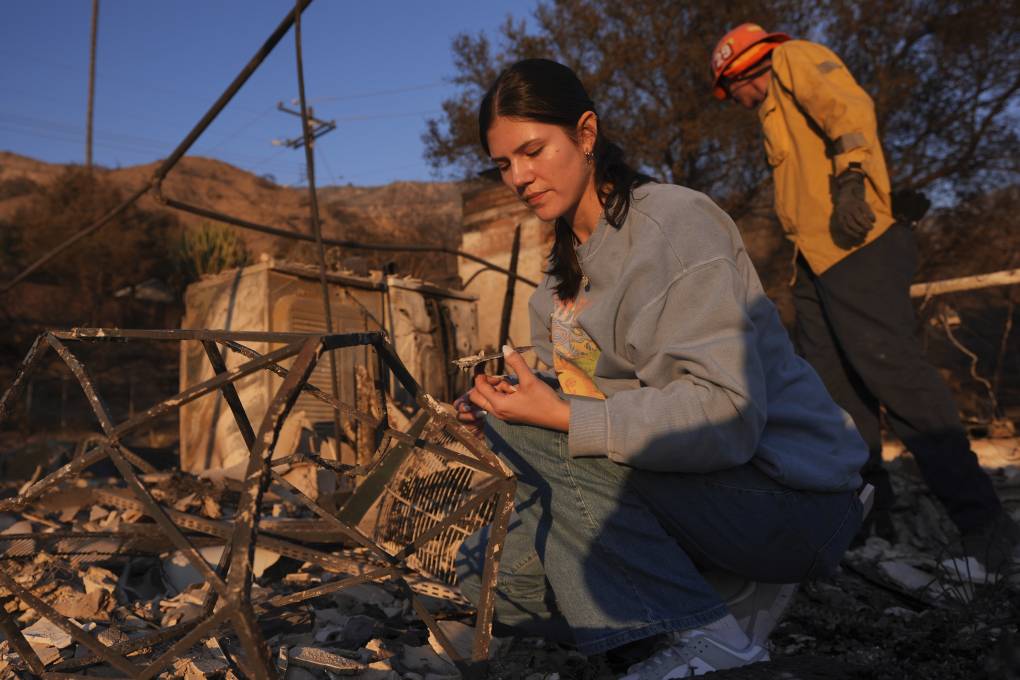
"caption": "Ella Venne (left) searches through the remnants of her family's home destroyed by the Eaton Fire in Altadena, Los Angeles County, on Saturday, Jan. 11, 2025. ",
"credit": "Mark J. Terrill/AP Photo",
"altTag": null,
"description": null,
"imgSizes": {
"medium": {
"file": "https://cdn.kqed.org/wp-content/uploads/sites/10/2025/01/AP25016123557665-800x533.jpg",
"width": 800,
"height": 533,
"mimeType": "image/jpeg"
},
"large": {
"file": "https://cdn.kqed.org/wp-content/uploads/sites/10/2025/01/AP25016123557665-1020x680.jpg",
"width": 1020,
"height": 680,
"mimeType": "image/jpeg"
},
"thumbnail": {
"file": "https://cdn.kqed.org/wp-content/uploads/sites/10/2025/01/AP25016123557665-160x107.jpg",
"width": 160,
"height": 107,
"mimeType": "image/jpeg"
},
"1536x1536": {
"file": "https://cdn.kqed.org/wp-content/uploads/sites/10/2025/01/AP25016123557665-1536x1024.jpg",
"width": 1536,
"height": 1024,
"mimeType": "image/jpeg"
},
"2048x2048": {
"file": "https://cdn.kqed.org/wp-content/uploads/sites/10/2025/01/AP25016123557665-2048x1365.jpg",
"width": 2048,
"height": 1365,
"mimeType": "image/jpeg"
},
"post-thumbnail": {
"file": "https://cdn.kqed.org/wp-content/uploads/sites/10/2025/01/AP25016123557665-672x372.jpg",
"width": 672,
"height": 372,
"mimeType": "image/jpeg"
},
"twentyfourteen-full-width": {
"file": "https://cdn.kqed.org/wp-content/uploads/sites/10/2025/01/AP25016123557665-1038x576.jpg",
"width": 1038,
"height": 576,
"mimeType": "image/jpeg"
},
"full-width": {
"file": "https://cdn.kqed.org/wp-content/uploads/sites/10/2025/01/AP25016123557665-1920x1280.jpg",
"width": 1920,
"height": 1280,
"mimeType": "image/jpeg"
},
"kqedFullSize": {
"file": "https://cdn.kqed.org/wp-content/uploads/sites/10/2025/01/AP25016123557665-scaled.jpg",
"width": 2560,
"height": 1707
}
},
"isLoading": false,
"fetchFailed": false
},
"news_11958901": {
"type": "attachments",
"id": "news_11958901",
"meta": {
"index": "attachments_1716263798",
"site": "news",
"id": "11958901",
"found": true
},
"title": "Bridges_(2412527)",
"publishDate": 1692820408,
"status": "inherit",
"parent": 11958879,
"modified": 1739491344,
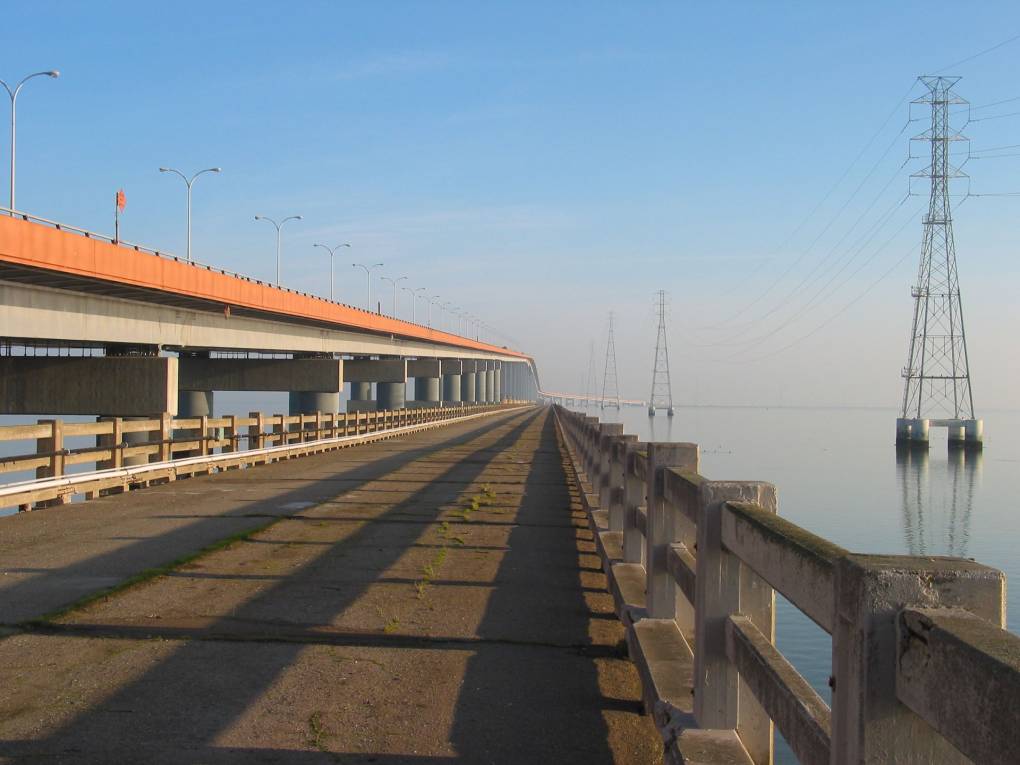
"caption": "A little stub alongside the new San Mateo-Hayward Bridge is all that remains of the original from 1929. ",
"credit": "Courtesy of Peter Kaminski",
"altTag": "Looking down an old section of a now unused bridge that runs off into the distance and terminates just before the horizon line. To the left of it is the new bridge that replaced it. Both bridges run over calm, reflective blue water.",
"description": null,
"imgSizes": {
"medium": {
"file": "https://cdn.kqed.org/wp-content/uploads/sites/10/2023/08/Bridges_2412527-e1692820851937-800x600.jpg",
"width": 800,
"height": 600,
"mimeType": "image/jpeg"
},
"large": {
"file": "https://cdn.kqed.org/wp-content/uploads/sites/10/2023/08/Bridges_2412527-e1692820851937-1020x765.jpg",
"width": 1020,
"height": 765,
"mimeType": "image/jpeg"
},
"thumbnail": {
"file": "https://cdn.kqed.org/wp-content/uploads/sites/10/2023/08/Bridges_2412527-e1692820851937-160x120.jpg",
"width": 160,
"height": 120,
"mimeType": "image/jpeg"
},
"1536x1536": {
"file": "https://cdn.kqed.org/wp-content/uploads/sites/10/2023/08/Bridges_2412527-e1692820851937-1536x1152.jpg",
"width": 1536,
"height": 1152,
"mimeType": "image/jpeg"
},
"2048x2048": {
"file": "https://cdn.kqed.org/wp-content/uploads/sites/10/2023/08/Bridges_2412527-2048x1536.jpg",
"width": 2048,
"height": 1536,
"mimeType": "image/jpeg"
},
"post-thumbnail": {
"file": "https://cdn.kqed.org/wp-content/uploads/sites/10/2023/08/Bridges_2412527-e1692820851937-672x372.jpg",
"width": 672,
"height": 372,
"mimeType": "image/jpeg"
},
"twentyfourteen-full-width": {
"file": "https://cdn.kqed.org/wp-content/uploads/sites/10/2023/08/Bridges_2412527-e1692820851937-1038x576.jpg",
"width": 1038,
"height": 576,
"mimeType": "image/jpeg"
},
"full-width": {
"file": "https://cdn.kqed.org/wp-content/uploads/sites/10/2023/08/Bridges_2412527-1920x1440.jpg",
"width": 1920,
"height": 1440,
"mimeType": "image/jpeg"
},
"kqedFullSize": {
"file": "https://cdn.kqed.org/wp-content/uploads/sites/10/2023/08/Bridges_2412527-e1692820851937.jpg",
"width": 1920,
"height": 1440
}
},
"isLoading": false,
"fetchFailed": false
},
"news_11996083": {
"type": "attachments",
"id": "news_11996083",
"meta": {
"index": "attachments_1716263798",
"site": "news",
"id": "11996083",
"found": true
},
"title": "SFPD",
"publishDate": 1721246365,
"status": "inherit",
"parent": 11996060,
"modified": 1743029026,
"caption": "Law enforcement arrested about 40 people in a large drug raid at Market and Van Ness in San Francisco last week, but prosecutors say there isn’t enough evidence to file charges.",
"credit": "Alex Emslie/KQED",
"altTag": null,
"description": null,
"imgSizes": {
"medium": {
"file": "https://cdn.kqed.org/wp-content/uploads/sites/10/2024/07/SFPD-800x600.jpg",
"width": 800,
"height": 600,
"mimeType": "image/jpeg"
},
"large": {
"file": "https://cdn.kqed.org/wp-content/uploads/sites/10/2024/07/SFPD-1020x765.jpg",
"width": 1020,
"height": 765,
"mimeType": "image/jpeg"
},
"thumbnail": {
"file": "https://cdn.kqed.org/wp-content/uploads/sites/10/2024/07/SFPD-160x120.jpg",
"width": 160,
"height": 120,
"mimeType": "image/jpeg"
},
"1536x1536": {
"file": "https://cdn.kqed.org/wp-content/uploads/sites/10/2024/07/SFPD-1536x1152.jpg",
"width": 1536,
"height": 1152,
"mimeType": "image/jpeg"
},
"post-thumbnail": {
"file": "https://cdn.kqed.org/wp-content/uploads/sites/10/2024/07/SFPD-672x372.jpg",
"width": 672,
"height": 372,
"mimeType": "image/jpeg"
},
"twentyfourteen-full-width": {
"file": "https://cdn.kqed.org/wp-content/uploads/sites/10/2024/07/SFPD-1038x576.jpg",
"width": 1038,
"height": 576,
"mimeType": "image/jpeg"
},
"full-width": {
"file": "https://cdn.kqed.org/wp-content/uploads/sites/10/2024/07/SFPD-1920x1440.jpg",
"width": 1920,
"height": 1440,
"mimeType": "image/jpeg"
},
"kqedFullSize": {
"file": "https://cdn.kqed.org/wp-content/uploads/sites/10/2024/07/SFPD.jpg",
"width": 2000,
"height": 1500
}
},
"isLoading": false,
"fetchFailed": false
},
"news_12020612": {
"type": "attachments",
"id": "news_12020612",
"meta": {
"index": "attachments_1716263798",
"site": "news",
"id": "12020612",
"found": true
},
"title": "Multiple Arrested After Police Confront Native American Protesters On National Mall",
"publishDate": 1736281236,
"status": "inherit",
"parent": 12020604,
"modified": 1738977432,
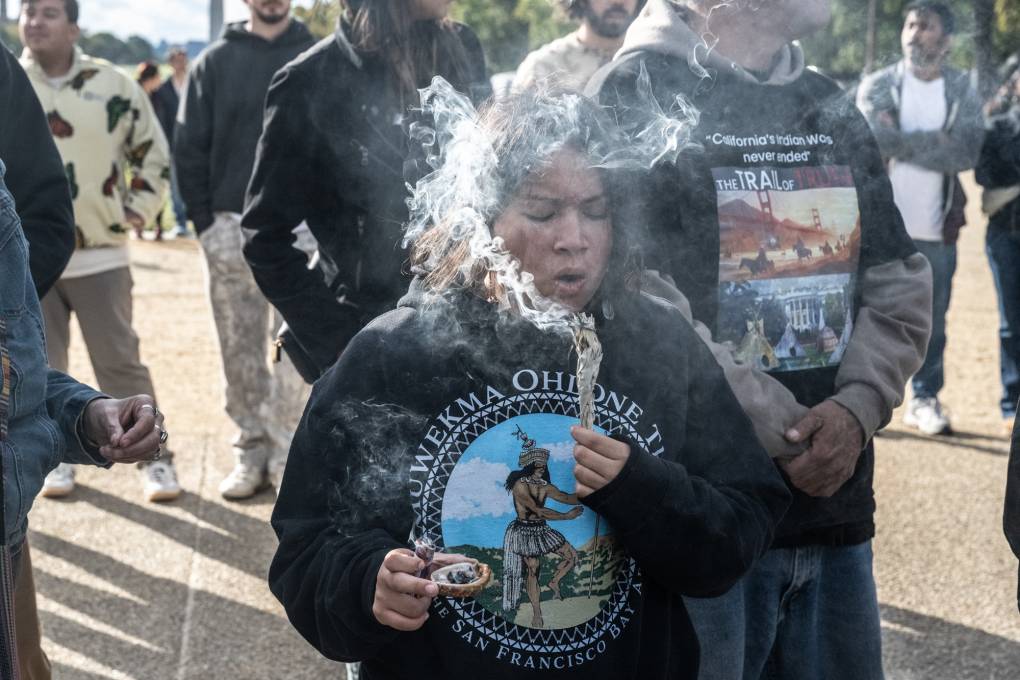
"caption": "Native Americans burn sage during a confrontation with police on the National Mall on Oct. 15, 2024, in Washington, D.C. Native Americans from several tribes, including the Muwekma Ohlone, arrived in Washington, D.C., to demand federal recognition. Local police moved in before a ceremonial ride on horses to the Bureau of Indian Affairs could take place.",
"credit": "Stephanie Keith/Getty Images",
"altTag": null,
"description": null,
"imgSizes": {
"medium": {
"file": "https://cdn.kqed.org/wp-content/uploads/sites/10/2025/01/Muwekma-Ohlone-Getty-800x533.jpg",
"width": 800,
"height": 533,
"mimeType": "image/jpeg"
},
"large": {
"file": "https://cdn.kqed.org/wp-content/uploads/sites/10/2025/01/Muwekma-Ohlone-Getty-1020x680.jpg",
"width": 1020,
"height": 680,
"mimeType": "image/jpeg"
},
"thumbnail": {
"file": "https://cdn.kqed.org/wp-content/uploads/sites/10/2025/01/Muwekma-Ohlone-Getty-160x107.jpg",
"width": 160,
"height": 107,
"mimeType": "image/jpeg"
},
"1536x1536": {
"file": "https://cdn.kqed.org/wp-content/uploads/sites/10/2025/01/Muwekma-Ohlone-Getty-1536x1024.jpg",
"width": 1536,
"height": 1024,
"mimeType": "image/jpeg"
},
"post-thumbnail": {
"file": "https://cdn.kqed.org/wp-content/uploads/sites/10/2025/01/Muwekma-Ohlone-Getty-672x372.jpg",
"width": 672,
"height": 372,
"mimeType": "image/jpeg"
},
"twentyfourteen-full-width": {
"file": "https://cdn.kqed.org/wp-content/uploads/sites/10/2025/01/Muwekma-Ohlone-Getty-1038x576.jpg",
"width": 1038,
"height": 576,
"mimeType": "image/jpeg"
},
"full-width": {
"file": "https://cdn.kqed.org/wp-content/uploads/sites/10/2025/01/Muwekma-Ohlone-Getty-1920x1280.jpg",
"width": 1920,
"height": 1280,
"mimeType": "image/jpeg"
},
"kqedFullSize": {
"file": "https://cdn.kqed.org/wp-content/uploads/sites/10/2025/01/Muwekma-Ohlone-Getty.jpg",
"width": 2000,
"height": 1333
}
},
"isLoading": false,
"fetchFailed": false
},
"news_12025692": {
"type": "attachments",
"id": "news_12025692",
"meta": {
"index": "attachments_1716263798",
"site": "news",
"id": "12025692",
"found": true
},
"title": "250204-RainStorm-04-BL",
"publishDate": 1738711553,
"status": "inherit",
"parent": 0,
"modified": 1739406771,
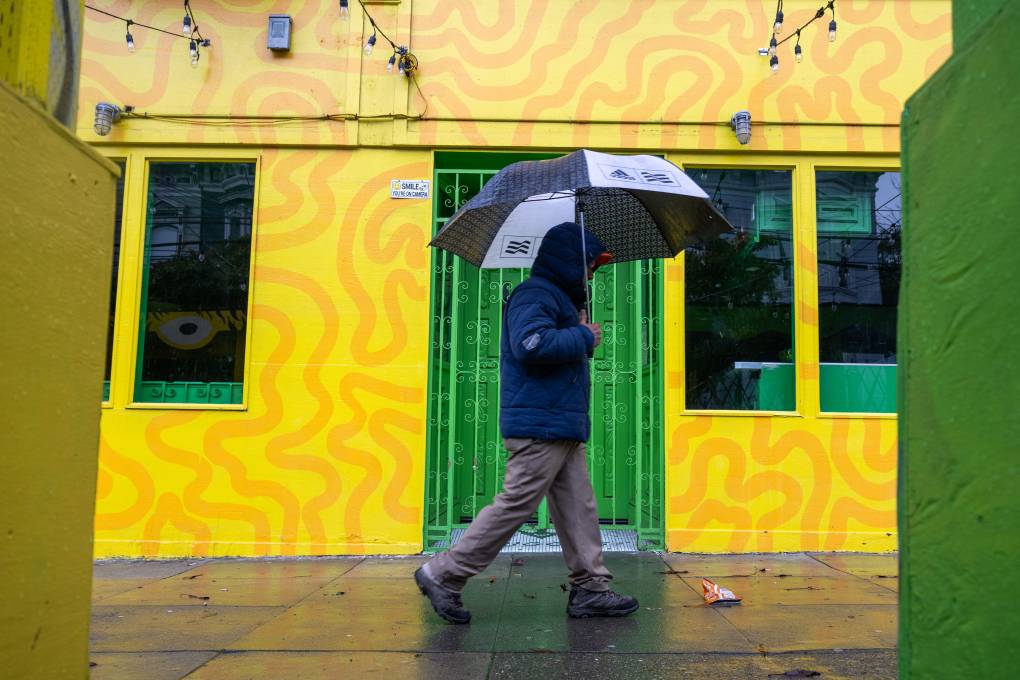
"caption": "A pedestrian carries an umbrella while walking on Mission Street during a storm in San Francisco on Feb. 4, 2025.",
"credit": "Beth LaBerge/KQED",
"altTag": null,
"description": null,
"imgSizes": {
"medium": {
"file": "https://cdn.kqed.org/wp-content/uploads/sites/10/2025/02/250204-RainStorm-04-BL-800x533.jpg",
"width": 800,
"height": 533,
"mimeType": "image/jpeg"
},
"large": {
"file": "https://cdn.kqed.org/wp-content/uploads/sites/10/2025/02/250204-RainStorm-04-BL-1020x680.jpg",
"width": 1020,
"height": 680,
"mimeType": "image/jpeg"
},
"thumbnail": {
"file": "https://cdn.kqed.org/wp-content/uploads/sites/10/2025/02/250204-RainStorm-04-BL-160x107.jpg",
"width": 160,
"height": 107,
"mimeType": "image/jpeg"
},
"1536x1536": {
"file": "https://cdn.kqed.org/wp-content/uploads/sites/10/2025/02/250204-RainStorm-04-BL-1536x1024.jpg",
"width": 1536,
"height": 1024,
"mimeType": "image/jpeg"
},
"2048x2048": {
"file": "https://cdn.kqed.org/wp-content/uploads/sites/10/2025/02/250204-RainStorm-04-BL-2048x1365.jpg",
"width": 2048,
"height": 1365,
"mimeType": "image/jpeg"
},
"post-thumbnail": {
"file": "https://cdn.kqed.org/wp-content/uploads/sites/10/2025/02/250204-RainStorm-04-BL-672x372.jpg",
"width": 672,
"height": 372,
"mimeType": "image/jpeg"
},
"twentyfourteen-full-width": {
"file": "https://cdn.kqed.org/wp-content/uploads/sites/10/2025/02/250204-RainStorm-04-BL-1038x576.jpg",
"width": 1038,
"height": 576,
"mimeType": "image/jpeg"
},
"full-width": {
"file": "https://cdn.kqed.org/wp-content/uploads/sites/10/2025/02/250204-RainStorm-04-BL-1920x1280.jpg",
"width": 1920,
"height": 1280,
"mimeType": "image/jpeg"
},
"kqedFullSize": {
"file": "https://cdn.kqed.org/wp-content/uploads/sites/10/2025/02/250204-RainStorm-04-BL-scaled.jpg",
"width": 2560,
"height": 1707
}
},
"isLoading": false,
"fetchFailed": false
},
"news_12015960": {
"type": "attachments",
"id": "news_12015960",
"meta": {
"index": "attachments_1716263798",
"site": "news",
"id": "12015960",
"found": true
},
"title": "Bay Area Storm",
"publishDate": 1732650527,
"status": "inherit",
"parent": 12015944,
"modified": 1732650607,
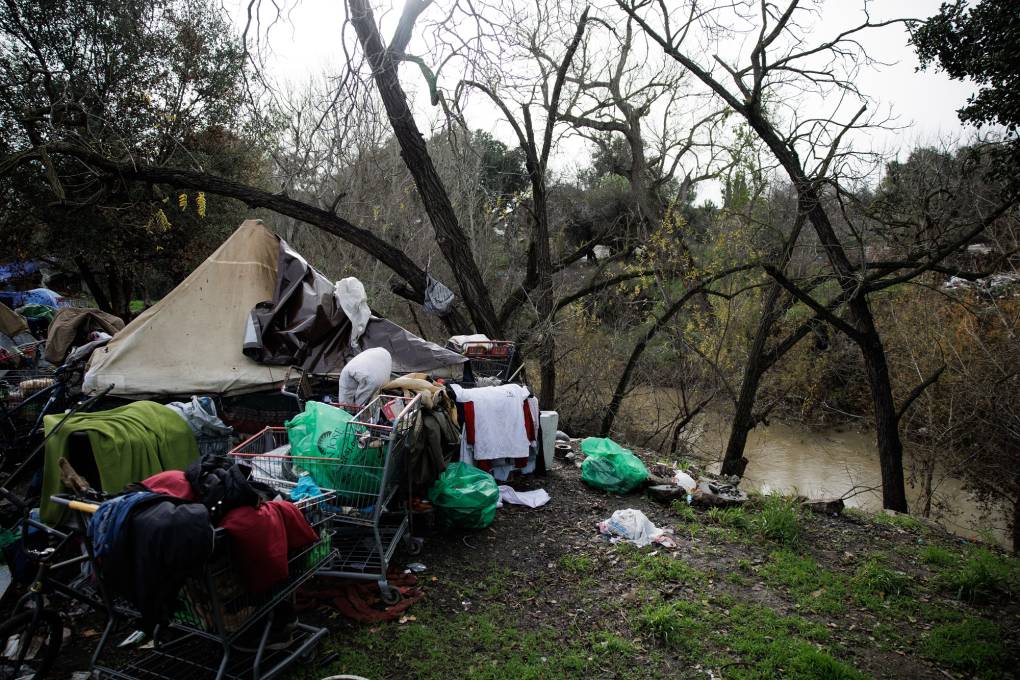
"caption": "Clusters of tents belonging to unhoused residents line the banks of Coyote Creek near Tully Road on Jan. 4, 2023, in San José, California. ",
"credit": "Dai Sugano/MediaNews Group/The Mercury News via Getty Images",
"altTag": null,
"description": null,
"imgSizes": {
"medium": {
"file": "https://cdn.kqed.org/wp-content/uploads/sites/10/2024/11/SantaClaraCountyHomelessnessGetty1-800x533.jpg",
"width": 800,
"height": 533,
"mimeType": "image/jpeg"
},
"large": {
"file": "https://cdn.kqed.org/wp-content/uploads/sites/10/2024/11/SantaClaraCountyHomelessnessGetty1-1020x680.jpg",
"width": 1020,
"height": 680,
"mimeType": "image/jpeg"
},
"thumbnail": {
"file": "https://cdn.kqed.org/wp-content/uploads/sites/10/2024/11/SantaClaraCountyHomelessnessGetty1-160x107.jpg",
"width": 160,
"height": 107,
"mimeType": "image/jpeg"
},
"1536x1536": {
"file": "https://cdn.kqed.org/wp-content/uploads/sites/10/2024/11/SantaClaraCountyHomelessnessGetty1-1536x1024.jpg",
"width": 1536,
"height": 1024,
"mimeType": "image/jpeg"
},
"post-thumbnail": {
"file": "https://cdn.kqed.org/wp-content/uploads/sites/10/2024/11/SantaClaraCountyHomelessnessGetty1-672x372.jpg",
"width": 672,
"height": 372,
"mimeType": "image/jpeg"
},
"twentyfourteen-full-width": {
"file": "https://cdn.kqed.org/wp-content/uploads/sites/10/2024/11/SantaClaraCountyHomelessnessGetty1-1038x576.jpg",
"width": 1038,
"height": 576,
"mimeType": "image/jpeg"
},
"full-width": {
"file": "https://cdn.kqed.org/wp-content/uploads/sites/10/2024/11/SantaClaraCountyHomelessnessGetty1-1920x1280.jpg",
"width": 1920,
"height": 1280,
"mimeType": "image/jpeg"
},
"kqedFullSize": {
"file": "https://cdn.kqed.org/wp-content/uploads/sites/10/2024/11/SantaClaraCountyHomelessnessGetty1.jpg",
"width": 2000,
"height": 1333
}
},
"isLoading": false,
"fetchFailed": false
},
"news_12026494": {
"type": "attachments",
"id": "news_12026494",
"meta": {
"index": "attachments_1716263798",
"site": "news",
"id": "12026494",
"found": true
},
"title": "20250210_Unhoused-Ban_DMB_00250",
"publishDate": 1739225401,
"status": "inherit",
"parent": 0,
"modified": 1739391190,
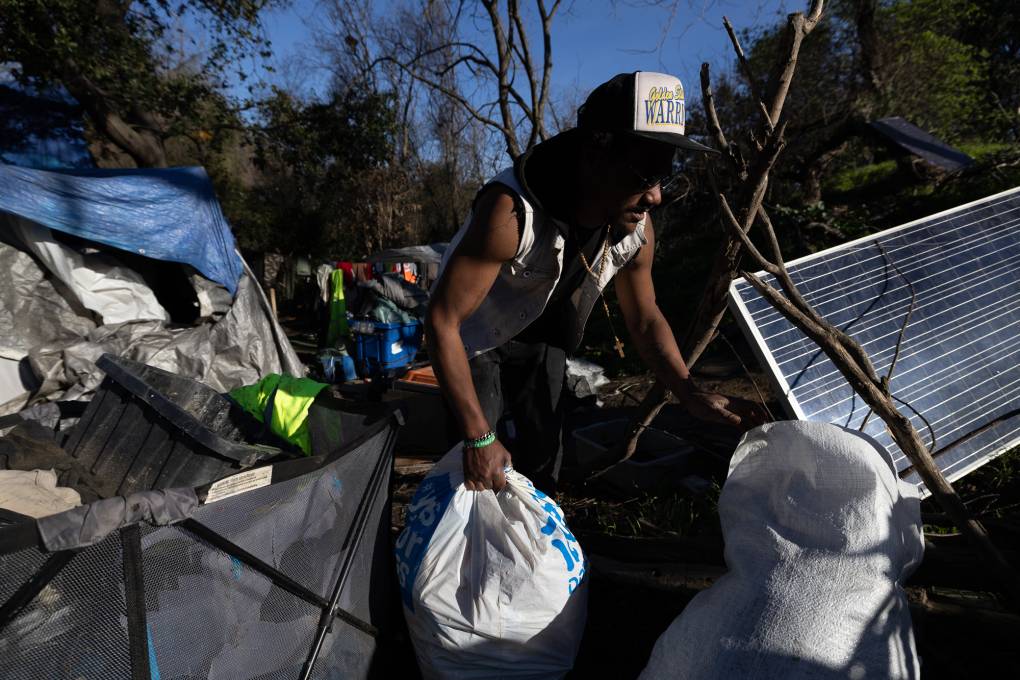
"caption": "Devante Booth works to clean up the area of his makeshift shelter near Quarry Lakes Drive in Fremont, California, on Monday, Feb. 10, 2025. Booth says he grew up in the system after his mother put him in a tub of boiling water at the age of 3. \"We don't choose to live like this,\" Booth says. On Feb. 11, 2025, Fremont city leaders are expected to vote on a proposed public camping ban that extends punishment beyond those living on the streets to people who facilitate or conceal encampments in what is being described as a first-in-the-state ban.",
"credit": "David M. Barreda/KQED",
"altTag": null,
"description": null,
"imgSizes": {
"medium": {
"file": "https://cdn.kqed.org/wp-content/uploads/sites/10/2025/02/20250210_Unhoused-Ban_DMB_00250-800x533.jpg",
"width": 800,
"height": 533,
"mimeType": "image/jpeg"
},
"large": {
"file": "https://cdn.kqed.org/wp-content/uploads/sites/10/2025/02/20250210_Unhoused-Ban_DMB_00250-1020x680.jpg",
"width": 1020,
"height": 680,
"mimeType": "image/jpeg"
},
"thumbnail": {
"file": "https://cdn.kqed.org/wp-content/uploads/sites/10/2025/02/20250210_Unhoused-Ban_DMB_00250-160x107.jpg",
"width": 160,
"height": 107,
"mimeType": "image/jpeg"
},
"1536x1536": {
"file": "https://cdn.kqed.org/wp-content/uploads/sites/10/2025/02/20250210_Unhoused-Ban_DMB_00250-1536x1024.jpg",
"width": 1536,
"height": 1024,
"mimeType": "image/jpeg"
},
"post-thumbnail": {
"file": "https://cdn.kqed.org/wp-content/uploads/sites/10/2025/02/20250210_Unhoused-Ban_DMB_00250-672x372.jpg",
"width": 672,
"height": 372,
"mimeType": "image/jpeg"
},
"twentyfourteen-full-width": {
"file": "https://cdn.kqed.org/wp-content/uploads/sites/10/2025/02/20250210_Unhoused-Ban_DMB_00250-1038x576.jpg",
"width": 1038,
"height": 576,
"mimeType": "image/jpeg"
},
"full-width": {
"file": "https://cdn.kqed.org/wp-content/uploads/sites/10/2025/02/20250210_Unhoused-Ban_DMB_00250-1920x1280.jpg",
"width": 1920,
"height": 1280,
"mimeType": "image/jpeg"
},
"kqedFullSize": {
"file": "https://cdn.kqed.org/wp-content/uploads/sites/10/2025/02/20250210_Unhoused-Ban_DMB_00250.jpg",
"width": 2000,
"height": 1333
}
},
"isLoading": false,
"fetchFailed": false
},
"news_11956028": {
"type": "attachments",
"id": "news_11956028",
"meta": {
"index": "attachments_1716263798",
"site": "news",
"id": "11956028",
"found": true
},
"title": "Stanford University",
"publishDate": 1689798100,
"status": "inherit",
"parent": 12024203,
"modified": 1739323014,
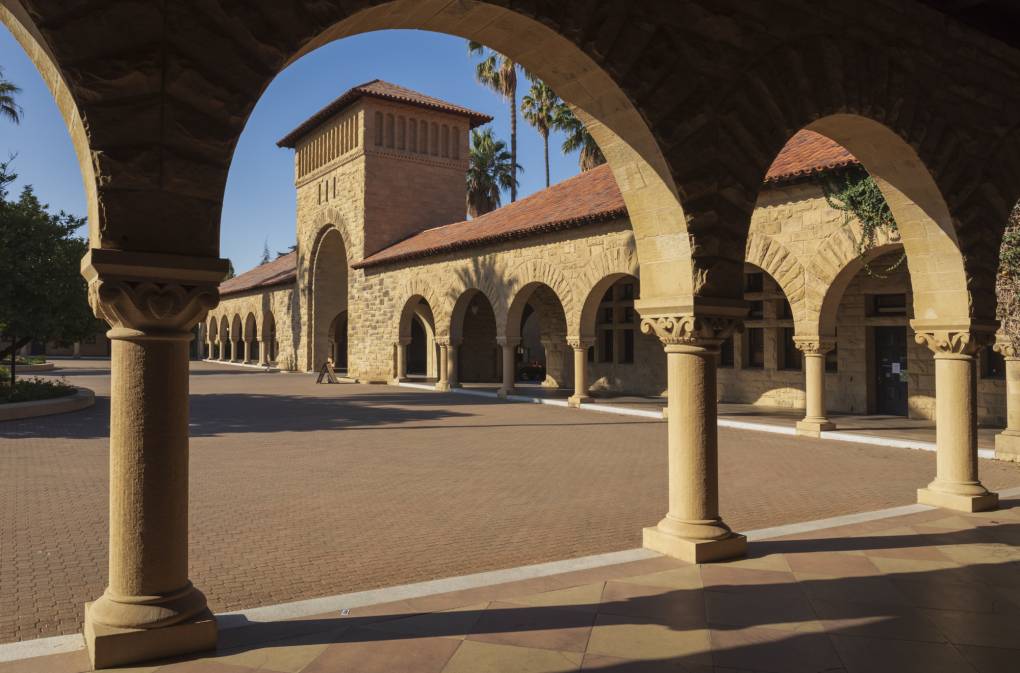
"caption": "The arches of the Main Quadrangle buildings on the campus of Stanford University in Palo Alto on Oct. 2, 2021.",
"credit": "David Madison/Getty Images",
"altTag": "An ornate sandstone-colored building with a series of arches sitting on a brick plaza.",
"description": null,
"imgSizes": {
"medium": {
"file": "https://cdn.kqed.org/wp-content/uploads/sites/10/2023/07/230719-STANFORD-GETTY-DM-KQED-800x528.jpg",
"width": 800,
"height": 528,
"mimeType": "image/jpeg"
},
"large": {
"file": "https://cdn.kqed.org/wp-content/uploads/sites/10/2023/07/230719-STANFORD-GETTY-DM-KQED-1020x673.jpg",
"width": 1020,
"height": 673,
"mimeType": "image/jpeg"
},
"thumbnail": {
"file": "https://cdn.kqed.org/wp-content/uploads/sites/10/2023/07/230719-STANFORD-GETTY-DM-KQED-160x106.jpg",
"width": 160,
"height": 106,
"mimeType": "image/jpeg"
},
"1536x1536": {
"file": "https://cdn.kqed.org/wp-content/uploads/sites/10/2023/07/230719-STANFORD-GETTY-DM-KQED-1536x1014.jpg",
"width": 1536,
"height": 1014,
"mimeType": "image/jpeg"
},
"post-thumbnail": {
"file": "https://cdn.kqed.org/wp-content/uploads/sites/10/2023/07/230719-STANFORD-GETTY-DM-KQED-672x372.jpg",
"width": 672,
"height": 372,
"mimeType": "image/jpeg"
},
"twentyfourteen-full-width": {
"file": "https://cdn.kqed.org/wp-content/uploads/sites/10/2023/07/230719-STANFORD-GETTY-DM-KQED-1038x576.jpg",
"width": 1038,
"height": 576,
"mimeType": "image/jpeg"
},
"full-width": {
"file": "https://cdn.kqed.org/wp-content/uploads/sites/10/2023/07/230719-STANFORD-GETTY-DM-KQED-1920x1267.jpg",
"width": 1920,
"height": 1267,
"mimeType": "image/jpeg"
},
"kqedFullSize": {
"file": "https://cdn.kqed.org/wp-content/uploads/sites/10/2023/07/230719-STANFORD-GETTY-DM-KQED.jpg",
"width": 2000,
"height": 1320
}
},
"isLoading": false,
"fetchFailed": false
},
"news_12014668": {
"type": "attachments",
"id": "news_12014668",
"meta": {
"index": "attachments_1716263798",
"site": "news",
"id": "12014668",
"found": true
},
"title": "Donald Trump",
"publishDate": 1731708587,
"status": "inherit",
"parent": 12014622,
"modified": 1731710604,
"caption": "President Donald Trump arrives to deliver remarks about American energy production during a visit to the Double Eagle Energy Oil Rig on July 29, 2020, in Midland, Texas.",
"credit": "Evan Vucci/AP Photo",
"altTag": null,
"description": null,
"imgSizes": {
"medium": {
"file": "https://cdn.kqed.org/wp-content/uploads/sites/10/2024/11/TrumpOilGasRegulationsAP-800x533.jpg",
"width": 800,
"height": 533,
"mimeType": "image/jpeg"
},
"large": {
"file": "https://cdn.kqed.org/wp-content/uploads/sites/10/2024/11/TrumpOilGasRegulationsAP-1020x680.jpg",
"width": 1020,
"height": 680,
"mimeType": "image/jpeg"
},
"thumbnail": {
"file": "https://cdn.kqed.org/wp-content/uploads/sites/10/2024/11/TrumpOilGasRegulationsAP-160x107.jpg",
"width": 160,
"height": 107,
"mimeType": "image/jpeg"
},
"1536x1536": {
"file": "https://cdn.kqed.org/wp-content/uploads/sites/10/2024/11/TrumpOilGasRegulationsAP-1536x1024.jpg",
"width": 1536,
"height": 1024,
"mimeType": "image/jpeg"
},
"post-thumbnail": {
"file": "https://cdn.kqed.org/wp-content/uploads/sites/10/2024/11/TrumpOilGasRegulationsAP-672x372.jpg",
"width": 672,
"height": 372,
"mimeType": "image/jpeg"
},
"twentyfourteen-full-width": {
"file": "https://cdn.kqed.org/wp-content/uploads/sites/10/2024/11/TrumpOilGasRegulationsAP-1038x576.jpg",
"width": 1038,
"height": 576,
"mimeType": "image/jpeg"
},
"full-width": {
"file": "https://cdn.kqed.org/wp-content/uploads/sites/10/2024/11/TrumpOilGasRegulationsAP-1920x1280.jpg",
"width": 1920,
"height": 1280,
"mimeType": "image/jpeg"
},
"kqedFullSize": {
"file": "https://cdn.kqed.org/wp-content/uploads/sites/10/2024/11/TrumpOilGasRegulationsAP.jpg",
"width": 2000,
"height": 1333
}
},
"isLoading": false,
"fetchFailed": false
}
},
"audioPlayerReducer": {
"postId": "stream_live",
"isPaused": true,
"isPlaying": false,
"pfsActive": false,
"pledgeModalIsOpen": true,
"playerDrawerIsOpen": false,
"liveAudioPlayStartedAt": 0,
"liveAudioPlayContext": ""
},
"authorsReducer": {
"byline_news_12026185": {
"type": "authors",
"id": "byline_news_12026185",
"meta": {
"override": true
},
"slug": "byline_news_12026185",
"name": "Cami Dominguez",
"isLoading": false
},
"scottshafer": {
"type": "authors",
"id": "255",
"meta": {
"index": "authors_1716337520",
"id": "255",
"found": true
},
"name": "Scott Shafer",
"firstName": "Scott",
"lastName": "Shafer",
"slug": "scottshafer",
"email": "sshafer@kqed.org",
"display_author_email": false,
"staff_mastheads": [
"news"
],
"title": "KQED Contributor",
"bio": "Scott Shafer is a senior editor with the KQED Politics and Government desk. He is co-host of Political Breakdown, the award-winning radio show and podcast with a personal take on the world of politics. Scott came to KQED in 1998 to host the statewide\u003cem> California Report\u003c/em>. Prior to that he had extended stints in politics and government\u003cem>.\u003c/em> He uses that inside experience at KQED in his, reporting, hosting and analysis for the politics desk. Scott collaborated \u003cem>Political Breakdown a\u003c/em>nd on \u003cem>The Political Mind of Jerry Brown, \u003c/em>an eight-part series about the life and extraordinary political career of the former governor. For fun, he plays water polo with the San Francisco Tsunami.",
"avatar": "https://secure.gravatar.com/avatar/a62ebae45b79d7aed1a39a0e3bf68104?s=600&d=blank&r=g",
"twitter": "scottshafer",
"bluesky": null,
"facebook": null,
"instagram": null,
"linkedin": null,
"sites": [
{
"site": "news",
"roles": [
"editor"
]
},
{
"site": "stateofhealth",
"roles": [
"author"
]
},
{
"site": "science",
"roles": [
"author"
]
},
{
"site": "forum",
"roles": [
"subscriber"
]
},
{
"site": "liveblog",
"roles": [
"author"
]
}
],
"headData": {
"title": "Scott Shafer | KQED",
"description": "KQED Contributor",
"ogImgSrc": "https://secure.gravatar.com/avatar/a62ebae45b79d7aed1a39a0e3bf68104?s=600&d=blank&r=g",
"twImgSrc": "https://secure.gravatar.com/avatar/a62ebae45b79d7aed1a39a0e3bf68104?s=600&d=blank&r=g"
},
"isLoading": false,
"link": "/author/scottshafer"
},
"dventon": {
"type": "authors",
"id": "11088",
"meta": {
"index": "authors_1716337520",
"id": "11088",
"found": true
},
"name": "Danielle Venton",
"firstName": "Danielle",
"lastName": "Venton",
"slug": "dventon",
"email": "dventon@kqed.org",
"display_author_email": true,
"staff_mastheads": [
"science"
],
"title": "Science reporter",
"bio": "Danielle Venton is a reporter for KQED Science. She covers wildfires, space and oceans (though she is prone to sea sickness).\r\n\r\nBefore joining KQED in 2015, Danielle was a staff reporter at KRCB in Sonoma County and a freelancer. She studied science communication at UC Santa Cruz and formerly worked at CERN in Geneva, Switzerland where she wrote about computing. She lives in Sonoma County and enjoys backpacking.",
"avatar": "https://secure.gravatar.com/avatar/ebaf11ee6cfb7bb40329a143d463829e?s=600&d=blank&r=g",
"twitter": "DanielleVenton",
"facebook": null,
"instagram": null,
"linkedin": null,
"sites": [
{
"site": "arts",
"roles": [
"contributor"
]
},
{
"site": "news",
"roles": [
"editor"
]
},
{
"site": "futureofyou",
"roles": [
"editor"
]
},
{
"site": "science",
"roles": [
"editor"
]
},
{
"site": "liveblog",
"roles": [
"contributor"
]
}
],
"headData": {
"title": "Danielle Venton | KQED",
"description": "Science reporter",
"ogImgSrc": "https://secure.gravatar.com/avatar/ebaf11ee6cfb7bb40329a143d463829e?s=600&d=blank&r=g",
"twImgSrc": "https://secure.gravatar.com/avatar/ebaf11ee6cfb7bb40329a143d463829e?s=600&d=blank&r=g"
},
"isLoading": false,
"link": "/author/dventon"
},
"lesleymcclurg": {
"type": "authors",
"id": "11229",
"meta": {
"index": "authors_1716337520",
"id": "11229",
"found": true
},
"name": "Lesley McClurg",
"firstName": "Lesley",
"lastName": "McClurg",
"slug": "lesleymcclurg",
"email": "lmcclurg@KQED.org",
"display_author_email": false,
"staff_mastheads": [
"news",
"science"
],
"title": "KQED Health Correspondent",
"bio": "Lesley McClurg is a health correspondent and fill-in host whose work is regularly rebroadcast on NPR and PBS programs. She’s earned multiple regional Emmy awards, a national and a regional Edward R. Murrow award, and was named Best Beat Reporter by the Association of Health Care Journalists. The Society of Professional Journalists has recognized her work several times, and the Society of Environmental Journalists spotlighted her coverage of California’s historic drought.\r\n\r\nBefore joining KQED in 2016, Lesley covered food and sustainability for Capital Public Radio, environmental issues for Colorado Public Radio, and reported for KUOW and KCTS 9 in Seattle. Away from the newsroom, she loves skiing with her daughter, mountain biking with her partner, and playing with Ollie, the family’s goldendoodle. On deadline, she runs almost entirely on chocolate chips.\r\n\r\n ",
"avatar": "https://secure.gravatar.com/avatar/bab49e972ea10c774fe0f5e29dba1722b158f7c0d58a360923d1389d380b2978?s=600&d=blank&r=g",
"twitter": "lesleywmcclurg",
"bluesky": null,
"facebook": null,
"instagram": null,
"linkedin": null,
"sites": [
{
"site": "arts",
"roles": [
"author"
]
},
{
"site": "news",
"roles": [
"editor"
]
},
{
"site": "futureofyou",
"roles": [
"editor"
]
},
{
"site": "stateofhealth",
"roles": [
"author"
]
},
{
"site": "science",
"roles": [
"editor"
]
},
{
"site": "quest",
"roles": [
"subscriber"
]
},
{
"site": "forum",
"roles": [
"administrator"
]
},
{
"site": "liveblog",
"roles": [
"author"
]
}
],
"headData": {
"title": "Lesley McClurg | KQED",
"description": "KQED Health Correspondent",
"ogImgSrc": "https://secure.gravatar.com/avatar/bab49e972ea10c774fe0f5e29dba1722b158f7c0d58a360923d1389d380b2978?s=600&d=blank&r=g",
"twImgSrc": "https://secure.gravatar.com/avatar/bab49e972ea10c774fe0f5e29dba1722b158f7c0d58a360923d1389d380b2978?s=600&d=blank&r=g"
},
"isLoading": false,
"link": "/author/lesleymcclurg"
},
"vrancano": {
"type": "authors",
"id": "11276",
"meta": {
"index": "authors_1716337520",
"id": "11276",
"found": true
},
"name": "Vanessa Rancaño",
"firstName": "Vanessa",
"lastName": "Rancaño",
"slug": "vrancano",
"email": "vrancano@kqed.org",
"display_author_email": false,
"staff_mastheads": [
"news"
],
"title": "Reporter",
"bio": "Vanessa Rancaño is a features reporter for KQED. She’s also covered homelessness and education for the station and reported from the Central Valley. Her work has aired across public radio, from flagship national news shows to longform narrative podcasts. Before taking up a mic, she worked as a freelance print journalist. She’s been recognized with a number of national and regional awards. Vanessa grew up in California's Central Valley. She's a former NPR Kroc Fellow, and a graduate of the UC Berkeley Graduate School of Journalism.",
"avatar": "https://secure.gravatar.com/avatar/b3a383dfb0e7ee1c17568f2cf067904ab654d6e3de9743fc661f3c788ade1bed?s=600&d=blank&r=g",
"twitter": "vanessarancano",
"bluesky": null,
"facebook": null,
"instagram": null,
"linkedin": null,
"sites": [
{
"site": "arts",
"roles": [
"editor"
]
},
{
"site": "news",
"roles": [
"editor"
]
},
{
"site": "liveblog",
"roles": [
"contributor"
]
}
],
"headData": {
"title": "Vanessa Rancaño | KQED",
"description": "Reporter",
"ogImgSrc": "https://secure.gravatar.com/avatar/b3a383dfb0e7ee1c17568f2cf067904ab654d6e3de9743fc661f3c788ade1bed?s=600&d=blank&r=g",
"twImgSrc": "https://secure.gravatar.com/avatar/b3a383dfb0e7ee1c17568f2cf067904ab654d6e3de9743fc661f3c788ade1bed?s=600&d=blank&r=g"
},
"isLoading": false,
"link": "/author/vrancano"
},
"jlara": {
"type": "authors",
"id": "11761",
"meta": {
"index": "authors_1716337520",
"id": "11761",
"found": true
},
"name": "Juan Carlos Lara",
"firstName": "Juan Carlos",
"lastName": "Lara",
"slug": "jlara",
"email": "jlara@kqed.org",
"display_author_email": false,
"staff_mastheads": [],
"title": "KQED Contributor",
"bio": null,
"avatar": "https://secure.gravatar.com/avatar/19e2052b9b05657c5ff2af2121846e9c?s=600&d=blank&r=g",
"twitter": null,
"facebook": null,
"instagram": null,
"linkedin": null,
"sites": [
{
"site": "arts",
"roles": [
"editor"
]
},
{
"site": "news",
"roles": [
"editor"
]
},
{
"site": "forum",
"roles": [
"editor"
]
},
{
"site": "liveblog",
"roles": [
"contributor"
]
}
],
"headData": {
"title": "Juan Carlos Lara | KQED",
"description": "KQED Contributor",
"ogImgSrc": "https://secure.gravatar.com/avatar/19e2052b9b05657c5ff2af2121846e9c?s=600&d=blank&r=g",
"twImgSrc": "https://secure.gravatar.com/avatar/19e2052b9b05657c5ff2af2121846e9c?s=600&d=blank&r=g"
},
"isLoading": false,
"link": "/author/jlara"
},
"jgeha": {
"type": "authors",
"id": "11906",
"meta": {
"index": "authors_1716337520",
"id": "11906",
"found": true
},
"name": "Joseph Geha",
"firstName": "Joseph",
"lastName": "Geha",
"slug": "jgeha",
"email": "jgeha@kqed.org",
"display_author_email": false,
"staff_mastheads": [
"news",
"science"
],
"title": "KQED Contributor",
"bio": null,
"avatar": "https://secure.gravatar.com/avatar/ea84d2b6dd93d6369d453edf19dd583f117cd1759d2d9c9c92f9de77017354fe?s=600&d=blank&r=g",
"twitter": null,
"bluesky": null,
"facebook": null,
"instagram": null,
"linkedin": null,
"sites": [
{
"site": "news",
"roles": [
"editor"
]
},
{
"site": "liveblog",
"roles": [
"author"
]
}
],
"headData": {
"title": "Joseph Geha | KQED",
"description": "KQED Contributor",
"ogImgSrc": "https://secure.gravatar.com/avatar/ea84d2b6dd93d6369d453edf19dd583f117cd1759d2d9c9c92f9de77017354fe?s=600&d=blank&r=g",
"twImgSrc": "https://secure.gravatar.com/avatar/ea84d2b6dd93d6369d453edf19dd583f117cd1759d2d9c9c92f9de77017354fe?s=600&d=blank&r=g"
},
"isLoading": false,
"link": "/author/jgeha"
},
"kdebenedetti": {
"type": "authors",
"id": "11913",
"meta": {
"index": "authors_1716337520",
"id": "11913",
"found": true
},
"name": "Katie DeBenedetti",
"firstName": "Katie",
"lastName": "DeBenedetti",
"slug": "kdebenedetti",
"email": "kdebenedetti@kqed.org",
"display_author_email": false,
"staff_mastheads": [
"news",
"science"
],
"title": "KQED Contributor",
"bio": "Katie DeBenedetti is a digital reporter covering daily news for the Express Desk. Prior to joining KQED as a culture reporting intern in January 2024, she covered education and city government for the Napa Valley Register.",
"avatar": "https://secure.gravatar.com/avatar/6e31073cb8f7e4214ab03f42771d0f45?s=600&d=blank&r=g",
"twitter": null,
"facebook": null,
"instagram": null,
"linkedin": null,
"sites": [
{
"site": "news",
"roles": [
"author"
]
},
{
"site": "science",
"roles": [
"author"
]
},
{
"site": "liveblog",
"roles": [
"author"
]
}
],
"headData": {
"title": "Katie DeBenedetti | KQED",
"description": "KQED Contributor",
"ogImgSrc": "https://secure.gravatar.com/avatar/6e31073cb8f7e4214ab03f42771d0f45?s=600&d=blank&r=g",
"twImgSrc": "https://secure.gravatar.com/avatar/6e31073cb8f7e4214ab03f42771d0f45?s=600&d=blank&r=g"
},
"isLoading": false,
"link": "/author/kdebenedetti"
},
"slim": {
"type": "authors",
"id": "11920",
"meta": {
"index": "authors_1716337520",
"id": "11920",
"found": true
},
"name": "Samantha Lim",
"firstName": "Samantha",
"lastName": "Lim",
"slug": "slim",
"email": "slim@KQED.org",
"display_author_email": false,
"staff_mastheads": [],
"title": "KQED Contributor",
"bio": null,
"avatar": "https://secure.gravatar.com/avatar/82e592e6c15fe1a04d385e8ad0fb0b4e?s=600&d=blank&r=g",
"twitter": null,
"facebook": null,
"instagram": null,
"linkedin": null,
"sites": [
{
"site": "news",
"roles": []
}
],
"headData": {
"title": "Samantha Lim | KQED",
"description": "KQED Contributor",
"ogImgSrc": "https://secure.gravatar.com/avatar/82e592e6c15fe1a04d385e8ad0fb0b4e?s=600&d=blank&r=g",
"twImgSrc": "https://secure.gravatar.com/avatar/82e592e6c15fe1a04d385e8ad0fb0b4e?s=600&d=blank&r=g"
},
"isLoading": false,
"link": "/author/slim"
},
"skennedy": {
"type": "authors",
"id": "11935",
"meta": {
"index": "authors_1716337520",
"id": "11935",
"found": true
},
"name": "Samantha Kennedy",
"firstName": "Samantha",
"lastName": "Kennedy",
"slug": "skennedy",
"email": "SKennedy@kqed.org",
"display_author_email": false,
"staff_mastheads": [],
"title": "KQED Contributor",
"bio": null,
"avatar": "https://secure.gravatar.com/avatar/adc7b14bf1e801793202a156ecc864d4ad505b0fd63162a2f3da0e5ba57222d0?s=600&d=blank&r=g",
"twitter": null,
"bluesky": null,
"facebook": null,
"instagram": null,
"linkedin": null,
"sites": [
{
"site": "arts",
"roles": [
"author"
]
},
{
"site": "news",
"roles": [
"editor"
]
},
{
"site": "science",
"roles": [
"editor"
]
}
],
"headData": {
"title": "Samantha Kennedy | KQED",
"description": "KQED Contributor",
"ogImgSrc": "https://secure.gravatar.com/avatar/adc7b14bf1e801793202a156ecc864d4ad505b0fd63162a2f3da0e5ba57222d0?s=600&d=blank&r=g",
"twImgSrc": "https://secure.gravatar.com/avatar/adc7b14bf1e801793202a156ecc864d4ad505b0fd63162a2f3da0e5ba57222d0?s=600&d=blank&r=g"
},
"isLoading": false,
"link": "/author/skennedy"
}
},
"pagesReducer": {
"news_tag_california": {
"type": "terms",
"id": "news_18538",
"meta": {
"index": "terms_1716263798",
"site": "news",
"id": "18538",
"score": 6.8457103
},
"featImg": null,
"name": "California",
"description": null,
"taxonomy": "tag",
"headData": {
"twImgId": null,
"twTitle": null,
"ogTitle": null,
"ogImgId": null,
"twDescription": null,
"description": null,
"title": "California Archives | KQED News",
"ogDescription": null
},
"ttid": 31,
"slug": "california",
"isLoading": false,
"title": "California",
"pageMeta": {
"site": "news",
"WpPageTemplate": "page-topic-editorial",
"currentPage": 106
},
"blocks": [
{
"blockName": "kqed/post-list",
"attrs": {
"layout": "cardArticle2",
"query": "posts/news?tag=california",
"seeMore": false,
"paginated": true,
"page": 106
}
},
{
"blockName": "kqed/ad"
}
]
}
},
"pfsSessionReducer": {},
"postsReducer": {
"stream_live": {
"type": "live",
"id": "stream_live",
"audioUrl": "https://streams.kqed.org/kqedradio",
"title": "Live Stream",
"excerpt": "Live Stream information currently unavailable.",
"link": "/radio",
"featImg": "",
"label": {
"name": "KQED Live",
"link": "/"
}
},
"stream_kqedNewscast": {
"type": "posts",
"id": "stream_kqedNewscast",
"audioUrl": "https://www.kqed.org/.stream/anon/radio/RDnews/newscast.mp3?_=1",
"title": "KQED Newscast",
"featImg": "",
"label": {
"name": "88.5 FM",
"link": "/"
}
},
"news_12026891": {
"type": "posts",
"id": "news_12026891",
"meta": {
"index": "posts_1716263798",
"site": "news",
"id": "12026891",
"score": null,
"sort": [
1739543411000
]
},
"guestAuthors": [],
"slug": "california-lawmakers-push-protect-free-hiv-prevention-amid-legal-threats",
"title": "California Lawmakers Push to Protect Free HIV Prevention Amid Legal Threats",
"publishDate": 1739543411,
"format": "standard",
"headTitle": "California Lawmakers Push to Protect Free HIV Prevention Amid Legal Threats | KQED",
"labelTerm": {
"site": "news"
},
"content": "\u003cp>More than 40 years after the national HIV/AIDS epidemic began, San Francisco still holds the reminders — in memorials, in murals, in the stories of survivors and in the voids left by the tens of thousands of deaths — of the deep loss suffered during that time.\u003c/p>\n\u003cp>“I came of age as a gay man in the late 1980s during the absolute worst period in the AIDS crisis, with gay men and others having a mass die-off,” state Sen. Scott Wiener said. “It was absolutely terrifying.”\u003c/p>\n\u003cp>That story is not just one of loss but also eventual triumph. Medical advancements mean that people with HIV can live longer with minimal to no risk of transmitting the disease to partners. And highly effective preventative treatments like preexposure prophylaxis, better known as PrEP, help people avoid contracting HIV.\u003c/p>\n\u003cp>[ad fullwidth]\u003c/p>\n\u003cp>“When PrEP came around, for me and for so many other people, it was a game changer that we actually had a tool to protect our health and to stay negative,” said Wiener, who was the first elected official to publicly acknowledge being on the medication. “PrEP is an absolutely essential part of any strategy to end new HIV infections.”\u003c/p>\n\u003cp>Public health experts now hope to dramatically reduce the number of HIV transmissions by the end of the decade, but a lawsuit filed by a business in Texas against parts of the Affordable Care Act could derail ambitions.\u003c/p>\n\u003cfigure id=\"attachment_12004484\" class=\"wp-caption aligncenter\" style=\"max-width: 2000px\">\u003cimg loading=\"lazy\" decoding=\"async\" class=\"size-full wp-image-12004484\" src=\"https://cdn.kqed.org/wp-content/uploads/sites/10/2024/09/AIDSLifecycleGetty1.jpg\" alt=\"\" width=\"2000\" height=\"1271\" srcset=\"https://cdn.kqed.org/wp-content/uploads/sites/10/2024/09/AIDSLifecycleGetty1.jpg 2000w, https://cdn.kqed.org/wp-content/uploads/sites/10/2024/09/AIDSLifecycleGetty1-800x508.jpg 800w, https://cdn.kqed.org/wp-content/uploads/sites/10/2024/09/AIDSLifecycleGetty1-1020x648.jpg 1020w, https://cdn.kqed.org/wp-content/uploads/sites/10/2024/09/AIDSLifecycleGetty1-160x102.jpg 160w, https://cdn.kqed.org/wp-content/uploads/sites/10/2024/09/AIDSLifecycleGetty1-1536x976.jpg 1536w, https://cdn.kqed.org/wp-content/uploads/sites/10/2024/09/AIDSLifecycleGetty1-1920x1220.jpg 1920w\" sizes=\"auto, (max-width: 2000px) 100vw, 2000px\">\u003cfigcaption class=\"wp-caption-text\">A crowd cheers on cyclists at the beginning of the second annual AIDS/LifeCycle event on June 8, 2003, in San Francisco, California. More than 1,500 cyclists are taking part in a 585-mile tour from San Francisco to Los Angeles over seven days to raise money for AIDS and HIV services. \u003ccite>(Justin Sullivan/Getty Images)\u003c/cite>\u003c/figcaption>\u003c/figure>\n\u003cp>The lawsuit, currently under review by the Supreme Court, questions the constitutionality of a mandate requiring that health care providers offer some preventative care, including for HIV, at no cost. In response, Bay Area legislators are pushing to enshrine the no-cost mandate for HIV prevention medication in state law.\u003c/p>\n\u003cp>Wiener and Assemblymember Matt Haney introduced legislation in the state Assembly on Thursday that seeks to protect the no-cost-sharing requirement for existing HIV prevention treatments — and for treatments that could become publicly available in the coming years.\u003c/p>\n\u003cp>“There are so many people who have lost their lives, who have lost loved ones over a number of decades,” Haney said. “California, I think, has a responsibility — certainly San Francisco does as well, to step up and say this medication needs to be protected. It needs to be made available for all who need it.”\u003c/p>\n\u003cp>[aside postID=news_11968984 hero='https://ww2.kqed.org/app/uploads/sites/10/2023/12/231204-WORLD-AIDS-DAY-GETTY-JS-KQED-1020x645.jpg']\u003c/p>\n\u003ch2>A Promising Future for PrEP\u003c/h2>\n\u003cp>In 1987, San Francisco reported roughly 5,000 new HIV cases per year. In recent years, that figure has fallen below 200 and is trending downward.\u003c/p>\n\u003cp>Public health experts attribute that drop in large part to the development of preventative treatments like PrEP. The medication most commonly comes in pill form and is taken daily or before sexual activity to reduce transmission risk. Postexposure prophylaxis, known as PEP, is taken in the hours after sexual activity for the same purpose.\u003c/p>\n\u003cp>The Food and Drug Administration approved PrEP in 2012. In the years since, San Francisco has seen a 67% decline in new HIV diagnoses, according to Susan Buchbinder, director of Bridge HIV, an HIV prevention research unit within the San Francisco Department of Public Health.\u003c/p>\n\u003cp>“The U.S. Preventive Services Task Force gave PrEP an A rating, which means that there’s really substantial evidence that it makes a dramatic difference in prevention of HIV acquisition,” Buchbinder said. “So it should be covered for everyone, free of charge. That’s not always the case, but it should be the case. And it really would make a huge difference.”\u003c/p>\n\u003cp>An injectable version of PrEP requires a shot every two months, and a dosage that lasts six months is currently under FDA review. The proposed legislation would require healthcare providers to offer an option for oral medication and different injection cycles.\u003c/p>\n\u003cfigure id=\"attachment_12010450\" class=\"wp-caption aligncenter\" style=\"max-width: 2000px\">\u003cimg loading=\"lazy\" decoding=\"async\" class=\"size-full wp-image-12010450\" src=\"https://cdn.kqed.org/wp-content/uploads/sites/10/2024/10/241021-SFUSD-BREED-STATE-PRESSER-MD-09-KQED.jpg\" alt=\"\" width=\"2000\" height=\"1333\" srcset=\"https://cdn.kqed.org/wp-content/uploads/sites/10/2024/10/241021-SFUSD-BREED-STATE-PRESSER-MD-09-KQED.jpg 2000w, https://cdn.kqed.org/wp-content/uploads/sites/10/2024/10/241021-SFUSD-BREED-STATE-PRESSER-MD-09-KQED-800x533.jpg 800w, https://cdn.kqed.org/wp-content/uploads/sites/10/2024/10/241021-SFUSD-BREED-STATE-PRESSER-MD-09-KQED-1020x680.jpg 1020w, https://cdn.kqed.org/wp-content/uploads/sites/10/2024/10/241021-SFUSD-BREED-STATE-PRESSER-MD-09-KQED-160x107.jpg 160w, https://cdn.kqed.org/wp-content/uploads/sites/10/2024/10/241021-SFUSD-BREED-STATE-PRESSER-MD-09-KQED-1536x1024.jpg 1536w, https://cdn.kqed.org/wp-content/uploads/sites/10/2024/10/241021-SFUSD-BREED-STATE-PRESSER-MD-09-KQED-1920x1280.jpg 1920w\" sizes=\"auto, (max-width: 2000px) 100vw, 2000px\">\u003cfigcaption class=\"wp-caption-text\">State Sen. Scott Wiener speaks at a press event in front of the SFUSD offices in San Francisco on Oct. 21, 2024. \u003ccite>(Martin do Nascimento/KQED)\u003c/cite>\u003c/figcaption>\u003c/figure>\n\u003cp>“What we want to do is not only ensure that insurance providers in California cover this critical preventative care that can help us eliminate HIV transmissions,” Haney said. “But also that we cover these new forms of medication that will be even more effective because they cover people for longer periods of time.”\u003c/p>\n\u003cp>Buchbinder believes the six-month version of PrEP will be enticing.\u003c/p>\n\u003cp>“We know that an every-six-month injectable will appeal to some people and could really make a difference in increasing the number of people who are on PrEP because, for some people, taking a daily pill isn’t very practical,” Buchbinder said.\u003c/p>\n\u003cp>Working Toward Zero HIV Transmissions Eradicating HIV in the United States has been a goal for many since the epidemic first broke out. In 2019, President Donald Trump set a deadline to end the disease within a decade.\u003c/p>\n\u003cp>“Scientific breakthroughs have brought a once-distant dream within reach. My budget will ask Democrats and Republicans to make the needed commitment to eliminate the HIV epidemic in the United States within 10 years,” Trump said during his State of the Union address.[aside postID=forum_2010101883856 hero='https://ww2.kqed.org/app/uploads/sites/43/2021/06/GettyImages-72693997-1-1020x574.jpg']An initiative led by the U.S. Department of Health and Human Services, Ending the HIV Epidemic in the U.S., set out to decrease transmissions by 75% by 2025 and 90% by 2030. However, 2023 had more than 38,000 cases nationwide, according to preliminary data. That’s up from the more than 36,000 documented cases in 2019, the year Trump made his pledge.\u003c/p>\n\u003cp>Locally, things look more hopeful. Not only are new yearly transmissions in the low hundreds, but other data points look promising as well. Of the people who have HIV in San Francisco, 95% are estimated to be aware of their status, and more than 90% receive care within one month of diagnosis, according to federal data.\u003c/p>\n\u003cp>“So many people have not only dreamed but have worked towards this reality that we are now able to actualize,” Haney said. “Because of this medication, we can actually get to zero new transmissions a year, and there are so many people who have lost their lives, who have lost loved ones over a number of decades who have dreamed of this moment.”\u003c/p>\n\u003cp>Buchbinder acknowledged it is an aggressive target.\u003c/p>\n\u003cp>“We are really working hard on that goal here in San Francisco … We think that there need to be additional tools that would help get us towards that goal.”\u003c/p>\n\u003cp>While Buchbinder did not express confidence that new cases could be all but eliminated by the turn of the decade, she was confident that keeping the medication affordable and accessible is key to continuing current trends.\u003c/p>\n\u003cp>“Cost is always an issue, particularly for preventive treatments,” she said. “People often don’t have the funds to pay for PrEP, and so having government coverage of that and having insurance coverage of that is really a key part of [the] rollout of PrEP.\u003c/p>\n\u003cp>“We know that when people lose their insurance coverage, they often go off of PrEP, and that’s when they may be vulnerable to acquiring HIV.”\u003c/p>\n\u003cp>[ad floatright]\u003c/p>\n",
"blocks": [],
"excerpt": "State Sen. Scott Wiener and Assemblymember Matt Haney introduced legislation on Thursday that would protect the no-cost-sharing requirement for existing HIV prevention treatments.",
"status": "publish",
"parent": 0,
"modified": 1739906676,
"stats": {
"hasAudio": false,
"hasVideo": false,
"hasChartOrMap": false,
"iframeSrcs": [],
"hasGoogleForm": false,
"hasGallery": false,
"hasHearkenModule": false,
"hasPolis": false,
"paragraphCount": 28,
"wordCount": 1304
},
"headData": {
"title": "California Lawmakers Push to Protect Free HIV Prevention Amid Legal Threats | KQED",
"description": "State Sen. Scott Wiener and Assemblymember Matt Haney introduced legislation on Thursday that would protect the no-cost-sharing requirement for existing HIV prevention treatments.",
"ogTitle": "",
"ogDescription": "",
"ogImgId": "",
"twTitle": "",
"twDescription": "",
"twImgId": "",
"schema": {
"@context": "https://schema.org",
"@type": "NewsArticle",
"headline": "California Lawmakers Push to Protect Free HIV Prevention Amid Legal Threats",
"datePublished": "2025-02-14T06:30:11-08:00",
"dateModified": "2025-02-18T11:24:36-08:00",
"image": "https://cdn.kqed.org/wp-content/uploads/2020/02/KQED-OG-Image@1x.png",
"isAccessibleForFree": "True",
"publisher": {
"@type": "NewsMediaOrganization",
"@id": "https://www.kqed.org/#organization",
"name": "KQED",
"logo": "https://cdn.kqed.org/wp-content/uploads/2020/02/KQED-OG-Image@1x.png",
"url": "https://www.kqed.org",
"sameAs": [
"https://www.facebook.com/KQED",
"https://twitter.com/KQED",
"https://www.instagram.com/kqed/",
"https://www.tiktok.com/@kqedofficial",
"https://www.linkedin.com/company/kqed",
"https://www.youtube.com/channel/UCeC0IOo7i1P_61zVUWbJ4nw"
]
}
}
},
"audioUrl": "https://traffic.omny.fm/d/clips/0af137ef-751e-4b19-a055-aaef00d2d578/ffca7e9f-6831-41c5-bcaf-aaef00f5a073/275e3b89-9c2e-4ccc-a60f-b283011ae02e/audio.mp3",
"sticky": false,
"nprStoryId": "kqed-12026891",
"excludeFromSiteSearch": "Include",
"articleAge": "0",
"path": "/news/12026891/california-lawmakers-push-protect-free-hiv-prevention-amid-legal-threats",
"audioTrackLength": null,
"parsedContent": [
{
"type": "contentString",
"content": "\u003cdiv class=\"post-body\">\u003cp>\u003cp>More than 40 years after the national HIV/AIDS epidemic began, San Francisco still holds the reminders — in memorials, in murals, in the stories of survivors and in the voids left by the tens of thousands of deaths — of the deep loss suffered during that time.\u003c/p>\n\u003cp>“I came of age as a gay man in the late 1980s during the absolute worst period in the AIDS crisis, with gay men and others having a mass die-off,” state Sen. Scott Wiener said. “It was absolutely terrifying.”\u003c/p>\n\u003cp>That story is not just one of loss but also eventual triumph. Medical advancements mean that people with HIV can live longer with minimal to no risk of transmitting the disease to partners. And highly effective preventative treatments like preexposure prophylaxis, better known as PrEP, help people avoid contracting HIV.\u003c/p>\n\u003cp>\u003c/p>\u003c/div>",
"attributes": {
"named": {},
"numeric": []
}
},
{
"type": "component",
"content": "",
"name": "ad",
"attributes": {
"named": {
"label": "fullwidth"
},
"numeric": [
"fullwidth"
]
}
},
{
"type": "contentString",
"content": "\u003cdiv class=\"post-body\">\u003cp>\u003c/p>\n\u003cp>“When PrEP came around, for me and for so many other people, it was a game changer that we actually had a tool to protect our health and to stay negative,” said Wiener, who was the first elected official to publicly acknowledge being on the medication. “PrEP is an absolutely essential part of any strategy to end new HIV infections.”\u003c/p>\n\u003cp>Public health experts now hope to dramatically reduce the number of HIV transmissions by the end of the decade, but a lawsuit filed by a business in Texas against parts of the Affordable Care Act could derail ambitions.\u003c/p>\n\u003cfigure id=\"attachment_12004484\" class=\"wp-caption aligncenter\" style=\"max-width: 2000px\">\u003cimg loading=\"lazy\" decoding=\"async\" class=\"size-full wp-image-12004484\" src=\"https://cdn.kqed.org/wp-content/uploads/sites/10/2024/09/AIDSLifecycleGetty1.jpg\" alt=\"\" width=\"2000\" height=\"1271\" srcset=\"https://cdn.kqed.org/wp-content/uploads/sites/10/2024/09/AIDSLifecycleGetty1.jpg 2000w, https://cdn.kqed.org/wp-content/uploads/sites/10/2024/09/AIDSLifecycleGetty1-800x508.jpg 800w, https://cdn.kqed.org/wp-content/uploads/sites/10/2024/09/AIDSLifecycleGetty1-1020x648.jpg 1020w, https://cdn.kqed.org/wp-content/uploads/sites/10/2024/09/AIDSLifecycleGetty1-160x102.jpg 160w, https://cdn.kqed.org/wp-content/uploads/sites/10/2024/09/AIDSLifecycleGetty1-1536x976.jpg 1536w, https://cdn.kqed.org/wp-content/uploads/sites/10/2024/09/AIDSLifecycleGetty1-1920x1220.jpg 1920w\" sizes=\"auto, (max-width: 2000px) 100vw, 2000px\">\u003cfigcaption class=\"wp-caption-text\">A crowd cheers on cyclists at the beginning of the second annual AIDS/LifeCycle event on June 8, 2003, in San Francisco, California. More than 1,500 cyclists are taking part in a 585-mile tour from San Francisco to Los Angeles over seven days to raise money for AIDS and HIV services. \u003ccite>(Justin Sullivan/Getty Images)\u003c/cite>\u003c/figcaption>\u003c/figure>\n\u003cp>The lawsuit, currently under review by the Supreme Court, questions the constitutionality of a mandate requiring that health care providers offer some preventative care, including for HIV, at no cost. In response, Bay Area legislators are pushing to enshrine the no-cost mandate for HIV prevention medication in state law.\u003c/p>\n\u003cp>Wiener and Assemblymember Matt Haney introduced legislation in the state Assembly on Thursday that seeks to protect the no-cost-sharing requirement for existing HIV prevention treatments — and for treatments that could become publicly available in the coming years.\u003c/p>\n\u003cp>“There are so many people who have lost their lives, who have lost loved ones over a number of decades,” Haney said. “California, I think, has a responsibility — certainly San Francisco does as well, to step up and say this medication needs to be protected. It needs to be made available for all who need it.”\u003c/p>\n\u003cp>\u003c/p>\u003c/div>",
"attributes": {
"named": {},
"numeric": []
}
},
{
"type": "component",
"content": "",
"name": "aside",
"attributes": {
"named": {
"postid": "news_11968984",
"hero": "https://ww2.kqed.org/app/uploads/sites/10/2023/12/231204-WORLD-AIDS-DAY-GETTY-JS-KQED-1020x645.jpg",
"label": ""
},
"numeric": []
}
},
{
"type": "contentString",
"content": "\u003cdiv class=\"post-body\">\u003cp>\u003c/p>\n\u003ch2>A Promising Future for PrEP\u003c/h2>\n\u003cp>In 1987, San Francisco reported roughly 5,000 new HIV cases per year. In recent years, that figure has fallen below 200 and is trending downward.\u003c/p>\n\u003cp>Public health experts attribute that drop in large part to the development of preventative treatments like PrEP. The medication most commonly comes in pill form and is taken daily or before sexual activity to reduce transmission risk. Postexposure prophylaxis, known as PEP, is taken in the hours after sexual activity for the same purpose.\u003c/p>\n\u003cp>The Food and Drug Administration approved PrEP in 2012. In the years since, San Francisco has seen a 67% decline in new HIV diagnoses, according to Susan Buchbinder, director of Bridge HIV, an HIV prevention research unit within the San Francisco Department of Public Health.\u003c/p>\n\u003cp>“The U.S. Preventive Services Task Force gave PrEP an A rating, which means that there’s really substantial evidence that it makes a dramatic difference in prevention of HIV acquisition,” Buchbinder said. “So it should be covered for everyone, free of charge. That’s not always the case, but it should be the case. And it really would make a huge difference.”\u003c/p>\n\u003cp>An injectable version of PrEP requires a shot every two months, and a dosage that lasts six months is currently under FDA review. The proposed legislation would require healthcare providers to offer an option for oral medication and different injection cycles.\u003c/p>\n\u003cfigure id=\"attachment_12010450\" class=\"wp-caption aligncenter\" style=\"max-width: 2000px\">\u003cimg loading=\"lazy\" decoding=\"async\" class=\"size-full wp-image-12010450\" src=\"https://cdn.kqed.org/wp-content/uploads/sites/10/2024/10/241021-SFUSD-BREED-STATE-PRESSER-MD-09-KQED.jpg\" alt=\"\" width=\"2000\" height=\"1333\" srcset=\"https://cdn.kqed.org/wp-content/uploads/sites/10/2024/10/241021-SFUSD-BREED-STATE-PRESSER-MD-09-KQED.jpg 2000w, https://cdn.kqed.org/wp-content/uploads/sites/10/2024/10/241021-SFUSD-BREED-STATE-PRESSER-MD-09-KQED-800x533.jpg 800w, https://cdn.kqed.org/wp-content/uploads/sites/10/2024/10/241021-SFUSD-BREED-STATE-PRESSER-MD-09-KQED-1020x680.jpg 1020w, https://cdn.kqed.org/wp-content/uploads/sites/10/2024/10/241021-SFUSD-BREED-STATE-PRESSER-MD-09-KQED-160x107.jpg 160w, https://cdn.kqed.org/wp-content/uploads/sites/10/2024/10/241021-SFUSD-BREED-STATE-PRESSER-MD-09-KQED-1536x1024.jpg 1536w, https://cdn.kqed.org/wp-content/uploads/sites/10/2024/10/241021-SFUSD-BREED-STATE-PRESSER-MD-09-KQED-1920x1280.jpg 1920w\" sizes=\"auto, (max-width: 2000px) 100vw, 2000px\">\u003cfigcaption class=\"wp-caption-text\">State Sen. Scott Wiener speaks at a press event in front of the SFUSD offices in San Francisco on Oct. 21, 2024. \u003ccite>(Martin do Nascimento/KQED)\u003c/cite>\u003c/figcaption>\u003c/figure>\n\u003cp>“What we want to do is not only ensure that insurance providers in California cover this critical preventative care that can help us eliminate HIV transmissions,” Haney said. “But also that we cover these new forms of medication that will be even more effective because they cover people for longer periods of time.”\u003c/p>\n\u003cp>Buchbinder believes the six-month version of PrEP will be enticing.\u003c/p>\n\u003cp>“We know that an every-six-month injectable will appeal to some people and could really make a difference in increasing the number of people who are on PrEP because, for some people, taking a daily pill isn’t very practical,” Buchbinder said.\u003c/p>\n\u003cp>Working Toward Zero HIV Transmissions Eradicating HIV in the United States has been a goal for many since the epidemic first broke out. In 2019, President Donald Trump set a deadline to end the disease within a decade.\u003c/p>\n\u003cp>“Scientific breakthroughs have brought a once-distant dream within reach. My budget will ask Democrats and Republicans to make the needed commitment to eliminate the HIV epidemic in the United States within 10 years,” Trump said during his State of the Union address.\u003c/p>\u003c/div>",
"attributes": {
"named": {},
"numeric": []
}
},
{
"type": "component",
"content": "",
"name": "aside",
"attributes": {
"named": {
"postid": "forum_2010101883856",
"hero": "https://ww2.kqed.org/app/uploads/sites/43/2021/06/GettyImages-72693997-1-1020x574.jpg",
"label": ""
},
"numeric": []
}
},
{
"type": "contentString",
"content": "\u003cdiv class=\"post-body\">\u003cp>An initiative led by the U.S. Department of Health and Human Services, Ending the HIV Epidemic in the U.S., set out to decrease transmissions by 75% by 2025 and 90% by 2030. However, 2023 had more than 38,000 cases nationwide, according to preliminary data. That’s up from the more than 36,000 documented cases in 2019, the year Trump made his pledge.\u003c/p>\n\u003cp>Locally, things look more hopeful. Not only are new yearly transmissions in the low hundreds, but other data points look promising as well. Of the people who have HIV in San Francisco, 95% are estimated to be aware of their status, and more than 90% receive care within one month of diagnosis, according to federal data.\u003c/p>\n\u003cp>“So many people have not only dreamed but have worked towards this reality that we are now able to actualize,” Haney said. “Because of this medication, we can actually get to zero new transmissions a year, and there are so many people who have lost their lives, who have lost loved ones over a number of decades who have dreamed of this moment.”\u003c/p>\n\u003cp>Buchbinder acknowledged it is an aggressive target.\u003c/p>\n\u003cp>“We are really working hard on that goal here in San Francisco … We think that there need to be additional tools that would help get us towards that goal.”\u003c/p>\n\u003cp>While Buchbinder did not express confidence that new cases could be all but eliminated by the turn of the decade, she was confident that keeping the medication affordable and accessible is key to continuing current trends.\u003c/p>\n\u003cp>“Cost is always an issue, particularly for preventive treatments,” she said. “People often don’t have the funds to pay for PrEP, and so having government coverage of that and having insurance coverage of that is really a key part of [the] rollout of PrEP.\u003c/p>\n\u003cp>“We know that when people lose their insurance coverage, they often go off of PrEP, and that’s when they may be vulnerable to acquiring HIV.”\u003c/p>\n\u003cp>\u003c/p>\u003c/div>",
"attributes": {
"named": {},
"numeric": []
}
},
{
"type": "component",
"content": "",
"name": "ad",
"attributes": {
"named": {
"label": "floatright"
},
"numeric": [
"floatright"
]
}
},
{
"type": "contentString",
"content": "\u003cdiv class=\"post-body\">\u003cp>\u003c/p>\n\u003c/div>\u003c/p>",
"attributes": {
"named": {},
"numeric": []
}
}
],
"link": "/news/12026891/california-lawmakers-push-protect-free-hiv-prevention-amid-legal-threats",
"authors": [
"11761"
],
"categories": [
"news_457",
"news_8",
"news_13"
],
"tags": [
"news_18538",
"news_548",
"news_1323",
"news_27626",
"news_34377",
"news_18543",
"news_1054",
"news_34036",
"news_29548",
"news_25468",
"news_17968",
"news_19960",
"news_38",
"news_1217"
],
"featImg": "news_11993605",
"label": "news"
},
"news_12026900": {
"type": "posts",
"id": "news_12026900",
"meta": {
"index": "posts_1716263798",
"site": "news",
"id": "12026900",
"score": null,
"sort": [
1739541657000
]
},
"guestAuthors": [],
"slug": "could-kamala-harris-shake-up-californias-governor-race-democrats-weigh-in",
"title": "Could Kamala Harris Shake Up California’s Governor Race? Democrats Weigh In",
"publishDate": 1739541657,
"format": "standard",
"headTitle": "Could Kamala Harris Shake Up California’s Governor Race? Democrats Weigh In | KQED",
"labelTerm": {},
"content": "\u003cp>\u003cem>\u003cstrong>This column was reported for Political Breakdown, a bi-monthly newsletter offering analysis and context on Bay Area and California political news. \u003ca href=\"https://www.kqed.org/newsletters/political-breakdown\">Click here to subscribe\u003c/a>.\u003c/strong>\u003c/em>\u003c/p>\n\u003cp>It’s not surprising that just three weeks into \u003ca href=\"https://www.kqed.org/news/tag/donald-trump\">President Donald Trump’s\u003c/a> second term, California finds itself in the crosshairs over \u003ca href=\"https://www.kqed.org/news/12026179/san-francisco-leads-lawsuit-against-trumps-threats-to-punish-sanctuary-cities\">sanctuary laws\u003c/a>, \u003ca href=\"https://www.kqed.org/news/12026189/transgender-athletes-face-new-hurdles-as-ncaa-adopts-stricter-policy-citing-trump-order\">transgender athletes\u003c/a>, climate change and \u003ca href=\"https://www.kqed.org/news/12023248/trump-again-wades-into-california-water-use-fight-drawing-skepticism-from-experts\">water policies\u003c/a>, to name just a few.\u003c/p>\n\u003cp>It has forced Gov. Gavin Newsom, in light of the \u003ca href=\"https://www.kqed.org/news/tag/wildfire\">devastation from fires in Los Angeles\u003c/a>, to exchange his years of anti-Trump rhetoric for something more akin to \u003ca href=\"https://www.kqed.org/news/12026230/after-years-of-attacks-newsom-tries-flattery-on-trump\">kissing the ring\u003c/a> of a president who is acting like a king hellbent on settling scores and punishing political enemies.\u003c/p>\n\u003cp>California is fighting back in the courts. Attorney General Rob Bonta joined blue state attorneys general in seeking to stop Trump orders to \u003ca href=\"https://www.kqed.org/news/12026447/judge-blocks-trump-plan-cut-research-funding-after-california-other-states-sue\">freeze federal funding\u003c/a>, including grants funding research at public and private universities in California.\u003c/p>\n\u003cp>All this comes as the announced candidates for the 2026 gubernatorial election await a decision from a possible contender: former \u003ca href=\"https://www.kqed.org/news/tag/kamala-harris\">Vice President Kamala Harris\u003c/a>.\u003c/p>\n\u003cp>[ad fullwidth]\u003c/p>\n\u003cp>Last week, California Attorney General Rob Bonta told \u003cem>Politico’s\u003c/em> Dustin Gardiner that \u003ca href=\"https://www.politico.com/news/2025/02/05/california-governor-ag-newsom-00202528\">he won’t run for governor\u003c/a> as had been widely expected. Gardiner shared details of his conversation with Bonta on \u003ca href=\"https://www.kqed.org/news/12026230/after-years-of-attacks-newsom-tries-flattery-on-trump\">\u003cem>Political Breakdown\u003c/em>\u003c/a>.\u003c/p>\n\u003cp>Bonta, who has known Harris for years, told \u003cem>Politico\u003c/em> he thought she’d be “a great governor.”\u003c/p>\n\u003cp>“I would support her if she ran,” Bonta said. “I’ve always supported her in everything she’s done.”\u003c/p>\n\u003cp>Harris and her husband, Doug Emhoff, toured the devastation from the Los Angeles wildfires. She met with first responders and people who lost their homes and businesses. They served meals at a shelter.\u003c/p>\n\u003cp>“I have been home for two weeks and three days. My plans are to be in touch with my community, to be in touch with the leaders and figure out what I can do to support them,” Harris said when asked if she was running.\u003c/p>\n\u003cp>Clearly, Harris is keeping her options open. And why shouldn’t she?\u003c/p>\n\u003cfigure id=\"attachment_12002212\" class=\"wp-caption aligncenter\" style=\"max-width: 2560px\">\u003cimg loading=\"lazy\" decoding=\"async\" class=\"size-full wp-image-12002212\" src=\"https://cdn.kqed.org/wp-content/uploads/sites/10/2024/08/GettyImages-2167484927-scaled.jpg\" alt=\"\" width=\"2560\" height=\"1707\" srcset=\"https://cdn.kqed.org/wp-content/uploads/sites/10/2024/08/GettyImages-2167484927-scaled.jpg 2560w, https://cdn.kqed.org/wp-content/uploads/sites/10/2024/08/GettyImages-2167484927-800x533.jpg 800w, https://cdn.kqed.org/wp-content/uploads/sites/10/2024/08/GettyImages-2167484927-1020x680.jpg 1020w, https://cdn.kqed.org/wp-content/uploads/sites/10/2024/08/GettyImages-2167484927-160x107.jpg 160w, https://cdn.kqed.org/wp-content/uploads/sites/10/2024/08/GettyImages-2167484927-1536x1024.jpg 1536w, https://cdn.kqed.org/wp-content/uploads/sites/10/2024/08/GettyImages-2167484927-2048x1365.jpg 2048w, https://cdn.kqed.org/wp-content/uploads/sites/10/2024/08/GettyImages-2167484927-1920x1280.jpg 1920w\" sizes=\"auto, (max-width: 2560px) 100vw, 2560px\">\u003cfigcaption class=\"wp-caption-text\">Former Vice President Kamala Harris at the first day of the Democratic National Convention at the United Center on Aug. 19, 2024, in Chicago, Illinois. (Chip Somodevilla/Getty Images) \u003ccite>(Chip Somodevilla/Getty Images)\u003c/cite>\u003c/figcaption>\u003c/figure>\n\u003cp>A \u003ca href=\"https://escholarship.org/uc/item/97b1p0sq\">Berkeley IGS poll\u003c/a> cosponsored by the \u003cem>Los Angeles Times\u003c/em> that was published in November found Harris would have clear advantages over the likely field of candidates.\u003c/p>\n\u003cp>In the survey, taken in October before the 2024 election, voters were asked whether they would consider supporting Harris for governor. Forty-six percent said they were either very or somewhat likely to consider voting for her.\u003c/p>\n\u003cp>By comparison, even without Harris in the race, no candidate received more than the 13% when voters were asked to name their first or second choice for governor.\u003c/p>\n\u003cp>“Ten years ago, I said to her, I thought she would make a great governor. And I think the same thing today,” said Brian Brokaw, a political strategist who worked for Harris in her successful runs for state attorney general and the U.S. Senate, as well as her failed run for president in 2019.\u003c/p>\n\u003cp>Brokaw, who said he hasn’t talked to Harris recently, expects her to announce a decision “within a month or two.”\u003c/p>\n\u003cp>“She is always taking her time and coming to these big types of life decisions. And then once she makes a decision, she doesn’t stop,” Brokaw said.\u003c/p>\n\u003cp>Even without Bonta in the race, Democrats have a potentially strong field of gubernatorial candidates already. The list includes Lt. Gov. Eleni Kounalakis, former Los Angeles Mayor Antonio Villaraigosa, former Assembly Speaker and Senate President Toni Atkins and state Superintendent of Public Instruction Tony Thurmond.\u003c/p>\n\u003cp>“I think Kamala Harris’ entry into the race would be an earthquake that would have, you know, all sorts of aftershocks down the ballot,” Brokaw said.\u003c/p>\n\u003cp>Harris knows most of the candidates, some of them quite well. And that could be awkward.\u003c/p>\n\u003cp>“I think one of the challenges is that (Harris) and Eleni Kounalakis are very close friends,” said Democratic fundraiser Mark Buell, adding that Kounalakis “is pretty well out there in the race.”\u003c/p>\n\u003cfigure id=\"attachment_12026794\" class=\"wp-caption aligncenter\" style=\"max-width: 2000px\">\u003cimg loading=\"lazy\" decoding=\"async\" class=\"size-full wp-image-12026794\" src=\"https://cdn.kqed.org/wp-content/uploads/sites/10/2025/02/250212-KOUNALAKIS-ON-PB-MD-03-KQED-11.jpg\" alt=\"\" width=\"2000\" height=\"1333\" srcset=\"https://cdn.kqed.org/wp-content/uploads/sites/10/2025/02/250212-KOUNALAKIS-ON-PB-MD-03-KQED-11.jpg 2000w, https://cdn.kqed.org/wp-content/uploads/sites/10/2025/02/250212-KOUNALAKIS-ON-PB-MD-03-KQED-11-800x533.jpg 800w, https://cdn.kqed.org/wp-content/uploads/sites/10/2025/02/250212-KOUNALAKIS-ON-PB-MD-03-KQED-11-1020x680.jpg 1020w, https://cdn.kqed.org/wp-content/uploads/sites/10/2025/02/250212-KOUNALAKIS-ON-PB-MD-03-KQED-11-160x107.jpg 160w, https://cdn.kqed.org/wp-content/uploads/sites/10/2025/02/250212-KOUNALAKIS-ON-PB-MD-03-KQED-11-1536x1024.jpg 1536w, https://cdn.kqed.org/wp-content/uploads/sites/10/2025/02/250212-KOUNALAKIS-ON-PB-MD-03-KQED-11-1920x1280.jpg 1920w\" sizes=\"auto, (max-width: 2000px) 100vw, 2000px\">\u003cfigcaption class=\"wp-caption-text\">California Lt. Gov. Eleni Kounalakis on Political Breakdown on Feb. 12, 2025. \u003ccite>(Martin do Nascimento/KQED)\u003c/cite>\u003c/figcaption>\u003c/figure>\n\u003cp>Kounalakis, who was on \u003ca href=\"https://www.kqed.org/news/12026783/what-hungarys-authoritarian-regime-can-teach-us-now\">\u003cem>Political Breakdown\u003c/em> on Thursday\u003c/a>, has racked up support for her campaign from a few prominent Democrats, including Hillary Clinton and former U.S. Sen. Barbara Boxer.\u003c/p>\n\u003cp>“I think (Harris) has an incredibly important leadership role to play in the future, should she choose to take one. And I suspect that she is adjusting and processing,” Kounalakis said. “I think that things are going to change probably in the next couple of weeks.\u003c/p>\n\u003cp>“So I’m waiting, just like most of my supporters and others who I hope will be my supporters are kind of waiting to see what happens.”\u003c/p>\n\u003cp>Boxer, who has also endorsed Villaraigosa, admits Harris “would be so formidable.” She said the first question Harris has to answer is whether she wants to run for president in 2028.\u003c/p>\n\u003cp>“If you’re just doing it (running for governor) because you lost another race, people get it,” Boxer said. “The voters are very smart. They want you to be enthused, excited.”\u003c/p>\n\u003cp>In other words, if it seems like Harris views the governor’s job as a consolation prize to the presidency, it won’t help her candidacy. Running for governor and winning would essentially foreclose another run for president.\u003c/p>\n\u003cp>“I haven’t talked to anybody that said they hope she doesn’t run (for governor),” Buell said. “And there’s enough of a base that I think that there are people who would like to see her do it.”\u003c/p>\n\u003cp>At the same time, Buell said, there was considerably less enthusiasm for another Harris option: Another run for president.\u003c/p>\n\u003cp>“I would tell you that the party leaders that I’ve talked to don’t see her as the most viable (candidate) four years from now,” Buell said.\u003c/p>\n\u003cp>Throughout her political career, Harris has often been criticized for seeming to lack authenticity while campaigning. She is cautious and often guarded.\u003c/p>\n\u003cp>“If she runs, I would expect her to wage a much more personal campaign for governor of her home state,” said Dan Schnur, who teaches political communication at UC Berkeley and the University of Southern California.\u003c/p>\n\u003cp>Schnur, who called Harris “one of the most risk-averse politicians in the country,” said a run for governor would give her a chance to campaign in friendlier political territory than she often experienced in her 100-day run for president — and on issues where she is more personally comfortable.[aside postID=news_12019149 hero='https://cdn.kqed.org/wp-content/uploads/sites/10/2024/10/GETTYIMAGES-2181827064-KQED.jpg']\u003c/p>\n\u003cp>California has never had a female governor, and Harris, as well as the other women running, could break that barrier. Aimee Allison, whose organization She the People advocates for electing more women of color, said at this moment, that alone is not enough for any candidate.\u003c/p>\n\u003cp>“Even more important than representation, they have to make an argument that the old guard and the old way of politicking isn’t going to work in Trump’s America, not Trump 2.0,” Allison said. “There’s too many attacks, and they’re coming from so many different places.”\u003c/p>\n\u003cp>While Newsom has pivoted from criticizing Trump to figuring out how to flatter him enough to get what California needs in disaster relief, Allison said accommodation is not an option for the next governor.\u003c/p>\n\u003cp>“You have to be willing to get into the arena, set your agenda and fight like hell. That’s who we want right now,” Allison said.\u003c/p>\n\u003cp>Harris would not be the first former vice president who ran for president and lost, then turned around and ran for governor of California two years later. Richard Nixon did it in 1962 after losing a razor-thin race to John F. Kennedy. Nixon lost a bitter campaign to Pat Brown, the incumbent Democratic governor.\u003c/p>\n\u003cp>After saying he was done with politics, Nixon reemerged eight years later and was elected president.\u003c/p>\n\u003cp>Asked what the downsides of Harris running for governor were, Schnur’s answer was simple.\u003c/p>\n\u003cp>[ad floatright]\u003c/p>\n\u003cp>“She could lose,” he said.\u003c/p>\n\n",
"blocks": [],
"excerpt": "The announced candidates for the 2026 election to replace Gov. Gavin Newsom are waiting for former Vice President Kamala Harris to make a decision.",
"status": "publish",
"parent": 0,
"modified": 1740176784,
"stats": {
"hasAudio": false,
"hasVideo": false,
"hasChartOrMap": false,
"iframeSrcs": [],
"hasGoogleForm": false,
"hasGallery": false,
"hasHearkenModule": false,
"hasPolis": false,
"paragraphCount": 43,
"wordCount": 1440
},
"headData": {
"title": "Could Kamala Harris Shake Up California’s Governor Race? Democrats Weigh In | KQED",
"description": "The announced candidates for the 2026 election to replace Gov. Gavin Newsom are waiting for former Vice President Kamala Harris to make a decision.",
"ogTitle": "",
"ogDescription": "",
"ogImgId": "",
"twTitle": "",
"twDescription": "",
"twImgId": "",
"schema": {
"@context": "https://schema.org",
"@type": "NewsArticle",
"headline": "Could Kamala Harris Shake Up California’s Governor Race? Democrats Weigh In",
"datePublished": "2025-02-14T06:00:57-08:00",
"dateModified": "2025-02-21T14:26:24-08:00",
"image": "https://cdn.kqed.org/wp-content/uploads/2020/02/KQED-OG-Image@1x.png",
"isAccessibleForFree": "True",
"publisher": {
"@type": "NewsMediaOrganization",
"@id": "https://www.kqed.org/#organization",
"name": "KQED",
"logo": "https://cdn.kqed.org/wp-content/uploads/2020/02/KQED-OG-Image@1x.png",
"url": "https://www.kqed.org",
"sameAs": [
"https://www.facebook.com/KQED",
"https://twitter.com/KQED",
"https://www.instagram.com/kqed/",
"https://www.tiktok.com/@kqedofficial",
"https://www.linkedin.com/company/kqed",
"https://www.youtube.com/channel/UCeC0IOo7i1P_61zVUWbJ4nw"
]
}
}
},
"source": "COMMENTARY",
"audioUrl": "https://traffic.omny.fm/d/clips/0af137ef-751e-4b19-a055-aaef00d2d578/ffca7e9f-6831-41c5-bcaf-aaef00f5a073/71772666-9103-40a3-848b-b28a010d73d4/audio.mp3",
"sticky": false,
"nprStoryId": "kqed-12026900",
"excludeFromSiteSearch": "Include",
"articleAge": "0",
"path": "/news/12026900/could-kamala-harris-shake-up-californias-governor-race-democrats-weigh-in",
"audioTrackLength": null,
"parsedContent": [
{
"type": "contentString",
"content": "\u003cdiv class=\"post-body\">\u003cp>\u003cp>\u003cem>\u003cstrong>This column was reported for Political Breakdown, a bi-monthly newsletter offering analysis and context on Bay Area and California political news. \u003ca href=\"https://www.kqed.org/newsletters/political-breakdown\">Click here to subscribe\u003c/a>.\u003c/strong>\u003c/em>\u003c/p>\n\u003cp>It’s not surprising that just three weeks into \u003ca href=\"https://www.kqed.org/news/tag/donald-trump\">President Donald Trump’s\u003c/a> second term, California finds itself in the crosshairs over \u003ca href=\"https://www.kqed.org/news/12026179/san-francisco-leads-lawsuit-against-trumps-threats-to-punish-sanctuary-cities\">sanctuary laws\u003c/a>, \u003ca href=\"https://www.kqed.org/news/12026189/transgender-athletes-face-new-hurdles-as-ncaa-adopts-stricter-policy-citing-trump-order\">transgender athletes\u003c/a>, climate change and \u003ca href=\"https://www.kqed.org/news/12023248/trump-again-wades-into-california-water-use-fight-drawing-skepticism-from-experts\">water policies\u003c/a>, to name just a few.\u003c/p>\n\u003cp>It has forced Gov. Gavin Newsom, in light of the \u003ca href=\"https://www.kqed.org/news/tag/wildfire\">devastation from fires in Los Angeles\u003c/a>, to exchange his years of anti-Trump rhetoric for something more akin to \u003ca href=\"https://www.kqed.org/news/12026230/after-years-of-attacks-newsom-tries-flattery-on-trump\">kissing the ring\u003c/a> of a president who is acting like a king hellbent on settling scores and punishing political enemies.\u003c/p>\n\u003cp>California is fighting back in the courts. Attorney General Rob Bonta joined blue state attorneys general in seeking to stop Trump orders to \u003ca href=\"https://www.kqed.org/news/12026447/judge-blocks-trump-plan-cut-research-funding-after-california-other-states-sue\">freeze federal funding\u003c/a>, including grants funding research at public and private universities in California.\u003c/p>\n\u003cp>All this comes as the announced candidates for the 2026 gubernatorial election await a decision from a possible contender: former \u003ca href=\"https://www.kqed.org/news/tag/kamala-harris\">Vice President Kamala Harris\u003c/a>.\u003c/p>\n\u003cp>\u003c/p>\u003c/div>",
"attributes": {
"named": {},
"numeric": []
}
},
{
"type": "component",
"content": "",
"name": "ad",
"attributes": {
"named": {
"label": "fullwidth"
},
"numeric": [
"fullwidth"
]
}
},
{
"type": "contentString",
"content": "\u003cdiv class=\"post-body\">\u003cp>\u003c/p>\n\u003cp>Last week, California Attorney General Rob Bonta told \u003cem>Politico’s\u003c/em> Dustin Gardiner that \u003ca href=\"https://www.politico.com/news/2025/02/05/california-governor-ag-newsom-00202528\">he won’t run for governor\u003c/a> as had been widely expected. Gardiner shared details of his conversation with Bonta on \u003ca href=\"https://www.kqed.org/news/12026230/after-years-of-attacks-newsom-tries-flattery-on-trump\">\u003cem>Political Breakdown\u003c/em>\u003c/a>.\u003c/p>\n\u003cp>Bonta, who has known Harris for years, told \u003cem>Politico\u003c/em> he thought she’d be “a great governor.”\u003c/p>\n\u003cp>“I would support her if she ran,” Bonta said. “I’ve always supported her in everything she’s done.”\u003c/p>\n\u003cp>Harris and her husband, Doug Emhoff, toured the devastation from the Los Angeles wildfires. She met with first responders and people who lost their homes and businesses. They served meals at a shelter.\u003c/p>\n\u003cp>“I have been home for two weeks and three days. My plans are to be in touch with my community, to be in touch with the leaders and figure out what I can do to support them,” Harris said when asked if she was running.\u003c/p>\n\u003cp>Clearly, Harris is keeping her options open. And why shouldn’t she?\u003c/p>\n\u003cfigure id=\"attachment_12002212\" class=\"wp-caption aligncenter\" style=\"max-width: 2560px\">\u003cimg loading=\"lazy\" decoding=\"async\" class=\"size-full wp-image-12002212\" src=\"https://cdn.kqed.org/wp-content/uploads/sites/10/2024/08/GettyImages-2167484927-scaled.jpg\" alt=\"\" width=\"2560\" height=\"1707\" srcset=\"https://cdn.kqed.org/wp-content/uploads/sites/10/2024/08/GettyImages-2167484927-scaled.jpg 2560w, https://cdn.kqed.org/wp-content/uploads/sites/10/2024/08/GettyImages-2167484927-800x533.jpg 800w, https://cdn.kqed.org/wp-content/uploads/sites/10/2024/08/GettyImages-2167484927-1020x680.jpg 1020w, https://cdn.kqed.org/wp-content/uploads/sites/10/2024/08/GettyImages-2167484927-160x107.jpg 160w, https://cdn.kqed.org/wp-content/uploads/sites/10/2024/08/GettyImages-2167484927-1536x1024.jpg 1536w, https://cdn.kqed.org/wp-content/uploads/sites/10/2024/08/GettyImages-2167484927-2048x1365.jpg 2048w, https://cdn.kqed.org/wp-content/uploads/sites/10/2024/08/GettyImages-2167484927-1920x1280.jpg 1920w\" sizes=\"auto, (max-width: 2560px) 100vw, 2560px\">\u003cfigcaption class=\"wp-caption-text\">Former Vice President Kamala Harris at the first day of the Democratic National Convention at the United Center on Aug. 19, 2024, in Chicago, Illinois. (Chip Somodevilla/Getty Images) \u003ccite>(Chip Somodevilla/Getty Images)\u003c/cite>\u003c/figcaption>\u003c/figure>\n\u003cp>A \u003ca href=\"https://escholarship.org/uc/item/97b1p0sq\">Berkeley IGS poll\u003c/a> cosponsored by the \u003cem>Los Angeles Times\u003c/em> that was published in November found Harris would have clear advantages over the likely field of candidates.\u003c/p>\n\u003cp>In the survey, taken in October before the 2024 election, voters were asked whether they would consider supporting Harris for governor. Forty-six percent said they were either very or somewhat likely to consider voting for her.\u003c/p>\n\u003cp>By comparison, even without Harris in the race, no candidate received more than the 13% when voters were asked to name their first or second choice for governor.\u003c/p>\n\u003cp>“Ten years ago, I said to her, I thought she would make a great governor. And I think the same thing today,” said Brian Brokaw, a political strategist who worked for Harris in her successful runs for state attorney general and the U.S. Senate, as well as her failed run for president in 2019.\u003c/p>\n\u003cp>Brokaw, who said he hasn’t talked to Harris recently, expects her to announce a decision “within a month or two.”\u003c/p>\n\u003cp>“She is always taking her time and coming to these big types of life decisions. And then once she makes a decision, she doesn’t stop,” Brokaw said.\u003c/p>\n\u003cp>Even without Bonta in the race, Democrats have a potentially strong field of gubernatorial candidates already. The list includes Lt. Gov. Eleni Kounalakis, former Los Angeles Mayor Antonio Villaraigosa, former Assembly Speaker and Senate President Toni Atkins and state Superintendent of Public Instruction Tony Thurmond.\u003c/p>\n\u003cp>“I think Kamala Harris’ entry into the race would be an earthquake that would have, you know, all sorts of aftershocks down the ballot,” Brokaw said.\u003c/p>\n\u003cp>Harris knows most of the candidates, some of them quite well. And that could be awkward.\u003c/p>\n\u003cp>“I think one of the challenges is that (Harris) and Eleni Kounalakis are very close friends,” said Democratic fundraiser Mark Buell, adding that Kounalakis “is pretty well out there in the race.”\u003c/p>\n\u003cfigure id=\"attachment_12026794\" class=\"wp-caption aligncenter\" style=\"max-width: 2000px\">\u003cimg loading=\"lazy\" decoding=\"async\" class=\"size-full wp-image-12026794\" src=\"https://cdn.kqed.org/wp-content/uploads/sites/10/2025/02/250212-KOUNALAKIS-ON-PB-MD-03-KQED-11.jpg\" alt=\"\" width=\"2000\" height=\"1333\" srcset=\"https://cdn.kqed.org/wp-content/uploads/sites/10/2025/02/250212-KOUNALAKIS-ON-PB-MD-03-KQED-11.jpg 2000w, https://cdn.kqed.org/wp-content/uploads/sites/10/2025/02/250212-KOUNALAKIS-ON-PB-MD-03-KQED-11-800x533.jpg 800w, https://cdn.kqed.org/wp-content/uploads/sites/10/2025/02/250212-KOUNALAKIS-ON-PB-MD-03-KQED-11-1020x680.jpg 1020w, https://cdn.kqed.org/wp-content/uploads/sites/10/2025/02/250212-KOUNALAKIS-ON-PB-MD-03-KQED-11-160x107.jpg 160w, https://cdn.kqed.org/wp-content/uploads/sites/10/2025/02/250212-KOUNALAKIS-ON-PB-MD-03-KQED-11-1536x1024.jpg 1536w, https://cdn.kqed.org/wp-content/uploads/sites/10/2025/02/250212-KOUNALAKIS-ON-PB-MD-03-KQED-11-1920x1280.jpg 1920w\" sizes=\"auto, (max-width: 2000px) 100vw, 2000px\">\u003cfigcaption class=\"wp-caption-text\">California Lt. Gov. Eleni Kounalakis on Political Breakdown on Feb. 12, 2025. \u003ccite>(Martin do Nascimento/KQED)\u003c/cite>\u003c/figcaption>\u003c/figure>\n\u003cp>Kounalakis, who was on \u003ca href=\"https://www.kqed.org/news/12026783/what-hungarys-authoritarian-regime-can-teach-us-now\">\u003cem>Political Breakdown\u003c/em> on Thursday\u003c/a>, has racked up support for her campaign from a few prominent Democrats, including Hillary Clinton and former U.S. Sen. Barbara Boxer.\u003c/p>\n\u003cp>“I think (Harris) has an incredibly important leadership role to play in the future, should she choose to take one. And I suspect that she is adjusting and processing,” Kounalakis said. “I think that things are going to change probably in the next couple of weeks.\u003c/p>\n\u003cp>“So I’m waiting, just like most of my supporters and others who I hope will be my supporters are kind of waiting to see what happens.”\u003c/p>\n\u003cp>Boxer, who has also endorsed Villaraigosa, admits Harris “would be so formidable.” She said the first question Harris has to answer is whether she wants to run for president in 2028.\u003c/p>\n\u003cp>“If you’re just doing it (running for governor) because you lost another race, people get it,” Boxer said. “The voters are very smart. They want you to be enthused, excited.”\u003c/p>\n\u003cp>In other words, if it seems like Harris views the governor’s job as a consolation prize to the presidency, it won’t help her candidacy. Running for governor and winning would essentially foreclose another run for president.\u003c/p>\n\u003cp>“I haven’t talked to anybody that said they hope she doesn’t run (for governor),” Buell said. “And there’s enough of a base that I think that there are people who would like to see her do it.”\u003c/p>\n\u003cp>At the same time, Buell said, there was considerably less enthusiasm for another Harris option: Another run for president.\u003c/p>\n\u003cp>“I would tell you that the party leaders that I’ve talked to don’t see her as the most viable (candidate) four years from now,” Buell said.\u003c/p>\n\u003cp>Throughout her political career, Harris has often been criticized for seeming to lack authenticity while campaigning. She is cautious and often guarded.\u003c/p>\n\u003cp>“If she runs, I would expect her to wage a much more personal campaign for governor of her home state,” said Dan Schnur, who teaches political communication at UC Berkeley and the University of Southern California.\u003c/p>\n\u003cp>Schnur, who called Harris “one of the most risk-averse politicians in the country,” said a run for governor would give her a chance to campaign in friendlier political territory than she often experienced in her 100-day run for president — and on issues where she is more personally comfortable.\u003c/p>\u003c/div>",
"attributes": {
"named": {},
"numeric": []
}
},
{
"type": "component",
"content": "",
"name": "aside",
"attributes": {
"named": {
"postid": "news_12019149",
"hero": "https://cdn.kqed.org/wp-content/uploads/sites/10/2024/10/GETTYIMAGES-2181827064-KQED.jpg",
"label": ""
},
"numeric": []
}
},
{
"type": "contentString",
"content": "\u003cdiv class=\"post-body\">\u003cp>\u003c/p>\n\u003cp>California has never had a female governor, and Harris, as well as the other women running, could break that barrier. Aimee Allison, whose organization She the People advocates for electing more women of color, said at this moment, that alone is not enough for any candidate.\u003c/p>\n\u003cp>“Even more important than representation, they have to make an argument that the old guard and the old way of politicking isn’t going to work in Trump’s America, not Trump 2.0,” Allison said. “There’s too many attacks, and they’re coming from so many different places.”\u003c/p>\n\u003cp>While Newsom has pivoted from criticizing Trump to figuring out how to flatter him enough to get what California needs in disaster relief, Allison said accommodation is not an option for the next governor.\u003c/p>\n\u003cp>“You have to be willing to get into the arena, set your agenda and fight like hell. That’s who we want right now,” Allison said.\u003c/p>\n\u003cp>Harris would not be the first former vice president who ran for president and lost, then turned around and ran for governor of California two years later. Richard Nixon did it in 1962 after losing a razor-thin race to John F. Kennedy. Nixon lost a bitter campaign to Pat Brown, the incumbent Democratic governor.\u003c/p>\n\u003cp>After saying he was done with politics, Nixon reemerged eight years later and was elected president.\u003c/p>\n\u003cp>Asked what the downsides of Harris running for governor were, Schnur’s answer was simple.\u003c/p>\n\u003cp>\u003c/p>\u003c/div>",
"attributes": {
"named": {},
"numeric": []
}
},
{
"type": "component",
"content": "",
"name": "ad",
"attributes": {
"named": {
"label": "floatright"
},
"numeric": [
"floatright"
]
}
},
{
"type": "contentString",
"content": "\u003cdiv class=\"post-body\">\u003cp>\u003c/p>\n\u003cp>“She could lose,” he said.\u003c/p>\n\n\u003c/div>\u003c/p>",
"attributes": {
"named": {},
"numeric": []
}
}
],
"link": "/news/12026900/could-kamala-harris-shake-up-californias-governor-race-democrats-weigh-in",
"authors": [
"255"
],
"categories": [
"news_31795",
"news_8",
"news_13"
],
"tags": [
"news_18538",
"news_20251",
"news_1323",
"news_34377",
"news_16",
"news_61",
"news_17968"
],
"featImg": "news_12026903",
"label": "source_news_12026900"
},
"news_12026593": {
"type": "posts",
"id": "news_12026593",
"meta": {
"index": "posts_1716263798",
"site": "news",
"id": "12026593",
"score": null,
"sort": [
1739534431000
]
},
"guestAuthors": [],
"slug": "this-group-wants-private-university-police-in-east-oakland-its-stirred-controversy",
"title": "This Group Wants Private University Police in East Oakland. It’s Stirred Controversy",
"publishDate": 1739534431,
"format": "standard",
"headTitle": "This Group Wants Private University Police in East Oakland. It’s Stirred Controversy | KQED",
"labelTerm": {
"site": "news"
},
"content": "\u003cp>As \u003ca href=\"https://www.kqed.org/news/tag/oakland\">Oakland\u003c/a> continues to grapple with concerns about public safety, \u003ca href=\"https://www.kqed.org/news/12026938/oakland-leaders-propose-plan-reopen-fire-stations-budget-crisis-threatens-more-closures\">a budget crisis\u003c/a> and a beleaguered police department, community organizers launched a campaign this week to revive the idea of creating an independent Northeastern University police force that would also patrol parts of the city.\u003c/p>\n\u003cp>Conflicting reports on the grassroots initiative, however, have led to widespread concern and confusion among students and community members.\u003c/p>\n\u003cp>East Oakland Neighbors, an organization led by current and former city residents, is behind the latest campaign pushing for a police department that the private Northeastern University Oakland would operate. The organization said it did so after it was notified that the Oakland City Attorney’s Office rejected an original proposal from the university.\u003c/p>\n\u003cp>[ad fullwidth]\u003c/p>\n\u003cp>Clay Burch, the university’s regional security director and a former Oakland police captain, submitted that draft memorandum of understanding to the city last year to create an independent university police department that would function alongside but separate from the Oakland Police Department.\u003c/p>\n\u003cp>Its officers would possess the same powers as those in city police departments, such as the ability to carry a weapon and to use lethal force when necessary, and the department would share jurisdiction with OPD over East Oakland neighborhoods outside of campus, according to the MOU, which was rejected in January.\u003c/p>\n\u003cfigure id=\"attachment_12011586\" class=\"wp-caption alignnone\" style=\"max-width: 2000px\">\u003ca href=\"https://cdn.kqed.org/wp-content/uploads/sites/10/2024/10/241029-OAKLANDSCHOLARSHIPSTUDENTS-01-BL-KQED.jpg\">\u003cimg loading=\"lazy\" decoding=\"async\" class=\"size-full wp-image-12011586\" src=\"https://cdn.kqed.org/wp-content/uploads/sites/10/2024/10/241029-OAKLANDSCHOLARSHIPSTUDENTS-01-BL-KQED.jpg\" alt=\"\" width=\"2000\" height=\"1333\" srcset=\"https://cdn.kqed.org/wp-content/uploads/sites/10/2024/10/241029-OAKLANDSCHOLARSHIPSTUDENTS-01-BL-KQED.jpg 2000w, https://cdn.kqed.org/wp-content/uploads/sites/10/2024/10/241029-OAKLANDSCHOLARSHIPSTUDENTS-01-BL-KQED-800x533.jpg 800w, https://cdn.kqed.org/wp-content/uploads/sites/10/2024/10/241029-OAKLANDSCHOLARSHIPSTUDENTS-01-BL-KQED-1020x680.jpg 1020w, https://cdn.kqed.org/wp-content/uploads/sites/10/2024/10/241029-OAKLANDSCHOLARSHIPSTUDENTS-01-BL-KQED-160x107.jpg 160w, https://cdn.kqed.org/wp-content/uploads/sites/10/2024/10/241029-OAKLANDSCHOLARSHIPSTUDENTS-01-BL-KQED-1536x1024.jpg 1536w, https://cdn.kqed.org/wp-content/uploads/sites/10/2024/10/241029-OAKLANDSCHOLARSHIPSTUDENTS-01-BL-KQED-1920x1280.jpg 1920w\" sizes=\"auto, (max-width: 2000px) 100vw, 2000px\">\u003c/a>\u003cfigcaption class=\"wp-caption-text\">The Northeastern University campus in Oakland on Oct. 29, 2024, formerly Mills College. \u003ccite>(Beth LaBerge/KQED)\u003c/cite>\u003c/figcaption>\u003c/figure>\n\u003cp>“For Oakland specifically, first and foremost, the campus and its surroundings must be safe and inviting,” Burch said in a \u003ca href=\"https://www.eastoaklandneighbors.org/eon-blog-specialelection2025/clay-burch-letter-to-east-oaklanders\">“letter to East Oaklanders”\u003c/a> posted on the East Oakland Neighbors’ website last week. “This town needs a procedurally just, constitutional police force that not only enforces the law — actually enforces the law — but also incorporates robust community outreach.”\u003c/p>\n\u003cp>Although Burch is a Northeastern University employee and was cited as such in an \u003cem>Oaklandside\u003c/em> article that reported on the campaign on Monday, he told KQED that community members are leading the newest campaign, and a university spokesperson said that article “does not represent the facts.”\u003c/p>\n\u003cp>“Although much of the information was attributed to a Northeastern employee, none of it has been fact-checked with university leaders,” spokesperson Renata Nyul said in a statement. She did not specify what, if anything, was incorrect but said that the school has been in talks with the city about partnering in student safety initiatives.\u003c/p>\n\u003cp>Burch said in a statement to KQED that he is not leading the campaign run by East Oakland Neighbors and that his involvement has been misrepresented. He did not give further comments.\u003c/p>\n\u003cp>Stephanie Hayden, a Las Vegas resident who founded East Oakland Neighbors and used to live in Oakland, said the organization’s community outreach campaign will allow East Oakland residents to be a part of the conversation around new public safety ideas, with the goal of encouraging the city and Northeastern University to consider a revised version of the police proposal.\u003c/p>\n\u003cp>[aside postID=news_12011539 hero='https://cdn.kqed.org/wp-content/uploads/sites/10/2024/10/241029-OAKLANDSCHOLARSHIPSTUDENTS-17-BL-KQED.jpg']\u003c/p>\n\u003cp>“There’s no government involved in this, and Northeastern doesn’t have anything to do with us,” Hayden said.\u003c/p>\n\u003cp>Northeastern University’s California-based campus is \u003ca href=\"https://www.kqed.org/news/12011539/many-oakland-students-dont-go-to-college-this-new-scholarship-gives-some-a-chance\">located at the site of Mills College\u003c/a>, a former women’s liberal arts school in East Oakland. While the university itself is relatively secluded, rising crime rates in the area have led school officials to brainstorm ways of improving campus security and safety for the wider community.\u003c/p>\n\u003cp>However, several Oakland residents and students don’t believe that bringing in more officers will improve public safety and are worried that a police force operating outside of federal oversight and jurisdictional safeguards would pose a threat to the community.\u003c/p>\n\u003cp>“This lack of accountability is particularly alarming in a city like Oakland, where our police department \u003ca href=\"https://www.kqed.org/forum/2010101891855/oakland-police-departments-brutality-corruption-and-cover-up-and-long-road-toward-reform\">remains under federal oversight\u003c/a> after decades of violence, corruption and harm to our communities,” said Cat Brooks, co-founder of the Anti Police-Terror Project. “This new force would operate without those same checks, granting them even greater impunity to racially profile, assault and brutalize residents.”\u003c/p>\n\u003cp>Brooks added that if the university really wanted to support the Oakland community, it would invest in affordable housing, job training programs and mental health services for residents.\u003c/p>\n\u003cp>The potential cost of a university police force has also spurred backlash from students since this week’s campaign was publicized.\u003c/p>\n\u003cp>According to Michael Ford, a manager in the city’s Department of Transportation who volunteers with East Oakland Neighbors as a private citizen, Burch told him that the university would cover the total cost of the new police department, starting with $20 million for 20 officers.\u003c/p>\n\u003cfigure id=\"attachment_11855899\" class=\"wp-caption alignnone\" style=\"max-width: 1920px\">\u003ca href=\"https://cdn.kqed.org/wp-content/uploads/sites/10/2021/01/018_Oakland_MLKCarCaravan_01182021.jpg\">\u003cimg loading=\"lazy\" decoding=\"async\" class=\"size-full wp-image-11855899\" src=\"https://cdn.kqed.org/wp-content/uploads/sites/10/2021/01/018_Oakland_MLKCarCaravan_01182021.jpg\" alt=\"Cat Brooks, co-founder of Anti Police-Terror Project, speaks before a Martin Luther King Day car caravan starting at Middle Harbor Shoreline Park near the Port of Oakland on Jan. 18, 2021.\" width=\"1920\" height=\"1278\" srcset=\"https://cdn.kqed.org/wp-content/uploads/sites/10/2021/01/018_Oakland_MLKCarCaravan_01182021.jpg 1920w, https://cdn.kqed.org/wp-content/uploads/sites/10/2021/01/018_Oakland_MLKCarCaravan_01182021-800x533.jpg 800w, https://cdn.kqed.org/wp-content/uploads/sites/10/2021/01/018_Oakland_MLKCarCaravan_01182021-1020x679.jpg 1020w, https://cdn.kqed.org/wp-content/uploads/sites/10/2021/01/018_Oakland_MLKCarCaravan_01182021-160x107.jpg 160w, https://cdn.kqed.org/wp-content/uploads/sites/10/2021/01/018_Oakland_MLKCarCaravan_01182021-1536x1022.jpg 1536w\" sizes=\"auto, (max-width: 1920px) 100vw, 1920px\">\u003c/a>\u003cfigcaption class=\"wp-caption-text\">Cat Brooks, co-founder of Anti Police-Terror Project, speaks before a Martin Luther King Day car caravan leaves Middle Harbor Shoreline Park near the Port of Oakland on Jan. 18, 2021. \u003ccite>(BethLaBerge/KQED)\u003c/cite>\u003c/figcaption>\u003c/figure>\n\u003cp>“That’s not necessarily where I want to see my tuition go,” said William Holloway, a first-year student.\u003c/p>\n\u003cp>Several students are petitioning against the proposal after this week’s news was shared in a student and alumni group chat. One student who chose to remain anonymous out of fear of retribution from the university said many of them are concerned that an independent police department will further the strain between students and locals.\u003c/p>\n\u003cp>“A police force of this nature has no interest in improving East Oakland,” a petition addressed to Burch and Daniel Sachs, dean of Northeastern University’s Oakland campus, states. The petition specifically names Burch and East Oakland Neighbors as the driving forces behind the renewed push for the police department rather than the university itself.\u003c/p>\n\u003cp>“More police isn’t always the answer to societal issues, and it largely fuels tensions between locals and governing bodies,” said Holloway, who is not involved in the petition. “The addition of more rather than a change of how is not something that’s necessarily going to fix things.”\u003c/p>\n\u003cp>Some city officials support the idea of a Northeastern University police department. Councilmember Noel Gallo, who is interim City Council president, said he understands the school’s desire for improved safety, especially as the campus community grows.\u003c/p>\n\u003cp>[aside postID=news_12017244 hero='https://cdn.kqed.org/wp-content/uploads/sites/10/2024/09/04052023_downtownoaklandreactivation-181_qed.jpg']\u003c/p>\n\u003cp>Oakland does not have enough police officers and \u003ca href=\"https://www.kqed.org/news/12018688/oakland-broad-cuts-public-safety-city-agencies-amid-massive-deficit\">is facing a major budget crisis\u003c/a>, and the proposal is an opportunity to fix that, he said.\u003c/p>\n\u003cp>City Attorney Ryan Richardson, who helped review the original proposal by Burch, said a private university having its own peace officers is not unheard of. The University of the Pacific, the University of Southern California and Stanford University have done it before.\u003c/p>\n\u003cp>In the case of Northeastern University, however, the model Burch proposed isn’t authorized by California law, Richardson said, because it would create an independent, fully authorized police force outside of the local police department’s chain of command — which he called unprecedented in California. The city of Oakland would also be liable for everything the university police department does, according to the original MOU.\u003c/p>\n\u003cp>One option for private universities is to employ fully fledged peace officers who are working in the local jurisdiction’s police department as reserve officers, Richardson said. The other option is to hire officers who are not considered California peace officers and are limited in their scope of powers.\u003c/p>\n\u003cp>“It would be good to have some higher-level discussions about alternative pathways that we can all agree on and that will be upheld and are legal,” he said.\u003c/p>\n\u003cp>[ad floatright]\u003c/p>\n",
"blocks": [],
"excerpt": "Oakland community organizers launched a campaign to revive the idea of an independent Northeastern University police force that would also patrol much of East Oakland.",
"status": "publish",
"parent": 0,
"modified": 1739498906,
"stats": {
"hasAudio": false,
"hasVideo": false,
"hasChartOrMap": false,
"iframeSrcs": [],
"hasGoogleForm": false,
"hasGallery": false,
"hasHearkenModule": false,
"hasPolis": false,
"paragraphCount": 31,
"wordCount": 1301
},
"headData": {
"title": "This Group Wants Private University Police in East Oakland. It’s Stirred Controversy | KQED",
"description": "Oakland community organizers launched a campaign to revive the idea of an independent Northeastern University police force that would also patrol much of East Oakland.",
"ogTitle": "",
"ogDescription": "",
"ogImgId": "",
"twTitle": "",
"twDescription": "",
"twImgId": "",
"schema": {
"@context": "https://schema.org",
"@type": "NewsArticle",
"headline": "This Group Wants Private University Police in East Oakland. It’s Stirred Controversy",
"datePublished": "2025-02-14T04:00:31-08:00",
"dateModified": "2025-02-13T18:08:26-08:00",
"image": "https://cdn.kqed.org/wp-content/uploads/2020/02/KQED-OG-Image@1x.png",
"isAccessibleForFree": "True",
"publisher": {
"@type": "NewsMediaOrganization",
"@id": "https://www.kqed.org/#organization",
"name": "KQED",
"logo": "https://cdn.kqed.org/wp-content/uploads/2020/02/KQED-OG-Image@1x.png",
"url": "https://www.kqed.org",
"sameAs": [
"https://www.facebook.com/KQED",
"https://twitter.com/KQED",
"https://www.instagram.com/kqed/",
"https://www.tiktok.com/@kqedofficial",
"https://www.linkedin.com/company/kqed",
"https://www.youtube.com/channel/UCeC0IOo7i1P_61zVUWbJ4nw"
]
}
}
},
"sticky": false,
"excludeFromSiteSearch": "Include",
"articleAge": "0",
"path": "/news/12026593/this-group-wants-private-university-police-in-east-oakland-its-stirred-controversy",
"audioTrackLength": null,
"parsedContent": [
{
"type": "contentString",
"content": "\u003cdiv class=\"post-body\">\u003cp>\u003cp>As \u003ca href=\"https://www.kqed.org/news/tag/oakland\">Oakland\u003c/a> continues to grapple with concerns about public safety, \u003ca href=\"https://www.kqed.org/news/12026938/oakland-leaders-propose-plan-reopen-fire-stations-budget-crisis-threatens-more-closures\">a budget crisis\u003c/a> and a beleaguered police department, community organizers launched a campaign this week to revive the idea of creating an independent Northeastern University police force that would also patrol parts of the city.\u003c/p>\n\u003cp>Conflicting reports on the grassroots initiative, however, have led to widespread concern and confusion among students and community members.\u003c/p>\n\u003cp>East Oakland Neighbors, an organization led by current and former city residents, is behind the latest campaign pushing for a police department that the private Northeastern University Oakland would operate. The organization said it did so after it was notified that the Oakland City Attorney’s Office rejected an original proposal from the university.\u003c/p>\n\u003cp>\u003c/p>\u003c/div>",
"attributes": {
"named": {},
"numeric": []
}
},
{
"type": "component",
"content": "",
"name": "ad",
"attributes": {
"named": {
"label": "fullwidth"
},
"numeric": [
"fullwidth"
]
}
},
{
"type": "contentString",
"content": "\u003cdiv class=\"post-body\">\u003cp>\u003c/p>\n\u003cp>Clay Burch, the university’s regional security director and a former Oakland police captain, submitted that draft memorandum of understanding to the city last year to create an independent university police department that would function alongside but separate from the Oakland Police Department.\u003c/p>\n\u003cp>Its officers would possess the same powers as those in city police departments, such as the ability to carry a weapon and to use lethal force when necessary, and the department would share jurisdiction with OPD over East Oakland neighborhoods outside of campus, according to the MOU, which was rejected in January.\u003c/p>\n\u003cfigure id=\"attachment_12011586\" class=\"wp-caption alignnone\" style=\"max-width: 2000px\">\u003ca href=\"https://cdn.kqed.org/wp-content/uploads/sites/10/2024/10/241029-OAKLANDSCHOLARSHIPSTUDENTS-01-BL-KQED.jpg\">\u003cimg loading=\"lazy\" decoding=\"async\" class=\"size-full wp-image-12011586\" src=\"https://cdn.kqed.org/wp-content/uploads/sites/10/2024/10/241029-OAKLANDSCHOLARSHIPSTUDENTS-01-BL-KQED.jpg\" alt=\"\" width=\"2000\" height=\"1333\" srcset=\"https://cdn.kqed.org/wp-content/uploads/sites/10/2024/10/241029-OAKLANDSCHOLARSHIPSTUDENTS-01-BL-KQED.jpg 2000w, https://cdn.kqed.org/wp-content/uploads/sites/10/2024/10/241029-OAKLANDSCHOLARSHIPSTUDENTS-01-BL-KQED-800x533.jpg 800w, https://cdn.kqed.org/wp-content/uploads/sites/10/2024/10/241029-OAKLANDSCHOLARSHIPSTUDENTS-01-BL-KQED-1020x680.jpg 1020w, https://cdn.kqed.org/wp-content/uploads/sites/10/2024/10/241029-OAKLANDSCHOLARSHIPSTUDENTS-01-BL-KQED-160x107.jpg 160w, https://cdn.kqed.org/wp-content/uploads/sites/10/2024/10/241029-OAKLANDSCHOLARSHIPSTUDENTS-01-BL-KQED-1536x1024.jpg 1536w, https://cdn.kqed.org/wp-content/uploads/sites/10/2024/10/241029-OAKLANDSCHOLARSHIPSTUDENTS-01-BL-KQED-1920x1280.jpg 1920w\" sizes=\"auto, (max-width: 2000px) 100vw, 2000px\">\u003c/a>\u003cfigcaption class=\"wp-caption-text\">The Northeastern University campus in Oakland on Oct. 29, 2024, formerly Mills College. \u003ccite>(Beth LaBerge/KQED)\u003c/cite>\u003c/figcaption>\u003c/figure>\n\u003cp>“For Oakland specifically, first and foremost, the campus and its surroundings must be safe and inviting,” Burch said in a \u003ca href=\"https://www.eastoaklandneighbors.org/eon-blog-specialelection2025/clay-burch-letter-to-east-oaklanders\">“letter to East Oaklanders”\u003c/a> posted on the East Oakland Neighbors’ website last week. “This town needs a procedurally just, constitutional police force that not only enforces the law — actually enforces the law — but also incorporates robust community outreach.”\u003c/p>\n\u003cp>Although Burch is a Northeastern University employee and was cited as such in an \u003cem>Oaklandside\u003c/em> article that reported on the campaign on Monday, he told KQED that community members are leading the newest campaign, and a university spokesperson said that article “does not represent the facts.”\u003c/p>\n\u003cp>“Although much of the information was attributed to a Northeastern employee, none of it has been fact-checked with university leaders,” spokesperson Renata Nyul said in a statement. She did not specify what, if anything, was incorrect but said that the school has been in talks with the city about partnering in student safety initiatives.\u003c/p>\n\u003cp>Burch said in a statement to KQED that he is not leading the campaign run by East Oakland Neighbors and that his involvement has been misrepresented. He did not give further comments.\u003c/p>\n\u003cp>Stephanie Hayden, a Las Vegas resident who founded East Oakland Neighbors and used to live in Oakland, said the organization’s community outreach campaign will allow East Oakland residents to be a part of the conversation around new public safety ideas, with the goal of encouraging the city and Northeastern University to consider a revised version of the police proposal.\u003c/p>\n\u003cp>\u003c/p>\u003c/div>",
"attributes": {
"named": {},
"numeric": []
}
},
{
"type": "component",
"content": "",
"name": "aside",
"attributes": {
"named": {
"postid": "news_12011539",
"hero": "https://cdn.kqed.org/wp-content/uploads/sites/10/2024/10/241029-OAKLANDSCHOLARSHIPSTUDENTS-17-BL-KQED.jpg",
"label": ""
},
"numeric": []
}
},
{
"type": "contentString",
"content": "\u003cdiv class=\"post-body\">\u003cp>\u003c/p>\n\u003cp>“There’s no government involved in this, and Northeastern doesn’t have anything to do with us,” Hayden said.\u003c/p>\n\u003cp>Northeastern University’s California-based campus is \u003ca href=\"https://www.kqed.org/news/12011539/many-oakland-students-dont-go-to-college-this-new-scholarship-gives-some-a-chance\">located at the site of Mills College\u003c/a>, a former women’s liberal arts school in East Oakland. While the university itself is relatively secluded, rising crime rates in the area have led school officials to brainstorm ways of improving campus security and safety for the wider community.\u003c/p>\n\u003cp>However, several Oakland residents and students don’t believe that bringing in more officers will improve public safety and are worried that a police force operating outside of federal oversight and jurisdictional safeguards would pose a threat to the community.\u003c/p>\n\u003cp>“This lack of accountability is particularly alarming in a city like Oakland, where our police department \u003ca href=\"https://www.kqed.org/forum/2010101891855/oakland-police-departments-brutality-corruption-and-cover-up-and-long-road-toward-reform\">remains under federal oversight\u003c/a> after decades of violence, corruption and harm to our communities,” said Cat Brooks, co-founder of the Anti Police-Terror Project. “This new force would operate without those same checks, granting them even greater impunity to racially profile, assault and brutalize residents.”\u003c/p>\n\u003cp>Brooks added that if the university really wanted to support the Oakland community, it would invest in affordable housing, job training programs and mental health services for residents.\u003c/p>\n\u003cp>The potential cost of a university police force has also spurred backlash from students since this week’s campaign was publicized.\u003c/p>\n\u003cp>According to Michael Ford, a manager in the city’s Department of Transportation who volunteers with East Oakland Neighbors as a private citizen, Burch told him that the university would cover the total cost of the new police department, starting with $20 million for 20 officers.\u003c/p>\n\u003cfigure id=\"attachment_11855899\" class=\"wp-caption alignnone\" style=\"max-width: 1920px\">\u003ca href=\"https://cdn.kqed.org/wp-content/uploads/sites/10/2021/01/018_Oakland_MLKCarCaravan_01182021.jpg\">\u003cimg loading=\"lazy\" decoding=\"async\" class=\"size-full wp-image-11855899\" src=\"https://cdn.kqed.org/wp-content/uploads/sites/10/2021/01/018_Oakland_MLKCarCaravan_01182021.jpg\" alt=\"Cat Brooks, co-founder of Anti Police-Terror Project, speaks before a Martin Luther King Day car caravan starting at Middle Harbor Shoreline Park near the Port of Oakland on Jan. 18, 2021.\" width=\"1920\" height=\"1278\" srcset=\"https://cdn.kqed.org/wp-content/uploads/sites/10/2021/01/018_Oakland_MLKCarCaravan_01182021.jpg 1920w, https://cdn.kqed.org/wp-content/uploads/sites/10/2021/01/018_Oakland_MLKCarCaravan_01182021-800x533.jpg 800w, https://cdn.kqed.org/wp-content/uploads/sites/10/2021/01/018_Oakland_MLKCarCaravan_01182021-1020x679.jpg 1020w, https://cdn.kqed.org/wp-content/uploads/sites/10/2021/01/018_Oakland_MLKCarCaravan_01182021-160x107.jpg 160w, https://cdn.kqed.org/wp-content/uploads/sites/10/2021/01/018_Oakland_MLKCarCaravan_01182021-1536x1022.jpg 1536w\" sizes=\"auto, (max-width: 1920px) 100vw, 1920px\">\u003c/a>\u003cfigcaption class=\"wp-caption-text\">Cat Brooks, co-founder of Anti Police-Terror Project, speaks before a Martin Luther King Day car caravan leaves Middle Harbor Shoreline Park near the Port of Oakland on Jan. 18, 2021. \u003ccite>(BethLaBerge/KQED)\u003c/cite>\u003c/figcaption>\u003c/figure>\n\u003cp>“That’s not necessarily where I want to see my tuition go,” said William Holloway, a first-year student.\u003c/p>\n\u003cp>Several students are petitioning against the proposal after this week’s news was shared in a student and alumni group chat. One student who chose to remain anonymous out of fear of retribution from the university said many of them are concerned that an independent police department will further the strain between students and locals.\u003c/p>\n\u003cp>“A police force of this nature has no interest in improving East Oakland,” a petition addressed to Burch and Daniel Sachs, dean of Northeastern University’s Oakland campus, states. The petition specifically names Burch and East Oakland Neighbors as the driving forces behind the renewed push for the police department rather than the university itself.\u003c/p>\n\u003cp>“More police isn’t always the answer to societal issues, and it largely fuels tensions between locals and governing bodies,” said Holloway, who is not involved in the petition. “The addition of more rather than a change of how is not something that’s necessarily going to fix things.”\u003c/p>\n\u003cp>Some city officials support the idea of a Northeastern University police department. Councilmember Noel Gallo, who is interim City Council president, said he understands the school’s desire for improved safety, especially as the campus community grows.\u003c/p>\n\u003cp>\u003c/p>\u003c/div>",
"attributes": {
"named": {},
"numeric": []
}
},
{
"type": "component",
"content": "",
"name": "aside",
"attributes": {
"named": {
"postid": "news_12017244",
"hero": "https://cdn.kqed.org/wp-content/uploads/sites/10/2024/09/04052023_downtownoaklandreactivation-181_qed.jpg",
"label": ""
},
"numeric": []
}
},
{
"type": "contentString",
"content": "\u003cdiv class=\"post-body\">\u003cp>\u003c/p>\n\u003cp>Oakland does not have enough police officers and \u003ca href=\"https://www.kqed.org/news/12018688/oakland-broad-cuts-public-safety-city-agencies-amid-massive-deficit\">is facing a major budget crisis\u003c/a>, and the proposal is an opportunity to fix that, he said.\u003c/p>\n\u003cp>City Attorney Ryan Richardson, who helped review the original proposal by Burch, said a private university having its own peace officers is not unheard of. The University of the Pacific, the University of Southern California and Stanford University have done it before.\u003c/p>\n\u003cp>In the case of Northeastern University, however, the model Burch proposed isn’t authorized by California law, Richardson said, because it would create an independent, fully authorized police force outside of the local police department’s chain of command — which he called unprecedented in California. The city of Oakland would also be liable for everything the university police department does, according to the original MOU.\u003c/p>\n\u003cp>One option for private universities is to employ fully fledged peace officers who are working in the local jurisdiction’s police department as reserve officers, Richardson said. The other option is to hire officers who are not considered California peace officers and are limited in their scope of powers.\u003c/p>\n\u003cp>“It would be good to have some higher-level discussions about alternative pathways that we can all agree on and that will be upheld and are legal,” he said.\u003c/p>\n\u003cp>\u003c/p>\u003c/div>",
"attributes": {
"named": {},
"numeric": []
}
},
{
"type": "component",
"content": "",
"name": "ad",
"attributes": {
"named": {
"label": "floatright"
},
"numeric": [
"floatright"
]
}
},
{
"type": "contentString",
"content": "\u003cdiv class=\"post-body\">\u003cp>\u003c/p>\n\u003c/div>\u003c/p>",
"attributes": {
"named": {},
"numeric": []
}
}
],
"link": "/news/12026593/this-group-wants-private-university-police-in-east-oakland-its-stirred-controversy",
"authors": [
"11920"
],
"categories": [
"news_31795",
"news_18540",
"news_8"
],
"tags": [
"news_18538",
"news_18066",
"news_20013",
"news_27626",
"news_6200",
"news_34054",
"news_412",
"news_1526"
],
"featImg": "news_12011589",
"label": "news"
},
"news_12026808": {
"type": "posts",
"id": "news_12026808",
"meta": {
"index": "posts_1716263798",
"site": "news",
"id": "12026808",
"score": null,
"sort": [
1739491129000
]
},
"guestAuthors": [],
"slug": "fair-plan-bailout-from-insurance-companies-policyholders-following-la-fires",
"title": "Insurers, Homeowners on the Hook for $1 Billion California FAIR Plan Bailout",
"publishDate": 1739491129,
"format": "standard",
"headTitle": "Insurers, Homeowners on the Hook for $1 Billion California FAIR Plan Bailout | KQED",
"labelTerm": {
"site": "news"
},
"content": "\u003cp>\u003ca href=\"https://www.kqed.org/news/tag/california\">California\u003c/a> insurance regulators have approved a request from the \u003ca href=\"https://www.kqed.org/science/1985175/insurance-in-california-is-changing-heres-how-it-may-affect-you\">California FAIR Plan\u003c/a>, the state’s insurer of last resort, to get money from regular insurers to help pay customer claims from \u003ca href=\"https://www.kqed.org/news/tag/wildfire\">the Los Angeles Fires\u003c/a>.\u003c/p>\n\u003cp>The $1 billion will be collected from private insurance companies in California to keep the FAIR Plan solvent. Insurance companies will be able to pass on $500 million to their policyholders.\u003c/p>\n\u003cp>The FAIR plan is a not-for-profit insurer offering coverage to homeowners who can’t get it through normal insurance companies. That means it takes the riskiest homes. The plan’s liabilities more than doubled between 2020 and 2024 as traditional insurers pulled back from California. Industry observers expected that a large fire could wipe out the FAIR Plan’s reserves despite the high premiums charged for coverage.\u003c/p>\n\u003cp>“This has been warned for many years. Nobody should be surprised that this happened. It’s unfortunate,” said Mark Friedlander of the Insurance Information Institute.\u003c/p>\n\u003cp>[ad fullwidth]\u003c/p>\n\u003cp>It’s a sign of a stressed and sickly insurance market, he added, placing the blame on outdated 1980s-era insurance regulations that the state \u003ca href=\"https://www.kqed.org/news/12014632/california-insurance-regulators-aim-ease-coverage-crisis-new-rules\">finally updated in late 2024\u003c/a>.\u003c/p>\n\u003cp>“[California had an] antiquated regulatory environment, which is now, of course, being addressed by the insurance commissioner’s Sustainable Insurance Strategy,” Friedlander said. “It will take several years for that strategy to have full impacts in the market, where the market could begin to stabilize.”\u003c/p>\n\u003cfigure id=\"attachment_12022444\" class=\"wp-caption alignnone\" style=\"max-width: 1568px\">\u003ca href=\"https://cdn.kqed.org/wp-content/uploads/sites/10/2025/01/011425-Tubbs-Fire-JH-AP-01-copy.jpg\">\u003cimg loading=\"lazy\" decoding=\"async\" class=\"size-full wp-image-12022444\" src=\"https://cdn.kqed.org/wp-content/uploads/sites/10/2025/01/011425-Tubbs-Fire-JH-AP-01-copy.jpg\" alt=\"\" width=\"1568\" height=\"1046\" srcset=\"https://cdn.kqed.org/wp-content/uploads/sites/10/2025/01/011425-Tubbs-Fire-JH-AP-01-copy.jpg 1568w, https://cdn.kqed.org/wp-content/uploads/sites/10/2025/01/011425-Tubbs-Fire-JH-AP-01-copy-800x534.jpg 800w, https://cdn.kqed.org/wp-content/uploads/sites/10/2025/01/011425-Tubbs-Fire-JH-AP-01-copy-1020x680.jpg 1020w, https://cdn.kqed.org/wp-content/uploads/sites/10/2025/01/011425-Tubbs-Fire-JH-AP-01-copy-160x107.jpg 160w, https://cdn.kqed.org/wp-content/uploads/sites/10/2025/01/011425-Tubbs-Fire-JH-AP-01-copy-1536x1025.jpg 1536w\" sizes=\"auto, (max-width: 1568px) 100vw, 1568px\">\u003c/a>\u003cfigcaption class=\"wp-caption-text\">In this Oct. 13, 2017, file photo, a row of chimneys stand in a neighborhood devastated by the Tubbs Fire near Santa Rosa, California. In an order dated July 12, 2021, Los Angeles County Superior Court Judge Mary Strobel ruled that California Insurance Commissioner Richard Lara has the power to order the state’s “Insurer of last resort” to offer more options for homeowners who can’t buy traditional coverage because they live in areas threatened by wildfires. \u003ccite>(Jae C. Hong/AP Photo)\u003c/cite>\u003c/figcaption>\u003c/figure>\n\u003cp>Emily Rogan, a senior program officer with United Policyholders, a nonprofit that helps consumers navigate after disasters, referred to the situation as sad.\u003c/p>\n\u003cp>“The most important thing is making sure that the policyholders in the L.A. fires have their claims paid out,” she said.\u003c/p>\n\u003cp>The FAIR Plan is a necessity, Rogan explained, because for-profit insurance companies can’t be counted on to offer coverage.\u003c/p>\n\u003cp>If split evenly among California’s eight million home-owning households, the $500 million would be about $60 per household. However, in \u003ca href=\"https://www.insurance.ca.gov/0250-insurers/0300-insurers/0200-bulletins/bulletin-notices-commiss-opinion/upload/Bulletin-2025-4-Updated-Guidance-regarding-Insurer-Recoupment-Procedures-in-Response-to-Assessment-by-the-FAIR-Plan.pdf\">guidance issued this week\u003c/a> (PDF) to companies by the Department of Insurance, Commissioner Ricardo Lara specified that the fee should be a percentage of each policyholder’s premium. People with more expensive insurance will pay a larger share.\u003c/p>\n\u003cp>[aside postID=news_12021019 hero='https://cdn.kqed.org/wp-content/uploads/sites/10/2025/01/CAWildfireSoCal4AP.jpg']\u003c/p>\n\u003cp>When the fees will show up on bills is undetermined and will be hammered out in the coming months. The fee will be temporary and cannot be folded into insurance rates. The total amount should be collected within two years.\u003c/p>\n\u003cp>There is a precedent for supplemental insurance fees. Following several seasons of bad hurricanes in the 2000s, Florida’s insurer of last resort was bailed out, with property insurance policyholders shouldering the entire cost. In California, the FAIR plan last needed rescuing three decades ago.\u003c/p>\n\u003cp>In 1993, fires consumed parts of Altadena, Malibu and Topanga, some overlapping with the footprint of the January fires in Los Angeles. The 1994 Northridge Earthquake, one of the \u003ca href=\"https://www.conservation.ca.gov/cgs/earthquakes/northridge\">costliest natural disasters\u003c/a> in the nation’s history, hit the same region. Thousands of homes were destroyed and freeways collapsed. Thousands were injured and 72 people died.\u003c/p>\n\u003cp>Following the disaster, insurance companies decided they no longer wanted to cover earthquake damage. California was too risky, so they stopped writing policies in the state. The state Legislature created the \u003ca href=\"https://www.earthquakeauthority.com/press-room/press-releases/2019/northridge-earthquake-remembered-one-costliest-natural-disasters-in\">California Earthquake Authority\u003c/a>, which provides pricey earthquake insurance and permits standard insurers to exclude earthquake coverage from their property insurance policies. The result is that, according to CEA, only about 13% of Californians who have residential insurance also have earthquake insurance.\u003c/p>\n\u003cp>Insurers came back to the state, but more residents are now \u003ca href=\"https://www.kqed.org/science/1993316/california-shows-where-insurers-would-need-to-boost-coverage-in-fire-prone-areas\">at risk of being uncovered\u003c/a> when the next Big One hits.\u003c/p>\n\u003cp>The instability after Northridge could have been a wake-up call about the danger of an unhealthy insurance market. Instead, following disastrous fires starting in 2017, the market again destabilized to the point of approaching collapse because too many Californians rely on the FAIR Plan.\u003c/p>\n\u003cp>“Commissioner Lara has looked at what happened [after those disasters] and decided we didn’t learn the right lesson,” said Michael Soller, a Department of Insurance spokesperson. “We need to stay on and strengthen the mitigation path.”\u003c/p>\n\u003cp>Making homes safer is the path forward, he said.\u003c/p>\n\u003cp>California can’t get to the point where insurance companies don’t want to cover fire damage.\u003c/p>\n\u003cp>\u003c/p>\n",
"blocks": [],
"excerpt": "The California FAIR plan’s liabilities more than doubled between 2020 and 2024 as traditional insurers pulled back from the state.",
"status": "publish",
"parent": 0,
"modified": 1739499345,
"stats": {
"hasAudio": false,
"hasVideo": false,
"hasChartOrMap": false,
"iframeSrcs": [],
"hasGoogleForm": false,
"hasGallery": false,
"hasHearkenModule": false,
"hasPolis": false,
"paragraphCount": 22,
"wordCount": 837
},
"headData": {
"title": "Insurers, Homeowners on the Hook for $1 Billion California FAIR Plan Bailout | KQED",
"description": "The California FAIR plan’s liabilities more than doubled between 2020 and 2024 as traditional insurers pulled back from the state.",
"ogTitle": "",
"ogDescription": "",
"ogImgId": "",
"twTitle": "",
"twDescription": "",
"twImgId": "",
"schema": {
"@context": "https://schema.org",
"@type": "NewsArticle",
"headline": "Insurers, Homeowners on the Hook for $1 Billion California FAIR Plan Bailout",
"datePublished": "2025-02-13T15:58:49-08:00",
"dateModified": "2025-02-13T18:15:45-08:00",
"image": "https://cdn.kqed.org/wp-content/uploads/2020/02/KQED-OG-Image@1x.png",
"isAccessibleForFree": "True",
"publisher": {
"@type": "NewsMediaOrganization",
"@id": "https://www.kqed.org/#organization",
"name": "KQED",
"logo": "https://cdn.kqed.org/wp-content/uploads/2020/02/KQED-OG-Image@1x.png",
"url": "https://www.kqed.org",
"sameAs": [
"https://www.facebook.com/KQED",
"https://twitter.com/KQED",
"https://www.instagram.com/kqed/",
"https://www.tiktok.com/@kqedofficial",
"https://www.linkedin.com/company/kqed",
"https://www.youtube.com/channel/UCeC0IOo7i1P_61zVUWbJ4nw"
]
}
}
},
"audioUrl": "https://traffic.omny.fm/d/clips/0af137ef-751e-4b19-a055-aaef00d2d578/ffca7e9f-6831-41c5-bcaf-aaef00f5a073/a29f9d3c-3364-4085-a538-b28201115222/audio.mp3",
"sticky": false,
"nprStoryId": "kqed-12026808",
"excludeFromSiteSearch": "Include",
"articleAge": "0",
"path": "/news/12026808/fair-plan-bailout-from-insurance-companies-policyholders-following-la-fires",
"audioTrackLength": null,
"parsedContent": [
{
"type": "contentString",
"content": "\u003cdiv class=\"post-body\">\u003cp>\u003cp>\u003ca href=\"https://www.kqed.org/news/tag/california\">California\u003c/a> insurance regulators have approved a request from the \u003ca href=\"https://www.kqed.org/science/1985175/insurance-in-california-is-changing-heres-how-it-may-affect-you\">California FAIR Plan\u003c/a>, the state’s insurer of last resort, to get money from regular insurers to help pay customer claims from \u003ca href=\"https://www.kqed.org/news/tag/wildfire\">the Los Angeles Fires\u003c/a>.\u003c/p>\n\u003cp>The $1 billion will be collected from private insurance companies in California to keep the FAIR Plan solvent. Insurance companies will be able to pass on $500 million to their policyholders.\u003c/p>\n\u003cp>The FAIR plan is a not-for-profit insurer offering coverage to homeowners who can’t get it through normal insurance companies. That means it takes the riskiest homes. The plan’s liabilities more than doubled between 2020 and 2024 as traditional insurers pulled back from California. Industry observers expected that a large fire could wipe out the FAIR Plan’s reserves despite the high premiums charged for coverage.\u003c/p>\n\u003cp>“This has been warned for many years. Nobody should be surprised that this happened. It’s unfortunate,” said Mark Friedlander of the Insurance Information Institute.\u003c/p>\n\u003cp>\u003c/p>\u003c/div>",
"attributes": {
"named": {},
"numeric": []
}
},
{
"type": "component",
"content": "",
"name": "ad",
"attributes": {
"named": {
"label": "fullwidth"
},
"numeric": [
"fullwidth"
]
}
},
{
"type": "contentString",
"content": "\u003cdiv class=\"post-body\">\u003cp>\u003c/p>\n\u003cp>It’s a sign of a stressed and sickly insurance market, he added, placing the blame on outdated 1980s-era insurance regulations that the state \u003ca href=\"https://www.kqed.org/news/12014632/california-insurance-regulators-aim-ease-coverage-crisis-new-rules\">finally updated in late 2024\u003c/a>.\u003c/p>\n\u003cp>“[California had an] antiquated regulatory environment, which is now, of course, being addressed by the insurance commissioner’s Sustainable Insurance Strategy,” Friedlander said. “It will take several years for that strategy to have full impacts in the market, where the market could begin to stabilize.”\u003c/p>\n\u003cfigure id=\"attachment_12022444\" class=\"wp-caption alignnone\" style=\"max-width: 1568px\">\u003ca href=\"https://cdn.kqed.org/wp-content/uploads/sites/10/2025/01/011425-Tubbs-Fire-JH-AP-01-copy.jpg\">\u003cimg loading=\"lazy\" decoding=\"async\" class=\"size-full wp-image-12022444\" src=\"https://cdn.kqed.org/wp-content/uploads/sites/10/2025/01/011425-Tubbs-Fire-JH-AP-01-copy.jpg\" alt=\"\" width=\"1568\" height=\"1046\" srcset=\"https://cdn.kqed.org/wp-content/uploads/sites/10/2025/01/011425-Tubbs-Fire-JH-AP-01-copy.jpg 1568w, https://cdn.kqed.org/wp-content/uploads/sites/10/2025/01/011425-Tubbs-Fire-JH-AP-01-copy-800x534.jpg 800w, https://cdn.kqed.org/wp-content/uploads/sites/10/2025/01/011425-Tubbs-Fire-JH-AP-01-copy-1020x680.jpg 1020w, https://cdn.kqed.org/wp-content/uploads/sites/10/2025/01/011425-Tubbs-Fire-JH-AP-01-copy-160x107.jpg 160w, https://cdn.kqed.org/wp-content/uploads/sites/10/2025/01/011425-Tubbs-Fire-JH-AP-01-copy-1536x1025.jpg 1536w\" sizes=\"auto, (max-width: 1568px) 100vw, 1568px\">\u003c/a>\u003cfigcaption class=\"wp-caption-text\">In this Oct. 13, 2017, file photo, a row of chimneys stand in a neighborhood devastated by the Tubbs Fire near Santa Rosa, California. In an order dated July 12, 2021, Los Angeles County Superior Court Judge Mary Strobel ruled that California Insurance Commissioner Richard Lara has the power to order the state’s “Insurer of last resort” to offer more options for homeowners who can’t buy traditional coverage because they live in areas threatened by wildfires. \u003ccite>(Jae C. Hong/AP Photo)\u003c/cite>\u003c/figcaption>\u003c/figure>\n\u003cp>Emily Rogan, a senior program officer with United Policyholders, a nonprofit that helps consumers navigate after disasters, referred to the situation as sad.\u003c/p>\n\u003cp>“The most important thing is making sure that the policyholders in the L.A. fires have their claims paid out,” she said.\u003c/p>\n\u003cp>The FAIR Plan is a necessity, Rogan explained, because for-profit insurance companies can’t be counted on to offer coverage.\u003c/p>\n\u003cp>If split evenly among California’s eight million home-owning households, the $500 million would be about $60 per household. However, in \u003ca href=\"https://www.insurance.ca.gov/0250-insurers/0300-insurers/0200-bulletins/bulletin-notices-commiss-opinion/upload/Bulletin-2025-4-Updated-Guidance-regarding-Insurer-Recoupment-Procedures-in-Response-to-Assessment-by-the-FAIR-Plan.pdf\">guidance issued this week\u003c/a> (PDF) to companies by the Department of Insurance, Commissioner Ricardo Lara specified that the fee should be a percentage of each policyholder’s premium. People with more expensive insurance will pay a larger share.\u003c/p>\n\u003cp>\u003c/p>\u003c/div>",
"attributes": {
"named": {},
"numeric": []
}
},
{
"type": "component",
"content": "",
"name": "aside",
"attributes": {
"named": {
"postid": "news_12021019",
"hero": "https://cdn.kqed.org/wp-content/uploads/sites/10/2025/01/CAWildfireSoCal4AP.jpg",
"label": ""
},
"numeric": []
}
},
{
"type": "contentString",
"content": "\u003cdiv class=\"post-body\">\u003cp>\u003c/p>\n\u003cp>When the fees will show up on bills is undetermined and will be hammered out in the coming months. The fee will be temporary and cannot be folded into insurance rates. The total amount should be collected within two years.\u003c/p>\n\u003cp>There is a precedent for supplemental insurance fees. Following several seasons of bad hurricanes in the 2000s, Florida’s insurer of last resort was bailed out, with property insurance policyholders shouldering the entire cost. In California, the FAIR plan last needed rescuing three decades ago.\u003c/p>\n\u003cp>In 1993, fires consumed parts of Altadena, Malibu and Topanga, some overlapping with the footprint of the January fires in Los Angeles. The 1994 Northridge Earthquake, one of the \u003ca href=\"https://www.conservation.ca.gov/cgs/earthquakes/northridge\">costliest natural disasters\u003c/a> in the nation’s history, hit the same region. Thousands of homes were destroyed and freeways collapsed. Thousands were injured and 72 people died.\u003c/p>\n\u003cp>Following the disaster, insurance companies decided they no longer wanted to cover earthquake damage. California was too risky, so they stopped writing policies in the state. The state Legislature created the \u003ca href=\"https://www.earthquakeauthority.com/press-room/press-releases/2019/northridge-earthquake-remembered-one-costliest-natural-disasters-in\">California Earthquake Authority\u003c/a>, which provides pricey earthquake insurance and permits standard insurers to exclude earthquake coverage from their property insurance policies. The result is that, according to CEA, only about 13% of Californians who have residential insurance also have earthquake insurance.\u003c/p>\n\u003cp>Insurers came back to the state, but more residents are now \u003ca href=\"https://www.kqed.org/science/1993316/california-shows-where-insurers-would-need-to-boost-coverage-in-fire-prone-areas\">at risk of being uncovered\u003c/a> when the next Big One hits.\u003c/p>\n\u003cp>The instability after Northridge could have been a wake-up call about the danger of an unhealthy insurance market. Instead, following disastrous fires starting in 2017, the market again destabilized to the point of approaching collapse because too many Californians rely on the FAIR Plan.\u003c/p>\n\u003cp>“Commissioner Lara has looked at what happened [after those disasters] and decided we didn’t learn the right lesson,” said Michael Soller, a Department of Insurance spokesperson. “We need to stay on and strengthen the mitigation path.”\u003c/p>\n\u003cp>Making homes safer is the path forward, he said.\u003c/p>\n\u003cp>California can’t get to the point where insurance companies don’t want to cover fire damage.\u003c/p>\n\u003cp>\u003c/p>\n\u003c/div>\u003c/p>",
"attributes": {
"named": {},
"numeric": []
}
}
],
"link": "/news/12026808/fair-plan-bailout-from-insurance-companies-policyholders-following-la-fires",
"authors": [
"11088"
],
"categories": [
"news_31795",
"news_34165",
"news_8"
],
"tags": [
"news_3921",
"news_18538",
"news_34878",
"news_34178",
"news_1775",
"news_18159",
"news_35021",
"news_4",
"news_881",
"news_35020",
"news_4463"
],
"featImg": "news_12022579",
"label": "news"
},
"news_12027026": {
"type": "posts",
"id": "news_12027026",
"meta": {
"index": "posts_1716263798",
"site": "news",
"id": "12027026",
"score": null,
"sort": [
1739489944000
]
},
"guestAuthors": [],
"slug": "series-of-earthquakes-jolt-the-bay-area-its-a-good-reminder-to-be-prepared",
"title": "Series of Earthquakes Jolt the Bay Area. It’s a Good Reminder to Be Prepared",
"publishDate": 1739489944,
"format": "standard",
"headTitle": "Series of Earthquakes Jolt the Bay Area. It’s a Good Reminder to Be Prepared | KQED",
"labelTerm": {
"site": "news"
},
"content": "\u003cp>A series of \u003ca href=\"https://www.kqed.org/earthquakes\">earthquakes \u003c/a>rattled the East Bay on Thursday, adding a jolt of quake anxiety to what was already a rain-soaked day.\u003c/p>\n\u003cp>The largest of the bunch, a 3.7 magnitude earthquake, struck shortly before 2 p.m. just east of Hayward, sending a short but strong shockwave through much of the Bay Area. It followed two other small quakes — likely foreshocks — in the hours before.\u003c/p>\n\u003cp>The shaking could be felt as far north as Vallejo and south throughout San José, according to \u003ca href=\"https://earthquake.usgs.gov/earthquakes/eventpage/nc75132987/dyfi/intensity\">U.S. Geological Survey data\u003c/a>.\u003c/p>\n\u003cp>[ad fullwidth]\u003c/p>\n\u003cp>The quakes’ epicenters surrounded the Hayward fault, which spans from San Pablo Bay in the north to Fremont in the south. It runs under the cities of Berkeley, Oakland and Hayward before connecting to the longer Calaveras fault.\u003c/p>\n\u003cp>Hayward’s slip-strike fault hasn’t been hit with a strong earthquake since the 1860s, according to USGS, but do these smaller shakes mean the \u003ca href=\"https://www.kqed.org/science/1949019/its-about-time-how-to-get-ready-for-the-next-emergency\">Big One\u003c/a> is happening soon?\u003c/p>\n\u003cfigure id=\"attachment_11953682\" class=\"wp-caption alignnone\" style=\"max-width: 1024px\">\u003ca href=\"https://cdn.kqed.org/wp-content/uploads/sites/10/2023/06/GettyImages-1408947194.jpg\">\u003cimg loading=\"lazy\" decoding=\"async\" class=\"size-full wp-image-11953682\" src=\"https://cdn.kqed.org/wp-content/uploads/sites/10/2023/06/GettyImages-1408947194.jpg\" alt=\"A panoramic view of the North Bay shoreline near Rodeo. In the foreground are oil refinery terminals. Behind them are houses and hills.\" width=\"1024\" height=\"683\" srcset=\"https://cdn.kqed.org/wp-content/uploads/sites/10/2023/06/GettyImages-1408947194.jpg 1024w, https://cdn.kqed.org/wp-content/uploads/sites/10/2023/06/GettyImages-1408947194-800x534.jpg 800w, https://cdn.kqed.org/wp-content/uploads/sites/10/2023/06/GettyImages-1408947194-1020x680.jpg 1020w, https://cdn.kqed.org/wp-content/uploads/sites/10/2023/06/GettyImages-1408947194-160x107.jpg 160w\" sizes=\"auto, (max-width: 1024px) 100vw, 1024px\">\u003c/a>\u003cfigcaption class=\"wp-caption-text\">Phillips 66’s refinery in Rodeo, along the San Pablo Bay. The Feb. 13 quakes’ epicenters surrounded the Hayward fault, which spans from San Pablo Bay in the north to Fremont in the south. \u003ccite>(Carlos Avila Gonzalez/The San Francisco Chronicle via Getty Images)\u003c/cite>\u003c/figcaption>\u003c/figure>\n\u003cp>According to Peggy Hellweg with UC Berkeley’s Seismology Lab, who spoke to \u003ca href=\"https://www.kqed.org/science/1936949/do-little-quakes-mean-the-big-one-is-close-at-hand\">KQED in 2019\u003c/a>, it’s not so easy to know.\u003c/p>\n\u003cp>She said at the time that small quakes happen along the Hayward fault all the time, as they did in January of that year.\u003c/p>\n\u003cp>In the past 20 to 30 years, those worrisome, but fairly harmless, shakes had never led to a “big one.”\u003c/p>\n\u003cp>The longer the fault goes without a significant quake, though, the more pressure it builds up, Hellweg said. And the widespread myth that small earthquakes release some of this tension isn’t true.\u003c/p>\n\u003cp>[aside postID=science_1936949 hero='https://cdn.kqed.org/wp-content/uploads/sites/10/2019/12/05-1020x574.jpg']\u003c/p>\n\u003cp>The average interval between major seismic events on the Hayward fault is about 140 years, plus or minus 50. \u003ca href=\"https://pubs.usgs.gov/fs/2016/3020/fs20163020.pdf\">USGS researchers\u003c/a> say there’s about a 33% chance a magnitude 7 quake could take place on the fault in the next three decades, and there’s a slightly lower but still significant chance that two other faults that run through the Bay Area, the Paicines and San Andreas, could see some action.\u003c/p>\n\u003cp>One concern on the East Bay fault specifically is that it is made of a combination of locked and creeping lines. While the creeping ones move, normally causing some slight shaking, locked faults don’t. Instead, shaking on those could be foreshocks of a larger quake to come, UC Berkeley seismologist Roland Burgmann previously told KQED.\u003c/p>\n\u003cp>Whenever a quake — big or small — occurs, it’s a good time to check on earthquake kits and make sure to have the MyShake app downloaded.\u003c/p>\n\u003cp>The app, created by Berkeley’s Seismology Lab, \u003ca href=\"https://www.kqed.org/news/11999982/recent-california-earthquakes-had-a-few-seconds-warning-in-the-big-one-that-could-save-lives\">gave Californians a few seconds’ notice\u003c/a> before significant earthquakes last year and could make a real difference when a big one hits.\u003c/p>\n\u003cp>The farther from the epicenter, the longer the warning time you can usually get from the app, which sends out a notification instructing people to do what they’ve been taught since kindergarten but could forget in a panic: duck, cover and hold on.\u003c/p>\n\u003cp>“We’ve seen that for many earthquakes, particularly on the West Coast, in California, the people that are injured are injured by things falling on them because they’re trying to get to safety,” said Angie Lux, a project scientist for the Berkeley Seismology Lab’s earthquake early warning program. “It’s really hard to move during an earthquake.”\u003c/p>\n\u003cp>\u003c/p>\n",
"blocks": [],
"excerpt": "A 3.7 magnitude earthquake near Hayward sent shaking across the Bay Area on Thursday afternoon following two smaller quakes.",
"status": "publish",
"parent": 0,
"modified": 1747954784,
"stats": {
"hasAudio": false,
"hasVideo": false,
"hasChartOrMap": false,
"iframeSrcs": [],
"hasGoogleForm": false,
"hasGallery": false,
"hasHearkenModule": false,
"hasPolis": false,
"paragraphCount": 18,
"wordCount": 640
},
"headData": {
"title": "Series of Earthquakes Jolt the Bay Area. It’s a Good Reminder to Be Prepared | KQED",
"description": "A 3.7 magnitude earthquake near Hayward sent shaking across the Bay Area on Thursday afternoon following two smaller quakes.",
"ogTitle": "",
"ogDescription": "",
"ogImgId": "",
"twTitle": "",
"twDescription": "",
"twImgId": "",
"schema": {
"@context": "https://schema.org",
"@type": "NewsArticle",
"headline": "Series of Earthquakes Jolt the Bay Area. It’s a Good Reminder to Be Prepared",
"datePublished": "2025-02-13T15:39:04-08:00",
"dateModified": "2025-05-22T15:59:44-07:00",
"image": "https://cdn.kqed.org/wp-content/uploads/2020/02/KQED-OG-Image@1x.png",
"isAccessibleForFree": "True",
"publisher": {
"@type": "NewsMediaOrganization",
"@id": "https://www.kqed.org/#organization",
"name": "KQED",
"logo": "https://cdn.kqed.org/wp-content/uploads/2020/02/KQED-OG-Image@1x.png",
"url": "https://www.kqed.org",
"sameAs": [
"https://www.facebook.com/KQED",
"https://twitter.com/KQED",
"https://www.instagram.com/kqed/",
"https://www.tiktok.com/@kqedofficial",
"https://www.linkedin.com/company/kqed",
"https://www.youtube.com/channel/UCeC0IOo7i1P_61zVUWbJ4nw"
]
}
}
},
"sticky": false,
"nprStoryId": "kqed-12027026",
"excludeFromSiteSearch": "Include",
"articleAge": "0",
"path": "/news/12027026/series-of-earthquakes-jolt-the-bay-area-its-a-good-reminder-to-be-prepared",
"audioTrackLength": null,
"parsedContent": [
{
"type": "contentString",
"content": "\u003cdiv class=\"post-body\">\u003cp>\u003cp>A series of \u003ca href=\"https://www.kqed.org/earthquakes\">earthquakes \u003c/a>rattled the East Bay on Thursday, adding a jolt of quake anxiety to what was already a rain-soaked day.\u003c/p>\n\u003cp>The largest of the bunch, a 3.7 magnitude earthquake, struck shortly before 2 p.m. just east of Hayward, sending a short but strong shockwave through much of the Bay Area. It followed two other small quakes — likely foreshocks — in the hours before.\u003c/p>\n\u003cp>The shaking could be felt as far north as Vallejo and south throughout San José, according to \u003ca href=\"https://earthquake.usgs.gov/earthquakes/eventpage/nc75132987/dyfi/intensity\">U.S. Geological Survey data\u003c/a>.\u003c/p>\n\u003cp>\u003c/p>\u003c/div>",
"attributes": {
"named": {},
"numeric": []
}
},
{
"type": "component",
"content": "",
"name": "ad",
"attributes": {
"named": {
"label": "fullwidth"
},
"numeric": [
"fullwidth"
]
}
},
{
"type": "contentString",
"content": "\u003cdiv class=\"post-body\">\u003cp>\u003c/p>\n\u003cp>The quakes’ epicenters surrounded the Hayward fault, which spans from San Pablo Bay in the north to Fremont in the south. It runs under the cities of Berkeley, Oakland and Hayward before connecting to the longer Calaveras fault.\u003c/p>\n\u003cp>Hayward’s slip-strike fault hasn’t been hit with a strong earthquake since the 1860s, according to USGS, but do these smaller shakes mean the \u003ca href=\"https://www.kqed.org/science/1949019/its-about-time-how-to-get-ready-for-the-next-emergency\">Big One\u003c/a> is happening soon?\u003c/p>\n\u003cfigure id=\"attachment_11953682\" class=\"wp-caption alignnone\" style=\"max-width: 1024px\">\u003ca href=\"https://cdn.kqed.org/wp-content/uploads/sites/10/2023/06/GettyImages-1408947194.jpg\">\u003cimg loading=\"lazy\" decoding=\"async\" class=\"size-full wp-image-11953682\" src=\"https://cdn.kqed.org/wp-content/uploads/sites/10/2023/06/GettyImages-1408947194.jpg\" alt=\"A panoramic view of the North Bay shoreline near Rodeo. In the foreground are oil refinery terminals. Behind them are houses and hills.\" width=\"1024\" height=\"683\" srcset=\"https://cdn.kqed.org/wp-content/uploads/sites/10/2023/06/GettyImages-1408947194.jpg 1024w, https://cdn.kqed.org/wp-content/uploads/sites/10/2023/06/GettyImages-1408947194-800x534.jpg 800w, https://cdn.kqed.org/wp-content/uploads/sites/10/2023/06/GettyImages-1408947194-1020x680.jpg 1020w, https://cdn.kqed.org/wp-content/uploads/sites/10/2023/06/GettyImages-1408947194-160x107.jpg 160w\" sizes=\"auto, (max-width: 1024px) 100vw, 1024px\">\u003c/a>\u003cfigcaption class=\"wp-caption-text\">Phillips 66’s refinery in Rodeo, along the San Pablo Bay. The Feb. 13 quakes’ epicenters surrounded the Hayward fault, which spans from San Pablo Bay in the north to Fremont in the south. \u003ccite>(Carlos Avila Gonzalez/The San Francisco Chronicle via Getty Images)\u003c/cite>\u003c/figcaption>\u003c/figure>\n\u003cp>According to Peggy Hellweg with UC Berkeley’s Seismology Lab, who spoke to \u003ca href=\"https://www.kqed.org/science/1936949/do-little-quakes-mean-the-big-one-is-close-at-hand\">KQED in 2019\u003c/a>, it’s not so easy to know.\u003c/p>\n\u003cp>She said at the time that small quakes happen along the Hayward fault all the time, as they did in January of that year.\u003c/p>\n\u003cp>In the past 20 to 30 years, those worrisome, but fairly harmless, shakes had never led to a “big one.”\u003c/p>\n\u003cp>The longer the fault goes without a significant quake, though, the more pressure it builds up, Hellweg said. And the widespread myth that small earthquakes release some of this tension isn’t true.\u003c/p>\n\u003cp>\u003c/p>\u003c/div>",
"attributes": {
"named": {},
"numeric": []
}
},
{
"type": "component",
"content": "",
"name": "aside",
"attributes": {
"named": {
"postid": "science_1936949",
"hero": "https://cdn.kqed.org/wp-content/uploads/sites/10/2019/12/05-1020x574.jpg",
"label": ""
},
"numeric": []
}
},
{
"type": "contentString",
"content": "\u003cdiv class=\"post-body\">\u003cp>\u003c/p>\n\u003cp>The average interval between major seismic events on the Hayward fault is about 140 years, plus or minus 50. \u003ca href=\"https://pubs.usgs.gov/fs/2016/3020/fs20163020.pdf\">USGS researchers\u003c/a> say there’s about a 33% chance a magnitude 7 quake could take place on the fault in the next three decades, and there’s a slightly lower but still significant chance that two other faults that run through the Bay Area, the Paicines and San Andreas, could see some action.\u003c/p>\n\u003cp>One concern on the East Bay fault specifically is that it is made of a combination of locked and creeping lines. While the creeping ones move, normally causing some slight shaking, locked faults don’t. Instead, shaking on those could be foreshocks of a larger quake to come, UC Berkeley seismologist Roland Burgmann previously told KQED.\u003c/p>\n\u003cp>Whenever a quake — big or small — occurs, it’s a good time to check on earthquake kits and make sure to have the MyShake app downloaded.\u003c/p>\n\u003cp>The app, created by Berkeley’s Seismology Lab, \u003ca href=\"https://www.kqed.org/news/11999982/recent-california-earthquakes-had-a-few-seconds-warning-in-the-big-one-that-could-save-lives\">gave Californians a few seconds’ notice\u003c/a> before significant earthquakes last year and could make a real difference when a big one hits.\u003c/p>\n\u003cp>The farther from the epicenter, the longer the warning time you can usually get from the app, which sends out a notification instructing people to do what they’ve been taught since kindergarten but could forget in a panic: duck, cover and hold on.\u003c/p>\n\u003cp>“We’ve seen that for many earthquakes, particularly on the West Coast, in California, the people that are injured are injured by things falling on them because they’re trying to get to safety,” said Angie Lux, a project scientist for the Berkeley Seismology Lab’s earthquake early warning program. “It’s really hard to move during an earthquake.”\u003c/p>\n\u003cp>\u003c/p>\n\u003c/div>\u003c/p>",
"attributes": {
"named": {},
"numeric": []
}
}
],
"link": "/news/12027026/series-of-earthquakes-jolt-the-bay-area-its-a-good-reminder-to-be-prepared",
"authors": [
"11913"
],
"categories": [
"news_31795",
"news_34165",
"news_19906",
"news_8"
],
"tags": [
"news_1386",
"news_18538",
"news_19204",
"news_1012",
"news_18352",
"news_17996",
"news_664"
],
"featImg": "news_11958901",
"label": "news"
},
"news_12026974": {
"type": "posts",
"id": "news_12026974",
"meta": {
"index": "posts_1716263798",
"site": "news",
"id": "12026974",
"score": null,
"sort": [
1739485278000
]
},
"guestAuthors": [],
"slug": "sf-police-chase-that-injured-6-in-bar-crash-wouldve-been-barred-before-prop-e",
"title": "SF Police Chase That Injured 6 in Bar Crash Would’ve Been Barred Before Proposition E",
"publishDate": 1739485278,
"format": "standard",
"headTitle": "SF Police Chase That Injured 6 in Bar Crash Would’ve Been Barred Before Proposition E | KQED",
"labelTerm": {
"site": "news"
},
"content": "\u003cp>San Francisco officials are pressing the Police Department on its loosened car pursuit policy after a chase on Super Bowl Sunday \u003ca href=\"https://www.kqed.org/news/12026453/a-miracle-no-one-died-sf-bar-crash-that-draws-new-look-police-chase-rules\">ended in a crash\u003c/a> in the Mission District that sent six people to the hospital.\u003c/p>\n\u003cp>Under questioning from the Police Commission on Wednesday night, Chief Bill Scott said the pursuit is still being investigated. He acknowledged, however, that it would not have been allowed under the department’s previous policy.\u003c/p>\n\u003cp>That policy was relaxed in March when voters approved former Mayor London Breed’s \u003ca href=\"https://www.kqed.org/news/11978236/propositions-e-and-f-in-san-francisco-appear-headed-for-victory\">Proposition E\u003c/a>, expanding police powers to pursue vehicles whose occupants were suspects in any felony or a “violent misdemeanor.” The move broke from a national trend to limit dangerous chases to situations involving violent felonies or misdemeanors that pose an imminent public safety threat.\u003c/p>\n\u003cp>[ad fullwidth]\u003c/p>\n\u003cp>“There was a real concern that if we liberalized our policy even further, that we would have more collisions, more injuries to innocent members of the public. That’s what we got this week,” said Police Commissioner Max Carter-Oberstone. “It’s early in Prop. E’s tenure —- do you think it’s worth reconsidering whether this policy is serving the public interest and public safety?”\u003c/p>\n\u003cp>Sunday’s chase ended when a silver SUV plowed through the outdoor seating at the Napper Tandy sports bar just after the Super Bowl kicked off, destroying the parklet and injuring patrons who were watching the game on a large outdoor screen. Police had tried to pull over the silver Audi at Stonestown Galleria on the city’s west side about 30 minutes earlier after getting a notice that it had been stolen in the East Bay.\u003c/p>\n\u003cfigure id=\"attachment_12026566\" class=\"wp-caption alignnone\" style=\"max-width: 1999px\">\u003ca href=\"https://cdn.kqed.org/wp-content/uploads/sites/10/2025/02/250210_SF-Parklet-Crash_MD_04_qed.jpg\">\u003cimg loading=\"lazy\" decoding=\"async\" class=\"size-full wp-image-12026566\" src=\"https://cdn.kqed.org/wp-content/uploads/sites/10/2025/02/250210_SF-Parklet-Crash_MD_04_qed.jpg\" alt=\"\" width=\"1999\" height=\"1333\" srcset=\"https://cdn.kqed.org/wp-content/uploads/sites/10/2025/02/250210_SF-Parklet-Crash_MD_04_qed.jpg 1999w, https://cdn.kqed.org/wp-content/uploads/sites/10/2025/02/250210_SF-Parklet-Crash_MD_04_qed-800x533.jpg 800w, https://cdn.kqed.org/wp-content/uploads/sites/10/2025/02/250210_SF-Parklet-Crash_MD_04_qed-1020x680.jpg 1020w, https://cdn.kqed.org/wp-content/uploads/sites/10/2025/02/250210_SF-Parklet-Crash_MD_04_qed-160x107.jpg 160w, https://cdn.kqed.org/wp-content/uploads/sites/10/2025/02/250210_SF-Parklet-Crash_MD_04_qed-1536x1024.jpg 1536w, https://cdn.kqed.org/wp-content/uploads/sites/10/2025/02/250210_SF-Parklet-Crash_MD_04_qed-1920x1280.jpg 1920w\" sizes=\"auto, (max-width: 1999px) 100vw, 1999px\">\u003c/a>\u003cfigcaption class=\"wp-caption-text\">The Napper Tandy bar in San Francisco on Feb. 10, 2025. \u003ccite>(Martin do Nascimento/KQED)\u003c/cite>\u003c/figcaption>\u003c/figure>\n\u003cp>The driver, Taylor Ross of San Francisco, “failed to yield” to officers’ attempt to pull over the car, fleeing east across the city to the Mission, sideswiping multiple cars and a traffic pole near the BART station at 24th and Mission streets as she swerved through the busy commercial corridor, police said.\u003c/p>\n\u003cp>Ross, 27, and Eureeka Abrams of Bay Point, 29, were \u003ca href=\"https://www.kqed.org/news/12026453/a-miracle-no-one-died-sf-bar-crash-that-draws-new-look-police-chase-rules\">arrested \u003c/a>shortly after the crash and charged Wednesday by District Attorney Brooke Jenkins. Ross faces 24 counts related to evading a police officer, vehicle theft, and a hit and run causing injuries. Abrams also faces seven charges. The women both had outstanding warrants in other California counties, including for grand theft.\u003c/p>\n\u003cp>The vehicle they were driving was reported stolen out of Richmond.\u003c/p>\n\u003cp>Supervisor Jackie Fielder, who represents the Mission, criticized the police pursuit on Sunday, calling it a “miracle” that no one died in the “dangerous high-speed chase.”\u003c/p>\n\u003cp>[aside postID=news_12026508 hero='https://cdn.kqed.org/wp-content/uploads/sites/10/2015/04/RS9050_475371683-e1428090565437.jpg']\u003c/p>\n\u003cp>She sent a formal letter of inquiry to Scott this week, requesting additional information about the department’s decision to pursue the car.\u003c/p>\n\u003cp>“How did this incident comply with current SFPD policy, and how did it rise to the level of vehicle pursuit that ultimately put many lives in danger?” Fielder’s letter asks.\u003c/p>\n\u003cp>She opposed Proposition E during her campaign, pointing to data showing that police chases often go wrong and kill upwards of two people per day nationwide.\u003c/p>\n\u003cp>Among California law enforcement agencies, the San Francisco Police Department has one of the worst apprehension rates and highest collision rates during pursuits, according to Carter-Oberstone, a progressive commissioner who \u003ca href=\"https://www.kqed.org/news/12025784/lurie-aims-oust-sf-police-commissioner-pushed-reforms-clashed-breed\">Mayor Daniel Lurie is trying to oust\u003c/a>.\u003c/p>\n\u003cp>“When there is a threat to people’s lives, it is understood that there may be a need for such a policy, however, in this case, the public deserves to know if were there other options that could have avoided such a confrontation that resulted in significant bystander injuries and extensive damages to a local business establishment,” Fielder wrote in her inquiry.\u003c/p>\n\u003cp>Scott said he was open to a wider discussion about pursuits but added that the expanded policy — approved by voters — had to be followed.\u003c/p>\n\u003cp>“In this situation, it ended up with a bad outcome, but let’s not draw any conclusions as to why those outcomes [happened],” he told commissioners. “The bottom line is the driver of that vehicle ran into that parklet, not the officers.”\u003c/p>\n\u003cfigure id=\"attachment_11979165\" class=\"wp-caption alignnone\" style=\"max-width: 2000px\">\u003ca href=\"https://cdn.kqed.org/wp-content/uploads/sites/10/2024/03/240312-MAX-CARTER-OBERSTONE-MD-04-KQED.jpg?ver=1710347365\">\u003cimg loading=\"lazy\" decoding=\"async\" class=\"size-full wp-image-11979165\" src=\"https://cdn.kqed.org/wp-content/uploads/sites/10/2024/03/240312-MAX-CARTER-OBERSTONE-MD-04-KQED.jpg\" alt=\"\" width=\"2000\" height=\"1333\" srcset=\"https://cdn.kqed.org/wp-content/uploads/sites/10/2024/03/240312-MAX-CARTER-OBERSTONE-MD-04-KQED.jpg 2000w, https://cdn.kqed.org/wp-content/uploads/sites/10/2024/03/240312-MAX-CARTER-OBERSTONE-MD-04-KQED-800x533.jpg 800w, https://cdn.kqed.org/wp-content/uploads/sites/10/2024/03/240312-MAX-CARTER-OBERSTONE-MD-04-KQED-1020x680.jpg 1020w, https://cdn.kqed.org/wp-content/uploads/sites/10/2024/03/240312-MAX-CARTER-OBERSTONE-MD-04-KQED-160x107.jpg 160w, https://cdn.kqed.org/wp-content/uploads/sites/10/2024/03/240312-MAX-CARTER-OBERSTONE-MD-04-KQED-1536x1024.jpg 1536w, https://cdn.kqed.org/wp-content/uploads/sites/10/2024/03/240312-MAX-CARTER-OBERSTONE-MD-04-KQED-1920x1280.jpg 1920w\" sizes=\"auto, (max-width: 2000px) 100vw, 2000px\">\u003c/a>\u003cfigcaption class=\"wp-caption-text\">Max Carter-Oberstone stands in front of the SFPD Northern District Police Station in the Fillmore District in San Francisco on Mar. 12, 2024. \u003ccite>(Martin do Nascimento/KQED)\u003c/cite>\u003c/figcaption>\u003c/figure>\n\u003cp>Carter-Oberstone also pressed Scott about why drones, another \u003ca href=\"https://www.kqed.org/news/11999063/san-francisco-police-deploy-drone-surveillance-after-24-year-break\">controversial power\u003c/a> expanded by Proposition E, couldn’t be used in such police chases to avoid putting bystanders in danger.\u003c/p>\n\u003cp>“I remember one of the biggest selling points of Prop. E was that we were going to deploy drones in precisely these scenarios, and it would avoid these types of outcomes,” Carter-Oberstone said. “But I hear you saying now that we actually don’t have the types of drones that are capable of doing that.”\u003c/p>\n\u003cp>There are some drones with the technology to join a vehicle pursuit and allow officers to maintain a greater distance, Scott said, but the city’s current fleet doesn’t have that capability.\u003c/p>\n\u003cp>He said the six drones in use now work in short, lower-speed pursuits but can’t keep pace with ones like Sunday’s. The department has also ordered 22 more for district stations that don’t have the technology.\u003c/p>\n\u003cp>\u003c/p>\n",
"blocks": [],
"excerpt": "San Francisco’s police chief said Sunday’s pursuit is under investigation as officials raised questions about the department’s loosened pursuit policy.",
"status": "publish",
"parent": 0,
"modified": 1739493718,
"stats": {
"hasAudio": false,
"hasVideo": false,
"hasChartOrMap": false,
"iframeSrcs": [],
"hasGoogleForm": false,
"hasGallery": false,
"hasHearkenModule": false,
"hasPolis": false,
"paragraphCount": 23,
"wordCount": 937
},
"headData": {
"title": "SF Police Chase That Injured 6 in Bar Crash Would’ve Been Barred Before Proposition E | KQED",
"description": "San Francisco’s police chief said Sunday’s pursuit is under investigation as officials raised questions about the department’s loosened pursuit policy.",
"ogTitle": "",
"ogDescription": "",
"ogImgId": "",
"twTitle": "",
"twDescription": "",
"twImgId": "",
"schema": {
"@context": "https://schema.org",
"@type": "NewsArticle",
"headline": "SF Police Chase That Injured 6 in Bar Crash Would’ve Been Barred Before Proposition E",
"datePublished": "2025-02-13T14:21:18-08:00",
"dateModified": "2025-02-13T16:41:58-08:00",
"image": "https://cdn.kqed.org/wp-content/uploads/2020/02/KQED-OG-Image@1x.png",
"isAccessibleForFree": "True",
"publisher": {
"@type": "NewsMediaOrganization",
"@id": "https://www.kqed.org/#organization",
"name": "KQED",
"logo": "https://cdn.kqed.org/wp-content/uploads/2020/02/KQED-OG-Image@1x.png",
"url": "https://www.kqed.org",
"sameAs": [
"https://www.facebook.com/KQED",
"https://twitter.com/KQED",
"https://www.instagram.com/kqed/",
"https://www.tiktok.com/@kqedofficial",
"https://www.linkedin.com/company/kqed",
"https://www.youtube.com/channel/UCeC0IOo7i1P_61zVUWbJ4nw"
]
}
}
},
"sticky": false,
"nprStoryId": "kqed-12026974",
"excludeFromSiteSearch": "Include",
"articleAge": "0",
"path": "/news/12026974/sf-police-chase-that-injured-6-in-bar-crash-wouldve-been-barred-before-prop-e",
"audioTrackLength": null,
"parsedContent": [
{
"type": "contentString",
"content": "\u003cdiv class=\"post-body\">\u003cp>\u003cp>San Francisco officials are pressing the Police Department on its loosened car pursuit policy after a chase on Super Bowl Sunday \u003ca href=\"https://www.kqed.org/news/12026453/a-miracle-no-one-died-sf-bar-crash-that-draws-new-look-police-chase-rules\">ended in a crash\u003c/a> in the Mission District that sent six people to the hospital.\u003c/p>\n\u003cp>Under questioning from the Police Commission on Wednesday night, Chief Bill Scott said the pursuit is still being investigated. He acknowledged, however, that it would not have been allowed under the department’s previous policy.\u003c/p>\n\u003cp>That policy was relaxed in March when voters approved former Mayor London Breed’s \u003ca href=\"https://www.kqed.org/news/11978236/propositions-e-and-f-in-san-francisco-appear-headed-for-victory\">Proposition E\u003c/a>, expanding police powers to pursue vehicles whose occupants were suspects in any felony or a “violent misdemeanor.” The move broke from a national trend to limit dangerous chases to situations involving violent felonies or misdemeanors that pose an imminent public safety threat.\u003c/p>\n\u003cp>\u003c/p>\u003c/div>",
"attributes": {
"named": {},
"numeric": []
}
},
{
"type": "component",
"content": "",
"name": "ad",
"attributes": {
"named": {
"label": "fullwidth"
},
"numeric": [
"fullwidth"
]
}
},
{
"type": "contentString",
"content": "\u003cdiv class=\"post-body\">\u003cp>\u003c/p>\n\u003cp>“There was a real concern that if we liberalized our policy even further, that we would have more collisions, more injuries to innocent members of the public. That’s what we got this week,” said Police Commissioner Max Carter-Oberstone. “It’s early in Prop. E’s tenure —- do you think it’s worth reconsidering whether this policy is serving the public interest and public safety?”\u003c/p>\n\u003cp>Sunday’s chase ended when a silver SUV plowed through the outdoor seating at the Napper Tandy sports bar just after the Super Bowl kicked off, destroying the parklet and injuring patrons who were watching the game on a large outdoor screen. Police had tried to pull over the silver Audi at Stonestown Galleria on the city’s west side about 30 minutes earlier after getting a notice that it had been stolen in the East Bay.\u003c/p>\n\u003cfigure id=\"attachment_12026566\" class=\"wp-caption alignnone\" style=\"max-width: 1999px\">\u003ca href=\"https://cdn.kqed.org/wp-content/uploads/sites/10/2025/02/250210_SF-Parklet-Crash_MD_04_qed.jpg\">\u003cimg loading=\"lazy\" decoding=\"async\" class=\"size-full wp-image-12026566\" src=\"https://cdn.kqed.org/wp-content/uploads/sites/10/2025/02/250210_SF-Parklet-Crash_MD_04_qed.jpg\" alt=\"\" width=\"1999\" height=\"1333\" srcset=\"https://cdn.kqed.org/wp-content/uploads/sites/10/2025/02/250210_SF-Parklet-Crash_MD_04_qed.jpg 1999w, https://cdn.kqed.org/wp-content/uploads/sites/10/2025/02/250210_SF-Parklet-Crash_MD_04_qed-800x533.jpg 800w, https://cdn.kqed.org/wp-content/uploads/sites/10/2025/02/250210_SF-Parklet-Crash_MD_04_qed-1020x680.jpg 1020w, https://cdn.kqed.org/wp-content/uploads/sites/10/2025/02/250210_SF-Parklet-Crash_MD_04_qed-160x107.jpg 160w, https://cdn.kqed.org/wp-content/uploads/sites/10/2025/02/250210_SF-Parklet-Crash_MD_04_qed-1536x1024.jpg 1536w, https://cdn.kqed.org/wp-content/uploads/sites/10/2025/02/250210_SF-Parklet-Crash_MD_04_qed-1920x1280.jpg 1920w\" sizes=\"auto, (max-width: 1999px) 100vw, 1999px\">\u003c/a>\u003cfigcaption class=\"wp-caption-text\">The Napper Tandy bar in San Francisco on Feb. 10, 2025. \u003ccite>(Martin do Nascimento/KQED)\u003c/cite>\u003c/figcaption>\u003c/figure>\n\u003cp>The driver, Taylor Ross of San Francisco, “failed to yield” to officers’ attempt to pull over the car, fleeing east across the city to the Mission, sideswiping multiple cars and a traffic pole near the BART station at 24th and Mission streets as she swerved through the busy commercial corridor, police said.\u003c/p>\n\u003cp>Ross, 27, and Eureeka Abrams of Bay Point, 29, were \u003ca href=\"https://www.kqed.org/news/12026453/a-miracle-no-one-died-sf-bar-crash-that-draws-new-look-police-chase-rules\">arrested \u003c/a>shortly after the crash and charged Wednesday by District Attorney Brooke Jenkins. Ross faces 24 counts related to evading a police officer, vehicle theft, and a hit and run causing injuries. Abrams also faces seven charges. The women both had outstanding warrants in other California counties, including for grand theft.\u003c/p>\n\u003cp>The vehicle they were driving was reported stolen out of Richmond.\u003c/p>\n\u003cp>Supervisor Jackie Fielder, who represents the Mission, criticized the police pursuit on Sunday, calling it a “miracle” that no one died in the “dangerous high-speed chase.”\u003c/p>\n\u003cp>\u003c/p>\u003c/div>",
"attributes": {
"named": {},
"numeric": []
}
},
{
"type": "component",
"content": "",
"name": "aside",
"attributes": {
"named": {
"postid": "news_12026508",
"hero": "https://cdn.kqed.org/wp-content/uploads/sites/10/2015/04/RS9050_475371683-e1428090565437.jpg",
"label": ""
},
"numeric": []
}
},
{
"type": "contentString",
"content": "\u003cdiv class=\"post-body\">\u003cp>\u003c/p>\n\u003cp>She sent a formal letter of inquiry to Scott this week, requesting additional information about the department’s decision to pursue the car.\u003c/p>\n\u003cp>“How did this incident comply with current SFPD policy, and how did it rise to the level of vehicle pursuit that ultimately put many lives in danger?” Fielder’s letter asks.\u003c/p>\n\u003cp>She opposed Proposition E during her campaign, pointing to data showing that police chases often go wrong and kill upwards of two people per day nationwide.\u003c/p>\n\u003cp>Among California law enforcement agencies, the San Francisco Police Department has one of the worst apprehension rates and highest collision rates during pursuits, according to Carter-Oberstone, a progressive commissioner who \u003ca href=\"https://www.kqed.org/news/12025784/lurie-aims-oust-sf-police-commissioner-pushed-reforms-clashed-breed\">Mayor Daniel Lurie is trying to oust\u003c/a>.\u003c/p>\n\u003cp>“When there is a threat to people’s lives, it is understood that there may be a need for such a policy, however, in this case, the public deserves to know if were there other options that could have avoided such a confrontation that resulted in significant bystander injuries and extensive damages to a local business establishment,” Fielder wrote in her inquiry.\u003c/p>\n\u003cp>Scott said he was open to a wider discussion about pursuits but added that the expanded policy — approved by voters — had to be followed.\u003c/p>\n\u003cp>“In this situation, it ended up with a bad outcome, but let’s not draw any conclusions as to why those outcomes [happened],” he told commissioners. “The bottom line is the driver of that vehicle ran into that parklet, not the officers.”\u003c/p>\n\u003cfigure id=\"attachment_11979165\" class=\"wp-caption alignnone\" style=\"max-width: 2000px\">\u003ca href=\"https://cdn.kqed.org/wp-content/uploads/sites/10/2024/03/240312-MAX-CARTER-OBERSTONE-MD-04-KQED.jpg?ver=1710347365\">\u003cimg loading=\"lazy\" decoding=\"async\" class=\"size-full wp-image-11979165\" src=\"https://cdn.kqed.org/wp-content/uploads/sites/10/2024/03/240312-MAX-CARTER-OBERSTONE-MD-04-KQED.jpg\" alt=\"\" width=\"2000\" height=\"1333\" srcset=\"https://cdn.kqed.org/wp-content/uploads/sites/10/2024/03/240312-MAX-CARTER-OBERSTONE-MD-04-KQED.jpg 2000w, https://cdn.kqed.org/wp-content/uploads/sites/10/2024/03/240312-MAX-CARTER-OBERSTONE-MD-04-KQED-800x533.jpg 800w, https://cdn.kqed.org/wp-content/uploads/sites/10/2024/03/240312-MAX-CARTER-OBERSTONE-MD-04-KQED-1020x680.jpg 1020w, https://cdn.kqed.org/wp-content/uploads/sites/10/2024/03/240312-MAX-CARTER-OBERSTONE-MD-04-KQED-160x107.jpg 160w, https://cdn.kqed.org/wp-content/uploads/sites/10/2024/03/240312-MAX-CARTER-OBERSTONE-MD-04-KQED-1536x1024.jpg 1536w, https://cdn.kqed.org/wp-content/uploads/sites/10/2024/03/240312-MAX-CARTER-OBERSTONE-MD-04-KQED-1920x1280.jpg 1920w\" sizes=\"auto, (max-width: 2000px) 100vw, 2000px\">\u003c/a>\u003cfigcaption class=\"wp-caption-text\">Max Carter-Oberstone stands in front of the SFPD Northern District Police Station in the Fillmore District in San Francisco on Mar. 12, 2024. \u003ccite>(Martin do Nascimento/KQED)\u003c/cite>\u003c/figcaption>\u003c/figure>\n\u003cp>Carter-Oberstone also pressed Scott about why drones, another \u003ca href=\"https://www.kqed.org/news/11999063/san-francisco-police-deploy-drone-surveillance-after-24-year-break\">controversial power\u003c/a> expanded by Proposition E, couldn’t be used in such police chases to avoid putting bystanders in danger.\u003c/p>\n\u003cp>“I remember one of the biggest selling points of Prop. E was that we were going to deploy drones in precisely these scenarios, and it would avoid these types of outcomes,” Carter-Oberstone said. “But I hear you saying now that we actually don’t have the types of drones that are capable of doing that.”\u003c/p>\n\u003cp>There are some drones with the technology to join a vehicle pursuit and allow officers to maintain a greater distance, Scott said, but the city’s current fleet doesn’t have that capability.\u003c/p>\n\u003cp>He said the six drones in use now work in short, lower-speed pursuits but can’t keep pace with ones like Sunday’s. The department has also ordered 22 more for district stations that don’t have the technology.\u003c/p>\n\u003cp>\u003c/p>\n\u003c/div>\u003c/p>",
"attributes": {
"named": {},
"numeric": []
}
}
],
"link": "/news/12026974/sf-police-chase-that-injured-6-in-bar-crash-wouldve-been-barred-before-prop-e",
"authors": [
"11913"
],
"categories": [
"news_31795",
"news_34167",
"news_8"
],
"tags": [
"news_18538",
"news_17996",
"news_38",
"news_20331",
"news_35026"
],
"featImg": "news_11996083",
"label": "news"
},
"news_12026194": {
"type": "posts",
"id": "news_12026194",
"meta": {
"index": "posts_1716263798",
"site": "news",
"id": "12026194",
"score": null,
"sort": [
1739480854000
]
},
"guestAuthors": [],
"slug": "native-tribes-pushing-for-us-recognition-will-have-new-option-trump-keeps-it",
"title": "Trump Memo Delays New Rule Giving Native Tribes Another Shot at US Recognition",
"publishDate": 1739480854,
"format": "standard",
"headTitle": "Trump Memo Delays New Rule Giving Native Tribes Another Shot at US Recognition | KQED",
"labelTerm": {
"site": "news"
},
"content": "\u003cp>\u003cem>Feb. 13: This story was updated to reflect the news that the rule change was being delayed while the Trump administration reviews it.\u003c/em>\u003c/p>\n\u003cp>For decades,\u003ca href=\"https://www.kqed.org/news/tag/native-american\"> Native American\u003c/a> tribes that unsuccessfully petitioned for federal recognition have been barred from trying again. The Biden administration, in its final months, moved to lift that ban, but federal officials on Thursday delayed the change a day before it was set to take effect — and some in Indian Country say they’re holding their breath.\u003c/p>\n\u003cp>“We’re living in somewhat unprecedented times of pushing the boundary of executive authority over a variety of things,” Elizabeth Reese, a Stanford Law School professor and citizen of the Nambé Pueblo, told KQED before the rule change was delayed. “I think we’re all watching to see if the [Trump] administration continues the Biden administration policy on lifting that ban for re-petitioning and know that this is something that a lot of tribes are watching for — and that it means a lot to them to be able to re-petition their federal recognition.”\u003c/p>\n\u003cp>So far, officials under President Trump have not given any indication whether they will ultimately keep the rule change, but the Bureau of Indian Affairs published \u003ca href=\"https://public-inspection.federalregister.gov/2025-02558.pdf\">a document (PDF)\u003c/a> on Thursday in the Federal Register that delayed lifting the ban on re-petitioning until March 21 while the Trump administration reviews it.\u003c/p>\n\u003cp>Federal recognition designates a tribe as a sovereign nation and gives it access to federal resources it wouldn’t otherwise be eligible for. Petitioning, an administrative process within the Department of the Interior’s Office of Federal Acknowledgement, is the most common of the few ways tribes can presently get recognition — including through a congressional act and a federal court ruling — but it’s also notoriously lengthy and complicated.\u003c/p>\n\u003cp>[ad fullwidth]\u003c/p>\n\u003cp>Tribes can wait years before their petitions are denied, exhausting appeals, and then — since explicitly being banned in 1994 — being left with no way to petition again.\u003c/p>\n\u003cp>That’s been the case for \u003ca href=\"https://www.kqed.org/forum/2010101889209/east-bay-ohlone-tribes-struggle-for-federal-recognition\">the Muwekma Ohlone Tribe\u003c/a> in the Bay Area, which was denied in 2002.\u003c/p>\n\u003cp>Chairwoman Charlene Nijmeh said deciding to re-petition is not so simple.\u003c/p>\n\u003cfigure id=\"attachment_11957424\" class=\"wp-caption aligncenter\" style=\"max-width: 1920px\">\u003ca href=\"https://cdn.kqed.org/wp-content/uploads/sites/10/2023/08/TribalBuyBack01.jpg\">\u003cimg loading=\"lazy\" decoding=\"async\" class=\"wp-image-11957424 size-full\" src=\"https://cdn.kqed.org/wp-content/uploads/sites/10/2023/08/TribalBuyBack01.jpg\" alt=\"A woman stand in the shadows. Her face and body are illuminated by a spotlight. She has long, brown hair and wears a blue and tan-print jacket and jeans. She looks somber.\" width=\"1920\" height=\"1280\" srcset=\"https://cdn.kqed.org/wp-content/uploads/sites/10/2023/08/TribalBuyBack01.jpg 1920w, https://cdn.kqed.org/wp-content/uploads/sites/10/2023/08/TribalBuyBack01-800x533.jpg 800w, https://cdn.kqed.org/wp-content/uploads/sites/10/2023/08/TribalBuyBack01-1020x680.jpg 1020w, https://cdn.kqed.org/wp-content/uploads/sites/10/2023/08/TribalBuyBack01-160x107.jpg 160w, https://cdn.kqed.org/wp-content/uploads/sites/10/2023/08/TribalBuyBack01-1536x1024.jpg 1536w\" sizes=\"auto, (max-width: 1920px) 100vw, 1920px\">\u003c/a>\u003cfigcaption class=\"wp-caption-text\">Charlene Nijmeh, chair of the Muwekma Ohlone tribe in the Bay Area, stands for a portrait next to Strawberry Creek in Berkeley, California, on Friday, Nov. 27, 2020. The East Bay Ohlone tribe has long struggled for federal recognition. \u003ccite>(Lea Suzuki/The San Francisco Chronicle via Getty Images)\u003c/cite>\u003c/figcaption>\u003c/figure>\n\u003cp>“It’s not a promise,” she said. “The question I have is: Are these the same people — which I know they are in the [Interior Department’s] Office of Federal Acknowledgement — are those the same people determining our petition again, who determined it the first time when they gave us the denial?”\u003c/p>\n\u003cp>That doesn’t mean Nijmeh is opposed to removing the ban on re-petitioning, though.\u003c/p>\n\u003cp>“For too long, the recognition process has been broken and has led to deeply unjust determinations that are not rooted in fairness or even the public interest,” Nijmeh wrote in a letter to Bureau of Indian Affairs administrators ahead of the change that she shared with KQED. “This rule change will make just a little bit fairer, creating a narrow window for justice.”\u003c/p>\n\u003cp>Another attempt to do away with the ban in a 2015 final rule failed. That was until a 2020 federal court ruling found that the Department of the Interior’s reasons for implementing the ban were “arbitrary and capricious,” leading the Interior Department to reconsider the ban.\u003c/p>\n\u003cp>Muwekma would be one of more than 30 tribes, including four in California, that would be able to re-petition for recognition if the rule change goes into effect.\u003c/p>\n\u003cp>Bureau of Indian Affairs Director Bryan Mercier, in Thursday’s Federal Register document, said the rule change was delayed because of a \u003ca href=\"https://www.whitehouse.gov/presidential-actions/2025/01/regulatory-freeze-pending-review/\">Trump memo on a “regulatory freeze”\u003c/a> issued on his first day in office, requiring all executive agencies and departments to consider postponing final rules 60 days from its effective date.\u003c/p>\n\u003cp>“Whether to allow re-petitioning is a policy determination that falls within the scope of ‘the management of all Indian affairs,’ and the new administration needs time to review the policy determination, consistent with the direction set forth in the [presidential memo],” Mercier wrote in the document.\u003c/p>\n\u003cp>Representatives from the Department of the Interior and Bureau of Indian Affairs did not respond to requests for comment.\u003c/p>\n\u003cp>[aside postID=news_12010054 hero='https://cdn.kqed.org/wp-content/uploads/sites/10/2024/10/GettyImages-1322038432.jpg']\u003c/p>\n\u003cp>So far, the Trump administration has not given any indication whether it will keep the rule change or otherwise delay it.\u003c/p>\n\u003cp>Since the process was created in 1978, only 18 of the country’s 574 federally recognized tribes have gained recognition through petitioning. Most came through signing treaties — an option that is no longer available.\u003c/p>\n\u003cp>The Pamunkey Indian Tribe in Virginia most recently received acknowledgment through the process in 2016. President Donald Trump also signed an executive order on one of his first days asking the Department of the Interior to create a plan for \u003ca href=\"https://www.npr.org/2025/01/25/g-s1-44677/lumbee-tribe-recognition-north-carolina-trump\">recognizing the Lumbee Tribe of North Carolina\u003c/a>, which has long sought the designation but has faced pushback from other tribes over the legitimacy of its claim to Native identity.\u003c/p>\n\u003cp>Even if the re-petitioning rule change does eventually take effect, Reese, the Stanford law professor, said the Trump administration’s attempts to slash government bureaucracy won’t likely help the complicated federal recognition process.\u003c/p>\n\u003cp>Meanwhile, questions over the administration’s attempts to freeze federal funding and eliminate diversity initiatives stirred uncertainty among tribal leaders. Last month, however, Secretary of the Interior Doug Burgum signed an order that excludes tribal nations from Trump’s directives targeting “Diversity, Equity and Inclusion and Gender Ideology Extremism.”\u003c/p>\n\u003cfigure id=\"attachment_12026280\" class=\"wp-caption aligncenter\" style=\"max-width: 2000px\">\u003cimg loading=\"lazy\" decoding=\"async\" class=\"size-full wp-image-12026280\" src=\"https://cdn.kqed.org/wp-content/uploads/sites/10/2025/02/AP25016621783047-1-1-scaled-e1738972969977.jpg\" alt=\"\" width=\"2000\" height=\"1334\">\u003cfigcaption class=\"wp-caption-text\">Former Gov. Doug Burgum, President-elect Donald Trump’s choice to lead the Interior Department as Secretary of the Interior, testifies before the Senate Energy and Natural Resources Committee on Capitol Hill in Washington, Thursday, Jan. 16, 2025. \u003ccite>(Jose Luis Magana/AP Photo)\u003c/cite>\u003c/figcaption>\u003c/figure>\n\u003cp>Matthew Campbell, deputy director of the Native American Rights Fund and member of the Native Village of Gambell, said it’s still too early to see how Burgum might lead the Department of the Interior, which houses the Bureau of Indian Affairs.\u003c/p>\n\u003cp>“It’s important that we always remind the administration of the important relationships that tribal nations have with the United States and the unique history and political nature of that relationship,” Campbell said, “and the unique obligation that the United States has to consult with tribal nations before they take action that may harm or affect tribes.”\u003c/p>\n\u003cp>Trump’s new leadership has a variety of relationships with Indian Country. Homeland Security Secretary Kristi Noem was banned from all tribal lands in her home state of South Dakota until one tribe \u003ca href=\"https://apnews.com/article/kristi-noem-tribal-ban-south-dakota-e6d39081a38ff9961400a582c3153ee3\">lifted its order\u003c/a> days before her confirmation hearing. Robert F. Kennedy Jr., Trump’s nominee to lead the Health and Human Services Department, was endorsed by some tribal nations during his failed presidential campaign and candidacy for the Cabinet post.\u003c/p>\n\u003cp>Reese said some of Trump’s policies actually align with Indian Country needs. Shrinking the size of the federal government, for example, “actually does need to happen in Indian Country,” she said, and giving “more freedom and flexibility to tribes in how they spend federal dollars is good policy.”\u003c/p>\n\u003cp>“The concern is that the dollars themselves are still incredibly vital,” she continued. “I worry that in cutting inefficient bureaucracies, Trump will go beyond that and cut what he thinks are unnecessary programs that are, in fact, very necessary to the health and safety of Native people across the country.”\u003c/p>\n\u003cp>For the Muwekma, tribal leaders have since turned to trying to gain recognition through an act of Congress, with Nijmeh even unsuccessfully running for a South Bay seat in last year’s March primary. Pushback, including from federally recognized tribes, has stalled their efforts.\u003c/p>\n\u003cp>Much of the pushback from lawmakers centered on concerns about tribal gaming in the Bay Area and keeping the recognition process fair for all tribes.\u003c/p>\n\u003cp>“Because other members of the Bay Area congressional delegation share my concerns about gaming, the Tribe’s decision has left us at an impasse,” former Rep. Anna Eshoo wrote in an Aug. 22 letter to the San José City Council, “and prevented us from engaging constructively on the complex underlying issue of whether legislative recognition should be pursued at all.”\u003c/p>\n\u003cp>Rep. Zoe Lofgren, who Nijmeh ran against in that March primary, also called a San José City Council resolution urging congressional action “misleading.”\u003c/p>\n\u003cp>Nijmeh told KQED that building a casino is not why the Muwekma want federal recognition, but they also don’t want to give up that right.\u003c/p>\n\u003cp>“It is our right, as a sovereign, to use that economic tool if we choose to do it. And that is the word: ‘choose,’” Nijmeh said. “Our current administration is not looking at that right now. We’re focusing on keeping our 614 tribal citizens in our homeland, being able to buy or acquire land to build our native village, to keep our children here.”\u003c/p>\n\u003cp>The resolution in San José ultimately died. A similar Richmond City Council resolution to support the tribe’s bid — brought forward by former Councilmember Gayle McLaughlin, who told KQED ahead of the vote that she had no worries about gaming — was postponed indefinitely last month.\u003c/p>\n\u003cp>In response to opposition to the tribe’s efforts, Nijmeh said the tribe’s spirit “will never die.”\u003c/p>\n\u003cp>“I pray this time it will be different,” Nijmeh said in that letter to the Bureau of Indian Affairs. “But either way, Muwekma Ohlone is a Sovereign Nation, and we will continue to be one.”\u003c/p>\n\u003cp>[ad floatright]\u003c/p>\n",
"blocks": [],
"excerpt": "The Bay Area’s Muwekma Ohlone Tribe is among more than 30 groups allowed to re-petition for federal recognition if a Biden administration rule change takes effect.\r\n",
"status": "publish",
"parent": 0,
"modified": 1739650901,
"stats": {
"hasAudio": false,
"hasVideo": false,
"hasChartOrMap": false,
"iframeSrcs": [],
"hasGoogleForm": false,
"hasGallery": false,
"hasHearkenModule": false,
"hasPolis": false,
"paragraphCount": 38,
"wordCount": 1708
},
"headData": {
"title": "Trump Memo Delays New Rule Giving Native Tribes Another Shot at US Recognition | KQED",
"description": "The Bay Area’s Muwekma Ohlone Tribe is among more than 30 groups allowed to re-petition for federal recognition if a Biden administration rule change takes effect.\r\n",
"ogTitle": "",
"ogDescription": "",
"ogImgId": "",
"twTitle": "",
"twDescription": "",
"twImgId": "",
"schema": {
"@context": "https://schema.org",
"@type": "NewsArticle",
"headline": "Trump Memo Delays New Rule Giving Native Tribes Another Shot at US Recognition",
"datePublished": "2025-02-13T13:07:34-08:00",
"dateModified": "2025-02-15T12:21:41-08:00",
"image": "https://cdn.kqed.org/wp-content/uploads/2020/02/KQED-OG-Image@1x.png",
"isAccessibleForFree": "True",
"publisher": {
"@type": "NewsMediaOrganization",
"@id": "https://www.kqed.org/#organization",
"name": "KQED",
"logo": "https://cdn.kqed.org/wp-content/uploads/2020/02/KQED-OG-Image@1x.png",
"url": "https://www.kqed.org",
"sameAs": [
"https://www.facebook.com/KQED",
"https://twitter.com/KQED",
"https://www.instagram.com/kqed/",
"https://www.tiktok.com/@kqedofficial",
"https://www.linkedin.com/company/kqed",
"https://www.youtube.com/channel/UCeC0IOo7i1P_61zVUWbJ4nw"
]
}
}
},
"sticky": false,
"nprStoryId": "kqed-12026194",
"excludeFromSiteSearch": "Include",
"articleAge": "0",
"path": "/news/12026194/native-tribes-pushing-for-us-recognition-will-have-new-option-trump-keeps-it",
"audioTrackLength": null,
"parsedContent": [
{
"type": "contentString",
"content": "\u003cdiv class=\"post-body\">\u003cp>\u003cp>\u003cem>Feb. 13: This story was updated to reflect the news that the rule change was being delayed while the Trump administration reviews it.\u003c/em>\u003c/p>\n\u003cp>For decades,\u003ca href=\"https://www.kqed.org/news/tag/native-american\"> Native American\u003c/a> tribes that unsuccessfully petitioned for federal recognition have been barred from trying again. The Biden administration, in its final months, moved to lift that ban, but federal officials on Thursday delayed the change a day before it was set to take effect — and some in Indian Country say they’re holding their breath.\u003c/p>\n\u003cp>“We’re living in somewhat unprecedented times of pushing the boundary of executive authority over a variety of things,” Elizabeth Reese, a Stanford Law School professor and citizen of the Nambé Pueblo, told KQED before the rule change was delayed. “I think we’re all watching to see if the [Trump] administration continues the Biden administration policy on lifting that ban for re-petitioning and know that this is something that a lot of tribes are watching for — and that it means a lot to them to be able to re-petition their federal recognition.”\u003c/p>\n\u003cp>So far, officials under President Trump have not given any indication whether they will ultimately keep the rule change, but the Bureau of Indian Affairs published \u003ca href=\"https://public-inspection.federalregister.gov/2025-02558.pdf\">a document (PDF)\u003c/a> on Thursday in the Federal Register that delayed lifting the ban on re-petitioning until March 21 while the Trump administration reviews it.\u003c/p>\n\u003cp>Federal recognition designates a tribe as a sovereign nation and gives it access to federal resources it wouldn’t otherwise be eligible for. Petitioning, an administrative process within the Department of the Interior’s Office of Federal Acknowledgement, is the most common of the few ways tribes can presently get recognition — including through a congressional act and a federal court ruling — but it’s also notoriously lengthy and complicated.\u003c/p>\n\u003cp>\u003c/p>\u003c/div>",
"attributes": {
"named": {},
"numeric": []
}
},
{
"type": "component",
"content": "",
"name": "ad",
"attributes": {
"named": {
"label": "fullwidth"
},
"numeric": [
"fullwidth"
]
}
},
{
"type": "contentString",
"content": "\u003cdiv class=\"post-body\">\u003cp>\u003c/p>\n\u003cp>Tribes can wait years before their petitions are denied, exhausting appeals, and then — since explicitly being banned in 1994 — being left with no way to petition again.\u003c/p>\n\u003cp>That’s been the case for \u003ca href=\"https://www.kqed.org/forum/2010101889209/east-bay-ohlone-tribes-struggle-for-federal-recognition\">the Muwekma Ohlone Tribe\u003c/a> in the Bay Area, which was denied in 2002.\u003c/p>\n\u003cp>Chairwoman Charlene Nijmeh said deciding to re-petition is not so simple.\u003c/p>\n\u003cfigure id=\"attachment_11957424\" class=\"wp-caption aligncenter\" style=\"max-width: 1920px\">\u003ca href=\"https://cdn.kqed.org/wp-content/uploads/sites/10/2023/08/TribalBuyBack01.jpg\">\u003cimg loading=\"lazy\" decoding=\"async\" class=\"wp-image-11957424 size-full\" src=\"https://cdn.kqed.org/wp-content/uploads/sites/10/2023/08/TribalBuyBack01.jpg\" alt=\"A woman stand in the shadows. Her face and body are illuminated by a spotlight. She has long, brown hair and wears a blue and tan-print jacket and jeans. She looks somber.\" width=\"1920\" height=\"1280\" srcset=\"https://cdn.kqed.org/wp-content/uploads/sites/10/2023/08/TribalBuyBack01.jpg 1920w, https://cdn.kqed.org/wp-content/uploads/sites/10/2023/08/TribalBuyBack01-800x533.jpg 800w, https://cdn.kqed.org/wp-content/uploads/sites/10/2023/08/TribalBuyBack01-1020x680.jpg 1020w, https://cdn.kqed.org/wp-content/uploads/sites/10/2023/08/TribalBuyBack01-160x107.jpg 160w, https://cdn.kqed.org/wp-content/uploads/sites/10/2023/08/TribalBuyBack01-1536x1024.jpg 1536w\" sizes=\"auto, (max-width: 1920px) 100vw, 1920px\">\u003c/a>\u003cfigcaption class=\"wp-caption-text\">Charlene Nijmeh, chair of the Muwekma Ohlone tribe in the Bay Area, stands for a portrait next to Strawberry Creek in Berkeley, California, on Friday, Nov. 27, 2020. The East Bay Ohlone tribe has long struggled for federal recognition. \u003ccite>(Lea Suzuki/The San Francisco Chronicle via Getty Images)\u003c/cite>\u003c/figcaption>\u003c/figure>\n\u003cp>“It’s not a promise,” she said. “The question I have is: Are these the same people — which I know they are in the [Interior Department’s] Office of Federal Acknowledgement — are those the same people determining our petition again, who determined it the first time when they gave us the denial?”\u003c/p>\n\u003cp>That doesn’t mean Nijmeh is opposed to removing the ban on re-petitioning, though.\u003c/p>\n\u003cp>“For too long, the recognition process has been broken and has led to deeply unjust determinations that are not rooted in fairness or even the public interest,” Nijmeh wrote in a letter to Bureau of Indian Affairs administrators ahead of the change that she shared with KQED. “This rule change will make just a little bit fairer, creating a narrow window for justice.”\u003c/p>\n\u003cp>Another attempt to do away with the ban in a 2015 final rule failed. That was until a 2020 federal court ruling found that the Department of the Interior’s reasons for implementing the ban were “arbitrary and capricious,” leading the Interior Department to reconsider the ban.\u003c/p>\n\u003cp>Muwekma would be one of more than 30 tribes, including four in California, that would be able to re-petition for recognition if the rule change goes into effect.\u003c/p>\n\u003cp>Bureau of Indian Affairs Director Bryan Mercier, in Thursday’s Federal Register document, said the rule change was delayed because of a \u003ca href=\"https://www.whitehouse.gov/presidential-actions/2025/01/regulatory-freeze-pending-review/\">Trump memo on a “regulatory freeze”\u003c/a> issued on his first day in office, requiring all executive agencies and departments to consider postponing final rules 60 days from its effective date.\u003c/p>\n\u003cp>“Whether to allow re-petitioning is a policy determination that falls within the scope of ‘the management of all Indian affairs,’ and the new administration needs time to review the policy determination, consistent with the direction set forth in the [presidential memo],” Mercier wrote in the document.\u003c/p>\n\u003cp>Representatives from the Department of the Interior and Bureau of Indian Affairs did not respond to requests for comment.\u003c/p>\n\u003cp>\u003c/p>\u003c/div>",
"attributes": {
"named": {},
"numeric": []
}
},
{
"type": "component",
"content": "",
"name": "aside",
"attributes": {
"named": {
"postid": "news_12010054",
"hero": "https://cdn.kqed.org/wp-content/uploads/sites/10/2024/10/GettyImages-1322038432.jpg",
"label": ""
},
"numeric": []
}
},
{
"type": "contentString",
"content": "\u003cdiv class=\"post-body\">\u003cp>\u003c/p>\n\u003cp>So far, the Trump administration has not given any indication whether it will keep the rule change or otherwise delay it.\u003c/p>\n\u003cp>Since the process was created in 1978, only 18 of the country’s 574 federally recognized tribes have gained recognition through petitioning. Most came through signing treaties — an option that is no longer available.\u003c/p>\n\u003cp>The Pamunkey Indian Tribe in Virginia most recently received acknowledgment through the process in 2016. President Donald Trump also signed an executive order on one of his first days asking the Department of the Interior to create a plan for \u003ca href=\"https://www.npr.org/2025/01/25/g-s1-44677/lumbee-tribe-recognition-north-carolina-trump\">recognizing the Lumbee Tribe of North Carolina\u003c/a>, which has long sought the designation but has faced pushback from other tribes over the legitimacy of its claim to Native identity.\u003c/p>\n\u003cp>Even if the re-petitioning rule change does eventually take effect, Reese, the Stanford law professor, said the Trump administration’s attempts to slash government bureaucracy won’t likely help the complicated federal recognition process.\u003c/p>\n\u003cp>Meanwhile, questions over the administration’s attempts to freeze federal funding and eliminate diversity initiatives stirred uncertainty among tribal leaders. Last month, however, Secretary of the Interior Doug Burgum signed an order that excludes tribal nations from Trump’s directives targeting “Diversity, Equity and Inclusion and Gender Ideology Extremism.”\u003c/p>\n\u003cfigure id=\"attachment_12026280\" class=\"wp-caption aligncenter\" style=\"max-width: 2000px\">\u003cimg loading=\"lazy\" decoding=\"async\" class=\"size-full wp-image-12026280\" src=\"https://cdn.kqed.org/wp-content/uploads/sites/10/2025/02/AP25016621783047-1-1-scaled-e1738972969977.jpg\" alt=\"\" width=\"2000\" height=\"1334\">\u003cfigcaption class=\"wp-caption-text\">Former Gov. Doug Burgum, President-elect Donald Trump’s choice to lead the Interior Department as Secretary of the Interior, testifies before the Senate Energy and Natural Resources Committee on Capitol Hill in Washington, Thursday, Jan. 16, 2025. \u003ccite>(Jose Luis Magana/AP Photo)\u003c/cite>\u003c/figcaption>\u003c/figure>\n\u003cp>Matthew Campbell, deputy director of the Native American Rights Fund and member of the Native Village of Gambell, said it’s still too early to see how Burgum might lead the Department of the Interior, which houses the Bureau of Indian Affairs.\u003c/p>\n\u003cp>“It’s important that we always remind the administration of the important relationships that tribal nations have with the United States and the unique history and political nature of that relationship,” Campbell said, “and the unique obligation that the United States has to consult with tribal nations before they take action that may harm or affect tribes.”\u003c/p>\n\u003cp>Trump’s new leadership has a variety of relationships with Indian Country. Homeland Security Secretary Kristi Noem was banned from all tribal lands in her home state of South Dakota until one tribe \u003ca href=\"https://apnews.com/article/kristi-noem-tribal-ban-south-dakota-e6d39081a38ff9961400a582c3153ee3\">lifted its order\u003c/a> days before her confirmation hearing. Robert F. Kennedy Jr., Trump’s nominee to lead the Health and Human Services Department, was endorsed by some tribal nations during his failed presidential campaign and candidacy for the Cabinet post.\u003c/p>\n\u003cp>Reese said some of Trump’s policies actually align with Indian Country needs. Shrinking the size of the federal government, for example, “actually does need to happen in Indian Country,” she said, and giving “more freedom and flexibility to tribes in how they spend federal dollars is good policy.”\u003c/p>\n\u003cp>“The concern is that the dollars themselves are still incredibly vital,” she continued. “I worry that in cutting inefficient bureaucracies, Trump will go beyond that and cut what he thinks are unnecessary programs that are, in fact, very necessary to the health and safety of Native people across the country.”\u003c/p>\n\u003cp>For the Muwekma, tribal leaders have since turned to trying to gain recognition through an act of Congress, with Nijmeh even unsuccessfully running for a South Bay seat in last year’s March primary. Pushback, including from federally recognized tribes, has stalled their efforts.\u003c/p>\n\u003cp>Much of the pushback from lawmakers centered on concerns about tribal gaming in the Bay Area and keeping the recognition process fair for all tribes.\u003c/p>\n\u003cp>“Because other members of the Bay Area congressional delegation share my concerns about gaming, the Tribe’s decision has left us at an impasse,” former Rep. Anna Eshoo wrote in an Aug. 22 letter to the San José City Council, “and prevented us from engaging constructively on the complex underlying issue of whether legislative recognition should be pursued at all.”\u003c/p>\n\u003cp>Rep. Zoe Lofgren, who Nijmeh ran against in that March primary, also called a San José City Council resolution urging congressional action “misleading.”\u003c/p>\n\u003cp>Nijmeh told KQED that building a casino is not why the Muwekma want federal recognition, but they also don’t want to give up that right.\u003c/p>\n\u003cp>“It is our right, as a sovereign, to use that economic tool if we choose to do it. And that is the word: ‘choose,’” Nijmeh said. “Our current administration is not looking at that right now. We’re focusing on keeping our 614 tribal citizens in our homeland, being able to buy or acquire land to build our native village, to keep our children here.”\u003c/p>\n\u003cp>The resolution in San José ultimately died. A similar Richmond City Council resolution to support the tribe’s bid — brought forward by former Councilmember Gayle McLaughlin, who told KQED ahead of the vote that she had no worries about gaming — was postponed indefinitely last month.\u003c/p>\n\u003cp>In response to opposition to the tribe’s efforts, Nijmeh said the tribe’s spirit “will never die.”\u003c/p>\n\u003cp>“I pray this time it will be different,” Nijmeh said in that letter to the Bureau of Indian Affairs. “But either way, Muwekma Ohlone is a Sovereign Nation, and we will continue to be one.”\u003c/p>\n\u003cp>\u003c/p>\u003c/div>",
"attributes": {
"named": {},
"numeric": []
}
},
{
"type": "component",
"content": "",
"name": "ad",
"attributes": {
"named": {
"label": "floatright"
},
"numeric": [
"floatright"
]
}
},
{
"type": "contentString",
"content": "\u003cdiv class=\"post-body\">\u003cp>\u003c/p>\n\u003c/div>\u003c/p>",
"attributes": {
"named": {},
"numeric": []
}
}
],
"link": "/news/12026194/native-tribes-pushing-for-us-recognition-will-have-new-option-trump-keeps-it",
"authors": [
"11935"
],
"categories": [
"news_31795",
"news_8",
"news_13"
],
"tags": [
"news_18538",
"news_34994",
"news_30283",
"news_21512",
"news_17996",
"news_21733",
"news_17968",
"news_579",
"news_31956"
],
"featImg": "news_12020612",
"label": "news"
},
"news_12026803": {
"type": "posts",
"id": "news_12026803",
"meta": {
"index": "posts_1716263798",
"site": "news",
"id": "12026803",
"score": null,
"sort": [
1739405415000
]
},
"guestAuthors": [],
"slug": "one-of-the-years-strongest-storms-is-about-to-hit-the-bay-area",
"title": "One of the Year’s Strongest Storms Is About to Hit the Bay Area",
"publishDate": 1739405415,
"format": "standard",
"headTitle": "One of the Year’s Strongest Storms Is About to Hit the Bay Area | KQED",
"labelTerm": {
"site": "news"
},
"content": "\u003cp>One of \u003ca href=\"https://www.kqed.org/news/12026524/california-rain-return-with-one-of-years-strongest-storms-on-the-way\">the season’s strongest storms\u003c/a> is set to hit the Bay Area on Wednesday night, dumping inches of rain across the region overnight.\u003c/p>\n\u003cp>San Francisco and the South Bay, which have been spared by much of the rain so far this winter as storms tracked farther north, are forecast to be hit especially hard.\u003c/p>\n\u003cp>“We haven’t really had a storm of this caliber so far this season,” said Dalton Behringer, a meteorologist with the National Weather Service. “The North Bay has seen that, but the Bay Area and Central Coast has missed out on much of that action as of now, so this will be the first that we’re seeing of potentially flash flooding conditions and widespread shallow landslides.”\u003c/p>\n\u003cp>[ad fullwidth]\u003c/p>\n\u003cp>Showers are expected to start in the North Bay and San Francisco on Wednesday evening, growing more powerful around 7 p.m. before reaching the South Bay a few hours later.\u003c/p>\n\u003cp>The bulk of the rain will fall overnight as the system picks up moisture, fueled by a strong \u003ca href=\"https://www.kqed.org/news/12025860/trump-orders-and-atmospheric-rivers-how-prepared-are-californias-levees\">atmospheric river\u003c/a> dropping between 1.5 and 3 inches of rain in the low-elevation areas and up to 6 inches in the Santa Cruz and Santa Lucia mountain ranges.\u003c/p>\n\u003cfigure id=\"attachment_11937369\" class=\"wp-caption alignnone\" style=\"max-width: 1024px\">\u003ca href=\"https://cdn.kqed.org/wp-content/uploads/sites/10/2023/01/GettyImages-1454693473.jpg\">\u003cimg loading=\"lazy\" decoding=\"async\" class=\"size-full wp-image-11937369\" src=\"https://cdn.kqed.org/wp-content/uploads/sites/10/2023/01/GettyImages-1454693473.jpg\" alt=\"A view of damaged colorful houses along the shores of the river with a bridge in Capitola.\" width=\"1024\" height=\"576\" srcset=\"https://cdn.kqed.org/wp-content/uploads/sites/10/2023/01/GettyImages-1454693473.jpg 1024w, https://cdn.kqed.org/wp-content/uploads/sites/10/2023/01/GettyImages-1454693473-800x450.jpg 800w, https://cdn.kqed.org/wp-content/uploads/sites/10/2023/01/GettyImages-1454693473-1020x574.jpg 1020w, https://cdn.kqed.org/wp-content/uploads/sites/10/2023/01/GettyImages-1454693473-160x90.jpg 160w\" sizes=\"auto, (max-width: 1024px) 100vw, 1024px\">\u003c/a>\u003cfigcaption class=\"wp-caption-text\">In an aerial view, damage from a powerful storm is visible on Jan. 6, 2023, in Capitola. Flood watch will be in effect in Santa Cruz County beginning at 10 p.m. on Feb. 12, 2025. \u003ccite>(Justin Sullivan/Getty Images)\u003c/cite>\u003c/figcaption>\u003c/figure>\n\u003cp>Flood watches will begin at 10 p.m. in Sonoma County, where the \u003ca href=\"https://www.kqed.org/news/12025965/storm-linked-2-sonoma-county-deaths-another-round-rain-hits-bay-area\">Russian River and other waterways\u003c/a> overflowed last week, as well as in Marin, San Francisco, San Mateo, Santa Cruz and Monterey counties. Those are set to remain in effect until Saturday night.\u003c/p>\n\u003cp>“The commute [Thursday] morning is going to be terrible, to put it bluntly,” Behringer said.\u003c/p>\n\u003cp>As showers continue Thursday morning, saturated soils will increase the potential for downed trees and widespread shallow landslides, especially in those South Bay ranges. High winds are also forecast, which could lead to downed power lines and cause outages.\u003c/p>\n\u003cp>Santa Clara County officials are warning residents to be prepared to lose electricity.\u003c/p>\n\u003cp>“Make sure that people have enough flashlights, different generators, and things like that, to make sure that they are prepared for potential power outages due to the damaging winds,” Santa Clara emergency management spokesperson Charles Harris said.\u003c/p>\n\u003cp>[aside postID=news_12024562 hero='https://cdn.kqed.org/wp-content/uploads/sites/10/2025/01/250127-BrooksIsland-38-BL.jpg']\u003c/p>\n\u003cp>The county is extending hours at its warming centers and offering some overnight locations for unhoused people and anyone who wants to avoid traveling in the rough conditions. Harris said the city will post updated hours on the \u003ca href=\"https://oem.santaclaracounty.gov/disaster-preparedness/hot-weather-safety\">department’s website\u003c/a>.\u003c/p>\n\u003cp>Santa Cruz County also issued a warning that power outages and flooding are likely.\u003c/p>\n\u003cp>“There definitely will be outages just due to power poles down,” Behringer said. “With soils being saturated, especially in the Santa Cruz Mountains, that’s going to make it easier for trees to come down and infrastructure to be threatened by some landslides.”\u003c/p>\n\u003cp>Throughout the storm, a high surf warning will be in effect along all Pacific Coast beaches, where waves could break up to 30 feet and even occasionally 45 feet, Behringer said.\u003c/p>\n\u003cp>“We don’t recommend being in the water at all,” he said, adding that there’s a threat of sneaker waves and rough surf on Thursday through early Saturday.\u003c/p>\n\u003cp>Thursday afternoon, there is also a chance of scattered thunderstorms after the heaviest rains have passed, but by Friday, clear skies should cover most of the region and continue into the weekend. Some light rain could return early next week.\u003c/p>\n\u003cp>\u003cem>KQED’s \u003ca href=\"https://www.kqed.org/author/rcooke\">Riley Cooke\u003c/a> contributed to this report.\u003c/em>\u003c/p>\n\u003cp>\u003c/p>\n",
"blocks": [],
"excerpt": "The storm will dump several inches of rain across California. San Francisco and the South Bay, which were spared by the worst of previous storms, are expected to be hit hard.",
"status": "publish",
"parent": 0,
"modified": 1739410232,
"stats": {
"hasAudio": false,
"hasVideo": false,
"hasChartOrMap": false,
"iframeSrcs": [],
"hasGoogleForm": false,
"hasGallery": false,
"hasHearkenModule": false,
"hasPolis": false,
"paragraphCount": 20,
"wordCount": 641
},
"headData": {
"title": "One of the Year’s Strongest Storms Is About to Hit the Bay Area | KQED",
"description": "The storm will dump several inches of rain across California. San Francisco and the South Bay, which were spared by the worst of previous storms, are expected to be hit hard.",
"ogTitle": "",
"ogDescription": "",
"ogImgId": "",
"twTitle": "",
"twDescription": "",
"twImgId": "",
"schema": {
"@context": "https://schema.org",
"@type": "NewsArticle",
"headline": "One of the Year’s Strongest Storms Is About to Hit the Bay Area",
"datePublished": "2025-02-12T16:10:15-08:00",
"dateModified": "2025-02-12T17:30:32-08:00",
"image": "https://cdn.kqed.org/wp-content/uploads/2020/02/KQED-OG-Image@1x.png",
"isAccessibleForFree": "True",
"publisher": {
"@type": "NewsMediaOrganization",
"@id": "https://www.kqed.org/#organization",
"name": "KQED",
"logo": "https://cdn.kqed.org/wp-content/uploads/2020/02/KQED-OG-Image@1x.png",
"url": "https://www.kqed.org",
"sameAs": [
"https://www.facebook.com/KQED",
"https://twitter.com/KQED",
"https://www.instagram.com/kqed/",
"https://www.tiktok.com/@kqedofficial",
"https://www.linkedin.com/company/kqed",
"https://www.youtube.com/channel/UCeC0IOo7i1P_61zVUWbJ4nw"
]
}
}
},
"sticky": false,
"nprStoryId": "kqed-12026803",
"excludeFromSiteSearch": "Include",
"articleAge": "0",
"path": "/news/12026803/one-of-the-years-strongest-storms-is-about-to-hit-the-bay-area",
"audioTrackLength": null,
"parsedContent": [
{
"type": "contentString",
"content": "\u003cdiv class=\"post-body\">\u003cp>\u003cp>One of \u003ca href=\"https://www.kqed.org/news/12026524/california-rain-return-with-one-of-years-strongest-storms-on-the-way\">the season’s strongest storms\u003c/a> is set to hit the Bay Area on Wednesday night, dumping inches of rain across the region overnight.\u003c/p>\n\u003cp>San Francisco and the South Bay, which have been spared by much of the rain so far this winter as storms tracked farther north, are forecast to be hit especially hard.\u003c/p>\n\u003cp>“We haven’t really had a storm of this caliber so far this season,” said Dalton Behringer, a meteorologist with the National Weather Service. “The North Bay has seen that, but the Bay Area and Central Coast has missed out on much of that action as of now, so this will be the first that we’re seeing of potentially flash flooding conditions and widespread shallow landslides.”\u003c/p>\n\u003cp>\u003c/p>\u003c/div>",
"attributes": {
"named": {},
"numeric": []
}
},
{
"type": "component",
"content": "",
"name": "ad",
"attributes": {
"named": {
"label": "fullwidth"
},
"numeric": [
"fullwidth"
]
}
},
{
"type": "contentString",
"content": "\u003cdiv class=\"post-body\">\u003cp>\u003c/p>\n\u003cp>Showers are expected to start in the North Bay and San Francisco on Wednesday evening, growing more powerful around 7 p.m. before reaching the South Bay a few hours later.\u003c/p>\n\u003cp>The bulk of the rain will fall overnight as the system picks up moisture, fueled by a strong \u003ca href=\"https://www.kqed.org/news/12025860/trump-orders-and-atmospheric-rivers-how-prepared-are-californias-levees\">atmospheric river\u003c/a> dropping between 1.5 and 3 inches of rain in the low-elevation areas and up to 6 inches in the Santa Cruz and Santa Lucia mountain ranges.\u003c/p>\n\u003cfigure id=\"attachment_11937369\" class=\"wp-caption alignnone\" style=\"max-width: 1024px\">\u003ca href=\"https://cdn.kqed.org/wp-content/uploads/sites/10/2023/01/GettyImages-1454693473.jpg\">\u003cimg loading=\"lazy\" decoding=\"async\" class=\"size-full wp-image-11937369\" src=\"https://cdn.kqed.org/wp-content/uploads/sites/10/2023/01/GettyImages-1454693473.jpg\" alt=\"A view of damaged colorful houses along the shores of the river with a bridge in Capitola.\" width=\"1024\" height=\"576\" srcset=\"https://cdn.kqed.org/wp-content/uploads/sites/10/2023/01/GettyImages-1454693473.jpg 1024w, https://cdn.kqed.org/wp-content/uploads/sites/10/2023/01/GettyImages-1454693473-800x450.jpg 800w, https://cdn.kqed.org/wp-content/uploads/sites/10/2023/01/GettyImages-1454693473-1020x574.jpg 1020w, https://cdn.kqed.org/wp-content/uploads/sites/10/2023/01/GettyImages-1454693473-160x90.jpg 160w\" sizes=\"auto, (max-width: 1024px) 100vw, 1024px\">\u003c/a>\u003cfigcaption class=\"wp-caption-text\">In an aerial view, damage from a powerful storm is visible on Jan. 6, 2023, in Capitola. Flood watch will be in effect in Santa Cruz County beginning at 10 p.m. on Feb. 12, 2025. \u003ccite>(Justin Sullivan/Getty Images)\u003c/cite>\u003c/figcaption>\u003c/figure>\n\u003cp>Flood watches will begin at 10 p.m. in Sonoma County, where the \u003ca href=\"https://www.kqed.org/news/12025965/storm-linked-2-sonoma-county-deaths-another-round-rain-hits-bay-area\">Russian River and other waterways\u003c/a> overflowed last week, as well as in Marin, San Francisco, San Mateo, Santa Cruz and Monterey counties. Those are set to remain in effect until Saturday night.\u003c/p>\n\u003cp>“The commute [Thursday] morning is going to be terrible, to put it bluntly,” Behringer said.\u003c/p>\n\u003cp>As showers continue Thursday morning, saturated soils will increase the potential for downed trees and widespread shallow landslides, especially in those South Bay ranges. High winds are also forecast, which could lead to downed power lines and cause outages.\u003c/p>\n\u003cp>Santa Clara County officials are warning residents to be prepared to lose electricity.\u003c/p>\n\u003cp>“Make sure that people have enough flashlights, different generators, and things like that, to make sure that they are prepared for potential power outages due to the damaging winds,” Santa Clara emergency management spokesperson Charles Harris said.\u003c/p>\n\u003cp>\u003c/p>\u003c/div>",
"attributes": {
"named": {},
"numeric": []
}
},
{
"type": "component",
"content": "",
"name": "aside",
"attributes": {
"named": {
"postid": "news_12024562",
"hero": "https://cdn.kqed.org/wp-content/uploads/sites/10/2025/01/250127-BrooksIsland-38-BL.jpg",
"label": ""
},
"numeric": []
}
},
{
"type": "contentString",
"content": "\u003cdiv class=\"post-body\">\u003cp>\u003c/p>\n\u003cp>The county is extending hours at its warming centers and offering some overnight locations for unhoused people and anyone who wants to avoid traveling in the rough conditions. Harris said the city will post updated hours on the \u003ca href=\"https://oem.santaclaracounty.gov/disaster-preparedness/hot-weather-safety\">department’s website\u003c/a>.\u003c/p>\n\u003cp>Santa Cruz County also issued a warning that power outages and flooding are likely.\u003c/p>\n\u003cp>“There definitely will be outages just due to power poles down,” Behringer said. “With soils being saturated, especially in the Santa Cruz Mountains, that’s going to make it easier for trees to come down and infrastructure to be threatened by some landslides.”\u003c/p>\n\u003cp>Throughout the storm, a high surf warning will be in effect along all Pacific Coast beaches, where waves could break up to 30 feet and even occasionally 45 feet, Behringer said.\u003c/p>\n\u003cp>“We don’t recommend being in the water at all,” he said, adding that there’s a threat of sneaker waves and rough surf on Thursday through early Saturday.\u003c/p>\n\u003cp>Thursday afternoon, there is also a chance of scattered thunderstorms after the heaviest rains have passed, but by Friday, clear skies should cover most of the region and continue into the weekend. Some light rain could return early next week.\u003c/p>\n\u003cp>\u003cem>KQED’s \u003ca href=\"https://www.kqed.org/author/rcooke\">Riley Cooke\u003c/a> contributed to this report.\u003c/em>\u003c/p>\n\u003cp>\u003c/p>\n\u003c/div>\u003c/p>",
"attributes": {
"named": {},
"numeric": []
}
}
],
"link": "/news/12026803/one-of-the-years-strongest-storms-is-about-to-hit-the-bay-area",
"authors": [
"11913"
],
"categories": [
"news_31795",
"news_34165",
"news_19906",
"news_8"
],
"tags": [
"news_35019",
"news_18538",
"news_27626",
"news_35018"
],
"featImg": "news_12025692",
"label": "news"
},
"news_12026630": {
"type": "posts",
"id": "news_12026630",
"meta": {
"index": "posts_1716263798",
"site": "news",
"id": "12026630",
"score": null,
"sort": [
1739398137000
]
},
"guestAuthors": [],
"slug": "san-jose-has-an-idea-to-bring-street-homelessness-to-functional-zero-can-it-work",
"title": "San José Has an Idea to Bring Street Homelessness to ‘Functional Zero.’ Can It Work?",
"publishDate": 1739398137,
"format": "standard",
"headTitle": "San José Has an Idea to Bring Street Homelessness to ‘Functional Zero.’ Can It Work? | KQED",
"labelTerm": {
"site": "news"
},
"content": "\u003cp>\u003ca href=\"https://www.kqed.org/news/tag/san-jose\">San José\u003c/a> leaders want to reduce the number of unhoused people living in tents, cars and RVs to “functional zero,” largely through a push for more short-term shelters, but some advocates are concerned that the plan leaves people without a long-term solution to homelessness.\u003c/p>\n\u003cp>Under a preliminary plan laid out during Tuesday’s City Council meeting, San José officials said functional zero means the city would have enough shelter capacity to offer a bed to everyone who needs one, including people who have long been homeless and those who have recently lost their housing. The goal is for more people to be exiting homelessness than entering it every month.\u003c/p>\n\u003cp>Mayor Matt Mahan, who has consistently championed an \u003ca href=\"https://www.kqed.org/news/12026437/san-jose-mayor-proposes-permanent-shift-homeless-funding-from-housing-shelter\">aggressive shift\u003c/a> toward prioritizing interim shelters over permanent affordable housing, is bullish on the new plan that he has put forth, though he acknowledges a timeline isn’t clear.\u003c/p>\n\u003cp>[ad fullwidth]\u003c/p>\n\u003cp>The plan does, however, put an estimate for the first time on how much money it will cost to reduce San José’s unsheltered homelessness to functional zero: $255 million in one-time spending from a mix of city, state and philanthropic sources to build or buy the shelter capacity, and $234 million in annual spending to operate those spaces.\u003c/p>\n\u003cp>“I think we ought to have a safe and dignified place for every person on our street,” Mahan said. “We know we don’t have the resources today to completely end homelessness in our community. What this is is our best mathematical model for a line of sight to that outcome without being able to quite put an exact timeline on it.”\u003c/p>\n\u003cfigure id=\"attachment_12000577\" class=\"wp-caption alignnone\" style=\"max-width: 1999px\">\u003ca href=\"https://cdn.kqed.org/wp-content/uploads/sites/10/2024/08/240409-MAHAN-HOMELESS-JG-01_qed.jpg\">\u003cimg loading=\"lazy\" decoding=\"async\" class=\"size-full wp-image-12000577\" src=\"https://cdn.kqed.org/wp-content/uploads/sites/10/2024/08/240409-MAHAN-HOMELESS-JG-01_qed.jpg\" alt=\"\" width=\"1999\" height=\"1333\" srcset=\"https://cdn.kqed.org/wp-content/uploads/sites/10/2024/08/240409-MAHAN-HOMELESS-JG-01_qed.jpg 1999w, https://cdn.kqed.org/wp-content/uploads/sites/10/2024/08/240409-MAHAN-HOMELESS-JG-01_qed-800x533.jpg 800w, https://cdn.kqed.org/wp-content/uploads/sites/10/2024/08/240409-MAHAN-HOMELESS-JG-01_qed-1020x680.jpg 1020w, https://cdn.kqed.org/wp-content/uploads/sites/10/2024/08/240409-MAHAN-HOMELESS-JG-01_qed-160x107.jpg 160w, https://cdn.kqed.org/wp-content/uploads/sites/10/2024/08/240409-MAHAN-HOMELESS-JG-01_qed-1536x1024.jpg 1536w, https://cdn.kqed.org/wp-content/uploads/sites/10/2024/08/240409-MAHAN-HOMELESS-JG-01_qed-1920x1280.jpg 1920w\" sizes=\"auto, (max-width: 1999px) 100vw, 1999px\">\u003c/a>\u003cfigcaption class=\"wp-caption-text\">San José Mayor Matt Mahan speaks during a press conference in support of a regional affordable housing measure at Five88, a mixed-use residential and retail property, in the Mission Bay neighborhood in San Francisco on June 20, 2024.” \u003ccite>(Joseph Geha/KQED)\u003c/cite>\u003c/figcaption>\u003c/figure>\n\u003cp>However, some advocates for people who are unsheltered are concerned that too much focus on temporary places to live will eventually leave people using those shelters in the lurch.\u003c/p>\n\u003cp>“The first problem is that when people’s temporary stay is over, they have no place to go,” said Sandy Perry, the vice president of the South Bay Community Land Trust, a nonprofit that advocates for affordable housing. “And so what happens is people become unhoused all over again.”\u003c/p>\n\u003cp>“We need both temporary housing and permanent housing,” Perry said. “We need a balanced approach.”\u003c/p>\n\u003cp>City staff estimate 5,477 unsheltered people are living in San José, and the city’s 2,968 shelter spots, run by both the city and Santa Clara County, are already largely full.\u003c/p>\n\u003cp>The city and county expect 1,700 more shelter spots to come online in San José across several other projects over the coming months, but an estimated 3,000 more would be needed to close the gap in the coming five years.\u003c/p>\n\u003cp>[aside postID=news_12026508 hero='https://cdn.kqed.org/wp-content/uploads/sites/10/2025/02/20250210_Unhoused-Ban_DMB_00117.jpg']\u003c/p>\n\u003cp>The kinds of shelter in the city’s functional zero plan could be mixed, including types the city already offers, such as congregate shelter with bunk beds in one large room, \u003ca href=\"https://www.kqed.org/news/11942734/emergency-calls-complaints-are-down-near-san-joses-temporary-housing-sites-so-why-are-they-still-so-politically-risky\">individual tiny homes or cabins\u003c/a>, motel rooms, or safe parking sites where people can sleep in their vehicle in a secured lot.\u003c/p>\n\u003cp>“Unsheltered homelessness is very solvable; it is four walls and a roof. Everything else is a lot harder,” said Elizabeth Funk, the CEO of DignityMoves, a nonprofit that is developing and runs short-term shelters and tiny homes for San José. “But getting people into at least a safe place is very doable. It’s a question of policy priorities.”\u003c/p>\n\u003cp>The council discussed the potential plan and heard from members of the public during a \u003ca href=\"https://www.kqed.org/news/12026772/san-jose-faces-60-million-budget-shortfall-as-negotiations-begin\" target=\"_blank\" rel=\"noopener\">wide-ranging study session\u003c/a> about the city’s coming budget, which overall is projected to be $60 million in the red.\u003c/p>\n\u003cp>Mahan said he feels the city has long clung to “an overly strict” reading of the Housing First approach to addressing homelessness, relying too heavily on building new affordable housing, which can cost nearly $1 million per unit in some cases and takes much longer to stand up.\u003c/p>\n\u003cp>After the city reaches a functional zero goal, Mahan said some of the temporary shelters could be converted into permanent affordable housing for people who are working or receiving federal benefits, cutting down on the time needed for new builds.\u003c/p>\n\u003cp>Some council members expressed skepticism at the mechanics of the plan and how its cost might affect other city functions.\u003c/p>\n\u003cp>City staff reports also noted that about $575 million would be needed to create enough permanent supportive housing for some of those who use the shelters to help shrink the shelter system over time.\u003c/p>\n\u003cp>Housing officials said the funding for both portions of the plan could come from pools of local money, state funds and reimbursements through programs like Medi-Cal, ballot measures to approve bonds, and private philanthropy or support from faith-based organizations.\u003c/p>\n\u003cp>Some residents supported the plan because of its urgency, including Sam Ho, the vice president of the Thousand Oaks Neighborhood Association.\u003c/p>\n\u003cp>“When homelessness is not taken care of right away, it affects our environment, our health, our safety and our fire risk,” Ho told the council. “Therefore, I would put all my money into addressing homelessness right away.”\u003c/p>\n\u003cp>However, Alison Cingolani, director of policy at affordable housing advocacy nonprofit SV@Home, said that while preventing more chronic homelessness is valuable, so is building and maintaining a supply of housing affordable to people at all levels of income.\u003c/p>\n\u003cp>“Our community and our economy depend on it,” Cingolani said. “Without it, we’ll continue to face a declining population, losing our families and risking the vibrancy that we have worked so hard to build in our city.”\u003c/p>\n\u003cp>City officials said residents have consistently ranked homelessness as both San José’s most pressing issue and the one they feel the city has performed the worst in addressing.\u003c/p>\n\u003cp>Mahan said difficult trade-offs would have to be made to see such a plan through but added that residents would likely “throw a parade” if the city were to achieve even a 50% reduction in street homelessness.\u003c/p>\n\u003cp>“Is it more important to incrementally add to the affordable housing stock?” he said. “Is it more important to interrupt the cycle of chronic homelessness and get people into a safe environment earlier before they get to a point where it becomes very difficult to help them turn their lives around?”\u003c/p>\n\u003cp>[ad floatright]\u003c/p>\n",
"blocks": [],
"excerpt": "Officials in the South Bay are pushing a potential plan for a major increase in short-term shelter space, worrying advocates who say long-term affordable housing is critically needed as well. \r\n",
"status": "publish",
"parent": 0,
"modified": 1742323957,
"stats": {
"hasAudio": false,
"hasVideo": false,
"hasChartOrMap": false,
"iframeSrcs": [],
"hasGoogleForm": false,
"hasGallery": false,
"hasHearkenModule": false,
"hasPolis": false,
"paragraphCount": 28,
"wordCount": 1141
},
"headData": {
"title": "San José Has an Idea to Bring Street Homelessness to ‘Functional Zero.’ Can It Work? | KQED",
"description": "Officials in the South Bay are pushing a potential plan for a major increase in short-term shelter space, worrying advocates who say long-term affordable housing is critically needed as well. \r\n",
"ogTitle": "",
"ogDescription": "",
"ogImgId": "",
"twTitle": "",
"twDescription": "",
"twImgId": "",
"schema": {
"@context": "https://schema.org",
"@type": "NewsArticle",
"headline": "San José Has an Idea to Bring Street Homelessness to ‘Functional Zero.’ Can It Work?",
"datePublished": "2025-02-12T14:08:57-08:00",
"dateModified": "2025-03-18T11:52:37-07:00",
"image": "https://cdn.kqed.org/wp-content/uploads/2020/02/KQED-OG-Image@1x.png",
"isAccessibleForFree": "True",
"publisher": {
"@type": "NewsMediaOrganization",
"@id": "https://www.kqed.org/#organization",
"name": "KQED",
"logo": "https://cdn.kqed.org/wp-content/uploads/2020/02/KQED-OG-Image@1x.png",
"url": "https://www.kqed.org",
"sameAs": [
"https://www.facebook.com/KQED",
"https://twitter.com/KQED",
"https://www.instagram.com/kqed/",
"https://www.tiktok.com/@kqedofficial",
"https://www.linkedin.com/company/kqed",
"https://www.youtube.com/channel/UCeC0IOo7i1P_61zVUWbJ4nw"
]
}
}
},
"audioUrl": "https://traffic.omny.fm/d/clips/0af137ef-751e-4b19-a055-aaef00d2d578/ffca7e9f-6831-41c5-bcaf-aaef00f5a073/dc7d9d02-4eba-4ef2-836c-b28a011243d2/audio.mp3",
"sticky": false,
"nprStoryId": "kqed-12026630",
"templateType": "standard",
"featuredImageType": "standard",
"excludeFromSiteSearch": "Include",
"articleAge": "0",
"path": "/news/12026630/san-jose-has-an-idea-to-bring-street-homelessness-to-functional-zero-can-it-work",
"audioTrackLength": null,
"parsedContent": [
{
"type": "contentString",
"content": "\u003cdiv class=\"post-body\">\u003cp>\u003cp>\u003ca href=\"https://www.kqed.org/news/tag/san-jose\">San José\u003c/a> leaders want to reduce the number of unhoused people living in tents, cars and RVs to “functional zero,” largely through a push for more short-term shelters, but some advocates are concerned that the plan leaves people without a long-term solution to homelessness.\u003c/p>\n\u003cp>Under a preliminary plan laid out during Tuesday’s City Council meeting, San José officials said functional zero means the city would have enough shelter capacity to offer a bed to everyone who needs one, including people who have long been homeless and those who have recently lost their housing. The goal is for more people to be exiting homelessness than entering it every month.\u003c/p>\n\u003cp>Mayor Matt Mahan, who has consistently championed an \u003ca href=\"https://www.kqed.org/news/12026437/san-jose-mayor-proposes-permanent-shift-homeless-funding-from-housing-shelter\">aggressive shift\u003c/a> toward prioritizing interim shelters over permanent affordable housing, is bullish on the new plan that he has put forth, though he acknowledges a timeline isn’t clear.\u003c/p>\n\u003cp>\u003c/p>\u003c/div>",
"attributes": {
"named": {},
"numeric": []
}
},
{
"type": "component",
"content": "",
"name": "ad",
"attributes": {
"named": {
"label": "fullwidth"
},
"numeric": [
"fullwidth"
]
}
},
{
"type": "contentString",
"content": "\u003cdiv class=\"post-body\">\u003cp>\u003c/p>\n\u003cp>The plan does, however, put an estimate for the first time on how much money it will cost to reduce San José’s unsheltered homelessness to functional zero: $255 million in one-time spending from a mix of city, state and philanthropic sources to build or buy the shelter capacity, and $234 million in annual spending to operate those spaces.\u003c/p>\n\u003cp>“I think we ought to have a safe and dignified place for every person on our street,” Mahan said. “We know we don’t have the resources today to completely end homelessness in our community. What this is is our best mathematical model for a line of sight to that outcome without being able to quite put an exact timeline on it.”\u003c/p>\n\u003cfigure id=\"attachment_12000577\" class=\"wp-caption alignnone\" style=\"max-width: 1999px\">\u003ca href=\"https://cdn.kqed.org/wp-content/uploads/sites/10/2024/08/240409-MAHAN-HOMELESS-JG-01_qed.jpg\">\u003cimg loading=\"lazy\" decoding=\"async\" class=\"size-full wp-image-12000577\" src=\"https://cdn.kqed.org/wp-content/uploads/sites/10/2024/08/240409-MAHAN-HOMELESS-JG-01_qed.jpg\" alt=\"\" width=\"1999\" height=\"1333\" srcset=\"https://cdn.kqed.org/wp-content/uploads/sites/10/2024/08/240409-MAHAN-HOMELESS-JG-01_qed.jpg 1999w, https://cdn.kqed.org/wp-content/uploads/sites/10/2024/08/240409-MAHAN-HOMELESS-JG-01_qed-800x533.jpg 800w, https://cdn.kqed.org/wp-content/uploads/sites/10/2024/08/240409-MAHAN-HOMELESS-JG-01_qed-1020x680.jpg 1020w, https://cdn.kqed.org/wp-content/uploads/sites/10/2024/08/240409-MAHAN-HOMELESS-JG-01_qed-160x107.jpg 160w, https://cdn.kqed.org/wp-content/uploads/sites/10/2024/08/240409-MAHAN-HOMELESS-JG-01_qed-1536x1024.jpg 1536w, https://cdn.kqed.org/wp-content/uploads/sites/10/2024/08/240409-MAHAN-HOMELESS-JG-01_qed-1920x1280.jpg 1920w\" sizes=\"auto, (max-width: 1999px) 100vw, 1999px\">\u003c/a>\u003cfigcaption class=\"wp-caption-text\">San José Mayor Matt Mahan speaks during a press conference in support of a regional affordable housing measure at Five88, a mixed-use residential and retail property, in the Mission Bay neighborhood in San Francisco on June 20, 2024.” \u003ccite>(Joseph Geha/KQED)\u003c/cite>\u003c/figcaption>\u003c/figure>\n\u003cp>However, some advocates for people who are unsheltered are concerned that too much focus on temporary places to live will eventually leave people using those shelters in the lurch.\u003c/p>\n\u003cp>“The first problem is that when people’s temporary stay is over, they have no place to go,” said Sandy Perry, the vice president of the South Bay Community Land Trust, a nonprofit that advocates for affordable housing. “And so what happens is people become unhoused all over again.”\u003c/p>\n\u003cp>“We need both temporary housing and permanent housing,” Perry said. “We need a balanced approach.”\u003c/p>\n\u003cp>City staff estimate 5,477 unsheltered people are living in San José, and the city’s 2,968 shelter spots, run by both the city and Santa Clara County, are already largely full.\u003c/p>\n\u003cp>The city and county expect 1,700 more shelter spots to come online in San José across several other projects over the coming months, but an estimated 3,000 more would be needed to close the gap in the coming five years.\u003c/p>\n\u003cp>\u003c/p>\u003c/div>",
"attributes": {
"named": {},
"numeric": []
}
},
{
"type": "component",
"content": "",
"name": "aside",
"attributes": {
"named": {
"postid": "news_12026508",
"hero": "https://cdn.kqed.org/wp-content/uploads/sites/10/2025/02/20250210_Unhoused-Ban_DMB_00117.jpg",
"label": ""
},
"numeric": []
}
},
{
"type": "contentString",
"content": "\u003cdiv class=\"post-body\">\u003cp>\u003c/p>\n\u003cp>The kinds of shelter in the city’s functional zero plan could be mixed, including types the city already offers, such as congregate shelter with bunk beds in one large room, \u003ca href=\"https://www.kqed.org/news/11942734/emergency-calls-complaints-are-down-near-san-joses-temporary-housing-sites-so-why-are-they-still-so-politically-risky\">individual tiny homes or cabins\u003c/a>, motel rooms, or safe parking sites where people can sleep in their vehicle in a secured lot.\u003c/p>\n\u003cp>“Unsheltered homelessness is very solvable; it is four walls and a roof. Everything else is a lot harder,” said Elizabeth Funk, the CEO of DignityMoves, a nonprofit that is developing and runs short-term shelters and tiny homes for San José. “But getting people into at least a safe place is very doable. It’s a question of policy priorities.”\u003c/p>\n\u003cp>The council discussed the potential plan and heard from members of the public during a \u003ca href=\"https://www.kqed.org/news/12026772/san-jose-faces-60-million-budget-shortfall-as-negotiations-begin\" target=\"_blank\" rel=\"noopener\">wide-ranging study session\u003c/a> about the city’s coming budget, which overall is projected to be $60 million in the red.\u003c/p>\n\u003cp>Mahan said he feels the city has long clung to “an overly strict” reading of the Housing First approach to addressing homelessness, relying too heavily on building new affordable housing, which can cost nearly $1 million per unit in some cases and takes much longer to stand up.\u003c/p>\n\u003cp>After the city reaches a functional zero goal, Mahan said some of the temporary shelters could be converted into permanent affordable housing for people who are working or receiving federal benefits, cutting down on the time needed for new builds.\u003c/p>\n\u003cp>Some council members expressed skepticism at the mechanics of the plan and how its cost might affect other city functions.\u003c/p>\n\u003cp>City staff reports also noted that about $575 million would be needed to create enough permanent supportive housing for some of those who use the shelters to help shrink the shelter system over time.\u003c/p>\n\u003cp>Housing officials said the funding for both portions of the plan could come from pools of local money, state funds and reimbursements through programs like Medi-Cal, ballot measures to approve bonds, and private philanthropy or support from faith-based organizations.\u003c/p>\n\u003cp>Some residents supported the plan because of its urgency, including Sam Ho, the vice president of the Thousand Oaks Neighborhood Association.\u003c/p>\n\u003cp>“When homelessness is not taken care of right away, it affects our environment, our health, our safety and our fire risk,” Ho told the council. “Therefore, I would put all my money into addressing homelessness right away.”\u003c/p>\n\u003cp>However, Alison Cingolani, director of policy at affordable housing advocacy nonprofit SV@Home, said that while preventing more chronic homelessness is valuable, so is building and maintaining a supply of housing affordable to people at all levels of income.\u003c/p>\n\u003cp>“Our community and our economy depend on it,” Cingolani said. “Without it, we’ll continue to face a declining population, losing our families and risking the vibrancy that we have worked so hard to build in our city.”\u003c/p>\n\u003cp>City officials said residents have consistently ranked homelessness as both San José’s most pressing issue and the one they feel the city has performed the worst in addressing.\u003c/p>\n\u003cp>Mahan said difficult trade-offs would have to be made to see such a plan through but added that residents would likely “throw a parade” if the city were to achieve even a 50% reduction in street homelessness.\u003c/p>\n\u003cp>“Is it more important to incrementally add to the affordable housing stock?” he said. “Is it more important to interrupt the cycle of chronic homelessness and get people into a safe environment earlier before they get to a point where it becomes very difficult to help them turn their lives around?”\u003c/p>\n\u003cp>\u003c/p>\u003c/div>",
"attributes": {
"named": {},
"numeric": []
}
},
{
"type": "component",
"content": "",
"name": "ad",
"attributes": {
"named": {
"label": "floatright"
},
"numeric": [
"floatright"
]
}
},
{
"type": "contentString",
"content": "\u003cdiv class=\"post-body\">\u003cp>\u003c/p>\n\u003c/div>\u003c/p>",
"attributes": {
"named": {},
"numeric": []
}
}
],
"link": "/news/12026630/san-jose-has-an-idea-to-bring-street-homelessness-to-functional-zero-can-it-work",
"authors": [
"11906"
],
"categories": [
"news_31795",
"news_6266",
"news_8"
],
"tags": [
"news_3921",
"news_18538",
"news_1775",
"news_27208",
"news_18541",
"news_21285"
],
"featImg": "news_12015960",
"label": "news"
},
"news_12026580": {
"type": "posts",
"id": "news_12026580",
"meta": {
"index": "posts_1716263798",
"site": "news",
"id": "12026580",
"score": null,
"sort": [
1739385747000
]
},
"guestAuthors": [],
"slug": "this-bay-area-city-just-passed-the-most-extreme-encampment-ban-in-california",
"title": "This Bay Area City Just Passed the Most Extreme Encampment Ban in California",
"publishDate": 1739385747,
"format": "standard",
"headTitle": "This Bay Area City Just Passed the Most Extreme Encampment Ban in California | KQED",
"labelTerm": {
"site": "news"
},
"content": "\u003cp>Fremont city leaders on Tuesday night passed what could be the state’s most extreme \u003ca href=\"https://fremontcityca.iqm2.com/Citizens/Detail_LegiFile.aspx?Frame=&MeetingID=2006&MediaPosition=&ID=5341&CssClass=\">anti-camping law\u003c/a> over widespread condemnation from legal advocates and homeless services providers.\u003c/p>\n\u003cp>The ordinance \u003ca href=\"https://www.kqed.org/news/12026508/this-bay-area-citys-encampment-ban-could-become-the-toughest-in-the-state\">bans camping\u003c/a> on not only public property but also private land, including on residential property, for more than three consecutive nights. In what appears to be the first ban of its kind, it also prohibits anyone from “permitting, aiding, abetting or concealing” camping on those lands — a provision so broad advocates warn it could have a chilling effect on outreach, food distribution and other efforts to provide much-needed help to unhoused people.\u003c/p>\n\u003cp>A violation is punishable by up to six months in jail or a fine of up to $1,000.\u003c/p>\n\u003cp>After four and a half hours of discussion and impassioned public comment, the City Council voted 6–1 in favor of the plan, with only Vice Mayor Desrie Campbell opposed.\u003c/p>\n\u003cp>“We must balance accountability with compassion,” Mayor Raj Salwan said. “We can’t just say, ‘Let’s just leave things as they are,’ because whatever we’re doing is not enough.”\u003c/p>\n\u003cp>[ad fullwidth]\u003c/p>\n\u003cp>Cities across California have \u003ca href=\"https://www.kqed.org/news/11997352/newsom-orders-state-agencies-to-dismantle-homeless-encampments-across-california\">cracked down\u003c/a> on encampments since the Supreme Court gave local officials \u003ca href=\"https://www.kqed.org/news/11991340/supreme-court-says-laws-criminalizing-homeless-camping-do-not-violate-constitution\">more power to do so\u003c/a> last summer, though none to the extent of Fremont.\u003c/p>\n\u003cp>Eric Tars, policy director for the National Homelessness Law Center, called the city’s ordinance “both unprecedented and deeply cruel.”\u003c/p>\n\u003cp>NHLC was among 20 organizations that signed on to a Feb. 7 letter to the council warning that the law could lead to “devastating humanitarian consequences” and arguing that the language was so broad as to be “patently unreasonable,” exposing the city to legal liability.\u003c/p>\n\u003cp>Council members were prepared to amend the ordinance on Tuesday by asking the city attorney to add language clarifying that providing food or clothing to people living on the streets wouldn’t be punishable under the ordinance while helping someone to build a shelter outdoors would.\u003c/p>\n\u003cp>But they opted against that because it would have meant delaying a vote until March.\u003c/p>\n\u003cfigure id=\"attachment_12026493\" class=\"wp-caption aligncenter\" style=\"max-width: 2000px\">\u003cimg loading=\"lazy\" decoding=\"async\" class=\"size-full wp-image-12026493\" src=\"https://cdn.kqed.org/wp-content/uploads/sites/10/2025/02/20250210_Unhoused-Ban_DMB_00117.jpg\" alt=\"\" width=\"2000\" height=\"1333\" srcset=\"https://cdn.kqed.org/wp-content/uploads/sites/10/2025/02/20250210_Unhoused-Ban_DMB_00117.jpg 2000w, https://cdn.kqed.org/wp-content/uploads/sites/10/2025/02/20250210_Unhoused-Ban_DMB_00117-800x533.jpg 800w, https://cdn.kqed.org/wp-content/uploads/sites/10/2025/02/20250210_Unhoused-Ban_DMB_00117-1020x680.jpg 1020w, https://cdn.kqed.org/wp-content/uploads/sites/10/2025/02/20250210_Unhoused-Ban_DMB_00117-160x107.jpg 160w, https://cdn.kqed.org/wp-content/uploads/sites/10/2025/02/20250210_Unhoused-Ban_DMB_00117-1536x1024.jpg 1536w, https://cdn.kqed.org/wp-content/uploads/sites/10/2025/02/20250210_Unhoused-Ban_DMB_00117-1920x1280.jpg 1920w\" sizes=\"auto, (max-width: 2000px) 100vw, 2000px\">\u003cfigcaption class=\"wp-caption-text\">Jasmine Grijalva poses for a portrait near Quarry Lakes Drive in Fremont, California, on Feb. 10, 2025. Grijalva has been unhoused since moving from the Central Valley to the Bay Area in June 2020. \u003ccite>(David M. Barreda/KQED)\u003c/cite>\u003c/figcaption>\u003c/figure>\n\u003cp>Local services providers have raised concerns that they would run afoul of the law by performing core job functions, like handing out water and blankets.\u003c/p>\n\u003cp>“If my staff gives someone a blanket so they don’t freeze at night or a bottle of water, that would be considered aiding, right?” Vivian Wan, CEO of Abode Services, told KQED. Abode runs a shelter and other housing programs in Fremont.\u003c/p>\n\u003cp>Sabyl Landrum, an attorney for the East Bay Community Law Center’s homelessness unit, said the ordinance was so broad that residents could potentially be cited for letting a family member stay in an RV in their driveway or pitch a tent in their backyard if they did so for more than three days in a row.\u003c/p>\n\u003cp>Mayor Salwan dismissed those concerns. In an interview, he said the language in the ordinance had been “weaponized” and insisted the council was taking a “common sense” approach intended to give officials a tool to deal with the camps that have received the most complaints about health and safety hazards.\u003c/p>\n\u003cp>“The goal is not to penalize people for giving water or food or a tent or some support services,” he said. “Absolutely not.”\u003c/p>\n\u003cfigure id=\"attachment_12026496\" class=\"wp-caption aligncenter\" style=\"max-width: 2000px\">\u003cimg loading=\"lazy\" decoding=\"async\" class=\"size-full wp-image-12026496\" src=\"https://cdn.kqed.org/wp-content/uploads/sites/10/2025/02/20250210_Unhoused-Ban_DMB_00457.jpg\" alt=\"\" width=\"2000\" height=\"1333\" srcset=\"https://cdn.kqed.org/wp-content/uploads/sites/10/2025/02/20250210_Unhoused-Ban_DMB_00457.jpg 2000w, https://cdn.kqed.org/wp-content/uploads/sites/10/2025/02/20250210_Unhoused-Ban_DMB_00457-800x533.jpg 800w, https://cdn.kqed.org/wp-content/uploads/sites/10/2025/02/20250210_Unhoused-Ban_DMB_00457-1020x680.jpg 1020w, https://cdn.kqed.org/wp-content/uploads/sites/10/2025/02/20250210_Unhoused-Ban_DMB_00457-160x107.jpg 160w, https://cdn.kqed.org/wp-content/uploads/sites/10/2025/02/20250210_Unhoused-Ban_DMB_00457-1536x1024.jpg 1536w, https://cdn.kqed.org/wp-content/uploads/sites/10/2025/02/20250210_Unhoused-Ban_DMB_00457-1920x1280.jpg 1920w\" sizes=\"auto, (max-width: 2000px) 100vw, 2000px\">\u003cfigcaption class=\"wp-caption-text\">Devante Booth practices the acoustic guitar outside of his makeshift shelter near Quarry Lakes Drive in Fremont, Calif. In addition to playing the guitar, Booth collects Lego sets and repairs bicycles for others in the community. \u003ccite>(David M. Barreda/KQED)\u003c/cite>\u003c/figcaption>\u003c/figure>\n\u003cp>The council heard public comment on Tuesday from over 70 community members, who were deeply divided on the proposal.\u003c/p>\n\u003cp>Those in favor appealed to the council to address trash, noise, loose dogs and campfire smoke in their neighborhoods. They complained about urine-soaked parking lots, people showering in their yards or stealing from them, and worried aloud about encampment fires spreading to their homes.\u003c/p>\n\u003cp>David Gutierrez, a small-business owner, said customers have to navigate an encampment to reach his door and voice concerns about their safety, “or they’ve just decided not to patronize our business at all,” he said.\u003c/p>\n\u003cp>Opponents argued the law was inhumane and counterproductive, misusing money while driving people deeper into homelessness.\u003c/p>\n\u003cp>“There are better ways these funds can be used, such as social services like Housing First initiatives and affordable housing, which are the only true long-term options if you don’t want people to camp,” said resident Sierra Fields, “and these are true public safety options.”\u003c/p>\n\u003cfigure id=\"attachment_12026498\" class=\"wp-caption aligncenter\" style=\"max-width: 2000px\">\u003cimg loading=\"lazy\" decoding=\"async\" class=\"size-full wp-image-12026498\" src=\"https://cdn.kqed.org/wp-content/uploads/sites/10/2025/02/20250210_Unhoused-Ban_DMB_00765.jpg\" alt=\"\" width=\"2000\" height=\"1333\" srcset=\"https://cdn.kqed.org/wp-content/uploads/sites/10/2025/02/20250210_Unhoused-Ban_DMB_00765.jpg 2000w, https://cdn.kqed.org/wp-content/uploads/sites/10/2025/02/20250210_Unhoused-Ban_DMB_00765-800x533.jpg 800w, https://cdn.kqed.org/wp-content/uploads/sites/10/2025/02/20250210_Unhoused-Ban_DMB_00765-1020x680.jpg 1020w, https://cdn.kqed.org/wp-content/uploads/sites/10/2025/02/20250210_Unhoused-Ban_DMB_00765-160x107.jpg 160w, https://cdn.kqed.org/wp-content/uploads/sites/10/2025/02/20250210_Unhoused-Ban_DMB_00765-1536x1024.jpg 1536w, https://cdn.kqed.org/wp-content/uploads/sites/10/2025/02/20250210_Unhoused-Ban_DMB_00765-1920x1280.jpg 1920w\" sizes=\"auto, (max-width: 2000px) 100vw, 2000px\">\u003cfigcaption class=\"wp-caption-text\">Jasmine Grijalva drives a golf ball across open public space as Devante Booth looks on near Quarry Lakes Drive in Fremont, Calif., on Feb. 10, 2025. They are among approximately 40 people who live in an encampment at this location. \u003ccite>(David M. Barreda/KQED)\u003c/cite>\u003c/figcaption>\u003c/figure>\n\u003cp>Salwan and other council members acknowledged that the ordinance is not a solution and said they would continue to invest in emergency shelter and affordable housing.\u003c/p>\n\u003cp>Fremont’s budget for the 2024–25 fiscal year included $8 million on homelessness services and enforcement, according to city staff. The city has \u003ca href=\"https://homelessness.acgov.org/data_point_in_time.page?\">cut homelessness by more than 20% since 2022\u003c/a>, but there were still over 600 people living unsheltered at last count — and the city has just 129 year-round shelter beds.[aside postID=news_11997352 hero='https://cdn.kqed.org/wp-content/uploads/sites/10/2024/07/GavinNewsomGetty.jpg']\u003c/p>\n\u003cp>The new law is set to go into effect in 30 days. Fremont Police Chief Sean Washington told the council his officers would only rely on it in “extreme situations,” where there are health or safety hazards and “we are unable to get voluntary compliance,” he said.\u003c/p>\n\u003cp>Legal advocates emphasized that regardless of agency policies and lawmakers’ intentions, as written, the law’s broad language allows it to be applied broadly.\u003c/p>\n\u003cp>Among those concerned is state Assemblymember Alex Lee, who represents Fremont and said he was “frankly embarrassed” by the city’s move.\u003c/p>\n\u003cp>He said he was looking into legislative action to reign in proliferating laws policing homelessness.\u003c/p>\n\u003cp>“I’m going to continue helping, aiding and abetting unhoused neighbors,” he said. “I’m never going to stop doing that.”\u003c/p>\n\u003cp>https://docs.google.com/forms/d/e/1FAIpQLSfZ-ZKtuSHdeWqxooQwfEcr-oiOpdpJcf2RLZInU7aqjjQlRQ/viewform?embedded=true\u003c/p>\n\u003cp>[ad floatright]\u003c/p>\n",
"blocks": [],
"excerpt": "Fremont’s new law not only restricts camping on public and private property but also prohibits aiding, abetting and concealing it. Advocates warn of unintended consequences — and lawsuits.",
"status": "publish",
"parent": 0,
"modified": 1740528494,
"stats": {
"hasAudio": false,
"hasVideo": false,
"hasChartOrMap": false,
"iframeSrcs": [],
"hasGoogleForm": true,
"hasGallery": false,
"hasHearkenModule": false,
"hasPolis": false,
"paragraphCount": 29,
"wordCount": 1126
},
"headData": {
"title": "This Bay Area City Just Passed the Most Extreme Encampment Ban in California | KQED",
"description": "Fremont’s new law not only restricts camping on public and private property but also prohibits aiding, abetting and concealing it. Advocates warn of unintended consequences — and lawsuits.",
"ogTitle": "",
"ogDescription": "",
"ogImgId": "",
"twTitle": "",
"twDescription": "",
"twImgId": "",
"schema": {
"@context": "https://schema.org",
"@type": "NewsArticle",
"headline": "This Bay Area City Just Passed the Most Extreme Encampment Ban in California",
"datePublished": "2025-02-12T10:42:27-08:00",
"dateModified": "2025-02-25T16:08:14-08:00",
"image": "https://cdn.kqed.org/wp-content/uploads/2020/02/KQED-OG-Image@1x.png",
"isAccessibleForFree": "True",
"publisher": {
"@type": "NewsMediaOrganization",
"@id": "https://www.kqed.org/#organization",
"name": "KQED",
"logo": "https://cdn.kqed.org/wp-content/uploads/2020/02/KQED-OG-Image@1x.png",
"url": "https://www.kqed.org",
"sameAs": [
"https://www.facebook.com/KQED",
"https://twitter.com/KQED",
"https://www.instagram.com/kqed/",
"https://www.tiktok.com/@kqedofficial",
"https://www.linkedin.com/company/kqed",
"https://www.youtube.com/channel/UCeC0IOo7i1P_61zVUWbJ4nw"
]
}
}
},
"sticky": false,
"nprStoryId": "kqed-12026580",
"excludeFromSiteSearch": "Include",
"articleAge": "0",
"path": "/news/12026580/this-bay-area-city-just-passed-the-most-extreme-encampment-ban-in-california",
"audioTrackLength": null,
"parsedContent": [
{
"type": "contentString",
"content": "\u003cdiv class=\"post-body\">\u003cp>\u003cp>Fremont city leaders on Tuesday night passed what could be the state’s most extreme \u003ca href=\"https://fremontcityca.iqm2.com/Citizens/Detail_LegiFile.aspx?Frame=&MeetingID=2006&MediaPosition=&ID=5341&CssClass=\">anti-camping law\u003c/a> over widespread condemnation from legal advocates and homeless services providers.\u003c/p>\n\u003cp>The ordinance \u003ca href=\"https://www.kqed.org/news/12026508/this-bay-area-citys-encampment-ban-could-become-the-toughest-in-the-state\">bans camping\u003c/a> on not only public property but also private land, including on residential property, for more than three consecutive nights. In what appears to be the first ban of its kind, it also prohibits anyone from “permitting, aiding, abetting or concealing” camping on those lands — a provision so broad advocates warn it could have a chilling effect on outreach, food distribution and other efforts to provide much-needed help to unhoused people.\u003c/p>\n\u003cp>A violation is punishable by up to six months in jail or a fine of up to $1,000.\u003c/p>\n\u003cp>After four and a half hours of discussion and impassioned public comment, the City Council voted 6–1 in favor of the plan, with only Vice Mayor Desrie Campbell opposed.\u003c/p>\n\u003cp>“We must balance accountability with compassion,” Mayor Raj Salwan said. “We can’t just say, ‘Let’s just leave things as they are,’ because whatever we’re doing is not enough.”\u003c/p>\n\u003cp>\u003c/p>\u003c/div>",
"attributes": {
"named": {},
"numeric": []
}
},
{
"type": "component",
"content": "",
"name": "ad",
"attributes": {
"named": {
"label": "fullwidth"
},
"numeric": [
"fullwidth"
]
}
},
{
"type": "contentString",
"content": "\u003cdiv class=\"post-body\">\u003cp>\u003c/p>\n\u003cp>Cities across California have \u003ca href=\"https://www.kqed.org/news/11997352/newsom-orders-state-agencies-to-dismantle-homeless-encampments-across-california\">cracked down\u003c/a> on encampments since the Supreme Court gave local officials \u003ca href=\"https://www.kqed.org/news/11991340/supreme-court-says-laws-criminalizing-homeless-camping-do-not-violate-constitution\">more power to do so\u003c/a> last summer, though none to the extent of Fremont.\u003c/p>\n\u003cp>Eric Tars, policy director for the National Homelessness Law Center, called the city’s ordinance “both unprecedented and deeply cruel.”\u003c/p>\n\u003cp>NHLC was among 20 organizations that signed on to a Feb. 7 letter to the council warning that the law could lead to “devastating humanitarian consequences” and arguing that the language was so broad as to be “patently unreasonable,” exposing the city to legal liability.\u003c/p>\n\u003cp>Council members were prepared to amend the ordinance on Tuesday by asking the city attorney to add language clarifying that providing food or clothing to people living on the streets wouldn’t be punishable under the ordinance while helping someone to build a shelter outdoors would.\u003c/p>\n\u003cp>But they opted against that because it would have meant delaying a vote until March.\u003c/p>\n\u003cfigure id=\"attachment_12026493\" class=\"wp-caption aligncenter\" style=\"max-width: 2000px\">\u003cimg loading=\"lazy\" decoding=\"async\" class=\"size-full wp-image-12026493\" src=\"https://cdn.kqed.org/wp-content/uploads/sites/10/2025/02/20250210_Unhoused-Ban_DMB_00117.jpg\" alt=\"\" width=\"2000\" height=\"1333\" srcset=\"https://cdn.kqed.org/wp-content/uploads/sites/10/2025/02/20250210_Unhoused-Ban_DMB_00117.jpg 2000w, https://cdn.kqed.org/wp-content/uploads/sites/10/2025/02/20250210_Unhoused-Ban_DMB_00117-800x533.jpg 800w, https://cdn.kqed.org/wp-content/uploads/sites/10/2025/02/20250210_Unhoused-Ban_DMB_00117-1020x680.jpg 1020w, https://cdn.kqed.org/wp-content/uploads/sites/10/2025/02/20250210_Unhoused-Ban_DMB_00117-160x107.jpg 160w, https://cdn.kqed.org/wp-content/uploads/sites/10/2025/02/20250210_Unhoused-Ban_DMB_00117-1536x1024.jpg 1536w, https://cdn.kqed.org/wp-content/uploads/sites/10/2025/02/20250210_Unhoused-Ban_DMB_00117-1920x1280.jpg 1920w\" sizes=\"auto, (max-width: 2000px) 100vw, 2000px\">\u003cfigcaption class=\"wp-caption-text\">Jasmine Grijalva poses for a portrait near Quarry Lakes Drive in Fremont, California, on Feb. 10, 2025. Grijalva has been unhoused since moving from the Central Valley to the Bay Area in June 2020. \u003ccite>(David M. Barreda/KQED)\u003c/cite>\u003c/figcaption>\u003c/figure>\n\u003cp>Local services providers have raised concerns that they would run afoul of the law by performing core job functions, like handing out water and blankets.\u003c/p>\n\u003cp>“If my staff gives someone a blanket so they don’t freeze at night or a bottle of water, that would be considered aiding, right?” Vivian Wan, CEO of Abode Services, told KQED. Abode runs a shelter and other housing programs in Fremont.\u003c/p>\n\u003cp>Sabyl Landrum, an attorney for the East Bay Community Law Center’s homelessness unit, said the ordinance was so broad that residents could potentially be cited for letting a family member stay in an RV in their driveway or pitch a tent in their backyard if they did so for more than three days in a row.\u003c/p>\n\u003cp>Mayor Salwan dismissed those concerns. In an interview, he said the language in the ordinance had been “weaponized” and insisted the council was taking a “common sense” approach intended to give officials a tool to deal with the camps that have received the most complaints about health and safety hazards.\u003c/p>\n\u003cp>“The goal is not to penalize people for giving water or food or a tent or some support services,” he said. “Absolutely not.”\u003c/p>\n\u003cfigure id=\"attachment_12026496\" class=\"wp-caption aligncenter\" style=\"max-width: 2000px\">\u003cimg loading=\"lazy\" decoding=\"async\" class=\"size-full wp-image-12026496\" src=\"https://cdn.kqed.org/wp-content/uploads/sites/10/2025/02/20250210_Unhoused-Ban_DMB_00457.jpg\" alt=\"\" width=\"2000\" height=\"1333\" srcset=\"https://cdn.kqed.org/wp-content/uploads/sites/10/2025/02/20250210_Unhoused-Ban_DMB_00457.jpg 2000w, https://cdn.kqed.org/wp-content/uploads/sites/10/2025/02/20250210_Unhoused-Ban_DMB_00457-800x533.jpg 800w, https://cdn.kqed.org/wp-content/uploads/sites/10/2025/02/20250210_Unhoused-Ban_DMB_00457-1020x680.jpg 1020w, https://cdn.kqed.org/wp-content/uploads/sites/10/2025/02/20250210_Unhoused-Ban_DMB_00457-160x107.jpg 160w, https://cdn.kqed.org/wp-content/uploads/sites/10/2025/02/20250210_Unhoused-Ban_DMB_00457-1536x1024.jpg 1536w, https://cdn.kqed.org/wp-content/uploads/sites/10/2025/02/20250210_Unhoused-Ban_DMB_00457-1920x1280.jpg 1920w\" sizes=\"auto, (max-width: 2000px) 100vw, 2000px\">\u003cfigcaption class=\"wp-caption-text\">Devante Booth practices the acoustic guitar outside of his makeshift shelter near Quarry Lakes Drive in Fremont, Calif. In addition to playing the guitar, Booth collects Lego sets and repairs bicycles for others in the community. \u003ccite>(David M. Barreda/KQED)\u003c/cite>\u003c/figcaption>\u003c/figure>\n\u003cp>The council heard public comment on Tuesday from over 70 community members, who were deeply divided on the proposal.\u003c/p>\n\u003cp>Those in favor appealed to the council to address trash, noise, loose dogs and campfire smoke in their neighborhoods. They complained about urine-soaked parking lots, people showering in their yards or stealing from them, and worried aloud about encampment fires spreading to their homes.\u003c/p>\n\u003cp>David Gutierrez, a small-business owner, said customers have to navigate an encampment to reach his door and voice concerns about their safety, “or they’ve just decided not to patronize our business at all,” he said.\u003c/p>\n\u003cp>Opponents argued the law was inhumane and counterproductive, misusing money while driving people deeper into homelessness.\u003c/p>\n\u003cp>“There are better ways these funds can be used, such as social services like Housing First initiatives and affordable housing, which are the only true long-term options if you don’t want people to camp,” said resident Sierra Fields, “and these are true public safety options.”\u003c/p>\n\u003cfigure id=\"attachment_12026498\" class=\"wp-caption aligncenter\" style=\"max-width: 2000px\">\u003cimg loading=\"lazy\" decoding=\"async\" class=\"size-full wp-image-12026498\" src=\"https://cdn.kqed.org/wp-content/uploads/sites/10/2025/02/20250210_Unhoused-Ban_DMB_00765.jpg\" alt=\"\" width=\"2000\" height=\"1333\" srcset=\"https://cdn.kqed.org/wp-content/uploads/sites/10/2025/02/20250210_Unhoused-Ban_DMB_00765.jpg 2000w, https://cdn.kqed.org/wp-content/uploads/sites/10/2025/02/20250210_Unhoused-Ban_DMB_00765-800x533.jpg 800w, https://cdn.kqed.org/wp-content/uploads/sites/10/2025/02/20250210_Unhoused-Ban_DMB_00765-1020x680.jpg 1020w, https://cdn.kqed.org/wp-content/uploads/sites/10/2025/02/20250210_Unhoused-Ban_DMB_00765-160x107.jpg 160w, https://cdn.kqed.org/wp-content/uploads/sites/10/2025/02/20250210_Unhoused-Ban_DMB_00765-1536x1024.jpg 1536w, https://cdn.kqed.org/wp-content/uploads/sites/10/2025/02/20250210_Unhoused-Ban_DMB_00765-1920x1280.jpg 1920w\" sizes=\"auto, (max-width: 2000px) 100vw, 2000px\">\u003cfigcaption class=\"wp-caption-text\">Jasmine Grijalva drives a golf ball across open public space as Devante Booth looks on near Quarry Lakes Drive in Fremont, Calif., on Feb. 10, 2025. They are among approximately 40 people who live in an encampment at this location. \u003ccite>(David M. Barreda/KQED)\u003c/cite>\u003c/figcaption>\u003c/figure>\n\u003cp>Salwan and other council members acknowledged that the ordinance is not a solution and said they would continue to invest in emergency shelter and affordable housing.\u003c/p>\n\u003cp>Fremont’s budget for the 2024–25 fiscal year included $8 million on homelessness services and enforcement, according to city staff. The city has \u003ca href=\"https://homelessness.acgov.org/data_point_in_time.page?\">cut homelessness by more than 20% since 2022\u003c/a>, but there were still over 600 people living unsheltered at last count — and the city has just 129 year-round shelter beds.\u003c/p>\u003c/div>",
"attributes": {
"named": {},
"numeric": []
}
},
{
"type": "component",
"content": "",
"name": "aside",
"attributes": {
"named": {
"postid": "news_11997352",
"hero": "https://cdn.kqed.org/wp-content/uploads/sites/10/2024/07/GavinNewsomGetty.jpg",
"label": ""
},
"numeric": []
}
},
{
"type": "contentString",
"content": "\u003cdiv class=\"post-body\">\u003cp>\u003c/p>\n\u003cp>The new law is set to go into effect in 30 days. Fremont Police Chief Sean Washington told the council his officers would only rely on it in “extreme situations,” where there are health or safety hazards and “we are unable to get voluntary compliance,” he said.\u003c/p>\n\u003cp>Legal advocates emphasized that regardless of agency policies and lawmakers’ intentions, as written, the law’s broad language allows it to be applied broadly.\u003c/p>\n\u003cp>Among those concerned is state Assemblymember Alex Lee, who represents Fremont and said he was “frankly embarrassed” by the city’s move.\u003c/p>\n\u003cp>He said he was looking into legislative action to reign in proliferating laws policing homelessness.\u003c/p>\n\u003cp>“I’m going to continue helping, aiding and abetting unhoused neighbors,” he said. “I’m never going to stop doing that.”\u003c/p>\u003c/p>\u003cp>\u003cdiv class='utils-parseShortcode-shortcodes-__shortcodes__shortcodeWrapper'>\n \u003ciframe\n src='https://docs.google.com/forms/d/e/1FAIpQLSfZ-ZKtuSHdeWqxooQwfEcr-oiOpdpJcf2RLZInU7aqjjQlRQ/viewform?embedded=true?embedded=true'\n title='https://docs.google.com/forms/d/e/1FAIpQLSfZ-ZKtuSHdeWqxooQwfEcr-oiOpdpJcf2RLZInU7aqjjQlRQ/viewform?embedded=true'\n width='760' height='500'\n frameborder='0'\n marginheight='0' marginwidth='0'>\u003c/iframe>\u003c/div>\u003c/p>\u003cp>\u003cp>\u003c/p>\u003c/div>",
"attributes": {
"named": {},
"numeric": []
}
},
{
"type": "component",
"content": "",
"name": "ad",
"attributes": {
"named": {
"label": "floatright"
},
"numeric": [
"floatright"
]
}
},
{
"type": "contentString",
"content": "\u003cdiv class=\"post-body\">\u003cp>\u003c/p>\n\u003c/div>\u003c/p>",
"attributes": {
"named": {},
"numeric": []
}
}
],
"link": "/news/12026580/this-bay-area-city-just-passed-the-most-extreme-encampment-ban-in-california",
"authors": [
"11276"
],
"categories": [
"news_31795",
"news_6266",
"news_8"
],
"tags": [
"news_3921",
"news_18538",
"news_27626",
"news_66",
"news_21214",
"news_4020",
"news_1775"
],
"featImg": "news_12026494",
"label": "news"
},
"news_12026588": {
"type": "posts",
"id": "news_12026588",
"meta": {
"index": "posts_1716263798",
"site": "news",
"id": "12026588",
"score": null,
"sort": [
1739368815000
]
},
"guestAuthors": [],
"slug": "stanford-study-finds-children-more-likely-to-die-mass-shootings-at-home-than-school",
"title": "Stanford Study Finds Children More Likely to Die in Mass Shootings at Home Than School",
"publishDate": 1739368815,
"format": "standard",
"headTitle": "Stanford Study Finds Children More Likely to Die in Mass Shootings at Home Than School | KQED",
"labelTerm": {
"site": "news"
},
"content": "\u003cp>Gun violence in schools is \u003ca href=\"https://www.kqed.org/news/11953944/growing-up-with-gun-violencehttps:/www.kqed.org/news/11953944/growing-up-with-gun-violence\">a pervasive worry for American parents\u003c/a>, but new research suggests that children are more likely to be killed in mass shootings in their own homes.\u003c/p>\n\u003cp>Stanford researchers analyzed 121 mass shootings in the U.S. involving at least one pediatric victim over an 11-year period. The \u003ca href=\"https://jamanetwork.com/journals/jamapediatrics/article-abstract/2830103?resultClick=1\">findings\u003c/a>, published this week in \u003cem>JAMA Pediatrics\u003c/em>, are striking: 59% of children who died in these mass shootings were killed by a family member — most often a parent.\u003c/p>\n\u003cp>Dr. Stephanie Chao, the study’s senior author and associate professor of surgery at Stanford Medicine, said the data challenges how we think about preventing these tragedies.\u003c/p>\n\u003cp>[ad fullwidth]\u003c/p>\n\u003cp>“People tend to think that gun violence occurs mostly at random events that they cannot protect their child against,” Chao said. “That perception is heightened by the media’s focus on rare shootings at schools, concerts and public events. While those are frightening events, far more mass shootings occur at the hands of parents and family members within the home, where children should be safe.”\u003c/p>\n\u003cp>[aside postID=news_12024203 hero='https://cdn.kqed.org/wp-content/uploads/sites/10/2024/11/005_KQED_StanfordGradUnion_05302023_qed-1020x680.jpg']\u003c/p>\n\u003cp>For the study, researchers defined mass shootings as those that left at least four dead, excluding the shooter. Of the 308 children killed in such shootings between 2009 and 2020, the majority were younger than 10, with the average age being 9.7 years old.\u003c/p>\n\u003cp>In the majority of cases, the perpetrator wasn’t a stranger or a classmate — it was a parent, grandparent, sibling or another family member. The data underscores the strong connection between mass shootings and domestic violence, a link that often goes underreported in national conversations about gun violence.\u003c/p>\n\u003cp>“Domestic violence doesn’t make headlines because it happens with more frequency. But that is precisely why it is more dangerous, because of the frequency,” Chao said. “Over 22 million U.S. children live in a home with a gun. If a domestic disturbance arises in those homes, the risk of death dramatically increases.”\u003c/p>\n\u003cp>The breakdown of shooter relationships reveals how pervasive family-related gun violence is, with 40.9% of victims killed by a parent, compared to just 12% by a stranger or 6.8% by a classmate.\u003c/p>\n\u003cp>\u003c!-- iframe plugin v.4.3 wordpress.org/plugins/iframe/ -->\u003cbr>\n\u003ciframe loading=\"lazy\" title=\"Relationship of mass shooter to child victim \" aria-label=\"Donut Chart\" id=\"datawrapper-chart-ogt0W\" src=\"https://datawrapper.dwcdn.net/ogt0W/7/\" scrolling=\"no\" frameborder=\"0\" style=\"border: none;\" width=\"790\" height=\"516\" data-external=\"1\" class=\"iframe-class\">\u003c/iframe>\u003c/p>\n\u003cp>Chao is helping to build educational campaigns on the role of domestic violence in mass shootings. Her team at Stanford developed PLEDGE, a curriculum to educate K–12 students about firearm injuries and prevention strategies.\u003c/p>\n\u003cp>\u003ca href=\"https://publichealth.jhu.edu/2024/guns-remain-leading-cause-of-death-for-children-and-teens\">Gun violence is now more common than car accidents\u003c/a> as the number one cause of death for children in the United States. Yet, public policy conversations and safety measures often fail to address the root of the issue: the intersection of domestic violence and gun access.\u003c/p>\n\u003cp>“We know generally that \u003ca href=\"https://injepijournal.biomedcentral.com/articles/10.1186/s40621-021-00330-0\">most mass shootings involve domestic violence\u003c/a>,” said Dr. Garen J. Wintemute, a UC Davis emergency room physician and gun violence expert who is not connected to the Stanford study. “Gun violence restraining orders have been shown to be an effective tool in preventing mass shootings here in California.”\u003c/p>\n\u003cp>Such \u003ca href=\"https://www.kqed.org/news/11989294/californias-gun-violence-restraining-orders-are-rising-a-court-case-could-doom-them\">restraining orders\u003c/a> allow people to petition a court to temporarily remove guns from the home of someone who presents a danger to others and bar them from buying new ones.\u003c/p>\n\u003cp>While mass killings in public places continue to grab headlines, the Stanford study serves as a stark reminder: The most common location for these tragedies isn’t a school or a shopping mall — it’s home.\u003c/p>\n\u003cp>“Sometimes, it is other loved ones, friends or neighbors who may be the first to sense there may be ongoing struggle within the home,” Chao said. “It is our collective responsibility as a community to keep our kids safe. Recognizing where the dangers are is a first step to preventing tragedy.”\u003c/p>\n\u003cp>\u003c/p>\n",
"blocks": [],
"excerpt": "The Stanford study analyzed dozens of mass shootings and found that most children who died were killed by a family member — often a parent. Researchers urged action.",
"status": "publish",
"parent": 0,
"modified": 1739377583,
"stats": {
"hasAudio": false,
"hasVideo": false,
"hasChartOrMap": true,
"iframeSrcs": [
"https://datawrapper.dwcdn.net/ogt0W/7/"
],
"hasGoogleForm": false,
"hasGallery": false,
"hasHearkenModule": false,
"hasPolis": false,
"paragraphCount": 18,
"wordCount": 651
},
"headData": {
"title": "Stanford Study Finds Children More Likely to Die in Mass Shootings at Home Than School | KQED",
"description": "The Stanford study analyzed dozens of mass shootings and found that most children who died were killed by a family member — often a parent. Researchers urged action.",
"ogTitle": "",
"ogDescription": "",
"ogImgId": "",
"twTitle": "",
"twDescription": "",
"twImgId": "",
"schema": {
"@context": "https://schema.org",
"@type": "NewsArticle",
"headline": "Stanford Study Finds Children More Likely to Die in Mass Shootings at Home Than School",
"datePublished": "2025-02-12T06:00:15-08:00",
"dateModified": "2025-02-12T08:26:23-08:00",
"image": "https://cdn.kqed.org/wp-content/uploads/2020/02/KQED-OG-Image@1x.png",
"isAccessibleForFree": "True",
"publisher": {
"@type": "NewsMediaOrganization",
"@id": "https://www.kqed.org/#organization",
"name": "KQED",
"logo": "https://cdn.kqed.org/wp-content/uploads/2020/02/KQED-OG-Image@1x.png",
"url": "https://www.kqed.org",
"sameAs": [
"https://www.facebook.com/KQED",
"https://twitter.com/KQED",
"https://www.instagram.com/kqed/",
"https://www.tiktok.com/@kqedofficial",
"https://www.linkedin.com/company/kqed",
"https://www.youtube.com/channel/UCeC0IOo7i1P_61zVUWbJ4nw"
]
}
}
},
"sticky": false,
"nprStoryId": "kqed-12026588",
"excludeFromSiteSearch": "Include",
"articleAge": "0",
"path": "/news/12026588/stanford-study-finds-children-more-likely-to-die-mass-shootings-at-home-than-school",
"audioTrackLength": null,
"parsedContent": [
{
"type": "contentString",
"content": "\u003cdiv class=\"post-body\">\u003cp>\u003cp>Gun violence in schools is \u003ca href=\"https://www.kqed.org/news/11953944/growing-up-with-gun-violencehttps:/www.kqed.org/news/11953944/growing-up-with-gun-violence\">a pervasive worry for American parents\u003c/a>, but new research suggests that children are more likely to be killed in mass shootings in their own homes.\u003c/p>\n\u003cp>Stanford researchers analyzed 121 mass shootings in the U.S. involving at least one pediatric victim over an 11-year period. The \u003ca href=\"https://jamanetwork.com/journals/jamapediatrics/article-abstract/2830103?resultClick=1\">findings\u003c/a>, published this week in \u003cem>JAMA Pediatrics\u003c/em>, are striking: 59% of children who died in these mass shootings were killed by a family member — most often a parent.\u003c/p>\n\u003cp>Dr. Stephanie Chao, the study’s senior author and associate professor of surgery at Stanford Medicine, said the data challenges how we think about preventing these tragedies.\u003c/p>\n\u003cp>\u003c/p>\u003c/div>",
"attributes": {
"named": {},
"numeric": []
}
},
{
"type": "component",
"content": "",
"name": "ad",
"attributes": {
"named": {
"label": "fullwidth"
},
"numeric": [
"fullwidth"
]
}
},
{
"type": "contentString",
"content": "\u003cdiv class=\"post-body\">\u003cp>\u003c/p>\n\u003cp>“People tend to think that gun violence occurs mostly at random events that they cannot protect their child against,” Chao said. “That perception is heightened by the media’s focus on rare shootings at schools, concerts and public events. While those are frightening events, far more mass shootings occur at the hands of parents and family members within the home, where children should be safe.”\u003c/p>\n\u003cp>\u003c/p>\u003c/div>",
"attributes": {
"named": {},
"numeric": []
}
},
{
"type": "component",
"content": "",
"name": "aside",
"attributes": {
"named": {
"postid": "news_12024203",
"hero": "https://cdn.kqed.org/wp-content/uploads/sites/10/2024/11/005_KQED_StanfordGradUnion_05302023_qed-1020x680.jpg",
"label": ""
},
"numeric": []
}
},
{
"type": "contentString",
"content": "\u003cdiv class=\"post-body\">\u003cp>\u003c/p>\n\u003cp>For the study, researchers defined mass shootings as those that left at least four dead, excluding the shooter. Of the 308 children killed in such shootings between 2009 and 2020, the majority were younger than 10, with the average age being 9.7 years old.\u003c/p>\n\u003cp>In the majority of cases, the perpetrator wasn’t a stranger or a classmate — it was a parent, grandparent, sibling or another family member. The data underscores the strong connection between mass shootings and domestic violence, a link that often goes underreported in national conversations about gun violence.\u003c/p>\n\u003cp>“Domestic violence doesn’t make headlines because it happens with more frequency. But that is precisely why it is more dangerous, because of the frequency,” Chao said. “Over 22 million U.S. children live in a home with a gun. If a domestic disturbance arises in those homes, the risk of death dramatically increases.”\u003c/p>\n\u003cp>The breakdown of shooter relationships reveals how pervasive family-related gun violence is, with 40.9% of victims killed by a parent, compared to just 12% by a stranger or 6.8% by a classmate.\u003c/p>\n\u003cp>\u003c!-- iframe plugin v.4.3 wordpress.org/plugins/iframe/ -->\u003cbr>\n\u003ciframe loading=\"lazy\" title=\"Relationship of mass shooter to child victim \" aria-label=\"Donut Chart\" id=\"datawrapper-chart-ogt0W\" src=\"https://datawrapper.dwcdn.net/ogt0W/7/\" scrolling=\"no\" frameborder=\"0\" style=\"border: none;\" width=\"790\" height=\"516\" data-external=\"1\" class=\"iframe-class\">\u003c/iframe>\u003c/p>\n\u003cp>Chao is helping to build educational campaigns on the role of domestic violence in mass shootings. Her team at Stanford developed PLEDGE, a curriculum to educate K–12 students about firearm injuries and prevention strategies.\u003c/p>\n\u003cp>\u003ca href=\"https://publichealth.jhu.edu/2024/guns-remain-leading-cause-of-death-for-children-and-teens\">Gun violence is now more common than car accidents\u003c/a> as the number one cause of death for children in the United States. Yet, public policy conversations and safety measures often fail to address the root of the issue: the intersection of domestic violence and gun access.\u003c/p>\n\u003cp>“We know generally that \u003ca href=\"https://injepijournal.biomedcentral.com/articles/10.1186/s40621-021-00330-0\">most mass shootings involve domestic violence\u003c/a>,” said Dr. Garen J. Wintemute, a UC Davis emergency room physician and gun violence expert who is not connected to the Stanford study. “Gun violence restraining orders have been shown to be an effective tool in preventing mass shootings here in California.”\u003c/p>\n\u003cp>Such \u003ca href=\"https://www.kqed.org/news/11989294/californias-gun-violence-restraining-orders-are-rising-a-court-case-could-doom-them\">restraining orders\u003c/a> allow people to petition a court to temporarily remove guns from the home of someone who presents a danger to others and bar them from buying new ones.\u003c/p>\n\u003cp>While mass killings in public places continue to grab headlines, the Stanford study serves as a stark reminder: The most common location for these tragedies isn’t a school or a shopping mall — it’s home.\u003c/p>\n\u003cp>“Sometimes, it is other loved ones, friends or neighbors who may be the first to sense there may be ongoing struggle within the home,” Chao said. “It is our collective responsibility as a community to keep our kids safe. Recognizing where the dangers are is a first step to preventing tragedy.”\u003c/p>\n\u003cp>\u003c/p>\n\u003c/div>\u003c/p>",
"attributes": {
"named": {},
"numeric": []
}
}
],
"link": "/news/12026588/stanford-study-finds-children-more-likely-to-die-mass-shootings-at-home-than-school",
"authors": [
"11229"
],
"categories": [
"news_31795",
"news_6188",
"news_8"
],
"tags": [
"news_18538",
"news_17759",
"news_18939",
"news_22456",
"news_178",
"news_1928"
],
"featImg": "news_11956028",
"label": "news"
},
"news_12026185": {
"type": "posts",
"id": "news_12026185",
"meta": {
"index": "posts_1716263798",
"site": "news",
"id": "12026185",
"score": null,
"sort": [
1739318767000
]
},
"guestAuthors": [],
"slug": "gas-prices-rising-trumps-tariff-threats-could-be-playing-part",
"title": "Gas Prices Are Rising, And Trump’s Tariff Threats Could Be Playing a Part",
"publishDate": 1739318767,
"format": "standard",
"headTitle": "Gas Prices Are Rising, And Trump’s Tariff Threats Could Be Playing a Part | KQED",
"labelTerm": {
"site": "news"
},
"content": "\u003cp>As President Trump \u003ca href=\"https://www.kqed.org/news/12025963/bay-area-businesses-brace-higher-import-costs-trumps-new-tariffs\">rolls out new tariffs\u003c/a> and threatens others, the cost of gasoline is rising in California and nationwide — and experts said the trade turmoil could be playing a part.\u003c/p>\n\u003cp>In the past week, the statewide average price of a gallon of gasoline has increased by 18 cents to $4.66, making California the second-most expensive gasoline market in the country after Hawaii.\u003c/p>\n\u003cp>Doug Johnson, a spokesperson for AAA of Northern California, said there are a variety of factors contributing to rising prices, including state regulations and taxes, but international turmoil and tariff threats have an effect.\u003c/p>\n\u003cp>[ad fullwidth]\u003c/p>\n\u003cp>“This gasoline is a global scale. The price of oil does impact the price at the pump. So really, anything that happens globally can impact the price at the pump,” Johnson said.\u003c/p>\n\u003cp>Trump has levied a 10% across-the-board tariff on goods from China, announced a 25% tax on all imported steel and aluminum, and threatened tariffs on Canada and Mexico before putting them on hold while talks play out. Canada is a major producer of crude oil — and Trump’s initial tariff plan included \u003ca href=\"https://www.npr.org/2025/02/05/nx-s1-5284991/trump-tariffs-higher-prices-inflation-mexico-canada-china\">a lower tax of 10% for Canadian energy products\u003c/a>.\u003c/p>\n\u003cp>California refineries get most of their crude oil from foreign sources, according to the California Energy Commission, meaning gasoline prices tend to rely on U.S. international relations.\u003c/p>\n\u003cp>[aside postID=news_12025963 hero='https://cdn.kqed.org/wp-content/uploads/sites/10/2025/02/250206-TrumpTariffs-11-BL-1020x680.jpg']\u003c/p>\n\u003cp>As happened in the summer of 2022, when global oil prices surged due to Russia’s invasion of Ukraine, gas prices in California are likely to rise along with the rest of the country.\u003c/p>\n\u003cp>However, one reason why California often pays more at the pump than much of the rest of the U.S. is because of statewide environmental laws that are stricter than the ones on the federal level.\u003c/p>\n\u003cp>California relies on a reformulated gasoline program that produces cost-effective emission reductions from gasoline vehicles. The program, implemented in the 1990s, ensures that cars burn cleaner gas to reduce emissions. This, combined with California’s state taxes, uniquely situates gas prices to be some of the \u003ca href=\"https://www.kqed.org/news/11944932/california-lawmakers-approve-first-in-nation-penalty-on-oil-companies-for-gas-price-gouging\">most expensive in the country\u003c/a>.\u003c/p>\n\u003cp>Johnson elaborated that there are different types of “gasoline blends” that vary seasonally. These “blends” are special mixtures of gasoline that produce less greenhouse gases than traditional gasoline.\u003c/p>\n\u003cp>“We have the cheapest gasoline in the winter, and then in the spring, when people start hitting the road, it starts getting a little bit more expensive,” Johnson said. “Then, when that summer blend kicks in, it gets to be the most expensive. Then it usually tapers off around fall, and the whole cycle starts over again.”\u003c/p>\n\u003cp>Johnson noted that it is too early to tell what effects the tariffs will have on the future of gasoline prices.\u003c/p>\n\u003cp>\u003c/p>\n",
"blocks": [],
"excerpt": "A variety of factors contribute to rising gasoline prices in California and the U.S., but international trade turmoil does have an effect, according to AAA of Northern California.",
"status": "publish",
"parent": 0,
"modified": 1739321428,
"stats": {
"hasAudio": false,
"hasVideo": false,
"hasChartOrMap": false,
"iframeSrcs": [],
"hasGoogleForm": false,
"hasGallery": false,
"hasHearkenModule": false,
"hasPolis": false,
"paragraphCount": 15,
"wordCount": 488
},
"headData": {
"title": "Gas Prices Are Rising, And Trump’s Tariff Threats Could Be Playing a Part | KQED",
"description": "A variety of factors contribute to rising gasoline prices in California and the U.S., but international trade turmoil does have an effect, according to AAA of Northern California.",
"ogTitle": "",
"ogDescription": "",
"ogImgId": "",
"twTitle": "",
"twDescription": "",
"twImgId": "",
"schema": {
"@context": "https://schema.org",
"@type": "NewsArticle",
"headline": "Gas Prices Are Rising, And Trump’s Tariff Threats Could Be Playing a Part",
"datePublished": "2025-02-11T16:06:07-08:00",
"dateModified": "2025-02-11T16:50:28-08:00",
"image": "https://cdn.kqed.org/wp-content/uploads/2020/02/KQED-OG-Image@1x.png",
"isAccessibleForFree": "True",
"publisher": {
"@type": "NewsMediaOrganization",
"@id": "https://www.kqed.org/#organization",
"name": "KQED",
"logo": "https://cdn.kqed.org/wp-content/uploads/2020/02/KQED-OG-Image@1x.png",
"url": "https://www.kqed.org",
"sameAs": [
"https://www.facebook.com/KQED",
"https://twitter.com/KQED",
"https://www.instagram.com/kqed/",
"https://www.tiktok.com/@kqedofficial",
"https://www.linkedin.com/company/kqed",
"https://www.youtube.com/channel/UCeC0IOo7i1P_61zVUWbJ4nw"
]
}
}
},
"sticky": false,
"nprByline": "Cami Dominguez",
"nprStoryId": "kqed-12026185",
"excludeFromSiteSearch": "Include",
"showOnAuthorArchivePages": "No",
"articleAge": "0",
"path": "/news/12026185/gas-prices-rising-trumps-tariff-threats-could-be-playing-part",
"audioTrackLength": null,
"parsedContent": [
{
"type": "contentString",
"content": "\u003cdiv class=\"post-body\">\u003cp>\u003cp>As President Trump \u003ca href=\"https://www.kqed.org/news/12025963/bay-area-businesses-brace-higher-import-costs-trumps-new-tariffs\">rolls out new tariffs\u003c/a> and threatens others, the cost of gasoline is rising in California and nationwide — and experts said the trade turmoil could be playing a part.\u003c/p>\n\u003cp>In the past week, the statewide average price of a gallon of gasoline has increased by 18 cents to $4.66, making California the second-most expensive gasoline market in the country after Hawaii.\u003c/p>\n\u003cp>Doug Johnson, a spokesperson for AAA of Northern California, said there are a variety of factors contributing to rising prices, including state regulations and taxes, but international turmoil and tariff threats have an effect.\u003c/p>\n\u003cp>\u003c/p>\u003c/div>",
"attributes": {
"named": {},
"numeric": []
}
},
{
"type": "component",
"content": "",
"name": "ad",
"attributes": {
"named": {
"label": "fullwidth"
},
"numeric": [
"fullwidth"
]
}
},
{
"type": "contentString",
"content": "\u003cdiv class=\"post-body\">\u003cp>\u003c/p>\n\u003cp>“This gasoline is a global scale. The price of oil does impact the price at the pump. So really, anything that happens globally can impact the price at the pump,” Johnson said.\u003c/p>\n\u003cp>Trump has levied a 10% across-the-board tariff on goods from China, announced a 25% tax on all imported steel and aluminum, and threatened tariffs on Canada and Mexico before putting them on hold while talks play out. Canada is a major producer of crude oil — and Trump’s initial tariff plan included \u003ca href=\"https://www.npr.org/2025/02/05/nx-s1-5284991/trump-tariffs-higher-prices-inflation-mexico-canada-china\">a lower tax of 10% for Canadian energy products\u003c/a>.\u003c/p>\n\u003cp>California refineries get most of their crude oil from foreign sources, according to the California Energy Commission, meaning gasoline prices tend to rely on U.S. international relations.\u003c/p>\n\u003cp>\u003c/p>\u003c/div>",
"attributes": {
"named": {},
"numeric": []
}
},
{
"type": "component",
"content": "",
"name": "aside",
"attributes": {
"named": {
"postid": "news_12025963",
"hero": "https://cdn.kqed.org/wp-content/uploads/sites/10/2025/02/250206-TrumpTariffs-11-BL-1020x680.jpg",
"label": ""
},
"numeric": []
}
},
{
"type": "contentString",
"content": "\u003cdiv class=\"post-body\">\u003cp>\u003c/p>\n\u003cp>As happened in the summer of 2022, when global oil prices surged due to Russia’s invasion of Ukraine, gas prices in California are likely to rise along with the rest of the country.\u003c/p>\n\u003cp>However, one reason why California often pays more at the pump than much of the rest of the U.S. is because of statewide environmental laws that are stricter than the ones on the federal level.\u003c/p>\n\u003cp>California relies on a reformulated gasoline program that produces cost-effective emission reductions from gasoline vehicles. The program, implemented in the 1990s, ensures that cars burn cleaner gas to reduce emissions. This, combined with California’s state taxes, uniquely situates gas prices to be some of the \u003ca href=\"https://www.kqed.org/news/11944932/california-lawmakers-approve-first-in-nation-penalty-on-oil-companies-for-gas-price-gouging\">most expensive in the country\u003c/a>.\u003c/p>\n\u003cp>Johnson elaborated that there are different types of “gasoline blends” that vary seasonally. These “blends” are special mixtures of gasoline that produce less greenhouse gases than traditional gasoline.\u003c/p>\n\u003cp>“We have the cheapest gasoline in the winter, and then in the spring, when people start hitting the road, it starts getting a little bit more expensive,” Johnson said. “Then, when that summer blend kicks in, it gets to be the most expensive. Then it usually tapers off around fall, and the whole cycle starts over again.”\u003c/p>\n\u003cp>Johnson noted that it is too early to tell what effects the tariffs will have on the future of gasoline prices.\u003c/p>\n\u003cp>\u003c/p>\n\u003c/div>\u003c/p>",
"attributes": {
"named": {},
"numeric": []
}
}
],
"link": "/news/12026185/gas-prices-rising-trumps-tariff-threats-could-be-playing-part",
"authors": [
"byline_news_12026185"
],
"categories": [
"news_31795",
"news_1758",
"news_8",
"news_13"
],
"tags": [
"news_18538",
"news_1323",
"news_18545",
"news_34377",
"news_641",
"news_17996",
"news_5930",
"news_17968",
"news_23908"
],
"featImg": "news_12014668",
"label": "news"
}
},
"podcastsReducer": {
"isFetching": false,
"fetchFailed": false,
"hasFetched": false,
"podcasts": {}
},
"radioProgramsReducer": {
"isFetching": false,
"fetchFailed": false,
"hasFetched": false,
"radioPrograms": {}
},
"programsReducer": {
"all-things-considered": {
"id": "all-things-considered",
"title": "All Things Considered",
"info": "Every weekday, \u003cem>All Things Considered\u003c/em> hosts Robert Siegel, Audie Cornish, Ari Shapiro, and Kelly McEvers present the program's trademark mix of news, interviews, commentaries, reviews, and offbeat features. Michel Martin hosts on the weekends.",
"airtime": "MON-FRI 1pm-2pm, 4:30pm-6:30pm\u003cbr />SAT-SUN 5pm-6pm",
"imageSrc": "https://cdn.kqed.org/wp-content/uploads/2024/04/All-Things-Considered-Podcast-Tile-360x360-1.jpg",
"officialWebsiteLink": "https://www.npr.org/programs/all-things-considered/",
"meta": {
"site": "news",
"source": "npr"
},
"link": "/radio/program/all-things-considered"
},
"american-suburb-podcast": {
"id": "american-suburb-podcast",
"title": "American Suburb: The Podcast",
"tagline": "The flip side of gentrification, told through one town",
"info": "Gentrification is changing cities across America, forcing people from neighborhoods they have long called home. Call them the displaced. Now those priced out of the Bay Area are looking for a better life in an unlikely place. American Suburb follows this migration to one California town along the Delta, 45 miles from San Francisco. But is this once sleepy suburb ready for them?",
"imageSrc": "https://cdn.kqed.org/wp-content/uploads/2024/04/American-Suburb-Podcast-Tile-703x703-1.jpg",
"officialWebsiteLink": "/news/series/american-suburb-podcast",
"meta": {
"site": "news",
"source": "kqed",
"order": 19
},
"link": "/news/series/american-suburb-podcast/",
"subscribe": {
"npr": "https://rpb3r.app.goo.gl/RBrW",
"apple": "https://itunes.apple.com/WebObjects/MZStore.woa/wa/viewPodcast?mt=2&id=1287748328",
"tuneIn": "https://tunein.com/radio/American-Suburb-p1086805/",
"rss": "https://ww2.kqed.org/news/series/american-suburb-podcast/feed/podcast",
"google": "https://podcasts.google.com/feed/aHR0cHM6Ly9mZWVkcy5tZWdhcGhvbmUuZm0vS1FJTkMzMDExODgxNjA5"
}
},
"baycurious": {
"id": "baycurious",
"title": "Bay Curious",
"tagline": "Exploring the Bay Area, one question at a time",
"info": "KQED’s new podcast, Bay Curious, gets to the bottom of the mysteries — both profound and peculiar — that give the Bay Area its unique identity. And we’ll do it with your help! You ask the questions. You decide what Bay Curious investigates. And you join us on the journey to find the answers.",
"imageSrc": "https://cdn.kqed.org/wp-content/uploads/2024/04/Bay-Curious-Podcast-Tile-703x703-1.jpg",
"imageAlt": "KQED Bay Curious",
"officialWebsiteLink": "/news/series/baycurious",
"meta": {
"site": "news",
"source": "kqed",
"order": 3
},
"link": "/podcasts/baycurious",
"subscribe": {
"apple": "https://podcasts.apple.com/us/podcast/bay-curious/id1172473406",
"npr": "https://www.npr.org/podcasts/500557090/bay-curious",
"rss": "https://ww2.kqed.org/news/category/bay-curious-podcast/feed/podcast",
"amazon": "https://music.amazon.com/podcasts/9a90d476-aa04-455d-9a4c-0871ed6216d4/bay-curious",
"stitcher": "https://www.stitcher.com/podcast/kqed/bay-curious",
"spotify": "https://open.spotify.com/show/6O76IdmhixfijmhTZLIJ8k"
}
},
"bbc-world-service": {
"id": "bbc-world-service",
"title": "BBC World Service",
"info": "The day's top stories from BBC News compiled twice daily in the week, once at weekends.",
"airtime": "MON-FRI 9pm-10pm, TUE-FRI 1am-2am",
"imageSrc": "https://cdn.kqed.org/wp-content/uploads/2024/04/BBC-World-Service-Podcast-Tile-360x360-1.jpg",
"officialWebsiteLink": "https://www.bbc.co.uk/sounds/play/live:bbc_world_service",
"meta": {
"site": "news",
"source": "BBC World Service"
},
"link": "/radio/program/bbc-world-service",
"subscribe": {
"apple": "https://itunes.apple.com/us/podcast/global-news-podcast/id135067274?mt=2",
"tuneIn": "https://tunein.com/radio/BBC-World-Service-p455581/",
"rss": "https://podcasts.files.bbci.co.uk/p02nq0gn.rss"
}
},
"californiareport": {
"id": "californiareport",
"title": "The California Report",
"tagline": "California, day by day",
"info": "KQED’s statewide radio news program providing daily coverage of issues, trends and public policy decisions.",
"imageSrc": "https://cdn.kqed.org/wp-content/uploads/2024/04/The-California-Report-Podcast-Tile-703x703-1.jpg",
"imageAlt": "KQED The California Report",
"officialWebsiteLink": "/californiareport",
"meta": {
"site": "news",
"source": "kqed",
"order": 8
},
"link": "/californiareport",
"subscribe": {
"apple": "https://podcasts.apple.com/us/podcast/kqeds-the-california-report/id79681292",
"amazon": "https://music.amazon.com/podcasts/26099305-72af-4542-9dde-ac1807fe36d5/kqed-s-the-california-report",
"npr": "https://www.npr.org/podcasts/432285393/the-california-report",
"stitcher": "https://www.stitcher.com/podcast/kqedfm-kqeds-the-california-report-podcast-8838",
"rss": "https://ww2.kqed.org/news/tag/tcram/feed/podcast"
}
},
"californiareportmagazine": {
"id": "californiareportmagazine",
"title": "The California Report Magazine",
"tagline": "Your state, your stories",
"info": "Every week, The California Report Magazine takes you on a road trip for the ears: to visit the places and meet the people who make California unique. The in-depth storytelling podcast from the California Report.",
"airtime": "FRI 4:30pm-5pm, 6:30pm-7pm, 11pm-11:30pm",
"imageSrc": "https://cdn.kqed.org/wp-content/uploads/2024/04/The-California-Report-Magazine-Podcast-Tile-703x703-1.jpg",
"imageAlt": "KQED The California Report Magazine",
"officialWebsiteLink": "/californiareportmagazine",
"meta": {
"site": "news",
"source": "kqed",
"order": 10
},
"link": "/californiareportmagazine",
"subscribe": {
"apple": "https://podcasts.apple.com/us/podcast/the-california-report-magazine/id1314750545",
"google": "https://podcasts.google.com/feed/aHR0cHM6Ly9mZWVkcy5tZWdhcGhvbmUuZm0vS1FJTkM3NjkwNjk1OTAz",
"npr": "https://www.npr.org/podcasts/564733126/the-california-report-magazine",
"stitcher": "https://www.stitcher.com/podcast/kqed/the-california-report-magazine",
"rss": "https://ww2.kqed.org/news/tag/tcrmag/feed/podcast"
}
},
"city-arts": {
"id": "city-arts",
"title": "City Arts & Lectures",
"info": "A one-hour radio program to hear celebrated writers, artists and thinkers address contemporary ideas and values, often discussing the creative process. Please note: tapes or transcripts are not available",
"imageSrc": "https://ww2.kqed.org/radio/wp-content/uploads/sites/50/2018/05/cityartsandlecture-300x300.jpg",
"officialWebsiteLink": "https://www.cityarts.net/",
"airtime": "SUN 1pm-2pm, TUE 10pm, WED 1am",
"meta": {
"site": "news",
"source": "City Arts & Lectures"
},
"link": "https://www.cityarts.net",
"subscribe": {
"tuneIn": "https://tunein.com/radio/City-Arts-and-Lectures-p692/",
"rss": "https://www.cityarts.net/feed/"
}
},
"closealltabs": {
"id": "closealltabs",
"title": "Close All Tabs",
"tagline": "Your irreverent guide to the trends redefining our world",
"info": "Close All Tabs breaks down how digital culture shapes our world through thoughtful insights and irreverent humor.",
"imageSrc": "https://cdn.kqed.org/wp-content/uploads/2025/02/CAT_2_Tile-scaled.jpg",
"imageAlt": "KQED Close All Tabs",
"officialWebsiteLink": "/podcasts/closealltabs",
"meta": {
"site": "news",
"source": "kqed",
"order": 1
},
"link": "/podcasts/closealltabs",
"subscribe": {
"apple": "https://podcasts.apple.com/us/podcast/close-all-tabs/id214663465",
"rss": "https://feeds.megaphone.fm/KQINC6993880386",
"amazon": "https://music.amazon.com/podcasts/92d9d4ac-67a3-4eed-b10a-fb45d45b1ef2/close-all-tabs",
"spotify": "https://open.spotify.com/show/6LAJFHnGK1pYXYzv6SIol6?si=deb0cae19813417c"
}
},
"code-switch-life-kit": {
"id": "code-switch-life-kit",
"title": "Code Switch / Life Kit",
"info": "\u003cem>Code Switch\u003c/em>, which listeners will hear in the first part of the hour, has fearless and much-needed conversations about race. Hosted by journalists of color, the show tackles the subject of race head-on, exploring how it impacts every part of society — from politics and pop culture to history, sports and more.\u003cbr />\u003cbr />\u003cem>Life Kit\u003c/em>, which will be in the second part of the hour, guides you through spaces and feelings no one prepares you for — from finances to mental health, from workplace microaggressions to imposter syndrome, from relationships to parenting. The show features experts with real world experience and shares their knowledge. Because everyone needs a little help being human.\u003cbr />\u003cbr />\u003ca href=\"https://www.npr.org/podcasts/510312/codeswitch\">\u003cem>Code Switch\u003c/em> offical site and podcast\u003c/a>\u003cbr />\u003ca href=\"https://www.npr.org/lifekit\">\u003cem>Life Kit\u003c/em> offical site and podcast\u003c/a>\u003cbr />",
"airtime": "SUN 9pm-10pm",
"imageSrc": "https://cdn.kqed.org/wp-content/uploads/2024/04/Code-Switch-Life-Kit-Podcast-Tile-360x360-1.jpg",
"meta": {
"site": "radio",
"source": "npr"
},
"link": "/radio/program/code-switch-life-kit",
"subscribe": {
"apple": "https://podcasts.apple.com/podcast/1112190608?mt=2&at=11l79Y&ct=nprdirectory",
"google": "https://podcasts.google.com/feed/aHR0cHM6Ly93d3cubnByLm9yZy9yc3MvcG9kY2FzdC5waHA_aWQ9NTEwMzEy",
"spotify": "https://open.spotify.com/show/3bExJ9JQpkwNhoHvaIIuyV",
"rss": "https://feeds.npr.org/510312/podcast.xml"
}
},
"commonwealth-club": {
"id": "commonwealth-club",
"title": "Commonwealth Club of California Podcast",
"info": "The Commonwealth Club of California is the nation's oldest and largest public affairs forum. As a non-partisan forum, The Club brings to the public airwaves diverse viewpoints on important topics. The Club's weekly radio broadcast - the oldest in the U.S., dating back to 1924 - is carried across the nation on public radio stations and is now podcasting. Our website archive features audio of our recent programs, as well as selected speeches from our long and distinguished history. This podcast feed is usually updated twice a week and is always un-edited.",
"airtime": "THU 10pm, FRI 1am",
"imageSrc": "https://cdn.kqed.org/wp-content/uploads/2024/04/Commonwealth-Club-Podcast-Tile-360x360-1.jpg",
"officialWebsiteLink": "https://www.commonwealthclub.org/podcasts",
"meta": {
"site": "news",
"source": "Commonwealth Club of California"
},
"link": "/radio/program/commonwealth-club",
"subscribe": {
"apple": "https://itunes.apple.com/us/podcast/commonwealth-club-of-california-podcast/id976334034?mt=2",
"google": "https://podcasts.google.com/feed/aHR0cDovL3d3dy5jb21tb253ZWFsdGhjbHViLm9yZy9hdWRpby9wb2RjYXN0L3dlZWtseS54bWw",
"tuneIn": "https://tunein.com/radio/Commonwealth-Club-of-California-p1060/"
}
},
"forum": {
"id": "forum",
"title": "Forum",
"tagline": "The conversation starts here",
"info": "KQED’s live call-in program discussing local, state, national and international issues, as well as in-depth interviews.",
"airtime": "MON-FRI 9am-11am, 10pm-11pm",
"imageSrc": "https://cdn.kqed.org/wp-content/uploads/2024/04/Forum-Podcast-Tile-703x703-1.jpg",
"imageAlt": "KQED Forum with Mina Kim and Alexis Madrigal",
"officialWebsiteLink": "/forum",
"meta": {
"site": "news",
"source": "kqed",
"order": 9
},
"link": "/forum",
"subscribe": {
"apple": "https://podcasts.apple.com/us/podcast/kqeds-forum/id73329719",
"google": "https://podcasts.google.com/feed/aHR0cHM6Ly9mZWVkcy5tZWdhcGhvbmUuZm0vS1FJTkM5NTU3MzgxNjMz",
"npr": "https://www.npr.org/podcasts/432307980/forum",
"stitcher": "https://www.stitcher.com/podcast/kqedfm-kqeds-forum-podcast",
"rss": "https://feeds.megaphone.fm/KQINC9557381633"
}
},
"freakonomics-radio": {
"id": "freakonomics-radio",
"title": "Freakonomics Radio",
"info": "Freakonomics Radio is a one-hour award-winning podcast and public-radio project hosted by Stephen Dubner, with co-author Steve Levitt as a regular guest. It is produced in partnership with WNYC.",
"imageSrc": "https://ww2.kqed.org/news/wp-content/uploads/sites/10/2018/05/freakonomicsRadio.png",
"officialWebsiteLink": "http://freakonomics.com/",
"airtime": "SUN 1am-2am, SAT 3pm-4pm",
"meta": {
"site": "radio",
"source": "WNYC"
},
"link": "/radio/program/freakonomics-radio",
"subscribe": {
"npr": "https://rpb3r.app.goo.gl/4s8b",
"apple": "https://itunes.apple.com/us/podcast/freakonomics-radio/id354668519",
"tuneIn": "https://tunein.com/podcasts/WNYC-Podcasts/Freakonomics-Radio-p272293/",
"rss": "https://feeds.feedburner.com/freakonomicsradio"
}
},
"fresh-air": {
"id": "fresh-air",
"title": "Fresh Air",
"info": "Hosted by Terry Gross, \u003cem>Fresh Air from WHYY\u003c/em> is the Peabody Award-winning weekday magazine of contemporary arts and issues. One of public radio's most popular programs, Fresh Air features intimate conversations with today's biggest luminaries.",
"airtime": "MON-FRI 7pm-8pm",
"imageSrc": "https://cdn.kqed.org/wp-content/uploads/2024/04/Fresh-Air-Podcast-Tile-360x360-1.jpg",
"officialWebsiteLink": "https://www.npr.org/programs/fresh-air/",
"meta": {
"site": "radio",
"source": "npr"
},
"link": "/radio/program/fresh-air",
"subscribe": {
"npr": "https://rpb3r.app.goo.gl/4s8b",
"apple": "https://itunes.apple.com/WebObjects/MZStore.woa/wa/viewPodcast?s=143441&mt=2&id=214089682&at=11l79Y&ct=nprdirectory",
"tuneIn": "https://tunein.com/radio/Fresh-Air-p17/",
"rss": "https://feeds.npr.org/381444908/podcast.xml"
}
},
"here-and-now": {
"id": "here-and-now",
"title": "Here & Now",
"info": "A live production of NPR and WBUR Boston, in collaboration with stations across the country, Here & Now reflects the fluid world of news as it's happening in the middle of the day, with timely, in-depth news, interviews and conversation. Hosted by Robin Young, Jeremy Hobson and Tonya Mosley.",
"airtime": "MON-THU 11am-12pm",
"imageSrc": "https://cdn.kqed.org/wp-content/uploads/2024/04/Here-And-Now-Podcast-Tile-360x360-1.jpg",
"officialWebsiteLink": "http://www.wbur.org/hereandnow",
"meta": {
"site": "news",
"source": "npr"
},
"link": "/radio/program/here-and-now",
"subsdcribe": {
"apple": "https://itunes.apple.com/WebObjects/MZStore.woa/wa/viewPodcast?mt=2&id=426698661",
"tuneIn": "https://tunein.com/radio/Here--Now-p211/",
"rss": "https://feeds.npr.org/510051/podcast.xml"
}
},
"hidden-brain": {
"id": "hidden-brain",
"title": "Hidden Brain",
"info": "Shankar Vedantam uses science and storytelling to reveal the unconscious patterns that drive human behavior, shape our choices and direct our relationships.",
"imageSrc": "https://ww2.kqed.org/radio/wp-content/uploads/sites/50/2018/05/hiddenbrain.jpg",
"officialWebsiteLink": "https://www.npr.org/series/423302056/hidden-brain",
"airtime": "SUN 7pm-8pm",
"meta": {
"site": "news",
"source": "NPR"
},
"link": "/radio/program/hidden-brain",
"subscribe": {
"apple": "https://itunes.apple.com/us/podcast/hidden-brain/id1028908750?mt=2",
"tuneIn": "https://tunein.com/podcasts/Science-Podcasts/Hidden-Brain-p787503/",
"rss": "https://feeds.npr.org/510308/podcast.xml"
}
},
"how-i-built-this": {
"id": "how-i-built-this",
"title": "How I Built This with Guy Raz",
"info": "Guy Raz dives into the stories behind some of the world's best known companies. How I Built This weaves a narrative journey about innovators, entrepreneurs and idealists—and the movements they built.",
"imageSrc": "https://ww2.kqed.org/news/wp-content/uploads/sites/10/2018/05/howIBuiltThis.png",
"officialWebsiteLink": "https://www.npr.org/podcasts/510313/how-i-built-this",
"airtime": "SUN 7:30pm-8pm",
"meta": {
"site": "news",
"source": "npr"
},
"link": "/radio/program/how-i-built-this",
"subscribe": {
"npr": "https://rpb3r.app.goo.gl/3zxy",
"apple": "https://itunes.apple.com/us/podcast/how-i-built-this-with-guy-raz/id1150510297?mt=2",
"tuneIn": "https://tunein.com/podcasts/Arts--Culture-Podcasts/How-I-Built-This-p910896/",
"rss": "https://feeds.npr.org/510313/podcast.xml"
}
},
"hyphenacion": {
"id": "hyphenacion",
"title": "Hyphenación",
"tagline": "Where conversation and cultura meet",
"info": "What kind of no sabo word is Hyphenación? For us, it’s about living within a hyphenation. Like being a third-gen Mexican-American from the Texas border now living that Bay Area Chicano life. Like Xorje! Each week we bring together a couple of hyphenated Latinos to talk all about personal life choices: family, careers, relationships, belonging … everything is on the table. ",
"imageSrc": "https://cdn.kqed.org/wp-content/uploads/2025/03/Hyphenacion_FinalAssets_PodcastTile.png",
"imageAlt": "KQED Hyphenación",
"officialWebsiteLink": "/podcasts/hyphenacion",
"meta": {
"site": "news",
"source": "kqed",
"order": 15
},
"link": "/podcasts/hyphenacion",
"subscribe": {
"apple": "https://podcasts.apple.com/us/podcast/hyphenaci%C3%B3n/id1191591838",
"spotify": "https://open.spotify.com/show/2p3Fifq96nw9BPcmFdIq0o?si=39209f7b25774f38",
"youtube": "https://www.youtube.com/c/kqedarts",
"amazon": "https://music.amazon.com/podcasts/6c3dd23c-93fb-4aab-97ba-1725fa6315f1/hyphenaci%C3%B3n",
"rss": "https://feeds.megaphone.fm/KQINC2275451163"
}
},
"jerrybrown": {
"id": "jerrybrown",
"title": "The Political Mind of Jerry Brown",
"tagline": "Lessons from a lifetime in politics",
"info": "The Political Mind of Jerry Brown brings listeners the wisdom of the former Governor, Mayor, and presidential candidate. Scott Shafer interviewed Brown for more than 40 hours, covering the former governor's life and half-century in the political game – and Brown has some lessons he'd like to share. ",
"imageSrc": "https://cdn.kqed.org/wp-content/uploads/2024/04/The-Political-Mind-of-Jerry-Brown-Podcast-Tile-703x703-1.jpg",
"imageAlt": "KQED The Political Mind of Jerry Brown",
"officialWebsiteLink": "/podcasts/jerrybrown",
"meta": {
"site": "news",
"source": "kqed",
"order": 18
},
"link": "/podcasts/jerrybrown",
"subscribe": {
"npr": "https://www.npr.org/podcasts/790253322/the-political-mind-of-jerry-brown",
"apple": "https://itunes.apple.com/us/podcast/id1492194549",
"rss": "https://ww2.kqed.org/news/series/jerrybrown/feed/podcast/",
"tuneIn": "http://tun.in/pjGcK",
"stitcher": "https://www.stitcher.com/podcast/kqed/the-political-mind-of-jerry-brown",
"spotify": "https://open.spotify.com/show/54C1dmuyFyKMFttY6X2j6r?si=K8SgRCoISNK6ZbjpXrX5-w",
"amazon": "https://music.amazon.com/podcasts/44420f75-3b0e-4301-ab3b-16da6b09e543/the-political-mind-of-jerry-brown"
}
},
"latino-usa": {
"id": "latino-usa",
"title": "Latino USA",
"airtime": "MON 1am-2am, SUN 6pm-7pm",
"info": "Latino USA, the radio journal of news and culture, is the only national, English-language radio program produced from a Latino perspective.",
"imageSrc": "https://ww2.kqed.org/radio/wp-content/uploads/sites/50/2018/04/latinoUsa.jpg",
"officialWebsiteLink": "http://latinousa.org/",
"meta": {
"site": "news",
"source": "npr"
},
"link": "/radio/program/latino-usa",
"subscribe": {
"npr": "https://rpb3r.app.goo.gl/xtTd",
"apple": "https://itunes.apple.com/WebObjects/MZStore.woa/wa/viewPodcast?s=143441&mt=2&id=79681317&at=11l79Y&ct=nprdirectory",
"tuneIn": "https://tunein.com/radio/Latino-USA-p621/",
"rss": "https://feeds.npr.org/510016/podcast.xml"
}
},
"marketplace": {
"id": "marketplace",
"title": "Marketplace",
"info": "Our flagship program, helmed by Kai Ryssdal, examines what the day in money delivered, through stories, conversations, newsworthy numbers and more. Updated Monday through Friday at about 3:30 p.m. PT.",
"airtime": "MON-FRI 4pm-4:30pm, MON-WED 6:30pm-7pm",
"imageSrc": "https://cdn.kqed.org/wp-content/uploads/2024/04/Marketplace-Podcast-Tile-360x360-1.jpg",
"officialWebsiteLink": "https://www.marketplace.org/",
"meta": {
"site": "news",
"source": "American Public Media"
},
"link": "/radio/program/marketplace",
"subscribe": {
"apple": "https://itunes.apple.com/WebObjects/MZStore.woa/wa/viewPodcast?s=143441&mt=2&id=201853034&at=11l79Y&ct=nprdirectory",
"tuneIn": "https://tunein.com/radio/APM-Marketplace-p88/",
"rss": "https://feeds.publicradio.org/public_feeds/marketplace-pm/rss/rss"
}
},
"masters-of-scale": {
"id": "masters-of-scale",
"title": "Masters of Scale",
"info": "Masters of Scale is an original podcast in which LinkedIn co-founder and Greylock Partner Reid Hoffman sets out to describe and prove theories that explain how great entrepreneurs take their companies from zero to a gazillion in ingenious fashion.",
"airtime": "Every other Wednesday June 12 through October 16 at 8pm (repeats Thursdays at 2am)",
"imageSrc": "https://cdn.kqed.org/wp-content/uploads/2024/04/Masters-of-Scale-Podcast-Tile-360x360-1.jpg",
"officialWebsiteLink": "https://mastersofscale.com/",
"meta": {
"site": "radio",
"source": "WaitWhat"
},
"link": "/radio/program/masters-of-scale",
"subscribe": {
"apple": "http://mastersofscale.app.link/",
"rss": "https://rss.art19.com/masters-of-scale"
}
},
"mindshift": {
"id": "mindshift",
"title": "MindShift",
"tagline": "A podcast about the future of learning and how we raise our kids",
"info": "The MindShift podcast explores the innovations in education that are shaping how kids learn. Hosts Ki Sung and Katrina Schwartz introduce listeners to educators, researchers, parents and students who are developing effective ways to improve how kids learn. We cover topics like how fed-up administrators are developing surprising tactics to deal with classroom disruptions; how listening to podcasts are helping kids develop reading skills; the consequences of overparenting; and why interdisciplinary learning can engage students on all ends of the traditional achievement spectrum. This podcast is part of the MindShift education site, a division of KQED News. KQED is an NPR/PBS member station based in San Francisco. You can also visit the MindShift website for episodes and supplemental blog posts or tweet us \u003ca href=\"https://twitter.com/MindShiftKQED\">@MindShiftKQED\u003c/a> or visit us at \u003ca href=\"/mindshift\">MindShift.KQED.org\u003c/a>",
"imageSrc": "https://cdn.kqed.org/wp-content/uploads/2024/04/Mindshift-Podcast-Tile-703x703-1.jpg",
"imageAlt": "KQED MindShift: How We Will Learn",
"officialWebsiteLink": "/mindshift/",
"meta": {
"site": "news",
"source": "kqed",
"order": 12
},
"link": "/podcasts/mindshift",
"subscribe": {
"apple": "https://podcasts.apple.com/us/podcast/mindshift-podcast/id1078765985",
"google": "https://podcasts.google.com/feed/aHR0cHM6Ly9mZWVkcy5tZWdhcGhvbmUuZm0vS1FJTkM1NzY0NjAwNDI5",
"npr": "https://www.npr.org/podcasts/464615685/mind-shift-podcast",
"stitcher": "https://www.stitcher.com/podcast/kqed/stories-teachers-share",
"spotify": "https://open.spotify.com/show/0MxSpNYZKNprFLCl7eEtyx"
}
},
"morning-edition": {
"id": "morning-edition",
"title": "Morning Edition",
"info": "\u003cem>Morning Edition\u003c/em> takes listeners around the country and the world with multi-faceted stories and commentaries every weekday. Hosts Steve Inskeep, David Greene and Rachel Martin bring you the latest breaking news and features to prepare you for the day.",
"airtime": "MON-FRI 3am-9am",
"imageSrc": "https://cdn.kqed.org/wp-content/uploads/2024/04/Morning-Edition-Podcast-Tile-360x360-1.jpg",
"officialWebsiteLink": "https://www.npr.org/programs/morning-edition/",
"meta": {
"site": "news",
"source": "npr"
},
"link": "/radio/program/morning-edition"
},
"onourwatch": {
"id": "onourwatch",
"title": "On Our Watch",
"tagline": "Deeply-reported investigative journalism",
"info": "For decades, the process for how police police themselves has been inconsistent – if not opaque. In some states, like California, these proceedings were completely hidden. After a new police transparency law unsealed scores of internal affairs files, our reporters set out to examine these cases and the shadow world of police discipline. On Our Watch brings listeners into the rooms where officers are questioned and witnesses are interrogated to find out who this system is really protecting. Is it the officers, or the public they've sworn to serve?",
"imageSrc": "https://cdn.kqed.org/wp-content/uploads/2024/04/On-Our-Watch-Podcast-Tile-703x703-1.jpg",
"imageAlt": "On Our Watch from NPR and KQED",
"officialWebsiteLink": "/podcasts/onourwatch",
"meta": {
"site": "news",
"source": "kqed",
"order": 11
},
"link": "/podcasts/onourwatch",
"subscribe": {
"apple": "https://podcasts.apple.com/podcast/id1567098962",
"google": "https://podcasts.google.com/feed/aHR0cHM6Ly9mZWVkcy5ucHIub3JnLzUxMDM2MC9wb2RjYXN0LnhtbD9zYz1nb29nbGVwb2RjYXN0cw",
"npr": "https://rpb3r.app.goo.gl/onourwatch",
"spotify": "https://open.spotify.com/show/0OLWoyizopu6tY1XiuX70x",
"tuneIn": "https://tunein.com/radio/On-Our-Watch-p1436229/",
"stitcher": "https://www.stitcher.com/show/on-our-watch",
"rss": "https://feeds.npr.org/510360/podcast.xml"
}
},
"on-the-media": {
"id": "on-the-media",
"title": "On The Media",
"info": "Our weekly podcast explores how the media 'sausage' is made, casts an incisive eye on fluctuations in the marketplace of ideas, and examines threats to the freedom of information and expression in America and abroad. For one hour a week, the show tries to lift the veil from the process of \"making media,\" especially news media, because it's through that lens that we see the world and the world sees us",
"airtime": "SUN 2pm-3pm, MON 12am-1am",
"imageSrc": "https://ww2.kqed.org/radio/wp-content/uploads/sites/50/2018/04/onTheMedia.png",
"officialWebsiteLink": "https://www.wnycstudios.org/shows/otm",
"meta": {
"site": "news",
"source": "wnyc"
},
"link": "/radio/program/on-the-media",
"subscribe": {
"apple": "https://itunes.apple.com/us/podcast/on-the-media/id73330715?mt=2",
"tuneIn": "https://tunein.com/radio/On-the-Media-p69/",
"rss": "http://feeds.wnyc.org/onthemedia"
}
},
"pbs-newshour": {
"id": "pbs-newshour",
"title": "PBS NewsHour",
"info": "Analysis, background reports and updates from the PBS NewsHour putting today's news in context.",
"airtime": "MON-FRI 3pm-4pm",
"imageSrc": "https://cdn.kqed.org/wp-content/uploads/2024/04/PBS-News-Hour-Podcast-Tile-360x360-1.jpg",
"officialWebsiteLink": "https://www.pbs.org/newshour/",
"meta": {
"site": "news",
"source": "pbs"
},
"link": "/radio/program/pbs-newshour",
"subscribe": {
"apple": "https://itunes.apple.com/us/podcast/pbs-newshour-full-show/id394432287?mt=2",
"tuneIn": "https://tunein.com/radio/PBS-NewsHour---Full-Show-p425698/",
"rss": "https://www.pbs.org/newshour/feeds/rss/podcasts/show"
}
},
"perspectives": {
"id": "perspectives",
"title": "Perspectives",
"tagline": "KQED's series of daily listener commentaries since 1991",
"info": "KQED's series of daily listener commentaries since 1991.",
"imageSrc": "https://cdn.kqed.org/wp-content/uploads/2025/01/Perspectives_Tile_Final.jpg",
"imageAlt": "KQED Perspectives",
"officialWebsiteLink": "/perspectives/",
"meta": {
"site": "radio",
"source": "kqed",
"order": 14
},
"link": "/perspectives",
"subscribe": {
"apple": "https://podcasts.apple.com/us/podcast/id73801135",
"npr": "https://www.npr.org/podcasts/432309616/perspectives",
"rss": "https://ww2.kqed.org/perspectives/category/perspectives/feed/",
"google": "https://podcasts.google.com/feed/aHR0cHM6Ly93dzIua3FlZC5vcmcvcGVyc3BlY3RpdmVzL2NhdGVnb3J5L3BlcnNwZWN0aXZlcy9mZWVkLw"
}
},
"planet-money": {
"id": "planet-money",
"title": "Planet Money",
"info": "The economy explained. Imagine you could call up a friend and say, Meet me at the bar and tell me what's going on with the economy. Now imagine that's actually a fun evening.",
"airtime": "SUN 3pm-4pm",
"imageSrc": "https://ww2.kqed.org/radio/wp-content/uploads/sites/50/2018/04/planetmoney.jpg",
"officialWebsiteLink": "https://www.npr.org/sections/money/",
"meta": {
"site": "news",
"source": "npr"
},
"link": "/radio/program/planet-money",
"subscribe": {
"npr": "https://rpb3r.app.goo.gl/M4f5",
"apple": "https://itunes.apple.com/us/podcast/planet-money/id290783428?mt=2",
"tuneIn": "https://tunein.com/podcasts/Business--Economics-Podcasts/Planet-Money-p164680/",
"rss": "https://feeds.npr.org/510289/podcast.xml"
}
},
"politicalbreakdown": {
"id": "politicalbreakdown",
"title": "Political Breakdown",
"tagline": "Politics from a personal perspective",
"info": "Political Breakdown is a new series that explores the political intersection of California and the nation. Each week hosts Scott Shafer and Marisa Lagos are joined with a new special guest to unpack politics -- with personality — and offer an insider’s glimpse at how politics happens.",
"airtime": "THU 6:30pm-7pm",
"imageSrc": "https://cdn.kqed.org/wp-content/uploads/2024/04/Political-Breakdown-2024-Podcast-Tile-703x703-1.jpg",
"imageAlt": "KQED Political Breakdown",
"officialWebsiteLink": "/podcasts/politicalbreakdown",
"meta": {
"site": "radio",
"source": "kqed",
"order": 5
},
"link": "/podcasts/politicalbreakdown",
"subscribe": {
"apple": "https://podcasts.apple.com/us/podcast/political-breakdown/id1327641087",
"amazon": "https://music.amazon.com/podcasts/e0c2d153-ad36-4c8d-901d-f1da6a724824/political-breakdown",
"npr": "https://www.npr.org/podcasts/572155894/political-breakdown",
"stitcher": "https://www.stitcher.com/podcast/kqed/political-breakdown",
"spotify": "https://open.spotify.com/show/07RVyIjIdk2WDuVehvBMoN",
"rss": "https://ww2.kqed.org/news/tag/political-breakdown/feed/podcast"
}
},
"possible": {
"id": "possible",
"title": "Possible",
"info": "Possible is hosted by entrepreneur Reid Hoffman and writer Aria Finger. Together in Possible, Hoffman and Finger lead enlightening discussions about building a brighter collective future. The show features interviews with visionary guests like Trevor Noah, Sam Altman and Janette Sadik-Khan. Possible paints an optimistic portrait of the world we can create through science, policy, business, art and our shared humanity. It asks: What if everything goes right for once? How can we get there? Each episode also includes a short fiction story generated by advanced AI GPT-4, serving as a thought-provoking springboard to speculate how humanity could leverage technology for good.",
"airtime": "SUN 2pm",
"imageSrc": "https://cdn.kqed.org/wp-content/uploads/2024/04/Possible-Podcast-Tile-360x360-1.jpg",
"officialWebsiteLink": "https://www.possible.fm/",
"meta": {
"site": "news",
"source": "Possible"
},
"link": "/radio/program/possible",
"subscribe": {
"apple": "https://podcasts.apple.com/us/podcast/possible/id1677184070",
"spotify": "https://open.spotify.com/show/730YpdUSNlMyPQwNnyjp4k"
}
},
"pri-the-world": {
"id": "pri-the-world",
"title": "PRI's The World: Latest Edition",
"info": "Each weekday, host Marco Werman and his team of producers bring you the world's most interesting stories in an hour of radio that reminds us just how small our planet really is.",
"airtime": "MON-FRI 2pm-3pm",
"imageSrc": "https://cdn.kqed.org/wp-content/uploads/2024/04/The-World-Podcast-Tile-360x360-1.jpg",
"officialWebsiteLink": "https://www.pri.org/programs/the-world",
"meta": {
"site": "news",
"source": "PRI"
},
"link": "/radio/program/pri-the-world",
"subscribe": {
"apple": "https://itunes.apple.com/us/podcast/pris-the-world-latest-edition/id278196007?mt=2",
"tuneIn": "https://tunein.com/podcasts/News--Politics-Podcasts/PRIs-The-World-p24/",
"rss": "http://feeds.feedburner.com/pri/theworld"
}
},
"radiolab": {
"id": "radiolab",
"title": "Radiolab",
"info": "A two-time Peabody Award-winner, Radiolab is an investigation told through sounds and stories, and centered around one big idea. In the Radiolab world, information sounds like music and science and culture collide. Hosted by Jad Abumrad and Robert Krulwich, the show is designed for listeners who demand skepticism, but appreciate wonder. WNYC Studios is the producer of other leading podcasts including Freakonomics Radio, Death, Sex & Money, On the Media and many more.",
"airtime": "SUN 12am-1am, SAT 2pm-3pm",
"imageSrc": "https://ww2.kqed.org/radio/wp-content/uploads/sites/50/2018/04/radiolab1400.png",
"officialWebsiteLink": "https://www.wnycstudios.org/shows/radiolab/",
"meta": {
"site": "science",
"source": "WNYC"
},
"link": "/radio/program/radiolab",
"subscribe": {
"apple": "https://itunes.apple.com/us/podcast/radiolab/id152249110?mt=2",
"tuneIn": "https://tunein.com/radio/RadioLab-p68032/",
"rss": "https://feeds.wnyc.org/radiolab"
}
},
"reveal": {
"id": "reveal",
"title": "Reveal",
"info": "Created by The Center for Investigative Reporting and PRX, Reveal is public radios first one-hour weekly radio show and podcast dedicated to investigative reporting. Credible, fact based and without a partisan agenda, Reveal combines the power and artistry of driveway moment storytelling with data-rich reporting on critically important issues. The result is stories that inform and inspire, arming our listeners with information to right injustices, hold the powerful accountable and improve lives.Reveal is hosted by Al Letson and showcases the award-winning work of CIR and newsrooms large and small across the nation. In a radio and podcast market crowded with choices, Reveal focuses on important and often surprising stories that illuminate the world for our listeners.",
"airtime": "SAT 4pm-5pm",
"imageSrc": "https://ww2.kqed.org/radio/wp-content/uploads/sites/50/2018/04/reveal300px.png",
"officialWebsiteLink": "https://www.revealnews.org/episodes/",
"meta": {
"site": "news",
"source": "npr"
},
"link": "/radio/program/reveal",
"subscribe": {
"apple": "https://itunes.apple.com/us/podcast/reveal/id886009669",
"tuneIn": "https://tunein.com/radio/Reveal-p679597/",
"rss": "http://feeds.revealradio.org/revealpodcast"
}
},
"rightnowish": {
"id": "rightnowish",
"title": "Rightnowish",
"tagline": "Art is where you find it",
"info": "Rightnowish digs into life in the Bay Area right now… ish. Journalist Pendarvis Harshaw takes us to galleries painted on the sides of liquor stores in West Oakland. We'll dance in warehouses in the Bayview, make smoothies with kids in South Berkeley, and listen to classical music in a 1984 Cutlass Supreme in Richmond. Every week, Pen talks to movers and shakers about how the Bay Area shapes what they create, and how they shape the place we call home.",
"imageSrc": "https://cdn.kqed.org/wp-content/uploads/2024/04/Rightnowish-Podcast-Tile-500x500-1.jpg",
"imageAlt": "KQED Rightnowish with Pendarvis Harshaw",
"officialWebsiteLink": "/podcasts/rightnowish",
"meta": {
"site": "arts",
"source": "kqed",
"order": 16
},
"link": "/podcasts/rightnowish",
"subscribe": {
"npr": "https://www.npr.org/podcasts/721590300/rightnowish",
"rss": "https://ww2.kqed.org/arts/programs/rightnowish/feed/podcast",
"apple": "https://podcasts.apple.com/us/podcast/rightnowish/id1482187648",
"stitcher": "https://www.stitcher.com/podcast/kqed/rightnowish",
"google": "https://podcasts.google.com/feed/aHR0cHM6Ly9mZWVkcy5tZWdhcGhvbmUuZm0vS1FJTkMxMjU5MTY3NDc4",
"spotify": "https://open.spotify.com/show/7kEJuafTzTVan7B78ttz1I"
}
},
"science-friday": {
"id": "science-friday",
"title": "Science Friday",
"info": "Science Friday is a weekly science talk show, broadcast live over public radio stations nationwide. Each week, the show focuses on science topics that are in the news and tries to bring an educated, balanced discussion to bear on the scientific issues at hand. Panels of expert guests join host Ira Flatow, a veteran science journalist, to discuss science and to take questions from listeners during the call-in portion of the program.",
"airtime": "FRI 11am-1pm",
"imageSrc": "https://cdn.kqed.org/wp-content/uploads/2024/04/Science-Friday-Podcast-Tile-360x360-1.jpg",
"officialWebsiteLink": "https://www.wnycstudios.org/shows/science-friday",
"meta": {
"site": "news",
"source": "npr"
},
"link": "/radio/program/science-friday",
"subscribe": {
"apple": "https://itunes.apple.com/WebObjects/MZStore.woa/wa/viewPodcast?s=143441&mt=2&id=73329284&at=11l79Y&ct=nprdirectory",
"tuneIn": "https://tunein.com/radio/Science-Friday-p394/",
"rss": "http://feeds.wnyc.org/science-friday"
}
},
"snap-judgment": {
"id": "snap-judgment",
"title": "Snap Judgment",
"tagline": "Real stories with killer beats",
"info": "The Snap Judgment radio show and podcast mixes real stories with killer beats to produce cinematic, dramatic radio. Snap's musical brand of storytelling dares listeners to see the world through the eyes of another. This is storytelling... with a BEAT!! Snap first aired on public radio stations nationwide in July 2010. Today, Snap Judgment airs on over 450 public radio stations and is brought to the airwaves by KQED & PRX.",
"airtime": "SAT 1pm-2pm, 9pm-10pm",
"imageSrc": "https://cdn.kqed.org/wp-content/uploads/2024/05/Snap-Judgment-Podcast-Tile-703x703-1.jpg",
"imageAlt": "KQED Snap Judgment",
"officialWebsiteLink": "https://snapjudgment.org",
"meta": {
"site": "arts",
"source": "kqed",
"order": 4
},
"link": "https://snapjudgment.org",
"subscribe": {
"apple": "https://podcasts.apple.com/us/podcast/snap-judgment/id283657561",
"npr": "https://www.npr.org/podcasts/449018144/snap-judgment",
"stitcher": "https://www.pandora.com/podcast/snap-judgment/PC:241?source=stitcher-sunset",
"spotify": "https://open.spotify.com/show/3Cct7ZWmxHNAtLgBTqjC5v",
"rss": "https://snap.feed.snapjudgment.org/"
}
},
"soldout": {
"id": "soldout",
"title": "SOLD OUT: Rethinking Housing in America",
"tagline": "A new future for housing",
"info": "Sold Out: Rethinking Housing in America",
"imageSrc": "https://cdn.kqed.org/wp-content/uploads/2024/04/Sold-Out-Podcast-Tile-703x703-1.jpg",
"imageAlt": "KQED Sold Out: Rethinking Housing in America",
"officialWebsiteLink": "/podcasts/soldout",
"meta": {
"site": "news",
"source": "kqed",
"order": 13
},
"link": "/podcasts/soldout",
"subscribe": {
"npr": "https://www.npr.org/podcasts/911586047/s-o-l-d-o-u-t-a-new-future-for-housing",
"apple": "https://podcasts.apple.com/us/podcast/introducing-sold-out-rethinking-housing-in-america/id1531354937",
"rss": "https://feeds.megaphone.fm/soldout",
"spotify": "https://open.spotify.com/show/38dTBSk2ISFoPiyYNoKn1X",
"stitcher": "https://www.stitcher.com/podcast/kqed/sold-out-rethinking-housing-in-america",
"tunein": "https://tunein.com/radio/SOLD-OUT-Rethinking-Housing-in-America-p1365871/"
}
},
"spooked": {
"id": "spooked",
"title": "Spooked",
"tagline": "True-life supernatural stories",
"info": "",
"imageSrc": "https://cdn.kqed.org/wp-content/uploads/2024/10/Spooked-Podcast-Tile-703x703-1.jpg",
"imageAlt": "KQED Spooked",
"officialWebsiteLink": "https://spookedpodcast.org/",
"meta": {
"site": "news",
"source": "kqed",
"order": 7
},
"link": "https://spookedpodcast.org/",
"subscribe": {
"apple": "https://podcasts.apple.com/us/podcast/spooked/id1279361017",
"npr": "https://www.npr.org/podcasts/549547848/snap-judgment-presents-spooked",
"spotify": "https://open.spotify.com/show/76571Rfl3m7PLJQZKQIGCT",
"rss": "https://feeds.simplecast.com/TBotaapn"
}
},
"tech-nation": {
"id": "tech-nation",
"title": "Tech Nation Radio Podcast",
"info": "Tech Nation is a weekly public radio program, hosted by Dr. Moira Gunn. Founded in 1993, it has grown from a simple interview show to a multi-faceted production, featuring conversations with noted technology and science leaders, and a weekly science and technology-related commentary.",
"airtime": "FRI 10pm",
"imageSrc": "https://cdn.kqed.org/wp-content/uploads/2024/04/Tech-Nation-Radio-Podcast-Tile-360x360-1.jpg",
"officialWebsiteLink": "http://technation.podomatic.com/",
"meta": {
"site": "science",
"source": "Tech Nation Media"
},
"link": "/radio/program/tech-nation",
"subscribe": {
"rss": "https://technation.podomatic.com/rss2.xml"
}
},
"ted-radio-hour": {
"id": "ted-radio-hour",
"title": "TED Radio Hour",
"info": "The TED Radio Hour is a journey through fascinating ideas, astonishing inventions, fresh approaches to old problems, and new ways to think and create.",
"airtime": "SUN 3pm-4pm, SAT 10pm-11pm",
"imageSrc": "https://ww2.kqed.org/radio/wp-content/uploads/sites/50/2018/04/tedRadioHour.jpg",
"officialWebsiteLink": "https://www.npr.org/programs/ted-radio-hour/?showDate=2018-06-22",
"meta": {
"site": "news",
"source": "npr"
},
"link": "/radio/program/ted-radio-hour",
"subscribe": {
"npr": "https://rpb3r.app.goo.gl/8vsS",
"apple": "https://itunes.apple.com/WebObjects/MZStore.woa/wa/viewPodcast?s=143441&mt=2&id=523121474&at=11l79Y&ct=nprdirectory",
"tuneIn": "https://tunein.com/radio/TED-Radio-Hour-p418021/",
"rss": "https://feeds.npr.org/510298/podcast.xml"
}
},
"thebay": {
"id": "thebay",
"title": "The Bay",
"tagline": "Local news to keep you rooted",
"info": "Host Devin Katayama walks you through the biggest story of the day with reporters and newsmakers.",
"imageSrc": "https://cdn.kqed.org/wp-content/uploads/2024/04/The-Bay-Podcast-Tile-703x703-1.jpg",
"imageAlt": "KQED The Bay",
"officialWebsiteLink": "/podcasts/thebay",
"meta": {
"site": "radio",
"source": "kqed",
"order": 2
},
"link": "/podcasts/thebay",
"subscribe": {
"apple": "https://podcasts.apple.com/us/podcast/the-bay/id1350043452",
"amazon": "https://music.amazon.com/podcasts/d800ea4c-7a2c-42f2-b861-edaf78a5db0b/the-bay",
"npr": "https://www.npr.org/podcasts/586725995/the-bay",
"stitcher": "https://www.stitcher.com/podcast/kqed/the-bay",
"spotify": "https://open.spotify.com/show/4BIKBKIujizLHlIlBNaAqQ",
"rss": "https://feeds.megaphone.fm/KQINC8259786327"
}
},
"thelatest": {
"id": "thelatest",
"title": "The Latest",
"tagline": "Trusted local news in real time",
"info": "",
"imageSrc": "https://cdn.kqed.org/wp-content/uploads/2025/05/The-Latest-2025-Podcast-Tile-703x703-1.jpg",
"imageAlt": "KQED The Latest",
"officialWebsiteLink": "/thelatest",
"meta": {
"site": "news",
"source": "kqed",
"order": 6
},
"link": "/thelatest",
"subscribe": {
"apple": "https://podcasts.apple.com/us/podcast/the-latest-from-kqed/id1197721799",
"npr": "https://www.npr.org/podcasts/1257949365/the-latest-from-k-q-e-d",
"spotify": "https://open.spotify.com/show/5KIIXMgM9GTi5AepwOYvIZ?si=bd3053fec7244dba",
"rss": "https://feeds.megaphone.fm/KQINC9137121918"
}
},
"theleap": {
"id": "theleap",
"title": "The Leap",
"tagline": "What if you closed your eyes, and jumped?",
"info": "Stories about people making dramatic, risky changes, told by award-winning public radio reporter Judy Campbell.",
"imageSrc": "https://cdn.kqed.org/wp-content/uploads/2024/04/The-Leap-Podcast-Tile-703x703-1.jpg",
"imageAlt": "KQED The Leap",
"officialWebsiteLink": "/podcasts/theleap",
"meta": {
"site": "news",
"source": "kqed",
"order": 17
},
"link": "/podcasts/theleap",
"subscribe": {
"apple": "https://podcasts.apple.com/us/podcast/the-leap/id1046668171",
"npr": "https://www.npr.org/podcasts/447248267/the-leap",
"stitcher": "https://www.stitcher.com/podcast/kqed/the-leap",
"spotify": "https://open.spotify.com/show/3sSlVHHzU0ytLwuGs1SD1U",
"rss": "https://ww2.kqed.org/news/programs/the-leap/feed/podcast"
}
},
"the-moth-radio-hour": {
"id": "the-moth-radio-hour",
"title": "The Moth Radio Hour",
"info": "Since its launch in 1997, The Moth has presented thousands of true stories, told live and without notes, to standing-room-only crowds worldwide. Moth storytellers stand alone, under a spotlight, with only a microphone and a roomful of strangers. The storyteller and the audience embark on a high-wire act of shared experience which is both terrifying and exhilarating. Since 2008, The Moth podcast has featured many of our favorite stories told live on Moth stages around the country. For information on all of our programs and live events, visit themoth.org.",
"airtime": "SAT 8pm-9pm and SUN 11am-12pm",
"imageSrc": "https://ww2.kqed.org/radio/wp-content/uploads/sites/50/2018/04/theMoth.jpg",
"officialWebsiteLink": "https://themoth.org/",
"meta": {
"site": "arts",
"source": "prx"
},
"link": "/radio/program/the-moth-radio-hour",
"subscribe": {
"apple": "https://itunes.apple.com/us/podcast/the-moth-podcast/id275699983?mt=2",
"tuneIn": "https://tunein.com/radio/The-Moth-p273888/",
"rss": "http://feeds.themoth.org/themothpodcast"
}
},
"the-new-yorker-radio-hour": {
"id": "the-new-yorker-radio-hour",
"title": "The New Yorker Radio Hour",
"info": "The New Yorker Radio Hour is a weekly program presented by the magazine's editor, David Remnick, and produced by WNYC Studios and The New Yorker. Each episode features a diverse mix of interviews, profiles, storytelling, and an occasional burst of humor inspired by the magazine, and shaped by its writers, artists, and editors. This isn't a radio version of a magazine, but something all its own, reflecting the rich possibilities of audio storytelling and conversation. Theme music for the show was composed and performed by Merrill Garbus of tUnE-YArDs.",
"airtime": "SAT 10am-11am",
"imageSrc": "https://cdn.kqed.org/wp-content/uploads/2024/04/The-New-Yorker-Podcast-Tile-360x360-1.jpg",
"officialWebsiteLink": "https://www.wnycstudios.org/shows/tnyradiohour",
"meta": {
"site": "arts",
"source": "WNYC"
},
"link": "/radio/program/the-new-yorker-radio-hour",
"subscribe": {
"apple": "https://itunes.apple.com/us/podcast/id1050430296",
"tuneIn": "https://tunein.com/podcasts/WNYC-Podcasts/New-Yorker-Radio-Hour-p803804/",
"rss": "https://feeds.feedburner.com/newyorkerradiohour"
}
},
"the-sam-sanders-show": {
"id": "the-sam-sanders-show",
"title": "The Sam Sanders Show",
"info": "One of public radio's most dynamic voices, Sam Sanders helped launch The NPR Politics Podcast and hosted NPR's hit show It's Been A Minute. Now, the award-winning host returns with something brand new, The Sam Sanders Show. Every week, Sam Sanders and friends dig into the culture that shapes our lives: what's driving the biggest trends, how artists really think, and even the memes you can't stop scrolling past. Sam is beloved for his way of unpacking the world and bringing you up close to fresh currents and engaging conversations. The Sam Sanders Show is smart, funny and always a good time.",
"airtime": "FRI 12-1pm AND SAT 11am-12pm",
"imageSrc": "https://cdn.kqed.org/wp-content/uploads/2025/11/The-Sam-Sanders-Show-Podcast-Tile-400x400-1.jpg",
"officialWebsiteLink": "https://www.kcrw.com/shows/the-sam-sanders-show/latest",
"meta": {
"site": "arts",
"source": "KCRW"
},
"link": "https://www.kcrw.com/shows/the-sam-sanders-show/latest",
"subscribe": {
"rss": "https://feed.cdnstream1.com/zjb/feed/download/ac/28/59/ac28594c-e1d0-4231-8728-61865cdc80e8.xml"
}
},
"the-splendid-table": {
"id": "the-splendid-table",
"title": "The Splendid Table",
"info": "\u003cem>The Splendid Table\u003c/em> hosts our nation's conversations about cooking, sustainability and food culture.",
"imageSrc": "https://cdn.kqed.org/wp-content/uploads/2024/04/The-Splendid-Table-Podcast-Tile-360x360-1.jpg",
"officialWebsiteLink": "https://www.splendidtable.org/",
"airtime": "SUN 10-11 pm",
"meta": {
"site": "radio",
"source": "npr"
},
"link": "/radio/program/the-splendid-table"
},
"this-american-life": {
"id": "this-american-life",
"title": "This American Life",
"info": "This American Life is a weekly public radio show, heard by 2.2 million people on more than 500 stations. Another 2.5 million people download the weekly podcast. It is hosted by Ira Glass, produced in collaboration with Chicago Public Media, delivered to stations by PRX The Public Radio Exchange, and has won all of the major broadcasting awards.",
"airtime": "SAT 12pm-1pm, 7pm-8pm",
"imageSrc": "https://ww2.kqed.org/radio/wp-content/uploads/sites/50/2018/04/thisAmericanLife.png",
"officialWebsiteLink": "https://www.thisamericanlife.org/",
"meta": {
"site": "news",
"source": "wbez"
},
"link": "/radio/program/this-american-life",
"subscribe": {
"apple": "https://itunes.apple.com/WebObjects/MZStore.woa/wa/viewPodcast?s=143441&mt=2&id=201671138&at=11l79Y&ct=nprdirectory",
"rss": "https://www.thisamericanlife.org/podcast/rss.xml"
}
},
"tinydeskradio": {
"id": "tinydeskradio",
"title": "Tiny Desk Radio",
"info": "We're bringing the best of Tiny Desk to the airwaves, only on public radio.",
"airtime": "SUN 8pm and SAT 9pm",
"imageSrc": "https://cdn.kqed.org/wp-content/uploads/2025/04/300x300-For-Member-Station-Logo-Tiny-Desk-Radio-@2x.png",
"officialWebsiteLink": "https://www.npr.org/series/g-s1-52030/tiny-desk-radio",
"meta": {
"site": "news",
"source": "npr"
},
"link": "/radio/program/tinydeskradio",
"subscribe": {
"rss": "https://feeds.npr.org/g-s1-52030/rss.xml"
}
},
"wait-wait-dont-tell-me": {
"id": "wait-wait-dont-tell-me",
"title": "Wait Wait... Don't Tell Me!",
"info": "Peter Sagal and Bill Kurtis host the weekly NPR News quiz show alongside some of the best and brightest news and entertainment personalities.",
"airtime": "SUN 10am-11am, SAT 11am-12pm, SAT 6pm-7pm",
"imageSrc": "https://cdn.kqed.org/wp-content/uploads/2024/04/Wait-Wait-Podcast-Tile-300x300-1.jpg",
"officialWebsiteLink": "https://www.npr.org/programs/wait-wait-dont-tell-me/",
"meta": {
"site": "news",
"source": "npr"
},
"link": "/radio/program/wait-wait-dont-tell-me",
"subscribe": {
"npr": "https://rpb3r.app.goo.gl/Xogv",
"apple": "https://itunes.apple.com/WebObjects/MZStore.woa/wa/viewPodcast?s=143441&mt=2&id=121493804&at=11l79Y&ct=nprdirectory",
"tuneIn": "https://tunein.com/radio/Wait-Wait-Dont-Tell-Me-p46/",
"rss": "https://feeds.npr.org/344098539/podcast.xml"
}
},
"weekend-edition-saturday": {
"id": "weekend-edition-saturday",
"title": "Weekend Edition Saturday",
"info": "Weekend Edition Saturday wraps up the week's news and offers a mix of analysis and features on a wide range of topics, including arts, sports, entertainment, and human interest stories. The two-hour program is hosted by NPR's Peabody Award-winning Scott Simon.",
"airtime": "SAT 5am-10am",
"imageSrc": "https://cdn.kqed.org/wp-content/uploads/2024/04/Weekend-Edition-Podcast-Tile-360x360-1.jpg",
"officialWebsiteLink": "https://www.npr.org/programs/weekend-edition-saturday/",
"meta": {
"site": "news",
"source": "npr"
},
"link": "/radio/program/weekend-edition-saturday"
},
"weekend-edition-sunday": {
"id": "weekend-edition-sunday",
"title": "Weekend Edition Sunday",
"info": "Weekend Edition Sunday features interviews with newsmakers, artists, scientists, politicians, musicians, writers, theologians and historians. The program has covered news events from Nelson Mandela's 1990 release from a South African prison to the capture of Saddam Hussein.",
"airtime": "SUN 5am-10am",
"imageSrc": "https://cdn.kqed.org/wp-content/uploads/2024/04/Weekend-Edition-Podcast-Tile-360x360-1.jpg",
"officialWebsiteLink": "https://www.npr.org/programs/weekend-edition-sunday/",
"meta": {
"site": "news",
"source": "npr"
},
"link": "/radio/program/weekend-edition-sunday"
}
},
"racesReducer": {},
"racesGenElectionReducer": {},
"racesGenElection2026Reducer": {},
"radioSchedulesReducer": {},
"listsReducer": {
"posts/news?tag=california": {
"isFetching": false,
"latestQuery": {
"from": 1260,
"size": 12
},
"vitalsOnly": false,
"totalRequested": 12,
"isLoading": false,
"isLoadingMore": true,
"total": {
"value": 2773,
"relation": "eq"
},
"items": [
"news_12026891",
"news_12026900",
"news_12026593",
"news_12026808",
"news_12027026",
"news_12026974",
"news_12026194",
"news_12026803",
"news_12026630",
"news_12026580",
"news_12026588",
"news_12026185"
],
"complete": true
}
},
"recallGuideReducer": {
"intros": {},
"policy": {},
"candidates": {}
},
"savedArticleReducer": {
"articles": [],
"status": {}
},
"newslettersReducer": {
"isFetching": false,
"fetchFailed": false,
"hasFetched": false,
"newsletters": {},
"isSubscribing": false,
"isUnsubscribing": false,
"subscribedNewsletters": {}
},
"termsReducer": {
"about": {
"name": "About",
"type": "terms",
"id": "about",
"slug": "about",
"link": "/about",
"taxonomy": "site"
},
"arts": {
"name": "Arts & Culture",
"grouping": [
"arts",
"pop",
"trulyca"
],
"description": "KQED Arts provides daily in-depth coverage of the Bay Area's music, art, film, performing arts, literature and arts news, as well as cultural commentary and criticism.",
"type": "terms",
"id": "arts",
"slug": "arts",
"link": "/arts",
"taxonomy": "site"
},
"artschool": {
"name": "Art School",
"parent": "arts",
"type": "terms",
"id": "artschool",
"slug": "artschool",
"link": "/artschool",
"taxonomy": "site"
},
"bayareabites": {
"name": "KQED food",
"grouping": [
"food",
"bayareabites",
"checkplease"
],
"parent": "food",
"type": "terms",
"id": "bayareabites",
"slug": "bayareabites",
"link": "/food",
"taxonomy": "site"
},
"bayareahiphop": {
"name": "Bay Area Hiphop",
"type": "terms",
"id": "bayareahiphop",
"slug": "bayareahiphop",
"link": "/bayareahiphop",
"taxonomy": "site"
},
"campaign21": {
"name": "Campaign 21",
"type": "terms",
"id": "campaign21",
"slug": "campaign21",
"link": "/campaign21",
"taxonomy": "site"
},
"careers": {
"name": "Careers",
"type": "terms",
"id": "careers",
"slug": "careers",
"link": "/careers",
"taxonomy": "site"
},
"checkplease": {
"name": "KQED food",
"grouping": [
"food",
"bayareabites",
"checkplease"
],
"parent": "food",
"type": "terms",
"id": "checkplease",
"slug": "checkplease",
"link": "/food",
"taxonomy": "site"
},
"education": {
"name": "Education",
"grouping": [
"education"
],
"type": "terms",
"id": "education",
"slug": "education",
"link": "/education",
"taxonomy": "site"
},
"elections": {
"name": "Elections",
"type": "terms",
"id": "elections",
"slug": "elections",
"link": "/elections",
"taxonomy": "site"
},
"events": {
"name": "Events",
"type": "terms",
"id": "events",
"slug": "events",
"link": "/events",
"taxonomy": "site"
},
"event": {
"name": "Event",
"alias": "events",
"type": "terms",
"id": "event",
"slug": "event",
"link": "/event",
"taxonomy": "site"
},
"filmschoolshorts": {
"name": "Film School Shorts",
"type": "terms",
"id": "filmschoolshorts",
"slug": "filmschoolshorts",
"link": "/filmschoolshorts",
"taxonomy": "site"
},
"food": {
"name": "KQED food",
"grouping": [
"food",
"bayareabites",
"checkplease"
],
"type": "terms",
"id": "food",
"slug": "food",
"link": "/food",
"taxonomy": "site"
},
"forum": {
"name": "Forum",
"relatedContentQuery": "posts/forum?",
"parent": "news",
"type": "terms",
"id": "forum",
"slug": "forum",
"link": "/forum",
"taxonomy": "site"
},
"futureofyou": {
"name": "Future of You",
"grouping": [
"science",
"futureofyou"
],
"parent": "science",
"type": "terms",
"id": "futureofyou",
"slug": "futureofyou",
"link": "/futureofyou",
"taxonomy": "site"
},
"jpepinheart": {
"name": "KQED food",
"relatedContentQuery": "posts/food,bayareabites,checkplease",
"parent": "food",
"type": "terms",
"id": "jpepinheart",
"slug": "jpepinheart",
"link": "/food",
"taxonomy": "site"
},
"liveblog": {
"name": "Live Blog",
"type": "terms",
"id": "liveblog",
"slug": "liveblog",
"link": "/liveblog",
"taxonomy": "site"
},
"livetv": {
"name": "Live TV",
"parent": "tv",
"type": "terms",
"id": "livetv",
"slug": "livetv",
"link": "/livetv",
"taxonomy": "site"
},
"lowdown": {
"name": "The Lowdown",
"relatedContentQuery": "posts/lowdown?",
"parent": "news",
"type": "terms",
"id": "lowdown",
"slug": "lowdown",
"link": "/lowdown",
"taxonomy": "site"
},
"mindshift": {
"name": "Mindshift",
"parent": "news",
"description": "MindShift explores the future of education by highlighting the innovative – and sometimes counterintuitive – ways educators and parents are helping all children succeed.",
"type": "terms",
"id": "mindshift",
"slug": "mindshift",
"link": "/mindshift",
"taxonomy": "site"
},
"news": {
"name": "News",
"grouping": [
"news",
"forum"
],
"type": "terms",
"id": "news",
"slug": "news",
"link": "/news",
"taxonomy": "site"
},
"newsletters": {
"name": "newsletters",
"type": "terms",
"id": "newsletters",
"slug": "newsletters",
"link": "/newsletters",
"taxonomy": "site"
},
"perspectives": {
"name": "Perspectives",
"parent": "radio",
"type": "terms",
"id": "perspectives",
"slug": "perspectives",
"link": "/perspectives",
"taxonomy": "site"
},
"podcasts": {
"name": "Podcasts",
"type": "terms",
"id": "podcasts",
"slug": "podcasts",
"link": "/podcasts",
"taxonomy": "site"
},
"pop": {
"name": "Pop",
"parent": "arts",
"type": "terms",
"id": "pop",
"slug": "pop",
"link": "/pop",
"taxonomy": "site"
},
"pressroom": {
"name": "Pressroom",
"type": "terms",
"id": "pressroom",
"slug": "pressroom",
"link": "/pressroom",
"taxonomy": "site"
},
"quest": {
"name": "Quest",
"parent": "science",
"type": "terms",
"id": "quest",
"slug": "quest",
"link": "/quest",
"taxonomy": "site"
},
"radio": {
"name": "Radio",
"grouping": [
"forum",
"perspectives"
],
"description": "Listen to KQED Public Radio – home of Forum and The California Report – on 88.5 FM in San Francisco, 89.3 FM in Sacramento, 88.3 FM in Santa Rosa and 88.1 FM in Martinez.",
"type": "terms",
"id": "radio",
"slug": "radio",
"link": "/radio",
"taxonomy": "site"
},
"root": {
"name": "KQED",
"image": "https://ww2.kqed.org/app/uploads/2020/02/KQED-OG-Image@1x.png",
"imageWidth": 1200,
"imageHeight": 630,
"headData": {
"title": "KQED | News, Radio, Podcasts, TV | Public Media for Northern California",
"description": "KQED provides public radio, television, and independent reporting on issues that matter to the Bay Area. We’re the NPR and PBS member station for Northern California."
},
"type": "terms",
"id": "root",
"slug": "root",
"link": "/root",
"taxonomy": "site"
},
"science": {
"name": "Science",
"grouping": [
"science",
"futureofyou"
],
"description": "KQED Science brings you award-winning science and environment coverage from the Bay Area and beyond.",
"type": "terms",
"id": "science",
"slug": "science",
"link": "/science",
"taxonomy": "site"
},
"stateofhealth": {
"name": "State of Health",
"parent": "science",
"type": "terms",
"id": "stateofhealth",
"slug": "stateofhealth",
"link": "/stateofhealth",
"taxonomy": "site"
},
"support": {
"name": "Support",
"type": "terms",
"id": "support",
"slug": "support",
"link": "/support",
"taxonomy": "site"
},
"thedolist": {
"name": "The Do List",
"parent": "arts",
"type": "terms",
"id": "thedolist",
"slug": "thedolist",
"link": "/thedolist",
"taxonomy": "site"
},
"trulyca": {
"name": "Truly CA",
"grouping": [
"arts",
"pop",
"trulyca"
],
"parent": "arts",
"type": "terms",
"id": "trulyca",
"slug": "trulyca",
"link": "/trulyca",
"taxonomy": "site"
},
"tv": {
"name": "TV",
"type": "terms",
"id": "tv",
"slug": "tv",
"link": "/tv",
"taxonomy": "site"
},
"voterguide": {
"name": "Voter Guide",
"parent": "elections",
"alias": "elections",
"type": "terms",
"id": "voterguide",
"slug": "voterguide",
"link": "/voterguide",
"taxonomy": "site"
},
"guiaelectoral": {
"name": "Guia Electoral",
"parent": "elections",
"alias": "elections",
"type": "terms",
"id": "guiaelectoral",
"slug": "guiaelectoral",
"link": "/guiaelectoral",
"taxonomy": "site"
},
"news_tag_california": {
"isLoading": true
},
"news_18538": {
"type": "terms",
"id": "news_18538",
"meta": {
"index": "terms_1716263798",
"site": "news",
"id": "18538",
"found": true
},
"relationships": {},
"featImg": null,
"name": "California",
"description": null,
"taxonomy": "tag",
"headData": {
"twImgId": null,
"twTitle": null,
"ogTitle": null,
"ogImgId": null,
"twDescription": null,
"description": null,
"title": "California Archives | KQED News",
"ogDescription": null
},
"ttid": 31,
"slug": "california",
"isLoading": false,
"link": "/news/tag/california"
},
"source_news_12026900": {
"type": "terms",
"id": "source_news_12026900",
"meta": {
"override": true
},
"name": "COMMENTARY",
"isLoading": false
},
"news_457": {
"type": "terms",
"id": "news_457",
"meta": {
"index": "terms_1716263798",
"site": "news",
"id": "457",
"found": true
},
"relationships": {},
"featImg": null,
"name": "Health",
"description": null,
"taxonomy": "category",
"headData": {
"twImgId": null,
"twTitle": null,
"ogTitle": null,
"ogImgId": null,
"twDescription": null,
"description": null,
"title": "Health Archives | KQED News",
"ogDescription": null
},
"ttid": 16998,
"slug": "health",
"isLoading": false,
"link": "/news/category/health"
},
"news_8": {
"type": "terms",
"id": "news_8",
"meta": {
"index": "terms_1716263798",
"site": "news",
"id": "8",
"found": true
},
"relationships": {},
"featImg": null,
"name": "News",
"description": null,
"taxonomy": "category",
"headData": {
"twImgId": null,
"twTitle": null,
"ogTitle": null,
"ogImgId": null,
"twDescription": null,
"description": null,
"title": "News Archives | KQED News",
"ogDescription": null
},
"ttid": 8,
"slug": "news",
"isLoading": false,
"link": "/news/category/news"
},
"news_13": {
"type": "terms",
"id": "news_13",
"meta": {
"index": "terms_1716263798",
"site": "news",
"id": "13",
"found": true
},
"relationships": {},
"name": "Politics",
"slug": "politics",
"taxonomy": "category",
"description": null,
"featImg": null,
"headData": {
"title": "Politics | KQED News",
"description": null,
"ogTitle": null,
"ogDescription": null,
"ogImgId": null,
"twTitle": null,
"twDescription": null,
"twImgId": null
},
"ttid": 13,
"isLoading": false,
"link": "/news/category/politics"
},
"news_548": {
"type": "terms",
"id": "news_548",
"meta": {
"index": "terms_1716263798",
"site": "news",
"id": "548",
"found": true
},
"relationships": {},
"featImg": null,
"name": "California Supreme Court",
"description": null,
"taxonomy": "tag",
"headData": {
"twImgId": null,
"twTitle": null,
"ogTitle": null,
"ogImgId": null,
"twDescription": null,
"description": null,
"title": "California Supreme Court Archives | KQED News",
"ogDescription": null
},
"ttid": 557,
"slug": "california-supreme-court",
"isLoading": false,
"link": "/news/tag/california-supreme-court"
},
"news_1323": {
"type": "terms",
"id": "news_1323",
"meta": {
"index": "terms_1716263798",
"site": "news",
"id": "1323",
"found": true
},
"relationships": {},
"featImg": null,
"name": "Donald Trump",
"description": null,
"taxonomy": "tag",
"headData": {
"twImgId": null,
"twTitle": null,
"ogTitle": null,
"ogImgId": null,
"twDescription": null,
"description": null,
"title": "Donald Trump Archives | KQED News",
"ogDescription": null
},
"ttid": 1335,
"slug": "donald-trump",
"isLoading": false,
"link": "/news/tag/donald-trump"
},
"news_27626": {
"type": "terms",
"id": "news_27626",
"meta": {
"index": "terms_1716263798",
"site": "news",
"id": "27626",
"found": true
},
"relationships": {},
"featImg": null,
"name": "featured-news",
"description": null,
"taxonomy": "tag",
"headData": {
"twImgId": null,
"twTitle": null,
"ogTitle": null,
"ogImgId": null,
"twDescription": null,
"description": null,
"title": "featured-news Archives | KQED News",
"ogDescription": null
},
"ttid": 27643,
"slug": "featured-news",
"isLoading": false,
"link": "/news/tag/featured-news"
},
"news_34377": {
"type": "terms",
"id": "news_34377",
"meta": {
"index": "terms_1716263798",
"site": "news",
"id": "34377",
"found": true
},
"relationships": {},
"name": "featured-politics",
"slug": "featured-politics",
"taxonomy": "tag",
"description": null,
"featImg": null,
"headData": {
"title": "featured-politics Archives | KQED News",
"description": null,
"ogTitle": null,
"ogDescription": null,
"ogImgId": null,
"twTitle": null,
"twDescription": null,
"twImgId": null
},
"ttid": 34394,
"isLoading": false,
"link": "/news/tag/featured-politics"
},
"news_18543": {
"type": "terms",
"id": "news_18543",
"meta": {
"index": "terms_1716263798",
"site": "news",
"id": "18543",
"found": true
},
"relationships": {},
"featImg": null,
"name": "Health",
"description": null,
"taxonomy": "tag",
"headData": {
"twImgId": null,
"twTitle": null,
"ogTitle": null,
"ogImgId": null,
"twDescription": null,
"description": null,
"title": "Health Archives | KQED News",
"ogDescription": null
},
"ttid": 466,
"slug": "health",
"isLoading": false,
"link": "/news/tag/health"
},
"news_1054": {
"type": "terms",
"id": "news_1054",
"meta": {
"index": "terms_1716263798",
"site": "news",
"id": "1054",
"found": true
},
"relationships": {},
"featImg": null,
"name": "health insurance",
"description": null,
"taxonomy": "tag",
"headData": {
"twImgId": null,
"twTitle": null,
"ogTitle": null,
"ogImgId": null,
"twDescription": null,
"description": null,
"title": "health insurance Archives | KQED News",
"ogDescription": null
},
"ttid": 1065,
"slug": "health-insurance",
"isLoading": false,
"link": "/news/tag/health-insurance"
},
"news_34036": {
"type": "terms",
"id": "news_34036",
"meta": {
"index": "terms_1716263798",
"site": "news",
"id": "34036",
"found": true
},
"relationships": {},
"featImg": null,
"name": "HIV",
"description": null,
"taxonomy": "tag",
"headData": {
"twImgId": null,
"twTitle": null,
"ogTitle": null,
"ogImgId": null,
"twDescription": null,
"description": null,
"title": "HIV Archives | KQED News",
"ogDescription": null
},
"ttid": 34053,
"slug": "hiv",
"isLoading": false,
"link": "/news/tag/hiv"
},
"news_29548": {
"type": "terms",
"id": "news_29548",
"meta": {
"index": "terms_1716263798",
"site": "news",
"id": "29548",
"found": true
},
"relationships": {},
"featImg": null,
"name": "HIV/AIDS",
"description": null,
"taxonomy": "tag",
"headData": {
"twImgId": null,
"twTitle": null,
"ogTitle": null,
"ogImgId": null,
"twDescription": null,
"description": null,
"title": "HIV/AIDS Archives | KQED News",
"ogDescription": null
},
"ttid": 29565,
"slug": "hiv-aids",
"isLoading": false,
"link": "/news/tag/hiv-aids"
},
"news_25468": {
"type": "terms",
"id": "news_25468",
"meta": {
"index": "terms_1716263798",
"site": "news",
"id": "25468",
"found": true
},
"relationships": {},
"featImg": null,
"name": "Matt Haney",
"description": null,
"taxonomy": "tag",
"headData": {
"twImgId": null,
"twTitle": null,
"ogTitle": null,
"ogImgId": null,
"twDescription": null,
"description": null,
"title": "Matt Haney Archives | KQED News",
"ogDescription": null
},
"ttid": 25485,
"slug": "matt-haney",
"isLoading": false,
"link": "/news/tag/matt-haney"
},
"news_17968": {
"type": "terms",
"id": "news_17968",
"meta": {
"index": "terms_1716263798",
"site": "news",
"id": "17968",
"found": true
},
"relationships": {},
"name": "Politics",
"slug": "politics",
"taxonomy": "tag",
"description": null,
"featImg": null,
"headData": {
"title": "Politics | KQED News",
"description": null,
"ogTitle": null,
"ogDescription": null,
"ogImgId": null,
"twTitle": null,
"twDescription": null,
"twImgId": null
},
"ttid": 18002,
"isLoading": false,
"link": "/news/tag/politics"
},
"news_19960": {
"type": "terms",
"id": "news_19960",
"meta": {
"index": "terms_1716263798",
"site": "news",
"id": "19960",
"found": true
},
"relationships": {},
"featImg": null,
"name": "public health",
"description": null,
"taxonomy": "tag",
"headData": {
"twImgId": null,
"twTitle": null,
"ogTitle": null,
"ogImgId": null,
"twDescription": null,
"description": null,
"title": "public health Archives | KQED News",
"ogDescription": null
},
"ttid": 19977,
"slug": "public-health",
"isLoading": false,
"link": "/news/tag/public-health"
},
"news_38": {
"type": "terms",
"id": "news_38",
"meta": {
"index": "terms_1716263798",
"site": "news",
"id": "38",
"found": true
},
"relationships": {},
"featImg": null,
"name": "San Francisco",
"description": null,
"taxonomy": "tag",
"headData": {
"twImgId": null,
"twTitle": null,
"ogTitle": null,
"ogImgId": null,
"twDescription": null,
"description": null,
"title": "San Francisco Archives | KQED News",
"ogDescription": null
},
"ttid": 58,
"slug": "san-francisco",
"isLoading": false,
"link": "/news/tag/san-francisco"
},
"news_1217": {
"type": "terms",
"id": "news_1217",
"meta": {
"index": "terms_1716263798",
"site": "news",
"id": "1217",
"found": true
},
"relationships": {},
"featImg": null,
"name": "Scott Wiener",
"description": null,
"taxonomy": "tag",
"headData": {
"twImgId": null,
"twTitle": null,
"ogTitle": null,
"ogImgId": null,
"twDescription": null,
"description": null,
"title": "Scott Wiener Archives | KQED News",
"ogDescription": null
},
"ttid": 1229,
"slug": "scott-wiener",
"isLoading": false,
"link": "/news/tag/scott-wiener"
},
"news_33747": {
"type": "terms",
"id": "news_33747",
"meta": {
"index": "terms_1716263798",
"site": "news",
"id": "33747",
"found": true
},
"relationships": {},
"featImg": null,
"name": "Health",
"description": null,
"taxonomy": "interest",
"headData": {
"twImgId": null,
"twTitle": null,
"ogTitle": null,
"ogImgId": null,
"twDescription": null,
"description": null,
"title": "Health Archives | KQED News",
"ogDescription": null
},
"ttid": 33764,
"slug": "health",
"isLoading": false,
"link": "/news/interest/health"
},
"news_33734": {
"type": "terms",
"id": "news_33734",
"meta": {
"index": "terms_1716263798",
"site": "news",
"id": "33734",
"found": true
},
"relationships": {},
"featImg": null,
"name": "Local Politics",
"description": null,
"taxonomy": "interest",
"headData": {
"twImgId": null,
"twTitle": null,
"ogTitle": null,
"ogImgId": null,
"twDescription": null,
"description": null,
"title": "Local Politics Archives | KQED News",
"ogDescription": null
},
"ttid": 33751,
"slug": "local-politics",
"isLoading": false,
"link": "/news/interest/local-politics"
},
"news_33733": {
"type": "terms",
"id": "news_33733",
"meta": {
"index": "terms_1716263798",
"site": "news",
"id": "33733",
"found": true
},
"relationships": {},
"featImg": null,
"name": "News",
"description": null,
"taxonomy": "interest",
"headData": {
"twImgId": null,
"twTitle": null,
"ogTitle": null,
"ogImgId": null,
"twDescription": null,
"description": null,
"title": "News Archives | KQED News",
"ogDescription": null
},
"ttid": 33750,
"slug": "news",
"isLoading": false,
"link": "/news/interest/news"
},
"news_31795": {
"type": "terms",
"id": "news_31795",
"meta": {
"index": "terms_1716263798",
"site": "news",
"id": "31795",
"found": true
},
"relationships": {},
"featImg": null,
"name": "California",
"description": null,
"taxonomy": "category",
"headData": {
"twImgId": null,
"twTitle": null,
"ogTitle": null,
"ogImgId": null,
"twDescription": null,
"description": null,
"title": "California Archives | KQED News",
"ogDescription": null
},
"ttid": 31812,
"slug": "california",
"isLoading": false,
"link": "/news/category/california"
},
"news_20251": {
"type": "terms",
"id": "news_20251",
"meta": {
"index": "terms_1716263798",
"site": "news",
"id": "20251",
"found": true
},
"relationships": {},
"featImg": null,
"name": "California Democrats",
"description": null,
"taxonomy": "tag",
"headData": {
"twImgId": null,
"twTitle": null,
"ogTitle": null,
"ogImgId": null,
"twDescription": null,
"description": null,
"title": "California Democrats Archives | KQED News",
"ogDescription": null
},
"ttid": 20268,
"slug": "california-democrats",
"isLoading": false,
"link": "/news/tag/california-democrats"
},
"news_16": {
"type": "terms",
"id": "news_16",
"meta": {
"index": "terms_1716263798",
"site": "news",
"id": "16",
"found": true
},
"relationships": {},
"featImg": null,
"name": "Gavin Newsom",
"description": null,
"taxonomy": "tag",
"headData": {
"twImgId": null,
"twTitle": null,
"ogTitle": null,
"ogImgId": null,
"twDescription": null,
"description": null,
"title": "Gavin Newsom Archives | KQED News",
"ogDescription": null
},
"ttid": 16,
"slug": "gavin-newsom",
"isLoading": false,
"link": "/news/tag/gavin-newsom"
},
"news_61": {
"type": "terms",
"id": "news_61",
"meta": {
"index": "terms_1716263798",
"site": "news",
"id": "61",
"found": true
},
"relationships": {},
"name": "Kamala Harris",
"slug": "kamala-harris",
"taxonomy": "tag",
"description": "Browse all our stories on Vice President Kamala Harris, including archive coverage of her accomplishments — and controversies — during her time in Bay Area and California politics before 2020.\r\n\r\nThe Oakland-born, Berkeley-raised Harris was San Francisco district attorney from 2004–10, California attorney general from 2011–17 and United States senator for California from 2017–21. In 2020, she became the first woman, the first Black woman and the first South Asian woman to be elected to vice president.",
"featImg": null,
"headData": {
"title": "Kamala Harris Archives | KQED News",
"description": "Browse all our stories on Vice President Kamala Harris, including archive coverage of her accomplishments — and controversies — during her time in Bay Area and California politics before 2020. The Oakland-born, Berkeley-raised Harris was San Francisco district attorney from 2004–10, California attorney general from 2011–17 and United States senator for California from 2017–21. In 2020, she became the first woman, the first Black woman and the first South Asian woman to be elected to vice president.",
"ogTitle": null,
"ogDescription": null,
"ogImgId": null,
"twTitle": null,
"twDescription": null,
"twImgId": null
},
"ttid": 62,
"isLoading": false,
"link": "/news/tag/kamala-harris"
},
"news_33738": {
"type": "terms",
"id": "news_33738",
"meta": {
"index": "terms_1716263798",
"site": "news",
"id": "33738",
"found": true
},
"relationships": {},
"featImg": null,
"name": "California",
"description": null,
"taxonomy": "interest",
"headData": {
"twImgId": null,
"twTitle": null,
"ogTitle": null,
"ogImgId": null,
"twDescription": null,
"description": null,
"title": "California Archives | KQED News",
"ogDescription": null
},
"ttid": 33755,
"slug": "california",
"isLoading": false,
"link": "/news/interest/california"
},
"news_18540": {
"type": "terms",
"id": "news_18540",
"meta": {
"index": "terms_1716263798",
"site": "news",
"id": "18540",
"found": true
},
"relationships": {},
"featImg": null,
"name": "Education",
"description": null,
"taxonomy": "category",
"headData": {
"twImgId": null,
"twTitle": null,
"ogTitle": null,
"ogImgId": null,
"twDescription": null,
"description": null,
"title": "Education Archives | KQED News",
"ogDescription": null
},
"ttid": 2595,
"slug": "education",
"isLoading": false,
"link": "/news/category/education"
},
"news_18066": {
"type": "terms",
"id": "news_18066",
"meta": {
"index": "terms_1716263798",
"site": "news",
"id": "18066",
"found": true
},
"relationships": {},
"featImg": null,
"name": "east oakland",
"description": null,
"taxonomy": "tag",
"headData": {
"twImgId": null,
"twTitle": null,
"ogTitle": null,
"ogImgId": null,
"twDescription": null,
"description": null,
"title": "east oakland Archives | KQED News",
"ogDescription": null
},
"ttid": 18100,
"slug": "east-oakland",
"isLoading": false,
"link": "/news/tag/east-oakland"
},
"news_20013": {
"type": "terms",
"id": "news_20013",
"meta": {
"index": "terms_1716263798",
"site": "news",
"id": "20013",
"found": true
},
"relationships": {},
"featImg": null,
"name": "education",
"description": null,
"taxonomy": "tag",
"headData": {
"twImgId": null,
"twTitle": null,
"ogTitle": null,
"ogImgId": null,
"twDescription": null,
"description": null,
"title": "education Archives | KQED News",
"ogDescription": null
},
"ttid": 20030,
"slug": "education",
"isLoading": false,
"link": "/news/tag/education"
},
"news_6200": {
"type": "terms",
"id": "news_6200",
"meta": {
"index": "terms_1716263798",
"site": "news",
"id": "6200",
"found": true
},
"relationships": {},
"featImg": null,
"name": "Mills College",
"description": null,
"taxonomy": "tag",
"headData": {
"twImgId": null,
"twTitle": null,
"ogTitle": null,
"ogImgId": null,
"twDescription": null,
"description": null,
"title": "Mills College Archives | KQED News",
"ogDescription": null
},
"ttid": 6224,
"slug": "mills-college",
"isLoading": false,
"link": "/news/tag/mills-college"
},
"news_34054": {
"type": "terms",
"id": "news_34054",
"meta": {
"index": "terms_1716263798",
"site": "news",
"id": "34054",
"found": true
},
"relationships": {},
"featImg": null,
"name": "oakland",
"description": null,
"taxonomy": "tag",
"headData": {
"twImgId": null,
"twTitle": null,
"ogTitle": null,
"ogImgId": null,
"twDescription": null,
"description": null,
"title": "oakland Archives | KQED News",
"ogDescription": null
},
"ttid": 34071,
"slug": "oakland",
"isLoading": false,
"link": "/news/tag/oakland"
},
"news_412": {
"type": "terms",
"id": "news_412",
"meta": {
"index": "terms_1716263798",
"site": "news",
"id": "412",
"found": true
},
"relationships": {},
"featImg": null,
"name": "Oakland police",
"description": null,
"taxonomy": "tag",
"headData": {
"twImgId": null,
"twTitle": null,
"ogTitle": null,
"ogImgId": null,
"twDescription": null,
"description": null,
"title": "Oakland police Archives | KQED News",
"ogDescription": null
},
"ttid": 421,
"slug": "oakland-police",
"isLoading": false,
"link": "/news/tag/oakland-police"
},
"news_1526": {
"type": "terms",
"id": "news_1526",
"meta": {
"index": "terms_1716263798",
"site": "news",
"id": "1526",
"found": true
},
"relationships": {},
"featImg": null,
"name": "OPD",
"description": null,
"taxonomy": "tag",
"headData": {
"twImgId": null,
"twTitle": null,
"ogTitle": null,
"ogImgId": null,
"twDescription": null,
"description": null,
"title": "OPD Archives | KQED News",
"ogDescription": null
},
"ttid": 1538,
"slug": "opd",
"isLoading": false,
"link": "/news/tag/opd"
},
"news_33746": {
"type": "terms",
"id": "news_33746",
"meta": {
"index": "terms_1716263798",
"site": "news",
"id": "33746",
"found": true
},
"relationships": {},
"featImg": null,
"name": "Education",
"description": null,
"taxonomy": "interest",
"headData": {
"twImgId": null,
"twTitle": null,
"ogTitle": null,
"ogImgId": null,
"twDescription": null,
"description": null,
"title": "Education Archives | KQED News",
"ogDescription": null
},
"ttid": 33763,
"slug": "education",
"isLoading": false,
"link": "/news/interest/education"
},
"news_34165": {
"type": "terms",
"id": "news_34165",
"meta": {
"index": "terms_1716263798",
"site": "news",
"id": "34165",
"found": true
},
"relationships": {},
"name": "Climate",
"slug": "climate",
"taxonomy": "category",
"description": null,
"featImg": null,
"headData": {
"title": "Climate Archives | KQED News",
"description": null,
"ogTitle": null,
"ogDescription": null,
"ogImgId": null,
"twTitle": null,
"twDescription": null,
"twImgId": null
},
"ttid": 34182,
"isLoading": false,
"link": "/news/category/climate"
},
"news_3921": {
"type": "terms",
"id": "news_3921",
"meta": {
"index": "terms_1716263798",
"site": "news",
"id": "3921",
"found": true
},
"relationships": {},
"featImg": null,
"name": "affordable housing",
"description": null,
"taxonomy": "tag",
"headData": {
"twImgId": null,
"twTitle": null,
"ogTitle": null,
"ogImgId": null,
"twDescription": null,
"description": null,
"title": "affordable housing Archives | KQED News",
"ogDescription": null
},
"ttid": 3940,
"slug": "affordable-housing",
"isLoading": false,
"link": "/news/tag/affordable-housing"
},
"news_34878": {
"type": "terms",
"id": "news_34878",
"meta": {
"index": "terms_1716263798",
"site": "news",
"id": "34878",
"found": true
},
"relationships": {},
"name": "Eaton Fire",
"slug": "eaton-fire",
"taxonomy": "tag",
"description": null,
"featImg": null,
"headData": {
"title": "Eaton Fire | KQED News",
"description": null,
"ogTitle": null,
"ogDescription": null,
"ogImgId": null,
"twTitle": null,
"twDescription": null,
"twImgId": null
},
"ttid": 34895,
"isLoading": false,
"link": "/news/tag/eaton-fire"
},
"news_34178": {
"type": "terms",
"id": "news_34178",
"meta": {
"index": "terms_1716263798",
"site": "news",
"id": "34178",
"found": true
},
"relationships": {},
"name": "home insurance",
"slug": "home-insurance",
"taxonomy": "tag",
"description": null,
"featImg": null,
"headData": {
"title": "home insurance Archives | KQED News",
"description": null,
"ogTitle": null,
"ogDescription": null,
"ogImgId": null,
"twTitle": null,
"twDescription": null,
"twImgId": null
},
"ttid": 34195,
"isLoading": false,
"link": "/news/tag/home-insurance"
},
"news_1775": {
"type": "terms",
"id": "news_1775",
"meta": {
"index": "terms_1716263798",
"site": "news",
"id": "1775",
"found": true
},
"relationships": {},
"featImg": null,
"name": "housing",
"description": null,
"taxonomy": "tag",
"headData": {
"twImgId": null,
"twTitle": null,
"ogTitle": null,
"ogImgId": null,
"twDescription": null,
"description": null,
"title": "housing Archives | KQED News",
"ogDescription": null
},
"ttid": 1790,
"slug": "housing",
"isLoading": false,
"link": "/news/tag/housing"
},
"news_18159": {
"type": "terms",
"id": "news_18159",
"meta": {
"index": "terms_1716263798",
"site": "news",
"id": "18159",
"found": true
},
"relationships": {},
"featImg": null,
"name": "insurance",
"description": null,
"taxonomy": "tag",
"headData": {
"twImgId": null,
"twTitle": null,
"ogTitle": null,
"ogImgId": null,
"twDescription": null,
"description": null,
"title": "insurance Archives | KQED News",
"ogDescription": null
},
"ttid": 18193,
"slug": "insurance",
"isLoading": false,
"link": "/news/tag/insurance"
},
"news_35021": {
"type": "terms",
"id": "news_35021",
"meta": {
"index": "terms_1716263798",
"site": "news",
"id": "35021",
"found": true
},
"relationships": {},
"name": "insurer",
"slug": "insurer",
"taxonomy": "tag",
"description": null,
"featImg": null,
"headData": {
"title": "insurer | KQED News",
"description": null,
"ogTitle": null,
"ogDescription": null,
"ogImgId": null,
"twTitle": null,
"twDescription": null,
"twImgId": null
},
"ttid": 35038,
"isLoading": false,
"link": "/news/tag/insurer"
},
"news_4": {
"type": "terms",
"id": "news_4",
"meta": {
"index": "terms_1716263798",
"site": "news",
"id": "4",
"found": true
},
"relationships": {},
"featImg": null,
"name": "los angeles",
"description": null,
"taxonomy": "tag",
"headData": {
"twImgId": null,
"twTitle": null,
"ogTitle": null,
"ogImgId": null,
"twDescription": null,
"description": null,
"title": "los angeles Archives | KQED News",
"ogDescription": null
},
"ttid": 4,
"slug": "los-angeles",
"isLoading": false,
"link": "/news/tag/los-angeles"
},
"news_881": {
"type": "terms",
"id": "news_881",
"meta": {
"index": "terms_1716263798",
"site": "news",
"id": "881",
"found": true
},
"relationships": {},
"featImg": null,
"name": "Natural Disasters",
"description": null,
"taxonomy": "tag",
"headData": {
"twImgId": null,
"twTitle": null,
"ogTitle": null,
"ogImgId": null,
"twDescription": null,
"description": null,
"title": "Natural Disasters Archives | KQED News",
"ogDescription": null
},
"ttid": 891,
"slug": "natural-disasters",
"isLoading": false,
"link": "/news/tag/natural-disasters"
},
"news_35020": {
"type": "terms",
"id": "news_35020",
"meta": {
"index": "terms_1716263798",
"site": "news",
"id": "35020",
"found": true
},
"relationships": {},
"name": "Palisades",
"slug": "palisades",
"taxonomy": "tag",
"description": null,
"featImg": null,
"headData": {
"title": "Palisades | KQED News",
"description": null,
"ogTitle": null,
"ogDescription": null,
"ogImgId": null,
"twTitle": null,
"twDescription": null,
"twImgId": null
},
"ttid": 35037,
"isLoading": false,
"link": "/news/tag/palisades"
},
"news_4463": {
"type": "terms",
"id": "news_4463",
"meta": {
"index": "terms_1716263798",
"site": "news",
"id": "4463",
"found": true
},
"relationships": {},
"featImg": null,
"name": "wildfires",
"description": null,
"taxonomy": "tag",
"headData": {
"twImgId": null,
"twTitle": null,
"ogTitle": null,
"ogImgId": null,
"twDescription": null,
"description": null,
"title": "wildfires Archives | KQED News",
"ogDescription": null
},
"ttid": 4482,
"slug": "wildfires",
"isLoading": false,
"link": "/news/tag/wildfires"
},
"news_33750": {
"type": "terms",
"id": "news_33750",
"meta": {
"index": "terms_1716263798",
"site": "news",
"id": "33750",
"found": true
},
"relationships": {},
"featImg": null,
"name": "Climate",
"description": null,
"taxonomy": "interest",
"headData": {
"twImgId": null,
"twTitle": null,
"ogTitle": null,
"ogImgId": null,
"twDescription": null,
"description": null,
"title": "Climate Archives | KQED News",
"ogDescription": null
},
"ttid": 33767,
"slug": "climate",
"isLoading": false,
"link": "/news/interest/climate"
},
"news_19906": {
"type": "terms",
"id": "news_19906",
"meta": {
"index": "terms_1716263798",
"site": "news",
"id": "19906",
"found": true
},
"relationships": {},
"featImg": null,
"name": "Environment",
"description": null,
"taxonomy": "category",
"headData": {
"twImgId": null,
"twTitle": null,
"ogTitle": null,
"ogImgId": null,
"twDescription": null,
"description": null,
"title": "Environment Archives | KQED News",
"ogDescription": null
},
"ttid": 19923,
"slug": "environment",
"isLoading": false,
"link": "/news/category/environment"
},
"news_1386": {
"type": "terms",
"id": "news_1386",
"meta": {
"index": "terms_1716263798",
"site": "news",
"id": "1386",
"found": true
},
"relationships": {},
"featImg": null,
"name": "Bay Area",
"description": null,
"taxonomy": "tag",
"headData": {
"twImgId": null,
"twTitle": null,
"ogTitle": null,
"ogImgId": null,
"twDescription": null,
"description": null,
"title": "Bay Area Archives | KQED News",
"ogDescription": null
},
"ttid": 1398,
"slug": "bay-area",
"isLoading": false,
"link": "/news/tag/bay-area"
},
"news_19204": {
"type": "terms",
"id": "news_19204",
"meta": {
"index": "terms_1716263798",
"site": "news",
"id": "19204",
"found": true
},
"relationships": {},
"featImg": null,
"name": "climate",
"description": null,
"taxonomy": "tag",
"headData": {
"twImgId": null,
"twTitle": null,
"ogTitle": null,
"ogImgId": null,
"twDescription": null,
"description": null,
"title": "climate Archives | KQED News",
"ogDescription": null
},
"ttid": 19221,
"slug": "climate",
"isLoading": false,
"link": "/news/tag/climate"
},
"news_1012": {
"type": "terms",
"id": "news_1012",
"meta": {
"index": "terms_1716263798",
"site": "news",
"id": "1012",
"found": true
},
"relationships": {},
"featImg": null,
"name": "earthquake",
"description": null,
"taxonomy": "tag",
"headData": {
"twImgId": null,
"twTitle": null,
"ogTitle": null,
"ogImgId": null,
"twDescription": null,
"description": null,
"title": "earthquake Archives | KQED News",
"ogDescription": null
},
"ttid": 1022,
"slug": "earthquake",
"isLoading": false,
"link": "/news/tag/earthquake"
},
"news_18352": {
"type": "terms",
"id": "news_18352",
"meta": {
"index": "terms_1716263798",
"site": "news",
"id": "18352",
"found": true
},
"relationships": {},
"featImg": null,
"name": "East Bay",
"description": null,
"taxonomy": "tag",
"headData": {
"twImgId": null,
"twTitle": null,
"ogTitle": null,
"ogImgId": null,
"twDescription": null,
"description": null,
"title": "East Bay Archives | KQED News",
"ogDescription": null
},
"ttid": 18386,
"slug": "east-bay",
"isLoading": false,
"link": "/news/tag/east-bay"
},
"news_17996": {
"type": "terms",
"id": "news_17996",
"meta": {
"index": "terms_1716263798",
"site": "news",
"id": "17996",
"found": true
},
"relationships": {},
"featImg": null,
"name": "News",
"description": null,
"taxonomy": "tag",
"headData": {
"twImgId": null,
"twTitle": null,
"ogTitle": null,
"ogImgId": null,
"twDescription": null,
"description": null,
"title": "News Archives | KQED News",
"ogDescription": null
},
"ttid": 18030,
"slug": "news",
"isLoading": false,
"link": "/news/tag/news"
},
"news_664": {
"type": "terms",
"id": "news_664",
"meta": {
"index": "terms_1716263798",
"site": "news",
"id": "664",
"found": true
},
"relationships": {},
"featImg": null,
"name": "USGS",
"description": null,
"taxonomy": "tag",
"headData": {
"twImgId": null,
"twTitle": null,
"ogTitle": null,
"ogImgId": null,
"twDescription": null,
"description": null,
"title": "USGS Archives | KQED News",
"ogDescription": null
},
"ttid": 673,
"slug": "usgs",
"isLoading": false,
"link": "/news/tag/usgs"
},
"news_33741": {
"type": "terms",
"id": "news_33741",
"meta": {
"index": "terms_1716263798",
"site": "news",
"id": "33741",
"found": true
},
"relationships": {},
"featImg": null,
"name": "East Bay",
"description": null,
"taxonomy": "interest",
"headData": {
"twImgId": null,
"twTitle": null,
"ogTitle": null,
"ogImgId": null,
"twDescription": null,
"description": null,
"title": "East Bay Archives | KQED News",
"ogDescription": null
},
"ttid": 33758,
"slug": "east-bay",
"isLoading": false,
"link": "/news/interest/east-bay"
},
"news_34167": {
"type": "terms",
"id": "news_34167",
"meta": {
"index": "terms_1716263798",
"site": "news",
"id": "34167",
"found": true
},
"relationships": {},
"name": "Criminal Justice",
"slug": "criminal-justice",
"taxonomy": "category",
"description": null,
"featImg": null,
"headData": {
"title": "Criminal Justice Archives | KQED News",
"description": null,
"ogTitle": null,
"ogDescription": null,
"ogImgId": null,
"twTitle": null,
"twDescription": null,
"twImgId": null
},
"ttid": 34184,
"isLoading": false,
"link": "/news/category/criminal-justice"
},
"news_20331": {
"type": "terms",
"id": "news_20331",
"meta": {
"index": "terms_1716263798",
"site": "news",
"id": "20331",
"found": true
},
"relationships": {},
"featImg": null,
"name": "SFPD",
"description": null,
"taxonomy": "tag",
"headData": {
"twImgId": null,
"twTitle": null,
"ogTitle": null,
"ogImgId": null,
"twDescription": null,
"description": null,
"title": "SFPD Archives | KQED News",
"ogDescription": null
},
"ttid": 20348,
"slug": "sfpd",
"isLoading": false,
"link": "/news/tag/sfpd"
},
"news_35026": {
"type": "terms",
"id": "news_35026",
"meta": {
"index": "terms_1716263798",
"site": "news",
"id": "35026",
"found": true
},
"relationships": {},
"name": "SFPD chase policy",
"slug": "sfpd-chase-policy",
"taxonomy": "tag",
"description": null,
"featImg": null,
"headData": {
"title": "SFPD chase policy | KQED News",
"description": null,
"ogTitle": null,
"ogDescription": null,
"ogImgId": null,
"twTitle": null,
"twDescription": null,
"twImgId": null
},
"ttid": 35043,
"isLoading": false,
"link": "/news/tag/sfpd-chase-policy"
},
"news_33745": {
"type": "terms",
"id": "news_33745",
"meta": {
"index": "terms_1716263798",
"site": "news",
"id": "33745",
"found": true
},
"relationships": {},
"featImg": null,
"name": "Criminal Justice",
"description": null,
"taxonomy": "interest",
"headData": {
"twImgId": null,
"twTitle": null,
"ogTitle": null,
"ogImgId": null,
"twDescription": null,
"description": null,
"title": "Criminal Justice Archives | KQED News",
"ogDescription": null
},
"ttid": 33762,
"slug": "criminal-justice",
"isLoading": false,
"link": "/news/interest/criminal-justice"
},
"news_33729": {
"type": "terms",
"id": "news_33729",
"meta": {
"index": "terms_1716263798",
"site": "news",
"id": "33729",
"found": true
},
"relationships": {},
"featImg": null,
"name": "San Francisco",
"description": null,
"taxonomy": "interest",
"headData": {
"twImgId": null,
"twTitle": null,
"ogTitle": null,
"ogImgId": null,
"twDescription": null,
"description": null,
"title": "San Francisco Archives | KQED News",
"ogDescription": null
},
"ttid": 33746,
"slug": "san-francisco",
"isLoading": false,
"link": "/news/interest/san-francisco"
},
"news_34994": {
"type": "terms",
"id": "news_34994",
"meta": {
"index": "terms_1716263798",
"site": "news",
"id": "34994",
"found": true
},
"relationships": {},
"name": "department of the interior",
"slug": "department-of-the-interior",
"taxonomy": "tag",
"description": null,
"featImg": null,
"headData": {
"title": "department of the interior | KQED News",
"description": null,
"ogTitle": null,
"ogDescription": null,
"ogImgId": null,
"twTitle": null,
"twDescription": null,
"twImgId": null
},
"ttid": 35011,
"isLoading": false,
"link": "/news/tag/department-of-the-interior"
},
"news_30283": {
"type": "terms",
"id": "news_30283",
"meta": {
"index": "terms_1716263798",
"site": "news",
"id": "30283",
"found": true
},
"relationships": {},
"featImg": null,
"name": "native",
"description": null,
"taxonomy": "tag",
"headData": {
"twImgId": null,
"twTitle": null,
"ogTitle": null,
"ogImgId": null,
"twDescription": null,
"description": null,
"title": "native Archives | KQED News",
"ogDescription": null
},
"ttid": 30300,
"slug": "native",
"isLoading": false,
"link": "/news/tag/native"
},
"news_21512": {
"type": "terms",
"id": "news_21512",
"meta": {
"index": "terms_1716263798",
"site": "news",
"id": "21512",
"found": true
},
"relationships": {},
"featImg": null,
"name": "Native American",
"description": null,
"taxonomy": "tag",
"headData": {
"twImgId": null,
"twTitle": null,
"ogTitle": null,
"ogImgId": null,
"twDescription": null,
"description": null,
"title": "Native American Archives | KQED News",
"ogDescription": null
},
"ttid": 21529,
"slug": "native-american",
"isLoading": false,
"link": "/news/tag/native-american"
},
"news_21733": {
"type": "terms",
"id": "news_21733",
"meta": {
"index": "terms_1716263798",
"site": "news",
"id": "21733",
"found": true
},
"relationships": {},
"featImg": null,
"name": "Ohlone",
"description": null,
"taxonomy": "tag",
"headData": {
"twImgId": null,
"twTitle": null,
"ogTitle": null,
"ogImgId": null,
"twDescription": null,
"description": null,
"title": "Ohlone Archives | KQED News",
"ogDescription": null
},
"ttid": 21750,
"slug": "ohlone",
"isLoading": false,
"link": "/news/tag/ohlone"
},
"news_579": {
"type": "terms",
"id": "news_579",
"meta": {
"index": "terms_1716263798",
"site": "news",
"id": "579",
"found": true
},
"relationships": {},
"featImg": null,
"name": "Richmond",
"description": null,
"taxonomy": "tag",
"headData": {
"twImgId": null,
"twTitle": null,
"ogTitle": null,
"ogImgId": null,
"twDescription": null,
"description": null,
"title": "Richmond Archives | KQED News",
"ogDescription": null
},
"ttid": 2717,
"slug": "richmond",
"isLoading": false,
"link": "/news/tag/richmond"
},
"news_31956": {
"type": "terms",
"id": "news_31956",
"meta": {
"index": "terms_1716263798",
"site": "news",
"id": "31956",
"found": true
},
"relationships": {},
"featImg": null,
"name": "tribal sovereignty",
"description": null,
"taxonomy": "tag",
"headData": {
"twImgId": null,
"twTitle": null,
"ogTitle": null,
"ogImgId": null,
"twDescription": null,
"description": null,
"title": "tribal sovereignty Archives | KQED News",
"ogDescription": null
},
"ttid": 31973,
"slug": "tribal-sovereignty",
"isLoading": false,
"link": "/news/tag/tribal-sovereignty"
},
"news_35019": {
"type": "terms",
"id": "news_35019",
"meta": {
"index": "terms_1716263798",
"site": "news",
"id": "35019",
"found": true
},
"relationships": {},
"name": "Bay Area news",
"slug": "bay-area-news",
"taxonomy": "tag",
"description": null,
"featImg": null,
"headData": {
"title": "Bay Area news | KQED News",
"description": null,
"ogTitle": null,
"ogDescription": null,
"ogImgId": null,
"twTitle": null,
"twDescription": null,
"twImgId": null
},
"ttid": 35036,
"isLoading": false,
"link": "/news/tag/bay-area-news"
},
"news_35018": {
"type": "terms",
"id": "news_35018",
"meta": {
"index": "terms_1716263798",
"site": "news",
"id": "35018",
"found": true
},
"relationships": {},
"name": "storm forecast",
"slug": "storm-forecast",
"taxonomy": "tag",
"description": null,
"featImg": null,
"headData": {
"title": "storm forecast | KQED News",
"description": null,
"ogTitle": null,
"ogDescription": null,
"ogImgId": null,
"twTitle": null,
"twDescription": null,
"twImgId": null
},
"ttid": 35035,
"isLoading": false,
"link": "/news/tag/storm-forecast"
},
"news_6266": {
"type": "terms",
"id": "news_6266",
"meta": {
"index": "terms_1716263798",
"site": "news",
"id": "6266",
"found": true
},
"relationships": {},
"featImg": null,
"name": "Housing",
"description": null,
"taxonomy": "category",
"headData": {
"twImgId": null,
"twTitle": null,
"ogTitle": null,
"ogImgId": null,
"twDescription": null,
"description": null,
"title": "Housing Archives | KQED News",
"ogDescription": null
},
"ttid": 6290,
"slug": "housing",
"isLoading": false,
"link": "/news/category/housing"
},
"news_27208": {
"type": "terms",
"id": "news_27208",
"meta": {
"index": "terms_1716263798",
"site": "news",
"id": "27208",
"found": true
},
"relationships": {},
"featImg": null,
"name": "housing affordability",
"description": null,
"taxonomy": "tag",
"headData": {
"twImgId": null,
"twTitle": null,
"ogTitle": null,
"ogImgId": null,
"twDescription": null,
"description": null,
"title": "housing affordability Archives | KQED News",
"ogDescription": null
},
"ttid": 27225,
"slug": "housing-affordability",
"isLoading": false,
"link": "/news/tag/housing-affordability"
},
"news_18541": {
"type": "terms",
"id": "news_18541",
"meta": {
"index": "terms_1716263798",
"site": "news",
"id": "18541",
"found": true
},
"relationships": {},
"featImg": null,
"name": "San Jose",
"description": null,
"taxonomy": "tag",
"headData": {
"twImgId": null,
"twTitle": null,
"ogTitle": null,
"ogImgId": null,
"twDescription": null,
"description": null,
"title": "San Jose Archives | KQED News",
"ogDescription": null
},
"ttid": 91,
"slug": "san-jose",
"isLoading": false,
"link": "/news/tag/san-jose"
},
"news_21285": {
"type": "terms",
"id": "news_21285",
"meta": {
"index": "terms_1716263798",
"site": "news",
"id": "21285",
"found": true
},
"relationships": {},
"featImg": null,
"name": "South Bay",
"description": null,
"taxonomy": "tag",
"headData": {
"twImgId": null,
"twTitle": null,
"ogTitle": null,
"ogImgId": null,
"twDescription": null,
"description": null,
"title": "South Bay Archives | KQED News",
"ogDescription": null
},
"ttid": 21302,
"slug": "south-bay",
"isLoading": false,
"link": "/news/tag/south-bay"
},
"news_33739": {
"type": "terms",
"id": "news_33739",
"meta": {
"index": "terms_1716263798",
"site": "news",
"id": "33739",
"found": true
},
"relationships": {},
"featImg": null,
"name": "Housing",
"description": null,
"taxonomy": "interest",
"headData": {
"twImgId": null,
"twTitle": null,
"ogTitle": null,
"ogImgId": null,
"twDescription": null,
"description": null,
"title": "Housing Archives | KQED News",
"ogDescription": null
},
"ttid": 33756,
"slug": "housing",
"isLoading": false,
"link": "/news/interest/housing"
},
"news_33731": {
"type": "terms",
"id": "news_33731",
"meta": {
"index": "terms_1716263798",
"site": "news",
"id": "33731",
"found": true
},
"relationships": {},
"featImg": null,
"name": "South Bay",
"description": null,
"taxonomy": "interest",
"headData": {
"twImgId": null,
"twTitle": null,
"ogTitle": null,
"ogImgId": null,
"twDescription": null,
"description": null,
"title": "South Bay Archives | KQED News",
"ogDescription": null
},
"ttid": 33748,
"slug": "south-bay",
"isLoading": false,
"link": "/news/interest/south-bay"
},
"news_66": {
"type": "terms",
"id": "news_66",
"meta": {
"index": "terms_1716263798",
"site": "news",
"id": "66",
"found": true
},
"relationships": {},
"featImg": null,
"name": "Fremont",
"description": null,
"taxonomy": "tag",
"headData": {
"twImgId": null,
"twTitle": null,
"ogTitle": null,
"ogImgId": null,
"twDescription": null,
"description": null,
"title": "Fremont Archives | KQED News",
"ogDescription": null
},
"ttid": 67,
"slug": "fremont",
"isLoading": false,
"link": "/news/tag/fremont"
},
"news_21214": {
"type": "terms",
"id": "news_21214",
"meta": {
"index": "terms_1716263798",
"site": "news",
"id": "21214",
"found": true
},
"relationships": {},
"featImg": null,
"name": "homeless encampments",
"description": null,
"taxonomy": "tag",
"headData": {
"twImgId": null,
"twTitle": null,
"ogTitle": null,
"ogImgId": null,
"twDescription": null,
"description": null,
"title": "homeless encampments Archives | KQED News",
"ogDescription": null
},
"ttid": 21231,
"slug": "homeless-encampments",
"isLoading": false,
"link": "/news/tag/homeless-encampments"
},
"news_4020": {
"type": "terms",
"id": "news_4020",
"meta": {
"index": "terms_1716263798",
"site": "news",
"id": "4020",
"found": true
},
"relationships": {},
"name": "Homelessness",
"slug": "homelessness",
"taxonomy": "tag",
"description": null,
"featImg": null,
"headData": {
"title": "Homelessness | KQED News",
"description": null,
"ogTitle": null,
"ogDescription": null,
"ogImgId": null,
"twTitle": null,
"twDescription": null,
"twImgId": null,
"metaRobotsNoIndex": "index"
},
"ttid": 4039,
"isLoading": false,
"link": "/news/tag/homelessness"
},
"news_6188": {
"type": "terms",
"id": "news_6188",
"meta": {
"index": "terms_1716263798",
"site": "news",
"id": "6188",
"found": true
},
"relationships": {},
"featImg": null,
"name": "Law and Justice",
"description": null,
"taxonomy": "category",
"headData": {
"twImgId": null,
"twTitle": null,
"ogTitle": null,
"ogImgId": null,
"twDescription": null,
"description": null,
"title": "Law and Justice Archives | KQED News",
"ogDescription": null
},
"ttid": 6212,
"slug": "law-and-justice",
"isLoading": false,
"link": "/news/category/law-and-justice"
},
"news_17759": {
"type": "terms",
"id": "news_17759",
"meta": {
"index": "terms_1716263798",
"site": "news",
"id": "17759",
"found": true
},
"relationships": {},
"featImg": null,
"name": "domestic violence",
"description": null,
"taxonomy": "tag",
"headData": {
"twImgId": null,
"twTitle": null,
"ogTitle": null,
"ogImgId": null,
"twDescription": null,
"description": null,
"title": "domestic violence Archives | KQED News",
"ogDescription": null
},
"ttid": 17793,
"slug": "domestic-violence",
"isLoading": false,
"link": "/news/tag/domestic-violence"
},
"news_18939": {
"type": "terms",
"id": "news_18939",
"meta": {
"index": "terms_1716263798",
"site": "news",
"id": "18939",
"found": true
},
"relationships": {},
"featImg": null,
"name": "mass shootings",
"description": null,
"taxonomy": "tag",
"headData": {
"twImgId": null,
"twTitle": null,
"ogTitle": null,
"ogImgId": null,
"twDescription": null,
"description": null,
"title": "mass shootings Archives | KQED News",
"ogDescription": null
},
"ttid": 18956,
"slug": "mass-shootings",
"isLoading": false,
"link": "/news/tag/mass-shootings"
},
"news_22456": {
"type": "terms",
"id": "news_22456",
"meta": {
"index": "terms_1716263798",
"site": "news",
"id": "22456",
"found": true
},
"relationships": {},
"featImg": null,
"name": "public safety",
"description": null,
"taxonomy": "tag",
"headData": {
"twImgId": null,
"twTitle": null,
"ogTitle": null,
"ogImgId": null,
"twDescription": null,
"description": null,
"title": "public safety Archives | KQED News",
"ogDescription": null
},
"ttid": 22473,
"slug": "public-safety",
"isLoading": false,
"link": "/news/tag/public-safety"
},
"news_178": {
"type": "terms",
"id": "news_178",
"meta": {
"index": "terms_1716263798",
"site": "news",
"id": "178",
"found": true
},
"relationships": {},
"featImg": null,
"name": "Stanford",
"description": null,
"taxonomy": "tag",
"headData": {
"twImgId": null,
"twTitle": null,
"ogTitle": null,
"ogImgId": null,
"twDescription": null,
"description": null,
"title": "Stanford Archives | KQED News",
"ogDescription": null
},
"ttid": 185,
"slug": "stanford",
"isLoading": false,
"link": "/news/tag/stanford"
},
"news_1928": {
"type": "terms",
"id": "news_1928",
"meta": {
"index": "terms_1716263798",
"site": "news",
"id": "1928",
"found": true
},
"relationships": {},
"featImg": null,
"name": "Stanford University",
"description": null,
"taxonomy": "tag",
"headData": {
"twImgId": null,
"twTitle": null,
"ogTitle": null,
"ogImgId": null,
"twDescription": null,
"description": null,
"title": "Stanford University Archives | KQED News",
"ogDescription": null
},
"ttid": 1943,
"slug": "stanford-university",
"isLoading": false,
"link": "/news/tag/stanford-university"
},
"news_1758": {
"type": "terms",
"id": "news_1758",
"meta": {
"index": "terms_1716263798",
"site": "news",
"id": "1758",
"found": true
},
"relationships": {},
"featImg": null,
"name": "Economy",
"description": null,
"taxonomy": "category",
"headData": {
"twImgId": null,
"twTitle": null,
"ogTitle": null,
"ogImgId": null,
"twDescription": null,
"description": "Full coverage of the economy",
"title": "Economy Archives | KQED News",
"ogDescription": null
},
"ttid": 2648,
"slug": "economy",
"isLoading": false,
"link": "/news/category/economy"
},
"news_18545": {
"type": "terms",
"id": "news_18545",
"meta": {
"index": "terms_1716263798",
"site": "news",
"id": "18545",
"found": true
},
"relationships": {},
"featImg": null,
"name": "Economy",
"description": null,
"taxonomy": "tag",
"headData": {
"twImgId": null,
"twTitle": null,
"ogTitle": null,
"ogImgId": null,
"twDescription": null,
"description": null,
"title": "Economy Archives | KQED News",
"ogDescription": null
},
"ttid": 1771,
"slug": "economy",
"isLoading": false,
"link": "/news/tag/economy"
},
"news_641": {
"type": "terms",
"id": "news_641",
"meta": {
"index": "terms_1716263798",
"site": "news",
"id": "641",
"found": true
},
"relationships": {},
"featImg": null,
"name": "gas prices",
"description": null,
"taxonomy": "tag",
"headData": {
"twImgId": null,
"twTitle": null,
"ogTitle": null,
"ogImgId": null,
"twDescription": null,
"description": null,
"title": "gas prices Archives | KQED News",
"ogDescription": null
},
"ttid": 650,
"slug": "gas-prices",
"isLoading": false,
"link": "/news/tag/gas-prices"
},
"news_5930": {
"type": "terms",
"id": "news_5930",
"meta": {
"index": "terms_1716263798",
"site": "news",
"id": "5930",
"found": true
},
"relationships": {},
"featImg": null,
"name": "Northern California",
"description": null,
"taxonomy": "tag",
"headData": {
"twImgId": null,
"twTitle": null,
"ogTitle": null,
"ogImgId": null,
"twDescription": null,
"description": null,
"title": "Northern California Archives | KQED News",
"ogDescription": null
},
"ttid": 5954,
"slug": "northern-california",
"isLoading": false,
"link": "/news/tag/northern-california"
},
"news_23908": {
"type": "terms",
"id": "news_23908",
"meta": {
"index": "terms_1716263798",
"site": "news",
"id": "23908",
"found": true
},
"relationships": {},
"featImg": null,
"name": "tariffs",
"description": null,
"taxonomy": "tag",
"headData": {
"twImgId": null,
"twTitle": null,
"ogTitle": null,
"ogImgId": null,
"twDescription": null,
"description": null,
"title": "tariffs Archives | KQED News",
"ogDescription": null
},
"ttid": 23925,
"slug": "tariffs",
"isLoading": false,
"link": "/news/tag/tariffs"
}
},
"userPermissionsReducer": {
"wpLoggedIn": false
},
"eventsReducer": {},
"fssReducer": {},
"tvDailyScheduleReducer": {},
"tvWeeklyScheduleReducer": {},
"tvPrimetimeScheduleReducer": {},
"tvMonthlyScheduleReducer": {},
"userAccountReducer": {
"user": {
"email": null,
"emailStatus": "EMAIL_UNVALIDATED",
"loggedStatus": "LOGGED_OUT",
"loggingChecked": false,
"articles": [],
"firstName": null,
"lastName": null,
"phoneNumber": null,
"fetchingMembership": false,
"membershipError": false,
"memberships": [
{
"id": null,
"startDate": null,
"firstName": null,
"lastName": null,
"familyNumber": null,
"memberNumber": null,
"memberSince": null,
"expirationDate": null,
"pfsEligible": false,
"isSustaining": false,
"membershipLevel": "Prospect",
"membershipStatus": "Non Member",
"lastGiftDate": null,
"renewalDate": null,
"lastDonationAmount": null
}
]
},
"authModal": {
"isOpen": false,
"view": "LANDING_VIEW"
},
"error": null
},
"youthMediaReducer": {},
"checkPleaseReducer": {
"filterData": {
"region": {
"key": "Restaurant Region",
"filters": [
"Any Region"
]
},
"cuisine": {
"key": "Restaurant Cuisine",
"filters": [
"Any Cuisine"
]
}
},
"restaurantDataById": {},
"restaurantIdsSorted": [],
"error": null
},
"userAgentReducer": {
"userAgent": "Mozilla/5.0 AppleWebKit/537.36 (KHTML, like Gecko; compatible; ClaudeBot/1.0; +claudebot@anthropic.com)",
"isBot": true
}
}