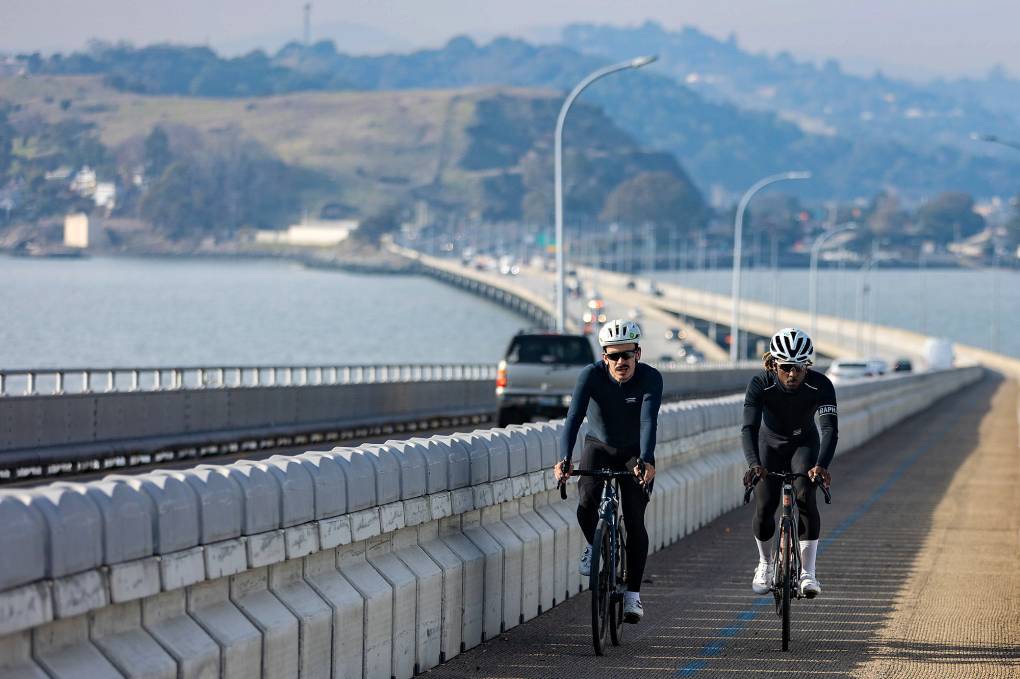
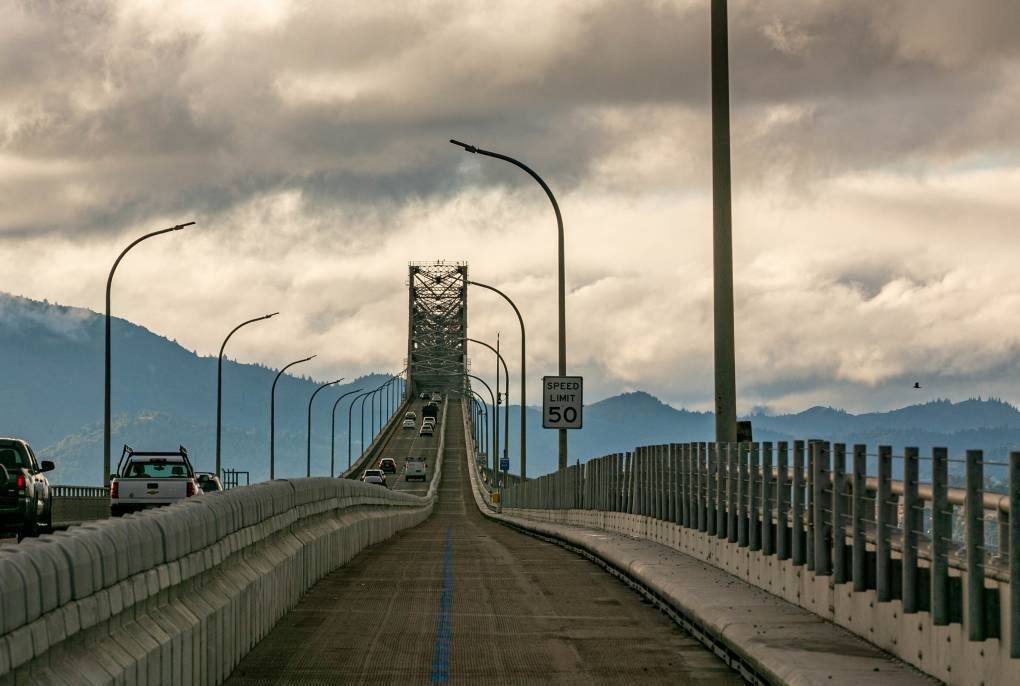
The Ongoing Saga of the Richmond-San Rafael Bridge Bike Lane
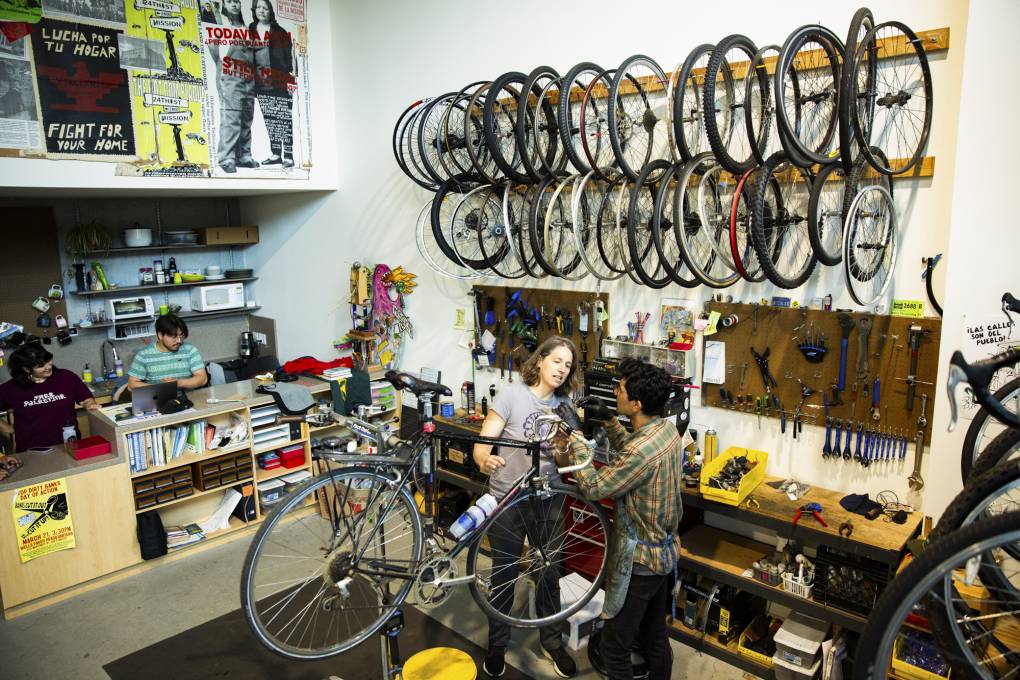
What to Do When Your Bike Is Stolen in the Bay Area
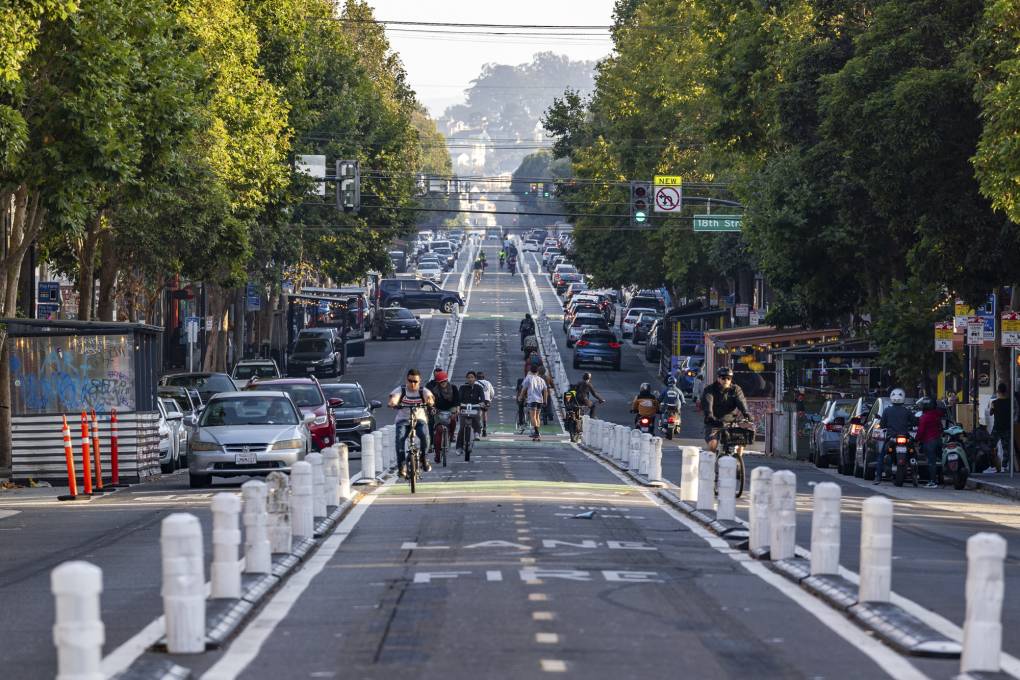
SFMTA Cites Improved Road Safety With Valencia Street Bike Lane, but Some Disagree
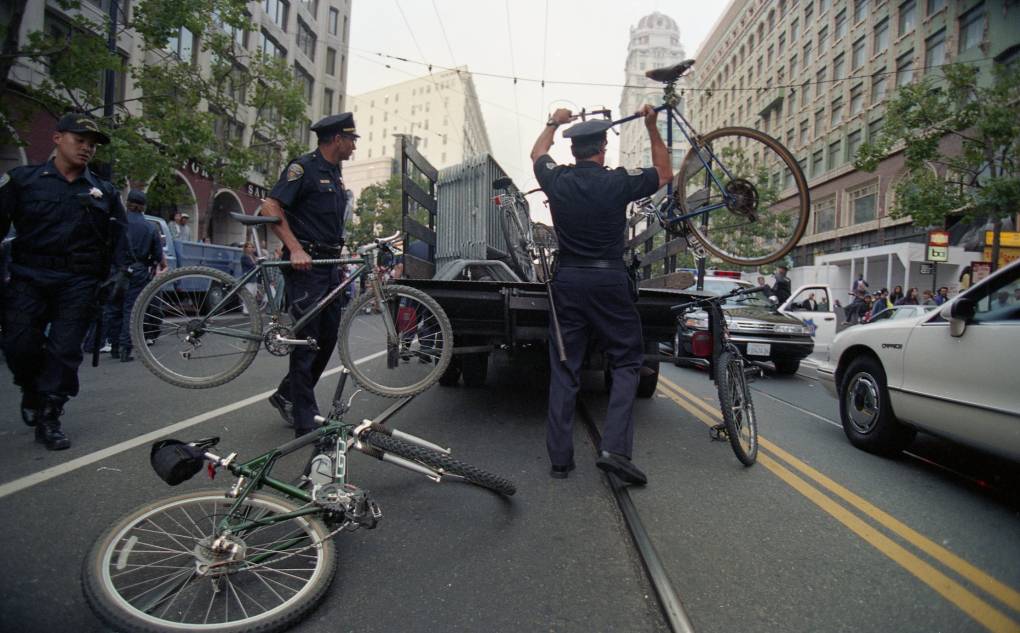
The Night That Changed San Francisco Cycling Forever
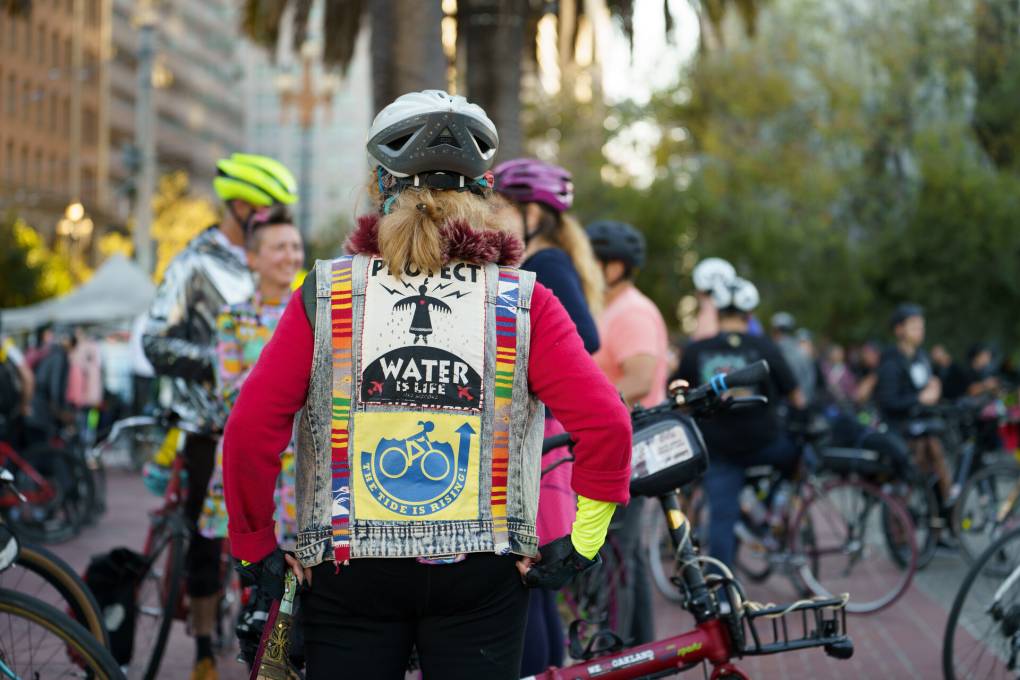
'A Leaderless Phenomenon': Critical Mass Celebrates 30th Anniversary
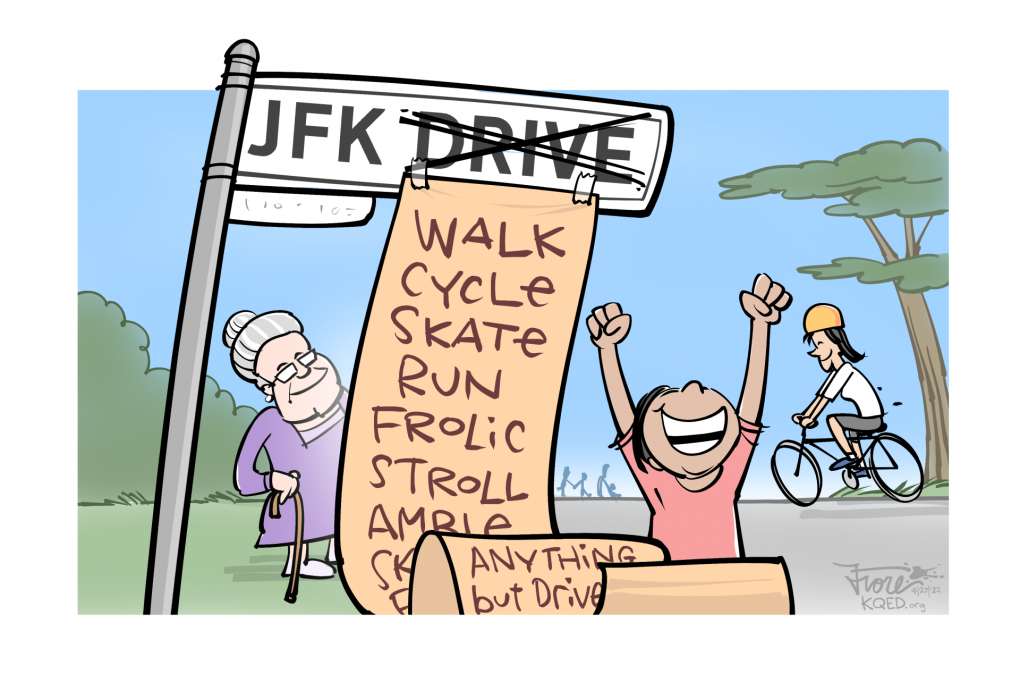
A Park for People, Not Cars
Cyclists and Walkers, the Richmond-San Rafael Bridge Is Now Yours, Too
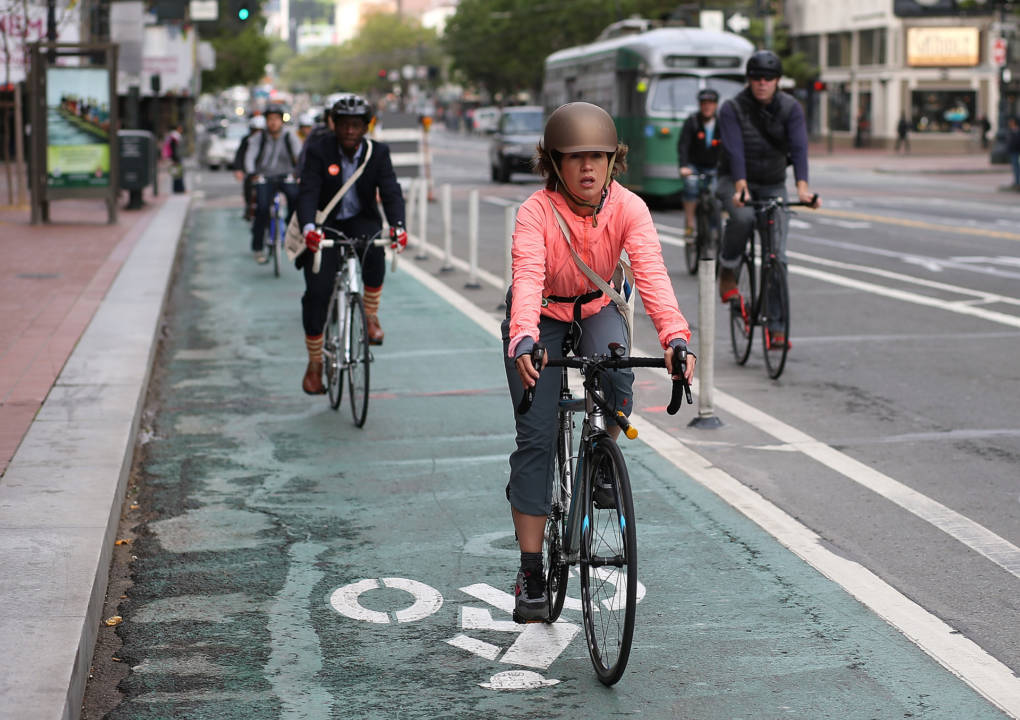
San Francisco to Get 20 New Miles of Protected Bike Lanes, Mayor Says on Bike to Work Day
Bike to Work Day: Tips for a Smoother Commute (From KQED's Experts)
Sponsored
Player sponsored by
window.__IS_SSR__=true
window.__INITIAL_STATE__={
"attachmentsReducer": {
"audio_0": {
"type": "attachments",
"id": "audio_0",
"imgSizes": {
"kqedFullSize": {
"file": "https://ww2.kqed.org/news/wp-content/themes/KQED-unified/img/audio_bgs/background0.jpg"
}
}
},
"audio_1": {
"type": "attachments",
"id": "audio_1",
"imgSizes": {
"kqedFullSize": {
"file": "https://ww2.kqed.org/news/wp-content/themes/KQED-unified/img/audio_bgs/background1.jpg"
}
}
},
"audio_2": {
"type": "attachments",
"id": "audio_2",
"imgSizes": {
"kqedFullSize": {
"file": "https://ww2.kqed.org/news/wp-content/themes/KQED-unified/img/audio_bgs/background2.jpg"
}
}
},
"audio_3": {
"type": "attachments",
"id": "audio_3",
"imgSizes": {
"kqedFullSize": {
"file": "https://ww2.kqed.org/news/wp-content/themes/KQED-unified/img/audio_bgs/background3.jpg"
}
}
},
"audio_4": {
"type": "attachments",
"id": "audio_4",
"imgSizes": {
"kqedFullSize": {
"file": "https://ww2.kqed.org/news/wp-content/themes/KQED-unified/img/audio_bgs/background4.jpg"
}
}
},
"placeholder": {
"type": "attachments",
"id": "placeholder",
"imgSizes": {
"thumbnail": {
"file": "https://cdn.kqed.org/wp-content/uploads/2024/12/KQED-Default-Image-816638274-2000x1333-1-160x107.jpg",
"width": 160,
"height": 107,
"mimeType": "image/jpeg"
},
"medium": {
"file": "https://cdn.kqed.org/wp-content/uploads/2024/12/KQED-Default-Image-816638274-2000x1333-1-800x533.jpg",
"width": 800,
"height": 533,
"mimeType": "image/jpeg"
},
"medium_large": {
"file": "https://cdn.kqed.org/wp-content/uploads/2024/12/KQED-Default-Image-816638274-2000x1333-1-768x512.jpg",
"width": 768,
"height": 512,
"mimeType": "image/jpeg"
},
"large": {
"file": "https://cdn.kqed.org/wp-content/uploads/2024/12/KQED-Default-Image-816638274-2000x1333-1-1020x680.jpg",
"width": 1020,
"height": 680,
"mimeType": "image/jpeg"
},
"1536x1536": {
"file": "https://cdn.kqed.org/wp-content/uploads/2024/12/KQED-Default-Image-816638274-2000x1333-1-1536x1024.jpg",
"width": 1536,
"height": 1024,
"mimeType": "image/jpeg"
},
"fd-lrg": {
"file": "https://cdn.kqed.org/wp-content/uploads/2024/12/KQED-Default-Image-816638274-2000x1333-1-1536x1024.jpg",
"width": 1536,
"height": 1024,
"mimeType": "image/jpeg"
},
"fd-med": {
"file": "https://cdn.kqed.org/wp-content/uploads/2024/12/KQED-Default-Image-816638274-2000x1333-1-1020x680.jpg",
"width": 1020,
"height": 680,
"mimeType": "image/jpeg"
},
"fd-sm": {
"file": "https://cdn.kqed.org/wp-content/uploads/2024/12/KQED-Default-Image-816638274-2000x1333-1-800x533.jpg",
"width": 800,
"height": 533,
"mimeType": "image/jpeg"
},
"post-thumbnail": {
"file": "https://cdn.kqed.org/wp-content/uploads/2024/12/KQED-Default-Image-816638274-2000x1333-1-672x372.jpg",
"width": 672,
"height": 372,
"mimeType": "image/jpeg"
},
"twentyfourteen-full-width": {
"file": "https://cdn.kqed.org/wp-content/uploads/2024/12/KQED-Default-Image-816638274-2000x1333-1-1038x576.jpg",
"width": 1038,
"height": 576,
"mimeType": "image/jpeg"
},
"xxsmall": {
"file": "https://cdn.kqed.org/wp-content/uploads/2024/12/KQED-Default-Image-816638274-2000x1333-1-160x107.jpg",
"width": 160,
"height": 107,
"mimeType": "image/jpeg"
},
"xsmall": {
"file": "https://cdn.kqed.org/wp-content/uploads/2024/12/KQED-Default-Image-816638274-2000x1333-1-672x372.jpg",
"width": 672,
"height": 372,
"mimeType": "image/jpeg"
},
"small": {
"file": "https://cdn.kqed.org/wp-content/uploads/2024/12/KQED-Default-Image-816638274-2000x1333-1-672x372.jpg",
"width": 672,
"height": 372,
"mimeType": "image/jpeg"
},
"xlarge": {
"file": "https://cdn.kqed.org/wp-content/uploads/2024/12/KQED-Default-Image-816638274-2000x1333-1-1020x680.jpg",
"width": 1020,
"height": 680,
"mimeType": "image/jpeg"
},
"full-width": {
"file": "https://cdn.kqed.org/wp-content/uploads/2024/12/KQED-Default-Image-816638274-2000x1333-1-1920x1280.jpg",
"width": 1920,
"height": 1280,
"mimeType": "image/jpeg"
},
"guest-author-32": {
"file": "https://cdn.kqed.org/wp-content/uploads/2025/01/KQED-Default-Image-816638274-1333x1333-1-160x160.jpg",
"width": 32,
"height": 32,
"mimeType": "image/jpeg"
},
"guest-author-50": {
"file": "https://cdn.kqed.org/wp-content/uploads/2025/01/KQED-Default-Image-816638274-1333x1333-1-160x160.jpg",
"width": 50,
"height": 50,
"mimeType": "image/jpeg"
},
"guest-author-64": {
"file": "https://cdn.kqed.org/wp-content/uploads/2025/01/KQED-Default-Image-816638274-1333x1333-1-160x160.jpg",
"width": 64,
"height": 64,
"mimeType": "image/jpeg"
},
"guest-author-96": {
"file": "https://cdn.kqed.org/wp-content/uploads/2025/01/KQED-Default-Image-816638274-1333x1333-1-160x160.jpg",
"width": 96,
"height": 96,
"mimeType": "image/jpeg"
},
"guest-author-128": {
"file": "https://cdn.kqed.org/wp-content/uploads/2025/01/KQED-Default-Image-816638274-1333x1333-1-160x160.jpg",
"width": 128,
"height": 128,
"mimeType": "image/jpeg"
},
"detail": {
"file": "https://cdn.kqed.org/wp-content/uploads/2025/01/KQED-Default-Image-816638274-1333x1333-1-160x160.jpg",
"width": 160,
"height": 160,
"mimeType": "image/jpeg"
},
"kqedFullSize": {
"file": "https://cdn.kqed.org/wp-content/uploads/2024/12/KQED-Default-Image-816638274-2000x1333-1.jpg",
"width": 2000,
"height": 1333
}
}
},
"news_12017830": {
"type": "attachments",
"id": "news_12017830",
"meta": {
"index": "attachments_1716263798",
"site": "news",
"id": "12017830",
"found": true
},
"title": "20241211_RichmondBridgeBike_GC-14",
"publishDate": 1733963589,
"status": "inherit",
"parent": 0,
"modified": 1742600769,
"caption": "Cyclists ride on the Richmond-San Rafael Bridge Trail, a roughly 6-mile bicycle and pedestrian path, located on the upper deck of the bridge, on Dec. 11, 2024.",
"credit": "Gina Castro/KQED",
"altTag": null,
"description": null,
"imgSizes": {
"medium": {
"file": "https://cdn.kqed.org/wp-content/uploads/sites/10/2024/12/20241211_RichmondBridgeBike_GC-14-800x533.jpg",
"width": 800,
"height": 533,
"mimeType": "image/jpeg"
},
"large": {
"file": "https://cdn.kqed.org/wp-content/uploads/sites/10/2024/12/20241211_RichmondBridgeBike_GC-14-1020x679.jpg",
"width": 1020,
"height": 679,
"mimeType": "image/jpeg"
},
"thumbnail": {
"file": "https://cdn.kqed.org/wp-content/uploads/sites/10/2024/12/20241211_RichmondBridgeBike_GC-14-160x107.jpg",
"width": 160,
"height": 107,
"mimeType": "image/jpeg"
},
"1536x1536": {
"file": "https://cdn.kqed.org/wp-content/uploads/sites/10/2024/12/20241211_RichmondBridgeBike_GC-14-1536x1023.jpg",
"width": 1536,
"height": 1023,
"mimeType": "image/jpeg"
},
"post-thumbnail": {
"file": "https://cdn.kqed.org/wp-content/uploads/sites/10/2024/12/20241211_RichmondBridgeBike_GC-14-672x372.jpg",
"width": 672,
"height": 372,
"mimeType": "image/jpeg"
},
"twentyfourteen-full-width": {
"file": "https://cdn.kqed.org/wp-content/uploads/sites/10/2024/12/20241211_RichmondBridgeBike_GC-14-1038x576.jpg",
"width": 1038,
"height": 576,
"mimeType": "image/jpeg"
},
"full-width": {
"file": "https://cdn.kqed.org/wp-content/uploads/sites/10/2024/12/20241211_RichmondBridgeBike_GC-14-1920x1279.jpg",
"width": 1920,
"height": 1279,
"mimeType": "image/jpeg"
},
"kqedFullSize": {
"file": "https://cdn.kqed.org/wp-content/uploads/sites/10/2024/12/20241211_RichmondBridgeBike_GC-14.jpg",
"width": 2000,
"height": 1332
}
},
"fetchFailed": false,
"isLoading": false
},
"news_11984797": {
"type": "attachments",
"id": "news_11984797",
"meta": {
"index": "attachments_1716263798",
"site": "news",
"id": "11984797",
"found": true
},
"parent": 11985510,
"imgSizes": {
"twentyfourteen-full-width": {
"file": "https://cdn.kqed.org/wp-content/uploads/sites/10/2024/05/20240430_STOLENBIKESGUIDE-18-GC-KQED-1038x576.jpg",
"width": 1038,
"mimeType": "image/jpeg",
"height": 576
},
"thumbnail": {
"file": "https://cdn.kqed.org/wp-content/uploads/sites/10/2024/05/20240430_STOLENBIKESGUIDE-18-GC-KQED-160x107.jpg",
"width": 160,
"mimeType": "image/jpeg",
"height": 107
},
"post-thumbnail": {
"file": "https://cdn.kqed.org/wp-content/uploads/sites/10/2024/05/20240430_STOLENBIKESGUIDE-18-GC-KQED-672x372.jpg",
"width": 672,
"mimeType": "image/jpeg",
"height": 372
},
"kqedFullSize": {
"file": "https://cdn.kqed.org/wp-content/uploads/sites/10/2024/05/20240430_STOLENBIKESGUIDE-18-GC-KQED.jpg",
"width": 2000,
"height": 1333
},
"large": {
"file": "https://cdn.kqed.org/wp-content/uploads/sites/10/2024/05/20240430_STOLENBIKESGUIDE-18-GC-KQED-1020x680.jpg",
"width": 1020,
"mimeType": "image/jpeg",
"height": 680
},
"1536x1536": {
"file": "https://cdn.kqed.org/wp-content/uploads/sites/10/2024/05/20240430_STOLENBIKESGUIDE-18-GC-KQED-1536x1024.jpg",
"width": 1536,
"mimeType": "image/jpeg",
"height": 1024
},
"full-width": {
"file": "https://cdn.kqed.org/wp-content/uploads/sites/10/2024/05/20240430_STOLENBIKESGUIDE-18-GC-KQED-1920x1280.jpg",
"width": 1920,
"mimeType": "image/jpeg",
"height": 1280
},
"medium": {
"file": "https://cdn.kqed.org/wp-content/uploads/sites/10/2024/05/20240430_STOLENBIKESGUIDE-18-GC-KQED-800x533.jpg",
"width": 800,
"mimeType": "image/jpeg",
"height": 533
}
},
"publishDate": 1714672533,
"modified": 1715286250,
"caption": "Alison LaBonte, left, and Jessie Fernandez, right, install brakes on her bike at the Bicis del Pueblo bike repair shop in the Mission district on Tuesday April 30, 2024. Bicis del Pueblo has been operating since 2011 and through their earn-a-bike program, individuals get a free refurbished bike, donated by the city, and receive lessons on the mechanics and operation of the bike.",
"description": null,
"title": "20240430_STOLENBIKESGUIDE-18-GC-KQED",
"credit": "Gina Castro/KQED",
"status": "inherit",
"altTag": null,
"fetchFailed": false,
"isLoading": false
},
"news_11962331": {
"type": "attachments",
"id": "news_11962331",
"meta": {
"index": "attachments_1716263798",
"site": "news",
"id": "11962331",
"found": true
},
"parent": 11970450,
"imgSizes": {
"twentyfourteen-full-width": {
"file": "https://cdn.kqed.org/wp-content/uploads/sites/10/2023/09/230921-ValenciaBikeway-015-BL-KQED-1038x576.jpg",
"width": 1038,
"mimeType": "image/jpeg",
"height": 576
},
"thumbnail": {
"file": "https://cdn.kqed.org/wp-content/uploads/sites/10/2023/09/230921-ValenciaBikeway-015-BL-KQED-160x107.jpg",
"width": 160,
"mimeType": "image/jpeg",
"height": 107
},
"post-thumbnail": {
"file": "https://cdn.kqed.org/wp-content/uploads/sites/10/2023/09/230921-ValenciaBikeway-015-BL-KQED-672x372.jpg",
"width": 672,
"mimeType": "image/jpeg",
"height": 372
},
"kqedFullSize": {
"file": "https://cdn.kqed.org/wp-content/uploads/sites/10/2023/09/230921-ValenciaBikeway-015-BL-KQED.jpg",
"width": 2000,
"height": 1333
},
"large": {
"file": "https://cdn.kqed.org/wp-content/uploads/sites/10/2023/09/230921-ValenciaBikeway-015-BL-KQED-1020x680.jpg",
"width": 1020,
"mimeType": "image/jpeg",
"height": 680
},
"1536x1536": {
"file": "https://cdn.kqed.org/wp-content/uploads/sites/10/2023/09/230921-ValenciaBikeway-015-BL-KQED-1536x1024.jpg",
"width": 1536,
"mimeType": "image/jpeg",
"height": 1024
},
"full-width": {
"file": "https://cdn.kqed.org/wp-content/uploads/sites/10/2023/09/230921-ValenciaBikeway-015-BL-KQED-1920x1280.jpg",
"width": 1920,
"mimeType": "image/jpeg",
"height": 1280
},
"medium": {
"file": "https://cdn.kqed.org/wp-content/uploads/sites/10/2023/09/230921-ValenciaBikeway-015-BL-KQED-800x533.jpg",
"width": 800,
"mimeType": "image/jpeg",
"height": 533
}
},
"publishDate": 1695666424,
"modified": 1703026547,
"caption": "Bicyclists ride on the Valencia Street bike lane in San Francisco's Mission District on Sept. 21, 2023.",
"description": null,
"title": "230921-ValenciaBikeway-015-BL-KQED",
"credit": "Beth LaBerge/KQED",
"status": "inherit",
"altTag": "People on bikes and skateboards ride down a bike path in the middle of a city street.",
"fetchFailed": false,
"isLoading": false
},
"news_11941587": {
"type": "attachments",
"id": "news_11941587",
"meta": {
"index": "attachments_1716263798",
"site": "news",
"id": "11941587",
"found": true
},
"parent": 11941576,
"imgSizes": {
"twentyfourteen-full-width": {
"file": "https://ww2.kqed.org/app/uploads/sites/10/2023/02/GettyImages-1321285046-1038x576.jpg",
"width": 1038,
"mimeType": "image/jpeg",
"height": 576
},
"thumbnail": {
"file": "https://ww2.kqed.org/app/uploads/sites/10/2023/02/GettyImages-1321285046-160x99.jpg",
"width": 160,
"mimeType": "image/jpeg",
"height": 99
},
"post-thumbnail": {
"file": "https://ww2.kqed.org/app/uploads/sites/10/2023/02/GettyImages-1321285046-672x372.jpg",
"width": 672,
"mimeType": "image/jpeg",
"height": 372
},
"kqedFullSize": {
"file": "https://ww2.kqed.org/app/uploads/sites/10/2023/02/GettyImages-1321285046.jpg",
"width": 2218,
"height": 1376
},
"2048x2048": {
"file": "https://ww2.kqed.org/app/uploads/sites/10/2023/02/GettyImages-1321285046-2048x1271.jpg",
"width": 2048,
"mimeType": "image/jpeg",
"height": 1271
},
"large": {
"file": "https://ww2.kqed.org/app/uploads/sites/10/2023/02/GettyImages-1321285046-1020x633.jpg",
"width": 1020,
"mimeType": "image/jpeg",
"height": 633
},
"1536x1536": {
"file": "https://ww2.kqed.org/app/uploads/sites/10/2023/02/GettyImages-1321285046-1536x953.jpg",
"width": 1536,
"mimeType": "image/jpeg",
"height": 953
},
"full-width": {
"file": "https://ww2.kqed.org/app/uploads/sites/10/2023/02/GettyImages-1321285046-1920x1191.jpg",
"width": 1920,
"mimeType": "image/jpeg",
"height": 1191
},
"medium": {
"file": "https://ww2.kqed.org/app/uploads/sites/10/2023/02/GettyImages-1321285046-800x496.jpg",
"width": 800,
"mimeType": "image/jpeg",
"height": 496
}
},
"publishDate": 1677109116,
"modified": 1677200353,
"caption": "Police confiscate bicycles and arrest bikers during a Critical Mass ride, July 25, 1997.",
"description": null,
"title": "July 25, 1997: Police confiscate bicycles and arrest bikers during a 1997 Critical Mass ride.",
"credit": "Lance Iversen/The San Francisco Chronicle via Getty Images",
"status": "inherit",
"altTag": "Police officers throw bicycles into the back of a truck in downtown San Francisco.",
"fetchFailed": false,
"isLoading": false
},
"news_11927482": {
"type": "attachments",
"id": "news_11927482",
"meta": {
"index": "attachments_1716263798",
"site": "news",
"id": "11927482",
"found": true
},
"parent": 11927460,
"imgSizes": {
"twentyfourteen-full-width": {
"file": "https://ww2.kqed.org/app/uploads/sites/10/2022/10/RS58902_DSC07979-qut-1038x576.jpg",
"width": 1038,
"mimeType": "image/jpeg",
"height": 576
},
"thumbnail": {
"file": "https://ww2.kqed.org/app/uploads/sites/10/2022/10/RS58902_DSC07979-qut-160x107.jpg",
"width": 160,
"mimeType": "image/jpeg",
"height": 107
},
"post-thumbnail": {
"file": "https://ww2.kqed.org/app/uploads/sites/10/2022/10/RS58902_DSC07979-qut-672x372.jpg",
"width": 672,
"mimeType": "image/jpeg",
"height": 372
},
"kqedFullSize": {
"file": "https://ww2.kqed.org/app/uploads/sites/10/2022/10/RS58902_DSC07979-qut.jpg",
"width": 1920,
"height": 1280
},
"large": {
"file": "https://ww2.kqed.org/app/uploads/sites/10/2022/10/RS58902_DSC07979-qut-1020x680.jpg",
"width": 1020,
"mimeType": "image/jpeg",
"height": 680
},
"1536x1536": {
"file": "https://ww2.kqed.org/app/uploads/sites/10/2022/10/RS58902_DSC07979-qut-1536x1024.jpg",
"width": 1536,
"mimeType": "image/jpeg",
"height": 1024
},
"medium": {
"file": "https://ww2.kqed.org/app/uploads/sites/10/2022/10/RS58902_DSC07979-qut-800x533.jpg",
"width": 800,
"mimeType": "image/jpeg",
"height": 533
}
},
"publishDate": 1664668368,
"modified": 1664766733,
"caption": "Hundreds of cyclists of all ages prepared to participate in a cherished 30-year San Francisco tradition on Sept. 30, 2022.",
"description": "Cyclists get ready to start the 2022 Critical Mass.",
"title": "RS58902_DSC07979-qut",
"credit": "Aryk Copley/KQED",
"status": "inherit",
"altTag": "A woman in her 70s with her back turned to the camera reveals political messages in support of cycling and water conservation with other cyclists in the background.",
"fetchFailed": false,
"isLoading": false
},
"news_11912380": {
"type": "attachments",
"id": "news_11912380",
"meta": {
"index": "attachments_1716263798",
"site": "news",
"id": "11912380",
"found": true
},
"parent": 11912370,
"imgSizes": {
"twentyfourteen-full-width": {
"file": "https://ww2.kqed.org/app/uploads/sites/10/2022/04/drive_042722_final-1038x576.png",
"width": 1038,
"mimeType": "image/png",
"height": 576
},
"thumbnail": {
"file": "https://ww2.kqed.org/app/uploads/sites/10/2022/04/drive_042722_final-160x109.png",
"width": 160,
"mimeType": "image/png",
"height": 109
},
"post-thumbnail": {
"file": "https://ww2.kqed.org/app/uploads/sites/10/2022/04/drive_042722_final-672x372.png",
"width": 672,
"mimeType": "image/png",
"height": 372
},
"kqedFullSize": {
"file": "https://ww2.kqed.org/app/uploads/sites/10/2022/04/drive_042722_final.png",
"width": 1920,
"height": 1313
},
"large": {
"file": "https://ww2.kqed.org/app/uploads/sites/10/2022/04/drive_042722_final-1020x698.png",
"width": 1020,
"mimeType": "image/png",
"height": 698
},
"1536x1536": {
"file": "https://ww2.kqed.org/app/uploads/sites/10/2022/04/drive_042722_final-1536x1050.png",
"width": 1536,
"mimeType": "image/png",
"height": 1050
},
"medium": {
"file": "https://ww2.kqed.org/app/uploads/sites/10/2022/04/drive_042722_final-800x547.png",
"width": 800,
"mimeType": "image/png",
"height": 547
}
},
"publishDate": 1651091167,
"modified": 1651091241,
"caption": null,
"description": null,
"title": "drive_042722_final",
"credit": null,
"status": "inherit",
"altTag": "Cartoon: happy people celebrate around a \"JFK Drive\" sign in Golden Gate Park. The \"drive\" on the sign is crossed out and replaced with a list of \"walk, cycle, skate, run, frolic, amble, anything but drive.\"",
"fetchFailed": false,
"isLoading": false
},
"news_11786781": {
"type": "attachments",
"id": "news_11786781",
"meta": {
"index": "attachments_1716263798",
"site": "news",
"id": "11786781",
"found": true
},
"parent": 11786768,
"imgSizes": {
"apple_news_ca_landscape_5_5": {
"file": "https://ww2.kqed.org/app/uploads/sites/10/2019/11/49067073763_282a21de29_k-1044x783.jpg",
"width": 1044,
"mimeType": "image/jpeg",
"height": 783
},
"apple_news_ca_square_4_0": {
"file": "https://ww2.kqed.org/app/uploads/sites/10/2019/11/49067073763_282a21de29_k-470x470.jpg",
"width": 470,
"mimeType": "image/jpeg",
"height": 470
},
"twentyfourteen-full-width": {
"file": "https://ww2.kqed.org/app/uploads/sites/10/2019/11/49067073763_282a21de29_k-1038x576.jpg",
"width": 1038,
"mimeType": "image/jpeg",
"height": 576
},
"thumbnail": {
"file": "https://ww2.kqed.org/app/uploads/sites/10/2019/11/49067073763_282a21de29_k-160x108.jpg",
"width": 160,
"mimeType": "image/jpeg",
"height": 108
},
"post-thumbnail": {
"file": "https://ww2.kqed.org/app/uploads/sites/10/2019/11/49067073763_282a21de29_k-672x372.jpg",
"width": 672,
"mimeType": "image/jpeg",
"height": 372
},
"kqedFullSize": {
"file": "https://ww2.kqed.org/app/uploads/sites/10/2019/11/49067073763_282a21de29_k-e1573842026531.jpg",
"width": 1920,
"height": 1291
},
"apple_news_ca_landscape_4_7": {
"file": "https://ww2.kqed.org/app/uploads/sites/10/2019/11/49067073763_282a21de29_k-632x474.jpg",
"width": 632,
"mimeType": "image/jpeg",
"height": 474
},
"large": {
"file": "https://ww2.kqed.org/app/uploads/sites/10/2019/11/49067073763_282a21de29_k-1020x686.jpg",
"width": 1020,
"mimeType": "image/jpeg",
"height": 686
},
"complete_open_graph": {
"file": "https://ww2.kqed.org/app/uploads/sites/10/2019/11/49067073763_282a21de29_k-1200x807.jpg",
"width": 1200,
"mimeType": "image/jpeg",
"height": 807
},
"apple_news_ca_landscape_4_0": {
"file": "https://ww2.kqed.org/app/uploads/sites/10/2019/11/49067073763_282a21de29_k-536x402.jpg",
"width": 536,
"mimeType": "image/jpeg",
"height": 402
},
"apple_news_ca_portrait_12_9": {
"file": "https://ww2.kqed.org/app/uploads/sites/10/2019/11/49067073763_282a21de29_k-1122x1377.jpg",
"width": 1122,
"mimeType": "image/jpeg",
"height": 1377
},
"medium": {
"file": "https://ww2.kqed.org/app/uploads/sites/10/2019/11/49067073763_282a21de29_k-800x538.jpg",
"width": 800,
"mimeType": "image/jpeg",
"height": 538
},
"apple_news_ca_portrait_4_0": {
"file": "https://ww2.kqed.org/app/uploads/sites/10/2019/11/49067073763_282a21de29_k-354x472.jpg",
"width": 354,
"mimeType": "image/jpeg",
"height": 472
},
"apple_news_ca_portrait_9_7": {
"file": "https://ww2.kqed.org/app/uploads/sites/10/2019/11/49067073763_282a21de29_k-840x1120.jpg",
"width": 840,
"mimeType": "image/jpeg",
"height": 1120
},
"apple_news_ca_landscape_12_9": {
"file": "https://ww2.kqed.org/app/uploads/sites/10/2019/11/49067073763_282a21de29_k-1832x1374.jpg",
"width": 1832,
"mimeType": "image/jpeg",
"height": 1374
},
"apple_news_ca_square_9_7": {
"file": "https://ww2.kqed.org/app/uploads/sites/10/2019/11/49067073763_282a21de29_k-1104x1104.jpg",
"width": 1104,
"mimeType": "image/jpeg",
"height": 1104
},
"apple_news_ca_portrait_4_7": {
"file": "https://ww2.kqed.org/app/uploads/sites/10/2019/11/49067073763_282a21de29_k-414x552.jpg",
"width": 414,
"mimeType": "image/jpeg",
"height": 552
},
"apple_news_ca_square_12_9": {
"file": "https://ww2.kqed.org/app/uploads/sites/10/2019/11/49067073763_282a21de29_k-1472x1377.jpg",
"width": 1472,
"mimeType": "image/jpeg",
"height": 1377
},
"apple_news_ca_portrait_5_5": {
"file": "https://ww2.kqed.org/app/uploads/sites/10/2019/11/49067073763_282a21de29_k-687x916.jpg",
"width": 687,
"mimeType": "image/jpeg",
"height": 916
},
"full-width": {
"file": "https://ww2.kqed.org/app/uploads/sites/10/2019/11/49067073763_282a21de29_k-1920x1291.jpg",
"width": 1920,
"mimeType": "image/jpeg",
"height": 1291
},
"apple_news_ca_square_4_7": {
"file": "https://ww2.kqed.org/app/uploads/sites/10/2019/11/49067073763_282a21de29_k-550x550.jpg",
"width": 550,
"mimeType": "image/jpeg",
"height": 550
},
"apple_news_ca_landscape_9_7": {
"file": "https://ww2.kqed.org/app/uploads/sites/10/2019/11/49067073763_282a21de29_k-1376x1032.jpg",
"width": 1376,
"mimeType": "image/jpeg",
"height": 1032
},
"apple_news_ca_square_5_5": {
"file": "https://ww2.kqed.org/app/uploads/sites/10/2019/11/49067073763_282a21de29_k-912x912.jpg",
"width": 912,
"mimeType": "image/jpeg",
"height": 912
}
},
"publishDate": 1573841989,
"modified": 1573842117,
"caption": "The new bike/pedestrian path on the Richmond-San Rafael Bridge will open Saturday, Nov. 16, 2019. ",
"description": null,
"title": "Richmond-San Rafael Bridge",
"credit": "Dan Brekke/KQED",
"status": "inherit",
"fetchFailed": false,
"isLoading": false
},
"news_11746188": {
"type": "attachments",
"id": "news_11746188",
"meta": {
"index": "attachments_1716263798",
"site": "news",
"id": "11746188",
"found": true
},
"parent": 11746183,
"imgSizes": {
"apple_news_ca_landscape_5_5": {
"file": "https://ww2.kqed.org/app/uploads/sites/10/2019/05/05092019_biketowork-qut-1044x783.jpg",
"width": 1044,
"mimeType": "image/jpeg",
"height": 783
},
"apple_news_ca_square_4_0": {
"file": "https://ww2.kqed.org/app/uploads/sites/10/2019/05/05092019_biketowork-qut-470x470.jpg",
"width": 470,
"mimeType": "image/jpeg",
"height": 470
},
"twentyfourteen-full-width": {
"file": "https://ww2.kqed.org/app/uploads/sites/10/2019/05/05092019_biketowork-qut-1038x576.jpg",
"width": 1038,
"mimeType": "image/jpeg",
"height": 576
},
"thumbnail": {
"file": "https://ww2.kqed.org/app/uploads/sites/10/2019/05/05092019_biketowork-qut-160x113.jpg",
"width": 160,
"mimeType": "image/jpeg",
"height": 113
},
"post-thumbnail": {
"file": "https://ww2.kqed.org/app/uploads/sites/10/2019/05/05092019_biketowork-qut-672x372.jpg",
"width": 672,
"mimeType": "image/jpeg",
"height": 372
},
"kqedFullSize": {
"file": "https://ww2.kqed.org/app/uploads/sites/10/2019/05/05092019_biketowork-qut.jpg",
"width": 1920,
"height": 1356
},
"apple_news_ca_landscape_4_7": {
"file": "https://ww2.kqed.org/app/uploads/sites/10/2019/05/05092019_biketowork-qut-632x474.jpg",
"width": 632,
"mimeType": "image/jpeg",
"height": 474
},
"large": {
"file": "https://ww2.kqed.org/app/uploads/sites/10/2019/05/05092019_biketowork-qut-1020x720.jpg",
"width": 1020,
"mimeType": "image/jpeg",
"height": 720
},
"complete_open_graph": {
"file": "https://ww2.kqed.org/app/uploads/sites/10/2019/05/05092019_biketowork-qut-1200x848.jpg",
"width": 1200,
"mimeType": "image/jpeg",
"height": 848
},
"apple_news_ca_landscape_4_0": {
"file": "https://ww2.kqed.org/app/uploads/sites/10/2019/05/05092019_biketowork-qut-536x402.jpg",
"width": 536,
"mimeType": "image/jpeg",
"height": 402
},
"apple_news_ca_portrait_12_9": {
"file": "https://ww2.kqed.org/app/uploads/sites/10/2019/05/05092019_biketowork-qut-1122x1356.jpg",
"width": 1122,
"mimeType": "image/jpeg",
"height": 1356
},
"medium": {
"file": "https://ww2.kqed.org/app/uploads/sites/10/2019/05/05092019_biketowork-qut-800x565.jpg",
"width": 800,
"mimeType": "image/jpeg",
"height": 565
},
"apple_news_ca_portrait_4_0": {
"file": "https://ww2.kqed.org/app/uploads/sites/10/2019/05/05092019_biketowork-qut-354x472.jpg",
"width": 354,
"mimeType": "image/jpeg",
"height": 472
},
"apple_news_ca_portrait_9_7": {
"file": "https://ww2.kqed.org/app/uploads/sites/10/2019/05/05092019_biketowork-qut-840x1120.jpg",
"width": 840,
"mimeType": "image/jpeg",
"height": 1120
},
"apple_news_ca_landscape_12_9": {
"file": "https://ww2.kqed.org/app/uploads/sites/10/2019/05/05092019_biketowork-qut-1832x1356.jpg",
"width": 1832,
"mimeType": "image/jpeg",
"height": 1356
},
"apple_news_ca_square_9_7": {
"file": "https://ww2.kqed.org/app/uploads/sites/10/2019/05/05092019_biketowork-qut-1104x1104.jpg",
"width": 1104,
"mimeType": "image/jpeg",
"height": 1104
},
"apple_news_ca_portrait_4_7": {
"file": "https://ww2.kqed.org/app/uploads/sites/10/2019/05/05092019_biketowork-qut-414x552.jpg",
"width": 414,
"mimeType": "image/jpeg",
"height": 552
},
"apple_news_ca_square_12_9": {
"file": "https://ww2.kqed.org/app/uploads/sites/10/2019/05/05092019_biketowork-qut-1472x1356.jpg",
"width": 1472,
"mimeType": "image/jpeg",
"height": 1356
},
"apple_news_ca_portrait_5_5": {
"file": "https://ww2.kqed.org/app/uploads/sites/10/2019/05/05092019_biketowork-qut-687x916.jpg",
"width": 687,
"mimeType": "image/jpeg",
"height": 916
},
"full-width": {
"file": "https://ww2.kqed.org/app/uploads/sites/10/2019/05/05092019_biketowork-qut-1920x1356.jpg",
"width": 1920,
"mimeType": "image/jpeg",
"height": 1356
},
"apple_news_ca_square_4_7": {
"file": "https://ww2.kqed.org/app/uploads/sites/10/2019/05/05092019_biketowork-qut-550x550.jpg",
"width": 550,
"mimeType": "image/jpeg",
"height": 550
},
"apple_news_ca_landscape_9_7": {
"file": "https://ww2.kqed.org/app/uploads/sites/10/2019/05/05092019_biketowork-qut-1376x1032.jpg",
"width": 1376,
"mimeType": "image/jpeg",
"height": 1032
},
"apple_news_ca_square_5_5": {
"file": "https://ww2.kqed.org/app/uploads/sites/10/2019/05/05092019_biketowork-qut-912x912.jpg",
"width": 912,
"mimeType": "image/jpeg",
"height": 912
}
},
"publishDate": 1557436388,
"modified": 1557436439,
"caption": "Bicyclists ride along Market Street on May 9, 2013, in San Francisco.",
"description": "Bicyclists ride along Market Street on May 9, 2013, in San Francisco.",
"title": "San Francisco Bike Commuter Protected Lanes",
"credit": "Justin Sullivan/Getty Images",
"status": "inherit",
"fetchFailed": false,
"isLoading": false
},
"news_11745704": {
"type": "attachments",
"id": "news_11745704",
"meta": {
"index": "attachments_1716263798",
"site": "news",
"id": "11745704",
"found": true
},
"parent": 11745321,
"imgSizes": {
"apple_news_ca_landscape_5_5": {
"file": "https://ww2.kqed.org/app/uploads/sites/10/2019/05/05072019_rik-bike-to-work-qut-1044x783.jpg",
"width": 1044,
"mimeType": "image/jpeg",
"height": 783
},
"apple_news_ca_square_4_0": {
"file": "https://ww2.kqed.org/app/uploads/sites/10/2019/05/05072019_rik-bike-to-work-qut-470x470.jpg",
"width": 470,
"mimeType": "image/jpeg",
"height": 470
},
"twentyfourteen-full-width": {
"file": "https://ww2.kqed.org/app/uploads/sites/10/2019/05/05072019_rik-bike-to-work-qut-1038x576.jpg",
"width": 1038,
"mimeType": "image/jpeg",
"height": 576
},
"thumbnail": {
"file": "https://ww2.kqed.org/app/uploads/sites/10/2019/05/05072019_rik-bike-to-work-qut-160x107.jpg",
"width": 160,
"mimeType": "image/jpeg",
"height": 107
},
"post-thumbnail": {
"file": "https://ww2.kqed.org/app/uploads/sites/10/2019/05/05072019_rik-bike-to-work-qut-672x372.jpg",
"width": 672,
"mimeType": "image/jpeg",
"height": 372
},
"kqedFullSize": {
"file": "https://ww2.kqed.org/app/uploads/sites/10/2019/05/05072019_rik-bike-to-work-qut.jpg",
"width": 1920,
"height": 1279
},
"apple_news_ca_landscape_4_7": {
"file": "https://ww2.kqed.org/app/uploads/sites/10/2019/05/05072019_rik-bike-to-work-qut-632x474.jpg",
"width": 632,
"mimeType": "image/jpeg",
"height": 474
},
"large": {
"file": "https://ww2.kqed.org/app/uploads/sites/10/2019/05/05072019_rik-bike-to-work-qut-1020x679.jpg",
"width": 1020,
"mimeType": "image/jpeg",
"height": 679
},
"complete_open_graph": {
"file": "https://ww2.kqed.org/app/uploads/sites/10/2019/05/05072019_rik-bike-to-work-qut-1200x799.jpg",
"width": 1200,
"mimeType": "image/jpeg",
"height": 799
},
"apple_news_ca_landscape_4_0": {
"file": "https://ww2.kqed.org/app/uploads/sites/10/2019/05/05072019_rik-bike-to-work-qut-536x402.jpg",
"width": 536,
"mimeType": "image/jpeg",
"height": 402
},
"apple_news_ca_portrait_12_9": {
"file": "https://ww2.kqed.org/app/uploads/sites/10/2019/05/05072019_rik-bike-to-work-qut-1122x1279.jpg",
"width": 1122,
"mimeType": "image/jpeg",
"height": 1279
},
"medium": {
"file": "https://ww2.kqed.org/app/uploads/sites/10/2019/05/05072019_rik-bike-to-work-qut-800x533.jpg",
"width": 800,
"mimeType": "image/jpeg",
"height": 533
},
"apple_news_ca_portrait_4_0": {
"file": "https://ww2.kqed.org/app/uploads/sites/10/2019/05/05072019_rik-bike-to-work-qut-354x472.jpg",
"width": 354,
"mimeType": "image/jpeg",
"height": 472
},
"apple_news_ca_portrait_9_7": {
"file": "https://ww2.kqed.org/app/uploads/sites/10/2019/05/05072019_rik-bike-to-work-qut-840x1120.jpg",
"width": 840,
"mimeType": "image/jpeg",
"height": 1120
},
"apple_news_ca_landscape_12_9": {
"file": "https://ww2.kqed.org/app/uploads/sites/10/2019/05/05072019_rik-bike-to-work-qut-1832x1279.jpg",
"width": 1832,
"mimeType": "image/jpeg",
"height": 1279
},
"apple_news_ca_square_9_7": {
"file": "https://ww2.kqed.org/app/uploads/sites/10/2019/05/05072019_rik-bike-to-work-qut-1104x1104.jpg",
"width": 1104,
"mimeType": "image/jpeg",
"height": 1104
},
"apple_news_ca_portrait_4_7": {
"file": "https://ww2.kqed.org/app/uploads/sites/10/2019/05/05072019_rik-bike-to-work-qut-414x552.jpg",
"width": 414,
"mimeType": "image/jpeg",
"height": 552
},
"apple_news_ca_square_12_9": {
"file": "https://ww2.kqed.org/app/uploads/sites/10/2019/05/05072019_rik-bike-to-work-qut-1472x1279.jpg",
"width": 1472,
"mimeType": "image/jpeg",
"height": 1279
},
"apple_news_ca_portrait_5_5": {
"file": "https://ww2.kqed.org/app/uploads/sites/10/2019/05/05072019_rik-bike-to-work-qut-687x916.jpg",
"width": 687,
"mimeType": "image/jpeg",
"height": 916
},
"full-width": {
"file": "https://ww2.kqed.org/app/uploads/sites/10/2019/05/05072019_rik-bike-to-work-qut-1920x1279.jpg",
"width": 1920,
"mimeType": "image/jpeg",
"height": 1279
},
"apple_news_ca_square_4_7": {
"file": "https://ww2.kqed.org/app/uploads/sites/10/2019/05/05072019_rik-bike-to-work-qut-550x550.jpg",
"width": 550,
"mimeType": "image/jpeg",
"height": 550
},
"apple_news_ca_landscape_9_7": {
"file": "https://ww2.kqed.org/app/uploads/sites/10/2019/05/05072019_rik-bike-to-work-qut-1376x1032.jpg",
"width": 1376,
"mimeType": "image/jpeg",
"height": 1032
},
"apple_news_ca_square_5_5": {
"file": "https://ww2.kqed.org/app/uploads/sites/10/2019/05/05072019_rik-bike-to-work-qut-912x912.jpg",
"width": 912,
"mimeType": "image/jpeg",
"height": 912
}
},
"publishDate": 1557262149,
"modified": 1557338139,
"caption": "Rik Panganiban, on New York City's Manhattan Bridge in 2010, swears by his folding bike — which he can take with him into work.",
"description": "Rik Panganiban, on New York City's Manhattan Bridge in 2010, swears by his folding bike — which he can take with him into work.",
"title": "rik manhattan bridge - 06",
"credit": "Courtesy of Rik Panganiban",
"status": "inherit",
"fetchFailed": false,
"isLoading": false
}
},
"audioPlayerReducer": {
"postId": "stream_live",
"isPaused": true,
"isPlaying": false,
"pfsActive": false,
"pledgeModalIsOpen": true,
"playerDrawerIsOpen": false
},
"authorsReducer": {
"danbrekke": {
"type": "authors",
"id": "222",
"meta": {
"index": "authors_1716337520",
"id": "222",
"found": true
},
"name": "Dan Brekke",
"firstName": "Dan",
"lastName": "Brekke",
"slug": "danbrekke",
"email": "dbrekke@kqed.org",
"display_author_email": true,
"staff_mastheads": [
"news",
"science"
],
"title": "KQED Editor and Reporter",
"bio": "Dan Brekke is a reporter and editor for KQED News, responsible for coverage of topics ranging from California water issues to the Bay Area's transportation challenges. In a newsroom career that began in Chicago in 1972, Dan has worked for \u003cem>The San Francisco Examiner,\u003c/em> Wired and TechTV and has been published in The New York Times, The New York Times Magazine, Business 2.0, Salon and elsewhere.\r\n\r\nSince joining KQED in 2007, Dan has reported, edited and produced both radio and online features and breaking news pieces. He has shared as both editor and reporter in four Society of Professional Journalists Norcal Excellence in Journalism awards and one Edward R. Murrow regional award. He was chosen for a spring 2017 residency at the Mesa Refuge to advance his research on California salmon.\r\n\r\nEmail Dan at: \u003ca href=\"mailto:dbrekke@kqed.org\">dbrekke@kqed.org\u003c/a>\r\n\r\n\u003cstrong>Twitter:\u003c/strong> \u003ca href=\"https://twitter.com/danbrekke\" rel=\"noopener noreferrer\">twitter.com/danbrekke\u003c/a>\r\n\u003cstrong>Facebook:\u003c/strong> \u003ca href=\"https://www.facebook.com/danbrekke\" rel=\"noopener noreferrer\">www.facebook.com/danbrekke\u003c/a>\r\n\u003cstrong>LinkedIn:\u003c/strong> \u003ca href=\"https://www.linkedin.com/in/danbrekke\" rel=\"noopener noreferrer\">www.linkedin.com/in/danbrekke\u003c/a>",
"avatar": "https://secure.gravatar.com/avatar/c8126230345efca3f7aa89b1a402be45?s=600&d=mm&r=g",
"twitter": "danbrekke",
"facebook": null,
"instagram": "https://www.instagram.com/dan.brekke/",
"linkedin": "https://www.linkedin.com/in/danbrekke/",
"sites": [
{
"site": "news",
"roles": [
"administrator",
"create_posts"
]
},
{
"site": "stateofhealth",
"roles": [
"editor"
]
},
{
"site": "science",
"roles": [
"editor"
]
},
{
"site": "quest",
"roles": [
"contributor"
]
},
{
"site": "food",
"roles": [
"contributor"
]
},
{
"site": "forum",
"roles": [
"contributor"
]
},
{
"site": "liveblog",
"roles": [
"editor"
]
}
],
"headData": {
"title": "Dan Brekke | KQED",
"description": "KQED Editor and Reporter",
"ogImgSrc": "https://secure.gravatar.com/avatar/c8126230345efca3f7aa89b1a402be45?s=600&d=mm&r=g",
"twImgSrc": "https://secure.gravatar.com/avatar/c8126230345efca3f7aa89b1a402be45?s=600&d=mm&r=g"
},
"isLoading": false,
"link": "/author/danbrekke"
},
"markfiore": {
"type": "authors",
"id": "3236",
"meta": {
"index": "authors_1716337520",
"id": "3236",
"found": true
},
"name": "Mark Fiore",
"firstName": "Mark",
"lastName": "Fiore",
"slug": "markfiore",
"email": "mark@markfiore.com",
"display_author_email": false,
"staff_mastheads": [
"news"
],
"title": "KQED News Cartoonist",
"bio": "\u003ca href=\"http://www.MarkFiore.com\">MarkFiore.com\u003c/a> | \u003ca href=\"https://twitter.com/markfiore\">Follow on Twitter\u003c/a> | \u003ca href=\"https://www.facebook.com/pages/Mark-Fiore-Animated-Political-Cartoons/94451707396?ref=bookmarks\">Facebook\u003c/a> | \u003ca href=\"mailto:mark@markfiore.com\">email\u003c/a>\r\n\r\nPulitzer Prize-winner, Mark Fiore, who the Wall Street Journal has called “the undisputed guru of the form,” creates animated political cartoons in San Francisco, where his work has been featured regularly on the San Francisco Chronicle’s web site, SFGate.com. His work has appeared on Newsweek.com, Slate.com, CBSNews.com, MotherJones.com, DailyKos.com and NPR’s web site. Fiore’s political animation has appeared on CNN, Frontline, Bill Moyers Journal, Salon.com and cable and broadcast outlets across the globe.\r\n\r\nBeginning his professional life by drawing traditional political cartoons for newspapers, Fiore’s work appeared in publications ranging from the Washington Post to the Los Angeles Times. In the late 1990s, he began to experiment with animating political cartoons and, after a short stint at the San Jose Mercury News as their staff cartoonist, Fiore devoted all his energies to animation.\r\nGrowing up in California, Fiore also spent a good portion of his life in the backwoods of Idaho. It was this combination that shaped him politically. Mark majored in political science at Colorado College, where, in a perfect send-off for a cartoonist, he received his diploma in 1991 as commencement speaker Dick Cheney smiled approvingly.\r\nMark Fiore was awarded the Pulitzer Prize for political cartooning in 2010, a Robert F. Kennedy Journalism Award in 2004 and has twice received an Online Journalism Award for commentary from the Online News Association (2002, 2008). Fiore has received two awards for his work in new media from the National Cartoonists Society (2001, 2002), and in 2006 received The James Madison Freedom of Information Award from The Society of Professional Journalists.",
"avatar": "https://secure.gravatar.com/avatar/fc4e2a612b15b67bad0c6f0e1db4ca9b?s=600&d=blank&r=g",
"twitter": "MarkFiore",
"facebook": null,
"instagram": "https://www.instagram.com/markfiore/?hl=en",
"linkedin": null,
"sites": [
{
"site": "arts",
"roles": [
"contributor"
]
},
{
"site": "news",
"roles": [
"editor"
]
},
{
"site": "futureofyou",
"roles": [
"editor"
]
},
{
"site": "science",
"roles": [
"editor"
]
}
],
"headData": {
"title": "Mark Fiore | KQED",
"description": "KQED News Cartoonist",
"ogImgSrc": "https://secure.gravatar.com/avatar/fc4e2a612b15b67bad0c6f0e1db4ca9b?s=600&d=blank&r=g",
"twImgSrc": "https://secure.gravatar.com/avatar/fc4e2a612b15b67bad0c6f0e1db4ca9b?s=600&d=blank&r=g"
},
"isLoading": false,
"link": "/author/markfiore"
},
"bwatt": {
"type": "authors",
"id": "11238",
"meta": {
"index": "authors_1716337520",
"id": "11238",
"found": true
},
"name": "Brian Watt",
"firstName": "Brian",
"lastName": "Watt",
"slug": "bwatt",
"email": "bwatt@KQED.org",
"display_author_email": false,
"staff_mastheads": [
"news"
],
"title": "Morning News Anchor",
"bio": "Brian Watt is KQED's morning radio news anchor. He joined the KQED News team in April of 2016. Prior to that, he worked as a Reporter for KPCC in Los Angeles and a producer at \u003cem>Marketplace.\u003c/em>\r\n\r\nDuring eight years at KPCC, Brian covered business and economics, and his work won several awards. In 2008, he won the Los Angeles Press Club’s first-place award for Business and Financial Reporting, Broadcast. He’s also received honorable mention and been first runner up for the Press Club’s Radio Journalist of the Year. He won two Golden Mike awards from the Radio and TV News Association of Southern California.\r\n\r\nBrian holds degrees in theater from Yale University and the Sorbonne, and has worked as an actor in France, Italy, Brazil, Hungary and . . . Hollywood. He appeared in a few television shows, including \u003cem>The West Wing, Judging Amy\u003c/em> and \u003cem>The District.\u003c/em>\r\n\r\nEmail: bwatt@KQED.org Twitter: @RadioBWatt",
"avatar": "https://secure.gravatar.com/avatar/55393ff57ed34e2be773ba4789dd6a19?s=600&d=blank&r=g",
"twitter": "@RadioBWatt",
"facebook": null,
"instagram": null,
"linkedin": null,
"sites": [
{
"site": "arts",
"roles": [
"contributor"
]
},
{
"site": "news",
"roles": [
"editor"
]
}
],
"headData": {
"title": "Brian Watt | KQED",
"description": "Morning News Anchor",
"ogImgSrc": "https://secure.gravatar.com/avatar/55393ff57ed34e2be773ba4789dd6a19?s=600&d=blank&r=g",
"twImgSrc": "https://secure.gravatar.com/avatar/55393ff57ed34e2be773ba4789dd6a19?s=600&d=blank&r=g"
},
"isLoading": false,
"link": "/author/bwatt"
},
"mleitsinger": {
"type": "authors",
"id": "11310",
"meta": {
"index": "authors_1716337520",
"id": "11310",
"found": true
},
"name": "Miranda Leitsinger",
"firstName": "Miranda",
"lastName": "Leitsinger",
"slug": "mleitsinger",
"email": "mleitsinger@KQED.org",
"display_author_email": false,
"staff_mastheads": [
"news"
],
"title": "KQED Contributor",
"bio": "Miranda Leitsinger has worked in journalism as a reporter and editor since 2000, including seven years at The Associated Press in locales such as Cambodia and Puerto Rico, four years at NBC News Digital in New York and 2.5 years at CNN.com International in Hong Kong. Major stories she has covered included sexual abuse in the yoga community, the rise of women in local politics post-2016 election, the struggle over LGBTQ inclusion in the Boy Scouts, aftermath of the 2004 and 2011 tsunamis, the Aurora movie theater attack, the Newtown school shooting, Superstorm Sandy and the Boston Marathon bombing.",
"avatar": "https://secure.gravatar.com/avatar/cdd00de7be92aab3b7fd3d915e02033d?s=600&d=blank&r=g",
"twitter": "mimileitsinger",
"facebook": null,
"instagram": null,
"linkedin": null,
"sites": [
{
"site": "arts",
"roles": [
"author"
]
},
{
"site": "news",
"roles": [
"subscriber"
]
},
{
"site": "futureofyou",
"roles": [
"editor"
]
},
{
"site": "stateofhealth",
"roles": [
"editor"
]
}
],
"headData": {
"title": "Miranda Leitsinger | KQED",
"description": "KQED Contributor",
"ogImgSrc": "https://secure.gravatar.com/avatar/cdd00de7be92aab3b7fd3d915e02033d?s=600&d=blank&r=g",
"twImgSrc": "https://secure.gravatar.com/avatar/cdd00de7be92aab3b7fd3d915e02033d?s=600&d=blank&r=g"
},
"isLoading": false,
"link": "/author/mleitsinger"
},
"parcuni": {
"type": "authors",
"id": "11368",
"meta": {
"index": "authors_1716337520",
"id": "11368",
"found": true
},
"name": "Peter Arcuni",
"firstName": "Peter",
"lastName": "Arcuni",
"slug": "parcuni",
"email": "parcuni@KQED.org",
"display_author_email": false,
"staff_mastheads": [
"science"
],
"title": "Reporter",
"bio": "Peter reports radio and online stories for \u003cem>KQED Science\u003c/em>. His work has also appeared on the \u003cem>The California Report\u003c/em> morning show and \u003cem>KQED News\u003c/em>. His production credits include \u003cem>The California Report, The California Report Magazine\u003c/em> and KQED's local news podcast \u003cem>The Bay\u003c/em>. Other credits include NPR's \u003cem>All Things Considered\u003c/em>, WNYC's \u003cem>Science Friday\u003c/em>, WBUR's \u003cem>Here & Now\u003c/em>, WIRED and SFGate. Peter graduated from Brown University and earned a master's degree in journalism from Stanford. He's covered everything from homelessness to wildfires, health, the environment, arts and Thanksgiving in San Quentin prison. In other lives, he played rock n roll music and studied neuroscience. You can email him at: parcuni@kqed.org",
"avatar": "https://secure.gravatar.com/avatar/d5032f6f27199d478af34ad2e1d98732?s=600&d=blank&r=g",
"twitter": "peterarcuni",
"facebook": null,
"instagram": null,
"linkedin": null,
"sites": [
{
"site": "news",
"roles": [
"editor"
]
},
{
"site": "science",
"roles": [
"editor"
]
}
],
"headData": {
"title": "Peter Arcuni | KQED",
"description": "Reporter",
"ogImgSrc": "https://secure.gravatar.com/avatar/d5032f6f27199d478af34ad2e1d98732?s=600&d=blank&r=g",
"twImgSrc": "https://secure.gravatar.com/avatar/d5032f6f27199d478af34ad2e1d98732?s=600&d=blank&r=g"
},
"isLoading": false,
"link": "/author/parcuni"
},
"ccabreralomeli": {
"type": "authors",
"id": "11708",
"meta": {
"index": "authors_1716337520",
"id": "11708",
"found": true
},
"name": "Carlos Cabrera-Lomelí",
"firstName": "Carlos",
"lastName": "Cabrera-Lomelí",
"slug": "ccabreralomeli",
"email": "ccabreralomeli@KQED.org",
"display_author_email": true,
"staff_mastheads": [
"news"
],
"title": "Community Reporter",
"bio": "Carlos Cabrera-Lomelí is a community reporter with KQED's digital engagement team. He also reports and co-produces for KQED's bilingual news hub KQED en Español. He grew up in San Francisco's Mission District and has previously worked with Univision, 48 Hills and REFORMA in Mexico City.",
"avatar": "https://secure.gravatar.com/avatar/e95ff80bb2eaf18a8f2af4dcf7ffb54b?s=600&d=mm&r=g",
"twitter": "@LomeliCabrera",
"facebook": null,
"instagram": null,
"linkedin": null,
"sites": [
{
"site": "arts",
"roles": [
"editor"
]
},
{
"site": "news",
"roles": [
"editor"
]
},
{
"site": "about",
"roles": [
"editor"
]
},
{
"site": "science",
"roles": [
"editor"
]
},
{
"site": "perspectives",
"roles": [
"editor"
]
},
{
"site": "elections",
"roles": [
"editor"
]
},
{
"site": "liveblog",
"roles": [
"contributor"
]
}
],
"headData": {
"title": "Carlos Cabrera-Lomelí | KQED",
"description": "Community Reporter",
"ogImgSrc": "https://secure.gravatar.com/avatar/e95ff80bb2eaf18a8f2af4dcf7ffb54b?s=600&d=mm&r=g",
"twImgSrc": "https://secure.gravatar.com/avatar/e95ff80bb2eaf18a8f2af4dcf7ffb54b?s=600&d=mm&r=g"
},
"isLoading": false,
"link": "/author/ccabreralomeli"
},
"adahlstromeckman": {
"type": "authors",
"id": "11785",
"meta": {
"index": "authors_1716337520",
"id": "11785",
"found": true
},
"name": "Azul Dahlstrom-Eckman",
"firstName": "Azul",
"lastName": "Dahlstrom-Eckman",
"slug": "adahlstromeckman",
"email": "adahlstrom-eckman@kqed.org",
"display_author_email": true,
"staff_mastheads": [],
"title": "Reporter",
"bio": "Azul is a reporter for KQED who focuses on producing sound-rich audio features for KQED's Morning Edition segment and digital features for KQED's online audiences. He previously worked as the Weekend News Editor at KQED, responsible for overseeing radio and digital news on the weekends. He joined KQED in 2021 as an alumna of KALW's Audio Academy radio journalism training program. He was born and raised on Potrero Hill in San Francisco and holds a B.A. in Environmental Studies from the University of Oregon.",
"avatar": "https://secure.gravatar.com/avatar/99c0cfc680078897572931b34e941e1e?s=600&d=blank&r=g",
"twitter": "@zuliemann",
"facebook": null,
"instagram": null,
"linkedin": null,
"sites": [
{
"site": "arts",
"roles": [
"editor"
]
},
{
"site": "news",
"roles": [
"editor"
]
},
{
"site": "science",
"roles": [
"editor"
]
}
],
"headData": {
"title": "Azul Dahlstrom-Eckman | KQED",
"description": "Reporter",
"ogImgSrc": "https://secure.gravatar.com/avatar/99c0cfc680078897572931b34e941e1e?s=600&d=blank&r=g",
"twImgSrc": "https://secure.gravatar.com/avatar/99c0cfc680078897572931b34e941e1e?s=600&d=blank&r=g"
},
"isLoading": false,
"link": "/author/adahlstromeckman"
},
"bkrans": {
"type": "authors",
"id": "11923",
"meta": {
"index": "authors_1716337520",
"id": "11923",
"found": true
},
"name": "Brian Krans",
"firstName": "Brian",
"lastName": "Krans",
"slug": "bkrans",
"email": "bkrans@kqed.org",
"display_author_email": false,
"staff_mastheads": [
"news"
],
"title": "KQED Contributing Reporter",
"bio": "Brian Krans is an award-winning local news and investigative reporter who has been proudly working as a general assignment reporter for KQED since August 2023. He lives in Richmond, where he also reports on air pollution for Richmondside. He is also a founding member of the Vallejo Sun.",
"avatar": "https://secure.gravatar.com/avatar/d1014d604089314a94807d2c4f2d3e06?s=600&d=blank&r=g",
"twitter": "citizenkrans",
"facebook": null,
"instagram": null,
"linkedin": null,
"sites": [
{
"site": "news",
"roles": [
"editor"
]
}
],
"headData": {
"title": "Brian Krans | KQED",
"description": "KQED Contributing Reporter",
"ogImgSrc": "https://secure.gravatar.com/avatar/d1014d604089314a94807d2c4f2d3e06?s=600&d=blank&r=g",
"twImgSrc": "https://secure.gravatar.com/avatar/d1014d604089314a94807d2c4f2d3e06?s=600&d=blank&r=g"
},
"isLoading": false,
"link": "/author/bkrans"
}
},
"breakingNewsReducer": {},
"pagesReducer": {},
"postsReducer": {
"stream_live": {
"type": "live",
"id": "stream_live",
"audioUrl": "https://streams.kqed.org/kqedradio",
"title": "Live Stream",
"excerpt": "Live Stream information currently unavailable.",
"link": "/radio",
"featImg": "",
"label": {
"name": "KQED Live",
"link": "/"
}
},
"stream_kqedNewscast": {
"type": "posts",
"id": "stream_kqedNewscast",
"audioUrl": "https://www.kqed.org/.stream/anon/radio/RDnews/newscast.mp3?_=1",
"title": "KQED Newscast",
"featImg": "",
"label": {
"name": "88.5 FM",
"link": "/"
}
},
"news_12017869": {
"type": "posts",
"id": "news_12017869",
"meta": {
"index": "posts_1716263798",
"site": "news",
"id": "12017869",
"score": null,
"sort": [
1734091201000
]
},
"guestAuthors": [],
"slug": "will-the-richmond-san-rafael-bridge-bike-lane-stay-its-still-uncertain",
"title": "The Ongoing Saga of the Richmond-San Rafael Bridge Bike Lane",
"publishDate": 1734091201,
"format": "standard",
"headTitle": "The Ongoing Saga of the Richmond-San Rafael Bridge Bike Lane | KQED",
"labelTerm": {
"site": "news"
},
"content": "\u003cp>\u003cem>\u003cstrong>Updated at 12 p.m.\u003c/strong>\u003c/em>\u003c/p>\n\u003cp>The fate of the 10-foot wide, barrier-separated bike and pedestrian path on the upper deck of the Richmond-San Rafael Bridge remains uncertain, as both advocates and critics of the lane eagerly await a decision.\u003c/p>\n\u003cp>The \u003ca href=\"https://mtc.ca.gov/\">Metropolitan Transportation Committee\u003c/a> (MTC) has asked the \u003ca href=\"https://bcdc.ca.gov/\">San Francisco Bay Conservation and Development Commission\u003c/a> (BCDC) for approval to move the barriers over to the side of the bridge from Monday to Thursday, making the lane available in case of crashes or breakdowns. The barriers would be pushed back to where they have been for the last five years for Fridays, weekends and holidays.\u003c/p>\n\u003cp>Many people were expecting the BCDC to vote on the application at its \u003ca href=\"https://marin.granicus.com/ViewPublisherRSS.php?view_id=3&frameborder=0&mode=vpodcast\">November or December meetings\u003c/a>, but Rylan Gervase, a BCDC spokesperson, said this week that the hearing date has yet to be determined and “most likely it will be early next year.”\u003c/p>\n\u003cp>[ad fullwidth]\u003c/p>\n\u003cp>In the meantime, five bodies have voted unanimously on resolutions against the proposal: the city councils of Albany, Berkeley and Richmond; the San Francisco Bay Trail Project Board of Directors; and the West Contra Costa Transportation Advisory Committee.\u003c/p>\n\u003cp>Letters to Marin County’s Board of Supervisors were overwhelmingly in favor of keeping the bike lane open 24/7 as a crucial part of the \u003ca href=\"https://mtc.ca.gov/operations/regional-trails-parks/san-francisco-bay-trail\">San Francisco Bay Trail\u003c/a>, and a \u003ca href=\"https://secure.everyaction.com/2A3aX75jUkSrTH6pp2-zog2\">petition advocating for the bike lane\u003c/a> has gained nearly 3,100 signatures.\u003c/p>\n\u003cp>John Grubb, chief operating officer of the Bay Area Council — a coalition of major businesses that \u003ca href=\"https://web.archive.org/web/20130920040053/http:/www.bayareacouncil.org/bay_area_history.php\">lobbied for creation\u003c/a> of the BCDC and MTC and construction of the Richmond-San Rafael Bridge — said the bike lane pilot was to see if bikers would use the lane for their commutes. “We would argue they haven’t,” he said.\u003c/p>\n\u003cp>The pilot started in November 2019, just months before pandemic-related shutdowns had fewer people commuting to work and moving around less in general. Five years later, people who want the third lane back open to vehicle traffic say there aren’t enough people using the bike lane to justify it being largely unused during the morning commute.\u003c/p>\n\u003cp>\u003ca href=\"https://marin.granicus.com/MetaViewer.php?view_id=33&clip_id=12399&meta_id=1348353\">MTC numbers show\u003c/a> that, on average, 140 cyclists per day make trips on the bridge on weekdays and 360 on weekends and holidays. A 2021 survey found that 85% of path users did so for exercise or recreation, while fewer than 5% were using it to commute to work. Nearly 32% said they used the path less than once a month.\u003c/p>\n\u003cp>On a recent weekday afternoon, a handful of people were seen using the bike path on the Richmond side. One of them was Bob Finkelstein, who had ridden over from Albany for one of his near-weekly recreational rides across the bridge to San Quentin and back. “This is a great place to ride,” he said.\u003c/p>\n\u003cp>Finkelstein said while he understands why some people would want to close the bike lane if it’s not being used more, he said reducing its availability isn’t a good idea.\u003c/p>\n\u003cp>“It sends the wrong message,” he said. “They have to leave it open as much as they can to provide alternatives to gas-powered vehicles.”\u003c/p>\n\u003cfigure id=\"attachment_12017831\" class=\"wp-caption aligncenter\" style=\"max-width: 2000px\">\u003cimg loading=\"lazy\" decoding=\"async\" class=\"size-full wp-image-12017831\" src=\"https://cdn.kqed.org/wp-content/uploads/sites/10/2024/12/20241211_RichmondBridgeBike_GC-19.jpg\" alt=\"\" width=\"2000\" height=\"1332\" srcset=\"https://cdn.kqed.org/wp-content/uploads/sites/10/2024/12/20241211_RichmondBridgeBike_GC-19.jpg 2000w, https://cdn.kqed.org/wp-content/uploads/sites/10/2024/12/20241211_RichmondBridgeBike_GC-19-800x533.jpg 800w, https://cdn.kqed.org/wp-content/uploads/sites/10/2024/12/20241211_RichmondBridgeBike_GC-19-1020x679.jpg 1020w, https://cdn.kqed.org/wp-content/uploads/sites/10/2024/12/20241211_RichmondBridgeBike_GC-19-160x107.jpg 160w, https://cdn.kqed.org/wp-content/uploads/sites/10/2024/12/20241211_RichmondBridgeBike_GC-19-1536x1023.jpg 1536w, https://cdn.kqed.org/wp-content/uploads/sites/10/2024/12/20241211_RichmondBridgeBike_GC-19-1920x1279.jpg 1920w\" sizes=\"auto, (max-width: 2000px) 100vw, 2000px\">\u003cfigcaption class=\"wp-caption-text\">A cyclist rides on the Richmond-San Rafael Bridge Trail on Dec. 11, 2024. \u003ccite>(Gina Castro/KQED)\u003c/cite>\u003c/figcaption>\u003c/figure>\n\u003cp>The bridge’s peak bicycle traffic day was Nov. 16 this year, when more than a thousand people biked to celebrate the \u003ca href=\"https://richmondside.org/2024/11/19/richmond-bridge-bike-access-at-risk/\">five-year anniversary\u003c/a> of when the lane was first opened to pedestrians and cyclists.\u003c/p>\n\u003cp>Dani Lanis, advocacy manager for \u003ca href=\"https://bikeeastbay.org/\">Bike East Bay\u003c/a>, said the bike lane is a justice issue, as people who live in places like Richmond and work in Marin County have fewer options to get across the bridge other than a car because the wait for public transit can sometimes be an hour.\u003c/p>\n\u003cp>“This is a matter of justice that disproportionately impacts low-income communities,” he said. “Closure of the Richmond-San Rafael Bridge trail would cost individuals who currently rely on the trail to drive for more trips, and if they don’t have access to a car, they would be left with no other options.”\u003c/p>\n\u003cp>Grubb, however, said getting the third lane back open during heavy commute times is also a justice issue, as data shows that the majority of the thousands of drivers that travel westbound on the Richmond-San Rafael Bridge in the morning are people of color, making less than the Bay Area median income at blue-collar jobs. They’re the ones stuck when a crash or disabled vehicle grinds traffic to a halt while opening the third lane on the lower deck, he said, has alleviated such congestion on the evening commute.\u003c/p>\n\u003cp>“The Richmond side is saying, ‘What about us?’” Grubb said. “You know, ‘Where’s the justice for us? Why do we get stuck with this huge morning backup that’s getting much worse, but Marin doesn’t have to deal with these things anymore, and we, in fact, got stuck with the bike lane?’”\u003c/p>\n\u003cp>Mark Shotwell, CEO of the Ritter Center, which serves the homeless population in Marin County, \u003ca href=\"https://marin.granicus.com/MetaViewer.php?view_id=33&clip_id=12399&meta_id=1348356\">wrote to county leaders\u003c/a> in support of opening the third lane for emergencies because the vast majority of his employees commute to work, which can take up to two hours or more if there’s an accident on the bridge.[aside label=\"Related Stories\" postID=\"news_11971935,news_11971747,news_11941576,news_11985510\"]“This unpredictability of commute time leads to our employees needing to leave for work at least an hour earlier to give them a chance if an accident happens to still be on time to work,” Shotwell wrote.\u003c/p>\n\u003cp>But merely opening up another lane doesn’t mean traffic congestion will disappear.\u003c/p>\n\u003cp>A report by UC Berkeley’s California Partners for Advanced Transportation Technology (PATH) \u003ca href=\"https://mtc.ca.gov/sites/default/files/meetings/attachments/6005/4a_ATTACHMENT_B_Phase_II_Pilot_Study_Final_Report.pdf\">released in May\u003c/a> found that while the bike lane reduced the bridge’s capacity, average peak travel times to the end of the bridge all days of the week have remained about the same as before the bike lane was installed.\u003c/p>\n\u003cp>Overall, researchers found that the bike lane has added less than a minute to westbound travel time but has made peak weekday travel less predictable, mainly due to the barrier preventing disabled vehicles from pulling out of traffic.\u003c/p>\n\u003cp>Lanis said \u003ca href=\"https://www.ucdavis.edu/magazine/does-widening-highways-ease-traffic-congestion\">research has shown\u003c/a> that when lanes are added to highways to ease congestion, the usual result is more traffic and increased congestion.\u003c/p>\n\u003cp>Another issue is where the traffic from the third lane would go on the west end of the bridge, as a 2020 study by the Transportation Authority of Marin estimated it could cost up to $90 million to reconfigure traffic to address the new bottleneck. However, one MTC report said that to address traffic congestion to U.S. 101 in both directions could cost as much as $310 million.\u003c/p>\n\u003cp>Instead, Lanis would prefer authorities look at serious investments in public transit, such as ferries and trains, as well as more affordable housing in Marin County.\u003c/p>\n\u003cp>“The controversy around the pathway is a red herring,” he said. “The only way you decrease congestion is by taking people out of cars.”\u003c/p>\n\u003cp>\u003cem>Correction: An earlier version of this story misstated which regional boards voted in favor of restricting the bike lane to three days a week and holidays. \u003c/em>\u003c/p>\n\u003cp>[ad floatright]\u003c/p>\n",
"blocks": [],
"excerpt": "For months, advocates have been waiting for a vote for what’s next with the bike lane on the upper deck of the bridge, but nothing is moving forward.",
"status": "publish",
"parent": 0,
"modified": 1734375789,
"stats": {
"hasAudio": false,
"hasVideo": false,
"hasChartOrMap": false,
"iframeSrcs": [],
"hasGoogleForm": false,
"hasGallery": false,
"hasHearkenModule": false,
"hasPolis": false,
"paragraphCount": 28,
"wordCount": 1251
},
"headData": {
"title": "The Ongoing Saga of the Richmond-San Rafael Bridge Bike Lane | KQED",
"description": "For months, advocates have been waiting for a vote for what’s next with the bike lane on the upper deck of the bridge, but nothing is moving forward.",
"ogTitle": "",
"ogDescription": "",
"ogImgId": "",
"twTitle": "",
"twDescription": "",
"twImgId": "",
"schema": {
"@context": "https://schema.org",
"@type": "NewsArticle",
"headline": "The Ongoing Saga of the Richmond-San Rafael Bridge Bike Lane",
"datePublished": "2024-12-13T04:00:01-08:00",
"dateModified": "2024-12-16T11:03:09-08:00",
"image": "https://cdn.kqed.org/wp-content/uploads/2020/02/KQED-OG-Image@1x.png",
"isAccessibleForFree": "True",
"publisher": {
"@type": "NewsMediaOrganization",
"@id": "https://www.kqed.org/#organization",
"name": "KQED",
"logo": "https://cdn.kqed.org/wp-content/uploads/2020/02/KQED-OG-Image@1x.png",
"url": "https://www.kqed.org",
"sameAs": [
"https://www.facebook.com/KQED",
"https://twitter.com/KQED",
"https://www.instagram.com/kqed/",
"https://www.tiktok.com/@kqedofficial",
"https://www.linkedin.com/company/kqed",
"https://www.youtube.com/channel/UCeC0IOo7i1P_61zVUWbJ4nw"
]
}
}
},
"sticky": false,
"nprStoryId": "kqed-12017869",
"excludeFromSiteSearch": "Include",
"articleAge": "0",
"path": "/news/12017869/will-the-richmond-san-rafael-bridge-bike-lane-stay-its-still-uncertain",
"audioTrackLength": null,
"parsedContent": [
{
"type": "contentString",
"content": "\u003cdiv class=\"post-body\">\u003cp>\u003cp>\u003cem>\u003cstrong>Updated at 12 p.m.\u003c/strong>\u003c/em>\u003c/p>\n\u003cp>The fate of the 10-foot wide, barrier-separated bike and pedestrian path on the upper deck of the Richmond-San Rafael Bridge remains uncertain, as both advocates and critics of the lane eagerly await a decision.\u003c/p>\n\u003cp>The \u003ca href=\"https://mtc.ca.gov/\">Metropolitan Transportation Committee\u003c/a> (MTC) has asked the \u003ca href=\"https://bcdc.ca.gov/\">San Francisco Bay Conservation and Development Commission\u003c/a> (BCDC) for approval to move the barriers over to the side of the bridge from Monday to Thursday, making the lane available in case of crashes or breakdowns. The barriers would be pushed back to where they have been for the last five years for Fridays, weekends and holidays.\u003c/p>\n\u003cp>Many people were expecting the BCDC to vote on the application at its \u003ca href=\"https://marin.granicus.com/ViewPublisherRSS.php?view_id=3&frameborder=0&mode=vpodcast\">November or December meetings\u003c/a>, but Rylan Gervase, a BCDC spokesperson, said this week that the hearing date has yet to be determined and “most likely it will be early next year.”\u003c/p>\n\u003cp>\u003c/p>\u003c/div>",
"attributes": {
"named": {},
"numeric": []
}
},
{
"type": "component",
"content": "",
"name": "ad",
"attributes": {
"named": {
"label": "fullwidth"
},
"numeric": [
"fullwidth"
]
}
},
{
"type": "contentString",
"content": "\u003cdiv class=\"post-body\">\u003cp>\u003c/p>\n\u003cp>In the meantime, five bodies have voted unanimously on resolutions against the proposal: the city councils of Albany, Berkeley and Richmond; the San Francisco Bay Trail Project Board of Directors; and the West Contra Costa Transportation Advisory Committee.\u003c/p>\n\u003cp>Letters to Marin County’s Board of Supervisors were overwhelmingly in favor of keeping the bike lane open 24/7 as a crucial part of the \u003ca href=\"https://mtc.ca.gov/operations/regional-trails-parks/san-francisco-bay-trail\">San Francisco Bay Trail\u003c/a>, and a \u003ca href=\"https://secure.everyaction.com/2A3aX75jUkSrTH6pp2-zog2\">petition advocating for the bike lane\u003c/a> has gained nearly 3,100 signatures.\u003c/p>\n\u003cp>John Grubb, chief operating officer of the Bay Area Council — a coalition of major businesses that \u003ca href=\"https://web.archive.org/web/20130920040053/http:/www.bayareacouncil.org/bay_area_history.php\">lobbied for creation\u003c/a> of the BCDC and MTC and construction of the Richmond-San Rafael Bridge — said the bike lane pilot was to see if bikers would use the lane for their commutes. “We would argue they haven’t,” he said.\u003c/p>\n\u003cp>The pilot started in November 2019, just months before pandemic-related shutdowns had fewer people commuting to work and moving around less in general. Five years later, people who want the third lane back open to vehicle traffic say there aren’t enough people using the bike lane to justify it being largely unused during the morning commute.\u003c/p>\n\u003cp>\u003ca href=\"https://marin.granicus.com/MetaViewer.php?view_id=33&clip_id=12399&meta_id=1348353\">MTC numbers show\u003c/a> that, on average, 140 cyclists per day make trips on the bridge on weekdays and 360 on weekends and holidays. A 2021 survey found that 85% of path users did so for exercise or recreation, while fewer than 5% were using it to commute to work. Nearly 32% said they used the path less than once a month.\u003c/p>\n\u003cp>On a recent weekday afternoon, a handful of people were seen using the bike path on the Richmond side. One of them was Bob Finkelstein, who had ridden over from Albany for one of his near-weekly recreational rides across the bridge to San Quentin and back. “This is a great place to ride,” he said.\u003c/p>\n\u003cp>Finkelstein said while he understands why some people would want to close the bike lane if it’s not being used more, he said reducing its availability isn’t a good idea.\u003c/p>\n\u003cp>“It sends the wrong message,” he said. “They have to leave it open as much as they can to provide alternatives to gas-powered vehicles.”\u003c/p>\n\u003cfigure id=\"attachment_12017831\" class=\"wp-caption aligncenter\" style=\"max-width: 2000px\">\u003cimg loading=\"lazy\" decoding=\"async\" class=\"size-full wp-image-12017831\" src=\"https://cdn.kqed.org/wp-content/uploads/sites/10/2024/12/20241211_RichmondBridgeBike_GC-19.jpg\" alt=\"\" width=\"2000\" height=\"1332\" srcset=\"https://cdn.kqed.org/wp-content/uploads/sites/10/2024/12/20241211_RichmondBridgeBike_GC-19.jpg 2000w, https://cdn.kqed.org/wp-content/uploads/sites/10/2024/12/20241211_RichmondBridgeBike_GC-19-800x533.jpg 800w, https://cdn.kqed.org/wp-content/uploads/sites/10/2024/12/20241211_RichmondBridgeBike_GC-19-1020x679.jpg 1020w, https://cdn.kqed.org/wp-content/uploads/sites/10/2024/12/20241211_RichmondBridgeBike_GC-19-160x107.jpg 160w, https://cdn.kqed.org/wp-content/uploads/sites/10/2024/12/20241211_RichmondBridgeBike_GC-19-1536x1023.jpg 1536w, https://cdn.kqed.org/wp-content/uploads/sites/10/2024/12/20241211_RichmondBridgeBike_GC-19-1920x1279.jpg 1920w\" sizes=\"auto, (max-width: 2000px) 100vw, 2000px\">\u003cfigcaption class=\"wp-caption-text\">A cyclist rides on the Richmond-San Rafael Bridge Trail on Dec. 11, 2024. \u003ccite>(Gina Castro/KQED)\u003c/cite>\u003c/figcaption>\u003c/figure>\n\u003cp>The bridge’s peak bicycle traffic day was Nov. 16 this year, when more than a thousand people biked to celebrate the \u003ca href=\"https://richmondside.org/2024/11/19/richmond-bridge-bike-access-at-risk/\">five-year anniversary\u003c/a> of when the lane was first opened to pedestrians and cyclists.\u003c/p>\n\u003cp>Dani Lanis, advocacy manager for \u003ca href=\"https://bikeeastbay.org/\">Bike East Bay\u003c/a>, said the bike lane is a justice issue, as people who live in places like Richmond and work in Marin County have fewer options to get across the bridge other than a car because the wait for public transit can sometimes be an hour.\u003c/p>\n\u003cp>“This is a matter of justice that disproportionately impacts low-income communities,” he said. “Closure of the Richmond-San Rafael Bridge trail would cost individuals who currently rely on the trail to drive for more trips, and if they don’t have access to a car, they would be left with no other options.”\u003c/p>\n\u003cp>Grubb, however, said getting the third lane back open during heavy commute times is also a justice issue, as data shows that the majority of the thousands of drivers that travel westbound on the Richmond-San Rafael Bridge in the morning are people of color, making less than the Bay Area median income at blue-collar jobs. They’re the ones stuck when a crash or disabled vehicle grinds traffic to a halt while opening the third lane on the lower deck, he said, has alleviated such congestion on the evening commute.\u003c/p>\n\u003cp>“The Richmond side is saying, ‘What about us?’” Grubb said. “You know, ‘Where’s the justice for us? Why do we get stuck with this huge morning backup that’s getting much worse, but Marin doesn’t have to deal with these things anymore, and we, in fact, got stuck with the bike lane?’”\u003c/p>\n\u003cp>Mark Shotwell, CEO of the Ritter Center, which serves the homeless population in Marin County, \u003ca href=\"https://marin.granicus.com/MetaViewer.php?view_id=33&clip_id=12399&meta_id=1348356\">wrote to county leaders\u003c/a> in support of opening the third lane for emergencies because the vast majority of his employees commute to work, which can take up to two hours or more if there’s an accident on the bridge.\u003c/p>\u003c/div>",
"attributes": {
"named": {},
"numeric": []
}
},
{
"type": "component",
"content": "",
"name": "aside",
"attributes": {
"named": {
"label": "Related Stories ",
"postid": "news_11971935,news_11971747,news_11941576,news_11985510"
},
"numeric": []
}
},
{
"type": "contentString",
"content": "\u003cdiv class=\"post-body\">\u003cp>“This unpredictability of commute time leads to our employees needing to leave for work at least an hour earlier to give them a chance if an accident happens to still be on time to work,” Shotwell wrote.\u003c/p>\n\u003cp>But merely opening up another lane doesn’t mean traffic congestion will disappear.\u003c/p>\n\u003cp>A report by UC Berkeley’s California Partners for Advanced Transportation Technology (PATH) \u003ca href=\"https://mtc.ca.gov/sites/default/files/meetings/attachments/6005/4a_ATTACHMENT_B_Phase_II_Pilot_Study_Final_Report.pdf\">released in May\u003c/a> found that while the bike lane reduced the bridge’s capacity, average peak travel times to the end of the bridge all days of the week have remained about the same as before the bike lane was installed.\u003c/p>\n\u003cp>Overall, researchers found that the bike lane has added less than a minute to westbound travel time but has made peak weekday travel less predictable, mainly due to the barrier preventing disabled vehicles from pulling out of traffic.\u003c/p>\n\u003cp>Lanis said \u003ca href=\"https://www.ucdavis.edu/magazine/does-widening-highways-ease-traffic-congestion\">research has shown\u003c/a> that when lanes are added to highways to ease congestion, the usual result is more traffic and increased congestion.\u003c/p>\n\u003cp>Another issue is where the traffic from the third lane would go on the west end of the bridge, as a 2020 study by the Transportation Authority of Marin estimated it could cost up to $90 million to reconfigure traffic to address the new bottleneck. However, one MTC report said that to address traffic congestion to U.S. 101 in both directions could cost as much as $310 million.\u003c/p>\n\u003cp>Instead, Lanis would prefer authorities look at serious investments in public transit, such as ferries and trains, as well as more affordable housing in Marin County.\u003c/p>\n\u003cp>“The controversy around the pathway is a red herring,” he said. “The only way you decrease congestion is by taking people out of cars.”\u003c/p>\n\u003cp>\u003cem>Correction: An earlier version of this story misstated which regional boards voted in favor of restricting the bike lane to three days a week and holidays. \u003c/em>\u003c/p>\n\u003cp>\u003c/p>\u003c/div>",
"attributes": {
"named": {},
"numeric": []
}
},
{
"type": "component",
"content": "",
"name": "ad",
"attributes": {
"named": {
"label": "floatright"
},
"numeric": [
"floatright"
]
}
},
{
"type": "contentString",
"content": "\u003cdiv class=\"post-body\">\u003cp>\u003c/p>\n\u003c/div>\u003c/p>",
"attributes": {
"named": {},
"numeric": []
}
}
],
"link": "/news/12017869/will-the-richmond-san-rafael-bridge-bike-lane-stay-its-still-uncertain",
"authors": [
"11923"
],
"categories": [
"news_8",
"news_1397"
],
"tags": [
"news_2851",
"news_33270",
"news_18555",
"news_27626",
"news_20477"
],
"featImg": "news_12017830",
"label": "news"
},
"news_11985510": {
"type": "posts",
"id": "news_11985510",
"meta": {
"index": "posts_1716263798",
"site": "news",
"id": "11985510",
"score": null,
"sort": [
1715610638000
]
},
"guestAuthors": [],
"slug": "what-to-do-when-your-bike-is-stolen-in-the-bay-area",
"title": "What to Do When Your Bike Is Stolen in the Bay Area",
"publishDate": 1715610638,
"format": "standard",
"headTitle": "What to Do When Your Bike Is Stolen in the Bay Area | KQED",
"labelTerm": {
"site": "news"
},
"content": "\u003cp>\u003cem>Updated 4:30 p.m. Monday\u003c/em>\u003c/p>\n\u003cp>I’ve ridden my bicycle all over the Bay Area since middle school and never had a bike stolen before. But that all changed this year.\u003c/p>\n\u003cp>During a night out with friends, I locked my bike to a rack in San Francisco’s Castro District. It was a busy intersection, but I was using a sturdy U-Lock (one advertised as “anti-theft,” no less) through the wheel and frame. I’ll only be gone for a few hours, I told myself. But when I got back, both my bike and lock had disappeared without a trace.\u003c/p>\n\u003cp>Unfortunately, bike theft is common here in the Bay Area — it can happen to anyone, regardless of how much experience you have riding or even how elaborate your system of locks is. However, the Bay is also home to many communities of cyclists who support each other after these types of incidents and are also pushing local officials to boost bike protections.\u003c/p>\n\u003cp>[ad fullwidth]\u003c/p>\n\u003cp>KQED spoke to many of these folks — through interviews and Reddit — to gain insights into the necessary actions to take following a bike theft. We also delve into some of the bigger lessons learned after losing what is, for many of us, more than a mode of transport, but also a sidekick we can always depend on.”\u003c/p>\n\u003cp>If you haven’t lost your bike but are looking for ways to better protect it from theft, the San Francisco Bicycle Coalition has an extensive guide on \u003ca href=\"https://sfbike.org/resources/bike-security-and-locking/\">how to better lock your ride\u003c/a>.\u003c/p>\n\u003cp>\u003cstrong>Jump straight to:\u003c/strong>\u003c/p>\n\u003cul>\n\u003cli>\u003cstrong>\u003ca href=\"#howtoquicklygetthewordoutaboutyourmissingbike\">How to quickly get the word out about your missing bike\u003c/a>\u003c/strong>\u003c/li>\n\u003cli>\u003cstrong>\u003ca href=\"#howcanyoureportastolenbiketothepolice\">How can you report a stolen bike to the police?\u003c/a>\u003c/strong>\u003c/li>\n\u003cli>\u003cstrong>\u003ca href=\"#howcanIlookforabikeinperson\">How can I look for a bike in person?\u003c/a>\u003c/strong>\u003c/li>\n\u003cli>\u003cstrong>\u003ca href=\"#seekoutabikecommunity\">Seek out a bike community\u003c/a>\u003c/strong>\u003c/li>\n\u003c/ul>\n\u003ch2>What to do first when your bike is missing\u003c/h2>\n\u003cp>You’re looking around. Your palms are sweaty. You’re hoping that maybe you’re just — looking in the wrong place? But you feel it at the bottom of your gut: Your bike has disappeared.\u003c/p>\n\u003cfigure id=\"attachment_11984790\" class=\"wp-caption alignnone\" style=\"max-width: 2000px\">\u003cimg loading=\"lazy\" decoding=\"async\" class=\"wp-image-11984790 size-full\" src=\"https://cdn.kqed.org/wp-content/uploads/sites/10/2024/05/20240430_STOLENBIKESGUIDE-2-GC-KQED.jpg\" alt=\"\" width=\"2000\" height=\"1333\" srcset=\"https://cdn.kqed.org/wp-content/uploads/sites/10/2024/05/20240430_STOLENBIKESGUIDE-2-GC-KQED.jpg 2000w, https://cdn.kqed.org/wp-content/uploads/sites/10/2024/05/20240430_STOLENBIKESGUIDE-2-GC-KQED-800x533.jpg 800w, https://cdn.kqed.org/wp-content/uploads/sites/10/2024/05/20240430_STOLENBIKESGUIDE-2-GC-KQED-1020x680.jpg 1020w, https://cdn.kqed.org/wp-content/uploads/sites/10/2024/05/20240430_STOLENBIKESGUIDE-2-GC-KQED-160x107.jpg 160w, https://cdn.kqed.org/wp-content/uploads/sites/10/2024/05/20240430_STOLENBIKESGUIDE-2-GC-KQED-1536x1024.jpg 1536w, https://cdn.kqed.org/wp-content/uploads/sites/10/2024/05/20240430_STOLENBIKESGUIDE-2-GC-KQED-1920x1280.jpg 1920w\" sizes=\"(max-width: 2000px) 100vw, 2000px\">\u003cfigcaption class=\"wp-caption-text\">A set of bikes are displayed at the Bicis del Pueblo repair shop in the Mission District on Tuesday April 30, 2024. \u003ccite>(Gina Castro/KQED)\u003c/cite>\u003c/figcaption>\u003c/figure>\n\u003cp>\u003cstrong>Remember your No. 1 priority: Your safety\u003c/strong>\u003c/p>\n\u003cp>In that moment, what matters the most is making sure you’re safe. Experienced bike thieves can pick a lock in less than a few minutes, so whoever has your bike could still be nearby.\u003c/p>\n\u003cp>While our first instinct could be to confront whoever took our bike and try to get it back, it’s also important to remember that these situations are unpredictable and could quickly escalate. As you scan the area for any trace of your bike, also keep an eye out for anyone who could be watching \u003cem>you\u003c/em> at that moment — and get out of there if you start feeling unsafe.\u003c/p>\n\u003cp>\u003cstrong>Start documenting the scene\u003c/strong>\u003c/p>\n\u003cp>If you do feel safe staying in the area, write down the street corner you’re closest to, along with any nearby landmarks or recognizable businesses. This information will be helpful later on whether you let your friends on social media know your bike is missing or decide to file a police report.\u003c/p>\n\u003cp>Other things to look out for are pieces of your bike that were left behind, including wheels, the bike seat, or even the chain. Knowing that your bike is missing certain parts is also relevant information when identifying your bike to others.\u003c/p>\n\u003ch2>\u003ca id=\"howtoquicklygetthewordoutaboutyourmissingbike\">\u003c/a>How to quickly get the word out about your missing bike\u003c/h2>\n\u003cp>Elisa González of the San Francisco bike community \u003ca href=\"https://www.instagram.com/bicisdelpueblo/\">Bicis del Pueblo\u003c/a> has one big piece of advice for people who’ve just had their bike stolen: Get the word out on social media as soon as you can.\u003c/p>\n\u003cp>González got involved with Bicis del Pueblo — which organizes community rides, promotes bike literacy, advocates for inclusive bike infrastructure and holds weekly repair and refurbishment sessions — around the same time her bike was stolen a few years ago.\u003c/p>\n\u003cfigure id=\"attachment_11984793\" class=\"wp-caption alignnone\" style=\"max-width: 2000px\">\u003cimg loading=\"lazy\" decoding=\"async\" class=\"wp-image-11984793 size-full\" src=\"https://cdn.kqed.org/wp-content/uploads/sites/10/2024/05/20240430_STOLENBIKESGUIDE-10-GC-KQED.jpg\" alt=\"\" width=\"2000\" height=\"1333\" srcset=\"https://cdn.kqed.org/wp-content/uploads/sites/10/2024/05/20240430_STOLENBIKESGUIDE-10-GC-KQED.jpg 2000w, https://cdn.kqed.org/wp-content/uploads/sites/10/2024/05/20240430_STOLENBIKESGUIDE-10-GC-KQED-800x533.jpg 800w, https://cdn.kqed.org/wp-content/uploads/sites/10/2024/05/20240430_STOLENBIKESGUIDE-10-GC-KQED-1020x680.jpg 1020w, https://cdn.kqed.org/wp-content/uploads/sites/10/2024/05/20240430_STOLENBIKESGUIDE-10-GC-KQED-160x107.jpg 160w, https://cdn.kqed.org/wp-content/uploads/sites/10/2024/05/20240430_STOLENBIKESGUIDE-10-GC-KQED-1536x1024.jpg 1536w, https://cdn.kqed.org/wp-content/uploads/sites/10/2024/05/20240430_STOLENBIKESGUIDE-10-GC-KQED-1920x1280.jpg 1920w\" sizes=\"(max-width: 2000px) 100vw, 2000px\">\u003cfigcaption class=\"wp-caption-text\">Alison LaBonte installs brakes on her father’s old bike at the Bicis del Pueblo repair shop in the Mission District on Tuesday April 30, 2024. \u003ccite>(Gina Castro/KQED)\u003c/cite>\u003c/figcaption>\u003c/figure>\n\u003cp>“I went through the whole cycle of being shocked, in denial, feeling angry, feeling sad, and finally, in acceptance,” she said.\u003c/p>\n\u003cp>Being vocal about the theft in your community online can increase your chances of reuniting with your bike, González said. You don’t need to have a massive social media following for this to be effective — and the post can be pretty straightforward, with a photo of your bike that clearly shows the color of the frame, the handlebars and any unique markers like stickers or add-ons.\u003cem> \u003c/em>\u003c/p>\n\u003cp>If you don’t have a photo of your bike, one option is to look up the make and model online to find a photo that most closely matches what your bike looked like.\u003c/p>\n\u003cp>So what happens if a friend does spot your bike in the wild? Maybe they spot it at a \u003ca href=\"#fleamarket\">flea market\u003c/a> or a bike shop. Have them reach out to you and share your bike’s serial number with them so they can confirm if it is your bicycle. If it is yours, head over to talk with the vendor or bike shop staff and have ready your serial number along with photos of you with your bike.\u003c/p>\n\u003cp>And if you or your friends spot someone else using your bike, you may consider negotiating with this person, but keep a few things in mind first:\u003c/p>\n\u003cul>\n\u003cli>\u003cstrong>Your safety:\u003c/strong> Is this a situation that could quickly become unpredictable?\u003c/li>\n\u003cli>\u003cstrong>Once a bike is stolen:\u003c/strong> It may go through many different hands, and the person riding your bike may have bought it without knowing it was a missing bike.\u003c/li>\n\u003cli>\u003cstrong>Avoid escalation:\u003c/strong> For whatever reason, this person may not be willing to negotiate. Have a plan to exit the situation, prioritizing your safety and that of those around you.\u003c/li>\n\u003c/ul>\n\u003cfigure id=\"attachment_11984800\" class=\"wp-caption aligncenter\" style=\"max-width: 2000px\">\u003cimg loading=\"lazy\" decoding=\"async\" class=\"wp-image-11984800 size-full\" src=\"https://cdn.kqed.org/wp-content/uploads/sites/10/2024/05/20240430_STOLENBIKESGUIDE-24-GC-KQED.jpg\" alt=\"\" width=\"2000\" height=\"1196\" srcset=\"https://cdn.kqed.org/wp-content/uploads/sites/10/2024/05/20240430_STOLENBIKESGUIDE-24-GC-KQED.jpg 2000w, https://cdn.kqed.org/wp-content/uploads/sites/10/2024/05/20240430_STOLENBIKESGUIDE-24-GC-KQED-800x478.jpg 800w, https://cdn.kqed.org/wp-content/uploads/sites/10/2024/05/20240430_STOLENBIKESGUIDE-24-GC-KQED-1020x610.jpg 1020w, https://cdn.kqed.org/wp-content/uploads/sites/10/2024/05/20240430_STOLENBIKESGUIDE-24-GC-KQED-160x96.jpg 160w, https://cdn.kqed.org/wp-content/uploads/sites/10/2024/05/20240430_STOLENBIKESGUIDE-24-GC-KQED-1536x919.jpg 1536w, https://cdn.kqed.org/wp-content/uploads/sites/10/2024/05/20240430_STOLENBIKESGUIDE-24-GC-KQED-1920x1148.jpg 1920w\" sizes=\"(max-width: 2000px) 100vw, 2000px\">\u003cfigcaption class=\"wp-caption-text\">Alison LaBonte works on her bike’s brakes at the Bicis del Pueblo repair shop in the Mission District on April 30, 2024. \u003ccite>(Gina Castro/KQED)\u003c/cite>\u003c/figcaption>\u003c/figure>\n\u003cp>\u003cstrong>What to know about serial numbers\u003c/strong>\u003c/p>\n\u003cp>Knowing your bike’s serial number might prove very helpful in tracking it down — and it can also prevent it from being confused with a similar-looking bike.\u003c/p>\n\u003cp>For most bikes, the serial number is located on their underside: If you flip a bicycle upside down, next to the chainrings, you’ll see there’s a point in the frame where three of the metal tubes come together. That’s where you can usually find the serial number.\u003c/p>\n\u003cp>(This is a good opportunity to remind your friends to write down their bikes’ serial numbers somewhere — just in case.)\u003c/p>\n\u003cp>\u003cstrong>Online communities to repost missing bikes\u003c/strong>\u003c/p>\n\u003cp>There are multiple Bay Area-specific groups across social media where riders share details about their bikes and help others find theirs, including \u003ca href=\"https://www.instagram.com/stolenbikesbayarea/\">stolenbikesbayarea\u003c/a> on Instagram and \u003ca href=\"https://www.facebook.com/groups/SanJoseStolenBicycleGroup/\">San José Stolen Bicycle Group\u003c/a> on Facebook, which includes multiple cities in the South Bay.\u003c/p>\n\u003cp>You can also add your bike to an online registry, like \u003ca href=\"https://bikeindex.org/news/bike-index--now-a-nonprofit\">Bike Index\u003c/a>, which is a publicly searchable database of missing bicycles across North America. When community groups, bike shops, or police departments find an abandoned bike, they often search the serial number on Bike Index to see if there’s a rider looking for it somewhere and contact them.\u003c/p>\n\u003ch2>Check: Is the cost of my bike covered by insurance?\u003c/h2>\n\u003cp>If you have home or renters insurance, call your policy provider as soon as possible after your bicycle is stolen — because \u003ca href=\"https://www.progressive.com/answers/does-insurance-cover-bike-theft/\">some insurance plans can actually help cover the cost of a missing bike\u003c/a>.\u003c/p>\n\u003cp>However, this doesn’t mean your insurance company will pay the \u003cem>complete\u003c/em> cost of replacing the bike.\u003c/p>\n\u003cp>There’s usually a deductible you will have to pay first before your insurer doles out any cash. Let’s say you have renters insurance, and your deductible for stolen property is $1,000, but your bike is worth $1,200. This means that you may ultimately get just $200 from your insurer to buy a replacement. But if your bike is worth less than the deductible — let’s say a $800 bike with a $1,000 deductible — then sadly, your insurance won’t be much help.\u003c/p>\n\u003cp>Something else to keep in mind: \u003ca href=\"https://www.progressive.com/answers/replacement-cost-vs-actual-cash-value/\">Some insurance policies cover personal property based on its actual cash value (ACV)\u003c/a> and not its replacement cost (RCV). The difference is that RCV represents what an object is worth at purchase, while ACV is what it is worth when the owner loses it. Most insurance policies will argue that items like cars, motorcycles and bikes lose value over time. So, if you bought a $2,000 bicycle ten years ago, the RCV is $2,000 — but your insurance company may tell you that the ACV is much lower than that.\u003c/p>\n\u003cp>If you decide to file a claim with your insurance company, remember that you will have to provide a police report.\u003c/p>\n\u003ch2>\u003ca id=\"howcanyoureportastolenbiketothepolice\">\u003c/a>How can you report a stolen bike to the police?\u003c/h2>\n\u003cp>If you choose to get the police involved, keep in mind different police departments vary in how they look for missing bikes, but most will usually ask you for:\u003c/p>\n\u003cul>\n\u003cli>The bicycle’s make\u003c/li>\n\u003cli>Its model\u003c/li>\n\u003cli>Its serial number\u003c/li>\n\u003cli>Sometimes, proof of purchase as well\u003c/li>\n\u003c/ul>\n\u003cfigure id=\"attachment_11984794\" class=\"wp-caption aligncenter\" style=\"max-width: 2000px\">\u003cimg loading=\"lazy\" decoding=\"async\" class=\"wp-image-11984794 size-full\" src=\"https://cdn.kqed.org/wp-content/uploads/sites/10/2024/05/20240430_STOLENBIKESGUIDE-14-GC-KQED.jpg\" alt=\"\" width=\"2000\" height=\"1333\" srcset=\"https://cdn.kqed.org/wp-content/uploads/sites/10/2024/05/20240430_STOLENBIKESGUIDE-14-GC-KQED.jpg 2000w, https://cdn.kqed.org/wp-content/uploads/sites/10/2024/05/20240430_STOLENBIKESGUIDE-14-GC-KQED-800x533.jpg 800w, https://cdn.kqed.org/wp-content/uploads/sites/10/2024/05/20240430_STOLENBIKESGUIDE-14-GC-KQED-1020x680.jpg 1020w, https://cdn.kqed.org/wp-content/uploads/sites/10/2024/05/20240430_STOLENBIKESGUIDE-14-GC-KQED-160x107.jpg 160w, https://cdn.kqed.org/wp-content/uploads/sites/10/2024/05/20240430_STOLENBIKESGUIDE-14-GC-KQED-1536x1024.jpg 1536w, https://cdn.kqed.org/wp-content/uploads/sites/10/2024/05/20240430_STOLENBIKESGUIDE-14-GC-KQED-1920x1280.jpg 1920w\" sizes=\"(max-width: 2000px) 100vw, 2000px\">\u003cfigcaption class=\"wp-caption-text\">Alison LaBonte measures the distance between her bike’s brakes on April 30, 2024, at the Bicis del Pueblo repair shop in the Mission District. \u003ccite>(Gina Castro/KQED)\u003c/cite>\u003c/figcaption>\u003c/figure>\n\u003cp>Some cities, like San José, collect abandoned bicycles that are not on private property and \u003ca href=\"https://www.sjpd.org/reporting-crime/bicycle-theft\">compare the serial numbers of these bikes with those reported as stolen\u003c/a>.\u003c/p>\n\u003cp>It’s important to mention that not everyone is comfortable with dealing with the police. In its guide on bicycle security, the San Francisco Bicycle Coalition \u003ca href=\"https://sfbike.org/resources/bike-security-and-locking/#considerations\">notes that it ended any formal relationship with the city’s police department in 2020 due to racialized police violence\u003c/a>, adding in a statement that “because policing is interwoven into nearly all current solutions to bike theft, some of our recommendations do involve minimal contact with the police.”\u003c/p>\n\u003ch2>\u003ca id=\"howcanIlookforabikeinperson\">\u003c/a>How can I look for a bike in person?\u003c/h2>\n\u003cp>Once a bicycle is stolen, it will likely pass through many different hands. In some cases, \u003ca href=\"https://sfbike.org/news/how-to-avoid-buying-a-stolen-bike/\">someone may buy a bike — either to ride or resell later on — and not even know it was stolen from its previous owner\u003c/a>.\u003c/p>\n\u003cp>In the Bay, there are many places you can buy second-hand bikes where riders have found their stolen bikes. One option is Craigslist: If you glance through the site’s SF Bay portal, \u003ca href=\"https://sfbay.craigslist.org/search/bia#search=1~gallery~0~0\">you will find an online bike market that changes \u003c/a>every day. Make sure to use the selection tools to narrow down your search to save yourself time. If you don’t find it the first time you look, keep coming back for several days, as the listings are updated pretty frequently.\u003c/p>\n\u003cfigure id=\"attachment_11984789\" class=\"wp-caption aligncenter\" style=\"max-width: 2000px\">\u003cimg loading=\"lazy\" decoding=\"async\" class=\"wp-image-11984789 size-full\" src=\"https://cdn.kqed.org/wp-content/uploads/sites/10/2024/05/20240430_STOLENBIKESGUIDE-1-GC-KQED.jpg\" alt=\"\" width=\"2000\" height=\"1333\" srcset=\"https://cdn.kqed.org/wp-content/uploads/sites/10/2024/05/20240430_STOLENBIKESGUIDE-1-GC-KQED.jpg 2000w, https://cdn.kqed.org/wp-content/uploads/sites/10/2024/05/20240430_STOLENBIKESGUIDE-1-GC-KQED-800x533.jpg 800w, https://cdn.kqed.org/wp-content/uploads/sites/10/2024/05/20240430_STOLENBIKESGUIDE-1-GC-KQED-1020x680.jpg 1020w, https://cdn.kqed.org/wp-content/uploads/sites/10/2024/05/20240430_STOLENBIKESGUIDE-1-GC-KQED-160x107.jpg 160w, https://cdn.kqed.org/wp-content/uploads/sites/10/2024/05/20240430_STOLENBIKESGUIDE-1-GC-KQED-1536x1024.jpg 1536w, https://cdn.kqed.org/wp-content/uploads/sites/10/2024/05/20240430_STOLENBIKESGUIDE-1-GC-KQED-1920x1280.jpg 1920w\" sizes=\"(max-width: 2000px) 100vw, 2000px\">\u003cfigcaption class=\"wp-caption-text\">Sergio Navarro fixes the brakes on his bike at the Bicis del Pueblo repair shop in the Mission District on April 30, 2024. \u003ccite>(Gina Castro/KQED)\u003c/cite>\u003c/figcaption>\u003c/figure>\n\u003cp>Another option is to head out to one of the many \u003ca id=\"fleamarket\">\u003c/a>flea markets located all over the Bay Area. At some of the bigger ones, like \u003ca href=\"https://www.kqed.org/news/11972507/tales-of-celebration-stories-of-survival-at-this-beloved-east-bay-swap-meet\">Oakland’s Coliseum Swap Meet\u003c/a> or \u003ca href=\"https://www.kqed.org/arts/13905374/la-pulga-san-jose-flea-market-redevelopment-eulogy\">San José’s Berryessa Flea Market\u003c/a>, you can usually find a handful of bicycle vendors during the weekend.\u003c/p>\n\u003cp>If you do happen to spot your bike before anything else, remember once again that after a bike is stolen, it may change hands many times, and the person selling your bike may not even know it was stolen. This is especially important if you decide to talk to the vendor about the bike. For decades, Bay Area flea markets \u003ca href=\"https://www.kqed.org/news/11878548/san-jose-flea-market-leaders-end-hunger-strike-but-future-of-la-pulga-still-hangs-in-the-balance\">have provided a livelihood to hundreds of vendors and their families\u003c/a>, and folks working there are familiar with cyclists looking to find their missing bikes.\u003c/p>\n\u003cp>If you have your missing bike’s serial number handy, first make sure to compare it with the bike you’ve spotted. Let the vendor know that they have your bike, and if possible, show them the bike’s serial number or photos of you with it. You can always ask market staff for support in clarifying the situation, and it’s always a good idea to bring along a friend as well.\u003c/p>\n\u003cp>Craigslist and flea markets are also good options for finding much more affordable bikes, which you may want to consider if you need an immediate replacement — especially if your job requires you to have a bicycle.\u003c/p>\n\u003cp>\u003cstrong>Letting your bike go \u003c/strong>\u003c/p>\n\u003cp>In some cases, no matter how hard you look, your bike isn’t going to come back.\u003c/p>\n\u003cp>In 2022, Benjamin Chang’s bicycle was stolen right outside his Oakland apartment. He had placed an AirTag on the bike and saw online that the bike was somewhere in San Francisco. Despite knowing where the bike was, he decided not to go look for it.[aside postID=news_11984496 hero='https://cdn.kqed.org/wp-content/uploads/sites/10/2024/05/IMG_0768-3-1020x765.jpg']“Whoever stole it, isn’t going to resell it,” he said. “My guess is that they’re just using it, and at that point, it’s a tough loss, but the likelihood I’m going to get it back is pretty darn low.”\u003c/p>\n\u003cp>But he also felt the loss of the bike.\u003c/p>\n\u003cp>“This was the first bike I had built myself. I had spent a lot of time finding parts for it, putting it together. It was the bike that got me into cycling, so it meant a lot to me,” he said. “I wanted to memorialize it in some fashion.”\u003c/p>\n\u003cp>And he did. Using a music stand, he created a makeshift memorial for his bike in the garden where it went missing, along with several candles and the message, “Easy come, easy go.”\u003c/p>\n\u003cfigure id=\"attachment_11985948\" class=\"wp-caption aligncenter\" style=\"max-width: 1920px\">\u003cimg loading=\"lazy\" decoding=\"async\" class=\"size-full wp-image-11985948\" src=\"https://cdn.kqed.org/wp-content/uploads/sites/10/2024/05/IMG_0530-scaled.jpg\" alt=\"In a backyard, there is a music stand. On the music stand, there is a piece of paper with a photo of a bicycle printed on it. In front of the music stand, there are two candles.\" width=\"1920\" height=\"2560\" srcset=\"https://cdn.kqed.org/wp-content/uploads/sites/10/2024/05/IMG_0530-scaled.jpg 1920w, https://cdn.kqed.org/wp-content/uploads/sites/10/2024/05/IMG_0530-800x1067.jpg 800w, https://cdn.kqed.org/wp-content/uploads/sites/10/2024/05/IMG_0530-1020x1360.jpg 1020w, https://cdn.kqed.org/wp-content/uploads/sites/10/2024/05/IMG_0530-160x213.jpg 160w, https://cdn.kqed.org/wp-content/uploads/sites/10/2024/05/IMG_0530-1152x1536.jpg 1152w, https://cdn.kqed.org/wp-content/uploads/sites/10/2024/05/IMG_0530-1536x2048.jpg 1536w\" sizes=\"(max-width: 1920px) 100vw, 1920px\">\u003cfigcaption class=\"wp-caption-text\">After his bicycle was stolen outside his home in 2022, Benjamin Chang decided it would be best to accept the bike was permanently gone. Soon after, he built a small makeshift memorial in his yard. \u003ccite>(Courtesy of Benjamin Chang)\u003c/cite>\u003c/figcaption>\u003c/figure>\n\u003ch2>\u003ca id=\"seekoutabikecommunity\">\u003c/a>Seek out a bike community\u003c/h2>\n\u003cp>Compared to many other places in the country, it’s a lot easier in the Bay Area to use a bicycle daily to commute, connect with public transit, grab groceries and meet up with friends (or in my case, go to the club). Along the way, you end up forming a very close bond with your bike.\u003c/p>\n\u003cfigure id=\"attachment_11984798\" class=\"wp-caption aligncenter\" style=\"max-width: 2000px\">\u003cimg loading=\"lazy\" decoding=\"async\" class=\"wp-image-11984798 size-full\" src=\"https://cdn.kqed.org/wp-content/uploads/sites/10/2024/05/20240430_STOLENBIKESGUIDE-20-GC-KQED.jpg\" alt=\"\" width=\"2000\" height=\"1333\" srcset=\"https://cdn.kqed.org/wp-content/uploads/sites/10/2024/05/20240430_STOLENBIKESGUIDE-20-GC-KQED.jpg 2000w, https://cdn.kqed.org/wp-content/uploads/sites/10/2024/05/20240430_STOLENBIKESGUIDE-20-GC-KQED-800x533.jpg 800w, https://cdn.kqed.org/wp-content/uploads/sites/10/2024/05/20240430_STOLENBIKESGUIDE-20-GC-KQED-1020x680.jpg 1020w, https://cdn.kqed.org/wp-content/uploads/sites/10/2024/05/20240430_STOLENBIKESGUIDE-20-GC-KQED-160x107.jpg 160w, https://cdn.kqed.org/wp-content/uploads/sites/10/2024/05/20240430_STOLENBIKESGUIDE-20-GC-KQED-1536x1024.jpg 1536w, https://cdn.kqed.org/wp-content/uploads/sites/10/2024/05/20240430_STOLENBIKESGUIDE-20-GC-KQED-1920x1280.jpg 1920w\" sizes=\"(max-width: 2000px) 100vw, 2000px\">\u003cfigcaption class=\"wp-caption-text\">From left, Bicis Del Pueblo team members Jacqui Gutiérrez, Jessie Fernández and Mampu Lona pose for a portrait at the group’s repair shop in the Mission District on April 30, 2024. Bicis del Pueblo has been operating since 2011. Through their earn-a-bike program, individuals get a free refurbished bike donated by the city and receive lessons on the mechanics and operation of the bike. \u003ccite>(Gina Castro/KQED)\u003c/cite>\u003c/figcaption>\u003c/figure>\n\u003cp>“I started riding as a young adult because of Bicis del Pueblo,” said Jacqui Gutiérrez, who is also part of this San Francisco-based bike community. Other folks at Bicis showed her how to customize her bike so it felt like a better fit for her, and now she passes on this knowledge to riders starting their bike journey.\u003c/p>\n\u003cp>“Bicis del Pueblo was created for working-class communities of color,” she said, adding that one of the goals of the group is to remove financial barriers that prevent people from picking up a bike.\u003c/p>\n\u003cp>Folks who come to the group’s Tuesday workshops can earn a bike for themselves as they learn about environmental justice, bike accessibility, and how to take care of a bike.\u003c/p>\n\u003cp>“When people come in here and earn a bike, they’re going to hang out here for a couple hours, and they’re going to either work on their own bike or work on somebody else’s bike,” she said. “Maybe there isn’t money exchanged, but there is a level of reciprocity … people can use the space as a resource, but they’re also contributing in a way that is necessary to keep the space together.”\u003c/p>\n\u003cp>And as she forms deeper connections with other riders in Bicis del Pueblo, she knows they have her back if her bike disappears.\u003c/p>\n\u003cp>“I’m part of a bike community,” she said. “My friends are ready to help me look for it and figure out what I need to do.”\u003c/p>\n\u003cp>There are many groups all over the Bay Area that organize community rides, offer skill-sharing workshops or help make riding more accessible to different groups. They include:\u003c/p>\n\u003cul>\n\u003cli>\u003ca href=\"https://www.instagram.com/bicisdelpueblo/\">Bicis del Pueblo (San Francisco)\u003c/a>\u003c/li>\n\u003cli>\u003ca href=\"https://sfbike.org/\">San Francisco Bicycle Coalition\u003c/a>\u003c/li>\n\u003cli>\u003ca href=\"https://www.facebook.com/groups/BlackGirlsDoBikeBayArea/\">Black Girls Do Bike: Bay Area\u003c/a>\u003c/li>\n\u003cli>\u003ca href=\"https://bikeeastbay.org/\">Bike East Bay\u003c/a>\u003c/li>\n\u003cli>\u003ca href=\"https://www.instagram.com/eastbaybikeparty/\">East Bay Bike Party\u003c/a>\u003c/li>\n\u003cli>\u003ca href=\"https://www.instagram.com/rar.bayarea/\">Radical Adventure Riders Bay Area\u003c/a>\u003c/li>\n\u003c/ul>\n\u003cp>[ad fullwidth]\u003c/p>\n\u003chr>\n\u003ch2>\u003ca id=\"tellus\">\u003c/a>Tell us: What else do you need information about?\u003c/h2>\n\u003cp>At KQED News, we know that it can sometimes be hard to track down the answers to navigate life in the Bay Area in 2024. We’ve published \u003ca href=\"https://www.kqed.org/news/tag/coronavirus-resources-and-explainers\">clear, helpful explainers and guides about issues like COVID-19\u003c/a>, \u003ca href=\"https://www.kqed.org/news/11936674/how-to-prepare-for-this-weeks-atmospheric-river-storm-sandbags-emergency-kits-and-more\">how to cope with intense winter weather\u003c/a>, and \u003ca href=\"https://www.kqed.org/news/11821950/how-to-safely-attend-a-protest-in-the-bay-area\">how to exercise your right to protest safely\u003c/a>.\u003c/p>\n\u003cp>So tell us: What do you need to know more about? Tell us, and you could see your question answered online or on social media. What you submit will make our reporting stronger and help us decide what to cover here on our site and on KQED Public Radio, too.\u003c/p>\n\u003cp>[hearken id=\"10483\" src=\"https://modules.wearehearken.com/kqed/embed/10483.js\"]\u003c/p>\n\u003cp>[ad floatright]\u003c/p>\n",
"blocks": [],
"excerpt": "We spoke to cyclists across the Bay Area to hear about their experiences losing their bikes and what they learned after.",
"status": "publish",
"parent": 0,
"modified": 1726011919,
"stats": {
"hasAudio": false,
"hasVideo": false,
"hasChartOrMap": false,
"iframeSrcs": [],
"hasGoogleForm": false,
"hasGallery": false,
"hasHearkenModule": true,
"hasPolis": false,
"paragraphCount": 62,
"wordCount": 3026
},
"headData": {
"title": "What to Do When Your Bike Is Stolen in the Bay Area | KQED",
"description": "We spoke to cyclists across the Bay Area to hear about their experiences losing their bikes and what they learned after.",
"ogTitle": "",
"ogDescription": "",
"ogImgId": "",
"twTitle": "",
"twDescription": "",
"twImgId": "",
"schema": {
"@context": "https://schema.org",
"@type": "NewsArticle",
"headline": "What to Do When Your Bike Is Stolen in the Bay Area",
"datePublished": "2024-05-13T07:30:38-07:00",
"dateModified": "2024-09-10T16:45:19-07:00",
"image": "https://cdn.kqed.org/wp-content/uploads/2020/02/KQED-OG-Image@1x.png",
"isAccessibleForFree": "True",
"publisher": {
"@type": "NewsMediaOrganization",
"@id": "https://www.kqed.org/#organization",
"name": "KQED",
"logo": "https://cdn.kqed.org/wp-content/uploads/2020/02/KQED-OG-Image@1x.png",
"url": "https://www.kqed.org",
"sameAs": [
"https://www.facebook.com/KQED",
"https://twitter.com/KQED",
"https://www.instagram.com/kqed/",
"https://www.tiktok.com/@kqedofficial",
"https://www.linkedin.com/company/kqed",
"https://www.youtube.com/channel/UCeC0IOo7i1P_61zVUWbJ4nw"
]
}
}
},
"sticky": false,
"nprStoryId": "kqed-11985510",
"excludeFromSiteSearch": "Include",
"articleAge": "0",
"path": "/news/11985510/what-to-do-when-your-bike-is-stolen-in-the-bay-area",
"audioTrackLength": null,
"parsedContent": [
{
"type": "contentString",
"content": "\u003cdiv class=\"post-body\">\u003cp>\u003cp>\u003cem>Updated 4:30 p.m. Monday\u003c/em>\u003c/p>\n\u003cp>I’ve ridden my bicycle all over the Bay Area since middle school and never had a bike stolen before. But that all changed this year.\u003c/p>\n\u003cp>During a night out with friends, I locked my bike to a rack in San Francisco’s Castro District. It was a busy intersection, but I was using a sturdy U-Lock (one advertised as “anti-theft,” no less) through the wheel and frame. I’ll only be gone for a few hours, I told myself. But when I got back, both my bike and lock had disappeared without a trace.\u003c/p>\n\u003cp>Unfortunately, bike theft is common here in the Bay Area — it can happen to anyone, regardless of how much experience you have riding or even how elaborate your system of locks is. However, the Bay is also home to many communities of cyclists who support each other after these types of incidents and are also pushing local officials to boost bike protections.\u003c/p>\n\u003cp>\u003c/p>\u003c/div>",
"attributes": {
"named": {},
"numeric": []
}
},
{
"type": "component",
"content": "",
"name": "ad",
"attributes": {
"named": {
"label": "fullwidth"
},
"numeric": [
"fullwidth"
]
}
},
{
"type": "contentString",
"content": "\u003cdiv class=\"post-body\">\u003cp>\u003c/p>\n\u003cp>KQED spoke to many of these folks — through interviews and Reddit — to gain insights into the necessary actions to take following a bike theft. We also delve into some of the bigger lessons learned after losing what is, for many of us, more than a mode of transport, but also a sidekick we can always depend on.”\u003c/p>\n\u003cp>If you haven’t lost your bike but are looking for ways to better protect it from theft, the San Francisco Bicycle Coalition has an extensive guide on \u003ca href=\"https://sfbike.org/resources/bike-security-and-locking/\">how to better lock your ride\u003c/a>.\u003c/p>\n\u003cp>\u003cstrong>Jump straight to:\u003c/strong>\u003c/p>\n\u003cul>\n\u003cli>\u003cstrong>\u003ca href=\"#howtoquicklygetthewordoutaboutyourmissingbike\">How to quickly get the word out about your missing bike\u003c/a>\u003c/strong>\u003c/li>\n\u003cli>\u003cstrong>\u003ca href=\"#howcanyoureportastolenbiketothepolice\">How can you report a stolen bike to the police?\u003c/a>\u003c/strong>\u003c/li>\n\u003cli>\u003cstrong>\u003ca href=\"#howcanIlookforabikeinperson\">How can I look for a bike in person?\u003c/a>\u003c/strong>\u003c/li>\n\u003cli>\u003cstrong>\u003ca href=\"#seekoutabikecommunity\">Seek out a bike community\u003c/a>\u003c/strong>\u003c/li>\n\u003c/ul>\n\u003ch2>What to do first when your bike is missing\u003c/h2>\n\u003cp>You’re looking around. Your palms are sweaty. You’re hoping that maybe you’re just — looking in the wrong place? But you feel it at the bottom of your gut: Your bike has disappeared.\u003c/p>\n\u003cfigure id=\"attachment_11984790\" class=\"wp-caption alignnone\" style=\"max-width: 2000px\">\u003cimg loading=\"lazy\" decoding=\"async\" class=\"wp-image-11984790 size-full\" src=\"https://cdn.kqed.org/wp-content/uploads/sites/10/2024/05/20240430_STOLENBIKESGUIDE-2-GC-KQED.jpg\" alt=\"\" width=\"2000\" height=\"1333\" srcset=\"https://cdn.kqed.org/wp-content/uploads/sites/10/2024/05/20240430_STOLENBIKESGUIDE-2-GC-KQED.jpg 2000w, https://cdn.kqed.org/wp-content/uploads/sites/10/2024/05/20240430_STOLENBIKESGUIDE-2-GC-KQED-800x533.jpg 800w, https://cdn.kqed.org/wp-content/uploads/sites/10/2024/05/20240430_STOLENBIKESGUIDE-2-GC-KQED-1020x680.jpg 1020w, https://cdn.kqed.org/wp-content/uploads/sites/10/2024/05/20240430_STOLENBIKESGUIDE-2-GC-KQED-160x107.jpg 160w, https://cdn.kqed.org/wp-content/uploads/sites/10/2024/05/20240430_STOLENBIKESGUIDE-2-GC-KQED-1536x1024.jpg 1536w, https://cdn.kqed.org/wp-content/uploads/sites/10/2024/05/20240430_STOLENBIKESGUIDE-2-GC-KQED-1920x1280.jpg 1920w\" sizes=\"(max-width: 2000px) 100vw, 2000px\">\u003cfigcaption class=\"wp-caption-text\">A set of bikes are displayed at the Bicis del Pueblo repair shop in the Mission District on Tuesday April 30, 2024. \u003ccite>(Gina Castro/KQED)\u003c/cite>\u003c/figcaption>\u003c/figure>\n\u003cp>\u003cstrong>Remember your No. 1 priority: Your safety\u003c/strong>\u003c/p>\n\u003cp>In that moment, what matters the most is making sure you’re safe. Experienced bike thieves can pick a lock in less than a few minutes, so whoever has your bike could still be nearby.\u003c/p>\n\u003cp>While our first instinct could be to confront whoever took our bike and try to get it back, it’s also important to remember that these situations are unpredictable and could quickly escalate. As you scan the area for any trace of your bike, also keep an eye out for anyone who could be watching \u003cem>you\u003c/em> at that moment — and get out of there if you start feeling unsafe.\u003c/p>\n\u003cp>\u003cstrong>Start documenting the scene\u003c/strong>\u003c/p>\n\u003cp>If you do feel safe staying in the area, write down the street corner you’re closest to, along with any nearby landmarks or recognizable businesses. This information will be helpful later on whether you let your friends on social media know your bike is missing or decide to file a police report.\u003c/p>\n\u003cp>Other things to look out for are pieces of your bike that were left behind, including wheels, the bike seat, or even the chain. Knowing that your bike is missing certain parts is also relevant information when identifying your bike to others.\u003c/p>\n\u003ch2>\u003ca id=\"howtoquicklygetthewordoutaboutyourmissingbike\">\u003c/a>How to quickly get the word out about your missing bike\u003c/h2>\n\u003cp>Elisa González of the San Francisco bike community \u003ca href=\"https://www.instagram.com/bicisdelpueblo/\">Bicis del Pueblo\u003c/a> has one big piece of advice for people who’ve just had their bike stolen: Get the word out on social media as soon as you can.\u003c/p>\n\u003cp>González got involved with Bicis del Pueblo — which organizes community rides, promotes bike literacy, advocates for inclusive bike infrastructure and holds weekly repair and refurbishment sessions — around the same time her bike was stolen a few years ago.\u003c/p>\n\u003cfigure id=\"attachment_11984793\" class=\"wp-caption alignnone\" style=\"max-width: 2000px\">\u003cimg loading=\"lazy\" decoding=\"async\" class=\"wp-image-11984793 size-full\" src=\"https://cdn.kqed.org/wp-content/uploads/sites/10/2024/05/20240430_STOLENBIKESGUIDE-10-GC-KQED.jpg\" alt=\"\" width=\"2000\" height=\"1333\" srcset=\"https://cdn.kqed.org/wp-content/uploads/sites/10/2024/05/20240430_STOLENBIKESGUIDE-10-GC-KQED.jpg 2000w, https://cdn.kqed.org/wp-content/uploads/sites/10/2024/05/20240430_STOLENBIKESGUIDE-10-GC-KQED-800x533.jpg 800w, https://cdn.kqed.org/wp-content/uploads/sites/10/2024/05/20240430_STOLENBIKESGUIDE-10-GC-KQED-1020x680.jpg 1020w, https://cdn.kqed.org/wp-content/uploads/sites/10/2024/05/20240430_STOLENBIKESGUIDE-10-GC-KQED-160x107.jpg 160w, https://cdn.kqed.org/wp-content/uploads/sites/10/2024/05/20240430_STOLENBIKESGUIDE-10-GC-KQED-1536x1024.jpg 1536w, https://cdn.kqed.org/wp-content/uploads/sites/10/2024/05/20240430_STOLENBIKESGUIDE-10-GC-KQED-1920x1280.jpg 1920w\" sizes=\"(max-width: 2000px) 100vw, 2000px\">\u003cfigcaption class=\"wp-caption-text\">Alison LaBonte installs brakes on her father’s old bike at the Bicis del Pueblo repair shop in the Mission District on Tuesday April 30, 2024. \u003ccite>(Gina Castro/KQED)\u003c/cite>\u003c/figcaption>\u003c/figure>\n\u003cp>“I went through the whole cycle of being shocked, in denial, feeling angry, feeling sad, and finally, in acceptance,” she said.\u003c/p>\n\u003cp>Being vocal about the theft in your community online can increase your chances of reuniting with your bike, González said. You don’t need to have a massive social media following for this to be effective — and the post can be pretty straightforward, with a photo of your bike that clearly shows the color of the frame, the handlebars and any unique markers like stickers or add-ons.\u003cem> \u003c/em>\u003c/p>\n\u003cp>If you don’t have a photo of your bike, one option is to look up the make and model online to find a photo that most closely matches what your bike looked like.\u003c/p>\n\u003cp>So what happens if a friend does spot your bike in the wild? Maybe they spot it at a \u003ca href=\"#fleamarket\">flea market\u003c/a> or a bike shop. Have them reach out to you and share your bike’s serial number with them so they can confirm if it is your bicycle. If it is yours, head over to talk with the vendor or bike shop staff and have ready your serial number along with photos of you with your bike.\u003c/p>\n\u003cp>And if you or your friends spot someone else using your bike, you may consider negotiating with this person, but keep a few things in mind first:\u003c/p>\n\u003cul>\n\u003cli>\u003cstrong>Your safety:\u003c/strong> Is this a situation that could quickly become unpredictable?\u003c/li>\n\u003cli>\u003cstrong>Once a bike is stolen:\u003c/strong> It may go through many different hands, and the person riding your bike may have bought it without knowing it was a missing bike.\u003c/li>\n\u003cli>\u003cstrong>Avoid escalation:\u003c/strong> For whatever reason, this person may not be willing to negotiate. Have a plan to exit the situation, prioritizing your safety and that of those around you.\u003c/li>\n\u003c/ul>\n\u003cfigure id=\"attachment_11984800\" class=\"wp-caption aligncenter\" style=\"max-width: 2000px\">\u003cimg loading=\"lazy\" decoding=\"async\" class=\"wp-image-11984800 size-full\" src=\"https://cdn.kqed.org/wp-content/uploads/sites/10/2024/05/20240430_STOLENBIKESGUIDE-24-GC-KQED.jpg\" alt=\"\" width=\"2000\" height=\"1196\" srcset=\"https://cdn.kqed.org/wp-content/uploads/sites/10/2024/05/20240430_STOLENBIKESGUIDE-24-GC-KQED.jpg 2000w, https://cdn.kqed.org/wp-content/uploads/sites/10/2024/05/20240430_STOLENBIKESGUIDE-24-GC-KQED-800x478.jpg 800w, https://cdn.kqed.org/wp-content/uploads/sites/10/2024/05/20240430_STOLENBIKESGUIDE-24-GC-KQED-1020x610.jpg 1020w, https://cdn.kqed.org/wp-content/uploads/sites/10/2024/05/20240430_STOLENBIKESGUIDE-24-GC-KQED-160x96.jpg 160w, https://cdn.kqed.org/wp-content/uploads/sites/10/2024/05/20240430_STOLENBIKESGUIDE-24-GC-KQED-1536x919.jpg 1536w, https://cdn.kqed.org/wp-content/uploads/sites/10/2024/05/20240430_STOLENBIKESGUIDE-24-GC-KQED-1920x1148.jpg 1920w\" sizes=\"(max-width: 2000px) 100vw, 2000px\">\u003cfigcaption class=\"wp-caption-text\">Alison LaBonte works on her bike’s brakes at the Bicis del Pueblo repair shop in the Mission District on April 30, 2024. \u003ccite>(Gina Castro/KQED)\u003c/cite>\u003c/figcaption>\u003c/figure>\n\u003cp>\u003cstrong>What to know about serial numbers\u003c/strong>\u003c/p>\n\u003cp>Knowing your bike’s serial number might prove very helpful in tracking it down — and it can also prevent it from being confused with a similar-looking bike.\u003c/p>\n\u003cp>For most bikes, the serial number is located on their underside: If you flip a bicycle upside down, next to the chainrings, you’ll see there’s a point in the frame where three of the metal tubes come together. That’s where you can usually find the serial number.\u003c/p>\n\u003cp>(This is a good opportunity to remind your friends to write down their bikes’ serial numbers somewhere — just in case.)\u003c/p>\n\u003cp>\u003cstrong>Online communities to repost missing bikes\u003c/strong>\u003c/p>\n\u003cp>There are multiple Bay Area-specific groups across social media where riders share details about their bikes and help others find theirs, including \u003ca href=\"https://www.instagram.com/stolenbikesbayarea/\">stolenbikesbayarea\u003c/a> on Instagram and \u003ca href=\"https://www.facebook.com/groups/SanJoseStolenBicycleGroup/\">San José Stolen Bicycle Group\u003c/a> on Facebook, which includes multiple cities in the South Bay.\u003c/p>\n\u003cp>You can also add your bike to an online registry, like \u003ca href=\"https://bikeindex.org/news/bike-index--now-a-nonprofit\">Bike Index\u003c/a>, which is a publicly searchable database of missing bicycles across North America. When community groups, bike shops, or police departments find an abandoned bike, they often search the serial number on Bike Index to see if there’s a rider looking for it somewhere and contact them.\u003c/p>\n\u003ch2>Check: Is the cost of my bike covered by insurance?\u003c/h2>\n\u003cp>If you have home or renters insurance, call your policy provider as soon as possible after your bicycle is stolen — because \u003ca href=\"https://www.progressive.com/answers/does-insurance-cover-bike-theft/\">some insurance plans can actually help cover the cost of a missing bike\u003c/a>.\u003c/p>\n\u003cp>However, this doesn’t mean your insurance company will pay the \u003cem>complete\u003c/em> cost of replacing the bike.\u003c/p>\n\u003cp>There’s usually a deductible you will have to pay first before your insurer doles out any cash. Let’s say you have renters insurance, and your deductible for stolen property is $1,000, but your bike is worth $1,200. This means that you may ultimately get just $200 from your insurer to buy a replacement. But if your bike is worth less than the deductible — let’s say a $800 bike with a $1,000 deductible — then sadly, your insurance won’t be much help.\u003c/p>\n\u003cp>Something else to keep in mind: \u003ca href=\"https://www.progressive.com/answers/replacement-cost-vs-actual-cash-value/\">Some insurance policies cover personal property based on its actual cash value (ACV)\u003c/a> and not its replacement cost (RCV). The difference is that RCV represents what an object is worth at purchase, while ACV is what it is worth when the owner loses it. Most insurance policies will argue that items like cars, motorcycles and bikes lose value over time. So, if you bought a $2,000 bicycle ten years ago, the RCV is $2,000 — but your insurance company may tell you that the ACV is much lower than that.\u003c/p>\n\u003cp>If you decide to file a claim with your insurance company, remember that you will have to provide a police report.\u003c/p>\n\u003ch2>\u003ca id=\"howcanyoureportastolenbiketothepolice\">\u003c/a>How can you report a stolen bike to the police?\u003c/h2>\n\u003cp>If you choose to get the police involved, keep in mind different police departments vary in how they look for missing bikes, but most will usually ask you for:\u003c/p>\n\u003cul>\n\u003cli>The bicycle’s make\u003c/li>\n\u003cli>Its model\u003c/li>\n\u003cli>Its serial number\u003c/li>\n\u003cli>Sometimes, proof of purchase as well\u003c/li>\n\u003c/ul>\n\u003cfigure id=\"attachment_11984794\" class=\"wp-caption aligncenter\" style=\"max-width: 2000px\">\u003cimg loading=\"lazy\" decoding=\"async\" class=\"wp-image-11984794 size-full\" src=\"https://cdn.kqed.org/wp-content/uploads/sites/10/2024/05/20240430_STOLENBIKESGUIDE-14-GC-KQED.jpg\" alt=\"\" width=\"2000\" height=\"1333\" srcset=\"https://cdn.kqed.org/wp-content/uploads/sites/10/2024/05/20240430_STOLENBIKESGUIDE-14-GC-KQED.jpg 2000w, https://cdn.kqed.org/wp-content/uploads/sites/10/2024/05/20240430_STOLENBIKESGUIDE-14-GC-KQED-800x533.jpg 800w, https://cdn.kqed.org/wp-content/uploads/sites/10/2024/05/20240430_STOLENBIKESGUIDE-14-GC-KQED-1020x680.jpg 1020w, https://cdn.kqed.org/wp-content/uploads/sites/10/2024/05/20240430_STOLENBIKESGUIDE-14-GC-KQED-160x107.jpg 160w, https://cdn.kqed.org/wp-content/uploads/sites/10/2024/05/20240430_STOLENBIKESGUIDE-14-GC-KQED-1536x1024.jpg 1536w, https://cdn.kqed.org/wp-content/uploads/sites/10/2024/05/20240430_STOLENBIKESGUIDE-14-GC-KQED-1920x1280.jpg 1920w\" sizes=\"(max-width: 2000px) 100vw, 2000px\">\u003cfigcaption class=\"wp-caption-text\">Alison LaBonte measures the distance between her bike’s brakes on April 30, 2024, at the Bicis del Pueblo repair shop in the Mission District. \u003ccite>(Gina Castro/KQED)\u003c/cite>\u003c/figcaption>\u003c/figure>\n\u003cp>Some cities, like San José, collect abandoned bicycles that are not on private property and \u003ca href=\"https://www.sjpd.org/reporting-crime/bicycle-theft\">compare the serial numbers of these bikes with those reported as stolen\u003c/a>.\u003c/p>\n\u003cp>It’s important to mention that not everyone is comfortable with dealing with the police. In its guide on bicycle security, the San Francisco Bicycle Coalition \u003ca href=\"https://sfbike.org/resources/bike-security-and-locking/#considerations\">notes that it ended any formal relationship with the city’s police department in 2020 due to racialized police violence\u003c/a>, adding in a statement that “because policing is interwoven into nearly all current solutions to bike theft, some of our recommendations do involve minimal contact with the police.”\u003c/p>\n\u003ch2>\u003ca id=\"howcanIlookforabikeinperson\">\u003c/a>How can I look for a bike in person?\u003c/h2>\n\u003cp>Once a bicycle is stolen, it will likely pass through many different hands. In some cases, \u003ca href=\"https://sfbike.org/news/how-to-avoid-buying-a-stolen-bike/\">someone may buy a bike — either to ride or resell later on — and not even know it was stolen from its previous owner\u003c/a>.\u003c/p>\n\u003cp>In the Bay, there are many places you can buy second-hand bikes where riders have found their stolen bikes. One option is Craigslist: If you glance through the site’s SF Bay portal, \u003ca href=\"https://sfbay.craigslist.org/search/bia#search=1~gallery~0~0\">you will find an online bike market that changes \u003c/a>every day. Make sure to use the selection tools to narrow down your search to save yourself time. If you don’t find it the first time you look, keep coming back for several days, as the listings are updated pretty frequently.\u003c/p>\n\u003cfigure id=\"attachment_11984789\" class=\"wp-caption aligncenter\" style=\"max-width: 2000px\">\u003cimg loading=\"lazy\" decoding=\"async\" class=\"wp-image-11984789 size-full\" src=\"https://cdn.kqed.org/wp-content/uploads/sites/10/2024/05/20240430_STOLENBIKESGUIDE-1-GC-KQED.jpg\" alt=\"\" width=\"2000\" height=\"1333\" srcset=\"https://cdn.kqed.org/wp-content/uploads/sites/10/2024/05/20240430_STOLENBIKESGUIDE-1-GC-KQED.jpg 2000w, https://cdn.kqed.org/wp-content/uploads/sites/10/2024/05/20240430_STOLENBIKESGUIDE-1-GC-KQED-800x533.jpg 800w, https://cdn.kqed.org/wp-content/uploads/sites/10/2024/05/20240430_STOLENBIKESGUIDE-1-GC-KQED-1020x680.jpg 1020w, https://cdn.kqed.org/wp-content/uploads/sites/10/2024/05/20240430_STOLENBIKESGUIDE-1-GC-KQED-160x107.jpg 160w, https://cdn.kqed.org/wp-content/uploads/sites/10/2024/05/20240430_STOLENBIKESGUIDE-1-GC-KQED-1536x1024.jpg 1536w, https://cdn.kqed.org/wp-content/uploads/sites/10/2024/05/20240430_STOLENBIKESGUIDE-1-GC-KQED-1920x1280.jpg 1920w\" sizes=\"(max-width: 2000px) 100vw, 2000px\">\u003cfigcaption class=\"wp-caption-text\">Sergio Navarro fixes the brakes on his bike at the Bicis del Pueblo repair shop in the Mission District on April 30, 2024. \u003ccite>(Gina Castro/KQED)\u003c/cite>\u003c/figcaption>\u003c/figure>\n\u003cp>Another option is to head out to one of the many \u003ca id=\"fleamarket\">\u003c/a>flea markets located all over the Bay Area. At some of the bigger ones, like \u003ca href=\"https://www.kqed.org/news/11972507/tales-of-celebration-stories-of-survival-at-this-beloved-east-bay-swap-meet\">Oakland’s Coliseum Swap Meet\u003c/a> or \u003ca href=\"https://www.kqed.org/arts/13905374/la-pulga-san-jose-flea-market-redevelopment-eulogy\">San José’s Berryessa Flea Market\u003c/a>, you can usually find a handful of bicycle vendors during the weekend.\u003c/p>\n\u003cp>If you do happen to spot your bike before anything else, remember once again that after a bike is stolen, it may change hands many times, and the person selling your bike may not even know it was stolen. This is especially important if you decide to talk to the vendor about the bike. For decades, Bay Area flea markets \u003ca href=\"https://www.kqed.org/news/11878548/san-jose-flea-market-leaders-end-hunger-strike-but-future-of-la-pulga-still-hangs-in-the-balance\">have provided a livelihood to hundreds of vendors and their families\u003c/a>, and folks working there are familiar with cyclists looking to find their missing bikes.\u003c/p>\n\u003cp>If you have your missing bike’s serial number handy, first make sure to compare it with the bike you’ve spotted. Let the vendor know that they have your bike, and if possible, show them the bike’s serial number or photos of you with it. You can always ask market staff for support in clarifying the situation, and it’s always a good idea to bring along a friend as well.\u003c/p>\n\u003cp>Craigslist and flea markets are also good options for finding much more affordable bikes, which you may want to consider if you need an immediate replacement — especially if your job requires you to have a bicycle.\u003c/p>\n\u003cp>\u003cstrong>Letting your bike go \u003c/strong>\u003c/p>\n\u003cp>In some cases, no matter how hard you look, your bike isn’t going to come back.\u003c/p>\n\u003cp>In 2022, Benjamin Chang’s bicycle was stolen right outside his Oakland apartment. He had placed an AirTag on the bike and saw online that the bike was somewhere in San Francisco. Despite knowing where the bike was, he decided not to go look for it.\u003c/p>\u003c/div>",
"attributes": {
"named": {},
"numeric": []
}
},
{
"type": "component",
"content": "",
"name": "aside",
"attributes": {
"named": {
"postid": "news_11984496",
"hero": "https://cdn.kqed.org/wp-content/uploads/sites/10/2024/05/IMG_0768-3-1020x765.jpg",
"label": ""
},
"numeric": []
}
},
{
"type": "contentString",
"content": "\u003cdiv class=\"post-body\">\u003cp>“Whoever stole it, isn’t going to resell it,” he said. “My guess is that they’re just using it, and at that point, it’s a tough loss, but the likelihood I’m going to get it back is pretty darn low.”\u003c/p>\n\u003cp>But he also felt the loss of the bike.\u003c/p>\n\u003cp>“This was the first bike I had built myself. I had spent a lot of time finding parts for it, putting it together. It was the bike that got me into cycling, so it meant a lot to me,” he said. “I wanted to memorialize it in some fashion.”\u003c/p>\n\u003cp>And he did. Using a music stand, he created a makeshift memorial for his bike in the garden where it went missing, along with several candles and the message, “Easy come, easy go.”\u003c/p>\n\u003cfigure id=\"attachment_11985948\" class=\"wp-caption aligncenter\" style=\"max-width: 1920px\">\u003cimg loading=\"lazy\" decoding=\"async\" class=\"size-full wp-image-11985948\" src=\"https://cdn.kqed.org/wp-content/uploads/sites/10/2024/05/IMG_0530-scaled.jpg\" alt=\"In a backyard, there is a music stand. On the music stand, there is a piece of paper with a photo of a bicycle printed on it. In front of the music stand, there are two candles.\" width=\"1920\" height=\"2560\" srcset=\"https://cdn.kqed.org/wp-content/uploads/sites/10/2024/05/IMG_0530-scaled.jpg 1920w, https://cdn.kqed.org/wp-content/uploads/sites/10/2024/05/IMG_0530-800x1067.jpg 800w, https://cdn.kqed.org/wp-content/uploads/sites/10/2024/05/IMG_0530-1020x1360.jpg 1020w, https://cdn.kqed.org/wp-content/uploads/sites/10/2024/05/IMG_0530-160x213.jpg 160w, https://cdn.kqed.org/wp-content/uploads/sites/10/2024/05/IMG_0530-1152x1536.jpg 1152w, https://cdn.kqed.org/wp-content/uploads/sites/10/2024/05/IMG_0530-1536x2048.jpg 1536w\" sizes=\"(max-width: 1920px) 100vw, 1920px\">\u003cfigcaption class=\"wp-caption-text\">After his bicycle was stolen outside his home in 2022, Benjamin Chang decided it would be best to accept the bike was permanently gone. Soon after, he built a small makeshift memorial in his yard. \u003ccite>(Courtesy of Benjamin Chang)\u003c/cite>\u003c/figcaption>\u003c/figure>\n\u003ch2>\u003ca id=\"seekoutabikecommunity\">\u003c/a>Seek out a bike community\u003c/h2>\n\u003cp>Compared to many other places in the country, it’s a lot easier in the Bay Area to use a bicycle daily to commute, connect with public transit, grab groceries and meet up with friends (or in my case, go to the club). Along the way, you end up forming a very close bond with your bike.\u003c/p>\n\u003cfigure id=\"attachment_11984798\" class=\"wp-caption aligncenter\" style=\"max-width: 2000px\">\u003cimg loading=\"lazy\" decoding=\"async\" class=\"wp-image-11984798 size-full\" src=\"https://cdn.kqed.org/wp-content/uploads/sites/10/2024/05/20240430_STOLENBIKESGUIDE-20-GC-KQED.jpg\" alt=\"\" width=\"2000\" height=\"1333\" srcset=\"https://cdn.kqed.org/wp-content/uploads/sites/10/2024/05/20240430_STOLENBIKESGUIDE-20-GC-KQED.jpg 2000w, https://cdn.kqed.org/wp-content/uploads/sites/10/2024/05/20240430_STOLENBIKESGUIDE-20-GC-KQED-800x533.jpg 800w, https://cdn.kqed.org/wp-content/uploads/sites/10/2024/05/20240430_STOLENBIKESGUIDE-20-GC-KQED-1020x680.jpg 1020w, https://cdn.kqed.org/wp-content/uploads/sites/10/2024/05/20240430_STOLENBIKESGUIDE-20-GC-KQED-160x107.jpg 160w, https://cdn.kqed.org/wp-content/uploads/sites/10/2024/05/20240430_STOLENBIKESGUIDE-20-GC-KQED-1536x1024.jpg 1536w, https://cdn.kqed.org/wp-content/uploads/sites/10/2024/05/20240430_STOLENBIKESGUIDE-20-GC-KQED-1920x1280.jpg 1920w\" sizes=\"(max-width: 2000px) 100vw, 2000px\">\u003cfigcaption class=\"wp-caption-text\">From left, Bicis Del Pueblo team members Jacqui Gutiérrez, Jessie Fernández and Mampu Lona pose for a portrait at the group’s repair shop in the Mission District on April 30, 2024. Bicis del Pueblo has been operating since 2011. Through their earn-a-bike program, individuals get a free refurbished bike donated by the city and receive lessons on the mechanics and operation of the bike. \u003ccite>(Gina Castro/KQED)\u003c/cite>\u003c/figcaption>\u003c/figure>\n\u003cp>“I started riding as a young adult because of Bicis del Pueblo,” said Jacqui Gutiérrez, who is also part of this San Francisco-based bike community. Other folks at Bicis showed her how to customize her bike so it felt like a better fit for her, and now she passes on this knowledge to riders starting their bike journey.\u003c/p>\n\u003cp>“Bicis del Pueblo was created for working-class communities of color,” she said, adding that one of the goals of the group is to remove financial barriers that prevent people from picking up a bike.\u003c/p>\n\u003cp>Folks who come to the group’s Tuesday workshops can earn a bike for themselves as they learn about environmental justice, bike accessibility, and how to take care of a bike.\u003c/p>\n\u003cp>“When people come in here and earn a bike, they’re going to hang out here for a couple hours, and they’re going to either work on their own bike or work on somebody else’s bike,” she said. “Maybe there isn’t money exchanged, but there is a level of reciprocity … people can use the space as a resource, but they’re also contributing in a way that is necessary to keep the space together.”\u003c/p>\n\u003cp>And as she forms deeper connections with other riders in Bicis del Pueblo, she knows they have her back if her bike disappears.\u003c/p>\n\u003cp>“I’m part of a bike community,” she said. “My friends are ready to help me look for it and figure out what I need to do.”\u003c/p>\n\u003cp>There are many groups all over the Bay Area that organize community rides, offer skill-sharing workshops or help make riding more accessible to different groups. They include:\u003c/p>\n\u003cul>\n\u003cli>\u003ca href=\"https://www.instagram.com/bicisdelpueblo/\">Bicis del Pueblo (San Francisco)\u003c/a>\u003c/li>\n\u003cli>\u003ca href=\"https://sfbike.org/\">San Francisco Bicycle Coalition\u003c/a>\u003c/li>\n\u003cli>\u003ca href=\"https://www.facebook.com/groups/BlackGirlsDoBikeBayArea/\">Black Girls Do Bike: Bay Area\u003c/a>\u003c/li>\n\u003cli>\u003ca href=\"https://bikeeastbay.org/\">Bike East Bay\u003c/a>\u003c/li>\n\u003cli>\u003ca href=\"https://www.instagram.com/eastbaybikeparty/\">East Bay Bike Party\u003c/a>\u003c/li>\n\u003cli>\u003ca href=\"https://www.instagram.com/rar.bayarea/\">Radical Adventure Riders Bay Area\u003c/a>\u003c/li>\n\u003c/ul>\n\u003cp>\u003c/p>\u003c/div>",
"attributes": {
"named": {},
"numeric": []
}
},
{
"type": "component",
"content": "",
"name": "ad",
"attributes": {
"named": {
"label": "fullwidth"
},
"numeric": [
"fullwidth"
]
}
},
{
"type": "contentString",
"content": "\u003cdiv class=\"post-body\">\u003cp>\u003c/p>\n\u003chr>\n\u003ch2>\u003ca id=\"tellus\">\u003c/a>Tell us: What else do you need information about?\u003c/h2>\n\u003cp>At KQED News, we know that it can sometimes be hard to track down the answers to navigate life in the Bay Area in 2024. We’ve published \u003ca href=\"https://www.kqed.org/news/tag/coronavirus-resources-and-explainers\">clear, helpful explainers and guides about issues like COVID-19\u003c/a>, \u003ca href=\"https://www.kqed.org/news/11936674/how-to-prepare-for-this-weeks-atmospheric-river-storm-sandbags-emergency-kits-and-more\">how to cope with intense winter weather\u003c/a>, and \u003ca href=\"https://www.kqed.org/news/11821950/how-to-safely-attend-a-protest-in-the-bay-area\">how to exercise your right to protest safely\u003c/a>.\u003c/p>\n\u003cp>So tell us: What do you need to know more about? Tell us, and you could see your question answered online or on social media. What you submit will make our reporting stronger and help us decide what to cover here on our site and on KQED Public Radio, too.\u003c/p>\n\u003cp>\u003c/p>\u003c/div>",
"attributes": {
"named": {},
"numeric": []
}
},
{
"type": "component",
"content": "",
"name": "hearken",
"attributes": {
"named": {
"id": "10483",
"src": "https://modules.wearehearken.com/kqed/embed/10483.js",
"label": ""
},
"numeric": []
}
},
{
"type": "contentString",
"content": "\u003cdiv class=\"post-body\">\u003cp>\u003c/p>\n\u003cp>\u003c/p>\u003c/div>",
"attributes": {
"named": {},
"numeric": []
}
},
{
"type": "component",
"content": "",
"name": "ad",
"attributes": {
"named": {
"label": "floatright"
},
"numeric": [
"floatright"
]
}
},
{
"type": "contentString",
"content": "\u003cdiv class=\"post-body\">\u003cp>\u003c/p>\n\u003c/div>\u003c/p>",
"attributes": {
"named": {},
"numeric": []
}
}
],
"link": "/news/11985510/what-to-do-when-your-bike-is-stolen-in-the-bay-area",
"authors": [
"11708"
],
"categories": [
"news_34168",
"news_8"
],
"tags": [
"news_32707",
"news_1386",
"news_578",
"news_2851",
"news_18555",
"news_38"
],
"featImg": "news_11984797",
"label": "news"
},
"news_11976185": {
"type": "posts",
"id": "news_11976185",
"meta": {
"index": "posts_1716263798",
"site": "news",
"id": "11976185",
"score": null,
"sort": [
1708120831000
]
},
"parent": 0,
"labelTerm": {
"site": "news"
},
"blocks": [],
"publishDate": 1708120831,
"format": "standard",
"title": "SFMTA Cites Improved Road Safety With Valencia Street Bike Lane, but Some Disagree",
"headTitle": "SFMTA Cites Improved Road Safety With Valencia Street Bike Lane, but Some Disagree | KQED",
"content": "\u003cp>The center-running bike lane in the business and nightlife hub of Valencia Street in San Francisco — which has drawn heavy criticism from many business owners in the area and avid cyclists — has shown to improve road safety, according to an initial progress report from the San Francisco Municipal Transportation Agency.\u003c/p>\n\u003cp>“We basically eliminated the conflicts between double-parking motorists and bikes. We provided safe spaces for cyclists, and we significantly reduced the types of collisions that we had been seeing pre-COVID,” said Jeffrey Tumlin, SFMTA director, during a media roundtable Thursday.\u003c/p>\n\u003cp>[pullquote align=\"right\" size=\"medium\" citation=\"Jeffrey Tumlin, director, SFMTA\"]‘We basically eliminated the conflicts between double-parking motorists and bikes. We provided safe spaces for cyclists, and we significantly reduced the types of collisions that we had been seeing pre-COVID.’[/pullquote]The \u003ca href=\"https://protect-us.mimecast.com/s/SJv-CJ6PLruKlZWlSGvLXR?domain=sfmta.com\">agency’s report\u003c/a> analyzes the first three months of traffic data on Valencia Street since the center-running bike lane \u003ca href=\"https://www.kqed.org/news/11962992/cyclists-and-businesses-reflect-on-2-months-with-the-valencia-street-bikeway\">launched as part of a pilot\u003c/a>, which began in August 2023. This project also changed traffic and parking rules on the corridor from 15th to 23rd streets.\u003c/p>\n\u003cp>SFMTA embarked on the pilot to address safety concerns on the corridor. Valencia Street is on the city’s \u003ca href=\"https://sfgov.maps.arcgis.com/apps/webappviewer/index.html?id=b2743a3fc0b14dd9814cf6668fc34773\">high-injury network\u003c/a> for serious traffic injuries and deaths, and before the mid-Valencia pilot, the former side-running bike lane was often used as a de facto loading zone for double-parked drivers working for app-based delivery and ride-hailing services. Since drivers often blocked the bike lanes, cyclists were forced to swerve into traffic, causing an average of two collisions a month, according to the agency.\u003c/p>\n\u003cp>The strategy of converting the bike lane has led to a 77% reduction in double parking in the pilot area over the first three months, according to the latest SFMTA report.\u003c/p>\n\u003cp>But Tumlin also acknowledged that the pilot has created new issues. According to SFMTA’s report, there were 20 collisions in the pilot area from August through December, and drivers making illegal left or U-turns caused seven of those collisions. To make the center-running bikeway feasible, left-turn restrictions had to be put in place throughout the pilot area.\u003c/p>\n\u003cp>[ad fullwidth]\u003c/p>\n\u003cp>“So we’re working right now on design changes, as well as partnering with the San Francisco Police Department in order to reduce the amount of illegal turning movements by motorists in the corridor that have created some early concern for us in the data,” Tumlin said.\u003c/p>\n\u003cp>While some commuters have said they feel safer with the bike lane’s current configuration, many cyclists have voiced strong opposition.\u003c/p>\n\u003cp>[aside label=\"Related Stories\" postID=\"news_11971747,news_11962992,news_11941576\"]“SFMTA should take immediate action to replace the center bikeway with curbside protected bike lanes in order to help local businesses, reduce car traffic, and make Valencia more appealing for people to visit.” said Luke Bornheimer, a sustainable transportation advocate who has called the center-running bike lanes design “dangerous” and “unintuitive.”\u003c/p>\n\u003cp>Some small business owners along the hub of Valencia Street have also organized against the bike lane. They say the pilot’s conversion of general parking spaces to a new kind of dual-use loading zone has decreased would-be customers visiting their shops. Many businesses on the corridor now sports signs in their front windows reading: “This bike lane is killing small businesses and our vibrant community.”\u003c/p>\n\u003cp>“If the goal was to systematically destroy the livelihood of the Valencia corridor, then it has been a complete success for the SFMTA,” said Kevin Ortiz, co-president of the San Francisco Latinx Democratic Club. “Any new design must be carefully vetted with community and business stakeholders, not in the top-down approach SFMTA usually approaches these ‘pilot’ projects with.”\u003c/p>\n\u003cp>From the beginning, SFMTA officials have been adamant that they would rip up the pilot project and implement a new design if the current pilot was not working. Tumlin said the agency is currently in conversations with merchants and other stakeholders on the corridor to figure out potential next steps.\u003c/p>\n\u003cp>[pullquote align=\"right\" size=\"medium\" citation=\"Kevin Ortiz, co-president, San Francisco Latinx Democratic Club\"]‘If the goal was to systematically destroy the livelihood of the Valencia corridor, then it has been a complete success for the SFMTA.’[/pullquote]“We’re getting the sense that there is a lot of interest in pivoting to a side-running protected bike lane,” Tumlin said.\u003c/p>\n\u003cp>This could mean a change to the current center-running bike lane that would preserve restaurant parklets — mirroring a design on Telegraph Avenue in Oakland and in Manhattan. In this kind of design, the bike lane hugs the sidewalk on one side, and parklets and parking for cars are on the other side, thereby protecting cyclists from moving traffic.\u003c/p>\n\u003cp>However, any significant change to the street would require an SFMTA Board of Directors vote and around seven months of planning and construction. For now, the agency is asking the public to be patient with the new design.\u003c/p>\n\u003cp>SFMTA staff will present their findings Tuesday to its Board of Directors, and there will be public comment.\u003c/p>\n\u003cp>\u003c/p>\n",
"stats": {
"hasVideo": false,
"hasChartOrMap": false,
"hasAudio": false,
"hasPolis": false,
"wordCount": 883,
"hasGoogleForm": false,
"hasGallery": false,
"hasHearkenModule": false,
"iframeSrcs": [],
"paragraphCount": 18
},
"modified": 1708127854,
"excerpt": "According to the first 3 months of data by San Francisco transit officials, the pilot Valencia Bikeway Improvement Project in San Francisco has shown to achieve the agency’s goals.",
"headData": {
"twImgId": "",
"twTitle": "",
"ogTitle": "",
"ogImgId": "",
"twDescription": "",
"description": "According to the first 3 months of data by San Francisco transit officials, the pilot Valencia Bikeway Improvement Project in San Francisco has shown to achieve the agency’s goals.",
"title": "SFMTA Cites Improved Road Safety With Valencia Street Bike Lane, but Some Disagree | KQED",
"ogDescription": "",
"schema": {
"@context": "https://schema.org",
"@type": "NewsArticle",
"headline": "SFMTA Cites Improved Road Safety With Valencia Street Bike Lane, but Some Disagree",
"datePublished": "2024-02-16T14:00:31-08:00",
"dateModified": "2024-02-16T15:57:34-08:00",
"image": "https://cdn.kqed.org/wp-content/uploads/2020/02/KQED-OG-Image@1x.png",
"isAccessibleForFree": "True",
"publisher": {
"@type": "NewsMediaOrganization",
"@id": "https://www.kqed.org/#organization",
"name": "KQED",
"logo": "https://cdn.kqed.org/wp-content/uploads/2020/02/KQED-OG-Image@1x.png",
"url": "https://www.kqed.org",
"sameAs": [
"https://www.facebook.com/KQED",
"https://twitter.com/KQED",
"https://www.instagram.com/kqed/",
"https://www.tiktok.com/@kqedofficial",
"https://www.linkedin.com/company/kqed",
"https://www.youtube.com/channel/UCeC0IOo7i1P_61zVUWbJ4nw"
]
}
}
},
"guestAuthors": [],
"slug": "sfmta-cites-improved-road-safety-with-valencia-street-bike-lane-but-some-disagree",
"status": "publish",
"excludeFromSiteSearch": "Include",
"sticky": false,
"articleAge": "0",
"path": "/news/11976185/sfmta-cites-improved-road-safety-with-valencia-street-bike-lane-but-some-disagree",
"audioTrackLength": null,
"parsedContent": [
{
"type": "contentString",
"content": "\u003cdiv class=\"post-body\">\u003cp>\u003cp>The center-running bike lane in the business and nightlife hub of Valencia Street in San Francisco — which has drawn heavy criticism from many business owners in the area and avid cyclists — has shown to improve road safety, according to an initial progress report from the San Francisco Municipal Transportation Agency.\u003c/p>\n\u003cp>“We basically eliminated the conflicts between double-parking motorists and bikes. We provided safe spaces for cyclists, and we significantly reduced the types of collisions that we had been seeing pre-COVID,” said Jeffrey Tumlin, SFMTA director, during a media roundtable Thursday.\u003c/p>\n\u003cp>\u003c/p>\u003c/div>",
"attributes": {
"named": {},
"numeric": []
}
},
{
"type": "component",
"content": "‘We basically eliminated the conflicts between double-parking motorists and bikes. We provided safe spaces for cyclists, and we significantly reduced the types of collisions that we had been seeing pre-COVID.’",
"name": "pullquote",
"attributes": {
"named": {
"align": "right",
"size": "medium",
"citation": "Jeffrey Tumlin, director, SFMTA",
"label": ""
},
"numeric": []
}
},
{
"type": "contentString",
"content": "\u003cdiv class=\"post-body\">\u003cp>The \u003ca href=\"https://protect-us.mimecast.com/s/SJv-CJ6PLruKlZWlSGvLXR?domain=sfmta.com\">agency’s report\u003c/a> analyzes the first three months of traffic data on Valencia Street since the center-running bike lane \u003ca href=\"https://www.kqed.org/news/11962992/cyclists-and-businesses-reflect-on-2-months-with-the-valencia-street-bikeway\">launched as part of a pilot\u003c/a>, which began in August 2023. This project also changed traffic and parking rules on the corridor from 15th to 23rd streets.\u003c/p>\n\u003cp>SFMTA embarked on the pilot to address safety concerns on the corridor. Valencia Street is on the city’s \u003ca href=\"https://sfgov.maps.arcgis.com/apps/webappviewer/index.html?id=b2743a3fc0b14dd9814cf6668fc34773\">high-injury network\u003c/a> for serious traffic injuries and deaths, and before the mid-Valencia pilot, the former side-running bike lane was often used as a de facto loading zone for double-parked drivers working for app-based delivery and ride-hailing services. Since drivers often blocked the bike lanes, cyclists were forced to swerve into traffic, causing an average of two collisions a month, according to the agency.\u003c/p>\n\u003cp>The strategy of converting the bike lane has led to a 77% reduction in double parking in the pilot area over the first three months, according to the latest SFMTA report.\u003c/p>\n\u003cp>But Tumlin also acknowledged that the pilot has created new issues. According to SFMTA’s report, there were 20 collisions in the pilot area from August through December, and drivers making illegal left or U-turns caused seven of those collisions. To make the center-running bikeway feasible, left-turn restrictions had to be put in place throughout the pilot area.\u003c/p>\n\u003cp>\u003c/p>\u003c/div>",
"attributes": {
"named": {},
"numeric": []
}
},
{
"type": "component",
"content": "",
"name": "ad",
"attributes": {
"named": {
"label": "fullwidth"
},
"numeric": [
"fullwidth"
]
}
},
{
"type": "contentString",
"content": "\u003cdiv class=\"post-body\">\u003cp>\u003c/p>\n\u003cp>“So we’re working right now on design changes, as well as partnering with the San Francisco Police Department in order to reduce the amount of illegal turning movements by motorists in the corridor that have created some early concern for us in the data,” Tumlin said.\u003c/p>\n\u003cp>While some commuters have said they feel safer with the bike lane’s current configuration, many cyclists have voiced strong opposition.\u003c/p>\n\u003cp>\u003c/p>\u003c/div>",
"attributes": {
"named": {},
"numeric": []
}
},
{
"type": "component",
"content": "",
"name": "aside",
"attributes": {
"named": {
"label": "Related Stories ",
"postid": "news_11971747,news_11962992,news_11941576"
},
"numeric": []
}
},
{
"type": "contentString",
"content": "\u003cdiv class=\"post-body\">\u003cp>“SFMTA should take immediate action to replace the center bikeway with curbside protected bike lanes in order to help local businesses, reduce car traffic, and make Valencia more appealing for people to visit.” said Luke Bornheimer, a sustainable transportation advocate who has called the center-running bike lanes design “dangerous” and “unintuitive.”\u003c/p>\n\u003cp>Some small business owners along the hub of Valencia Street have also organized against the bike lane. They say the pilot’s conversion of general parking spaces to a new kind of dual-use loading zone has decreased would-be customers visiting their shops. Many businesses on the corridor now sports signs in their front windows reading: “This bike lane is killing small businesses and our vibrant community.”\u003c/p>\n\u003cp>“If the goal was to systematically destroy the livelihood of the Valencia corridor, then it has been a complete success for the SFMTA,” said Kevin Ortiz, co-president of the San Francisco Latinx Democratic Club. “Any new design must be carefully vetted with community and business stakeholders, not in the top-down approach SFMTA usually approaches these ‘pilot’ projects with.”\u003c/p>\n\u003cp>From the beginning, SFMTA officials have been adamant that they would rip up the pilot project and implement a new design if the current pilot was not working. Tumlin said the agency is currently in conversations with merchants and other stakeholders on the corridor to figure out potential next steps.\u003c/p>\n\u003cp>\u003c/p>\u003c/div>",
"attributes": {
"named": {},
"numeric": []
}
},
{
"type": "component",
"content": "‘If the goal was to systematically destroy the livelihood of the Valencia corridor, then it has been a complete success for the SFMTA.’",
"name": "pullquote",
"attributes": {
"named": {
"align": "right",
"size": "medium",
"citation": "Kevin Ortiz, co-president, San Francisco Latinx Democratic Club",
"label": ""
},
"numeric": []
}
},
{
"type": "contentString",
"content": "\u003cdiv class=\"post-body\">\u003cp>“We’re getting the sense that there is a lot of interest in pivoting to a side-running protected bike lane,” Tumlin said.\u003c/p>\n\u003cp>This could mean a change to the current center-running bike lane that would preserve restaurant parklets — mirroring a design on Telegraph Avenue in Oakland and in Manhattan. In this kind of design, the bike lane hugs the sidewalk on one side, and parklets and parking for cars are on the other side, thereby protecting cyclists from moving traffic.\u003c/p>\n\u003cp>However, any significant change to the street would require an SFMTA Board of Directors vote and around seven months of planning and construction. For now, the agency is asking the public to be patient with the new design.\u003c/p>\n\u003cp>SFMTA staff will present their findings Tuesday to its Board of Directors, and there will be public comment.\u003c/p>\n\u003cp>\u003c/p>\n\u003c/div>\u003c/p>",
"attributes": {
"named": {},
"numeric": []
}
}
],
"link": "/news/11976185/sfmta-cites-improved-road-safety-with-valencia-street-bike-lane-but-some-disagree",
"authors": [
"11785"
],
"categories": [
"news_8",
"news_1397"
],
"tags": [
"news_2851",
"news_33270",
"news_27626",
"news_1334",
"news_33269"
],
"featImg": "news_11962331",
"label": "news"
},
"news_11941576": {
"type": "posts",
"id": "news_11941576",
"meta": {
"index": "posts_1716263798",
"site": "news",
"id": "11941576",
"score": null,
"sort": [
1677150016000
]
},
"parent": 0,
"labelTerm": {},
"blocks": [],
"publishDate": 1677150016,
"format": "audio",
"title": "The Night That Changed San Francisco Cycling Forever",
"headTitle": "The Night That Changed San Francisco Cycling Forever | KQED",
"content": "\u003cp>\u003ca href=\"http://bit.ly/3xMsmE9\">\u003cem>Read a transcript of this episode.\u003c/em>\u003c/a>\u003c/p>\n\u003cp>Look around San Francisco’s streets today, and you’ll see all sorts of infrastructure designed to make bicycling in the city safer. Lime-green bike lanes crisscross the city’s roads, barriers discourage drivers from entering bike lanes, and designated routes and slow streets let riders get away from cars more easily. In 2021, San Franciscans made 4.7 million trips on bicycles, and the city boasts more than 463 miles of bike lanes, paths and trails.\u003c/p>\n\u003cp>But just 30 years ago, none of this existed. There were just a few bike lanes, no slow streets and not nearly as many people on bikes.\u003c/p>\n\u003cp>“There was literally no place where the bicycle was accepted to be on the road. Every square inch of the width of Market Street was full with motorized vehicles, buses or streetcars,” said Chris Carlsson, author and historian.\u003c/p>\n\u003cp>[baycuriouspodcastinfo]\u003c/p>\n\u003cp>In the late ’80s and early ’90s, Carlsson would commute down Market Street to an office on Rincon Hill, right by the Bay Bridge.\u003c/p>\n\u003cp>“There was a lot of abuse hurled at you, verbally mostly. But there would also occasionally be the aggressive motorist who would actually try to cut you off or bump you off the road,” said Carlsson.\u003c/p>\n\u003cp>Other cyclists who rode during that time remember the situation similarly.\u003c/p>\n\u003cp>“You weren’t allowed to bicycle in San Francisco in the early ’90s,” said Hugh D’Andrade, a friend and collaborator of Carlsson’s. “I mean, you certainly could do it, it was legal, but you were taking your life into your own hands.”\u003c/p>\n\u003cp>[ad fullwidth]\u003c/p>\n\u003cp>One night, on the last Friday of the month in September of 1992, Carlsson and a group of friends decided to take action. They planned to gather at Embarcadero Plaza, right by the Ferry Building in downtown San Francisco, and ride home together. They called the ride “The Commute Clot.”\u003c/p>\n\u003cp>“We were asserting our right to the streets, essentially. One of the slogans that came out that period was that we’re not blocking traffic, we are traffic. So if you’re sick of being treated like crap on the streets of the city, show up for this thing and ride home in a group. About 50 people showed up,” said Carlsson.\u003c/p>\n\u003cp>They ended up riding southwest along Market Street to Zeitgeist, a bar in the mission. Carlsson said the experience was euphoric. The group made plans to do another Commute Clot the next month.\u003c/p>\n\u003cp>This was the beginning of what became known as \u003ca href=\"https://www.sfcriticalmass.org/\">Critical Mass\u003c/a> — a group bicycling event that is often referred to as an “organized coincidence” or a “leaderless phenomenon.” That’s because for the last 30 years the ride has met at Embarcadero Plaza on the last Friday of every month and flooded the city with hundreds, sometimes thousands, of cyclists riding together in one or sometimes multiple dense packs, despite the fact that it has no leadership, no formal organization and no planned route. It’s also spread outside of San Francisco. Chris Carlsson estimates more than 350 cities across the world hold Critical Mass rides.\u003c/p>\n\u003cp>The ride also played a pivotal role in the evolution of the city’s robust bicycle network. But Critical Mass didn’t do it alone. In the early ’90s, right when Critical Mass was getting its start, the \u003ca href=\"https://sfbike.org/\">San Francisco Bicycle Coalition\u003c/a> also was forming.\u003c/p>\n\u003ch2>Working together, separately\u003c/h2>\n\u003cp>Today the bicycle coalition is a political organizing powerhouse that advocates for safer cycling and alternative transportation policy in San Francisco. But back then, it was a nascent nonprofit meeting in the back of a Chinese restaurant called The Pot and Pan in the Inner Sunset.\u003c/p>\n\u003cp>“The people who made decisions were whoever showed up,” said Dave Snyder, who was elected as the coalition’s first executive director in 1991. “They elected me executive director with a salary of $0 to help get the organization started.”\u003c/p>\n\u003cp>Critical Mass and the bicycle coalition have similar goals: raising awareness and making the streets safer for people on bicycles. But they couldn’t be more different in how they work toward that. While Critical Mass is simply an event — a raw, unmediated expression of the frustration cyclists feel at being second-class citizens on the city’s streets — the bicycle coalition is a more policy-focused group with its eyes set on changing things from within City Hall.\u003c/p>\n\u003cp>“I think the bicycle coalition has always been a mainstream group representing the average person who would like to ride a bike on the streets but can’t because they’re not safe enough,” said Snyder.\u003c/p>\n\u003cp>Chris Carlsson went to one of the early bicycle coalition meetings in August 1992, and tried to get them to endorse his idea for the Commute Clot.\u003c/p>\n\u003cp>“We decided that we would not endorse it, but we would tell people about it. That it wasn’t something that we [could] control, but that it was an important cultural event. So we would make sure everybody knew about it, but that would be the extent of our involvement,” said Snyder. “When you’re a nonprofit that has a legal responsibility, you don’t want to take any responsibility for a ride that you can’t control.”\u003c/p>\n\u003cfigure id=\"attachment_11941590\" class=\"wp-caption aligncenter\" style=\"max-width: 800px\">\u003ca href=\"https://ww2.kqed.org/app/uploads/sites/10/2023/02/GettyImages-1321312454.jpg\">\u003cimg decoding=\"async\" loading=\"lazy\" class=\"size-medium wp-image-11941590\" src=\"https://ww2.kqed.org/app/uploads/sites/10/2023/02/GettyImages-1321312454-800x479.jpg\" alt=\"A group of cyclists happily riding through San Francisco streets together. \" width=\"800\" height=\"479\" srcset=\"https://ww2.kqed.org/app/uploads/sites/10/2023/02/GettyImages-1321312454-800x479.jpg 800w, https://ww2.kqed.org/app/uploads/sites/10/2023/02/GettyImages-1321312454-1020x610.jpg 1020w, https://ww2.kqed.org/app/uploads/sites/10/2023/02/GettyImages-1321312454-160x96.jpg 160w, https://ww2.kqed.org/app/uploads/sites/10/2023/02/GettyImages-1321312454-1536x919.jpg 1536w, https://ww2.kqed.org/app/uploads/sites/10/2023/02/GettyImages-1321312454-2048x1225.jpg 2048w, https://ww2.kqed.org/app/uploads/sites/10/2023/02/GettyImages-1321312454-1920x1149.jpg 1920w\" sizes=\"(max-width: 800px) 100vw, 800px\">\u003c/a>\u003cfigcaption class=\"wp-caption-text\">Critical Mass participants bike from Justin Herman Plaza to Candlestick Park in one of the earliest bicycle rides on the city’s streets, May 27, 1994. \u003ccite>(Photo By Lea Suzuki/The San Francisco Chronicle via Getty Images)\u003c/cite>\u003c/figcaption>\u003c/figure>\n\u003cp>Even though the coalition said no, Critical Mass began picking up steam. By the mid-’90s, thousands of people would participate in Critical Mass rides every month. Carlsson says one reason for the growth of the ride was that anyone could make the ride what they wanted it to be.\u003c/p>\n\u003cp>“So you didn’t have to adopt a dogma, either political or religious. You could just come and you really only needed to be interested in riding your bike,” said Carlsson. “Then you have the actual euphoric experience of riding through the streets in a group of bicycles. It changes the auditory environment, it changes the olfactory environment, everything is different. It’s really a surprise the first time you do it.”\u003c/p>\n\u003ch2>Tension grows\u003c/h2>\n\u003cp>But the cold reality of being stopped by those bikes in Friday rush-hour traffic as Critical Mass passed by was not as serene an experience for people in cars and buses. Imagine trying to drive home on a Friday night, and in addition to the normal traffic, thousands of bicyclists are streaming in front of you. You’re stopped at an intersection and watching as the traffic light goes from green to red to green again, and you don’t go anywhere.\u003c/p>\n\u003cp>Critical Mass rides sometimes involve a practice called “corking,” where a group of riders stand at an intersection and block traffic while the rest of the ride passes. Depending on the size of the ride, drivers can be held up for around 15 or 20 minutes. In the early days of Critical Mass, the San Francisco Police Department would actually assist the ride in blocking traffic while the bicyclists passed.\u003c/p>\n\u003cp>As Critical Mass grew in size through the years, so did the amount of time drivers were obligated to wait for the mass. People got frustrated. Drivers would try to push through the mass, screaming at cyclists while they attempted to inch their car through the intersections. Cyclists would respond by yelling back, or pounding on a car hood. Sometimes these interactions became physically violent.\u003c/p>\n\u003cp>Critical Mass soon gained a reputation for being aggressive and antagonistic. Carlsson says he thinks the ride was often portrayed unfairly in the media.\u003c/p>\n\u003cp>“The idea that we went out attacking cars … that never happens in Critical Mass. People might respond to a car that is trying to run them over by hitting them, or smashing windows on some occasions. That’s happened. But not unprovoked. It’s always been because a motorist loses it and decides they can just ram through the bikes with their car,” said Carlsson.\u003c/p>\n\u003cp>The cyclists thought of themselves as part of traffic, not causing it. The thinking: When traffic is caused by cars, it’s normal. When it’s caused by bicycles, it’s treated as something to be stopped. “I’m sorry for the inconvenience, but what about all the other times you’re inconvenienced and you just think that’s normal?” said Carlsson. [baycuriousbug]\u003c/p>\n\u003cp>Carlsson pushes back against the idea that Critical Mass was about a sort of class war between people on bikes and people in cars. Rather, he says, it was intended to be celebratory and invitational. They wanted people in the cars to join them.\u003c/p>\n\u003cp>“People in their cars are just like us. We’re just like them. We’re in a car on another day, we just don’t want to admit it,” said Carlsson.\u003c/p>\n\u003ch2>Cutting a deal\u003c/h2>\n\u003cp>Things took a turn when Willie Brown was elected mayor of San Francisco in 1996.\u003c/p>\n\u003cp>“I became mayor, and I said, ‘That is not subject to acceptance, period. You violate the law by running red lights, disrupting the streets. You are subject to be prosecuted,'” said Brown in an interview with KQED in January 2023. “So I went to war with them.”\u003c/p>\n\u003cp>Brown wanted Critical Mass to leave at a later time and follow a police-approved route.\u003c/p>\n\u003cp>“They disrupted the whole goddamn town,” Brown recalled.\u003c/p>\n\u003cp>He tasked City Supervisor Michael Yaki with trying to bring Critical Mass to heel. The bicycle coalition took notice.\u003c/p>\n\u003cp>Dave Snyder, then executive director of the bicycle coalition, got a call from a friend who worked in public relations.\u003c/p>\n\u003cp>“He said, ‘Hey, Dave, they’re talking about Critical Mass and bicyclists in the paper every day, and they never mentioned the Bicycle Coalition.’ And I said, ‘Yeah, isn’t that great?’ And there was silence on the other end. He goes, ‘No, no, that’s not great. You need help.’ And he worked with us to talk about how we could take advantage of all this attention to promote our agenda,” recalled Snyder.\u003c/p>\n\u003cp>Since Critical Mass didn’t have any formal leadership, Supervisor Yaki reached out to the next logical choice: the San Francisco Bicycle Coalition.\u003c/p>\n\u003cp>For years, the coalition had been pressing for bike lanes on some of the city’s biggest thoroughfares, but Snyder said the plan was just gathering dust. All of a sudden, they had leverage, and hearings on those bike lanes were on the table.\u003c/p>\n\u003cp>In exchange for holding hearings on building some of the first bike lanes in the city, Supervisor Yaki asked the bicycle coalition to make sure Critical Mass would leave later and follow a police-approved route.\u003c/p>\n\u003cp>“The bicycle coalition people said, ‘Well, yeah, we can tell them that, but they’re not gonna listen,’” said Snyder. “And I think they thought we were being coy, that we were telling him that because we wanted to keep an official arm’s-length distance. But we weren’t being coy. They did not listen to us, and we knew that would be the case.”\u003c/p>\n\u003cfigure id=\"attachment_11941591\" class=\"wp-caption aligncenter\" style=\"max-width: 800px\">\u003ca href=\"https://ww2.kqed.org/app/uploads/sites/10/2023/02/Screen-Shot-2023-02-22-at-1.21.46-PM.png\">\u003cimg decoding=\"async\" loading=\"lazy\" class=\"size-medium wp-image-11941591\" src=\"https://ww2.kqed.org/app/uploads/sites/10/2023/02/Screen-Shot-2023-02-22-at-1.21.46-PM-800x514.png\" alt=\"\" width=\"800\" height=\"514\" srcset=\"https://ww2.kqed.org/app/uploads/sites/10/2023/02/Screen-Shot-2023-02-22-at-1.21.46-PM-800x514.png 800w, https://ww2.kqed.org/app/uploads/sites/10/2023/02/Screen-Shot-2023-02-22-at-1.21.46-PM-160x103.png 160w, https://ww2.kqed.org/app/uploads/sites/10/2023/02/Screen-Shot-2023-02-22-at-1.21.46-PM.png 987w\" sizes=\"(max-width: 800px) 100vw, 800px\">\u003c/a>\u003cfigcaption class=\"wp-caption-text\">Cyclists ride through the streets as part of a Critical Mass event on July 25, 1997. \u003ccite>(Courtesy of Ted White)\u003c/cite>\u003c/figcaption>\u003c/figure>\n\u003cp>The city didn’t realize that nobody, not even the bike coalition, had power over the mass. But the coalition did get their meetings, and those bike lanes eventually did get built.\u003c/p>\n\u003cp>Snyder was surprised. “One of the aides to Willie Brown was talking with me about the hearings that they were holding, and I asked her, ‘So what’s changed? Two years ago, I couldn’t get a hearing on any of this stuff,’” said Snyder. “And she just laughed and she said, ‘5,000 people in the streets, Dave. That’s what changed.’”\u003c/p>\n\u003cp>Carlsson remembers when Yaki announced that the city had reached a deal with the Bicycle Coalition. “It just meant nothing to us. We knew you’re gonna have no effect on anything other than potentially producing some serious chaos. And there was major chaos that night,” said Carlsson.\u003c/p>\n\u003cp>It set the stage for the most chaotic and violent night in San Francisco Critical Mass history.\u003c/p>\n\u003ch2>July ’97\u003c/h2>\n\u003cp>On July 25, 1997, it’s estimated that 5,000 cyclists showed up at Embarcadero Plaza for the ride. Besides the unusually large number of riders, something else was different that night: The police had set up a public-address system. Police Capt. Dennis Martel spoke to the crowd, trying to project his voice above a chorus of boos from the cyclists, imploring them to follow the police-approved route, which was published in newspapers days before.\u003c/p>\n\u003cp>Then-Mayor Willie Brown also addressed the crowd. He, too, was met with jeers. Suffice to say, nobody followed the police-approved route that night. The cyclists felt indignant that the police were trying to co-opt their ride.\u003c/p>\n\u003cfigure id=\"attachment_11941594\" class=\"wp-caption aligncenter\" style=\"max-width: 800px\">\u003ca href=\"https://ww2.kqed.org/app/uploads/sites/10/2023/02/Screen-Shot-2023-02-22-at-1.20.23-PM.png\">\u003cimg decoding=\"async\" loading=\"lazy\" class=\"wp-image-11941594 size-medium\" src=\"https://ww2.kqed.org/app/uploads/sites/10/2023/02/Screen-Shot-2023-02-22-at-1.20.23-PM-800x510.png\" alt=\"An African American man wearing a suit and black fedora makes an announcement into a microphone. \" width=\"800\" height=\"510\" srcset=\"https://ww2.kqed.org/app/uploads/sites/10/2023/02/Screen-Shot-2023-02-22-at-1.20.23-PM-800x510.png 800w, https://ww2.kqed.org/app/uploads/sites/10/2023/02/Screen-Shot-2023-02-22-at-1.20.23-PM-160x102.png 160w, https://ww2.kqed.org/app/uploads/sites/10/2023/02/Screen-Shot-2023-02-22-at-1.20.23-PM.png 985w\" sizes=\"(max-width: 800px) 100vw, 800px\">\u003c/a>\u003cfigcaption class=\"wp-caption-text\">San Francisco’s then-mayor, Willie Brown, addresses a a crowd of thousands of cyclists on July 25, 1997. \u003ccite>(Courtesy of Ted White)\u003c/cite>\u003c/figcaption>\u003c/figure>\n\u003cp>“All the bicyclists are booing [Brown] and he is really pissed. You could tell he’s really pissed. And he walks off the little stage they have and apparently he tells the cops, ‘Shut it down.’ And so they tried and they couldn’t because there was just too many cyclists and everybody just went in every direction,” remembered Carlsson.\u003c/p>\n\u003cp>Dave Snyder recalls the night as being utterly wild.\u003c/p>\n\u003cp>“Five thousand people divided into 10 groups of 500 on average. Massive clogs of bicycles were all over downtown. It completely messed with traffic in downtown San Francisco for a couple of hours on that Friday,” recalled Snyder.\u003c/p>\n\u003cp>Footage of the night from the bicycle documentary \u003cem>\u003ca href=\"https://www.youtube.com/watch?v=Lpsdy24xbLY&t=2394s\">We Are Traffic\u003c/a>\u003c/em> shows police mounted on motorcycles declaring the event an unlawful assembly and threatening to ticket and arrest cyclists and impound their bikes.\u003c/p>\n\u003cp>A \u003cem>San Francisco Chronicle\u003c/em> article describing the night of July 25, 1997, reads sort of like a war report:\u003c/p>\n\u003cblockquote>\n\u003cp style=\"text-align: left\">\u003cem>At 8:35 p.m. at Sacramento and Montgomery streets, police formed a skirmish line of a dozen officers with a backup of several dozen more. As the first of the cyclists were put into arrest wagons, a crowd of more than 150 bikers chanted, ‘Let them go.’\u003c/em>\u003c/p>\n\u003cp>\u003cem>At Fifth and Howard, a rider said that a motorist deliberately swerved into him, flattening the rear wheel of his bike. At the same corner, police said a cyclist reached into the driver’s side of a stopped vehicle and socked the man behind the wheel.\u003c/em>\u003c/p>\n\u003cp>\u003cem>Near Civic Center, an officer ticketed cyclist John Bruno for running a red light — and then warned him, ‘If I were you, I’d get out of here. It’s out of control.’\u003c/em>\u003c/p>\u003c/blockquote>\n\u003cfigure id=\"attachment_11941595\" class=\"wp-caption aligncenter\" style=\"max-width: 800px\">\u003ca href=\"https://ww2.kqed.org/app/uploads/sites/10/2023/02/Screen-Shot-2023-02-22-at-1.25.40-PM.png\">\u003cimg decoding=\"async\" loading=\"lazy\" class=\"wp-image-11941595 size-medium\" src=\"https://ww2.kqed.org/app/uploads/sites/10/2023/02/Screen-Shot-2023-02-22-at-1.25.40-PM-800x533.png\" alt=\"\" width=\"800\" height=\"533\" srcset=\"https://ww2.kqed.org/app/uploads/sites/10/2023/02/Screen-Shot-2023-02-22-at-1.25.40-PM-800x533.png 800w, https://ww2.kqed.org/app/uploads/sites/10/2023/02/Screen-Shot-2023-02-22-at-1.25.40-PM-160x107.png 160w, https://ww2.kqed.org/app/uploads/sites/10/2023/02/Screen-Shot-2023-02-22-at-1.25.40-PM.png 983w\" sizes=\"(max-width: 800px) 100vw, 800px\">\u003c/a>\u003cfigcaption class=\"wp-caption-text\">A San Francisco police officer kneels on the neck of a cyclist while making an arrest during a Critical Mass event on July 25, 1997. \u003ccite>(Courtesy of Ted White)\u003c/cite>\u003c/figcaption>\u003c/figure>\n\u003cp>One scene from that night includes a police officer kneeling on the neck of a woman, as the crowd shouts for them to stop.\u003c/p>\n\u003cp>At another intersection, the police encircled about 100 cyclists and conducted a mass arrest. People were booked on charges of failure to disperse, unlawful assembly and blocking traffic, but none of them were convicted. One cyclist who was arrested that night later sued and won against the city for illegally declaring an unlawful assembly and arbitrarily arresting the cyclists.\u003c/p>\n\u003cp>When the dust settled, it was clear that San Francisco’s cycling community was demanding change — and they would not be ignored or suppressed any longer.\u003c/p>\n\u003ch2>Reimagining San Francisco’s streets\u003c/h2>\n\u003cp>Even though the bicycle coalition worked hard to distance itself from Critical Mass, it ended up being one of the greatest beneficiaries from the chaos of July 1997.\u003c/p>\n\u003cp>“A few months after the July 1997 ride, I was in the elevator with Willie Brown in City Hall and I said, ‘Mr. Mayor, our membership has grown 50% since you cracked down on Critical Mass. I haven’t had a chance to thank you for that! Thank you, Mr. Mayor.’ And he laughed and said, ‘You’re welcome.’”\u003c/p>\n\u003cp>The events of July 25, 1997, drew attention to the issues the coalition had been fighting for for years, and showed there was a large, passionate electorate that wanted safer streets in the city.\u003c/p>\n\u003cp>“It just drew attention to the issue like nothing else could,” said Snyder.\u003c/p>\n\u003cp>It was the start of the reimagining of San Francisco’s streets.\u003c/p>\n\u003cfigure id=\"attachment_11941586\" class=\"wp-caption aligncenter\" style=\"max-width: 800px\">\u003ca href=\"https://ww2.kqed.org/app/uploads/sites/10/2023/02/RS58943_R0005712-qut.jpg\">\u003cimg decoding=\"async\" loading=\"lazy\" class=\"size-medium wp-image-11941586\" src=\"https://ww2.kqed.org/app/uploads/sites/10/2023/02/RS58943_R0005712-qut-800x533.jpg\" alt=\"Bicyclists zoom by in bikes lanes going both directions along San Francisco's Embarcadero at sunset.\" width=\"800\" height=\"533\" srcset=\"https://ww2.kqed.org/app/uploads/sites/10/2023/02/RS58943_R0005712-qut-800x533.jpg 800w, https://ww2.kqed.org/app/uploads/sites/10/2023/02/RS58943_R0005712-qut-1020x680.jpg 1020w, https://ww2.kqed.org/app/uploads/sites/10/2023/02/RS58943_R0005712-qut-160x107.jpg 160w, https://ww2.kqed.org/app/uploads/sites/10/2023/02/RS58943_R0005712-qut-1536x1024.jpg 1536w, https://ww2.kqed.org/app/uploads/sites/10/2023/02/RS58943_R0005712-qut.jpg 1920w\" sizes=\"(max-width: 800px) 100vw, 800px\">\u003c/a>\u003cfigcaption class=\"wp-caption-text\">San Francisco’s Critical Mass, a mass bicycle ride that takes place on the last Friday of each month, celebrates its 30th anniversary on Sept. 30, 2022, in San Francisco. \u003ccite>(Aryk Copley/KQED)\u003c/cite>\u003c/figcaption>\u003c/figure>\n\u003cp>“Valencia Street was the first example where the city traffic engineers took out a traffic lane to put in a bike lane and traffic wasn’t completely messed up. They called it the ‘Valencia epiphany.’ Truly, within the [San Francisco Municipal Transportation Agency], that’s what they called it. With the support of the bicycle coalition and some key members of the Board of Supervisors, they started doing it all over the city,” said Snyder.[aside postID=news_11927460 hero='https://ww2.kqed.org/app/uploads/sites/10/2022/10/RS58902_DSC07979-qut-1020x680.jpg']Paradoxically, the decentralized, brash and confrontational Critical Mass gave rise to the political organizing machine that is the San Francisco Bicycle Coalition we know today, and the maze of bike lanes that snake their way around the city.\u003c/p>\n\u003cp>“That wouldn’t have been possible if you hadn’t had a mass seizure in the streets by bicyclists for years and years on end every last Friday of the month. And it started in San Francisco and it’s grown throughout the world,” said Carlsson.\u003c/p>\n\u003cp>Today, Critical Mass in San Francisco is far less well-attended, even for the 30th anniversary ride, where hundreds, not thousands, of people showed up. It still has no leaders, and many of the original riders stopped going years ago. Carlsson calls it a zombie ride — it just exists on its own.\u003c/p>\n\u003cfigure id=\"attachment_11941596\" class=\"wp-caption aligncenter\" style=\"max-width: 800px\">\u003ca href=\"https://ww2.kqed.org/app/uploads/sites/10/2023/02/RS58897_DSC07955-qut-1.jpg\">\u003cimg decoding=\"async\" loading=\"lazy\" class=\"size-medium wp-image-11941596\" src=\"https://ww2.kqed.org/app/uploads/sites/10/2023/02/RS58897_DSC07955-qut-1-800x533.jpg\" alt=\"A man with a wide-brimmed hat, sunglasses, and a suit sits astride his custom bicycle constructed of a playground-style spring horse mounted to a BMX bike.\" width=\"800\" height=\"533\" srcset=\"https://ww2.kqed.org/app/uploads/sites/10/2023/02/RS58897_DSC07955-qut-1-800x533.jpg 800w, https://ww2.kqed.org/app/uploads/sites/10/2023/02/RS58897_DSC07955-qut-1-1020x680.jpg 1020w, https://ww2.kqed.org/app/uploads/sites/10/2023/02/RS58897_DSC07955-qut-1-160x107.jpg 160w, https://ww2.kqed.org/app/uploads/sites/10/2023/02/RS58897_DSC07955-qut-1-1536x1024.jpg 1536w, https://ww2.kqed.org/app/uploads/sites/10/2023/02/RS58897_DSC07955-qut-1.jpg 1920w\" sizes=\"(max-width: 800px) 100vw, 800px\">\u003c/a>\u003cfigcaption class=\"wp-caption-text\">Cyclist Slim Buick sits astride his custom bike on the 30th anniversary of Critical Mass on Sept. 30, 2022, in San Francisco. \u003ccite>(Aryk Copley/KQED)\u003c/cite>\u003c/figcaption>\u003c/figure>\n\u003ch2>Group rides today\u003c/h2>\n\u003cp>Since Carlsson and his friends rode home together in 1992, there has been an explosion of group rides in the Bay Area. \u003ca href=\"https://twitter.com/ebbikeparty\">East Bay Bike Party\u003c/a> and \u003ca href=\"http://www.sjbikeparty.org/\">San José Bike Party\u003c/a> are similar to Critical Mass, only with more rules. The bike party stops at red lights, posts their route beforehand, and have designated stopping and regrouping areas so people can meet back up with the ride if they get separated. These regrouping areas are also often sites for dance parties among the thumping sound systems and flashing lights people adorn their bikes with.\u003c/p>\n\u003cp>In Richmond, \u003ca href=\"https://www.richcityrides.org/\">Rich City Rides\u003c/a> is focused on promoting healthy and active lifestyles in the city through cycling. They’re also working to bring everyone to an activity that is often seen as being overwhelmingly white and male.\u003c/p>\n\u003cfigure id=\"attachment_11941600\" class=\"wp-caption aligncenter\" style=\"max-width: 800px\">\u003ca href=\"https://ww2.kqed.org/app/uploads/sites/10/2023/02/IMG_2152-scaled.jpg\">\u003cimg decoding=\"async\" loading=\"lazy\" class=\"size-medium wp-image-11941600\" src=\"https://ww2.kqed.org/app/uploads/sites/10/2023/02/IMG_2152-800x722.jpg\" alt=\"A group of people pose with their bicycles, one person holds theirs aloft. \" width=\"800\" height=\"722\" srcset=\"https://ww2.kqed.org/app/uploads/sites/10/2023/02/IMG_2152-800x722.jpg 800w, https://ww2.kqed.org/app/uploads/sites/10/2023/02/IMG_2152-1020x920.jpg 1020w, https://ww2.kqed.org/app/uploads/sites/10/2023/02/IMG_2152-160x144.jpg 160w, https://ww2.kqed.org/app/uploads/sites/10/2023/02/IMG_2152-1536x1386.jpg 1536w, https://ww2.kqed.org/app/uploads/sites/10/2023/02/IMG_2152-2048x1848.jpg 2048w, https://ww2.kqed.org/app/uploads/sites/10/2023/02/IMG_2152-1920x1732.jpg 1920w\" sizes=\"(max-width: 800px) 100vw, 800px\">\u003c/a>\u003cfigcaption class=\"wp-caption-text\">Riders gather at the Richmond BART Plaza for a ride commemorating the third anniversary of a bike lane pilot on the Richmond-San Rafael bridge, organized by Rich City Rides. \u003ccite>(Azul Dahlstrom-Eckman/KQED)\u003c/cite>\u003c/figcaption>\u003c/figure>\n\u003cp>“We focus intentionally on making sure that minorities are welcome and feel comfortable when they are at our space or at our activities in general,” said Dani Lanis, project manager with Rich City Rides. “There’s no aggression whatsoever. In fact, it’s all about inclusion, inclusivity and making sure that everybody feels comfortable, including kids.”\u003c/p>\n\u003cp>Rich City Rides also hosts a Black wellness hub, which has talking circles for the community, like Black Men Tea Talk Tuesday and Black Women Wellness Wednesday.\u003c/p>\n\u003cp>Lanis says that Rich City Rides will tailor their route according to the needs of the slowest or least experienced person on the ride. “We have little ones with us often, and so we could have a whole plan for where to ride on a day, and five minutes before we take off, if a bunch of 7-year-olds show up, we will totally change the route because all of our routes are dictated on who is the slowest person in the ride.”\u003c/p>\n\u003cp>At a recent ride celebrating the third anniversary of a bike-lane pilot program on the Richmond-San Rafael bridge, Candace Peters of Oakland said it’s exactly that type of atmosphere that brought her out for her first ride across the bridge.\u003c/p>\n\u003cp>“This group doing it brought me out and motivated me to do it, so I probably wouldn’t do it by myself. I feel like I won’t get lost, I feel like I won’t get confused, I feel like if anything goes wrong, I can have help. I can kind of see what it’s like, and so when I want to do it by myself, I’m already aware of what I’m getting into and what I need to do and how to get there and how to get back,” said Peters.\u003c/p>\n\u003cp>Gesturing toward a bubble machine mounted onto the rack of a nearby bicycle, she added, “Bubbles make bike rides more fun.”\u003c/p>\n\u003ch2>Cycling in the Bay Area today\u003c/h2>\n\u003cp>Recent events thrust the issues Critical Mass originally organized around back into the spotlight. Earlier this month, people in cars intentionally attacked cyclists in a string of incidents over a single weekend. People in cars would open their doors into cyclists while they were riding, causing them to crash. Two people were seriously injured. Many of these people were on their way to or leaving the East Bay Bike Party. The \u003ca href=\"https://oaklandside.org/2023/02/22/bay-area-cyclists-attacked-solidarity-ride-roll-out-crew/\">Oaklandside\u003c/a> reported there were 16 incidents of people being attacked that weekend, and that over 800 people turned out for a solidarity ride the following weekend.\u003c/p>\n\u003cp>This has led people in the Bay Area cycling community to renew calls for more protections for cyclists — like protected bike lanes — continuing the work that Critical Mass and the bicycle coalition started 30 years ago.\u003c/p>\n\u003cp>[baycuriousquestion]\u003c/p>\n\u003cp>[ad floatright]\u003c/p>\n",
"stats": {
"hasVideo": false,
"hasChartOrMap": false,
"hasAudio": false,
"hasPolis": false,
"wordCount": 3866,
"hasGoogleForm": false,
"hasGallery": false,
"hasHearkenModule": true,
"iframeSrcs": [],
"paragraphCount": 78
},
"modified": 1700531679,
"excerpt": "San Francisco wasn't always such a bike-friendly city. At least, not until the '90s, when two groups working without coordination made cyclists hard for the city to ignore. ",
"headData": {
"twImgId": "",
"twTitle": "",
"ogTitle": "",
"ogImgId": "",
"twDescription": "",
"description": "San Francisco wasn't always such a bike-friendly city. At least, not until the '90s, when two groups working without coordination made cyclists hard for the city to ignore. ",
"title": "The Night That Changed San Francisco Cycling Forever | KQED",
"ogDescription": "",
"schema": {
"@context": "https://schema.org",
"@type": "NewsArticle",
"headline": "The Night That Changed San Francisco Cycling Forever",
"datePublished": "2023-02-23T03:00:16-08:00",
"dateModified": "2023-11-20T17:54:39-08:00",
"image": "https://cdn.kqed.org/wp-content/uploads/2020/02/KQED-OG-Image@1x.png",
"isAccessibleForFree": "True",
"publisher": {
"@type": "NewsMediaOrganization",
"@id": "https://www.kqed.org/#organization",
"name": "KQED",
"logo": "https://cdn.kqed.org/wp-content/uploads/2020/02/KQED-OG-Image@1x.png",
"url": "https://www.kqed.org",
"sameAs": [
"https://www.facebook.com/KQED",
"https://twitter.com/KQED",
"https://www.instagram.com/kqed/",
"https://www.tiktok.com/@kqedofficial",
"https://www.linkedin.com/company/kqed",
"https://www.youtube.com/channel/UCeC0IOo7i1P_61zVUWbJ4nw"
]
}
}
},
"guestAuthors": [],
"slug": "the-night-that-changed-san-francisco-cycling-forever",
"status": "publish",
"sourceUrl": "https://baycurious.org/",
"audioUrl": "https://www.podtrac.com/pts/redirect.mp3/chrt.fm/track/EBCBFA/traffic.megaphone.fm/KQINC5398337761.mp3?updated=1677106958",
"excludeFromSiteSearch": "Include",
"source": "Bay Curious",
"articleAge": "0",
"path": "/news/11941576/the-night-that-changed-san-francisco-cycling-forever",
"audioTrackLength": null,
"parsedContent": [
{
"type": "contentString",
"content": "\u003cdiv class=\"post-body\">\u003cp>\u003cp>\u003ca href=\"http://bit.ly/3xMsmE9\">\u003cem>Read a transcript of this episode.\u003c/em>\u003c/a>\u003c/p>\n\u003cp>Look around San Francisco’s streets today, and you’ll see all sorts of infrastructure designed to make bicycling in the city safer. Lime-green bike lanes crisscross the city’s roads, barriers discourage drivers from entering bike lanes, and designated routes and slow streets let riders get away from cars more easily. In 2021, San Franciscans made 4.7 million trips on bicycles, and the city boasts more than 463 miles of bike lanes, paths and trails.\u003c/p>\n\u003cp>But just 30 years ago, none of this existed. There were just a few bike lanes, no slow streets and not nearly as many people on bikes.\u003c/p>\n\u003cp>“There was literally no place where the bicycle was accepted to be on the road. Every square inch of the width of Market Street was full with motorized vehicles, buses or streetcars,” said Chris Carlsson, author and historian.\u003c/p>\n\u003cp>\u003c/p>\u003cp>\u003caside class=\"alignleft utils-parseShortcode-shortcodes-__bayCuriousPodcastShortcode__bayCurious\">\u003cimg src=https://cdn.kqed.org/wp-content/uploads/2023/02/bayCuriousLogo.png alt=\"Bay Curious Podcast\" loading=\"lazy\" />\n \u003ca href=\"/news/series/baycurious\">Bay Curious\u003c/a> is a podcast that answers your questions about the Bay Area.\n Subscribe on \u003ca href=\"https://itunes.apple.com/us/podcast/bay-curious/id1172473406\" target=\"_blank\" rel=\"noopener noreferrer\">Apple Podcasts\u003c/a>,\n \u003ca href=\"http://www.npr.org/podcasts/500557090/bay-curious\" target=\"_blank\" rel=\"noopener noreferrer\">NPR One\u003c/a> or your favorite podcast platform.\u003c/aside>\u003c/p>\u003cp>\u003c/p>\n\u003cp>In the late ’80s and early ’90s, Carlsson would commute down Market Street to an office on Rincon Hill, right by the Bay Bridge.\u003c/p>\n\u003cp>“There was a lot of abuse hurled at you, verbally mostly. But there would also occasionally be the aggressive motorist who would actually try to cut you off or bump you off the road,” said Carlsson.\u003c/p>\n\u003cp>Other cyclists who rode during that time remember the situation similarly.\u003c/p>\n\u003cp>“You weren’t allowed to bicycle in San Francisco in the early ’90s,” said Hugh D’Andrade, a friend and collaborator of Carlsson’s. “I mean, you certainly could do it, it was legal, but you were taking your life into your own hands.”\u003c/p>\n\u003cp>\u003c/p>\u003c/div>",
"attributes": {
"named": {},
"numeric": []
}
},
{
"type": "component",
"content": "",
"name": "ad",
"attributes": {
"named": {
"label": "fullwidth"
},
"numeric": [
"fullwidth"
]
}
},
{
"type": "contentString",
"content": "\u003cdiv class=\"post-body\">\u003cp>\u003c/p>\n\u003cp>One night, on the last Friday of the month in September of 1992, Carlsson and a group of friends decided to take action. They planned to gather at Embarcadero Plaza, right by the Ferry Building in downtown San Francisco, and ride home together. They called the ride “The Commute Clot.”\u003c/p>\n\u003cp>“We were asserting our right to the streets, essentially. One of the slogans that came out that period was that we’re not blocking traffic, we are traffic. So if you’re sick of being treated like crap on the streets of the city, show up for this thing and ride home in a group. About 50 people showed up,” said Carlsson.\u003c/p>\n\u003cp>They ended up riding southwest along Market Street to Zeitgeist, a bar in the mission. Carlsson said the experience was euphoric. The group made plans to do another Commute Clot the next month.\u003c/p>\n\u003cp>This was the beginning of what became known as \u003ca href=\"https://www.sfcriticalmass.org/\">Critical Mass\u003c/a> — a group bicycling event that is often referred to as an “organized coincidence” or a “leaderless phenomenon.” That’s because for the last 30 years the ride has met at Embarcadero Plaza on the last Friday of every month and flooded the city with hundreds, sometimes thousands, of cyclists riding together in one or sometimes multiple dense packs, despite the fact that it has no leadership, no formal organization and no planned route. It’s also spread outside of San Francisco. Chris Carlsson estimates more than 350 cities across the world hold Critical Mass rides.\u003c/p>\n\u003cp>The ride also played a pivotal role in the evolution of the city’s robust bicycle network. But Critical Mass didn’t do it alone. In the early ’90s, right when Critical Mass was getting its start, the \u003ca href=\"https://sfbike.org/\">San Francisco Bicycle Coalition\u003c/a> also was forming.\u003c/p>\n\u003ch2>Working together, separately\u003c/h2>\n\u003cp>Today the bicycle coalition is a political organizing powerhouse that advocates for safer cycling and alternative transportation policy in San Francisco. But back then, it was a nascent nonprofit meeting in the back of a Chinese restaurant called The Pot and Pan in the Inner Sunset.\u003c/p>\n\u003cp>“The people who made decisions were whoever showed up,” said Dave Snyder, who was elected as the coalition’s first executive director in 1991. “They elected me executive director with a salary of $0 to help get the organization started.”\u003c/p>\n\u003cp>Critical Mass and the bicycle coalition have similar goals: raising awareness and making the streets safer for people on bicycles. But they couldn’t be more different in how they work toward that. While Critical Mass is simply an event — a raw, unmediated expression of the frustration cyclists feel at being second-class citizens on the city’s streets — the bicycle coalition is a more policy-focused group with its eyes set on changing things from within City Hall.\u003c/p>\n\u003cp>“I think the bicycle coalition has always been a mainstream group representing the average person who would like to ride a bike on the streets but can’t because they’re not safe enough,” said Snyder.\u003c/p>\n\u003cp>Chris Carlsson went to one of the early bicycle coalition meetings in August 1992, and tried to get them to endorse his idea for the Commute Clot.\u003c/p>\n\u003cp>“We decided that we would not endorse it, but we would tell people about it. That it wasn’t something that we [could] control, but that it was an important cultural event. So we would make sure everybody knew about it, but that would be the extent of our involvement,” said Snyder. “When you’re a nonprofit that has a legal responsibility, you don’t want to take any responsibility for a ride that you can’t control.”\u003c/p>\n\u003cfigure id=\"attachment_11941590\" class=\"wp-caption aligncenter\" style=\"max-width: 800px\">\u003ca href=\"https://ww2.kqed.org/app/uploads/sites/10/2023/02/GettyImages-1321312454.jpg\">\u003cimg decoding=\"async\" loading=\"lazy\" class=\"size-medium wp-image-11941590\" src=\"https://ww2.kqed.org/app/uploads/sites/10/2023/02/GettyImages-1321312454-800x479.jpg\" alt=\"A group of cyclists happily riding through San Francisco streets together. \" width=\"800\" height=\"479\" srcset=\"https://ww2.kqed.org/app/uploads/sites/10/2023/02/GettyImages-1321312454-800x479.jpg 800w, https://ww2.kqed.org/app/uploads/sites/10/2023/02/GettyImages-1321312454-1020x610.jpg 1020w, https://ww2.kqed.org/app/uploads/sites/10/2023/02/GettyImages-1321312454-160x96.jpg 160w, https://ww2.kqed.org/app/uploads/sites/10/2023/02/GettyImages-1321312454-1536x919.jpg 1536w, https://ww2.kqed.org/app/uploads/sites/10/2023/02/GettyImages-1321312454-2048x1225.jpg 2048w, https://ww2.kqed.org/app/uploads/sites/10/2023/02/GettyImages-1321312454-1920x1149.jpg 1920w\" sizes=\"(max-width: 800px) 100vw, 800px\">\u003c/a>\u003cfigcaption class=\"wp-caption-text\">Critical Mass participants bike from Justin Herman Plaza to Candlestick Park in one of the earliest bicycle rides on the city’s streets, May 27, 1994. \u003ccite>(Photo By Lea Suzuki/The San Francisco Chronicle via Getty Images)\u003c/cite>\u003c/figcaption>\u003c/figure>\n\u003cp>Even though the coalition said no, Critical Mass began picking up steam. By the mid-’90s, thousands of people would participate in Critical Mass rides every month. Carlsson says one reason for the growth of the ride was that anyone could make the ride what they wanted it to be.\u003c/p>\n\u003cp>“So you didn’t have to adopt a dogma, either political or religious. You could just come and you really only needed to be interested in riding your bike,” said Carlsson. “Then you have the actual euphoric experience of riding through the streets in a group of bicycles. It changes the auditory environment, it changes the olfactory environment, everything is different. It’s really a surprise the first time you do it.”\u003c/p>\n\u003ch2>Tension grows\u003c/h2>\n\u003cp>But the cold reality of being stopped by those bikes in Friday rush-hour traffic as Critical Mass passed by was not as serene an experience for people in cars and buses. Imagine trying to drive home on a Friday night, and in addition to the normal traffic, thousands of bicyclists are streaming in front of you. You’re stopped at an intersection and watching as the traffic light goes from green to red to green again, and you don’t go anywhere.\u003c/p>\n\u003cp>Critical Mass rides sometimes involve a practice called “corking,” where a group of riders stand at an intersection and block traffic while the rest of the ride passes. Depending on the size of the ride, drivers can be held up for around 15 or 20 minutes. In the early days of Critical Mass, the San Francisco Police Department would actually assist the ride in blocking traffic while the bicyclists passed.\u003c/p>\n\u003cp>As Critical Mass grew in size through the years, so did the amount of time drivers were obligated to wait for the mass. People got frustrated. Drivers would try to push through the mass, screaming at cyclists while they attempted to inch their car through the intersections. Cyclists would respond by yelling back, or pounding on a car hood. Sometimes these interactions became physically violent.\u003c/p>\n\u003cp>Critical Mass soon gained a reputation for being aggressive and antagonistic. Carlsson says he thinks the ride was often portrayed unfairly in the media.\u003c/p>\n\u003cp>“The idea that we went out attacking cars … that never happens in Critical Mass. People might respond to a car that is trying to run them over by hitting them, or smashing windows on some occasions. That’s happened. But not unprovoked. It’s always been because a motorist loses it and decides they can just ram through the bikes with their car,” said Carlsson.\u003c/p>\n\u003cp>The cyclists thought of themselves as part of traffic, not causing it. The thinking: When traffic is caused by cars, it’s normal. When it’s caused by bicycles, it’s treated as something to be stopped. “I’m sorry for the inconvenience, but what about all the other times you’re inconvenienced and you just think that’s normal?” said Carlsson. \u003c/p>\u003cp>\u003caside class=\"alignleft utils-parseShortcode-shortcodes-__bayCuriousPodcastShortcode__bayCurious\">\u003cimg src=https://cdn.kqed.org/wp-content/uploads/2023/02/bayCuriousLogo.png alt=\"Bay Curious Podcast\" loading=\"lazy\" />\n What do you wonder about the Bay Area, its culture or people that you want KQED to investigate?\n \u003ca href=\"/news/series/baycurious\">Ask Bay Curious.\u003c/a>\u003c/aside>\u003c/p>\u003cp>\u003c/p>\n\u003cp>Carlsson pushes back against the idea that Critical Mass was about a sort of class war between people on bikes and people in cars. Rather, he says, it was intended to be celebratory and invitational. They wanted people in the cars to join them.\u003c/p>\n\u003cp>“People in their cars are just like us. We’re just like them. We’re in a car on another day, we just don’t want to admit it,” said Carlsson.\u003c/p>\n\u003ch2>Cutting a deal\u003c/h2>\n\u003cp>Things took a turn when Willie Brown was elected mayor of San Francisco in 1996.\u003c/p>\n\u003cp>“I became mayor, and I said, ‘That is not subject to acceptance, period. You violate the law by running red lights, disrupting the streets. You are subject to be prosecuted,'” said Brown in an interview with KQED in January 2023. “So I went to war with them.”\u003c/p>\n\u003cp>Brown wanted Critical Mass to leave at a later time and follow a police-approved route.\u003c/p>\n\u003cp>“They disrupted the whole goddamn town,” Brown recalled.\u003c/p>\n\u003cp>He tasked City Supervisor Michael Yaki with trying to bring Critical Mass to heel. The bicycle coalition took notice.\u003c/p>\n\u003cp>Dave Snyder, then executive director of the bicycle coalition, got a call from a friend who worked in public relations.\u003c/p>\n\u003cp>“He said, ‘Hey, Dave, they’re talking about Critical Mass and bicyclists in the paper every day, and they never mentioned the Bicycle Coalition.’ And I said, ‘Yeah, isn’t that great?’ And there was silence on the other end. He goes, ‘No, no, that’s not great. You need help.’ And he worked with us to talk about how we could take advantage of all this attention to promote our agenda,” recalled Snyder.\u003c/p>\n\u003cp>Since Critical Mass didn’t have any formal leadership, Supervisor Yaki reached out to the next logical choice: the San Francisco Bicycle Coalition.\u003c/p>\n\u003cp>For years, the coalition had been pressing for bike lanes on some of the city’s biggest thoroughfares, but Snyder said the plan was just gathering dust. All of a sudden, they had leverage, and hearings on those bike lanes were on the table.\u003c/p>\n\u003cp>In exchange for holding hearings on building some of the first bike lanes in the city, Supervisor Yaki asked the bicycle coalition to make sure Critical Mass would leave later and follow a police-approved route.\u003c/p>\n\u003cp>“The bicycle coalition people said, ‘Well, yeah, we can tell them that, but they’re not gonna listen,’” said Snyder. “And I think they thought we were being coy, that we were telling him that because we wanted to keep an official arm’s-length distance. But we weren’t being coy. They did not listen to us, and we knew that would be the case.”\u003c/p>\n\u003cfigure id=\"attachment_11941591\" class=\"wp-caption aligncenter\" style=\"max-width: 800px\">\u003ca href=\"https://ww2.kqed.org/app/uploads/sites/10/2023/02/Screen-Shot-2023-02-22-at-1.21.46-PM.png\">\u003cimg decoding=\"async\" loading=\"lazy\" class=\"size-medium wp-image-11941591\" src=\"https://ww2.kqed.org/app/uploads/sites/10/2023/02/Screen-Shot-2023-02-22-at-1.21.46-PM-800x514.png\" alt=\"\" width=\"800\" height=\"514\" srcset=\"https://ww2.kqed.org/app/uploads/sites/10/2023/02/Screen-Shot-2023-02-22-at-1.21.46-PM-800x514.png 800w, https://ww2.kqed.org/app/uploads/sites/10/2023/02/Screen-Shot-2023-02-22-at-1.21.46-PM-160x103.png 160w, https://ww2.kqed.org/app/uploads/sites/10/2023/02/Screen-Shot-2023-02-22-at-1.21.46-PM.png 987w\" sizes=\"(max-width: 800px) 100vw, 800px\">\u003c/a>\u003cfigcaption class=\"wp-caption-text\">Cyclists ride through the streets as part of a Critical Mass event on July 25, 1997. \u003ccite>(Courtesy of Ted White)\u003c/cite>\u003c/figcaption>\u003c/figure>\n\u003cp>The city didn’t realize that nobody, not even the bike coalition, had power over the mass. But the coalition did get their meetings, and those bike lanes eventually did get built.\u003c/p>\n\u003cp>Snyder was surprised. “One of the aides to Willie Brown was talking with me about the hearings that they were holding, and I asked her, ‘So what’s changed? Two years ago, I couldn’t get a hearing on any of this stuff,’” said Snyder. “And she just laughed and she said, ‘5,000 people in the streets, Dave. That’s what changed.’”\u003c/p>\n\u003cp>Carlsson remembers when Yaki announced that the city had reached a deal with the Bicycle Coalition. “It just meant nothing to us. We knew you’re gonna have no effect on anything other than potentially producing some serious chaos. And there was major chaos that night,” said Carlsson.\u003c/p>\n\u003cp>It set the stage for the most chaotic and violent night in San Francisco Critical Mass history.\u003c/p>\n\u003ch2>July ’97\u003c/h2>\n\u003cp>On July 25, 1997, it’s estimated that 5,000 cyclists showed up at Embarcadero Plaza for the ride. Besides the unusually large number of riders, something else was different that night: The police had set up a public-address system. Police Capt. Dennis Martel spoke to the crowd, trying to project his voice above a chorus of boos from the cyclists, imploring them to follow the police-approved route, which was published in newspapers days before.\u003c/p>\n\u003cp>Then-Mayor Willie Brown also addressed the crowd. He, too, was met with jeers. Suffice to say, nobody followed the police-approved route that night. The cyclists felt indignant that the police were trying to co-opt their ride.\u003c/p>\n\u003cfigure id=\"attachment_11941594\" class=\"wp-caption aligncenter\" style=\"max-width: 800px\">\u003ca href=\"https://ww2.kqed.org/app/uploads/sites/10/2023/02/Screen-Shot-2023-02-22-at-1.20.23-PM.png\">\u003cimg decoding=\"async\" loading=\"lazy\" class=\"wp-image-11941594 size-medium\" src=\"https://ww2.kqed.org/app/uploads/sites/10/2023/02/Screen-Shot-2023-02-22-at-1.20.23-PM-800x510.png\" alt=\"An African American man wearing a suit and black fedora makes an announcement into a microphone. \" width=\"800\" height=\"510\" srcset=\"https://ww2.kqed.org/app/uploads/sites/10/2023/02/Screen-Shot-2023-02-22-at-1.20.23-PM-800x510.png 800w, https://ww2.kqed.org/app/uploads/sites/10/2023/02/Screen-Shot-2023-02-22-at-1.20.23-PM-160x102.png 160w, https://ww2.kqed.org/app/uploads/sites/10/2023/02/Screen-Shot-2023-02-22-at-1.20.23-PM.png 985w\" sizes=\"(max-width: 800px) 100vw, 800px\">\u003c/a>\u003cfigcaption class=\"wp-caption-text\">San Francisco’s then-mayor, Willie Brown, addresses a a crowd of thousands of cyclists on July 25, 1997. \u003ccite>(Courtesy of Ted White)\u003c/cite>\u003c/figcaption>\u003c/figure>\n\u003cp>“All the bicyclists are booing [Brown] and he is really pissed. You could tell he’s really pissed. And he walks off the little stage they have and apparently he tells the cops, ‘Shut it down.’ And so they tried and they couldn’t because there was just too many cyclists and everybody just went in every direction,” remembered Carlsson.\u003c/p>\n\u003cp>Dave Snyder recalls the night as being utterly wild.\u003c/p>\n\u003cp>“Five thousand people divided into 10 groups of 500 on average. Massive clogs of bicycles were all over downtown. It completely messed with traffic in downtown San Francisco for a couple of hours on that Friday,” recalled Snyder.\u003c/p>\n\u003cp>Footage of the night from the bicycle documentary \u003cem>\u003ca href=\"https://www.youtube.com/watch?v=Lpsdy24xbLY&t=2394s\">We Are Traffic\u003c/a>\u003c/em> shows police mounted on motorcycles declaring the event an unlawful assembly and threatening to ticket and arrest cyclists and impound their bikes.\u003c/p>\n\u003cp>A \u003cem>San Francisco Chronicle\u003c/em> article describing the night of July 25, 1997, reads sort of like a war report:\u003c/p>\n\u003cblockquote>\n\u003cp style=\"text-align: left\">\u003cem>At 8:35 p.m. at Sacramento and Montgomery streets, police formed a skirmish line of a dozen officers with a backup of several dozen more. As the first of the cyclists were put into arrest wagons, a crowd of more than 150 bikers chanted, ‘Let them go.’\u003c/em>\u003c/p>\n\u003cp>\u003cem>At Fifth and Howard, a rider said that a motorist deliberately swerved into him, flattening the rear wheel of his bike. At the same corner, police said a cyclist reached into the driver’s side of a stopped vehicle and socked the man behind the wheel.\u003c/em>\u003c/p>\n\u003cp>\u003cem>Near Civic Center, an officer ticketed cyclist John Bruno for running a red light — and then warned him, ‘If I were you, I’d get out of here. It’s out of control.’\u003c/em>\u003c/p>\u003c/blockquote>\n\u003cfigure id=\"attachment_11941595\" class=\"wp-caption aligncenter\" style=\"max-width: 800px\">\u003ca href=\"https://ww2.kqed.org/app/uploads/sites/10/2023/02/Screen-Shot-2023-02-22-at-1.25.40-PM.png\">\u003cimg decoding=\"async\" loading=\"lazy\" class=\"wp-image-11941595 size-medium\" src=\"https://ww2.kqed.org/app/uploads/sites/10/2023/02/Screen-Shot-2023-02-22-at-1.25.40-PM-800x533.png\" alt=\"\" width=\"800\" height=\"533\" srcset=\"https://ww2.kqed.org/app/uploads/sites/10/2023/02/Screen-Shot-2023-02-22-at-1.25.40-PM-800x533.png 800w, https://ww2.kqed.org/app/uploads/sites/10/2023/02/Screen-Shot-2023-02-22-at-1.25.40-PM-160x107.png 160w, https://ww2.kqed.org/app/uploads/sites/10/2023/02/Screen-Shot-2023-02-22-at-1.25.40-PM.png 983w\" sizes=\"(max-width: 800px) 100vw, 800px\">\u003c/a>\u003cfigcaption class=\"wp-caption-text\">A San Francisco police officer kneels on the neck of a cyclist while making an arrest during a Critical Mass event on July 25, 1997. \u003ccite>(Courtesy of Ted White)\u003c/cite>\u003c/figcaption>\u003c/figure>\n\u003cp>One scene from that night includes a police officer kneeling on the neck of a woman, as the crowd shouts for them to stop.\u003c/p>\n\u003cp>At another intersection, the police encircled about 100 cyclists and conducted a mass arrest. People were booked on charges of failure to disperse, unlawful assembly and blocking traffic, but none of them were convicted. One cyclist who was arrested that night later sued and won against the city for illegally declaring an unlawful assembly and arbitrarily arresting the cyclists.\u003c/p>\n\u003cp>When the dust settled, it was clear that San Francisco’s cycling community was demanding change — and they would not be ignored or suppressed any longer.\u003c/p>\n\u003ch2>Reimagining San Francisco’s streets\u003c/h2>\n\u003cp>Even though the bicycle coalition worked hard to distance itself from Critical Mass, it ended up being one of the greatest beneficiaries from the chaos of July 1997.\u003c/p>\n\u003cp>“A few months after the July 1997 ride, I was in the elevator with Willie Brown in City Hall and I said, ‘Mr. Mayor, our membership has grown 50% since you cracked down on Critical Mass. I haven’t had a chance to thank you for that! Thank you, Mr. Mayor.’ And he laughed and said, ‘You’re welcome.’”\u003c/p>\n\u003cp>The events of July 25, 1997, drew attention to the issues the coalition had been fighting for for years, and showed there was a large, passionate electorate that wanted safer streets in the city.\u003c/p>\n\u003cp>“It just drew attention to the issue like nothing else could,” said Snyder.\u003c/p>\n\u003cp>It was the start of the reimagining of San Francisco’s streets.\u003c/p>\n\u003cfigure id=\"attachment_11941586\" class=\"wp-caption aligncenter\" style=\"max-width: 800px\">\u003ca href=\"https://ww2.kqed.org/app/uploads/sites/10/2023/02/RS58943_R0005712-qut.jpg\">\u003cimg decoding=\"async\" loading=\"lazy\" class=\"size-medium wp-image-11941586\" src=\"https://ww2.kqed.org/app/uploads/sites/10/2023/02/RS58943_R0005712-qut-800x533.jpg\" alt=\"Bicyclists zoom by in bikes lanes going both directions along San Francisco's Embarcadero at sunset.\" width=\"800\" height=\"533\" srcset=\"https://ww2.kqed.org/app/uploads/sites/10/2023/02/RS58943_R0005712-qut-800x533.jpg 800w, https://ww2.kqed.org/app/uploads/sites/10/2023/02/RS58943_R0005712-qut-1020x680.jpg 1020w, https://ww2.kqed.org/app/uploads/sites/10/2023/02/RS58943_R0005712-qut-160x107.jpg 160w, https://ww2.kqed.org/app/uploads/sites/10/2023/02/RS58943_R0005712-qut-1536x1024.jpg 1536w, https://ww2.kqed.org/app/uploads/sites/10/2023/02/RS58943_R0005712-qut.jpg 1920w\" sizes=\"(max-width: 800px) 100vw, 800px\">\u003c/a>\u003cfigcaption class=\"wp-caption-text\">San Francisco’s Critical Mass, a mass bicycle ride that takes place on the last Friday of each month, celebrates its 30th anniversary on Sept. 30, 2022, in San Francisco. \u003ccite>(Aryk Copley/KQED)\u003c/cite>\u003c/figcaption>\u003c/figure>\n\u003cp>“Valencia Street was the first example where the city traffic engineers took out a traffic lane to put in a bike lane and traffic wasn’t completely messed up. They called it the ‘Valencia epiphany.’ Truly, within the [San Francisco Municipal Transportation Agency], that’s what they called it. With the support of the bicycle coalition and some key members of the Board of Supervisors, they started doing it all over the city,” said Snyder.\u003c/p>\u003c/div>",
"attributes": {
"named": {},
"numeric": []
}
},
{
"type": "component",
"content": "",
"name": "aside",
"attributes": {
"named": {
"postid": "news_11927460",
"hero": "https://ww2.kqed.org/app/uploads/sites/10/2022/10/RS58902_DSC07979-qut-1020x680.jpg",
"label": ""
},
"numeric": []
}
},
{
"type": "contentString",
"content": "\u003cdiv class=\"post-body\">\u003cp>Paradoxically, the decentralized, brash and confrontational Critical Mass gave rise to the political organizing machine that is the San Francisco Bicycle Coalition we know today, and the maze of bike lanes that snake their way around the city.\u003c/p>\n\u003cp>“That wouldn’t have been possible if you hadn’t had a mass seizure in the streets by bicyclists for years and years on end every last Friday of the month. And it started in San Francisco and it’s grown throughout the world,” said Carlsson.\u003c/p>\n\u003cp>Today, Critical Mass in San Francisco is far less well-attended, even for the 30th anniversary ride, where hundreds, not thousands, of people showed up. It still has no leaders, and many of the original riders stopped going years ago. Carlsson calls it a zombie ride — it just exists on its own.\u003c/p>\n\u003cfigure id=\"attachment_11941596\" class=\"wp-caption aligncenter\" style=\"max-width: 800px\">\u003ca href=\"https://ww2.kqed.org/app/uploads/sites/10/2023/02/RS58897_DSC07955-qut-1.jpg\">\u003cimg decoding=\"async\" loading=\"lazy\" class=\"size-medium wp-image-11941596\" src=\"https://ww2.kqed.org/app/uploads/sites/10/2023/02/RS58897_DSC07955-qut-1-800x533.jpg\" alt=\"A man with a wide-brimmed hat, sunglasses, and a suit sits astride his custom bicycle constructed of a playground-style spring horse mounted to a BMX bike.\" width=\"800\" height=\"533\" srcset=\"https://ww2.kqed.org/app/uploads/sites/10/2023/02/RS58897_DSC07955-qut-1-800x533.jpg 800w, https://ww2.kqed.org/app/uploads/sites/10/2023/02/RS58897_DSC07955-qut-1-1020x680.jpg 1020w, https://ww2.kqed.org/app/uploads/sites/10/2023/02/RS58897_DSC07955-qut-1-160x107.jpg 160w, https://ww2.kqed.org/app/uploads/sites/10/2023/02/RS58897_DSC07955-qut-1-1536x1024.jpg 1536w, https://ww2.kqed.org/app/uploads/sites/10/2023/02/RS58897_DSC07955-qut-1.jpg 1920w\" sizes=\"(max-width: 800px) 100vw, 800px\">\u003c/a>\u003cfigcaption class=\"wp-caption-text\">Cyclist Slim Buick sits astride his custom bike on the 30th anniversary of Critical Mass on Sept. 30, 2022, in San Francisco. \u003ccite>(Aryk Copley/KQED)\u003c/cite>\u003c/figcaption>\u003c/figure>\n\u003ch2>Group rides today\u003c/h2>\n\u003cp>Since Carlsson and his friends rode home together in 1992, there has been an explosion of group rides in the Bay Area. \u003ca href=\"https://twitter.com/ebbikeparty\">East Bay Bike Party\u003c/a> and \u003ca href=\"http://www.sjbikeparty.org/\">San José Bike Party\u003c/a> are similar to Critical Mass, only with more rules. The bike party stops at red lights, posts their route beforehand, and have designated stopping and regrouping areas so people can meet back up with the ride if they get separated. These regrouping areas are also often sites for dance parties among the thumping sound systems and flashing lights people adorn their bikes with.\u003c/p>\n\u003cp>In Richmond, \u003ca href=\"https://www.richcityrides.org/\">Rich City Rides\u003c/a> is focused on promoting healthy and active lifestyles in the city through cycling. They’re also working to bring everyone to an activity that is often seen as being overwhelmingly white and male.\u003c/p>\n\u003cfigure id=\"attachment_11941600\" class=\"wp-caption aligncenter\" style=\"max-width: 800px\">\u003ca href=\"https://ww2.kqed.org/app/uploads/sites/10/2023/02/IMG_2152-scaled.jpg\">\u003cimg decoding=\"async\" loading=\"lazy\" class=\"size-medium wp-image-11941600\" src=\"https://ww2.kqed.org/app/uploads/sites/10/2023/02/IMG_2152-800x722.jpg\" alt=\"A group of people pose with their bicycles, one person holds theirs aloft. \" width=\"800\" height=\"722\" srcset=\"https://ww2.kqed.org/app/uploads/sites/10/2023/02/IMG_2152-800x722.jpg 800w, https://ww2.kqed.org/app/uploads/sites/10/2023/02/IMG_2152-1020x920.jpg 1020w, https://ww2.kqed.org/app/uploads/sites/10/2023/02/IMG_2152-160x144.jpg 160w, https://ww2.kqed.org/app/uploads/sites/10/2023/02/IMG_2152-1536x1386.jpg 1536w, https://ww2.kqed.org/app/uploads/sites/10/2023/02/IMG_2152-2048x1848.jpg 2048w, https://ww2.kqed.org/app/uploads/sites/10/2023/02/IMG_2152-1920x1732.jpg 1920w\" sizes=\"(max-width: 800px) 100vw, 800px\">\u003c/a>\u003cfigcaption class=\"wp-caption-text\">Riders gather at the Richmond BART Plaza for a ride commemorating the third anniversary of a bike lane pilot on the Richmond-San Rafael bridge, organized by Rich City Rides. \u003ccite>(Azul Dahlstrom-Eckman/KQED)\u003c/cite>\u003c/figcaption>\u003c/figure>\n\u003cp>“We focus intentionally on making sure that minorities are welcome and feel comfortable when they are at our space or at our activities in general,” said Dani Lanis, project manager with Rich City Rides. “There’s no aggression whatsoever. In fact, it’s all about inclusion, inclusivity and making sure that everybody feels comfortable, including kids.”\u003c/p>\n\u003cp>Rich City Rides also hosts a Black wellness hub, which has talking circles for the community, like Black Men Tea Talk Tuesday and Black Women Wellness Wednesday.\u003c/p>\n\u003cp>Lanis says that Rich City Rides will tailor their route according to the needs of the slowest or least experienced person on the ride. “We have little ones with us often, and so we could have a whole plan for where to ride on a day, and five minutes before we take off, if a bunch of 7-year-olds show up, we will totally change the route because all of our routes are dictated on who is the slowest person in the ride.”\u003c/p>\n\u003cp>At a recent ride celebrating the third anniversary of a bike-lane pilot program on the Richmond-San Rafael bridge, Candace Peters of Oakland said it’s exactly that type of atmosphere that brought her out for her first ride across the bridge.\u003c/p>\n\u003cp>“This group doing it brought me out and motivated me to do it, so I probably wouldn’t do it by myself. I feel like I won’t get lost, I feel like I won’t get confused, I feel like if anything goes wrong, I can have help. I can kind of see what it’s like, and so when I want to do it by myself, I’m already aware of what I’m getting into and what I need to do and how to get there and how to get back,” said Peters.\u003c/p>\n\u003cp>Gesturing toward a bubble machine mounted onto the rack of a nearby bicycle, she added, “Bubbles make bike rides more fun.”\u003c/p>\n\u003ch2>Cycling in the Bay Area today\u003c/h2>\n\u003cp>Recent events thrust the issues Critical Mass originally organized around back into the spotlight. Earlier this month, people in cars intentionally attacked cyclists in a string of incidents over a single weekend. People in cars would open their doors into cyclists while they were riding, causing them to crash. Two people were seriously injured. Many of these people were on their way to or leaving the East Bay Bike Party. The \u003ca href=\"https://oaklandside.org/2023/02/22/bay-area-cyclists-attacked-solidarity-ride-roll-out-crew/\">Oaklandside\u003c/a> reported there were 16 incidents of people being attacked that weekend, and that over 800 people turned out for a solidarity ride the following weekend.\u003c/p>\n\u003cp>This has led people in the Bay Area cycling community to renew calls for more protections for cyclists — like protected bike lanes — continuing the work that Critical Mass and the bicycle coalition started 30 years ago.\u003c/p>\n\u003cp>\u003c/p>\u003c/div>",
"attributes": {
"named": {},
"numeric": []
}
},
{
"type": "component",
"content": "",
"name": "baycuriousquestion",
"attributes": {
"named": {
"label": ""
},
"numeric": []
}
},
{
"type": "contentString",
"content": "\u003cdiv class=\"post-body\">\u003cp>\u003c/p>\n\u003cp>\u003c/p>\u003c/div>",
"attributes": {
"named": {},
"numeric": []
}
},
{
"type": "component",
"content": "",
"name": "ad",
"attributes": {
"named": {
"label": "floatright"
},
"numeric": [
"floatright"
]
}
},
{
"type": "contentString",
"content": "\u003cdiv class=\"post-body\">\u003cp>\u003c/p>\n\u003c/div>\u003c/p>",
"attributes": {
"named": {},
"numeric": []
}
}
],
"link": "/news/11941576/the-night-that-changed-san-francisco-cycling-forever",
"authors": [
"11785"
],
"programs": [
"news_33523"
],
"series": [
"news_17986"
],
"categories": [
"news_8",
"news_33520"
],
"tags": [
"news_2851",
"news_3233",
"news_18555",
"news_27626",
"news_6652",
"news_38",
"news_3238"
],
"featImg": "news_11941587",
"label": "source_news_11941576"
},
"news_11927460": {
"type": "posts",
"id": "news_11927460",
"meta": {
"index": "posts_1716263798",
"site": "news",
"id": "11927460",
"score": null,
"sort": [
1664671759000
]
},
"parent": 0,
"labelTerm": {
"site": "news"
},
"blocks": [],
"publishDate": 1664671759,
"format": "standard",
"disqusTitle": "'A Leaderless Phenomenon': Critical Mass Celebrates 30th Anniversary",
"title": "'A Leaderless Phenomenon': Critical Mass Celebrates 30th Anniversary",
"headTitle": "KQED News",
"content": "\u003cp>\u003cspan style=\"font-weight: 400\">At least 400 people turned out to Embarcadero Plaza in San Francisco on Friday evening to celebrate the 30th anniversary of the cycling event known as Critical Mass. \u003c/span>\u003c/p>\n\u003cp>\u003cspan style=\"font-weight: 400\">At its simplest, Critical Mass is a group bicycle ride. But it has also been called an “organized coincidence” or a “leaderless phenomenon.” That’s because for the last 30 years, on the last Friday of every month, hundreds and sometimes thousands of cyclists have participated in a ride that has no leadership, organization or planned route to speak of. \u003c/span>\u003c/p>\n\u003cfigure id=\"attachment_11927466\" class=\"wp-caption alignnone\" style=\"max-width: 800px\">\u003cimg class=\"size-medium wp-image-11927466\" src=\"https://ww2.kqed.org/app/uploads/sites/10/2022/10/IMG_2968-800x600.jpeg\" alt=\"A group of older people pose for a group photo with waving and smiling and buildings in the background.\" width=\"800\" height=\"600\" srcset=\"https://ww2.kqed.org/app/uploads/sites/10/2022/10/IMG_2968-800x600.jpeg 800w, https://ww2.kqed.org/app/uploads/sites/10/2022/10/IMG_2968-1020x765.jpeg 1020w, https://ww2.kqed.org/app/uploads/sites/10/2022/10/IMG_2968-160x120.jpeg 160w, https://ww2.kqed.org/app/uploads/sites/10/2022/10/IMG_2968-1536x1152.jpeg 1536w, https://ww2.kqed.org/app/uploads/sites/10/2022/10/IMG_2968-2048x1536.jpeg 2048w, https://ww2.kqed.org/app/uploads/sites/10/2022/10/IMG_2968-1920x1440.jpeg 1920w\" sizes=\"(max-width: 800px) 100vw, 800px\">\u003cfigcaption class=\"wp-caption-text\">Early Critical Mass riders. From left, Justin Fraser, Amandeep Jawa, Larry Chin, Anna Sojourner, Glenn Bachman, Will Rostov, Chris Carlsson, LisaRuth Elliot, Hugh D’Andrade, Steven Black, Russell Howze, Steve Jones, Quintin Mecke, and Nancy Botkin. \u003ccite>(Courtesy of Hugh D'Andrade)\u003c/cite>\u003c/figcaption>\u003c/figure>\n\u003cp>\u003cspan style=\"font-weight: 400\">Originally called the “Commute Clot,” the ride began in September 1992 when a group of about 50 friends decided to ride home together after work on a Friday. \u003c/span>\u003c/p>\n\u003cp>\u003cspan style=\"font-weight: 400\">“Why don't we just get together at the end of the day and ride home together as a way of promoting our own collective experience of bicycling in extremely hostile conditions?” said Chris Carlsson, one of the cyclists who participated in the original ride.\u003c/span>\u003c/p>\n\u003cfigure id=\"attachment_11927467\" class=\"wp-caption alignnone\" style=\"max-width: 800px\">\u003cimg class=\"size-medium wp-image-11927467\" src=\"https://ww2.kqed.org/app/uploads/sites/10/2022/10/RS58935_R0005630-qut-1-800x533.jpg\" alt=\"Dozens of people on bicycles ride their bikes with the Ferry Building clock tower in the background.\" width=\"800\" height=\"533\" srcset=\"https://ww2.kqed.org/app/uploads/sites/10/2022/10/RS58935_R0005630-qut-1-800x533.jpg 800w, https://ww2.kqed.org/app/uploads/sites/10/2022/10/RS58935_R0005630-qut-1-1020x680.jpg 1020w, https://ww2.kqed.org/app/uploads/sites/10/2022/10/RS58935_R0005630-qut-1-160x107.jpg 160w, https://ww2.kqed.org/app/uploads/sites/10/2022/10/RS58935_R0005630-qut-1-1536x1024.jpg 1536w, https://ww2.kqed.org/app/uploads/sites/10/2022/10/RS58935_R0005630-qut-1.jpg 1920w\" sizes=\"(max-width: 800px) 100vw, 800px\">\u003cfigcaption class=\"wp-caption-text\">The ride began at 6:30 p.m. on Friday as hundreds of cyclists rode out from the Embarcadero. \u003ccite>(Aryk Copley/KQED)\u003c/cite>\u003c/figcaption>\u003c/figure>\n\u003cp>\u003cspan style=\"font-weight: 400\">Cycling in San Francisco in the early 90s was a far cry from the protected bike lanes and hordes of bicycle commuters found on city streets today. \u003c/span>\u003c/p>\n\u003cp>\u003cspan style=\"font-weight: 400\">“We were so angry because you weren't allowed to bicycle in San Francisco in the early 90s. I mean, you certainly could do it, it was legal, but you were taking your life into your own hands.” said Dave Snyder, another cyclist who participated in the original ride. “It was our way of collectively asserting our rights.”\u003c/span>\u003c/p>\n\u003cfigure id=\"attachment_11927468\" class=\"wp-caption alignnone\" style=\"max-width: 800px\">\u003cimg class=\"wp-image-11927468 size-medium\" src=\"https://ww2.kqed.org/app/uploads/sites/10/2022/10/CM_visionary-800x317.jpg\" alt='A black-and-white illustration of people riding bikes with the words \"Critical Mass: Visionary Traffic Jams Since 1992\" written at the bottom' width=\"800\" height=\"317\" srcset=\"https://ww2.kqed.org/app/uploads/sites/10/2022/10/CM_visionary-800x317.jpg 800w, https://ww2.kqed.org/app/uploads/sites/10/2022/10/CM_visionary-1020x404.jpg 1020w, https://ww2.kqed.org/app/uploads/sites/10/2022/10/CM_visionary-160x63.jpg 160w, https://ww2.kqed.org/app/uploads/sites/10/2022/10/CM_visionary-1536x608.jpg 1536w, https://ww2.kqed.org/app/uploads/sites/10/2022/10/CM_visionary-2048x811.jpg 2048w, https://ww2.kqed.org/app/uploads/sites/10/2022/10/CM_visionary-1920x760.jpg 1920w\" sizes=\"(max-width: 800px) 100vw, 800px\">\u003cfigcaption class=\"wp-caption-text\">Critical Mass Flyer from 2002 by Hugh D’Andrade, Courtesy of Hugh D'Andrade\u003c/figcaption>\u003c/figure>\n\u003cp>\u003cspan style=\"font-weight: 400\">Over the years, the ride gained popularity in San Francisco. Snyder estimates that over 5,000 people attended a Critical Mass ride in 1996. The ride also spread to other cities. \u003c/span>\u003c/p>\n\u003cp>\u003cspan style=\"font-weight: 400\">“When it started to spread to other cities right away, we knew that it was something much bigger than we had initially intended,” said Hugh D’Andrade, another original Critical Mass rider. \u003c/span>\u003c/p>\n\u003cfigure id=\"attachment_11927469\" class=\"wp-caption alignnone\" style=\"max-width: 800px\">\u003cimg class=\"size-medium wp-image-11927469\" src=\"https://ww2.kqed.org/app/uploads/sites/10/2022/10/RS58916_DSC08062-qut-800x533.jpg\" alt=\"A woman in a white shirt and a woman in a red shirt with helmets and riding bikes, smile with other cyclists around them.\" width=\"800\" height=\"533\" srcset=\"https://ww2.kqed.org/app/uploads/sites/10/2022/10/RS58916_DSC08062-qut-800x533.jpg 800w, https://ww2.kqed.org/app/uploads/sites/10/2022/10/RS58916_DSC08062-qut-1020x680.jpg 1020w, https://ww2.kqed.org/app/uploads/sites/10/2022/10/RS58916_DSC08062-qut-160x107.jpg 160w, https://ww2.kqed.org/app/uploads/sites/10/2022/10/RS58916_DSC08062-qut-1536x1024.jpg 1536w, https://ww2.kqed.org/app/uploads/sites/10/2022/10/RS58916_DSC08062-qut.jpg 1920w\" sizes=\"(max-width: 800px) 100vw, 800px\">\u003cfigcaption class=\"wp-caption-text\">Critical Mass has become an international event that has spread to hundreds of cities worldwide. \u003ccite>(Aryk Copley/KQED)\u003c/cite>\u003c/figcaption>\u003c/figure>\n\u003cp>\u003cspan style=\"font-weight: 400\">Chris Carlsson estimates that Critical Mass events now take place in over 400 cities across the world.\u003c/span>\u003c/p>\n\u003cp>\u003cspan style=\"font-weight: 400\">As Critical Mass grew, so did the attention it got from local politicians. In 1997, then-Mayor Willie Brown famously \u003c/span>\u003ca href=\"https://www.sfgate.com/news/article/NEWS-ANALYSIS-Bike-Fiasco-Points-Up-S-F-2831483.php\">\u003cspan style=\"font-weight: 400\">ordered the police\u003c/span>\u003c/a>\u003cspan style=\"font-weight: 400\"> to crack down on the event after thousands of cyclists snarled traffic in city streets.\u003c/span>\u003c/p>\n\u003cfigure id=\"attachment_11927470\" class=\"wp-caption alignright\" style=\"max-width: 160px\">\u003cimg class=\"wp-image-11927470 size-thumbnail\" src=\"https://ww2.kqed.org/app/uploads/sites/10/2022/10/CM20-poster-2-multi-flat-160x316.png\" alt=\"\" width=\"160\" height=\"316\" srcset=\"https://ww2.kqed.org/app/uploads/sites/10/2022/10/CM20-poster-2-multi-flat-160x316.png 160w, https://ww2.kqed.org/app/uploads/sites/10/2022/10/CM20-poster-2-multi-flat.png 500w\" sizes=\"(max-width: 160px) 100vw, 160px\">\u003cfigcaption class=\"wp-caption-text\">Critical Mass Poster from 2012 by Hugh D’Andrade, Courtesy of Hugh D'Andrade\u003c/figcaption>\u003c/figure>\n\u003cp>\u003cspan style=\"font-weight: 400\">Dave Snyder, who was executive director of the San Francisco Bicycle Coalition at the time, said this moment in Critical Mass’ history produced an inflection point where membership in the Bicycle Coalition soared, and politicians realized they needed to heed calls for better bicycle infrastructure in the city. \u003c/span>\u003c/p>\n\u003cp>\u003cspan style=\"font-weight: 400\">“That was when the city had to take seriously what the Bicycle Coalition had been asking it to do for a long time,” said Snyder. \u003c/span>\u003c/p>\n\u003cp>\u003cspan style=\"font-weight: 400\">“It was really interesting when Willie Brown cracked down on Critical Mass. It just caused all the bicyclists to come out in support of our movement. Thanks Willie Brown,” said Hugh D’Andrade.\u003c/span>\u003c/p>\n\u003cp>\u003cspan style=\"font-weight: 400\">Critical Mass has received criticism over the years for instances where participants have acted aggressively and violently toward \u003c/span>\u003ca href=\"https://www.latimes.com/local/lanow/la-me-ln-critical-mass-bicyclist-conviction-san-francisco-assault-20160627-snap-story.html\">\u003cspan style=\"font-weight: 400\">motorists\u003c/span>\u003c/a>\u003cspan style=\"font-weight: 400\">. Cyclist Chris Carlsson says these people are a minority, and characterizes them as the “testosterone brigade.” He says it’s the same bad apples that are present at any public event, but it isn’t what the ride was intended to be, and it’s something the original riders say they fought against in the early years.[pullquote size=\"large\" align=\"right\" citation=\"Chris Carlsson, original Critical Mass rider\"]'Once you're in the streets and you're filling the streets with bicycles and the sound of spinning wheels and tinkling bells and conversation, it just radically alters your imagination about what cities could be.'[/pullquote]\u003c/span>\u003cspan style=\"font-weight: 400\">“In the early days of Critical Mass, we would put a lot of energy into circulating flyers and sort of arguing against that perspective and saying, ‘Hey, that's not really what it's about. We're all about being inclusive. We want to invite people out of their cars to join us.’” said Hugh D’Andrade. “And that took a lot of energy. And, over time, we stopped doing that as much.“\u003c/span>\u003c/p>\n\u003cfigure id=\"attachment_11927471\" class=\"wp-caption alignnone\" style=\"max-width: 1920px\">\u003cimg class=\"wp-image-11927471 size-full\" src=\"https://ww2.kqed.org/app/uploads/sites/10/2022/10/RS58933_R0005571-qut.jpg\" alt=\"A woman in her late 30s holds her 10-year-old son and stands next to another woman in her 20s ass they smile at the camera.\" width=\"1920\" height=\"1280\" srcset=\"https://ww2.kqed.org/app/uploads/sites/10/2022/10/RS58933_R0005571-qut.jpg 1920w, https://ww2.kqed.org/app/uploads/sites/10/2022/10/RS58933_R0005571-qut-800x533.jpg 800w, https://ww2.kqed.org/app/uploads/sites/10/2022/10/RS58933_R0005571-qut-1020x680.jpg 1020w, https://ww2.kqed.org/app/uploads/sites/10/2022/10/RS58933_R0005571-qut-160x107.jpg 160w, https://ww2.kqed.org/app/uploads/sites/10/2022/10/RS58933_R0005571-qut-1536x1024.jpg 1536w\" sizes=\"(max-width: 1920px) 100vw, 1920px\">\u003cfigcaption class=\"wp-caption-text\">SF residents Silver Koester, 10, and her mother Lyndsey Hawkins (center), enjoyed the ride. \u003ccite>(Aryk Copley/KQED)\u003c/cite>\u003c/figcaption>\u003c/figure>\n\u003cp>\u003cspan style=\"font-weight: 400\">D’Andrade himself said, prior to Friday’s anniversary, he hadn’t participated in Critical Mass for a decade. He said he stopped going in 2012 because he felt that the ride had become more dominated by “very loud men yelling.” He said he didn’t feel like it was his scene anymore. \u003c/span>\u003c/p>\n\u003cp>\u003cspan style=\"font-weight: 400\">“It's always been a leaderless phenomenon, and it's for everybody to shape it as they see fit. I would like to see more women, more people of color, more people with a friendly, inviting attitude coming out to join critical mass.”\u003c/span>\u003c/p>\n\u003cfigure id=\"attachment_11927472\" class=\"wp-caption alignnone\" style=\"max-width: 1920px\">\u003cimg class=\"wp-image-11927472 size-full\" src=\"https://ww2.kqed.org/app/uploads/sites/10/2022/10/RS58928_R0005516-qut.jpg\" alt=\"Two men leaning on their bikes have a chat, one has long hair, the other is wearing a red bandana, both are in the early 20s.\" width=\"1920\" height=\"1280\" srcset=\"https://ww2.kqed.org/app/uploads/sites/10/2022/10/RS58928_R0005516-qut.jpg 1920w, https://ww2.kqed.org/app/uploads/sites/10/2022/10/RS58928_R0005516-qut-800x533.jpg 800w, https://ww2.kqed.org/app/uploads/sites/10/2022/10/RS58928_R0005516-qut-1020x680.jpg 1020w, https://ww2.kqed.org/app/uploads/sites/10/2022/10/RS58928_R0005516-qut-160x107.jpg 160w, https://ww2.kqed.org/app/uploads/sites/10/2022/10/RS58928_R0005516-qut-1536x1024.jpg 1536w\" sizes=\"(max-width: 1920px) 100vw, 1920px\">\u003cfigcaption class=\"wp-caption-text\">Critical Mass has been variously described as '\u003cspan style=\"font-weight: 400\">organized coincidence,' a 'leaderless phenomenon,' and a 'visionary traffic jam' over the last three decades.\u003c/span> \u003ccite>(Aryk Copley/KQED)\u003c/cite>\u003c/figcaption>\u003c/figure>\n\u003cp>\u003cspan style=\"font-weight: 400\">The mood was celebratory on Friday as cyclists riding decorated bikes wearing costumes waited for the 30th anniversary ride to begin. Oakland resident Slim Buick, 55, has been riding with Critical Mass since the mid-90s, and arrived on a custom bicycle constructed of a playground-style spring horse mounted to a BMX bike. His favorite thing about attending? “Meeting people and just riding around.”\u003c/span>\u003c/p>\n\u003cfigure id=\"attachment_11927475\" class=\"wp-caption alignnone\" style=\"max-width: 1920px\">\u003cimg class=\"size-full wp-image-11927475\" src=\"https://ww2.kqed.org/app/uploads/sites/10/2022/10/RS58904_DSC07998-qut.jpg\" alt=\"A man with a wide-brimmed hat, sunglasses, and a suit stands in front of his custom bicycle constructed of a playground-style spring horse mounted to a BMX bike.\" width=\"1920\" height=\"1280\" srcset=\"https://ww2.kqed.org/app/uploads/sites/10/2022/10/RS58904_DSC07998-qut.jpg 1920w, https://ww2.kqed.org/app/uploads/sites/10/2022/10/RS58904_DSC07998-qut-800x533.jpg 800w, https://ww2.kqed.org/app/uploads/sites/10/2022/10/RS58904_DSC07998-qut-1020x680.jpg 1020w, https://ww2.kqed.org/app/uploads/sites/10/2022/10/RS58904_DSC07998-qut-160x107.jpg 160w, https://ww2.kqed.org/app/uploads/sites/10/2022/10/RS58904_DSC07998-qut-1536x1024.jpg 1536w\" sizes=\"(max-width: 1920px) 100vw, 1920px\">\u003cfigcaption class=\"wp-caption-text\">Oakland resident Slim Buick, 55, arrived on a custom bicycle constructed of a playground-style spring horse mounted to a BMX bike. \u003ccite>(Aryk Copley/KQED)\u003c/cite>\u003c/figcaption>\u003c/figure>\n\u003cp>\u003cspan style=\"font-weight: 400\">Elai Fresco, 30, said the first time he saw Critical Mass was in Madrid, Spain. \u003c/span>\u003cspan style=\"font-weight: 400\">“It was the most party vibe I've ever seen. It was just people enjoying themselves out in the streets. It was kind of a cool contrast from the way you normally think about rush hour traffic on a Friday, where you just see misery and pain and everyone hates it,” said Fresco. \u003c/span>\u003c/p>\n\u003cp>\u003cspan style=\"font-weight: 400\">Maryann Blackwell, 73, said she has been car-free for six years. \u003c/span>“Going to Critical Mass is just what it sounds like. A lot of people riding bikes with no particular rules. We just take over the streets. We take back the streets to the people,” said Blackwell.\u003c/p>\n\u003cfigure id=\"attachment_11927476\" class=\"wp-caption alignnone\" style=\"max-width: 1920px\">\u003cimg class=\"size-full wp-image-11927476\" src=\"https://ww2.kqed.org/app/uploads/sites/10/2022/10/RS58901_DSC07975-qut.jpg\" alt=\"A woman in her seventies wearing a helmet, glasses, red long-sleeve sweater and a jean vest waves at the camera.\" width=\"1920\" height=\"1280\" srcset=\"https://ww2.kqed.org/app/uploads/sites/10/2022/10/RS58901_DSC07975-qut.jpg 1920w, https://ww2.kqed.org/app/uploads/sites/10/2022/10/RS58901_DSC07975-qut-800x533.jpg 800w, https://ww2.kqed.org/app/uploads/sites/10/2022/10/RS58901_DSC07975-qut-1020x680.jpg 1020w, https://ww2.kqed.org/app/uploads/sites/10/2022/10/RS58901_DSC07975-qut-160x107.jpg 160w, https://ww2.kqed.org/app/uploads/sites/10/2022/10/RS58901_DSC07975-qut-1536x1024.jpg 1536w\" sizes=\"(max-width: 1920px) 100vw, 1920px\">\u003cfigcaption class=\"wp-caption-text\">SF resident Maryann Blackwell, 73, said she has been car-free for six years. \u003ccite>(Aryk Copley/KQED)\u003c/cite>\u003c/figcaption>\u003c/figure>\n\u003cp>\u003cspan style=\"font-weight: 400\">Alena Kuczynsk, 34, said the ride is empowering. \u003c/span>\u003cspan style=\"font-weight: 400\">“Critical mass just feels like you're a part of a solid unbreakable mass of bikes. You feel powerful and part of community,” said Kuczynsk.\u003c/span>\u003c/p>\n\u003cfigure id=\"attachment_11927478\" class=\"wp-caption alignnone\" style=\"max-width: 1920px\">\u003cimg class=\"wp-image-11927478 size-full\" src=\"https://ww2.kqed.org/app/uploads/sites/10/2022/10/RS58929_R0005550-qut.jpg\" alt=\"Two women in their 30s pose for the camera in front of a blue bike, one woman is wearing a red jacket, the other a green one with patterns, both are smiling.\" width=\"1920\" height=\"1280\" srcset=\"https://ww2.kqed.org/app/uploads/sites/10/2022/10/RS58929_R0005550-qut.jpg 1920w, https://ww2.kqed.org/app/uploads/sites/10/2022/10/RS58929_R0005550-qut-800x533.jpg 800w, https://ww2.kqed.org/app/uploads/sites/10/2022/10/RS58929_R0005550-qut-1020x680.jpg 1020w, https://ww2.kqed.org/app/uploads/sites/10/2022/10/RS58929_R0005550-qut-160x107.jpg 160w, https://ww2.kqed.org/app/uploads/sites/10/2022/10/RS58929_R0005550-qut-1536x1024.jpg 1536w\" sizes=\"(max-width: 1920px) 100vw, 1920px\">\u003cfigcaption class=\"wp-caption-text\">Alena Kuczynski, 34, of San Francisco (left) and her friend get ready to ride out. \u003ccite>(Aryk Copley/KQED)\u003c/cite>\u003c/figcaption>\u003c/figure>\n\u003cp>\u003cspan style=\"font-weight: 400\">That community has changed over the years. Original rider Chris \u003c/span>\u003cspan style=\"font-weight: 400\">Carlsson acknowledges the bike scene in San Francisco isn’t what it once was when Critical Mass began. Back then, bicycling was a scrappy subculture that was fighting for its right to a place at the transportation table. These days, as the bicycle coalition has transformed into a political advocacy machine — and as commuting by bicycle has become sensible, not suicidal — Critical Mass in San Francisco feels different.\u003c/span>\u003c/p>\n\u003cp>\u003cspan style=\"font-weight: 400\">Events these days draw nowhere near the thousands of cyclists that swelled city streets and blocked intersections in years past. But Carlsson is hopeful that Critical Mass can be repurposed for the pressing issues of today. He says it's a tactic that is available to people to use for a purpose, to use for a mission, if they have one.\u003c/span>\u003c/p>\n\u003cp>\u003cspan style=\"font-weight: 400\">“It's in the DNA of the culture here. Everybody knows how to do Critical Mass,” said Carlsson. “When the George Floyd moment was upon us back in 2020, there was a mass bike ride. They called it a ‘Critical Mass for George Floyd,’ and 3,000 people showed up. It did everything that Critical Mass ever could do.”\u003c/span>\u003c/p>\n\u003cfigure id=\"attachment_11927479\" class=\"wp-caption alignnone\" style=\"max-width: 1920px\">\u003cimg class=\"size-full wp-image-11927479\" src=\"https://ww2.kqed.org/app/uploads/sites/10/2022/10/RS58895_DSC00060-qut.jpg\" alt=\"A man in his 60s with a trimmed white beard wearing a black cap and a black hoodie smiles as he looks away from the camera.\" width=\"1920\" height=\"1280\" srcset=\"https://ww2.kqed.org/app/uploads/sites/10/2022/10/RS58895_DSC00060-qut.jpg 1920w, https://ww2.kqed.org/app/uploads/sites/10/2022/10/RS58895_DSC00060-qut-800x533.jpg 800w, https://ww2.kqed.org/app/uploads/sites/10/2022/10/RS58895_DSC00060-qut-1020x680.jpg 1020w, https://ww2.kqed.org/app/uploads/sites/10/2022/10/RS58895_DSC00060-qut-160x107.jpg 160w, https://ww2.kqed.org/app/uploads/sites/10/2022/10/RS58895_DSC00060-qut-1536x1024.jpg 1536w\" sizes=\"(max-width: 1920px) 100vw, 1920px\">\u003cfigcaption class=\"wp-caption-text\">Chris Carlsson, 65, is an original Critical Mass participant. \u003ccite>(Aryk Copley/KQED)\u003c/cite>\u003c/figcaption>\u003c/figure>\n\u003cp>\u003cspan style=\"font-weight: 400\">Around 6:30 p.m., the bikes started leaving the plaza and rolling down the Embarcadero as a pink-hued sunset flooded the sky behind the Bay Bridge. Some cyclists stood in front of cars in intersections, blocking traffic as a steady stream of cyclists rolled past. Giants fans walking to an evening baseball game stopped and stared. Drivers put their heads in their hands. But from the perspective of a bicycle seat, a San Franciscan tradition was taking place. It’s something Chris Carlsson calls “the euphoria of the experience.”\u003c/span>\u003c/p>\n\u003cp>\u003cspan style=\"font-weight: 400\">“Once you're in the streets and you're filling the streets with bicycles and the sound of spinning wheels and tinkling bells and conversation, it just radically alters your imagination about what cities could be.”\u003c/span>\u003c/p>\n\u003cp>[ad fullwidth]\u003c/p>\n\u003cp>[ad floatright]\u003c/p>\n",
"disqusIdentifier": "11927460 https://ww2.kqed.org/news/?p=11927460",
"disqusUrl": "https://ww2.kqed.org/news/2022/10/01/a-leaderless-phenomenon-critical-mass-celebrates-30th-anniversary/",
"stats": {
"hasVideo": false,
"hasChartOrMap": false,
"hasAudio": false,
"hasPolis": false,
"wordCount": 1606,
"hasGoogleForm": false,
"hasGallery": false,
"hasHearkenModule": false,
"iframeSrcs": [],
"paragraphCount": 27
},
"modified": 1665679488,
"excerpt": "Hundreds turned out to Embarcadero Plaza in San Francisco on Friday for Critical Mass, which has been held for 30 consecutive years since 1992 and has since spread to over 400 cities.",
"headData": {
"twImgId": "",
"twTitle": "",
"ogTitle": "",
"ogImgId": "",
"twDescription": "",
"description": "Hundreds turned out to Embarcadero Plaza in San Francisco on Friday for Critical Mass, which has been held for 30 consecutive years since 1992 and has since spread to over 400 cities.",
"title": "'A Leaderless Phenomenon': Critical Mass Celebrates 30th Anniversary | KQED",
"ogDescription": "",
"schema": {
"@context": "https://schema.org",
"@type": "NewsArticle",
"headline": "'A Leaderless Phenomenon': Critical Mass Celebrates 30th Anniversary",
"datePublished": "2022-10-01T17:49:19-07:00",
"dateModified": "2022-10-13T09:44:48-07:00",
"image": "https://cdn.kqed.org/wp-content/uploads/2020/02/KQED-OG-Image@1x.png",
"isAccessibleForFree": "True",
"publisher": {
"@type": "NewsMediaOrganization",
"@id": "https://www.kqed.org/#organization",
"name": "KQED",
"logo": "https://cdn.kqed.org/wp-content/uploads/2020/02/KQED-OG-Image@1x.png",
"url": "https://www.kqed.org",
"sameAs": [
"https://www.facebook.com/KQED",
"https://twitter.com/KQED",
"https://www.instagram.com/kqed/",
"https://www.tiktok.com/@kqedofficial",
"https://www.linkedin.com/company/kqed",
"https://www.youtube.com/channel/UCeC0IOo7i1P_61zVUWbJ4nw"
]
}
}
},
"guestAuthors": [],
"slug": "a-leaderless-phenomenon-critical-mass-celebrates-30th-anniversary",
"status": "publish",
"audioUrl": "https://traffic.omny.fm/d/clips/0af137ef-751e-4b19-a055-aaef00d2d578/ffca7e9f-6831-41c5-bcaf-aaef00f5a073/b0202c88-844e-4a5c-bd61-af2300063d53/audio.mp3",
"excludeFromSiteSearch": "Include",
"path": "/news/11927460/a-leaderless-phenomenon-critical-mass-celebrates-30th-anniversary",
"audioTrackLength": null,
"parsedContent": [
{
"type": "contentString",
"content": "\u003cdiv class=\"post-body\">\u003cp>\u003cp>\u003cspan style=\"font-weight: 400\">At least 400 people turned out to Embarcadero Plaza in San Francisco on Friday evening to celebrate the 30th anniversary of the cycling event known as Critical Mass. \u003c/span>\u003c/p>\n\u003cp>\u003cspan style=\"font-weight: 400\">At its simplest, Critical Mass is a group bicycle ride. But it has also been called an “organized coincidence” or a “leaderless phenomenon.” That’s because for the last 30 years, on the last Friday of every month, hundreds and sometimes thousands of cyclists have participated in a ride that has no leadership, organization or planned route to speak of. \u003c/span>\u003c/p>\n\u003cfigure id=\"attachment_11927466\" class=\"wp-caption alignnone\" style=\"max-width: 800px\">\u003cimg class=\"size-medium wp-image-11927466\" src=\"https://ww2.kqed.org/app/uploads/sites/10/2022/10/IMG_2968-800x600.jpeg\" alt=\"A group of older people pose for a group photo with waving and smiling and buildings in the background.\" width=\"800\" height=\"600\" srcset=\"https://ww2.kqed.org/app/uploads/sites/10/2022/10/IMG_2968-800x600.jpeg 800w, https://ww2.kqed.org/app/uploads/sites/10/2022/10/IMG_2968-1020x765.jpeg 1020w, https://ww2.kqed.org/app/uploads/sites/10/2022/10/IMG_2968-160x120.jpeg 160w, https://ww2.kqed.org/app/uploads/sites/10/2022/10/IMG_2968-1536x1152.jpeg 1536w, https://ww2.kqed.org/app/uploads/sites/10/2022/10/IMG_2968-2048x1536.jpeg 2048w, https://ww2.kqed.org/app/uploads/sites/10/2022/10/IMG_2968-1920x1440.jpeg 1920w\" sizes=\"(max-width: 800px) 100vw, 800px\">\u003cfigcaption class=\"wp-caption-text\">Early Critical Mass riders. From left, Justin Fraser, Amandeep Jawa, Larry Chin, Anna Sojourner, Glenn Bachman, Will Rostov, Chris Carlsson, LisaRuth Elliot, Hugh D’Andrade, Steven Black, Russell Howze, Steve Jones, Quintin Mecke, and Nancy Botkin. \u003ccite>(Courtesy of Hugh D'Andrade)\u003c/cite>\u003c/figcaption>\u003c/figure>\n\u003cp>\u003cspan style=\"font-weight: 400\">Originally called the “Commute Clot,” the ride began in September 1992 when a group of about 50 friends decided to ride home together after work on a Friday. \u003c/span>\u003c/p>\n\u003cp>\u003cspan style=\"font-weight: 400\">“Why don't we just get together at the end of the day and ride home together as a way of promoting our own collective experience of bicycling in extremely hostile conditions?” said Chris Carlsson, one of the cyclists who participated in the original ride.\u003c/span>\u003c/p>\n\u003cfigure id=\"attachment_11927467\" class=\"wp-caption alignnone\" style=\"max-width: 800px\">\u003cimg class=\"size-medium wp-image-11927467\" src=\"https://ww2.kqed.org/app/uploads/sites/10/2022/10/RS58935_R0005630-qut-1-800x533.jpg\" alt=\"Dozens of people on bicycles ride their bikes with the Ferry Building clock tower in the background.\" width=\"800\" height=\"533\" srcset=\"https://ww2.kqed.org/app/uploads/sites/10/2022/10/RS58935_R0005630-qut-1-800x533.jpg 800w, https://ww2.kqed.org/app/uploads/sites/10/2022/10/RS58935_R0005630-qut-1-1020x680.jpg 1020w, https://ww2.kqed.org/app/uploads/sites/10/2022/10/RS58935_R0005630-qut-1-160x107.jpg 160w, https://ww2.kqed.org/app/uploads/sites/10/2022/10/RS58935_R0005630-qut-1-1536x1024.jpg 1536w, https://ww2.kqed.org/app/uploads/sites/10/2022/10/RS58935_R0005630-qut-1.jpg 1920w\" sizes=\"(max-width: 800px) 100vw, 800px\">\u003cfigcaption class=\"wp-caption-text\">The ride began at 6:30 p.m. on Friday as hundreds of cyclists rode out from the Embarcadero. \u003ccite>(Aryk Copley/KQED)\u003c/cite>\u003c/figcaption>\u003c/figure>\n\u003cp>\u003cspan style=\"font-weight: 400\">Cycling in San Francisco in the early 90s was a far cry from the protected bike lanes and hordes of bicycle commuters found on city streets today. \u003c/span>\u003c/p>\n\u003cp>\u003cspan style=\"font-weight: 400\">“We were so angry because you weren't allowed to bicycle in San Francisco in the early 90s. I mean, you certainly could do it, it was legal, but you were taking your life into your own hands.” said Dave Snyder, another cyclist who participated in the original ride. “It was our way of collectively asserting our rights.”\u003c/span>\u003c/p>\n\u003cfigure id=\"attachment_11927468\" class=\"wp-caption alignnone\" style=\"max-width: 800px\">\u003cimg class=\"wp-image-11927468 size-medium\" src=\"https://ww2.kqed.org/app/uploads/sites/10/2022/10/CM_visionary-800x317.jpg\" alt='A black-and-white illustration of people riding bikes with the words \"Critical Mass: Visionary Traffic Jams Since 1992\" written at the bottom' width=\"800\" height=\"317\" srcset=\"https://ww2.kqed.org/app/uploads/sites/10/2022/10/CM_visionary-800x317.jpg 800w, https://ww2.kqed.org/app/uploads/sites/10/2022/10/CM_visionary-1020x404.jpg 1020w, https://ww2.kqed.org/app/uploads/sites/10/2022/10/CM_visionary-160x63.jpg 160w, https://ww2.kqed.org/app/uploads/sites/10/2022/10/CM_visionary-1536x608.jpg 1536w, https://ww2.kqed.org/app/uploads/sites/10/2022/10/CM_visionary-2048x811.jpg 2048w, https://ww2.kqed.org/app/uploads/sites/10/2022/10/CM_visionary-1920x760.jpg 1920w\" sizes=\"(max-width: 800px) 100vw, 800px\">\u003cfigcaption class=\"wp-caption-text\">Critical Mass Flyer from 2002 by Hugh D’Andrade, Courtesy of Hugh D'Andrade\u003c/figcaption>\u003c/figure>\n\u003cp>\u003cspan style=\"font-weight: 400\">Over the years, the ride gained popularity in San Francisco. Snyder estimates that over 5,000 people attended a Critical Mass ride in 1996. The ride also spread to other cities. \u003c/span>\u003c/p>\n\u003cp>\u003cspan style=\"font-weight: 400\">“When it started to spread to other cities right away, we knew that it was something much bigger than we had initially intended,” said Hugh D’Andrade, another original Critical Mass rider. \u003c/span>\u003c/p>\n\u003cfigure id=\"attachment_11927469\" class=\"wp-caption alignnone\" style=\"max-width: 800px\">\u003cimg class=\"size-medium wp-image-11927469\" src=\"https://ww2.kqed.org/app/uploads/sites/10/2022/10/RS58916_DSC08062-qut-800x533.jpg\" alt=\"A woman in a white shirt and a woman in a red shirt with helmets and riding bikes, smile with other cyclists around them.\" width=\"800\" height=\"533\" srcset=\"https://ww2.kqed.org/app/uploads/sites/10/2022/10/RS58916_DSC08062-qut-800x533.jpg 800w, https://ww2.kqed.org/app/uploads/sites/10/2022/10/RS58916_DSC08062-qut-1020x680.jpg 1020w, https://ww2.kqed.org/app/uploads/sites/10/2022/10/RS58916_DSC08062-qut-160x107.jpg 160w, https://ww2.kqed.org/app/uploads/sites/10/2022/10/RS58916_DSC08062-qut-1536x1024.jpg 1536w, https://ww2.kqed.org/app/uploads/sites/10/2022/10/RS58916_DSC08062-qut.jpg 1920w\" sizes=\"(max-width: 800px) 100vw, 800px\">\u003cfigcaption class=\"wp-caption-text\">Critical Mass has become an international event that has spread to hundreds of cities worldwide. \u003ccite>(Aryk Copley/KQED)\u003c/cite>\u003c/figcaption>\u003c/figure>\n\u003cp>\u003cspan style=\"font-weight: 400\">Chris Carlsson estimates that Critical Mass events now take place in over 400 cities across the world.\u003c/span>\u003c/p>\n\u003cp>\u003cspan style=\"font-weight: 400\">As Critical Mass grew, so did the attention it got from local politicians. In 1997, then-Mayor Willie Brown famously \u003c/span>\u003ca href=\"https://www.sfgate.com/news/article/NEWS-ANALYSIS-Bike-Fiasco-Points-Up-S-F-2831483.php\">\u003cspan style=\"font-weight: 400\">ordered the police\u003c/span>\u003c/a>\u003cspan style=\"font-weight: 400\"> to crack down on the event after thousands of cyclists snarled traffic in city streets.\u003c/span>\u003c/p>\n\u003cfigure id=\"attachment_11927470\" class=\"wp-caption alignright\" style=\"max-width: 160px\">\u003cimg class=\"wp-image-11927470 size-thumbnail\" src=\"https://ww2.kqed.org/app/uploads/sites/10/2022/10/CM20-poster-2-multi-flat-160x316.png\" alt=\"\" width=\"160\" height=\"316\" srcset=\"https://ww2.kqed.org/app/uploads/sites/10/2022/10/CM20-poster-2-multi-flat-160x316.png 160w, https://ww2.kqed.org/app/uploads/sites/10/2022/10/CM20-poster-2-multi-flat.png 500w\" sizes=\"(max-width: 160px) 100vw, 160px\">\u003cfigcaption class=\"wp-caption-text\">Critical Mass Poster from 2012 by Hugh D’Andrade, Courtesy of Hugh D'Andrade\u003c/figcaption>\u003c/figure>\n\u003cp>\u003cspan style=\"font-weight: 400\">Dave Snyder, who was executive director of the San Francisco Bicycle Coalition at the time, said this moment in Critical Mass’ history produced an inflection point where membership in the Bicycle Coalition soared, and politicians realized they needed to heed calls for better bicycle infrastructure in the city. \u003c/span>\u003c/p>\n\u003cp>\u003cspan style=\"font-weight: 400\">“That was when the city had to take seriously what the Bicycle Coalition had been asking it to do for a long time,” said Snyder. \u003c/span>\u003c/p>\n\u003cp>\u003cspan style=\"font-weight: 400\">“It was really interesting when Willie Brown cracked down on Critical Mass. It just caused all the bicyclists to come out in support of our movement. Thanks Willie Brown,” said Hugh D’Andrade.\u003c/span>\u003c/p>\n\u003cp>\u003cspan style=\"font-weight: 400\">Critical Mass has received criticism over the years for instances where participants have acted aggressively and violently toward \u003c/span>\u003ca href=\"https://www.latimes.com/local/lanow/la-me-ln-critical-mass-bicyclist-conviction-san-francisco-assault-20160627-snap-story.html\">\u003cspan style=\"font-weight: 400\">motorists\u003c/span>\u003c/a>\u003cspan style=\"font-weight: 400\">. Cyclist Chris Carlsson says these people are a minority, and characterizes them as the “testosterone brigade.” He says it’s the same bad apples that are present at any public event, but it isn’t what the ride was intended to be, and it’s something the original riders say they fought against in the early years.\u003c/p>\u003c/div>",
"attributes": {
"named": {},
"numeric": []
}
},
{
"type": "component",
"content": "'Once you're in the streets and you're filling the streets with bicycles and the sound of spinning wheels and tinkling bells and conversation, it just radically alters your imagination about what cities could be.'",
"name": "pullquote",
"attributes": {
"named": {
"size": "large",
"align": "right",
"citation": "Chris Carlsson, original Critical Mass rider",
"label": ""
},
"numeric": []
}
},
{
"type": "contentString",
"content": "\u003cdiv class=\"post-body\">\u003cp>\u003c/span>\u003cspan style=\"font-weight: 400\">“In the early days of Critical Mass, we would put a lot of energy into circulating flyers and sort of arguing against that perspective and saying, ‘Hey, that's not really what it's about. We're all about being inclusive. We want to invite people out of their cars to join us.’” said Hugh D’Andrade. “And that took a lot of energy. And, over time, we stopped doing that as much.“\u003c/span>\u003c/p>\n\u003cfigure id=\"attachment_11927471\" class=\"wp-caption alignnone\" style=\"max-width: 1920px\">\u003cimg class=\"wp-image-11927471 size-full\" src=\"https://ww2.kqed.org/app/uploads/sites/10/2022/10/RS58933_R0005571-qut.jpg\" alt=\"A woman in her late 30s holds her 10-year-old son and stands next to another woman in her 20s ass they smile at the camera.\" width=\"1920\" height=\"1280\" srcset=\"https://ww2.kqed.org/app/uploads/sites/10/2022/10/RS58933_R0005571-qut.jpg 1920w, https://ww2.kqed.org/app/uploads/sites/10/2022/10/RS58933_R0005571-qut-800x533.jpg 800w, https://ww2.kqed.org/app/uploads/sites/10/2022/10/RS58933_R0005571-qut-1020x680.jpg 1020w, https://ww2.kqed.org/app/uploads/sites/10/2022/10/RS58933_R0005571-qut-160x107.jpg 160w, https://ww2.kqed.org/app/uploads/sites/10/2022/10/RS58933_R0005571-qut-1536x1024.jpg 1536w\" sizes=\"(max-width: 1920px) 100vw, 1920px\">\u003cfigcaption class=\"wp-caption-text\">SF residents Silver Koester, 10, and her mother Lyndsey Hawkins (center), enjoyed the ride. \u003ccite>(Aryk Copley/KQED)\u003c/cite>\u003c/figcaption>\u003c/figure>\n\u003cp>\u003cspan style=\"font-weight: 400\">D’Andrade himself said, prior to Friday’s anniversary, he hadn’t participated in Critical Mass for a decade. He said he stopped going in 2012 because he felt that the ride had become more dominated by “very loud men yelling.” He said he didn’t feel like it was his scene anymore. \u003c/span>\u003c/p>\n\u003cp>\u003cspan style=\"font-weight: 400\">“It's always been a leaderless phenomenon, and it's for everybody to shape it as they see fit. I would like to see more women, more people of color, more people with a friendly, inviting attitude coming out to join critical mass.”\u003c/span>\u003c/p>\n\u003cfigure id=\"attachment_11927472\" class=\"wp-caption alignnone\" style=\"max-width: 1920px\">\u003cimg class=\"wp-image-11927472 size-full\" src=\"https://ww2.kqed.org/app/uploads/sites/10/2022/10/RS58928_R0005516-qut.jpg\" alt=\"Two men leaning on their bikes have a chat, one has long hair, the other is wearing a red bandana, both are in the early 20s.\" width=\"1920\" height=\"1280\" srcset=\"https://ww2.kqed.org/app/uploads/sites/10/2022/10/RS58928_R0005516-qut.jpg 1920w, https://ww2.kqed.org/app/uploads/sites/10/2022/10/RS58928_R0005516-qut-800x533.jpg 800w, https://ww2.kqed.org/app/uploads/sites/10/2022/10/RS58928_R0005516-qut-1020x680.jpg 1020w, https://ww2.kqed.org/app/uploads/sites/10/2022/10/RS58928_R0005516-qut-160x107.jpg 160w, https://ww2.kqed.org/app/uploads/sites/10/2022/10/RS58928_R0005516-qut-1536x1024.jpg 1536w\" sizes=\"(max-width: 1920px) 100vw, 1920px\">\u003cfigcaption class=\"wp-caption-text\">Critical Mass has been variously described as '\u003cspan style=\"font-weight: 400\">organized coincidence,' a 'leaderless phenomenon,' and a 'visionary traffic jam' over the last three decades.\u003c/span> \u003ccite>(Aryk Copley/KQED)\u003c/cite>\u003c/figcaption>\u003c/figure>\n\u003cp>\u003cspan style=\"font-weight: 400\">The mood was celebratory on Friday as cyclists riding decorated bikes wearing costumes waited for the 30th anniversary ride to begin. Oakland resident Slim Buick, 55, has been riding with Critical Mass since the mid-90s, and arrived on a custom bicycle constructed of a playground-style spring horse mounted to a BMX bike. His favorite thing about attending? “Meeting people and just riding around.”\u003c/span>\u003c/p>\n\u003cfigure id=\"attachment_11927475\" class=\"wp-caption alignnone\" style=\"max-width: 1920px\">\u003cimg class=\"size-full wp-image-11927475\" src=\"https://ww2.kqed.org/app/uploads/sites/10/2022/10/RS58904_DSC07998-qut.jpg\" alt=\"A man with a wide-brimmed hat, sunglasses, and a suit stands in front of his custom bicycle constructed of a playground-style spring horse mounted to a BMX bike.\" width=\"1920\" height=\"1280\" srcset=\"https://ww2.kqed.org/app/uploads/sites/10/2022/10/RS58904_DSC07998-qut.jpg 1920w, https://ww2.kqed.org/app/uploads/sites/10/2022/10/RS58904_DSC07998-qut-800x533.jpg 800w, https://ww2.kqed.org/app/uploads/sites/10/2022/10/RS58904_DSC07998-qut-1020x680.jpg 1020w, https://ww2.kqed.org/app/uploads/sites/10/2022/10/RS58904_DSC07998-qut-160x107.jpg 160w, https://ww2.kqed.org/app/uploads/sites/10/2022/10/RS58904_DSC07998-qut-1536x1024.jpg 1536w\" sizes=\"(max-width: 1920px) 100vw, 1920px\">\u003cfigcaption class=\"wp-caption-text\">Oakland resident Slim Buick, 55, arrived on a custom bicycle constructed of a playground-style spring horse mounted to a BMX bike. \u003ccite>(Aryk Copley/KQED)\u003c/cite>\u003c/figcaption>\u003c/figure>\n\u003cp>\u003cspan style=\"font-weight: 400\">Elai Fresco, 30, said the first time he saw Critical Mass was in Madrid, Spain. \u003c/span>\u003cspan style=\"font-weight: 400\">“It was the most party vibe I've ever seen. It was just people enjoying themselves out in the streets. It was kind of a cool contrast from the way you normally think about rush hour traffic on a Friday, where you just see misery and pain and everyone hates it,” said Fresco. \u003c/span>\u003c/p>\n\u003cp>\u003cspan style=\"font-weight: 400\">Maryann Blackwell, 73, said she has been car-free for six years. \u003c/span>“Going to Critical Mass is just what it sounds like. A lot of people riding bikes with no particular rules. We just take over the streets. We take back the streets to the people,” said Blackwell.\u003c/p>\n\u003cfigure id=\"attachment_11927476\" class=\"wp-caption alignnone\" style=\"max-width: 1920px\">\u003cimg class=\"size-full wp-image-11927476\" src=\"https://ww2.kqed.org/app/uploads/sites/10/2022/10/RS58901_DSC07975-qut.jpg\" alt=\"A woman in her seventies wearing a helmet, glasses, red long-sleeve sweater and a jean vest waves at the camera.\" width=\"1920\" height=\"1280\" srcset=\"https://ww2.kqed.org/app/uploads/sites/10/2022/10/RS58901_DSC07975-qut.jpg 1920w, https://ww2.kqed.org/app/uploads/sites/10/2022/10/RS58901_DSC07975-qut-800x533.jpg 800w, https://ww2.kqed.org/app/uploads/sites/10/2022/10/RS58901_DSC07975-qut-1020x680.jpg 1020w, https://ww2.kqed.org/app/uploads/sites/10/2022/10/RS58901_DSC07975-qut-160x107.jpg 160w, https://ww2.kqed.org/app/uploads/sites/10/2022/10/RS58901_DSC07975-qut-1536x1024.jpg 1536w\" sizes=\"(max-width: 1920px) 100vw, 1920px\">\u003cfigcaption class=\"wp-caption-text\">SF resident Maryann Blackwell, 73, said she has been car-free for six years. \u003ccite>(Aryk Copley/KQED)\u003c/cite>\u003c/figcaption>\u003c/figure>\n\u003cp>\u003cspan style=\"font-weight: 400\">Alena Kuczynsk, 34, said the ride is empowering. \u003c/span>\u003cspan style=\"font-weight: 400\">“Critical mass just feels like you're a part of a solid unbreakable mass of bikes. You feel powerful and part of community,” said Kuczynsk.\u003c/span>\u003c/p>\n\u003cfigure id=\"attachment_11927478\" class=\"wp-caption alignnone\" style=\"max-width: 1920px\">\u003cimg class=\"wp-image-11927478 size-full\" src=\"https://ww2.kqed.org/app/uploads/sites/10/2022/10/RS58929_R0005550-qut.jpg\" alt=\"Two women in their 30s pose for the camera in front of a blue bike, one woman is wearing a red jacket, the other a green one with patterns, both are smiling.\" width=\"1920\" height=\"1280\" srcset=\"https://ww2.kqed.org/app/uploads/sites/10/2022/10/RS58929_R0005550-qut.jpg 1920w, https://ww2.kqed.org/app/uploads/sites/10/2022/10/RS58929_R0005550-qut-800x533.jpg 800w, https://ww2.kqed.org/app/uploads/sites/10/2022/10/RS58929_R0005550-qut-1020x680.jpg 1020w, https://ww2.kqed.org/app/uploads/sites/10/2022/10/RS58929_R0005550-qut-160x107.jpg 160w, https://ww2.kqed.org/app/uploads/sites/10/2022/10/RS58929_R0005550-qut-1536x1024.jpg 1536w\" sizes=\"(max-width: 1920px) 100vw, 1920px\">\u003cfigcaption class=\"wp-caption-text\">Alena Kuczynski, 34, of San Francisco (left) and her friend get ready to ride out. \u003ccite>(Aryk Copley/KQED)\u003c/cite>\u003c/figcaption>\u003c/figure>\n\u003cp>\u003cspan style=\"font-weight: 400\">That community has changed over the years. Original rider Chris \u003c/span>\u003cspan style=\"font-weight: 400\">Carlsson acknowledges the bike scene in San Francisco isn’t what it once was when Critical Mass began. Back then, bicycling was a scrappy subculture that was fighting for its right to a place at the transportation table. These days, as the bicycle coalition has transformed into a political advocacy machine — and as commuting by bicycle has become sensible, not suicidal — Critical Mass in San Francisco feels different.\u003c/span>\u003c/p>\n\u003cp>\u003cspan style=\"font-weight: 400\">Events these days draw nowhere near the thousands of cyclists that swelled city streets and blocked intersections in years past. But Carlsson is hopeful that Critical Mass can be repurposed for the pressing issues of today. He says it's a tactic that is available to people to use for a purpose, to use for a mission, if they have one.\u003c/span>\u003c/p>\n\u003cp>\u003cspan style=\"font-weight: 400\">“It's in the DNA of the culture here. Everybody knows how to do Critical Mass,” said Carlsson. “When the George Floyd moment was upon us back in 2020, there was a mass bike ride. They called it a ‘Critical Mass for George Floyd,’ and 3,000 people showed up. It did everything that Critical Mass ever could do.”\u003c/span>\u003c/p>\n\u003cfigure id=\"attachment_11927479\" class=\"wp-caption alignnone\" style=\"max-width: 1920px\">\u003cimg class=\"size-full wp-image-11927479\" src=\"https://ww2.kqed.org/app/uploads/sites/10/2022/10/RS58895_DSC00060-qut.jpg\" alt=\"A man in his 60s with a trimmed white beard wearing a black cap and a black hoodie smiles as he looks away from the camera.\" width=\"1920\" height=\"1280\" srcset=\"https://ww2.kqed.org/app/uploads/sites/10/2022/10/RS58895_DSC00060-qut.jpg 1920w, https://ww2.kqed.org/app/uploads/sites/10/2022/10/RS58895_DSC00060-qut-800x533.jpg 800w, https://ww2.kqed.org/app/uploads/sites/10/2022/10/RS58895_DSC00060-qut-1020x680.jpg 1020w, https://ww2.kqed.org/app/uploads/sites/10/2022/10/RS58895_DSC00060-qut-160x107.jpg 160w, https://ww2.kqed.org/app/uploads/sites/10/2022/10/RS58895_DSC00060-qut-1536x1024.jpg 1536w\" sizes=\"(max-width: 1920px) 100vw, 1920px\">\u003cfigcaption class=\"wp-caption-text\">Chris Carlsson, 65, is an original Critical Mass participant. \u003ccite>(Aryk Copley/KQED)\u003c/cite>\u003c/figcaption>\u003c/figure>\n\u003cp>\u003cspan style=\"font-weight: 400\">Around 6:30 p.m., the bikes started leaving the plaza and rolling down the Embarcadero as a pink-hued sunset flooded the sky behind the Bay Bridge. Some cyclists stood in front of cars in intersections, blocking traffic as a steady stream of cyclists rolled past. Giants fans walking to an evening baseball game stopped and stared. Drivers put their heads in their hands. But from the perspective of a bicycle seat, a San Franciscan tradition was taking place. It’s something Chris Carlsson calls “the euphoria of the experience.”\u003c/span>\u003c/p>\n\u003cp>\u003cspan style=\"font-weight: 400\">“Once you're in the streets and you're filling the streets with bicycles and the sound of spinning wheels and tinkling bells and conversation, it just radically alters your imagination about what cities could be.”\u003c/span>\u003c/p>\n\u003cp>\u003c/p>\u003c/div>",
"attributes": {
"named": {},
"numeric": []
}
},
{
"type": "component",
"content": "",
"name": "ad",
"attributes": {
"named": {
"label": "fullwidth"
},
"numeric": [
"fullwidth"
]
}
},
{
"type": "contentString",
"content": "\u003cdiv class=\"post-body\">\u003cp>\u003c/p>\n\u003cp>\u003c/p>\u003c/div>",
"attributes": {
"named": {},
"numeric": []
}
},
{
"type": "component",
"content": "",
"name": "ad",
"attributes": {
"named": {
"label": "floatright"
},
"numeric": [
"floatright"
]
}
},
{
"type": "contentString",
"content": "\u003cdiv class=\"post-body\">\u003cp>\u003c/p>\n\u003c/div>\u003c/p>",
"attributes": {
"named": {},
"numeric": []
}
}
],
"link": "/news/11927460/a-leaderless-phenomenon-critical-mass-celebrates-30th-anniversary",
"authors": [
"11785"
],
"categories": [
"news_223",
"news_8"
],
"tags": [
"news_31727",
"news_31729",
"news_31728",
"news_31730",
"news_2851",
"news_3233"
],
"featImg": "news_11927482",
"label": "news"
},
"news_11912370": {
"type": "posts",
"id": "news_11912370",
"meta": {
"index": "posts_1716263798",
"site": "news",
"id": "11912370",
"score": null,
"sort": [
1651093896000
]
},
"parent": 0,
"labelTerm": {
"site": "news",
"term": 18515
},
"blocks": [],
"publishDate": 1651093896,
"format": "aside",
"disqusTitle": "A Park for People, Not Cars",
"title": "A Park for People, Not Cars",
"headTitle": "Mark Fiore: Drawn to the Bay | KQED News",
"content": "\u003cp>\u003ca href=\"https://ww2.kqed.org/app/uploads/sites/10/2022/04/drive_042722_final.png\">\u003cimg class=\"alignnone size-full wp-image-11912380\" src=\"https://ww2.kqed.org/app/uploads/sites/10/2022/04/drive_042722_final.png\" alt='Cartoon: happy people celebrate around a \"JFK Drive\" sign in Golden Gate Park. The \"drive\" on the sign is crossed out and replaced with a list of \"walk, cycle, skate, run, frolic, amble, anything but drive.\"' width=\"1920\" height=\"1313\" srcset=\"https://ww2.kqed.org/app/uploads/sites/10/2022/04/drive_042722_final.png 1920w, https://ww2.kqed.org/app/uploads/sites/10/2022/04/drive_042722_final-800x547.png 800w, https://ww2.kqed.org/app/uploads/sites/10/2022/04/drive_042722_final-1020x698.png 1020w, https://ww2.kqed.org/app/uploads/sites/10/2022/04/drive_042722_final-160x109.png 160w, https://ww2.kqed.org/app/uploads/sites/10/2022/04/drive_042722_final-1536x1050.png 1536w\" sizes=\"(max-width: 1920px) 100vw, 1920px\">\u003c/a>\u003c/p>\n\u003cp>In a victory for pedestrians and cyclists, San Francisco supervisors voted 7-4 on Tuesday to ban cars on a 1.5-mile stretch of John F. Kennedy Drive in Golden Gate Park.\u003c/p>\n\u003cp>The battle over cars in Golden Gate Park — which was not originally designed for automobiles — \u003ca href=\"https://www.sfchronicle.com/bayarea/article/Car-free-JFK-was-S-F-s-forever-battle-A-thank-17129554.php#photo-22307462\">goes back over 100 years\u003c/a>.\u003c/p>\n\u003cp>City officials pledge to maintain and improve access to the park for people with disabilities, which has been a point of concern for some who oppose a car-free JFK Drive.\u003c/p>\n\u003cp>Even though a portion of JFK Drive will now be permanently closed to cars, side streets and a parking garage are still available if you must drive.\u003c/p>\n\u003cp>With numerous public transit options and nearby parking, as well as improved bike lanes, accessing the park is easy ... but keeping cars out has been the hard part.\u003c/p>\n\u003cp>[ad fullwidth]\u003c/p>\n\u003cp>\u003c/p>\n",
"disqusIdentifier": "11912370 https://ww2.kqed.org/news/?p=11912370",
"disqusUrl": "https://ww2.kqed.org/news/2022/04/27/a-park-for-people-not-cars/",
"stats": {
"hasVideo": false,
"hasChartOrMap": false,
"hasAudio": false,
"hasPolis": false,
"wordCount": 143,
"hasGoogleForm": false,
"hasGallery": false,
"hasHearkenModule": false,
"iframeSrcs": [],
"paragraphCount": 8
},
"modified": 1651094997,
"excerpt": "In a victory for pedestrians and cyclists, San Francisco supervisors voted 7-4 on Tuesday to ban cars on a 1.5-mile stretch of John F. Kennedy Drive in Golden Gate Park.",
"headData": {
"twImgId": "",
"twTitle": "",
"ogTitle": "",
"ogImgId": "",
"twDescription": "",
"description": "In a victory for pedestrians and cyclists, San Francisco supervisors voted 7-4 on Tuesday to ban cars on a 1.5-mile stretch of John F. Kennedy Drive in Golden Gate Park.",
"title": "A Park for People, Not Cars | KQED",
"ogDescription": "",
"schema": {
"@context": "https://schema.org",
"@type": "NewsArticle",
"headline": "A Park for People, Not Cars",
"datePublished": "2022-04-27T14:11:36-07:00",
"dateModified": "2022-04-27T14:29:57-07:00",
"image": "https://cdn.kqed.org/wp-content/uploads/2020/02/KQED-OG-Image@1x.png",
"isAccessibleForFree": "True",
"publisher": {
"@type": "NewsMediaOrganization",
"@id": "https://www.kqed.org/#organization",
"name": "KQED",
"logo": "https://cdn.kqed.org/wp-content/uploads/2020/02/KQED-OG-Image@1x.png",
"url": "https://www.kqed.org",
"sameAs": [
"https://www.facebook.com/KQED",
"https://twitter.com/KQED",
"https://www.instagram.com/kqed/",
"https://www.tiktok.com/@kqedofficial",
"https://www.linkedin.com/company/kqed",
"https://www.youtube.com/channel/UCeC0IOo7i1P_61zVUWbJ4nw"
]
}
}
},
"guestAuthors": [],
"slug": "a-park-for-people-not-cars",
"status": "publish",
"excludeFromSiteSearch": "Include",
"path": "/news/11912370/a-park-for-people-not-cars",
"audioTrackLength": null,
"parsedContent": [
{
"type": "contentString",
"content": "\u003cdiv class=\"post-body\">\u003cp>\u003cp>\u003ca href=\"https://ww2.kqed.org/app/uploads/sites/10/2022/04/drive_042722_final.png\">\u003cimg class=\"alignnone size-full wp-image-11912380\" src=\"https://ww2.kqed.org/app/uploads/sites/10/2022/04/drive_042722_final.png\" alt='Cartoon: happy people celebrate around a \"JFK Drive\" sign in Golden Gate Park. The \"drive\" on the sign is crossed out and replaced with a list of \"walk, cycle, skate, run, frolic, amble, anything but drive.\"' width=\"1920\" height=\"1313\" srcset=\"https://ww2.kqed.org/app/uploads/sites/10/2022/04/drive_042722_final.png 1920w, https://ww2.kqed.org/app/uploads/sites/10/2022/04/drive_042722_final-800x547.png 800w, https://ww2.kqed.org/app/uploads/sites/10/2022/04/drive_042722_final-1020x698.png 1020w, https://ww2.kqed.org/app/uploads/sites/10/2022/04/drive_042722_final-160x109.png 160w, https://ww2.kqed.org/app/uploads/sites/10/2022/04/drive_042722_final-1536x1050.png 1536w\" sizes=\"(max-width: 1920px) 100vw, 1920px\">\u003c/a>\u003c/p>\n\u003cp>In a victory for pedestrians and cyclists, San Francisco supervisors voted 7-4 on Tuesday to ban cars on a 1.5-mile stretch of John F. Kennedy Drive in Golden Gate Park.\u003c/p>\n\u003cp>The battle over cars in Golden Gate Park — which was not originally designed for automobiles — \u003ca href=\"https://www.sfchronicle.com/bayarea/article/Car-free-JFK-was-S-F-s-forever-battle-A-thank-17129554.php#photo-22307462\">goes back over 100 years\u003c/a>.\u003c/p>\n\u003cp>City officials pledge to maintain and improve access to the park for people with disabilities, which has been a point of concern for some who oppose a car-free JFK Drive.\u003c/p>\n\u003cp>Even though a portion of JFK Drive will now be permanently closed to cars, side streets and a parking garage are still available if you must drive.\u003c/p>\n\u003cp>With numerous public transit options and nearby parking, as well as improved bike lanes, accessing the park is easy ... but keeping cars out has been the hard part.\u003c/p>\n\u003cp>\u003c/p>\u003c/div>",
"attributes": {
"named": {},
"numeric": []
}
},
{
"type": "component",
"content": "",
"name": "ad",
"attributes": {
"named": {
"label": "fullwidth"
},
"numeric": [
"fullwidth"
]
}
},
{
"type": "contentString",
"content": "\u003cdiv class=\"post-body\">\u003cp>\u003c/p>\n\u003cp>\u003c/p>\n\u003c/div>\u003c/p>",
"attributes": {
"named": {},
"numeric": []
}
}
],
"link": "/news/11912370/a-park-for-people-not-cars",
"authors": [
"3236"
],
"series": [
"news_18515"
],
"categories": [
"news_19906",
"news_8",
"news_13",
"news_1397"
],
"tags": [
"news_2851",
"news_18555",
"news_823",
"news_20949",
"news_5535",
"news_31009",
"news_196"
],
"featImg": "news_11912380",
"label": "news_18515"
},
"news_11786768": {
"type": "posts",
"id": "news_11786768",
"meta": {
"index": "posts_1716263798",
"site": "news",
"id": "11786768",
"score": null,
"sort": [
1573844455000
]
},
"parent": 0,
"labelTerm": {
"site": "news"
},
"blocks": [],
"publishDate": 1573844455,
"format": "standard",
"disqusTitle": "Cyclists and Walkers, the Richmond-San Rafael Bridge Is Now Yours, Too",
"title": "Cyclists and Walkers, the Richmond-San Rafael Bridge Is Now Yours, Too",
"headTitle": "KQED News",
"content": "\u003cp>[dropcap]G[/dropcap]et ready for a little slice of Bay Area transportation history this weekend: A new cycling and walking path across the Richmond-San Rafael Bridge will open to the public Saturday morning. That marks the first time ever, I think, that people will be able to stroll or bike directly between Contra Costa County and Marin County.\u003c/p>\n\u003cp>So, if you're motivated by history and a first-ever sort of experience, woo-hoo! \u003c/p>\n\u003cp>But the real reason you should check out the 6-mile path across the bridge is the visual feast on display from the upper deck: from the Bay Bridge to the Golden Gate to the wide expanses of San Pablo Bay, with an amazing vista of Mount Tamalpais and the rest of the northern bay's hills and ridges. You can also get a leisurely, close-up view of the bridge's 1950s-era Erector-set construction and get a chance to take in the span's curves and swoops. \u003c/p>\n\u003cp>[aside postID=\"news_10430659,news_11648255\" label=\"Richmond-San Rafael Bridge\"]\u003c/p>\n\u003cp>Local dignitaries, transportation officials and bike and trail advocates/enthusiasts will participate in \u003ca href=\"https://mtc.ca.gov/sites/default/files/RSR_BikePath_RibbonCutting_Invitation_v5.pdf\" rel=\"noopener noreferrer\" target=\"_blank\">a ribbon-cutting ceremony\u003c/a> for the new path will be held near the bridge's toll plaza at 10 a.m. Saturday. \u003c/p>\n\u003cp>Among the groups participating: Bike East Bay, which is sponsoring \u003ca href=\"https://bikeeastbay.org/civicrm/event/info?reset=1&id=1554\" rel=\"noopener noreferrer\" target=\"_blank\">a ride\u003c/a> to the event from the Richmond BART station. Cyclists will begin to gather there at 9 a.m. and roll out to the bridge at 9:30.\u003c/p>\n\u003cp>The group has put together \u003ca href=\"https://bikeeastbay.org/news/getting-bridge\" rel=\"noopener noreferrer\" target=\"_blank\">an excellent guide\u003c/a> on getting to the new bike path, and it has posted a list of \u003ca href=\"https://bikeeastbay.org/news/join-richmond-san-rafael-bridge-group-ride\" rel=\"noopener noreferrer\" target=\"_blank\">the many Saturday morning group rides\u003c/a> planned to celebrate the path's opening. \u003c/p>\n\u003cp>The walking and cycling path is 10 feet wide — it will probably seem a little crowded at points on opening weekend — and is separated from upper-deck motor traffic by a 42-inch-high movable barrier similar to the one installed on the Golden Gate Bridge. That will allow the barrier to be shifted to the right when Caltrans needs to do maintenance. (More on the movable barrier in the rather cool MTC video below.) \u003c/p>\n\u003cp>\u003c!-- iframe plugin v.4.3 wordpress.org/plugins/iframe/ -->\u003cbr>\n\u003ciframe width=\"800\" height=\"450\" src=\"https://www.youtube.com/embed/Qk0i5WnVBl8\" frameborder=\"0\" allow=\"accelerometer; autoplay; encrypted-media; gyroscope; picture-in-picture\" scrolling=\"yes\" class=\"iframe-class\">\u003c/iframe>\u003c/p>\n\u003cp>The new path, which is officially a four-year pilot project, was financed with funds from the Bay Area Toll Authority. It's part of a project under which a third lane for motor vehicle traffic was restored last year to the Richmond-San Rafael Bridge's lower, eastbound deck. \u003c/p>\n\u003cp>The total cost of the project: $74 million, including $36 million for restoring the motor vehicle lane and $20 million for the cyclist/pedestrian lane. Caltrans, the Contra Costa Transportation Authority and the Transportation Authority of Marin partnered with BATA on the project.\u003c/p>\n\u003cp>[ad fullwidth]\u003c/p>\n\u003cp>\u003c/p>\n",
"disqusIdentifier": "11786768 https://ww2.kqed.org/news/?p=11786768",
"disqusUrl": "https://ww2.kqed.org/news/2019/11/15/richmond-san-rafael-bridge-bike-walking-path/",
"stats": {
"hasVideo": true,
"hasChartOrMap": false,
"hasAudio": false,
"hasPolis": false,
"wordCount": 456,
"hasGoogleForm": false,
"hasGallery": false,
"hasHearkenModule": false,
"iframeSrcs": [],
"paragraphCount": 13
},
"modified": 1573844455,
"excerpt": "Saturday celebration will open up 6-mile path across span between Marin and Contra Costa counties. ",
"headData": {
"twImgId": "",
"twTitle": "",
"ogTitle": "",
"ogImgId": "",
"twDescription": "",
"description": "Saturday celebration will open up 6-mile path across span between Marin and Contra Costa counties. ",
"title": "Cyclists and Walkers, the Richmond-San Rafael Bridge Is Now Yours, Too | KQED",
"ogDescription": "",
"schema": {
"@context": "https://schema.org",
"@type": "NewsArticle",
"headline": "Cyclists and Walkers, the Richmond-San Rafael Bridge Is Now Yours, Too",
"datePublished": "2019-11-15T11:00:55-08:00",
"dateModified": "2019-11-15T11:00:55-08:00",
"image": "https://cdn.kqed.org/wp-content/uploads/2020/02/KQED-OG-Image@1x.png",
"isAccessibleForFree": "True",
"publisher": {
"@type": "NewsMediaOrganization",
"@id": "https://www.kqed.org/#organization",
"name": "KQED",
"logo": "https://cdn.kqed.org/wp-content/uploads/2020/02/KQED-OG-Image@1x.png",
"url": "https://www.kqed.org",
"sameAs": [
"https://www.facebook.com/KQED",
"https://twitter.com/KQED",
"https://www.instagram.com/kqed/",
"https://www.tiktok.com/@kqedofficial",
"https://www.linkedin.com/company/kqed",
"https://www.youtube.com/channel/UCeC0IOo7i1P_61zVUWbJ4nw"
]
}
}
},
"guestAuthors": [],
"slug": "richmond-san-rafael-bridge-bike-walking-path",
"status": "publish",
"path": "/news/11786768/richmond-san-rafael-bridge-bike-walking-path",
"audioTrackLength": null,
"parsedContent": [
{
"type": "contentString",
"content": "\u003cdiv class=\"post-body\">\u003cp>\u003cp>\u003c/p>\u003cp>\u003cspan class=\"utils-parseShortcode-shortcodes-__dropcapShortcode__dropcap\">G\u003c/span>\u003c/p>\u003cp>et ready for a little slice of Bay Area transportation history this weekend: A new cycling and walking path across the Richmond-San Rafael Bridge will open to the public Saturday morning. That marks the first time ever, I think, that people will be able to stroll or bike directly between Contra Costa County and Marin County.\u003c/p>\n\u003cp>So, if you're motivated by history and a first-ever sort of experience, woo-hoo! \u003c/p>\n\u003cp>But the real reason you should check out the 6-mile path across the bridge is the visual feast on display from the upper deck: from the Bay Bridge to the Golden Gate to the wide expanses of San Pablo Bay, with an amazing vista of Mount Tamalpais and the rest of the northern bay's hills and ridges. You can also get a leisurely, close-up view of the bridge's 1950s-era Erector-set construction and get a chance to take in the span's curves and swoops. \u003c/p>\n\u003cp>\u003c/p>\u003c/div>",
"attributes": {
"named": {},
"numeric": []
}
},
{
"type": "component",
"content": "",
"name": "aside",
"attributes": {
"named": {
"postid": "news_10430659,news_11648255",
"label": "Richmond-San Rafael Bridge "
},
"numeric": []
}
},
{
"type": "contentString",
"content": "\u003cdiv class=\"post-body\">\u003cp>\u003c/p>\n\u003cp>Local dignitaries, transportation officials and bike and trail advocates/enthusiasts will participate in \u003ca href=\"https://mtc.ca.gov/sites/default/files/RSR_BikePath_RibbonCutting_Invitation_v5.pdf\" rel=\"noopener noreferrer\" target=\"_blank\">a ribbon-cutting ceremony\u003c/a> for the new path will be held near the bridge's toll plaza at 10 a.m. Saturday. \u003c/p>\n\u003cp>Among the groups participating: Bike East Bay, which is sponsoring \u003ca href=\"https://bikeeastbay.org/civicrm/event/info?reset=1&id=1554\" rel=\"noopener noreferrer\" target=\"_blank\">a ride\u003c/a> to the event from the Richmond BART station. Cyclists will begin to gather there at 9 a.m. and roll out to the bridge at 9:30.\u003c/p>\n\u003cp>The group has put together \u003ca href=\"https://bikeeastbay.org/news/getting-bridge\" rel=\"noopener noreferrer\" target=\"_blank\">an excellent guide\u003c/a> on getting to the new bike path, and it has posted a list of \u003ca href=\"https://bikeeastbay.org/news/join-richmond-san-rafael-bridge-group-ride\" rel=\"noopener noreferrer\" target=\"_blank\">the many Saturday morning group rides\u003c/a> planned to celebrate the path's opening. \u003c/p>\n\u003cp>The walking and cycling path is 10 feet wide — it will probably seem a little crowded at points on opening weekend — and is separated from upper-deck motor traffic by a 42-inch-high movable barrier similar to the one installed on the Golden Gate Bridge. That will allow the barrier to be shifted to the right when Caltrans needs to do maintenance. (More on the movable barrier in the rather cool MTC video below.) \u003c/p>\n\u003cp>\u003c!-- iframe plugin v.4.3 wordpress.org/plugins/iframe/ -->\u003cbr>\n\u003ciframe width=\"800\" height=\"450\" src=\"https://www.youtube.com/embed/Qk0i5WnVBl8\" frameborder=\"0\" allow=\"accelerometer; autoplay; encrypted-media; gyroscope; picture-in-picture\" scrolling=\"yes\" class=\"iframe-class\">\u003c/iframe>\u003c/p>\n\u003cp>The new path, which is officially a four-year pilot project, was financed with funds from the Bay Area Toll Authority. It's part of a project under which a third lane for motor vehicle traffic was restored last year to the Richmond-San Rafael Bridge's lower, eastbound deck. \u003c/p>\n\u003cp>The total cost of the project: $74 million, including $36 million for restoring the motor vehicle lane and $20 million for the cyclist/pedestrian lane. Caltrans, the Contra Costa Transportation Authority and the Transportation Authority of Marin partnered with BATA on the project.\u003c/p>\n\u003cp>\u003c/p>\u003c/div>",
"attributes": {
"named": {},
"numeric": []
}
},
{
"type": "component",
"content": "",
"name": "ad",
"attributes": {
"named": {
"label": "fullwidth"
},
"numeric": [
"fullwidth"
]
}
},
{
"type": "contentString",
"content": "\u003cdiv class=\"post-body\">\u003cp>\u003c/p>\n\u003cp>\u003c/p>\n\u003c/div>\u003c/p>",
"attributes": {
"named": {},
"numeric": []
}
}
],
"link": "/news/11786768/richmond-san-rafael-bridge-bike-walking-path",
"authors": [
"222"
],
"categories": [
"news_8",
"news_1397"
],
"tags": [
"news_2851",
"news_20477"
],
"featImg": "news_11786781",
"label": "news"
},
"news_11746183": {
"type": "posts",
"id": "news_11746183",
"meta": {
"index": "posts_1716263798",
"site": "news",
"id": "11746183",
"score": null,
"sort": [
1557441936000
]
},
"guestAuthors": [],
"slug": "san-francisco-to-get-20-new-miles-of-protected-bike-lanes-mayor-says-on-bike-to-work-day",
"title": "San Francisco to Get 20 New Miles of Protected Bike Lanes, Mayor Says on Bike to Work Day",
"publishDate": 1557441936,
"format": "standard",
"headTitle": "San Francisco to Get 20 New Miles of Protected Bike Lanes, Mayor Says on Bike to Work Day | KQED",
"labelTerm": {
"site": "news"
},
"content": "\u003cp>As cyclists in the Bay Area celebrated Bike to Work Day on Thursday, San Francisco Mayor London Breed said the city would build 20 miles of new protected bike lanes and would step up traffic citations to help keep the roads safe for bicyclists.\u003c/p>\n\u003cp>[aside postID='news_11745321' label='Bike to Work Day: Tips for a Smoother Commute (From KQED's Experts)']\u003c/p>\n\u003cp>The city will create the new bike lanes over the next two years. In 2017-2018, the San Francisco Municipal Transportation Agency (SFMTA) built protected bike lanes at a pace of a little more than 5 miles a year; that pace would be doubled under Breed’s plan, her office said in a statement.\u003c/p>\n\u003cp>“Since 2006, bicycling in San Francisco has almost tripled. As our city continues to grow, we know we need more protected bike lanes, not only to keep people safe, but also to encourage more people to bike in the city and reduce congestion,” Breed said in a statement.\u003c/p>\n\u003cp>In 2017, 19,000 city residents commuted to work by bike, according to \u003ca href=\"https://www.sfmta.com/bicycle-ridership-data-1\" target=\"_blank\" rel=\"noopener\">SFMTA data\u003c/a>.\u003c/p>\n\u003cp>[ad fullwidth]\u003c/p>\n\u003cp>Cycling enthusiasts cheered Breed’s plan. “No better way to celebrate #btwd (bike to work day),” the San Francisco Bicycle Coalition wrote on Twitter.\u003c/p>\n\u003cp>https://twitter.com/sfbike/status/1126566687942201344\u003c/p>\n\u003cp>The coalition had been urging the city to speed up construction of protected lanes, which are barriers between where cars park and bikers ride. The barriers could be made of concrete or even be planters, said Brian Wiedenmeier, the coalition’s executive director.\u003c/p>\n\u003cp>“Paint and posts don’t cut it anymore. If somebody can park somewhere, they will,” he said Wednesday.\u003c/p>\n\u003cp>“What we’re focused on is physically protected and separated bike lanes throughout our city,” he added, noting that cyclist \u003ca href=\"http://www.sfweekly.com/news/family-and-friends-of-cyclist-tess-rothstein-speak-out/\" target=\"_blank\" rel=\"noopener\">Tess Rothstein\u003c/a> was fatally struck by a truck after dodging the open door of a parked car while traveling in an unprotected lane on Howard Street in March.\u003c/p>\n\u003cp>Breed also asked the SFMTA to increase traffic citations for blocked bike lanes by 10% over the next six months — starting immediately — to help keep them clear. In the last half of 2018, the agency said it issued 27,000 citations for infractions related to blocking bike lanes.\u003c/p>\n\u003cp>\u003c/p>\n\u003cp>“Mayor Breed had been absolutely clear with us: She’s expecting us to get safe streets built fast. We’re trying to rise to that challenge,” said Tom Maguire, SFMTA’s sustainable streets director.\u003c/p>\n\n",
"blocks": [],
"excerpt": "Breed also asked the SFMTA to increase traffic citations for blocked bike lanes by 10% over the next six months to help keep them clear and safe. ",
"status": "publish",
"parent": 0,
"modified": 1722986976,
"stats": {
"hasAudio": false,
"hasVideo": false,
"hasChartOrMap": false,
"iframeSrcs": [],
"hasGoogleForm": false,
"hasGallery": false,
"hasHearkenModule": false,
"hasPolis": false,
"paragraphCount": 13,
"wordCount": 421
},
"headData": {
"title": "San Francisco to Get 20 New Miles of Protected Bike Lanes, Mayor Says on Bike to Work Day | KQED",
"description": "Breed also asked the SFMTA to increase traffic citations for blocked bike lanes by 10% over the next six months to help keep them clear and safe. ",
"ogTitle": "",
"ogDescription": "",
"ogImgId": "",
"twTitle": "",
"twDescription": "",
"twImgId": "",
"schema": {
"@context": "https://schema.org",
"@type": "NewsArticle",
"headline": "San Francisco to Get 20 New Miles of Protected Bike Lanes, Mayor Says on Bike to Work Day",
"datePublished": "2019-05-09T15:45:36-07:00",
"dateModified": "2024-08-06T16:29:36-07:00",
"image": "https://cdn.kqed.org/wp-content/uploads/2020/02/KQED-OG-Image@1x.png",
"isAccessibleForFree": "True",
"publisher": {
"@type": "NewsMediaOrganization",
"@id": "https://www.kqed.org/#organization",
"name": "KQED",
"logo": "https://cdn.kqed.org/wp-content/uploads/2020/02/KQED-OG-Image@1x.png",
"url": "https://www.kqed.org",
"sameAs": [
"https://www.facebook.com/KQED",
"https://twitter.com/KQED",
"https://www.instagram.com/kqed/",
"https://www.tiktok.com/@kqedofficial",
"https://www.linkedin.com/company/kqed",
"https://www.youtube.com/channel/UCeC0IOo7i1P_61zVUWbJ4nw"
]
}
}
},
"sticky": false,
"audioTrackLength": 100,
"path": "/news/11746183/san-francisco-to-get-20-new-miles-of-protected-bike-lanes-mayor-says-on-bike-to-work-day",
"parsedContent": [
{
"type": "contentString",
"content": "\u003cdiv class=\"post-body\">\u003cp>\u003cp>As cyclists in the Bay Area celebrated Bike to Work Day on Thursday, San Francisco Mayor London Breed said the city would build 20 miles of new protected bike lanes and would step up traffic citations to help keep the roads safe for bicyclists.\u003c/p>\n\u003cp>\u003c/p>\u003c/div>",
"attributes": {
"named": {},
"numeric": []
}
},
{
"type": "component",
"content": "",
"name": "aside",
"attributes": {
"named": {
"postid": "news_11745321",
"label": "label='Bike to Work Day: Tips for a Smoother Commute (From KQED's Experts)'"
},
"numeric": [
"label='Bike",
"to",
"Work",
"Day:",
"Tips",
"for",
"a",
"Smoother",
"Commute",
"(From",
"KQED's",
"Experts)'"
]
}
},
{
"type": "contentString",
"content": "\u003cdiv class=\"post-body\">\u003cp>\u003c/p>\n\u003cp>The city will create the new bike lanes over the next two years. In 2017-2018, the San Francisco Municipal Transportation Agency (SFMTA) built protected bike lanes at a pace of a little more than 5 miles a year; that pace would be doubled under Breed’s plan, her office said in a statement.\u003c/p>\n\u003cp>“Since 2006, bicycling in San Francisco has almost tripled. As our city continues to grow, we know we need more protected bike lanes, not only to keep people safe, but also to encourage more people to bike in the city and reduce congestion,” Breed said in a statement.\u003c/p>\n\u003cp>In 2017, 19,000 city residents commuted to work by bike, according to \u003ca href=\"https://www.sfmta.com/bicycle-ridership-data-1\" target=\"_blank\" rel=\"noopener\">SFMTA data\u003c/a>.\u003c/p>\n\u003cp>\u003c/p>\u003c/div>",
"attributes": {
"named": {},
"numeric": []
}
},
{
"type": "component",
"content": "",
"name": "ad",
"attributes": {
"named": {
"label": "fullwidth"
},
"numeric": [
"fullwidth"
]
}
},
{
"type": "contentString",
"content": "\u003cdiv class=\"post-body\">\u003cp>\u003c/p>\n\u003cp>Cycling enthusiasts cheered Breed’s plan. “No better way to celebrate #btwd (bike to work day),” the San Francisco Bicycle Coalition wrote on Twitter.\u003c/p>\u003c/p>\u003c/div>",
"attributes": {
"named": {},
"numeric": []
}
},
{
"type": "component",
"content": "",
"name": "singleTwitterStatus",
"attributes": {
"named": {
"id": "1126566687942201344"
},
"numeric": []
}
},
{
"type": "contentString",
"content": "\u003cdiv class=\"post-body\">\u003cp>\n\u003cp>The coalition had been urging the city to speed up construction of protected lanes, which are barriers between where cars park and bikers ride. The barriers could be made of concrete or even be planters, said Brian Wiedenmeier, the coalition’s executive director.\u003c/p>\n\u003cp>“Paint and posts don’t cut it anymore. If somebody can park somewhere, they will,” he said Wednesday.\u003c/p>\n\u003cp>“What we’re focused on is physically protected and separated bike lanes throughout our city,” he added, noting that cyclist \u003ca href=\"http://www.sfweekly.com/news/family-and-friends-of-cyclist-tess-rothstein-speak-out/\" target=\"_blank\" rel=\"noopener\">Tess Rothstein\u003c/a> was fatally struck by a truck after dodging the open door of a parked car while traveling in an unprotected lane on Howard Street in March.\u003c/p>\n\u003cp>Breed also asked the SFMTA to increase traffic citations for blocked bike lanes by 10% over the next six months — starting immediately — to help keep them clear. In the last half of 2018, the agency said it issued 27,000 citations for infractions related to blocking bike lanes.\u003c/p>\n\u003cp>\u003c/p>\n\u003cp>“Mayor Breed had been absolutely clear with us: She’s expecting us to get safe streets built fast. We’re trying to rise to that challenge,” said Tom Maguire, SFMTA’s sustainable streets director.\u003c/p>\n\n\u003c/div>\u003c/p>",
"attributes": {
"named": {},
"numeric": []
}
}
],
"link": "/news/11746183/san-francisco-to-get-20-new-miles-of-protected-bike-lanes-mayor-says-on-bike-to-work-day",
"authors": [
"11310",
"11368"
],
"categories": [
"news_8",
"news_1397"
],
"tags": [
"news_2851",
"news_810",
"news_18555",
"news_6931",
"news_38",
"news_20517"
],
"featImg": "news_11746188",
"label": "news"
},
"news_11745321": {
"type": "posts",
"id": "news_11745321",
"meta": {
"index": "posts_1716263798",
"site": "news",
"id": "11745321",
"score": null,
"sort": [
1557265871000
]
},
"guestAuthors": [],
"slug": "bike-to-work-day-tips-for-a-smoother-commute-from-kqeds-experts",
"title": "Bike to Work Day: Tips for a Smoother Commute (From KQED's Experts)",
"publishDate": 1557265871,
"format": "standard",
"headTitle": "Bike to Work Day: Tips for a Smoother Commute (From KQED’s Experts) | KQED",
"labelTerm": {
"term": 72,
"site": "news"
},
"content": "\u003cp>It’s Bike to Work Day this Thursday in the Bay Area. Are you already biking to work? Or, are you contemplating joining the cycling throngs and becoming a bike-to-work commuter?\u003c/p>\n\u003cp>Several people who work at KQED report for duty on their bicycles and love it. And they’ve got lots of advice to share on how to do it right (we hope this helps you newbies!).\u003c/p>\n\u003cp>\u003cstrong>Good Cycling Citizenship: Don’t Run Red Lights … (Yes, It Needs to Be Said)\u003c/strong>\u003c/p>\n\u003cp>Denise Sauerteig, who runs research and evaluation for KQED Education, is a cycling advocate who has been biking to work for 19 years in San Francisco. Her three keys to safe cycling: awareness, eye contact and good citizenship.\u003c/p>\n\u003cp>“Be always aware of your surroundings. You want to try to make as much eye contact as possible with the drivers around you. You want to really be a good steward and a good bike citizen.”\u003c/p>\n\u003cp>[ad fullwidth]\u003c/p>\n\u003cp>Don’ts: Do not run red lights. Do not run stop signs.\u003c/p>\n\u003cp>Dos: Obey the law as much as possible (but, Sauerteig notes, “you always have to really ride defensively”). And, pass on the left — not on the right.\u003c/p>\n\u003cp>“I’m not expecting you to pass me on the right, and this goes for people on motorized skateboards or scooters,” she added.\u003c/p>\n\u003cfigure id=\"attachment_11745683\" class=\"wp-caption alignnone\" style=\"max-width: 800px\">\u003cimg loading=\"lazy\" decoding=\"async\" class=\"size-medium wp-image-11745683\" src=\"https://ww2.kqed.org/news/wp-content/uploads/sites/10/2019/05/05072019_denise-bike-to-work-qut-1-800x499.jpg\" alt=\"Denise Sauerteig, a cycling advocate who has been biking to work for 19 years in San Francisco, is seen here in 2015 in the city's Potrero Hill neighborhood.\" width=\"800\" height=\"499\" srcset=\"https://cdn.kqed.org/wp-content/uploads/sites/10/2019/05/05072019_denise-bike-to-work-qut-1-800x499.jpg 800w, https://cdn.kqed.org/wp-content/uploads/sites/10/2019/05/05072019_denise-bike-to-work-qut-1-160x100.jpg 160w, https://cdn.kqed.org/wp-content/uploads/sites/10/2019/05/05072019_denise-bike-to-work-qut-1-1020x636.jpg 1020w, https://cdn.kqed.org/wp-content/uploads/sites/10/2019/05/05072019_denise-bike-to-work-qut-1.jpg 1200w\" sizes=\"(max-width: 800px) 100vw, 800px\">\u003cfigcaption class=\"wp-caption-text\">Denise Sauerteig, a cycling advocate who has been biking to work for 19 years in San Francisco, is seen here in 2015 in the city’s Potrero Hill neighborhood. \u003ccite>(Pamela Palma)\u003c/cite>\u003c/figcaption>\u003c/figure>\n\u003cp>\u003cstrong>Be a Dork: Use Those Hand Signals and Light It Up\u003c/strong>\u003c/p>\n\u003cp>Sarah Hotchkiss, visual arts editor: Don’t be afraid to be a dork. Use those hand signals.\u003c/p>\n\u003cp>“It’s useful for you, the cars around you and the cyclists behind you. It looks really dorky, but it’s effective. I embrace the dorkiness of being a law-abiding citizen on my bicycle,” she said.\u003c/p>\n\u003cp>And make sure your bike is bedecked with lights (white in front, red in back): “You really shouldn’t be biking at night if you don’t have lights,” Hotchkiss said.\u003c/p>\n\u003cp>\u003cstrong>Bikin’ in the Rain\u003c/strong>\u003c/p>\n\u003cp>[aside tag='biking' label='More Coverage of Biking in the Bay Area']\u003c/p>\n\u003cp>KQED News digital producer Miranda Leitsinger, who commutes from the South Bay, said you can learn to enjoy riding in the rain, but safety is paramount: Buy rain gear (jacket and waterproof pants; you’ll be so grateful), make sure your bike lights are on and be extra mindful — drivers can change their behavior during bad weather so keeping a close eye on the traffic around you can be lifesaving. Also, if it’s cold out, make sure you’re wearing layers.\u003c/p>\n\u003cp>But biking in the rain is “not everyone’s cup of tea,” said Rik Panganiban, online learning manager for KQED Teach.\u003c/p>\n\u003cp>“If you’re really uncomfortable, if you’re really cold, if you’re really nervous, you’re not going to bike well. So I think having your body kitted out with the right gear and having a bike that you feel comfortable with in wet weather is super important,” he said.\u003c/p>\n\u003cp>If you aren’t comfortable riding in the rain, don’t do it, Leitsinger said.\u003c/p>\n\u003cp>\u003cstrong>The BART-Bike Tango\u003c/strong>\u003c/p>\n\u003cp>Chloe Morizono, news and radio coordinator, bikes to KQED from Berkeley, getting on BART at Ashby Station. This is the BART-bike etiquette:\u003c/p>\n\u003cul>\n\u003cli>Check where the other cyclists in your “stack” are going and re-arrange bikes if needed, with the ones getting out first on top.\u003c/li>\n\u003cli>Bring a little velcro or tie to hold your brake shut. If you do that, you can be sure your bike’s not going to be moving around.\u003c/li>\n\u003cli>Avoid peak commuting hours.\u003c/li>\n\u003c/ul>\n\u003cp>And, those lockers at BART stations actually work:\u003c/p>\n\u003cp>“They’re super cheap and you can pretty much be sure that nothing will get stolen, like your bike seat,” said Morizono. “You’re not going to come home and have to bike all funny because your bike seat’s missing.”\u003c/p>\n\u003cfigure id=\"attachment_11745673\" class=\"wp-caption aligncenter\" style=\"max-width: 800px\">\u003cimg loading=\"lazy\" decoding=\"async\" class=\"size-medium wp-image-11745673\" src=\"https://ww2.kqed.org/news/wp-content/uploads/sites/10/2019/05/05072019_hotchkiss-qut-800x533.jpg\" alt=\"Sarah Hotchkiss uses a hand signal as she turns onto York Street in San Francisco on May 6, 2019.\" width=\"800\" height=\"533\" srcset=\"https://cdn.kqed.org/wp-content/uploads/sites/10/2019/05/05072019_hotchkiss-qut-800x533.jpg 800w, https://cdn.kqed.org/wp-content/uploads/sites/10/2019/05/05072019_hotchkiss-qut-160x107.jpg 160w, https://cdn.kqed.org/wp-content/uploads/sites/10/2019/05/05072019_hotchkiss-qut-1020x680.jpg 1020w, https://cdn.kqed.org/wp-content/uploads/sites/10/2019/05/05072019_hotchkiss-qut-1200x800.jpg 1200w, https://cdn.kqed.org/wp-content/uploads/sites/10/2019/05/05072019_hotchkiss-qut.jpg 1920w\" sizes=\"(max-width: 800px) 100vw, 800px\">\u003cfigcaption class=\"wp-caption-text\">Sarah Hotchkiss uses a hand signal as she turns onto York Street in San Francisco on May 6, 2019. \u003ccite>(Stephanie Lister/ KQED)\u003c/cite>\u003c/figcaption>\u003c/figure>\n\u003cp>\u003cstrong>Caltrain Has Cars Just for Bikes\u003c/strong>\u003c/p>\n\u003cp>Olivia Allen-Price, host of KQED’s Bay Curious, cycles 6 miles a day and uses Caltrain on her commute. She appreciates that Caltrain has dedicated bicycle cars, but wants all cyclists to use them efficiently.\u003c/p>\n\u003cp>[pullquote]‘You want to really be a good steward and a good bike citizen.’[/pullquote]\u003c/p>\n\u003cp>“Oftentimes, people will get into the bike car and they’ll put their bike on the very first rack in the car. If you’re the only person getting on the train, no big deal,” she said.\u003c/p>\n\u003cp>Normally, though, there is “a line of people behind you and you’re blocking the door by putting your bike on that first rack,” she added. “So I definitely have a policy: first bike on needs to go to the back of the car and then we should all file in. It’s the fastest way to load.”\u003c/p>\n\u003cp>And, she added: “If you are not a cyclist, I encourage you to try any other car than the bike car.”\u003c/p>\n\u003cp>\u003cstrong>You Can Bike to Work and Have Fabulous Hair\u003c/strong>\u003c/p>\n\u003cp>“I think a lot of women are a little intimidated to bike to work because of getting sweaty and ruining your hair and some of the aesthetics,” Allen-Price said. “I urge them to jump right in. At least for me, I find if I let my hair be a little bit wet after I get out of the shower and I don’t completely dry it — I do it once I get to work — I don’t worry about helmet hair.”\u003c/p>\n\u003cfigure id=\"attachment_11745676\" class=\"wp-caption alignnone\" style=\"max-width: 800px\">\u003cimg loading=\"lazy\" decoding=\"async\" class=\"size-medium wp-image-11745676\" src=\"https://ww2.kqed.org/news/wp-content/uploads/sites/10/2019/05/05072019_oap-bike-to-work-qut-800x600.jpg\" alt=\"Olivia Allen-Price sometimes takes a lap around San Francisco’s perimeter before heading into work, stopping at sites like the Sutro Baths, for a breather and to take in the view. Photo from October 2016.\" width=\"800\" height=\"600\" srcset=\"https://cdn.kqed.org/wp-content/uploads/sites/10/2019/05/05072019_oap-bike-to-work-qut-800x600.jpg 800w, https://cdn.kqed.org/wp-content/uploads/sites/10/2019/05/05072019_oap-bike-to-work-qut-160x120.jpg 160w, https://cdn.kqed.org/wp-content/uploads/sites/10/2019/05/05072019_oap-bike-to-work-qut-1020x765.jpg 1020w, https://cdn.kqed.org/wp-content/uploads/sites/10/2019/05/05072019_oap-bike-to-work-qut-1200x900.jpg 1200w, https://cdn.kqed.org/wp-content/uploads/sites/10/2019/05/05072019_oap-bike-to-work-qut.jpg 1920w, https://cdn.kqed.org/wp-content/uploads/sites/10/2019/05/05072019_oap-bike-to-work-qut-1832x1374.jpg 1832w, https://cdn.kqed.org/wp-content/uploads/sites/10/2019/05/05072019_oap-bike-to-work-qut-1376x1032.jpg 1376w, https://cdn.kqed.org/wp-content/uploads/sites/10/2019/05/05072019_oap-bike-to-work-qut-1044x783.jpg 1044w, https://cdn.kqed.org/wp-content/uploads/sites/10/2019/05/05072019_oap-bike-to-work-qut-632x474.jpg 632w, https://cdn.kqed.org/wp-content/uploads/sites/10/2019/05/05072019_oap-bike-to-work-qut-536x402.jpg 536w\" sizes=\"(max-width: 800px) 100vw, 800px\">\u003cfigcaption class=\"wp-caption-text\">Olivia Allen-Price sometimes takes a lap around San Francisco’s perimeter before heading into work, stopping at sites like the Sutro Baths, for a breather and to take in the view. Photo from October 2016. \u003ccite>(Courtesy of Olivia Allen-Price)\u003c/cite>\u003c/figcaption>\u003c/figure>\n\u003cp>\u003cstrong>Baskets Are Cool\u003c/strong>\u003c/p>\n\u003cp>[pullquote]‘You really shouldn’t be biking at night if you don’t have lights.’[/pullquote]\u003c/p>\n\u003cp>Leitsinger said she uses a basket to carry some of the heavier items in her backpack to lighten her load (she also uses it for groceries on the way home, too). It’s easy to install a basket on your bike; just remember it’s easy for someone to take it off, too. She takes her basket with her into work so it doesn’t get stolen.\u003c/p>\n\u003cp>\u003cstrong>Keep Your Bike Safe\u003c/strong>\u003c/p>\n\u003cp>Panganiban swears by his folding bike. He can be anywhere within a few minutes, and can take the bike into a store, a restaurant or work (where he stores it under his desk).\u003c/p>\n\u003cp>“I used to live in New York City and I lost several bikes,” he said. “The safest way to keep your bike from being stolen is to never have it leave your side.”\u003c/p>\n\u003cp>\u003cstrong>Finally, Use Those Bike Lanes … They’re for Your Safety\u003c/strong>\u003c/p>\n\u003cfigure id=\"attachment_11745698\" class=\"wp-caption aligncenter\" style=\"max-width: 800px\">\u003cimg loading=\"lazy\" decoding=\"async\" class=\"size-medium wp-image-11745698\" src=\"https://ww2.kqed.org/news/wp-content/uploads/sites/10/2019/05/05072019_lanes-bike-to-work-800-800x533.png\" alt=\"Families bike in San Francisco on July 18, 2014.\" width=\"800\" height=\"533\" srcset=\"https://cdn.kqed.org/wp-content/uploads/sites/10/2019/05/05072019_lanes-bike-to-work-800.png 800w, https://cdn.kqed.org/wp-content/uploads/sites/10/2019/05/05072019_lanes-bike-to-work-800-160x107.png 160w\" sizes=\"(max-width: 800px) 100vw, 800px\">\u003cfigcaption class=\"wp-caption-text\">Families bike in San Francisco on July 18, 2014. \u003ccite>(Adam Grossberg/KQED)\u003c/cite>\u003c/figcaption>\u003c/figure>\n\u003cp>[ad floatright]\u003c/p>\n\u003cp>\u003cem>KQED’s Erika Kelly and Miranda Leitsinger contributed to this report. \u003c/em>\u003c/p>\n\n",
"blocks": [],
"excerpt": "From good cycling citizenship to bikin' in the rain to avoiding 'helmet' hair, KQED staffers share their advice on making the bike-to-work commute a fabulous (and safe) experience.",
"status": "publish",
"parent": 0,
"modified": 1721121010,
"stats": {
"hasAudio": false,
"hasVideo": false,
"hasChartOrMap": false,
"iframeSrcs": [],
"hasGoogleForm": false,
"hasGallery": false,
"hasHearkenModule": false,
"hasPolis": false,
"paragraphCount": 40,
"wordCount": 1273
},
"headData": {
"title": "Bike to Work Day: Tips for a Smoother Commute (From KQED's Experts) | KQED",
"description": "From good cycling citizenship to bikin' in the rain to avoiding 'helmet' hair, KQED staffers share their advice on making the bike-to-work commute a fabulous (and safe) experience.",
"ogTitle": "",
"ogDescription": "",
"ogImgId": "",
"twTitle": "",
"twDescription": "",
"twImgId": "",
"schema": {
"@context": "https://schema.org",
"@type": "NewsArticle",
"headline": "Bike to Work Day: Tips for a Smoother Commute (From KQED's Experts)",
"datePublished": "2019-05-07T14:51:11-07:00",
"dateModified": "2024-07-16T02:10:10-07:00",
"image": "https://cdn.kqed.org/wp-content/uploads/2020/02/KQED-OG-Image@1x.png",
"isAccessibleForFree": "True",
"publisher": {
"@type": "NewsMediaOrganization",
"@id": "https://www.kqed.org/#organization",
"name": "KQED",
"logo": "https://cdn.kqed.org/wp-content/uploads/2020/02/KQED-OG-Image@1x.png",
"url": "https://www.kqed.org",
"sameAs": [
"https://www.facebook.com/KQED",
"https://twitter.com/KQED",
"https://www.instagram.com/kqed/",
"https://www.tiktok.com/@kqedofficial",
"https://www.linkedin.com/company/kqed",
"https://www.youtube.com/channel/UCeC0IOo7i1P_61zVUWbJ4nw"
]
}
}
},
"audioUrl": "https://www.kqed.org/.stream/anon/radio/RDnews/2019/05/WattBiketoWork.mp3",
"sticky": false,
"audioTrackLength": 222,
"path": "/news/11745321/bike-to-work-day-tips-for-a-smoother-commute-from-kqeds-experts",
"parsedContent": [
{
"type": "contentString",
"content": "\u003cdiv class=\"post-body\">\u003cp>\u003cp>It’s Bike to Work Day this Thursday in the Bay Area. Are you already biking to work? Or, are you contemplating joining the cycling throngs and becoming a bike-to-work commuter?\u003c/p>\n\u003cp>Several people who work at KQED report for duty on their bicycles and love it. And they’ve got lots of advice to share on how to do it right (we hope this helps you newbies!).\u003c/p>\n\u003cp>\u003cstrong>Good Cycling Citizenship: Don’t Run Red Lights … (Yes, It Needs to Be Said)\u003c/strong>\u003c/p>\n\u003cp>Denise Sauerteig, who runs research and evaluation for KQED Education, is a cycling advocate who has been biking to work for 19 years in San Francisco. Her three keys to safe cycling: awareness, eye contact and good citizenship.\u003c/p>\n\u003cp>“Be always aware of your surroundings. You want to try to make as much eye contact as possible with the drivers around you. You want to really be a good steward and a good bike citizen.”\u003c/p>\n\u003cp>\u003c/p>\u003c/div>",
"attributes": {
"named": {},
"numeric": []
}
},
{
"type": "component",
"content": "",
"name": "ad",
"attributes": {
"named": {
"label": "fullwidth"
},
"numeric": [
"fullwidth"
]
}
},
{
"type": "contentString",
"content": "\u003cdiv class=\"post-body\">\u003cp>\u003c/p>\n\u003cp>Don’ts: Do not run red lights. Do not run stop signs.\u003c/p>\n\u003cp>Dos: Obey the law as much as possible (but, Sauerteig notes, “you always have to really ride defensively”). And, pass on the left — not on the right.\u003c/p>\n\u003cp>“I’m not expecting you to pass me on the right, and this goes for people on motorized skateboards or scooters,” she added.\u003c/p>\n\u003cfigure id=\"attachment_11745683\" class=\"wp-caption alignnone\" style=\"max-width: 800px\">\u003cimg loading=\"lazy\" decoding=\"async\" class=\"size-medium wp-image-11745683\" src=\"https://ww2.kqed.org/news/wp-content/uploads/sites/10/2019/05/05072019_denise-bike-to-work-qut-1-800x499.jpg\" alt=\"Denise Sauerteig, a cycling advocate who has been biking to work for 19 years in San Francisco, is seen here in 2015 in the city's Potrero Hill neighborhood.\" width=\"800\" height=\"499\" srcset=\"https://cdn.kqed.org/wp-content/uploads/sites/10/2019/05/05072019_denise-bike-to-work-qut-1-800x499.jpg 800w, https://cdn.kqed.org/wp-content/uploads/sites/10/2019/05/05072019_denise-bike-to-work-qut-1-160x100.jpg 160w, https://cdn.kqed.org/wp-content/uploads/sites/10/2019/05/05072019_denise-bike-to-work-qut-1-1020x636.jpg 1020w, https://cdn.kqed.org/wp-content/uploads/sites/10/2019/05/05072019_denise-bike-to-work-qut-1.jpg 1200w\" sizes=\"(max-width: 800px) 100vw, 800px\">\u003cfigcaption class=\"wp-caption-text\">Denise Sauerteig, a cycling advocate who has been biking to work for 19 years in San Francisco, is seen here in 2015 in the city’s Potrero Hill neighborhood. \u003ccite>(Pamela Palma)\u003c/cite>\u003c/figcaption>\u003c/figure>\n\u003cp>\u003cstrong>Be a Dork: Use Those Hand Signals and Light It Up\u003c/strong>\u003c/p>\n\u003cp>Sarah Hotchkiss, visual arts editor: Don’t be afraid to be a dork. Use those hand signals.\u003c/p>\n\u003cp>“It’s useful for you, the cars around you and the cyclists behind you. It looks really dorky, but it’s effective. I embrace the dorkiness of being a law-abiding citizen on my bicycle,” she said.\u003c/p>\n\u003cp>And make sure your bike is bedecked with lights (white in front, red in back): “You really shouldn’t be biking at night if you don’t have lights,” Hotchkiss said.\u003c/p>\n\u003cp>\u003cstrong>Bikin’ in the Rain\u003c/strong>\u003c/p>\n\u003cp>\u003c/p>\u003c/div>",
"attributes": {
"named": {},
"numeric": []
}
},
{
"type": "component",
"content": "",
"name": "aside",
"attributes": {
"named": {
"tag": "biking",
"label": "More Coverage of Biking in the Bay Area "
},
"numeric": []
}
},
{
"type": "contentString",
"content": "\u003cdiv class=\"post-body\">\u003cp>\u003c/p>\n\u003cp>KQED News digital producer Miranda Leitsinger, who commutes from the South Bay, said you can learn to enjoy riding in the rain, but safety is paramount: Buy rain gear (jacket and waterproof pants; you’ll be so grateful), make sure your bike lights are on and be extra mindful — drivers can change their behavior during bad weather so keeping a close eye on the traffic around you can be lifesaving. Also, if it’s cold out, make sure you’re wearing layers.\u003c/p>\n\u003cp>But biking in the rain is “not everyone’s cup of tea,” said Rik Panganiban, online learning manager for KQED Teach.\u003c/p>\n\u003cp>“If you’re really uncomfortable, if you’re really cold, if you’re really nervous, you’re not going to bike well. So I think having your body kitted out with the right gear and having a bike that you feel comfortable with in wet weather is super important,” he said.\u003c/p>\n\u003cp>If you aren’t comfortable riding in the rain, don’t do it, Leitsinger said.\u003c/p>\n\u003cp>\u003cstrong>The BART-Bike Tango\u003c/strong>\u003c/p>\n\u003cp>Chloe Morizono, news and radio coordinator, bikes to KQED from Berkeley, getting on BART at Ashby Station. This is the BART-bike etiquette:\u003c/p>\n\u003cul>\n\u003cli>Check where the other cyclists in your “stack” are going and re-arrange bikes if needed, with the ones getting out first on top.\u003c/li>\n\u003cli>Bring a little velcro or tie to hold your brake shut. If you do that, you can be sure your bike’s not going to be moving around.\u003c/li>\n\u003cli>Avoid peak commuting hours.\u003c/li>\n\u003c/ul>\n\u003cp>And, those lockers at BART stations actually work:\u003c/p>\n\u003cp>“They’re super cheap and you can pretty much be sure that nothing will get stolen, like your bike seat,” said Morizono. “You’re not going to come home and have to bike all funny because your bike seat’s missing.”\u003c/p>\n\u003cfigure id=\"attachment_11745673\" class=\"wp-caption aligncenter\" style=\"max-width: 800px\">\u003cimg loading=\"lazy\" decoding=\"async\" class=\"size-medium wp-image-11745673\" src=\"https://ww2.kqed.org/news/wp-content/uploads/sites/10/2019/05/05072019_hotchkiss-qut-800x533.jpg\" alt=\"Sarah Hotchkiss uses a hand signal as she turns onto York Street in San Francisco on May 6, 2019.\" width=\"800\" height=\"533\" srcset=\"https://cdn.kqed.org/wp-content/uploads/sites/10/2019/05/05072019_hotchkiss-qut-800x533.jpg 800w, https://cdn.kqed.org/wp-content/uploads/sites/10/2019/05/05072019_hotchkiss-qut-160x107.jpg 160w, https://cdn.kqed.org/wp-content/uploads/sites/10/2019/05/05072019_hotchkiss-qut-1020x680.jpg 1020w, https://cdn.kqed.org/wp-content/uploads/sites/10/2019/05/05072019_hotchkiss-qut-1200x800.jpg 1200w, https://cdn.kqed.org/wp-content/uploads/sites/10/2019/05/05072019_hotchkiss-qut.jpg 1920w\" sizes=\"(max-width: 800px) 100vw, 800px\">\u003cfigcaption class=\"wp-caption-text\">Sarah Hotchkiss uses a hand signal as she turns onto York Street in San Francisco on May 6, 2019. \u003ccite>(Stephanie Lister/ KQED)\u003c/cite>\u003c/figcaption>\u003c/figure>\n\u003cp>\u003cstrong>Caltrain Has Cars Just for Bikes\u003c/strong>\u003c/p>\n\u003cp>Olivia Allen-Price, host of KQED’s Bay Curious, cycles 6 miles a day and uses Caltrain on her commute. She appreciates that Caltrain has dedicated bicycle cars, but wants all cyclists to use them efficiently.\u003c/p>\n\u003cp>\u003c/p>\u003c/div>",
"attributes": {
"named": {},
"numeric": []
}
},
{
"type": "component",
"content": "‘You want to really be a good steward and a good bike citizen.’",
"name": "pullquote",
"attributes": {
"named": {
"label": ""
},
"numeric": []
}
},
{
"type": "contentString",
"content": "\u003cdiv class=\"post-body\">\u003cp>\u003c/p>\n\u003cp>“Oftentimes, people will get into the bike car and they’ll put their bike on the very first rack in the car. If you’re the only person getting on the train, no big deal,” she said.\u003c/p>\n\u003cp>Normally, though, there is “a line of people behind you and you’re blocking the door by putting your bike on that first rack,” she added. “So I definitely have a policy: first bike on needs to go to the back of the car and then we should all file in. It’s the fastest way to load.”\u003c/p>\n\u003cp>And, she added: “If you are not a cyclist, I encourage you to try any other car than the bike car.”\u003c/p>\n\u003cp>\u003cstrong>You Can Bike to Work and Have Fabulous Hair\u003c/strong>\u003c/p>\n\u003cp>“I think a lot of women are a little intimidated to bike to work because of getting sweaty and ruining your hair and some of the aesthetics,” Allen-Price said. “I urge them to jump right in. At least for me, I find if I let my hair be a little bit wet after I get out of the shower and I don’t completely dry it — I do it once I get to work — I don’t worry about helmet hair.”\u003c/p>\n\u003cfigure id=\"attachment_11745676\" class=\"wp-caption alignnone\" style=\"max-width: 800px\">\u003cimg loading=\"lazy\" decoding=\"async\" class=\"size-medium wp-image-11745676\" src=\"https://ww2.kqed.org/news/wp-content/uploads/sites/10/2019/05/05072019_oap-bike-to-work-qut-800x600.jpg\" alt=\"Olivia Allen-Price sometimes takes a lap around San Francisco’s perimeter before heading into work, stopping at sites like the Sutro Baths, for a breather and to take in the view. Photo from October 2016.\" width=\"800\" height=\"600\" srcset=\"https://cdn.kqed.org/wp-content/uploads/sites/10/2019/05/05072019_oap-bike-to-work-qut-800x600.jpg 800w, https://cdn.kqed.org/wp-content/uploads/sites/10/2019/05/05072019_oap-bike-to-work-qut-160x120.jpg 160w, https://cdn.kqed.org/wp-content/uploads/sites/10/2019/05/05072019_oap-bike-to-work-qut-1020x765.jpg 1020w, https://cdn.kqed.org/wp-content/uploads/sites/10/2019/05/05072019_oap-bike-to-work-qut-1200x900.jpg 1200w, https://cdn.kqed.org/wp-content/uploads/sites/10/2019/05/05072019_oap-bike-to-work-qut.jpg 1920w, https://cdn.kqed.org/wp-content/uploads/sites/10/2019/05/05072019_oap-bike-to-work-qut-1832x1374.jpg 1832w, https://cdn.kqed.org/wp-content/uploads/sites/10/2019/05/05072019_oap-bike-to-work-qut-1376x1032.jpg 1376w, https://cdn.kqed.org/wp-content/uploads/sites/10/2019/05/05072019_oap-bike-to-work-qut-1044x783.jpg 1044w, https://cdn.kqed.org/wp-content/uploads/sites/10/2019/05/05072019_oap-bike-to-work-qut-632x474.jpg 632w, https://cdn.kqed.org/wp-content/uploads/sites/10/2019/05/05072019_oap-bike-to-work-qut-536x402.jpg 536w\" sizes=\"(max-width: 800px) 100vw, 800px\">\u003cfigcaption class=\"wp-caption-text\">Olivia Allen-Price sometimes takes a lap around San Francisco’s perimeter before heading into work, stopping at sites like the Sutro Baths, for a breather and to take in the view. Photo from October 2016. \u003ccite>(Courtesy of Olivia Allen-Price)\u003c/cite>\u003c/figcaption>\u003c/figure>\n\u003cp>\u003cstrong>Baskets Are Cool\u003c/strong>\u003c/p>\n\u003cp>\u003c/p>\u003c/div>",
"attributes": {
"named": {},
"numeric": []
}
},
{
"type": "component",
"content": "‘You really shouldn’t be biking at night if you don’t have lights.’",
"name": "pullquote",
"attributes": {
"named": {
"label": ""
},
"numeric": []
}
},
{
"type": "contentString",
"content": "\u003cdiv class=\"post-body\">\u003cp>\u003c/p>\n\u003cp>Leitsinger said she uses a basket to carry some of the heavier items in her backpack to lighten her load (she also uses it for groceries on the way home, too). It’s easy to install a basket on your bike; just remember it’s easy for someone to take it off, too. She takes her basket with her into work so it doesn’t get stolen.\u003c/p>\n\u003cp>\u003cstrong>Keep Your Bike Safe\u003c/strong>\u003c/p>\n\u003cp>Panganiban swears by his folding bike. He can be anywhere within a few minutes, and can take the bike into a store, a restaurant or work (where he stores it under his desk).\u003c/p>\n\u003cp>“I used to live in New York City and I lost several bikes,” he said. “The safest way to keep your bike from being stolen is to never have it leave your side.”\u003c/p>\n\u003cp>\u003cstrong>Finally, Use Those Bike Lanes … They’re for Your Safety\u003c/strong>\u003c/p>\n\u003cfigure id=\"attachment_11745698\" class=\"wp-caption aligncenter\" style=\"max-width: 800px\">\u003cimg loading=\"lazy\" decoding=\"async\" class=\"size-medium wp-image-11745698\" src=\"https://ww2.kqed.org/news/wp-content/uploads/sites/10/2019/05/05072019_lanes-bike-to-work-800-800x533.png\" alt=\"Families bike in San Francisco on July 18, 2014.\" width=\"800\" height=\"533\" srcset=\"https://cdn.kqed.org/wp-content/uploads/sites/10/2019/05/05072019_lanes-bike-to-work-800.png 800w, https://cdn.kqed.org/wp-content/uploads/sites/10/2019/05/05072019_lanes-bike-to-work-800-160x107.png 160w\" sizes=\"(max-width: 800px) 100vw, 800px\">\u003cfigcaption class=\"wp-caption-text\">Families bike in San Francisco on July 18, 2014. \u003ccite>(Adam Grossberg/KQED)\u003c/cite>\u003c/figcaption>\u003c/figure>\n\u003cp>\u003c/p>\u003c/div>",
"attributes": {
"named": {},
"numeric": []
}
},
{
"type": "component",
"content": "",
"name": "ad",
"attributes": {
"named": {
"label": "floatright"
},
"numeric": [
"floatright"
]
}
},
{
"type": "contentString",
"content": "\u003cdiv class=\"post-body\">\u003cp>\u003c/p>\n\u003cp>\u003cem>KQED’s Erika Kelly and Miranda Leitsinger contributed to this report. \u003c/em>\u003c/p>\n\n\u003c/div>\u003c/p>",
"attributes": {
"named": {},
"numeric": []
}
}
],
"link": "/news/11745321/bike-to-work-day-tips-for-a-smoother-commute-from-kqeds-experts",
"authors": [
"11238"
],
"programs": [
"news_72"
],
"categories": [
"news_457",
"news_8",
"news_1397"
],
"tags": [
"news_2851",
"news_3234",
"news_810",
"news_18555"
],
"featImg": "news_11745704",
"label": "news_72"
}
},
"programsReducer": {
"all-things-considered": {
"id": "all-things-considered",
"title": "All Things Considered",
"info": "Every weekday, \u003cem>All Things Considered\u003c/em> hosts Robert Siegel, Audie Cornish, Ari Shapiro, and Kelly McEvers present the program's trademark mix of news, interviews, commentaries, reviews, and offbeat features. Michel Martin hosts on the weekends.",
"airtime": "MON-FRI 1pm-2pm, 4:30pm-6:30pm\u003cbr />SAT-SUN 5pm-6pm",
"imageSrc": "https://cdn.kqed.org/wp-content/uploads/2024/04/All-Things-Considered-Podcast-Tile-360x360-1.jpg",
"officialWebsiteLink": "https://www.npr.org/programs/all-things-considered/",
"meta": {
"site": "news",
"source": "npr"
},
"link": "/radio/program/all-things-considered"
},
"american-suburb-podcast": {
"id": "american-suburb-podcast",
"title": "American Suburb: The Podcast",
"tagline": "The flip side of gentrification, told through one town",
"info": "Gentrification is changing cities across America, forcing people from neighborhoods they have long called home. Call them the displaced. Now those priced out of the Bay Area are looking for a better life in an unlikely place. American Suburb follows this migration to one California town along the Delta, 45 miles from San Francisco. But is this once sleepy suburb ready for them?",
"imageSrc": "https://cdn.kqed.org/wp-content/uploads/2024/04/American-Suburb-Podcast-Tile-703x703-1.jpg",
"officialWebsiteLink": "/news/series/american-suburb-podcast",
"meta": {
"site": "news",
"source": "kqed",
"order": 19
},
"link": "/news/series/american-suburb-podcast/",
"subscribe": {
"npr": "https://rpb3r.app.goo.gl/RBrW",
"apple": "https://itunes.apple.com/WebObjects/MZStore.woa/wa/viewPodcast?mt=2&id=1287748328",
"tuneIn": "https://tunein.com/radio/American-Suburb-p1086805/",
"rss": "https://ww2.kqed.org/news/series/american-suburb-podcast/feed/podcast",
"google": "https://podcasts.google.com/feed/aHR0cHM6Ly9mZWVkcy5tZWdhcGhvbmUuZm0vS1FJTkMzMDExODgxNjA5"
}
},
"baycurious": {
"id": "baycurious",
"title": "Bay Curious",
"tagline": "Exploring the Bay Area, one question at a time",
"info": "KQED’s new podcast, Bay Curious, gets to the bottom of the mysteries — both profound and peculiar — that give the Bay Area its unique identity. And we’ll do it with your help! You ask the questions. You decide what Bay Curious investigates. And you join us on the journey to find the answers.",
"imageSrc": "https://cdn.kqed.org/wp-content/uploads/2024/04/Bay-Curious-Podcast-Tile-703x703-1.jpg",
"imageAlt": "\"KQED Bay Curious",
"officialWebsiteLink": "/news/series/baycurious",
"meta": {
"site": "news",
"source": "kqed",
"order": 3
},
"link": "/podcasts/baycurious",
"subscribe": {
"apple": "https://podcasts.apple.com/us/podcast/bay-curious/id1172473406",
"npr": "https://www.npr.org/podcasts/500557090/bay-curious",
"rss": "https://ww2.kqed.org/news/category/bay-curious-podcast/feed/podcast",
"google": "https://podcasts.google.com/feed/aHR0cHM6Ly93dzIua3FlZC5vcmcvbmV3cy9jYXRlZ29yeS9iYXktY3VyaW91cy1wb2RjYXN0L2ZlZWQvcG9kY2FzdA",
"stitcher": "https://www.stitcher.com/podcast/kqed/bay-curious",
"spotify": "https://open.spotify.com/show/6O76IdmhixfijmhTZLIJ8k"
}
},
"bbc-world-service": {
"id": "bbc-world-service",
"title": "BBC World Service",
"info": "The day's top stories from BBC News compiled twice daily in the week, once at weekends.",
"airtime": "MON-FRI 9pm-10pm, TUE-FRI 1am-2am",
"imageSrc": "https://cdn.kqed.org/wp-content/uploads/2024/04/BBC-World-Service-Podcast-Tile-360x360-1.jpg",
"officialWebsiteLink": "https://www.bbc.co.uk/sounds/play/live:bbc_world_service",
"meta": {
"site": "news",
"source": "BBC World Service"
},
"link": "/radio/program/bbc-world-service",
"subscribe": {
"apple": "https://itunes.apple.com/us/podcast/global-news-podcast/id135067274?mt=2",
"tuneIn": "https://tunein.com/radio/BBC-World-Service-p455581/",
"rss": "https://podcasts.files.bbci.co.uk/p02nq0gn.rss"
}
},
"californiareport": {
"id": "californiareport",
"title": "The California Report",
"tagline": "California, day by day",
"info": "KQED’s statewide radio news program providing daily coverage of issues, trends and public policy decisions.",
"imageSrc": "https://cdn.kqed.org/wp-content/uploads/2024/04/The-California-Report-Podcast-Tile-703x703-1.jpg",
"imageAlt": "KQED The California Report",
"officialWebsiteLink": "/californiareport",
"meta": {
"site": "news",
"source": "kqed",
"order": 8
},
"link": "/californiareport",
"subscribe": {
"apple": "https://podcasts.apple.com/us/podcast/kqeds-the-california-report/id79681292",
"google": "https://podcasts.google.com/feed/aHR0cHM6Ly9mZWVkcy5tZWdhcGhvbmUuZm0vS1FJTkM1MDAyODE4NTgz",
"npr": "https://www.npr.org/podcasts/432285393/the-california-report",
"stitcher": "https://www.stitcher.com/podcast/kqedfm-kqeds-the-california-report-podcast-8838",
"rss": "https://ww2.kqed.org/news/tag/tcram/feed/podcast"
}
},
"californiareportmagazine": {
"id": "californiareportmagazine",
"title": "The California Report Magazine",
"tagline": "Your state, your stories",
"info": "Every week, The California Report Magazine takes you on a road trip for the ears: to visit the places and meet the people who make California unique. The in-depth storytelling podcast from the California Report.",
"airtime": "FRI 4:30pm-5pm, 6:30pm-7pm, 11pm-11:30pm",
"imageSrc": "https://cdn.kqed.org/wp-content/uploads/2024/04/The-California-Report-Magazine-Podcast-Tile-703x703-1.jpg",
"imageAlt": "KQED The California Report Magazine",
"officialWebsiteLink": "/californiareportmagazine",
"meta": {
"site": "news",
"source": "kqed",
"order": 10
},
"link": "/californiareportmagazine",
"subscribe": {
"apple": "https://podcasts.apple.com/us/podcast/the-california-report-magazine/id1314750545",
"google": "https://podcasts.google.com/feed/aHR0cHM6Ly9mZWVkcy5tZWdhcGhvbmUuZm0vS1FJTkM3NjkwNjk1OTAz",
"npr": "https://www.npr.org/podcasts/564733126/the-california-report-magazine",
"stitcher": "https://www.stitcher.com/podcast/kqed/the-california-report-magazine",
"rss": "https://ww2.kqed.org/news/tag/tcrmag/feed/podcast"
}
},
"city-arts": {
"id": "city-arts",
"title": "City Arts & Lectures",
"info": "A one-hour radio program to hear celebrated writers, artists and thinkers address contemporary ideas and values, often discussing the creative process. Please note: tapes or transcripts are not available",
"imageSrc": "https://ww2.kqed.org/radio/wp-content/uploads/sites/50/2018/05/cityartsandlecture-300x300.jpg",
"officialWebsiteLink": "https://www.cityarts.net/",
"airtime": "SUN 1pm-2pm, TUE 10pm, WED 1am",
"meta": {
"site": "news",
"source": "City Arts & Lectures"
},
"link": "https://www.cityarts.net",
"subscribe": {
"tuneIn": "https://tunein.com/radio/City-Arts-and-Lectures-p692/",
"rss": "https://www.cityarts.net/feed/"
}
},
"closealltabs": {
"id": "closealltabs",
"title": "Close All Tabs",
"tagline": "Your irreverent guide to the trends redefining our world",
"info": "Close All Tabs breaks down how digital culture shapes our world through thoughtful insights and irreverent humor.",
"imageSrc": "https://cdn.kqed.org/wp-content/uploads/2025/02/CAT_2_Tile-scaled.jpg",
"imageAlt": "\"KQED Close All Tabs",
"officialWebsiteLink": "/podcasts/closealltabs",
"meta": {
"site": "news",
"source": "kqed",
"order": 1
},
"link": "/podcasts/closealltabs",
"subscribe": {
"apple": "https://podcasts.apple.com/us/podcast/close-all-tabs/id214663465",
"rss": "https://feeds.megaphone.fm/KQINC6993880386",
"amazon": "https://music.amazon.com/podcasts/92d9d4ac-67a3-4eed-b10a-fb45d45b1ef2/close-all-tabs",
"spotify": "https://open.spotify.com/show/6LAJFHnGK1pYXYzv6SIol6?si=deb0cae19813417c"
}
},
"code-switch-life-kit": {
"id": "code-switch-life-kit",
"title": "Code Switch / Life Kit",
"info": "\u003cem>Code Switch\u003c/em>, which listeners will hear in the first part of the hour, has fearless and much-needed conversations about race. Hosted by journalists of color, the show tackles the subject of race head-on, exploring how it impacts every part of society — from politics and pop culture to history, sports and more.\u003cbr />\u003cbr />\u003cem>Life Kit\u003c/em>, which will be in the second part of the hour, guides you through spaces and feelings no one prepares you for — from finances to mental health, from workplace microaggressions to imposter syndrome, from relationships to parenting. The show features experts with real world experience and shares their knowledge. Because everyone needs a little help being human.\u003cbr />\u003cbr />\u003ca href=\"https://www.npr.org/podcasts/510312/codeswitch\">\u003cem>Code Switch\u003c/em> offical site and podcast\u003c/a>\u003cbr />\u003ca href=\"https://www.npr.org/lifekit\">\u003cem>Life Kit\u003c/em> offical site and podcast\u003c/a>\u003cbr />",
"airtime": "SUN 9pm-10pm",
"imageSrc": "https://cdn.kqed.org/wp-content/uploads/2024/04/Code-Switch-Life-Kit-Podcast-Tile-360x360-1.jpg",
"meta": {
"site": "radio",
"source": "npr"
},
"link": "/radio/program/code-switch-life-kit",
"subscribe": {
"apple": "https://podcasts.apple.com/podcast/1112190608?mt=2&at=11l79Y&ct=nprdirectory",
"google": "https://podcasts.google.com/feed/aHR0cHM6Ly93d3cubnByLm9yZy9yc3MvcG9kY2FzdC5waHA_aWQ9NTEwMzEy",
"spotify": "https://open.spotify.com/show/3bExJ9JQpkwNhoHvaIIuyV",
"rss": "https://feeds.npr.org/510312/podcast.xml"
}
},
"commonwealth-club": {
"id": "commonwealth-club",
"title": "Commonwealth Club of California Podcast",
"info": "The Commonwealth Club of California is the nation's oldest and largest public affairs forum. As a non-partisan forum, The Club brings to the public airwaves diverse viewpoints on important topics. The Club's weekly radio broadcast - the oldest in the U.S., dating back to 1924 - is carried across the nation on public radio stations and is now podcasting. Our website archive features audio of our recent programs, as well as selected speeches from our long and distinguished history. This podcast feed is usually updated twice a week and is always un-edited.",
"airtime": "THU 10pm, FRI 1am",
"imageSrc": "https://cdn.kqed.org/wp-content/uploads/2024/04/Commonwealth-Club-Podcast-Tile-360x360-1.jpg",
"officialWebsiteLink": "https://www.commonwealthclub.org/podcasts",
"meta": {
"site": "news",
"source": "Commonwealth Club of California"
},
"link": "/radio/program/commonwealth-club",
"subscribe": {
"apple": "https://itunes.apple.com/us/podcast/commonwealth-club-of-california-podcast/id976334034?mt=2",
"google": "https://podcasts.google.com/feed/aHR0cDovL3d3dy5jb21tb253ZWFsdGhjbHViLm9yZy9hdWRpby9wb2RjYXN0L3dlZWtseS54bWw",
"tuneIn": "https://tunein.com/radio/Commonwealth-Club-of-California-p1060/"
}
},
"forum": {
"id": "forum",
"title": "Forum",
"tagline": "The conversation starts here",
"info": "KQED’s live call-in program discussing local, state, national and international issues, as well as in-depth interviews.",
"airtime": "MON-FRI 9am-11am, 10pm-11pm",
"imageSrc": "https://cdn.kqed.org/wp-content/uploads/2024/04/Forum-Podcast-Tile-703x703-1.jpg",
"imageAlt": "KQED Forum with Mina Kim and Alexis Madrigal",
"officialWebsiteLink": "/forum",
"meta": {
"site": "news",
"source": "kqed",
"order": 9
},
"link": "/forum",
"subscribe": {
"apple": "https://podcasts.apple.com/us/podcast/kqeds-forum/id73329719",
"google": "https://podcasts.google.com/feed/aHR0cHM6Ly9mZWVkcy5tZWdhcGhvbmUuZm0vS1FJTkM5NTU3MzgxNjMz",
"npr": "https://www.npr.org/podcasts/432307980/forum",
"stitcher": "https://www.stitcher.com/podcast/kqedfm-kqeds-forum-podcast",
"rss": "https://feeds.megaphone.fm/KQINC9557381633"
}
},
"freakonomics-radio": {
"id": "freakonomics-radio",
"title": "Freakonomics Radio",
"info": "Freakonomics Radio is a one-hour award-winning podcast and public-radio project hosted by Stephen Dubner, with co-author Steve Levitt as a regular guest. It is produced in partnership with WNYC.",
"imageSrc": "https://ww2.kqed.org/news/wp-content/uploads/sites/10/2018/05/freakonomicsRadio.png",
"officialWebsiteLink": "http://freakonomics.com/",
"airtime": "SUN 1am-2am, SAT 3pm-4pm",
"meta": {
"site": "radio",
"source": "WNYC"
},
"link": "/radio/program/freakonomics-radio",
"subscribe": {
"npr": "https://rpb3r.app.goo.gl/4s8b",
"apple": "https://itunes.apple.com/us/podcast/freakonomics-radio/id354668519",
"tuneIn": "https://tunein.com/podcasts/WNYC-Podcasts/Freakonomics-Radio-p272293/",
"rss": "https://feeds.feedburner.com/freakonomicsradio"
}
},
"fresh-air": {
"id": "fresh-air",
"title": "Fresh Air",
"info": "Hosted by Terry Gross, \u003cem>Fresh Air from WHYY\u003c/em> is the Peabody Award-winning weekday magazine of contemporary arts and issues. One of public radio's most popular programs, Fresh Air features intimate conversations with today's biggest luminaries.",
"airtime": "MON-FRI 7pm-8pm",
"imageSrc": "https://cdn.kqed.org/wp-content/uploads/2024/04/Fresh-Air-Podcast-Tile-360x360-1.jpg",
"officialWebsiteLink": "https://www.npr.org/programs/fresh-air/",
"meta": {
"site": "radio",
"source": "npr"
},
"link": "/radio/program/fresh-air",
"subscribe": {
"npr": "https://rpb3r.app.goo.gl/4s8b",
"apple": "https://itunes.apple.com/WebObjects/MZStore.woa/wa/viewPodcast?s=143441&mt=2&id=214089682&at=11l79Y&ct=nprdirectory",
"tuneIn": "https://tunein.com/radio/Fresh-Air-p17/",
"rss": "https://feeds.npr.org/381444908/podcast.xml"
}
},
"here-and-now": {
"id": "here-and-now",
"title": "Here & Now",
"info": "A live production of NPR and WBUR Boston, in collaboration with stations across the country, Here & Now reflects the fluid world of news as it's happening in the middle of the day, with timely, in-depth news, interviews and conversation. Hosted by Robin Young, Jeremy Hobson and Tonya Mosley.",
"airtime": "MON-THU 11am-12pm",
"imageSrc": "https://cdn.kqed.org/wp-content/uploads/2024/04/Here-And-Now-Podcast-Tile-360x360-1.jpg",
"officialWebsiteLink": "http://www.wbur.org/hereandnow",
"meta": {
"site": "news",
"source": "npr"
},
"link": "/radio/program/here-and-now",
"subsdcribe": {
"apple": "https://itunes.apple.com/WebObjects/MZStore.woa/wa/viewPodcast?mt=2&id=426698661",
"tuneIn": "https://tunein.com/radio/Here--Now-p211/",
"rss": "https://feeds.npr.org/510051/podcast.xml"
}
},
"hidden-brain": {
"id": "hidden-brain",
"title": "Hidden Brain",
"info": "Shankar Vedantam uses science and storytelling to reveal the unconscious patterns that drive human behavior, shape our choices and direct our relationships.",
"imageSrc": "https://ww2.kqed.org/radio/wp-content/uploads/sites/50/2018/05/hiddenbrain.jpg",
"officialWebsiteLink": "https://www.npr.org/series/423302056/hidden-brain",
"airtime": "SUN 7pm-8pm",
"meta": {
"site": "news",
"source": "NPR"
},
"link": "/radio/program/hidden-brain",
"subscribe": {
"apple": "https://itunes.apple.com/us/podcast/hidden-brain/id1028908750?mt=2",
"tuneIn": "https://tunein.com/podcasts/Science-Podcasts/Hidden-Brain-p787503/",
"rss": "https://feeds.npr.org/510308/podcast.xml"
}
},
"how-i-built-this": {
"id": "how-i-built-this",
"title": "How I Built This with Guy Raz",
"info": "Guy Raz dives into the stories behind some of the world's best known companies. How I Built This weaves a narrative journey about innovators, entrepreneurs and idealists—and the movements they built.",
"imageSrc": "https://ww2.kqed.org/news/wp-content/uploads/sites/10/2018/05/howIBuiltThis.png",
"officialWebsiteLink": "https://www.npr.org/podcasts/510313/how-i-built-this",
"airtime": "SUN 7:30pm-8pm",
"meta": {
"site": "news",
"source": "npr"
},
"link": "/radio/program/how-i-built-this",
"subscribe": {
"npr": "https://rpb3r.app.goo.gl/3zxy",
"apple": "https://itunes.apple.com/us/podcast/how-i-built-this-with-guy-raz/id1150510297?mt=2",
"tuneIn": "https://tunein.com/podcasts/Arts--Culture-Podcasts/How-I-Built-This-p910896/",
"rss": "https://feeds.npr.org/510313/podcast.xml"
}
},
"hyphenacion": {
"id": "hyphenacion",
"title": "Hyphenación",
"tagline": "Where conversation and cultura meet",
"info": "What kind of no sabo word is Hyphenación? For us, it’s about living within a hyphenation. Like being a third-gen Mexican-American from the Texas border now living that Bay Area Chicano life. Like Xorje! Each week we bring together a couple of hyphenated Latinos to talk all about personal life choices: family, careers, relationships, belonging … everything is on the table. ",
"imageSrc": "https://cdn.kqed.org/wp-content/uploads/2025/03/Hyphenacion_FinalAssets_PodcastTile.png",
"imageAlt": "KQED Hyphenación",
"officialWebsiteLink": "/podcasts/hyphenacion",
"meta": {
"site": "news",
"source": "kqed",
"order": 15
},
"link": "/podcasts/hyphenacion",
"subscribe": {
"apple": "https://podcasts.apple.com/us/podcast/hyphenaci%C3%B3n/id1191591838",
"spotify": "https://open.spotify.com/show/2p3Fifq96nw9BPcmFdIq0o?si=39209f7b25774f38",
"youtube": "https://www.youtube.com/c/kqedarts",
"amazon": "https://music.amazon.com/podcasts/6c3dd23c-93fb-4aab-97ba-1725fa6315f1/hyphenaci%C3%B3n",
"rss": "https://feeds.megaphone.fm/KQINC2275451163"
}
},
"jerrybrown": {
"id": "jerrybrown",
"title": "The Political Mind of Jerry Brown",
"tagline": "Lessons from a lifetime in politics",
"info": "The Political Mind of Jerry Brown brings listeners the wisdom of the former Governor, Mayor, and presidential candidate. Scott Shafer interviewed Brown for more than 40 hours, covering the former governor's life and half-century in the political game – and Brown has some lessons he'd like to share. ",
"imageSrc": "https://cdn.kqed.org/wp-content/uploads/2024/04/The-Political-Mind-of-Jerry-Brown-Podcast-Tile-703x703-1.jpg",
"imageAlt": "KQED The Political Mind of Jerry Brown",
"officialWebsiteLink": "/podcasts/jerrybrown",
"meta": {
"site": "news",
"source": "kqed",
"order": 18
},
"link": "/podcasts/jerrybrown",
"subscribe": {
"npr": "https://www.npr.org/podcasts/790253322/the-political-mind-of-jerry-brown",
"apple": "https://itunes.apple.com/us/podcast/id1492194549",
"rss": "https://ww2.kqed.org/news/series/jerrybrown/feed/podcast/",
"tuneIn": "http://tun.in/pjGcK",
"stitcher": "https://www.stitcher.com/podcast/kqed/the-political-mind-of-jerry-brown",
"spotify": "https://open.spotify.com/show/54C1dmuyFyKMFttY6X2j6r?si=K8SgRCoISNK6ZbjpXrX5-w",
"google": "https://podcasts.google.com/feed/aHR0cHM6Ly93dzIua3FlZC5vcmcvbmV3cy9zZXJpZXMvamVycnlicm93bi9mZWVkL3BvZGNhc3Qv"
}
},
"latino-usa": {
"id": "latino-usa",
"title": "Latino USA",
"airtime": "MON 1am-2am, SUN 6pm-7pm",
"info": "Latino USA, the radio journal of news and culture, is the only national, English-language radio program produced from a Latino perspective.",
"imageSrc": "https://ww2.kqed.org/radio/wp-content/uploads/sites/50/2018/04/latinoUsa.jpg",
"officialWebsiteLink": "http://latinousa.org/",
"meta": {
"site": "news",
"source": "npr"
},
"link": "/radio/program/latino-usa",
"subscribe": {
"npr": "https://rpb3r.app.goo.gl/xtTd",
"apple": "https://itunes.apple.com/WebObjects/MZStore.woa/wa/viewPodcast?s=143441&mt=2&id=79681317&at=11l79Y&ct=nprdirectory",
"tuneIn": "https://tunein.com/radio/Latino-USA-p621/",
"rss": "https://feeds.npr.org/510016/podcast.xml"
}
},
"marketplace": {
"id": "marketplace",
"title": "Marketplace",
"info": "Our flagship program, helmed by Kai Ryssdal, examines what the day in money delivered, through stories, conversations, newsworthy numbers and more. Updated Monday through Friday at about 3:30 p.m. PT.",
"airtime": "MON-FRI 4pm-4:30pm, MON-WED 6:30pm-7pm",
"imageSrc": "https://cdn.kqed.org/wp-content/uploads/2024/04/Marketplace-Podcast-Tile-360x360-1.jpg",
"officialWebsiteLink": "https://www.marketplace.org/",
"meta": {
"site": "news",
"source": "American Public Media"
},
"link": "/radio/program/marketplace",
"subscribe": {
"apple": "https://itunes.apple.com/WebObjects/MZStore.woa/wa/viewPodcast?s=143441&mt=2&id=201853034&at=11l79Y&ct=nprdirectory",
"tuneIn": "https://tunein.com/radio/APM-Marketplace-p88/",
"rss": "https://feeds.publicradio.org/public_feeds/marketplace-pm/rss/rss"
}
},
"masters-of-scale": {
"id": "masters-of-scale",
"title": "Masters of Scale",
"info": "Masters of Scale is an original podcast in which LinkedIn co-founder and Greylock Partner Reid Hoffman sets out to describe and prove theories that explain how great entrepreneurs take their companies from zero to a gazillion in ingenious fashion.",
"airtime": "Every other Wednesday June 12 through October 16 at 8pm (repeats Thursdays at 2am)",
"imageSrc": "https://cdn.kqed.org/wp-content/uploads/2024/04/Masters-of-Scale-Podcast-Tile-360x360-1.jpg",
"officialWebsiteLink": "https://mastersofscale.com/",
"meta": {
"site": "radio",
"source": "WaitWhat"
},
"link": "/radio/program/masters-of-scale",
"subscribe": {
"apple": "http://mastersofscale.app.link/",
"rss": "https://rss.art19.com/masters-of-scale"
}
},
"mindshift": {
"id": "mindshift",
"title": "MindShift",
"tagline": "A podcast about the future of learning and how we raise our kids",
"info": "The MindShift podcast explores the innovations in education that are shaping how kids learn. Hosts Ki Sung and Katrina Schwartz introduce listeners to educators, researchers, parents and students who are developing effective ways to improve how kids learn. We cover topics like how fed-up administrators are developing surprising tactics to deal with classroom disruptions; how listening to podcasts are helping kids develop reading skills; the consequences of overparenting; and why interdisciplinary learning can engage students on all ends of the traditional achievement spectrum. This podcast is part of the MindShift education site, a division of KQED News. KQED is an NPR/PBS member station based in San Francisco. You can also visit the MindShift website for episodes and supplemental blog posts or tweet us \u003ca href=\"https://twitter.com/MindShiftKQED\">@MindShiftKQED\u003c/a> or visit us at \u003ca href=\"/mindshift\">MindShift.KQED.org\u003c/a>",
"imageSrc": "https://cdn.kqed.org/wp-content/uploads/2024/04/Mindshift-Podcast-Tile-703x703-1.jpg",
"imageAlt": "KQED MindShift: How We Will Learn",
"officialWebsiteLink": "/mindshift/",
"meta": {
"site": "news",
"source": "kqed",
"order": 12
},
"link": "/podcasts/mindshift",
"subscribe": {
"apple": "https://podcasts.apple.com/us/podcast/mindshift-podcast/id1078765985",
"google": "https://podcasts.google.com/feed/aHR0cHM6Ly9mZWVkcy5tZWdhcGhvbmUuZm0vS1FJTkM1NzY0NjAwNDI5",
"npr": "https://www.npr.org/podcasts/464615685/mind-shift-podcast",
"stitcher": "https://www.stitcher.com/podcast/kqed/stories-teachers-share",
"spotify": "https://open.spotify.com/show/0MxSpNYZKNprFLCl7eEtyx"
}
},
"morning-edition": {
"id": "morning-edition",
"title": "Morning Edition",
"info": "\u003cem>Morning Edition\u003c/em> takes listeners around the country and the world with multi-faceted stories and commentaries every weekday. Hosts Steve Inskeep, David Greene and Rachel Martin bring you the latest breaking news and features to prepare you for the day.",
"airtime": "MON-FRI 3am-9am",
"imageSrc": "https://cdn.kqed.org/wp-content/uploads/2024/04/Morning-Edition-Podcast-Tile-360x360-1.jpg",
"officialWebsiteLink": "https://www.npr.org/programs/morning-edition/",
"meta": {
"site": "news",
"source": "npr"
},
"link": "/radio/program/morning-edition"
},
"onourwatch": {
"id": "onourwatch",
"title": "On Our Watch",
"tagline": "Deeply-reported investigative journalism",
"info": "For decades, the process for how police police themselves has been inconsistent – if not opaque. In some states, like California, these proceedings were completely hidden. After a new police transparency law unsealed scores of internal affairs files, our reporters set out to examine these cases and the shadow world of police discipline. On Our Watch brings listeners into the rooms where officers are questioned and witnesses are interrogated to find out who this system is really protecting. Is it the officers, or the public they've sworn to serve?",
"imageSrc": "https://cdn.kqed.org/wp-content/uploads/2024/04/On-Our-Watch-Podcast-Tile-703x703-1.jpg",
"imageAlt": "On Our Watch from NPR and KQED",
"officialWebsiteLink": "/podcasts/onourwatch",
"meta": {
"site": "news",
"source": "kqed",
"order": 11
},
"link": "/podcasts/onourwatch",
"subscribe": {
"apple": "https://podcasts.apple.com/podcast/id1567098962",
"google": "https://podcasts.google.com/feed/aHR0cHM6Ly9mZWVkcy5ucHIub3JnLzUxMDM2MC9wb2RjYXN0LnhtbD9zYz1nb29nbGVwb2RjYXN0cw",
"npr": "https://rpb3r.app.goo.gl/onourwatch",
"spotify": "https://open.spotify.com/show/0OLWoyizopu6tY1XiuX70x",
"tuneIn": "https://tunein.com/radio/On-Our-Watch-p1436229/",
"stitcher": "https://www.stitcher.com/show/on-our-watch",
"rss": "https://feeds.npr.org/510360/podcast.xml"
}
},
"on-the-media": {
"id": "on-the-media",
"title": "On The Media",
"info": "Our weekly podcast explores how the media 'sausage' is made, casts an incisive eye on fluctuations in the marketplace of ideas, and examines threats to the freedom of information and expression in America and abroad. For one hour a week, the show tries to lift the veil from the process of \"making media,\" especially news media, because it's through that lens that we see the world and the world sees us",
"airtime": "SUN 2pm-3pm, MON 12am-1am",
"imageSrc": "https://ww2.kqed.org/radio/wp-content/uploads/sites/50/2018/04/onTheMedia.png",
"officialWebsiteLink": "https://www.wnycstudios.org/shows/otm",
"meta": {
"site": "news",
"source": "wnyc"
},
"link": "/radio/program/on-the-media",
"subscribe": {
"apple": "https://itunes.apple.com/us/podcast/on-the-media/id73330715?mt=2",
"tuneIn": "https://tunein.com/radio/On-the-Media-p69/",
"rss": "http://feeds.wnyc.org/onthemedia"
}
},
"pbs-newshour": {
"id": "pbs-newshour",
"title": "PBS NewsHour",
"info": "Analysis, background reports and updates from the PBS NewsHour putting today's news in context.",
"airtime": "MON-FRI 3pm-4pm",
"imageSrc": "https://cdn.kqed.org/wp-content/uploads/2024/04/PBS-News-Hour-Podcast-Tile-360x360-1.jpg",
"officialWebsiteLink": "https://www.pbs.org/newshour/",
"meta": {
"site": "news",
"source": "pbs"
},
"link": "/radio/program/pbs-newshour",
"subscribe": {
"apple": "https://itunes.apple.com/us/podcast/pbs-newshour-full-show/id394432287?mt=2",
"tuneIn": "https://tunein.com/radio/PBS-NewsHour---Full-Show-p425698/",
"rss": "https://www.pbs.org/newshour/feeds/rss/podcasts/show"
}
},
"perspectives": {
"id": "perspectives",
"title": "Perspectives",
"tagline": "KQED's series of daily listener commentaries since 1991",
"info": "KQED's series of daily listener commentaries since 1991.",
"imageSrc": "https://cdn.kqed.org/wp-content/uploads/2025/01/Perspectives_Tile_Final.jpg",
"officialWebsiteLink": "/perspectives/",
"meta": {
"site": "radio",
"source": "kqed",
"order": 14
},
"link": "/perspectives",
"subscribe": {
"apple": "https://podcasts.apple.com/us/podcast/id73801135",
"npr": "https://www.npr.org/podcasts/432309616/perspectives",
"rss": "https://ww2.kqed.org/perspectives/category/perspectives/feed/",
"google": "https://podcasts.google.com/feed/aHR0cHM6Ly93dzIua3FlZC5vcmcvcGVyc3BlY3RpdmVzL2NhdGVnb3J5L3BlcnNwZWN0aXZlcy9mZWVkLw"
}
},
"planet-money": {
"id": "planet-money",
"title": "Planet Money",
"info": "The economy explained. Imagine you could call up a friend and say, Meet me at the bar and tell me what's going on with the economy. Now imagine that's actually a fun evening.",
"airtime": "SUN 3pm-4pm",
"imageSrc": "https://ww2.kqed.org/radio/wp-content/uploads/sites/50/2018/04/planetmoney.jpg",
"officialWebsiteLink": "https://www.npr.org/sections/money/",
"meta": {
"site": "news",
"source": "npr"
},
"link": "/radio/program/planet-money",
"subscribe": {
"npr": "https://rpb3r.app.goo.gl/M4f5",
"apple": "https://itunes.apple.com/us/podcast/planet-money/id290783428?mt=2",
"tuneIn": "https://tunein.com/podcasts/Business--Economics-Podcasts/Planet-Money-p164680/",
"rss": "https://feeds.npr.org/510289/podcast.xml"
}
},
"politicalbreakdown": {
"id": "politicalbreakdown",
"title": "Political Breakdown",
"tagline": "Politics from a personal perspective",
"info": "Political Breakdown is a new series that explores the political intersection of California and the nation. Each week hosts Scott Shafer and Marisa Lagos are joined with a new special guest to unpack politics -- with personality — and offer an insider’s glimpse at how politics happens.",
"airtime": "THU 6:30pm-7pm",
"imageSrc": "https://cdn.kqed.org/wp-content/uploads/2024/04/Political-Breakdown-2024-Podcast-Tile-703x703-1.jpg",
"imageAlt": "KQED Political Breakdown",
"officialWebsiteLink": "/podcasts/politicalbreakdown",
"meta": {
"site": "radio",
"source": "kqed",
"order": 5
},
"link": "/podcasts/politicalbreakdown",
"subscribe": {
"apple": "https://podcasts.apple.com/us/podcast/political-breakdown/id1327641087",
"google": "https://podcasts.google.com/feed/aHR0cHM6Ly9mZWVkcy5tZWdhcGhvbmUuZm0vS1FJTkM5Nzk2MzI2MTEx",
"npr": "https://www.npr.org/podcasts/572155894/political-breakdown",
"stitcher": "https://www.stitcher.com/podcast/kqed/political-breakdown",
"spotify": "https://open.spotify.com/show/07RVyIjIdk2WDuVehvBMoN",
"rss": "https://ww2.kqed.org/news/tag/political-breakdown/feed/podcast"
}
},
"possible": {
"id": "possible",
"title": "Possible",
"info": "Possible is hosted by entrepreneur Reid Hoffman and writer Aria Finger. Together in Possible, Hoffman and Finger lead enlightening discussions about building a brighter collective future. The show features interviews with visionary guests like Trevor Noah, Sam Altman and Janette Sadik-Khan. Possible paints an optimistic portrait of the world we can create through science, policy, business, art and our shared humanity. It asks: What if everything goes right for once? How can we get there? Each episode also includes a short fiction story generated by advanced AI GPT-4, serving as a thought-provoking springboard to speculate how humanity could leverage technology for good.",
"airtime": "SUN 2pm",
"imageSrc": "https://cdn.kqed.org/wp-content/uploads/2024/04/Possible-Podcast-Tile-360x360-1.jpg",
"officialWebsiteLink": "https://www.possible.fm/",
"meta": {
"site": "news",
"source": "Possible"
},
"link": "/radio/program/possible",
"subscribe": {
"apple": "https://podcasts.apple.com/us/podcast/possible/id1677184070",
"spotify": "https://open.spotify.com/show/730YpdUSNlMyPQwNnyjp4k"
}
},
"pri-the-world": {
"id": "pri-the-world",
"title": "PRI's The World: Latest Edition",
"info": "Each weekday, host Marco Werman and his team of producers bring you the world's most interesting stories in an hour of radio that reminds us just how small our planet really is.",
"airtime": "MON-FRI 2pm-3pm",
"imageSrc": "https://cdn.kqed.org/wp-content/uploads/2024/04/The-World-Podcast-Tile-360x360-1.jpg",
"officialWebsiteLink": "https://www.pri.org/programs/the-world",
"meta": {
"site": "news",
"source": "PRI"
},
"link": "/radio/program/pri-the-world",
"subscribe": {
"apple": "https://itunes.apple.com/us/podcast/pris-the-world-latest-edition/id278196007?mt=2",
"tuneIn": "https://tunein.com/podcasts/News--Politics-Podcasts/PRIs-The-World-p24/",
"rss": "http://feeds.feedburner.com/pri/theworld"
}
},
"radiolab": {
"id": "radiolab",
"title": "Radiolab",
"info": "A two-time Peabody Award-winner, Radiolab is an investigation told through sounds and stories, and centered around one big idea. In the Radiolab world, information sounds like music and science and culture collide. Hosted by Jad Abumrad and Robert Krulwich, the show is designed for listeners who demand skepticism, but appreciate wonder. WNYC Studios is the producer of other leading podcasts including Freakonomics Radio, Death, Sex & Money, On the Media and many more.",
"airtime": "SUN 12am-1am, SAT 2pm-3pm",
"imageSrc": "https://ww2.kqed.org/radio/wp-content/uploads/sites/50/2018/04/radiolab1400.png",
"officialWebsiteLink": "https://www.wnycstudios.org/shows/radiolab/",
"meta": {
"site": "science",
"source": "WNYC"
},
"link": "/radio/program/radiolab",
"subscribe": {
"apple": "https://itunes.apple.com/us/podcast/radiolab/id152249110?mt=2",
"tuneIn": "https://tunein.com/radio/RadioLab-p68032/",
"rss": "https://feeds.wnyc.org/radiolab"
}
},
"reveal": {
"id": "reveal",
"title": "Reveal",
"info": "Created by The Center for Investigative Reporting and PRX, Reveal is public radios first one-hour weekly radio show and podcast dedicated to investigative reporting. Credible, fact based and without a partisan agenda, Reveal combines the power and artistry of driveway moment storytelling with data-rich reporting on critically important issues. The result is stories that inform and inspire, arming our listeners with information to right injustices, hold the powerful accountable and improve lives.Reveal is hosted by Al Letson and showcases the award-winning work of CIR and newsrooms large and small across the nation. In a radio and podcast market crowded with choices, Reveal focuses on important and often surprising stories that illuminate the world for our listeners.",
"airtime": "SAT 4pm-5pm",
"imageSrc": "https://ww2.kqed.org/radio/wp-content/uploads/sites/50/2018/04/reveal300px.png",
"officialWebsiteLink": "https://www.revealnews.org/episodes/",
"meta": {
"site": "news",
"source": "npr"
},
"link": "/radio/program/reveal",
"subscribe": {
"apple": "https://itunes.apple.com/us/podcast/reveal/id886009669",
"tuneIn": "https://tunein.com/radio/Reveal-p679597/",
"rss": "http://feeds.revealradio.org/revealpodcast"
}
},
"rightnowish": {
"id": "rightnowish",
"title": "Rightnowish",
"tagline": "Art is where you find it",
"info": "Rightnowish digs into life in the Bay Area right now… ish. Journalist Pendarvis Harshaw takes us to galleries painted on the sides of liquor stores in West Oakland. We'll dance in warehouses in the Bayview, make smoothies with kids in South Berkeley, and listen to classical music in a 1984 Cutlass Supreme in Richmond. Every week, Pen talks to movers and shakers about how the Bay Area shapes what they create, and how they shape the place we call home.",
"imageSrc": "https://cdn.kqed.org/wp-content/uploads/2024/04/Rightnowish-Podcast-Tile-500x500-1.jpg",
"imageAlt": "KQED Rightnowish with Pendarvis Harshaw",
"officialWebsiteLink": "/podcasts/rightnowish",
"meta": {
"site": "arts",
"source": "kqed",
"order": 16
},
"link": "/podcasts/rightnowish",
"subscribe": {
"npr": "https://www.npr.org/podcasts/721590300/rightnowish",
"rss": "https://ww2.kqed.org/arts/programs/rightnowish/feed/podcast",
"apple": "https://podcasts.apple.com/us/podcast/rightnowish/id1482187648",
"stitcher": "https://www.stitcher.com/podcast/kqed/rightnowish",
"google": "https://podcasts.google.com/feed/aHR0cHM6Ly9mZWVkcy5tZWdhcGhvbmUuZm0vS1FJTkMxMjU5MTY3NDc4",
"spotify": "https://open.spotify.com/show/7kEJuafTzTVan7B78ttz1I"
}
},
"science-friday": {
"id": "science-friday",
"title": "Science Friday",
"info": "Science Friday is a weekly science talk show, broadcast live over public radio stations nationwide. Each week, the show focuses on science topics that are in the news and tries to bring an educated, balanced discussion to bear on the scientific issues at hand. Panels of expert guests join host Ira Flatow, a veteran science journalist, to discuss science and to take questions from listeners during the call-in portion of the program.",
"airtime": "FRI 11am-1pm",
"imageSrc": "https://cdn.kqed.org/wp-content/uploads/2024/04/Science-Friday-Podcast-Tile-360x360-1.jpg",
"officialWebsiteLink": "https://www.wnycstudios.org/shows/science-friday",
"meta": {
"site": "news",
"source": "npr"
},
"link": "/radio/program/science-friday",
"subscribe": {
"apple": "https://itunes.apple.com/WebObjects/MZStore.woa/wa/viewPodcast?s=143441&mt=2&id=73329284&at=11l79Y&ct=nprdirectory",
"tuneIn": "https://tunein.com/radio/Science-Friday-p394/",
"rss": "http://feeds.wnyc.org/science-friday"
}
},
"snap-judgment": {
"id": "snap-judgment",
"title": "Snap Judgment",
"tagline": "Real stories with killer beats",
"info": "The Snap Judgment radio show and podcast mixes real stories with killer beats to produce cinematic, dramatic radio. Snap's musical brand of storytelling dares listeners to see the world through the eyes of another. This is storytelling... with a BEAT!! Snap first aired on public radio stations nationwide in July 2010. Today, Snap Judgment airs on over 450 public radio stations and is brought to the airwaves by KQED & PRX.",
"airtime": "SAT 1pm-2pm, 9pm-10pm",
"imageSrc": "https://cdn.kqed.org/wp-content/uploads/2024/05/Snap-Judgment-Podcast-Tile-703x703-1.jpg",
"officialWebsiteLink": "https://snapjudgment.org",
"meta": {
"site": "arts",
"source": "kqed",
"order": 4
},
"link": "https://snapjudgment.org",
"subscribe": {
"apple": "https://podcasts.apple.com/us/podcast/snap-judgment/id283657561",
"npr": "https://www.npr.org/podcasts/449018144/snap-judgment",
"stitcher": "https://www.pandora.com/podcast/snap-judgment/PC:241?source=stitcher-sunset",
"spotify": "https://open.spotify.com/show/3Cct7ZWmxHNAtLgBTqjC5v",
"rss": "https://snap.feed.snapjudgment.org/"
}
},
"soldout": {
"id": "soldout",
"title": "SOLD OUT: Rethinking Housing in America",
"tagline": "A new future for housing",
"info": "Sold Out: Rethinking Housing in America",
"imageSrc": "https://cdn.kqed.org/wp-content/uploads/2024/04/Sold-Out-Podcast-Tile-703x703-1.jpg",
"imageAlt": "KQED Sold Out: Rethinking Housing in America",
"officialWebsiteLink": "/podcasts/soldout",
"meta": {
"site": "news",
"source": "kqed",
"order": 13
},
"link": "/podcasts/soldout",
"subscribe": {
"npr": "https://www.npr.org/podcasts/911586047/s-o-l-d-o-u-t-a-new-future-for-housing",
"apple": "https://podcasts.apple.com/us/podcast/introducing-sold-out-rethinking-housing-in-america/id1531354937",
"rss": "https://feeds.megaphone.fm/soldout",
"spotify": "https://open.spotify.com/show/38dTBSk2ISFoPiyYNoKn1X",
"stitcher": "https://www.stitcher.com/podcast/kqed/sold-out-rethinking-housing-in-america",
"tunein": "https://tunein.com/radio/SOLD-OUT-Rethinking-Housing-in-America-p1365871/",
"google": "https://podcasts.google.com/feed/aHR0cHM6Ly9mZWVkcy5tZWdhcGhvbmUuZm0vc29sZG91dA"
}
},
"spooked": {
"id": "spooked",
"title": "Spooked",
"tagline": "True-life supernatural stories",
"info": "",
"imageSrc": "https://cdn.kqed.org/wp-content/uploads/2024/10/Spooked-Podcast-Tile-703x703-1.jpg",
"imageAlt": "",
"officialWebsiteLink": "https://spookedpodcast.org/",
"meta": {
"site": "news",
"source": "kqed",
"order": 7
},
"link": "https://spookedpodcast.org/",
"subscribe": {
"apple": "https://podcasts.apple.com/us/podcast/spooked/id1279361017",
"npr": "https://www.npr.org/podcasts/549547848/snap-judgment-presents-spooked",
"spotify": "https://open.spotify.com/show/76571Rfl3m7PLJQZKQIGCT",
"rss": "https://feeds.simplecast.com/TBotaapn"
}
},
"tech-nation": {
"id": "tech-nation",
"title": "Tech Nation Radio Podcast",
"info": "Tech Nation is a weekly public radio program, hosted by Dr. Moira Gunn. Founded in 1993, it has grown from a simple interview show to a multi-faceted production, featuring conversations with noted technology and science leaders, and a weekly science and technology-related commentary.",
"airtime": "FRI 10pm",
"imageSrc": "https://cdn.kqed.org/wp-content/uploads/2024/04/Tech-Nation-Radio-Podcast-Tile-360x360-1.jpg",
"officialWebsiteLink": "http://technation.podomatic.com/",
"meta": {
"site": "science",
"source": "Tech Nation Media"
},
"link": "/radio/program/tech-nation",
"subscribe": {
"rss": "https://technation.podomatic.com/rss2.xml"
}
},
"ted-radio-hour": {
"id": "ted-radio-hour",
"title": "TED Radio Hour",
"info": "The TED Radio Hour is a journey through fascinating ideas, astonishing inventions, fresh approaches to old problems, and new ways to think and create.",
"airtime": "SUN 3pm-4pm, SAT 10pm-11pm",
"imageSrc": "https://ww2.kqed.org/radio/wp-content/uploads/sites/50/2018/04/tedRadioHour.jpg",
"officialWebsiteLink": "https://www.npr.org/programs/ted-radio-hour/?showDate=2018-06-22",
"meta": {
"site": "news",
"source": "npr"
},
"link": "/radio/program/ted-radio-hour",
"subscribe": {
"npr": "https://rpb3r.app.goo.gl/8vsS",
"apple": "https://itunes.apple.com/WebObjects/MZStore.woa/wa/viewPodcast?s=143441&mt=2&id=523121474&at=11l79Y&ct=nprdirectory",
"tuneIn": "https://tunein.com/radio/TED-Radio-Hour-p418021/",
"rss": "https://feeds.npr.org/510298/podcast.xml"
}
},
"thebay": {
"id": "thebay",
"title": "The Bay",
"tagline": "Local news to keep you rooted",
"info": "Host Devin Katayama walks you through the biggest story of the day with reporters and newsmakers.",
"imageSrc": "https://cdn.kqed.org/wp-content/uploads/2024/04/The-Bay-Podcast-Tile-703x703-1.jpg",
"imageAlt": "KQED The Bay",
"officialWebsiteLink": "/podcasts/thebay",
"meta": {
"site": "radio",
"source": "kqed",
"order": 2
},
"link": "/podcasts/thebay",
"subscribe": {
"apple": "https://podcasts.apple.com/us/podcast/the-bay/id1350043452",
"google": "https://podcasts.google.com/feed/aHR0cHM6Ly9mZWVkcy5tZWdhcGhvbmUuZm0vS1FJTkM4MjU5Nzg2MzI3",
"npr": "https://www.npr.org/podcasts/586725995/the-bay",
"stitcher": "https://www.stitcher.com/podcast/kqed/the-bay",
"spotify": "https://open.spotify.com/show/4BIKBKIujizLHlIlBNaAqQ",
"rss": "https://feeds.megaphone.fm/KQINC8259786327"
}
},
"thelatest": {
"id": "thelatest",
"title": "The Latest",
"tagline": "Trusted local news in real time",
"info": "",
"imageSrc": "https://cdn.kqed.org/wp-content/uploads/2025/05/The-Latest-2025-Podcast-Tile-703x703-1.jpg",
"imageAlt": "KQED The Latest",
"officialWebsiteLink": "/thelatest",
"meta": {
"site": "news",
"source": "kqed",
"order": 6
},
"link": "/thelatest",
"subscribe": {
"apple": "https://podcasts.apple.com/us/podcast/the-latest-from-kqed/id1197721799",
"npr": "https://www.npr.org/podcasts/1257949365/the-latest-from-k-q-e-d",
"spotify": "https://open.spotify.com/show/5KIIXMgM9GTi5AepwOYvIZ?si=bd3053fec7244dba",
"rss": "https://feeds.megaphone.fm/KQINC9137121918"
}
},
"theleap": {
"id": "theleap",
"title": "The Leap",
"tagline": "What if you closed your eyes, and jumped?",
"info": "Stories about people making dramatic, risky changes, told by award-winning public radio reporter Judy Campbell.",
"imageSrc": "https://cdn.kqed.org/wp-content/uploads/2024/04/The-Leap-Podcast-Tile-703x703-1.jpg",
"imageAlt": "KQED The Leap",
"officialWebsiteLink": "/podcasts/theleap",
"meta": {
"site": "news",
"source": "kqed",
"order": 17
},
"link": "/podcasts/theleap",
"subscribe": {
"apple": "https://podcasts.apple.com/us/podcast/the-leap/id1046668171",
"google": "https://podcasts.google.com/feed/aHR0cHM6Ly9mZWVkcy5tZWdhcGhvbmUuZm0vS1FJTkM0NTcwODQ2MjY2",
"npr": "https://www.npr.org/podcasts/447248267/the-leap",
"stitcher": "https://www.stitcher.com/podcast/kqed/the-leap",
"spotify": "https://open.spotify.com/show/3sSlVHHzU0ytLwuGs1SD1U",
"rss": "https://ww2.kqed.org/news/programs/the-leap/feed/podcast"
}
},
"the-moth-radio-hour": {
"id": "the-moth-radio-hour",
"title": "The Moth Radio Hour",
"info": "Since its launch in 1997, The Moth has presented thousands of true stories, told live and without notes, to standing-room-only crowds worldwide. Moth storytellers stand alone, under a spotlight, with only a microphone and a roomful of strangers. The storyteller and the audience embark on a high-wire act of shared experience which is both terrifying and exhilarating. Since 2008, The Moth podcast has featured many of our favorite stories told live on Moth stages around the country. For information on all of our programs and live events, visit themoth.org.",
"airtime": "SAT 8pm-9pm and SUN 11am-12pm",
"imageSrc": "https://ww2.kqed.org/radio/wp-content/uploads/sites/50/2018/04/theMoth.jpg",
"officialWebsiteLink": "https://themoth.org/",
"meta": {
"site": "arts",
"source": "prx"
},
"link": "/radio/program/the-moth-radio-hour",
"subscribe": {
"apple": "https://itunes.apple.com/us/podcast/the-moth-podcast/id275699983?mt=2",
"tuneIn": "https://tunein.com/radio/The-Moth-p273888/",
"rss": "http://feeds.themoth.org/themothpodcast"
}
},
"the-new-yorker-radio-hour": {
"id": "the-new-yorker-radio-hour",
"title": "The New Yorker Radio Hour",
"info": "The New Yorker Radio Hour is a weekly program presented by the magazine's editor, David Remnick, and produced by WNYC Studios and The New Yorker. Each episode features a diverse mix of interviews, profiles, storytelling, and an occasional burst of humor inspired by the magazine, and shaped by its writers, artists, and editors. This isn't a radio version of a magazine, but something all its own, reflecting the rich possibilities of audio storytelling and conversation. Theme music for the show was composed and performed by Merrill Garbus of tUnE-YArDs.",
"airtime": "SAT 10am-11am",
"imageSrc": "https://cdn.kqed.org/wp-content/uploads/2024/04/The-New-Yorker-Podcast-Tile-360x360-1.jpg",
"officialWebsiteLink": "https://www.wnycstudios.org/shows/tnyradiohour",
"meta": {
"site": "arts",
"source": "WNYC"
},
"link": "/radio/program/the-new-yorker-radio-hour",
"subscribe": {
"apple": "https://itunes.apple.com/us/podcast/id1050430296",
"tuneIn": "https://tunein.com/podcasts/WNYC-Podcasts/New-Yorker-Radio-Hour-p803804/",
"rss": "https://feeds.feedburner.com/newyorkerradiohour"
}
},
"the-sam-sanders-show": {
"id": "the-sam-sanders-show",
"title": "The Sam Sanders Show",
"info": "One of public radio's most dynamic voices, Sam Sanders helped launch The NPR Politics Podcast and hosted NPR's hit show It's Been A Minute. Now, the award-winning host returns with something brand new, The Sam Sanders Show. Every week, Sam Sanders and friends dig into the culture that shapes our lives: what's driving the biggest trends, how artists really think, and even the memes you can't stop scrolling past. Sam is beloved for his way of unpacking the world and bringing you up close to fresh currents and engaging conversations. The Sam Sanders Show is smart, funny and always a good time.",
"airtime": "FRI 12-1pm AND SAT 11am-12pm",
"imageSrc": "https://cdn.kqed.org/wp-content/uploads/2025/11/The-Sam-Sanders-Show-Podcast-Tile-400x400-1.jpg",
"officialWebsiteLink": "https://www.kcrw.com/shows/the-sam-sanders-show/latest",
"meta": {
"site": "arts",
"source": "KCRW"
},
"link": "https://www.kcrw.com/shows/the-sam-sanders-show/latest",
"subscribe": {
"rss": "https://feed.cdnstream1.com/zjb/feed/download/ac/28/59/ac28594c-e1d0-4231-8728-61865cdc80e8.xml"
}
},
"the-splendid-table": {
"id": "the-splendid-table",
"title": "The Splendid Table",
"info": "\u003cem>The Splendid Table\u003c/em> hosts our nation's conversations about cooking, sustainability and food culture.",
"imageSrc": "https://cdn.kqed.org/wp-content/uploads/2024/04/The-Splendid-Table-Podcast-Tile-360x360-1.jpg",
"officialWebsiteLink": "https://www.splendidtable.org/",
"airtime": "SUN 10-11 pm",
"meta": {
"site": "radio",
"source": "npr"
},
"link": "/radio/program/the-splendid-table"
},
"this-american-life": {
"id": "this-american-life",
"title": "This American Life",
"info": "This American Life is a weekly public radio show, heard by 2.2 million people on more than 500 stations. Another 2.5 million people download the weekly podcast. It is hosted by Ira Glass, produced in collaboration with Chicago Public Media, delivered to stations by PRX The Public Radio Exchange, and has won all of the major broadcasting awards.",
"airtime": "SAT 12pm-1pm, 7pm-8pm",
"imageSrc": "https://ww2.kqed.org/radio/wp-content/uploads/sites/50/2018/04/thisAmericanLife.png",
"officialWebsiteLink": "https://www.thisamericanlife.org/",
"meta": {
"site": "news",
"source": "wbez"
},
"link": "/radio/program/this-american-life",
"subscribe": {
"apple": "https://itunes.apple.com/WebObjects/MZStore.woa/wa/viewPodcast?s=143441&mt=2&id=201671138&at=11l79Y&ct=nprdirectory",
"rss": "https://www.thisamericanlife.org/podcast/rss.xml"
}
},
"tinydeskradio": {
"id": "tinydeskradio",
"title": "Tiny Desk Radio",
"info": "We're bringing the best of Tiny Desk to the airwaves, only on public radio.",
"airtime": "SUN 8pm and SAT 9pm",
"imageSrc": "https://cdn.kqed.org/wp-content/uploads/2025/04/300x300-For-Member-Station-Logo-Tiny-Desk-Radio-@2x.png",
"officialWebsiteLink": "https://www.npr.org/series/g-s1-52030/tiny-desk-radio",
"meta": {
"site": "news",
"source": "npr"
},
"link": "/radio/program/tinydeskradio",
"subscribe": {
"rss": "https://feeds.npr.org/g-s1-52030/rss.xml"
}
},
"wait-wait-dont-tell-me": {
"id": "wait-wait-dont-tell-me",
"title": "Wait Wait... Don't Tell Me!",
"info": "Peter Sagal and Bill Kurtis host the weekly NPR News quiz show alongside some of the best and brightest news and entertainment personalities.",
"airtime": "SUN 10am-11am, SAT 11am-12pm, SAT 6pm-7pm",
"imageSrc": "https://cdn.kqed.org/wp-content/uploads/2024/04/Wait-Wait-Podcast-Tile-300x300-1.jpg",
"officialWebsiteLink": "https://www.npr.org/programs/wait-wait-dont-tell-me/",
"meta": {
"site": "news",
"source": "npr"
},
"link": "/radio/program/wait-wait-dont-tell-me",
"subscribe": {
"npr": "https://rpb3r.app.goo.gl/Xogv",
"apple": "https://itunes.apple.com/WebObjects/MZStore.woa/wa/viewPodcast?s=143441&mt=2&id=121493804&at=11l79Y&ct=nprdirectory",
"tuneIn": "https://tunein.com/radio/Wait-Wait-Dont-Tell-Me-p46/",
"rss": "https://feeds.npr.org/344098539/podcast.xml"
}
},
"weekend-edition-saturday": {
"id": "weekend-edition-saturday",
"title": "Weekend Edition Saturday",
"info": "Weekend Edition Saturday wraps up the week's news and offers a mix of analysis and features on a wide range of topics, including arts, sports, entertainment, and human interest stories. The two-hour program is hosted by NPR's Peabody Award-winning Scott Simon.",
"airtime": "SAT 5am-10am",
"imageSrc": "https://cdn.kqed.org/wp-content/uploads/2024/04/Weekend-Edition-Podcast-Tile-360x360-1.jpg",
"officialWebsiteLink": "https://www.npr.org/programs/weekend-edition-saturday/",
"meta": {
"site": "news",
"source": "npr"
},
"link": "/radio/program/weekend-edition-saturday"
},
"weekend-edition-sunday": {
"id": "weekend-edition-sunday",
"title": "Weekend Edition Sunday",
"info": "Weekend Edition Sunday features interviews with newsmakers, artists, scientists, politicians, musicians, writers, theologians and historians. The program has covered news events from Nelson Mandela's 1990 release from a South African prison to the capture of Saddam Hussein.",
"airtime": "SUN 5am-10am",
"imageSrc": "https://cdn.kqed.org/wp-content/uploads/2024/04/Weekend-Edition-Podcast-Tile-360x360-1.jpg",
"officialWebsiteLink": "https://www.npr.org/programs/weekend-edition-sunday/",
"meta": {
"site": "news",
"source": "npr"
},
"link": "/radio/program/weekend-edition-sunday"
}
},
"racesReducer": {},
"racesGenElectionReducer": {},
"radioSchedulesReducer": {},
"listsReducer": {
"posts/news?tag=bicycling": {
"isFetching": false,
"latestQuery": {
"from": 0,
"postsToRender": 9
},
"tag": null,
"vitalsOnly": true,
"totalRequested": 9,
"isLoading": false,
"isLoadingMore": true,
"total": {
"value": 34,
"relation": "eq"
},
"items": [
"news_12017869",
"news_11985510",
"news_11976185",
"news_11941576",
"news_11927460",
"news_11912370",
"news_11786768",
"news_11746183",
"news_11745321"
]
}
},
"recallGuideReducer": {
"intros": {},
"policy": {},
"candidates": {}
},
"savedArticleReducer": {
"articles": [],
"status": {}
},
"pfsSessionReducer": {},
"subscriptionsReducer": {},
"termsReducer": {
"about": {
"name": "About",
"type": "terms",
"id": "about",
"slug": "about",
"link": "/about",
"taxonomy": "site"
},
"arts": {
"name": "Arts & Culture",
"grouping": [
"arts",
"pop",
"trulyca"
],
"description": "KQED Arts provides daily in-depth coverage of the Bay Area's music, art, film, performing arts, literature and arts news, as well as cultural commentary and criticism.",
"type": "terms",
"id": "arts",
"slug": "arts",
"link": "/arts",
"taxonomy": "site"
},
"artschool": {
"name": "Art School",
"parent": "arts",
"type": "terms",
"id": "artschool",
"slug": "artschool",
"link": "/artschool",
"taxonomy": "site"
},
"bayareabites": {
"name": "KQED food",
"grouping": [
"food",
"bayareabites",
"checkplease"
],
"parent": "food",
"type": "terms",
"id": "bayareabites",
"slug": "bayareabites",
"link": "/food",
"taxonomy": "site"
},
"bayareahiphop": {
"name": "Bay Area Hiphop",
"type": "terms",
"id": "bayareahiphop",
"slug": "bayareahiphop",
"link": "/bayareahiphop",
"taxonomy": "site"
},
"campaign21": {
"name": "Campaign 21",
"type": "terms",
"id": "campaign21",
"slug": "campaign21",
"link": "/campaign21",
"taxonomy": "site"
},
"checkplease": {
"name": "KQED food",
"grouping": [
"food",
"bayareabites",
"checkplease"
],
"parent": "food",
"type": "terms",
"id": "checkplease",
"slug": "checkplease",
"link": "/food",
"taxonomy": "site"
},
"education": {
"name": "Education",
"grouping": [
"education"
],
"type": "terms",
"id": "education",
"slug": "education",
"link": "/education",
"taxonomy": "site"
},
"elections": {
"name": "Elections",
"type": "terms",
"id": "elections",
"slug": "elections",
"link": "/elections",
"taxonomy": "site"
},
"events": {
"name": "Events",
"type": "terms",
"id": "events",
"slug": "events",
"link": "/events",
"taxonomy": "site"
},
"event": {
"name": "Event",
"alias": "events",
"type": "terms",
"id": "event",
"slug": "event",
"link": "/event",
"taxonomy": "site"
},
"filmschoolshorts": {
"name": "Film School Shorts",
"type": "terms",
"id": "filmschoolshorts",
"slug": "filmschoolshorts",
"link": "/filmschoolshorts",
"taxonomy": "site"
},
"food": {
"name": "KQED food",
"grouping": [
"food",
"bayareabites",
"checkplease"
],
"type": "terms",
"id": "food",
"slug": "food",
"link": "/food",
"taxonomy": "site"
},
"forum": {
"name": "Forum",
"relatedContentQuery": "posts/forum?",
"parent": "news",
"type": "terms",
"id": "forum",
"slug": "forum",
"link": "/forum",
"taxonomy": "site"
},
"futureofyou": {
"name": "Future of You",
"grouping": [
"science",
"futureofyou"
],
"parent": "science",
"type": "terms",
"id": "futureofyou",
"slug": "futureofyou",
"link": "/futureofyou",
"taxonomy": "site"
},
"jpepinheart": {
"name": "KQED food",
"relatedContentQuery": "posts/food,bayareabites,checkplease",
"parent": "food",
"type": "terms",
"id": "jpepinheart",
"slug": "jpepinheart",
"link": "/food",
"taxonomy": "site"
},
"liveblog": {
"name": "Live Blog",
"type": "terms",
"id": "liveblog",
"slug": "liveblog",
"link": "/liveblog",
"taxonomy": "site"
},
"livetv": {
"name": "Live TV",
"parent": "tv",
"type": "terms",
"id": "livetv",
"slug": "livetv",
"link": "/livetv",
"taxonomy": "site"
},
"lowdown": {
"name": "The Lowdown",
"relatedContentQuery": "posts/lowdown?",
"parent": "news",
"type": "terms",
"id": "lowdown",
"slug": "lowdown",
"link": "/lowdown",
"taxonomy": "site"
},
"mindshift": {
"name": "Mindshift",
"parent": "news",
"description": "MindShift explores the future of education by highlighting the innovative – and sometimes counterintuitive – ways educators and parents are helping all children succeed.",
"type": "terms",
"id": "mindshift",
"slug": "mindshift",
"link": "/mindshift",
"taxonomy": "site"
},
"news": {
"name": "News",
"grouping": [
"news",
"forum"
],
"type": "terms",
"id": "news",
"slug": "news",
"link": "/news",
"taxonomy": "site"
},
"perspectives": {
"name": "Perspectives",
"parent": "radio",
"type": "terms",
"id": "perspectives",
"slug": "perspectives",
"link": "/perspectives",
"taxonomy": "site"
},
"podcasts": {
"name": "Podcasts",
"type": "terms",
"id": "podcasts",
"slug": "podcasts",
"link": "/podcasts",
"taxonomy": "site"
},
"pop": {
"name": "Pop",
"parent": "arts",
"type": "terms",
"id": "pop",
"slug": "pop",
"link": "/pop",
"taxonomy": "site"
},
"pressroom": {
"name": "Pressroom",
"type": "terms",
"id": "pressroom",
"slug": "pressroom",
"link": "/pressroom",
"taxonomy": "site"
},
"quest": {
"name": "Quest",
"parent": "science",
"type": "terms",
"id": "quest",
"slug": "quest",
"link": "/quest",
"taxonomy": "site"
},
"radio": {
"name": "Radio",
"grouping": [
"forum",
"perspectives"
],
"description": "Listen to KQED Public Radio – home of Forum and The California Report – on 88.5 FM in San Francisco, 89.3 FM in Sacramento, 88.3 FM in Santa Rosa and 88.1 FM in Martinez.",
"type": "terms",
"id": "radio",
"slug": "radio",
"link": "/radio",
"taxonomy": "site"
},
"root": {
"name": "KQED",
"image": "https://ww2.kqed.org/app/uploads/2020/02/KQED-OG-Image@1x.png",
"imageWidth": 1200,
"imageHeight": 630,
"headData": {
"title": "KQED | News, Radio, Podcasts, TV | Public Media for Northern California",
"description": "KQED provides public radio, television, and independent reporting on issues that matter to the Bay Area. We’re the NPR and PBS member station for Northern California."
},
"type": "terms",
"id": "root",
"slug": "root",
"link": "/root",
"taxonomy": "site"
},
"science": {
"name": "Science",
"grouping": [
"science",
"futureofyou"
],
"description": "KQED Science brings you award-winning science and environment coverage from the Bay Area and beyond.",
"type": "terms",
"id": "science",
"slug": "science",
"link": "/science",
"taxonomy": "site"
},
"stateofhealth": {
"name": "State of Health",
"parent": "science",
"type": "terms",
"id": "stateofhealth",
"slug": "stateofhealth",
"link": "/stateofhealth",
"taxonomy": "site"
},
"support": {
"name": "Support",
"type": "terms",
"id": "support",
"slug": "support",
"link": "/support",
"taxonomy": "site"
},
"thedolist": {
"name": "The Do List",
"parent": "arts",
"type": "terms",
"id": "thedolist",
"slug": "thedolist",
"link": "/thedolist",
"taxonomy": "site"
},
"trulyca": {
"name": "Truly CA",
"grouping": [
"arts",
"pop",
"trulyca"
],
"parent": "arts",
"type": "terms",
"id": "trulyca",
"slug": "trulyca",
"link": "/trulyca",
"taxonomy": "site"
},
"tv": {
"name": "TV",
"type": "terms",
"id": "tv",
"slug": "tv",
"link": "/tv",
"taxonomy": "site"
},
"voterguide": {
"name": "Voter Guide",
"parent": "elections",
"alias": "elections",
"type": "terms",
"id": "voterguide",
"slug": "voterguide",
"link": "/voterguide",
"taxonomy": "site"
},
"guiaelectoral": {
"name": "Guia Electoral",
"parent": "elections",
"alias": "elections",
"type": "terms",
"id": "guiaelectoral",
"slug": "guiaelectoral",
"link": "/guiaelectoral",
"taxonomy": "site"
},
"news_2851": {
"type": "terms",
"id": "news_2851",
"meta": {
"index": "terms_1716263798",
"site": "news",
"id": "2851",
"found": true
},
"relationships": {},
"featImg": null,
"name": "bicycling",
"description": null,
"taxonomy": "tag",
"headData": {
"twImgId": null,
"twTitle": null,
"ogTitle": null,
"ogImgId": null,
"twDescription": null,
"description": null,
"title": "bicycling Archives | KQED News",
"ogDescription": null,
"imageData": {
"ogImageSize": {
"file": "https://cdn.kqed.org/wp-content/uploads/2020/02/KQED-OG-Image@1x.png",
"width": 1200,
"height": 630
},
"twImageSize": {
"file": "https://cdn.kqed.org/wp-content/uploads/2020/02/KQED-OG-Image@1x.png"
},
"twitterCard": "summary_large_image"
}
},
"ttid": 2869,
"slug": "bicycling",
"isLoading": false,
"link": "/news/tag/bicycling"
},
"source_news_11941576": {
"type": "terms",
"id": "source_news_11941576",
"meta": {
"override": true
},
"name": "Bay Curious",
"link": "https://baycurious.org/",
"isLoading": false
},
"news_8": {
"type": "terms",
"id": "news_8",
"meta": {
"index": "terms_1716263798",
"site": "news",
"id": "8",
"found": true
},
"relationships": {},
"featImg": null,
"name": "News",
"description": null,
"taxonomy": "category",
"headData": {
"twImgId": null,
"twTitle": null,
"ogTitle": null,
"ogImgId": null,
"twDescription": null,
"description": null,
"title": "News Archives | KQED News",
"ogDescription": null
},
"ttid": 8,
"slug": "news",
"isLoading": false,
"link": "/news/category/news"
},
"news_1397": {
"type": "terms",
"id": "news_1397",
"meta": {
"index": "terms_1716263798",
"site": "news",
"id": "1397",
"found": true
},
"relationships": {},
"featImg": null,
"name": "Transportation",
"description": null,
"taxonomy": "category",
"headData": {
"twImgId": null,
"twTitle": null,
"ogTitle": null,
"ogImgId": null,
"twDescription": null,
"description": null,
"title": "Transportation Archives | KQED News",
"ogDescription": null
},
"ttid": 1409,
"slug": "transportation",
"isLoading": false,
"link": "/news/category/transportation"
},
"news_33270": {
"type": "terms",
"id": "news_33270",
"meta": {
"index": "terms_1716263798",
"site": "news",
"id": "33270",
"found": true
},
"relationships": {},
"featImg": null,
"name": "bike lanes",
"description": null,
"taxonomy": "tag",
"headData": {
"twImgId": null,
"twTitle": null,
"ogTitle": null,
"ogImgId": null,
"twDescription": null,
"description": null,
"title": "bike lanes Archives | KQED News",
"ogDescription": null
},
"ttid": 33287,
"slug": "bike-lanes",
"isLoading": false,
"link": "/news/tag/bike-lanes"
},
"news_18555": {
"type": "terms",
"id": "news_18555",
"meta": {
"index": "terms_1716263798",
"site": "news",
"id": "18555",
"found": true
},
"relationships": {},
"featImg": null,
"name": "cycling",
"description": null,
"taxonomy": "tag",
"headData": {
"twImgId": null,
"twTitle": null,
"ogTitle": null,
"ogImgId": null,
"twDescription": null,
"description": null,
"title": "cycling Archives | KQED News",
"ogDescription": null
},
"ttid": 18572,
"slug": "cycling",
"isLoading": false,
"link": "/news/tag/cycling"
},
"news_27626": {
"type": "terms",
"id": "news_27626",
"meta": {
"index": "terms_1716263798",
"site": "news",
"id": "27626",
"found": true
},
"relationships": {},
"featImg": null,
"name": "featured-news",
"description": null,
"taxonomy": "tag",
"headData": {
"twImgId": null,
"twTitle": null,
"ogTitle": null,
"ogImgId": null,
"twDescription": null,
"description": null,
"title": "featured-news Archives | KQED News",
"ogDescription": null
},
"ttid": 27643,
"slug": "featured-news",
"isLoading": false,
"link": "/news/tag/featured-news"
},
"news_20477": {
"type": "terms",
"id": "news_20477",
"meta": {
"index": "terms_1716263798",
"site": "news",
"id": "20477",
"found": true
},
"relationships": {},
"featImg": null,
"name": "Richmond-San Rafael Bridge",
"description": null,
"taxonomy": "tag",
"headData": {
"twImgId": null,
"twTitle": null,
"ogTitle": null,
"ogImgId": null,
"twDescription": null,
"description": null,
"title": "Richmond-San Rafael Bridge Archives | KQED News",
"ogDescription": null
},
"ttid": 20494,
"slug": "richmond-san-rafael-bridge",
"isLoading": false,
"link": "/news/tag/richmond-san-rafael-bridge"
},
"news_33733": {
"type": "terms",
"id": "news_33733",
"meta": {
"index": "terms_1716263798",
"site": "news",
"id": "33733",
"found": true
},
"relationships": {},
"featImg": null,
"name": "News",
"description": null,
"taxonomy": "interest",
"headData": {
"twImgId": null,
"twTitle": null,
"ogTitle": null,
"ogImgId": null,
"twDescription": null,
"description": null,
"title": "News Archives | KQED News",
"ogDescription": null
},
"ttid": 33750,
"slug": "news",
"isLoading": false,
"link": "/news/interest/news"
},
"news_33743": {
"type": "terms",
"id": "news_33743",
"meta": {
"index": "terms_1716263798",
"site": "news",
"id": "33743",
"found": true
},
"relationships": {},
"featImg": null,
"name": "North Bay",
"description": null,
"taxonomy": "interest",
"headData": {
"twImgId": null,
"twTitle": null,
"ogTitle": null,
"ogImgId": null,
"twDescription": null,
"description": null,
"title": "North Bay Archives | KQED News",
"ogDescription": null
},
"ttid": 33760,
"slug": "north-bay",
"isLoading": false,
"link": "/news/interest/north-bay"
},
"news_34168": {
"type": "terms",
"id": "news_34168",
"meta": {
"index": "terms_1716263798",
"site": "news",
"id": "34168",
"found": true
},
"relationships": {},
"name": "Guides and Explainers",
"slug": "guides-and-explainers",
"taxonomy": "category",
"description": null,
"featImg": null,
"headData": {
"title": "Guides and Explainers Archives | KQED News",
"description": null,
"ogTitle": null,
"ogDescription": null,
"ogImgId": null,
"twTitle": null,
"twDescription": null,
"twImgId": null
},
"ttid": 34185,
"isLoading": false,
"link": "/news/category/guides-and-explainers"
},
"news_32707": {
"type": "terms",
"id": "news_32707",
"meta": {
"index": "terms_1716263798",
"site": "news",
"id": "32707",
"found": true
},
"relationships": {},
"featImg": null,
"name": "audience-news",
"description": null,
"taxonomy": "tag",
"headData": {
"twImgId": null,
"twTitle": null,
"ogTitle": null,
"ogImgId": null,
"twDescription": null,
"description": null,
"title": "audience-news Archives | KQED News",
"ogDescription": null
},
"ttid": 32724,
"slug": "audience-news",
"isLoading": false,
"link": "/news/tag/audience-news"
},
"news_1386": {
"type": "terms",
"id": "news_1386",
"meta": {
"index": "terms_1716263798",
"site": "news",
"id": "1386",
"found": true
},
"relationships": {},
"featImg": null,
"name": "Bay Area",
"description": null,
"taxonomy": "tag",
"headData": {
"twImgId": null,
"twTitle": null,
"ogTitle": null,
"ogImgId": null,
"twDescription": null,
"description": null,
"title": "Bay Area Archives | KQED News",
"ogDescription": null
},
"ttid": 1398,
"slug": "bay-area",
"isLoading": false,
"link": "/news/tag/bay-area"
},
"news_578": {
"type": "terms",
"id": "news_578",
"meta": {
"index": "terms_1716263798",
"site": "news",
"id": "578",
"found": true
},
"relationships": {},
"featImg": null,
"name": "bicycles",
"description": null,
"taxonomy": "tag",
"headData": {
"twImgId": null,
"twTitle": null,
"ogTitle": null,
"ogImgId": null,
"twDescription": null,
"description": null,
"title": "bicycles Archives | KQED News",
"ogDescription": null
},
"ttid": 587,
"slug": "bicycles",
"isLoading": false,
"link": "/news/tag/bicycles"
},
"news_38": {
"type": "terms",
"id": "news_38",
"meta": {
"index": "terms_1716263798",
"site": "news",
"id": "38",
"found": true
},
"relationships": {},
"featImg": null,
"name": "San Francisco",
"description": null,
"taxonomy": "tag",
"headData": {
"twImgId": null,
"twTitle": null,
"ogTitle": null,
"ogImgId": null,
"twDescription": null,
"description": null,
"title": "San Francisco Archives | KQED News",
"ogDescription": null
},
"ttid": 58,
"slug": "san-francisco",
"isLoading": false,
"link": "/news/tag/san-francisco"
},
"news_33741": {
"type": "terms",
"id": "news_33741",
"meta": {
"index": "terms_1716263798",
"site": "news",
"id": "33741",
"found": true
},
"relationships": {},
"featImg": null,
"name": "East Bay",
"description": null,
"taxonomy": "interest",
"headData": {
"twImgId": null,
"twTitle": null,
"ogTitle": null,
"ogImgId": null,
"twDescription": null,
"description": null,
"title": "East Bay Archives | KQED News",
"ogDescription": null
},
"ttid": 33758,
"slug": "east-bay",
"isLoading": false,
"link": "/news/interest/east-bay"
},
"news_33729": {
"type": "terms",
"id": "news_33729",
"meta": {
"index": "terms_1716263798",
"site": "news",
"id": "33729",
"found": true
},
"relationships": {},
"featImg": null,
"name": "San Francisco",
"description": null,
"taxonomy": "interest",
"headData": {
"twImgId": null,
"twTitle": null,
"ogTitle": null,
"ogImgId": null,
"twDescription": null,
"description": null,
"title": "San Francisco Archives | KQED News",
"ogDescription": null
},
"ttid": 33746,
"slug": "san-francisco",
"isLoading": false,
"link": "/news/interest/san-francisco"
},
"news_1334": {
"type": "terms",
"id": "news_1334",
"meta": {
"index": "terms_1716263798",
"site": "news",
"id": "1334",
"found": true
},
"relationships": {},
"featImg": null,
"name": "SFMTA",
"description": null,
"taxonomy": "tag",
"headData": {
"twImgId": null,
"twTitle": null,
"ogTitle": null,
"ogImgId": null,
"twDescription": null,
"description": null,
"title": "SFMTA Archives | KQED News",
"ogDescription": null
},
"ttid": 1346,
"slug": "sfmta",
"isLoading": false,
"link": "/news/tag/sfmta"
},
"news_33269": {
"type": "terms",
"id": "news_33269",
"meta": {
"index": "terms_1716263798",
"site": "news",
"id": "33269",
"found": true
},
"relationships": {},
"featImg": null,
"name": "Valencia Street",
"description": null,
"taxonomy": "tag",
"headData": {
"twImgId": null,
"twTitle": null,
"ogTitle": null,
"ogImgId": null,
"twDescription": null,
"description": null,
"title": "Valencia Street Archives | KQED News",
"ogDescription": null
},
"ttid": 33286,
"slug": "valencia-street",
"isLoading": false,
"link": "/news/tag/valencia-street"
},
"news_33523": {
"type": "terms",
"id": "news_33523",
"meta": {
"index": "terms_1716263798",
"site": "news",
"id": "33523",
"found": true
},
"relationships": {},
"featImg": null,
"name": "Bay Curious",
"description": null,
"taxonomy": "program",
"headData": {
"twImgId": null,
"twTitle": null,
"ogTitle": null,
"ogImgId": null,
"twDescription": null,
"description": null,
"title": "Bay Curious Archives | KQED News",
"ogDescription": null
},
"ttid": 33540,
"slug": "bay-curious",
"isLoading": false,
"link": "/news/program/bay-curious"
},
"news_17986": {
"type": "terms",
"id": "news_17986",
"meta": {
"index": "terms_1716263798",
"site": "news",
"id": "17986",
"found": true
},
"relationships": {},
"featImg": "https://ww2.kqed.org/app/uploads/sites/10/2016/11/BayCuriousLogoFinal01-e1493662037229.png",
"name": "Bay Curious",
"description": "\u003ch2>A podcast exploring the Bay Area one question at a time\u003c/h2>\r\n\r\n\u003caside>\r\n\u003cdiv style=\"width: 100%; padding-right: 20px;\">\r\n\r\nKQED’s \u003cstrong>Bay Curious\u003c/strong> gets to the bottom of the mysteries — both profound and peculiar — that give the Bay Area its unique identity. And we’ll do it with your help! You ask the questions. You decide what Bay Curious investigates. And you join us on the journey to find the answers.\r\n\u003cbr />\r\n\u003cspan class=\"alignleft\">\u003ca href=\"https://itunes.apple.com/us/podcast/id1172473406\">\u003cimg width=\"75px\" src=\"https://ww2.kqed.org/news/wp-content/uploads/sites/10/2016/11/DownloadOniTunes_100x100.png\">\u003c/a> \u003ca href=\"https://goo.gl/app/playmusic?ibi=com.google.PlayMusic&isi=691797987&ius=googleplaymusic&link=https://play.google.com/music/m/Ipi2mc5aqfen4nr2daayiziiyuy?t%3DBay_Curious\">\u003cimg width=\"75px\" src=\"https://ww2.kqed.org/news/wp-content/uploads/sites/10/2016/11/Google_Play_100x100.png\">\u003c/a>\u003c/span>\u003c/div>\r\n\u003c/aside> \r\n\u003ch2>What's your question?\u003c/h2>\r\n\u003cdiv id=\"huxq6\" class=\"curiosity-module\" data-pym-src=\"//modules.wearehearken.com/kqed/curiosity_modules/133\">\u003c/div>\r\n\u003cscript src=\"//assets.wearehearken.com/production/thirdparty/p.m.js\">\u003c/script>\r\n\u003ch2>Bay Curious monthly newsletter\u003c/h2>\r\nWe're launching it soon! \u003ca href=\"https://docs.google.com/forms/d/e/1FAIpQLSdEtzbyNbSQkRHCCAkKhoGiAl3Bd0zWxhk0ZseJ1KH_o_ZDjQ/viewform\" target=\"_blank\">Sign up\u003c/a> so you don't miss it when it drops.\r\n",
"taxonomy": "series",
"headData": {
"twImgId": null,
"twTitle": null,
"ogTitle": null,
"ogImgId": null,
"twDescription": null,
"description": "A podcast exploring the Bay Area one question at a time KQED’s Bay Curious gets to the bottom of the mysteries — both profound and peculiar — that give the Bay Area its unique identity. And we’ll do it with your help! You ask the questions. You decide what Bay Curious investigates. And you join us on the journey to find the answers. What's your question? Bay Curious monthly newsletter We're launching it soon! Sign up so you don't miss it when it drops.",
"title": "Bay Curious Archives | KQED News",
"ogDescription": null
},
"ttid": 18020,
"slug": "baycurious",
"isLoading": false,
"link": "/news/series/baycurious"
},
"news_33520": {
"type": "terms",
"id": "news_33520",
"meta": {
"index": "terms_1716263798",
"site": "news",
"id": "33520",
"found": true
},
"relationships": {},
"featImg": null,
"name": "Podcast",
"description": null,
"taxonomy": "category",
"headData": {
"twImgId": null,
"twTitle": null,
"ogTitle": null,
"ogImgId": null,
"twDescription": null,
"description": null,
"title": "Podcast Archives | KQED News",
"ogDescription": null
},
"ttid": 33537,
"slug": "podcast",
"isLoading": false,
"link": "/news/category/podcast"
},
"news_3233": {
"type": "terms",
"id": "news_3233",
"meta": {
"index": "terms_1716263798",
"site": "news",
"id": "3233",
"found": true
},
"relationships": {},
"name": "Critical Mass",
"slug": "critical-mass",
"taxonomy": "tag",
"description": null,
"featImg": null,
"headData": {
"title": "Critical Mass | KQED News",
"description": null,
"ogTitle": null,
"ogDescription": null,
"ogImgId": null,
"twTitle": null,
"twDescription": null,
"twImgId": null,
"metaRobotsNoIndex": "noindex"
},
"ttid": 3251,
"isLoading": false,
"link": "/news/tag/critical-mass"
},
"news_3238": {
"type": "terms",
"id": "news_3238",
"meta": {
"index": "terms_1716263798",
"site": "news",
"id": "3238",
"found": true
},
"relationships": {},
"featImg": null,
"name": "San Francisco Bicycle Coalition",
"description": null,
"taxonomy": "tag",
"headData": {
"twImgId": null,
"twTitle": null,
"ogTitle": null,
"ogImgId": null,
"twDescription": null,
"description": null,
"title": "San Francisco Bicycle Coalition Archives | KQED News",
"ogDescription": null
},
"ttid": 3256,
"slug": "san-francisco-bicycle-coalition",
"isLoading": false,
"link": "/news/tag/san-francisco-bicycle-coalition"
},
"news_223": {
"type": "terms",
"id": "news_223",
"meta": {
"index": "terms_1716263798",
"site": "news",
"id": "223",
"found": true
},
"relationships": {},
"featImg": null,
"name": "Arts and Culture",
"description": null,
"taxonomy": "category",
"headData": {
"twImgId": null,
"twTitle": null,
"ogTitle": null,
"ogImgId": null,
"twDescription": null,
"description": null,
"title": "Arts and Culture Archives | KQED News",
"ogDescription": null
},
"ttid": 231,
"slug": "arts-and-culture",
"isLoading": false,
"link": "/news/category/arts-and-culture"
},
"news_18515": {
"type": "terms",
"id": "news_18515",
"meta": {
"index": "terms_1716263798",
"site": "news",
"id": "18515",
"found": true
},
"relationships": {},
"featImg": "https://ww2.kqed.org/app/uploads/sites/10/2015/09/DrawnBayHeader.jpg",
"name": "Mark Fiore: Drawn to the Bay",
"description": "\"Mark Fiore: Drawn to the Bay\" is a look at the Bay Area through the eyes of a longtime local cartoonist. Sometimes current, sometimes quirky, always interesting and engaging, you can find Drawn to the Bay here and on KQED’s Facebook, Twitter and Instagram feeds Monday through Friday. Mark Fiore is a Pulitzer Prize-winning political animator and cartoonist who hatched in California before the Intertubes were even invented.\r\n",
"taxonomy": "series",
"headData": {
"twImgId": null,
"twTitle": null,
"ogTitle": null,
"ogImgId": null,
"twDescription": null,
"description": "\"Mark Fiore: Drawn to the Bay\" is a look at the Bay Area through the eyes of a longtime local cartoonist. Sometimes current, sometimes quirky, always interesting and engaging, you can find Drawn to the Bay here and on KQED’s Facebook, Twitter and Instagram feeds Monday through Friday. Mark Fiore is a Pulitzer Prize-winning political animator and cartoonist who hatched in California before the Intertubes were even invented.",
"title": "Mark Fiore: Drawn to the Bay Archives | KQED News",
"ogDescription": null
},
"ttid": 18549,
"slug": "mark-fiore-drawn-to-the-bay",
"isLoading": false,
"link": "/news/series/mark-fiore-drawn-to-the-bay"
},
"news_19906": {
"type": "terms",
"id": "news_19906",
"meta": {
"index": "terms_1716263798",
"site": "news",
"id": "19906",
"found": true
},
"relationships": {},
"featImg": null,
"name": "Environment",
"description": null,
"taxonomy": "category",
"headData": {
"twImgId": null,
"twTitle": null,
"ogTitle": null,
"ogImgId": null,
"twDescription": null,
"description": null,
"title": "Environment Archives | KQED News",
"ogDescription": null
},
"ttid": 19923,
"slug": "environment",
"isLoading": false,
"link": "/news/category/environment"
},
"news_13": {
"type": "terms",
"id": "news_13",
"meta": {
"index": "terms_1716263798",
"site": "news",
"id": "13",
"found": true
},
"relationships": {},
"name": "Politics",
"slug": "politics",
"taxonomy": "category",
"description": null,
"featImg": null,
"headData": {
"title": "Politics | KQED News",
"description": null,
"ogTitle": null,
"ogDescription": null,
"ogImgId": null,
"twTitle": null,
"twDescription": null,
"twImgId": null
},
"ttid": 13,
"isLoading": false,
"link": "/news/category/politics"
},
"news_823": {
"type": "terms",
"id": "news_823",
"meta": {
"index": "terms_1716263798",
"site": "news",
"id": "823",
"found": true
},
"relationships": {},
"featImg": null,
"name": "Golden Gate Park",
"description": null,
"taxonomy": "tag",
"headData": {
"twImgId": null,
"twTitle": null,
"ogTitle": null,
"ogImgId": null,
"twDescription": null,
"description": null,
"title": "Golden Gate Park Archives | KQED News",
"ogDescription": null
},
"ttid": 833,
"slug": "golden-gate-park",
"isLoading": false,
"link": "/news/tag/golden-gate-park"
},
"news_20949": {
"type": "terms",
"id": "news_20949",
"meta": {
"index": "terms_1716263798",
"site": "news",
"id": "20949",
"found": true
},
"relationships": {},
"featImg": null,
"name": "mark-fiore-drawn-to-the-bay-featured",
"description": null,
"taxonomy": "tag",
"headData": {
"twImgId": null,
"twTitle": null,
"ogTitle": null,
"ogImgId": null,
"twDescription": null,
"description": null,
"title": "mark-fiore-drawn-to-the-bay-featured Archives | KQED News",
"ogDescription": null
},
"ttid": 20966,
"slug": "mark-fiore-drawn-to-the-bay-featured",
"isLoading": false,
"link": "/news/tag/mark-fiore-drawn-to-the-bay-featured"
},
"news_5535": {
"type": "terms",
"id": "news_5535",
"meta": {
"index": "terms_1716263798",
"site": "news",
"id": "5535",
"found": true
},
"relationships": {},
"featImg": null,
"name": "pedestrian safety",
"description": null,
"taxonomy": "tag",
"headData": {
"twImgId": null,
"twTitle": null,
"ogTitle": null,
"ogImgId": null,
"twDescription": null,
"description": null,
"title": "pedestrian safety Archives | KQED News",
"ogDescription": null
},
"ttid": 5558,
"slug": "pedestrian-safety",
"isLoading": false,
"link": "/news/tag/pedestrian-safety"
},
"news_196": {
"type": "terms",
"id": "news_196",
"meta": {
"index": "terms_1716263798",
"site": "news",
"id": "196",
"found": true
},
"relationships": {},
"featImg": null,
"name": "San Francisco Board of Supervisors",
"description": null,
"taxonomy": "tag",
"headData": {
"twImgId": null,
"twTitle": null,
"ogTitle": null,
"ogImgId": null,
"twDescription": null,
"description": null,
"title": "San Francisco Board of Supervisors Archives | KQED News",
"ogDescription": null
},
"ttid": 204,
"slug": "san-francisco-board-of-supervisors",
"isLoading": false,
"link": "/news/tag/san-francisco-board-of-supervisors"
},
"news_810": {
"type": "terms",
"id": "news_810",
"meta": {
"index": "terms_1716263798",
"site": "news",
"id": "810",
"found": true
},
"relationships": {},
"featImg": null,
"name": "biking",
"description": null,
"taxonomy": "tag",
"headData": {
"twImgId": null,
"twTitle": null,
"ogTitle": null,
"ogImgId": null,
"twDescription": null,
"description": null,
"title": "biking Archives | KQED News",
"ogDescription": null
},
"ttid": 820,
"slug": "biking",
"isLoading": false,
"link": "/news/tag/biking"
},
"news_6931": {
"type": "terms",
"id": "news_6931",
"meta": {
"index": "terms_1716263798",
"site": "news",
"id": "6931",
"found": true
},
"relationships": {},
"featImg": null,
"name": "London Breed",
"description": null,
"taxonomy": "tag",
"headData": {
"twImgId": null,
"twTitle": null,
"ogTitle": null,
"ogImgId": null,
"twDescription": null,
"description": null,
"title": "London Breed Archives | KQED News",
"ogDescription": null
},
"ttid": 6955,
"slug": "london-breed",
"isLoading": false,
"link": "/news/tag/london-breed"
},
"news_20517": {
"type": "terms",
"id": "news_20517",
"meta": {
"index": "terms_1716263798",
"site": "news",
"id": "20517",
"found": true
},
"relationships": {},
"featImg": null,
"name": "transportation",
"description": null,
"taxonomy": "tag",
"headData": {
"twImgId": null,
"twTitle": null,
"ogTitle": null,
"ogImgId": null,
"twDescription": null,
"description": null,
"title": "transportation Archives | KQED News",
"ogDescription": null
},
"ttid": 20534,
"slug": "transportation",
"isLoading": false,
"link": "/news/tag/transportation"
},
"news_72": {
"type": "terms",
"id": "news_72",
"meta": {
"index": "terms_1716263798",
"site": "news",
"id": "72",
"found": true
},
"relationships": {},
"featImg": "https://ww2.kqed.org/app/uploads/sites/10/2014/10/TCR-2-Logo-Web-Banners-03.png",
"name": "The California Report",
"description": null,
"taxonomy": "program",
"headData": {
"twImgId": null,
"twTitle": null,
"ogTitle": null,
"ogImgId": null,
"twDescription": null,
"description": null,
"title": "The California Report Archives | KQED News",
"ogDescription": null
},
"ttid": 6969,
"slug": "the-california-report",
"isLoading": false,
"link": "/news/program/the-california-report"
},
"news_457": {
"type": "terms",
"id": "news_457",
"meta": {
"index": "terms_1716263798",
"site": "news",
"id": "457",
"found": true
},
"relationships": {},
"featImg": null,
"name": "Health",
"description": null,
"taxonomy": "category",
"headData": {
"twImgId": null,
"twTitle": null,
"ogTitle": null,
"ogImgId": null,
"twDescription": null,
"description": null,
"title": "Health Archives | KQED News",
"ogDescription": null
},
"ttid": 16998,
"slug": "health",
"isLoading": false,
"link": "/news/category/health"
},
"news_3234": {
"type": "terms",
"id": "news_3234",
"meta": {
"index": "terms_1716263798",
"site": "news",
"id": "3234",
"found": true
},
"relationships": {},
"featImg": null,
"name": "bicyclists",
"description": null,
"taxonomy": "tag",
"headData": {
"twImgId": null,
"twTitle": null,
"ogTitle": null,
"ogImgId": null,
"twDescription": null,
"description": null,
"title": "bicyclists Archives | KQED News",
"ogDescription": null
},
"ttid": 3252,
"slug": "bicyclists",
"isLoading": false,
"link": "/news/tag/bicyclists"
}
},
"userAgentReducer": {
"userAgent": "Mozilla/5.0 AppleWebKit/537.36 (KHTML, like Gecko; compatible; ClaudeBot/1.0; +claudebot@anthropic.com)",
"isBot": true
},
"userPermissionsReducer": {
"wpLoggedIn": false
},
"localStorageReducer": {},
"browserHistoryReducer": [],
"eventsReducer": {},
"fssReducer": {},
"tvDailyScheduleReducer": {},
"tvWeeklyScheduleReducer": {},
"tvPrimetimeScheduleReducer": {},
"tvMonthlyScheduleReducer": {},
"userAccountReducer": {
"user": {
"email": null,
"emailStatus": "EMAIL_UNVALIDATED",
"loggedStatus": "LOGGED_OUT",
"loggingChecked": false,
"articles": [],
"firstName": null,
"lastName": null,
"phoneNumber": null,
"fetchingMembership": false,
"membershipError": false,
"memberships": [
{
"id": null,
"startDate": null,
"firstName": null,
"lastName": null,
"familyNumber": null,
"memberNumber": null,
"memberSince": null,
"expirationDate": null,
"pfsEligible": false,
"isSustaining": false,
"membershipLevel": "Prospect",
"membershipStatus": "Non Member",
"lastGiftDate": null,
"renewalDate": null,
"lastDonationAmount": null
}
]
},
"authModal": {
"isOpen": false,
"view": "LANDING_VIEW"
},
"error": null
},
"youthMediaReducer": {},
"checkPleaseReducer": {
"filterData": {},
"restaurantData": []
},
"location": {
"pathname": "/news/tag/bicycling",
"previousPathname": "/"
}
}