
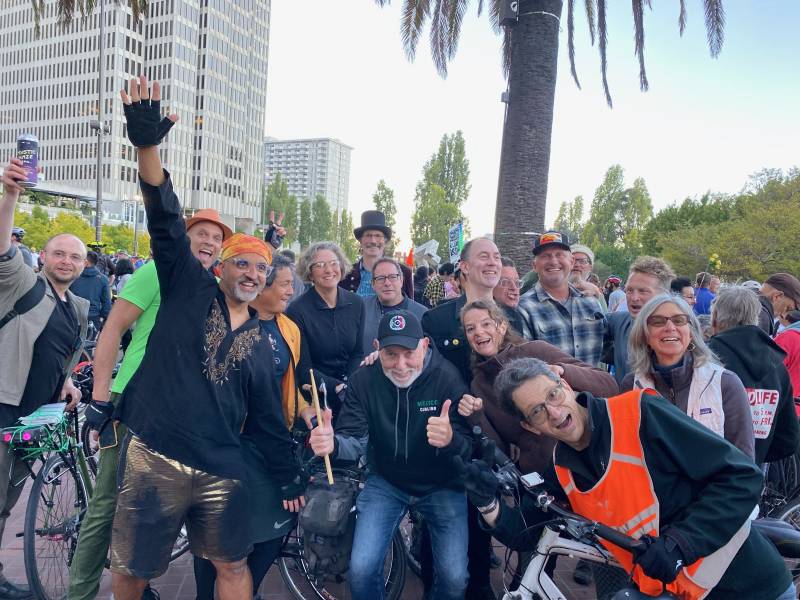
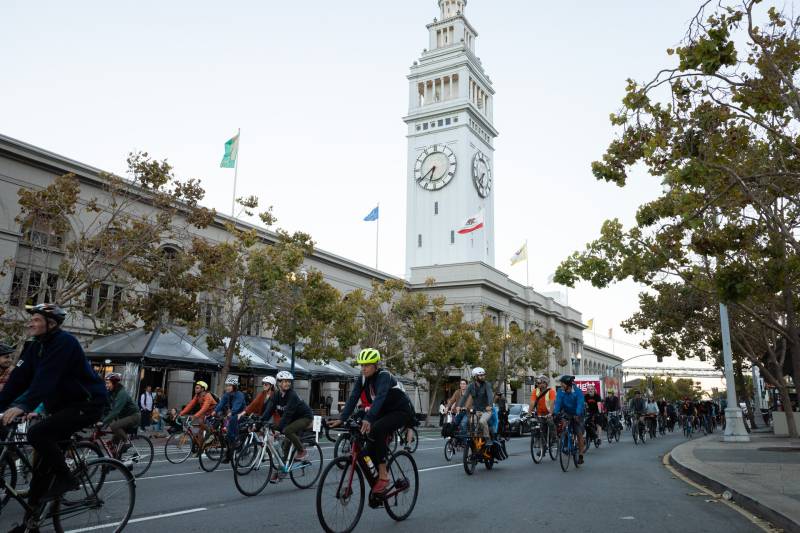
At least 400 people turned out to Embarcadero Plaza in San Francisco on Friday evening to celebrate the 30th anniversary of the cycling event known as Critical Mass.
At its simplest, Critical Mass is a group bicycle ride. But it has also been called an “organized coincidence” or a “leaderless phenomenon.” That’s because for the last 30 years, on the last Friday of every month, hundreds and sometimes thousands of cyclists have participated in a ride that has no leadership, organization or planned route to speak of.
Originally called the “Commute Clot,” the ride began in September 1992 when a group of about 50 friends decided to ride home together after work on a Friday.
“Why don't we just get together at the end of the day and ride home together as a way of promoting our own collective experience of bicycling in extremely hostile conditions?” said Chris Carlsson, one of the cyclists who participated in the original ride.
Cycling in San Francisco in the early 90s was a far cry from the protected bike lanes and hordes of bicycle commuters found on city streets today.
“We were so angry because you weren't allowed to bicycle in San Francisco in the early 90s. I mean, you certainly could do it, it was legal, but you were taking your life into your own hands.” said Dave Snyder, another cyclist who participated in the original ride. “It was our way of collectively asserting our rights.”
Over the years, the ride gained popularity in San Francisco. Snyder estimates that over 5,000 people attended a Critical Mass ride in 1996. The ride also spread to other cities.
“When it started to spread to other cities right away, we knew that it was something much bigger than we had initially intended,” said Hugh D’Andrade, another original Critical Mass rider.
Chris Carlsson estimates that Critical Mass events now take place in over 400 cities across the world.
As Critical Mass grew, so did the attention it got from local politicians. In 1997, then-Mayor Willie Brown famously ordered the police to crack down on the event after thousands of cyclists snarled traffic in city streets.
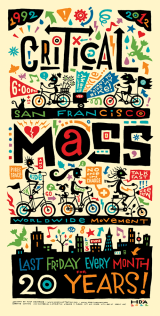
Dave Snyder, who was executive director of the San Francisco Bicycle Coalition at the time, said this moment in Critical Mass’ history produced an inflection point where membership in the Bicycle Coalition soared, and politicians realized they needed to heed calls for better bicycle infrastructure in the city.
“That was when the city had to take seriously what the Bicycle Coalition had been asking it to do for a long time,” said Snyder.
“It was really interesting when Willie Brown cracked down on Critical Mass. It just caused all the bicyclists to come out in support of our movement. Thanks Willie Brown,” said Hugh D’Andrade.
Critical Mass has received criticism over the years for instances where participants have acted aggressively and violently toward motorists. Cyclist Chris Carlsson says these people are a minority, and characterizes them as the “testosterone brigade.” He says it’s the same bad apples that are present at any public event, but it isn’t what the ride was intended to be, and it’s something the original riders say they fought against in the early years.
“In the early days of Critical Mass, we would put a lot of energy into circulating flyers and sort of arguing against that perspective and saying, ‘Hey, that's not really what it's about. We're all about being inclusive. We want to invite people out of their cars to join us.’” said Hugh D’Andrade. “And that took a lot of energy. And, over time, we stopped doing that as much.“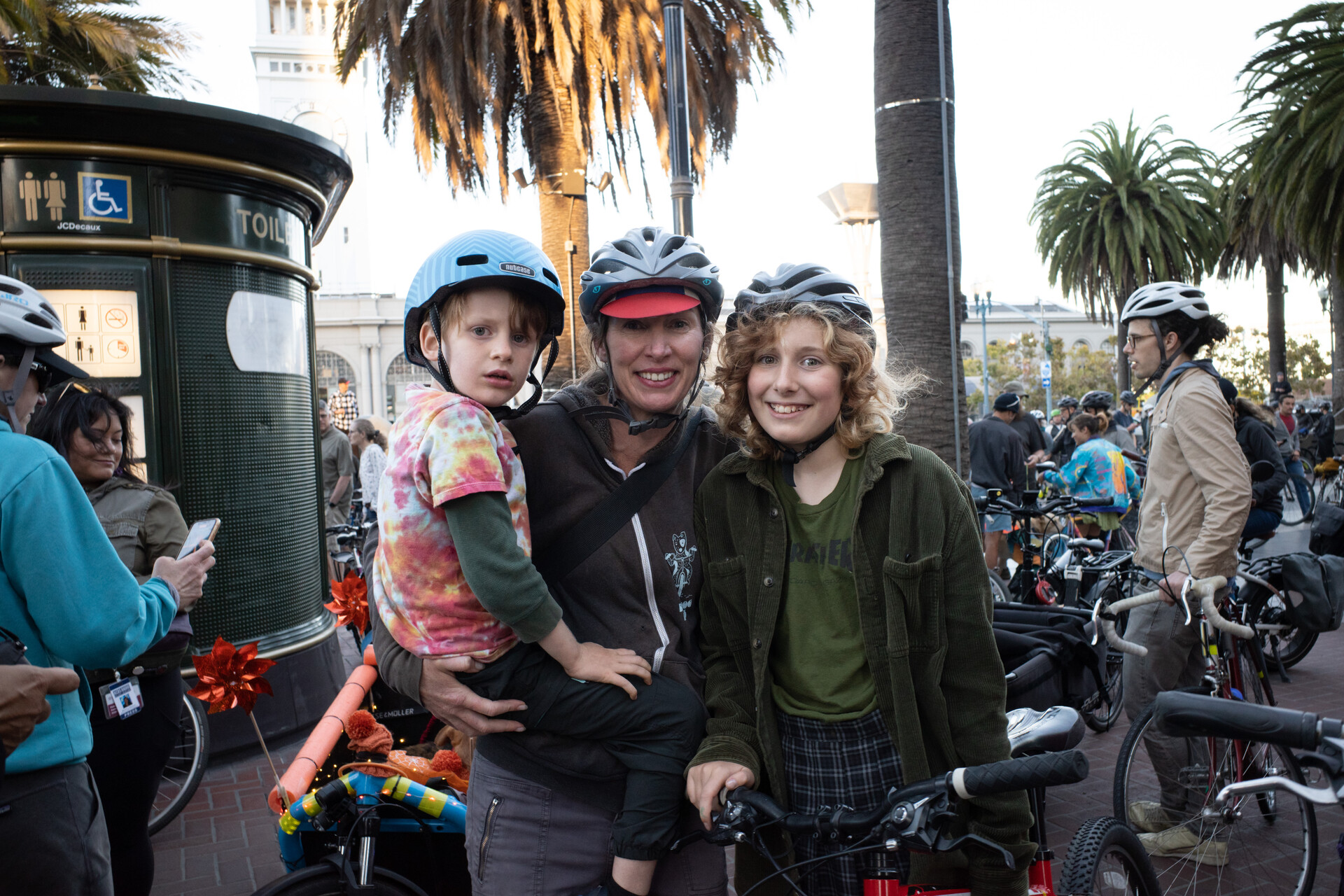
D’Andrade himself said, prior to Friday’s anniversary, he hadn’t participated in Critical Mass for a decade. He said he stopped going in 2012 because he felt that the ride had become more dominated by “very loud men yelling.” He said he didn’t feel like it was his scene anymore.
“It's always been a leaderless phenomenon, and it's for everybody to shape it as they see fit. I would like to see more women, more people of color, more people with a friendly, inviting attitude coming out to join critical mass.”
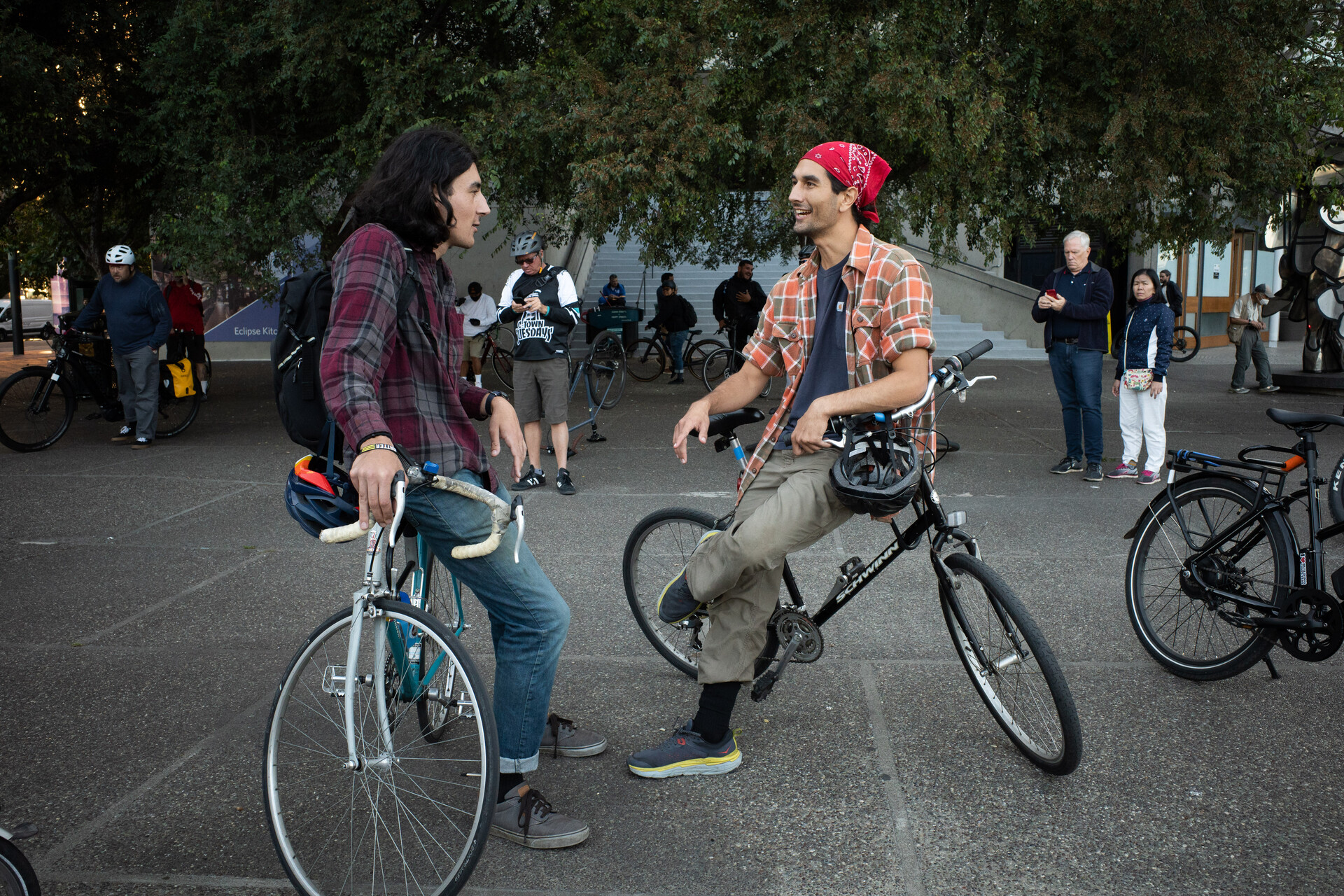
The mood was celebratory on Friday as cyclists riding decorated bikes wearing costumes waited for the 30th anniversary ride to begin. Oakland resident Slim Buick, 55, has been riding with Critical Mass since the mid-90s, and arrived on a custom bicycle constructed of a playground-style spring horse mounted to a BMX bike. His favorite thing about attending? “Meeting people and just riding around.”
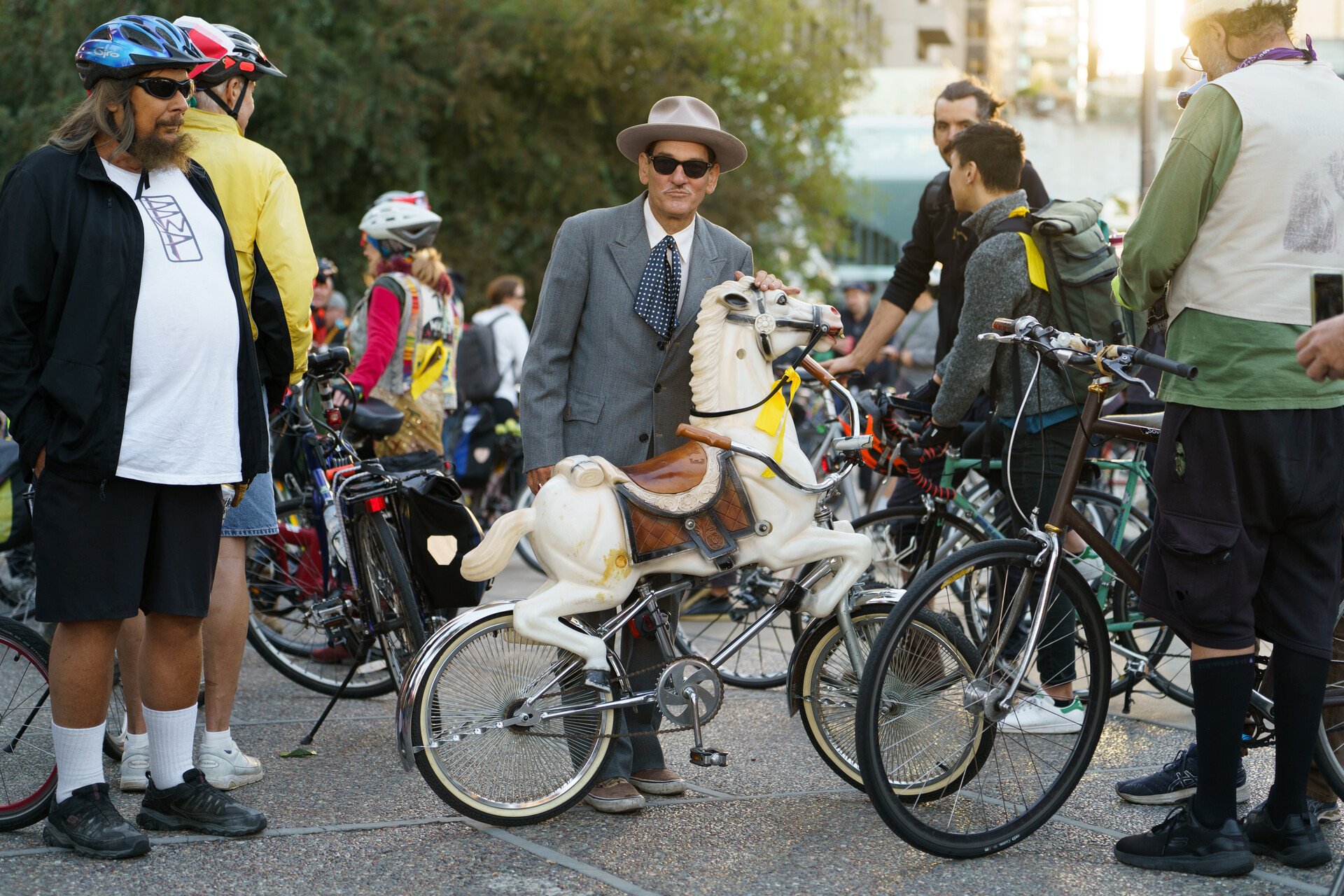
Elai Fresco, 30, said the first time he saw Critical Mass was in Madrid, Spain. “It was the most party vibe I've ever seen. It was just people enjoying themselves out in the streets. It was kind of a cool contrast from the way you normally think about rush hour traffic on a Friday, where you just see misery and pain and everyone hates it,” said Fresco.
Maryann Blackwell, 73, said she has been car-free for six years. “Going to Critical Mass is just what it sounds like. A lot of people riding bikes with no particular rules. We just take over the streets. We take back the streets to the people,” said Blackwell.
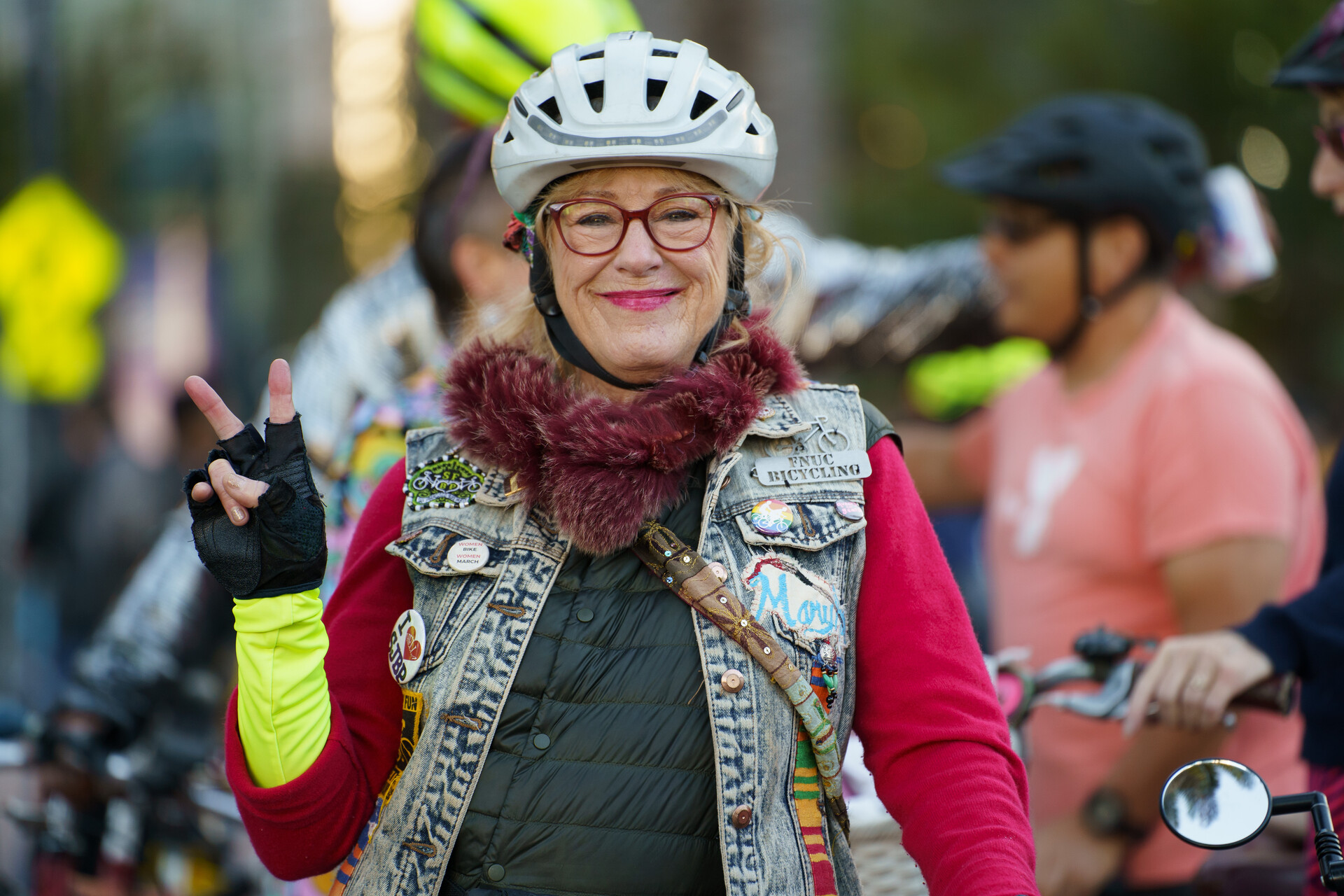
Alena Kuczynsk, 34, said the ride is empowering. “Critical mass just feels like you're a part of a solid unbreakable mass of bikes. You feel powerful and part of community,” said Kuczynsk.
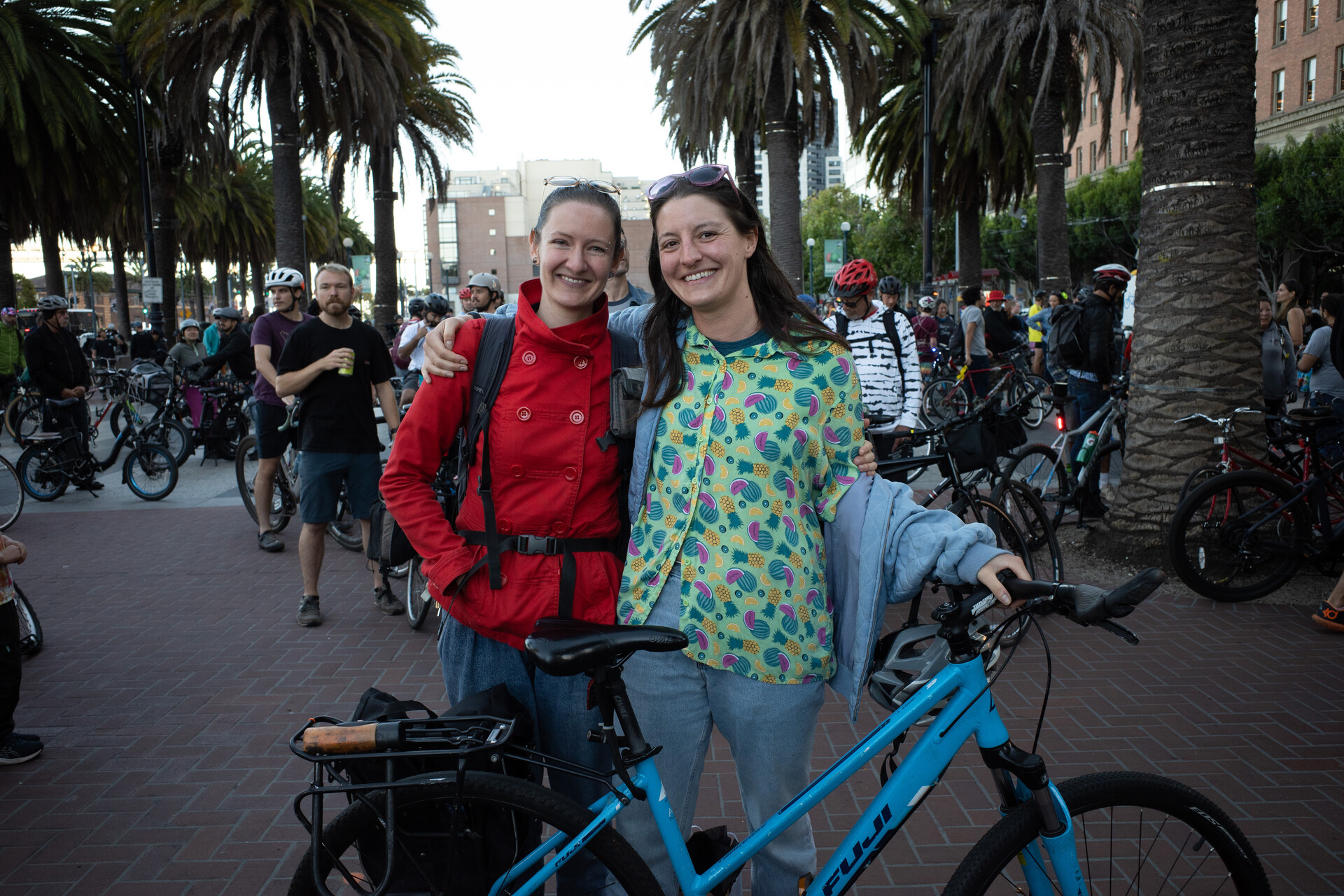
That community has changed over the years. Original rider Chris Carlsson acknowledges the bike scene in San Francisco isn’t what it once was when Critical Mass began. Back then, bicycling was a scrappy subculture that was fighting for its right to a place at the transportation table. These days, as the bicycle coalition has transformed into a political advocacy machine — and as commuting by bicycle has become sensible, not suicidal — Critical Mass in San Francisco feels different.
Events these days draw nowhere near the thousands of cyclists that swelled city streets and blocked intersections in years past. But Carlsson is hopeful that Critical Mass can be repurposed for the pressing issues of today. He says it's a tactic that is available to people to use for a purpose, to use for a mission, if they have one.
“It's in the DNA of the culture here. Everybody knows how to do Critical Mass,” said Carlsson. “When the George Floyd moment was upon us back in 2020, there was a mass bike ride. They called it a ‘Critical Mass for George Floyd,’ and 3,000 people showed up. It did everything that Critical Mass ever could do.”
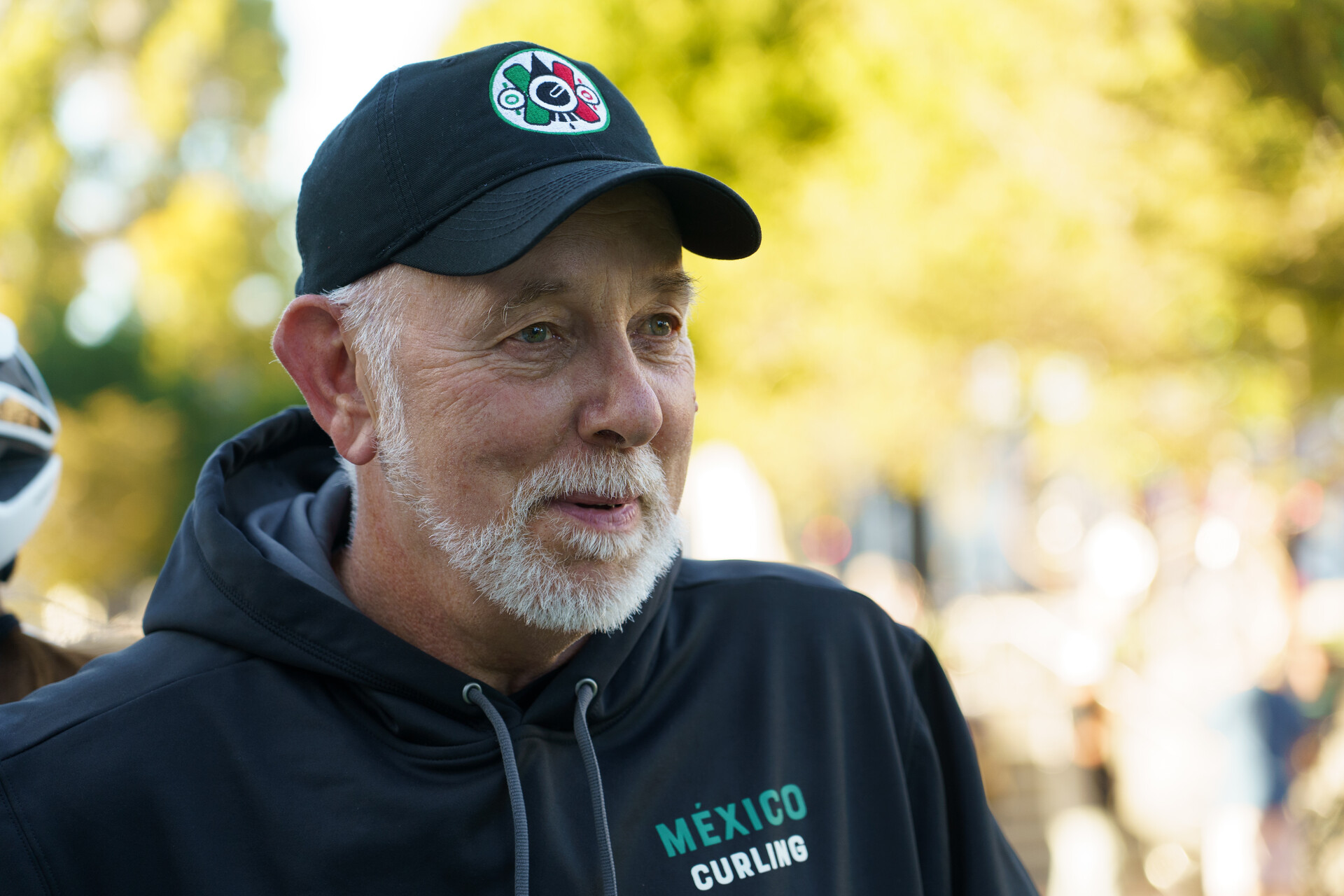
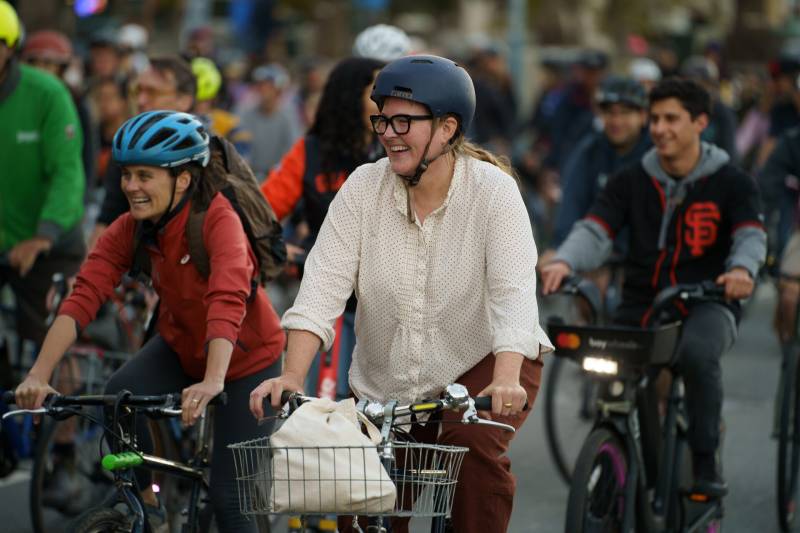
Around 6:30 p.m., the bikes started leaving the plaza and rolling down the Embarcadero as a pink-hued sunset flooded the sky behind the Bay Bridge. Some cyclists stood in front of cars in intersections, blocking traffic as a steady stream of cyclists rolled past. Giants fans walking to an evening baseball game stopped and stared. Drivers put their heads in their hands. But from the perspective of a bicycle seat, a San Franciscan tradition was taking place. It’s something Chris Carlsson calls “the euphoria of the experience.”
“Once you're in the streets and you're filling the streets with bicycles and the sound of spinning wheels and tinkling bells and conversation, it just radically alters your imagination about what cities could be.”